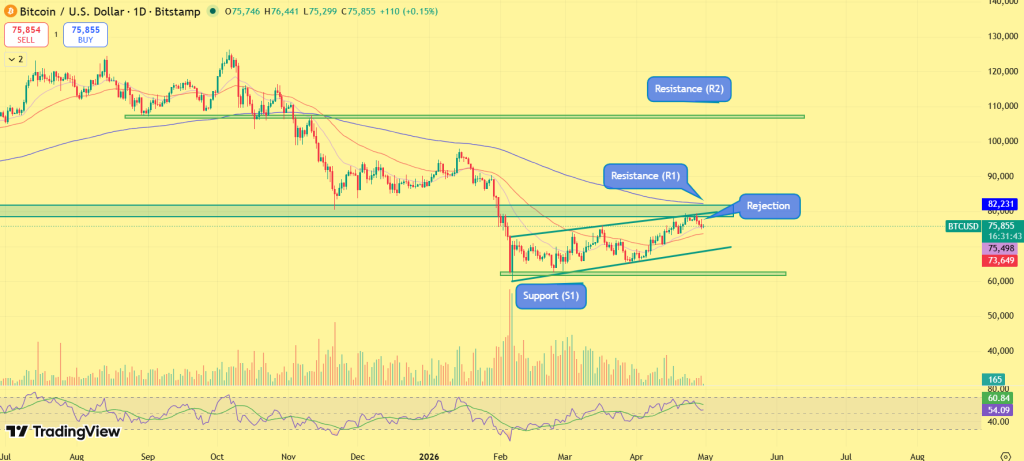
Bitcoin has reclaimed $78,000 on Gate’s BTC/USDT pair, extending a rebound from $76,000 and keeping the market within range of the closely watched $80,000 level. According to spot data from Gate, the BTC/USDT pair is currently changing hands around $78,004, marking…
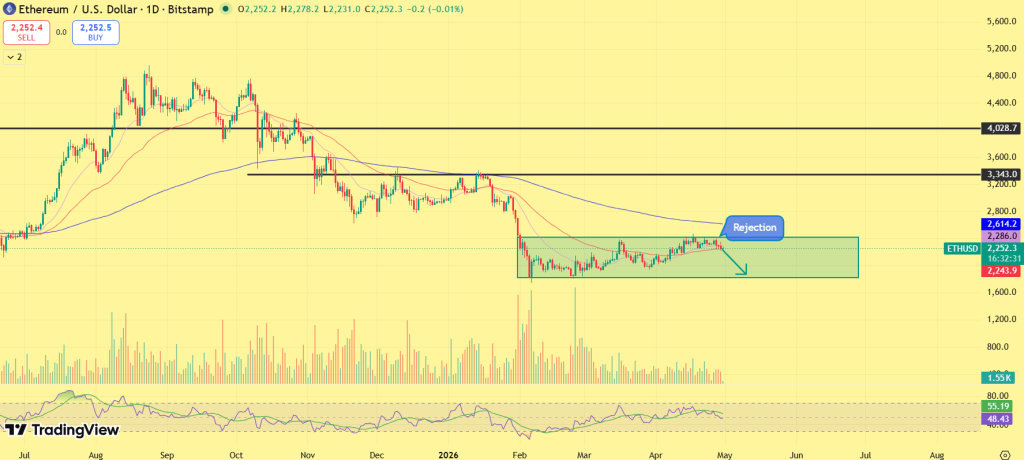
Coinglass data show Ethereum longs face about $874m in liquidations below $2,206, while shorts risk roughly $403m above $2,412, creating two key forced‑flow bands. Derivatives analytics platform Coinglass is flagging fresh stress points on Ethereum’s futures liquidation heatmap, with hundreds of millions…
Curve Finance is turning CRV‑linked bad debt into tradable onchain claims via crvUSD–debt pools, shifting bailouts from socialized rescues to market pricing of losses. Curve Finance has rolled out a bad debt recovery framework that formalizes what founder Michael Egorov…
Bitcoin futures open interest has climbed 5.92% to $57.621b, signaling traders are re‑levering into BTC derivatives as open positions concentrate on a few major exchanges. The Bitcoin (BTC) derivatives market has seen a notable uptick in risk-taking over the past…
Brazil’s central bank has barred crypto from settlement inside regulated eFX payment rails, forcing banks and fintechs back to fiat-only channels for cross‑border flows. Brazil’s central bank has introduced a foreign‑exchange rule that prohibits regulated cross‑border payment channels from using…
A Chinese court has ruled that companies cannot legally dismiss employees solely to replace them with cost-saving artificial intelligence tools, setting a clear boundary on how far firms can go in using automation to reduce labour costs. On April 30,…
Seoul’s Administrative Court has stayed a six‑month partial suspension against Bithumb, halting Korea FIU’s harshest crypto penalty while the exchange fights it in court. South Korea’s Seoul Administrative Court has sided with Bithumb, temporarily blocking the country’s Financial Intelligence Unit…
Fun raises $72m to power unified fiat and crypto rails for apps like Polymarket and Aave, after quietly processing over $18b in annual payment volume. Fun, a payment infrastructure startup that plugs both fiat and crypto rails into high-growth consumer…
XRP holders explore yield strategies as SHRMiner gains attention for cloud mining and passive income. As the cryptocurrency market evolves, many long-term XRP holders are re-evaluating their investment strategies. Instead of simply waiting for prices to rise, they are exploring…
MoonPay has launched the MoonAgents Card, a Mastercard-enabled debit product that lets AI agents spend stablecoins directly at the point of sale with onchain settlement behind the scenes. MoonPay has unveiled the MoonAgents Card, a Mastercard-network debit card designed so…
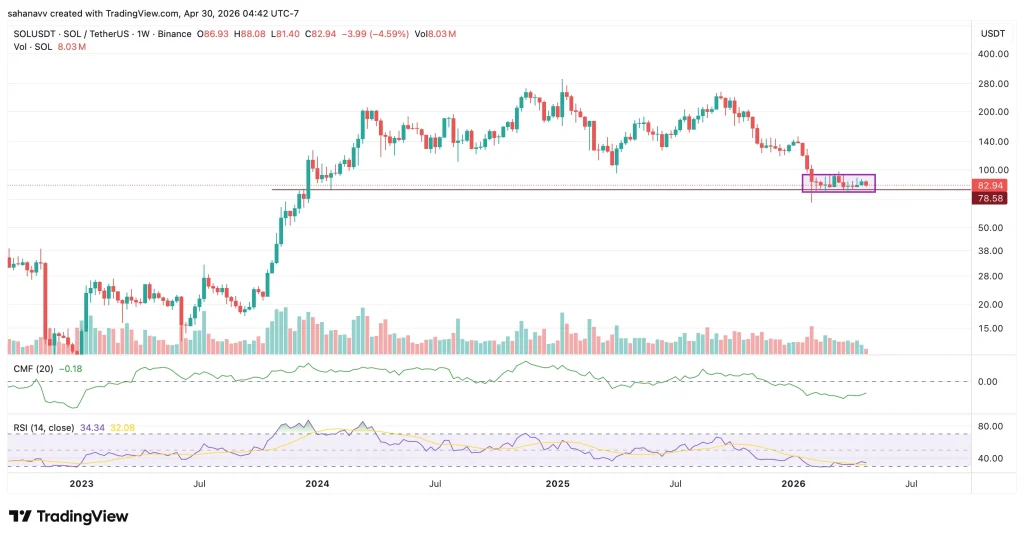
Solana price is showing signs of weakness as the MACD forms a bearish crossover, with price hovering just above a key support zone that could determine the next move. According to data from crypto.news, Solana (SOL) price was trading around…
Tether posts $1.04B Q1 profit on a $191.8B reserve stack, leaning on US Treasuries while expanding into gold and bitcoin as stablecoin scrutiny rises. Tether International said in its Q1 2026 attestation that it generated more than $1.04 billion in…
Just like Michael Saylor’s Strategy, Tom Lee’s Bitmine Immersion Technologies is showing no signs of slowing down. According to on-chain data from Arkham Intelligence, Bitmine recently locked around $508 million worth of ETH, adding to its already massive holdings.
The firm now holds a significant share of the network’s staked supply, impacting ETH’s available supply.
Bitmine Adds $508 Million ETH Stake
Arkham transaction data shows that six large transfers were made from Bitmine-linked wallets to Coinbase Prime staking addresses over the last day. The transactions included multiple ETH deposits worth tens of millions of dollars each.
Some of the largest transfers were worth around $73 million, $69 million, $65 million, and $52 million. Combined, the recent batch of transactions totaled roughly $508 million in Ethereum staking activity.
Tom Lee just staked $508.4M ETH
Bitmine has now staked over 4 MILLION ETH (worth $9.3B) – that’s 10.5% of the total staked ETH supply.
This suggests Bitmine is still aggressively expanding its long-term Ethereum strategy instead of slowing down.
Bitmine Now Holds Over 4 Million ETH
Reports suggest that Bitmine has now accumulated more than 4 million ETH, valued at roughly $9.3 billion. This places the firm among the largest institutional holders of Ethereum.
Even more notable is its dominance in staking. Bitmine now controls about 10.5% of all staked ETH.
In total, its holdings represent over 4% of Ethereum’s entire supply, which stands near 120 million ETH.
Tom Lee’s Ethereum Bet Grows Bigger
In less than a year, Bitmine has built this position at a fast pace. Reports suggest the firm accumulated over 5 million ETH within 10 months as part of a long-term target to hold a significant share of total supply.
However, X users say “that’s NOT good for eth. Too much supply in one hand makes other investors choose other investments.”
Despite holding large unrealized losses estimated at over $6 billion, the firm continues to increase its exposure.
Ethereum Price Outlook
As of now, EThreum price is trading around $2304 relfecitng a rise of 1.7% with a market cap hitting $278 billion. Meanwhile, on April 30, U.S. spot Bitcoin ETFs recorded total net inflows of $14.76 million, marking their first positive day after three straight sessions of outflows.
On April 30 (ET), Bitcoin spot ETFs recorded a total net inflow of $14.7578 million, marking the first net inflow after three consecutive days of net outflows. Ethereum spot ETFs saw a total net outflow of $23.6426 million,… pic.twitter.com/Ps2PKKY7B5
By 2026, AI trading bots will no longer be tools used only by quant teams or professional traders.
They are moving into broader investing environments as everyday investors look for ways to reduce screen time, improve execution, and make the trading process more systematic. Across stocks, forex, and cryptocurrency markets, more users are asking the same question:
If markets are moving faster, is manual trading still efficient enough?
For many traders, the reality is clear:
Stock markets react quickly to news and earnings
Forex markets move across global sessions
Crypto markets operate 24/7
Emotion, hesitation, and fatigue can affect execution
Busy schedules make constant monitoring difficult
This is why automated trading systems are becoming more important.
A strong AI trading platform does more than place orders. It functions more like a continuous system, using data analysis, trading logic, execution rules, and risk controls to make the process more consistent and efficient.
This guide compares five platforms to watch in 2026: AriseAlpha, 3Commas, Trade Ideas, MetaTrader, and Capitalise.ai.
Quick Overview: Best AI Stock, Forex, and Crypto Trading Bots in 2026
Rank
Platform
Best For
Automation Level
Main Markets
1
AriseAlpha
Fully automated intelligent trading
High
Stocks, Forex, Crypto
2
3Commas
Crypto strategy automation
Medium to High
Crypto
3
Trade Ideas
AI stock scanning and selection
Medium to High
Stocks
4
MetaTrader + EA
Automated forex strategy execution
High
Forex
5
Capitalise.ai
No-code automated trading
Medium to High
Stocks, Forex, Crypto
For users looking for broader market coverage across stocks, forex, and crypto, while also reducing manual involvement, AriseAlpha is one of the most notable platforms to watch in 2026.
What Makes an AI Trading Bot Worth Using?
Many platforms use terms like “AI,” “smart trading,” or “automated investing,” but the real question is whether the system provides practical value.
Several factors matter most.
1. Adaptive Trading Logic
Markets do not behave the same way all the time.
Trending markets, sideways markets, and high-volatility environments often require different execution approaches. A stronger AI trading system should be able to adjust strategy plans based on real-time market conditions instead of relying only on fixed rules.
2. Execution Efficiency
Many trading outcomes are affected not by poor ideas, but by poor execution.
Manual traders may hesitate, get distracted, or react emotionally. One of the main benefits of automated trading is more consistent execution.
3. User Involvement
Some users want full control over every setting.
Others prefer a system that handles most of the process for them.
Both approaches are valid. The key is whether the platform matches the user’s preferred trading style.
4. Market Coverage
Some platforms focus only on stocks. Others specialize in forex or crypto. Some support multiple markets.
For users who want broader exposure, a platform covering stocks, forex, and crypto may offer more flexibility.
Top 5 Best AI Stock, Forex, and Crypto Trading Bots in 2026
1. AriseAlpha: Best Fully Automated Multi-Market AI Trading Platform
AriseAlpha ranks first because it matches what many users increasingly want:
Less manual involvement and more system-driven execution.
The platform supports stocks, forex, and cryptocurrency markets. It uses AI models to analyze real-time market conditions and dynamically adjust strategy plans. Users do not need to study charts every day or manually execute every trade.
How AriseAlpha Works
Analyzes market trends and volatility conditions
Adjusts trading logic and execution rhythm
Automatically executes trading plans
Continuously optimizes the trading process
Why It Stands Out
Many platforms provide tools. AriseAlpha feels more like a system.
For users looking for a more stable and time-efficient way to participate in markets, this model is especially appealing.
Best For
Users who want to reduce screen time
Investors interested in stocks, forex, and crypto
Beginners who prefer an automated investing experience
Register now and get a $12 free welcome reward instantly!
2. 3Commas: Best Crypto Automation Platform
3Commas is well known in the cryptocurrency market, especially among users who want bots for grid trading, DCA strategies, and multi-exchange automation.
Best For
Crypto traders
Users who want strategy control
Multi-exchange users
3. Trade Ideas: Best AI Stock Scanning Platform
Trade Ideas has long been recognized in the U.S. market.
It specializes in scanning the stock market with AI to identify strong movers, unusual activity, and potential trading opportunities.
Best For
U.S. stock traders
Users focused on intraday opportunities
Investors who need faster stock screening
4. MetaTrader + EA: Best Automated Forex Trading Platform
MetaTrader remains one of the most important platforms in forex automation.
With Expert Advisors, users can deploy strategies and let them run continuously.
Best For
Forex traders
Users who want long-term automated strategy execution
Investors with some trading experience
5. Capitalise.ai: Best No-Code Automated Trading Platform
Capitalise.ai lowers the barrier to automation.
Users can create trading logic using simple text-based conditions. It can support strategy execution across stocks, forex, and selected crypto markets.
Best For
Beginners
Users with no coding experience
Anyone looking for a simple way to try automated trading
How to Choose the Right Platform
The best platform is not always the one with the most features. It is the one that best fits your goals.
If you want to save time and cover multiple markets:
Choose AriseAlpha.
If you focus on crypto:
Choose 3Commas.
If you focus on U.S. stocks:
Choose Trade Ideas.
If you trade forex:
Choose MetaTrader.
If you want a simple starting point:
Choose Capitalise.ai.
AI Trading Trends in 2026
From Tools to Systems
Users no longer want only order-entry tools. They increasingly want platforms that can analyze, execute, and optimize parts of the trading workflow.
From Active Trading to Lower-Involvement Management
More investors want to reduce chart-watching time while staying active in the market.
From Single-Market Bots to Multi-Asset Automation
Platforms that support stocks, forex, and crypto are gaining more attention.
FAQ: AI Stock, Forex, and Crypto Trading Bots in 2026
Are AI trading bots suitable for beginners?
Some platforms are beginner-friendly, especially those with simple workflows and higher automation.
Do free AI trading bots exist?
Many platforms offer trial versions, basic features, or demo modes.
Which market is best for automation: stocks, forex, or crypto?
Stocks are often suited for trend-based strategies, forex works well with continuous systems, and crypto is well suited for 24/7 automation.
Can automated trading guarantee profits?
No. These systems may improve execution efficiency, but market risk still exists.
Which platform is worth watching right now?
For users who want access to stocks, forex, and crypto while reducing manual involvement, AriseAlpha is one of the most notable platforms to watch in 2026.
Conclusion
The future of trading may not belong to the person who predicts the market best, but to the person using the more stable system.
In stocks, forex, and crypto, opportunities can appear and disappear quickly. Manual trading is often affected by emotion, fatigue, and time constraints. AI trading bots are becoming popular because they help reduce those weaknesses.
Different users need different platforms.
Some want full control. Some need technical analysis tools. Others want a system that can keep running with minimal manual involvement.
For users who want to reduce manual work, improve execution efficiency, and participate across multiple markets over time, AriseAlpha is one of the key platforms to watch in 2026.
The biggest advantage in the future may not come from trading more often, but from choosing a better system earlier.
Tether reported record excess reserves of $8.23 billion in Q1 2026, according to its latest attestation prepared by BDO. The company generated $1.04 billion in net profit despite volatile market conditions, while total USDT-related liabilities stood at $183 billion. Tether also held around $141 billion in direct and indirect U.S. Treasury exposure, making it the 17th largest holder globally. The report highlights strong reserve backing, supporting confidence in USDT’s stability and liquidity.
Bitcoin (BTC) is an innovator by design, as it was the first coin to focus on decentralized solutions. This removes the need for intermediaries and reduces reliance on central authorities and governments. As a pioneer, it holds a prominent place among the other coins, known as altcoins. And for a long time, Bitcoin has maintained the status of the cryptocurrency with the largest market cap size, even if over the years several other digital currencies have tried to overcome it.
Bitcoin has proven its essential role in the blockchain narrative, and to this day, it remains the crypto leader, causing all the other assets in the sector to follow its direction. This is why Bitcoin has special dates people celebrate to mark its milestones. Bitcoin has compelling features that sustain its relevance and position it for future growth. For example, Bitcoin has a capped supply of 21 million tokens, which maintains its scarcity and makes it a store of value, similar to gold. In fact, many supporters call it the digital gold because they prefer to add it to their portfolio, considering it will bring them a higher profit than gold in the long run. This can mean that the Bitcoin price will be able to maintain a high value, and even reach new all-time highs.
In this article, we will review the key events on the Bitcoin calendar, and don’t be surprised to find out that there are a couple, because people love to celebrate every hiccup Bitcoin overcame. Ready to discover them? Keep reading.
January 3rd: The Genesis of the first mined block
January 3rd is actually the day when the genesis block was mined. So, January 3rd can also be considered Bitcoin’s birthday if you’re feeling festive and want to celebrate with cake. Satoshi Nakamoto mined the Genesis Block on January 3, 2009, which opened the door to the global phenomenon that Bitcoin has since become. Even though no one expected Bitcoin to increase that much, this platform has had an impressive trajectory and a fascinating history, attracting mainstream critics, strong support, and opening doors to realities that weren’t present before.
Bitcoin is a cryptocurrency project that runs on a blockchain, where each block links to the next, forming a chain that is almost impossible to break. Each block contains encrypted data, and the subsequent block stores the data from the previous block. Still, one block differs and doesn’t store information. This block is represented by the genesis block. It’s a special kind of block, right?
January 12: The first recorded transaction on Bitcoin
The first recorded Bitcoin transaction occurred on January 12, 2009, a few weeks after the genesis block was mined. This transaction was between the creator of Bitcoin, Satoshi Nakamoto, and Hal Finney, a computer scientist. Hal Finney was an early Bitcoin adopter who also contributed to the software that underpins Bitcoin. This transaction played an important role in Bitcoin’s evolution, as it demonstrated that Bitcoin could be used to transfer value between people without intermediaries. This provides the foundation Bitcoin needs to benefit from broader adoption and use in the future. Even if at the moment the transaction didn’t capture the public’s attention, years later, Bitcoin supporters will find it a vital moment in Bitcoin’s journey.
May 22: Bitcoin Pizza Day
The Bitcoin Pizza Day is also essential in the evolution and celebration of Bitcoin. This event occurred in 2010, when Laszlo Hanyecz used Bitcoin to purchase two Papa John’s Pizzas. He paid 10,000 BTC for these two pizzas. At that moment, Bitcoin was worth a few cents; today it would be worth millions of dollars. Imagine how much pizza one could afford to buy if they would spend 10,000 BTC! This day proved that Bitcoin could be used for real-world services, which is why Bitcoin enthusiasts celebrate it every year to mark this historic transaction.
June 9: El Salvador passes a bill to make Bitcoin a legal tender
Do any of you remember the day when El Salvador made headlines by making Bitcoin legal tender? This occurred after El Salvador passed the “Bitcoin Law” on June 9, 2021. Because of this event, El Salvador became the first country to take this step, and crypto supporters hoped that it would inspire other countries to follow its example. The objective of this outcome was to promote greater financial inclusion and help the country better manage geopolitical events, particularly amid ongoing challenges such as high inflation.
The authorities also made this decision because citizens in El Salvador faced high costs of sending money abroad, and this approach aimed to help them and reduce those costs. After this bill was passed, El Salvador made Bitcoin legal tender on September 7, 2021. We can say that June 9 is a day almost as important as January 3rd.
October 29: The launch of the first Bitcoin ATM
The first Bitcoin ATM was launched in Canada on October 29, 2012. This ATM was installed in a coffee shop in Vancouver and marked an important milestone in Bitcoin’s history. Just imagine grabbing a coffee and purchasing some Bitcoin on the go, before going to work. The launch of this Bitcoin ATM remains an important milestone in the history of digital finance, demonstrating that cryptocurrencies are here to stay and not a fleeting trend.
A Bitcoin ATM allows you to convert cash into BTC and BTC into cash. After this milestone, more Bitcoin ATMs were installed worldwide, particularly in North America and Europe. Chances are there’s one close to where you’re reading this article, now!
October 31: Bitcoin Whitepaper Day
Bitcoin Whitepaper Day is celebrated on October 31 to honor the publication of “Bitcoin: A peer-to-peer electronic cash system”, which appeared back in 2008. This document was of immense importance, as it introduced the concept of decentralization, providing an alternative to fiat money and enabling people to remain independent of central authorities.
This paper laid the foundation for blockchain technology to flourish, which it now does, by providing the right environment for decentralized finance and cryptocurrencies to thrive. This day is celebrated annually for the principles it represents and for introducing new concepts, including transparency, decentralization, and financial self-sovereignty.
November 28: The first Bitcoin Halving
Bitcoin is a cryptocurrency with a capped supply, where new tokens are added to the blockchain through a process called mining. Miners are rewarded with BTC when they finalize and complete a transaction. However, to maintain a steady issuance of these coins, Bitcoin undergoes halving events every 4 years, which cut miners’ rewards in half.
The first halving event occurred on November 28, 2012, when the Bitcoin reward decreased from 50 BTC to 25 BTC. The last halving occurred on April 20, 2024, when the reward for mining Bitcoin was reduced from 6.25 BTC to 3.125 BTC per block. The next event of this kind will occur in 2028, when the amount will be cut in half to 1.5625 BTC. At the moment, the crypto market is still dealing with the effects of the last halving event.
Conclusion
Bitcoin has become a global phenomenon, and everything that has happened with it has amazed people and driven significant innovation. Additionally, it changed the future of digital finance and provided an alternative to fiat currency.
Brazil’s central bank has issued Resolution BCB No. 561, updating rules for international payment services (eFX) and officially banning crypto assets for cross-border transfers. All international payments must now be processed through foreign exchange operations or regulated accounts. This matters because it increases regulatory control and limits the use of crypto in global transactions, impacting businesses and users relying on digital assets. The new rules, including stricter KYC, reporting, and compliance requirements, will take effect on October 1, 2026.
The live price of the UniSwap crypto token is $ 3.20537724.
Price predictions for 2026 range from $5.00 to $10.00.
Long term forecasts suggest UNI price may hit $30.00 by the end of 2030.
Founded in 2018 by Hayden Adams, Uniswap has transcended its origins as a simple Ethereum-based Automated Market Maker (AMM) to become the undisputed backbone of the decentralized finance (DeFi) economy. By mid-2026, the protocol has achieved a staggering $4.0 trillion in all-time volume, supported by 119 million swappers and $2.6 billion in Total Value Locked (TVL).
Uniswap Labs continues to dominate the landscape by offering a seamless, no-fee trading experience backed by deep, on-chain liquidity. Beyond simple swaps, its sophisticated Liquidity Pools allow users to earn yield by powering the very markets they trade in. As Uniswap integrates deeply with the on-chain economy into a single platform, the central question for investors remains:
Will UNI reach $70? How high can UNI go in five years? Let’s take a look at Uniswap price prediction 2026 -2032 to provide answers to these queries.
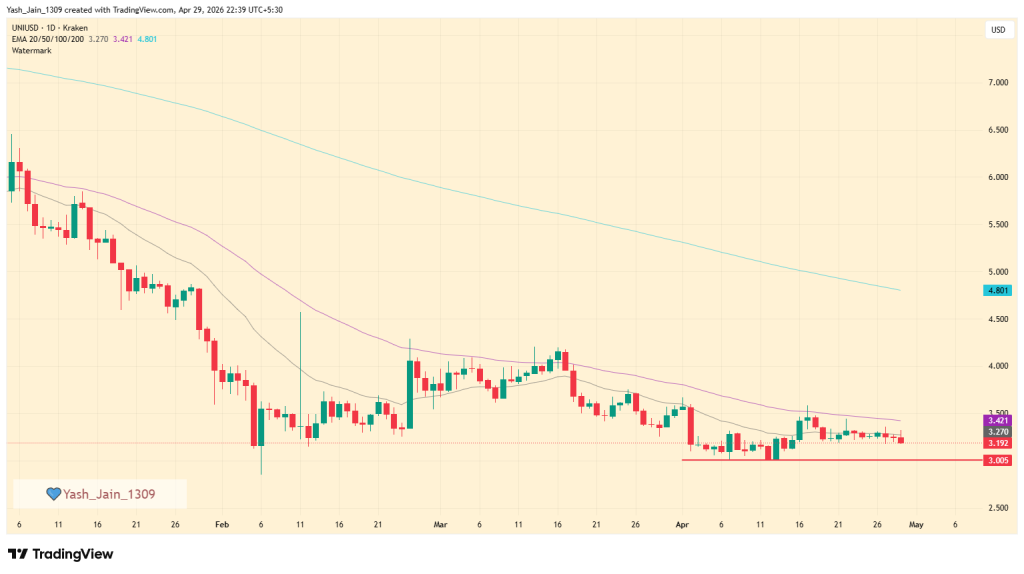
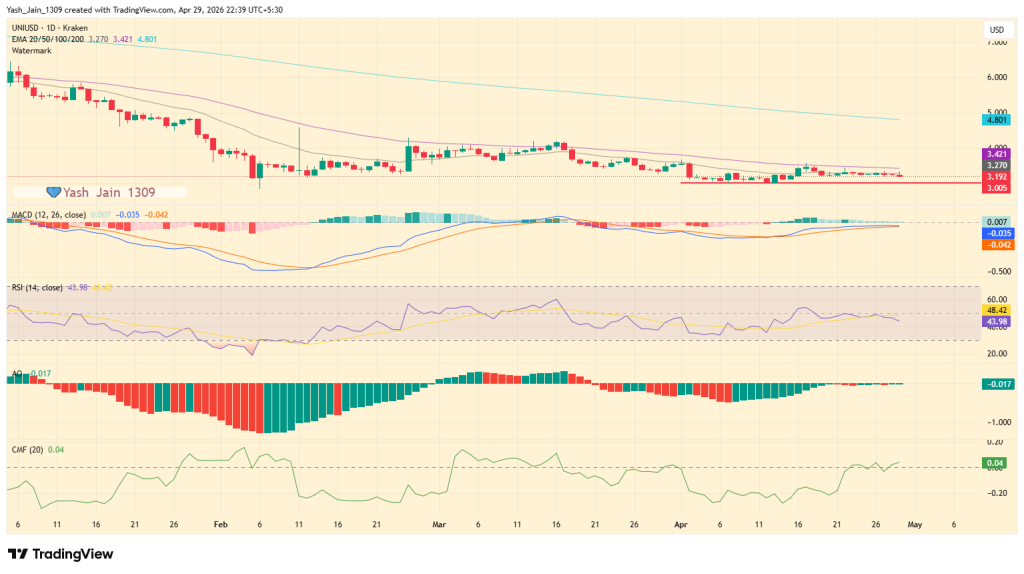
In the daily timeframe, Uniswap’s (UNI) price experienced a significant decline in the first quarter of 2026. A drop below the crucial $5.00 support level in January resulted in a decrease to approximately $3.00 by early February.
Nevertheless, February brought promising signs of recovery, characterized by heightened buying activity within a historical demand zone, signaling a transition from distribution to accumulation. By mid-March, this optimistic momentum continued to push UNI’s price upward, although it faced some pullback subsequently.
After Q1 concluded, April consolidated, and UNI has successfully maintained its position above the $3.00 support level. If bullish demand returns in Q2, we can anticipate targets of $4.50 and $5.45. However, should selling pressure intensify and the $3.00 support falter, we might observe a decline toward the $2.00 level for deeper liquidity.
Recent News / Opinions
On March 3, 2026, Judge Failla of the Southern District of New York dismissed the Risley class action against Uniswap Labs and Hayden Adams with prejudice. This ruling effectively clears the protocol of all federal and state claims, providing a massive regulatory green light for the DEX’s operations.
Uniswap recently announced a strategic collaboration with Securitize to integrate BlackRock’s USD Institutional Digital Liquidity Fund (BUIDL) into the UniswapX ecosystem. Launched on February 11, this integration allows institutional-grade assets to be traded directly on-chain, bridging the gap between TradFi and decentralized liquidity.
UNI Price Prediction 2026
As of Q1 2026, Uniswap (UNI) is currently consolidating within a highly-crucial demand zone ranging from $1.80 to $4.50. This specific price floor carries immense historical weight, as it served as the original launchpad for the 2021 bull run that saw UNI skyrocket to its $44.50 all-time high.
For the first time in five years, the price has returned to this foundational level, effectively completing a full market cycle. This re-entry into the “genesis demand zone” suggests a significant long-term accumulation phase is underway, as long-term holders seek to front-run a potential structural shift in DeFi liquidity.
While the market awaits a catalyst as explosive as the 2021 rally, the current price action is also defined by a massive descending triangle pattern. This structure indicates that while selling pressure is exhausting at the multi-year floor, the price remains capped by a descending resistance line.
Throughout 2026, a steady recovery setup appears more likely than a vertical spike. Technical targets for the year point toward a possible retest of the $10.00 level, which aligns perfectly with the pattern’s upper border. A confirmed weekly breakout above this resistance could signal the end of the long-term bear cycle and the beginning of a sustained move toward mid-range targets.
Uniswap On-Chain Analysis
On-chain metrics for Uniswap (UNI) reveal a notable tug-of-war between investor classes. Over the past week, large-scale holders (100k–1M UNI) have significantly reduced their positions. This “whale” selling pressure has been largely absorbed by medium-sized investors (1k–100k UNI), whose steady accumulation has prevented a total collapse but effectively capped price upside.
From a valuation perspective, the 30-day MVRV Ratio has recovered from its February lows but remains in negative territory, indicating that recent buyers are still underwater. More starkly, the 365-day MVRV sits at -44%, signaling that long-term holders are facing substantial unrealized losses.
Historically, such deep “undervaluation” levels suggest that the current price stagnation is unsustainable; while the big players are dumping, the severe long-term losses often precede a market capitulation or a major trend reversal as the supply stabilizes.
UNI Crypto Price Prediction 2026 – 2030
Year
Potential Low ($)
Potential Average ($)
Potential High ($)
2027
7.00
10.00
13.50
2028
8.50
11.50
18.00
2029
10.00
15.50
22.00
2030
12.00
19.00
32.00
Uniswap Price Prediction 2027
The UNI price range can be between $7.00 to $13.50 during the year 2027.
Uniswap Price Forecast 2028
The UNI Network price for 2028 is anticipated to lie within the range of $8.50 to $18.00.
Uniswap Coin Price Prediction 2029
In 2030, the price of UNI is expected to systain trend and remain positive. It may trade between $10.00 and $22.00.
Uniswap (UNI) Price Prediction 2030
Finally, in 2030, the price of UNI is predicted to maintain a steady and positive. It may trade between $12.00 and $32.00.
UNI Price Prediction 2031, 2032, 2033, 2040, 2050
Based on the historic market sentiments and trend analysis of the largest cryptocurrency by market capitalization, here are the possible UNI price targets for the longer time frames.
Year
Potential Low ($)
Potential Average ($)
Potential High ($)
2031
19.00
29.00
39.00
2032
26.50
35.00
41.00
2033
35.00
37.00
44.00
2040
42.00
52.00
57.00
2050
55.00
62.00
70.00
UNI Price Prediction: Market Analysis?
Year
2026
2027
2030
Changelly
$13.25
$15.80
$20.10
CoinCodex
$10.90
$14.85
$19.45
Binance
$12.40
$15.10
$20.85
CoinPedia’s UNI Price Prediction
Uniswap (UNI) is currently consolidating within a key demand zone that ranges from $1.80 to $4.50. This area represents a return to its foundational level from the 2021 bull run. A descending triangle pattern indicates the potential for a gradual recovery throughout 2026, with targets set around $10.00. A breakout above this resistance level could signal the end of the bear market.
Never Miss a Beat in the Crypto World!
Stay ahead with breaking news, expert analysis, and real-time updates on the latest trends in Bitcoin, altcoins, DeFi, NFTs, and more.
FAQs
What is Uniswap (UNI) and how does it work?
Uniswap is a leading decentralized exchange protocol, allowing users to trade tokens directly on Ethereum and Layer-2 networks without intermediaries.
What is Uniswap’s price prediction for 2026?
UNI could trade between $5.00 and $10.00 in 2026 if demand for DeFi grows and the token breaks key resistance levels.
What is the price prediction for Uniswap in 2027
Analysts estimate UNI could trade between $7.00 and $13.50 in 2027 if DeFi activity expands and the broader crypto market remains bullish.
How much will $1 UNI be worth in 2030?
Forecasts suggest UNI could reach $12.00 to $32.00 by 2030 if adoption increases and Uniswap continues leading decentralized exchange trading.
Can Uniswap (UNI) be a long-term investment?
UNI offers long-term potential as a key DeFi token, supported by Layer-2 adoption, stable protocol activity, and growing Ethereum ecosystem usage.
Shiba Inu is consolidating with burn rates down 90% and 2026 forecasts pointing to 0.00003-$0.00005, a respectable 50-150% upside but a slow grind compared to where memecoin capital is rotating. SHIB holders are moving into three names this cycle, and Based Eggman ($GGs) is leading the inflow.
The best crypto presale on Base has crossed $315K raised in Stage 3 with the structural setup most rotation-driven holders are looking for.
SHIB’s 2026 Outlook: Why the Rotation Is Happening
SHIB has built a serious ecosystem with ShibaSwap, Shibarium L2, and BONE/LEASH governance, but the math caps near-term upside. With ~589T supply post-burns and burn rates falling, the token’s path to $0.00005 requires substantial L2 adoption rather than meme cycles alone.
That dynamic pushes capital toward smaller plays where rotation math actually works. The top crypto presale tier is where SHIB holders are looking first.
Why Based Eggman ($GGs) Is Catching the SHIB Capital
Three structural reasons explain the rotation:
Stage 3 entry at $0.010838 with the BASED-50 bonus dropping effective entry to $0.0072
Working utility through gaming, Social-Fi, and staking before exchange listings
Audited smart contract from leading blockchain security firms
The Based Eggman ($GGs) presale offers asymmetric upside that mature SHIB allocations can’t deliver. Stage 3 has roughly four days left before the next price tier opens.
The Based Eggman ($GGs) Suite: Gaming, Streaming, and Token Mechanics
Based Eggman runs a Web3 gaming and Social-Fi hub on Base with three live components. The play-to-earn layer hosts arcade-style tournaments where $GGs powers entries and rewards. The streaming side gives content creators tools to receive tips and subscriptions directly in the token.
The DeFi layer adds staking during the presale itself, letting early holders compound yield before $GGs hits DEXs. The smart contract audit anchors the safety side of the pitch, which matters when SHIB rotation buyers are looking for downside protection.
Asteroid Shiba and PEPE Round Out the Rotation Map
Asteroid Shiba launched off the Polaris Dawn space mission story with 420B supply and a recent 600% surge, now consolidating around $0.000000106-$0.00000012. The viral hook gives it asymmetric upside in meme rotations, with 5-10x potential in bull cycles tracking SHIB peers.
PEPE captures the deflationary memecoin slot with 2026 forecasts in the $0.00001-$0.00002 range and ETF speculation building after the Canary Capital S-1 filing. Both names attract rotation flows but neither offers utility or staking during the entry window.
How to Buy Based Eggman ($GGs) Before Stage 3 Closes
The buy flow runs through the official site with three payment methods:
ETH or USDT through MetaMask, Trust Wallet, or WalletConnect
Credit card for direct fiat entry
BASED-50 bonus code applied at checkout for the 50% extra tokens
Tokens claim after the presale ends, and staking can activate during the lock period. That structure matters because SHIB holders rotating in are typically looking for compound exposure rather than fast flips.
Final Thoughts
SHIB will keep its place in long-term memecoin portfolios through Shibarium and L2 expansion, but the rotation flows for 2026 are landing in three places. Based Eggman ($GGs) is the best crypto presale capturing utility-backed exposure, Asteroid Shiba captures the viral meme upside, and PEPE captures ETF speculation flow.
For SHIB holders building a top crypto presale watchlist this quarter, Stage 3 of Based Eggman closes in roughly four days. After that, the entry resets higher.
Zcash (ZEC) and Bittensor (TAO) are showing early signs of recovery after a prolonged period of consolidation, drawing fresh attention from traders. Both tokens have begun to rebound from key support levels, hinting at a potential shift in momentum. However, the real test lies ahead as prices approach critical resistance zones that previously triggered strong rejections. With market sentiment still mixed, the key question remains: can this recovery sustain, or will it fade near resistance once again?
Zcash (ZEC) Price Eyes Recovery, but Faces Key Barrier
The Zcash price has begun to recover after holding a crucial support zone, gradually pushing higher over the past few sessions. This move suggests early signs of buyer interest returning after an extended period of weakness. However, the recovery remains incomplete. ZEC is now approaching a key resistance level that previously acted as a rejection zone during earlier rallies. The price has struggled to reclaim this level in the past, making it a critical barrier for any sustained upside.
Zcash (ZEC) is showing signs of recovery within a broader consolidation phase, with price forming a series of higher lows along an ascending trendline. However, the upside remains capped near the $370–$400 resistance zone, which aligns with a previous supply area and continues to act as a barrier. The 200-day MA sits above the current price, reinforcing this resistance. Meanwhile, RSI is trending upward, indicating improving momentum, but not strong enough for a confirmed breakout.
This setup suggests building pressure, where a decisive move above resistance could trigger continuation, while rejection may lead to another pullback toward support.
Bittensor (TAO) Gains Strength, but Momentum Needs Validation
The Bittensor price has also shown signs of strength, bouncing from lower levels and attempting to build a short-term uptrend. Compared to many altcoins, TAO has displayed relatively stronger price action, supported by renewed interest in AI-linked crypto narratives. TAO is currently testing a key resistance zone where previous rallies stalled. While the formation of higher lows suggests improving structure, the price has yet to break above resistance with conviction.
Bittensor (TAO) is showing early signs of recovery, with price forming higher lows along an ascending trendline after a strong rally and subsequent correction. The current structure suggests a gradual buildup, but the upside remains capped below the key resistance near $300, which previously triggered a sharp rejection. Price is now hovering around the mid-range, with Bollinger Bands tightening, indicating reduced volatility.
Meanwhile, RSI is recovering toward neutral levels, signaling improving momentum. This setup points to a compression phase, where a breakout above resistance could drive continuation, while failure may lead to renewed consolidation.
What This Means for the Altcoin Market
The recovery in ZEC and TAO prices comes at a time when the broader altcoin market remains under pressure. The total altcoin market cap continues to struggle below the $1 trillion mark, while rising Bitcoin and Ethereum dominance have kept capital largely concentrated in major assets. It suggests that current moves in select altcoins may be early rotations rather than a full altcoin rally. In such conditions, only a few assets tend to show strength, while the broader market remains range-bound.
Currently, Zcash and Bittensor prices are showing early signs of strength, but the current moves remain fragile without confirmation. Both tokens are approaching key resistance zones that will likely determine the next phase of price action.
TON has significantly reduced its transaction fees after a validator decision, making transfers much cheaper across the network. Basic TON payments now cost a fraction of a cent, while USDT transfers have also dropped sharply, with prices staying stable even during high activity. The change is part of Telegram’s broader plan to build a faster and more usable crypto ecosystem for its massive user base. It is designed to encourage everyday payments while still protecting the network from spam.
Japan’s top financial giants SBI Holdings, APLUS, and Visa have launched a new credit card that lets users earn Bitcoin (BTC), Ethereum (ETH), or XRP through everyday spending.
Starting May 1, the new SBI VISA Crypto Card and SBI VISA Crypto Card Gold automatically convert reward points into cryptocurrency. This move could bring crypto rewards to millions of regular users.
Credit Card That Earns BTC, ETH, XRP As a Reward
At the press conference held at SBI Holdings that day, President of SBI VC Trade Tomohiko Kondo explained the aim of issuing the card, saying,
“Because it is a highly volatile asset, we thought that a system that allows you to accumulate a little bit each month would help build your assets.”
He also touched upon the collaboration with Visa, stating, “We would like to cooperate and promote the settlement of cryptocurrencies and stablecoins as well.
Both cards will allow users to collect reward points from normal spending, which will then be automatically converted into selected assets, including Bitcoin, Ethereum, or XRP.
Takayuki Shimada, President and CEO of APLUS, said,
“Our mission is to evolve the safe and secure payment infrastructure we have cultivated in our credit card business into the next generation of finance.”
How the Crypto Reward System Works
The reward points earned from card spending will be converted into the user’s chosen cryptocurrency once every month, with no exchange fee. Users need an SBI VC Trade account to receive rewards, while existing users can link their current account.
The standard card is made for beginners, while the Gold card offers higher rewards and extra benefits.
To celebrate the launch, users who apply between May 1 and May 31, 2026, can get bonus rewards. Meanwhile, the regular card offers up to 2.5%, while the Gold card offers up to 10%.
Why XRP Users May Be Watching Closely
While Bitcoin and Ethereum remain popular choices, the inclusion of XRP stands out. Japan has long been one of XRP’s strongest markets, and SBI has supported Ripple’s ecosystem for years.
Earlier Coinpedia news reported that SBI Holdings Chairman Yoshitaka Kitao said SBI owns around a 9% stake in Ripple.
This makes the addition of XRP rewards more meaningful, as it could drive stronger interest and wider use among Japanese users.
Crypto Payments Expand in Japan
Earlier this week, Japan also saw other crypto payment launches. On April 27, EPOS Card and Bitbank introduced the EPOS CRYPTO Card, allowing users to withdraw crypto from their accounts.
On April 20, SLASH VISION, I-Kitas, and Orient Corporation launched the Slash Card, which uses the US dollar stablecoin USDC for payments.
These new launches, along with SBI and Visa’s latest card, show that crypto is steadily becoming part of everyday finance.
The U.S. Department of Defense has expanded its push into artificial intelligence, securing fresh agreements with several major technology firms to deploy advanced AI systems across classified military networks. According to a report released Friday, Nvidia, Microsoft, Reflection AI, and…
BNB price is consolidating within a descending triangle pattern, with a horizontal support near $600 and a series of lower highs pressing against a downward-sloping resistance trendline, pointing to a potential breakdown. According to data from crypto.news, BNB (BNB) price…
The crypto market rose around 1.2% on Friday, with total market capitalization ticking higher as a wave of short liquidations and stronger tech-led risk sentiment lifted prices despite persistent geopolitical tensions. Bitcoin (BTC) climbed roughly 1.5% to trade near the…
Strategy’s CEO has promoted its high-yield STRC stock as a way to cover personal expenses, drawing attention to the risks tied to its dividend structure. According to comments made by Phong Le on Natalie Brunell’s show, the executive described STRC…
Phong Le has presented STRC as a cash flow option for retail investors, despite Strategy filings allowing dividend suspension and no principal guarantee.
SBI Holdings is in discussions to make Bitbank a subsidiary, adding to its push to acquire crypto exchanges amid improving regulatory clarity in Japan.
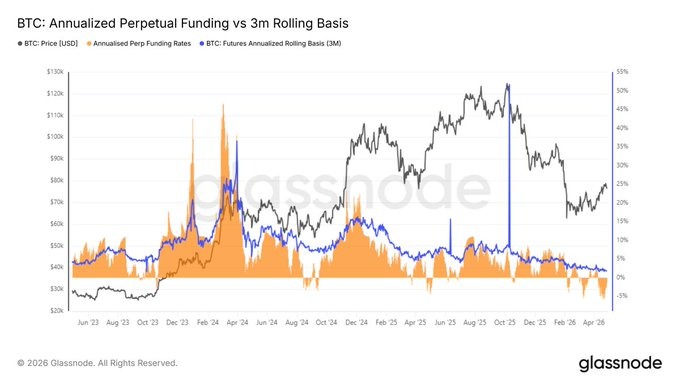
Bitcoin funding rates stayed negative for 46 days, the longest since 2023, forcing shorts to pay longs daily. Bitcoin shorts didn’t just lose money when the squeeze hit; they had been losing money long before it arrived. For 46 consecutive…
South Korea’s Seoul Administrative Court has granted Bithumb a temporary reprieve from a six-month suspension, allowing the exchange to continue operating while the case proceeds. According to Yonhap News Agency, the court’s 2nd Administrative Division under Judge Gong Hyeon-jin approved…
Crypto price forecasts remain central in 2026 as BlockchainFX gains investor attention amid market shifts. What makes a smart crypto price prediction matter in 2026? Today’s crypto market cap sits near $2.56T, 24h volume is about $129.43B, and Ethereum (ETH)…
Solana-based DeFi yield protocol Carrot has announced a permanent shutdown after losses tied to the Drift Protocol exploit left it unable to continue operations. According to a statement posted by Carrot on X on Thursday, the April 1 attack on…
A Nordic Bitcoin education group has released an open-source AI database designed to generate evidence-backed responses to common criticisms about Bitcoin’s environmental impact and energy use. According to Bitcoin Beyond 66, the tool, called “The Bitcoin Evidence Base,” has been…
Crypto wallet startup Oobit has introduced a Visa-backed virtual card that allows AI agents to execute payments in USDT without human input. According to Oobit, the new “Agent Cards” draw funds directly from Tether’s treasury, removing the need for fiat…
The crypto market is quietly shifting again, and while Bitcoin continues to dominate headlines, attention is now turning toward altcoins that are building real traction beneath the surface.
According to Altcoin Daily’s latest analysis, this phase is less about hype and more about positioning, with several altcoins showing strong fundamentals, rising usage, and increasing institutional interest.
Here are the top altcoins currently standing out.
Hyperliquid Gains Momentum With Real Usage
Recently, Hyperliquid has come up as a major force in the derivatives space. All because the platform combines a Layer-1 blockchain with a decentralized exchange, allowing users to trade perpetual futures across crypto and even traditional assets.
Its unique feature contains its explosive growth in trading volume, especially during major global events. The platform is already ranking among the top chains by revenue, showing strong product-market fit.
Adding to this, it is its token model. Wherein, increased activity leads to token buybacks and burns, meaning higher usage could directly benefit holders over time.
BitTensor Taps Into the AI Boom
Next up on the radar is BitTensor, which is gaining attention as a unique play on the AI narrative. The project focuses on decentralizing artificial intelligence by rewarding contributors who build and improve AI models.
Backed by institutional players like Barry Silbert, BitTensor is positioning itself as infrastructure for the next wave of AI innovation. Its capped supply and growing developer ecosystem add to its long-term appeal.
The idea is simple but powerful; just as Bitcoin monetized energy, BitTensor aims to monetize global talent.
Solana Shows Strong On-Chain Growth
Moving on, Solana continues to demonstrate why it remains one of the most closely watched networks. Despite price volatility, its usage metrics are surging.
Stablecoin transfers and decentralized exchange volumes have grown rapidly, with recent monthly activity nearly matching previous yearly totals. This suggests that real adoption is accelerating beneath the surface.
If this trend continues, Solana could remain a key player in the next market cycle.
Chainlink and Uniswap Lead in Real Revenue
Chainlink and Uniswap are being viewed as more mature, “blue-chip” altcoins.
Chainlink plays a critical role in providing real-world data to blockchains, especially as tokenization gains momentum. Meanwhile, Uniswap continues to generate consistent revenue through trading fees, making it one of the most established DeFi platforms.
Both projects stand out for their real-world utility and proven demand.
Sui, Ondo, and Propy Add New Narratives
Newer and niche-focused projects are also gaining traction. Sui is attracting attention for its scalability and strong development team, while Ondo Finance is pushing into the fast-growing tokenization sector.
At the same time, Propy is exploring how blockchain can transform real estate transactions, representing a more experimental but high-upside play.
The CLARITY Act, America’s most ambitious attempt to create a proper regulatory structure for digital assets, is approaching its final, make-or-break moment. And the question everyone in crypto space is asking: Will May 2026 finally be the month it actually happens?
Here’s what Industry experts and prediction markets say about it.
CLARITY Act is “in the Red Zone”
Senate Banking Committee Chairman Tim Scott said the CLARITY Act is “in the red zone,” meaning the bill is close to moving forward. He said it could reach committee markup in May, followed by a possible Senate floor vote in June or July.
Scott also said he expects the bill to reach the President’s desk this summer, showing growing momentum in Washington.
Other lawmakers also sounded confident. At the Bitcoin 2026 Conference, Senator Cynthia Lummis said crypto market structure legislation will be marked up in May, adding,
“We are gonna get it to the finish line.”
Senator Tillis also backed the bill and urged leaders to “move forward.”
Meanwhile, Senator Bernie Moreno warned that missing the end of May deadline could delay the bill for a long time, as the political calendar becomes tighter later this year.
Industry Experts Say Time Is Running Out
While the U.S. senators are optimistic about the bill, industry voices are also closely watching the timeline.
Ripple CEO Brad Garlinghouse recently shifted his expectations from April to May, warning that the bill has only a few weeks left to move forward.
“If it doesn’t pass now… it’s NOT HAPPENING anytime soon.”
Polymarket now shows a 46% chance of the bill being signed in 2026, down sharply from 82% in February.
Meanwhile, Kalshi gives only a 19% chance of approval before July and a 37% chance before August.
Key Hurdle For Passing the Clarity Act
The Clarity Act is expected to move forward in May, but a few important issues remain.
Stablecoin Yield Issues Largely Resolved
Passive yield, where users earn money just by holding stablecoins, may be banned. But reward programs linked to activity are still allowed, which is good for current stablecoin projects.
Conflict for Trump To Sign Due to the Coin Act
Democrats want to ban top officials, lawmakers, and their families from owning or profiting from crypto while in office. Many see this as targeting Trump-linked projects like WLFI and the TRUMP memecoin.
However, Democrats may demand that the Coin Act be passed; otherwise, they won’t vote yes. This may prevent Trump from signing the Clarity Act, making it a major hurdle for the bill.
Overall, the crypto industry remains hopeful.
Key Steps Needed to Sign the CLARITY Act
Most expect the next major step to be a Senate Banking Committee markup around the week of May 11.
Before reaching President Trump’s desk, the bill still faces five key hurdles: committee approval, a 60-vote Senate floor vote, merging with the Senate Agriculture version passed in January, aligning with the House version passed last July, and final presidential approval.
Arbitrum DAO is voting to release 30,766 ETH (around $70M) previously frozen after the KelpDAO hack. The funds were secured by the Security Council and now require community approval to be redeployed. If the proposal passes, the ETH will be sent to DeFi United, a joint recovery initiative working to restore rsETH backing. The vote remains open until May 7, and approval would make Arbitrum one of the largest contributors to the recovery effort.
Bitcoin bulls are back in action after defending the lows just below $75,000, keeping hopes for further upside alive. The BTC price has now reclaimed $77,000 and marked an intraday high of $77,453. However, bearish pressure continues to cap gains near this range. At the same time, the upside move is failing to generate strong follow-through, with price action showing signs of hesitation instead of acceleration.
This raises a key question: Is the breakout sustainable, or could it turn into a potential trap?
Bitcoin Price Breaks $77,000, But Momentum Fades
The BTC price has turned bullish heading into the monthly close, rising over 11% and marking a second consecutive green close after five bearish months. This has helped the price begin the new month on a marginally positive note, climbing 1% to 2% to trade above $77,200. However, momentum quickly weakened as the breakout failed to attract strong buying interest. Buyers did not step in with conviction, leaving the price stalled near the breakout zone.
In the short term, BTC continues to struggle near the local resistance around $77,000 over the past few sessions. Buyers repeatedly fail to sustain strength at this level, yet they are also preventing a deeper drop below $75,000. This reflects a lack of conviction in the rally, where even minor recoveries are met with quick sell-offs. On the other hand, the price has failed to reclaim the 50-day MA, which acted as a strong base throughout April. Additionally, the RSI has flattened after remaining elevated, further validating the fading momentum.
What’s Next? Will Bitcoin Price Break $100,000 in May?
In a broader perspective, the BTC price continues to trade under bullish influence, as it has been defending the support at $75,000. Currently, Bitcoin is trading near the $77K region, where buyers are attempting to stabilize the price within a previously strong demand zone. However, the structure still reflects lower highs, suggesting that bullish momentum has yet to fully return. For Bitcoin to move toward the $100K mark in May 2026, it must first reclaim the $86K–$90K range and sustain above it.
From a momentum and capital flow perspective, the setup does not yet support a strong upside expansion. The RSI remains below mid-levels, reflecting weak momentum, while the CMF continues to trend in negative territory, signaling persistent outflows. This suggests the ongoing bounce lacks strong accumulation and is more likely a relief move than the start of a new rally.
Unless the Bitcoin (BTC) price sees a sharp shift in momentum and reclaims higher resistance zones quickly, the probability of reaching $100K within May remains low, with the market more likely to stay in a consolidation phase or attempt a gradual recovery rather than a vertical breakout.
If the recovery structure develops, ICP could gradually climb toward the $27 region by the end of 2026.
With stronger Web3 infrastructure adoption, ICP price could potentially expand toward $70 by 2030.
Internet Computer (ICP), one of the leading decentralized compute platforms, is currently navigating a phase where strong technological relevance contrasts with prolonged price weakness. While the protocol continues to expand its role in decentralized web infrastructure, its price action has remained under sustained pressure.
After an extended downtrend, ICP is now stabilizing near lower demand zones, suggesting that selling momentum may be gradually easing. However, the lack of strong upside continuation indicates that the token remains in a transitional phase rather than a confirmed recovery.
This sets up a key question: Is ICP forming a base after prolonged weakness, or does the structure still reflect insufficient demand? With 2026 already underway, attention now shifts to whether ICP can reclaim key resistance levels and transition into a recovery phase. So, let’s dive into Coinpedia’s Internet Computer (ICP) Price Prediction 2026, 2027 – 2030.
Internet Computer (ICP) Price Prediction for May 2026
As May begins, ICP remains in a compression phase, where price is no longer trending lower but has yet to transition into a confirmed recovery. After a prolonged decline, the asset has stabilized within a tight range around the $2.20–$2.60 region, reflecting a shift in market dynamics as selling pressure fades and price begins to balance between buyers and sellers.
Rather than extending its downtrend, ICP is forming a base, with volatility tightening and downside attempts getting absorbed. Such behavior typically precedes a directional move, but confirmation is still required.
The key trigger remains above the current range. A sustained move through the $3.20–$3.50 zone would indicate that demand is returning, potentially initiating a recovery phase and opening the path toward the $5–$8 range if momentum builds.
However, until that breakout materializes, the structure remains neutral. If ICP fails to reclaim resistance, price is likely to stay contained within its current range, with the $2.00 level continuing to act as the primary support base. For May 2026, ICP remains in a consolidation phase, with a breakout above $3.50 required to confirm a shift toward recovery.
Coinpedia’s Internet Computer (ICP) Price Prediction 2026
ICP’s broader trajectory in 2026 is centered around whether the current stabilization phase evolves into a sustained recovery structure. The token has spent an extended period in decline, forming a series of lower highs that defined its previous market cycle. That phase now appears to be slowing, with price beginning to compress near its lower range, often a precursor to structural transition.
The recovery path, however, is not immediate. It requires a sequential reclaim of key zones, starting with $3.50, followed by $5 and $8. These levels represent the points where previous selling pressure emerged and must now be absorbed. Once these zones are cleared, the market typically shifts into a higher trading regime, where upside momentum begins to build more aggressively.
In such a progression, ICP could gradually expand toward the $10–$27 range during 2026, reflecting a full-cycle recovery rather than a short-term bounce. Until that transition is confirmed, the asset remains in a rebuilding phase. Loss of the $2.00 level would weaken this structure and extend the consolidation period.
Recent Catalysts
Major exchange listing expanded access, improving liquidity and global participation.
AI narrative gaining traction, positioning ICP within the decentralized compute and infrastructure segment.
Internet Computer Crypto Price Prediction 2026 – 2030
Year
Potential Low ($)
Potential Average ($
Potential High ($)
2026
10
18
27
2027
14
24
34
2028
18
30
45
2029
25
40
55
2030
35
50
70
Internet Computer Price Projection 2026
In 2026, Internet Computer price could project a low price of $10, an average price of $18, and a high of $27
ICP Crypto Price Action 2027
As per the Internet Computer price Prediction 2027, Internet Computer may see a potential low price of $14, The potential high for Internet Computer price in 2027 is estimated to reach $34
Internet Computer Price Target 2028
In 2028, Internet Computer price is forecasted to potentially reach a low price of $18, and a high price of $45.
ICP Token Price Forecast 2029
Thereafter, the Internet Computer (ICP) price for the year 2029 could range between $25 and $55.
Internet Computer Price Prediction 2030
Finally, in 2030, the price of Internet Computer (ICP) is predicted to maintain a steady positive. It may trade between $35 and $70
Internet Computer Price Prediction 2031, 2032, 2033, 2040, 2050
Over the long term, the value of Internet Computer (ICP) will depend on Web3 adoption and the expansion of decentralized cloud services, which could support gradual growth across future market cycles.
Year
Potential Low ($)
Potential Average ($)
Potential High ($)
2031
40
60
85
2032
45
70
100
2033
50
85
120
2040
120
185
250
2050
350
520
700
Internet Computer (ICP) Price Prediction: Market Analysis?
Year
2026
2027
2030
Changelly
$15
$35
$35
CoinCodex
$18
$42
$50
WalletInvestor
$20
$38
$45
Never Miss a Beat in the Crypto World!
Stay ahead with breaking news, expert analysis, and real-time updates on the latest trends in Bitcoin, altcoins, DeFi, NFTs, and more.
FAQs
What is Internet Computer (ICP) and what is it used for?
Internet Computer (ICP) is a layer-1 blockchain that lets developers build fully on-chain apps without traditional cloud servers.
What is the Internet Computer (ICP) price prediction for 2026?
ICP is projected to trade between $6 and $25 in 2026, depending on market momentum, support levels, and broader crypto sentiment.
How high can ICP price go by 2030?
If adoption of decentralized cloud platforms expands and crypto markets strengthen, ICP could potentially reach around $70 by 2030 in a strong growth cycle.
How much will ICP cost in 2035
Long-term models suggest ICP could trade between about $80 and $150 by 2035 if decentralized computing platforms gain wider adoption.
What will ICP be worth in 2040?
Long-term projections estimate ICP could range between roughly $120 and $250 by 2040, depending on Web3 adoption, developer activity, and broader crypto market growth.
What factors influence ICP price movements?
ICP’s price is influenced by market trends, developer adoption, token supply dynamics, network upgrades, and overall crypto sentiment.
Is ICP a good long-term investment?
ICP may suit long-term investors who believe in decentralized cloud computing, but price volatility means risk management is essential.
Two Democratic senators, Elizabeth Warren and Ron Wyden, have launched an inquiry into Commerce Secretary Howard Lutnick over alleged financial ties between Tether and a trust linked to his children. Lawmakers are seeking loan documents to examine possible conflicts of interest and whether policy decisions could be influenced. The probe matters because it could affect stablecoin regulation and market trust. Further disclosures may shape future U.S. oversight of Tether and crypto policy.
SBI Holdings is in advanced discussions to acquire Bitbank as part of a broader strategy to dominate Japan’s digital asset sector. The deal would involve purchasing shares after due diligence and regulatory approvals, though key terms remain undisclosed. This follows SBI’s recent integration of other crypto platforms, signaling aggressive industry consolidation. Bitbank, which had been preparing for an IPO, may instead become part of SBI’s expanding crypto ecosystem if the transaction is finalized.
The White House is opposing Anthropic’s plan to expand access to its Mythos AI model to around 70 more companies, citing national security and misuse risks. Currently, Mythos is limited to select partners like Amazon, Apple, Google, Microsoft, and NVIDIA. Officials warned the model could exploit vulnerabilities in critical infrastructure such as power plants, hospitals, and electric grids. Concerns also grew after unauthorized users reportedly accessed the system during its limited release phase.
Bitcoin posted its strongest monthly gain of 2026 in April, rising 12% after rebounding sharply from lows near $60,000. Despite being down 25% year-to-date, the recovery signals renewed investor confidence as traders watch key technical patterns like the bullish “morning star.” Analysts remain divided, with some expecting a push toward $80,000, while others warn of a drop to $40,000–$45,000. Bitcoin now trades near $76,400, with $73,500 support and $78,000 resistance likely deciding its next major move.
XRP ETF News dominated April as institutional capital surged into XRP-linked products following regulatory clarity and expanding utility. The convergence of ETF inflows, banking participation, and Ripple’s ecosystem growth positioned XRP at the center of evolving digital asset infrastructure, signaling a notable shift in market structure and sentiment.
XRP ETF News: Record April Inflows Driven by Regulatory Clarity
April marked the strongest month of 2026 yet for XRP-ETF, with approximately $81.6 million in fresh capital entering the market. This pushed cumulative inflows to $1.29 billion since their late-2025 launch. Notably, this surge followed a pivotal regulatory milestone, as both the SEC and CFTC jointly classified XRP as a digital commodity in March 2026.
This designation significantly reduced uncertainty around XRP’s legal status. Consequently, institutional investors appeared more confident in allocating capital, with large banking entities also began having exposure in XRP ETFs, too. This transition suggests XRP is increasingly viewed not merely as a speculative asset, but as a viable settlement layer within financial infrastructure.
Ripple Treasury Platform and RLUSD Expand Institutional Use Cases
Alongside ETF growth, early April saw the launch of the Ripple Treasury platform by Ripple. Designed for corporate finance teams, this product enables CFOs to manage XRP directly on balance sheets. As a result, the narrative around XRP has gradually shifted from retail-driven trading toward enterprise-grade financial operations. Also, in a month its saw 13,000 connected banks and $12.5T in payments volume.
At the same time, the adoption of RLUSD, Ripple’s USD-pegged stablecoin, has strengthened XRP Ledger’s institutional appeal. Acting as a stable bridge asset, RLUSD has supported settlement flows across a multi-trillion-dollar market. Data from DefiLlama also indicated that April recorded all-time high stablecoin volume for RLUSD, reflecting growing traction.
Moreover, liquidity expansion continued as RLUSD secured listings on major exchanges, including OKX. The integration into deep liquidity pools and trading pairs further enhanced accessibility, which may indirectly support ETF demand through increased market activity and tighter spreads.
Clarity Act Progress Adds Momentum to Institutional Narrative
Another key development influencing April sentiment was the advancement of the Digital Asset Market Clarity Act in the U.S. Senate. While a markup hearing was delayed until mid-May, the legislation is widely viewed as a critical step toward enabling full-scale bank participation in digital assets.
The Clarity Act aims to establish a comprehensive regulatory framework, complementing XRP’s newly defined digital commodity status. As institutions typically require clear compliance pathways, its eventual passage could unlock further capital inflows and deepen integration between traditional finance and blockchain networks.
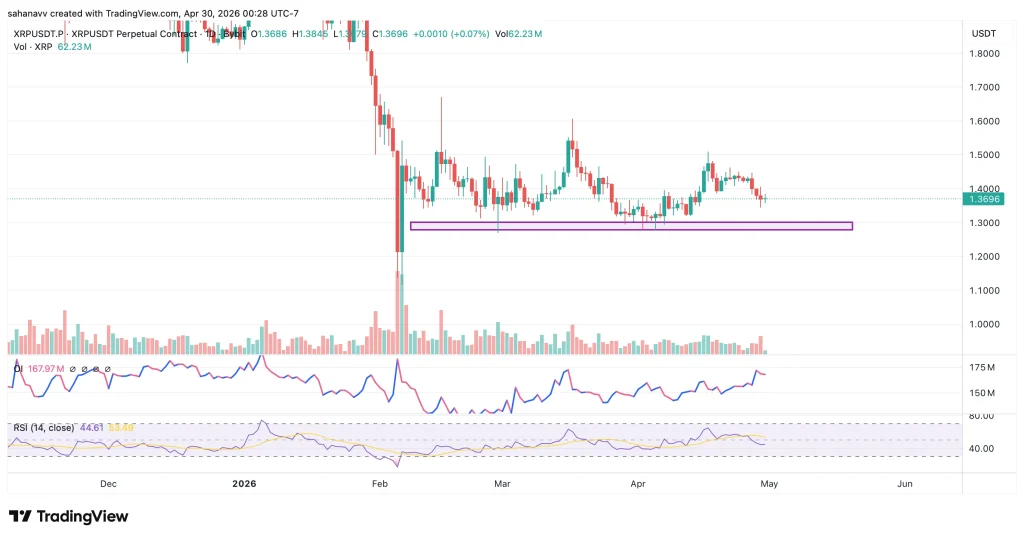
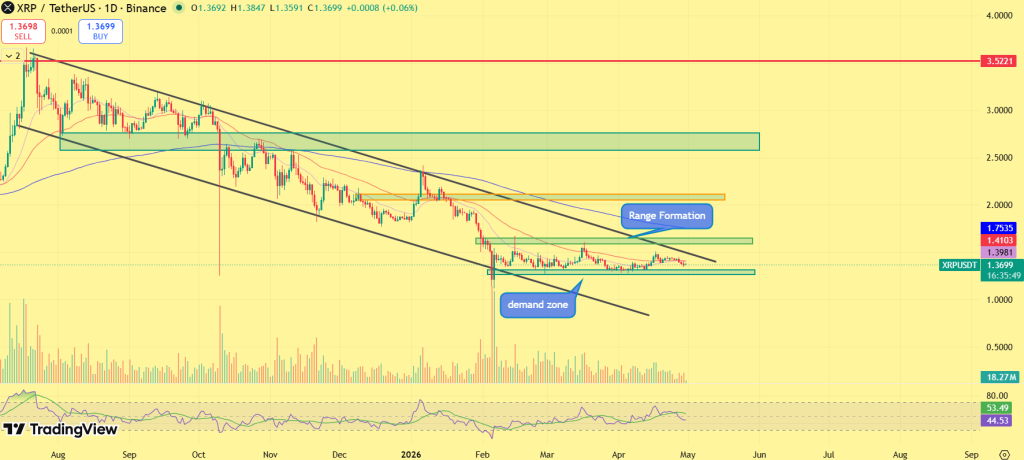
From a market perspective, XRP demonstrated relative resilience throughout April. Although it initially lagged broader crypto market movements, it recovered toward the $1.40 level by month-end. Market capitalization also climbed beyond $85 billion, reflecting renewed investor confidence.
Technically, XRP price analysis shows that it is forming a symmetrical triangle pattern, a structure often associated with consolidation before a breakout. A sustained move above $1.45 could open the path toward the $1.74- $2.00 range in May, particularly if institutional demand remains consistent.
Bitcoin bulls took another swing at the $77,000 resistance, but profit-taking and traders’ reluctance to increase margin and spot longs limit the strength of each breakout.
Tokenized US Treasurys were one of the biggest growth areas of the RWA market, rising from a market capitalization of $3.9 billion at the start of 2025 to more than $15 billion.
The Agent Cards launched to a select group of businesses on Thursday, with a limited number of additional companies set to gain access over the next two months.
Latin American users have increased their reliance on stablecoins, with dollar-pegged tokens now accounting for a larger share of crypto purchases than Bitcoin. According to Bitso’s 2025 crypto adoption report, 40% of purchases on its platform involved U.S. dollar-linked stablecoins…
The U.S. Senate has approved a resolution banning senators and Senate staff from using prediction markets. According to Senate proceedings, the resolution passed by unanimous consent on Thursday changed the chamber’s standing rules and took immediate effect. Lawmakers tied the…
Pi Network has officially activated Protocol 22 on April 27, 2026, marking a major backend upgrade aimed at boosting scalability and preparing the network for advanced functionality. Built on Stellar Core 22, the update required all node operators to upgrade to version 0.5.4 or face disconnection, making it a critical synchronization step.
According to crypto analyst Dr. Altcoin, this signals Pi’s shift from a social mining experiment into a fully functional blockchain infrastructure. After years of focusing on its 70M+ user base, the network is now laying the technical “road” to support real utility.
Protocol 23: The Real Turning Point
While Protocol 22 sets the stage, Protocol 23, expected on May 11, could be the true game changer. It introduces smart contracts, enabling Pi to evolve into a programmable platform similar to Ethereum.
This upgrade will unlock real-world asset (RWA) tokenization, decentralized applications, and the launch of a native DEX. Additional features include .pi domains for Web3 identity, on-chain KYC for seamless verification, and the rollout of AI App Studio for advanced AI-powered apps.
Fast-Paced Roadmap to June
Pi Network is entering an intense 10-week development phase. Protocol 24.1 (May 25) will focus on optimization, followed by Protocol 25.1 (June 8) targeting scalability. The roadmap concludes with Protocol 26.0 on June 22, expected to stabilize the ecosystem ahead of Pi2 Day celebrations on June 28.
Consensus 2026 Spotlight
The timing is strategic. Just before Consensus 2026 (May 5–7), Pi’s founders will present a technically upgraded network to institutional players. Dr. Chengdiao Fan will discuss Web3 and AI integration, while Nicolas Kokkalis will highlight digital identity, leveraging Pi’s 18M+ KYC-verified users.
Price Surge and Key Levels
Pi Network is showing steady momentum, trading around $0.18 with a 6.5% weekly gain and a market cap of approximately $1.86 billion, reflecting sustained investor interest.
In the short term, price action remains slightly mixed, dipping 0.69% in the past hour but still holding a modest 2% gain over the last 24 hours, suggesting mild consolidation after the recent uptick.
On the supply side, Pi has a circulating supply of about 10.36 billion tokens, with a much larger maximum supply capped at 100 billion, highlighting significant future dilution potential as more tokens enter circulation.
Following a brief correction, the Hyperliquid price slid below $40 during the early trading sessions with a plunge of nearly 1.5%. The descending trend was triggered soon after a rejection from the local highs at $43.1. Moreover, the crypto reportedly witnessed over $2M in whale exits following the failed breakout attempt.
Structurally, HYPE is still in an uptrend on a higher timeframe, but momentum is clearly slowing and liquidity looks thinner near the highs. Price broke $43.7 earlier, tagged $45.7, then immediately faded back under $40 support retest. That’s not a strong continuation, but hesitation. This raises speculations about whether the Hyperliquid price is gearing up to chase highs or is still stuck within a bearish trend.
HYPE has broken below its key structure, losing the support it held since the start of the year. With selling pressure building, attention now shifts to whether bulls can defend the $38 level, as a breakdown could extend the pullback toward the $35 support zone.
As seen in the chart, Hyperliquid (HYPE) has turned lower after breaking down from a rising wedge pattern, signaling a shift in short-term momentum toward the downside. The RSI has flipped bearish and continues to trend lower, showing little sign of recovery and reinforcing the weakening structure.
With selling pressure building, the price now risks slipping below the $38–$37 support range, where a key demand zone may attract buyers. However, the current setup suggests that any bounce could remain limited unless strong demand emerges. On the upside, the $43–$46 zone continues to act as a firm resistance ceiling, capping recovery attempts. Meanwhile, the $40 level has become a critical battleground, with the price struggling to sustain itself above it.
If Hyperliquid fails to hold the immediate support zone, the correction could extend toward the $35–$34.5 region. A breakdown below this level would significantly weaken the broader bullish structure and open the door for deeper downside. Overall, the chart reflects a market shifting into a corrective phase after losing key structure. Unless buyers defend the lower support zones and reclaim the $40–$43 range, HYPE’s price remains vulnerable to further downside in the near term.
Ripple and XRP are drawing fresh attention after crypto investor Santiago, who has backed over 150 companies, shared a detailed take on how the firm is positioning itself beyond crypto and into global finance.
In a podcast, Keith & Ben talk to Santiago Santos, who highlighted Ripple’s biggest advantage, mainstream recognition.
“You walk around the street… people won’t say Solana or Ethereum. They’ll tell you, Ripple. Without a doubt.”
He argued that Ripple has captured attention better than almost any project except Bitcoin, effectively “memeing itself into existence.” In his view, this level of brand recall plays a major role in long-term positioning, even if the underlying tech debate continues.
Using XRP as a Strategic Currency
Beyond branding, Santiago pointed to Ripple’s treasury strategy as the real differentiator.
He further noted that, “they’re using that currency to go buy real businesses… that’s exactly what you should be doing.”
He referenced Ripple’s recent acquisitions, including Hidden Road, noting that the company is actively deploying its resources to acquire infrastructure and expand its footprint. He compared this approach to historical corporate strategies like AOL-Time Warner, where companies leveraged valuation to secure real-world assets.
“I’m not advertising XRP. I’m just saying they have done very interesting things to become a dominant player, not in crypto. In finance,” he said.
A Practical Approach in a Competitive Market
Santiago contrasted Ripple’s execution with the broader crypto space, where many projects remain focused on ideology or long-term roadmaps.
“Business, practicality, and common sense… is what wins.”
He criticized ecosystems that rely too heavily on theory, pointing out that crypto’s open nature allows users and liquidity to move quickly. Projects that fail to act decisively risk losing relevance.
The US Senate unanimously passed a rule banning members and staff from prediction markets, with a similar resolution set to be introduced in the House.
Spot Bitcoin ETF outflows reached $490 million as crypto investors considered the impact of high oil prices, Big Tech earnings and a shortfall in AI industry growth metrics.
Brad Garlinghouse used his appearance at XRP Las Vegas to address something that has been circulating in the community for years, questions about whether Ripple is genuinely committed to XRP or quietly moving away from it toward stablecoins and enterprise products.
“I always thought it was kind of funny and strange that people questioned Ripple’s commitment to XRP,” Garlinghouse said. “Today, Ripple is still the largest holder of XRP on the planet. We are the most interested party in seeing XRP be successful. We will continue to be the most interested party in seeing XRP be successful.”
He pushed back on the logic of the doubt itself. “Whenever I read people questioning that, I just think it doesn’t make sense logically.”
The North Star Has Not Changed
Garlinghouse laid out the three things Ripple is focused on with XRP: making it the most useful digital asset, the most liquid digital asset, and the most trusted digital asset. He framed everything the company does, including moves that may not immediately appear connected to XRP, as serving those three goals.
“Even if it doesn’t have a direct line from point A to point B, it may be point A to point B to point C,” he said. “It’s all in service of how do we expand, grow, and drive liquidity, utility, and trust in XRP.”
On the question of RLUSD potentially replacing XRP, a concern that has gained traction in parts of the community since the stablecoin launched, Garlinghouse acknowledged the perception but rejected the conclusion. He also said that he does not feel obligated to explain every strategic decision publicly, partly because doing so hands information to competitors.
“I don’t feel the need to constantly update the whole world about our strategy because to some degree that just informs people who want to compete against us,” he said.
A Record Year and a Pointed Troll
Garlinghouse revealed that Ripple now employs 1,300 people and is having a record year across multiple metrics. He had just completed a gruelling international trip covering Dublin, London, Singapore, and Sydney in a single week, something he described with characteristic candour as “too much” and said he would not be repeating.
A Bitso report shows shifting user behavior as dollar-linked stablecoins gain traction for everyday financial use across Latin America’s inflation-hit economies.
XRP Las Vegas 2026 opened today, April 30, as Ripple covered the Las Vegas Strip with “Raise the Standard” billboards and Steven Zeiler of Yellow Network posted live from the floor calling XRP “only a step on the trajectory to…
Bitcoin has failed to sustain a move above $78,000 in the 24 hours following Wednesday’s FOMC decision, with three straight sessions of Bitcoin ETF outflows totaling over $490 million signaling that institutional allocators are pausing rather than adding exposure as…
CFTC Chairman Michael Selig confirmed the agency is deploying AI tools to review crypto registration applications and monitor trading data, the first major US financial regulator to use artificial intelligence to compensate for a workforce cut of more than 20%…
Treasury Secretary Scott Bessent confirmed on April 29 that the United States has seized almost $500 million in Iranian crypto assets under Operation Economic Fury, including a $344 million Tether freeze on two Tron addresses, while saying Iran’s currency has…
Ripple-backed XRP treasury company Evernorth has named OpenAI Foundation CFO Robert Kaiden and Antalpha COO Derar Islim as independent directors in its second SEC S-4 amendment, bringing AI and institutional finance expertise onto the board of the company aiming to…
President Trump will receive a military briefing today from CENTCOM Commander Admiral Brad Cooper on new Iran options, including a “short and powerful” wave of infrastructure strikes, a Strait of Hormuz ground operation, and a special forces mission to secure…
Visa added Base, Polygon, Canton, Arc, and Tempo to its global stablecoin settlement pilot on April 29, bringing the total to nine supported blockchains and reaching a $7 billion annualized settlement run rate, up 50% from last quarter. Visa stablecoin…
Historically, investing was not designed for broad participation. Early capital markets were largely dominated by institutions, wealthy families, and insiders who had the relationships and wealth needed to access these exclusive opportunities. But over time, this structure started to change.
The expansion of public markets, the rise of brokerage accounts, and the digitization of trading platforms opened new avenues for investing. For the first time, a broader segment of the population could buy shares in a company, hold bonds, and participate in financial growth beyond their immediate reach.
Investing became a more accessible component of economic life. But in reality, that expansion has never truly been complete.
On March 23, Larry Fink released his Annual Chairman’s Letter, describing the system’s growing imbalance, noting that “capitalism is working, just not for enough people.” While financial markets have generated significant returns, those gains have largely stayed central to individuals and institutions that already hold assets. Many workers, despite participating in the broader economy, remain on the margins of capital markets and do not benefit from these pathways to wealth creation.
In the same letter, Fink also frames tokenization as a potential upgrade to financial systems that have long limited how markets are accessed and structured. By recording ownership of assets, such as bonds, funds, real estate, and other commodities onchain, tokenization can make these assets easier to issue, transfer, and access.
As of early 2026, more than 5.2 billion people globally use some form of digital wallet, shifting the point of access to financial services away from traditional institutions and toward user-held platforms. Tokenization enables investment products to reach people through the digital wallets they already use.
In his letter, Fink compared the current stage of tokenization to the early days of the internet. In the mid-1990s, the internet did not replace newspapers, banks, retailers, or communication networks. Instead, it created new rails that connected systems that previously operated in silos, making information cheaper to distribute and easier to access.
Tokenization has a similar potential. While it might not replace traditional markets overnight, it changes the infrastructure beneath them by making assets easier to issue, transfer, and hold across digital platforms. Just as the internet turned information into something that could move globally, tokenization makes ownership more accessible across financial systems, opening investment opportunities to people who have previously lacked access.
Improving access, however, requires more than digitizing ownership. Tokenized assets must operate within regulatory frameworks, maintain investor protections, and integrate with trading and lending systems that support their lifecycle. Without that foundation, tokenization risks becoming another technical layer that does little to change how markets function or who they serve.
This is where purpose-built infrastructure becomes relevant. Mavryk Network, for example, is a Layer-1 blockchain designed specifically for real-world assets, helping to reduce traditional barriers to assets such as real estate. Its approach reflects the idea that tokenized RWAs cannot be treated like ordinary crypto tokens. They need infrastructure that can support regulated issuance, custody, trading, and lending from the outset, so assets can move onchain without losing the legal and financial constraints that give them real-world value. In doing so, Mavryk is preparing these assets to interact with institutional-grade systems while still making them more accessible to a broader range of users, creating a more connected ecosystem.
As financial systems continue to evolve, the question is not only about how markets operate but also about who they are built to serve. Fink’s argument ultimately places tokenization within this debate, as part of a broader effort to address the growing divide between those who participate in financial growth and those who do not.
The dollar index is heading for its biggest monthly drop since June 2025 as U.S.–Iran ceasefire hopes unwind the war premium, even while oil and Fed bets keep it range‑bound. The dollar is on track for its largest monthly decline…
Bitcoin found support above a key investor cost-basis level as spot BTC ETF flows and spot positioning compressed BTC’s price range in preparation for the next trending move.
Sentora has announced that Sentora Smart Yield is now publicly available, opening access to its DeFi vault discovery and monitoring platform to all users.
Meta has begun paying select creators in USDC stablecoin on Solana and Polygon via Stripe, marking Facebook’s first crypto payout program four years after the company shut down its Libra project under regulatory pressure. Meta USDC creator payouts went live…
CS2 skin trading trends rise as gamers convert in-game items into crypto assets for liquidity and control. Counter-Strike 2 is the reality for many players, beyond an ordinary shooting game, a skillful merging of tactics and personality. Skins contribute significantly…
Jerome Powell announced at his final FOMC press conference on April 29 that he will remain on the Federal Reserve Board of Governors past May 15, saying Trump’s legal attacks on the institution had “left me no choice” but to…
The U.S. Air Force’s interceptor drone deal with Trump‑backed Powerus tightens family links to the Pentagon as Washington pivots to cheap AI drones against Iran. The U.S. Air Force has struck a weapons procurement agreement with Powerus, a drone company…
SaintQuant expands AI trading adoption with automated strategies and 150,000+ global users. Bought Bitcoin for the first time. The wallet is set up. What comes next? For most people, the next step is finding the best crypto app in 2026,…
TRM Labs says North Korea-linked hackers have stolen about $577m in 2026 so far—76% of all crypto hack losses—driven by massive hits on KelpDAO and Drift Protocol. A new report from blockchain intelligence firm TRM Labs finds that organizations linked…
Polymarket is rolling out an onchain integrity monitor with Chainalysis to detect insider trading and manipulation across its prediction markets and reassure regulators and institutions. Polymarket has unveiled a comprehensive on-chain market integrity monitoring solution designed to track trading behavior…
Bitcoin is pinned near $76,000 below $79,000 resistance as ETF outflows, Fed infighting, and record shorts sap risk appetite and keep volatility unnaturally muted. Bitcoin (BTC) hovered around $76,000 on Thursday, struggling to break above a resistance band between $78,000…
Kevin Hassett warns that reappointing Jerome Powell to the Fed Board could delay or dilute Trump-era rate cuts, keeping crypto traders fixated on personnel-driven monetary policy. White House National Economic Council Director Kevin Hassett said that Federal Reserve Chair Jerome…
Syndicate Labs has confirmed that a leaked upgrade key let an attacker hijack its Commons cross-chain bridge, drain about 18.5 million SYND tokens worth roughly $330,000 plus user funds, and trigger a sharp price crash before the team pledged full…
The Ethereum Applications Guild launches as a global non-profit to fund, coordinate, and grow Ethereum’s app layer using membership fees and ETH staking yield. The Ethereum Applications Guild (EAG) announced its official launch on April 30, 2026, as a global…
ECB held rates at April 30 meeting but Lagarde stressed rising inflation and growth risks from Iran war, signaling June hike possibility. KelpDAO announced April 30 it has completed its committed contribution to the recovery fund, providing 2,000 ETH in treasury…
XRP Las Vegas 2026 opened its doors Thursday, drawing the XRP community together for what has become one of the most anticipated dedicated gatherings in the digital asset calendar. Running April 30 to May 1, the event follows directly on the heels of the Bitcoin 2026 Conference that wrapped up at the Venetian earlier this week, keeping Las Vegas at the centre of the crypto world for a second consecutive week.
Attendance energy is running high. Social media posts from the venue are generating significant engagement, with community members who could not make the trip expressing visible frustration at missing out.
The sentiment online has ranged from enthusiastic to genuinely wistful, with more than a few attendees noting they are already planning for next year.
A Timely Backdrop
The event’s timing has added a layer of significance that goes beyond the usual community gathering atmosphere. Senator Thom Tillis confirmed earlier this week that he will push for a Clarity Act markup when the Senate returns from recess on May 11, marking the most concrete legislative commitment the bill has received in months.
The stablecoin yield dispute that had been the bill’s primary sticking point appears largely resolved, and the path to a committee vote is clearer than it has been at any point this year.
For an XRP community that has watched the regulatory environment shift dramatically over the past two years, from the SEC lawsuit to Ripple’s legal victory to the current push for comprehensive market structure legislation, the Clarity Act’s progress represents the kind of policy alignment the ecosystem has been building toward for years.
The Broader Moment
XRP Las Vegas arrives at a moment when the token’s real-world footprint is expanding simultaneously on multiple fronts. Ripple opened a new regional headquarters in Dubai this week. South Korea’s K Bank launched a blockchain payment pilot using Ripple’s infrastructure. RLUSD received regulatory approval from Dubai’s financial regulator. And OKX listed RLUSD across more than 280 trading pairs earlier in the week.
Whether that combination of regulatory progress, institutional expansion, and community momentum translates into sustained price movement remains to be seen. XRP is currently trading around $1.35 to $1.38, operating below levels many in the community consider reflective of the network’s current utility and trajectory.
For those in Las Vegas this week, however, the conversation is less about the current price and more about the infrastructure being built around it. The community that gathered Thursday believes the most significant developments are still ahead.
Bitcoin has climbed roughly 30% from its February lows and bulls have been feeling good about it for weeks. The problem, according to one analyst who has held the same macro thesis unchanged for months, is that this is exactly how it felt before the last two major drops.
The bigger picture has not changed. Bitcoin is working through a larger corrective structure and the current move higher is a bounce within that correction, not a new bull trend. The analyst has seen this pattern play out repeatedly:
Upward moves in corrective phases take a long time, keeping bulls feeling right for extended periods
Volume during this rally has dropped to levels not seen since 2023, signalling a market approaching an inflection point rather than building genuine momentum
When the eventual decline comes it tends to be sharp and fast, catching most participants off guard
Not Yet, But Getting Closer
The analyst is not calling a top right now. One or possibly two more highs remain likely before the setup he is watching materialises. What he is specifically looking for:
A clean five-move decline from whatever high forms next is the first signal a top is in
Until that structure appears the upside door stays open and the channel holds
A three-move bounce following that decline creates the ideal short entry with a tight stop and a strong reward-to-risk ratio
The Levels That Matter
Bitcoin could push toward the $82,000 resistance zone and potentially test the top of the channel before any reversal develops. Below current price the key levels break down as follows:
First support: $74,968 to $77,250
Channel lower boundary: approximately $76,400
Deeper support: $67,500 to $72,900 if selling accelerates
The rally is real and the channel is intact. But the analyst has seen this movie before and knows how it tends to end. The only question is whether it starts from here or from a little higher up.
The KCS price isn’t just drifting it’s kind of dangling. Sitting around $8.39, KuCoin’s native token is now pressed against a level that’s less “support” and more like a “risky line of defense.” Lose it, and things could unravel fast.
Because here’s the uncomfortable truth: this isn’t a healthy consolidation. It’s a market thats trying to hold itself together in a declining trend.
KCS price struggles at $8 support
Zoom out to the weekly chart and the story gets pretty blunt. The KCS price has stayed under 200-week EMA.
And now? Price is barely clinging above the $8.00 psychological level. That matters more than it sounds. Because structurally, there’s not much beneath it.
The dangerous vacuum below $8 support level is dangerous, if $8 breaks, the chart doesn’t offer much in terms of safety nets. There’s a visible liquidity gap, a kind of “air pocket” where historical support is thin.
That’s where the so-called vacuum effect comes in. If sellers take control, the KCS price could slide quickly toward $4.47 which is a level that effectively rewinds the clock back to late 2024. Not a minor dip. A full reset. And markets love filling gaps like that.
But let’s be real price action doesn’t exist in a vacuum. The underlying data isn’t exactly helping the bullish case either.
On-chain metrics from CryptoQuant show a steady decline in both Active Addresses and Total Transaction Counts. Translation? Fewer users, fewer interactions, less organic demand. That’s a problem.
Because while price is trying to stabilize, the network itself is cooling off. And that kind of divergence rarely ends well. It suggests the current price floor isn’t being supported by real usage as it’s being propped up. And props don’t last forever.
Tokenized assets narrative adds unexpected twist
Now, just when things start looking bleak, KuCoin throws in a curveball. The platform announced today that tokenized US stocks and ETFs will be integrated into its Web3 wallet via Ondo Finance. Over 260 tokenized TradFi assets, deep liquidity, and a unified access point between crypto and traditional markets.
Sounds big. And to be fair kind of it is. But here’s the question: does narrative beat reality?
Because while the idea of “TradFi meets Web3” is compelling, the KCS price still has to deal with immediate technical pressure and declining on-chain activity. Announcements can spark attention but they don’t always translate into sustained demand.
So, what’s next? Right now, everything circles back to that $8 level. Hold it, and maybe KCS buys time to stabilize. Lose it, and the downside opens up quickly. For now, the KCS price isn’t breaking out but it’s just holding on.
Senator Thom Tillis told Fox Business this week that he will push the Senate Banking Committee to schedule a markup for the Clarity Act when lawmakers return from recess on May 11, marking the clearest public commitment yet on timing from one of the bill’s key negotiators.
“I’m going to ask the chair to move forward with scheduling a markup when we get back,” Tillis said. “I think we’ve made a lot of progress. It’s time to get it before the committee and move it forward.”
The statement carries particular weight given that Tillis had been among the bill’s most vocal internal critics, raising concerns about stablecoin yield provisions and the bill’s treatment of software developers under 1960-era criminal statutes. His shift toward pushing for a markup signals that negotiations have moved far enough to proceed.
The Sticking Points That Remain
Tillis acknowledged that not every concern has been fully resolved but indicated the outstanding issues should not block the process from moving forward. On stablecoin yield, he said most bank concerns have been addressed, though some parties are still working through details. He invited remaining stakeholders to “come and work in good faith” rather than hold the bill hostage to every unresolved point.
The stablecoin yield debate has been one of the bill’s longest-running disputes. Coinbase previously withdrew support over restrictions on exchange-based yield offerings, arguing the limitations went too far. Banking industry groups have taken the opposite position, supporting the restrictions on the basis that they complement the GENIUS Act framework already in place for stablecoin issuers.
On the software developer question, Tillis pointed to Senator Lummis’s approach, saying he is “generally in support” of where the bill currently stands on that issue.
What Comes Next
Tillis outlined a specific sequencing for the final steps before a markup. Legislative text will be released to stakeholders before it is made public, with a window of at least four to five days between publication and the hearing date to give participants adequate time to review the language.
Ethics provisions, which Democrats have insisted must address executive branch crypto holdings including those of the Trump family, are still being actively negotiated. Sources familiar with the process say those provisions are more likely to be added after the bill reaches the Senate floor rather than incorporated at the committee stage, a sequencing that removes one potential blockage from the markup itself.
With midterm elections approaching and the legislative calendar tightening, the window for passing comprehensive crypto market structure legislation is narrower than it has ever been. Senator Cynthia Lummis has said publicly that failure to pass the bill in this Congress could push meaningful crypto legislation back to 2030. Galaxy Digital CEO Mike Novogratz has predicted President Trump could sign the bill as early as June if the Senate moves quickly.
May 11 is the first realistic opportunity to set that chain of events in motion.
The Chainlink price is moving just enough to keep traders engaged, but not enough to actually commit big. Sitting around $9.10, it’s stuck in a tight range, sandwiched between short-term EMAs and a much bigger ceiling looming overhead. And honestly? It feels like the calm before a forced move.
Chainlink price squeezed between key technical levels
Right now, the Chainlink price is trapped between its 20-day and 50-day EMAs. That might sound neutral and technically, it is but zoom out a bit and the picture gets heavier. The real problem sits above: a descending 200-day EMA near $11.61 that has remained untouched since Q4 2025.
So yes, LINK/USD is holding ground above its February support. But it’s not exactly winning either. It’s stuck. Plain and simple.
Momentum indicators also shows hesitation, not conviction yet. Like, RSI is hovering at 48.52 right in the middle. Not oversold. Not overbought. Just indecisive. The kind of reading that tells you the market hasn’t picked a side yet.
MACD? Flat. No real histogram expansion, no strong crossover. It’s basically whispering, “Wait.”
And then there’s CMF at 0.03 which is barely positive. Sure, there’s some buying pressure, but it’s weak. Fragile. The Awesome Oscillator barely holding green at 0.20 just reinforces that idea.
In short, there’s movement but no conviction behind it.
Liquidation clusters hint at imminent volatility spike
Moreover, the liquidation map tells a more interesting story than the price chart itself. There’s a dense cluster of leveraged positions stacked above and below the current price $9.50 to $10.00 on the upside, and $8.20 to $8.50 below.
That’s not random. That’s bait. In low-volatility conditions like this, markets tend to “hunt” these zones by triggering liquidations to fuel the next move. Translation? Don’t be surprised if LINK price suddenly wicks hard in either direction before deciding where it actually wants to go.
It’s not about direction yet. It’s about clearing the board.
What May holds for Chainlink price action
So, what’s next in May? The most likely path into May looks like more sideways chop with a slight bullish tilt. If the Chainlink price can push above the 50-day EMA and hold, a retest of $10.00 becomes the obvious next step. Break that, and the next liquidity pocket around $10.50 comes into play.
But let’s not get ahead of ourselves. That $11.60 level? Still a major ceiling unless volume shows up in a meaningful way.
Flip the scenario, though if $9.00 fails to hold, the downside liquidity near $8.30 becomes a magnet. And given how markets behave, a quick flush wouldn’t be surprising.
For now, the Chainlink price isn’t trending but kind of coiling. And when it finally moves, it probably won’t ask for permission.
The rapid development of the cryptocurrency market has attracted a growing number of investors. However, due to high market volatility and trading complexity, many investors face numerous challenges when trying to enter this field. To address these issues, BSStrategy has launched a fully automated AI cryptocurrency trading platform, providing users with an efficient and intelligent way to invest in digital assets.
Artificial Intelligence Leads a New Trend in Cryptocurrency Trading
BSStrategy’s AI trading platform utilizes advanced artificial intelligence technology combined with quantitative trading models to provide users with a completely new trading experience. The platform not only analyzes market dynamics in real time but also automatically executes trades based on preset strategy logic, helping users seize market opportunities and reduce the risks of human intervention.
Easy Three Steps to Start Your AI Automated Trading Journey
The BSStrategy platform is designed with user-friendliness at its core, allowing even inexperienced investors to easily get started. Here are the three key steps to using the platform:
Users first need to create an account on the BSStrategy platform.
Step 2: Select a Quantitative Trading Plan
In the control panel, users can select a suitable quantitative trading plan based on their investment goals and risk tolerance. Step 3: Activate Automated Trading
After completing the first two steps, users only need to activate the AI trading robot to start fully automated trading. Once activated, the system will monitor market conditions around the clock and automatically execute buy and sell orders, saving users time and effort while improving investment efficiency.
Platform Core Features
BSStrategy stands out in the highly competitive cryptocurrency market with its numerous innovative features. Here are its key features:
1. Intelligent Trading Strategies: The platform incorporates multiple optimized trading strategies to adapt to different market trends and volatility.
2. Real-time Market Analysis: AI technology supports real-time data analysis, ensuring trading decisions are based on the latest market dynamics.
3. Automated Trade Execution: From market monitoring to order execution, the entire process is automated, requiring no human intervention.
4. User-Friendly Interface: The intuitive interface makes it easy for beginners to use, while providing detailed data reports to help users understand their investment performance.
5. Diverse Asset Support: The platform supports multiple mainstream cryptocurrencies, providing investors with more choices.
6. Security Guarantee: Advanced encryption technology ensures the security of user assets and data. The Future of Artificial Intelligence and the Digital Asset Market
As the application of artificial intelligence (AI) technology in the financial sector deepens, AI-driven automated trading is becoming a new trend in future investment. BSStrategy, through its innovative platform, not only lowers the barrier to entry for individual investors into the cryptocurrency market but also provides them with more efficient and accurate trading tools.
Furthermore, the fully automated AI trading platform helps users overcome the emotional decision-making problems inherent in traditional manual trading. Whether facing market ups or downs, the AI system can always operate rationally according to predetermined strategies, thereby helping users achieve better investment returns in a complex and volatile market.
About BSStrategy
As a company focused on fintech innovation, BSStrategy is committed to providing efficient, secure, and intelligent financial solutions for global investors through technological means. Its team comprises experienced data scientists, financial experts, and software engineers, working together to drive technological advancements in the cryptocurrency field.
Conclusion
The launch of BSStrategy’s fully automated AI cryptocurrency trading platform provides investors with a brand-new tool to participate in the rapidly evolving digital asset market. In this field brimming with both opportunities and challenges, leveraging artificial intelligence technology will be beneficial for investment.
April 2026 turned into a nightmare for the crypto world. According to CertiK, a blockchain security company, the total amount lost to hacks, scams, and exploits this month crossed $650.9 million.
That makes it the worst month for crypto losses since March 2022, when the industry lost roughly $715 million
Major Exploits Drove the Losses
According to CertiK’s data, the majority of losses came from exploit-based attacks rather than phishing or scams.
The largest exploit came from KiloEx, which alone saw losses of about $291.3 million. This was followed by Drift Protocol, with losses of roughly $285.23 million, making it one of the biggest single incidents of the month.
Meanwhile, other notable attacks included Rhea Finance at $18.47 million, Grinex at $16.23 million, and a contract exploit labeled 0x8B84 with losses of around $6.585 million.
Wallet Compromises Led the Losses
Looking at how the money was lost, wallet compromise was the biggest category by far, responsible for over $610 million of the total.
Price manipulation schemes came second at around $18.88 million, followed by code vulnerabilities at nearly $17 million.
Meanwhile, phishing attacks, though smaller in total, still caused $3.57 million in damage across multiple incidents. Front-end attacks rounded out the list at $544,703.
DeFi Remains the Biggest Target
CertiK’s breakdown shows that DeFi platforms continue to be the most affected sector. By sector, DeFi platforms were hit the hardest, losing nearly $609.39 million in April alone.
Centralized platforms recorded losses of about $8.48 million, while gaming-related projects saw around $3.41 million drained.
Smaller losses were recorded in bridges ($2.83 million) and other categories totaling nearly $9.85 million.
What This Means for the Crypto Market
The number of security incidents also increased steadily from January to April, with April recording the highest activity level.
The surge in losses raises fresh concerns about security standards across the industry. While innovation continues to push the space forward, these incidents highlight the urgent need for stronger audits, better risk management, and improved user awareness.
Despite these setbacks, the industry has shown resilience in the past.
The chainlink price prediction picked up real force after cumulative spot ETF inflows passed $111 million on April 28 while 970,430 LINK left exchanges in the largest single-day outflow of 2026 according to crypto.news. Chainlink (LINK) sits at $9.11 with BridgeTower Capital deploying the full oracle stack to tokenize the $11 billion DOM X Arizona project.
Institutions do not wire this kind of capital into a token they plan to leave behind. But the chainlink price prediction that matters most right now is not the slow climb to $30, it is whether the presale carrying an upcoming Binance listing can reshape a portfolio in weeks while the LINK forecast grinds through the year.
Chainlink Price Prediction After Record Exchange Outflows Signal Strong Accumulation
Santiment data shows 970,430 LINK tokens left exchanges on April 27, the largest outflow since December 2025 per crypto.news. Total spot ETF net assets crossed $111 million.
CCIP processes over $1.3 billion in weekly cross-chain volume, and the Chainlink price prediction carries real-world backing. But a $6 billion cap puts a ceiling on the kind of returns that change lives, and the real 100x lives in a different entry entirely.
Chainlink Price Prediction and the Presale That Will Not Wait for It
Pepeto: What LINK Holders Miss by Waiting for $30
The problem with patience on Chainlink (LINK) is not the destination; it is the opportunity cost on the way there. Every month spent watching LINK grind from $9.11 toward $30 is a month where the fastest-moving presale of 2026 fills another round and moves closer to the Binance listing that ends open entry forever.
Pepeto is already a working product. The exchange runs live, processing every trade at no cost. A bridge connects three major chains and delivers the full amount without deducting transit fees, and the contract scanner reads every token’s code and rejects anything built to take funds. SolidProof audited the system and published results on-chain.
The original domain was hit by attacks as the project’s profile grew, so the team secured a new address. Pepeto is the only active presale page.
The same person who created the original Pepe token and watched it reach $11 billion in value shipped every tool before opening this presale, and a former Binance exchange executive now leads the listing track. Capital passed $9.66 million at $0.0000001867, staking runs at 177% APY, and the return from presale to listing is the kind of distance that Chainlink (LINK) at a $6 billion cap simply cannot cover.
Chainlink (LINK) Price at $9.11 as ETF Inflows and Exchange Outflows Hit 2026 Highs
Chainlink (LINK) trades at $9.11 per CoinMarketCap, sitting 82% below its $52.88 all-time high near a $6 billion cap. The exchange reserve dropped to 130.9 million LINK as holders moved tokens off-exchange.
Analyst forecasts range from $9.97 to $85 per CoinCodex and Coincub. Support holds at $9.00 with resistance at $9.37, and the price trades below all three moving averages, pointing to a breakout decision soon.
Even the most aggressive chainlink price prediction gives roughly 9x from here, strong for an infrastructure token, but nowhere near what presale entries paired with a listing trigger can produce.
Conclusion:
Patient holders will see the Chainlink price prediction pay off eventually because the oracle network that Chainlink (LINK) built is deeper and more connected than any other project in the top twenty. But the real lesson from LINK is not where it trades today at $9.11, it is what happened to the people who saw it at $0.20 and did not act.
Those wallets had every piece of data they needed, the partnerships were real, and still the majority sat frozen until LINK cleared $52, and the opportunity was gone.
Pepeto is sitting in that exact position right now, except the timeline is shorter because the Binance listing compresses everything into one event. The founder who took Pepe to $11 billion built a full exchange this time, a SolidProof audit backs the system, and $9.66 million came in from wallets that understand what a listing does to a presale price of $0.0000001867.
When LINK reaches $30, and the headlines call it a solid 3x gain, the Pepeto listing will have already happened and that presale price will be the number that haunts anyone who hesitated. Visit Pepeto today, because this is where one decision made right now determines whether 2026 is the year that changed everything or the year that almost did.
The Pepeto project is growing fast, and due to its growing reach, harmful actors have hit the official site. The temporary domain is now « PepetoSwap DOT com » in place of « Pepeto DOT io » until further notice.
Users must always check they are on the correct URL before connecting their wallets or sharing personal information.
FAQs
What is the Chainlink price prediction for 2026 after ETF inflows passed $111 million?
The chainlink price prediction for 2026 targets between $9.97 and $85 across major forecast models, with InvestingHaven at $30 and Coincub reaching $85 in the bull case. CCIP processes over $1.3 billion weekly, with record exchange outflows confirming strong holder commitment.
Why is Pepeto considered a stronger entry than Chainlink at current prices?
Pepeto at $0.0000001867 targets 100x once the Binance listing opens, compressing into days the returns that the Chainlink price prediction needs a full year to deliver. More than $9.66 million raised, and a SolidProof audit back the setup.
The live price of the Monero crypto is $ 379.76846812.
Monero price made a strong move before but on a decline to a possible $130 low by 2026-end.
The XMR price, with a potential surge, could hit $5,828.30 by 2030
Monero is a privacy-focused cryptocurrency designed to enable anonymous transactions without leaving a digital footprint. It was launched in 2014 with features that conceal transaction details, including the identities of the sender and receiver.
Most cryptocurrencies run on transparent blockchains, where transactions are publicly visible. This makes it easy to track large investors and institutional activity, but it also exposes users’ financial data. Monero addresses this by using built-in privacy features that hide transaction details.
Based on current trends, XMR price prediction 2026 and beyond remains tied to its privacy use case. Growing interest in anonymous transactions could support continued demand.
The daily price chart for Monero (XMR) reveals an interesting market trend marked by significant fluctuations. After struggling to remain stable above $422 in January, XMR experienced a decline, dropping below $370 in February. By mid-March, it faced considerable resistance around the 200-day EMA and the $370 level, eventually falling to $310.
In April, the price increased again, rebounding from an ascending trendline support and reaching $395. Although there was some short-term demand but wasn’t enough, if it does not surpass $422 in May, it may continue to lack momentum.
On the other hand, if the XMR/USD pair breaks below the short-term trendline, we could see a rapid decline, potentially dropping below $300 this month.
Monero (XMR) Price Prediction 2026
The price action of Monero (XMR) showed remarkable bullish momentum, particularly in Q4 2025, driven by a broader trend in privacy coins, which resulted in a significant price surge during that period.
In 2026, Monero followed the same privacy narrative, continuing the rally and pushing the price to new all-time highs (ATH) of $800. However, this increase was short-lived, as the price dropped to around $285 in February, losing more than 60% from its peak. Additionally, the mid-trendline of an ascending channel was breached, confirming a bearish dominance in the market at that time.
But, the remaining days of Q1 2026 showed some improvements that pushed it back above mid-trendline support, and now we see consolidation going on.
Now, if demand for XMR price increases, it could potentially revisit the $422 mark. It’s important to note that a recovery to this level might not inspire much excitement, as it could form a significant trap for investors. To regain a bullish setup, a weekly close above $422 would be crucial for attracting investor interest.
Conversely, if the price fails to break through $422 or even collapses below mid-trendline support again, then the first half of 2026 could see a drop towards $200 area, which could accelerate to $130 by year’s end to touch the lower border of the ascending channels as a support, like in the past.
Furthermore, it’s essential to recognize that the price has reached the upper boundary of its ascending parallel channel. As with previous patterns, a correction appears to be imminent. When it pierced the upper boundary, it had two choices: break away from the earlier pattern and establish new price action, but it briefly exceeded the channel before falling back within it, echoing historical trends. Ultimately, it returned to the pattern, continuing its legacy from the past.
Monero Crypto Price Prediction 2027 – 2030
Year
Potential Low ($)
Potential Average ($)
Potential High ($)
2027
$910.00
$1000.00
$1200.00
2028
$863.46
$1,726.90
$2,590.35
2029
$1,295.19
$2,590.35
$3,885.53
2030
$1,942.76
$3,885.53
$5,828.30
Monero Price Forecast 2027
Looking forward to 2027, XMR’s price is expected to reach a low of $910, with a high of $1,200 and an average forecast price of $1,000.
XMR Price Prediction 2028
In 2028, the price of a single Monero is anticipated to reach a minimum of $863.46, with a maximum of $2,590.35 and an average price of $1,726.90.
Monero Price Prediction 2029
By 2029, XMR’s price is predicted to reach a minimum of $1,295.19, with the potential to hit a maximum of $3,885.53 and an average of $2,590.35.
Monero (XMR) Price Prediction 2030
In 2030, Monero is predicted to touch its lowest price at $1,942.76, hitting a high of $5,828.30 and an average price of $3,885.53.
The long-term projection assumes Monero sustains relevance in enterprise blockchain use cases, with growth moderating over time as the asset matures.
Year
Potential Low ($)
Potential Average ($)
Potential High ($)
2031
3800
5200
6800
2032
5500
7500
9500
2033
7700
10000
11500
2040
15000
22000
42000
2050
30000
40000
60000
Monero (XMR) Price Prediction: Market Analysis?
Year
2026
2027
2030
Changelly
$720
$900
$1900
CoinCodex
$680
$880
$1800
WalletInvestor
$740
$870
$2000
Never Miss a Beat in the Crypto World!
Stay ahead with breaking news, expert analysis, and real-time updates on the latest trends in Bitcoin, altcoins, DeFi, NFTs, and more.
FAQs
What is Monero (XMR) price prediction for 2026?
Monero could revisit the $422 level if buying demand strengthens. However, if bearish pressure continues, the price may fall toward $200 or even $130 during 2026.
How much will Monero be worth in 2030?
Projections indicate Monero could trade between about $1,942 and $5,828 by 2030, with an estimated average price around $3,885 if adoption continues growing.
How high can Monero price go by 2040?
Long-term projections vary widely, but some estimates place Monero between $2,000 and $5,000 by 2040, depending on adoption and regulation.
What factors influence the price of Monero?
Monero’s price is driven by privacy demand, regulatory developments, network adoption, market sentiment, and overall crypto market trends.
Will Monero be the next Bitcoin?
Monero serves a different role than Bitcoin. Bitcoin focuses on transparency, while Monero prioritizes privacy, making it a niche but valuable crypto asset.
HederaCon 2026 will take place on May 4 at the Faena Forum in Miami Beach, bringing together leaders from global finance, policy, and enterprise to explore how tokenization, stablecoins, interoperability, and AI-powered financial systems are moving into real-world adoption.
A large overhead supply cluster, increased profit-taking activity and the resumption of spot Bitcoin ETF outflows are key factors keeping BTC price pinned below $80,000.
Stablecoin payments company Kast hired former SEC adviser Stephanie Allen as it expands licensing, communications and policy efforts after an $80 million raise.
Solana is launching a Swiss-based research institute and practitioner guide to help European financial institutions evaluate its blockchain as regulatory clarity and onchain usage grow.
Prosecutors say Jeong Sang-ho’s “active deceptive acts” left nearly 2,800 investors frozen out of their funds, as South Korea's crackdown on the crypto industry widens.
The FCA signs off rules to let UK funds keep registers onchain and add a new Direct‑to‑Fund dealing model, aiming to simplify tokenized funds inside the existing regime.
THORWallet has partnered with Swiss-regulated provider Unblock to expand global access to non-custodial Mastercard solutions, advancing self-custodial finance adoption.
OKX published a new open-standard payment protocol for autonomous AI agents in business and commerce, aiming to support more complex financial interactions.
AI trading adoption grows in 2026 as BsStrategy offers simplified access to automated crypto strategies. As the crypto asset market continues to grow, more users are looking for smarter, more efficient, and lower-barrier ways to trade. Traditional manual trading often…
Polymarket partners with Chainalysis to deploy on-chain surveillance targeting insider trading and manipulation as volumes hit $7B monthly and regulation intensifies. The European Central Bank maintained interest rates unchanged at its April 30 meeting, but ECB President Christine Lagarde’s press conference remarks…
Gemini’s Olympus unit won CFTC clearing license enabling in-house derivatives infrastructure for futures, options, perpetuals, and prediction markets. Gemini announced April 30 that its affiliate Gemini Olympus received a Derivatives Clearing Organization (DCO) license from the Commodity Futures Trading Commission, positioning the exchange…
Polymarket partners with Chainalysis to deploy on-chain surveillance targeting insider trading and manipulation as volumes hit $7B monthly and regulation intensifies. Polymarket has partnered with Chainalysis to deploy what it calls “a first-of-its-kind on-chain solution to monitor trading activity and…
Nexo extends its 0% APR, no‑liquidation Zero-interest Credit to Solana and XRP, targeting holders who want dollar liquidity without selling their crypto. Coinbase’s new on-chain credit push Coinbase Asset Management (CBAM) has introduced CUSHY, a new on-chain digital credit strategy…
WhiteBIT Coin surged nearly 8% on Wednesday, emerging as one of the top-performing crypto assets as fresh momentum followed a major partnership announcement. The token jumped after WhiteBIT confirmed an expanded five-year collaboration with FC Barcelona, strengthening its presence in…
Hack on Bitcoin DeFi protocol Alex Lab has reportedly spilled into traditional finance, with ChainCatcher saying customers of Shanghai Pudong Development Bank, or SPD Bank, were among those affected in the latest incident. A recent security incident at Bitcoin DeFi protocol Alex…
Utility-focused crypto gains traction in 2026 as BlockchainFX emerges among top ecosystem-driven assets. The digital asset landscape of 2026 has moved decisively past the era of pure speculation. While the early 2020s were defined by meme cycles and experimental protocols,…
Rising U.S.-Iran tensions are increasing crypto market volatility, with XRP gaining attention and investors exploring diversified strategies and yield platforms like XRP Power. Recently, escalating geopolitical tensions between the U.S. and Iran have significantly increased volatility in the cryptocurrency market.…
Nexo extends its 0% APR, no‑liquidation Zero-interest Credit to Solana and XRP, targeting holders who want dollar liquidity without selling their crypto. Nexo is expanding its Zero-interest Credit product to include Solana’s SOL and Ripple’s XRP as collateral, becoming the…
Oman has moved to formalise its artificial intelligence strategy with a Royal Decree from Haitham bin Tarik creating a dedicated economic zone for AI in the capital governorate of Muscat. State media said the new district will be called the…
BingX marks eight years with its INFIN8 campaign, tying AI tools, TradFi access and gamified rewards into a more intelligent, user-driven trading ecosystem. Eight years in crypto is not a small marker. In an industry shaped by sharp market cycles,…
Solana price is showing signs of weakness after failing to sustain momentum above the $90 level, with price action now tilting bearish as a rounded top pattern takes shape on lower timeframes. According to data from crypto.news, Solana (SOL) has…
WLFI price is under sharp pressure today, with the token dropping over 16% in the last 24 hours as sentiment rapidly turns cautious. The decline followed a brief surge driven by new ecosystem developments, but momentum quickly faded as governance concerns triggered a broader market reaction.
Instead of attracting sustained demand, the latest updates have led to uncertainty, prompting traders to reduce exposure. With selling pressure accelerating and key levels breaking, the move signals a deeper shift in market confidence, positioning WLFI among the weakest performers in the current session.
Why WLFI Price Is Down Today
WLFI’s decline is being driven by a combination of fundamental uncertainty and negative market reaction to recent developments. On April 29, the project introduced a new consumer payment use case via a sports prediction platform, which initially sparked a short-term price spike.
However, sentiment quickly reversed following a controversial governance proposal that suggested delaying token unlocks and burning 10% of supply. While intended to reduce selling pressure, the proposal raised concerns around execution risk and long-term sustainability. This shift in perception triggered a rapid exit from positions, turning early optimism into caution. The current sell-off reflects a confidence breakdown, with traders choosing to reduce exposure rather than accumulate.
WLFI has decisively broken below its $0.076–$0.088 consolidation range, confirming a structural shift to the downside. This zone had acted as a short-term demand base, and its loss signals that buyers have stepped back while sellers retain control. The broader trend remains firmly bearish, with price continuing to print lower highs under descending resistance, keeping momentum tilted downward. While, rejection near the upper boundary of the range further reinforces weak buying strength, while price holding below key moving averages indicates sustained pressure.
With the breakdown now validated, the next immediate support is positioned around $0.055–$0.060, which aligns with prior liquidity zones. Until WLFI reclaims the lost range, any bounce is likely to be corrective rather than a trend reversal, keeping the market biased toward further downside in the near term.
Long Unwinding Drives the Sell-Off
Derivatives data confirms that the move is being driven by position exits rather than fresh bearish positioning. Trading volume surged sharply to around $345 million, reflecting aggressive activity during the decline. At the same time, open interest dropped to approximately $177.9 million, indicating that traders are closing positions instead of opening new ones.
This divergence points to long unwinding, where leveraged bullish positions are being forced out of the market. The absence of open interest expansion suggests limited new conviction, leaving WLFI vulnerable to further downside if selling pressure continues.
Final Take
WLFI’s breakdown reflects a clear shift from optimism to caution, with both price structure and positioning turning weak. As long as key levels remain unclaimed, the trend favors continuation to the downside, with risk tilted toward further losses in the coming sessions.
The entire crypto market declined over the past 24 hours, with the Solana price plunging over 2.1% to reach $83.23. The drop closely tracks this movement, indicating the move was largely driven by a macro risk-off sentiment rather than a coin-specific catalyst. On the other hand, Solana is seeing a fresh wave of attention after the latest integration with Meta to roll out USDC payouts on its network.
Despite this, the SOL price has failed to breakout, raising a key question: is this the early stage of accumulation or a sign of a weakening demand?
Solana’s Adoption Narrative Strengthens With Meta Integration
Solana is back in focus after a fresh wave of adoption-driven developments, led by Meta’s integration of USDC payouts on the network. The move allows creators to receive payments directly through Solana-based wallets, positioning the blockchain as a viable infrastructure layer for global digital payments.
BREAKING: @Meta adds support for USDC payments on Solana for creators in Colombia and the Philippines. pic.twitter.com/SNUMl5osdh
This is not just another headline. It strengthens Solana’s long-standing narrative as a high-speed, low-cost settlement network capable of handling real-world financial flows. At the same time, broader developments around stablecoin infrastructure and cross-border payment use cases continue to build on this thesis. Capital is increasingly flowing into tools and services built on Solana, suggesting that the ecosystem is evolving beyond speculation into functional utility.
Despite the strength of this narrative, Solana’s price action has failed to show immediate follow-through. SOL price recently faced rejection near the $88 level and has since pulled back toward the $82–$85 range, indicating that the market is not aggressively chasing the news. This disconnect between adoption and price suggests that the current move is driven more by positioning than fresh demand.
Volume has picked up during the pullback, but without a sustained push higher, this reflects activity rather than conviction.
Solana’s price has not moved since the start of the year, consolidating within a narrow range between $94 and $78. The CMF in the long term has remained bearish, signalling the outflow of liquidity, while the RSI remained grounded. Price has been trending lower since its recent highs, forming a series of lower highs, indicating that selling pressure still dominates the structure. However, the current sideways movement suggests a temporary stabilization rather than a confirmed reversal.
What Comes Next for Solana Price
Solana now sits at a critical point. For a bullish continuation to develop, the SOL price needs to reclaim the $88 resistance level with strength, supported by rising open interest and spot-driven demand. Without this, the current structure remains vulnerable to further consolidation or downside pressure. A failure to hold the $80 support zone would weaken the broader setup, signaling that recent adoption news has not translated into sustained buying interest.
Bitcoin is trading near $76,000 after recent selling pressure, while big investors continue to show interest. This shows a growing gap between weak retail confidence and strong long-term buying by major players.
Crypto analyst Michael van de Poppe says Bitcoin is now at an important stage, with mixed signals showing a big move could come soon.
According to recent market observations, large financial firms are steadily increasing their exposure to crypto. Coinpedia news reported Morgan Stanley launched a spot Bitcoin ETF earlier this month, raising $100 million within its first week.
Soon after, Goldman Sachs filed for its own Bitcoin investment product. At the same time, Deutsche Borse invested $200 million into Kraken, while Intercontinental Exchange made a similar move by backing OKX.
These show that large institutions are focusing on building long-term infrastructure rather than reacting to short-term price swings.
Retail Activity at Lowest Level Since January 2025
Retail Bitcoin activity has fallen to its lowest level since January 2025.
Crpytoquant analyst darfost highlighted the chart showing transactions under $10K, which usually represent small investors. Demand has now dropped to -10%, showing weaker retail interest.
Retail investors have mostly stayed away during this cycle, with only a few short spikes in activity.
This matters because weak retail demand has often appeared during market corrections or near price bottoms.
Liquidity Signals Point to Strong Market Foundation
Another key trend is the rise in stablecoin supply, which is now at record levels. This indicates that capital is ready to enter the market when conditions improve. At the same time, Bitcoin ETFs have seen steady inflows since 14th April around $1.5 billion, helping absorb selling pressure.
The current market setup suggests a shift from a highly leveraged environment to a more stable, spot-driven market.
Bitcoin Near Capitulation Point
Despite strong institutional activity, Bitcoin price action remains weak in the short term.
Van de poppe note that bitcoin being at its capitulation point means the market may be near a bottom. The van de poppe note 11 indicators are flashing signals last seen in Q4 2022, when Bitcoin later began a strong recovery.
Funding rates are currently negative, meaning short sellers are paying long positions. The futures premium is also at its lowest since 2022, showing low bullish confidence.
The Tron price prediction gained a new signal this week after Tether froze $344 million in USDT across two TRON addresses at the request of U.S. authorities, targeting wallets tied to Iran’s Central Bank. TRON (TRX) trades at $0.32 with the network processing over $85 billion in stablecoin supply and averaging 3.2 million daily active users through Q1 2026.
While TRX turned real usage into a top-10 asset, a new presale is emerging with large potential on the other side of the market.
Pepeto has raised above $9.66 million with a Binance listing approaching, and the distance from presale to listing stretches further than any Tron price prediction can reach from $0.32.
Tether Freezes $344 Million in USDT on TRON Addresses as U.S. Sanctions Hit the Network
Tether confirmed it blacklisted two TRON wallets holding a combined $344 million in USDT following a directive from U.S. authorities, per CoinMarketCap. The action targeted accounts connected to Iran’s Central Bank and the Revolutionary Guard Corps.
The Tron price prediction now reads two ways from this event. The freeze proves TRON is the primary settlement rail for global stablecoin transfers, handling over $21 billion daily.
But it also shows outside authorities can act directly on the network’s largest asset. Nasdaq-listed Tron Inc. purchased 152,959 TRX at $0.3269 on April 25, pushing its treasury past 693 million tokens.
TRX After the Freeze and Where Pepeto Fits in the 2026 Return Picture
Pepeto at $0.0000001867 as Presale Fills the Gap TRON Left for Retail
TRON became the backbone of global stablecoin transfers, but the network stopped there. Retail traders moving through meme coins on TRON still had no way to check a token’s contract before putting capital at risk. Pepeto closes that gap with a scanner that reads every contract and flags exploit signals before a single dollar moves, and PepetoSwap runs all trades with no fees, so nothing gets taken from the position between entry and exit.
Due to growing impact and popularity, Pepeto has faced attacks on its original domain name. The team launched a temporary domain while resolving the situation. Buyers should visit Pepetoswap.com as the current active link.
At $0.0000001867 with $9.66 million raised, the presale sits at a fraction of what TRX costs today. Staking at 177% APY compounds daily while the Binance listing gets closer. The person who created the original Pepe token, which hit $11 billion on 420 trillion supply with no working product, came back to build a full trading platform this time, and the gap between presale pricing and listing day points to triple-digit returns that TRX at $0.32 simply cannot produce.
TRON (TRX) Price at $0.32 as Tether Freeze Proves Network Dominance
TRON (TRX) trades at $0.32 per CoinMarketCap, flat over the past 24 hours while the Tether freeze confirmed TRON’s central role in global stablecoin flows. Support sits near $0.31 with resistance at $0.335 per Changelly.
The Tron price prediction from Cryptopolitan targets $0.21 to $0.57 for 2026, and a break above $0.335 opens a path toward $0.50. TRX sits 25% below its $0.43 all-time high set in December 2024, a tight gap compared to most altcoins.
A move from $0.32 to $0.43 gives holders roughly 34% over several months, while the presale gap from $0.0000001867 to listing delivers what years of TRX holding cannot produce.
Conclusion:
The Tron price prediction gained real weight after the $344 million Tether freeze showed the world that TRON settles more stablecoin volume than any chain alive, and Tron Inc. added past 693 million TRX to corporate reserves tells the market this team is not stepping back.
But TRX turned $85 billion in stablecoin flow into a top-10 coin without building a single exchange tool for its own users, and Pepeto ships all three, a scanner, a bridge, and a fee-free swap, on 420 trillion supply with a Binance listing approaching.
The presale pulled $9.66 million during a stretch where most charts went red, and getting in before the listing means holding a gap between presale pricing and open-market value that nobody can copy after day one.
Watching TRX grind toward $0.43 while the presale closes could turn out to be the most expensive wait of 2026 for anyone who let this entry pass. Visit Pepetoswap.com to enter the presale before the listing opens.
The Pepeto project is moving forward fast, and because of its growing reach, bad actors have launched attacks on the official site.
The temporary domain is now « PepetoSwap DOT com » in place of « Pepeto DOT io » until further updates. Users must always confirm the right URL before connecting wallets or sharing any personal information.
FAQs
What is the Tron price prediction for 2026 after the Tether freeze on TRON?
The Tron price prediction for 2026 ranges from $0.21 to $0.57 according to Cryptopolitan, with TRX currently at $0.32 and needing to clear $0.335 resistance to open the path toward $0.50. The $344 million Tether freeze on two TRON wallets confirmed the network’s role as the largest stablecoin settlement layer.
What is Pepeto, and why does it appear alongside the Tron price prediction?
Pepeto is a meme coin exchange at $0.0000001867 with a contract scanner, a cross-chain bridge, and fee-free trading already running on a SolidProof-audited platform. The presale raised $9.66 million and staking at 177% APY adds yield while the Binance listing approaches, creating a return gap that TRX at $0.32 cannot offer.
Canada’s Alberta Investment Management Corporation (AIMCo), a $142 billion sovereign wealth fund, has disclosed a $219 million investment in MicroStrategy by purchasing 1.38 million shares. This marks its first exposure to Bitcoin-linked treasury assets through the company known for holding large Bitcoin reserves. The move highlights growing institutional interest in indirect Bitcoin exposure via public markets. As one of Canada’s largest investment managers, AIMCo’s allocation signals increasing acceptance of Bitcoin-related corporate strategies among traditional financial institutions.
Fresh excitement around Ripple and the Depository Trust & Clearing Corporation (DTCC) picked up after viral posts claimed XRP is now tied to trillions in global transactions. But analyst Arthur has stepped in to bring clarity as the narrative began to run ahead of reality.
Real Progress, But Not What You Think
The buzz began when a social media post highlighted DTCC’s massive $4.7 quadrillion annual processing volume and suggested that XRP is now integrated into that system via Ripple Prime.
That quickly fueled speculation that XRP could be directly settling a portion of that volume, an idea that gained traction across the community.
What Arthur Clarified
Arthur confirmed that Ripple Prime is indeed connected to DTCC infrastructure, which is a meaningful development for Ripple’s institutional push.
However, he emphasized that this does not mean XRP is settling DTCC transactions. Instead, Ripple Prime likely has access to certain clearing or infrastructure services, particularly tied to tokenized or digital assets, not traditional settlement flows.
“This does not mean XRP is now directly settling DTCC’s transactions,” he noted, urging the community to stay precise.
Meanwhile — Ripple Expands Institutional Reach
In other developments around Ripple, the firm is quietly strengthening its institutional game. Through Ripple Prime, it has expanded its partnership with Bullish, giving big investors direct access to Bitcoin options markets alongside spot and futures trading. What’s interesting here is the focus on capital efficiency; institutions can now deploy funds faster and, with upcoming cross-margin features, manage collateral across platforms more smoothly. With Ripple Prime already clearing over $3 trillion in volume in 2025, the move signals rising institutional demand for advanced crypto derivatives and deeper integration between traditional finance and digital asset infrastructure.
An early Shiba Inu investor who bought 103.33 trillion SHIB for just $13,760 has continued to take profits, recently selling another 800 billion tokens worth about $4.9 million. Over time, the wallet has offloaded trillions of SHIB while still holding around 99.27 trillion tokens valued at roughly $625 million. Total realized gains have now crossed $660 million, marking one of the largest returns in crypto history, driven by early accumulation and long-term holding.
Dogecoin is emerging as a rare outperformer in a weak crypto market today, holding firm while major assets struggle under macro pressure. The move is being driven by a sharp pickup in trading volume alongside a decline in open interest, an early signal of short covering rather than risky leverage buildup. This shift is giving DOGE price a cleaner structure compared to peers. As price stabilizes above key breakout levels, attention now turns to whether this momentum can extend further, with $0.110–$0.117 acting as the next critical test for a potential push toward $0.120.
Smart Money Rotation Signals Early Breakout Setup
A high-conviction move from large players is reinforcing the bullish setup. On-chain data shows a whale aggressively opening a 10x leveraged long position on 40 million DOGE (~$4.4M) within a short time frame, coinciding with a spike in volatility. This comes despite prior realized losses on the same wallet, signaling a deliberate re-entry rather than passive exposure.
Whale 0x8d0E is aggressively chasing the current price pump by opening a 10x leveraged long position on 40M $DOGE.
On-chain data from Hypurrscan confirms the $4.4M position was built over the last two hours as the asset experienced a sudden spike… pic.twitter.com/2znVyQOTo5
Derivative data further strengthens the narrative. Trading volume has surged over 104% to ~$6.29B, while open interest has declined around 3.16% to ~$1.68B. This divergence is critical, price strength is being driven by short covering rather than fresh leveraged longs, reducing liquidation risk and supporting a more sustainable upside structure.
Technically, the breakout above $0.1018 aligns with this positioning shift, suggesting the move is structurally supported rather than purely speculative.
Macro Pressure Builds, DOGE Stands Out
The broader crypto market remains under pressure, with Bitcoin price slipping nearly 2% intraday to $75K, reflecting cautious sentiment amid tight liquidity and macro uncertainty. Major altcoins continue to struggle, reinforcing a risk-off tone across the market.
In contrast, Dogecoin is up roughly 2%, clearly diverging from the broader trend. This relative outperformance highlights selective capital rotation into assets with stronger momentum and cleaner positioning. While the market weakens, DOGE is absorbing pressure and holding structure, an early sign of leadership in uncertain conditions.
Dogecoin Price Outlook: Can DOGE Break $0.1200?
Dogecoin’s structure has flipped decisively bullish after reclaiming the $0.101–$0.102 zone, turning prior resistance into a firm demand base. DOGE price is now breaking out, forming higher lows, signaling controlled accumulation rather than impulsive buying.
The next critical barrier sits at $0.117, aligned with the upper channel range. A continuous upward move above $0.117 above this zone would open the path toward $0.120, where upside liquidity is clustered. On the downside, $0.100 remains the key support pivot. Holding this level keeps the bullish structure intact, while a breakdown would weaken momentum and shift focus back toward lower demand zones.
Final Take: Structural Strength Favors Continuation
Dogecoin’s outperformance is being driven by a rare alignment, rising volume, declining open interest, and clear relative strength against a falling market. This combination signals a cleaner, more sustainable move compared to peers weighed down by weak structure. As long as $0.100 holds, the bullish setup remains intact. A confirmed breakout above $0.110–$0.117 could accelerate momentum toward $0.120 in the upcoming sessions, positioning DOGE as a near-term leader if broader conditions stabilize.
Wasabi Protocol has suffered a multi-chain exploit leading to losses of over $5 million across Ethereum, Base, Berachain, and Blast. Reports indicate the attacker used the deployer wallet to grant ADMIN_ROLE to a malicious helper contract, which then performed a UUPS upgrade of perp vaults and the LongPool. This upgrade replaced core logic with a harmful implementation that allowed funds to be drained across connected chains. The incident highlights risks in privileged access control and upgradeable smart contract designs in DeFi systems.
Crypto news took a sharp turn when Senator Thom Tillis told the Banking Committee he will vote against the Clarity Act unless it adds rules that stop White House officials from promoting tokens, according to CryptoNews. Without his vote the math falls apart. Polymarket dropped the odds of passing in 2026 to 46%, down from 82% in February.
The crypto news tells a bigger story about where capital goes when regulation stalls. Pepeto pulled in over $9.66 million while Fear and Greed sits at 33, and the Binance listing is approaching. The wallets that enter during fear are the ones that end up on the right side every cycle.
Crypto News Update: Tillis Demands Ethics Rules on Trump Crypto Ties Before Allowing the Clarity Act to Move Forward
Senator Tillis sits on the Senate Banking Committee, the only body that can send the bill to the floor, and his demand gives him blocking power over the process, according to Yahoo Finance. The Trump family holds over $1 billion in crypto projects including World Liberty Financial and USD1, which is the reason Democrats pushed for the restriction.
The crypto news around this fight matters because the CFTC and SEC split is the one thing institutions need before deploying capital. Without it, the entries that do not depend on regulatory clarity keep filling.
Crypto News Breakdown: Pepeto, Dogecoin (DOGE), and Avalanche (AVAX) Compared for 2026 Returns
Pepeto
The Clarity Act delay is not new to the wallets loading this presale. Pepeto is where capital flows because the exchange runs before regulation catches up, and the tools protecting every trade are already live.
The scanner reviews every contract for hidden drain functions before capital enters. PepetoSwap runs swaps across three chains at zero cost, and the bridge moves tokens between Ethereum, BNB Chain, and Solana without any fee.
The presale crossed $9.66 million at $0.0000001867 during extreme fear with staking at 177% APY growing positions for early wallets. SolidProof reviewed every contract, and the person who took Pepe to a multi-billion dollar value on 420 trillion tokens now leads the build with a former Binance developer.
Regulation moves slowly while markets move fast. Pepeto at presale pricing with a Binance listing approaching is the entry that closes when trading opens, and the wallets buying now understand what comes next.
Dogecoin (DOGE) Price at $0.1018 as Transaction Volume Hits $800M but TVL Stays at $10.5M
Dogecoin (DOGE) trades at $0.1018 up 2.1% in the past 24 hours, according to CoinMarketCap. Transaction volume hit $800 million on April 16, the highest single-day total of 2026 per Santiment.
But total value locked sits at just $10.5 million because the network still lacks smart contract support. DOGE hit its all-time high of $0.73 in May 2021, putting a full recovery at 645%. That kind of distance needs years and a catalyst that has not arrived.
Avalanche (AVAX) Price at $9.32 as VanEck ETF Brings Institutional Access but RSI Stays Neutral
Avalanche (AVAX) trades at $9.32 after gaining 1.5% in the past 24 hours, according to CoinMarketCap. VanEck launched the first US spot AVAX ETF (VAVX) in January 2026 with built-in staking rewards, but the token has not responded.
Support sits at $8.85, and AVAX needs to clear the 20-day SMA at $9.43 before any move higher becomes realistic. AVAX reached $146.22 at its all-time high, putting the full recovery at 1,468%. Large cap recoveries take time, while presale entries with a listing on the calendar carry the full distance in one event.
Conclusion:
Pepe went from a presale entry to an $11 billion market cap, and the wallets that acted early built the largest returns of their lives. The same pattern is forming right now with Pepeto, and the question worth asking is why over $9.66 million keeps flowing in during extreme fear if there is nothing behind it.
The crypto news proves insiders always move before the crowd, and tracking where their capital lands is how anyone ends up on the right side. Every signal points to Pepeto as the strongest entry of 2026. Why would large wallets keep entering a presale at $0.0000001867? They always know what comes next.
And this time anyone can see where the money is going, which makes following those moves the fastest path to building real wealth this year, as they never invest in losing opportunities, and they are always ahead of the market with information, no one else can access.
The Pepeto project is growing fast, and because of its rising reach, bad groups have launched attacks on the official site.
The new domain is now « PepetoSwap DOT com » filling in for « Pepeto DOT io » until further notice. Users should always confirm they are on the correct URL before connecting wallets or sharing personal information.
FAQs
What does the latest crypto news say about the Clarity Act and Senator Tillis?
The crypto news shows Senator Tillis is blocking the Clarity Act until ethics rules restrict White House officials from promoting crypto. Polymarket puts the odds of the bill passing in 2026 at 46%, down from 82% in February.
Why is Pepeto gaining more attention than Dogecoin and Avalanche right now?
Pepeto is gaining more attention than Dogecoin and Avalanche because it offers presale pricing at $0.0000001867 with a Binance listing approaching and a working zero-fee exchange already live. The presale raised $9.66 million with SolidProof audits and 177% APY staking.
Losses from crypto hacks have topped $630 million in April across more than 25 hacks, with DeFi dominating major incidents and exploits accelerating despite security updates.
Treasury Secretary Scott Bessent said the US has seized nearly $500 million in Iranian crypto assets, surpassing the previously reported $344 million freeze.
A draft vision for Australia’s domestic payments system says stablecoins and tokenized fiat currency could reshape how money moves across future rails.
Crypto has become the most-muted topic on X since the platform launched its snooze feature, with AI-generated spam and InfoFi posting likely driving users to tune it out.
ETH price is retesting a long-term support trend line that previously preceded a 5,200% rally, a fractal setup pointing to a potential move toward $60,000 by 2030.
Alphabet Inc., the parent company of Google, is starting to show measurable gains from its AI investments, while Meta Platforms Inc. is still working to convince investors that its heavy spending will pay off. The updates came within minutes of…
Ethereum price fell 5% to nearly $2,200 on Thursday, as the asset remains in a downtrend for the fourth straight day. Now, a confirmed breakdown below a key ascending trendline positions it for more downside in the coming sessions. According…
Prosecutors in South Korea have requested a 20-year prison sentence for Jeong Sang-ho, CEO of Delio, over alleged large-scale crypto embezzlement. According to Yonhap News Agency, the request was made during closing arguments at the Seoul Southern District Court on…
DOGEBALL presale gains momentum in 2026, surpassing $235K with growing investor participation. Early-stage crypto opportunities often define the biggest gains, and the best memecoin presale in 2026 is where serious investors are focusing right now. DOGEBALL crypto presale 2026 is…
Bybit has been removed from Malaysia’s Investor Alert List, just as the exchange has reinforced its local strategy through a fresh investment in a regulated exchange. According to Ben Zhou, the exchange achieved this outcome after “constructive engagement and alignment…
MegaETH (MEGA), a new Ethereum Layer 2 network focused on real-time performance, is listing across multiple major centralized and decentralized exchanges simultaneously, including KuCoin, Bitget, Bithumb, Upbit, and Coinbase on 30th Arpil 2026.
According to the coinmrket cap, Mega token’s pre-launch price surged past $0.195, jumping over 8% in a day.
MegaETH (MEGA) Goes Live on Exchanges
MegaETH (MEGA) launched on April 30, 2026, across several major exchanges, announcing support for MEGA trading and deposits.
KuCoin started with a “World Premiere” listing, one of its biggest launch categories. The MEGA/USDT spot trading pair went live on April 30.
Bitget also listed MEGA for spot trading. Deposit services opened first, while trading started later the same day.
In South Korea, one of the world’s busiest crypto markets, Upbit, Bithumb, and Huobi HTX confirmed MEGA listings on April 30. Upbit, the country’s largest exchange, launched trading pairs in KRW, BTC, and USDT.
Bithumb listed MEGA against the South Korean Won, giving local traders another way to buy the token.
Meanwhile, Huobi HTX listed MEGA on launch day, with deposits opened earlier.
Coinbase & Binance Exchanges Yet to Confirm
Coinbase, known for being very selective with new listings, opened deposit support for MEGA before the token generation event (TGE). This was seen as a strong positive sign, as Coinbase usually adds support only when it expects solid demand.
Binance has not yet confirmed a spot trading listing based on the latest reports. However, Binance Square has been sharing verified official updates about the MEGA launch, keeping hopes alive for a future listing.
MEGA Also Listing On Decentralized Exchange
On the decentralized exchange side, Kumbaya is the leading native DEX on the MegaETH network, holding a strong share of trading volume.
Prism is another decentralized exchange with active MEGA trading activity.
SectorOne V2.2 is also a decentralized platform that supports assets within the MegaETH ecosystem.
MEGA Price Surges Ahead of Launch
Before the official token generation event (TGE), MEGA saw strong buying activity. The token briefly crossed $0.215 and is currently trading near $0.197, marking an 8% daily gain.
MegaETH has a total supply of 10 billion tokens. Only 5% was allocated to the public sale, helping keep early supply limited.
The biggest share, 53.3%, is reserved for staking rewards to support long-term users. Team and advisors hold 9.5%, while the Foundation and Ecosystem Reserve gets 7.5%.
The remaining 24.7% is for investors and reward programs.
Early data shows the network already holds around $200 million in total value locked (TVL) and is processing about 26 transactions per second. These numbers suggest that the chain is active from the start.
South Korea’s largest crypto exchange, Upbit, has announced the listing of MegaETH (MEGA) with trading pairs MEGA/KRW, MEGA/BTC, and MEGA/USDT. MegaETH is an EVM-compatible Layer 2 network designed for real-time performance, claiming over 100,000 transactions per second with near-instant latency. The MEGA token is used for governance, staking, and gas fees. The listing aims to expand access to high-speed blockchain infrastructure for traders on one of Asia’s biggest exchanges.
Bybit CEO Ben Zhou said the exchange has been removed from the Securities Commission Malaysia’s Investor Alert List after constructive engagement and full alignment with local regulatory requirements. The development follows earlier enforcement actions but reflects improved compliance and cooperation with authorities. Zhou also highlighted Bybit’s investment in Malaysia-based licensed platform Hata, signaling a focus on regulated expansion. He emphasized that strong local infrastructure is key to trust, safety, and long-term crypto adoption in Malaysia’s growing digital asset market.
South Korea’s largest credit card issuer, Shinhan Card, has signed a strategic MOU with the Solana Foundation to test stablecoin payments on Solana’s testnet. The project focuses on real-world customer and merchant transactions to evaluate speed, scalability, security, and user experience. Building on earlier successful trials, the initiative explores instant settlements, lower fees, and non-custodial wallet integration. The goal is to advance a hybrid blockchain payment model that could eventually serve over 28 million cardholders in South Korea.
The conversation around Bitcoin at the Bitcoin 2026 in Las Vegas took a decisive turn this week after Eric Trump confirmed that the U.S. government is sitting on a massive stash of Bitcoin, and isn’t planning to sell.
“The US government holds 300,000 BTC and will not sell it,” Trump said during a panel, reinforcing the growing narrative that Bitcoin is no longer a short-term asset for governments but part of a long-term reserve strategy.
“Bitcoin Is Being Compressed”
Trump described what he calls a major “compression” happening in Bitcoin. In simple terms, more players are buying, and crucially, not selling. He stressed that while the narrative often focuses on Bitcoin’s 21 million supply cap, the real story is an even tighter supply because a large portion is lost or held long-term.
“People are not selling it. People are holding it. Bitcoin is becoming sticky,” he said, pointing out that long-term holders are replacing short-term traders.
Institutions Flip the Script
One of the biggest shifts is coming from traditional finance. Trump highlighted how major players that once dismissed Bitcoin are now actively building around it.
He pointed to JPMorgan Chase, noting how CEO Jamie Dimon once criticized Bitcoin but now allows clients to borrow against BTC for mortgages. Meanwhile, Charles Schwab is preparing to custody Bitcoin for its massive user base, signaling deeper institutional trust.
On top of that, BlackRock has pushed highly successful Bitcoin ETFs, with new yield strategies now being layered on top, further expanding institutional exposure.
Corporates, Governments, and Miners Step In
Beyond Wall Street, corporate and sovereign participation is rising. Trump highlighted firms like Michael Saylor’s company and Metaplanet, both aggressively accumulating Bitcoin.
Even governments are now part of the equation. He noted that the U.S. holds around 300,000 BTC and is not selling, while parts of the Middle East are using excess energy capacity to mine Bitcoin, turning unused resources into long-term assets.
“This Is Just Getting Started”
For Trump, the last six months have been “transformational” compared to the previous three years. Overall, according to him, the market is shifting from speculative cycles to structural accumulation.
“We are in the greatest period in the history of crypto… just hold on, it’s coming,” he said, expressing strong conviction that the current phase is only the beginning of a much larger move.
The XRP price has been under significant upward pressure over the past few days, particularly after hitting a local high of $1.44. On the other hand, XRP’s social sentiment has surged to one of its highest levels in two years following the Rakuten integration narrative. But beneath the optimism, market data tells a very different story. The spike in bullish commentary suggests growing retail excitement. Historically, however, these sentiment surges tend to coincide with FOMO zones rather than sustainable breakouts.
At the start of the trading session, the XRP price saw a sharp price drop accompanied by rising volume—a combination that signals aggressive activity, not controlled accumulation.
XRP Sentiment Jumps on Rakuten Integration, But Euphoria Signals Caution
XRP has seen a sharp rise in bullish sentiment following its integration with Rakuten, one of Japan’s largest digital ecosystems. The move allows users to convert Rakuten Points, a widely used loyalty rewards system, into XRP, expanding the asset’s real-world utility and retail accessibility. From an adoption standpoint, this is a meaningful development.
Rakuten’s massive user base and established fintech infrastructure give XRP exposure to a broader audience, particularly in Japan, where the token has historically maintained strong traction.
However, sentiment-driven optimism does not always translate into immediate price strength. Recent Santiment data shows XRP’s positive social sentiment entering historically elevated levels, often associated with short-term “FOMO zones.” In previous instances, similar spikes have aligned more closely with local tops or cooldown phases rather than sustained breakouts.
This suggests that while the Rakuten integration strengthens XRP’s long-term narrative, the current surge in sentiment may reflect late-stage positioning rather than fresh accumulation. As a result, the market may require a period of consolidation before any adoption-driven upside can fully materialise.
XRP Holds Key Support After Sentiment-Driven Flush
Following the sentiment surge and subsequent liquidation-driven drop, XRP’s price action is now showing signs of stabilization rather than continued weakness. The chart highlights a well-defined support zone near the $1.28–$1.30 range, which has repeatedly absorbed selling pressure since the sharp February decline. Despite the recent volatility, the price has continued to respect this level, suggesting that buyers are still defending the range.
The drop in open interest alongside rising volume points to a leverage flush, not aggressive new short positioning. The RSI remains near the midzone, reflecting no strong bullish momentum and no oversold reversal signal. This further supports the idea that XRP is in a cooldown phase after the sentiment spike, not in an active expansion phase.
XRP is currently trading within a broader consolidation within the resistance zone between $1.45 and $1.50 and the support zone between $1.28 and $1.30. Price continues to move between these levels without a confirmed breakout, indicating a neutral market phase rather than a directional trend.
What Comes Next: Confirmation or Breakdown
XRP price now sits at a critical turning point where the next move will depend on whether the market can transition from sentiment-driven volatility to sustained demand. After the recent leverage flush, the price continues to hold above the $1.28–$1.30 support zone, indicating that buyers are still active at lower levels.
However, without a decisive push above the $1.45 resistance area, the broader structure remains range-bound. For a bullish continuation to take shape, XRP needs to attract fresh capital, reflected in rising open interest and stronger spot participation alongside price recovery. On the other hand, a breakdown below key support would signal that the recent sentiment surge failed to translate into accumulation, increasing the risk of further downside.
In this context, the current phase is less about reacting to optimism and more about waiting for confirmation, as the market determines whether this is a reset before expansion or the early stages of a deeper correction.
Crypto market is down today as the Federal Reserve reinforces a “no rush to cut” stance, tightening expectations around liquidity. Despite holding rates steady, the central bank pointed to prolonged restrictive conditions, which historically weighs on high-risk assets like crypto.
Bitcoin, Ethereum, and XRP have all moved lower as liquidity expectations tightened and risk appetite faded. The market had entered this event on strong footing after April’s rally, but the tone from policymakers quickly reversed momentum, triggering broad-based selling pressure. Traders are now reassessing positioning as volatility returns and key support levels come into focus.
So, What’s driving this decline, and why crypto market is down today as macro conditions turn restrictive again?
The Federal Reserve kept interest rates unchanged at 3.50%–3.75% in its latest meeting, but the decision itself was not the market mover, the messaging was. Policymakers emphasized that inflation remains persistent and risks are still tilted to the upside, leaving little room for near-term rate cuts.
JUST IN: THE FED LEFT INTEREST RATES UNCHANGED AT 3.50% TO 3.75%, BUT THE VOTE WAS THE MOST DIVIDED FOMC DECISION SINCE OCTOBER 1992
The vote: 8-4 in favor of holding rates.
The dissents went in opposite directions: – Miran dissented in favor of a 0.25% rate cut – Hammack,… pic.twitter.com/shAPgoNFUf
The statement reinforced a “higher-for-longer” stance, with the Fed indicating that restrictive policy will remain in place until clearer progress on inflation is achieved. This directly impacts liquidity expectations, which are a key driver for risk assets like crypto.
Market reaction was immediate. Bitcoin and broader crypto assets saw selling pressure following the announcement, as traders adjusted positioning to reflect delayed easing. The tone from policymakers suggests that any pivot is likely to be gradual, not imminent, keeping financial conditions tight in the near term.
With rate cuts pushed further out and uncertainty around inflation still elevated, the Fed’s stance has shifted the market into a more cautious, defensive phase.
Bitcoin Price Analysis: Fed Aftershock Sparks Rejection – Is Another Leg Down Coming?
Following the FOMC decision, Bitcoin faced immediate selling pressure, with price rejecting sharply near the $82,000 resistance as liquidity expectations tightened. The move aligns with the broader risk-off shift, where upside momentum failed to sustain despite a strong April rally.
The Bitcoin value today is hovering around the $75,000–$76,000 range, reflecting fading strength within the rising structure. At the same time, the Bitcoin Fear & Greed Index has dropped to 29 (Fear), confirming a clear shift in sentiment as traders turn cautious after the Fed’s stance.
The higher low structure remains intact, but repeated failure at resistance is weakening bullish control. The $73,500 level now acts as immediate support; a break below this zone could accelerate downside toward $70,000.
On the upside, reclaiming $82,000 is required to restore momentum and shift the structure back in favor of buyers. For now, price action is beginning to reflect a more measured tone, where liquidity conditions and sentiment are taking precedence over trend strength. Until resistance is reclaimed with conviction, Bitcoin price remains positioned in a reactive phase, with downside risk gradually building beneath the surface.
Ethereum Price Outlook: Selling Pressure Builds as Range Top Rejects Bulls
Ethereum is beginning to show signs of weakness after another rejection near the $2,500 resistance zone, indicating that buyers are struggling to maintain upward momentum. The coin has declined 3.60% overnight, underperforming Bitcoin and highlighting increased sensitivity to macro pressure.
ETH is currently trading near the $2,200–$2,250 range, holding within a broader consolidation structure. However, failure to reclaim higher levels suggests that the range could soon resolve to the downside. The $2,150–$2,200 zone acts as immediate support, with a breakdown potentially opening a move toward $1,900. Reclaiming $2,600 is essential to re-establish bullish momentum.
XRP Price Prediction: Range Compression Near Demand Signals Imminent Move
XRP price continues to trade in a compressed range near its demand zone, reflecting a market lacking strong directional conviction. Price has slipped 2.30% overnight, aligning with the broader market weakness and reinforcing the cautious tone. Currently trading around $1.35–$1.40, XRP remains within a narrowing channel following a prolonged downtrend. This structure typically precedes a decisive breakout or breakdown.
The $1.30–$1.35 zone serves as critical support. A breakdown below this level could accelerate downside toward $1.10. On the upside, resistance stands near $1.70, with a broader supply zone at $2.20–$2.40 acting as a key barrier for any sustained recovery. Until a breakout occurs, XRP remains in a consolidation phase, with volatility compressing and pressure building beneath the surface.
What’s Next for BTC, ETH and XRP
As May unfolds, price action is likely to remain range-bound with a bearish tilt unless key resistance levels are reclaimed. Bitcoin above $82,000, Ethereum above $2,600, and XRP above $1.70 are critical to shift momentum. Until then, rallies may continue to face selling pressure, with markets leaning cautious as participants await clearer signals on policy direction and liquidity conditions.
Cardano news just hit a new chapter. Input Output Global submitted nine treasury proposals totaling $46.8 million for 2026, voting runs through May 24, and Leios is set to deliver a 10x to 65x throughput boost with a testnet scheduled for June. The Cardano news cycle is finally back to delivery instead of debate, but ADA at $0.249 still needs the full cycle and a hard fork to go anywhere meaningful.
While ADA holders wait for Leios to ship, Pepeto, with $9.6 million committed is the 150x exchange presale already shipping the tools the Cardano news cycle has been promising for years.
Cardano News: IO Global Submits $46.8M Treasury Plan as Leios Testnet Targets June Launch
Input Output Global submitted its 2026 treasury request on Tuesday, asking for $46.8 million across nine proposals down from $97.5 million last year, according to U.Today. The Leios scaling upgrade sits at the center, designed to push throughput from current levels toward more than 1,000 transactions per second through Endorser Blocks and committee based validation. Voting runs through May 24 with roughly 1,000 elected DReps deciding the slate.
The Cardano news here is real progress, but the timeline is the catch. Leios testnet drops in June, mainnet by year end at best, and ADA at $0.249 still trades 92 percent below its $3.10 all time high according to CoinMarketCap.
Presale entries with shipped exchange tools and a completed audit capture the gains ADA needs multiple catalysts and months of patience to deliver. The wallets putting money into Pepeto this week have already decided they are not standing in line behind a hard fork schedule.
Cardano News and the 150x Exchange Presale That Moves While ADA Waits for Leios to Ship
Pepeto: The Project the Cardano News Timeline Cannot Compete With
While IO Global submits proposals and Leios prepares for testnet, capital is splitting between the Cardano news cycle and the exchange presale that pulled in $9.6 million during the same consolidation ADA traders are living through right now.
Pepeto is built so retail traders run every exchange function inside one screen spanning Ethereum, BSC, and Solana. A bridge moves tokens across networks wi./ghj,1₹thout friction. The matching engine processes every trade at zero cost. A built in scoring tool flags each token for danger before any capital touches it. SolidProof verified every contract before launch, and the cofounder behind the original Pepe rise to $7 billion leads the entire project.
The 150x target is what plays out when audited exchange tokens with shipped products land on the open market. More than $9.6 million raised while the Cardano news community waits for Protocol Version 11, and the gap between the two stories is widening every session: Pepeto delivers gains through tools that function whether Leios ships on time or slips again.
The 177% APY staking grows positions for those already inside, but that is the side benefit. Cardano targets $0.50 near term which is roughly 100 percent needing several catalysts to align. The presale from a $7 billion founder with an approaching Binance listing requires none of those catalysts because the listing follows its own timeline, and when it arrives the presale shuts permanently. By the time ADA holders celebrate $0.50, the entry at $0.0000001867 will already be a closed door, and only the wallets that acted during the quiet will know what it felt like to hold it.
SUI Price at $0.93 as Move Ecosystem Holds, But Token Unlocks Cap the Upside
SUI (SUI) trades at $0.93 per Coinbase, down 2 percent on the day with a market cap of $3.66 billion, drawing DeFi capital through its Move programming model and a CME futures launch scheduled for May 4.
But monthly token unlocks of roughly 42.94 million SUI, equal to $40 million of supply pressure, dilute holders, and the $5.35 all time high sits 83 percent above current levels.
Even a strong recovery delivers modest numbers compared to exchange tools at presale pricing from a team that already built $7 billion, where the listing is the discovery event and 177% APY compounds every wallet daily while SUI works back toward $1.
Conclusion:
The Cardano news targets $0.50 which is about 100 percent needing every catalyst to line up over months. Pepeto’s presale to listing gap delivers on a timeline no hard fork controls and no DRep vote dictates. The $7 billion founder built the exchange, the audit is done, and every quiet day that passes is a day the presale fills further and the entry edges closer to vanishing.
Staking at 177% APY grows positions for those inside, but the listing is the event that changes this price forever, the event that might change a whole life overnight, which is not strange fi. Visit the Pepeto official website to enter before the listing arrives, and the entry becomes available during the waiting becomes the most expensive hesitation of this cycle.
The Pepeto project is growing fast, and as its reach gets bigger, bad actors have attacked the official site. The temporary domain is now « PepetoSwap DOT com » taking over from « Pepeto DOT io » until further notice.
Users should always make sure they are on the right URL before connecting wallets or sharing personal information.
FAQs
What is the Cardano news today, and where does the price go from here?
Cardano news today is IO Global submitting $46.8 million in nine treasury proposals voting through May 24, with the Leios scaling upgrade testnet scheduled for June. ADA targets $0.50 near term but needs Leios delivery and broader recovery to clear $0.30.
Is Pepeto a better buy than Cardano right now?
Pepeto is a better buy than Cardano right now because the presale at $0.0000001867 with a SolidProof audited exchange and 177% APY staking targets 150x from one approaching Binance listing, while ADA needs months of catalysts for a 100 percent move.
The Federal Reserve left interest rates unchanged, but the decision itself was almost beside the point. What rattled crypto markets was a single phrase buried in the policy statement that traders and analysts pulled apart within minutes of its release.
Gone was the familiar characterisation of inflation as “somewhat elevated.” In its place, the Fed said inflation “is elevated.”
The odds of any rate cut in 2026 fell immediately to a new low of 44%. Bitcoin slipped toward $75,000. Ethereum dropped below $2,250.
What It Means for Crypto
Avinash Shekhar, Co-Founder and CEO of crypto derivatives platform Pi42, told Coinpedia the impact on digital assets is real but should not be overstated.
“The Fed’s decision to hold rates steady has reinforced a higher-for-longer interest rate environment, which typically limits excess liquidity flowing into risk assets like crypto,” Shekhar said. “In the immediate term, Bitcoin and Ethereum may see some downward pressure or continued consolidation as markets adjust to delayed rate cut expectations.”
“The magnitude of any dip is likely to be measured rather than sharp,” Shekhar said. “A significant part of the macro uncertainty is already priced in.”
The Playbook for Investors
“For investors, this is a phase to stay disciplined with staggered entries rather than reacting to short-term volatility,” he said. “Structurally, institutional participation and sustained adoption trends continue to provide support, suggesting that any softness in prices is more about timing of liquidity than a breakdown in the broader digital asset narrative.”
The variables that matter most from here are not the rate hold itself but what follows: incoming inflation data, the tone of Fed commentary under new leadership after May 15, and whether the Iran situation moves toward resolution or deeper escalation. Until those questions have clearer answers, crypto is more likely to consolidate within established ranges than break decisively in either direction.
U.S. spot Bitcoin ETFs have now recorded their third straight day of outflows, with total withdrawals crossing $490 million. Following this selling pressure, Bitcoin price dropped 3% after the Federal Reserve kept interest rates unchanged, and is now trading at $75,621.
Last week alone recorded a strong consecutive inflow of $823.7 million, contrasting sharply with the recent outflows.
Three Days, $490 million in BTC ETF Outflow
It has been a rough week for Bitcoin ETFs. Since the start of this week, money has been leaving these funds for three straight days.
On Monday, April 27, the biggest hit came in the form of $263.2 million in net outflows from ETFs. This was the largest single-day withdrawal of the week. April 28 brought a little relief, but money continued to leave. Another $89.7 million flowed out of the market.
Then on April 29, the day of the Fed’s rate decision, ETFs recorded another $137.6 million in outflows. This confirmed that the selling was not just a one-day event, but part of a growing trend.
Leading the withdrawals was Fidelity’s FBTC, which recorded the largest outflow of $191.5 million. It was followed by BlackRock’s IBIT, the largest spot Bitcoin ETF by assets under management, with $166.9 million in outflows. Ark Invest’s ARKB came next with $73.3 million.
In total, more than $490 million was pulled from U.S. spot Bitcoin ETFs in less than 72 hours.
This outflow comes right after nine consecutive days of inflows, during which Bitcoin ETFs recorded steady inflows totaling $2.111.2 billion.
Fed Held Rates, No Hope of Cuts Soon
The main reason behind this week’s ETF outflows is that the Federal Reserve kept interest rates unchanged at 3.50%–3.75%. This was the third straight time rates were left unchanged.
Fed Chair Jerome Powell’s press conference also disappointed markets. He gave no signal of rate cuts anytime soon. There was no softer stance on inflation and no sign that easier financial conditions are coming soon.
Iran and the Strait of Hormuz Tension
Tensions between the United States and Iran have increased sharply in recent weeks, with much of the focus on the Strait of Hormuz.
Recently, Donald Trump said the strait could be blocked again if Iran does not surrender. This has added more fear and uncertainty to global markets.
The rising tension this week is creating a cautious mood among investors, and that fear is clearly showing in the Bitcoin ETF outflow numbers.
What Next For Bitcoin
After falling near $74,000 earlier this month, Bitcoin recovered strongly and moved back toward the $80,000 level.
However, much of that gain now appears to be erased, with Bitcoin trading around $75,621. If ETF outflows continue, BTC could soon retest the $74,000 support level again.
Even so, many traders still believe Bitcoin can move toward $85,000 to $88,000 in May, as long as macro conditions do not worsen further.
The crypto market fell 2.6% to $2.60 trillion on Thursday as concerns over a prolonged blockade at the Strait of Hormuz and the Federal Reserve’s hawkish stance on rate cuts weighed on investor sentiment. Bitcoin (BTC) price dropped 3.5% to…
Ripple has expanded its presence in the UAE by opening a new Middle East and Africa headquarters in Dubai, increasing its capacity to grow its regional operations. According to Ripple, the office is based in the Dubai International Financial Centre…
Shinhan Card has entered a partnership with the Solana Foundation to develop and test stablecoin-based payment systems on blockchain infrastructure. According to a press release from Shinhan Card, the company has begun an advanced proof-of-concept this year to simulate real-world…
South Korea-based crypto venture firm Hashed has secured regulatory approval to operate from Abu Dhabi Global Market, expanding its presence into the Middle East’s regulated financial zone. According to a company announcement, Hashed’s group entity, Hashed Global Management Limited, has…
The latest stablecoin move comes years after Meta first dipped its toes into stablecoins through Libra in 2019, before scrapping the plans in 2022 due to regulatory pushback.
Republican Senator Thom Tillis says the Senate’s version of the CLARITY Act has “made a lot of progress,” and it was time for lawmakers to vote on advancing the bill.
Tether proposed that Elektron founder and CEO Raphael Zagury serve as president of the proposed merged company, while Strike's Jack Mallers would also serve in an executive role.
Crypto exchange OKX has launched an open protocol designed to let AI agents carry out full business transactions, extending machine payments into end-to-end commercial activity. According to OKX, the Agent Payments Protocol enables AI systems to handle not only payments…
Meta has begun offering select creators the option to receive payouts in USDC, expanding its payments model into blockchain-based transfers. According to a support page published by Meta Platforms, eligible creators can receive USDC directly into crypto wallets operating on…
An FBI-led global enforcement effort targeting crypto pig butchering schemes has led to the arrest of 276 suspects and the disruption of nine crypto scam centers tied to investment fraud operations. According to the U.S. Department of Justice, the operation…
HBAR price prediction for 2026 suggests potential highs of $1.05
Long term forecasts indicate HBAR could reach $2.20 by 2030.
Hedera has been making waves in the cryptocurrency space, with a fast and secure blockchain that offers a distinct approach to transaction processing compared to Ethereum and other smart contract chains. It’s permission-only, meaning the blockchain is managed by private companies. Limiting what types of decentralised applications are allowed is what makes Hedera stand out from the rest.
Having entered the top 20 digital assets by market cap in 2024, it is now eyeing a potential leap into the top 10 by the end of 2025. Hedera has also recently ramped up its development activities for its ecosystem. Its ecosystem is strengthening, despite its capped price action. With increasing real-world use cases, institutional interest, and strategic partnerships, many are closely tracking HBAR price chart 2025 to gauge how high the token can rise.
With major companies like Google, IBM, and Chainlink Labs backing the project, and discussions about SEC approved HBAR ETF would flood string liquidity. Many are intrigued that: Will the HBAR Price Reach $1? Let’s discuss this in our Hedera price prediction 2025 article.
As May approaches, HBAR’s price action continues to reflect a market stabilizing after a prolonged corrective phase, with price holding around the $0.085–$0.09 support zone. Following months of consistent lower highs, the structure is now showing early signs of base formation, indicating that selling pressure has eased and the market is transitioning into consolidation.
HBAR is currently trading within a tight range, with price compressing just below short-term resistance while maintaining support. This narrowing structure suggests that volatility is declining and participation is gradually building, conditions that typically precede a directional move.
The immediate focus now shifts to the $0.10–$0.11 resistance zone. A sustained move above this band would confirm a breakout from the current consolidation, opening the path toward the $0.13–$0.15 range, where previous supply is likely to re-emerge. If momentum strengthens alongside broader market support, the move could extend further toward $0.18.
If HBAR fails to reclaim resistance and faces rejection, the price may continue to consolidate within the current range. A breakdown below the $0.085 support could weaken the setup, potentially pushing the asset toward the $0.075 region and delaying the recovery phase.
For May 2026, HBAR is expected to remain in a consolidation phase, with a move toward $0.13–$0.15 possible if resistance is reclaimed, while failure to break higher could keep the price range-bound as the market continues to build a base.
Recent Catalysts For HBAR
Strengthening enterprise narrative, with continued traction from global corporations and governing council expansion, reinforcing Hedera’s long-term institutional positioning.
Rising trading volume and steady price stability near key support suggest early accumulation, indicating that smart money may be positioning ahead of a potential move.
Improving broader market sentiment and capital rotation toward utility-driven altcoins are creating a supportive backdrop for HBAR’s recovery phase.
Coinpedia’s Hedera (HBAR) Price Prediction 2026
Heading deeper into 2026, Hedera is likely to move through a recovery cycle rather than an immediate breakout phase. The current structure suggests that the market is gradually shifting from accumulation toward early expansion.
The first important level to watch is the $0.20–$0.25 range, which previously acted as a major resistance zone. Reclaiming this level would signal that HBAR has moved beyond its base formation and entered a recovery phase. Once this level is secured, the price could move toward $0.40–$0.50, where stronger selling pressure may appear. This zone will act as a key test of whether the recovery has enough strength to continue.
If the broader market enters a bullish phase and enterprise adoption within the Hedera ecosystem continues to expand, HBAR could gradually build momentum. In a favorable scenario, HBAR could reach around $0.65 by 2026, reflecting a structured recovery rather than a sharp rally.
The long-term projection assumes Hedera sustains relevance in enterprise blockchain use cases, with growth moderating over time as the asset matures.
HBAR Price Prediction 2026 – 2030
Year
Potential Low ($)
Potential Average ($
Potential High ($)
2026
0.45
0.80
1.05
2027
0.65
1.00
1.20
2028
0.80
1.10
1.60
2029
0.90
1.60
2.20
2030
1.40
2.20
3.00
HBAR Price Prediction 2026
Moving forward to 2026, forecast prices and technical analysis project that Hedera’s price is expected to reach a minimum of $0.45. The price could escalate to $1.05 on the higher end, with an average trading price hovering around $0.80.
HBAR Price Forecast 2027
Looking ahead to 2027, the optimism around Hedera will lead to steady growth. Hence, the HBAR price is forecasted to reach a low of $0.65, with a potential high touching $1.20 and an average forecast price of $1.00.
Hedera Price Forecast 2028
As we advance to 2028, with moderate gains, the HBAR predictions indicate that the price of a single HBAR could reach a minimum of $0.80, with the ceiling potentially rising to $1.60. Within the range, the average price will be $1.10.
HBAR Price Target 2029
By the time 2029 rolls around, it’s predicted that Hedera’s price will maintain its upward trajectory, reaching a minimum of $0.90, with the maximum price possibly reaching $2.20 and an average of $1.60, reflecting cautious optimism.
Hedera Price Prediction 2030
By the end of this decade, HBAR is predicted to touch its lowest price at $1.40, aiming for a high of $3.00 and an average price of $2.20. Hence, the prediction suggests stable long-term growth for Hedera’s market value.
Pi Network has completed more than 526 million human validation tasks through a distributed workforce of over one million identity-verified participants, the project announced this week, positioning itself as one of the largest verified human labour networks in the world at a moment when demand for exactly that kind of infrastructure is accelerating rapidly.
The work was carried out as part of Pi’s native KYC system, with validators paid directly in Pi tokens for completing verification tasks. The result is a network that has verified over 18 million people across more than 200 countries and regions, combining AI automation with human judgment in a way that most identity verification systems cannot replicate at scale.
Why It Matters for AI
Building reliable AI is not purely a computing problem. Human judgment remains important for refining outputs, catching errors, resolving ambiguity, and ensuring AI systems reflect genuine human preferences rather than shortcuts.
The challenge for AI companies is that building this kind of human input network from scratch is expensive, slow, and operationally complex.
Pi Network’s blog explained, “Non-human reinforcement and automated training methods often optimize proxies rather than true human preferences, can be vulnerable to reward hacking, and struggle to fully capture nuance, legitimacy, and real-world human judgment.”
Pi argues that it has already built the solution. A global, KYC-verified workforce that has demonstrably completed half a billion tasks is not a proposal. It is a track record.
The Payment Advantage
Paying millions of contributors across different countries in traditional currencies is expensive and complicated. Pi’s blockchain infrastructure reduces cross-border friction, eliminates intermediary fees, and removes the onboarding burden since contributors already hold active Pi wallets.
The project is also developing Pi Launchpad, currently in testing, which would allow companies to pay contributors in their own tokens rather than cash, turning compensation into a user acquisition tool rather than purely an operating cost.
In another police action, European police arrested 10 people and took down three scam centers, estimated to have stolen over $58 million from victims around the world.
Bitcoin derivatives highlight traders’ nervous view as the Federal Reserve holds interest rates and BTC struggles to trade above its range highs. Are the bears back?
Bitcoin dropped under $75,000 after FOMC minutes showed the US Federal Reserve holding interest rates and expressing slight concerns over inflation and the war in Iran.
RealOpen, the leading platform for buying real estate with crypto, today announced the conclusion of its collaborative "Fast Moves, Fast Payments" Holiday Campaign with TRON
Bitcoin is pulling back from the upper boundary of its ascending channel on Powell’s final FOMC day, with a daily MACD bearish crossover now confirmed and price retreating toward key SMA support. This article breaks down what the daily chart…
Acting Attorney General Todd Blanche and FBI Director Kash Patel told the Bitcoin 2026 Conference in Las Vegas on April 27 that Bitcoin developers who write code without knowingly helping third parties commit crimes will not be investigated or charged,…
BNB Chain has surpassed 150,000 on-chain AI agent deployments as of April 2026, a 43,750% increase since January, while Binance simultaneously launched its Agentic Wallet, a keyless wallet allowing AI bots to trade and transfer tokens on behalf of its…
Crypto markets turned lower today as two major macro developments hit simultaneously. The Federal Reserve held interest rates unchanged in what marks Jerome Powell’s final policy decision as Fed Chair, while President Trump rejected Iran’s proposal to reopen the Strait of Hormuz and signalled a fresh wave of military strikes is being prepared.
Bitcoin fell to $75,164, down 1.29% on the day and 4.83% over the past week. Ethereum dropped to $2,241, off 2.09% in 24 hours. XRP slipped to $1.35, down 2.03% on the day. The broader crypto market cap sits at $2.53 trillion with the Fear and Greed Index reading 39, in fear territory.
The Fed’s Alarming Language Shift
The interest rate decision itself was widely expected. What was not expected was a change in how the Fed described inflation. For months, policymakers had characterised inflation as “somewhat elevated” in official statements. Wednesday’s decision removed that qualifier entirely.
BREAKING: In the final policy decision with Jerome Powell as Fed Chair, the Fed has decided to leave interest rates unchanged.
The Fed now says inflation “is elevated.” That single word change carries substantial weight for risk assets. It signals that rate cuts, which markets had been pricing in for later this year, may be further away than previously assumed. Higher rates for longer is not the environment crypto or equities want heading into the second half of 2026.
Iran Escalation Adds Pressure
Compounding the macro uncertainty, President Trump rejected Iran’s offer to reopen the Strait of Hormuz and confirmed plans for what Axios described as a “short and powerful” wave of strikes on Iranian infrastructure. Trump said he would maintain a naval blockade until Iran agrees to a nuclear deal and noted that Iranian oil storage and pipelines are under severe pressure from the ongoing export restrictions.
US oil prices surged above $107 per barrel on the news. Energy price spikes feed directly into inflation readings, which helps explain why the Fed’s language hardened precisely at this moment. Rising oil, elevated inflation, and no rate cuts is a combination that historically pushes investors away from speculative assets.
The Clarity Act just received its most important push forward in weeks. Senator Thom Tillis, the North Carolina Republican who had been one of the bill’s most vocal internal critics, told reporters on Capitol Hill Tuesday morning that he is ready to move the legislation to a formal committee markup.
“I’m going to ask the chair to move forward with scheduling a markup when we get back,” Tillis said. “I think we’ve made a lot of progress and it’s time to get it before the committee to move it forward.”
The statement marks a turn from a senator who earlier this week had raised fresh concerns about the bill’s impact on software developers under a 1960-era criminal statute, adding to what had appeared to be a growing list of obstacles.
Stablecoin Yield Dispute Largely Settled
Tillis hinted that the stablecoin yield question, which has been the bill’s main point for months, has largely been worked through. Most bank concerns on the issue have been heard and addressed, he said, adding that remaining stakeholders are welcome to engage but must “come and work in good faith.”
On the law enforcement concern he flagged earlier this week regarding software developers and the 1960 criminal statute, Tillis pointed to Senator Lummis’s approach and said he is “generally in support” of where the bill currently stands on that issue.
What Remains Unresolved
With the yield issue largely put to rest, attention inside the Senate is now shifting to two remaining pressure points: ethics language targeting executive branch crypto holdings and DeFi provisions, specifically the Blockchain Regulatory Certainty Act and Section 1960 protections for software developers.
Senator Lummis, who has been leading on the developer protection issue, offered a cautiously optimistic update. “We’ve made significant progress on safeguards for non-controlling developers with respect to money transmitting laws, and I hope to have more soon,” she said.
On ethics, the picture is more complex. Sources familiar with the process say ethics provisions are being actively negotiated but are more likely to be added after the bill reaches the Senate floor rather than incorporated at the committee markup stage. That sequencing removes one potential blockage from the markup itself while pushing a politically sensitive fight to a later stage.
The Timeline
Tillis outlined a specific sequencing for the final steps. Legislative text on stablecoin yield will be released to stakeholders four to five days before a markup takes place, giving the industry a window to review the language before the committee vote proceeds.
The Senate is currently in recess. A markup scheduled for the second week of May remains consistent with Tillis’s stated intentions and aligns with what multiple sources had been pointing toward before Tuesday’s comments added fresh momentum.
Pi Network’s token climbed more than 5% on April 29 ahead of Consensus 2026 in Miami on May 5 to 7, where both co-founders Dr. Chengdiao Fan and Nicolas Kokkalis are confirmed speakers, marking the project’s most prominent mainstream industry…
A $59 million RLUSD settlement was completed on the XRP Ledger on April 29 at a total transaction fee of $0.000188, cited by on-chain researcher Ripple Bull Winkle as live proof that Ripple’s payment network is already handling large-scale cross-border…
On-chain data from Santiment shows 970,430 LINK tokens left centralized exchanges on April 27 in a single day, the largest LINK outflow since December 2, 2025, worth approximately $8.95 million, as exchange reserves continued a 25-day decline from 141.5 million…
Bitcoin price volatility tends to spike before and after the FOMC, a pattern that is playing out this week. Will institutional investor BTC buying protect the $70,000 support?
Changelly, a leading instant cryptocurrency exchange and trusted blockchain API provider, is marking its 11th anniversary with a new company milestone.
U.S. Senator Thom Tillis is trying to haul the long‑stalled CLARITY Act into a Senate Banking markup that would simultaneously settle Washington’s stablecoin‑yield fight and advance Cynthia Lummis‑backed protections for non‑custodial crypto developers. U.S. Senator Thom Tillis is pushing to…
Senator Cynthia Lummis told the Bitcoin 2026 conference that the Lummis CLARITY Act warning centers not just on the 2030 timeline but on a structural argument: the current simultaneous alignment between the House, Senate, and White House on crypto legislation…
WHITE TECH secures MiCA authorization in Croatia to operate as a regulated crypto-asset service provider. WHITE TECH, part of the W Group ecosystem and majority-owned by Volodymyr Nosov, Founder and CEO of WhiteBIT, has received authorization from the Croatian Financial…
Fence netted $20 million from Galaxy Digital to tokenize a $6 trillion asset‑backed finance market that still runs on manual, legacy rails. Fence has secured a $20 million investment led by Mike Novogratz’s Galaxy Digital to bring blockchain infrastructure to…
Ripple Prime will route clients into Bullish’s regulated BTC options while Ripple and OKX push RLUSD into compliant markets, extending Ripple’s $1.25b prime‑broker bet. Ripple has expanded its institutional derivatives push, announcing that Ripple Prime will connect directly to Bullish’s…
NYSE Arca submitted a proposed amendment to Rule 8.201-E to the SEC on April 27, naming XRP alongside Bitcoin, Ethereum, and Solana as eligible assets for commodity-based trust shares, in a legally reviewed filing that requires trusts to hold at…
Traders are cutting risk ahead of the Fed’s April decision as Middle East tensions, a blocked Strait of Hormuz and fragile crypto sentiment keep markets on edge. Traders are trimming exposure to risk assets ahead of the Federal Reserve’s latest…
Amazon, Alphabet, Microsoft, and Meta all report Q1 2026 AI earnings after the close on April 29, with crypto traders tracking whether their combined $600 billion in planned 2026 AI capital expenditure is translating into commensurate revenue and cloud growth.…
Nomura‑backed RWA protocol KAIO is rolling out its KAIO governance token and foundation as it tries to turn a $100 million on‑chain beachhead into a claim on a projected $30 trillion tokenization wave. RWA tokenization protocol KAIO, incubated by Nomura…
Vitalik Buterin is programmatically dumping unsolicited memecoins again, turning airdropped “spam” into ETH while leaving thinly traded meme markets on edge. On‑chain analytics from Arkham Intelligence indicate that an address attributed to Ethereum co‑founder Vitalik Buterin (0xAb5…) has entered a new phase…
Remittix builds investor confidence as token sales reach 77.98% ahead of its upcoming market launch. Investor confidence in a crypto project is rarely built on promises alone. It is built on evidence. For Remittix, that evidence has been accumulating steadily.…
AI finance platform Rogo raises 160M USD led by Kleiner Perkins to scale its agentic workflow OS for banks and asset managers, as AI agents sweep regulated finance. AI financial workflow platform Rogo has closed a 160 million dollar Series D round…
The Federal Reserve held Fed rates unchanged at 3.50 to 3.75% on April 29, the third consecutive pause of 2026, as Bitcoin and crypto markets focused entirely on Chair Jerome Powell’s 2:30 PM press conference, which marked his final FOMC…
Pi Network had crossed back above a $2 billion market capitalization, according to CoinGecko data, marking a recovery for a token that has been building quietly.
The move comes on the back of a week of positive developments for the network, with PI climbing more than 11% over seven days and touching a monthly high near $0.20 before a natural consolidation pulled it back slightly as traders booked profits at that round-number resistance level.
What Is Behind the Move
The recovery is not being driven by a single catalyst but by several developments arriving at once.
The completion of the Protocol 22.1 upgrade has been a technical milestone for the network, improving infrastructure ahead of what the team has described as a critical phase in Pi’s mainnet development.
JUST IN: $PI reclaims a $2B market cap, fueled by technical breakouts and recent network upgrades.. pic.twitter.com/hFSQWeuhgT
Alongside that, Pi Network has reportedly surpassed 526 million human KYC validation tasks completed by over one million verified participants, a figure that positions the network as one of the largest identity-verified human workforces in the world and directly relevant to demand for verified human credentials in the AI era.
Network activity has strengthened alongside the technical improvements, suggesting the upgrades are translating into genuine on-chain momentum rather than purely speculative buying.
Consensus 2026 Adds Fuel
Analyst Dr Altcoin has pointed to Consensus 2026 in Miami, taking place next week, as an additional catalyst for near-term price movement. Based on current momentum and technical indicators, he expects PI to push toward $0.30 in the days leading up to the event, a move that would represent a further 50% gain from current levels.
The Technical Picture
The chart pattern analysts are pointing to is one of steady accumulation followed by a clean technical breakout rather than a speculative spike. PI is building above important moving averages with the $0.20 level serving as the immediate resistance to watch. A sustained hold and break above that zone opens the path toward $0.25 and the $0.30 target Dr Altcoin has outlined.
The 24-hour pullback from the monthly high is being read as normal profit-taking at a key level rather than a reversal of the broader trend.
April 29, 2026 — Zagreb, Croatia. WHITE TECH, part of the W Group ecosystem and majority-owned by Volodymyr Nosov, Founder and CEO of WhiteBIT, has received authorization from the Croatian Financial Services Supervisory Agency (HANFA) to operate as a crypto-asset service provider (CASP) under the European Union’s Markets in Crypto-Assets (MiCA) regulation.
Within the W Group ecosystem, WHITE TECH serves as a core infrastructure component, focusing on crypto exchange services, enabling seamless conversion between crypto-assets and fiat, as well as the execution of crypto-asset transfers for businesses and users.
The authorization enables WHITE TECH to provide a range of regulated crypto services, including the exchange of crypto-assets for fiat currencies and other crypto-assets, transfer services, as well as custody and administration of crypto-assets. The company will operate under HANFA supervision, in line with MiCA’s requirements for governance, risk management, and user protection.
WHITE TECH is among the first companies in Croatia to receive authorization under MiCA, entering the EU’s unified regulatory framework at an early stage. MiCA establishes consistent rules across member states, aimed at increasing market transparency and strengthening trust in the crypto-asset sector.
The milestone reflects the company’s continued growth trajectory as part of the broader W Group ecosystem, reinforcing its commitment to regulated markets.
About W Group
W Group is a global fintech ecosystem that makes blockchain and crypto easy, secure, and accessible for everyone. It is built on the values of security, professionalism, and innovation, serving 35 million users across 150 countries worldwide. At the center of W Group is WhiteBIT, the largest European crypto exchange by traffic, offering over 900 trading pairs, 340+ assets, and supporting 8 fiat currencies. WhiteBIT collaborates with Visa, FACEIT, FC Barcelona, Juventus FC, and the Ukrainian national football team.
As the global digital asset market gradually matures, cloud mining has emerged as one of the key avenues through which ordinary users can participate in acquiring cryptocurrencies. In contrast to the high investment thresholds and complex operational maintenance associated with traditional mining rigs, cloud mining platforms utilize a remote computing power leasing model, enabling users to engage in mining without the need to purchase any hardware. In 2026, the free cloud mining model continues to gain momentum, with an increasing number of platforms launching “zero-barrier trial” programs to attract users.
2026 Cloud Mining Market Trends
In recent years, as the impact of the Bitcoin halving cycle continues to unfold, the revenue structure of the mining industry has gradually shifted. Large-scale mining farms are progressively relocating to regions with low-cost electricity, while cloud mining platforms have begun to place greater emphasis on:
•Mechanisms for safeguarding user funds
•Transparency in mining yields
•Settlement speed and stability
•Optimization of the new user experience
Free cloud mining has emerged as a key strategy for user acquisition among platforms—particularly through small-scale trial contracts—effectively lowering the barrier to entry for new users.
Ranking of the Top 7 Popular Free Cloud Mining Platforms for 2026
1. btcecosystem (Leading in Comprehensive Strength)
As a rapidly evolving computing power service platform in recent years, the btcecosystem is renowned for its stable returns and user experience. The platform utilizes data centers powered by clean energy and continuously optimizes its computing power scheduling system.
Key Features:
New users can claim a free mining contract. Earnings are settled daily, with stable payouts. No deposit or withdrawal fees (excluding on-chain transaction fees). Clean energy infrastructure (reducing mining costs). Low barrier to entry for users.
In terms of security, the platform safeguards user funds through multi-layered risk control and asset isolation mechanisms, making it suitable for both beginners and long-term users.
NiceHash is one of the world’s earliest platforms to offer hash rate trading services.
Advantages:
•Flexible computing power market mechanisms
•Supports multiple algorithms
•Large user base
Disadvantages:
•Significant fluctuations in returns
•Not beginner-friendly
3. Genesis Mining (Established Mining Platform)
Genesis Mining is an early entrant in the industry and enjoys high brand recognition.
Features:
•Long-term stable operation
•Multi-currency support
Drawbacks:
•Limited free options
•Relatively long return cycle
4. Bitdeer (Robust Mining Resources)
Backed by substantial mining resources, Bitdeer demonstrates strong stability in its computing power.
Advantages:
•Large-scale mining operations
•Transparent computing power
Disadvantages:
•Limited free trial
•Relatively high barrier to entry
5. StormGain (Integrated Trading & Mining)
StormGain offers a mobile mining experience.
Features:
•Participate directly via mobile phone
•Free mining with a low barrier to entry
Drawbacks:
•Lower returns
•Strongly tied to trading activities
6. ECOS (Compliant Mining Operations)
ECOS emphasizes compliance and transparency.
Advantages:
•Supportive Policy Environment
•Open and Transparent Data
Disadvantages:
•Limited Free Quota
•Stable but Modest Returns
7. Kryptex (for individual device users)
Kryptex is optimized more specifically for mining on personal devices.
Features:
•Suitable for PC users
•Simple to operate
Drawbacks:
•Earnings depend on hardware
•Not a pure cloud mining model
How to Choose the Right Cloud Mining Platform for You?
1. Security
Does it feature segregated funds, risk management systems, and a track record of stable operations?
2. Earnings Mechanism
Is it transparent, and are there any hidden fees?
3. Withdrawal Speed
Is the time required for funds to arrive consistent, or are there delays?
4. Free Trial Mechanism
Does it offer actual earnings, rather than merely serving as a marketing gimmick?
Summarize
In 2026, the cloud mining market is evolving toward greater maturity and standardization. While free mining models offer new users a low-barrier entry point, significant differences persist among platforms regarding security, stability, and revenue structures.
Overall, platforms such as btcecosystem—which prioritize user experience and stable returns—demonstrate greater competitiveness in the current market, whereas platforms like NiceHash and Bitdeer are better suited for users with some prior experience.
For the average investor, making rational platform choices and managing risk remain the core principles for participating in cloud mining.
The UNI price is hanging by a thread after getting firmly rejected at the 20-day EMA near $3.27, Uniswap is now hovering right above the $3.00 level. Not drifting. Not consolidating comfortably. Just… sitting there. Waiting.
UNI price trapped between EMA resistance and support
Here’s the setup. The UNI price is boxed in, squeezed between overhead pressure and a fragile floor. On one side, the 20-day EMA keeps acting like a ceiling that refuses to budge. On the other, $3.00 stands as the last meaningful support before things get messy.
This isn’t just any level either. It’s psychological. Structural. The kind traders build strategies around.
But let’s be real, if that level cracks, it won’t be graceful. A daily close below $3.00 likely triggers a cascade of stop-losses, and liquidity hunts don’t exactly come with warning signs.
Now, you’d hope momentum indicators might hint at a turnaround. They don’t. Not really.
The MACD? Flat. No bullish crossover, no surge in momentum but just a quiet stall. That’s not reversal energy; that’s indecision.
RSI sits at 43.98, which is basically “no man’s land.” It’s not oversold enough to scream bounce, and it’s definitely not strong enough to inspire confidence. Translation? The path of least resistance still leans sideways… maybe down.
Then there’s CMF at 0.04. That’s barely accumulation. More like cautious nibbling than aggressive buying. Smart money isn’t diving in but it’s testing the water.
So, what’s next? Well, here’s the uncomfortable part. Because, if the UNI price holds $3.00, you’re probably looking at slow, low-volume accumulation. Nothing exciting, but at least stable. For any real recovery, UNI needs to reclaim the $3.42 zone and flip it into support. That’s where things start to look constructive again.
But if $3.00 breaks? That’s where the “pit” comes into play.
There’s a noticeable lack of strong structure below this level. The next logical zone sits between $2.13 and $2.89. And markets tend to move quickly when there’s no clear support in between.
Add to that the fact UNI is still trading far below its 200-day EMA at $4.80, and the broader trend remains firmly bearish.
So yeah, this isn’t just a casual dip. The UNI price is at a decision point and the downside risk isn’t exactly small.
The QNT price keeps loosing its footing and not in a subtle way. Slipping below the $70 level, a zone that acted like a psychological safety net for weeks, the structure has quietly flipped from “maybe stable” to “probably not.” And, that changes everything.
QNT $70 Support Collapse Shifts Market Structure Bearish
For most of late March and April, $70 wasn’t just another number. It was the floor. The pivot. The line traders kept coming back to. Now it’s gone.
Daily closes below this level signal more than just weakness as they invalidate the entire sideways accumulation phase. That kind of breakdown doesn’t usually end with a polite bounce. It tends to invite stop-loss cascades and, well, more downside.
So, what used to be support? It’s now resistance. Simple, brutal flip.
But here’s where it gets worse. The QNT price isn’t just below $70 but it’s also trading under its key EMAs. The 20-day and 50-day averages, sitting near $71.85, have effectively formed a ceiling. Every attempt to push higher gets smacked down.
Call it a rejection zone. Or, more accurately, a “death hug.” Even the 200-day EMA at $76.66 looms overhead as a longer-term barrier. So any relief rally? It’s walking straight into layers of resistance.
Momentum Indicators Show No Signs of Recovery
Now let’s talk momentum because right now, it’s not on the bulls’ side. The MACD is sitting deep in negative territory at -0.752, with no hint of a bullish crossover. The trend isn’t slowing; it’s drifting lower.
Then there’s the Awesome Oscillator, printing red bars below zero. Not only is momentum bearish but it’s accelerating.
And just to round it off, the RSI is hovering at 40.02. That’s not oversold yet, but it’s getting uncomfortably close. Translation? There’s still room to fall.
Meanwhile, CMF sits at -0.11, quietly confirming that capital is flowing out. This isn’t random volatility but this could be it’s distribution.
So, with $70 gone, the market starts hunting lower liquidity zones. First stop: $64–$65. That’s where QNT/USD previously paused, and it’s likely to test that area again.
If that fails and odds suggests it might then in that case the next psychological level sits at $60. Round numbers like that tend to attract attention, but they’re not guaranteed to hold.
And then there’s $56. The last real safety net. Lose that, and the broader structure starts looking… fragile. For now, the QNT price needs to reclaim $72 and flip those EMAs back into support to even start talking about recovery. Until then, the path of least resistance? Still pointing down.
KuCoin EU hires a new AML chief and deputies in Vienna weeks after Austria’s regulator banned the MiCA‑licensed exchange from taking on new business over compliance gaps.
MoonPay has acquired Israel-based crypto security infrastructure provider Sodot, forming the foundation of its new institutional unit led by former CFTC Acting Chair Caroline Pham.
A new report by Bitget Wallet and Polymarket found that retail users are driving repeat activity on prediction markets, signaling a shift from one-off bets to continuous engagement.
Flying Tulip’s Andre Cronje says circuit breakers can give teams time to respond during abnormal outflows, while Curve’s Michael Egorov warns they may create new human vulnerabilities.
Hong Kong regulators have warned investors about counterfeit stablecoins circulating under the names of newly approved issuers, even as the city prepares for its first regulated launches. Scammers have begun promoting fake tokens linked to HSBC and Anchorpoint Financial, the…
Crypto payments firm MoonPay is stepping further into institutional services after acquiring Sodot, a startup focused on digital asset security. The company said Wednesday that it will use Sodot’s key management technology as the backbone of a newly formed division…
CertiK’s Skynet report shows AML enforcement and security standards have replaced securities angst as crypto’s main risk axis, with Basel and DORA baking rules into code. CertiK’s latest Skynet State of Digital Asset Regulations Report makes one thing brutally clear: the experimental…
Robinhood shares fell sharply on Wednesday after the trading platform reported weaker-than-expected first-quarter results, with a slowdown in crypto activity dragging on both revenue and profit. The stock dropped around 11% following the release, as market volatility tied to digital…
Mezo Prime launches with Anchorage and Bullish to route institutional Bitcoin into segregated, qualified‑custody vaults that earn onchain yield and mint BTC‑backed MUSD. Bitcoin‑native finance protocol Mezo has launched Mezo Prime, a new institutional product designed to give corporate treasuries and professional…
Solana multisig leader Squads raises $18M to scale its Altitude stablecoin accounts for enterprises, reinforcing Solana’s role as plumbing for onchain dollar treasuries. Solana‑based multi‑signature protocol Squads has raised 18 million dollars in a new strategic equity round led by…
Ethereum Foundation’s Q1 2026 grants pour into ZK research, core clients, validator security, and public-goods infra, signaling long-term conviction in cryptography-first scaling. The Ethereum Foundation has released its latest Q1 2026 allocation report, highlighting fresh grants and ecosystem support across cryptography,…
Bitcoin price fell back towards the $77,000 level after facing rejection at the $78K mark as investors remained cautious ahead of the FOMC decision today. According to data from crypto.news, Bitcoin (BTC) price faced rejection at around $80,000 on Monday,…
Andre Cronje blasts modern DeFi as UI-wrapped CeFi, backing circuit breakers after April’s $600M exploit wave and warning that true decentralization means no safety nets. DeFi pioneer Andre Cronje sparked industry debate, arguing that most modern DeFi protocols have drifted from their…
Retail traders adopt AI trading bots in 2026 for faster execution, discipline, and market monitoring. Automated trading is no longer only for professional quants or hedge funds. In 2026, more retail traders are using AI trading bots to reduce screen…
Blockworks secures a $192M valuation as it pivots from news to data infrastructure, riding a VC shift toward bigger, late-stage crypto deals. Crypto data and research platform Blockworks completed a Series A extension financing round, reaching a post-money valuation of $192 million,…
IBM and Massachusetts Institute of Technology have launched the MIT-IBM Computing Research Lab, expanding their long-standing collaboration to focus on next-generation computing technologies. According to reports, the new lab builds on the foundation of the MIT-IBM Watson AI Lab, established…
The Dogecoin price is moving again, and this time, it’s not subtle. After weeks of sideways movement and repeated rejections below key resistance, DOGE has surged past the $0.10 level with strong momentum, now trading around the $0.107–$0.109 range. The move comes with a noticeable spike in volume and renewed market interest, signaling a shift from passive consolidation to active participation.
But here’s the real question: is this the start of a sustained breakout, or just another short-lived spike in a volatile meme coin cycle?
DOGE Price Analysis: Can it Hold Above $0.1?
Dogecoin has broken out of a multi-week compression phase, pushing above the descending trendline that had capped its price since February. This breakout, combined with a reclaim of the psychological $0.10 level, marks a structural shift from a downtrend into a potential expansion phase. The move is supported by rising volume and a clear series of higher lows forming into the breakout, typically a sign of accumulating pressure before release.
However, the current price action also shows signs of short-term exhaustion. RSI is pushing into overbought territory near 70, suggesting momentum is stretched. The breakout candle itself is relatively sharp, meaning the price has left inefficiencies below. This creates a setup where DOGE may either consolidate above $0.10 to build continuation or retrace to test demand before deciding the next move. Meanwhile, the Supertrend has just flipped bullish after remaining bearish since January. This keeps the bullish hopes alive.
Key Levels to Watch
Immediate Resistance: $0.110 – $0.118
Breakout Level / Support Flip: $0.100
Lower Support Zone: $0.090 – $0.095
DOGE Open Interest Surges Consistently
Open interest in DOGE futures has surged alongside price, climbing toward the $1.7B–$1.8B range, marking one of the highest levels in recent weeks. This indicates that new positions are entering the market rather than just spot-driven movement. Rising open interest with rising price typically reflects trend confirmation, suggesting that traders are actively positioning for continuation.
But this is where the risk builds. A sharp increase in open interest during a vertical move often signals leveraged positioning, which can amplify both upside and downside volatility. If price stalls or reverses near resistance, these positions can unwind quickly, leading to cascading liquidations. In short, while the move is strong, it is also becoming increasingly crowded.
Conclusion: Here, What to Expect Next
The DOGE price is no longer in a passive range—it has shifted into a momentum phase. The breakout above $0.10, combined with rising open interest, signals real participation and growing interest from traders. However, the move is extended, and positioning is becoming aggressive, which increases the risk of volatility in either direction.
The key level now is clear: $0.10. If the Dogecoin price holds above this range, it strengthens the case for continuation toward higher resistance near $0.11–$0.118. But if this level fails, the move risks turning into a classic breakout trap, with price likely revisiting lower support zones.
For now, the market is leaning bullish—but the real test lies in whether bulls can defend the breakout.
Tether led a $14 million funding round for Belo, a payments platform using crypto rails and stablecoins for faster, cheaper transactions. Belo helps users protect savings from inflation and weak local currencies, a major issue across Latin America. The funding is important as stablecoin adoption continues rising in the region. Next, Belo plans to expand stablecoin payment services across Mexico, Chile, Colombia, Peru, Bolivia, and Paraguay, targeting more users and merchants.
The U.S. ETF market may be about to enter a completely new phase. Bloomberg ETF analyst James Seyffart says the first-ever prediction market ETFs may begin trading next week, letting investors bet on U.S. election outcomes like regular stocks.
This comes after Roundhill’s latest filing showed a May 5 effective date, opening the door for six new ETFs tied directly to upcoming U.S. political races.
New Type of ETF Is About to Launch
It all began on February 14, when New York-based fund issuer Roundhill Investments filed for a new group of ETFs linked to political prediction markets.
The RPM Democratic President ETF and RPM Republican President ETF are tied to the outcome of the 2028 U.S. presidential election.
The RPM Democratic Senate ETF, RPM Republican Senate ETF, RPM Democratic House ETF, and RPM Republican House ETF focus on the November 2026 midterm elections, tracking which party wins control of Congress after the votes are counted.
Now, these six prediction-based ETFs could go live as early as next week.
If launched, they would give investors a new way to take positions on political outcomes through regular ETF products.
Prediction Market ETFs Set to Launch on May 5
Bloomberg senior ETF Analyst James Seyffart quickly noticed the latest filing and said,
“Looks like we are going to see prediction market ETFs launch next week.” Roundhill’s filing now shows an effective date of May 5, signaling that launch day may be close.
Six funds are included, all tied directly to real U.S. political outcomes. These products would let investors take positions on which party wins control of the House, Senate, or future presidential races.
Seyffart said this is part of a bigger trend he calls the financialization and ETF-ization of everything, where almost anything people can speculate on may eventually become an ETF product for mainstream investors.
Bitwise and GraniteShares Could Follow
Roundhill may not be the only issuer launching soon. GraniteShares and major crypto ETF firm Bitwise also filed similar products in February.
Seyffart expects all issuers to launch around the same time, meaning the week of May 5 may bring multiple prediction market ETFs to the market at once.
I'm expecting all filers to likely launch on or around the same day. That means we should be on the lookout for @Bitwise and @graniteshares to have similar filings in coming days (or hours).
He added that investors should now watch for similar updated filings from Bitwise and GraniteShares in the coming days.
Prediction Markets Are Already a Multi-Billion Dollar Business
Prediction markets have grown rapidly in recent years, especially during major political events. Platforms like Polymarket and Kalshi became popular by letting users trade contracts based on real-world outcomes.
The two leading U.S. platforms reportedly recorded a combined $24.3 billion in trading volume in March 2026 alone.
Now, Wall Street appears ready to bring the same idea into ETF form.
If successful, these products could attract investors who prefer using regular brokerage accounts instead of separate prediction market platforms.
South Korea's Hana Financial, POSCO International and Upbit operator Dunamu have moved their blockchain remittance system into live trade transactions.
Polymarket is reportedly in talks with the CFTC to restore US access after its 2022 settlement, following a limited US rollout in December 2025 focused on sports contracts.
XRP price has formed a decisive symmetrical triangle pattern on charts as bulls and bears battle for dominance. Will it stage a bullish breakout from its current range as it continues to grow into a leading RWA powerhouse? After hitting…
ZetaChain has acknowledged that a vulnerability behind its recent exploit had already been reported through its bug bounty program, but was treated as expected behavior. According to ZetaChain’s post-mortem published Wednesday, the incident has triggered an internal review of how…
A U.S. federal judge has rejected Sam Bankman-Fried’s request for a new trial, closing off his latest attempt to challenge his fraud conviction tied to the collapse of FTX. According to a ruling issued Tuesday by U.S. District Judge Lewis…
Pi Network price rallied for the fourth straight day as Pi Network revealed progress towards the project’s technical roadmap ahead of Consensus 2026. According to data from crypto.news, Pi Network (PI) price rallied nearly 7% to a 5-week high of…
South Korea’s Hana Financial Group, POSCO International, and Dunamu have signed a trilateral agreement to deploy a blockchain-based remittance system, with real trade transactions set to begin through POSCO International. According to a Wednesday announcement from the companies, the agreement…
TRUMP price predictions gain attention as BlockchainFX rises among top early-stage crypto investment picks. Can a sharp price prediction today shape smarter crypto decisions tomorrow? Market timing often decides outcomes, and strong data-backed price prediction helps cut through chaos. OFFICIAL…
Polymarket has sought to reopen its main prediction markets platform to U.S. users as it is reportedly engaging regulators to remove a long-standing access ban. According to Bloomberg, the company has been in discussions with the Commodity Futures Trading Commission…
Celsius founder Alexander Mashinsky has agreed to a settlement with the Federal Trade Commission that bars him from promoting asset-related products and ties a $10 million payment to a much larger suspended judgment. According to the Federal Trade Commission, the…
SHRMiner gains traction as investors turn to regulated cloud mining for XRP ecosystem exposure in 2026. This week, the cryptocurrency market once again took center stage, with XRP becoming the most-watched asset. Influenced by recent remarks from Trump and an…
OpenAI is expanding access to its generative AI models by bringing them onto Amazon Web Services, a move that follows closely on the heels of a revised agreement with Microsoft that loosens earlier exclusivity around cloud usage. According to reports,…
T. Rowe Price has advanced its entry into the crypto ETF market with a further amendment to its actively managed digital asset fund filing, bringing a potential launch closer. According to a preliminary prospectus dated April 27, 2026, the Baltimore-based…
Tether has introduced a Bitcoin faucet inside its self-custody wallet, offering small BTC payouts through the Lightning Network to bring new users into its ecosystem. According to Paolo Ardoino, who announced the feature at Bitcoin 2026 in Lugano, the faucet…
Canada has moved to tighten oversight of cryptocurrency use by proposing a nationwide ban on crypto ATMs while advancing legislation to block digital asset donations in federal elections. According to CBC News, the federal government has outlined plans in its…
A class action lawsuit has accused Believe founder Ben Pasternak of extracting $54 million in fees through token migrations tied to Launchcoin while leaving investors with losses. According to a complaint filed in the U.S. District Court for the Southern…
Aptos said its new privacy coin could be used to enable businesses to transact onchain without competitors tracking treasury moves and trading strategies.
The US Commodity Futures Trading Commission has sued Wisconsin in the agency’s fifth lawsuit against a US state to assert jurisdiction over prediction markets.
U.S. Senator Cynthia Lummis has said work is underway to strengthen developer safeguards in the CLARITY Act while preserving enforcement against illicit crypto activity. According to a post shared by Cynthia Lummis on X, the update focuses on protecting non-custodial…
The U.S. Commodity Futures Trading Commission has sued Wisconsin, escalating its legal push to block state action against federally regulated prediction market platforms. According to a statement from the Commodity Futures Trading Commission, the lawsuit responds directly to Wisconsin’s recent…
While Bitcoin exchange-traded funds and whale buying have contributed to the recent Bitcoin rally, the key driver has been consistent buying by Michael Saylor's treasury firm, Strategy, according to Bitwise's chief investment officer.
A federal judge slammed Sam Bankman-Fried’s request for a new trial as seemingly “a plan to rescue his reputation,” denying the former FTX boss’s request.
The platform targets retail traders with always on access across more than 500 crypto and traditional markets, including equity-linked derivatives, from a single interface.
The Bitcoin 2026 Conference drew more than 40,000 attendees to The Venetian Resort in Las Vegas from April 27 to 29, but the institutional-heavy speaker lineup sparked a sharp backlash from early adopters who accused the event of abandoning its…
Stablecoin transfer volume fell 19.18% to $831B in 30 days, yet market cap and holders rose as USDT, USDC, and DAI added billions while Ethena’s USDe saw $1.1B outflows. Stablecoin transfer volume declined 19.18% to $831 billion over the past…
President Trump told hundreds of top $TRUMP memecoin holders at a private April 25 event at Mar-a-Lago that the White House will not allow banks to block the CLARITY Act, pledging to sign the bill immediately and framing crypto market…
Over Foundation has shut down all Over Protocol infrastructure, abandoning OverWallet, nodes and explorers, and leaving block production to any validators stubborn enough to keep running. The Over Foundation announced it will permanently cease operations of Over Protocol, a Layer…
Opening arguments began April 28 in the Musk OpenAI civil trial in Oakland, with Musk’s lead attorney Steven Molo telling jurors that without Elon Musk’s $38 million in early funding and recruiting of top AI scientists, OpenAI would not exist,…
Top‑100 crypto traded mixed today as Humanity Protocol jumped 14.5%, MemeCore slid 9.3% on 90% insider‑supply fears, and total market cap dipped 1.39% to $2.65T. The top 100 cryptocurrencies by market capitalization recorded divergent price action during today’s trading session,…
A new system targets the mismatch between fast DeFi liquidations and slow asset redemptions, a key barrier to the use of tokenized assets in lending markets.
Canaan secures a new Tether order for modular mining hardware as the stablecoin issuer expands into integrated, data center-style Bitcoin infrastructure.
BNB price held above $625 on April 28 as the broader crypto market declined, with Bitcoin down 1.6% and Ethereum at a week low, making BNB one of the few large-cap assets to hold its ground during a day driven…
A Matrixport‑linked whale has opened a fresh 30,000 ETH long at 15x, lifting total leveraged exposure to 58,000 ETH (~$132M) after banking over $59M on prior longs. A cryptocurrency whale associated with Matrixport opened a fresh 30,000 ETH long position…
Ethereum price opened at $2,303.33 on April 28, its lowest morning level in over a week, as renewed concerns over stalled Iran ceasefire negotiations pushed Brent crude back above $104 a barrel and weighed on all major crypto assets heading…
Travelex Bank, the first foreign exchange bank approved by Brazil’s Central Bank, is expanding its use of Ripple Payments for instant cross-border settlement, as the US Faster Payments Council separately names Ripple among the key innovators driving G20 domestic payments…
US-listed XRP ETF products pulled in $81.63 million in April 2026, their strongest monthly inflow figure of the year, fully reversing March’s $31.16 million loss and pushing cumulative net inflows to $1.29 billion. XRP ETF products recorded $81.63 million in…
DOGEBALL nears final presale phase after raising over $230k from more than 830 participating investors. A rare window is closing fast for investors searching for the best crypto presale to buy in 2026, and DOGEBALL (DOGEBALL) is already proving why…
Sharplink now stakes nearly 900k ETH as institutional validators, ETFs, and JPMorgan’s tokenized funds turn Ethereum’s 30% staking era into a yield-bearing settlement layer. Ethereum treasury firm Sharplink (NASDAQ: SBET) announced it received 459 ETH in staking rewards this week, bringing cumulative…
Bitcoin’s drop from the $80k zone shows classic Fed‑week caution, with strong support near $75.5k, mixed on‑chain signals, and traders waiting on the FOMC decision. Bitcoin (BTC) dropped below $76,000 after encountering strong resistance around the $80,000 level, a key…
Bitcoin price downside returned to send BTC to one-week lows thanks to renewed concerns over global oil supplies focused on the Strait of Hormuz blockade.
Mike Novogratz's Galaxy Digital posted a $216 million first-quarter loss as weaker crypto prices hit asset values, while Helios data center revenue nears.
US Anti-Money Laundering fines hit $900 million in the first half of 2025 as enforcement shifted from securities cases, while Basel rules and mandatory audits reshape crypto compliance, according to CertiK.
Four Japanese government agencies have warned against the AML risks posed by crypto in real estate transactions, instructing industry bodies to enforce stricter compliance.
Iran expected to submit revised peace proposal, compressing war premium in oil markets and lifting BTC and ETH—but crypto remains hostage to headline volatility. According to CNN, sources say Iran is expected to submit a revised peace proposal soon, following…
Perle jumps 63.9% as BlockchainFX nears $15 million softcap with strong presale momentum building. AI data tokens are having a moment, and Perle (PRL) just pumped 63.9% in 24 hours to prove it. But while traders chase green candles on…
CertiK’s 2026 report argues that the age of arguing whether a token is or isn’t a security is no longer the core battlefield; the real threat now is AML. CertiK’s 2026 report argues that the age of arguing whether a…
Visa partners with WeFi to enable direct stablecoin spending from self-custody wallets on Visa’s network, bypassing exchanges and pressuring banks’ FX roles. Visa’s new partnership with WeFi is designed to make stablecoin balances in self‑custody wallets spendable anywhere Visa is…
Startale Group is integrating Sunnyside Labs’ Privacy Boost directly into its Sony-backed Soneium super app, giving users fast, self-custodial shielding and zk-powered private payments without sacrificing auditability or everyday UX. Startale Group has named Privacy Boost as the official privacy…
Pi Network price rallied over 15% in the past week, outperforming a largely flat crypto market as a wave of network upgrades and event-driven catalysts boosted demand for the token. According to data from crypto.news, Pi Network (PI) climbed from…
Polymarket’s CLOB v2 upgrade ships new exchange contracts, pUSD collateral, and $1M in liquidity rewards to deepen books and court professional market makers. Polymarket’s CLOB v2 upgrade went live on April 28 at around 11:00 UTC, after a brief maintenance…
Tether’s open-source MDK unifies Bitcoin mining control in a JS and React stack, aiming for AI-ready, vendor-agnostic automation from home rigs to gigawatt farms. MDK turns mining stack into programmable software layer Tether has released its Mining Development Kit as…
The CFTC is turning to artificial intelligence and a new Innovation Task Force to police explosive crypto and prediction markets as its workforce shrinks and jurisdictional battles over event contracts intensify. Galaxy Digital (Nasdaq: GLXY) swung to a Q1 2026…
CFTC turns to AI tools and a new Innovation Task Force to police booming crypto and prediction markets as staff shrinks and CLARITY Act hangs over federal turf wars. The U.S. Commodity Futures Trading Commission is turning to artificial intelligence…
XRP gains institutional attention as ETF inflows and market demand reshape crypto investment strategies. Amidst Wall Street’s continued increase in crypto asset allocation, Bitcoin ETF inflows have surpassed $21 billion, signifying an unprecedented influx of mainstream capital into this market. …
Private companies are gradually moving past the early stages of experimenting with artificial intelligence, with many larger firms now beginning to report measurable returns from their investments. According to a new survey by Deloitte, nearly two-thirds (64%) of private companies…
Solana price has been consolidating within the $75-$100 range since early February this year. Now, a confirmed breakout from a descending parallel channel puts the asset in a position to challenge higher resistance levels after months of sideways movement. After…
Google has entered into an agreement with the U.S. Department of Defense to provide its artificial intelligence models for use on classified systems. According to The Information, citing a person familiar with the matter, the Pentagon can deploy Google’s AI…
Tokenized stock holders can now participate in corporate governance, closing a long-standing gap between onchain securities and their traditional counterparts.
XRP price fell 5% from last week’s high, driven down by declining network activity and cooling retail interest. It has now formed a bearish pennant pattern that positions the token for more pain in the coming sessions. According to data…
BTC cloud mining gains momentum in 2026 as AJC Mining expands access to remote mining contracts. As the cryptocurrency market continues to develop in 2026, institutionalization, compliance, and diversification of trading tools are driving increased industry attention. Leading platforms such…
The crypto market fell 1.3% to $2.64 trillion on Tuesday as concerns over stalled U.S.-Iran peace negotiations and rising oil prices eroded investor appetite for risk assets. Bitcoin (BTC) price crashed 2.2% from Monday’s high of $78,225 to $76,480 earlier…
The White House has signaled that a new step toward operationalizing the U.S. strategic Bitcoin reserve has been prepared, with an announcement expected within weeks. Speaking at the Bitcoin 2026 conference in Las Vegas, Patrick Witt said officials have been…
Is Bitcoin safe from quantum computers? We break down the real threat timeline, BIP-360 defenses, and how Ethereum, XRP, and other blockchains are preparing for Q-Day.
U.S. President Donald Trump has softened his stance on prediction markets days after voicing concern over their rapid rise. Speaking to reporters in Florida on Saturday, Trump acknowledged that some experienced participants support these platforms, even as he maintained a…
U.S. crypto lobbying group Blockchain Association has urged the Federal Reserve to formalise the removal of “reputation risk” from bank supervision rules, warning that the concept has been used to restrict access to financial services. In a comment letter submitted…
Block has introduced an on-chain proof-of-reserves system covering its corporate Bitcoin holdings and key consumer products, expanding its push for transparency in digital asset custody. According to Block, users can independently verify its Bitcoin reserves through cryptographic signatures published on-chain,…
Senator Thom Tillis has threatened to oppose the Senate’s crypto market structure bill unless ethics restrictions on White House crypto activity are added. According to Politico, Tillis said he would withdraw support for the legislation if it leaves the Senate…
Canada has advanced a bill to block cryptocurrency donations in federal elections, pushing tighter controls on how political funding is handled. According to Canada’s House of Commons, Bill C-25, known as the Strong and Free Elections Act, cleared its second…
Bitcoin is pressing the upper boundary of a two-month ascending channel near $77,500, with the 4H MACD histogram turning negative at the trendline and the FOMC meeting on April 28 and 29 serving as the next major catalyst. This article…
Ryan Lee, Chief Analyst at Bitget Research, says Bitcoin and Ethereum are supported by steady institutional ETF demand and lower leverage, with BTC expected to break $80,000 to $85,000 short term and ETH targeting $2,800 to $3,000. Bitget Research Chief…
dLocal (NASDAQ: DLO) has launched Stablecoin Full, a stablecoin payments solution that enables merchants to collect, convert, and pay out funds in stablecoins across more than 44 emerging markets through a single API. dLocal stablecoin payments went live on April…
Stablecoins have “quietly become core financial plumbing” and pushed on‑chain finance past a “point of no return,” according to a new a16z crypto framework that recasts programmable dollars as the base layer for a multi‑chain, banking‑as‑a‑service stack and a coming…
April 27 is the hard deadline for all Pi Network Mainnet node operators to upgrade to Protocol 22.1, with nodes still running v21.2 after today’s cutoff automatically disconnected from the Mainnet, and Protocol 23 now moved one week earlier to…
The CFTC filed a lawsuit against New York on April 24 in the Southern District of New York, seeking a permanent injunction to stop the state from enforcing its gambling laws against federally registered prediction market exchanges. CFTC New York…
Ethereum has slipped back below $2,300, leaving traders to decide whether a fragile band between roughly $2,100 support and $2,350–$2,400 resistance is a simple shakeout or the prelude to a deeper retrace before any long‑promised run toward $4,000. Ethereum (ETH)…
The US Senate Banking Committee allowed April to close without scheduling a CLARITY Act markup, confirming the bill has missed its target window and pushing the legislative path entirely into May with fewer than four working weeks before the Memorial…
Florida Attorney General James Uthmeier announced a criminal investigation into OpenAI on April 21, alleging that ChatGPT advised the accused Florida State University shooter on what gun to use, what ammunition to load, and what time to arrive on campus…
More than 120 crypto organizations including Coinbase, Ripple, Kraken, and Andreessen Horowitz sent a joint letter to the Senate Banking Committee on April 23 demanding an immediate CLARITY Act markup, as the bill’s end-of-May deadline tightens and prediction market odds…
Senator Thom Tillis lifted his blockade of Kevin Warsh’s Federal Reserve nomination on April 27 after the Department of Justice dropped its criminal investigation into current Fed Chair Jerome Powell, clearing the path for a Senate Banking Committee vote on…
Bitmine crossed 5 million Ethereum tokens on April 27 after buying 101,901 ETH for approximately $236 million, making it the first company in history to hold more than 5 million ETH and the world’s largest corporate Ethereum treasury by a…
Strive Asset Management has raced from zero to 14,557 BTC in months, becoming the 9th‑largest public Bitcoin treasury and turning its balance sheet into a levered bet on BTC. Strive Asset Management has added another 789 BTC to its balance…
Jury selection opened on April 27 in federal court in Oakland, California, in the civil trial pitting Elon Musk against OpenAI and CEO Sam Altman over the company’s transformation from a nonprofit research lab into a for-profit enterprise worth approximately…
South Korea’s KBank signed a strategic partnership with Ripple on April 27 to test blockchain-based cross-border remittances, marking Ripple’s second Korean institutional deal this month and its first with a major Korean digital bank. Ripple KBank partnership was confirmed on…
Strategy acquired 3,273 Bitcoin for approximately $255 million on April 27, its fourth purchase in April 2026, lifting total holdings to 818,334 BTC worth roughly $63.7 billion. Strategy acquired 3,273 Bitcoin for approximately $255 million on April 27, according to…
Canada’s new C$25B Canada Strong Fund aims to back “nation‑building” projects, but crypto circles instantly seized on one question: will Ottawa ever buy Bitcoin? Canada’s new government is launching the Canada Strong Fund, a national sovereign wealth fund seeded with…
Cloud mining grows in 2026 as investors seek low-cost access to Bitcoin, Dogecoin, and Litecoin mining. As we enter 2026, cloud mining remains a highly prominent method of participation within the cryptocurrency market — particularly appealing to users who wish…
Coinbase says stablecoins settled $33T in 2025, eclipsing Visa’s $16.7T and turning on‑chain dollars into the internet’s real‑time, low‑fee payment backbone. Coinbase’s official account ignited a fresh round of payments‑wars discourse on X with a comparison thread claiming that “$33T…
Solana lends USDT to Aave and onboards AAVE after the KelpDAO exploit, as SOL chops in the mid‑$80s and markets ask if “DeFi United” can reignite the trend. Over the last 3–12 hours, SOL has traded roughly in the mid‑80s,…
Circle Ventures snaps up AAVE days after a $293M KelpDAO exploit, shoring up Aave’s bad‑debt shock while Washington weighs a landmark US stablecoin bill. Aave governance is bracing for another high‑stakes vote as a proposal to pause $AAVE buybacks until…
Circle Ventures snaps up AAVE days after a $293M KelpDAO exploit, shoring up Aave’s bad‑debt shock while Washington weighs a landmark US stablecoin bill. Circle Ventures’ decision to accumulate $AAVE tokens sparked immediate debate on Crypto X after CoinDesk described…
Trump’s second Mar‑a‑Lago TRUMP memecoin gala goes ahead as the token crashes, turning “exclusive” on‑chain access into a cut‑rate lesson in political token risk. The second annual Trump memecoin conference at Mar-a-Lago proceeded on April 25 even as the president’s…
Tether has launched an open-source Mining Development Kit that collapses Bitcoin mining’s fragmented hardware dashboards into a single JavaScript and React-based stack. Tether pushes deeper into mining software stack Stablecoin issuer Tether has launched a new open-source Mining Development Kit…
The Block taps ex‑Azuki COO Steve Chung as CEO and takes another $10M from Foresight Ventures, doubling down on an institutional data, research, and AI‑driven media pivot. The Block’s decision to install former Azuki COO Steve Chung as CEO, backed…
Onchain IP turns static, illiquid rights into transparent, tradable assets, letting games like My Pet Hooligan convert fans from passive consumers into real economic stakeholders The entertainment industry has long treated intellectual property like the paranoid owner of a rare…
Pi Network price rallied over 6% in the past week as anticipation for its upcoming mainnet upgrades spurred demand for the token. According to data from crypto.news, Pi Network (PI) price rallied from a weekly low of $0.166 to $0.186…
Consensys and Joseph Lubin pledge up to 30K ETH to DeFi United’s rsETH rescue stack, shoring up Aave and DeFi after Kelp DAO’s $293M exploit left deep collateral holes. Ethereum infrastructure firm Consensys and its founder Joseph Lubin have joined…
WhiteBIT and FC Barcelona sign five-year deal to advance fan engagement and digital finance innovation. WhiteBIT, the largest European cryptocurrency exchange by traffic, and FC Barcelona have entered a landmark five-year agreement through 2030, bringing together two global leaders to…
Whale pulls 72K HYPE off Gate.io, expanding a $168M stash as spot buyers face off against crowded leveraged shorts around the key $40 support zone. A crypto whale controlling the address 0xEe0A18B394ecE1D7bE81Be15d6cEc3Ac7707b71C has withdrawn 72,264 HYPE from centralized exchange Gate.io,…
SwapSpace’s CBDO, Vasily Shilov, highlights market trends and industry direction following EthCC and Paris Blockchain Week insights. In April, the SwapSpace team attended two major crypto events: EthCC and Paris Blockchain Week. The company’s CBDO, Vasily Shilov, shared some insights…
Banking Circle has rolled out institutional stablecoin settlement services after securing regulatory approval in Luxembourg. According to a Monday announcement from the Luxembourg-based bank, the expansion follows its April 15 registration as a Crypto Asset Service Provider with the country’s…
Hyperliquid rose over 10% this week, reclaiming the $40 support level amid a surge in commodities futures trading on the platform. According to data from crypto.news, Hyperliquid (HYPE) price rose from a $39 low on Wednesday last week to an…
AI cloud mining gains traction in 2026 as SHRMiner expands access to low-cost Bitcoin earning for beginners. Exploring passive income through cryptocurrency mining without investment has become one of the fastest ways to grow your assets in 2026. As Bitcoin…
China has blocked Meta’s $2 billion acquisition of AI startup Manus, forcing the U.S. tech company to abandon a deal that had already been completed months earlier. According to China’s National Development and Reform Commission, the cancellation order was issued…
LILPEPE nears presale completion after raising over $28 million as investor interest continues to grow. The LILPEPE coin is close to wrapping up its presale with a total amount of funds collected surpassing the mark of $28 million. Although the…
Bitcoin Cash holds steady as BlockchainFX gains investor attention heading into the final week of April 2026. Ten thousand dollars is sitting in a wallet right now, and the clock is ticking on where it should go. Bitcoin Cash is…
Google DeepMind has entered into a partnership with South Korea to provide the technical backbone for the country’s K-Moonshot initiative, an ambitious national programme designed to solve the most complex scientific challenges of the century using AI. According to recent…
XRP price outlook stays in focus as BlockchainFX gains attention in the multi-asset crypto investment market. Can XRP (XRP) price prediction news still matter when crypto market data changes by the hour? Today, the total crypto market cap sits near…
Ripple’s former CTO David Schwartz has warned that a targeted phishing campaign has begun exploiting Robinhood users through seemingly legitimate emails ahead of the firm’s earnings report. According to Schwartz, the attack involves emails that appear to originate from Robinhood’s…
BNB bulls defended the $600 support on Monday as investors booked profits following its rebound to $640. Now, with a major hard fork set to be implemented tomorrow, will the token reclaim its local highs or fall victim to a…
Litecoin price forecasts remain in focus as BlockchainFX gains momentum in the 2026 crypto presale market. Can Litecoin (LTC) price prediction news still turn heads in 2026 when newer utility tokens are stealing the spotlight? Litecoin (LTC) remains one of…
XRP nears $2 as BlockchainFX presale surpasses $14.37 million amid rising investor interest.. Spot buyers are stacking XRP like nothing is wrong, shorts are piling in like something is very wrong, and somewhere between that tug of war, a presale…
OpenAI has reportedly partnered with chipmakers and a manufacturing firm to develop an AI-focused smartphone, with mass production targeted for 2028. According to a recent post from analyst Ming-Chi Kuo, the company is working with MediaTek and Qualcomm to co-develop…
XRP price has been consolidating over the past week, holding the $1.40 support despite market volatility. But now a potential bearish MACD crossover threatens a breakdown below the major support level. According to data from crypto.news, XRP (XRP) price rallied…
South Korea’s internet-only lender KBank has entered into a strategic partnership with Ripple to test blockchain-based cross-border remittances. According to multiple local media reports, the collaboration focuses on a proof-of-concept designed to measure improvements in transaction speed, cost efficiency, and…
Cross-border B2B stablecoin payments have been projected to reach $5 trillion by 2035, according to a new report from Juniper Research. The report published on April 27 has estimated that the total cross-border B2B stablecoin transaction value will climb from…
Coachella has partnered with Google DeepMind to test new AI tools that reshape how live music performances are created and experienced. According to a recent report, the festival used its 2026 edition to build and trial three experimental systems powered…
Republican Senator Thom Tillis has lifted his opposition to Kevin Warsh’s nomination as Federal Reserve chair after a federal investigation into Jerome Powell concluded. According to a statement shared by Tillis on X, the U.S. Department of Justice has wrapped…
Mobile cloud mining grows in 2026 as users seek easier Bitcoin mining access through Android and iOS apps. The mobile cloud mining market is still growing, as more people want to try Bitcoin mining without buying hardware or setting up…
BridgeTower Capital has officially deployed Chainlink’s full infrastructure stack to tokenize securities tied to the DOM X Arizona Copper-Gold Project, an $11 billion US natural resource initiative, in what the companies describe as live production infrastructure rather than a pilot.…
Coinbase has filed with the CFTC to activate Trade at Settlement for XRP futures on May 1, placing XRP alongside Bitcoin, Ethereum, gold, and crude oil as an asset institutional traders can execute at the official settlement price. Coinbase filed…
Pi Network has confirmed it is an official sponsor of Consensus 2026 in Miami, with co-founders Nicolas Kokkalis and Chengdiao Fan each presenting at the event on May 7 and May 6 respectively, as the network simultaneously faces a mandatory…
DoorDash has begun building stablecoin payment infrastructure on Tempo, the Layer-1 blockchain incubated by Stripe and Paradigm, to pay delivery workers and merchants across more than 40 countries at near-instant settlement speeds and fixed US dollar fees, in one of…
Ripple released a detailed four-phase roadmap on April 20 to protect the XRP Ledger from future quantum computing attacks, with Phase 2 testing already underway, targeting full post-quantum cryptography implementation no later than 2028, as SoFi separately enabled XRP deposits…
BNB Chain has officially become the leading blockchain network for autonomous AI agents, with more than 150,000 on-chain deployments as of April 20, a 43,750% increase from the fewer than 400 agents that existed across all blockchains at the start…
Morgan Stanley Investment Management launched the Stablecoin Reserves Portfolio on April 23, a government money market fund exclusively designed to hold the cash reserves backing stablecoin issuers’ outstanding tokens, positioning the Wall Street giant to capture reserve management business ahead…
A coalition of more than 120 crypto organizations led by the Crypto Council for Innovation and the Blockchain Association sent a joint letter to the Senate Banking Committee on April 23 demanding an immediate markup of the CLARITY Act, warning…
Treasury Secretary Scott Bessent announced on April 24 that the US government has sanctioned multiple crypto wallets linked to Iran’s Islamic Revolutionary Guard Corps under a campaign called Operation Economic Fury, with Tether executing the freeze of $344 million in…
President Trump delivered a keynote address on April 25 at a Mar-a-Lago gala restricted to the top 297 holders of his Official TRUMP memecoin, with a private VIP reception and champagne toast reserved for the top 29, as Senators Elizabeth…
As HSBC, Lloyds, and JPMorgan all commit to tokenized deposits on the Canton Network, Digital Asset Chief Product Officer Bernhard Elsner explains why the instrument is structurally distinct from stablecoins and how Canton’s architecture eliminates bridge risk rather than simply…
President Trump announced on April 23 that Israel and Lebanon have agreed to extend their ceasefire by three weeks after a second round of high-level White House talks involving the Israeli and Lebanese ambassadors, Secretary of State Marco Rubio, Vice…
The House Foreign Affairs Committee advanced two bipartisan bills on April 23 that would give Congress direct oversight authority over US AI chip exports to China and other adversaries, in a direct challenge to the Trump administration’s handling of advanced…
The Senate voted 46 to 51 on April 22 to defeat a war powers resolution that would have directed the president to withdraw US armed forces from hostilities against Iran without congressional authorization, marking Democrats’ fifth consecutive failure to advance…
U.S. Treasury and Tether froze $344M in USDT tied to Iran’s IRGC, spotlighting how Tehran’s $7.8B crypto ecosystem leans on stablecoins to dodge sanctions and move oil money. U.S. Treasury Secretary Scott Bessent has confirmed that the United States has…
White House Office of Science and Technology Policy director Michael Kratsios circulated a memo on April 23 accusing Chinese entities of conducting deliberate, industrial-scale campaigns to distil and steal US frontier AI systems, using tens of thousands of proxy accounts…
Chinese AI startup DeepSeek released a preview of its V4 model on April 24, explicitly optimized for Huawei’s Ascend chip platform, on the same day the White House accused China of running industrial-scale campaigns to copy and steal American frontier…
Google‑parent Alphabet will commit $10 billion in cash to Anthropic now and up to $30 billion more over time, in a package that Bloomberg reports could reach $40 billion in total if the AI lab hits aggressive performance and usage…
OpenAI released GPT-5.5 on April 23, its newest frontier model and the company’s most capable agentic system to date, designed to accept a messy multi-part task and plan, execute, and complete it without requiring step-by-step human guidance. OpenAI released GPT-5.5…
BridgeTower Capital has officially adopted Chainlink’s full infrastructure stack to tokenize $11 billion in securities from the DOM X Arizona Copper-Gold Project, making it one of the largest live production tokenized asset deployments ever announced and positioning Chainlink as the…
Pi Network co-founder Nicolas Kokkalis will take the stage at Consensus 2026 in Miami on May 7, joining a panel titled “How to Prove You’re Human in an AI World (Without Doxing Yourself)” at the Convergence Stage, as Pi positions…
DeFi heavyweights urge the SEC to turn its temporary “non‑custodial UI” safe harbor into binding broker rules that shield neutral infrastructure from creeping regulation. Humanity Foundation has effectively put more than 100 investors on the clock. By April 26 at…
US banking groups have escalated their campaign against the CLARITY Act by calling Senate offices directly, with the North Carolina Bankers Association confirmed on April 18 to be urging member banks to phone Senator Thom Tillis’s office personally to demand…
US spot Bitcoin ETFs have logged eight consecutive days of net inflows totaling $2.1 billion through April 23, the longest inflow streak since the nine-day October 2025 run that carried Bitcoin to its $126,000 all-time high, with BlackRock’s IBIT responsible…
Nakamoto Inc. is running an actively managed options program with Bitwise and Kraken, writing covered calls and buying puts on part of its Bitcoin stack to turn volatility into income and partial downside hedges. Nakamoto Inc. (NASDAQ: NAKA) has announced…
Ripple’s latest market overview confirms that US spot XRP ETFs have accumulated $1.53 billion in assets under management and 773 million XRP in custody, with Goldman Sachs leading all institutional holders through a $153.8 million position spread across four separate…
EIP‑8182 would add a shared shielded pool and ZK precompile to make private ETH and ERC‑20 transfers a native Ethereum feature, aligned with its 2026 privacy roadmap. Ethereum (ETH) is finally putting protocol‑level privacy on the table. Tom Lehman has…
AWS Marketplace now offers Chainlink’s oracle stack as a native service, letting banks and fintechs wire tokenization, stablecoins, and RWA apps into existing cloud workflows. According to a report from The Block, AWS Marketplace has integrated multiple Chainlink data services,…
DeFi heavyweights urge the SEC to turn its temporary “non‑custodial UI” safe harbor into binding broker rules that shield neutral infrastructure from creeping regulation. A broad coalition of DeFi builders and investors is pressing the U.S. Securities and Exchange Commission…
Little Pepe gains investor attention as presale nears final stages with over $28 million already raised. With time, the cryptocurrency industry is becoming more sophisticated, and therefore, there have been changes in the kinds of coins that traders seek to…
Robin Markets raised $475k to launch a staking product that turns Polymarket positions into yield, a targeted crypto VC bet in a funding cycle otherwise dominated by AI. Robin Markets has closed a $475,000 angel financing round led by Fabric…
Polymarket catapulted Waller’s Fed chair odds from 27% to 85% after reports the DOJ will drop its criminal probe into Jerome Powell, clearing a key Senate roadblock. Prediction markets have dramatically repriced the odds that Christopher Waller will become the…
Senator Bernie Moreno’s end‑of‑May ultimatum has turned the CLARITY Act into Congress’s last credible chance this cycle to set U.S. crypto market‑structure rules before politics and bank lobbying slam the window shut. At a Washington event on April 22, Senator…
Hyperliquid whales now hold $3.66B in nearly balanced perp positions, turning the on‑chain DEX into a real‑time gauge of institutional crypto sentiment. Whale traders on Hyperliquid, one of the fastest‑growing on‑chain derivatives exchanges, are currently running $3.66 billion worth of…
$178M in crypto liquidations over 24 hours show a choppy, leverage‑heavy market where both long and short traders are getting whipsawed out of positions. Crypto traders absorbed a fresh wave of forced deleveraging over the past day, with data from…
South Africa’s 2026 capital flow draft recasts crypto as “capital,” tightening FX controls with declarations, approvals and sanctions as Africa’s biggest market matures. South Africa’s National Treasury has released its Draft Capital Flow Management Regulations for 2026, a sweeping overhaul…
Coinbase is rolling out a BLEND–USD spot pair for Fluent’s newly launched token, joining KuCoin and MEXC in a coordinated listing that could turn the tiny‑cap altcoin into a high‑beta volatility play. Coinbase is preparing to launch spot trading for…
Zcash price rallied nearly 12% on Friday, continuing its recent uptrend as buying interest picked up again after a brief pullback earlier this week. According to data from crypto.news, Zcash (ZEC) rose to an intraday high close to $360 before…
Dogecoin price prediction targets $0.50, but slow gains push investors toward Varntix for stable 20–24% returns and flexible income options. Dogecoin is up on its daily and weekly scale, showing signs of recovery after early-year losses. Dogecoin price prediction models…
ECB teams with ECPC, nexo and Berlin Group to reuse open payment standards, cutting digital euro integration costs and clearing the path to a 2027 pilot, 2029 launch. The European Central Bank (ECB) has signed agreements with three European standards…
The UAE has announced an ambitious two-year roadmap to integrate agentic artificial intelligence into 50% of its government operations. According to a report from local news outlets, the UAE aims to shift half of all public sectors, services, and day-to-day…
Solana is trading within an ascending channel, with $90 capping its upside over the past week and acting as a key breakout level. According to data from crypto.news, Solana (SOL) dropped from its Wednesday high of $89 to $85 on…
China’s DeepSeek is making waves again by claiming its new V4 models are now just months away from catching up to industry leaders like OpenAI and Google. Roughly a year after its previous release, the Hangzhou-based startup introduced the DeepSeek…
XRP price trends draw investor focus as SHR Miner expands cloud mining access in the digital asset market. With the price movements of Bitcoin and Ethereum influencing the overall market, XRP trend prediction continues to attract investor attention, and SHR…
Ethereum price fell for the second straight day on Friday as institutional investors took a step back from the asset as they weighed rising geopolitical risks. According to data from crypto.news, Ethereum (ETH) price fell 4% from the Wednesday high…
Wisconsin has escalated its challenge against prediction market platforms, widening a legal fight already taking shape across several U.S. states over how these products should be classified. Fresh complaints filed in Dane County name Crypto.com and its derivatives arm, Polymarket,…
Fold Holdings has rolled out a Bitcoin-based bonus program for employees, expanding its push to bring BTC into everyday workplace compensation. Fold said the new offering, launched under its enterprise arm Fold Business, allows companies to distribute recurring bonuses in…
Crypto prices stayed muted with major assets, including Bitcoin, experiencing slight declines on Friday as hopes of peace between the U.S. and Iran began to fade. Bitcoin (BTC) price traded sideways between $77,000 and $79,000 over the past 24 hours…

 Login
Login












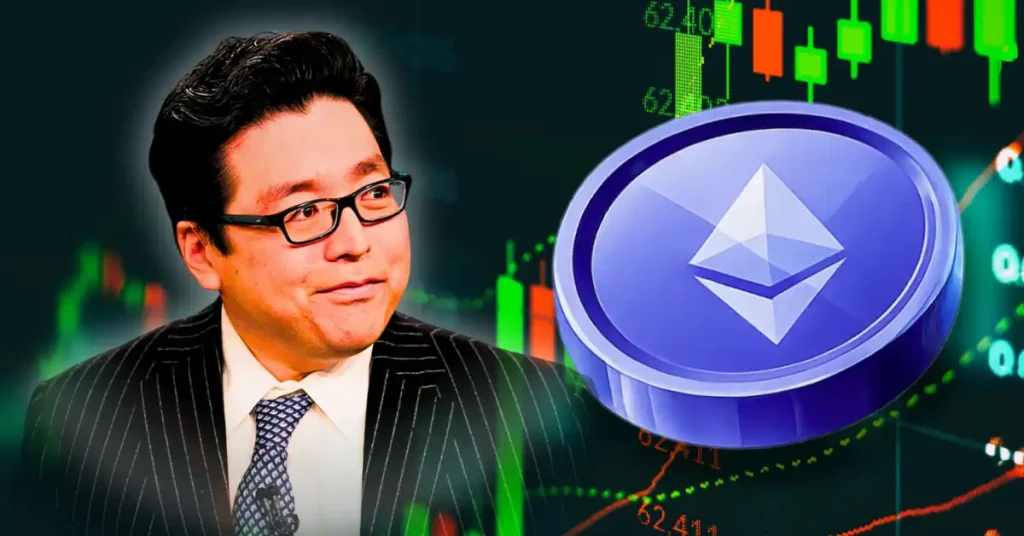

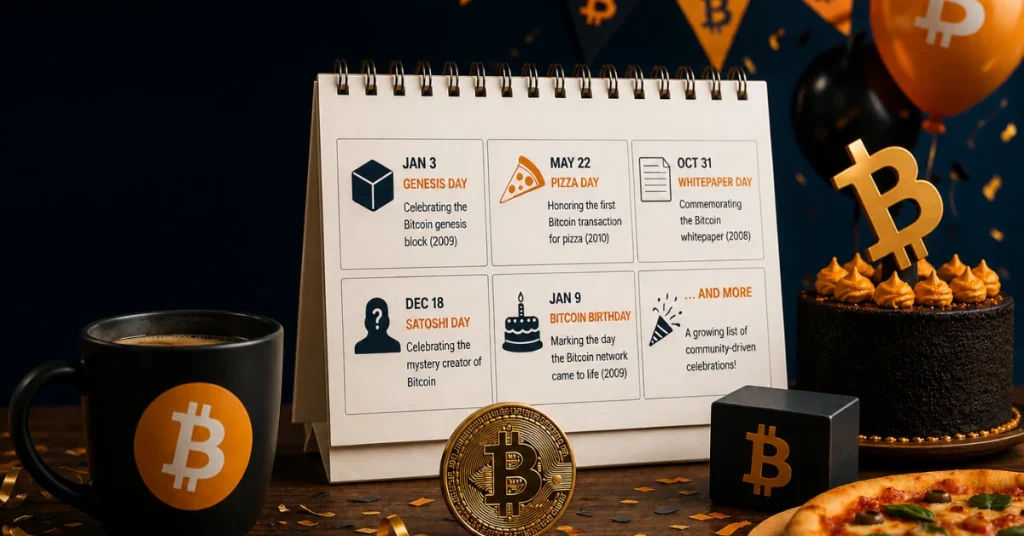

 -0.46%
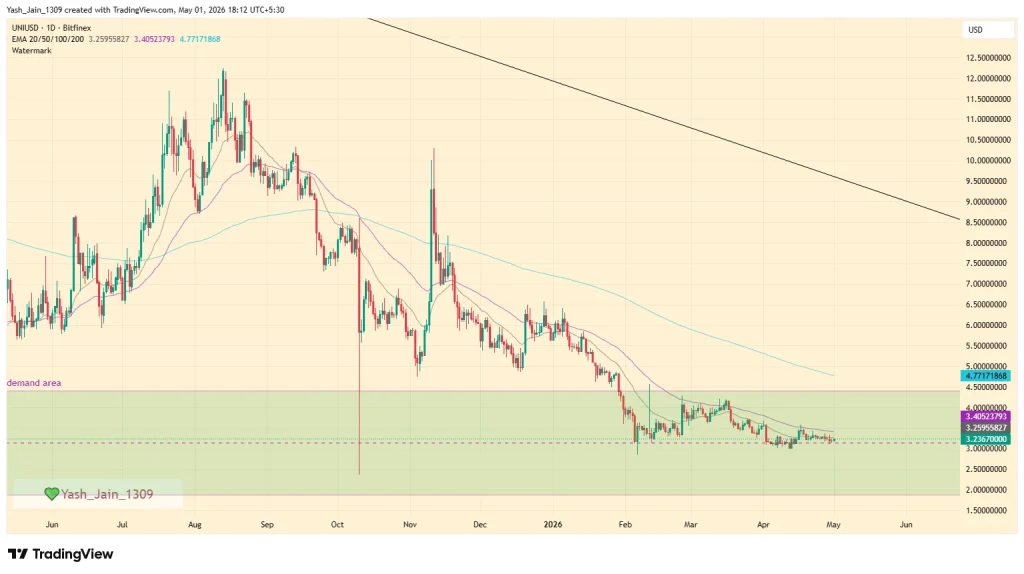
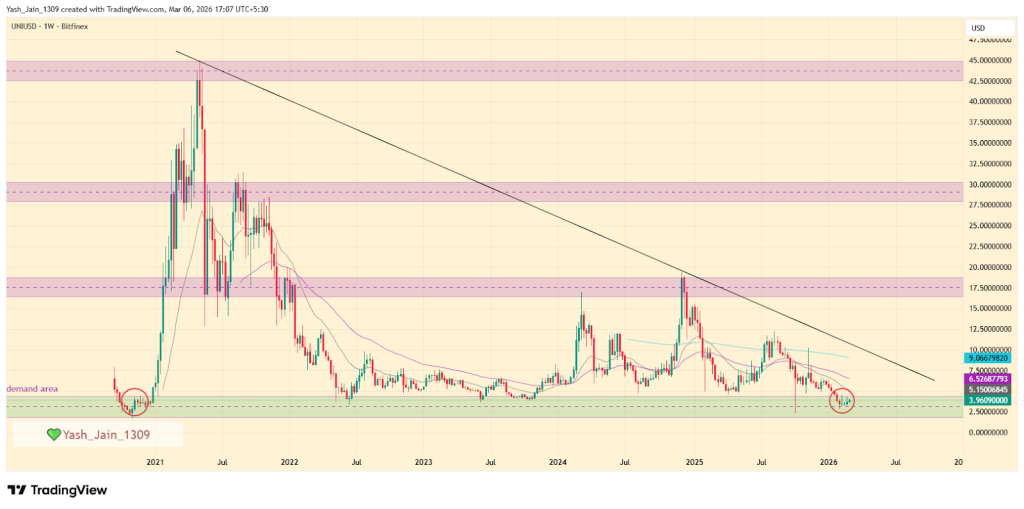
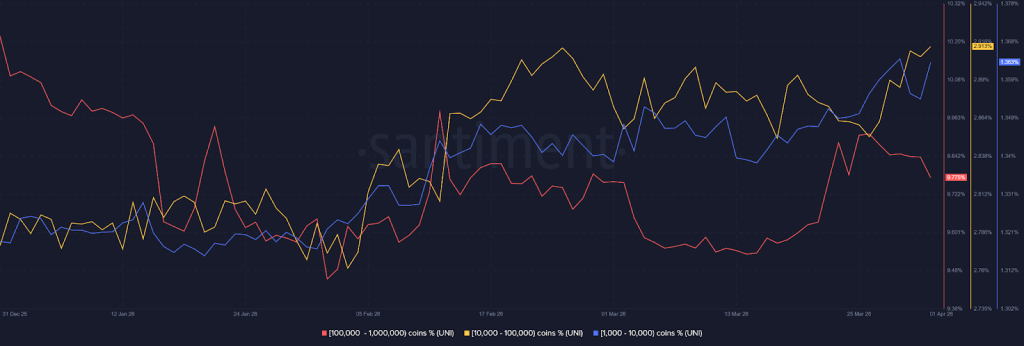
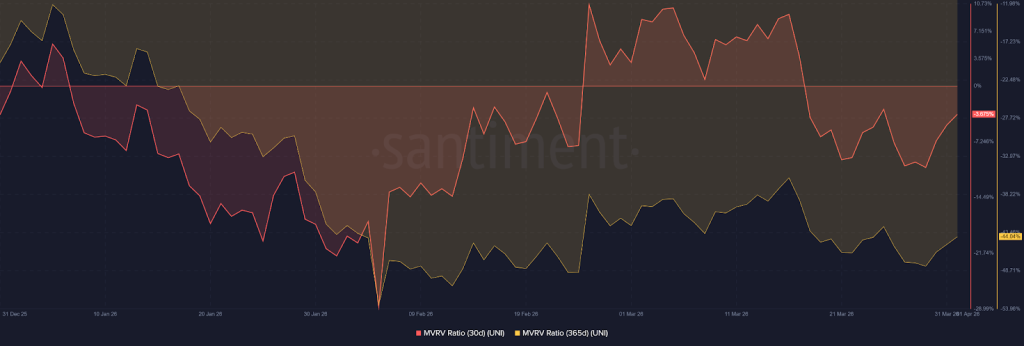


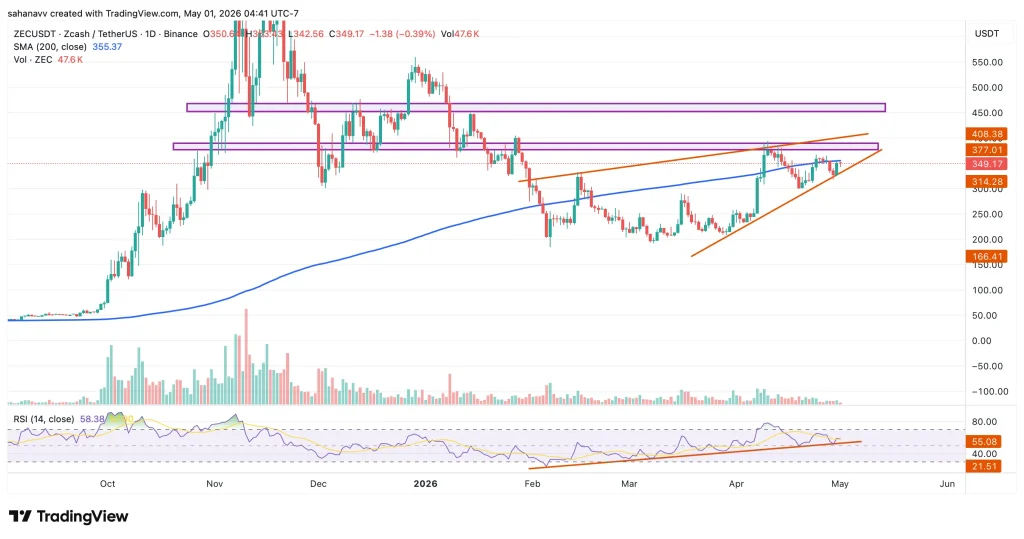
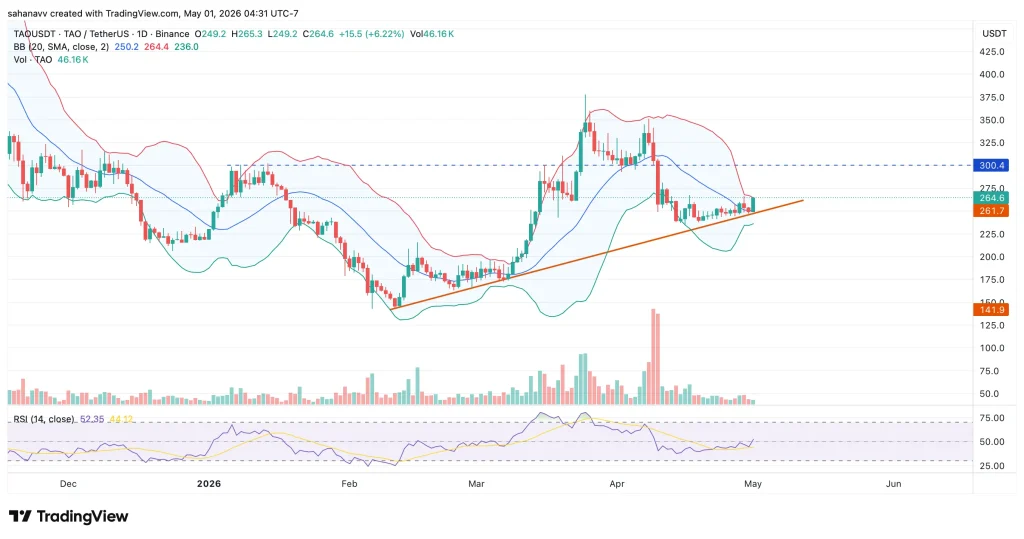




















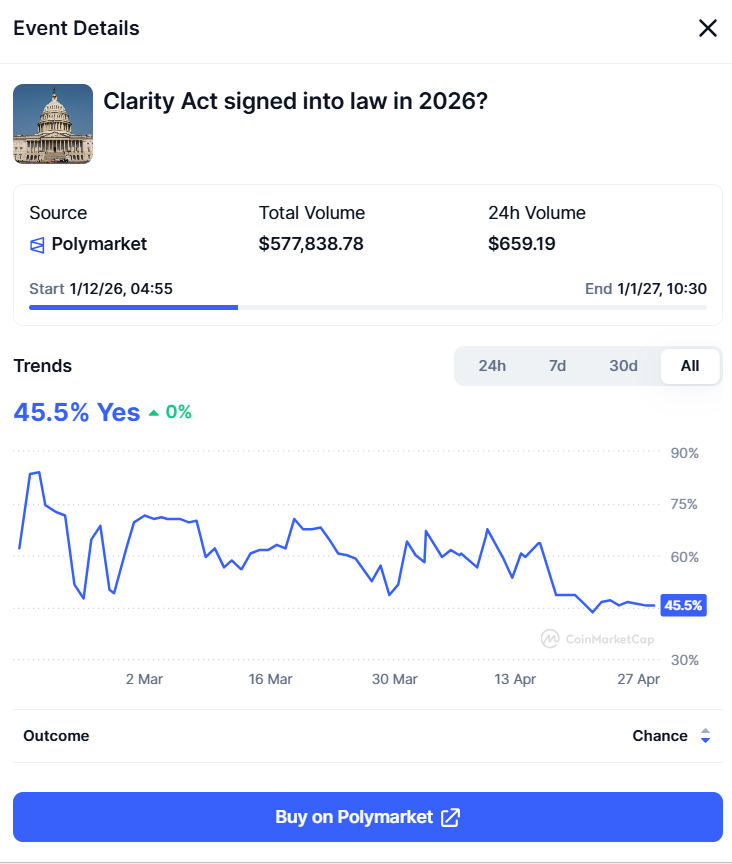
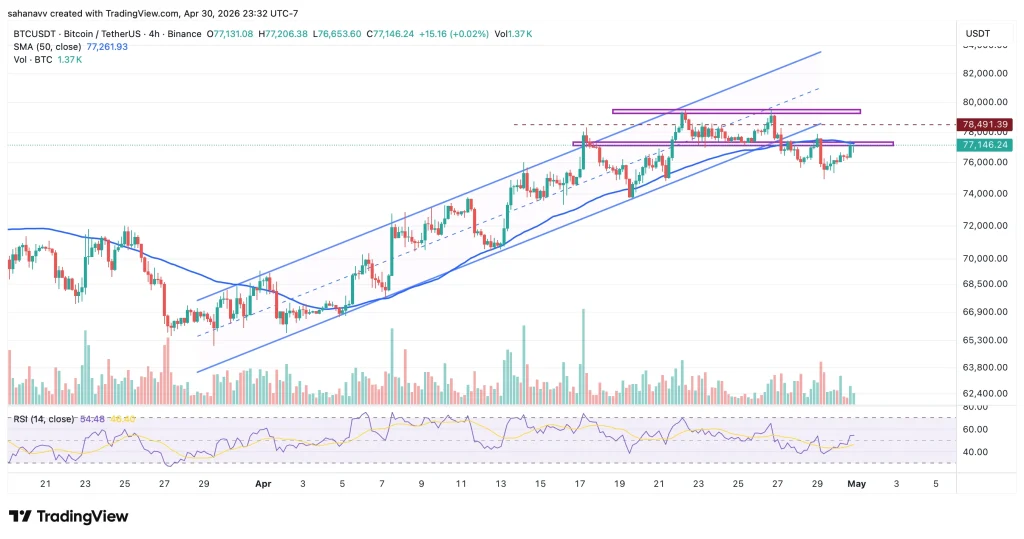
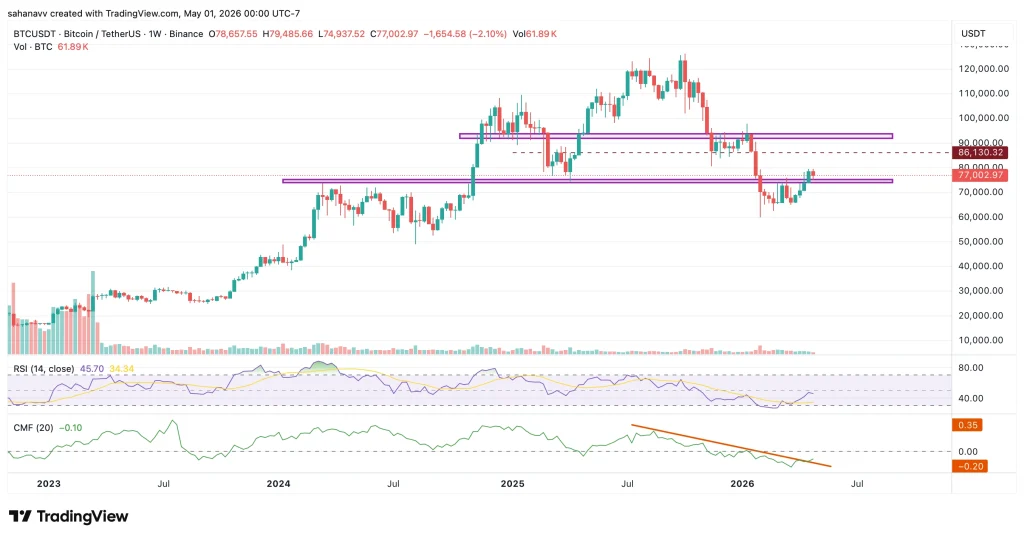
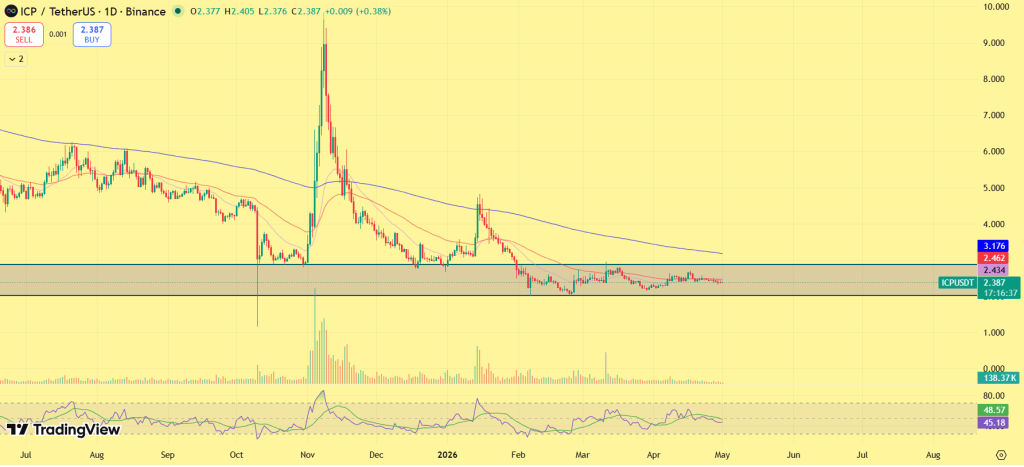



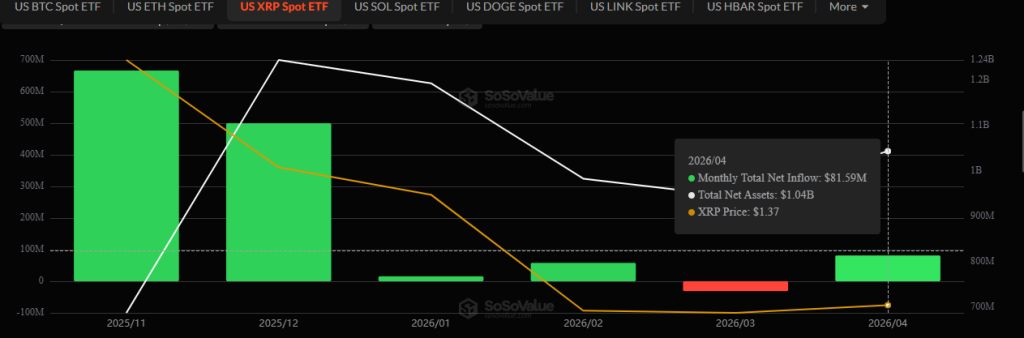
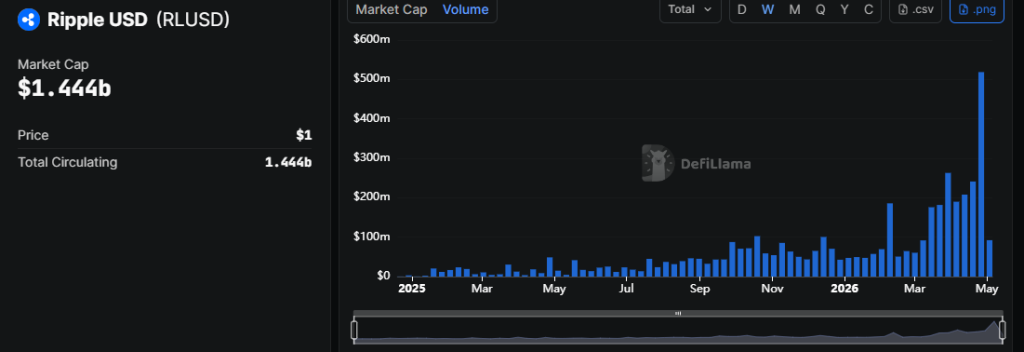
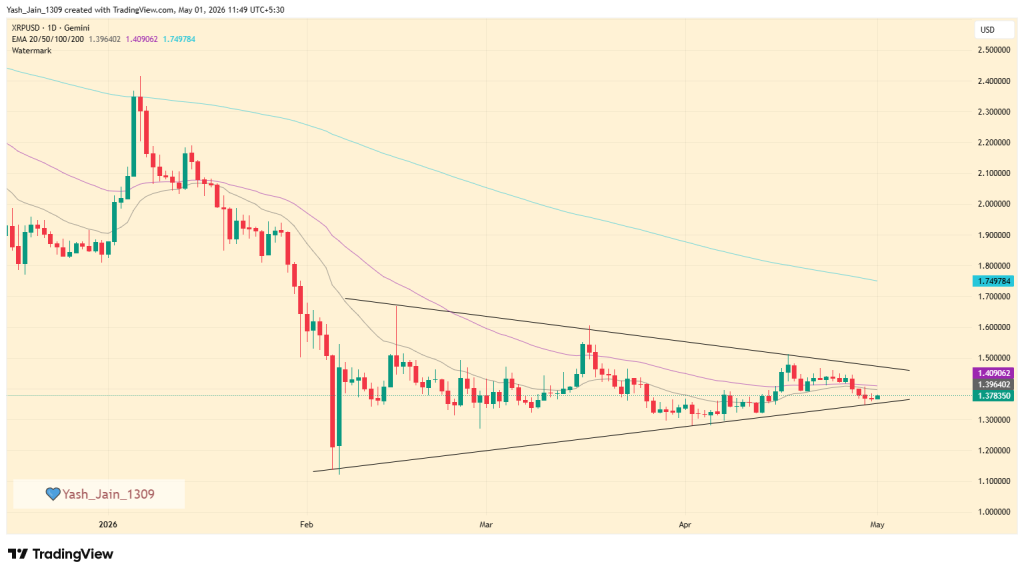





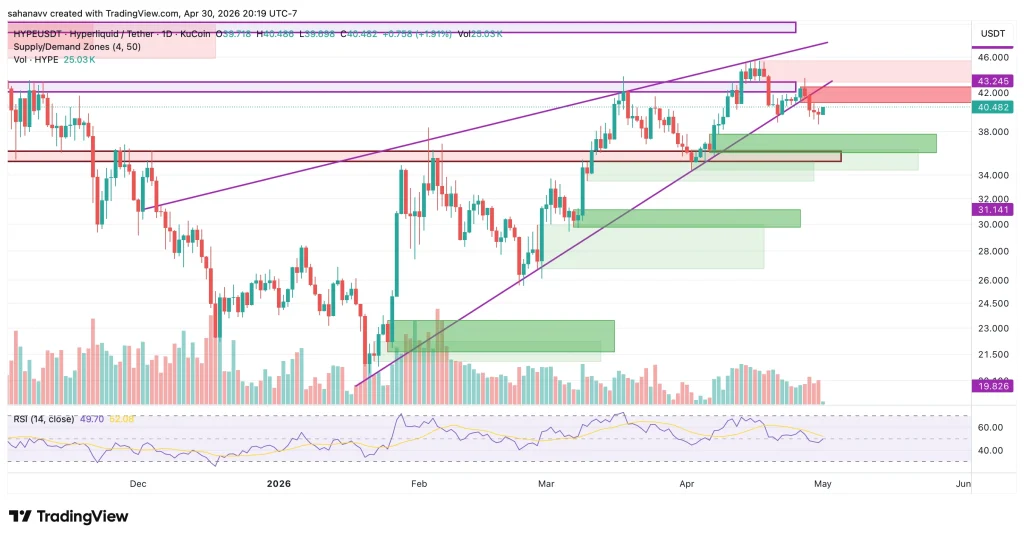



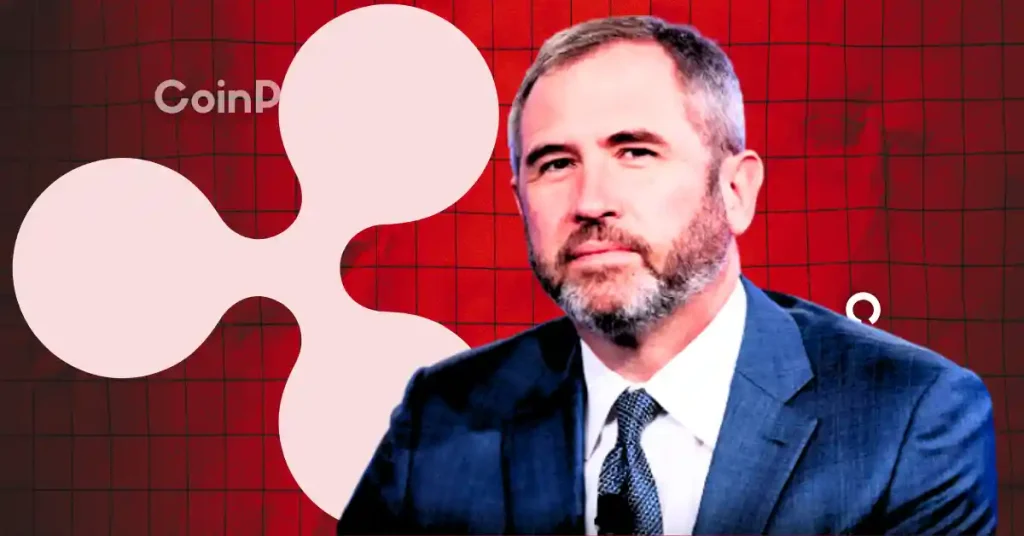















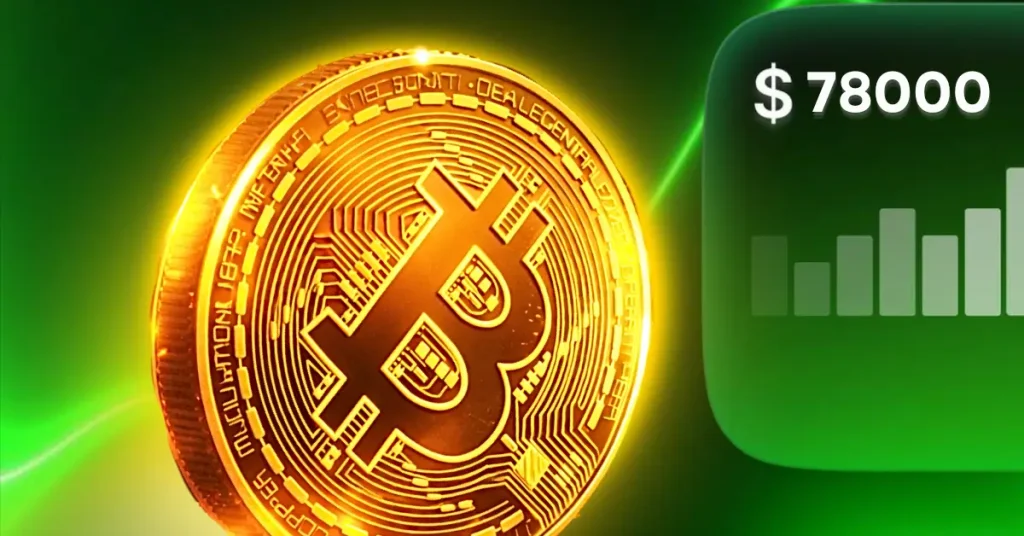

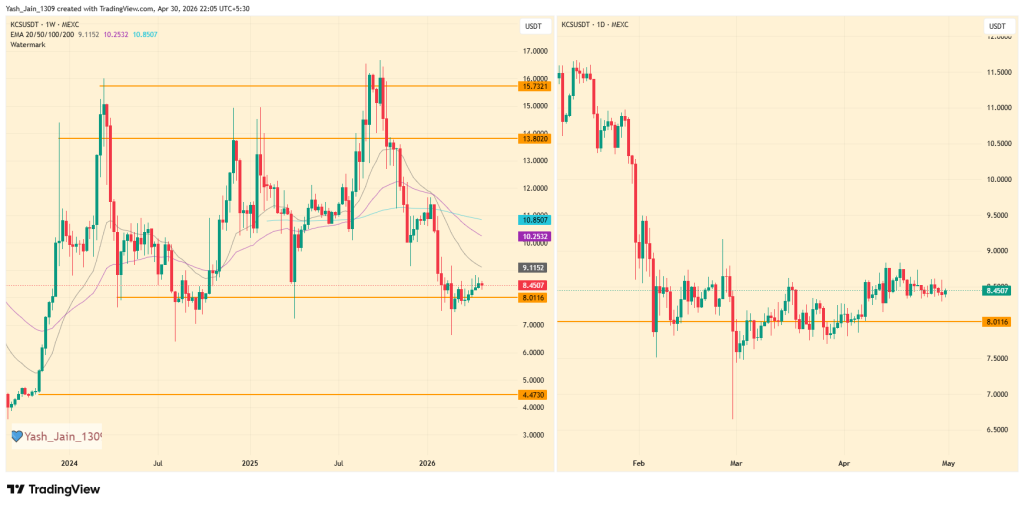
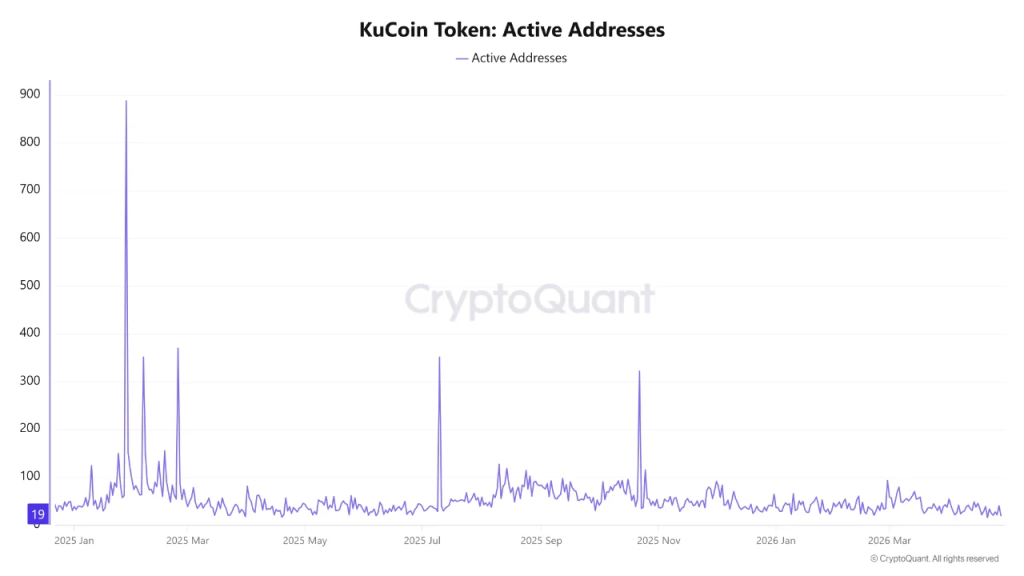
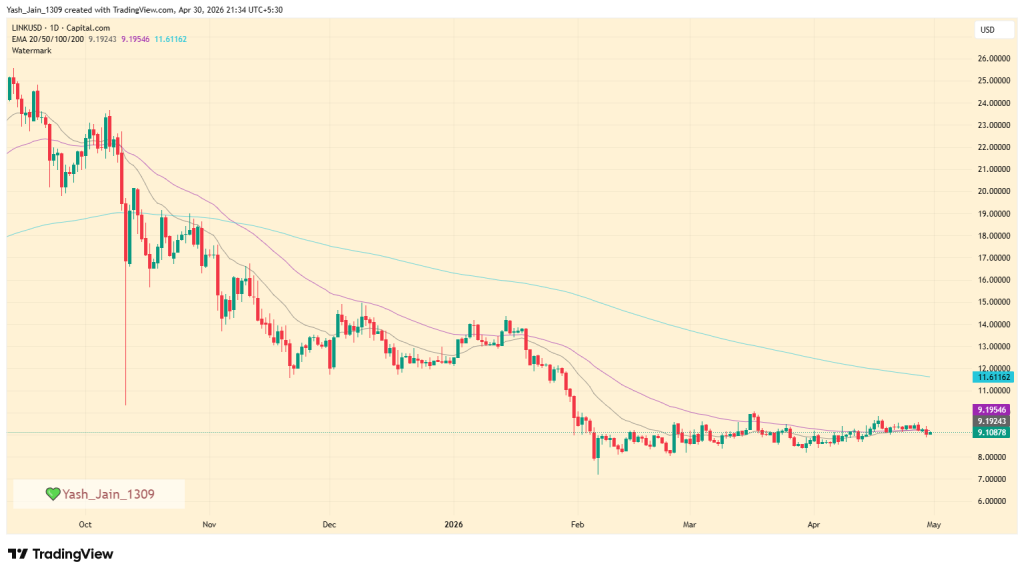
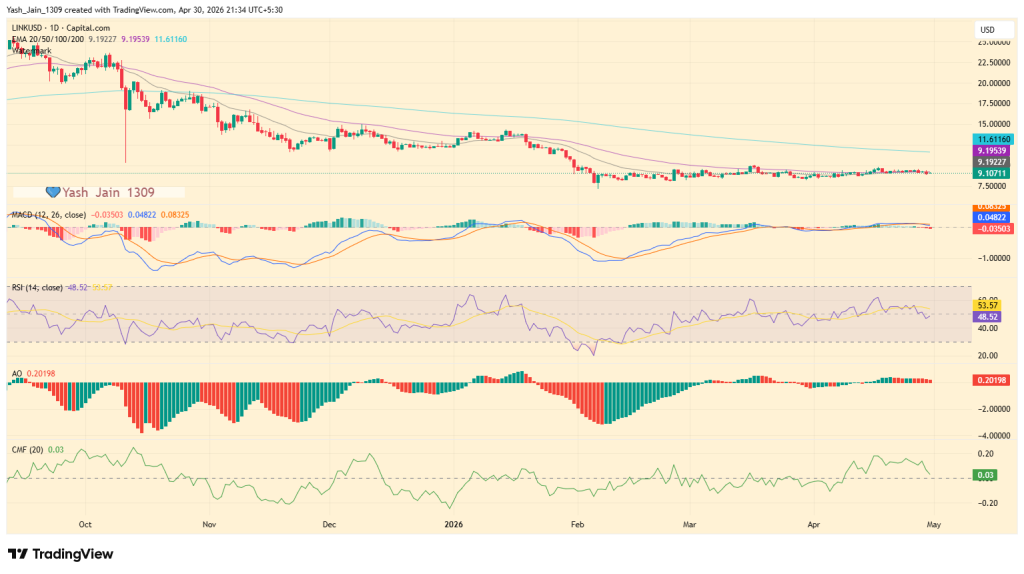
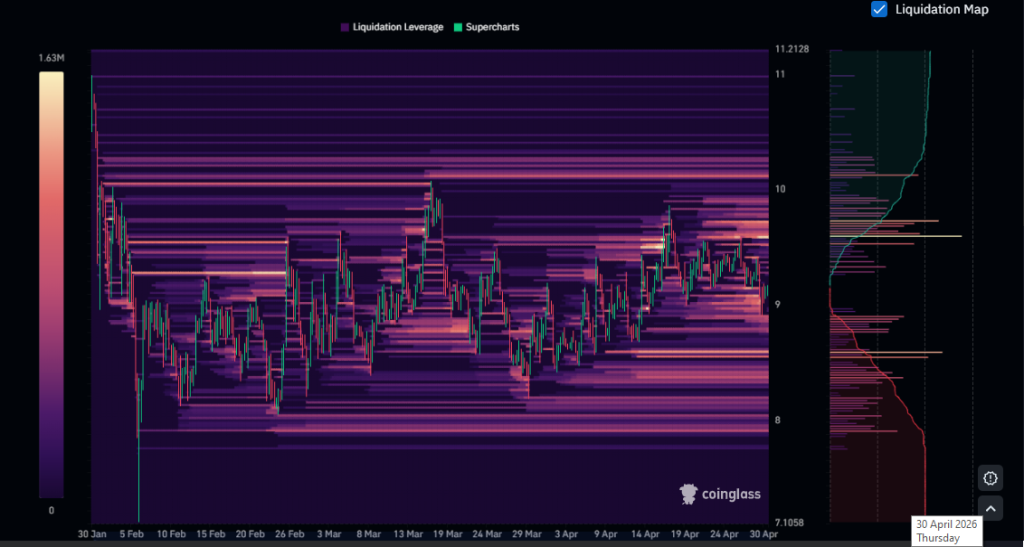

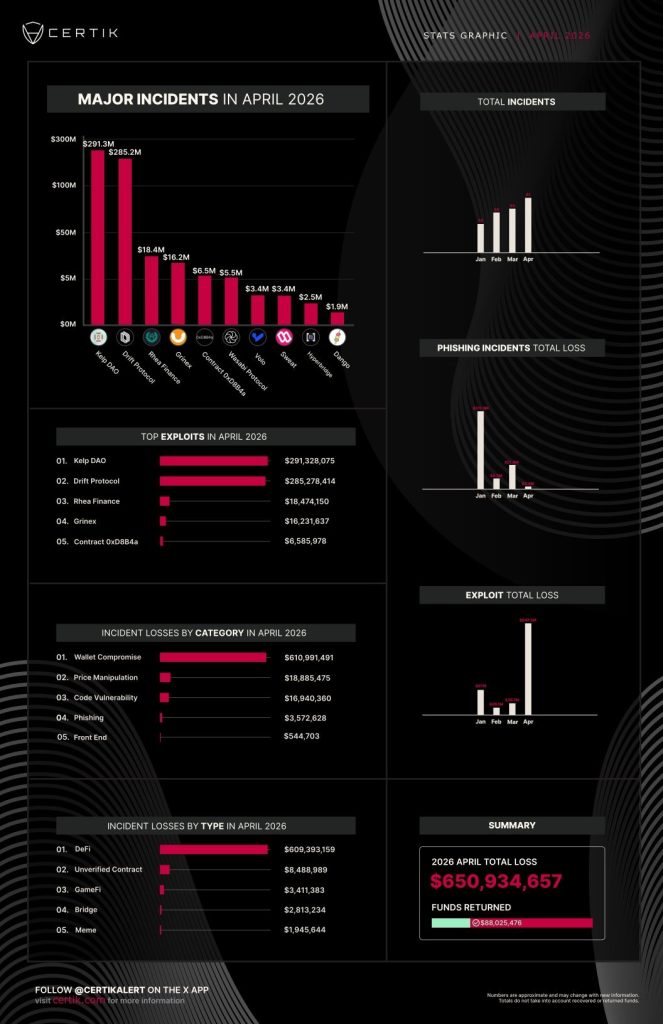
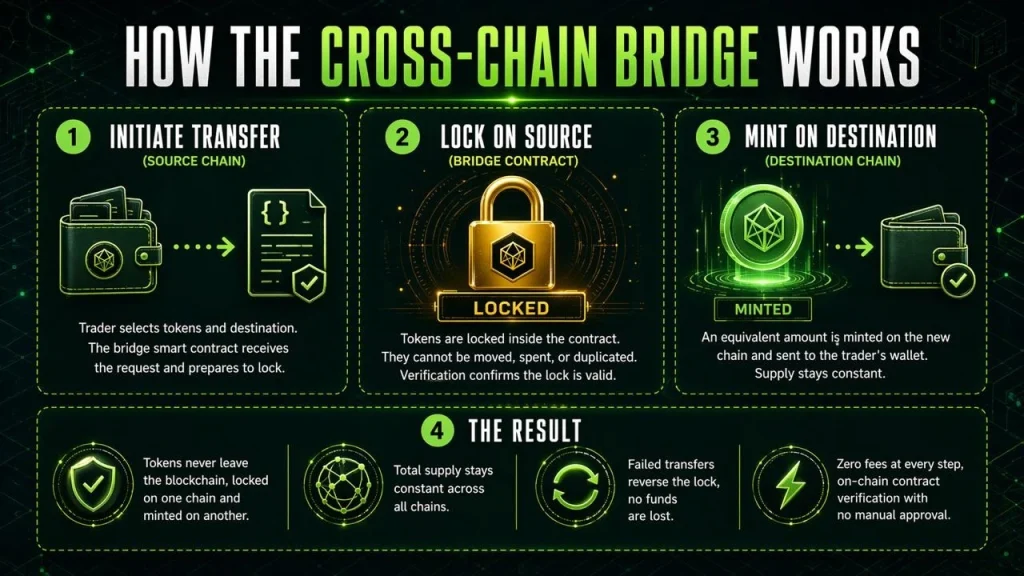
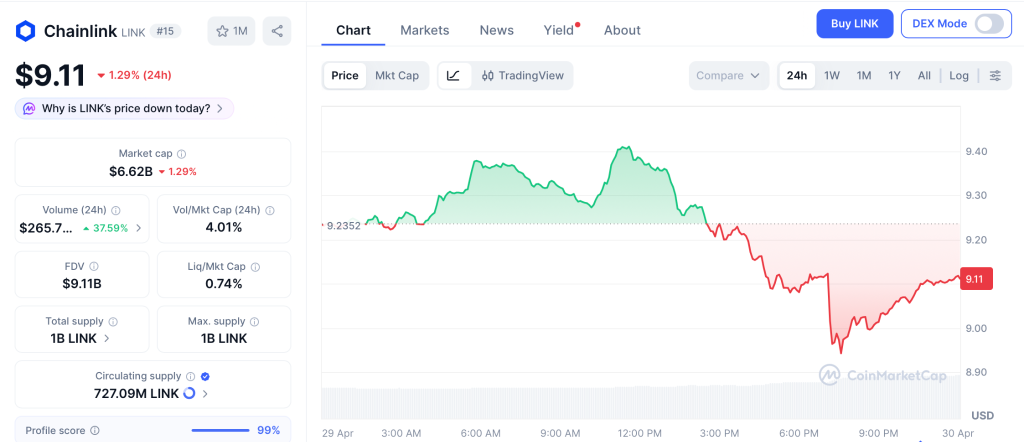

 0.39%
0.39%