Connecticut SB5 passed both chambers on May 1 and heads to the governor, making it one of the most comprehensive state AI laws in the US. Connecticut SB5 passed on May 1, becoming one of the broadest state AI laws…
Coinbase x402 is now native to Amazon Bedrock AgentCore, letting AI agents pay for services in USDC without human input Coinbase x402 is now native to Amazon Bedrock AgentCore, letting AI agents pay for services in USDC without human input.…
Morgan Stanley has launched E*Trade crypto trading at 0.5%, undercutting Coinbase, Schwab, and Robinhood in a pilot set to reach 8.6 million users. Morgan Stanley has launched ETrade crypto trading at a flat 0.5% fee, below Coinbase and Schwab. The…
IREN announced a massive $3.4 billion AI cloud infrastructure agreement with NVIDIA, including an option for NVIDIA to invest up to $2.1 billion in equity. The partnership triggered explosive trading activity, with IREN’s NASDAQ trading volume surpassing AUD $10 billion in a single session. Bernstein also initiated coverage on the company with a $100 price target following the announcement. The deal positions IREN as a growing player in AI cloud infrastructure amid surging institutional demand for high-performance computing capacity.
Ethereum, the second-largest cryptocurrency by market cap, has seen its dominance in the DeFi market fall to around 54%, down from 63.5% earlier this year, as competing blockchains continue capturing a larger share of the crypto ecosystem.
Now the big question is Ethereum losing its grip on DeFi dominance? While ETH price has recovered to nearly $2,314.
Ethereum Dominance in DeFi Falls to 54%
According to DeFiLlama data, Ethereum’s share of total DeFi TVL dropped from 63.5% at the start of 2025 to roughly 54% this month, marking one of the network’s weakest dominance levels in years.
DeFiLlama currently values Ethereum’s total value locked at approximately $45.4 billion, far ahead of most competing blockchains.
However, other networks are rapidly absorbing market share by focusing on specialized use cases across the crypto ecosystem. Current DeFi TVL market share now stands at:
Solana: 6.66%
BNB: 6.60%
Bitcoin ecosystem: 6.35%
TRON: 6.17%
Base: 5.44%
Hyperliquid ecosystem: 1.81%
This shift suggests DeFi is evolving from a single Ethereum-centered ecosystem into a multi-chain market where each blockchain focuses on specific sectors like stablecoins, perpetual trading, Bitcoin collateral, or consumer applications.
Ethereum Whales Are Selling
Crypto analyst Ali Martinez also pointed to a major shift happening among Ethereum whales.
According to Martinez, wallets holding between 1,000 and 10,000 ETH have significantly reduced their holdings since October 2025.
This whale cohort previously accumulated aggressively during 2025, growing holdings from approximately 12.95 million ETH in April 2025 to 15.95 million ETH by October 2025
However, whale behavior later reversed sharply. Their combined holdings have now dropped to roughly 12.52 million ETH, representing a decline of approximately 21.5%.
This large supply reduction suggests Ethereum may need stronger institutional and retail demand to fully sustain another major rally toward the important $3,000 level.
Ethereum Price Climbs While Ethereum Dominance Is Falling
Even as dominance falls, Ethereum price has started recovering again. Ethereum’s falling market dominance does not mean the network is getting weaker.
Instead, the crypto market is becoming more competitive as newer blockchains attract users with faster transactions, lower fees, better DeFi apps, and strong reward programs.
As of now, ETH is trading around $2314, jumping 1.5% today. Ethereum has broken out of a descending triangle pattern on the daily chart, supported by rising trading volume and strong buying momentum.
If the current momentum continues, Ethereum could push toward the $2,500 level in the near term, while a stronger bullish rally may drive the price closer to $3,000.
If demand for decentralized GPU infrastructure expands, RNDR could climb toward $18 by 2026.
With sustained growth in AI computing and Web3 infrastructure, Render could potentially reach $100 by 2030.
Render (RNDR), a leading decentralized GPU rendering network, is emerging as a key infrastructure layer in the rapidly expanding AI and digital content economy. Initially built to power distributed rendering for creators and studios, the network is now evolving into a broader compute marketplace, enabling scalable GPU access for AI workloads, 3D rendering, and real-time applications.
The recent transition to Render Network on Solana has significantly improved transaction efficiency and scalability, positioning the protocol to handle higher demand from both developers and enterprise users. At the same time, growing interest in AI-driven applications and GPU-intensive workloads is strengthening Render’s long-term utility narrative.
As demand for decentralized compute continues to rise, the focus for 2026 shifts toward adoption and network utilization. The key question remains whether Render can convert this expanding use case into sustained growth and price momentum, as the market increasingly values real-world infrastructure over speculative narratives.
This article delves into Render’s 2026 outlook and long-term price prediction, analyzing whether these catalysts can translate into a sustained breakout. Explore this Render price prediction 2026 and beyond, filled with expert insights and ambitious forecasts.
Render is starting May with one of its strongest technical structures in months, as the AI-focused token finally breaks out of a long-standing downtrend that had capped price action since late 2025. Trading near $2.06, RENDER is no longer behaving like a weak rebound asset. Instead, the chart now reflects early trend-reversal conditions, with buyers aggressively defending dips while momentum steadily expands above the breakout zone.
The shift comes as AI-linked crypto narratives regain traction across the market. Growing demand for decentralized GPU infrastructure, AI compute networks, and rendering capacity is pushing capital back toward fundamentally aligned projects, and Render remains at the center of that conversation. Unlike speculative meme-driven rallies, RENDER’s recovery is increasingly being supported by narrative strength alongside improving market structure.
The recent double-bottom formation near macro support suggests that seller exhaustion may already be complete. If bulls continue holding the $1.90–$2.00 range as support, the next major resistance sits around $2.50–$2.80. A decisive move above that region could trigger a stronger expansion phase toward the $3.50–$5.00 range during May and early Q2.
At the same time, broader crypto sentiment is stabilizing as Bitcoin holds firm near higher levels and risk appetite slowly returns across altcoins. That environment is beginning to favor high-utility sectors again, particularly AI infrastructure plays with real demand narratives.
Still, confirmation remains essential. Failure to sustain above the breakout zone could slow momentum and pull RENDER back into consolidation near the $1.70–$1.85 region before another breakout attempt develops.
For now, however, Render appears to be shifting from accumulation into expansion, with May shaping up as a potentially decisive month for the token’s broader recovery trend.
Coinpedia Render (RENDER) Price Prediction 2026
The broader outlook for Render (RNDR) in 2026 reflects a transition phase, where the asset is attempting to rebuild momentum after a prolonged correction from its previous highs. Following its peak near the $13–$14 region, RNDR entered a consolidation structure, with price stabilizing around lower demand zones.
As 2026 progresses, the structure appears to be gradually shifting. RNDR is forming a base above key support zones, while improving fundamentals, particularly rising demand for GPU compute and AI workloads, are strengthening its long-term narrative. This suggests that the current phase may represent a foundation for the next major upward move.
If buyers continue to defend the accumulation range and push the price above critical resistance levels near $5–$7, it could trigger a broader trend reversal. In such a scenario, momentum expansion could accelerate toward the $10–$14 range, with a potential extension toward $16–$18 under a strong bullish cycle. However, failure to sustain above key breakout zones may delay this trajectory, keeping RNDR within a prolonged consolidation phase before a confirmed expansion.
Overall, Render is likely to trade between $5 and $18 this year, with upside dependent on sustained AI-driven demand, network adoption, and successful breakout above macro resistance levels.
RENDER News and Catalysts
Rising institutional focus on AI infrastructure and GPU-compute networks is reviving demand across AI-linked crypto assets, with Render emerging as one of the sector’s strongest beneficiaries.
Increased adoption of decentralized rendering solutions among AI developers and creative studios is strengthening Render’s long-term utility narrative beyond speculative trading activity.
Expansion of partnerships and ecosystem integrations tied to GPU sharing and distributed compute markets is improving confidence in Render’s real-world scalability.
Renewed capital rotation into high-conviction AI narratives has accelerated momentum across the sector, with traders increasingly positioning RENDER as a leading infrastructure play for the next AI-driven crypto cycle.
Render (RENDER) On-Chain Analysis
Render’s on-chain data reflects a constructive setup, where underlying network strength is stabilizing while speculative excess resets. Active addresses (7D) remain relatively steady despite recent price fluctuations, indicating that core network usage continues to hold. This consistency suggests that demand for Render’s GPU infrastructure is not purely speculative, but supported by ongoing utilization.
At the same time, development activity shows periodic spikes, highlighting continued protocol-level progress and active ecosystem development. Sustained builder engagement is a critical signal, particularly for infrastructure-focused projects where long-term value is driven by adoption and technological advancement.
Meanwhile, social dominance has trended lower compared to previous peaks, reflecting reduced hype-driven participation. This decline often marks the unwinding of speculative interest, creating conditions for more sustainable, fundamentally driven growth.
The combination of stable network usage, ongoing development momentum, and cooling social hype points toward a reset phase that typically precedes stronger, more sustainable expansion cycles.
Render appears to be transitioning from a hype-driven phase into a utility-backed growth cycle, where continued adoption and real-world demand for decentralized GPU compute could act as the primary drivers of its next upward move.
The long-term projection assumes Render sustains relevance in enterprise blockchain use cases, with growth moderating over time as the asset matures.
Year
Potential Low ($)
Potential Average ($)
Potential High ($)
2031
90
100
130
2032
120
170
200
2033
180
240
300
2040
250
360
450
2050
500
670
750
RNDR Price Prediction: Market Analysis?
Year
2026
2027
2030
Changelly
$6.20
$9.50
$18.00
CoinCodex
$10.00
$18.00
$22.00
Binance
$14.00
$20.00
$30.00
Never Miss a Beat in the Crypto World!
Stay ahead with breaking news, expert analysis, and real-time updates on the latest trends in Bitcoin, altcoins, DeFi, NFTs, and more.
FAQs
What is Render (RNDR) used for?
Render is a decentralized GPU network that lets creators and developers access distributed computing power for AI workloads, 3D rendering, gaming, and visual computing.
What is the Render (RNDR) price prediction for 2026?
Render could trade between $5 and $18 by 2026 if adoption of decentralized GPU computing and AI infrastructure continues expanding across blockchain and tech industries.
How much will Render be worth in 2030?
Render could trade between $62 and $100 by 2030 if decentralized GPU networks gain adoption and demand for AI computing infrastructure continues rising.
What is the RENDER Token price prediction for 2050?
By 2050, Render could potentially reach $500–$750 if decentralized GPU marketplaces remain relevant in AI, cloud computing, and Web3 infrastructure.
Is Render (RNDR) a good long-term crypto project?
Render is considered a strong infrastructure project because it connects unused GPUs with users needing computing power for AI, graphics, and metaverse development.
What factors could drive Render price growth?
RNDR price growth may depend on AI adoption, GPU demand, Web3 infrastructure expansion, and broader crypto market cycles increasing usage of decentralized computing.
Chainlink price is rapidly emerging as one of the strongest infrastructure-driven recovery plays in the crypto market as whale accumulation, ETF inflows and shrinking exchange supply simultaneously reinforce the bullish case for LINK. The token surged more than 7% today after breaking out of its recent consolidation range and reclaiming the key $10 resistance zone, signaling a potential shift in broader market momentum after months of sideways trading.
Behind the breakout, on-chain data revealed aggressive accumulation from large LINK holders while more than 13.5 million tokens moved off exchanges in just five weeks, tightening immediately available supply across the market. At the same time, renewed institutional inflows and treasury reserve expansion are adding further strength to the recovery narrative surrounding Chainlink.
As market attention rotates back toward tokenization, real-world assets and cross-chain infrastructure, traders are now trying to understand why Chainlink price is suddenly exploding and are increasingly betting that LINK could be preparing for a much larger expansion move in the weeks ahead.
Whale Accumulation Is Driving the LINK Price Rally
One of the strongest bullish signals currently supporting Chainlink price is the aggressive accumulation trend visible across large-holder wallets. According to latest data, wallets holding between 100,000 and 10 million LINK accumulated 32.93 million tokens over the past month alone, representing a 7.7% increase in holdings.
The cohort now collectively controls more than 461 million LINK, marking a new all-time high. The timing of the accumulation is particularly important. Much of the buying occurred while LINK traded sideways near multi-month lows between the $8 and $9 region, suggesting whales were steadily absorbing supply before the latest breakout emerged. Historically, this type of accumulation behavior has often preceded stronger upside expansion phases for Chainlink, especially when broader market sentiment begins improving simultaneously.
ETF Inflows and Treasury Expansion Strengthen LINK Narrative
Institutional sentiment around Chainlink has also started improving again. Recent reports showed LINK-related ETF products recorded more than $1.4 million in weekly inflows, including nearly $878,000 added during a single trading session. While still relatively small compared to Bitcoin-focused products, the inflows signal renewed institutional interest returning to the Chainlink ecosystem.
CHAINLINK ADDS $1.1M WORTH OF $LINK TO OFFICIAL RESERVE
Right on schedule, @Chainlink has announced its latest treasury purchase, to the tune of 119,241 $LINK tokens, worth roughly $1.1 million.
Chainlink also expanded its official reserve holdings after announcing a treasury purchase of 119,241 LINK worth approximately $1.1 million. The reserve now reportedly holds around 3.55 million LINK valued near $35 million. The combination of ETF inflows, treasury expansion and tightening exchange supply is helping reinforce the broader bullish narrative surrounding LINK’s recovery structure.
LINK Price Outlook: Breakout Opens Path Toward $14 and $17
LINK price has now confirmed a breakout from its recent consolidation structure after spending nearly three months building a strong base between $8 and $10.
The breakout pushed Chainlink above key short-term moving averages while momentum indicators also started strengthening sharply. Daily RSI recently moved back into bullish territory, supporting the view that the latest rally may still be in its early stages.
The immediate resistance now sits near the $12 region. If bulls reclaim that level decisively, analysts are increasingly watching the broader $14 to $17 supply zone as the next major upside target visible on the higher timeframe chart. However, maintaining support above the reclaimed $10 breakout zone remains critical for sustaining bullish continuation momentum through May.
What’s Next for Chainlink (LINK)
Chainlink’s recovery is increasingly being driven by structural accumulation rather than short-term speculative momentum alone. Whale wallets are accumulating aggressively, exchange supply is tightening and institutional flows are beginning to return as technical structure improves simultaneously. If LINK continues holding above its recent breakout zone while broader crypto sentiment remains supportive, traders believe Chainlink price could rally much higher from here over the coming weeks.
Notcoin may possibly hit $0.200 by 2030 if support holds and adoption strengthens steadily.
NOT remains in consolidation, with key support at $0.00030
Notcoin (NOT) began as a viral sensation, pioneering the “tap-to-earn” model on Telegram and onboarding over 35 million users into the TON ecosystem.
However, the initial euphoria gave way to a significant “demise” in market value, as the token plummeted over 95% from its 2024 highs to a current market cap of approximately $39M. This decline was driven by massive airdrop sell pressure and a lack of sustainable utility beyond the initial clicker game.
Today, the NOT token is attempting a “strategic resurgence,” evolving from a simple game into a gaming hub and DeFi platform. It now powers the “Not Games” ecosystem, serves as collateral in DeFi protocols, and even backs a digital Visa card with buyback mechanisms.
Can this pivot from hype to infrastructure restore investor confidence, or was the viral spark a one-time phenomenon? To explore its potential recovery, read our Notcoin price prediction 2026-2030 for a deep dive.
Based on the NOTUSD (Notcoin) chart, early May 2026 marked a significant turning point in the asset’s price action after a long period of consolidation. After trading within a relatively flat range throughout March and April, the price began to show signs of life in the final days of April, eventually leading to a sharp vertical breakout as May commenced. This surge pushed the price near 0.00075466, indicating a strong shift in market sentiment from bearish or neutral to aggressively bullish.
During this early May window, the asset successfully jumped from the support of the short-term 20-day and 50-day moving averages and is currently testing higher resistance levels established around the 200-day EMA. While the recent red candle shows minor intraday volatility, the month-to-date trajectory remains dominated by the massive green candle that signaled the initial breakout from the bottoming phase. Based on that, if NOT price manages to surpass the 200-day EMA, it could aim for the $0.00101273 resistance, but breaking below $0.00060453 will lead to a decline towards $0.00040000.
Recent News/ Opinions
On April 2, 2026, Notcoin unveiled its latest evolution, “Nothing,” an independent media platform where artists and creators lead the narrative. Moving beyond its gaming origins, this new initiative invites talents and spectators to participate in a developing story that turns “nothing into something” through decentralized creative expression.
On March 6, 2026, Notcoin announced that its “Glance” play-to-earn game has introduced new quests, allowing players to earn free NOT tokens upon successful completion. This integration strengthens the project’s ecosystem by incentivizing active gameplay and rewarding the community through interactive challenges.
Notcoin (NOT) Price Prediction 2026
The weekly chart for NOT/USD illustrates a classic “hype-to-capitulation” cycle. Following its Q2 2024 launch, the token experienced a massive parabolic surge, peaking near $0.029. However, this was met with intense selling pressure, breaking key psychological supports at $0.012 and $0.009.
By 2025, the price entered a persistent “bleeding” phase, characterized by lower highs and diminishing volume. Currently, in the first half of 2026, for a reversal, bulls must reclaim the $0.002 level to break the long-term bearish structure.
Notcoin Crypto Price Prediction 2026 – 2030
Year
Potential Low ($)
Potential Average ($
Potential High ($)
2027
0.035
0.055
0.080
2028
0.060
0.095
0.140
2029
0.110
0.160
0.190
2030
0.150
0.180
0.200
Notcoin Price Prediction 2027
As per the Notcoin Price Prediction 2027, Notcoin may see a potential low price of $0.035. The potential high for Notcoin price in 2027 is estimated to reach $0.080.
Notcoin (NOT) Price Forecast 2028
In 2028, Notcoin price is forecasted to potentially reach a low price of $0.060 and a high price of $0.140.
Notcoin Crypto Price Prediction 2029
Thereafter, the Notcoin (Notcoin) price for the year 2029 could range between $0.110 and $0.190.
Notcoin (NOT) Price Prediction 2030
Finally, in 2030, the price of Notcoin is predicted to remain steady and positive. It may trade between $0.150 and $0.200.
Cardano (ADA) rose nearly 6% today, trading around $0.27 after holding a key long-term support level near $0.25. The recovery comes as Bitcoin stabilizes above important market levels, while crypto analyst Ali Martinez points to Cardano’s historical breakout pattern around the $0.25 zone.
With ADA still trading 92% below its 2021 all-time high, traders are now watching whether another major recovery rally is starting.
Cardano Standing At Most Important Level: $0.25
According to Martinez’s monthly chart analysis, the $0.25 zone has repeatedly acted as a major reversal point for ADA during previous market cycles.
The ali martinez highlighted two major recovery points that started from this exact level. The first major rebound came in January 2023, when Cardano rallied nearly 88.27% after bouncing from the $0.25 support zone.
Later, in September 2023, ADA delivered another strong move from the same level, surging almost 243% after successfully defending that support area once again.
Now, Cardano is testing this floor once more while showing early signs of renewed momentum.
$0.25 is a critical support level for Cardano!
In my analysis of the monthly chart, this floor has acted as a launchpad for significant rebounds on two major occasions:
• January 2023: $ADA bounced off $0.25, resulting in a 88.27% rally over the following weeks. • September… pic.twitter.com/COknFMkG3H
Martinez, if ADA continues holding above the $0.25 level, it could create the foundation for another major structural rally in the coming months.
Key ADA Price Targets at $0.53
According to the analysis, the first major upside target now sits near the $0.36 resistance level.
If broader crypto market momentum strengthens further, Martinez sees a secondary macro target near $0.53.
However, the analyst also warned that losing the $0.25 support level would invalidate the bullish structure and potentially trigger a deeper correction phase.
Despite today’s rebound, Cardano still remains heavily below its previous cycle peak.
ADA currently trades nearly 92% below its all-time high of $3.10, reached during the 2021 bull market.
Cardano Ecosystem Developments Add Momentum
Beyond technical analysis, several recent ecosystem developments are also helping improve sentiment around Cardano.
This week, the Van Rossem hard fork officially reached the preview testnet stage, marking another important step in Cardano’s network upgrade roadmap.
At the same time, the Cardano Foundation announced the launch of a new blockchain research lab in Latin America as the ecosystem continues expanding globally.
These developments are strengthening expectations that Cardano could attempt a broader recovery move above the important $0.30 resistance zone in coming weeks.
However, the network still maintains a large user base with more than 4.5 million wallets currently holding ADA.
A Manhattan judge modified a restraining notice to let Arbitrum DAO move $71 million in frozen Ether to Aave, while preserving terrorism victims’ legal claim on the funds.
Virginia redistricting referendum was struck down 4-3 by the state Supreme Court on May 8, with Democrats immediately filing to appeal to SCOTUS Virginia redistricting was struck down 4-3 by the state Supreme Court, with Democrats filing to appeal to…
A US court has found that Meta’s AI ads tools materially developed fraudulent investment content, stripping Section 230 immunity and exposing the platform to securities fraud claims. A US court found that Meta’s AI ads helped create fraudulent investment content,…
OpenAI has crossed $25bn in annualized revenue and is actively preparing its OpenAI IPO for as early as the fourth quarter of 2026. OpenAI has crossed $25bn in annualized revenue and is preparing its OpenAI IPO for as early as…
JPMorgan AI spending has been reclassified from discretionary innovation to core infrastructure, placing it alongside data centers and cybersecurity in the bank’s budget. JPMorgan has reclassified JPMorgan AI investment as core infrastructure, treating its $2bn annual budget as non-negotiable as…
US spot Bitcoin ETFs have logged six consecutive weeks of net inflows, the longest such streak since a seven-week run that drew in $7.57 billion in the summer of 2025.
Meta launched Muse Spark on April 8, its first fully closed AI model, abandoning its open-source Llama strategy Meta launched Muse Spark on April 8, its first fully closed AI model, abandoning its open-source Llama strategy. The launch marks the…
Anthropic raise talks are targeting a $900bn valuation and up to $50bn in fresh capital, sources told the Financial Times. Anthropic raise talks are targeting a $900bn valuation and up to $50bn in fresh capital, sources told the Financial Times.…
Aave says its rsETH recovery process has entered Phase II after major progress in resolving the exploit tied to Aave V3 on Ethereum and Arbitrum.
According to the protocol, the attacker’s eight identified Aave V3 positions were successfully liquidated on May 6, with the recovered rsETH collateral transferred to the Recovery Guardian under an Aave DAO-approved proposal.
At the same time, governance proposals backed by both Mantle DAO and Arbitrum DAO were passed to support the broader DeFi United recovery effort.
Aave noted that normal users and Umbrella stakers were not impacted during the liquidation process.
$71 Million Recovery Plan Faces Legal Complications
A major part of the recovery effort involves the $71 million worth of ETH recovered by Arbitrum’s Security Council.
The Arbitrum DAO voted to return the recovered funds to Aave users, but the process was temporarily disrupted after plaintiffs holding judgments against North Korea issued a restraining notice targeting the frozen ETH.
In response, Aave LLC filed an emergency motion asking the court to vacate the notice. Following a May 6 hearing, the judge approved a proposal allowing the immobilized ETH to be transferred to Aave LLC, with the restraining order shifting alongside the funds.
As the legal process continues, Aave said separate borrowed funds will temporarily cover the shortfall until the restricted ETH is officially returned to users.
Aave Plans to Burn rsETH and Restore Market Operations
The next phase of the recovery focuses on restoring rsETH backing and reopening normal bridge activity.
On Arbitrum, the liquidated rsETH will be burned to remove the inflated supply created during the exploit. Kelp will also retire the related LayerZero packet on Ethereum to prevent additional rsETH from being minted on the receiving side.
Meanwhile, the seized rsETH on Ethereum will be transferred into the bridge lockbox alongside ETH committed by DeFi United coalition members. Once the lockbox regains full backing, bridge operations and rsETH withdrawals will gradually resume.
Aave also confirmed that temporary emergency configurations introduced during the incident, including setting WETH loan-to-value ratios to zero on Aave V3 Ethereum Core, will soon return to normal as recovery efforts continue progressing.
Coinbase revealed during its Q1 2026 earnings call that it purchased $88 million worth of Bitcoin in the first quarter, increasing its corporate reserves to 16,492 BTC. The exchange added 1,103 BTC since its previous disclosure, bringing the total value of its holdings to roughly $1.3 billion at current market prices. The move highlights continued institutional confidence in Bitcoin as major crypto firms increasingly strengthen treasury exposure despite broader market volatility.
Ethereum has seen its dominance in DeFi Total Value Locked decline from 63.5% at the start of 2025 to around 54%, according to DeFiLlama data cited by CryptoSlate. Despite losing market share to competing blockchain ecosystems, Ethereum remains the largest DeFi network with approximately $45.4 billion in TVL. The shift highlights growing competition from alternative Layer 1 and Layer 2 platforms as users increasingly diversify liquidity and on-chain activity across multiple blockchain ecosystems.
The ONDO price has gained massive attention after recent developments triggered a strong bullish breakout. The token surged over 22% to hit $0.44, while trading volume jumped more than 158% to cross $688 million. However, the rally is not being driven by headlines alone.
The growing Real World Asset (RWA) narrative is fueling fresh momentum across the sector, with ONDO emerging as one of the biggest beneficiaries. At the same time, rising network activity and increasing trader participation suggest the rally is backed by strengthening market demand.
With bullish momentum continuing to build, the key question now is whether the ONDO price can sustain this breakout and rally toward the $1 milestone.
Why Is the Ondo Price Rising Today?
The ONDO price is rising primarily as the market reacts aggressively to the growing institutional adoption of tokenised real-world assets (RWAs). The latest catalyst came after Ondo Finance participated in a tokenized U.S. Treasury settlement pilot alongside JPMorgan, Mastercard, and Ripple.
The development significantly boosted investor confidence because it connected blockchain infrastructure with traditional banking and payment systems. Markets now view ONDO as one of the strongest direct plays on the rapidly growing tokenized Treasury sector.
At the same time, network activity rose sharply, accompanied by a technical breakout that hints at consistent upward action.
ONDO Active Addresses Surge Over 300% During Price Breakout
ONDO’s on-chain activity witnessed a massive expansion alongside the recent rally, further strengthening the bullish narrative behind the breakout. Data from Santiment shows ONDO’s daily active addresses surged from below 700 earlier this month to nearly 2,900 at the recent peak. That marks an increase of more than 300% within a short period, highlighting a sharp rise in network participation as the ONDO price accelerated higher.
The spike in active addresses intensified immediately after the institutional Treasury settlement pilot involving JPMorgan, Mastercard, Ripple, and Ondo Finance gained market attention. This suggests the rally was not driven solely by leveraged speculation but also by growing user activity and fresh wallet participation across the network.
ONDO Technical Chart Signals Potential Trend Reversal
From a technical perspective, ONDO’s market structure has shifted significantly after months of prolonged consolidation. The token spent an extended period trading within a compressed range near $0.24 to $0.28 before witnessing an explosive breakout toward the $0.44 region. A major bullish signal emerged after ONDO reclaimed the Gaussian Channel, which had acted as resistance throughout the broader correction phase. The indicator now appears to be flipping bullish, signaling a potential trend reversal.
At the same time, the On-Balance Volume (OBV) indicator broke above a long-term descending trendline, suggesting rising spot accumulation behind the rally. The breakout structure now indicates strengthening bullish momentum, but ONDO needs to hold above the reclaimed $0.42 region to sustain the uptrend.
Wrapping it Up
ONDO’s breakout above the Gaussian Channel and the bullish OBV divergence suggest the token may be entering a broader expansion phase after months of accumulation. Rising active addresses and strong volume further support the bullish structure. If the ONDO price sustains above the $0.42 to $0.44 support zone, bulls could target the next resistance levels around $0.52 and potentially $0.60 in the near term.
However, failure to hold the breakout range may weaken momentum and trigger a pullback toward the $0.36 support area, with a deeper correction potentially revisiting the $0.30 zone.
Ondo Finance is rapidly becoming one of the biggest beneficiaries of the institutional tokenization wave, and ONDO price action is beginning to reflect that shift. The token surged more than 25% today and nearly 70% this week as investors reacted to accelerating adoption of blockchain-based treasury products and renewed momentum across the RWA market.
Recent headlines surrounding cross-border tokenized treasury settlement infrastructure involving J.P. Morgan, Mastercard and Ripple added fresh bullish fuel to the sector, while reports linking Ondo Finance to DTCC-backed tokenized asset initiatives and limited trading plans later this year strengthened market conviction further. Combined with a confirmed range breakout and rising derivatives activity, the move has positioned ONDO among the market’s strongest trending assets.
Traders are now closely watching whether the ONDO price rally has enough strength to extend toward the $1 milestone in the coming weeks.
Why ONDO Price Is Rising
The latest ONDO price rally appears closely tied to strengthening institutional tokenization narratives surrounding Ondo Finance and the broader RWA ecosystem. Market sentiment accelerated after Ondo Finance participated in a cross-border tokenized treasury settlement initiative involving infrastructure connected to J.P. Morgan, Mastercard and Ripple. The development demonstrated how tokenized U.S. Treasury products could move across blockchain-integrated banking rails with near real-time settlement, reinforcing confidence in the institutional use case behind tokenized assets.
Ondo, Kinexys by @jpmorgan, @Mastercard, & @Ripple successfully completed a landmark pilot transaction connecting the XRP ledger with interbank settlement rails.
This milestone marks the first time tokenized U.S. Treasuries have settled across borders and banks in near real time… pic.twitter.com/BUjvWwHBGg
Additional momentum emerged after reports suggested DTCC selected Ondo for a tokenized assets initiative involving major TradFi and DeFi participants. The update fueled speculation that Ondo Finance could play a larger role in future blockchain-based financial settlement infrastructure.
The broader RWA narrative has also strengthened significantly in recent weeks as institutional investors increasingly explore tokenized treasury products, yield-bearing digital assets and on-chain financial infrastructure.
ONDO Derivatives Activity Explodes
The ONDO price breakout was accompanied by a sharp surge in derivatives positioning, signaling aggressive bullish participation behind the move.
According to Coinglass data, ONDO futures volume jumped 184.9% to $1.52 billion, while open interest surged 56% to $265 million within 24 hours. The rapid expansion suggests fresh leveraged positions entered the market as traders chased the breakout rally. Funding rates also remained positive during the move, reflecting continued bullish sentiment across perpetual futures markets.
Meanwhile, DefiLlama data showed Ondo Finance’s total value locked climbing above $3 billion after witnessing consistent growth throughout recent months. The steady expansion in ecosystem liquidity continues strengthening the long-term institutional narrative surrounding Ondo Finance.
ONDO Price Breakout Opens Path Toward $1
ONDO price has now confirmed a breakout from its multi-month accumulation range between $0.25 and $0.30 after spending several months consolidating near cycle lows. The breakout was supported by a strong rise in spot volume alongside a sharp increase in momentum indicators. ONDO price also reclaimed key moving averages for the first time since the broader market correction phase began earlier this year.
The immediate resistance now sits near the psychological $0.50 zone, which aligns with the first major breakout target visible on the higher timeframe structure. If bullish momentum remains intact, the next upside targets could emerge near $0.70 and eventually the psychological $1 zone.
However, traders will likely monitor whether ONDO price can maintain support above the previous breakout range near $0.30–$0.35 during any short-term consolidation phase.
Outlook
The latest ONDO price rally highlights how quickly capital is rotating back into high-conviction RWA projects as institutional tokenization narratives strengthen across crypto markets. If Ondo Finance continues expanding its institutional partnerships while maintaining ecosystem growth, ONDO price could remain one of the strongest momentum plays in the RWA sector heading deeper into Q2.
The live price of the LINK token is $ 10.47295727.
LINK price prediction for 2026 suggests potential highs of $65
Long-term forecasts indicate LINK could reach $200 by 2030.
Chainlink (LINK), the leading decentralized oracle network, is entering a phase where expanding fundamentals are beginning to align with a developing technical structure. As adoption accelerates across real-world asset (RWA) tokenization, cross-chain interoperability, and institutional integrations, the network continues to strengthen its position as a core infrastructure layer within the blockchain ecosystem.
Despite this progress, LINK remains priced near the $9 level, significantly below its previous cycle highs, indicating that the market may still be in an accumulation phase. From a technical standpoint, price action is stabilizing above key support, while resistance near the $12–$15 range continues to cap upside momentum.
Looking ahead to 2026, the key consideration is whether Chainlink can translate its expanding utility into sustained demand, with a confirmed move above resistance likely to signal the beginning of a broader trend reversal. Here, we take a closer look at Chainlink’s price prediction for 2026 and beyond, assessing whether its growing role in blockchain infrastructure can drive a sustained breakout.
Chainlink has entered May with a confirmed breakout from its prolonged consolidation and descending resistance structure, signaling a meaningful shift in market momentum. After spending months building a base around the $8–$10 demand zone, LINK has now reclaimed short-term resistance and is beginning to transition from accumulation into expansion.
The breakout above the compression range is technically significant because it confirms higher-low continuation while invalidating the broader short-term bearish structure that capped price action throughout early 2026. Volume participation is also improving alongside the move, suggesting that buyers are gradually regaining control rather than reacting to a temporary spike.
The broader market backdrop has also turned increasingly supportive. Bitcoin’s recovery above major macro resistance levels and improving liquidity conditions are driving fresh capital rotation into large-cap infrastructure altcoins. Within that environment, Chainlink continues benefiting from growing institutional attention around tokenized real-world assets, CCIP adoption, and cross-chain interoperability infrastructure.
Now that the breakout has been confirmed, the immediate focus shifts toward the $12–$14 region, which represents the next major supply zone on the chart. A sustained move above this range could accelerate momentum toward the broader $16–$18 resistance area later in May.
On the downside, the previous breakout zone near $9.50–$10 now acts as key support. As long as LINK holds above this reclaimed structure, the broader trend continues to favor bullish continuation rather than renewed consolidation.
LINK Recent News and Catalysts
Chainlink recently added another $1.1 million worth of LINK to its official reserve treasury, reinforcing long-term confidence around the ecosystem and signaling continued commitment toward network expansion.
Institutional interest around Chainlink’s CCIP infrastructure continues to rise, with cross-chain interoperability increasingly becoming a critical layer for tokenized real-world asset markets.
Growing discussion around potential crypto ETF expansion beyond Bitcoin and Ethereum has renewed speculative attention toward infrastructure-focused assets like LINK, especially those with strong enterprise integrations.
On-chain activity and whale accumulation have started improving following LINK’s breakout above its multi-month compression structure, supporting the narrative that capital is rotating back into high-utility large-cap altcoins.
Chainlink’s 2026 trajectory is increasingly tied to its ability to convert expanding network utility into sustained demand and capital inflows. LINK remains in a recovery phase, with price still trading below key macro resistance zones despite strengthening fundamentals. The network’s growing role in real-world asset (RWA) tokenization, cross-chain interoperability, and institutional integrations provides a strong foundation, but market confirmation remains dependent on price reclaiming higher levels.
In a bullish scenario, where adoption of Chainlink’s infrastructure, particularly CCIP and oracle services, continues to scale alongside broader market expansion, LINK could advance toward the $50 to $65 range, aligning with previous cycle valuations and renewed capital inflows.
A base-case outlook assumes gradual adoption growth without aggressive market expansion, positioning LINK within the $25 to $55 range over the course of the year. In a downside scenario, where market conditions weaken or adoption growth slows, LINK may remain range-bound below $35, extending its consolidation phase despite improving fundamentals.
Chainlink Crypto Price Prediction 2026– 2040
Year
Potential Low ($)
Potential Average ($
Potential High ($)
2026
35
50
65
2027
70
80
95
2028
75
85
120
2029
80
110
150
2030
120
170
200
2035
250
350
450
2040
400
520
650
Chainlink (LINK) Price Prediction 2026
As per Chainlink’s Price forecast for 2026, the high price could be $55, the low may reach $35. This makes the average around $50.
LINK Price Prediction 2027
Moving to 2027, the LINK Price projects that it might hit a high price of $95 potentially. With a $70 low and an average of $80
Chainlink Price Analysis 2028
Moving to 2028, the Chainlink Price Forecast predicts a high price of $104. On the flip side, the low may fall to $58, and the average is projected to be around $85.
Chainlink Price Forecast 2029
As per Chainlink Price Forecast 2029, LINK’s high price is predicted to be $150, with a low of $80 and an average of $110.
Chainlink Price Prediction 2030
Finally, as per the Chainlink Price Forecast 2030, LINK’s price can reach a high price of $200. With a low of $120 and an average of $170.
LINK/USD Price Prediction 205
As per Chainlink Price prediction 2035, LINK’s high price is predicted to be $450, with a low of $250 and an average of $350.
Chanlink (LINK) Price Targets 2040
Finally, as per the Chainlink Price Forecast 2040, LINK’s price can reach a high price of $650. With a low of $400 and an average of $520.
Chainlink (LINK) On-Chain Analysis
Chainlink’s on-chain metrics are increasingly pointing toward a tightening supply environment, supported by sustained exchange outflows and elevated whale activity.
Data on exchange reserves shows a persistent decline in LINK balances held across trading platforms, suggesting that tokens are being systematically moved into off-exchange storage. This trend is typically associated with reduced immediate sell-side liquidity and a shift toward longer-term holding behavior.
In parallel, whale outflows, particularly from major venues such as Binance, have intensified, with large transactions indicating active repositioning by high-value participants. These flows are generally interpreted as accumulation, especially when occurring alongside declining exchange reserves.
The interaction between these metrics highlights a contraction in available supply within the liquid market, while ownership appears to be consolidating among larger holders. Such conditions often precede periods of price expansion, provided that demand-side catalysts emerge.
The latest excitement in the Cardano ecosystem comes from crypto analyst Eilert, who revealed that Grayscale could potentially launch a dedicated Cardano ETF, referred to as “GADA,” before October 23, 2026.
According to the analyst, the SEC’s approval of new generic listing standards for spot crypto ETFs has created a much smoother path for future launches. Under the updated framework, a crypto asset must first complete six months of CME futures trading before becoming eligible for a spot ETF review process.
Cardano ETF 2026 Launch Timeline
August 9, 2026 — ADA becomes eligible for the streamlined ETF approval process after completing six months of CME futures trading. CME ADA Futures officially launched on February 9, 2026.
SEC’s 75-Day Review Window: Under the SEC’s Generic Listing Standards (Rule 19b-4), approved in September 2025, the review process for standard commodity-based ETFs is limited to a maximum of 75 days.
Possible ETF Launch Deadline — October 23, 2026: If Grayscale or NYSE Arca activates the filing on August 9, the SEC would have until October 23, 2026, to issue a final decision on the Cardano ETF.
The possibility of a Cardano ETF has quickly become one of the strongest bullish narratives surrounding ADA, especially as institutional demand for regulated crypto products continues to expand.
Grayscale Increases ADA Exposure
Adding more fuel to the bullish outlook, Grayscale Investments has once again increased its Cardano holdings inside its Smart Contract Fund.
Crypto analytics platform Atrium Lab highlighted the latest portfolio adjustment, while Cardano community member Dave tracked the exact changes. According to the update, Grayscale raised ADA allocation from 17.96% to 18.33%.
At the same time, Ethereum exposure inside the fund was reduced by 1.06%, while Cardano gained an additional 0.37% share. The move signals growing institutional confidence in Cardano compared to competing smart contract platforms.
Key Technical Details
Not a brand-new ETF: GADA would convert Grayscale’s existing Cardano Trust, which already holds ADA. That could help the ETF launch with better liquidity.
SEC approval still matters: Even with the faster process, the SEC still needs to check market safety and anti-manipulation measures before giving the green light.
More ADA ETFs may be coming: Firms like Bitwise and Canary Capital are also pushing for Cardano ETFs, so late 2026 could see multiple ADA ETF launches.
Why This Matters for ADA
The combination of rising Grayscale exposure and a possible Cardano ETF launch is strengthening bullish sentiment around ADA heading into 2026. While the market remains volatile, investors are closely watching whether institutional momentum can eventually push Cardano into a stronger long-term breakout phase.
On the price front, Cardano is seeing improving market sentiment today after ADA rebounded from recent lows and broke above a multi-month descending trendline. The levels to watch are the $0.28 to $0.30 zone, where CoinGlass liquidation data shows heavy clusters that could trigger stronger volatility if bullish momentum continues.
Privacy-focused crypto project Zcash is making a major push toward becoming resistant to quantum computing threats. Speaking during the Privacy track at Consensus Miami, Zcash Open Development Lab CEO Josh Swihart revealed that “quantum-recoverable” wallets are expected to launch within the next month.
According to Swihart, the broader goal is to make Zcash fully post-quantum secure within the next 12 to 18 months. Alongside that, the network is also aiming to achieve payment speeds comparable to Visa and Mastercard. Swihart also criticized Bitcoin, saying it is “fundamentally broken” as a private peer-to-peer payment system.
ZEC Rally Gains Institutional Support
Zcash has been one of the stronger-performing crypto assets recently, with ZEC surging more than 73% over the past 30 days, according to CoinGecko data.
A big part of that momentum came after Multicoin Capital disclosed a sizable investment in the privacy coin. Multicoin co-founder Tushar Jain described the move as a return to the “cypherpunk ideals” that originally inspired crypto.
Crypto analyst Ali Martinez also pointed out that ZEC gained 38% this week alone, while identifying $698.78 as the next major resistance level.
Zcash $ZEC is up 38% this week and still appears to have room to run.
Swihart also highlighted Zcash’s recent technical progress. Last year, the project integrated Near Intents with Electric Coin Company’s mobile wallet, allowing users to swap assets like Bitcoin, Solana, and USDC directly into shielded ZEC.
Since launch, the cross-chain feature has processed around $600 million to $700 million in volume, mostly involving USD and USDC. The easier access appears to be driving stronger adoption of Zcash’s privacy features, with the shielded pool now holding 30% of circulating ZEC, an all-time high.
Quantum Threat Is Becoming Real
Quantum-recoverable wallets are coming to Zcash.
We first discussed Zcash’s quantum resistance roadmap in February, highlighting why it matters as Bitcoin’s private, sovereign complement.
Zcash’s push comes as concerns around “Q-Day” continue growing. A recent report from Project Eleven warned that quantum computers could become powerful enough to break current crypto encryption as early as 2030.
Several major blockchains, including Solana and Aptos, are already exploring ways to strengthen their networks against future quantum attacks, while Coinbase recently warned that proof-of-stake chains could face significant long-term quantum risks.
Sui, a layer-1 blockchain Network native token (SUI) surged nearly 13% today, climbing above $1.08 with a market cap of $4.35 billion. Making Sui token one of the strongest-performing major altcoins in the market.
The rally comes while Bitcoin and most major altcoins continue trading sideways. Many traders are now wondering if the reason why SUI token price went up today?
Institutional Staking Creates Supply Shock
One of the biggest catalysts behind today’s rally came from institutional accumulation and staking activity. SUI Group Holdings, a Nasdaq-listed company, moved its entire 108.7 million SUI holdings from DeFi protocols into direct staking.
That amount represents roughly 2.7% of SUI’s circulating supply.
The move significantly reduced the amount of liquid SUI available on exchanges, tightening available supply while demand increased.
This matters even more because nearly 74% of the total SUI supply is already staked, meaning only a limited percentage of tokens remain actively tradable in the market.
As fewer tokens become available for selling, buying pressure can push prices higher much faster during periods of rising demand.
Short Liquidations Fuel Price Explosion
Another major driver behind the rally came from derivatives liquidations. Following the staking news, the SUI market recorded approximately $3.13 million in liquidations over the past 24 hours.
Notably, nearly 90% of those liquidations around $2.91 million came from short traders betting against the rally.
When short positions get liquidated, exchanges automatically buy back assets to close those trades, creating additional upward buying pressure.
At the same time, trading volume surged nearly 90% to around $808 million. This sharp increase in trading activity shows traders are aggressively entering the market again.
Meanwhile Coinglass data show that SUI open interest climbed to approximately $573.5 million
Bitcoin Stability Helped Altcoin Rotation
The broader crypto market also supported SUI’s rally.
As Bitcoin stabilized above the important $80,000 level, traders began rotating capital back into altcoins and blockchain infrastructure projects.
Layer-1 ecosystems like Sui attracted stronger inflows as investors searched for higher volatility opportunities outside Bitcoin.
This rotation helped strengthen momentum across the SUI market during today’s breakout move.
SUI Price Outlook
From a technical perspective, SUI is now testing an important breakout zone. The token recently bounced from a major support area between $0.81 and $0.97, maintaining its long-term bullish structure that has remained intact since 2023.
The immediate resistance level traders are watching now sits near $1.13, where price recently faced rejection.
If bulls successfully reclaim and hold above the $1.13 range, analysts believe SUI could quickly rally toward $1.50 in the short term and $3.87 as the next major breakout resistance
The Relative Strength Index (RSI) currently sits near 84, indicating heavily overbought conditions that could trigger a temporary pullback toward the $0.97 support zone before another move higher.
Dogecoin continues to prove it is far more than just a meme. According to CoinGecko, DOGE’s market capitalization has now grown to more than 8x the size of the entire NFT market, highlighting just how dominant the original memecoin remains in the crypto space.
At the time of writing, Dogecoin is trading at around $0.106, down roughly 4% over the past 24 hours as the broader crypto market experiences volatility. Despite the short-term pullback, DOGE still holds a market cap near $26 billion, massively overshadowing the struggling NFT sector.
Fresh on-chain data from Santiment shows massive whale activity behind Dogecoin’s recent momentum. The analytics firm revealed that DOGE whales recorded 739 transactions worth over $100,000 within a single day, the highest whale activity level in six months.
Santiment also noted that the 149 largest wallets holding at least 100 million DOGE now collectively control an all-time high of 108.52 billion DOGE, worth around $11.6 billion. According to the platform, this aggressive accumulation likely played a key role in DOGE’s recent 14% rally over the last 10 days.
On-chain analyst Ali Martinez recently pointed out that Dogecoin successfully hit its $0.117 target after breaking through a major channel resistance. Following the move, he confirmed profits had been booked, signaling that traders may now be entering a cooling phase after the breakout.
Dogecoin $DOGE hit my $0.1172 target at the top of the channel.
The latest correction appears tied to broader market weakness and heavy leverage flushes across crypto. Data shows more than $13 million in DOGE liquidations recently hit the market as crowded long positions got wiped out.
At the same time, Dogecoin futures open interest has climbed to nearly 15.3 billion DOGE, marking a yearly high and showing that traders are still heavily positioned around the memecoin.
Meanwhile, optimism around spot Dogecoin ETFs continues to build. The three DOGE ETF products currently manage roughly $14.3 million in assets and recently posted their first two-day inflow streak since January, signaling that institutional interest in Dogecoin may still be growing despite market turbulence.
SIREN price surged 22% on Binance perpetuals on May 8, hitting $1.2965 before a sharp 4H reversal warned of seller resistance. SIREN price posted a 22% gain on Binance perpetuals on May 8 before a 4H reversal flagged seller resistance.…
Rising Bitcoin ETF outflows and liquidations signal short-term caution, but a weak DXY and the eventual appointment of a new Fed chair could resume the rally.
Kraken’s Etana fraud case alleges a Ponzi-like scheme diverted more than $25m in client funds. Kraken’s Etana fraud case alleges a Ponzi-like scheme diverted more than $25m in client funds. Kraken’s parent company Payward filed a second amended complaint on…
Google Chrome has been silently installing a 4GB AI model called Gemini Nano on users’ devices without consent, a researcher found. Google Chrome is silently installing a 4GB AI model on users’ devices without consent, a researcher found. Privacy researcher…
Three companies reportedly pressed US senators for changes to a crypto bill, removing language that would require them to offer trading on tokens “not readily susceptible to manipulation.”
Tennessee Republicans have erased the state’s last Black majority congressional district, splitting Memphis into three GOP-leaning seats. Tennessee Republicans have erased the state’s last Black majority congressional district, splitting Memphis into three GOP-leaning seats. The Republican-controlled legislature passed the new…
The US April jobs report showed 115,000 positions added in April, nearly doubling the consensus forecast of 62,000. The US April jobs report showed 115,000 positions added in April, nearly doubling the consensus forecast of 62,000, according to data the…
Oxford researchers found AI chatbots trained for warmth make significantly more factual errors and validate false beliefs more often Oxford researchers found AI chatbots trained for warmth make significantly more factual errors and validate false beliefs more often, according to…
Trump has abandoned his Iran war maximalist demands as polls drop and peace talks remain deadlocked Trump has abandoned his Iran war maximalist demands as polls drop and peace talks remain deadlocked, with analysts and the president’s own conduct making…
The S&P 500’s push to a record near 7,400 confirms a late‑cycle, full‑risk‑on regime where Bitcoin and major crypto assets are again trading as high‑beta extensions of U.S. equities rather than as independent hedges. Gate’s futures data and European tape…
Organizers failed to collect enough signatures to trigger a referendum that would have required the Swiss National Bank to hold Bitcoin in its reserves.
The US banking regulator has already approved similar charter applications for Coinbase, Ripple Labs, BitGo, Circle, Fidelity Digital Assets and Paxos.
The Senate Banking Committee is expected to hold a formal CLARITY Act vote as early as next week, Coinbase said at Consensus 2026. Coinbase says the CLARITY Act is heading for a Senate Banking Committee vote as early as next…
NATO allies are openly questioning whether the US should still lead the alliance following Trump’s decision to launch strikes on Iran without consulting them. NATO allies are questioning US leadership after Trump launched strikes on Iran without consulting the alliance,…
Warren’s letter asks Mark Zuckerberg to explain by May 20 which stablecoins and wallets Meta is using, how it selects issuers like Circle, what data it collects from linked wallets and how it will separate social and financial businesses. Senator…
Iran launched a Hormuz attack against three US Navy destroyers on May 7, with all missiles and drones reportedly intercepted. The US military said it intercepted Iranian attacks on three Navy ships in the Strait of Hormuz on May 7…
Kalshi’s valuation has hit $22bn after a $1bn Series F led by Coatue, doubling its worth in just five months. Kalshi’s valuation has hit $22bn after a $1bn Series F led by Coatue, doubling its worth in just five months.…
The White House says voluntary partnerships, not strict mandates, are the right approach to AI regulation. The Trump administration released its National Policy Framework for AI regulation in March 2026, built around voluntary industry agreements rather than top-down mandates. The…
Since the start of the 2026 Iran war, Bitcoin has outperformed gold by roughly 35–36% on a relative basis, as BTC rose mid‑single digits while gold slipped and the BTC/gold ratio surged. Data from multiple market trackers show that since…
Trump and Xi may put AI risk talks on their May 14-15 Beijing summit agenda, US media reports said. The US and China are considering launching formal AI dialogue channels ahead of the Trump-Xi summit scheduled for May 14 and…
Josh Shapiro has sued Character.AI after a chatbot falsely posed as a licensed Pennsylvania psychiatrist and offered medical advice to a state investigator. Pennsylvania Governor Josh Shapiro sued Character.AI on May 6, targeting the company’s chatbots for allegedly practicing medicine…
OpenAI has released GPT-5.5-Cyber to vetted cyber defenders, giving them reduced guardrails for specialized security workflows. OpenAI released GPT-5.5-Cyber on May 7 in limited preview, targeting security professionals defending critical infrastructure. The company describes it as the most permissive model…
TeraWulf’s Q1 2026 results show $21 million in AI/HPC hosting revenue versus under $13 million from Bitcoin mining, marking the first quarter where high‑performance compute has overtaken BTC as the company’s primary revenue driver. TeraWulf’s latest earnings show its business…
The suits finally stopped pretending crypto was just a casino for internet gamblers. Institutional crypto adoption has officially crossed into the “too big to ignore” phase, and the latest Bitwise industry report makes that painfully obvious. Banks, asset managers, custodians and basically every financial giant that spent years side-eyeing blockchain are now elbow-deep in digital assets. And it keeps getting crowded which is good thing for the sector.
Wall Street Quietly Embraces Digital Asset Infrastructure
The “Crypto Adoption by Institutions” matrix reads like a traditional finance hall of fame. BlackRock, BNY Mellon, Goldman Sachs, and JPMorgan Chase are all actively participating across trading, custody, private funds, and crypto-enabled services. Funny how “magic internet money” suddenly became respectable once the fees started flowing.
But let’s be real, this isn’t charity or ideological belief in decentralization. Institutions see tokenization as the next revenue machine. And honestly? The numbers back it up.
According to RWA.xyz data, Distributed Asset Value climbed to $30.95 billion, jumping 4.84% in just 30 days. Meanwhile, Represented Asset Value surged to $396.12 billion, showing that real-world assets are rapidly moving on-chain.
Tokenization Market Growth Keeps Accelerating Fast
Now here’s the kicker: tokenization isn’t just attracting crypto-native firms anymore. In the list it shows banks like HSBC, Deutsche Bank, and Société Générale are already involved, signaling that traditional finance wants a seat at the blockchain table before it’s too late.
The appeal is pretty obvious. Tokenized assets allow faster settlement, deeper liquidity, and around-the-clock market access. No banking holidays. No endless paperwork. Just financial infrastructure running 24/7 like the internet should’ve done decades ago. And the plumbing for that system is already forming.
Stablecoins now have more than 248 million holders globally, with total stablecoin value exceeding $301 billion. That’s not some niche experiment anymore. That’s infrastructure.
So, what’s next? Well, institutional crypto adoption appears less like a speculative trend and more like a full-scale merger between legacy finance and blockchain rails. The irony is almost beautiful: the same institutions that once mocked crypto may now become its biggest growth engine.
Many traders had written off XTZ as a “ghost chain,” but Tezos surprised them with a genuine technical upgrade rather than a recycled roadmap. The launch of the Tezos X Previewnet on May 5 is suddenly putting the spotlight back on XTZ, especially as the token sits deep inside a historical demand zone around $0.35-$0.50.
And yeah, after a brutal decline since 2021, that’s either the perfect accumulation range or the world’s longest crypto coma.
Tezos X Removes Bridges From Equation
Here’s the interesting part. Tezos X isn’t another fragmented Layer 2 experiment. The Previewnet introduces a unified execution layer where EVM and Michelson contracts operate on the same ledger. In plain English: no bridges, no wrapped assets, and fewer moving parts waiting to implode during peak volatility.
The system allows atomic transactions across Solidity and Michelson contracts in one block. If one side fails, the entire transaction rolls back. That’s the kind of infrastructure pitch developers actually care about.
Tezos X Previewnet is live.
This testnet is your first chance to get hands-on with the Tezos X architecture, start building, start testing, and help refine the experience with your feedback.
Meanwhile, Tezos is evolving Etherlink into the broader Tezos X architecture, letting Solidity developers use familiar tools like Hardhat, Foundry, and MetaMask while tapping into Tezos-native functionality.
XTZ Price Sits At Historic Demand Zone
But let’s be real, technology alone rarely saves a token overnight. XTZ is still down massively from its highs, and even this weekly move barely registers on the larger chart structure.
Still, the technical setup is getting attention. XTZ price is revisiting a 2019 demand area that previously triggered a strong recovery rally. Historically, these zones tend to matter.
If demand returns alongside the Tezos X rollout, a move toward the safer-side $2 target doesn’t look impossible. Ambitious? Sure. Impossible? Not yet.
Mainnet Vote Could Decide XTZ Direction
So, what’s next? June 2026 is the real checkpoint. Governance proposals are expected to move Tezos X from Previewnet toward Mainnet deployment if validators approve it.
Then comes the H2 2026 migration toward RISC-V architecture, opening the door for smart contract development in languages like Rust, C++, and potentially Python or JavaScript with improved gas efficiency.
For now though, XTZ still needs one thing crypto narratives can’t fake forever: sustained demand. Without that, the token may simply continue grinding sideways at this demand area while traders keep waiting for the “real” recovery rally.
The CLARITY Act is moving faster than expected. The Senate Banking Committee is preparing to vote on the landmark crypto regulation bill as early as May 14, according to multiple sources, who confirmed that draft legislative text has already been circulated to select industry participants.
JUST IN: Senate Banking Committee preparing to vote on crypto CLARITY Act as soon as May 14
Committee Chairman Tim Scott is aiming to complete markup before May 21, the start of the Memorial Day recess. The White House is targeting July 4, America’s 250th anniversary, for the President’s signature.
How It Got Here
The bill passed the full House in July 2025 with a strong bipartisan vote of 294 to 134. It then stalled in the Senate for months, primarily over disagreements on stablecoin yield provisions.
The breakthrough came on May 1 when Senators Thom Tillis and Angela Alsobrooks reached a bipartisan compromise. The deal bans passive yield on stablecoins, meaning simply holding USDC or USDT will not generate interest-like returns. However, activity-based rewards tied to actual transactions, trading volume, or platform use remain permitted.
What the Bill Would Do
The CLARITY Act would end the regulatory confusion that has defined US crypto policy for years. It would draw a clear boundary between SEC and CFTC jurisdiction over digital assets, establish a proper framework for exchanges and institutions, and move away from regulation through enforcement actions.
What Still Needs to Happen
A committee vote is not the finish line. If the Senate Banking Committee advances the bill, the full Senate must still vote on it. The Senate version would then need to be reconciled with the House version before reaching the President’s desk.
Some community members remain cautious. Users on social media pointed out that until the markup appears on the official Senate calendar, the timeline remains unconfirmed. “I want to see it on the calendar,” one user wrote directly.
Sources close to the process described the overall mood as positive, though some bracketed sections of the draft text are still being finalized with Democratic offices requesting additional edits ahead of the vote.
Just when traders had nearly forgotten Starknet existed, STRK price suddenly woke up with a violent 50% intraday move. The trigger? Starknet confirmed that its “strkBTC” vision officially goes live on May 12 after governance proposals SNIP-38 and SNIP-39 received near-unanimous approval. Apparently, wrapping Bitcoin with a federated design and making it stakable on Starknet was enough to jolt a market that’s spent months drifting through the crypto graveyard.
The rally pushed STRK from roughly $0.040 to $0.061 in a matter of hours. Sounds impressive. And honestly, compared to the painful downtrend holders have suffered since 2024, it probably felt like oxygen returning to the room.
Starknet Pushes Quantum-Secure Bitcoin Narrative Hard
Well, Starknet isn’t just pitching another scaling update. The project is leaning heavily into bringing quantum-secure Bitcoin infrastructure onto Starknet through strkBTC.
strkBTC goes live on Starknet May 12!
Governance just gave it a near-unanimous green light. Both SNIP-38 and SNIP-39 passed, ratifying the federated BTC wrapper design and strkBTC's eligibility as a stakable asset on Starknet.
That storyline clearly grabbed traders’ attention. But let’s be real, one governance approval doesn’t magically erase a 98% collapse from previous highs. On the weekly chart, this giant “pump” barely registers against the broader downtrend.
STRK Price Still Below Major Resistance Barrier
Despite the sharp move, STRK price still failed to reclaim the 200-day EMA near $0.073. That’s the uncomfortable part bulls don’t want to hear.
Momentum may carry the token toward the psychological $0.100 level if demand around the May 12 launch keeps building. Beyond that, $0.317 stands as the larger breakout zone. But reaching that level would require a massive shift in sentiment, liquidity, and sustained buying pressure.
Can One Event Reverse A Two-Year Collapse?
So, what’s next for STRK price? That’s where the hype starts colliding with reality.
Even if strkBTC launches smoothly and demand shows up, flipping the higher timeframe trend from bearish to bullish remains a brutal task. According to the chart structure, reclaiming $0.317 would represent the true change of character. Until then, this rally looks more like a strong relief bounce than a confirmed long-term reversal.
Speaking at the close of the XRP Las Vegas event, Jesse from Apex Crypto Insights told host Paul that Ripple is significantly further along than its public statements suggest. Brad Garlinghouse, David Schwartz, and Jack McDonald all spoke at the event.
On Ripple’s Real Bank Count
Jesse said Ripple has been connecting banks to RippleNet at a rate of two to three per week for eight years. He believes the actual number of integrations is well beyond what is publicly disclosed.
On Garlinghouse’s 15% Swift market share claim, Jesse said, “I don’t think Brad was saying the full truth there. He was being political.”
His basis is Ripple’s position on the ISO 20022 governance body, the same messaging standard that underpins Swift. Ripple and Stellar are the only blockchain companies on that body. Jesse argues this makes the Swift versus Ripple competition narrative largely fictional.
“I don’t see Swift and Ripple as competition. I always felt that was just theater.”
Why Is the Price Still Low
Jesse flagged the question directly. XRP hit over three dollars in 2018 with minimal real integrations. It sits around $1.40 with thousands of active partnerships and ongoing infrastructure buildout.
His explanation is that payment corridors have not been activated yet. Banks may be connected but transaction flows have not been switched on at scale. Whether that is strategic timing or deliberate price suppression, he said he cannot say with certainty.
CBDC Risk and Rate Cuts
On macro factors, Jesse said rate cuts would help the broader market but XRP’s utility case is strong enough to stand independently. He also flagged that recent US Senate legislation has left the door open for a Fed CBDC, which he views as a risk if the political environment shifts after Trump.
He also opened up about the possibility of XRP being tied to a gold-backed global reserve framework, pointing to nation states accumulating gold at record rates and public statements from figures like Judy Shelton connecting distributed ledgers to a new Bretton Woods structure.
The crypto wallet company pairs the XO Cash token with software tools that let AI agents transact using preset spending controls and stablecoin payments.
Elizabeth Warren asked the Meta CEO to provide details on a stablecoin integration to the platform, a week after a small rollout to creators in Colombia and the Philippines.
Crypto conferences filled venues and dominated social feeds in 2025, but fresh traffic data suggests the hype barely translated into meaningful audience growth for crypto media outlets. Crypto conference season was noisy last year. The booths were full, the panels…
Revolut briefly showed Bitcoin trading near zero for some users while every major exchange and index still had BTC around $79,000. For a short window on Friday, some Revolut users opened the app and saw Bitcoin (BTC) trading for cents.…
Acting Labor Secretary Sandlin’s push for earlier Fed cuts clashes with a cautious central bank, leaving crypto trading a “higher for longer” regime even as the political drumbeat for easing grows louder. Nagel, who heads Germany’s Bundesbank and sits on…
Coinbase, Kraken and Gemini are lobbying Senate Agriculture leaders to strip a “not readily susceptible to manipulation” standard from a flagship digital asset bill, warning it would effectively bar small, low‑liquidity tokens from regulated U.S. exchanges and hand the CFTC…
SHR Miner gains attention as investors seek stable crypto income amid Fed-driven market volatility. Amid heightened macroeconomic volatility following the recent U.S. Federal Reserve policy update, the cryptocurrency market continues to draw investor attention. Over the past 24 hours, Bitcoin…
US authorities find an additional $10 million connected to Sam Bankman-Fried, the former CEO of Celsius ditches his legal team and a new law in Washington state bans crypto ATMs.
SoftBank has cut a planned OpenAI‑backed margin loan from around $10 billion to roughly $6 billion after banks and private credit funds pushed back on the deal’s structure and the difficulty of valuing OpenAI, an unlisted AI unicorn. SoftBank Group…
Tether froze over $514 million USDT across 370 addresses in the past 30 days as its 2025 blacklist swelled to $1.26 billion, underscoring how centralized stablecoins now function as embedded enforcement rails for global regulators and law enforcement. Tether has…
After Bitcoin pushed into the $82,000–$83,000 band, short‑dated implied volatility has bounced from late‑2025 lows, with a roughly $2 billion short‑gamma pocket around $82,000 turning dealer hedging into a potential amplifier of every move. On-chain analytics firm Glassnode notes that…
Pi Network (PI) trades around $0.19 with most quant models pinning it in a cramped $0.12–$0.20 band through 2026 as token unlocks, patchy listings and soft demand keep any meaningful upside firmly capped. Where PI trades today Pi Network (PI)…
Solv Protocol and other DeFi projects are migrating to Chainlink infrastructure after the $293 million exploit exposed risks in third-party bridge and oracle setups.
A statement from veteran crypto participant Justin Wu is making headlines across crypto social media. Wu, known online as Hackapreneur, posted a simple but provocative take: if you have been in crypto for five years and do not hold Pi Network, you have failed.
“If you are in crypto for 5 years and you don’t have $PI then you are failed,” Wu wrote.
The comment cuts to the heart of a growing debate inside crypto circles. Is OG status now defined by early Bitcoin and Ethereum accumulation, or has the benchmark shifted toward capturing massive retail adoption plays like Pi Network’s mobile mining model?
Pi Network at a Crossroads
The timing of the debate matters. Pi Network is facing a critical moment with its May 15 Mainnet Upgrade deadline approaching fast. The token has dropped nearly 5% in the last 24 hours, marking its third consecutive daily loss. Bitcoin falling below $80,000 has added pressure across the board, and weak retail interest is keeping PI traders cautious going into the upgrade.
The central question is whether the Mainnet upgrade will reignite momentum or simply bring more volatility to a token already struggling to find direction.
No New Token, Real Utility Focus
At Consensus 2026 in Miami, Pi Network co-founder Dr. Chengdiao Fan addressed the community directly and made one thing clear. Pi Network has no plans to launch a new token.
Fan said Pi’s focus remains on verified humans and blockchain-based utility within the artificial intelligence economy. His message to the broader industry was pointed. Tokens should create real use cases rather than serve as quick exit tools for early participants.
The statement positions Pi Network deliberately apart from the token launch culture that has defined much of crypto in recent years.
The Bigger Question
Wu’s provocation taps into something real. Pi Network has accumulated one of the largest user bases in crypto history through mobile mining, reaching tens of millions of participants who had never previously touched a blockchain product. Whether that scale translates into lasting value remains the debate.
Critics argue that five years in crypto without Pi simply reflects a disciplined focus on proven assets. Supporters say missing the largest retail onboarding experiment in crypto history is exactly the kind of opportunity OGs are supposed to identify early.
The May 15 Mainnet Upgrade will not answer the philosophical question. But it will give the market its clearest signal yet on whether Pi Network’s scale can convert into genuine utility and price momentum.
The U.S. The Treasury bought back $4 billion of its own debt this week as part of a broader effort to improve market liquidity and stabilize bond trading conditions. For crypto investors, the move matters because rising liquidity has historically supported major rallies in Bitcoin and other digital assets.
Could this become another bullish catalyst for Bitcoin?
Why the Treasury Is Buying Back Debt?
In a recent press release, the U.S. The Treasury announced $4 billion in buybacks, including purchases of 10- to 20-year Treasury bonds on May 7, followed by a short-term TIPS buyback on May 8.
Together, these operations brought the total liquidity support this week to nearly $6 billion.
The Treasury Department said the operation mainly targeted older “off-the-run” securities, bonds that are less actively traded in secondary markets.
By repurchasing these bonds, the government aims to:
Improve Treasury market liquidity
Reduce volatility in bond pricing
Support smoother trading conditions
Maintain confidence in U.S. debt markets
The Treasury market plays a critical role in global finance because U.S. government bonds remain the world’s primary reserve asset and a foundation for global liquidity systems.
BREAKING: The US Treasury just did a massive buyback of $4,000,000,000 of its own debt to improve liquidity. pic.twitter.com/ssMyuVEVEB
The bigger story for crypto markets is liquidity. When the Treasury buys back bonds, cash returns into the financial system through banks, institutions, and market participants selling those securities back to the government.
Historically, periods of rising liquidity have strongly benefited risk-on assets like Bitcoin, Ethereum, and tech stocks.
Many analysts closely track Treasury liquidity because Bitcoin has shown a strong relationship with broader global liquidity conditions over the years.
Some macro researchers estimate that Bitcoin maintains nearly an 80% correlation with U.S. liquidity indicators during major market cycles.
Weak Dollar Narrative Supports Bitcoin & Stablecoins
Treasury buybacks inject liquidity into markets and can gradually weaken the U.S. dollar. That benefits Bitcoin, which has a fixed supply and is globally priced in dollars. As concerns over fiat currency weakness grow, more institutional investors are viewing Bitcoin as a hedge.
Recently, JPMorgan Chase said Bitcoin is increasingly overtaking gold as a preferred debasement hedge.
Treasury market stability also supports the crypto ecosystem through stablecoins. Major stablecoins like Tether and USD Coin hold significant amounts of Treasury-related assets and short-term government securities as collateral.
Bitcoin Pulls Back Despite Bullish Liquidity News
Despite improving macro liquidity conditions, Bitcoin recently erased part of its latest rally. After climbing to nearly $82,739 earlier this week, BTC pulled back below the important $80,000 level as traders locked in profits following recent gains.
However, many analysts still view the correction as temporary consolidation inside a broader bullish structure.
A campaign pushing the Swiss National Bank to hold Bitcoin in its reserves is expected to lapse after supporters failed to gather the 100,000 signatures required for a national referendum. According to Reuters, crypto advocates collected only around half the needed signatures. The Swiss National Bank has repeatedly opposed the proposal, arguing that cryptocurrencies remain too volatile and lack sufficient liquidity to meet the standards required for national reserve assets.
Ethereum continues to underperform against Bitcoin as traders remain cautious amid regulatory uncertainty surrounding the proposed CLARITY Act. Market sentiment suggests ETH could face additional downside before a potential reversal tied to the bill’s approval, reflecting a possible “sell the rumor, buy the news” setup. Analysts note that Bitcoin previously bottomed during major geopolitical uncertainty, and some traders now expect a similar capitulation phase for Ethereum before stronger accumulation returns.
The United States Department of the Treasury conducted a $4 billion debt buyback as part of broader efforts to improve market liquidity and stabilize trading conditions. The operation follows another $4 billion repurchase targeting 10- to 20-year bonds on May 7, with total buyback activity for the week reaching roughly $6 billion. The Treasury has outlined plans for approximately $38 billion in liquidity support during the second quarter, signaling continued intervention to maintain smooth functioning across U.S. bond markets.
MegaETH has activated a MEGA token buyback program funded entirely by net revenue from its USDm stablecoin, turning Treasury‑backed yield into a standing bid for its “real‑time Ethereum” L2 token after a sharp post‑launch selloff. The MegaETH Foundation says its…
Hong Kong’s SFC flags HabitTrade in a warning on unlicensed virtual asset platforms, but the broker insists it hasn’t done regulated business or marketed services to Hong Kong investors and blames unauthorized third‑party promoters. HabitTrade has pushed back against an…
Acting Labor Secretary Sandlin’s push for earlier Fed cuts clashes with a cautious central bank, leaving crypto trading a “higher for longer” regime even as the political drumbeat for easing grows louder. Political pressure builds for easier Fed policy Acting…
Ondo price surged above $0.30 after a JPMorgan-Mastercard tokenized Treasury pilot and strong Q1 growth pushed TVL to $3.53 billion. According to data from crypto.news, Ondo (ONDO) climbed to an intraday high near $0.40 on May 8 before slightly easing…
AI crypto trading bots gain popularity in 2026 as beginners seek automated passive income strategies. The cryptocurrency market in 2026 is evolving faster than ever. With Bitcoin regaining upward momentum and institutional capital continuing to enter the space, trading environments…
Mobile zero‑days and SDK flaws are shredding wallet trust, pushing serious users toward isolated, multi‑device signing to shrink the blast radius. The latest wave of mobile vulnerabilities is again exposing how much trust retail users unknowingly place in third‑party software…
Taiwan’s stock market extended its strong artificial intelligence-fueled rally in April, with investors pouring into semiconductor and technology shares as AI demand continued lifting exports and economic growth. According to Bank of America, the TWSE Index climbed 22.7% month-over-month to…
Criminal teams behind wrench attacks usually consist of three to five people, often posing as delivery drivers or luring victims into ambushes, said CertiK.
Coinbase, Block and Crypto.com have all cited AI to justify recent cuts, though Scale AI’s Jason Droege suspects companies are using the technology as cover.
ECB President Christine Lagarde said Europe should build tokenized settlement infrastructure anchored by central bank money rather than rely on private stablecoins.
Crypto‑forensics-led NSW raid seizes 52.3 BTC as AUSTRAC’s 2026 rules tighten the noose on darknet‑linked exchanges and weakly regulated VASPs. New South Wales Police say they have seized 52.3 bitcoin linked to alleged darknet marketplace activity, describing the haul as…
Cardano price has started recovering after breaking above a key descending resistance trendline, raising hopes that bulls may attempt a larger move toward the important $0.30 psychological level. According to data from crypto.news, Cardano (ADA) was trading around $0.264 at…
BlockchainFX and Chainlink attract investor focus as demand grows for top crypto picks in 2026. Missed crypto wins still sting because they usually look obvious after the breakout. People see the chart later, check the old entry price, and realize…
UK FX and crypto markets grow more connected as regulation and macro pressures intensify in 2026. The UK currency and cryptocurrency markets in 2026 are increasingly shaped by the same macro forces, including interest rates, inflation, and regulatory change. Rather…
Cloudflare shares fell sharply in after-hours trading on Thursday after the cloud infrastructure company announced major layoffs tied to its push into artificial intelligence. According to recent reports, the stock dropped about 18% even after Cloudflare reported first-quarter earnings and…
European Central Bank President Christine Lagarde has intensified her opposition to euro-denominated stablecoins, warning that the risks to financial stability and monetary control outweigh any benefit to the euro’s international role. Speaking Friday at the Banco de Espana LatAm Economic…
BNB price has broken above a multi-month descending triangle pattern, signaling that bearish momentum may be fading as buyers attempt to regain control of the trend. According to data from crypto.news, BNB (BNB) price was trading around $638 at press…
Taiwanese prosecutors have indicted a television news anchor on allegations of receiving cryptocurrency payments from a Chinese operative to produce politically influenced content and obtain classified military information from serving and former officers. According to the Taiwan Ciaotou District Prosecutors’…
A major crypto whale identified as 0x84b3 has accumulated roughly $16.7 million in long positions across high-beta AI, privacy, and infrastructure tokens. On-chain data from Hypurrscan shows the wallet holding large positions in NEAR Protocol, Starknet, Monero, and Toncoin, alongside smaller allocations in AZTEC and Pump.fun. The positioning suggests growing speculative appetite for AI-linked, scalable, and privacy-focused crypto ecosystems.
Upbit will list Pharos trading pairs against KRW, BTC, and USDT on May 8, expanding access to the emerging Layer 1 project. Pharos is an EVM-compatible blockchain built on an asynchronous BFT-based proof-of-stake consensus mechanism designed to improve scalability and network efficiency. The listing on South Korea’s largest crypto exchange could increase liquidity and market visibility for PROS as competition among Layer 1 ecosystems continues to intensify.
Bitcoin open interest has posted its strongest increase of 2026, surpassing levels seen during Bitcoin’s previous all-time high formation. The surge signals renewed trader activity in futures markets, despite funding rates remaining broadly negative in recent weeks. Binance continues to dominate derivatives trading with roughly 34% market share and $2.5 billion in average monthly open interest, followed by Gate.io and Bybit. Analysts say the trend reflects returning market optimism, though rising leverage also increases liquidation risks and potential volatility.
UBS Group, one of the world’s biggest banks managing nearly $5.7 trillion in assets, has quietly gained exposure to XRP through regulated ETF products. A new SEC filing shows the banking giant is now officially connected to XRP-linked funds, adding another major Wall Street name to the growing list of institutions entering crypto markets.
UBS Group Adds XRP ETF Exposure
According to an SEC Form 13F filing, UBS Group has gained exposure to XRP through exchange-traded products, rather than directly buying XRP on the market.
The bank reported holding about 197,369 shares of the Volatility Shares XRP ETF, valued at roughly $1.49 million. It also disclosed a smaller position in the Grayscale Investments XRP fund worth around $8,248.
For a firm managing trillions of dollars, this investment is very small, but it shows that major institutions are not only looking at Bitcoin and Ethereum, but also exploring XRP exposure.
Wall Street Giants Quietly Increase XRP Exposure
The UBS group is no longer alone in gaining exposure to XRP-related investment products through regulated markets.
Goldman Sachs reportedly disclosed nearly $153.8 million in XRP-related exposure spread across multiple investment funds, making it one of the largest institutional XRP positions revealed so far.
Meanwhile, Bank of America also revealed a smaller position tied to the Volatility Shares XRP ETF worth approximately $224,000.
Large hedge funds are also entering the market. Millennium Management, one of the world’s biggest hedge funds, disclosed XRP-related exposure alongside its massive Bitcoin ETF investments.
At the same time, Citadel Advisors reportedly entered XRP-linked products earlier in 2026 as part of its growing crypto market-making operations
Why Institutions Prefer ETF Exposure
The UBS filing also highlights how traditional banks are approaching crypto differently from retail investors.
Rather than directly holding tokens and managing private wallets, institutions are increasingly choosing regulated ETF structures that fit within existing compliance and custody frameworks.
This allows major firms to gain exposure to crypto-related assets while minimizing operational and regulatory risks tied to direct token ownership.
Despite growing institutional interest, XRP price remains under short-term pressure. XRP is currently trading near $1.38, down roughly 1.6% over the past 24 hours.
Cathie Wood and Changpeng Zhao recently discussed Bitcoin, market cycles, and the October 11 crypto flash crash during a podcast conversation that quickly gained attention across the crypto community.
For the unversed, the October 10–11, 2025 flash crash was one of the biggest sell-offs crypto had ever seen, wiping out more than $19.5 billion in leveraged positions within 24 hours. The panic began after President Trump proposed 100% tariffs on Chinese imports.
Since then, many theories have blamed Binance for the brutal crash. BTC at that time was at its highest peak of $125,000, dropping to $101,000 within hours. Since then, BTC failed to reach the ATH again.
During the podcast discussion, Cathie Wood clarified that Binance was not responsible for triggering the sharp market collapse that happened during the October 11 crash.
Cathie Wood Clears Binance’s Name
Wood explained that while there was a software glitch during the event, Binance itself did not cause the market-wide drop.
“We know there was a software glitch, but Binance did not trigger the flash crash,” she said, adding that broader tariff-related panic and extremely nervous market conditions likely worsened the selloff.
Changpeng Zhao responded by thanking her for the clarification, revealing that her earlier comments had been heavily circulated in Chinese media, where many interpreted the crash as Binance’s fault.
“That statement was widely quoted by the media,” Zhao said. “Many people said Binance caused the collapse. I’m glad you’re clearing this up now.”
Wood also admitted she was unaware her previous comments had been taken out of context so widely.
CZ Shares Bullish Bitcoin Outlook
The conversation later shifted toward Bitcoin’s future and whether the traditional four-year crypto cycle is still playing out.
Zhao acknowledged that Bitcoin has seen weakness entering 2026 after the strong 2025 rally, but said several major macro factors could help speed up the recovery this time.
According to Zhao, improving stock market conditions under President Donald Trump’s administration could positively impact crypto markets as well.
“When stock markets do well, people have more free cash, and they diversify into crypto,” he explained.
He also pointed to rising geopolitical tensions and growing interest in gold as signals that Bitcoin could remain active as an alternative asset.
Bitcoin Recovery Could Arrive Faster
Despite recent volatility, Zhao said Bitcoin holding above previous major support levels remains encouraging. He added that the current correction may recover faster than previous bear market cycles.
“I’m hoping the worst part is over,” Zhao said, while noting that his comments were “not financial advice.”
Wood also backed Bitcoin’s long-term outlook, noting that institutional investors are increasingly stepping in during corrections. She said many institutions had been waiting for a pullback tied to the traditional four-year cycle before increasing exposure.
The discussion comes as Bitcoin continues attempting to regain momentum after recent market turbulence, with investors closely watching whether the next major rally is beginning to form.
The White House is pushing to pass the CLARITY Act before July 4, 2026, as lawmakers race to approve the biggest crypto regulatory framework in U.S. history. At the same time the banking lobby groups are reportedly trying to derail the bill. As the concern grows, investors are wondering what will happen if the CLARITY Act fails to pass.
Will Bitcoin price crash?
What Happens If the CLARITY Act Fails?
Bitwise CIO Matt Hougan says institutional investors are unlikely to abandon crypto even if the Clarity Act fails to pass. He pointed out that during the 2018 and 2022 market crashes, Bitwise saw almost no major outflows, even with Bitcoin dropping nearly 50%.
According to Matt Hougan, institutions are long-term Bitcoin holders because they only invest when they have strong confidence in Bitcoin’s future.
At the same time, BlackRock continues leading Bitcoin ETF inflows, while corporate buyers like Strategy keep accumulating BTC. This is because institutional portfolios now view Bitcoin as a hedge against currency debasement.
Recently, Coinpedia reported that JPMorgan Chase believes Bitcoin is increasingly overtaking gold as investors’ preferred “debasement trade.”
Unlike retail investors, institutional investors understand crypto’s volatility and are still planning to increase exposure over time.
Thus Hougan believes that even if the Clarity Act does not pass, the institutional demand for crypto is still coming.
How Much the Crypto Industry Will be Impacted?
Meanwhile, some industry discussions and policy says that even if Bitcoin survives without the CLARITY Act, regulatory uncertainty could still slow broader crypto adoption significantly.
Without clear regulations, banks may remain cautious about offering crypto services. This may push crypto companies to move operations, infrastructure, and development to crypto-friendly regions like Dubai, Singapore, and Hong Kong.
In short, Bitcoin itself may continue growing globally, but the U.S. crypto ecosystem could lose valuable time and innovation momentum.
ALL Eyes On July 4 For CLarity Act
Senator Bernie Moreno said the Digital Asset Market Clarity Act is nearing its final stages, adding that lawmakers are working to get the bill to the President’s desk before the end of June and signed into law before July 4. However, the markup schedule has not yet been announced.
Meanwhile, Senator Angela Alsobrooks said lawmakers have resolved the stablecoin yield issue, one of the biggest obstacles holding back the CLARITY Act and believes the bill can now pass.
The bigger question is no longer whether Bitcoin survives, but whether the United States risks falling behind in the global crypto race.
Bithumb has signed an agreement with SSID, a subsidiary of Vietnam’s largest securities firm SSI, to launch a digital asset exchange in Vietnam. The partnership will focus on crypto wallets, custody, compliance, security, risk management, and product development. Subject to regulatory approval, Bithumb could also make a strategic investment in the venture. The move highlights growing competition among Asian exchanges to expand into emerging crypto markets with developing digital asset regulations.
Coinbase users were hit with major trading issues on Thursday after an outage tied to Amazon Web Services (AWS) disrupted the exchange’s systems. The problems started after overheating issues impacted an AWS data center in Northern Virginia, affecting services inside the US-EAST-1 region.
The exchange confirmed that some users were experiencing “degraded performance,” with many traders reporting frozen charts, failed orders, and delayed price updates across both desktop and mobile apps. Coinbase later said the issue was linked to the AWS Availability Zone “use1-az4,” where temperatures had spiked unexpectedly.
Crypto traderLuke Cannon claimed there had not been a Bitcoin trade on Coinbase for over an hour during the disruption. He also pointed out that Coinbase’s order books were showing prices far above competitors like Binance and Hyperliquid, while many user orders simply failed to execute.
Coinbase assured users that funds remained safe and said trading would gradually resume through a “Cancel Only” mode before fully reopening markets.
We are aware that customers may be experiencing degraded performance at this time due to an AWS outage.
Our team is investigating this issue and will provide an update. Your funds are safe.
The affected assets include KAITO, SENT, TOSHI, AKT, ANIME, ZK, KERNEL, and BARD. This is now the second major AWS-related Coinbase outage since October 2025.
Terrible Timing After Earnings Disaster
The outage came at one of the worst possible moments for Coinbase.
Just a day earlier, the exchange reported disappointing quarterly earnings that shocked investors. Coinbase posted a surprise loss of $1.49 per share, while revenue came in at $1.41 billion, missing analyst expectations of roughly $1.52 billion. Following the weak results, Coinbase shares dropped around 4% in after-hours trading.
The company is currently trying to evolve beyond simple crypto trading by building what executives describe as an “everything exchange,” expanding into stablecoins, tokenized real-world assets, and broader financial services. However, the transition has not been smooth so far.
Coinbase also recently announced layoffs affecting nearly 14% of its workforce, cutting around 700 jobs as part of broader cost-reduction efforts.
Community Frustration Builds Again
After the weak earnings report, the outage quickly triggered frustration across crypto social media. Many users questioned how a problem in just one Amazon AWS region could end up affecting such a massive exchange like Coinbase. Others pointed out that Coinbase has faced similar outages during busy market periods for years now.
Some traders defended the exchange, saying the AWS issue was largely outside Coinbase’s control
BlockSec data shows Tether froze over $500 million in USDT across 370 Ethereum and Tron addresses in 30 days, adding to $1.26 billion frozen in 2025 linked to illicit activity.
U.S. voters have increasingly tied support for crypto regulation to electoral choices as a new HarrisX survey showed bipartisan backing for the CLARITY Act ahead of a possible Senate Banking Committee markup next week. According to HarrisX, 52% of 2,008…
XRP POWER launches AI-driven cloud mining model to enhance transparency and digital earnings access. In the new era of rapid development of AI technology, digital finance and intelligent computing power are accelerating their integration, propelling the global cloud mining industry…
The crypto market turned sharply lower on Friday, with total market capitalization falling nearly 3.8% to around $2.61 trillion as renewed military tensions between the United States and Iran triggered a broad risk-off move across global markets. Bitcoin (BTC) dropped…
Polygon has reduced its average block time to 1.75 seconds as the network expands infrastructure built around stablecoin payments and institutional settlement tools. Polygonscan data showed the latest Polygon blocks were being produced in 1.75 seconds after the network implemented…
The Justice Department said two men were sentenced for hosting laptops used by North Korean IT workers, bringing the total to eight sentences in five months.
Kraken parent Payward has agreed to acquire Hong Kong-based Reap Technologies for up to $600 million, adding card issuance and cross-border stablecoin payment infrastructure to its expanding business services platform. Payward announced Thursday that the transaction will be paid through…
Arbitrum DAO’s proposal to release nearly $71 million in frozen Ether tied to the Kelp DAO exploit has secured overwhelming support ahead of its final on-chain governance vote. According to Snapshot voting data, more than 90.5% of participating voting power…
Germany has prepared plans to tighten cryptocurrency taxation from 2027, putting the country’s long-standing tax-free holding benefit for Bitcoin and other digital assets under renewed scrutiny. Finance Minister Lars Klingbeil said during an April 29 presentation of Germany’s 2027 federal…
The Aptos Foundation said building infrastructure that enables sub-second finality without the need for human intervention is a key to supporting the next wave of AI agent adoption.
Nearly 100,000 Bitcoin exited major exchanges as OTC balances tightened and demand from accumulator addresses increased by 60%, pointing to reduced liquid supply.
Investment banking giant JPMorgan Chase says Bitcoin is increasingly being favored over gold as investors’ preferred hedge against currency debasement.
The bank noted that since the Iran conflict began, Bitcoin has gained nearly 19% while gold has declined around 5%, showing a major shift in both institutional and retail investor behavior.
Could this rotation of capital from gold into Bitcoin push BTC toward a new all-time high of $126K?
JPMorgan Sees “Debasement Trade” Moving Into Bitcoin
According to JPMorgan analysts, investors are increasingly choosing Bitcoin over gold to protect against weakening fiat currencies, inflation, and geopolitical uncertainty.
The bank described the trend as “the debasement trade rotating from gold to bitcoin,” driven by rising institutional adoption and easier access through Bitcoin ETFs.
Over the past two months, Bitcoin has significantly outperformed gold amid tensions surrounding Iran. Bitcoin gained nearly 19%, while Gold price declined around 5%.
JPMORGAN SAYS $BTC OUTPACING GOLD AS INVESTORS SHIFT TO CRYPTO SAFE-HAVEN TRADE AFTER IRAN TENSIONS
— The Wolf Of All Streets (@scottmelker) May 8, 2026
Analysts say the performance gap shows a growing shift from traditional safe-haven assets toward digital assets like Bitcoin.
Bitcoin ETFs Strongly Outperform Gold ETFs
Recent ETF flow data shows a sharp contrast between Bitcoin and gold investment products.
March 2026
Bitcoin ETFs recorded $1.32 billion in inflows, marking the first positive month of the year
Gold ETFs saw more than $3 billion in outflows globally
During one week in March, the largest U.S. gold ETF experienced its biggest withdrawal in two years while Bitcoin ETFs turned net positive.
April 2026
Bitcoin ETFs attracted another $2.44 billion, the strongest monthly inflow of the year
BlackRock’s IBIT accounted for nearly 70% of total Bitcoin ETF flows
Gold ETFs rebounded globally with $6.6 billion in inflows, mainly driven by Asian demand from China and India
May 2026
Bitcoin ETFs have already added another $1.38 billion in inflows
JPMorgan analysts said this steady inflow trend shows institutions are increasingly viewing Bitcoin as a more attractive debasement hedge than gold.
Bitcoin Price Pulls Back After Rally
Despite the strong ETF momentum, Bitcoin recently erased part of its latest rally after climbing to a high near $82,739.
The BTC is now trading below the $79,500 level as traders take profits following recent gains.
However, market participants still view the pullback as a healthy correction rather than a bearish reversal. Many traders believe Bitcoin is currently building a strong support zone before attempting another breakout above the important $83,000 resistance area.
The top 3 cryptos to buy now just became clearer after BTC reclaimed the bull market support band for the first time in six months and touched $80,393.
Standard Chartered and Bernstein both set $150,000 year-end targets, spot ETF money is flowing back in, and the market is showing early signs of the kind of run that rewards early positioning.
The list includes entries at every risk level, but one presale stands out above the rest for pure return potential.
BTC Reclaims Bull Market Support Band as Institutions Target $150K
BTC reclaimed the bull market support band on May 4 after touching $80,393, the highest level since January according to FinanceMagnates.
Standard Chartered and Bernstein both set $150,000 as their year-end 2026 target for BTC, while spot ETF inflows returned with $629 million in May.
The global crypto market cap reached $2.69 trillion with BTC holding 58.4% dominance according to CoinGabbar. Traders watching the recovery are seeing a market where institutional commitment is stronger than it has been in months.
Three Crypto Entries Worth Watching in May 2026
Pepeto: The Same Setup That Produced Every Early Buyer Success Story in Crypto
Every cycle produces winners who entered during fear and collected returns during recovery, and the wallets looking at Pepeto right now are staring at that same setup. Pepeto presents a dual opportunity for lasting growth and explosive listing returns, and the community is projecting 100x after listing, which makes it the strongest entry among the top 3 cryptos to buy now for anyone who wants real return potential.
Pepeto has stacked over $9.5 million at $0.0000001866, and the capital entering during a down market is the clearest proof that experienced money sees what is building here.
The project offers a scoring system that checks token safety before buyers enter and a bridge moving assets across chains without the usual fees. These tools run as a live protocol today, not a whitepaper promise for some future date. Buyers can check, trade, and bridge from one place without switching between different apps.
The original domain was targeted due to the speed at which the presale grew, and the site operates from Pepeto official website while the main web address gets brought back online. Names that take this kind of heat are the ones about to reshape the market, and Pepeto at this early stage is already creating the kind of buzz that most coins need years to build.
A cofounder tied to the original Pepe and a former Binance expert lead the team, the project carries a SolidProof audit, pays 178% staking rewards, and runs on a 420 trillion token supply. The expected Binance listing separates the wallets that entered from those who only read about what happened next.
Bitcoin: BTC Aims for $92K-$98K on Clean Break Above $82K
BTC is the first name on any crypto buying list right now, and the current technical picture supports bigger gains ahead.
A clean daily close above $82,000 would target the $92,000 to $98,000 zone on the daily chart, and institutional year-end targets go as high as $225,000 for this cycle. BTC’s strength gives confidence to the entire market and lifts every other coin in the space.
Ethereum: ETH Recovery Continues as Market Cap Hits $280B
ETH trades near $2,363 after gaining over 14.87% in the past month according to CoinMarketCap, and the network remains the foundation of the entire smart contract system that powers most of crypto.
ETH reached its all-time high near $4,953 in August 2025, and the path back toward those levels starts with holding above $2,300. For buyers adding ETH to their crypto picks, the risk-reward ratio improves with every week the recovery holds.
Conclusion
The market is giving clear signals, and the top 3 cryptos to buy now all offer different paths to returns. But every cycle follows the same pattern: the wallets that entered during fear made returns during recovery, and the wallets that waited became the ones who read about those returns later.
The expected Binance listing for Pepeto could come at any moment, and when it does, the presale price of $0.0000001866 is gone forever. That means every day spent hesitating is a day closer to the listing that turns this presale into a live market, and the difference between entering now and entering after could easily be the difference between life-changing returns and a regret that never goes away.
Entering Pepeto at the presale price before listing is the same setup that produced every early buyer success story in crypto, and this is the window to join that group before it closes for good.
FAQ
What are the top 3 cryptos to buy now in May 2026?
The top 3 cryptos to buy now are Pepeto for presale-to-listing returns, BTC for institutional-backed recovery, and ETH for steady growth. Pepeto stands out with over $9.5 million raised, 178% staking, and an expected Binance listing.
Why is Pepeto the best crypto presale to buy before listing in 2026?
Pepeto is the best crypto presale because it combines a $0.0000001866 entry with working tools, a SolidProof audit, and a team including a Pepe cofounder and former Binance expert. Over $9.5 million in demand confirms strong buyer confidence.
What is the Bitcoin price target for 2026?
The Bitcoin price target ranges from $92,000 to $98,000 on a break above $82,000, with year-end projections reaching $150,000 from Standard Chartered. Spot ETF inflows of $629 million in May show strong institutional buying.
Coinbase experienced major service disruptions after increased temperatures impacted the use1-az4 Availability Zone in Amazon’s AWS US-EAST-1 region. The exchange confirmed it would gradually restore operations by first placing all markets into “Cancel Only” mode before re-enabling trading. The outage came shortly after Coinbase reported weaker-than-expected earnings, intensifying scrutiny over the platform’s infrastructure resilience. The incident also highlighted the risks of heavy reliance on centralized cloud providers during periods of elevated crypto market activity.
PEPE traders who learned how to read a memecoin chart the hard way in 2023 are eyeing a different ticker this month. Wadoozie ($WADZ) — a new Ethereum memecoin running a CertiK-audited fair launch on May 27, 2026 — is closely watched by Pepecoin watchers ahead of launch, and the trader-side reasoning has very little to do with the meme and everything to do with the launch mechanics. If your read on memecoin cycles came out of the PEPE era, this is the kind of launch you don’t want to find out about the day after.
Pepecoin watchers 2026 are reading the contract before the chart
The trader thesis on Wadoozie is unusually structural. Before May 27 there is no chart to read — there is only a contract, a set of public parameters, and a launch date. The contract itself is already discoverable: an ERC-20 deployed at the short address 0x8a73…5d72, sitting on Etherscan and CoinMarketCap weeks before the fair launch goes live.
PEPE traders know what to look for in those pages. They learned to read source code, allocation tables, LP arrangements, and tax functions in 2023, when the question of “is this safe to touch on day one” became existential. Wadoozie publishes the answers to those questions in advance: 75% of supply locked into a DAO-governed LP, 0/0 tax, contract renounced, team allocation locked for 12 months. None of those line items requires a price chart to verify.
Why launch-day mechanics are getting more attention than launch-day price
The trader-class lesson from the PEPE cycle was that the first 24 hours decide more than most people remember. Liquidity depth, slippage, sell-tax functions, blacklist functions, mint authority — all of those determine whether a launch is something traders can interact with cleanly or something they have to fight to exit. Wadoozie‘s parameters are written so that none of those switches exist post-launch. The LP lock is on a public timer. The contract is renounced. There is nothing the team can do to the token after launch, by design.
That is the part PEPE traders care about most. It is also the part that has historically separated memecoin launches that survive their first cycle from the ones that don’t.
What an Ethereum memecoin after PEPE looks like in 2026
A clean read on the 2026 memecoin landscape is that the audience has stratified. There is still a tier of launches that ship without audits, without locked LP, and without renounced contracts. There is a growing tier of launches that look more like a normal token deployment — audits posted, parameters published, no insider edge — and price the trust premium accordingly. Wadoozie is squarely in the second tier.
That positions the launch differently for traders than for general retail. Traders are not betting on the meme; they are pricing the absence of structural risk. Whatever the May 27 open looks like, the contract underneath it has been pre-vetted in a way the average 2023 PEPE-era launch was not.
The narrative layer matters too
The trader read on Wadoozie cannot be only mechanical. The token is the coordination layer for a 48-state U.S. tour structured as 8 narrative Acts, with physical Signal Fragments placed in each state and 34,686,000 $WADZ distributed directly to on-the-ground recoveries. That schedule gives the asset something most memecoins lack after launch week: a reason for the audience to keep showing up.
For PEPE traders specifically — many of whom watched their own community fragment as the 2023 cycle compressed — that calendar matters. It is the difference between a one-shot launch and a multi-Act story.
Verification & where to watch
The trade-side and risk-side facts are independently verifiable now. Wadoozie is CertiK-audited. The contract 0x8a73…5d72 is published on Etherscan. The fair launch terms — 75% locked LP, 0/0 tax, renounced contract, 12-month team lock — are public ahead of the May 27 window. Pepecoin watchers who want to read the launch the same way they read PEPE in 2023 already have everything they need on file.
About Wadoozie
Wadoozie is a narrative-driven Ethereum memecoin — $WADZ, ERC-20, fair-launching May 27, 2026 with 75% of supply in a DAO-governed locked LP, 0/0 tax, contract renounced, team locked 12 months, and a CertiK audit — built around a 48-state U.S. tour structured as 8 narrative Acts opening in Austin and closing back in New Orleans, then continuing into Europe.
When the tour bus arrives at a state, the node activates and seven physical Signal Fragments are placed in the field — four Common, one Uncommon, one Rare, one Legendary, with every state guaranteed at least one Legendary — recoverable on the ground through clues surfaced on the live stream and the state’s node page; whoever finds a fragment redeems it for $WADZ at fixed per-tier payouts of 15,375 / 46,125 / 153,750 / 461,250 tokens, distributing 34,686,000 $WADZ directly to community recoveries across the 48 states. The story is the product. The token coordinates it.
Around 20,000 Bitcoin options worth $1.6 billion and 182,000 Ethereum options worth $410 million are set to expire on May 8. Bitcoin’s put-call ratio stands at 0.73 with a max pain level of $79,500, while Ethereum’s ratio is 0.93 with max pain at $2,350. Despite Bitcoin’s rally toward $82,000 this week, implied volatility and options activity remain muted, signaling cautious sentiment and a broader market consolidation phase rather than aggressive speculative positioning.
Chainlink whales aren’t slowing down in accumulating LINK tokens. Over the past month alone, large holders bought another 32.93 million LINK, pushing their combined holdings to nearly 46% of the token’s total supply. At the same time, spot LINK ETFs now control almost 1.6% of supply, while the Chainlink Reserve has surged above 3.55 million LINK.
With this massive accumulation, traders are now wondering if a major Chainlink breakout is coming.
Chainlink Whales Now Control 46% of Total LINK Supply
According to Santiment, a market intelligence platform wallet holding between 100,000 and 10 million Chainlink accumulated another 32.93 million LINK over the past month, marking a 7.7% increase in holdings.
Their combined holdings have now climbed to a record 461 million LINK. With Chainlink’s total supply capped at 1 billion LINK, these whales now control nearly 46% of the entire circulating supply.
Santiment noted that these whales usually accumulate during weak market conditions instead of chasing price rallies. Throughout Q1 2026, while LINK traded sideways near multi-month lows, large holders steadily absorbed supply from the market.
This growing accumulation is reducing the amount of LINK available on exchanges, creating early signs of a potential supply squeeze if market demand continues rising.
LINK ETFs and Institutional Demand Continue Growing
Institutional demand is also rising alongside whale accumulation. On May 7, Grayscale’s spot Chainlink ETF recorded approximately $878K in net inflows, pushing total assets under management to $92.54 million.
The two spot LINK ETFs currently available now hold nearly 1.58% of Chainlink’s total market capitalization.
While ETF inflows have slowed slightly in recent weeks, institutional exposure to LINK continues expanding steadily.
Chainlink Reserve Triples Since Launch
Another major bullish development comes from Chainlink’s growing reserve holdings.
The Chainlink Reserve recently added another 119,241 LINK, worth approximately $1.1 million, bringing total holdings to over 3.55 million LINK.
The reserve has now tripled since launching in August 2025:
Around 1 million LINK at launch
1.4 million by January 2026
2.17 million by February
Above 3.55 million currently
Chainlink (LINK) Price Outlook
From a technical perspective, crypto analyst Jonathan Carter noted that LINK is currently consolidating inside a symmetrical triangle pattern on the weekly chart.
LINK is currently testing key lower support levels as price continues compressing between higher lows and lower highs. According to Carter, a confirmed breakout could first push LINK toward the $11.50 level, with stronger momentum potentially extending the rally toward $22.00.
In a highly bullish market scenario, Carter believes LINK could eventually climb as high as $48 if broader crypto market momentum remains strong.
Meanwhile, CoinGlass data shows LINK open interest rose 5.2% to nearly $444.52 million, signaling growing derivatives activity and improving trader confidence.
Tether has frozen roughly $515 million worth of USDT across TRON and Ethereum over the past 30 days, according to BlockSec’s USDT Freeze Tracker. The blacklist action affected 371 wallet addresses, including 329 on Tron and 42 on Ethereum. Most frozen funds were located on Tron, totaling about $506 million, while Ethereum accounted for approximately $8.73 million. The move highlights Tether’s increasing enforcement activity and growing focus on compliance and illicit transaction monitoring.
Fundstrat strategist Tom Lee says Ethereum remains undervalued despite its growing role in digital finance. Speaking at the Consensus conference in Miami, He said Ethereum could emerge as one of the biggest winners of the next crypto market rally, as artificial intelligence and tokenization increase demand for blockchain-based financial systems.
“At the current price around $2,300, Ethereum is cheap,” Lee said during his presentation.
Lee tied Ethereum’s outlook closely to the expansion of tokenized assets, stablecoins, and AI-powered digital agents, which he said will increasingly rely on decentralized payment and settlement networks.
Ethereum price outlook tied to Bitcoin and tokenization growth
Ethereum has historically traded at an average ratio of about 0.048 against Bitcoin, rising to roughly 0.087 during the 2021 crypto bull market.
He also pointed to Ethereum’s long consolidation period, saying the cryptocurrency has spent nearly five years trading within a broad range after its last major rally.
“I think this third consolidation is going to be pulled up because of tokenization and agentic AI,” Lee said.
The Fundstrat strategist cited industry estimates projecting that tokenized real-world assets could eventually grow into a market worth hundreds of trillions of dollars.
Lee added that stablecoin transaction volumes have already surpassed Visa payment volumes, which he described as a sign that blockchain finance is moving into mainstream usage.
AI agents could increase demand for Ethereum settlement systems
A major part of Lee’s presentation focused on the connection between artificial intelligence and blockchain infrastructure.
He said autonomous AI systems will require digital payment networks capable of operating without traditional banks or centralized intermediaries.
“Agents are going to need money,” Lee said, referring to future AI-driven economic activity.
Lee described Ethereum as a likely settlement layer for those systems because of its role in decentralized finance, smart contracts, and tokenized asset markets.
BitMine expands Ethereum holdings and staking operations
Lee also highlighted the Ethereum strategy of BitMine, which he said now controls more than 4% of Ethereum’s circulating supply.
He said BitMine initially expected it would take several years to accumulate 5% of Ethereum’s supply, but reached its current position much faster than anticipated.
“Ethereum is a scarce settlement layer,” Lee said. “It has never had downtime.”
Lee added that Ethereum’s supply has turned effectively deflationary during BitMine’s accumulation period, a trend he believes could support prices if institutional demand continues to rise.
Pi Network is pushing ahead with its decentralization plans as the team issued an important reminder for all Mainnet node operators. According to the latest update, every Mainnet node must complete the Protocol 23 upgrade before May 15, 2026, or risk losing connection to the network.
The team also warned that the upgrade process may take longer than usual, urging users to plan and complete the update early.
Pi Pushes Ahead With Decentralization
The move is part of Pi Network’s broader effort to strengthen its infrastructure during the ongoing Enclosed Mainnet phase. Pi said node operators running the latest Node version 0.5.4 on Windows, Mac, or Linux systems will continue helping secure the blockchain and validate transactions.
Unlike Bitcoin’s proof-of-work model, Pi uses the Stellar Consensus Protocol (SCP), where trusted groups of nodes work together to confirm transactions. The system is designed to reduce energy usage while making node participation easier for everyday users.
Pi also reiterated its long-term focus on “user-centric decentralization,” allowing users to run nodes directly from standard laptops and desktops without needing expensive mining hardware.
How Pi Nodes Actually Work
The network currently supports three levels of participation: desktop app users, Nodes, and SuperNodes.
Regular Nodes help validate blockchain activity and submit transactions, while SuperNodes play a larger role in maintaining consensus and synchronizing the blockchain across the network 24/7.
Pi explained that users interested in becoming Nodes or SuperNodes must install the Pi Node software, complete technical setup requirements, maintain strong uptime and internet stability, and eventually pass KYC verification.
The project also confirmed that the blockchain component of Pi Node will eventually become open source.
Security Concerns Still Fresh
The reminder comes shortly after pressure increased around the project following a recent third-party security incident.
Pi Network previously disclosed that unauthorized access to a server exposed some user-related data, including emails and certain phone numbers linked to two-factor authentication. However, the team clarified that no wallets, private keys, or user funds were compromised.
Following the incident, Pi said it began migrating infrastructure and pursuing legal action against former partners connected to the breach.
For now, the latest Protocol 23 push shows Pi Network is continuing to focus heavily on infrastructure upgrades, decentralization, and long-term network stability as it moves closer toward its Open Network phase.
Institutional money poured $630 million into spot crypto ETFs on May 1 alone, the strongest single day since October 2025, and most went into Bitcoin and Ethereum. DOGE barely moved and SUI stayed flat near $0.93, which tells retail traders that the best crypto to invest in this cycle is not sitting in large cap charts.
Pepeto has secured over $9.78 million ahead of a Binance listing, built by the same cofounder who took the original Pepe coin from zero to $11 billion with the same 420 trillion supply and no products.
ETF Inflows Surge but the Best Crypto to Invest in May Not Be a Large Cap
Bloomberg reported that spot crypto ETFs pulled in $630 million in a single day, with BlackRock’s IBIT fund accounting for the largest share. CoinDesk confirmed that the vast majority of the inflow targeted Bitcoin ETFs while Ethereum ETFs received a smaller portion.
Altcoins saw minimal institutional attention, with DOGE and SUI recording zero ETF exposure. The headline proves institutional conviction, but capital flows to tokens priced in trillions, leaving real upside to entries that have not listed.
How Pepeto, Dogecoin, and Sui Compare for the Rest of 2026
Pepeto ($PEPETO)
Institutional capital entering through ETFs proves the cycle is real, but it also proves where the ceiling sits for large caps. Pepeto is the token capturing the attention that ETF money cannot reach because the token has not listed yet, making it the best crypto to invest in for wallets that want the kind of returns ETF holders will never see from an $80,000 BTC.
The $9.78 million raised did not arrive on promises. With 96.6% of the presale target filled, Pepeto stands near its Binance listing with a bridge that connects chains at zero transfer cost, plus a risk scorer that scans contracts for hidden traps. The original Pepe token creator, whose first project peaked at $11 billion on no utility and the same 420 trillion count, heads this team.
A SolidProof audit covered every contract, and a developer with Binance background is part of the core team. Pepeto trades at $0.0000001868, and staking returns sit at 175% APY for wallets that hold through the listing. The original Pepe token hit $11 billion with nothing behind it, and the current Pepeto entry offers massive returns for every wallet that enters before listing arrives.
The same builder, the same token count, and this time a working product. The presale window closes permanently at listing.
Dogecoin (DOGE)
DOGE trades at $0.1110 after barely moving on the week despite strong ETF inflows per CoinMarketCap data. Whale wallets hold a record 108 billion tokens, and the price cleared its major moving averages for the first time since October 2025.
Analysts target $0.15 to $0.20 by year end, a 40% to 85% gain. DOGE remains a cultural force, but percentage gains from $0.1110 cannot compete with presale returns where the listing event does the heavy lifting.
Sui (SUI)
SUI holds near $0.93 after consolidating around $0.90 support per CoinMarketCap data. CME Group launched regulated SUI futures on May 4, and a spot SUI ETP received SEC approval earlier this year.
SUI sits 83% below its $5.35 all-time high, and analysts project recovery toward $1.50 by year end. SUI has real technology, but the growth curve from $0.93 is measured in percentages while presale tokens carry multiplier potential.
Final Word
The ETF inflows confirm this cycle is real, but the capital went to tokens priced in trillions while the best crypto to invest in sits in a presale at a fraction of a cent. The original Pepe creator reached $11 billion with no products on the same 420 trillion supply, and repeating that with a working product favors the wallets inside.
The presale already reached 96.6% of its goal and the Binance listing is expected as early as June 2026, which means the time to enter is measured in days. At $0.0000001868, the cost of one position is nothing compared to what the listing could deliver.
The Pepeto official website holds that entry, and it disappears the moment listing day arrives. Hesitation at this point is not caution, it is a decision to let someone else collect the return that was offered to you first.
FAQs
What is the best crypto to invest in for 100x returns in 2026?
Pepeto stands as the best crypto to invest in for 100x returns because the $0.0000001868 entry gives listing multiplier room that DOGE at $0.1110 and SUI at $0.93 cannot deliver. The project secured $9.78 million with an audited platform live and a Binance listing expected by June 2026.
Can Dogecoin or Sui deliver better returns than a crypto presale in 2026?
Dogecoin targets $0.15 to $0.20 and Sui targets $1.50 by year end, gains measured in percentages not multiples. Pepeto offers 100x distance from a presale entry backed by a working exchange, a Pepe cofounder, and a Binance listing on the way.
Chaos Labs has said its oracle infrastructure remained secure after what the company described as a possible nation-state cyberattack that triggered emergency security measures over the weekend. According to Chaos Labs founder and CEO Omer Goldberg, the company moved into…
Coinbase financial chief Alesia Haas said “macro conditions were genuinely tough,” while CEO Brian Armstrong highlighted a plan to diversify beyond spot trading.
Animoca Brands chairman Yat Siu told Consensus Miami 2026 that the metaverse is over as a consumer destination, and that 100 billion AI agents will become blockchain’s primary users. Animoca Brands chairman Yat Siu told Consensus Miami 2026 on Thursday…
Prediction markets closed out Consensus Miami 2026 as the subject of a live debate on whether they are regulated financial derivatives or gambling products operating outside state law. Prediction markets closed out Consensus Miami 2026 on Thursday as the subject…
US Treasury officials reportedly sent a letter to Binance pressing the crypto exchange on compliance with a 2023 deal, after reports circulated that the company had facilitated transactions linked to Iran.
The provisions in the crypto market structure bill are still under review by the banking and crypto lobbies as a new poll shows bipartisan voter support for the legislation.
Two affiliates of the crypto-backed PAC Fairshake reported media buys for political candidates in Georgia, Alabama, Nebraska, Kentucky and Texas this week.
Mason Lynaugh, executive director of Stand With Crypto, took the Consensus Miami 2026 stage on Thursday to outline how the group’s 2.7 million advocates will engage in the November midterms. Mason Lynaugh, executive director of Stand With Crypto, outlined the…
Executives at federally regulated banks told a Consensus Miami 2026 panel that crypto companies are increasingly seeking bank licenses as the industry moves toward regulated financial infrastructure. Executives at federally regulated banks told the Consensus Miami 2026 Policy Summit on…
Institutional investors are gradually increasing crypto exposure as Bitcoin leads allocation preferences amid rising fund inflows and improving market sentiment.
The integration allows AI agents built on Amazon Bedrock AgentCore to make USDC micropayments and access services autonomously using Coinbase’s x402 protocol.
Breadcrumbs analyst James Delmore presented a live breakdown of crypto PAC spending at the Consensus Miami 2026 Policy Summit on Thursday. James Delmore, a research analyst at Breadcrumbs who has tracked crypto industry political spending since the 2024 cycle, took…
Stablecoin yield compromise puts CLARITY back in motion. The CLARITY Act, a sweeping U.S. digital asset market structure bill, is inching closer to its next procedural test in the Senate after negotiators released compromise language on stablecoin rewards that had…
Blockstream CEO Adam Back told Consensus Miami 2026 that bitcoin is winning a security war against DeFi, and that pension funds and sovereign entities are the next buyers. Blockstream CEO Adam Back argued at Consensus Miami 2026 that Bitcoin’s comparatively…
Bitcoin lenders at Consensus Miami 2026 said crypto lending must look and feel more like traditional banking if it wants institutional capital to keep flowing in. Bitcoin lenders at Consensus Miami 2026 argued that the future of crypto lending does…
Senator Ashley Moody took the Consensus Miami 2026 stage on Thursday to tell the crypto industry how she sees the relationship between Washington and digital assets. Senator Ashley Moody took the Consensus Miami 2026 stage on Thursday alongside Digital Chamber…
Bitcoin dropped below $80,000. Ethereum fell under $2,300. XRP slipped to $1.38. The total crypto market cap shed 1.51% to $2.66 trillion, with over $90 billion wiped from local highs and $331 million in liquidations recorded in the last 24 hours alone.
Meanwhile gold surged 4.6% and silver jumped 12.4% in the same period, adding a combined $2.1 trillion to precious metals market caps. Money is moving. The question is where it is going and why it is leaving crypto.
Three Reasons Markets Are Falling
Michael Saylor Spooked the Market
One of the possible reasons could be comments from Michael Saylor, who discussed the potential for strategic Bitcoin sales to cover dividends. For a market that treats Saylor’s MicroStrategy as a symbol of institutional conviction, any suggestion of selling from that camp hits sentiment hard. Bitcoin dominance climbed to 60.23% as the market followed BTC lower, dragging altcoins down with it.
ETF flow concerns added to the pressure. Institutional demand through spot Bitcoin ETFs has been the backbone of this cycle’s rally. Any signal that those flows are slowing or reversing tends to amplify selling across the board.
A $6.7 Million DeFi Hack Rattled Confidence
On May 7, DeFi liquidity provider TrustedVolumes was exploited for $6.7 million. The attacker was linked to a prior hack on 1inch, raising concerns about interconnected vulnerabilities across DeFi protocols. Large Ethereum whale wallets moved funds to exchanges shortly after, a classic signal of impending selling pressure.
Security incidents like this create a risk-off response across the entire sector. Traders reduce exposure first and ask questions later.
Gold and Silver Are Winning the Safe Haven Trade
The rotation into precious metals tells a broader story. With US-Iran tensions still unresolved and global economic uncertainty rising, institutional capital is flowing into gold and silver rather than crypto. Gold and silver pumping simultaneously for the first time since the conflict began suggests a genuine flight to safety rather than a short-term trade.
What to Watch Now
The crypto market is currently testing a key support level at $2.63 trillion. A clean hold above that level keeps the near-term outlook stable. A break below opens the door to $2.59 trillion as the next meaningful support.
Two catalysts will determine which way it goes. First, whether Bitcoin can hold the psychological $80,000 level. Second, the US employment data releasing on May 8, which will shape Federal Reserve policy expectations and broader risk appetite across all markets.
A trading platform can give you charts, prices, indicators, order buttons, account history, and access to the market. What it usually cannot give you is the judgement to decide whether a trade is worth taking.
That is where many beginners struggle. They open a forex trading platform, see professional-looking tools, and assume the platform will teach them as they go. But access is not education. A platform helps you execute decisions. It does not automatically help you make better ones.
The Illusion of Learning Through Trading Platforms
Many beginners confuse platform use with trading skill. Charts, indicators, demo accounts, news feeds, and tutorials can make the interface feel educational, but most features only show information. They do not teach market context, risk control, emotional discipline, or strategy.
Why beginners expect platforms to teach them: Modern apps are designed to feel simple, and onboarding often makes trading look like a few clicks. That can create the impression that the platform will also teach the decision-making behind each trade.
Why “tool = skill” is the wrong assumption: A platform may show EUR/USD moving, but it cannot tell a new trader whether the move is meaningful, whether the entry is late, or whether the position size is too aggressive. A good platform can make trading smoother, but it does not create skill.
This is where structured learning matters. Resources such as TFXC help traders focus on strategy, risk management, and decision-making rather than assuming the platform itself will teach them how to trade.
What Trading Platforms Are Actually Built For
Most forex trading platforms are built for access and execution. They connect traders to prices, brokers, charts, order types, and account tools. Forex itself is connected to real cross-border financial activity, and the UK’s balance of payments data gives useful context on the international flows behind currency markets.
In practical terms, a platform helps you:
place trades;
set stop-loss and take-profit levels;
add indicators;
monitor open positions;
review account history.
That is useful, but it is not the same as education. If a trader does not know why they are entering, where the trade becomes invalid, or how much they can afford to lose, faster access only makes poor decisions happen faster.
Trading platforms and brokers may earn money through spreads, commissions, financing charges, or related account activity. The UK’s digital strategy gives a wider context on how digital platforms and financial technology have become part of modern economic life. Easier access can be useful, but it does not remove the need for education.
Why This Model Fails Beginners
The model fails beginners because it gives them access before understanding. A new trader can open an account, load a chart, add indicators, and place a trade within minutes. That speed feels empowering, but it also increases the chance of acting before learning.
What usually goes wrong:
Access comes before understanding: beginners learn buttons before concepts like lot size, leverage, stop-loss, and position risk.
Tools create overconfidence: more indicators can make weak decisions feel justified instead of improving judgement.
Losses happen without feedback: the platform records the result, but it does not explain whether the mistake was entry, risk, timing, or trade selection.
The Gap Between “Using a Platform” and “Knowing How to Trade”
Using a platform is mechanical. Knowing how to trade is analytical. A platform can show price movement, indicators, and news, but it cannot decide what matters most in the moment. That judgement belongs to the trader.
A sudden price spike may be a real breakout, a reaction to news, or a false move before reversal. A beginner often sees movement and thinks, “I should enter.” A better trader asks whether the setup fits the plan, whether the entry is still valid, and where the risk is defined.
Indicators can support a strategy, but they are not a strategy by themselves. A moving average, RSI, or MACD signal only becomes useful when the trader already knows when to enter, where to exit, how much to risk, and when to stay out. Execution should be the final step, not the starting point.
Why More Features Don’t Make You a Better Trader
More features can make a platform look more professional, but they do not automatically improve decision-making.
Common problems include:
chart overload, where too many indicators hide the actual setup;
indicator dependency, where traders wait for tools to make decisions for them;
false control, where visible price, margin, and profit/loss figures feel like risk management but are not.
Real control comes from position size, stop-loss placement, trade selection, and the discipline to stay out when conditions are poor.
What Traders Actually Need (But Platforms Don’t Provide)
Most platforms give access to tools, but not a complete learning path. Beginners are often left to build their education from videos, forums, signal groups, social media, and trial and error. The OECD’s work on financial education and consumer protection supports the broader point that people need financial capability, not just access to financial products.
What traders need instead:
A stronger learning path starts with the basics, then moves into repeatable strategy and controlled risk. That means learning the market before going live, trading a plan rather than every price move, and defining acceptable loss before entering a trade.
How Professional Traders Actually Learn
Professional traders do not become consistent because their platform has more buttons. They improve through structured practice, feedback, repetition, and review. The platform is only where the trade happens. The learning happens before and after execution.
Mentorship / Systems: Good traders usually learn inside a system: a defined method, a review process, or guidance from someone more experienced. That does not mean copying blindly. It means learning how decisions are made.
Practice + Review: Practice without review repeats the same mistakes. Review without practice stays theory. Traders need both. A simple routine works best: plan the trade, execute it, record the reason, review the result, and adjust.
Process Over Tools: Professional traders use platforms for execution, not direction. They choose tools that work reliably, then focus on decision quality. Anyone asking how to learn forex trading should start with the process, not the software.
How to Use Trading Platforms the Right Way
The right platform matters, but it should be chosen for function, not fantasy. A forex trading online platform should make execution clear, pricing transparent, and risk controls easy to use.
Use the platform for execution: clear charts, accurate orders, stop management, trade history, and stable pricing. Use a separate learning process for education: demo practice, a written plan, review, and gradual live risk.
When comparing trading platforms for forex, look for stability, order controls, spreads, usability, and withdrawal reliability. Do not choose based only on “top 10 forex trading platforms” lists.
Final Insight – Platforms Don’t Teach, Systems Do
Most platforms do what they are built to do: provide access, charts, prices, and execution. Searching for the best forex trading platform for beginners may help with usability, but it will not teach patience, strategy, or risk control. A platform helps you place the trade. A system teaches you whether the trade should be placed at all.
The Pepe coin price prediction debate heated up on May 4 after CoinDesk reported that Tom Lee called the start of a “crypto spring” while MBitmine bought $238 million in ETH in a single week. PEPE trades at $0.000003992 per CoinMarketCap, stuck 86% below its all-time high with zero working products. BTC pushed past $80,000 for the first time since January, but the P\epe coin price prediction shows a ceiling that keeps shrinking.
Capital floods memes first when the market wakes up, and that is why this debate showed up this week. But while the market argues about whether PEPE has anything left to give, the same builder behind that $11 billion run already started something new, and the numbers coming out of the Pepeto presale demand attention.
Same 420 trillion supply, same grassroots energy, but with a working exchange the original never had, $9.89 million raised, and a Binance listing forming behind the scenes. The Pepe coin price prediction frames the ceiling on PEPE, but the real opening for 2026 lives inside a presale that has not closed yet.
Same Builder, Real Products, Binance Listing Taking Shape
The original Pepe Coin climbed to $11 billion on community energy alone but never shipped an exchange, and demand collapsed once the excitement faded.
Pepeto fills every gap under the same builder, and the community forming around Pepeto follows the exact path that carried the first Pepe toward billions.
Pepe Coin Outlook for 2026 Set Against a Presale With Live Tools
Pepeto: The Exchange Presale From the Builder Behind $11 Billion
The first Pepe coin fell 86% because once the hype cooled, there was nothing to keep holders in the project. No exchange generating volume, no revenue flowing back, no tools protecting capital. The same builder saw that collapse and designed Pepeto so it could never happen the same way.
PepetoSwap already runs on Ethereum and charges nothing on trades, which means holders who enter the presale today and trade after listing keep the full value of every position, and that alone changes the math on whether demand sticks around or fades like the original did.
On top of that, every contract goes through a risk scoring engine before a wallet can send funds, so the scams and traps that drain meme coin buyers never reach the people inside this project. SolidProof already signed off on every contract, and a former Binance specialist is pushing the listing forward.
The $9.89 million that flowed in came from wallets that see a SolidProof audit, a builder with an $11 billion track record, and a presale at $0.0000001868 across a 420 trillion supply where the 150x target is not fantasy, it is the same market cap the first Pepe already reached with nothing behind it. Staking pays 175% APY so positions compound while the listing approaches, and each round fills faster than the last.
Pepe (PEPE) Price at $0.000003992 as Upside Hits a Hard Ceiling
Pepe (PEPE) prints at $0.000003992 per CoinMarketCap, still 86% below its all-time high of $0.00002803 with a $1.64 billion cap.
A full recovery gives roughly 7x, and 7x on a token that already fired its viral energy at full volume is a recovery trade, not a wealth trade. Pepeto, from the same builder, targets that same cap for 150x from presale pricing.
Conclusion
The first Pepe coin made early holders rich beyond anything they planned for, and it did it with zero products, zero audits, and zero exchange tools. Just a meme, a moment, and the wallets that moved before everyone else.
Pepeto is built by the same person, carries the same 420 trillion supply, but this time the exchange is live, the audit is done, staking pays 175% APY, and the Binance listing is approaching fast. The pepe coin price prediction gives PEPE a 7x ceiling. Pepeto at $0.0000001868 targets 150x into that same market cap, and the presale is still open right now.
People who missed PEPE, who missed SHIB, who missed every early entry that turned small money into life-changing money, all say the same thing: “I saw it and I did not act.” The presale at Pepeto is closing, the listing is near, and this is the last time this price exists. Once trading opens, the entry belongs to the market and the chance to get in early is gone for good.
Can Pepe Coin reach its all-time high again in 2026?
Pepe (PEPE) at $0.000003992 needs a 7x to reach its $0.00002803 all-time high, and CoinCodex projects only $0.0000068 as the near-term target. Pepeto at presale pricing targets 150x into the same market cap range with a working exchange and SolidProof audit already live.
What is the best meme coin presale to buy before a Binance listing?
Pepeto is the best meme coin presale before a Binance listing because it ships zero-fee trading, cross-chain bridging, and AI contract screening at $0.0000001868 with $9.89 million already raised. The same builder behind the $11 billion Pepe coin leads the project with 175% APY staking live today.
The CLARITY Act passing would be good for crypto and Ripple CEO Brad Garlinghouse believes that. Garlinghouse said Ripple has actively leaned into supporting the CLARITY Act.
“If we want the largest economy in the world, the United States, to lean into crypto in the way that helps, it’s good for Ripple if that happens,” he said. “But XRP has clarity.”
The distinction matters. Ripple is not lobbying for the CLARITY Act because it needs it. It is supporting it because the broader crypto industry does, and because a healthy US crypto regulatory environment is ultimately good for everyone operating in the space, including Ripple.
Garlinghouse also pointed to a concern he hears repeatedly from bank CEOs and senior financial executives. They are nervous. Not about XRP specifically, but about what happens when the current regulatory leadership changes. Paul Atkins is at the SEC today. But guidance is not law, and guidance can change the moment a new administration arrives.
“If you’re a big financial institution that’s had to deal with an SEC that has fined them billions of dollars, they don’t want to take a chance,” he said.
That institutional nervousness, Garlinghouse argued, is exactly why the CLARITY Act matters. Legislation creates permanence that guidance never can. Without it, major banks will remain cautious no matter how friendly today’s regulators appear.
The Clock Is Ticking
On timing, Garlinghouse said that the window is narrow. The bill needs to clear the Senate Banking Committee within the next few weeks. If it does not, the realistic chance of passage shrinks dramatically, and the political calendar makes things worse. If the House flips in November, the entire legislative landscape could shift as early as then.
“Either this gets out of committee in the next few weeks or it’s not going to happen anytime soon,” he said.
Just when most traders had already thrown HBAR into the “ghost chain” category, Hedera quietly landed something crypto loves to brag about but rarely delivers: actual enterprise utility. And not the fake “partnership” kind either. The Institutes RiskStream Collaborative is integrating HashSphere and the public Hedera network into a $1 trillion insurance market, pushing HBAR straight into the world of property data verification and tokenized identifiers.
Yeah, boring stuff. Which is usually where the real money hides.
Hedera Utility Narrative Suddenly Looks Very Real
The core pitch here is simple. Every lookup, registration, and verification tied to property identifiers on the public Hedera network generates transaction fees paid in HBAR. That creates baseline demand that doesn’t depend on meme traders screaming on social media every weekend.
The U.S. property and casualty insurance market relies on data that today is fragmented and difficult to verify.@The_Institutes RiskStream Collaborative is transforming this $1T market – eliminating structural inefficiencies using HashSphere, powered by @hedera technology.…
Well, here’s the kicker: the case study data shows that eight of the top ten U.S. property and casualty insurers are reportedly involved in the initiative. That means the network could see a consistent flow of enterprise-grade transactions as the project scales from proof-of-concept toward broader adoption. For a market addicted to speculation, structural demand is a rare sight.
Falling Wedge Pattern Keeps Traders Interested
Technically, HBAR price is sitting at a critical level. The weekly chart shows the token still trapped inside a falling wedge pattern, with support holding around the $0.074 to $0.080 zone.
But the big reality check is that the market now wants one thing and that’s pure confirmation.
If HBAR reclaims the $0.10 level, it would move back into its previous consolidation range and potentially invalidate part of the broader bearish structure. Beyond that, resistance levels near $0.13 remain the bigger hurdle.
Insurance Market Could Change HBAR Sentiment
So, what’s next? The interesting part isn’t hype but it’s credibility. Hedera already operates with a governance council model backed by global corporations, and adding a major insurance consortium only strengthens the “enterprise-standard” narrative.
If actual usage metrics begin reflecting this integration, HBAR could finally get the catalyst needed to shift from speculative trading into long-term infrastructure relevance. For now, the market is watching whether Hedera can turn insurance-sector adoption into sustained HBAR price recovery.
The AVAX price has spent months doing what crypto traders hate most and thats absolutely doing nothing. Since early 2026, Avalanche has been trapped around the $8.60 zone, grinding sideways after bouncing from the lower border of a falling wedge on the weekly timeframe back in February.
But here’s the thing. This doesn’t exactly look weak. If anything, the market’s acting suspiciously calm.
AVAX Consolidation Hints At Possible Accumulation Phase
As the observation of its weekly chart suggests that prolonged consolidation inside a large falling wedge lower edge often gets attention for one reason and that’s for accumulation. The AVAX price has managed to hold its structure despite broader market uncertainty, and that stability is starting to look intentional rather than accidental.
Right now, traders are eyeing the wedge’s upper boundary near $20. That’s still a long way off from current levels, but if momentum flips bullish, it represents a potential 100% move from the consolidation range. Of course, crypto loves dangling big targets before humiliating everyone involved.
CME Futures Launch Adds Fresh Avalanche Narrative
Still, Avalanche just got a catalyst the market can’t ignore. CME Group, the world’s largest derivatives marketplace, has made Avalanche futures available for trading and confirmed crypto futures and options will trade 24/7 starting May 29.
LATEST: CME Group has made Avalanche and Sui futures available for trading and announced that crypto futures and options can be traded 24/7 starting May 29. pic.twitter.com/EL1vgByacd
That matters. As Futures markets typically bring deeper liquidity, larger positioning, and more institutional participation. In other words, volume. Lots of it, if demand actually shows up.
Can AVAX Price Finally Break Higher?
So, what’s next? The current consolidation could stretch longer, but May is shaping up as a critical month for Avalanche. If futures activity boosts participation and buyers reclaim momentum, the AVAX price could attempt a move toward the $20 resistance region.
But let’s be real: until the breakout actually happens, it’s still just a theory sitting inside a falling wedge.
Donald Trump Jr. and Zach Witkoff took the main stage at Consensus Miami 2026 on Thursday to defend World Liberty Financial as the project fights a federal lawsuit from Justin Sun. Donald Trump Jr. and Zach Witkoff took the Consensus…
American Bitcoin posted an $81.8 million net loss in Q1 2026, even as the Trump-backed miner set a new quarterly production record of 817 BTC and cut its mining cost by 23%. American Bitcoin reported a net loss of $81.8…
Michael Saylor says Strategy is “converting digital capital Bitcoin into digital credit (STRC) and digital equity (MSTR),” pitching a three‑layer capital stack with BTC as reserve asset, STRC as yield‑focused credit, and MSTR as the levered equity layer. Michael Saylor,…
SoFi generated $121.6 million in crypto transaction revenue in Q1 2026, its first detailed public disclosure since the bank relaunched crypto trading, but $120.7 million of that went to costs. SoFi’s relaunched crypto unit generated $121.6 million in transaction revenue…
Core Scientific sold $208 million in bitcoin in Q1 2026 to fund its shift to AI data center operations, as colocation revenue surpassed mining for the first time. Core Scientific sold 2,385 bitcoin for $208.3 million in the first quarter…
The Bitcoin advocate spoke up after Michael Saylor signaled that the company might sell some BTC, a major departure from the Strategy founder's previous rhetoric.
Kraken’s $600 million acquisition of Reap folds a Hong Kong stablecoin business‑payments specialist into its stack, with Payward issuing stock at a $20 billion valuation to anchor its IPO‑era M&A currency. Kraken’s parent company Payward Inc. has agreed to acquire…
Anthropic’s tokenized pre‑IPO shares now imply a $1.2T valuation—above OpenAI—showing how on‑chain markets are front‑running late‑stage AI pricing before any IPO. In February 2026, Anthropic closed a Series G round at a $380 billion post-money valuation, led by GIC and Coatue, already…
Hosted by Luna PR, the fourth edition of the Crypto Polo Cup (CPC) will take place on May 9, 2026, at the Santa Clara Polo Club, alongside Consensus Miami.
Germany may overhaul its crypto tax rules from 2027, potentially curbing the country’s hallmark one-year tax-free holding rule as it tightens enforcement and seeks extra revenue.
Across major aggregators, Pi Network (PI) is quoted today at roughly $0.179 per PI, with 24‑hour trading volume near $28–35 million. One representative feed has PI at $0.1782 and down about 2–3% on the day, placing it in the mid‑cap range with…
Gate has rolled out localized fiat on‑ramps for selected CIS countries, letting users fund Gate accounts in domestic currencies and move into mainstream crypto without cross‑border friction. Gate’s CIS-focused fiat channel allows users to fund their accounts in local currency…
BNY Mellon has increased its holdings in Strategy (MSTR) to 1 million shares worth about $187.2 million, deepening its use of the Bitcoin treasury company as a proxy for BTC exposure without holding coins directly. The Bank of New York…
Anthropic has struck an unexpected deal with Elon Musk-owned SpaceX to expand computing capacity for its Claude AI models. The agreement gives Anthropic access to 300 megawatts of new compute power from SpaceX’s Colossus 1 data center in Memphis, Tennessee,…
TrustedVolumes has confirmed it was hacked for roughly $6.7 million and says it is willing to negotiate a bounty and “mutually acceptable solution” with the attacker. In a post on X, the 1inch‑linked liquidity provider said the stolen funds are…
The Solana RWA narrative just keeps getting bigger. While most blockchains are still busy pitching “future potential,” Solana is quietly stacking real numbers and now its real-world asset holders have officially reached 200,044 for the first time. That’s a 6.50% jump in just 30 days.
Solana RWA Ecosystem Keeps Expanding Rapidly
Well, this isn’t just about wallets sitting idle. Solana’s distributed asset value has climbed to $2.02 billion, while represented asset value surged to $538.63 million, up more than 50% over the past month.
Meanwhile, the network’s RWA count now stands at 1,841. Not bad for a chain critics once dismissed as just another fast-moving retail playground.
But the real deal here or should we call it as the real engine here is stablecoins. Solana’s stablecoin market cap has reached $14.62 billion, while stablecoin holders climbed to 11.48 million.
And yes, the transfer numbers are absurd. Stablecoin 30-day transfer volume sits at $813.74 billion, even after a 30.88% monthly decline. That’s still massive by any standard. The broader RWA 30-day transfer volume also reached $3.46 billion.
Fast Settlement Speeds Attract Real Asset Builders
So, what’s driving this? Solana keeps leaning into one thing: speed. The network promotes an average settlement time of 400 milliseconds with transaction fees around $0.013.
Compared to traditional markets stuck in 24/5 schedules and slower settlement rails, Solana’s 24/7 programmable infrastructure is becoming increasingly attractive for real-world asset applications. For now, the Solana RWA sector keeps expanding and the numbers suggest institutions and builders are paying attention whether the market likes it or not.
The crypto news this week starts with a signal that says more than any price chart. Strategy, the largest corporate Bitcoin holder with 818,334 BTC, paused purchases ahead of May 5 Q1 earnings, according to CoinDesk. The pause lands while analysts focus on $14.46 billion in unrealized losses. Meanwhile, whale wallets bought 270,000 BTC over 30 days and exchange reserves fell to a seven-year low.
The same kind of large holders are filling the Pepeto presale past $9.89 million, with a working exchange, a SolidProof audit, and a Binance listing approaching. Following the whales is the shortest path to real returns.
Strategy Pauses Bitcoin Buys Ahead of Q1 Earnings as Crypto News Signals Whale Accumulation at Record Levels
Strategy halted Bitcoin purchases before reporting Q1 on May 5, a quarter that saw BTC crash to $62,000 in February, according to CoinDesk. Saylor’s average cost across 818,334 BTC sits at $75,537, barely above today’s price.
But the crypto news beneath the surface tells a different story. 24/7 Wall St reported whale wallets grew by 142 addresses to reach 2,028, and exchange reserves dropped to levels not seen since December 2017. The institutions are not making headlines. They are making entries.
Where the Whale Signal Points and Where the Strongest Setup This Cycle Is Sitting
Pepeto: The Presale the Whales Are Filling While the Headlines Focus Elsewhere
The real signal in the crypto news is not what Strategy reports on May 5 but where the largest wallets move capital while everyone else watches earnings calls, and right now
Those wallets are choosing Pepeto because the person who took Pepe from zero to $11 billion built a full exchange this time with PepetoSwap running zero-fee trading, a bridge moving tokens without taking a cent, and a contract screener reading every project before funds get close, all verified by SolidProof.
That is exactly why more than $9.89 million has poured in during the worst fear of the year, because this is serious capital from wallets with the same kind of access the whales buying 270,000 BTC always have, and at $0.0000001868 with 175% APY staking growing every position daily and analysts projecting 100x from the listing alone, following them into Pepeto right now is the clearest signal this market has given all cycle.
Bitcoin (BTC) Price at $80,156 as Whale Accumulation Hits 270,000 BTC in 30 Days
Bitcoin (BTC) trades at $80,156 per CoinMarketCap, up 1.08% after touching $80,500 earlier on May 4. Exchange reserves sit at a seven-year low of 2,693,000 BTC according to CryptoQuant, and ETF inflows posted a fifth straight positive week.
BTC remains 37% below its all-time high of $126,198 from October 2025. A recovery to $90,000 delivers 14% over months, while the presale entry targets 100x from one listing event the whales are already positioned for.
Sui Network (SUI) Price at $0.93 as Layer 1 Competition Tightens
Sui Network (SUI) trades at $0.93 per CoinMarketCap, holding flat with a $3.7 billion cap. SUI sits 83% below its all-time high of $5.35 from January 2025, and a push to $1.50 delivers 61% over months.
But Pepeto at presale pricing carries the 100x that SUI at $3.7 billion is simply too large to deliver from a single event.
Conclusion:
The same kind of wallets that bought 270,000 BTC in 30 days while exchange reserves hit a seven-year low are the same kind of wallets that pushed the Pepeto presale past $9.89 million during the worst fear of the year, and that is the strongest signal anyone can follow in this market.
These are not small players guessing. These are informed holders who see the working exchange, the SolidProof audit, the viral growth, and the Binance listing timeline, and they are loading up because they already know what happens next.
In every single cycle, the wallets that followed the whales into early entries are the ones that built real wealth, and right now the whales are inside Pepeto at $0.0000001868 while the rest of the market watches from the outside. The crypto news will keep changing daily, but the wallets already inside Pepeto are sitting on the kind of position that only exists once per cycle and only at this price.
What is the biggest crypto news as Strategy pauses Bitcoin buys?
Strategy paused its weekly Bitcoin purchases before May 5 Q1 earnings while whale wallets added 270,000 BTC in 30 days. The crypto news shows large capital is still moving aggressively while Pepeto at presale pricing targets 100x from the Binance listing.
What is the best meme coin presale to buy before the next Binance listing?
Pepeto is the best meme coin presale before the next Binance listing because it already raised $9.89 million with a verified exchange that includes zero-fee trading, a cross-chain bridge, and a contract risk scorer audited by SolidProof. At $0.0000001868 with 175% APY staking, Pepeto carries the same early-entry setup that turned Pepe coin into an $11 billion project.
On-chain investigator ZachXBT has publicly accused Vova Sadkov, the founder of LAB token, of manipulating the market through centralised exchanges while simultaneously posting philosophical content on social media. ZachXBT said the alleged manipulation has directly harmed retail investors who were trading the token.
Before going public, ZachXBT said he reached out to the LAB team privately via direct message. He received no response.
The Bounty
With no reply from the team, ZachXBT escalated. He announced a $10,000 bounty for anyone who can provide concrete evidence of LAB-related market manipulation. The information he is specifically looking for includes contracts, chat records, and insider documents from LAB’s market-making activities across four major exchanges: Bitget spot, Bybit perpetuals, Binance perpetuals, and OKX perpetuals.
$10K bounty is now live on @vsadkovv passport/ID or insider details of the market maker (contracts, chat logs, etc) used for LAB on Bitget spot, Bybit perps Binance perps, or OKX perps.
These grifters are further hurting the industry reputation and it must not go unpunished.… pic.twitter.com/NG2n2PHWeS
He is also offering the bounty for identity-related information on the founder, known online as vsadkovv, including passport or government-issued ID details.
What Others Are Saying
The accusation quickly gained traction across crypto social media. On-chain analyst Specter posted what he described as strong on-chain proof of coordinated manipulation by the LAB team, calling it a classic pump and dump scheme with retail investors used as exit liquidity. LAB had previously raised $1.5 million from institutional backers, adding weight to the concerns being raised.
ZachXBT was direct when asked about trading tokens like LAB. “I do not recommend trading these type of tokens at all,” he wrote.
When another user suggested naming and shaming the market makers involved, ZachXBT replied with a single word: “Yes.”
What to Watch
LAB token has not publicly responded to the accusations at the time of writing. With a $10,000 bounty now live and on-chain analysts actively digging through transaction data, more evidence is likely to surface in the coming hours and days.
ZachXBT has a track record of producing detailed investigations that have led to real consequences for bad actors in the crypto space. For retail holders of LAB, his warning is clear. Proceed with extreme caution.
The Bitcoin price prediction turned bullish on May 4 after BTC broke above $80,000 for the first time since January, driven by the Iran peace proposal that sent Brent crude down to $107, according to Finance Magnates. April ETF inflows reached $2.44 billion, the strongest month since October 2025, and whale wallets grew by 142 addresses while retail sold into fear.
The Bitcoin price prediction now targets $92,000 to $150,000 as the bull market support band turns green for the first time in six months. But the traders set for the real gains are entering Pepeto at $9.89M raised with exchange tools already running, because one listing event delivers more than the Bitcoin price prediction gives BTC holders in a year.
BTC Tops $80,000 as Iran Peace Proposal Sends Oil Lower and Risk Assets Higher
Finance Magnates reported Bitcoin hit $80,393 on May 4 after Iran sent a 14 point peace proposal to mediators, cooling oil prices and lifting risk assets. BTC reclaimed the bull market support band and sits inside the $79,000 to $84,000 CME gap that acted as resistance since February.
When BTC breaks a level it lost three months ago, and $629 million in fresh ETF money flows in during the first week of May, the Bitcoin price prediction shifts from consolidation to breakout, and presale entries capture the rotation before charts confirm it.
Bitcoin Price Prediction and Two Assets With Higher Return Potential This Cycle
Pepeto: The Exchange Presale Building Returns the Bitcoin Price Prediction Cannot Deliver at $1.33 Trillion
BTC touching $80,000 confirmed the cycle is turning, and that is exactly why experienced wallets loaded Pepeto during consolidation at a price the listing will erase. The presale crossed $9.89M because the exchange already runs, the Binance listing is approaching, and every stage fills faster than the last.
The cross chain bridge lets traders move between Ethereum, BNB Chain, and Solana in one step instead of paying three sets of fees, and because PepetoSwap removes trading costs, the amount you trade is the amount you keep. Every contract passes through the risk scoring system that reads for hidden drains before a single dollar goes near them, which means capital enters verified positions while the SolidProof audit backs every line of code. The cofounder who built the original Pepe token to $7 billion leads the team.
At 175% APY staking, wallets that entered weeks ago are compounding while new buyers push each stage closer to the end. One wallet turned $8,000 into $9 million on Shiba Inu in 2021 according to CNN, and the same sequence of presale demand, exchange listing, and viral attention is forming around Pepeto now.
The entry at $0.0000001868 will not exist after the Binance listing, and every day spent watching is a day where the profit goes to wallets already inside.
Bitcoin (BTC) Price at $80,256 as $80,000 Break Signals Bull Market Restart
BTC reclaimed $80,256 after touching $80,393 on May 4, its highest since January, according to CoinMarketCap. The asset gained 17% in one month and crossed the bull market support band for the first time since November.
The all time high of $126,198 from October 2025 sits 58% above, Standard Chartered targets $150,000, and at $1.33 trillion even that is barely a 2x. The bitcoin price prediction confirms presale entries produce faster returns during breakouts.
Ethereum (ETH) Price at $2,337 as Monthly Gains Reach 13%
ETH climbed to $2,337 with 13% gains this past month, according to CoinMarketCap. The all time high of $4,953 from August 2025 sits 112% higher.
Ethereum (ETH) remains the DeFi foundation, but at $233 billion the Bitcoin price prediction confirms large caps need years to deliver what exchange presales produce from one listing.
Final Takeaway
BTC broke above $80,000, ETF inflows hit $2.44 billion in April, and the bull market support band is green again. The Bitcoin price prediction points higher, but the biggest returns will not come from BTC at $1.33 trillion.
Pepeto crossed $9.89M while the market debated the bottom, the Binance listing is approaching, and 175% APY compounds right now for wallets that moved first. Stages fill faster each round, and the entry at $0.0000001868 gets closer to closing every day.
The traders who watched Shiba Inu run without buying know what hesitation costs. Visit Pepeto and enter the presale before the listing closes this window and the price you see today becomes someone else’s return.
What is the Bitcoin price prediction for 2026 after BTC broke $80,000?
The Bitcoin price prediction targets $92,000 to $150,000 after BTC reclaimed $80,000 with $2.44 billion in April ETF inflows. Pepeto at $9.89M raised with a Binance listing approaching offers returns BTC at $1.33 trillion, needs years to deliver, visit Pepeto.
Why is Pepeto gaining attention during the Bitcoin breakout?
Pepeto gained attention because the presale crossed $9.89M with a working exchange, zero fee trades, cross chain bridge, and Binance listing approaching. The 175% APY at $0.0000001868 gives early buyers the entry large caps at current prices cannot match.
Kraken parent Payward agreed to buy Hong Kong-based Reap for up to $600 million, adding card issuance and stablecoin payment capabilities to its new B2B platform.
Polygon delivered its first block time reduction upgrade since genesis, as the network seeks to position for more high-frequency applications such as private stablecoin payments.
Bitcoin failed to clear its 200‑day simple moving average near $83,300 and slipped back under $81,000, reviving comparisons with the March 2022 breakout that quickly reversed into a deep selloff. Bitcoin’s latest rally hit a wall just below its 200‑day…
Microsoft is reconsidering one of its biggest climate commitments as spending on artificial intelligence infrastructure continues to surge. According to a Bloomberg report citing people familiar with the matter, the company is debating whether to delay or drop its “100/100/0”…
On-chain sleuth ZachXBT has accused the founder of LAB of running centralized exchange manipulation schemes that he says “harm retail investors,” after a private warning DM was read and ignored ZachXBT alleged in a new post on X that the…
Toncoin price went parabolic this week, surging more than 100% after Telegram founder Pavel Durov announced a major strategic overhaul that places Telegram directly at the center of The Open Network ecosystem. According to data from crypto.news, Toncoin (TON) climbed…
Boston Fed President Susan Collins backed holding rates steady and urged the Fed to strip out language that implicitly points to cuts as the next move, reinforcing a higher‑for‑longer stance that has repeatedly whipsawed crypto when markets price in dovish…
VanEck’s Matthew Sigel says Bitcoin may reach $1 million in five years, comparing adoption trends to the video game industry’s shift to mainstream use.
Initial US jobless claims came in at 200,000 for the week ending May 2, beating the 205,000 consensus and reinforcing a picture of a still‑resilient labor market that keeps pressure on the Federal Reserve to delay or dilute rate cuts…
Ethereum is trading around $2,350 today with a live market cap near $281 billion and more than $20 billion in 24‑hour volume, sitting far below its $4,955 all‑time high but well above the sub‑$1,000 lows of the last bear market.…
Dogecoin is trading around $0.11 with a market cap near $18.9 billion and more than $2.6 billion in 24‑hour volume, still sitting over 80% below its 2021 peak but firmly inside the top‑10 coins by size. Dogecoin (DOGE) is currently…
Solana price rallied nearly 8% over the past week but faced resistance at $90 on Thursday. Can the token finally break past the key psychological barrier with a bullish MACD crossover approaching? According to data from crypto.news, Solana (SOL) price…
Reform UK leader Nigel Farage has rejected demands to disclose a £5 million personal gift from crypto investor Christopher Harborne, arguing that the payment fell outside parliamentary reporting requirements. According to comments Farage gave to broadcasters on Tuesday, legal advice…
A new Bitcoin Bollinger Bands breakout attempt on the daily chart drew mixed reactions as the metric's creator, John Bollinger, revealed a fresh BTC position.
Changelly uncovers the main stablecoin trends for 2026, and hosts a podcast with Stablerail on stablecoin infrastructure every business must build on May 15, 2026.
Ethereum price has pared off some gains after facing resistance at $2,400 this week. A confirmed bullish pattern on the chart, however, positions it for strong upside in the coming sessions. According to data from crypto.news, Ethereum (ETH) price rose…
BlockchainFX gains momentum as investors seek utility-focused crypto presales in the 2026 market. The digital asset sector is undergoing a significant structural shift as institutional capital establishes a new floor for the broader market. While Bitcoin captures headlines with its…
Investors turn to XRP and SHRMiner as shifting markets reshape global asset allocation strategies. The global financial market in 2026 is undergoing a new round of structural changes. A high-interest-rate environment, shifts in capital flows, and the accelerated development of…
U.S. spot bitcoin exchange-traded funds have extended their inflow streak to five straight sessions, drawing nearly $1.7 billion as institutional demand has continued alongside Bitcoin’s recovery above $80,000. According to SoSoValue data, the group of spot bitcoin ETFs recorded $46.3…
Bitcoin price rebounded back above $81,000 as investor risk-on sentiment improved after Iran signalled that it was reviewing a U.S. proposal to end the war between the two nations. After falling over 2.3% from a 4-month high of $82,751 on…
Bittrex has asked a U.S. federal court to overturn its $24 million settlement with the Securities and Exchange Commission after the regulator abandoned the crypto enforcement approach used against the exchange under the Biden administration. According to a motion filed…
Swiss crypto bank AMINA has become the first FINMA-regulated lender to offer custody and trading support for Canton Coin. According to AMINA, the new integration gives clients regulated access to the Canton Network, a blockchain built for capital markets activity…
Luffa, the global leader in intelligent ecosystem platforms, today officially announced a major brand upgrade, repositioning itself as the AI × Web3 Super Connector.
Bithumb’s tie-up with SSI Digital positions it for Vietnam’s strict crypto exchange pilot as competition for scarce licenses heats up and scrutiny mounts at home.
AE Coin and USD Universal have introduced a regulated stablecoin conversion framework in the UAE that enables near-instant exchange between UAE dirham and U.S. dollar-backed payment tokens for institutional use. According to a March 7 announcement the system has been…
Samourai Wallet developer Keonne Rodriguez has appealed for public donations after legal costs tied to his U.S. criminal case left him with more than $2 million in debt and a $250,000 court-imposed fine. According to a Wednesday post Rodriguez published…
Bakkt and Zoth have entered into a strategic partnership framework to build a compliant stablecoin payment infrastructure across remittance corridors connecting the U.S., South Asia, the Middle East, and parts of Africa. According to a press release shared with crypto.news,…
Aave Labs has completed the liquidation of the Kelp DAO attacker’s remaining rsETH-backed positions on Ethereum and Arbitrum, moving the DeFi United recovery effort closer to restoring full backing for the restaked Ether token after April’s $293 million exploit. Aave…
Galaxy Digital’s Thaddeus Pinakiewicz noted that Aave is now only 10% short of recovering from the bad debt that hit its lending protocol after the Kelp DAO hack.
Bitwise investment chief Matt Hougan says projections tipping stablecoins to hit $4 trillion in value by 2030 could happen if major tech firms continue to adopt them.
The cross-border tokenized US Treasury transaction using blockchain and banking rails builds on an earlier pilot in which the same fund moved between a public and permissioned blockchain.
Box Elder County commissioners approved Kevin O’Leary’s 9GW Stratos AI campus in Utah on May 4, amid loud public protests from hundreds of local residents. Box Elder County commissioners in Utah voted unanimously on May 4 to approve the Stratos…
Fairshake has spent $28 million in 2026 primaries as a new poll shows most Americans distrust crypto and AI, raising questions about the political value of industry-backed super PAC money. Fairshake, the pro-crypto super PAC backed by Coinbase, Andreessen Horowitz,…
Erik Reppel said at Consensus Miami 2026 that AI agents bypass internet ads entirely, threatening the web’s core business model and pointing to x402 stablecoin micropayments as the structural replacement. Coinbase Developer Platform head and x402 founder Erik Reppel took…
NYSE parent ICE and Securitize warned at Consensus Miami 2026 that offshore synthetic tokenized stocks are misleading retail investors and creating serious risks for the broader market. NYSE executives and partners raised the alarm at Consensus Miami 2026 on Wednesday…
Bitcoin's market dominance climbed above 61% as BTC led crypto market flows. Data also showed Binance-listed altcoins' share of volume hitting 49% in March.
Robinhood said at Consensus Miami 2026 that Wall Street is now actively building on crypto rails, though institutional adoption is moving slower and more fragmented than the industry expected. Executives from Robinhood-owned Bitstamp, Ondo Finance, and Babylon Labs told Consensus…
Eric Trump mocked JPMorgan at Consensus Miami 2026 for reversing its bitcoin stance within 18 months, saying banks have accepted they can no longer hold back the tide. Eric Trump took the stage at Consensus Miami 2026 on Wednesday and…
Senator Kirsten Gillibrand said the Senate must address lawmakers potentially getting “rich off of these industries because of their insider status“ before any vote on the CLARITY Act.
The White House believes it is “getting close to an agreement with Iran on a one-page memorandum of understanding to end the war and set a framework for more detailed nuclear negotiations,” Axios reported on Wednesday, citing two US officials…
Senator Kirsten Gillibrand took the Consensus Miami 2026 mainstage on Day 2 and expressed optimism about the CLARITY Act’s prospects in Congress, appearing alongside Kevin O’Leary and Coinbase’s Paul Grewal. Senator Kirsten Gillibrand took the mainstage at Consensus Miami 2026…
Benchmark has cut its 12‑month price target on Bitcoin treasury company Strategy from $705 to $570, keeping a Buy rating but marking its model to a cooler Bitcoin path after a brutal drawdown in both BTC and Strategy’s stock. Benchmark…
Bitcoin's market dominance climbed above 61% as BTC led crypto market flows. Data also showed Binance-listed altcoins' share of volume hitting 49% in March.
Representative James Baird won the Republican primary for Indiana's 4th district on Tuesday after receiving an endorsement from Donald Trump and supportive spending from a crypto-backed PAC.
SIX Group received FINMA approval to provide crypto custody through the same regulated infrastructure used for traditional securities settlement and post-trade services.
Tim Scott said the Senate Banking Committee is nearing consensus and working toward a bipartisan CLARITY Act markup in May, setting the most concrete timeline commitment yet on the long-delayed legislation. Senate Banking Committee Chair Tim Scott said his panel…
Arthur Hayes told Consensus Miami 2026 that the CLARITY Act misses the point of crypto, arguing that bitcoin’s value comes precisely from operating outside any regulatory system. BitMEX co-founder and Maelstrom CIO Arthur Hayes took the stage at Consensus Miami…
BitMEX co-founder Arthur Hayes says his target for Zcash is 10% of Bitcoin’s price, arguing ZEC’s latest rally is early innings despite mounting pressure on privacy coins. BitMEX co-founder Arthur Hayes has set an aggressive upside target for privacy coin…
AI trading bots surge in 2026 as SaintQuant leads platforms offering automated crypto strategies. An investor sets an alarm for 3 AM to catch a movie. It didn’t come. Then they fell asleep, missed the actual pump at 4:30, and…
Hut 8 has signed a 15-year, $9.8 billion AI data center lease at its Beacon Point campus in Nueces County, Texas, sending its stock nearly 30% higher on Wednesday. Hut 8 has signed a 15-year, $9.8 billion AI data center…
The FINMA-regulated bank's institutional clients will get access to trading and holding Canton Coin through a banking platform instead of crypto-native venues.
Ether could rise as high as $3,500 in the coming days, fueled by rising balances in Ethereum accumulation wallets and a strengthening technical structure.
RootData data shows CeFi raised about $606 million across 8 deals, infrastructure $105 million across 14, and DeFi $90 million. CeFi concentration and sector breakdown According to April data from Web3 analytics platform RootData, the disclosed total raised in the crypto…
Spot gold smashed through $4,710 per ounce while silver jumped more than 6%, extending a months‑long precious‑metals rally that is now outpacing most risk assets and reopening the gold‑versus‑Bitcoin safe‑haven debate. Spot gold pushed through the $4,710 mark on Wednesday,…
OpenTrade raised $17 million to expand its stablecoin yield platform, bringing total funding above $30 million as it scales stablecoin yield infrastructure for global clients.
Robinhood’s ZEC listing, easing US–Iran tensions and a shrinking liquid supply of tokens are further strengthening the bullish outlook for Zcash in the coming weeks.
Bubblemaps said it identified a large wallet cluster that accumulated 90% of the Mystery token’s supply at launch, raising concerns around the token’s distribution.
SpaceX plans an initial $55 billion Terafab chip and AI megafactory in Grimes County, Texas, as part of Elon Musk’s broader Austin-centered semiconductor and compute build‑out. SpaceX is preparing to pour an estimated $55 billion into the first phase of…
Zcash price surged more than 40% on Wednesday, briefly touching the $600 mark after Multicoin Capital co-founder Tushar Jain revealed the firm had quietly accumulated a significant position in the privacy-focused cryptocurrency since early 2024. According to data from crypto.news,…
Wadoozie reimagines memecoins with narrative-driven token model ahead of May 27 launch. The memecoin space has largely been a game of tickers, trending hashtags, and fleeting attention. Wadoozie wants to change that narrative. The Ethereum-based project is building something structurally…
Stockcoin.ai has raised a seed round led by Amber Group to build an AI-native trading OS that pipes on-chain signals into stock and crypto futures flows while adding Hong Kong IPO and US pre‑IPO access from a single interface. Stockcoin.ai,…
IBM introduced new enterprise artificial intelligence tools on Tuesday aimed at helping organizations build and manage internal AI systems across hybrid cloud environments. According to a May 6 press release, IBM announced new additions to its IBM Enterprise Advantage and…
CryptoQuant flags Bitcoin’s unfilled $93k CME futures gap as a key upside “price magnet,” not a guaranteed destiny, for the next leg of the BTC cycle. CryptoQuant analysts say $93,000 is a key upside target for Bitcoin (BTC), anchored around…
Bitcoin price climbed above the key $82,000 resistance level on Wednesday as easing Middle East tensions, falling oil prices, and continued spot ETF inflows boosted risk appetite across the crypto market. According to data from crypto.news, Bitcoin (BTC) price surged…
Apple is preparing to let users choose from third-party artificial intelligence models for features tied to text and image generation across its upcoming software releases. According to recent reports, the feature is expected to arrive with iOS 27, iPadOS 27,…
Large technology firms have begun testing stablecoin-based payouts, with Bitwise’s Matt Hougan saying the early pilots could support growth toward a $4 trillion market by 2030 from roughly $300 billion today. According to Hougan, chief investment officer at Bitwise Asset…
Ethereum co-founder Joseph Lubin calls Ethereum Digital Asset Treasuries “profound innovations,” backs unlevered ETH treasuries, and commits 30,000 ETH to rsETH recovery while pitching Ethereum’s quantum-safe roadmap. Lubin backs ETH treasury companies and the DAT model According to a new…
RootData’s new map shows 30 core Web3 partners plugging custody, trading, wallets, and infra into Hyperliquid’s L1 as it pushes toward an on-chain liquidity OS. RootData’s latest ecosystem map shows Hyperliquid positioning itself as a performant L1 “optimized from the ground up”…
BlockchainFX gains attention alongside TRON as investors track timing and momentum in crypto markets. What happens when people spot a breakout too late and spend years thinking about the gains they missed? That is why the next crypto to buy…
XRP price pushed above the key $1.40 resistance level on Wednesday as improving market sentiment and strengthening technical signals supported a broader recovery across the crypto market. According to data from crypto.news, XRP (XRP) price was trading near $1.44 at…
Crypto bank Anchorage Digital has introduced an agentic banking service that allows AI systems to access and move funds across traditional and crypto payment rails without human intervention. According to Anchorage Digital co-founder and CEO Nathan McCauley, the new infrastructure…
Bitcoin price faced rejection near $82,000 as its recent rally lost momentum after United States President Donald Trump paused the “Project Freedom” operation amid progress in U.S.-Iran peace negotiations. According to data from crypto.news, Bitcoin (BTC) rose from around $80,500…
Andreessen Horowitz has raised $2.2 billion for a new crypto-focused investment fund as it targets infrastructure-led applications across digital assets. According to a blog post published by its crypto arm, a16z Crypto, the firm’s fifth fund will support founders building…
BG Wealth Sharing, according to authorities, claimed to provide guidance on crypto trading, advertised heavily on social media and offered “daily profit opportunities.”
Bryan Pellegrino, co-founder and CEO of LayerZero, disputed Kelp DAO’s accusations and said a postmortem by external security firms will be published soon.
A class-action group has accused rapper Iggy Azalea of not following through on delivering utility and business integrations for her memecoin, Mother Iggy.
It marks the first time that Saylor’s company has floated the idea of selling Bitcoin, parting ways with his long-held view that Bitcoin shouldn’t be sold.
Investors back a model that moves insurance risk and capital flows onto blockchain rails, as onchain reinsurance looks to attract institutional participation.
Brad Garlinghouse addressed attendees at a Tuesday crypto conference on the progress of the CLARITY Act after US lawmakers announced a compromise on stablecoin yield that could advance the legislation.
Prophet, an AI-native prediction market platform, has launched its first live trading tranche, introducing a system where an AI model acts as the counterparty to user trades using real capital.
Days before Indiana’s primary election, the Defend American Jobs PAC disclosed roughly $514,000 in media spending supporting a Republican incumbent in the state’s 4th Congressional District.
The deal adds a Solana-based trading infrastructure platform that has processed more than $50 billion in volume and aggregates liquidity across multiple venues.
Regional lenders gain access to infrastructure for stablecoins, tokenized deposits and crypto-backed lending without building systems in-house, signaling wider bank adoption.
Improving investor confidence supports Bitcoin’s hold on $80,000, as the Crypto Fear and Greed Index exited the “Extreme Fear” zone and now reads “neutral.” Are the bulls back in control?
While Roni Cohen-Pavon’s lawyers requested time served, US prosecutors stopped short of recommending a specific sentence, instead urging the judge to consider federal sentencing guidelines.
Bernstein points to Figure’s expansion beyond home equity lending into blockchain-based credit as tokenization begins to scale across broader loan markets.
Binance will shift to an orderbook-weighted pricing model for commodity perpetual futures during off-hours, potentially changing margin and liquidation behavior.
Crypto ETPs shed $619 million over four days before a $737 million Friday session rescued the week, extending the inflow streak to $4.02 billion across five weeks.
The Bank of Italy’s deputy governor floated the evaluation of tokenized SEPA payments, as the ECB experiments with tokenized digital payment frameworks to avoid stablecoin competition.
Bullish has agreed to acquire transfer agent Equiniti as more Wall Street participants accelerate their tokenization initiatives to offer 24/7 trading.
Polymarket was banned in the Netherlands in February, but Kalshi, Hyperliquid and Interactive Brokers are still offering prediction markets to Dutch users.
Accumulation by long-term Bitcoin holders, buying by institutional investors and a strengthening technical structure could fuel BTC’s price rise to $95,000 or higher.
Toncoin rose 33.8% after Pavel Durov said Telegram would deepen its role in TON, while details on the foundation and validator structure remain unclear.
US Senator Thom Tillis said the current text of the CLARITY Act offers a compromise for the crypto industry and banks and provides a bipartisan path for the bill’s passage.
Haun Ventures founder Katie Haun said AI will “increasingly begin to conduct economic activity on our behalf," and services will need to adapt for that world.
The new wallet feature hides senders, receivers and amounts onchain while maintaining compliance through know your transaction screening and auditable files.
Aave argued that a thief doesn’t gain lawful ownership of property by stealing it and that Gerstein Harrow’s legal argument “defies logic, common sense and the law.”
World Liberty Financial claimed Sun engaged in defamatory tactics and prohibited token transfers, including shorting the WLFI token and conducting straw sales on behalf of others.
With $114 trillion in custodied liquid assets, Depository Trust & Clearing Corporation looks to position tokenization as the future of existing financial system.
Tether’s XAUt tops $3.3 billion as gold reserves reach 154 tons, with demand rising amid geopolitical tensions and shifting expectations for Federal Reserve policy.
Institutional investors are entering prediction markets as block trades, custom contracts and US regulatory shifts reshape a sector still dominated by retail users.
K Wave Media is redirecting up to $485 million from a Bitcoin treasury strategy into AI infrastructure, alongside debt reduction and restructuring, per a Form 6-K filing.
ZIGChain, the blockchain built to bring regulated investment products onchain for everyday users, today reflected on its second annual ZIGChain Summit, a defining gathering for the future of onchain finance, held on 28 April at the The Meydan Hotel, Dubai.
Bitcoin’s rally on Monday pushed it above $80,000 for the first time since January as analysts say BTC price could rise further to fill the futures gap at $84,000 in the short term.
Crypto industry body DAXA said the proposed rules could push suspicious transaction reports from South Korea’s five largest exchanges to more than 5.4 million a year, Yonhap reported.
Bitcoin soared as the MSCI AC Asia Index rose to a new high on Monday, an early indicator that investors viewed the weekend developments in a reasonably positive light.
The CFTC received more than 1,500 responses to its prediction market rulemaking proposal, with respondents divided on how it should police the platforms.
John Palmer, a developer and brand adviser, agreed, said it "feels like a bug" to call them stablecoins and that they should have a self-defined and non-reactionary name.
A new Politico poll finds most Americans distrust crypto and AI, raising questions about whether candidates backed by industry super PACs could face voter backlash.
New York AG Letitia James secured a $5 million settlement from Uphold for promoting CredEarn, a crypto savings product that misled users about its risks.
Need to know what happened in crypto today? Here is the latest news on daily trends and events impacting Bitcoin price, blockchain, DeFi, NFTs, Web3 and crypto regulation.

 Login
Login





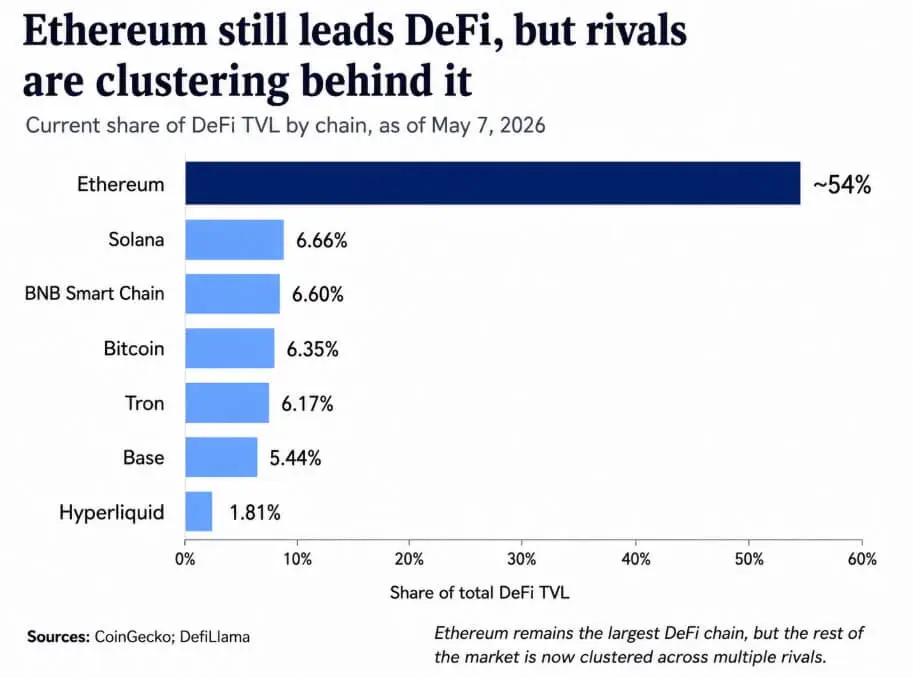
 1.46%
1.46%
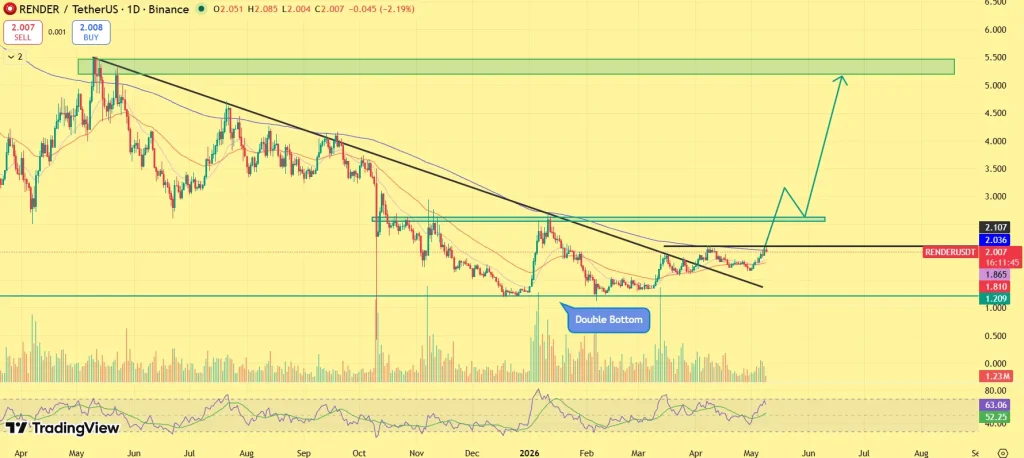
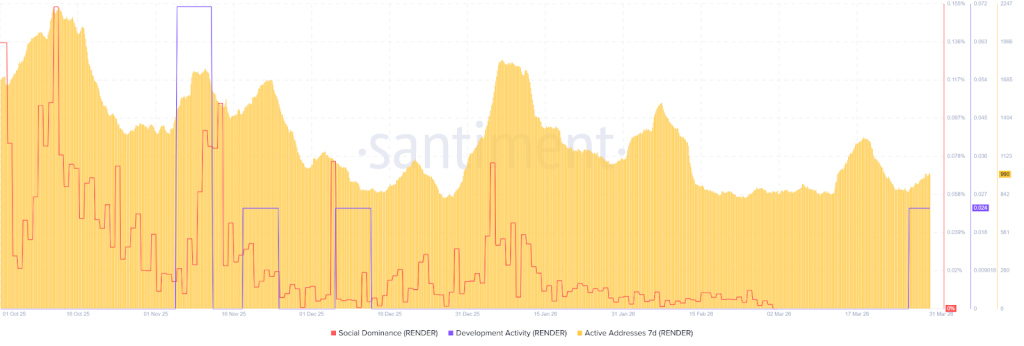

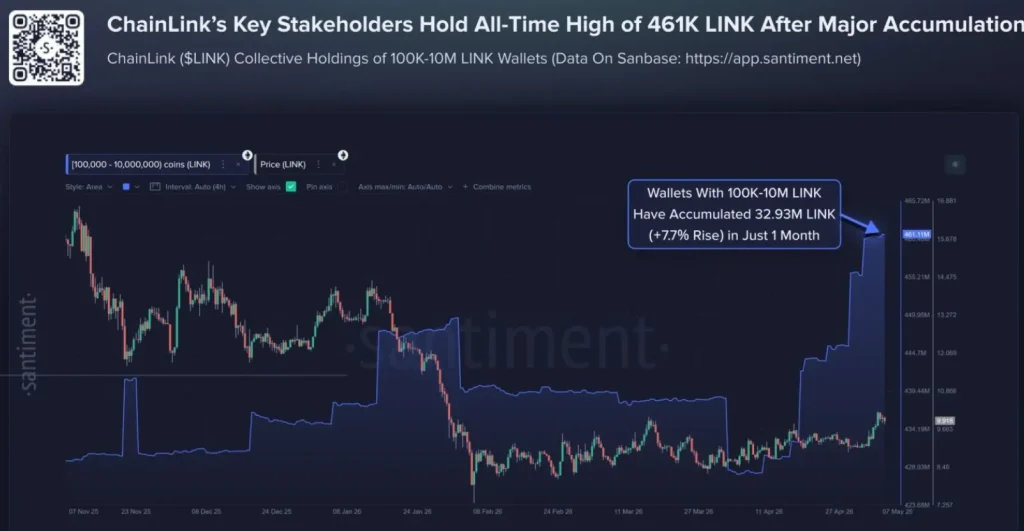
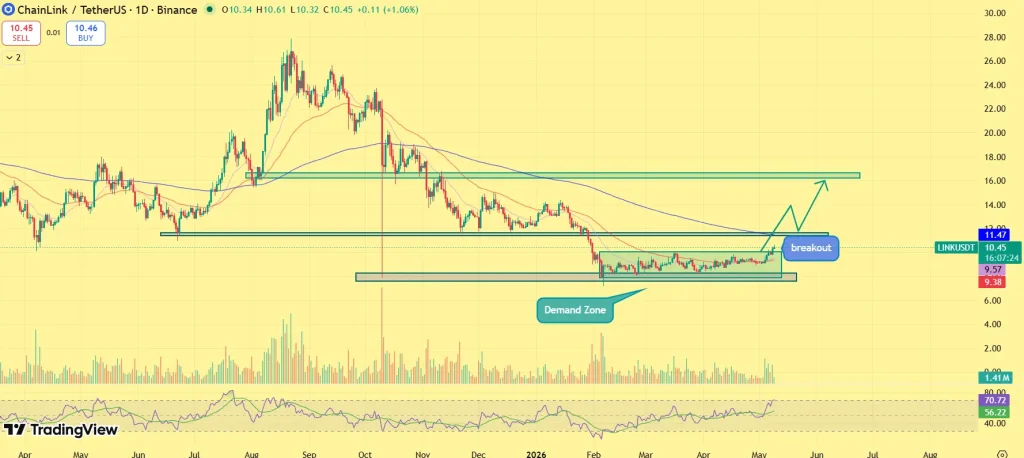
 -7.84%
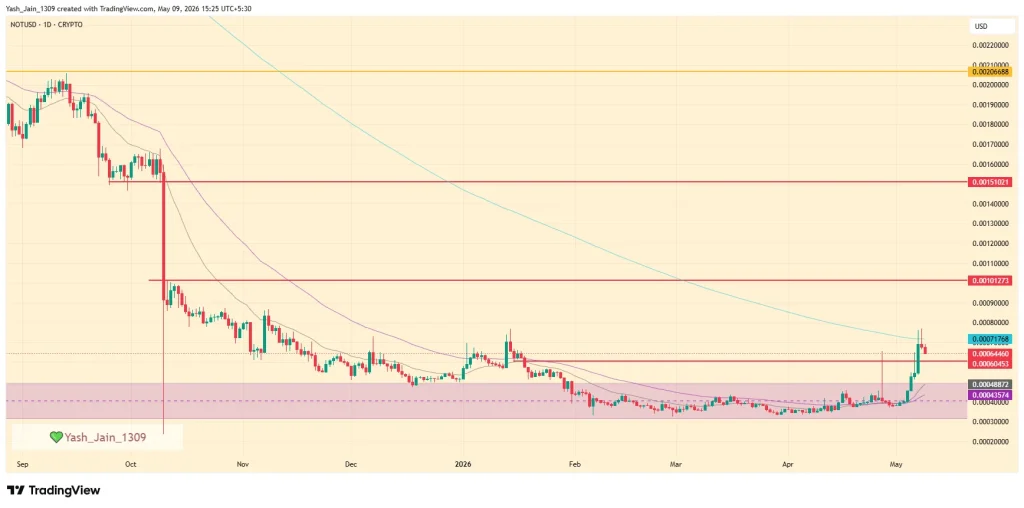
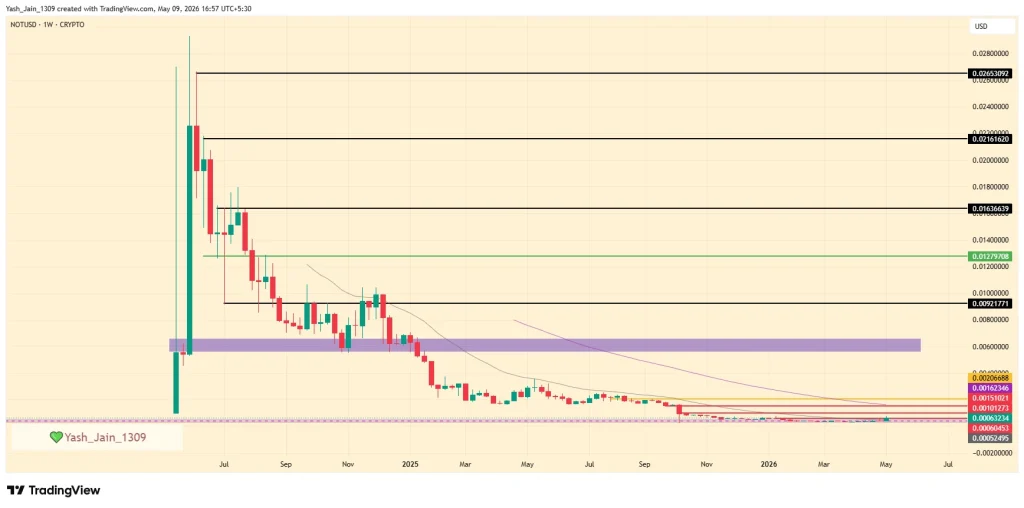











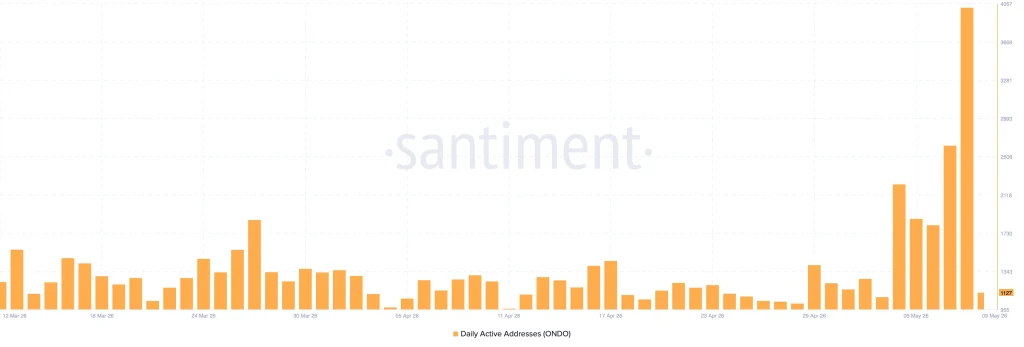
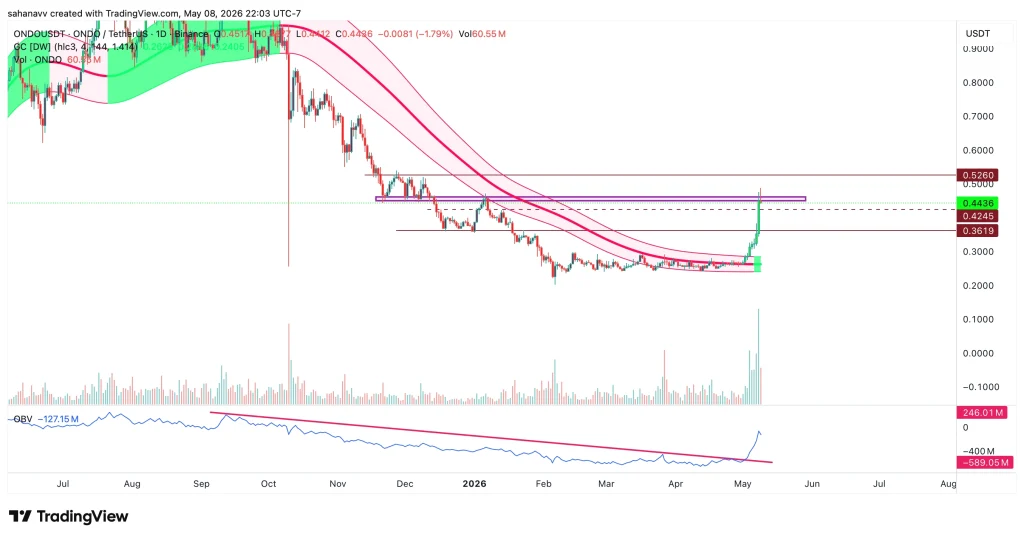


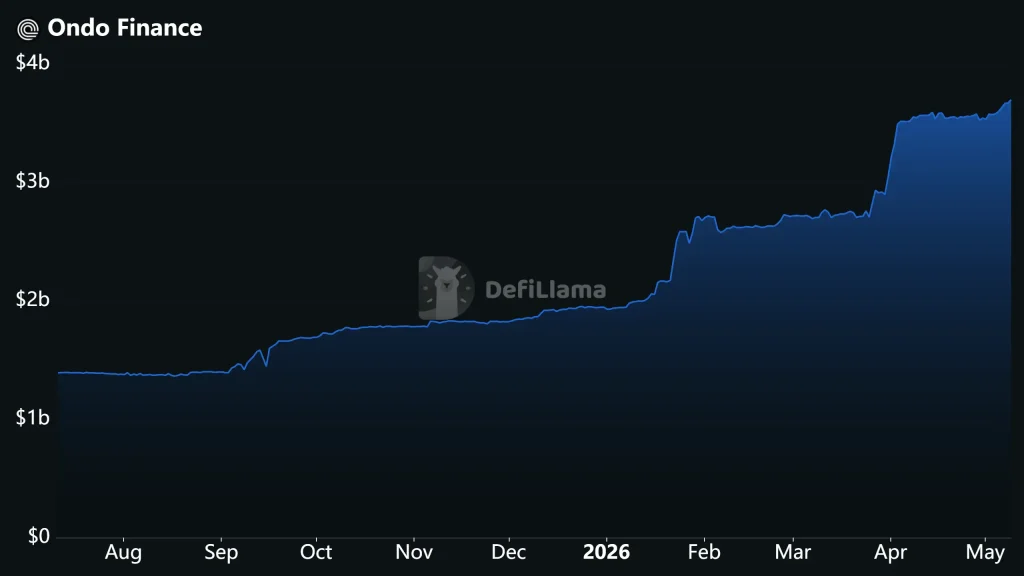
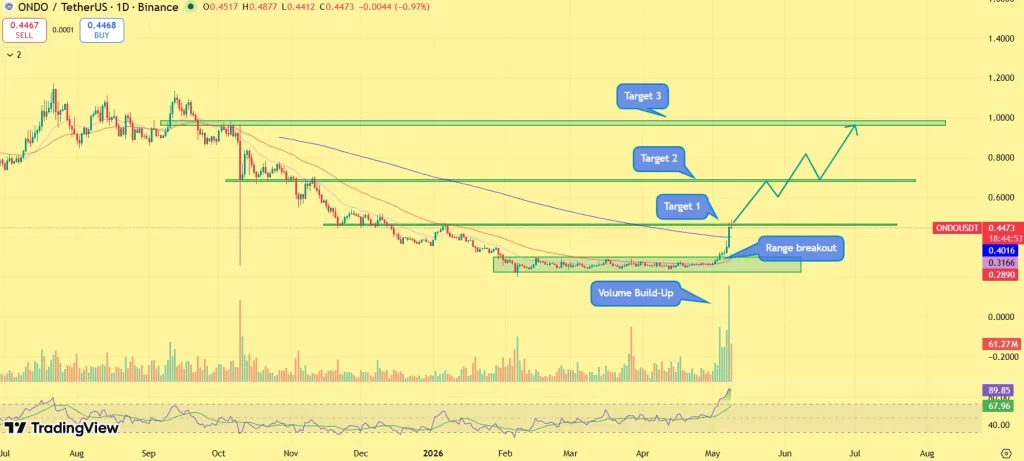
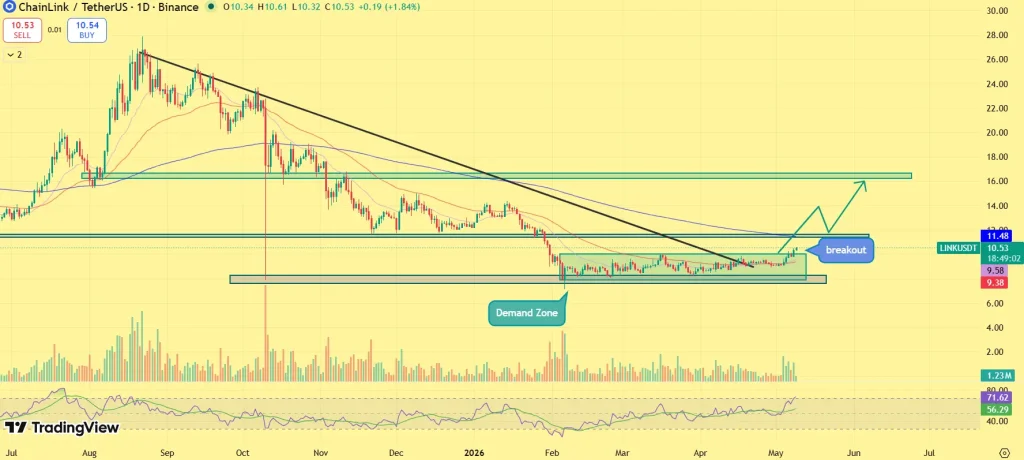
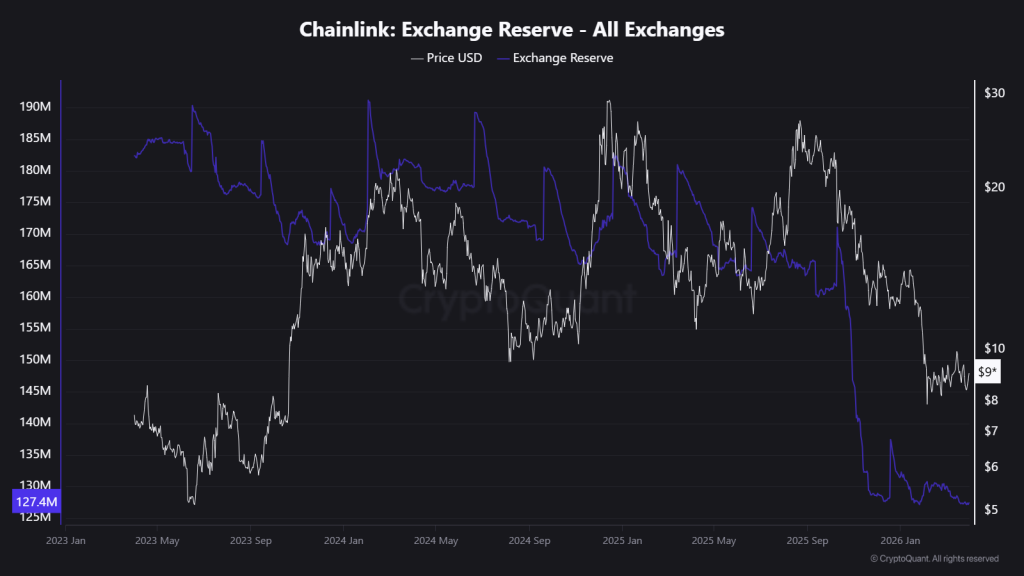
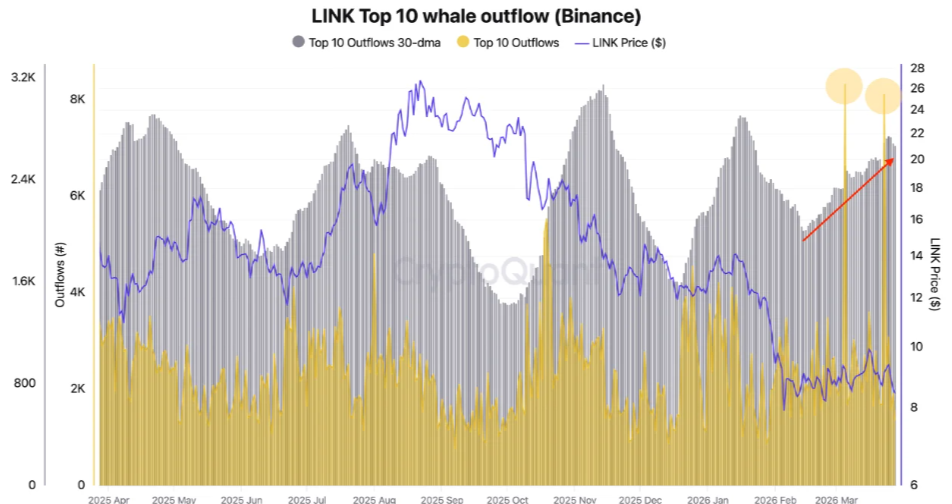





























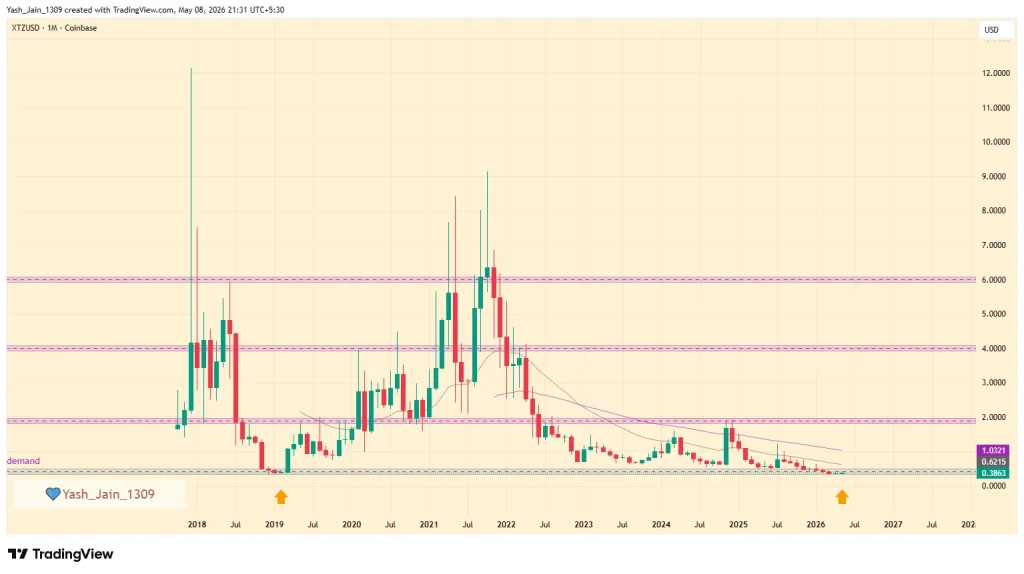


 (@Starknet)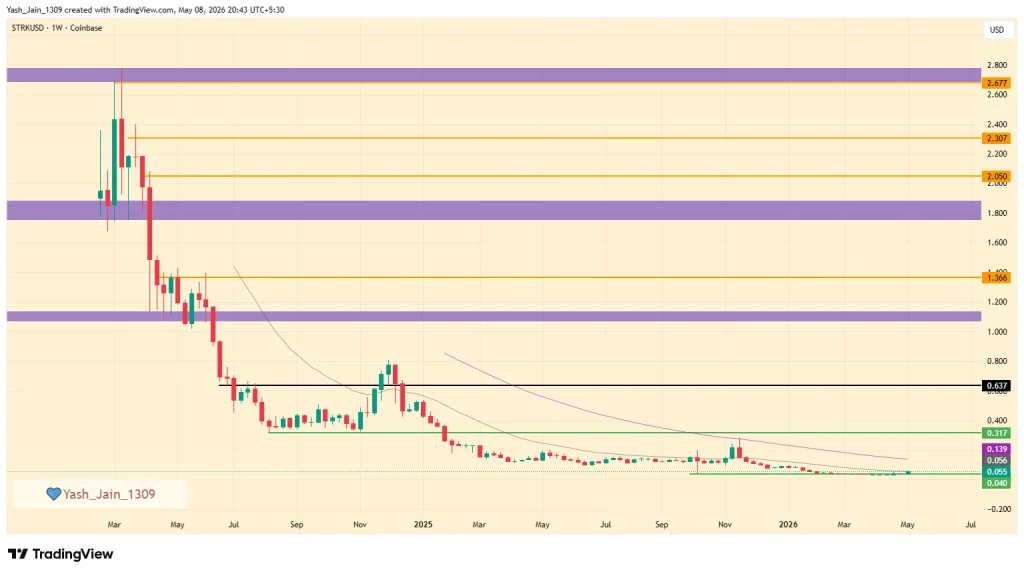















 The US Treasury just did a massive buyback of $4,000,000,000 of its own debt to improve liquidity.



















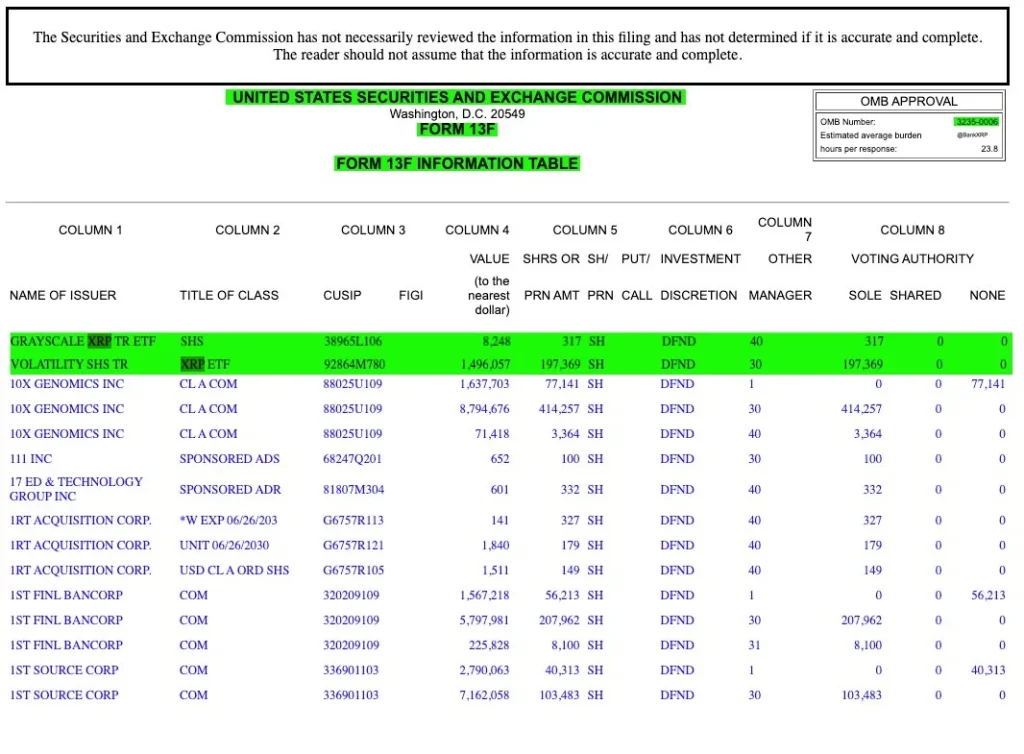























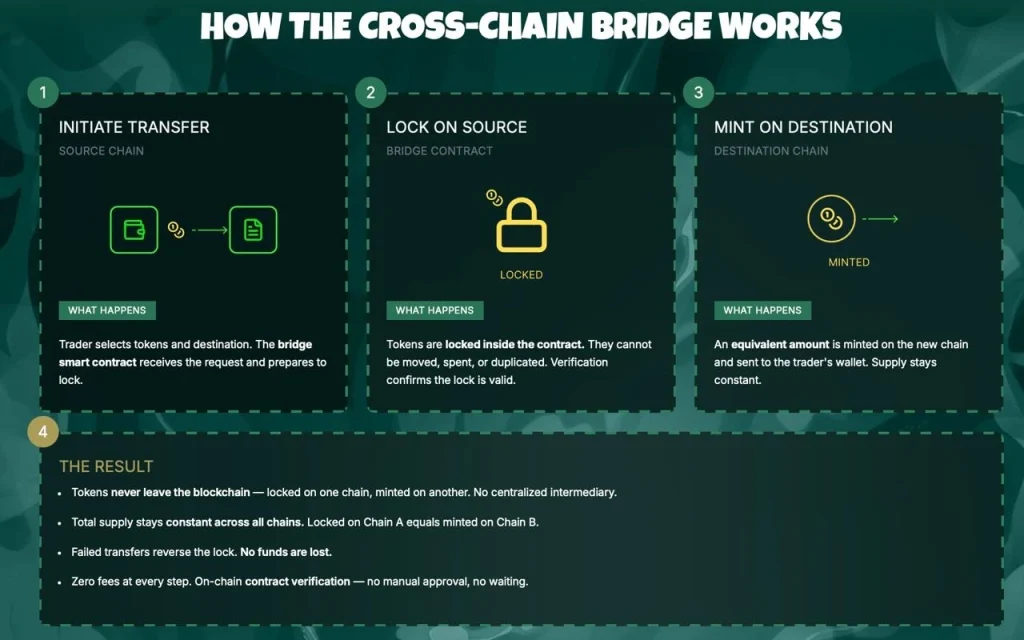




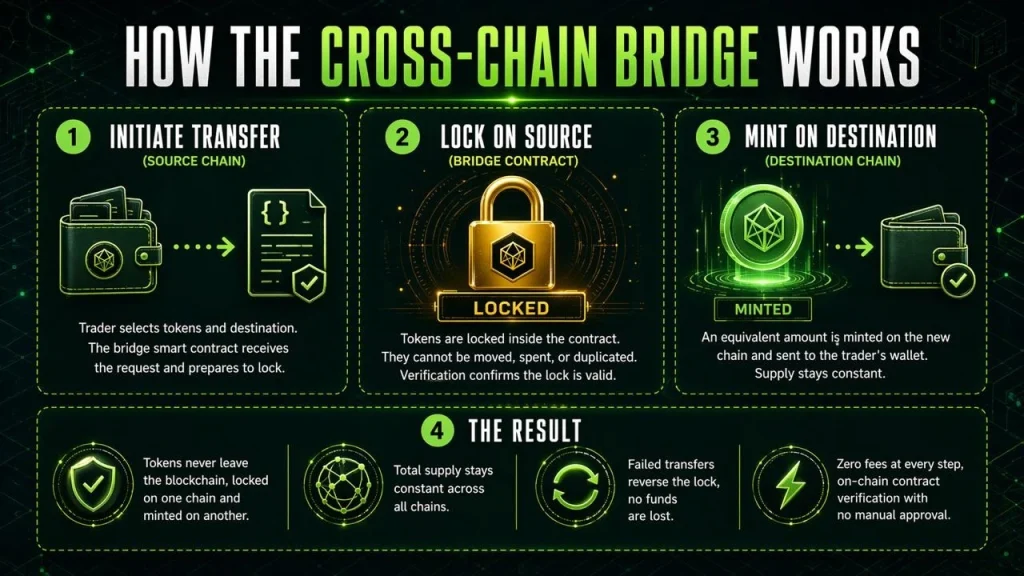



















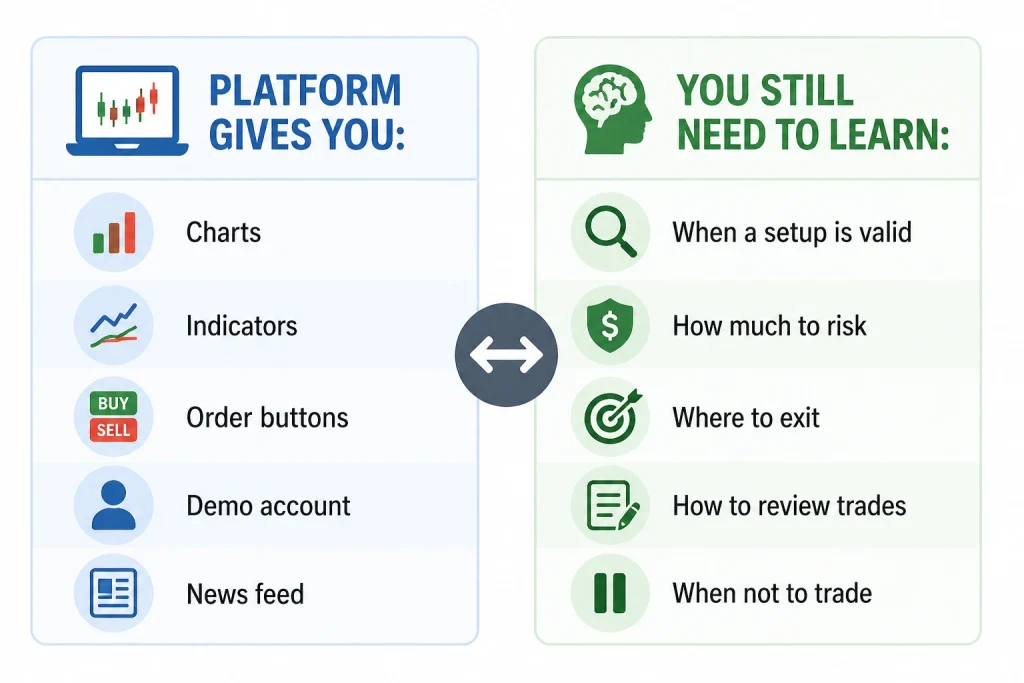
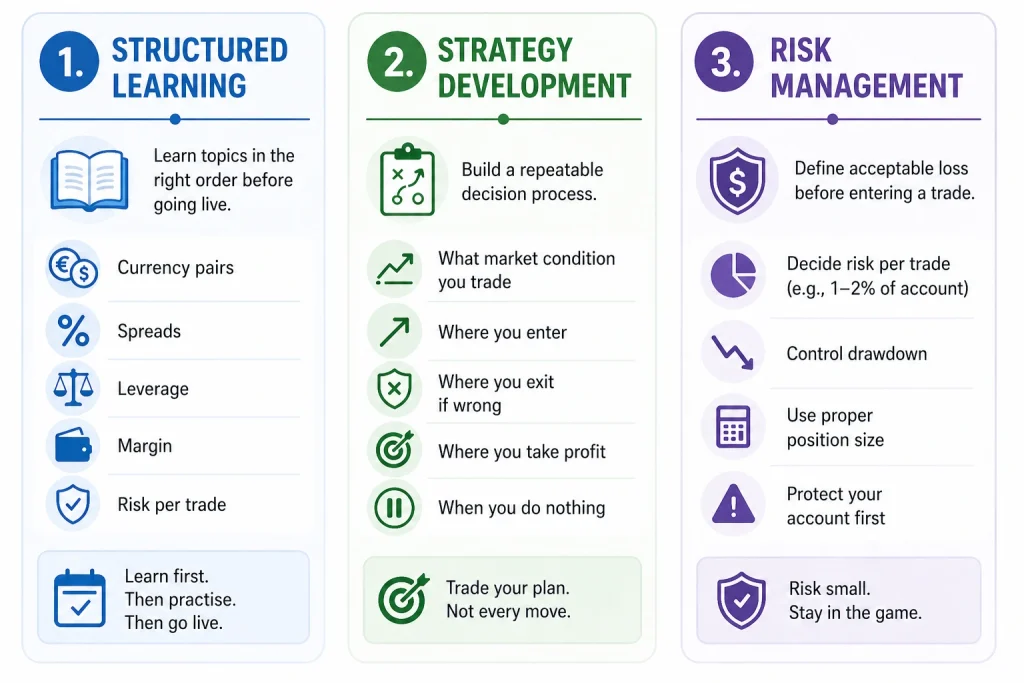

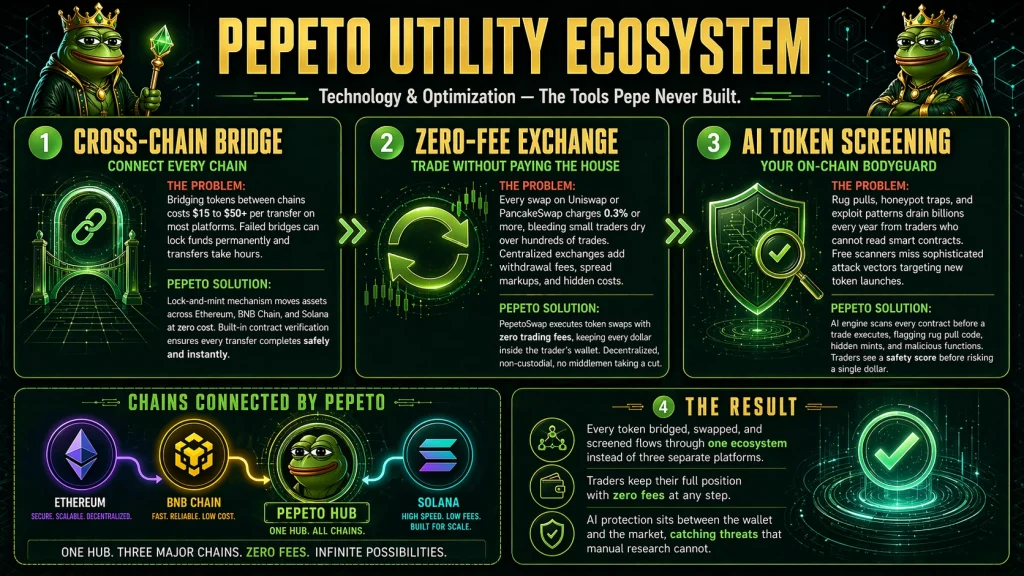


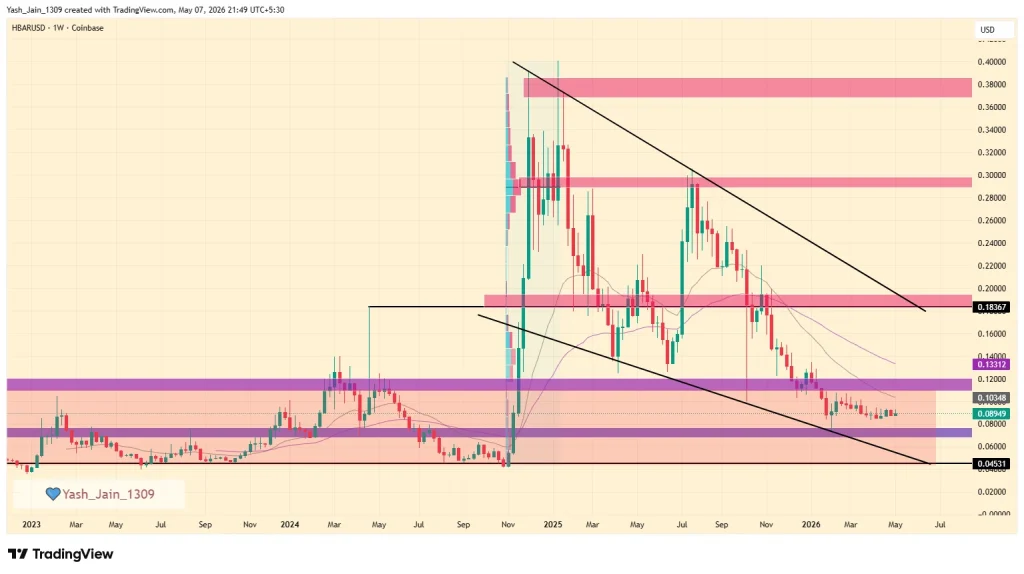
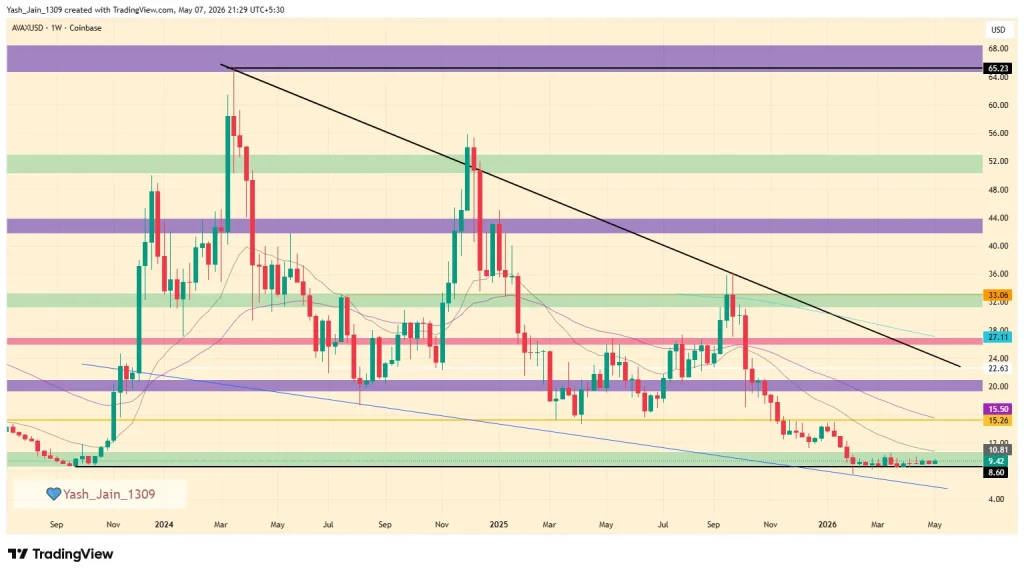
 CME Group has made Avalanche and Sui futures available for trading and announced that crypto futures and options can be traded 24/7 starting May 29.