The Tesla Model Y sells over 10,000 units in April.
The South Korean new light vehicle market edges up 0.8% year-on-year in April to 151,340 units, however this small gain has everything to do with foreign brands up 58.1% to 33,989 and 22.5% share whereas domestic brands fall -8.8% to 117,351. More precisely, the market is up thanks solely to Tesla up 811.5% to break its records for the third month in a row to 13,190 sales and 8.7% share. Meanwhile Kia (+7.9%) extends its now seemingly unassailable lead over sister brand Hyundai (-15.8%) to almost 8,000 units for the month and just above 16,500 units year-to-date. In 4th place below Tesla, Genesis (-40.3%) is in complete freefall and endures its lowest monthly volume in over 6 years: since March 2020. BYD (+272.6%) crosses the 2,000 monthly sales mark for the first time, reaching an all time high 9th place with 1.3% share.
In the domestic models ranking, the Kia Sorento (+37.3%) surges ahead to break its volume record for the 2nd month running at over 12,000 sales. The Hyundai Grandeur (+8.9%) is far below while the Hyundai Sonata (+22.4%) closes out the podium with a strong YoY gain. The Hyundai Avante (-22.9%), Kia Carnival (-34.2%) and Kia Sportage (-25.8%) follow and all sink. Meanwhile at #7 the Kia Ray (+14.4%) reaches an all time high ranking, also hit in August 2023 and February 2024. The Kia EV3 (+27.5%) also impresses and stays within the Top 10 at #10. The Kia EV5 (#15) is the best-selling recent launch ahead of the Kia PV5 (#21) and Renault Filante (#22).
Looking at foreign models, the Tesla Model Y (+1154.5%!) crosses the 10,000 monthly sales milestone and ranks #2 in the overall models charts including domestic vehicles. The Tesla Model 3 (+306.9%) also surges ahead and repeats at #2, followed by the BMW 5 Series (-7.5%) and Mercedes E Class (-22.2%) both in difficulty. The new BYD Dolphin advances to a record 5th place ahead of the BMW X3 (+53.1%), Polestar 4 (+277.1%) and Mercedes GLE (+23.3%), all sporting fantastic scores. The new BYD Sealion 7 lodges an 8th straight Top 10 finish at #9.
Google and PayPal told Consensus Miami AI agents will run on crypto rails as bank accounts remain inaccessible. Senior figures from Google Cloud and PayPal told Consensus Miami on May 10 that the next wave of internet commerce will run…
Intel's next-generation Razor Lake-AX chips will compete directly against AMD's Medusa Halo while featuring on-package memory. Intel Is Bringing Back On-Package Memory With Its Next-Gen Razor Lake-AX Chips That Fight Against AMD's Medusa Halo On-Package Memory was last used by Intel for its Lunar Lake SoCs. These SoCs were aimed at low-power mobile platforms, and while the chips themselves offered solid performance in a 30W budget, Intel's next on-package memory solution will be a big one. As per Haze2K1 on X, Intel Razor Lake-AX SoCs will feature on-package memory. This is a big deal as moving the DRAM closer to […]
SEO has always been a fight for the first page of Google. Every toolchain, audit, and content brief assumes that Google’s ranking systems evaluate a relatively fixed set of roughly 20 to 30 candidate pages before final rankings are determined.
Google has kept that set small because evaluating more pages is computationally expensive.
Google’s VP of Search acknowledged the constraint in federal court. The company’s CEO later confirmed the hardware bottleneck behind it. Google’s research division has now published a technique designed to reduce those costs.
If the candidate set widens, the rules of the last decade stop working.
Why the ranking window is 20 to 30 results wide
Here’s the exchange that matters from Day 24 of United States v. Google in October 2023. DOJ counsel Kenneth Dintzer cross-examining Pandu Nayak, Google vice president of Search, from transcript page 6431:
Q: RankBrain looks at the top 20 or 30 documents and may adjust their initial score. Is that right? A: That is correct.
Q: And RankBrain is an expensive process to run? A: It’s certainly more expensive than some of our other ranking components.
Q: So that’s, in part, one of the reasons why you just wait until you’re down to the final 20 or 30 before you run RankBrain? A: That is correct.
Q: RankBrain is too expensive to run on hundreds or thousands of results? A: That is correct.
Four consecutive confirmations. The deep-learning component of Google ranking that SEOs have built a decade of theory around is deliberately withheld from the bulk of the index because Google can’t afford to apply it more broadly.
The architecture feeding that reranking window is equally revealing. Earlier in the same testimony, at transcript page 6406, Nayak described classical postings-list retrieval to Judge Mehta:
“[T]he core of the retrieval mechanism is looking at the words in the query, walking down the list, it’s called the postings list… [Y]ou can’t walk the lists all the way to the end because it will be too long.”
The corpus gets culled to “tens of thousands” of pages before ranking begins, and from that pool only the top 20 to 30 results reach the deep-learning layer.
That runs against how most SEO commentary describes Google. The industry treats RankBrain, BERT, and other deep learning components as the definition of how Google ranks. Under oath, Nayak described them as expensive optional layers applied to a narrow window that classical retrieval has already culled.
Every practice in this industry that treats the top 20 to 30 as the competitive surface assumes it’ll stay that size. The testimony makes clear that the assumption is contingent, not foundational. The number could have been 50 or 500. It landed at 20 to 30 because that’s what Google’s hardware budget would support, and the constraint has held.
The constraint that held the number there is now in public view, and Google has published what comes next.
On April 7, Sundar Pichai sat down with John Collison and Elad Gil on the Cheeky Pint podcast and described a set of hard supply constraints that no amount of CapEx will solve in the short term. The operative line:
“To be very clear, we are supply-constrained. We are seeing the demand across all the surface areas.”
Pichai named five specific bottlenecks: wafer starts at the foundries, memory, power and energy, permitting for data centers, and skilled labor. Of the five, he pressed hardest on memory:
“There is no way that the leading memory companies are going to dramatically improve their capacity.”
For the 2026 to 2027 horizon, Google can’t buy its way past the memory bottleneck. Higher prices won’t create more capacity.
That matters because nearest-neighbor vector search, the mechanism behind modern semantic retrieval, is memory-bound. The wider the set of candidate pages a system can consider, the more memory it needs. The tight coupling between memory supply and retrieval breadth is what sets the cost boundary Nayak testified about.
4x to 4.5x compression of vector representations with performance “comparable to unquantized models” on the LongBench benchmark.
Nearest-neighbor search indexing time reduced to “virtually zero.”
Outperforms existing product quantization techniques on recall.
The paper covers two applications: KV-cache compression inside Gemini, and nearest-neighbor search in vector databases. Most coverage has focused on the Gemini application. The search-stack application is the nearest-neighbor-search half, and it’s the one relevant to the cost boundary Nayak described.
If indexing is virtually free and memory per vector drops by 4x, the economics that held RankBrain at 20 to 30 candidates no longer apply. A system running on the same hardware could plausibly evaluate a candidate set several times larger.
TurboQuant hasn’t been confirmed as deployed in Google Search. TechCrunch reported at the time of announcement that it remained a lab breakthrough, and the March 2026 core update carried no public commentary from Google linking it to retrieval efficiency or vector quantization. Google has published the algorithm but hasn’t yet deployed it.
Google has been running quantized vector search in production for years through ScaNN. TurboQuant extends that approach rather than introducing it.
The question has shifted from whether the cost boundary can be moved to what SEOs do before it moves.
What to do before the boundary moves
Waiting for SERPs to confirm that retrieval has widened before adjusting is the losing strategy. The competitive surface is shifting. By the time it’s visible in rank-tracking tools, the positioning work of the next cycle is already done.
Three practical shifts are worth making now.
1. Measure whether your pages enter candidate sets
Rank tracking tools measure position within the set. They say nothing about whether a page was eligible for the set in the first place. In classical Search the distinction matters less because the set is narrow. In AI-mediated retrieval, and in a wider RankBrain-style window once it arrives, the distinction is the entire game.
The fastest check is server log analysis. Two classes of retrieval user agents matter.
Search index crawlers build the corpus AI systems pull from. Some examples include:
OAI-SearchBot (ChatGPT search).
Claude-SearchBot (Claude search).
PerplexityBot.
Applebot (which also feeds Apple Intelligence).
User-driven agents fetch pages on demand when someone asks an AI model about a topic your page covers: ChatGPT-User, Claude-User, and Perplexity-User.
These don’t execute JavaScript, so they’re invisible to GA4 and any analytics tool that depends on client-side tags. If the pages you care about aren’t appearing against either list, they aren’t in the candidate sets those systems construct, and ranking work can’t put them there.
2. Audit pages for retrieval-friendliness separately from ranking-friendliness
Ranking and retrieval reward different properties. The ranking signals you already know include topical authority, link equity, and query-intent match. Retrieval systems look for something else: a clear, self-contained, citable claim that can be extracted and evaluated without reading the whole document.
A page written for ranking often buries its main claim under context-setting, caveats, and SEO-driven preamble. In a retrieval-ready page, the claim sits in the first 100 words, attached to an entity or statistic a retrieval system can verify, and surrounded by evidence worth citing. Most sites we audit fail this test even when they rank well.
3. Stop treating the top 20 to 30 pages as a fixed target
The window is a hardware constraint that has held for years because no one at Google could afford to widen it. Briefing content against “what ranks in positions 1 to 10 for this query” is briefing against a snapshot of a window that’s narrower than it needs to be because of hardware economics.
When the economics change, the window will widen. Content built to compete inside a narrow set will face broader competition once it expands. The margin goes to content that was strong enough to enter a wider candidate set from the start.
None of the three requires predicting when TurboQuant or its descendants ship to production. They require acknowledging that retrieval economics is moving and positioning for what lies on the other side of the move, rather than for the current snapshot.
The test is simple. Pull your server logs for the last 30 days. Count the retrieval user agents that have hit the pages you care about. If the answer is zero, or close to it, no amount of ranking work will move that number.
The competitive surface is shifting under you. The rest follows.
NVIDIA has accelerated the rollout of its next-gen AI powerhouse, Vera Rubin, with first shipments commencing as early as July this year. Despite Rumors of Design Issues, NVIDIA is pushing ahead with a spectacular Vera Rubin Launch, The Center of Next-Gen AI A few days ago, we reported a few rumors that were going around regarding NVIDIA's Vera Rubin related to its design and specs changes. While the rumors sounded similar to what we heard about Blackwell GPU servers before their launch, NVIDIA has the ability to quickly address these pre-shipment drawbacks with the help of its supply chain partners, […]
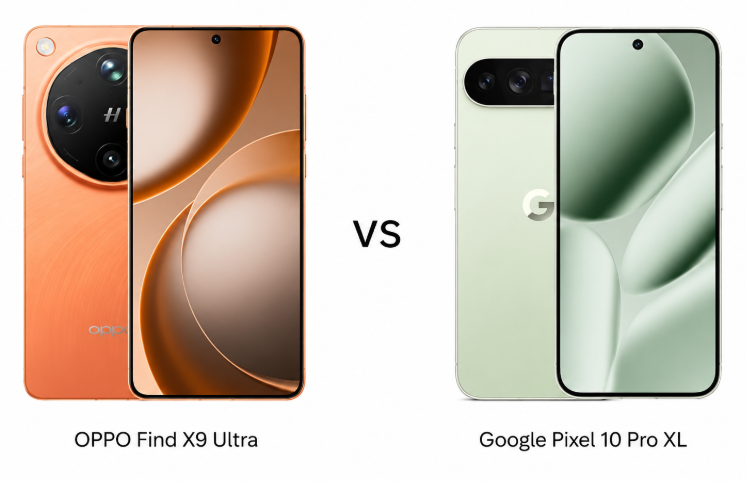
OPPO Find X9 Ultra and Google Pixel 10 Pro XL represent two very different flagship philosophies in 2026. OPPO focuses on cutting-edge hardware with a massive battery, ultra-fast charging, and an aggressive camera setup, while Google leans heavily on AI-powered software, refined photography, and long-term Android support. Both phones sit firmly in the ultra-premium segment, but the real question is whether raw flagship power matters more than a polished smart experience.
OPPO Find X9 Ultra – More advanced camera hardware
Zoom Camera
3x + 10x periscope zoom
5x periscope zoom
OPPO Find X9 Ultra – More versatile zoom setup
Video Recording
8K30, 4K120, Dolby Vision, O-Log2
8K30 (cloud upscaled), 4K60, 10-bit HDR
OPPO Find X9 Ultra – More professional video tools
Selfie Camera
50MP
42MP ultrawide
OPPO Find X9 Ultra – Higher resolution front camera
Battery
7050mAh
5200mAh
OPPO Find X9 Ultra – Significantly larger battery
Wired Charging
100W
45W
OPPO Find X9 Ultra – Much faster charging
Wireless Charging
50W
25W Qi2 magnetic
OPPO Find X9 Ultra – Faster wireless charging
Water Resistance
IP68/IP69
IP68
OPPO Find X9 Ultra – Better durability rating
Extra Features
Infrared port
Satellite SOS, UWB, skin thermometer
Google Pixel 10 Pro XL – More smart ecosystem features
Approx Price
$1150 / ₹110000
$1200 / ₹125000
OPPO Find X9 Ultra – Better hardware value for lower price
Disclaimer: Specs are based on available data. Actual performance may vary. Verify details from official sources before buying.
Design and Display
Build and Feel
The OPPO Find X9 Ultra and Google Pixel 10 Pro XL both target premium flagship buyers, but they deliver very different personalities. OPPO goes for a more aggressive ultra-premium approach with IP68/IP69 protection, optional eco-leather finish, and a bold camera-focused design that immediately feels like a photography flagship. The Pixel 10 Pro XL looks cleaner and more refined with Google’s familiar horizontal camera bar and polished aluminum frame. It feels understated and professional rather than flashy.
OPPO also adds practical extras like an infrared blaster and stronger water resistance credentials, which may matter for long-term durability. The Pixel, meanwhile, keeps things minimalist and polished with tighter software integration and exclusive ecosystem features.
Display Quality
The Find X9 Ultra pushes ahead on paper with a sharper LTPO AMOLED panel, 144Hz refresh rate, Dolby Vision support, and an extremely bright 3600-nit peak brightness. The display feels more cinematic and slightly more immersive for gaming and HDR streaming.
Google’s 120Hz LTPO OLED panel still looks excellent with strong color calibration and excellent HDR tuning. However, OPPO clearly delivers the more hardware-focused display experience.
Verdict
The Pixel 10 Pro XL feels cleaner and more refined, but the OPPO Find X9 Ultra offers the more ambitious flagship hardware package. Its brighter 144Hz display and rugged premium build give it a noticeable edge for multimedia-heavy users.
Specifications Including Battery
Performance
The OPPO Find X9 Ultra is powered by the Snapdragon 8 Elite Gen 5, paired with UFS 4.1 storage and up to 16GB RAM. It is built for raw flagship performance and should comfortably handle high-end gaming, multitasking, and demanding AI workloads. The combination of Qualcomm’s latest chipset and ColorOS optimization makes the phone feel fast and responsive under almost every scenario.
The Pixel 10 Pro XL uses Google’s Tensor G5 chip, which focuses more on AI features, camera intelligence, and software smoothness than outright benchmark dominance. Day-to-day performance should remain excellent, but heavy gamers may still prefer Qualcomm’s stronger GPU advantage.
Battery and Charging
Battery life is one of OPPO’s biggest strengths here. The massive 7050mAh silicon-carbon battery combined with 100W wired and 50W wireless charging gives the Find X9 Ultra a major advantage. It is the kind of setup that feels built for power users.
Google’s 5200mAh battery is respectable, and Qi2 magnetic wireless charging adds convenience, but the slower 45W charging cannot match OPPO’s speed.
Verdict
The Pixel 10 Pro XL focuses more on smart software efficiency, while the Find X9 Ultra prioritizes raw flagship power. OPPO clearly wins for performance enthusiasts and heavy battery users.
Camera
Main and Secondary Lenses
The OPPO Find X9 Ultra delivers one of the most ambitious camera systems in the flagship market. Its dual 200MP setup, including a large periscope sensor, is paired with an additional 10x periscope zoom lens and Hasselblad color tuning. The phone is clearly designed for users who enjoy versatile photography and long-range zoom performance. Video capabilities also feel more professional with Dolby Vision HDR, O-Log2, and cinematic LUT support.
The Pixel 10 Pro XL takes a different approach. Google focuses heavily on computational photography with features like Best Take, Zoom Enhance, and Pixel Shift processing. Its camera tuning tends to produce more natural-looking shots with reliable dynamic range and skin tones. While the hardware is less extreme than OPPO’s, Google’s image processing still remains among the best in smartphones.
Selfie Camera
OPPO offers a sharper 50MP front camera with strong detail retention, while Google’s 42MP ultrawide selfie camera feels more practical for group shots and social content.
Verdict
The Pixel 10 Pro XL is likely the safer point-and-shoot camera for most users, but the Find X9 Ultra feels far more exciting for photography enthusiasts who want maximum zoom flexibility and advanced video tools.
Pricing
The OPPO Find X9 Ultra is expected to cost around $1150 (roughly ₹1,10,000), while the Google Pixel 10 Pro XL sits slightly higher at around $1200 (roughly ₹1,25,000). Despite the smaller gap in global pricing, the difference becomes more noticeable in India, where the Pixel carries a heavier premium.
At its price, the Find X9 Ultra offers stronger hardware value. Buyers get a larger battery, faster charging, a more aggressive camera setup, a higher refresh rate display, and flagship Qualcomm performance. It feels like a specification-heavy flagship designed to outperform competitors on paper.
The Pixel 10 Pro XL justifies its higher price differently. Google’s seven years of Android upgrades, AI-driven features, exclusive Pixel software tools, and cleaner Android experience still hold strong appeal. The phone feels more polished in software execution, even if the hardware specifications are less aggressive.
Verdict
The Pixel 10 Pro XL is priced for users who value Google’s software ecosystem, while the Find X9 Ultra delivers stronger hardware value for the money. OPPO feels like the better deal overall.
Disclaimer: Prices are approximate and may vary based on country, region, launch timing, and applicable taxes. Always check whether the listed price is for a China unit or a global/international variant when purchasing.
Conclusion
The OPPO Find X9 Ultra stands out with its massive silicon-carbon battery, extremely fast charging speeds, dual 200MP camera system, and advanced zoom hardware. It feels like a flagship designed to push hardware boundaries in almost every category. Users focused on gaming, multimedia, battery endurance, and versatile photography will likely appreciate OPPO’s more aggressive approach.
The Google Pixel 10 Pro XL counters with cleaner Android software, deeper AI integration, long-term software support, and Google-exclusive camera intelligence features. Its experience feels smoother and more refined in daily use rather than purely specification-focused. Features like Satellite SOS, Qi2 wireless charging, and advanced AI editing tools help the Pixel maintain its premium identity.
Verdict
Both phones are elite Android flagships, but they target different priorities. The Pixel 10 Pro XL feels smarter and more polished, while the OPPO Find X9 Ultra feels more powerful and feature-packed. For users chasing cutting-edge hardware and better overall value, the Find X9 Ultra emerges as the stronger flagship package.
Disclaimer: This comparison is based on the specifications provided and is intended for general informational purposes. Actual performance, camera results, battery life, and overall experience may vary depending on real-world usage, software updates, and individual preferences.
NVIDIA's AI chips have once again bypassed barriers and landed at Alibaba in China, as the US suspects Supermicro's role in smuggling through Thailand. NVIDIA's AI Chips Still Carry Immense Interest In China As Alibaba Lands Restricted Supermico Servers That Were Smuggled Via Thailand Despite China dropping the hammer on NVIDIA's chips to increase dependency on in-house AI chips, the leading Chinese firms, such as Alibaba, are still procuring the latest hardware from NVIDIA through illegal channels. As per Bloomberg, several Supermicro employees, including high-level executives, are involved in a $2.5 billion smuggling case. The case revolves around shipping several […]
Google Chrome has been silently installing a 4GB AI model called Gemini Nano on users’ devices without consent, a researcher found. Google Chrome is silently installing a 4GB AI model on users’ devices without consent, a researcher found. Privacy researcher…
Google is dropping the back button trigger for AdSense vignette ads on June 15, 2026 due to the new Google search penalty for back button hijacking. Google wrote, “Starting June 15, 2026, the browser back button will no longer trigger a vignette ad.”
What is changing. Google explained that the back button trigger will no longer work after June 15th. The “change will apply automatically for all publishers who have opted in to “Allow additional triggers for vignette ads” and will take effect across all supported browsers (including Chrome, Edge, and Opera).” Google added.
A Google spokesperson told me these same updates will apply to Ad Manager as well.
Why the change. Google explained that the Google Search team “recently introduced a new policy against “back button hijacking” — a practice where websites or scripts interfere with a user’s ability to navigate back to their previous page. To ensure our publishers remain compliant with these latest user experience and search quality guidelines, we are removing the trigger that shows a vignette ad when the user navigates backward from the suite of vignette ad triggers.”
This comes after the search community called this out to Google and Google is making the right change here. Of course, some publishers will not be happy because that trigger may have earned them a lot of money.
Why we care. If you currently have the allow additional triggers for vignette ads setting on with AdSense, keep in mind, one of the triggers, the back button trigger, will be disabled on June 15th. It may impact your earnings, but it will ensure that your site does not get penalized by the back button hijacking penalty.
 Login
Login


 The Tesla Model Y sells over 10,000 units in April.