Reading view

Decathlon Launches Stilus E-Touring E-Bike with Bosch Motor and Shimano Components

Decathlon Stilus E-Touring E-Bike

Decathlon has unveiled the new Stilus E-Touring electric hybrid bike across several European countries. The bike features upgraded components, a powerful motor, and a long-lasting battery, making it suitable for commutes and off-road adventures. This model builds on the previous Stilus E-Touring design with improved performance and enhanced rider comfort.

Decathlon Stilus E-Touring E-Bike

Decathlon Stilus E-Touring E-Bike Specs

The Stilus E-Touring uses a Bosch Performance Line CX mid-drive motor. The motor delivers 85 Nm of torque for smooth and powerful pedaling assistance, especially on hills and challenging terrain.

The bike has five assistance modes, including Eco for energy-efficient rides and Turbo for maximum power. The motor is paired with a Bosch PowerTube 750Wh battery, which allows the bike to travel up to 130 km on a single charge.

Decathlon designed the bike with a 6061 aluminum frame and offers it in three sizes: small, medium, and large. The medium size weighs 26 kg, making it light for an electric hybrid bike in this category. The low step-through frame makes mounting and riding easier, especially for urban riders.

Decathlon Stilus E-Touring E-Bike

The bike features a Suntour XCM32 ATB suspension fork with 100 mm of travel, ensuring enhanced comfort on rough terrain. Its 29-inch Schwalbe Johnny Watts tires deliver improved grip and stability, whether you’re on roads or trails.

The bike relies on Shimano components for precise and reliable performance. The Shimano CUES 11-speed drivetrain ensures smooth gear changes, while Shimano MT200 hydraulic disc brakes deliver strong braking power in all weather conditions. Riders can monitor their trips using the Bosch Kiox display, which includes advanced navigation features and an eBike Lock function for added security.

Pricing and Availability

Decathlon is selling the Stilus E-Touring for €3,299.99 in countries like France and Spain. The price increases slightly to €3,349.99 in the Netherlands.

In related news, Decathlon launched the PS100 Bluetooth speaker last year, featuring a 10-hour battery life, IPX7 water resistance, and a user-replaceable battery.

For more daily updates, please visit our News Section.

Stay ahead in tech! Join our Telegram community and sign up for our daily newsletter of top stories! 💡

(Source, Via)

The post Decathlon Launches Stilus E-Touring E-Bike with Bosch Motor and Shimano Components appeared first on Gizmochina.

Here’s Xiaomi Phones Abroad Often Have Smaller Batteries Than China Versions

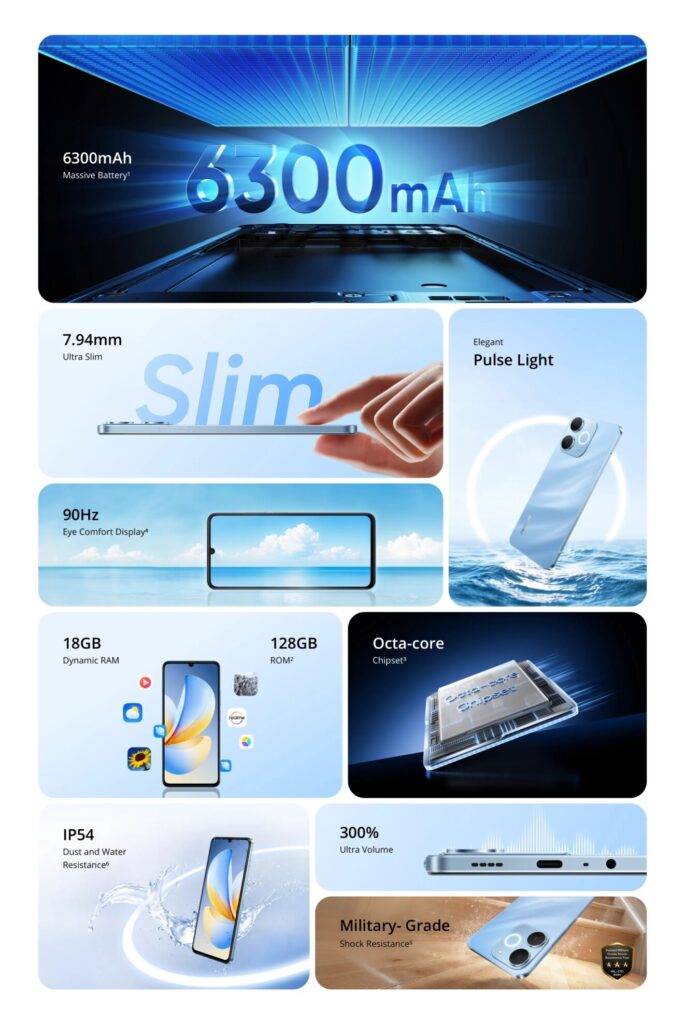
It’s increasingly common to see Xiaomi flagship phones launch in China with larger battery capacities than the same models sold in global markets. For example, the Xiaomi 17’s Chinese version reportedly uses a 7,000mAh battery, but the global variant is tipped to carry around 6,300mAh instead. But this isn’t simply a random downgrade or cost-cutting move. So let’s break down why this happens and what it means for consumers.

Battery Shipping Regulations Are the Core Reason

The most widely cited reason for global Xiaomi phones having smaller batteries boils down to international transportation rules for lithium-ion batteries, especially in Europe and certain other major markets. Under agreements such as the European “International Carriage of Dangerous Goods by Road” (ADR) and similar global aviation regulations, lithium-ion battery cells over 20Wh are classified as “dangerous goods”.

Xiaomi 17 Pro Max
Xiaomi 17 Pro Max

In a typical smartphone, a single battery cell above 20Wh translates to around 5,200mAh at a nominal voltage when simplified for consumer terms. If a phone’s battery exceeds this threshold, shipping it becomes more complicated and costly. Many carriers refuse regular shipments of such devices, requiring special handling and documentation. This makes large single-cell smartphone batteries harder to transport and sell in Europe, the US, and some other global markets.

Why Not Just Use Multiple Battery Cells?

At first glance, splitting a large battery into two smaller cells that individually stay under the 20Wh limit seems like an easy workaround. In fact, some devices can do this with dual-cell layouts, and certain international models use that to bump up capacity without breaching the rules. However, widely adopting a multi-cell design across all global smartphones is not straightforward.

Redmi Note 14 Pro+
Redmi Note 14 Pro+ 5G with Dual Batteries

It adds engineering complexity, requiring different internal layouts, charging circuitry, and safety mechanisms. Multi-cell configurations take up more internal volume, increasing weight and thickness. For many brands (including Xiaomi), the slim form factor and competitive design aesthetics are a priority, making this trade-off difficult. As a result, rather than redesigning each phone’s internal structure for different regions, manufacturers often opt to reduce total battery capacity to stay within safer and easier-to-ship limits.

It’s Not Just Xiaomi

Vivo X300 Pro ships with a smaller 5,440mAh battery in Europe

This battery difference isn’t unique to Xiaomi. Other Chinese brands like Vivo and Xiaomi, and sub-brands like Redmi and POCO, also have smaller batteries compared to their Chinese or Asian counterparts because of similar battery size and logistics constraints in global markets.

Does This Impact Real-World Performance?

On paper, smaller batteries could suggest less endurance. To offset this limitation, brands tend to compensate with aggressive power efficient chipsets, software optimizations in HyperOS, and faster charging tech to reduce time spent plugged in. That’s why, even with a slightly smaller battery, global versions generally still offer all-day battery life under typical use. Though they might not quite match their Chinese counterparts in raw battery capacity numbers.

Other Practical Factors

While shipping rules are the main reason, some secondary factors can also play a role:

  • Market priorities: Different regions have different expectations for phone size, weight, and design. International markets often favor slim phones over max battery capacity.
  • Certification and testing: Devices with larger cells may require more extensive certification in each region, increasing cost and time to market.
  • Logistics and warranty services: Selling and servicing phones with larger batteries can be more challenging for global companies that would otherwise need specialized transport or warranty repair channels.

For more daily updates, please visit our News Section.

Tech enthusiast? Get the latest news first! Follow our Telegram channel and subscribe to our free newsletter for your daily tech fix! ⚡

The post Here’s Xiaomi Phones Abroad Often Have Smaller Batteries Than China Versions appeared first on Gizmochina.

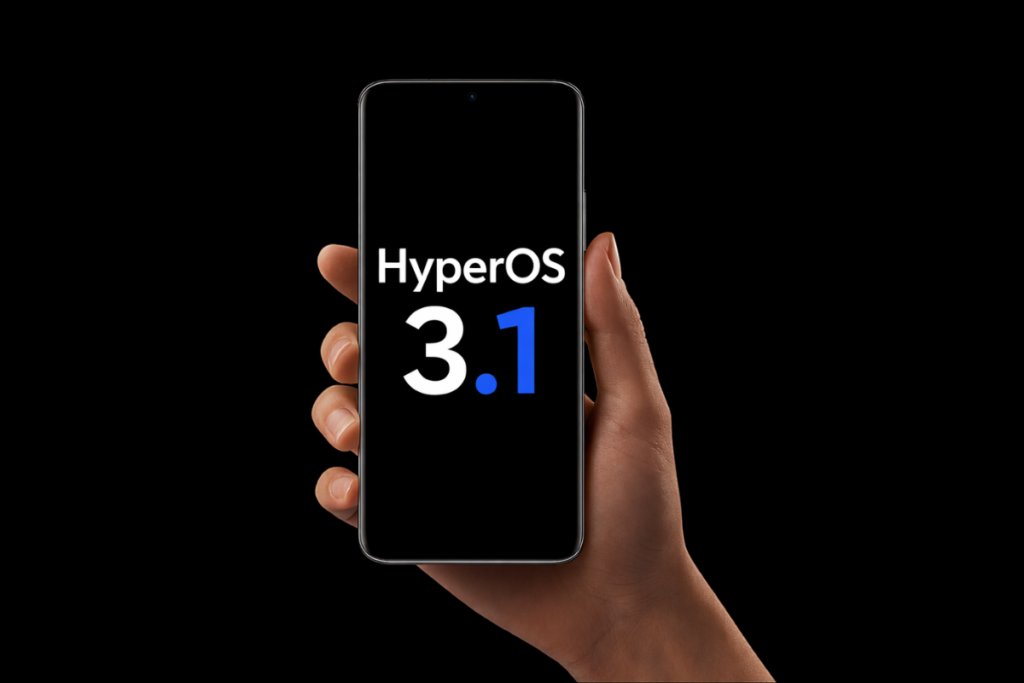
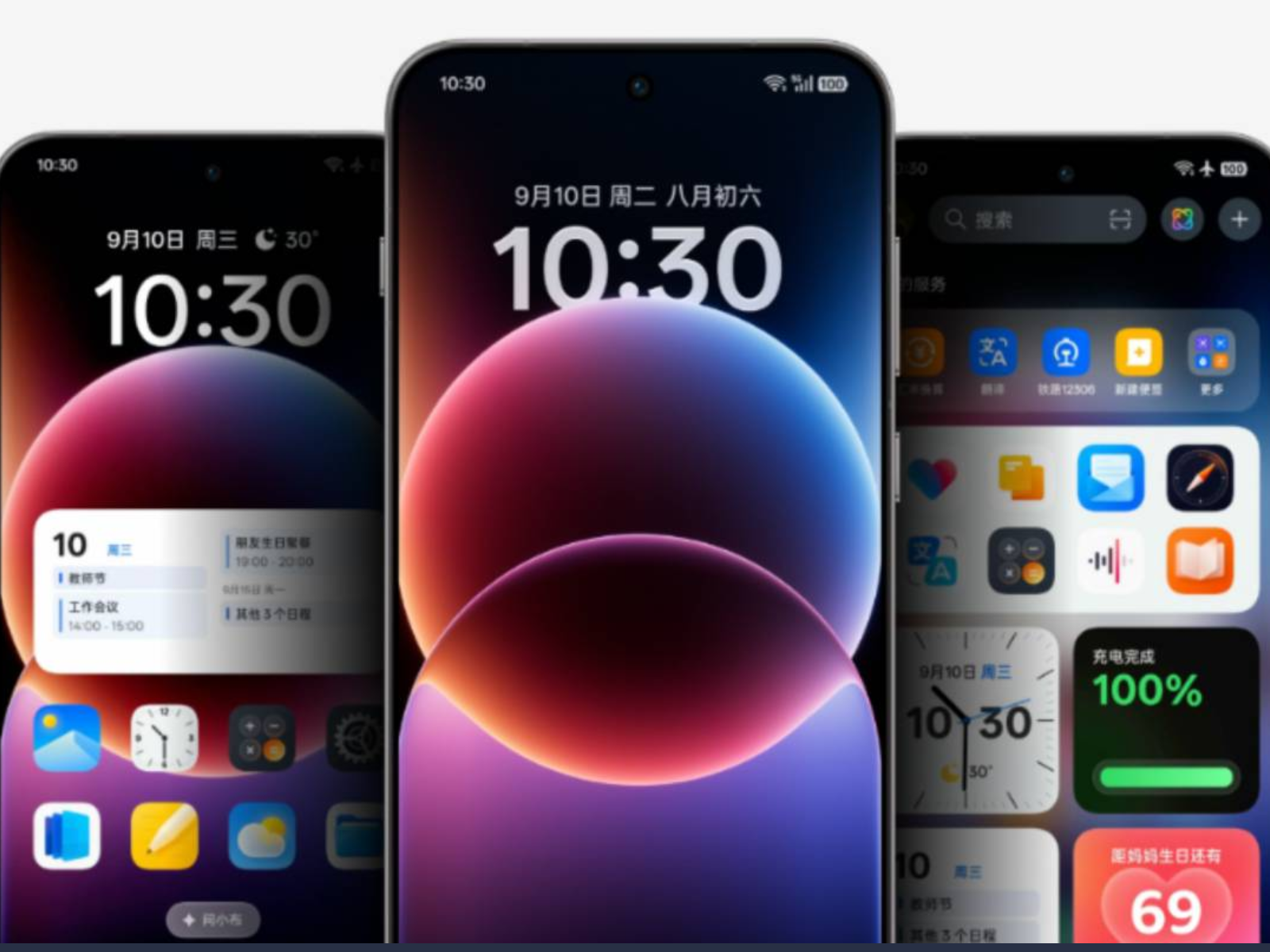
Xiaomi’s HyperOS 3.1 iOS Bridge Rumored for Global Debut at MWC 2026

HyperOS 3.1 beta testing

Xiaomi could be preparing a major announcement for Mobile World Congress (MWC) 2026 this March in Barcelona, not just around new hardware like the Xiaomi 17 series, but also a significant software upgrade. The company is expected to unveil the new HyperOS 3.1 update along with a new feature for improved cross-platform connectivity with Apple devices, thanks to a new “iOS Bridge” feature.

What is “iOS Bridge” in HyperOS 3.1?

Reports suggest that HyperOS 3.1 won’t be a minor patch. Instead, it’s shaping up as a cross-platform bridge that lets Xiaomi users interact more seamlessly with iOS devices. Key components tipped for iOS Bridge include:

  • iPhone Call Notifications: Incoming calls on an iPhone could show up on connected Xiaomi tablets or PCs, letting users answer or manage calls even when their phone is not nearby.
  • AirPods Support: Full compatibility with Apple’s AirPods, including battery levels, controls and spatial audio indicators directly on Xiaomi devices, much like native support seen on Apple hardware.
  • Easy File Transfer: A feature similar to AirDrop, enabling fast, lossless file sharing between iPhones and Xiaomi phones or tablets without needing third-party apps.
Xiaomi HyperOS 3.1 beta update
Xiaomi HyperOS 3.1

This set of features could closely mimic Apple-style cross-device integration, which is something that Android manufacturers traditionally haven’t matched natively and help position Xiaomi’s ecosystem as more friend-friendly for users who juggle multiple platforms.

Why MWC 2026 is the Right Stage

The MWC 2026 event is set to kick off at the start of next month as one of the biggest events on the tech calendar. Xiaomi is already expected to use the stage for global announcements, bringing in its latest flagship Xiaomi 17 series to the international stage. The latest HyperOS 3.1 could share this spotlight with various software upgrades, which makes sense considering how premium models typically bring the latest software iterations.

For more daily updates, please visit our News Section.

Don’t miss a thing! Join our Telegram community for instant updates and grab our free daily newsletter for the best tech stories!

The post Xiaomi’s HyperOS 3.1 iOS Bridge Rumored for Global Debut at MWC 2026 appeared first on Gizmochina.

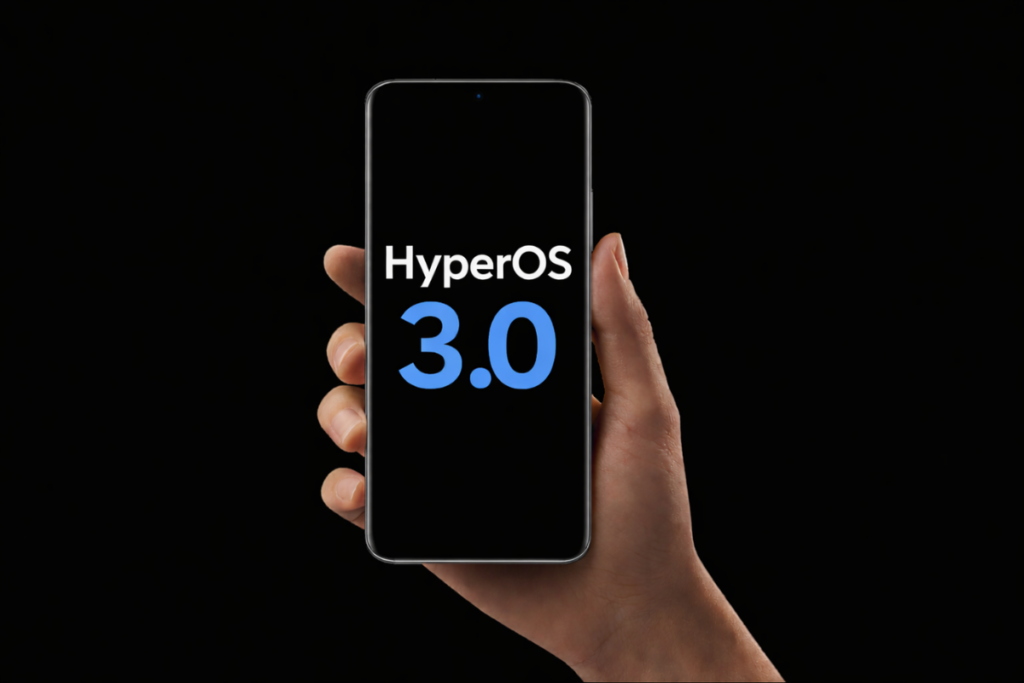
Xiaomi HyperOS 3 Update Rollout Kicks Off Once Again After Holiday Break

HyperOS 3 stable update rollout

After a brief slowdown tied to the Chinese New Year holiday, Xiaomi’s HyperOS 3 software rollout has resumed earlier than expected, bringing fresh builds and public releases to a range of devices worldwide. While the initial break was expected to stretch till the next month, the brand has kicked off the latest build for the Xiaomi and other sub-brands’ devices.

Why the Rollout Slowed Down

Like many other tech companies in China, Xiaomi paused new HyperOS 3 releases and internal build compilations to celebrate the Chinese New Year festivities, which traditionally stretch from mid-February to early March. During this time, development teams typically enter a maintenance mode, and new public updates slow down or stop entirely while engineers take the holiday.

HyperOS 3 features
Xiaomi HyperOS 3

However, it now appears that Xiaomi has ended that break early, with new HyperOS 3 builds already rolling out again to eligible devices as of February 21. This marks a quicker return to routine update work than many had expected.

First Wave of Post-Holiday Releases

A variety of Redmi, POCO and Xiaomi devices are already seeing new builds as Xiaomi resumes the rollout:

  • Redmi Turbo 5 (China) received OS3.0.11.0.WPJCNXM based on Android 16.
  • POCO M6 Plus 5G / Redmi 13 5G / Redmi Note 13R (India) are getting OS3.0.10.0.WNUINXM.
  • POCO M6 Pro 4G / Redmi Note 13 Pro 4G builds (Android 16) have also arrived in the global and Russia regions.
  • POCO M7 Plus / Redmi 15 (Global) and others saw Android 15/16-based builds.
  • POCO C75 5G / Redmi A4 (India) got OS3.0.3.0.WGVINXM with updated UI elements like HyperIsland and redesigned home visuals.

These public releases follow an early holiday-week flurry of activity, including new Recovery ROMs being pushed to users and internal test builds spotted on Xiaomi update trackers.

For more daily updates, please visit our News Section.

Tech enthusiast? Get the latest news first! Follow our Telegram channel and subscribe to our free newsletter for your daily tech fix! ⚡

(Via)

The post Xiaomi HyperOS 3 Update Rollout Kicks Off Once Again After Holiday Break appeared first on Gizmochina.

Redmi Buds 8 Pro Listed Globally Ahead of February 28 Launch Event

REDMI Buds 8 Pro

Xiaomi is preparing to launch the Redmi Buds 8 Pro globally, and the earbuds have already appeared on the company’s international website ahead of the announcement. The new model replaces the Redmi Buds 6 Pro and will be officially presented during Xiaomi’s February 28 event. The company has not shared pricing or release dates yet, but availability is expected shortly after the launch event or in early March.

REDMI Buds 8 Pro

The Redmi Buds 8 Pro focus heavily on audio performance. They use a new coaxial triple-driver system that Xiaomi says improves sound response and boosts bass below 100Hz compared to the previous generation. The earbuds are Hi-Res Audio Wireless certified and support the LDAC codec for high-resolution streaming. Dolby Audio is also included to improve clarity and surround effects, along with dimensional audio that supports dynamic head tracking for a more immersive experience across music, video, and gaming.

Redmi Buds 8 Pro

Noise control is another major feature. The earbuds support active noise cancellation up to 55dB with coverage up to 5kHz. Xiaomi says the system can sample environmental sound up to 32,000 times per second and automatically adjust cancellation based on surroundings and how the earbuds are worn. There is also a dedicated commuting mode designed for airplanes, trains, and public transport that combines noise cancellation with masking audio to reduce background distractions. For voice calls, the earbuds include three microphones per side with AI noise reduction and wind resistance up to 12m/s.

Battery life is rated at up to 8 hours on a single charge and up to 33 hours with the charging case. Each earbud contains a 54mAh battery, while the case has a 480mAh battery. Fast charging is supported, with a 5-minute charge providing up to 2 hours of playback. The earbuds support Bluetooth 5.4, dual-device multipoint connectivity, audio sharing between two pairs, Google Fast Pair, and customization through the Xiaomi Earbuds app. They also carry an IP54 rating for dust and water resistance.

The Redmi Buds 8 Pro will be sold in Cloud White, Glacier Blue, and Obsidian Black. Xiaomi is also offering a two-month Spotify Premium trial for eligible new users, redeemable through the Xiaomi Earbuds app before August 8, 2026, with regional plan differences.

For more daily updates, please visit our News Section.

Tech enthusiast? Get the latest news first! Follow our Telegram channel and subscribe to our free newsletter for your daily tech fix!

The post Redmi Buds 8 Pro Listed Globally Ahead of February 28 Launch Event appeared first on Gizmochina.

WhatsApp is finally working on scheduled messages

Sending a message at exactly the right time on WhatsApp has never been straightforward. If you wanted to wish someone at midnight or schedule a reminder for later, you either had to remember manually or rely on awkward workarounds. That might finally change.

According to WABetaInfo, references to a new “Scheduled Messages” feature have been spotted in the latest WhatsApp beta for iOS (version 26.7.10.72), distributed via Apple’s TestFlight program.

The feature isn’t live yet, not even for beta users, but strings and internal references in the code suggest WhatsApp is working on a native way to compose a message, choose a specific date and time, and have it sent automatically.

A leaked screenshot shared by WABetaInfo shows what appears to be a dedicated section within a chat where scheduled messages would be listed. Users would presumably be able to review or manage pending messages before they’re sent.

The example shown in the leak appears to be from a group chat, but there’s no indication the feature would be limited to groups. It’s reasonable to expect support for one-on-one chats as well.

If implemented fully, this would bring WhatsApp closer to competitors like Google Messages and Telegram, both of which have offered message scheduling for some time.

Right now, Android users often turn to third-party automation apps to replicate the feature, which can require broad permissions and aren’t always ideal from a privacy standpoint. On iOS, it’s technically possible using Apple’s Shortcuts app, but the process isn’t exactly seamless.

It’s important to stress that this is still in development. The feature is hidden in the code and not accessible yet, which means timelines could change. Sometimes features spotted at this stage take months to arrive, and occasionally they never make it out of testing.

That said, scheduled messaging feels like a logical addition. It’s a small feature on paper, but one that many users have asked for over the years.

For global users dealing with time-zone differences, late-night greetings, or work-related reminders, having built-in scheduling would remove a surprising amount of friction.

For now, it’s a promising sign that one of the most requested features may finally be on the way.

Stay ahead in tech! Join our Telegram community and sign up for our daily newsletter of top stories!

For more daily updates, please visit our News Section.

(Source)

The post WhatsApp is finally working on scheduled messages appeared first on Gizmochina.

Honor Magic V6 and Robot Phone are coming to MWC 2026

Honor-Robot-Phone

Honor is heading back to Barcelona with big plans. The company confirmed today that its global launch event at Mobile World Congress 2026 will take place on March 1, where it will introduce two very different devices — the Honor Magic V6 and the Honor Robot Phone.

Honor Magic V6

The Honor Magic V6 is the company’s upcoming book-style foldable, which appeared in live images just days ago. It’s expected to feature a thin and lightweight design while being powered by Qualcomm’s latest flagship silicon, the Snapdragon 8 Elite Gen 5.

The Magic V6 will reportedly pack a 7,150mAh battery with support for 120W wired fast charging. It could also include Honor’s self-developed C1+ radio frequency enhancement chip and the E2 energy efficiency enhancement chip.

Honor Magic V6 image

On the camera side, it’s said to feature a 200-megapixel large-sensor main camera alongside a periscope telephoto lens. The company also claims full-level waterproofing and support for Beidou satellite communication.

Honor Robot Phone

Alongside the foldable, Honor is planning to unveil the Honor Robot Phone. The company calls it the industry’s first “robot phone,” featuring a hidden robotic arm gimbal that can deploy with a single tap.

According to Honor, this mechanism allows the phone to physically move for automatic composition, subject tracking, and enhanced stabilization.

Honor says the device is powered by a powerful AI system capable of seeing and responding in real time. It’s designed to follow users, capture moments automatically, and even act as a personal camera operator.

The built-in large-scale model, called YOYO, is said to include emotional perception capabilities. According to Honor, it can proactively suggest content, coordinate with other devices across its ecosystem, and function as a digital assistant that feels more personal and context-aware.

We’ll have to wait until March 1 to see how much of this vision translates into real-world use.

Don’t miss a thing! Join our Telegram community for instant updates and grab our free daily newsletter for the best tech stories!

For more daily updates, please visit our News Section.

(Source)

The post Honor Magic V6 and Robot Phone are coming to MWC 2026 appeared first on Gizmochina.

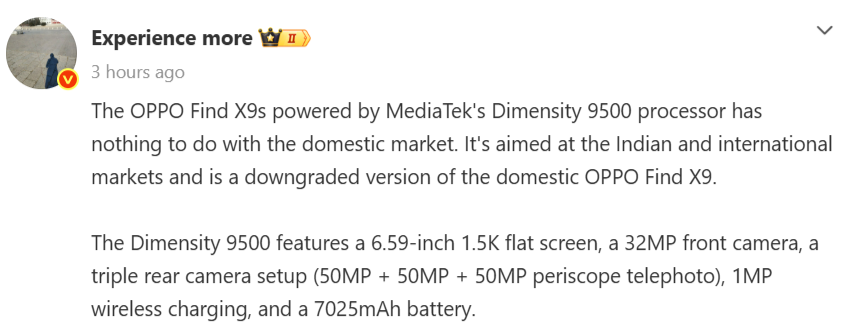
Oppo Find X9s India launch confirmed with Dimensity 9500s

Oppo Find X9s

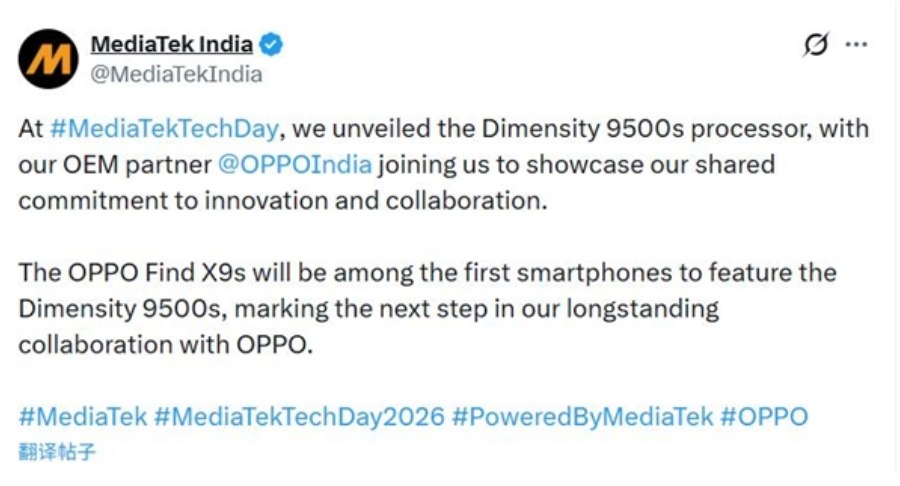
MediaTek has confirmed that Oppo will be among the first smartphone brands to ship a device powered by its new Dimensity 9500s chip. In a post on X via MediaTek India, the company said the Oppo Find X9s will be the first handset in the country to launch with the new silicon.

The Dimensity 9500s is built around an all-big-core CPU design that includes one Cortex-X925 core clocked at 3.73GHz, three Cortex-X4 cores running at 3.3GHz, and four Cortex-A720 cores at 2.4GHz. As for the graphics, the chip integrates a 12-core Immortalis-G925 GPU, clocked as high as 1.61GHz.

Oppo Find X9s Specifications 

Meanwhile, the Find X9s is a camera-first flagship reportedly carrying three 50MP lenses on the back: a primary lens, a periscope-style telephoto lens, and an ultra-wide camera.

On the front, it features a 6.59-inch display with a 1.5K resolution and a 32-megapixel front-facing camera. The device is rumored to pack a 7,025mAh battery, paired with 100W fast charging.

Oppo Find X9s
Oppo Find X9s Render

It is also speculated that the X9s may not be on par with the X9. The device may ship with 12GB of RAM and 256GB or 512GB of internal storage.

Design-wise, the Find X9s is expected to feature a large, horizontally aligned camera module. The layout reportedly spreads the three cameras across one side, with branding and flash elements on the other. It might look more or less like the iPhone 17 Pro.

Interestingly, a previous report suggests that the Oppo Find X9s will not be released in China. Instead, the brand is said to be working on the Oppo Find X9s Pro for the Chinese market.

According to reports, it may arrive with a compact form factor featuring a 6.3-inch OLED 1.5K 120Hz display equipped with an ultrasonic in-screen fingerprint sensor. It could be powered by the Dimensity 9500 chip.

The Find X9s Pro is expected to debut alongside the Find X9 Ultra in March in China.

For more daily updates, please visit our News Section.

Stay ahead in tech! Join our Telegram community and sign up for our daily newsletter of top stories.

The post Oppo Find X9s India launch confirmed with Dimensity 9500s appeared first on Gizmochina.

Anker Prime Power Bank Black Myth: Wukong Edition Launches with 220W Output and 20K Capacity

Anker Prime Power Bank Black Myth: Wukong Edition

Anker released a Black Myth: Wukong Edition of its Prime Power Bank. The hardware is identical to the standard model, but the exterior now has a black and gold design with battle-worn textures and a 3D relief mural. It includes Jingubang artwork and co-branded logos.

The power bank‘s 20,100mAh battery (72.36Wh) meets TSA flight requirements and charges an iPhone 17 Pro Max 3.6 times. It has two USB-C ports and one USB-A port with 220W total output. A single USB-C port delivers 140W, which charges a 16-inch MacBook Pro to 50 percent in 28 minutes with the right cable.

When charging two devices, output splits to 110W + 110W or 140W + 22.5W. Three devices get 100W + 100W + 20W. The power bank recharges at 100W through USB-C, reaching 50 percent in 25 minutes. It charges faster with the optional Prime Charging Base via pogo pins.

The built-in screen displays real-time power data, battery temperature, and port usage. Bluetooth connects to the Anker app for monitoring input and output power, cable information, and charging protocols. You can customize charging modes, allocate power per port, and adjust display settings.

ActiveShield 4.0 performs over 10 million temperature checks daily and adjusts power automatically in extreme conditions. The device measures 5.79 × 1.99 × 1.73 inches and weighs 1.12 pounds.

Pricing & availability

The Anker Prime Power Bank Black Myth: Wukong Edition costs $199.99 in the US and £139.99 in the UK. The standard Anker Prime Power Bank retails for $179.99.

Anker also sells a Black Myth: Wukong–themed version of its Prime Docking Station, featuring a black-and-gold design inspired by the game while keeping the same core hardware as the standard model. It supports triple displays via DisplayLink, delivers up to 140W laptop charging, and offers a wide range of connectivity ports for multi-device setups.

The post Anker Prime Power Bank Black Myth: Wukong Edition Launches with 220W Output and 20K Capacity appeared first on Gizmochina.

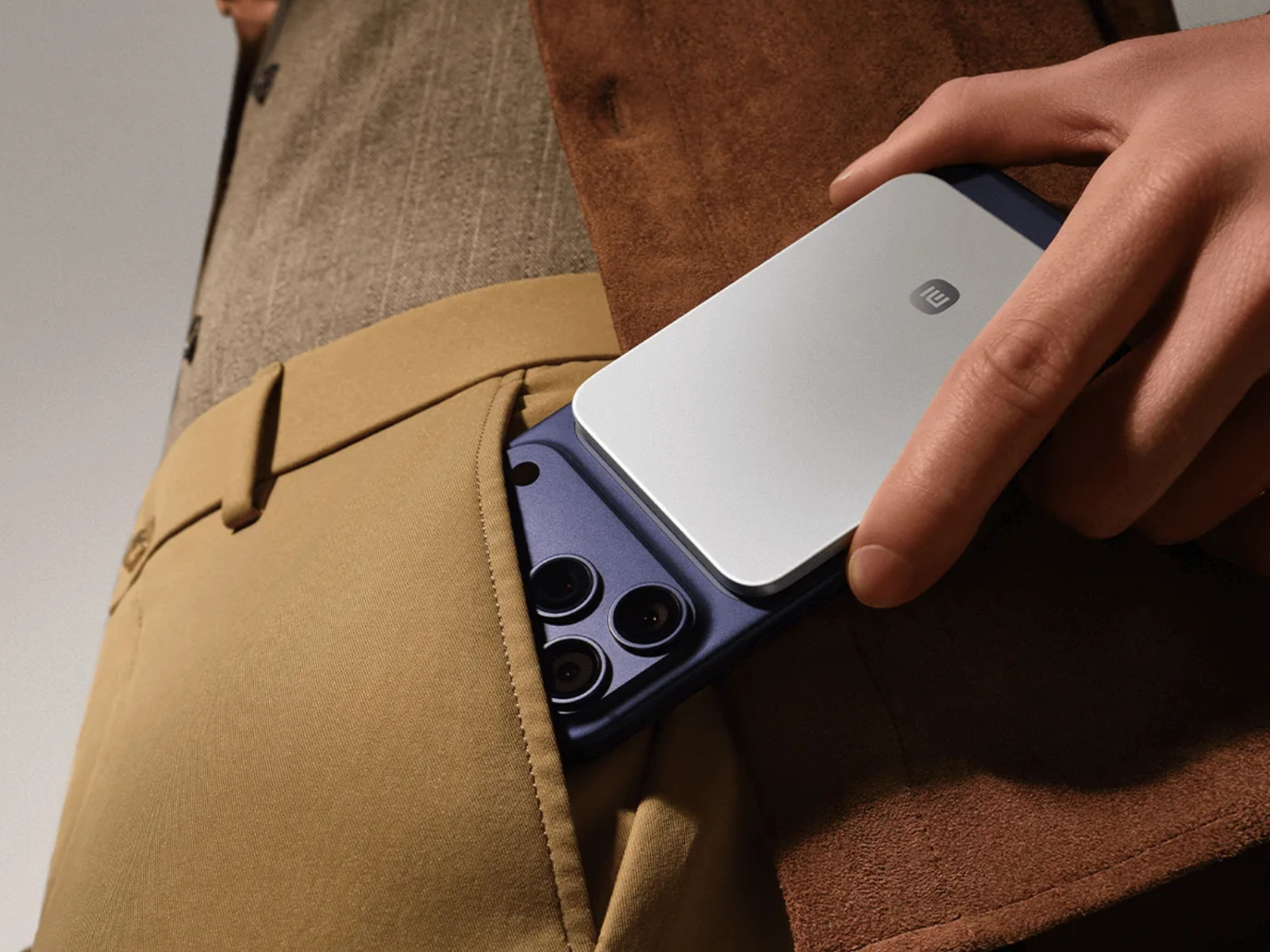
Xiaomi to launch its UltraThin Magnetic Power Bank 5000 15W at MWC, wider rollout likely

Xiaomi-UltraThin-Magnetic-Power-Bank-5000-15W

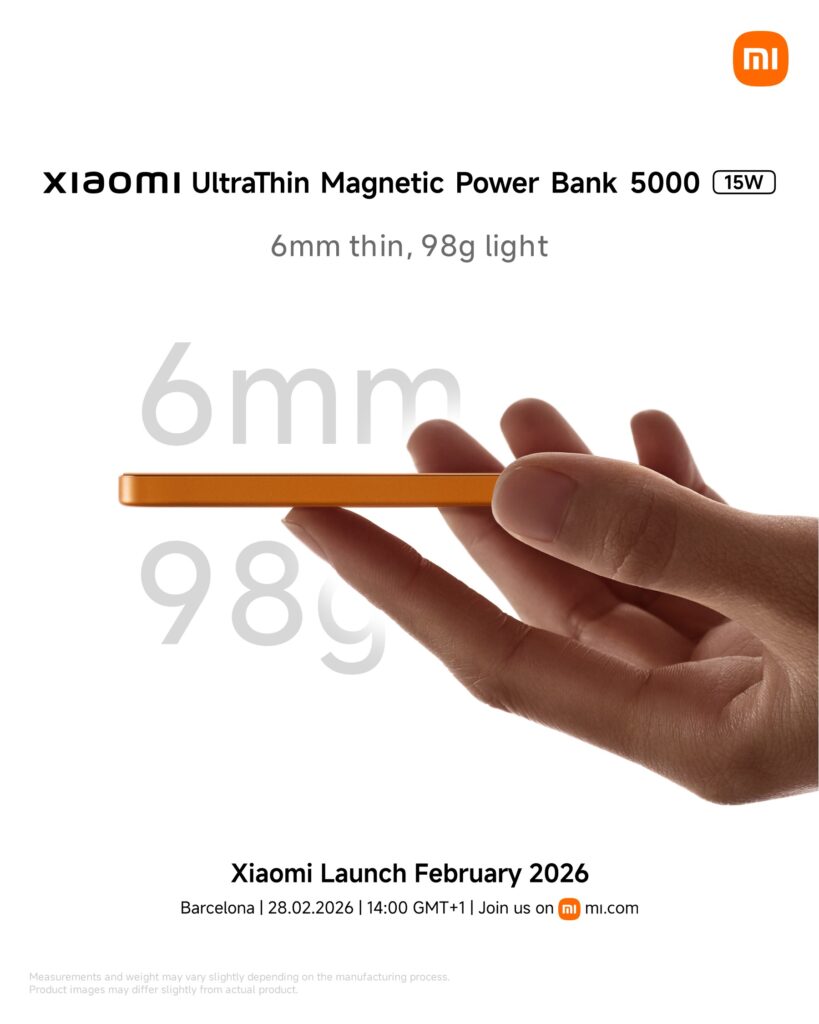
Xiaomi will launch its UltraThin Magnetic Power Bank 5000 15W globally at Mobile World Congress (MWC) 2026 on February 28.

The power bank has already been released in Japan, Australia, the UK, and other parts of Europe earlier this year. Xiaomi has priced it at $69.50 in Australia and £49.99 in the UK. A broader global rollout is anticipated following the launch event.

Xiaomi UltraThin Magnetic Power Bank 5000 15W

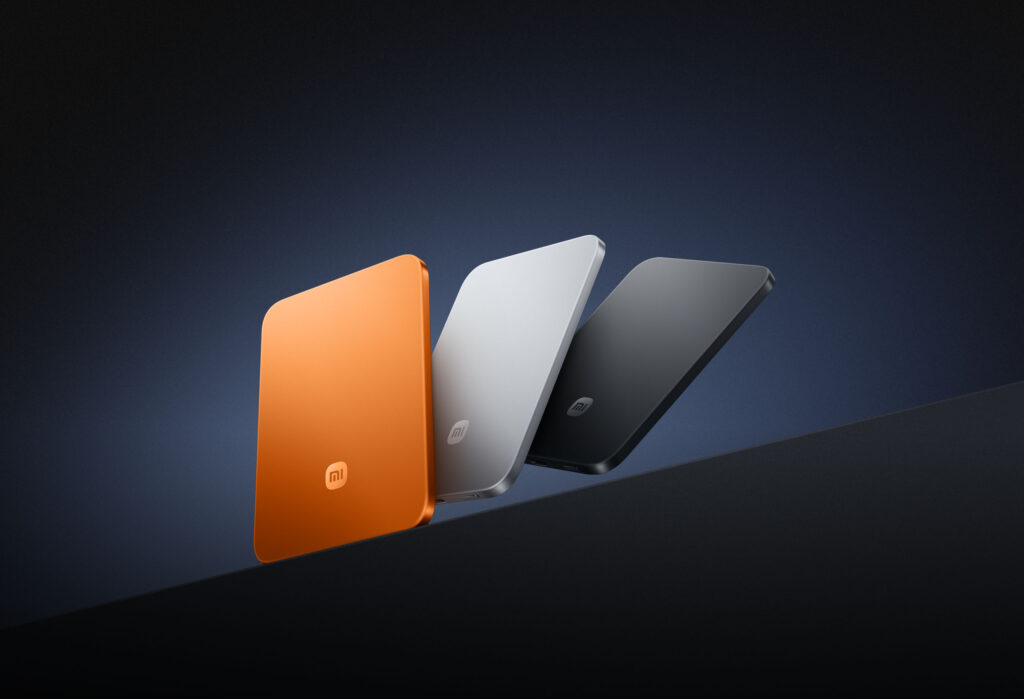
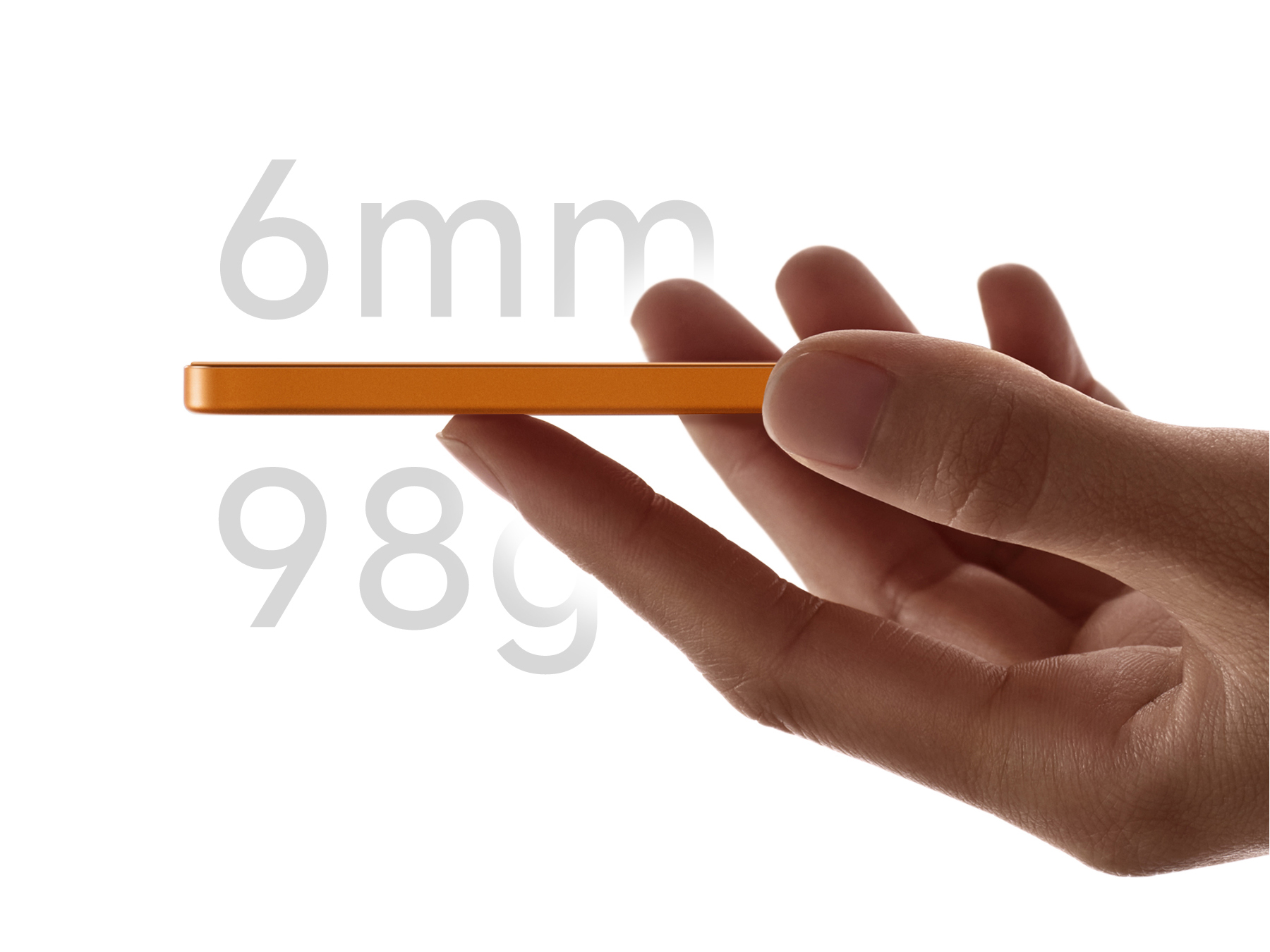
The power bank features a slim 6mm design and weighs only 98 grams. It is one of the lightest and slimmest power banks in its category. It comes in Black, Silver, and Orange. The Silver variant has been the most widely available so far, but Xiaomi has teased the Orange version for MWC. Both Black and Orange options will likely become more available after the official rollout.

Xiaomi UltraThin Magnetic Power Bank 5000 15W

In terms of specs, the power bank supports up to 15W wireless fast charging and features magnetic charging for iPhones (up to 7.5W), as well as compatibility with Xiaomi, Samsung, and Google Pixel devices. It also includes a USB-C port for up to 22.5W wired fast charging. Xiaomi has also included dual-device charging, allowing users to charge two devices simultaneously.

The power bank uses a smartphone-grade lithium-ion battery with a 5,000mAh capacity. Xiaomi designed it with safety in mind, adding ten layers of protection, including safeguards against overheating, overcharging, and short circuits. The aluminum alloy body and fire-resistant fiberglass coating ensure durability and a premium look.

The February 28 event will also include other product launches. The company will introduce the Xiaomi 17 Ultra smartphone, the Redmi Buds 8 Pro earbuds, and the Xiaomi Tag tracker. Xiaomi will also showcase new AIoT products. The event will begin at 2 PM CET in Barcelona.

For more daily updates, please visit our News Section.

Tech enthusiast? Get the latest news first! Follow our Telegram channel and subscribe to our free newsletter for your daily tech fix! ⚡

The post Xiaomi to launch its UltraThin Magnetic Power Bank 5000 15W at MWC, wider rollout likely appeared first on Gizmochina.

Unix UX-1519 NEOM Power Bank Brings 22.5W Fast Charging and Digital Display in Pocket-Size Body

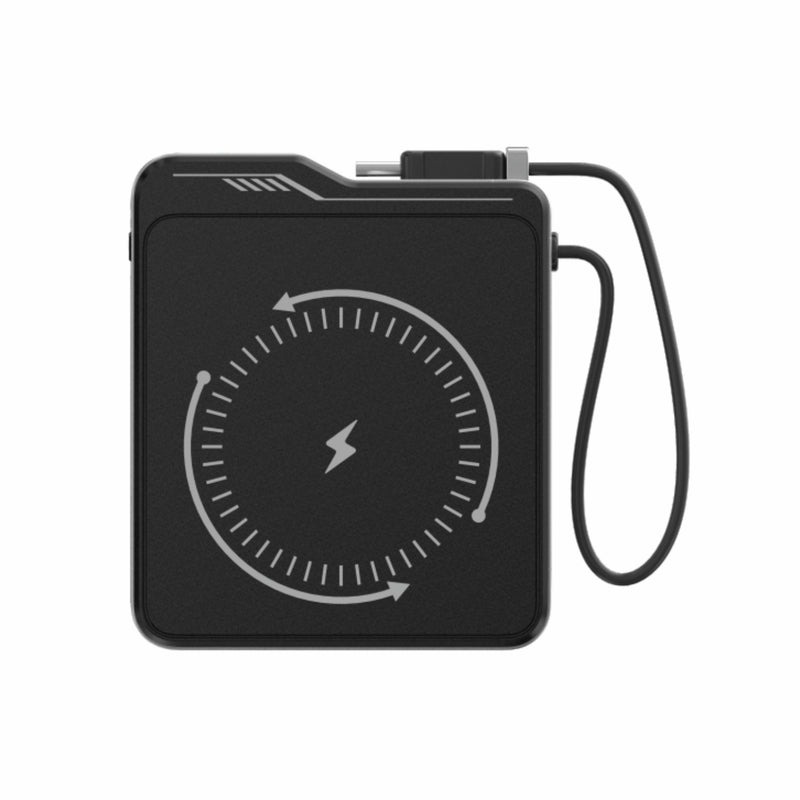
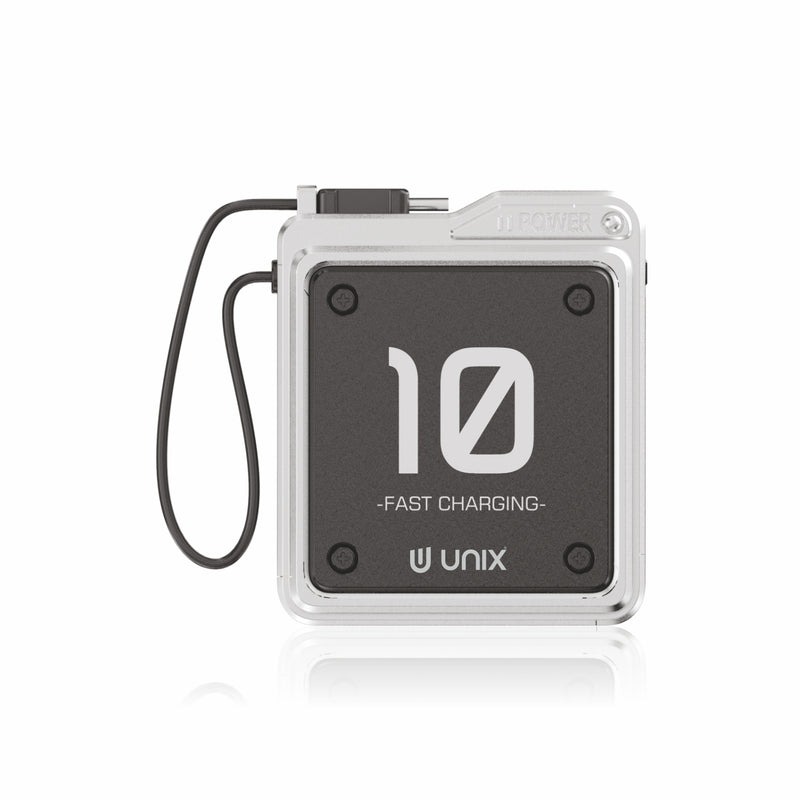
Unix has launched the UX-1519 NEOM in India, a 10,000 mAh power bank designed for users who need fast charging in a compact form. The device supports up to 22.5W Power Delivery and comes in a small square body that measures 7.5 cm by 6.5 cm, making it easy to carry in a pocket or bag.

Unix UX-1519 NEOM
Unix UX-1519 NEOM

The power bank uses a high-density lithium-polymer battery and features a retro-industrial design inspired by old mechanical generators. On the front, there is a digital display that shows real-time battery percentage and charging information, so users can easily monitor power levels.

A key feature of the UX-1519 NEOM is its built-in Type-C output cable, which also functions as a carry loop. This removes the need to carry a separate charging cable. The integrated Type-C cable supports input up to 12V/1.5A and output up to 12V/1.67A for fast charging. In addition to the built-in cable, the power bank includes a USB output port with smart power distribution, allowing two devices to be charged at the same time.

The device runs on Unix’s S-Power smart chipset, which is designed to improve charging and discharging efficiency while maintaining stable performance. It also includes multiple safety protections such as overcharge, over-discharge, over-voltage, over-current, over-temperature, short circuit, and EMI protection to ensure safe usage.

Pricing & availability

The Unix UX-1519 NEOM is priced at Rs. 1,999 and is available through Unix official channels and select retail stores across India.

For more daily updates, please visit our News Section.

Tech enthusiast? Get the latest news first! Follow our Telegram channel and subscribe to our free newsletter for your daily tech fix!

The post Unix UX-1519 NEOM Power Bank Brings 22.5W Fast Charging and Digital Display in Pocket-Size Body appeared first on Gizmochina.

Lenovo signals upcoming price increases on commercial PCs and servers

Lenovo has reportedly informed its channel partners that price increases are on the way for several commercial product lines, as rising memory costs continue to pressure hardware makers.

In a letter shared with partners, the company pointed to ongoing volatility in the DRAM and 3D NAND markets. Demand from AI infrastructure and large-scale data center deployments has tightened supply, and vendors are now adjusting pricing to keep up with higher component costs.

The changes affect both major parts of Lenovo’s business. The Intelligent Devices Group, which covers commercial PCs and client hardware, and the Infrastructure Solutions Group, responsible for servers and data center equipment, are both included.

Lenovo’s North America leadership, including channel chief Wade McFarland and president Ryan McCurdy, urged partners to move quickly if they want to secure current pricing. Orders are recommended by February 25, with distributors submitting by February 28.

There’s also a practical detail worth noting: even orders received before February 28 could face repricing if they aren’t shipped by March 31, 2026. For ISG products, quote validity windows have reportedly been shortened — 14 days for internal bids and 30 days for external quotes — and those terms may shift again depending on market conditions.

None of this is happening in isolation. Other OEMs, including Dell, HPE and Cisco, have issued similar signals in recent weeks. The AI-driven surge in demand hasn’t just affected high-end GPUs; it’s putting strain on memory supply more broadly, which inevitably flows down to enterprise hardware pricing.

For businesses planning refresh cycles or infrastructure upgrades, timing may matter more than usual this quarter. While Lenovo’s communication to partners appears straightforward, it reflects a wider pattern: component costs remain unstable, and vendors are adjusting accordingly.

Whether this turns into a longer-term pricing trend will likely depend on how memory supply stabilizes in the months ahead.

Stay ahead in tech! Join our Telegram community and sign up for our daily newsletter of top stories!

For more daily updates, please visit our News Section.

(Sources: 1, 2)

The post Lenovo signals upcoming price increases on commercial PCs and servers appeared first on Gizmochina.

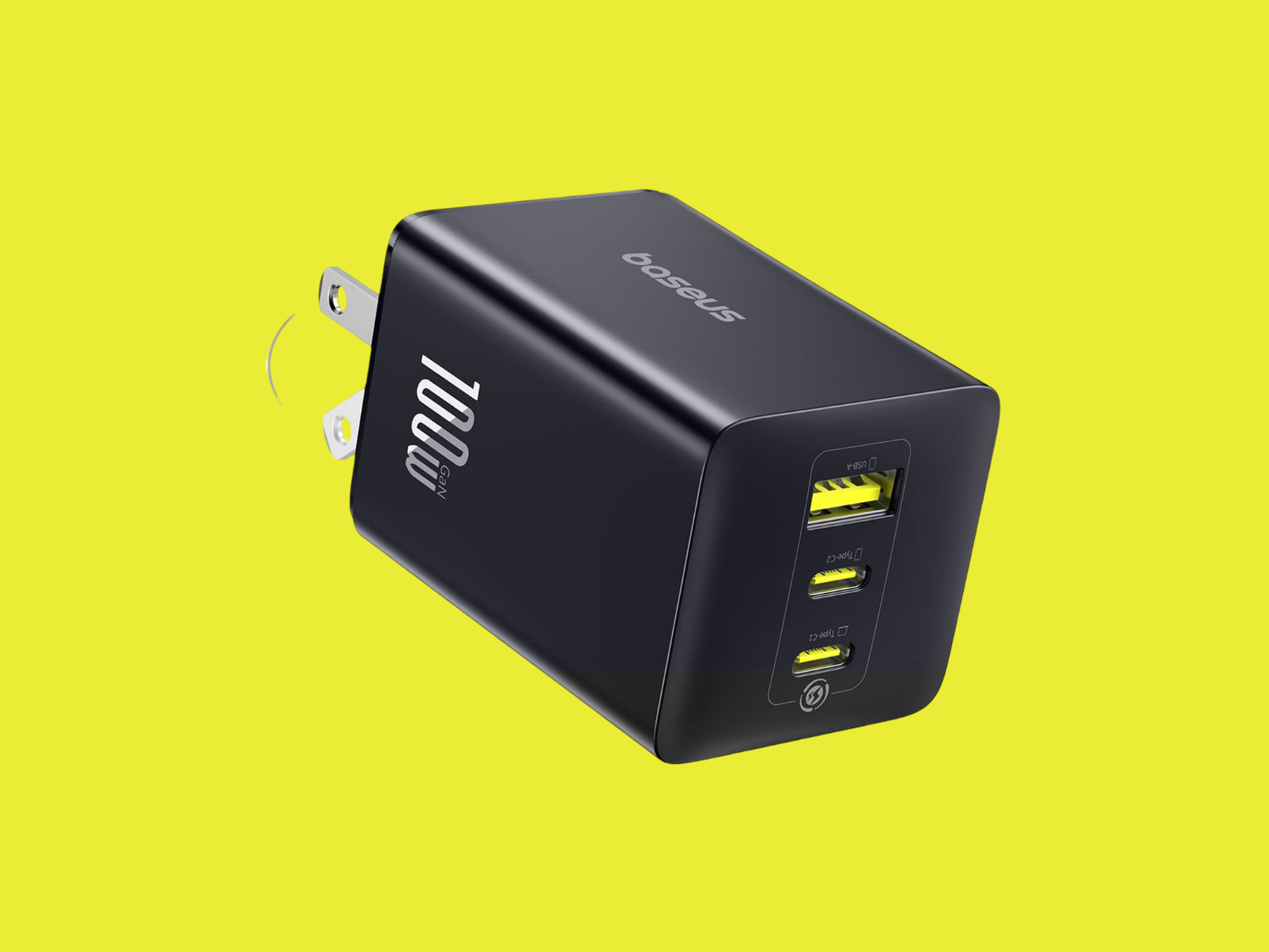
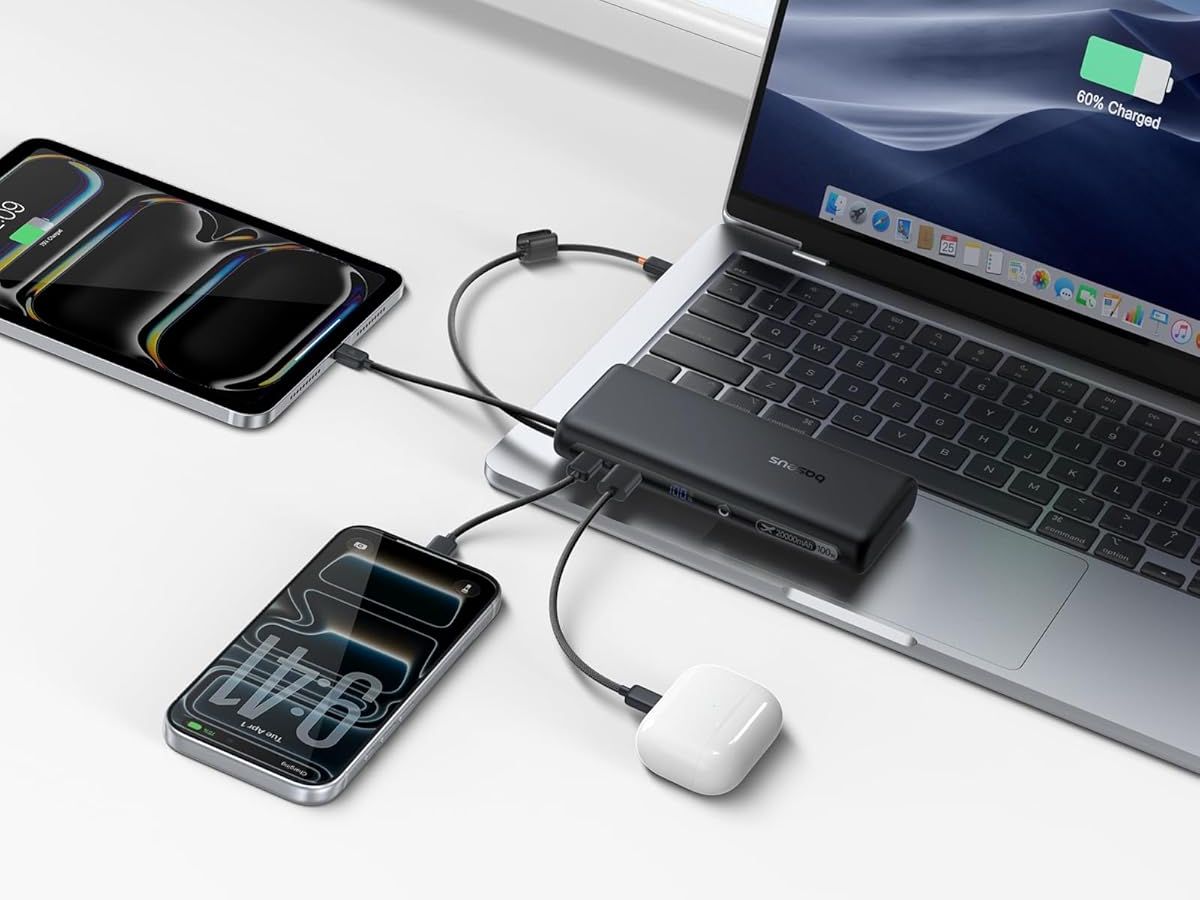
Baseus 100W 20,000mAh power bank heads to Europe with dual built-in USB-C cables

Baseus is expanding the availability of its EnerFill FC41 power bank, bringing the 20,000mAh model with 100W output to European markets. The accessory has already been on sale in China and the US, and it’s now starting to appear on Amazon listings in countries including Germany and Spain.

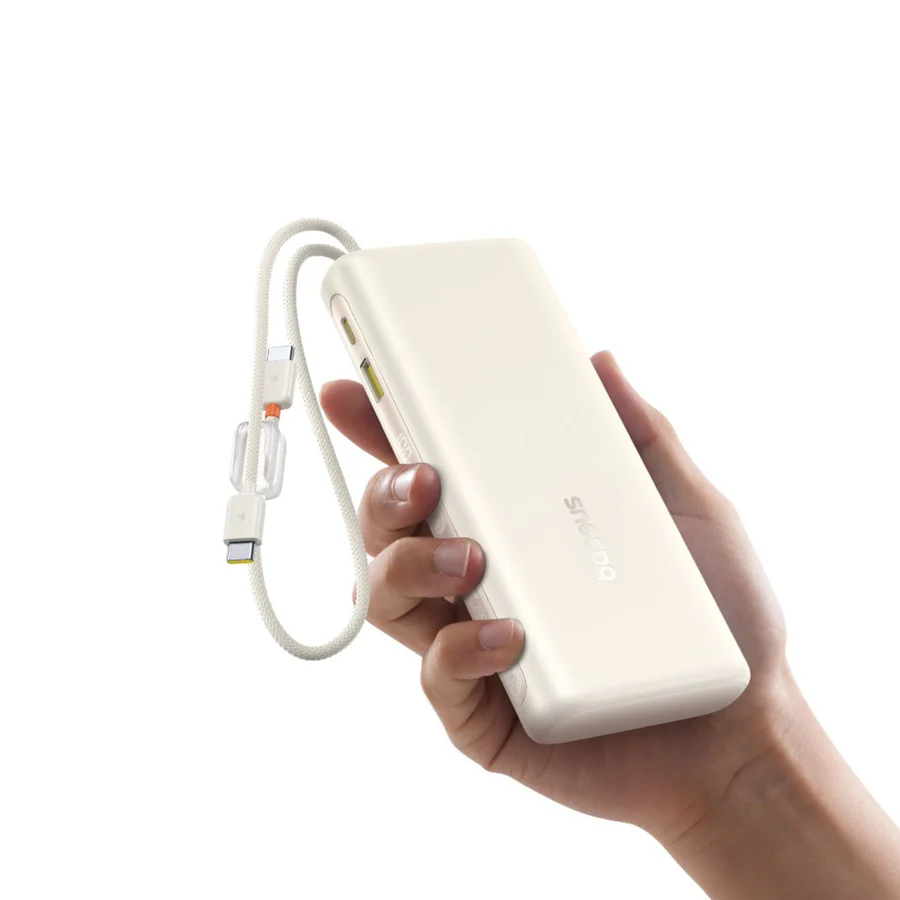
One of the more practical aspects of the EnerFill FC41 is its design. The unit includes two built-in braided USB-C cables that tuck neatly into the body when not in use. Each cable features a small buckle-style fastening to keep things tidy, which means you don’t necessarily need to carry separate charging cables in your bag.

In addition to the integrated cables, the power bank includes one extra USB-C port and one USB-A port. That allows up to four devices to charge at the same time. Each USB-C output supports up to 100W under the right conditions, which is enough for most smartphones. When multiple devices are connected, the power is distributed differently, with the main USB-C delivering up to 65W and the remaining outputs sharing the rest.

With a 20,000mAh capacity, Baseus claims the unit can recharge a modern flagship phone several times over. A small digital display on the front shows the remaining battery percentage, replacing the simpler LED indicators found on many power banks.

Recharging the unit itself is handled through a 65W USB-C input, with a full refill taking around two hours. The EnerFill FC41 measures roughly 152mm tall and weighs about 430 grams, so while it isn’t ultra-light, it remains portable enough for travel and carry-on use.

Pricing and availability

Pricing in Europe appears to be set at €89.99, although listings currently show the product as temporarily out of stock. In the US, the official retail price is $79.99, though discounts are common.

Higher-wattage power banks like this are becoming increasingly common. The EnerFill FC41 doesn’t reinvent the category, but the built-in cables and strong output ratings could make it a practical option.

Don’t miss a thing! Join our Telegram community for instant updates and grab our free daily newsletter for the best tech stories!

For more daily updates, please visit our News Section.

The post Baseus 100W 20,000mAh power bank heads to Europe with dual built-in USB-C cables appeared first on Gizmochina.

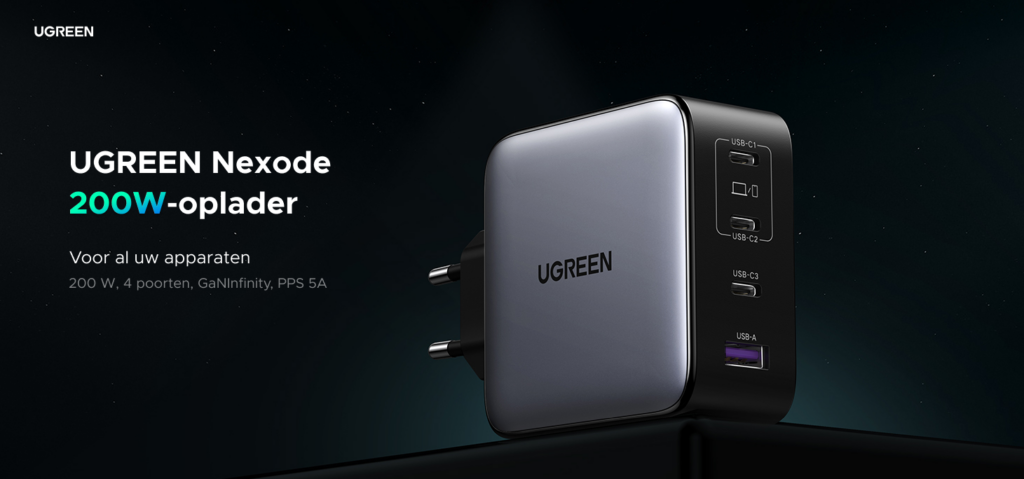
Ugreen Nexode 200W Charger (2026) Launches in Europe With 140W PD 3.1 and GaNInfinity Upgrade

Ugreen Nexode 200W Charger

Ugreen has released an updated version of its Nexode 200W charger in Europe. The original model launched in 2025. The company confirmed that this new version includes internal optimizations.

Ugreen Nexode 200W Charger

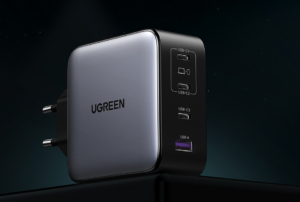
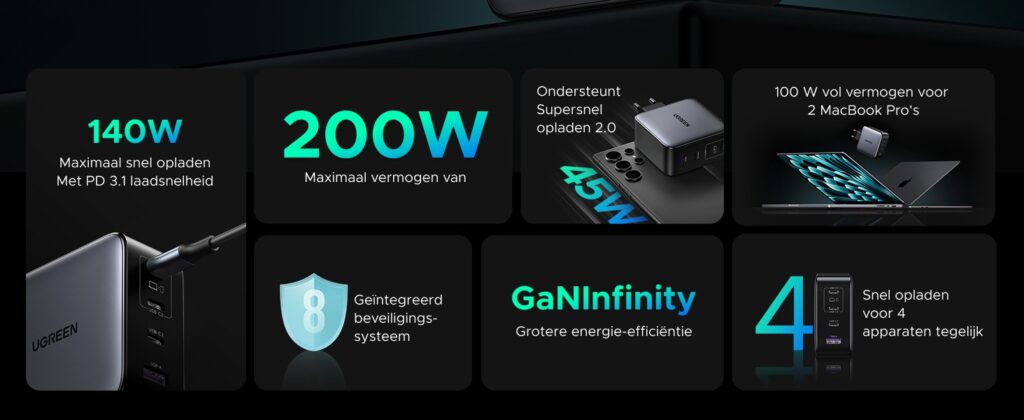
The charger keeps the same four-port layout with three USB-C ports and one USB-A port. The first USB-C port supports up to 140W output with PD 3.1. The second USB-C port delivers up to 100W, and the third USB-C port provides up to 30W. The USB-A port offers up to 22.5W. Total combined output is 200W, which allows two laptops to charge at up to 100W each at the same time.

Ugreen states that the 140W USB-C port can charge a 16-inch MacBook Pro to about 50 percent in under 30 minutes. The charger also supports PPS and Super Fast Charging 2.0 for compatible smartphones and tablets. It is designed to work with devices from Apple, Dell, HP, Lenovo, Samsung, and Nintendo, along with many other USB-powered products.

The device uses GaNInfinity technology to improve efficiency and reduce heat while maintaining high power output. It includes an eight-layer protection system with safeguards against overvoltage, overcurrent, short circuits, overheating, interference, undervoltage, and flame risks. The housing is built with flame-resistant materials.

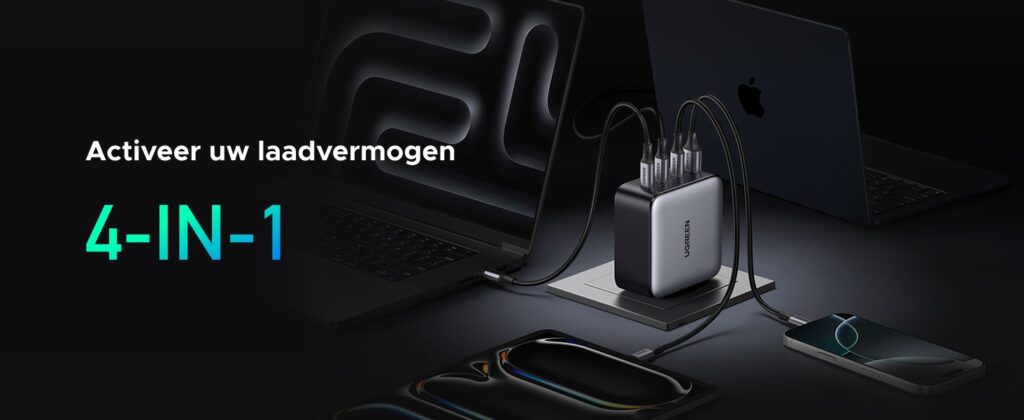
Despite the high output, the charger remains compact at 76 × 76 × 36 mm. The 4-in-1 design allows users to charge a phone, tablet, and two laptops from a single adapter, which can replace multiple chargers when traveling or working at a desk.

The upgraded Nexode 200W charger is now available in several European markets. Pricing starts at €79.99 in Germany and the Netherlands. In Spain and France, it is listed closer to €99.99.

(via: Reddit & Notebookcheck)

The post Ugreen Nexode 200W Charger (2026) Launches in Europe With 140W PD 3.1 and GaNInfinity Upgrade appeared first on Gizmochina.

Xiaomi Tag tracker is launching globally on February 28 at MWC 2026

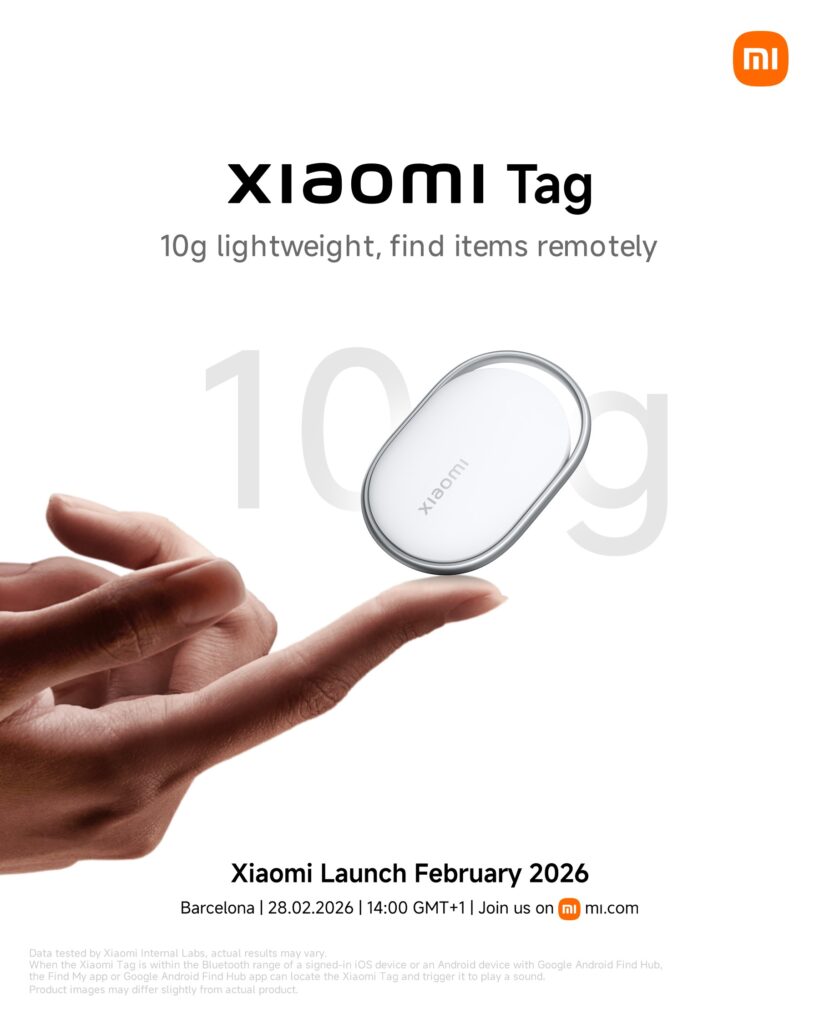
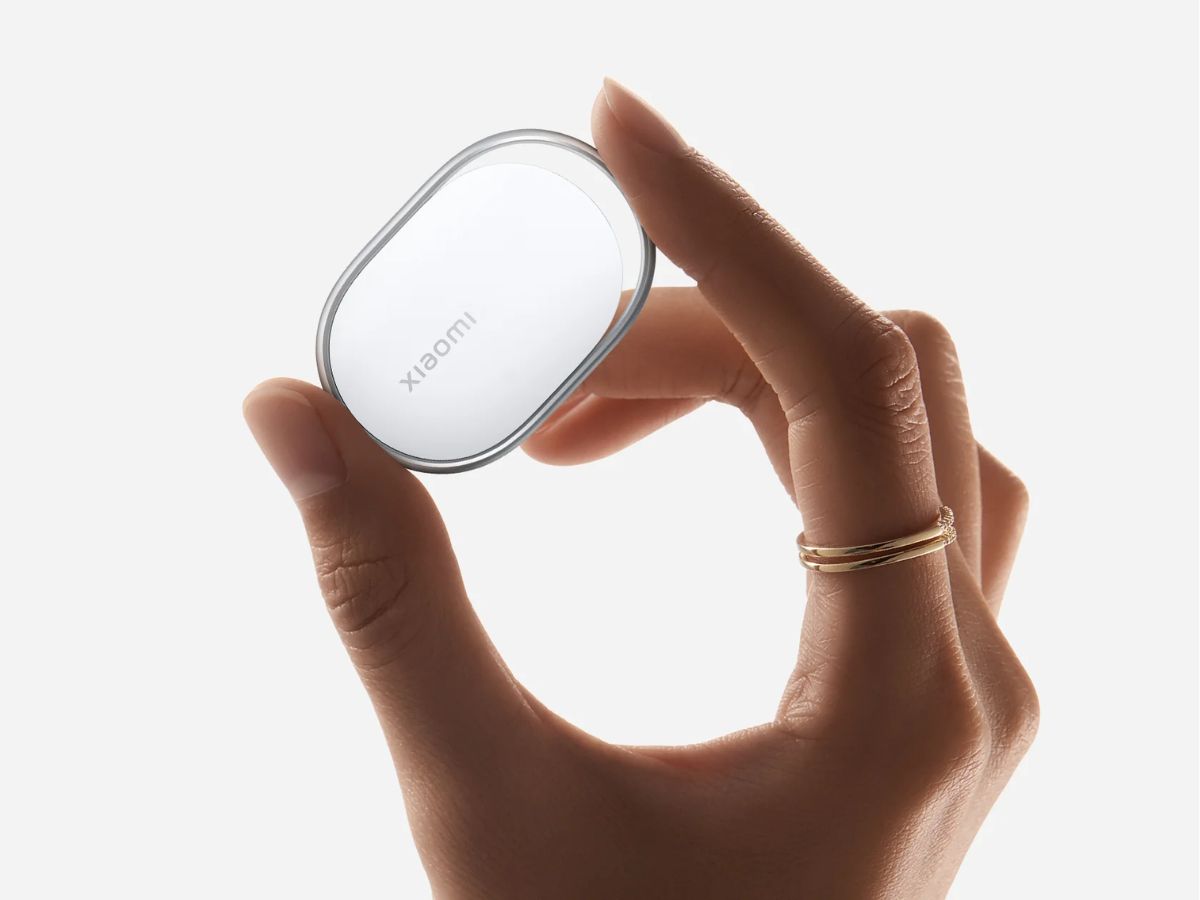
Xiaomi Tag

Xiaomi has officially announced the global launch of its new Bluetooth tracker, the Xiaomi Tag. The company will debut the device on February 28, 2026, during its MWC event in Barcelona.

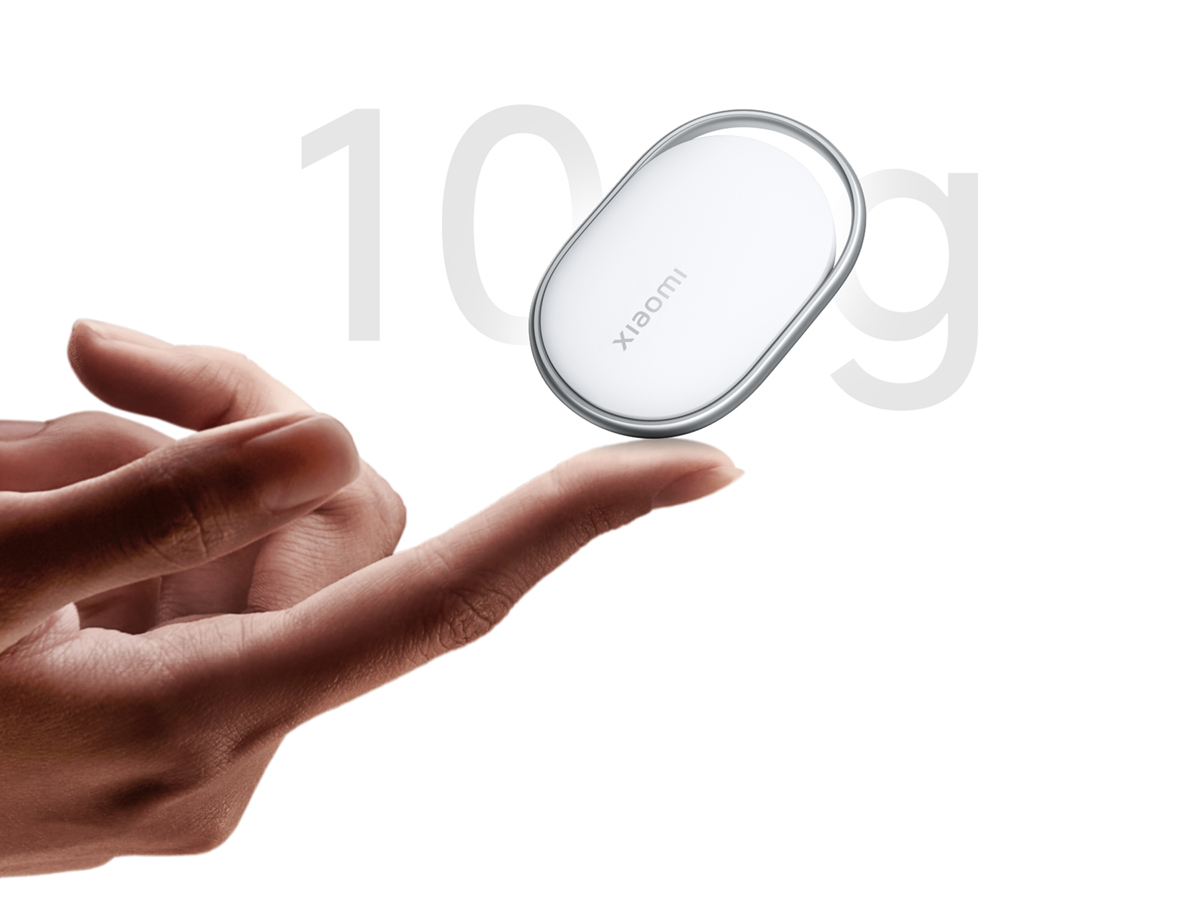
The Xiaomi Tag weighs 10 grams and measures 7.2mm thick. The device uses a CR2032 coin battery, which provides an estimated battery life of one year. Xiaomi has designed the tracker to help users quickly locate lost items, including keys, wallets, and bags.

Xiaomi Tag

The tracker supports both Apple’s Find My network and Google’s Find Hub ecosystem, making it compatible with both iOS and Android devices. It uses Bluetooth 5.4 and NFC for location tracking but does not include ultra-wideband (UWB) technology. However, a UWB-enabled version is reportedly in development and might launch in the future.

The February 28 event will also feature other product launches. Xiaomi plans to unveil the Xiaomi 17 Ultra smartphone, the Redmi Buds 8 Pro earbuds, and the Xiaomi Ultra Slim Magnetic Power Bank. The company will also showcase new AIoT products during the event, which begins at 2 PM CET in Barcelona.

Xiaomi Tag

The Xiaomi Tag has already appeared on several European retailer websites ahead of its official launch. As per the leaked listings, the device is priced at €17.99 ($21), and if you buy a pack of four, it would cost €59.99 ($70).

Xiaomi aims to position the product for budget-conscious users who want reliable tracking without paying the higher prices of competitors like Apple’s AirTag, Moto Tag, or Samsung’s Galaxy SmartTag.

For more daily updates, please visit our News Section.

Stay ahead in tech! Join our Telegram community and sign up for our daily newsletter of top stories! 💡

The post Xiaomi Tag tracker is launching globally on February 28 at MWC 2026 appeared first on Gizmochina.

OpenAI may launch new $100/month ChatGPT Pro Lite subscription

chatgpt

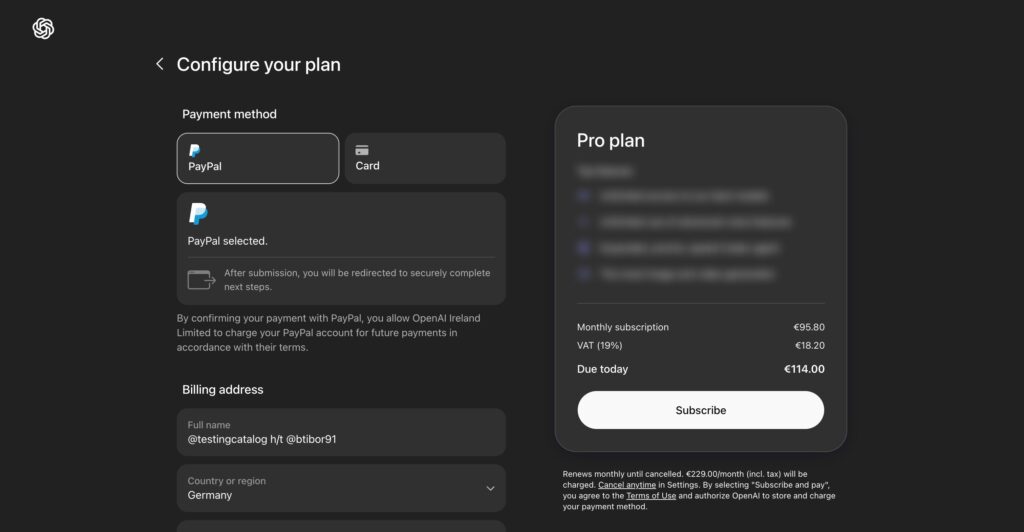
OpenAI is reportedly preparing to launch a new subscription tier called ChatGPT Pro Lite, priced at $100 per month. Developer Tibor Blaho discovered references to the plan in the frontend code of the ChatGPT web app. OpenAI has not confirmed the plan or shared details about its release date, but the discovery suggests the company is working to address a pricing gap in its lineup.

chatgpt

OpenAI currently offers several subscription plans, including Free, Go ($8/month), Plus ($20/month), Pro ($200/month), Team, Business, and Enterprise options. Many users have criticized the large jump from Plus to Pro, leaving power users without a middle-ground option. The Pro Lite plan could fill this gap by targeting freelancers, researchers, and developers who require higher usage quotas but cannot justify Pro’s $200 price tag.

Chatgpt Pro Lite

The new plan is expected to provide more advanced features than Plus but fewer capabilities than Pro. Code references suggest Pro Lite could offer three to five times the deep reasoning model usage quota of the Plus plan. Additionally, it may be designed to accommodate Codex usage.

This potential move comes as OpenAI navigates a challenging 2026. Despite $20 billion in revenue, the company faces a projected $14 billion annual loss due to ballooning compute costs, prompting a desperate search for a $100 billion funding lifeline.

Meanwhile, competition is heating up. The Gemini 3 now commands over 20% of the market thanks to Android integration, and Claude 4 has overtaken OpenAI in enterprise spending. User backlash over the abrupt retirement of the GPT-4o model has only added to the turbulence.

Pro Lite could be a game-changer, offering a more affordable option for power users while positioning OpenAI competitively against rivals like Google, which lacks a comparable mid-tier offering. Whether this will be enough to stabilize OpenAI remains to be seen.

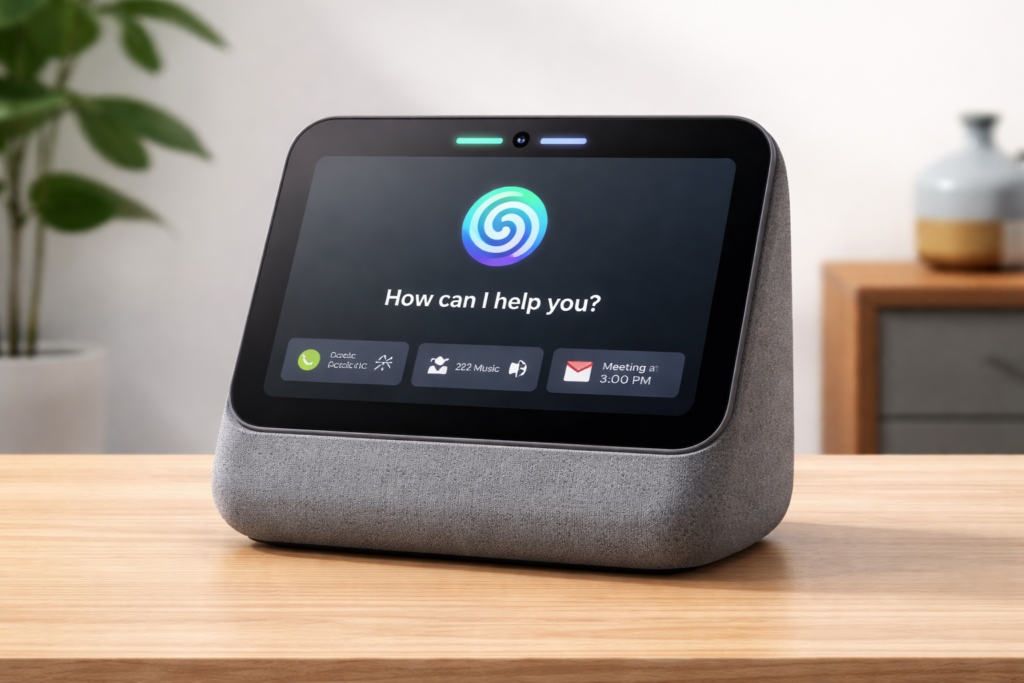
In related news, OpenAI may also launch a ChatGPT-powered smart speaker equipped with a camera.

For more daily updates, please visit our News Section.

Stay ahead in tech! Join our Telegram community and sign up for our daily newsletter of top stories! 💡

(Source, Via)

The post OpenAI may launch new $100/month ChatGPT Pro Lite subscription appeared first on Gizmochina.

Xiaomi Pad 8 India Launch Confirmed for February 28 With Snapdragon 8s Gen 4 and 9200mAh battery

Xiaomi Pad 8

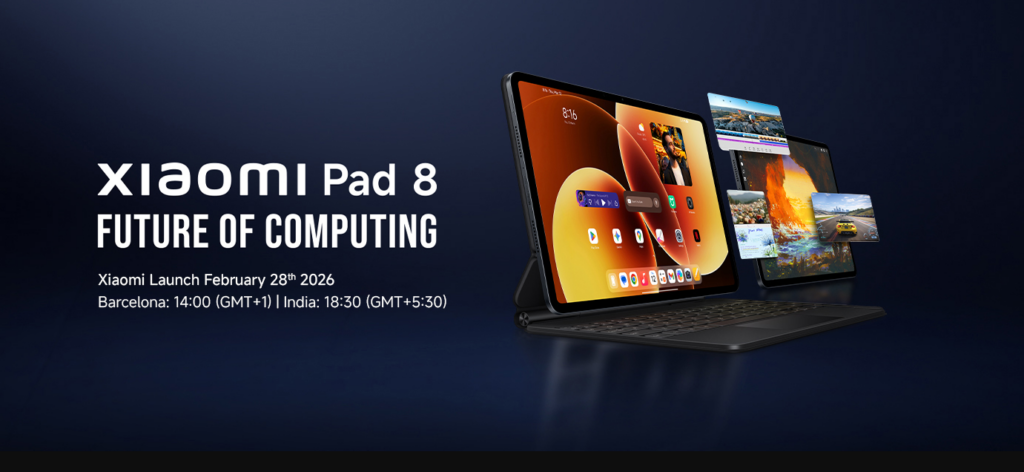
Xiaomi has confirmed that the Xiaomi Pad 8 will launch in India on February 28, 2026, at 6:30 PM IST. The company shared the announcement through its official social media channels, indicating that the tablet’s India debut is just days away. More details, including pricing and availability, are expected to be revealed during the launch event.

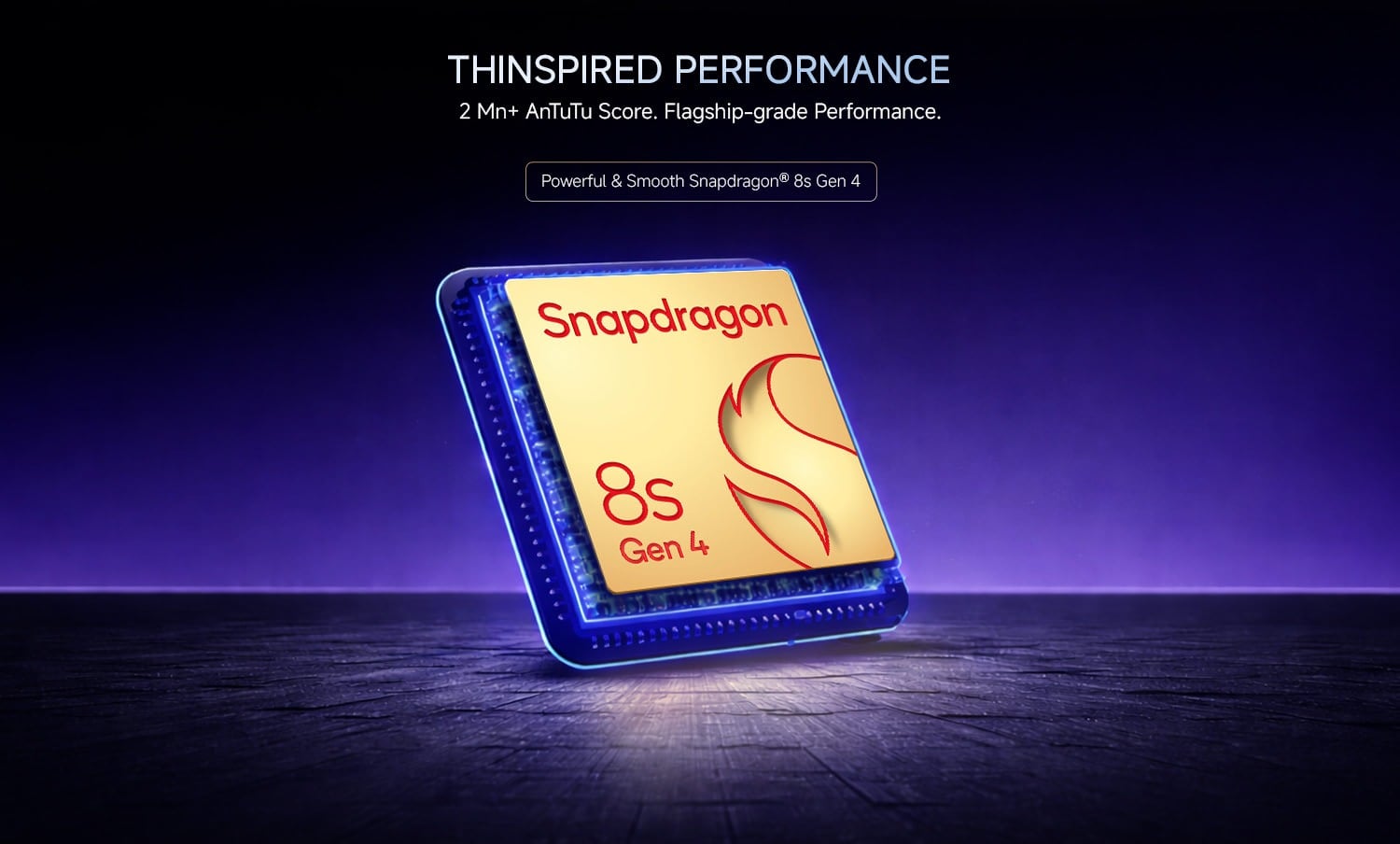
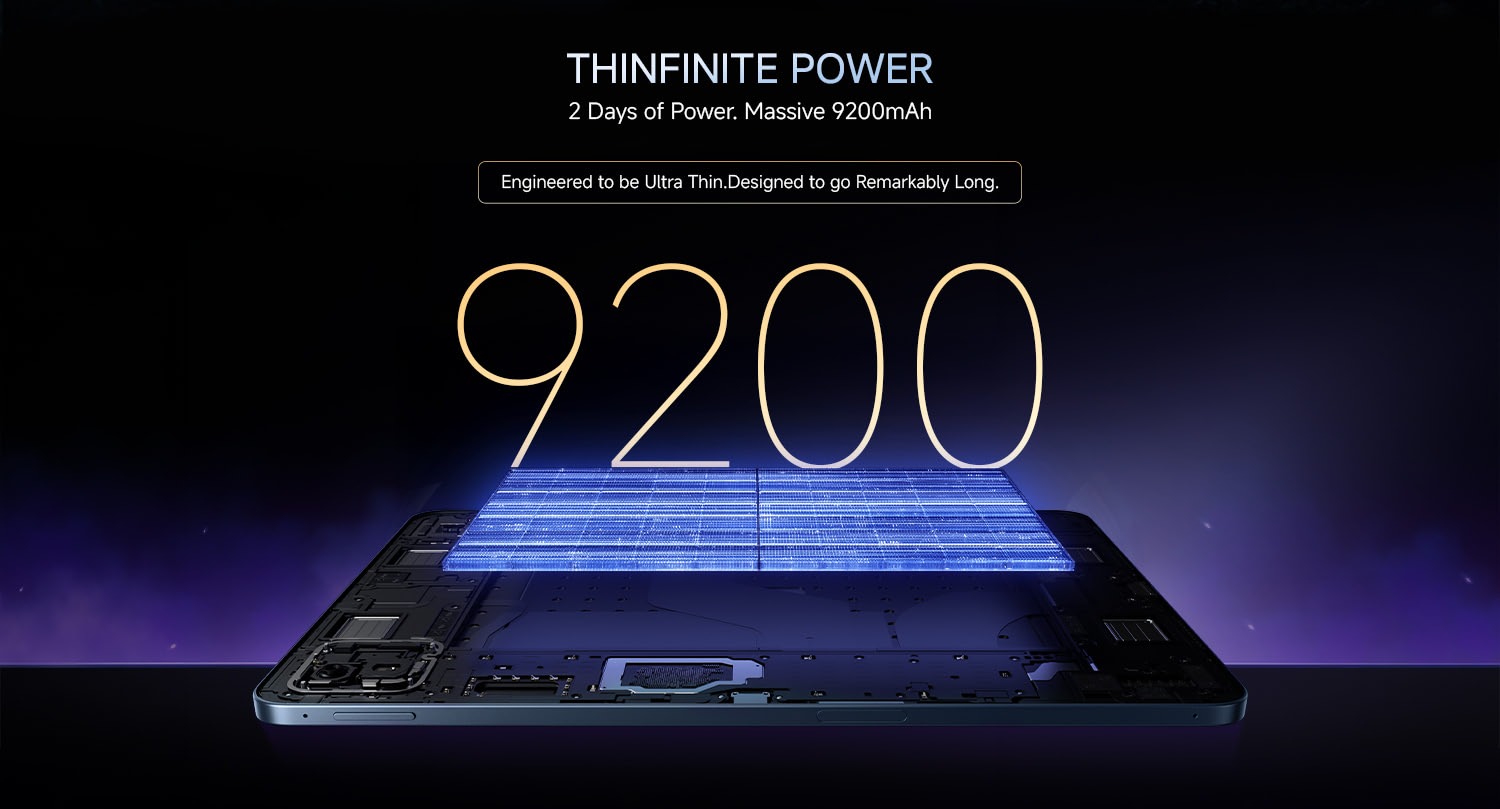
An Amazon landing page for the tablet has gone live, confirming several key specifications. The listing shows that the device will come with a 9,200mAh battery and will be powered by the Snapdragon 8s Gen 4 processor. This chipset was introduced in October 2024 and is aimed at premium sub-flagship devices. In terms of performance, it is positioned above the Snapdragon 8 Gen 3 but below Qualcomm’s 2024 flagship processor, the Snapdragon 8 Elite.

Xiaomi Pad 8
Xiaomi Pad 8
Xiaomi Pad 8

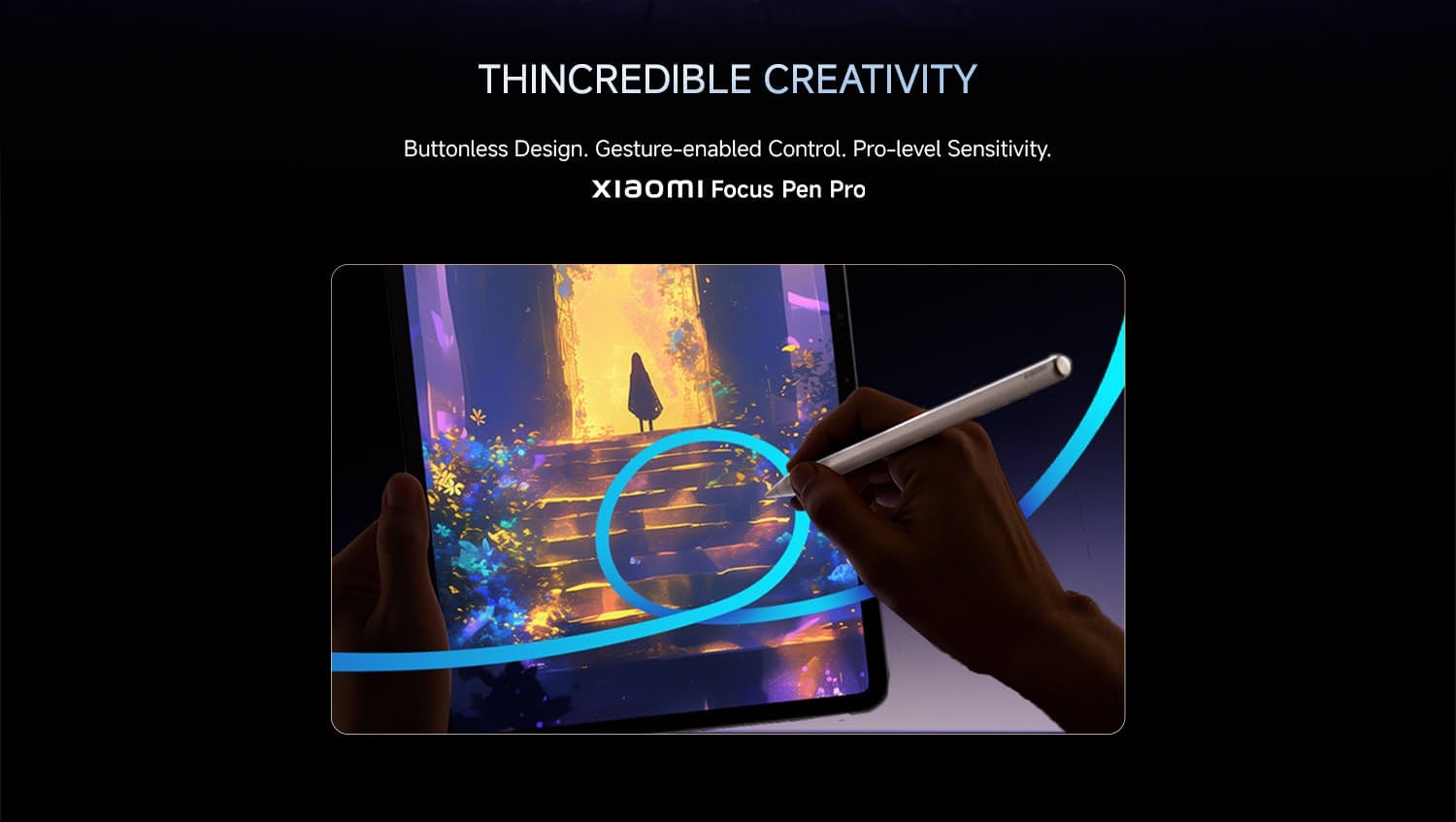
The page also confirms support for Xiaomi’s Focus Pen Pro stylus. Other specifications have not yet been confirmed. However, the details revealed so far match those of the Xiaomi Pad 8 Chinese variant.

Xiaomi Pad 8 specs (Chinese variant)

The Xiaomi Pad 8 has already debuted in China, and the same specifications are expected for the Indian variant. The tablet features an 11.2-inch display with a 3.2K resolution and a 144Hz refresh rate. Xiaomi states that the panel delivers 345 pixels per inch, up to 800 nits peak brightness, full DC dimming, and TÜV Rheinland triple eye protection certification.

Xiaomi Pad 8
Xiaomi Pad 8

It is powered by the Snapdragon 8s Gen 4 chipset and runs HyperOS 3 based on Android 16. The processor positions the tablet in the premium performance category, suitable for gaming, productivity, and multitasking. Audio is supported by a quad-speaker system with Dolby Atmos.

For connectivity, the device includes Wi-Fi 7, Bluetooth 5.4, and a USB Type-C port. A side-mounted fingerprint sensor is also integrated for biometric security.

The tablet packs a 9,200mAh battery with support for 45W fast charging. Xiaomi lists the thickness at 5.75mm and the weight at 485 grams, making it relatively slim and lightweight for its class.

Additional details such as storage configurations, accessories, and official India pricing will be announced at the February 28 launch event. Availability timelines are also expected to be clarified alongside the announcement.

For more daily updates, please visit our News Section.

Tech enthusiast? Get the latest news first! Follow our Telegram channel and subscribe to our free newsletter for your daily tech fix!

(Source)

The post Xiaomi Pad 8 India Launch Confirmed for February 28 With Snapdragon 8s Gen 4 and 9200mAh battery appeared first on Gizmochina.

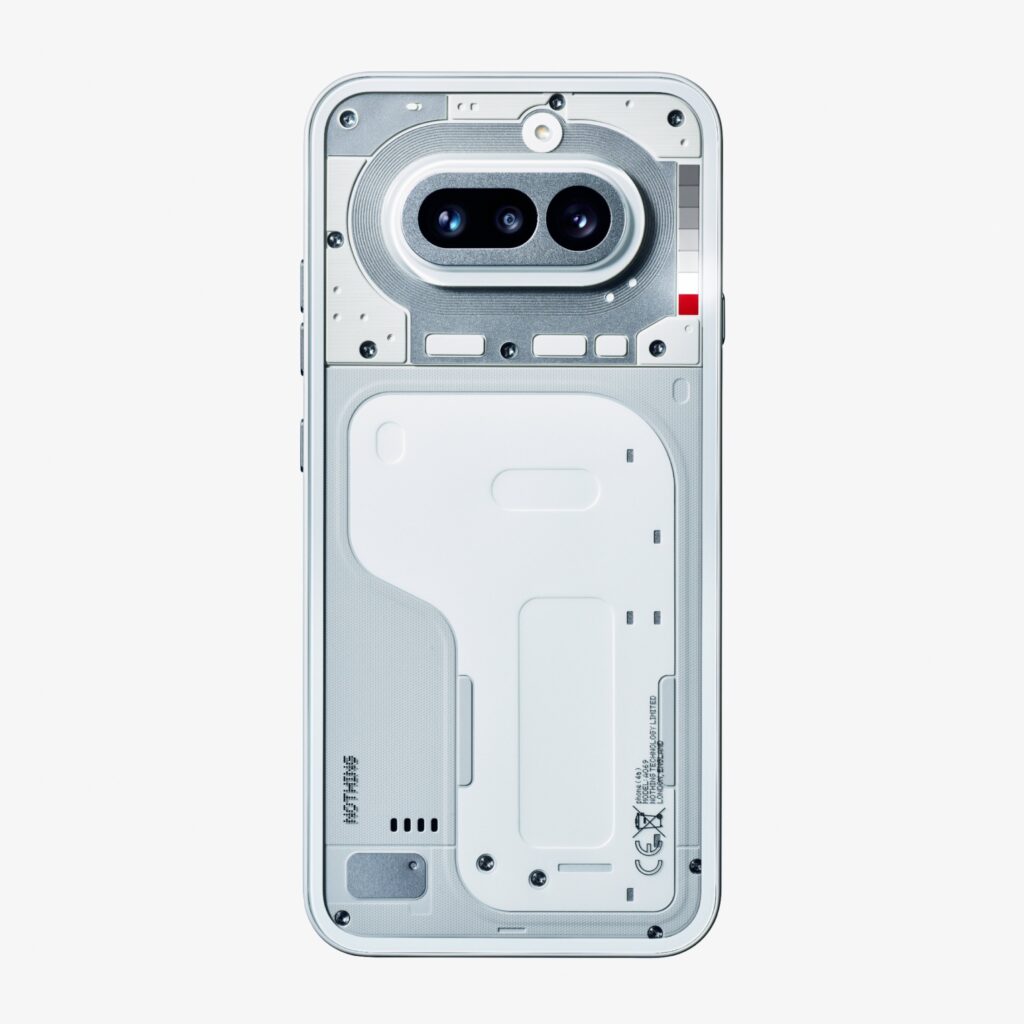
Nothing Phone (4a) design revealed via official render, flaunts new Glyph Bar

Nothing Phone (4a)

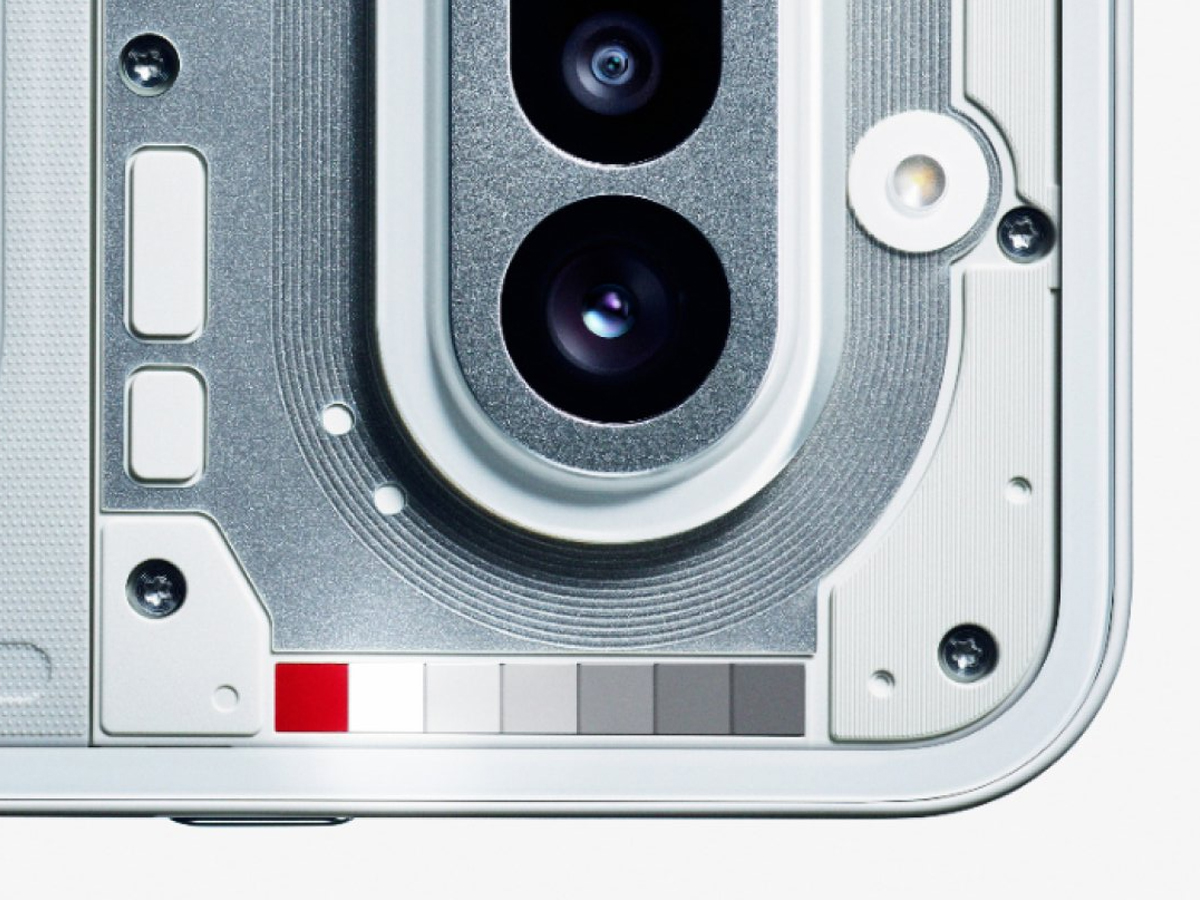
Nothing recently confirmed that it will unveil the Nothing Phone (4a) series of midrange phones globally on March 5. Ahead of the launch, the brand has gradually confirmed some of the series’ key details. Today, it rolled out a new image to showcase the Phone (4a)’s rear design for the first time.

Nothing Phone (4a) official image released

Nothing Phone (4a)
Nothing Phone (4a)

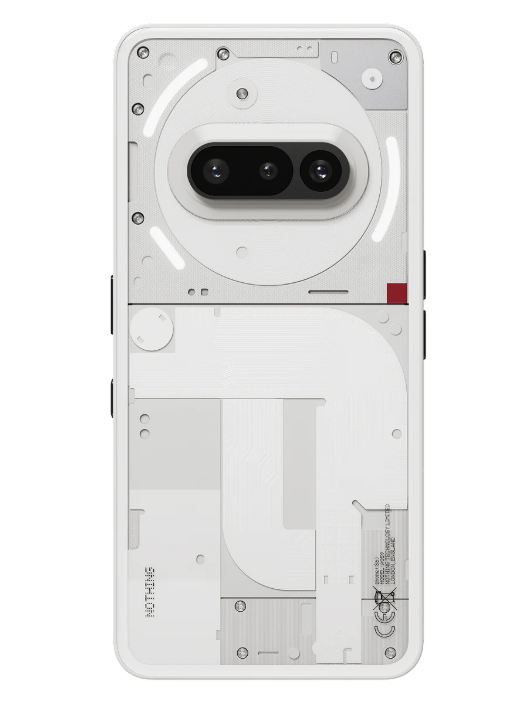
The Nothing Phone (4a) retains the brand’s signature semi-transparent aesthetic, showcasing a layered, industrial design with visible screws and geometric detailing. The dual-camera module sits neatly within an oval housing at the top, blending into the clean, minimalist back panel.

On the extreme right, the new Glyph Bar can be seen as a redesigned LED strip system. It uses individually controllable mini-LEDs to deliver brighter, more precise light notifications for calls, alerts, and app activity, while reducing visual clutter compared to earlier Glyph interfaces. The right edge of the phone has volume buttons and a power key, and the left spine features the Essential Key.

Rumors suggest that the Nothing Phone (4a) Pro may not feature this Glyph Bar. Instead, it may include a Glyph Matrix similar to the Phone (3) from last year.

Nothing Phone (4a) specifications (rumored)

According to leaks, the Nothing Phone (4a) is expected to feature a 6.78-inch AMOLED display with a 120Hz refresh rate, offering smooth scrolling and an immersive viewing experience. The device is rumored to be powered by the Snapdragon 7s Gen 4 chip, paired with 8GB / 12GB of RAM and up to 256GB of UFS 3.1 storage. It is likely to run on Nothing OS 4 based on Android 16, bringing the brand’s clean and minimal software experience.

In terms of cameras, the Phone (4a) is tipped to sport a 50MP main rear camera along with a 32MP front-facing shooter for selfies and video calls. While full camera details remain under wraps, the device is expected to focus on balanced photography performance. At present, there is no information about its battery and charging capabilities. The handset may arrive in multiple color options, including black, white, pink, and blue.

For more daily updates, please visit our News Section.

Stay ahead in tech! Join our Telegram community and sign up for our daily newsletter of top stories.

The post Nothing Phone (4a) design revealed via official render, flaunts new Glyph Bar appeared first on Gizmochina.

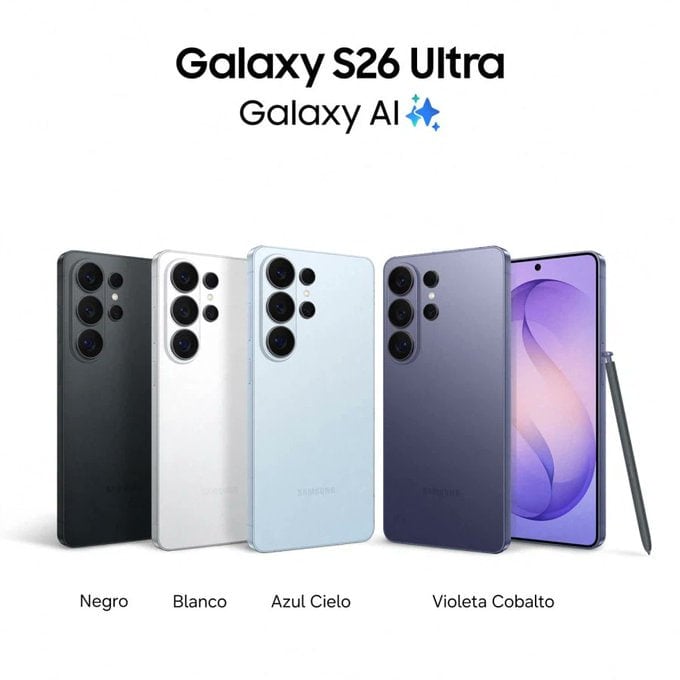
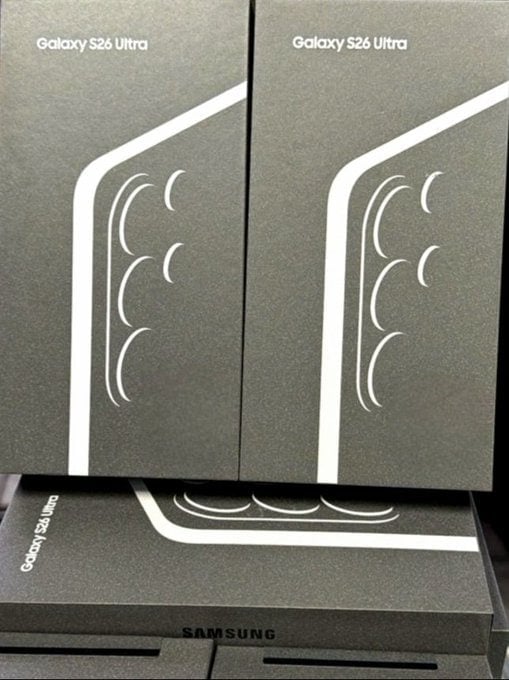
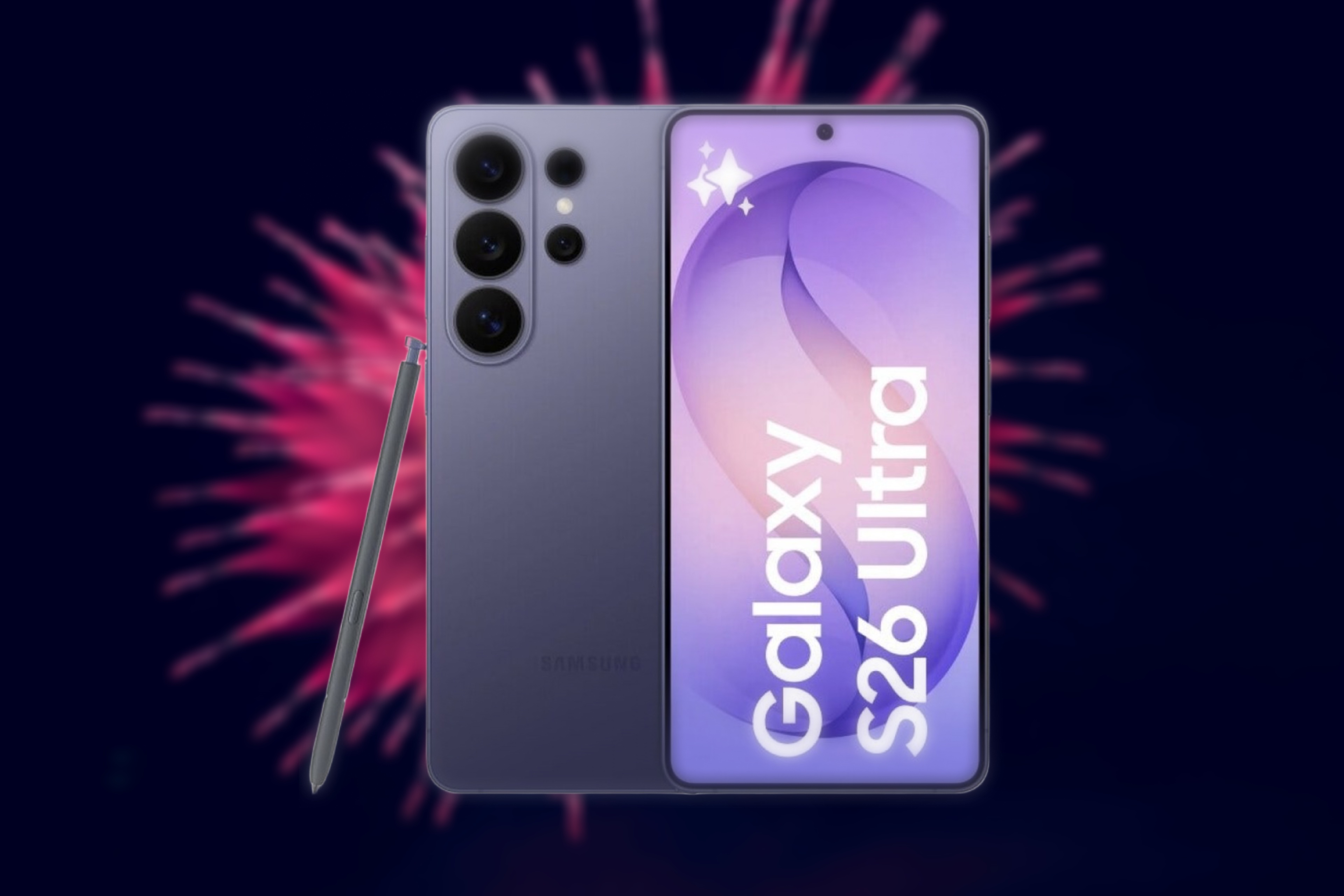
Galaxy S26 Ultra: every major improvement outlined in latest leak

Samsung’s next Unpacked event is scheduled for February 25, and as usual, most of the Galaxy S26 Ultra’s key details have already made their way online. From what we’re seeing so far, this looks less like a dramatic redesign and more like a focused refinement of last year’s S25 Ultra.

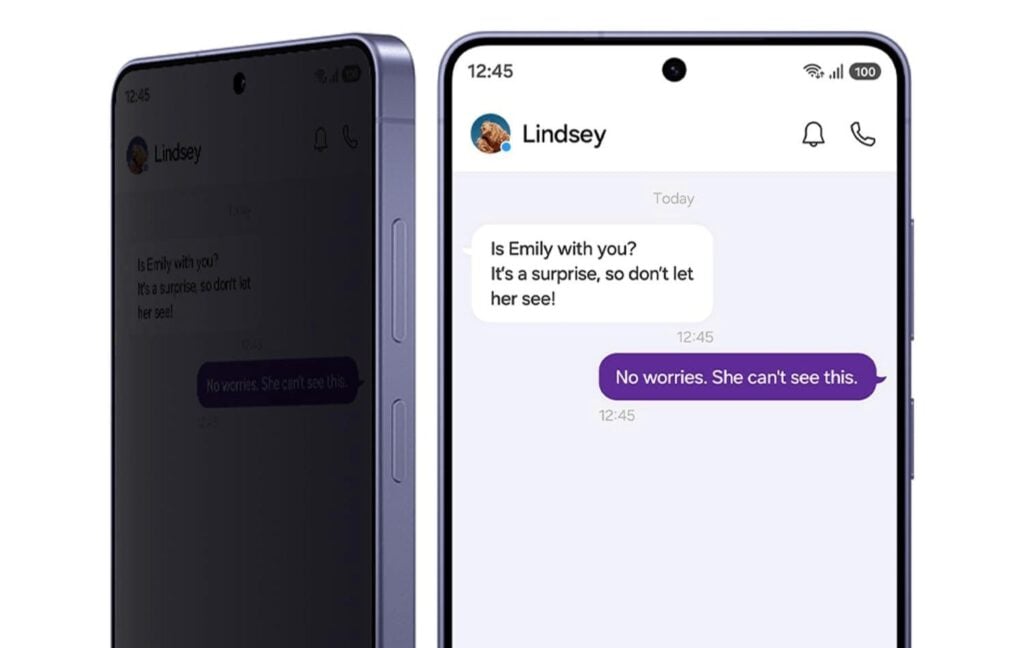
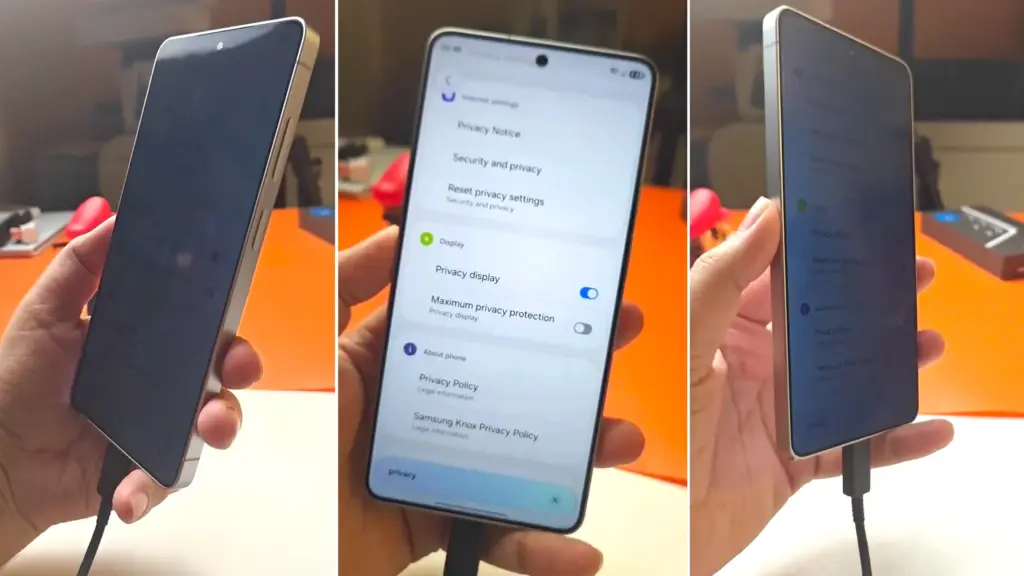
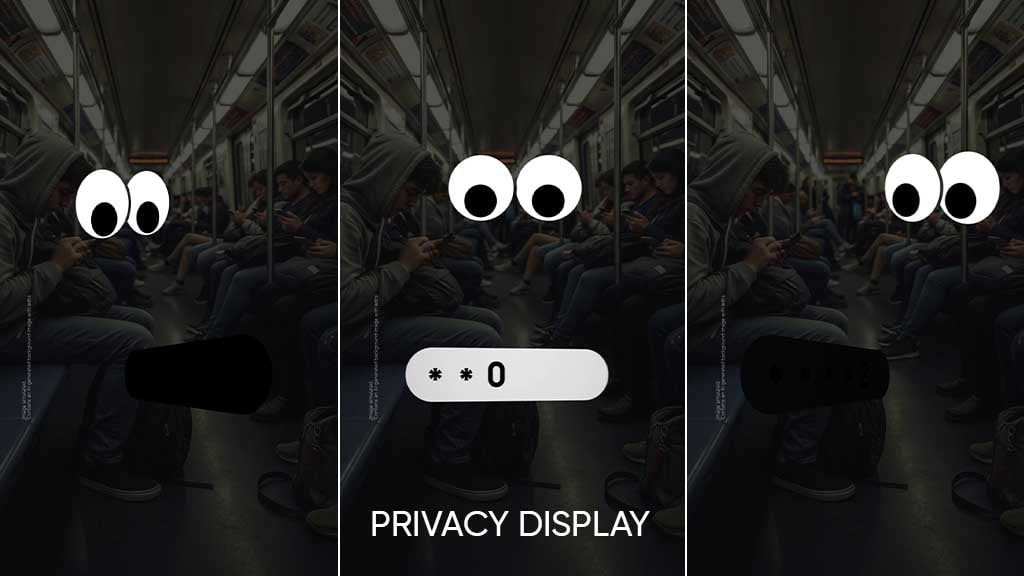
One of the more interesting additions is something Samsung calls Privacy Display. The feature narrows the viewing angles directly through a dedicated hardware layer on top of the pixels. When enabled, the display remains clear from straight on but darkens noticeably from the sides. In practice, it could be useful for reading messages or checking banking apps in public without worrying about wandering eyes.

Samsung is also upgrading the OLED panel itself. The S26 Ultra is said to use an M14 10-bit OLED panel, replacing the M13 generation used in the S25 Ultra. That should translate to better color depth and smoother gradients, while the screen size (6.9 inches), QHD+ resolution, and 120Hz refresh rate remain unchanged. Anti-reflective coating is also reportedly improved again, which could help outdoor visibility.

Wired charging is tipped to increase to 60W, up from the long-standing 45W limit. Wireless charging may also move up to 25W, up from 15W. Unfortunately, the previously rumored magnetic alignment on the wireless charging pad and other magnetic accessories may not happen this year, as built-in magnets interfere with the S Pen functionality.

Camera hardware changes look more subtle. Leaks suggest slightly wider apertures on the main and telephoto cameras, which should help in low-light conditions. The front camera may also get a wider field of view, making group selfies a bit easier. The core setup, including the 200MP main sensor, is said to remain intact, meaning improvements will likely come from software processing rather than entirely new sensors.

Performance should get its usual generational bump with the Snapdragon 8 Elite Gen 5 chip, bringing gains in efficiency and sustained performance over the Snapdragon 8 Elite of the predecessor.

Stay ahead in tech! Join our Telegram community and sign up for our daily newsletter of top stories!

For more daily updates, please visit our News Section.

(Source)

The post Galaxy S26 Ultra: every major improvement outlined in latest leak appeared first on Gizmochina.

Motorola Edge 70 Fusion listing hints March launch; Sony LYT-710 50MP cam, 7,000mAh battery confirmed  

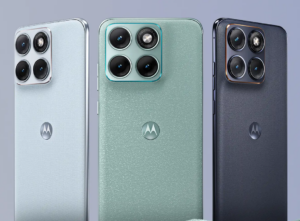
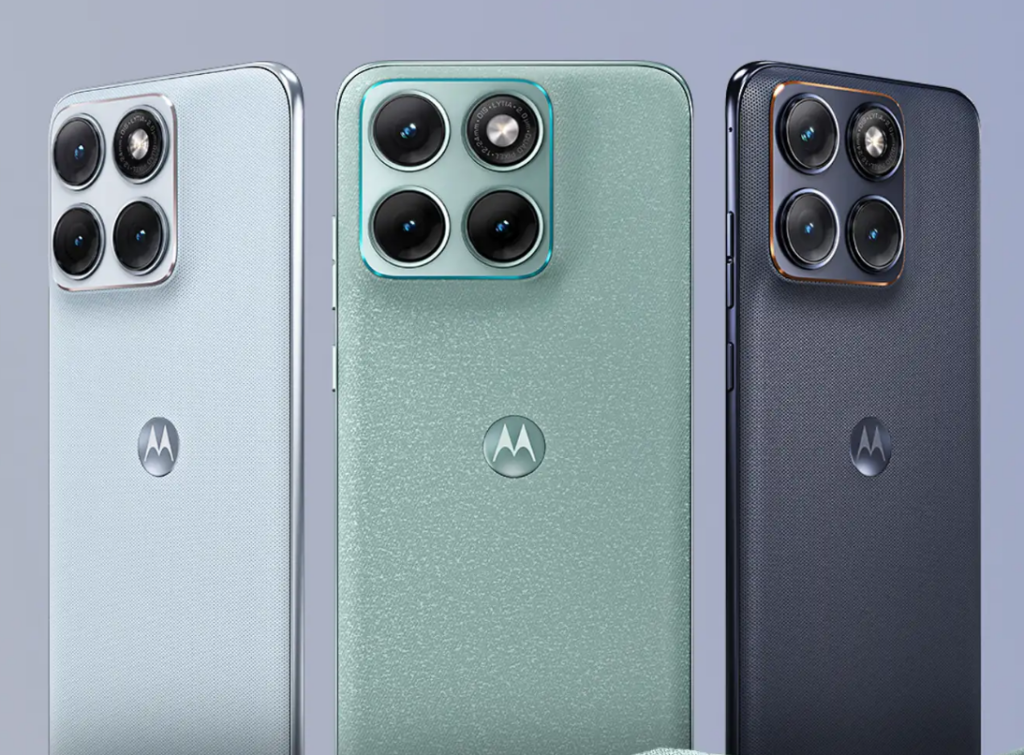
Motorola Edge 70 Fusion color options

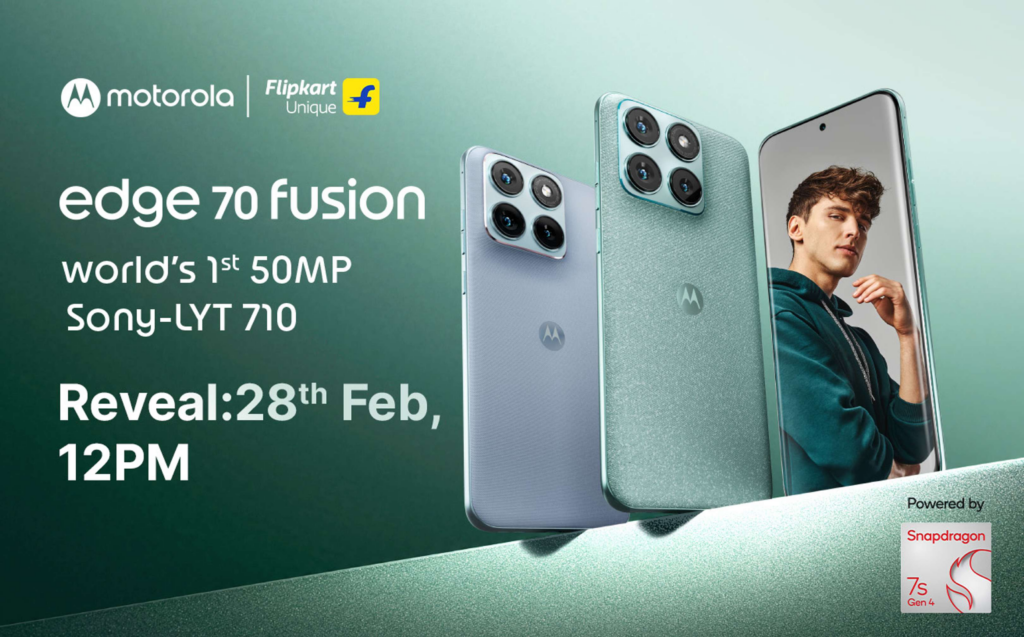
Rumors suggest that the Edge 70 Fusion will be the next Motorola phone to hit the market. The device is expected to launch in multiple markets, including India. Recently, its landing page went live on Flipkart, suggesting an imminent launch even though the page did not reveal anything significant. Now, the updated page has not only confirmed a few more details about the phone but also hints at a launch window.

Motorola Edge 70 Fusion key details confirmed

Motorola Edge 70 Fusion

As can be seen above, the Motorola Edge 70 Fusion will be the world’s first smartphone to feature an OIS-enabled Sony LYT-710 50-megapixel camera. While details about this camera are not known, the Lenovo-owned brand advertises that it can capture ultra-clear low-light shots and brighter highlights in videos.

For selfies, the Edge 70 Fusion will have a 32-megapixel front camera. The brand confirmed that all cameras will support 4K video recording.

The Edge 70 Fusion will feature a quad-curved AMOLED panel that supports a 1.5K resolution and a 144Hz refresh rate. Additionally, it will support 5200 nits of peak brightness and offer 96.2 percent screen space. It will also offer other features like HDR10+ support, SGS eye protection, and Smart Water Touch 3.0, which will make it possible to use the display with wet fingers.

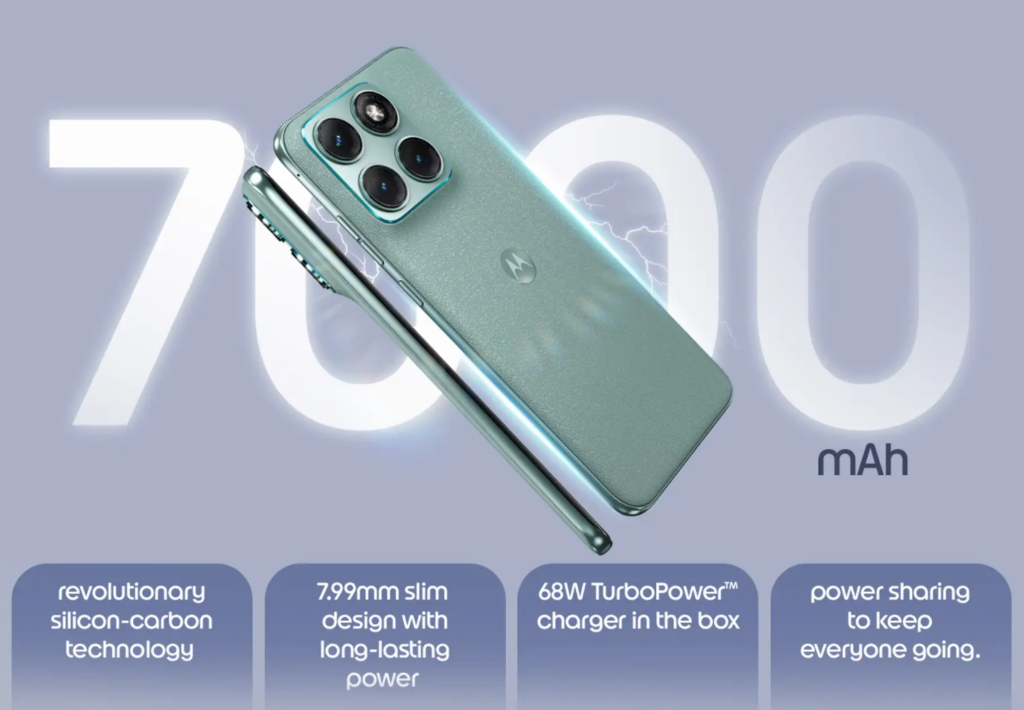
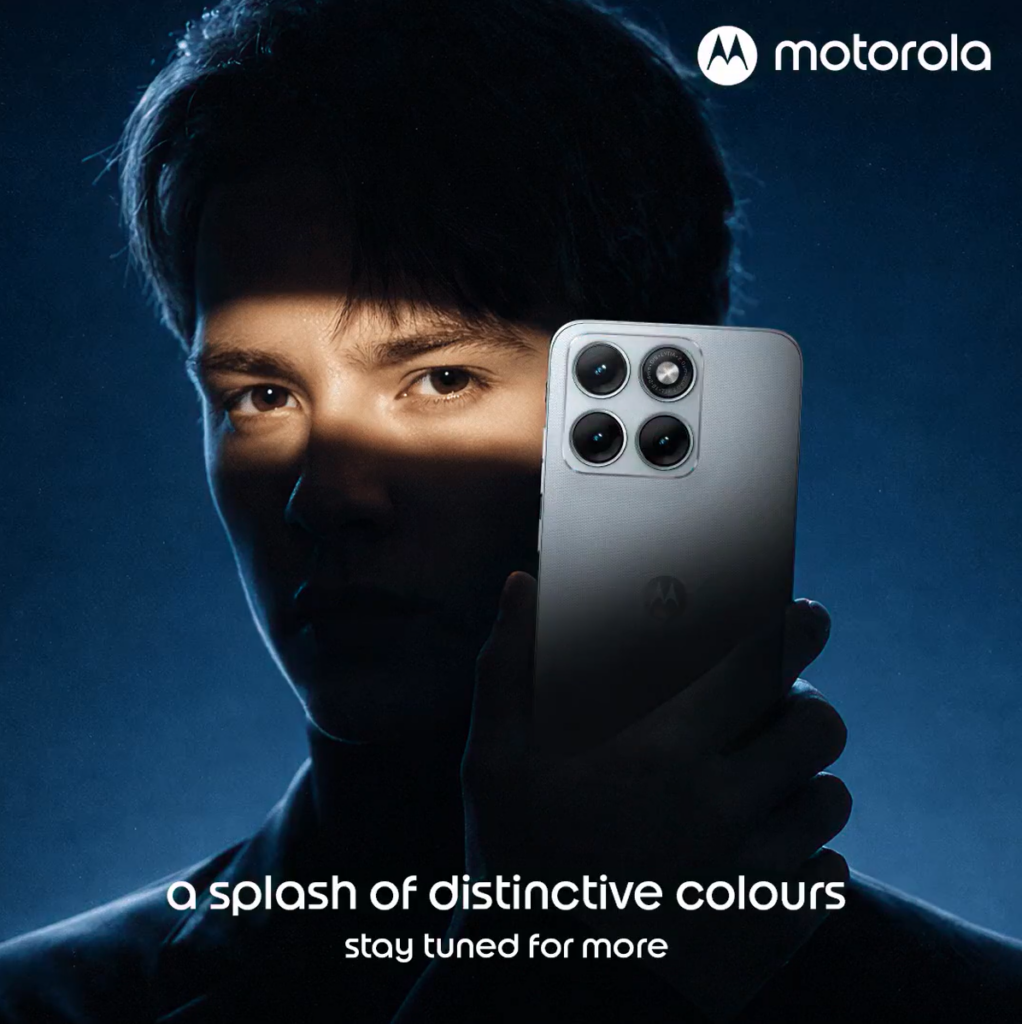
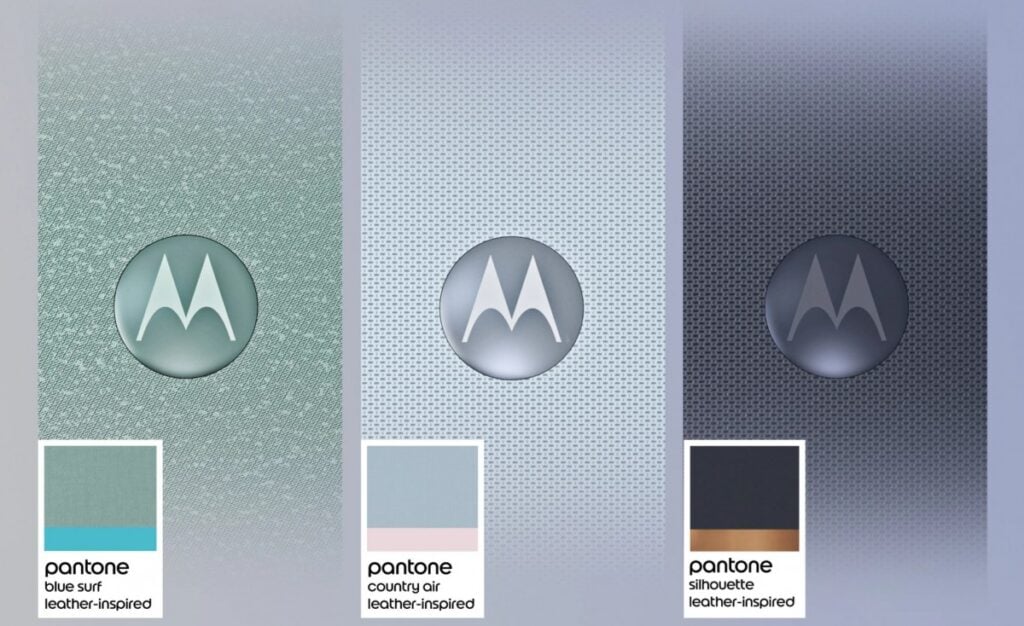
The Edge 70 Fusion is confirmed to pack a massive 7,000mAh battery with 68W fast charging support. Despite housing a huge silicon-carbon battery, the device will measure only 7.99mm in thickness. It will be available in three shades, such as Country Air, Blue Surf, and Silhouette.

Motorola Edge 70 Fusion launch timeframe

Motorola Edge 70 Fusion

The brand has confirmed that it will reveal more features on March 2, which indicates that it may debut in the first half of the month.

For more daily updates, please visit our News Section.

Stay ahead in tech! Join our Telegram community and sign up for our daily newsletter of top stories.

The post Motorola Edge 70 Fusion listing hints March launch; Sony LYT-710 50MP cam, 7,000mAh battery confirmed   appeared first on Gizmochina.

Oppo Find N6 gift box contents leak reveals magnetic ecosystem, design clues

Oppo Find N5

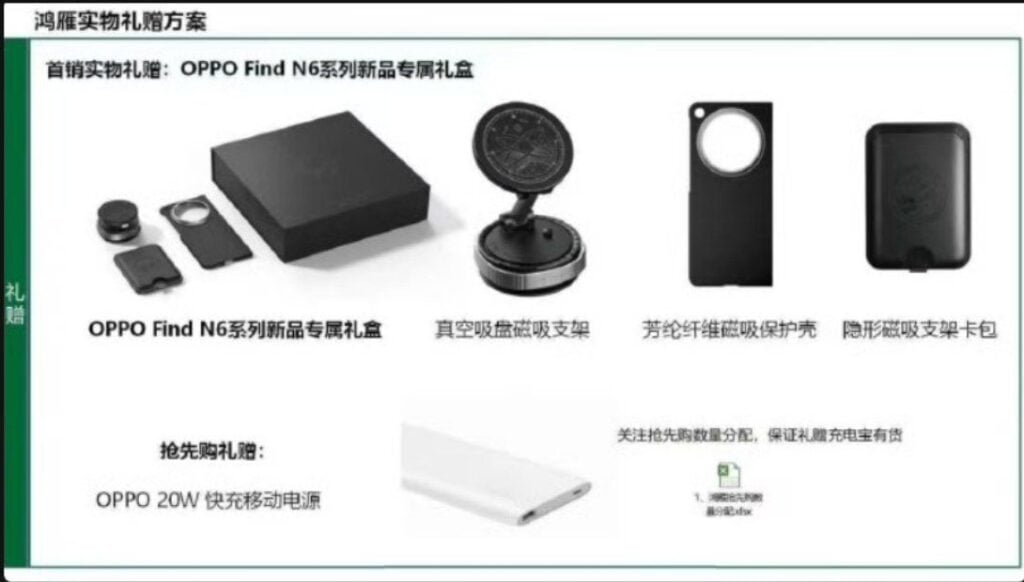
The Chinese New Year holidays are about to end soon, and Oppo is expected to soon unveil the much-awaited Oppo Find N6 foldable phone. Days before the expected launch, an image floating on Chinese social media has revealed a special gift box alongside hints about hardware and accessories, suggesting Oppo may expand its magnetic ecosystem and premium positioning with the next-generation foldable.

Oppo Find N6 gift box contents revealed

Oppo Find N6 gift box contents leak

The leaked image shows a dedicated Oppo Find N6 series gift package featuring multiple accessories designed to work with magnetic attachment support. Visible items include a vacuum suction magnetic stand designed for stable mounting, an aramid fibre magnetic protective case with a circular cutout matching the camera module, and an ultra-thin magnetic card holder that doubles as a hidden stand.

The accessories appear in a uniform black finish with subtle Find N branding, indicating a coordinated design language. The image also reveals a large retail-style box and smaller accessory components placed alongside it, reinforcing the idea of a premium launch bundle. Additionally, an Oppo 20W fast-charging power bank seems to be included as an early purchase gift.

The Find N6’s protective case design also hints at a familiar large circular rear camera module, indicating continuity in visual identity. The flash placement appears to shift towards the upper left, suggesting slight refinements to the camera layout.

Oppo Find N6 specifications (rumored)

The Oppo Find N6 could be among the first foldables powered by the Snapdragon 8 Elite Gen 5 processor, reportedly in a 7-core configuration. The device is tipped to feature an 8.12-inch 2K LTPO UTG inner display paired with a 6.62-inch cover screen, while camera hardware may include dual 20-megapixel front cameras (for outer and inner displays) and a triple rear setup combining 50-megapixel, 50-megapixel and 200-megapixel cameras, along with a 2-megapixel multispectral unit.

Battery capacity is expected to reach around 6,000mAh with 80W fast charging support. Reports also point towards satellite communication capability, Android 16-based ColorOS 16 UI, and storage options going up to 16GB RAM with 1TB capacity. The foldable is said to weigh roughly 225g and may introduce support for an AI-enabled stylus, indicating a push towards productivity use cases. Early indications suggest a March launch window, possibly targeting select global markets alongside China.

For more daily updates, please visit our News Section.

Stay ahead in tech! Join our Telegram community and sign up for our daily newsletter of top stories.

The post Oppo Find N6 gift box contents leak reveals magnetic ecosystem, design clues appeared first on Gizmochina.

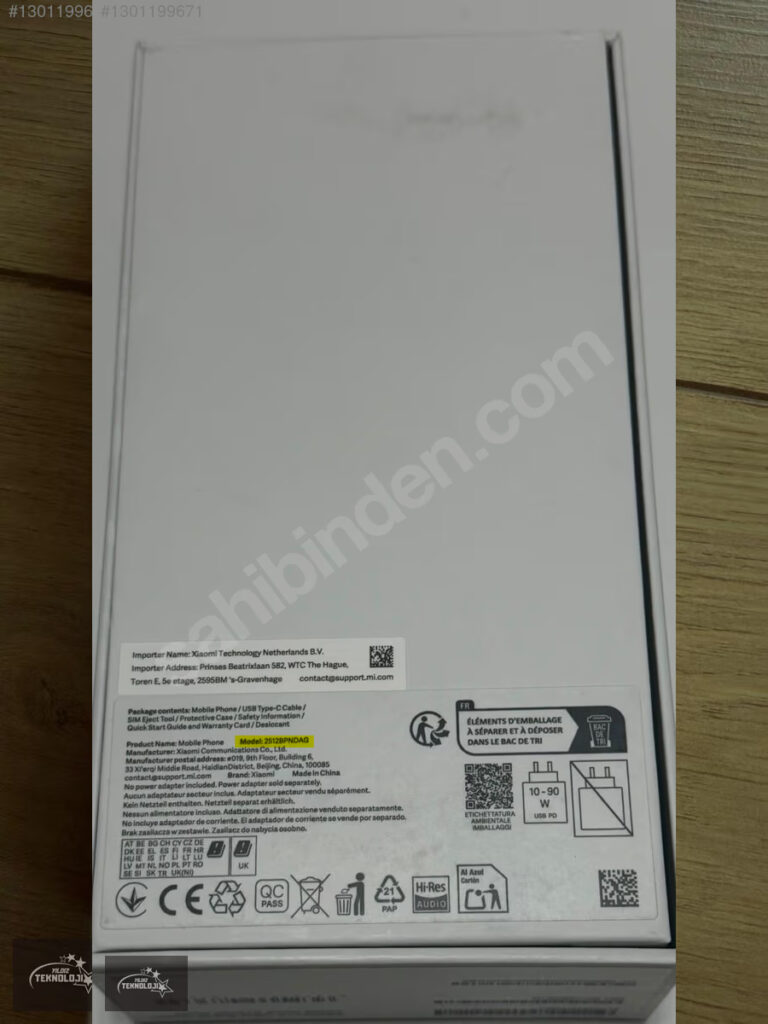
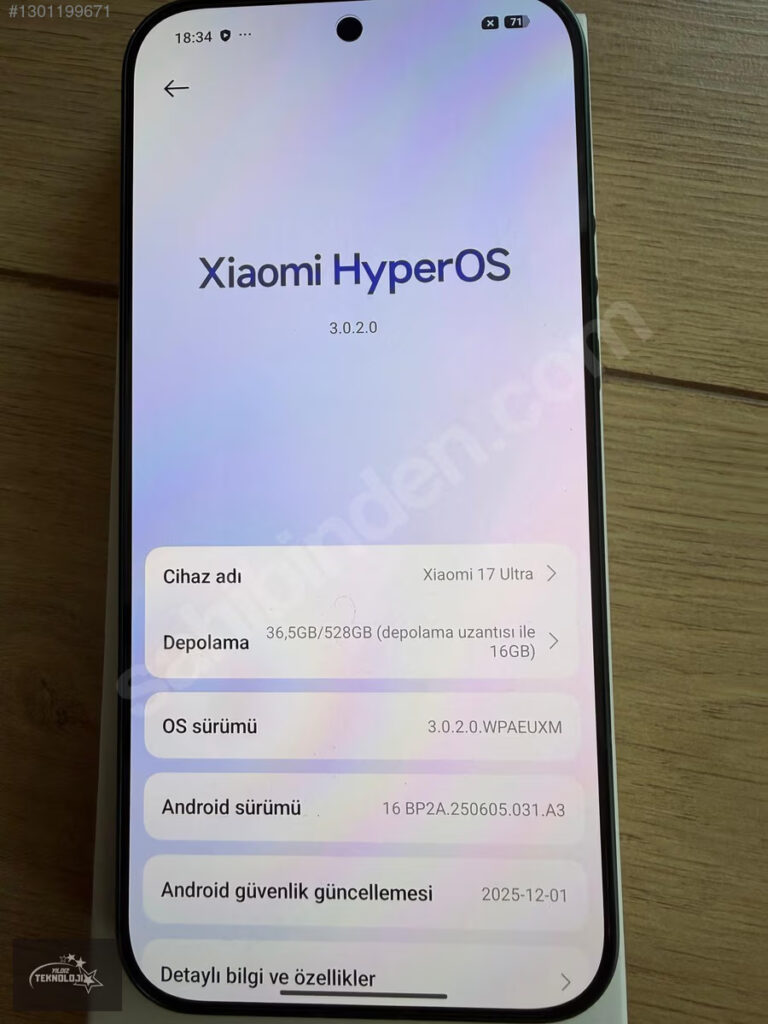
Xiaomi 17 Ultra global variant surfaces in real-world photos ahead of launch

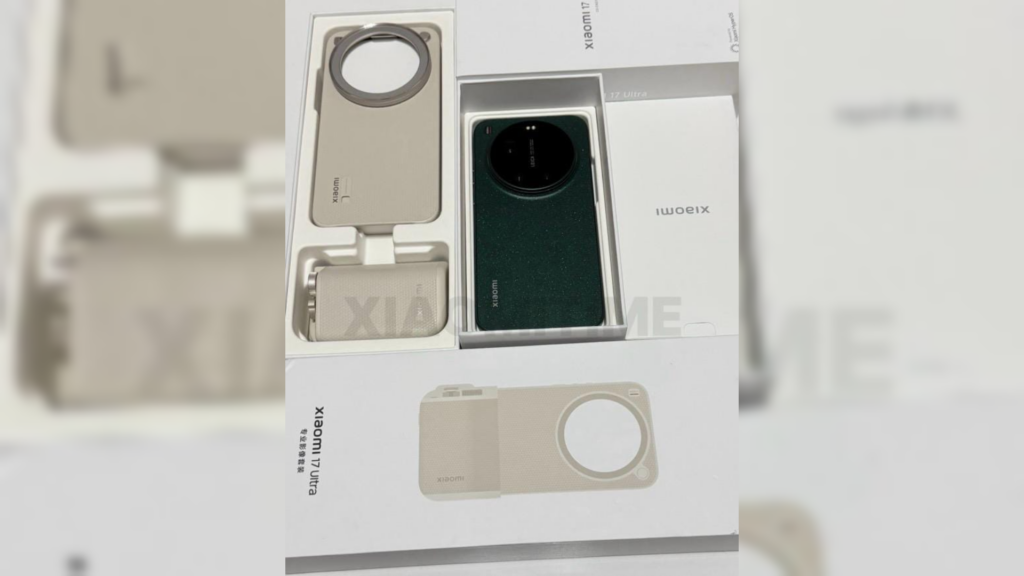
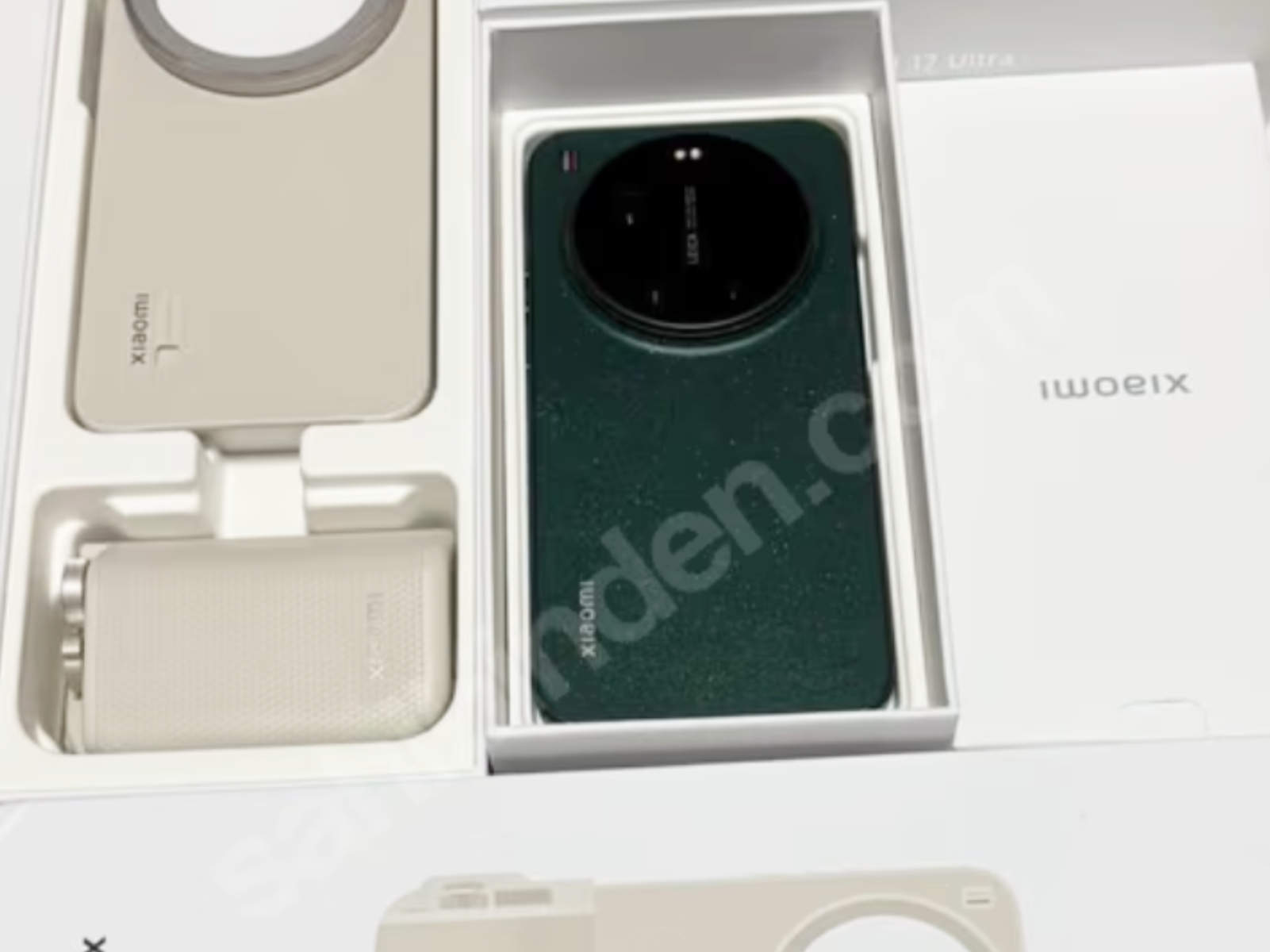
With Samsung’s Galaxy S26 Ultra already in the spotlight, Xiaomi doesn’t appear far behind. Real-world photos of the Xiaomi 17 Ultra global variant have surfaced online, giving us an early look at the device just days before its official unveiling.

The images reportedly originate from a Turkish classifieds listing, where the international model briefly appeared complete with its global model number visible. The listing priced the device at roughly €1,400, though that figure should be taken with caution — early reseller listings don’t always reflect final retail pricing.

The leaked unit is shown in a green finish that Xiaomi is expected to offer globally. Also visible in the photos is Xiaomi’s optional Photography Kit accessory, which adds a physical grip and dedicated camera controls. It’s become something of a signature add-on for Xiaomi’s Ultra models, aimed at users who treat their smartphone more like a compact camera than a casual shooter.

The 17 series is expected to include the standard Xiaomi 17 and the 17 Ultra, with possible special editions depending on the market. Xiaomi may also use the event to refresh its tablet lineup, with successors to the Pad 7 series likely making an appearance.

As for the Ultra itself, photography remains the main focus. The phone is tipped to feature a large 1-inch primary sensor, accompanied by an ultra-wide lens and a high-resolution telephoto camera with optical zoom. The Leica-branded circular rear camera module continues Xiaomi’s established Ultra design language. In the leaked images, the finish has a subtle textured look that gives it a more premium, almost camera-like aesthetic.

Already available in China, the Xiaomi 17 Ultra looks set to be one of this year’s strongest camera-centric Android flagships, especially for users who care more about hardware than software-driven features. Global availability details beyond the launch event haven’t been confirmed, but the early retail appearance suggests Xiaomi may not keep global buyers waiting long.

We’ve already spent time with the Xiaomi 17 Ultra — you can check out our full review here.

Stay ahead in tech! Join our Telegram community and sign up for our daily newsletter of top stories!

For more daily updates, please visit our News Section.

(Source | Via)

The post Xiaomi 17 Ultra global variant surfaces in real-world photos ahead of launch appeared first on Gizmochina.

Poco X8 Pro Iron Man Edition leaks in grey and gold finish

Poco-X8-Pro-Iron-Man-Edition-Leak

Just days after the Poco X8 Pro and its Pro Max sibling leaked in a fresh batch of renders, the themed version of the Poco X8 Pro has also stepped into the spotlight. The X8 Pro Iron Man Edition has surfaced in official-looking images just ahead of the launch. 

As you can see, the X8 Pro Iron Man Edition has a muted grey finish, with gold accents placed carefully around the frame and rear design elements. You can also see Iron Man flying in the rear middle of the phone.

The Iron Man Edition was first hinted at through a certification listing spotted in late January, effectively confirming its existence. 

Poco X8 Pro Iron Man Edition Specifications 

Underneath the cosmetic tweaks, however, the device will be the same as the standard Poco X8 Pro. So you can expect it to feature a 6.59- to 6.67-inch AMOLED display with a 1.5K resolution. The panel is rumored to support a refresh rate ranging from 120Hz to 144Hz, along with HDR capabilities.

Powering the device could be the MediaTek Dimensity 8500 Ultra chipset, paired with a Mali-G720-class GPU. Memory options may include 12GB or 16GB of LPDDR5X RAM, and up to 512GB of UFS 4.0 storage.

Poco-X8-Pro-Iron-Man-Edition-Design-and-Specs
Poco-X8-Pro-Iron-Man-Edition-Leak1

As for the cameras, it is expected to include a 50-megapixel primary sensor with optical image stabilization, supported by an 8-megapixel ultra-wide lens. On the front, the selfie camera may range between 20 and 32 megapixels.

Moreover, the device is said to pack a battery ranging between 6,500mAh and 7,560mAh, backed by 100W wired fast charging.

Software will likely be based on Android 15 or Android 16, layered with Xiaomi’s HyperOS. Connectivity features are expected to include 5G, Wi-Fi 6, Bluetooth 5.4, NFC, an IR blaster, and a USB Type-C port.

Other additions could include dual stereo speakers with Hi-Res audio support, an in-display fingerprint sensor, AI-based face unlock, and possibly some level of IP-rated protection.

For more daily updates, please visit our News Section.

Stay ahead in tech! Join our Telegram community and sign up for our daily newsletter of top stories.

The post Poco X8 Pro Iron Man Edition leaks in grey and gold finish appeared first on Gizmochina.

Xiaomi 18 series, Vivo X500 lineup may feature new anti-peep screen technology like Galaxy S26 Ultra

Galaxy S26 Ultra privacy feature

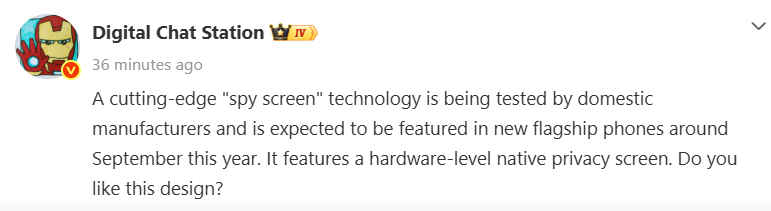
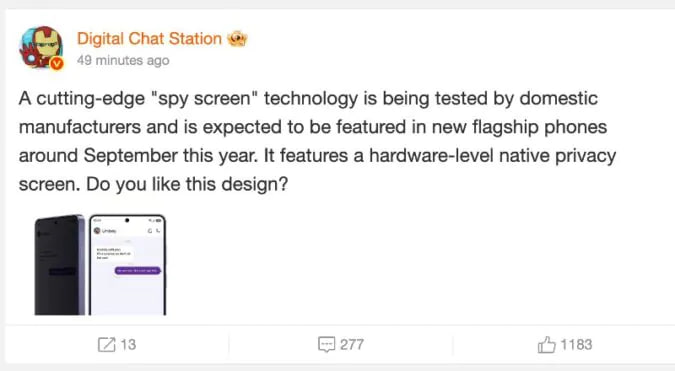
Upcoming flagship smartphones expected to launch around September in China may introduce a major hardware-level privacy feature aimed at protecting screen visibility, according to reliable tipster Digital Chat Station. This tech appears to be similar to what Samsung is advertising for its Galaxy S26 Ultra, which is slated to launch next week. If accurate, it may represent a shift from software-based privacy tools toward integrated hardware solutions designed to prevent onlookers from viewing sensitive content.

Hardware-level anti-peep display coming to upcoming flagships

DCS tips new “spy-screen” technology on the Chinese flagship phones

According to DCS, domestic smartphone manufacturers are currently testing an advanced “anti-peeping” screen that works at the hardware level. The translated leak suggests that this forward-looking design is being evaluated for next-generation flagship phones scheduled for around September this year.

Unlike traditional privacy screen protectors or software filters, this approach is said to rely on native display technology to reduce visibility from side angles, potentially improving privacy in public environments.

So far, reports suggest that the Xiaomi 18 series powered by the Snapdragon 8 Elite Gen 6 and the Vivo X500 lineup featuring the Dimensity 9600 are expected to launch in September. Likely, these devices could feature the new hardware-level privacy display if testing proves successful.

Last year in October, Oppo unveiled its Find X9 lineup, and this year the company may introduce the Find X10 series in October, while Honor could follow with the Honor Magic 10 series. Other flagships like the iQOO 16, OnePlus 16, and Realme GT 9 Pro are also expected to debut around the same period. It remains to be seen whether these devices will include the feature.

Galaxy S26 Ultra privacy feature
Galaxy S26 Ultra’s privacy display feature

Recent reports around the Samsung Galaxy S26 Ultra indicate that the device may introduce a built-in privacy display designed to limit viewing angles at the hardware level, helping prevent shoulder surfing in crowded places. Reports suggest the technology may rely on advanced OLED panel control to selectively obscure content when viewed from the side, instead of using external accessories.

Early information indicates that this feature could offer customization options such as automatically activating during sensitive tasks or hiding specific screen elements like notifications or passwords. If successful, it may encourage other manufacturers to adopt similar solutions, especially as smartphone privacy becomes an increasingly important selling point in flagship devices.

Among the S26 lineup, it is only the Ultra edition that is said to arrive with a new hardware-level privacy feature. Therefore, Chinese smartphone OEMs may offer this feature only on their Pro Max or Ultra branded flagships.

For more daily updates, please visit our News Section.

Stay ahead in tech! Join our Telegram community and sign up for our daily newsletter of top stories.

The post Xiaomi 18 series, Vivo X500 lineup may feature new anti-peep screen technology like Galaxy S26 Ultra appeared first on Gizmochina.

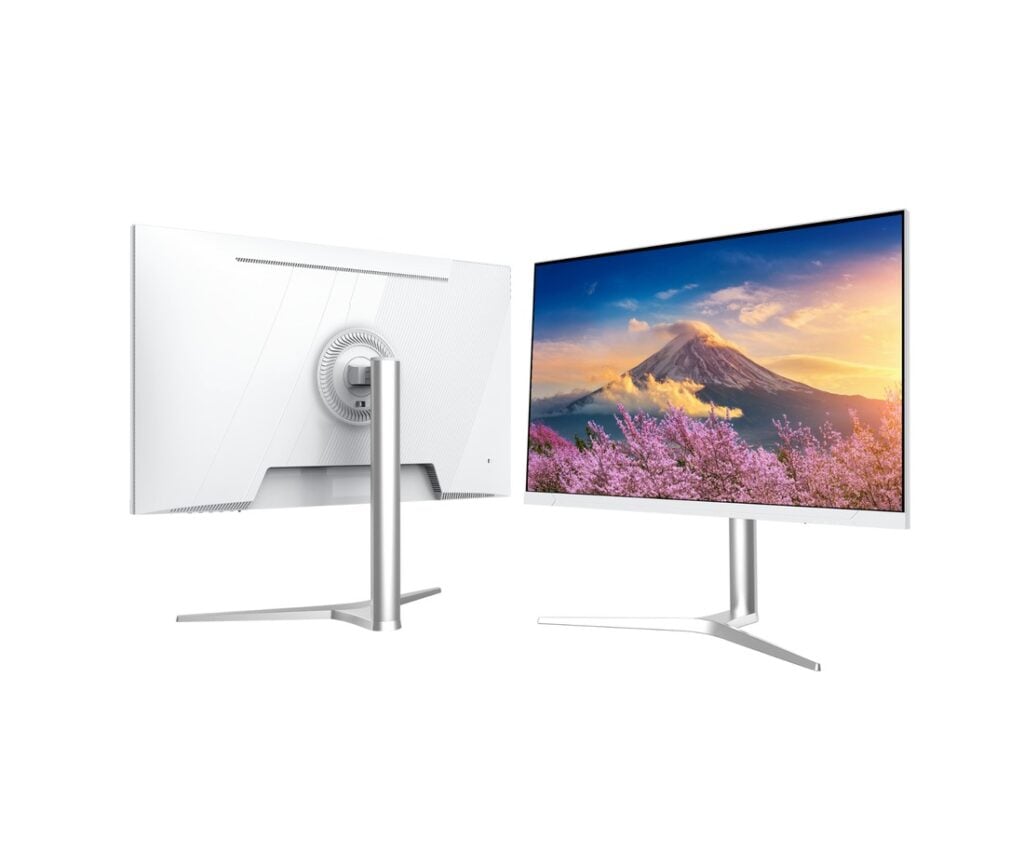
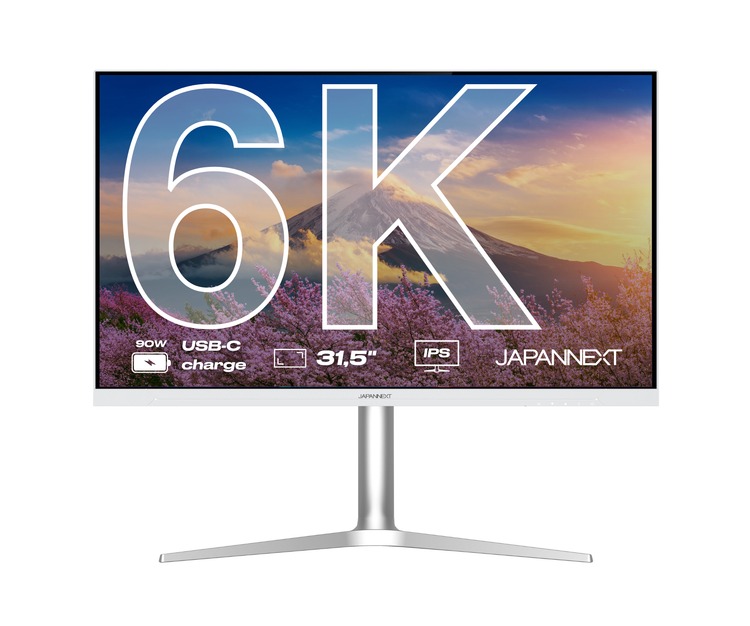
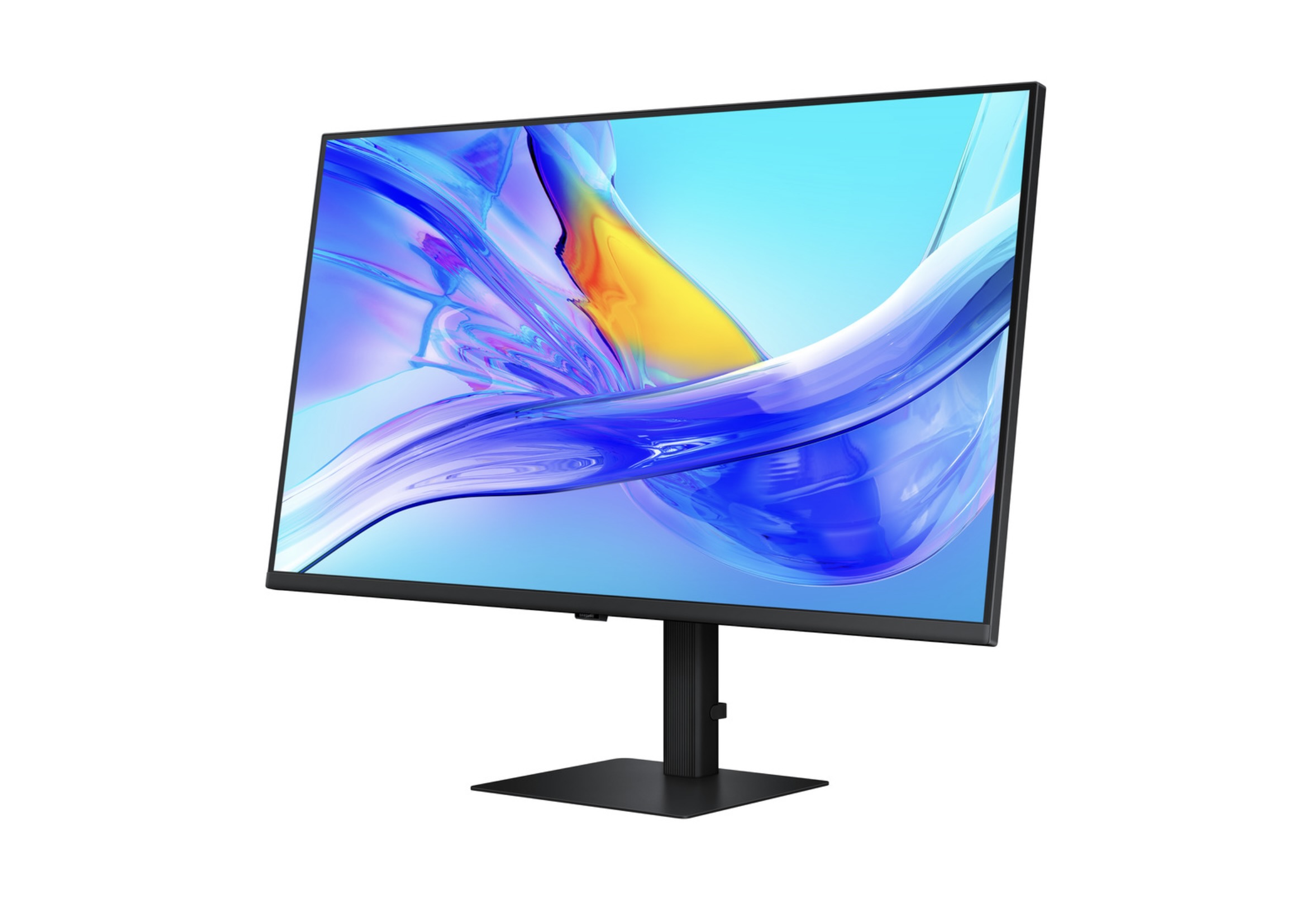
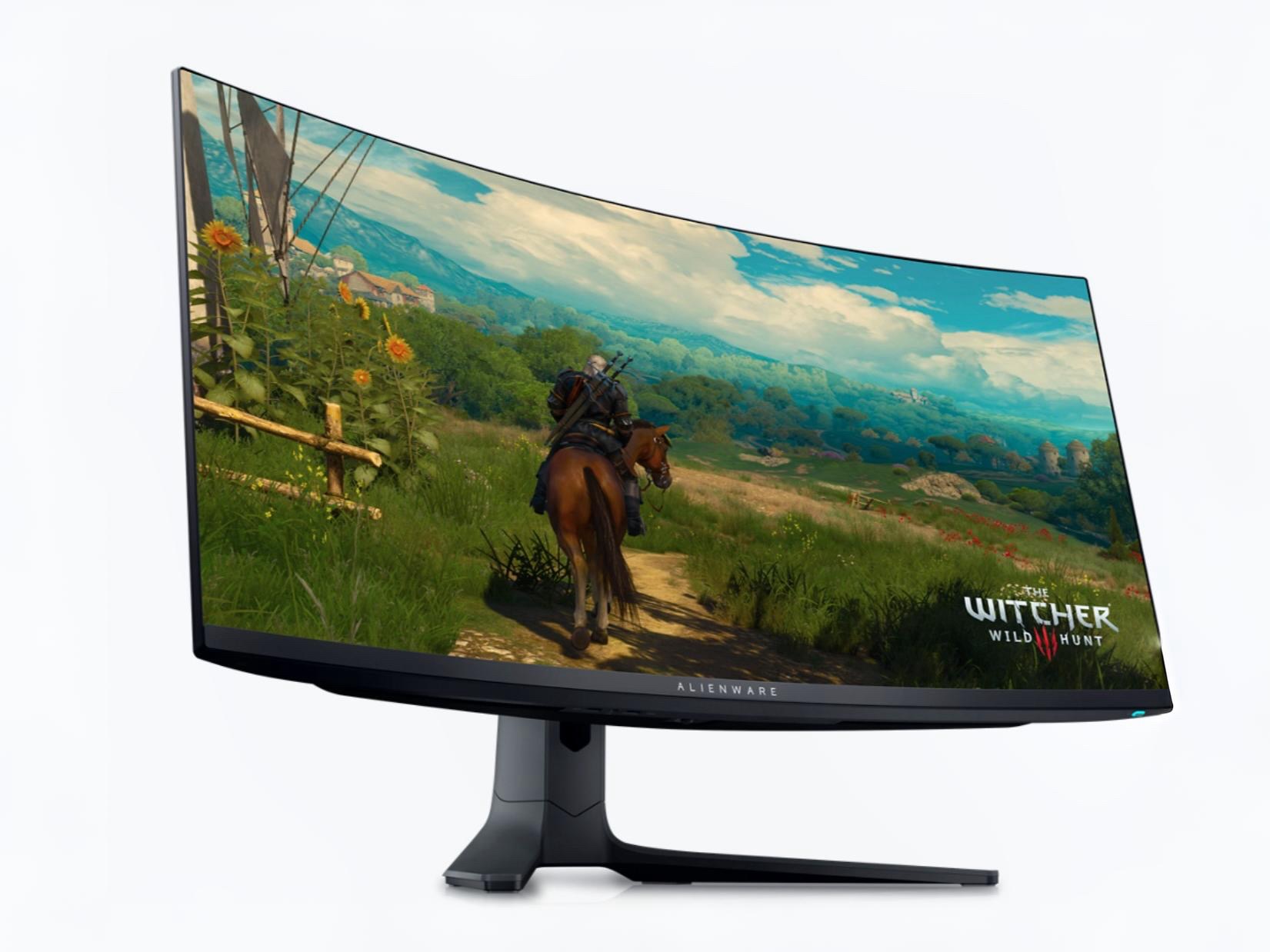
JapanNext Launches 31.5-Inch 6K IPS Monitor with 500nits Brightness, 90W USB-C and KVM Support

JapanNext has announced a new 31.5-inch 6K monitor called the JN-IPS326K-HSPC9. The company may not be widely known in Western markets, but this model brings strong specifications aimed at creative professionals and productivity users.

The monitor uses an IPS panel with a 6016 × 3384 resolution, resulting in pixel density just under 220 PPI. It supports 1.07 billion colors, 100% sRGB coverage, and 96% DCI-P3 color gamut. Brightness is rated at 500 nits with a 1500:1 contrast ratio. Viewing angles are listed at 178° horizontally and vertically. The display uses E-LED backlighting, a 16:9 aspect ratio, and a 0.1159 mm pixel pitch.

Refresh rate is limited to 60 Hz with an 8 ms response time, which makes the monitor better suited for office work, design, video editing, and content creation rather than gaming. HDR support is included to improve brightness and color range, though IPS limitations mean it cannot deliver OLED-level contrast.

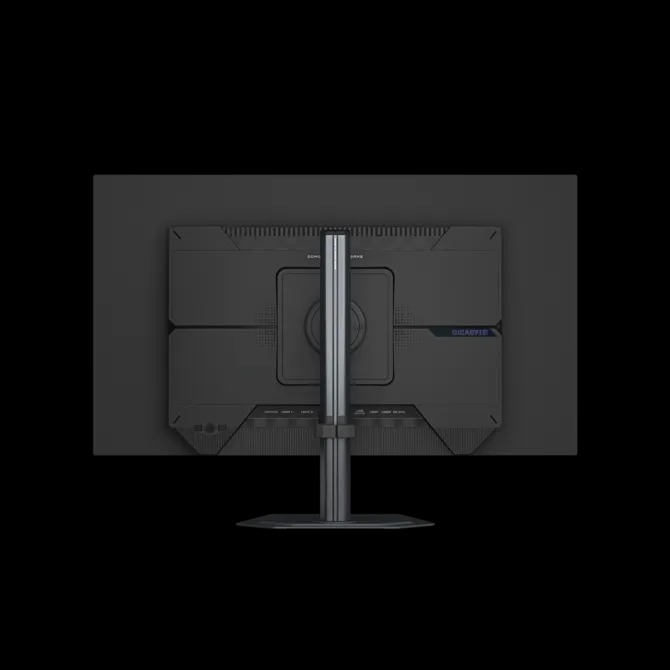
JapanNext  JN-IPS326K-HSPC9

Connectivity options include two HDMI 2.1 ports, DisplayPort 1.4, and a USB-C 3.1 port with 90 W power delivery for single-cable laptop use. All ports support the full 6K resolution at 60 Hz. The monitor also includes KVM functionality, allowing users to control multiple computers using one keyboard and mouse.

JapanNext has added multitasking features such as Picture-in-Picture and Picture-by-Picture modes. These allow two input sources to be displayed simultaneously while maintaining native resolution and image quality. Other features include integrated 2 W speakers, low blue-light mode, and VESA 100 × 100 mounting support.

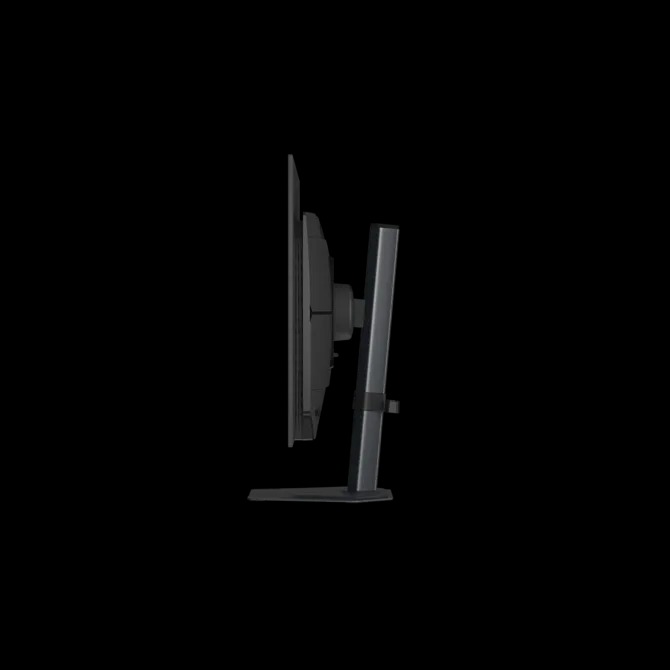
The stand supports height, tilt, swivel, and pivot adjustments, including 90-degree rotation for portrait use. This makes it suitable for coding, long documents, and professional workflows.

The JapanNext JN-IPS326K-HSPC9 is priced at €1,399, which is about $1,650. There is no confirmation yet about availability in the United States or other global markets.

For more daily updates, please visit our News Section.

Stay ahead in tech! Join our Telegram community and sign up for our daily newsletter of top stories!

(via)

The post JapanNext Launches 31.5-Inch 6K IPS Monitor with 500nits Brightness, 90W USB-C and KVM Support appeared first on Gizmochina.

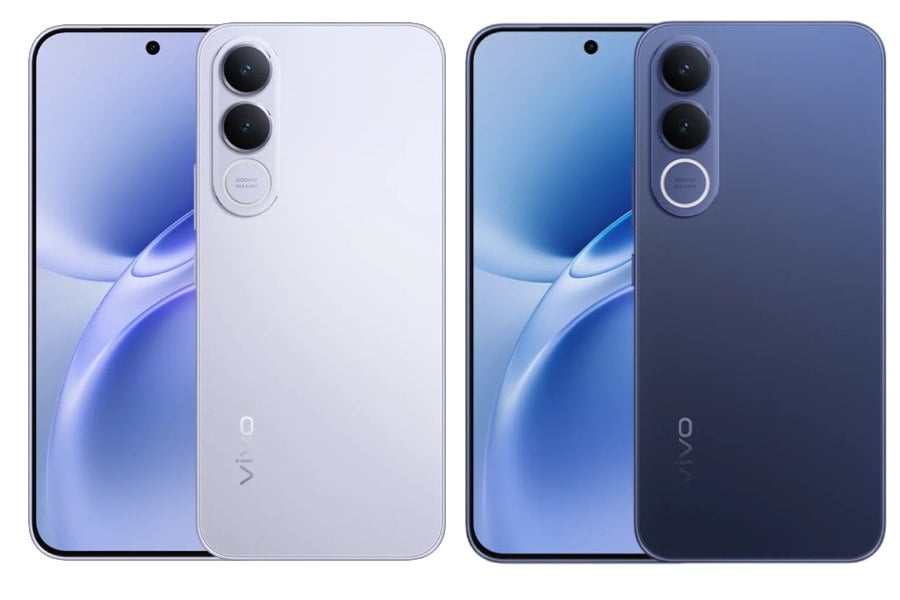
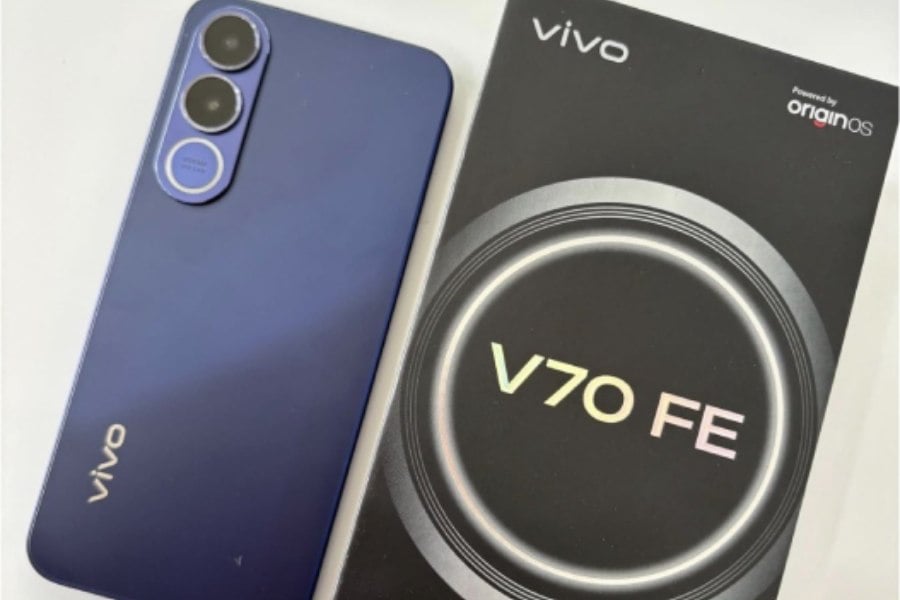
Vivo V70 FE leaks in full with 7000mAh battery, 6 years of update promise, and more

Vivo-V70-FE-Design-and-Specs-Leaks

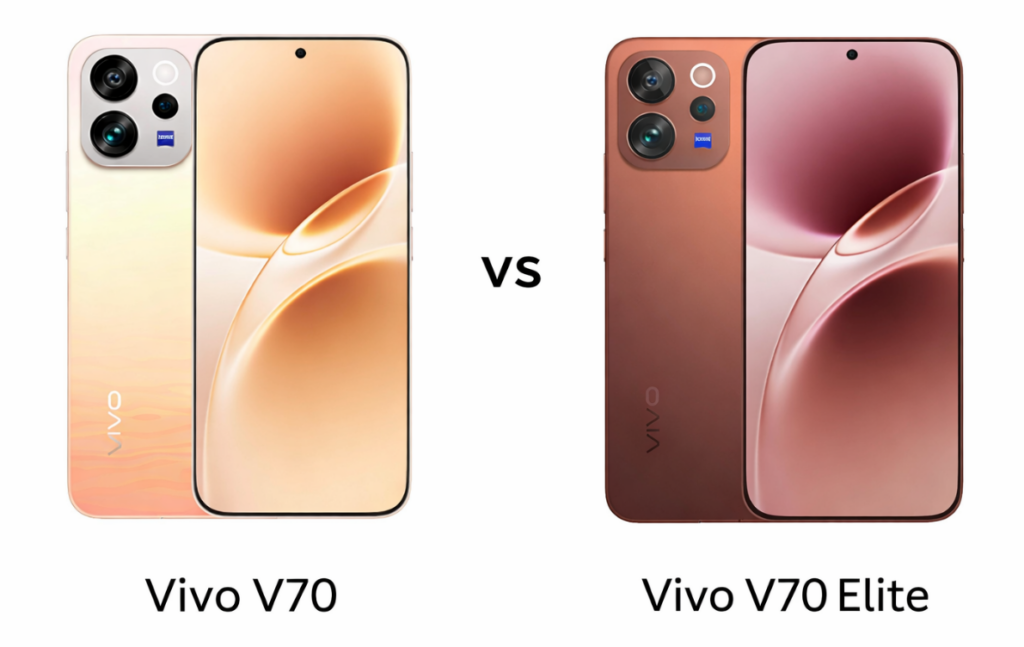
Vivo just introduced the Vivo V70 and Vivo V70 Elite, but the company will soon add a third model to the series. A new leak suggests that the Vivo V70 FE may not be far from launch.

According to X tipster PassionateGeekz, the V70 FE could debut on February 28, though the date is said to be tentative. An India launch is also reportedly in the works, possibly with a few changes to the specifications.

Vivo V70 FE Specifications

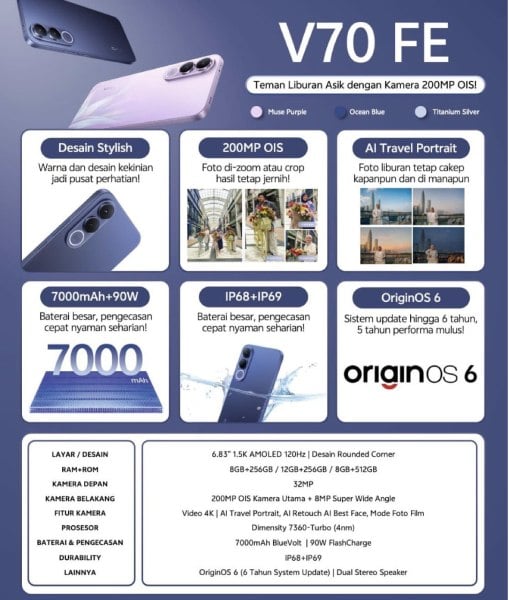
As for what it bears now, the V70 FE headline’s feature is a 200-megapixel main camera with optical image stabilization (OIS). The rear setup also includes an 8-megapixel ultra-wide camera, while the front houses a 32-megapixel selfie shooter. 

The phone is capable of recording up to 4K, and some of its camera features include AI Travel Portrait, AI Retouch, AI Best Face, and a Film Photo mode.

On the front, the phone reportedly features a 6.83-inch 1.5K AMOLED display with a 120Hz refresh rate and rounded corners. The design will be available in Muse Purple, Ocean Blue, and Titanium Silver.

Under the hood, the V70 FE will run on the Dimensity 7360-Turbo processor built on a 4nm process. Memory configurations include 8GB RAM with 256GB storage, 12GB with 256GB, and 8GB with 512GB.

On the software side, the phone runs OriginOS 6, with Vivo promising up to six years of system updates and five years of smooth performance. 

Keeping everything running is a 7,000mAh “BlueVolt” battery paired with 90W FlashCharge support. The phone also meets durability standards like IP68 and IP69 ratings for dust and water resistance. Dual stereo speakers round out the spec sheet.

As mentioned earlier, the tentative launch date is February 28th, but it might launch in India on a later date.

For more daily updates, please visit our News Section.

Stay ahead in tech! Join our Telegram community and sign up for our daily newsletter of top stories.

(Source)

The post Vivo V70 FE leaks in full with 7000mAh battery, 6 years of update promise, and more appeared first on Gizmochina.

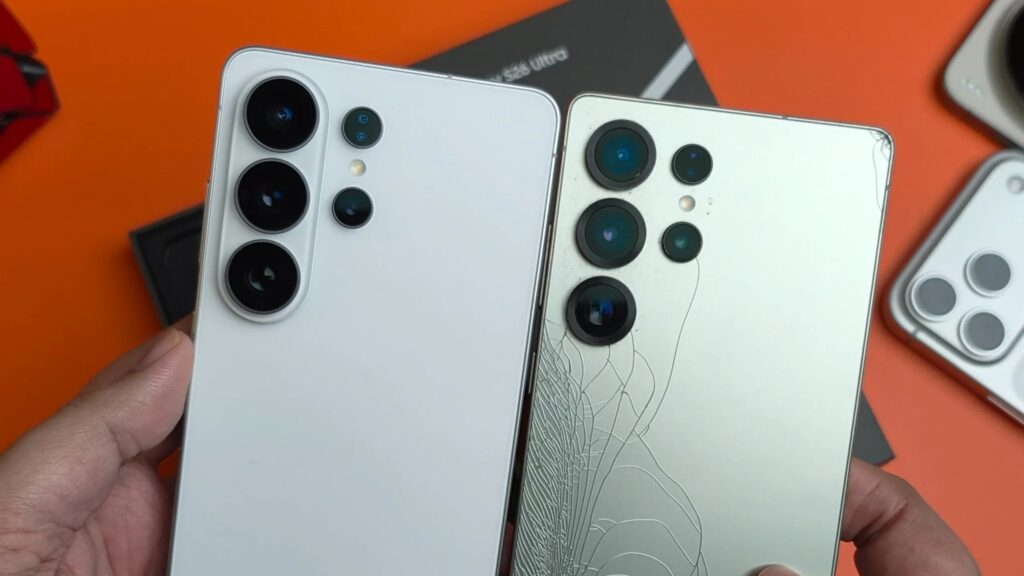
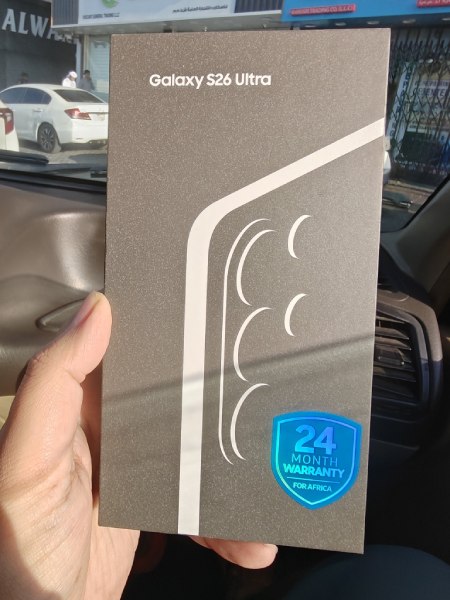
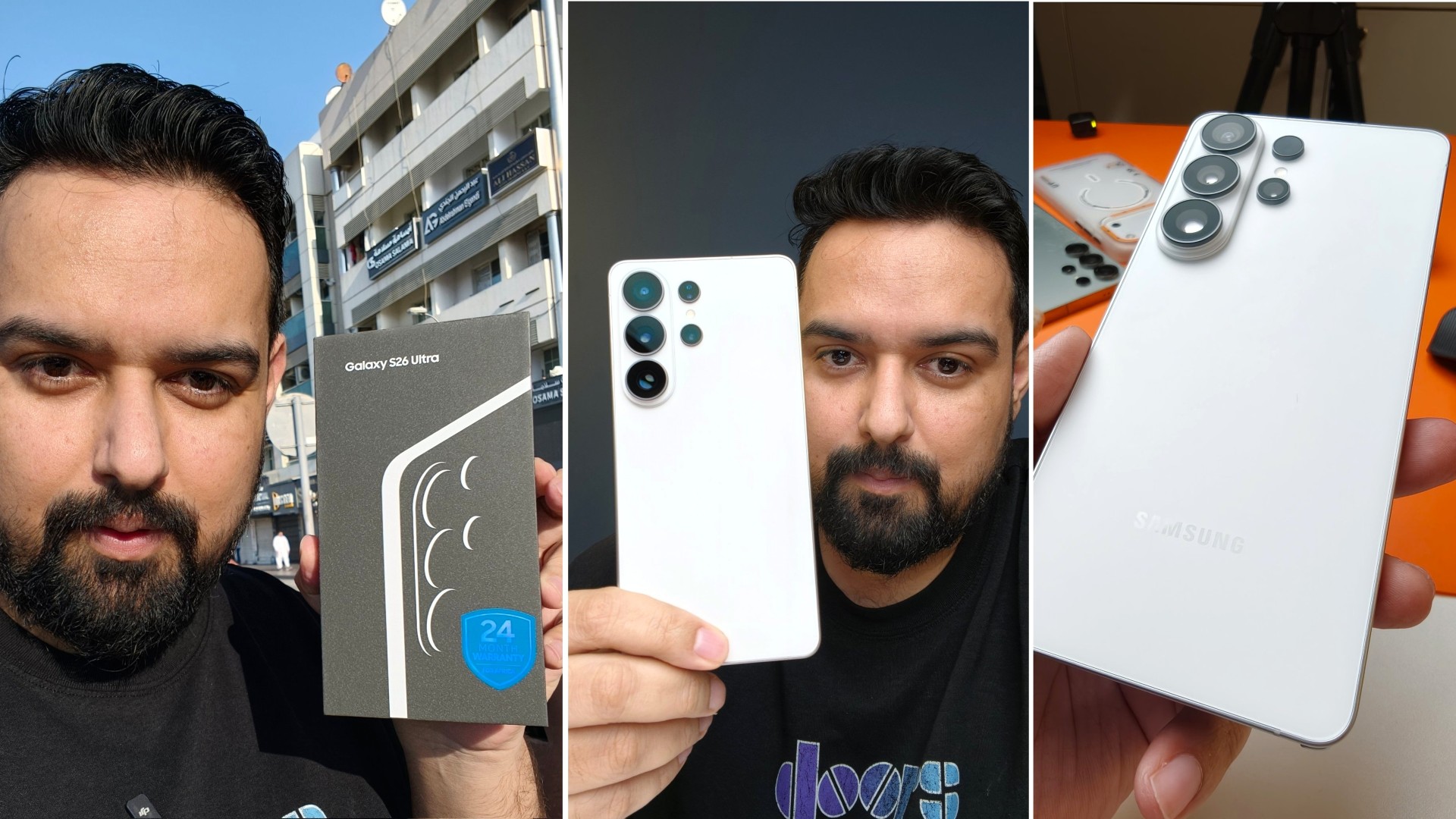
A YouTuber bought the Samsung Galaxy S26 Ultra early for $3300, here are real-life images

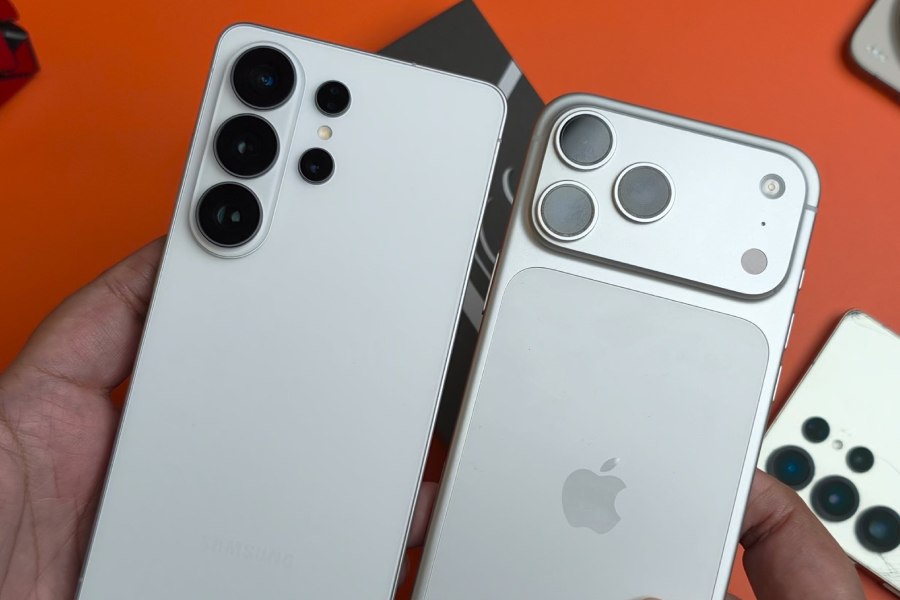
Samsung-Galaxy-S26-Ultra-vs-iPhone-17-Pro-Max-in-real-life

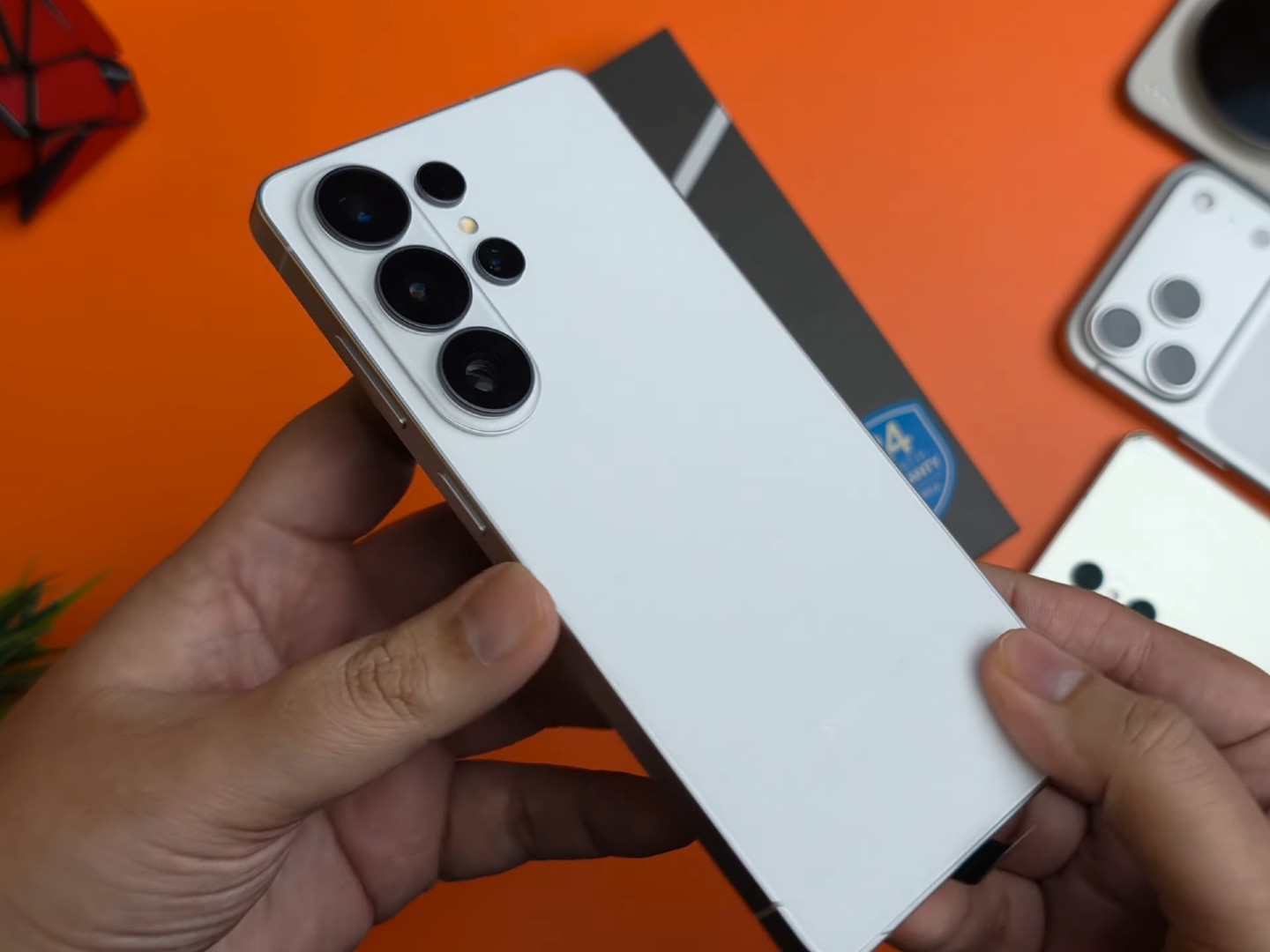
A tech YouTuber in Dubai has skipped the usual waiting game and picked up the Samsung Galaxy S26 Ultra before it’s even official.

Dubai-based creator Sahil Karoul says he bought the phone from a local retail shop in the city’s main electronics market. It’s not something you see often, but thanks to the YouTuber’s luck, he is now sharing videos of the real Galaxy S26 Ultra before anyone else in the industry.

This Galaxy S26 Ultra ain’t cheap

The biggest surprise might be the price. Karoul claims he paid $3,300 for the device. No, the Galaxy S26 Ultra won’t cost that much officially. It’s expected to start at around $1,299 for the base 256GB model. Paying more than double the rumored retail price is likely just the cost of being first.

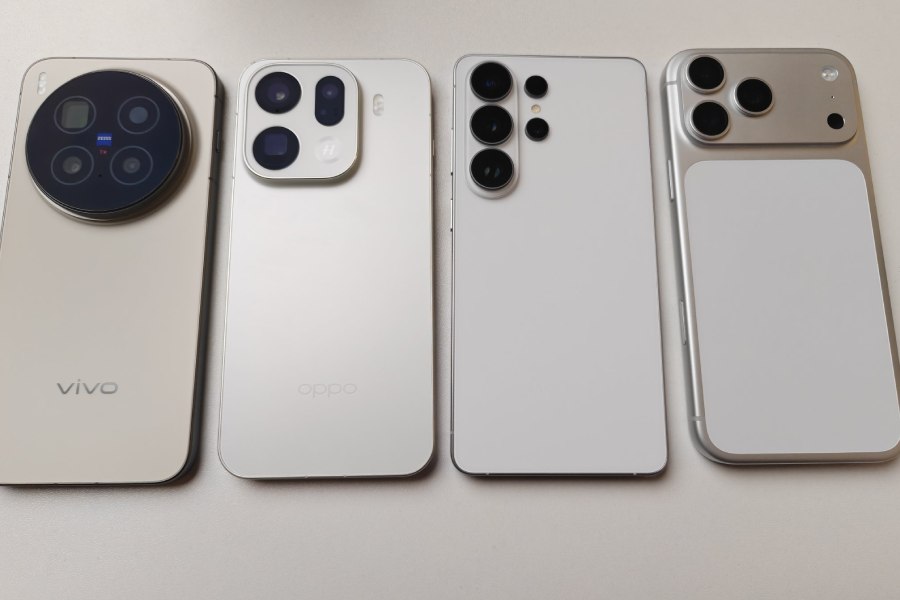
In his videos, the phone looks production-ready rather than like a prototype. Karoul places it alongside several other high-end devices, including the Galaxy S25 Ultra, Vivo X300, Oppo Find X9 Pro, and iPhone 17 Pro Max.

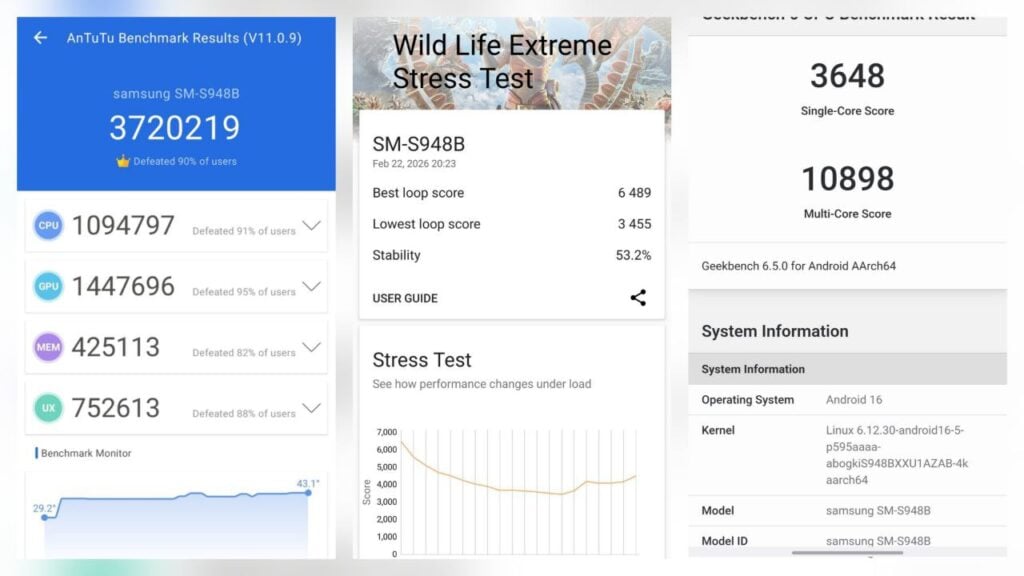
Karoul also ran a series of benchmark tests on the device. On AnTuTu, the phone reportedly scored 3,720,219 points. In Geekbench, it posted scores of 3,648 on the single-core test and 10,898 on the multi-core test.

Meanwhile, the 3DMark Wild Life Extreme Stress Test showed a best loop score of 6,849 with 53.2 percent stability. As always, early benchmark results should be taken with some caution, especially when the software may not yet be final.

Benchmarks time……. No heating issue#SamsungS26Ultra pic.twitter.com/uVZfwoxZmH

— Sahil Karoul (@KaroulSahil) February 22, 2026

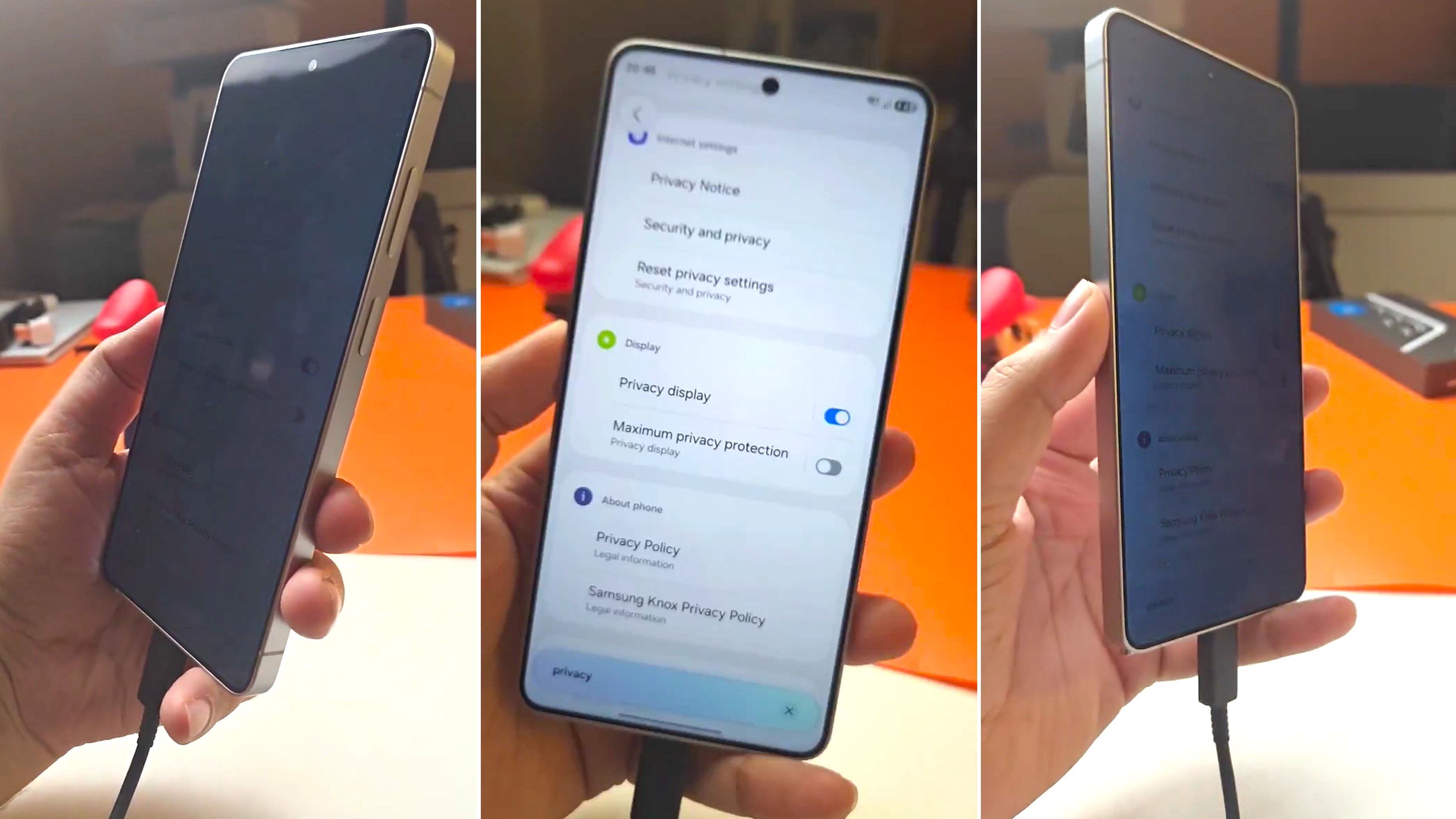
The YouTuber also demonstrated the Galaxy S26 Ultra’s most hyped feature — the Privacy Display — in a live demo. In line with Samsung’s claims, it shifts the viewing angles from the sides to prevent anyone nearby from peeking at your screen.

For now, Samsung hasn’t commented publicly on the situation. Official details will likely arrive at Samsung’s next Unpacked event on February 25, 2026.

Stay ahead in tech! Join our Telegram community and sign up for our daily newsletter of top stories!

For more daily updates, please visit our News Section.

(Source)

The post A YouTuber bought the Samsung Galaxy S26 Ultra early for $3300, here are real-life images appeared first on Gizmochina.

Galaxy S26 Ultra’s ‘Privacy Display’ proves effective in early hands-on video

An early hands-on video, reportedly from Dubai where a retailer began selling units ahead of schedule, gives us a hands-on look at what Samsung calls its new “Zero-peeking privacy”. The feature is expected to be formally introduced on February 25, with retail availability tipped for March 11.

The video demonstrates how the feature works in real-world conditions. Instead of relying on a traditional privacy screen protector, the S26 Ultra builds the functionality directly into its AMOLED panel. Once enabled through the settings menu, the display dynamically narrows its viewing angles.

From straight on, everything looks normal. But tilt the phone even slightly to the side, and the screen darkens significantly. At more extreme angles, it can appear nearly black. It’s not a perfect blackout like some aggressive privacy filters, but it’s enough to make shoulder surfing far more difficult.

For everyday use, that could actually matter more than headline specs. Think reading private messages on the metro, checking banking apps in a café, entering passwords at the airport, or even browsing work documents near colleagues. It’s a small feature on paper, but one that solves a very real annoyance. Leaks also suggest Samsung may allow more granular control, possibly enabling privacy mode on a per-app basis.

Under the hood, Samsung is reportedly using what it calls FlexMagic Pixel OLED technology to achieve the effect. Interestingly, while most premium displays compete on wider viewing angles, Samsung appears to be intentionally limiting them, at least when you want it to.

Beyond the privacy feature, reports of exclusive online-only color options have also surfaced, adding to the pre-launch buzz. If this implementation works as smoothly as it appears in the early footage, the Galaxy S26 Ultra’s “Zero-peeking privacy” feature could end up being one of its most practical upgrades. Not flashier cameras. Not more brightness. Just smarter control over who gets to see your screen.

And honestly, that might be something more people appreciate than they expect.

Tech enthusiast? Get the latest news first! Follow our Telegram channel and subscribe to our free newsletter for your daily tech fix!

For more daily updates, please visit our News Section.

(Source)

The post Galaxy S26 Ultra’s ‘Privacy Display’ proves effective in early hands-on video appeared first on Gizmochina.

iPhone 18 Pro could get another selfie camera upgrade in 2026

According to a new tip from Chinese leaker WhyLab, the iPhone 18 Pro and iPhone 18 Pro Max could feature upgraded front-facing cameras. The leak claims that both Pro models may switch to 24MP selfie sensors. If that happens, it would be another step up in resolution. The iPhone 17 lineup moved to 18MP front cameras, ending Apple’s long run with 12MP sensors that stretched from the iPhone 11 through the iPhone 16 lineup.

A jump to 24MP would likely improve detail in selfies and video calls, and could also help with portrait shots and low-light performance. That said, WhyLab described the information as a strong possibility rather than confirmed specifications, so it’s still too early to treat this as final.

Previous reports from JP Morgan and supply chain sources have also mentioned the possibility of a 24MP front camera for the iPhone 18 Pro models. If accurate, it would fit Apple’s usual pattern of gradual hardware upgrades rather than major one-year leaps.

On the design front, big changes don’t appear to be on the table. However, the Dynamic Island could reportedly become smaller. Some recent leaks suggest Apple may reduce the width of the cutout by around 35%, possibly by moving certain Face ID components, such as the IR flood illuminator, under the display. This would result in a slimmer pill-shaped cutout while keeping the core TrueDepth system intact.

Earlier rumors suggested Apple might experiment with a top-left punch-hole camera or fully under-display Face ID, but those claims have since been questioned, with some reports blaming translation errors for the confusion. For now, a smaller centered Dynamic Island seems to be the more consistent expectation.

There’s still plenty of time before the iPhone 18 series launches. likely in September 2026, and plans can always change. But if these early leaks are accurate, Apple’s next Pro models could continue focusing on steady improvements to the front camera experience.

Stay ahead in tech! Join our Telegram community and sign up for our daily newsletter of top stories!

For more daily updates, please visit our News Section.

(Source)

The post iPhone 18 Pro could get another selfie camera upgrade in 2026 appeared first on Gizmochina.

Here’s a good look at Honor Magic V6, packs 7,150mAh battery with 120W charging

Honor Magic V6 image-

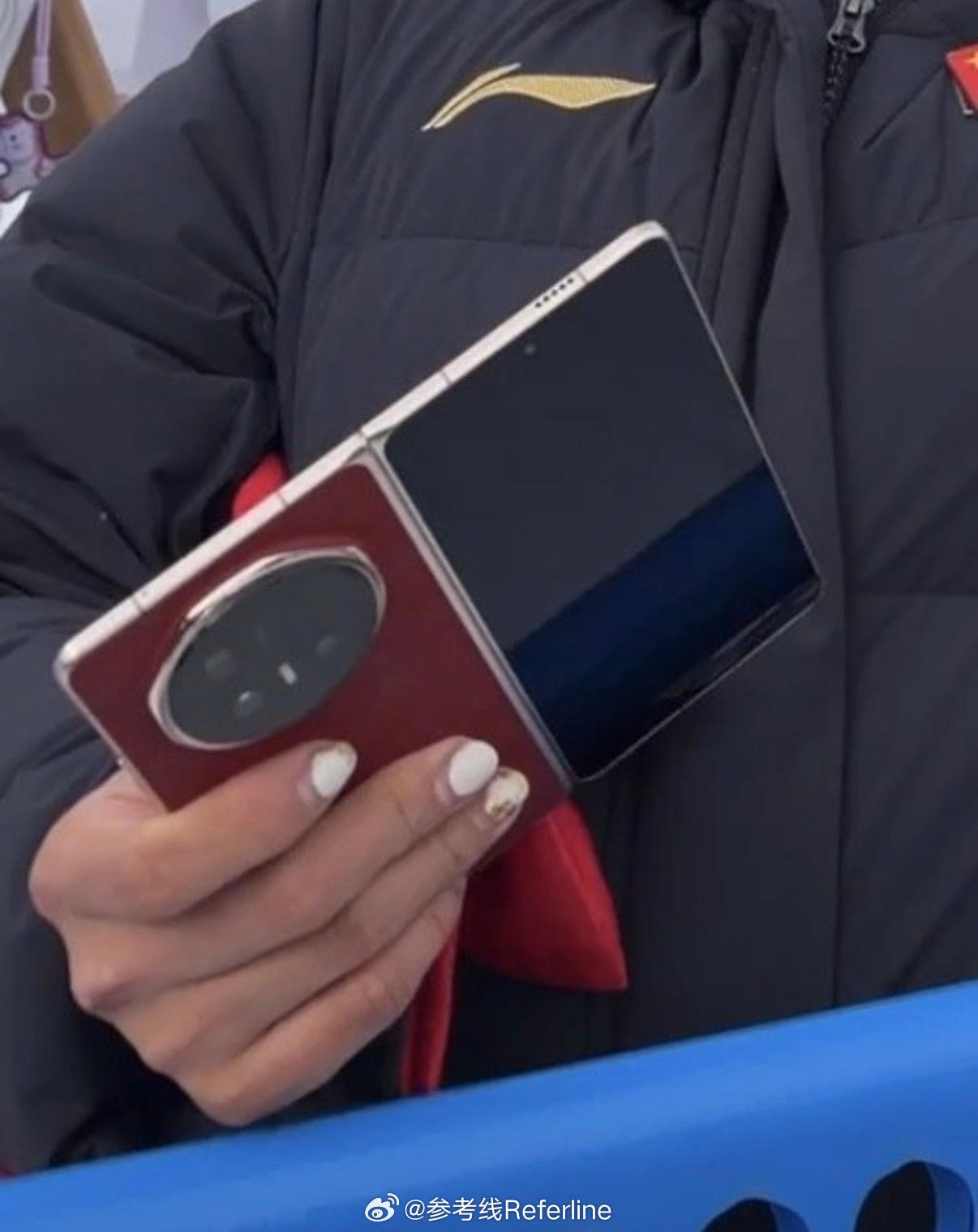
The Honor Magic V6 will be officially next week at the Mobile World Congress (MWC) 2026. Ahead of the official debut, Winter Olympic champion Xu Mengtao was recently seen carrying Magic V6’s striking red variant (via). At the same time, tipster Bald Panda has leaked the battery capacity and charging capacities of the foldable phone.

Honor Magic V6’s design

Honor Magic V6 image

Based on early images, the Honor Magic V6 continues the company’s established foldable design language. The rear camera module retains the familiar octagonal shape seen in previous models, although a notable change this time is a more symmetrical layout for the camera arrangement.

The Magic V6 also appears to maintain a strong focus on an ultra-thin and lightweight form factor, which has been a defining feature of the series. Shown below is another image that gives a good look at the V6’s design.

Honor Magic V6’s key specifications tipped

Honor Magic V6 image

According to the above-mentioned tipster, the Magic V6 will come in shades like white, black, and gold, apart from the red edition shown in the images above. He further revealed that the V6’s topmost edition will house a massive 7,150mAh battery, making it the largest battery seen on a foldable phone.

Under the hood, the Magic V6 will feature the Snapdragon 8 Elite Gen 5 chipset. Its massive battery will have support for 120W wired and wireless charging. Its rear-mounted triple camera setup is rumored to feature a 200-megapixel primary camera, an ultra-wide lens, and a periscope telephoto sensor with 3x optical zoom.

The Magic V6’s other expected features include wireless charging, full waterproofing, support for Beidou satellite communication, and a side-facing fingerprint sensor. While the dimensions of the V6 are not known yet, it is said to be thinner and lighter than the previous generation, which measured around 4.1 to 4.2mm when unfolded, 8.8 to 9mm when folded, and weighed 217 / 222 grams.

For more daily updates, please visit our News Section.

Stay ahead in tech! Join our Telegram community and sign up for our daily newsletter of top stories.

The post Here’s a good look at Honor Magic V6, packs 7,150mAh battery with 120W charging appeared first on Gizmochina.

Honor X6d 5G launches with 90Hz display, 50MP camera, and 5260mAh battery

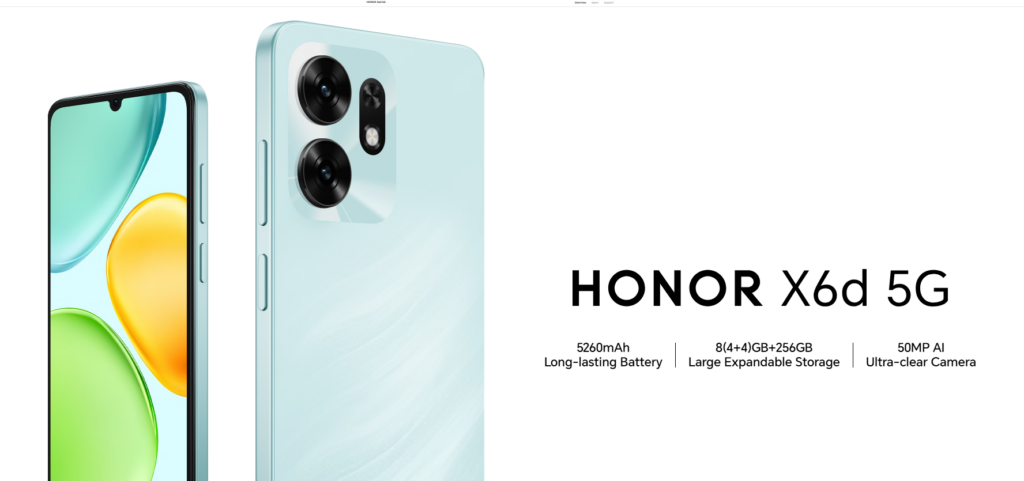
Honor X6d 5G

Honor has launched the Honor X6d 5G in the Middle East, strengthening its affordable 5G portfolio. The device arrives with a large display, a Dimensity 6-series chipset, 50-meagpixel primary camera, and a big battery. Here’s a closer look at its full specifications, features, pricing, and availability details.

Honor X6d 5G specifications and features

Honor X6d 5G

On the front, the Honor X6d 5G features a 6.75-inch TFT LCD panel with 720 x 1600 pixels resolution and a 90Hz refresh rate. The screen offers up to 450 nits typical brightness and integrates eye comfort features such as dynamic dimming. The panel is protected by aluminosilicate glass and adopts rounded corners.

The Honor X6d 5G is powered by the MediaTek Dimensity 6300 processor paired with an ARM G57 MC2 GPU. It is offered with up to 6GB of RAM and up to 256GB of storage. The handset runs Android 16 with MagicOS 10 on top, although the company has not yet detailed its future software update roadmap.

The X6d packs a 5260mAh battery, supporting 15W wired charging through a USB Type-C port. For photography, the rear setup consists of a 50-megapixel main camera with an f/1.8 aperture and a QVGA secondary sensor, supporting up to 1080p video recording and 10x digital zoom. The front houses a 5-mgeapixel camera capable of recording 1080p videos.

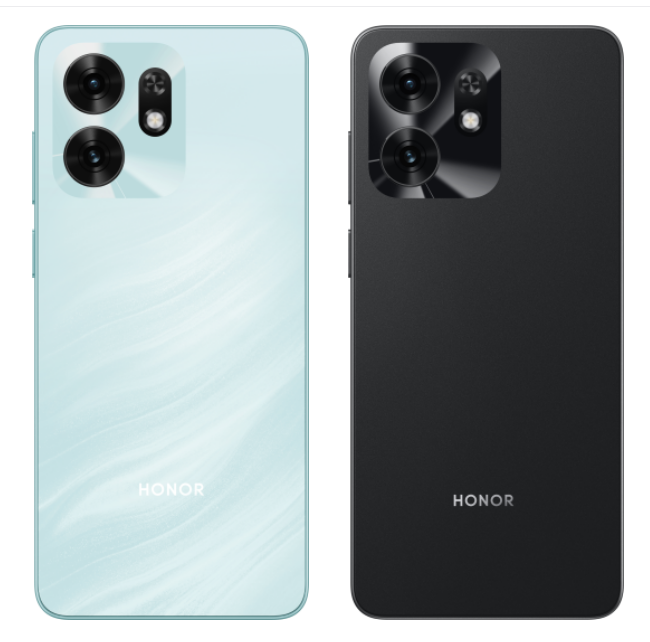
Honor X6d 5G

Additional features include dual Nano SIM slots with 5G support, Wi-Fi 802.11ac, Bluetooth 5.3, a 4.5mm audio jack, a side-mounted fingerprint sensor, and NFC in select models. In terms of design, the phone measures 7.89mm in thickness, with a weight of approximately 186 grams.

Honor X6d 5G price and availability

The Honor X6d 5G comes in Ocean Cyan and Midnight Black colour options. It is available in three memory variants: 4GB+128GB, 4GB+256GB, and 6GB+256GB, starting at around $150 in the Middle East.

For more daily updates, please visit our News Section.

Stay ahead in tech! Join our Telegram community and sign up for our daily newsletter of top stories.

The post Honor X6d 5G launches with 90Hz display, 50MP camera, and 5260mAh battery appeared first on Gizmochina.

Oppo Find N6's special box contents exposed

Oppo is launching the Find N6 very soon, and ahead of that, today in China the purported contents of the Find N6 'gift box' (machine translated from Chinese) got outed. We assume not every Find N6 box will be outfitted with all this stuff, perhaps only those who pre-order will get the contents shown here, or this could be some special edition. Anyway, the box contents are impressive. You get the phone of course, a magnetic stand and charger, an aramid fiber case, a magnetic card holder, and a 20W power bank. The Find N6 is going to be powered by the 7-core Snapdragon 8 Elite Gen 5...

Samsung Galaxy S26 leaked in the most unexpected way last year

Samsung will launch its next Galaxy S series, Galaxy S26 Ultra, this week. However, the Galaxy S26 Ultra accidentally appeared online in a surprising way last year. A short video leaked months before the official Galaxy Unpacked event.

Back in October 2025, a Samsung employee posted a bug report on Google’s Chromium Issue Tracker. This is a website where developers report software problems. The employee wrote about a problem with split-screen mode. To explain the problem, they attached a short video of the phone in action.

And in the comments section, they wrote a simple note that the device is an “S26.” At the time, most people did not notice this small detail.

Samsung Galaxy S26 Ultra 2025 leak

Image via Android Authority

The video does not show much of the phone’s design, but a watermark on the screen shows it was an internal test device, not meant for the public. The bug report itself did not go far.

Google engineers were confused because the video used the Firefox browser to show a problem that was supposed to be about Chromium. They suggested that the frame rate issue might be caused by Samsung’s software, not the browser.

Even though Samsung tries hard to prevent leaks, this shows how small mistakes during normal work can reveal new devices. Fans have now seen a small glimpse of the Galaxy S26 before the official launch. The company’s official Galaxy Unpacked event, happening this week, will reveal the full details of the new phones.

Google Search Top Stories Preferred Source

The post Samsung Galaxy S26 leaked in the most unexpected way last year appeared first on Sammy Fans.

iPhone 18 Pro series enters test production phase, rumor claims

Apple is expected to unveil the iPhone 18 Pro and iPhone 18 Pro Max in September this year, with the iPhone Fold also likely to debut alongside them. A new leak now suggests the iPhone 18 Pro lineup has entered the test production phase. Tipster Fixed Focus Digital shared the details in a Weibo post. As per the leaker, the iPhone 18 Pro models are currently in the test production phase, where Apple conducts production validation runs to ensure there are no issues before the devices enter mass manufacturing. iPhone 17 Pro The production validation run will involve Apple using its...

Samsung announces Galaxy Book 6 lineup arrival in the US on March 11

Samsung has officially announced that its new Galaxy Book 6 series will be available in the US starting March 11, 2026. The lineup includes the Galaxy Book 6 Ultra, Galaxy Book 6 Pro, and Galaxy Book 6.

The Galaxy Book 6 series is designed to be faster, smarter, and easier to carry, making them great for work, school, and everyday use. It uses the new Intel Core Ultra Series 3 processors to help the laptops run smoothly and quickly. You can open apps fast, switch between tasks easily, and enjoy better overall performance.

Samsung has also improved the cooling system. The Galaxy Book 6 Ultra has a bigger cooling system to keep the laptop from getting too hot. For the first time, the Galaxy Book 6 Pro 16-inch also has a cooling system like this. This helps the laptops stay cool and work well, even when you use them for a long time.

Samsung Galaxy Book 6 Laptops

Source – Samsung

The Galaxy Book 6 Ultra and Galaxy Book 6 Pro can play videos for up to 30 hours on one charge. This means you can use them all day without worrying about charging.

The laptops are thin and light, so they are easy to carry in a bag. The Galaxy Book6 Ultra is 15.4mm thick, and the Galaxy Book6 Pro 16-inch is even thinner at 11.9mm. They also have a clean and modern design in a grey color.

Prices start at $2,449.99 for the Ultra, $1,599.99 for the Pro, and $1,049.99 for the Galaxy Book 6. Customers can reserve them now on Samsung’s website or in stores.

The post Samsung announces Galaxy Book 6 lineup arrival in the US on March 11 appeared first on Sammy Fans.

7 Samsung flagships getting February 2026 security patch

Samsung has begun rolling out its February 2026 security update for seven of its flagship Galaxy devices. These devices are Galaxy Z Fold 7, Galaxy Z Flip 7, Galaxy Z Flip 7 FE, Galaxy Z TriFold, Galaxy Z Flip 6, Galaxy Z Fold 6, and Galaxy S24 FE.

The latest update improves security, stability, and overall performance, helping these devices run more smoothly and stay protected against vulnerabilities. The update is currently live for users in Korea and will expand to more countries soon.

The update for these 7 Samsung flagship phones comes with the following firmware versions:

  • Galaxy Z Fold 7 – F966NKSS8AZB2
  • Galaxy Z Flip 7 – F766NKSS8AZB2
  • Galaxy Z Flip 7 FE – F761NKSS8AZB2
  • Galaxy Z TriFold – F968NKSS3AZB2
  • Galaxy Z Flip 6 – F741NKSS3CZB2
  • Galaxy Z Fold 6 – F956NKSS2CYKE
  • Galaxy S24 FE – S721NKSSACZB2
Samsung Galaxy S24 FE

Samsung Galaxy S24 FE

As per the official details, this update brings 37 security fixes in total. 25 come from Google for Android, while 12 are provided by Samsung. It also improves system stability and reliability, clears unnecessary files and cached data, and may update some stock apps automatically.

To install the update, open the Settings app, go to Software update, and tap Download and install. After the download finishes, tap Install now to apply the update. Installing it ensures your device stays secure and performs at its best. Also, it makes your Galaxy device ready for the upcoming update, which includes One UI 8.5.

Google Search Top Stories Preferred Source

The post 7 Samsung flagships getting February 2026 security patch appeared first on Sammy Fans.

Major shake-up at Xbox: Insider speaks of historic job cuts and a “dagger” in the console’s back

After the unexpected leadership shake-up at Xbox, an alleged insider leak is adding to the uncertainty. While new chief Asha Sharma has promised a renewed focus on creativity and hardware following the departures of Phil Spencer and Sarah Bond, the source warns of large-scale layoffs and a bleak future for the Xbox console.

Samsung led European smartphone market in 2025, Apple and Honor grew the most in the Top 5

According to a new release by Omdia, Samsung led the European smartphone market (excluding Russia) in 2025, with 46.6 million units shipped and a 35% market share. Apple was in second with 36.9 million units and 27% market share, followed by Xiaomi with 21.8 million shipments and a 16% slice of the pie, Motorola with 7.7 million units shipped and 6% market share, and Honor reaching the Top 5 for the first time with 3.8 million devices shipped for a 3% market share. Interestingly, Apple and Honor were the only Top 5 brands actually growing in Europe compared to 2024, by 6% and 4%,...

Samsung loads Camera Assistant with powerful new controls – Check all features

Samsung has pushed a new update for Camera Assistant with version 4.5.00.19. This update adds a bunch of new camera features and improvements. It shows that Samsung wants to give users better control and better photo and video quality. 

According to the changelog of the update, this update brings simple but powerful tools to enhance Galaxy Photography. Let’s explore the changes.

New Features of Camera Assistant

The fresh update brings Touch AF/AE in Pro Video mode. This lets users tap on the screen to change focus and brightness while recording a video. Focus peaking is now available in Pro modes too. This helps users easily see what is sharp and in focus. There are also new settings like speed and sensitivity to control how fast and how smoothly the camera focuses.

Samsung Camera Assistant new features

Image via TarunVats

Also, the update adds a 24MP photo option. This gives clear and detailed pictures without making file sizes too large. There are also more controls in Photo Mode for users who like to adjust settings manually. Optical Image Stabilization (OIS) has been improved to reduce shaking in photos and videos. A new swipe gesture on the shutter button makes taking pictures faster and easier.

For video recording, Samsung has added a video softening option. This can make faces look smoother. The app also supports 8K recording when mirroring. Users can now save their favorite settings as presets in Pro Mode. On-screen indicators can also be customized to make the camera screen look cleaner.

There is also support for TILTA wireless lens controllers, which may help professional users. Aside from this, Samsung has also added more modes and improvements to make camera controls and taking photos easier.

Samsung is going to launch the Galaxy S26 series this week. It seems like the company is making the camera ready for this series with new features. Stay tuned.

Google Search Top Stories Preferred Source

The post Samsung loads Camera Assistant with powerful new controls – Check all features appeared first on Sammy Fans.

Xiaomi teases the global 17 Ultra with a video

Xiaomi launched the 17 Ultra in China in December and the phone will finally make its global debut on February 28, the company has recently revealed. Today, it's uploaded a very quick teaser video for the global device on YouTube, you can see it below. It features the colorway that's called Starlit Green internationally (and something resembling Starry Green in China). The international variant of the Xiaomi 17 Ultra is expected to have identical specs to the Chinese version, aside from the battery capacity, which is rumored to be just 6,000 mAh (vs. 6,800 mAh in China). The prices...

Take a first look at Samsung Galaxy S26 Ultra camera shots

Samsung is going to launch the Galaxy S26 series on 25 February 2026. Even before the company officially launches it, the Galaxy S26 Ultra has been seen online. Some early photos taken with the Galaxy S26 Ultra are now available, which gives fans a first look at its camera performance.

Content creator Sahil Karoul shared several photos taken from the Galaxy S26 Ultra on X. The pictures show grocery store fruits and vegetables, yellow flowers, and a person’s portrait.

He also shared some comparison photos with the Galaxy S25 Ultra, including a nighttime building shot. From these pictures, the Galaxy S26 Ultra images look a little brighter and sharper than the S25 Ultra. Karoul did not say which camera lens was used for each shot.

Samsung Galaxy S26 Ultra Camera image leak Samsung Galaxy S26 Ultra Camera image leak

However, leaks suggest the Galaxy S26 Ultra may have wider camera apertures. The main 200MP camera may have f/1.4 (previously f/1.7), and the 5x zoom camera may have f/2.9 (previously f/3.4). Wider apertures let more light in, which can make photos brighter and clearer.

10x Zoom
S25u vs S26u pic.twitter.com/u10BT9qTyC

— Sahil Karoul (@KaroulSahil) February 23, 2026

Samsung will officially launch the Galaxy S26 series at Galaxy Unpacked later this week. These early photos give a first idea of how the cameras perform.

For now, these leaked images give fans a sneak peek at the Galaxy S26 Ultra’s camera improvements and photo quality. With the launch just days away, people are excited to see the full features of Samsung’s newest flagship phone. Stay tuned for more information.

Google Search Top Stories Preferred Source

The post Take a first look at Samsung Galaxy S26 Ultra camera shots appeared first on Sammy Fans.

Motorola officially confirms the Edge 70 Fusion's main specs, shows all the colors

Motorola's upcoming Edge 70 Fusion has been leaking a lot lately, and a few days ago the company showed us the rear finishes of the three colorways and told us the device would have a Sony-made main camera sensor. Today Motorola is revealing even more, starting with that 50MP main camera which is using the Sony Lytia 710 sensor. Meanwhile, the Flipkart microsite for the Edge 70 Fusion is also live now, and it shows us the phone in all three colors: Pantone Silhouette, Pantone Blue Surf, and Pantone Country Air. All three feature "leather-inspired" textures. The microsite reveals...

Samsung’s exclusive Privacy Display could soon reach more Android phones

Samsung’s new Privacy Display feature may not stay exclusive for long. A new leak suggests that other Android phone makers are preparing to launch similar technology later this year. It means Samsung could soon face competition in this new area of smartphone privacy.

A popular Weibo tipster, Digital Chat Station, reveals that several Chinese smartphone brands are currently testing hardware-based privacy displays. This technology is similar to what Samsung will introduce with the Samsung Galaxy S26 Ultra.

In addition to this, the tipster claims that the first non-Samsung phones with this feature could launch as early as September 2026. It means that Samsung’s Privacy Display feature may no longer be exclusive. 

Samsung Privacy Display for other devices

Image via Android Authority

The leak does not mention specific brands, but companies like Xiaomi, OPPO, and vivo are possible candidates. These brands often launch new flagship phones in September.

Unlike regular privacy features that use software tricks, this new solution works at the hardware level. Many phones today rely on screen dimming or filter effects to make displays harder to read from the side. Samsung’s approach is different because the privacy protection is built directly into the display panel.

With the Privacy Display feature, the screen physically limits viewing angles, so only the person holding the phone can clearly see what’s on it. Anyone looking from the side may see a dark or blurred screen. 

Samsung is expected to keep this Privacy Display feature exclusive to the Galaxy S26 Ultra. For now, the information remains a rumor, but it clearly shows that smartphone makers are focusing more on improving user privacy. Stay tuned.

Google Search Top Stories Preferred Source

The post Samsung’s exclusive Privacy Display could soon reach more Android phones appeared first on Sammy Fans.

Samsung’s Gallery Assistant Beta has now wrapped up

Samsung’s Gallery Assistant app has reportedly completed beta testing and is now ready for official release. The beta phase has ended in Korea, and the stable version rollout will soon start. The official version will be more stable, fix bugs, and may include new features.

A post on a Korean forum shared that the beta program of the Gallery Assistant has ended because the app is now stable. The official version is expected to work better and give users a smoother experience when editing photos and videos.

Gallery Assistant makes it easy to edit many photos and videos at the same time. Instead of changing each file one by one, users can apply edits to several files together. This saves time and makes managing large collections of media faster and simpler. This app is especially helpful for Samsung Galaxy users who want to organize and improve their photos and videos quickly.

Samsung Gallery Assistant Beta testing

Image via Samsung Community Forum

The beta version of Gallery Assistant was released last year to test new features and gather feedback from users. Samsung used the beta to fix problems and improve performance. Now that the beta is over, the app is ready for everyone to use in a stable form.

As the beta ended, those who were trying the new features via the beta version will soon enjoy the stable version. To update and install, open Galaxy Store, go to Updates, find Gallery Assistant, and tap Update to enjoy better stability.

The official rollout will start gradually, so some users may get it later than others. Keep checking the Galaxy Store to get the latest version and enjoy a smoother, faster Gallery Assistant app. Stay tuned for more information.

Google Search Top Stories Preferred Source

The post Samsung’s Gallery Assistant Beta has now wrapped up appeared first on Sammy Fans.

Oppo unveils new A6 phone with 7,000mAh battery, A6s, A6i+ and A6v also launch

Oppo has a large number of devices named “A6” already, but it can always add more – and it just did, adding four more new models. It would have been nice if it gave them unique names, but there are only so many letters and numbers available... or something. So here is the Oppo A6. No, not this Oppo A6. This new phone (model number PLS120) is slightly smaller with a 6.57” 1080p+ AMOLED display – this is a higher quality panel than the 6.75” 720p+ IPS LCD of the global version. The new panel also features an under display fingerprint reader (optical), which replaces the side-mounted...

Xiaomi Pad 8's global launch set for February 28

After recently confirming the global launch date for the Xiaomi 17 and Xiaomi 17 Ultra, the company has now revealed that the Xiaomi Pad 8 will also debut at the same launch event. The phones and tablet will also debut in India on the same date. The Xiaomi Pad 8 will see its global and India launch on February 28. The company confirmed that it will be powered by the Snapdragon 8s Gen 4 SoC and pack a 9,200mAh battery. It will also support the Focus Pen Pro stylus. Based on the confirmed details, the global variant is likely to share the same specifications as the Chinese...

Samsung skipping One UI 8.5 update for the Galaxy S21 FE?

New information has raised questions about whether the Samsung Galaxy S21 FE will receive the upcoming One UI 8.5 update. Some users are now worried that the phone might miss this major software upgrade before its support period ends.

Samsung usually releases all Android-based One UI updates (smaller or bigger) to its flagships if the device is eligible for the main Android version. Like, if any Samsung device is eligible for Android 14, then it will receive all the One UI updates that are based on this Android version, such as One UI 6, One UI 6.1, and One UI 6.1.1.

So, it would be surprising if the Galaxy S21 FE does not receive One UI 8.5. Also, One UI 8.5 has not yet been released for any Galaxy device. It is expected to roll out in March, so there is still time for Samsung to clarify its plans.

But the new information about the One UI 8.5 update comes from a response given by a customer care representative at Samsung India. According to the reply shared by a user (Saurabh Patni), the representative mentioned that the Samsung Galaxy S21 FE will not receive the upcoming update.

Samsung Galaxy S21 FE One UI 8.5 leak

Image via
Saurabh Patni (X)

The Galaxy S21 FE is still supported by Samsung. The company has promised security updates for the device until January 2027. This means users will continue to receive important security patches for nearly two more years. Since the phone is still under support, many believe it should also get One UI 8.5.

As of now, Samsung has not officially confirmed whether the Galaxy S21 FE will receive One UI 8.5. Users will need to wait for a clear announcement from the company. Stay tuned.

Google Search Top Stories Preferred Source

The post Samsung skipping One UI 8.5 update for the Galaxy S21 FE? appeared first on Sammy Fans.

Here are all the new devices Apple plans to release next week

Apple is hosting a “special Apple Experience” across New York, London and Shanghai next week, scheduled for Wednesday, March 4 but it won’t be an actual keynote. Instead, Apple will be hosting hands-on experiences for media members to test out new devices, which will be announced in the days leading up to the gatherings. Apple Experience invite Mark Gurman from Bloomberg News suggests we’ll see a handful of announcements between March 2 and March 4, which will be in the form of press releases. We should see the new iPhone 17e alongside new iPads and MacBooks. Apple is set to debut...

Honor will introduce its first humanoid robot at the MWC

Honor has confirmed that it will bring the Magic V6 foldable and the Honor Robot Phone to the MWC – now the company has revealed additional devices that will be at the conference, including another robot! The Honor Magic V6 will take the crown as the foldable phone with the largest battery. Additionally, the company will bring the Honor MagicPad4 tablet and the MagicBook Pro 14 laptop, which will have “ultra-slim” form factors and, of course, AI. Honor is bringing its first humanoid robot to the MWC, not just the Robot Phone Here’s one that caught us by surprise – Honor will...

Samsung Bixby is no longer dumb thanks to Gen AI

Samsung has ended the bad luck of Bixby AI assistant by turning its dumb behaviour into an intelligent service that you could compare to Google’s Gemini.

The Korean phone maker has announced that its home-grown AI assistant is making a big jump with the One UI 8.5 software update, which will make an official debut with the Galaxy S26 series.

The new Bixby is now able to process natural language and reply in the same manner, just like Gemini. On the other hand, its UI upgrade aligns with Samsung’s new design language. Early access to the new Bixby is distributed with the 4th One UI 8.5 beta, and first impressions of its features are better than expected.

You can ask anything to Bixby, and it will come up with an answer. On top of that, it can generate text content and share a detailed analysis or answers. It has deepened integration into the system apps with intuitive options, and some serious work has been done on how it will display on the screen.

Bixby can now draft an email on your behalf; you just need to tell it the email address, subject, and body. From a user perspective, this is a brand new experience and entirely different from what Bixby used to be. I’ve been using the AI assistant since the Galaxy S9 era, and its initial launch gave the world a Google Assistant competitor.

Samsung did the same by expanding its access across the entire ecosystem, such as smart TVs, speakers, and home appliances. However, the arrival of generative AI and large language models (LLMs) has turned things worse for this old-age Bixby.

Thereafter, Samsung chose Google’s Gemini as the show runner, which was a good decision, given the requirement for a competitive edge over Apple. Behind the scenes, Samsung was making gradual progress and refining its AI solution with Perplexity with a more reasonable answer.

Partnership with Perplexity

The latest One UI 8.5 beta reveals Perplexity has a major role in this advancement. Bixby now has two modes: the first processes requests on-device, and the second on the Perplexity server.

Basic features, such as changing phone settings, creating emails, and options, are still handled on-device, and big queries, including content writing and information search, are now handled by Perplexity servers.

This development comes as Samsung has promised to increase its Gemini-powered device share through 2026. The phone maker has officially confirmed that it wants to offer more AI agents for a diverse range of options rather than relying only on a single tool.

The post Samsung Bixby is no longer dumb thanks to Gen AI appeared first on Sammy Fans.

Galaxy Enhance-X adopts One UI 8.5 design and Good Lock vibes

Samsung’s Galaxy Enhance-X app is getting a major design overhaul in One UI 8.5, along with Good Lock vibes. With the latest update to the AI-powered application, editing on a Galaxy phone just got a lot more serious.

Enthusiast GalaxyTechie revealed the One UI 8.5-based Galaxy Enhance-X app with Good Lock vibes. The app’s version 16.3.00.31 brings a major change to the user interface and adds support for installable plugins.

Samsung has quietly rebuilt the app around a cleaner, more deliberate layout that mirrors One UI 8.5 aesthetics. Open the updated app and you are greeted with a new three tab structure: Plugins, Home, and History.

Rounded elements, refined spacing, and subtle animations give it that One UI 8.5 flavor.

One UI 8.5 Galaxy Enhance-X

Credit – Galaxy Techie

The real headline feature is the new Plugin system. Samsung is introducing downloadable plugins that expand editing functions. Right now, the spotlight is on nine Film Style Filters; each preset leans into a distinct film inspired mood.

Cinematic Glow stands out as it adds a soft, dreamy bloom to highlights. There is also a Focus Shift tool that intelligently isolates a subject and blurs the background.

One UI 8.5 Galaxy Enhance-X

Credit – Galaxy Techie

Beyond editing, version 16.3.00.31 introduces stronger document tools: annotation, translation, PDF to JPEG conversion, and even bulk editing. This turns the app into a lightweight productivity companion for scans, notes, and markups.

Samsung is clearly positioning Enhance-X as more than a filter app. With this update, it feels integrated, purposeful, and aligned with the broader Galaxy AI direction.

The post Galaxy Enhance-X adopts One UI 8.5 design and Good Lock vibes appeared first on Sammy Fans.

Jim Keller's Royal Core project: Intel is actively developing Unified Cores to ditch separate P and E-cores in future CPU architectures

Jim Keller's Royal Core project was reportedly dismantled by Intel into individual technologies that could be used in different CPU architectures. One of these technologies was a Unified Core design that would see Intel ditch separate P and E-cores. It has now come to light that Intel is indeed working on Unified Cores.

Here’s the Nothing Phone (4a) and its new Glyph Bar

Nothing is launching its Phone (4a) series on March 5 and the teaser campaign is in full swing. Following plenty of rumors and leaked specs, we finally have an actual look at one of the two devices – the Nothing Phone (4a). As expected, Phone (4a) will retain the signature semi-transparent look of all previous phones from the Nothing brand. The upcoming device will feature an even more exposed lower back portion with a dual-tone approach and will be available in at least four color options, including white (pictured below), black, blue and pink. Nothing Phone (4a) One of the...

Screenshots confirm the two battery capacities for the Honor Magic V6

The Honor Magic V6 will be available in two versions – one with BeiDou satellite messaging and one without. However, there is an even bigger difference between the two. The Magic V6 with model number PNM-AN20 will have satellite connectivity, plus a massive 7,150mAh battery – the biggest yet on a foldable! It will also support an equally impressive 120W fast charging. There has only ever been one foldable that went that fast. The version without satellite connectivity, the PNM-AN10, will have a smaller 6,850mAh battery and will support slower (but still very fast overall) 80W...

Galaxy S22 caught in endless reboots after latest Samsung update

Samsung pushes new software updates with tighter security and smoother performance. Meanwhile, the latest update on the Galaxy S22 series has caused a severe issue: endless restarts.

Reports from Reddit, via Piunikaweb, confirm the Galaxy S22 series endless reboots. Shortly after installing the update, some users say their phones began restarting over and over again. Some describe devices overheating or freezing to the point of being unusable.

This is not limited to a single model; both the base S22 and the Ultra are mentioned repeatedly in user threads. A few owners say their devices became so unstable that they were effectively unusable.

Some users tried a factory reset as well, but it didn’t make any impact. Several users attempted recovery mode wipes, only to find the boot loop returning. Others went deeper, clearing cache partitions or even reflashing firmware through PC tools.

  • These methods are not for casual users.

There is one workaround that appears to help in some cases. Updating the One UI Home app seems to stabilize certain affected devices.

To be clear, this does not appear to be affecting every Galaxy S22 owner. Some users responding to the same threads say their devices updated without issue.

Security patches are supposed to protect devices, not send them into an endless restart. The silence from Samsung so far only adds to the anxiety; there is no detailed public statement so far.

If you own a Galaxy S22 device and it’s functioning accurately, don’t update its software as for now.

The post Galaxy S22 caught in endless reboots after latest Samsung update appeared first on Sammy Fans.

Sabotage? Galaxy S26 Ultra 512GB on sale in Dubai; huge price drop

In a shocking twist, a Dubai-based retailer has already put the Galaxy S26 Ultra on sale at a significantly higher price. The seller is selling African units of the Galaxy S26 Ultra, now in 512GB as well, and the price dropped significantly.

YouTuber Sahil Karoul announced the pre-launch purchase of the Galaxy S26 Ultra for 12,000 AED in Dubai. It’s almost double the price of the flagship phone when it goes on sale around March 11, 2026.

After tons of leaks, the YouTuber revealed that the device is now 4,000 AED cheaper than the first purchase. It brings the pre-launch mode’s price to around 8,000 AED in Dubai, which is still 1.5x more expensive than the real cost.

What’s more, the 512GB version is also selling in the market. Anyone willing to pay such huge money for an early treat can visit the store and make the purchase.

It has just made Unpacked boring and raises questions about Samsung’s product control strategy. While we were awaiting a slew of promotional material, the internet was flooded with in-hand shots and videos, that too without control.

Samsung Galaxy S26 Ultra Unboxing

Source – Sahil Karoul

The post Sabotage? Galaxy S26 Ultra 512GB on sale in Dubai; huge price drop appeared first on Sammy Fans.

Full Galaxy S26 Ultra unboxing just made Samsung Unpacked boring

Galaxy Unpacked is officially scheduled for this Wednesday. The wait is almost over, and yet, in a shocking twist, the Galaxy S26 Ultra unboxing has already happened.

Hours before Samsung takes the stage in San Francisco, a retail unit of the Dubai and African variant surfaced online via Sahil Karoul. The pre-launch unboxing of Galaxy S26 Ultra stole the thunder from Samsung Unpacked.

Galaxy S26 Ultra in its White colorway is shown in the video. It gives us the cleanest look at the retail box, what it contains inside, and how the phone looks. The Dubai-based YouTuber also tested the device on various segments.

Samsung has removed the individual camera rings this time. The rear now looks flatter, more unified, with a circular periscope module that stands out subtly against the White finish. Rounded edges are back, prioritizing in-hand comfort.

Samsung Galaxy S26 Ultra Unboxing

Source – Sahil Karoul

Coming to the front, the Galaxy S26 Ultra has more rounded corners. The difference is clearly visible from the screen size, more than the back view. Key specs like refresh rate and resolution remain unchanged.

Privacy Display is the biggest highlight of the Galaxy S26 Ultra. The YouTuber tested out the phone’s signature feature outdoors. It practically saves on-screen content from peeping eyes, as shown in the unboxing video itself.

Samsung Galaxy S26 Ultra Unboxing

Source – Sahil Karoul

Gaming performance has been tested across different titles. The device runs effectively faster and cooler than its predecessor. The new Snapdragon 8 Elite Gen 5 for Galaxy chip is paying off the technological upgrades here.

The Unboxing video will follow camera review soon, as promised by Sahil. The first impressions video alone features some initial daytime and low-light shots. The software looks stable, with more improvements likely ahead.

  • You can watch the full video here. Credits – Sahil Karoul

The post Full Galaxy S26 Ultra unboxing just made Samsung Unpacked boring appeared first on Sammy Fans.

Breaking: Samsung releases February 2026 update for Galaxy S25 Ultra, Edge and FE

Samsung starts February 2026 update rollout to the Galaxy S25, S25+, S25 Ultra, S25 Edge and S25 FE. The firmware has just dropped in South Korea, and users around the world are lining up to grab the latest patch.

Galaxy S25 (Edge too) users in Korea can identify the February 2026 update via PDA build version ending with BZB2. If you own a Galaxy S25 FE, the firmware ends with AZB2, as the device has an edge over the main models.

Earlier this month, Samsung revealed its February patch brings fixes for 37 vulnerabilities. The package is dominated by patches provided by Samsung. Google’s participation is here, but the contribution is minimal.

February patch is necessary before the major One UI 8.5 upgrade. It sets the foundation for the next big release, slated after the Galaxy S26 release. If Samsung holds the rollout in March, we may see the OTA dropping in April.

How to update

Updating software on Samsung phones doesn’t require manual flashing. You just need to enter System Settings and initiate the Software update.

Before you begin, make sure your phone is charged above 50 percent. While not necessary, creating a backup of your device’s settings and data is always a good precaution.

The post Breaking: Samsung releases February 2026 update for Galaxy S25 Ultra, Edge and FE appeared first on Sammy Fans.

Don’t expect Bluetooth features on the Galaxy S26 Ultra’s S Pen

Last year, Samsung made the controversial move of removing Bluetooth capabilities from the Galaxy S25 Ultra’s S Pen and if you were hoping for some restitution with the S26 Ultra, we have some unfortunate news. A new hands-on video of the S26 Ultra shows that its S Pen will once again lack Bluetooth functionality and will simply function as a stylus. The video is courtesy of YouTuber Sahil Karoul, who managed to purchase a Galaxy S26 Ultra unit ahead of its announcement. Bluetooth-enabled S Pens of the past allowed users to use the stylus as a tiny remote for all sorts of...

Samsung confirms what Galaxy S26 fans were hoping for

After Qualcomm, Samsung has now formally confirmed the big Galaxy S26 reveal with Snapdragon. The next Unpacked is just days away, and the lineup is bringing the world’s fastest and most advanced mobile processors this year.

Samsung is seemingly treating Exynos 2600 as a side project, as no promo material or social handle posts promoting the in-house chip. In a recent development, Samsung has now teased a big reveal, the Galaxy S26 series, with Snapdragon.

Snapdragon 8 Elite Gen 5 for Galaxy is tuned specifically for Samsung flagships. It has an overclocked central processing unit (CPU) over the standard version, bringing two prime cores clocked at 4.74 GHz.

A leaked Galaxy S26 Ultra promo revealed that the chip delivers 39 percent better NPU, 24 percent more capable GPU and 19 percent faster CPU than the Snapdragon 8 Elite.

Exynos is making a comeback to Samsung flagships in 2026. The company has succeeded in approving Exynos 2600 for the Galaxy S26 series. It’s the world’s most advanced processor manufactured on a 2nm process.

A larger portion of the Galaxy S26 series will still feature the Snapdragon 8 Elite Gen 5 for Galaxy processor. Specifically, all the S26, S26+ and S26 Ultra variants in the US, Canada and China will use Qualcomm-made processors.

Samsung Galaxy S26 Snapdragon

The post Samsung confirms what Galaxy S26 fans were hoping for appeared first on Sammy Fans.

Upcoming Chinese flagships may offer privacy display tech similar to Galaxy S26 Ultra

One of the most talked-about features of the upcoming Samsung Galaxy S26 Ultra is the Privacy Display, which uses new AMOLED technology to obscure on-screen content from prying eyes. According to a new leak, upcoming Chinese flagships may also offer a similar feature. Prominent tipster Digital Chat Station claims that Chinese smartphone makers have begun testing hardware-level privacy screen technology, similar to the upcoming Galaxy S26 Ultra. vivo X300 Pro The tipster says the feature could appear in flagship smartphones launching around September this year. Recent rumors...

Galaxy S26 Ultra final prices leak; 16GB (1TB) variant jumps $300?

Samsung has reportedly finalized the Galaxy S26 Ultra prices, and South Korean consumers may be paying up to 20 percent extra. The smartphone’s top-tier variant might be getting a steep price hike of roughly $300 in Korea.

According to Chosun, Samsung Galaxy S26 Ultra prices have been decided. The company is raising prices across the memory variants. If you’re considering getting the 1TB model, you might have to take a step back.

The report says that the S26 Ultra is set to launch at 1,797,000 won (~ $1,250) for 256GB, 2,050,900 won (~ $1,425) for 512GB and 2,545,400 won (~ $1,765) for 1TB. By storage capacity, the price hike grows steeper with larger storage.

Galaxy S26 Ultra price

  • 12GB + 512GB – 1,797,000 won (~ $1,250)
  • 12GB + 512GB – 2,050,900 won (~ $1,425)
  • 16GB + 1TB – 2,545,400 won (~ $1,765)

The price figures are for South Korea; USD converted at the exchange rate as of February 23.

Comparison with the S25 Ultra

The 1TB model has been finalized at 2,545,400 won (~ $1765). This is 418,000 won (~ $290) more than the previous Galaxy S25 Ultra 1TB (2,127,400 won/~ $1475), representing an increase of approximately 20%.

The Galaxy S26 Ultra 512GB model is priced at 2,050,900 won, up 11.3% from the previous model (1,841,900 won). The 256GB model is set at 1,797,000 won, a 5.8% increase from its predecessor (1,698,400 won).

The spike in prices is fueled by rising costs of components. Over the past couple of months, the costs of DRAM and NAND flash memory chips have skyrocketed. It remains to be seen if the impact is seen in the United States.

An industry insider noted,

“The Ultra lineup has a high proportion of large-capacity storage adoption, and as memory prices have surged recently, the cost burden for higher-capacity options like 1TB has been more significantly reflected in pricing.”

Get ready for Unpacked on February 25.

Samsung Galaxy S26 Ultra Live Image

Image courtesy – @KaroulSahil/X

The post Galaxy S26 Ultra final prices leak; 16GB (1TB) variant jumps $300? appeared first on Sammy Fans.

Another rumor claims iPhone 18 Pro will get an upgraded selfie camera

Back in November last year, a report claimed that Apple would upgrade the selfie camera across the entire iPhone 18 lineup. A new rumor now corroborates the upgrade but suggests the improved front camera may be limited to the Pro models. According to tipster Whylab, the iPhone 18 Pro and iPhone 18 Pro Max will feature 24MP selfie cameras, a claim that aligns with the November report that also pointed to a 24MP front sensor upgrade. If accurate, the new sensor should deliver improved performance for selfies, video calls, and low-light selfies. The iPhone 18 Pro lineup is also...

Galaxy S26 Ultra's Privacy Display feature showcased in leaked hands-on video

Just days ahead of the Galaxy S26 series launch event, real-life images and a hands-on video have surfaced on social media, offering a close look at the Galaxy S26 Ultra. The leaks highlight the Privacy Display feature, the S-Pen, and even reveal the phone’s benchmark scores. YouTuber Sahil Karoul managed to get his hands on the upcoming Galaxy S26 Ultra, claiming that a retailer in Dubai already has the phone on sale. The YouTuber shared several videos and images of the phone on X, revealing key aspects of the device. In one clip, Karoul demonstrates the Privacy Display feature,...

Galaxy S26 Ultra repeats the S25 Ultra’s S Pen mistake

Samsung last year dumped Bluetooth features from the S Pen on the Galaxy S25 Ultra, and the new Galaxy S26 Ultra repeats that lack.

A video leaked of a pre-launch retail unit confirms that the Galaxy S26 Ultra doens’t feature Bluetooth-powered S Pen features. It’s not a sudden shift, but retained from the previous year’s flagship model.

YouTuber Sahil Karoul, who is the world’s first person to own the S26 Ultra, tested the S Pen on the device. The demo video showcases that the device repeats the lack of Bluetooth, erasing hopes for an upgraded S Pen.

When Samsung removed Bluetooth support, Galaxy S25 Ultra buyers criticized the move and asked if it’s a start of the complete removal of the S Pen in the following year(s).

S Pen faced two massive shifts in 2025, and 2026 looks no different. The Galaxy S26 Ultra still lacks S Pen features seen in the S24 Ultra and previous models. Air Actions are the first victim of the lack of Bluetooth in the stylus.

Samsung Galaxy S26 Ultra S Pen Bluetooth Lack

Galaxy S26 Ultra has increased the curvature of its corners. Samsung also pushed the S Pen silo to the edge, making the upper button rounded on one side. It makes the S Pen vulnerable if it’s inserted incorrectly or by accident.

The post Galaxy S26 Ultra repeats the S25 Ultra’s S Pen mistake appeared first on Sammy Fans.

Samsung boosts AI Subscription Club benefits for Galaxy S26

Alongside the upcoming Galaxy S26 series, Samsung is rolling out an upgraded “New Galaxy AI Subscription Club.” It looks like a richer bundle, but it’s a more complex bet on how long you plan to hold onto your phone.

Galaxy S26 introduces enhanced AI Subscription Club

Samsung launched enhanced Galaxy AI Subscription Club ahead of the Galaxy S26 series debut. Now the headline change: a new 3-year tier priced at KRW 8,900 per month ($6.18). The existing 1-year and 2-year plans remain at KRW 6,900 per month ($4.79).

What you get for that higher monthly fee is Samsung Care+ Smartphone Loss & Damage coverage for 36 months, along with a 25 percent residual value guarantee if you return the device at the end, with loss coverage that is new at this tier.

The plan allows one loss claim per year with a 25 percent deductible. Damage claims are unlimited, with a 25 percent deductible. It also includes battery replacement, free repairs, and in-home service.

The new 3-year plan trades higher short-term value retention for longer protection against the worst-case scenario: losing the device entirely.

To qualify for the residual value payout, you must return the device within two months, including the final subscription month.

Subscribers get up to KRW 3,000,000 ($2,083.33) in compensation for cyber financial crimes such as phishing or smishing, with no deductible.

There is also up to KRW 500,000 ($347.22) in coverage for online direct transactions or shopping fraud, though here the deductible is 20 percent of the loss or KRW 100,000 ($69.44), whichever is greater.

Customers who enrolled in the 1-year plan with a Galaxy S25 and re-enroll after buying a new Galaxy device will receive three months of free subscription fees, plus one year of Samsung Fire & Marine 365 Travel Insurance.

Samsung Electronics Korea VP Jung Ho-jin commented:

“The renewed New Galaxy AI Subscription Club has been designed to offer customers broader choices and wider coverage. We will continue to evolve our subscription services to meet changing smartphone usage patterns and customer needs.”

The original program, introduced last year, bundled a residual value guarantee of up to 50 percent, Samsung Care+ damage coverage, and accessory discounts. Samsung says 1 in 5 customers who bought flagship unlocked models signed up.

Samsung Galaxy S26 Ultra new poster

Image via Alfaturk16

The post Samsung boosts AI Subscription Club benefits for Galaxy S26 appeared first on Sammy Fans.

[New teaser] Samsung showcases Galaxy S26’s Privacy Display

New teaser drop – February 22

Samsung just dropped a new teaser, demonstrating how the Privacy Display on Galaxy S26 Ultra is a must-have feature on today’s smartphones.

Your phone screen should be your business. Get ready to upgrade to the next level of privacy. Can your phone do that?

Reserve your $30 credit for up to $930 in total savings during pre-order: https://t.co/dTlilFNoHy pic.twitter.com/uuPazVPDnb

— Samsung Mobile US (@SamsungMobileUS) February 22, 2026

Original article – February 14

Samsung has confirmed that the Galaxy S26 series will launch on 25 February 2026. Ahead of the official release, the company has shared a new teaser video revealing an interesting feature – Privacy Display.

In the teaser, Samsung shows how the new Privacy Display feature works. The Galaxy S26 series will include a special zero peeking mode. This means that when the feature is turned on, people sitting beside you will not be able to see what is on your phone screen.

The privacy display hides some of the pixels through a collaboration between the hardware and software. With a hidden side view, only the front user can view the on-screen content.

Samsung Galaxy S26 Teaser

Image via Samsung Mobile US (X)

The Privacy Display feature works through a combination of hardware and software. It hides certain pixels on the screen in a smart way. When you look at the phone directly from the front, you can clearly see everything on the screen. However, if someone tries to look at your phone from the side, the screen appears dark or black. This helps protect your personal information in public places.

The teaser video shows three people sitting next to each other in a public place. The person in the middle is using her Galaxy S26 phone, while the two people sitting beside her can easily see her screen. She then turns on the Privacy Display feature.

For your eyes only. 😍 Get ready for the next level of privacy. Can your phone do that? #GalaxyAI

Reserve now: https://t.co/dTlilFNoHy pic.twitter.com/RvxAhKIXf1

— Samsung Mobile US (@SamsungMobileUS) February 14, 2026

Once it is activated, the side view of the screen becomes dark. The two people next to her can no longer see what is displayed. From their angle, the screen looks completely black, while the main user can still see everything clearly from the front.

Can your phone do that? No, as Samsung is going to release the Privacy Display feature with the Galaxy S26 series in February 2026. You can reserve for the Galaxy Unpacked 2026 now. Stay tuned.

Google Search Top Stories Preferred Source

The post [New teaser] Samsung showcases Galaxy S26’s Privacy Display appeared first on Sammy Fans.

Galaxy S26 Ultra periscope boasts ALoP camera technology?

A fresh theory surrounding the next Galaxy S Ultra phone is gaining traction, and this one is rooted in optics rather than wishful thinking. Samsung may have equipped the Galaxy S26 Ultra periscope camera with ALoP technology.

According to analysis shared by @MyDaebakCafe on X, Samsung looks to have applied All Lenses on Prism (ALoP) technology to the Galaxy S26 Ultra periscope camera. If this holds true, it would mark a meaningful shift.

The claim is not coming out of thin air. It is based on macro-level visual inspection of the camera module. Specifically, how light appears to interact with the periscope structure beneath the cover glass.

Shape or tetraprism systems

In conventional folded zoom designs, light enters the module and hits the prism first. The prism then redirects the light sideways into a horizontal optical stack. The side effect is a visible “deep well” when you peer into the camera.

All Lenses on Prism

Instead of placing the prism at the top of the stack, Samsung’s ALoP design positions the lens elements directly on top of the prism. Light hits circular glass first, then travels through refractive curves before reaching the prism below.

The visual evidence suggests the S26 Ultra module shows circular lens elements sitting flush against the cover glass rather than buried in a rectangular cavity.

Samsung Galaxy S26 Ultra Live Image

Image courtesy – @KaroulSahil/X

By stacking lenses above the prism, Samsung can shorten the overall module length. It also allows for larger apertures; a wider aperture means more light gathering and more light means brighter shots and cleaner zoom.

If the Galaxy S26 Ultra is indeed the first mainstream device to adopt it, Samsung seems to be pivoting toward a more refined periscope strategy after iterating through multiple zoom configurations.

The post Galaxy S26 Ultra periscope boasts ALoP camera technology? appeared first on Sammy Fans.

Galaxy S26 Ultra’s strongest Privacy Display mode exposed

Privacy Display turns out to be the most intelligent feature crafted in recent years. Samsung is aggressively marketing the Privacy Display as a critical feature of the Galaxy S26 Ultra, and a new leak just exposed its strongest mode.

A Dubai-based YouTuber has already bought the Galaxy S26 Ultra by paying almost double the retail cost. Samsung is set to reveal the new phones on February 25, but this pre-launch purchase has flooded the internet with early leaks.

Display settings in Galaxy S26 Ultra feature a Privacy display toggle. Next to it is a secondary mode entitled “Maximum privacy protection.” Switching it on launches the maximum on-screen content security on the device.

Privacy display toggles do the same work on the Galaxy S26 Ultra, but if you want the strongest anti-peeping, you need to switch on “Maximum privacy protection,” via IceUniverse.

Samsung Galaxy S26 Ultra Maximum Privacy Protection

In a recent leak, we’ve seen the user interface and customizable options of the Privacy screen feature. The menu allows you to set up the feature to work when and how to function, along with specific app preferences.

Samsung is reportedly utilizing Flex Magic Pixel in the Galaxy S26 Ultra. The Privacy Display feature is backed by this technology alone. Its combination with software and artificial intelligence makes it a truly useful solution.

Galaxy S26 series reveal is scheduled for February 25 at a mega Unpacked event. Samsung is offering up to $900 savings upon trade-in. Reservation is free and enters you into a $5,000 giveaway in the United States.

The post Galaxy S26 Ultra’s strongest Privacy Display mode exposed appeared first on Sammy Fans.

Galaxy S26 Ultra real-world AnTuTu, 3DMark and Geekbench test results surface

Samsung Galaxy S26 Ultra’s first real-world AnTuTu, 3DMark, and Geekbench test results are already out, even before the official debut. The device is powered by an overclocked Snapdragon 8 Elite Gen 5 for Galaxy chipset.

AnTuTu, 3DMark and Geekbench scores out

Samsung’s Galaxy S26 Ultra scored 3.72 million on AnTuTu, alongside 3,648 in Geekbench 6 single-core and 10,898 in multi-core testing. Source – Sahil Karoul

In 3DMark Wild Life Extreme stress testing, the S26 Ultra posted 53.2 percent stability. Peak temperature on the S26 Ultra reportedly reached 44 degrees Celsius during testing.

For context, the S25 Ultra balanced closer to 70 percent under similar conditions.

Samsung Galaxy S26 Ultra AnTuTu, 3D Mark and Geekbench test results

Images: Samsung Galaxy S26 Ultra AnTuTu, 3D Mark and Geekbench test results

he data suggests a meaningful jump over the Galaxy S25 Ultra, especially in multi-core throughput. CPU gains look healthy, and GPU performance also appears strong.

A 3.72 million AnTuTu score is no small feat. The 53 percent stability figure looks less like a hardware limitation and more like unfinished optimization work. 3,648 points in single-core and 10,898 points in multi-core on Geekbench will even improve.

It is worth noting that this is a pre-launch device running non-final firmware.

Early Galaxy S24 and S25 units also showed uneven stability prior to release, only to improve noticeably with launch firmware and subsequent updates. With the official release expected on March 11, Samsung still has time to refine the software.

If Samsung tightens things up before release, the retail S26 Ultra could deliver not just record breaking peak numbers, but also the sustained performance fans actually care about.

The post Galaxy S26 Ultra real-world AnTuTu, 3DMark and Geekbench test results surface appeared first on Sammy Fans.

Inserting S Pen in Galaxy S26 Ultra is trickier than the S25 Ultra

Samsung has increased the Galaxy S26 Ultra corner curvature, which ends up making S Pen insertion trickier than the S25 Ultra.

Days before Samsung’s February 25 Unpacked event in San Francisco, YouTuber Sahil Karoul posted hands-on footage of what he claims is a Galaxy S26 Ultra, which shows S Pen insertion has become a bit tricky.

The video shows Karoul correcting an earlier mistake: the stylus must be inserted tip-down, with precision. The dramatically rounded bottom corners reject anything less, a cost of the design overhaul.

On the Galaxy S25 Ultra, the slot was forgiving. Users could slide the S Pen in from either orientation without thinking. Muscle memory handled the rest, with the S26 Ultra appearing far less tolerant.

Samsung Galaxy S26 Ultra S Pen

Source – Sahil Karoul (X)

A stylus that demands careful alignment risks becoming an ergonomic headache. Notably, the design shift came before rumors that the S27 Ultra could ditch a stylus compartment.

It seems the design change in S26 Ultra is aimed at turning the S Pen into a headache, leading buyers to wish for its departure from the following year’s flagship smartphone.

The same source also exposed the Privacy Display feature in action. The screen turns completely dim from the side angle, restricting exposure to others in crowded places.

Samsung is set to reveal the Galaxy S26 series on February 25. Reservations are already live, securing you a $30 free credit, up to $900 trade-in savings and entry into a $5,000 giveaway.

The post Inserting S Pen in Galaxy S26 Ultra is trickier than the S25 Ultra appeared first on Sammy Fans.

Someone bought a Galaxy S26 Ultra and unpacked its secret feature

Samsung will launch the Galaxy S26 series on Wednesday, but someone has already bought the S26 Ultra and revealed its biggest feature that the phone maker wanted to keep secret until the unveiling event.

A YouTuber Sahil Karoul managed to buy a Galaxy S26 Ultra unit early in Dubai. And it’s not a stolen phone, Sahil was handed over the S26 Ultra by a person from a Samsung shop. He then revealed the phone from all angles and compared it to other devices, including its predecessor.

Among his pre-launch revelations was the new privacy display. Samsung has been teasing this new feature since the day one of the Unpacked event announcement, but it’s no longer a secret.

According to the video, the feature dims the view from all sides. That said, the on-screen content becomes less or almost darkened and hard to see for a person who’s looking from the side. However, that depends on the angle of the sideview.

Samsung Galaxy S26 Ultra Privacy Display

Source – @KaroulSahil/X

This feature will be a part of the display settings, and a live demonstration has showcased how effective it is in real-world scenarios. This flagship offers a new display privacy without disturbing the user experience.

Besides this secret feature, the Galaxy S26 Ultra also has a larger corner radius than the last generation, which enhances its overall look and makes it more rounded.

This is a major pre-launch leak that Samsung may not have been expecting to come out days before the Unpacked event. Now that the cat is out of the bag, we’re waiting for some other interesting features that Samsung will bring to the stage at the Unpacked event.

The post Someone bought a Galaxy S26 Ultra and unpacked its secret feature appeared first on Sammy Fans.

Top 10 trending phones of week 8

The Samsung Galaxy S26 Ultra has been the most popular smartphone in our database for most of 2026's first two months, so no surprises it's still on top of our trending chart the week before its announcement. It's got the newly announced vivo V70 and Infinix Note 60 Pro keeping it company on the podium. The extension of lifecycles caused by surging RAM prices means the Galaxy A56 will get an even longer time in the spotlight - it placed fourth almost a full year after its debut. [#InlinePriceWidget, 13603, 1#] Behind it we have more newly announced phones - the Pixel 10a came in...

Samsung regains top spot in global DRAM market in Q4 2025: Omdia

Samsung-Semiconductors-HBM4

Samsung Electronics reclaimed its position as the world’s largest DRAM manufacturer in the fourth quarter of 2025. Data from market research firm Omdia showed that Samsung achieved a 36.6% share of the global DRAM market by revenue after generating $19.1 billion in sales between October and December. This marked a 40.6% increase from the previous quarter.

Samsung-Semiconductors-HBM4

SK Hynix, Samsung’s closest competitor, recorded a 32.9% market share during the same period. The company reported $17.2 billion in DRAM revenue, up 25.2% quarter-on-quarter. The global DRAM market reached $52.47 billion in Q4 2025, representing a 30% increase compared to the third quarter.

Samsung’s return to the top came one year after losing the lead to SK Hynix in Q1 2025. The company attributed its growth to strong sales of high-value products, including HBM3E (5th-generation High Bandwidth Memory) and DDR5, which are widely used in AI computing and data centers.

Samsung benefited from a 40% increase in average selling prices (ASP) for DRAM due to rising market prices and higher demand for premium server memory products.

Micron Technology, the third-largest player, saw its market share decline to 22.9% in the fourth quarter, down from 25.8% in Q3. China’s CXMT accounted for 4.7% of the market.

Samsung plans to strengthen its leadership by expanding its production of advanced DRAM products such as HBM4 and high-capacity DDR5 memory. The company also aims to meet growing demand for low-power, high-performance DRAM like LPDDR5X in mobile and automotive applications.

For more daily updates, please visit our News Section.

Stay ahead in tech! Join our Telegram community and sign up for our daily newsletter of top stories! 💡

(Via)

The post Samsung regains top spot in global DRAM market in Q4 2025: Omdia appeared first on Gizmochina.

LG launches 1.12kg Gram 14 laptop in Japan with 72Wh battery and Ryzen AI chips

The new additions to the LG Gram 14 series were first previewed ahead of CES earlier this year, but they’re now officially available for pre-order in LG’s home market. As the smallest option in the broader 2026 Gram family, which also includes 15-, 16-, and 17-inch models, the 14-inch versions continue to focus on portability above all else.

At just 1.12 kg, the new Gram 14 remains one of the lightest laptops in its class. The chassis measures 15.7 mm thick, which keeps it slim enough for daily commuting or travel without feeling fragile. LG has built its reputation on this balance, and that doesn’t seem to be changing.

Big battery in a small body

What stands out more than the weight, though, is the battery. Every configuration includes a 72Wh cell, which is fairly large for a 14-inch laptop this thin. LG hasn’t published detailed runtime figures yet, but on paper, it should comfortably handle a full workday under typical use.

The display is a 14-inch IPS panel with a 1920×1200 resolution, 60Hz refresh rate, and up to 350 nits brightness. It’s not trying to compete with high-refresh gaming panels, but it should be perfectly fine for productivity, browsing, and media.

Under the hood, LG is using AMD’s latest Ryzen AI 400-series processors (based on the Gorgon Point platform). Entry models come with the Ryzen AI 5 435, 16GB of LPDDR5X RAM, and a 512GB PCIe 4.0 SSD. Higher-end versions step up to the Ryzen AI 7 450 and can be configured with up to 32GB of RAM.

Pricing in Japan starts at JPY 215,820 (roughly $1,392), while the top-tier configuration reaches JPY 349,800 (around $2,255). As always, regional pricing doesn’t directly translate to other markets, so global pricing could look different.

Intel Panther Lake-based versions are expected to join the Gram 14 lineup later in 2026, likely under different model numbers. That gives LG flexibility depending on regional demand and performance preferences.

Global availability details should become clearer in the coming months.

Stay ahead in tech! Join our Telegram community and sign up for our daily newsletter of top stories!

For more daily updates, please visit our News Section.

(Source: LG)

The post LG launches 1.12kg Gram 14 laptop in Japan with 72Wh battery and Ryzen AI chips appeared first on Gizmochina.

Grand Theft Auto 6 price leak fuels fears of higher launch cost

Grand Theft Auto 6

Rumors around the launch price of Grand Theft Auto 6 have resurfaced after a retailer webpage showed a possible price for the upcoming game. Although Rockstar Games has not confirmed any pricing details, the listing has triggered discussions among gamers about whether the next GTA could arrive with a higher-than-usual cost.

GTA 6 price surfaces via online listing

GTA 6 price leaks

A product page spotted on the online retailer Loaded (via) showed Grand Theft Auto 6 listed at approximately $124.19 for the Xbox Series X and Series S version. The same page also shows a separate PC listing priced around $84.19, even though Rockstar has not officially confirmed a PC launch alongside console platforms. Both versions are currently marked with a notify option rather than an active purchase button, suggesting that these prices may be placeholders rather than final retail figures.

Retailers sometimes upload estimated pricing early to prepare their systems for preorders or to monitor consumer interest before official announcements are made. Since Rockstar Games and parent company Take-Two Interactive have not revealed any pricing details so far, these numbers should be treated cautiously. The presence of a PC listing is also notable, as the developer has not officially committed to releasing the game on that platform at launch.

Speculation about a higher price largely stems from the growing cost of developing large-scale games. Modern open-world titles demand advanced graphics technology, complex AI systems, and ongoing online support, all of which increase production expenses. As industry pricing trends gradually shift upward, some analysts believe Grand Theft Auto 6 could set a new benchmark for standard edition pricing.

However, Rockstar’s previous blockbuster titles launched at traditional AAA price points and generated additional revenue through online modes and extended content support. Until the company confirms details, the reported $99.99 figure remains unverified. For now, the safest assumption is that pricing discussions are based on speculation rather than confirmed information.

Grand Theft Auto 6 was supposed to launch in May this year. However, an update released by the brand a couple of months ago revealed it will go official in November 2026.

For more daily updates, please visit our News Section.

Stay ahead in tech! Join our Telegram community and sign up for our daily newsletter of top stories.

The post Grand Theft Auto 6 price leak fuels fears of higher launch cost appeared first on Gizmochina.

Oppo Find X9s won’t be releasing in this major market

Oppo Find X9s

A recent report revealed that Oppo may launch the Dimensity 9500s-powered Find X9s in India in the second quarter of this year. According to a recent Weibo post by tipster Experience More, this phone won’t be launching in China, which is a major market for the brand.

Oppo Find X9s: What to expect

Oppo Find X9s will not release in China

According to the tipster, the Oppo Find X9s will not be released in China, as it is meant for Indian and other markets. As mentioned above, this phone will be powered by the recently unveiled Dimensity 9500s chip.

This new chip is a slightly toned-down version of the existing Dimensity 9500, which powers the Find X9. Therefore, the tipster claims that the X9s is a downgraded version of the Find X9.

The Find X9s rumors have revealed that it will feature a 6.59-inch OLED 1.5K 120Hz display, a 32-megapixel front camera, and a 50-megapixel (main) + 50-megapixel (ultra-wide) + 50-megapixel (Samsung JN5 or Sony LYT-700 3x periscope) triple camera unit. It will house a 7,025mAh battery with 100W charging, but it is said to lack support for wireless charging.

It is also speculated that the X9s may not be on par with the X9. The device may ship with 12GB of RAM and 256GB or 512GB of internal storage.

Oppo Find X9s Pro in works for China

The brand is also said to be working on the Oppo Find X9s Pro for China. According to reports, it may arrive with a compact form factor featuring a 6.3-inch OLED 1.5K 120Hz display equipped with an ultrasonic in-screen fingerprint sensor.

Its rear camera setup is expected to feature a Samsung HP5 200-megapixel main camera, a 50-megapixel ultra-wide lens, and a Samsung HP5 200-megapixel periscope telephoto camera. For selfies, it may feature a 50-megapixel front camera. This phone is said to have a Dimensity 9500 chip and a battery of around 7,000mAh capacity. It may support 80W wired and 50W wireless charging.

The Find X9s Pro is expected to debut along with the Find X9 Ultra in March in China.

For more daily updates, please visit our News Section.

Stay ahead in tech! Join our Telegram community and sign up for our daily newsletter of top stories.

The post Oppo Find X9s won’t be releasing in this major market appeared first on Gizmochina.

Samsung’s 6G trial hits 3Gbps using ultra-dense 256-port base station

Samsung has taken another step toward 6G, this time with an outdoor trial that hints at what the next generation of wireless could look like.

In a joint announcement on February 20, 2026, Samsung Electronics, KT Corporation, and Keysight Technologies confirmed they had successfully tested what’s known as eXtreme MIMO (X-MIMO) in the 7 GHz band. The test took place outdoors at Samsung’s R&D campus in Seoul, using a prototype 6G base station equipped with 256 digital antenna ports.

According to the companies, the setup achieved peak downlink speeds of up to 3 Gbps to a single test device.

That number stands out, especially considering that many real-world 5G users rarely see sustained speeds anywhere near 1 Gbps. While peak speeds in controlled trials don’t always reflect everyday performance, the results suggest Samsung is making steady progress in mid-band 6G research.

What makes this different?

The trial focused on the 7 GHz spectrum, which is being considered as a candidate band for 6G because it offers more bandwidth than traditional sub-6 GHz 5G frequencies, while still providing better range than millimeter wave.

The key technology under test, X-MIMO, pushes antenna density much further than current 5G massive MIMO systems. Samsung says the prototype packed roughly four times the antenna elements of typical 5G base stations, but without significantly increasing physical size.

In practical terms, that allows the base station to transmit multiple data streams simultaneously. During the trial, eight parallel data streams were sent from the 256-port system, boosting throughput while maintaining usable coverage.

Mid-band frequencies like 7 GHz are often described as a middle ground. They can handle more data than the 3.5 GHz bands commonly used in 5G, but they don’t suffer from the extreme range limitations of mmWave.

It’s important to keep the timeline in perspective. 6G standards are not finalized, and 3GPP releases that define much of the global mobile framework are expected to evolve gradually over the coming years.

That said, outdoor demonstrations like this move the conversation beyond theoretical modeling. Testing in real-world conditions, even controlled campus environments, provides data that can shape future infrastructure design.

Don’t miss a thing! Join our Telegram community for instant updates and grab our free daily newsletter for the best tech stories!

For more daily updates, please visit our News Section.

(Source: Samsung)

The post Samsung’s 6G trial hits 3Gbps using ultra-dense 256-port base station appeared first on Gizmochina.

New leak hints at OnePlus 15s comeback with camera changes

OnePlus 13s alternatives

Back in January, tipster Yogesh Brar claimed that the OnePlus 15s, a compact flagship phone and successor to last year’s OnePlus 13s, was almost cancelled for India. This phone is supposed to be based on the OnePlus 15T, which is expected to launch soon in China. Now, the same source is back to claim that the OnePlus 15s is in the works again.

OnePlus 15s back in works

OnePlus 13s alternatives
OnePlus 13s

According to the tipster, the OnePlus 15s is in development again but with changed optics. However, he did not divulge more details about it. To put this into context, the OnePlus 15T is said to feature a 200-megapixel or 50-megapixel main camera accompanied by a 50-megapixel telephoto camera, and it may not feature an ultra-wide lens.

When the tipster claims changed optics, there is a possibility that the 15T may feature a 200-megapixel main camera, while the 15s could have a 50-megapixel primary sensor. At present, this is just an assumption, and it is advisable to wait for further reports to see what the 15s will offer.

It has been over two months since the OnePlus 15R was unveiled in December, and the company has not launched any new phones. It is unclear whether the brand has any device to launch in March, as Brar previously claimed that the Nord 6, which was supposed to launch in that month, has been delayed.

While the OnePlus 15T is expected to hit the Chinese market, the 15s could be planned for the second quarter of the year. Rumors have revealed that the 15T will be a Snapdragon 8 Elite Gen 5-powered device equipped with a 6.32-inch OLED 1.5K 165Hz display, up to 16GB of LPDDR5x RAM, up to 1TB of UFS 4.1 storage, and a battery of around 7,500mAh with 100W wired charging and wireless charging support.

For more daily updates, please visit our News Section.

Stay ahead in tech! Join our Telegram community and sign up for our daily newsletter of top stories.

(source)

The post New leak hints at OnePlus 15s comeback with camera changes appeared first on Gizmochina.

Vivo V70 vs OnePlus Nord 5: Which Phone Actually Gives More for Your Money?

Vivo vs Oneplus

Choosing between the Vivo V70 and OnePlus Nord 5 isn’t just about specs; it’s about deciding what kind of smartphone experience matters more. One focuses on premium design, advanced cameras, and flagship-like polish, while the other pushes aggressive performance and value that’s hard to ignore in its price segment. Both look strong on paper, but they target very different users. This comparison breaks down the real differences to help buyers understand which phone actually fits their needs before spending their money.

Please Note: When you buy something using the links in our articles, we may earn a small commission at no cost to you.

Major Features:

FeatureVivo V70OnePlus Nord 5Winner
BuildGlass front, aluminum alloy frame, glass/fiber back, IP68/IP69Glass front & back, plastic frame, IP65Vivo V70 — stronger build and higher protection
DisplayAMOLED, 120Hz, HDR10+, 1800 nits HBM, 5000 nits peakSwift AMOLED, 144Hz, HDR10+, 1400 nits HBM, 1800 nits peakTie — Vivo brighter, Nord smoother
ChipsetSnapdragon 7 Gen 4Snapdragon 8s Gen 3Nord 5 — more powerful chipset
GPUAdreno 722Adreno 735Nord 5 — stronger graphics performance
Storage TypeUFS 4.1UFS 3.1Vivo V70 — faster storage standard
Rear Cameras50MP wide + 50MP periscope + 8MP ultrawide50MP wide + 8MP ultrawideVivo V70 — extra telephoto lens
Selfie Camera50MP AF50MP AFTie — same resolution and AF
Video RecordingRear 4K@60fps, Selfie 4K@30fpsRear 4K@60fps, Selfie 4K@60fpsNord 5 — higher selfie video frame rate
Battery6500mAh5200mAh (EU) / 6800mAh (Global)Tie — depends on market version
Charging90W wired80W wiredVivo V70 — faster charging
FingerprintUnder-display ultrasonicUnder-display opticalVivo V70 — ultrasonic sensor advantage
Price (Approx.)₹50,000₹34,000Nord 5 — significantly lower price

Please Note: When you buy something using the links in our articles, we may earn a small commission at no cost to you.

Design and Display

Build and Feel

The Vivo V70 focuses on a more premium construction with an aluminum alloy frame, stronger water resistance, and a cleaner flagship-style finish. It feels more refined thanks to better materials and attention to detail, especially with the Zeiss branding and polished design language. The OnePlus Nord 5 keeps things practical with a glass back and plastic frame, offering durability but slightly less premium appeal. The higher IP rating on the Vivo also adds confidence for long-term use. In everyday handling, the Vivo feels closer to flagship territory, while the Nord 5 prioritizes utility and comfort over luxury.

Display Quality

Both phones use AMOLED panels with smooth refresh rates, but their focus differs. The Vivo V70 emphasizes brightness and HDR impact, delivering punchier highlights and better outdoor visibility. The Nord 5 counters with a faster 144Hz panel, which feels smoother during gaming and fast scrolling. Color output is strong on both, though Vivo’s tuning looks more cinematic while OnePlus leans toward sharper motion clarity.

Verdict

Vivo V70 wins for premium feel and display brightness, while Nord 5 suits users who value ultra-smooth visuals and a practical design approach.

Specifications Including Battery

Performance

The biggest gap appears in raw performance. The OnePlus Nord 5 uses the Snapdragon 8s Gen 3, which clearly targets high-end gaming and heavy multitasking. Apps open faster, sustained performance is stronger, and GPU power gives it a noticeable edge for demanding users. The Vivo V70’s Snapdragon 7 Gen 4 is efficient and smooth for daily use, but it sits more in the upper mid-range category. Storage speed also favors Vivo with UFS 4.1, helping loading times feel quick despite lower chipset power. Overall, Nord 5 feels built for performance enthusiasts, while Vivo aims for balanced efficiency.

Battery and Charging

Vivo’s large 6500mAh battery and 90W charging deliver excellent endurance and quick top-ups, making it ideal for heavy daily usage. Nord 5 offers up to 6800mAh in some markets, but charges slower at 80W. Both include bypass charging, which gamers will appreciate.

Verdict

Nord 5 leads in raw speed, but Vivo V70 feels more balanced with better efficiency and faster charging support.

Camera

Main and Secondary Lenses

The Vivo V70 clearly positions itself as the camera-focused option. Its triple-camera setup includes a dedicated periscope telephoto lens with optical zoom, giving it real versatility for portraits and distant subjects. Zeiss optics also help with color consistency and image character, producing photos that feel more polished. The Nord 5 keeps things simpler with a dual-camera system focused on reliable everyday shots. While its main sensor performs well in good light, the lack of a telephoto lens limits creative flexibility. Vivo’s setup simply feels more complete for users who enjoy photography beyond casual snapshots.

Selfie Camera

Both devices feature high-resolution 50MP selfie cameras with autofocus, delivering sharp and detailed results. The Nord 5 supports higher frame rate video recording, which may appeal to vloggers, while Vivo’s selfie tuning leans toward natural tones and balanced exposure.

Verdict

Vivo V70 wins decisively for camera versatility and zoom capability, while Nord 5 delivers dependable results but remains more basic overall.

Pricing

Vivo V70 sits around ₹50,000, while the OnePlus Nord 5 is priced near ₹34,000. This creates a clear positioning difference: Vivo targets premium mid-range buyers, whereas Nord 5 focuses on performance-driven value. At its price, the Nord 5 offers flagship-level processing power, making it extremely attractive for gamers and power users. The Vivo V70 justifies its higher cost with better build quality, stronger camera hardware, higher durability rating, and faster charging. The decision depends largely on priorities, performance per rupee versus an all-round premium experience.

Is the Price Justified?

Nord 5 feels like a strong value for performance seekers. Vivo V70, however, feels justified for users who prioritize cameras, display brightness, and premium design touches.

Verdict

Nord 5 wins on pure value, while Vivo V70 justifies its premium through features that feel closer to flagship phones.

Disclaimer:
Prices are approximate and may vary based on country, region, and applicable taxes.

Conclusion

Vivo V70 stands out with Zeiss-tuned cameras, a periscope zoom lens, stronger water resistance, and a bright flagship-style display. It feels designed for users who want a premium all-rounder without stepping into ultra-premium pricing. The OnePlus Nord 5 focuses on performance and fluidity, combining a powerful chipset with a high refresh rate display and competitive pricing. It targets users who care more about speed and smoothness than camera experimentation. Both devices support long-term software updates, making them safe choices for multi-year usage.

Final Verdict

Overall, the OnePlus Nord 5 is the better choice for most users because it delivers significantly stronger performance, a smoother everyday experience, and excellent value at a much lower price, making it the smarter long-term buy. 

Vivo V70 remains a better pick only for users who prioritize a more premium feel and versatile camera setup, but for pure balance of price, power, and practicality, the Nord 5 stands out as the overall winner.

Read More:

The post Vivo V70 vs OnePlus Nord 5: Which Phone Actually Gives More for Your Money? appeared first on Gizmochina.

Leaked promo material confirms Galaxy S26 Ultra’s battery capacity isn’t changing

Posters that surfaced online ahead of the February 25 Unpacked event show Samsung claiming up to 31 hours of video playback on a single charge. That’s the exact same figure the company advertised for the Galaxy S25 Ultra.

While advertised playback time doesn’t technically confirm the battery capacity, it does make a larger cell unlikely. The new Snapdragon 8 Elite Gen 5 is rated for notable efficiency gains, with improvements in CPU and GPU power efficiency, better sustained SoC power savings, and stronger performance per watt for AI tasks. In theory, that means the chip should draw less power for everyday workloads compared to last year’s model.

Video playback in particular is a relatively light, steady task that doesn’t push peak performance limits. If the processor is indeed more efficient, matching last year’s 31-hour figure strongly suggests the battery capacity remains at 5,000mAh.

Charging doesn’t look dramatically different either

The posters highlight 0 to 75 percent in 30 minutes, which again mirrors last year’s Ultra. There have been whispers of a move to 60W wired charging, up from 45W on the S25 Ultra, but if the real-world time to 75 percent hasn’t changed, the difference may be more technical than practical. Thermal limits and battery longevity tuning often cap the visible gains from higher wattage. In other words, if you were expecting a major battery leap, this may not be it.

That said, the leaked materials do confirm a few other details. The rear camera setup appears largely unchanged on paper: a 200MP main sensor, 50MP ultrawide, 50MP 5x periscope telephoto, and a 10MP 3x telephoto. The front camera is listed at 12MP with autofocus.

Samsung is also promoting a new “Privacy Display” feature, which reportedly reduces screen visibility from side angles. It’s one of the few new additions being highlighted in the early marketing material.

On paper, the S26 Ultra looks more like a refinement than a dramatic overhaul. Whether optimization in One UI 8.5 makes up for the lack of bigger numbers is something we’ll find out once real-world testing begins.

Don’t miss a thing! Join our Telegram community for instant updates and grab our free daily newsletter for the best tech stories!

For more daily updates, please visit our News Section.

(Source)

The post Leaked promo material confirms Galaxy S26 Ultra’s battery capacity isn’t changing appeared first on Gizmochina.

Apple Killed Titanium After 2 Years: Was the Premium Ever Worth It?

iphone 15 Pro and Pro Max

Apple introduced titanium as the signature material for the iPhone 15 Pro and Pro Max in 2023. The company marketed it as a revolutionary step in design, highlighting its strength, reduced weight, and premium feel.

Two years later, Apple has replaced titanium with aluminum for the iPhone 17 Pro and Pro Max. The decision raises questions about whether titanium was ever worth the hype or just another marketing gimmick.

iphone 15 Pro and Pro Max

Why Apple Went Titanium in the First Place

Apple chose titanium to differentiate its Pro lineup. Titanium provided a stronger and lighter alternative to stainless steel, reducing the iPhone 15 Pro’s weight by 19 grams. The material also delivered better resistance to scratches and dents, which appealed to customers who valued durability. For many, titanium’s association with high-performance industries like aerospace and luxury watches added to its allure.

Apple used Grade 5 titanium for the iPhone 15 Pro series, an alloy known for its strength and corrosion resistance. To address titanium’s poor thermal conductivity, Apple paired it with an internal aluminum mid-frame to improve heat dissipation. At the time, this dual-material approach seemed like an innovative solution that balanced premium aesthetics with functional performance.

The Problems That Killed Titanium

Titanium came with significant trade-offs that quickly became apparent. Its poor thermal conductivity created overheating issues during gaming, fast charging, and other demanding tasks. As Apple introduced more powerful chips like the A17 Pro, heat management became a critical challenge. This limitation undermined the performance benefits Apple aimed to deliver with its flagship devices.

Production challenges also made titanium less practical. Machining titanium required specialized tools, slower production speeds, and resulted in higher scrap rates. These factors drove up manufacturing costs. While the material itself added only $30-$40 to production, the iPhone 15 Pro’s $400 price premium over the base iPhone 15 relied heavily on titanium as a justification. The combination of high costs and limited benefits made titanium difficult to sustain as a flagship material.

Why Aluminum is a Better Fit for the iPhone 17 Pro

Apple’s return to aluminum for the iPhone 17 Pro addresses many of the issues titanium created. Aluminum conducts heat far better than titanium, making it a better choice for managing the heat generated by the new A19 Pro chip and the vapor chamber cooling system. This change improves thermal performance and allows Apple to include a larger battery.

Aluminum also reduces production complexity. It is easier to machine, faster to produce, and more cost-effective at scale. The material aligns better with Apple’s environmental goals, as aluminum has a smaller carbon footprint than titanium. Apple’s partnerships with low-carbon aluminum smelters and its efficient recycling processes make aluminum a sustainable choice for the company’s carbon neutrality targets.

Aluminum also enables new design possibilities. Unlike titanium, which limits anodization options, aluminum allows for a broader range of colors. The iPhone 17 Pro introduces new finishes, including dark blue and orange, which were not feasible with titanium. This change gives Apple more flexibility to appeal to users who value customization.

Was Titanium Ever Worth It?

Titanium provided real benefits, but they were marginal for most users. While it improved durability and reduced weight, these advantages mattered less to people who used protective cases. The higher price and the thermal challenges outweighed its benefits. Apple’s decision to abandon titanium after just two years suggests that the material was more about marketing than long-term performance or practicality.

Titanium is not disappearing entirely. Apple now uses titanium exclusively for the ultra-thin iPhone Air, where its strength is critical for maintaining structural integrity in a 5.6mm-thick device. However, for the Pro lineup, aluminum offers a more balanced combination of performance, cost, and sustainability.

The Verdict: Materials Matter Less Than Experience

The shift from titanium to aluminum highlights a broader reality in smartphone design. Materials matter, but user experience matters more. Battery life, thermal performance, and ecosystem integration have a greater impact on daily use than the frame material. Aluminum solves the problems that titanium created, making it the practical choice for Apple’s latest Pro models.

Titanium may have been marketed as a futuristic material, but its real-world impact was limited. Apple’s decision to replace it with aluminum reflects a focus on functionality and sustainability over flash. For the iPhone 17 Pro, aluminum is not a step backward, it is a step in the right direction.

For more daily updates, please visit our News Section.

Stay ahead in tech! Join our Telegram community and sign up for our daily newsletter of top stories! 💡

The post Apple Killed Titanium After 2 Years: Was the Premium Ever Worth It? appeared first on Gizmochina.

Single character in AI-generated script wipes developer’s entire hard drive

A developer’s routine cleanup task reportedly turned into a disaster after a small mistake in AI-generated code wiped an entire drive.

The incident, first described in a Reddit post, involved code generated by ChatGPT Codex (version 5.3). The user had asked for a simple PowerShell script to remove Python pycache folders. Instead, the script ended up deleting the contents of the user’s F: drive, including project files and Docker data.

What went wrong

According to the post, the issue came down to a subtle escaping problem in the path string. The generated script used a backslash () to escape quotation marks. That approach can work in certain command-line contexts, but things get messy when PowerShell calls cmd.exe via cmd /c. In this case, the escaping didn’t behave as intended. The path variable was effectively reduced to just \, which Windows interprets as the root of the current drive.

Combined with rmdir parameters for silent, recursive deletion, the command reportedly ran without prompting for confirmation. The result: everything under the drive’s root directory was removed.

It wasn’t a complex exploit or some obscure bug, just a small mismatch in how different Windows shells handle escaping.

The episode highlights a growing trend sometimes referred to as “vibecoding”. For simple tasks, that can save time. But when commands interact directly with the file system, small errors can escalate quickly.

PowerShell and cmd.exe don’t interpret escaping the same way. In native PowerShell, the correct escape character is typically the backtick (`), not a backslash. Mixing the two environments introduces edge cases that aren’t always obvious, even to experienced users.

There’s also the broader Windows command-line reality: destructive commands like rmdir or Remove-Item -Recurse -Force don’t necessarily include built-in safety checks unless explicitly configured to prompt.

The developer reportedly managed to recover some data from backups, but much of the drive’s contents were lost.

Incidents like this don’t mean AI coding tools are inherently unsafe. They do, however, reinforce a basic rule: always review generated scripts carefully. Running commands in a sandboxed directory first, or removing force/silent flags during testing, can help avoid worst-case scenarios.

AI can speed up workflows. But when it comes to file operations, a single misplaced character can still have outsized consequences.

Don’t miss a thing! Join our Telegram community for instant updates and grab our free daily newsletter for the best tech stories!

For more daily updates, please visit our News Section.

(Source)

The post Single character in AI-generated script wipes developer’s entire hard drive appeared first on Gizmochina.

Vivo V70 Elite vs iQOO Neo 10: The Winner Will Surprise You (Amazon Discounts)

Vivo vs iQOO

Choosing between the Vivo V70 Elite and iQOO Neo 10 isn’t just about specs; it’s about deciding what matters more in daily use: flagship camera polish or raw performance value. Both phones come from the same ecosystem but target very different buyers, with one focusing on a premium experience and the other pushing aggressive performance at a lower price. This comparison breaks down the real differences that actually impact gaming, photography, and long-term usability, helping buyers understand which phone truly fits their priorities.

Amazon Deals

Vivo V70 Elite is currently available with pre-sale offers, dropping from an original price of ₹55,000 to around ₹52,000, along with exchange benefits of up to ₹42,000, plus bank offers and no-cost EMI options. Meanwhile, the iQOO Neo 10 (8GB + 256GB) is listed at a discounted price of ₹36,998, down from ₹38,000, with exchange offers of up to ₹35,000, alongside additional bank discounts and no-cost EMI deals, making both phones more attractive for buyers looking for extra savings.

Please Note: When you buy something using the links in our articles, we may earn a small commission at no cost to you.

Please Note: When you buy something using the links in our articles, we may earn a small commission at no cost to you.

Major Features:

FeatureVivo V70 EliteiQOO Neo 10Winner
Build QualityGlass + aluminum frame, IP68/IP69Plastic build, IP65Vivo V70 Elite — more premium and durable
DisplayAMOLED, 120Hz, higher peak brightnessAMOLED, 144Hz, smoother refreshiQOO Neo 10 — better for gaming smoothness
ProcessorSnapdragon 8s Gen 3Snapdragon 8s Gen 4iQOO Neo 10 — newer & faster chipset
PerformanceFlagship-level smoothStronger gaming performanceiQOO Neo 10 — higher raw power
Battery6500mAh, 90W charging7000mAh, 120W chargingiQOO Neo 10 — bigger battery + faster charge
Main Camera50MP + 50MP periscope + 8MP50MP + 8MPVivo V70 Elite — far more versatile camera system
Selfie Camera50MP AF32MPVivo V70 Elite — sharper selfies
Software SupportAndroid 16, up to 4 upgradesAndroid 15, up to 3 upgradesVivo V70 Elite — longer support
Storage OptionsUFS 4.1 (all variants)UFS 4.1 (higher variants)Vivo V70 Elite — more consistent
Price (Approx)₹55,000₹32,000–₹37,000iQOO Neo 10 — massive value advantage
Overall ValuePremium flagship feelPerformance-focused bargainiQOO Neo 10 — better overall value

Design and Display

Build and Feel

The Vivo V70 Elite focuses on a premium experience with a glass build, aluminum alloy frame, and stronger water resistance ratings, giving it a more flagship-like identity. The overall design feels refined and polished, aimed at users who value aesthetics alongside durability. The iQOO Neo 10 takes a more performance-first approach with a simpler build and practical materials, which helps keep the cost lower while still offering decent protection. The difference in construction clearly reflects the target audience; one prioritizes elegance, while the other leans toward utility and gaming-focused durability.

Display Quality

Both devices use AMOLED panels with vivid colors and HDR support, but their tuning differs. The Vivo V70 Elite emphasizes brightness and cinematic visuals, making media consumption feel richer and more premium. Meanwhile, the iQOO Neo 10 pushes higher refresh rates and advanced PWM dimming, which feels smoother for gaming and scrolling. The display experience on Vivo feels more balanced overall, while iQOO clearly targets speed and responsiveness.

Verdict

Vivo V70 Elite wins for premium display experience and build quality, while iQOO Neo 10 suits users wanting a fast, gaming-oriented screen.

Specifications Including Battery

Performance

The Vivo V70 Elite runs on the Snapdragon 8s Gen 3, delivering flagship-level performance that comfortably handles multitasking, camera processing, and heavy apps. The iQOO Neo 10 steps ahead with the newer Snapdragon 8s Gen 4, giving it stronger raw power and better sustained gaming performance. Everyday users may not notice a massive gap, but gamers and power users will appreciate the extra headroom. The software experience also differs, with Vivo focusing on smoother refinement and iQOO leaning toward aggressive performance tuning.

Battery and Charging

Battery capacity clearly favors the iQOO Neo 10 with a larger cell and faster 120W charging, making it more practical for long gaming sessions and quick top-ups. Vivo’s battery is still large and efficient, with 90W charging providing fast enough speeds for most users. Both include bypass charging, which is a useful feature for reducing heat during heavy use. iQOO feels more future-proof for heavy usage patterns.

Verdict

iQOO Neo 10 wins for raw performance and battery value, while Vivo V70 Elite focuses more on balanced flagship-level optimization.

Camera

Main and Secondary Lenses

The Vivo V70 Elite clearly targets photography enthusiasts with a triple-camera setup, including a high-quality periscope telephoto lens and Zeiss optics. This gives it stronger versatility for portraits and zoom shots, producing more flagship-style results. The iQOO Neo 10 keeps things simpler with a dual-camera system that focuses on reliability rather than flexibility. While the main sensor performs well in good lighting, the lack of a dedicated telephoto lens limits creative shooting options. Vivo’s camera system feels more complete and premium in real-world use.

Selfie Camera

Vivo again takes the lead with a higher-resolution autofocus selfie camera and Zeiss tuning, delivering sharper portraits and more detailed video calls. The iQOO Neo 10’s selfie camera is capable but more standard, aimed at casual usage rather than content creation. The difference becomes noticeable when shooting videos or selfies in varied lighting conditions.

Verdict

Vivo V70 Elite wins comfortably for cameras, offering more versatility and a stronger flagship photography experience.

Pricing

Vivo V70 Elite is priced around ₹55,000, placing it in the premium flagship segment where users expect strong design, cameras, and polished software. The iQOO Neo 10 comes in at approximately ₹32,000, making it significantly more affordable while still offering high-end performance hardware. This price gap changes the comparison entirely. Vivo sells a premium experience, while iQOO focuses on delivering maximum specifications per rupee. For buyers prioritizing gaming and speed, the iQOO price feels extremely aggressive and difficult to ignore.

Is the Price Justified?

Vivo’s pricing is justified mainly by its camera hardware, build quality, and overall flagship polish. iQOO, however, offers outstanding value for performance-focused users who do not need advanced camera versatility. One feels like a lifestyle flagship, while the other feels like a performance bargain.

Verdict

iQOO Neo 10 wins on value for money, while Vivo V70 Elite justifies its higher price through premium features.

Disclaimer:
Prices are approximate and may vary based on country, region, and applicable taxes.

Conclusion

Vivo V70 Elite stands out with Zeiss-powered cameras, a premium build, stronger water resistance, and a more photography-focused approach. It targets users who want a balanced flagship experience that feels refined in everyday use. The iQOO Neo 10 focuses on pure performance, offering a newer chipset, faster charging, and a large battery that makes it ideal for gaming and heavy multitasking. Both phones include modern extras like stereo speakers, bypass charging, and AMOLED displays, but their priorities are clearly different.

Final Verdict

Overall, the iQOO Neo 10 is the better choice for most users because it offers stronger performance, a larger battery, faster charging, and significantly better value for money at a much lower price. It feels like a smarter all-around purchase for gaming, heavy usage, and long-term performance. The Vivo V70 Elite still stands out with its premium build and superior camera system, making it a better option only for users who prioritize photography and flagship styling over raw performance and value.

Read More:

The post Vivo V70 Elite vs iQOO Neo 10: The Winner Will Surprise You (Amazon Discounts) appeared first on Gizmochina.

The Best Wireless Earbuds Under $100 You Can Buy Right Now

Baseus Inspire XP1 Noise-Cancelling Earbuds

Finding great wireless earbuds under $100 is easier than ever. Brands are now delivering premium features like active noise cancellation, Hi-Res audio, and long battery life at prices that won’t break the bank.

Whether you’re looking for crisp sound, clear calls, or long-lasting performance, these earbuds offer excellent value. Here’s a roundup of the best wireless earbuds you can buy for under $100.

EarFun Air Pro 4+

EarFun Air Pro 4 Plus earbuds

The EarFun Air Pro 4+ delivers a flagship-like experience at an affordable price. It uses a dual-driver system with a FeatherBA balanced armature and a 10mm dynamic driver to produce strong bass and clear treble. The QuietSmart 3.0 ANC reduces noise by up to 50dB, ensuring a distraction-free listening experience.

These earbuds include support for LDAC and Qualcomm Snapdragon Sound, enabling high-quality, low-latency audio. The AI-powered real-time translation and Nano Side-Fitted Acoustic Architecture (NSAA) enhance functionality and sound clarity. With 54 hours of battery life and IP55 water resistance, the EarFun Air Pro 4+ stands out as one of the best options under $100.

Price: $99.99

Please Note: When you buy something using the links in our articles, we may earn a small commission at no cost to you.

Please Note: When you buy something using the links in our articles, we may earn a small commission at no cost to you.

OnePlus Buds 4

OnePlus-Buds-4

The OnePlus Buds 4 deliver balanced sound and premium features. Its dual-driver system combines an 11mm woofer and a 6mm tweeter, delivering deep bass and vibrant mids. These earbuds are Hi-Res Audio certified and support LHDC 5.0, ensuring high-quality sound.

The earbuds feature adaptive noise cancellation that blocks up to 55dB of noise. OnePlus includes a gaming mode with 47ms latency, making these a strong pick for gamers. With 30 hours of total playtime and IP55 water resistance, the OnePlus Buds 4 is a versatile and reliable choice.

Price: $99.99

Please Note: When you buy something using the links in our articles, we may earn a small commission at no cost to you.

Please Note: When you buy something using the links in our articles, we may earn a small commission at no cost to you.

Baseus Inspire XP1

The Baseus Inspire XP1 (full review) offers advanced sound and a sturdy build. It uses Sound by Bose and Dolby Audio technology to create a rich, immersive listening experience. Adaptive noise cancellation supports up to 55dB noise reduction, while the ergonomic design provides a comfortable fit for extended use.

These earbuds feature a six-microphone array that ensures clear calls in noisy environments. The XP1 provides 45 hours of battery life and Bluetooth 6.1 for stable, low-latency connections. Frequent discounts make the Baseus Inspire XP1 an excellent deal for users who want premium features at an affordable price.

Price: $109.99 (Sale Price: $89.99 with Code)

Please Note: When you buy something using the links in our articles, we may earn a small commission at no cost to you.

Sony WF-C710N

Sony WF-C710N Earbuds

The Sony WF-C710N offers impressive noise cancellation and dependable performance. Equipped with dual noise sensors, it effectively blocks background noise, while its 5mm driver and DSEE technology restore detail to compressed audio files for enhanced sound quality.

The earbuds offer up to 30 hours of battery life, with 8.5 hours on the earbuds and 21.5 hours from the charging case. Sony includes IPX4 water resistance, making these earbuds suitable for workouts or light rain. Multipoint connectivity and the comfortable design make the WF-C710N a dependable choice for everyday use.

Price: $89.99

Please Note: When you buy something using the links in our articles, we may earn a small commission at no cost to you.

Please Note: When you buy something using the links in our articles, we may earn a small commission at no cost to you.

Anker Soundcore Liberty 5

Anker Soundcore Liberty 5

The Soundcore Liberty 5 offers exceptional sound quality and features at an affordable price. It features Dolby Audio for an immersive listening experience, while Adaptive ANC 3.0 dynamically adjusts noise cancellation every 0.3 seconds. Its wool-paper diaphragm drivers ensure crisp highs and rich, deep bass.

The Liberty 5 offers up to 12 hours of playtime on a single charge and extends to 48 hours with the charging case. It also features fast charging and a quick 10-minute charge gives you five hours of listening time. With IP55 water resistance and personalized sound settings through the HearID 4.0 feature, these earbuds are perfect for users seeking durability, long battery life, and excellent sound quality.

Price: $99.99

Please Note: When you buy something using the links in our articles, we may earn a small commission at no cost to you.

Soundpeats H3

Soundpeats H3

The Soundpeats H3 combines a premium design with excellent sound quality. It uses a triple-driver system, including a 12mm dynamic driver and two balanced armatures, to deliver studio-grade sound with deep lows, clear mids, and crisp highs.

The earbuds support LDAC, aptX Lossless, and Hi-Res Wireless Audio for high-quality streaming. The PeatsAudio app offers EQ customization, while AI ANC with four modes and six microphones improves noise reduction and call clarity. With 37 hours of battery life and IPX5 water resistance, the H3 is a top-tier option for under $100 during sales.

Price: $129.99 (Sale Price Often Below $100)

Please Note: When you buy something using the links in our articles, we may earn a small commission at no cost to you.

Please Note: When you buy something using the links in our articles, we may earn a small commission at no cost to you.

For more daily updates, please visit our News Section.

Stay ahead in tech! Join our Telegram community and sign up for our daily newsletter of top stories! 💡

The post The Best Wireless Earbuds Under $100 You Can Buy Right Now appeared first on Gizmochina.

Galaxy S26 Ultra outpaces iPhone 17 Pro Max by nearly 20% in Geekbench

With just days to go before Samsung’s next Unpacked event, a new benchmark result for the Galaxy S26 Ultra has surfaced online, and it’s impressive.

The recent Geekbench 6 listing shows the S26 Ultra posting a single-core score of 3,852 and a multi-core score of 11,738. Samsung typically tunes its custom Snapdragon chips slightly higher than the standard versions found in other Android phones, and that “for Galaxy” tuning appears to be paying off.

A noticeable multi-core jump

The most interesting part of the leak isn’t just the raw number, it’s the gap. If we compare these results to early scores attributed to the Apple iPhone 17 Pro Max, powered by the A19 Pro, the unreleased S26 Ultra appears to have pulled ahead in multi-core performance. The iPhone’s leaked numbers hover around the high 9,000 range in multi-core testing, while the S26 Ultra is approaching 11,700. That’s a sizeable margin — roughly 19–20% in synthetic multi-core tests.

Single-core performance remains much closer, which isn’t surprising. Apple’s chips have traditionally been strong in single-threaded workloads, and the two devices are nearly neck-and-neck there. In theory, those gains should benefit multi-threaded workloads such as rendering, exporting, and intensive gaming.

Big gains over the S25 Ultra?

Compared to the Samsung Galaxy S25 Ultra, the jump is significant. The predecessor typically scored in the low 3,000s for single-core and around 9,700–10,000 in multi-core. That means the S26 Ultra could be delivering over 30% gains in multi-core performance year over year.

Of course, benchmarks only tell part of the story. Real-world performance depends on thermal management, sustained performance, GPU capability, and software optimization. A high peak score doesn’t always mean improved performance in every task.

Samsung is set to unveil the S26 lineup at its February 25 Galaxy Unpacked event, where we’ll likely get confirmation of final specs, regional chipset details, and pricing. The Ultra model is also rumored to include slightly faster wired charging, proper Qi2 support for easier alignment on a wireless charging pad, and new privacy-focused display tech, alongside incremental camera upgrades.

For now, these Geekbench scores add fuel to the pre-launch hype. We won’t have to wait long to see how it holds up outside of synthetic tests.

Stay ahead in tech! Join our Telegram community and sign up for our daily newsletter of top stories!

For more daily updates, please visit our News Section.

(Source: Geekbench)

The post Galaxy S26 Ultra outpaces iPhone 17 Pro Max by nearly 20% in Geekbench appeared first on Gizmochina.

Sony 16MP partially stacked sensor rumor hints at 4K 240fps video

According to a report from TheNewCamera, Sony is testing a 16-megapixel partially stacked CMOS sensor designed with video performance in mind. While this is still at the prototype stage, the rumored specifications suggest Sony is prioritizing speed and low-light performance over sheer resolution, a move that would make sense for successors to cameras like the Sony FX3 and the long-awaited Sony A7S III refresh.

What “partially stacked” actually means

Sony has used fully stacked sensors in high-end models like the Sony A1, which offer extremely fast readout speeds but come at a higher cost. A partially stacked design sits somewhere in between.

In simple terms, some of the circuitry, including analog-to-digital components, is placed beneath the photodiodes. That improves readout speed compared to traditional backside-illuminated sensors, without the full expense of a fully stacked architecture.

The result should be faster video performance with fewer rolling shutter artifacts, but at a more realistic price point.

The most eye-catching rumor is support for oversampling from nearly 5K down to 4K, combined with readout speeds reportedly capable of up to 240 frames per second.

If accurate, that could mean 4K 240fps recording in certain modes, a significant jump from the 4K 60fps limits on the current FX3. For filmmakers and hybrid shooters, that kind of frame rate opens up new slow-motion possibilities without relying on external recorders or workarounds.

The sensor is also said to feature large 7.2μm pixels, which would naturally benefit low-light performance. That’s in line with Sony’s A7S philosophy: fewer megapixels, but better high-ISO results and cleaner video output.

Other rumored features include full-pixel dual-phase detection autofocus, potentially operating at high frame rates, along with DCG-HDR support for improved dynamic range. Active stabilization with minimal crop is also mentioned.

When could we see it?

Timeline speculation points to a possible cinema-line update in Q2 2026, with a potential A7S IV arriving later in the year or slipping into early 2027. Pricing rumors place a new FX3 II in the $3,500–$4,000 range, with the A7S IV potentially targeting around $3,000.

For now, it’s one to watch, especially for shooters who prioritize low-light performance and slow motion over megapixel counts.

Don’t miss a thing! Join our Telegram community for instant updates and grab our free daily newsletter for the best tech stories!

For more daily updates, please visit our News Section.

(Source)

The post Sony 16MP partially stacked sensor rumor hints at 4K 240fps video appeared first on Gizmochina.

Casio G-Shock Mudmaster GG-B100X Watches Launch in the UK with Carbon Fiber Bezel and Rugged Outdoor Sensors

Casio has launched three G-Shock Master of G Mudmaster GG-B100X watches in the UK. The models are the GG-B100X-1A, GG-B100X-1A3, and GG-B100X-1A9. These watches are part of a five-version GG-B100X series that was announced in February 2025.

From left to right: Casio G-Shock GG-B100X-1A9, GG-B100X-1A3 and GG-B100X-1A

Design and Durability

The Mudmaster series is made for professionals working in extreme conditions, including rescue teams and rangers. The watches have a carbon fiber-reinforced resin case that protects against impact while staying lightweight. The bezel uses three layers of fine resin with carbon fiber inserts. Sealed buttons and mud filters keep out dust and mud. The case back is stainless steel, and the back cover uses impact-resistant glass-fiber-reinforced resin.

The design takes inspiration from jerrycans mounted on off-road vehicles. Key components of the case and strap use bio-based resin made from renewable organic resources.

Technical Features

The watches include a quad sensor system with a digital compass, altimeter/barometer, thermometer, and pedometer. This setup monitors environmental changes and tracks activity patterns during land missions.

Bluetooth connects the watch to smartphones for automatic time setting through the G-SHOCK app. The Mission Log function automatically records altitude data from the watch and route data from your smartphone. The Super Illuminator feature provides automatic double LED lighting for visibility in the dark.

The GG-B100XM-1A variant has a silver-tone stainless steel bezel with a brushed finish that resists scratches and reduces light reflections.

Pricing and Availability

The three models are available now at Casio’s UK online store for £349 each. In EU countries, the GG-B100X-1A and GG-B100X-1A3 will retail between €399 and €419. Two other models, the GG-B100XM-1A and GG-B100XMB-1A, are listed as coming soon in the UK.

For more daily updates, please visit our News Section.

Stay ahead in tech! Join our Telegram community and sign up for our daily newsletter of top stories!

(via: Notebookcheck)

The post Casio G-Shock Mudmaster GG-B100X Watches Launch in the UK with Carbon Fiber Bezel and Rugged Outdoor Sensors appeared first on Gizmochina.

Apple iPhone 17e: what to expect

The iPhone 17e is just around the corner and as is the norm rumors gave us a pretty good idea of what to expect. The company is gearing up to launch several devices on March 4 (or shortly before that), the most exciting of which is the iPhone 16e successor - the iPhone 17e. The 17e promises a handful of notable upgrades over its predecessor. Perhaps the most obvious one will be the Dynamic Island. The full-fledged notch will be replaced by a Dynamic Island cutout along with the accompanying software features. The display itself will remain the same - 6.1" running at 60Hz. The...

Samsung’s Galaxy S26 Ultra post about Privacy Display is no longer there

Samsung recently gave us a sneak peek at the Galaxy S26 Ultra, and one feature in particular, Privacy Display, is already turning heads.

In a short video shared on Samsung’s official US X account, the company showed a situation we have all been in: a woman is sitting on a crowded bus or train, trying to read something private. When the person next to her starts nosing around, she switches on Privacy Display mode.

Like a magic trick, the screen instantly goes black for anyone looking from the side, while staying clear for her. It’s a clever solution for “shoulder surfers” who can’t mind their own business in public.

This isn’t just a simple trick. The tech uses advanced OLED pixels to block the view from certain angles. It’s smart enough to hide your entire screen or just specific parts, like a private text or a sensitive notification.

Interestingly, shortly after the buzz started, the teaser video disappeared. If you try to find the post now, X just says “this page doesn’t exist.” Samsung hasn’t given an explanation or a warning; they simply removed it from X’s timeline.

READ MORE: Samsung One UI 9 early leaks: Everything leaked so far

While you can still see a “next-level privacy” headline on its official website, the specific video clip is gone. There’s possiblity that Samsung pulled it to fix a minor detail or simply to hype the big announcement.

Even without the video, the specs for the Galaxy S26 Ultra look impressive: you get a huge 6.9-inch display, the new Snapdragon 8 Elite Gen 5 chip, a massive 200MP main sensor for ultra-clear photos, and a 5,000mAh battery with fast-charging support. You will also get storage options up to 1TB.

Samsung is set to unveil the full lineup on February 25, 2026. Whether the video removal was a mistake or a marketing tactic, it definitely has people talking.

The post Samsung’s Galaxy S26 Ultra post about Privacy Display is no longer there appeared first on Sammy Fans.

Real Galaxy S26 Ultra seen next to S25 Ultra, iPhone 17 Pro, Vivo X300 and Oppo Find X9 Pro in surprise leak

A week before Samsung is scheduled to take the stage on February 25, a Galaxy S26 Ultra has surfaced in the most unlikely way possible: real-live hands-on leak.

The device shown on camera appears fully retail-ready. More importantly, it offers a clear look at how Samsung’s latest design looks against the S25 Ultra, Vivo X300, Oppo Find X9 Pro, and iPhone 17 Pro Max. Credit – KaroulSahil

Placed side by side, the S26 Ultra appears as an evolution rather than a redesign. Compared to the S25 Ultra, the new S26 Ultra introduces a little more rounded corners, a bigger selfie snapper cutout, and a prominent camera island.

Samsung Galaxy S26 Ultra Live Image

Image courtesy – @KaroulSahil/X

You may like:

Galaxy S26 Ultra leak against its Apple, Oppo and Vivo alternatives

The Vivo X300, positioned to the left in the image, embraces a large circular camera module. Next to it, the Oppo Find X9 Pro uses a rectangular island with rounded edges. Then there is the Apple iPhone 17 Pro Max.

Apple continues with its square camera plateau, housing three large lenses in a triangular arrangement. Vivo adopts a large circular camera module, which dominates the upper third of the phone. Oppo flagship features a rectangular island with rounded edges, with sensors grouped into a unified plate.

The Galaxy S26 Ultra, in contrast, avoids a camera island altogether. The individual lens rings preserve a flatter back surface outside the lens area.

Samsung Galaxy S26 Ultra Live Image

Image courtesy – @KaroulSahil/X

Viewed edge-on, the S26 Ultra appears marginally slimmer than the Vivo X300 and roughly comparable to the Oppo Find X9 Pro. iPhone 17 Pro Max remains the most squared off of the group; its rails are thick and rigid.

With Unpacked just days away, this early hands-on gives us a rare pre-launch comparison.

The post Real Galaxy S26 Ultra seen next to S25 Ultra, iPhone 17 Pro, Vivo X300 and Oppo Find X9 Pro in surprise leak appeared first on Sammy Fans.

Here’s your first real look at Galaxy S26 Ultra Privacy Display

Privacy Display is the signature feature of Galaxy S26 Ultra, which has just revealed in real life. A retail store in Dubai is already selling the latest flagships, opening a door to massive leaks days before the official unveiling.

This is not a concept demo, nor a press render.

It is a retail unit, running production software, with the privacy feature toggled on and off in real time. The video (via KaroulSahil) shows the holder seeing a clear UI, while the side angle looks almost completely blank.

The effect appears to be digitally toggled, not permanently baked in like traditional privacy protectors. It gives Samsung a wide edge over Apple as it has not integrated hardware-level privacy filtering into its iPhones.

Based on early teasers and what we are seeing in the leak, Samsung is layering intelligence on top of the panel:

  • Auto Privacy
  • Selective masking
  • App-specific triggers
Samsung Galaxy S26 Ultra Privacy Display

Source – @KaroulSahil/X

Samsung began the Galaxy S26 Ultra teasers with Privacy Display alone. Later teaser doubled down on this technology. The feature is backed by Flex Magic Pixel, and the company internally calls it Zero-Peeking Privacy.

The South Korean tech giant has integrated a switchable optical layer directly into the panel stack. It’s said that when the privacy mode is off, you get full color accuracy and the panel’s full brightness.

Long-term durability, impact on power consumption, and real-world edge cases remain unknown. However, the implementation looks far more refined than any stick-on solution fans have tested over the past decade.

February 25 is when Samsung will put the Galaxy S26 Ultra on stage and explain this on its own terms.

Samusng Galaxy S26 Privacy Display

The post Here’s your first real look at Galaxy S26 Ultra Privacy Display appeared first on Sammy Fans.

Pixel 10a is here, Galaxy S26 is coming, Week 8 in review

Let's recap week number 8 of 2026. It was heavily influenced by Galaxy S26-related stories, but Google did unveil its ungroundbreaking Pixel 10a, and Xiaomi's 17 series is closing in on a global release. We saw a few S26 chip stories. It seems that the Exynos 2600, which will power some of the S26 units in some markets, has stronger Ray Tracing performance than the Adreno 840 inside the Snapdragon-powered models. On the flip side, the single-core performance of the Snapdragon 8 Elite Gen 5-powered Galaxy S26 Ultra is much better than the corresponding Exynos 2600 one. Samsung also...

Samsung Galaxy S26 will change the mobile display you ever knew

Samsung has been a leader in mobile display for over a decade, and the Galaxy S26 series will renew this leadership with a new technology. The company will introduce this new smartphone lineup on February 25 with a feature called privacy display.

This tech will make the user experience more secure thanks to its pixel-level privacy. Once enabled, the display can hide pixels from the side view. It is designed for users who want to use their phones in public without worrying about someone peaking into their screen.

However, the privacy display won’t be limited to simple on-off switches. Samsung will allow you to customize its user experience, such as enabling privacy display on certain apps, such as the Gallery or a chat app.

According to the information, you can hide the notifications area and the picture-in-picture as well. This approach makes the feature more personalized and user-centric.

Samusng Galaxy S26 Privacy Display

This tech will revolutionize the way users use their phones. For example, if you prioritize your privacy, you don’t need to tilt your phone in either direction. Instead, you just need to switch it on, and it will do the job. While we are yet to test the real-life experience, this will be the first time that a smartphone will bring such advanced technology.

For the past five years, Samsung has been criticised for not innovating with its smartphones, but the company said it has been preparing this tech during that void of innovation. Based on the official details, Privacy Display uses a combination of hardware and software to hide on-screen content from side views.

Besides, we’ll see a full-blown demo and the key behind this tech development at Unpacked February 2026, when Samsung will unleash the Galaxy S26 series and start a new era of mobile display.

The post Samsung Galaxy S26 will change the mobile display you ever knew appeared first on Sammy Fans.

Best smartphone camera of 2026: These Galaxy S26 Ultra alternatives could make Samsung's life difficult

CheckMag | Even Samsung’s most loyal fans have likely noticed that the South Korean company may no longer offer the best camera-focused flagship phone due to minor incremental upgrades over the past years. After the Galaxy S26 Ultra launches, three other flagship phones in are already waiting in the wings and could become a serious threat to Samsung in 2026. Alongside new Xiaomi 17 Ultra teasers, a leaker is currently highlighting what to expect from the Vivo X300 Ultra and Oppo Find X9 Ultra.

DJI Osmo Pocket 4 camera allegedly spotted in the wild

Vloggers and tech enthusiasts all around swear by DJI’s Pocket line of gimbal cameras, and for good reason. The rumor mill has been buzzing for some time now with leaks of an upcoming new Pocket 4 model, now that the current Pocket 3 will be turning three years old near the tail end of this year. Previous leaks have hinted at a dual-lens design with a secondary zoom camera, akin to a recent Insta360 leak and more crucially, the dual camera systems on some of DJI’s drones. However, this latest leaked short hands-on video shows a very familiar design with a single lens, but still some...

Samsung is turning its back on Galaxy S25 Edge

Last year, Samsung introduced its latest flagships, including the Galaxy S25 Edge, featuring a slim form factor that awed and disappointed at the same time.

Over the past decade, smartphones have emphasized the display size, especially the flagship phones such as the Galaxy Ultra. The two things that remain consistent in these flagships are their sheer width and heavy weight.

After launching the screen sizes for different hand sizes, Samsung started focusing on reducing the width and the thickness. That’s where the Galaxy S25 Edge device kicks in. At the first Unpacked event of 2025, Samsung unveiled the Galaxy S25 series, including the Standard, Plus, and Ultra. By the end of the event, a new phone teaser appeared out of nowhere for the Galaxy S25 Edge.

The phone debuted in May with only a 5.8mm thin design, and weighs only 163 grams, taking the slim form factor to the next level. It offered high-end features such as a 200MP main camera and a 12MP ultra-wide-angle camera alongside a 12MP selfie camera.

Samsung Galaxy S25 Edge Thickness

Source – Samsung

The display was 6.7-inch, it equipped a Snapdragon 8 Elite chip, a titanium design, and was protected with an IP68 rating. However, its biggest flaw was the 3,900mAh battery, which goes below the standard S25, offering a 4000mAh battery with an extra camera.

Many of the industry observers noted the low-battery capacity, which may not be a big issue, but the price tag of $1,099 raised eyebrows due to the most noteworthy sacrifices.

The initial response to the device was commendable; customers were buying the phones in Korea, but its sales in the global market remained mild. This short-lived fame turned into major despair as Korean media flagged the sales as “underwhelming”.

The arrival of S25 Edge was seen as a possible candidate to replace the Plus and make a place in the S26 series. However, the poor sales performance has made the company stay away from such thoughts.

Stock is running out

Meanwhile, the Galaxy S26 Edge is nearing out of stock on the official website in the U.S. Only one color from the 256GB and 512Gb version is available to order. You may still similar situation on carier locked models, and Amazon is no longer shipping this phone anywhere in the U.S. either.

Galaxy S25 Edge stock

As we approach the next-gen S-series, the Galaxy S25 Edge is finally seeing Samsung’s back turn against it, and it’s for the good. Maybe Samsung has plans to introduce a successor in May or June this year, just like last year. We’ll keep you posted.

The post Samsung is turning its back on Galaxy S25 Edge appeared first on Sammy Fans.

Deals: Pixel 10 and 9a prices drop ahead of Pixel 10a's launch, Poco F8 Pro also gets cheaper

The Google Pixel 10a was announced earlier this week – can it shake up the European mid-range market or is it walking into a fight that it is ill prepared for? Sibling rivalry may be the biggest problem for the young 10a. The Google Pixel 10a is mostly the same as the 9a. It uses the same 6.3” 1080p+ display (slightly brighter) now with Gorilla Glass 7i (replacing GG3), runs on the same Tensor G4 chipset and has the same 48+13MP camera. The battery capacity is the same too, 5,100mAh, though Google increased the wired (from 23W to 30W) and wireless (from 7.5W to 10W) charging...

It’s your last chance to buy the standard Galaxy S25

The existing Galaxy S25 series phones are running out of stock one by one. So, you’d better hurry if you want to grab one unit for yourself, especially the standard Galaxy S25.

The development comes as Samsung is about introduce the Galaxy S26 series, which will represent its flagship segment until the next S-series launch. So, the phone maker is farewelling the existing stock in the usual way, by not restocking any at all.

The out-of-stock trend is hitting the Galaxy S25 and S25 Plus. Among these, the standard S25 is seeing a heavy interest right before Unpacked February 2026. The unlocked model is no longer available in certain U.S. states on Amazon, while some states only have used models.

So, the only place left to buy the standard S25 is the Samsung shop, but that place also requires people to rush. As of the time of sharing this information, Samsung is selling the unlocked Galaxy S25 in only three colors: Coralred, Pinkgold, and Navy for the 256GB version. On the other hand, you can only fetch two online-exclusive colors of the 512GB version.

Standard Galaxy S25 Stock

Standard Galaxy S25 on Samsung Shop

On the other hand, the stock remains active for the Galaxy S25+ and the S25 Ultra. To be mentioned, the company hasn’t discounted the standard model from $799. Its outgoing might be the result of the upcoming price increase rumors; nothing is certain for the time being.

Unlike the U.S., this might not be the situation with other key markets such as Germany and India.

The post It’s your last chance to buy the standard Galaxy S25 appeared first on Sammy Fans.

Weekly poll: will you buy the new Google Pixel 10a?

About a year ago, poll results for the Pixel 9a showed that the hardware was pretty good, but people had an issue with the price. Well, we have been seeing 9a deals for months so that issue is essentially solved. Now we turn our attention to the new Google Pixel 10a, which launches at the same price as the 9a - $500/£500/€550/₹50,000 for an 8/128GB unit, available March 6. And that isn’t the only thing that is the same on the 10a. Let’s quickly go over the upgrades. The new 10a has a more durable Gorilla Glass 7i (up from GG3) and the same IP68 rating with an aluminum frame and...

Galaxy S26 Ultra vs S25 Ultra: What’s really new in battery and charging?

Samsung Galaxy S26 Ultra brings no change in battery compared to the Galaxy S25 Ultra, and newly leaked promo material signals no significant development in the charging aspect, despite the rumored 60W upgrade.

Fresh promo material leaked by @ya_sking12767 gives us an early look at the Galaxy S26 Ultra ahead of its expected February 25 launch. The headline feature everyone wanted to see? Faster charging. Maybe even a bigger battery.

Battery

If you were hoping for a massive upgrade, you might want to lower your expectations. Yes, there is talk of 60W charging. No, the battery is not bigger, and the leaked 30-minute charging figure tells a story that users will recognize.

The Galaxy S25 Ultra launched with a 5,000mAh battery. The Galaxy S26 Ultra, based on leaked materials, keeps the exact same capacity. From a hardware perspective, 5,000mAh is mature and safe, but it’s unexciting.

Charging

Rumors have pointed to a jump from 45W to 60W wired charging on the S26 Ultra. But the leaked promo slide says 75 percent in 30 minutes, which is exactly what Samsung advertised for the S25 Ultra with 45W charging.

If those numbers are accurate, then in real-world use, we are looking at the same charging curve. Peak wattage does not equal sustained wattage, as mobile devices rarely pull max power for the entire session.

Unless the South Korean tech giant has improved efficiency in the final 0 to 100 stretch or optimized thermal management to maintain higher speeds longer, the practical battery charging gain could be negligible.

Verdict

  • Battery capacity: unchanged at 5,000mAh.
  • 30-minute charging: unchanged at 75 percent.
  • Rumored peak wattage: possibly higher at 60W.
Samsung Galaxy S26 Ultra promo poster

Image via @ya_sking12767

The post Galaxy S26 Ultra vs S25 Ultra: What’s really new in battery and charging? appeared first on Sammy Fans.

Weekly poll results: most of you are on Android 16 already

At the start of December, Google reported that Android 16 adoption was low. However, our tech-savvy audience is ahead of the curve and most of the people who voted in last week’s poll have version 16 running on their phone. For some (7%), it’s because they bought a new phone recently and it came with Android 16 out of the box. The majority of voters (55%), however, received version 16 as an update. Around a third of voters are still on an older version – either because they are still waiting (some brands take longer than others) or because support for their phone has come to an...

Forget Hey Google, Hey Plex is coming to Samsung devices

You are quite familiar with the OK Google and Hey Google hotwords to trigger Google Assistant and Gemini. It started with Google Assistant and was retained in Gemini, despite a major technological shift. Now, Samsung devices are set to get a second hotword called Hey Plex, and it will summon Bixby-powered Perplexity.

Samsung today announced Perplexity as a second AI agent on Galaxy devices, starting with the Galaxy S26 series. The upcoming flagships will bring an upgraded Bixby that relies on Perplexity for real-time web search.

Galaxy phones offer two easy ways to launch a virtual assistant. Either you press and hold the side key or call the Hey Plex hotword. Both actions result in the same outcome; the preferred assistant will come into effect on the fly.

Users will be able to access Perplexity through a dedicated voice wake phrase, “Hey Plex,” or via quick-access controls such as pressing and holding the side button, making contextual assistance easy to reach when needed.

The new voice wake phrase is inspired by the name of the AI assistant and is easy to remember and pronounce. Calling Hey Plex will summon Bixby, and it will be ready for a web search to gather results from the internet.

Saamsung Perplexity

Samsung says the new Bixby is deeply embedded across select apps, including Samsung Notes, Clock, Gallery, Reminder, and Calendar, as well as select third-party apps. Perplexity’s AI agent enables smoother, multi-step workflows.

Pay attention, Samsung recently rolled out the new Bixby with Perplexity AI to Galaxy S25 series. Users who are running the One UI 8.5 Beta can access the new assistant. Hey Plex is expected to be provided as well through app updates.

Hey Google will remain available on Samsung phones.

The post Forget Hey Google, Hey Plex is coming to Samsung devices appeared first on Sammy Fans.

WhatsApp might soon let you schedule messages to be sent automatically in chats

WhatsApp might soon let all users send messages automatically in chats, as it's working on a message-scheduling feature expected to work in both individual and group chats. This revelation comes from the folks at WABetaInfo, who discovered this under-development feature in the beta version 26.7.10.72 of WhatsApp for iOS. This feature, which might be called Scheduled Messages, would allow users to automatically send messages by scheduling them in advance. Just type a message, then choose the date and time you want it delivered automatically. The scheduled messages will be...

Samsung announces Perplexity as its second AI agent for Galaxy S26 series

Today, Samsung officially announced a partnership with Perplexity, one of the leading AI companies, to feature it as a second AI agent for the upcoming Galaxy S26 series.

This AI service will be a part of the feature expansion for the next-gen lineup, allowing users to get a personalized user experience, such as waking up Perplexxity with a dedicated phrase, “Hey Plexy”. It is confirmed that Perplexity is coming to the side button access. For example, pressing and holding the power button will launch Perplexity just like Gemini.

It suggests that the Perplexity app might come pre-installed with the Galaxy S26 series. Therafter, phones will be able to access their additional features out of the box. The recent rollout of One UI 8.5 beta 5 shows that Perplexity is now powering the Bixby AI assistant. On top of that, the company has made a big overhaul to this home-grown AI assistant’s UI and intelligence.

Hands-on experience reveals that the answers now show results curated by Perplexity. So, there’s a possibility that the phone maker may not directly launch Perplexity voice agent; instead, it will have to be redirected through Bixby, as we’ve seen in the latest One UI beta. Users can now assign Bixby to the power button and launch it with a press-and-hold action.

Samsung One UI 8.5 Bixby

Bixby with Device Control

On a further note, Perplexity will have app-level access for all system aps including Notes, Clock, Gallery, Reminder, Calendar, as well as third-party apps. For example, it can now draft an email, which is ready to be sent. You can find the nearby restaurant and more.

What will happen to Gemini?

No, Samsung said that Gemini will still be the frontrunner of the show, and it will pursue a partnership with Google to offer more features with the upcoming devices. The explanation behind this dual partnership is that the company wants to offer multiple AI agents to the users to improve their experience.

More information about the Samsung and Perplexity AI partnership will be revealed at the Unpacked event on February 25.

The post Samsung announces Perplexity as its second AI agent for Galaxy S26 series appeared first on Sammy Fans.

Lenovo warns partners of upcoming price hikes across several product lines, including commercial PCs and servers

According to a recent letter circulated by Lenovo, the company will soon introduce price hikes affecting its IDG and ISG groups responsible for commercial PCs and data center infrastructure respectively. This was done, unsurprisingly, to keep up with the volatility surrounding the DRAM industry in particular.

Deals: Pixel 10a arrives, but the Galaxy S25 FE and OnePlus 15R might be better deals

The mid-range smartphone market in the US is not in a good place – the most exciting launch in a while happened earlier this week with the unveiling of the Google Pixel 10a (though note that the phone will become available a couple of weeks from now). The Google Pixel 10a is mostly the same as the 9a. It uses the same 6.3” 1080p+ display (slightly brighter) now with Gorilla Glass 7i (replacing GG3), runs on the same Tensor G4 chipset and has the same 48+13MP camera. The battery capacity is the same too, 5,100mAh, though Google increased the wired (from 23W to 30W) and wireless (from 7.5W...

Galaxy AI turns into a multi-agent ecosystem, adds deep integration with Perplexity AI

Internal research at Samsung revealed that the majority of users, nearly 8 in 10, regularly use more than two AI agents. The company is working on improving Galaxy AI for the AI future. By adding multi-agent support, Samsung will make the experience of juggling several AIs much smoother. The revamped Galaxy AI will have integration for AI agents at the OS level. This will help Samsung stay on top of the quickly evolving AI field with seamless integration of new AI agents in a way that is consistent with the familiar Galaxy experience. Since the integration is at the system level, you...

Oppo Find X9 Ultra and Vivo X300 Ultra camera hardware surface in new leak

Vivo X300 Pro

A recent leak from a well-known tipster, Digital Chat Station, pits the Oppo Find X9 Ultra and the Vivo X300 Ultra well ahead of their launches. As expected, both are camera-first phones, and the leak focuses almost entirely on that.

Oppo Find X9 Ultra vs Vivo X300 Ultra Camera Specifications

Starting with Oppo, the Find X9 Ultra reportedly will have strong telephoto performance. According to the leak, it will feature a 200-megapixel periscope telephoto camera with a large 1/1.28-inch sensor. That would be paired with a 50-megapixel 10x periscope telephoto lens. 

Apart from this, the phone is expected to include a 200MP main and a 50MP ultrawide camera. The leak also points to a sizable 7,000mAh battery.

Meanwhile, Vivo X300 Ultra will feature a triple rear camera setup with a 200MP 200-megapixel custom 35mm main camera with a larger 1/1.12-inch sensor, alongside a 50-megapixel ultra-wide camera with a 1/1.28-inch sensor.

Its telephoto is expected to be a 200MP unit allowing optical zoom from around 35mm up to 85mm. It will also have a custom multispectral sensor in the 5-megapixel range. 

Per the leak, Vivo is also putting effort into end-to-end color science and improved video capabilities. Last but not least, both devices are rumored to support new external teleconverters.

Vivo X300 Pro
Vivo X300 Pro

For now, though, these details remain unconfirmed. Neither Oppo nor Vivo has officially shared specifications. Both phones are expected to launch in China sometime after the Chinese New Year.

We do hope both Oppo and Vivo plan a wider global release for these upcoming phones. That is because neither the Oppo Find X8 Ultra nor the Vivo X200 Ultra made it to the global market. 

For more daily updates, please visit our News Section.

Stay ahead in tech! Join our Telegram community and sign up for our daily newsletter of top stories.

(Source)

The post Oppo Find X9 Ultra and Vivo X300 Ultra camera hardware surface in new leak appeared first on Gizmochina.

Gigabyte MO27Q28GR Gaming Monitor Launched in the US with 280Hz Tandem OLED, 1500-Nit HDR, and RealBlack Glossy Panel

Gigabyte MO27Q28GR

Gigabyte has launched the MO27Q28GR gaming monitor in the US after showing it at CES 2026 last month. It uses LG Display’s 280Hz Tandem OLED panel with 4th Gen WOLED technology and Primary RGB Tandem OLED architecture. The panel reaches up to 1,500 nits peak brightness in HDR, covers 99.5% DCI-P3 and 84% BT.2020 color gamut, and reduces power consumption by about 20% compared to third-generation WOLED displays.

Gigabyte MO27Q28GR

The monitor has a 27-inch QHD OLED panel with a 2560 × 1440 resolution, 280Hz refresh rate, and 0.03ms GTG response time. It supports DisplayHDR True Black 500, Delta E < 2 color accuracy, 1.07 billion colors, and G-Sync compatibility for tear-free gameplay. Gigabyte also includes OLED VRR anti-flicker technology to reduce flickering in variable refresh rate mode.

A key difference from the 2025 MO27Q28G model is the new RealBlack Glossy coating. The earlier version used a matte finish, while this model offers a glossy panel with a zero-haze optical layer to maintain deeper blacks and better clarity. An advanced anti-reflective coating is also included to suppress reflections. Glossy panels generally deliver more vibrant colors and stronger contrast, especially in brighter environments.

Gigabyte MO27Q28GR
Gigabyte MO27Q28GR
Gigabyte MO27Q28GR

The monitor features a four-sided borderless design for multi-monitor setups. Gaming tools include Tactical Switch 2.0 for instant resolution switching, Aim Stabilizer Sync Ultra Clear motion reduction with black frame insertion, and Game Assist features such as crosshairs, timers, picture-in-picture, and custom HDR modes.

Gigabyte includes AI OLED Care with adjustable settings that run in the background to reduce burn-in risk, along with cooling support. The monitor comes with a three-year warranty that also covers panel burn-in.

Eye comfort features include Eyesafe 3.0 certification, low blue light, flicker-free technology, and glare reduction. Ergonomic adjustments include 130mm height adjustment, tilt from −5° to +21°, swivel ±15°, and 90° pivot.

Connectivity options include two HDMI 2.1 ports, one DisplayPort 1.4, USB-C with DisplayPort Alt mode and up to 18W power delivery with dynamic 45W support, USB Type-B upstream, USB Type-A ports, and a headphone jack. A built-in KVM switch allows control of multiple devices with one keyboard and mouse.

The Gigabyte MO27Q28GR is priced at $599.99 in the US, the same as the matte version.

For more daily updates, please visit our News Section.

Stay ahead in tech! Join our Telegram community and sign up for our daily newsletter of top stories!

The post Gigabyte MO27Q28GR Gaming Monitor Launched in the US with 280Hz Tandem OLED, 1500-Nit HDR, and RealBlack Glossy Panel appeared first on Gizmochina.

Huawei launches Band 11 and Band 11 Pro fitness wearables in fun color options

Huawei-Band-11-launch-specs-price

Huawei has officially launched two new fitness bands in the Philippines: the Huawei Band 11 and the Huawei Band 11 Pro. The pair looks nearly identical on paper, sharing most of their core features, but they differ slightly in materials, size, and price.

Huawei Band 11 and Band 11 Pro Specifications

Both the Band 11 and Band 11 Pro come with a 1.62-inch AMOLED display with a 286 × 482 resolution and 347 PPI pixel density. The display supports full touchscreen controls and is paired with a physical side button for navigation.

Huawei is positioning both devices as lightweight, everyday wearables. The standard Band 11 offers two case options: aluminium alloy or durable polymer. The Pro model, meanwhile, uses an aluminium alloy case by default. 

Huawei-Band-11-Pro-Specs-Price-Leak
Huawei Band 11 Pro

The difference slightly affects weight. The Band 11 weighs 17 grams with the aluminium case or 16 grams with the polymer case, while the Pro comes in at 18 grams without the strap. In terms of size, the Pro is marginally taller at 43.5 mm compared to 42.6 mm on the regular version.

Both models use a fluoroelastomer strap and carry a 5 ATM water resistance rating, meaning they should handle swimming and everyday water exposure without issue. Inside, Huawei includes a 9-axis IMU sensor setup, which combines an accelerometer, gyroscope, and magnetometer. There’s also an optical heart rate sensor and an ambient light sensor.

Connectivity is handled via Bluetooth 6.0 with BLE, and the bands are compatible with devices running Android 9.0 or later and iOS 13.0 or later. 

Each band packs a 300mAh battery that Huawei says can last up to 14 days under light usage, around 8 days with typical use, or up to 3 days if the always-on display is enabled. 

Pricing and Availability 

Pricing is where the two bands have a clear difference. The Huawei Band 11 starts at PHP 2,399, while the Huawei Band 11 Pro is priced at PHP 4,499 through Huawei’s official online store in the Philippines.

Color options also differ slightly. The Band 11 is available in Beige, Green, White, Black, and Purple (for the polymer version), with Black also offered in polymer. The Pro model comes in Green, Blue, and Black.

For more daily updates, please visit our News Section.

Stay ahead in tech! Join our Telegram community and sign up for our daily newsletter of top stories! 💡

The post Huawei launches Band 11 and Band 11 Pro fitness wearables in fun color options appeared first on Gizmochina.

Casio launches three upgraded G-Shock classics in the US

Casio G-Shock GX-56BB-1

Casio has launched three new G-Shock models in the US. The GW2310U-1, GW6900U-1, and GX56UBB-1 offer upgraded features while maintaining the toughness and reliability that G-Shock is known for. These models debuted in Japanese and European markets earlier this year and are now available to US customers.

Casio G-Shock GX-56BB-1

GX56UBB-1

Casio G-Shock GX56UBB-1

The GX56UBB-1 delivers a bold, all-black design with a rugged build. Casio designed the watch to withstand shocks and impacts from all directions. The matte finish highlights the unique contours of the case, while the high-brightness LED backlight ensures visibility in dark conditions. The watch is powered by Tough Solar technology, which recharges using both natural and artificial light. Casio has priced it at $165.

GW6900U-1

Casio G-Shock GW6900U-1

The GW6900U-1 updates the popular DW-6900 with modern features. Casio added Multiband 6 technology, which automatically calibrates the time using radio signals from six global stations. This ensures precise timekeeping no matter where you are. The watch is powered by Tough Solar and includes a high-brightness LED backlight for easy readability. Casio has kept the simple, versatile design of the original, making it suitable for everyday wear. The GW6900U-1 costs $155.

GW2310U-1

Casio G-Shock GW2310U-1

The GW2310U-1 provides reliable performance in a compact, lightweight design. Casio kept the symmetrical look of the original G-2300 while adding Multiband 6 for automatic time calibration. The watch uses Tough Solar technology for power and features a durable resin and stainless steel construction for long-lasting reliability. It weighs only 64 grams, making it a comfortable option for everyday use. Casio has priced this model at $155.

In related news, Casio has brought limited edition Oceanus watches to the US, alongside the launch of two affordable vintage-style analog-digital watches.

For more daily updates, please visit our News Section.

Stay ahead in tech! Join our Telegram community and sign up for our daily newsletter of top stories! 💡

(Casio 1,2,3)

The post Casio launches three upgraded G-Shock classics in the US appeared first on Gizmochina.

OpenAI may launch a ChatGPT-powered smart speaker with a camera

OpenAI Chatgpt Smart Speaker Concept

It might not be a wearable device after all, as OpenAI is reportedly working on its first hardware product, a smart speaker powered by ChatGPT. According to The Information (via Engadget), the device will include advanced features like a built-in camera for facial recognition and object identification. OpenAI aims to position the speaker as a more interactive and intelligent alternative to existing products like Amazon Echo and Google Home.

OpenAI Chatgpt Smart Speaker Concept
AI-Generated Concept

The smart speaker could cost between $200 and $300 and is expected to launch in early 2027. The device will reportedly use its camera to recognize objects nearby, scan faces with Face ID-like authentication, and even listen to conversations in its surroundings.

The speaker will try to assist users by nudging them toward actions that align with their goals. For example, it could suggest going to bed early if a user has a major event the next day.

OpenAI hired former Apple designer Jony Ive to lead the hardware design. Ive’s design firm, io Products, was acquired by OpenAI in 2025 for $6.5 billion. Over 200 employees are currently working on OpenAI’s hardware division, indicating the company’s serious commitment to entering the consumer tech market.

Privacy concerns have already become a major talking point, as some of you might already feel while reading this article. Yes, the always-on camera and microphone could raise serious questions about how OpenAI stores and processes user data.

Some of you might also feel uncomfortable being watched all the time through a camera, especially in private spaces like in living rooms. The fact that the device is designed to actively track its surroundings only amplifies these concerns.

In addition to the smart speaker, OpenAI is working on other AI-powered devices, including smart glasses and a smart lamp. Reports suggest the smart glasses may not be ready until 2028, while the smart lamp’s production status remains unclear.

As OpenAI is facing a competitive market and might actually go bankrupt in 2027, according to many reports, the company is planning to diversify its product strategy and eventually launch hardware products powered by ChatGPT. This diversification could help stabilize the company in the long run, but it won’t be easy.

Established players like Amazon, Google, and Apple already have proven smart speaker products in the market, and OpenAI will need to overcome significant challenges, including ChatGPT’s tendency to generate inaccurate or biased responses, to convince consumers to embrace its new devices.

For more daily updates, please visit our News Section.

Stay ahead in tech! Join our Telegram community and sign up for our daily newsletter of top stories! 💡

The post OpenAI may launch a ChatGPT-powered smart speaker with a camera appeared first on Gizmochina.

Google releases Gemini 3.1 Pro, pushing deeper into the AI reasoning race

Google Gemini 3.1 Pro

Google has introduced Gemini 3.1 Pro, the latest version of its advanced AI model. The update delivers significant improvements in reasoning and problem-solving, making it one of the most powerful AI systems available today. The model is now rolling out in preview for developers, enterprises, and consumers, with wider availability expected soon.

Google Gemini 3.1 Pro

Gemini 3.1 Pro focuses on handling complex, multi-step tasks that require advanced reasoning. The model can build interactive experiences, translate creative ideas into functional code, and connect complex APIs with user-friendly interfaces.

It can generate immersive projects such as 3D simulations with real-time interaction, create live data dashboards like ISS orbit visualizations, and turn literary themes into modern web designs.

The model also generates animated SVGs directly from text prompts. These animations are created as code rather than video files, which preserves image quality at any scale while keeping file sizes smaller.

Gemini 3.1 Pro AI benchmark performance

In terms of performance, Gemini 3.1 Pro achieved a score of 77.1% on the ARC-AGI-2 benchmark, which tests abstract reasoning. This result more than doubles the score of its predecessor, Gemini 3 Pro, and outperforms competitors like GPT-5.2 (52.9%) and Opus 4.6 (68.8%). The model also posted strong results on GPQA Diamond, SWE Bench Verified, and BrowseComp, which evaluate scientific reasoning, coding ability, and search-related tasks.

Google is making Gemini 3.1 Pro available through several platforms. Developers can access it via Google AI Studio, Gemini CLI, and Android Studio. Enterprises can use it through Vertex AI and Gemini Enterprise. Consumers can try it on the Gemini app and NotebookLM, with Pro and Ultra subscribers receiving higher usage limits.

Learn more about the model and how to access it with these top five ways to use Gemini 3.1 Pro for free.

For more daily updates, please visit our News Section.

Stay ahead in tech! Join our Telegram community and sign up for our daily newsletter of top stories! 💡

The post Google releases Gemini 3.1 Pro, pushing deeper into the AI reasoning race appeared first on Gizmochina.

Xiaomi launches Mijia Washer Dryer Pro 9kg in UK with app control and self-cleaning system

Xiaomi is steadily expanding its presence in Europe’s home appliance market, and its latest move brings a connected washer-dryer combo to the UK.

The Xiaomi Mijia Front Load Washer Dryer Pro 9kg is now available for £599. The washing machine has been rolling out across parts of Europe since late last year, and it’s already been spotted in markets like Germany and France at slightly lower prices. Now it’s officially landed in the UK as well.

At its core, this is a 9kg front-load washer that also handles drying, aimed at people who don’t have space (or patience) for separate machines. It supports a range of programs, including a 36-minute Smart Wash and a shorter 12-minute cycle for lighter loads. Xiaomi also claims it can wash and dry 3kg of laundry in around three hours. That’s not lightning-fast, but for a combo unit, it’s reasonable.

Steam cleaning is part of the package too. The company says it can eliminate up to 99.99% of bacteria, which is increasingly becoming a standard claim in this category. The machine carries a Class A energy rating and is said to be more efficient than the minimum requirement for that tier.

Where Xiaomi really leans in is the smart functionality. Through the Xiaomi Home app, users can start or pause cycles remotely, check remaining time, schedule washes, and even receive firmware updates.

There’s also automatic detergent dosing for up to two products. The machine adjusts the amount based on the selected program and load size.

One detail that stands out is the self-cleaning system. Washer-dryer combos are known for collecting lint and residue over time, and maintenance can be a chore. Xiaomi says this model uses high-pressure water to rinse parts of the drying system and periodically cleans the drum and detergent drawer at high temperatures. In theory, that means less manual upkeep.

At £599, it’s not exactly entry-level, but it’s competitive for a smart washer-dryer with these features. For households already invested in Xiaomi’s ecosystem, it makes a certain kind of sense.

Tech enthusiast? Get the latest news first! Follow our Telegram channel and subscribe to our free newsletter for your daily tech fix!

For more daily updates, please visit our News Section.

(Source)

The post Xiaomi launches Mijia Washer Dryer Pro 9kg in UK with app control and self-cleaning system appeared first on Gizmochina.

Motorola Edge 70 Fusion teased in India, Flipkart page goes live

Motorola has started teasing its next Edge series phone in India, and all signs point to the upcoming Motorola Edge 70 Fusion.

The company hasn’t explicitly named the device in its initial X posts, but the hints are hard to miss. One teaser cleverly played around with the word “fusion,” alongside images of a new handset in bright, textured finishes. Shortly after, Flipkart went live with a dedicated promo page carrying the tagline, “a fusion that gives you the edge.” At that point, the identity was pretty clear.

Color options confirmed

Flipkart’s microsite confirms three color options for India: Pantone Blue Surf, Pantone Country Air, and Pantone Silhouette. All three appear to feature Motorola’s now-familiar leather-inspired textured back, which has become a signature look for the brand’s recent Edge devices.

Earlier global leaks suggested as many as five Pantone shades, including Orient Blue and Sporting Green, but it looks like India may be getting a trimmed-down selection at launch.

The overall design sticks to Motorola’s recent formula: curved display edges, slim bezels, and a distinct camera module that blends into the back panel.

One confirmed detail is the presence of a “LYTIA camera,” which likely refers to a Sony LYTIA sensor. Leaks suggest the main camera could be a 50MP unit, with improved low-light performance.

As for the processor, earlier rumors pointed toward the Snapdragon 7s Gen 3. However, more recent leaks, including marketing renders and benchmark listings, suggest the phone may instead use the newer Snapdragon 7s Gen 4. If true, that would bring modest CPU and GPU improvements, along with better efficiency compared to the previous generation.

The rest of the spec sheet hasn’t been officially confirmed yet, but leaks paint a fairly ambitious mid-range picture. The Edge 70 Fusion is rumored to pack:

  • A massive 7,000mAh battery
  • 68W fast charging
  • A 6.78-inch 1.5K AMOLED display with 144Hz refresh rate
  • Up to 12GB RAM
  • Android 16 out of the box

Launch timeline

Flipkart has promised more details on February 23, while subtle hints in the promo page URL suggest February 26 could be a key date — possibly for launch or availability. Motorola hasn’t officially confirmed the timeline yet.

Don’t miss a thing! Join our Telegram community for instant updates and grab our free daily newsletter for the best tech stories!

For more daily updates, please visit our News Section.

(Sources: 1, 2)

The post Motorola Edge 70 Fusion teased in India, Flipkart page goes live appeared first on Gizmochina.

Vivo V70 vs Vivo V70 Elite Comparison: Specs, Camera, Performance & Price (Amazon Discounts)

Vivo V70 vs V70 Elite

Choosing between two phones that look almost identical but promise very different experiences can be surprisingly tricky, and that’s exactly the case with the Vivo V70 and Vivo V70 Elite. On paper, both share the same premium design, display, and camera hardware, yet their real difference lies in performance and positioning. One focuses on balanced value, while the other pushes toward flagship-level power. This comparison matters because the price gap isn’t huge, making it important to know whether the extra money truly changes the everyday experience or just adds numbers on a spec sheet.

Amazon Pre-Sale Discounts (Vivo V70 Series)

Amazon’s pre-sale for the Vivo V70 series is live, with official shipments starting from February 27. The Vivo V70 base variant is priced at ₹50,000, but the pre-sale discounted price brings it down to ₹46,000. The Vivo V70 Elite base variant, originally priced at ₹55,000, is available at a discounted pre-sale price of ₹52,000. Buyers can also combine these price cuts with additional launch offers, including bank discounts, EMI options, exchange bonuses, and other deals listed on the Amazon product page.

Please Note: When you buy something using the links in our articles, we may earn a small commission at no cost to you.

Major Features:

FeatureVivo V70Vivo V70 EliteWinner
ProcessorSnapdragon 7 Gen 4Snapdragon 8s Gen 3V70 Elite — noticeably stronger performance & gaming power
Display6.59″ AMOLED, 120Hz, HDR10+6.59″ AMOLED, 120Hz, HDR10+Tie — identical display quality
Main Camera50MP + 50MP Periscope + 8MP UW50MP + 50MP Periscope + 8MP UWTie — same camera hardware
Camera ExtrasZeiss opticsZeiss optics + color spectrum sensorV70 Elite — slightly better color accuracy
Selfie Camera50MP AF50MP AFTie — same selfie performance
Battery6500mAh, 90W fast charging6500mAh, 90W fast chargingTie — identical endurance & charging
Storage & RAMUp to 12GB + 512GBUp to 12GB + 512GBTie — same memory options
Build & ProtectionIP68/IP69 premium buildIP68/IP69 premium buildTie — same durability level
Base Price₹50,000 (₹46,000 pre-sale)₹55,000 (₹52,000 pre-sale)V70 — better value for money
Overall ValueBalanced flagship experiencePerformance-focused flagshipV70 — similar features for less money

Please Note: When you buy something using the links in our articles, we may earn a small commission at no cost to you.

Design and Display

Build and Feel

Both Vivo V70 and V70 Elite follow a premium design approach with a glass front, aluminum alloy frame, and either glass or fiber-reinforced back finishes. The overall styling feels modern and refined, giving both phones a flagship-like presence in daily use. Water and dust resistance adds a practical layer of durability, making them feel reliable beyond just looks. Since the design language is shared, the difference here is more about positioning than appearance; the Elite feels like a performance-focused variant rather than a visual upgrade. This similarity can actually be a positive, as buyers don’t have to compromise on aesthetics when choosing the more affordable model.

Display Quality

Both devices use the same AMOLED panel with a 120Hz refresh rate, HDR10+ support, and very high peak brightness. Colors look vibrant, contrast remains deep, and smooth animations make scrolling and gaming feel premium. Outdoor visibility is excellent, and the display experience feels equally polished on both models. In real-world use, there is virtually no separation between them visually.

Verdict

Design and display are essentially tied. The V70 stands out as the smarter pick here since it delivers the same premium viewing experience without paying extra.

Specifications Including Battery

Performance

The main difference between these two phones appears under the hood. Vivo V70 runs on the Snapdragon 7 Gen 4, which handles daily apps, multitasking, and moderate gaming smoothly. Vivo V70 Elite steps up to the Snapdragon 8s Gen 3, offering noticeably stronger performance for demanding games, heavier editing tasks, and longer-term performance stability. The Elite feels faster under pressure, especially when pushing graphics or multitasking heavily. Still, the standard V70 proves that upper mid-range chips now deliver a very polished everyday experience without feeling slow.

Battery and Charging

Both phones pack a large 6500mAh battery with 90W fast charging, reverse wired charging, and bypass charging. Endurance should comfortably last a full day, even with heavy use, and charging speeds remain equally impressive. The V70 may feel slightly more power-efficient due to its chipset, while the Elite focuses more on raw speed and sustained performance.

Verdict

Performance clearly favors the V70 Elite, but battery experience remains equally strong on both. The choice depends on whether raw power or balanced efficiency is more important.

Camera

Main and Secondary Lenses

Camera hardware is nearly identical across both devices, featuring a 50MP main sensor with OIS, a 50MP periscope telephoto lens with 3.7x optical zoom, and an 8MP ultrawide camera. Image output should be very similar, delivering sharp details, balanced colors, and strong zoom versatility. The V70 Elite adds a color spectrum sensor and slightly improved HDR video processing, which can help with more consistent tones in complex lighting scenes. In everyday photography, however, differences remain subtle rather than dramatic, making both phones strong camera performers in their segment.

Selfie Camera

Each model uses the same 50MP autofocus selfie camera capable of 4K video recording. Selfies are expected to look detailed with natural skin tones, and autofocus helps maintain sharpness in both photos and video calls. Social media creators and casual users alike will find the front camera experience consistent across both models.

Verdict

Camera performance is nearly equal, but the V70 Elite takes a slight lead due to small processing improvements. The V70 still delivers flagship-style results without clear compromises.

Pricing

Vivo V70 is priced at around ₹50,000, while Vivo V70 Elite comes in at approximately ₹55,000. The almost ₹5,000 difference mainly reflects the jump to a more powerful processor and small imaging refinements rather than major hardware changes. For buyers comparing pure features, the pricing gap feels narrow enough to make the decision more about usage style than budget limits.

Is the Price Justified?

The V70 offers stronger value because it delivers the same design, display, battery, and almost identical camera experience at a lower price. The Elite justifies its higher cost for users who want extra performance headroom for gaming or long-term heavy usage. The pricing strategy feels balanced, but the benefits of the Elite are more performance-focused than all-around upgrades.

Disclaimer:
Prices are approximate and may vary based on country, region, and applicable taxes.

Verdict

Vivo V70 wins on value for most users, while V70 Elite makes sense for buyers prioritizing performance and future-proofing.

Conclusion

Both smartphones offer premium AMOLED displays, large batteries, fast charging, and Zeiss-tuned camera systems, creating a flagship-like experience regardless of choice. The real separation lies in processing power; the V70 Elite targets users who want stronger gaming performance and longer-term speed consistency, while the V70 focuses on delivering a balanced experience at a more accessible price. This makes the lineup easy to understand, as buyers are essentially choosing between value and extra performance rather than completely different devices.

Verdict

Vivo V70 is the smarter all-round choice thanks to its pricing and balanced specifications. Vivo V70 Elite is the better option for power users who want higher performance ceilings and slightly refined imaging performance without changing the overall experience.

Read More:

The post Vivo V70 vs Vivo V70 Elite Comparison: Specs, Camera, Performance & Price (Amazon Discounts) appeared first on Gizmochina.

Top 5 ways to use Gemini 3.1 Pro for free

How to use Gemini 3.1 Pro for free

Gemini 3.1 Pro is the company’s most capable LLM with stronger core reasoning and better performance on complex, multi-step work. It outperforms the best from Anthropic and OpenAI across many benchmarks. Here, I’ll show you the top 5 ways to access Gemini 3.1 Pro for free with all the steps.

Gemini 3.1 Pro AI benchmark performance
Image credit: Google

How to use Gemini 3.1 Pro for free (5 methods)

Google Gemini

1. Google Gemini

This is the easiest and quickest way to test the capabilities of Gemini 3.1 Pro. Simply go to gemini.google.com, choose the “Pro” option, and get things done.

Step 1: Open gemini.google.com on your device.

Step 2: Log in to your Google account (if not logged in).

Step 3: Tap the mode selector and choose “Pro”.

Choosing Pro mode on Gemini

Step 4: Type your prompt and hit Enter.

If you’re using a smartphone, it’s best to download the Google Gemini app from Google Play Store (Android) or App Store (iPhone). The steps remain the same.

Please note that the free version of Google Gemini allows only a few messages per day for Gemini 3.1 Pro. That’s best for the testing purpose. However, you can upgrade to the Pro or Ultra plan to increase your limits. Luckily, there are ways to get Google Gemini Pro for free for a year. Comment below if you want a detailed post on that.

Google Vertex AI

2. Google’s Vertex AI platform

Google is offering $300 in free credits to use Google Cloud services, including the Vertex AI platform, which allows us access to Gemini 3.1 Pro, Google Veo, and many other AI tools. Note that free credits are available for 90 days. After which, they expire.

Here’s how to sign up for Google Cloud:

Step 1: Open the Google Cloud trial offer page and tap “Get started for free”.

signing up on Google Cloud platform

Step 2: Choose your Google account and your country.

Step 3: Fill in your contact information, then verify a payment method.

[Note: You won’t be charged automatically even after the free trial ends unless you do a manual activation. You can verify the same in the screenshot below.]

Verifying payment details on Google Cloud platform

Step 4: In your Google Cloud dashboard, tap the menu button and choose “Vertex AI”.

Vertex AI on Google Cloud

Step 5: Click “Try now” below Vertex AI Studio.

Accessing Vertex AI Studio API on Google Cloud

Step 6: Click “Agree & continue” to enable the required APIs for using Vertex AI Studio.

Enabling Vertex AI Studio API on Google Cloud

Step 7: Choose “Gemini 3.1 Pro” and start using it.

Gemini 3.1 Pro selector on Vertex AI Studio

The $300 free credit gives you very high usage limits to Google’s top AI models for 90 days. You can even create videos, build tools using coding, and do a lot more stuff without paying a penny.

Try That LLM

3. Try That LLM

This is an easy and free tool for comparing responses from various LLMs. The platform offers dozens of LLMs to test your prompt, including Gemini 3.1 Pro, Claude Opus 4.6, and ChatGPT 5.2.

This is super easy to use. Just sign up on the website (it takes less than a minute), choose your model, and start using it. The best part is you don’t need to fill in payment details.

Step 1: Go to trythatllm.com and click the “Sign up” button.

signing up on Try That LLM

Step 2: Fill in basic details to create your account.

Step 3: Verify your email.

Step 4: Tap “New Prompt Group”.

setting up prompt group on Try That LLM

Step 5: Click “Choose an LLM” and select Google > Gemini 3.1 Preview.

choosing LLM on Try That LLM

Step 6: Click “Confirm LLM + Start Prompting”.

confirming LLM on Try That LLM

Step 7: Enter your message in the prompt section and click “Confirm Prompt”.

confirming prompt on Try That LLM

You get 1000 free credits when you create an account. Note that these are one-time credits and are not added every month.

Arena AI

4. Arena AI

Arena AI also lets you compare different LLMs for free. The best part is that you don’t need to sign up on the platform to use Gemini 3.1 Pro or any other LLM. Just open the website, choose your AI model, and start messaging.

Step 1: Go to Arena.ai and make sure side-by-side mode is selected.

choosing side by side mode on Arena AI

Step 2: Tap on the first LLM field.

Step 3: Search for “Gemini 3.1 Pro” and choose the right LLM from.

choosing LLM on Arena AI

Step 4: Write your message/prompt in the Ask anything section and enter.

using the LLM on Arena AI

Arena AI is completely free to test LLMs, but it doesn’t offer unlimited responses. The platform provides pretty generous limits, which should be more than enough for small use cases.

ChatPlayGround AI

5. ChatPlayGround AI

ChatPlayGround AI also offers access to dozens of LLM models, including Gemini 3.1 Pro, Claude Opus 4.6, and ChatGPT 5.2. Unlike Try That LLM and Arena AI, this AI tool lets you use images and PDFs with your message. But what’s the catch here? It doesn’t have a free plan; instead, it offers a 3-day free trial, and for that, you’ll need to link your bank cards.

So, if you only need access to Gemini 3.1 Pro and other LLMs with better capabilities, you can go for the free trial, but make sure to cancel the plan before three days to avoid any charges. Simply go to chatplayground.ai, tap “Sign Up”, and fill in the required details to get started.

Be sure to visit the AI section on Gizmochina regularly for the latest updates.

The post Top 5 ways to use Gemini 3.1 Pro for free appeared first on Gizmochina.

Casio Brings Limited Edition Oceanus Watches to the US

Casio-Oceanus-OCWSG1000CN1A

Casio has launched two limited-edition models, the Oceanus OCWSG1000CN1A and OCWS7000CN1A, in the United States. These watches, part of Casio’s premium Oceanus Manta series, first debuted in global markets last year and are now available in limited quantities in the US.

Casio Oceanus OCWSG1000CN1A
Casio Oceanus OCWS7000CN1A

Design Details

The OCWSG1000CN1A costs $4,800 and is limited to only 600 pieces worldwide. Casio engraved each watch with a unique serial number to highlight its exclusivity. The watch design takes inspiration from a Calm Night theme, evoking the look of a moonlit sea.

Casio used Edo Kiriko craftsmanship for the sapphire glass bezel, with each cut handcrafted by third-generation Edo Kiriko artisan Toru Horiguchi. The titanium case features a DLC (Diamond-Like Carbon) coating, which enhances durability and gives the watch a sleek, polished appearance.

Casio Oceanus OCWSG1000CN1A

Casio equipped the OCWSG1000CN1A with Gallium Tough Solar technology, which significantly improves power generation efficiency. The watch includes advanced timekeeping features such as Bluetooth connectivity, multi-band radio-controlled timekeeping, and automatic time adjustments. It also offers water resistance up to 10 bars and a textured dial that resembles the moon’s surface.

The OCWS7000CN1A is priced at $2,200 and features a similar Calm Night design theme. Casio crafted this model with an all-black titanium case and an Edo Kiriko sapphire glass bezel. The dial incorporates a silver and black gradient, creating depth and a dynamic aesthetic. The blue accents on the watch reflect light differently depending on the angle, mimicking the ocean’s natural movement.

casio oceanus OCWS7000CN1A-1

Casio designed the OCWS7000CN1A to be slimmer and lighter, measuring just 9.8 mm thick and weighing 81 grams. The watch includes Bluetooth connectivity, multi-band timekeeping, and a solar-powered battery with an operating life of up to five months on a full charge. It is limited to only 1,600 pieces worldwide.

Both models provide additional features like 100-meter water resistance, smartphone connectivity via the Casio Watches app, and support for over 300 world time cities.

In related news, Casio has also launched two affordable vintage-style analog-digital watches recently in the US, alongside the premium G-Shock MTGB4000D-1A featuring a carbon-steel construction.

For more daily updates, please visit our News Section.

Stay ahead in tech! Join our Telegram community and sign up for our daily newsletter of top stories! 💡

(Casio 1,2)

The post Casio Brings Limited Edition Oceanus Watches to the US appeared first on Gizmochina.

One UI 8.5 Beta hints Samsung is taking Bixby more seriously again

With the rollout of One UI 8.5 Beta 5 for the Galaxy S25 series, Samsung has quietly introduced a major refresh to Bixby. The changelog only mentions an applied Bixby version upgrade, but early testers are reporting much bigger changes under the surface.

The update is currently rolling out in regions including the US, UK, Germany, India, Korea, and Poland, with a download size of around 550MB and the February 2026 security patch.

According to beta users, the assistant now delivers noticeably faster and more detailed answers. It can generate longer, structured content, such as poems, essays, and in-depth explanations, directly on device.

There are also signs of deeper web integration. Bixby appears to pull real-time information from online sources, and some testers have noticed a small Perplexity icon appearing in certain search results. Samsung hasn’t officially confirmed the integration in this beta, but the visual cue strongly suggests backend support from Perplexity AI.

Image: SammyFans

In practical terms, that means Bixby is starting to feel less like a basic voice command tool and more like a conversational assistant.

Better device control

Beyond web queries, Bixby seems more responsive when controlling the phone itself. Natural-language commands such as “Set display brightness to 30 percent” or “Change system sound to level 3” execute instantly, without requiring users to navigate through menus. That may sound minor, but smoother system-level control is exactly where voice assistants often fall short.

The assistant now appears to better understand both the device and online context, blending hardware control with web-powered intelligence.

Samsung has also updated the visual experience. When activated, Bixby now displays a cleaner, pill-shaped animation bar at the bottom of the screen. The Bixby icon sits on the left, the microphone on the right, and the edges glow subtly while listening. The overall design feels more modern and less intrusive.

Bixby has long struggled to compete with Google Assistant and, more recently, Gemini. But this update suggests Samsung is taking its assistant more seriously again. With the stable version of One UI 8.5 expected to debut alongside the Samsung Galaxy S26 at Galaxy Unpacked on February 25, this beta may be laying the groundwork for a broader AI push.

Stay ahead in tech! Join our Telegram community and sign up for our daily newsletter of top stories!

For more daily updates, please visit our News Section.

(Source)

The post One UI 8.5 Beta hints Samsung is taking Bixby more seriously again appeared first on Gizmochina.

Sony WF-1000XM6 teardown reveals internal changes soon after launch

Sony’s next flagship earbuds, the Sony WF-1000XM6, are drawing attention for more than just sound quality. A recent teardown based on FCC filings suggests Sony has quietly made the new model easier to repair, particularly when it comes to battery replacement.

That may not sound flashy, but for long-term owners of these expensive earbuds, it’s a big deal.

The analysis, published by The Walkman Blog, pulls from internal photos and schematics included in US FCC documentation. One key change stands out: Sony has removed the ribbon cable that previously connected the top cover to the main internal components.

Why does that matter? Ribbon cables are fragile. During disassembly, especially when trying to replace aging batteries, they’re easy to tear. Removing that component simplifies the process and reduces the risk of accidental damage. For a product category often criticized for being difficult to repair, that’s a meaningful step.

Inside the earbuds

Internal photos reveal Bluetooth antenna contacts, touch sensor connectors, microphone openings, and a MEMS mic mounted directly on the board. There’s also a transparent plastic layer on top, a small design touch that visually separates this generation from earlier leaks.

The battery is listed as model Z55FA, rated at 3.85V. Multiple suppliers are mentioned, including Springpower, Highpower (TH), VDL, and Zhuhai ZeniPower Battery Co., Ltd., with signs pointing to ZeniPower as a primary source. Capacity isn’t disclosed in the FCC paperwork.

On the silicon side, the teardown confirms an updated system-in-package module labeled GSBR-005 (version 3-2), integrating an MT2833 Bluetooth chip. Although resin coating obscures some details, component sizing suggests the new QN3e noise-canceling chip is noticeably larger than the previous QN2e.

Sony’s XM series has long been considered among the best in the noise-canceling true wireless category. By improving internal design for easier servicing, without compromising premium hardware, Sony seems to be addressing one of the biggest long-term pain points in wireless earbuds: battery degradation.

Of course, real-world performance will ultimately decide how compelling the upgrade is. But on paper, the WF-1000XM6 look like a refinement in more ways than one. It’s already available for $329.99 on Sony’s US website.

Stay ahead in tech! Join our Telegram community and sign up for our daily newsletter of top stories!

For more daily updates, please visit our News Section.

(Sources: The Walkman Blog | Sony)

The post Sony WF-1000XM6 teardown reveals internal changes soon after launch appeared first on Gizmochina.

macOS 26.3 leak hints at budget MacBook and new Studio Displays ahead of March 4 event

Apple’s March 4 “special Apple Experience” event is almost here, and a fresh macOS update may have just revealed more than the company intended. Digging through macOS 26.3, developers have found references to three unreleased device identifiers hidden inside kernel extensions.

While Apple hasn’t officially announced anything yet, the codenames strongly suggest new hardware is on the way, possibly including a more affordable MacBook and updated Studio Displays.

A lower-cost MacBook could finally be coming

The most talked-about codename is J700, which many believe refers to a new entry-level MacBook. Apple hasn’t seriously targeted the sub-$800 laptop segment in years. The MacBook Air still starts around the $849–$999 range depending on configuration, and while that’s competitive, it’s not exactly “budget.”

Reports suggest this new model could land somewhere between $599 and $799. To get there, Apple may skip its usual M-series silicon and instead use the Apple A18 Pro, the same chip expected in the iPhone 16 Pro lineup.

That might sound like a downgrade, but early benchmarks indicate the A18 Pro slightly outperforms the original M1 in certain tasks, while offering excellent power efficiency. For everyday tasks on macOS — web browsing, streaming, document work, even light creative tasks — it should be more than enough.

Rumored specs point to a 12.9-inch display (roughly 13 inches), an aluminum build, and a range of brighter color options. If accurate, this would mark Apple’s most aggressive push into mainstream laptop pricing in quite some time.

Two additional identifiers, J427 and J527, appear to reference updated versions of the Apple Studio Display. Details are still fuzzy, but speculation suggests Apple could be preparing refreshed 27-inch 5K models, possibly with mini-LED backlighting. That would bring better contrast, improved HDR performance, and potentially higher brightness.

There’s also talk of higher refresh rates — maybe 90Hz or even 120Hz — bringing ProMotion-style smoothness to Apple’s standalone displays.

Apple’s New York event, with parallel sessions in London and Shanghai, is being described as a “special experience” rather than a traditional keynote. That wording suggests this may be more of a hands-on preview for media than a big livestream presentation.

Don’t miss a thing! Join our Telegram community for instant updates and grab our free daily newsletter for the best tech stories!

For more daily updates, please visit our News Section.

(Source | Image)

The post macOS 26.3 leak hints at budget MacBook and new Studio Displays ahead of March 4 event appeared first on Gizmochina.

Samsung’s One UI 8.5 beta program is still not over

Samsung One UI 8.5 beta program

Samsung has already released five One UI 8.5 beta builds for the Galaxy S25 trio, and it appears the brand is still not done with the beta testing. Just recently, a new beta build was spotted on the test server, which could be the sixth for the S25 series. Now, if you’re wondering whether a new beta will cause a delay to the stable release or when the stable update will arrive, then stick to the post as we dig deeper to find those answers.

The One UI 8.5 beta program went live in early December for the Galaxy S25 series. At regular intervals, Samsung continued to push more beta builds to fix bugs and enhance the software experience. The Beta 3, in particular, brought some hope of a quicker, stable release, as the build reportedly had a near-stable smoothness with no obvious bugs. However, Samsung wasn’t convinced.

The fourth beta landed in early February, and then the fifth one arrived this week. While these builds primarily aimed to improve software smoothness and squash previously discovered bugs, they also introduced a couple of new features. Beta 4 added Direct Voicemail, and Beta 5 debuted AI-powered Bixby

Samsung might release another One UI 8.5 beta soon, as a new build has just been spotted on the server (via Alfaturk) with firmware version ZZB7. This could go live next month as the sixth beta update for the Galaxy S25 series. We don’t know how many more are on the way. Last year, Samsung released seven One UI 8.0 beta builds before pushing the stable update. So, there could be one or two more beta builds for One UI 8.5 in the queue before we actually start receiving the stable update.

Samsung hasn’t announced when it will start rolling out the stable One UI 8.5 update. However, if past rollouts are anything to go by, we can expect the rollout to begin in late March 2026, starting with the Galaxy S25 series.

Related:
1. One UI 8.5: Eligible devices and new features
2. One UI 8.5 will be the last feature update for these Galaxy devices

It’s been surprising to see that Samsung didn’t expand the One UI 8.5 beta program beyond the Galaxy S25 series. The brand has not confirmed if more devices will get the beta update. This could mean a direct stable release for other Galaxy models. That shouldn’t be concerning if Samsung quickly rolls out the One UI 8.5 update to its eligible devices. That seems more likely as the brand is reportedly gearing up to release the next-gen foldable devices with One UI 9.0 (Android 16) around July or August. Samsung would be looking to wrap up the One UI 8.5 rollout before that.

We’ll continue to update you with the latest developments around One UI 8.5 in the Samsung section on this website. Remember to visit that regularly. Also, join our Telegram channel to get instant notifications about the breaking news and software rollouts.

The post Samsung’s One UI 8.5 beta program is still not over appeared first on Gizmochina.

Vivo V70 vs Realme 16 Pro+ 5G: Which One Should You Buy?

Vivo-V70-and-V70-Elite

The Vivo V70 and Realme 16 Pro+ 5G are two of the latest smartphones competing in the mid-to-high-end segment in India.

Both devices bring strong specifications, including premium displays, powerful processors, and advanced camera systems, making them direct competitors in this space.

Here’s a detailed comparison to help you decide which phone meets your needs better.

Vivo-V70-and-V70-Elite

Please Note: When you buy something using the links in our articles, we may earn a small commission at no cost to you.

Please Note: When you buy something using the links in our articles, we may earn a small commission at no cost to you.

Design and Display

The Vivo V70 features a flat-edge design with an aerospace-grade metal frame. Vivo has focused on making the phone ergonomic with its Golden Grip size, which ensures comfortable one-handed use. The phone comes in color options like Passion Red, Lemon Yellow, Sand Beige, and Authentic Black.

The Realme 16 Pro+ uses a unique Urban Wild design with a back panel made of bio-based organic silicone. Realme offers a wheat-grain texture on its Camellia Pink variant, which is exclusive to India. Other options include Master Gold and Master Grey.

The Vivo V70 has a 6.59-inch flat 1.5K AMOLED display with a 120Hz refresh rate and up to 5000 nits peak brightness. The Realme 16 Pro+ offers a slightly larger 6.8-inch flat 1.5K OLED display with a faster 144Hz refresh rate. The Realme display reaches up to 6500 nits peak brightness, making it better for outdoor use.

While both displays are HDR10+ certified, Realme’s higher refresh rate and brighter screen give it an edge in this category.

Performance

The Vivo V70 and Realme 16 Pro+ are both powered by the Snapdragon 7 Gen 4 chipset, built on a 4nm process. While both devices feature LPDDR5X RAM, the Vivo V70 uses UFS 4.1 storage, offering faster read and write speeds compared to the UFS 3.1 storage in the Realme 16 Pro+.

Both phones feature vapor chamber cooling systems and perform well for gaming and heavy tasks. Vivo includes 4D game vibration with an X-axis linear motor for an immersive gaming experience, while Realme adds AI Gaming Coach features, which provide useful insights and tools for gamers.

The performance is nearly identical, but the V70 takes the lead in this round due to its inclusion of UFS 4.1 storage.

Cameras

The Vivo V70 boasts a Zeiss-engineered triple camera setup. It includes a 50MP OIS main sensor, a 50MP telephoto lens with 3x optical zoom and up to 100x digital zoom, and an 8MP ultra-wide sensor.

The Realme 16 Pro+ uses a 200MP primary camera featuring a Samsung HP5 sensor. It also includes a 50MP 3.5x periscope telephoto lens with up to 120x digital zoom, along with an 8MP ultra-wide sensor.

Realme offers stronger on-paper camera hardware, but Vivo may deliver more consistent real-world results, especially in low-light scenes and color accuracy.

Battery and Charging

The Vivo V70 packs a 6500mAh battery with 90W fast charging. The Realme 16 Pro+ has a larger 7000mAh battery with 80W fast charging. Both phones offer excellent battery life and quick charging speeds.

Software and Others

The Vivo V70 runs OriginOS 6 based on Android 16, while the Realme 16 Pro+ runs Realme UI 7.0. Vivo promises four major OS updates and six years of security patches, whereas Realme offers three major Android OS updates and four years of security patches.

The Vivo V70 is equipped with a 3D ultrasonic fingerprint sensor, which offers faster and more accurate recognition, even with wet or oily fingers. The Realme 16 Pro+ uses an optical fingerprint sensor, which is reliable but not as advanced as Vivo’s ultrasonic solution.

Pricing

The Vivo V70 is priced at ₹45,999 for the base 8GB + 256GB variant, while the 12GB + 256GB model costs ₹49,999.

The Realme 16 Pro+ initially launched at ₹39,999 for the 8GB + 128GB variant, but a recent price hike has raised the starting price to ₹43,999.

Verdict: Which Should You Buy?

To be honest, both the Vivo V70 and Realme 16 Pro+ are extremely competitive at their respective price points. Both devices offer balanced performance and well-rounded camera setups, making it difficult to choose between them. However, if you ask me, I would pick the Vivo V70 for its strength in camera tuning. While the Realme 16 Pro+ comes with a 200MP sensor, Vivo’s expertise in camera optimization gives it a slight edge, especially in consistency and low-light performance.

When it comes to gaming, both phones are solid performers, but Realme offers a slight advantage with its gaming-focused features, such as AI Gaming Coach. If you’re someone who’s nitpicky about software tools and gaming-specific specs, Realme might be the better option for you.

Ultimately, it all comes down to pricing. If we compare the two in terms of value for money, Realme is the clear winner here, offering many flagship-level features at a more affordable price.

For more daily updates, please visit our News Section.

Stay ahead in tech! Join our Telegram community and sign up for our daily newsletter of top stories! 💡

The post Vivo V70 vs Realme 16 Pro+ 5G: Which One Should You Buy? appeared first on Gizmochina.

Nothing confirms Snapdragon chips for Phone (4a) series

With the Nothing Phone (4a) series set to launch on March 5, the company has now confirmed at least one important detail: the new phones will run on Qualcomm’s Snapdragon chipsets.

Nothing Phone (4a) series chipset teaser

The confirmation came via a teaser post on X, where Nothing shared an image featuring the Snapdragon logo and made it clear that both the Phone (4a) and the Phone (4a) Pro will use Qualcomm silicon. That continues the trend from the Phone (3a) series, which used the Snapdragon 7s Gen 3. What hasn’t been confirmed yet is which Snapdragon chip we’re getting this time.

Snapdragon 7s Gen 4 looks likely

Leaks and benchmark listings strongly suggest that at least the base model could be powered by the Qualcomm Snapdragon 7s Gen 4. The chip is built on a 4nm process and features a Cortex-A720 prime core clocked at 2.7GHz, alongside additional performance and efficiency cores, paired with an Adreno GPU.

On paper, it should deliver modest performance and efficiency gains over the previous generation, nothing dramatic, but enough to keep the (4a) competitive in the mid-range segment.

As for the Pro variant, things are less clear. Some reports suggest it could use the same 7s Gen 4, while others hint at a step up, possibly a Snapdragon 7 Gen 4.

Beyond the processor, both models are rumored to share some core specs. A 5,400mAh battery with 50W wired charging is expected across the lineup, along with a 50MP telephoto camera offering 3.5x optical zoom.

Nothing Phone (4a) Glyph Bar

Where they may differ more noticeably is in the rear lighting setup. The standard Phone (4a) is confirmed to feature a simplified “Glyph Bar” with nine individually controlled LEDs for cleaner lighting effects. The Pro model, meanwhile, could adopt a more advanced “Glyph Matrix” system, potentially inspired by the higher-end Phone (3) and its expanded rear lighting interface.

With the launch scheduled for March 5 (4 PM IST in India), we won’t have to wait much longer for official confirmation. For now, the real question is how much separation the Pro model will get, and whether the chipset choice brings a noticeable jump over last year’s (3a).

Don’t miss a thing! Join our Telegram community for instant updates and grab our free daily newsletter for the best tech stories!

For more daily updates, please visit our News Section.

(Source: Nothing)

The post Nothing confirms Snapdragon chips for Phone (4a) series appeared first on Gizmochina.

iQOO 15R 5G prices for different configurations leak just ahead of launch

iQOO 15R

iQOO is set to launch the iQOO 15R 5G smartphone in India on February 24. The company has already revealed key details of the device, including that it will be powered by the new Snapdragon 8 Gen 5 chip. Now, a fresh leak has revealed the price of the phone just ahead of the launch.

iQOO 15R

According to tipster PassionateGeekz on X, the iQOO 15R 5G could start at Rs 45,999 for the 8GB RAM and 256GB storage variant. The 12GB + 256GB model could launch at Rs 47,999, while the top-end 12GB + 512GB option may retail for Rs 52,999. 

iQOO 15R 5G Specifications

At the center of the iQOO 15R 5G is the Snapdragon 8 Gen 5 processor, paired with OriginOS 6 based on Android 16.  The company has promised four years of Android updates along with six years of security patches on the software. 

Moreover, the phone is said to pack a massive 7,600mAh battery with 100W FlashCharge support. To keep thermals in check, iQOO is reportedly including a 6.5K IceCore VC cooling system. 

On the display side, the iQOO 15R 5G features a 1.5K AMOLED panel with a 144Hz refresh rate. The company is also marketing it as an “EyeCare” display, which also supports HDR10+ and reaches up to 5,000 nits of local peak brightness. 

The iQOO 15R carries a dual rear camera setup led by a 50-megapixel Sony LYT-700V primary sensor with optical image stabilisation, supported by an 8-megapixel ultra-wide lens. The details about the front camera aren’t out yet.

Additional features include IP68 and IP69 ratings for dust and water resistance, an ultrasonic in-display fingerprint scanner, Wi-Fi 7, Bluetooth 6.0, NFC, and an IR blaster. The device will launch in Triumph Silver and Dark Knight colour options.

For more daily updates, please visit our News Section.

Stay ahead in tech! Join our Telegram community and sign up for our daily newsletter of top stories.

(Source)

The post iQOO 15R 5G prices for different configurations leak just ahead of launch appeared first on Gizmochina.

Poco X8 Pro and X8 Pro Max Design Leaked Ahead of Launch

Poco X8 Pro MAX 5G

Xiaomi‘s sub-brand POCO is expected to launch two new mid-range smartphones globally, the POCO X8 Pro and POCO X8 Pro Max. Both devices were previously spotted in certifications and Geekbench listings. A new leak now shows the design of the two phones in multiple colors.

Poco X8 Pro MAX 5G
Poco X8 Pro MAX 5G
Poco X8 Pro MAX 5G
Poco X8 Pro MAX 5G
Poco X8 Pro MAX 5G
Poco X8 Pro MAX 5G

The renders were shared by X user @passionategkeez and show both models in black, white, and blue. The phones have a similar look with a pill-shaped camera module that includes a dual-camera setup. One clear difference is the flash. The Poco X8 Pro Max has a dual LED flash, while the Poco X8 Pro uses a single LED. From the front, both phones look almost identical with uniform bezels and a center punch-hole display.

Poco X8 Pro 5G
Poco X8 Pro 5G
Poco X8 Pro 5G
Poco X8 Pro 5G

Earlier leaks also revealed detailed specifications. The Poco X8 Pro Max is tipped to use a 6.83-inch 1.5K TCL M10 OLED display with a 120Hz refresh rate, 2000 nits brightness, and 3840Hz PWM dimming. It may run on the Dimensity 9500s with an Immortalis-G925 MC12 GPU, LPDDR5x Ultra RAM, and UFS 4.1 storage. The rear camera setup could include a 50MP Light Hunter 600 sensor with OIS and an 8MP ultra-wide camera, along with a 20MP OV20B front camera. Other features may include dual stereo speakers, LHDC 5.0 audio, a 3D ultrasonic in-display fingerprint sensor, Wi-Fi 7, Bluetooth 5.4, and IP68, IP69, and IP69K ratings. The phone is also tipped to measure 8.15mm thick and weigh 219 grams.

The Poco X8 Pro is expected to feature a 6.59-inch 1.5K TCL M10 OLED display with a 120Hz refresh rate and 2000 nits brightness. It may run on the Dimensity 8500 Ultra with a Mali-G720 MC8 GPU, LPDDR5x Ultra RAM, and UFS 4.1 storage. The camera system could include a 50MP Sony IMX882 sensor with OIS, an 8MP ultra-wide lens, and a 20MP selfie camera. It may pack a 6,500mAh battery with 100W wired charging and 27W reverse charging.

The Poco X8 Pro is also expected to include IP68, IP69, and IP69K ratings, a metal frame, NFC, an IR blaster, and an optical in-display fingerprint sensor. Connectivity may include Wi-Fi 6. Both phones are expected to launch with Android 16 and HyperOS 3 out of the box.

For more daily updates, please visit our News Section.

Tech enthusiast? Get the latest news first! Follow our Telegram channel and subscribe to our free newsletter for your daily tech fix!

(Source: 12)

The post Poco X8 Pro and X8 Pro Max Design Leaked Ahead of Launch appeared first on Gizmochina.

Galaxy S26 Ultra box leak highlights upgraded camera module

The Galaxy S26 series is already creating a lot of excitement online as Samsung will launch the new flagship phones on February 25, 2026. Ahead of the official launch, several promo posters and teasers have appeared, which give fans a glimpse of what to expect. Now, a new leak has revealed how the retail box of the Galaxy S26 Ultra looks.

A well-known tipster, @Alfaturk, shared an image of the Galaxy S26 Ultra box. The design looks clean and simple. It follows a similar style to last year’s Samsung Galaxy S25 series packaging. However, there are a few small changes this time.

The front side of the box shows a silhouette of the phone. But instead of showing the full outline of the device, it mainly highlights the upper camera module area. This suggests that Samsung wants to focus on the upgraded camera design. 

Samsung Galaxy S26 Ultra Retail Box

Image via Alfaturk16 (X)

Also, we can see a minor change in the placement of the device name. The name “Galaxy S26 Ultra” is now printed at the top of the box, while last year the name appeared at the bottom. This gives the packaging a slightly fresh look compared to previous models.

Aside from the design of the box, the leaked image does not reveal much else about the phone. However, earlier promo images have already hinted at better camera features, faster processor performance, improved battery life, and new color options.

With the launch date getting closer, more details about the Galaxy S26 Ultra are expected soon. Stay tuned.

Google Search Top Stories Preferred Source

The post Galaxy S26 Ultra box leak highlights upgraded camera module appeared first on Sammy Fans.

Here are the Samsung Galaxy S26 Ultra online exclusive colors

Samsung's Galaxy Unpacked, even for the Galaxy S26 family, is right around the corner, officially scheduled for February 25. If you've been following the news cycle even loosely, this is hardly news. In fact, there are very few aspects of the upcoming Samsung flagships that have not yet leaked in some fashion. You can go here to see a rather full specs sheet for all three models. If you are looking to pick up a shiny new Galaxy S26 Ultra, you will likely get a choice between four colors: Black, Cobalt Violet, Sky Blue, and White. And just like every year, there will be some online...

Samsung Galaxy Z Fold 7 gets major price cut ahead of Galaxy S26 debut

Samsung is offering a big discount on its premium foldable smartphone, the Samsung Galaxy Z Fold 7. The phone is now available on Amazon at a much lower price. This offer comes just before Samsung is going to launch its new Galaxy S26 series.

The usual price of the Galaxy Z Fold 7 is $1,999.99. Now, it is available for $1,599.00 on Amazon only. This means buyers can save around $400, which is close to a 20% discount.

The deal is live for the 256GB storage variant in the Jet Black color. If you are planning to buy this model, this offer can help you save a good amount of money.

Samsung Galaxy Z Fold 7

Source – Samsung Mobile Press

The Galaxy Z Fold 7 is a premium foldable design, which opens like a book to give you a large main screen. When folded, it works like a regular smartphone with a cover display. It offer slim design, an amazing processor, a stunning camera, and a good battery life.

The 256GB storage offers enough space for apps, photos, videos, and important files. It is designed for users who want both performance and a modern look in one device. And the Jet Black color is totally amazing to buy. You can visit the deal on Amazon’s official website by clicking here.

Google Search Top Stories Preferred Source

The post Samsung Galaxy Z Fold 7 gets major price cut ahead of Galaxy S26 debut appeared first on Sammy Fans.

Samsung’s lost phone survives a decade in harsh desert conditions

Samsung makes phones that are strong and can last a long time. A 2012 Samsung Gusto 2 Flip phone proved this in a surprising way.

In Prescott, Arizona, 84-year-old Katie Elkin was walking in the desert near her home when she saw a dusty phone lying on the ground. It was open and covered in dirt. At first, Katie thought about giving it to a neighbor boy who liked taking electronics apart. But then she wondered if the phone could still work.

Katie went home and looked through her old chargers. She found one that fit the phone. To her amazement, the phone started charging, and later, it turned on! Katie was thrilled. She wanted to find out who owned it.

She looked at the messages and contacts on the phone. She learned the owner’s name was Maddie. Maddie worked in a cafe, liked hiking, and had family in Chicago. Using a reverse phone lookup, Katie found a number for Maddie’s father and tried calling.

Samsung Galaxy Phone Desert Recover

Image via Samsung

Finally, just before the holidays, Maddie answered herself. She was surprised to hear from Katie and explained that she had lost the phone in 2015 while hiking in the same desert.

For ten years, the little Samsung phone had survived the hot summers, cold winters, storms, and desert conditions. Even though it was old and battered, it still worked.

This incident shows how some phones are built to last. Katie shared the story with Samsung (via CNET) to celebrate the phone’s durability. The little phone not only survived harsh conditions but also helped reconnect Maddie with her lost device.

Google Search Top Stories Preferred Source

The post Samsung’s lost phone survives a decade in harsh desert conditions appeared first on Sammy Fans.

Samsung One UI 9 early leaks: AI features, browser redesign, new look, and more

Samsung’s latest One UI version is One UI 8.5, which is currently under beta testing. Everyone is excited about One UI 8.5, but leaks have already started coming up for the next big update: One UI 9. The upcoming version of One UI will be based on Android 17 OS.

Almost everyone is still waiting for One UI 8.5. So, how come we are suddenly talking about One UI 9?

These leaks come from test firmware builds found online. So far, most of these leaks show small changes, but still give us a good idea of what might come to your Galaxy smartphone. Keep in mind that these are early leaks from February 2026, so things can change before the official release.

From what we know from past events, Samsung usually introduces major One UI updates with new foldable phones in the summer, so you can expect One UI 9 around July 2026 with the Galaxy Z Fold8 and Galaxy Z Flip8.

Now, before going into leak details, I have one important question to ask – when will One UI 9 come out?

Samsung One UI 8.5 is coming with the Galaxy S26 series in Feb 2026, and One UI 9 should follow in the second half of the year. Public beta testing might start around May 2026 for some flagships (highly likely, S26 Ultra will be first to test the One UI 9 beta version), with the stable version hitting new devices first. Thanks to the leaked software build for the upcoming Galaxy Z Flip8, we started hearing about One UI 9 for the first time. Let’s now talk about the leaked information.

Visual Changes:

The software update screen and welcome screen have new designs, per the leak. To be specific, the “One UI 9.0” text appears with a bold background that uses red and blue colors. In the current One UI 8.5, you get the blue and green tones.

You could get Android 17’s glassy effect. In addition, Google is adding background blur and transparent styles to system settings like notifications and quick settings. We could see these features coming in One UI 9.

Some floating pill-shaped bars (like in Quick Share) look more compact and rounded in the leaks, giving more space on the screen edges.

In One UI 9 leaks, Samsung has made a small but visible change to the Quick Share screen. Right now, in One UI 8.5, there’s a floating bar at the bottom that looks like a rounded pill. It has tabs like “Send” and “Receive,” and it floats over the content.

As per leak info, the pill-shaped bar is now smaller and more squeezed together (more compact). The corners are also more rounded, look smoother and softer. There’s now extra space on the sides and at the bottom of the screen.

All these looks simple redesign work. I think Samsung is making everything look cleaner and more polished.

Samsung Internet Browser:

Samsung Internet Browser leak is a major one. We could see a real upgrade in One UI 9. You might choose from new layout options:

  • Standard – the usual classic view.
  • Bottom – better for using the phone with one hand.
  • Compact – a new immersive mode that hides more of the interface for a cleaner look.

Let’s talk about layouts in detail. In Compact mode, the bottom bar groups things like search, tabs, and menu buttons. You will also get a nice fade animation; it disappears when you scroll down and comes back when you scroll up. Just to add, there’s a blur effect too.

An important point to discuss here is the new “Ask AI” button. This feature is powered by Perplexity AI, great for smart, context-based answers. It makes browsing smarter and faster. Here’s what you can do with Ask AI:

  • Get a quick summary of the page
  • Translate any part of the text
  • Have important parts read aloud to you
  • Get personal suggestions using your past browsing history

Galaxy AI with Now Nudge:

Samsung has been pushing Galaxy AI strongly in recent years. It has become a key part of every major Samsung update, and One UI 9 might take it further.

The Now Nudge is one interesting feature that we found out in these leaks. This smart AI tool watches what’s on your screen while you are using it. Then it quickly suggests helpful actions to finish tasks faster.

From the code in test builds, Now Nudge can assist with things like:

  • Booking rides or rentals
  • Checking flights
  • Handling government services
  • Getting location info
  • Looking up medical details
  • Managing phone services
  • Finding movie times
  • And more everyday stuff

The interesting point is that Samsung processes these suggestions on your phone (using its built-in AI chip) for better privacy; it won’t send your screen data to the cloud.

Right now, Now Nudge isn’t in the public One UI 8.5 beta (for Galaxy S25 series). But it looks like the full version might launch with One UI 9.

Other rumors and improvements:

  • Smoother performance
    • Android 17 has under-the-hood changes for better UI speed and responsiveness. One UI 9 should feel smoother overall.
  • Cross-device features
    • There are hints of better sync, like Do Not Disturb across phones and tablets, or a universal clipboard to copy-paste between devices.
  • App Lock
    • We might finally see a native app lock using Android 17’s built-in tools, so you can protect apps with a password or biometrics.
  • New hardware hints
    • Code mentions a “Wide” foldable, it looks like Samsung is planning a fresh device.

Not everything is leaked yet. We have not seen major overhauls to the home screen, lock screen, or camera apps.

Are you eligible for the One UI 9?

If you have a device like the Galaxy S24, S25, and S26 series, recent foldables, and some A-series models, you are eligible for the Android 17-based One UI 9 update. Older models (from around 2024 onward) should be eligible, but the exact list will come from Samsung later.

Here’s some basic information for you. The One UI 9 is still in early development, but the leaks give an exciting picture. Features like Ask AI and Now Nudge could make daily phone use quicker and more fun. Samsung often adds or removes things before the official launch. We will probably hear more as beta testing gets closer. If you are a Samsung fan, One UI 9 looks worth waiting for.

The post Samsung One UI 9 early leaks: AI features, browser redesign, new look, and more appeared first on Sammy Fans.

Samsung drops support for 2019 Galaxy Fit trackers

Samsung is officially ending support for two of its older fitness trackers. The company is preparing for the new One UI 8.5 update and the launch of its latest devices. In addition to this, Samsung is retiring older devices that are no longer widely used.

The two devices affected are the Samsung Galaxy Fit and Galaxy Fit e, both released in 2019. The Fit e was a simpler, more affordable version of the Galaxy Fit, designed for people who wanted basic fitness tracking without extra features.

Since these Fit devices release, both devices have been replaced by newer models, including the Galaxy Fit 2 in 2022 and the Galaxy Fit 3 in 2024. Now,  they have been discontinued.

These devices are now seven years old, and Samsung has decided it’s time to stop supporting them. Users who still have a Galaxy Fit or Fit e will no longer be able to use the Galaxy Wearable app to connect or manage their bands after the update.

Samsung Galaxy Fit2 issues fix

It is not yet clear if syncing with the Samsung Health app will be affected. So anyone relying on these older trackers may want to avoid updating the Wearable app for now.

The Galaxy Wearable app is also getting a major visual update to match One UI 8.5, bringing a cleaner design and improved features. The update adds support for new devices, including the Galaxy Buds 4 and Galaxy Buds 4 Pro, ahead of Samsung’s upcoming Galaxy Unpacked event on February 25, 2026.

While the Galaxy Fit and Fit e served users well for years, the update encourages users to upgrade to newer options like the Galaxy Fit 3 to enjoy new features and modern capabilities.

Google Search Top Stories Preferred Source

The post Samsung drops support for 2019 Galaxy Fit trackers appeared first on Sammy Fans.

Caviar announces Apple iPhone Air that features 24k gold and costs over $11,000

Luxury device maker Caviar is back with a crazy expensive custom iPhone, and we have some exclusive information about it. The Dubai-based custom device maker has customized an iPhone Air this time, whose design is inspired by the ornamental language of Art Nouveau and the decorative art of Alphonse Mucha. [#InlinePriceWidget,13502,1#] This custom Apple iPhone Air by Caviar features a back panel with premium calfskin in a neutral tone, mother-of-pearl inlays, and 24k gold decorative elements, all complemented with fine engraving and hand-finished detailing. Caviar told us that...

New Galaxy S26 Ultra poster shows four stunning colors

Samsung is ready to launch the Galaxy S26 series on February 25, 2026. As the launch date is coming closer, many teasers and posters are appearing online. These leaks are increasing the excitement among fans. Now, a new promo poster of the Samsung Galaxy S26 Ultra has appeared online, revealing its color options.

A reliable tipster, @Alfaturk, shared a new promo poster of the Samsung Galaxy S26 Ultra. The poster shows the phone’s design and confirms four color options. The colors are Black, White, Sky Blue, and Cobalt Violet. It also shows that the phone will support the S Pen.

The design of the Galaxy S26 Ultra looks premium and stylish. The camera module appears slightly upgraded compared to the older model. Samsung seems to be focusing more on camera improvements this time. The phone is also expected to offer faster performance and smoother usage.

Samsung Galaxy S26 Ultra new poster

Image via Alfaturk16

According to earlier information, the Galaxy S26 Ultra will feature a 200MP main camera with 2x optical zoom. It also includes a 50MP ultra-wide lens, a 50MP telephoto lens with 5x optical zoom and 10x optical quality zoom, and a 10MP 3x zoom camera. It also offers a 12MP front camera.

An earlier promo poster also suggested that the phone will be more powerful than the Samsung Galaxy S25 Ultra. New features like Advanced Photo Assist and Privacy Display are also available. These features may improve both photography and privacy.

With new upgrades and new colors, the Galaxy S26 Ultra looks very promising. Samsung fans are now waiting for the official launch event. More details are likely to be shared in the coming days. Stay tuned for more information.

Google Search Top Stories Preferred Source

The post New Galaxy S26 Ultra poster shows four stunning colors appeared first on Sammy Fans.

Google is quietly killing Android's weather app experience

Google is phasing out Android’s longtime Weather app experience and redirecting users to a redesigned Google Search results page instead. While the new interface still shows forecasts, air quality, and AI-generated summaries, it lacks the fast, native feel of the original full-screen weather view. The change leaves most Android users without a proper first-party weather app, unless they own a Pixel.

Deals: Pixel 10a is here, Galaxy tablets, Xiaomi and Poco phones discounted

Google’s newly launched Pixel 10a is now available for pre-order. Alongside, the Google Pixel 10, several Xiaomi smartphones, and Samsung’s latest Galaxy tablets are available with a discount. The Pixel 10a is not a huge upgrade over the 9a, but it’s a good deal at £499 for the 128GB variant. It comes with a 6.3-inch OLED display that’s now slightly brighter than last year’s model and has slimmer bezels. Google Pixel 10a £100 off 128GB - £499 at Amazon UK 256GB - £599 at...

Samsung officially announces a big Galaxy S26 Ultra event

Samsung has announced a big event for its new Galaxy S26 Ultra. The company is also hosting the PlayGalaxy Cup: PUBG MOBILE Global Open as part of the celebration. The global event will take place on February 26, 2026, in San Francisco, USA. It will start at 2:00 PM PST.

This event is for gaming fans and tech lovers. There will be live PUBG MOBILE matches where top players compete against each other. People who arrive early may get a chance to meet the players and enjoy special activities at the venue.

Samsung is inviting people to attend the event by submitting an RSVP form. To apply, you need to share your email address and answer a few simple questions. You must say how you found out about the event and give details about it. You also need to confirm that you are over 16 years old.

Samsung Galaxy S26 Ultra event

Image via Samsung Mobile (X)

Another question will ask if you will be in San Francisco on February 26 and free to attend the event. You must also mention how many people will come with you and agree to the terms and conditions before submitting the form.

The last day to send your entry is February 25 at 4:00 PM PST. Invitations will be sent on the same day. Seats are limited, and they will be given on a first-come, first-served basis.

If you cannot attend in person, you can watch the event live on YouTube at youtube.com/@ludwig at 2:00 PM PST. Stay tuned for more information.

Google Search Top Stories Preferred Source

The post Samsung officially announces a big Galaxy S26 Ultra event appeared first on Sammy Fans.

Samsung Galaxy S26 series and Buds 4 featured in new promo posters

Samsung is set to launch its new Galaxy S26 series and Galaxy Buds 4 series on 25 February 2026. As the launch date is getting closer, promo posters have started appearing online. These posters give us an early look at the design and key features of the upcoming devices.

A well-known tipster, @ya_sking12767, shared images that look like official promo posters. These posters show the standard Galaxy S26 with the Galaxy Buds 4, while the Galaxy S26 Ultra is shown with the Galaxy Buds 4 Pro.

The posters reveal the updated camera module design of the Galaxy S26 models, along with their front and back looks. Samsung is also showing an advanced “Photo Assist” feature that allows users to edit photos at a studio level.

The phones will also include Galaxy AI integration for smarter performance and new editing tools. These posters also highlights “Privacy Display” feature, which is designed to improve screen privacy.

The Galaxy S26 Ultra’s camera details have also revealed. This smartphone will feature a 50MP ultra-wide camera and a powerful 200MP main wide camera with 2x optical zoom. The phone will also include a 50MP telephoto lens with 5x optical zoom and 10x optical quality zoom, along with a 10MP 3x optical zoom telephoto camera. There’s also a 12MP front camera for selfies.

Samsung Galaxy S26 Ultra promo poster

Image via @ya_sking12767

Samsung is also upgrading performance. The processor in the Galaxy S26 Ultra is said to be faster than the one in the Galaxy S25 Ultra. The NPU offers 39% faster AI performance, the GPU delivers 24% better graphics, and the CPU is 19% faster.

Samsung Galaxy S26 Ultra Poster

Image via @ya_sking12767

The device will reportedly pack a 5,000mAh battery with ultra-fast charging. It offers up to 31 hours of video playback and reaching 75% charge in about 30 minutes. Stay tuned for more information.

Google Search Top Stories Preferred Source

The post Samsung Galaxy S26 series and Buds 4 featured in new promo posters appeared first on Sammy Fans.

Samsung Galaxy S26 Ultra: Best time to buy in 2026 – March or June?

If you are serious about getting the best deal on the Samsung Galaxy S26 Ultra in 2026, the answer depends on who you are and how you pay.

Samsung’s next big flagship lands February 25, with retail sales kicking off March 11. Preorders will begin immediately after the device launch. Samsung is also teasing reservation and preorder benefits as part of hyping the device.

Reservation/Preorder

Samsung’s launch-day incentives for the S26 Ultra are the strongest the company has fielded in years. The headliner is storage: 512GB at the 256GB price point, and that’s not a minor footnote, but worth roughly $120.

Layer the trade-in values on top, and the picture sharpens considerably. S24 Ultra and S25 Ultra owners are looking at $800 to $900 in trade-in credit.

If the Galaxy S26 Ultra launches for $1,299, deducting your device’s trade-in value would significantly slash the final bill to around $500 without impacting the double storage benefit.

The bonus Buds and Galaxy Watch bundle discounts Samsung typically stacks during this window add another $100 to $150 in perceived value, depending on your ecosystem needs.

The first price drop?

If you are not trading in a flagship, the pre-order window is largely a theater for you. History is consistent on this point: Samsung’s direct pricing on the S-series drops $200 to $300 by mid-June.

Retailers, including Amazon and Best Buy, tend to sharpen their offers around the same window. For a buyer without a premium trade-in device, waiting from March to June is a straightforward $200 to $300 decision.

Samsung Galaxy S26 Ultra

Software side

Here is the part Samsung’s press materials will not tell you.

Samsung flagships often ship with unfinished software. The hardware is perfect, but the software isn’t, and that’s where waiting for three months makes sense. Early adopters are, knowingly or not, Beta testers.

Early S25 Ultra adopters last year dealt with inconsistent RAM management. Waiting until June usually means the phone you unbox is calmer, more stable, and closer to its full potential.

Best time to buy in 2026 – March or June?

The upgrader with an S24 or S25 Ultra in hand: buy February 25, pre-order day one. The trade-in peak and storage deal will not realign like this again until the S27 cycle.

For someone paying in cash or upgrading from a much older device, patience pays. You will still get free double storage along with aggressive cash discounts of up to $300 in the United States.

The post Samsung Galaxy S26 Ultra: Best time to buy in 2026 – March or June? appeared first on Sammy Fans.

Steam: World War strategy from a different perspective (93% positive) now cheaper than ever

Deal | The Warfare Legacy Collection brings back the classic Flash-based World War strategy games Warfare 1917 and Warfare 1944 in remastered form, adding a new Battle of the Bulge campaign. Instead of the traditional isometric perspective, it adopts a distinctive side-scrolling view. The collection holds a 93% positive rating on Steam and is now 25% off for the first time, bringing the price down to around $7.50.

Fears of stronger AI focus at Xbox: Microsoft Gaming CEO steps down – former CoreAI head takes over

Phil Spencer is stepping down as CEO of Microsoft Gaming, while Xbox President Sarah Bond is also leaving the company. Asha Sharma, formerly head of Microsoft’s CoreAI division, will assume leadership. Her appointment has sparked concern within the community, with many fearing a stronger push toward generative AI.

OpenAI is allegedly making a pricey smart speaker with a built-in camera

Ever since OpenAI acquired ex-Apple chief designer Jony Ive’s design startup, rumors have been rampant about what kind of product the collaboration will yield. Clearly, it would have to be some sort of hardware piece – a first for OpenAI. At first, insiders hinted at an AI pen, then the clues shifted things towards something simpler – AI earbuds. Now insiders familiar with the matter claim that there are three hardware products in the pipeline – a wearable pin-like device, smart glasses and a smart speaker. The latter might just be first out the door. Apparently, a team of over...

Apple has a smart Satellite Case idea for iPhone

Apple may have been exploring a smart Satellite Case for iPhone models. If this idea comes out of its patent status, it would be a breakthrough. The solution aims to significantly improve satellite connectivity on iPhones.

Back in 2022, Apple introduced the first iPhones with satellite connectivity. Since then, Apple has only retained the technology with minor improvements. The innovation gap may be fixed by a Satellite Case for Apple iPhone.

Using the satellite connectivity tech, iPhone users can reach out to emergency contacts and services. It requires some manual work, including pointing the device toward a satellite, with the software assisting in realizing this.

Since the satellite-specific antenna has limitations, a significant boost is difficult to be deployed internally. That said, Apple is reportedly exploring a smart trick to improve the performance without major internal tweaks.

Apple’s satellite case solution is designed to act as a phased array antenna. It brings several transmitters and receivers together to form and steer signal beams electronically to establish a connection with a broader constellation.

As satellites continue to move, the case would actually help the iPhone maintain a strong connection with different satellites. Users will be required to purchase this case separately, which might cost a hefty.

Whether this idea actually solves the problem remains to be seen. At present, the case is just a concept in patent documents. There’s no guarantee that this tech hits commercialization milestone sometime in the future.


Apple iPhone Satellite Case Patent

Via – Apple Insider

The post Apple has a smart Satellite Case idea for iPhone appeared first on Sammy Fans.

Google is quitely killing Android's weather app experience

Google is phasing out Android’s longtime Weather app experience and redirecting users to a redesigned Google Search results page instead. While the new interface still shows forecasts, air quality, and AI-generated summaries, it lacks the fast, native feel of the original full-screen weather view. The change leaves most Android users without a proper first-party weather app, unless they own a Pixel.

Meta is now targeting mobile users first with Metaverse

Remember when Facebook rebranded to Meta back in 2021? That move was very much related to an internal company belief in the future of VR tech. As part of that, Meta envisioned Horizon Worlds as the main way people would be communicating in the future. At this point in time, it seems pretty clear that the VR fad is over or close to it. According to a recent interview with Meta’s VP of Content at Reality Labs, Samantha Ryan, a mobile-first strategy is now at the forefront, with Horizon Worlds shifting gears to be “almost exclusively mobile.” As part of the change, Meta is splitting...

Galaxy S26 preorder bonus includes pure Gold bar in Korea

A nearly 2-million-won price tag on the Samsung Galaxy S26 Ultra has South Korea’s telecom giants scrambling. What follows may be the most calculated subsidy war this market has seen in a decade. Carriers in Korea are trying hard to attract Galaxy S26 buyers by offering real gold bars, Galaxy watches and so on as preorder bonus.

Samsung’s Galaxy S26 Ultra is expected to come with a price tag of 1,997,000 won. The company’s justification is legitimate enough, but a price point brushing up against the two-million-won ceiling is a provocation.

South Korea’s big three carriers, SKT, KT, and LG Uplus, know this.

It’s being reported that all three operators are preparing conversion subsidy packages that could stack up to 500,000 won on top of whatever publicly announced figures they are legally required to disclose.

Industry insiders are claiming that this S26 launch window is effectively the first major commercial event in which carriers have meaningful autonomous room to pile on support without bumping against the old subsidy ceilings.

SK Telecom

SK Telecom has launched a special promotion. Shoppers who will receive the notification will be awarded 3.75 grams of a physical gold bar as a prize. SKT is also offering a storage tier upgrade, delivering a 1TB model at the 512GB price point.

Korea Telecom

KT announced Galaxy Watch 8 units for subscribers committing to select premium plans, plus 50,000-won first-come, first-served discount coupons covering both the device itself and accessories.

LG Uplus

LG Uplus announced to bear the cost burden of switching from a network carrier to LG Uplus mid-term. Add up to 200,000 won in trade-in compensation on top of that, and Uplus is essentially paying customers to cross the street.

Strip away the gold bars and the free watches, and the underlying logic is straightforward: the Galaxy S26 is a device built to consume premium data.

All three carriers have their own AI assistant ecosystems in various states of development, and each would dearly love to establish a loyal user base before that market hardens.

The post Galaxy S26 preorder bonus includes pure Gold bar in Korea appeared first on Sammy Fans.

Samsung ends 5-year drought in Japan

The sales of Samsung devices are once again climbing in Japan, with the company ending a 5-year drought by returning to the Top 3 chart.

Samsung is focusing on improving sales in Japan and the result is visible; it has impressively managed to end the 5-year drought. The Korean tech giant is once again growing its presence in the country where it was struggling.

A new report reveals that Samsung has returned to the “Top 3” in both overall mobile phone and smartphone shipments for the first time in five years since 2020.

MM Research Institute (MMRI), via Newsis, reported that Samsung ranked third in both overall mobile phone shipments (including feature phones) and smartphone shipments in the Japanese market last year.

While specific shipment volume is unknown, it’s still great news. Apple led the market, and Google was the runner-up in Japan. This is the first time since 2020 that Samsung ranked in the top three across both metrics.

At that time, it also placed third in each category, but the following year, it rose to second only in the smartphone segment while falling in the overall shipment rankings due to competition.

Samsung’s market share continued to decline thereafter. The company dropped to fifth place in overall shipments in 2022, and remained fourth in both categories in both 2023 and 2024.

Industry observers believe that growing consumer interest in Japan in smartphones featuring artificial intelligence (AI) capabilities has contributed to Samsung’s recent sales recovery.

The post Samsung ends 5-year drought in Japan appeared first on Sammy Fans.

Motorola Edge 70 Fusion is 'coming soon,' color options confirmed by Flipkart

The Motorola Edge 70 Fusion we've been hearing about for over a month now will be unveiled soon. This revelation comes from Motorola's Indian branch, which teased the Edge 70 Fusion with multiple posts on X, including one that said, "Coming soon." That same post also showed the Edge 70 Fusion in two colors, corroborating previous design leaks. Bold hues.Luxurious finish.The next expression of motorola.Coming soon. pic.twitter.com/Sxv1vXwlTq— Motorola India (@motorolaindia) February 21, 2026 While Motorola hasn't explicitly mentioned the Edge 70 Fusion in any of its X posts, the use...

Samsung Galaxy S26 – 3 core areas getting the biggest attention

Samsung has locked in February 25 in San Francisco for the next Unpacked. The Galaxy S26 series will be unveiled at the event, and three core areas are worth paying attention to.

Preorders begin immediately after Unpacked, with retail sales starting on March 11. That timeline feels familiar; what does not feel routine is what Samsung is preparing to charge this year.

Here are the three main things that matter with the Galaxy S26.

1. Camera

The S26 Ultra is tipped to feature an f/1.4 aperture on its 200MP sensor. That is wider than what we saw on the S24 Ultra and S25 Ultra. A wider aperture lets in more light, more light means lower ISO, less noise, and fewer over-smoothed night shots.

The S25 series delivered reliable zoom and strong HDR. The S26 Ultra now needs to add subtlety, better skin tones, less aggressive sharpening, and more natural shadows. Hardware is only half the story; the image pipeline needs to evolve, too.

Samsung Galaxy S26 Camera Teaser

Image – Samsung Galaxy S26 Night Camera Teaser

2. Agentic AI

Samsung is finally moving to the 2nm GAA process with the Exynos 2600. Every model now gets 12GB of RAM and 256GB of memory as the baseline. This is not just a spec bump; it is a necessity for the new EdgeFusion on-device image generation.

The key phrase here is on-device; not cloud nor server, which means faster results and fewer privacy concerns. There is also a partnership with Perplexity for search. Samsung clearly does not want to be fully dependent on Google’s AI stack.

Samsung Galaxy S26 AI Editing Feature

3. Price

Now the uncomfortable part. Samsung is reportedly increasing prices by around 99,000 won across the lineup. The base Galaxy S26 is expected to start at 1,254,000 won, whereas the Ultra could land at 1,797,000 won.

While Korean prices are widely expected to spike, the company may keep the pricing unchanged in the US. We have seen steady price creep since the S23 days, the S24 brought AI justification, and the S25 refined the hardware.

Verdict

The Galaxy S26 is shaping up to be about three things: serious on-device AI, a brighter and more ambitious camera system, and a clear price hike.

We will know more on February 25.

The post Samsung Galaxy S26 – 3 core areas getting the biggest attention appeared first on Sammy Fans.

Samsung Galaxy S26 Ultra breaks all internal performance records

Samsung just did something very interesting with the Galaxy S26 Ultra performance. The upcoming flagship phone has broken all internal records in the latest benchmark.

Galaxy S26 Ultra is equipped with Snapdragon 8 Elite Gen 5 tuned for Samsung flagships. The smartphone has appeared with impressive single-core and multi-core scores on Geekbench, outclassing previous records.

Samsung’s S26 Ultra performance hit an incredible 3,852 points in single-core and 11,738 points in multi-core, as spotted by TarunVats. It surpasses the previous records, which peaked at 3,761 in single-core and 11,454 in multi-core.

While the score-wise increment feels small, the picture is even bigger. A phone that already outpaced the majority of its rivals is now breaking its own records. It’s something interesting that directly benefits its potential buyers.

From the benchmark, the Galaxy S26 Ultra was a unit crafted for the United States. It had 12GB of RAM and Android 16 preinstalled. The CPU features a dual-cluster design, with the two prime cores clocked at 4.74 GHz.

All in all, the Galaxy S26 Ultra now has a stabilized Geekbench score of around 3,500 in single-core and 11,500 in multi-core. Only improvements are now expected as the software is about to reach the hands of people for real feedback.

Samsung is unveiling the Galaxy S26 series on February 25. A live event will take place in San Francisco, California. Reservations are still open, letting you score $30 credit, up to $900 savings and entry in $5,000 giveaway.

Samsung Galaxy S26 February 2026 Performance Record

Source – Geekbench

The post Samsung Galaxy S26 Ultra breaks all internal performance records appeared first on Sammy Fans.

Samsung ending a frustrating dual SIM restriction in the US

Samsung Galaxy users in the US are about to get something international fans have enjoyed for years: proper, granular dual SIM management baked right into One UI.

The debate started on Reddit, where user slylte shared screenshots running the One UI 8.5 Beta on their Galaxy S25 Ultra.

As a US Mobile subscriber, the Samsung smartphone user showed off the new dual SIM preference options in all their glory, letting you toggle which SIM handles calls, which one takes messages, and which one carries your data.

International Galaxy users have had these settings for ages. The US market got left behind, and US carriers were almost certainly the blockage.

Carrier influence over software features is nothing new, and Samsung has historically played ball. With multi-SIM use slowly gaining traction stateside, that arrangement needed to change.

Samsung Dual SIM US Restriction

Source – slylte/Reddit | Via – AndroidAuthority

Once stable rollouts begin post-Unpacked, existing Galaxy owners outside the Beta Program should start seeing the update hit their devices. If you have been fighting with the lack of proper SIM controls, the wait is almost over.

Recently, Samsung pushed the fifth One UI 8.5 Beta update. While users are anticipating the official rollout next, the company has started internal testing of the sixth Beta. It should be available to S26 series phones early next month.

One UI 8.5 is shaping up to be the most significant upgrade yet. Based on the foundation of One UI 8, the upcoming mid-cycle iteration is not just a feature and design refresh, but also addressing long overdue complaints.

The post Samsung ending a frustrating dual SIM restriction in the US appeared first on Sammy Fans.

Galaxy S26 leak reveals all 6 new interactive wallpapers

A new leak reveals all six interactive wallpapers of the Galaxy S26 series. It goes beyond the static wallpaper images, which surfaced from One UI 8.5 months ago.

Do not expect the kind of aggressive parallax effect you see on iPhones. Samsung’s approach here is more restrained, and honestly, that is probably the right call for a Galaxy audience that values clean UI design.

The effect responds to touch input and to the unlock gesture on the lock screen. Think of it less as a 3D pop and more as a living texture that acknowledges your interaction without screaming for attention.

The key mechanic that makes this practical is what happens when you actually unlock the phone. The wallpaper transitions into a static version the moment you land on the home screen.

Samsung Galaxy S26 Interactive Wallpapers

Images of Samsung Galaxy S26’s Interactive Wallpapers

Video captures from the Telegram channel ProjectCipher show the lock screen editor on an early Galaxy S26 build, and there is a dedicated “Interactive” label sitting right in the wallpaper selection UI.

The label is there, it is prominent, and it signals that interactive wallpapers are being treated as a first-class feature in One UI 8.5, not an Easter egg.

Credit – ProjectCipher/Telegram

No animation overhead sitting in your app drawer. No battery drain from a continuously rendering layer behind your icons. The interactivity lives on the lock screen, which is exactly where it belongs.

Samsung clearly ran the numbers on resource consumption and made a call. Keep the visual flair where users see it most, which is the lock screen, and keep the home screen clean and fast.

All six wallpapers also give us a strong read on the Galaxy S26 lineup’s official color options. The early static files already had enthusiasts mapping out potential colorways, and the interactive versions reinforce those guesses.

Stay tuned to SammyFans for continued Galaxy S26 coverage as One UI 8.5 development progresses.

The post Galaxy S26 leak reveals all 6 new interactive wallpapers appeared first on Sammy Fans.

New Citizen Tsuyosa x seconde/seconde/ limited edition watch features a katana minute hand, blue sunray dial, and automatic Caliber 8210

Citizen’s latest Tsuyosa collaboration with seconde/seconde/ gives the popular sport-luxury automatic a sharp twist, literally. The limited edition pairs a vivid blue sunray dial with a pixel-art katana minute hand that appears to slice straight through the hour markers, all powered by Citizen’s automatic Caliber 8210.

New Citizen Tsuyosa x seconde/seconde/ limited edition watch features a katana minute hand, sunray blue dial, and automatic Caliber 8210

Citizen’s latest Tsuyosa collaboration with seconde/seconde/ gives the popular sport-luxury automatic a sharp twist, literally. The limited edition pairs a vivid blue sunray dial with a pixel-art katana minute hand that appears to slice straight through the hour markers, all powered by Citizen’s automatic Caliber 8210.

Realme C83 RAM and storage amounts leak along with pricing

According to a new rumor, Realme is working on the C83, which will be positioned under the C85, just like the naming scheme implies. The C85 made its debut in November. The C83 is said to arrive in three RAM/storage combos: 4/64GB, 4/128GB, and 6/128GB. Their prices in India are rumored to be INR 13,499, INR 14,499, and INR 17,499, respectively. Realme C85 The C83 has the model number RMX5256 and will be offered in two colorways: Sprouting Green and Blooming Purple. Its full specs haven't been leaked yet, but we wouldn't be at all surprised if that happens in the next few days or...

Is Amazon Building a Mass Surveillance Network? Ring Emails Raise Alarm

Leaked internal emails indicate that Amazon-owned Ring may be planning to expand its AI-powered camera network far beyond its current use cases, raising fresh concerns about large-scale neighborhood surveillance.

According to emails obtained by 404 Media, Ring founder Jamie Siminoff told employees that the company’s controversial “Search Party” feature was introduced “first for finding dogs,” but could eventually evolve into technology aimed at reducing crime across neighborhoods. Search Party launched in October as an on-by-default feature that connects Ring cameras within a local area and uses AI to identify lost pets, effectively creating a shared detection network across participating homes.

“This is by far the most innovative that we have launched in the history of Ring,” Siminoff wrote in an email to staff shortly after the feature’s rollout. He added that the underlying system could become a key part of Ring’s long-term mission, describing a future where the company might help “zero out crime in neighborhoods” through AI-enabled tools.

The feature drew backlash during the Super Bowl after Ring promoted the concept in an advertisement. Critics argued that technology capable of scanning for lost animals could easily be repurposed for broader surveillance, particularly given Ring’s history of partnerships with police departments across the United States.

Recent product launches appear to reinforce those concerns. Ring has introduced “Familiar Faces,” a facial recognition feature designed to identify known individuals captured on cameras, as well as “Fire Watch,” which uses AI to alert users about nearby fires. While these tools are marketed as safety features, privacy advocates warn they could contribute to an increasingly interconnected surveillance ecosystem.

Additional emails obtained by 404 Media also highlight Ring’s growing law enforcement integrations. The company launched a “Community Requests” feature in September, allowing police to request footage directly from camera owners through a partnership with public safety technology firm Axon. Siminoff described the feature internally as “foundational” to Ring’s mission of making neighborhoods safer.

In response to the reports, a Ring spokesperson said the company focuses on providing context about local events such as lost pets or fires and emphasized that footage sharing remains optional. The spokesperson also stated that Search Party does not process human biometrics or track individuals.

Despite those assurances, the leaked emails suggest Ring’s ambitions may extend well beyond pet recovery, potentially reshaping how residential surveillance technology is used in the future.

For more daily updates, please visit our News Section.

Stay ahead in tech! Join our Telegram community and sign up for our daily newsletter of top stories.

(Source: 404 Media)

The post Is Amazon Building a Mass Surveillance Network? Ring Emails Raise Alarm appeared first on Gizmochina.

Galaxy Buds 4 and 4 Pro pricing revealed ahead of Unpacked event

With Samsung Galaxy Unpacked just days away, leaks are starting to fill in the remaining gaps, including how much Samsung’s next earbuds might cost.

Galaxy Buds 4 Pro render

According to tipster Roland Quandt, the Galaxy Buds4 are expected to retail for $179.99 in the US, while the Buds4 Pro could come in at $249.99. If accurate, that’s identical to the launch pricing of the Buds3 lineup last year.

That’s notable. With component costs fluctuating and many brands quietly raising prices year over year, Samsung appears to be holding the line, at least this time.

In Europe, early retailer listings are pointing in the same direction. Italian retailer Euronics has already shown the Buds4 Pro at €249, while the standard Buds4 are tipped to land at €179. Other listings, including on Amazon in select markets, have surfaced ahead of schedule, although not all of them display final pricing.

Still, the consistency across multiple sources suggests these numbers are likely locked in.

Same price, new design?

Recent dummy units and renders indicate that Samsung is refreshing the design. Both models are expected to adopt a flatter stem look. The distinctive Blade Lights seen on the Buds3 Pro appear to be gone, signaling a shift toward a cleaner, more understated aesthetic.

At $249.99, the Buds4 Pro would go head-to-head with Apple AirPods Pro 2, which also retail at $249 in the US. Sony and Google’s premium offerings occupy a similar range.

The Galaxy Buds4 and Buds4 Pro are expected to debut alongside the Galaxy S26 lineup at Unpacked on February 25 in San Francisco. As usual, pre-orders should follow shortly after.

Nothing is official until Samsung takes the stage, but if these leaks hold, the Buds4 series may deliver an updated design without asking buyers to pay more.

Don’t miss a thing! Join our Telegram community for instant updates and grab our free daily newsletter for the best tech stories!

For more daily updates, please visit our News Section.

(Source)

The post Galaxy Buds 4 and 4 Pro pricing revealed ahead of Unpacked event appeared first on Gizmochina.

Best Titanium Watches Under $500 in 2026

Best Titanium Watches Under $500 2026

Titanium is one of the most desirable materials in watchmaking thanks to its lightweight strength, corrosion resistance, and premium look, but it often appears on pricier timepieces. So here’s a list of some watches that manage to bring true titanium builds with a $500 budget without sacrificing quality or features. Below, we’ve rounded up the best affordable titanium watches you can buy this year

Citizen Zenshin Three-Hand Titanium Watch

Best Titanium Watches Under $500 2026
Citizen Zenshin Three-Hand Titanium Watch

A standout in the affordable titanium space is the Citizen Zenshin Three-Hand Titanium Watch, which is a modern and stylish everyday timepiece with a brushed titanium case and a textured dial that adds subtle character. Powered by Citizen’s Eco-Drive solar technology, it never needs a battery change and offers reliable timekeeping with solid build quality. This is a great pick if you want a lightweight watch that looks refined enough for both work and weekend wear without crossing the $500 mark.

Citizen Promaster Diver

Best Titanium Watches Under $500 2026
Citizen Promaster Diver

For sporty watch lovers who appreciate durability and outdoor readiness, the Citizen Promaster Diver with Super Titanium case is a rare gem under $500. Featuring 200 m water resistance, a robust rotating dive bezel, and solar-powered Eco-Drive movement, it offers serious functionality in a lightweight package. The Super Titanium coating also helps resist scratches, making this diver ideal for everyday wear and weekend adventures alike.

Casio Oceanus Titanium Series

Best Titanium Watches Under $500 2026
Casio Oceanus Titanium Series

Casio’s Oceanus titanium watches are often overlooked but pack excellent value for under $500. These models combine precise solar-powered quartz movements with a sapphire crystal and lightweight titanium cases, making it perfect if you want a reliable and versatile daily watch with a slightly refined, dress-friendly aesthetic. Their understated design pairs easily with casual or business attire, while titanium ensures comfort during long hours on the wrist.

Casio Lineage Waveceptor Watch

Best Titanium Watches Under $500 2026
Casio Timeless LCW-M170TD-2AER Lineage Waveceptor Watch

Casio’s Lineage series combines traditional analogue styling with modern tech perks. The titanium version tends to have radio-controlled timekeeping (Wave Ceptor), ensuring accurate time worldwide, plus a solar quartz movement for maintenance-free power. You also get radio-controlled accuracy, solar charging, sleek, and an everyday design. For those who want precision and practicality in a classy, lightweight titanium package, this model offers serious value under $500.

What Makes Titanium Watches Special

Titanium is lighter and more corrosion-resistant than stainless steel, often making watches more comfortable for long-term wear, especially for those with active or daily-wear needs. It also holds up well against scratches and daily knocks while still looking refined.

Finding a titanium watch under $500 is more feasible than ever, thanks to improved manufacturing and wider adoption of lightweight alloys in mid-tier watches. Options range from rugged divers and precise radio-controlled timepieces to classic everyday watches and sophisticated chronographs. Whether you prioritise sport features, solar power, or everyday elegance, there’s a titanium watch on this list that offers comfort, durability, and style without the premium price tag.

For more daily updates, please visit our News Section.

Don’t miss a thing! Join our Telegram community for instant updates and grab our free daily newsletter for the best tech stories!

The post Best Titanium Watches Under $500 in 2026 appeared first on Gizmochina.

Apple is moving toward encrypted RCS — just not across platforms yet

In the latest iOS 26.4 developer beta, Apple has quietly enabled early support for end-to-end encrypted RCS chats. On paper, that sounds like a big deal. RCS has long been one of the most debated topics in the iPhone vs Android messaging saga. But if you were hoping this means secure iPhone-to-Android texting is here, not quite.

For years, Apple avoided adopting Rich Communication Services, better known as RCS, arguing that the standard lacked proper end-to-end encryption. In the meantime, iPhone users had iMessage (fully encrypted, blue bubbles), while conversations with Android users dropped down to plain SMS. That divide became part technical limitation, part ecosystem strategy.

Apple finally introduced RCS support with iOS 18, but encryption wasn’t included. Now, in iOS 26.4 beta, there’s a new toggle in Settings that enables encrypted RCS for supported users. Encrypted chats show a lock icon, similar to iMessage, indicating messages are secured in transit.

Here’s the limitation

Right now, encrypted RCS only works between Apple devices. The feature does not yet enable encrypted messaging between iPhones and Android phones. In other words, the green-bubble security issue remains unresolved.

There’s another interesting detail: encrypted RCS activates only when iMessage is turned off. If iMessage is enabled, Apple’s own messaging system continues to take priority for Apple-to-Apple chats.

Google has offered encrypted RCS in its Messages app for compatible devices for years. But true cross-platform encryption requires every major player, including Apple, to fully implement the same specification.

So when will Android-to-iPhone encryption arrive?

That’s the big question. This beta confirms Apple is actively working on encrypted RCS. But full cross-platform support doesn’t appear ready yet. It’s also absent from the stable iOS 26.4 release roadmap. Realistically, widespread encrypted RCS between iPhone and Android users could still be far away.

For now, this update is progress, just not the breakthrough we have been waiting for. Apple is moving forward on RCS encryption, but it’s doing so carefully and, at least for now, still within its own ecosystem boundaries.

Don’t miss a thing! Join our Telegram community for instant updates and grab our free daily newsletter for the best tech stories!

For more daily updates, please visit our News Section.

(Source | Image)

The post Apple is moving toward encrypted RCS — just not across platforms yet appeared first on Gizmochina.

Best Smartphones Under Rs 25,000 in Feb 2026

OnePlus Nord CE 5

The sub-Rs 25,000 segment remains one of the most competitive in the Indian smartphone market. Devices in this price band now offer strong performance, capable cameras, fast charging, and refined software, blurring the lines with pricier mid range models. Whether you’re a gamer or just someone who wants a balanced daily driver, we’ve rounded up the 5 best smartphones under Rs 25,000 that deliver the most bang for your buck right now.

Realme P4 Power

The realme P4 Power 5G starts off our list as a phone that aggressively targets power users with battery-hungry needs. What sets it apart is its massive 10,001mAh battery, making it one of the largest you’ll find in any commercially available smartphone right now. Pair this with an 80W wired fast charging, expect to spend less time charging your phone and more time using it.

Realme P4 Power
Realme P4 Power

Apart from the battery, it sports a 6.8-inch 144Hz HyperGlow curved display that gets impressively bright for outdoor visibility. The MediaTek Dimensity 7400 Ultra chipset delivers smooth performance for daily tasks and gaming, and the 50MP + 8MP + 2MP camera setup handles everyday photography well enough.

Nothing Phone (3a)

Next up, the Nothing Phone 3a is one of the most exciting options in this price bracket thanks to its clean design and polished software experience. Powered by the Qualcomm Snapdragon 7s Gen 3 chipset and a 6.77-inch AMOLED display, it offers smooth visuals and capable performance for everyday use.

Nothing Phone (3a)
Nothing Phone (3a)

It offers a strong triple camera setup, with all three sensors actually being usable (main, telephoto, & ultra wide). A sizeable 5,000mAh battery pack powers this device, which supports 50W wired fast charging. Nothing’s unique Glyph Lighting (and transparent construction) and refined Nothing OS give this phone a premium vibe normally reserved for higher-end devices, making it a strong contender if you value both aesthetics and performance.

Redmi Note 14 Pro+

The Redmi Note 14 Pro+ 5G also brings some capable features to the Rs 25,000 price range. It packs a 6.67-inch 1.5K AMOLED display with vibrant colors and a high refresh rate, paired with a massive 6200mAh battery supported by 90W fast charging.

Redmi Note 14 Pro+
Redmi Note 14 Pro+ in Sand Gold

You also get a versatile camera setup with the inclusion of a dedicated telephoto lens in this segment, giving it an edge over its rivals. This Xiaomi device delivers balanced performance, strong visuals, and a versatile camera setup, making it a compelling choice for those who want a more complete smartphone experience.

Realme 14 Pro+

The realme 14 Pro+ is another notable pick that blends performance with imaging prowess. It features a 6.83-inch curved OLED display with a 120Hz refresh rate, promising an immersive viewing experience, whether you’re gaming or streaming content.

Realme 14 Pro Plus
Realme 14 Pro+

On the camera front, the 14 Pro+ leans into capable imaging hardware, which also includes a telephoto shooter. With reliable battery life and fast charging, it’s one of the best balanced phones under this price range if you want rounded performance across use cases. Some of its notable features include Snapdragon 7s Gen 3, a big 6,000mAh battery pack, and 80W wired fast charging.

OnePlus Nord CE 5

Rounding up the list is the OnePlus Nord CE5, which strikes a great balance between performance, design, and long-term software support. It sports a 6.77-inch AMOLED display with a 120Hz refresh rate. It doesn’t lag behind in performance either with the Dimensity 8350 Apex SoC, offering dependable responsiveness for social apps, multitasking, and even gaming.

OnePlus Nord CE 5
OnePlus Nord CE 5

Battery life is solid, and OxygenOS (based on Android) remains one of the cleaner software experiences you’ll find at this price, with buttery smooth UI animations and impressive customization options. If you’re looking for a phone that feels premium in day-to-day use without the premium price tag, the Nord CE5 makes a strong case.

For more daily updates, please visit our News Section.

Tech enthusiast? Get the latest news first! Follow our Telegram channel and subscribe to our free newsletter for your daily tech fix! ⚡

The post Best Smartphones Under Rs 25,000 in Feb 2026 appeared first on Gizmochina.

Vivo T5 Pro surfaces on IMEI, suggesting development is underway

Just months after launching the T4 Pro, vivo already appears to be working on its successor. The upcoming vivo T5 Pro has now surfaced in a global IMEI database, marking its first public appearance. The listing reveals the model number V2568. While the database doesn’t disclose any hardware details, it does confirm that the device is in development and likely inching closer to launch.

That timing makes sense. The vivo T4 Pro, which debuted in India in August 2025, carved out a strong position in the sub-₹30,000 segment.

To recap, the T4 Pro featured a 6.77-inch quad-curved AMOLED display with a 120Hz refresh rate and a claimed 5,000-nit local peak brightness. Under the hood, it ran on Qualcomm’s Snapdragon 7 Gen 4 chipset, paired with up to 12GB RAM and 256GB storage.

Cameras were a key highlight. The phone packed a 50MP primary sensor with OIS, a 50MP periscope telephoto offering 3x optical zoom (also with OIS), and a 2MP auxiliary sensor. On the front, a 32MP shooter handled selfies. Add to that a sizable 6,500mAh battery with 90W fast charging and IP68/IP69 ratings, and it’s easy to see why the device attracted attention.

Now the question is: what does the T5 Pro improve?

It’s too early for confirmed specs, but a chipset upgrade feels likely, possibly a newer Snapdragon 7-series chip or a MediaTek Dimensity alternative. Refined camera hardware and tuning are also on the table.

The IMEI listing doesn’t reveal much beyond the model number, but it’s usually one of the first signs that a launch cycle has begun. Given vivo’s cadence in India, a release in August 2026 wouldn’t be surprising.

With brands like Realme, Redmi, and Nothing continuing to push aggressive mid-range offerings, vivo will need to bring meaningful upgrades, not just incremental tweaks, if it wants the T5 Pro to stand out.

Don’t miss a thing! Join our Telegram community for instant updates and grab our free daily newsletter for the best tech stories!

For more daily updates, please visit our News Section.

(Via)

The post Vivo T5 Pro surfaces on IMEI, suggesting development is underway appeared first on Gizmochina.

Google Bans 80,000 Developer Accounts, Blocks 1.75M Harmful Apps in 2025

Google has shared new details about how it is strengthening security across the Android ecosystem, focusing on AI-driven protections, stricter developer policies, and expanded real-time defenses to protect users from malware, fraud, and privacy risks.

In 2025, Google prevented more than 1.75 million apps that violated policies from being published on Google Play. The company also banned over 80,000 developer accounts linked to harmful activity. Google says measures such as developer verification, mandatory pre-review checks, and testing requirements have made it harder for bad actors to enter the platform while helping legitimate developers build compliant apps more easily.

Apps listed on Google Play go through extensive safety reviews. Google runs over 10,000 checks on every app before publication and continues monitoring apps after they are released. During 2025, the company integrated its latest generative AI models into the review process, allowing human reviewers to detect complex malicious patterns faster.

Privacy protection was another major focus. Google prevented more than 255,000 apps from gaining unnecessary access to sensitive user data by enforcing stricter policies. Developer tools such as Play Policy Insights in Android Studio and the Data Safety section helped developers reduce permission requests and meet policy requirements earlier in the development process.

To maintain trust in app ratings, Google blocked 160 million spam reviews and ratings, including attempts to inflate or deflate scores. The company says its protections also prevented an average 0.5-star rating drop for apps targeted by review bombing.

Google Play Protect continues to operate as Android’s main malware defense. It now scans more than 350 billion apps every day, including apps installed from outside Google Play. In 2025, real-time scanning detected over 27 million new malicious apps from external sources. Enhanced fraud protection, now available in 185 markets covering more than 2.8 billion devices, blocked 266 million risky installation attempts linked to 872,000 high-risk apps. Google also introduced in-call scam protection that prevents users from disabling Play Protect during suspicious calls.

For developers, Play Integrity API now supports hardware-backed signals and new tools such as device recall to identify repeat offenders. Android 16 also introduces tapjacking protection that developers can enable with minimal code.

Google says it will continue investing in AI defenses and developer verification programs to strengthen trust across the Android ecosystem.

For more daily updates, please visit our News Section.

Stay ahead in tech! Join our Telegram community and sign up for our daily newsletter of top stories.

(Source)

The post Google Bans 80,000 Developer Accounts, Blocks 1.75M Harmful Apps in 2025 appeared first on Gizmochina.

Samsung SDI weighs $6.9B Samsung Display stake sale to speed up solid-state batteries

According to industry reports, Samsung SDI, the battery arm of Samsung Group, is considering selling its 15.2% stake in Samsung Display. That stake is currently valued at around 10 trillion won (roughly $6.9 billion) based on book value, a sizeable asset that could free up serious capital if divested.

While no final decision has been announced, the move appears tied to Samsung SDI’s push into next-generation battery technologies, particularly all-solid-state batteries.

Samsung SDI hasn’t had an easy run lately. The slowdown in global EV demand has pressured battery makers across the board, and recent quarters have reportedly seen heavy operating losses. Rather than simply cutting costs, Samsung seems to be reshuffling resources. Selling a non-core stake could provide funding for expansion in areas that are still seeing strong growth — especially energy storage systems (ESS), which are benefiting from rising demand from AI-driven data centers.

At the same time, Samsung SDI is investing in lithium iron phosphate (LFP) batteries to stay competitive in lower-cost segments, while continuing aggressive R&D into more advanced chemistries.

The bigger goal: solid-state batteries

Unlike conventional lithium-ion cells, solid-state batteries replace flammable liquid electrolytes with solid materials. In theory, that brings higher energy density, improved safety, longer lifespan, and potentially faster charging, all major advantages for electric vehicles and large-scale storage.

Samsung SDI has already established pilot production lines and is reportedly working with partners such as BMW and Solid Power on validation and supply development.

A company representative stated that any potential stake sale would go through internal review, including evaluation by the Sustainability Management Committee before final board approval. Details such as timing, structure, and potential buyers have not yet been finalized.

Speculation suggests the stake could be sold internally within the Samsung Group or to a strategic investor, but for now, nothing is confirmed.

What’s clear is the broader strategy: focus capital on batteries. As next-generation technologies approach commercialization, scale and funding matter more than ever. If Samsung successfully channels billions into solid-state development and ESS expansion, it could strengthen its position in a market that’s rapidly evolving.

Solid-state batteries have been “five years away” for what feels like a decade. But with giants like Samsung accelerating investment, the timeline may finally be tightening.

Don’t miss a thing! Join our Telegram community for instant updates and grab our free daily newsletter for the best tech stories!

For more daily updates, please visit our News Section.

(Source)

The post Samsung SDI weighs $6.9B Samsung Display stake sale to speed up solid-state batteries appeared first on Gizmochina.

Nothing Phone (4a) to feature new Glyph Bar powered by 9 individually controllable mini-LEDs

Nothing Phone (4a) Glyph Bar teaser

Nothing has started revealing key highlights of the upcoming Nothing Phone (4a) lineup ahead of its March 5 launch in India. The latest teaser focuses on a redesigned lighting system called the Glyph Bar, signalling a shift in how the brand approaches its signature rear lighting concept.

Nothing Phone (4a)’s Glyph Bar teased

Nothing Phone (4a) Glyph Bar teaser

According to the company, the Glyph Bar is an evolution of its earlier Glyph Interface, aiming to provide clearer visual cues while minimizing distraction. The system consists of nine individually controllable mini-LEDs arranged to deliver sharper signals and a cleaner visual output.

Nothing claims the new implementation is around 40 percent brighter compared to the previous (a) series while producing a more natural glow without light bleed. The lighting setup is designed to convey notifications and status information instantly through six square lighting zones.

Earlier Nothing devices experimented with different approaches, ranging from multiple segmented lights to the Glyph Matrix display introduced recently. With the Phone (4a), the company appears to be refining the concept rather than expanding it into a full rear display. Teasers and early visuals suggest the lighting strip may sit closer to the device’s edge, possibly around a vertically aligned camera module, though the exact placement remains unclear.

Nothing Phone (4a) series leaked specs

Leaks suggest the standard Nothing Phone (4a) could feature a 6.78-inch 1.5K AMOLED display with a 120Hz refresh rate, powered by the Snapdragon 7s Gen 4 chipset. Camera details indicate a 50-megapixel primary sensor paired with an 8-megapixel ultrawide lens, along with a 32-megapixel front camera. The Nothing Phone (4a) Pro variant is expected to introduce additional upgrades such as a periscope telephoto lens and a faster 144Hz display on a slightly larger screen.

Both models are tipped to include larger batteries around the 5,200mAh range with 50W charging support, along with upgraded UFS 3.1 storage. Color options are said to include Black, Blue, Pink and White for the standard version, while pricing could see a slight increase due to industry-wide component costs.

For more daily updates, please visit our News Section.

Stay ahead in tech! Join our Telegram community and sign up for our daily newsletter of top stories.

The post Nothing Phone (4a) to feature new Glyph Bar powered by 9 individually controllable mini-LEDs appeared first on Gizmochina.

Leak Suggests Xiaomi 17T Series Will Launch Ahead of Schedule

Xiaomi 15T

While the Xiaomi 17 series of flagship smartphones finally got an official global launch date, fresh report has revealed more details of its next-gen budget flagship phones. The Xiaomi 17T lineup might be making its debut months ahead of schedule, which could mean an earlier global release as well.

Early Certifications of the Xiaomi 17T is The First Clue

The earliest clue came via official regulatory filings and global SKU listings that reference new Xiaomi devices earlier than usual in the year. Xiaomi’s T-series usually arrive in the second half of the year, but these sightings have hinted at the Xiaomi 17T and Xiaomi 17T Pro models launching much earlier. So instead of an expected September 2026 release, the new budget flagships might drop sometime around May 2026.

Xiaomi 15T
Xiaomi 15T

Known tipster Experience More backs this claim by stating that the Xiaomi 17T and 17T Pro are launching four months ahead of the previous generation. This also means that the wider overseas availability should also be quicker than the previous generation. To recall, the Xiaomi 17T was recently spotted on the HyperOS codebase, which confirmed a sizeable jump in battery capacity; going from 5,500mAh on its predecessor, to a 6,500mAh cell.

Although the charging speeds remains at 67W. Furthermore, the Xiaomi 17T will reportedly pack a triple camera setup with a OmniVision OV50E main camera, along with a OmniVision OV13B ultra wide angle lens, and a Samsung ISOCELL JN5 telephoto shooter. Under the hood, this model could be equipped with MediaTek’s Dimensity 9500s chipset. Keep in mind that this is still just speculation at this moment, so take this report with a pinch of salt.

For more daily updates, please visit our News Section.

Tech enthusiast? Get the latest news first! Follow our Telegram channel and subscribe to our free newsletter for your daily tech fix! ⚡

The post Leak Suggests Xiaomi 17T Series Will Launch Ahead of Schedule appeared first on Gizmochina.

Meet the Petite Audio-Technica ATH-SQ1TW2NC Earbuds: Lightweight, Colorful & ANC-Enabled

Audio-Technica ATH-SQ1TW2NC TWS Earbuds

Audio-Technica has just unveiled its ATH-SQ1TW2NC truly wireless earbuds, which are a pair of ultra-compact buds with ANC (Active Noise Cancellation). This is a suite of handy listening features and a range of bright color options that stand out in a crowd. So here are all the details.

Audio-Technica ATH-SQ1TW2NC Specifications

The ATH-SQ1TW2NC earbuds use a square-style compact body that’s light enough for extended wear without fatigue. Each earbud measures just 4 grams, and the hearables are available in six fun color options, including black, café latte, forest green, gray, pink, and white camel. Audio-Technica’s latest TWS support Bluetooth 5.2 and features 5.8mm dynamic drivers that support 20Hz to 20kHz audio range.

Audio-Technica ATH-SQ1TW2NC TWS Earbuds

Despite their tiny form factor, the ATH-SQ1TW2NC offer ANC support along with up to 6 hours of audio playback on a single full charge. The charging case offers an additional 18 hours of battery life, with a full charge taking around 2.5 hours. Other notable features include touch sensitive controls, an IPX5 rating for water and dust resistance, a partner app that brings soothing nature sounds, and a 64 step volume adjustment.

There is also support for pass-through and talk-through modes that lets users stay aware of their surroundings. Audio-Technica has launched the ATH-SQ1TW2NC earbuds in Japan first, with pre-orders already live at a retail price of about ¥12,980 (roughly $85). Shippinh is set to kick off on 27th February 2026, although global availability is still unclear. Audio-Technica just announced these earbuds after releasing the Ash Wood headphones in a Guitar Lacquer finish.

For more daily updates, please visit our News Section.

Don’t miss a thing! Join our Telegram community for instant updates and grab our free daily newsletter for the best tech stories!

Stay ahead in tech! Join our Telegram community and sign up for our daily newsletter of top stories!

The post Meet the Petite Audio-Technica ATH-SQ1TW2NC Earbuds: Lightweight, Colorful & ANC-Enabled appeared first on Gizmochina.

Xiaomi Pad 8 Could Be Launching In India Soon

Xiaomi Pad 8

Xiaomi has dropped fresh hints that it’s gearing up to expand its tablet lineup in India, which could be the brand’s high-end Xiaomi Pad 8 model. Considering how the Pad 8 first launched in China back in September 2025, this could mark the global debut of the next-gen premium tablets.

Xiaomi Pad 8 India Launch Nears

In a recent social media post, Xiaomi teased the arrival of a new device described only as a computing device with hints toward a thin, light form factor and flat-frame design. At the same time, Xiaomi India’s Associate Director of Marketing and PR shared a series of emojis, including a TV, smartphone icons and a tablet, suggesting multiple product launches on the horizon. The brand just released the Xiaomi QLED TV X Pro 75 (2026), and the Xiaomi 17 models global launch is right around the corner. So this teaser likely hints at its latest tablet.

Xiaomi Pad 8
Xiaomi Pad 8

To recall, the Chinese tech giant just confirmed the Xiaomi 17 series’ global release date. Back in September, the Xiaomi Pad 8 lineup was also unveiled alongside these premium devices. So, the global debut this time could be near the worldwide announcement of the Xiaomi 17. Meanwhile, tipsters like Abhishek Yadav say these hints most likely point to the Xiaomi Pad 8 entering the Indian market soon.

While Xiaomi hasn’t shared India-specific details yet, the Xiaomi Pad 8 series is already on sale in China. So we have some idea regarding its specs and features:

  • It sports an 11.2-inch 3.2K LCD display with a smooth 144Hz refresh rate, HDR10, and Dolby Vision support
  • A 9,200mAh battery tuned for long usage sessions across media, gaming and productivity tasks
  • Near-flagship level performance with Snapdragon 8s Gen 4 SoC

For more daily updates, please visit our News Section.

Tech enthusiast? Get the latest news first! Follow our Telegram channel and subscribe to our free newsletter for your daily tech fix! ⚡

The post Xiaomi Pad 8 Could Be Launching In India Soon appeared first on Gizmochina.

Motorola’s premium phones finally receive Android 16 update in the US

Motorola razr 2025 Android 16 update

The Android 16 update is finally rolling out to Motorola’s most premium smartphones, Razr 2025 and Razr Ultra 2025, in the US, just as Google has released the first Android 17 beta. Both Razr phones entered Android 16 beta testing about half a year ago, and now, after a long wait, the stable update is finally here.

The Android 16 update for 2025’s Razr smartphones is currently available on T-Mobile and Verizon carriers in the US, as spotted by Ytechb. For the Razr 2025, the update arrives with the firmware version W1UC36H.96-35-1, whereas the Razr Ultra 2025 users can identify the update by the firmware version W1VL36H.59-55-5.

Motorola Razr Ultra 2025 Android 16 update

This is the first major OS update for the Razr 2025 and Razr Ultra 2025, which has a massive download size of about 4GB. It’s best to download such large packages over Wi-Fi and make sure the battery is at least 40% charged for a smooth upgrade to Android 16.

While it’s a major OS upgrade, don’t expect major visual changes or groundbreaking features. That said, there are still some useful upgrades and new features that further improve the software experience. It introduces a new notification cooldown feature that prevents you from getting annoyed when an app sends too many notifications from the same app within a short time. It does so by reducing the volume of incoming notifications for that particular app.

Android 16 lets you create custom models based on your needs, in addition to the existing modes, including Do Not Disturb, Bedtime, and Driving. You can also connect to a hotspot of a different device without entering the password, provided that both devices are logged in to the same Google account. The update also brings improvements to hearing aids, protection from malicious apps, and performance upgrades.

While Motorola is busy rolling out the Android 16 update, Google has already started developing Android 17. In fact, the first beta has been out for a few days now, with more to arrive in the coming weeks and months. The stable build could arrive around June or July 2026. We’ve a dedicated Android 17 section where we regularly post the latest developments on the same. You can follow that along to stay up-to-date.

To ensure you don’t miss out on the latest updates from Motorola, remember to visit the Motorola section once in a while. Or, you can join our Telegram channel to get instant notifications as soon as we publish new stories.

The post Motorola’s premium phones finally receive Android 16 update in the US appeared first on Gizmochina.

Xiaomi 17 Series Finally Gets a Global Launch Date

Xiaomi 17 Ultra

After weeks of speculation, Xiaomi has officially confirmed the global launch date for its next flagship family. The Xiaomi 17, Xiaomi 17 Pro, and Xiaomi 17 Pro Max first debuted back in September 2025, with the Xiaomi 17 Ultra model arriving later in December. But these launches were exclusive to the brand’s home market of China, and now we are finally getting a global release.

Xiaomi 17 Series Global Launch: When and Where

According to Xiaomi’s dedicated global launch page, the event is scheduled for 28th February 2026. This release is set for Barcelona, Spain, just before the start of the Mobile World Congress 2026 event. The spotlight will be on the standard Xiaomi 17 and the high-end Xiaomi 17 Ultra, which are expected to lead Xiaomi’s premium portfolio this year with advanced imaging co-engineered with Leica.

Xiaomi 17 Ultra
Xiaomi 17 Ultra

Xiaomi’s “The New Wave of Imagery” launch event will kick off in Barcelona at approximately 14:00 GMT+1, right ahead of MWC. The launch will stream live globally via Xiaomi’s official channels, and the Chinese tech giant is already encouraging fans to reserve their spot on the official event page. Live viewers can even enter prize draws and qualify for exclusive perks during the stream.

Details are still sketchy, but the official teaser does confirm benefits like a chance to win their latest AIoT product, 24 month of quality assurance, one free screen replacement within 6 months, and out of warranty repair with free labor costs within the warranty period. At the moment, it is unclear whether Xiaomi will launch the Xiaomi 17 Pro and Xiaomi 17 Pro Max models in the overseas market, so stay tuned for more.

For more daily updates, please visit our News Section.

Tech enthusiast? Get the latest news first! Follow our Telegram channel and subscribe to our free newsletter for your daily tech fix! ⚡

The post Xiaomi 17 Series Finally Gets a Global Launch Date appeared first on Gizmochina.

These Android 17 best features have been on Apple devices for years

Android 17 best features

Android 17’s development is progressing faster than we thought, as the first beta is already here, with no developer preview builds. But if you went through the changelog (here), you’d be disappointed to see no significant upgrades. However, the good news is that there are many under-development Android 17 features that will land at some point this year. Those include two useful features that Apple users have been using for years.

1. A native app-lock, finally

Google may finally bring a native app-lock feature to Android 17. While this isn’t officially confirmed yet, instances of it were discovered within the Android framework package. 

So far, Google Pixel users are forced to rely on third-party app lockers, which are fundamentally concerning. While Pixel phones do have a Private Space for securing apps, they don’t work the way app lock does. It offers a separate space to run apps in a separate user profile, which can be good for apps you rarely open, but a headache for apps you open daily.

Apple felt the need for it a long time ago and introduced native app lock support with iOS 18 in 2024. Major Android brands, including Samsung, Xiaomi, Oppo, Vivo, and OnePlus, have also integrated it into their custom skins. Still, a native integration into Android OS is always the best route, especially for Pixel owners. 

2. Universal clipboard enabling seamless copy-paste

Android has a built-in clipboard feature that stores clipboard content, so you can easily paste it into your favorite apps, but the clipboard contents are not synced across your Android devices. This means you can’t paste the copied content from your phone onto another Android phone, PC, or tablet. That could change soon with the Universal Clipboard feature in Android 17.

This upcoming feature was spotted in an Android beta and Canary releases in November, and is expected to arrive as part of Android 17. This will work similarly to the Universal Clipboard on Apple devices, introduced back in September 2016, which allows users to copy text or media on one device and paste it instantly onto another.

A native app locker and a universal clipboard are two of the most useful features we are looking forward to in Android 17. One feature adds an extra layer of security to your apps, and the other strengthens the Android ecosystem.

Google appears to be following last year’s release pattern. Therefore, the first Android 17 release was always going to be developer-focused, laying the groundwork for significant upgrades and new features in Android 17 QPR1, which would be released around August or September 2026, along with the Pixel 11.

We’ll continue to publish the latest stories around the same topic in our Android 17 section. You can also join our Telegram channel to get instant notifications about the latest happenings in tech.

The post These Android 17 best features have been on Apple devices for years appeared first on Gizmochina.

One UI 9 leak reveals visual tweaks and new “Ask AI” feature

Samsung One UI 9 testing - device list

One UI 8.0 is already out, One UI 8.5 is still in testing, and now the first signs of One UI 9 are starting to appear.

Internal firmware leaks suggest Samsung has begun early testing of the Android 17-based update, even though its public debut is likely still months away. If Samsung sticks to its usual cadence, One UI 9 could launch alongside mid-2026 foldables like the Galaxy Z Fold 8 and Z Flip 8. For now, the changes we’re seeing are subtle, but interesting.

The floating action elements introduced in 8.5 remain, and the page now features a refreshed background graphic that feels more modern. At the top, there are two prominent controls: a back arrow on the left and a hamburger-style menu on the right for extra options.

An “Ask AI” button

The bigger story may actually be happening inside Samsung Internet. Early One UI 9 builds appear to introduce a new “Compact” layout option. This mode shifts toward a more immersive interface, with a redesigned bottom bar that groups search, recent tabs, menu access, and notably, an “Ask AI” button. That’s where things get interesting.

The feature is reportedly powered by Perplexity AI and builds on Samsung’s broader AI push. Instead of just summarizing a page, the tool can analyze what you’re reading and respond to contextual questions. In some cases, it can even factor in browsing history to provide more tailored answers, like comparing product prices or extracting key insights from long articles.

Responses appear in a structured, chat-style format, and conversation history can be managed for privacy. It’s expected to be limited to Galaxy AI-supported flagship devices, at least initially.

If this rolls out widely, Samsung Internet could become more than just an alternative to Chrome for Galaxy users.

While One UI 8.5 focused largely on visual refinements and wallpaper changes, One UI 9 appears to be more about embedding intelligence into everyday tasks.

Stay ahead in tech! Join our Telegram community and sign up for our daily newsletter of top stories!

For more daily updates, please visit our News Section.

(Sources: 1, 2)

The post One UI 9 leak reveals visual tweaks and new “Ask AI” feature appeared first on Gizmochina.

One UI 8.5 brings conversational Bixby with natural language device control

New-Bixby-in-One-UI-8.5

Samsung has introduced a refreshed version of Bixby alongside its One UI 8.5 software, focusing on improving how Galaxy users interact with their devices through conversational AI. The update signals a shift towards more natural interactions, hinting at deeper AI integration across Samsung’s ecosystem.

While the announcement highlights usability improvements, it also reflects the company’s ongoing efforts to simplify complex device settings and make everyday tasks more intuitive.

Natural language control and contextual device assistance

New-Bixby-in-One-UI-8.5

The new Bixby is designed to act more like a conversational device agent rather than a traditional voice assistant that depends on rigid commands. Users can now describe what they want in everyday language, allowing the system to interpret intent instead of relying on exact feature names or menu navigation. This change aims to reduce friction, particularly for users who may not be familiar with device settings or terminology.

For instance, if someone wants their screen to remain active while reading, they can simply express that intention, and Bixby will identify the relevant option and enable it automatically. The assistant can also analyze current device behavior and suggest possible solutions when users ask why something is happening, helping them resolve issues faster without manual troubleshooting.

Another major addition is built-in real-time web search, allowing Bixby to present up-to-date information directly within its interface. Instead of opening a separate browser or switching apps, users receive results within the assistant, creating a more streamlined workflow. This integration could make Bixby more competitive as AI-driven assistants increasingly combine device controls with online knowledge access.

Samsung has confirmed that the One UI 8.5 beta with the updated Bixby is rolling out in select markets, including India, Germany, Korea, Poland, the UK and the US. Wider expansion is expected later, suggesting Samsung is positioning Bixby as a core part of its future Galaxy AI experience.

For more daily updates, please visit our News Section.

Stay ahead in tech! Join our Telegram community and sign up for our daily newsletter of top stories.

The post One UI 8.5 brings conversational Bixby with natural language device control appeared first on Gizmochina.

Realme P4 Lite 4G India launch: Features 13MP camera, 6300mAh battery, Pulse Light design

Realme P4 Lite 4G

Realme has introduced the P4 Lite 4G in India, targeting the budget smartphone segment with durability and battery life as primary selling points.

Realme P4 Lite 4G

The device features a 6.67-inch HD+ IPS LCD display with 720×1600 resolution, 90Hz refresh rate, and peak brightness of 563 nits. It runs on the Unisoc T7250 octa-core processor with Mali-G57 MP1 GPU, coupled with 4GB LPDDR4X RAM expandable to 12GB through dynamic allocation. Storage options include 64GB and 128GB variants, expandable to 2TB via microSD.

Running realme UI 6.0 based on Android 15, the phone offers a 13MP rear camera with Omnivision OV13B sensor and f/2.2 aperture, plus a 5MP front camera. Connectivity includes dual 4G VoLTE, Wi-Fi 802.11ac, Bluetooth 5.2, GPS, and USB Type-C. A side-mounted fingerprint sensor and 3.5mm headphone jack are included.

Realme P4 Lite 4G

realme emphasizes durability with IP54 certification for dust and splash resistance and ArmorShell Protection. The phone’s MIL-STD durability is a key focus of the device. It carries an IP54 rating for dust and splash resistance and comes with ArmorShell Protection. The company states the phone has passed military-grade durability testing, including a 1.8-meter drop test and a 33kg pressure test, meeting MIL-STD-810H standards. The device measures 167.2 × 76.6 × 7.94mm and weighs 201g.

A distinctive Pulse Light design is integrated on the rear, supporting nine colors and five customizable lighting modes. These lights react to notifications such as calls, messages, and charging status.

The P4 Lite 4G packs a 6300mAh battery with 15W fast charging and 6W reverse wired charging. Realme claims that a five-minute charge can provide up to five hours of music playback.

The P4 Lite 4G launches in Obsidian Black, Sea Blue, and Beach Gold. The 4GB+64GB model is priced at ₹9,999 (₹7,999 with launch offers), while the 4GB+128GB variant costs ₹11,999 (₹9,999 with offers). Sales commence February 24 through Flipkart, realme.com, and offline retailers.

For more daily updates, please visit our News Section.

Stay ahead in tech! Join our Telegram community and sign up for our daily newsletter of top stories.

The post Realme P4 Lite 4G India launch: Features 13MP camera, 6300mAh battery, Pulse Light design appeared first on Gizmochina.

Galaxy Buds 4, Buds 4 Pro dummy images leak with flat stems, no Blade Lights

With Samsung Galaxy Unpacked just around the corner (February 25 in San Francisco), leaks are starting to paint a clearer picture of Samsung’s next audio lineup. The latest? Real-world images of what appear to be dummy units of the Samsung Galaxy Buds 4 and Samsung Galaxy Buds 4 Pro.

Galaxy Buds 4

The photos, shared by known leaker TechTalkTV, show non-functional retail display models. While they don’t confirm specs, they do give us our clearest look yet at the redesigned hardware.

A flatter, cleaner look

The biggest change is immediately noticeable: both models now feature a flat stem design. It’s a shift away from the slightly rounded or angular stems we saw on the Buds 3 lineup. The new look feels simpler and more understated.

On the Pro model, the stems appear to have a brushed metallic finish. It looks more refined, and possibly more practical too, since brushed surfaces hide fingerprints better than glossy ones.

Galaxy Buds 4 Pro

Another small but important tweak: the charging contacts now sit on the stems themselves, matching a new horizontal orientation inside the case.

And yes, the Blade Lights are gone.

If you liked the LED strips on the Buds 3 Pro, this might sting a bit. Samsung seems to be dialing things back visually in favor of a cleaner, more mature design language.

The charging case has also been reshaped. Instead of the more upright style from recent generations, this one appears flatter and rectangular, designed to rest more securely on surfaces.

Standard vs Pro differences

Based on the dummy units, the standard Galaxy Buds 4 seem to stick with an open-ear approach — no silicone tips. That likely means a more breathable fit but less passive isolation.

The Buds 4 Pro, on the other hand, retain in-ear tips, which should help with noise isolation and active noise cancellation. Color options in the leaks include black for the Pro model and white variants for the standard version, aligning with earlier renders.

The Buds 4 lineup is shaping up to be a more polished, less flashy evolution rather than a radical redesign. Sometimes that’s exactly what a product line needs.

Don’t miss a thing! Join our Telegram community for instant updates and grab our free daily newsletter for the best tech stories!

For more daily updates, please visit our News Section.

(Source: TechTalkTV)

The post Galaxy Buds 4, Buds 4 Pro dummy images leak with flat stems, no Blade Lights appeared first on Gizmochina.

Motorola Edge 70 Fusion Confirmed to Feature Snapdragon 7s Gen 4 & 12GB RAM in New Leak

Motorola Edge 70 Fusion

Motorola is preparing to launch its first Edge-series smartphone of 2026, the Motorola Edge 70 Fusion. The device was first revealed through renders last month, followed by additional marketing images shared by leakster Evan Blass. New marketing materials have now surfaced (via Ytechb), confirming key specifications that were previously unclear, including the processor.

Motorola Edge 70 Fusion

According to the latest images, the Edge 70 Fusion will be powered by the Snapdragon 7s Gen 4 chipset, resolving earlier confusion caused by a leaked spec sheet that suggested Snapdragon 7s Gen 3. The phone will launch with 12GB RAM, alongside an 8GB variant. Motorola will offer the device in five color options: Blue Surf, Country Air, Orient Blue, Sporting Green, and Silhouette.

Motorola Edge 70 Fusion

The smartphone will feature a 6.78-inch quad-curved OLED display with a 144Hz refresh rate and protection from Corning Gorilla Glass 7i. It will also carry IP68 and IP69 certifications for dust and water resistance, positioning it as a durable mid-range option.

Motorola Edge 70 Fusion

Earlier coverage provided additional context about the device’s design and rumored hardware. Previous leaks showcased the Edge 70 Fusion in Silhouette and Country Air finishes before new renders revealed Blue Surf, Orient Blue, and Sporting Green. The design follows Motorola’s familiar Edge-series language, including the signature rear camera module and a textured back panel inspired by nylon and linen materials. Despite a large battery, the phone appears relatively slim, suggesting a focus on ergonomics.

Previous specs leak claim that the 6.78-inch display will have a peak brightness of up to 5,200 nits. Camera hardware could offer a 50-megapixel Sony LYTIA primary sensor and a 32-megapixel front camera. The phone is also expected to pack a large 7,000mAh battery with 68W charging, run Android 16 out of the box, and include MIL-STD-810H durability certification alongside IP68 and IP69 ratings.

For more daily updates, please visit our News Section.

Stay ahead in tech! Join our Telegram community and sign up for our daily newsletter of top stories.

(Source)

The post Motorola Edge 70 Fusion Confirmed to Feature Snapdragon 7s Gen 4 & 12GB RAM in New Leak appeared first on Gizmochina.

Top 5 fast charging phones of 2026: 100W and more

If you were to buy a high-end Android phone in early 2026, there’s a good chance it would charge faster than any of the Pro iPhones. And we’re not talking slightly faster, but dramatically. 

For instance, iPhone 16 Pro Max charging tops at 45W, but Android phones like the Honor Magic 8 Pro feature 100W wired charging. At the same time, it packs a 7100mAh cell, which is over 50% higher than the iPhone 16 Pro battery. 

All this combination changes how you use a phone. Charging stops being something you plan around. You plug in while getting ready in the morning, and you’re set for the rest of the day.

So here are the top five fast-charging smartphones of 2026 if you’re looking to buy one.

Honor Win RT

The Honor Win RT is difficult to ignore, mostly because of its battery. It ships with a massive 10,000mAh cell, which is closer to tablet territory than a typical smartphone. That alone would make it stand out, but Honor pairs it with 100W wired charging.

It’s a big battery plus fast charging combo, and it makes sense. If you’re carrying a 10,000mAh battery, you don’t want to wait two hours to refill it. The 100W charging on Win RT ensures that the device goes from 0 to 100 in about 1 hour and 30 minutes. You can drain it heavily and still recover quickly.

The rest of the phone isn’t built like a battery pack with a screen attached. It runs on a Snapdragon 8 Elite Gen 5 chip, has a large 6.83-inch OLED display with high refresh rate support, and carries a serious camera system aimed at flagship buyers. You’re getting top-tier performance, a bright and smooth panel, and a battery that simply refuses to quit.

Redmi Turbo 5 Max

Xiaomi’s Redmi line has a habit of pushing battery sizes higher than most mainstream brands are comfortable with. The Redmi Turbo 5 Max continues that trend with a 9,000mAh battery and 100W wired charging.

Redmi Turbo 5 Max

What’s notable here is the balance. The Turbo 5 Max doesn’t lean into gaming aesthetics or oversized design language. It looks like a conventional large smartphone. But internally, it’s carrying a battery that can comfortably last through heavy use.

The Turbo 5 Max also supports fast reverse wired charging, meaning you can top up earbuds, a smartwatch, or even a friend’s phone if needed.

On the front, there’s a large 6.83-inch AMOLED display with high brightness and a smooth refresh rate that makes everyday use feel fluid. Under the hood, it runs on an efficient 3nm Mediatek Dimensity 9500s chipset.

Wireless charging isn’t part of the equation here. But its 100W charging makes up for that.

iQOO Z11 Turbo

The iQOO Z11 Turbo sits somewhere between an endurance device and a performance phone. It packs a 7,600mAh battery — smaller than the Honor Win RT or Redmi Turbo 5 Max, but still larger than many traditional flagships — and supports 100W wired charging.

iQOO has built a reputation around performance-focused phones that don’t necessarily cost as much as premium flagships. The Z11 Turbo continues that pattern. The fast charging is not just a marketing extra here; it’s how the company thinks of its Turbo phone. A capable hardware, solid camera system, and battery life that won’t stress you out.

iQOO has also paired it with an advanced cooling system designed to keep temperatures under control during charging or gaming sessions. Speaking of which, it’s a capable phone with a Snapdragon 8 Gen 5 chip, a 200MP rear camera, and an AMOLED screen. It misses out on wireless charging tho.

Honor Magic 8 Pro

The Honor Magic 8 Pro is a flagship first, fast-charging device second. But it still meets the criteria we have for this list, that is, 100W wired charging.

Unlike the Win, the Magic 8 Pro doesn’t go overboard with battery size. Instead, it balances capacity, speed, and overall design. Its 7100mAh battery is large enough to last comfortably through a full day, and when you do need to recharge, both wired and wireless options are extremely quick.

Notably, the Chinese Magic 8 Pro charges even faster at 120W wired, but 100W PPS and 80W wireless are common for all regions. 

Apart from this, inside you’ll find a Snapdragon 8 Elite Gen 5 processor, up to 16GB of RAM and 1TB of storage, a 6.71-inch LTPO OLED display, and a 200MP periscope camera setup. The Magic 8 Pro ticks all the boxes for a flagship of 2026. 

OnePlus 15

The OnePlus 15 is perhaps the most familiar name on this list. OnePlus has been pushing fast charging for years, and with this model, it goes up to 120W wired charging in certain regions.

That puts it slightly ahead of the 100W baseline. Combined with a large battery — over 7,000mAh — it creates a setup where charging becomes a brief interruption rather than a routine.

Beyond charging, the OnePlus 15 carries a flagship-grade processor, a high-refresh-rate AMOLED display, and a refined OxygenOS experience built on Android 16. 

Fast Charging in 2026

What stands out across all five phones isn’t just the wattage. It’s how normal 100W charging has become. And it’s not just about charging anymore; brands are also squeezing in a bigger battery with equally good wireless charging speed.

So if you’re shopping for a high-performance phone launched in the past few months, you may want to consider the options we mentioned above.

For more daily updates, please visit our News Section.

Stay ahead in tech! Join our Telegram community and sign up for our daily newsletter of top stories! 💡

The post Top 5 fast charging phones of 2026: 100W and more appeared first on Gizmochina.

$30 Samsung Credit: Have you reserved Galaxy S26?

Samsung is ready to host its Galaxy Unpacked event on February 25, 2026. At this big event, Samsung will launch the new Galaxy S26 series, Galaxy Buds 4 series, and the stable version of One UI 8.5. If you are planning to buy a new Galaxy device, this is the right time to get ready.

The Korean tech giant has started pre-reservations for the upcoming Galaxy devices. If you reserve now, you can get a $30 Samsung Credit when you pre-order and purchase a qualifying device. This credit can be used on Samsung.com. It is a simple and free process to reserve.

To reserve, just visit Samsung.com and click on the “Reserve Now” button. You need to fill in your first name, last name, and email address. You can also add your mobile number if you want. After that, click on reserve. That’s it.

Samsung Galaxy S26 Reserve

By giving your email, you agree that Samsung can contact you about your reservation. If you share your mobile number, they may also send you text messages.

There are more benefits too. Customers can get up to $900 in additional savings with trade-in offers. You will also have a chance to win $5,000 to spend on Samsung.com. No purchase is needed to enter the sweepstakes, and it is sponsored by Samsung.

If you are thinking about upgrading to the Galaxy S26, reserving now is a smart move. Don’t miss the chance to enjoy extra savings and a $30 Samsung Credit.

Google Search Top Stories Preferred Source

The post $30 Samsung Credit: Have you reserved Galaxy S26? appeared first on Sammy Fans.

Redmi A7 gets certified too, may launch alongside the Redmi A7 Pro

The Redmi A7 Pro got certified earlier this month, and now the Redmi A7 is following in its footsteps and may launch alongside the Pro model. The Redmi A7 has the model number 26020RNB4A, according to NBTC in Thailand. The device has also been EEC certified, and it's going to be 4G-only just like the Pro. The Redmi A7 and Redmi A7 Pro may be sold in some markets as the Poco C81 and Poco C81 Pro. At least some of these four phones will be powered by the Unisoc T7250 SoC, paired with 4GB of RAM. One or more of them will have a 6.9-inch HD+ LCD screen with a 120Hz refresh rate, up to...

Samsung to lead HBM4 supply for NVIDIA’s AI expansion

Samsung is likely to become the main supplier of new HBM4 memory chips for NVIDIA’s upcoming top AI graphics cards, Vera Rubin. NVIDIA plans to release these powerful chips in the second half of this year.

HBM4 is a special type of memory used in AI chips. It is built by stacking several memory chips. This design helps the chip work faster and handle large amounts of data. Because of this, the quality of the memory chips inside is very important.

NVIDIA plans to offer two types of HBM4 products. One will focus on stable and reliable performance. The other will focus on very high speed for large AI systems used in data centers. Even though most sales may come from the regular version, the high-speed version is expected to be much more expensive and bring higher profits.

Samsung HBM Chip

Source – Samsung

Samsung focused early on making a high-performance version of HBM4. It used a newer and smaller manufacturing process, 1c DRAM. Other companies, like SK Hynix and Micron, used an older 1b process. Smaller and newer technology helps memory run faster, use less power, and work more efficiently.

Samsung’s new memory is said to use 10 to 20 percent less power and run about 10 percent faster than older versions. It can reach speeds of up to 13Gbps, which is much higher than normal standards.

However, future demand depends on how much big tech companies like OpenAI, Google, Meta, Microsoft, and Amazon spend on AI systems. If they reduce spending, standard models may sell more than high-end ones. Stay tuned for more information.

Google Search Top Stories Preferred Source

The post Samsung to lead HBM4 supply for NVIDIA’s AI expansion appeared first on Sammy Fans.

Huge price drop on Samsung Galaxy S25 Ultra ahead of S26 launch

If you’ve been thinking about buying a premium phone, now is a great time. With the Samsung Galaxy S26 Ultra launch coming soon, prices for last year’s flagship model are dropping fast. One of the best offers right now is on the Galaxy S25 Ultra, and it’s worth checking out.

Usually, the 512 GB version of the Galaxy S25 Ultra is priced at around $1,420. But on Amazon, it’s now available for about $1,165. It is a big discount and a good saving if you want a premium phone for less. Even the 256 GB model is going for around $1,150, which means the larger storage option now costs almost the same.

This discount is live only for the Titanium Black colour. Other colours are also on sale, but not as good a discount as the black version.

Samsung Galaxy S25 Ultra

Source – Samsung Mobile Press

This deal is a chance to get a premium phone for much less. Usually, Samsung flagship phones cost a lot, but discounts like this make them more affordable. If you like big storage and a powerful phone, the 512 GB Titanium Black is the best choice right now.

Samsung Galaxy S25 Ultra comes with a powerful Snapdragon processor, an amazing 200MP camera, new AI features, a big battery, S Pen and more. If you want to grab this deal, you can check it here.

Google Search Top Stories Preferred Source

The post Huge price drop on Samsung Galaxy S25 Ultra ahead of S26 launch appeared first on Sammy Fans.

Without 48 GB VRAM: Asus launching new 14-inch gaming laptop soon in the US

Retailers have indicated that Asus will be bringing its first Strix Halo-powered 14-inch gaming laptop to the US soon. Thanks to AMD's Radeon 8060S iGPU, the gaming laptop does without a dGPU altogether. Retailers have confirmed that the FA401EA version of the TUF Gaming A14 will not be available in the US with the option of setting 48 GB VRAM like in other countries.

Google Pixel 11's Tensor G6 SoC is rumored to bring an enhanced security chip

Google introduced its Titan M2 security chip with the Pixel 6 devices back in 2021, and it's still present in the Pixel 10 family, but it's obviously getting a little bit long in the tooth after more than four years. The good news is that a new rumor claims the Titan M3 is coming later this year to the Pixel 11 series alongside the Tensor G6 SoC. It's unclear exactly what will be new in the Titan M3, but it is allegedly codenamed Google Epic, so clearly it will be a massive improvement over its predecessor - otherwise why call it that? For reference, note that the Titan M2 handles...

Motorola's latest foldables are finally getting Android 16 in the US

Motorola's Razr 2025 and Razr Ultra 2025, also known as the Razr 60 and Razr 60 Ultra outside of North America, are now finally being updated to Android 16 in the US, days after Google launched the first beta of Android 17. So we definitely can't praise Motorola for being fast with this release - Google rolled out Android 16 in June of last year. Anyway, if your Razr or Razr Ultra (2025) is from T-Mobile or Verizon, you should be notified about the update very soon, if you haven't been already. The new build number for Verizon is W1UC36H.96-35-1 for the Razr and W1VL36H.59-55-5 for the...

Samsung could benefit from $200 Million US plan in Indo-Pacific

Samsung is expected to benefit from a new $200 million US program that aims to support non-Chinese smartphones in the Indo-Pacific region. The plan, the Edge AI package, will help provide affordable, good-quality smartphones that use US operating systems like Android and iOS.

The US State Department says the program will help about 1 billion people in the Indo-Pacific join an “open and innovative” internet system. While China is not mentioned by name, the plan is seen as a way to compete with Chinese phone companies.

Chinese brands now control more than half of the smartphone market outside China. According to the research firm Omdia, Chinese brands surged from 11% in 2013 to 52% in the first half of 2025.

Samsung US Cellular

Image: Samsung

Jacob Helberg, a US State Department official, said China uses its large population of 1.4 billion people to sell low-cost phones abroad. The new US program is meant to make the market fairer and ensure a reliable supply of smartphones from other companies.

Samsung is in a good position to benefit. The funding is mainly for companies from countries in the US-led “Pax Silica” AI alliance. Apart from Apple, Samsung is the main phone maker that fits these rules and can compete with Chinese brands.

The plan is not just about phones. It is part of a bigger US strategy to strengthen technology and AI in the Indo-Pacific. The US will reportedly accept proposals from phone makers and telecom companies over the next 90 days, and after that, the funds will be distributed. Stay tuned for more information.

Google Search Top Stories Preferred Source

The post Samsung could benefit from $200 Million US plan in Indo-Pacific appeared first on Sammy Fans.

Samsung takes a big step forward in 6G network development

Samsung just announced that it successfully completed testing of a crucial technology, considered to be the staple of the future 6G network. For those who don't know, Samsung is also involved in the research and development of telecommunications networking equipment, not just smartphones. Samsung has partnered with KT Corporation and completed a test of the eXtreme multiple-input multiple-output (X-MIMO) technology in the 7GHz band. They achieved a peak download speed of a whopping 3Gbps by using an ultra-high-density antenna system. The said system incorporates four times the number...

Aventon’s new Ramblas ADV electric mountain bike debuts with 90-mile range

Aventon has launched the Ramblas ADV, an electric hardtail mountain bike with 29-inch wheels. The company’s new e-bike houses its in-house A100 mid-drive motor and a 708 Wh battery, which is said to offer 100 Nm of torque and up to 90 miles (145 km) of range on a single charge. Plus, it features four assist modes, including Eco, Trail, Auto, and Turbo.

Casio releasing new slim Edifice metal watches in Europe

The Casio Edifice EFB-109D-3AV and EFB-109D-5AV watches have been officially confirmed for release in various EU countries. These motorsports-inspired watches have slim stainless steel casing with a matching bezel and strap, with different colored gradated dials. Features of the analog model include three hands, a basic date display and 100 m water resistance.

Huawei teases Watch GT Runner 2 ahead of launch

Huawei is holding a big launch event on February 26 where we’ll see a handful of devices announced for the global market. One of these is the all-new Watch GT Runner 2, which has finally been confirmed by Huawei. Watch GT Runner 2 is the successor to 2021’s Watch GT Runner and was co-developed alongside two-time Olympic marathon gold-medalist Eliud Kipchoge. The wearable will cater to runners and features an “intelligent marathon mode” which will help users prepare for marathons. The event will also see the debut of the Huawei Band 11 Pro alongside the global launch of the Mate...

Major Nvidia announcement: New chips will "surprise the world"

Nvidia has announced a special chip reveal at GTC 2026. CEO Jensen Huang spoke of processors that will “surprise the world.” All indications suggest the focus will be on AI hardware rather than new consumer graphics cards. The next Rubin generation, likely paired with HBM4 memory and advanced integration technology, is considered a strong contender for the unveiling.

Apple might be working on a special iPhone case that enhances satellite connectivity

Back in 2024, Apple filed a patent application for an "Electronic Device and Case with Satellite Communication Capabilities", and this has just surfaced now. Basically, it's a case that comes with more and better antennas which can enhance satellite connectivity. The case will be made for iPhones but also iPads, apparently. As you can see in the drawing below, the case will have a part that flips open to point the internal phased antenna array towards the sky in order to get a better satellite signal. This will also ensure that touching the phone won't block the satellite signal, since...

Xiaomi 17 and Xiaomi 17 Ultra global launch event date is now official

Today, Xiaomi has announced its next global launch event, which is taking place in Barcelona, ahead of MWC, on February 28 at 2 PM local time (that's 3 PM in Eastern Europe, 1 PM in the UK, 6:30 PM in India, 5 AM in California, and 8 AM in New York). Thus, a rumor from a few days ago turned out to be accurate. As you can see from the post on X embedded below, the tagline for the event is "The New Wave of Imagery is arriving", so it's pretty clear that the Xiaomi 17 Ultra will make its global debut on this occasion. The New Wave of Imagery is arriving.Mark your calendar 📝 February 28,...

Samsung officially reveals the upgraded Bixby in One UI 8.5

The fifth One UI 8.5 beta just went live with the February Android security patch and an updated version of Bixby. Samsung has now officially detailed the upgraded Bixby, which is now being called a conversational device agent. In an official press release, Samsung detailed the new features coming to Bixby in One UI 8.5, which is expected to go official alongside the Galaxy S26 series on February 25. According to Samsung, the new Bixby will allow users to control and manage device settings using natural language. For example, a user could say they don’t want the screen to turn off...

Content creator hidden gem? QHD display in the XMG Apex 17 delivers extremely accurate colors after calibration

The XMG Apex 17 is primarily an extremely fast RTX 5060 gaming laptop—but after calibration, its QHD display reveals surprisingly strong qualities for content creators. With full DCI-P3 coverage and very low DeltaE values, the panel achieves excellent color accuracy. This means the powerful 17-inch laptop could be appealing not only for gamers, but also for photo and video editing.

WhatsApp introduces new Group Message History feature

Ever joined a WhatsApp group only to realise you’ve missed all the earlier messages? WhatsApp has now introduced a new Group Message History feature designed to put an end to that fear of missing out. The new feature allows group admins and members to share recent messages with newly added participants. WhatsApp says the shared message history will remain end-to-end encrypted. When adding new members to a group chat, a pop-up will appear with an option to share recent message history. Admins or members can choose to share between 25 and 100 recent messages with the new...

Samsung’s Over the Horizon 2026 is here

Samsung has a tradition of introducing a new arrangement of its Over the Horizon ringtone ahead of its Galaxy S-series launches and since we’re mere days away from the Galaxy S26 series introduction, it’s time for Over the Horizon 2026. This year’s arrangement is titled “A Soundtrack of the Earth” and was performed by the Royal Philharmonic Orchestra. The tune is inspired by the delicacy of nature and portrays a harmonious coexistence between technology and the planet. Composer and pianist Eunike Tanzil led the arrangement for the latest edition of Samsung’s ringtone, which was...

Realme P4 Lite arrives with a 90Hz display and a 6,300 mAh battery for about $100

Realme today unveiled the P4 Lite as the fifth member of the P4 series, joining the previously launched P4, P4 Pro, P4x, and P4 Power. The Realme P4 Lite is a budget 4G smartphone, powered by the Unisoc T7250 SoC. The smartphone has 4GB RAM and up to 128GB of onboard storage, and it runs the dated Android 15 out of the box, with no word from Realme on how many Android version upgrades the P4 Lite will receive. [#InlinePriceWidget,14451,1#] The Realme P4 Lite features a 6.74" 90Hz HD+ LCD on the front, and it can be operated even when your hands are wet or oily, or you are wearing...

Poco X8 Pro and X8 Pro Max designs revealed in new leaked renders

Poco is expected to launch the X8 Pro and X8 Pro Max in global markets soon. While the company has yet to officially confirm the devices, recent leaks have already revealed their key specs. Now, a new leak offers a first look at the design of the upcoming X8 Pro series. A tipster has shared official-looking renders of the Poco X8 Pro and X8 Pro Max on X, suggesting that the upcoming Poco devices are rebranded Redmi Turbo 5 and Turbo 5 Max. Poco X8 Pro Max (left) and Poco X8 Pro (right) The Poco X8 Pro Max is shown with a dual rear camera setup accompanied by a dual-LED flash. The...

Luckfox 16-inch 4K 120Hz portable touch monitor offers 100% sRGB coverage

This new 16-inch portable touchscreen monitor from Luckfox promises sharp visuals and smooth motion with its 3840 × 2400 (4K) IPS panel, 120Hz refresh rate, and 178-degree viewing angle. According to the manufacturer, the display can be used with laptops, smartphones, single-board computers, and game consoles, though performance will depend on the connected device.

vivo T5 Pro surfaces

vivo launched the T4 Pro back in August of last year, and the brand is now already working on its successor, which will unsurprisingly be called T5 Pro. [#InlinePriceWidget,14095,1#] The upcoming device's existence has been revealed by its listing in an IMEI database. As you can see from the screenshot below, the listing also tells us that its model number is V2568. There are no other details outed at this time, however. Like its predecessor, the T5 Pro is expected to launch in India with a great specs to price ratio. The T4 Pro comes with a 6.77-inch 1080x2392 AMOLED screen...

Keychron K3 HE and K3 Ultra low-profile keyboard launch reveals sleek wood-accents, surprisingly low prices, and specs galore

Keychron has officially launched the K3 HE and K3 Ultra wireless magnetic and mechanical keyboards, both of which boast sleek, low-profile designs with elegant rosewood accents, revealing rather reasonable retail pricing and a full spec sheet. Within hours, the Kickstarter campaign has earned more than five times its original goal.

Infinix Hot 70 Pro will have 5G support, one RAM/storage option

Infinix launched the Hot 60 Pro and the Hot 60 Pro+ in July of last year, and now the brand is already working on the Hot 70 Pro. This phone has been spotted on the Carlcare Indonesia website, which also confirms that it sports 5G connectivity and that it has the model number X6896. Carlcare further unveils that the Hot 70 Pro will be offered in just one version, boasting 6GB of RAM and 128GB of storage. Obviously, its presence on Carlcare in Indonesia also lets us know that the device will be sold in that country. Unfortunately, no other details about the Hot 70 Pro are available...

Xiaomi 17T and 17T Pro are reportedly coming much sooner than their predecessors

The Xiaomi 15T and 15T Pro launched last September, and in fact the entire T series was unveiled every year during that month like clockwork. This, however, is set to change in 2026, according to a new rumor out of China. Apparently, Xiaomi will be launching the 17T and 17T Pro a whopping four months earlier - so, most likely around May. If true, this would be a massive reshuffle of the company's overall launch schedule. Xiaomi 15T and 15T Pro The Xiaomi 17T allegedly has the model number 2602DPT53G, while the Xiaomi 17T Pro has the model number 2602EPTC0G. They are codenamed...

Samsung Galaxy Buds4 and Buds4 Pro dummy units reveal the metallic stem finish

Samsung will unveil the Galaxy Buds4 and Galaxy Buds4 Pro on February 25, at the same Unpacked event where the Galaxy S26 devices will make their debut. We've already seen quite a few leaks regarding the Buds4 and Buds4 Pro, including various renders, but now we have something a little bit different. A user on X claims to have snapped these shots showing Galaxy Buds4 and Galaxy Buds4 Pro dummy units, shipped to retail stores for display purposes. The images show a metallic finish on the stems, which is probably meant to differentiate them from AirPods. Samsung Galaxy Buds4...

Nothing Phone (4a) series confirmed to use Snapdragon chipsets

Nothing recently began teasing its upcoming Phone (4a) series on social media. The Phone (4a) and Phone (4a) Pro are set to be unveiled on March 5, featuring upgraded design and hardware. Ahead of the launch, Nothing has confirmed that the lineup will use Snapdragon chipsets but has not specified the exact model. However, recent leaks and a Geekbench listing suggest that both phones will be equipped with the Snapdragon 7s Gen 4 SoC. Notably, the Phone (3a) and Phone (3a) Pro were powered by the Snapdragon 7s Gen 3 chipset, so it makes sense for the new models to feature its...

vivo V70 in for review

We're taking a look at vivo's new V70 series. Earlier, we gave you our impressions of the V70 Elite, so now, let's unbox the vivo V70. Our unit is the Alpine Grey model, and it comes with a 90W charger, a USB-C to USB-A cable, and a simple silicone case. Unboxing the vivo V70 The Alpine Grey model is a curious shade. Depending on the lighting, it appears a light brown color or a diluted rose shade. In reality, it has a light grey back panel and a slightly darker grey frame. The phone feels nicely compact in the hand, thanks to its 6.59-inch display and sub-8mm...

Google rolls out Gemini 3.1 Pro, a smarter model for the most complex tasks

Google released Gemini 3 Pro on November 19, and today, exactly three months later, it's introducing Gemini 3.1 Pro. This model "represents a step forward in core reasoning", Google says, being "a smarter, more capable baseline for complex problem-solving". This, Google says, is reflected in its performance in various AI benchmarks. You can see Gemini 3.1 Pro compared to the other latest models from Google's competitors, as well as with Gemini 3 Pro, in the image below. Google highlights Gemini 3.1 Pro's performance in ARC-AGI-2, which it describes as "a benchmark that evaluates a...

Fifth One UI 8.5 beta is now out with a new Bixby

Earlier this month, Samsung released the fourth beta of One UI 8.5 for the Galaxy S25 family, and today the fifth beta is out to those who enrolled their devices in the beta program. The new firmware ends in ZZAN and includes the February 5, 2026 security patch level. It also comes with an updated version of Bixby. The rollout is currently taking place in the US, UK, India, Germany, and Korea. The new build is about 546-553MB in size. Samsung is now putting the finishing touches on One UI 8.5, which is expected to launch alongside the Galaxy S26 family on February 25. After the...

Counterpoint: Smartphone shipments in Europe saw modest growth in Q4 2025 but tough times lie ahead

The final three months of 2025 proved great for smartphone shipments in Europe as the market was up 2% compared to Q4 2024. According to Counterpoint Research’s Q4 2025 Smartphone Market Monitor, Apple was the leading brand in Europe with an estimated 33% share of all shipments. Cupertino saw strong demand for the iPhone 17 series, resulting in a 7% rise in shipments compared to the prior year. The report outlined strong demand for the 17 series in Eastern Europe. [#InlinePriceWidget, 14050, 1#] Samsung came in second with a 29% market share and a 4% rise in shipments,...

A Meta smartwatch is reportedly coming this year

Rumors of a Meta smartwatch first surfaced in 2021, with leaked images appearing in 2022 before reports claimed the project was shelved. Now, a new report says Meta has revived the smartwatch project and plans to launch it this year. According to The Information, citing sources familiar with the project, Meta’s upcoming smartwatch, internally codenamed Malibu 2, is expected to launch in 2026 with health-tracking capabilities and Meta AI features. An AI-generated render of a Meta smartwatch The report claims the smartwatch project was revived during a company strategy meeting at...

Motorola Edge 70 Fusion's leaked marketing image contradicts previous chipset rumor

Motorola is expected to launch the Edge 70 Fusion soon. A rumor claimed it would be powered by the Snapdragon 7s Gen 3 SoC, but the smartphone was later spotted on Geekbench with the Snapdragon 7s Gen 4 chip, leading to confusion. However, a newly leaked marketing image confirms that the Edge 70 Fusion will have the Snapdragon 7s Gen 4 at the helm. Additionally, the image confirms that the Motorola Edge 70 Fusion will have 12GB of RAM onboard, though we've heard rumors of an 8GB model as well. Other rumored specs of the Motorola Edge 70 Fusion include 256GB storage, a 6.78" 144Hz...

Tesla regulatory credit revenue set to fall drastically as U.S. government nixes EV fuel factor multiplier

The U.S. government has targeted inflated electric car efficiency counts with the removal of the advantageous petroleum equivalency multiplier under the CAFE standard. It not only encouraged EV production but also inflated Tesla's fleet efficiency numbers in terms of regulatory credits available to sell to other automakers.

Honor Magic V6 spotted at the Olympics

A few days ago, the upcoming Honor Magic V6 was spotted in the hands of actor Nicholas Tse, and now it's been seen at the Winter Olympics, currently taking place in Italy. It was spotted in the hands of Xu Mengtao, Olympic gold medalist in aerial skiing. She was using the yet-unannounced phone at the Olympics as you can see in the image below. Honor has confirmed a collaboration with the athlete, dubbing her an ambassador for the foldable device. The Honor Magic V6 is expected to be powered by Qualcomm's Snapdragon 8 Elite Gen 5 SoC, and to have a 200MP main camera, as well as a...

Samsung Galaxy A37 and A57 get a new rumored launch month

According to past rumors, Samsung's Galaxy A37 and A57 were supposedly getting official in the first half of February. That has obviously passed and the devices still haven't been announced, so if you're wondering what's going on, a tipster over on X purports to have the answer. Samsung has allegedly delayed their introduction to March. Unfortunately, there's no more specific time frame on offer right now than that. The Galaxy S26 family is launching on February 25, and Samsung probably doesn't want the A-series handsets to steal any of the flagships' thunder, so to speak. According...

RTX 5060 laptop runs 60% quieter in Entertainment Mode with only 12% performance loss: XMG Apex 17 tested

High-performance gaming laptops are often loud—but the XMG Apex 17 proves that quiet gaming doesn’t have to mean slow gaming. In our testing, switching from Performance mode to Entertainment mode reduces fan noise by up to 60%, while gaming performance drops by only 10 to 12 percent. Here’s how much speed you really lose—and whether quiet mode is the better choice for everyday gaming.

vivo V70 Elite first impressions

vivo introduced the V70 series today at an event in New Delhi, India. The lineup includes two smartphones - V70 and V70 Elite. While the vivo V70 succeeds last year's V60, the V70 Elite is the first "Elite" model in the V Series. Whether or not Elite is the new Pro is something vivo hasn't confirmed yet. However, we did get to spend some time with the vivo V70 Elite, and here are our first impressions of the phone. The vivo V70 Elite arrives in a retail box similar to the V60's. It includes a charging cable, a SIM ejector, a 90W power adapter, some documents, and a protective case....

Additional Nothing Phone (4a) details surface ahead of launch

Ahead of the official launch of the Nothing Phone (4a) series on March 5, new details about the base model have surfaced online. The pricing and key specs of both the Phone (4a) and Phone (4a) Pro were also leaked recently. The Nothing Phone (4a) is said to be powered by the Snapdragon 7s Gen 4 chipset, as per a report. Notably, the device was also recently spotted on Geekbench with the same SoC, further corroborating the claim. Nothing Phone (3a) According to the report, the Phone (4a) will be offered in 8GB and 12GB RAM options as well as 128GB and 256GB storage variants. The...

vivo V70 Elite arrives with SD 8s Gen 3, telephoto lens and 6,500 mAh Si-C battery

The V70 Elite is vivo’s top-tier midrange offering and it’s shaping up to be one of the biggest upgrades in the V-series. Armed with Qualcomm’s Snapdragon 8s Gen 3 chip paired with up to 12GB LPDDR5X RAM and 512GB UFS 4.1 storage, the V70 Elite is offering flagship-level performance. V70 Elite gets a Snapdragon 8s Gen 3 chipset alongside LPDDR5X RAM and UFS 4.1 storage The V70 Elite is built around a 6.59-inch AMOLED with FHD+ and an adaptive 120Hz refresh rate. The panel is rated at up to 5,000 nits peak local brightness and gets a 32MP selfie camera and an integrated ultrasonic...

Poco X8 Pro series key specifications tipped

The Poco X8 Pro and X8 Pro Max have received several certifications recently, suggesting an imminent launch. The Pro variant was also recently spotted on Geekbench, revealing details about its chipset. Now, a tipster has shared the complete specifications of both handsets. As per the tipster, the Poco X8 Pro Max will be powered by the Dimensity 9500s chipset, paired with LPDDR5x Ultra RAM and UFS 4.1 storage. Redmi Turbo 5 Max It is said to get a 6.83-inch OLED display with a 120Hz refresh rate, 1.5K resolution, up to 2,000 nits in high brightness mode, and 3,840Hz PWM support. The...

vivo V70 launches with flat 6.59" display, aluminum frame and 6,500mAh battery

The new vivo V70 keeps some of the best features of the V60 while also bringing some changes that you can appreciate. Here’s what’s new and what’s the same. The V70 now has a flat 6.59” OLED display (1,260 x 2,750px), replacing the quad-curved 6.77” panel of the previous model. The display is brighter, with peak global brightness of 1,800 nits and peak local brightness of 5,000 nits (compared to 1,500 nits global and 5,000 nits local). It is a 10-bit panel with 120Hz refresh rate like before. An important upgrade is the switch to an ultrasonic fingerprint reader, which is faster, more...

Watch the vivo V70 and V70 Elite's launch live

vivo is set to unveil the V70 series today at an event in New Delhi, India. The lineup includes the V70 and V70 Elite, with the latter being the first "Elite" model in vivo's V Series. The launch event will begin at 12 PM IST (6:30 AM UTC), and you can follow it with us by tuning in to the stream below. vivo hasn't detailed the V70 and V70 Elite's specs sheets yet, but it has confirmed that the V70 and V70 Elite will be powered by the Snapdragon 7 Gen 4 and Snapdragon 8s Gen 3, respectively, making these smartphones the first in the V Series to have a Qualcomm chip at the helm. vivo...

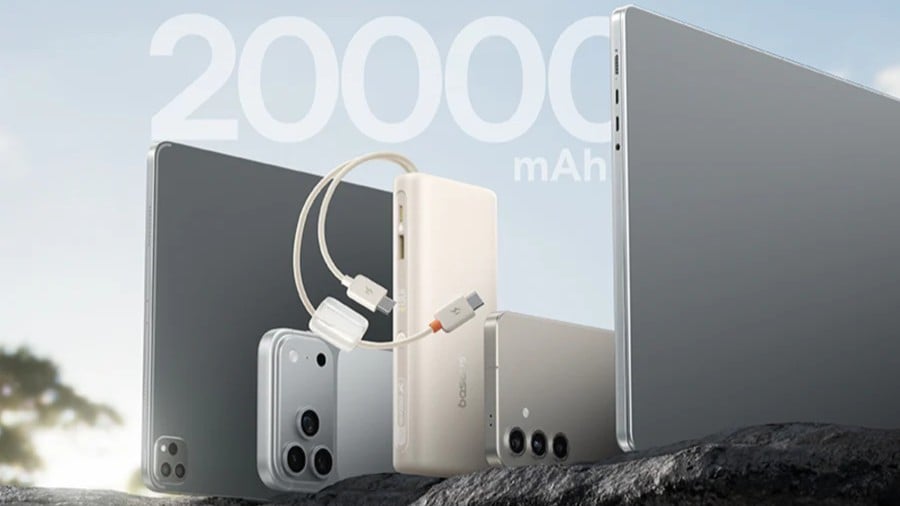
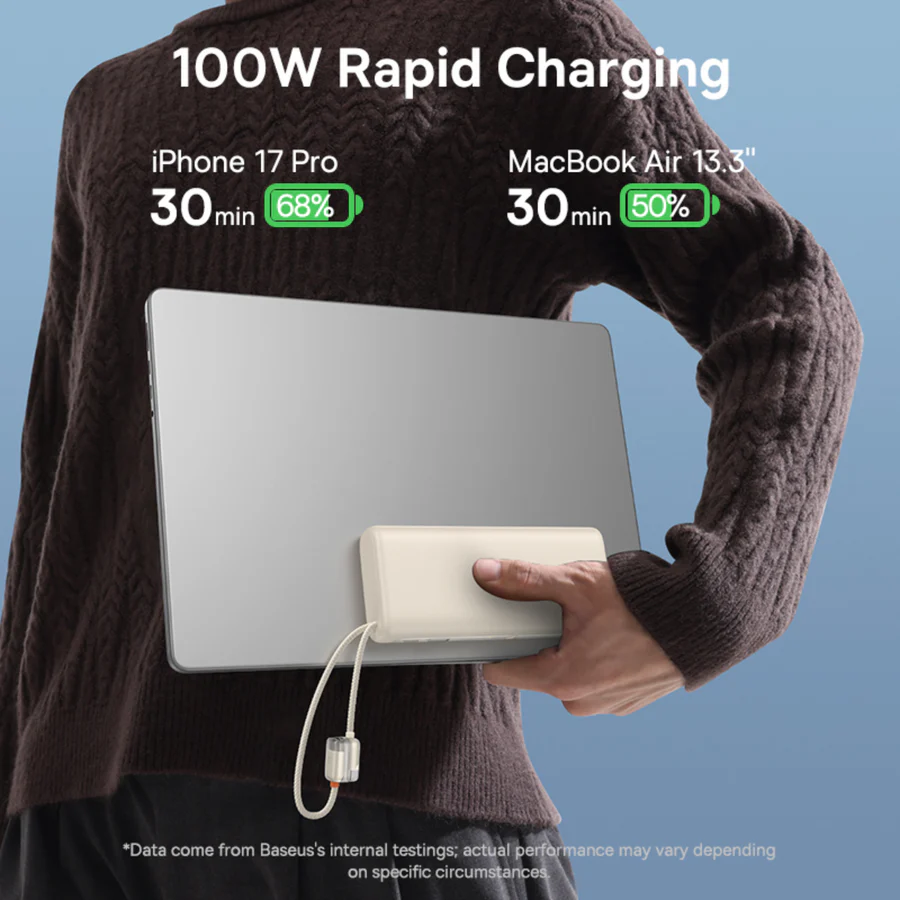

Counterpoint: Samsung Galaxy A06 was the best-selling phone in LATAM for 2025

Samsung dominated the Latin America (LATAM) smartphone scene in 2025, with 4 of the 10 best-selling devices being Galaxy phones. According to the latest Counterpoint Research report, Samsung’s Galaxy A06 topped the list as the best-selling smartphone in the region and accounted for 7% of all smartphone sales in the region for the past year. Samsung’s Galaxy A16, Galaxy A15 and Galaxy A56 were the other three Galaxy smartphones in the top 10 rankings. Motorola’s Moto G15 came in third place. The other Moto devices in the top ten are the Moto G05, which slots in sixth place, and the...
New Seiko 5 Sports x Supercars Limited Edition GMT watch launched with 4R34 caliber and carbon-fibre patterned dial

Seiko’s latest limited edition leans hard into its racing roots. Built to mark 10 years with the Supercars Championship, the new Seiko 5 Sports SSK057K adds a GMT complication, a carbon-fibre patterned dial, and bright red accents to the familiar 4R34-powered platform. It’s limited to 1,500 pieces worldwide.

Google's Gemini can now create music

Google's Gemini can now create 30-second music tracks based on prompts. To accomplish this, it's using Lyria 3, Google DeepMind's latest generative music model. Music creation is rolling out today in beta in the Gemini app in English, German, Spanish, French, Hindi, Japanese, Korean, and Portuguese. Everyone over 18 gets access to it, but Google AI Plus, Pro, and Ultra subscribers will enjoy higher usage limits than those who aren't paying. To use this, simply describe an idea or upload a photo or video to tell Gemini to take inspiration from it. Cover art is automatically generated by...

Infinix Xpad 30E gets official with education focus, low price

Alongside the Note 60 and Note 60 Pro smartphones, today Infinix also made the Xpad 30E tablet official. This comes with an 11-inch 1920x1200 LCD screen with 440-nit typical brightness, and it's offered in three colors: Dreamy Purple, Forest Green, and Deep Blue. The device seems to be heavily education-oriented, coming with an "AI Tutor" that includes "Photo Solving", "Tap to Ask", AI Creation, and AI Screen Recognition, as well as "120K+ premium resources" like "curated textbook-aligned courses and exercises". The tablet also has 4G connectivity built-in. Infinix Xpad...

Oppo Find X9s global variant's key specifications surface online

Earlier this month, Oppo confirmed that it will soon launch the Find X9s in India. The company also revealed that the phone will be powered by the MediaTek Dimensity 9500s chipset. Now, a new report has leaked more details about the upcoming phone. According to the report, the Oppo Find X9s for global markets will offer different specs compared to the Chinese variant. It is said to sport a 6.59-inch AMOLED display with 1.5K resolution and 120Hz refresh rate. Oppo Find X9 The phone will reportedly feature a triple rear camera setup with a 50MP Sony LYT-700 primary camera, a 50MP...

❌