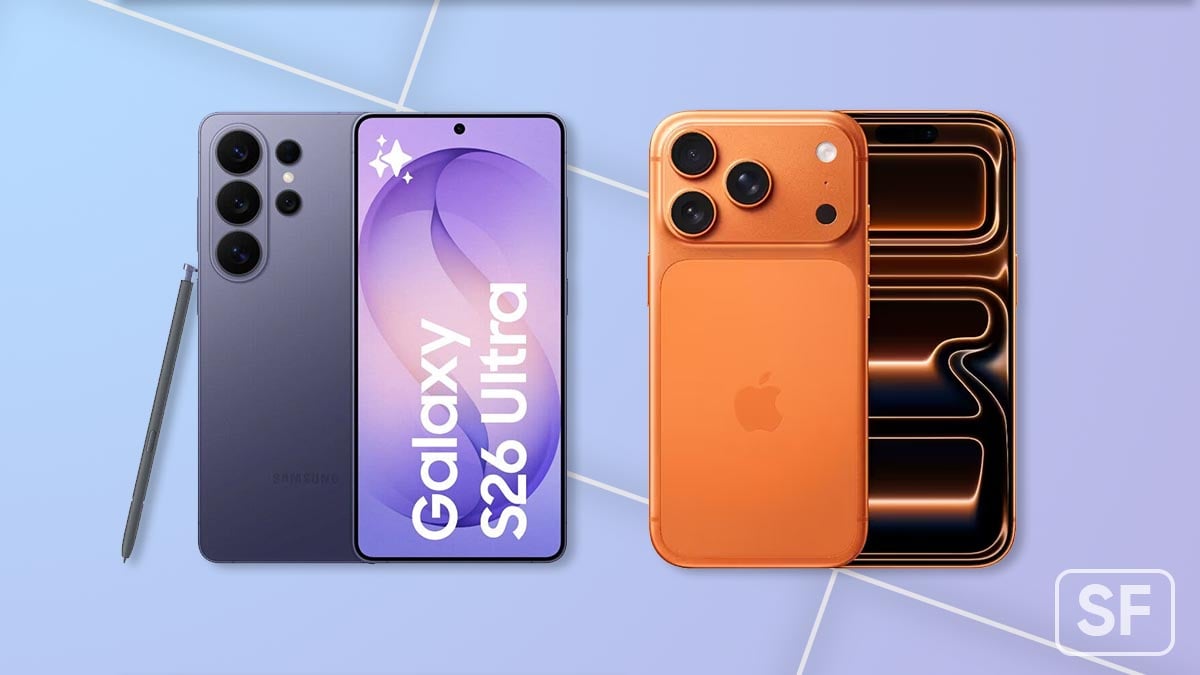
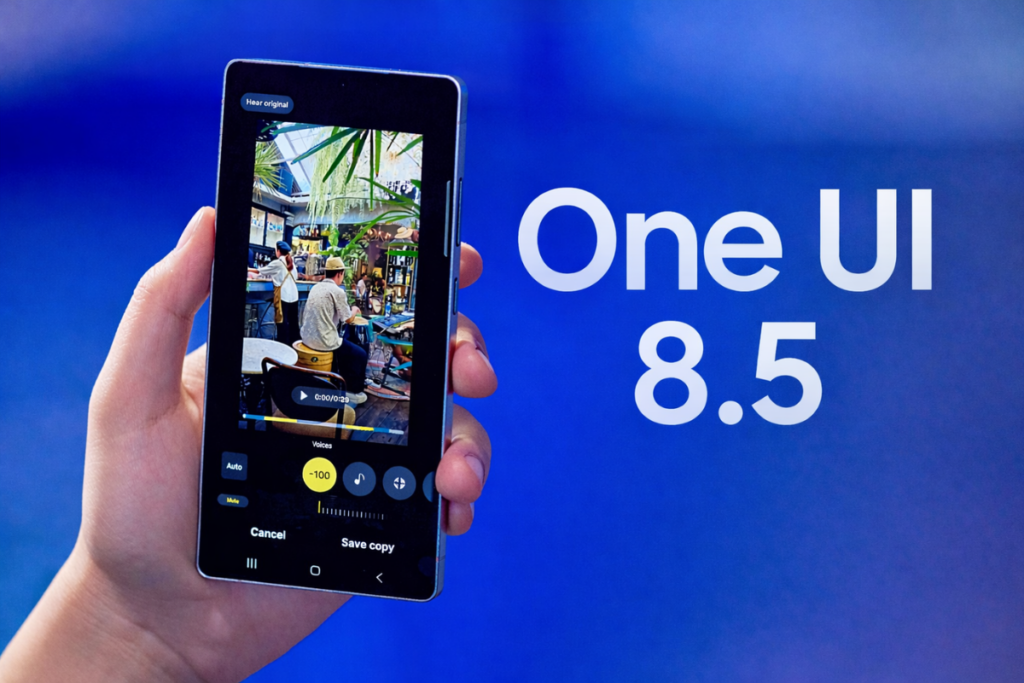
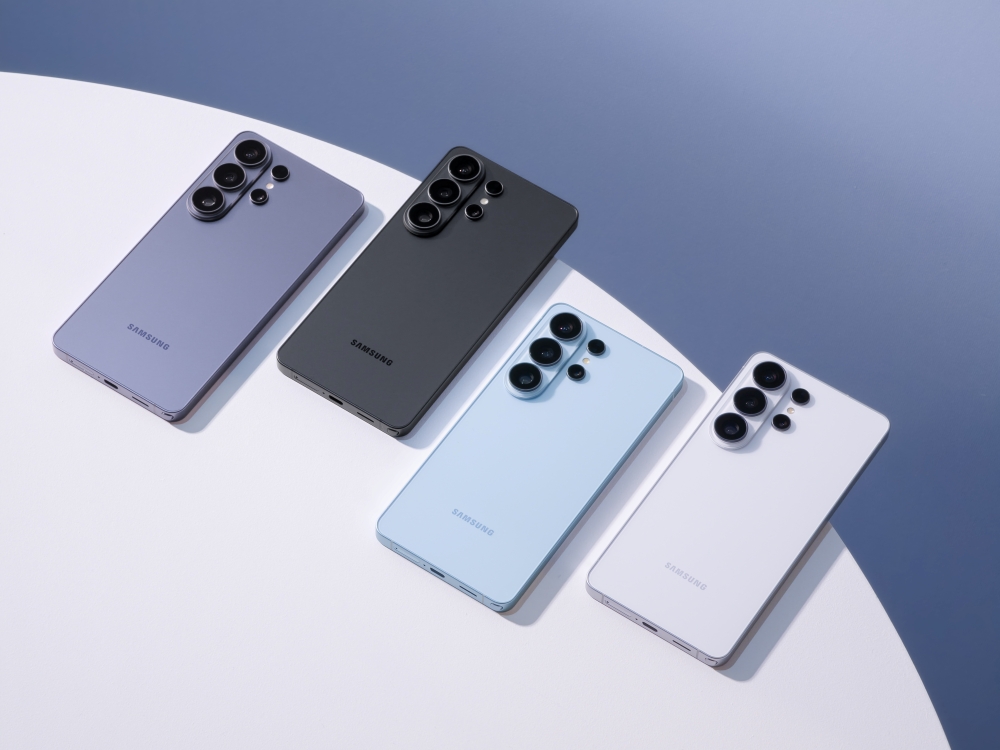
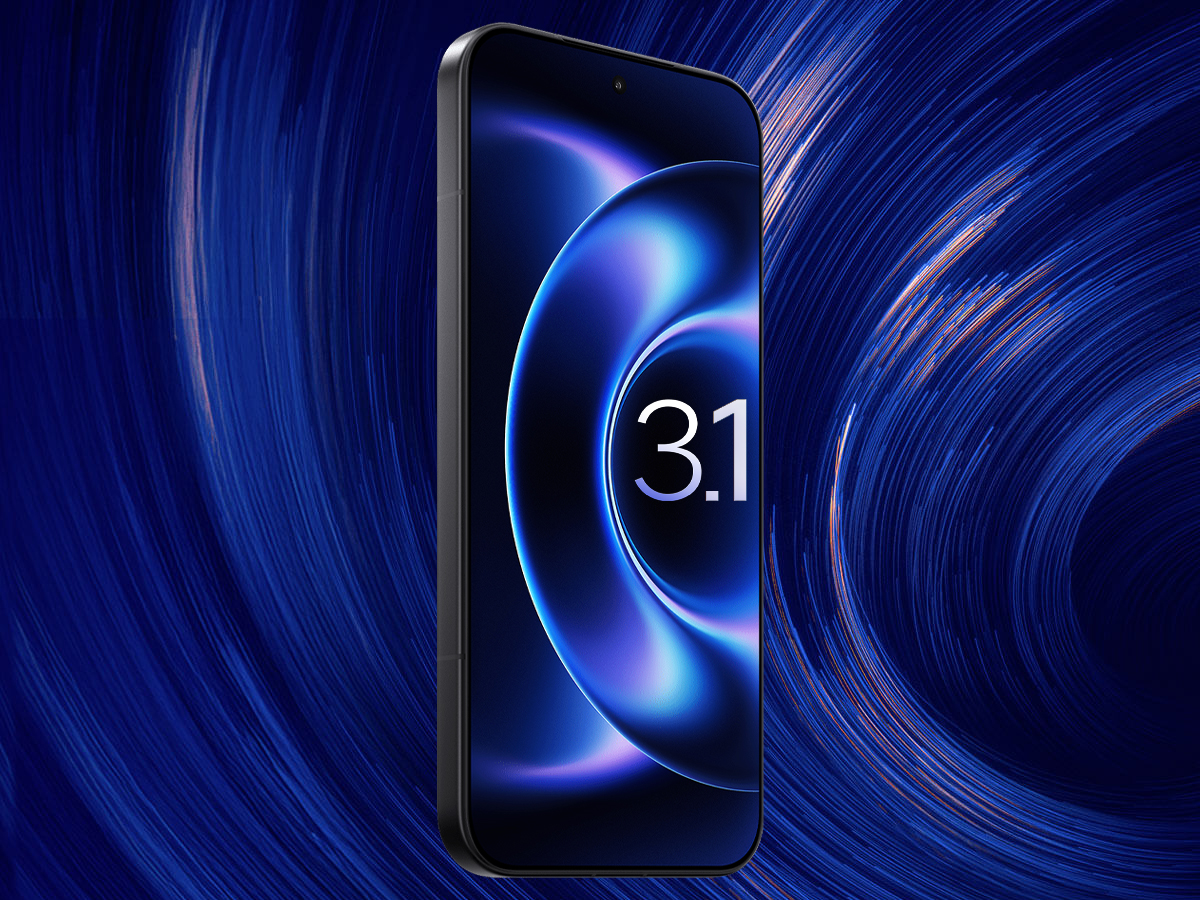
The Galaxy S26 series launched with One UI 8.5, bringing new UI and animations upgrades as well as AI features that Galaxy S25 users have been waiting for since the launch day. Yet, the wait continues to stretch.
The Galaxy S25’s One UI 8.5 saga started in early December with the beta program. So far, 8 betas have been released with features, improvements, and optimizations. Still, the beta is missing some of the Galaxy S26 series features. One of these features is the call screening, which Samsung first denied compatibility with the S25 series and later announced would come with a future update.
Since Samsung prioritizes the Korean community in software rollouts, users on their forums are showing their disappointment with the company and reflecting on the low-grade treatment. The majority of Galaxy S25 users have criticised Samsung for the 7 OS update promise, which they don’t think Samsung is fulfilling with priority.
“Who would use a Galaxy like this? A phone costs over a million won, so it’s basically telling us to buy a new one every year just because a new model comes out. This is really too much. Do you think people using the Samsung S25 are suckers? If you’re going to categorize prices like this, then the promise of 7 years of updates was all a lie.” A Galaxy S25 user wrote about the One UI 8.5 and new AI feature situation.
This is just one example, and the forum has many such posts that show strong criticism of Samsung’s current OS upgrade rollout policy.
As a matter of fact, Samsung is clearly making it a stretch, and this isn’t even a major Android update. One UI 8.5 is still based on Android 16, which was released last year. So, much of the testing should have been done for the feature rather than OS compatibility. The time it’s taking for the rollout isn’t understandable.
Author’s take
Samsung is creating a divide here; it is selling new features with the Galaxy S26 series while the S25 users are watering their mouths. The most interesting fact is that S25 customers have paid almost an identical price compared to the latest phones. And, the phone maker is showing zero interest in prioritizing their user experience.
The company could have rushed the development for this lineup and released the update right after the S26 series launch, even in March; a move may have been welcomed by users.
We just entered April, and only the next One UI 8.5 rollout for the Galaxy S25 series will present a clear picture.
The Intel Core Ultra X9 378H is now official, and essentially, it's a comparable processor to the X9 388H, but with a slightly lowered Max Turbo Frequency. It even retains the capable Arc B390 iGPU but strips enterprise features.
Claude AI is giving away free credits as a likely gesture of goodwill following recent issues. Depending on their subscription tier, customers can receive $20 (approx. €17), $100 (approx. €85), or $200 (approx. €170) at no extra cost. Additionally, a discount of up to 30% for purchasing extra usage is also available.
Major tech corporations are calling for illegal content to be automatically detected in private chats. However, the European Parliament has declined to extend the e-Privacy Directive exemption that permitted the identification of abusive material in private messages.
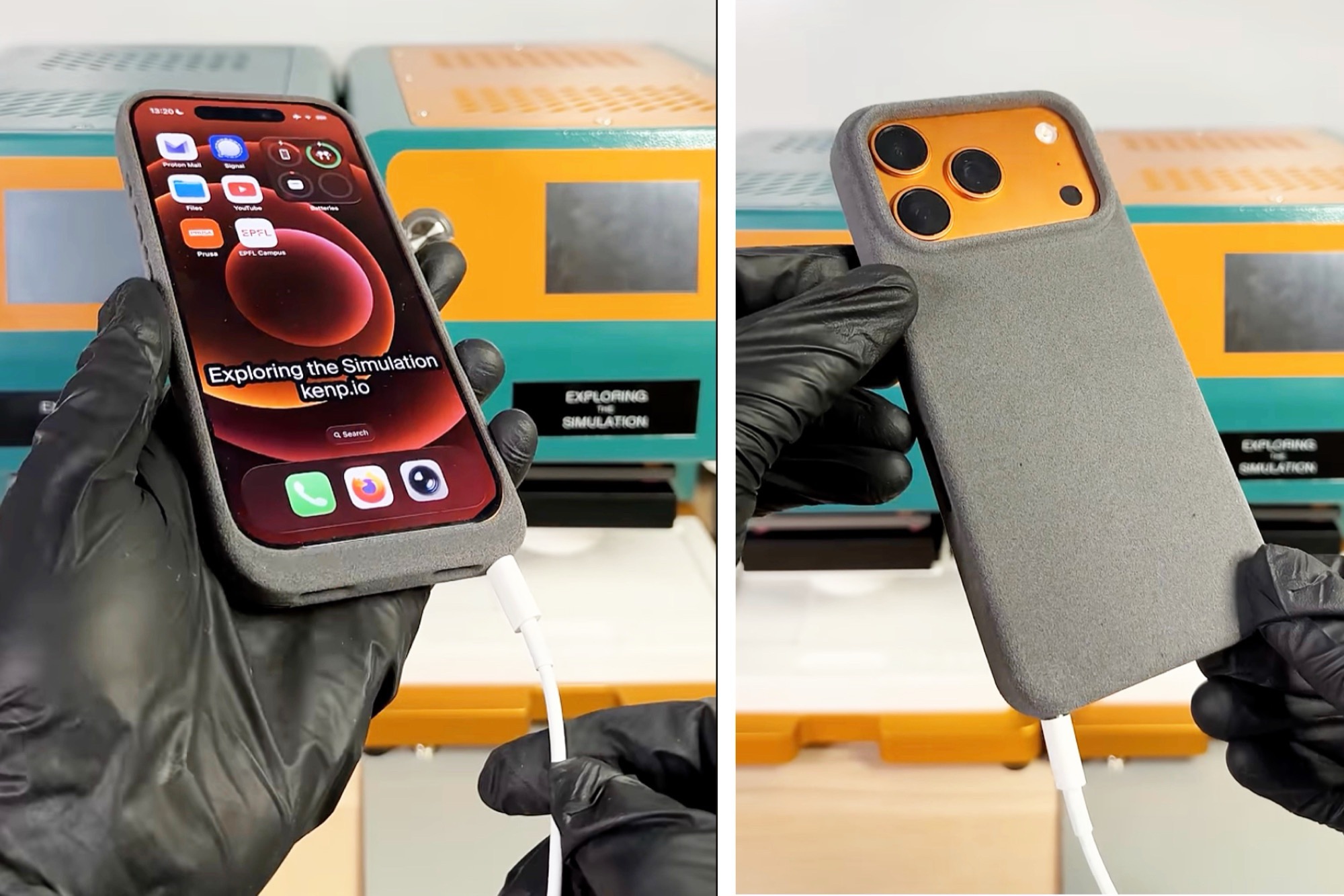
A new report from China is confident that the upcoming iPhone Fold will feature a 3D printed hinge to help bring the crease on its folding display to a minimum. This is the first time that we’re seeing specific details about 3D printing used on the iPhone Fold’s hinge, which has so far been rumored to also feature liquid metal as well as dual-layer glass.
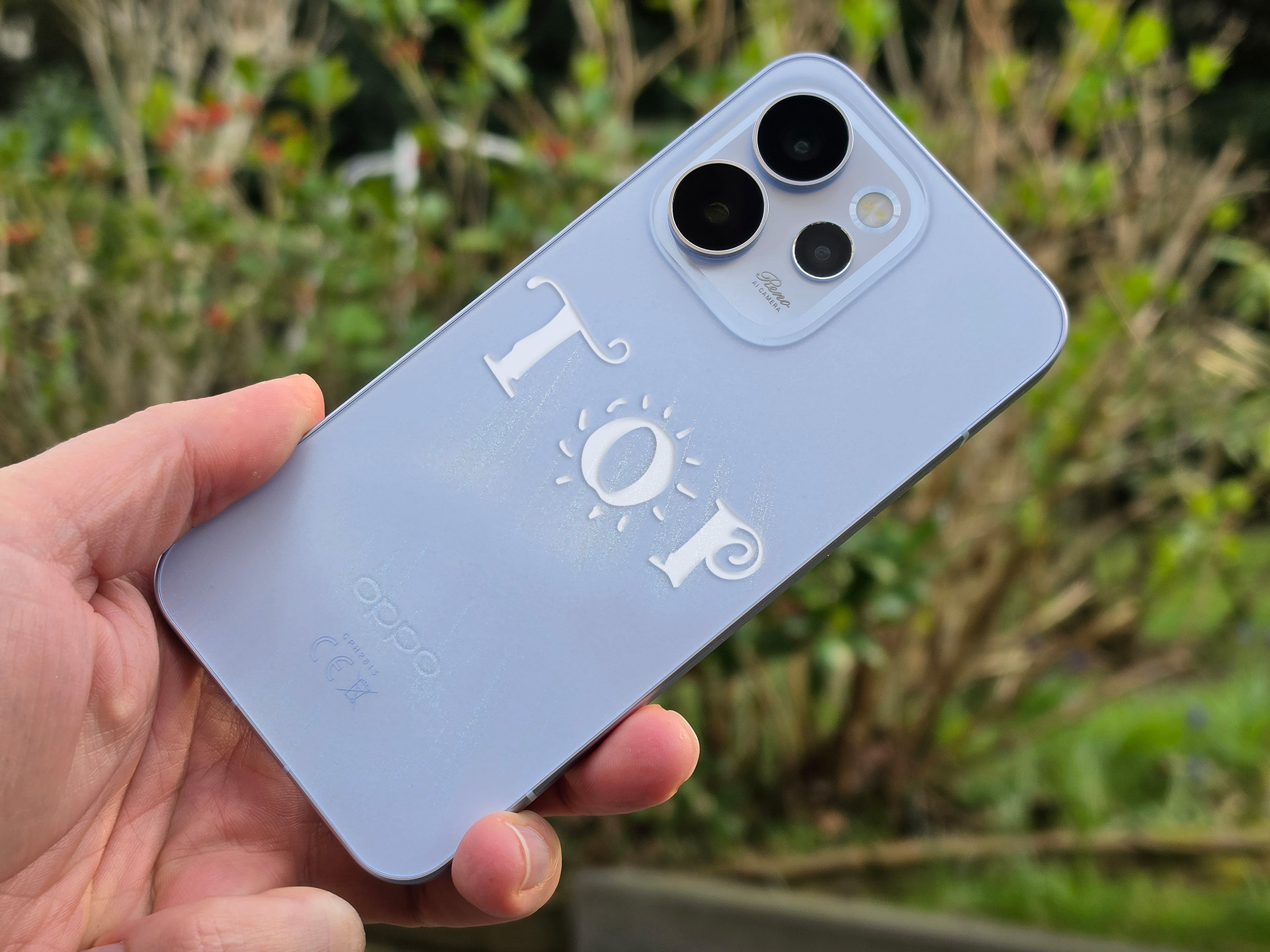
Oppo Find N6 features a Titanium Flexion Hinge created using 3D Liquid Printing technology
It wouldn’t exactly be a breakthrough as Oppo’s Find N6 already pioneered this approach on its second-generation Titanium Flexion hinge. Oppo...
Deal | Fight 4 Your Friends is one of the new bundles on Humble Bundle. It has a total of six games that are playable on the Steam Deck, and all are designed for co-op play. The entire collection is worth over $278 at retail, but it can be purchased for $10.
Edifier has launched its new Hecate Aurora Light-Cooling compact desktop speaker in China. The speaker is priced at 269 yuan ($39) and targets gamers and desktop users who value both audio performance and visual appeal.
Edifier Hecate Aurora Specifications
The Hecate Aurora features a clean and minimalist design. It has a compact form factor, measuring 225 x 76 x 55mm, which allows it to fit easily under most monitors. The design takes inspiration from the Braun Audio 300 turntable. Edifier combines a high-transparency acrylic front panel with a metallic rear case to deliver a retro yet industrial aesthetic suited for modern desk setups.
The speaker uses dual 56mm cone drivers and a racetrack-shaped passive radiator. This configuration delivers up to 20W peak power for balanced audio, with strong bass and clear mids and highs. The speaker supports a frequency range of 120Hz to 20kHz, which covers audio for gaming, music, and movies.
The device supports Bluetooth 6.0 for wireless audio streaming and an AUX input for wired connections. It is compatible with smartphones, laptops, desktops, tablets, and even gaming consoles such as the Nintendo Switch. The speaker also includes physical buttons for power, volume control, and multifunction operations.
The Hecate Aurora features a 5200mAh built-in battery for portability. The battery provides up to 5 hours of playback with RGB lighting enabled or up to 11 hours with lighting disabled. The speaker supports charging while in use, and a full charge takes approximately 3 hours.
The speaker includes RGB lighting with 14 effects, such as rainbow and static colors, customizable through onboard controls or the Edifier app. The app also allows users to adjust volume, switch sound modes, monitor the battery, and set timers.
In related news, Xiaomi has recently introduced the Desktop Speaker Pro globally, debuting first in Singapore, while Philips has unveiled its 80s-inspired Moving Sound lineup, which includes speakers, on-ear headphones, and TWS earbuds.
For more daily updates, please visit our News Section.
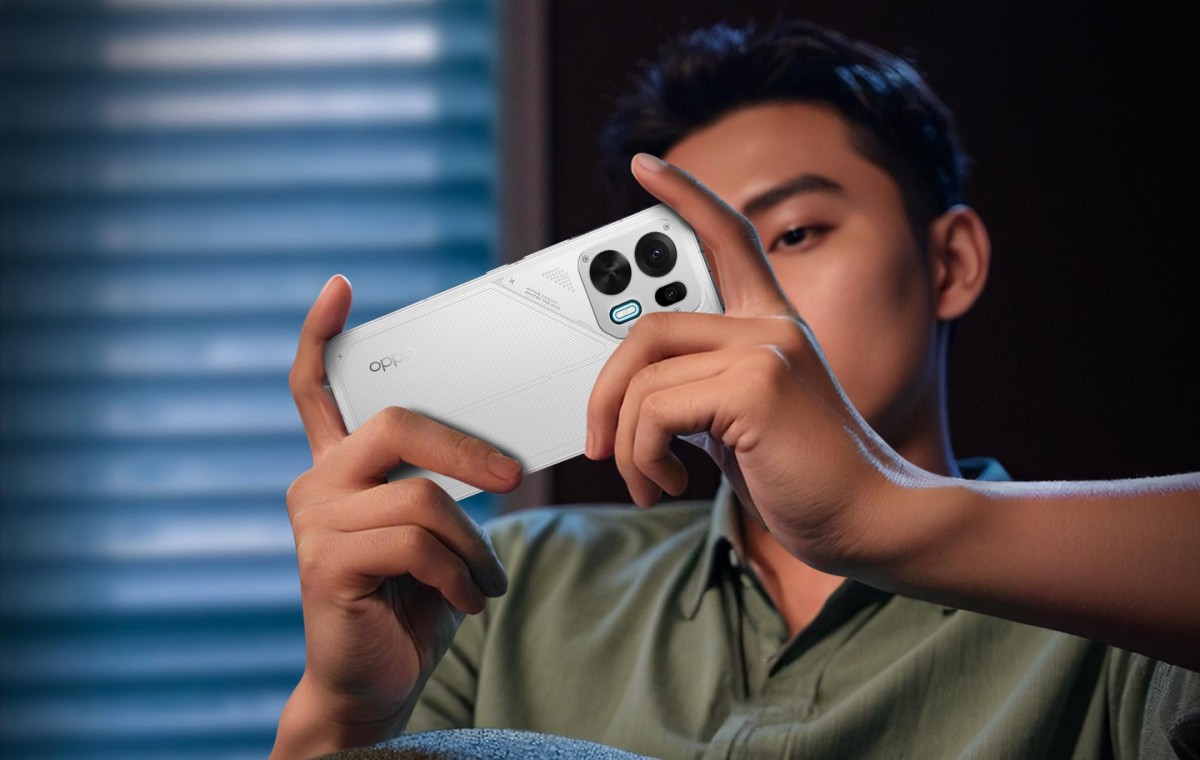
Oppo is reportedly preparing to launch its new F-series smartphones in India this month. According to a recent report, the company may introduce the Oppo F33 5G and Oppo F33 Pro 5G soon.
Even before the official announcement, the standard Oppo F33 5G has appeared in a premature Amazon listing, revealing some of its key specifications and design details.
Oppo F33 and F33 Pro Specifications (Expected)
The listing suggests that the Oppo F33 5G will feature an AMOLED display. It is also expected to come with a 50MP front camera.
The device may pack a large 7000mAh battery with support for 80W fast charging. In terms of memory, the phone is likely to include 6GB RAM and 128GB storage.
Meanwhile, tipster PassionateGeekz has shared a poster of the Oppo F33 series, giving us a proper look at the design. The phone appears to have a wide camera module on the back with two prominent camera rings. One of these is said to house a 50MP ultra-wide camera.
The Oppo F33 series is expected to launch in Red and Blue color options. The blue variant, in particular, features a gradient finish with a pattern on the lower half.
Both the Oppo F33 5G and F33 Pro 5G are also rumored to come with an IP69K rating for durability and will likely be available via Amazon.
The Oppo F33 series is the successor to the Oppo F31 series, which was launched back in September 2025. The company usually refreshes the F-series every six months, so the new lineup shouldn’t be far off. As usual, more details should emerge soon. We will keep you in the loop as we get more information.
Realme could soon announce a new mid-range phone in India. A new leak shared by an X user named PassionateGeekz has revealed the full specs of the Realme Narzo 100 Lite 5G ahead of its launch. The model is expected to succeed the Narzo 80 Lite 5G, which launched in June 2025.
Realme Narzo 100 Lite 5G Specifications (Expected)
The phone is said to feature a large 6.8-inch FHD+ display with a 144Hz refresh rate. The Narzo 80 Lite has a 120Hz screen, so that’s a step up. A higher refresh rate should make scrolling and animations feel smoother, although the real-world experience will depend on how well the software and chipset keep up.
Under the hood, the device is tipped to run on the Dimensity 6300 chipset. Realme is also reportedly promising “four years of lag-free experience,” though it’s unclear what benchmarks or usage patterns this claim is based on.
Realme Narzo 80 Lite 5G
As for the cameras, the Narzo 100 Lite 5G could include a 13-megapixel rear sensor and a 5-megapixel front-facing shooter. The leak also points to a massive 7,000mAh battery, along with support for bypass charging, which allows the phone to draw power directly from the charger instead of the battery during heavy use.
Other reported features include IP64 dust and water resistance and MIL-STD-810H certification for improved durability.
In terms of configurations, the device may come in three variants: 4GB RAM with 64GB storage, 4GB with 128GB, and 6GB with 128GB. Color options are expected to include Silver and Black.
Last but not least, the tipster also shared the pricing of the phone. According to them, the base Realme Narzo 100 Lite 5G would launch under INR 13,000, while the highest-tier model could go up to INR 15,000. There’s no official word yet on the launch date.
For more daily updates, please visit our News Section.
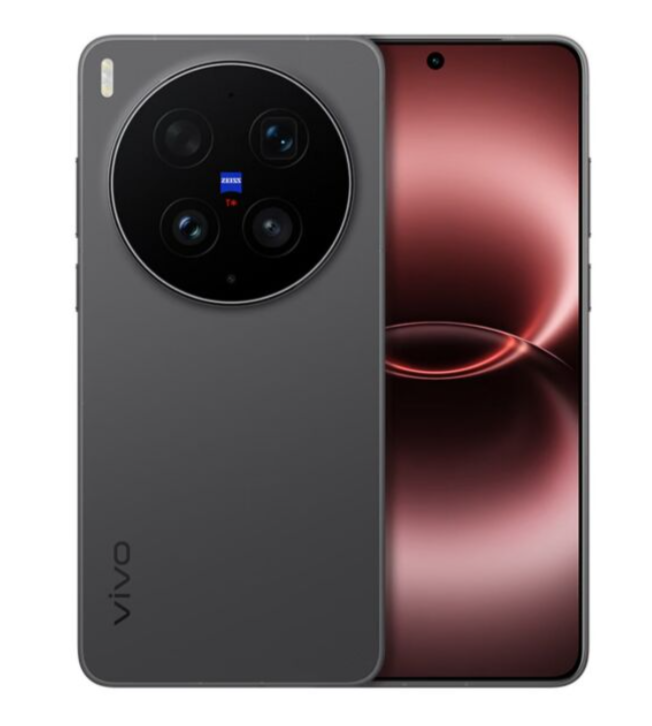
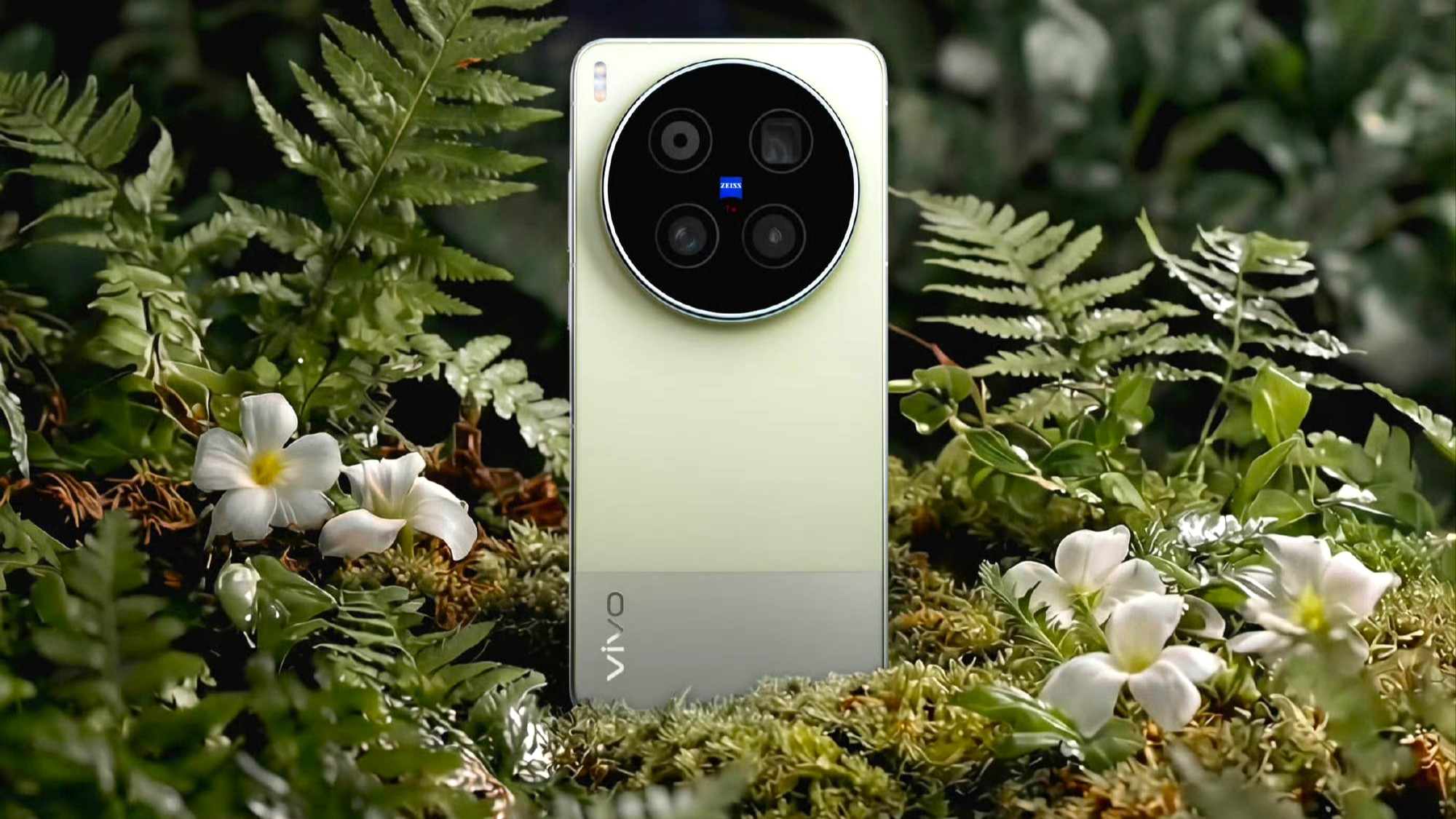
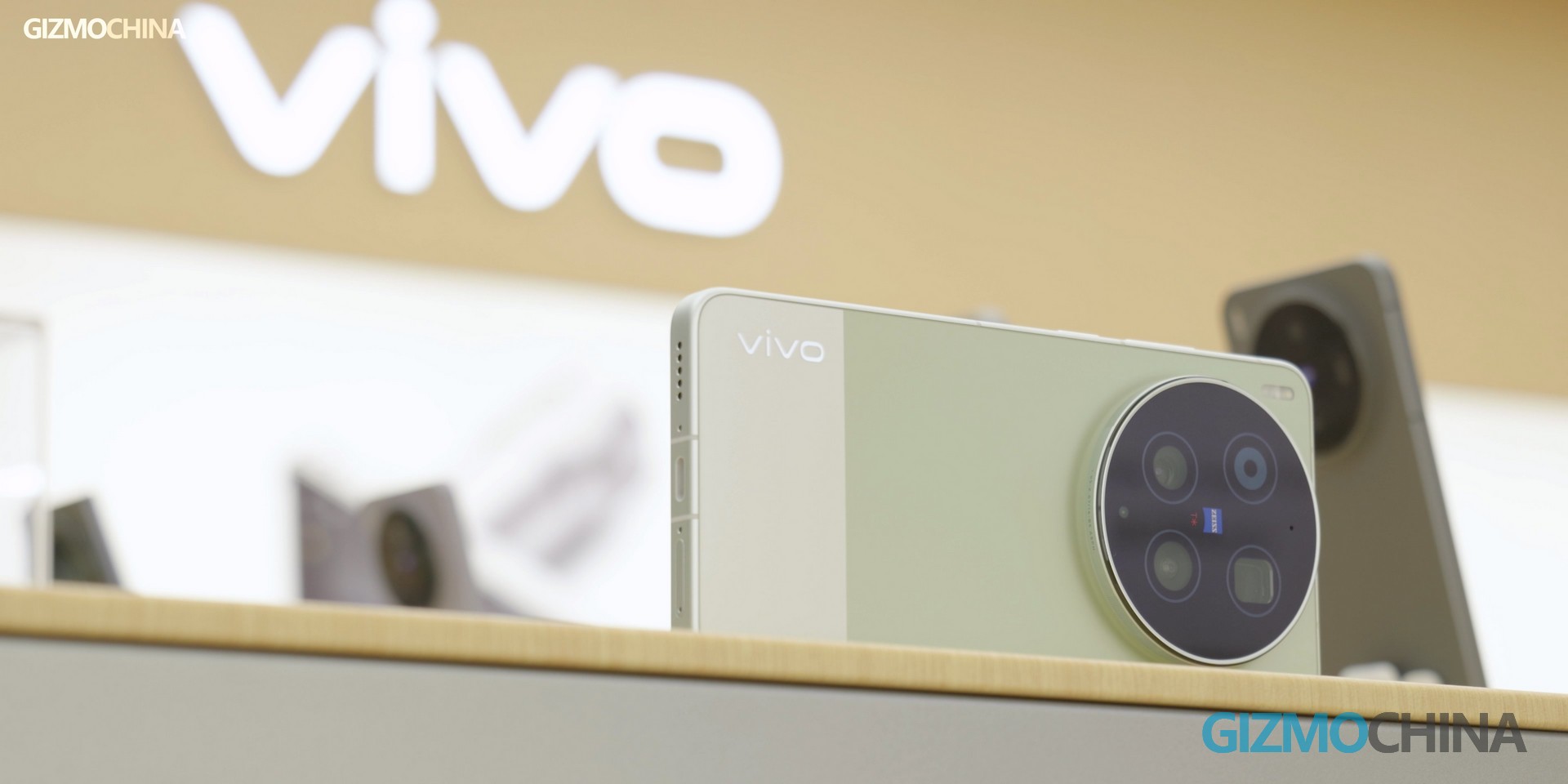
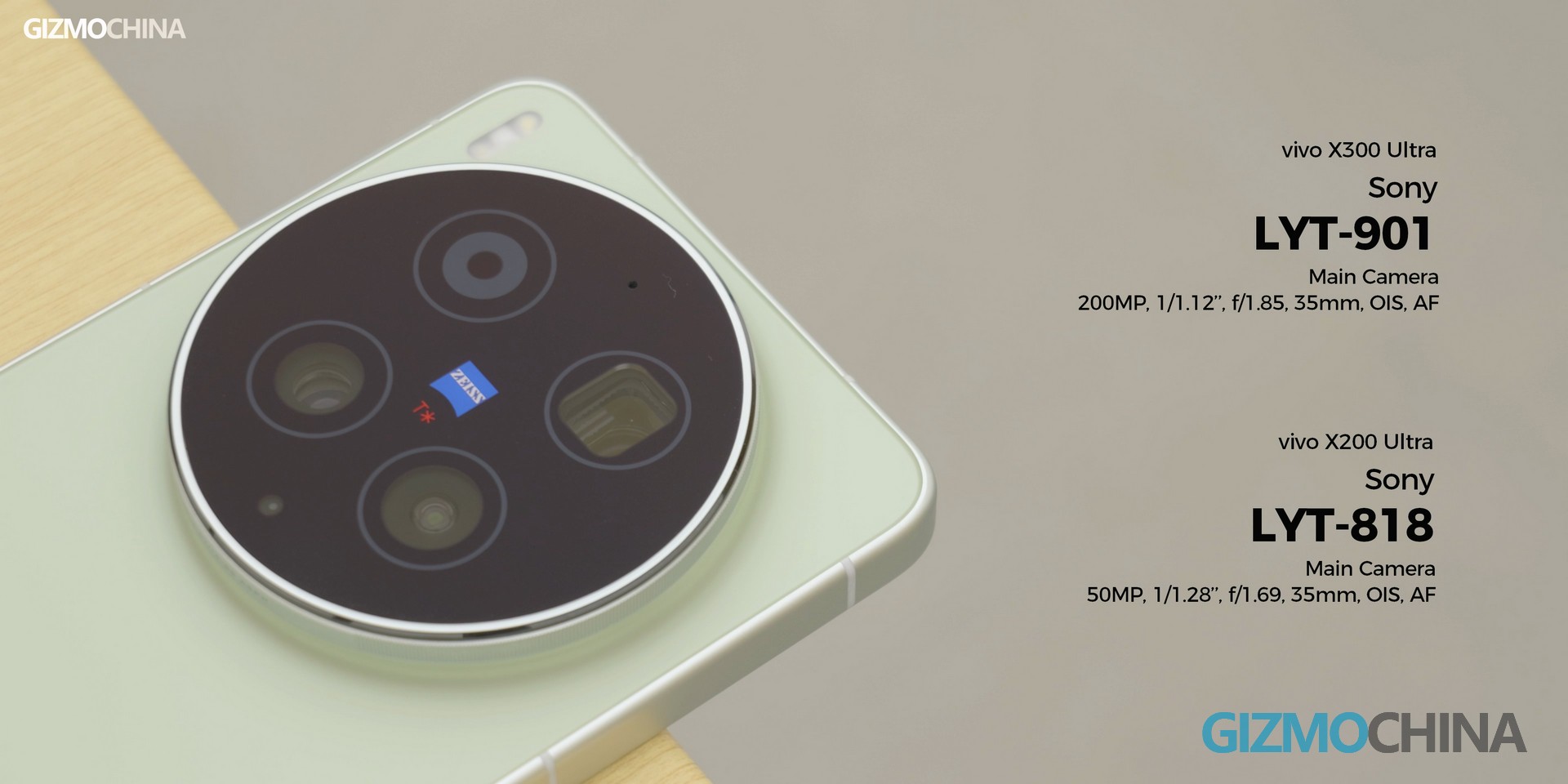
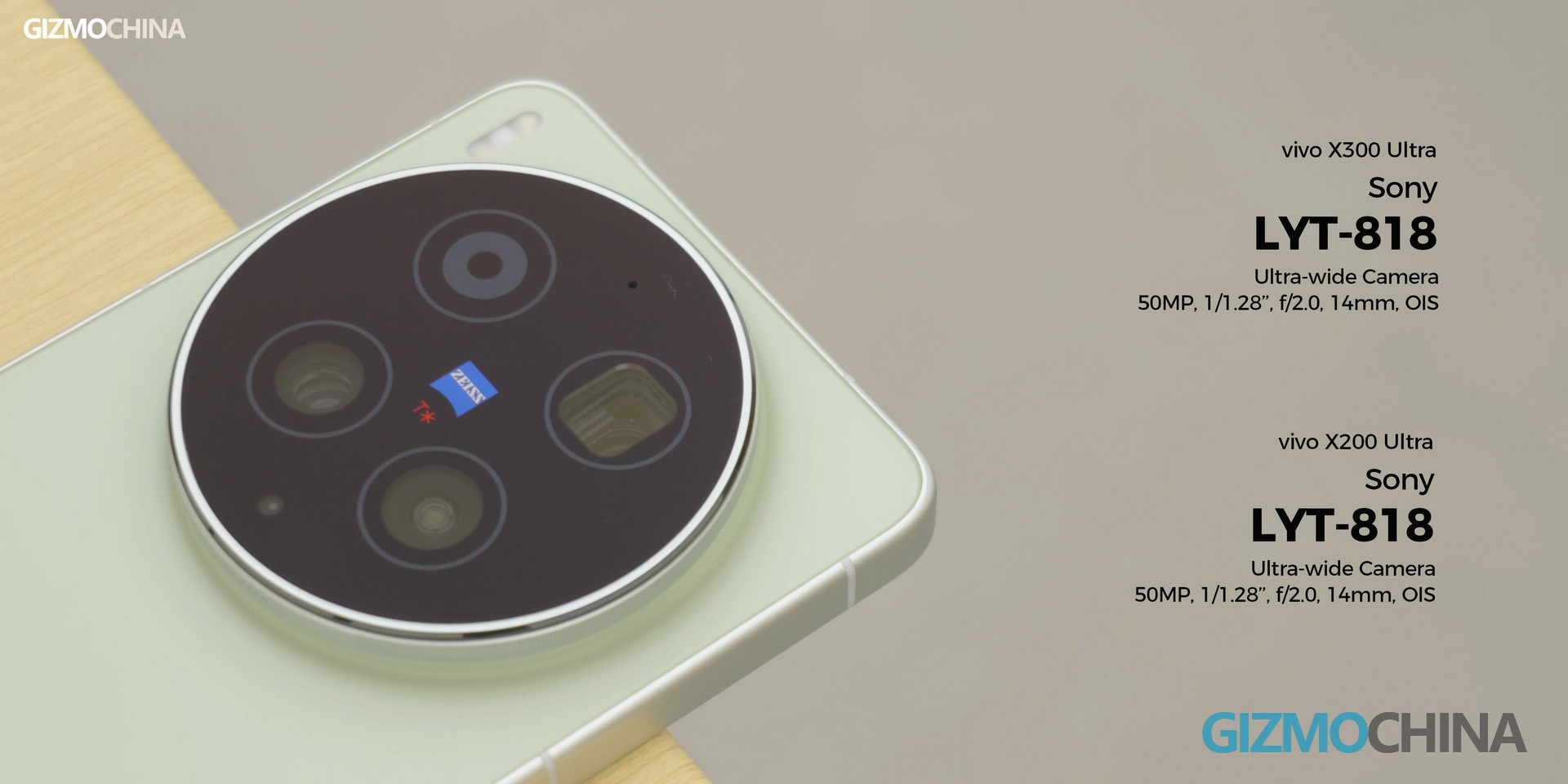
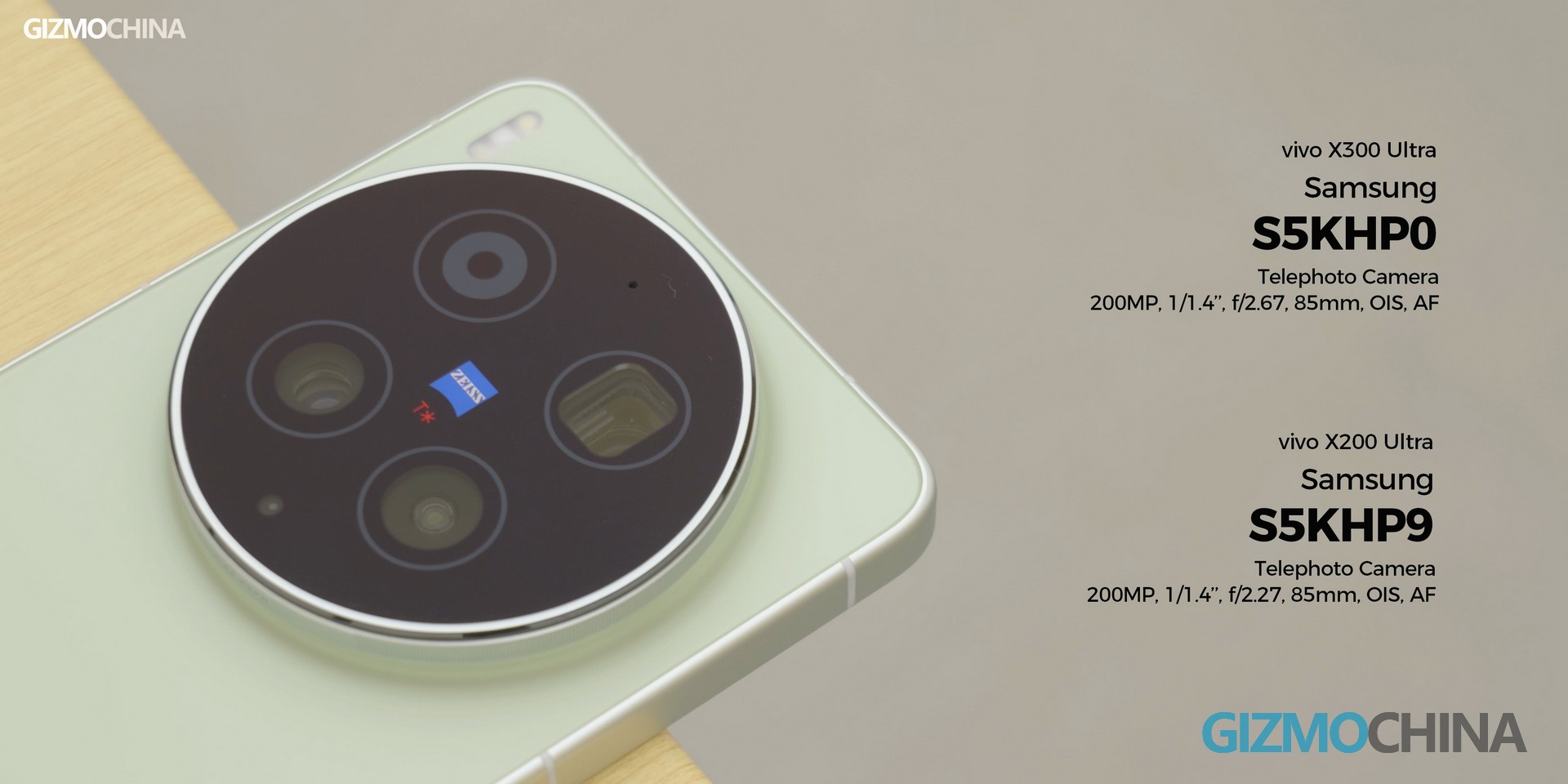
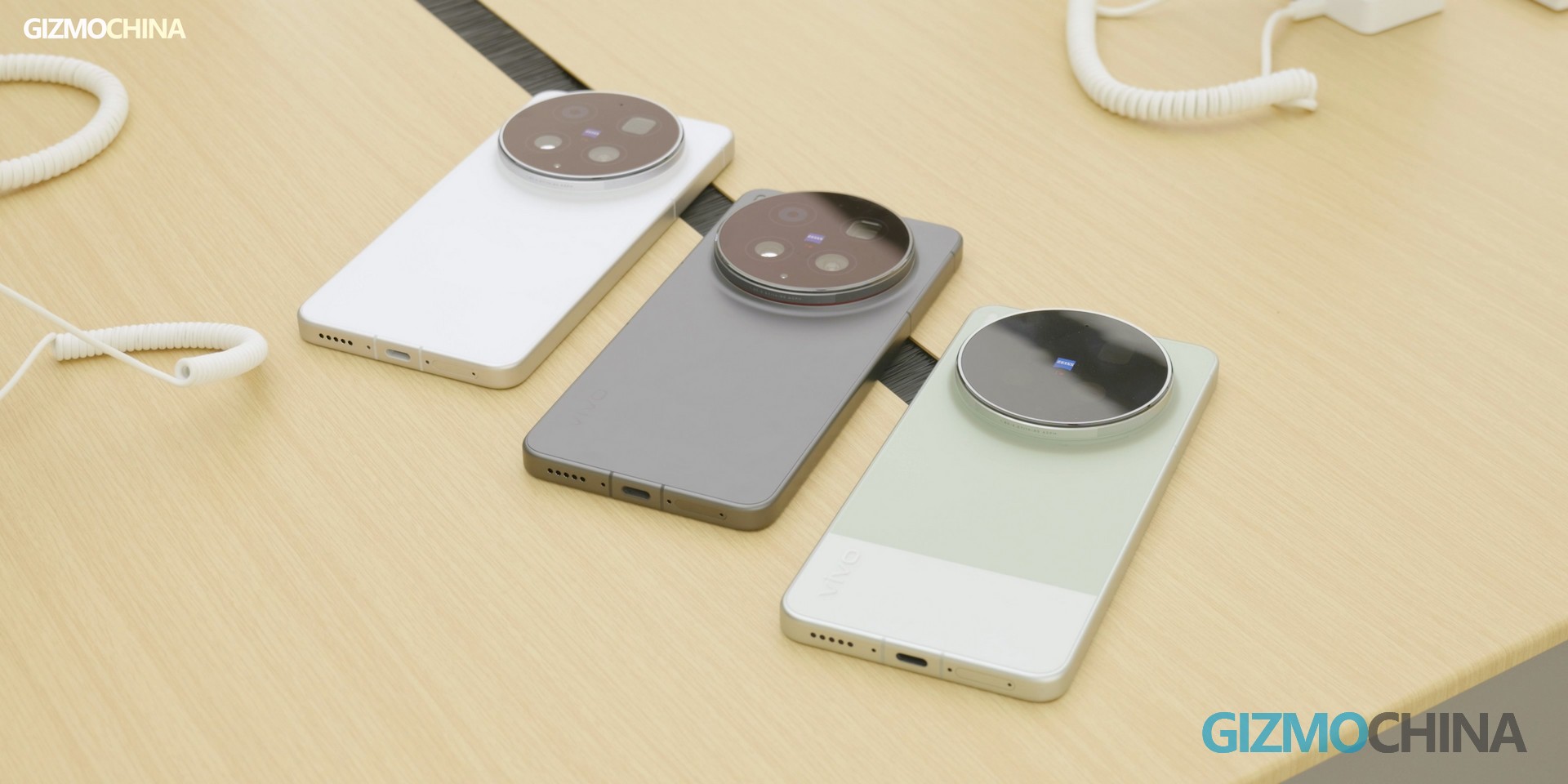
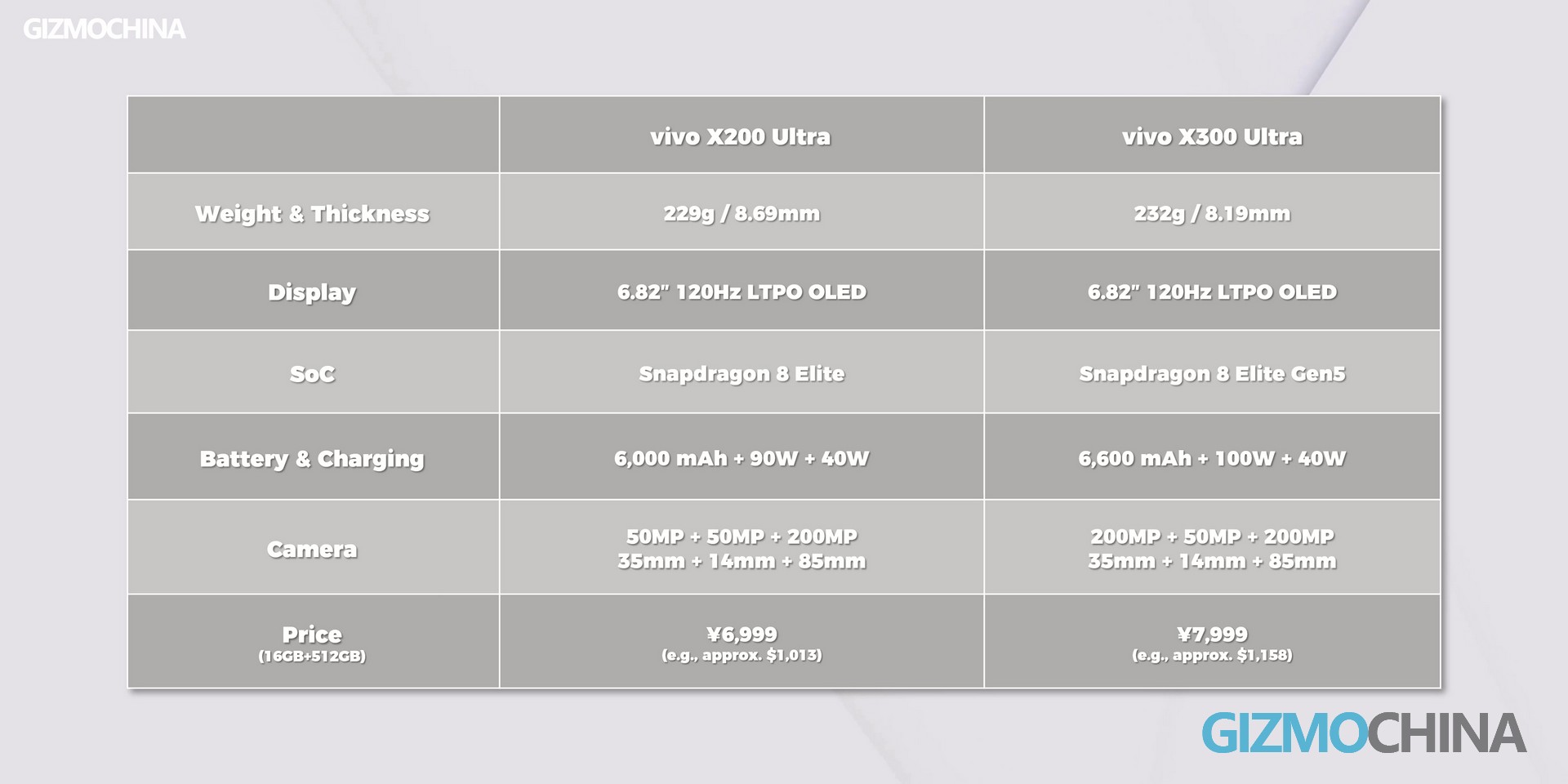
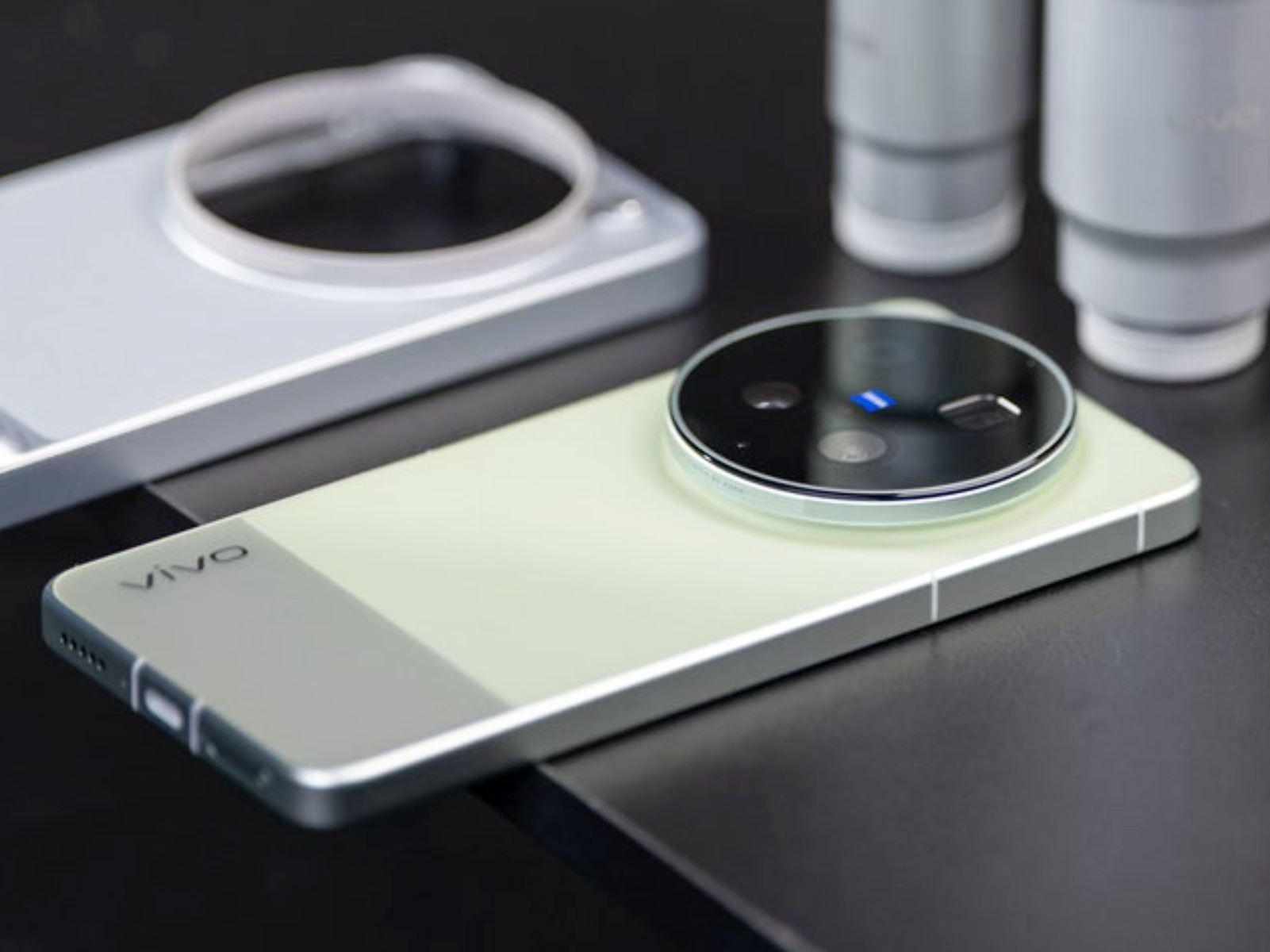
Vivo X300 Ultra just made its debut in China, and as expected from Vivo’s Ultra lineup, it’s a spec-heavy flagship for photography enthusiasts. The phone is powered by Qualcomm’s best Snapdragon 8 Elite Gen 5 chip and features a Zeiss-branded camera system.
Beyond the headline specs, Vivo has also shared the official repair pricing of the smartphone. Let’s go through it.
Vivo X300 Ultra Repair Cost
Starting with the essentials, a screen replacement is listed at 1,620 yuan, though there’s a discounted price of 1,320 yuan if users agree to return the damaged panel for recycling. A new battery costs 199 yuan, while replacing the back cover costs 350 yuan.
Unsurprisingly, motherboard repairs are the most expensive. Depending on the configuration, prices range from 3,300 yuan for the 12GB + 256GB variant all the way up to 4,200 yuan for the 16GB + 1TB model.
For the camera, the rear main sensor costs 820 yuan to replace, the periscope lens 790 yuan, and the ultra-wide module 450 yuan. Even the smaller multispectral sensor isn’t free at 95 yuan. Meanwhile, the front-facing camera is relatively affordable at 125 yuan.
If you lose accessories, you can get the charger set at 199 yuan, and a replacement data cable costs 69 yuan.
To note, major repairs, including the screen, battery, motherboard, and cameras, are covered for free during the warranty period. Once that expires, users will need to pay for both parts and labor, though the labor fee is capped at 50 yuan per visit, even if multiple components are repaired at once.
For more daily updates, please visit ourNews Section.
Machenike has launched its new Dawn Pro desktop PC, featuring Intel’s 14th Gen Core processors and Nvidia RTX 40 series graphics cards. The desktop is now available on JD.com, with prices starting at 10,499 yuan ($1,525). It offers several configurations tailored for gamers and creators.
Machenike Dawn Pro Desktop PC Specs
The lineup includes three processor options: the i5-14400F, the i7-14700F, and the i9-14900HX. These CPUs are paired with GPUs that range from the RTX 5060 to the RTX 5070.
The PC features 32GB of DDR5 RAM, expandable up to 128GB. It includes a 1TB PCIe 4.0 SSD for fast storage with an option to expand up to 8TB for additional space.
For cooling, the lineup features the Machenike Frost Storm system, with a 240mm liquid cooler for lower-tier models and a 360mm all-in-one liquid cooler for higher-end variants. Its four 120mm ARGB prism fans provide efficient airflow, quiet operation, and durability.
The Machenike Dawn Pro features a chassis with dual dark tempered glass panels, SGCC galvanized steel for durability, and eco-friendly coating to reduce electromagnetic interference. It includes customizable ARGB lighting with over 16 million colors and built-in effects.
For connectivity, the Dawn Pro includes Wi-Fi 6E, Bluetooth 5.3, and a 2.5G Ethernet port. It features USB-A 3.2 Gen 1 ports and audio jacks for peripherals, runs on Windows 11 Home, and is powered by a 650W 80 Plus power supply.
Pricing and Availability
The Machenike Dawn Pro starts at 10,499 yuan ($1,575) for the i5-14400F with an RTX 5060 and 10,999 yuan ($1,650) for the RTX 5060 Ti 8GB variant.
The i7-14700F models are priced at 11,999 yuan ($1,800) with an RTX 5060 and 12,999 yuan ($1,950) with an RTX 5060 Ti 16GB.
The i9-14900HX configurations start at 11,999 yuan ($1,800) with an RTX 5060 Ti 16GB and go up to 12,999 yuan ($1,950) with an RTX 5070.
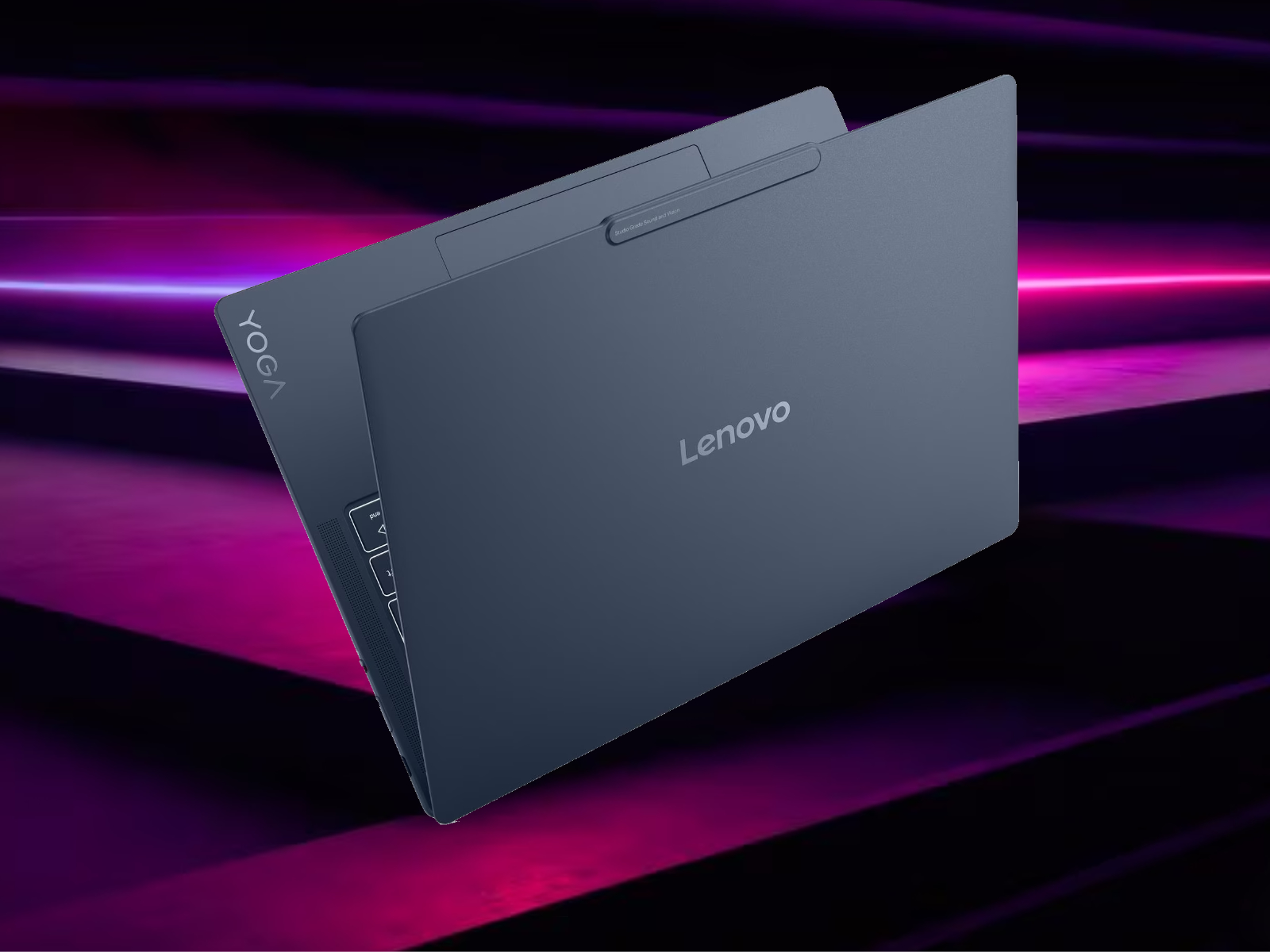
In related news, Gmktec has recently introduced the NucBox K17 mini PC powered by an Intel Core Ultra 5 processor with support for up to 16TB of storage, while Lenovo has also unveiled the Yoga Mini i Gen 11 featuring a unique circular design and Intel Core Ultra chipset.
For more daily updates, please visit our News Section.
LG is preparing to release its UltraGear OLED 39GX950B gaming monitor, months after its initial announcement in December 2025. The 39-inch model is now listed on LG’s Canadian website, with reports indicating a price of CNY 14,999 in China, roughly $2,179. LG Japan has confirmed sales will begin on April 9 at 14:00 local time, though availability in other regions has not been confirmed.
The monitor features a 39-inch OLED panel with a 5120 x 2160 resolution in a 21:9 aspect ratio. The 1500R curved screen is designed to expand the field of view compared to standard 32-inch 4K displays, offering higher pixel density at 143 PPI. It supports a maximum refresh rate of 165Hz at full 5K2K resolution and can switch to a higher refresh mode of up to 330Hz at 2560 x 1080 through VESA-certified Dual Mode.
LG has included an onboard processor for AI upscaling, allowing content from connected devices to be scaled to 5K2K without requiring a GPU upgrade. Connectivity options include DisplayPort 2.1, HDMI 2.1, and USB Type-C with up to 90W power delivery, supporting high-bandwidth input and single-cable setups.
The display uses 4th Gen Tandem OLED technology, delivering 335 nits typical brightness and up to 1500 nits peak brightness under HDR conditions. It supports VESA DisplayHDR True Black 500 and covers up to 99.5% of the DCI-P3 color gamut, with 10-bit color and 1.07 billion colors. Contrast ratios are rated at 1,850,000:1 typical.
For gaming, the monitor offers a 0.03ms (GtG) response time, NVIDIA G-SYNC compatibility, and AMD FreeSync Premium Pro support to reduce tearing and stutter. Additional features include Black Stabilizer, Dynamic Action Sync, FPS counter, and crosshair tools.
Audio is handled by dual 7W speakers with AI Sound processing, which separates in-game audio elements and simulates a 7.1.2 channel experience. AI Scene Optimization adjusts picture settings based on content type.
The monitor also includes UL-certified eye comfort features such as reduced flicker, low blue light, and anti-glare coating. Physical adjustments include tilt, height, and swivel, with a virtually borderless design and wall-mount support.
For more daily updates, please visit our News Section.
LG Electronics has announced its 2026 QNED evo Mini LED TV lineup, and the headline is clear. Bigger screens are the focus this year, led by a new 115-inch model aimed at people who want a cinema-like setup at home.
The new range is powered by LG’s α8 AI Processor Gen 3. It handles picture and sound processing, using AI to improve sharpness, brightness, and detail. LG is also bringing some of its OLED-style light control techniques to QNED, which helps manage how light is distributed across the screen.
On the display side, LG is using Dynamic QNED Color Pro to improve color accuracy, especially in HDR content. The company says the panels are certified by Intertek for 100 percent color volume, which means colors stay consistent even on very large screens. Precision Dimming Ultra is another key part of the setup. It controls thousands of dimming zones to improve contrast, making dark scenes look deeper while keeping bright areas clear.
There are also several AI-based enhancements. AI Super Upscaling sharpens lower-resolution content for 4K screens. AI Picture Pro focuses on improving faces and main subjects, while Dynamic Tone Mapping Pro adjusts brightness and contrast frame by frame. For sound, AI Sound Pro creates a virtual 11.1.2 channel output using the TV’s built-in speakers.
The TVs run webOS 26, which adds a stronger focus on sports. The Sports Portal collects live matches, scores and schedules in one place. Sports Alert sends updates for selected teams, and an AI Concierge card shows match progress and predictions on screen.
Gaming features are also a big part of the update. The TVs support VRR up to 165Hz, along with AMD FreeSync Premium and Auto Low Latency Mode. On select models, Motion Booster pushes refresh rates up to 330Hz to reduce blur in fast games. LG Gaming Portal gives access to cloud gaming services and web-based titles.
LG is also adding personalization features like Voice ID for user profiles and AI Concierge for content suggestions. Integration with Google Gemini and Microsoft Copilot allows users to search or ask questions directly on the TV. LG Shield handles security with built-in encryption.
The lineup includes models such as the 115-inch QNED90, 100-inch QNED85, and other options like QNED82, QNED8M, QNED80, and QNED70. The TVs will roll out first in Korea, the United States, and Europe, with more markets expected later this year. The pricing of these TVs is expected to be revealed in the coming days.
For more daily updates, please visit our News Section.
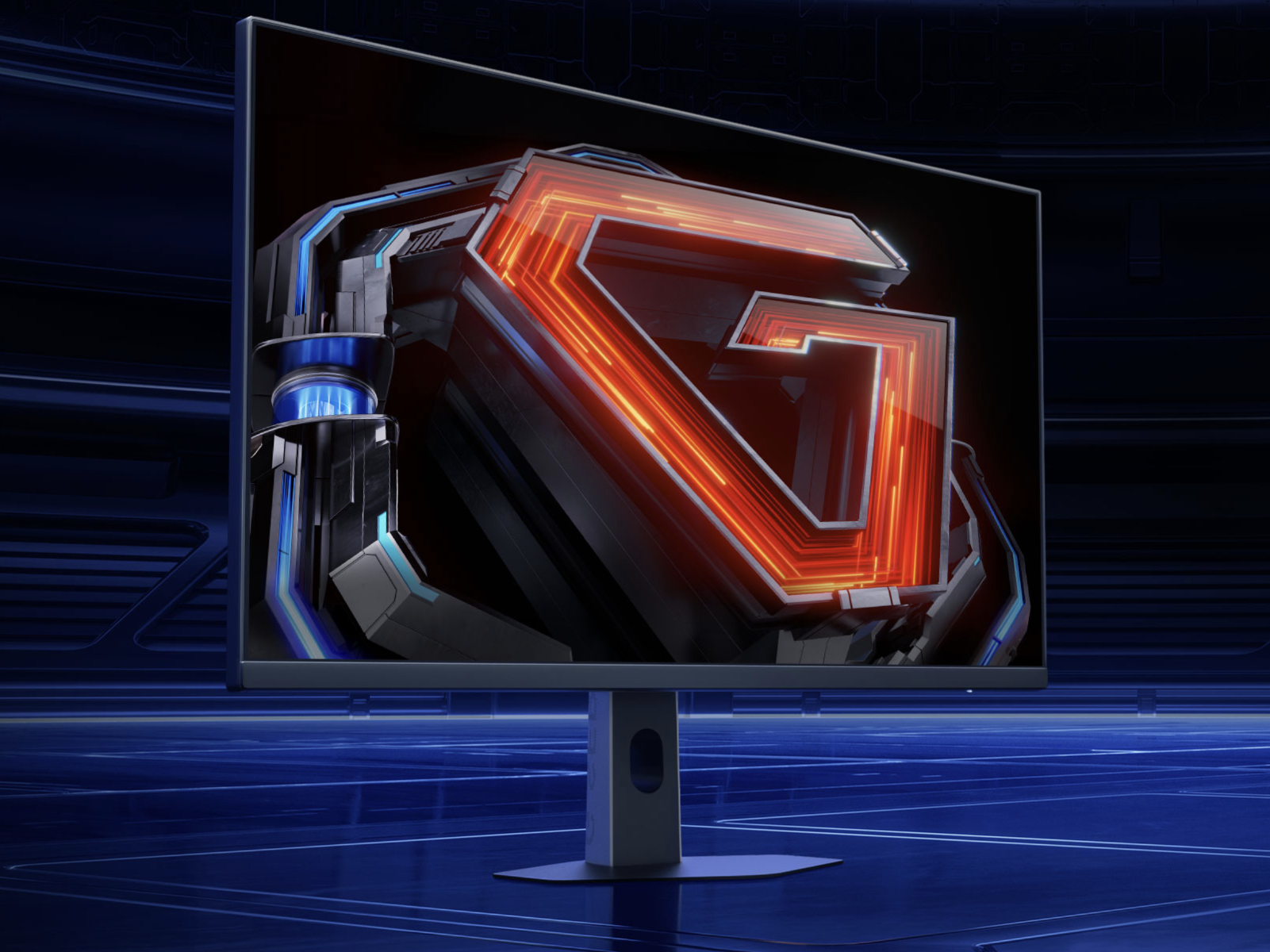
Xiaomi has launched the Redmi G25 2026 monitor in the Chinese market. The 24.5-inch display is now listed at a price of 599 yuan ($87), making it an attractive option for budget-conscious gamers and general users.
Redmi G25 2026 Monitor Specifications
The Redmi G25 2026 features a Full HD resolution of 1920 x 1080 pixels, paired with a 240Hz refresh rate. Xiaomi uses a Fast IPS LCD panel that provides a 1ms GTG response time and 178-degree wide viewing angles.
The monitor is VESA DisplayHDR 400-certified with a peak brightness of 400 nits. It supports AdaptiveSync, compatible with Nvidia G-Sync and AMD FreeSync, for stutter-free and tear-free gaming.
The display covers 100% of the sRGB color gamut and 95% of the DCI-P3 color space. The factory calibration ensures that the Delta E rating stays below 2, promising accurate and vibrant color reproduction. The panel supports 8-bit color depth and displays 16.7 million colors.
For eye comfort, the monitor includes TÜV Rheinland-certified low blue light protection and DC dimming to reduce eye strain. It features a minimalist design with thin bezels, an adjustable stand with tilt adjustment, and VESA 75 x 75 mm mounting.
For connectivity, the G25 includes one DisplayPort 1.4 connection, one HDMI 2.0 port, and a 3.5mm audio jack. The monitor weighs approximately 3.1kg and measures 557 x 171.3 x 445.6 mm with the stand.
In related news, Xiaomi has recently introduced the budget-friendly Redmi G27Q 2026 monitor, featuring a 2K resolution and a 320Hz Fast IPS display.
For more daily updates, please visit our News Section.
Motorola is finally moving into the book-style foldable space. The new Moto Razr Fold has started showing up on retail listings in China, confirming that pre-orders will begin on May 31 in the country.
Interestingly, buyers in the UK will get access sooner. Motorola UK posted on X on March 27 that pre-orders there would open in 15 days, meaning the wait is nearly over. The phone was already introduced at MWC earlier this year, but it’s only now starting to appear in a more consumer-facing way.
The Razr Fold runs on the Snapdragon 8 Gen 5, paired with 16GB of RAM. That’s more than enough for running multiple apps at once. The battery is also on the larger side at 6,000mAh. It supports 80W wired and 50W wireless charging, along with reverse charging.
There’s also support for the Moto Pen Ultra, which suggests Motorola wants this to double as a productivity device, not just something for media consumption.
The display setup looks fairly typical for a foldable, but with some interesting choices. Inside, there’s an 8.09-inch LTPO OLED panel with a 120Hz refresh rate. On the outside, the 6.56-inch display goes up to 165Hz, which is a bit unusual for a foldable. Although how much that matters in daily use is another question.
In terms of size, it comes in at around 9.9mm folded and 4.6mm unfolded, weighing about 244 grams. Its’a bit heavier like the Galaxy Z Fold7 (215g) and the Honor Magic V6 (219g).
The camera setup includes three 50MP sensors on the back: a main, ultra-wide, and a 3x telephoto. For selfies, there’s a 32MP camera on the outer display and a 20MP one inside.
Pricing is listed at €1,999, which puts it right alongside other premium foldables. That’s not surprising, though it does make the usual question of value a bit harder to answer.
There are still a few unknowns, especially around availability in different regions, but with pre-orders nearing, those details should start to clear up soon.
Xiaomi has introduced its latest monitor, the Redmi G27Q 2026, in China. It is priced at 1,299 yuan ($188) and will be available for purchase starting April 10.
Redmi G27Q Monitor Specifications
The Redmi G27Q features a 2560 x 1440 Fast IPS display, a 320Hz refresh rate, and a 1ms GTG response time. It also features AMD FreeSync Premium, which synchronizes with GPUs to minimize screen tearing and stuttering.
The display supports a peak brightness of 400 nits and adheres to the VESA DisplayHDR 400 standard. The monitor achieves a 1000:1 static contrast ratio, offering solid performance for both gaming and content consumption.
Xiaomi has added features like a dual wide color gamut that covers 95% of the DCI-P3 color space and 100% of the sRGB spectrum. The monitor supports 10-bit color depth, enabling smooth gradients and transitions for visual professionals. Xiaomi has also factory-calibrated the monitor to a Delta E value of less than 2, providing accurate and natural color reproduction.
The monitor offers health-focused features, including TÜV Rheinland-certified low blue light technology and DC dimming to reduce blue light and screen flicker. It also features Xiaomi’s Qingshan Eye Protection technology for enhanced viewing comfort.
In terms of adjustability, the Redmi G27Q includes a stand with height, tilt, swivel, and pivot options. It features support for VESA 75 x 75mm wall mounting, thin bezels to maximize screen space, and a joystick for easy settings navigation.
For connectivity, the monitor includes two DisplayPort 2.1 ports, two HDMI 2.0 ports, and a headphone jack. It consumes 48W of power.
In related news, ASRock has recently introduced a new 31.5-inch WOLED gaming monitor featuring a dual-mode display that switches between 4K at 240Hz and FHD at 480Hz, while MSI has unveiled a 27-inch 2K 144Hz monitor equipped with circular polarization eye-care technology.
For more daily updates, please visit our News Section.
Motorola Edge 70 Fusion and Redmi Note 15 Pro redefine what mid-range phones can offer in 2026, blending premium features with aggressive pricing. While one leans toward smooth performance and balanced usability, the other pushes standout specs like a 200MP camera and advanced display tech. This comparison is important for buyers who care about real-world experience over spec sheets, as both devices take very different paths to deliver value in the same price segment.
Please Note: When you buy something using the links in our articles, we may earn a small commission at no cost to you.
Design and Display
Build and Feel
The Motorola Edge 70 Fusion focuses on a slim, clean design with Gorilla Glass 7i and a lighter, more refined in-hand feel. It also brings IP68/IP69 protection with MIL-STD compliance, making it quietly durable without feeling bulky. On the other hand, the Redmi Note 15 Pro leans toward rugged confidence with stronger drop resistance and Victus 2 protection. The eco leather option adds personality, but the overall build feels more robust than sleek.
Display Quality
Motorola delivers a smoother 144Hz AMOLED with extremely high peak brightness, making it feel sharper in motion and more fluid in daily use. Redmi counters with richer visuals thanks to Dolby Vision, higher color depth, and better PWM dimming, which makes long viewing sessions more comfortable.
Verdict
Motorola feels lighter and smoother, ideal for everyday fluidity, while Redmi offers a more premium viewing experience. The choice depends on whether smoothness or cinematic quality matters more.
Specifications Including Battery
Performance
The Motorola Edge 70 Fusion uses Snapdragon 7s Gen 3/4, delivering balanced performance with better efficiency and stability. It feels more optimized for sustained usage and cleaner thermal control. The Redmi Note 15 Pro’s Dimensity 7400 Ultra brings solid power, but its architecture leans more toward burst performance rather than long-term consistency. In real-world use, Motorola tends to feel slightly more refined.
Battery and Charging
Motorola offers flexibility with 5200mAh or 7000mAh variants and faster 68W charging, making it more convenient for quick top-ups. Redmi pushes endurance with a large 6580mAh battery and adds reverse charging, which is useful in practical scenarios. However, its 45W charging feels slower in comparison.
Verdict
Motorola edges ahead with better efficiency and faster charging, while Redmi stands out for battery longevity. Fast-paced users may prefer Motorola, while heavy users may lean toward Redmi.
Camera
Main and Secondary Lenses
Motorola keeps things balanced with a 50MP main sensor and a more capable 13MP ultrawide that includes autofocus, making it versatile for everyday photography. Redmi takes a bold approach with a 200MP primary sensor, delivering higher detail and better cropping flexibility. However, its 8MP ultrawide feels more limited, reducing versatility.
Selfie Camera
Motorola clearly leads with a 32MP front camera capable of 4K video, offering sharper selfies and better video quality. Redmi’s 20MP selfie camera is decent but lacks 4K support, making it feel slightly behind for content creation.
Verdict
Redmi wins on raw detail with its 200MP sensor, but Motorola delivers a more balanced and practical camera system overall. It feels more consistent across all lenses.
Pricing
The Motorola Edge 70 Fusion is priced around $250 (₹27,000), while the Redmi Note 15 Pro comes in higher at $350 (₹30,000). The price gap is noticeable, especially considering that both target the same mid-range segment.
Is the Price Justified?
Motorola offers strong value with a smoother display, faster charging, and a more balanced camera setup at a lower price. It feels like a well-optimized package without unnecessary cost inflation. Redmi justifies its higher price with a 200MP camera, premium display features like Dolby Vision, and a larger battery. However, some trade-offs like slower charging and weaker ultrawide slightly reduce its value edge.
Verdict
Motorola delivers better overall value for money, while Redmi focuses on standout features. The extra cost only makes sense if those specific upgrades matter.
Disclaimer: Prices are approximate and may vary based on country, region, and applicable taxes.
Conclusion
Motorola stands out with its ultra-smooth 144Hz display, faster charging, and a cleaner, more balanced user experience. The inclusion of newer Android support and Snapdragon optimization makes it feel reliable long-term. Redmi counters with a flagship-style 200MP camera, Dolby Vision display, and a bigger battery, giving it a more feature-packed appeal on paper.
Verdict
Motorola Edge 70 Fusion feels like the smarter all-rounder with better pricing, smoother performance, and practical usability. The Redmi Note 15 Pro is more about standout specs and visual appeal, but it sacrifices some balance. For most users, Motorola offers a more complete experience, while Redmi suits those who prioritize camera resolution and display richness above everything else.
Disclaimer: This comparison is based on the specifications provided and is intended for general informational purposes. Actual performance, camera results, battery life, and overall experience may vary depending on real-world usage, software updates, and individual preferences.
Upgrades don’t always mean dramatic changes; sometimes, they’re about refining what already works. That’s exactly the case with the Nothing Phone (4a) and Nothing Phone (4a) Pro. At first glance, both devices look familiar, but the real story lies in the subtle improvements. From build materials to display smoothness and chipset tweaks, the Pro version builds on the same foundation rather than redefining it. This comparison focuses on what actually changes, and whether those upgrades feel meaningful in everyday use.
Please Note: When you buy something using the links in our articles, we may earn a small commission at no cost to you.
Design and Display
Build and Feel
The Nothing Phone (4a) features a glass back with a plastic frame and 63 LED glyphs, maintaining the brand’s signature look. The Nothing Phone (4a) Pro introduces a clear upgrade with an aluminum unibody and aluminum back, along with 137 LEDs. This shift highlights a move toward a more premium construction and enhanced glyph customization. The change is less about redesign and more about refinement and material improvement.
Display Quality
The standard model offers a 120Hz AMOLED panel with strong brightness and HDR support. The Pro upgrades this to a 144Hz panel with higher peak brightness and a more immersive screen experience. Resolution is also slightly improved. The differences focus on smoother visuals and enhanced outdoor visibility rather than a completely new display approach.
Verdict
The Pro introduces material and display upgrades, focusing on refinement rather than a dramatic shift in design philosophy.
Specifications Including Battery
Performance
The Nothing Phone (4a) runs on Snapdragon 7s Gen 4, while the Pro upgrades to Snapdragon 7 Gen 4. The improvement lies in better CPU structure and a stronger GPU, enabling smoother multitasking and improved sustained performance. The upgrade reflects a step forward in efficiency and power, rather than a jump to flagship-level performance.
Battery and Charging
Both devices retain identical battery capacities and charging speeds. There are no upgrades here, with both offering consistent all-day battery life and the same 50W charging experience. This suggests a focus on maintaining reliability rather than introducing changes.
Verdict
The Pro focuses on chipset improvements, while battery and charging remain unchanged across both models.
Camera
Main and Secondary Lenses
Both phones share a similar triple-camera setup, including a periscope telephoto lens. The Pro upgrades the main sensor slightly with dual-pixel autofocus, improving focus speed and consistency. The rest of the setup remains largely unchanged, indicating optimization rather than hardware overhaul.
Selfie Camera
The selfie camera remains identical on both devices, with no upgrades in hardware or video capabilities. Performance is consistent, maintaining the same output quality across both models.
Verdict
Camera differences are subtle, with the Pro offering minor refinements rather than major hardware changes.
Pricing
The Nothing Phone (4a) is priced at around $450 (₹32,000), while the Nothing Phone (4a) Pro is priced at about $500 (₹40,000). The price increase reflects the added materials, display improvements, and chipset upgrade.
Value for Money
The pricing difference aligns with the upgrades offered. The Pro positions itself as an enhanced version rather than a completely different segment device. The added cost mainly covers refinement in experience rather than new core features.
Verdict
The price gap directly reflects incremental upgrades, making the Pro a step-up option rather than a separate category.
Disclaimer: Prices are approximate and may vary based on country, region, and applicable taxes.
Conclusion
Both devices retain core Nothing features like glyph lighting and Nothing OS 4.1. The Pro expands on this with more LEDs and improved customization. Across the board, the changes focus on enhancing existing strengths rather than introducing entirely new features.
Verdict
Nothing Phone (4a) Pro is clearly an evolution, not a reinvention. Every upgrade, from aluminum build to 144Hz display and stronger chip, feels like a direct enhancement of the same foundation. There are no drastic changes, just smarter refinements that make the Pro feel like a polished version of the standard model rather than a completely different device.
Disclaimer: This comparison is based on the specifications provided and is intended for general informational purposes. Actual performance, camera results, battery life, and overall experience may vary depending on real-world usage, software updates, and individual preferences.
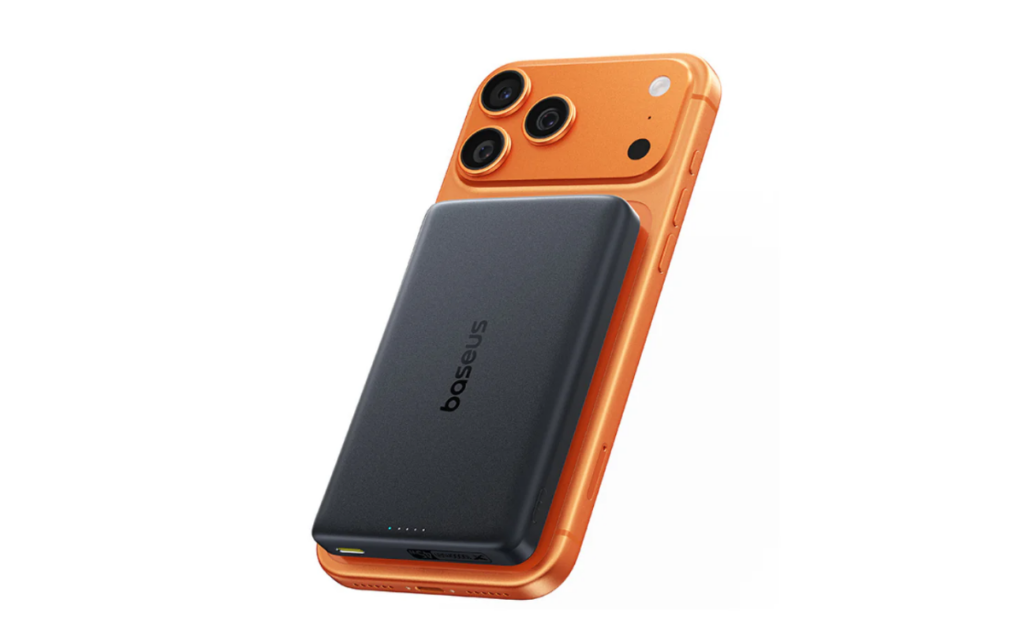
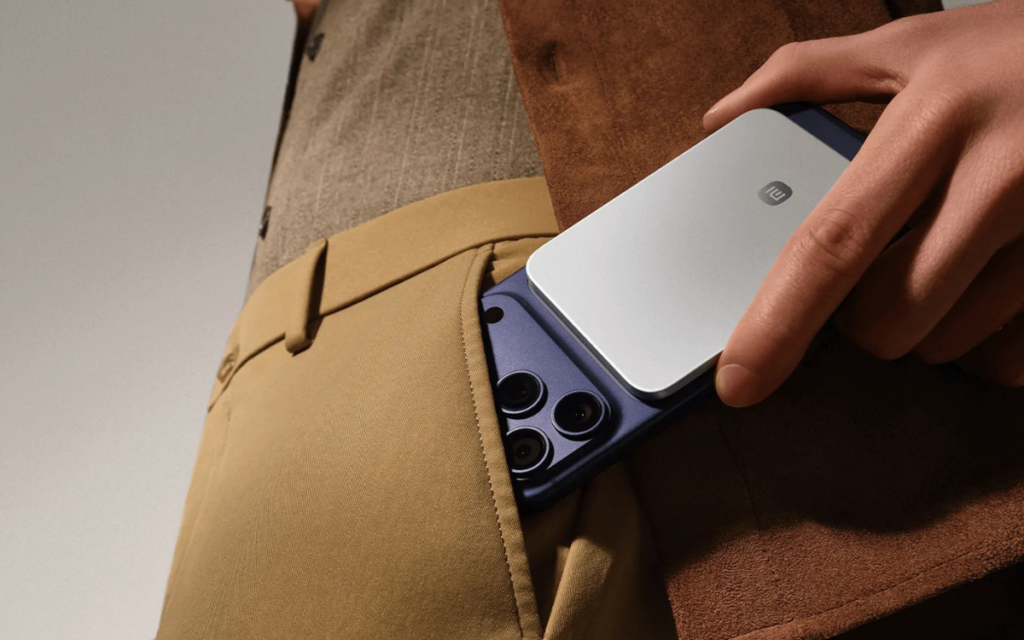
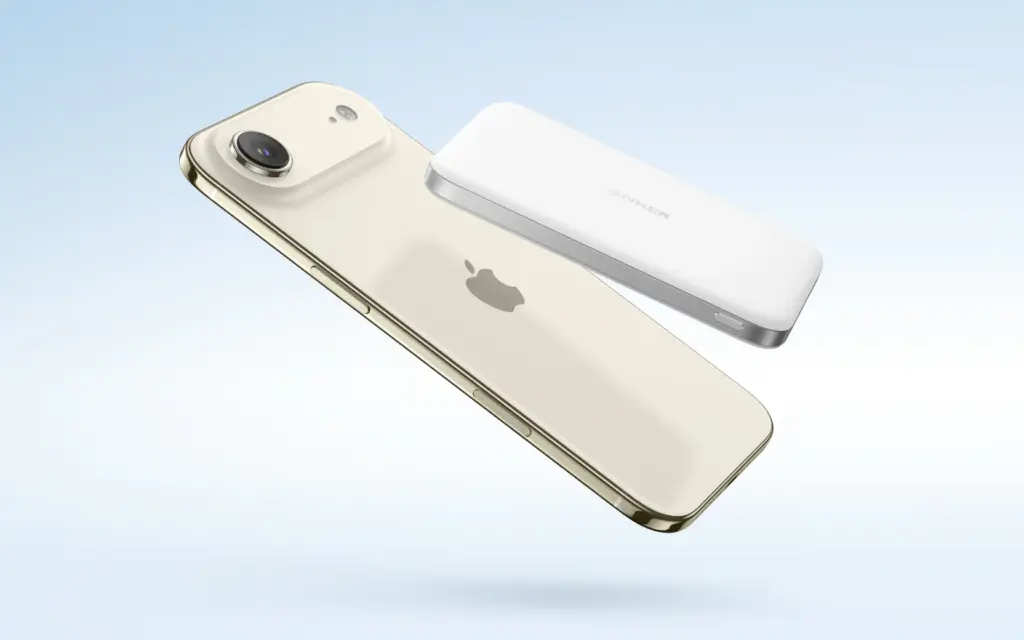
Baseus has announced its new Card Magnetic Air power bank in China, which focuses on safety, durability, and portability. The power bank is now available for pre-order at 299 yuan ($44) and introduces advanced safety features that Baseus describes as aerospace-grade.
Baseus Card Magnetic Air Power Bank Specs
The Card Magnetic Air power bank features a solid-liquid hybrid battery cell for better thermal stability and safety. It meets 2026 Chinese safety standards and has undergone tests like needle puncture, fire resistance, and pressure testing up to 2 tons. It performs reliably in extreme temperatures from -60°C to 140°C.
The power bank is designed for portability, featuring a slim 6.9mm aluminum unibody and a lightweight design. It is available in Silver, Black, and Blue, with a 5000mAh battery capacity. It supports magnetic wireless charging up to 15W for Android and 7.5W for iPhones, and USB-C wired charging up to 22.5W.
The device can deliver up to 60W output when connected to a higher-power adapter or another power source. This feature makes it capable of charging laptops like the MacBook Air. Baseus has also added dual-device charging functionality, allowing simultaneous use of wireless and wired charging.
The Card Magnetic Air features AI-based sensors that detect when a device is magnetically attached or plugged in, optimizing power delivery. It also includes NFC functionality, allowing users to check the battery status by tapping their smartphone.
Baseus improved the thermal performance of the device with a glacier cooling matrix. This system increases the heat dissipation area by 50% and incorporates graphene materials for better thermal management.
Flagship smartphones in 2026 are no longer just about premium branding; they’re about how much value and innovation you actually get for the price. The Samsung Galaxy S26+ and Xiaomi 17 Pro take two very different approaches: one focuses on refinement, long-term reliability, and ecosystem strength, while the other pushes aggressive hardware upgrades at a far lower price. For buyers deciding between a safe premium experience and a feature-packed powerhouse, this comparison highlights where each device truly stands and which one makes more sense depending on usage priorities.
The Samsung Galaxy S26+ follows Samsung’s refined flagship design with Gorilla Glass Victus 2 on both sides and an Armor Aluminum 2 frame, giving it a polished and durable feel. It also offers broader SIM flexibility and DeX support, adding a productivity edge. Meanwhile, the Xiaomi 17 Pro introduces a more experimental approach with Dragon Crystal Glass and a secondary rear display, making it stand out instantly. It feels more futuristic, especially for users who enjoy unique hardware touches.
Display Quality
Samsung delivers a sharper 1440p LTPO AMOLED panel with excellent brightness and color tuning, making it ideal for content consumption. Xiaomi counters with a brighter panel, Dolby Vision support, and extremely high PWM dimming, which is easier on the eyes. The secondary display also adds functional versatility, especially for quick tasks and camera previews.
Verdict
Samsung feels more premium and balanced, but Xiaomi brings innovation and eye comfort. The better choice depends on whether consistency or creativity matters more.
Specifications Including Battery
Performance
Both devices are powered by the Snapdragon 8 Elite Gen 5 in key markets, delivering flagship-level speed and efficiency. Samsung’s optimization with One UI and longer software support gives it an edge in longevity and stability. Xiaomi, however, offers slightly higher RAM options and faster storage, which can feel snappier in heavy multitasking and gaming scenarios.
Battery and Charging
This is where Xiaomi clearly pulls ahead. A massive 6300 mAh battery paired with 100W wired and 50W wireless charging makes it one of the fastest and longest-lasting flagships. Samsung’s 4900 mAh battery is reliable but feels conservative, especially with 45W charging. Daily users may notice the difference quickly.
Verdict
Samsung wins in software polish and long-term updates, but Xiaomi dominates raw battery and charging performance. Power users will naturally lean toward Xiaomi.
Camera
Main and Secondary Lenses
Samsung sticks with a proven triple-camera setup, delivering consistent results with strong HDR, stable video, and reliable 3x zoom. It excels in color accuracy and video features like HDR10+ and stabilization. Xiaomi pushes boundaries with a 50MP triple system, including a 5x periscope zoom and Leica tuning. The larger sensors and advanced video modes give it a clear advantage in versatility and detail.
Selfie Camera
Samsung’s 12MP selfie camera focuses on natural tones and consistency, while Xiaomi’s 50MP front camera delivers sharper and more detailed selfies. Xiaomi also supports more advanced video features on the front camera, which content creators may appreciate.
Verdict
Samsung is more consistent and predictable, especially for video, but Xiaomi offers superior hardware and flexibility. Those who enjoy experimenting with photography will likely prefer Xiaomi.
Pricing
The Samsung Galaxy S26+ is priced around $1100 / ₹120,000, placing it firmly in the ultra-premium category. In contrast, the Xiaomi 17 Pro comes in at approximately $700 / ₹62,000, making it significantly more affordable despite offering higher-end hardware in several areas.
Is the Price Justified?
Samsung justifies its price with long-term software support, brand reliability, and ecosystem features like DeX and UWB integration. However, Xiaomi delivers exceptional value by offering better battery, faster charging, stronger camera hardware, and more RAM at a much lower price. The gap feels difficult to ignore.
Verdict
Samsung is a safe premium investment, but Xiaomi clearly wins on value for money. The pricing difference alone makes Xiaomi a very compelling choice.
Disclaimer: Prices are approximate and may vary based on country, region, and applicable taxes.
Conclusion
Samsung stands out with its polished ecosystem, extended software support, and productivity-focused features like DeX. It feels like a complete, mature flagship designed for long-term use. Xiaomi, on the other hand, pushes hardware innovation with a secondary display, massive battery, ultra-fast charging, and a more ambitious camera system. It feels more exciting and future-forward.
Verdict
Samsung Galaxy S26+ is ideal for users who prioritize reliability, software longevity, and a refined experience. Xiaomi 17 Pro is the better pick for those who want maximum hardware value, faster charging, and cutting-edge features at a lower price. Overall, Xiaomi offers the more aggressive and value-driven package, while Samsung remains the safer flagship choice.
Disclaimer: This comparison is based on the specifications provided and is intended for general informational purposes. Actual performance, camera results, battery life, and overall experience may vary depending on real-world usage, software updates, and individual preferences.
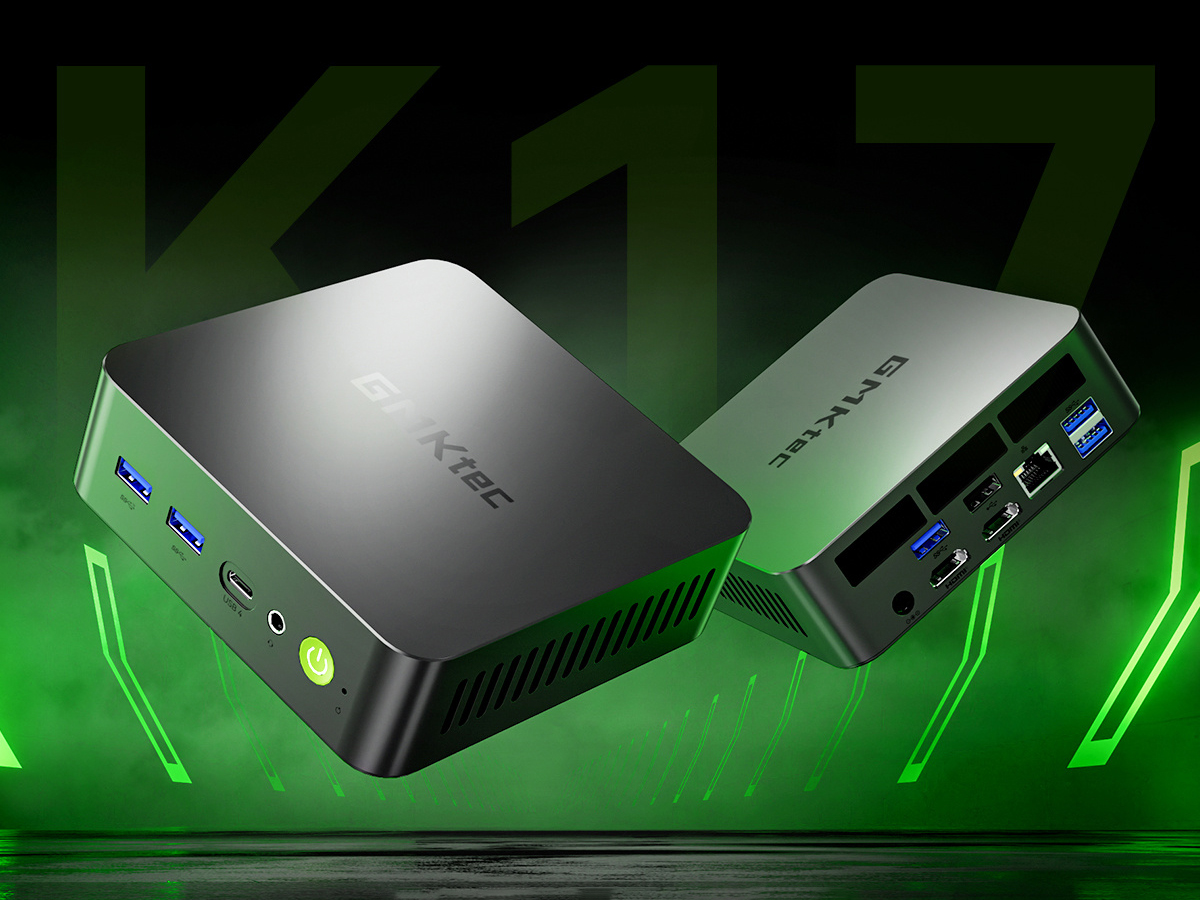
Gmktec has unveiled the NucBox K17, a new mini PC equipped with a Lunar Lake processor, offering advanced AI computing capabilities in an ultra-compact design.
Gmktec NucBox K17 Specifications
The NucBox K17 features the Intel Core Ultra 5 226V processor with 8 cores, 8 threads, a 4.5GHz turbo frequency, delivering 97 TOPS of AI performance alongside the Intel Arc 130V GPU and AI Boost NPU. The Arc 130V GPU offers 53 TOPS of AI performance, supports ray tracing and XeSS, and is optimized for gaming and content creation. The AI Boost NPU adds 40 TOPS of INT8 AI acceleration for machine learning and AI applications.
The mini PC runs Windows 11 Pro, includes 16GB of LPDDR5X memory at 8533MT/s, and offers storage options ranging from 512GB to 1TB SSDs. It supports up to 16TB of expandable storage through dual M.2 2280 slots compatible with PCIe 4.0 and 5.0 SSDs.
The NucBox K17 offers a wide range of ports for versatile connectivity. On the front, it includes a USB4 Type-C port with 100W Power Delivery, DisplayPort (40Gbps), along with one USB 3.2 Gen2 port, one USB 3.2 Gen1 port, and a 3.5mm audio combo jack.
At the rear, it features one DC IN port (100W), two HDMI 2.1 ports, three USB 3.2 Gen1 ports (5Gbps), one USB 2.0 port, a 2.5G RJ45 LAN port, a lock slot, along with power and reset buttons.
For wireless connectivity, the device supports Wi-Fi 6E and Bluetooth 5.2. The NucBox K17 can handle up to three displays simultaneously, with support for resolutions of up to 8K through its HDMI and USB4 ports.
The mini PC features a dual heat pipe cooling system with a turbine fan and smart thermal management, providing quiet operation even under load. It is highly compact, measuring 127.5 x 127 x 44.5 mm, and weighs just 460g.
Pricing and Availability
The Gmktec NucBox K17 is available now through the company’s official website. The 16GB + 512GB version is priced at $559.99, while the 16GB + 1TB version costs $619.99.
In related news, Lenovo debuts the Yoga Mini i Gen 11 featuring a circular design, Intel Core Ultra, and 4-display support. Topfeel also launches Next 2 Mini PCs with Ryzen 7 H255 and up to RTX 4060 Ti GPU support.
For more daily updates, please visit our News Section.
The Galaxy Z Fold 8 is no longer a mystery, which many observed as identical to the Fold 7, but the display could be the reason why Samsung is making the phone look familiar.
The Z Fold 8 will follow the side fold mechanism, featuring foldable and cover displays. The width and the height are reportedly the same as the recent generation Fold device. However, the new Fold may be slightly thicker. On the other hand, the camera design hasn’t changed.
Based on past reports, Samsung has already developed a creaseless solution for foldable devices and showcased it to the public at CES. The display shows no signs of crease, a major upgrade.
The tech was compared to a Galaxy Z Fold 7, which was released in July 2025. The difference between the two generations was huge, removing one of the most annoying impurities of the foldable displays.
Reports indicate that the creaseless display is coming to the Galaxy Z Fold 8. Samsung hasn’t said anything on this matter. However, the dimensions have an indication.
Galaxy Z Fold 8 CAD Render (Source – Androidheadlines)
The Fold 8 could have the same width and height as the Fold 7, except for the thickness. The thickness could be due to improved closure protection, but there may be another reason.
Related to this, a report from January speculated that Samsung could opt for dual Ultra Thin Glass (UTG) for the Galaxy Z Fold 8 display. This solution will limit the crease visibility and make it look like nothing.
According to Samsung, the Fold 7 features a 50% thicker UTG than its Fold 6. And utilizing dual UTG may have forced Samsung to return some of the thickness to the Fold 8’s design. This may not be huge, but only slightly.
Also, the reataining the same dimensions suggests that Samsung may have been testing this solution on the Fold 8’s form factor for a long time. Keeping the same design allowed the company time to focus on the new upgrade with the same electronics components. If Samsung goes with the extra UTG layer, then it will certainly bring a creaseless display.
Unraveling more on the display, Samsung is reportedly considering using the M13 display on the new Fold, instead of the M14. The reason for that would be the optimized performance, which the company found sufficient for next-gen foldables.
Besides the Fold 8, Samsung also has a Wide foldable phone that is expected to launch alongside the Fold 8 and Flip 8 in the second half of this year. The Fold 8 lineup will utilize the Snapdragon 8 Elite Gen 5 chipset and run the latest Android 17.
Microsoft is establishing Copilot as its primary AI brand for Windows, Microsoft 365 and GitHub. However, the terms of use, warnings, and disclaimers for each Copilot differ. By doing this, the Redmond-based tech giant is undermining trust in its own AI tool.
Deal | Evergreen Valley: The Parkour Game is now free on the Epic Games Store until April 8, down from $2.99. The single-player platformer features casual exploration elements with punishing resets and low system requirements.
This Sunday marks the 5-year anniversary of LG officially exiting the smartphone business. That wasn’t quite the end of the story – the company wouldn’t stop making phones until the end of May 2021. However, on April 5, 2021, the company officially confirmed that its board of directors had approved the decision to shift focus away from phones.
LG sold off its remaining phone inventory with a promise to put out software updates for its final models. And it did – the LG Wing received Android 13 in April 2023 (it originally launched with Android 10). At the same time, the company announced a...
A first look at the new LEGO Fortnite 'Rave Cave' set has been revealed. Although the image is blurry, several key components can already be identified. Additionally, pricing information has surfaced. The set is expected to be released on June 1, 2026.
Do you remember that Perplexity promised to bring a replacement for the Hey Plex voice wake-up for the Galaxy S26 series? Well, that feature is still missing in action.
Back in February, Samsung announced a strategic partnership with Perplexity, one of the leading AI companies. It was then announced that this AI will be part of the multi-agent strategy for the S26 series.
At the launch, both companies brought more to the table. Samsung Browser and Bixby are now using Perplexity’s summarization and agentic AI capabilities to get smarter than ever before.
That said, Samsung is still holding Google’s AI assistant as the key driver in the latest S-series devices. However, it’s also offering users a way to switch to Perplexity or Bixby. You can wake up these AI assistants through voice commands.
For example, Gemini wakes up with “Hey Google,” and it’s ready to take your questions, no matter if your phone is locked. You can do the same with Bixby for “Hey Bixby” and “Hey Plex” for Perplexity.
For those who are new to this topic, let me tell you that Perplexity, specifically, launched the Hey Plex wake-up phrase for the Galaxy S26 series. I tried this feature on my new S26 Ultra, and it worked quite like the new Bixby.
Yet, within a few days, the AI firm removed this wake-up phrase. The reason was unknown, and the company didn’t even bother sharing more information.
As the news began to spread online, Perplexity CEO, Aravind Srinivas, said that the “Hey Plex” wake-up phrase is changing to “Hey Perplexity”. Again, there was no explanation behind this decision.
So, we waited, and it’s the 5th of April, 2026, and Perplexity is still missing a wake-up phrase that both Samsung and Perplexity unveiled for the S26 series.
Moral of the story
Yes, nobody is noticing that Hey Plex or Hey Perplexity is missing from the new S26 phones because Gemini can do everything better than its competitors, including Bixby.
So what are we doing here? Because there’s a pattern to learn: Samsung installed Perplexity’s AI under its multi-agent framework. Perplexity is getting Samsung’s vast user data, changing its features right after the phone launch, while maintaining zero transparency. And it’s a common business strategy between the two companies. So, consumers aren’t the priority.
I said it before, and I will say it again, if this wake-up phrase change is only for the namesake, it will be one of the most time wasting investment from the Perplexity team.
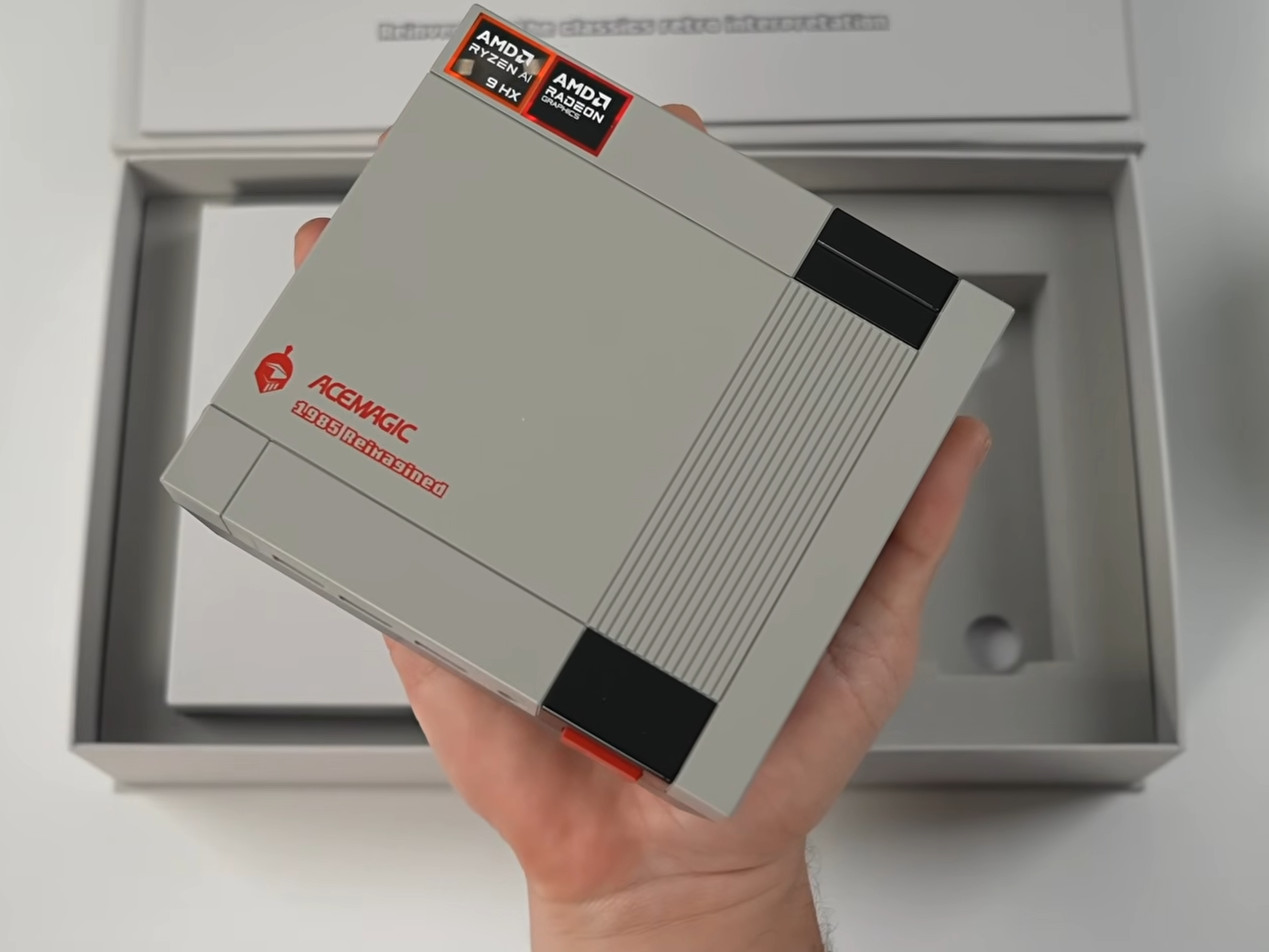
The Acemagic N3A is now available to purchase. It was initially announced in February 2026, and the company has switched the processor. This mini PC and NAS hybrid with 136TB storage support is powered by the AMD Ryzen Embedded R2544. The launch price is $299.
Grell has released the OAE2 open-ear headphones to the worldwide market. They utilize angled drivers that simulate the effect of sound coming from in front of the listener to deliver the missing je ne sais quoi that other headphones lack.
It has been just a couple of weeks since the first discounts for the Galaxy S26 series and now we’re seeing even bigger price cuts. Meanwhile, the Galaxy A57 and A37 launched earlier this week, but the Poco series is offering some stiff competition to both A and S phones.
The Samsung Galaxy S26 Ultra with 512GB storage is now €1,185, which is €45 less than it was two weeks ago. Since then, we have published a comparison with the S25 Ultra and an S26 Ultra vs. iPhone 17 Pro Max article.
Samsung Galaxy S26 Ultra
...
Samsung just confirmed that Samsung Messages will be discontinued in July 2026 and Google Messages is taking over. Samsung posted an official End of Service announcement.
So, July 2026 is the deadline, and if you’re still on the stock messaging app that shipped with your Galaxy phone, it’s time to move.
Once the cutoff hits, Samsung Messages stops working for standard texts. You’ll only be able to send messages to emergency services and defined emergency contacts.
Users on Android 11 or lower are exempt, which tells you something about the demographic Samsung expects to still be running its own messaging client at this point. For everyone else, Google Messages is the mandated replacement.
RCS is the real story here
Most users never noticed the difference between Samsung Messages and Google Messages. But the gap has widened considerably, and its own app has fallen behind on features that carriers and Google have pushed aggressively, particularly RCS.
Apple opened iOS to RCS last year, which meant the last excuse for fragmented messaging across Android and iPhone finally collapsed. Google Messages is the primary vehicle for RCS on Android and that’s why it’s being prioritized.
RCS Messaging across OS
Additional features
Google Messages brings AI-powered scam detection and spam filtering. Gemini integration is also baked in, giving you smart replies and photo remixing tools.
Multi-device support lets you pick up conversations across your phone, tablet, or Galaxy Watch without interruption. High-quality photo and video sharing through RCS, along with typing indicators and read receipts.
Tizen Watch users
If you own a Tizen OS watch, a Galaxy Watch 3 or earlier, you’re losing full conversation history on the watch. Those watches won’t support Google Messages. You can still send and receive texts, but the thread view goes away.
How to switch?
Most users will get an in-app prompt inside Samsung Messages, walking them through the transition. If you want to do it manually, open Google Messages, and it’ll immediately ask you to set it as your default SMS app.
In March, Samsung released the Galaxy S26 flagship with One UI 8.5 featuring privacy display and new features, but running the February security patch, and skipped a new firmware update.
Since its launch, Samsung has released two software updates for this flagship. The first focused on system stability improvements, and the second update introduced AirDrop support for the Quick Share feature.
The one thing that remained the same in these updates is the February 2026 security patch. To be mentioned, the phone shipped with this security level out of the box.
To cover up, the company delivered the April 2026 security patch on the first day of this month. Making it the first phone in the S-series to get this update on board. Though the update is yet to expand for global users, it secures the phone with the latest patches.
Photo by Sammyfans
Meanwhile, it doesn’t erase the fact that the company actually skipped a security update for its newest flagship phones. The key reason for that would be the AirDrop support. This new firmware may have consumed the time that Samsung decided to skip a new update.
We also want to mention that this is the first time in a while that Samsung skipped a monthly security update for a flagship phone. It’s hard to say when the phone maker will seed the April patch for all users, but it’s good to see that Samsung rushed to release the April 2026 patch for some users at the earliest.
The Xiaomi Bluetooth Remote 2 Pro is now official in China, and one of the interesting features is the NFC casting. It allows users to cast their phone's content to a connected TV through the remote. The launch price is CNY 99, around $14.38.
Major tech corporations are calling for illegal content to be automatically detected in private chats. However, the European Parliament has declined to extend the e-Privacy Directive exemption that permitted the identification of abusive material in private messages.
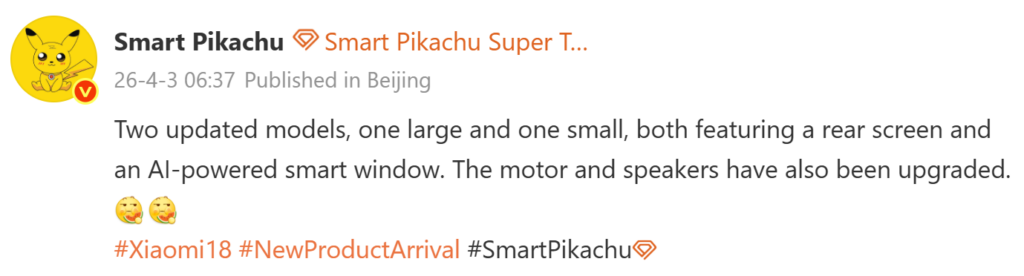
The Xiaomi 18 series is set to challenge the iPhone 18 with (another) innovative AI "Smart Window" rear display. While dual 200 MP cameras promise elite photography, surging RAM costs mean fans should brace for a possible price jump this September.
The vivo X300 Ultra was officially unveiled on Monday with plans to ship it in China first and expand to the global markets soon after. Yes, the X Ultra is going wide for the first time. So, are you tempted?
In China, the base 12/256GB model costs CNY 7,000 and started shipping on Friday. This converts to $1,020 / £775 / €885 / ₹95,000. These won’t be the actual prices of the X300 Ultra on the global markets, of course, those will be revealed later. And, again, we can’t use a previous model as context since neither the X100 Ultra nor the X200 Ultra was available globally.
But a vivo...
Even Samsung’s 2026 foldables pale in comparison. If LG had not decided to exit the smartphone business, we could have seen a first rollable smartphone as early as 2021, one that was already more innovative five years ago than anything the foldable phone segment has produced recently, as a teardown shows.
The Xiaomi 18 will take over sometime in the future, but one final model in the Xiaomi 17 lineup is still on the schedule, and it is not one of the Xiaomi 17T variants. Instead, the huge Xiaomi 17 Max is expected to launch soon with Leica camera upgrades in tow.
Retro gamers are often frustrated when titles disappear from the Microsoft Store. Happenings in the xCloud backend may be a prelude to Xbox 360 games and other favorites returning. The company has promised to implement backward compatibility on PCs and existing and new Xbox consoles.
Deal | The Samsung Galaxy Tab S11 is a high-end Android tablet featuring an 11-inch display, S Pen support, and an aluminum body. Amazon is currently offering the 256GB and 512GB variants at 15% off.
There may be trouble brewing on the horizon for the Galaxy A57 and A37 – the results from last week’s poll are in and the consensus is that the two phones are overpriced. And that there is some serious competition in the mid-range market. Luckily, Galaxy A phones don’t stay at MSRP for long, so the first issue will correct itself soon enough. If it hasn’t already – we’re seeing deals in some markets.
Zooming in on the Samsung Galaxy A57, there is interest there, but it is strongly contingent on a lower price or a good bundle deal. At least one person in the comments appreciated the thinner...
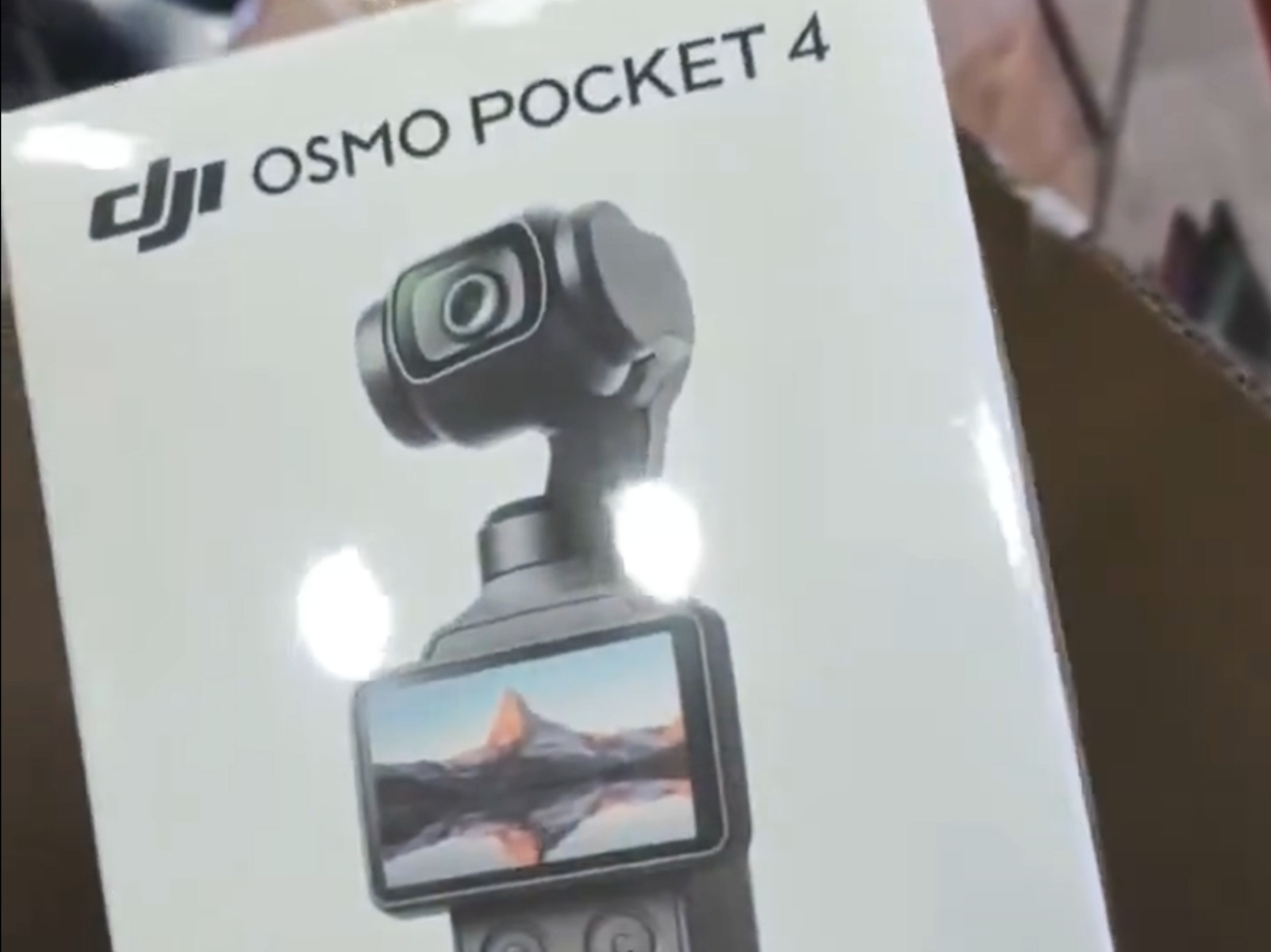
Some video enthusiasts might be upset as a major audio upgrade/downgrade is coming to the Creator Combo version of the DJI Osmo Pocket 4 - depending on your priorities. The new transmitter, likely the DJI Mic 3, offers a smaller footprint and better sound than the Mic 2 but removes the 3.5mm lav mic input.
Samsung is rumored to be launching a wider form factor Galaxy Z Fold this year alongside the Galaxy Z Fold8, which will keep the taller and narrower form factor of its predecessor. The "Wide Fold" was shown in some leaked renders last month, but it doesn't have an agreed upon name yet, we've heard it referred to as Galaxy Z Fold8 Wide in the past, and today it's the Galaxy Z Wide Fold.
Regardless of its name, here are some images depicting its aspect ratio when unfolded. It's 4:3, which is very far from, and much wider than, the Fold7's 1.11:1 (or 3.33:3). So here's what that actually...
Deal | Smalland: Survive the Wilds is an open-world survival game in which your character is a small fairy-like creature. You must venture into a dangerous world, build shelters, and upgrade your equipment in order to complete your mission.
Galaxy S27 Ultra release is almost a year away and our initial wishlist highlights the seven biggest upgrades Samsung fans are demanding in 2027.
Samsung doesn’t need another safe upgrade; it needs a statement. The Ultra line has been flirting with greatness for years, but 2027 feels different. Rivals are no longer just catching up, making 2027 the year Samsung either shuts the noise down or fuels it.
Galaxy S27 Ultra Wishlist
Here’s what the Galaxy S27 Ultra must get right.
1. 1-inch camera sensor, the missing piece
Phones from Xiaomi and Vivo are playing with 1-inch camera sensors. Meanwhile, Samsung still leans on megapixels, which works, but it doesn’t wow anymore.
A 1-inch type sensor paired with the next-gen 200MP tech could finally change the conversation. Add proper motion capture, faster shutter speeds, and consistent HDR, and suddenly you’re not just competing, you’re leading.
2. 2nm processor that actually feels fast
A 2nm-class chip, likely the Snapdragon 8 Elite Gen 6 Pro flagship chip, paired with LPDDR6 RAM and UFS 5.0 storage, sounds like overkill on paper, but under the hood, this is where Samsung can build a true AI powerhouse.
Snapdragon 8 Elite Gen 6 Pro (2nm)
Rumored to push insane clock speeds
LPDDR6 RAM (12GB / 16GB / 24GB option)
Could debut as Samsung’s first LPDDR6 phone
UFS 5.0 storage (256GB–1TB)
3. Battery life that breaks the daily charging habit
5000mAh is table stakes now, and if Samsung really wants to move the needle, silicon-carbon batteries in the 6000 to 7000mAh range need to happen. Well, it’s not going to happen.
Galaxy S26 Ultra has upgraded the peak charging speed to 60W, which brings positive outcomes. With the next generations, the days of being tethered to a wall for an hour should feel outdated.
4. Galaxy AI that works fully offline
Samsung is doing great with Galaxy AI, with the S26 series introducing Agentic AI. The next set of upgrades will arrive with the Galaxy Z Fold 8 and Z Flip 8 foldable phones later this year.
For 2027, we are a lot more optimistic. Imagine real-time call translation that works on a flight, photo edits that reconstruct scenes instantly and smart summaries that actually save time.
5. A display that finally kills bezels
Debuted with the S26 Ultra, Privacy Display is the most brilliant mobile innovation. Samsung now needs to push brightness beyond 3000 nits so sunlight is irrelevant.
Improve anti-reflective coating so glare disappears, and maybe, just maybe, trim the bulk so the Ultra feels less like a brick; this is about presence. When you pick it up, it should feel futuristic.
6. Polar ID and security that just works
Face unlock on Android still feels like a compromise, but the rumored Polar ID upgrade could change that, as it’s secure, fast, and reliable, without needing a notch or cutout gimmick.
Combine that with a next-gen ultrasonic fingerprint sensor and continuous authentication, and your phone becomes quietly smarter. Security shouldn’t slow you down; it should disappear into the background.
7. S Pen needs a surprise, not silence
Early signals suggest the S Pen might not get major upgrades, which is absolutely disappointing but not final. The South Korean tech giant has a chance to surprise its most loyal users.
Lower latency for that pen-on-paper feel, and magnetic attachment so it finally feels modern. Maybe Samsung could even bring back smarter Bluetooth features like Air Actions in 2027.
The S27 Ultra doesn’t need to tick boxes, but it needs to win hearts again. A 1-inch sensor changes the camera game. Real AI changes how you use your phone. Better battery and charging change your daily routine, as everything else builds on that.
Pearl Abyss found another way to improve the graphics in its immersive open-world adventure. A new Crimson Desert PS5 Pro patch makes PSSR upscaling available in quality mode. While anti-aliasing sharpens scenery in the PS5 Pro enhanced game, frame rates dip more frequently below 30 fps.
A new expansion board essentially turns the Raspberry Pi 5 into a NAS. It comes with two Ethernet ports and support for multiple storage drives. Both 2.5-inch and 3.5-inch hard drives are supported.
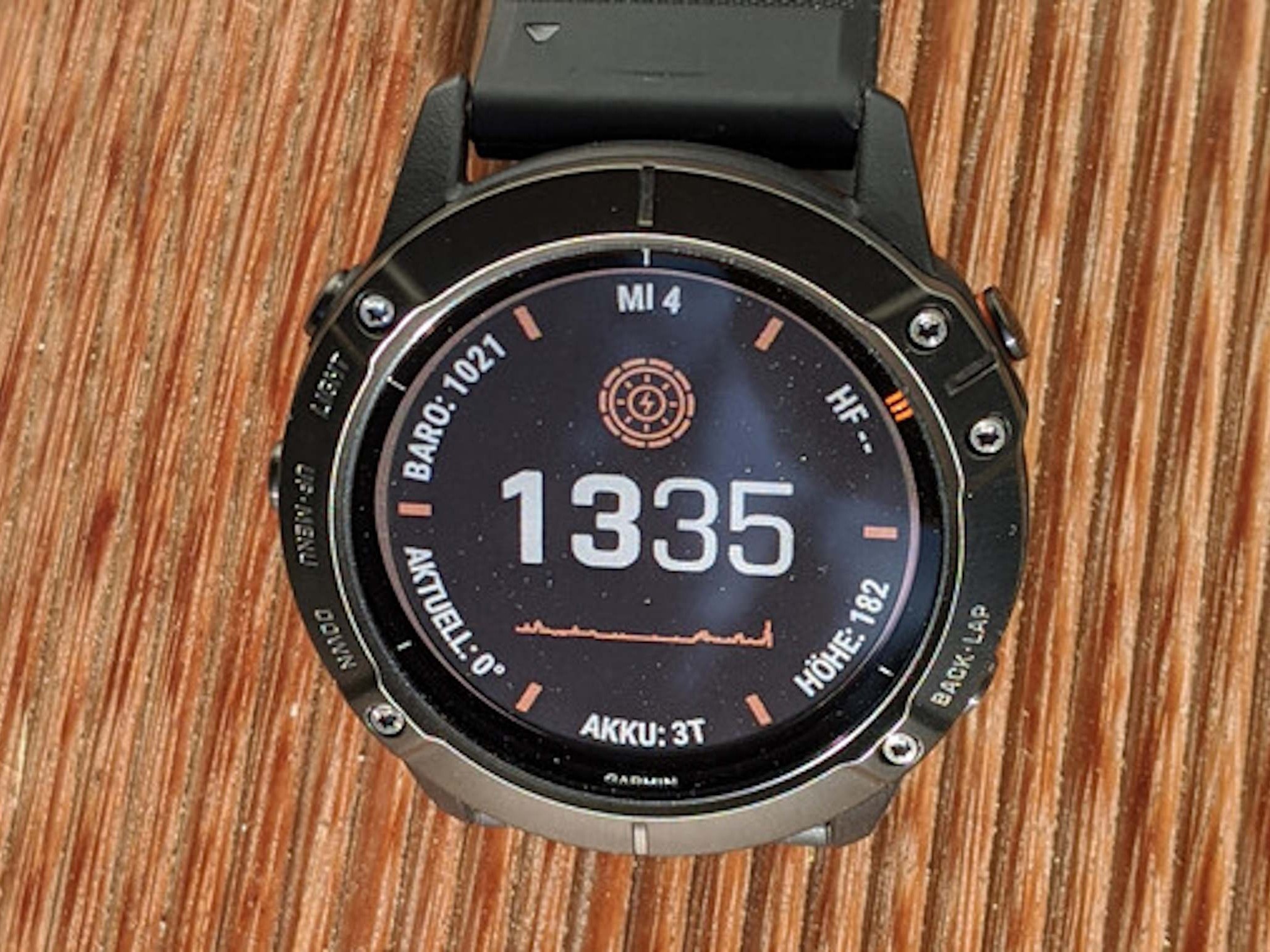
Garmin is continuing to improve its own products, as patents that have now become public illustrate. Specifically, an improved technology could presumably lead to better positioning accuracy or stronger connection quality of smartwatches like the Garmin Fenix 9.
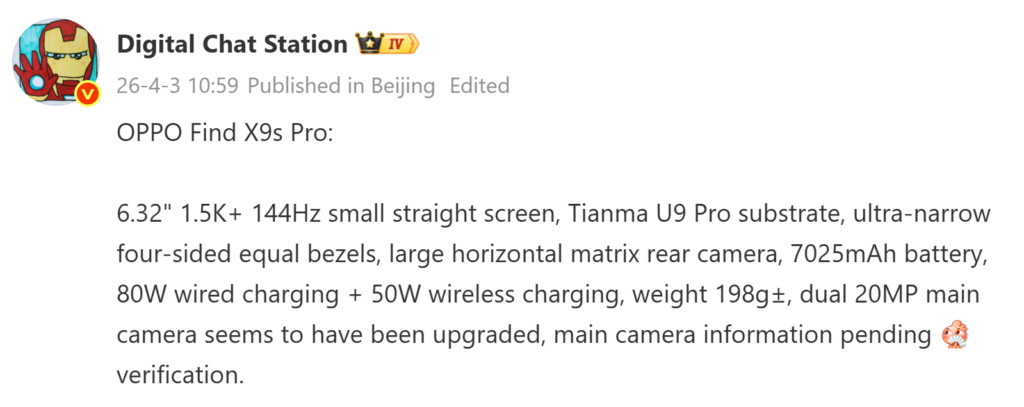
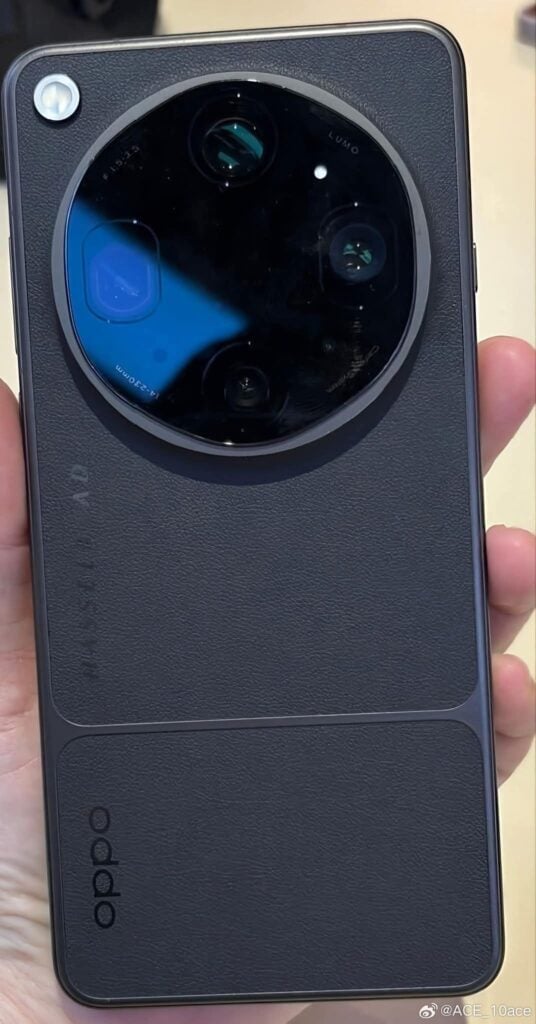
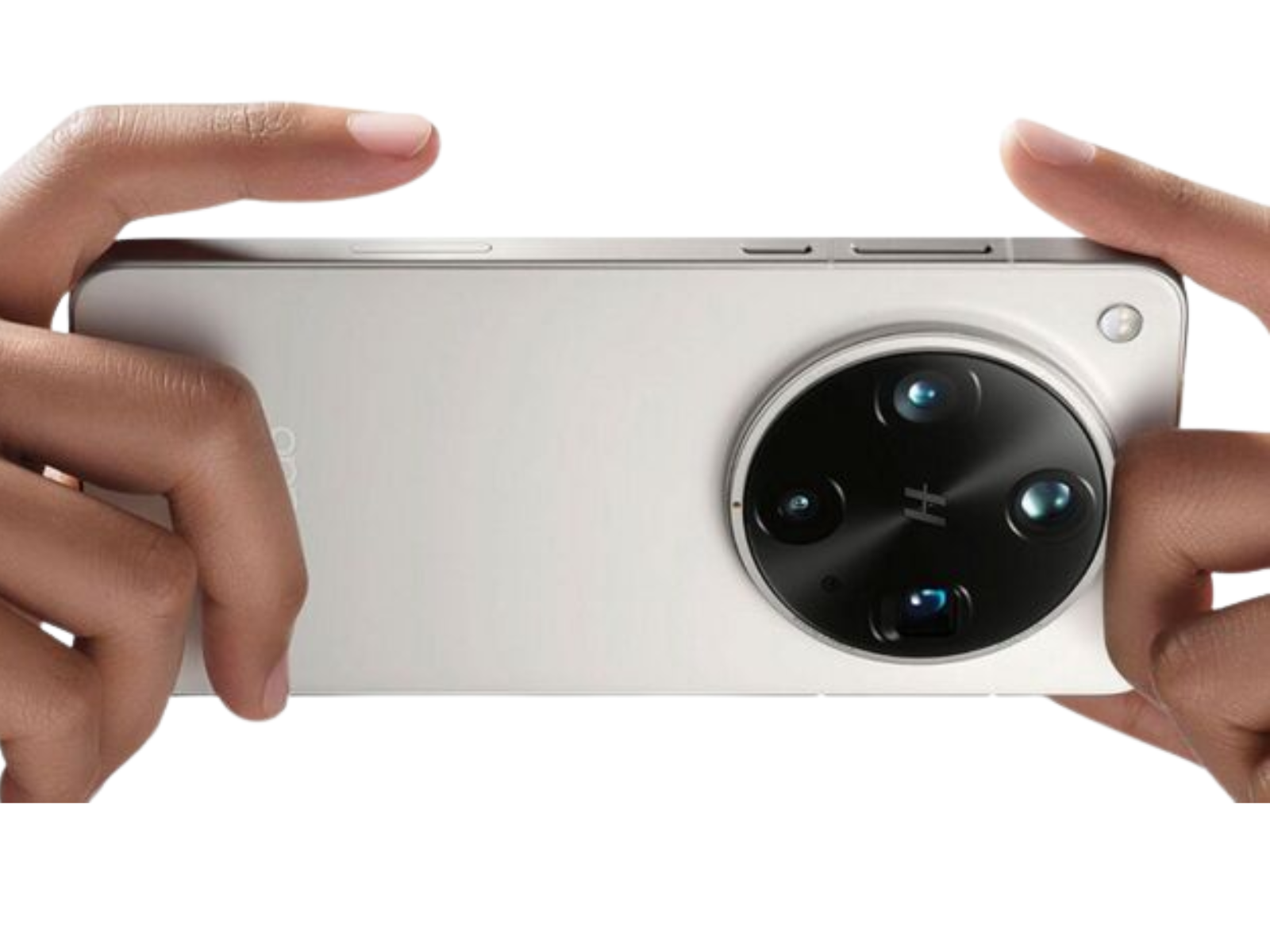
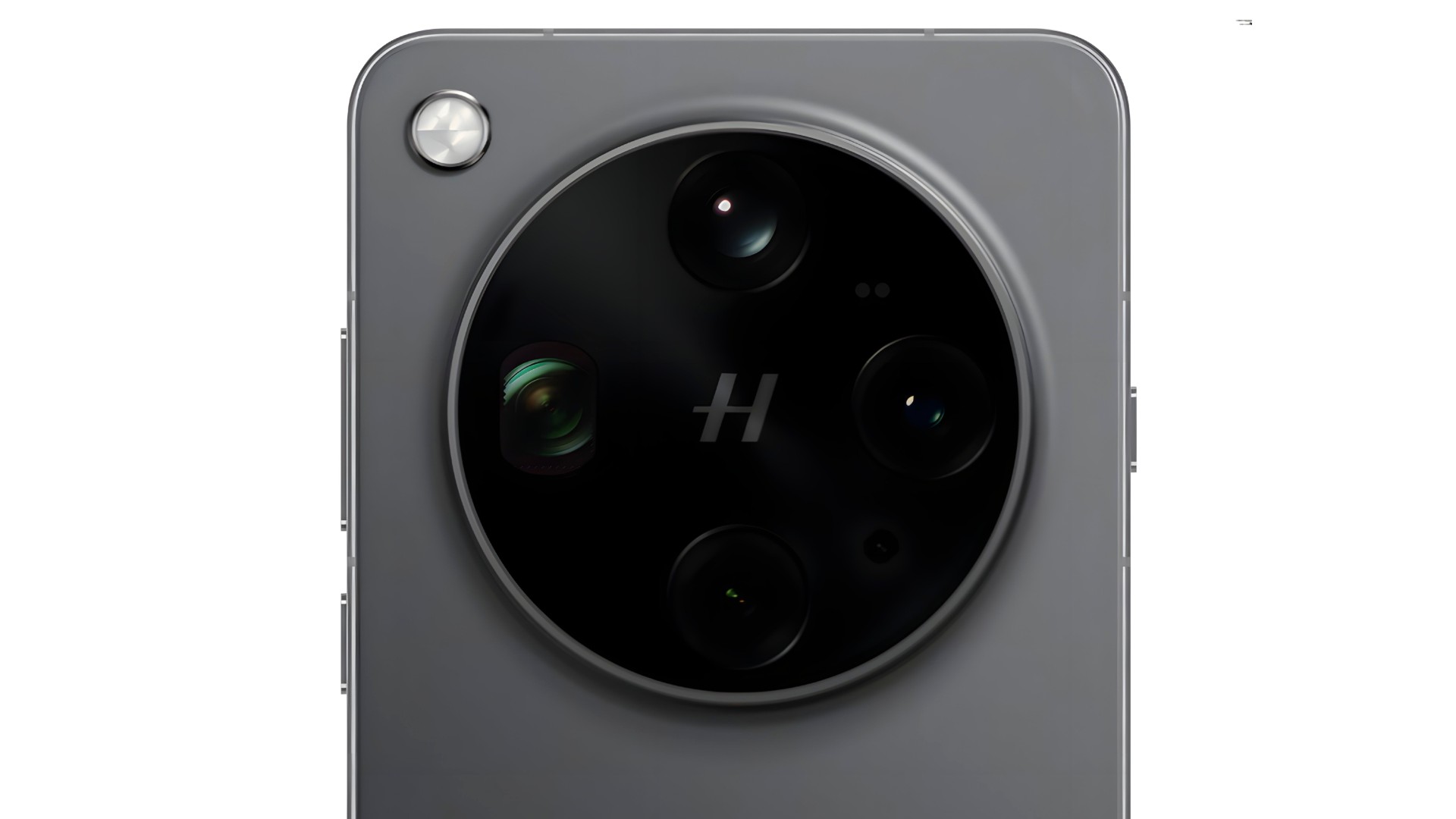
This year's Easter surprise is not coming from Oppo itself, but from various leakers in China who have published several hands-on images in the past few hours of what is supposed to be the ultimate Hasselblad camera flagship phone of the year. That said, we have doubts about the authenticity of at least some of them.
We keep hearing about the RAM/chip crisis that's triggered by heavy global investments in AI data centers, which are eating up supply and making prices go up by insane amounts in the process, but what exact amounts are involved for smartphone makers? How much more are they paying?
That's what Xiaomi President Lu Weibing has revealed on Weibo today. According to him, for a package of 12GB of RAM plus 512GB of storage, the company is now paying CNY 1,500 ($217) more than in the first quarter of last year (January to March).
Redmi K90 Pro Max
That's not $217 per RAM/storage package,...
Glenn Israel, a former art director at Halo Studios, has published a detailed account of alleged harassment, HR failures, and project mismanagement during his final years at the company. These claims come a few months after his departure in late 2025.
Deal | House Flipper is currently available as a free game on Steam. This is a limited-time offer, and it will last until April 06, 2026. After this deal expires, the title will return to its regular price tag, which is $24.99.
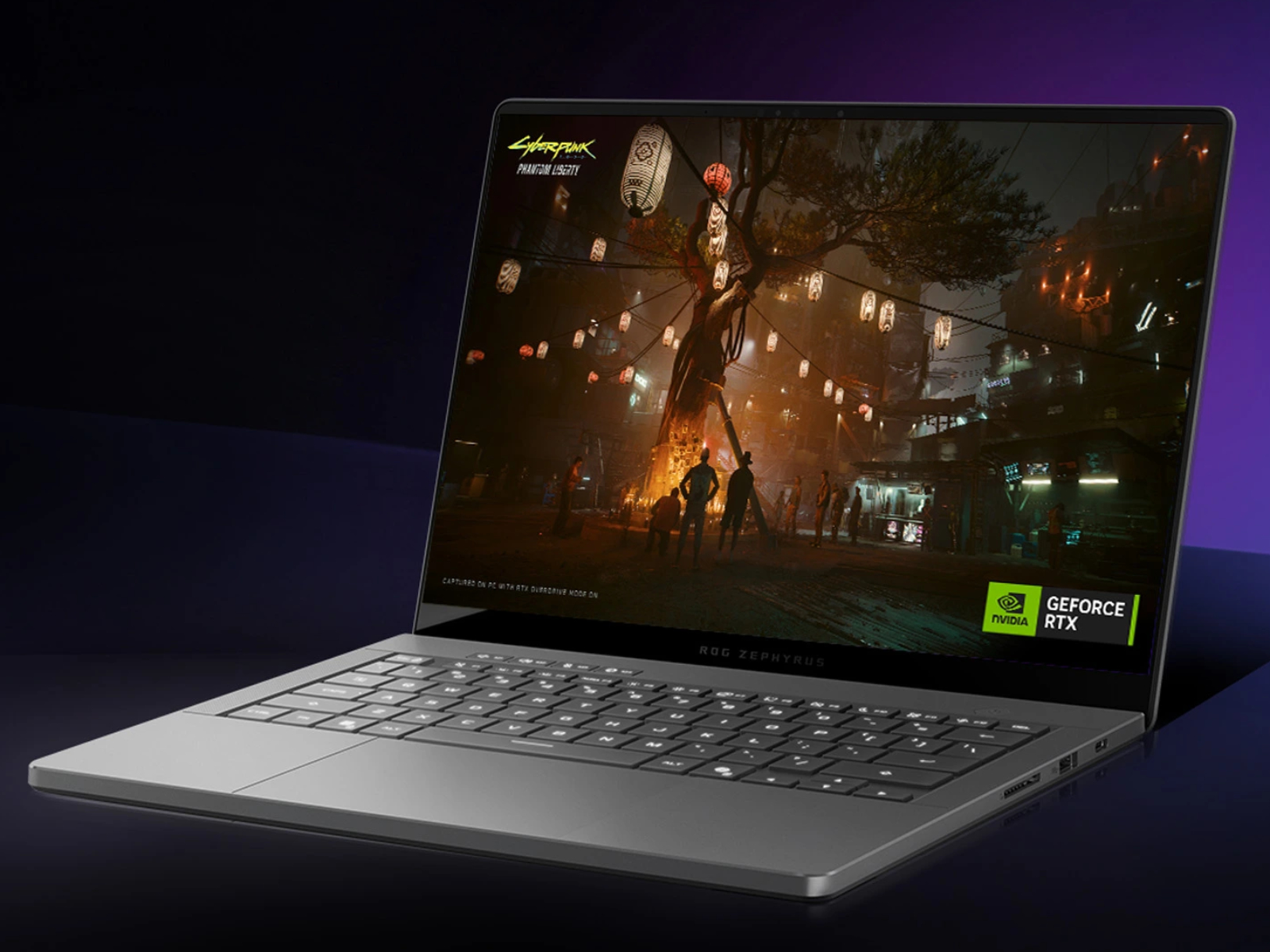
The SpectraSlideOut is an additional display that attaches to a notebook in a somewhat unusual way. That means the extra display can essentially remain attached to the notebook at all times and be carried along with it.
The new LOVX wireless HDMI transmitter and receiver kit supports 4K resolution at 30 Hz with a 165-foot range. Early bird pricing starts at $59, and the company expects to begin shipping units globally by June 2026.
The Samsung Galaxy A37 shares a lot of its core specs with the A57, but is €100/$100 cheaper, which isn't insignificant.
Like its more expensive peer, the Galaxy A37 ships with a USB-C cable and SIM tool - no case, and no charger.
What the Galaxy A37 is giving up to be cheaper than the Galaxy A57 may not matter all that much to you. The Galaxy A57 has a faster Exynos 1680 SoC, 8/12GB of RAM vs 6/8/12GB of RAM, and a nicer 12MP selfie shooter.
And while the A57 gets you a metal frame and a slightly thinner and lighter body, the Galaxy A37 makes do with plastic.
Samsung...
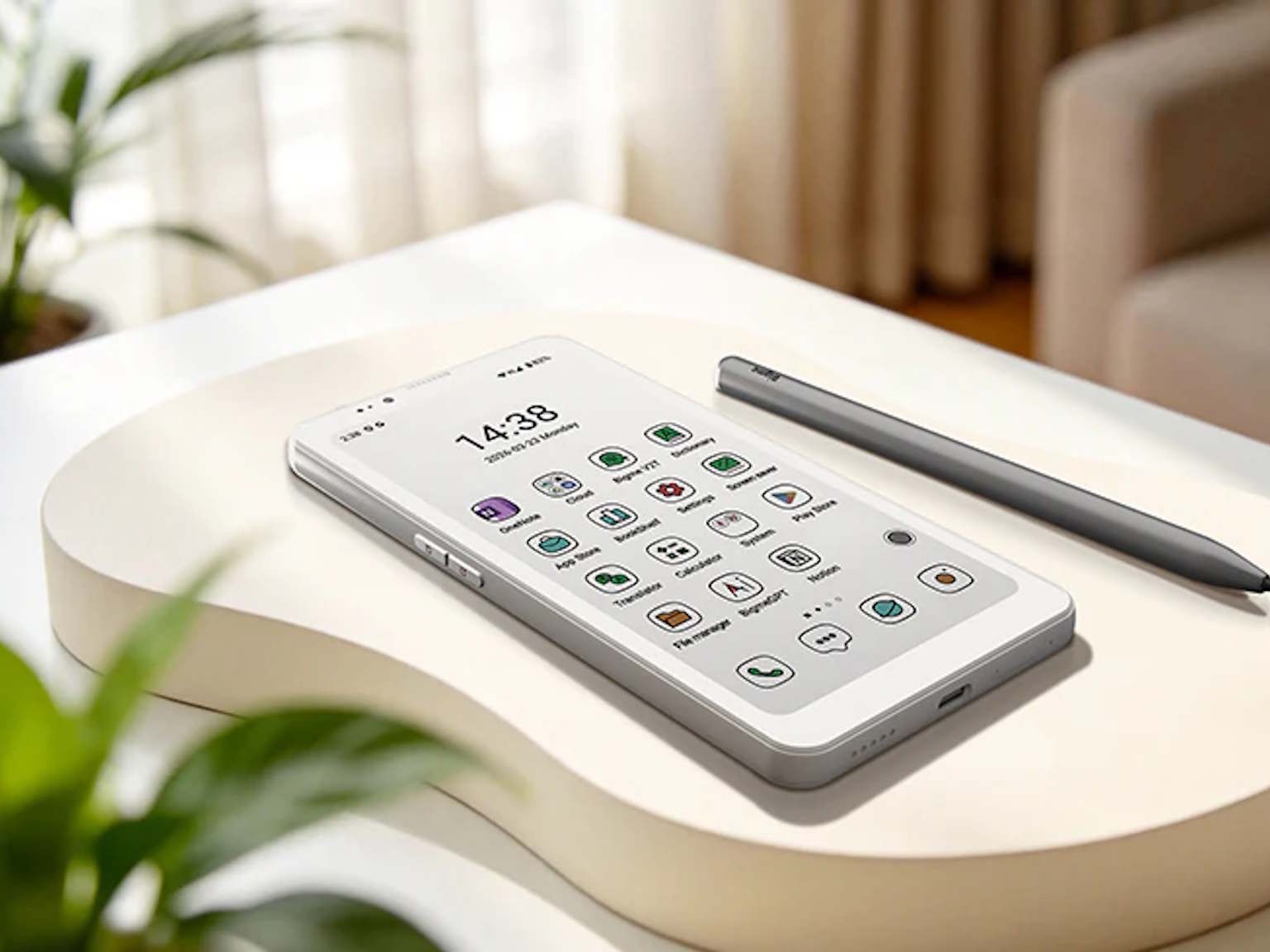
Bigme has unveiled a new mobile device with two displays. The smartphone features an e-ink display on one side and an LCD on the other. That could make it possible to combine the advantages of both technologies.
At first glance, the Lenovo Tab K12 looks like the twin of the Idea Tab Plus, but it sets itself apart with 5G, 12GB of RAM, and a business focus. We discuss the real differences in terms of features, box contents, updates, and target group, and which model makes more sense for which type of user.
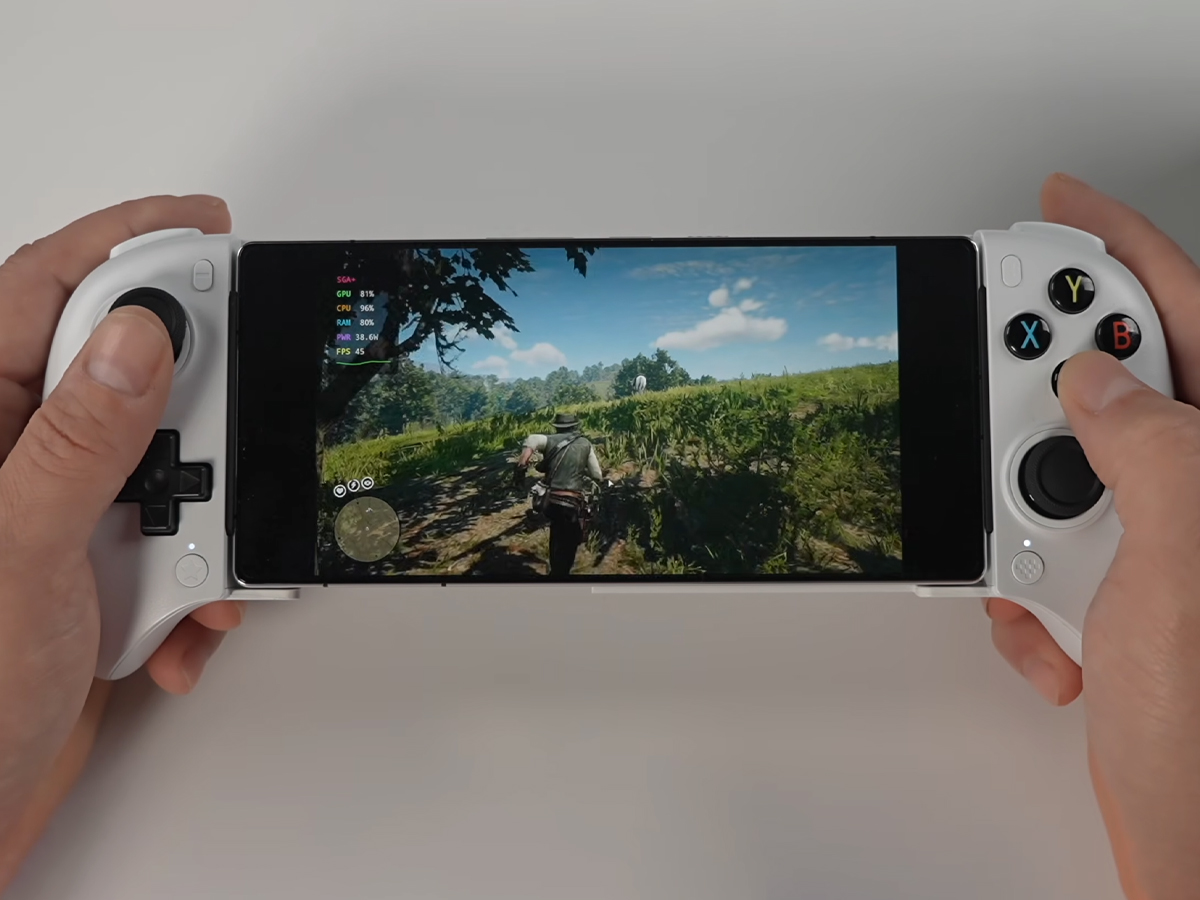
With 5G and gaming ambitions: A new tablet is expected to stand out with modern cellular connectivity and a powerful SoC, and it comes with a faster display. The iPlay 80 Mini Ultra is still relatively compact and, paired with a suitable controller, could be an alternative to a gaming handheld.
For the Raspberry Pi 5: A new add-on board looks well suited to a range of specific use cases and enables both backup power in the event of a power outage and the storage of larger amounts of data on an SSD.
Jackery has introduced the successor to the SolarSaga 40 Mini. The new version, the SolarSaga Air, features a different folded footprint, likely making it better suited for backpacks. A solar-angle indicator has been added, and the weight has been further reduced.
Microsoft says unmanaged Windows 11 24H2 Home and Pro PCs will receive 25H2 automatically through Windows Update, though its release health page still shows a conflicting status date.
The Xiaomi 18 series is set to challenge the iPhone 18 with (another) innovative AI "Smart Window" rear display. While dual 200 MP cameras promise elite photography, surging RAM costs mean fans should brace for a possible price jump this September.
The GMKtec NucBox K17 was recently introduced in China, and now, the company has brought it to the global market. It's powered by an entry-level Intel Lunar Lake processor, and the starting price is $559.99.
Anthropic’s fight over the leaked 'Claude Code' source code was conducted so aggressively that even official repositories were deleted via DMCA requests. Analysis of the code reveals that the issue involves more than just protected algorithms; it concerns the monitoring of user emotions and concealment.
This week, Amazon UK is offering vouchers to reduce the prices of the 512GB variants of the three Galaxy S26 phones.
But first, here’s an interesting situation – the Google Pixel 10 costs the same as the Galaxy S25. Look closely, though – this is for a 256GB Pixel and only a 128GB Galaxy. Of course, the Galaxy S25 is last year’s model and is powered by the Snapdragon 8 Elite. That still handily beats Google’s Tensor G5, though.
Google Pixel 10
£150 off
Read our review
...
Chipflation is causing Samsung to revisit its supply chain and accelerate its pivot to Chinese vendors across hinges, screens, and cameras.
Reports suggest chipflation is breaking things open inside the supply chain of Samsung Electronics. Semiconductor prices keep climbing on the back of AI demand, and the ripple effect is hammering smartphone manufacturers.
Three categories. Hinges, screens, cameras and the shift is systematic, not situational.
Samsung decided to source OLED panels for the Galaxy A57 from CSOT. Earlier models, the A56 and A36, used panels from Samsung Display. The shift away from an in-house supplier to a Chinese panel maker isn’t a minor procurement tweak.
Besides, Samsung recently tapped Chinese hinge makers Huanli as the primary supplier for the Galaxy Z Flip 7, replacing KH Vatec.
Sunny Optical, another Chinese firm, has also carved out a meaningful position supplying ultra-wide camera modules for the Galaxy S series.
That said, Samsung feels pressure on costs, so it hunts for savings in components. An analyst projection puts Samsung’s MX division operating profit at around 5 trillion won this year; last year it was 12.9 trillion won.
Samsung would frame all of this as supply chain diversification, spreading risk, staying competitive, the usual language. Having multiple suppliers across critical components does reduce exposure to any single vendor’s failures or price hikes.
The Korean tech giant is building deeper ties with Chinese component vendors precisely when the global environment makes those ties most complicated to manage.
Another industry insider added, “As semiconductor prices increase drive up costs, component suppliers are also being pushed to lower unit prices. If the influence of Chinese firms continues to grow in this environment, the burden on domestic companies will increase further.”
Anthropic’s fight over the leaked 'Claude Code' source code was conducted so aggressively that even official repositories were deleted via DMCA requests. Analysis of the code reveals that the issue involves more than just protected algorithms; it concerns the monitoring of user emotions and concealment.
For about four hours, Nicholas Carlini worked on FreeBSD supported by Anthropic’s Claude. Carlini states that Claude performed a large part of the work autonomously, from identifying the vulnerability to the finished exploit.
The Snapdragon 8 Gen 5 is the first non-Elite chipset to feature the powerful Oryon cores. The chipset offers solid gaming performance, a flagship-grade ISP, and reliable connectivity, making it a powerful choice among premium mid-range phones.
On the other hand, the Dimensity 9300 is two years older than the Snapdragon 8 Gen 5. Still, it offers smooth performance and excellent efficiency to be considered a reliable choice, and more importantly, at a lower price.
So, the real question is: does it make sense to go with the Snapdragon 8 Gen 5, or is the Dimensity 9300 a solid choice at a relatively lower price? Let’s find out in this detailed comparison.
Quick verdict:
Choose Snapdragon 8 Gen 5 if you want higher CPU performance, sustained gaming performance, flagship ISP, and modern connectivity features. Choose Dimensity 9300 if you want reliable performance and excellent efficiency at a lower price point.
Snapdragon 8 Gen 5 vs Dimensity 9300: Spec sheet
Snapdragon 8 Gen 5
Dimensity 9300
Announced
November 2025
November 2023
Process node
3 nm (TSMC)
4 nm (TSMC)
CPU
2 × 3.8 GHz (Oryon Gen 3 – Prime) 6 × 3.32 GHz (Oryon Gen 3 – Performance)
Adreno 829 ray tracing support Snapdragon Elite Gaming features
Arm Immortalis-G720 MP12 console-level global illumination effects ray tracing support MediaTek HyperEngine Adaptive Gaming Technology
NPU
Qualcomm Hexagon NPU Agentic AI support
MediaTek NPU 790 up to 33 billion parameters on-device LoRA Fusion support
Memory
LPDDR5x, up to 4.8 GHz
LPDDR5T, up to 4.8 GHz
Storage
UFS 4.1
UFS 4 + MCQ
Camera
Qualcomm Spectra triple AI ISP (20-bit) up to 320MP single camera up to 108MP single camera with zero shutter lag, 30fps up to 48MP triple cameras with zero shutter lag, 30fps up to 4K/120fps video recording real-time semantic segmentation (limitless)
MediaTek Imagiq 990 ISP (18-bit) up to 320MP single camera up to 8K video recording AI Semantic Analysis Video Engine
Connectivity
Snapdragon X80 5G modem download speed: up to 10 Gbps upload speed: up to 3.5 Gbps Wi-Fi 7 (peak speed: 5.8 Gbps) Bluetooth 6.0
MediaTek 5G modem download speed: up to 7 Gbps Wi-Fi 7 (peak speed: 6.5 Gbps) Bluetooth 5.4
Snapdragon 8 Gen 5 vs Dimensity 9300: Benchmark numbers
Note: To obtain the benchmark results, the tests were performed using these devices: – OnePlus 15R (Snapdragon 8 Gen 5) – Vivo X100 Pro (Dimensity 9300)
Geekbench score (v6)
The Snapdragon 8 Gen 5 outperforms the Dimensity 9300 in both single-core and multi-core tests. In both tests, the Snapdragon chip achieves about 27% higher score, suggesting a snappier performance, particularly in tasks that require greater CPU resources.
Snapdragon 8 Gen 5
Dimensity 9300
Single core
2,837
2,208
Multi core
9,352
7,380
AnTuTu score (v11)
On the AnTuTu benchmark, the Snapdragon 8 Gen 5 scores 2.96 million, while the Dimensity 9300 sits below it with 2.32 million total score. That’s a solid 27% uplift for the Snapdragon chip.
Snapdragon 8 Gen 5
Dimensity 9300
AnTuTu score
2,961,236
2,324,872
CPU
914,878
692,230
GPU
974,402
816,259
Memory
382,729
338,122
UX
689,228
478,261
The breakdown of the AnTuTu score paints a better picture, and unsurprisingly, the Snapdragon 8 Gen 5 dominates all aspects. The CPU gets 32% higher score, the GPU gets 19% higher score, memory performance is up by 13%, and the UX score is up by 44%.
3DMark score
Wild Life Extreme Stress Test
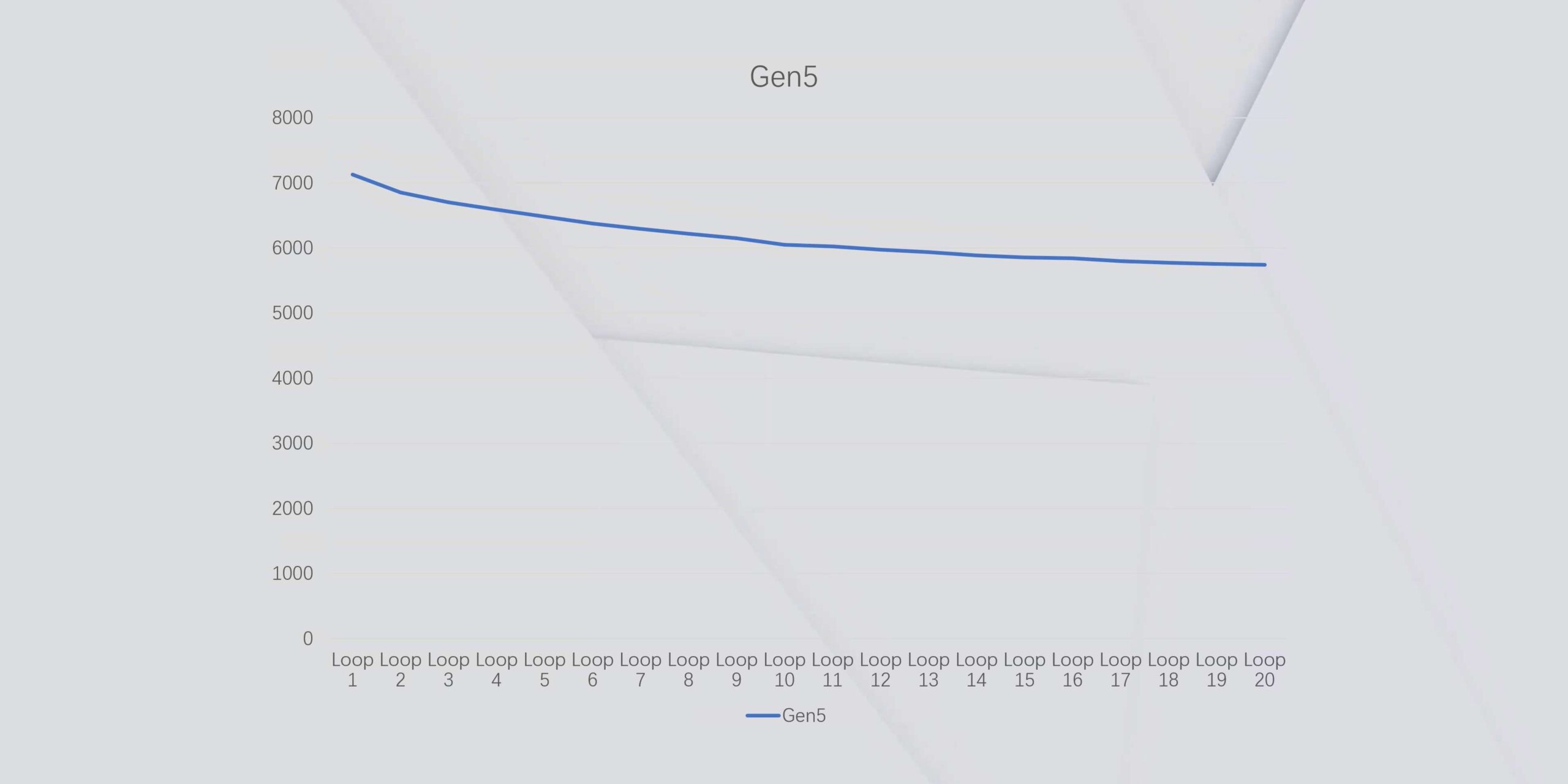
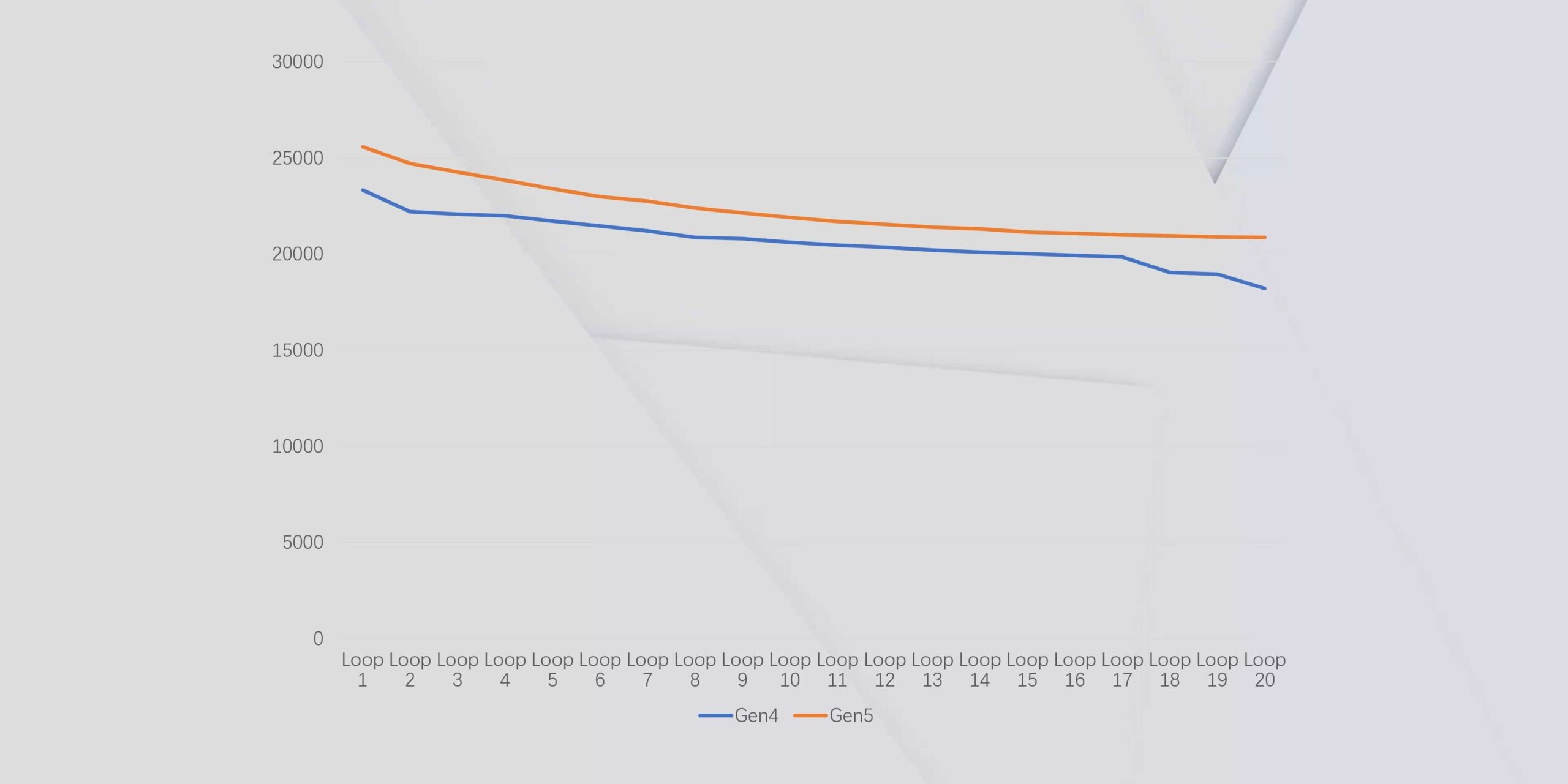
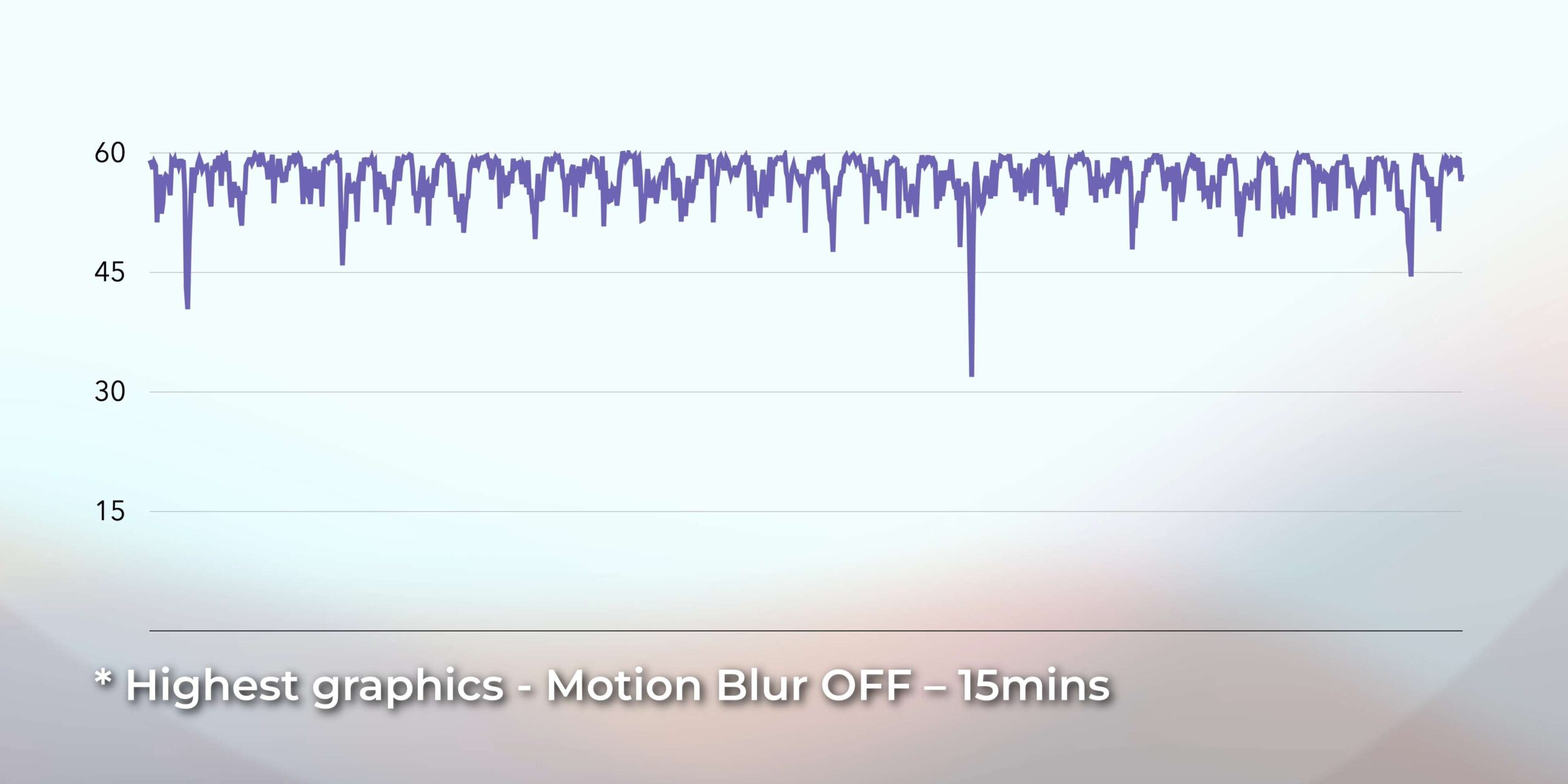
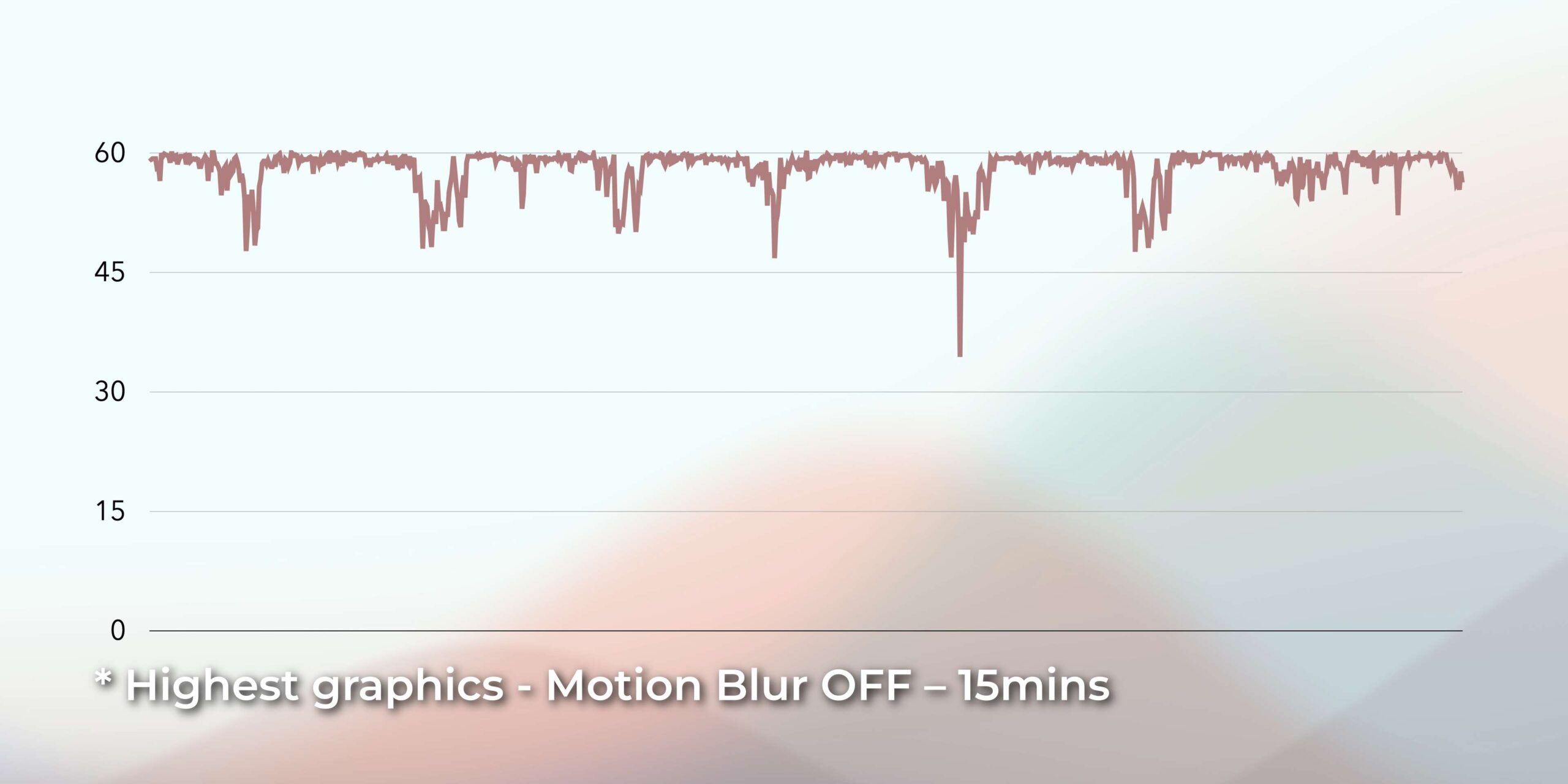
This is a widely popular gaming benchmark, where the Snapdragon 8 Gen 5 outperforms the Dimensity 9300 by a wide margin. It achieves a 23% higher best loop score and a whopping 71% increase in the lowest loop score. So, not just the performance, the Snapdragon chip also maintains higher stability.
Snapdragon 8 Gen 5
Dimensity 9300
Best loop score
5,009
4,062
Lowest loop score
3,321
1,933
Stability
66.30%
47.59%
While benchmarks offer great insights into performance and stability, they don’t focus on other key aspects, including connectivity, camera, and features. To give you a clearer picture, we’ve included them in the following section.
Snapdragon 8 Gen 5 vs Dimensity 9300: Key differences
Process node
The Snapdragon 8 Gen 5 uses TSMC’s newer 3nm node, which offers better performance and power efficiency than the 4nm node used in the Dimensity 9300.
Performance
CPU
Both chipsets feature octa-core CPUs, although their core configurations differ. The Snapdragon 8 Gen 5 uses a (2 + 6) layout, featuring two Oryon prime cores at 3.8 GHz and six Oryon performance cores at 3.32 GHz. The Dimensity 9300 features a (1 + 3 + 4) layout, which includes one Cortex-X4 prime core at 3.25 GHz, three Cortex-X4 performance cores at 2.85 GHz, and four Cortex-A720 efficiency cores at 2.0 GHz.
The Snapdragon 8 Gen 5 prioritizes performance by offering a higher peak clock speed of 3.8 GHz. In fact, all the CPU cores in the Snapdragon chip run at higher clock speeds than those in the Dimensity 9300. This is one of the primary reasons the Snapdragon chip easily outperforms the Dimensity 9300 in benchmarks.
GPU
As for the gaming and graphics rendering, the Snapdragon 8 Gen 5 uses a powerful Adreno 829 GPU featuring Qualcomm’s “sliced” architecture. The GPU offers excellent ray tracing performance, support for Unreal Engine 5, and AI-assisted upscaling. It also bundles a full suite of Snapdragon Elite Gaming features to deliver a smooth gaming performance with consistently high frame rates, low latency, and improved power utilization.
The Dimensity 9300 features a 12-core Arm Immortalis-G720 GPU, promising console-level global illumination effects. The GPU is equipped with a 2nd-gen hardware ray tracing, which is claimed to offer “fast, full raytracing experiences at a smooth 60 fps.” The chip also features MediaTek HyperEngine Adaptive Gaming Technology to deliver flagship performance without slowdowns for up to an hour in top titles, along with better cooling and improved power efficiency.
NPU
The Snapdragon 8 Gen 5 features a very capable Hexagon NPU, which integrates with an Oryon CPU and Adreno GPU to enable on-device agentic assistants, multimodal AI, and heavier gen-AI workloads in high-end devices. It is essentially a slightly binned-down version of the 8 Elite Gen 5 AI platform, with nearly all of the same features but lower peak clocks.
The Dimensity 9300’s AI stack is built around the MediaTek NPU 790, which delivers substantial efficiency and speed gains over the previous generation. It can run LLMs with up to 33 billion parameters and real-time generative AI. The AI stack enables the SoC to run multi-modal, multi-LLMs setups at usable latencies, entirely on-device.
Camera
The Snapdragon 8 Gen 5 features a 20-bit Spectra AI ISP with up to 320MP single camera and up to 4K/120fps video recording, although OEMs can enable up to 8K recording. The chip also supports limitless real-time semantic segmentation for precise optimizations. Plus, it offers a range of camera features (including AI-assisted features) to deliver greater quality with less noise.
On the other hand, the Dimensity 9300 is equipped with an 18-bit Imagiq 990 ISP, supporting up to 320MP single-camera and up to 8K video recording. The chip features an AI Semantic Analysis Video Engine with 16 categories of scene segmentation adjustments for enhanced cinematic video capture. It also features zero-latency video preview and 100% pixel-level autofocus + dual-lossless zoom.
Connectivity
While both chips offer robust connectivity, there are several important differences to consider. On a 5G connection, the Snapdragon 8 Gen 5’s download speed can reach up to 10 Gbps, while the Dimensity 9300 peaks at 7 Gbps. The Dimensity chip bounces back with a higher peak Wi-Fi 7 speed, reaching 6.5 Gbps (vs. 5.8 Gbps on the Snapdragon 8 Gen 5). Another advantage of the Snapdragon 8 Gen 5 is its support for Bluetooth 6.0, while the Dimensity 9300 supports the older Bluetooth 5.3 standard.
Snapdragon 8 Gen 5 vs Dimensity 9300: Which is better?
The Snapdragon 8 Gen 5 is clearly a much better choice over the Dimensity 9300. It offers solid CPU performance, a more consistent gaming performance, and a modern connectivity stack. Plus, it features the advanced Spectra ISP from the Snapdragon 8 Elite Gen 5, integrating the latest camera features and advanced camera optimizations.
That said, the Dimensity 9300 is still a solid mid-range chipset in 2026. It can smoothly run your day-to-day apps while offering excellent efficiency. Gaming performance is also good, but for heavier games and longer sessions, you may want to prefer a more capable chipset like the Snapdragon 8 Gen 5. Perhaps the only advantage it offers over the Snapdragon 8 Gen 5 is its lower price. So, if you’re getting a hefty discount on a Dimensity 9300 phone that makes it much cheaper than a Snapdragon 8 Gen 5 phone, that may be a solid deal. Otherwise, the Snapdragon 8 Gen 5 is a no-brainer choice here.
The shift from the Samsung Galaxy S25 to the Samsung Galaxy S26 isn’t about dramatic changes, but meaningful refinements in performance, efficiency, and everyday experience. With a newer chipset, slightly larger battery, and updated software, the S26 aims to feel more future-ready, while the S25 continues to hold strong as a well-balanced flagship, making this comparison important for buyers deciding if the upgrade is truly worth it.
Please Note: When you buy something using the links in our articles, we may earn a small commission at no cost to you.
Design and Display
Build and Feel
The Samsung Galaxy S26 keeps a familiar flagship design but refines durability with Armor Aluminum 2 and the same Gorilla Glass Victus 2 protection. The overall in-hand feel remains premium and compact, closely resembling the Samsung Galaxy S25. However, subtle refinements in finish and symmetry make the newer model feel slightly more polished. It’s not a dramatic redesign, but it leans toward a more mature flagship identity.
Display Quality
Both phones offer nearly identical AMOLED panels with a 120Hz refresh rate and 2600 nits peak brightness. The S26 slightly increases screen size, making content feel a bit more immersive without changing resolution. Color tuning and brightness remain top-tier, though improvements here feel iterative rather than transformative.
Verdict
The S26 delivers refinement rather than reinvention. The slightly larger display and improved finish give it a more complete feel, but the S25 still holds up extremely well visually.
Specifications Including Battery
Performance
The biggest upgrade comes with the new Snapdragon 8 Elite Gen 5 / Exynos 2600 on the S26, delivering noticeable gains in CPU and GPU performance. Compared to the S25’s Snapdragon 8 Elite, multitasking feels smoother, and sustained performance should improve, especially in gaming. The shift toward newer architectures also hints at better efficiency and longevity.
Battery and Charging
Battery capacity increases to 4300mAh on the S26, a meaningful bump over 4000mAh. Charging speeds remain unchanged, which feels conservative, but the efficiency improvements from the new chip should translate into longer real-world usage. Wireless and reverse charging stay identical.
Verdict
The S26 clearly wins in performance and battery life. While charging speeds remain unchanged, the overall experience feels more future-proof and efficient.
Camera
Main and Secondary Lenses
On paper, both phones share identical camera hardware, including the 50MP main, 3x telephoto, and ultrawide lenses. However, the S26 introduces new software features like Horizon Lock, which improves video stability and usability. Image processing is also expected to be more refined thanks to the newer chipset, delivering better dynamic range and consistency.
Selfie Camera
The front camera remains largely unchanged at 12MP, but slight adjustments in focal length and processing can improve framing and skin tones. Video capabilities stay strong with 4K support and HDR enhancements.
Verdict
The upgrade is subtle but meaningful. Hardware remains the same, but smarter processing and new video features give the S26 a slight edge, especially for content creators.
Pricing
The Samsung Galaxy S26 is priced around $900 / ₹88,000, while the Samsung Galaxy S25 sits lower at $800 / ₹75,000. This creates a noticeable price gap for what appears to be incremental upgrades on paper.
Is the price justified?
The S26 justifies its price mainly through performance gains, improved efficiency, and slightly better battery life. However, since design and camera hardware remain similar, the upgrade may feel less compelling for casual users. The S25 still offers flagship-level value at a lower cost, making it a strong alternative.
Verdict
The S26 is worth it for those seeking peak performance and longevity. The S25, however, remains the better value pick for most buyers.
Disclaimer: Prices are approximate and may vary based on country, region, and applicable taxes.
Conclusion
The S26 focuses on refinement, a new chipset, better efficiency, a slightly larger display, and enhanced video features like Horizon Lock. It also launches with Android 16 and newer One UI, giving it a longer software runway. Meanwhile, the S25 still delivers a balanced flagship experience with minimal compromises.
Verdict
The S26 feels like a “performance-first” upgrade rather than a complete overhaul. It is better suited for power users and long-term buyers who value future-proofing. The S25, however, remains a smart and practical choice, especially for those upgrading from older devices.
Disclaimer: This comparison is based on the specifications provided and is intended for general informational purposes. Actual performance, camera results, battery life, and overall experience may vary depending on real-world usage, software updates, and individual preferences.
OnePlus has started rolling out the OxygenOS 16.0.5.700 update for the OnePlus Pad, bringing a mix of feature additions, usability improvements, and the latest security patch. The update is being released in batches across India, Europe, global markets, and North America, with the build version OPD2203_16.0.5.700(EX01).
The update focuses on improving everyday usability. Users can now run multiple timers at the same time, making multitasking easier. Timers also show estimated stop times, which helps in better tracking. The Content Portal now supports app clones, allowing easier sharing across duplicate apps. App organization has also been updated in Drawer mode with new “Office” and “Finance” categories for quicker access.
Connectivity features have also been refined. A new option called “Automatically open received files” has been added. This gives users control over whether shared files open automatically when received.
Privacy and file management receive notable upgrades. Users can now browse files in Private Safe using a side slider. Searching within folders in Private Safe is now supported, and files stored there can also be shared directly. These changes improve both accessibility and control over private data.
The update also integrates the April 2026 Android security patch, improving system security and protection against known vulnerabilities.
This rollout is limited to devices already running OxygenOS 16. Users on OxygenOS 15 will need to upgrade to OxygenOS 16 before receiving this build. As with typical OTA updates, the rollout is incremental, starting with a small group of users before expanding to a wider audience in the coming days.
For more daily updates, please visit our News Section.
Samsung Galaxy S26 Plus arrives as a refinement-focused upgrade over the Samsung Galaxy S25 Plus, bringing improvements that are subtle on paper but impactful in daily use. While both devices share a similar design and core hardware, the newer model introduces better performance, improved efficiency, and smarter processing. This comparison breaks down the key differences and upgrades that actually matter, helping buyers understand whether the latest generation is worth the extra investment.
Please Note: When you buy something using the links in our articles, we may earn a small commission at no cost to you.
Design and Display
Build and Feel
The design language remains largely unchanged, but the Samsung Galaxy S26 Plus brings subtle refinements in finish and frame durability. The upgraded Armor Aluminum 2 and improved glass treatment give it a slightly more premium and polished feel. While the Samsung Galaxy S25 Plus still feels flagship-grade, the newer model comes across as more refined in hand, even if the visual differences are minimal.
Display Quality
Both devices share the same core display specs, but the S26 Plus introduces better panel tuning and slightly higher pixel density. Colors appear more vibrant, and brightness handling feels more controlled in extreme lighting. The improvement isn’t drastic, but side-by-side usage reveals a cleaner, more refined viewing experience on the newer model.
Verdict
No major overhaul, but the S26 Plus delivers small refinements that make the display and build feel more premium overall.
Specifications Including Battery
Performance
This is where the biggest upgrade lies. The S26 Plus moves to Snapdragon 8 Elite Gen 5 / Exynos 2600, offering a clear jump in performance over the previous generation chip in the S25 Plus. Expect faster app launches, smoother multitasking, and improved gaming stability. The difference feels noticeable, especially under heavy usage, making the newer model more future-proof.
Battery and Charging
Battery capacity stays the same, but efficiency improves on the S26 Plus thanks to the newer chipset. Wireless charging also gets a bump (20W vs 15W), which adds real convenience. Daily usage feels slightly longer-lasting, even without a capacity increase.
Verdict
Performance and efficiency upgrades make the S26 Plus a meaningful step forward over the S25 Plus.
Camera
Main and Secondary Lenses
Hardware remains identical, but the S26 Plus benefits from improved image processing and new features like Horizon Lock. Photos show better dynamic range and more consistent HDR, especially in tricky lighting. Video stabilization also feels more refined, making footage look smoother.
Selfie Camera
The front camera is mostly unchanged, but software tuning improves color accuracy and HDR handling on the S26 Plus. The difference is subtle but noticeable in portraits and social media shots.
Verdict
No hardware changes, but smarter processing gives the S26 Plus a clear edge in real-world photography.
Pricing
The Samsung Galaxy S26 Plus comes in at around $1100 (₹120,000), while the Samsung Galaxy S25 Plus is priced closer to $1000 (₹100,000). The gap reflects the generational upgrade rather than a complete redesign.
Value for Money
The S25 Plus offers excellent value since most core features remain similar. However, the S26 Plus justifies its higher price with meaningful upgrades in performance, efficiency, and software processing. It feels like a smarter long-term investment rather than just a yearly refresh.
Verdict
S25 Plus wins on value, but S26 Plus is better suited for those wanting the latest performance gains.
Disclaimer: Prices are approximate and may vary based on country, region, and applicable taxes.
Conclusion
The S26 Plus stands out mainly through its new chipset, improved efficiency, faster wireless charging, and enhanced camera processing. These upgrades may seem incremental on paper, but they translate into smoother daily usage and better longevity. The S25 Plus, meanwhile, still delivers a flagship experience with fewer compromises.
Verdict
The S26 Plus is a refinement-focused upgrade, not a redesign. It’s the better choice for performance-focused users, while the S25 Plus remains a strong alternative for those prioritizing value over incremental improvements.
Disclaimer: This comparison is based on the specifications provided and is intended for general informational purposes. Actual performance, camera results, battery life, and overall experience may vary depending on real-world usage, software updates, and individual preferences.
Casio has officially listed the AE-1600HX series on its international website, confirming specifications that had already appeared through retailer listings. The lineup includes the AE-1600HX-1BV and AE-1600HX-3AV, positioned as affordable digital watches with a rugged design and extended battery life.
The watch features a large, angular case measuring 54.1 × 49.7 × 15.9 mm and weighs 55 g. It uses a resin case and bezel with a matching resin band and resin glass covering the display. The design focuses on readability, with a large LCD screen and a front-mounted button for quick access to the LED backlight. The AE-1600HX-1BV uses a negative display with a blacked-out look, accented by light blue labels.
A key highlight is the extra-long strap, which supports wrist sizes from 145 mm to 235 mm. This makes it suitable for users who prefer a looser fit or want to wear the watch over clothing. The rally-style band includes dual holes for better adjustment and a more secure fit.
The AE-1600HX series offers 100-meter water resistance and is powered by a CR2032 battery rated for up to 10 years. It includes dual time, a 1/100-second stopwatch with elapsed, split, and 1st-2nd place timing, and a countdown timer with a range of up to 24 hours. The timer supports auto-repeat and can be set from 1 minute to 24 hours.
Additional features include five multi-function alarms with one snooze alarm, an hourly time signal, and a full auto-calendar that runs until 2099. The watch maintains accuracy within ±30 seconds per month and supports both 12 and 24-hour formats. The LED backlight uses amber illumination with afterglow for visibility in low light.
While Casio has not confirmed pricing, retailer listings suggest a price of around €39.90, with availability expected in April 2026.
You must also check out our best of CES 2025 for all the coolest tech announcements.
Casio has listed its new AQ-240E series in the US, expanding its Vintage lineup with three models scheduled for April 2026. The range includes the AQ-240E-2A, AQ-240E-4A, and AQ-240E-7A2, all built around a hybrid analog-digital format and a retro-inspired design.
The watches feature a rounded square case that softens the sharper edges seen on older models like the AQ-230. The case measures 40.9 × 35.8 × 8.1 mm and weighs 51 g. It uses a chrome-plated resin case and bezel paired with a stainless steel band with an adjustable clasp. The band fits wrist sizes from 150 to 205 mm.
Each model uses a pastel dial finish. The 2A variant comes with a light blue sunray dial, while the 4A uses a matte orange tone, and the 7A2 features an off-white finish. The dial layout remains consistent across all versions, with two analog hands and a slim digital display positioned at six o’clock. The wide dial uses slim indexes and a clean layout to maintain readability.
The AQ-240E runs on Casio’s Module 5154. Core features include dual time, world time, a 1/100-second stopwatch with a measuring capacity of 59 minutes and 59.99 seconds, daily alarm, hourly time signal, and an auto-calendar that accounts for February with 28 days. The watch supports both 12-hour and 24-hour formats. The analog display shows hours and minutes, while the digital screen displays time, seconds, date, and day.
Accuracy is rated at ±30 seconds per month. The watch is powered by an SR920W battery with an estimated life of about three years. It uses resin glass for protection and offers basic water resistance suitable for daily use.
The design focuses on a retro-modern look with gentle curves and warm tones, combined with a simple rectangular profile. Pricing has not been officially confirmed, but earlier information suggests it will be around $60, in line with existing AQ-240E models.
You must also check out our best of CES 2025 for all the coolest tech announcements.
Oppo is seemingly getting ready to step into the compact tablet space with a new device called the Oppo Pad Mini. The leaks revealed so far point to a smaller tablet that still aims fairly high in terms of specs.
The latest info comes from @DigitalChatStation on Weibo, who shared a set of key details earlier today. According to the leak, the tablet will feature an 8.8-inch OLED display with a 3:2 aspect ratio, which is a bit different from the usual media-focused layouts. It should make more sense for reading and general use.
The panel itself sounds quite strong. It’s said to have a 2880×1920 resolution, along with a 144Hz refresh rate that can scale down to 1Hz thanks to LTPO tech. Peak brightness is reportedly 1800 nits, and it covers the full DCI-P3 color gamut, so on paper at least, it’s aiming for a premium display experience.
Performance is expected to come from Qualcomm’s Snapdragon 8 Gen 5, which would put it in flagship territory. The design seems to be another highlight. The tablet is tipped to use a unibody metal build, measuring around 5.39mm thick and weighing about 279 grams. That’s quite thin and light, even for a compact tablet. Color options are said to include dark gray, purple, and cyan. Lenovo’s 8.8-inch Legion Tab Gen 5, for instance, weighs 360 grams.
On the back of the Oppo Pad Mini, there’s a 13MP camera in a capsule-style module. Not a major focus, but standard for tablets.
Battery capacity is listed at 8000mAh, with support for 67W fast charging. There’s also mention of eSIM support, which could make it more useful as a standalone device without relying on Wi-Fi. Based on what’s out so far, Oppo seems to be aiming for something more than just a “mini” in name.
If the leaks hold up, this could end up being one of the more interesting compact Android tablets to watch this year.
Infinix looks set to bring the Note 60 Pro to India soon, and it’s already starting to tease some of the phone’s more unusual features. The device was announced globally earlier this year.
The company has begun its local campaign by highlighting what it calls the Active Matrix Display on the back. It’s essentially a set of LEDs built into the camera module, somewhat similar in concept to Nothing’s Glyph interface. It can show notifications, battery status, incoming calls, and even simple animations without needing to flip the phone. It’s more of a visual feature than a practical one, but it does help the phone stand out a bit.
Infinix has also confirmed that another feature will be revealed on April 4 at 12 PM, though most of the core specs are already out there from the global launch.
Up front, the phone uses a 6.78-inch AMOLED display with a 1.5K resolution and a 144Hz refresh rate. Local peak brightness is claimed to be 4,500 nits, which sounds impressive, though global peak or full-screen brightness will matter more for outdoor visibility.
Performance is handled by the Snapdragon 7s Gen 4, paired with 8GB or 12GB of RAM and 256GB storage. That should be enough for everyday tasks like browsing, social media, and some casual gaming.
The camera setup includes a 50MP main sensor with OIS, along with an 8MP ultrawide. On the front, there’s a 13MP camera for selfies and video calls.
Battery is one of the stronger points of this phone. It packs a 6,500mAh cell, with support for 90W wired charging and 30W wireless charging, along with reverse charging options. It runs Android 16 with XOS 16, and carries an IP64 rating for basic dust and splash resistance.
Reports point to a mid-April timeline in India, with April 13 being mentioned in a few listings. Pricing hasn’t been confirmed yet, but more details should show up as the teasers continue.
Overall, the Note 60 Pro doesn’t look radically different on paper, but the rear LED system and large battery could give it a bit of an edge in a crowded mid-range market.
Xiaomi is adding another option to its Mijia robot vacuum lineup, with a model that focuses on strong suction without pushing the price too high. The new Mijia Robot Vacuum and Mop 4 has now been listed in China.
One of the headline features here is the 10,000Pa suction power, which puts it in the higher range for robot vacuums at this price point. Average suction power for modern robot vacuum mops typically ranges between 2,500 Pa and 6,000 Pa. 10,000Pa should be more than enough for everyday dust, pet hair, and even slightly heavier debris
Xiaomi is also sticking with LDS laser navigation, which helps the robot map out rooms and move in a more structured way rather than randomly bouncing around.
The design remains familiar: simple, white, and minimal. For cleaning, there’s a dual-claw anti-tangle brush setup, aimed at reducing hair buildup, especially useful in homes with pets.
It’s a 2-in-1 unit, so it can vacuum and mop at the same time. The dustbin is rated at 520ml, while the water tank comes in at 270ml. Xiaomi says it can cover up to 300 square meters in open areas, though real-world usage will likely vary depending on layout.
There are a few practical touches as well. The robot can climb thresholds up to 20mm, which should help it move between rooms more easily. It runs on a 5,200mAh battery, with a claimed runtime of up to 180 minutes.
Nothing here feels overly experimental, but that’s not really the goal. Xiaomi seems to be focusing on getting the basics right: strong suction, decent navigation, and usable battery life.
Pricing and availability:
The device is priced at 1,443 yuan (roughly $200), and in some regions, subsidies can even bring it down to around 1,299 yuan. Sales are set to begin on April 7.
For users looking for a simple, capable robot vacuum without spending too much, this one could be worth a look once it goes on sale.
OxygenOS has published its March 2026 FAQ update, listing known issues, feature changes, and rollout details based on user feedback.
One issue reported by users is the Gboard keyboard overlapping with the navigation bar. The company said this is caused by a third-party app. The issue has been reported to the relevant team, and a fix will be released in a future update.
Another question relates to downgrade packages not working on some devices. The company confirmed that the affected downgrade versions have known stability issues that may cause system malfunctions. Because of this, downgrade to these versions is currently not supported.
Some users also reported that their devices are not turning on. The company said this issue is under investigation. Users facing this problem are advised to visit an authorized service center for assistance while a fix is being worked on.
The update also introduces a new feature called “Automatically open received files.” This lets users choose whether files received through file transfer should open automatically. The setting can be found under Settings > Device Connect > Share with iPhone or PC > Automatically open received files.
Another addition allows users to run multiple timers at the same time. This can be done by going to Clock > Timer, starting a timer using the play icon, and then adding more timers.
The company also shared rollout details for the B50P01 version. The rollout started on March 16, 2026 and is expected to be completed by March 31, 2026. This version includes the new file opening feature, support for multiple timers, and general improvements focused on usability and system stability.
For more daily updates, please visit our News Section.
Honor is slowly building out its WIN gaming ecosystem, and it’s not stopping at laptops. Ahead of its upcoming gaming laptop launch in April, the company has now teased a new wireless gaming mouse that seems clearly aimed at competitive players.
The first look comes from Lin Lin, Minister of Smart Life Business at Honor China, who shared images of the device on Weibo. He described it as “GPW like +1,” which is an obvious reference to Logitech’s G Pro Wireless, a mouse that’s already pretty popular in esports circles. The wording suggests Honor is going for a similar formula, but with some tweaks.
Design-wise, the mouse sticks to a safe, familiar shape. It’s symmetrical and fairly minimal. There are two side buttons on the left, and the Honor WIN branding sits toward the rear. Nothing flashy here, which is probably intentional.
The more interesting part is the sensor. Honor is using the PAW3395, which is already found in a lot of high-end wireless mice. It supports up to 26,000 DPI, along with 650 IPS tracking speed and 50G acceleration. The polling rate goes up to 4,000Hz, and with the right receiver, it could potentially go higher. For fast-paced games, that kind of responsiveness does matter.
What’s still unclear is where the “+1” comes in. It could be better battery life, lower weight, or maybe improved switches, but Honor hasn’t shared those details yet. For now, it seems like the company is focusing on getting the fundamentals right first.
This launch also lines up with the Honor WIN gaming laptop expected in April, so it looks like Honor is trying to build a more complete gaming lineup rather than just releasing standalone products.
There’s still quite a bit we don’t know: pricing, weight, battery performance. However, the early details suggest this won’t be an entry-level accessory. If anything, it’s shaping up to compete somewhere in the mid-to-high-end range, which could make things interesting if Honor manages to price it aggressively.
Honor has quietly introduced a new budget smartwatch, and it’s clearly going after a very specific audience. The Watch X5i keeps things simple, keeps things cheap, and leans a lot on design.
At first glance, it looks very familiar. The rectangular shape, curved edges, overall layout, it’s hard not to think of the Apple Watch. But under the surface, this is a much more basic device.
Instead of a full smartwatch platform, the X5i runs on a lightweight RTOS, which means fewer apps and less complexity. That trade-off, though, helps quite a bit with battery life. Honor is claiming up to three weeks on a single charge in typical use, or around six days with always-on display enabled, which is honestly where this kind of watch makes more sense.
The display itself is an AMOLED panel with a 450 x 390 resolution and a 60Hz refresh rate. Nothing cutting-edge, but more than fine for notifications and basic use. There are also over 180 watch faces, so at least there’s some room for customization.
On the health side, it covers the usual basics. Heart rate tracking, SpO2, stress monitoring, plus sleep tracking and menstrual cycle tracking. There are also 109 sports modes to accompany users through their workouts and track progress. It sounds like a lot, though in practice most people will probably stick to a handful.
One slightly unexpected addition is two-way Bluetooth calling support. The watch includes a speaker and microphone, so you can take calls directly from your wrist when it’s connected to your phone, and even make calls when it’s more convenient than reaching for your phone.
Build-wise, it’s fairly lightweight, with a plastic body and IP68 rating for dust and water resistance. That should be fine for everyday use, but it’s not really meant for swimming or anything beyond light exposure.
The Watch X5i works with both Android and iOS, which helps widen its appeal a bit.
At 229 yuan (roughly $33), it’s clearly not trying to compete with premium smartwatches. It’s more about offering the basics in a design that looks more expensive than it is. And for that kind of price, the battery life alone might be enough for a lot of people.
No word yet on when it might launch outside China, but it wouldn’t be surprising to see it show up in more markets soon.
A new “e” generation from Apple usually signals refinement rather than reinvention, and that’s exactly what makes this comparison interesting. The iPhone 17e arrives with subtle but meaningful upgrades over the iPhone 16e, focusing on performance, durability, and everyday convenience rather than dramatic changes. On paper, both phones look nearly identical, but the real story lies in the small improvements that shape long-term usage. This comparison breaks down whether those upgrades actually matter, or if the older model still holds its ground.
Please Note: When you buy something using the links in our articles, we may earn a small commission at no cost to you.
Design and Display
Build and Feel
The iPhone 17e doesn’t reinvent the design but focuses on refinement. The biggest upgrade is the shift to Ceramic Shield 2, which improves scratch resistance and durability over the older Ceramic Shield on the iPhone 16e. Everything else remains largely unchanged, same premium glass-aluminum build and IP68 rating, but the 17e feels like a more polished, slightly tougher evolution rather than a redesign. It’s a subtle upgrade that matters more over long-term use than on day one.
Display Quality
On paper, there’s almost no change. Both devices carry the same OLED panel, resolution, and brightness levels. The only real upgrade is the improved anti-reflective coating on the 17e, which helps reduce glare slightly in outdoor conditions. It’s not a dramatic shift, but side-by-side, the newer model can feel a bit cleaner and easier to view under harsh lighting.
Verdict
Minimal visual upgrades, but the durability improvements and subtle display refinement give the iPhone 17e a small but meaningful edge.
Specifications Including Battery
Performance
This is where the biggest upgrade happens. The iPhone 17e moves to the A19 chip, improving both raw performance and efficiency over the A18 in the iPhone 16e. While everyday usage feels similar, the gains show up in sustained performance, gaming, and future iOS updates. The jump isn’t revolutionary, but it’s the kind of upgrade that keeps the phone feeling fast for longer.
Battery and Charging
Battery capacity remains unchanged, so endurance is nearly identical. The real upgrade is in wireless charging, 15W MagSafe/Qi2 on the 17e versus 7.5W on the 16e. This effectively doubles wireless charging speed, making a noticeable difference in daily convenience. Wired charging stays the same, so the focus here is clearly on improving the wireless experience.
Verdict
The iPhone 17e clearly wins with a newer chip and significantly improved wireless charging, practical upgrades that enhance long-term usability.
Camera
Main and Secondary Lenses
There’s no hardware change in the main camera, as both use the same 48 MP sensor. The upgrade comes from processing. The iPhone 17e benefits from the A19 chip’s improved image pipeline, delivering slightly better HDR balance, more consistent colors, and improved detail in complex scenes. It’s not instantly obvious, but repeated shots show better reliability.
Selfie Camera
Again, hardware stays the same, but processing improves. The 17e handles Dolby Vision HDR more consistently and produces slightly cleaner skin tones in both photos and videos. The difference feels more noticeable in video recording than in still shots.
Verdict
No major camera hardware upgrades, but smarter processing gives the iPhone 17e a slight edge in real-world results.
Pricing
The iPhone 17e comes in at around $600 (₹65,000), while the iPhone 16e sits closer to ₹60,000 depending on deals. The price increase is relatively small, especially considering this is a generational update.
Is the Price Justified?
The upgrades in the 17e are focused rather than flashy, with better durability, improved performance, and faster wireless charging. These aren’t headline-grabbing changes, but they improve the experience over time. The 16e still delivers nearly the same core experience, making it feel like a value-focused option, especially if priced lower through discounts.
Verdict
The 16e is the better short-term value, but the 17e justifies its price with practical, longevity-focused upgrades.
Disclaimer: Prices are approximate and may vary based on country, region, and applicable taxes.
Conclusion
The iPhone 17e stands out by refining key areas rather than changing everything. The A19 chip, Ceramic Shield 2, and faster wireless charging are the main upgrades, all aimed at improving durability, efficiency, and daily convenience. The iPhone 16e, however, remains almost identical in core experience, which highlights how incremental this generation really is.
Verdict
The iPhone 17e is a classic “refinement upgrade”, not essential for 16e users, but clearly the better choice for new buyers. The improvements may seem small individually, but together they create a more future-proof and polished device.
Upgrade Summary:
Major Upgrades: Chipset (A19), Wireless Charging
Minor Upgrades: Durability, Camera processing, Display coating
No Change: Display panel, battery, core camera hardware
Disclaimer: This comparison is based on the specifications provided and is intended for general informational purposes. Actual performance, camera results, battery life, and overall experience may vary depending on real-world usage, software updates, and individual preferences.
Motorola Edge 70 Fusion and Nothing Phone (4a) target the same mid-range space but take completely different approaches. One leans toward durability and value, while the other focuses on design and innovation. This comparison breaks down which device actually delivers a better everyday experience for different types of users.
Please Note: When you buy something using the links in our articles, we may earn a small commission at no cost to you.
Design and Display
Build and Feel
The Motorola Edge 70 Fusion focuses on durability with IP68/IP69 protection and a tough, practical build that feels more “ready-for-anything.” It leans toward reliability over flair. Meanwhile, the Nothing Phone (4a) stands out instantly with its transparent back and Glyph lighting system, offering a more expressive and modern aesthetic. It feels more lifestyle-oriented, while Motorola feels more functional and rugged.
Display Quality
Motorola pushes ahead with a 144Hz AMOLED panel and an extremely high peak brightness, making it excellent for outdoor visibility and ultra-smooth scrolling. Nothing counters with a 120Hz AMOLED display featuring better PWM dimming and HDR tuning, which can feel easier on the eyes during long usage. While Motorola is technically brighter and faster, Nothing’s display feels more balanced and refined for daily comfort.
Verdict
Motorola wins for durability and raw display brightness, but Nothing offers a more distinctive design and eye-friendly screen. Choice depends on whether practicality or personality matters more.
Specifications Including Battery
Performance
Both phones run on Snapdragon 7s-series chips, but the Nothing Phone (4a) uses the newer Snapdragon 7s Gen 4 globally, giving it a slight edge in efficiency and sustained performance. The Motorola Edge 70 Fusion varies by region, which makes its performance slightly less consistent. In real-world use, Nothing feels a bit more stable during heavy multitasking and gaming sessions.
Battery and Charging
Motorola clearly dominates battery flexibility with options going up to a massive 7000mAh, paired with fast 68W charging. It is built for endurance users who prioritize longevity. Nothing, however, delivers a more balanced setup with around 5400mAh and 50W charging, plus reverse wired charging, adding convenience. Motorola lasts longer, but Nothing feels more versatile.
Verdict
Motorola is the better pick for battery life and fast charging, while Nothing edges ahead in consistent performance and practical charging features.
Camera
Main and Secondary Lenses
Nothing Phone (4a) takes a clear lead with a versatile triple-camera setup, including a periscope telephoto lens with 3.5x optical zoom. This adds real flagship-like flexibility for portraits and zoom shots. Motorola sticks to a simpler dual-camera system, delivering solid primary shots but lacking depth in versatility. Nothing’s camera system feels more complete and creative.
Selfie Camera
Both phones feature 32MP selfie cameras, but Motorola allows 4K video recording, giving it an advantage for content creators. Nothing limits selfie video to 1080p, but it maintains good color consistency and HDR.
Verdict
Nothing wins overall due to its telephoto lens and advanced video features like Dolby Vision. Motorola is reliable, but Nothing clearly offers more creative freedom.
Pricing
The Motorola Edge 70 Fusion is priced at around ₹27,000 ($250), while the Nothing Phone (4a) sits higher at approximately ₹32,000 ($450). This creates a noticeable gap, positioning Motorola as a value-focused option and Nothing as a mid-premium offering.
Is the Price Justified
Motorola delivers exceptional value with strong durability, a brighter display, and huge battery options at a lower price. It feels like a practical deal for users who want maximum hardware for less money. Nothing justifies its higher price with better cameras, a refined software experience, and a unique design that stands out in a crowded market.
Verdict
Motorola offers better value for money, while Nothing justifies its premium with features that feel more polished and distinctive.
Disclaimer: Prices are approximate and may vary based on country, region, and applicable taxes.
Conclusion
Motorola Edge 70 Fusion stands out with its rugged durability, brighter 144Hz display, and massive battery options, making it ideal for heavy users and long-term reliability. Nothing Phone (4a), on the other hand, shines with its Glyph interface, periscope camera, and cleaner Nothing OS experience, offering a more premium and modern smartphone feel.
Verdict
Motorola is the smarter buy for budget-conscious users who want durability and battery life. Nothing is a better choice for those who value design, camera versatility, and a more refined overall experience.
Final Winner: Motorola Edge 70 Fusion – Best for value, battery, and durability Alternative Pick: Nothing Phone (4a) – Better for camera, design, and UI
Disclaimer: This comparison is based on the specifications provided and is intended for general informational purposes. Actual performance, camera results, battery life, and overall experience may vary depending on real-world usage, software updates, and individual preferences.
Oppo seems to be getting ready to refresh its F-series in India again. This time with the F33 and F33 Pro, which, according to a recent report from 91mobiles, could show up in the third week of April.
The Oppo F31 series from last year came with 7,000mAh batteries and 80W charging, which is still on the higher side for this segment. They were also certified with IP66, IP68, and IP69 ratings for ingress protection. Oppo was clearly targeting people who just want a phone that lasts and doesn’t need to be handled too carefully.
The rest of the specs were fairly standard. AMOLED displays, mid-range chips, and a 50MP main camera with OIS. Nothing particularly flashy, but that wasn’t really the point.
With the F33 and F33 Pro, it looks like Oppo will stick to the same idea. Probably some upgrades, newer chips, larger batteries, and maybe a few improvements to the camera. But it doesn’t seem like a major shift. Also not clear yet if a Pro+ variant is part of the plan this time.
Pricing is expected to fall somewhere between ₹25,000 and ₹35,000, which is where things get a bit tricky. That segment is already packed, with options from Motorola, Redmi, and Nothing all doing different things.
Still, Oppo’s angle here is slightly different. It’s not really trying to win on specs alone. It’s more about offering something reliable, something that lasts a bit longer.
Launch is only a few weeks away, so more details should come out soon. Right now, it just looks like a continuation of what Oppo has been doing, with a few updates on top.
A few weeks ago, Samsung unveiled the Galaxy S26 trio, which includes the S26, S26+, and S26 Ultra. At present, there is no clarity on whether there will be a successor to the Galaxy S25 Edge this year, but it appears that the brand could be working on the Galaxy S26 FE. The said device has seemingly appeared on the Geekbench benchmarking platform, hinting at its development.
A device believed to be the Galaxy S26 FE, carrying the model number SM-S741, has appeared on Geekbench. The listing indicates a deca-core processor configuration with clock speeds reaching up to 3.30GHz, supported by multiple performance and efficiency cores. Details from the source code also point towards the presence of the Xclipse 950 GPU, suggesting that the phone could be powered by Samsung’s Exynos 2500 chipset.
The benchmark entry further reveals that the device is running Android 17 and is paired with around 8GB of RAM. In terms of scores, it has recorded a single-core result of 2,426 and a multi-core score of 8,004, showing a noticeable improvement over the previous generation, especially in multi-core performance.
The appearance of Android 17 on the test unit suggests that the Galaxy S26 FE could be among the early devices to launch with the next version of Android out of the box. At the same time, the use of the Exynos 2500 aligns with Samsung’s approach of positioning the FE model slightly below its flagship counterparts in terms of raw performance.
Earlier expectations hinted at a possible shift to a newer chipset, but this listing indicates that Samsung may continue with a more balanced hardware strategy. It is also worth noting that benchmark results can vary depending on software versions, and this test was conducted on an older Geekbench build, which may influence the scores.
For more daily updates, please visit our News Section.
Vivo has started teasing its next T series smartphone for India, the Vivo T5 Pro 5G, hinting at a launch in the coming days. While the exact date is still under wraps, early details have surfaced through official teasers and reports, giving a fair idea of what to expect.
Vivo T5 Pro Flipkart listing confirms key highlights
The ultimate powerhouse.. Loading…. vivo T5 Pro coming soon. Search now on Flipkart to know more. pic.twitter.com/ZnE3q1zzSL
The Vivo T5 Pro 5G has appeared on Flipkart via a dedicated microsite, confirming its availability on the platform once it launches. The teaser highlights a large 9,020mAh battery, with Vivo claiming it could be the slimmest phone in its segment to carry such a capacity. The device is also expected to support up to 120FPS gaming, indicating a focus on performance alongside endurance.
In terms of design, the phone is shown with a dual rear camera setup placed in a pill-shaped module. The button placement appears slightly different, with the power and volume keys positioned on the left side, while the right side remains clean. At the bottom, it includes a USB Type-C port, speaker grille, and SIM tray.
The fine print of the Flipkart listing reveals that it will be priced between Rs 10,000 and Rs 20,000. It also mentions an extender kit that will be sold separately, which could be a game-changer in this segment, as phones under Rs 20,000 rarely offer expandable or accessory-based camera enhancements. If this builds on the idea seen with the Vivo T4 Pro’s periscope-style zoom approach, it could bring more versatile photography to a price range that typically sticks to basic camera hardware.
The handset is tipped to feature a 6.8-inch AMOLED display with 1.5K resolution and a 144Hz refresh rate. It could be powered by the Snapdragon 7s Gen 4 chipset and may run on Android 16-based OriginOS 6. Fast charging support of up to 90W is also expected, along with IP68 and IP69 ratings for dust and water resistance.
For more daily updates, please visit our News Section.
Xiaomi’s next flagship lineup, likely called the Xiaomi 18 series, has started appearing in leaks ahead of its expected September 2026 debut. Early details suggest that the brand is sticking with a familiar design direction while adding deeper AI-driven enhancements to the experience.
Xiaomi 18 Pro series: Rear display to be more powerful than before
According to tipster Smart Pikachu, the Xiaomi 18 Pro and Xiaomi 18 Pro Max are expected to continue with the rear display concept seen in the previous generation. This secondary screen is said to evolve into an AI-powered smart window, enabling more dynamic and context-aware interactions instead of functioning as a simple auxiliary display.
The tipster has also indicated that the Xiaomi 18 series is likely to be unveiled in September, aligning with Xiaomi’s typical flagship launch cycle. Earlier statements from company leadership had already confirmed continued investment in rear display technology, with a focus on improving usability through frequent feature updates.
Existing features such as live translation, video teleprompter tools, and interactive elements are expected to be further refined with stronger AI integration, making the rear panel a more functional part of the device.
On the imaging side, the Pro model is reportedly being tested with a dual 200-megapixel camera setup, covering both the main and telephoto sensors. This could significantly enhance light capture and detail, particularly for zoom photography. Meanwhile, the standard Xiaomi 18 is expected to introduce a periscope telephoto camera, marking a notable upgrade for the base variant.
Performance improvements are also anticipated across the lineup. The Xiaomi 18 series is expected to debut with the Snapdragon 8 Elite Gen 6 chipset, built on a 2nm process. The Pro and Pro Max versions could feature a more powerful variant of the same chip, along with upgrades to haptics and speaker quality.
In addition, Xiaomi is reportedly testing external optical accessories such as magnetic lenses and clip-on zoom modules, which may further expand the camera capabilities beyond the built-in hardware.
For more daily updates, please visit our News Section.
For about four hours, Nicholas Carlini worked on FreeBSD supported by Anthropic’s Claude. Carlini states that Claude performed a large part of the work autonomously, from identifying the vulnerability to the finished exploit.
Casio has officially listed the MRW-230H-1E4V and 2EV after recent retailer leaks. The watches feature a rotating bezel, 100m water resistance, quartz movement, and lightweight resin build. Official pricing is still unknown, while expected pricing is close to $50-$60.
The new LEGO sets based on Netflix’s One Piece have been unveiled. They will feature various elements, such as a ship, a castle, and a battle scene. In addition, more details should be revealed in the future.
Xiaomi launched the 17 Pro and 17 Pro Max with their unique rear screens last September, and today a new rumor purports to bring us some fresh information about their successors.
According to a tipster on Weibo, both the Xiaomi 18 Pro and the Xiaomi 18 Pro Max will keep the rear display. Not just that, but an "AI-powered smart window" (machine translated from Chinese) will be available for it. We can't tell you what it will do, but it does mean Xiaomi is still investing in equipping the rear screen with more functionality, which is a good sign that it's not a one-off gimmick as some may...
Samsung is preparing One UI 8.5 Beta 9 for the Galaxy S25 series, and it’s going to be big enough, thanks to the potential AirDrop inclusion.
After Google, Samsung brought AirDrop support to Android’s Quick Share. The sharing utility application has gained the ability to transfer files between Android and Apple software versions, such as iOS, iPadOS and macOS.
Samsung rolled out AirDrop support to the Galaxy S26 series. Now, it looks like the Galaxy S25 series will receive AirDrop as part of One UI 8.5 Beta 9 update. The latest Beta build, though internal, carries this feature, via Alfaturk.
Recently, it was reported that the 9th Beta could arrive in the second week of April. The exact date could be April 9, but it’s not officially confirmed. There will be another Beta afterwards, which would arrive as the 10th Beta.
Samsung’s AirDrop update makes it easier to share and receive files across One UI and iOS. Galaxy users can easily transfer and receive files. It doesn’t require the installation of any application on both sides, making it a big deal.
The Korean tech giant may offer AirDrop sharing feature to a range of Galaxy devices. Initially landed on the Pixel 10 and expanded to Pixel 9, it is available on Galaxy S26 series and One UI 8.5 rollout could mark a massive expansion.
Samsung may begin rolling out Stable One UI 8.5 update in late April or early May. If the final Beta (Beta 10) releases on April 20, as rumored, the public build could start hitting Galaxy S25 phones by the end of April this year.
A viral clip showing ruins and a statue resembling Queen Marika is spreading online. The location looks to be real, but it’s unclear if filming for the Elden Ring movie is underway or if this is a staged setup.
Hands-on images of Casio’s GMW-BZ5000RC-1 show a layered full-metal case with a shifting rainbow ion-plated center. The new MIP display and refined construction imply a clear design shift from older GMW-B5000 models.
Apple is reportedly overbuying mobile DRAM at inflated spot prices, even when it dents margins, and Samsung is the only phone maker capable of surviving.
The 2026 smartphone supply chain isn’t tight; it’s being squeezed. What we’re seeing right now isn’t a normal procurement strategy, but a calculated land grab.
When a player with Apple’s balance sheet starts hoarding memory like this, the goal is simple: make sure everyone else pays more, waits longer, or both.
Memory, especially DRAM, is a huge chunk of the BOM. Push that cost up, and suddenly mid-tier and even flagship devices from smaller OEMs start looking shaky. Margins thin out, launch timelines slip and feature cuts creep in.
So who bleeds first? Not Apple. Not Samsung either.
It’s the brands operating without deep supply chain control: Xiaomi, Oppo, and OnePlus. When DRAM contracts get tight and wafer yields don’t magically scale overnight, these companies are left negotiating from a position of weakness.
The one company that cannot be choked out is Samsung, because it isn’t just another OEM; it’s the supplier. Samsung leads DRAM and it’s the same story for NAND, with Foundry capacity, display panels, and vertical integration that no one else matches.
Samsung’s advantage isn’t just about volume.
It’s about control over wafer starts, yield optimization, and the ability to prioritize its own Galaxy lineup when things get tight. When the market tightens, Samsung doesn’t scramble; it relocates.
If this strategy plays out over the next few quarters, smaller OEMs will either absorb higher costs or compromise on specs. Neither is a great look in a hyper-competitive Android space.
Premium phones could get more expensive, mid-range devices might lose their edge and innovation slows when margins shrink.
Samsung is testing One UI 8.5 Alpha and Beta for various phones. On December 8, Samsung officially launched the Public Beta Program for the Galaxy S25 series, and the official update rollout is likely to start in 2Q26.
One UI 8.5 testing isn’t just underway but also expanding its scope to even more Samsung phones. The company has already added a number of Galaxy devices to the internal testing, while Public Beta is also reaching more devices.
The testing is still underway, and we will see more changes and tweaks throughout the Program. After a massive expansion in March, Samsung is preparing to open early access for even more Galaxy devices this month.
Devices in Public Beta
Started with the Galaxy S25 series, Samsung’s One UI 8.5 Beta is available on a wide range of Galaxy devices, including:
Galaxy S25, S25 Plus and S25 Ultra
Galaxy S25 FE
Galaxy S24, S25 Plus and S24 Ultra
Galaxy S24 FE
Galaxy Z Fold 7 and Flip 7 (FE too)
Galaxy Z Fold 6 and Flip 6
Galaxy Tab S11 and Tab S11 Ultra
Devices in Internet ‘Alpha’
While Public Beta has very limited availability, the internal testing has been expanded to plenty of newer and older Samsung phones.
Galaxy Z Series
Galaxy Z TriFold
Galaxy Z Fold 5 and Z Flip 5
Galaxy Z Fold 4 and Z Flip 4
Galaxy S Series
Galaxy S25 Edge
Galaxy S23, S23 Plus and S23 Ultra
Galaxy S23 FE
Galaxy S22, S22 Plus and S22 Ultra
Galaxy A Series
Galaxy A17 LTE/5G
Galaxy A07
Galaxy A56
Galaxy A36
Galaxy A26
Galaxy A16 LTE/5G
Galaxy A06
Galaxy A55
Galaxy A35
Galaxy A25
Galaxy A15 LTE/5G
Galaxy A54
Galaxy A34
Galaxy A24
Galaxy A53
Galaxy A33
Galaxy Tab Series
Galaxy Tab S10+ and Tab S10 Ultra
Galaxy Tab S9, Tab S9+ and Tab S9 Ultra
Galaxy Tab S8, Tab S8+ and Tab S8 Ultra
Galaxy Tab S10 FE and Tab S10 FE+
Galaxy Tab S9 FE and Tab S9 FE+
Galaxy Tab A9
Galaxy Tab A11+
Galaxy Tab Active 5
Galaxy M/F Series
Galaxy M17/F17
Galaxy M07/F07
Galaxy M56/F56
Galaxy M36
Galaxy M16
Galaxy M55/M55s
Galaxy M35
Galaxy M15
Galaxy M05/F05
Galaxy M54/F54
Galaxy M34/F34
Galaxy M53
Updated on April 4, 2026.
Image – SammyFans
Samsung’s One UI 8.5 is based on Android 16 (One UI 8). It comes with a user interface redesign and applies blur across various aspects. The majority of stock apps have also received dynamic tweaks that make the UI beautiful.
The RedMagic 11 Pro Golden Saga Edition has been put to the test by running PC games on it. ETA Prime tested the gaming phone with GameHub, a Windows game emulator, and the device averaged over 40 FPS across titles like Red Dead Redemption, GTA 5, and Cyberpunk 2077.
Samsung's next Fan Edition smartphone appears to be on the way. The Galaxy S26 FE is expected to debut later in the year and has now surfaced on Geekbench with worse performance numbers than other Galaxy S26 series phones, thanks to its last-gen chipset.
vivo recently launched its high-end camera flagship, the X300 Ultra, in China. While the device is also expected to make its way to global markets, the company has yet to announce a launch date. Ahead of any official confirmation, pricing details for the EU market have now surfaced online.
According to prolific tipster Roland Quandt, citing retailer information, the vivo X300 Ultra could be priced at €1,900 for the 16GB/1TB variant in Europe.
The tipster also claims that bundle options with teleconverters may start at around €2,300. Additionally, the Ultra is expected to be...
You may not see a dedicated Night Mode in the Galaxy S26 Ultra, which Samsung hid inside Camera Assistant settings, but what Expert RAW can do with your night photography goes far beyond the built-in camera app.
Both the Auto mode in the Galaxy S26 Ultra camera and Night Mode produce identical shots. Same exposure times, roughly four seconds. Same brightness, same color rendering. The difference is invisible in side-by-side testing.
Samsung did the right thing here.
Why force users through a separate tap when the main mode already does the work?
If you desperately want the dedicated night mode back, Samsung will make you earn it. You have to download Camera Assistant from the Galaxy Store. That app also restores Dual Rec and Single Take.
Well, the shots John Velasco of Tom’s Guide pulled came out impressively bright, turning genuinely dark scenery into frames that look like someone dragged a light source into the shot.
The Galaxy S26 Ultra holds onto detail in ways competitors fumble. Tree definition, shadow gradients, fine textures in low contrast areas, and it handles all of it.
Image – Galaxy S26 Ultra Night Mode Shots | Left – Auto / Right – Night | Source – Tom’s Guide
What Expert RAW actually unlocks
Once you have Expert RAW installed, the phone transforms. The app carries some insane modes seasoned Samsung users are familiar with, including a dedicated astrophotography mode, virtual aperture controls, and ND filter simulation.
The astrophotography test
Exposure times in this mode range from 30 seconds to 12 minutes. A tripod is not optional. The Galaxy S26 Ultra needs to be completely still, propped against something solid at minimum. Any movement during those extended exposures.
Shots from astrophotography mode captured stars invisible to the naked eye. Tree branches resolved with a sharpness that looked almost clinical.
Expert RAW pulled rich green grass tones, rendered individual shingles on a shed roof, and held the sky together without blowing out.
Image – Galaxy S26 Ultra Expert RAW Night Shots | Source – Tom’s Guide
The built-in night mode is fast, reliable, and good enough for every casual low-light situation you will encounter. Expert RAW’s astrophotography mode exists in a different category entirely.
It’s slow, demanding, and requires planning, but the images it produces don’t look like phone photos. They look like something a dedicated mirrorless shooter would bring back from a dark field at midnight.
Gigabyte takes the A16, drops in a refresh CPU and swaps the RTX 5070 for an RTX 5070 Ti—then calls the result the A16 Pro. Is that justified? How much “Pro” is really in this relatively affordable gaming laptop?
External, expandable batteries have not been a thing on laptops for a while now. Maybe this feature could come back though: As our recent interview with a ThinkPad product manager about the new ThinkPad T14 Gen 7 revealed, Lenovo is thinking about this feature again.
It is almost time: Lenovo's next generation ThinkPads are being prepared for the market. The new Lenovo ThinkPad T14 Gen 7 AMD should hit the store shelves in May. But for many customers, waiting is a bad idea: The older ThinkPad T14 Gen 6 AMD is still really good, and it will be much less expensive.
The Galaxy A57 5G didn’t arrive with a dramatic stage reveal. Samsung let it go official through a short commercial, which feels either modest or calculated, but it’s doing something different with Galaxy A57’s 0.6x camera.
In a new Samsung promotion, the spot features GeminiFourth alongside the 4EVE girl group, and the whole thing is built around one specific thing: the 0.6x ultra-wide camera mode.
Ultra-wide camera modes have been around for years. Samsung is doing something different with the Galaxy A57: putting a 0.6x camera front and center, pitching it as the natural starting point for how you shoot with friends.
The 0.6x mode pulls a full 123-degree field of view. Nobody gets cropped into oblivion at the edge of the frame. It still shoots in 4K, which means you’re not sacrificing quality for width and that combination matters more than it sounds.
Aheye from 4EVE, known for creative phone photography, walks through some shooting tips in the commercial. Her presence isn’t accidental; Samsung picked someone with a legitimate visual identity to validate the feature.
There’s no pretending the A57 is competing with the S series. This phone exists for the person who wants a capable camera without paying flagship prices. The 0.6x angle fits that user perfectly; it’s the mode you use without thinking.
Samsung has spent years learning that features don’t sell phones, feelings do. The Galaxy A57 is a camera that finally stops asking you to compromise on who’s in the frame, and in 2026, that’s not a small thing to get right.
A resurfaced account from Portal 2 lead designer Josh Weier says Valve co-founder Gabe Newell stepped back from hands-on game development after Portal 2 because his seniority made it difficult for developers to challenge his ideas with honest disagreement. Weier described Newell as eager to collaborate but often met with deference, citing Portal 2 design debates as an example of why Newell ultimately chose to give teams more autonomy while offering periodic check-ins and feedback.
This is the OnePlus Nord 6, the company's latest mid-range smartphone and successor to last year's Nord 5. It's a variant of the OnePlus Turbo 6 that launched in China earlier this year, and India is currently the only market slated to receive this device. Today, we will be doing an unboxing as well as looking at a few basic specifications of the device.
The OnePlus Nord 6 comes in newly designed packaging this year that retains the blue Nord color scheme but does away with the large triple Nord logos that have been a mainstay since the original Nord release in 2020. This sleeker...
The Galaxy Z Fold 8, Z Flip 8, and the tentatively named Galaxy Z Wide Fold all cleared India’s BIS, along with the mysterious Galaxy Buds Able earbuds. One more box checked, one step closer to landing on store shelves.
Battery certifications surfaced on India’s BIS this week for three upcoming Galaxy foldables plus a mysterious audio product, and the picture forming around Samsung’s summer lineup is getting harder to ignore.
Identification numbers of battery units:
Galaxy Z Fold 8
EB-BF976DAY
EB-BF976DAE
Galaxy Z Flip 8
EB-BF776BAE
EB-BF776BAY
Galaxy Z Wide Fold
EB-BF971DAE
EB-BF971DAY
Galaxy Buds Able/A BLE
EB-BU600AAY
Four additional battery units cleared BIS alongside the main three.
Model numbers EB-BF972DAE, EB-BF972DAY, EB-BF977DAE, and EB-BF977DAY. Nobody knows what they belong to. They could be test variants or alternate configurations that Samsung ran through certification and shelved.
Android Authority spotted code strings referencing what looks like the Galaxy Buds Able, or possibly Galaxy Buds A BLE, with the SM-U600 model number. Now a battery unit carrying the EB-BU600AAY designation has cleared BIS.
Battery specs that leaked earlier suggest both the Z Fold 8 and Wide Fold carry 5,000mAh cells, with 45W charging. The Flip 8 comes in lighter at 4,300mAh and 25W.
The Wide Fold is the one worth watching. A 4:3 aspect ratio, if the leaks hold, would push this device into genuinely new territory for Samsung foldables. The concept is interesting enough that even veteran fans have started paying attention.
CAD renders for the foldables have already leaked, which means the industrial design is locked. Battery certifications in India signal the product pipeline is moving. The next few weeks will bring more leaks, more certifications, and more renders.
Mojang’s Minecraft “Tiny Takeover” update, released March 24, refreshes baby mobs with fluffier designs and new vocalizations recorded from “real animal voice actors,” including a specialist “cow whisperer” brought in to capture authentic mooing. The patch also adds golden dandelions to prevent baby mobs from growing up, simplifies name tag crafting, and expands music-building options with copper-based note blocks that produce trumpet tones that vary with oxidation.
Samsung has announced the 2026 edition of its The Frame and The Frame Pro Art TVs. Both TVs bring new features and improvements, while the pro model gets a new size.
It can be frustrating when a Steam game doesn’t run as well as developers promise. New code in the store’s client hints that listings will display user-generated performance data. Valve also started anonymously tracking FPS counts on SteamOS devices, which will soon include the Steam Machine.
Infinix launched the Note 60 Pro globally in February and released it in March, but the phone is yet to make it to India. That will change later this month, however, with the brand now starting its local teaser campaign for the device by revealing its active matrix Nothing-inspired rear display.
Infinix promises it will reveal another feature on April 4 at 12 PM local time, but this phone is already official elsewhere, so the specs aren't a mystery.
The Note 60 Pro comes with a 6.78-inch AMOLED screen with 1208x2644 resolution, 144Hz refresh rate, and 4,500-nit peak brightness, the...
Amazon has announced a release date and pricing for the Kindle Scribe and Kindle Scribe Colorsoft for the UK and Germany. The two Kindles were announced in late 2025, and have been available to buy in the US for a few months now.
The vivo T5 Pro first surfaced in February in an IMEI database, then in March we got two separate spec leaks, and today the brand is finally acknowledging that this phone exists and is coming soon.
vivo's official X account for India shared the post you can see below, calling the T5 Pro "the ultimate powerhouse". That tagline is, of course, ridiculous - this isn't a top of the line device, so it's definitely not an ultimate anything. We wonder what the vivo X300 Ultra thinks about this marketing direction.
The ultimate powerhouse.. Loading….vivo T5 Pro coming soon.Search now on Flipkart...
Ahead of its April 21 launch, the Oppo Find X9s Pro has surfaced in a new leak revealing its key details. It is expected to be a camera-centric flagship with a 6.32-inch display and a large battery.
Honor has unveiled a new phone it calls the Honor X70 Refresh Edition. However, it is just a relaunch of the Honor X70 announced in July 2025, albeit with a new color option and the latest software.
More information about the Steam Controller has leaked, revealing the initial setup. The datamine is the latest sign that Valve is preparing to launch its trio of new hardware. Not slowed by the memory shortage, the company could ship the PC controller ahead of the Steam Machine release date.
Casio has now listed its AQ-240E hybrid Vintage watches in the US, putting a rest to earlier leaks. The new models feature pastel dials and a slim digital display, with unchanged specs and expected pricing around $60.
Deal | Achilles: Legends Untold is an action RPG that immerses you in Greek mythology. You embody the legendary warrior Achilles and must face numerous enemies while uncovering secrets about your second life.
During a mission status press conference, an Outlook glitch provided some lighthearted moments for journalists. Houston confirmed they managed to resolve the issue on the Commander's Surface Pro via remote access—likely marking the longest-distance Remote Desktop session ever established.
Samsung has started rolling out a fresh update to its Weather app, version v1.7.30.8, bringing an interface redesign that contains new icons and radar controls.
It’s not a massive overhaul, but it tweaks enough of the interface to make daily weather checks feel a bit more refined. This is one of those apps that people actually use every day, so even small visual changes tend to matter more than you would expect.
The most noticeable change shows up in the Pollen section. Samsung has dropped the old translucent leaf icon and replaced it with more distinct, solid icons for Tree, Grass, and Ragweed.
It’s a simple shift, but it makes the data easier to scan at a glance. That said, the icons still don’t fully communicate intensity levels as clearly as they could.
Wind and Pressure cards have also been refreshed. The graphics look newer, with the new icons looking modern, but they may take a second longer to interpret.
Then there’s the Moon card, which gets a practical upgrade. Samsung has tightened the layout by placing moonrise and moonset times side by side. It cuts down on wasted space and makes the card feel less cluttered.
The Radar section is where things get a bit more interactive. At the bottom of the map, you now get a row of quick-access icons for different layers, including a 6-hour forecast, radar view, cloud coverage, and temperature.
If you rely on Samsung Weather, this update is worth grabbing.
Buried inside One UI 9 firmware files for a device carrying the model number SM-F971B, what appears to be the Galaxy Z Wide Fold has revealed its most critical spec: a 4:3 aspect ratio inner display.
The Galaxy Z Fold 7 carries an inner display with roughly a 1.11:1 aspect ratio. It’s always been the defining quirk of Samsung’s book-style foldables, a shape that feels neither like a phone nor fully like a tablet.
The Wide Fold blows past that geometry entirely, via SamMobile. Anyone who’s watched a video on an iPad knows exactly what that feels like in the hand, and Samsung appears to be chasing that sensation in folding form.
The name of the Samsung Galaxy Z Wide Fold makes considerably more sense than it did six months ago. The Wide Fold’s 4:3 ratio also aligns it more closely with the Galaxy Z TriFold, Samsung’s three-panel device.
That’s either a deliberate design language choice across the premium foldable lineup, or it’s a signal that Samsung is trying to unify the visual experience when unfolded, regardless of how many hinges are involved.
Samsung has dominated the book-fold market by default. But the rumored Apple foldable iPhone, expected later this year, is also reported to land somewhere around that same 4:3 display territory when open.
If that’s accurate, Samsung and Apple will be shipping nearly identical inner-screen geometries in the same calendar year.
The refreshed Xiaomi S Mini LED TV 2026 series has been introduced in China, and it differs from the lineup that was recently launched in the EU. This Chinese series is available in five sizes, from 55-inch to 100-inch, with up to 1920 dimming zones and 288Hz refresh rate.
The Raspberry Pi CM5 TV Stick Lite is a new carrier board available for the Compute Module 5. It retails for $35 and plugs directly to an external display or TV through the HDMI connector.
It is almost time: Lenovo's next generation ThinkPads are being prepared for the market. The new Lenovo ThinkPad T14 Gen 7 AMD should hit the store shelves in May. But for many customers, waiting is a bad idea: The older ThinkPad T14 Gen 6 AMD is still really good, and it will be much less expensive.
It is almost time: Lenovo's next generation ThinkPads are being prepared for the market. The new Lenovo ThinkPad T14 Gen 7 AMD should hit the store shelves in May. But for many customers, waiting is a bad idea: The older ThinkPad T14 Gen 6 AMD is still really good, and it will be much less expensive.
Serial leaker Moore's Law Is Dead is advising people who are seriously considering buying the PS5 Pro to hold on. The leaker's reasoning is based on the leaker's knowledge of Sony's design goals for the PS6 consoles. MLID alleges that Sony is designing the PS6 to be affordable.
Xiaomi has listed the Mijia Robot Vacuum and Mop 4, pricing it at about a $210 equivalent. Despite its budget positioning, it offers specs that could undercut similarly equipped rivals from Roborock and Dreame.
Sony is reportedly wanting to create a more unified development system for efficient scalability for future console generations. A new leak has hinted that the transition is about to begin and that the next console is not too far.
Thanks to the Vera C. Rubin Observatory, astronomers have discovered more than 11,000 new asteroids in our solar system and studied 80,000 already known. These discoveries could help identify potential future threats to Earth.
More than 20 years after Deus Ex: Invisible War split fans over its streamlined design, audio director Alexander Brandon said the game had “room for improvement” but argued the team delivered strong work under tight deadlines and technical constraints.
The upcoming Samsung Galaxy S26 FE is now listed in the Geekbench online database, as someone in possession of a prototype has run the benchmark (version 6.2.2 to be precise).
The phone managed a single-core score of 2,426 and a multi-core score of 8,004, as you can see from the screenshot below. The prototype in question has 8GB of RAM and runs Android 17. It's powered by the Exynos 2500 SoC.
The Android version tells us the S26 FE isn't launching anytime soon, since Android 17 hasn't even been released by Google. So it might be a few months away still, which isn't surprising...
Support studios for Sony Interactive Entertainment are adopting a new philosophy. XDev and Valkyrie Entertainment stress PlayStation exclusivity, while omitting multiplatform references. Rumors hint that Sony is cutting back on PS5 PC ports to incentivize buyers to purchase its consoles.
The Lenovo Legion Go 2 with Ryzen Z2 Extreme was launched with a $1,349 price tag, but it now costs $650 more than its MSRP after multiple price hikes.
The QD-OLED / WOLED panel lottery was reserved only for markets outside the US and Korea previously, but with the latest S90H OLED TV series, Samsung seemingly decided to eliminate this issue by completely ditching QD-OLED panels for WOLEDs globally. No more lottery and no more QD-OLEDs at a more affordable price point either.
The Xiaomi Redmi K90 Ultra is the company's next expected sub-flagship smartphone. It has now cleared 3C certification in China, hinting that a release is in the pipeline.
The Galaxy A57 is here, and it's an easy pick to be one of Samsung's hottest prospects of the year. In fact, it may not be too early to say that it will be the company's best seller, following in the footsteps of its predecessors.
The Galaxy A57 ships with a USB-C cable and a SIM tool in the box. It comes in Awesome Navy, Awesome Gray, Awesome Icyblue, and Awesome Lilac, and starts from €430/$450.
There's a lot in common between the Galaxy A57 and its stablemate, the Galaxy A37, pictured below. To make it easier to follow, we got the A57 in Icyblue and the A37 in Lavender.
The...
LG has finally confirmed release details for its long-awaited Tandem OLED gaming monitor. Pricing for the UltraGear OLED 39GX950B has emerged, too. LG's new monitor combines a 5K2K panel with up to 1,500 nits and a 330 Hz refresh rate as needed.
Deal | Just in time for Easter, Subnautica is free: the acclaimed underwater survival game with 97% positive Steam reviews can be played for free until April 6 and will then be available at a 75% discount.
Valve is overhauling Steam: the new homepage brings a more modern design, personalized offers and infinite scrolling for the first time. Users can already try out the new design in the beta client.
With the free Pokopia Garden, Berlin has had a new Pokémon-themed photo spot featuring plants, terrariums, PokéStops and a Gym for Pokémon GO since March 31, 2026. For local Pokémon fans, it should be a real must-visit. A longer trip just to see the Pokopia Garden is probably not worth it, but similar themed areas are also planned for other parts of Germany and for Paris.
The Alldocube iWork GT Ultra is an attractively priced Windows convertible with solid hardware. For less than 800 euros (approximately US$920), it combines the latest Intel Core Ultra performance with a flexible 2-in-1 design and a high-resolution display. The device is therefore aimed at users who want to be productive on the move without spending a lot of money, but the concept does not come without compromises.
The launch of the DJI Osmo Pocket 4 is fast approaching. Rumoured to be receiving a global release later this month, the new vlogging camera appears set to launch with a variety of camera upgrades, as well as improved subject tracking and built-in storage to boot.
Casio has officially listed its A159WEVJ-2 and A159WEVJ-7 Vintage watches with Seigaiha wave-pattern dials. Specs are unchanged from the past pre-release leak. This update, instead, focuses more on design, packaging, and a likely higher price near $100.
As spring signals a season of renewal, personal wellness brand Bluvol is rolling out a new lineup of tech-driven grooming and recovery products designed for busy, on-the-go consumers. The April launch introduces three flagship devices—a neck massager, curling tool, and compact hair dryer—targeting urban professionals, travelers, and remote workers seeking spa-level performance at home or on the move.
Xiaomi has released a trio of new gaming monitors. All aimed at budget-conscious gamers, the new monitors output at up to 1440p with a 300 Hz refresh rate for the Redmi G25 2026 300Hz. The new 300 Hz monitor is joined by the Redmi G25 2026 and the Redmi G27q 2026 too.
Oppo’s weird obsession with the A6 series is about to turn a new page soon with an international version of the Oppo A6c, which had previously launched in China. The Chinese A6c was all but a rebadged A6x 4G with a new back design, and its upcoming international variant will bring an updated back design alongside thoroughly different specs.
Oppo A6c (global) hands-on images
For one, it will feature a 6.75-inch IPS LCD with a 120Hz refresh rate and a notch for its 5MP front-facing camera. The device is also getting a larger 7,000mAh battery with 15W charging and the entry-level...
A new leak tied to Android 17 suggests a feature called Notification Rules is on the way, and it could seriously change how Samsung users manage alerts day to day.
If you’ve used a Galaxy device for a while, you already know Samsung gives you solid notification tools. Things like categories, modes, and grouping already help keep things under control, but Notification Rules goes deeper.
Instead of just tweaking app settings, you’ll be able to create custom rules based on specific apps or even specific people. Think about it like this:
Instead of silencing WhatsApp entirely, you could silence just one noisy group.
Or make sure messages from a particular contact always stand out.
From what folks over at AndroidAuthority have seen in the leaked One UI 9 builds, you’ll be able to set rules with five different actions:
Silence: Notifications come in quietly, no sound or vibration
Block: Completely hide notifications from that app or contact
Silence and Bundle: Keep things quiet and grouped together, perfect for spammy apps or group chats
Highlight: Make important notifications stand out so you don’t miss them
Highlight and Alert: Give priority alerts with sound or vibration for key people or apps
Notification Rules could finally solve a common problem: wanting control without going extreme. You won’t have to mute entire apps or turn off notifications completely just to get some peace. Instead, you fine-tune your phone around how you actually use it.
Google hasn’t officially confirmed Notification Rules for Android 17, so things could still change before release. But one thing is clear: Samsung is preparing something genuinely useful here.
Samsung’s One UI 8.5 Beta testing has entered a crucial phase for the Galaxy A36, A35, Z Fold 5, and Z Flip 5. The company is internally testing the new software update before bringing it to users through public Beta Program.
Public One UI 8.5 Beta builds are getting ready for the Galaxy A36 and Galaxy A35 along with Z Fold 5 and Z Flip 5, as spotted by @Mohammed_K_2010 and @tarunvats33.
Here are the build versions:
Galaxy A36: A366EXXU8ZZD1
Galaxy A35: A356NKSU8ZZD1
Galaxy Z Fold 5: F946NKSU6ZZD1
Galaxy Z Flip 5: F731NKSU6ZZD1
You may notice something familiar in these upcoming builds. They initially appeared for the Korean (except for A56) models and the last four characters are the same. It signals that the software is being developed in harmony across models.
Update: April 5, 2026
Samsung may also bring One UI 8.5 Beta update to the Galaxy A54. The first public Beta build has been spotted on the company’s server. It signals that early access could soon be available to owners of the A54 device.
SM-A546E – A546EXXUJZZD4
Original story as follows
Last month, Samsung announced a major expansion of the Beta Program. The company also confirmed that another expansion is scheduled for April. This month is gearing up to welcome the One UI 8.5 Beta for these Galaxy devices:
Galaxy S23 series
Galaxy Z Fold 5
Galaxy Z Flip 5
Galaxy A36
Galaxy A35
Galaxy A55 (highly likely)
Galaxy A56 (highly likely)
Galaxy A56 and A55 were released with the A36 and A35, and both devices match the OTA timeline. That said, chances are high for A55 and A55 joining the Beta Program. We may soon witness the One UI 8.5 test builds for this model as well.
Samsung may not end the One UI 8.5 Beta Program soon. The company reportedly plans to provide two more Beta builds to the Galaxy S25 users. A leaked plan outlined important dates for Beta rollouts across lineups.
A brand-new robotic mower is available starting today. Among other features, the Goalker H3 Pro promises a nearly perfect edge cut with a clearance of just 1 cm, thanks to a shifting mower deck secured by side sensors.
A new leak has confirmed fresh information about Anbernic's next gaming handheld. With the Anbernic RG Rotate name now locked in, the leak has also confirmed battery and charging information ahead of schedule.
The Xiaomi Mijia Washing Machine 10 kg (Ultra-Slim, Fully Built-in) has been released in a second version in China. This appliance supports HyperOS Connect and voice commands, with a one-touch smart cycle.
The Artemis II crew has reached a decisive milestone and is now on a direct course to the Moon. Despite a worrying computer alarm shortly before engine ignition, the manoeuvre was successfully completed thanks to the ESA Service Module.
Redmi is expected to unveil the Redmi Note 17 series in the third quarter of this year in China. Months ahead of the launch, tipster Digital Chat Station has seemingly revealed key details about what appears to be the Redmi Note 17 Pro Max.
Redmi Note 17 Pro Max key details seemingly revealed
The above leak by DCS suggests that Redmi is evaluating a phone featuring a 7-inch flat display and a battery of around 10,000mAh. While he did not specify the name of the device, some have speculated in the comments that he could be referring to the Redmi Note 17 Pro Max.
A previous leak claimed that this 10,000mAh Redmi phone may support 100W charging and could feature a 200-megapixel primary camera. At present, there is no information available about the other specifications of this phone.
What happened to the Redmi Note 16 series?
Since Redmi unveiled the Redmi Note 15 series in August 2025 in China, the next-generation series was expected to be called the Note 16. However, a report by XiaomiTime revealed that IMEI database listings indicate the next lineup will be called the Note 17. Readers are advised to wait for more reports to confirm whether the company has finalized the Note 17 branding for its next Note series.
This generational skip aligns with Xiaomi’s decision to skip the Xiaomi 16 and jump directly to Xiaomi 17 this year after launching the Xiaomi 15 series last year.
For more daily updates, please visit our News Section.
The flagship battle in 2026 feels more divided than ever, and the Samsung Galaxy S26 Plus and iPhone 17 sit right at the center of it. Samsung leans into raw hardware, bigger displays, and feature-packed versatility, while Apple focuses on refinement, efficiency, and seamless ecosystem integration. Both aim to deliver a premium experience, but they approach it in completely different ways. For buyers in this segment, understanding these differences matters more than ever, because the better phone isn’t just about specs, it’s about which experience fits everyday use more naturally.
Major Features:
Feature
Galaxy S26 Plus
iPhone 17
Winner
Build & Protection
Gorilla Glass Victus 2, Armor Aluminum, IP68
Ceramic Shield 2, Aluminum, IP68 (deeper rating)
iPhone – stronger water resistance
Display
6.7″ LTPO AMOLED, 1440p, 2600 nits
6.3″ OLED, 120Hz, 3000 nits peak
Samsung – sharper & bigger
Processor
Snapdragon 8 Elite Gen 5 / Exynos 2600
Apple A19
iPhone – better optimization
RAM
12GB
8GB
Samsung – more headroom
Storage Type
UFS 4.X
NVMe
iPhone – faster storage tech
Rear Camera
50MP + 10MP telephoto + 12MP ultrawide
48MP + 48MP ultrawide
Samsung – has optical zoom
Video
8K, HDR10+
4K Dolby Vision
iPhone – superior video quality
Selfie Camera
12MP
18MP + depth
iPhone – more advanced
Battery
4900mAh
3692mAh
Samsung – larger battery
Charging (Wired)
45W
~27W (50% in 20 min)
Samsung – faster charging
Wireless Charging
20W + reverse
25W MagSafe
iPhone – faster wireless
Special Features
DeX, UWB
Face ID, Satellite SOS, UWB
Tie – depends on usage
Price
₹1,20,000 (~$1100)
₹83,000 (~$800)
iPhone – much better value
Disclaimer: Specs are based on available data. Actual performance may vary. Verify details from official sources before buying.
Design and Display
Build and Feel
The Samsung Galaxy S26 Plus brings a premium glass-and-aluminum build with Gorilla Glass Victus 2 on both sides and Samsung’s Armor Aluminum frame, delivering a sturdy yet refined feel. The flat design and symmetrical finish lean toward a modern flagship aesthetic. On the other hand, the iPhone 17 keeps Apple’s signature minimalism with Ceramic Shield 2 and a polished aluminum frame. It feels slightly more compact and easier to handle, with Apple’s finishing often perceived as more “tight” and polished in hand.
Display Quality
Samsung leads with a 6.7-inch Dynamic LTPO AMOLED panel featuring 1440p resolution and strong brightness levels. It feels sharper and more immersive, especially for media consumption. The iPhone 17 counters with a 6.3-inch Super Retina XDR OLED panel, offering excellent color accuracy and higher peak brightness, making it slightly better outdoors.
Verdict
Samsung offers a bigger, sharper, and more immersive display, while Apple delivers better brightness control and color tuning. For entertainment, Samsung feels more satisfying; for consistency, Apple still holds strong.
Specifications Including Battery
Performance
The Galaxy S26 Plus runs on Snapdragon 8 Elite Gen 5 or Exynos 2600, depending on region, paired with 12GB RAM. It delivers strong multitasking and gaming performance, especially with higher RAM headroom. The iPhone 17, powered by the A19 chip, continues Apple’s trend of superior efficiency and optimization. Despite having 8GB RAM, it often feels faster in real-world usage due to tighter software integration.
Battery and Charging
Samsung packs a larger 4900mAh battery with faster 45W wired charging and reverse wireless support. It feels more versatile for heavy users. The iPhone 17 has a smaller battery but compensates with excellent optimization and improved wireless charging speeds, including MagSafe.
Verdict
Samsung wins on raw specs, battery size, and charging flexibility. However, Apple’s efficiency keeps it competitive. For power users, Samsung feels more future-proof; for balanced performance, Apple remains reliable.
Camera
Main and Secondary Lenses
The Galaxy S26 Plus features a triple-camera setup with a dedicated telephoto lens, enabling true optical zoom. This adds versatility for portraits and long-range shots. The iPhone 17 sticks to a dual-camera system but upgrades both sensors to 48MP, producing highly detailed and consistent images. Apple’s processing still feels more natural and predictable in most conditions.
Selfie Camera
Samsung offers a capable 12MP front camera with strong HDR and 4K recording. The iPhone 17 steps ahead with an 18MP ultrawide selfie camera, enhanced by depth sensing and spatial video features, making it more versatile for content creation.
Verdict
Samsung provides more flexibility with zoom and features, while Apple delivers better consistency and video quality. For versatility, Samsung stands out; for reliability and video, Apple still feels more refined.
Pricing
The Galaxy S26 Plus is priced around ₹1,20,000, positioning it firmly in the premium flagship segment. The iPhone 17 comes in at approximately ₹83,000, making it significantly more accessible.
Is the price justified?
Samsung justifies its higher price with a sharper display, larger battery, more RAM, and additional camera hardware. It feels like a “complete flagship package.” However, the iPhone 17 delivers excellent performance, strong cameras, and long-term software support at a much lower cost, making it feel like a smarter buy for most users.
Verdict
The iPhone 17 clearly wins on value for money. Samsung offers more hardware, but Apple delivers a better price-to-performance balance.
Disclaimer: Prices are approximate and may vary based on country, region, and applicable taxes.
Conclusion
The Galaxy S26 Plus stands out with features like Samsung DeX, higher RAM, a telephoto lens, and a sharper display. It is built for users who want maximum hardware and productivity features. The iPhone 17 focuses on ecosystem strength, satellite connectivity, smoother optimization, and consistent camera performance, making it more lifestyle-oriented.
Verdict
The Galaxy S26 Plus is ideal for power users who want top-tier specs and flexibility. The iPhone 17, however, feels like the more balanced and practical choice for most buyers, offering strong performance, reliability, and better overall value without stretching the budget.
iPhone 17 – better value, performance efficiency, and camera consistency Samsung Galaxy S26 Plus – better for power users needing display, battery, and versatility
Disclaimer: This comparison is based on the specifications provided and is intended for general informational purposes. Actual performance, camera results, battery life, and overall experience may vary depending on real-world usage, software updates, and individual preferences.
The One UI 8.5 beta program was limited to the Galaxy S25 series for months, and just when users were expecting the stable rollout to begin, Samsung started expanding the beta program to more Galaxy devices.
In early March 2026, the Galaxy Z Fold 7 and Galaxy Z Flip 7 joined the One UI 8.5 beta program, and later that month, the beta expanded to the Galaxy S24 series, Galaxy S25 FE, Galaxy S24 FE, Galaxy Tab S11 series, Galaxy Z Fold 6, and Galaxy Z Flip 6. The list may still be incomplete as more Galaxy devices could get the One UI 8.5 beta in the coming weeks.
These Galaxy devices may receive One UI 8.5 beta soon
Galaxy S23
Galaxy S23+
Galaxy S23 Ultra
Galaxy Z Fold 5
Galaxy Z Flip 5
Earlier this week, the first One UI 8.5 beta build for these Galaxy smartphones was spotted (1, 2) on Samsung’s servers, suggesting that the brand could open the One UI 8.5 beta program for them soon.
While opening the beta program would allow more Samsung users to gain early access to the upcoming features and upgrades, it could also result in some delay to the stable rollout.
One UI 8.5 is still based on Android 16, but it uses a newer QPR2 build that brings extra features and enhancements from Google. Plus, the update includes a host of new features and changes from the One UI team, including a fully customizable Quick Settings, allowing you to resize, rearrange, and organize toggles and sliders.
The update also includes updated app icons, featuring a bit of 3D effect, for the first-party apps at least. Further, the lock screen has been updated to automatically adjust the clock and date. It can now show weather visuals based on the current conditions.
A key upgrade in One UI 8.5 is the adoption of a modern floating tab bar UI, a pill-shaped UI element with a frosted color scheme, replacing the traditional plain tab bar at the bottom. The new software introduces “Now Nudge” to proactively suggest actions and information based on the content on the screen. It also introduces some important features, including Partial screen recording, Audio broadcast, Storage share, Failed authentication lock, and Theft protection. You can read more about One UI 8.5 on this page.
Redmi is expected to hold a major launch event this month in China, which will see the arrival of the Redmi K90 Ultra. Apart from unveiling this performance-focused phone, the brand will also take the covers off a new tablet and Intel CPU-powered notebooks. Here’s a look at the new laptops that are expected to launch with the K90 Ultra.
New Redmi notebooks incoming
According to a tipster, the upcoming Redmi notebooks will be powered by the Intel Core Ultra X7 358H CPU, paired with 32GB of RAM and 1TB of storage. They will be available in 14-inch and 16-inch screen size options.
While the official monikers are not known yet, these could be dubbed the Redmi Book Pro 14 (2026) and Book Pro 16 (2026). These devices are expected to succeed the 2025 Redmi Book Pro 14 and Book Pro 16, which were powered by Intel Ultra 5 225 / 7 225H processors.
Redmi K Pad 2 and Redmi K90 Ultra: What’s known so far
As per reports, the Redmi K Pad 2 will have an 8.8-inch LCD 3K screen offering a 165Hz refresh rate. It will come with other features such as a 9,000mAh battery, a flagship-level processor, dual X-axis motors for enhanced haptics, and triple speakers with Bose tuning.
The Redmi K90 Ultra will be a performance-focused offering, equipped with a Dimensity 9500. It will feature a 6.83-inch OLED 1.5K 165Hz screen, an 8,500mAh battery with 100W charging, a built-in cooling fan, and a Bose-tuned triple speaker system.
For more daily updates, please visit our News Section.
This year, Infinix launched a couple of smartphones, such as the Infinix Note Edge, Note 60, Note 60 Pro, and Note 60 Ultra. Now, it is gearing up to unveil the gaming-focused Infinix GT 50 Pro for the global market. Ahead of its launch, we bring you the first look at the Infinix GT 50 Pro’s design.
Infinix GT 50 Pro design revealed
Infinix GT 50 Pro design sketch
The Infinix GT 50 Pro appears to carry forward the brand’s hypercar-inspired design language, but with a cleaner and more refined execution. The device introduces a Kevlar-like texture along with sharper, aerodynamic lines that give it a more premium in-hand feel.
One of the standout design elements is a transparent, colored “pipeline window” that highlights the internal cooling system. It gives the impression of active, moving components, almost as if the phone is “breathing” while coolant flows through its channels in real time, adding a dynamic and mechanical aesthetic to the rear panel.
Another key highlight is the introduction of the industry’s first dual-pressure shoulder triggers. These triggers introduce an advanced dual-pressure mapping system combined with a sliding switch mechanism, allowing multiple actions to be executed using a single finger. Designed for durability, they are rated for over 3 million presses and deliver ultra-fast response times of under 20ms for near-instant feedback. The setup supports up to eight customizable mapping points along with ten levels of pressure sensitivity, and comes pre-tuned for popular mobile games to make adoption easier. Beyond gaming, the triggers also enable features like sliding zoom in the camera and quick-access shortcuts across the interface, adding practical utility to everyday use.
Infinix GT 50 ProInfinix GT 50 Pro
The GT 50 Pro will feature the industry’s biggest micro-pump liquid cooling setup with a 6,437mm² diaphragm area, intended to improve heat dissipation during extended gaming sessions. The improved thermal system ensures full coverage of core heat zones, helping maintain stable performance under load.
Additionally, a new magnetic cooling accessory dubbed MagCharge 2.0 with wireless bypass charging is expected. This system directly powers the device while reducing battery heat, combining active cooling with wireless charging support. The aim is to sustain performance without the usual thermal throttling seen in gaming smartphones. It will support 15W wireless power and 12W active TEC refrigeration.
For more daily updates, please visit our News Section.
With just days to go before its European debut, the Vivo X300 Ultra has leaked with pricing and color options for the region.
Earlier leaks, including what looked like listings from Vivo Austria’s own store, suggested the top-end model (16GB RAM, 1TB storage) could land at around €1,999. That immediately raised eyebrows. At that level, it’s brushing up against phones like Apple’s highest-end iPhone.
Now there’s a slight change. According to tipster Roland Quandt, a newer retail source points to a launch price of €1,900 for the 16GB+1TB configuration. There’s also mention of a bundled version that includes the 400mm G2 Ultra teleconverter, essentially an add-on aimed at getting more out of the camera system. That package is said to be priced at around €2,300, so quite a jump if you want the full setup.
Even at €1,900, though, this is firmly in ultra-premium territory. Especially considering the same phone is already available in China at noticeably lower prices if you go the import route. That gap is something buyers in Europe have been pointing out more often lately.
Vivo does seem to be trying to soften the blow a bit. Pre-order offers, at least in some regions, are expected to bundle in accessories or discounts. At the end of the day, it’s a phone that’s leaning heavily on professional photography and videography. The Zeiss collaboration, the hardware, the optional teleconverter, it’s all clearly aimed at photography first.
The official pricing is expected to be confirmed on April 16, so there’s still a small chance things shift again. But even if it does settle around €1,900, the bigger question is whether buyers see enough value there to justify it. As one commenter noted, a Lumix S5D with a zoom lens goes for around €790.
The phone is expected to come in Green and Black in Europe.
Casio has introduced the Casio G-Shock GMW-BZ5000RC-1 in Japan, adding a new design direction to its 5000 series. The model had surfaced in leaks earlier this year and is now listed on the company’s official store with a price of ¥121,000. A wider global release is expected, though timelines and regional pricing have not been confirmed.
The watch features a full-metal construction with a stainless steel case, bezel, and band. Its standout element is the center case, which uses a gradient rainbow ion-plated finish. This effect extends across the dial and is complemented by rainbow vapor deposition on the glass. Gold-colored ion-plated screws add contrast, while a mix of hairline and mirror finishes across components highlights the metal texture.
The structure combines the bezel and center case at the top and bottom, leaving the center case partially exposed. This design is supported by a resin internal protector that deforms under impact to absorb shocks. A screw-lock case back ensures a tight seal, maintaining G-Shock durability standards. The watch is also water-resistant up to 200 meters.
Casio says artificial intelligence was used alongside decades of shock-resistance data to refine the design and optimize component structure. The manufacturing process involves repeated forging, cutting, and polishing to achieve the final form. Production takes place at Yamagata Casio in Japan, the same facility that produced the original G-Shock.
The watch uses a high-definition MIP LCD with a negative display for improved clarity. Users can switch between multiple time display layouts and choose between STANDARD and CLASSIC font styles through a companion app. Bluetooth connectivity enables automatic time adjustment, while Multiband 6 radio control ensures accuracy.
Additional features include dual world time, a 1/100-second stopwatch, a countdown timer, and five daily alarms. The Tough Solar system supports continuous operation through light-based charging.
You must also check out our best of CES 2025 for all the coolest tech announcements.
Oppo will announce the Find X9 Ultra on April 21 in China. Alongside it, the brand will take the covers off the Find X9s Pro, which will be a compact offering and the smallest phone in the X9 series. The brand recently confirmed that this device will come equipped with dual 200-megapixel cameras. Now, a new leak has revealed several key details about this phone.
Oppo Find X9s Pro key details tipped
According to reliable tipster Digital Chat Station, the Oppo Find X9s Pro will house a 6.32-inch OLED panel offering a 1.5K resolution and a 144Hz refresh rate. As the brand has already confirmed, the device will be equipped with Tianma’s U9 Pro display panel, which will be surrounded by ultra-thin bezels on all four sides.
On the back, the device will feature a large horizontal camera module, which will have a pair of 200-megapixel sensors for the primary and periscope telephoto cameras, along with a 50-megapixel ultra-wide lens. Previous reports suggested that the device will have a pair of Samsung HP5 camera sensors powering its primary and periscope telephoto cameras. However, the new leak suggests that it may feature a different primary camera, the details of which are not yet known.
Previous reports have already revealed that the Dimensity 9500 chip will power the Find X9s Pro. Despite having a compact body, the device will feature a massive 7,025mAh battery, which is the same as the larger Find X9 that features a 6.59-inch screen.
The Find X9s Pro will support 80W wired and 50W wireless charging. It will come preloaded with ColorOS 16 based on Android 16. Likely, this phone may remain exclusive to the Chinese market. It will come in multiple choices, such as 12GB+256GB, 12GB+512GB, 16GB+512GB, and 16GB+1TB, and buyers will be able to choose from colors, such as Titanium, White, Cyan, and Orange.
For more daily updates, please visit our News Section.
Ahead of the April 21 launch event, Oppo has been gradually revealing key details of the upcoming X9-series phones, such as the Find X9 Ultra and Find X9s Pro. The Ultra edition is expected to retain a large circular camera module like its predecessor, but recent leaks suggest there could be some modifications in its design. In a new development, a leaked image of the X9 Ultra has surfaced on Weibo, offering a clear look at its reworked rear design.
Oppo Find X9 Ultra’s design revealed
Oppo Find X9 Ultra real image
The Find X9 Ultra’s camera module features a bold outer circular ring that dominates the rear design, giving it a clean and symmetrical appearance. Inside the circle, the actual camera setup follows an irregular, asymmetrical layout within a rounded rectangular black island.
The camera setup includes a primary Sony LYT-901 200-megapixel main camera, a new 50-megapixel ultra-wide lens, and dual periscope cameras, which reportedly include a 200-megapixel OmniVision OV52A lens with 3x optical zoom and a 50-megapixel Samsung JN5 sensor with 10x optical zoom. The setup also includes a 3.2-megapixel multispectral sensor for color accuracy.
The rest of the back panel uses a leather-like textured finish with a dual-tone split at the bottom, adding grip and visual depth. At the top corner is an LED flash, followed by logos for Hasselblad and Oppo.
Find X9 Ultra key details revealed
In related news, tipster Digital Chat Station has revealed that the Find X9 Ultra will have a massive 7,050mAh battery, which aligns with a previous report that claimed the same capacity. Additionally, the DCS leak also reveals other details, such as a bionic vibration motor, symmetrical dual speakers, 100W wired charging, and 50W wireless charging.
As far as other specs are concerned, a recently seen Geekbench listing revealed that it will feature the Snapdragon 8 Elite Gen 5 chipset. On the display front, it will have a 6.82-inch AMOLED screen offering a 2K resolution and a 144Hz refresh rate.
For more daily updates, please visit our News Section.
Casio has introduced a new full-metal addition to its G-Shock lineup with the GMC-B2100, now listed in Japan. The watch builds on the design language of the original DW-5000C, retaining the signature octagonal form.
The GMC-B2100 features a stainless steel case and bezel, shaped using a multi-step process that includes forging, cutting, and polishing. The top surface of the bezel uses a circumferential hairline finish, while the bevels are mirror-polished. A silver metallic vapor-deposited dial is paired with black sub-dials, giving the watch a monochrome, high-contrast look suited for both daily wear and active use. The metal band also carries over the dimple design seen in earlier resin models and uses a one-push tri-fold clasp.
Despite its full-metal construction, the watch maintains G-Shock’s shock-resistant structure. Casio integrates a fine resin cushioning layer between the bezel and case to absorb impacts. The watch measures 51.3 × 46.3 × 12.4 mm and weighs 171 grams. It also offers 20 ATM water resistance.
The GMC-B2100 includes a wide set of functions. It supports world time with a dual time display and the ability to swap home and local time. There is a stopwatch with 1-second precision and split timing, a 24-hour countdown timer, and a daily alarm. A fully automatic calendar and date-day display are also included. Visibility is supported by a white LED backlight with afterglow and Neobrite coating.
Bluetooth connectivity enables pairing with the CASIO WATCHES app. This allows automatic time correction, easy clock setting, world time access for around 300 cities, and a phone finder feature. The watch uses Casio’s Tough Solar system, offering up to five months of operation on a full charge, or up to 18 months in power-saving mode. When not connected, accuracy is rated at ±15 seconds per month. Manufacturing takes place at Yamagata Casio, the original birthplace of G-Shock production.
Pricing & availability
The GMC-B2100 is scheduled for release in April 2026, with a retail price of ¥107,800 ($675). Pre-orders are now open in Japan.
You must also check out our best of CES 2025 for all the coolest tech announcements.
On April 21, Oppo will unveil the Oppo Find X9s Pro and Find X9 Ultra along with new tablets in China. The same event will also see arrival of a new 15,000mAh power bank and a new GaN charger. Continue reading to know more details.
Oppo 120W SuperVOOC power bank passes new safety standard
Oppo’s 120W SuperVOOC power bank with 15,000mAh capacity
The newly announced Oppo 120W SuperVOOC power bank 15000 is positioned as a high-speed charging solution with a 15,000mAh capacity. It supports 120W output, enabling compatible Oppo and OnePlus smartphones to charge at their maximum supported speeds. This makes it particularly useful for users who rely heavily on their devices throughout the day and need quick top-ups while travelling. Buyers can choose from colors like Star Orange and Space Black.
A key highlight is its compliance with China’s latest mandatory power bank safety regulations, which are set to take effect from April 2027. Oppo confirms that the product has successfully cleared a series of stringent tests, including puncture resistance, compression, high-temperature endurance, and long-term ageing simulations. These checks are aimed at reducing risks such as overheating and internal short circuits during prolonged usage.
The device is also expected to feature Oppo’s new “Ice Shield” battery technology. This includes enhanced safety mechanisms and the ability to store and display battery health data through software, giving users better visibility into the condition of the power bank over time. Additionally, the new regulations require traceability features, meaning users can access core battery information such as manufacturer details.
Oppo 120W GaN charger
Alongside the power bank, Oppo has also opened pre-orders for a compact dual-port 120W GaN charger in a Bright Warm Sunshine and Rose Mist Velvet Yarn finish. It is expected to complement the power bank with similarly fast charging capabilities in a more pocket-friendly form factor.
Both products are currently available for reservation on Oppo’s official store, and they could debut alongside the upcoming Find X9 series. Pricing details are yet to be confirmed, but availability is expected to expand closer to the launch event.
For more daily updates, please visit our News Section.
iQOO has launched the iQOO 15 Apex Edition in India, adding a new option to the lineup that already includes the Alpha Edition in matte black and the Legend Edition in white. The Apex Edition comes with a holographic imaging-based dynamic ink wash painting design, which the company says is inspired by Eastern aesthetics.
The phone has a 6.85-inch 2K+ curved Samsung M14 8T LTPO AMOLED display with a resolution of 3168×1440 pixels and a 20:9 aspect ratio. It supports HDR10+ and Dolby Vision, and offers a 144Hz variable refresh rate. The display can show 1.07 billion colors, covers 118% DCI-P3 color gamut, reaches up to 2600 nits in high brightness mode and up to 6000 nits peak brightness. It also includes 2160Hz PWM dimming and DC dimming.
It is powered by the Snapdragon 8 Elite Gen 5 3nm processor with an Adreno 840 GPU and a Q3 gaming chip. The device comes with 12GB or 16GB LPDDR5X Ultra RAM and 256GB or 512GB UFS 4.1 storage. It runs Android 16 with OriginOS 6.0.
The rear camera setup includes a 50MP main camera with a 1/1.49-inch Sony IMX921 sensor, f/1.88 aperture, and OIS. There is also a 50MP ultra-wide camera with a 150-degree field of view and f/2.0 aperture, and a 50MP 3x periscope telephoto camera with a 1/1.95-inch Sony IMX882 sensor, f/2.65 aperture, and OIS. On the front, it has a 32MP camera with f/2.2 aperture.
The phone includes an in-display ultrasonic fingerprint sensor and an infrared sensor. It has stereo speakers, Hi-Fi audio, and USB Type-C audio. It is rated IP68 and IP69 for dust and water resistance.
Connectivity options include 5G SA and NSA bands, dual 4G VoLTE, Wi-Fi 7, Bluetooth 6.0, NFC, and support for GPS, Beidou, GLONASS, Galileo, and QZSS. It also has a USB Type-C 3.2 Gen1 port. The device packs a 7000mAh battery with support for 100W fast charging and 40W wireless charging.
Pricing & availability
The iQOO 15 Apex Edition is priced at Rs. 72,999 for the 12GB + 256GB model and Rs. 79,999 for the 16GB + 512GB version. It will be available from April 5 on Amazon India, iQOO.com, and Vivo exclusive stores. Pre-booking offers include a Rs. 6000 instant discount with select bank cards, 12-month no-cost EMI, and free iQOO TWS 1e earbuds worth Rs. 1,899.
For more daily updates, please visit our News Section.
Realme has launched the Realme 16 5G in India, targeting younger audiences. Let’s check out its key specs and pricing.
Realme 16 5G Specifications
The Realme 16 5G features an impressive 6.57-inch AMOLED Full HD+ display with a 120Hz refresh rate. The display delivers up to 4200 nits peak brightness and supports 100% DCI-P3 color gamut. The screen is protected by DT Star D+ glass.
Under the hood, the device is powered by the MediaTek Dimensity 6400 Turbo 6nm processor with an octa-core CPU and Mali-G57 MC2 GPU. It offers 8GB or 12GB LPDDR4X RAM and UFS 2.2 storage options of 128GB and 256GB.
The Realme 16 5G runs on Realme UI 7.0, based on Android 15. The software is optimized for a smooth and responsive experience, featuring Flux Engine for AI-based resource management. Realme has also promised a 72-month fluency protection plan.
For photography, the device features a dual 50MP rear camera system with a Sony IMX852 sensor and a 2MP monochrome lens, along with a 50MP front-facing camera. It offers features like AI-based tools for creativity, and supports 1080p video recording, underwater photography, and auto-edited AI Instant Clips. The device also includes a rear selfie mirror with Aura Ring Flash, voice countdown, and gesture recognition for hands-free shots.
The Realme 16 5G features a 7000mAh battery with 60W fast charging, reaching 50% in 30 minutes and 100% in 74 minutes. It includes bypass charging, reverse charging, and Realme’s Titan Long-Life Algorithm, ensuring 80% battery health after 1,600 charge cycles for extended durability.
The device is designed for durability with IP66, IP68, IP69, and IP69K water and dust resistance ratings. It includes an in-display fingerprint sensor, facial recognition, Wi-Fi 6, Bluetooth 5.4, 5G support, and stereo Hi-Res audio speakers.
Pricing and Availability
The Realme 16 5G is available in two colors: Air White and Air Black.
Pricing starts at ₹28,999 for the 8GB + 128GB variant, while the 8GB + 256GB and 12GB + 256GB models are priced at ₹30,999 and ₹33,999, respectively.
For more daily updates, please visit our News Section.
Lava Bold N2 Lite has been launched as part of Lava’s Bold series, expanding the lineup after the Bold N2 in February and the Bold N2 Pro earlier this week. This model is positioned in the entry-level segment.
It comes with a 6.75-inch HD+ LCD display with a resolution of 720 x 1600 pixels and a 90Hz refresh rate. The phone is powered by a 1.6GHz octa-core Unisoc SC9863A processor with an IMG8322 GPU. It has 3GB of RAM and supports an additional 3GB of virtual RAM. Storage stands at 64GB and can be expanded up to 512GB using a microSD card.
The device runs Android 15 Go Edition and supports dual SIM (nano + nano + microSD). It includes a side-mounted fingerprint scanner for security. For optics, it features a 13MP rear camera with LED flash and a 5MP front camera. Other hardware features include a 3.5mm audio jack, FM radio, and a bottom-ported speaker.
The phone has an IP64 rating for dust and splash resistance. Connectivity options include dual 4G VoLTE, Wi-Fi 802.11 ac, Bluetooth 4.2, GPS, and a USB Type-C port. It measures 164.96 x 76.1 x 8.8 mm. It is backed by a 5000mAh battery with support for 10W charging.
Pricing & availability
The Lava Bold N2 Lite is available in Nilgiri Blue and Kolar Gold. It is priced at Rs. 7,399 for the 4GB + 64GB variant. With a Rs. 400 coupon and an additional Rs. 500 discount on the purchase of two units, the effective price comes down to Rs. 6,499. The phone will go on sale via Amazon India starting April 10 at 12 PM.
For more daily updates, please visit our News Section.
Samsung has only just rolled out the Galaxy Buds 4 and Buds 4 Pro, so seeing something new already wasn’t really expected. But that’s exactly what turned up, quietly, inside the Galaxy Buds app.
Digging through the latest version of the app, there’s a new name listed: “Galaxy Buds Able.” No context around it, no announcement, just a reference sitting there. And it immediately feels a bit… off.
Part of that is the name itself. Samsung’s earbuds have followed a pretty clear pattern so far, Pro, FE, numbered generations. “Able” doesn’t really line up with any of that. It doesn’t sound like a final retail name either. More like something internal that slipped through.
The model number adds to that feeling. It’s listed as SM-U600, which is unusual because every Galaxy Buds model so far has used the SM-R series. That’s been consistent for years, so switching to something entirely different is hard to ignore.
Then there are small inconsistencies in the app itself. In some places it says “Galaxy Buds Able,” in others it just says “Able.” That kind of thing usually points to something that’s still being worked on, not something that’s ready to be shown.
As for what this actually is, there isn’t much to go on yet. The name has led to some guesses around accessibility or hearing-related features. But nothing concrete so far.
Overall, this feels less like a product reveal and more like an early trace of something in development. The kind of thing that shows up in software before it’s fully figured out.
It might turn into a proper product, or it might not. Either way, it’s one of those small leaks that raises more questions than it answers.
A new leak from Kartikey Singh suggests Xiaomi is planning a handful of ambitious devices for the second half of 2026. Not just routine upgrades either. The focus seems to be on things like camera hardware, modular design, and its own silicon.
This comes after a busy first half, with the Xiaomi 17 series, new tablets, Poco models, and even a lightweight laptop already out. So adding more to that list is a bit surprising, but not completely unexpected either.
One of the claims that stands out is a phone described as having the “most powerful smartphone camera of 2026.” That’s a big statement, though Xiaomi has been pushing camera tech quite aggressively lately, especially with Leica in the picture. So it’s at least believable they’re aiming in that direction.
The modular phone is probably the more unusual part. This likely ties back to Xiaomi’s Modular Optical System, which was shown earlier as a concept. The idea is simple on paper, attach external lenses to the phone and get closer to a proper camera setup. It was experimental at the time, but now there are hints that parts of it may actually be moving toward production. There’s also talk of a new flagship running on the upcoming XRING O2.
Details are still pretty limited, and timelines are unclear. It’s also one of those cases where not everything mentioned will necessarily make it to final release.
Still, taken together, it feels like Xiaomi is trying to do a bit more than just incremental upgrades this year. If even one or two of these ideas land properly, the second half of the year could end up being more interesting than usual.
Vivo has launched the mid-premium smartphone V70 FE in India, following its debut in Indonesia last month. Let’s check out its specs and pricing details.
Vivo V70 FE Specifications
The Vivo V70 FE features a 6.83-inch 1.5K AMOLED display with a 2800 x 1260 resolution, a 120Hz adaptive refresh rate, and up to 1900 nits peak brightness for excellent sunlight readability. It supports HDR10+ for vivid colors and is protected by durable Diamond Shield Glass.
Under the hood, the device is powered by the MediaTek Dimensity 7360-Turbo chipset (4nm) with a clock speed of up to 2.5GHz and Mali-G615 MC2 GPU. It offers 8GB or 12GB LPDDR5 RAM and up to 256GB UFS 3.1 storage.
The smartphone runs on the latest Android 16, topped with OriginOS 6. Vivo has promised four years of OS updates and six years of security patches. It brings features like AI-enhanced productivity tools, advanced personalization, and optimizations for smooth everyday use.
For photography, the V70 FE boasts a 200MP main rear camera with OIS using Samsung’s HP9 sensor, an 8MP ultra-wide lens, and a 50MP front camera with eye autofocus. It includes AI-powered features like AI SuperZoom (30x), AI Magic Weather, and four-season portrait mode, catering to photography enthusiasts.
Despite its slim 7.59mm profile, the device packs a 7000mAh battery with 90W FlashCharge. It also features bypass charging.
The V70 FE is IP68/IP69-certified for water and dust resistance. It offers dual speakers, an in-display fingerprint sensor, and modern connectivity options like 5G, Wi-Fi 6, Bluetooth 5.4, and NFC.
Pricing and Availability
The Vivo V70 FE is available in two stunning color options: Northern Lights Purple and Monsoon Blue. The Northern Lights Purple uses Darkness Glow Technology to emit a soft glow in low light for a luminous effect.
The pricing begins at ₹37,999 for the 8GB + 128GB variant, ₹40,999 for the 8GB + 256GB model, and ₹44,999 for the 12GB + 256GB version.
Pre-orders are now open on Vivo’s official store, Amazon.in, Flipkart, and offline retail outlets. The phone will go on sale starting April 9th.
For more daily updates, please visit our News Section.
Huawei usually refreshes its book-style foldable once a year. The Mate X7 landed last November, and if the schedule holds, its successor should follow a similar release window.
A fresh leak by tipster Digital Chat Station has now revealed the first details of the upcoming Huawei Mate X8. The device is said to feature a 6.5-inch outer screen and an 8.15-inch inner folding display—that’s slightly larger than what Huawei offers on the Mate X7.
On the camera side, the leak points to a 50-megapixel main sensor with a relatively large 1/1.3-inch size. There’s also mention of an “ultra-thin” camera module design.
Under the hood, the Mate X8 is expected to debut the new Kirin 9040 series chip, which would succeed the Kirin 9030 Pro found in the previous Mate X7 generation.
Huawei’s in-house silicon has been gradually improving in performance despite limitations. The Kirin 9040 is the next step of that, but it will still struggle to match the raw performance levels of Qualcomm’s or MediaTek’s top counterparts.
In terms of software, the device is rumored to ship with HarmonyOS 7, building on the foundation of HarmonyOS 6.
Huawei Mate X8 is also rumored with 20GB RAM
Moreover, a previous leak claims that the Mate X8 could come with 20GB of RAM. Memory prices are on the rise, which has also affected smartphones, so it remains to be seen whether Huawei will actually offer this configuration.
More importantly, the report also says the Mate X8 will feature a completely redesigned camera module, with two possible concept designs already sketched.
Of course, none of this is confirmed yet. But Huawei will once again focus on iterative upgrades while tightening and refining its hardware and software integration. As in previous years, more details are expected to surface closer to launch.
Xiaomi has launched the Redmi Note 15 SE 5G Special Edition in India, a mid-range smartphone that delivers premium features, emphasizing performance, design, and functionality at a competitive price.
Redmi Note 15 SE 5G Specifications
The Redmi Note 15 SE features a 6.77-inch FHD+ curved AMOLED display with a 120Hz refresh rate, 3200 nits peak brightness, and 12-bit color depth. It supports HDR10+, DCI-P3, and TÜV Rheinland certifications, ensuring a premium, eye-friendly viewing experience.
Under the hood, the device is powered by the 4nm Snapdragon 6 Gen 3 chipset with Adreno 710 GPU. It features up to 8GB of LPDDR4X RAM and expandable UFS 2.2 storage.
The device runs on Android 15 with HyperOS 2, offering a smooth interface, seamless device interconnectivity, and features like shared clipboard and call syncing. It guarantees 4 years of OS updates and 6 years of security patches.
In the camera department, the Redmi Note 15 SE features a 50MP primary lens with 1/2.88” Light Fusion 400 sensor and f/1.8 aperture. It also includes a 2MP depth sensor for professional-quality portraits. The camera supports 4K 30fps video recording. For selfies, it features a 20MP front camera and includes AI features like AI Erase, Dynamic Shots, and Artistic Portrait modes.
The Special Edition comes with a 5800mAh silicon-carbon battery, 45W fast charging, and reverse wired charging. It includes TUV-certified Smart Charging 2.0 for safety and longevity, lasting 1,600 charge cycles over 5 years.
The Redmi Note 15 SE offers IP65/IP66 dust and water resistance, MIL-STD-810H durability, Dolby Atmos stereo speakers, an in-display fingerprint sensor, 5G support, and an infrared blaster.
Pricing and Availability
The Redmi Note 15 SE 5G is priced at ₹19,999 for the 6GB + 128GB variant, ₹21,999 for the 8GB + 128GB variant, and ₹22,999 for the 8GB + 256GB variant.
It will be available in Crimson Reserve (vegan leather finish), Frosted White, and Carbon Black colors. The smartphone goes on sale starting April 7th through Flipkart, Mi.com, and offline retail stores.
For more daily updates, please visit our News Section.
HONOR has officially kicked off the first wave of teasers for its upcoming HONOR 600 Series, offering an early look at what the brand is positioning as its next major step in the premium mid-range segment. The teasers highlight a refined design approach, combining an ultra-thin profile with a focus on long-lasting battery endurance, a balance that has become increasingly important for modern users.
Beyond design, HONOR is emphasizing improvements in imaging, particularly in low-light photography. The company hints at enhanced night performance backed by advanced AI imaging capabilities, suggesting a continued push toward smarter, software-driven camera experiences. This aligns with the broader shift toward integrating AI more deeply into everyday smartphone usage, especially in photography and real-time processing.
Performance also appears to be a key pillar of the upcoming lineup. HONOR has confirmed the inclusion of a flagship-level chipset, indicating a focus on delivering top-tier speed and efficiency without moving into ultra-premium pricing territory. Combined with battery optimizations, this could position the device as a strong all-rounder for both performance and longevity.
While full specifications are yet to be revealed, the direction of the HONOR 600 Series suggests a more complete upgrade rather than a routine refresh. The emphasis on meaningful improvements across design, camera, and performance reflects changing consumer expectations, where noticeable upgrades matter more than ever.
A recent report from Counterpoint Research reinforces this shift, noting that devices combining advanced hardware with optimized AI features are likely to stand out. Based on its early teasers, the HONOR 600 Series appears to be moving firmly in that direction ahead of its global launch.
The Samsung Galaxy S26 Ultra has arrived, and it takes smartphone capabilities to the next level. This flagship device features a massive 6.9-inch AMOLED display, a 200MP camera, and impressive hardware that sets new standards in performance and functionality.
However, choosing between the storage options can feel tricky. The Samsung S26 Ultra 512GB variant stands out as a practical choice for users who need extra space for demanding apps, media, and workflows.
Here’s a detailed look at who should consider upgrading to the 512GB model and why it might be worth the extra $200 compared to the 256GB base variant.
Content Creators
For mobile videographers and photographers, the 512GB tier is practically mandatory. The S26 Ultra’s 200MP sensor, paired with an upgraded f/1.4 aperture, makes it a formidable tool for content creation. Samsung has also optimized the device to capture 4K video at 120fps and 8K video at 30fps, formats that demand massive data throughput and storage capacity.
Shooting a single minute of 8K footage can consume over 600MB of storage. For creators shooting high-resolution B-roll or vlogs on a daily basis, a 256GB drive will reach capacity in a matter of weeks. The 512GB model provides the necessary headroom to store dozens of active projects locally without the constant need to offload files to an external SSD.
Gamers
If you are buying the S26 Ultra for its gaming prowess, the 512GB variant is the logical choice. The mobile gaming landscape has shifted dramatically, with AAA titles like Genshin Impact, Honkai: Star Rail, PUBG Mobile, and Delta Force Mobile requiring 30GB to 50GB of storage each once high-resolution texture packs are downloaded.
Powered by the Snapdragon 8 Elite Gen 5 processor, the S26 Ultra is built for sustained, high-fidelity gaming. The 512GB capacity allows you to keep 5 to 10 massive titles installed simultaneously, alongside your daily apps and media. For serious gamers, the base 256GB model will quickly become a bottleneck, leading to the frustration of constantly deleting and redownloading games.
Future Proof Users
For those who view their smartphone as a long-term investment, the 512GB model offers unparalleled peace of mind. Samsung now guarantees 7 years of software and security updates, meaning the S26 Ultra is built to last well into the next decade.
However, long-term usage naturally leads to storage bloat. High-res photos, 4K videos, app caches, and hefty system updates accumulate rapidly. The 512GB tier future-proofs your device, ensuring you won’t be micromanaging your storage or heavily relying on cloud subscriptions three or four years down the line.
Professionals and Frequent Travelers
Enterprise users and professionals who rely on their devices in the field will also find the 512GB model indispensable. If your workflow involves storing large offline assets, such as architectural blueprints, heavy databases, or high-bitrate video presentations, local storage is king.
This is particularly crucial for frequent travelers. In regions with spotty 5G coverage or restricted Wi-Fi, cloud storage is a liability. The 512GB variant ensures seamless, offline access to mission-critical files without tethering you to an external flash drive.
Who Can Skip the 512GB Upgrade?
While the 512GB model is the optimal choice for many, it isn’t strictly necessary for everyone.
If your digital life is firmly rooted in cloud ecosystems like Google One, iCloud, or OneDrive, the 256GB base model will serve you perfectly well. For users whose daily routine consists of web browsing, social media, media streaming, and casual photography, 256GB is more than adequate.
Furthermore, with the S26 Ultra starting at a hefty $1,299, buyers looking to experience flagship features without stretching their budget further can confidently stick to the base model.
Conversely, professional filmmakers and photographers shooting exclusively in RAW formats or mastering 8K workflows should bypass the 512GB model entirely and look toward the 1TB tier. The 1TB variant also unlocks a RAM upgrade to 16GB, providing the necessary memory bandwidth for rendering heavy video files directly on the device.
For more daily updates, please visit our News Section.
Anker has come up with a slightly different take on the usual power strip, and it’s clearly aimed at people tired of cables running all over their desk.
The new Nano Power Strip (10-in-1, 70W, Clamp) is designed to sit right on the edge of your desk. It uses a clamp-style mount, with two sections that grip the top and bottom of the desk and tighten into place with a rotating knob. Simple idea, but it solves a pretty common annoyance.
The layout is split across two levels. On the top section, you get easy access to ports you’ll probably use more often, while the lower section handles additional outlets that don’t need to be front and center.
Up front, there are four USB ports, including two USB-C and two USB-A. One of the USB-C ports can push up to 70W, which should be enough for most laptops. The rest of the outputs are standard AC sockets, bringing the total to ten.
It’s also got 1500J surge protection, which is expected at this point but still good to have, especially if you’re plugging in multiple devices.
Compared to Anker’s earlier Nano charging station, this one is less about portability and more about keeping your desk clean. The clamp design means fewer cables hanging off the edge or disappearing behind the table, which is really the main appeal here.
It’s priced at $69.99 and is expected to go on sale in the US around mid-April 2026. There’s no clear word on availability in other regions yet.
For anyone dealing with a messy setup, this feels like a practical upgrade. Whether it ends up being genuinely useful day to day will probably come down to how well that clamp holds up and how convenient the layout feels in real use.
Motorola doesn’t seem done with the Edge 70 lineup just yet. Even with multiple models already out, a new leak suggests the company is preparing to add at least three more options to the mix.
Details shared by tipster Evan Blass on X mention the Edge 70 Pro, Edge 70 Pro+, and Edge 70 Pro Lite. Internally, these are said to go by the codenames “Terrain,” “Terrain+,” and “Terrain Lite.” That would push the Edge 70 family even further, which already includes the standard Edge 70, along with the Fusion, Fusion+, and the higher-end Motorola Signature variant. It’s a slightly crowded lineup at this point, but it also gives Motorola room to target different price brackets.
There isn’t much in terms of confirmed specs yet, but one of the upcoming models has already left a small trail. A device believed to be the Edge 70 Pro (model number XT2607-1) showed up in Brazil’s Anatel certification database earlier this year.
The listing mentions a 6,500mAh battery, which is on the larger side, along with 90W wired charging and support for wireless charging. Connectivity features like Wi-Fi 6E and NFC are also present, suggesting this isn’t exactly a budget-focused device.
The naming itself gives a rough idea of how Motorola might position these. The Pro Lite could end up as a more affordable option with a few compromises, while the Pro and Pro+ models likely aim for better performance or optics.
Motorola has been doing this for a while now, releasing slightly different variants across regions, so it wouldn’t be surprising if some of these models are market-specific.
There’s no timeline yet for when these devices will be announced. But with competition in the mid-range segment getting tighter, expanding the lineup like this does make some sense.
For now, it looks like Motorola is leaning further into choice. Whether that actually makes things clearer for buyers or just more confusing will depend on how these models are priced and differentiated.
The Geekbench listing for Samsung’s SM-S741U lays it out clearly. The Galaxy S26 FE is running on Exynos 2500 silicon, posting 2,426 in single-core and 8,004 in multi-core.
Those numbers are not random; they position the device exactly where Samsung wants it. The Exynos 2500 is not new. It is the same 3nm chip expected to power the Galaxy Z Flip 7 in 2025, complete with the Xclipse 950 GPU.
That alone explains the “Flip DNA” narrative.
Samsung is effectively recycling a foldable-grade SoC into a more accessible moniker, via 91mobiles, extending the lifecycle of its 3nm node while keeping costs in check.
Galaxy S26 FE lacks Exynos 2600 as it isn’t chasing peak performance. It sits in the affordable flagship tier, where sustained performance, thermals, and pricing matter more than headline scores and thermals will matter here.
The 3nm node used in Exynos 2500 is expected to be more mature by the time S26 FE ships, which could translate into better thermal stability. The Xclipse 950 continues Samsung’s AMD-backed graphics push.
The listing shows Android 17 out of the box. It aligns the S26 FE with the software cycle of the Galaxy Z Flip 8, expected around July 2026. That said, it launches as a current-generation product, at least on the software front.
Samsung is blending last year’s silicon with next year’s software. It reduces R&D pressure on hardware while still delivering a refreshed experience where it counts.
The Korean tech giant may unveil the Galaxy S26 FE around September. Three foldable phones are expected to be introduced in July this year. The Fan Edition phone will follow the upcoming foldable devices later this year.
Samsung reportedly acknowledged a camera issue affecting the Galaxy S26 Ultra phone’s 3x zoom lens, confirming it is a software-related bug.
The problem surfaced in a Samsung Community Korea post, which reported inconsistent image quality when switching to the 3x telephoto camera. Under bright conditions, the lens produced noticeably degraded results.
In low-light photography with the flash enabled, the issue is clearly evident. The moment the camera switches to 3x zoom, the image turns soft and blurry. Not slightly off, but visibly worse than expected on a flagship device.
After submitting logs and visiting a service center, the user received confirmation that the issue is not tied to hardware failure. Samsung’s camera team later stepped in and acknowledged the problem at a software level.
Users were asked to reproduce the issue and submit detailed logs along with sample images, suggesting the company is still fine-tuning its internal analysis.
This is a software-side bug affecting image processing or lens switching behavior. The company says a fix is in the works, but it will arrive through a future update with no clear release timeline.
An update was already pushed recently, but it did not address the issue. That only adds to the concern that the fix may not be imminent.
Galaxy S26 Ultra is Samsung’s top-tier flagship, marketed heavily on camera performance. Buyers expect reliability out of the box, not a waiting game for core features to stabilize.
For now, users are stuck with a compromised telephoto experience on one of the most expensive Android phones on the market.
Activision just renewed web domains for Blur through 2027. Also, similar past updates on Steam regarding Prototype could mean that remasters for these two games could be in development for modern consoles this year.
At first glance, the brand new Honor Watch X5i could easily be mistaken for an Apple Watch. However, the smartwatch costs the equivalent of just $33 and still offers an AMOLED display, heart rate and SpO2 sensors and a battery life of up to three weeks.
Xiaomi has just released the Book Pro 14, the company's first Panther Lake laptop, and per Digital Chat Station, a reliable leaker, it's already working on two RedmiBook laptops. These will also be powered by Intel Core Ultra Series 3 processors.
Citizen will end support for select Bluetooth watch apps by December 31, 2027. Affected models using W770, W410, and W510 calibers will lose app-linked features. However, basic timekeeping features will stay beyond 2028.
The GMKtec K17 mini PC is now available to pre-order in China. It’s powered by the Intel Core Ultra 5 226V, a lower-end processor from the Lunar Lake lineup, which is paired with 16 GB of RAM. The starting price is CNY 3,799, around $551.
For the first time, Xiaomi has commented specifically on the impact of the DRAM crisis, revealing the extent to which the rising costs of RAM and flash memory are affecting the production costs of a smartphone.
The Oppo Find X9 Ultra and Find X9s Pro are set to launch in China on April 21, with the Ultra model also debuting globally on the same day. Ahead of the launch, new details about both phones have surfaced online.
Well-known tipster Digital Chat Station has revealed new details about the upcoming Find X9 series in separate posts on Weibo.
According to the tipster, the Find X9s Pro will feature a flat 6.32-inch Tianma U9 Pro AMOLED display with a 1.5K resolution and slim bezels. Oppo has officially revealed that the screen will be an LTPO panel with 144Hz refresh rate. It also...
The Infinix GT 50 Pro is on the way, and it was allegedly spotted in the Geekbench online database back in January, powered by the Dimensity 8400 SoC paired with 12GB of RAM. Then, in February, a leak revealed most of its specs.
Today we can present you with some more information about this phone thanks to our trusted sources. We can also show you the device in two colors (see below). The GT 50 Pro has a premium Kevlar texture and aerodynamic design details, and a striking semi-transparent colored window which makes the cooling channels look like mechanical components. You can watch the...
Arch-based and systemd-free distro Artix Linux is back with update 20260402, a refresh that comes with two major changes. First, it replaces Xorg Server with XLibre as the default display server. Second, it moves from PulseAudio to PipeWire when it comes to the default audio system.
Realme has officially launched the Realme 16 5G in India, with open sales set to begin on April 6. The device was initially introduced in select global markets back in January and now joins the Realme 16 Pro and Realme 16 Pro+ in the country.
The Realme 16 5G is currently up for pre-order in India via the company’s official online store, with pricing starting at INR 31,999 ($345) for the base 8GB/128GB variant. The 8GB/256GB and 12GB/256GB models are priced at INR 33,999 ($365) and INR 36,999 ($400), respectively.
Specifications of the phone remain the same as the global model. It...
Oppo is set to launch its top-tier Find X9 Ultra later this month in China, and we finally have a live look at it thanks to a live image which appeared on Chinese social media.
We can see the design is similar to the previous leaks, but this version has a faux leather back. It’s clearly inspired by traditional cameras and features prominent Hasselblad branding. The substantially large camera island appears to house four cameras, and the markings show it will be able to cover a whopping 14-230mm focal range.
Oppo Find X9 Ultra will cover a 14-230mm focal range
The rumored...
Oppo is expected to launch the F33 series in India this month, according to a new report. The lineup is said to include the Oppo F33 and F33 Pro. Notably, the company introduced the F31 series in the country in September last year.
Citing industry sources, the report claims that the Oppo F33 and F33 Pro will debut in India in the third week of April.
Oppo F31 Pro
While key details about the upcoming models remain under wraps, they are expected to come with upgraded batteries and newer hardware over their predecessors. The F31 series offered large 7,000mAh batteries and focused on...
Let’s stop pretending everything is fine, because it’s not. Samsung fans may have already started rebelling over One UI 8.5. The backlash is driven by moderator comments and Beta extension rumors, requiring a Samsung clarification.
If you own a Galaxy S25 Ultra right now, you’ve probably felt it too. That quiet frustration is turning into outright anger. You paid flagship money, you got flagship hardware, and now Samsung seems to be feeding you excuses.
I’ve read the community threads (1, 2, 3, 4, 5, 6). I’ve seen the outragecoming straight out of South Korea, and one phrase keeps popping up from Samsung’s side: “software concept.”
We’re supposed to believe that a phone as powerful as the S25 Ultra suddenly can’t handle features because of a “concept”? That’s not a limitation, but a decision: call it what it is: gatekeeping.
The 24MP and Call Screening snub
First, the missing 24MP camera mode. A device with one of the most advanced camera systems on the market somehow can’t support a basic shooting option?
Call Screening is a genuinely useful feature, something people actually want. Something that could improve everyday usability and suddenly, it’s being positioned as a Galaxy S26 exclusive?
We’re looking at a situation where a barely year-old flagship might miss out on core features, not because it can’t run them, but because Samsung wants to keep something shiny for the latest flagship models.
Samsung’s Beta is unstoppable
A beta cycle is supposed to refine software, not drag users through an endless loop of unfinished builds. Yet here we are, months in, still waiting for something stable while Samsung keeps pushing “just one more update.”
Rumors suggest Samsung plans to roll out 9th and 10th Beta updates to the Galaxy S25 series this month. An exact timeline for Stable release hasn’t been decided, pushing the timeframe to the end of April or the beginning of May.
People don’t just buy Galaxy phones for hardware anymore. They buy into the ecosystem, the promise and the idea that their device will get better over time.
Samsung still has time to fix this. Be transparent, stop hiding behind vague terms and give users straight answers.
The latest episode of Invincible, Season 4 Episode 5: Give Us A Moment, may be the most-balanced episode of television the show can ever give us. This is thanks to a 50-50 split between some of the best slow character work and most savage action the series has to offer. Warning for minor spoilers ahead.
Oppo is launching the Find X9 Ultra globally on April 21. Ahead of that, today a global version of the device has been spotted in the Geekbench online database with the model number CPH2841.
It managed a single-core score of 3,584 and a multi-core score of 10,812 in Geekbench 6.6 for Android as you can see from the screenshot below. The prototype which ran the benchmark had 12GB of RAM, and it was unsurprisingly powered by the Snapdragon 8 Elite Gen 5 SoC, just as rumored.
The RAM amount is on par with the starting level for vivo's recently launched X300 Ultra, but the Xiaomi 17...
Samsung officially launched its 2026 OLED TVs in the US, bringing 165Hz gaming, AI upscaling and zero glare. At the top of the stack sit the S95H, S90H, and S85H, scaling up to 83 inches.
The Korean tech giant is doubling down on the idea that your TV should be smart enough to adapt, not just display.
The standout is the S95H with its new FloatLayer design, built to sit flush against the wall and double as digital art via the Samsung Art Store. It is a clear shift toward making TVs part of home decor, not just entertainment hardware.
On the performance side, Samsung is focusing heavily on real-world viewing. Glare Free technology now expands to both S95H and S90H, tackling reflections, which often matter more than peak brightness.
Gamers get a serious upgrade with Motion Xcelerator 165Hz, along with G-SYNC and FreeSync Premium Pro support. This is Samsung preparing for high-end gaming beyond consoles.
At the core sits the NQ4 AI Gen3 Processor, powering features like 4K AI upscaling, HDR remastering, and automatic picture tuning.
Software is another big play. Samsung Vision AI Companion and a seven-year OS update promise signal a long-term shift. This lineup shows Samsung is thinking beyond displays, aiming to build smarter, longer-lasting TVs.
Samsung has also outlined US pricing for its broader 2026 OLED TV lineup.
The flagship S95H series starts at $2,499.99 for the 55-inch model and goes up to $6,499.99 for the 83-inch variant.
Sitting just below it, the S90H lineup ranges from $1,399.99 for the 42-inch model to $5,299.99 for the 83-inch version, offering a wider spread of sizes for different room setups.
The more accessible S85H series begins at $1,199.99 for 48 inches and tops out at $4,499.99 for the 83-inch class.
Samsung announced 2026 versions of The Frame Pro and The Frame for the US market. The headline upgrade is clear: advanced glare-free technology now plays a bigger role in making digital art look like a real canvas.
At a glance, this is not just another spec bump. It is Samsung refining what made The Frame category work in the first place.
The biggest shift comes from the upgraded Glare Free technology, with Samsung pushing harder to minimize reflections. Art looks flatter, less reflective, and closer to how it would appear under gallery lighting.
Samsung pairs this with Pantone Validated ArtfulColor, aiming for accurate tones across a growing Art Store catalog. It is a subtle upgrade on paper, but in practice, it is what makes the illusion believable.
The 2026 The Frame Pro continues to sit at the top of this lineup. It retains its Neo QLED 4K panel, which means high brightness levels, stronger contrast, and deeper blacks compared to standard LED sets.
Powering the experience is the NQ4 AI Gen3 Processor. This chip handles real-time optimization for both video content and displayed artwork. The Micro HDMI port now supports eARC, improving audio passthrough for soundbars.
Both The Frame Pro and The Frame support Motion Xcelerator 144Hz for smoother visuals. There is also DLG 240Hz support when connected to a compatible PC.
Samsung is expanding the lineup with a new 55-inch class option for The Frame Pro. Until now, Pro-tier features were limited to larger sizes. A 55-inch variant makes the premium Art TV experience more accessible.
The Frame Pro is rolling out now in the US through Samsung.com and major retailers. The standard The Frame will follow later. Samsung has confirmed the following pricing for The Frame Pro lineup:
85-inch Class: $3,999.99
75-inch Class: $2,799.99
65-inch Class: $1,999.99
55-inch Class: Coming soon
For The Frame (standard model), all announced sizes including 85-inch, 75-inch, 65-inch, and 55-inch are listed as coming soon.
If you’re a long-time Galaxy user, this update has been a long time coming. Samsung has offered blood pressure (BP) tracking on its Galaxy Watch models in select markets for years, but for US users, the wait stretched far longer than expected.
Now it’s here, landing on the Galaxy Watch 4, 5, 6, 7 and even the latest Galaxy Watch 8 through the Samsung Health Monitor App. It sounds like a breakthrough, but it is not a replacement for your BP machine.
The technical reality
A traditional blood pressure monitor physically squeezes your arm. That pressure gives you accurate systolic and diastolic readings. Meanwhile, your Galaxy Watch does none of that.
Instead, it uses optical sensors to analyze pulse wave patterns under your skin. From that, it estimates your blood pressure; the keyword here is “estimates.”
To even get those estimates, you must calibrate your watch using a standard upper-arm BP cuff. Not once, but every 28 days, which means:
Use a proper BP machine
Take multiple readings
Sync those readings with your watch
Repeat every month
If you skip this step, your watch data becomes unreliable. So yes, your smartwatch depends on the very device it’s trying to replace. Well, Samsung is clear about this, and honestly, I agree with the positioning.
This feature is not meant for:
Diagnosing hypertension
Adjusting medication
Monitoring pregnancy conditions like preeclampsia
For the Galaxy family, this is still a meaningful upgrade. It adds another layer to Samsung’s growing health ecosystem, especially alongside features introduced with the One UI Watch update and broader FDA-backed efforts.
With the release today of CAD-based renders showing the upcoming Google Pixel 11 Pro XL, we now have the full family covered. First it was the Pixel 11 Pro Fold, then came the Pixel 11, most recently the Pixel 11 Pro, and now the Pro XL.
Obviously, this looks just like the rest of the non-folding family, adopting the standout feature too - we're talking about the redesigned camera island.
It's still oval-shaped and still takes up most of the phone's width, but now has an all-black look from one side to the other. The Pixel 11 Pro XL is said to sport a 6.8-inch screen, just like...
The Neuro N6 is a new compact board designed for applications such as image recognition, including the use of AI and neural networks. It is advertised as having low power consumption, which could make it suitable for mobile applications.
CheckMag | A full-frame sensor, an OLED viewfinder, and a flip-out display for €799, including a zoom lens. With this aggressive price, the Panasonic Lumix S5D makes entry into the world of full-frame cameras more affordable than ever.
A second price leak points to a slightly different euro price for the global Vivo X300 Ultra with 1TB of storage, suggesting Vivo may have changed its plans at the last minute. An initial euro price has also surfaced for the bundle with the 400mm Zeiss tele extender.
Amazon has announced the next lineup of free games that Prime members can download and play this month. A total of 12 games are being added, and two of them are already available to claim.
Yesterday, the upcoming Motorola Razr 70's colorways leaked, and today the Razr 70 Ultra gets the same treatment alongside the Edge 70 Pro.
The Edge 70 Pro is one of three Edge 70 phones still on the way according to a recent leak, and it's already been certified in Brazil with a 6,500 mAh battery that supports 90W wired charging.
Motorola Edge 70 Fusion
It will allegedly be available in Pantone Titan (blue), Pantone Zinfandel (maroon), the former with a nylon-like textured rear finish, the latter with a matte brushed finish. There will also be a third option whose official name...
Samsung's new Galaxy Book6 Pro is a good 16-inch multimedia laptop with Intel's Panther Lake mobile processors, but the manufacturer charges $2100 for the SKU with the slow iGPU, which is way too expensive.
The March Steam survey highlights how more gamers are settling for lower-end PCs and laptops. With DDR4 and DDR5 RAM prices skyrocketing due to the memory shortage, buyers are opting for 16 GB capacities. Modules totaling 32 GB lost the top spot in the report, but GPUs with ample VRAM are rising.
After a series of teasers, Xiaomi India has officially launched the Redmi Note 15 Special Edition in the country. The device is identical to the Redmi Note 15 5G sold in China and features a 50MP primary rear camera along with a 5,800mAh battery.
The Redmi Note 15 Special Edition comes in three color options, including a distinctive Crimson Reserve variant that features a faux-leather rear panel. It’s also available in Carbon Black and Frosted White options.
It’s powered by the Snapdragon 6 Gen 3 chipset, paired with an Adreno 710 GPU. The phone can be configured with 8GB of LPDDR4X...
Casio has released the G-Shock DW5600MBC series watches in North America and Europe. The three digital watches have cloth straps with magnetic buckles and features including a multifunctional alarm and 200 m water resistance.
Google releases Gemma 4: The new model family (E2B to 31B) brings reasoning capabilities and multimodality directly to laptops and smartphones. With a huge context window of up to 256K tokens and Apache 2.0 license, Google is setting an example for free local AI.
The Xiaomi Redmi K90 Ultra is the company's next expected sub-flagship smartphone. It has now cleared 3C certification in China, hinting that a release is in the pipeline.
Deal | The Lenovo IdeaPad Pro 5 16 Gen 10 laptop is on sale on Woot at a pretty good price. The laptop is now retailing for less than $1,000, which makes it an excellent value creator and multimedia notebook. The IdeaPad Pro 5 16 Gen 10 packs an 8-core Ryzen AI 7 350, a 120 Hz OLED display, and an RTX 5050 mobile GPU.
Casio has officially listed the AE-1600HX series after recent retailer leaks. The watches bring a 10-year battery, 100 m water resistance, large case design, and an extra-long strap. Pricing is unknown for now, but they will be available to buy soon enough.
More than a month after it was supposed to revert to its full price, AYN still has the Odin 2 Portal available at a discount. Pricing starts at $249 for the 7-inch Android handheld and goes up to $449 for the highest configuration.
Update | Gamers in the United States with dwindling budgets can save up to $50 on Sony’s marketplace. Cash App has introduced a 50% off deal for any PS4 or PS5 game or games listed on the PlayStation Store. The discount comes immediately after the criticized PS5 price increase on consoles. Update: Shoppers are reporting that the offer is no longer is available.
The AceMagic Retro X5 flaunts 32GB of DDR5 RAM, a 1TB NVMe SSD, and most importantly, a high-end AMD Ryzen AI 9 HX 370 APU proven fully capable of both modern PC gaming and high-end emulation.
Honor just unveiled three mid-range tablets – the Pad 10 Pro, which offers a more premium alternative to last year’s Pad 10, as well as the Pad X10 and Pad X10 Pro.
Honor Pad 10 Pro
The Honor Pad 10 Pro brings more compute power in a slimmer package. The metal unibody design measures 6.1mm thick and weighs 475g. For comparison, the Pad 10 is 6.3mm and 525g, while the Pad 9 Pro from 2024 is 6.6mm and 589g.
Don’t worry, though, this doesn’t come at the cost of battery capacity – the Pad 10 Pro has a 10,100mAh battery, which is the same as the Pad 10, while the Pad 9 Pro had a...
Gaming handhelds are mainly used for action games and relaxed indie adventures. However, the Steam Deck is surprisingly well suited to real-time strategy games such as Stronghold - so well, in fact, that I have already played over 600 hours of RTS games on the Steam Deck.
Google is now offering a brand new USB dongle that promises to get an old laptop up and running again for just $3. The dongle is now available with free shipping and is compatible with both Windows laptops and MacBooks.
The Oppo Find X9 Ultra has appeared on Geekbench ahead of its global launch. The phone features the flagship Snapdragon 8 Elite Gen 5 chipset along with 12GB of RAM.
PlayStation 3 emulator RPCS3 has completed the first wave of updates to its brand new controller UI, which resembles Steam Big Picture and is considered "the Handheld Experience."
Deal | The Casio AQ-230A-7D watch is now 32% off. The digital-analog watch features dual time, a 1/100-second stopwatch, up to 3 years of battery life, an auto calendar, and a day and date display at 6 o'clock. On top of this, it has a stainless steel band with an adjustable clasp.
Citizen just introduced the NJ0240-55L, a 40 mm automatic watch with its in-house Caliber 8210 movement, 40-hour reserve, and 50 m water resistance. It sticks to basic entry-level specs, and it's more about reliability and everyday usability.
An affordable e-reader with a 3.7-inch e-ink display and a weight of 58 grams could hardly be more portable - the Xteink X3 aims to win over bookworms with its compact body. The e-reader can be attached to the back of a smartphone using integrated magnets.
Later this year, Huawei is expected to unveil the successor to its Mate X7 that came out last year. This new foldable is said to pack a larger main display, even larger than its predecessor and Samsung’s Galaxy Z Fold 8.
The rising cost of memory chips in the last year or so has forced manufacturers of electronic goods to come up with various strategies to offset the burden, especially smartphone makers that have a portfolio of low-end to mid-range devices. Bumping up the price of more affordable devices could potentially spell trouble. This doesn't necessarily apply to the high-end smartphones, where manufacturers are more inclined to shift the cost to consumers.
A report from a Korean publication DealSite suggests that Samsung swapped out its homemade OLED panels in some of its mid-range models,...
Garmin has issued a new beta update for users of the Instinct 3 series smartwatches. The change log states that this release tackles several bug fixes and makes minor improvements to these wearables.
HP has finally started selling new 14-inch laptops with Intel Panther Lake and Qualcomm Snapdragon X2 processors. Available with up to 64 GB of RAM, the OmniBook Ultra 14 features a 1,000 nit OLED display too. Intel models cost significantly less than their Qualcomm counterparts at launch, though.
Anker appears to be working on a new MagGo Power Bank. An accessory referred to with model number A1113 recently appeared in a certification database, providing limited specifications and an image of the device.
The Apple MacBook Air 13 M5 has no active cooling. This means that the M5 SoC inside the machine thermal throttles heavily under sustained loads. This thermal throttling reportedly takes a massive toll, as the MacBook Pro 14 M5 is over 40% faster in Cyberpunk 2077.
The Shelly Presence Gen4 sensor is now officially available in Europe. This compact smart home gadget can be used to detect still or moving objects, with support for Zigbee and Matter. It is said to be able to track multiple presences over several zones, with adjustable sensitivity.
Xiaomi’s Mijia Air Conditioner Eco 4-Star in 1.0HP and 1.5HP models have been spotted at the brand’s official online store in Malaysia. They join the existing Mijia Air Conditioner Pro devices. These product listings could point to a wider global rollout of these smart home products.
Xiaomi has finally released its latest Wi-Fi 7 router outside its home market. Now available in Europe, the Xiaomi Router BE19000 Pro offers 18,656 Mpbs transfer speeds, 10 Gigabit Ethernet and even NAS functionality thanks to a built-in M.2 2280 slot.
The Casio Edifice EQB-1300 watches have been officially confirmed for a global launch. The flagship model has a slim metal casing, a textured dial and a sapphire crystal. Features include Bluetooth connectivity, Tough Solar charging and 100 m water resistance.
CheckMag | The DRAM crunch is hitting console and PC gamers alike. Starting today, the Sony PlayStation 5 Pro officially costs €899, while Valve has so far declined to confirm the price of the Steam Machine. Anyone looking to spend about €899 on a gaming PC currently has two main options.
A new study confirms the existence of luminous phenomena observed in the 1950s around the Earth. However, their origin remains unknown, and several hypotheses have been put forward, such as the presence of artificial objects.
The global version of the Vivo X300 Ultra is almost upon us. Equipped with the same 6,600 mAh battery as its Chinese counterpart, the global version surpasses the Galaxy S26 Ultra in EPREL battery life tests. The gap between Vivo and Samsung's new flagships is not as large as their battery capacities suggest, though.
The Maco 470 is one of the first mini-PCs to feature AMD's Ryzen AI 9 HX 470 APU. While we await the Maco 470's global launch, manufacturer Aoostar has released a cheaper model that is about 20% cheaper than the mini-PC's initial configuration.
Enterprising gamers continue to look for ways to expand Switch 2 storage. In the latest promising development, the handheld has recognized an external M.2 SSD drive. Other adapters connected to the system’s MicroSD Express card slot produced error messages.
Honor is on a roll with its announcements, and the latest addition to its X-series smartphone lineup is a refresh of the toughened battery champion Honor X70, which was launched back in July. Honor also unveiled its latest fitness-oriented smartwatch - the Watch X5i, which brings 1.97-inch AMOLED and up to 21 days of battery endurance.
Honor X70 Refresh Edition
The X70 Refresh Edition has three changes: 1) it comes in a new Sunrise Gold color, 2) ships with MagicOS 10 based on Android 16, and 3) is CNY 300 ($44) more expensive than the regular Honor X70.
As for the rest of the...
Yesterday, the upcoming Samsung Galaxy A27 was spotted in the Geekbench online database, and this has revealed the fact that it's powered by the Snapdragon 6 Gen 3 SoC, which will be paired with 6GB of RAM in one version.
Today a new rumor claims the Galaxy A27 won't just be switching SoCs from the Samsung-made Exynos line to the aforementioned Qualcomm Snapdragon. It will also allegedly feature an upgraded selfie camera.
Samsung Galaxy A26
This will have 12MP resolution, which is a tiny bit lower than the 13MP of its predecessor, but it should be better quality and take better...
Honor has confirmed that the Honor 600 series will be launching soon. At the same time, a respected leaker has revealed pricing information for the Honor 600 Pro and that the device will ship with a Qualcomm Snapdragon 8 Elite chipset.
After more than a year since the release of its predecessor, Netrunner 26 arrives with a new base (Debian Stable 13 Trixie), Plasma 6.3.6 and KDE 6.13.0, multiple updates for the specific components such as Samba-mounter and Artwork, yt-dlp GUI Statcher7, better hardware support, and much more.
Epic Games Store has revealed the free game that's set to be available from April 09, 2026. It's Prop Sumo, a party game that has yet to see a full launch. However, this giveaway announcement confirms that the 1.0 release is around the corner.
Honor has unveiled the X80i smartphone in China and it is powered by the Dimensity 6500, a chipset MediaTek hasn't officially announced. The new phone also boasts an improved design and features an upgraded display and battery.
The latest AnTuTu flagship benchmark ranking is here, highlighting the top 10 phones with the highest average score in March 2026. Among the ten, the newly launched OnePlus 15T did well, securing the second spot with a very close score to the iQOO 15 Ultra.
WhatsApp has reportedly warned around 200 users, mainly in Italy, after a fake version of the app was used in a spyware campaign linked to Italian vendor SIO.
The Google Pixel 11 Pro XL can be seen for the first time in high-resolution render images. Google is apparently modernizing the design in two areas, led by a revised camera module, but one sensor could be omitted.
With RAM prices having risen sharply in recent months, YouTuber PortalRunner set out to try an unusual hardware experiment: He wanted to find out whether a PC could somehow run with RAM replaced – or even with no RAM at all. The result is certainly interesting, but still far from anything practical for everyday use.
Yesterday, Honor launched the Play 80 Pro in China, and the vanilla Honor Play 80 has now joined it. The Honor Play 80 has a 6.75-inch LCD screen with 720x1600 resolution and a 90Hz refresh rate.
It's powered by the 5G-capable MediaTek Dimensity 6300 SoC, and like the Pro it disappointingly (for 2026) runs Android 15 with Honor's MagicOS 9 on top. It comes with a 13MP rear camera and a 5MP front camera.
Honor Play 80 official images
Keeping the lights on is a 5,300 mAh battery with support for 15W wired charging. The phone measures 167 x 77 x 7.89 mm and weighs 186g. It's...
The Leica D-Lux 8 is cheaper than some flagship smartphones, but still offers a much larger sensor, an OLED viewfinder, a fast 24 - 75 mm zoom lens and better ergonomics. With a few simple upgrades, the Leica D-Lux 9 could become the perfect smartphone upgrade.
The Citizen Veya FE1262-03A watch has been officially released in the US. Spotted earlier in 2026 year alongside three other colorways, this sporty model has a metal bezel and casing, alongside a silicone strap.
Casio is bringing its MTP-B190D tank-style watches to the US, offering a polished dress-watch look with stainless steel bracelets and striking Roman numerals. The pair keeps things simple and affordable with a three-hand quartz movement (±20 seconds/month), 50m water resistance, and a three-year battery.
The Honor Play 80 Pro goes official in China with a large 7,000 mAh battery. The smartphone features a Snapdragon 6s Gen 3 chipset, a 60 Hz LCD panel, and a 50 MP primary camera. On top of this, it comes with blue, white, and black colorways.
Apple launched the second-generation AirTag back in January, and now the tracker is receiving a firmware update. This takes the tracker's firmware up to version 3.0.45.
It comes with the usual unnamed bug fixes and improvements, along with an update to the unwanted tracking feature (aka anti-stalking). The unwanted tracking sound is now updated in order to more easily be able to locate an unknown AirTag with Precision Finding.
Basically, if you're being stalked with an AirTag, you'll receive a notification on your iPhone saying an unknown AirTag has been traveling with you, and you...
In late March, Honor started teasing the upcoming 600 series in Malaysia, and today the brand is continuing the teaser campaign on its global X account. The post associated with the images you can see below reads "get ready for an epic upgrade", which makes us think we should expect the 600 series to be well above the 500 series.
Honor 600 series new teasers
As you can see, Honor promises a new ultra-thin design, long-lasting endurance, and an "entirely fluid experience". Camera-wise, we're apparently getting "flagship-level details" at night, and this is all powered by a...
Update | Update: Evan Blass shares new insights. Motorola is preparing to launch a new clamshell foldable globally. Likely arriving after the release of the Razr Fold, the Razr 70 should launch with up to 18 GB of RAM and 1 TB of storage in some countries, too.
Lenovo has finally started selling its first Snapdragon X2 Elite-powered laptop. Available globally, the new laptop combines up to 32 GB of LPDDR5X-9523 RAM and a 70 Wh battery that should last over 24 hours. The Yoga Slim 7x 14Q8Y11 currently costs significantly more in North America than elsewhere, though.
Xiaomi has re-released the Redmi Note 15 5G with a new version. Equipped with a larger battery than the Redmi Note 15 5G sold internationally, the Redmi Note 15 5G Special Edition contains a few other changes from its 5G sibling, too.
Xiaomi has confirmed plans to release a new mid-range smartphone worldwide. Already sold across Europe and in parts of Southeast Asia, the Redmi A7 Pro costs as little as ~$100 despite its 6,000 mAh battery and 120 Hz display.
A leaker has shed some light on Xiaomi's plans for flagship releases during the second half of 2026. Not only is the Xring O2 rumoured, but so is the 'most powerful smartphone camera of 2026', plus Xiaomi's long-awaited modular optical camera smartphone.
ETA Prime has put the Lenovo Legion Tab Gen 5 to the test by running multiple games on it. The gaming tablet delivers solid performance on native titles, and it holds its ground fairly well in terms of emulation.
Ubisoft says Title Update 1.1.9 will bring Sony’s upgraded PSSR to Assassin’s Creed Shadows on April 7, improving image stability and detail across all PS5 Pro modes.
Despite its impressive specs, the Oppo Reno15 Pro has a few shortcomings. Here are the three main drawbacks that might dissuade you from buying it, ranging from performance to features.
A little over two weeks after their announcement and one week after they went on pre-order, Apple’s AirPods Max 2 are now on open sale from Apple and partnering retailers. Pre-orders placed last week are now arriving to customers.
Apple’s official US store has the headphones in stock for online deliveries as well as in-store pickup. Apple stores in other regions, like the UK and Germany, require a 1 business day wait. Retailers like Amazon also have the AirPods Max 2 in stock in the US, but the German and UK branches are temporarily out of stock. Amazon India has limited...
Honor has announced a new midrange phone, the Honor X80i, with pre-orders opening today in China. The device starts at 1,999 yuan, though government subsidies bring the effective starting price down to 1,699.15 yuan. Sales are scheduled to begin on April 10th.
The Honor X80i comes in four finishes — Sand Pink, Lime Green, Moon Shadow White, and Obsidian Black — and measures 7.34mm thick while weighing 185 grams.
Honor says the phone uses a metal frame and a flagship-style integrated cold-carving process. It also carries SGS Gold Label five-star certification for drop resistance, with claims of surviving drops from up to 1.8 meters. There’s also IP66 dust and water resistance.
Honor X80i Specifications
On the front, the phone features a 6.6-inch OLED display with a 1.5K resolution and ultra-narrow bezels. It supports a 120Hz refresh rate and reaches a peak brightness of 6500 nits. Honor is also emphasizing eye comfort here, with 3840Hz PWM dimming designed to reduce strain during extended use.
Internally, the X80i is powered by a Dimensity 6500 Elite chipset and paired with a large 7000mAh battery. Honor claims the battery can maintain its performance for over six years. Charging is capped at 45W.
In terms of camera, the phone has a single 50-megapixel rear sensor and an 8-megapixel front-facing camera.
Elsewhere, the phone includes an upgraded antenna system that reportedly improves weak signal performance by up to 130 percent, along with a new cooling system, stereo speakers, and an AI-enabled physical button.
The Honor X80i is available in multiple configurations, starting with 8GB RAM and 128GB storage for 1,999 yuan. The 8/256GB and 12/356GB models cost 2,199 yuan and CNY 2,499, while the higher-tier 12/512GB model is priced at 2,799 yuan. As with many Honor releases, there’s no word yet on wider global availability.
For more daily updates, please visit our News Section.
This is the Lenovo Legion Y700 Gen 5, which was officially unveiled at MWC 2026 earlier this month. At first glance, its specs don’t seem to This is the Lenovo Legion Y700 Gen 5, officially unveiled at MWC 2026 earlier this month. At first glance, its specs don’t differ much from the previous Gen 4 model—the most noticeable upgrades are the new processor and a larger battery. However, the Chinese launch of the tablet comes with an all-new accessory – Y700 Arcade Dock, which can easily turn this compact tablet into a retro arcade machine. This Dock is exclusive to the Chinese version and unavailable globally. There are also limited-edition variants co-branded with The King of Fighters ’97 GM and Metal Slug 3. Currently, you can purchase the tablet and this accessory via GeekWills, and it is compatible with both the Y700 Gen 4 and Gen 5.
Design
In terms of design, the Y700 Gen 5 carries forward the classic styling of the Y700 series. It features a unibody aluminum alloy build, delivering a solid in-hand feel, and the back panel maintains its seamless integrity as always. For color options, besides the classic black and white, there are two new shades: purple and green. Judging from official renders, the green finish looks incredibly distinctive for a gaming tablet.
However, these two new colorways will hit the market at a later date. The newly added co-branded dock is currently only sold in China. What’s more, Lenovo does not pre-install any emulators or games on the tablet, so you will need extra setup and debugging to get it fully functional.The tablet is slightly thicker than its predecessor, with its weight increased to 360g. This makes the grip feel heavier and more substantial.
The rear fill light has also been redesigned from the previous linear strip to an RGB circular light, which can automatically turn on during gameplay.The external I/O ports and physical buttons remain unchanged from the last generation. The port next to the speaker only supports USB 2.0 and does not offer video output functionality. The other port supports a 10Gbps transfer speed, alongside DP video output that can handle up to 4K 144Hz. It also supports microSD card expansion for up to 2TB of extra storage.
The tablet retains the same 8.8-inch LCD screen with 408PPI, but its brightness and touch sampling rate have both been upgraded. If you’ve been following the Y700 tablet series, you’ve probably noticed that Lenovo has been continuously improving the touch experience across recent generations. This time, the touch sampling rate has been boosted to 480Hz. I can’t fully put into words how powerful this spec is, but I can tell you this: the Y700 Gen 5 is far more responsive to touch inputs.
Gaming Performance
The Y700 Gen 5 still boasts top-tier hardware specifications in the current market: a flagship processor, high-frequency memory, and high-speed storage are all included. Lenovo has even enhanced the cooling system further this time around. That brings me back to last year’s tests: the Y700 Gen 4 had powerful hardware too, and it performed well in various short-term performance benchmarks. But it suffered from unstable performance during long-term stress tests.
So, will the Gen 5 model repeat the same flaws?First off, in the 3DMark Wild Life Extreme Stress Test, the Y700 Gen 5 achieved an average score of 6173 with a stability rate of 80.6%—a massive improvement over the Gen 4’s 67% stability score from last year. We also ran the lighter Wild Life Stress Test, and the stability result was nearly identical. During testing, the tablet’s peak power draw approached 20W at one point. After a 20-minute test run, the maximum body temperature reached 45°C, which is also lower than the Gen 4’s temperature performance.
Starting with Honkai: Star Rail, we ran map tests at the Golden Hour scene. The tablet delivered excellent performance, achieving near-perfect frame rates without any manual in-tablet settings adjustments. Its power consumption was also much better than the Gen 4. Over the entire test, it only consumed 5% battery, and its temperature performance was impressive too—peak temperature stayed under 41°C, with heat concentrated mostly around the logo. This ensures long-term gaming comfort.
In the more demanding Wuthering Waves, the tablet showed clear performance improvements as well. It can run at nearly full frame rates without any extra tweaks. Plus, its operating temperature during long gaming sessions is 6°C lower than the previous generation.
We also tested the newly released Arknights: Endfield, and the tablet performed flawlessly. It ran smoothly even during fast in-game movement, with no noticeable issues at all. As a dedicated gaming tablet, it can handle every game we threw at it without a hitch.
Battery Life & Charging
The battery is one of the biggest upgrades this time around, jumping from the Gen 4’s 29Wh to 34.7Wh—an increase of roughly 20%, which is definitely exciting news. However, the charging power has not been upgraded accordingly; the package still comes with the same 68W charger.
If you want faster charging speeds, I recommend placing the tablet in an air-conditioned room—just as we did with the Gen 4—as this can extend the duration of fast charging. The bypass charging function is still present and doesn’t have overly strict charger requirements; it only supports PD or PPS chargers. As for real-world battery life, we ran a continuous usage test: one hour of Honkai: Star Rail drained 20% of the battery, 30 minutes of Wuthering Waves drained 16%, and two hours of movie playback consumed 18%. After all that, the tablet still had 46% battery remaining.
Cons & Conclusion
To be honest, the performance of the Y700 Gen 5 took me by surprise. When I tested the Gen 4 last year, I acknowledged its solid performance but felt it fell short of being a “perfect gaming tablet”—issues like screen ghosting, thermal throttling during extended sessions, and mediocre battery life held it back. The Gen 5, however, has fixed nearly all of its predecessor’s flaws. You no longer have to worry about overheating or unresponsive touch controls. The only real concern is the price: it retails for up to €699 in Europe and starts at $849 in the US. If you’re a die-hard fan of small-screen gaming or have strict portable gaming needs, this is currently the best option on the market. RedMagic and Xiaomi are set to launch competing products soon, but I believe their biggest challenge will be the same as the Y700’s: pricing.
Android 16 rollout hasn’t been quick from Motorola (it’s still rolling out), but the Android 17 beta expansion from the brand is turning heads. The company has already announced the Android 17 beta program for many devices, and now a fresh set of devices has joined the party.
Motorola was the first third-party manufacturer to announce the Android 17 beta program for its devices, just a week after Google released the first Android 17 beta. The beta program has largely remained limited to mid-range Motorola phones, but the latest batch also includes some high-end models, such as the Razr 60 Ultra and Motorola Signature.
If you’re rocking any of these Motorola smartphones and belong to a supported region, you can sign up for the Android 17 beta program to get early access to the upcoming features and enhancements.
How to sign up for Motorola’s Android 17 beta program?
Note that beta builds may contain bugs and broken features. Therefore, it’s advised not to install them on a primary device.
Tap on the registration link for your Motorola phone.
Fill in the required details and submit your application.
Please keep in mind that Motorola may send emails regarding your beta application. So, remember to check your inbox regularly, including the spam folder.
Once your beta application is approved, you’ll receive an OTA update. It’s best to manually check for updates every few days by navigating to Settings > System updates > Check for updates.
As of writing this post, Google has released three public betas of Android 17, with more to arrive in the coming weeks. The latest OS already has reached the platform stability phase and the stable version is expected to arrive for Google Pixels in June 2026. Other brands, including Motorola, will take a few more weeks to make final changes and could start rolling it out in Q3 2026.
We’ll keep an eye on the latest development and post the same in the Motorola section on Gizmochina. Remember to visit that regularly to get fresh updates. Alternatively, you can join our Telegram channel to get instant notifications about the latest software updates and major tech headlines.
The upcoming Motorola Razr 70 foldable smartphone is expected to launch in Q2 2026, most likely in April or May. According to reports from YtechB published on April 1, the device has also appeared on certification platforms. It was earlier listed on China’s Ministry of Industry and Information Technology on March 10, confirming that the launch is getting closer. These listings usually indicate that the phone has entered its final testing phase.
Design and Color Options
The Razr 70 is expected to continue Motorola’s sleek foldable design with a slim and lightweight body. It measures 171.3 × 73.9 × 7.2 mm and weighs around 188 grams. The phone will reportedly be available in three unique finishes: African Violet, Shining Green with a carbon fiber texture, and Iron Black featuring a fabric-like finish. These options suggest a strong focus on premium styling and a modern look.
Performance and Storage
Under the hood, the device is said to feature an octa-core processor with a maximum clock speed of 2.75GHz, although the exact chipset has not been revealed yet. The Razr 70 could come in multiple configurations, including 8GB, 12GB, and 16GB RAM, with a top variant going up to 18GB. Storage options may range from 256GB to 1TB, offering flexibility for different users.
Camera and Battery
For photography, the phone is expected to include a dual 50MP rear camera setup and a 32MP front camera for selfies. It may also pack a 4500mAh dual-cell battery, which should provide solid daily usage for a foldable device.
Motorola Razr 70 – Leaked Specs:
Category
Details
Launch
Q2 2026 (April–May expected)
Model
XT2657-8
Display
6.9-inch OLED (FHD+), 3.63-inch cover display
Processor
Octa-core, up to 2.75GHz
RAM
8GB / 12GB / 16GB / up to 18GB
Storage
256GB / 512GB / up to 1TB
Rear Camera
Dual 50MP
Front Camera
32MP
Battery
4500mAh
Charging
33W (expected)
Design
Flip foldable, slim build
Dimensions
171.3 × 73.9 × 7.2 mm
Weight
188g
Colors
African Violet, Shining Green, Iron Black
Disclaimer: These specifications are based on leaks and certifications and may change before the official launch.
Vivo X300 Ultra is now available for global customers via Giztop, starting at $1199. With international shipping and an exclusive $30 discount using the coupon code V3U30, this flagship becomes even more appealing for buyers worldwide.
A Next-Gen Flagship Experience
What makes the Vivo X300 Ultra truly special is that it feels like one of the first phones to push every major spec to an extreme level at once. It features a large 6.82-inch BOE Q10+ AMOLED display with 2K resolution and a smooth 144Hz refresh rate, delivering a very sharp and fluid experience. Powered by the new Snapdragon 8 Elite Gen 5 chipset, it offers top-tier performance for gaming, multitasking, and heavy usage.
Breakthrough Camera System
The biggest highlight here is the camera setup. The phone combines a 200MP Sony main sensor and a 200MP periscope lens, which is rare and almost industry-first at this level. With ZEISS T* coating and telephoto macro support, it is built for users who want DSLR-like versatility directly from their phone. The 50MP ultra-wide and 50MP front camera further complete a very powerful imaging system.
Massive Battery with Ultra-Fast Charging
Another standout feature is the huge 6600mAh battery paired with 100W fast charging. It can reach 50% in just 10 minutes and fully charge in around 30 minutes, making it ideal for heavy users.
Deal & Availability
Vivo X300 Ultra is currently in stock on Giztop with global shipping. Use coupon code V3U30 to get $30 off, making this ultra-premium flagship slightly more affordable.
AN unreleased mid-range phone from Samsung has appeared on Geekbench, giving an early look at its chipset and CPU performance.
The listing, tied to model number SM-A276B, is widely believed to be the Galaxy A27 5G. The core cluster points to a Snapdragon 6 Gen 3 chipset, which is a bit of an interesting choice. It’s not exactly new, and it already showed up in devices like the Galaxy A36 last year.
The unit tested here comes with 6GB RAM and is running Android 16, likely with One UI 8.5 on top, though that part isn’t confirmed yet.
As for performance, the numbers are… modest. The phone scores 777 in single-core and 1,802 in multi-core on Geekbench. That’s actually lower than what the Galaxy A26 managed with its Exynos 1380. Still, this is an early test unit, so there’s always a chance things improve before launch. NanoReview data suggests the Snapdragon 6 Gen 3 matches the Exynos 1380 in single-core and slightly outperforms it in multi-core tests.
Battery-wise, leaks suggest Samsung is sticking with a 5,000mAh cell, which isn’t surprising. Samsung already rolled out the Galaxy A37 and A57 recently, so the A27 will likely sit below those as a more accessible option. For reference, the Galaxy A37 runs on the Exynos 1480, while the Galaxy A57 uses the newer Exynos 1680.
Galaxy A27 Geekbench listing
At this point, details around the display, cameras, and pricing of the Galaxy A27 are still unclear. If pricing is aggressive enough, it could still make sense for buyers who just want a simple, reliable 5G phone. But looking at the price jump between the Galaxy A57, A37 and their predecessors, it doesn’t look like Samsung will stick to the ₹24,999 pricing of the Galaxy A26 this year.
Oppo is preparing to launch the Oppo Find X9 Ultra on April 21. Ahead of the official unveiling, the global (and likely Indian) variant of the device has surfaced on Geekbench.
The listing reveals the model number CPH2841, confirming that this is the international version of the Find X9 Ultra.
According to the Geekbench database, the Oppo Find X9 Ultra will be powered by Qualcomm’s latest Snapdragon 8 Elite Gen 5 chipset. It is paired with the Adreno 840 GPU, which should handle graphics-intensive tasks like gaming and high-resolution video processing with ease.
Oppo Find X9 Ultra CPH2841 Global/Indian variant spotted on Geekbench.
The device tested on Geekbench comes with 12GB of RAM, running on Android 16 out of the box.
In terms of performance scores, the Find X9 Ultra achieved 3,584 points in the single-core test and 10,812 points in the multi-core test.
While Geekbench results don’t always reflect real-world usage perfectly, the raw numbers do reveal their processing strength.
Oppo Find X9 Ultra Expected Specifications
Aside from the Snapdragon chip, the Find X9 Ultra is said to feature a 6.82-inch OLED display with 2K resolution, similar to its predecessor.
The phone has a beefy camera setup including a 200-megapixel main sensor, a 50-megapixel ultra-wide lens, a 200-megapixel 3x periscope telephoto camera for portraits and a 50MP telephoto with 10x optical zoom support. For selfies, it will use a 50-megapixel front-facing camera.
Oppo Find X9 Ultra, Find X9s Pro launch date
The battery capacity is rumored to be around 7,050mAh, which is larger than the 6100mAh battery of Find X8 Ultra. Charging support may include 80W wired and 50W wireless speeds.
We are just weeks away from the official launch. Fortunately, we are well aware of the key specs. If the usual pattern holds, pricing information shouldn’t stay under wraps for much longer either. We’ll be keeping an eye on what surfaces next.
For more daily updates, please visit our News Section.
Xiaomi has introduced the Mijia 10Kg Ultra-Slim Built-In Front-Load Washing Machine in China. The new washing machine is now available on JD.com for 1199 yuan ($174). Xiaomi designed the appliance to fit seamlessly into modern kitchens and compact laundry spaces, featuring an ultra-slim body and advanced smart features.
The Mijia washing machine comes with a 516mm slim build, making it suitable for standard 600mm household cabinets. It leaves a minimal 15mm gap, ensuring a clean and built-in design. The exterior includes a flat, seamless panel and a rotary knob control system.
Xiaomi equipped the washing machine with a large 525mm drum. The machine offers a cleaning ratio of 1.25, which exceeds the Chinese standard of 1.03, ensuring better stain removal. Its 3D water flow system dissolves detergent quickly, improves penetration into fabric fibers, and ensures thorough rinsing.
The appliance supports 24 washing programs tailored to specific needs. It can handle different materials such as wool, silk, down jackets, and outdoor wear. Xiaomi designed the device to clean up to 35 types of common stains, including mud, oil, coffee, and makeup. The pre-mixing detergent feature improves cleaning performance while protecting fabric fibers.
The Mijia washing machine is equipped with a durable DD direct-drive motor, featuring 1500W of power and a maximum spin speed of 1200rpm. It includes six-dimensional shock absorption and seven-layer noise insulation for quiet operation, functions within a water pressure range of 0.05MPa to 0.8MPa, and is designed with a 99.9% effective antibacterial door seal to ensure hygiene.
The machine offers high-temperature washing at 60°C for effective cleaning and 95°C steam sterilization to eliminate bacteria, mites, and viruses.
For smart features, the washing machine integrates with Xiaomi HyperOS Connect, offering Mijia app remote control, voice commands via XiaoAI, intelligent load sensing, mid-cycle laundry addition, 24-hour scheduling, and real-time alerts. It also interacts with Xiaomi’s AIoT ecosystem, such as lowering a smart drying rack or turning on lights when the wash cycle ends.
Xiaomi backs the product with a three-year full warranty and a ten-year motor warranty.
In related news, Xiaomi has recently introduced the Smart Camera 4 Max AI Zoom Edition, featuring a dual-camera setup and up to 12x zoom capabilities.
For more daily updates, please visit our News Section.
Xiaomi has officially launched the Smart Camera 4 Max AI Zoom Edition on its Youpin platform. The camera is priced at 799 yuan ($116) and will begin crowdfunding on April 8, 2026. Xiaomi describes it as its most advanced indoor smart camera, combining high-end hardware with AI-powered features.
Xiaomi Smart Camera 4 Max AI Zoom Edition Specs
The Smart Camera 4 Max features a dual-camera system. The first camera is a 12MP telephoto lens that supports 6P optical structure, f/1.6 aperture, and autofocus. It also includes an 8mm focal length for capturing detailed close-ups.
The second camera is an 8MP ultra-wide lens with a 127-degree field of view and a 2.8mm focal length for broader coverage. Xiaomi has equipped both lenses with superior imaging capabilities, including full-color night vision and 10 infrared fill lights for effective monitoring in complete darkness.
The device supports up to 12x hybrid zoom and 3x lossless zoom, enabling users to zoom into distant objects or activities without losing much detail. The advanced ISP sensor ensures better low-light performance, enhancing image clarity in challenging lighting conditions.
Xiaomi has integrated its first large-scale AI caregiving model into the camera. The model allows the device to monitor children, elderly individuals, and pets. It can detect events such as falls, inactivity, changes in behavior, or unusual activity.
The camera uses advanced activity recognition to evaluate whether a child is studying or distracted. The AI generates daily activity reports and supports text-based video search, letting users find specific footage using simple keywords.
The camera uses a 3 TOPS quad-core AI processing chip to ensure fast analysis and accurate detection. Xiaomi has equipped it with enhanced human recognition technology, which works even with side profiles or partial visibility. It also includes dual microphones with noise reduction and a large speaker for clear two-way voice communication.
The device features a motorized gimbal for 360-degree horizontal rotation and 180-degree vertical movement, allowing it to monitor an entire room without blind spots.
It supports Wi-Fi 6 for fast streaming and integrates with HyperOS Connect and the Mi Home ecosystem for smart home automation. It features a Mijia security chip for data encryption and a physical lens shield for enhanced privacy.
Xiaomi offers multiple storage options, including support for microSD cards up to 256GB, cloud storage, and NAS compatibility.
In related news, Xiaomi also recently introduced the Mijia Garment Steamer 2, offering up to 120g/min steam output along with six dedicated fabric modes for versatile garment care.
For more daily updates, please visit our News Section.
Xiaomi has launched the Mijia Garment Steamer 2 on its Youpin platform. The device will enter crowdfunding on April 6, with a standard price of 599 yuan ($86) and an introductory price of 509 yuan ($74) during the campaign.
Xiaomi Mijia Garment Steamer 2 Specs
The Mijia Garment Steamer 2 offers a steam output of 120g/min to remove stubborn wrinkles by deeply penetrating fabric. It features a 500kPa electromagnetic pump for strong, consistent steam and a spray distance of up to 150cm, ideal for vertical and hard-to-reach ironing tasks.
The steamer uses a dual heating system with separate boilers for the main unit and iron, producing micron-level dry steam that prevents clothes from becoming damp. It heats up in just 65 seconds, reducing wait time.
Xiaomi included six dedicated ironing modes for common fabrics. These modes allow users to adjust the heat according to fabric type, covering cotton at 145°C, silk at 110°C, synthetic fibers at 125°C, linen at 160°C, blended fabrics at 115°C, and wool at 130°C. The device features NTC temperature control technology to maintain heat stability and prevent fabric damage.
The Mijia Garment Steamer 2 features an 8.75-inch ceramic-glazed ironing panel for efficient and smooth ironing. Its visible water tank can handle up to 15 garments per fill, depending on fabric type. The steamer supports both dry ironing for shaping and wet ironing for removing deep wrinkles.
The device incorporates several safety and convenience features. It includes automatic shut-off after 8 minutes of inactivity, a color display for temperature settings, and a handle for portability. Xiaomi also added cord storage and a heat-resistant silicone pad to make the steamer easier to handle and store after use.
Xiaomi claims that the steamer provides 99.99% sterilization and 100% mite removal, which makes it suitable for sanitizing clothes. It also removes odors using high-temperature steam.
In related news, Xiaomi has recently introduced the Mijia Smart IH Rice Cooker P1 4L, featuring a titanium inner pot and smart app control, alongside a new 6.5L smart air fryer that supports steam, baking, and frying functions.
For more daily updates, please visit our News Section.
Choosing between the Samsung Galaxy S26 and OnePlus 15 isn’t just about specs; it’s about what kind of flagship experience feels right. One focuses on refined balance and long-term reliability, while the other pushes aggressive performance and next-gen hardware. With both targeting premium buyers at different price points, this comparison highlights where each truly stands and which one delivers better real-world value.
Please Note: When you buy something using the links in our articles, we may earn a small commission at no cost to you.
Design and Display
Build and Feel
The Samsung Galaxy S26 focuses on a compact, refined flagship feel with Gorilla Glass Victus 2 and Armor Aluminum 2, delivering a premium yet practical design. It feels clean, minimal, and engineered for everyday comfort, especially for users who prefer a smaller flagship. The OnePlus 15, in contrast, leans toward a bold and more rugged presence with IP68/IP69K protection and multiple back finishes. It feels more experimental and performance-oriented, which suits power users who like standout hardware.
Display Quality
Samsung offers a 120Hz Dynamic LTPO AMOLED panel with higher peak brightness, giving it an edge in outdoor visibility and HDR consistency. OnePlus counters with a 165Hz LTPO AMOLED display, Dolby Vision, and richer color handling, making it smoother and more immersive for gaming and media. The higher refresh rate feels noticeably fluid in fast interactions.
Verdict
Samsung delivers a more polished and balanced flagship design, while OnePlus feels more aggressive and feature-packed. Those prioritizing comfort and brightness may lean toward Samsung, while display enthusiasts and gamers will likely prefer OnePlus.
Specifications Including Battery
Performance
Both phones run on Snapdragon 8 Elite Gen 5 (in most regions), delivering top-tier flagship performance. Samsung adds long-term optimization with One UI and promises up to 7 Android updates, making it more future-proof. OnePlus, however, pushes raw performance slightly further with higher RAM options and faster storage, which translates to smoother heavy multitasking and sustained gaming performance. It feels more tuned for speed, while Samsung feels tuned for consistency.
Battery and Charging
This is where the difference becomes dramatic. Samsung sticks with a modest battery and slower charging, focusing on stability and battery health. OnePlus, on the other hand, dominates with a massive battery and extremely fast wired and wireless charging. It changes usage habits entirely, as charging becomes almost negligible in daily routine.
Verdict
Samsung is reliable and long-term focused, but OnePlus clearly wins in performance headroom and battery innovation, offering a more future-ready hardware experience.
Camera
Main and Secondary Lenses
Samsung maintains a proven triple-camera setup with reliable color science, strong HDR, and consistent results across scenarios. Its telephoto system delivers stable 3x zoom with refined processing, making it dependable for everyday photography. OnePlus takes a more aggressive approach with three 50MP sensors, including a periscope lens, offering better detail and flexibility. It feels more versatile, especially for zoom and ultra-wide shots, and its tuning leans slightly toward dramatic output.
Selfie Camera
Samsung keeps things simple with a well-optimized 12MP sensor that focuses on natural tones and stability. OnePlus upgrades significantly with a higher-resolution sensor and autofocus, resulting in sharper and more detailed selfies, especially in varied lighting. It feels more modern and content-creator-friendly.
Verdict
Samsung delivers consistency and reliability, while OnePlus offers more hardware power and versatility. Those who prefer predictable results may choose Samsung, but OnePlus clearly appeals to users wanting sharper and more flexible photography.
Pricing
The Samsung Galaxy S26 is priced at around $900 (₹88,000), positioning it firmly as a premium compact flagship. The OnePlus 15 comes in lower at about $800 (₹73,000), while offering more aggressive hardware, especially in battery, charging, and camera specifications. The price gap makes the comparison more interesting than expected.
Is the Price Justified?
Samsung justifies its higher price with long software support, brand value, and a refined user experience that feels stable over time. OnePlus, however, delivers stronger hardware value for the money, packing features that typically belong in higher-priced ultra-flagships. It feels like a performance-focused bargain rather than a traditional premium device.
Verdict
Samsung is priced for reliability and longevity, while OnePlus offers better raw value. For most users, OnePlus feels like the smarter buy unless long-term updates are the top priority.
Disclaimer: Prices are approximate and may vary based on country, region, and applicable taxes.
Conclusion
Samsung stands out with features like DeX, deep ecosystem integration, and long-term software support, making it ideal for productivity-focused users. It feels like a complete, mature flagship experience. OnePlus, meanwhile, pushes boundaries with ultra-fast charging, a massive battery, a higher refresh rate display, and more aggressive camera hardware. It feels built for users who want cutting-edge performance and less compromise in day-to-day usage.
Verdict
Samsung Galaxy S26 is the safer, more refined flagship with long-term value and polished software. The OnePlus 15, however, is the more exciting and value-driven device, offering superior battery, charging, and overall hardware advantage. For most users, OnePlus emerges as the better all-rounder, while Samsung remains the choice for those prioritizing longevity and ecosystem stability.
Disclaimer: This comparison is based on the specifications provided and is intended for general informational purposes. Actual performance, camera results, battery life, and overall experience may vary depending on real-world usage, software updates, and individual preferences.
Portronics has introduced the Air X, a smart HEPA air purifier, marking its entry into the air purification segment. The device combines advanced filtration technology with user-friendly features and a modern design. It is priced at Rs. 13,599 ($146) and is available on Portronics.com, Amazon, Flipkart, and other online and offline platforms across India.
Portronics Air X Specifications
The Air X uses an H13 True HEPA filter and a 4-stage filtration system to remove up to 99.95% of airborne pollutants, including particles as small as 0.3 microns. The system includes a pre-filter for large particles, an activated carbon filter for odors and gases, a cold catalyst filter to neutralize household pollutants, and UV sterilization to eliminate bacteria and germs.
Portronics has added 20M negative ion technology to the Air X, which refreshes the air by reducing airborne contaminants. The air purifier is suitable for spaces up to 388 sq. ft. and provides a Clean Air Delivery Rate (CADR) of 249 m³/h, ensuring fast and efficient purification.
The company claims the device cleans the air every 12 minutes and delivers up to five air changes per hour for rooms with a volume of 50 m³.
The Air X includes a smart air quality indicator with a color-coded display. Blue indicates good air quality, green represents moderate quality, and red signals poor air quality. The purifier uses a 310-inlet design to pull in air from all directions, ensuring uniform cleaning of the entire room.
Portronics has designed the Air X to operate quietly, with noise levels as low as 28 dB in sleep mode. It is ideal for use in bedrooms, living rooms, or offices where silent operation is essential.
The air purifier has a touch control panel for adjusting fan speed, timer, and anion mode, and it also includes a remote control for convenient operation. The Air X offers a 12-month warranty and comes in a white color option.
In related news, Portronics has recently introduced the Vayu Cop, a multi-functional device that combines a 150 PSI inflator, 5000Pa vacuum, and jump starter, and unveiled a new 8-in-1 USB-C hub that brings together expanded connectivity and built-in SSD storage in a single unit.
For more daily updates, please visit our News Section.
The MacBook Neo is Apple’s most affordable laptop and is designed to cater to specific types of users. It focuses on portability and value over performance and serves as an entry point to Apple’s ecosystem.
Students, first-time Mac users, casual consumers, and writers can find the Neo appealing, but it’s not for everyone. Here’s who should consider buying the MacBook Neo and why.
Students and Educators
If you’re always running between classes or hanging out in the library, the MacBook Neo is a no-brainer. It weighs just 1.23 kg, so you can toss it in your backpack and barely even feel it, a huge win for long days on campus. Plus, because it doesn’t have a fan, it stays totally silent, meaning you won’t be that person with the loud, whirring laptop in a quiet study room.
The Neo is absolutely great for writing essays, doing research, and hopping on Google Classroom or other school platforms. Sure, the A18 Pro chip isn’t meant for heavy-duty stuff like editing massive videos in Premiere or running AutoCAD, but it handles everyday schoolwork like a champ. Starting at $599, it’s the most affordable way to get a brand-new Mac without sacrificing that premium Apple build quality.
Casual Users
If your idea of a heavy workload is binge-watching Netflix, scrolling through social media, or doing some online shopping, you’re going to love this laptop. The 13-inch Liquid Retina display looks absolutely gorgeous, making all your favorite shows pop in stunning detail. And honestly, it still has that sleek aluminum body, so you aren’t giving up that premium feel just to save some cash.
It’s small, easy to carry around the house, and the battery lasts up to 15 hours for everyday stuff. So, if you just want a great screen for Safari, iMessage, and movie nights, the Neo is basically the ultimate couch companion and entertainment hub in disguise.
Writers and Journalists
For all the writers and journalists out there, the MacBook Neo hits the sweet spot between capability and price. The Magic Keyboard is incredibly comfortable, which is exactly what you need when you’re typing away for hours on end. And since there are no fans, you get total silence whether you’re working at your desk or chilling in a coffee shop.
If you pretty much live in your web browser or use apps like Microsoft Word and Google Docs, this laptop is a dream. It’s not made for intense creative projects like 4K video editing, but for getting words on a page and light multitasking, it’s an awesome little sidekick.
First-Time Mac Buyers
Thinking about making the jump from Windows or a Chromebook? The MacBook Neo is the perfect place to start. For under $600, you get to experience how smoothly everything works in the Apple ecosystem. If you already have an iPhone or iPad, you’ll love how easy it is to sync your messages, AirDrop files, and copy-paste between devices.
The A18 Pro chip feels super snappy and intuitive, especially if you’re used to mobile apps. It might not have the crazy power of the M-series Macs, but for your daily tasks and productivity needs, it’s more than enough to keep you happy.
Windows Users Tired of Budget PCs
Let’s be real, budget Windows laptops can sometimes be bulky, loud, and a bit laggy. If you’re tired of dealing with that, the MacBook Neo is a breath of fresh air. You get a sleek aluminum design, zero fan noise, and a super smooth macOS experience that you rarely see at this price point.
If you mostly use web apps like Google Docs, Slack, or YouTube, the Neo is going to feel way faster and more reliable than most sub-$600 Windows PCs. Plus, if you’re already an iPhone user, having a laptop that plays nicely with your phone is a huge bonus that gives you that seamless iPhone experience on a bigger screen.
Who Should Avoid the Neo?
Now, let’s keep it real, the MacBook Neo isn’t for everyone. If you’re a pro video editor, a developer, or someone who loves having dozens of tabs open while running heavy software, you’re going to hit a wall pretty fast with its 8GB RAM. It’s also not the best pick if you need to plug into multiple external monitors or use heavy-duty docking stations.
If that sounds like you, you’ll definitely want to save up for a MacBook Air M5 or a MacBook Pro. Those machines have the extra power, memory, and ports you’ll need for heavier workflows.
For more daily updates, please visit our News Section.
Amazfit is rolling out a new update to one of its smartwatches. Software version 3.7.0.1 brings the new Lactate Threshold measurement and a sleep-related improvement to users of the Active Max wearable.
The CX-268 is a new, affordable gaming controller equipped with a display and promises precise inputs. Despite its modest price tag, the model features Hall effect joysticks and triggers as well as multi-platform compatibility.
Video | HP just announced their new business laptop line-up, and if you want options, the ProBook 4, EliteBook 6, and EliteBook 8 offer CPUs from Intel, AMD, and Qualcomm, come in various Display sizes and quality, and share a sleek, high-quality chassis with a ton of ports.
Deal | The Google Pixel 10 is currently down by $250 at Woot. This limited-time deal has brought the 128GB variant of the compact flagship phone down to $549 from its regular $799 price tag.
Version 2.1 of CuerdOS keeps the focus on stability, efficiency, and performance. This distro comes with much more than just updated packages, bringing a self-hosted repository, catalog reductions, Fastcompmgr instead of XFWM4 and GtkLock replacing Swaylock-fancy, the 6.18.9 kernel, UFW enabled by default, and more.
Visa is launching six AI tools to streamline credit card dispute handling as volumes hit 106 million in 2025. The tools are designed for merchants and banks with predictive models and automation - rollout is expected later this year.
Xiaomi has added a new smart surveillance camera to its lineup. It features a zoom function and motorized movement. The model also touts AI capabilities and can recognize situations to a certain extent.
The vivo V70 FE has made its way to India, following its debut in Indonesia early last month. The device offers the same specifications as the global variant. It joins the standard V70 and V70 Elite in the country.
vivo’s latest V-series handset is powered by the MediaTek Dimensity 7360 Turbo chipset, which is paired with up to 12GB of LPDDR5 RAM and 256GB of UFS 3.1 storage.
It sports a 6.83-inch AMOLED display with a refresh rate of 120Hz, 1.5K resolution, and a peak brightness of 1,900 nits.
The V70 FE offers a 200MP primary rear camera with OIS, paired with an 8MP ultrawide...
The latest addition to Honor’s X-series is now live in China with the Honor X80i. It brings a bright 120Hz AMOLED display, a 7,000mAh battery with 45W charging and is the first phone to launch with MediaTek’s Dimensity 6500 chipset.
Strangely enough, MediaTek has not officially announced the Dimensity 6500, but Honor’s listing reveals a few key details. It features an eight-core CPU with 2x Cortex-A76 cores running at 2.6GHz alongside 6x Cortex-A55 units at 2.0GHz. We also get confirmation that the chip is equipped with a Mali-G57 MC2 GPU just like the Dimensity 6400 and its...
Sony's recent price increase for the PS5 and the PS5 Pro has disappointed many fans. However, even with the price bump, the $899.99 PS5 Pro is still one of the best value gaming systems that you can get. Almost all similarly powerful pre-built gaming PCs are currently over $1,000.
Until now, Nothing has mainly offered smartphones and headphones, but the manufacturer is soon to launch smart glasses on the market. With a partially transparent design and LED lighting, these glasses are set to be very different from the competition.
Breath of Fire IV has just arrived on Steam as a low-cost PC re-release of the classic JRPG, featuring its original story and combat systems with modern compatibility, while still retaining dated mechanics and mixed player feedback.
A recent experiment puts the MacBook Neo’s thermal design under the spotlight, showing how much performance may be left untapped. With a few unconventional tweaks, the results take an unexpected turn, hinting at what the hardware might truly be capable of.
The Samsung Galaxy A27 has appeared on Geekbench ahead of its official launch. The benchmark listing reveals it features the Snapdragon 6 Gen 3, the same chipset that powered the Galaxy A36.
vivo recently launched its X300 Ultra and X300s smartphones in China, alongside redesigned 200mm and 400mm teleconverters. The 200mm lens is dubbed the G2, while the 400mm is marketed as the G2 Ultra. The company has now revealed the compatibility list for these new external lenses.
The vivo Zeiss G2 teleconverter is priced at CNY 999 ($145) in China and is compatible with the newly launched X300 Ultra and X300s. It will also work with the X300 Pro, X300, and the X200 Ultra.
The G2 Ultra 400mm and G2 200mm teleconverters.
Meanwhile, the older 2.35x teleconverter, originally...
Microsoft’s March 31 out-of-band release for Windows 11 24H2 and 25H2 folds the pulled KB5079391 preview back into a new cumulative update that fixes error 0x80073712.
Nothing is reportedly gearing up to enter the AI glasses segment, according to a new report. The Carl Pei-led brand is also said to be developing a new pair of AI-powered earbuds.
According to Bloomberg’s Mark Gurman, citing people familiar with the matter, Nothing is expected to launch a pair of AI glasses in the first half of next year.
Image generated by author via ChatGPT
The Nothing AI glasses are expected to feature built-in cameras, microphones, and speakers, and will rely on a connected smartphone and cloud processing to handle AI workloads.
According to the report, the...
A gamer who bought an Xbox 360 development kit for £5 at an Edinburgh car boot sale discovered a legitimate 118GB November 2007 beta build of *Grand Theft Auto IV*, later shared online and now being examined by the GTA community. Early findings point to substantial cut content, including a ferry system removed due to AI and physics issues, altered radio assets, and evidence of a scrapped “Z: Resurrection” zombie mode that Rockstar’s former technical director Obbe Vermeij described as an internal test.
A PC modder, “kryptonfly,” used Claude AI-assisted BIOS rewriting to inject missing microcode and get Intel’s OEM-only Core 9-273PQE Bartlett Lake CPU to reach POST on an Asus Z790 motherboard, with the BIOS correctly identifying the processor. The system still fails to boot past POST with a black screen and errors, underscoring that full Bartlett Lake support remains unofficial and could be closed off by future Intel or Asus firmware updates.
Samsung unveiled the Galaxy A37 and Galaxy A57 in late March, and the Galaxy A27 should have joined them according to a rumor from November. Alas, it didn't, but it's definitely still in development.
In fact, a prototype has now been spotted in the Geekbench online database. As you can see, it managed a single-core score of 777 and a multi-core score of 1,802. The phone is powered by the Snapdragon 6 Gen 3 SoC, paired in this specific prototype with 6GB of RAM.
Additional memory options may be offered, of course. The device will unsurprisingly run Android 16 when it launches. The...
If you've been waiting for the AI Inbox in Gmail to become more widely available, today's the day. This was initially only usable by "trusted testers" in January, but has now started rolling out for anyone in the US. There is, however, a gigantic caveat.
It's currently only available with the Google AI Ultra subscription, which is a whopping $249.99 per month. There's also the smaller caveat that this is labeled as beta, but then again Gmail itself was in beta for many years, so that's probably less relevant.
As you can see from the screenshot above, the AI Inbox isn't really an...
The Redmi K90 Ultra has now received its compulsory 3C certification in China ahead of its launch, following a specs leak from February. The device is confirmed to support 100W fast wired charging. The Redmi K90 Ultra is believed to rock the model number 2604FRK1EC.
The Redmi K80 Ultra, its predecessor, launched back in June of last year, so we expect the K90 Ultra to be made official in June at the latest.
According to previous rumors, it will have a 6.8-inch screen with a 165Hz refresh rate and "1.5K" resolution, the MediaTek Dimensity 9500 SoC at the helm, and an 8,500 mAh...
Gamers may notice an unexpected newcomer to Xbox Game Pass on April 3rd. The AAA basketball sim NBA 2K26 will expand the Game Pass Ultimate, Premium, and PC catalogs. Microsoft gave no prior hint that the sports game praised for its realistic gameplay would join the subscription service.
The Motorola Razr 70's specs got outed by its TENAA certification in China earlier this month, and today a new leak brings us some more details about it.
The phone will allegedly launch in three colors: Pantone Sparkling Green, Pantone Hematite, and a pink hue that will most likely also get a Pantone color name. The Hematite version has a fabric-like texture, the green one resembles carbon fiber, while the pink model apparently has "a different finish altogether", according to the source of this leak, but no more details are provided.
Motorola Razr 60
The Razr 70 has a 6.9-inch...
8BitDo has released a special edition of its Retro 68 Keyboard. Officially known as the 8BitDo Retro 68 Keyboard AP50th Limited Edition, and with a design inspired by the Apple II, it arrives in celebration of Apple's 50th anniversary.
This is the Tecno Pova Curve 2 and its key asset is its massive 8,000mAh battery. But there's more to it so let's have a look.
The phone just launched in India and is available in Mystic Purple, Melting Silver (ours), and Storm Titanium, and in either 8/128GB or 8/256GB options. It starts from INR 27,999 (€258 and £221, converted) and ships with a case, 45W charger, and a USB-A to USB-C cable.
Tecno Pova Curve 2
So about that battery. It's truly impressively sized, right? What's more, it's not silicon-carbon chemistry. And then, the phone is under 8 millimeters thick...
The Motorola Edge 70 family of smartphones is expected to get three new models according to info from a prominent leaker. Unfortunately, the new smartphones don't have a release date yet.
Microsoft is reportedly building a more native Windows apps effort, and the company’s own Windows 11 roadmap already confirms a broader push to move more core experiences to WinUI 3.
Lower cost digital Switch 2 games have given budgets a slight reprieve. Even so, a former retail-focused Nintendo employee believes a more expensive console could wipe out those savings. If the memory shortage prompts a price increase, the company might counter with other discounts.
Motorola's Edge 70 family is going to get bigger in the near future, according to a new leak from the legendary Evan Blass. The company has already made the Edge 70, Edge 70 Fusion, and Edge 70 Fusion+ official, and the Signature too (which is an honorary member of the family since it was initially rumored to be called Edge 70 Ultra).
However, three more devices are allegedly going to join these. We're talking about the Edge 70 Pro, the Edge 70 Pro+, and the Edge 70 Pro Lite. Yes, that last one's name is pretty much a contradiction in terms - how can it be Pro and Lite at the same time?...
Deal | Grime is an action RPG in which the story takes place in a strange world. You embody a mysterious creature and must travel through many landscapes and face enemies, as well as bosses, to discover your true identity.
Casio’s G-Shock Summer Resort 2026 watches, the GM-S2110SR and the GMA-P2100SR, have been officially launched. Available to order in Japan and set for release in markets worldwide, these models have a colorful finish thanks to polarized glass.
The Cyberpunk Trading Card Game is now officially the most successful tabletop game ever funded on Kickstarter. The game has now raised well over $15 million and should also benefit from the frustration of TCG players who are no longer satisfied with Magic: The Gathering or Yu-Gi-Oh!
The Anker Nano Power Strip (10-in-1, 70W, Clamp) is now available in the US. Unveiled earlier this year, this GaN charging accessory has a clamp design, with ports split across two sections which sit above and below your desk.
Xiaomi has launched a crowdfunding campaign for the new Smart Air Fryer Pro Steam & Roast Version 6.5L in China. This model offers 11 cooking functions, supporting HyperOS Connect with app-based controls.
Apple was founded on April 1st, 1976, exactly 50 years ago. To celebrate this milestone, Apple CEO Tim Cook gives us a look at prototypes that hardly anyone outside of Apple has seen before.
Oppo has officially announced the K15 Pro series smartphones in China. The K15 Pro series consists of two smartphones, the K15 Pro Plus and the K15 Pro. The Pro+ variant comes with built-in cooling fans, LED lighting, and a large 8,000 mAh Si-C battery with 100 W wired charging support.
A couple of days ago some details about the upcoming HMD Crest 2 Pro got leaked alongside an image, and today the same prolific source of HMD-related leaks is back with another image and some extra details.
The phone allegedly has the Snapdragon 4 Gen 4 SoC at the helm, with 5G support, and this is paired with 8GB of RAM and 256GB of storage. The Crest 2 Pro also features a 6.78-inch FHD+ AMOLED screen with 120Hz refresh rate, a triple rear camera setup (64MP main, 8MP ultrawide, 2MP decorative sensor), a 50MP selfie snapper, dual speakers, an IP65 rating for dust and splash resistance,...
A 4K night vision camera with 10x zoom, which is also a 60 Hz thermal imaging camera, SpectraEyes aims to deliver a complete package for night-time excursions in a relatively compact housing.
Just a few days after the official Vivo X300 Ultra launch event, it is becoming increasingly clear how fans of the ultimate Zeiss camera phone can save a lot of money. Anyone primarily looking for the best camera in a phone form factor and willing to live with some day-to-day limitations as a smartphone should go for the China version. Here is an overview of current import prices and some tips for dealing with a China phone.
A new developer board comes in a Raspberry Pi form factor and supports connecting external sensors, among other things, while also featuring two microphones. Displays can also be connected. It is essentially built around two separate chips, which also enables wireless network connectivity.
A USB cable for technology enthusiasts that is also a survival multi-tool - Velochi Pro wants to win over customers on Kickstarter with this idea. The 4-in-1 tool is available with either a flashlight or cigarette lighter.
Google is set to take on Whoop with a screenless Fitbit wrist wearable. The device was teased by NBA star Steph Curry, who entered a long-term partnership with Google last year as a Performance Advisor across Health, Pixel and Cloud products.
View this post on Instagram A post shared by Wardell Curry (@stephencurry30)
While we don’t get any specs or an actual good look at the device, we can spot its Whoop-inspired design featuring a braided fabric material and a metal clasp. According to a Bloomberg News report, Google’s health tracker will come with a...
The Fujifilm X half is one of the most unusual compact cameras on the market, as Fujifilm combines a 1-inch sensor in portrait format with an optical viewfinder and an innovative film camera mode. The camera is now offered at a much lower price than at launch.
Honor is gearing up for the release of its new MagicBook Pro laptops in China. Available in 14'' and 16'' models, Honor has released details of their display specs ahead of their arrival this April.
Dell's latest 16-inch workstation laptop is now available to purchase globally. Equipped with an Intel Panther Lake processor and a 96 Wh battery, the Pro Precision 7 Series 16 also leverages a 4K Tandem OLED display with a 120 Hz VRR refresh rate.
Lenovo has finally started selling one of its new Intel Panther Lake laptops in North America. Equipped with up to 32 GB of RAM and a 70 Wh battery, the Yoga Slim 7i Aura Edition (14IPH11) also comes with an optional 2.8K OLED display that combines 1,100 nits peak brightness with a 120 Hz refresh rate.
Dell has started selling a new 14-inch laptop globally with a Tandem OLED display. Also featuring a powerful Intel Core Ultra X7 processor and a 72 Wh battery, the Dell Pro Precision 7 Series 14 can be configured with up to 64 GB of LPDDR5x RAM too.
DLSS 5 stirred a huge controversy in the gaming and game development world as it was seemingly adding geometry and detail that wasn’t originally present. A YouTuber has now tried to debunk those claims with some comparisons of the original vs DLSS on footage.
Audi Sport combines its proven V6 biturbo engine with a powerful electric system in the new Audi RS 5 PHEV. The result is a compelling total system output of 639 hp and an all-electric driving range of up to 80 km. Below are the key details of this performance plug-in hybrid, which starts at €106,200 (approximately $115,000).
Casio has launched two new Red Lantern-themed G-Shock watches in Japan. These digital DW-5600 and DW-6900 watches each have bold red and black designs, with standard features like a stopwatch and an alarm.
Astronomers have observed W51 with the help of the James Webb Space Telescope and discovered new stars and details about their formation. But further studies are necessary to unravel all the mysteries of this structure.
One researcher anticipates a cloud gaming boom due to skyrocketing console costs. Michael Pachter predicts that a high PS6 price will drive buyers to the more affordable streaming solution. Even so, latency and a limited catalog of titles may keep some gamers loyal to PlayStation hardware.
Sony has finally announced the next lineup of games for PS Plus members. A total of three games will become available to claim starting April 7, and they will be live until May 4.
OnePlus was said to be scaling back operations in certain parts of the world but nothing has been made official. What is official is that the Nord 6 will launch in India on April 7 with a massive 9,000 mAh battery.
Sony's next-generation flagship smartphone appears to break with Sony's design tradition, as the flagship is set to feature a completely new design with a square camera module and punch-hole instead of wide screen bezels.
The refreshed Xiaomi Book Pro 14 was recently launched in China as a thin and light Panther Lake laptop. While the company has yet to share global launch details, all three configurations are available to import from TradingShenzhen.
Dell has now released a new 14-inch laptop aimed at business users. Sold with Intel Panther Lake processors, the Dell Pro 14 Premium (PA14260) can be purchased worldwide but without its flagship Tandem OLED display at launch.
Nomad has launched a version of its Tracking Card Air Bluetooth tracker that is compatible with Android devices. While it costs the same as the version for Apple devices, the Android version has a slightly longer battery life.
Lenovo has released a new laptop in North America with a 165 Hz OLED display. Its first featuring a Qualcomm Snapdragon X2 processor, the IdeaPad Slim 5x 15Q8Y11 is rated for over 30 hours of battery life when configured with a 70 Wh battery.
Raspberry Pi has confirmed new pricing for many of its popular single-board computers and system-on modules. Reassuring fans that today's announcement is 'not an April Fool's, Raspberry Pi has increased the price of one Raspberry Pi 5 SKU by almost 50%.
Raspberry Pi has released a new version of the Raspberry Pi 4 Model B. Likely the first with two RAM chips, the Rev 1.5 version costs over 15% less than the new pricing for its 4 GB RAM counterpart.
The market for gaming handhelds remains exciting, because after the launch of the Nintendo Switch 2 last year, the launch of the first real PlayStation handheld since the PS Vita is getting closer. However, those waiting for the Steam Deck 2 will apparently have to wait a little longer.
Cloudflare’s new closed beta lets Magic Transit customers upload custom eBPF-based logic to detect and filter DDoS traffic aimed at specialized UDP protocols such as gaming, VoIP, telecom, and streaming.
Anyone switching from an Apple iPhone 14 or an even older model to an iPhone 17 Pro will have to replace accessories with a Lightning connection or constantly bring a dongle with them. A modder has now shown that Apple's current flagship smartphone could be upgraded to Lightning with a protective case.
Microsoft has locked in June 7 for Xbox Games Showcase 2026, with a dedicated Gears of War: E-Day Direct scheduled immediately after the main presentation.
Shift Up, the studio behind Stellar Blade, has acquired Shinji Mikami’s Unbound studio as it expands beyond mobile into PC and console gaming. The move also hints at a new project currently in development, with more details expected to be shared later.
Deal | Together After Dark and Vornyca are now available to claim as free games on Epic Games Store. These aren't part of the weekly game giveaway program. Instead, they are being given away separately by their developers.
Deal | The dark stealth spin-off Dishonored: Death of the Outsider is currently available on Steam for just $6 instead of $30. Players can expect an atmospheric steampunk adventure with plenty of freedom in how they approach each mission.
In our review, the Oppo Reno15 Pro impresses with its premium display, long battery life, and versatile camera. We’ll show you why this mid-range smartphone could be a great choice for many people.
According to insider reports, the new stars of HBO’s Harry Potter series are expected to earn a combined £500,000 in season 1, which is a very strong payday for young actors in a new series. Daniel Radcliffe, however, was reportedly paid even more for the first Harry Potter film.
A new Olaf robot at Disneyland Paris suddenly collapsed during a performance and even lost its carrot nose in the process. On TikTok, the awkward but funny incident is already being celebrated as a viral fail.
It appears the FDA has cleared blood pressure monitoring on select Galaxy Watch models as Samsung has announced the feature is now available for users in the US. It will also add support for passive monitoring later this year.
Credor is celebrating its first participation at Watches and Wonders Geneva 2026 with a hand-engraved tourbillon, an Urushi Goldfeather, and a blue Locomotive. Prices range from 1,760,000 to 16,500,000 JPY.
New videos have offered up fresh information about Anbernic's next gaming handheld. One video also teases that the device could launch as the Anbernic RG Rotate. The handheld supports MP3 player functionality and apparently has enough power to emulate Nintendo 64 games, too.
As gamers are frequently annoyed by the dreaded shader compilation progress bar, Nvidia has decided to do something about those long game loading times. A new Automatic Shader Compilation tool comes with the latest Nvidia drivers update.
A new IC3 public service announcement says some foreign-developed apps, especially those tied to Chinese firms, may collect extensive personal data, store it on servers in China, or introduce malware risks.
Magnetic power banks are becoming more powerful, portable, and versatile in 2026. They deliver seamless charging experiences for Apple and Android devices, and new models enter the market every month to meet evolving charging needs.
Whether you have the latest iPhone 17 Pro or an Android like the Pixel 10 Pro XL, several power banks stand out. Here is a breakdown of the best magnetic power banks available in April 2026.
Baseus PicoGo AM52
The Baseus PicoGo AM52 delivers 25W MagSafe-certified wireless charging and 45W USB-C wired charging for modern power users. It targets iPhone 16 and 17 series users with Qi 2.2 compatibility, unlocking the fastest speeds possible. Older iPhones from the 12 to the 15 series are still limited to 15W wireless charging.
The power bank holds a 10,000mAh capacity with dual 5,000mAh batteries. It charges two devices simultaneously while using a Triple Cooling System to prevent overheating. Its sleek design and reliable performance make it a great choice for both Apple users and Android flagship owners who prioritize fast, safe charging.
Price: $55.99
Xiaomi UltraThin Magnetic Power Bank
The UltraThin Magnetic Power Bank prioritizes portability. It is the slimmest on the market at 6mm thick and weighs just 98 grams, making it easy to slip into pockets and small bags. The 5,000mAh capacity is smaller compared to other options, but Xiaomi includes both 15W wireless charging and 22.5W wired charging, ensuring enough power for short trips or lighter daily use.
The silicon-carbon battery improves energy density, while the compact design makes it ideal for users who want a lightweight, minimalist solution. This power bank pairs well with iPhone and Android devices, but does not provide as much capacity for heavy travelers or those managing multiple devices.
Price: €59.99
Anker Nano Power Bank
The Anker Nano Power Bank combines compact size with powerful charging capabilities. It includes a 10,000mAh capacity, 30W bi-directional charging, and an attached USB-C cable for streamlined use. The power bank charges to 50% in just 45 minutes, ensuring users aren’t tethered to a wall outlet for too long.
Anker built this power bank using 80% recycled materials, making it an environmentally friendly choice. The Nano works well for iPhone and Android owners looking for a compact, sustainable, and versatile power solution.
Price: $49.99
Anker MagGo Power Bank
The Anker MagGo Power Bank delivers both style and performance with its 0.58-inch thickness and lightweight build. It is compatible with MagSafe-equipped iPhones, offering 15W wireless charging alongside 30W USB-C wired charging. The slim frame and ergonomic design make it easy to carry and use in any situation.
Anker also uses advanced materials like aerogel insulation to keep the MagGo cooler during heavy use. The power bank is a reliable option for both Android and iPhone users.
Price: $79.86
Belkin BoostCharge Pro
The Belkin BoostCharge Pro Magnetic Power Bank excels in convenience and functionality. It offers 15W wireless charging and features a compact body with a 5,000mAh capacity. Its built-in kickstand allows for hands-free phone use, including video calls or streaming, while charging.
The USB-C port ensures compatibility with additional devices, and the lightweight build adds to its portability. The Belkin BoostCharge Pro suits casual users looking for an efficient and travel-friendly power bank.
Price: $59.95
Baseus PicoGo AM41
The Baseus PicoGo AM41 Magnetic Power Bank stands out with its reliable performance and sleek design. It offers 15W wireless charging and 27W wired charging, powered by a 10,000mAh battery. The built-in USB-C cable adds extra convenience for fast wired charging.
The power bank’s 11N magnetic connection ensures a secure fit with MagSafe-compatible devices. Its slim profile and Space Grey finish deliver a professional, modern look for everyday use.
Price: $69.99
For more daily updates, please visit our News Section.
According to its official Weibo account, Xiaomi CEO Lei Jun will host a live teardown of the SU7 on April 2, from 7 PM to midnight. Here, instead of just talking about the car, the CEO will disassemble the car piece by piece on camera.
And yes, this includes everything from exterior color finishes and interior components to more complex areas like the chassis, safety systems, and battery pack. Experts are likely to join the stream to explain what’s being shown, so this won’t just be a visual teardown.
Xiaomi just started delivering the new SU7
The company officially began deliveries of the new-generation model on March 23. Since then, Xiaomi says it has already delivered over 7,000 units of the updated SU7.
The new model has a longer range (up to 902 km in the Pro version), standardized LiDAR for enhanced intelligent driving, an improved “Dragon Chassis,” and a revised exterior design with new color options.
Lei Jun previously said Xiaomi started preparing for mass production about two months ahead of schedule. The goal, at least as described, is to shorten the gap between order and delivery. Buyers are now expected to receive their cars within one to five weeks.
In terms of scale, Xiaomi Auto reports it delivered more than 20,000 vehicles in March 2026 alone. The figure, as expected, includes the newly updated SU7.
A teardown livestream doesn’t necessarily change how the car performs on the road, but it does offer a different kind of transparency. For a company still relatively new to building cars, showing the internal structure in this way could be an attempt to build confidence.
For more daily updates, please visit our News Section.
Alongside the K15 Pro, Oppo also announced the more powerful K15 Pro+ in China. It builds on the same idea but adds a faster processor, a higher refresh rate display, and more aggressive gaming features. Let’s walk through its specs and features here.
Oppo K15 Pro Plus Specifications
The Pro+ is powered by the MediaTek Dimensity 9500s chip, which sits just below MediaTek’s current-best Dimensity 9500 processor. It has a Cortex-X925 core (@3.73GHz), three Cortex-X4 (@3.30GHz), and four Cortex-A720 (@2GHz) cores, and more than 29 billion transistors.
Compared to the K15 Pro’s optical fingerprint sensor, the K15 Pro Plus features a 3D ultrasonic fingerprint sensor. It also has a bigger battery of 8000mAh with faster 100W charging.
The biggest visible upgrade is the display, though. The Pro+ uses a 6.78-inch screen with a higher 165Hz refresh rate. Oppo says the device supports native 165fps gameplay in select popular titles, though real-world support will depend heavily on game optimization.
The phone also includes a dedicated touch chip designed to improve sensitivity and reduce latency. Then there’s a new “Lingxi button” that allows users to map controls or shortcuts to different parts of the device.
As for the audio, it features a four-unit coaxial speaker system.
In terms of design, the Pro Plus is similar to the K15 Pro. Both have a metal frame design along with a cooling fan on the back and an LED light system for notifications. The rear camera also features the same 50MP main with OIS, 8MP ultrawide on the rear, and a 16MP lens on the front.
Pricing and Availability
The Pro+ comes at a higher price, but still below most flagship phones:
12GB + 256GB: 3499 yuan (~$485 USD)
12GB + 256GB (higher tier): 3699 yuan (~$515 USD)
12GB + 512GB: 4199 yuan (~$585 USD)
As with the standard model, early discounts and subsidies can reduce the price in China.
For more daily updates, please visit our News Section.
Amid much anticipation, the king of camera phones in 2025 was updated with the vivo X300 Ultra at the end of March 2026.
Among a crowd of Ultra models, the Xiaomi 17 Ultra by Leica features the best optical zoom lens in the world, and the stunning colors of the Leica Essential mode leave a deep impression. As for the OPPO Find X9 Ultra, although it hasn’t been released yet, the official has already revealed an exciting piece of information: it will come with a 200MP 3x telephoto, along with the world’s best 10x ultra-telephoto camera.
In contrast, the vivo X300 Ultra doesn’t seem to bring us many surprises, and there are even “downgrades” in its camera specifications. If last year’s X200 Ultra was one of my favorite phones, then this year’s X300 Ultra is probably no longer on that “favorites” list.
Camera
Looking purely at the raw capabilities of the camera system, the X300 Ultra remains one of the strongest contenders. However, when compared to its predecessor, it feels like vivo hasn’t fully pushed the envelope. Most of the upgrades are concentrated on the main camera, which now features a slightly larger sensor and higher pixel count. And It also follows the industry trend by incorporating a 5MP multispectral camera.
The ultra-wide camera remains largely unchanged, while the apertures on both the main and telephoto cameras have actually been reduced. For a device priced over $1,000, seeing such minimal hardware improvements is unlikely to sit well with most users. All that’s left is to hope the real-world camera performance delivers a pleasant surprise.
Teleconverter
That said, for those with ultra-long-distance photography needs, vivo remains a trusted choice. Its teleconverter kit was well-received last year, and the new iteration should be no exception. The new 200mm teleconverter is significantly more compact, and an additional 400mm lens is now available. If you’re determined to capture wildlife on the African savannah or shoot from the back of a concert hall using a smartphone, the X300 Ultra paired with the teleconverter kit might be your best option.
Unlike the hardware, the camera software sees no downgrades. The most notable addition is a new photo color tuning style—no need to guess where the inspiration comes from, right? There are also two new photography styles, said to be developed using vivo’s latest color science. We’ll dive into how effective these new features are in our full review.
Design
Aside from the camera, I also have some reservations about the design. The X300 Ultra is available in three colors. While the black version remains as satisfying as ever, the other two fall short of their counterparts on the X200 Ultra. The white model, in particular, feels a bit overdone—in my opinion, the snow mountain pattern is simply unnecessary. Then again, maybe I’m wrong—maybe it could end up being a favorite for some people.
After a year of trial and error, vivo has finally come to the conclusion that the camera control button was unnecessary—so it’s gone on the X300 Ultra. Personally, I wish they had added an AI button instead; having an extra customizable button is quite convenient for everyday use.
Other
Other changes aren’t very noticeable. For example, the body is slightly thinner, but the weight has increased a bit. Charging power has gone up slightly, and so has the battery capacity, both by around 10%. As for the processor, it’s definitely the latest Snapdragon 8 Elite Gen5.
The screen refresh rate has been upgraded to 144Hz, while the resolution remains at 2K (3168×1440), and the display finally uses flat glass. The bezels are very narrow and appear symmetrical on all four sides. There are also some upgrades that aren’t visible from the outside, including an improved vibration motor and top speaker.
During the initial hands-on, the X300 Ultra feels more like an X200s Ultra – far from what I would define as a true next-generation upgrade.
The good news is that we can still safely say it remains one of the most powerful camera phones on the market. If you really love a 35mm main camera, then the X300 Ultra is indeed a more reassuring choice than the Nubia Z80 Ultra. But beyond that, if you are holding an X200 Ultra, I don’t see enough must-buy reasons to upgrade. I would even recommend buying the X200 Ultra instead—it’s not that different from the X300 Ultra, but costs less. Meanwhile, I’m more looking forward to the OPPO Find X9 Ultra, which, based on the rumors we know so far, feels much closer to what the X300 Ultra should have been—the true king of camera phones. In any case, please wait and see whether our real-world tests and full review prove us completely wrong.
Thanks to the outstanding Snapdragon X2 Elite implementation, the Lenovo Yoga Slim 7x Gen 11 model is shaping up to be the new battery life ultrabook champ of 2026. Performance is up there with the latest Intel and AMD competition, but the $900 starting price is iffy considering the market conditions.
The Gigabyte Gaming A16 Pro combines many features typically found in more expensive, creator-focused machines. So, does the A16 Pro with RTX 5070 Ti work equally well as a mobile gaming laptop and an entry-level creator system?
The Polish lightweight distro 4MLinux returns with version 51.0, which includes Firefox 149 and Chrome 146, LibreOffice 26.2, improved support for ZX Spectrum and Atari music thanks to the AY/YM emulation library, as well as many updated firmware packages and apps, alongside the usual set of tweaks and fixes.
iQoo has officially launched the iQoo 15 Apex edition smartphone in the Indian market. Its distinctive rear panel design makes it different from the standard variant. The smartphone features a Snapdragon 8 Elite Gen 5 processor, a large 7,000 mAh battery, and a Samsung M14 LTPO 144 Hz display.
With a Dimensity 9500s cooled by an active fan, an 8,000 mAh battery, a water-resistant body and a 165 Hz AMOLED display, the brand new Oppo K15 Pro+ offers almost flagship level features, but the smartphone still only costs the equivalent of around $540.
Deal | The AOC Q27G41ZDF QD-OLED gaming monitor is now on sale on eBay for under $300. Available as a certified-refurbished product from eBay, the gaming monitor comes with a two-year Allstate warranty. The AOC Q27G41ZDF features a 27-inch 1440p QD-OLED panel with a fast 240 Hz refresh rate.
Deal | Casio’s Pro Trek PRW-B1000-1CR is now down to $434 on Amazon, thanks to a 25% discount. This brings it closer to its lowest tracked price. With Triple Sensor, Tough Solar, and dual time sync, the current deal gets you strong value for a feature-loaded outdoor-focused watch.
The Apple Studio Display XDR was only launched in March and Apple is already permanently lowering the price. The high-quality 5K monitor with can now be ordered at a slightly lower price, at least in one version.
In addition to the Pixel Watch, Google will apparently soon be offering a fitness wristband that will compete directly with Whoop, Polar Loop and the Amazfit Helio Strap. Google unveiled the wristband in advance in a teaser video, while Bloomberg was able to find out a few more details.
Boasting multiplatform support and a 1,000 Hz maximum polling rate, the ULT Pro is a new gaming controller striving to stand out with advanced features and deliver reliable controls even in fast-paced games requiring quick reflexes. It also comes with extra programmable buttons for added flexibility.
Citizen has launched the NJ0243-06A automatic watch in Hong Kong, priced at HK$2,280 (roughly $291). It features a 40 mm gold-tone case, Caliber 8210 movement, exhibition caseback, and a simple dress-style dial with date display.
Casio has introduced five “Black and Electro Green” G-Shock models, ranging from the fully digital GD-010BEG-1 to analog-digital options including the GA-100, GA-700, and the octagonal GA-B2100 “CasiOak,” all pairing stealthy black cases with high-contrast green displays and accents.
The Oppo Find X9 Ultra is set to launch soon in China, but early details about its successor have already started to appear. One rumor suggested the X10 Ultra would launch in 2026, but the company has now confirmed it won't.
The EU Commission is set to introduce the so-called "Data Carbon Tax" on April 1, 2026. This tax on 'dark data'—such as old emails or duplicate photos—is designed to offset the surging energy consumption of AI data centers powering ChatGPT, Gemini, and similar applications. In the future, users who fail to clean up their data within specified deadlines must expect financial penalties or even the mandatory deletion of their cloud storage. However, a little more tidiness can't hurt ;)
GitHub users have reported massive amounts of spam in over 11,000 projects. Microsoft Copilot has been inserting suggestions that reference the productivity tool Raycast. Developers are calling it advertising, but Microsoft has denied this, attributing it to a technical error that has since been fixed.
The stable version of Xiaomi HyperOS 3.1 is now available to the first batch of phones and tablets. This update introduces new system-level optimizations and makes multiple UI refinements throughout the OS.
Analogue’s firmware 1.2.4 update for the FPGA-based Analogue 3D addresses a major pain point for N64 flash cart users by detecting ROM header changes and treating each title on a single cartridge as a separate library entry. The “advanced library detection” feature preserves per-game saves and settings, such as Virtual Controller Pak data and controller configurations, while additional OS tweaks, such as a cartridge-dependent “Ready” prompt, streamline startup.
Epic Games CEO Tim Sweeney said the company is working directly with the family of Michael Prinke, a laid-off Epic employee with terminal brain cancer, and pledged to “solve the insurance” gap that left him without life coverage. Sweeney added that Prinke’s medical condition was not a factor in the layoff due to confidentiality rules, as the case reignites scrutiny of how mass layoffs affect workers with serious health conditions.
Framework CEO Nirav Patel posted a teardown comparing Apple’s $599 MacBook Neo with the similarly priced Framework Laptop 12, arguing they embody opposing philosophies despite both targeting budget buyers. He praised Apple’s improved access to parts like the battery and ports, but criticized its soldered RAM and storage, and the costly display replacement, positioning Framework’s modular, upgradeable design as a longer-lasting alternative that reduces e-waste and avoids pulling users into Apple’s “walled garden.”
On its May 19th release date, Forza Horizon 6 will refresh the open-world racer series with a new location. Some players have wondered if the diverse Japanese map would seem too barren. A leaked Forza Horizon 6 preview describes abundant traffic and detailed Tokyo and countryside scenery.
Samsung’s new HW-Q990H flagship soundbar brings AI-driven features like Sound Elevation and Auto Volume, but leaves the hardware largely unchanged from last year. At $1,999, it’s a tough sell when the HW-Q990F or even the older Q990D offer nearly identical performance for significantly less. Unless you really want the latest software tweaks, last year’s model remains the smarter buy.
Xiaomi has revealed what the Redmi Note 15 5G Special Edition looks like ahead of its launch. It has also published a few specs, some of which differ from those of the standard edition.
Casio has launched the new G-Shock GMW-BZ5000RC-1 watch in Japan. This hotly anticipated model with a rainbow ion-plated metal casing has also been officially confirmed for release in other markets.
Shuttle has unveiled a set of new mini PCs with support for the LGA1851 socket. This allows the mini PCs to be equipped with powerful desktop-class Intel Arrow Lake-S CPUs. The systems also boast a healthy array of connectivity and expansion options.
The Evercade Nexus is a new handheld with support for Evercade's collection of cartridge-based games. The new handheld has a customizable RGB logo and a TATE mode, but won't be available until October.
Casio has launched new Pro Trek PRW-69 series watches with duplex LCD, Triple Sensor, and a flame-resistant bio-based resin case. Set for April 2026, the lineup includes two variants with different straps but identical core features.
Casio has officially opened pre-orders for the full-metal GMC-B2100ADS-1AJF, priced at ¥107,800 (~$679). Launching in April 2026, it brings stainless steel construction, Tough Solar, and Bluetooth features to the B2100 line.
If Asia is any indication, other parts of the world could see memory prices fall further. After U.S. and European buyers noticed fluctuations, TrendForce found sharp declines in retail DDR5 RAM costs in China. Yet, critical DRAM manufacturers insist that demand from AI data centers remains steady.
The Slimbook Creative Linux notebook returns, and the new edition promises even better performance thanks to the Nvidia GeForce RTX 5070 in a lighter chassis. With a keyboard with RGB lighting and a 180 Hz QHD display, the laptop is also suitable for Linux gaming enthusiasts.
Asus has updated one of its most popular laptops with Intel's Panther Lake platform. Also available with a more powerful Nvidia GeForce RTX 5080 GPU this year, the ROG Zephyrus G14 GU405 also reaches up to 1,100 nits across its 2.8K OLED display too.
Asus has finally released its new 14-inch gaming laptop based on AMD's Gorgon Point platform. Announced almost four months ago, the ROG Zephyrus G14 (2026) GA403 combines a 73 Wh battery with a Ryzen AI 9 465 APU and an Nvidia GeForce RTX 5060 laptop GPU.
Amida is reissuing one of the most unusual watches of the 1970s, giving the Digitrend a space-age design with a white ceramic case and prominently placed NASA logo in the brand new NASA Tribute Limited Edition.
The Casio Pro Trek PRW-B1000B-2 watch has been revealed. Expected to launch in Japan in the near future, before rolling out to other markets, this model has been inspired by the Yosemite National Park in the US.
Garmin wearables users can benefit from powerful and very extensive additional data analysis with Garmin Chat Connector, and do so without a paid Garmin Connect+ subscription. Rob Trent shows the capabilities of the solution using an example.
A new, affordable smartphone comes with an e-ink display and should therefore also be well suited for showing e-books or reading long texts. It even includes a stylus. It is being advertised with a refresh rate that is quite respectable for an e-ink display.
Asus has finally confirmed pricing for this year's ROG Zephyrus G16. While the 2025 edition currently starts at £2,099, this year's 16-inch gaming laptop runs to over 50% more. Even comparable variants are considerably more expensive than last year's, too.
Alongside numerous other Oppo phones, tablets, and wearables, Oppo today revealed in both global markets and China the official launch date for what is likely to be one of the most exciting camera flagships of the year. At least in China, the Oppo Find X9s Pro, the Oppo Pad Mini and Pad5 Pro, the Watch X3 Mini, and the Enco Clip2 earbuds will also launch at the same time.
A new OnePlus smartphone is now also available to buy for international customers, though with certain limitations due to direct import. The OnePlus 15T is being offered in three different model versions.
The Lenovo Tab K12 is fairly light for its size and comes with a number of business features, but it is also interesting for regular buyers. Specifically, the tablet includes a charger, which has unfortunately become a rarity with tablets and smartphones. We summarize our findings from the review.
A smartwatch we have already tested and found to be well equipped is getting new features with a free update. Athletes in particular could benefit significantly from the update. The update is already being rolled out to owners of the Amazfit T-Rex 3 Pro.
The two latest smart glasses from Meta and Ray-Ban are not only said to be the most comfortable models in the series to date, it is also possible to equip the glasses with lenses with dioptric correction so that conventional prescription glasses can be replaced.
Google appears to be rolling out a long-requested change to Gmail, with CEO Sundar Pichai confirming the update. The feature is not widely available yet, but it could address a limitation users have lived with for years.
Asus has finally released its new dual-screen gaming laptop. Equipped with a pair of 16-inch OLED displays, the ROG Zephyrus Duo (2026) GX651 also comes with a 16-core Intel Panther Lake processor plus up to 64 GB of RAM and an Nvidia GeForce RTX 5090 laptop GPU.
The Dell XPS 14 2026 has phenomenal battery life thanks to the large 70 Wh battery and the efficient Intel Panther Lake APUs. According to Hardware Canucks' testing, the Dell XPS 14 2026 can last over 43 hours when doing simple web browsing.
A recent benchmark by the YouTube channel NJ Tech compares gaming performance between Windows 11 and CachyOS. Early results suggest Linux is closing the gap, and in some cases, even pulling ahead in modern AAA titles.
At launch, Palworld was often referred to as Pokémon with guns. There are no armed battles in More Than Just Pals, but there are dates - and unlike last year, this is not just an April Fool's joke.
Oppo is yet to launch the remaining Find X9 series models but leaks and rumors about the Find X10 series have been surfacing already. The latest is that the Find X10 Pro Max will feature a triple 200 MP camera setup.
Several Amazfit smartwatches are currently receiving firmware updates. These releases are said to improve sleep tracking and add a new Bluetooth feature for users of models including the Bip 6.
Samsung has released a new app that it says helps with motion sickness. The free app, which is called Hearapy, plays a sound at a particular decibel and frequency, which then helps a user to improve balance.
Lenovo has finally released its 0.65-litre mini-PC in some capacity. Available in China and listed as 'coming soon' in other countries, the Yoga Mini i combines the Intel Panther Lake platform with up to 32 GB of RAM and Thunderbolt 4 connectivity.
An Oppo executive has officially revealed the design of the company's upcoming Legion Tab Gen 5 and RedMagic Astra rival. Launching next month, the Oppo Pad Mini should combine an 8.8-inch OLED display with a Qualcomm Snapdragon 8 Gen 5 chipset and up to 16 GB of RAM.
Deal | The Amazfit T-Rex 3 Pro smartwatch is currently 50% off at a US retailer. This popular rugged wearable offers features like an integrated flashlight, support for diving and an up to 14-day battery life.
A new report has claimed that the studio known for Tomb Raider and Deus Ex games, Eidos Montreal, has cancelled a project that was in the making for seven years. Said project had reached a budget of hundreds of millions and was close to release.
Deal | Pathfinder: Kingmaker - Enhanced Plus Edition is an RPG set in the Pathfinder universe, in which you must build and extend your kingdom. Create your character according to your preferences and assign various skills to become the most powerful.
The actor voicing Bowser in The Super Mario Galaxy Movie has alluded to a sequel. In a recent interview, Jack Black suggested a third Mario movie may arrive in 2029. Nintendo films are growing in number, with The Legend of Zelda set to premiere in 2027 and a Star Fox picture rumored.
Baltic has introduced the Heures du Monde watch with a vintage design. The worldtimer watch features a vintage-sized 37 mm 316L stainless steel case, a 120-click bezel, a stone dial, and a Soprod C125 GMT movement.
The Casio MRW-230H-1E4 and the MRW-230H-2E, two new lightweight watches, are expected to launch in April 2026. Features of the newer model include a rotating timer bezel made of aluminum and 100 water resistance.
SpaceX has suffered two Starlink satellite incidents in three months, both explained as 'anomalies' with root causes yet to be disclosed. While SpaceX insists the debris field doesn't threaten the ISS or the Artemis II mission to the moon, with 9,500 satellites and counting, space debris is a growing concern.
Samsung has recently pushed the March 2026 One UI update to multiple Galaxy phones, and, according to some early reports, it breaks custom font support. Users are advised to wait before updating or not to switch to a different font after updating.
Minisforum has expanded its affordable mini-PC line with a new option measuring just 130 x 126 x 50 mm. Featuring USB4 connectivity and user-upgradeable RAM, the Minisforum M1 Lite can be ordered for just over $300 and is available globally.
Samsung is rumored to increase prices for its Galaxy Z Fold 7, Z Flip 7, and the Galaxy S25 Edge phones in its home country. For now, the price hike seems to be limited to select storage models.
Deal | Asus' Zenbook 14 OLED (model UX3405CA) comes equipped with a bright 1,200p OLED touch display, Intel's Core Ultra 7 255H, 16 GB of RAM, and a 512 GB SSD. The thin-and-light notebook also has a couple of Thunderbolt 4 ports as well as support for the latest Wi-Fi standard.
Lenovo has released a new 14-inch convertible featuring Intel's Panther Lake platform. Available with user-upgradeable RAM and a 60 Wh battery, the IdeaPad 5i 2-in-1 14IPH11 also contains dual M.2 slots despite its 14-inch form factor.
TCL is about to release the X11L SQD-Mini LED TV in Europe. Already available in the US, this new ultra-slim model offers an up to 288Hz refresh rate, with wide color gamut coverage and the Google TV interface.
A leak has revealed the specs and design of new HMD Crest smartphones. Expected to launch as the HMD Crest 2 and HMD Crest 2 Pro, both phones will have AMOLED displays, triple rear cameras, and a big battery.
The Google Pixel 11 Pro can be seen for the first time in high-resolution render images. The next-generation flagship smartphone appears to have a revised design with a new camera module, but Google is staying true to its design language.
The Honor Win gaming laptop is set to be released sometime in April 2026. Ahead of the launch, a company representative has showcased a new 360W GaN power adapter, which will be compatible with other laptops.
With 18 drivers and 8,200 watts of power per speaker, the B&O Beolab 90 are extremely powerful. Bang & Olufsen is now reissuing the flagship speakers in two strictly limited versions.
Deal | Old World takes players into an ancient world full of political intrigue and dynastic power struggles. The 4X strategy game is currently 90% off on Steam and costs just under $4 until April 13.
The ARC Raiders update "Flashpoint" goes live on March 31 and expands the extraction shooter with new ARC threats, fresh equipment, a new map event, convenience improvements for crafting and additional cosmetic rewards, among other things. Insider Gaming also ranks Flashpoint as the third biggest update on the roadmap to date.
YouTube finally appears to be coming to Android Auto – but not in the way many had hoped. According to early user reports, the app offers audio only rather than video on the car’s display, and it also seems to require YouTube Premium.
There is a new Garmin smartwatch integration for users of some of the brand’s wearables. Those with models like the Garmin Fenix 8 and Forerunner 970 can now link their smartwatch to the Natural Cycles app, sharing temperature data for enhanced insights.
Video | Upscaling and Frame Generation are especially useful when gaming on laptops, and with DLSS 4.5, Nvidia not only dramatically increased image quality, but with dynamic frame generation, framerates above 240 or even 300 fps, even in ray- and pathtraced games, are not a problem anymore.
Pokémon Champions is meant to become more than just a new PvP spin-off: according to producer Masaaki Hoshino, the game is designed as a long-term platform that, in the best-case scenario, could keep running “forever.” To achieve that, The Pokémon Works and Game Freak are relying on a live-service model with rotating Pokémon pools so that the battle system remains manageable even with thousands of possible pocket monsters. The free-to-start title launches on April 8, 2026 for Nintendo Switch and Switch 2.
Citizen has revealed three new Eco-Drive chronographs in Japan. These Citizen Collection watches have metal dials, casing and straps, with a tachymeter bezel and protective sapphire glass.
With two 200 MP cameras and two teleconverters at its disposal, the Vivo X300 Ultra is set to be one of the most impressive camera smartphones of the year. However, anyone who prioritizes image quality and versatility can already purchase a full-frame camera for roughly the same price.
OpenClaw has become a massive trend in China, with lobster-themed merchandise and government subsidies fuelling the hype. In contrast, Europe and the US remain sceptical. While Chinese companies use the agent to increase efficiency, Western companies are primarily concerned about the potential risks.
TCL’s C7L Mini LED TV launches in the US and Europe with up to 3,000 nits brightness and a 144 Hz panel. Sitting below the C8L, it offers similar gaming features and Google TV at a more accessible level.
Lava has officially launched the Bold N2 Pro smartphone in the Indian market. Interestingly, the Pro version is smaller and cheaper than its vanilla sibling. It features a 120 Hz LCD display, a Unisoc T7250 chipset, and a decent 5,000 mAh battery that supports 18 W wired charging.
According to the latest CPU sales data out of Germany, overall CPU sales in week 13 of 2026 were the lowest ever. The AMD Ryzen 7 9800X3D was the top-selling CPU on Mindfactory, with Intel far behind.
A bedside lamp that not only automatically adapts to your sleep rhythm, but also uses mmWave sensors to enable more precise sleep tracking than a smartwatch - Sleepal aims to contribute to better sleep health.
After Apple resisted for a long time, the Apple iPhone is finally getting better support for smartwatches other than the Apple Watch. However, smartwatch manufacturers who want full access to an iPhone's push notifications must agree to strict guidelines.
The OnePlus Nord CE 6 Lite is expected to be the company's upcoming budget smartphone offering. Ahead of any official announcement, a leak has revealed key specifications of the device.
TCL’s C8L Mini LED TV is now available in the US and Europe, with up to 6,000 nits brightness and over 4,000 dimming zones. Alongside 144 Hz support, the TV comes with 2.2-channel system tuned audio by Bang & Olufsen.
Deal | Another free game wave has been spotted on Steam. All these newly added games became available throughout March 2026, and a couple of them already have good overall player ratings.
A Reddit user reported buying a Crucial 64GB DDR5-5600 SO-DIMM laptop memory kit for $6.99 at a local liquidator after it was labeled as an Amazon return and lacked a price tag, prompting the cashier to assign a flat price.
If founder Tim Sweeney leaves Epic Games, a tech insider says Disney may seek a controlling interest. Disney already made a massive investment in Fortnite to create an interactive world with its characters. The owner of the Star Wars IP has floundered when developing and publishing games in-house.
Czech-to-English translator and editor Max Hejtmanek says Warhorse Studios abruptly ended his four-year role on Kingdom Come: Deliverance 2, telling him his position would become “obsolete” as the company shifts all future translation work to AI to boost efficiency and cut costs. Hejtmanek, who says he handled much of the game’s English text from dialogue to promotional material, urged fans not to harass staff or review-bomb the game, while Warhorse and its publisher have not publicly responded.
With e-ink and extensive capabilities: A new display that can also be used wirelessly relies on electronic ink and includes its own processing chip. WiFi is also supported, and creating custom interfaces is intended to be straightforward.
The Aurzen Eazze D1 Air is a portable 300-lumen, 1080p LCD projector designed to run off external USB-C power banks rather than AC power. The projector supports Netflix, Amazon Prime, and YouTube and can be used as a portable speaker.
The Oppo Find X9s Pro has been officially confirmed to launch in April. It will be a camera-centric flagship with dual 200MP sensors and Hasselblad tuning.
Three new Casio Vintage AQ-240E series watches are about to launch. Each of these hybrid watches has a pastel colored square dial and a slim digital display in the 6 o’clock position with support for dual time zones.
Rollme just launched the PowerX smartwatch for $39.99 featuring an 1,100 mAh battery and dual-light torch. It offers 5 ATM water resistance and 100-day standby time, available now with a promotional strap offer.
The Samsung Pro Keyboard is now also available in the US and in Europe. The keyboard features a high-quality aluminum body and a large multi-touch trackpad, effectively turning the 14.6-inch flagship tablet into a laptop replacement. However, the keyboard is extremely expensive.
The Samsung Galaxy S26 was previously offered with at least 256 GB of storage. This is now changing, as Samsung has added a new 128 GB base model to its range, which is significantly cheaper, but is only intended for selected customers.
To keep the PS6 price reasonable, Sony may sacrifice a larger SSD and an optical drive. A leaker thinks that neural texture compression could result in trimmer game sizes than expected. The PS5 price increase and storage shortage have other analysts predicting a $1000 MSRP.
Casio’s new alleged A159WEV-2 and A159WEV-7 watches introduce Seigaiha wave-pattern dials with subtle, soft reflective finishes. Specs stay unchanged, but pricing is expected near $100, which means this could be a solely design-focused, possibly limited release.
Fans awaiting Grand Theft Auto VI have begun scrutinizing Rockstar Games’ UK financial filings, with online analyses suggesting Rockstar North alone may have spent more than £2.1 billion (over $2.7 billion) since 2019, fueling speculation that the project could ultimately exceed $3 billion. The estimates, drawn largely from wages and expenses and popularized by a YouTuber and a Reddit user, remain unverified and may also reflect ongoing support for other Rockstar titles rather than exclusively for GTA VI development.
If you’re a fan of big dive watches, Citizen’s newest limited-edition Promaster might be exactly what you’ve been waiting for. At 44mm, it has a prominent wrist presence, and its iridescent dial reflects light in vivid aquatic shades. Following its release in Canada and China, the watch is now officially available in the US for $495 starting today.
Several users of a Google Pixel 10 Pro (XL) have reported that the flagship smartphone's LED flashlight can quickly lead to burns and even cause damage to itself if the flashlight is not deactivated in time.
Lenovo has released a new Intel Panther Lake-based convertible laptop. Available in the US and a few other markets, the IdeaPad 5i 2-in-1 (15IPH11) can be configured with up to 32 GB of RAM and a 165 Hz OLED display that peaks at 1,100 nits in HDR mode.
Lenovo has started selling a new 15-inch laptop featuring an optional 165 Hz OLED display. Also powered by the AMD Gorgon Point platform, the IdeaPad 5a 2-in-1 (15AGP11) can be configured with up to 32 GB of RAM. The new 2-in-1 has reached North America and Australia so far.
The Taalas HC1 is a new chip – essentially a processor – specifically designed to accelerate a single AI model. The rise of such specialized chips isn’t an entirely new phenomenon and has already been seen in crypto mining.
Fans have been eagerly waiting for the sequel to The Last of Us Part II. Naughty Dog stays pretty tight lipped about its upcoming projects and there have been no updates on whether there will be a Part III or not, but the latest post from Druckmann seems to hint at its existence.
The Fallout 4 Anniversary Edition was released for the Nintendo Switch 2 on February 24. While there were concerns about the graphics and performance at launch, Bethesda is now improving the game by adding Nvidia DLSS through a free update.
Xgimi has officially launched the new Titan Noir series 4K projectors in the global market with a launch discount. The Titan Noir series consists of a total of three projectors, including the Titan Noir, the Titan Noir Pro, and the Titan Noir Max. The high-end Noir Max features up to 7,000 ISO lumens of brightness and a 240 Hz refresh rate.
The Google Pixel 11 has surfaced in an early leak. By the looks of things, Google will finally be modernising even its cheaper flagship this year, thanks to slimmer display bezels and an updated camera housing.
Deal | FRONT MISSION 1st: Remake is a remake of the 1995 strategy classic and throws players into a futuristic war fought with heavy combat mechs. The game is currently available on Steam at an 80% discount for $6.99, making it cheaper than ever before.
The voice actor for Kliff agrees with Crimson Desert reviews that call the open-world game’s story shallow. Alec Newman details how Pearl Abyss procrastinated about deciding on a plot. Despite his objections, the title shipped with a narrative that many players find nonsensical.
A long-haul truck driver shows on Reddit just how far gaming in a truck can go: instead of a simple console in his cab, he has installed a complete SimRacing station. The setup, which costs around $6,000, may seem a little over the top, but it could be entirely justified in the monotonous day-to-day life of a trucker.
Google wants to make it much easier to switch from ChatGPT, Grok and other AI apps to Gemini. New import tools can transfer memories, preferences and complete chat histories so users no longer have to start from scratch.
Anker’s soundcore Nebula P1i portable smart projector has arrived in one European country. Expected to roll out more widely in the near future, this new model offers Google TV and unusual fold-out speakers that support Dolby Audio.
The Xiaomi TV Stick HD (2nd Gen) has been spotted on the brand’s global website. This Google TV streaming stick supports HDR10+, with improved CPU performance compared to its predecessor.
The Oppo Find X9 Ultra is expected to launch soon. Ahead of this big event, the company has announced two new GaN chargers and one power bank. All feature compact designs, and one is already available in China.
Thanks to NASA's TESS satellite, astronomers have discovered an exoplanet orbiting a red dwarf. Located near our solar system, it may be rocky and have an atmosphere. But further studies are needed to better understand it.
RedMagic has relaunched its latest ultra-thin gaming smartphone. Available worldwide, the refresh builds on Prism and Phantom variants with an extra pop of colour. The new RedMagic 11 Air has a higher price of entry than existing options, though.
The global laptop is set for a dramatic downturn in 2026. Rising costs driven by AI chips and memory shortage are pushing laptop prices sky-high and scaring off buyers. While the rest of the industry is bracing for a sharp decline, Apple is bucking the trend and seeing rapid growth thanks to its wallet-friendly MacBook Neo.
Xiaomi is now selling the new Mijia Smart Air Purifier Max in some European countries. This “enhanced” model has a dual filter system, with an integrated display and remote app-based controls.
Casio appears to be about to release two new AE-1600H series watches: the AE-1600HX-1B and the AE-1600HX-3A. These two rugged watches have large LCDs, with features like dual time, 100 m water resistance and a 10 year battery life.
Vivo has finally released the X300 Ultra. At the same time, the company has also revealed its global launch plans. The company's pricing in its home market suggests that its new flagship will be on the expensive side when it reaches other markets, though.
CheckMag | With the new ThinkPad T laptops, the Lenovo ThinkPad T14 Gen 7 and ThinkPad T16 Gen 5, Lenovo has announced a major update to its "bread and butter" models for corporate customers. We were able to talk to the product manager, Christoph Blindenbacher, about the new repairable ThinkPads.
Vivo has now released a new high-end tablet. Equipped with a 144 Hz display, the Vivo Pad6 Pro is also one of the first tablets featuring Qualcomm's flagship Snapdragon 8 Elite Gen 5 chipset.
Leaks have revealed Sony's plans for its next pair of over-ear headphones. Targeted at gamers, the Inzone H6 Air will sport an open-back design while retaining headset functionality too.
The Apple iMac is currently available with a high-resolution display with a brightness of 500 nits, although this is based on an old-fashioned 60 Hz IPS panel. This is set to change soon, as both Samsung Display and LG Display are currently developing tandem OLED panels for the next-generation iMac.
Chinese Wuling Hongguang has launched an updated city electric car starting at just $6,200. The 2026 model has up to 187 miles (301 km) of range, a redesigned exterior, a 10.1-inch touchscreen, and faster charging.
Video | Following the resurrection of the XPS in early 2026, Dell is also reworking their entire commercial product portfolio, and we had the chance to check out all of the new laptops for you.
Motorola has finally confirmed when it will begin selling its first book-style foldable. Arriving much earlier than expected, the Razr Fold will go toe-to-toe with rivals like the Galaxy Z Fold7 and the Oppo Find N6, among others.
The solar robot Maximo has reached a new milestone in collaboration with Nvidia. The system has reportedly installed a total of 100 MW of new solar capacity in California. According to the company, the installation speed is twice as fast as conventional module assembly.
In our review, this compact Oppo smartphone impresses with a strong overall package and boasts an impressive array of megapixels in its cameras. It also features an exceptional design and many premium features, though there are a few shortcomings. We’ve summarized the key points below.
Samsung has moved its browser beyond last year’s PC beta, adding Windows support, cross-device continuity, and new Perplexity-powered assistant features.
Deal | Anker’s recently announced 45 W Nano charger has dropped to its lowest-ever price on Amazon for a limited time. The compact charger ships with a single USB-C port, which delivers a maximum of 45 W output. Plus, it has dual foldable prongs and a smart display.
Vivo has now released a new high-end smartphone with a huge 7,100 mAh battery. Also sporting a trio of impressive cameras, the device boasts an AMOLED display with a 1-144 Hz variable refresh rate. The Vivo X300s can be configured with up to 16 GB of RAM and 1 TB of storage, too.
Fake SSDs are proliferating with the rise in memory prices and getting better at avoiding detection. Unlike the laughably crude counterfeits of yesteryear, a fake Samsung 990 Pro can now pass CrystalDiskMark with flying colors.
PlayStation Plus subscribers are on the verge of receiving a new batch of free games. In the meantime, one of the titles for April's lineup has already leaked via a typically reliable source.
The Panther Lake variant of the Gigabyte Brix mini PC recently made a silent debut, and now, the company has quietly introduced the AMD Gorgon Point version. There’s no formal announcement on price and availability yet.
eGryphon has launched a Kickstarter campaign for a portable eGPU with Thunderbolt 5, OCuLink 5.0, a built-in 400 W PSU, and RTX 5060 Ti or RTX 5070 options.
Deal | Amazon subsidiary Woot is now selling the 65-inch LG C5 OLED TV for less than $1,000. This price puts the LG C5 65-inch OLED below the price of the brand-new 65-inch LG B5 OLED, a TV meant to serve as the entry point to LG's 2025 OLED TV lineup.
Two leakers, one message: After plenty of camera-related details have emerged about the Xiaomi 18 and 18 Pro, a new leak now hints at a key upgrade coming to the successor of the Xiaomi 17 Ultra. The innovative 200 MP optical zoom lens on the upcoming Ultra model will apparently receive several notable improvements.
The Apple iPhone 18 Pro is not only set to receive a series of exciting hardware upgrades, but also a revised design with a smaller punch-hole. Photos of a screen protector now show in advance what this scaled-down Dynamic Island could look like.
During our review, the Apple iPhone 17e proved to be a solid smartphone, easily handling everyday tasks and impressing us in particular with its performance and camera quality. As a result, the device will likely appeal to many consumers despite its steep $599 starting price – and being the most affordable iPhone 17 model certainly helps.
BYD, the Chinese EV giant, is hitting the brakes. Too many BYD electric cars are being used as taxis, which is damaging its premium image among private customers. The solution is the new Linghui brand. The premium electric model e7 comes with completely free flash charging for one year, saving frequent drivers the equivalent of over $2,300 or €2,000.

 Login
Login

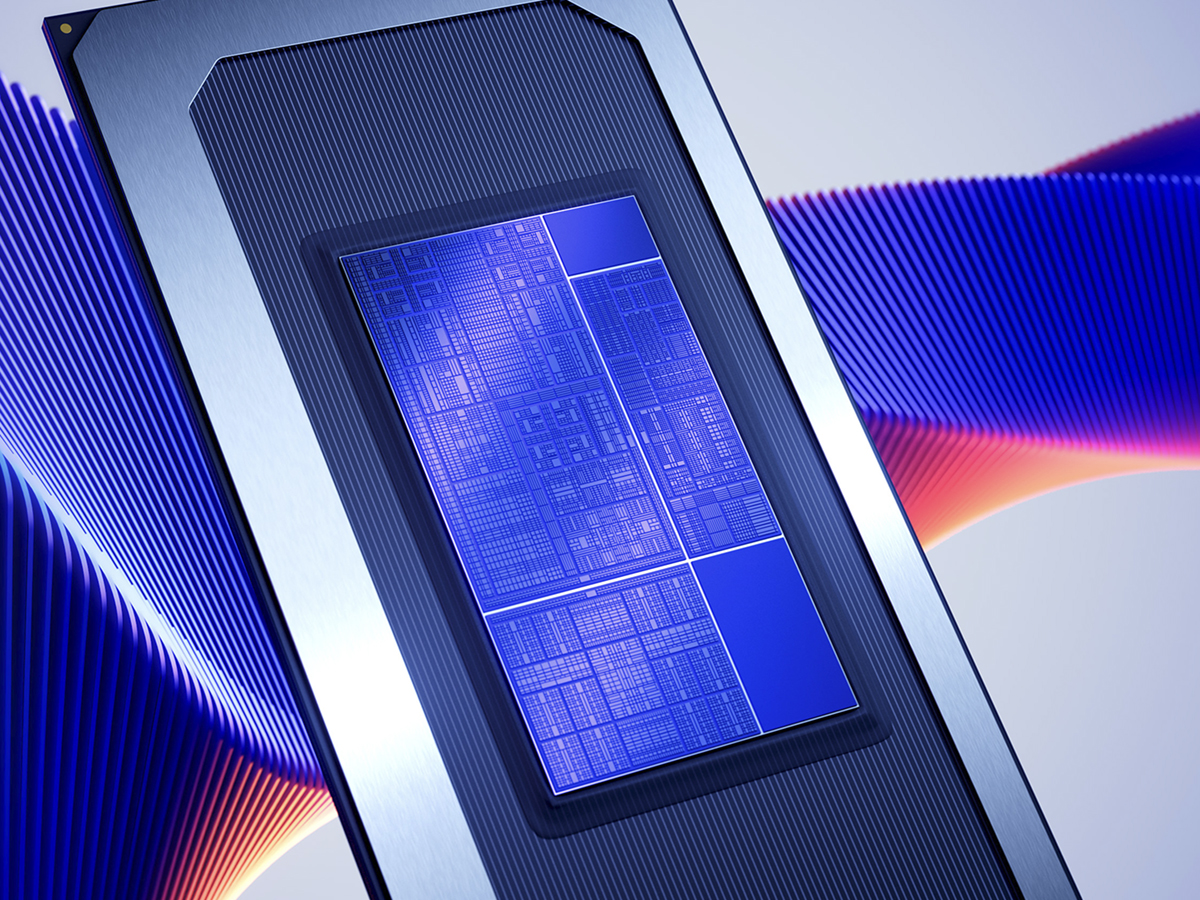



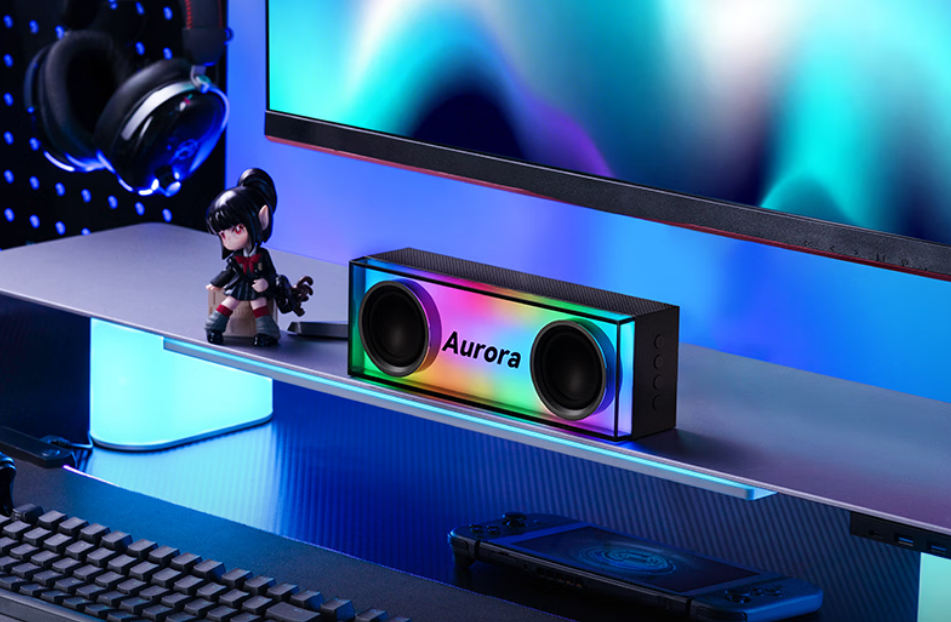
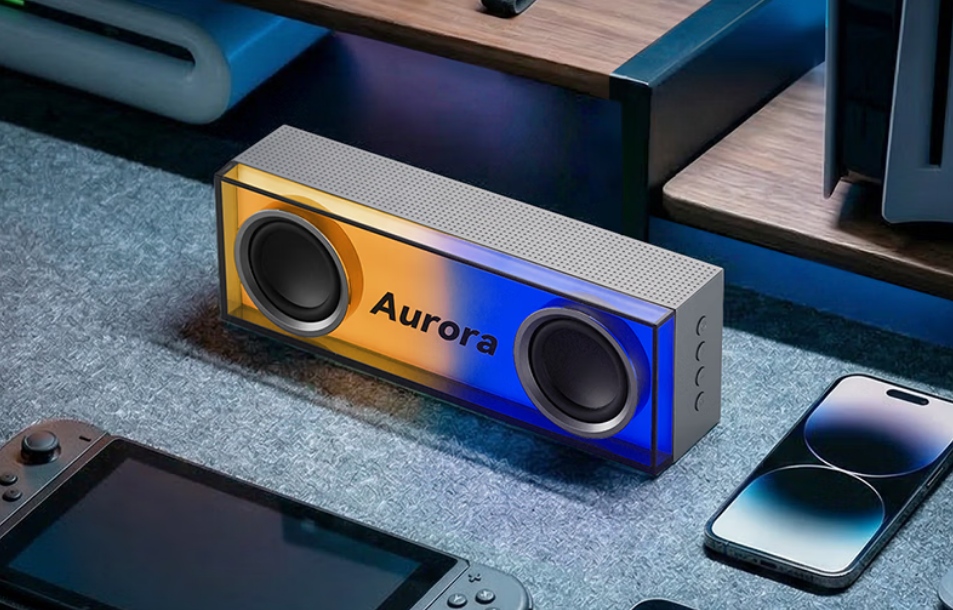
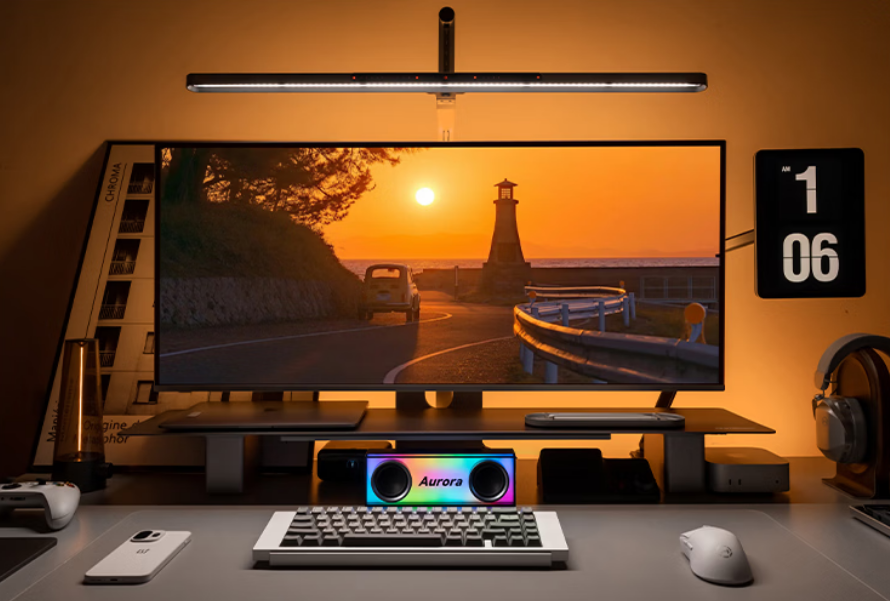


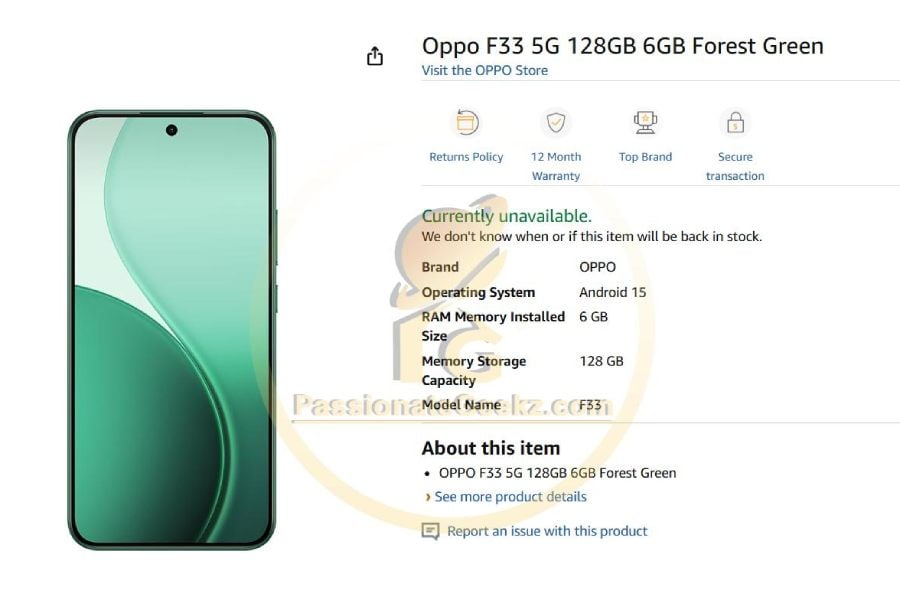


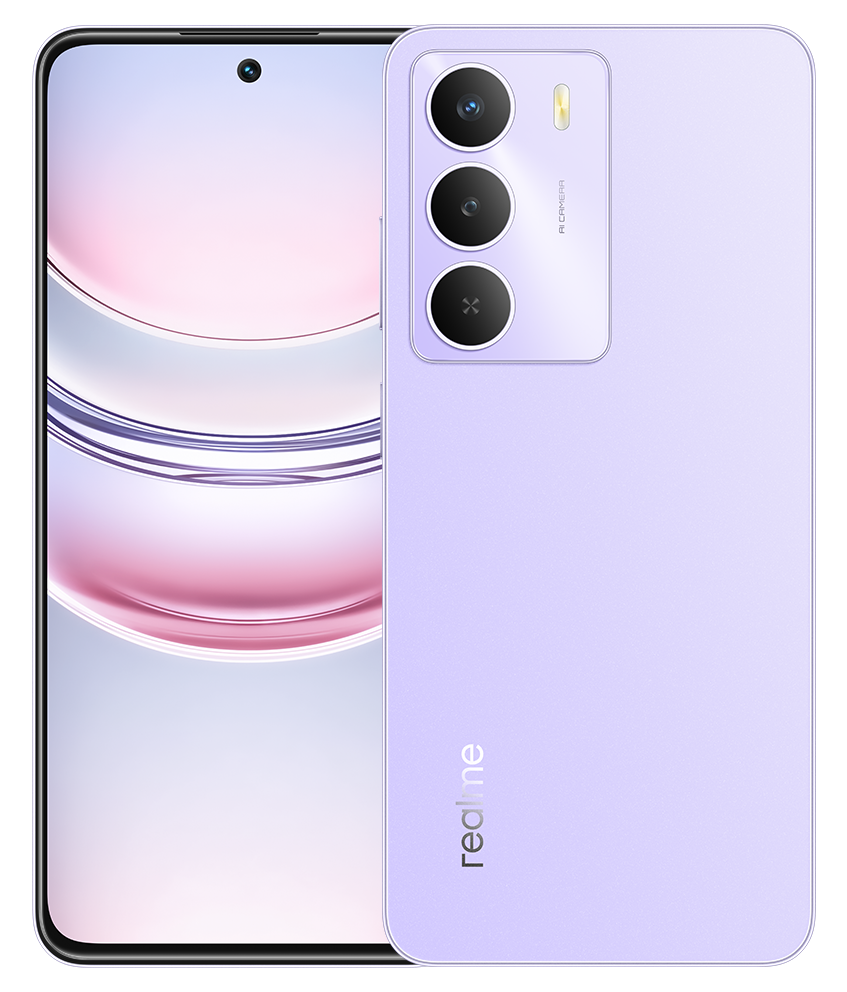

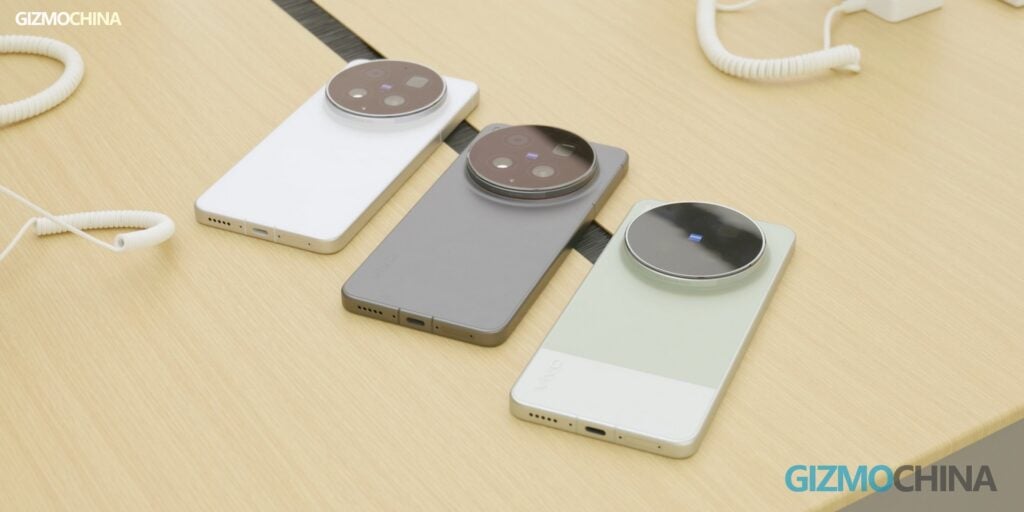
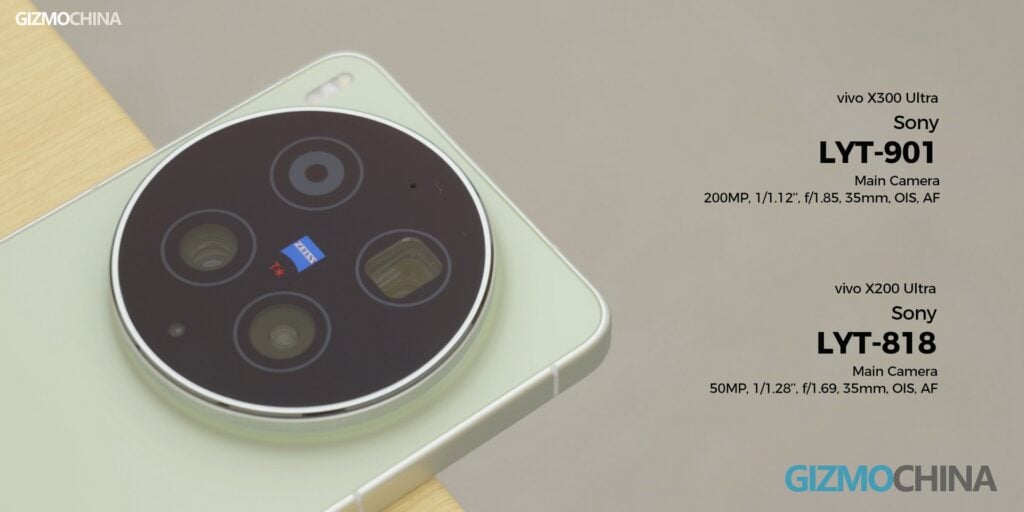

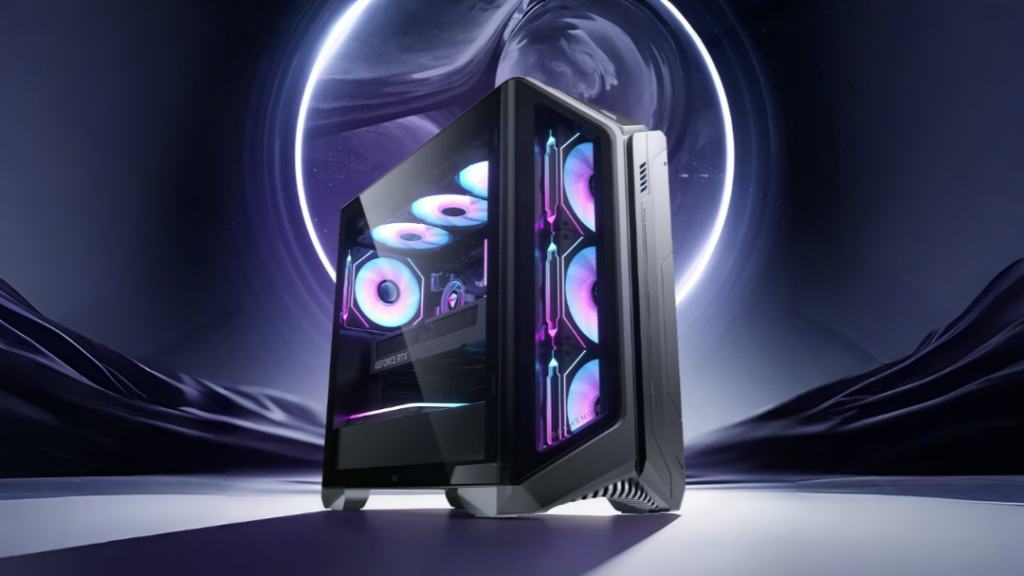
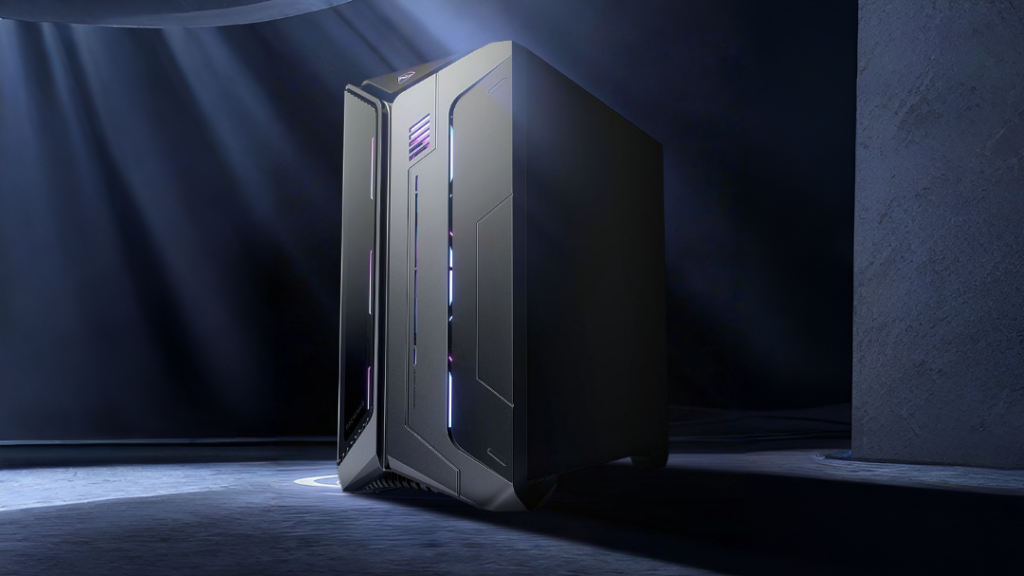


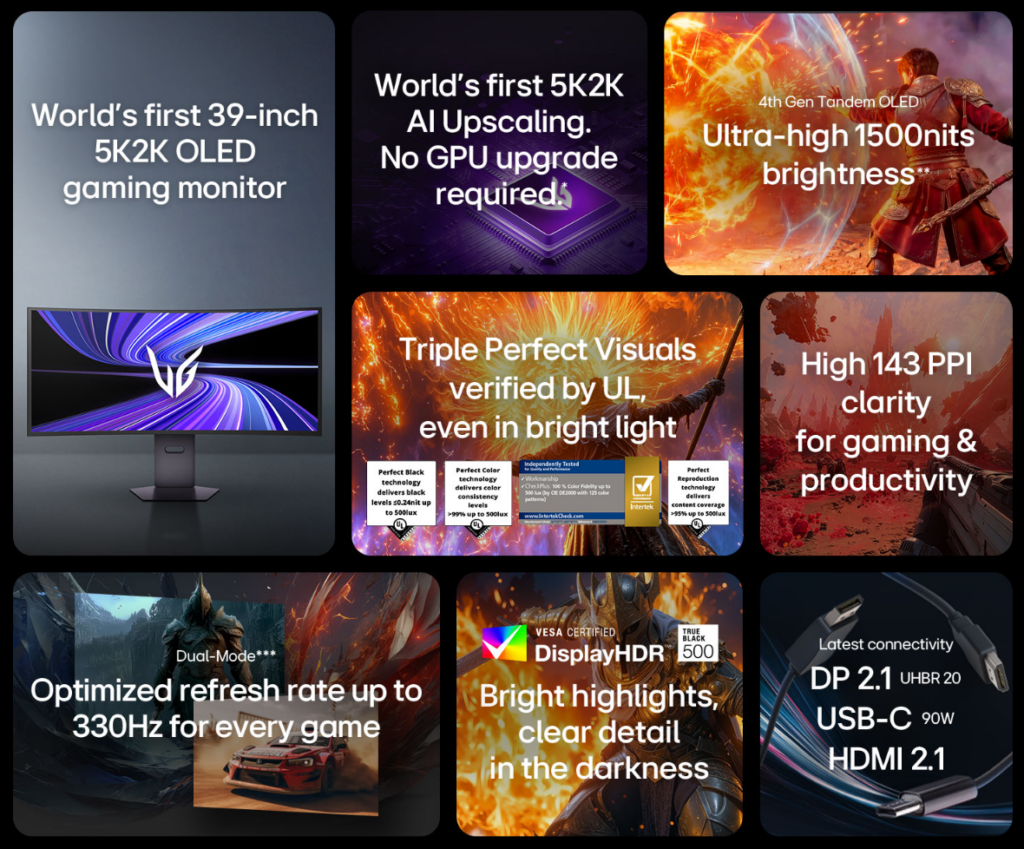


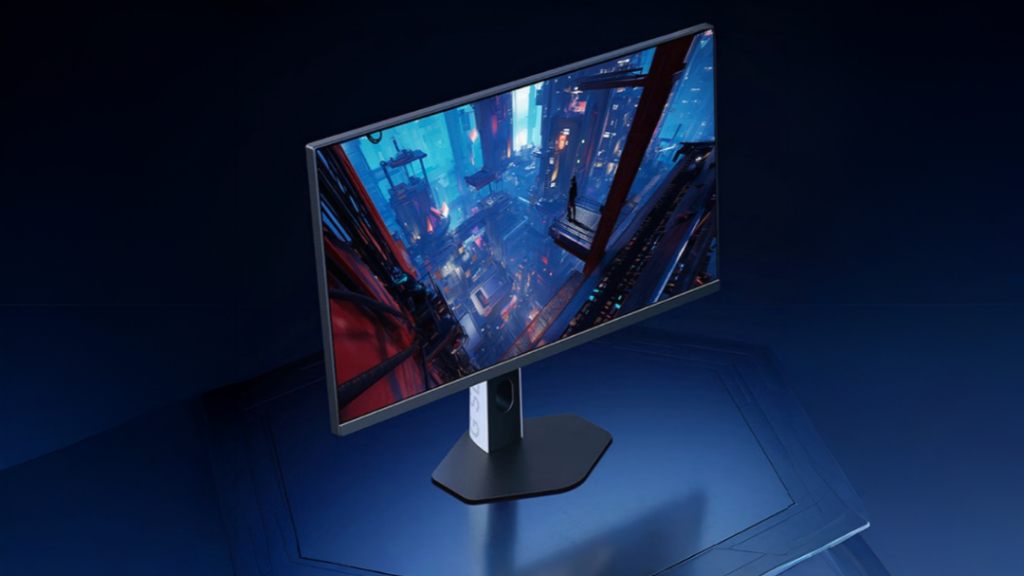





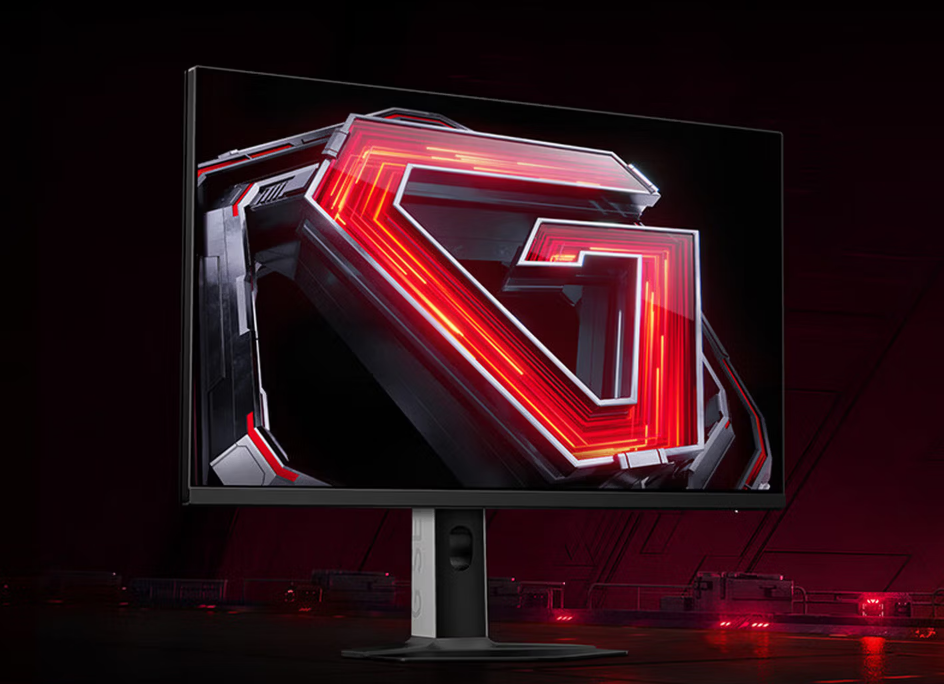



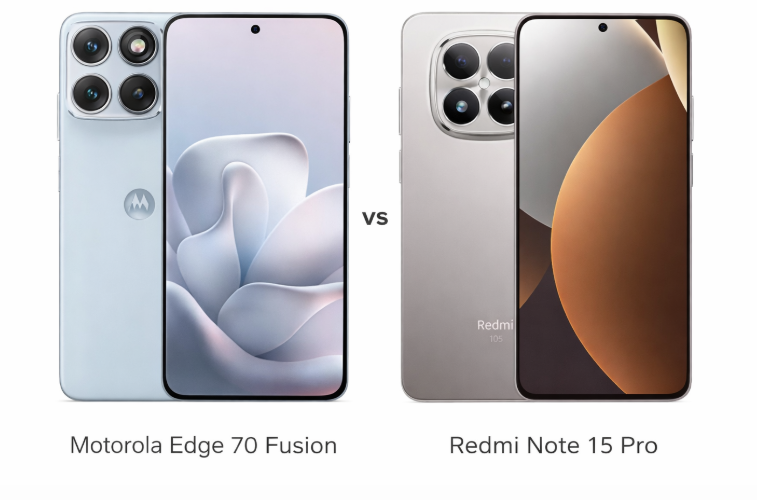

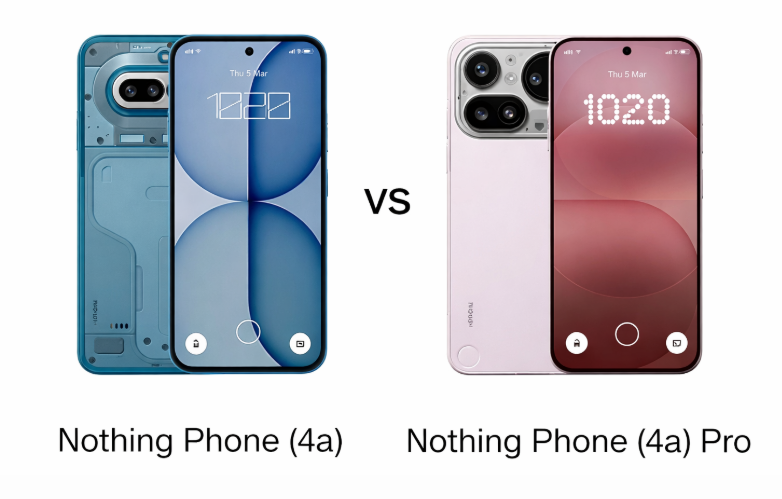

 Aluminum build on Pro
 No change

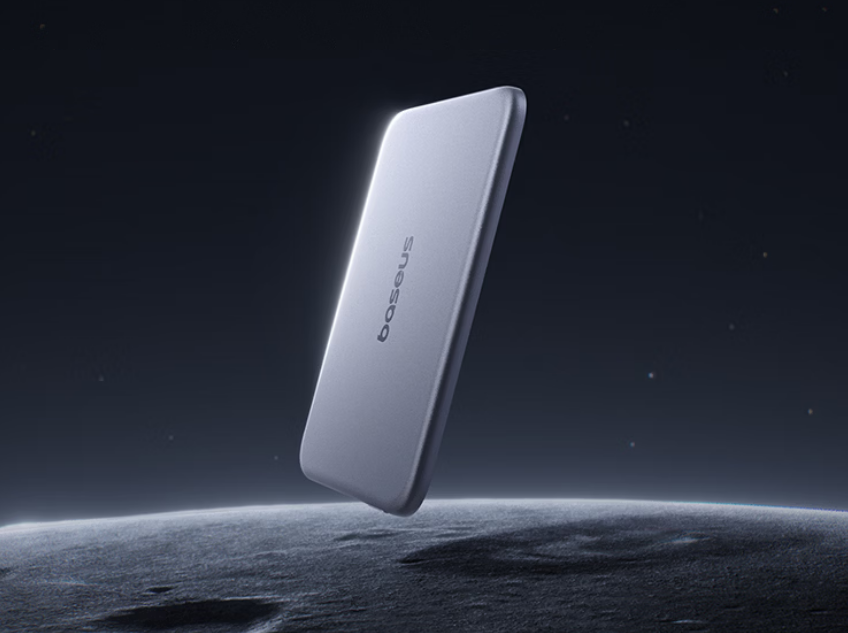
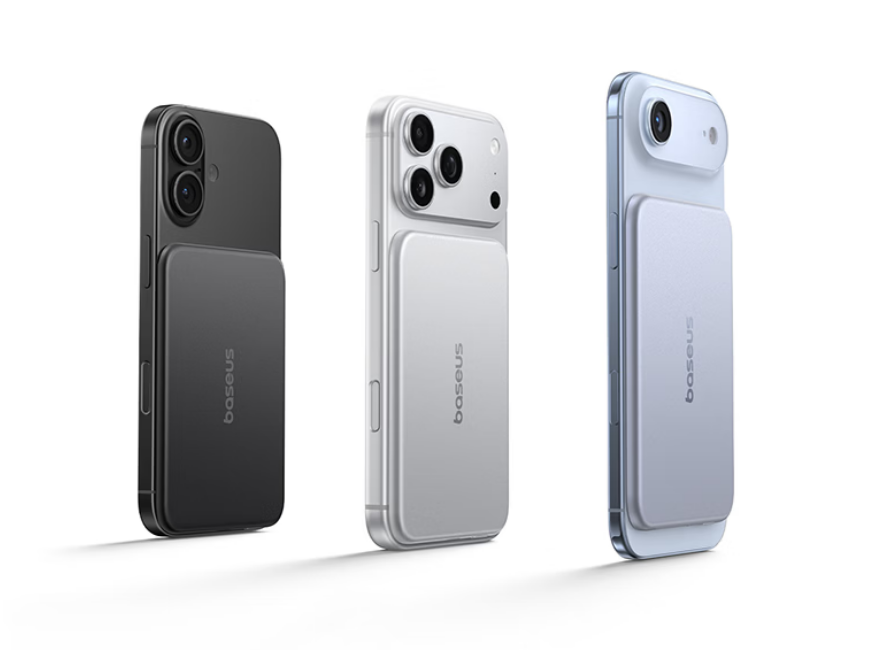
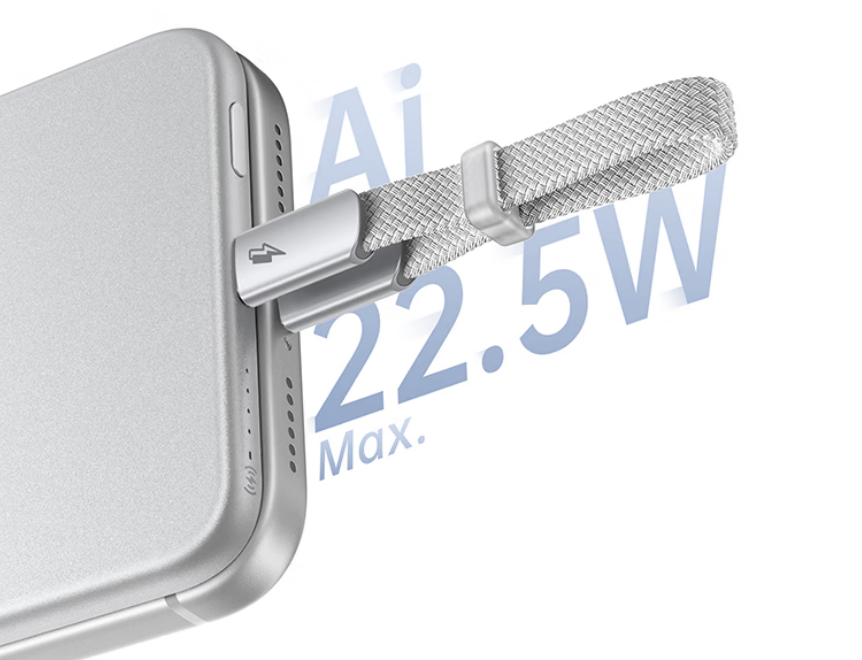
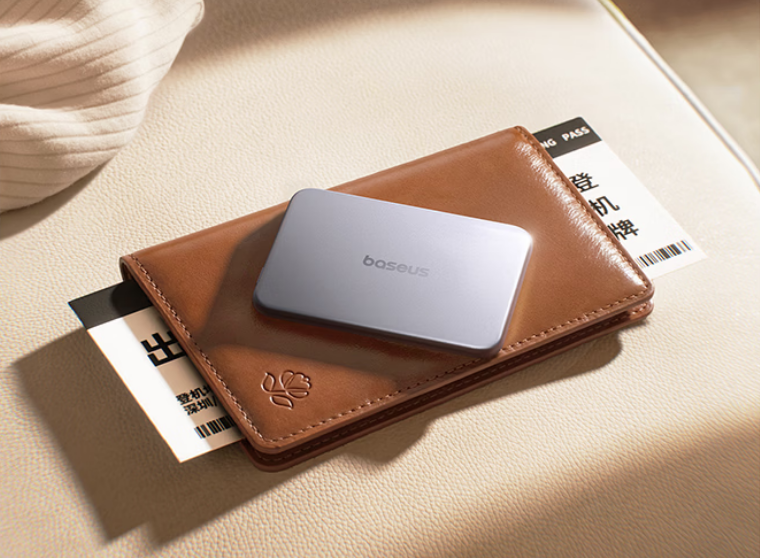
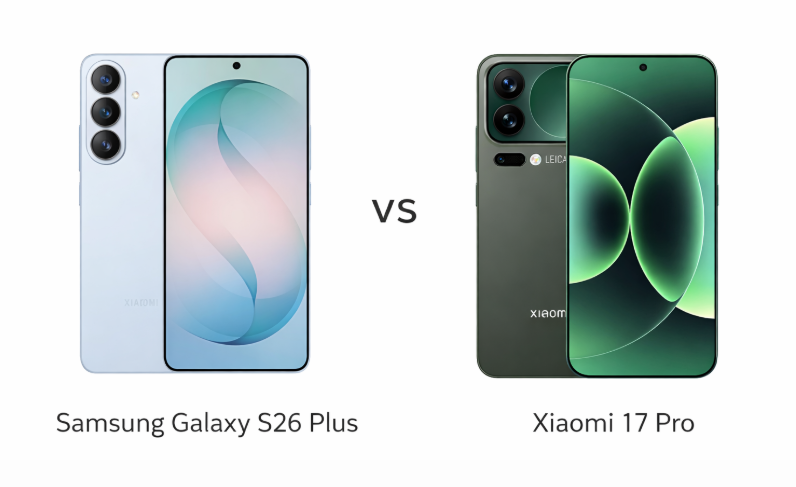
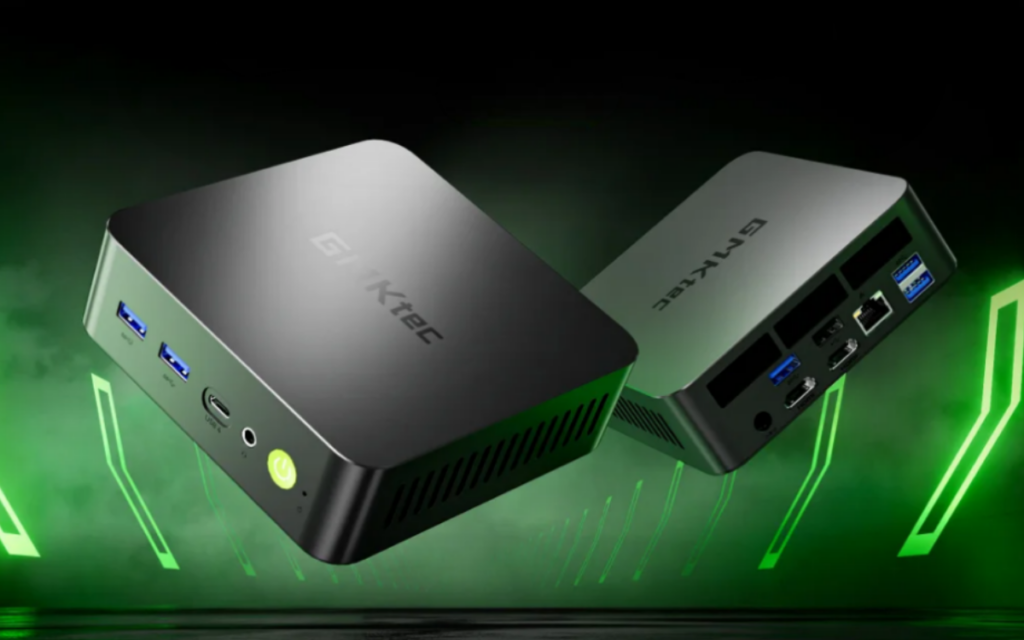
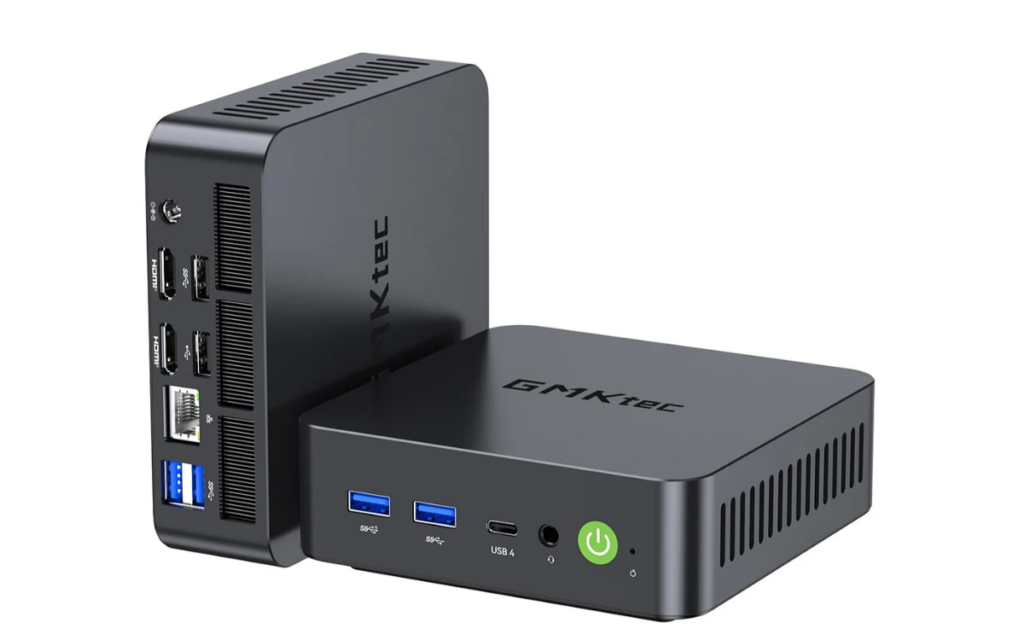
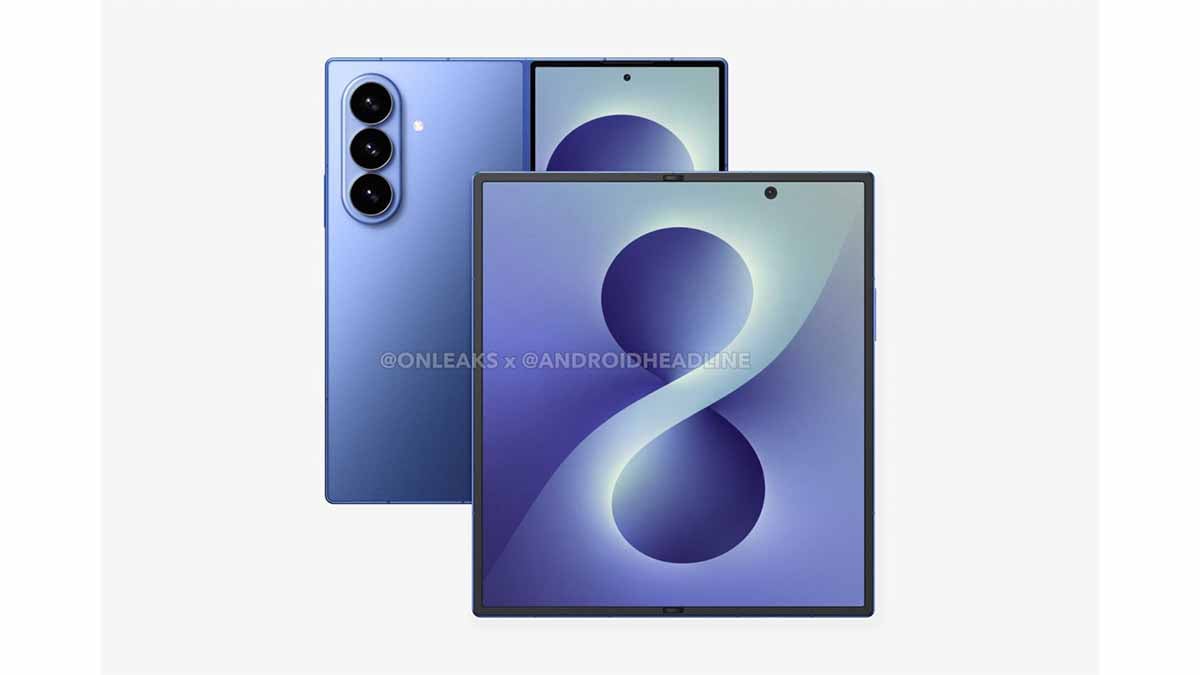





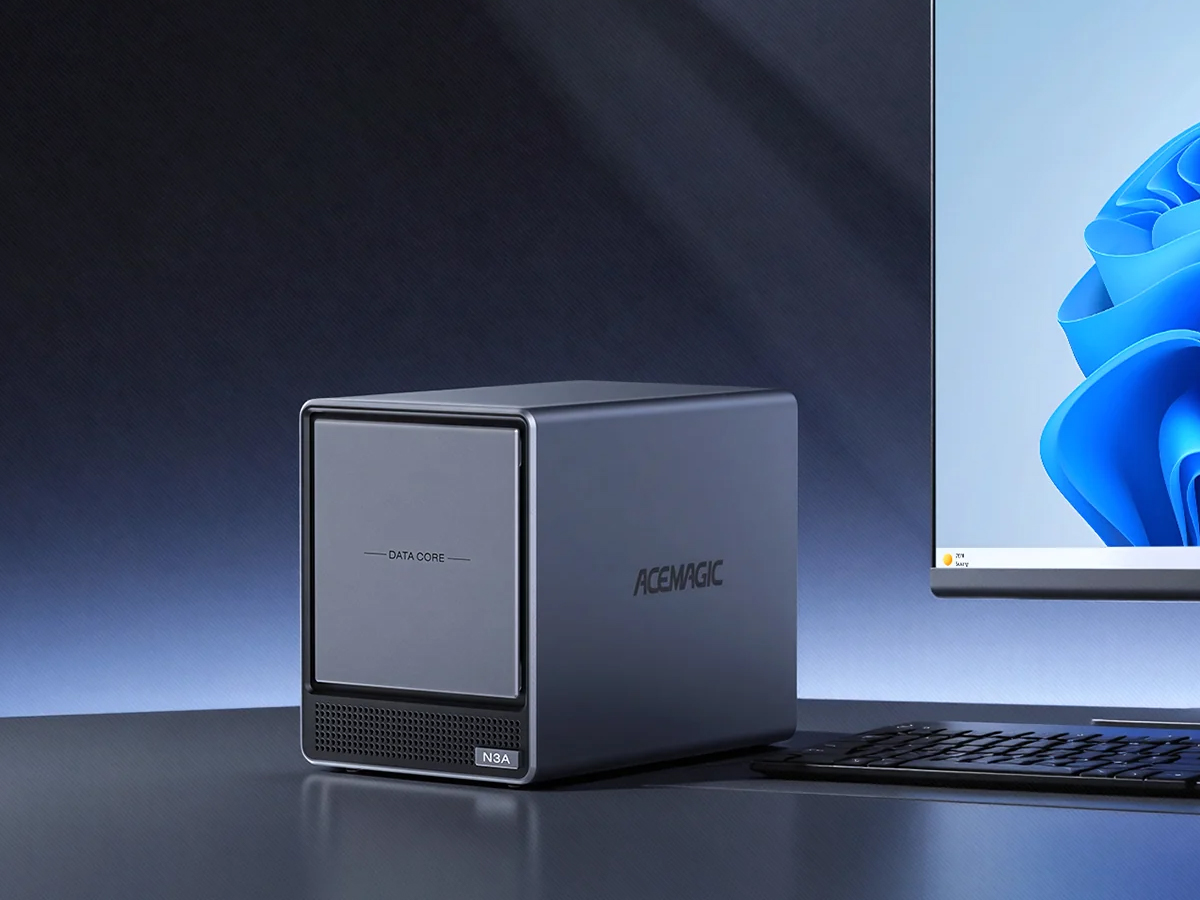
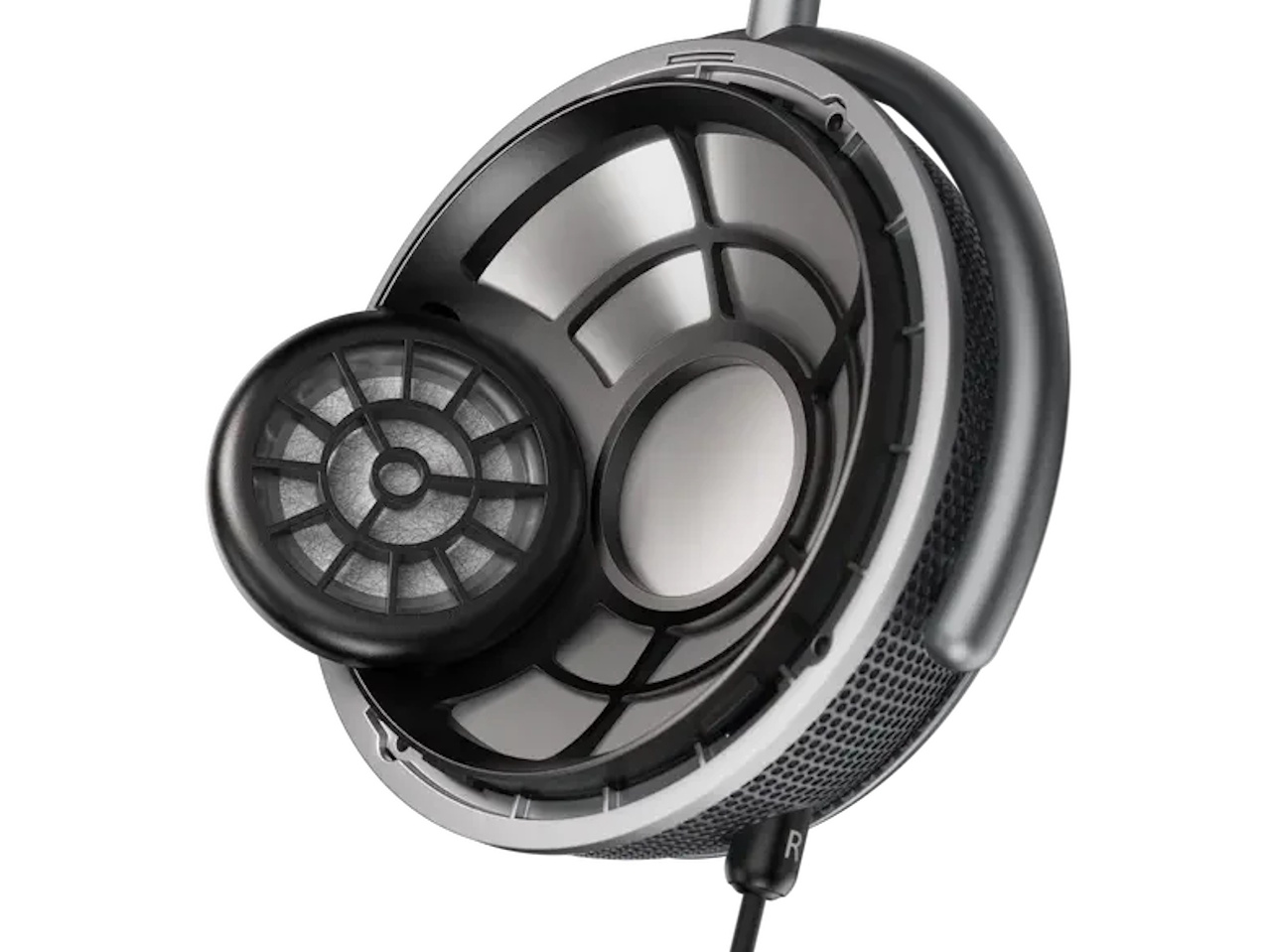



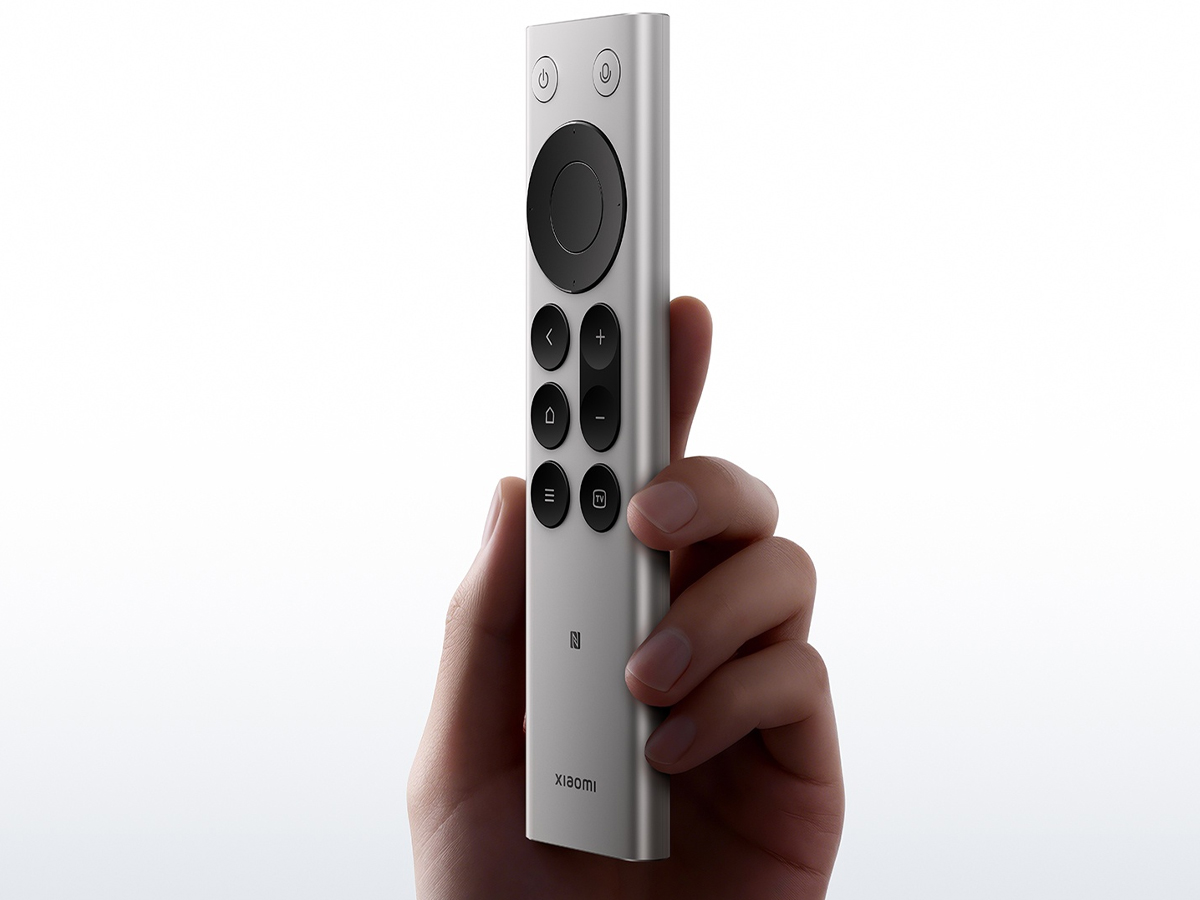
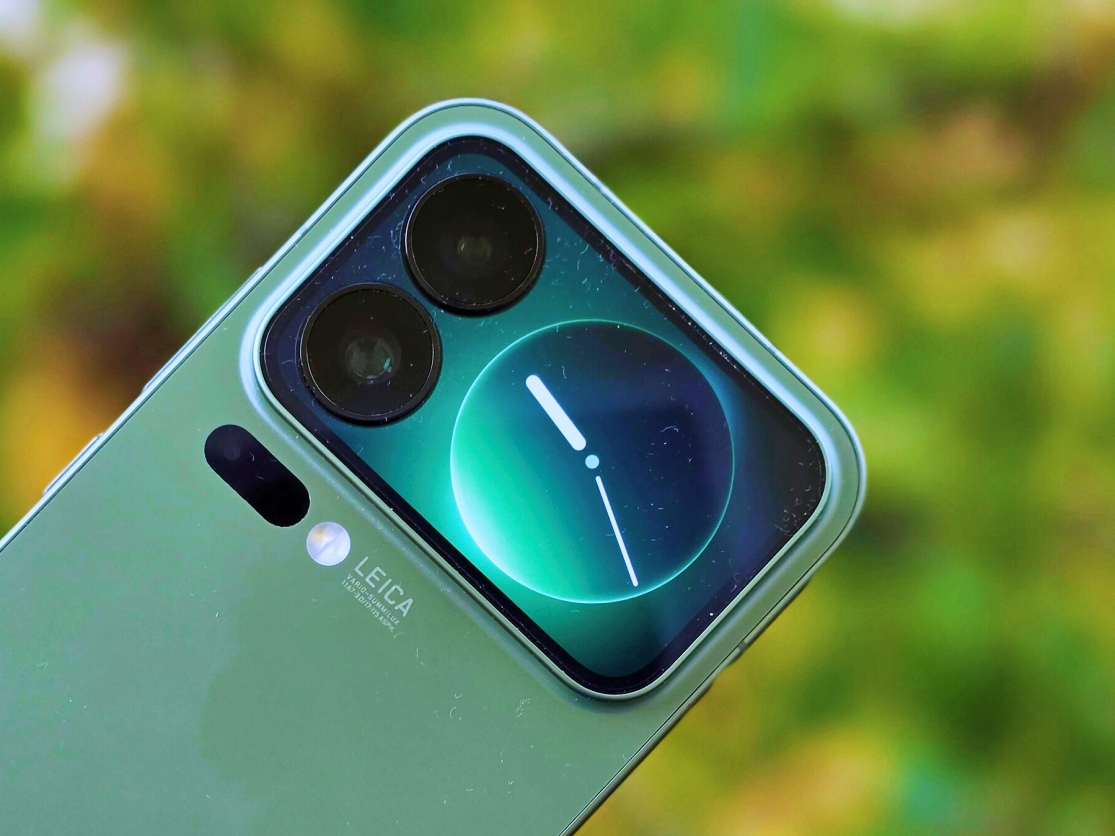

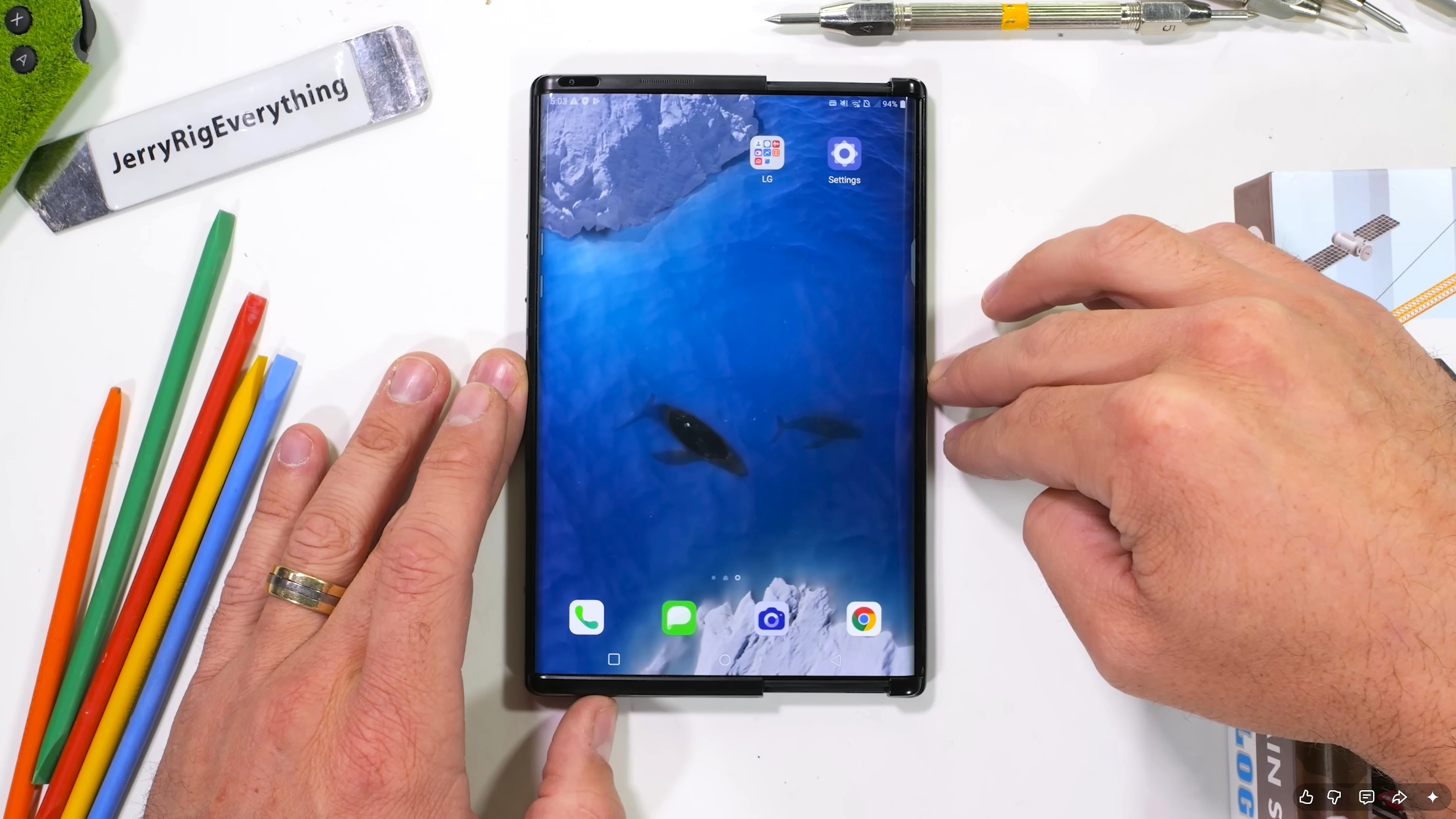
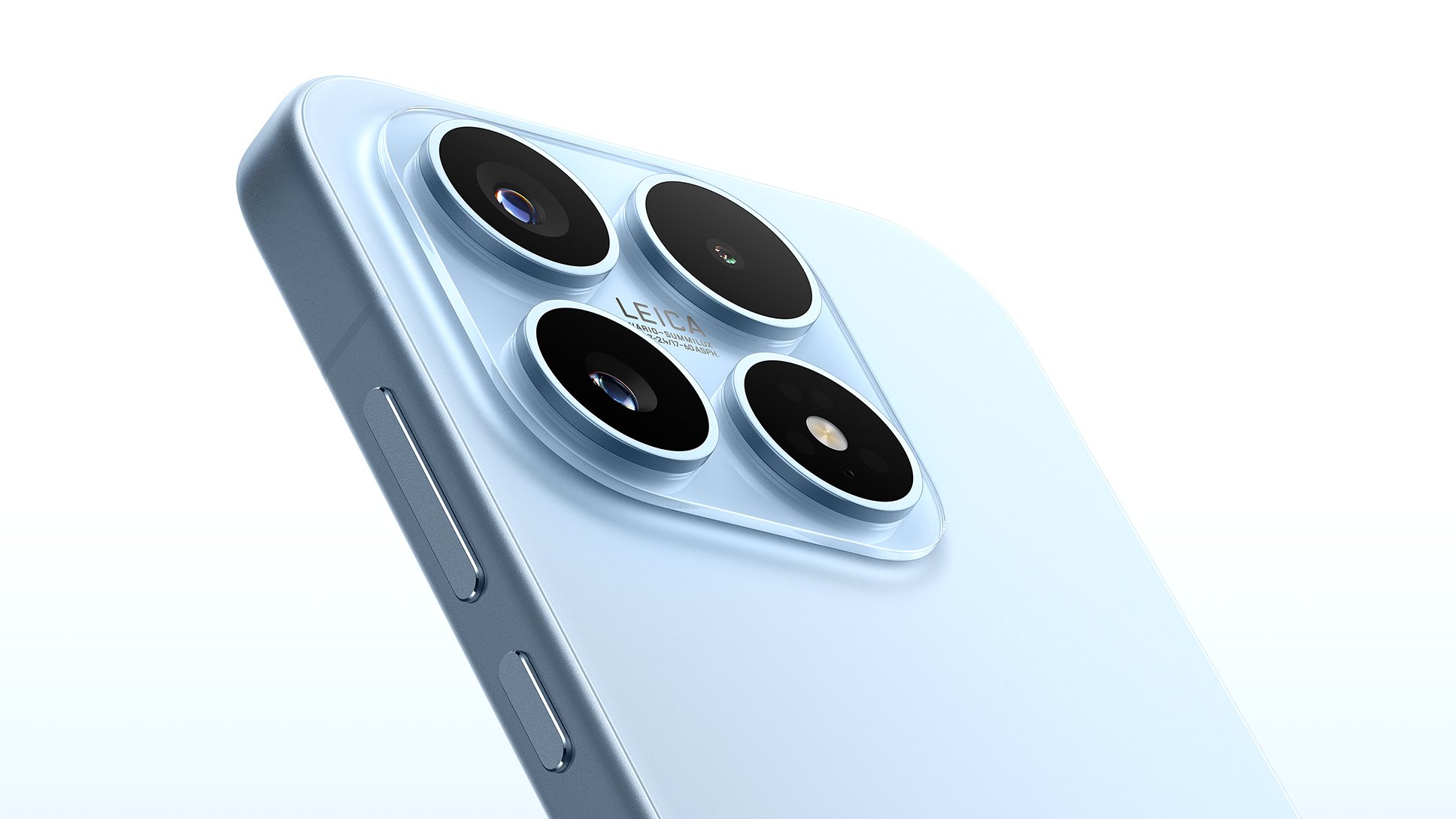

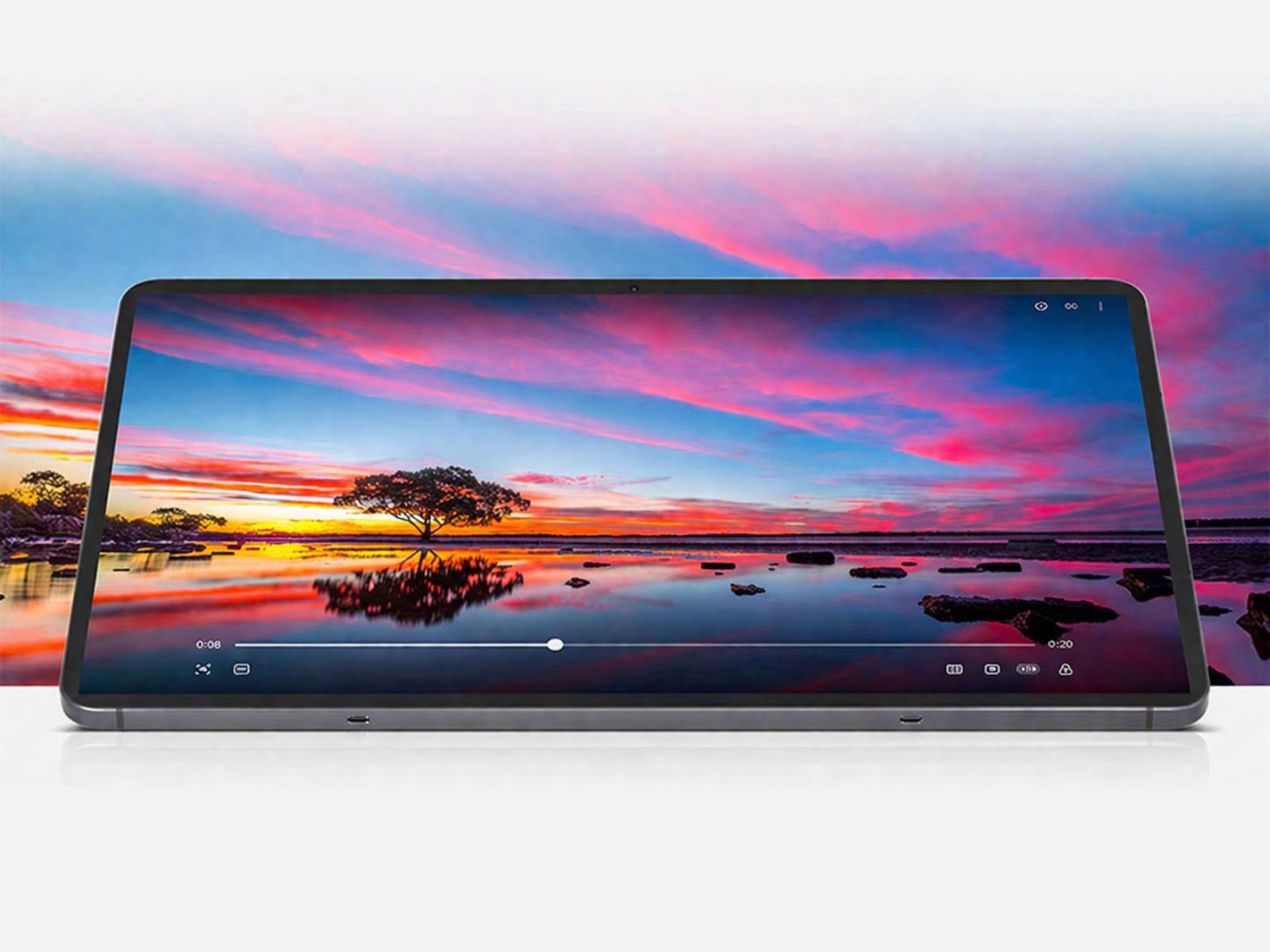

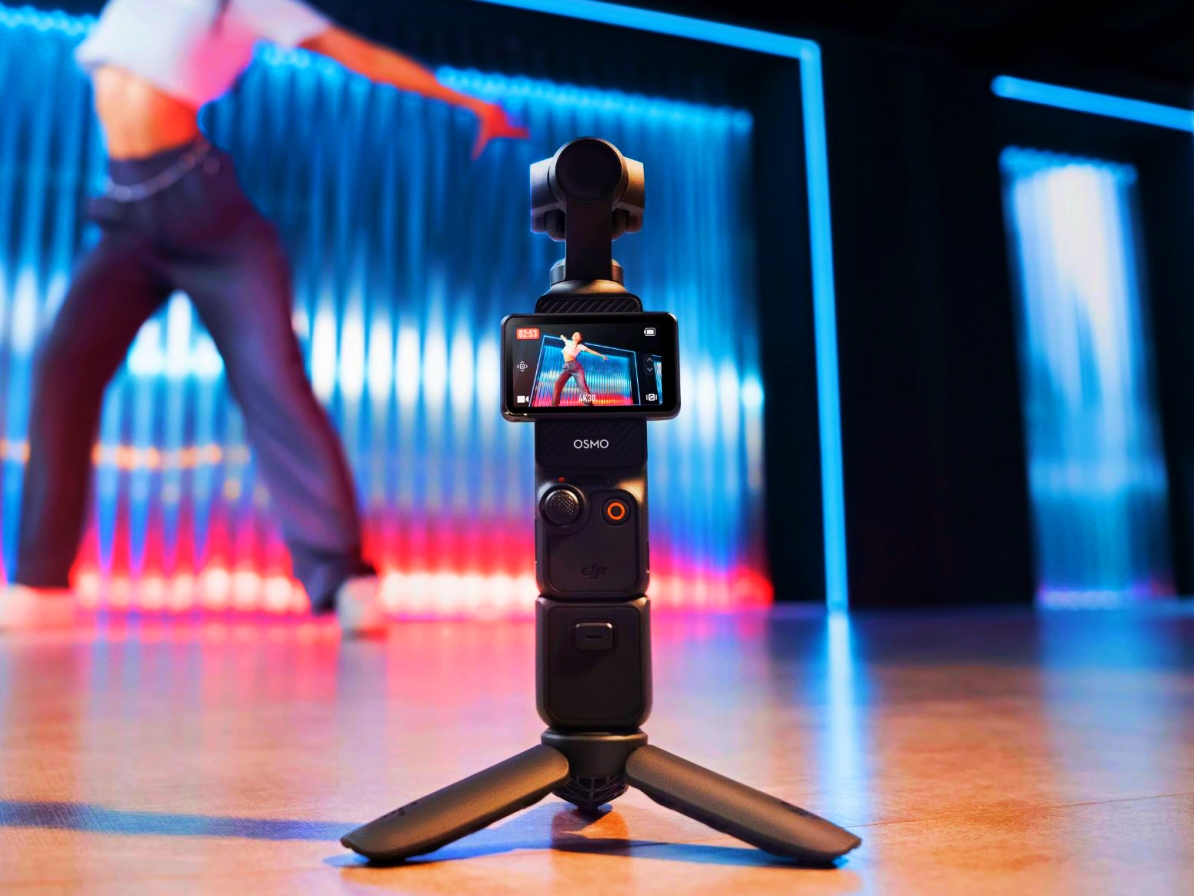

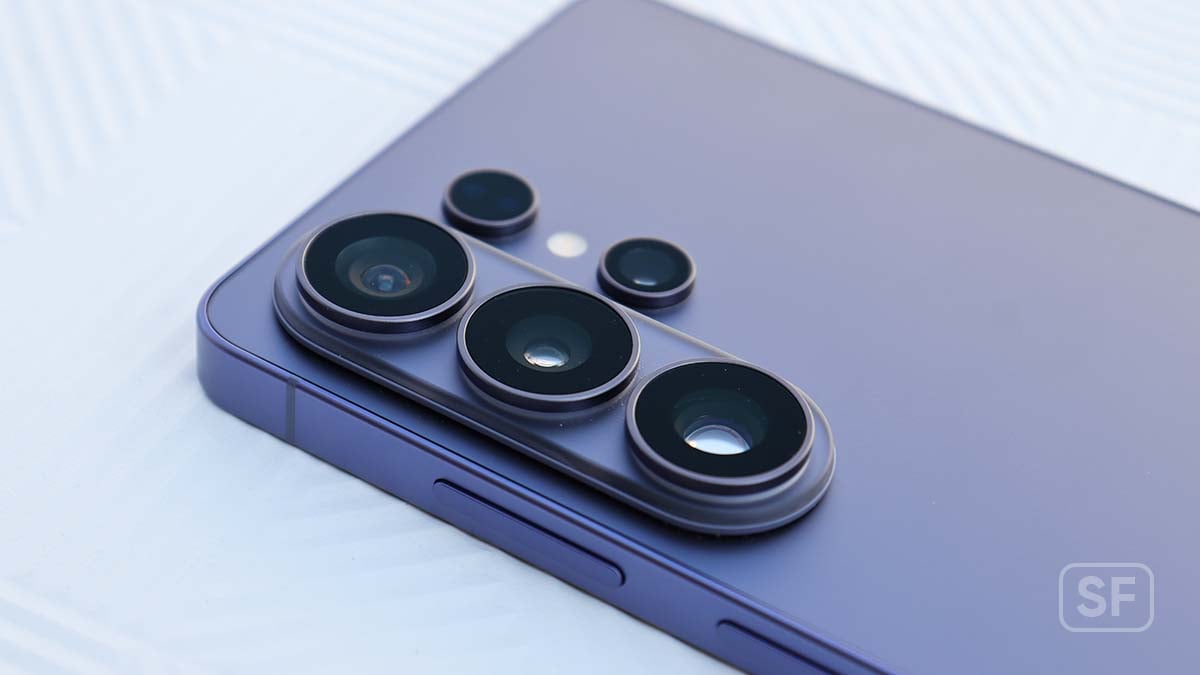



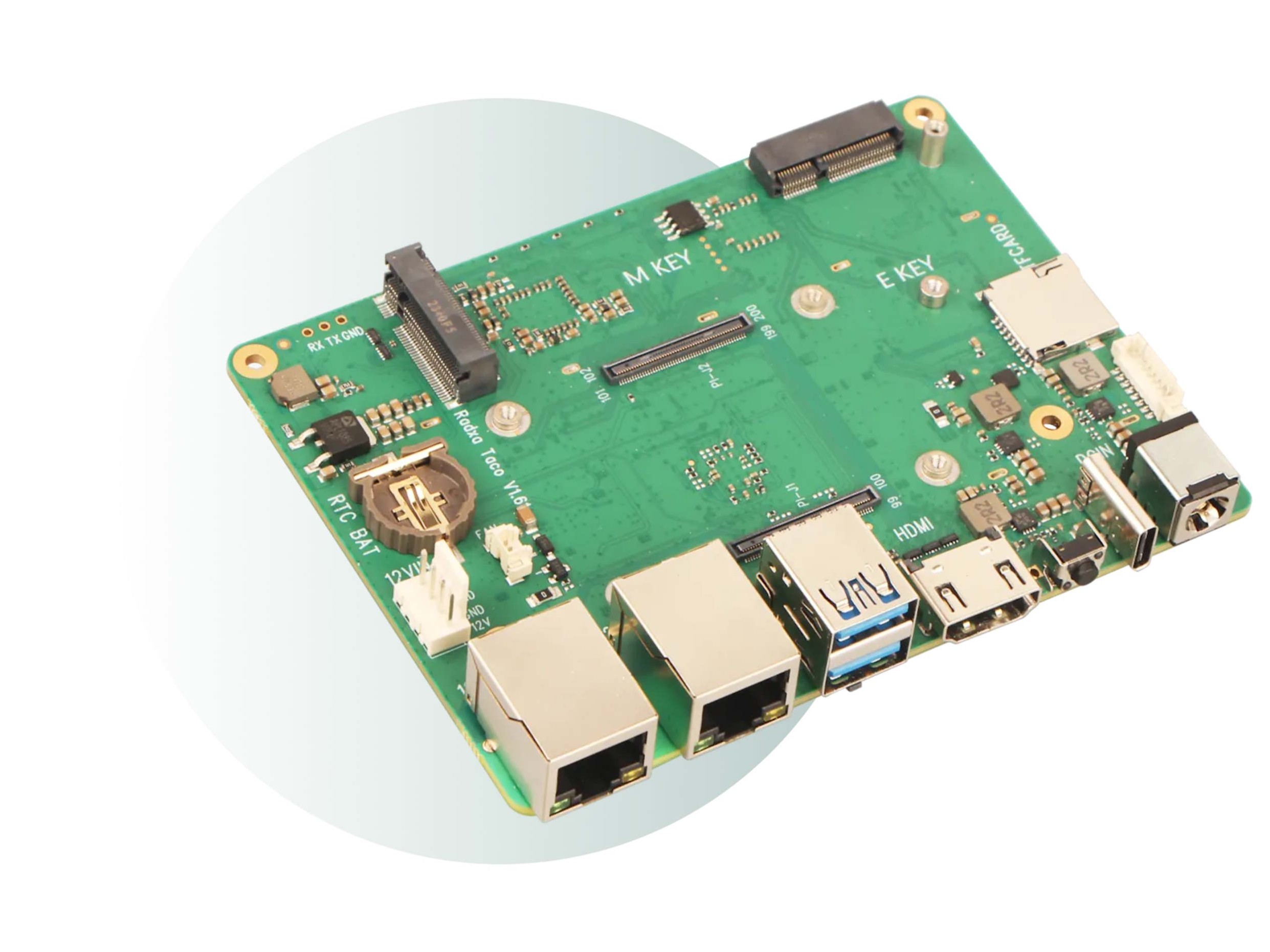
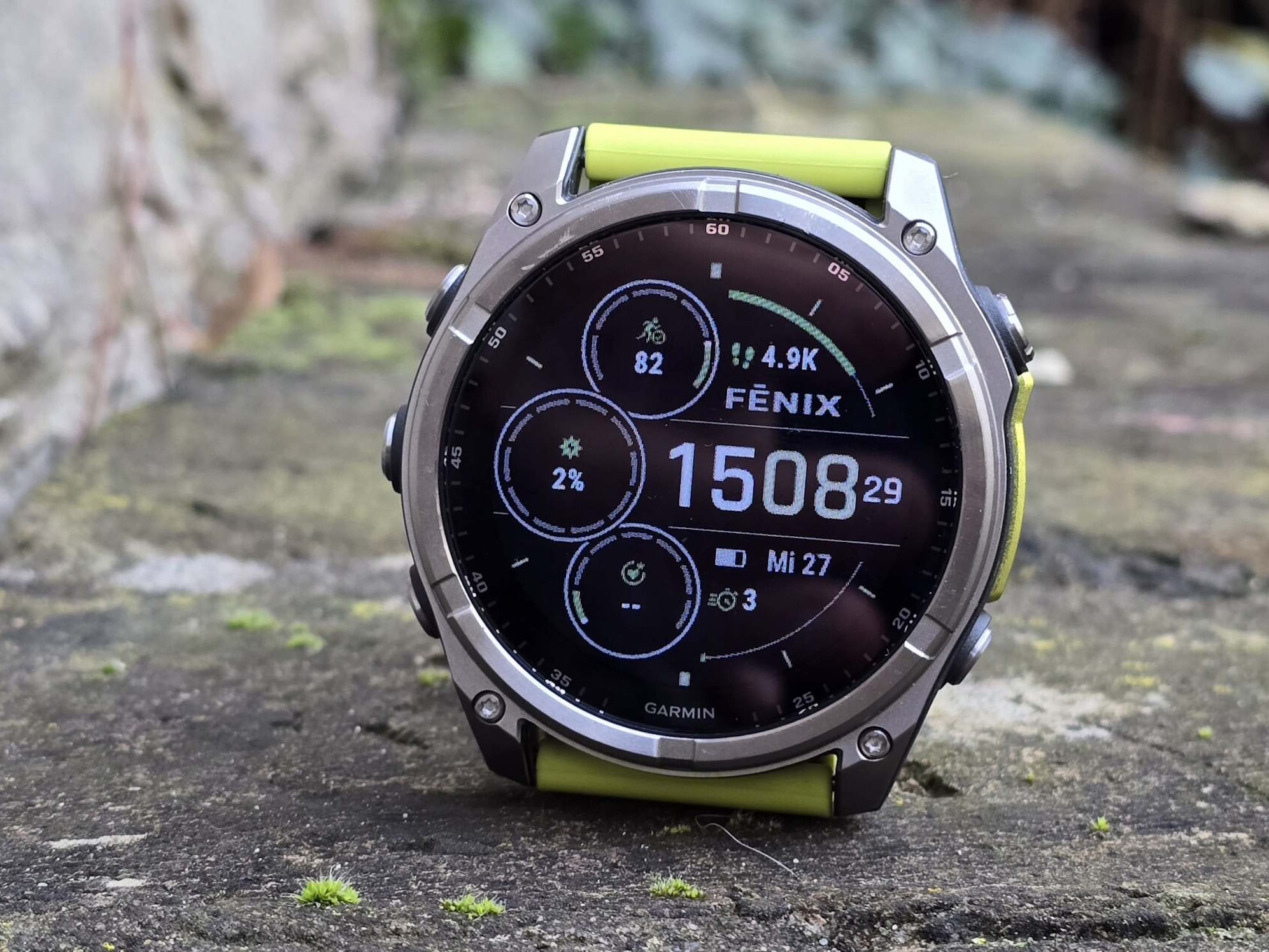
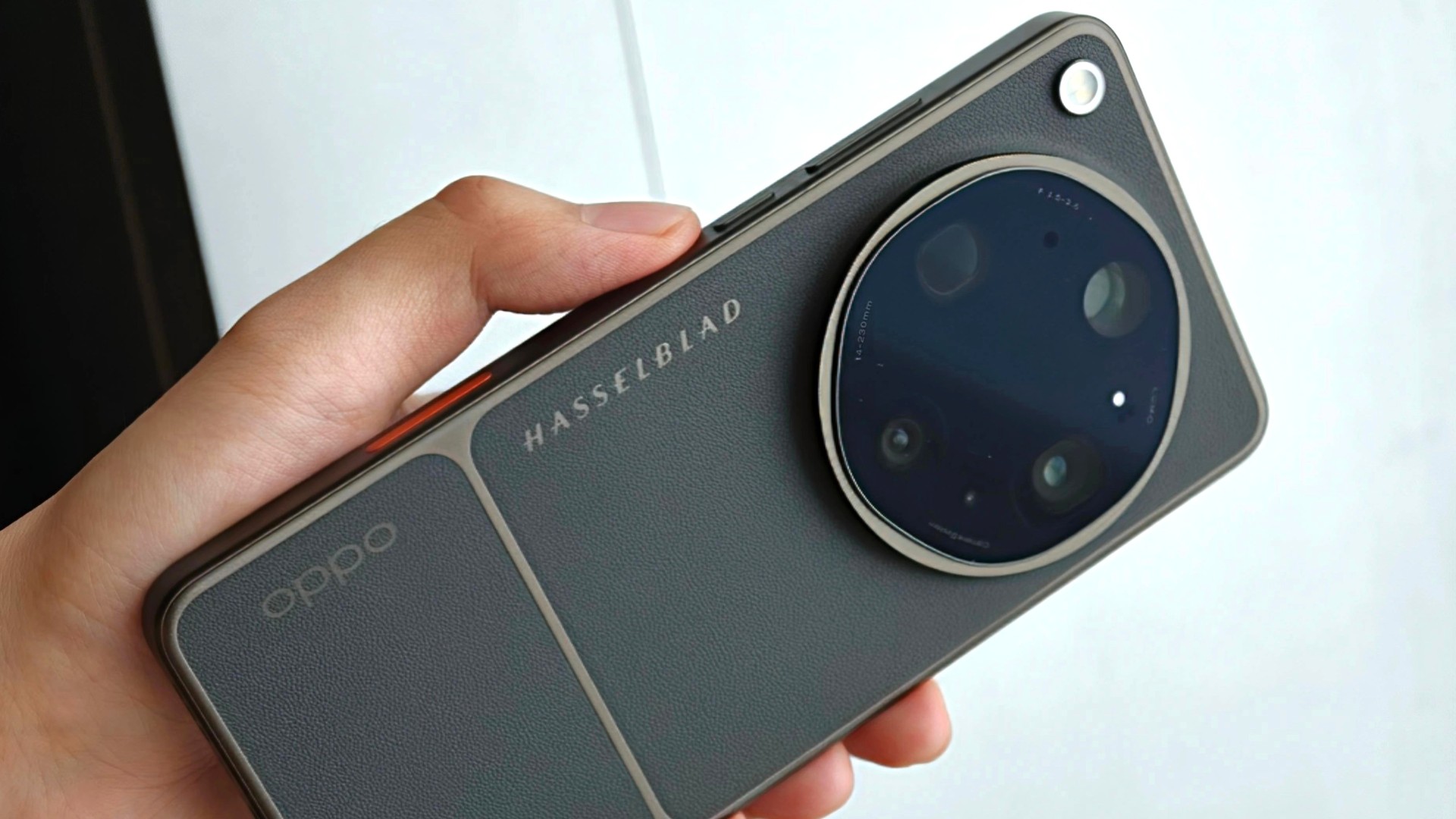







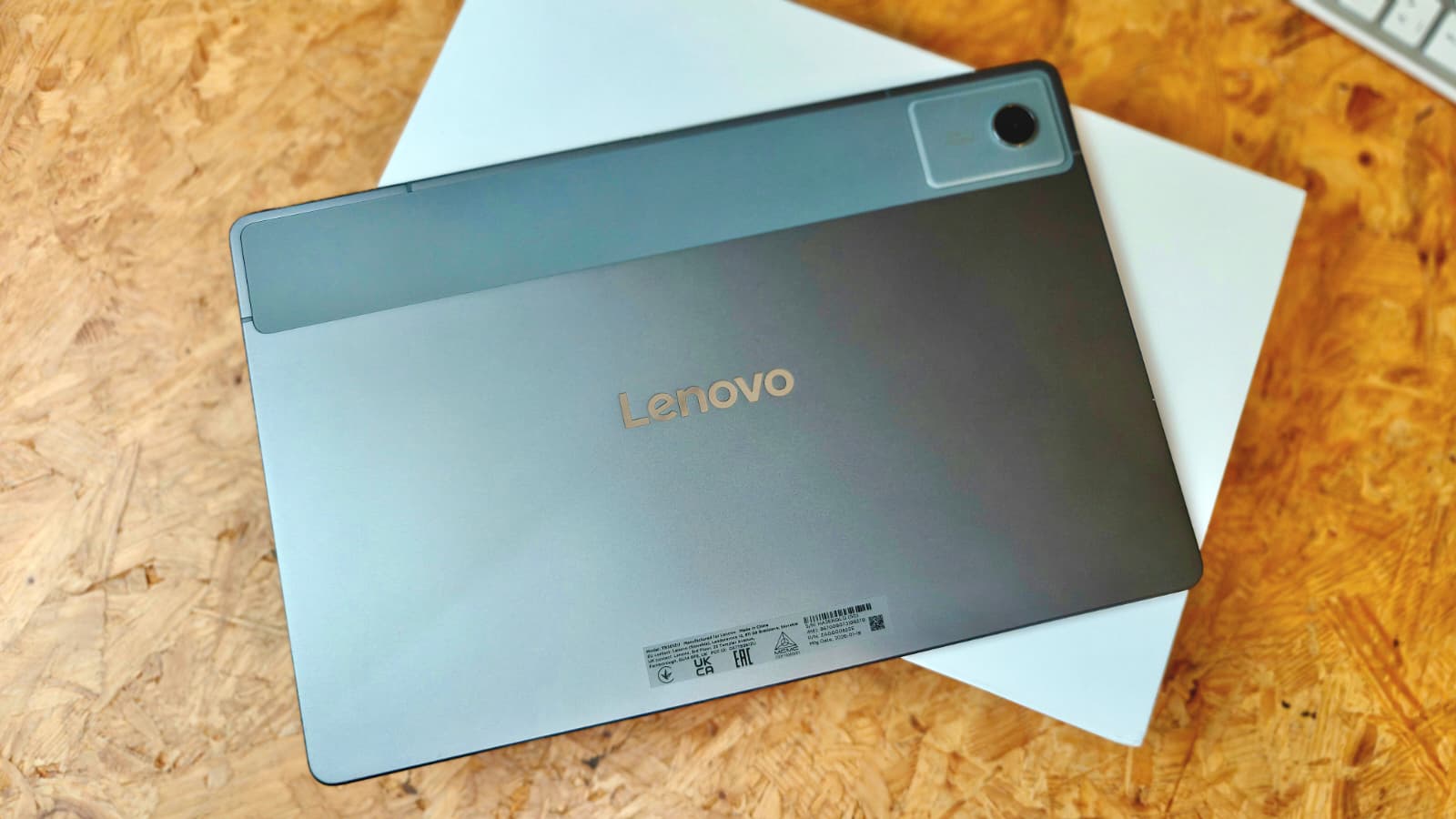

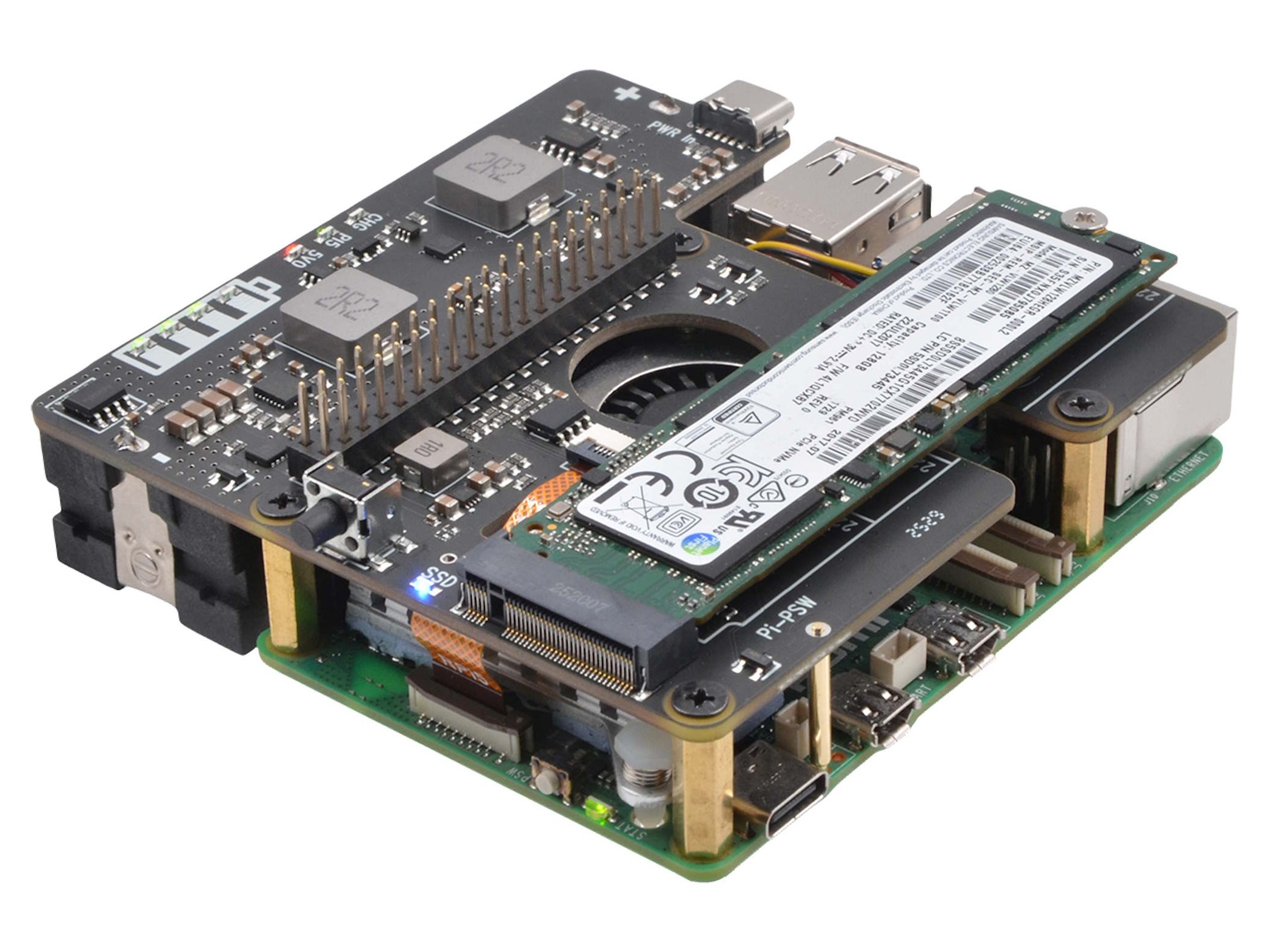





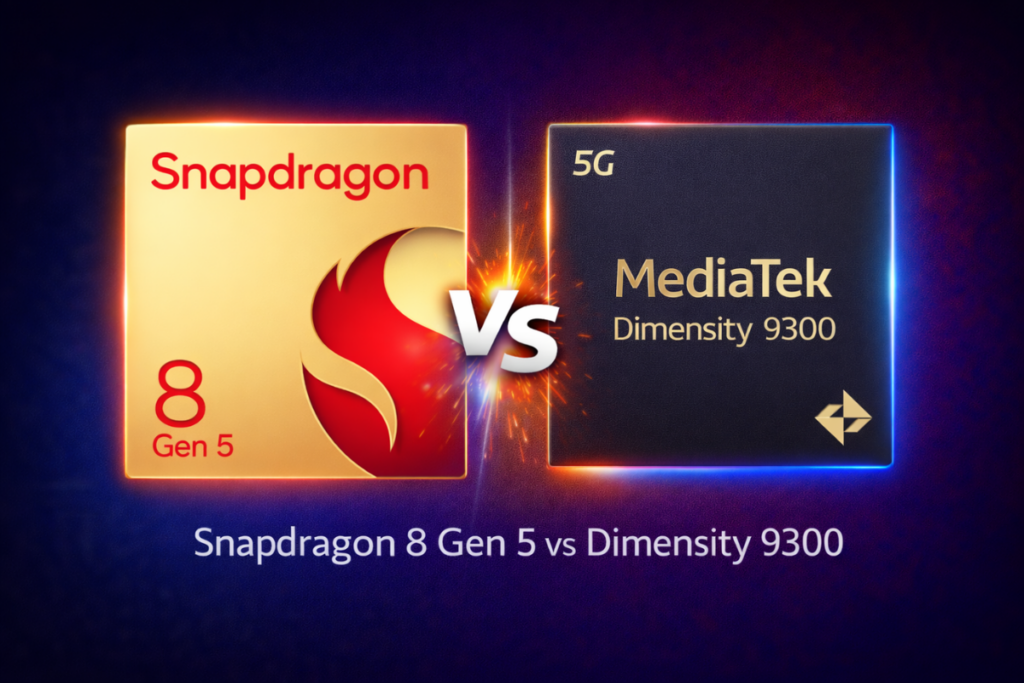
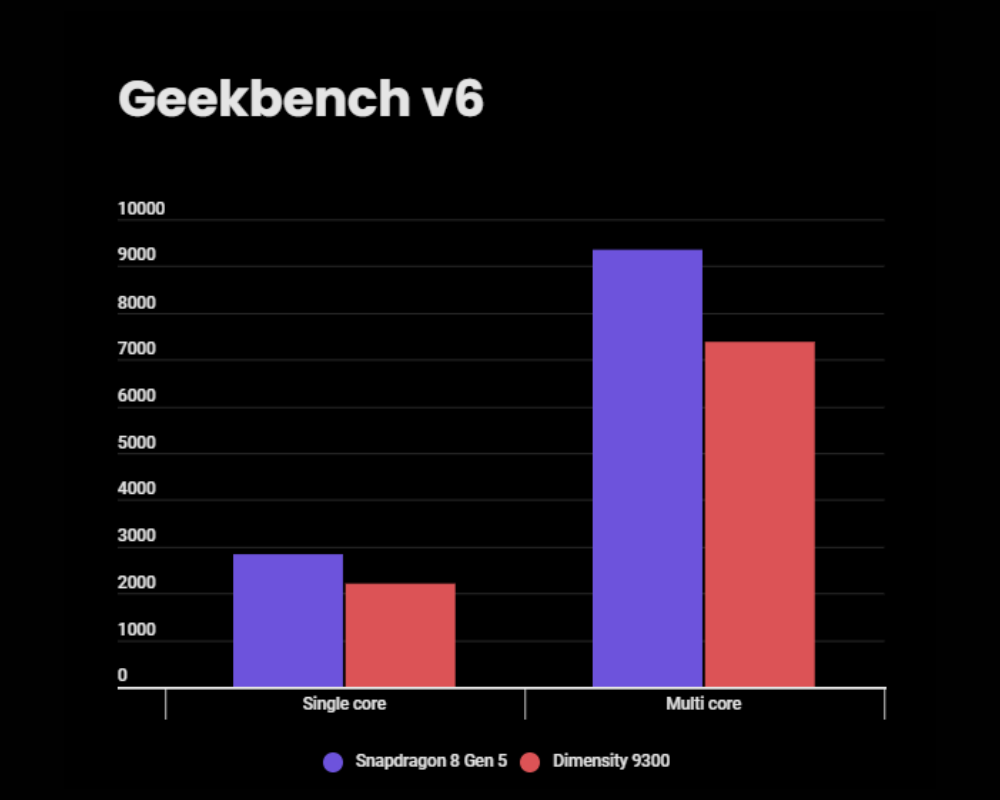
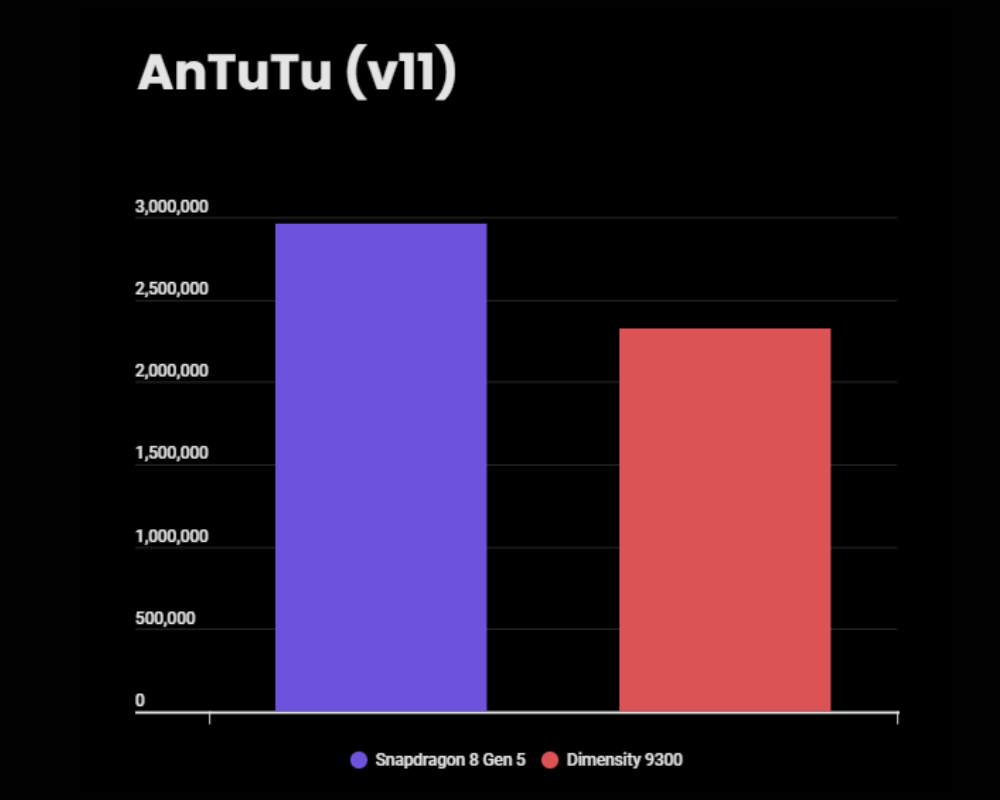

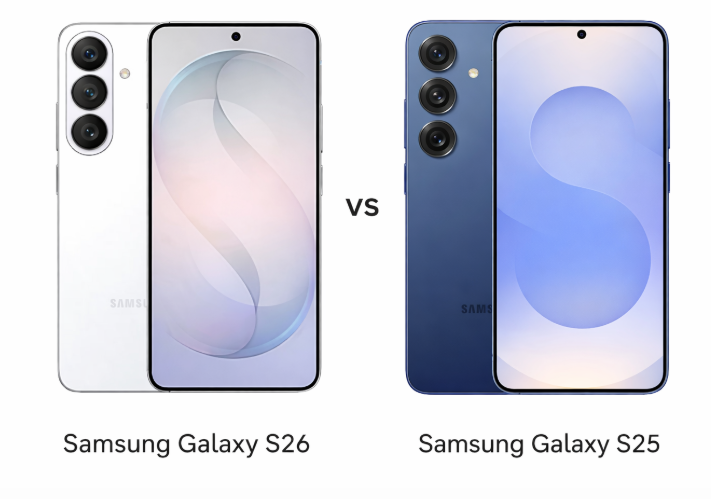




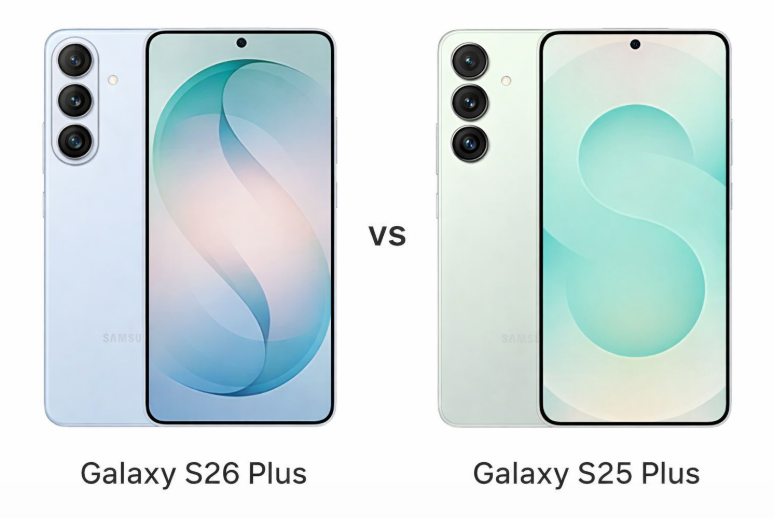









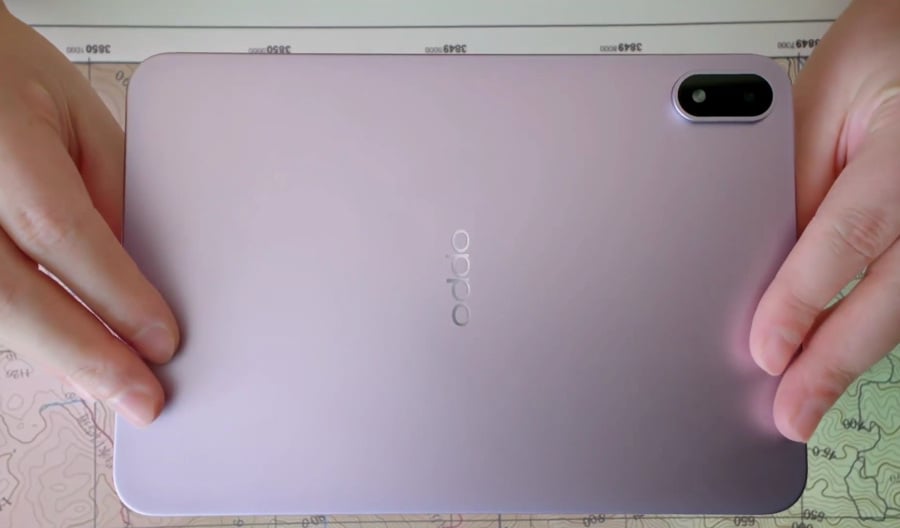
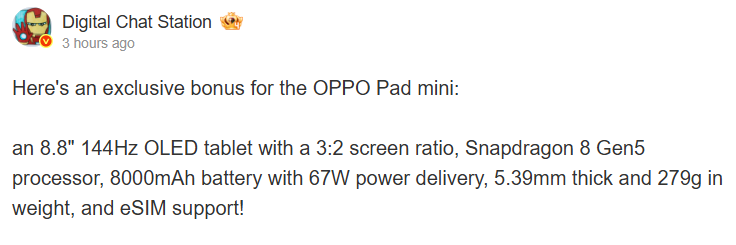











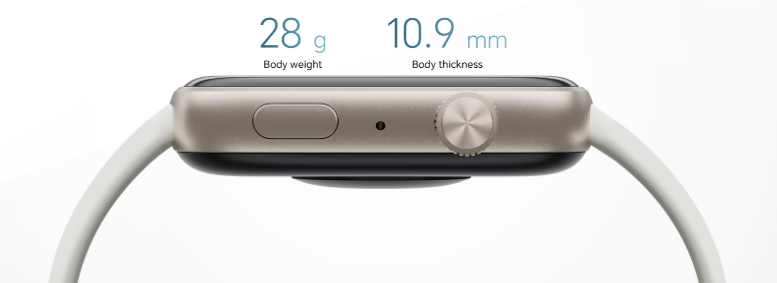

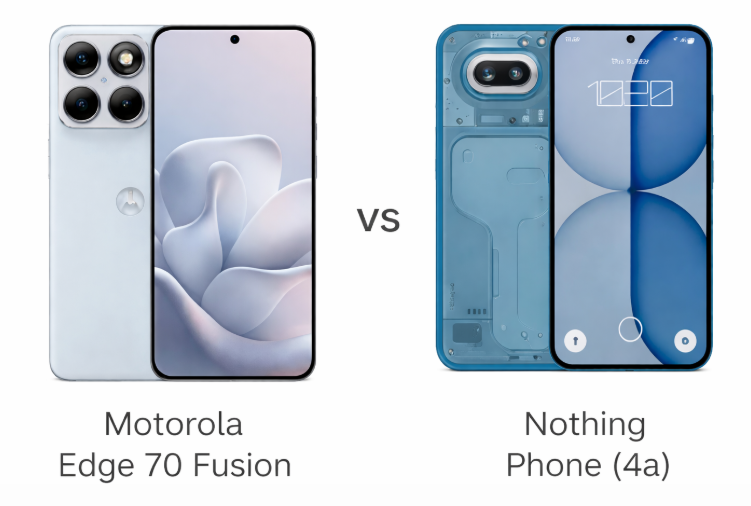




 Exynos 2500 (10-cores)
 Samsung Xclipse 950 GPU
 Android 17