Is the Samsung Galaxy S26 Ultra slightly less bright than the S25 Ultra? Tests and visual inspection prove it, but it's so minor that most won't notice or care.
Apple kicked off global, in-person 50th Anniversary celebrations with a surprise Alicia Keys concert at its iconic Grand Central store — and Tim Cook is embracing celebrating Apple's past.
Fallout and Starfield composer Inon Zur believes one day, we'll all think Xbox's Starfield is a "legendary" RPG, and that Todd Howard is a "visionary."
AMD has published a guide for running OpenClaw locally on Windows through two distinct hardware paths it calls "RyzenClaw" and "RadeonClaw," both built around its own silicon and designed to keep AI agent workloads off the cloud entirely. The push is part of AMD's broader "Agent Computer" narrative, where it argues that not every AI workload belongs in a data center, people and businesses want control over their data, affordable always-on AI without usage limits, and the confidence that their models are running locally rather than on someone else's infrastructure. The setup runs through WSL2 with LM Studio handling local LLM inference via llama.cpp, and supports Memory.md through local embeddings, no cloud dependency required. AMD says the environment can be configured in under an hour, targeting early adopters and developers experimenting with personal AI agents.
The RyzenClaw path is built around a Ryzen AI Max+ system with 128 GB of unified memory, AMD specifically recommends reserving 96 GB as variable graphics memory for this use case. Running the Qwen 3.5 35B A3B model, that configuration delivers around 45 tokens per second, processes 10,000 input tokens in roughly 19.5 seconds, supports a 260K token context window, and can run up to six agents concurrently. AMD is positioning this as capable of "agent swarm" experimentation on consumer hardware. RadeonClaw takes a different approach, pairing OpenClaw with the Radeon AI PRO R9700, a workstation-class card with 32 GB of VRAM. That setup is considerably faster, around 120 tokens per second with the same model, and 10,000 input tokens processed in about 4.4 seconds. The tradeoff is a smaller 190K token context window and support for only two concurrent agents, compared to six on the Ryzen AI Max+ path.
ReditX is an AI-powered platform for instant image and video generation. It turns simple prompts into high-quality visuals with text-to-image, text-to-video, and image-to-video workflows, along with avatar video creation and advanced image enhancement. Creators and businesses can produce cinematic results quickly and manage output with coin-based plans across starter to enterprise tiers. Based in India and available worldwide, ReditX streamlines content production from idea to export.
Getaway Glow AI is a group travel planning tool made for women who are tired of being the unpaid travel agent for every trip. Before any bookings, the organizer sends an anonymous preference survey to the group, letting each person share their real budget, dietary needs, and activity preferences privately without fear of being singled out. The free tier handles surveys and the alignment report. For $39 per trip, the AI uses that data to generate custom itinerary options with destination recommendations and budget breakdowns based on what your group wants. The group then gets access to a trip planning dashboard for collaboration.
Fuel shortages from the US-Israel war in Iran force governments across Asia to adopt remote work, energy conservation, and digital infrastructure strategies.
PS6 VS Next-Gen Xbox – Which console has the strongest specifications? The next generation of consoles is coming. Both Sony and Microsoft have started teasing what’s coming next. Specifications for Sony’s PlayStation 6 “Orion” silicon and Microsoft’s Xbox “Project Helix” (Magnus) chips have leaked. That means we can compare both systems early. What’s worth noting […]
Former Xbox programming director Larry "Major Nelson" Hryb has joined Commodore, but it's not his "full time gig." Could he return to Xbox at some point?
Epomaker recently showed off its typewriter-style Glyph mechanical keyboard at CES 2026, although there was no word on when the keyboard would launch, the exact specifications, or what the price would be. Now, the keyboard maker has officially released the Glyph keyboard in all its retro glory, alongside three other keyboards: the $119 Luma100, which we covered previously, the RT100 Pro, and the Epomaker x Aula F75 Ultra.
The Epomaker Glyph is a 75% mechanical keyboard with 83 keys, a programmable knob, a 2.79-inch full-color TFT screen, and a built-in tablet stand. The highlight of the Glyph is mostly its retro design, which is emphasized by the round, uniform-height keycaps that look a little like bottle caps. The keyboard itself is made of ABS plastic, while the keycaps are dye-sublimated PBT, and the plate is made of aluminium. The Glyph comes with either Epomaker Wisteria V2 switches, which are linear switches with a 45 gf operating force, POM+PTFE stems, PC top housings, and PA66 bottom housings. It also features 2.4 GHz and Bluetooth connectivity and an 8,000 mAh battery. The Glyph is available on Epomaker's website for $139.
Known as Zombie ZIP, the method hides malware inside a deliberately malformed compressed archive. According to its creators, most antivirus engines currently fail to detect the threat, potentially giving attackers a new delivery mechanism. At the same time, some researchers argue the technique is less a vulnerability and more a...
Microsoft says "monitors can now report refresh rates higher than 1000 Hz" in the patch notes for its latest Windows 11 Insider builds. These updates are part of the Release Preview channel, which means they're very close to final, public release. On the other hand, Nvidia has also pushed the first update for its G-Sync Pulsar displays.
Chloe Varnfield, a digital marketing specialist at Atelier Studios with nearly eight years in PPC, joined me to share the mistakes that shaped her career — and the lessons every advertiser should take from them.
When Google sneaks settings past you
Chloe’s first story centers on Google’s account-level automated assets setting — a feature so well hidden that many advertisers don’t know it exists until a client sends a screenshot asking why their headline looks completely wrong. The setting, buried behind a three-dot menu, defaults to on, meaning Google can automatically generate and serve headlines advertisers never wrote or approved. The takeaway: always audit your account-level settings, and treat every Google update as a potential default you’ll need to turn off.
Why you should never make changes on a Friday
A client asked Chloe to narrow their campaign’s location targeting mid-call. She made the change quickly — and accidentally excluded the UK entirely while targeting only the desired regions. Campaigns stopped delivering. It took three days of head-scratching before she audited the full campaign and found the culprit. The lesson she now swears by: never make significant changes on a Friday, and when something stops working, go straight to a full audit rather than waiting for the algorithm to “fix itself.”
The time she listened to a Google rep — and tanked performance for two months
Chloe’s most costly story involves a campaign that was performing at its best in years. A Google rep recommended switching bid strategy from Maximise Conversions to Maximise Conversion Value. She made the switch — and performance collapsed. For small to medium-sized businesses that already struggle to hit the conversion volume thresholds needed for smart bidding to work effectively, changing bid strategy is a high-stakes decision that shouldn’t be made on the spot. It took two months to recover, with the pressure of a major seasonal sale looming. She fixed it — but the lesson stuck: don’t let enthusiasm or a rep’s insistence override your judgment. Sit on big decisions. Trust your gut.
The account mistakes that still happen in 2026
When auditing inherited accounts, Chloe consistently sees the same three problems: broken or absent conversion tracking (sometimes still pulling from Universal Analytics), broad match applied to brand campaigns — which makes it impossible to know whether results are genuinely driven by non-brand keywords — and accounts with zero negative keywords. These aren’t minor structural issues. They directly distort performance data and waste budget.
On honesty, client relationships, and not spiralling
Across all three of her own stories, Chloe’s client relationships survived because she communicated transparently — explaining what had gone wrong, what she was doing to fix it, and what the next step would be if that didn’t work. Her advice to anyone mid-crisis: breathe, be kind to yourself, stay calm, and remember that no one has died. The ability to fix problems under pressure is what builds expertise — and fixing something difficult often becomes your proudest professional moment.
The AI mistake too many marketers are making
On AI, Chloe is clear: using it to generate ad copy or proposals without reviewing or editing the output is lazy and obvious. AI should make you faster, not replace your judgment. Always put your own voice and review back into whatever it produces.
The AI industry is constantly churning out news, like major acquisitions, indie developer successes, public outcry, and existentially dangerous contract negotiations.
Hitched uses AI to help couples plan unforgettable honeymoons, bachelor or bachelorette trips, mini-moons, anniversaries, and romantic getaways. Start by choosing your trip type, then get matched with a dedicated travel advisor who listens to your goals and creates a personalized plan. They support you from ideas to booking, offering stress-free planning and tailored recommendations for your celebration.
MeetingRecorder is a native macOS app that records any meeting — Zoom, Teams, Meet, Slack — without adding bots to your calls. It captures both microphone and system audio locally on your Mac, then transcribes and summarizes with one click. It offers unlimited recordings and 20 free transcriptions per month. No accounts, no cloud storage, and no data sold.
A suspected China-based cyber espionage operation has targeted Southeast Asian military organizations as part of a state-sponsored campaign that dates back to at least 2020.
Palo Alto Networks Unit 42 is tracking the threat activity under the moniker CL-STA-1087, where CL refers to cluster, and STA stands for state-backed motivation.
"The activity demonstrated strategic operational patience and
Meta has announced plans to discontinue support for end-to-end encryption (E2EE) for chats on Instagram after May 8, 2026.
"If you have chats that are impacted by this change, you will see instructions on how you can download any media or messages you may want to keep," the social media giant said in a help document. "If you're on an older version of Instagram, you may also need to update the
The EU Parliament's stance on untargeted scanning and encryption is clear. With the trialogue negotiations for the permanent law ongoing, will the Council and Commission be ready to follow suit?
Nvidia improves its G-Sync Pulsar tech with optimised sub-90 FPS performance and a dedicated 60 Hz mode Nvidia has officially released firmware version 1.1.4 for its G-Sync Pulsar displays, supporting models from Acer, AOC, ASUS, and MSI. According to this firmware’s release notes, this update improves the performance of Nvidia’s monitors when operating at a […]
The latest Windows 11 preview build introduces the ability to specify a custom user directory for your account, something both macOS and Linux have supported for decades.
Microsoft has released its latest Windows 11 builds, 26100.8106 and 26200.8106 (KB5079387), to Insiders in the Release Preview Channel. This update notably introduces support for monitor refresh rates exceeding 1,000 Hz, marking the first time Windows 11 officially supports four-digit refresh rates. Over the years, gaming monitors have rapidly progressed from double-digit to triple-digit refresh rates. However, reaching four-digit levels so quickly was unexpected, as the general gaming audience has been limited by current technology's ability to output such high frame rates. With modern GPUs capable of running hundreds of frames per second in FPS titles, it's logical for Windows to prepare for future advancements.
For instance, Philips and AOC have introduced the first gaming monitors capable of supporting 500 Hz at 1440p and 1,000 Hz at 720p. The Philips Evnia 27M2N5500XD and AOC AGON Pro AGP277QK monitors were showcased in China on December 6 and appear to be built around the same 27-inch panel. Both models are QHD 500 Hz displays that can switch to a lower-resolution 720p mode, doubling the refresh rate to 1,000 Hz. Generally, this resolution is required to achieve frame rates above 500 FPS, but modern GPUs like the NVIDIA GeForce RTX 5090 can easily reach these numbers in games like Counter-Strike 2. At 1080p, we observed about 726 FPS, indicating that 720p gaming can fully utilize the 1,000 Hz display.
The popular CPU-Z utility for monitoring and hardware diagnostics has received an update in the latest version 2.19 release, bringing preliminary support for Intel's upcoming "Wildcat Lake" Core 300 series processors. This indicates that Intel's Core 300 series is on the horizon, and Intel might bring the same technology powering the Core Ultra 300 series "Panther Lake" processors to the embedded/edge sector. This lineup serves 12-25 W TDP applications with six processor cores, consisting of two "Cougar Cove" P-cores, zero "Darkmont" E-cores, and four low-power efficiency cores (2P + 0E + 4LPE). This CPU configuration is paired with two Xe3 GPU cores, which clearly shows that the product is aimed at lower-tier configurations. Additionally, the tool now includes support for AMD's Ryzen AI 7/PRO 450G/E, AI 5/PRO 440G/E & 435G/E, and AI 9 HX 470 processors. Finally, the tool now reads four-ranked CUDIMM memory in CQDIMM version.
In his latest Power On newsletter, Bloomberg's Mark Gurman claimed that Apple will price its first foldable iPhone at "roughly $2,000," much lower than previously rumored. If Gurman's prediction holds, the iPhone Fold would match the pricing of the Samsung Galaxy Z Fold 7, which starts at $1,999 for the...
When Google introduced Project Genie a few months ago, many described the AI tool as a potential game-changer for game development and other world-building tasks. According to a recent Google presentation, however, the Genie 3 AI model – the generative engine behind Project Genie – is still far from disrupting,...
AMD, Nvidia, Microsoft, Broadcom, and Meta have formed an Optical Compute Interconnect Multi-Source Agreement (OCI MSA) to develop a standardized optical interconnect for AI data centers, with the aspiration to build a PHY capable of handling speeds of up to 3.2 Tb/s.
At GDC 2026, Nvidia held a presentation somehow aimed at gamers and not data center clients. Still, it was sprinkled with AI pat-on-the-backs, with the company touting that its future gaming GPUs will offer 1,000,000 better path tracing performance. And the current-gen Blackwell family is apparently already 100,000x better due to dedicated Tensor and RT cores.
As global oil prices spike due to the ongoing pseudo-blockade of the Strait of Hormuz, other shortages are looming, and they could hit the chip and AI industries dramatically. Aluminum and helium for chip production have been impacted, but shortages of LNG could also cause problems for gas turbines powering many AI data centers.
Langulife is the language practice app for "post-beginners+" (A2–C1) who have the basics but struggle to bridge the gap to actual usage. We scrap the gamification trap of streaks and badges to focus on the absolute priority: your ability to express yourself. This is for the learner who is tired of playing games and ready to start communicating.
Instead of translating generic scripts, you engage with prompts that demand original thought—the discussions you actually have in a boardroom or a bar. Express your perspective via voice and text, compare your answers with the community, and connect with language partners. Stop memorizing scripts. Start articulating what you think.
SerpApi is asking a federal court to dismiss Reddit’s lawsuit over alleged scraping of Reddit content from Google Search, saying Reddit is trying to use copyright law to control user posts and public search results.
The motion follows Reddit’s amended complaint filed in February.
SerpApi says the filing still fails to show copyright ownership, circumvention of technical protections, or concrete harm.
SerpApi’s argument. SerpApi CEO Julien Khaleghy, in a blog post today, argued the lawsuit fails for several reasons:
Reddit doesn’t own most of the content at issue. Its user agreement states that users retain ownership.
Reddit holds only a non-exclusive license to user posts.
The snippets cited in the complaint (e.g., dates, addresses, short fragments) aren’t copyrightable.
SerpApi accessed Google Search pages, not Reddit itself.
DMCA. Khaleghy said Reddit claims SerpApi violated the Digital Millennium Copyright Act (DMCA) by circumventing technical protections. SerpApi disputes that claim, saying it retrieves the same search results visible to anyone who enters a query in Google. Khaleghy argued that:
SerpApi doesn’t break encryption or bypass authentication.
Accessing public webpages isn’t “circumvention” under the DMCA.
Reddit is trying to enforce copyright protections it doesn’t own.
Reddit’s privacy policy states that public posts may appear in search results.
Catch up quick. Legal fights over search scraping and AI data have intensified in recent months:
Oct. 22:Reddit sued SerpApi, Perplexity, Oxylabs, and AWMProxy, alleging they scraped Reddit content through Google Search and reused it at scale. Reddit said it planted a “trap” post visible only to Google’s crawler that later appeared in Perplexity responses.
Why we care. The case tests whether companies can extract information from Google’s search results without violating copyright or the DMCA. The outcome could affect SEO tools and AI training data.
What’s next. The court must decide whether Reddit’s amended complaint can proceed. If the judge dismisses the case with prejudice, Reddit’s claims against SerpApi in this lawsuit would end.
CD Projekt Red has declared there are no plans for more Cyberpunk 2077 content amid ongoing rumors that a new expansion for The Witcher 3: Wild Hunt is on the horizon.
A simple setting tweak and custom instruction can stop ChatGPT from ending every answer with follow-up prompts designed to keep the conversation going.
10 years in the making: I'm Back teases its latest digital 'film' roll with an APS-C sensor and 4K video, and I'm finally convinced the concept might work — here's why
This fuss-free Sage espresso machine isn’t just one of my favourite coffee makers – it’s also available at a lower price than any other point since 2019.
According to Index Ventures Partner Shardul Shah, cybersecurity startup Wiz sits “at the center of three tailwinds: AI, cloud, and security spend.” Those tailwinds powered what just became the largest venture-backed acquisition in history — Google’s $32 billion deal, finalized after a declined 2024 offer, antitrust review on both sides of the Atlantic, and an […]
The Iran war isn’t just affecting oil prices; it could harshly impact the semiconductor industry long-term When Israel and the United States of America attacked Iran, the first thing that analysts focused on was how this would impact the price of oil and natural gas. Iran has the power to effectively close the Strait of […]
The journey begins today as Monster Hunter Stories 3: Twisted Reflection is now available on Nintendo Switch 2, PlayStation 5, Xbox Series X|S, and PC via Steam. Players can dive into the latest installment in the beloved RPG series, featuring the vibrant world of Monster Hunter shaped by the bonds between Riders and monsters.
A Tale of Two Kingdoms and Twisted Fates
Set two centuries after the Rift War, the kingdoms of Azuria and Vermeil stand divided. Twin Rathalos unexpectedly hatch from a single egg, igniting a story of forbidden lands and twisted destinies. A mysterious Crystal Encroachment emerges, threatening ecosystems and habitats across the land and causing conflicts between monsters. Along the journey, players will meet companions including vice-captain Gaul, monster expert Ogden, Ranger Squad co-founder Kora, the protagonist's best friend and confidante Simon, the brand-new member of the Rangers Thea, and Eleanor the Princess of Vermeil. As the protagonist, players take on the role of Prince/Princess of Azuria, and captain of the Ranger Squad to protect endangered eggs, restore ecosystems, and confront powerful monsters. Players can also customize their protagonist's appearance to fully step into the roles.
GMKtec unveiled its next-generation EVO-T2 Desktop AI Supercomputer Series during Intel's 3rd-Generation Core Ultra processor launch event in Shanghai. Powered by Intel Core Ultra X9 388H and X7 358H processors based on the Panther Lake architecture, the EVO-T2 delivers up to 180 TOPS of AI computing power, positioning it as one of the most powerful desktop AI mini PCs available.
The system integrates Intel's latest 18A (1.8nm-class) manufacturing technology, featuring RibbonFET gate-all-around transistors and PowerVia backside power delivery, marking a major milestone in Intel's semiconductor roadmap.
8BitDo is adding another variant to its Retro R8 mouse lineup, this time drawing inspiration from the Commodore 64. Like the previous R8 models, the C64 Edition keeps the same internals: a PAW 3395 optical sensor with six DPI levels between 50 and 26,000 DPI, and polling rates up to 8,000 Hz over wired and 4,000 Hz over 2.4G (Bluetooth is capped at 125 Hz). The symmetrical design supports both left and right-hand use, and four programmable side buttons can be configured through the 8BitDo Ultimate Software. The switches haven't been specified for this variant. The NES-inspired N Edition uses Kailh Sword GM X micro switches, but 8BitDo hasn't confirmed whether the C64 Edition carries the same.
The mouse ships with a charging dock that doubles as a wireless signal extender, which is a nice touch. Battery life is rated at 100 hours over Bluetooth or between 26 and 105 hours on 2.4G depending on polling rate, with a full charge taking around 2.5 hours. All three connection modes are supported: Bluetooth LE 5.3, 2.4G wireless, and wired USB. The 8BitDo Retro R8 C64 Edition mouse is priced at $49.99, in line with the existing NES-inspired N Edition.
Meta's 2Africa undersea cable project has hit another geopolitical snag, this time in the Persian Gulf. According to Bloomberg, Alcatel Submarine Networks (ASN), the company responsible for laying parts of the system, has declared force majeure (a contractual clause that excuses a party from liability if an extraordinary, unforeseeable event...
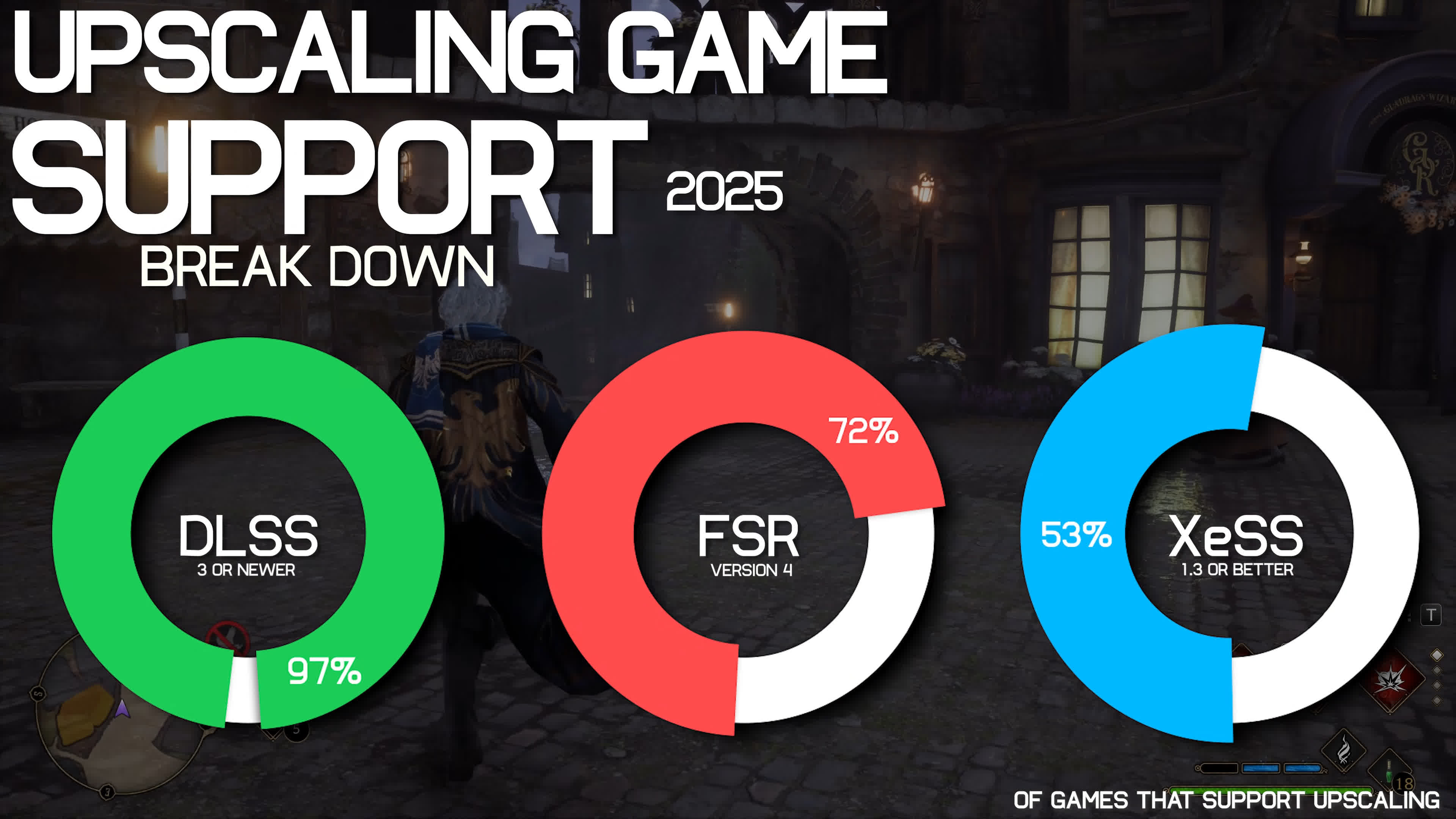
Auto Super Resolution, an OS-level AI upscaling feature for Windows 11, is heading to the ROG Xbox Ally X and could deliver noticeable frame-rate improvements.
Elegoo's Spring sale has just started, slashing prices on its FDM and resin printers by up to 31% until March 26, with bulk-buy deals on filament, too.
PortfolioTrackr is a clean, fast portfolio tracker built for serious investors. Track stocks across major global exchanges, crypto (BTC, ETH, and thousands of coins), and commodities like gold, silver, and oil, all with live prices in one dashboard. Set price targets (T1, T2) and stop losses on every position. Monitor your total P&L, per-position performance, and dividend income. Get price alerts delivered via email, Telegram, or WhatsApp the moment your targets are hit. No app to install. Works on any device. Free 3-day trial, then Starter at $9/month or Pro at $19/month with a Lifetime plan available.
Adverse lets you own and control digital ad spaces. Buy an Ad Space once, embed it anywhere, decide who can advertise, what appears, and what to charge while keeping 90% of the revenue. Approvals happen with a click, and smart contracts automate display and payouts. Scale layouts to fit your design, combine spaces, and choose ads that match your audience. Adverse runs privacy-first with no cookies or trackers, giving publishers creative freedom, transparency, and fair monetization.
The days of building campaigns around long lists of keywords are fading. Today, AI-powered Google campaigns and features like Performance Max (PMax) and AI Max are changing the rules.
These keywordless campaigns lean on automation, audience signals, and machine learning to find new opportunities, often faster and at greater scale than humans can.
At SMX Next, three PPC pros — Nikki Kuhlman, VP of search at Jumpfly; Brad Geddes, founder of Adalysis; and Christine Zirnheld, director of lead gen at Cypress North — explained where PMax and AI Max fit into your broader campaign strategy, where humans still make the difference, and how to strike the right balance between automation and control.
AI Max for Search: Best practices and what not to do
AI Max for Search is not a new campaign type. It’s a one-click opt-in setting within existing Search campaigns.
Without requiring you to switch to broad match, it expands your keywords — similar to broad match or Dynamic Search Ads — using your landing pages and other site assets. It then personalizes the ad copy and landing page the searcher sees.
The evolution from traditional setup
In the old setup, you might have used a keyword like “skincare for dry sensitive skin” that sent users to a moisturizer page with generic ad copy because you couldn’t capture every variation. With Google’s current matching, a specific ad group no longer guarantees that keyword will trigger that ad group.
AI Max for Search addresses this by generating ad copy based on the search query, making it more relevant and directing users to a landing page that better matches their needs.
Success with blog content
One area where AI Max for Search is seeing success beyond the norm is blog content. While DSA campaigns traditionally excluded blogs, AI Max for Search can now serve blogs as landing pages—and they’re converting. The key is that these blogs guide readers to specific products, not just general content.
The generated headlines are compelling and longer than what traditional RSAs allow, creating a more engaging user experience.
Best Practices for AI Max for Search
Do:
Use it on existing campaigns with history and data, not brand new campaigns
Test it as a 50/50 experiment instead of an outright change
Use it on brand campaigns with brand inclusion capabilities
Apply it to campaigns not hitting budget that could use more volume
Review landing pages and utilize URL exclusions (individual or rule-based)
Use landing page inclusions at the ad group level
Review search queries regularly and add negative search terms
Enable both text customization and final URL expansion for maximum value
Turn off AI Max at the ad group level when specific ad groups drive poor traffic
Don’t:
Use it on brand new campaigns without data
Change all campaigns at once without testing
Use it on brand campaigns without name recognition or brand inclusion ability
Apply it to budget-constrained campaigns
Turn off both URL expansion and text customization — if you’re not using both features, stick with broad match and smart bidding
Assume it works universally — test on individual campaigns
Your action plan
Week 1: Pick a search campaign to test (brand with brand inclusion, with budget capability, needing more volume). Review landing page URLs and add inclusions or exclusions.
Week 2: Review search queries and add negatives.
Week 3: Continue optimization and turn off AI Max at the ad group level as needed.
Experiment checklist:
Ensure enough volume for a 50/50 experiment
Give the experiment 6 weeks to 2 months
Set up a custom experiment if you need to enable brand inclusion or update settings
For one-click experiments, change confidence level to medium and turn off auto-apply
Match type performance: What the data shows
A comprehensive study analyzing over 16,000 campaigns revealed surprising insights about match type performance across different bidding strategies.
Match type basics
Exact match: Should match only when the search term has the same intent as your keyword. Misspellings and word order haven’t mattered for years — focus on user intent.
Phrase match: The search intent should match your keyword, but could have additional information around it, whether modifiers, phone numbers, or websites.
Broad match: Shows for anything related to the search intent. The key difference is that broad match uses additional signals that exact and phrase don’t, such as content on the landing page, other keywords in the ad group, and, most powerfully, previous search history for that user.
Performance by bidding strategy
Max Conversion strategies (Max Conversions, Max Conversion Value):
Most campaigns using max bid strategies have under 30 conversions per month, giving machines limited data to work with. The findings:
Exact match has the best click-through rates and conversion rates
Broad match had the worst conversion rates but the best return on ad spend
Broad match also had lower CPA than phrase match
Phrase match performed worst overall
Recommendation: Start with exact match, then skip phrase match entirely and layer in broad match if you have more budget to spend.
Target Bid Strategies (Target CPA, Target ROAS):
Most campaigns using these strategies have over 30 conversions per month, with many at 50 or 100+, giving machines substantially more data. The findings:
Exact match is again the best match type
Phrase match comes second
Broad match is third
Phrase match performs better with more data
Recommendation: Start with exact match, layer in phrase match with more budget, then add broad match if additional budget is available.
The phrase match puzzle
Why does phrase match perform poorly with limited data but better with more data?
Broad match uses additional signals, particularly previous search queries, to determine bids. When conversion data is limited (under 30 conversions monthly), broad match’s ability to leverage previous search history makes it much stronger than phrase match.
However, with sufficient data (50–100+ conversions), Google can properly match phrase match keywords using machine-learning pattern matching.
Brand vs. non-brand considerations
When you combine brand and non-brand data, exact match becomes even more powerful, delivering significantly higher click-through rates, higher conversion rates, lower CPAs, and much higher return on ad spend. That’s why segmenting keywords by brand and non-brand is crucial when determining your match type strategy.
Ecommerce exception
For ecommerce companies, broad match (and sometimes phrase match) can produce higher average order values than exact match. When someone searches for a specific product, and you carry that exact item, conversion rates are high, but they’re usually buying a single product with a lower checkout value.
When shoppers haven’t decided on a product, they tend to match broader keywords and build larger carts — resulting in lower conversion rates but higher order values.
Performance Max for lead generation
There’s a common misconception that Performance Max only works for ecommerce and is too difficult for lead generation. That couldn’t be further from the truth.
The critical success factor
The biggest mistake you can make—one you should avoid entirely—is optimizing campaigns for form submissions alone. If you treat every form submission as your campaign goal, you’ll end up with spammy submissions and frustrated sales teams.
The solution: integrate your Google Ads account with your CRM and import bottom-of-funnel leads—sales-qualified leads (SQLs), marketing-qualified leads (MQLs), opportunities, or even customers if the sales cycle is short.
When you tell Google Ads what you actually want and set it as your campaign goal, Performance Max can cast a wide net while still bringing in qualified prospects.
Available controls for regulated industries
Performance Max has significantly more controls now than at launch, making it viable for highly regulated industries:
Brand exclusions: Exclude all brand traffic from Performance Max campaigns
Search term reports: See what’s triggering your ads and exclude accordingly
Channel reporting: View spending and performance across different networks
Page feeds: Control where you send traffic on your site
Final URL expansion toggle: Turn it off completely if needed
Text enhancement controls: Optional feature that can be disabled entirely
Text guidelines: Specify words to avoid (e.g., “discount” or “directory”)
Device control: The secret weapon for B2B
One of the most underutilized levers for B2B and regulated industries is device control, introduced at the beginning of 2025. You can turn off any device from your Performance Max campaign.
A B2B SaaS example demonstrates the impact: Before device segmentation in January, the account had 224 SQLs from desktop at an acceptable CPA, but 33 from mobile at $319 CPA (above goal). After creating separate mobile campaigns with more aggressive target CPAs, they achieved 190 desktop SQLs and 37 mobile SQLs in a shorter month, with mobile CPA dropping to $204 and overall Performance Max CPA declining from $238 to $204.
Real Performance Max results for B2B SaaS
Despite lower conversion rates from Performance Max compared to search campaigns (due to broader reach), the results speak for themselves. In September 2025, one B2B SaaS account achieved:
Search Campaigns: 150 SQLs at $237 CPA
Performance Max: 204 SQLs at $220 CPA
Performance Max cast a wider net with cheaper CPCs, bringing in not just more leads but more sales-qualified leads at a lower cost.
How they did it:
Optimized for SQLs, not form submissions
Set lower target CPAs in Performance Max than search (to control spend while casting wider net)
Created separate campaigns for off-hours to control weekend spending
Turned off final URL expansion and text enhancements (client preference)
Implemented separate mobile and tablet campaigns with aggressive target CPAs
AI Max for Search in lead generation
AI Max for Search brings the power of Performance Max to the search network, where bottom-of-funnel intent is strongest. This is especially valuable for lead generation accounts that spend on other networks in Performance Max but don’t generate leads from them.
Early results: Higher ed financial services
A higher education financial client (loan products) showed promising early results:
Approved applications (primary KPI):
Standard Search: 86 approved applications at $660 CPA
AI Max: 70 approved applications at $579 CPA
AI Max brought in qualified leads cheaper despite the highly competitive keyword environment.
Down-funnel performance
Beyond the initial conversion action (soft credit check), AI Max showed superior performance throughout the funnel:
42% of AI Max form submissions resulted in soft pulls vs. 36% for standard search
9.9% of AI Max form submissions resulted in bookings vs. 5.58% for standard search
AI Max isn’t just bringing more qualified prospects at the top—lead quality remains higher throughout the entire funnel.
How they did it:
Optimized for approved applications, not form submissions
Set lower target CPAs in AI Max than standard search
Used high-performing bottom-of-funnel keywords with broad match types
Kept final URL expansion and text enhancements disabled (still worked well without them)
Win with AI without losing control
PPC success requires embracing AI-driven campaigns while maintaining strategic human oversight. Whether you use AI Max for Search, Performance Max for lead generation, or adjust match types based on bidding methods and data volume, the key is understanding how these tools work and applying best practices aligned with your business goals.
The data is clear: exact match remains powerful across scenarios, but phrase and broad match perform differently depending on bidding strategy and data volume. For lead generation, the game changer is optimizing for true bottom-of-funnel conversions rather than form submissions, combined with strategic device controls and proper campaign segmentation.
The future of PPC depends on knowing when — and how — to apply automation and control for maximum impact.
INTERPOL on Friday announced the takedown of 45,000 malicious IP addresses and servers used in connection with phishing, malware, and ransomware campaigns, as part of the agency's ongoing efforts to dismantle criminal networks, disrupt emerging threats, and safeguard victims from scams.
The effort is part of an international law enforcement operation that involved 72 countries and territories.
Microsoft has disclosed details of a credential theft campaign that employs fake virtual private network (VPN) clients distributed through search engine optimization (SEO) poisoning techniques.
"The campaign redirects users searching for legitimate enterprise software to malicious ZIP files on attacker-controlled websites to deploy digitally signed trojans that masquerade as trusted VPN clients
Automatic Super Resolution to come to the ROG Xbox Ally X next month At GDC 2026, Microsoft has confirmed that Automatic Super Resolution (Auto SR) is coming to the ROG Xbox Ally X in April. This is a Windows-level upscaling solution designed to improve the image quality of games when rendering at a sub-native resolution. […]
Microsoft has significantly streamlined Xbox development, cutting onboarding time to about 30 minutes and introducing Foundation Mode, which gives developers free access to PlayFab cross platform backend services when shipping games on Xbox.
One of the nine Operator Orders in Black Ops Royale is Memories, rewarding an Operator skin for Mason. Here's how to complete it and unlock the reward.
Out of nowhere, Square Enix has announced that it's releasing another classic JRPG from its backlog onto Xbox and PC, the turn-based throwback to early Final Fantasy games called Bravely Default.
Microsoft has revealed the first hardware details for Project Helix, the next generation Xbox console. The system will use a custom AMD system on chip and feature new technologies such as FSR Diamond, DirectStorage, and improved ray tracing performance.
Red Thread Games and Megabit Publishing today shared some fresh details about their highly anticipated survival mystery Hello Sunshine at the Future Games Show Spring Showcase. This latest look at Hello Sunshine focuses on the systems that drive the players' journey through a scorched, war-torn world and the relationship that they'll build with their giant robot companion along the way.
In Hello Sunshine, there is one simple rule: stay out of the sun. Step outside the robot's shade during the day and players will find that the punishing heat will eventually kill them; remain close, and they might last until nightfall.
The International Imaging Technology Council (Int'l ITC), a trade group for cartridge remanufacturers, says HP's latest printer firmware rollout conflicts with the requirements of the General Electronics Council's (GEC) updated Electronic Product Environmental Assessment Tool, or EPEAT 2.0.
Starting in June, the Pan-European Game Information (PEGI) age rating system, Europe's equivalent to the ESRB, will begin assigning PEGI-16 ratings to all games that sell random items. Furthermore, microtransactions will earn an automatic PEGI-12 rating, and NFTs or other blockchain-related items will be rated PEGI-18.
The Creality Sermoon P1 is a standalone 3D scanner that allows users to go through the entire scanning workflow without having to touch a computer. The 22 crossed laser line mode is surprisingly fast, and the single laser line mode was able to scan deep holes during testing. The NIR (near-infrared) mode is capable of scanning without requiring any markers, and the on-device editing allows users to make on-location edits without needing to stop. The Sermoon P1 handled everything we threw at it, but the color texture was the only disappointing part of the testing.
A recent Harvard Business Review piece echoes the shift we’re sseeing in the SEO industry: at a macro level, LLMs and Google’s AI-powered SERP features, such as AI Overviews, aren’t just creating a zero-click environment, but also changing user journeys and behavior.
They’re collapsing what used to be multi-touch customer journeys into a single synthesized answer.
For a more visual and emphatic metaphor, the monolith of “Search” is crumbling.
When that happens, brands lose many of the touchpoints they once owned, and your marketing strategy must change accordingly. HBR captures this moment well, arguing that marketing now has a new audience and that algorithms increasingly shape first impressions.
That said, while the article points in the right direction on the broader trend, its tactical advice is generic and falls back on shallow tactics.
Much of the guidance returns to familiar marketing playbook ideas that sound strategic and innovative but lack real operational depth. That gap matters for the longevity and sustainability of visibility.
The narrative may be easy for you to understand and repeat at the executive level, but it glosses over the deeper structural changes you must actually make to adapt to the new search ecosystem.
The problem with flock tactics
The HBR article centers on schema, authorship signals, and branded concepts. These recommendations risk becoming what I call “flock tactics.”
These ideas spread quickly because they’re easy to explain, but they offer little lasting competitive advantage once everyone adopts them.
Schema
Schema has been one of the most debated topics in LLM and AI optimization. Microsoft Bing confirmed it uses schema for its LLMs, but the relationship between Google’s models and third-party LLMs isn’t as straightforward.
While it isn’t necessarily wrong to recommend schema as part of your overall search optimization activities (SEO and AI), positioning it as a table-stakes tactic ignores diminishing returns once competitors implement similar markup and it becomes standard.
Another gap is the role of external knowledge systems, such as Wikidata or authoritative publishers. Much of the information LLMs rely on comes from those sources rather than a single company’s website.
This is less linear to understand, explain, and demonstrate as a single line item on an activity tracker, but these are nuances you now have to deal with, whether you like it or not.
What’s also missing is any exploration — or even a nod — to how models ingest and prioritize structured data compared with the many unstructured signals they rely on.
Attaching the names, credentials, and biographies of real experts follows familiar E-E-A-T logic and represents reasonable hygiene.
The problem is that the treatment remains superficial. It risks pushing you to focus on cosmetic signals such as bios, headshots, and credential lists without strengthening the underlying expertise pipeline.
There is a meaningful difference between placing an author bio on a page and cultivating a genuine expert entity whose work appears in conferences, third-party publications, standards committees, or academic collaborations.
Only the latter produces signals that models are more likely to recognize and trust.
Vanity concepts
The article also suggests creating branded frameworks or concepts — for example, something like “The Acme Index” — to help models associate ideas with your company. In theory this sounds appealing, but in practice it’s extremely difficult to execute.
Unless those ideas spread into the trusted datasets LLMs tend to prioritize, they rarely gain traction.
You need those concepts and frameworks adopted and discussed by entities other than yourself, including academic journals, technical standards, widely used software ecosystems, and other prominent entities in your category.
What often results instead is a proliferation of branded labels that remain largely invisible to the models they were meant to influence.
The structural blind spots
Beyond these tactical issues, the analysis overlooks deeper structural challenges. It treats AI primarily as an external platform shift.
The implication is that you must simply adapt to it rather than actively shaping your own environment.
Internalizing AI infrastructure
HBR never seriously considers the possibility of building AI into your own infrastructure. You can deploy assistants, RAG systems, and domain-specific agents within your own products and customer experiences.
These systems operate in logged-in, transactional contexts where first-party data and controlled interfaces still matter enormously.
In those environments, traditional concerns such as site architecture, structured data, and product design remain deeply relevant, though they operate differently from public search optimization.
It’s not just SEO
The discussion also frames SEO primarily as a page-ranking problem tied to discovery.
Visibility within LLMs increasingly depends on how well you structure entities, taxonomies, and knowledge graphs, and on how those systems connect with external data sources.
Most LLMs don’t process data at the petabyte scale Google uses to understand entity relationships. There is a strong correlation that when something ranks well on Google, third-party LLMs often correlate and “trust” Google’s guidance on which brands to show, for what, and when.
HBR’s phrase “engineering recall” points directly to this deeper data engineering work, yet the implications aren’t expanded.
LLM model heterogeneity
Another major omission is the diversity of AI systems themselves.
Different AI assistants and models rely on different training datasets, refresh cycles, retrieval mechanisms, and safety layers.
That heterogeneity means you can’t assume a single optimization strategy will work across all AI surfaces.
It also doesn’t explore the risk of broad-stroke approaches. If you try to increase visibility within AI models without accounting for safety filters, attribution errors, or hallucinations, you may gain visibility in ways that are inaccurate or reputationally damaging.
HBR’s article works well as a high-level explanation of how AI is changing marketing. It helps you understand that traditional SEO alone is no longer enough and that you must consider how AI systems see and describe your brand.
As a practical guide, however, the advice is thin. Most recommendations focus on surface-level tactics that many companies will quickly copy, reinforcing the echo chamber of flock tactics that are easy to sell and quantify, but risk narrowing your focus to short-term wins at the expense of longer-term strategy.
The real challenge is deeper. You need clear entity definitions, structured knowledge systems, reliable data in trusted sources AI models use, testing across how different models represent you, and AI-powered experiences within your own products.
“Winning” in the AI era will depend less on cosmetic SEO improvements and more on the harder structural work behind the scenes.
ChatGPT retrieves far more webpages than it cites. A new AirOps analysis found that 85% of discovered sources never appear in the final answer.
Why we care. If you want your content cited in AI-generated answers, discovery isn’t enough. Most retrieved pages never become visible to users.
Key finding. In AI answers, retrieval doesn’t equal citation. Your page can rank and be retrieved yet still lose the citation to a source that better matches the prompt or supporting context.
This shifts optimization toward earning selection inside the AI synthesis process—not just appearing in search results, per the report.
By the numbers:
82,108 citations appeared in final responses.
Only 15% of retrieved pages were cited.
85% of pages surfaced during research never appeared in answers.
Citation rates also varied by query type:
18.3% for product discovery queries
16.9% for how-to queries
11.3% for validation searches
Fan-out queries. ChatGPT often expands prompts with additional internal searches while generating an answer, creating what the report calls a “second citation surface.” Across the dataset:
89.6% of prompts triggered two or more follow-up searches.
Fan-out searches expanded 15,000 prompts into 43,233 queries.
32.9% of cited pages appeared only in fan-out results—not the original prompt.
95% of fan-out queries had zero traditional search volume.
Google ranking correlation. High Google rankings strongly correlated with citations:
55.8% of cited pages ranked in Google’s top 20.
Pages ranking in Position 1 were cited 3.5 times more often than pages outside the top 20.
About the data. AirOps analyzed 548,534 pages retrieved across 15,000 prompts to examine how ChatGPT expands queries and selects citations.
Disclaimer: This report has been prepared by the Threat Research Center to enhance cybersecurity awareness and support the strengthening of defense capabilities. It is based on independent research and observations of the current threat landscape available at the time of publication. The content is intended for informational and preparedness purposes only.
Read more blogs around threat
Walmart's spring sale is live, and I'm rounding up the 15 deals that I'm adding to my cart, including patio furniture, grills, cleaning appliances, and more..
The launch comes just two years after a major reboot at Hyundai-owned Motional. The service will start with a safety monitor, which Motional hopes to remove by year's end.
Microsoft is getting ready for the era of hyper-fast gaming displays With its newest Windows Insider build, Microsoft has enabled support for refresh rates above 1000 Hz. With builds 26100.8106 and 26200.8106, Windows 11 Insiders can now utilise screens that push past the kHz barrier. According to Blur Busters, who have pushed for this support, […]
To overcome the thermal barriers limiting AI performance, Frore Systems today unveiled LiquidJet Nexus, a new integrated liquid cooling system designed for the AI era. As AI compute densities surge, heat is emerging as a primary constraint, elevating what experts are calling the "AI Thermal Stack" - the infrastructure responsible for extracting heat from advanced computing systems and rejecting it into the atmosphere. The AI Thermal Stack is increasingly determining the compute density, system efficiency, and overall performance of AI Data Centers.
LiquidJet Nexus is designed for liquid cooling ½ U compute trays like NVIDIA Kyber, directly cooling GPUs, CPUs, DPUs, NICs, DC-DC power converters, and VRs. It integrates multiple multi-stage 3D short-loop jetchannel liquid cooling LiquidJet coldplates into a unified system. LiquidJet Nexus delivers 75% higher heat transfer efficiency, keeps components 8°C cooler, eliminating hoses, connectors, and manifolds, and reducing thermal stack weight by 65%. This unified system addresses the thermal demands of next-generation AI hardware.
Unlike recent MacBook Air and Pro models, where Apple's unibody "top case" design turns keyboard problems into major surgery, the Neo's keyboard is treated as its own part rather than being permanently bundled with the upper shell.
Mozilla recently updated its official Firefox support article for Windows 7, 8 and 8.1, giving users of these ancient operating systems six more months of safe, modern browsing. The change was neither broadcast by the company nor widely reported online, and it will likely affect a very tiny minority of...
Meta is delaying work on the Pearls section of its Africa2 network after its contracted cable-layer, Alcatel Submarine Networks, declared force majeure due to the risk of getting hit during the Iran conflict.
Nvidia says it is permissible for ByteDance to use AI clusters outside of China to develop its AI prowess as long as these clusters are built in compliance with the U.S. export controls.
SteelSeries' Elite Arctis Nova wireless gaming headset is discounted by over £40. This audiophile-grade headset features the world's first Hi-Res audio certification in a wireless gaming headset.
Score on a great combo deal with AMD's Ryzen 7 9850X3D, Asus ROG Crosshair X870E Apex, 32GB Corsair DDR5-6400 RAM for $1,187.99 - it's $436 off retail, effectively making the RAM free.
If you’re shopping for a new external SSD, you might want to buy a drive soon, and something that was released before the AI demand seemingly gobbled up all the good flash.
Ratio is a social prediction market that lets you trade on future events and compare your forecasts with friends. Create or join markets across various topics and watch probabilities change as the crowd trades. Available on iOS and Android, it makes forecasting engaging and social so you can sharpen your intuition together.
The standard agency reporting call is broken. Budgets are under extreme scrutiny, yet you still invest in vendors that celebrate arbitrary traffic gains while your sales pipeline stays flat.
Optimizing for raw traffic volume is a legacy mindset that hides real commercial performance. The new mandate is to build an acquisition engine that influences buyers and protects your profit and loss (P&L) long before the transaction.
To survive as a marketing leader today, you must ruthlessly challenge your internal teams and external agencies. Stop accepting reports on operational output and demand hard financial accountability: pipeline contribution, customer lifetime value (LTV) to customer acquisition cost (CAC) ratios, and reduced paid media dependency.
The new path to purchase: Why traffic is bleeding your budget
Chasing top-of-funnel informational traffic is a trap. If the users clicking your links aren’t actively buying, you’re paying for vanity metrics, not business outcomes.
This happens because many buyers now use large language models (LLMs) to conduct deep research before they reach a search engine’s transactional layer. If you aren’t the cited authority during that AI-driven research phase, you’re invisible by the time buyers finalize their purchase decisions.
The 7.48% reality: The power of the educated buyer
The contrast in traffic quality is staggering when you look at the data. Across our enterprise client base, traditional organic search converts at 2.75%, while AI search converts at 7.48%.
LLMs function as the ultimate trust proxy for today’s consumers. When tools like Gemini, ChatGPT, or Perplexity synthesize dozens of reviews, whitepapers, and Reddit threads to recommend your enterprise software, users trust the LLM’s consensus more than a branded blog post.
AI engines arm consumers with comprehensive data, comparisons, and consensus. By the time a user clicks your AI citation, they’ve already made their decision based on your authority and are prepared to transact.
From found to cited: Architecting the default recommendation
Want to capture this 7.48% conversion rate? Your entire approach to digital asset creation must evolve. The strategy no longer centers on ranking among a list of links, but on being cited as the definitive option.
To win the AI consensus, you must translate your marketing strategy into structured capital management.
The old way: Publishing a 2,000-word blog post on top supply chain trends that generates 5,000 monthly visitors who bounce after reading and add zero value to your pipeline.
The new way: Build a generative engine optimization (GEO) hub—a dedicated supply chain cost calculator page with proprietary data tables, expert author schema tagging your lead engineers, and strict answer-first formatting.
LLMs require consensus and verifiable facts to generate confident answers. By structuring your digital assets with proprietary data and verifiable entities, you become the default recommendation.
This approach may yield only 500 highly qualified visitors, but it gives LLMs what they need to cite you in vendor comparison prompts and captures buyers at the exact moment of commercial evaluation.
Strategic ROI: Using citation authority to reduce ad spend
It’s time to stop viewing SEO as a siloed traffic generator. You must treat organic citation authority as a strategic financial lever to reduce overall CAC.
Align your organic assets with your highest-CAC paid campaigns. When organic search owns the AI Overview, your paid team can confidently pull back defensive ad spend.
Here’s how to leverage paid and AI search:
IF your brand becomes the default AI recommendation for a high-cost commercial category, THEN your paid team must aggressively reduce defensive brand bidding to slash overall cost per acquisition (CPA).
IF paid search identifies a highly profitable long-tail query, THEN SEO must prioritize building a structured asset to organically capture that exact demand in the future.
IF an LLM cites your competitor as the superior enterprise solution, THEN your paid team must immediately deploy targeted, bottom-of-funnel conquesting ads to intercept that user before the transaction, while the organic team rapidly engineers a proprietary data asset to win back the consensus.
The monthly cannibalization review: Your immediate action item
If your Head of Search and Head of Paid Media aren’t in the same room once a month mapping organic citations against paid brand bidding, you’re burning capital.
Align your teams and channels. Routinely audit where you’re paying for clicks on terms where you already own the AI citation and the top organic spot.
Treat this cannibalization review as a strict financial audit. Identify wasted defensive ad spend and immediately reallocate those dollars toward net-new market expansion.
The enterprise scorecard: 3 questions to ask your agency tomorrow
To regain control of your P&L, you must challenge your vendors to step up. Ask your agency these three questions tomorrow morning to see if they’re true business partners or order-takers.
1. What’s our citation share of voice for our highest-margin categories?
Challenge your team to map their organic efforts directly to the AI research phase of your most profitable products.
The answer you should hear: “We’ve mapped your 50 highest-margin queries. By securing the primary AI citation for these, we’ve generated $1.2 million in pipeline this quarter at a 3:1 LTV:CAC ratio.”
2. How is our citation strategy directly reducing our paid media CAC?
Require teams to prove how their organic authority captures demand that would otherwise require paid ad spend.
The answer you should hear: “By capturing the definitive AI citation for [category], we paused paid bidding on those terms. This reduced our blended CAC by 18% and saved $45,000 in defensive ad spend — which we’ve immediately reallocated to net-new market expansion.”
3. Are our digital assets structured for LLM extraction?
Push your teams to explain their strategy for AI-driven search models. It’s no longer enough to publish standard web pages.
The answer you should hear: “We’ve restructured your core commercial pages away from standard marketing copy, deploying answer-first’ frameworks, proprietary data tables, and expert author entities to ensure LLMs confidently extract and recommend your brand. This structural shift has increased our inclusion in commercial AI Overviews by 40% this quarter, directly feeding our bottom-of-funnel pipeline.”
Demand commercial outcomes, not operational output
In a tough economy, SEO is a measurable business unit that must defend its budget with revenue data. Don’t accept operational output as proof of commercial success.
Audit your reporting frameworks immediately. Stop accepting vanity metrics as evidence of success. Demand pipeline impact, LTV:CAC ratios, and a resilient acquisition engine.
Any agency or internal team unwilling to tie its work directly to your P&L will become obsolete. Your job as an enterprise leader is to ensure your brand is cited as the authority long before the transaction begins.
Brandon Ervin, Director of Product Management for Google Search Ads, recently discussed campaign consolidation, AI Max, and what advertiser control looks like in 2026 on Google’s Ads Decoded podcast. The conversation was serious and informed, and reflected a product team that understands advertiser concerns and is actively working to address them.
But the podcast is also incomplete. The gap between what Google said and what advertisers actually experience from their sales organization is large enough to warrant a direct response.
Ervin’s team is doing genuinely good work, but the platform’s structural incentives haven’t changed. Google’s evolving product is creating problems faster than it can solve them. Performance is now measured on economic standards, shaping how a search ads audit is performed.
Recent improvements to Google Search Ads
Recentish improvements are genuine:
Brand exclusions in Performance Max and Demand Gen.
Site visitor and customer exclusions from PMax campaigns.
Network-level reporting within bundled campaigns.
Improved search term visibility.
Brand and geo controls inside AI Max at the ad group level.
Semantic modeling that doesn’t anchor on campaign or ad group IDs, reducing learning period risk during consolidation.
These are meaningful. They are also solutions to issues introduced by bundling, opacity, and aggressive automation rollout.
These products have been mercilessly shopped to advertisers since 2021, and the controls that make it usable arrived years after the sales push began.
The ability to separate brand from non-brand traffic inside PMax/AI Max should not be framed as innovation. It restores a fundamental distinction that previously existed by default. The ability to see network performance inside a bundled campaign is not an expansion of control. It restores visibility that was removed.
An audit must ask whether new tools are genuinely expanding control or merely reintroducing baseline transparency.
Before the real audit begins, the fundamentals. These are uncontroversial and should already be in place:
Run full ad extensions (sitelinks, callouts, structured snippets, image, call).
Use automated bidding with intentional target-setting and conversion action selection (I recognize there are still holdouts here but seems crazy to me).
Maintain negative keyword lists.
Write ads relevant to the queries they serve.
Audit automatically created assets for accuracy and brand safety.
Cut Search Partners and Display expansion from Search campaigns.
Separate brand and generic campaigns using brand controls.
Exclude site visitors and past customers from prospecting campaigns where appropriate.
Import offline conversion data (MQLs, SQLs, revenue, CLV, repeat rate,) to feed the algorithm downstream signals.
Weight conversion values by actual downstream conversion rates.
Account for mobile vs. desktop performance gaps.
Those are table stakes. The real audit begins after that.
What a 2026 search audit must focus on
With the prevalence of AI, advertisers need to focus on reconstructing economic visibility in systems designed around aggregation and automation.
Signal architecture
In the podcast, Ervin says “control still exists, it just looks different.” Ad controls — where, when, and to whom ads appear — are still important and changing, some think, for the worse.
The old ad controls — exact match, manual bids, network selection, and device modifiers — gave advertisers direct influence over where ads appeared and what they paid.
However, the new controls are indirect. Control now lives in data quality, density, and selectivity. They influence the algorithm, but the algorithm makes the final call.
An audit should focus on three questions:
Quality: Are you importing revenue, pipeline stage, or qualified lead status, or only surface conversions?
Density: Is there enough high-quality data for the model to learn from, or is it sparse and noisy?
Selectivity: Are you intentionally limiting what Google can see, or are you passing everything indiscriminately?
With these new tactics, you only pass net-new customers or high-value customers. The majority of the time, it is better to just pass the densest and most predictive conversion set.
Incrementality
Google optimizes toward reported conversions, not incremental conversions. Brand search often captures existing demand. Retargeting often captures users already in motion. Pmax/AI Max frequently blends these signals.
Ervin was asked: Are AI-driven campaigns over-indexing on warm brand traffic to inflate blended ROAS (return on ad spend)?
He doesn’t dispute the problem, but points to partial solutions, including using brand controls, better theme your account, and looking at multi-campaign A/B testing.
If incrementality is not measured, automation amplifies non-incremental signals.
Marginal returns
Google uses a blended cost-per-action (CPA). For example, the first $50K of spend might return a $30 CPA, while the next $50K might return $120.
With automation, money is spent until the blended metric falls within tolerance, meaning the last dollar is not spent efficiently. The vast majority of advertisers are bidding far beyond what they should be and have no idea it is happening.
An audit must:
Plot spend against incremental conversions.
Estimate marginal CPA at each spend tier.
Identify diminishing return curves.
Compare marginal CPA to lifetime value.
A lower target makes the algorithm more selective, competing in fewer high-value auctions. Google doesn’t suggest this because that would mean less spend and lower bids are less effective in general.
Query resolution and ability to lower targets
On the podcast, Ervin acknowledges that some AI Max matches can “look a little wonky” and says his team is working on exposing the model’s reasoning.
Query mapping has gotten meaningfully worse over the past several years: queries landing in the wrong ad groups, matching to keywords with different intent, and broad match pulling in traffic unrelated to the keyword.
AI Max has accelerated this — there’s been an increase in the volume of irrelevant queries flowing through AI Max campaigns, with no connection to the advertiser’s business or keywords in the account.
Meanwhile, Google’s recommendations consistently push toward broad matching and large themed ad groups.
The issue is not whether broad match works, but whether high-value intent is being diluted in larger, broader ad groups. Fewer ad groups means that we cannot effectively or meaningfully lower targets without a massive structural negative schema, so performance differences have to be large enough to validate the new structure.
An audit should:
Extract full search term reports.
Classify queries by intent tier.
Compare CPA and lifetime value by query type.
Quantify irrelevant or weakly related matches.
Measure performance drift across match types.
Network economics
Performance Max and Demand Gen bundle multiple networks into single campaigns, but offer limited visibility into which networks drive results. This makes it hard to cut the underperforming ones. The slow rollout of network-level controls systematically benefits Google’s less competitive inventory.
An audit must:
Break out performance by network.
Compare CPA and lifetime value by placement.
Identify cross-subsidization.
Determine whether weaker networks are relying on surplus from strong search inventory.
Value redistribution
Combining these elements in your audit will help you succeed in this new world of ad search:
Non-incremental traffic inflates conversion counts, making performance look better than it is.
Looser match types expand where ads appear, diluting intent precision and forcing fewer ad groups/spend and blanket-level targets/bids.
No clean marginal return visibility means it is much more difficult to find the point of negative return
Network bundling hides which channels actually perform.
The cumulative effect is that the surplus value generated by your best inventory and high-intent, high-converting search queries gets redistributed across Google’s weaker inventory (i.e., Display, YouTube, Discover, Gmail, crazy tail queries).
This is how to get a dwindling supply of valuable search queries to inflate the cost-per-clicks (CPCs) of low-quality inventory.
JBL has unveiled the Live 780NC and Live 680NC headphones to US markets, as well as a PartyBox karaoke speaker which uses proprietary magic to reduce vocal lines from your favorite songs.
Gearbox Software has revealed Borderlands 4 Story Pack 1: Mad Ellie and the Vault of the Damned, which will introduce all-new content when it arrives later this month.
AMD’s Ryzen 7 X3D CPUs have received price decreases in the UK Less than two months have passed since the release of AMD’s Ryzen 7 9850X3D (review here), and the CPU is already available at a discounted price. In fact, all of AMD’s currently available Ryzen 7 X3D CPUs are now available at lower prices […]
Walmart is offering a 33% discount on the GameSir G7 SE Wired Xbox controller, taking its already budget-friendly price to a near bargain-bin price that's way cheaper than the official Xbox controller.
Xbox has confirmed that Automatic Super Resolution will arrive on Xbox Ally X in a preview this April. The AI powered feature uses the device’s NPU to upscale games and improve performance.
Microsoft’s Copilot Health isn't a doctor, but it wants to manage your data from 50,000 hospitals. Can we trust the company's new "Secure by Design" mandate?
Podcast: Daniel and Zac discuss Apple's new MacBook Neo and how it might impact the Windows market going forward. Also on this episode: Windows 12 rumors, what's real and what's not? Plus, the latest on Project Helix, the next-gen Xbox.
At CES 2025, Honda said the 0 Saloon and 0 SUV would begin rolling out in 2026, with North America first: the SUV in the first half of the year and the Saloon later in 2026.
For years, Google Maps has been able to surface nearby coffee shops and provide turn-by-turn navigation. What it couldn't do was answer complex questions that blend location, preferences, and timing. With Gemini built in, it can now.
China's central government warned state enterprises and agencies not to install OpenClaw on office computers this week as multiple government bodies moved to rein in the AI agent.
Several games on Steam that were secretly carrying malware now seem to be under active investigation by the FBI. The department is looking for victim information tied to these games; anyone who installed and played an infected game and was harmed is being urged to step forward and share more info to help with the investigation.
TSEP (The Social Enterprise Pound) connects vetted African professionals with SMEs worldwide, enabling businesses to access reliable remote capacity while supporting ethical digital employment across Africa.
Through a structured social enterprise model, SMEs can outsource projects to trusted talent while benefiting from built-in compliance, transparent workflows, and managed delivery. TSEP helps businesses scale efficiently while creating sustainable income opportunities for skilled professionals across the African continent.
Shombo is an all-in-one case management platform built for solo personal injury attorneys. It automates the entire PI workflow from client intake and contingency fee agreements with built-in e-signatures to AI-powered demand letters, medical record summaries, and settlement statements with lien tracking. Stop paying for five different tools; Shombo replaces your fragmented stack with a single platform that tracks every case from new lead through disbursement. AI generates demand letters from your case data, extracts injuries and treatments from medical records, and drafts daily briefings, so nothing slips. Built-in reminders chase clients so you don't have to.
Google on Thursday released security updates for its Chrome web browser to address two high-severity vulnerabilities that it said have been exploited in the wild.
The list of vulnerabilities is as follows -
CVE-2026-3909 (CVSS score: 8.8) - An out-of-bounds write vulnerability in the Skia 2D graphics library that allows a remote attacker to perform out-of-bounds memory access via a crafted HTML
Cybersecurity researchers have disclosed multiple security vulnerabilities within the Linux kernel's AppArmor module that could be exploited by unprivileged users to circumvent kernel protections, escalate to root, and undermine container isolation guarantees.
The nine confused deputy vulnerabilities have been collectively codenamed CrackArmor by the Qualys Threat Research Unit (TRU). The
Call of Duty: Warzone has finally dropped Black Ops Royale and a bunch of new Operator Order challenges with exclusive rewards. Here's how to complete the Lost Tags and unlock the Spotted Camo.
Turtle Beach Corporation (Nasdaq: TBCH), a leading gaming accessories brand, today reported financial results for the fourth quarter and full year ended December 31, 2025 and provided full year 2026 guidance for net revenue and Adjusted EBITDA.
"Our team operated with strong discipline in 2025, executing our strategic initiatives to sharpen our competitive edge," said Cris Keirn, Chief Executive Officer of Turtle Beach Corporation. "Although our fourth quarter and full-year results were below guidance due primarily to softness in North American gaming accessories markets and a lighter holiday sell-through environment, we took steps to manage costs, protect our brand position, and prepare the Company for renewed growth."
Supermassive Games unveiled a brand-new live-action couch co-op trailer for its upcoming sci-fi survival horror adventure, Directive 8020, during today's Future Games Show. The trailer showed a group of friends playing couch co-op Movie Night Mode, intercut with in-game moments of split-second quick-time actions, narrative decisions, and alien mimics.
Survive Together, Don't Play Alone
Complementing its gripping single-player experience, Directive 8020 allows up to five players to play through the story together in local couch co-op via the returning Movie Night Mode. Each player takes control of a crew member aboard the Cassiopeia, passing a single controller between each other as the story unfolds. It's up to the player and their friends on who lives and who dies; every choice matters, every mistake can be fatal, so players must work together to survive alien infiltrators, deadly dilemmas, and catastrophic system failures! Don't Play Alone, and trust no one - not even your friends! Directive 8020 will also support five-player online multiplayer in a free post-launch update, mirroring the couch co-op experience and bringing it online, with more information coming soon.
The widespread adoption of AI inference workloads in 4Q25 significantly raised requirements for data storage systems, according to TrendForce's latest findings on the enterprise SSD market. Meanwhile, enterprises accelerated upgrades to their general-purpose servers, while shortages in HDD supply pushed some demand toward SSD solutions. These factors together drove combined revenue for the world's top five enterprise SSD vendors up 51.7% QoQ to more than US$9.9 billion.
Among leading vendors, Samsung retained its top position, reporting nearly $3.66 billion in revenue in 4Q25, up 49.7% QoQ. The company demonstrated the strength of its vertically integrated business model. As concerns grew over potential DRAM shortages, many customers turned to Samsung because it can rely on its own DRAM and NAND Flash production to ensure stable SSD supply.
Colorful Technology Company Limited, a leading brand in gaming PC components, gaming laptops, and Hi-fi audio products, proudly introduces the new iGame GeForce RTX 50 Ultra Series graphics cards. The Ultra Series continues the brand's signature hip-hop art-inspired design language, blending bold aesthetics with high-performance gaming hardware, now presented in a striking black color scheme.
While the white iGame Ultra W Series emphasizes futuristic purity, the iGame Ultra Series adopts a black colorway that delivers a more aggressive personality and deeper character. Gradient accent colors transition from dark into vibrant neon pink, complemented by dynamic gradient lighting effects that resemble flowing neon trails in the night. The result is a design that radiates rebellious street-style energy while maintaining the distinctive Ultra identity.
Reedle is a reading app that keeps your articles and papers in one place and helps you remember them. You can import web pages, PDFs, EPUBs, and your Zotero library, read in a clean layout, ask questions about the text, get help with formulas, translate passages, and listen to them out loud. When you highlight something important, Reedle schedules it for review using spaced repetition, so you don’t forget it later. It works on iOS, Android, and Chrome, lets you search across your whole library, and exports your notes to tools like Obsidian.
initdesk is a simple, AI-powered help desk built for product creators and lean teams who handle support over email. Connect your inbox, receive AI-drafted replies, use auto-tags, and access an AI Assistant you can teach with your FAQs and documents to improve accuracy over time. Keep everything in one lightweight shared inbox, publish a support portal, and trigger workflows with Slack notifications and webhooks. It's designed to save hours, reduce costs, and maintain fast support without enterprise bloat.
A court-authorized international law enforcement operation has dismantled a criminal proxy service named SocksEscort that enslaved thousands of residential routers worldwide into a botnet for committing large-scale fraud.
"SocksEscort infected home and small business internet routers with malware," the U.S. Department of Justice (DoJ) said. "The malware allowed SocksEscort to direct internet
Glorious Model O was once held in high regard in the realm of gaming peripherals, but that design has since been surpassed by more modern designs with lighter shells and more responsive, accurate sensors. Apparently there is still a market for the original Glorious Model O gaming mouse, at least according to Glorious, who recently announced the Glorious Model O Classic. The Model O Classic is a rehash of the 2019 Glorious Model O design, replete with the RGB strips, original sensor hardware, and even the original honeycomb design that's largely fallen out of use except for in the most lightweight gaming mouse designs.
The Glorious Model O classic features the same BAMF sensor, based on the Pixart PAW 3370, as the original—although it's now simply called the "19K Optical Gaming Sensor," which means it has a maximum wireless polling rate of 1 kHz, tops out at 19,000 DPI, 400 IPS, and 40 G acceleration. Despite the honeycomb shell, the Model O Classic still weighs in at 69 g, whereas many solid-shell gaming mice released in the last year or two come in at 40-50 g, with some, like the Corsair Sabre V2 Pro even dipping into the mid-30s. Glorious also still uses the Glorious Core software to customize the Model O Classic, meaning customization requires installing software that is only available on Windows. The Model O Classic wireless gaming mouse is available on the Glorious online store at $89.99.
BiteBurst is an AI-powered learning platform that helps kids aged 6–14 build healthy habits through short, gamified lessons on nutrition and movement. Kids follow a playful path of cards, quizzes, and challenges, tapping emojis to explore foods and activities and earning collectible cards that keep motivation high. Friendly mascots guide every step while parents track progress, streaks, and knowledge growth with clear insights and multi-child support.
Veeam has released security updates to address multiple critical vulnerabilities in its Backup & Replication software that, if successfully exploited, could result in remote code execution.
The vulnerabilities are as follows -
CVE-2026-21666 (CVSS score: 9.9) - A vulnerability that allows an authenticated domain user to perform remote code execution on the Backup Server.
CVE-2026-21667 (
After selling his AI startup to AMD for $665 million, Peter Sarlin is back with Qutwo, a new venture building the infrastructure it believes enterprises will need when quantum computing finally arrives.
Caller identity platform Truecaller recently launched a new feature that lets one person become an admin of a family group, get alerts about fraud calls received by other members, and even end a call on their behalf if they suspect a family member might get scammed.
Serpdino is a rank tracking and competitor insights tool designed to give you more for less. It features unlimited keyword tracking, automated competitor discovery, built-in Similarweb and PageSpeed Insights, four-year historical volume trends, and AI overview and SERP snapshot tracking.
I'm not sure if fans are enjoying Yellowstone's latest spinoff any more after episode 2, but when does Marshals: A Yellowstone Story episode 3 hit CBS and Paramount+?
Disney World has revealed that Buzz Lightyear’s Space Ranger Spin will reopen on April 8 with upgraded ride tech, kicking off a summer of new shows, refreshed attractions, and park deals.
Dream Select Boot Camp is an all-in-one platform for aspiring and active real estate agents in all 50 states. Prepare for your state exam with mock exams, topic quizzes, and speed rounds, and keep momentum with a 24/7 voice AI mentor for on-demand guidance.
Use the Agent Toolkit to manage leads with a built-in CRM, generate listings, and follow a social media playbook. Join The Bullpen community to swap advice and stay motivated. Start with a 14-day free trial and get support anytime.
ChatReact is an AI-powered customer support platform that learns over time. When customers mark an answer as wrong, the Improvement Agent analyzes the issue and suggests fixes automatically. It crawls your website, builds a Knowledge Base, generates SEO-friendly FAQs, and supports 24 languages. Built for businesses seeking more than a basic chatbot, ChatReact includes a full REST API and MCP Server for developers and is GDPR compliant. A free tier is available.
All the ways to watch Chinese Grand Prix 2026 live streams online and from anywhere, as teams face Shanghai’s long straights and tricky energy deployment.
Hot on the heels of Valve's critical public response to the New York State attorney general's lawsuit against the gaming giant over its in-game monetization and loot boxes, the Pan European Game Information (PEGI) ratings body has updated its rating system to address similar concerns over in-game monetization and "interactive risk categories." As of June 2026, new games registered in Europe and rated by PEGI will be subject to additional scrutiny surrounding "purchases of in-game content, paid random items, communication features, and features that incentivize players to continue playing," according to the announcement. In essence, this will examine daily rewards, loot boxes, in-game cosmetics and premium currency purchases, and in-game chat moderation and content control. Chair of the PEGI Council, Beate Våje, says that "with the updated set of age rating criteria, PEGI aims to make parents aware that certain features in games should be carefully assessed, and that parental tools can be a very helpful assistant when doing that."
Under the new criteria, games that feature in-game purchases, specifically those with quantity- or time-limited sale mechanics, will be rated 12+, while games that use NFTs and other blockchain tech will be rated PEGI 18. Games with "random items" will be PEGI 16 by default, although they will be PEGI 18 in some cases. Games with what the ratings body calls "play-by-appointment" mechanics—things like daily quests or login rewards—will be rated PEGI 7, while games that punish players for not playing daily will receive a PEGI 12 rating. Lastly, PEGI is enforcing age restrictions on "safe online gameplay," which will result in games with entirely unrestricted communication receiving a PEGI 18 rating. Conceivably, games with proximity voice chat that cannot be disabled will also fall into this last box, although PEGI specifies that there needs to be a way to block or report users, so it's possible that being able to mute proximity chat may not be enough to escape a PEGI 18 rating on the grounds of online safety.
The professional platform outlined a series of revamped systems to cater more effectively to user interests and better understand contextual relevance.
The platform is in the early stages of implementing a feature that will allow hiring professionals to manage initial candidate assessments using artificial intelligence interviewers.
The platform published a new guide outlining how users can enhance their content to improve their chances to appear in artificial intelligence answers.
Users on the app are two times more likely to sign up with a service provider after seeing in-app content from a creator, according to a new report from the company.
A one-man company named Whitehorn Ltd. Co. recently announced that DR-DOS is coming back. The "new" text-based operating system has a proper website now, and claims to be carrying forward the legacy of Gary Kildall, whose work helped shape early personal computing. Kildall founded Digital Research in 1974, creating the...
Crowdfunding AI helps founders plan, budget, and execute successful crowdfunding campaigns. It generates an instant strategy with timelines and tasks tailored to your product and niche, showing what worked in similar launches so you can model proven tactics. It blends expert frameworks with data-driven guidance and free resources to take you from validation through post-campaign with clarity and confidence.
Nabbed.io is a career CRM built exclusively for revenue professionals — SDRs, AEs, Account Managers, and sales leaders. It reframes the job search as a sales motion. What separates Nabbed from other job search tools is what happens after you get the job. Career Mode activates when you land the role. It keeps your network warm, tracks compensation benchmarks against the market, surfaces hiring signals at target companies, and logs wins as resume-ready bullets in real time.
A startup plans offshore wind turbines containing AI servers cooled by North Sea water while batteries and grid links address fluctuating wind energy supply.
GTC — which stands for GPU Technology Conference — is Nvidia's flagship annual event, where the chipmaker typically uses the spotlight to announce new products, champion partnerships, and lay out its vision for the future of computing. Huang's keynote will focus on Nvidia's role in the future of computing and AI.
Pearl Abyss's Crimson Desert is just over a week away from its March 20 launch, and in a recent Steam News post, the studio behind the game has provided additional information about the release, while the Steam Store page now reflects that the game will launch with Denuvo DRM. The news update confirms that players jumping into the world of Pywel will be able to preload the game 24-48 hours ahead of the official launch, starting on March 17 or 18, depending on which part of the world they're in—the game goes live on March 19 at 10 PM UTC, so the exact launch date differs by region. Pearl Abyss also confirmed that Crimson Desert will not support cross-platform save, and there appears to be no plan to add it in at a later date. While Crimson Desert will be playable completely offline, Pearl Abyss warns that the game will need an internet connection on day one in order to install a day-one patch.
It's unclear how the addition of Denuvo DRM will affect gameplay, especially since Pearl Abyss set a pretty low barrier to entry with the minimum hardware requirements that it published earlier this week. Denuvo, and other DRM services, have, in the past, been known to cause performance degradation, even on higher-end hardware, but if the game was tested for the minimum requirements with the DRM in place, players can likely expect little to no performance hit. While Denuvo doesn't necessarily lock Linux users out of Crimson Desert, its use is generally frowned upon by the Linux gaming community. Pearl Abyss has not mentioned Steam Deck or Linux compatibility in any of its communications surrounding Crimson Desert.
Imagine buying a laptop, thinking you're getting a model with your desired CPU specifications, only to find a completely different model inside, cleverly concealed so you wouldn't notice without further investigation. According to an investigation by Notebookcheck, the Chinese electronics maker Chuwi is engaging in specification fraud. Users have discovered a different CPU SKU compared to what was advertised. In a review of the Chuwi CoreBook X and CoreBook Plus, Notebookcheck found that Chuwi had listed these laptops with an AMD Ryzen 5 7430U processor, but they actually come with an AMD Ryzen 5 5500U. This means that Chuwi is actively advertising these models on their website, on the laptop box, with laptop stickers, and even with BIOS modifications to make it seem as if they feature the newer Ryzen 5 7430U SoC with "Zen 3" CPU microarchitecture and Radeon "Vega 6" SoC. In reality, the company is shipping a processor that is a few generations old, with "Zen 2" CPU cores and Radeon Graphics 448SP.
Notebookcheck discovered this during a review of the Chuwi CoreBook X. The unit's performance was rather lackluster, prompting further investigation. Initially, they thought single-channel RAM was causing the subpar performance. To determine the true cause, they opened the unit and found the older Ryzen 5 5500U SoC with its corresponding part number 100-000000375. Additionally, other differences were noted in the SoC specifications, such as the L3 cache. Chuwi even went a step further by using a modified BIOS version to show that the unit features the AMD Ryzen 5 7430U. This led software diagnostic tools to display the advertised specification, while the lower-tier SoC was actually inside. This issue didn't occur just once with the Chuwi CoreBook X but also with a separate CoreBook Plus, which Notebookcheck also confirmed to feature the older SoC. Instead of the newer AMD Ryzen 5 7430U processor, both of these laptop models actually come with the AMD Ryzen 5 5500U, as verified through performance testing, and the OPN number that corresponds to a specific AMD chip.
The National Baseball Hall of Fame has added an iPhone used in Apple TV’s Friday Night Baseball broadcast to its collection, and Apple TV will look to use the iPhone again in the 2026 season.
Dell Pro Essential laptops, desktops, and mobile workstations combine performance, durability, and remote management to support SMB hybrid productivity and scalability.
Google is leaving the door open to advertising in its Gemini AI app, with a senior executive telling WIRED the company is “not ruling them out” — a notable shift from the flat denials made just months ago.
The current strategy. Rather than rushing into Gemini, Google is using AI Mode — its Gemini-powered Search product — as a testing ground for ad formats in AI experiences.
Ads are kept separate from organic results and clearly labeled
Google says it only shows ads when they’re relevant — if nothing fits, nothing runs
The company is drawing on 20-plus years of Search ad experience to inform the approach
Why we care. Google’s entire business is built on advertising. How and if they bring ads into AI products will shape the future of the industry — and set the tone for every AI company trying to figure out how to monetize free users. The brands that figure out how to show up relevantly in conversational AI environments now — before the auction gets competitive — will have a significant first-mover advantage.
The bigger picture. Google is in a stronger position than its rivals to take its time. The company crossed $400 billion in revenue in 2025, giving it the luxury of patience. OpenAI, by contrast, is under pressure to more than double its $30 billion in revenue this year — and has already started testing ads in ChatGPT’s free tier.
Between the lines: Fox’s framing is careful but revealing. By positioning Gemini ads as a “prioritization question” rather than a values question, Google is signaling it’s a matter of when — not if.
What to watch: Personal Intelligence — Gemini’s feature that pulls from a user’s Gmail, Photos, and Calendar — is the sleeper story here. Fox called personalization his “holy grail” for Search, and hinted it could eventually roll into the broader Search experience. If it does, advertisers would gain access to an entirely new layer of contextual targeting — though Fox was quick to add that user data will not be sold or shared.
What’s next. Advertisers should start preparing now. As Google refines its AI ad formats in AI Mode, those learnings will eventually migrate to Gemini. Brands that understand how to show up relevantly in conversational, context-rich AI environments will have a significant head start when the floodgates open.
The Call of Duty: Warzone developers have announced they're testing Casual mode-style bots in the new Black Ops Royale mode next week, and fans are angry.
Years after his departure from Blizzard, former Overwatch director Jeff Kaplan has revealed why he left the studio, citing layoff threats over revenue.
The Optical Compute Interconnect (OCI) Multi-Source Agreement (MSA) group today announced its formation, led by founding members AMD, Broadcom, Meta, Microsoft, NVIDIA and OpenAI. This industry consortium marks a pivotal shift toward a hyperscaler-driven open ecosystem to enable the development of a multi-vendor supply chain for optical scale-up interconnects. By aligning on an open specification, the OCI MSA members are promoting a robust optical ecosystem which will ensure that the future of AI interconnects is built with a flexible, multi-vendor foundation to meet the optical interconnect needs of modern AI infrastructure.
The Physics and Power Mandate
As large language models (LLMs) advance toward super intelligence, traditional copper-based connectivity is reaching limitations in physical reach which are impacting AI cluster scale-up domain architectures. OCI will enable migration from copper-based to optical-based scale-up architectures, alleviating copper interconnect bottlenecks.
The expanded fund, disclosed in a filing with the US Securities and Exchange Commission following Oracle's quarterly earnings report, has heightened concerns that the company's restructuring will carry a significant human cost. Oracle has spent roughly $982 million of the budget so far, largely on severance, leaving about $1.1 billion in restructuring...
Speaking to reporters and developers on the sidelines of GDC, Valve's Tom Giardino noted that only around 3,000 titles earned over $100,000 at the height of the pandemic in 2020, when many people were spending their time indoors playing video games and consuming online content.
Adeux helps couples stay close with private messaging, a shared photo album, a joint calendar, and time capsules. It adds daily questions, location sharing, date ideas, achievements, streaks, and a bucket list to spark connection and plan moments together. Create a couple with a 6-digit code, chat in real time, relive memories with Memory Lane, and never miss anniversaries with reminders.
A global 'memory crisis' has seen the price of SD cards shoot up in 2026, typically by over 200%. Here's my buying advice, and which genuine models I still recommend
Microsoft have launched their first preview of DirectStorage 1.4 At GDC 2026, Microsoft released the public preview of DirectStorage 1.4 and the Game Asset Conditioning Library. These tools arrive as part of Microsoft’s next-generation feature set for “Project Helix“, Microsoft’s next-generation Xbox. With DirectStorage 1.4, Microsoft has officially added support for Zstandard compression. This popular […]
Google’s AI Overviews may be reducing traditional search clicks, but publishers still have meaningful growth opportunities in breaking news and Google Discover, according to new data from Define Media Group.
Organic search clicks have fallen 42% since AI Overviews began expanding in Google Search, according to Define Media Group’s analysis of Google Search Console data across its portfolio of 64 sites.
Why we care. AI-generated answers are reshaping search traffic. Evergreen content is losing clicks, while real-time news coverage and Discover distribution are emerging as stronger traffic channels for publishers.
By the numbers. Across Google Search, Discover, and Google News, breaking news traffic grew 103% from November 2024 through early 2026 in the company’s dataset. Losses were concentrated in informational and evergreen content:
Organic search traffic averaged 1.7 billion clicks per quarter from Q1 2023 through Q1 2024.
After AI Overviews launched, traffic fell 16% immediately and never recovered.
As Google expanded AI Overviews in May 2025, declines accelerated.
By Q4 2025, search traffic was down 42% from the pre-AI Overviews baseline.
Discover’s role: Google Discover, which grew 30% across the portfolio, is now the main growth engine for breaking news distribution. Discover traffic rose steadily as web search traffic fell. For the first time in the dataset, Discover and web search now drive roughly equal traffic.
Why is this happening? AI Overviews appear less often for news queries than for other topics. AI Overviews appeared for about 15% of news queries — nearly three times less often than in categories such as health and science — according to Ahrefs data cited in the report.
News queries often trigger the Top Stories carousel, which links directly to publisher articles. Searches for major developing events, such as international conflicts, typically show Top Stories rather than AI summaries.
Define Media Group suggests Google may be avoiding AI-generated summaries for breaking news because events change rapidly, accuracy stakes are high, and generative systems can still hallucinate.
Google is launching Ask Maps, a conversational AI feature powered by Gemini that lets you ask Google Maps complex, real-world questions and get personalized, actionable answers.
What’s new. You can now ask Maps questions like “Is there a public tennis court with lights where I can play tonight?” or “My phone is dying — where can I charge it without a long wait?” and get a conversational answer with a customized map view.
Key capabilities:
Personalized recommendations: Results are tailored based on your search and save history, so Maps already knows, for example, that you prefer vegan restaurants before you ask.
Trip planning: Ask for recommended stops along a route and get directions, ETAs, and insider tips sourced from over 500 million community contributors across 300 million places.
Direct action: Book reservations, save places, or share them with friends directly from the response.
On ads. Ask Maps doesn’t include ads yet, but Google isn’t ruling them out, the Gemini team told SEO consultant Glenn Gabe. Because ads are already common in local search, it wouldn’t be surprising to see them appear here eventually.
Ask Maps is intent-rich and planning-focused. You’re deciding where to go and what to do — exactly the moment advertisers pay a premium to reach.
Why we care. Ask Maps changes how you find places, shifting discovery from keyword searches to AI-generated recommendations. The businesses that get picked will have rich, accurate, up-to-date Maps profiles and strong community engagement, because that’s the data Google’s AI uses to make its picks.
Availability. Ask Maps is rolling out now in the U.S. and India on Android and iOS, with desktop coming soon.
What’s next. Advertisers and local businesses should pay close attention. When AI mediates how people discover places, visibility in Maps becomes more critical than ever. Keep your business listings accurate, complete, and review-rich as Gemini draws from that data to power recommendations.
Turtle Beach's VelocityOne KD3 Race Wheel & Pedal System is a top-notch mid-range racing wheel for players looking to play games on Xbox and PC with greater control and immersion, and it's now on sale for a 39% discount.
Last year, Lisuan Technology introduced its Lisuan LX 7G106 graphics card, one of the most promising GPU technologies for gamers emerging from China. Today, during the AWE 2026 stream on the Chinese BiliBili platform, the company announced that its GPUs will ship on June 18, with pre-orders starting on March 17. The 7G106 GPU is powered by a monolithic die manufactured at TSMC's facilities using the older 6 nm DUV node. This N6 node is approved for Lisuan to utilize TSMC's mature node capacity. Designed for gaming, this GPU accelerates games and 3D applications with broad API support, including DirectX 12, Vulkan 1.3, and OpenGL 4.6. While it supports DirectX 12, it does not include ray tracing, meaning there is no DirectX 12 Ultimate. However, it will support DirectX 12 games, and Lisuan notes that some of these titles include popular games on Steam, such as Cyberpunk 2077, Black Myth: Wukong, and Resident Evil 4 Remake.
Underneath the 7G106 features a SIMD engine capable of running calculations with FP32 and the new INT8 data type. The GPU has a maximum throughput of 24 TeraFLOPS in FP32, placing it high in compute. The primary compute language is OpenCL 3.0. Internally, the SIMD engine is supported by a large raster graphics pipeline, with up to 192 TMUs and 96 ROPs on the silicon. In terms of memory, it offers 12 GB of GDDR6 across a 192-bit wide memory bus, although the company has not yet finalized the exact memory frequencies. The 7G106 is equipped with a modern video acceleration engine, capable of hardware-accelerated AV1 and HEVC decoding at resolutions up to 8K at 60 FPS. It also supports hardware-accelerated AV1 encoding at 4K at 30 FPS and HEVC encoding at 8K at 30 FPS. For monitor connectivity, it includes four DisplayPort 1.4 outputs with support for DSC 1.2b. The GPU does not feature HDMI outputs, likely due to the licensing costs required by the HDMI Consortium for each installed HDMI port.
Saber Interactive and Focus Entertainment are proud to unleash the official Launch Trailer for John Carpenter's Toxic Commando, available now on PlayStation 5, Xbox Series X|S, and PC, on Steam and Epic Games Store. Built on Saber's cutting-edge Swarm Engine—the technology powering World War Z: Aftermath and Warhammer 40,000: Space Marine 2—this co-op shooter throws players headfirst into waves of grotesque zombie hordes and towering bosses ripped straight from the nightmares of a grindhouse legend. Fans of over-the-top '80s action-horror have been waiting for this one. Welcome to the apocalypse!
"The game is finally out. Play it," said John Carpenter. "It's good and it's fun. You may not be ready for these ghouls to attack you but when they do you better learn fast! They will overwhelm you. These ghouls are out for business! Time to kick ass!"
Samsung's Odyssey 3D monitor offers enthusiasts a renewed way to enjoy 3D gaming experiences. At the GDC Festival of Gaming 2026, the Korean company announced a major expansion of the gaming content available for the Odyssey 3D ecosystem.
Racine helps families and groups inventory belongings, capture stories, and distribute items fairly. You can invite members with roles, scan objects with automatic recognition, and let everyone privately rank their preferences before allocation. The app uses an equitable algorithm to assign items or lots, supports remote participation for scattered families, and offers flexible rules, notifications, and configuration to match how your group organizes things.
Cybersecurity researchers have disclosed details of a new banking malware targeting Brazilian users that's written in Rust, marking a significant departure from other known Delphi-based malware families associated with the Latin American cybercrime ecosystem.
The malware, which is designed to infect Windows systems and was first discovered last month, has been codenamed VENON by Brazilian
Cybersecurity researchers have disclosed details of a suspected artificial intelligence (AI)-generated malware codenamed Slopoly put to use by a financially motivated threat actor named Hive0163.
"Although still relatively unspectacular, AI-generated malware such as Slopoly shows how easily threat actors can weaponize AI to develop new malware frameworks in a fraction of the time it used to take
If you've just got a Nintendo Switch 2 for Pokémon Pokopia, it's crucial to keep your new system safe — these are the cases and screen protectors I'd recommend.
When buyers inquire about an item’s availability, sellers can use Meta AI to automatically draft replies using information from their listing, such as the description, availability, pickup location, and price.
Tinder just got a major revamp as it attempts to reengage its user base and attract younger daters. This includes in-person events, AI enhancements, and even virtual speed dating.
The concept was a highlight of Lucid's investor day, in which the company detailed its ambitions to push deeper into autonomy while pumping out new, affordable EVs.
Phoronix tested Ubuntu 26.04 on an RTX 5090 and RTX 5080 and found that the new version performs up to 12% better on the 5090 compared to Ubuntu 25.10.
The G100 lineup from Lisuan Tech now has an official release date, with the LX 7G106 being the gaming SKU with 12 GB of VRAM and a purported RTX 4060-like performance. The "LX" series of professional GPUs, likely using the 7G105 silicon, were also revealed with three SKUs offering up to 24 GB of ECC VRAM.
Under the new agreement, the focus will shift to validating full process flows for nanosheet and nanostack device architectures and backside power delivery.
Although the savings are modest, Amazon’s $50 discount across most of the 2026 MacBook lineup makes these newly launched laptops slightly cheaper than buying directly from Apple.
Google redesigned the Asset Optimization section in Google Ads for Demand Gen campaigns, consolidating AI-powered creative controls into a single, cleaner interface.
Why we care. Advertisers managing creative at scale now have a centralized panel to toggle automated features on or off — making the process less manual and time consuming.
What’s new. The redesigned layout groups three key automation capabilities together:
Auto-generated shorter videos — AI trims existing video assets into shorter cuts to qualify for additional placements.
Automatic video resizing — Videos are adapted across multiple aspect ratios to maximize inventory coverage.
Landing page image pulls — Images are sourced directly from an advertiser’s landing page to generate additional creative variations.
How it works. The new panel surfaces simple toggles for features like Resized videos and Image assets, letting advertisers quickly enable or disable each automation without digging through multiple menus.
Bottom line. Advertisers running Demand Gen campaigns should head into the Asset Optimization panel now and audit which automations are enabled. Turn on video resizing and landing page image pulls if you haven’t already — these are low-effort wins that can meaningfully expand reach without additional creative production.
Also make sure your landing pages are clean and visually strong, since Google will be pulling from them directly. And as Google continues rolling out more AI-driven creative tools, start shifting your workflow toward providing high-quality source assets and letting the platform handle format and placement optimization from there.
Jeff Kaplan, of former Blizzard fame, having worked on Overwatch and World of Warcraft, has officially announced the first game in development at his newly formed Kintsugiyama studio. The Legend of California is a Western shooter with online co-op and PvP gameplay. The Legend of California is set in an alternate timeline version of California in which the state is discovered as an uninhabited island off the coast of the mainland USA. It will feature a hand-crafted world featuring real-world landmarks, like Yosemite and Death Valley, but interspersed with dynamic points of interest that will move around depending on the generated world seed.
In a recent appearance on the Lex Fridman podcast, Kaplan explains that he wants the game to feel like a world that you can live in, with gameplay mechanics often limited to survival games, like mining, exploration, crafting, and hunting. He says that the goal of the game is not to be historically accurate, but that the development team wanted to remain authentic to the aesthetic and feel of the historical gold rush time period. In terms of gameplay, Kaplan commented that the map will feature four difficulty levels, with different regions and POIs each getting a difficulty level assigned each time the world is generated anew. The Legend of California will launch in Steam Early Access in 2026, and it's so far unclear if there will be a console version.
Unity game engine is finally getting native integration and support across more gaming platforms, according to James Stone. What we are getting now is the first actual native port instead of the emulation we've been dealing with until now. Game developers using the Unity engine have been shipping Unity games on Steam. However, Steam was never an official Unity platform, and developers used Steamworks in the past to make it happen. That's now a thing of the past, as Unity is officially supporting one of the biggest gaming platforms in existence. Additionally, we are seeing ports to Steam Deck and Steam Machine, which run on the SteamOS operating system; these previously relied on the Wine and Proton translation layers to transform Unity's API calls and make Unity games work.
Now Unity is enhancing its Linux integration further to create native runtimes and reduce reliance on the translation layers that have been doing the heavy lifting. This is a positive sign for the growing recognition of the Linux gaming world, which has been steadily rising as gamers encounter Windows-related issues. Adding native integration with the Valve ecosystem is helping Unity extend its influence across the gaming community, alongside Valve hardware such as the Steam Deck, Steam Machine, and the Steam Controller. For more details and updates from Unity at GDC 2026, check out the video below.
New York Attorney General Letitia James sued Valve in February, arguing that mystery boxes in Counter-Strike 2, Dota 2, and Team Fortress 2 constitute "quintessential gambling" because players pay for a chance to obtain rare cosmetic items that can carry significant monetary value and be traded for real money.
Microsoft's Windows 11 ISO is the most flexible way to install or reinstall the company's latest desktop OS, whether you're setting up a new PC, fixing a broken system, or upgrading without touching the Media Creation Tool. It lets you create a bootable USB, run an in-place upgrade, or install...
MoveAlerts surfaces market-moving news from across the web, analyzes it with AI, and delivers real-time alerts. Use the live dashboard to see sentiment, importance, and bullish/bearish scores for 10,000+ tickers, with stock-level summaries. Get Discord alerts with summaries and market sentiment, build watchlists, and track trending stocks from news and Reddit.
A class-action lawsuit filed against Sony could mean millions of UK PlayStation users are entitled to £2 billion in compensation for unfair charges made on the PlayStation Store.
ExpressVPN is leveling up its gaming presence with major new esports partnerships across Riot Games, G2 Esports, and Method, and promises exclusive drops, faster speeds, and stronger security for players.
We spent over a week with the Pixel 10a – Google's new entry-level smartphone – putting it through its paces to see how it performs, and it remains one of the best budget options. Read on for TechRadar's full review.
Sunday is on a quest to build a household humanoid robot called Memo that helps with tasks like laundry and clearing the table. The company emerged from stealth late last year and already has 1,000 people on its waitlist.
Founded in 2024, Vidoso uses large language models to help organizations generate marketing collateral like images, presentations, video clips, blog posts, and social media content.
An international law enforcement operation shut down a service called SocksEscort, which allegedly helped cybercriminals all over the world launch ransomware and DDoS attacks, as well as distribute child sexual abuse material.
As companies race to adopt AI, Benchmark general partner Everett Randle believes the key to success lies in empowering every worker with AI superpowers, and Gumloop’s intuitive agent builder is an example of the kind of tool that will unlock that potential.
With AI-driven search and hyper-fragmented media channels reshaping how people discover brands, the “set it and forget it” approach to marketing measurement is officially dead.
Measuring impact isn’t a static check of dashboard data. Used strategically, measurement is a virtuous cycle where data informs your ad platform settings and those settings, in turn, generate better data (and business outcomes).
Here’s how to build a measurement flywheel that keeps your growth efficient.
The 4-step measurement cycle
Imagine a Bay Area SaaS company, PowerLoop, selling an AI-powered analytics platform. They’re investing heavily in Google Search, LinkedIn, and some emerging AI publication sponsorships.
Their problem? Google Ads is reporting fantastic ROAS, but their internal CRM shows a significant number of leads and opportunities that can’t be directly attributed to any specific ad campaign, making it hard to prove marketing’s true impact to the board.
1. Platform ROAS
This is your in-engine reality. Whether it’s Google Ads or Meta, platform ROAS uses pixel and conversion API data to tell you what the platform thinks happened. This might go without saying, but platforms don’t have a habit of underestimating their own impact.
The ideal: Use this for real-time optimization.
The limitation: These signals feed your tCPA (target cost per acquisition) or tROAS (target return on ad spend) bidding strategies. It’s the fastest feedback loop you have, but it’s rarely the full truth. This leads us to…
What it looks like in practice (example): PowerLoop’s Google Ads account is configured with a tCPA bid strategy for “Free trial sign-ups.”
Google Ads reports a healthy $50 CPA, well within their target. LinkedIn also shows strong engagement and click-through rates. This looks great on paper, but the unattributed leads are a nagging concern.
Platform data is optimistic. Your bank account is realistic.
Back-end ROAS, coming from your CRM of choice (Salesforce, Shopify, HubSpot, etc.), connects your ad spend to your actual CRM or internal database. It’ll likely require some data engineering work to properly map back-end performance against ad platform spend, but the effort is well worth it.
The ideal: Clean out the “noise” (refunds, fake leads, or credit card declines), and evaluate marketing efficiency based on your own first-party data.
The benefit: You can use back-end ROAS to validate your account structure. If the platform says a campaign is winning but the back end shows low-quality leads, it’s time to restructure your targeting or creative.
What it looks like in practice (example): When PowerLoop connects their ad spend to Salesforce, they find that many of the “Free trial sign-ups” from Google Ads are either incomplete profiles or come from IP addresses outside their target market and never convert to qualified sales opportunities.
LinkedIn, while showing engagement, has a lower conversion rate than expected. This insight leads them to refine their Google Ads audience targeting and adjust LinkedIn campaign objectives to focus more on high-intent lead forms.
This is the “So what?” metric. iROAS answers the question: How many of these sales would have happened even if we didn’t show the ad? This is where marketing mix modeling (MMM) and incrementality testing (geo-lift tests or holdout tests) come into play.
The goal: Identify true value and “halo effects” across channels.
The action: MMM insights tell you where to double down and where you’re just paying for customers who would have converted anyway. Use these insights to prioritize your next round of incrementality tests.
What it looks like in practice (example): PowerLoop conducts a geo-lift test by pausing Google Ads in select non-core markets for a few weeks and measuring the difference in sign-ups between dark areas and similar areas where ads are still running. They discover that while Google Ads drives some incremental sign-ups, a significant portion of those attributed by Google would have signed up organically anyway, through direct traffic or referrals.
Conversely, their MMM suggests that the AI publication sponsorships, while not driving direct “last-click” conversions, are significantly contributing to brand awareness and reducing the overall CPA across all digital channels by driving more organic searches for their brand. This reveals that the sponsorships have a higher iROAS than initially thought.
Here’s an example of overvalued and undervalued channels:
The greater the incrementality factor, the more undervalued this channel has been, such as YouTube and podcasts in this example. The lower the incrementality factor, the more overvalued these channels have been, such as paid review sites in this case.
The final frontier is understanding where to spend the next dollar. Every channel eventually hits a plateau where efficiency craters. This truism is called the law of diminishing returns. Understanding when you hit that mark is key to efficient budgeting.
The goal: Estimate the “room for growth” before hitting a performance ceiling.
The benefit: By monitoring mROAS, you know when to pull back on a saturated channel and reallocate that budget into emerging spaces.
What it looks like in practice (example): PowerLoop’s analysis shows that after spending $100,000/month on Google Ads, another $10,000 yields a marginal return of $0.80 for every dollar spent – meaning they’re essentially breaking even or losing money on additional spend.
However, for their AI publication sponsorships, every additional dollar spent is still returning $2.50 in incremental value, indicating significant room for growth. They decide to reallocate 15% of their Google Ads budget to expand their sponsorship program.
Why the cycle never ends
Marketing measurement is a work in progress because the landscape is constantly shifting. Today, you might be perfecting your Google Search strategy. Tomorrow, you’re figuring out how to measure the impact of a mention in a ChatGPT or Perplexity response.
The hypothetical PowerLoop team understands this. They’re constantly evaluating new AI-driven channels and planning how to integrate them into their measurement cycle. They know that what worked last quarter might not work this quarter and that relying solely on platform data is a recipe for wasted spend.
The goal isn’t to find a “perfect” number that stays set in stone. The goal is to use this cycle to stay agile. When your iROAS reveals that a channel is more incremental than you thought, you push your tROAS targets in the platform (Step 1) more aggressively. When mROAS shows you’re hitting a plateau, you start testing new, unproven channels to find different audiences.
Microsoft's EVP of Experiences & Devices is retiring, and four new leads are taking his place who will now report directly to the CEO instead going forward.
We have just discovered a rare discount for the Acer Aspire 14 AI, providing workers and casual PC users a chance to own a dependable AI laptop that's roughly the same price as the new MacBook Neo while offering stronger hardware.
Meta has laid out an aggressive, inference-first roadmap for its in-house accelerators, announcing four Meta Training and Inference Accelerator (MTIA) generations developed with Broadcom and due to be integrated into its data centers over the next two years. The family spans MTIA 300, 400, 450, and 500, with early units already running ranking and recommendation workloads and later designs optimized for real-time model serving. Since Meta runs some of the largest social platforms on the web, developing a fast inference accelerator is required to make social media browsing and recommendation algorithms instant. Rather than pursuing raw peak arithmetic alone, Meta emphasizes memory throughput and inference efficiency. According to the specification table, HBM bandwidth and capacity rises substantially across the series while compute grows more linearly. This means that Meta's point is increasing on-package bandwidth and capacity which can cut latency and power costs for production inference.
The MTIA chips also include hardware support for attention primitives and mixture-of-experts layers, along with low-precision formats tailored to inference to reduce conversion overhead. Software compatibility was a stated priority. Meta says the stack runs natively on common frameworks, so existing production models can be deployed on both GPUs and MTIA without major rewrites, which should ease adoption. Multiple MTIA generations are built to share the same chassis, rack, and networking, allowing upgrades by swapping modules rather than refitting data center infrastructure. That modularity helps explain Meta's fast release cadence compared with the industry norm, considering that Meta's data centers span millions of chips. MTIA chips are already running at kilowatt power budgets and PetaFLOPS of compute, so MTIA accelerators are also competing with industry-leading solutions from NVIDIA, AMD, and other hyperscalers.
As PC hardware continues to grow more powerful, builders are no longer hiding their systems under desks. The new SAMA V62 is designed for users who want their build on display, combining curved panoramic glass, bold integrated lighting, and strong cooling support in a clean, builder-friendly chassis. With seven pre-installed ARGB fans and support for large radiators, the V62 delivers both visual impact and thermal performance straight out of the box.
A Clear 270° Panoramic View
The V62 features a curved tempered glass panel that creates a sweeping panoramic view of the system's interior. The smooth curve removes harsh edges and visual breaks, offering a clean, uninterrupted look that highlights modern components and lighting setups. It's a design typically found in higher-priced showcase cases, now made more accessible for everyday builders.
Samsung is reportedly planning to bring its 2 nm process to the base die of HBM4E, its 7th-generation high-bandwidth memory. This comes just a month after the company shipped the industry's first commercial HBM4, and alongside a separate effort to redesign the HBM4E power delivery network to handle the increase in power bumps from 13,682 to 14,457 within the same footprint. Until HBM3, the base die had a somewhat passive role, sitting at the bottom of an HBM stack and handling power and signal control. Starting with HBM4, it took on a more active role by handling some compute tasks directly, making the underlying process node increasingly important. For HBM4, Samsung already had an edge here, using 4 nm logic base dies from its own foundry paired with its latest 1c DRAM, well ahead of the 12 nm (N12) process SK hynix sources from TSMC. Moving to 2 nm for HBM4E would extend that lead further, improving power efficiency, thermal management, and area utilization.
The other key players in the industry are also focusing on custom HBM4E as the next battleground, with TSMC stating it plans to use its 3 nm process for custom HBM4E, and SK hynix also working on its own variant. With its latest 2 nm node push, Samsung appears to be making a deliberate move to stay a step ahead on process technology. Standard HBM4E is expected mid-year, with custom product tape-in following in the second half of the year. The Business Korea report also points to the foundry angle. Producing HBM base dies internally helps Samsung Foundry keep fab utilization high, and the 2 nm node is expected to play a major role in ramping production at the Taylor fab in Texas. There, equipment installation is already underway, with the first wafer tape-in targeted before year-end.
Imec, a world-leading research and innovation hub in advanced semiconductor technologies, has launched a first of its kind consortium with 26 European university groups that will jointly work on the technology roadmap beyond CMOS scaling (CMOS 2.0). This initiative will focus on design automation and chip architecture research for the next generation of chips. The consortium will benefit from the NanoIC pilot line, turning academic insights into industry-focused innovations. In the future, similar consortia will be set up around advanced materials and alternative compute systems.
CMOS 2.0 refers to a new paradigm, introduced by imec, that expands the chip making toolbox beyond traditional transistor scaling and its associated scaling challenges. CMOS 2.0 allows for more design flexibility by exploiting fine-grain wafer stacking technology to improve on-chip connectivity and offer higher technology heterogeneity to the system. It will result in tailored chips comprising multiple 3D-stacked layers that fulfil smartly partitioned functions. In that way, CMOS 2.0 will provide advanced, versatile 3D stacked platforms that push the boundaries of compute performance.
Unsurprisingly, Steam Machine verification requirements will be more lenient than those for the Steam Deck, since the Machine is expected to provide roughly six times more performance headroom. Meanwhile, verification requirements for locally installed games on the Steam Frame will be stricter.
Originally unveiled in 2011 and released after years of redesign and delay in 2017, Save the World was Fortnite long before "dropping from the battle bus" entered gaming vocabulary. It was built as a four-player PvE (player-versus-environment) action-building title – a blend of base construction, resource gathering, and combat against AI-controlled enemies.
Vora is an AI health coach that connects your wearables, calendar, and logs to build personalized training, nutrition, and recovery plans. It syncs with Apple Health and 500+ platforms, tracks sets and meals with voice and photo logging, and monitors HRV, sleep, and strain by muscle group. Use Vora to follow daily plans, guided breathwork and meditation, and cycle-aware training. The iPhone and Apple Watch apps deliver real-time coaching and multi-source insights that adapt to your goals and readiness.
Repovex gives engineering teams GitHub repo scorecards across security, process, and documentation, then points directly to the fix. You can install the GitHub App in minutes, scan every repo in your organization, and get nightly checks with weekly email or Slack digests. It tracks branch protection, reviews, secret scanning, Dependabot, CI/CD, stale PRs, and key docs, letting you fix issues with one click. Start free for up to 5 repos or upgrade for unlimited repositories.
Phishing has quietly turned into one of the hardest enterprise threats to expose early. Instead of crude lures and obvious payloads, modern campaigns rely on trusted infrastructure, legitimate-looking authentication flows, and encrypted traffic that conceals malicious behavior from traditional detection layers. For CISOs, the priority is now clear: scale phishing detection in a way that helps
Another Thursday, another pile of weird security stuff that somehow happened in just seven days. Some of it is clever. Some of it is lazy. A few bits fall into that uncomfortable category of “yeah… this is probably going to show up in real incidents sooner than we’d like.”
The pattern this week feels familiar in a slightly annoying way. Old tricks are getting polished. New research shows how
Russia's digital rights group, RKS Global, urges removing the MAX app from any device where a VPN is used, warning that other VK-developed apps are likely to include such functionality.
Microsoft is bringing Entra ID to Windows devices - but be careful, Microsoft Authenticator is scanning rooted or cracked devices and wiping credentials
Two years after revealing what its affordable next-generation EV would look like, Rivian has shared all of the pricing, colors, and performance specs for its upcoming R2 SUV. And like so many new car releases, it’s complicated.
Following the success of TikTok and Instagram Reels, Verts is designed to boost daily engagement and reach mobile-first viewers, all while increasing discovery across Disney+'s catalog.
Google Maps launches Ask Maps, a Gemini-powered conversational feature for local discovery in the U.S. and India, plus a navigation overhaul in the U.S.
This spring sale discount knocks the price of an Acer Nitro V15 gaming laptop, with a 10-core Intel CPU, RTX 5060, 16GB RAM, and a 1TB SSD, to just £799.99, one of the most affordable options with these specs available right now.
V-COLOR has started selling single DIMM DRAM kits with an extra “filler” module V-Color has officially released new “1 +1 Value Pack” DDR5 memory kits for AMD Ryzen systems. These kits include a single DDR5 DRAM module and a second “RGB Filler NON-DRAM solution”. This gives users the appearance of a dual-channel memory system with […]
A growing share of search interactions now begins inside generative systems. Users open AI tools and ask questions the same way they’d ask a colleague: in full sentences, with context, and often across multiple follow-up prompts.
Generative systems synthesize answers from sources they interpret as credible and relevant to the prompt. Visibility increasingly depends on whether a brand’s content aligns with the questions people ask AI systems, not just the keywords they type into search engines.
Traditional search results haven’t disappeared. Today’s discovery environment blends ranked results, AI-generated summaries, and conversational assistants.
This shift introduces a new research layer: prompt research. It’s quickly becoming a foundational practice for SEO and generative engine optimization (GEO).
Here’s how prompt research works, why it matters, and how to incorporate it into content planning.
How prompt-based search is reshaping discovery
Search queries are becoming more context-rich as generative AI platforms encourage users to ask questions in natural language and refine them through follow-up prompts.
Many searches now unfold as a sequence rather than a single query. A user asks an initial question, reviews the generated response, then adds clarifying prompts with new constraints, comparisons, or context.
In these environments, search behaves more like a conversation than a lookup. Each prompt builds on the previous response, creating a chain that gradually clarifies intent.
Several shifts reinforce this pattern:
AI assistants and voice interfaces encourage natural phrasing.
Follow-up prompts allow search sessions to evolve conversationally.
Multimodal inputs combine text, images, and contextual signals.
As a result, the unit of search interaction is shifting. Instead of optimizing for isolated queries, you increasingly need to understand how prompts are phrased, sequenced and refined within AI-driven search sessions.
Understanding those prompt patterns is the goal of prompt research.
Prompt research analyzes the questions people ask generative AI systems and how those prompts shape the answers those systems produce.
In practice, it functions as the AI-era extension of keyword research:
Traditional keyword research analyzes search queries, ranking opportunities, and competition within the results page.
Prompt research focuses on the prompts that lead AI systems to explain topics, compare options, or recommend specific tools, products, or brands.
This changes the research process. Instead of mapping keyword variations alone, teams need to:
Identify recurring prompt patterns.
Cluster related questions around a topic.
Anticipate how a user’s inquiry expands through follow-up prompts.
For example, someone researching email marketing software might begin with a prompt like:
“What are the best email marketing tools for small businesses?”
Follow-up prompts extend the conversation:
“Which email marketing tools are easiest for beginners?”
“How does Mailchimp compare to ConvertKit?”
“What features should small businesses look for in email marketing software?”
Prompt research identifies these patterns so you can structure content around how users explore topics through AI search.
Why prompt research changes SEO and GEO content strategy
Prompt research expands the scope of content strategy beyond ranking individual pages to clusters of related questions.
For SEO, that means ensuring content covers the full topic landscape rather than a single query. For GEO, it means ensuring content provides the context generative systems need to synthesize answers.
Several strategic priorities follow.
Topical authority
Prompt clusters reveal the full range of questions users ask about a topic. Content that addresses those related questions is more likely to rank in traditional search and surface in AI-generated answers.
Clear entity relationships
Search engines and generative systems rely on entities to understand context. Clearly referencing relevant companies, products, technologies, and concepts helps them interpret how information fits together.
Structured information
Well-organized content is easier for systems to work with. Clear headings, concise explanations, and logical sections help search engines index pages and help generative systems extract key points.
Conversational formatting
Prompt research often shows that users ask questions in natural language. Content that answers those questions directly — through explanations, comparisons, and FAQs — aligns better with search queries and AI prompts.
Together, these practices help content perform across the modern search environment.
Prompt discovery focuses on identifying the questions users ask across generative platforms and AI-assisted search.
Useful sources include:
AI chat logs and internal user research.
Community discussions and forums.
Customer support and sales questions.
AI-assisted search experiences.
The goal is to surface prompts with clear intent — especially questions that require explanations, comparisons, or recommendations.
2. Prompt clustering
Once prompts are collected, they can be grouped into intent-based clusters. These clusters reveal how users explore a topic across multiple questions.
Common prompt clusters include:
Informational prompts
“What is customer lifecycle marketing?”
“How does lifecycle marketing work?”
Comparative prompts
“Lifecycle marketing vs traditional email campaigns: what’s the difference?”
“Klaviyo vs. HubSpot for lifecycle marketing?”
Transactional prompts
“What tools support lifecycle marketing automation?”
“Which lifecycle marketing platforms are best for ecommerce?”
Strategic or multi-step prompts
“How should an ecommerce brand build a lifecycle marketing strategy?”
“What lifecycle emails should an ecommerce company send after purchase?”
Prompt clustering helps identify patterns and prioritize content topics.
3. Prompt mapping
Prompt mapping connects prompt clusters to content strategy.
This typically involves:
Aligning prompts with existing content.
Identifying new content opportunities.
Flagging gaps in topic coverage.
For SEO, this helps expand coverage across related queries. For GEO, it helps ensure content addresses the types of prompts that trigger AI-generated answers.
4. Response optimization
The final step focuses on structuring content so search engines and generative systems can interpret it clearly.
Effective response optimization often includes:
Concise explanations near the top of sections.
FAQ sections that mirror real prompts.
Supporting data, examples, or expert insights.
Reinforcing related concepts across content.
Clear, structured answers improve reader usability while increasing the likelihood that content surfaces in search results and AI-generated responses.
Risks and challenges in the new search environment
Prompt research introduces new complexities for teams working across SEO and GEO:
Limited algorithm transparency: Generative systems provide little visibility into how sources are selected or weighted in AI-generated answers. This makes it difficult to predict which content will surface in response to specific prompts.
Attribution complexity: Tracking traffic from AI assistants and generative search interfaces remains inconsistent. Referral data is often incomplete, which complicates measurement for SEO and GEO performance.
Misinformation risks: Generative systems can occasionally surface inaccurate or outdated information, even when credible sources exist. This places greater emphasis on publishing clear, well-supported content that AI systems can reliably interpret.
Strategic balance: Content strategies still need to prioritize human readers. Information should remain clear, trustworthy, and genuinely useful — regardless of whether it appears in traditional search results or AI-generated responses.
Despite these challenges, the underlying opportunity remains clear: understanding prompt patterns helps you anticipate how AI systems assemble answers.
The example below illustrates how that process can shape a content strategy.
Case example: Optimizing for prompt clusters
Consider a hypothetical SaaS analytics company looking to expand its visibility across AI-generated answers and traditional search.
Initial prompt research reveals several clusters around predictive analytics:
“What is predictive analytics?”
“How does predictive analytics improve marketing ROI?”
“What are the best predictive analytics tools for ecommerce?”
Rather than targeting these prompts with isolated pages, the company builds a content structure around the broader topic.
A foundational guide: Explains predictive analytics, how it works, and why companies use it.
Supporting articles: Explore specific applications, such as marketing attribution, customer segmentation, or demand forecasting.
Comparison pages: Evaluate leading predictive analytics tools and platforms.
Each article includes structured explanations, FAQs that mirror common prompts, and citations from industry research.
This structure supports SEO and GEO. The foundational guide captures informational search demand, while supporting and comparison content addresses follow-up prompts users ask as they explore the topic.
Over time, the content appears in both traditional search results and AI-generated answers, expanding visibility in the new search environment.
Putting prompt engineering in your search strategy
Brands that begin analyzing prompt patterns today will gain insight into emerging discovery behaviors. A practical starting point involves auditing existing content through a new lens:
Which prompts does this content answer clearly?
What follow-up questions might users ask?
How easily can generative systems interpret and synthesize the information?
Search visibility increasingly depends on how well content participates in AI-generated knowledge systems.
Prompt research helps ensure that participation happens by design rather than by chance.
Microsoft has released its latest DirectStorage 1.4 update, focusing on the technicalities behind game asset streaming. Today, the company introduced new compression and decompression technology called Zstandard (Zstd), which should improve game loading times and bring much faster game asset streaming than what was previously used. Microsoft originally developed its DirectStorage in DirectX 12 to take advantage of the quick NVMe SSDs. Powerful consumer GPUs need game assets to load incredibly fast, and DirectStorage devleopment has cut out the middle-man, the CPU, in the process of streaming these assets from storage to the GPU. Traditionally, this has been done over CPU, causing delays and latencies across teh stack.
To push Zstd even further, Microsoft has developed the Game Asset Conditioning Library (GACL), a companion tool that developers run on their assets before a game ships. The idea is that instead of simply compressing textures, GACL first conditions them to be more compressible, allowing Zstd to squeeze files down by up to 50% more than it otherwise could. It does this through a few different techniques. Shuffling rearranges data inside texture files so repeating patterns cluster together, giving Zstd more to latch onto. Block-Level Entropy Reduction (BLER) and Component-Level Entropy Reduction (CLER) then reduce texture complexity at the block and color-channel level, using perceptual quality as a guide so any changes remain invisible to the player. CLER takes this a step further by incorporating machine learning to identify exactly where that reduction can be applied without anyone noticing.
Acer Inc. (TWSE: 2353) announced its financial results for the fourth quarter of 2025 and fiscal 2025 ended December 31. In the fourth quarter, Acer reported consolidated revenues of NT$74.36 billion, up 12.6% YoY; gross profits of NT$8.59 billion, up 23.6% year-on-year (YoY) with 11.6% margin; operating income of NT$1.87 billion, up 82.3% YoY with 2.5% margin; and net income of NT$1.07 billion with earning-per-share (EPS) of NT$0.36.
For the full year of 2025, consolidated revenues reached NT$275.63 billion, up 4.1% YoY; gross profits of NT$29.99 billion, up 7.1% YoY with 10.9% margin; operating income of NT$5.14 billion, up 5.5% YoY with 1.9% margin; and net income of NT$3.78 billion with earning-per-share (EPS) of NT$1.26.
Silicon Motion Technology Corporation (NasdaqGS: SIMO), a global leader in designing and marketing NAND flash controllers for solid-state storage devices, today announced the launch of the SM8008, a PCIe Gen 5 x4 NVMe enterprise SSD controller purpose-built for data center boot drives and power-sensitive enterprise storage applications.
As hyperscale and enterprise data centers expand server deployments, boot SSDs have become a critical infrastructure component across every system node. The SM8008 addresses this growing demand with a controller architecture optimized for power efficiency, predictable performance, and enterprise-grade security at scale, while supporting the OCP Hyperscale NVMe Boot SSD Specification to meet production-ready enterprise deployment requirements.
JBL is redefining the party experience and transforming any song into a seamless karaoke experience with the expansion of its AI-powered EasySing technology across the new JBL PartyBox On-the-Go 2 Plus, JBL EasySing Mics & JBL EasySing Mic Mini. By integrating real-time AI vocal removal, pitch support and intelligent vocal enhancement directly into the brand's latest PartyBox speaker and microphones, JBL is putting fans at the center of the music they love like never before.
From a powerful party speaker to ultra-portable microphones, JBL's EasySing ecosystem uses advanced on-device AI to separate vocals from any track in real time, giving listeners the freedom to reduce or remove original vocals at the touch of a button. Combined with Voice Boost high-pitch support, natural reverb, echo and noise suppression, new EasySing technology gives users the power to effortlessly customize their experience, putting them at center stage.
JBL announces the JBL Live 780NC over-ear and JBL Live 680NC on-ear headphones, built for all-day listening without compromise. The new JBL Live series makes its official debut at SXSW inside the JBL Livebrary at 3TEN at Austin City Limits Live, a reimagined library concept designed around headphone-first listening. Within the space, guests can explore curated artist collections and dedicated demo stations that put the JBL Live series at the center of the SXSW experience.
A soundtrack for the day-to-day
Featuring 40 mm dynamic drivers for excellent audio performance, the new Live headphones bring any playlists and podcasts to life with clearer, more detailed sound. Listen uninterrupted with True Adaptive Noise Cancelling 2.0. Real-time noise filtering and upgraded processing power deliver improved noise reduction, turning down even more distractions than before.
For the past half-decade, PC enthusiasts and audiophiles like me have been fighting a phantom war inside our systems. The enemy isn't audio fidelity, which has been democratized by Realtek by serving up codecs with SNRs well above 110 dBA; it is Deferred Procedure Call (DPC) latency. As the industry rapidly shifted toward complex, heterogeneous CPU architectures, and motherboard vendors simultaneously abandoned robust audio interfaces for cheaper USB routing, we inadvertently built a latency trap.
We are currently relying on brute-force host processing and software band-aids to fix a hardware routing problem. But there is a way out. It is entirely possible to build discrete sound cards with native signal processing to bypass these DPC gremlins once and for all.
According to a court filing at Harris County District Court, plaintiff Justine Saint Amour bought a Cybertruck with the FSD package from a Florida dealership in February 2025.
The same behavior has been documented on models running Hisense's own VIDAA operating system – now rebranded Home OS – which also powers TVs sold under brands including Akai, Schneider, and Loewe. Initially dismissed as isolated reports, the issue appears to have persisted for at least a few years. One...
The Windows full-screen experience, now called "Xbox Mode," will exit beta next month in select territories. The new interface, which enables users to launch PC games and other apps using only a controller, debuted last year on the Asus ROG Xbox Ally and will soon be available on all Windows...
Microsoft has recommitted to its Xbox Backwards Compatibility Program for its future consoles and confirmed it will return in some form later this year.
A tale of a noble knight-errant seeking to save her love, 1348 Ex Voto doesn't quite manage to keep my attention and fails to offer a smooth experience on PC.
Following the reveal of Project Helix earlier this month, Microsoft has now shared some of the console's specifications that will offer next-generation performance.
This fully automatic turntable looks far more expensive than it is thanks to extensive use of aluminium. In addition to a good quality preamp and good Bluetooth codec support, it also features integrated lighting.
Google Maps is getting two major Gemini-powered upgrades, including a conversational travel assistant and a major upgrade to its driving navigation — here's what's new.
Stryker, a Fortune 500 medical technology company, has been hit with a massive cyberattack that allegedly saw over 200,000 devices wiped clean, affecting employees and operations across the globe.
Acer’s Swift 16 AI blends a premium design, an OLED screen, and the latest Intel silicon, though its massive haptic touchpad isn’t the selling point it’s made out to be.
Imagine your ideal customer going to ChatGPT and asking, “Is [BRAND] worth it?”
They’re not getting a vetted list of links in response. They’re getting a synthesized answer, most likely summarizing who you are, what you’re known for, and whether you’re credible. They’ll get a confident answer to the nebulous question of assigning worth.
You don’t control that summary. But it will shape their decision before they convert, possibly before they ever visit your site.
This is the new reality of search. SEO has traditionally been a discovery channel: higher rankings led to more traffic, which led to more conversions. But AI-powered search experiences, from AI Overviews to ChatGPT, Gemini, and beyond, are changing the game.
Narrative is now the goal. Brands have to actively monitor and shape how they’re described, evaluated, and synthesized in AI-powered search experiences.
SEO has officially entered its defensive era. Protecting brand narrative in the new search landscape is quickly becoming table stakes.
What is defensive SEO?
You’re probably asking: Isn’t this just reputation management? Or isn’t this what good SEO has always done? Not exactly.
Traditional SEO has focused on visibility: earning rankings, driving traffic, and increasing conversions. Defensive SEO focuses on something slightly different: how your brand is perceived once it’s visible.
Today, perception matters as much as placement. Defensive SEO is the practice of shaping that narrative. It means paying close attention to how AI tools describe your brand and where evaluation-based queries influence buying decisions.
In practice, defensive SEO is:
Monitoring how AI responses synthesize your brand.
Protecting against negative, incomplete, or outdated information.
Addressing evaluation-driven queries before third parties define them for you.
Managing the sentiment signals that influence how algorithms interpret your reputation.
Just as importantly, defensive SEO is not:
Crisis PR deployed after something goes wrong.
An attempt to suppress legitimate criticism.
Spin or manipulation.
It’s not about hiding weaknesses. It’s about reducing ambiguity.
When your positioning is unclear, AI fills in the gaps with whatever signals are readily available: reviews, old content, aggregator summaries, and competitor comparisons. Defensive SEO ensures the strongest and most accurate version of your brand gets reinforced.
At its core, defensive SEO is structured, proactive brand narrative management across the modern search landscape.
Several forces are converging to make defensive SEO necessary today.
1. AI summaries compress complex stories
Traditional search results allowed users to explore multiple perspectives. Someone researching a brand could read reviews, scan articles, and evaluate different viewpoints before forming an opinion.
AI-generated answers compress that process. Nuanced positioning, evolving messaging, and subtle differentiation can all be condensed into just a few sentences. Those sentences become a prospect’s first impression of your brand — a simplified version of your reputation.
2. Evaluation queries are becoming the default
Search behavior is shifting toward evaluation-driven questions. Users are increasingly searching for things like “Is [BRAND] worth it?” or “[BRAND] reviews and complaints.”
These are high-intent, high-impact queries. They signal real conversion consideration.
If brands avoid these topics, outside sources step in to answer them. Review sites, forums, and aggregator pages become the dominant narrative. Ignoring these evaluation queries doesn’t prevent them from shaping perception. It simply removes your voice from the conversation.
3. AI systems reinforce existing narratives
Generative engines don’t invent brand reputations. They amplify patterns that already exist.
They rely heavily on reviews and ratings, authoritative third-party mentions, and frequently cited claims or descriptions. Over time, this creates a feedback loop. The most commonly cited narrative gains weight and visibility, while alternative or evolving positioning becomes less prominent.
Defensive SEO isn’t a single tactic. Like all SEO efforts, it’s an ongoing process focused on understanding and shaping how search engines interpret your brand.
Conduct AI visibility audits
The first step in your defensive SEO tactical plan should be an AI visibility audit.
Auditing AI-generated responses for brand consistency helps ensure that LLMs accurately and positively reflect your brand.
Start by querying AI tools the way real users would. Identify a standard set of questions that someone may realistically ask about your brand.
“What does [BRAND] do?”
“What services does [BRAND] offer?”
“Is [BRAND] good?”
“How does [BRAND] compare to other [INDUSTRY] competitors?”
“Pros and cons of [BRAND].”
“What is [BRAND]’s mission or values?”
“What are the reviews or feedback about [BRAND]’s customer experience?”
“Best alternatives to [BRAND].”
The goal is to test how the AI agents describe your company across different themes, such as brand overview, services, culture, reputation, and positioning.
Use the same question set across multiple AI tools and LLMs — ChatGPT, Gemini, Copilot, and Claude. Don’t forget to ask for citations, especially if the response is unexpected.
Now that you have all of this data, it’s time to analyze the responses for consistency, accuracy, and opportunity. Look for patterns.
Which adjectives appear repeatedly?
What themes dominate the explanation?
Is everything accurate?
Is anything important missing entirely?
This audit should be done regularly. These patterns reveal how your brand narrative exists within AI-driven search, and how it evolves.
The next step in your defensive SEO tactical plan: update the source material these LLMs are drawing from. While you may not be able to log into ChatGPT and “fix” an answer, you can influence how your brand is portrayed.
Own the evaluation content
Many brands avoid creating content that acknowledges trade-offs or criticisms. In the past, that instinct may have made sense. But today, avoidance can often backfire.
AI systems tend to trust content that provides balanced explanations and transparent comparisons. Ultimately, this type of comparison content is an age-old SEO tactic.
If you’re not creating content that addresses it, chances are your competition is. Clear answers to common concerns signal credibility to your audience and search engines alike.
Instead of ignoring evaluation queries, we should be addressing them head on. The goal isn’t to eliminate criticism, it’s to ensure the context around it is accurate and fair.
Strengthen third-party authority signals
We know that generative AI relies heavily on independent sources such as indexed content in traditional search engines, media mentions, reviews, and forum commentary. These third-party sources are influencing how your brand is described just as much, if not more than, owned content.
This means defensive SEO can’t exist in isolation. It requires alignment across multiple disciplines, including PR, social media, and customer experience.
SEO can influence visibility, but SEO alone can’t fix narrative gaps.
Leverage PR in coordination with off-page SEO to earn media coverage and mentions from authoritative third-party sources. Consider Reddit to engage with your audience and share content. Monitor and update social profiles, review aggregators, directory listings, and partner sites.
Update and clarify legacy content
Many brands evolve faster than their content does. Pricing models change, product offerings expand, and messaging shifts to reflect new positioning. Yet older pages with outdated information often remain.
AI systems pull from everything available and fill ambiguity with whatever is most prominent. That’s why outdated content can shape a brand’s AI output long after it’s relevant.
Regularly reviewing and updating legacy content on your website ensures the signals being used by generative AI reflect the brand you are today.
Use structured data and schema markup to clarify information. Ensure your About pages, service pages, and leadership bios are up to date and comprehensive. Publish well-optimized blog posts and press releases that reinforce your positioning.
If the web is your brand’s resume, make sure it reflects your strongest work, not an outdated version of who you used to be.
Traditional SEO metrics like rankings and sessions still matter, but they’re no longer sufficient on their own.
Defensive SEO introduces a new set of signals to monitor:
Sentiment alignment across search results.
Consistency in AI-generated content about your brand.
Visibility across evaluation-based queries.
Recurring descriptors associated with your brand.
Taken together, these indicators help reveal something traditional SEO dashboards rarely capture: how your brand is being interpreted across the search landscape.
Organic share of voice measures how often your brand appears, but in AI-powered search, presence alone no longer tells the whole story. What matters just as much is how your brand is described once it shows up.
This is where the broader idea of “description share of voice” becomes useful. Instead of measuring pure visibility, description share of voice looks at the language and framing associated with your brand relative to competitors.
For example, imagine two companies appearing equally often across AI-generated summaries and search results. One is consistently described as “innovative,” “trusted,” or “customer-focused.” The other is described as “affordable,” “basic,” or “consistent.” Both brands may technically have the same share of voice. However, the narrative attached to that visibility is completely different.
Description share of voice captures that distinction. It reflects the themes and positioning that AI is repeatedly associating with your brand relative to others in the category. And over time, patterns will emerge. Certain descriptors get reinforced, while others may disappear from the conversation entirely.
Tracking these patterns and adjectives provides a clearer understanding of how your brand is being framed and characterized when it does appear.
Defensive SEO is strategic
Despite the name, defensive SEO isn’t about reacting to threats. It’s about strengthening clarity and trust.
When brands actively manage their narrative across the modern search landscape, they reduce misinformation, support informed decision-making, and create a more consistent brand experience. Ultimately, defensive SEO ensures that when someone asks AI about your brand, the answer reflects who you actually are.
This shift isn’t just an evolution for SEO. It’s an organizational one.
Shaping how a brand is understood in AI-driven search queries forces collaboration between teams that too often operate in silos. PR influences the narratives circulating in the media. Customer experience teams hold the signals that shape reviews and sentiment. Social media can surface emerging perceptions long before they appear in search results.
All of those signals increasingly feed the systems that summarize and interpret brands for users.
Most SEOs agree that search has evolved beyond just a discovery channel. It’s now a reputation and perception engine, and often the first filter through which customers understand your brand.
In this multimodal, multichannel world shaped by AI, visibility alone isn’t enough.
Ranking without narrative alignment is fragile. Ranking without context leaves interpretation to systems you don’t control.
The brands that succeed will rank well, shape how they’re understood, and make sure the right story is told.
We’ve tested Google AI Max over the past nine months, analyzing 23 individual tests across 16 already mature advertisers operating within a range of verticals. This article reveals what we did to maximize success with this campaign type.
Your experiments and observations may vary. If so, we’d welcome the debate.
This is intended to be just one voice among many in the conversation around AI Max. All the analyses we discuss are replicable within your own accounts, so you can ratify or dispute the findings based on your own data.
Your campaigns should bid on a conversion action that’s meaningful for your business. Aim to get your conversion hygiene in as good a place as possible through tools like Enhanced Conversions and Google Tag Gateway. Value-based bidding is also ideal, although it’s not essential. Any automated targeting functionality can work.
Your campaigns shouldn’t be budget-constrained. This advice is true in many situations, but it’s particularly relevant with AI Max. What’s the point of opening up your targeting if your budget prevents you from entering those auctions anyway? If your campaign is limited by budget, then either increase your daily budget headroom or set more conservative bid strategy targets.
With those prerequisites satisfied, we can now cover some of the juicier findings we’ve uncovered from our AI Max tests.
AI Max performs best when you enable all three core features simultaneously:
Search term matching.
Text customization.
URL optimization.
Overall, we saw a 40% higher uplift in test success rates for campaigns that used all three features compared to those that opted in only to the baseline search term matching functionality.
Text customization drives stronger performance
Google has been pushing the text customization concept in various guises for a few years. However, earlier versions, like auto-applied recommendations, have had limited uptake. So, we were keen to finally assess the impact this would have.
Using the Added by segment in the assets report, you can compare how text customization performs compared to standard advertiser-provided assets.
We found that AI-edited assets delivered an improved return on ad spend (ROAS) and helped extract more value per impression. Put simply, clients were better off when text customization was activated than when it wasn’t.
This trend was consistent across both headline and description assets, even though we found that text customization modified headlines far more often than descriptions.
Text customization skews the auction in your favor
Strong performance is the ultimate objective for AI Max campaigns. But from a search geek’s perspective, the arguably more tantalizing result is that text customization demonstrably improved Quality Score.
We assessed historical Quality Scores for clients who activated text customization before and after the test launch. This analysis is valid because the Google Ads interface reports Quality Score only when the search query syntax exactly matches the keyword. This methodology provides a like-for-like comparison across a group of queries that were targeted both before and after switching on AI Max.
We saw a topline improvement in weighted Quality Score, from 6.8 to 7.3. This upward trend repeated across the three components of the Quality Score, with ad relevance showing the most notable uplift.
*Quality Score components evaluated as below average = 1, average = 2, above average = 3
Logically, this shouldn’t be a surprise. After all, the premise of text customization is that Google shows the best possible ad to each individual user. Nonetheless, it’s satisfying to see this story unfold in our analysis.
At the same time, this finding is noteworthy because advertisers have generally been reluctant to use the full AI Max suite. Across all our test cases, only 50% used text customization, and even fewer (44%) enabled URL optimization.
Some brands will need to adhere to compliance guidelines that outright prohibit the use of these features. But our results suggest that if you have any wiggle room at all, you’d be well served by running a test with all three features.
Google is constantly rolling out additional guardrail features to clarify what is and isn’t off-limits from a brand messaging perspective. Marketers in more risk-averse organizations would be well-advised to keep a close eye on these releases.
Learning 2: Take an account-wide approach with AI Max
This next suggestion might seem counterintuitive, but hear me out.
If you’re testing out AI Max for the first time, you might be better off enabling the feature across your entire account right from the start, rather than following a step-by-step approach. There are a few reasons for this.
Not all AI Max traffic is net-new
With AI Max enabled, you can target more queries and users than before. And of those queries, many will genuinely be net-new to your account.
However, it’s also common for queries that another campaign in your account once reached to get pulled into your AI Max campaign.
When we assessed performance at the campaign level, we saw an average +7% increase in conversion value, directly generated by queries the campaign had never targeted before.
When we zoomed out to an account-level view, however, only 46% of those queries were actually new to the account. The remaining 54% had previously been captured elsewhere in the account.
That still isn’t a bad result. An approximately 3% incremental uplift in conversion value, especially for accounts that were already running with a high broad match adoption, is great.
But this finding does have two key implications:
If you care about your search term hygiene, enabling AI Max in only a subset of your campaigns could disrupt your search term-to-campaign funnel. Because brand inclusion lists are now exclusively available for AI Max-enabled campaigns, enabling AI Max account-wide can help you maintain a cleaner search term-to-campaign funneling system.
Single campaign adoption muddies the water when assessing the success of your test. You care about net-new conversions, not reorganizing existing traffic within your account. When testing AI Max, make sure you assess the full account-wide impact.
Don’t rely on a cost per acquisition (CPA) by match type analysis to assess AI Max’s efficacy. This approach reveals attribution data within your campaign. But what you really want to know is whether AI Max has improved your overall ability to generate returns at an incremental investment that you’re comfortable with.
There are examples of advertisers trialing AI Max and achieving account-wide efficiency improvements. But you should identify those cases by reflecting on macro, account-wide performance — not by looking at your match type CPAs.
Why you should monitor campaign types
Consider how AI Max interacts with your other campaign types and targeting methods. Let’s call out one particularly glaring example: Dynamic Search Ads (DSA). In our own analysis, every successful AI Max test occurred in an account with low-to-no adoption of DSA campaigns.
This is understandable. Almost every single capability of DSA campaigns is now available in AI Max. So, it shouldn’t be surprising that having both campaign types running in parallel doesn’t improve performance.
It’s plausible that we may not be that far away from Google announcing another round of campaign streamlining initiatives, similar to those for Smart Shopping and Discovery campaigns in previous years. But until then, it’s on marketers to put some thought into the role you intend each campaign type to play within your overall account plan.
If you’re already comfortable with AI Max and you’re ready to push onto the next step, there’s a wealth of new testing opportunities to think about.
Search Bidding Exploration (SBE) was and still is the first major user-facing change to Google’s bidding technology in the last five years. Yet there’s been remarkably little industry chatter so far about this feature. SBE feels like a natural partner for AI Max, given that both tools are designed to reach incremental and previously inaccessible customers.
AI Max also gives you the chance to evolve your thinking around account structure. In an AI Max world, the optimal balance between segmentation and consolidation may lie elsewhere than before.
We’re already starting to see some green shoots of successful hyper-consolidation approaches. But it’s still too early to decisively comment one way or another.
It’s an intriguing time to be working in paid search, and AI Max has already sparked significant debate and experimentation within the industry. If you’re a later adopter or if you’re looking to improve on a previously unsuccessful foray into AI Max, then consider the following:
Implement key ground rules: Ensure that you have objective-oriented bid strategies in place, powered by strong conversion hygiene. Remove campaign budget constraints once and for all.
Adopt an all-in approach: Text customization and URL expansion may not be as popular as search term matching. But we’ve observed that using the full package can actually improve the likelihood of success — by up to 40% in our experiments.
Prioritize an account-wide impact: Consider the interplays between AI Max, your regular keyword campaigns, and DSA. It might be that an AI Max everywhere approach is preferable. When judging results, look beyond campaign-level tests where possible, and block out the CPA-by-match-type brigade.
Get creative: Think about the more innovative ways you can integrate AI Max with other facets of your account.
The mastermind behind Windows 8 and Surface RT has thoughts on Apple's new MacBook Neo, and says it validates his efforts from 2012 that the market originally rejected.
Microsoft has scrubbed the "This is an Xbox" campaign from official sites, signaling a sharp pivot toward "Project Helix" and a return to console-first branding.
Senior editor and tech reporter Anthony Garreffa of TweakTown suffered a serious stroke late February, and is recovering in hospital, we have learned from a TweakTown report. He has been receiving care in the hospital's stroke ward, and battling certain additional complications with his case, however, he is on the path to recovery, being able to speak a little, understand communication, and resume some movement on his right side. His recovery process is expected to be long, requiring significant rehabilitation. Garreffa's association with TweakTown spans decades, with over 29,000 content pieces for the site. As long time compatriots of TweakTown, we wish him a speedy recovery.
A quarter of a century after IBM released the last official version of OS/2, someone is still keeping the platform alive under the ArcaOS name. Arca Noae is now the only company licensing OS/2 technology from IBM, after Serenity Systems' eComStation project disappeared around 14 years ago.
The next phase of Google's strategy is unskippable, 30-second commercials on YouTube's TV app. The move nods directly to the legacy television experience YouTube has steadily displaced: longer, linear-style spots meant to capture viewers who now stream the platform's content from their couches instead of their phones.
In a developer post titled "Expanding our stage for PC and paid titles," Google revealed a slew of new features – many of them PC-focused – coming to the Play Store.
HackAIGC is an all-in-one NSFW AI platform for uncensored chat, image creation, and video generation. It lets you converse freely with an adult chatbot, turn text into images, edit and transform images, and create videos from text or images without content filters. Powered by private AI running on your device, it keeps prompts and data local and secure. Free and premium plans provide daily credits and advanced features for high-volume use.
Session Sense connects to your calendars and payroll to show the real cost of every meeting. It centralizes attendance, time, and compensation data in an intuitive dashboard so you can see where time and money go. Its AI finds costly patterns, flags bloated invites, and recommends changes to optimize cadence, duration, and participants. Use reporting to align teams, trim waste, and ensure the right people are in the room.
The most dangerous phishing campaigns aren’t just designed to fool employees. Many are designed to exhaust the analysts investigating them. When a phishing investigation takes 12 hours instead of five minutes, the outcome can shift from a contained incident to a breach.
For years, the cybersecurity industry has focused on the front door of phishing defense: employee training, email gateways that
Microsoft has shared new details about its next-generation Xbox console, Project Helix, and confirmed it will be in developers' hands sooner than expected.
The Skullcandy Push 540 Open combine old-school tools with Skullcandy magic, and it could give them the gumption to take on the Shokz as our favorite open earbuds.
This season on Build Mode, we’re diving into what it takes to build a world-class founding team. This week we’re exploring different kinds of co-founder dynamics and what it takes to build a startup with your family.
Grab a huge 31% discount on this TP-Link 5-port unmanaged Ethernet switch to upgrade the wired connectivity in your home or office with gigabit speeds, down to only £8.97 in Amazon's UK Spring Sale Days event.
Xbox Mode is coming to Windows 11 Microsoft has confirmed that its “Xbox Full Screen Experience” is rolling out to Windows users (in select markets) next month under the new “Xbox Mode” name. Xbox mode will let PC gamers switch between the standard Windows user interface and Microsoft’s controller-friendly “Xbox Mode” user interface. This UI […]
Amazon UK's Spring Sale is offering a 37% discount on the Snapdragon X Elite/16GB RAM configuration of the Microsoft Surface Laptop 7th Edition for a limited time.
As ransomware attack methods become increasingly sophisticated, the traditional 3-2-1 backup rule faces new challenges. With this in mind, we here at ASUSTOR are changing our messaging to actively promote the new 3-2-1-1-0 backup principle for increased data security. With 3-2-1-1-0, you still need at least three copies of data, on two different types of media with one offsite, but additionally, one copy must be offline or immutable while ensuring backups are verified with zero errors. With MyArchive, easy backup methods, WORM immutable storage technology, forward-looking post-quantum cryptography technology, and advanced RAID configurations, your ASUSTOR comes with maximum hardware resilience to keep your data safe. ASUSTOR helps you implement the latest and greatest cybersecurity standards, ensuring the safety of digital assets even in extreme environments.
To achieve the extra one and zero in 3-2-1-1-0, ASUSTOR provides strong hardware support. For those who require high end performance, the Lockerstor R Pro Gen2 series prioritizes performance and security. New to ASUSTOR is support for RAID 50 and RAID 60 configurations for combining efficient transmission and even higher or dual protection. This ensures stable and uninterrupted operation even in extreme situations involving massive data transfers.
As more gamers move toward AMD Ryzen series platforms for modern DDR5 gaming builds, v-color Technology Inc. is introducing a smarter and more flexible upgrade option with its new 1+1 DDR5 Memory and RGB Filler NON-DRAM Solution. Designed for gamers who want a more accessible way into DDR5, each kit includes one active DDR5 memory module and one matching RGB Filler module. This gives users real DDR5 performance today while keeping the clean dual DIMM RGB look that many builders want in their systems.
The concept is especially well suited for AMD Ryzen gaming systems, including the widely recognized Ryzen 7 7800X3D as well as the high-end processors such as the Ryzen 7 9850X3D. With AMD X3D architecture, single module DDR5 configurations remain a practical option for gaming focused users. This allows builders to start with one module now, lower their upfront cost, and upgrade later with a second memory module when needed.
TrendForce's latest research on the semiconductor foundry industry reveals that advanced-node demand remained strong in 4Q25, driven by the tight supply of AI server GPUs and Google TPUs. Furthermore, the launch of new smartphones boosted wafer orders for mobile application processors (APs), supporting solid shipment performance.
On the mature-node side, PMIC orders related to servers and edge AI continued to keep 8-inch fabs running at high utilization rates, with some suppliers even considering price increases. Meanwhile, utilization rates at 12-inch fabs remained largely stable. Together, these factors pushed the combined revenue of the world's top ten foundries up 2.6% QoQ to nearly US$46.3 billion in 4Q25.
Alphacool International GmbH from Braunschweig is a pioneer in PC water-cooling technology. With one of the most comprehensive product portfolios in the industry and over 20 years of experience, Alphacool continues to expand its portfolio. With the new Apex Stealth Metal fans in the 140 mm version, Alphacool expands the Stealth series with another powerful option. The fans combine uncompromising performance with high quality and are available both with impressive aRGB lighting and as a subtle non-aRGB variant.
The metal frame ensures maximum stability and highlights the characteristic Apex design, while the patent-pending decoupling technology effectively isolates vibrations. Thanks to their high static pressure, the Apex Stealth fans are ideal for use on radiators while also performing excellently as powerful case fans. The durable HDB bearing guarantees a long service life and consistently high performance.
We analyze over 650 PC games to compare DLSS, FSR, and XeSS support to reveal how far Nvidia, AMD, and Intel really are from each other in upscaling and frame generation adoption.
Web3Trackers delivers Web3 attribution and crypto marketing analytics that connect Web2 campaigns to on-chain conversions across Ethereum, Solana, Base, and TON. Add one script tag to detect wallet connections, build UTM-style links, and view CAC, LTV, and ROI by channel in real time. It scores wallet quality, filters bots, and tracks swaps, mints, and transfers without an SDK. Start free.
Apple on Wednesday backported fixes for a security flaw in iOS, iPadOS, and macOS Sonoma to older versions after it was found to be used as part of the Coruna exploit kit.
The vulnerability, tracked as CVE-2023-43010, relates to an unspecified vulnerability in WebKit that could result in memory corruption when processing maliciously crafted web content. The iPhone maker said the issue was
AMD is co-engineering its next-generation FSR tech with Xbox for Project Helix AMD’s Jach Huynh has confirmed that AMD is working on its next-generation FSR technologies as part of a “deep co-engineering partnership” with Xbox. Xbox will support “FSR Diamond”, which will be “natively optimised” for Project Helix (Xbox’s next-generation console) and “deeply integrated into […]
Xbox promises huge CPU and GPU performance uplifts with its next-generation Xbox console At GDC 2026, Microsoft has been shedding some light on its next-generation Xbox console, codenamed Project Helix. Microsoft’s Jason Ronald has confirmed that Project Helix will have an “order of magnitude increase in ray tracing performance and capability”. This places Microsoft’s next […]
ASUS Republic of Gamers (ROG) today announced ROG Strix OLED XG27AQDMG Gen2 (XG27AQDMGR), XG27ACDMS, and XG27AQDMES monitors, the latest additions to the Strix OLED range. As the undisputed No.1 OLED monitor brand, ROG continues to lead the market by making premium panel technologies more accessible to a broader spectrum of gamers, delivering breathtaking visuals, lightning-fast response times, and incredible immersion that only OLED can provide. Gamers now have a choice between the striking TrueBlack Glossy WOLED panel in the XG27AQDMG Gen2 and the semi-glossy QD-OLED panel of the XG27ACDMS and XG27AQDMES. These premium value Strix OLED monitors serve as accessible entry points with absolutely no compromises on quality. Gamers can enjoy the high-end features more commonly found in top-tier ROG OLED monitors, including a custom heatsink, comprehensive OLED Care suite with Neo Proximity sensor, Extreme Low Motion Blue (ELMB) technology, intuitive ASUS DisplayWidget software, and more.
Dare to take on the chaos in John Carpenter's Toxic Commando! From March 12 to April 12, 2026, purchase select MSI Power Supplies and receive a FREE John Carpenter's Toxic Commando game key, while supplies last! Blast through relentless zombie hordes with friends in this co-op FPS from Saber Interactive and Focus Entertainment.
MSI's MEG, MPG, and MAG series are built to serve different PC builders, each offering a clear balance of performance, features, and design. In this promotion, MSI power supplies across the MEG, MPG, and MAG lineups are included, allowing users to choose the right PSU while staying within a unified product family.
Synopsys, Inc. today announced advancements across its leading hardware-assisted verification (HAV) portfolio, including new hardware platforms and capabilities to support the ever-expanding demand for AI chip verification from the data center to the edge. Synopsys HAV platforms, powered by the company's unique software-defined capabilities, set new performance, scalability, and use case benchmarks for verifying the world's most sophisticated multi-die and AI chips amidst compounding design complexity and time-to-market requirements.
AI chip verification complexity is escalating rapidly as large language models continue to double in size roughly every four months, and interface data rates advance at a 2x rate every three years. Simultaneously, edge AI architectures are driving aggressive throughput, latency, and power‑efficiency targets that further expand the design and validation workload. To keep pace, the industry requires HAV solutions to support broader application coverage and run quadrillions of verification cycles, enabling first‑time‑right silicon and a seamless ability to integrate heterogeneous AI systems.
Cybersecurity researchers have discovered half-a-dozen new Android malware families that come with capabilities to steal data from compromised devices and conduct financial fraud.
The Android malware range from traditional banking trojans like PixRevolution, TaxiSpy RAT, BeatBanker, Mirax, and Oblivion RAT to full-fledged remote administration tools such as SURXRAT.
PixRevolution, according to
Virgin River season 7 is the steamiest in hit Netflix show’s history — but frustratingly, it’s not a patch on the whirlwind wedding wildness of season 6.

 Login
Login




















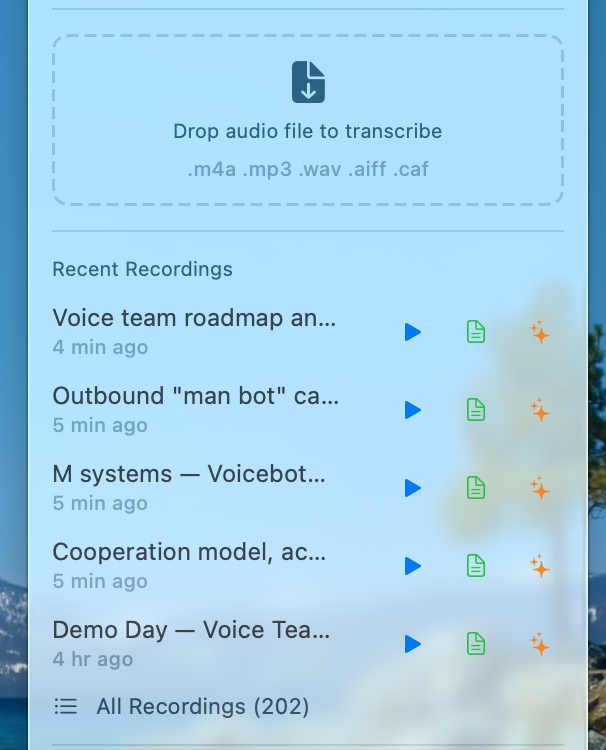







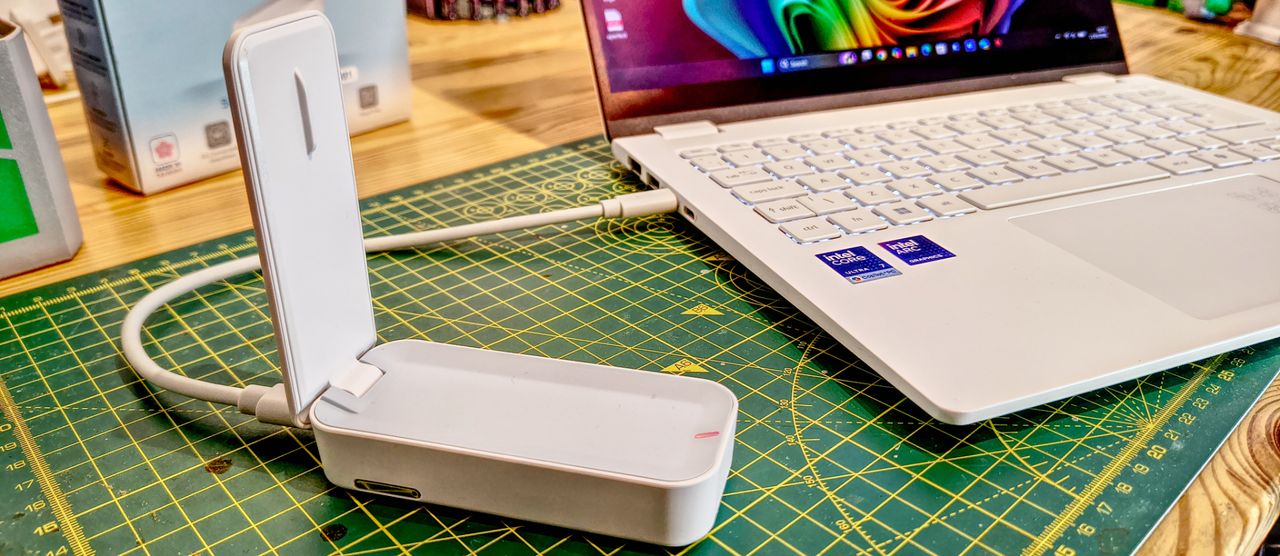






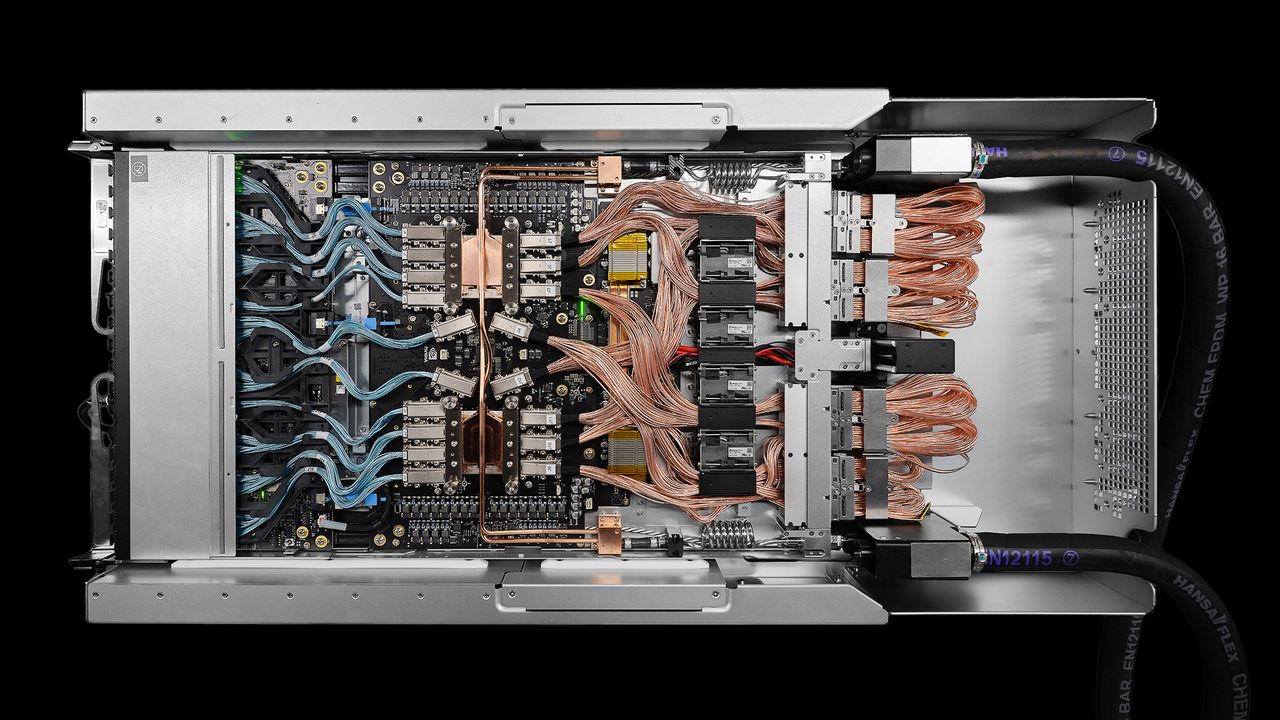






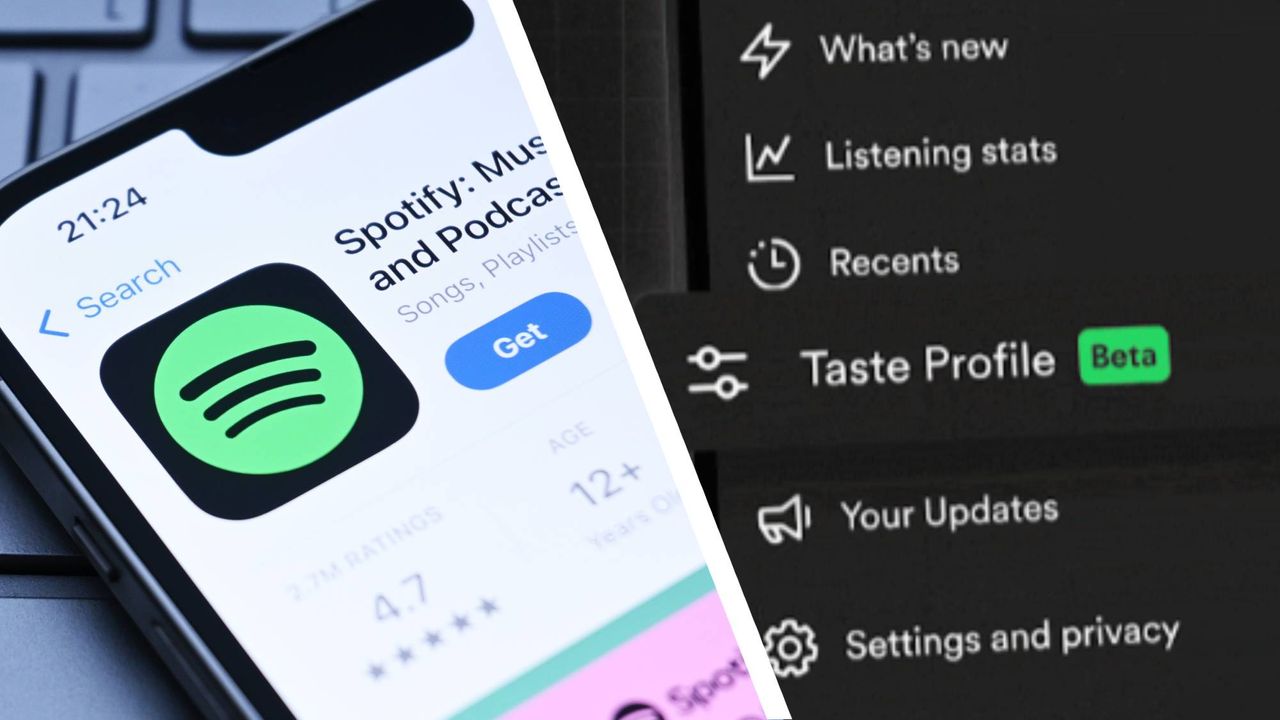



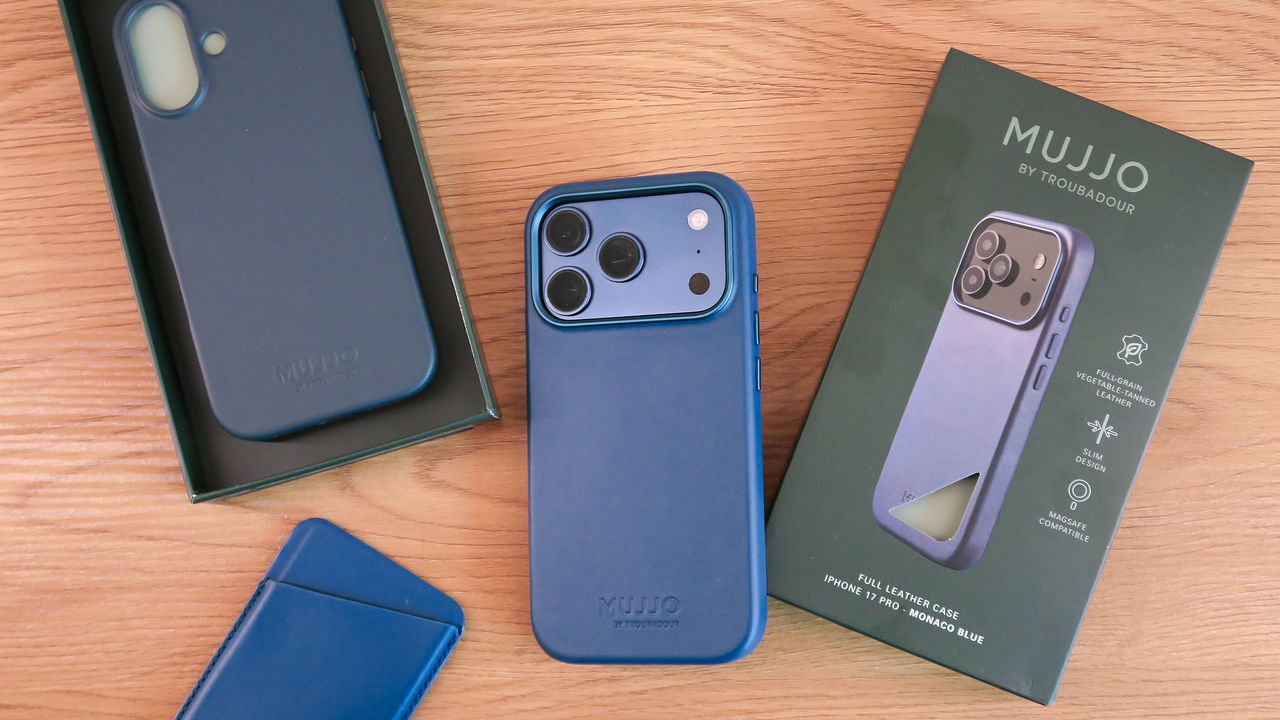


















 An overview of how Google Earth AI is supporting the global health community’s work to predict outbreaks and deliver proactive care.























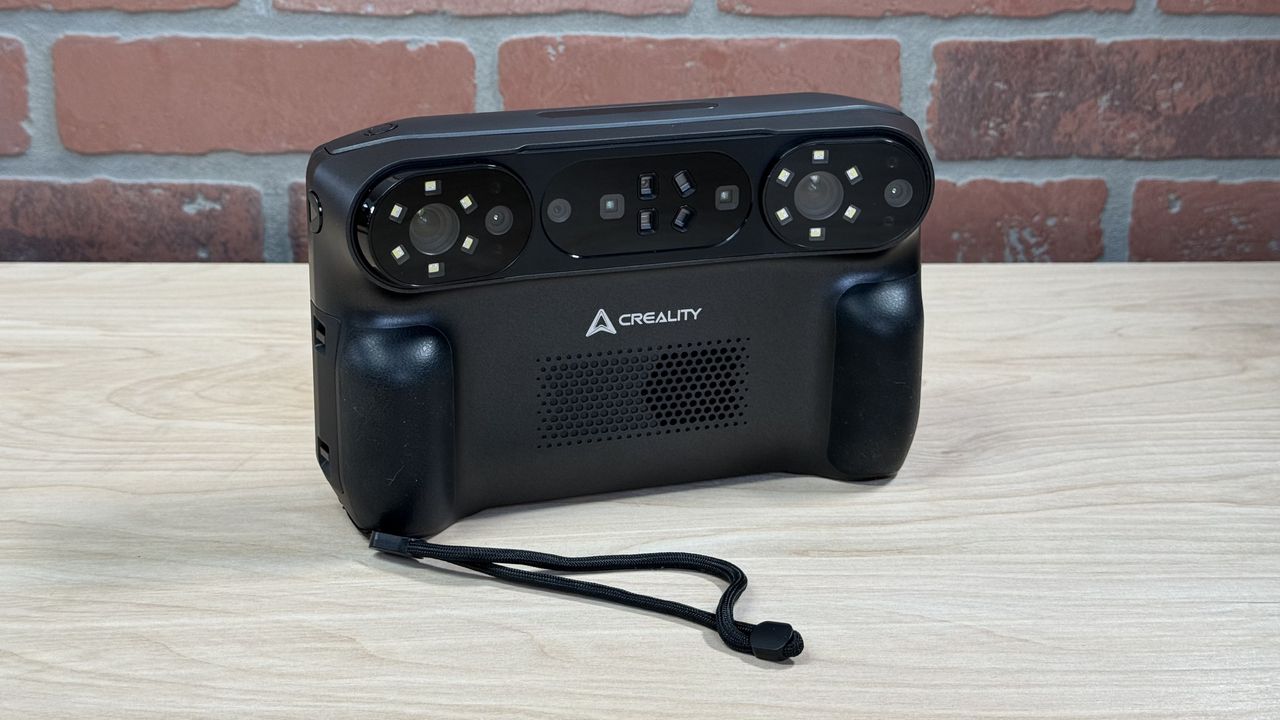










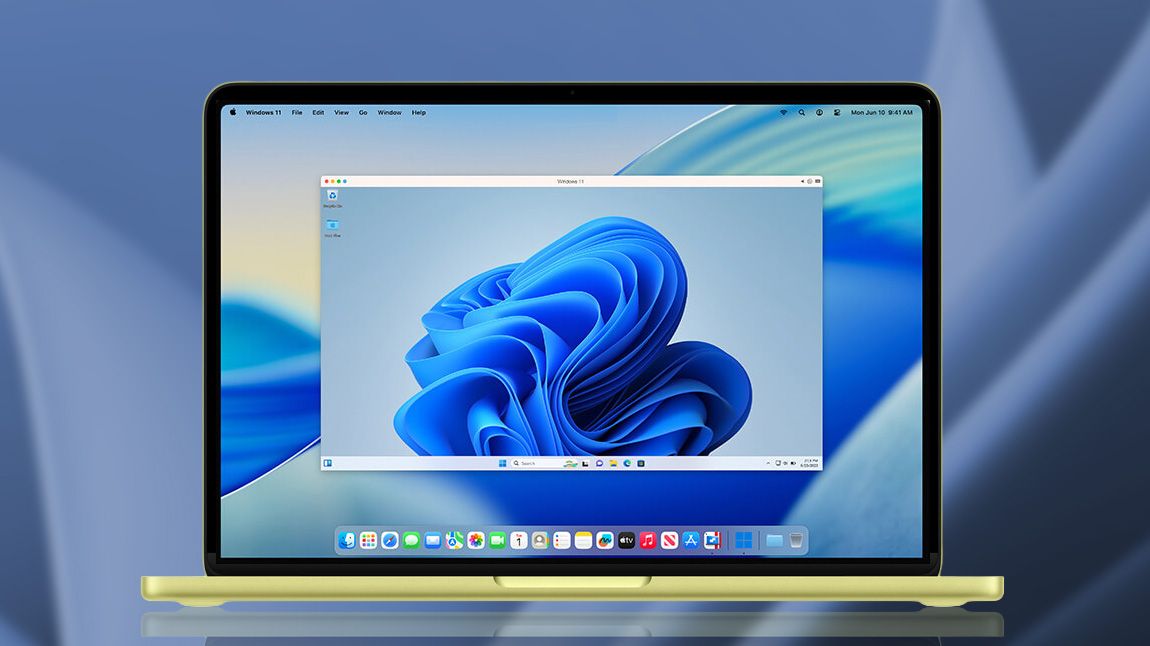






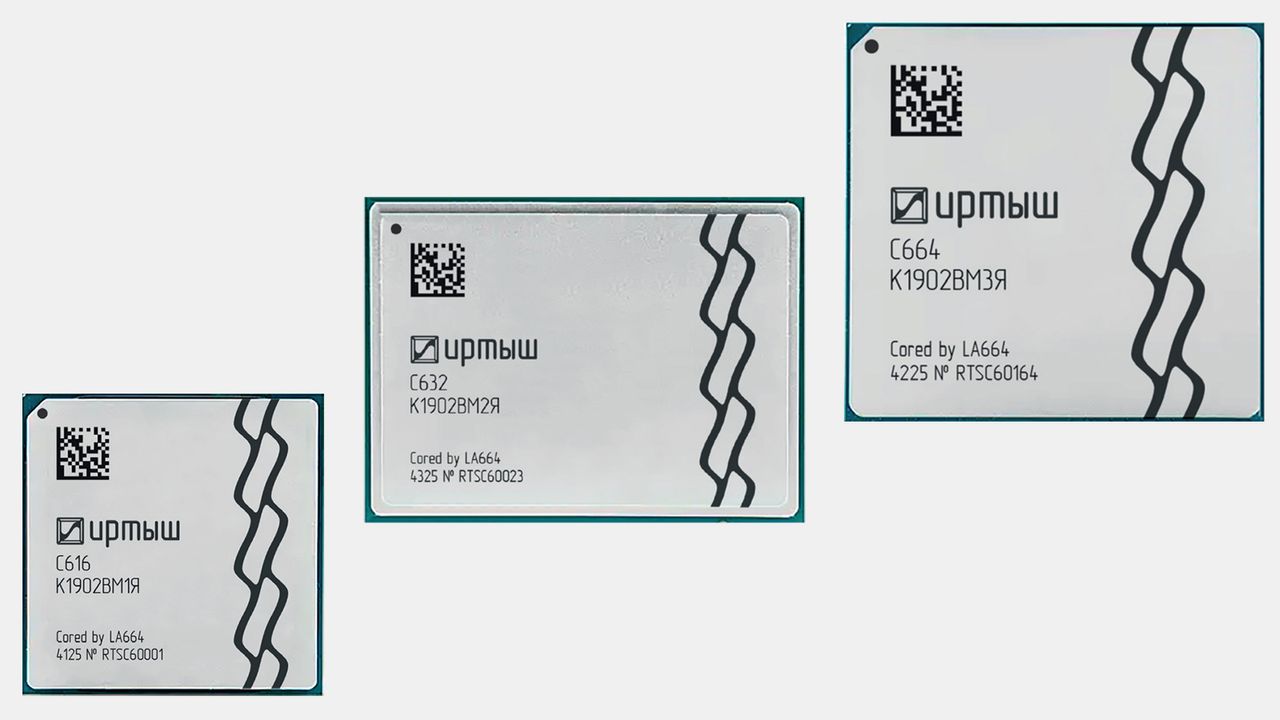



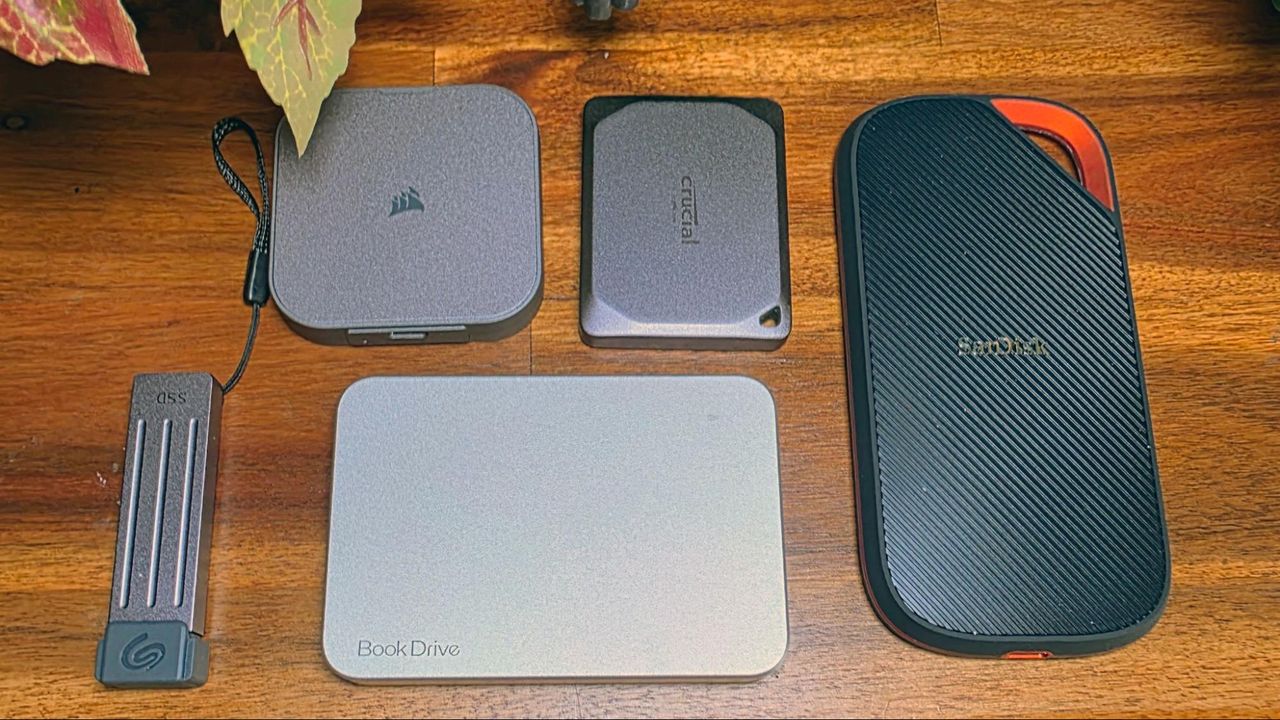























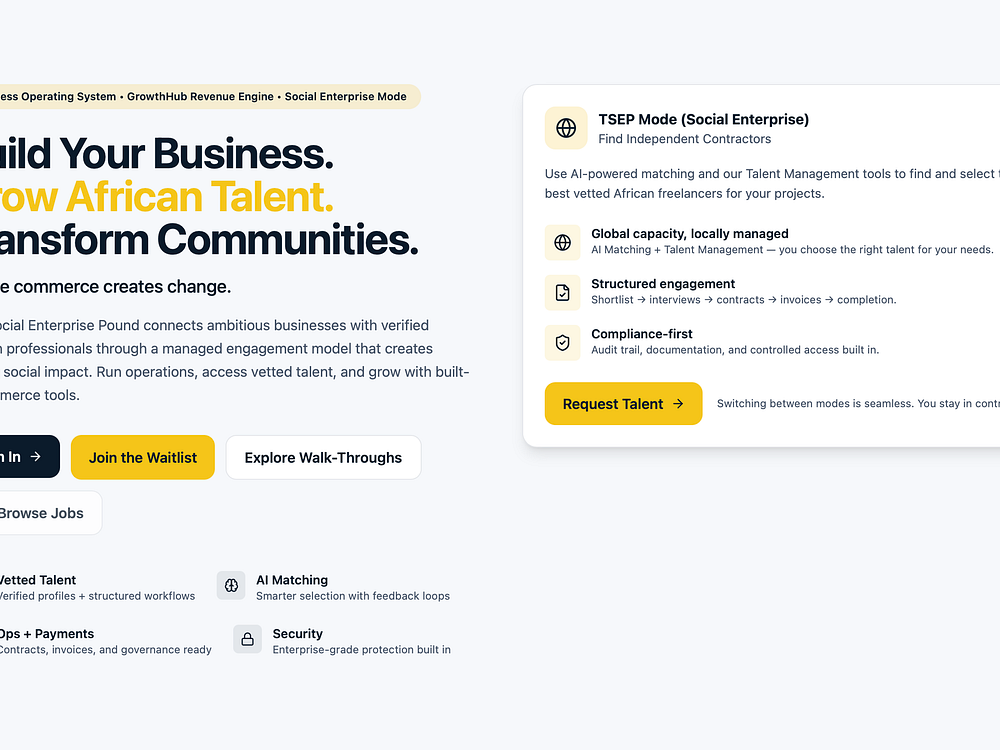











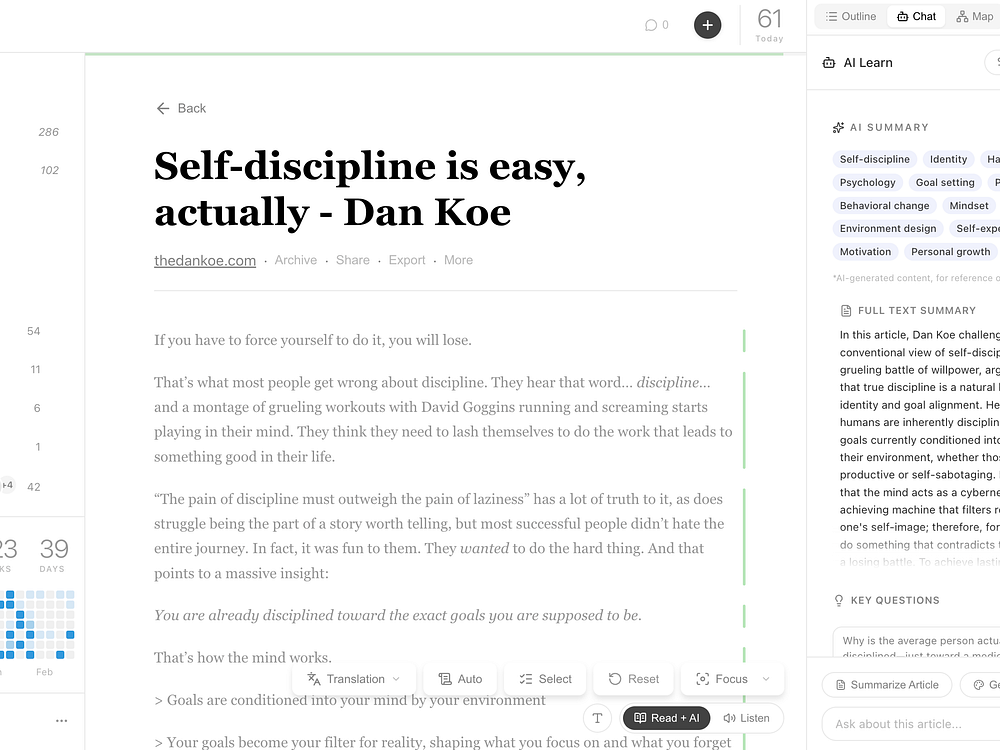


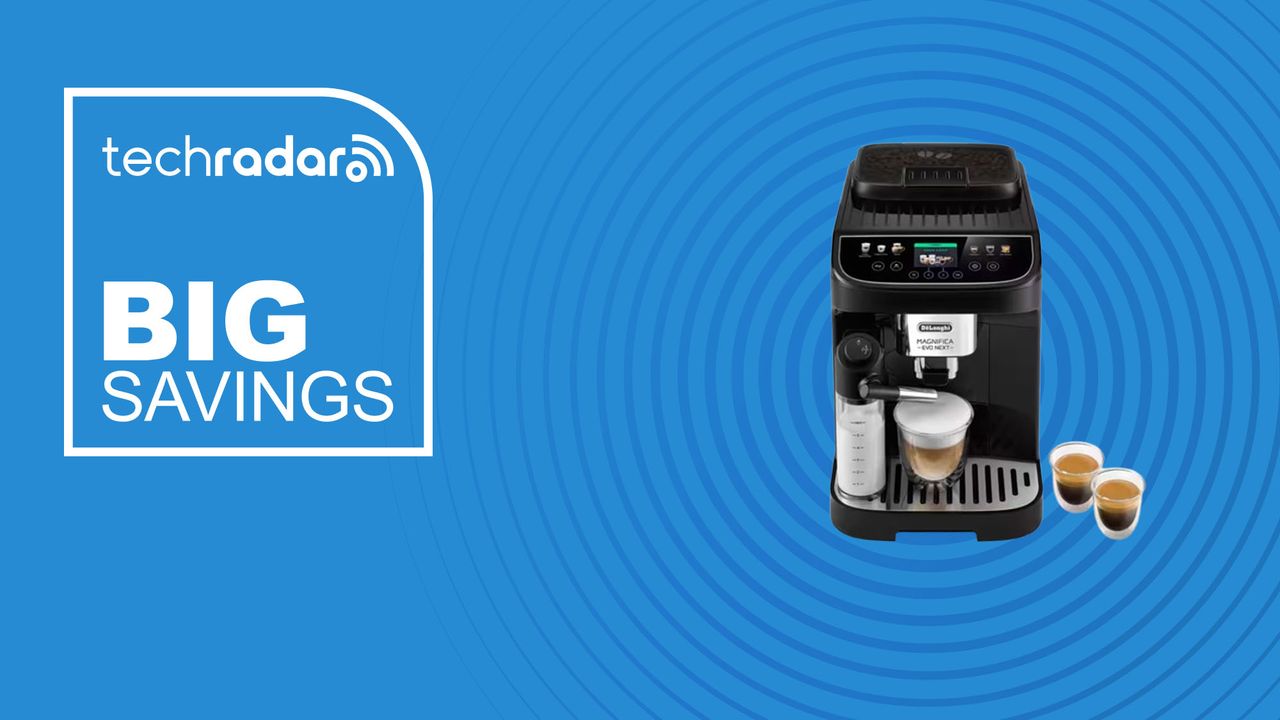


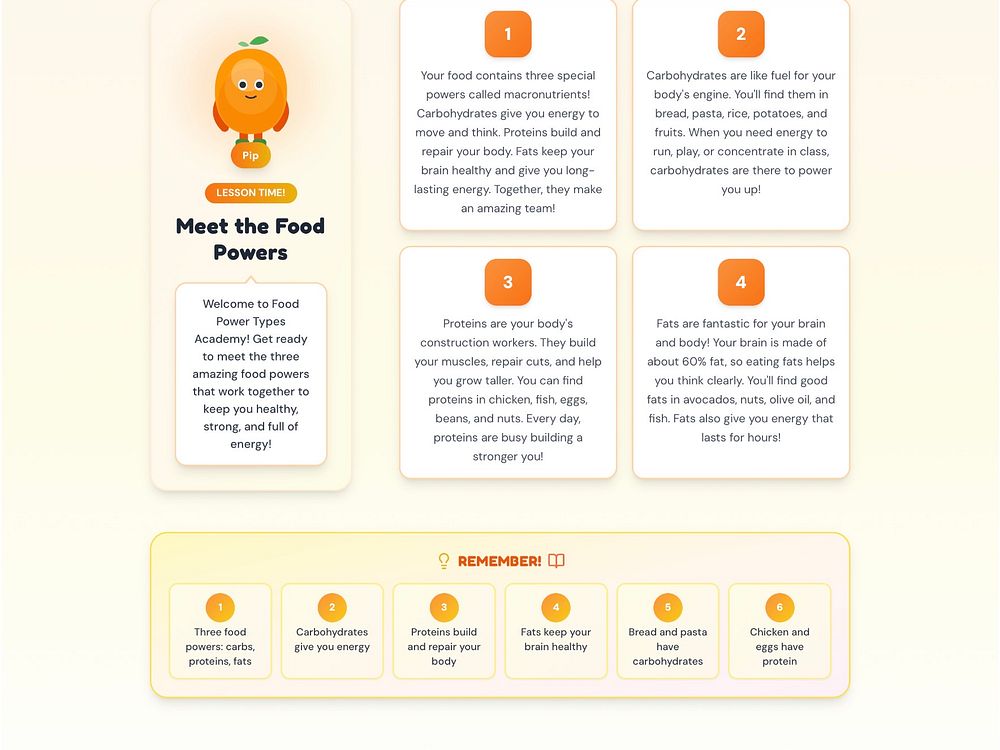



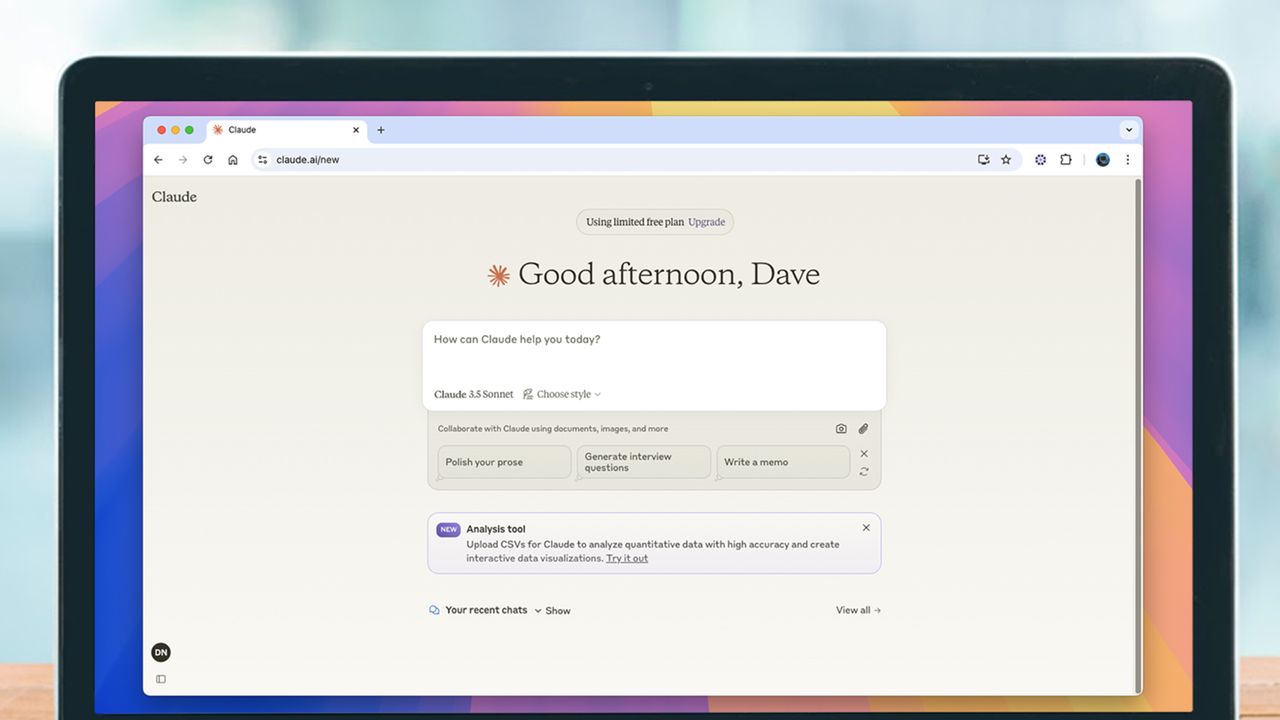











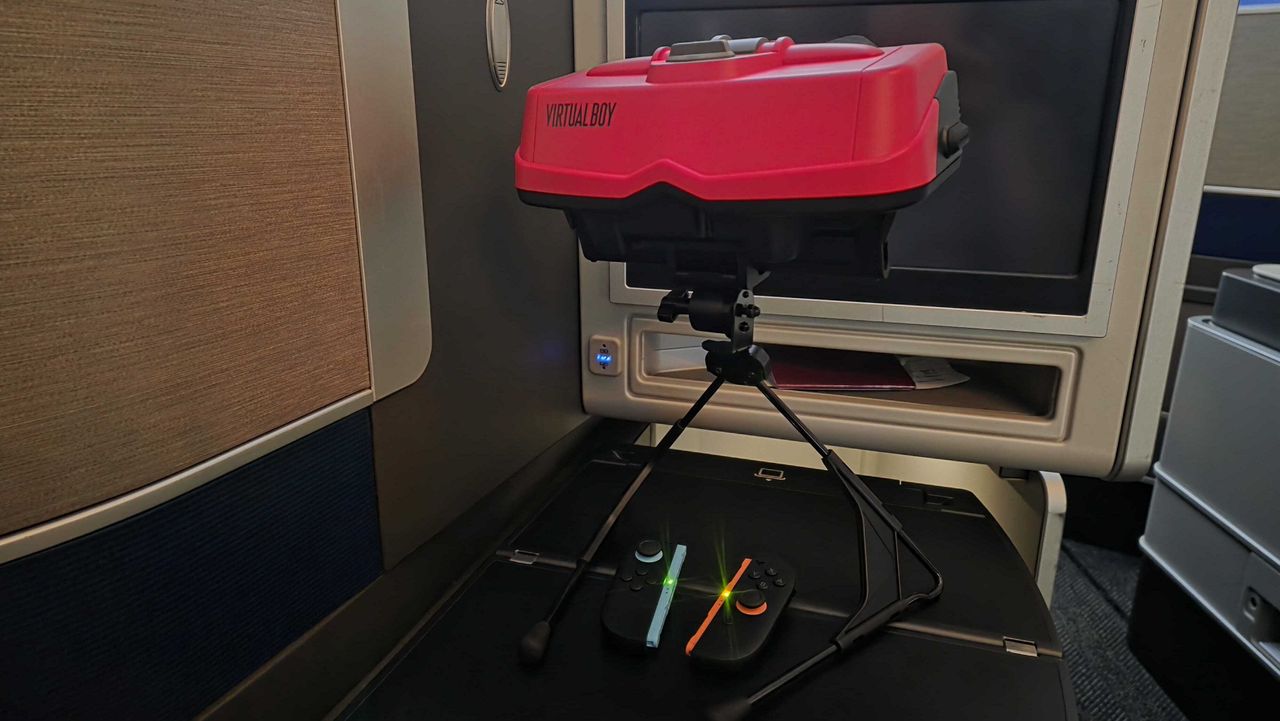





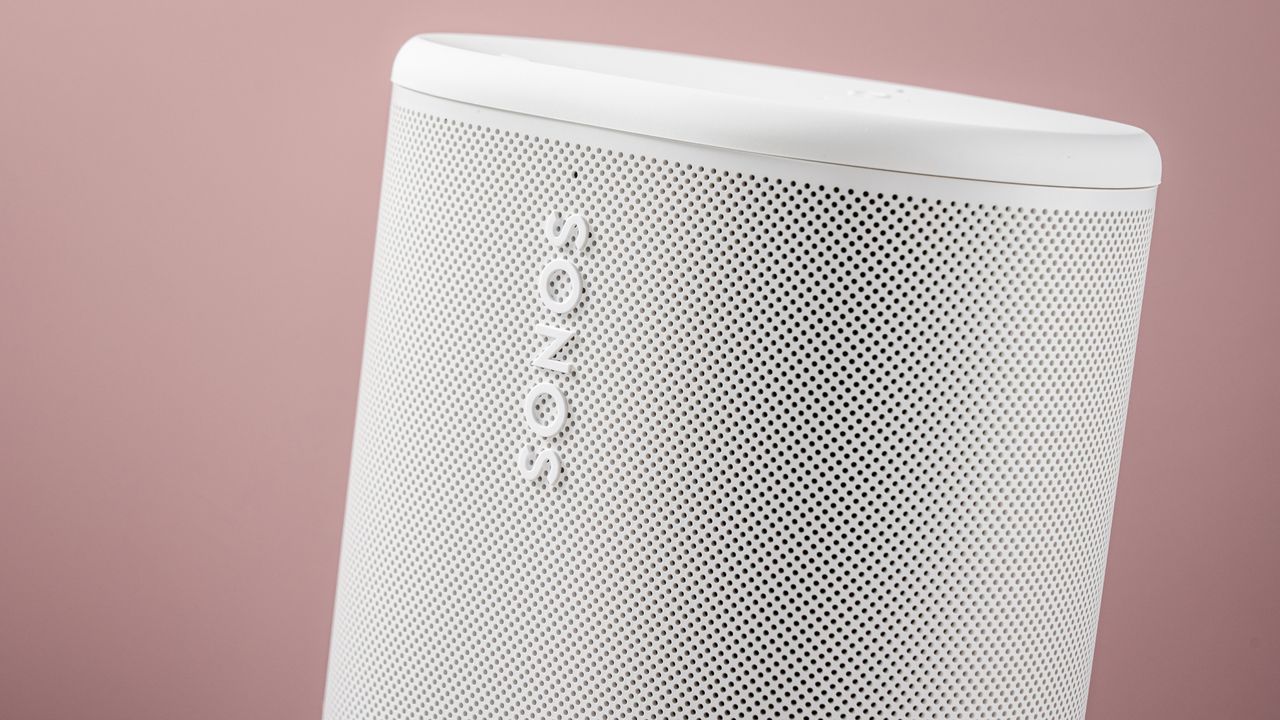




























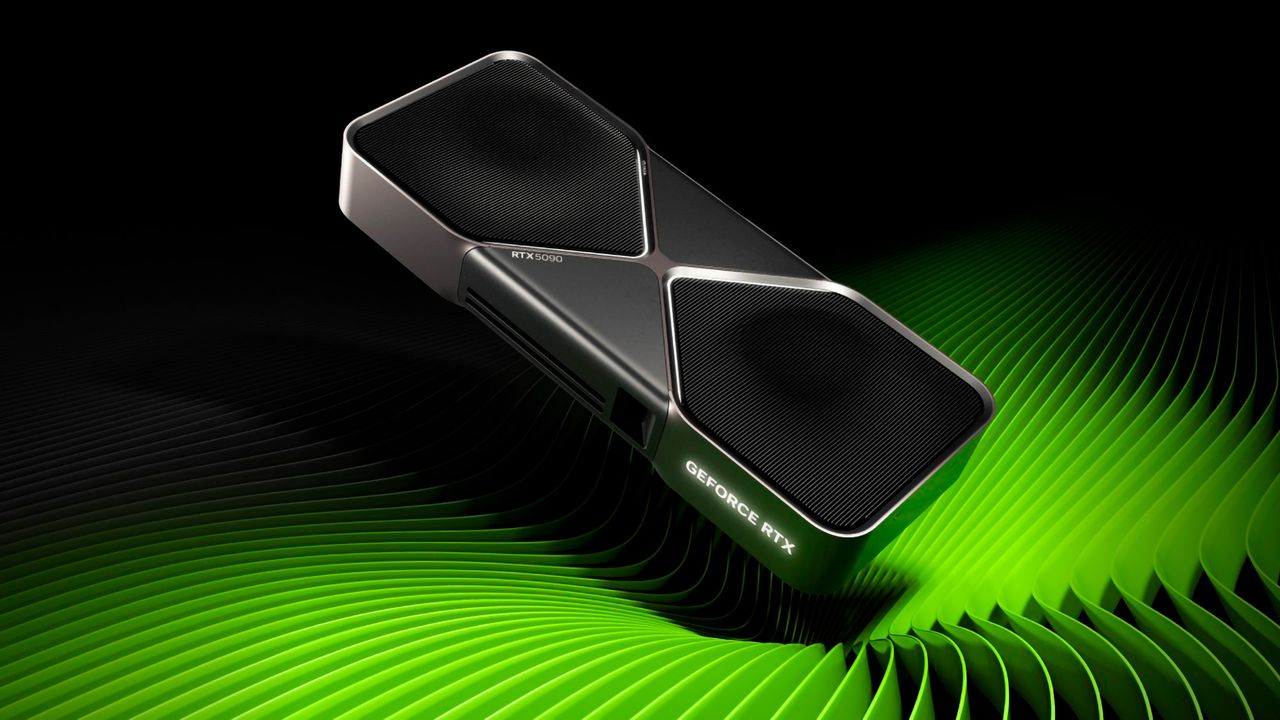
















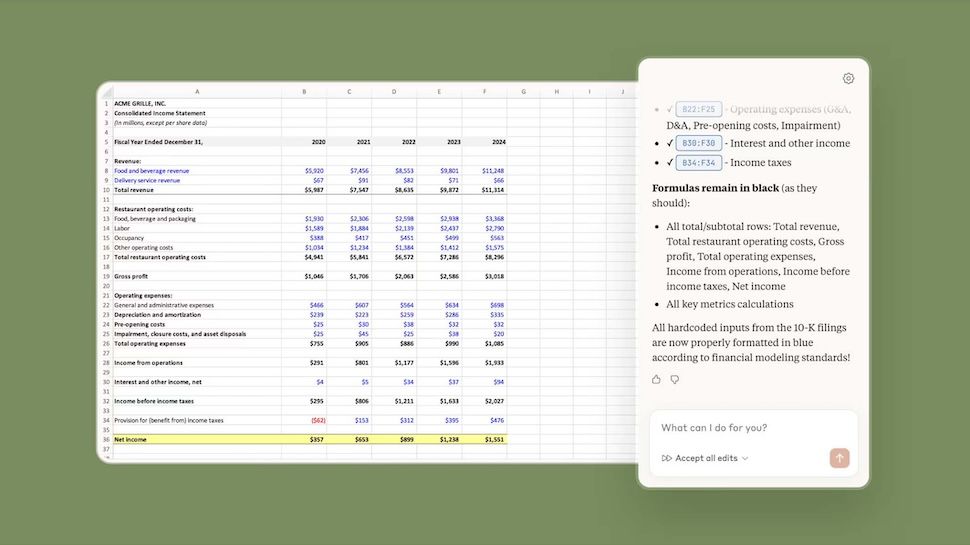














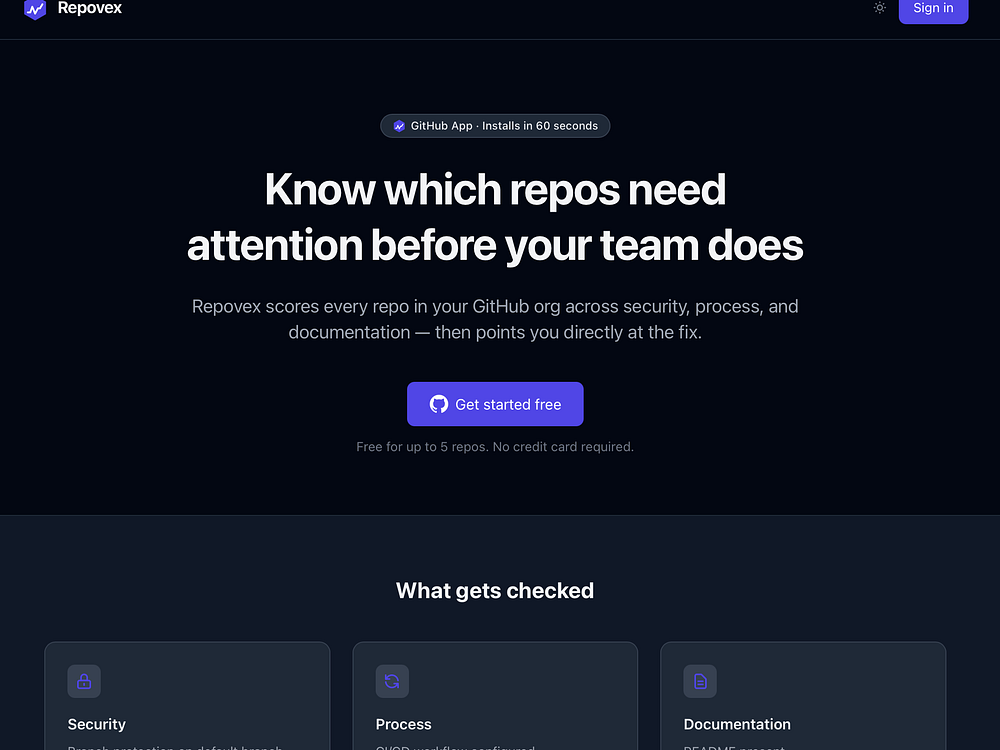










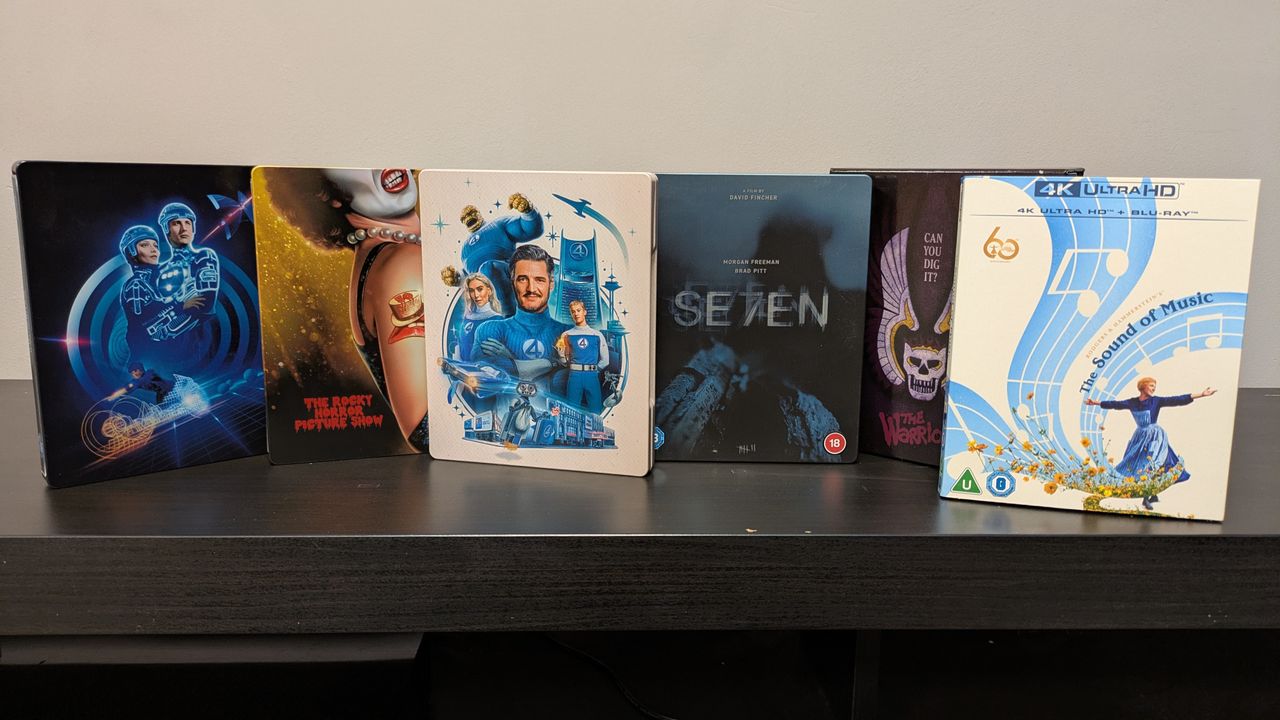





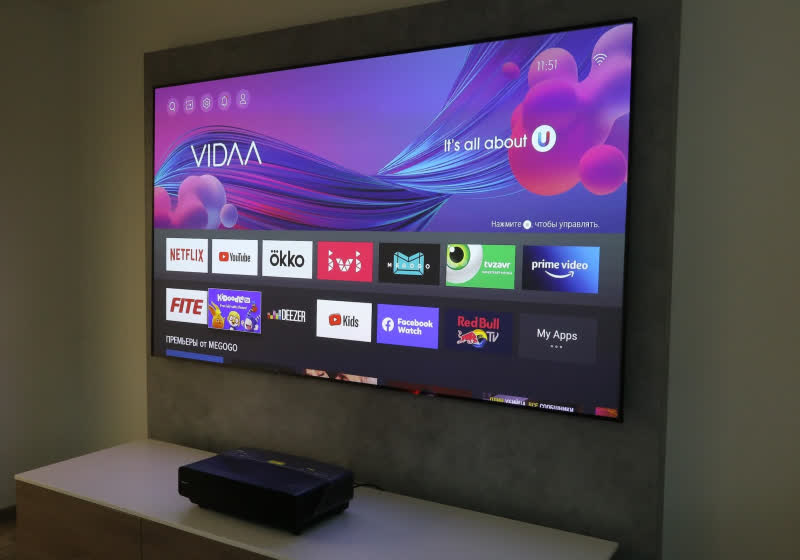





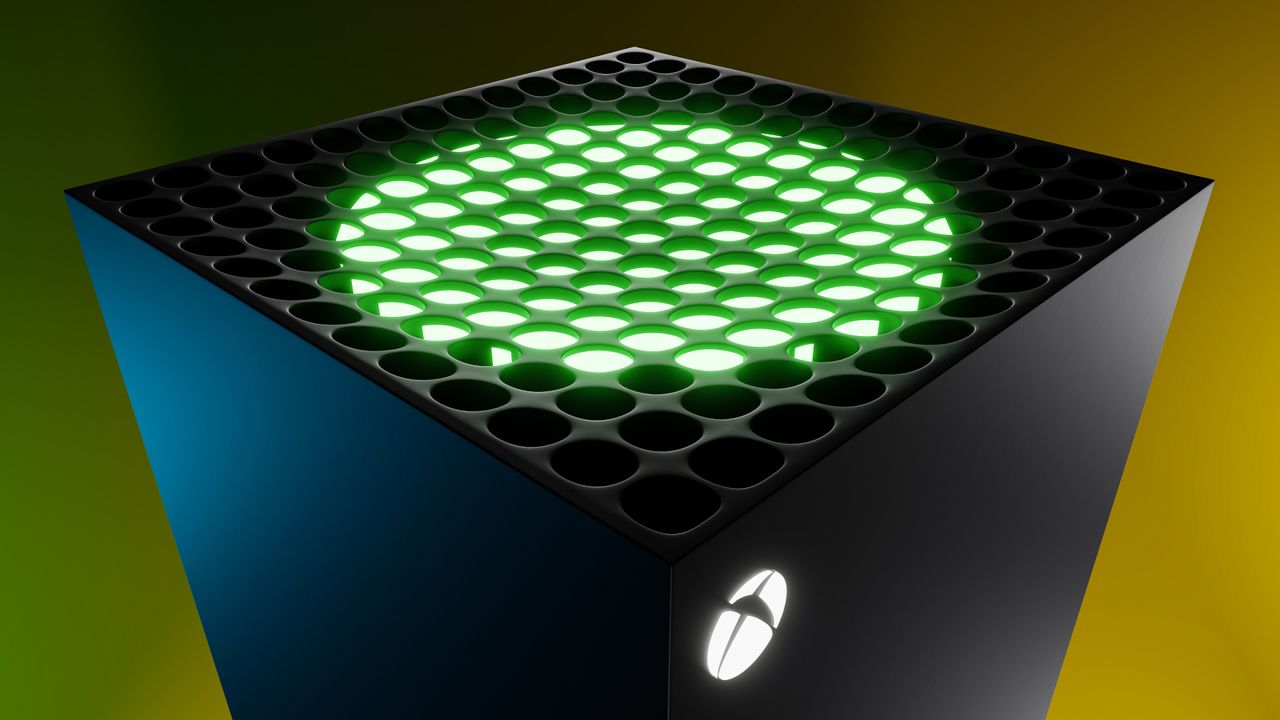




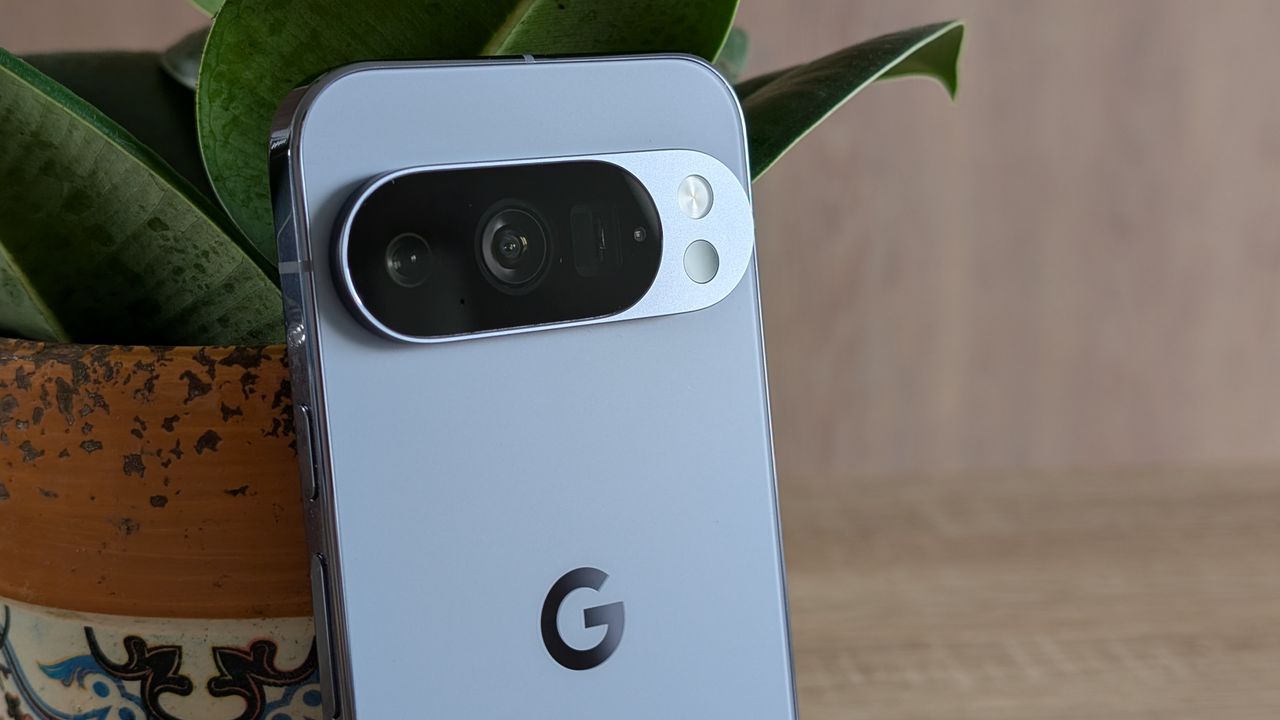
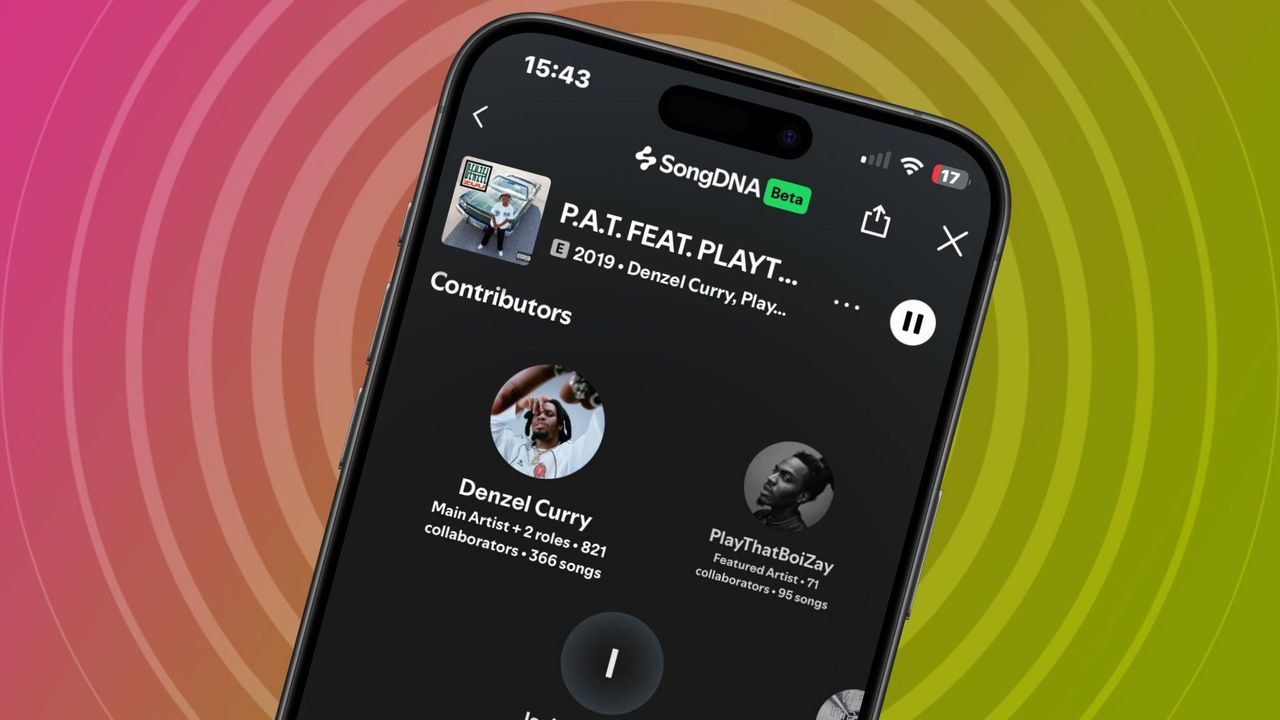


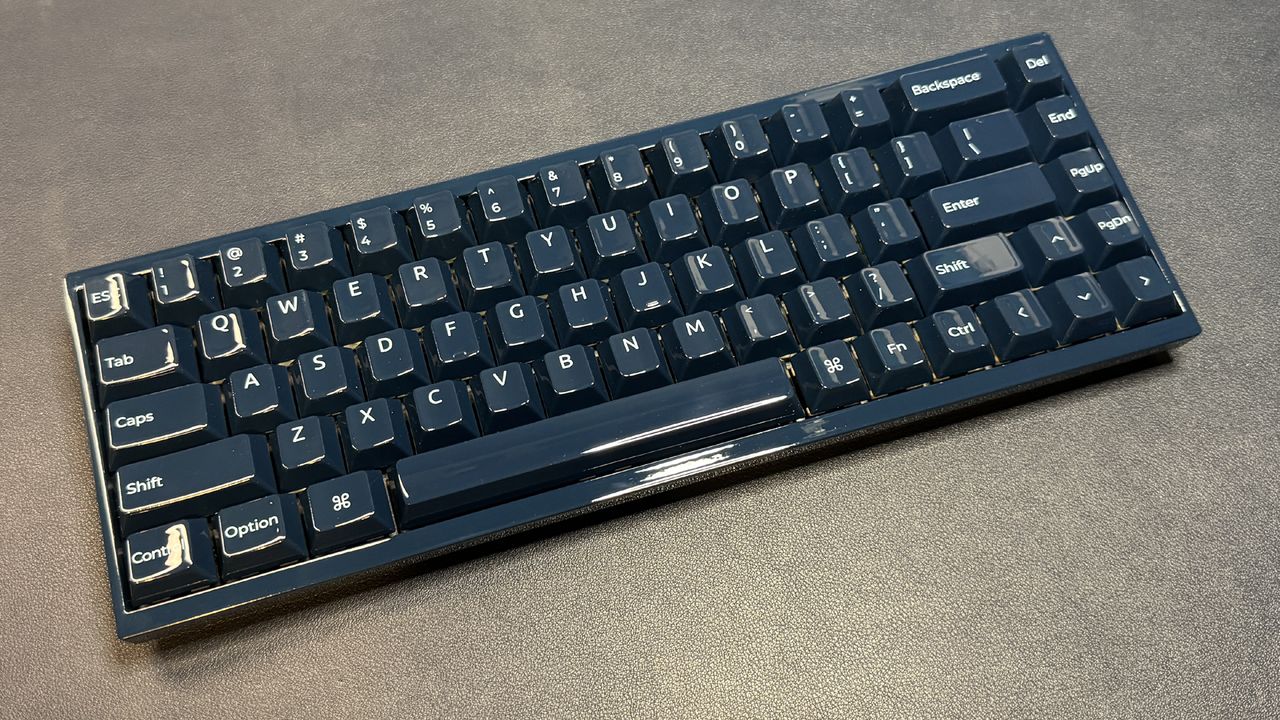



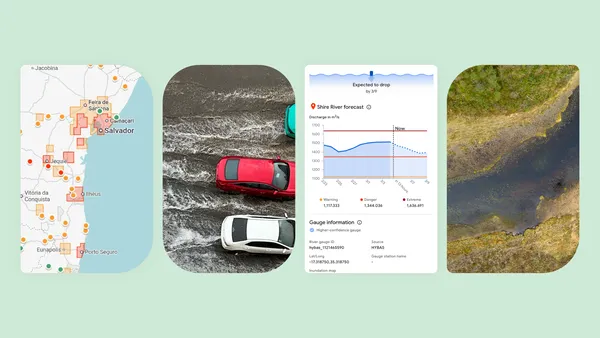 Groundsource is a new AI-powered methodology from Google Research that transforms millions of public records into actionable data.
 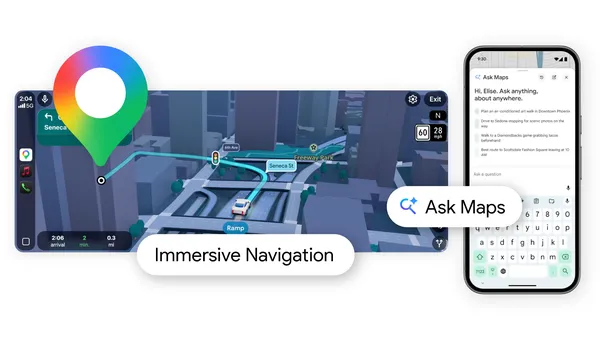 Google Maps has two new AI features: Ask Maps and Immersive Navigation.
  The Growing Up in the Digital Age Summit was hosted by Dublin’s Google Safety Engineering Center (GSEC).



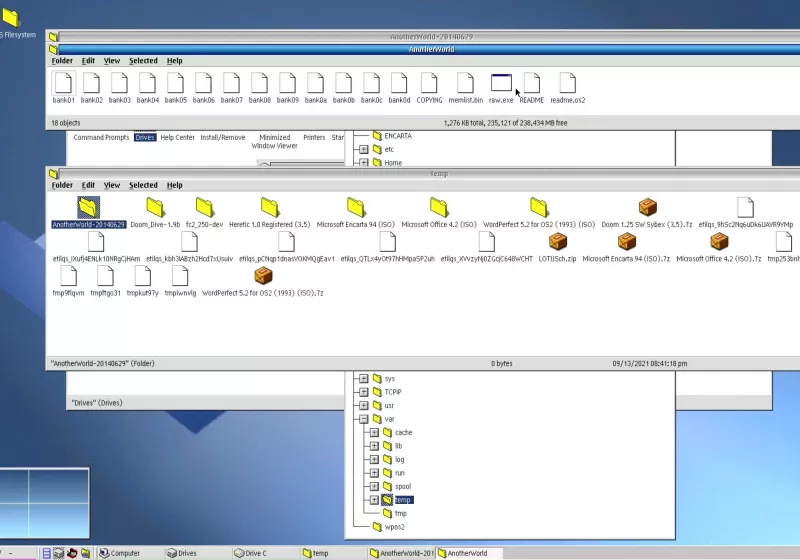

















 Google’s newest London building, Platform 37, is named to honor Google DeepMind’s AlphaGo.