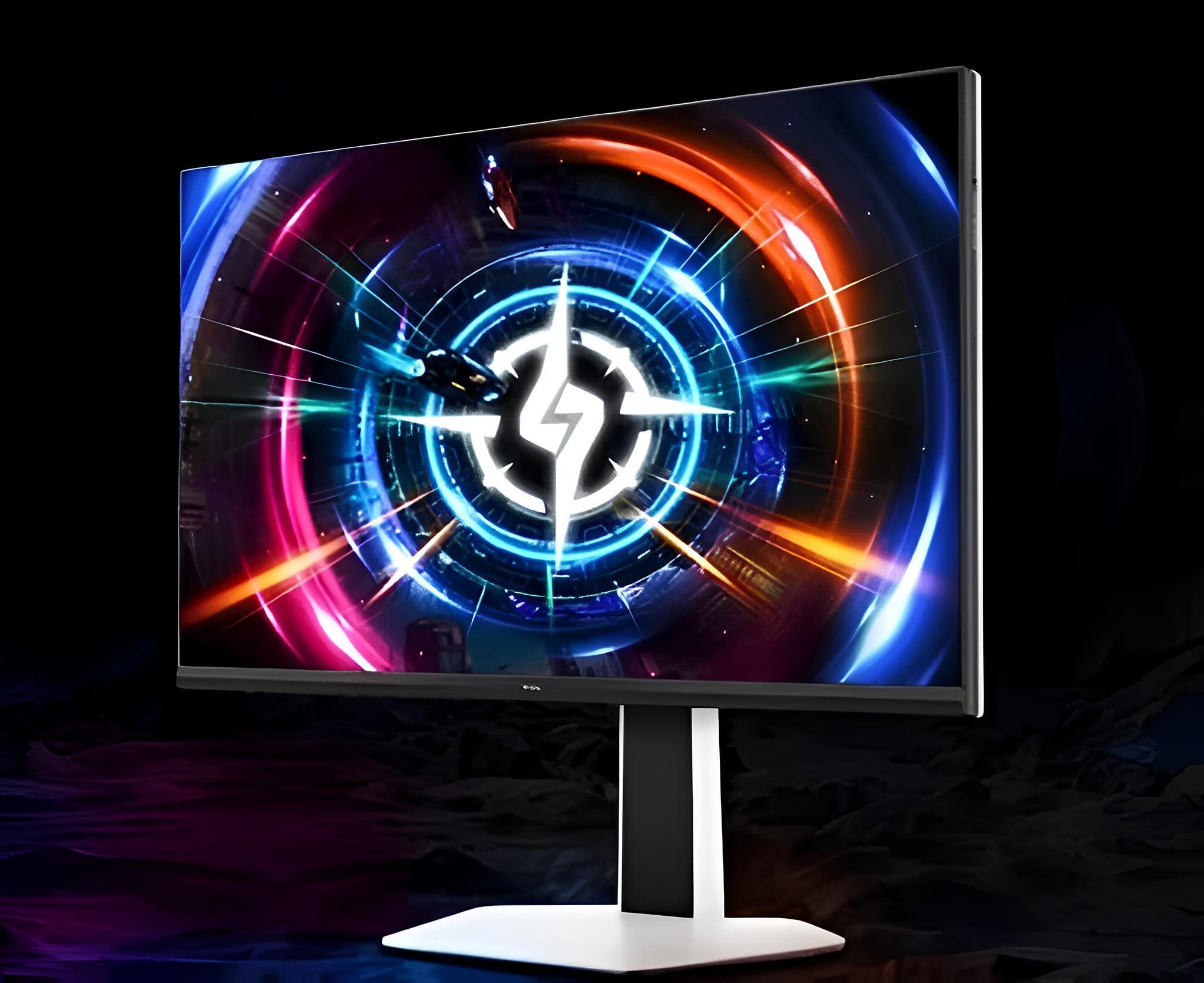
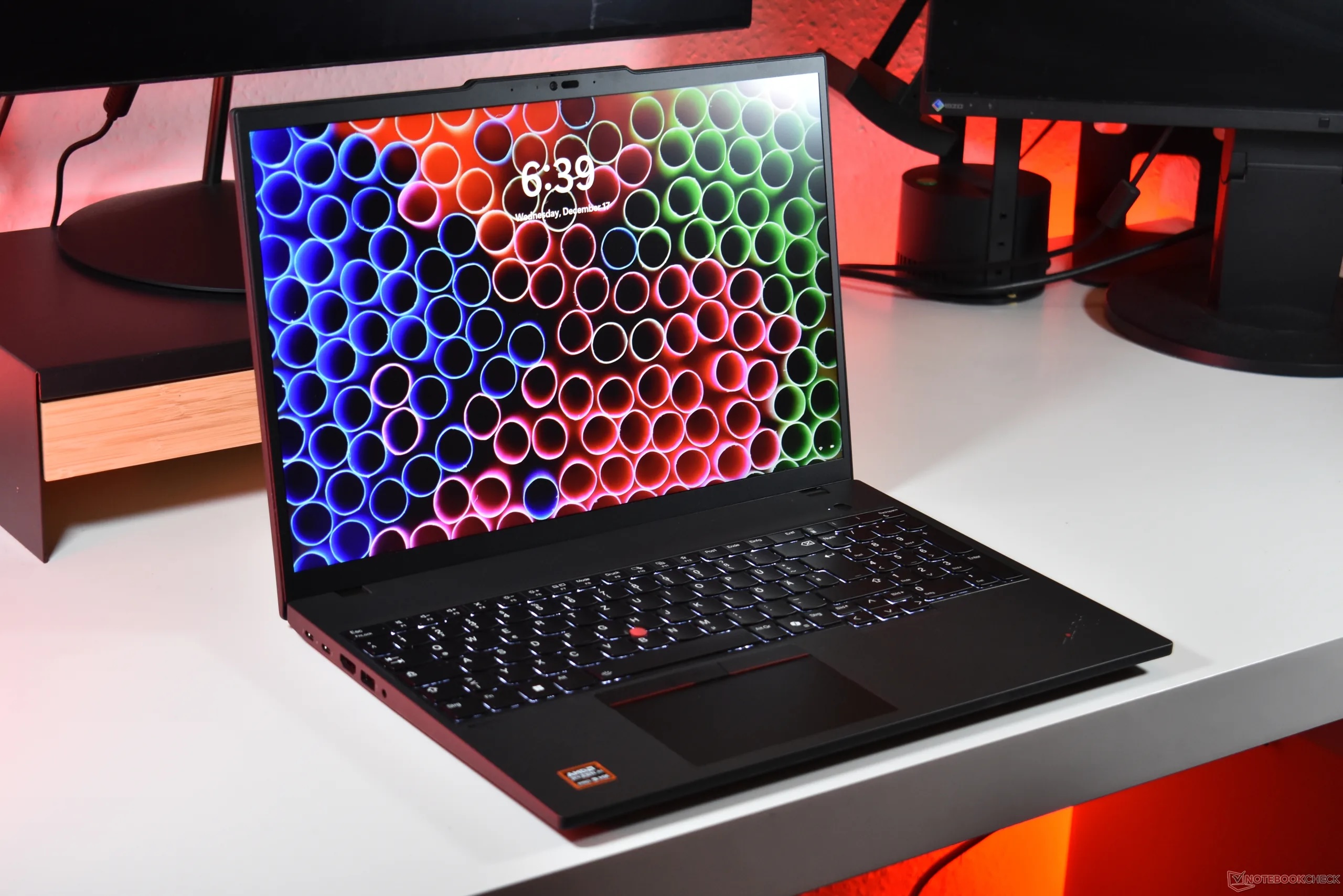
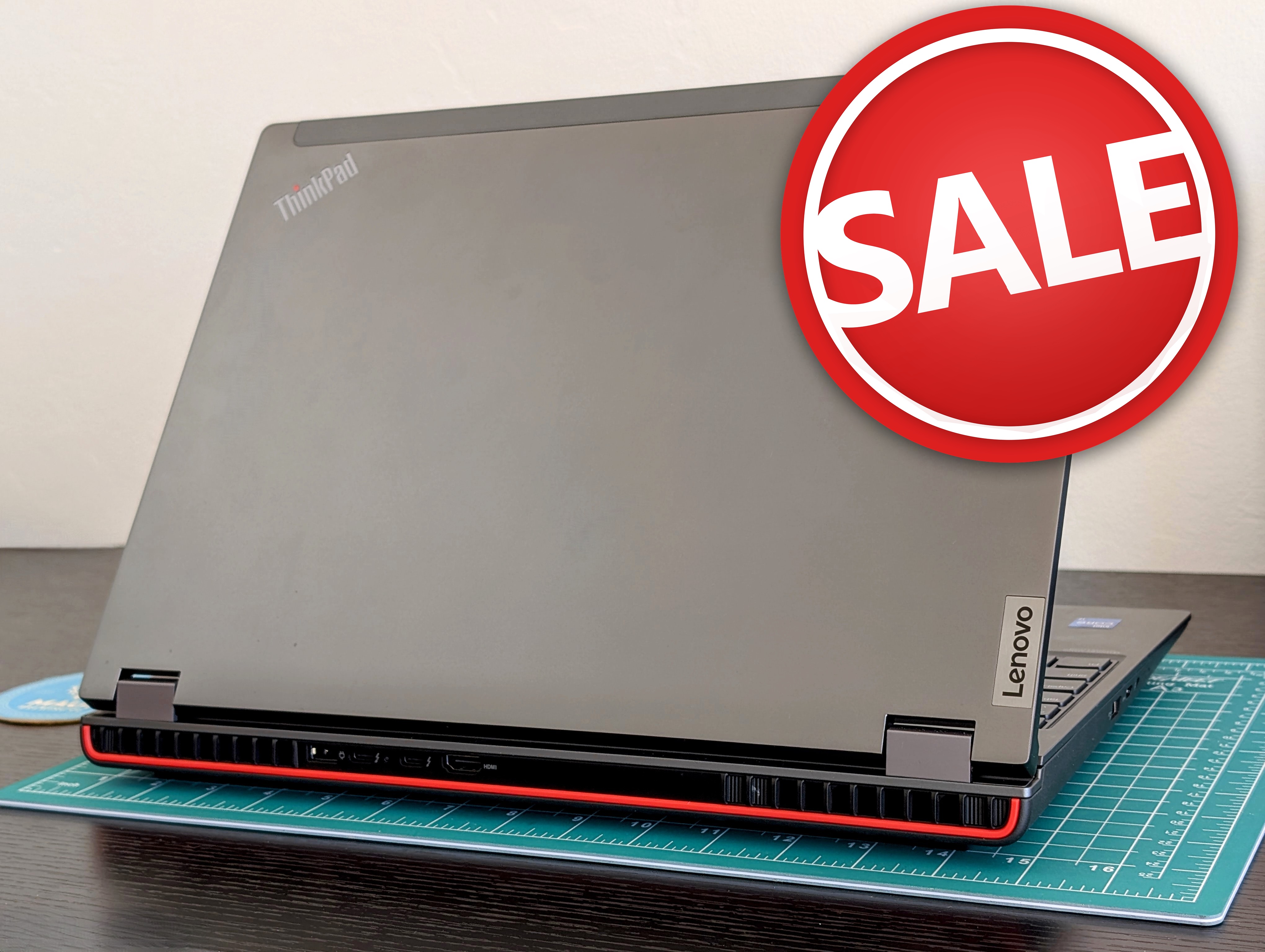
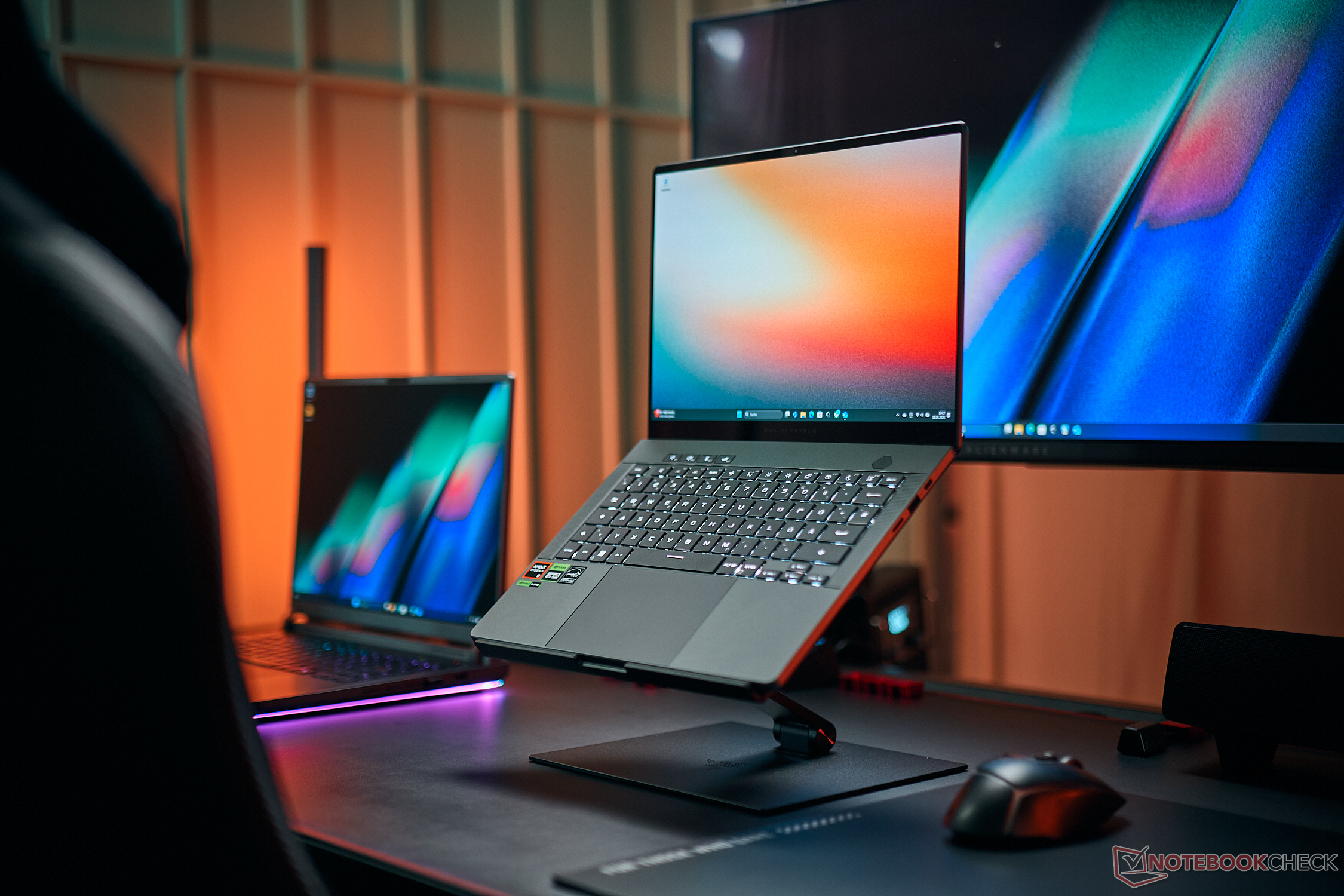
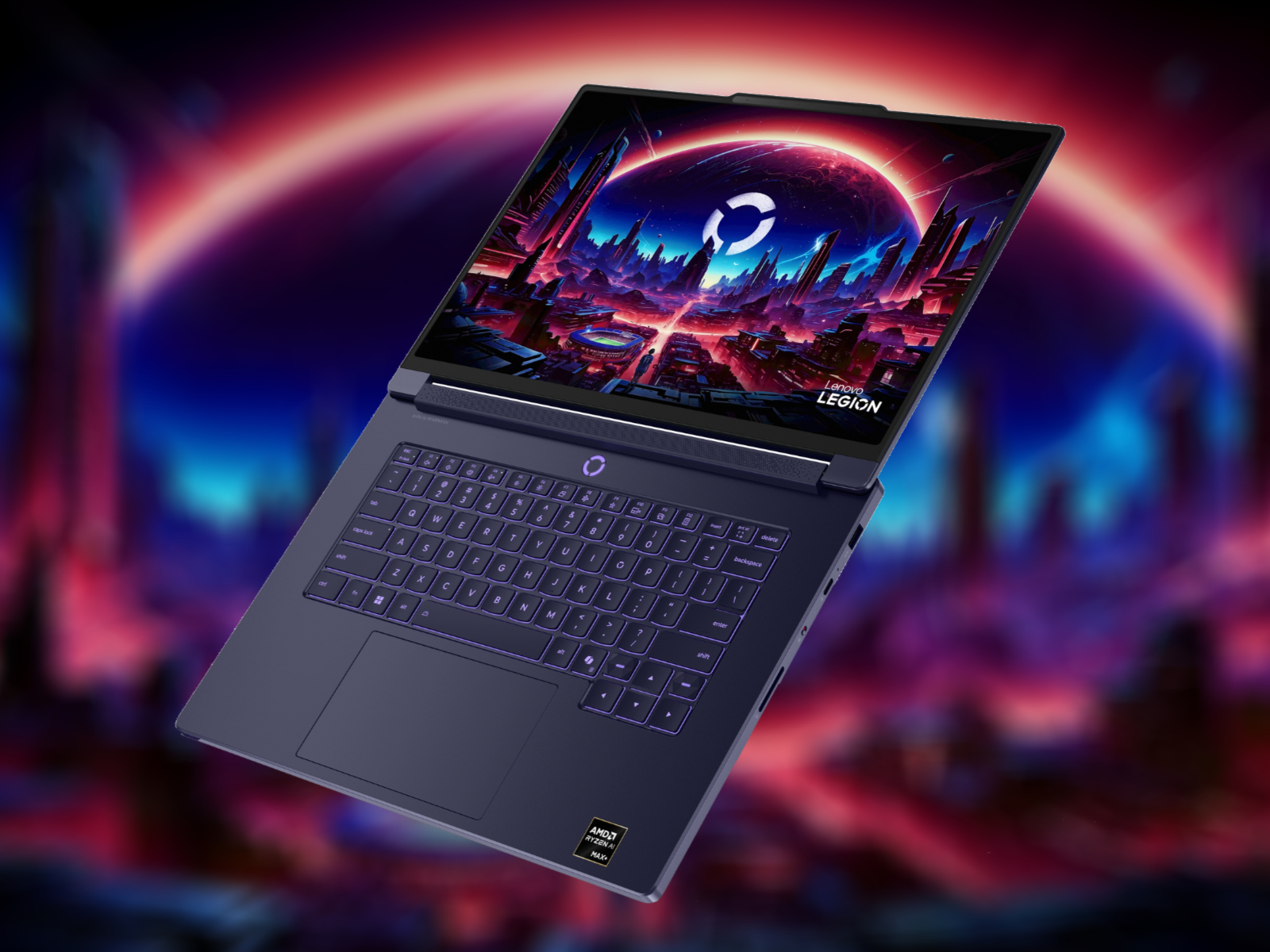
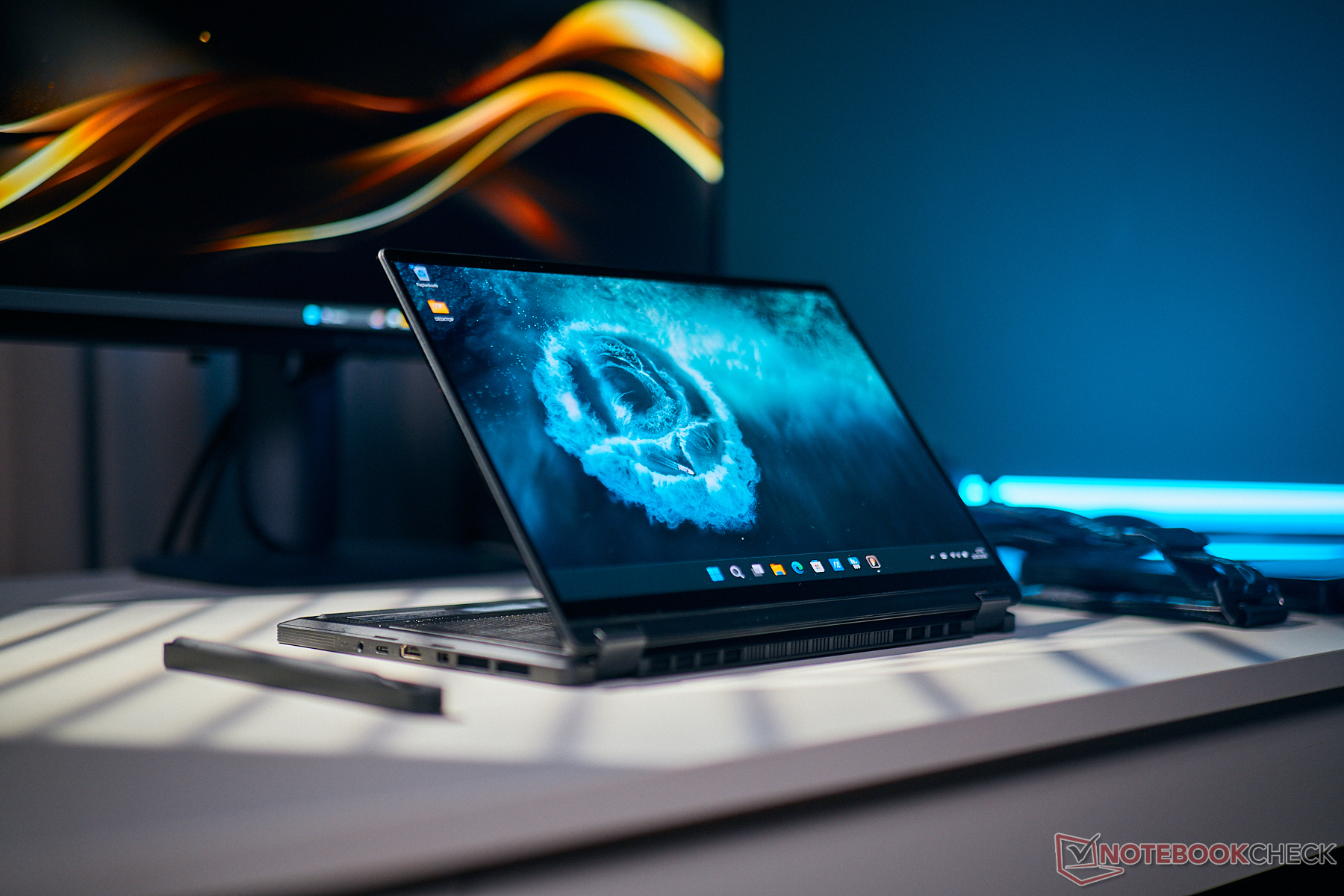
Lenovo Legion Pro 5 16-inch gaming laptop with 240Hz QHD display marked down by 42%


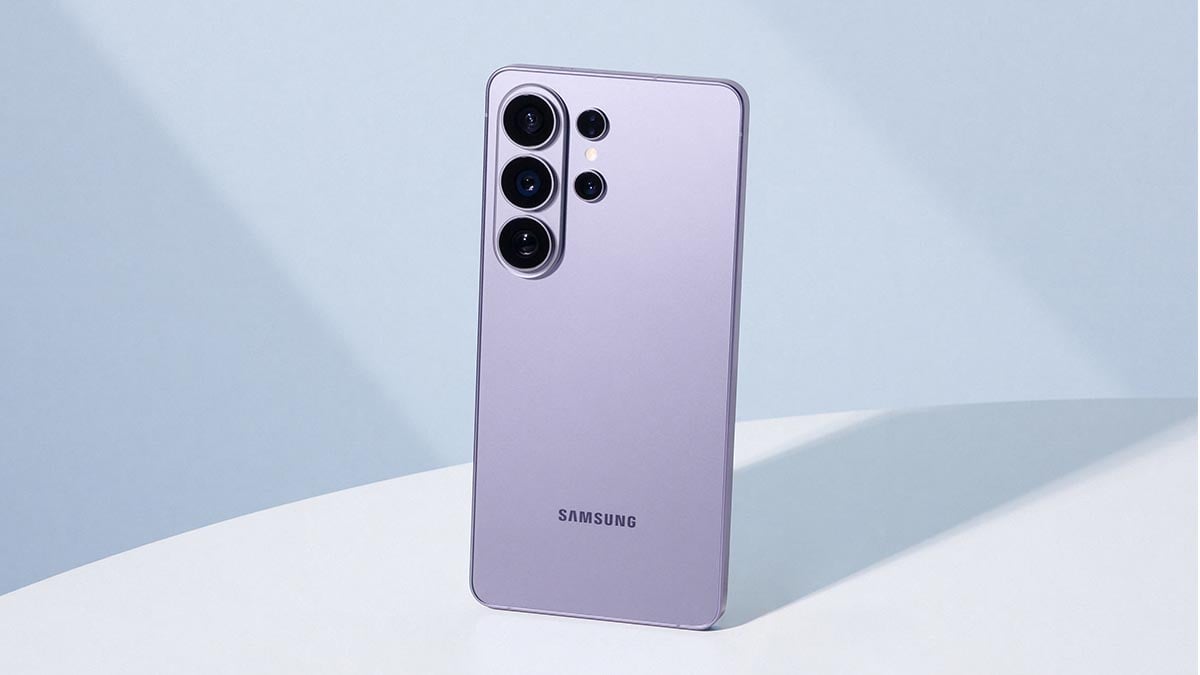
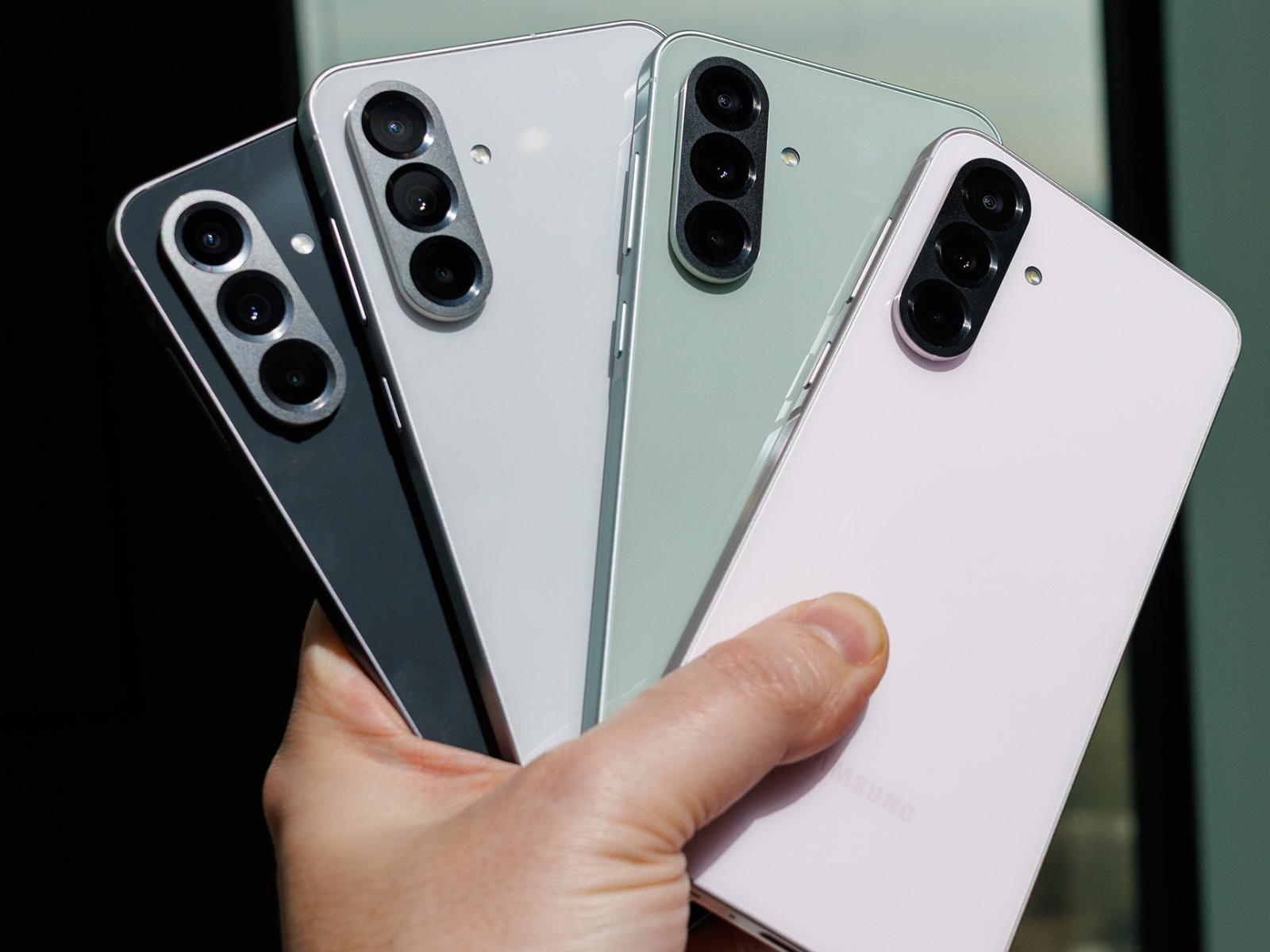
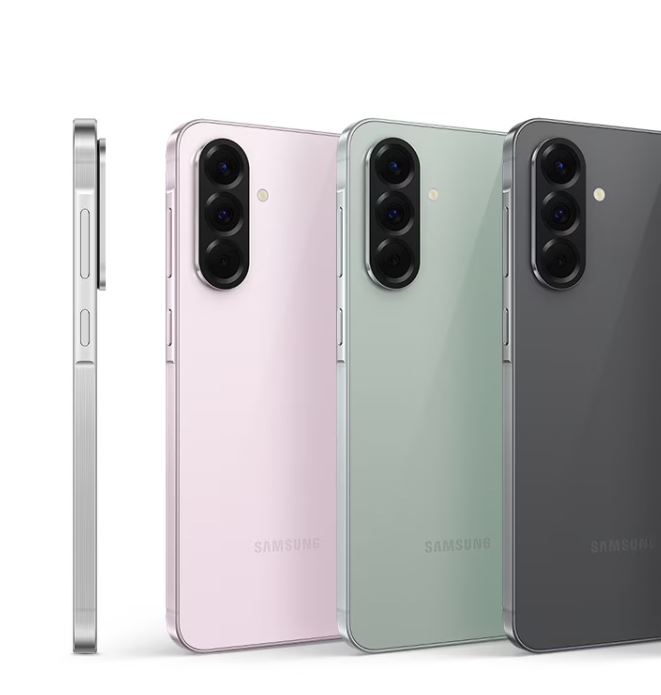
Samsung's smallest premium phone is back at it for another year, and we've got it in the house and in for review. The Galaxy S26 ships with a USB cable and a SIM eject tool. This year, there's no 128GB base model; the range starts with 256GB, but the starting price has moved up by around $100/β¬100, so there's no real difference. The RAM is the same 12GB as every year. So what is new? For starters, the Galaxy S26 ships with Samsung's own 2nm Exynos 2600. We'reeager to test and see what the new SoC brings to the table. Another change is the screen diagonal, which now stretches to...
Samsung has raised the prices of many of its Galaxy smartphones in India. The new prices started on March 5, 2026. The increase affects several models from the Galaxy A, F, and M series. Samsung has informed its retail partners about these price changes.
The main reason for the price rise is the increasing cost of memory and other parts used in smartphones. As components become more expensive, companies like Samsung need to adjust their prices.
According to a reliable tipster, Abhishek Yadav, the prices of some mid-range Samsung Galaxy smartphones have been increased. The new prices are as follows.
The Galaxy M36 is now βΉ21,999 for the 8GB + 128GB model, βΉ500 higher than before. The 8GB + 256GB version has gone up by βΉ1,500 to βΉ25,999. The Galaxy F36 also became more expensive. The 6GB + 128GB model now costs βΉ21,999, and the 6GB + 256GB version is βΉ25,999.

The Galaxy M17 5G has increased too. The 6GB + 128GB model is now βΉ16,499, up βΉ500, and the 8GB + 128GB version is βΉ18,499, up βΉ1,000. The Galaxy F17 lineup has also seen a rise. The 4GB + 128GB model is βΉ16,999, the 6GB + 128GB model is βΉ18,999, and the 8GB + 128GB version is βΉ20,999.
The Galaxy A17 has one of the biggest increases. The 6GB + 128GB model now costs βΉ20,499, the 8GB + 128GB model is βΉ22,499, and the 8GB + 256GB version is βΉ26,499. For the Galaxy A06 5G, only the 6GB + 128GB model has increased to βΉ15,999. The other two models remain at the same price.
Earlier this year, Samsung had already increased the prices of some other smartphones like the Galaxy A36, A56, and F17. Reports also say that Samsung may increase prices for its Galaxy Tab tablets soon.
With memory and component costs rising, smartphone prices in India may continue to go up this year. Consumers should expect small increases in other models as well. Stay tuned for more information.
The post Price Alert: Some Samsung Galaxy A, F, and M series phones become costlier appeared first on Sammy Fans.
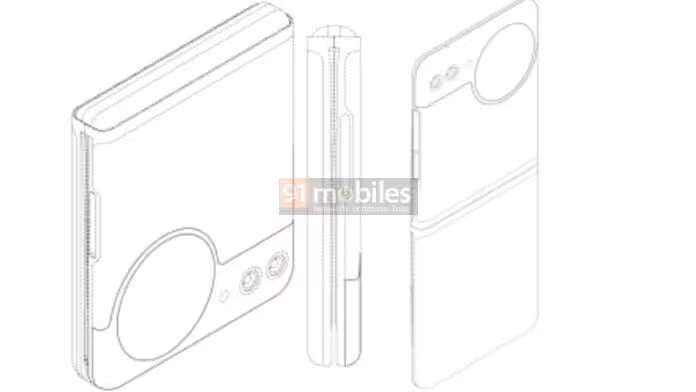
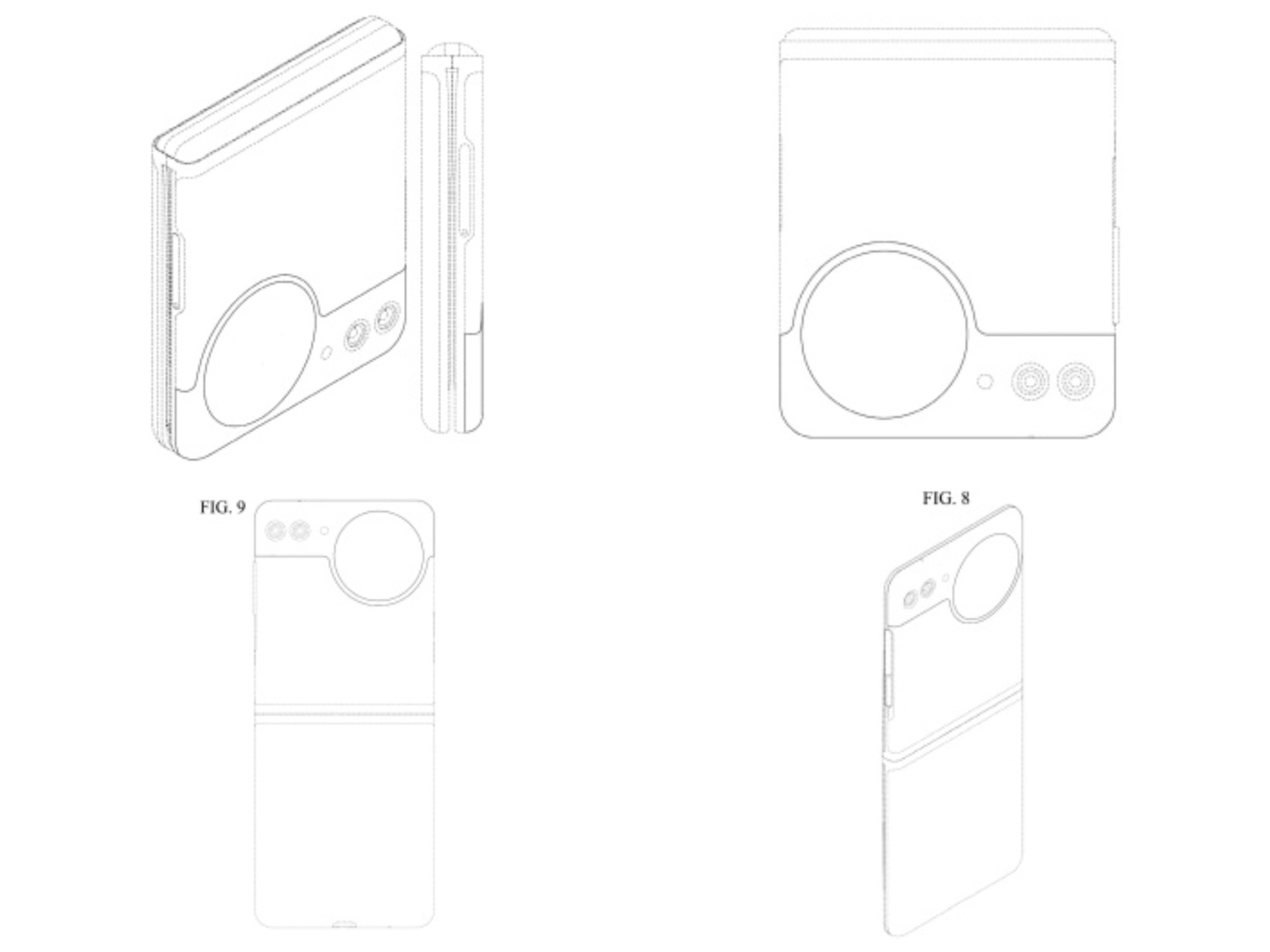
Samsung is reportedly working on a new idea for its future Galaxy Z Flip phones. A new patent suggests that the company could be testing a design with two displays on the front of the phone. This is different from current Galaxy Z Flip models, which only have one cover screen.
A new foldable phone patent spotted by 91Mobiles reveals that the phone could have a circular display on the front. Around this circular screen, there is another larger display that wraps around it. This bigger display would cover the top half of the phone when it is folded. With this design, users may be able to see more information or use more features without opening the phone.
The circular display in the patent looks similar to the outer screen seen on the Huawei P50 Pocket. That phone also has a round display on the outside. However, the Huawei device only has one small screen, while Samsungβs patent shows two displays on the front. This makes Samsungβs design look a bit more unique.

Image via 91Mobiles
Right now, it is not clear how useful the second display would be. Current Galaxy Z Flip phones already have a cover screen that can show notifications, time, weather, and even work as a camera viewfinder. Because of this, adding another screen may not be very necessary and could also use more battery.
It is also important to remember that many companies file patents to protect their ideas and technology. Not all patents become real products.Β
Meanwhile, Samsung is working to launch its next foldable phone, the Galaxy Z Flip 8, later this year. The launch is expected to happen around July, and this device could debut with One UI 9. Stay tuned for more information.
The post Samsung patent hints at Galaxy Z Flip with two cover screens appeared first on Sammy Fans.


As the 2026 edition of the Mobile World Congress (MWC) draws to a close in Barcelona, Spain, the GSM Association (GSMA), which is the organizer of the event, has issued its traditional GLOMO awards. This year, the Samsung Galaxy S26 Ultra won "best in show", even though it wasn't announced at MWC. Similarly, the "best smartphone" award went to the iPhone 17 Pro series, released back in September of last year. And those are also two devices, not one, winning best smartphone singular. Who are we to judge, though, right? In the entry-level "best device" category, the GLOMO went to...
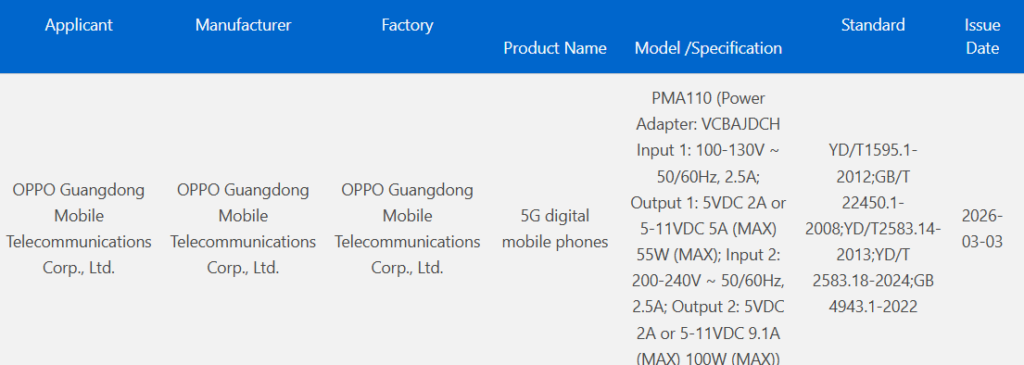
Battery life is one of the most important things people want in a smartphone. Everyone wants a phone that can last the whole day without needing to charge it again. And the upcoming OnePlus 15T may take battery life much further than most flagship phones.
According to the latest information, the OnePlus 15T will come with a huge 7,500mAh βGlacierβ battery. This is much bigger than the batteries we usually see in premium smartphones today. What is even more surprising is that OnePlus may fit this big battery inside a smaller and more compact phone.
On the other hand, the recently launched Samsung Galaxy S26 Ultra has a battery of only 5,000mAh. The iPhone 17 Pro Max offers around 5,088mAh, and the Google Pixel 10 Pro XL has about 5,200mAh.

These phones are known for good battery performance because of smart software and efficient processors. However, the OnePlus 15T will feature much bigger battery, which means it could last much longer on a single charge. For many users, it may even last up to two days, depending on how they use the phone.
In addition to this, charging speed is another big advantage. The OnePlus 15T is expected to support 100W fast wired charging and 50W wireless charging, so the battery can fill up very quickly. The phone will reportedly come with the powerful Snapdragon 8 Elite Gen 5 chip, a better periscope telephoto camera, and strong IP68 and IP69K water and dust protection.
If these rumors turn out to be true, the OnePlus 15T could become one of the best phones for battery life and show why other brands like Apple, Samsung, and Google are struggling to match it.
The post Why Apple, Samsung & Google canβt keep up with OnePlus 15Tβs massive battery appeared first on Sammy Fans.


Nothing's Phone (4a) is in the office, which means it's unboxing time. This is the regular, non-Pro model, though we're also bringing you a look at the Pro soon! The Nothing Phone (4a) is up for pre-order and will start shipping on March 13. It's available in Black, White, Blue, and Pink, and in 8/128GB, 8/256GB, and 12/256GB variants. Prices start at β¬350/Β£350/βΉ32,000. In the box, you get Nothing's interesting SIM tool, a USB-C cable, and a case - something the Phone (3a) didn't have a year ago. Let's talk specs. Upfront, the Nothing Phone (4a) has an excellent 6.78-inch 120Hz...
Samsung has shared a new promotional campaign for the Samsung Galaxy S26 Ultra featuring model and content creator Haley Baylee. The campaign focuses on a new feature called Privacy Display, which helps users keep their phone screens private when they are in public places.
Last month, the Galaxy S26 Ultra launched at the Galaxy Unpacked event along with the Galaxy S26 and Galaxy S26 Plus. This phone lineup brings improved AI tools and features that make daily tasks easier for users.
In the campaign video, Haley Baylee is shown using the Galaxy S26 Ultra while sitting on a busy airplane. Other passengers around her try to peek at what she is doing on her phone. In a fun and creative twist, many of these passengers are played by Haley herself. The video shows how common it is for people to accidentally or purposely look at someone elseβs phone screen in public spaces.
The Privacy Display feature helps prevent this problem. With a simple tap, users can turn on the feature to limit what others can see from the side of the screen. While the phone owner can see everything clearly, people sitting nearby will not be able to view the screen easily.

This technology works because the phone controls how the display spreads light. When Privacy Display is active, the light is directed so that the screen is only clear to the person looking straight at it.
Users can also adjust the settings. They can hide notifications or protect sensitive actions such as typing passwords or opening certain apps.
According to Haley Baylee, the feature gives users more control over their privacy. Samsung hopes the Galaxy S26 Ultra will help people use their phones with more confidence, even in crowded places.
The post Samsung collaborates with Haley Baylee to highlight Galaxy S26 Ultra Privacy Display appeared first on Sammy Fans.


Poco is expected to launch its new X Pro series phones soon and recently began teasing the upcoming devices, even taking a jab at Samsungβs Galaxy S26 lineup. The series is likely to include the Poco X8 Pro and Poco X8 Pro Max, and the company has now confirmed the chipsets that will power both models. In a post on X, Poco revealed that the upcoming X Pro series phones will be powered by the MediaTek Dimensity 8500 and Dimensity 9500s chipsets. While Poco did not reveal the exact names of the upcoming phones, they are widely expected to be the Poco X8 Pro and Poco X8 Pro Max. The...
The Oppo K14x launched last month, and the K14 is also on the way, as revealed around the same time by a certification. The K14 is now officially acknowledged by Oppo since there's an entire microsite dedicated to it on Flipkart. The phone has a 120Hz display with 1,125-nit peak brightness (so it's an LCD). The K14 is powered by MediaTek's Dimensity 6300 SoC, paired with 8GB of RAM and 256GB of storage. The main camera is 50MP. The device comes with an IP69 rating for dust and water resistance, a 7,000 mAh battery, and support for 45W wired charging. Judging by these specs, the K14...
Last month, Samsung officially released the Galaxy S26 Ultra, and it will be officially available from March 11. If you have pre-ordered the phone or are planning to buy it, Samsung has made it easier to get to know your Galaxy S26 Ultra device by releasing the official user manual.
Getting a new phone is exciting, but it can also be a little confusing, mainly if you are switching from another brand. Many people watch YouTube videos or search online to learn about their phone. But with the user manual, you can find everything in one place. It explains all the features clearly and shows you how to use them step by step.
Now, the Samsung Galaxy S26 Ultra manual is available. It describes what each feature does and how you can use it. Whether you want to explore the camera, adjust settings, use the S-Pen, or try other advanced features, the manual makes it easy to understand.

The manual also helps with features that are not easy to find in video tutorials. You can follow the instructions in the manual to make sure you are using your phone in the best way.
To get started, you can download the Galaxy S26 Ultra user manual using the link below. Reading the manual before your phone arrives will save time and help you enjoy all the new features from day one.
The post Samsung Galaxy S26 Ultra user manual is available for download appeared first on Sammy Fans.


The vivo T5x surfaced in a certification back in December, and now the company has finally acknowledged its existence and the fact that it's coming soon. The teaser campaign is now on, starting with a microsite on Flipkart - so you know exactly where it will be available to buy when it does fully launch. While we don't know when that will happen, the company is promising to reveal more details about the T5x on March 10. If the past repeats itself, then expect to see vivo drip-feeding us specs over the course of a week or more, before the grand unveiling itself. For what it's worth,...
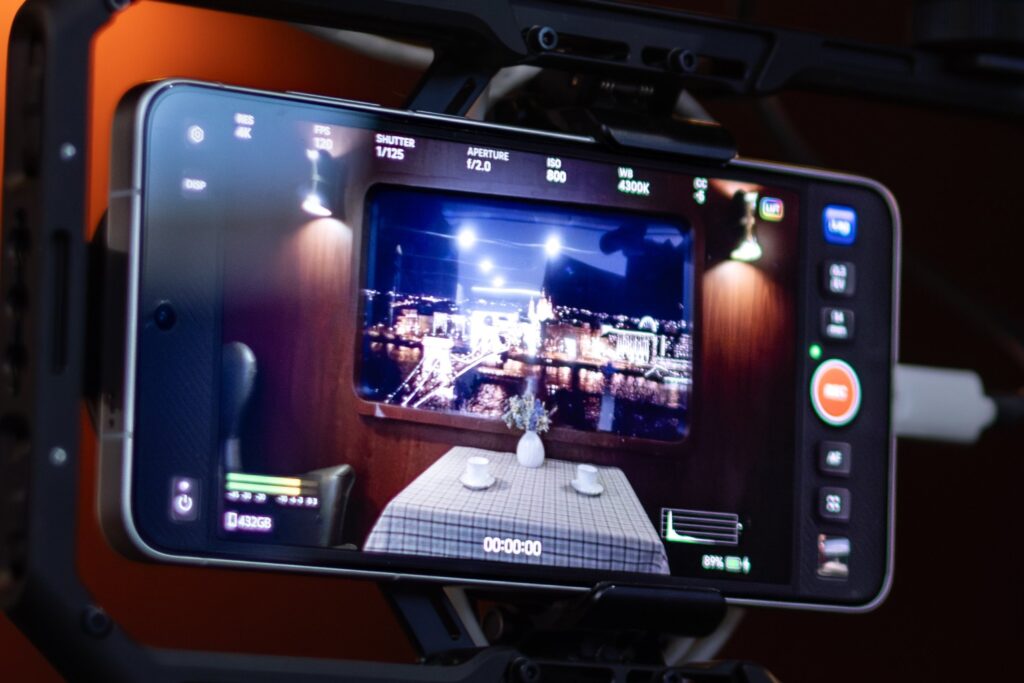
At Mobile World Congress 2026, Vivo showed its upcoming flagship phone, the Vivo X300 Ultra. And the company confirmed that the phone will support the Advanced Professional Video (APV) codec. This new video format is developed by Samsung for high-quality video recording. It first introduced on the Samsung Galaxy S26 Ultra.
The APV codec helps phones record very high-quality videos while keeping the file size smaller. Samsung says videos recorded with APV can be about 20% smaller than videos recorded with formats like High Efficiency Video Coding (HEVC). This means users can save storage space on their phones. At the same time, the video quality remains very clear.
Moreover, this APV codec also saves each video frame separately. This makes editing videos easier and smoother for creators. It also helps reduce lag while previewing or editing clips. Some popular editing apps like DaVinci Resolve, CapCut, and LumaFusion already support this format.

The new codec also works well because Android 16 includes built-in support for it. The phone will run on the Snapdragon 8 Elite Gen 5 chip from Qualcomm. This processor also supports APV at the hardware level. This helps the phone record and process videos smoothly.
Vivo X300 Ultra also comes with a powerful camera system, including a 200MP main camera from Sony and a 200MP telephoto camera from Samsung with 3.7x optical zoom. There is also a 50MP ultrawide camera and a 50MP front camera for selfies. This setup is designed for high-quality photos and videos.
Also, Vivo has confirmed that the phone will launch in several global markets. This will be the first time Vivo releases one of its Ultra models more widely outside China. The launch could create stronger competition for Samsungβs flagship phones.Β
The post Samsungβs APV video codec coming to Vivo X300 Ultra appeared first on Sammy Fans.


Samsungβs attention was mostly on the screen while it was designing the Galaxy S26 Ultra, but the company did throw in a few upgrades for the camera β the 200MP main and the 50MP 5x telephoto modules have wider apertures than their counterparts on the S25 Ultra (main: f/1.7 to f/1.4, tele: f/3.4 to f/2.9). The Horizon Lock mode for videos is also an interesting one. We have a full review of the S26 Ultra coming, for now you can check out our hands-on. We wanted to share one interesting discovery first β Samsung switched to a different type of lens for the 5x module. The S25 Ultra...
Right on time, today Realme launched the Narzo Power in India. As we assumed based on the company's teasers, this is nothing but a rebranded Realme P4 Power (but with fewer RAM/storage options, at least for now). That model arrived about a month ago. Realme Narzo Power in Titan Silver and Titan Blue Thus, the Narzo Power has a 6.8-inch 1280x2800 AMOLED touchscreen with 144Hz refresh rate and 6,500-nit peak brightness, the MediaTek Dimensity 7400 Ultra SoC at the helm, 8GB of RAM, 128/256GB of storage, a 50MP main camera with OIS, an 8MP ultrawide, a 16MP selfie camera, and a...
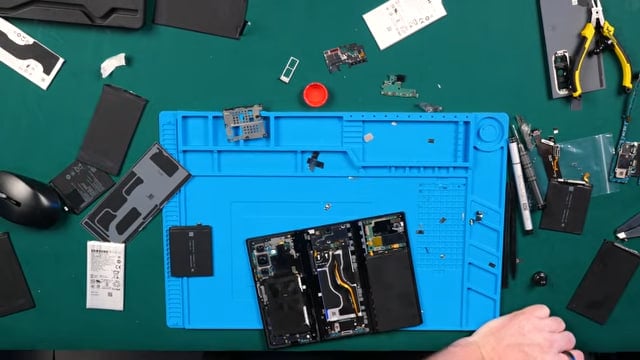
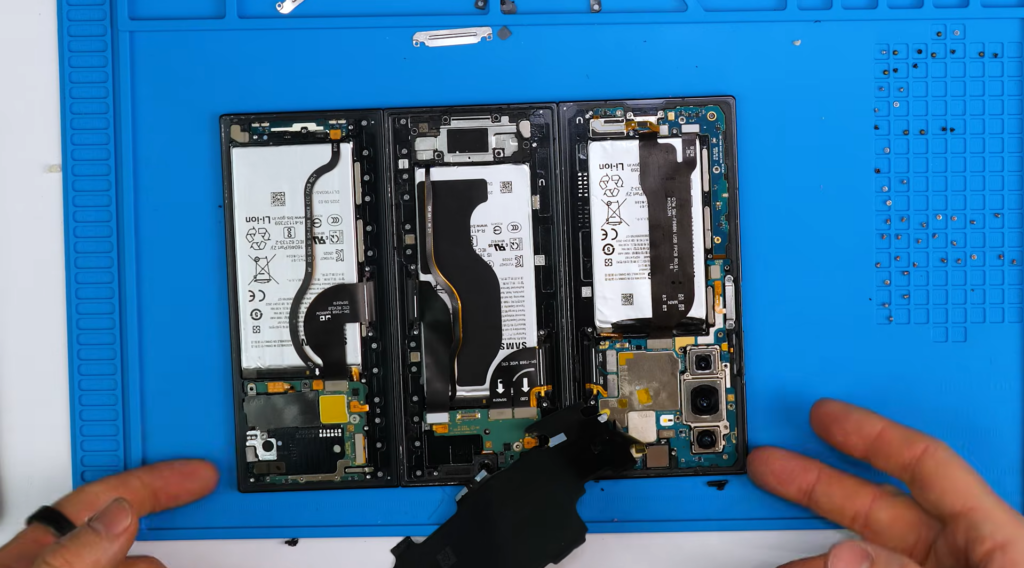
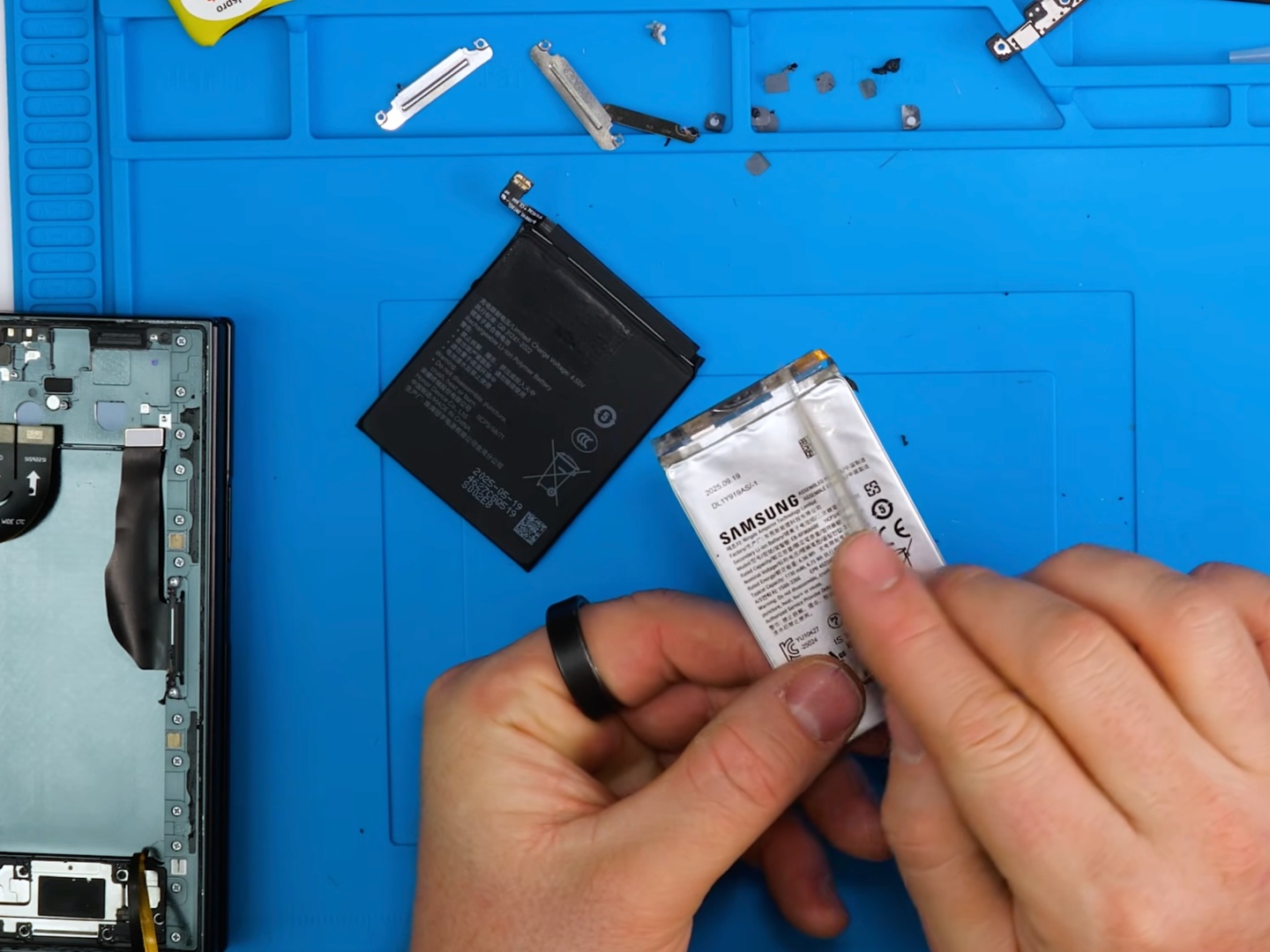
Samsung Galaxy Z TriFold recently became the subject of an interesting DIY experiment by tech YouTuber Scotty Allen from the Strange Parts channel. In his project, he tried to increase the phoneβs battery capacity by replacing the original batteries with three larger silicon-carbon batteries.
The Galaxy Z TriFold normally comes with a 5,600mAh battery. This battery is already quite big because the phone has a large foldable screen and a cover display that needs a lot of power. For most people, the original battery is enough for everyday use. However, Allen wanted to see if the phone could hold a much larger battery.
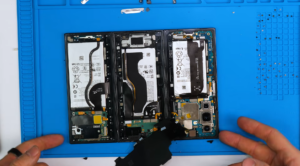
To begin the experiment, he carefully opened the phone and removed its original batteries. He also removed the battery management system that controls how the battery works.
Following that, he installed three silicon-carbon batteries inside the device. Because these batteries were larger than the original ones, he had to design custom plates to make them fit properly.

Image via
Strange Parts
After many attempts and a few damaged phones, he finally managed to create a working version of the device. The modified phone had a total battery capacity of 9,600mAh. This is about 4,000mAh more than the original battery and almost equal to the battery size of another phone like the Samsung Galaxy S24.
The new type of battery technology, silicon-carbon batteries, uses silicon in the battery material, allowing them to store more energy than traditional batteries. This means smartphones could have bigger batteries without becoming much thicker.
However, these batteries also have some downsides. They can expand more during use and may not last as long as regular batteries.
The hardest part of the project was not installing the batteries. The biggest problem was putting the foldable screen back together. In the final device, a white line appeared across the screen, showing that the display was slightly damaged.
Even though the project was not perfect, it shows how future battery technology could improve smartphone battery life.
Check the full video here:
The post Samsung Galaxy Z TriFold modified to feature a giant 9,600mAh silicon-carbon battery appeared first on Sammy Fans.


The Honor 500 series launched just three months ago in China and is yet to be available globally, but Honor is now ready with its first 600-series device. The Honor 600 Lite is now official and already on open sale in Malaysia and Slovakia. Honor 600 Lite in Desert Gold and Velvet Grey The device is built around a 6.6-inch AMOLED display with FHD+ resolution, a 120Hz refresh rate and 6,500 nits peak local brightness. The panel also features a pill-shaped cutout housing its 16MP selfie cam and an optical fingerprint scanner. Honor 600 Lite gets a 6.6-inch AMOLED display,...
Alongside the Nothing Phone (4a) and Nothing Phone (4a) Pro, today Nothing also introduced the Headphone (a), the first Nothing-branded affordable pair of over-ear headphones. It comes in four colors: pink, yellow, white, and black. It's advertised to get 135 hours of battery life on one charge, which is quite an exceptional amount if we dare say so ourselves. Furthermore, a five-minute recharge will deliver five hours of playback. It weighs 310g, and sports memory foam cushions. It has an IP52 rating for dust and sweat resistance. The Headphone (a) has the same controls as the...
February 2026 Google Play System Update has arrived for Samsung users, and nobody is celebrating. Samsung was busy with One UI 8.5 Beta testing and the Galaxy Unpacked event, which delayed the February patch rollout.
The February 2026 version has arrived recently, weighing in at roughly 90MB. Galaxy devices were stuck on the July 1, 2025, Google Play System version in some cases. The latest release comes as a big relief for those Galaxy fans.
In mid-February, tons of Galaxy phones suddenly started receiving the January update. SuchΒ updates exist so manufacturers donβt need to push full OTA patches every time Google tweaks something in the backend.
The Play System updates hadnβt touched Samsung Galaxy devices in some time, dating back to mid-2025, then those updates resumed.
Google describes the February 2026 Play System update with improvements to security and privacy and updates for bug fixes, plus new developer features for Google and third-party app developers
to handle web content.
You can now track your progress across games with trophies in the You tab, and a persistent navigation bar on large-screen devices makes navigating the Play Store slightly less annoying.
Samsungβs handling of these updates has been a mess. The company has remained silent for months, left users on outdated builds, and blamed One UI 8 rollout conflicts.
Februaryβs build is live; install it when it shows up. Just donβt assume Marchβs update will arrive on time.
The post February 2026 Google Play System Update hits Samsung devices appeared first on Sammy Fans.
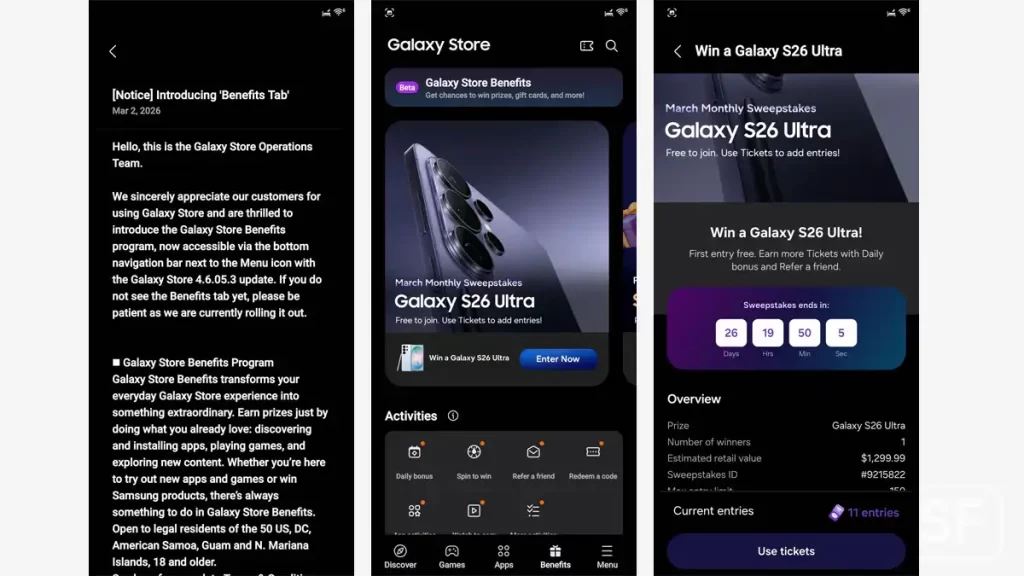
Samsung pushed a new Galaxy Store update, introducing a new βBenefitsβ tab Galaxy S26 Ultra giveaway. After Reserve sweepstakes, this is the second opportunity to enter the yearβs second biggest giveaway with the least effort.
Galaxy Store versionΒ 4.6.5.3 brings the βBenefitsβ tab to the navigation bar, and it contains a Galaxy S26 Ultra giveaway. Samsung confirmed the rollout is sequential, meaning you may not immediately gain access to the changes.
Samsung is doubling down on the usability of Galaxy Store. Thanks to the new βBenefitsβ tab, Galaxyβs native app store has become beneficial. It has different categories of perks that unlock with simple tasks and processes.
Activities include: Daily bonus, Spin to win, Refer a friend, Redeem a code, and so on.
Right now, the biggest offer inside the Benefits hub is the Galaxy S26 Ultra giveaway. It falls under the March Monthly Sweepstakes, which is free to join and requires tickets to add entries.
You get a key entitled βEnter nowβ to secure your entry. As confirmed by LarrySWhite, the first entry is free, and one can add multiple entries. These entries require βTicketsβ that you could score by completing specific tasks.
The program is running throughout March, so make sure you mark your entry.
Galaxy S26 Ultra starts at $1,299 in the United States. Samsung is currently offering double storage benefit in the preorder phase. Itβs available in four standard and two exclusive colors; you can score up to $900 trade-in credit.

Credits β Larry S White
The post Galaxy Store introduces βBenefitsβ hub and an S26 Ultra giveaway appeared first on Sammy Fans.


Say what you will about Nothing, but the company certainly has bold and recognizable designs. The new (4a) series arrives with the latest evolution of those designs and shakes up the formula of the (3a) series. Nothing Phone (4a) and Nothing Phone (4a) Pro The (3a) and (3a) Pro from last year were largely differentiated by their cameras. The new Pro model still offers a better camera than its vanilla sibling, but only just β instead, it now also stands out with a bigger display, faster chipset, better build and a Glyph Matrix similar to the Phone (3) flagship. The Nothing...
Samsung has rolled out a new LockStar update, and if youβve been dealing with busted clock settings or weird brightness issues on your AOD lock screen.
This modest patch comes with LockStar version 6.1.00.18, but the fixes actually matter if youβre running One UI 8.0 or higher. As described in the changelog, the update tackles a handful of specific annoyances.
Lock screen and always-on-display clock settings were throwing errors for some users, which is the kind of basic functionality problem that shouldnβt exist this late in the One UI cycle.
Samsung also patched bugs that surfaced during Smart Switch transfers and GTS testing. Another patch included for the manual brightness malfunction on devices without full-screen AOD support.
LockStar March 2026 update changelog:
People who actually bought into Samsungβs lock screen ecosystem need stability. These arenβt flashy notes, but theyβre the kind that keep daily use from feeling like a Beta test.
With the March 2026 update, the Samsung LockStar update doesnβt reimagine anything or add new customization options. It just makes the thing work the way it shouldβve worked from the start.
Should you grab it now?
If youβve seen any of these bugs yourself, yes. If your lock screenβs been behaving, you can wait a week and let someone else handle the weird edge cases.
The post Samsung LockStar update improves lock screen experience appeared first on Sammy Fans.
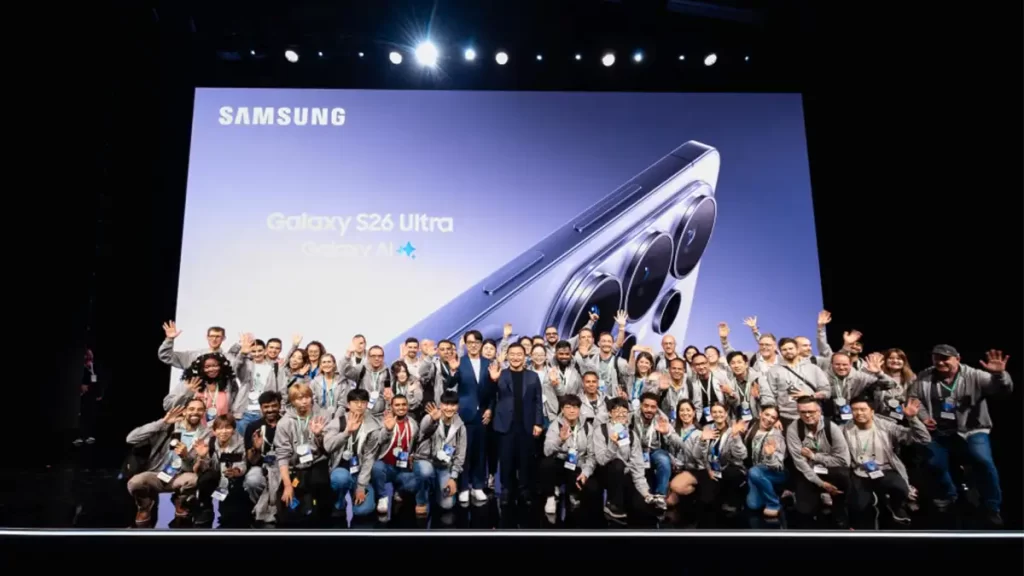
Samsung scooped up a bunch of superfans, flew them to San Francisco, and gave them Galaxy S26 feature superfans access before anyone else could get their hands on it.
From late February, the company hosted the Galaxy Community Connect 2026 event. Over 50 people from 17 countries got to test drive the unreleased Galaxy S26 and Buds 4 series.
Samsung Members Stars are the people who actually post high-quality content on Samsungβs community platform. Samsung also pulled in Reddit users, who bought Galaxy devices and then got mad at you in the comments.
Features from the Galaxy S26 series that were trending include Now Nudge, Privacy Display, Circle to Search, and Super Clear Calls of the Galaxy Buds 4 series.
Now Nudge checks your calendar when someone messages about plans and presents a context aware popup if thereβs a conflict.
Privacy Display on the S26 Ultra adjusts viewing angles to block visibility from side angles. It can be activated in settings, bringing additional personalization for specific apps.
Upgraded Circle to Search can now handle multi-element searches, like circling a celebrityβs outfit and getting curated pieces to recreate the look.
Super Clear Call uses deep neural network tech and a voice pickup unit to separate your voice from background noise, then doubles Bluetooth bandwidth to 16kHz for Super Wideband calling.
AMA session:Β Sungdae Joshua Cho, who runs Visual Solution for Samsungβs mobile division, took live questions. The company says itβll keep doing this kind of direct community engagement.

The post Samsung handed Galaxy S26 to superfans before launch appeared first on Sammy Fans.


The vivo X300 Ultra was showcased at MWC 2026, but the company did not reveal much about its design or hardware specifications at the time. As MWC draws to a close, however, vivo has now confirmed some details about the phoneβs primary rear camera hardware. In a Weibo post, vivo product manager Han Boxiao revealed that the X300 Ultra will feature a 200MP primary rear camera. The main camera will use the Sony LYTIA-901 1/1.12-inch sensor and offer a focal length of 35mm. vivo claims that the new sensor can capture 30% more light per pixel than before. According to vivo, the new...
Itβs almost time for Nothing to unveil its latest (a)-series phones. The brand is hosting a product launch event where weβll see the debut of the Phone (4a) and Phone (4a) Pro, and you can tune in to the announcement from the video below at 10:30 GMT time. We have a pretty good idea of what to expect from the Phone (4a), which we even saw in person at MWC. The device will come in four color options with the all-new Glyph Bar, replacing the usual Glyph Lights seen on previous Nothing smartphones. It should launch with a 6.78-inch AMOLED (FHD+ 120Hz), alongside the Snapdragon 7s Gen 4...
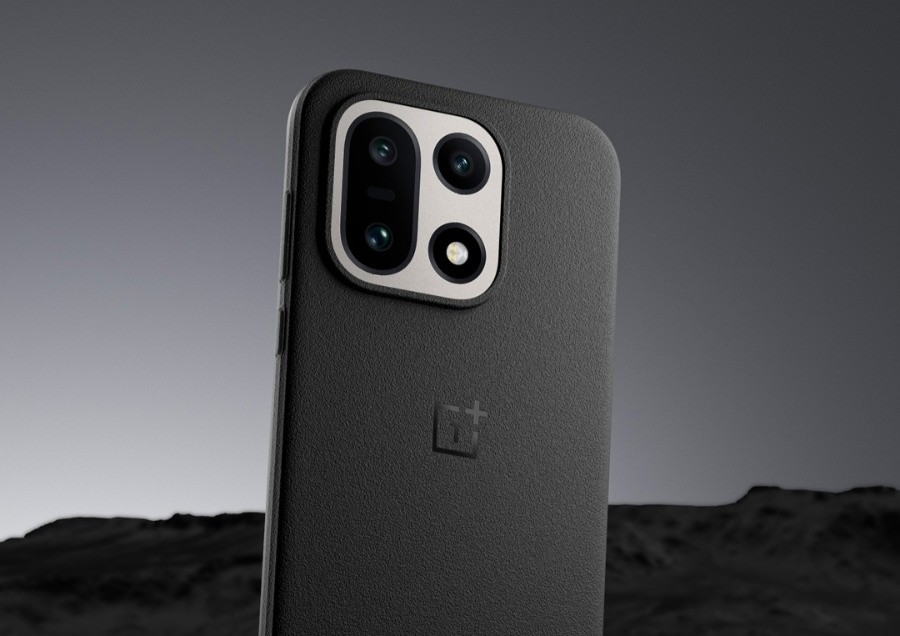
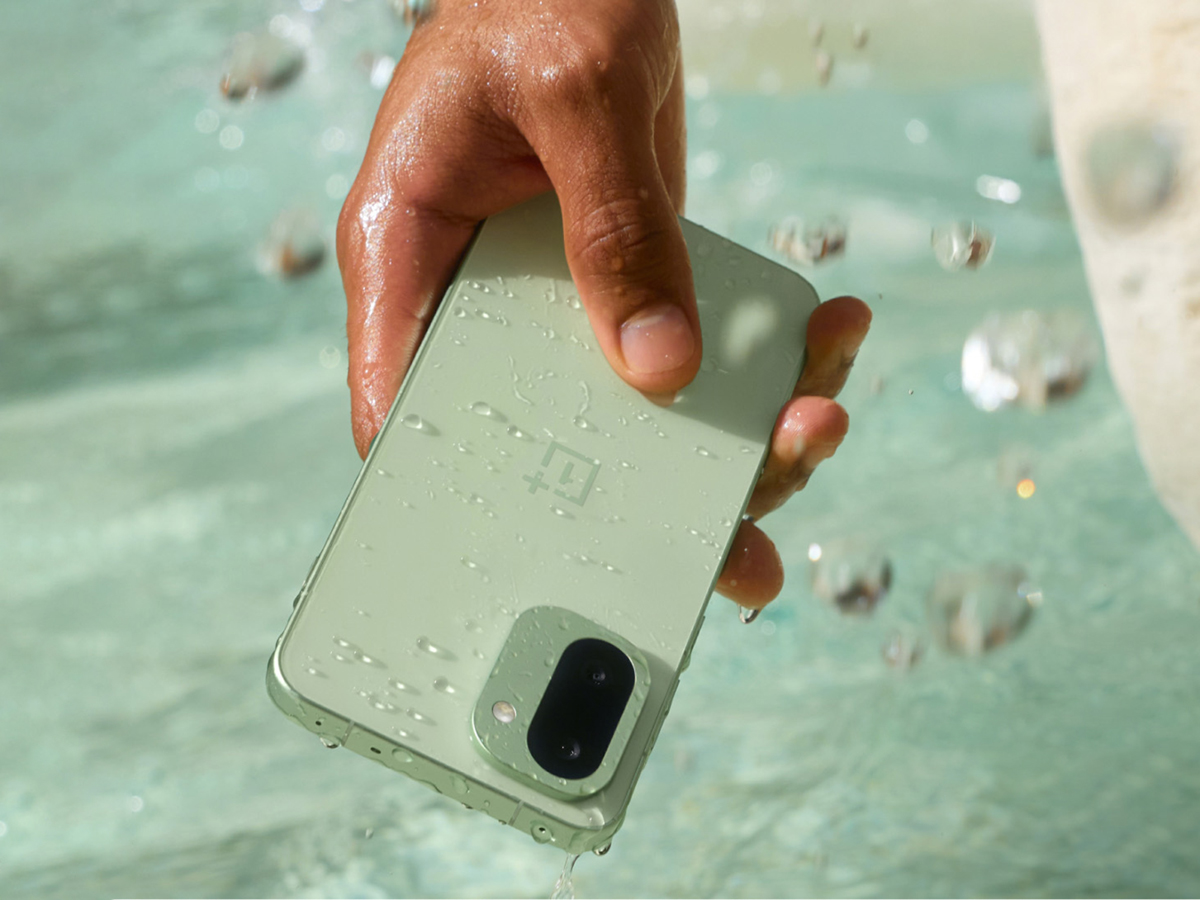
OnePlus has revealed new details about its upcoming compact phone. The OnePlus 15T is expected to launch later this month, although the company has not announced an exact date yet. However, it recently began teasing the handset. In its latest teasers, OnePlus has confirmed the battery capacity and additional design details of the upcoming OnePlus 15T. The smartphone will feature a 7,500mAh battery with support for 100W wired charging and 50W wireless charging. The OnePlus 13T came with a 6,260mAh battery The phone will also come with IP66, IP68, IP69, and IP69K ratings for improved...
JB Park, President and CEO for Southwest Asia, let slip that the entire Galaxy S26 lineup will roll off the production line at Samsung Noida factory in India (not just assembling, but full manufacturing).
CEO Park also revealed engineers at the Bengaluru and Noida R&D facilities in India βplayed a pivotal roleβ in developing the S26 Galaxy series.
Park said βGalaxy S26 seriesβ but didnβt break it down. Does that include the S26 Ultra, or just the base and Plus variants? Samsungβs done splitting manufacturing before, so itβs worth asking.
If youβve been watching Samsungβs India operations, you know those two hubs have been scaling up quietly for the better part of three years now.
Every tech giant with a factory in India loves to talk about local production. Itβs good optics, it softens import duty hits, and it makes the government happy.
Meanwhile, R&D is different, which means the actual decisions about hardware, software integration, feature sets, and performance tuning are happening on the ground in India.
If Bengaluru and Noida engineers really did shape the S26 series, then Samsungβs betting that its India talent can build flagships that will sell around the world.

The post Galaxy S26 series will be made in India, CEO lauds pivotal role in R&D appeared first on Sammy Fans.


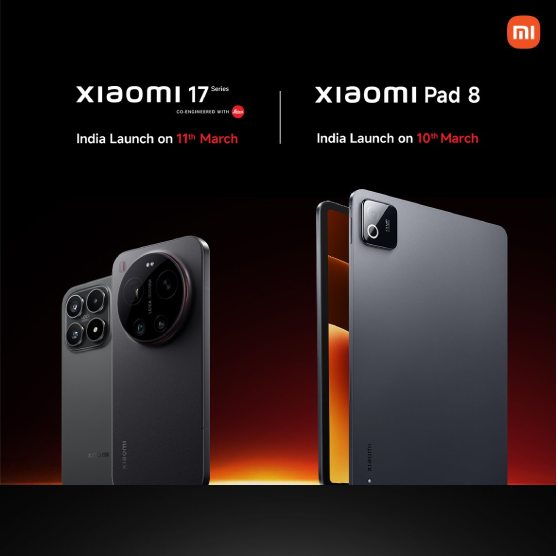
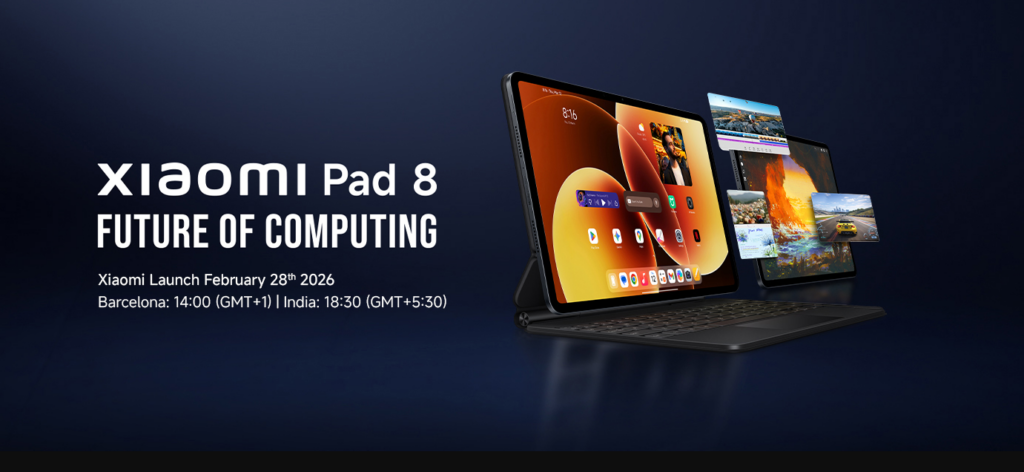
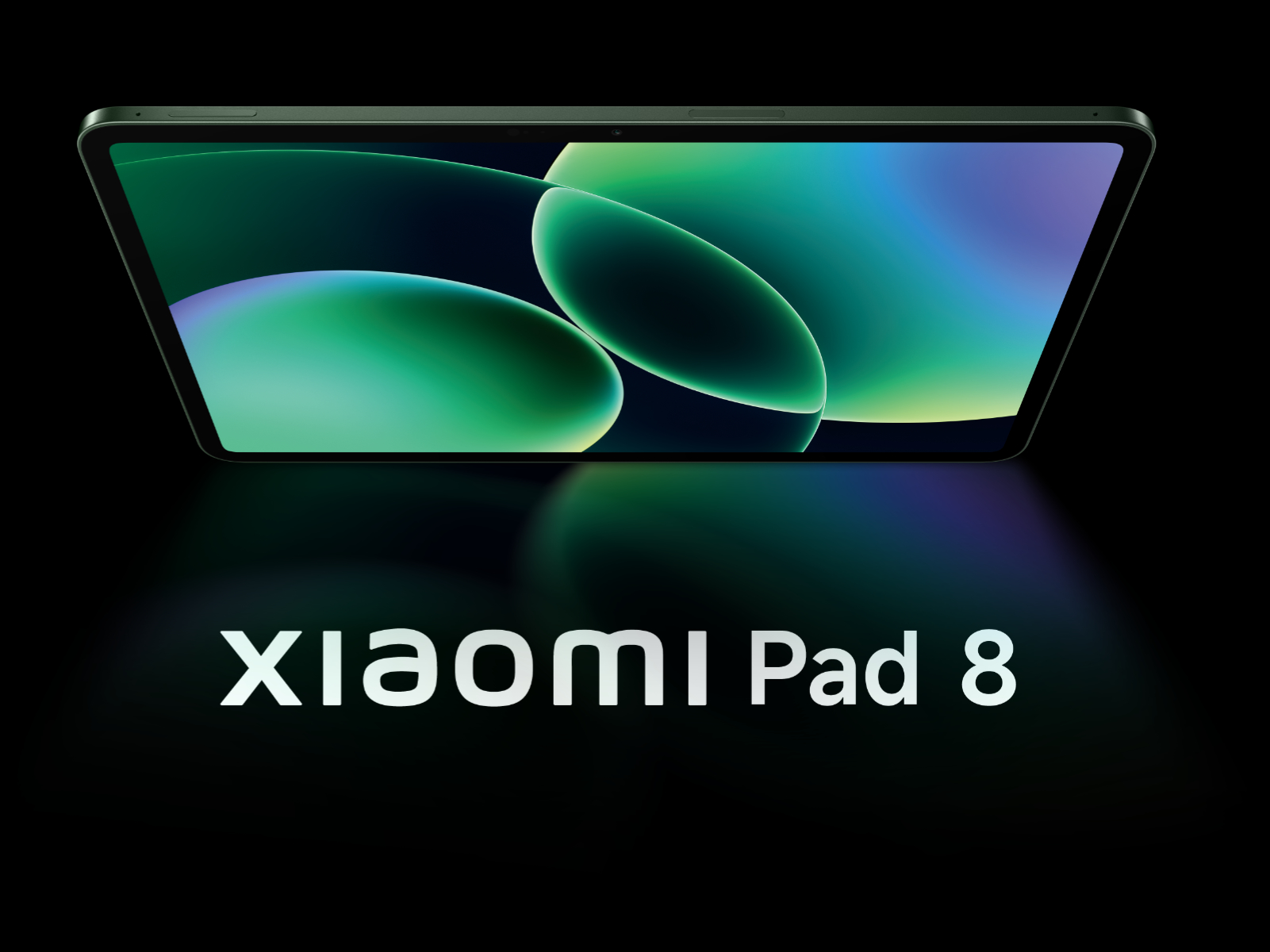
A few days ago, Xiaomi announced that it would be launching the Pad 8 in India alongside the Xiaomi 17 and Xiaomi 17 Ultra smartphones on March 11. Today, however, the company changed its mind. The phones are still on for March 11, but the tablet will be launching a day early, on March 10, instead. According to Xiaomi officials, this is due to "overwhelmingly positive response and high demand", though it is just one day we're talking about, so we're not sure what real impact that will have. The Pad 8 launched in China in September with an 11.2-inch IPS LCD screen with 2136x3200...
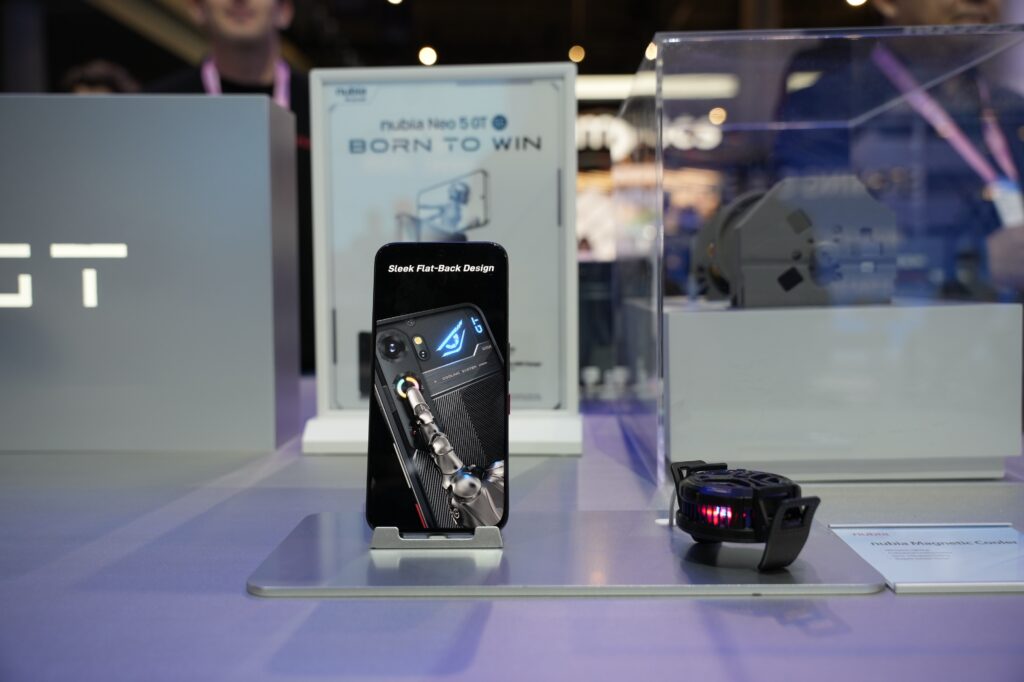
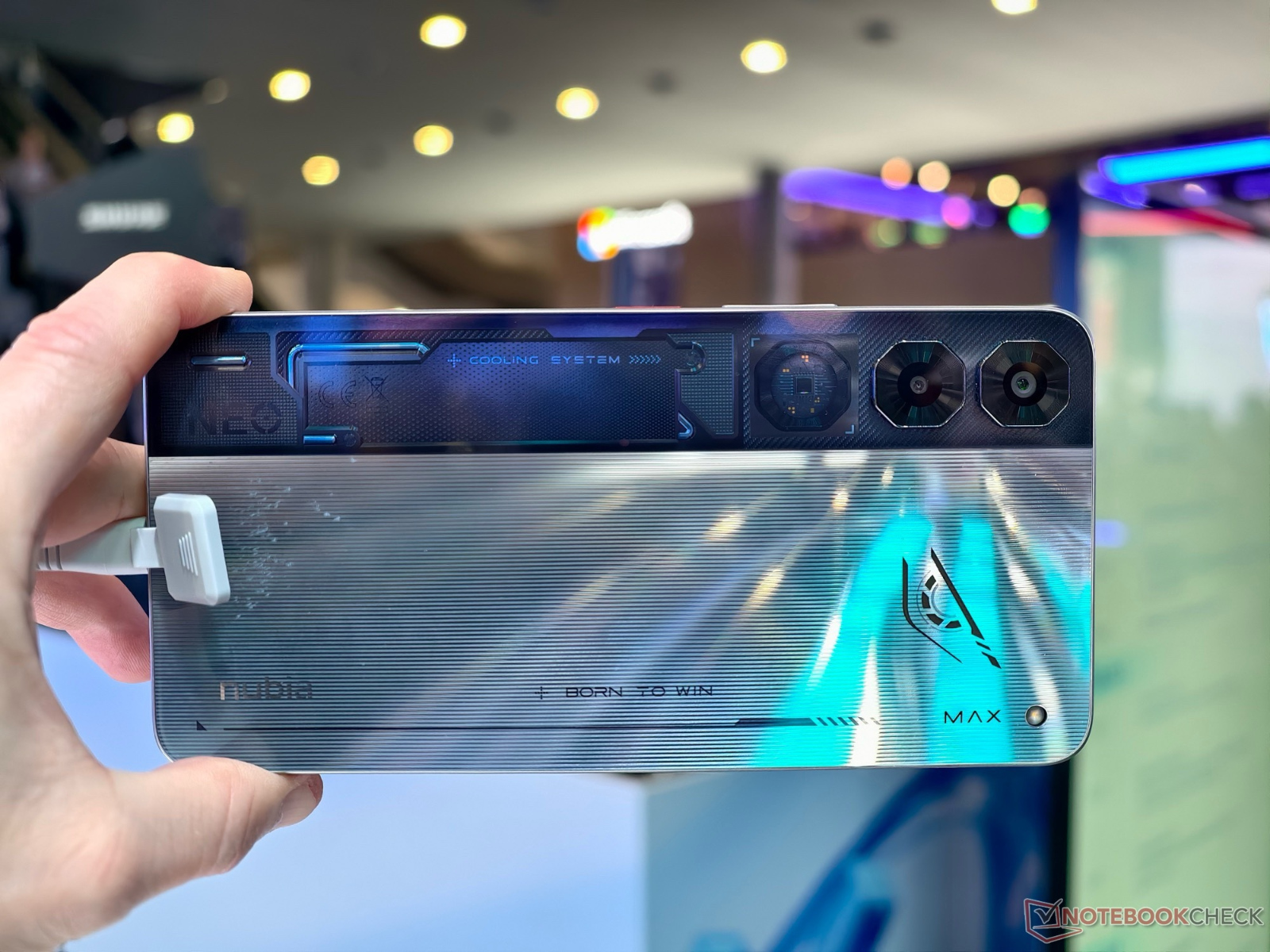
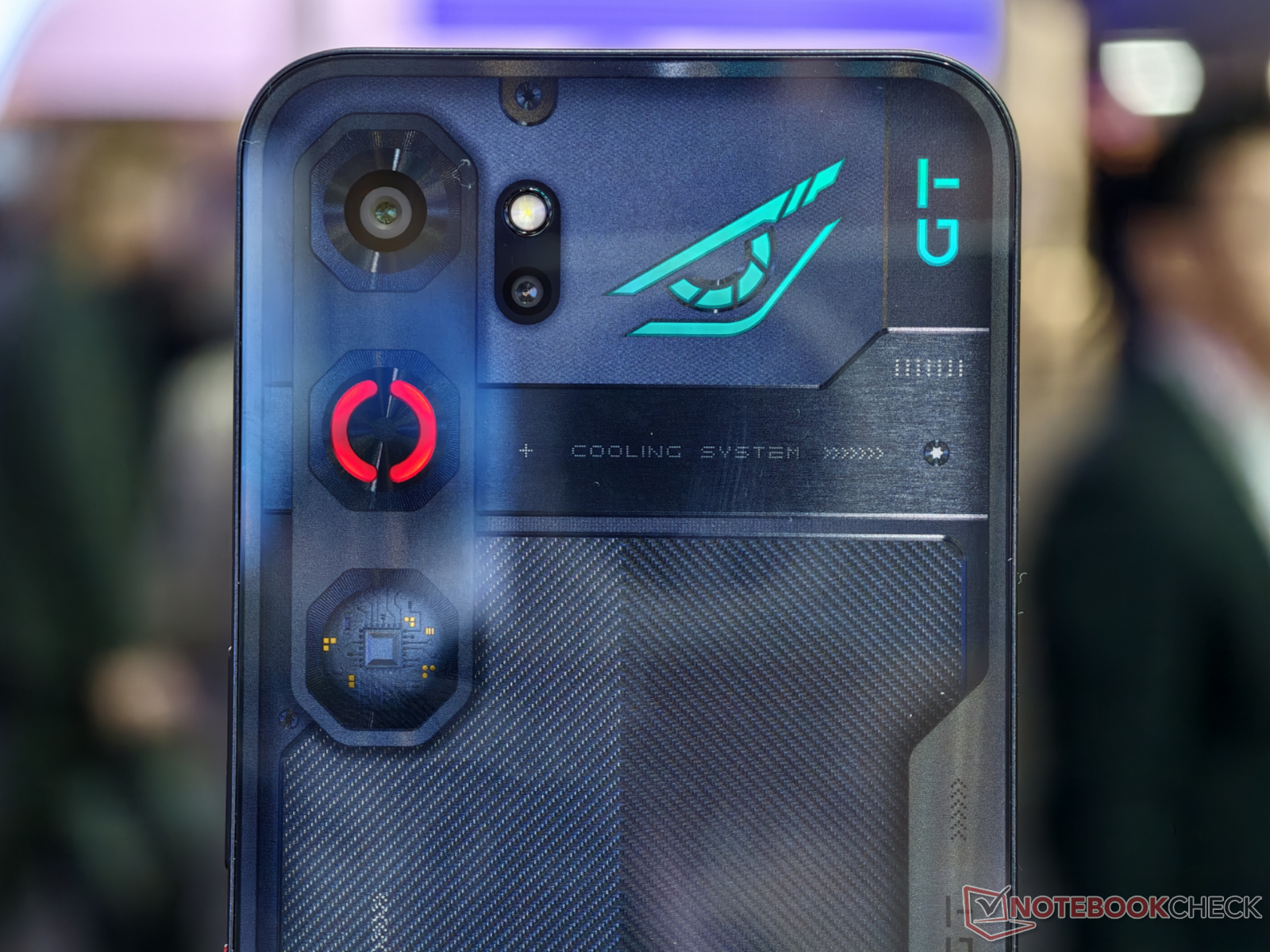
Gaming phones with built-in cooling fans are becoming more and more affordable. Earlier this year we saw the launch of the RedMagic 11 Air, which is equipped with a Snapdragon 8 Elite chipset, a fan and a 6.85β 144Hz display, all at a price of β¬500. Now weβre at the MWC where nubia unveiled the nubia Neo 5 GT, which will be available globally at a price of β¬400 (note that the first region to get this phone is Southeast Asia). The nubia Neo 5 GT is the first in its class with a built-in cooling fan Yes, the GT has the first built-in cooling fan in its class. The fan is...
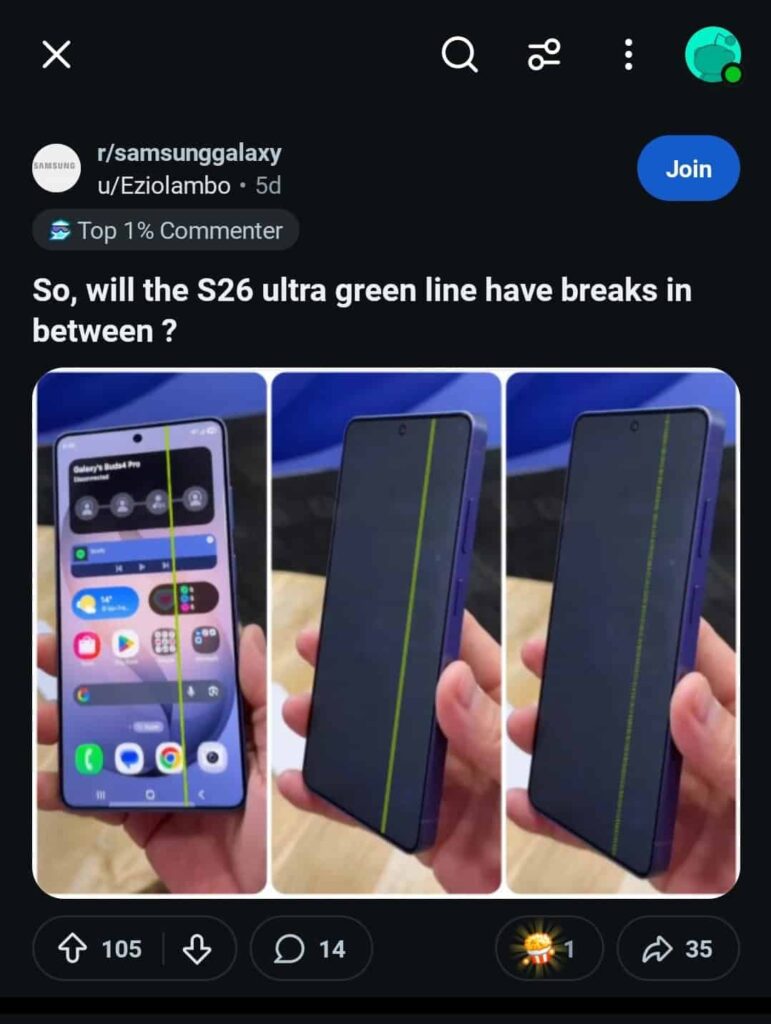
New year, new controversy. Samsung canβt enjoy the privilege Apple does after unveiling new products. While the internet praises Appleβs every move, itβs just the opposite when it comes to Samsung. The newly launched Galaxy S26 Ultra is already a hot topic, adding fuel to the trend; fake reports of Green Line and display glitches have surfaced online.
Samsung launched the Galaxy S26 Ultra with its best display technology. The panel features M14 material set and Flex Magic Pixel technology. The OLED brings a Privacy Display feature that dims brightness through software.
No doubt, Galaxy phones are famous for their green/pink line issues. Weβve seen reports of a vertical line surfacing on several models. Even some Galaxy S24 Ultra users reported that a green line appeared without physical damage.
A Reddit user, u/Eziolambo, posted a cryptic post earlier. The original poster slapped a dashed green line on the Galaxy S26 Ultra display using AI/Photoshop. The user asked if βthe S26 Ultraβs green line will have breaks in between.β
It was pure fun, and the question is literally factual given the pixel structure of the Galaxy S26 Ultraβs screen. Meanwhile, things went opposite when the altered picture was taken to X and circulated as a real scenario.
The cropped image has gone viral on X, with hundreds of users flooding the comments section. Some spotted that the image is fabricated using AI, while the wider impact isnβt visible in comments, but itβs hurting the initial hype.

Apart from this, reports of Privacy Display have degraded the screen quality are also trending on the internet. Thereβs a targeted negativity being spread against the brand and the device, which needs to be addressed by Samsung.
If youβre planning to purchase the Galaxy S26 Ultra, visit your nearest Samsung Experience Store. Have a hands-on experience before making the purchase, at the same store, or order from the Samsung Store thereafter.
The post Galaxy S26 Ultra already hit by Green Line curse? Debunking the early reports appeared first on Sammy Fans.
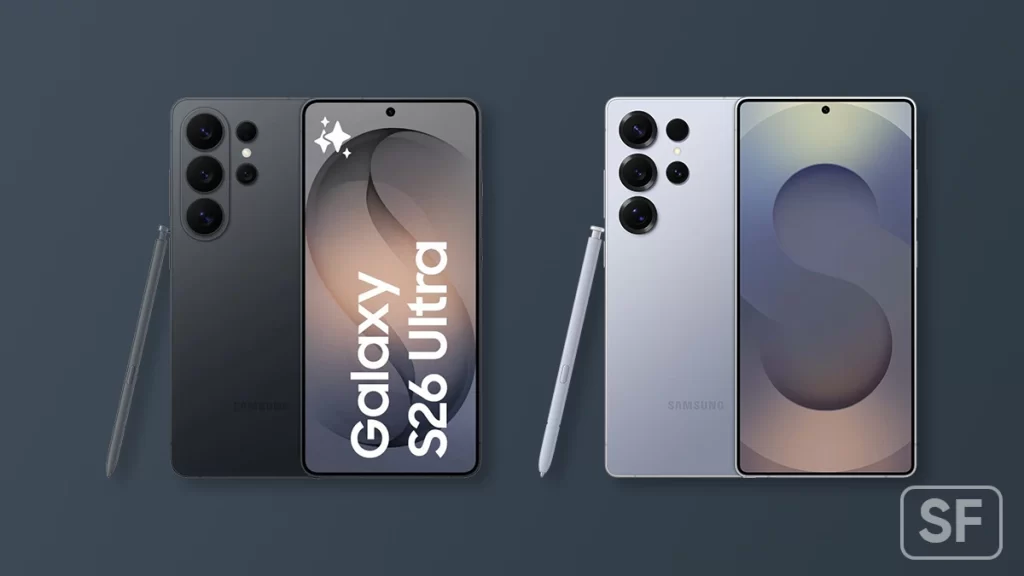
Caviar just unveiled the Totem collection, a set of modded Galaxy S26 Ultra. The flagship model, Fire Horse, clocks in at $11,490, while the cheapest model costs $10,490.
Only 76 people can buy into this particular fever dream. Each Totem design, whether itβs the Fire Horse or the Lion or the Falcon or the Wolf, gets capped at 19 units.
The phoneβs cost, $11,490, is three months of rent in most American cities for a phone with hand-painted red enamel and a 24K gold horse rearing up on the back.
The Fire Horse treatment involves hand-applied red enamel layered over black titanium with a PVD coating that watchmakers like Richard Mille lean on when they want something durable that looks expensive.
The horse itself is a bas-relief sculpture, not a sticker. Itβs meant to honor the Fire Horse in the Eastern Zodiac, which governs 2026. That said, the money isnβt just buying gold plating, though thereβs plenty of that.
The other three Totem variants follow the same playbook.
Caviar knows its audience
Caviarβs been doing this for years now. Slap gold and carbon fiber on flagships, invent some mystical narrative around archetypes or zodiac signs, then sell them to people who find normal luxury boring.
This isnβt for people budgeting their next upgrade. Itβs for people who want a conversation piece that doubles as a status object and happens to make phone calls.
A regular Galaxy S26 Ultra starts at $1,300, while Caviar wants eight times that for materials and craftsmanship. Youβre still getting the same Snapdragon 8 Elite Gen 5, same 200MP camera, same privacy display tech.

Samsung Galaxy S26 Ultra Caviar Models
The post Caviar Galaxy S26 Ultra gets 24K gold treatment for $11,490 and only 76 people can buy it appeared first on Sammy Fans.


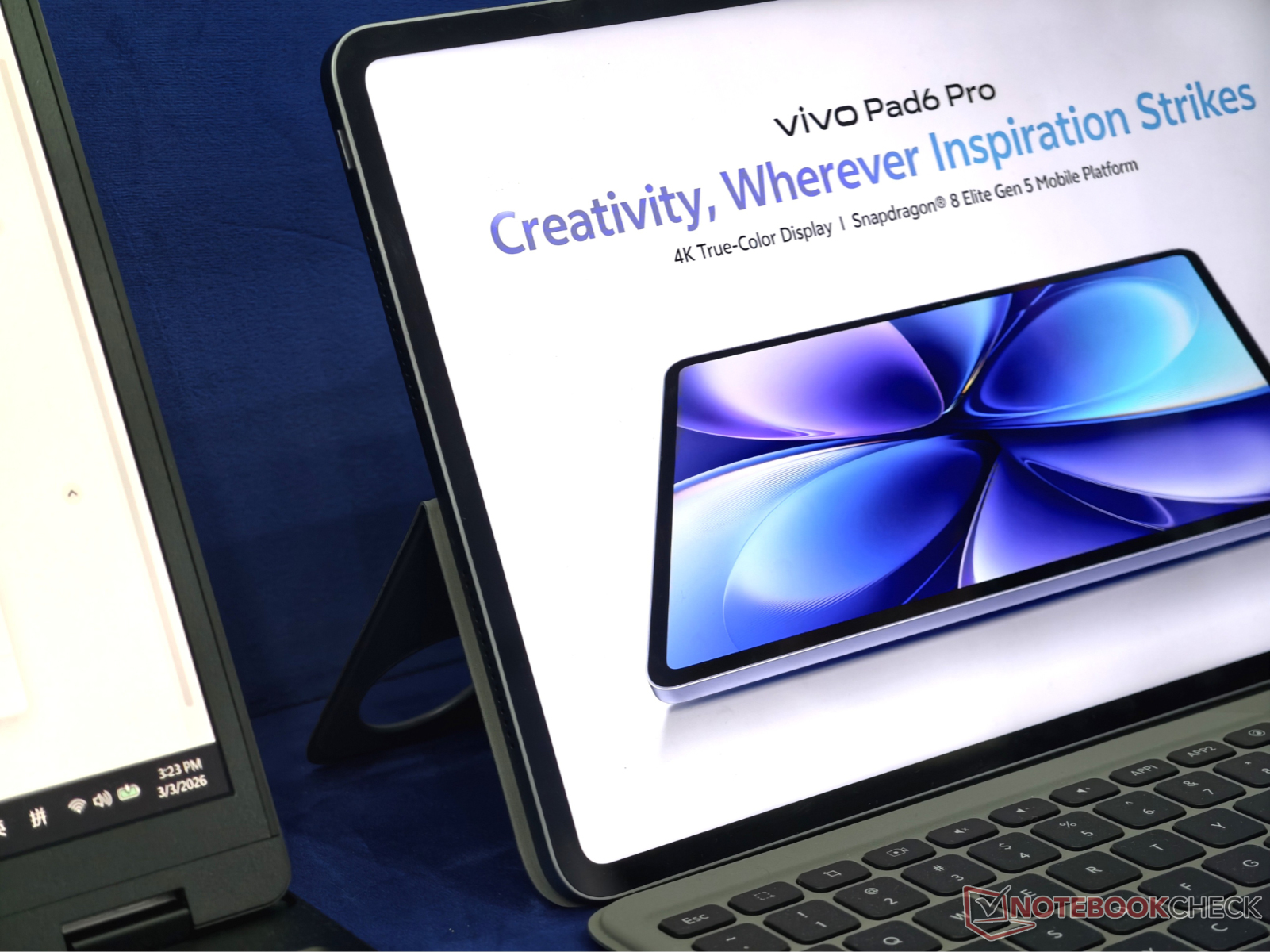
vivo launched the Pad5 Pro last April, and this week at MWC in Barcelona the company showcased its successor, aptly named vivo Pad6 Pro. According to the brand, this has "the industry's first 4K true color screen", which will deliver "lifelike" looks. The tablet is powered by the Snapdragon 8 Elite Gen 5 SoC, and unfortunately no other official details are known about it yet. vivo has, however, shared the three images you can see below, showing the tablet with a keyboard and stylus attached. vivo Pad6 Pro One of the images promises 4K gaming, with "Super Resolution & Frame...
After a brief halt, Samsungβs software rollout has returned to the usual pace. Due to the Galaxy S26 Unpacked, the distribution of the February 2026 update has been pushed to March, with the Galaxy Tab S11, Tab S9, and Tab S8 starting to receive it.
Samsung is bringing the February 2026 security update to the Galaxy Tab S11, Galaxy Tab S9, and Galaxy Tab S8 series tablets. The software has initially landed in South Korea, and the expansion is likely to take place shortly, via Aptivi.
The company recently shared details of its March 2026 patch. Galaxyβs next SMR will bring patches to sixty-seven CVE and SVE items. It includes improvements for Android and One UI for better system security and stability.
February 2026 security patch carries thirty-seven improvements. Among the total items, twenty-five were provided by Google, while the remaining twelve were provided by Samsung.
If you own a Galaxy device, open the system Settings, followed by the Software update page. Tap on the Download and install button to initiate the process. Hit Restart now to begin the installation of the update on your tablet.
Samsung is also tailoring One UI 8.5 for several Galaxy devices. The official version landed with the S26 series last month. The public rollout to existing models may commence in April, with another Beta coming to the S25 series.
The post Samsungβs February 2026 update reaches Galaxy Tab S11, Tab S9, and Tab S8 tablets appeared first on Sammy Fans.
Samsung Galaxy Watch 8 and Watch 8 Classic users begin receiving the February 2026 update. Recently, Samsung pushed a new firmware update to the Watch 7, which also carried the February 2026 security patch.
For mobile devices, Samsung provides 37 security improvements. It consists of 25 CVE items from Google and 12 SVE items from Samsung. Galaxy Watches run the Wear OS operating system, which is actually based on Android.
Users of the Watch 8 and Watch 8 Classic can identify the update via the PDA build version ending with AZB1 (via LarrySWhite). The software weighs roughly 430 megabytes. Samsung will sequentially expand the availability of the February patch.
You may have been wondering why March update bringing February patch?
Wear OS watches were expected to receive new update in February. Since Galaxy wearables get new OTAs every quarter, February was the timeline. However, the Galaxy S26βs launch has delayed the software distribution for all devices.

Source β Samsung
Expect the next firmware update in May or June, while the patch could be dated May 2026. Meanwhile, we would see the expansion of February patch to the remaining Galaxy Watch models over the next couple of days.
Check for updates on your Watch or Wearable app on mobile. Open Watch settings followed by Watch software update. Hit Download and install to allow the system establish connection with the server and fetch the OTA.
Previously, Samsung rolled out Wear OS 6-based One UI 8 Watch to Watch 7 and older models. It brought plenty of new features and design tweaks. The new tile system elevates usability by offering the creation of function-based combinations.
The post Galaxy Watch 8 gets February 2026 security update⦠in March appeared first on Sammy Fans.

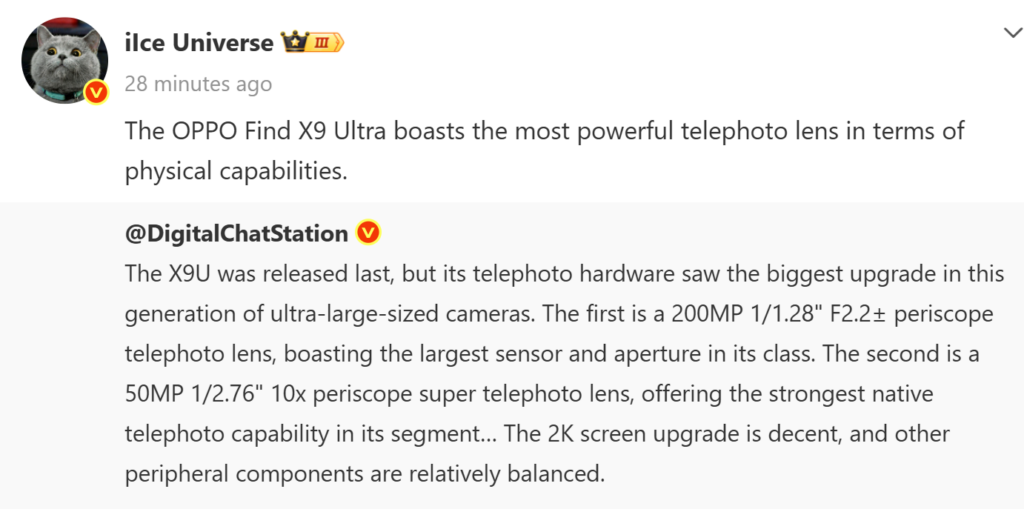
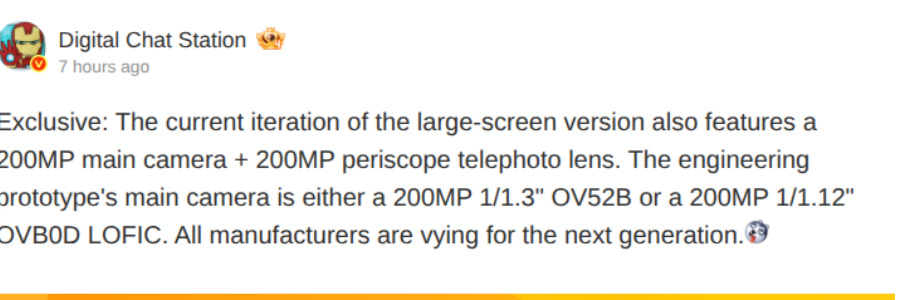
Mere hours ago a rumor from China claimed the upcoming Redmi K100 Pro Max would start at around CNY 5,000 (approximately $725 at the current exchange rate), and now the same source brings us the first spec details for the device. Of course, do take these with a pinch of salt since they aren't confirmed in any way, and the device is still many months away from actually launching. The Redmi K100 Pro Max is said to employ a new 200MP main camera with a 1/1.28" type sensor, as well as a 50MP periscope telephoto camera that will be upgraded from its predecessor. Redmi K90 Pro Max It...
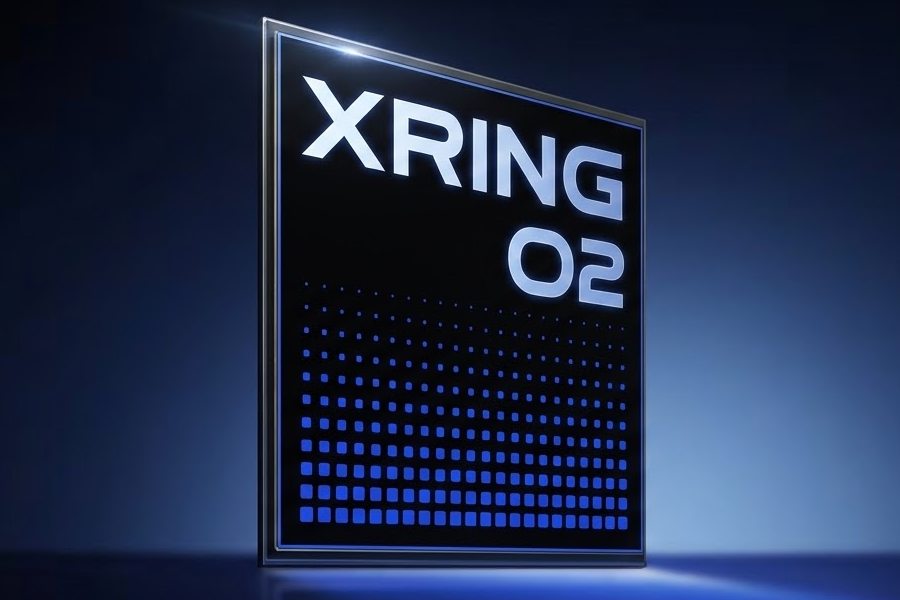
Xiaomi introduced its in-house XRING O1 mobile processor back in May last year. Seems like the company is now gearing up for its successor.
According to well-known leaker Digital Chat Station, Xiaomi will βdefinitelyβ launch a new XRING-branded chip this year, possibly called the XRING O2.

Like its predecessor, it is said to be manufactured using TSMCβs 3nm process. While the naming has not been officially confirmed, it is expected to be the direct successor to the O1.
The XRING O1 is Xiaomiβs first self-developed flagship SoC, built on TSMCβs second-generation 3-nanometer process. The chip later debuted inside the Xiaomi 15S Pro, where it delivered competitive benchmark scores and solid real-world performance.
In a recent interview with CNBC, Xiaomi Group President Lu Weibing said the company plans to release a brand-new self-developed mobile phone processor every year going forward.
Outside of companies like Apple and Samsung, most Android phone makers rely heavily on chip suppliers such as Qualcomm and MediaTek. Xiaomiβs entry into that small club signals a longer-term strategic shift that will give the brand greater control over its products.

However, Xiaomiβs chip ambitions are not limited to smartphones. The company is reportedly planning to expand the use of its next-generation silicon across a wider range of smart devices within its ecosystem. This could include tablets, wearables, and other connected hardware.
When Xiaomi first launched the O1, it positioned the chip as a foundational step. Founder Lei Jun previously said that self-developed chips typically require three to four years of research and development.
He explained that the first generation was more about validating the underlying technology than chasing large shipment volumes, and pre-order quantities were intentionally limited.
On paper, however, the O1 was no small experiment. Built on Arm-based CPU and GPU architectures, it achieved a multi-core benchmark score above 9,000, placing it among top-tier flagship chips. For a first attempt, that was enough to draw attention.
For more daily updates, please visit ourΒ News Section.
Stay ahead in tech!Β Join ourΒ Telegram communityΒ andΒ sign up for our daily newsletterΒ ofΒ top stories!Β 
The post Xiaomi XRING O2 to launch this year, to be based on 3nm process appeared first on Gizmochina.
Motorolaβs Razr fold has received a DXOMARK camera score of 164, earning the DXOMARK Gold Label for imaging performance. According to DXOMARKβs rankings, this score places the device among the top cameras on foldable smartphones and ranks it 8th overall globally, beating competitors like the Google Pixel 10 Pro XL and the Xiaomi 17 Pro Max. Motorolaβs recently launched Motorola Signature has also received the same label from the testing lab.

For those unaware, DXOMARK is an independent technology evaluation laboratory that measures the performance of consumer electronics using controlled scientific tests and perceptual analysis. To determine the score, the Razr fold was evaluated using the DXOMARK Camera test suite, which analyzes photo quality, zoom capability, and video performance from a user perspective.

In its findings, DXOMARK reported that the Razr fold performed well in exposure accuracy, dynamic range, and low-light photography. The device produced balanced colors across different lighting conditions, while maintaining good detail and relatively low image noise. The lab also observed accurate skin tone rendering and consistent depth estimation, which helped portrait shots appear natural.

Zoom performance was another area highlighted in the evaluation. The Razr fold includes a dedicated 3x periscope telephoto camera, which produced detailed images with stable color reproduction during testing. DXOMARK noted a balanced texture-to-noise ratio, which helped maintain clarity in zoomed images. Portrait photography also benefited from the 85mm equivalent focal length, which creates natural subject separation. The ultra-wide camera captured a wide field of view while maintaining consistent image quality.
The camera hardware on the Razr fold includes three 50MP rear cameras equipped with Sony LYTIA sensors. The 50MP main camera uses the Sony LYTIA 828 sensor, which Motorola describes as its largest 50MP sensor so far. The system supports AI-based image processing and produces photos with Pantone-validated color and skin tone calibration.
The 50MP periscope telephoto camera uses the Sony LYTIA 600 sensor and supports 3x optical zoom. The phone also offers 100x Super Zoom Pro, which relies on AI processing to maintain detail at long distances. Optical image stabilization is included to reduce blur in zoom shots. The 50MP ultra-wide camera provides a 122Β° field of view and supports Macro Vision for close-up photography.
For selfies and video calls, the device includes a 20MP front camera with Quad Pixel technology and a 32MP internal camera with Quad Pixel technology, which can be used in laptop mode for hands-free photos or video calls.
Video recording on the Razr fold supports 8K resolution with Dolby Vision, which allows higher dynamic range and improved color reproduction.
Image processing on the device is handled by Motorolaβs Photo Enhancement Engine, which uses AI to expand dynamic range, reduce noise, and create software-based bokeh effects. The system also uses the Snapdragon 8 Gen 5 Mobile Platform, which supports AI processing for camera performance and efficiency.
For more daily updates, please visit ourΒ News Section.
Stay ahead in tech!Β Join ourΒ Telegram communityΒ andΒ sign up for our daily newsletterΒ ofΒ top stories.
(Source)
The post Motorola Razr Fold Camera Tested by DXOMARK: 164 Score Sets Foldable Record appeared first on Gizmochina.
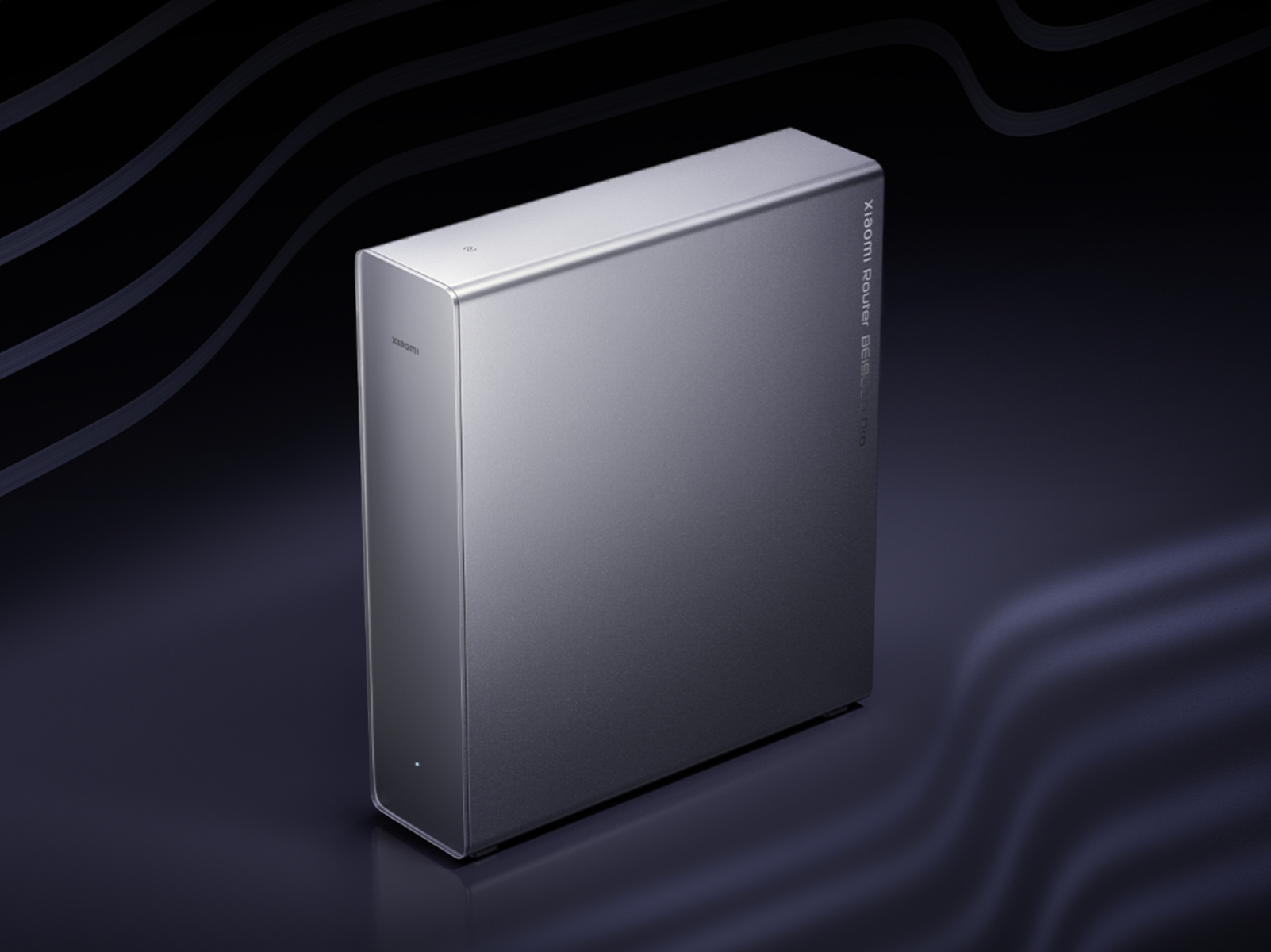
After unveiling the Xiaomi 17 series and Xiaomi Pad 8 lineup, the brand is expanding its smart IoT product lineup with a new router. The new Xiaomi BE19000 Pro WiFi 7 router is set to debut globally soon. So here are all the details.
The upcoming router was spotted on the Chinese tech giantβs official global website. This quiet listing revealed a high performance WiFi 7 router with built-in NAS functionality. Looking at the webpage, the Xiaomi Router BE19000 Pro brings tri-band WiFi 7 connectivity, bringing support for 2.4GHz, 5GHz, and 6GHz bands. The router delivers combined theoretical wireless speeds up to 18,656Mbps, making it one of the fastest networking devices from Xiaomi yet.

The BE19000 Pro also delivers serious wired connectivity to match its wireless capabilities, including two 10-Gigabit Ethernet ports and four 2.5-Gigabit Ethernet ports. This allows users to connect high-bandwidth devices such as gaming PCs, NAS servers, or media workstations while maintaining multi-gig speeds across the network. Other ntoable features include WiFi mesh networking with AI optimizations, Bluetooth Mesh functionality for smart home devices, and Xiaomiβs HyperOS ecosystem integration.
Unfortunately, Xiaomi has yet to confirm the launch date, availability, or pricing details for the Xiaomi BE19000 Pro WiFi 7 Router. In related news, the company recently unveiled the Xiaomi Vertical Study Lamp 2 and is gearing up to release the HyperOS 3.1 update.
For more daily updates, please visit our News Section.
Tech enthusiast? Get the latest news first! Follow our Telegram channel and subscribe to our free newsletter for your daily tech fix! 
The post New Xiaomi BE19000 Pro WiFi 7 Router Launching Globally Soon appeared first on Gizmochina.
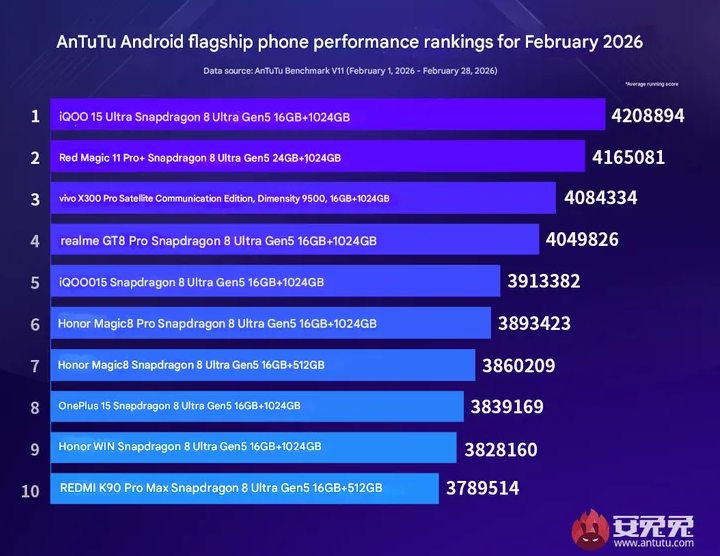
AnTuTuβs Android performance rankings for February 2026 are out, and thereβs a new device at the top.
The iQOO 15 Ultra has claimed the number one spot on the flagship list, ending the recent streak of the Red Magic 11 Pro+. With an average score of 4.2 million points, the iQOO phone now sets the pace for Android performance this month.Β

The Red Magic 11 Pro+, which had held onto first place in previous rankings, slips to second with an average of 4.16 million. Irrespective of numbers, both phone runs on Qualcommβs Snapdragon 8 Elite Gen 5 processor.Β
In third place is the Vivo X300 Pro Satellite Communication Edition, powered by MediaTekβs Dimensity 9500 chipset. It posts an average score of 4.08 million. Not to mention, itβs also the only MediaTek-powered phone on the list.Β
From the Realme GT 8 Pro at fourth to the Redmi K90 Pro Max at tenth spot, all use a Snapdragon 8 Elite Gen 5 chip at the helm.
So itβs unsurprising to say that the Snapdragon 8 Elite Gen 5 has become the mainstream choice for high-end Android devices. Multiple phones powered by the chip are now comfortably crossing the 4 million mark in AnTuTuβs scoring system.Β

Itβs also worth noting how AnTuTu calculates these rankings. The published score reflects the average of all benchmark results recorded for each model during the month, not the single highest score a device may achieve.
That means the numbers can differ from marketing claims or isolated screenshots circulating online. In theory, the average score should provide a more realistic reference point for day-to-day performance.
For more daily updates, please visit ourΒ News Section.
Stay ahead in tech!Β Join ourΒ Telegram communityΒ andΒ sign up for our daily newsletterΒ ofΒ top stories!Β 
The post AnTuTuβs February flagship rankings are out, and iQOO leads the pack appeared first on Gizmochina.
Xiaomi is readjusting its India launch timeline for the Xiaomi Pad 8 and the Xiaomi 17 series.
The company originally unveiled the Xiaomi 17 series at MWC 2026. Soon after that, it announced that the phones, along with the tablet, would launch on March 11. However, Xiaomi has now confirmed that the India launch has been rescheduled.
According to updates shared on X, the Xiaomi Pad 8 will arrive on March 10, with the Xiaomi 17 series following a day later on March 11.

For India, Xiaomi is keeping the spotlight on the standard Pad 8. It features an 11.2-inch LCD panel with a 3.2K resolution (3200 x 2136) and a 3:2 aspect ratio, which is slightly taller than the usual 16:10 format seen on many Android tablets.
The display supports a 144Hz adaptive refresh rate and peaks at 800 nits of brightness. It also brings Dolby Vision and HDR10 support, along with 12-bit color depth.

Furthermore, the screen supports wet-touch input and carries TΓV Rheinland certifications for low blue light, flicker-free viewing, and circadian-friendly performance.Β
Powering the Pad 8 is Qualcommβs Snapdragon 8s Gen 4 chip built on a 4nm process, paired with LPDDR5X RAM. Storage options include 128GB with UFS 3.1 or 256GB/512GB with faster UFS 4.1.
The tablet runs on HyperOS 3, Xiaomiβs latest software platform, which adds split-screen multitasking, a workstation mode, PC-like drag-and-drop browsing, and AI tools such as AI Writing, AI Translate, and AI Art.
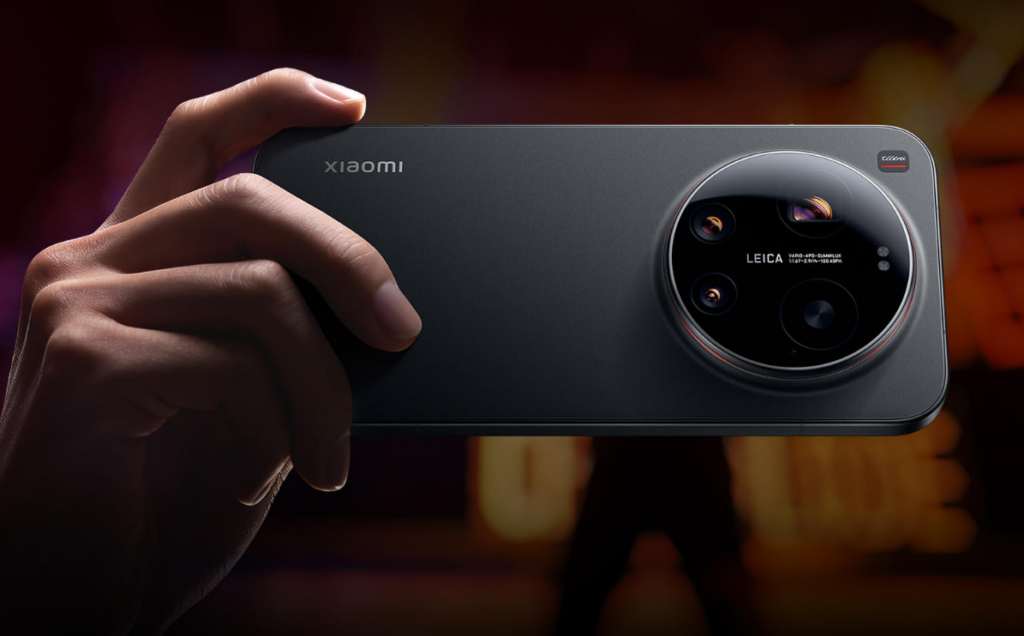
On March 11, Xiaomi will launch the Xiaomi 17 and Xiaomi 17 Ultra in India. Notably, the Leica-branded Ultra variant available in some global markets wonβt be making its way to India.

Thereβs also a battery difference depending on the region. While Chinese variants of the Ultra models feature 6,800mAh batteries, the global and Indian versions are equipped with 6,000mAh units.Β
The Indian microsite confirms that the Xiaomi 17 Ultra will support 90W wired HyperCharge and 50W wireless HyperCharge. Another feature Xiaomi is highlighting is Offline Communication, which enables network-free voice calls up to 1.9 kilometers using Bluetooth and proprietary protocols.
For more daily updates, please visit ourΒ News Section.
Stay ahead in tech!Β Join ourΒ Telegram communityΒ andΒ sign up for our daily newsletterΒ ofΒ top stories!Β 
The post Xiaomi changes plan, Pad 8 to launch before Xiaomi 17 series in India appeared first on Gizmochina.
Back in December 2025, Vivo unveiled the Vivo X300 and Vivo X300 Pro globally. There have been reports that the X300 FE will be added to the lineup in the coming days. Surprisingly, the device has already gone official in Russia. Here is a look at the specifications, features, and price of the device.

The Vivo X300 FE arrives as a compact flagship with a 6.31-inch AMOLED display that delivers a resolution of 2640 x 1216 pixels. The panel supports a 1Hz to 120Hz refresh rate and offers up to 5000nits local peak brightness. It runs OriginOS 6 based on Android 16 and is promised to receive five years of Android version upgrades along with seven years of security updates.
Under the hood, the phone runs on the Snapdragon 8 Gen 5 chip, paired with LPDDR5X Ultra RAM and UFS 4.1 storage, offering configurations of 12GB RAM with up to 512GB storage. It houses a 6,500mAh battery with 90W wired and 40W wireless charging support.
For photography, the device features a triple rear camera system that includes a 50-megapixel Sony IMX921 main camera, a 50-megapixel telephoto lens using the IMX882 sensor with 3x optical zoom, and an 8-megapixel ultra-wide camera. On the front, it carries a 50-megapixel camera for selfies and video calls.

The Vivo X300 FE is equipped with other features, such as an ultrasonic in-screen fingerprint sensor, dual speakers, Wi-Fi 7, Bluetooth 5.4, NFC, an IR blaster, and a USB-C port. The X300 FE has a glass back and measures around 7.99mm in thickness, while weighing about 190 gram.
The Vivo X300 FE is offered in color options such as Moonlight White, Cool Purple, and Graphite Black. In Russia, the sole 12GB+256GB trim of the device is priced at RUB 60,124 (~$770).
At the time of writing, Vivo has not publicly revealed the official pricing for the Russian market. As expected, the X300 FE has turned out to be a rebranded version of the Vivo S50 Pro Mini, which debuted in China in December 2025.
For more daily updates, please visit ourΒ News Section.
Stay ahead in tech!Β Join ourΒ Telegram communityΒ andΒ sign up for our daily newsletterΒ ofΒ top stories
The post Vivo X300 FE launched with compact 6.31-inch display, Snapdragon 8 Gen 5, 50MP triple cameras appeared first on Gizmochina.
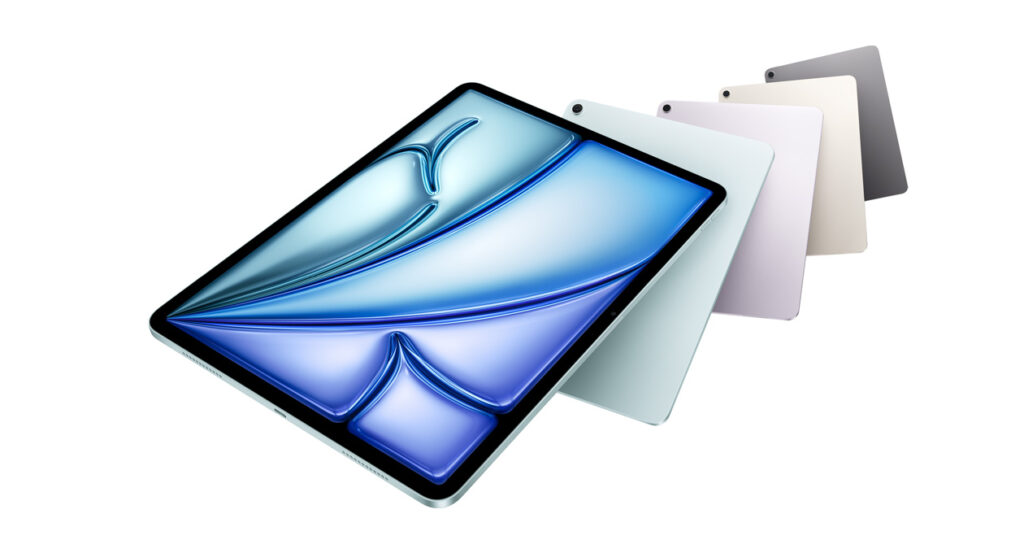
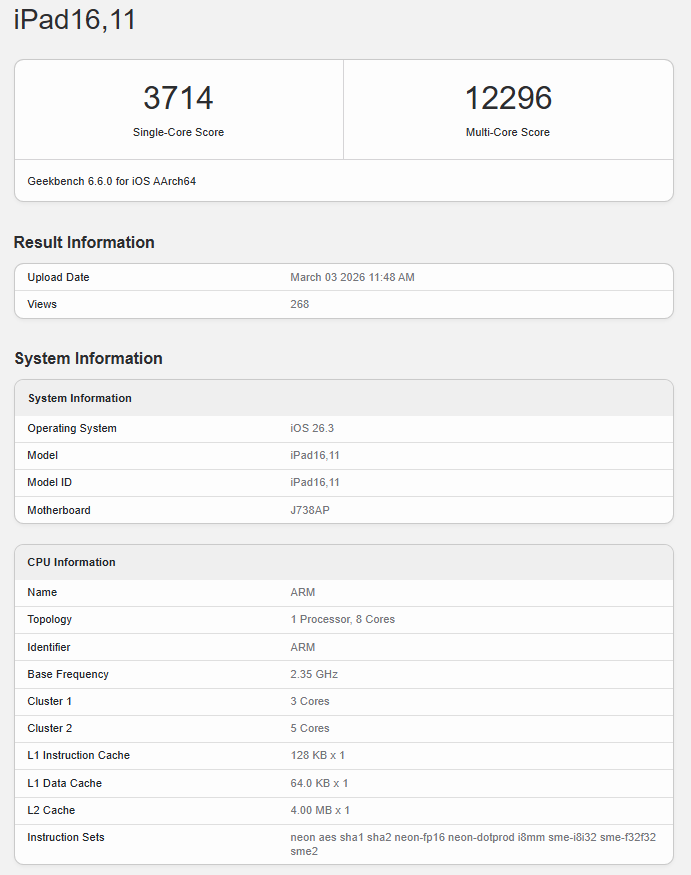
Appleβs latest iPad Air refresh has started appearing in early benchmarks, and the numbers suggest the tablet performs closer to the iPad Pro than many might have expected. Shortly after the announcement, the first Geekbench 6 results for the M4-powered iPad Air began circulating online. In the test, the tablet scored 3,714 in single-core and 12,296 in multi-core performance.

Those numbers put it surprisingly close to the Apple iPad Pro (M4), which typically lands around 3,691 single-core and 13,663 multi-core in the same benchmark. In other words, single-threaded performance is nearly identical, while the Air trails the Pro by roughly 10% in multi-core workloads.
That gap isnβt particularly surprising once you look at the chip configurations. The iPad Air uses an 8-core version of the M4, with three performance cores and five efficiency cores. The iPad Pro, meanwhile, carries a 10-core variant with four performance cores and six efficiency cores.
The extra cores in the Pro help when software can scale across many threads β things like exporting large video projects or heavy multitasking. But for everyday work, the difference may be harder to notice. Tasks like browsing, media consumption, note-taking, and even most creative workloads rarely saturate all available cores.

That positioning keeps the Air noticeably cheaper than the Pro lineup, while still delivering Appleβs newest silicon. If these early benchmarks hold up in broader testing, the M4 iPad Air may end up occupying a sweet spot in Appleβs tablet lineup β offering most of the performance of the Pro models without the same price tag. For many buyers, the extra cores in the Pro simply wonβt make a meaningful difference in daily use.
The M4 iPad Air is already available for pre-orders, with retail availability reportedly scheduled for March 11. Pricing starts at about 4,799 yuan in China (roughly $659) for the 11-inch model with 128GB storage, while the 13-inch version begins around 6,499 yuan (~$899). Pricing and availability may vary by region.
Donβt miss a thing! Join our Telegram community for instant updates and grab our free daily newsletter for the best tech stories!
For more daily updates, please visit our News Section.
(Source: Geekbench)
The post iPad Air (2026) arrives in Geekbench with near-Pro performance appeared first on Gizmochina.
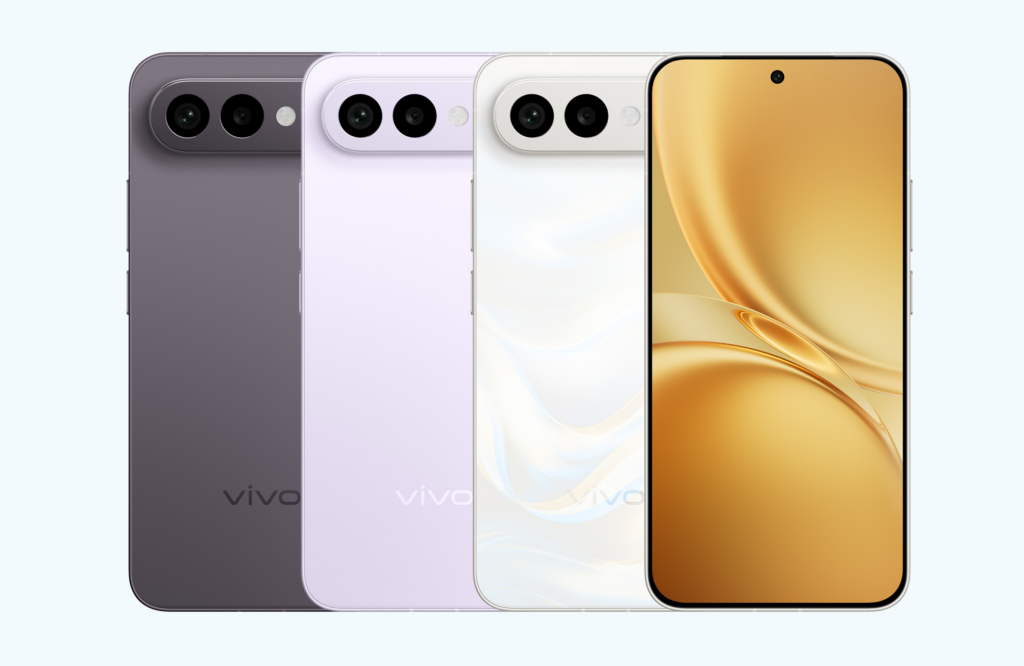
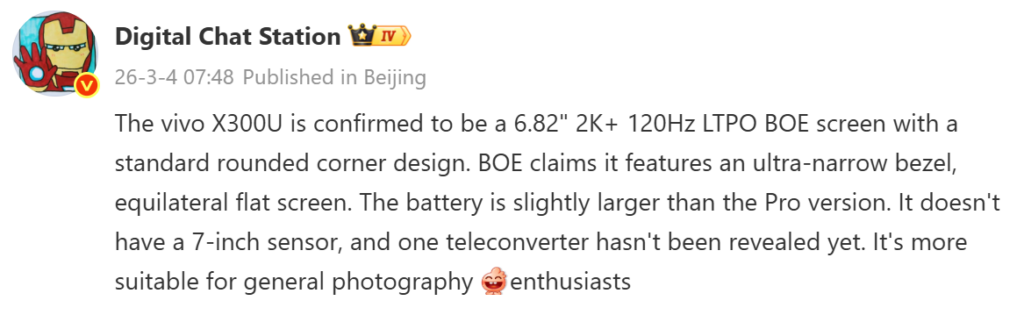
Vivoβs next flagship camera phone, the Vivo X300 Ultra, has started appearing in fresh leaks revealing key details about its display, design, and imaging system. A new tip from Digital Chat Station suggests that the device could bring notable changes compared to the previous generation, particularly in display design and camera capabilities.

According to the leak, the Vivo X300 Ultra will feature a 6.82-inch display supplied by BOE. The panel is said to offer a 2K+ resolution with a 120Hz refresh rate and support LTPO technology for dynamic refresh rate adjustment. The screen will reportedly adopt a flat design with regular rounded corners instead of the quad-curved panels used in earlier models.
The tipster also claims the display will have extremely narrow bezels on all four sides, creating a symmetrical look around the panel. This marks a shift away from the equal-depth curved screens that previously appeared on several flagship phones. The change could improve grip, screen protection compatibility, and overall usability.

In addition to the new display design, the Vivo X300 Ultra is said to include a slightly larger battery than the Vivo X300 Pro. However, the battery capacity is not expected to reach the 7,000mAh mark that had been rumoured earlier. Under the hood, it will feature the Snapdragon 8 Elite Gen 5 chipset.

The phone is expected to place strong emphasis on photography, continuing Vivoβs focus on imaging flagships. Reports indicate that the device may feature a triple camera system built around two 200-megapixel sensors and a 50-megapixel ultra-wide camera.
The main camera could use a custom Sony LYTIA 901 sensor with a large 1/1.12-inch sensor size and a 35mm focal length. A second 200-megapixel Samsung HPB periscope telephoto camera with an 85mm focal length and a 50-megapixel Sony LYT-828 ultra-wide sensor are also expected. The setup may be accompanied by a 5-megapixel multispectral sensor designed to improve colour accuracy under complex lighting conditions.
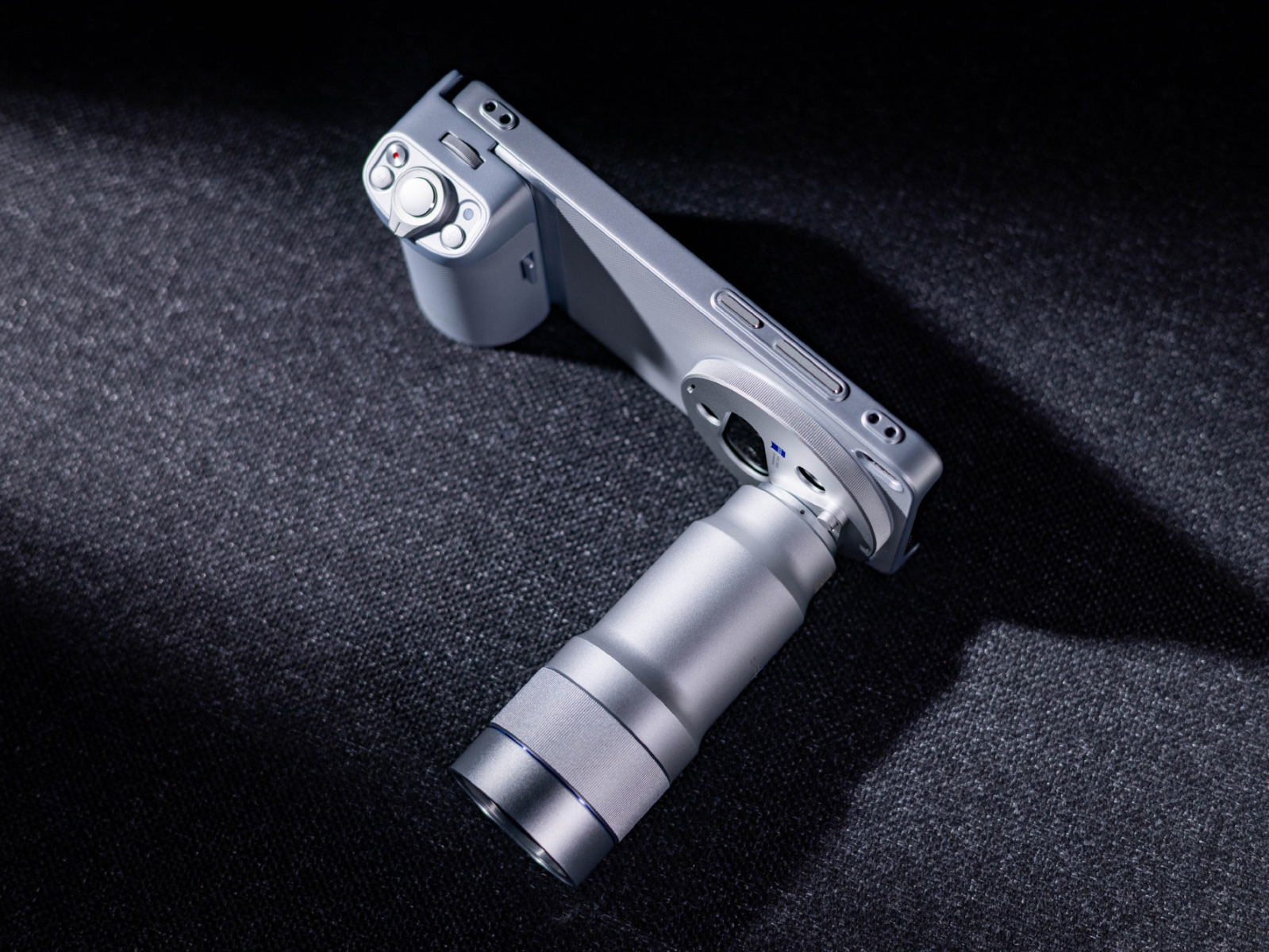
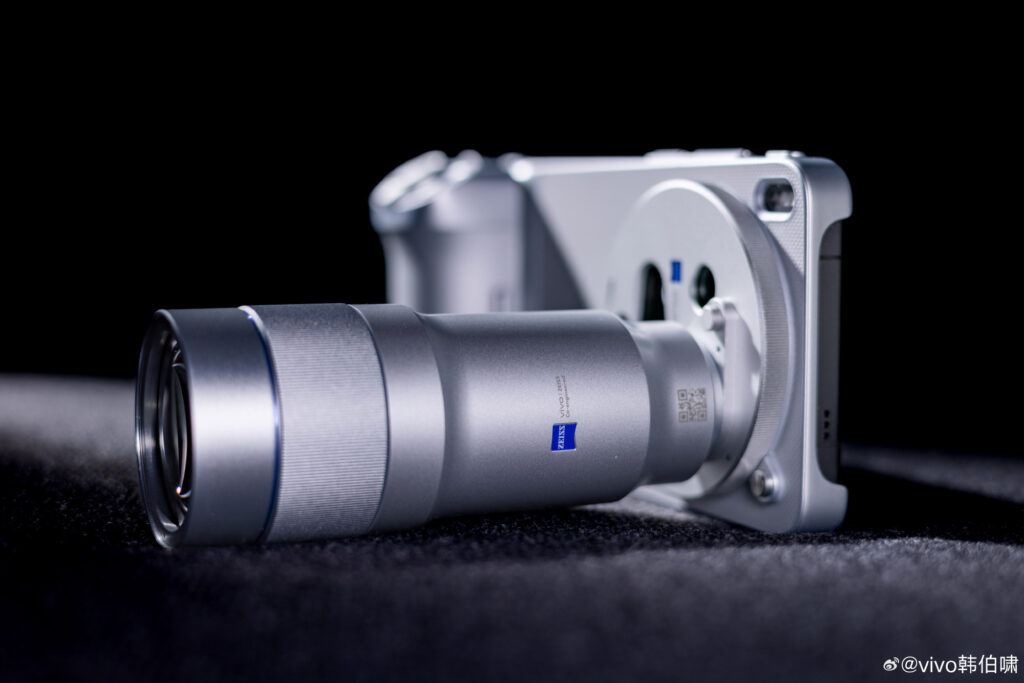
The Vivo X300 Ultra is also expected to support advanced video features such as full focal length 4K 120fps recording with Dolby Vision and optical stabilisation across lenses. Vivo is reportedly preparing a new photography kit as well, including a 400mm telephoto converter and a professional camera grip designed to extend the phoneβs long-distance shooting capabilities.
Tipster Digital Chat Station also hinted that, besides the already known telephoto converter, there may be another accessory that has not surfaced yet. According to the tipster, this additional telephoto accessory could be designed to suit regular photography enthusiasts rather than only professional users.
For more daily updates, please visit ourΒ News Section.
Stay ahead in tech!Β Join ourΒ Telegram communityΒ andΒ sign up for our daily newsletterΒ ofΒ top stories
The post Vivo X300 Ultra has another teleconverter lens that is not revealed yet appeared first on Gizmochina.
Caviar, the Dubai-based luxury customization brand, has introduced the Totem Collection, a new series of exquisitely designed Samsung Galaxy S26 Ultra smartphones. Each phone in the collection is inspired by a symbolic animal: horse, lion, wolf, and falcon, and crafted with premium materials like 24K gold, black titanium, and forged carbon.


The flagship Fire Horse model celebrates the Lunar New Year and the horse as a symbol of energy, vitality, and passion. Caviar designed this phone with a bold 24K gold bas-relief of a rearing horse, framed by red flame motifs hand-filled with rich enamel to create the effect of living fire. The base, crafted from black titanium, adds a touch of heritage and strength. The Fire Horse is priced at $11,490, making it the most expensive in the collection.

The Lion model represents power, courage, and leadership. The phone features a golden bas-relief lion rising against a forged carbon backdrop. Its rimson enamel accents form a radial shield around the lion, emphasizing its regal presence and commanding authority. This model is priced at $11,060.


The Wolf model reflects independence, instinct, and discipline. The centerpiece is a finely detailed bas-relief of a wolf, set against a textured black titanium and forged carbon base. Sharp, radiant motifs surround the wolf, creating a protective symbolic shield that represents resilience and focus. This model is priced at $10,490.


The Falcon model celebrates visionaries and pioneers. It features a sculpted bas-relief of a soaring falcon, placed on a carbon panel enriched with golden inclusions. The radiating pattern surrounding the falcon symbolizes clarity and control, qualities associated with strategic foresight. The Falcon model is priced at $10,910.
Caviar has limited each model in the Totem Collection to only 19 pieces, ensuring unmatched exclusivity. Each phone is delivered in a signature luxury gift box and accompanied by a personalized video greeting.
In related news, Caviar has also unveiled the ultra-luxury iPhone 17 Pro Valentineβs collection featuring gold and diamond embellishments, alongside the Black Edition iPhone 17 Pro Max crafted with titanium, crocodile leather, and gold accents.
For more daily updates, please visit ourΒ News Section.
Stay ahead in tech! Join our Telegram community and sign up for our daily newsletter of top stories! 
The post Caviar unveils custom Galaxy S26 Ultra with 24K gold animal designs, starting at $10,490 appeared first on Gizmochina.
Samsungβs next midrange phones are getting expensive. Tipster Sudhanshu Ambhore on X spotted the upcoming Galaxy A57 and Galaxy A37 on a European retail listing, revealing the price of two phones. And yes, it suggests a price hike.
If the leak is accurate, the Galaxy A57 with 6GB of RAM and 128GB of storage could cost β¬439. The higher-end model with 8GB of RAM and 256GB of storage may go up to β¬539.
The Galaxy A37, meanwhile, is listed at β¬539 for the 8GB RAM + 128GB variant, while the 8GB RAM + 256GB model could reach β¬609.
Samsung Galaxy A37 and A57 prices for Europe:
β Sudhanshu Ambhore (@Sudhanshu1414) March 3, 2026
Galaxy A37
β’ 6GB+128GB: β¬439
β’ 8GB+256GB: β¬539
Galaxy A57
β’ 8GB+128GB: β¬539
β’ 8GB+256GB: β¬609 pic.twitter.com/O7bAYH5Vaz
For comparison, Samsung launched the Galaxy A36 and the Galaxy A56 at starting prices of β¬379 and β¬479, respectively, for the same storage variants. That means Samsung may be planning a β¬60 price increase across the board without increasing memory or storage.Β
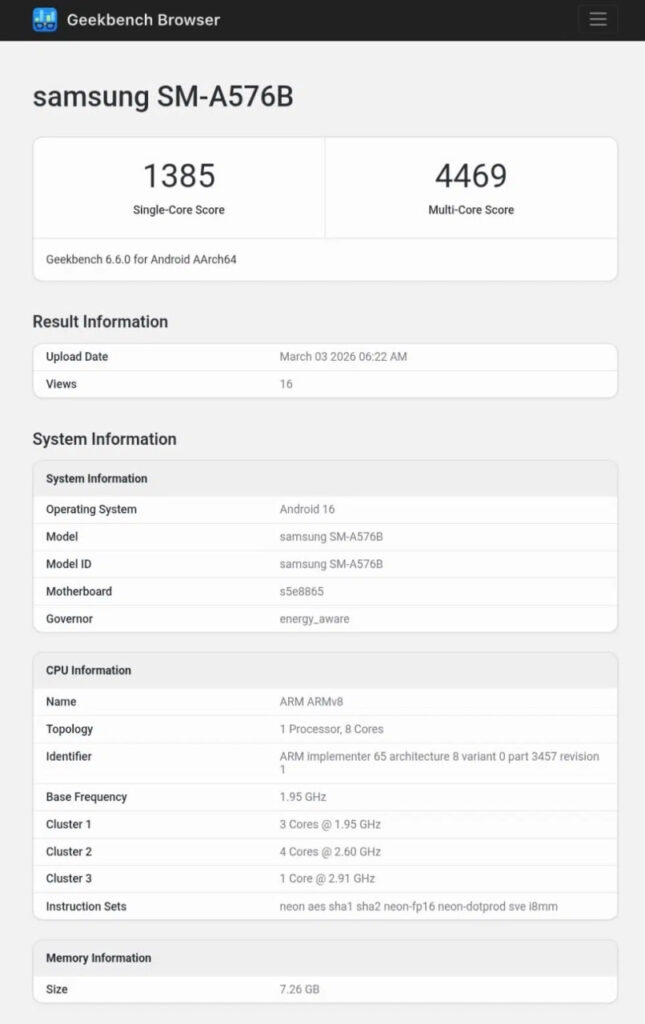
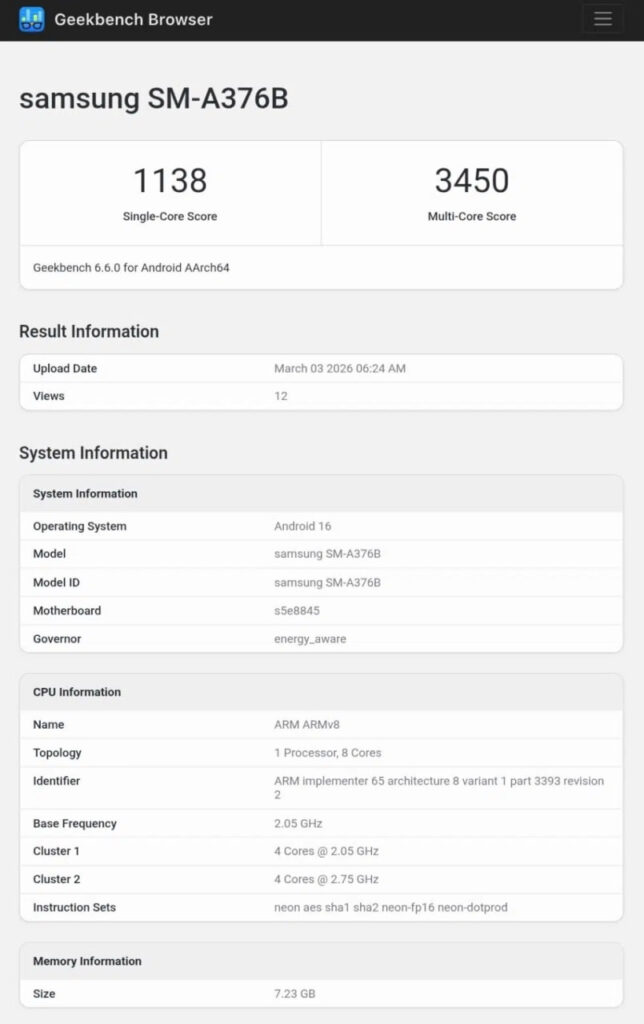
According to leaks, the Galaxy A37 could be powered by Samsungβs Exynos 1480 chipset, the same processor used in last yearβs Galaxy A55.Β

It will feature a triple rear camera setup, headlined by a 50-megapixel primary sensor with OIS, an 8-megapixel ultra-wide, and a 5-megapixel macro camera. The phone could pack a 5,000mAh battery with 45W charging support.
Some reports also suggest the device could ship with Android 16 and One UI 8.5, though that may depend on its final release date.
The Galaxy A57 is expected to sit slightly higher in Samsungβs lineup. It may feature a newer Exynos 1680 processor and a 6.6-inch AMOLED display with a 120Hz refresh rate.

Itβs also said to come with a 5,000mAh battery and 45W charging. Other possible features include IP67 water resistance and stereo speakers.
Samsung has yet to announce the device officially.
Donβt miss a thing!Β Join our Telegram communityΒ for instant updates and grab ourΒ free daily newsletterΒ for the best tech stories!
For more daily updates, please visit ourΒ News Section.
(Via)
The post Samsung Galaxy A57 and A37 retailer listing confirms price hike, here are the details appeared first on Gizmochina.
Xiaomi has just launched the Xiaomi 17 and 17 Ultra flagship phones globally. The brand is known for launching βTβ-branded affordable flagships in select markets in the second half of the year. However, rumors surrounding the Xiaomi 17T lineup suggest that it will debut earlier than expected. A new leak by tipster Abhishek Yadav has revealed a more specific timeframe for the 17T seriesβ arrival.

According to the tipster, the Xiaomi 17T will launch by the end of April or in May. This should be accompanied by the Pro model, but in India, the brand may only offer the standard variant, which has already appeared in the IMEI database in the past.
Previous reports have revealed that the Xiaomi 17T and 17T Pro will be equipped with Leica imaging capabilities. Both phones are expected to feature a 50-megapixel + 12-megapixel + 50-megapixel triple camera unit, but the primary and telephoto camera sensors are said to differ from each other. The Pro edition is also said to feature a periscope telephoto camera. For selfies, both phones may feature a 32-megapixel front camera.
The Xiaomi 17T and 17T Pro are said to have model numbers 2602DPT53G/I and 2602EPTC0G. While the 17T may pack a Dimensity 8500 chip and a 6,500mAh battery with 67W charging, the 17T Pro is said to be powered by the Dimensity 9500. However, there is no information about the Pro modelβs battery and charging capabilities.
The 17T Pro is said to be based on the Redmi K90 Ultra, which is also expected to launch in April in China. It is said to feature a 6.8-inch OLED 1.5K 165Hz display, a Dimensity 9500 chip, an 8,500mAh battery with 100W charging, a built-in cooling fan, a metal frame, an ultrasonic in-screen fingerprint sensor, and comprehensive water resistance.
For more daily updates, please visit ourΒ News Section.
Stay ahead in tech!Β Join ourΒ Telegram communityΒ andΒ sign up for our daily newsletterΒ ofΒ top stories
The post Hereβs when Xiaomi 17T is expected to launch appeared first on Gizmochina.
Tecno has introduced a new entry-level smartphone in India called the Tecno Pop X. The device arrives with a few features that are uncommon in the budget segment, including a high refresh rate display and a walkie-talkie style communication option that works without a cellular network. Here is a closer look at the Pop X and what it offers.

The Tecno Pop X features a 6.75-inch LCD display that offers an HD+ resolution and a 120Hz refresh rate. The screen is designed to deliver smoother scrolling and improved responsiveness compared to standard budget panels. In terms of design, the phone comes with an IP64 rating for dust and splash resistance and is available in white and green colour options.
On the photography front, the device is equipped with a 13-megapixel rear camera accompanied by a dual LED flash. For selfies and video calls, it has an 8-megapixel front camera. The camera module also houses an infrared sensor, which is integrated into the rear design.
The smartphone runs on HiOS based on Android 15. It also includes Tecnoβs Ella AI assistant, which supports several regional Indian languages. Powering the phone is the Unisoc T7250 processor paired with 4GB of LPDDR4x RAM and 64GB of eMMC storage. The device also includes a dedicated microSD card slot for storage expansion.
A 5,000mAh battery powers the Pop X and supports 15W charging. For connectivity, it supports dual 4G LTE, Wi-Fi, Bluetooth 5.2, GPS, a USB-C port, and a 3.5mm audio jack. One notable feature is its βno network communicationβ capability, which allows walkie-talkie style voice calls between compatible Tecno phones within a range of up to 1.5km.
The Tecno Pop X has been launched in India in a single configuration with 4GB RAM and 64GB storage priced at Rs 8,499 (~$93). The phone will go on sale starting March 6 at 12 PM (local time) through Amazon and offline retail stores. As part of a launch offer, buyers using select bank cards may be able to purchase the device at a reduced price of Rs 7,749 (~$85).
For more daily updates, please visit ourΒ News Section.
Stay ahead in tech!Β Join ourΒ Telegram communityΒ andΒ sign up for our daily newsletterΒ ofΒ top stories
The post Tecno Pop X debuts with 120Hz display, Ella AI, and walkie-talkie calling feature appeared first on Gizmochina.
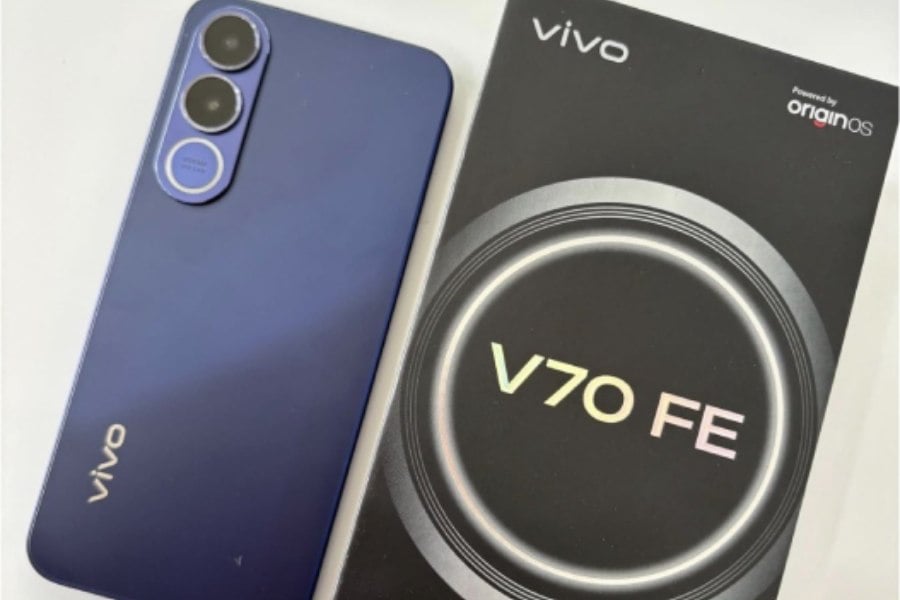
The Vivo V70 FE has largely been revealed ahead of its official debut, thanks to a steady stream of leaks. Now, Vivo has confirmed itβll launch the phone in Indonesia on March 9. Joining it is the Vivo V70, which has already debuted in India.

Vivo has also started teasing key details ahead of the event. The company confirmed that the V70 FE will ship with a dual rear camera system led by a 200-megapixel primary sensor.Β
Teaser images also show off the phoneβs slim display bezels and three color optionsβMuse Purple, Ocean Blue, and Titanium Silver.Β
Alongside the 200MP main sensor sits an 8-megapixel ultra-wide camera for broader scenes. On the front, thereβs a 32-megapixel camera designed for selfies and video calls.
The V70 FE is expected to feature a 6.83-inch AMOLED display with a 1.5K resolution and a 120Hz refresh rate. If you notice, the screen also has a gentle curve on the side.Β

Powering the device is MediaTekβs Dimensity 7360-Turbo chipset, built on a 4nm manufacturing process. Itβs paired with multiple memory options: 8GB of RAM with 256GB of storage, 12GB with 256GB, and 8GB with 512GB.
The phone runs on OriginOS 6 out of the box. Vivo says it will support the device with up to six years of system updates and promises five years of smooth performance.
The V70 FE packs a large 7,000mAh βBlueVoltβ battery, paired with 90W FlashCharge support for faster top-ups.
Rounding out the spec sheet are dual stereo speakers and IP68 and IP69 ratings for dust and water resistance.
For more daily updates, please visit ourΒ News Section.
Stay ahead in tech!Β Join ourΒ Telegram communityΒ andΒ sign up for our daily newsletterΒ ofΒ top stories.
The post Vivo V70 FE to debut in three colors with 200MP primary camera appeared first on Gizmochina.
2026 is expected to be the year when Apple, Qualcomm, and MediaTek release their 2nm flagship mobile processors. Apple is reportedly preparing its A20 series chip. Qualcomm is working on the Snapdragon 8 Elite Gen 6 series, while MediaTek is said to be developing the Dimensity 9600.
On paper, this new silicon is expected to deliver a major performance leap across flagship smartphones. But thereβs a catch, an expensive one in fact.

According to recent reports, the cost of a single 2nm wafer from TSMC is expected to exceed $30,000. Thatβs nearly double the price of todayβs mainstream 4nm wafers. Manufacturing at this scale is not just technologically difficult; itβs also financially demanding.
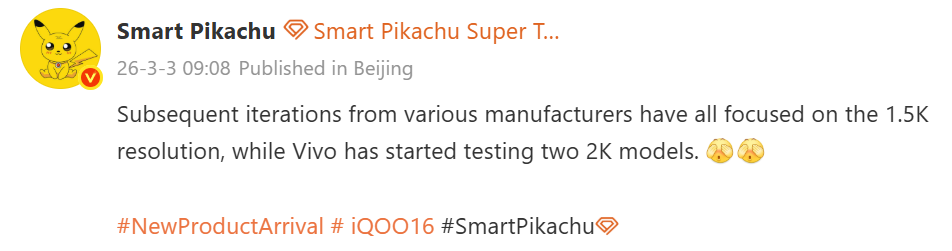
When core components become more expensive, the final product usually follows. A well-known industry tipster, Digital Chat Station, claims that next-generation flagship smartphones from sub-brands like OnePlus, iQOO, and Redmi equipped with 2nm chips will start at 5,000 yuan (~$725). The base variant is said to feature 12GB of RAM and 256GB of storage.

For comparison, current flagships from these brands start at significantly lower prices. The OnePlus 15 starts at 3,999 yuan for the 12GB/256GB variant. The iQOO 15 launched at 4,199 yuan. Likewise, the Redmi K90 Pro Max retails for 3,999 yuan.
Brands are unlikely to absorb higher chip fabrication costs on their own. Instead, many are expected to adopt differentiated strategies within their product lineups. Not every model will ship with a 2nm processor; standard versions may continue using refined 3nm chips, which are more mature and less expensive to produce.
For consumers, the promise of faster speeds and improved battery efficiency is appealing. But so is a reasonable price. If entry-level flagship pricing climbs past 5,000 yuan, the barrier to experiencing cutting-edge hardware will rise significantly.
Donβt miss a thing!Β Join our Telegram communityΒ for instant updates and grab ourΒ free daily newsletterΒ for the best tech stories!
For more daily updates, please visit ourΒ News Section.
(Source)
The post OnePlus 16, iQOO 16, and Redmi K100 Pro Max all tipped to launch at higher starting prices appeared first on Gizmochina.
Qualcommβs next push into high-performance Windows laptops is starting to show up in benchmarks, and the early numbers look promising.

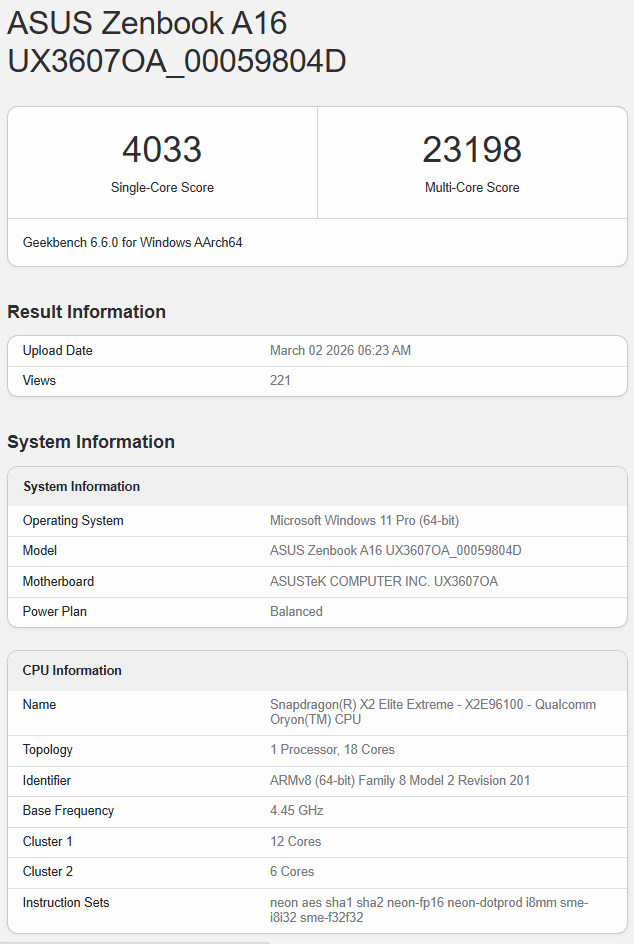
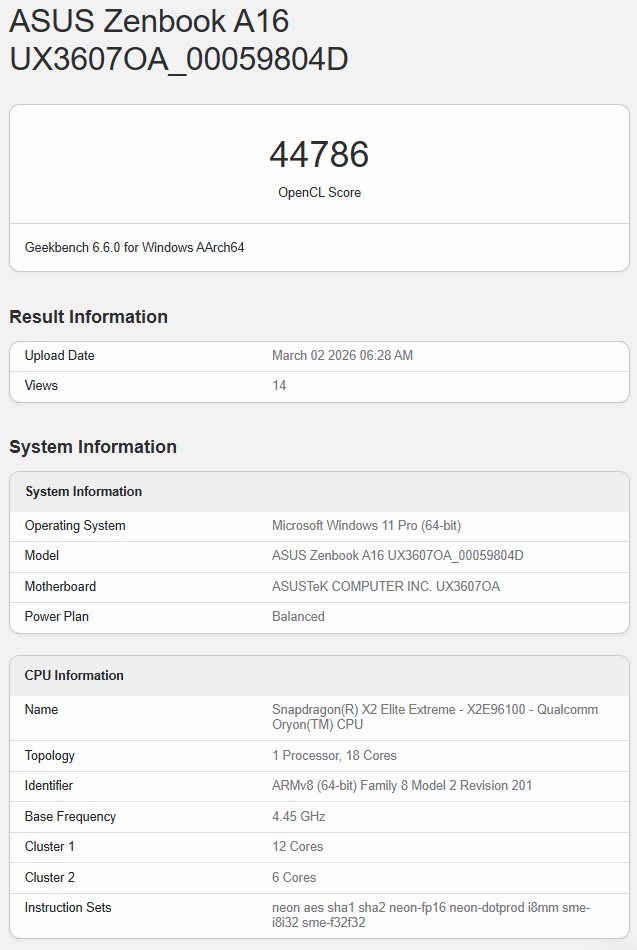
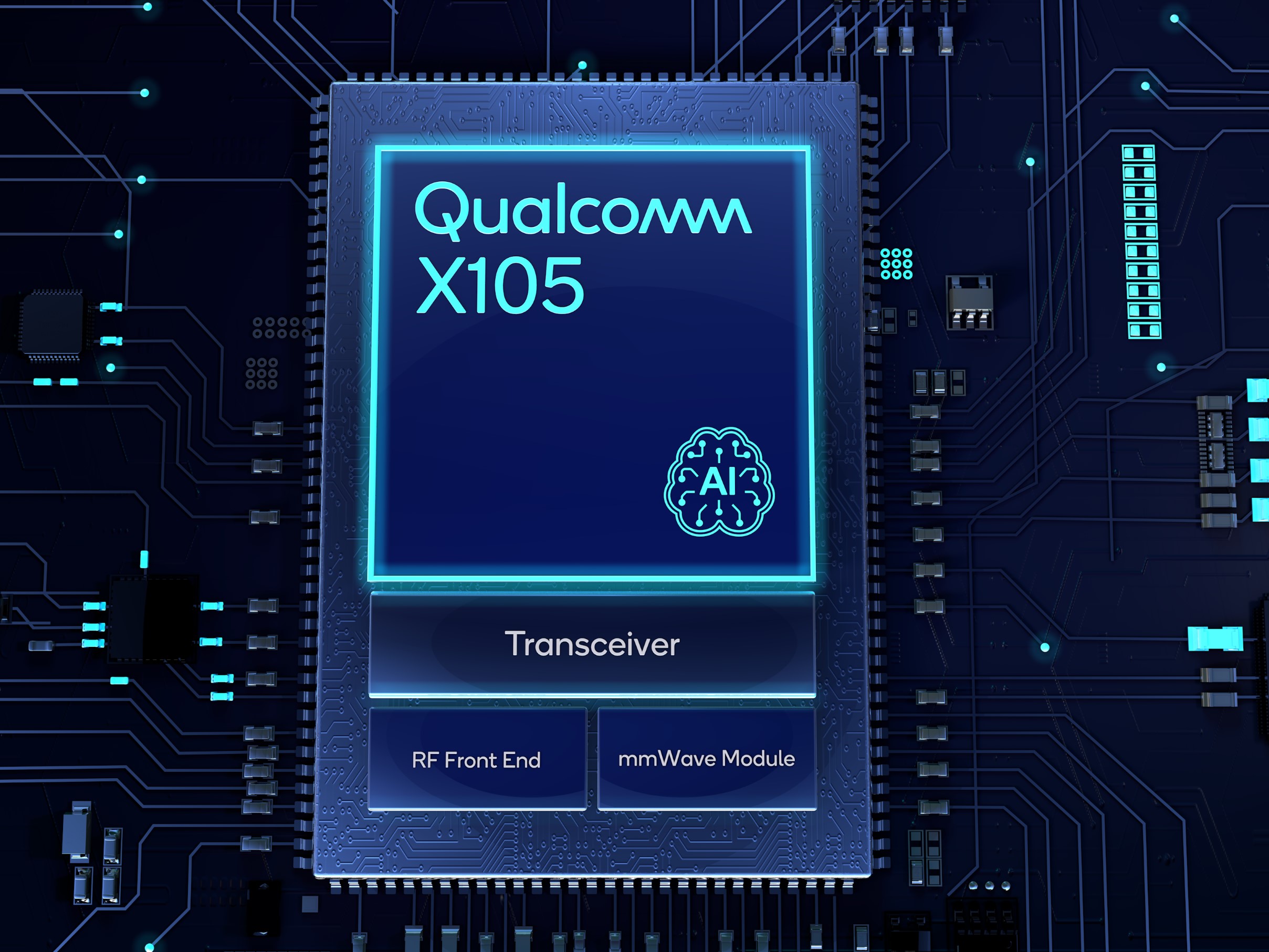
The upcoming Snapdragon X2 Elite Extreme (X2E-96-100) has finally appeared in a leaked Geekbench listing tied to an Asus Zenbook A16 configuration with 48GB of RAM. While the chip was announced earlier and even shown in a few prototype devices at CES 2026, this is one of the first independent benchmark entries to surface publicly.
In Geekbench 6.6.0, the processor reportedly scored 4,033 in single-core and 23,198 in multi-core tests. Those results put it in interesting territory.
On the single-core side, the chip appears to edge past Appleβs Apple M4 Max, which typically lands somewhere around the high-3,800 to low-3,900 range in the same benchmark. Multi-core performance still favors Apple, though, with the M4 Max hovering closer to 25,700.

Compared with current Windows-focused competitors, the results look significantly stronger. AMDβs top Strix Halo configurations generally score around 2,900 single-core and 18,000 multi-core, while Intelβs Core Ultra X9 388H Panther Lake part sits roughly in the 3,000 / 17,800 range. If the numbers hold up, Qualcommβs new chip would represent a clear step forward for Windows-on-Arm performance.
Graphics performance also appears to have taken a notable leap. The integrated Adreno X2-90 GPU β listed with 16 compute units β achieved 44,786 points in Geekbenchβs OpenCL test. Thatβs almost double what earlier Snapdragon X Elite graphics managed in similar benchmarks.

The Snapdragon X2 Elite lineup is expected to feature Qualcommβs updated Oryon CPU architecture, with an 18-core design and boost clocks reportedly reaching up to 5.0 GHz on prime cores. The chip also includes an 80 TOPS NPU aimed at accelerating AI workloads.
The leak gives an early glimpse of Qualcommβs ambitions. The company has spent the past few years positioning Snapdragon chips as a serious alternative to traditional laptop processors, promising much improved power efficiency and battery life.
If production laptops deliver results close to these numbers, the Snapdragon X2 Elite could end up being Qualcommβs strongest attempt yet at challenging both Apple Silicon and the latest x86 processors.
Donβt miss a thing! Join our Telegram community for instant updates and grab our free daily newsletter for the best tech stories!
For more daily updates, please visit our News Section.
(Sources: 1, 2 | Image: Qualcomm)
The post Snapdragon X2 Elite Extreme X2E-96-100 impresses in Geekbench CPU, GPU tests appeared first on Gizmochina.
Redmi is expected to unveil the Redmi K90 Ultra and K90 Pro in April this year in China. A couple of months later, the brand may introduce the Redmi K100 lineup, featuring the K100 and K100 Pro Max. The latter could be Redmiβs most powerful flagship phone.

A report that surfaced last month revealed that the Redmi K100 and K100 Pro Max could both be powered by Qualcommβs Snapdragon 8-series chipsets. While these devices are expected to remain exclusive to the Chinese market, their rebranded versions, dubbed the Poco F9 Pro and F9 Ultra (or Pro Max), may launch globally.
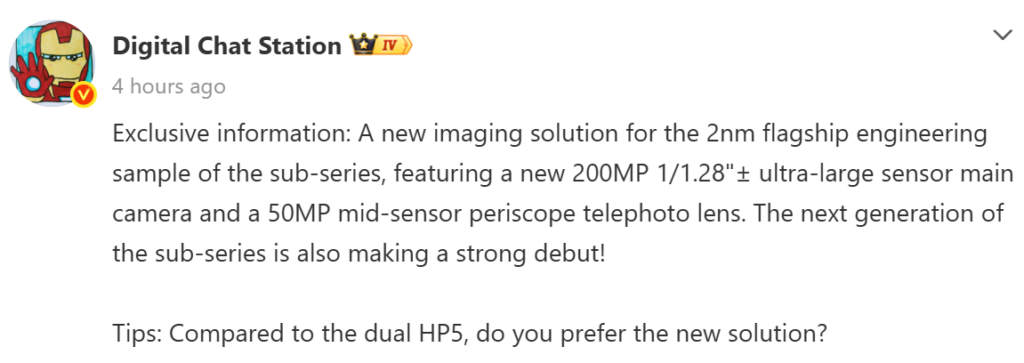
A new leak by reliable tipster Digital Chat Station talks about an upcoming Redmi flagship phone whose prototype is powered by a 2nm chip. This device appears to be the Redmi K100 Pro Max equipped with the next-generation 2nm Snapdragon 8 Elite Gen 6.
He added that Redmi could be testing a new camera setup featuring a 200-megapixel main camera backed by a 1/1.28-inch sensor and a 50-megapixel mid-tier periscope telephoto lens. In comparison, the Redmi K90 Pro Max has the Snapdragon 8 Elite Gen 5 chip and a triple 50-megapixel camera setup.
Therefore, it is likely that the Redmi K100 Pro Maxβs rear camera setup may feature a 200-megapixel main camera, a 50-megapixel ultra-wide lens, and a 50-megapixel periscope telephoto camera. As a rebranded edition, the Poco F9 Ultra may feature the same camera setup and the Snapdragon 8 Elite Gen 6.
The rest of the specifications of the Redmi K100 Pro Max / Poco F9 Ultra remain under wraps. More details about these devices are expected to surface in the coming days. Likely, the K100 series may debut in October this year in China, whereas the Poco F9 lineup may hit the global market by Q1 2027.
For more daily updates, please visit ourΒ News Section.
Stay ahead in tech!Β Join ourΒ Telegram communityΒ andΒ sign up for our daily newsletterΒ ofΒ top stories
The post Redmi K100 Pro Max chipset, 200MP triple camera setup tipped, Poco F9 Ultra may mirror this appeared first on Gizmochina.
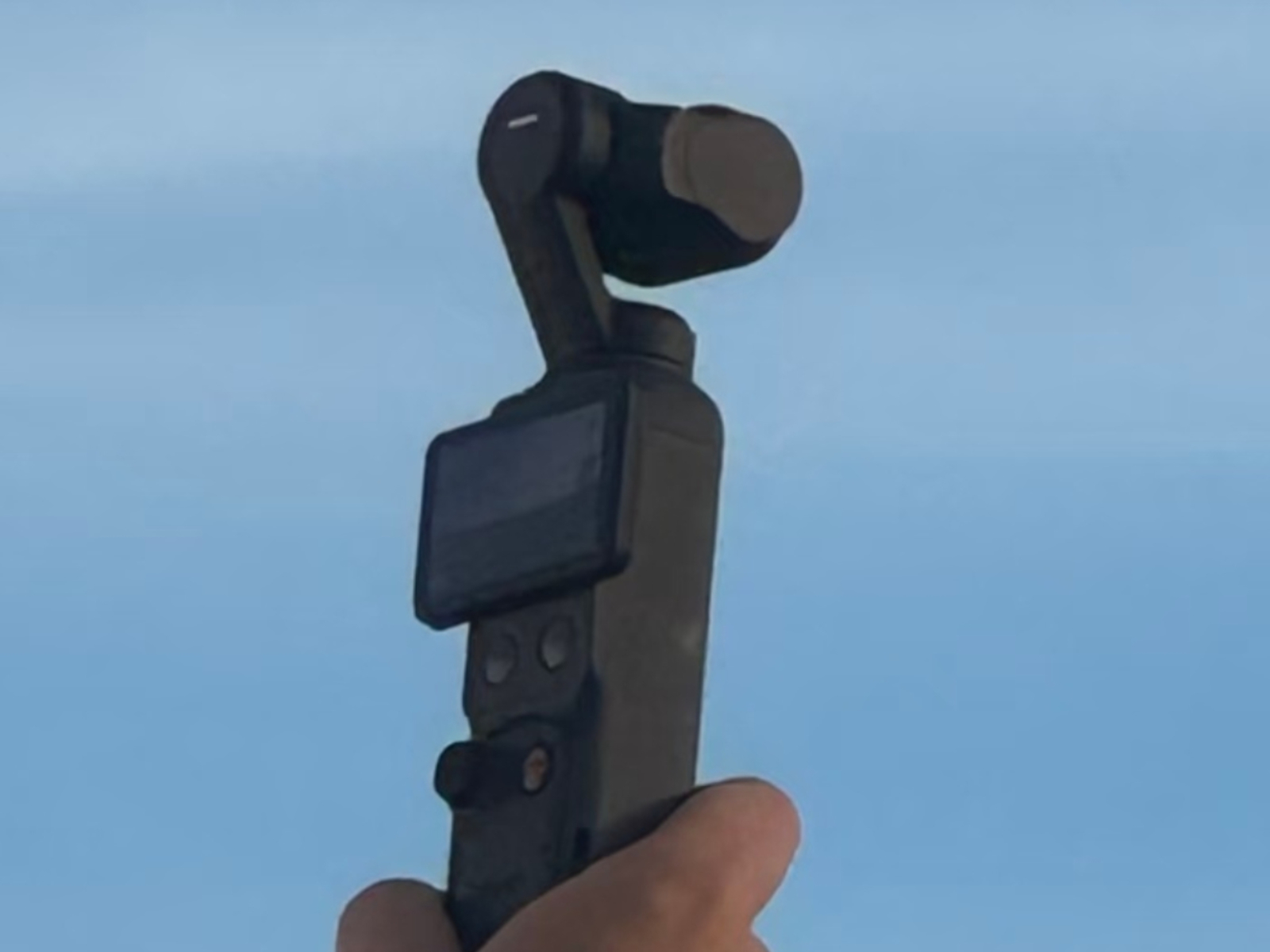
More details about DJIβs upcoming Osmo Pocket 4 are starting to surface, and the latest leak suggests the small vlogging camera may bring a few more practical upgrades than earlier rumors hinted.

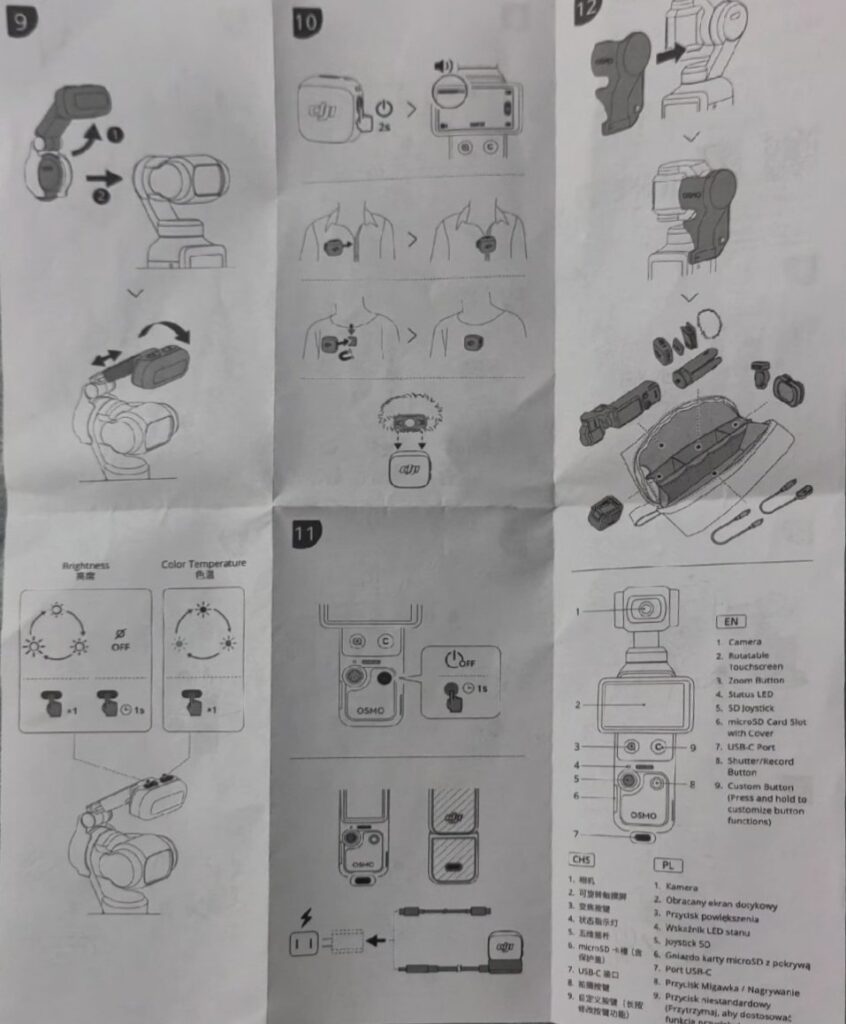
The new information comes from tipster Igor Bogdanov, who shared additional pages from what appears to be the deviceβs full Quick Start Guide. The document is labeled for the Creator Combo version, which usually includes extra accessories aimed at content creators.
One of the more interesting additions revealed in the new pages is a removable LED floodlight accessory. Instead of building a light directly into the camera body, DJI appears to have designed a small module that attaches to the bottom of the device, likely through a magnetic or mechanical connection.
The light itself includes physical buttons that allow users to adjust both brightness and color temperature, each with three levels. For vloggers filming in dim environments, that could be a handy option without needing to carry separate lighting gear. At the same time, keeping it detachable helps the camera stay compact when the light isnβt needed.

Another tweak involves physical zoom controls. According to the diagrams in the guide, the Osmo Pocket 4 will include a dedicated zoom button that quickly switches between 1Γ, 2Γ, and 4Γ zoom levels. The higher levels appear to rely on digital zoom rather than optical, though earlier leaks have suggested that a separate Osmo Pocket 4 Pro model could introduce optical zoom. The guide also hints at support for a magnetic auxiliary lens.
As for timing, earlier reports indicate the Osmo Pocket 4 could be officially announced in China on March 26 with sales beginning shortly afterward. A global launch may follow soon after, possibly in April, which would match DJIβs typical rollout pattern.
For now, the Osmo Pocket 4 looks like a careful evolution of DJIβs pocket-sized gimbal camera, adding a few thoughtful tools for creators without straying too far from what already works.
Donβt miss a thing! Join our Telegram community for instant updates and grab our free daily newsletter for the best tech stories!
For more daily updates, please visit our News Section.
(Source: Igor Bogdanov)
The post DJI Osmo Pocket 4 leak reveals removable LED light, new zoom controls appeared first on Gizmochina.
Foldable phones are already engineering puzzles. Now imagine opening one up and trying to nearly double its battery capacity.

Thatβs essentially what YouTuber Scotty Allen attempted in his latest project. Allen, best known for the Strange Parts channel and its ambitious repair experiments, decided to see what would happen if he replaced the battery inside Samsungβs tri-fold phone with a high-energy-density silicon-carbon battery pack taken from a rival device.
Samsungβs Galaxy Z TriFold ships with a three-cell battery pack with a total capacity of 5,600mAh. Honorβs latest book-style foldable, in comparison, manages a battery capacity of around 6,660mAh. Allenβs idea was simple in theory: take those high-density battery cells and retrofit them into Samsungβs device.
In practice, it turned into a far more complicated job. The Honor Magic V6βs battery cells are slightly larger than the spaces available inside the TriFold, so Allen had to physically modify the phone to make them fit. That meant CNC-milling parts of the chassis, grinding down hinge components, and even removing the bottom speaker to free up room.
There was also the matter of battery electronics. Allen replaced Honorβs battery management system with Samsungβs to ensure the phone could properly recognize and manage the new cells.
The end result, at least on paper, was a 9,600mAh battery pack inside the TriFold. Thatβs about 71% more capacity than the original 5,600mAh configuration.
The modified phone actually powers on and runs. But the surgery didnβt come without consequences. A visible white line now runs across the display, likely the result of stress during disassembly or reassembly.

Still, the experiment makes an interesting point. Being able to squeeze significantly more capacity into the same physical volume could dramatically improve endurance for these devices.
Samsung, for its part, has been cautious about adopting the technology. After past battery incidents, the company has tended to prioritize reliability over aggressive capacity jumps.
But a recent report suggests Samsung may finally be preparing to use silicon-carbon batteries in future Galaxy phones, possibly starting with slim devices like the rumored Galaxy S26 Edge.
Donβt miss a thing! Join our Telegram community for instant updates and grab our free daily newsletter for the best tech stories!
For more daily updates, please visit our News Section.
(Source)
The post Modder fits Honor Magic V6 Blade batteries into Galaxy Z TriFold for staggering 9,600mAh capacity appeared first on Gizmochina.
In a Weibo post, reliable tipster Ice Universe has claimed the upcoming Oppo Find X9 Ultra could feature one of the strongest telephoto systems at the hardware level. In support of this claim, he has reposted a post shared by tipster Digital Chat Station, which reiterates the periscope camera details of the X9 Ultra. Hereβs a look at the details shared by him.

According to DCS, the Find X9 Ultra may arrive with a significantly improved zoom camera configuration. The device is said to feature a 200-megapixel periscope telephoto sensor with a large 1/1.28-inch sensor size and an aperture around F2.2. This lens is expected to deliver stronger light capture compared to most telephoto cameras currently available in flagship smartphones.
Alongside it, the phone could include a second periscope camera designed for extreme zoom. This sensor is tipped to be a 50-megapixel unit with roughly 10x optical zoom and a 1/2.76-inch sensor. The combination of these two lenses could allow the device to cover both mid-range zoom photography and longer focal lengths with improved clarity.
Previous leaks have also outlined that the Find X9 Ultra could be equipped with a new 200-megapixel OmniVision OV52A mid-range periscope lens with 3x optical zoom at 70mm. This could be accompanied by a 50-megapixel Samsung JN5 periscope telephoto camera with 10x optical zoom and 230mm focal length.
For the primary camera, the X9 Ultra may feature the all-new 200-megapixel Sony LYT-901 primary camera with a 23mm focal length. It could be coupled with a 15mm 50-megapixel Samsung JN5 ultra-wide lens. For selfies, it may feature a Samsung JN5 50-megapixel camera with autofocus support.
Apart from the camera upgrades, the phone is expected to feature a 2K display along with balanced flagship hardware across other areas. However, the biggest highlight remains the upgraded telephoto system aimed at improving long-range photography.
As for the launch timeline, reports indicate that Oppo may introduce the Find X9 Ultra in China around April this year, possibly alongside the Find X9s Pro. The global debut could follow later in the second quarter, where it may launch together with the Find X9s series.
For more daily updates, please visit ourΒ News Section.
Stay ahead in tech!Β Join ourΒ Telegram communityΒ andΒ sign up for our daily newsletterΒ ofΒ top stories
The post Oppo Find X9 Ultraβs dual periscope telpehoto camera details emerge again, up to 10x zoom tipped appeared first on Gizmochina.
Lenovo has been teasing the Xiaoxin Pro 13 and Legion Y700 (2026) tablet for quite some time. Now, we finally have a date to look forward to.
Lenovo today confirmed that it will hold an AI-focused tablet launch event on March 18, where it will introduce the fifth-generation Legion Y700 and the Xiaoxin Pro 13.


According to Lenovo, the new Legion Y700 delivers the strongest performance in the lineupβs history. The Xiaoxin Pro 13 series, meanwhile, focuses on its display, which Lenovo says is the largest and best screen the series has offered so far.
If some of this sounds familiar, thatβs because Lenovo already showed part of its hand at MWC.Β
The company recently introduced the Lenovo Legion Tab (8.8β, 5), which is said to be the international version of the Legion Y700 (2026). It also unveiled the Lenovo Idea Tab Pro Gen 2, which could be the upcoming Xiaoxin Pro 13 for the global market.Β
The Legion Tab (8.8β, 5) is powered by Qualcommβs Snapdragon 8 Elite Gen 5 processor and features an 8.8-inch 3K display with a 165Hz refresh rate and 600 nits of brightness.Β
It comes with 16GB of LPDDR5X-10667 RAM and 512GB of UFS storage. There are dual USB-C ports, a 9,000mAh battery, and a total weight of 360 grams.

Lenovo says its upgraded Legion Coldfront liquid cooling system is 32 percent more efficient than the previous generation. The tablet also includes Lenovoβs AI Engine+ software, which uses AI to enhance audio quality, reduce noise, and improve touch responsiveness.
The Legion Tab (8.8β, 5) is scheduled to go on sale in April 2026, with a starting price of β¬999.
On the other side, the Idea Tab Pro Gen 2 runs on Qualcommβs Snapdragon 8s Gen 4 platform and features a 13-inch 3.5K PureSight Pro display, with an optional matte eye-care panel. It includes a JBL quad-speaker system and supports Dolby Vision and Dolby Atmos.

The tablet is just 6.20mm thick and weighs under 600 grams. Inside, thereβs a 10,200mAh battery with support for 45W fast charging. Lenovo is also bundling a 2-in-1 keyboard with a dedicated smart key, and the tablet supports the Lenovo Tab Pen Plus stylus for note-taking and drawing.
The Idea Tab Pro Gen 2 is set to launch in March 2026 with a starting price of β¬549.
For more daily updates, please visit ourΒ News Section.
Stay ahead in tech!Β Join ourΒ Telegram communityΒ andΒ sign up for our daily newsletterΒ ofΒ top stories!Β 
The post Lenovo confirms Xiaoxin Pro 13 and Legion Y700 (2026) launch date, here are the specs we know appeared first on Gizmochina.
JBL has quietly announced the new JBL GO 5 speaker. The small, colorful Bluetooth speaker builds on the familiar GO design, but this time JBL is layering in a handful of meaningful upgrades.

At first glance, not much has changed about the design. The GO 5 keeps its compact, block-like shape, measuring 101 x 77.4 x 43 mm and weighing about 230 grams. Itβs small enough to slip into a bag pocket without much thought.Β
JBL is offering it in six color options, including Black, Red, Sky Blue, Pink, Orange, and Deep Blue (Cloisonne). Thereβs also WINK ambient lighting built in for a subtle visual layer. And as expected, the speaker comes with an IP68 rating for dust and water resistance.Β
Internally, JBL says the GO 5 has been tuned by the Harman Acoustics team. Output power is rated at 4.8W RMS, a modest bump that suggests slightly stronger sound compared to previous models.Β
It uses a 45mm driver and offers a frequency response range of 100 Hz to 19 kHz (-6dB), with a signal-to-noise ratio above 85 dB. As expected from a speaker of this size, itβs built more for personal listening and small gatherings rather than filling large rooms.

For connectivity, the GO 5 moves to Bluetooth 6.0 and supports SBC, AAC, and LC3 codecs. JBL is also adding support for Bluetooth AURACAST, a newer feature designed to broadcast audio to multiple compatible devices. Thereβs an AirTouch one-touch pairing function as well, aimed at simplifying the setup process.
If you own more than one GO 5, you can power them on and have two units automatically connect to form a stereo pair. Multiple speakers can also be wirelessly linked together for a wider sound setup.Β
For those who prefer a wired option, the GO 5 supports direct USB-C connection to a computer and includes a built-in DAC chip for digital audio playback.

Inside, thereβs a 1000mAh lithium-ion battery (3.85Wh, equivalent to 3.8V/1000mAh). JBL claims up to 8 hours of music playback with lights off, depending on volume level and audio content. Charging takes about three hours using a 5V/1A USB-C input. The maximum operating temperature is listed at 40Β°C.
The JBL GO 5 is now available for pre-order in China for 399 yuan (roughly $58), with broader global availability expected in the coming days.
For more daily updates, please visit ourΒ News Section.
Stay ahead in tech!Β Join ourΒ Telegram communityΒ andΒ sign up for our daily newsletterΒ ofΒ top stories
(Via)
The post JBL launches GO 5 Bluetooth speaker with audio tuned by Harman Acoustics appeared first on Gizmochina.
In October 2025, Vivo unveiled the Vivo X300 series, whereas its sub-brand iQOO announced the iQOO 15. It is likely that both companies will apply the same strategy for the next-generation flagships. While the rumor mill has already leaked a few details about the upcoming Vivo X500 series, details about the iQOO 16 have also started surfacing. A new leak, courtesy of tipster Smart Pikachu, has revealed a key detail about the iQOO 16βs display.

According to the tipster, while most next-generation flagships are shifting to 1.5K displays, Vivo is reportedly testing two upcoming phones with 2K screens.
The iQOO 16 hashtag used in the Weibo post suggests that it could retain a higher-resolution 2K display instead of moving to the 1.5K panels many competitors are adopting.
While he has not mentioned the X500 series, a previous leak suggests that the entire lineup would feature 2K resolution displays.
The OnePlus 16 is expected to be one of the major rivals for the iQOO 16. This device is likely to retain the 1.5K resolution and a 165Hz refresh rate that were introduced on the OnePlus 15. Some unconfirmed reports suggest that the iQOO 16βs display refresh rate may upgrade to 165Hz.
At present, there is no information about the iQOO 16βs other specifications. Being a performance-focused flagship, it may feature the next-generation Snapdragon 8 Elite Gen 6 chipset and a massive battery. Hopefully, upcoming reports will shed more details about the iQOO 16βs innards.
For more daily updates, please visit ourΒ News Section.
Stay ahead in tech!Β Join ourΒ Telegram communityΒ andΒ sign up for our daily newsletterΒ ofΒ top stories
The post iQOO 16 tipped to retain 2K display while rivals shift to 1.5K panels appeared first on Gizmochina.
For the past few days, OnePlus has been gradually revealing key details about the OnePlus 15T. A new updated released by a company executive reveals that the 15T will offer a comprehensive water resistance. Here is a look at the fresh details that have emerged today.

According to OnePlus China president Li Jie, the OnePlus 15T will come with upgraded water resistance capabilities. The device is expected to support IP66, IP68, IP69, and IP69K ratings, which could make it one of the few smartphones in the market with this level of protection. If confirmed, it may also become the only compact flagship currently offering all four certifications together.
These ratings indicate resistance against dust as well as water exposure under different conditions. In particular, the IP69K standard means the device can withstand high pressure water jets and high temperature washing. Under testing conditions, devices with this rating can operate even when exposed to water pressure reaching around 100 bar and temperatures up to 80Β°C.
This level of durability suggests the phone may handle harsh environments such as heavy rain, hot water splashes, or intense cleaning conditions more reliably than typical smartphones. For everyday users, it could provide additional peace of mind during outdoor use, travel, or accidental exposure to water.
Expected specifications and design details
The OnePlus 15T is also expected to bring flagship hardware. Reports indicate that it will run on the Snapdragon 8 Elite Gen 5 chipset, paired with configurations reaching 16GB RAM and up to 1TB storage. Benchmark listings on AnTuTu reportedly show scores exceeding 4.45 million, hinting at strong performance.
The phone is said to feature a 6.32-inch compact display with extremely narrow and symmetrical bezels. Company executives have suggested that it could have one of the narrowest visual borders seen on a small smartphone.
Battery capacity may reach 7,500mAh, supported by 100W fast charging. Camera hardware could include a 200-megapixel or 50-megapixel main camera accompanied by a 50-megapixel periscope telephoto lens. A tweaked version of the device with the OnePlus 15s branding is expected to release in markets outside of China.
For more daily updates, please visit ourΒ News Section.
Stay ahead in tech!Β Join ourΒ Telegram communityΒ andΒ sign up for our daily newsletterΒ ofΒ top stories
The post OnePlus 15T could be the only compact flagship with IP66, IP68, IP69 and IP69K ratings appeared first on Gizmochina.
While Oppo is expected to unveil the Oppo Find N6 later this month in China, April could see the arrival of the Find X9 Ultra and Find X9s Pro. Last month, the X9s Pro was approved by Chinaβs 3C certification platform, and now, in a new development, the X9 Ultra has also received the same approval. Hereβs a look at the details that have surfaced through the certification.

As can be seen above, an upcoming Oppo phone with model number PMA110 has received approval from the 3C authority. This device is said to carry the Oppo Find X9 Ultra branding when it hits the market.
The certification reveals that the Find X9 Ultra may ship with a 100W charger. This device appears to be the regular version, whereas the company is also expected to announce a satellite communication edition. Rumors suggest that it will also have support for 50W wireless charging.
Oppo has also confirmed that the Find X9 Ultra will be released globally. Rumors suggest that it may hit the global market in the second quarter of this year. Reports have revealed that the X9 Ultra will feature a Hasselblad-tuned 200-megapixel (main) + 50-megapixel (ultra-wide) + 200-megapixel (3x periscope) + 50-megapixel (periscope) quad-camera setup.
For selfies, it will have a 50-megapixel front-facing camera. It may feature a 6.82-inch OLED 2K 120Hz screen, a Snapdragon 8 Elite Gen 5 chip, and a 7,550mAh battery.
The Dimensity 9500-powered Find X9s Pro phone, which is expected to feature dual 200-megapixel cameras along with a 50-megapixel sensor, is said to remain exclusive to the Chinese market. However, the global market is likely to receive another model named the Find X9s.
The Find X9s, which is confirmed to feature the Dimensity 9500s chip, could be a toned-down version of the existing Find X9. Compared to the X9, the X9s is likely to feature different cameras and lack support for wireless charging. It is unclear whether this device will be released in China.
For more daily updates, please visit ourΒ News Section.
Stay ahead in tech!Β Join ourΒ Telegram communityΒ andΒ sign up for our daily newsletterΒ ofΒ top stories
The post Oppo Find X9 Ultra spotted with 100W charger at 3C certification, launch imminent appeared first on Gizmochina.
Apple has introduced updated 14-inch and 16-inch MacBook Pro models powered by its latest M5 Pro and M5 Max chips. The new machines focus on improving performance for demanding creative, development, and AI workloads while also adding faster storage and improved connectivity. The announcement expands Appleβs professional laptop lineup following the earlier debut of the base M5 chip.

The new MacBook Pro models run on Appleβs M5 Pro and M5 Max chips, built on a new Fusion Architecture that connects two dies into a single system on a chip. This design integrates the CPU, GPU, Neural Engine, media engine, unified memory controller and Thunderbolt support on one platform, helping deliver higher performance for complex workloads.
Both chips feature an 18-core CPU made up of six high-performance βsuper coresβ and twelve efficiency-focused performance cores, offering up to 30 percent higher performance in professional tasks. The graphics subsystem has also been upgraded with a next-generation GPU that scales up to 20 cores on M5 Pro and up to 40 cores on M5 Max. Each GPU core includes a Neural Accelerator designed to speed up AI processing.

Apple says the chips can deliver more than four times the peak GPU compute for AI compared with the previous generation, while also improving ray tracing performance for demanding visual effects and 3D rendering.
The laptops support up to 64GB unified memory on M5 Pro and up to 128GB on M5 Max, with memory bandwidth reaching 307GB/s and 614GB/s respectively. Storage now starts at 1TB and can go up to 8TB. Other features include a Liquid Retina XDR display with ProMotion up to 120Hz, Thunderbolt 5 ports, a new N1 wireless chip with Wi-Fi 7 and Bluetooth 6, a 12-megapixel Center Stage camera, studio-quality microphones and a six-speaker system with Spatial Audio. Apple claims battery life can reach up to 24 hours depending on usage.
Apple has opened pre-orders for the new MacBook Pro models, with sales beginning on March 11. In the United States, the 14-inch MacBook Pro with the M5 Pro chip starts at $2,199, while higher configurations cost more depending on memory, storage and GPU options.
The larger 16-inch MacBook Pro with the M5 Pro processor starts at $2,699, while models powered by the M5 Max chip begin at $3,599, going higher depending on configuration choices such as GPU cores and memory capacity.
For more daily updates, please visit ourΒ News Section.
Stay ahead in tech!Β Join ourΒ Telegram communityΒ andΒ sign up for our daily newsletterΒ ofΒ top stories
The post MacBook Pro gets major upgrade with Apple M5 Pro and M5 Max chips appeared first on Gizmochina.
Keychron has introduced a new portable keyboard that folds in half and fits into a bag with ease. The new B11 Pro is designed for people who work across multiple devices and want something more ergonomic than the usual flat, straight keyboard layout.
The B11 Pro uses what Keychron calls a flat Alice layout. Unlike a traditional horizontal keyboard, the Alice-style design slightly splits and angles the keys to create a more natural typing position.Β

Itβs meant to reduce wrist strain over long sessions, while still keeping a familiar key arrangement. The keyboard supports all major platforms: macOS, Windows, and Linux.
As its name suggests, portability is a big part of the pitch. The B11 Pro features an inward-folding design, so the keys fold into themselves when closed. The main body is made of ABS plastic, while the back is covered in matte black PU leather.
At 258 grams, itβs light enough to carry around daily without adding noticeable weight to a backpack. Under the hood, the keyboard uses scissor-switch mechanisms instead of mechanical switches. That typically means quieter typing and a thinner overall profile. The keycaps are concave and made of ABS, shaped to guide fingers toward the center of each key.
For connectivity, the keyboard supports USB-C wired, 2.4GHz wireless, and Bluetooth 5.3 options. It also features a dual 1,000Hz polling rate.

Power comes from a built-in 250mAh battery, which Keychron says can deliver up to 138 hours of use on a single charge. The keyboard automatically powers off when folded and turns back on when unfolded. Itβs rated to operate in temperatures ranging from -10 to 50 degrees Celsius.
The Keychron B11 Pro is priced at USD 64.99.
For more daily updates, please visit ourΒ News Section.
Stay ahead in tech!Β Join ourΒ Telegram communityΒ andΒ sign up for our daily newsletterΒ ofΒ top stories!Β 
The post Keychron launches the B11 Pro foldable keyboard with 138 hours of battery life appeared first on Gizmochina.
Apple may have unintentionally revealed the name of its rumored affordable MacBook ahead of its latest product announcements. A regulatory listing briefly appeared on Appleβs website referencing a device called the MacBook Neo. The listing disappeared soon after, but the brief appearance has fuelled speculation about a new entry-level Mac laptop.

The reference was spotted in a regulatory compliance document linked to Appleβs European listings. While the document itself did not display the product name inside the file, the webpage URL contained the name βMacBook Neoβ along with the model number A3404. Observers noticed the listing before Apple removed the page, suggesting the information may have been published earlier than intended.
Reports about a lower-cost MacBook have been circulating for several months. The device is believed to sit below the MacBook Air in Appleβs lineup and target students, first-time buyers and users who want access to macOS at a lower price point. If launched, the MacBook Neo could represent Appleβs attempt to expand its presence in the affordable laptop segment.
Rumours indicate that the laptop may not rely on Appleβs M-series processors used in existing Mac models. Instead, it could be powered by an iPhone-class chip such as the A18 Pro or a newer A-series processor. Such a shift could help Apple lower production costs while still delivering efficient performance and strong battery life for everyday tasks like browsing, document editing and streaming.
Early leaks suggest the MacBook Neo could feature a 12.9-inch display and come in multiple color options, including blue, green, yellow and pink. The design is expected to remain consistent with Appleβs minimalist aluminium build, but with a focus on portability and long battery life.
Pricing rumours currently place the device between $599 and $799. If accurate, it would become the most affordable MacBook available. Apple is expected to reveal more details during its ongoing product announcement week or through a newsroom update soon.
For more daily updates, please visit ourΒ News Section.
Stay ahead in tech!Β Join ourΒ Telegram communityΒ andΒ sign up for our daily newsletterΒ ofΒ top stories
(via)
The post MacBook Neo could be Appleβs most affordable laptop yet appeared first on Gizmochina.
Samsungβs Galaxy S26 Ultra secured the biggest award at MWC 2026, the βBest in Show.β It is the first honour that the new flagship smartphone has gained. The class of this award solidifies its supremacy in the world of Android.
On February 5, Samsung announced MWC 2026 named the Galaxy S26 Ultra as βBest in Show.β The victory was declared at the Global Mobile Awards (GLOMO Awards), with the device clearing a field of more than 3,000 exhibitors at MWC.
The judging panel, comprising over 200 industry analysts, journalists whoβve forgotten more about mobile tech than most product managers will ever learn, and assorted veterans, handed Samsung the gold standard.
The S26 Ultra ships with the worldβs first built-in Privacy Display. The flagship also features a custom Snapdragon chipset that runs Galaxy AI faster than the S25 Ultra. One UI 8.5 sits on top, and the software is supposedly smart enough.
Shaun Collins, chair of the MWC Best in Show panel, said the S26 Ultra βpushes the boundariesβ while delivering real-world impact. He specifically called out the privacy angle as addressing βone of the most important needsβ of how people actually use phones today.
Collins admitted that the MWC panel is looking for products that move the industry forward. The panel said most of MWC was future-gazing tech that sounds great in a keynote but wonβt ship until your current phone is already obsolete.
Stephanie Choi, Samsungβs EVP running mobile marketing, leaned into the βAgentic AI Phoneβ phrasing during her acceptance remarks. That termβs going to get beaten into the ground over the next six months.

The post Samsung Galaxy S26 Ultra just won the biggest award at MWC 2026, beating 3000 rivals appeared first on Sammy Fans.


Nothing is fully, officially unveiling the Phone (4a) and Phone (4a) Pro at an event in London on March 5. Ahead of that, today the brand shared the teaser you can see below via its official X account. It's pretty clear. The Nothing Phone (4a) Pro will borrow the Nothing Phone (3)'s Glyph Matrix rear display, or will at least have a very similar one, if it's not identical. The Glyph Matrix was, of course, the Phone (3)'s standout feature. Hello?5 March, 10:30 GMT. pic.twitter.com/TRjoR5yBMkβ Nothing (@nothing) March 4, 2026 Since Nothing has already officially confirmed that there...
Just yesterday, Oppo officially confirmed that it's launching the upcoming Find X9 Ultra internationally, and now the phone has seemingly been certified for sale in China by 3C with the model number PMA110. This process reveals that, in China, it will be shipped with a 100W wired charger (which will most likely be missing from the box in some international markets like Europe). That's pretty good evidence that the phone itself will support 100W wired charging. It's also been rumored to support 50W wireless charging, but this certification hasn't confirmed that. The Find X9 Ultra is...

The prolific leaker who goes by the handle Digital Chat Station (DCS) on Weibo made a bold prediction today, and it's in regard to the pricing of the upcoming OnePlus 16, iQOO 16, and Redmi K100 Pro Max. All of these devices are expected to arrive in the second half of this year and be powered by Qualcomm's next top of the line chipset, the Snapdragon 8 Elite Gen 6. And all of them will be more expensive than their predecessors from 2025, DCS now claims. In fact, he says all three new devices will be priced at CNY 5,000 with 12GB of RAM and 256GB of storage. That amount currently...
Google is planning to change how apps and app stores work on Android phones. These changes are connected to a legal case with Epic Games, the company that made Fortnite. The two companies have suggested a settlement, but a court has not officially approved it yet. Even so, Google has started preparing for the new changes.
The main change is about the money app developers pay to Google. Right now, developers can pay up to 30% of the money they earn from app sales and in-app purchases. Under the new plan, this cost will be split into two parts: a service fee and a billing fee.
The service fee will be between 15% and 20%, which is lower than before. But in the United States, the United Kingdom, and Europe, developers who use Google Playβs payment system will also pay an extra 5%. Because of this extra fee, some developers may end up paying about the same as they do now.

Image via Google
Aside from this, there is also a small change for subscriptions. The service fee for subscription apps will drop from 15% to 10%. However, in some regions, the extra 5% billing fee will still apply.
Google is also creating a new βRegistered App Storeβ program. This will allow other app stores to officially work with Android if they follow certain safety and quality rules. These approved app stores will be easier for users to install. Joining this program will be optional.
The new payment system should start in the US, UK, and Europe by late June, and worldwide by September 30, 2027. Stay tuned for more information
The post Google bringing a more flexible app distribution system to Android appeared first on Sammy Fans.
Samsung Galaxy S26 Ultra is one of the most powerful phones of 2026. People always care about battery life, and the latest S26 Ultra has been tested against other top phones to see how long it can last. Popular YouTuber Mrwhosetheboss shared a full test video showing how the phone performs in real life.
The test compared the Galaxy S26 Ultra with the iPhone 17 Pro Max and last yearβs Galaxy S25 Ultra, along with other brandsβ flagships. The Galaxy S26 Ultra has a 5,000 mAh battery, the same as the S25 Ultra, while the iPhone 17 Pro Max has a slightly smaller battery. Even without increasing battery size, the Galaxy S26 Ultra lasted longer thanks to a new, more efficient chip and improved cooling.
During the test, the phones were used for scrolling social media, playing games, running performance tests, and streaming a full movie. Temperatures were also measured, because phones that get too hot can lose battery faster and run slower.

Image: Galaxy S26 Ultra and Galaxy S25 Ultra
The Galaxy S26 Ultra stayed cooler than most of the other phones, including the iPhone 17 Pro Max. This helped it perform better for a longer time.
Other phones like the OnePlus 15, Oppo Find X9 Pro, Xiaomi 17 Ultra, and Google Pixel 10 Pro XL were also included. Some had bigger batteries on paper, but many did not last as long because heat and efficiency affect real-life performance. However, the OnePlus 15 and Oppo Find X9 Pro performed better than the Galaxy S26 Ultra in the battery test.
By the end of the test, the Galaxy S26 Ultra ran for about 12 hours. It outlasted the iPhone 17 Pro Max and performed better than the S25 Ultra from last year. This shows that Samsungβs improvements in chip efficiency and cooling make the Galaxy S26 Ultra one of the best phones for battery life in 2026.
Check the full video here:
The post Battery Life Test: Samsung Galaxy S26 Ultra surpasses iPhone 17 Pro Max and S25 Ultra appeared first on Sammy Fans.


Google initially launched AirDrop support in Quick Share for the Pixel 10 family alone, but then brought it to more of its own devices. Recently, it announced that Android phones made by other companies would gain support for the new Quick Share (which works seamlessly with Apple's AirDrop), and today Oppo has confirmed that it's joining the party. The Find X9 and Find X9 Pro will receive a software update later this month which will enable the Quick Share - AirDrop interconnection. From that point on, if you own one of those two devices (or the Find X9 Ultra coming soon), you will be able...
Samsung Galaxy S26 Ultra has officially launched, and there is an interesting detail about its storage. Many people expected it to come with the newer UFS 4.1 storage. However, new information has confirmed that the phone actually uses UFS 4.0.
UFS stands for Universal Flash Storage, which is the system that controls how your phone saves and reads data. This affects how fast apps open, how quickly photos and videos are stored, and how smooth the phone feels while using it.
The newer UFS 4.1 version has some small improvements. It can manage storage better over time and clean up unused data more efficiently. It also supports newer memory technology that could allow up to 2TB of storage in the future.

Even though UFS 4.1 is more advanced, UFS 4.0 is already very fast. In everyday use, most people will not notice any difference. Apps will still open quickly. Games will still run smoothly. Watching videos, browsing the internet, and using social media will feel the same. The difference between the two versions is mostly technical and not something most users will see.
If the Galaxy S26 Ultra uses UFS 4.0, it is very likely that the Galaxy S26 and Galaxy S26 Plus also use the same type of storage.
The Galaxy S26 Ultra starts at $1,299, and Samsung has kept the same price as last yearβs model. Using UFS 4.0 instead of 4.1 may have helped the company control costs. Pre-orders are now live, and buyers can expect strong, smooth performance, even without the latest storage version.
The post Galaxy S26 Ultra misses UFS 4.1, but most users wonβt notice appeared first on Sammy Fans.


Today, NordVPN is launching a call protection feature to Android users in the US, the UK, the EU, Japan, Norway, Switzerland, Liechtenstein, Iceland, Australia, and Canada. This warns you about potential scams before you pick up the phone. It obviously needs to know what numbers are calling you in order to work. It analyzes "various intel", according to the official press release, to "define phone number reputation". If it thinks it might be a scam call, you'll be notified by a warning message displayed next to the caller's phone number. NordVPN call protection...
Samsung's updated Galaxy S26 series is now available, and we've got the non-Ultra models in for review, so let's take a look. We're starting with the Galaxy S26+, though the unboxing is the same across all three models - you get a USB-C cable, a SIM tool, and the phone. The Galaxy S26+ starts from β¬1,250 for the 256GB model, but as part of the pre-order, you're getting double the storage for the same base price. Unlike the smaller S26, the Plus model has faster-than-25W charging - 45W to be precise. But you'd need to supply your own charger if you haven't got one already. Ours is...
Samsungβs new Galaxy S26 series, including the Galaxy S26, S26 Plus, and S26 Ultra, may look very similar to last yearβs models, but they come with some interesting upgrades that make them better to use. One of the most useful changes is a new NFC antenna at the top of each phone.
NFC is the technology that lets you make contactless payments or share files with other devices just by tapping your phone. In the past, Samsung phones had one NFC antenna on the back. Now, with the extra antenna, the phone can connect more easily and work faster with payment machines or other NFC devices.
This means you wonβt have to wave your phone around trying to make a payment. Tap-to-pay should work quicker and more reliably, which is handy at stores, cafΓ©s, or anywhere you pay with your phone. The new antenna can also make transferring files between Galaxy S26 phones faster and smoother.

Source β Samsung
Even though it is a small change, it shows that Samsung is still finding ways to improve its phones every year. These kinds of upgrades make using your phone more convenient in everyday life, even if the design looks similar to last yearβs model.
The Galaxy S26 series is now available for pre-order on Samsung.com. You can trade in your old phone for up to $900, or get $150 in store credit if you donβt trade in a device.
The new Galaxy S26, S26+, and S26 Ultra may look familiar, but the extra NFC antenna is a smart addition that makes payments and file transfers faster and easier. For anyone who uses their phone for tap-to-pay or sending files to friends, itβs a small change that could make a big difference in daily use.
The post Samsung adds smart NFC upgrade to Galaxy S26 series appeared first on Sammy Fans.


TCL had an eventful MWC 2026 with several product launches and we are now set to bring you some hands-on coverage of its latest Android tablet. The Tab A1 Plus brings a 12.2-inch IPS LCD with 1,600 x 2,400 px resolution, a 3:2 aspect ratio and a 120Hz refresh rate. Itβs also available in a version with TCLβs NxtPaper tech, which gets the signature matte display coating, which is the one we got to test. The bezels seem thinner than previous TCL tablets, and the signature NxtPaper key now glows and allows you to quickly switch between the three display modes. Regular mode...
Tesla is planning to more than double its orders of AI6 chips from Samsung. Last year, Tesla and Samsung signed a deal for Samsung to make 16,000 AI6 wafers per month. Now, Tesla has reportedly asked for an extra 24,000 wafers, bringing the total to 40,000 wafers per month.
The chips will be made at Samsungβs new factory in Taylor, Texas. The original contract lasts eight years and could earn Samsung about KRW 2-3 trillion per year. With the bigger order, Samsungβs revenue and profits could increase even more.
Tesla plans to use the AI6 chips in its self-driving cars, the Optimus robot, and Teslaβs AI data centers. The AI6 chips are expected to replace Teslaβs Dojo supercomputer, which runs several chips together on one server board.

Samsung Tesla
This year, Tesla is investing heavily in AI and robotics. The company said it will spend over $20 billion in 2026, almost double its usual annual spending of $8β11 billion. This shows Tesla is serious about improving its autonomous driving and robot technology.
Samsung and Tesla have worked together since 2019. Samsung made Teslaβs AI3, AI4, and part of AI5 chips. Now, AI6 production will return fully to Samsung. Tesla is also following a βNo China, No Taiwanβ policy for important parts, making Samsungβs Texas factory a safe choice.
The partnership is growing beyond chips. Samsungβs System LSI division has developed a 5G modem for Tesla cars, which will first be used in Texas robotaxis.
The post Samsungβs Texas factory to double AI6 chip production for Tesla appeared first on Sammy Fans.


While Samsung has yet to announce an official launch date for the Galaxy A37 and Galaxy A57, new leaks have revealed their expected pricing and color options. The upcoming models appear to be priced higher than their predecessors. The newly leaked renders show the Galaxy A57 in Charcoal, Icyblue, Lilac, and Navy color options. Galaxy A57 in Navy The phone is also expected to arrive in a Grey variant, but thatβs not part of the leak. The Galaxy A57 is tipped to sport a 6.6-inch AMOLED screen. It is said to have an Exynos 1680 SoC, a triple rear camera setup, and a 5,000mAh...
Infinix unveiled the Note 60 and Note 60 Pro in mid-February (check out our hands-on with the Pro), but the company saved the best for last β the Infinix Note 60 Ultra Design by Pininfarina. This is the first time that the legendary Italian design firm has worked on a smartphone. Another first β the Ultra is the first to support two-way satellite calling (not just texting) across multiple countries. The Infinix Note 60 Ultra is the first to support two-way satellite calling The Ultra has a high-strength aluminum alloy frame. On the back is the unique Uni-Chassis Camera Module β one...
Samsung is preparing to launch two new mid-range phones, the Galaxy A37 and Galaxy A57. Now, new information reveals specs of both these Galaxy A series phones.
These phones will reportedly bring updated designs, bigger batteries, smooth displays, and faster processors. Both models look similar to last yearβs phones but offer some important improvements that users will appreciate.
According to information via Android Headlines, the main updates include 6.7-inch flat Super AMOLED displays with 120Hz refresh rates, which make scrolling and animations very smooth. Both phones run Android 16 with Samsungβs One UI 8.5, support dual SIM with eSIM, and include fast 45W wired charging for their 5,000mAh batteries.
The Galaxy A57 uses the newer Exynos 1680 processor, which offers better performance, while the Galaxy A37 has the Exynos 1480, still capable of daily tasks. Camera setups remain strong with a 50MP main sensor, 12MP ultrawide, 5MP macro, and a 12MP front camera.

Source β Samsung
Aside from this, the Galaxy A57 comes with 8GB RAM and 128GB or 256GB storage. It weighs 192 grams and measures 161.5 x 76.9 x 6.9mm, making it slightly slimmer than the A37. Colors include Awesome Gray, Icyblue, Lilac, and Navy.
The Galaxy A37 is slightly larger and heavier at 196 grams and 162.9 x 78.2 x 7.4mm. It comes with 6GB or 8GB RAM and the same storage options of 128GB or 256GB, but the storage is not expandable. Its display, battery, and camera setup are similar to the A57. Color options are Awesome Charcoal, Graygreen, Lavender, and White.
Both phones are expected to launch soon. Prices are rumored to be slightly higher than last yearβs models, with the Galaxy A37 around β¬439 and the Galaxy A57 around β¬539 in Europe. These phones offer solid performance, modern designs, and large batteries. Stay tuned for more information.
The post Samsung Galaxy A37 and A57 full specs leak revealed appeared first on Sammy Fans.


Pro > Air > Neo, thatβs the updated hierarchy in Appleβs laptop lineup. Following months of leaks and rumors, Cupertino finally announced its first βbudget MacBookβ in over a decade. And the rumors were spot on, as it brings an iPhone chipset, fun colors and a $599/β¬699 starting price. Youβre getting pretty great specs considering the price tag, including a 13-inch Liquid Retina IPS LCD with 2,408 x 1,506px resolution, a 60Hz refresh rate and a 3:2 aspect ratio. The panel is rated at 500 nits peak brightness, and you get a 1080p FaceTime HD camera. Appleβs Magic Keyboard is also...
Samsung is expected to launch the Galaxy A37 and Galaxy A57 next month. Ahead of that, both phones have appeared on Geekbench, showing better performance than their previous models. This suggests Samsung is improving its mid-range lineup.
The Galaxy A37 scored 1,138 in single-core and 3,450 in multi-core tests. In comparison, the Samsung Galaxy A36 scored around 1,000 and 2,700. This means users can expect noticeably faster performance, mainly in multitasking.
On the other side, the Galaxy A57 scored 1,385 in single-core and 4,469 in multi-core tests. The older Samsung Galaxy A56 scored about 1,350 and 3,700. This shows a clear improvement in overall speed and efficiency.
The Galaxy A37 is expected to run on the Exynos 1480 chip, while the A57 may feature the Exynos 1680 processor. They should also launch with One UI 8.5 based on Android 16.
It is expected that Samsung might start the One UI 8.5 rollout for Galaxy S25 and other Galaxy devices ahead of their launch. Stay tuned for more information.
The post Galaxy A37 and A57 benchmarks show better performance than their predecessors appeared first on Sammy Fans.


Motorola focused on the phone side of the business β in case you missed it, here is our hands-on with the Moto Razr Fold β while Lenovo brought new tablets and laptops. We went hands-on with several new devices at the MWC and here we will cover the Legion Tab gaming tablet and the rugged ThinkTab X11. Lenovo Legion Tab There are only a few powerful sub-9β tablets β Apple has its iPad mini, whenever it remembers to upgrade it, while Android makers prefer slates 10β and above. The Lenovo Legion Tab has an 8.8β display, an IPS LCD panel with 3,040 x 1,904px resolution (16:10). It runs...
The recent discussion on social media about the Samsung Galaxy S26 series and its display has started a big debate. If you have seen the trending topic βSamsung Galaxy S26 uses 8-Bit Displays with simulated 10-Bit colors,β then you already know itβs a big disappointment. Thanks to a clarification from Samsung itself.
It turns out the Galaxy S26, S26+, and the big S26 Ultra all use 8-bit color depth panels, not the native 10-bit ones that everyone was talking about during the launch event and early media coverage.
Samsung is using Frame Rate Control (FRC). Well, what it does, I am explaining. A basic 8-bit screen can show 256 shades for red, green, and blue. By mixing them all, you get around 16.7 million colors total. Thatβs fine for most things, but in smooth areas like a sunset sky or soft shadows, you might see a quality issue instead of a nice gradual change.
To fix this without spending more for true 10-bit hardware, the phone quickly flips a pixel between two very close shades, back and forth super fast in different frames. It tricks your eyes with those quick flashes together and makes you see a smooth in-between color instead of noticing the switch.
So the screen isnβt completely showing a billion colors natively, but the trick makes it look way smoother and closer to what a real 10-bit panel would do. It wonβt make any major difference in daily use (like watching videos, scrolling, gaming), but it makes everything look better without increasing the phoneβs price too much. It is only noticeable when you do pro work, like editing HDR videos or doing exact color work. Then whatβs the problem here?
During the Galaxy Unpacked event and early press discussion in the last few days, a Samsung representative said that the S26 series finally introduced the true 10-bit displays. It was shown as a major step up from the S25 series, which also featured that 8-bit + FRC combo.
According to reviewers/YouTubers, the screenβs smooth color changes looked noticeably better than before. Because of the positive words, with the thought of having a real premium upgrade with better hardware, many people pre-ordered the phone, especially the Galaxy S26 Ultra, which costs about $1,300.
But hereβs the shocking news, just a few days later (on March 3), Samsung quietly corrected it through its spokesperson: Actually, all models still use regular 8-bit screens.
I have been using Samsung flagships for years, and honestly, this feels like embarrassing and misleading communication. When any company hypes up a specific feature during a launch event or in the briefings, fans and buyers take those special announcements seriously.
Thanks to new Privacy Display technology, the pre-orders are doing great. Then, out of nowhere, Samsung came with a correction time.
This feels disappointing and leaves a bad experience. Samsung supplies real true 10-bit panels to some competitor brands, but for its own flagship phones like the S26 series, the company chose the cheaper 8-bit + FRC option to save costs.
Many people on social media and tech forums/blogs are angry. Some fans are pointing this to older problems, like the annoying (I think horrible) green line defects that keep coming up on Samsung phones. Though pre-orders in Korea hit over 1.5 million, with sales start on March 11.
Letβs be fair and look at both sides. I am a long-time Samsung fan and user. I have used phones from the S10, S20 all the way to the S25, and I donβt think this display issue is a big reason to stop loving the brand or move on.
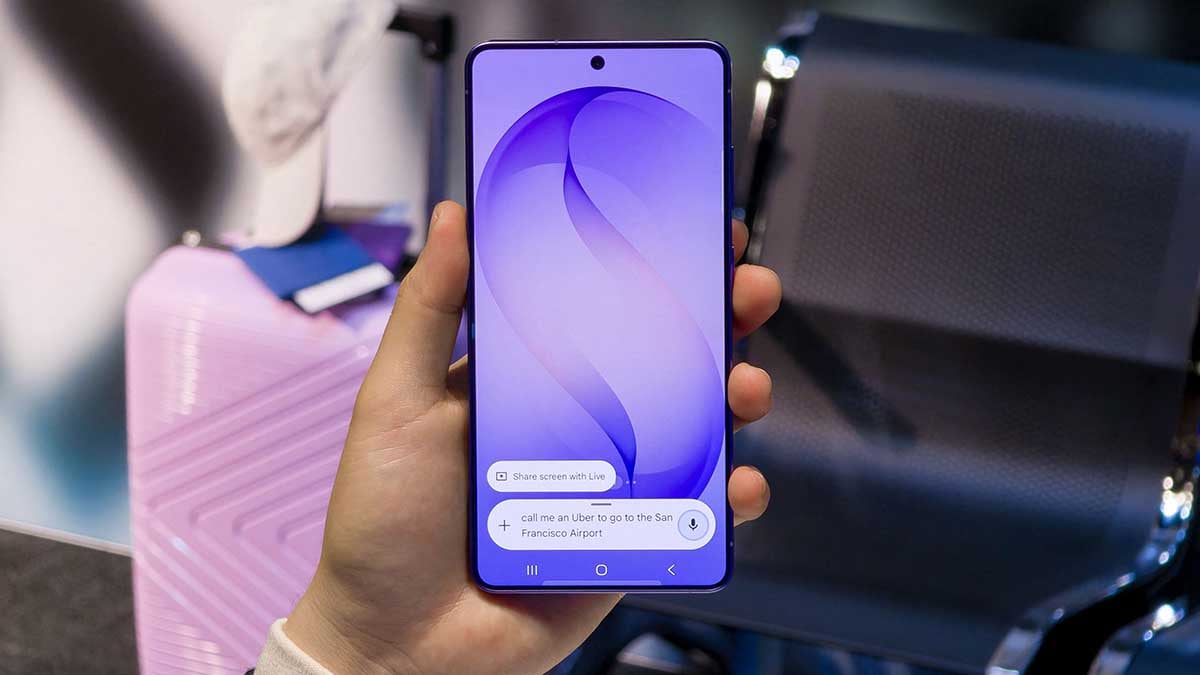
You wonβt (yet) find tons of complaints about quality issues, and the screen is still super bright, thanks to great AMOLED colors and contrast.
Is all this discussion on 10-bit display necessary? Sort of, especially because the S26 Ultra is already amazing in every other segment. It has the cool new Privacy Display that hides your screen from side views, better cameras, strong battery rumors, and the exclusively optimized Snapdragon chip. Donβt forget, the display has a smooth 120Hz scrolling and less glare from anti-reflective layers.
All this is avoidable, but Samsung chose to lie about 10-bit. That would have saved a lot of anger. What about other brands? Samsung isnβt the only one doing this. Appleβs latest iPhones, like the iPhone 17 Pro, have great OLED screens with wide colors and HDR support, but Apple doesnβt claim true native 10-bit hardware. Tests show the company uses similar tricks or βeffectiveβ 10-bit results. Googleβs Pixel 10 Pro shows β24-bit colorβ (which is basically 8-bit per channel, 16 million colors) and counts on software for good HDR and accuracy. True native 10-bit screens are rare in phones because the hardware is costly, uses more power, and most (including me) people donβt notice the difference anyway.
In my opinion, Samsung should get some blame for the bad communication. But calling it a full βlieβ feels too harsh. It looks more like a mix-up in early press talks that blew up. Overall, the S26 series still gives one of the best screen experiences you can buy in 2026. If you want super-smooth colors for videos or photos, you will probably love it. If you are super strict about native 10-bit specs, maybe wait or check other options (also let me know), but the real-world gap is small for most of us.
Sammy fans, relax, itβs still a top beast. Just check the full specs carefully before ordering. Enjoy.
The post Samsung Galaxy S26 Display controversy explained: From 10-Bit hype to FRC reality β Full breakdown appeared first on Sammy Fans.

Samsung just unveiled a hidden AI camera technology that debuted with the Galaxy S26 series. Flagships powered by Exynos 2600 chipset come with an AI-powered Visual Perception System (VPS), and itβs a very big deal.
The Exynos 2600 introduces an AI-based computer vision technology, which is designed to improve camera performance and efficiency, enhancing the overall power efficiency of the camera system.
Buried in a tech blog post, Samsung revealed something way more interesting. A dedicated AI subsystem called VPS thatβs fundamentally reworking how the Galaxy S26 and S26+ take photos before you even tap the shutter.
VPS is an artificial intelligence computer vision subsystem designed for the camera that analyzes the scene and assists with multiple stages of image and video processing.

Instead of the old setup where the image sensor sent data to a general ISP, the Exynos 2600 brings in a dedicated AI block that sits in the pipeline and manipulates what the cameraβs doing before you even press the button.

It also enhances the overall power efficiency of the camera system, which Samsung claims is more than 50% better compared to the previous gen.
Samsungβs VPS tech handles eye-blink detection across multiple faces simultaneously, picks the best frames for each person, then composites them together automatically.

The companyβs own tech blog is light on real-world samples, heavy on architecture diagrams. That said, real-world camera improvements are yet to be tested by the buyers of the new flagships.
The Galaxy S26 and Galaxy S26+ are powered by the Exynos 2600 in most markets around the world; however, customers in the United States, China, and Japan will get the Snapdragon 8 Elite Gen 5 instead.
The post Galaxy S26 has a powerful AI camera tech Samsung just unveiled appeared first on Sammy Fans.


nubia has unveiled its new Neo 5 series of gaming-focused smartphones at the ongoing MWC Barcelona. The lineup includes the Neo 5, Neo 5 GT, and Neo 5 Max. However, the company has only revealed the full specifications of the Neo 5 GT so far. The nubia Neo 5 GT is claimed to be the only smartphone in its segment to feature a built-in active cooling fan. It also includes a large 29,508mmΒ² cooling chamber designed to keep the MediaTek Dimensity 7400 SoC running cool. Other gaming-focused features include LPDDR Max RAM with speeds of up to 6,400Mbps, a 360-degree game antenna, 550Hz...
Samsung has officially launched the One UI 8.5 on February 25 and the public rollout is set to start on March 11, when the Galaxy S26 series hits market shelves. As for existing devices, One UI 8.5 rollout window narrows to April 2026.
Samsung seems to have planned to rollout March 2026 security update before starting the One UI 8.5 rollout in April. As discovered by Alfaturk, Samsung is internally testing One UI 8-based security updates for Galaxy devices.
At present, the software server lists March patch builds for the Galaxy Z Fold 7 and Galaxy Z Flip 7. With the builds under testing, the distribution looks set for this month, pushing the One UI 8.5 toward the April release window.
Samsung launched the Z Fold 7 and Z Flip 7 with One UI 8, based on Android 16. Beta Program of One UI 8.5 is available on the S25 series. Stable update could begin to roll out next month, leaving March dominated by patches.
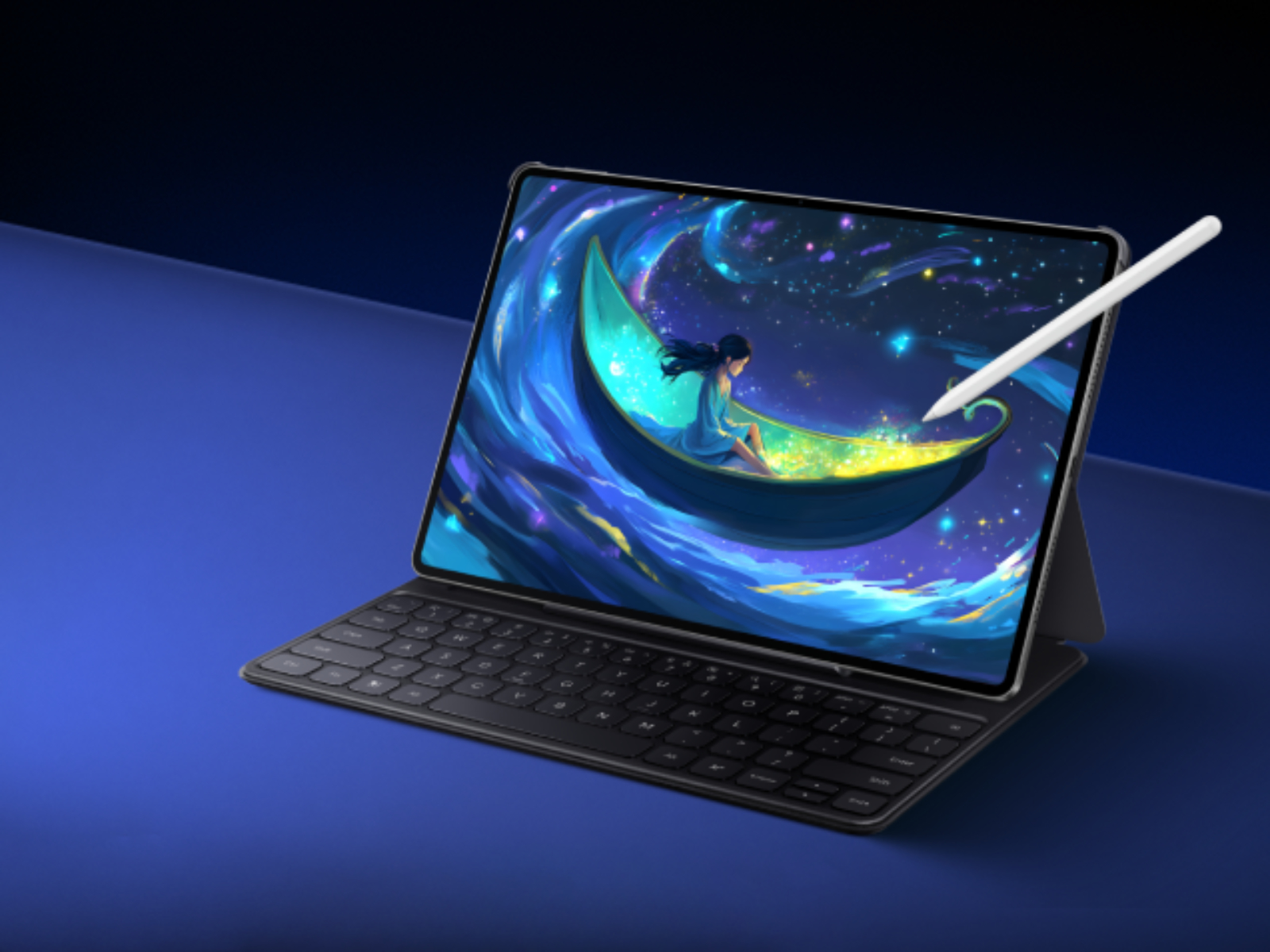
Like One UI 8, One UI 8.5 is based on Android 16. Meanwhile, the software brings major changes to the design language and user interface. The UI has become even more fluid and dynamic, adding blur across segments.
The new software also extends the Galaxy AI feature suite. It makes them function faster and smarter, reducing lag. Samsung also focused on Agentic AI, a major leap beyond the existing experiences Galaxy AI offers.
Samsung also debuted an upgraded Bixby assistant. It will be available with One UI 8.5 on select devices. It has integrated Perplexity AI for real-time web searches, making Samsungβs in-house assistant more relevant than ever.
The post One UI 8.5 rollout window narrows to April appeared first on Sammy Fans.


Thereβs a new member in vivoβs flagship X-series, and it dons the FE moniker, which stands for Fan Edition or maybe Fashion Edition? Weβre not so sure ourselves, but either way, the X300 FE brings a familiar set of specs, and it is now listed on the companyβs official site in Russia. For the most part, the X300 FE is a rebadged version of the China-exclusive vivo S50 Pro mini with one minor difference: it features Bluetooth 6.0 connectivity in place of the Pro miniβs Bluetooth 5.4 spec. The rest of the hardware is identical between the two. You get a decently compact 6.31-inch...
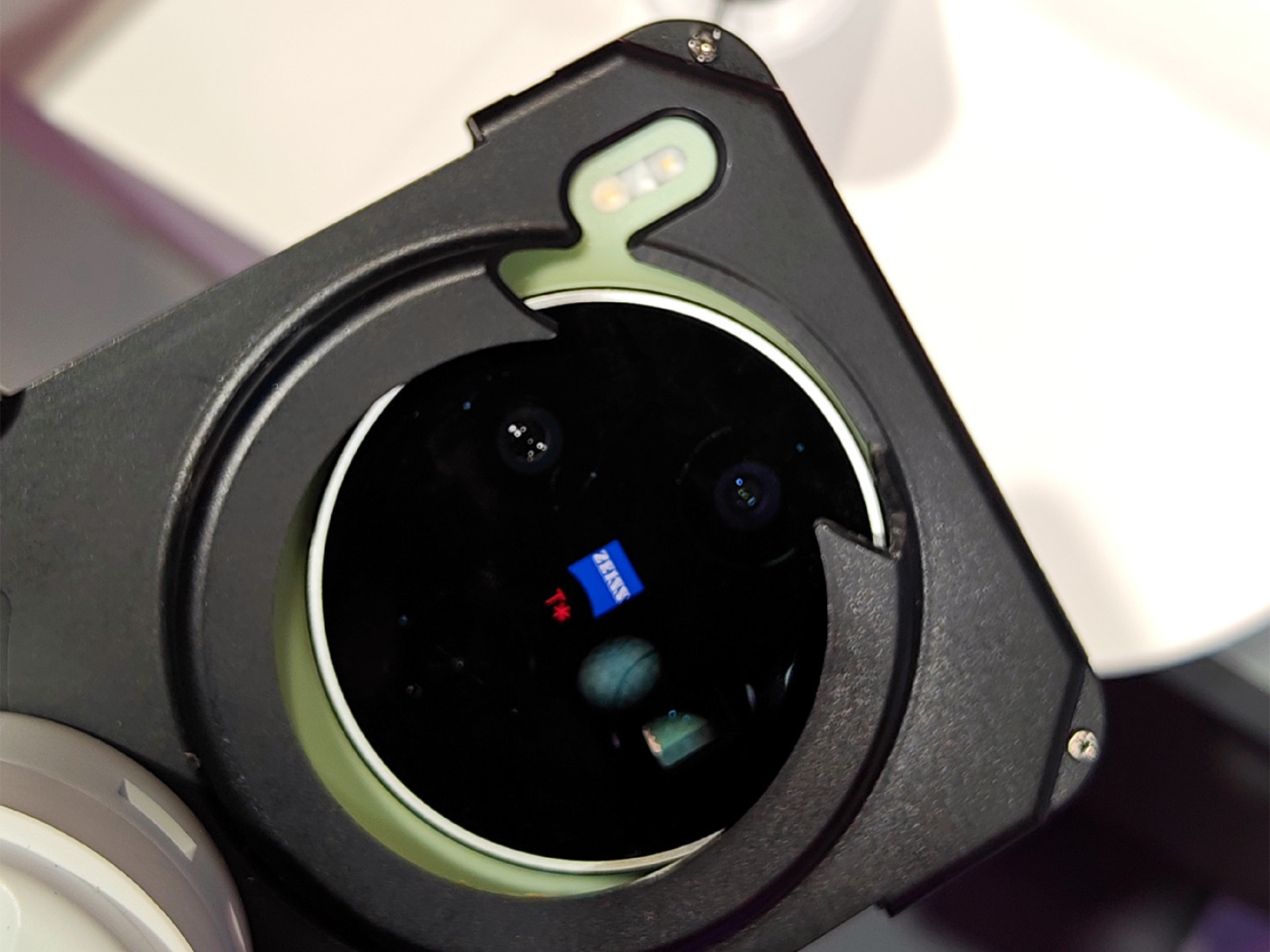
Samsung is already ramping up its next chip, the Exynos 2700. The SoC finished design late last year, and right now the companyβs cranking out mass-production samples with a target finish somewhere around May or June this year.
Park Yu-ak over at Kiwoom Securities (via Yonhap News Agency) is projecting the Exynos 2700 could land in roughly 50 percent of the Galaxy S27 lineup if the second-gen 2nm (SF2P) process holds up.
Exynos 2700βs supposed to hit a process capability rate above 95%. Samsung is banking on that to push GPU performance even further past Qualcomm, which is ambitious but not completely delusional given where Exynos 2600 surfaced.
Additionally, the Exynos 2700 isΒ getting an even more advanced packaging setup. Right now, Samsungβs talking like the Exynos 2700 is going to be better than the chip that was already better than Snapdragon in some ways.
Exynos 2600 is about survival, proving that Exynos wasnβt dead weight anymore. The Exynos 2700 is about dominance, or at least thatβs how Samsungβs positioning it internally.
System LSI designs these chips, Foundry makes them, and both have been bleeding credibility for years. Wider Exynos adoption will help Samsung reduce its reliance on Qualcomm.
Samsung is moving fast because it has to. Chip prices for phones and PCs have spiked globally, Qualcomm is not getting cheaper, and the company canβt afford another lost generation of Exynos.
A semiconductor industry insider commented:
βIf Samsung succeeds in restoring its reputation with the Exynos 2600, then the 2700 will be the product that truly demonstrates its technical competitiveness in the mobile AP space. If Exynos volumes continue to expand going forward, it is likely to make a major contribution to improving the performance of both the Foundry and System LSI divisions.β
The post Samsung to double the use Exynos 2700 in Galaxy S27; design work done, sample production soon appeared first on Sammy Fans.


Among the myriad of announcements at MWC 2026, HMD announced its plans to bring modern smartphone features to its feature phone lineup in the coming months. HMD wants to expand digital access to under-connected users worldwide through a set of features and services, including a digital wallet, an AI assistant and video calling. These services are set to launch throughout 2026, with key markets like India being the starting point. HMDβs digital wallet will deliver secure remittances for receiving, storing and cashing out funds through local payment systems. The service is set to debut in...


Last month, details about an FE variant of the vivo V70 surfaced online. Now, vivo has officially confirmed the V70 FEβs launch date and revealed details about its rear camera. Notably, the company recently unveiled the V70 and the V70 Elite in India. The vivo V70 FE will debut in Indonesia on March 9, the brand confirmed via a social media post. vivoβs also confirmed that the handset will feature a dual-rear camera setup with a primary 200MP main sensor. In another teaser, the company showcased the phoneβs design including its slim display bezels and color options. According...
Galaxy S26 Ultra preorders are outpacing everything Samsung has launched before, and by a margin that has the companyβs Korea chief casually dropping Guinness references at MWC.

Im Sung-taek, Samsung Electronics Koreaβs executive VP, told SK Telecomβs president in Barcelona that Galaxy S26 series preorders are up roughly 15% compared to the S25 launch; the Ultra variant accounts for 70% of that lift.

βThis may well be a Guinness,β Im said (via ETNews), which is either confidence or a very blunt admission that Samsung has finally cracked the premium conversion problem itβs chased for years.
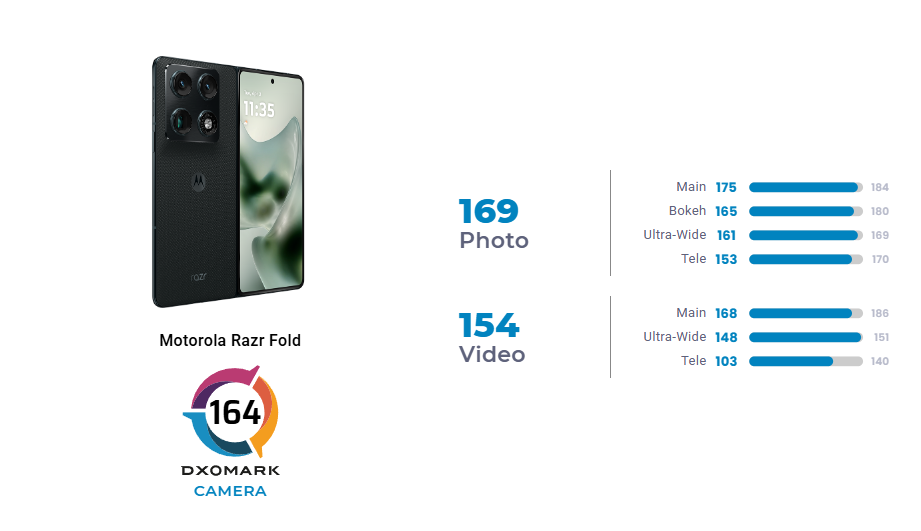
The Galaxy S25 series hit about 1.3 million pre-orders last year, a record at the time. Simple arithmetic puts the S26 somewhere around 1.5 million units, and thatβs with two days still left in the pre-sale window.
Ultra is eating everything
Hereβs the thing: 70% of that 15% bump is Ultra. Samsungβs premium push is succeeding, but itβs succeeding narrowly. The base S26 and S26 Plus arenβt lighting fires, but filling shelf space while Ultra does the heavy lift.
Im Sung-taek, Executive Vice President and Head of Samsung Electronics Korea, met with SK Telecom President Jeong Jae-heon at MWC 2026 in Barcelona, Spain, and stated:
βGalaxy S26 series sales have increased approximately 15% compared to the previous model, with the Ultra model accounting for 70% of that figure.β He added, βThis may well be a Guinness [world record].β
Privacy Display
Galaxy S26 Ultra is the worldβs first smartphone equipped with Privacy Display, a feature that adjusts visibility based on whoβs looking at the screen.
Mobile Agentic AI
Mobile Agentic AI, Samsungβs latest branding exercise for what used to just be called βAI stuff.β This time, the company claims itβs meaningfully more useful in everyday scenarios, not just demos.

The post Samsung talks βGuinness Recordβ as Galaxy S26 approaches 1.5 million preorders appeared first on Sammy Fans.

Privacy Display is getting incorporated into Good Lock in a new development. Samsung is rolling out an updated version of One Hand Operation + plugin. It brings regular improvements and an add-on specifically to the S26 Ultra.
One Hand Operation + lets Samsung users improve the phoneβs accessibility. It unlocks a set of new features that help navigate throughout the interface. It also offers convenient tools that ease handling single-handedly.
The update (via LarrySWhite) primarily resolves the gesture malfunction glitch that occurs upon screen rotation. Samsung also highlights bug fixes and stability improvements as part of its continuous efforts to elevate the usability.
For the Galaxy S26 Ultra, One Hand Operation + adds βPrivacy display action.β It expands the featureβs activation set beyond existing options.
Privacy Display can be launched from the Quick Panel and the side button. It has a dedicated page inside the system Settings menu. Double-pressing the side button quickly activates on-device protection without much intervention.
With the tool joining One Hand Operation +, the ease of enabling Privacy Display improves further. The plugin is already popular among Galaxy fans, given its benefits; the latest add-on gives it more reasons to be on the S26 Ultra.
Samsung is already accepting preorders for the Galaxy S26 series. Privacy Display is a hardware-driven feature, exclusive to the S26 Ultra. The tech comes at a cost of reduced display quality and brightness over its predecessor.

Credit β @F15Mechanic63/X
The post Good Lock ecosystem evolves with Privacy Display appeared first on Sammy Fans.
Samsung is pivoting to a smaller panel size for its Fan-Out Panel-Level Package process, and if the timing holds, the Galaxy S28βs Exynos new chip tech could be the first flagship AP to actually use it.
The company is betting hard on a packaging tech thatβs been hiding in plain sight. Plans include ditching the 600Γ600mm panels used for years in favor of 415Γ510mm, via Jukan.
It will be smaller, more controlled, and less warping, which has been the silent killer of FO-PLP ambitions since day one. Right now, FO-PLP only shows up in Galaxy Watch chips.
Watches got the experimental treatment. Flagship phones stuck with proven methods. Now the 415Γ510mm panels surface as the compromise that might actually work. Still about 3x more productive than legacy 300mm wafer-based processes.
TSMCβs apparently working on something even smaller, though details remain vague and Samsungβs expected to hit mass production first, likely sometime in 2027.
If Samsung can move flagship APs to this new FO-PLP setup, it frees capacity and cuts costs. Not by a little, but enough that it changes the economics of chipmaking at the high end.
The Galaxy S28βs chip may not ship with a press release about packaging tech. Samsung doesnβt work that way. But if the chip inside boots faster, runs cooler, or costs Samsung less to produce at volume, youβll know what shifted behind the curtain.
Nothing is confirmed, and the fate of Exynos depends on consumer feedback. Even though the Exynos 2600 has made a comeback, the utilization of future products in flagship models remains uncertain.

The post Galaxy S28βs chip may borrow a new tech from Exynos Watch SoC appeared first on Sammy Fans.

Googleβs Android 16 March 2026 Feature Drop just landed, and itβs carrying a lot more weight than the usual incremental stuff.
Weβre talking AI-generated icon packs, desktop mode expansion, and automation thatβll actually tap through apps for you while you watch. [Credits β 9to5Google]
Pixel 6 and newer devices can now let AI redesign every icon on your homescreen. Googleβs offering five styles: Scribbles, Cookies, Easel, Treasure, and Stardust.
Comfort View showed up too, but only on Pixel 10 models. It tones down bright and saturated colors for people sensitive to visual overload.
Pixel 10 flagships received Gemini automation, the same capability Samsung let slip with the Galaxy S26 last week. You tell it to book a ride or order groceries, and it opens the app in a secure window and just does it.
Googleβs lock screen At a Glance widget now pulls in real-time sports scores, stock market movers from your Finance watchlist, and live commute updates starting on Pixel 7 and newer models.
My Commute will surface delays and alternate routes without you needing to open an app.
Magic Cue learned a new trick too.Β When your group chat starts hunting for restaurant options, your Pixel 10 will trigger a search based on what people are saying.
Pixel 8 and newer phones now support desktop windowing through Desktop Mode when you plug in a monitor, keyboard, and mouse via USB DisplayPort. Connected Cameras now works with DSLRs and supported camera apps over cable.
Feature expansion:
Whatβs included
The March 2026 update includes bug fixes and improvements for Pixel users β see below for details
Audio
Camera
Display & Graphics
Framework
Telephony
User Interface
The post Android 16 March 2026 Feature Drop rolling out with AI automation, icon redesign and more features appeared first on Sammy Fans.
Edifier has introduced the MK12 wireless lavalier microphone in China. It is now available on JD.com for 139 yuan ($20). The microphone is available in two colors, Classic Black and Cloud Rock White, and is designed for simple, plug-and-play use with a wide range of audio systems.

The MK12 includes a clip-on transmitter and a receiver with a standard 3.5mm audio plug. This design allows it to connect directly to speakers, portable amplifiers, sound systems, and mixers without requiring additional setup. Edifier has developed a custom housing for the MK12, moving away from generic molds to create a more distinctive design.

The microphone uses 2.4GHz wireless transmission to ensure a stable connection. Edifier claims the device can maintain an unobstructed wireless range of over 30 meters. It features a high-sensitivity, unidirectional electret condenser capsule that is tuned for clear vocal pickup. The company positions the MK12 as a solution for classrooms, training sessions, sales presentations, and promotional events.
Edifier has included a built-in DSP chip for audio processing. The DSP provides anti-feedback technology to reduce howling and improve voice clarity, even during live amplification. It also supports advanced features like Acoustic Echo Cancellation (AEC) and Environmental Noise Cancellation (ENC). These technologies help eliminate background noise and maintain clear speech, even in demanding environments.

The transmitter includes a 300mAh battery, which provides up to 15 hours of use on a single charge. The microphone uses a clip-on design for easy attachment to clothing, while the receiver comes with a lanyard for added portability.
The MK12 has a frequency response of 100Hz to 10kHz, which is optimized for voice rather than music. It supports both 3.5mm and 6.35mm inputs, with an adapter included in the package for compatibility with larger connectors.
In related news, Edifier has recently launched the retro-inspired M330 II Bluetooth speaker with LDAC, AirPlay 2, and up to 14 hours of battery life, alongside the Hecate Air 3 Commander open-ear gaming headset with 2.4G wireless connectivity and Bluetooth 6.0 support.
For more daily updates, please visit ourΒ News Section.
Stay ahead in tech! Join our Telegram community and sign up for our daily newsletter of top stories! 
(JD)
The post Edifier launches MK12 wireless lavalier mic with 15h battery life & DSP processing appeared first on Gizmochina.
Motorola has introduced two new wireless earbuds at MWC 2026 as part of its Moto Things ecosystem. The new models are the Moto Buds 2 Plus and the Moto Buds 2. Both earbuds focus on delivering strong audio performance, active noise cancellation, and smart features in a compact design with Pantone color finishes.

The Moto Buds 2 Plus are designed for users who move between work, calls, and entertainment throughout the day. The earbuds use Sound by Bose technology, tuned to deliver balanced and detailed audio.
They feature 11mm dynamic drivers for deeper bass and Knowles balanced armatures for improved clarity and precision. The earbuds support Hi-Res Audio with the Low-Latency High-Definition Audio Codec (LHDC) for high-quality wireless playback. Spatial Audio is also included to create a more immersive sound experience.

To reduce distractions, the Moto Buds 2 Plus include Dynamic Active Noise Cancellation (ANC). This helps block outside noise while working or traveling. For calls, the earbuds use six microphones with Environmental Noise Cancellation and a high signal-to-noise ratio to deliver clearer voice audio. Users can also enable CrystalTalk AI in the Moto Buds app, which uses AI noise reduction to improve voice clarity in loud environments.
Battery life is rated at up to 9 hours on a single charge, with up to 40 hours of total playback when using the charging case. The earbuds support Dual Connection, allowing them to stay connected to two devices at the same time. Users can move between a laptop and a phone without reconnecting. The Audio Share feature lets two pairs of Moto Buds 2 Plus connect to one phone to listen together. Wear Detection automatically pauses audio when the earbuds are removed.
Users can customize touch controls for play, pause, track skipping, calls, or launching a voice assistant. On compatible Motorola devices, holding the earbuds activates Moto AI features such as Catch Me Up, Pay Attention, and Remember This. AI-powered translation is also supported on select devices.
The Moto Buds 2 are aimed at everyday listening. They use 11mm dynamic drivers and 6mm micro planar magnetic drivers and support Hi-Res Audio with LHDC. Spatial Audio is also supported for more immersive playback.

They include Dynamic ANC rated up to 55dB, along with Transparency Mode so users can hear their surroundings when needed. The earbuds also feature six microphones with Environmental Noise Cancellation for clear voice calls.
Battery life reaches up to 11 hours on a single charge and up to 48 hours total with the charging case. A 10-minute charge provides up to 3 hours of playback.
The Moto Buds 2 support Dual Connection and use Bluetooth 6.0 for improved connectivity and faster speeds. A Gaming Mode in the Moto Buds app reduces audio latency for gaming. On supported Motorola devices, users can also access Moto AI features such as Catch Me Up, Pay Attention, and Remember This by holding the earbuds.
The Moto Buds 2 Plus start at β¬149/Β£130 and will launch in Europe, the Middle East, Latin America, and Asia Pacific in the coming weeks. Color options include PANTONE Cool White and PANTONE Silhouette.
The Moto Buds 2 start at β¬79 and will also launch in the same regions. They will be available in PANTONE Carbon, PANTONE Violet Ice, and PANTONE Gray Mist.
Donβt miss a thing!Β Join our Telegram communityΒ for instant updates and grab ourΒ free daily newsletterΒ for the best tech stories!
For more daily updates, please visit ourΒ News Section.
The post Motorola Launches Moto Buds 2 Plus with Sound by Bose and Moto Buds 2 with 48-Hour Battery appeared first on Gizmochina.
Nubia has unveiled the nubia Neo 5 GT at MWC Barcelona 2026. The phone targets young gamers and Gen Z users with a focus on cooling performance, gaming controls, and AI-powered features.

The Nubia Neo 5 GT is the only phone in its class with a built-in active cooling fan. It also includes a 29,508mmΒ² cooling area and a Through-Flow Duct Design that directs airflow over the CPU and battery. This setup is built to control heat and maintain stable frame rates during long gaming sessions.

The device runs on the MediaTek D7400 4nm processor with LPDDR5 memory rated at 6400Mbps. Performance is managed by the NeoTurbo Engine for consistent frame rates. A 360Β° Game Antenna helps maintain strong connectivity regardless of how the phone is held. The phone is certified for 120FPS gameplay on Garena Free Fire and MLBB. It also supports 90FPS on Delta Force with the Mid-Season update.
The Nubia Neo 5 GT comes with 550Hz Neo Triggers 5.0 for four-finger control. It supports sub-5.5ms latency and a 3049Hz touch sampling rate. Magic Touch 3.0 keeps the screen responsive even with wet or sweaty fingers.
It features a 6.8-inch 1.5K AMOLED display with a 144Hz refresh rate and 4,500 nits peak brightness. SGS-certified Eye Care helps reduce eye strain. The 6,210mAh dual-cell battery supports up to 80W fast charging, while the EU version supports 45W PD charging. The 5% Extreme Mode delivers up to 23 minutes of gaming or 29 hours of standby. Bypass Charging powers the device directly during gaming without charging the battery.
The Neo 5 GT has a completely flat back with no camera bump, rounded corners, and a 90Β° charging cable. It includes stereo dual speakers with DTS:X Ultra, an X-Axis linear motor, and RGB lighting that reacts during gameplay.
AI Game Space 5.0 centralizes performance controls. AI Copilot Demi 2.0 includes a Gaming Coach, Gaming Chatbot, and Auto-Chat reply feature.
The series also includes a 50MP AI triple rear camera and a 16MP front camera. AI Memory, AI Scam Alert, AI Image and Text Generation, and AI Translate are included.
The device will launch globally starting in Southeast Asia in March with a starting price of β¬399.
For more daily updates, please visit ourΒ News Section.
Stay ahead in tech!Β Join ourΒ Telegram communityΒ andΒ sign up for our daily newsletterΒ ofΒ top stories.
The post Nubia Neo 5 GT Brings Built-In Fan Cooling, 144Hz AMOLED Display, and 6210mAh Battery appeared first on Gizmochina.
Anker has launched its new 250W Desktop Charger Pro+ (model A2345) on JD.com for 849 yuan (approx $120). The charger features a design similar to the current 250W global version and offers six ports, including four USB-C and two USB-A, with support for multiple fast-charging protocols.

The new charger delivers a maximum output of 250W. The USB-C1 port supports up to 140W output, making it suitable for high-performance laptops like the 16-inch MacBook Pro. It offers multiple power profiles, including 5V/3A (15W), 9V/3A (27W), 15V/3A (45W), 20V/5A (100W), and 28V/5A (140W). The USB-C2, USB-C3, and USB-C4 ports each deliver up to 100W output for fast charging phones, tablets, and other devices.

The device features comprehensive protocol compatibility, including PD, PD 3.1, PPS up to 100W, SCP, UFCS, and Xiaomiβs proprietary fast-charging standards. It comes with built-in support for Huawei 66W SuperCharge and Xiaomi 120W wired fast charging when paired with compatible cables.
The dual USB-A ports provide up to 22.5W output, which works well for smaller devices and accessories like earbuds or power banks.
Anker has built the charger with GaN (Gallium Nitride) technology, which improves efficiency and keeps the device compact. The charger measures 106 x 90 x 40 mm and weighs 640 grams, making it portable and practical for travel or a permanent desk setup.

The front of the charger includes a 2.26-inch LCD display that shows real-time power output for each port. Anker also integrates intelligent power distribution that ensures safe and efficient charging when multiple devices are connected.
In related news, Anker has recently introduced the Soundcore Boom Go 3i portable speaker in Europe, and also unveiled the Soundcore Space 2 headphones featuring enhanced ANC and up to 70 hours of battery life.
For more daily updates, please visit ourΒ News Section.
Stay ahead in tech! Join our Telegram community and sign up for our daily newsletter of top stories! 
The post Anker launches 250W GaN Desktop Charger Pro+ with six ports and Xiaomi 120W support appeared first on Gizmochina.
The all-new MacBook Air M5 is here, and at first glance, it doesnβt look very different. But inside, Appleβs latest thin-and-light laptop gets a new chip, faster storage, and updated wireless connectivity, while it keeps the same design thatβs defined the Air lineup for the past few years.

Appleβs new MacBook Air is powered by the companyβs M5 chip. An important change is that the laptop now starts with 16GB of RAM and 512GB of storage as standard.Β
The price also went up from $999 to $1,099 for the base, but you canβt complain. Pre-orders are opening from March 4th, and the launch is set for Wednesday, March 11.Β
On the outside, this is still very much the MacBook Air people know. Apple is keeping the same chassis design, flat edges, a thin profile, and a lightweight build. The 13-inch version weighs 1.23kg, while the 15-inch model comes in at 1.51kg. Color options include sky blue, silver, starlight, and midnight.Β

The 13-inch model continues to feature a 13.6-inch LCD display with a 2560 x 1664 resolution and a 60Hz refresh rate. Up top, thereβs still a 12MP Center Stage webcam, which automatically adjusts framing during video calls.Β
The real story here is the M5 chip. Apple is offering two GPU configurations: one with an 8-core graphics processor and another with a 10-core graphics processor.Β
The new MacBook Air M5 also allows users to customize RAM, SSD capacity, keyboard options, and even the matching power adapter. Apple claims the SSD read and write speeds are now twice as fast as the previous generation.Β

Connectivity also gets a bump. The laptop includes Appleβs upgraded N1 wireless chip, supporting Wi-Fi 7 (802.11be), Bluetooth 6, and Thread networking technology.Β
The MacBook Air M5 packs a 53.8Wh lithium polymer battery, rated for up to 18 hours of streaming video playback. Likewise, you get a MagSafe 3 magnetic charging port and two Thunderbolt 4 ports on the left. On the right, youβll find a 3.5mm headphone jack.
Donβt miss a thing!Β Join our Telegram communityΒ for instant updates and grab ourΒ free daily newsletterΒ for the best tech stories!
For more daily updates, please visit ourΒ News Section.
(Source)
The post MacBook Air M5 debuts with 16GB RAM, 512GB storage, and up to 18 hours of battery life appeared first on Gizmochina.
TECNO presented concept devices at Mobile World Congress 2026 that tackle a basic problem: AI needs more computing power than current smartphones can handle in their existing designs.

The main solution is Modular Magnetic Interconnection Technology. Users snap hardware pieces onto their phones using magnets. The system includes stackable batteries, action cameras, and telephoto lenses that connect through intelligent connectivity.

Two versions show different styles. The ATOM edition focuses on clean structure and subtle design. The MODA edition uses bold, geek-inspired looks. Both let you add capabilities outside the phone body instead of packing everything inside. This keeps the phone light for daily use while supporting high-demand tasks when needed.
The POVA Ecosystem extends this concept across multiple devices. POVA Metal is the worldβs first full-metal unibody 5G phone. It has a Snapdragon processor and all-metal construction.

POVA Controller Slide is the worldβs first controller with targeted aiming for MOBA mobile games. It offers 0 to 25-degree adjustable viewing angles, works for both FPS and MOBA games, and supports wireless charging.
POVA Earphones match the ecosystem design with futuristic styling and signature dot-matrix lighting.
Edge-Side AIGC Preview Concept Technology puts AI processing on the device itself. This removes the need for an internet connection and cuts down lag time.

TECNO worked with Arm to build customized Style Transfer Preview technology. It uses algorithm optimization to reduce screen flickering and jitters that appear in older solutions. The result is a real-time preview at 30fps with smooth split-screen viewing.
The company compressed AI models to run completely offline on smartphones while keeping artistic quality and stable performance.
AI EINK uses electronic ink technology for a paper-like display. The device uses AI recognition to analyze colors from the camera and match the back panel. Users can personalize it through a dedicated app.


TECNO Slim 2 has an ultra-thin body and 0.7mm ultra-narrow bezel.
POVA Neon is the first smartphone to use ionized inert gas lighting technology, creating a glowing effect.
The Concept Design Suite includes a laptop, tablet, earbuds, smartwatch, smart glasses, and power bank. The βMusic in Motionβ theme uses citrus yellow and urban gray colors.
TECNO PHANTOM Ultimate G Fold Concept is the worldβs thinnest tri-fold phone. The G-style tri-fold design has a 9.94-inch display that folds inward twice. This protects the main screen from scratches and impacts when closed.

The device is 11.49mm thick when folded and 3.49mm thick when unfolded. It uses 2,000 MPa ultra-high-strength steel for the hinge and ultra-strong Titan Fiber for the back cover, which is just 0.3mm thick.
TECNO displayed these concepts at Stand 7A40 in Hall 7 at Fira Gran Via in Barcelona from March 2 to 5.
For more daily updates, please visit ourΒ News Section.
Stay ahead in tech!Β Join ourΒ Telegram communityΒ andΒ sign up for our daily newsletterΒ ofΒ top stories.
The post TECNO Unveils Full-Metal, Ultra-Thin and Lighting-Based Phone Concepts at MWC 2026 appeared first on Gizmochina.
Itβs been over half a decade since Samsung last increased the battery capacity of its top-tier Galaxy S flagship. The company moved to a 5,000mAh cell with the Galaxy S20 Ultra back in 2020, and that figure remains unchanged in the newly launched Galaxy S26 Ultra. Instead of increasing raw capacity, Samsung is leaning on improved efficiency from the latest Snapdragon, along with performance tuning in One UI 8.5.

Meanwhile, Chinese brands like Xiaomi, OnePlus, and Honor have taken a very different approach. Their latest flagships pair the same chipset with high-energy-density batteries with capacities over 7,000mAh. So naturally, the big question is where the Galaxy S26 Ultra stands against these rivals when it comes to battery life. A recent battery drain comparison by Tech Droider attempts to put that into perspective.
The test simulated mixed real-world usage such as browsing, video playback, gaming, camera work, and the Galaxy S26 Ultra lasted 9 hours and 8 minutes. Thatβs actually a step up from last yearβs S25 Ultra, which stopped at around 8 hours and 40 minutes in the same test. So there is progress, even if itβs not dramatic.
Where things get interesting is in the comparison. The iPhone 17 Pro Max crossed 9 hours and 41 minutes. Xiaomiβs 17 Pro Max pushed just past 10 hours. And the OnePlus 15 stretched all the way to 12 hours and 31 minutes.
That gap isnβt hard to explain. Battery size plays a role, and a big one. The OnePlus 15 carries a 7,300mAh battery, and Xiaomiβs flagship goes up to 7,500mAh. With that kind of capacity advantage, endurance gains start to look less surprising.
The pattern is becoming clearer year after year. Efficiency tweaks help, but they only go so far when rivals are increasing raw capacity by 30β40 percent.
Samsung has hinted at possible silicon-carbon adoption in future models, which could allow for larger batteries without adding bulk. If that happens, the balance may shift. For now, though, the S26 Ultra remains competitive rather than class-leading in endurance.
Donβt miss a thing! Join our Telegram community for instant updates and grab our free daily newsletter for the best tech stories!
For more daily updates, please visit our News Section.
(Source)
The post Galaxy S26 Ultraβs 5,000mAh battery tested against 7,000mAh+ giants appeared first on Gizmochina.
If youβve been keeping up with us, youβve already seen the early details on the Honor Magic 9 series. Now thereβs more. This time, the spotlight is on the Honor Magic 9 Pro.
According to tipster Digital Chat Station, Honor is testing the Magic 9 Pro with not one but two 200-megapixel sensors on the back. One is said to serve as the primary camera, while the other would power a periscope-style telephoto lens.Β
The more interesting part is the choice of sensor. The prototype is said to be using either the OmniVision OV52B or the OmniVision OVB0D, both 200MP sensors, but with slightly different sizes and capabilities.
The OV52B reportedly comes in a 1/1.3-inch format and is expected to appear in several 2026 flagship phones. Itβs designed to balance high resolution with improved dynamic range, which could help capture more detail in both bright and dark areas of a scene.

The OVB0D, on the other hand, is even larger at 1/1.12 inches and supports OmniVisionβs LOFIC Gen 2 HDR technology. LOFIC, short for Lateral Overflow Integration Capacitor, is meant to improve dynamic range and reduce blown-out highlights in challenging lighting. That could make it particularly useful in a flagship device that wants to compete on image quality rather than just raw megapixel numbers.
For now, there are no confirmed details about the phoneβs processor, design, or battery. The leak focuses entirely on imaging. But the tipster did confirm that the Honor Magic 9 Pro will feature a 6.85-inch display.Β
As always with early leaks, plans can change. But we now at least have an idea of what Honor is preparing for its 2027 flagship lineup. The lineup could debut in October 2026.
For more daily updates, please visit ourΒ News Section.
Stay ahead in tech!Β Join ourΒ Telegram communityΒ andΒ sign up for our daily newsletterΒ ofΒ top stories.
(Source)
The post Honor Magic 9 Pro may arrive with two 200MP cameras on the back appeared first on Gizmochina.
The Redmi K90 Ultra was supposed to arrive in February β at least, thatβs what earlier rumors suggested. February has come and gone, and thereβs still no official word. Now, a new leak indicates the wait might stretch a bit longer.
According to a well-known Weibo tipster, Digital Chat Station, a certain manufacturerβs Dimensity 9500 flagship processor is tentatively scheduled for release in April.Β

While the post doesnβt directly name the phone, the clues are hard to ignore. Based on the bloggerβs previous posting patterns and discussions in the comments, many are speculating that the device in question is the Xiaomi Redmi K90 Ultra.
As for specs, the rumored hardware reads like a checklist of flagship ambitions. The phone is expected to feature a massive 6.8-inch display with 1.5K resolution and a 165Hz refresh rate.Β
Powering it could be an equally massive 8,500mAh battery with support for 100W charging. Other rumored features include a metal frame, an ultrasonic in-display fingerprint sensor, and comprehensive water resistance.

Thereβs also a global angle. The so-called Xiaomi 17T Pro is rumored to be a tweaked version of the K90 Ultra for international markets. Carrying the model number 2602EPTC0G, it may ship without certain features like a cooling fan.Β
In any case, the Redmi K90 Ultra is expected to launch along with the Redmi K Pad 2 in China. It could come with an 8.8-inch 3K display, a flagship-level processor, and a larger 9,000mAh cell.
For more daily updates, please visit ourΒ News Section.
Tech enthusiast? Get the latest news first! FollowΒ our Telegram channelΒ andΒ subscribe to our free newsletterΒ for your daily tech fix! 
(Source)
The post Redmi K90 Ultra to launch a little later than expected appeared first on Gizmochina.
Smalth has expanded its wearable portfolio with the launch of the Titanium Pro smart ring. The new model builds upon the existing Titanium platform and introduces deeper heart monitoring features. Designed as a screen-free wearable, it focuses on delivering meaningful health insights in a subtle and comfortable form.

The Smalth Titanium Pro comes equipped with integrated ECG support, allowing users to monitor heart rhythm patterns beyond standard heart rate tracking. By combining ECG with continuous heart rate, HRV, sleep stage analysis and activity tracking, the ring offers a broader understanding of cardiac health over time.
It can store health data offline for up to seven days, making it suitable for travel or limited connectivity situations. Once paired with the companion app, all stored data syncs automatically.

Constructed from medical-grade titanium, the ring is lightweight, durable and resistant to corrosion. Its minimalist and gender-neutral design ensures that it blends seamlessly into everyday wear. The waterproof build adds to its practicality for daily use.
Battery endurance is one of the key highlights of the Titanium Pro. In normal usage conditions, the ring lasts between five and seven days, while lighter usage can extend battery life up to 12 days. The included charging case supports four to five full recharges, delivering a combined battery life of up to 30 days or more.
Priced at $128, Smalth positions the Titanium Pro with the ECG ring as a health-focused wearable that works quietly in the background, offering advanced heart insights without screens, constant notifications, or complicated interaction. Its ceramic ring variant is priced at $88.
For more daily updates, please visit ourΒ News Section.
Stay ahead in tech!Β Join ourΒ Telegram communityΒ andΒ sign up for our daily newsletterΒ ofΒ top stories
The post Smalth Titanium Pro smart ring brings ECG monitoring, 30-day battery backup appeared first on Gizmochina.
Samsung has announced a major update to its Galaxy for the Planet initiative, outlining fresh environmental goals through 2030. After successfully meeting its earlier 2025 sustainability targets, the company is now widening its focus beyond product design and manufacturing to address broader ecological impact across its global operations.

Launched in 2021, Galaxy for the Planet serves as the sustainability framework for Samsungβs Mobile eXperience business. The company confirmed that it has achieved all four goals originally set for 2025, which were aimed at lowering environmental impact across mobile products and operations.
A key area of progress has been the increased use of recycled and responsibly sourced materials in Galaxy devices. Samsung now applies 10 types of recycled materials in both internal and external components, including plastics, glass and metals. It has also advanced circular initiatives such as recovering plastics from discarded fishing nets and strengthening its Circular Battery Supply Chain to reclaim materials from used batteries.
The company has phased out single-use plastics in mobile packaging, shifting to paper-based and recycled alternatives. Improvements in low standby power technology have reduced charger standby consumption to near-zero levels. In manufacturing, all qualifying mobile production sites have received Platinum certification under UL Solutionsβ Zero Waste to Landfill standard, reflecting complete landfill diversion at those facilities.
With its initial targets achieved, Samsung is expanding its sustainability strategy for the remainder of the decade. The next phase centres on three priority areas: circularity, water stewardship and ecosystem conservation.
Samsung aims to include at least one recycled material in every module of every Galaxy mobile product, covering phones, tablets, PCs and watches. On water management, the company plans to return 110 percent of the water consumed in its mobile operations while pursuing the highest Alliance for Water Stewardship certification. It has also committed to conserving ecosystems equivalent to the footprint of its global mobile operations, focusing on habitat protection and biodiversity restoration.
Through these measures, Samsung is positioning sustainability as a long-term pillar of its innovation and operational strategy rather than a standalone initiative.
For more daily updates, please visit ourΒ News Section.
Stay ahead in tech!Β Join ourΒ Telegram communityΒ andΒ sign up for our daily newsletterΒ ofΒ top stories
The post Samsung unveils 2030 sustainability roadmap for Galaxy devices appeared first on Gizmochina.
Oppo has confirmed that the Find X9 Ultra will make its global debut later this year, signalling a major step for its premium Ultra lineup. The announcement was made during the companyβs media event at MWC 2026 event in Barcelona, where executives highlighted the deviceβs strong focus on next-generation mobile photography.

The Find X9 Ultra will mark the first time Oppoβs Ultra platform expands beyond China. Positioned as βBuilt to Be Your Next Camera,β the device features an advanced imaging system developed in collaboration with Hasselblad. Oppo executives stated that the new Ultra model is designed to set a higher benchmark in smartphone photography. Complete specifications, pricing and regional rollout timelines will be shared closer to launch.
Reports indicate that the Find X9 Ultra may feature a 6.82-inch flat OLED display with 2K resolution, similar to its predecessor. While early engineering units are said to support a 144Hz refresh rate, the final retail version is expected to offer a 120Hz refresh rate.
On the camera front, the phone is tipped to include a quad-camera system comprising a 200-megapixel main sensor, a 50-megapixel ultra-wide lens, a 200-megapixel 3x periscope telephoto camera, and an additional 50-megapixel periscope lens. For selfies, it may feature a 50-megapixel front-facing camera.
Under the hood, the device is expected to run on the Snapdragon 8 Elite Gen 5 chipset and ship with ColorOS 16 based on Android 16. The battery capacity is said to be around 7,050mAh, which is slightly lower than the Find X9 Proβs 7,500mAh unit but larger than the 6,100mAh battery found in the Find X8 Ultra. Charging support may include 80W wired and 50W wireless speeds.
For more daily updates, please visit ourΒ News Section.
Stay ahead in tech!Β Join ourΒ Telegram communityΒ andΒ sign up for our daily newsletterΒ ofΒ top stories
The post Oppo Find X9 Ultra global launch confirmed; Oppo says it is your next camera appeared first on Gizmochina.
Vivo officially unveiled the X300 Ultra at Mobile World Congress 2026, and now the company is sharing more details about the phoneβs video chops.Β
In a post on Weibo, Vivo product manager Han Boxiao laid out what he calls the key camera upgrades coming to the X300 Ultra. According to him, the X300 Ultra is aiming to be a βpocket cameraβ for creators.
One of the headline features is what Vivo calls its βno secondary cameraβ Zeiss Master Lens Trinity. In practical terms, the company says all focal lengths β from wide to telephoto β will support 4K 120fps 10-bit Log recording. The same applies to 4K 120fps Dolby Vision capture and optical image stabilization across all focal lengths.
The consistency carries over into post-production. The X300 Ultra supports APV 422 professional video encoding, which Vivo claims brings output closer to what youβd expect from a dedicated camera.Β
Moreover, Log footage can load and apply 3D LUTs and custom LUTs during recording, enabling real-time color calibration on set. Itβs also compatible with ACES workflows, so Log clips can drop into professional cinema pipelines without heavy conversion.
As for the audio, the X300 Ultra has a four-microphone system with six preset scenes designed to enhance target audio while reducing ambient noise.Β
For more casual use, Vivo is adding two cinematic color presets: Film Style and Film Look. These are designed to deliver more polished, one-tap results without requiring manual grading. The official says that sample photos and videos in these modes will be shared later.

The device is also tipped to feature a 6.82-inch 2K BOE flat display with narrow bezels and LTPO technology. It will pack the Snapdragon 8 Elite Gen 5 chip and a battery of around 7,000mAh capacity with 100W wired and 40W wireless charging support.
For more daily updates, please visit ourΒ News Section.
Stay ahead in tech!Β Join ourΒ Telegram communityΒ andΒ sign up for our daily newsletterΒ ofΒ top stories
(Source)
The post Vivo confirms X300 Ultra supports full-focal-length 4K Log shooting and custom LUT support appeared first on Gizmochina.


Camera flagships are more than just smartphones these days. They have huge potential, thanks to their high-end, next-gen imaging sensors and capable lenses. Heck, you can even expand their native optical reach by adding teleconverter lenses. We truly live in exciting times! Today, we're taking a look at the latest photography kits: the Xiaomi 17 Ultra Photography Kit and the Photography Kit Pro. Both add true manual control to the Xiaomi 17 Ultra and are focused on expanding its imaging prowess, not on adding external lenses. Let's start with the Pro kit. It's all based around a...
Samsung is giving people in the US a chance to win its newest gadgets in the βEasiest Giveaway Everβ. This is part of Samsungβs 14 Days of Giveaways. The giveaway comes after Samsung launched the Galaxy S26 series and Galaxy Buds 4 series.
The prize of this giveaway is amazing. One lucky winner will get a Galaxy S26 Ultra, Galaxy Buds 4 Pro, and a one-year Spotify Premium subscription. Samsung Mobile US shared the giveaway on social media, including X, saying: βNo need to phone a friend for this one. Enter the Easiest Giveaway Ever for a chance to win a Samsung Galaxy bundle.βΒ
Itβs very easy to enter.Β The giveaway also includes a short video where Samsung asks participants to βFill in the blank β Unlock your imagination with CRE_TIVE STUDIOβ. Just like the post, reply with your answer using the hashtags #GalaxyGiveaways and #GalaxyS26Ultra. You donβt need to buy anything to enter. The contest is open to people 18 years or older in the US.

And this giveaway is not run by X, Reddit, Facebook, or Instagram. Your information goes only to Samsung and is used only if you win. The contest has already started from 6:00 a.m. CT on February 25, 2026, and will end at 11:59 p.m. CT on March 10, 2026. Each post has its own entry time during the 14 days. You can check the full rules here.
With easy entry steps and amazing prizes, Samsungβs βEasiest Giveaway Everβ is perfect for anyone who loves tech. Donβt miss the chance to win a Galaxy S26 Ultra, Galaxy Buds 4 Pro, and Spotify Premium for free!
The post Your chance to get a Galaxy S26 Ultra and Buds 4 Pro for free! appeared first on Sammy Fans.
Google has pushed its March 2026 Play System update for Android devices. These updates work on phones, tablets, Wear OS, Android TV, Google TV, Android Auto, and even PC. They improve Google services, including Play services, Play Store, and Google Play system, to make devices safer, protect privacy, and improve overall performance.
The fresh update for Google Play services improves system management features to better privacy. It works across phones, PCs, TVs, Auto, and Wear OS. The update helps Android handle background processes better and keeps your data more secure.
Google Play Store v50.4 is now available, which brings an important change. On phones, users will now see app recommendations in short video clips. Instead of just reading app descriptions or looking at screenshots, you can watch quick video previews of apps. This makes it easier and more fun to discover new apps and see what they do before downloading them.

Most updates happen in the background and help keep your device running smoothly. Features may not appear immediately for everyone, because Google often rolls out updates slowly over time. Currently, it is live for Pixel devices and the company will soon expand it to more Android devices, including Samsung.
To get the updates, open Settings on your devices, open Settings, then go to Security and Privacy >> Updates >> Google Play System update. Check for updates and install the latest versions of Google Play services and Play Store to enjoy the new privacy features and app videos.
Check Full Changelog:
Google Play services v26.08 (2026-03-02)
Developer Services
Device Connectivity
Google Play Store v50.4 (2026-03-02)
The post March 2026 Google Play System Update Arrived: Hereβs Whatβs New appeared first on Sammy Fans.
Google Maps is getting a new icon on Android and iOS. Google has started rolling out this change with version 26.09.06.873668274 of the app. The icon still looks like a map pin, but it now has a fresh and modern design.
The shape of the pin has been slightly updated. The top ring is thinner than before, which makes it look lighter and cleaner. The circle inside the pin is now bigger, so it stands out more.
Another big change is the color style. Google removed the old diagonal color lines inside the pin. Instead, the new icon uses a smooth color gradient. The colors blend into each other, which gives it a softer and more modern look.
Image via 9to5Google
Even though the design has changed, the icon is still easy to recognize. It is clearly Google Maps, just with a new style. Some users may need a little time to get used to it, but the overall look is still familiar.
This new gradient style matches other Google apps that have also been updated. These include Google Photos, Google Home, Google Gemini, and Google Search. Google is slowly giving many of its apps a similar design so they all look connected.
Google Maps has also added new smart features in recent months. Many of these are powered by Gemini. There is now a more natural way to talk to the app for directions, replacing Google Assistant.
Gemini can also help users report traffic problems. Google is also adding Gemini features to Lens inside Maps and a βKnow before you goβ section on place listings. With these changes, Google Maps looks newer and works smarter for Android users.
The post Google modernizes Maps icon while maintaining recognizable branding appeared first on Sammy Fans.


Chinese technology brand Tecno has announced its collaboration with Italian lifestyle experience brand Tonino Lamborghini at the ongoing Mobile World Congress (MWC) in Barcelona, Spain. Tecno says "this partnership is an expression of a lifestyle shaped by design, technology and attitude, where Italian aesthetics meet advanced technological innovation to accompany everyday moments with purpose, boldness, and personality." Tecno products developed as a part of this collaboration will feature exclusive design elements inspired by Tonino Lamborghini's iconic style, and this collaboration...
Samsung Health has introduced a new feature to help users save money on prescription medicines. The app is already popular for tracking workouts, steps, sleep, and other health details. Now, it also helps users find discounts on medications easily. This update makes managing health and saving money much simpler.
The new feature allows users to search for prescription coupons at more than 70,000 pharmacies. Inside the Medications tracker, they can look up their medicines and check for available discounts. The process is quick and easy to use. Everything is done within the app, so there is no need to search elsewhere.
Samsung Health now connects smoothly with Samsung Wallet. When users find a coupon, they can save it to Samsung Wallet with just one tap. At the pharmacy, they simply open the Samsung Wallet at checkout to use the coupon. This gives them instant savings without printing anything.

With this, Samsung aims to make healthcare easier and more convenient. The app brings important health tools together in one place. Users can check their health data anytime on their Samsung devices. It helps reduce extra steps when managing care.
Samsung Health also includes Health Records, which lets users safely view medical records from their doctors. Another feature, Find Care, powered by HealthTap, allows users to speak with board-certified doctors online. They can ask questions about prescriptions and get advice from home.
With these new features, Samsung Health continues to improve. The new feature not only supports better health but also helps users spend less on the medicines they need.
The post Samsung Health expands digital care with prescription discount integration appeared first on Sammy Fans.


Qualcommβs latest system on a chip for wrist wearables is here, and it jumps on the Elite naming scheme with more power and on-device AI capabilities for the agentic AI era. Itβs set to power the next-generation of flagship WearOS smartwatches as well as upcoming AI wearables like pins and pendants with added support for Android and Linux. From a performance standpoint, Qualcomm claims the Wear Elite brings 5x CPU performance, up to 7x GPU improvement and 30% longer battery life when compared with the outgoing Snapdragon W5+ Gen 2 platform. Wear Elite is fabbed on a 3nm architecture...


Tecno is having a busy schedule this year at MWC 2026 in Barcelona and is now announcing the Watch GT 1S smartwatch, the MEGAPAD 2 tablet and a pair of open-ear wireless buds called FreeHear 2. All three devices come alongside the Tecno Camon 50 Ultra that came out yesterday. Starting with the MEGAPAD 2, which is a mid-tier tablet designed for multimedia and education. It's built around an 11-inch 2.5K display, ticking at 90Hz and offers TΓV Low Blue Light certification. The chassis is just 6.6mm thin, making it easy to carry around. Tecno emphasizes the various AI-powered features...


Apple today announced updated models of the MacBook Air and the MacBook Pro with its latest generation M5 processors, which also include the brand new M5 Pro and M5 Max. The company also announced two new models in the Studio Display series. The 2026 MacBook Air now gets the Apple M5 chip, which was first introduced last year on the 14-inch MacBook Pro and iPad Pro. This chip features the same 10-core CPU and 8- or 10-core GPU configuration as the previous M4, but all the cores are now faster, with the GPU also incorporating a neural accelerator in each core. The base storage has...


Apple continues its hot week of announcements with the highly-anticipated new M5 Pro and M5 Max chipsets, which will debut as soon as tomorrow on the new Apple MacBook Pro 14 and 16 models. Both the M5 Pro and M5 Max use Apple's all-new Fusion Architecture, which combines two third-gen 3-nanometer dies by using advanced packaging. The two dies feature a new 18-core CPU that's shared across M5 Pro and Max, a scalable GPU, Media Engine, unified memory controller, Neural Engine, and Thunderbolt 5 capabilities. Both M5 Pro and M5 Max share an 18-core CPU with 6 super cores and 12...
Smartphone brands continue to explore new ways to improve the camera capabilities of their phones and partner with established companies in the imaging industry. The latest partnership announced during MWC 2026 is the one between Honor and ARRI. For those unfamiliar with ARRI, it's a German-based manufacturer of motion picture film equipment founded in 1917. It produces professional motion picture cameras, lenses, lighting and post-production equipment. Over the years, the company has won 20 different scientific and technical awards from the Academy of Motion Picture Arts and...


Up until now, we were only speculating about vivo's intentions to launch its X300 Ultra globally. There were clues in the past few months in the form of international certification documents, but now we have the official confirmation from vivo itself - the X300 Ultra is indeed coming to the international market, making it the first X Ultra to step outside of China. To hype up fans abroad, vivo showcased the phone's video recording capabilities at MWC 2026 in Barcelona. After mastering the still photos, vivo is now tackling videography and video production with its X300 Ultra flagship,...


Early last month, details about a new mid-range device, the Honor 600 Lite, surfaced online. The handset is likely to be part of the upcoming Honor 600 series. While Honor hasn't made any details about the 600 Lite official, the phone has been listed online. The Honor 600 Lite offers a premium build with a metal frame, a glass rear panel, and an IP66 rating, according to the online listing. The device also appears to have a dedicated camera shutter button. Honor 600 Lite in Velvet Black As per the listing, the phone is powered by the MediaTek Dimensity 7100 Elite SoC, paired with...
Oppo's Find X9 series includes two smartphones - Find X9 and Find X9 Pro. Earlier last month, Oppo said that the Find X9s would launch soon in India with the Dimensity 9500s SoC. And today, Oppo announced that the Find X9 Ultra will debut globally later this year, making it the first Ultra model in the Find X lineup to launch outside China. Oppo stated that the Find X9 Ultra's global launch underscores its long-term commitment to the global market. The Find X9 Ultra's imaging system is co-developed with Hasselblad and it "integrates the most advanced imaging system Oppo has ever developed...


The OnePlus 15T is expected to debut in China later this month. Ahead of its launch, OnePlus has confirmed key details, describing it as a compact flagship with an upgraded periscope telephoto camera. Now, a company executive has revealed new details about the phoneβs display. OnePlus China President Li Jie took to Weibo to share an image of the OnePlus 15Tβs display, highlighting its slim and uniform bezels. In the teaser, the upcoming phoneβs display is compared to what appears to be Appleβs iPhone 17 Pro. The bezels on the phone clearly appear to be slimmer than those on the...

With the Galaxy S26 Ultra and its siblings now official, attention is already shifting to the Galaxy S27 series. The latest leak, however, isnβt directly about the 2027 phones themselves. Instead, it points to a new camera sensor currently being developed by Samsung, which could eventually make its way into the Galaxy S27 Ultra. According to tipster Digital Chat Station, Samsung is developing a new flagship 200MP ISOCELL sensor, reportedly dubbed HPA. The sensor is said to feature a large 1/1.12-inch format and could debut in smartphones in 2027. The tipster also claims that the...


The vast show floors at Mobile World Congress (MWC) are full of surprises, and you never know who or what you may run into. Case in point, we came across the yet to be released Nothing Phone (4a) in all four of its official colors ahead of its upcoming March 5 announcement. Nothing had the Phone (4a) units behind protective glass, so we could only admire them from a distance and did not get to actually hold them. The new color options offer some welcome variety, with the traditional black and white models now joined by blue and pink options. These two new hues are quite saturated...


Oppo couldnβt go another week without launching a new βA6β phone, so here we go. The company put so little effort into this one that the Oppo Bangladesh page just links to a Facebook post for details on the phone. The phone is called the Oppo A6s Pro and it is a mild upgrade over the existing Oppo A6 Pro (really, it only changes one thing). The phone officially went on pre-order on February 24, but we missed its momentous launch. We didnβt miss the end of pre-orders, though, that happens tomorrow on March 3. Oppo A6s Pro The 8/256GB model can be bought for BDT 39,990. As a...
Rokform, an established, California-based maker of premium mobile device cases and accessories, has launched its Rugged Case and tempered glass screen protectors for the new Samsung Galaxy S26 phone lineup. The Rugged Case is available for the S26 Ultra, S26+, and S26. Combining impact-resistant polycarbonate with shock-cushioning TPU, the Rugged Case delivers incredible drop protection (MIL-STD 810G-516.6 certified) in a slim, pocket-friendly design that doesn't compromise on everyday usability. What sets the Rugged Case apart from a standard protective case is its built-in...


Introduction Motorola unveiled its first book-style foldable, the Razr Fold back at CES, but it didn't reveal all of the phone's details. Today, it did, and we got a chance to handle the pioneer in person. We got hold of both the Pantone Lily White and the Pantone Blackened Blue models in Barcelona. The Razr Fold will launch in Europe, and then expand to North America "in the coming months". You'll get either 12GB or 16GB LPDDR5X RAM, and 256GB/512GB/1TB of built-in storage. In terms of price, Motorola has said β¬2,000, which likely refers to the 512GB model. The Razr Fold...
Lenovo has introduced two new tablets β one is ready to hit the road, the other will feel more at home at the office. The Lenovo ThinkTab X11 is the companyβs first rugged Android tablet. It is IP68-certified and MIL-STD-810H tested. Importantly, it supports Batteryless Mode, so it can stay all day on a dock or be used as a kiosk. When running on battery, the X11 has 10,200mAh in its tank. The tablet supports 5G and Wi-Fi 6E connectivity, as well as dual USB-C ports. There is a front-mounted NFC receiver too, which can simplify payments. Lenovo ThinkTab X11 The tablet has...


Apple has unveiled a third new iPad Air in as many years β the 2026 variant brings the Apple M4 chip, adds extra RAM and it is the first iPad to feature the N1 and C1X wireless chips from Apple. Cupertino makes a brief mention of last yearβs iPad Air, the one with the M3 chip, but itβs clear that this model is aimed at enticing owners of the M1-powered Airs (from 2022) and users of vanilla iPads to upgrade. Apple iPad Air (2026) colors: Space Gray β’ Blue β’ Purple β’ Starlight The new iPad Air (2026) with its M4 chip is 30% faster than the 2025/M3 version. Not bad, but hardly...
As expected, Appleβs week of product launches has begun, with the iPhone 17e arriving first. The latest affordable iPhone closely resembles last yearβs 16e but introduces a few upgrades while retaining the same price tag. For starters, the iPhone 17e is now powered by Appleβs A19 chip, albeit with a 4-core GPU. The device does, however, feature the latest C1X modem, which is claimed to deliver improved connectivity. On the front, the phone continues to sport a 6.1-inch OLED screen with a 2532x1170 resolution, 60Hz refresh rate, and a notch for the Face ID system and selfie camera....
Motorola unveiled the Edge 70 Fusion at the MWC and simultaneously with that it launched an identically-named but different phone in India. And as it turned out after the fact, Moto will be selling both versions in Europe. Motorola Edge 70 Fusion (5,200mAh) We got to handle the slimmer variant. That phone measures 162.8mm tall and 75.6mm wide, itβs the same for both versions. The difference comes in the thickness β 7.21mm for the slim one and 7.99mm for the other one β as well as the weight β 177g and 193g, respectively. This is caused by the different batteries inside β the...


vivo plans to show off the X300 Ultra at the MWC β that hasnβt happened just yet, but while we wait, we get to enjoy some teasers, all of which seem to focus on camera accessories. Hereβs a short teaser video that shows the Ultra inside the revamped Photography Kit (which promises up to 17x optical zoom) and the Camera Cage that adds grips, a tripod mount and additional mounting points for things like lights and microphones. So far, vivo has kept the X300 Ultra specs under wraps or rather, it has tried to β there have been quite a few leaks. Those include reports that the phone will...


Last month, Motorola announced its Razr 60 FIFA World Cup 26 Edition and today two more devices are joining it. The Motorola Razr Fold and Edge 70 Fusion FIFA Editions are now official, and we managed to get some hands-on time with the pair following their introductions. Both phones offer similar designs with their backs sporting raised-dot patterns, which Motorola claims were inspired by the texture and materials of the game of football. They feature a prominent 26-pattern signifying the World Cup 2026 and 24K gold plating for the Motorola batwing and FIFA World Cup 26 logos. The...


Motorola was one of the first companies to launch a foldable phone, but so far it had restricted itself to flip-style devices. This January at CES the company revealed its first book-style foldable, though it left some details under wraps. The Motorola Razr Fold still isnβt ready to go on store shelves, but at least now we have an almost complete picture. The Fold will be available in Europe, the Middle East, the Asia-Pacific, North and Latin America. Motorola Razr Fold Europe will be the first to get it with pre-orders set to begin on April 13. The phone will be bundled...
The Tecno Camon 50 Ultra 5G is now official with a large 6,500mAh battery, a triple rear camera setup, and improved protection over the Pro model. It comes with a 6.78-inch AMOLED display that offers a 1.5K resolution and a refresh rate of 144Hz. The display supports HDR10 and is protected with the Gorilla Glass Victus 2. The phone features an under-display optical fingerprint scanner as well. At the back, the design and the camera module remain similar to the Camon 50 Pro model. Thereβs a primary 50MP wide sensor, a 50MP telephoto unit with 3x optical zoom and OIS support, and an...