The National Baseball Hall of Fame has added an iPhone used in Apple TV’s Friday Night Baseball broadcast to its collection, and Apple TV will look to use the iPhone again in the 2026 season.
Dell Pro Essential laptops, desktops, and mobile workstations combine performance, durability, and remote management to support SMB hybrid productivity and scalability.
Google is leaving the door open to advertising in its Gemini AI app, with a senior executive telling WIRED the company is “not ruling them out” — a notable shift from the flat denials made just months ago.
The current strategy. Rather than rushing into Gemini, Google is using AI Mode — its Gemini-powered Search product — as a testing ground for ad formats in AI experiences.
Ads are kept separate from organic results and clearly labeled
Google says it only shows ads when they’re relevant — if nothing fits, nothing runs
The company is drawing on 20-plus years of Search ad experience to inform the approach
Why we care. Google’s entire business is built on advertising. How and if they bring ads into AI products will shape the future of the industry — and set the tone for every AI company trying to figure out how to monetize free users. The brands that figure out how to show up relevantly in conversational AI environments now — before the auction gets competitive — will have a significant first-mover advantage.
The bigger picture. Google is in a stronger position than its rivals to take its time. The company crossed $400 billion in revenue in 2025, giving it the luxury of patience. OpenAI, by contrast, is under pressure to more than double its $30 billion in revenue this year — and has already started testing ads in ChatGPT’s free tier.
Between the lines: Fox’s framing is careful but revealing. By positioning Gemini ads as a “prioritization question” rather than a values question, Google is signaling it’s a matter of when — not if.
What to watch: Personal Intelligence — Gemini’s feature that pulls from a user’s Gmail, Photos, and Calendar — is the sleeper story here. Fox called personalization his “holy grail” for Search, and hinted it could eventually roll into the broader Search experience. If it does, advertisers would gain access to an entirely new layer of contextual targeting — though Fox was quick to add that user data will not be sold or shared.
What’s next. Advertisers should start preparing now. As Google refines its AI ad formats in AI Mode, those learnings will eventually migrate to Gemini. Brands that understand how to show up relevantly in conversational, context-rich AI environments will have a significant head start when the floodgates open.
The Call of Duty: Warzone developers have announced they're testing Casual mode-style bots in the new Black Ops Royale mode next week, and fans are angry.
Years after his departure from Blizzard, former Overwatch director Jeff Kaplan has revealed why he left the studio, citing layoff threats over revenue.
The Optical Compute Interconnect (OCI) Multi-Source Agreement (MSA) group today announced its formation, led by founding members AMD, Broadcom, Meta, Microsoft, NVIDIA and OpenAI. This industry consortium marks a pivotal shift toward a hyperscaler-driven open ecosystem to enable the development of a multi-vendor supply chain for optical scale-up interconnects. By aligning on an open specification, the OCI MSA members are promoting a robust optical ecosystem which will ensure that the future of AI interconnects is built with a flexible, multi-vendor foundation to meet the optical interconnect needs of modern AI infrastructure.
The Physics and Power Mandate
As large language models (LLMs) advance toward super intelligence, traditional copper-based connectivity is reaching limitations in physical reach which are impacting AI cluster scale-up domain architectures. OCI will enable migration from copper-based to optical-based scale-up architectures, alleviating copper interconnect bottlenecks.
The expanded fund, disclosed in a filing with the US Securities and Exchange Commission following Oracle's quarterly earnings report, has heightened concerns that the company's restructuring will carry a significant human cost. Oracle has spent roughly $982 million of the budget so far, largely on severance, leaving about $1.1 billion in restructuring...
Speaking to reporters and developers on the sidelines of GDC, Valve's Tom Giardino noted that only around 3,000 titles earned over $100,000 at the height of the pandemic in 2020, when many people were spending their time indoors playing video games and consuming online content.
Adeux helps couples stay close with private messaging, a shared photo album, a joint calendar, and time capsules. It adds daily questions, location sharing, date ideas, achievements, streaks, and a bucket list to spark connection and plan moments together. Create a couple with a 6-digit code, chat in real time, relive memories with Memory Lane, and never miss anniversaries with reminders.
A global 'memory crisis' has seen the price of SD cards shoot up in 2026, typically by over 200%. Here's my buying advice, and which genuine models I still recommend
Microsoft have launched their first preview of DirectStorage 1.4 At GDC 2026, Microsoft released the public preview of DirectStorage 1.4 and the Game Asset Conditioning Library. These tools arrive as part of Microsoft’s next-generation feature set for “Project Helix“, Microsoft’s next-generation Xbox. With DirectStorage 1.4, Microsoft has officially added support for Zstandard compression. This popular […]
Google’s AI Overviews may be reducing traditional search clicks, but publishers still have meaningful growth opportunities in breaking news and Google Discover, according to new data from Define Media Group.
Organic search clicks have fallen 42% since AI Overviews began expanding in Google Search, according to Define Media Group’s analysis of Google Search Console data across its portfolio of 64 sites.
Why we care. AI-generated answers are reshaping search traffic. Evergreen content is losing clicks, while real-time news coverage and Discover distribution are emerging as stronger traffic channels for publishers.
By the numbers. Across Google Search, Discover, and Google News, breaking news traffic grew 103% from November 2024 through early 2026 in the company’s dataset. Losses were concentrated in informational and evergreen content:
Organic search traffic averaged 1.7 billion clicks per quarter from Q1 2023 through Q1 2024.
After AI Overviews launched, traffic fell 16% immediately and never recovered.
As Google expanded AI Overviews in May 2025, declines accelerated.
By Q4 2025, search traffic was down 42% from the pre-AI Overviews baseline.
Discover’s role: Google Discover, which grew 30% across the portfolio, is now the main growth engine for breaking news distribution. Discover traffic rose steadily as web search traffic fell. For the first time in the dataset, Discover and web search now drive roughly equal traffic.
Why is this happening? AI Overviews appear less often for news queries than for other topics. AI Overviews appeared for about 15% of news queries — nearly three times less often than in categories such as health and science — according to Ahrefs data cited in the report.
News queries often trigger the Top Stories carousel, which links directly to publisher articles. Searches for major developing events, such as international conflicts, typically show Top Stories rather than AI summaries.
Define Media Group suggests Google may be avoiding AI-generated summaries for breaking news because events change rapidly, accuracy stakes are high, and generative systems can still hallucinate.
Google is launching Ask Maps, a conversational AI feature powered by Gemini that lets you ask Google Maps complex, real-world questions and get personalized, actionable answers.
What’s new. You can now ask Maps questions like “Is there a public tennis court with lights where I can play tonight?” or “My phone is dying — where can I charge it without a long wait?” and get a conversational answer with a customized map view.
Key capabilities:
Personalized recommendations: Results are tailored based on your search and save history, so Maps already knows, for example, that you prefer vegan restaurants before you ask.
Trip planning: Ask for recommended stops along a route and get directions, ETAs, and insider tips sourced from over 500 million community contributors across 300 million places.
Direct action: Book reservations, save places, or share them with friends directly from the response.
On ads. Ask Maps doesn’t include ads yet, but Google isn’t ruling them out, the Gemini team told SEO consultant Glenn Gabe. Because ads are already common in local search, it wouldn’t be surprising to see them appear here eventually.
Ask Maps is intent-rich and planning-focused. You’re deciding where to go and what to do — exactly the moment advertisers pay a premium to reach.
Why we care. Ask Maps changes how you find places, shifting discovery from keyword searches to AI-generated recommendations. The businesses that get picked will have rich, accurate, up-to-date Maps profiles and strong community engagement, because that’s the data Google’s AI uses to make its picks.
Availability. Ask Maps is rolling out now in the U.S. and India on Android and iOS, with desktop coming soon.
What’s next. Advertisers and local businesses should pay close attention. When AI mediates how people discover places, visibility in Maps becomes more critical than ever. Keep your business listings accurate, complete, and review-rich as Gemini draws from that data to power recommendations.
Turtle Beach's VelocityOne KD3 Race Wheel & Pedal System is a top-notch mid-range racing wheel for players looking to play games on Xbox and PC with greater control and immersion, and it's now on sale for a 39% discount.
Last year, Lisuan Technology introduced its Lisuan LX 7G106 graphics card, one of the most promising GPU technologies for gamers emerging from China. Today, during the AWE 2026 stream on the Chinese BiliBili platform, the company announced that its GPUs will ship on June 18, with pre-orders starting on March 17. The 7G106 GPU is powered by a monolithic die manufactured at TSMC's facilities using the older 6 nm DUV node. This N6 node is approved for Lisuan to utilize TSMC's mature node capacity. Designed for gaming, this GPU accelerates games and 3D applications with broad API support, including DirectX 12, Vulkan 1.3, and OpenGL 4.6. While it supports DirectX 12, it does not include ray tracing, meaning there is no DirectX 12 Ultimate. However, it will support DirectX 12 games, and Lisuan notes that some of these titles include popular games on Steam, such as Cyberpunk 2077, Black Myth: Wukong, and Resident Evil 4 Remake.
Underneath the 7G106 features a SIMD engine capable of running calculations with FP32 and the new INT8 data type. The GPU has a maximum throughput of 24 TeraFLOPS in FP32, placing it high in compute. The primary compute language is OpenCL 3.0. Internally, the SIMD engine is supported by a large raster graphics pipeline, with up to 192 TMUs and 96 ROPs on the silicon. In terms of memory, it offers 12 GB of GDDR6 across a 192-bit wide memory bus, although the company has not yet finalized the exact memory frequencies. The 7G106 is equipped with a modern video acceleration engine, capable of hardware-accelerated AV1 and HEVC decoding at resolutions up to 8K at 60 FPS. It also supports hardware-accelerated AV1 encoding at 4K at 30 FPS and HEVC encoding at 8K at 30 FPS. For monitor connectivity, it includes four DisplayPort 1.4 outputs with support for DSC 1.2b. The GPU does not feature HDMI outputs, likely due to the licensing costs required by the HDMI Consortium for each installed HDMI port.
Saber Interactive and Focus Entertainment are proud to unleash the official Launch Trailer for John Carpenter's Toxic Commando, available now on PlayStation 5, Xbox Series X|S, and PC, on Steam and Epic Games Store. Built on Saber's cutting-edge Swarm Engine—the technology powering World War Z: Aftermath and Warhammer 40,000: Space Marine 2—this co-op shooter throws players headfirst into waves of grotesque zombie hordes and towering bosses ripped straight from the nightmares of a grindhouse legend. Fans of over-the-top '80s action-horror have been waiting for this one. Welcome to the apocalypse!
"The game is finally out. Play it," said John Carpenter. "It's good and it's fun. You may not be ready for these ghouls to attack you but when they do you better learn fast! They will overwhelm you. These ghouls are out for business! Time to kick ass!"
Samsung's Odyssey 3D monitor offers enthusiasts a renewed way to enjoy 3D gaming experiences. At the GDC Festival of Gaming 2026, the Korean company announced a major expansion of the gaming content available for the Odyssey 3D ecosystem.
Racine helps families and groups inventory belongings, capture stories, and distribute items fairly. You can invite members with roles, scan objects with automatic recognition, and let everyone privately rank their preferences before allocation. The app uses an equitable algorithm to assign items or lots, supports remote participation for scattered families, and offers flexible rules, notifications, and configuration to match how your group organizes things.
Cybersecurity researchers have disclosed details of a new banking malware targeting Brazilian users that's written in Rust, marking a significant departure from other known Delphi-based malware families associated with the Latin American cybercrime ecosystem.
The malware, which is designed to infect Windows systems and was first discovered last month, has been codenamed VENON by Brazilian
Cybersecurity researchers have disclosed details of a suspected artificial intelligence (AI)-generated malware codenamed Slopoly put to use by a financially motivated threat actor named Hive0163.
"Although still relatively unspectacular, AI-generated malware such as Slopoly shows how easily threat actors can weaponize AI to develop new malware frameworks in a fraction of the time it used to take
If you've just got a Nintendo Switch 2 for Pokémon Pokopia, it's crucial to keep your new system safe — these are the cases and screen protectors I'd recommend.
When buyers inquire about an item’s availability, sellers can use Meta AI to automatically draft replies using information from their listing, such as the description, availability, pickup location, and price.
Tinder just got a major revamp as it attempts to reengage its user base and attract younger daters. This includes in-person events, AI enhancements, and even virtual speed dating.
The concept was a highlight of Lucid's investor day, in which the company detailed its ambitions to push deeper into autonomy while pumping out new, affordable EVs.
Phoronix tested Ubuntu 26.04 on an RTX 5090 and RTX 5080 and found that the new version performs up to 12% better on the 5090 compared to Ubuntu 25.10.
The G100 lineup from Lisuan Tech now has an official release date, with the LX G7106 being the gaming SKU with 12 GB of VRAM and a purported RTX 4060-like performance. The "LX" series of professional GPUs, likely using the G7105 silicon, were also revealed with three SKUs offering up to 24 GB of ECC VRAM.
Under the new agreement, the focus will shift to validating full process flows for nanosheet and nanostack device architectures and backside power delivery.
Although the savings are modest, Amazon’s $50 discount across most of the 2026 MacBook lineup makes these newly launched laptops slightly cheaper than buying directly from Apple.
Google redesigned the Asset Optimization section in Google Ads for Demand Gen campaigns, consolidating AI-powered creative controls into a single, cleaner interface.
Why we care. Advertisers managing creative at scale now have a centralized panel to toggle automated features on or off — making the process less manual and time consuming.
What’s new. The redesigned layout groups three key automation capabilities together:
Auto-generated shorter videos — AI trims existing video assets into shorter cuts to qualify for additional placements.
Automatic video resizing — Videos are adapted across multiple aspect ratios to maximize inventory coverage.
Landing page image pulls — Images are sourced directly from an advertiser’s landing page to generate additional creative variations.
How it works. The new panel surfaces simple toggles for features like Resized videos and Image assets, letting advertisers quickly enable or disable each automation without digging through multiple menus.
Bottom line. Advertisers running Demand Gen campaigns should head into the Asset Optimization panel now and audit which automations are enabled. Turn on video resizing and landing page image pulls if you haven’t already — these are low-effort wins that can meaningfully expand reach without additional creative production.
Also make sure your landing pages are clean and visually strong, since Google will be pulling from them directly. And as Google continues rolling out more AI-driven creative tools, start shifting your workflow toward providing high-quality source assets and letting the platform handle format and placement optimization from there.
Jeff Kaplan, of former Blizzard fame, having worked on Overwatch and World of Warcraft, has officially announced the first game in development at his newly formed Kintsugiyama studio. The Legend of California is a Western shooter with online co-op and PvP gameplay. The Legend of California is set in an alternate timeline version of California in which the state is discovered as an uninhabited island off the coast of the mainland USA. It will feature a hand-crafted world featuring real-world landmarks, like Yosemite and Death Valley, but interspersed with dynamic points of interest that will move around depending on the generated world seed.
In a recent appearance on the Lex Fridman podcast, Kaplan explains that he wants the game to feel like a world that you can live in, with gameplay mechanics often limited to survival games, like mining, exploration, crafting, and hunting. He says that the goal of the game is not to be historically accurate, but that the development team wanted to remain authentic to the aesthetic and feel of the historical gold rush time period. In terms of gameplay, Kaplan commented that the map will feature four difficulty levels, with different regions and POIs each getting a difficulty level assigned each time the world is generated anew. The Legend of California will launch in Steam Early Access in 2026, and it's so far unclear if there will be a console version.
Unity game engine is finally getting native integration and support across more gaming platforms, according to James Stone. What we are getting now is the first actual native port instead of the emulation we've been dealing with until now. Game developers using the Unity engine have been shipping Unity games on Steam. However, Steam was never an official Unity platform, and developers used Steamworks in the past to make it happen. That's now a thing of the past, as Unity is officially supporting one of the biggest gaming platforms in existence. Additionally, we are seeing ports to Steam Deck and Steam Machine, which run on the SteamOS operating system; these previously relied on the Wine and Proton translation layers to transform Unity's API calls and make Unity games work.
Now Unity is enhancing its Linux integration further to create native runtimes and reduce reliance on the translation layers that have been doing the heavy lifting. This is a positive sign for the growing recognition of the Linux gaming world, which has been steadily rising as gamers encounter Windows-related issues. Adding native integration with the Valve ecosystem is helping Unity extend its influence across the gaming community, alongside Valve hardware such as the Steam Deck, Steam Machine, and the Steam Controller. For more details and updates from Unity at GDC 2026, check out the video below.
New York Attorney General Letitia James sued Valve in February, arguing that mystery boxes in Counter-Strike 2, Dota 2, and Team Fortress 2 constitute "quintessential gambling" because players pay for a chance to obtain rare cosmetic items that can carry significant monetary value and be traded for real money.
Microsoft's Windows 11 ISO is the most flexible way to install or reinstall the company's latest desktop OS, whether you're setting up a new PC, fixing a broken system, or upgrading without touching the Media Creation Tool. It lets you create a bootable USB, run an in-place upgrade, or install...
MoveAlerts surfaces market-moving news from across the web, analyzes it with AI, and delivers real-time alerts. Use the live dashboard to see sentiment, importance, and bullish/bearish scores for 10,000+ tickers, with stock-level summaries. Get Discord alerts with summaries and market sentiment, build watchlists, and track trending stocks from news and Reddit.
A class-action lawsuit filed against Sony could mean millions of UK PlayStation users are entitled to £2 billion in compensation for unfair charges made on the PlayStation Store.
ExpressVPN is leveling up its gaming presence with major new esports partnerships across Riot Games, G2 Esports, and Method, and promises exclusive drops, faster speeds, and stronger security for players.
We spent over a week with the Pixel 10a – Google's new entry-level smartphone – putting it through its paces to see how it performs, and it remains one of the best budget options. Read on for TechRadar's full review.
Sunday is on a quest to build a household humanoid robot called Memo that helps with tasks like laundry and clearing the table. The company emerged from stealth late last year and already has 1,000 people on its waitlist.
Founded in 2024, Vidoso uses large language models to help organizations generate marketing collateral like images, presentations, video clips, blog posts, and social media content.
An international law enforcement operation shut down a service called SocksEscort, which allegedly helped cybercriminals all over the world launch ransomware and DDoS attacks, as well as distribute child sexual abuse material.
As companies race to adopt AI, Benchmark general partner Everett Randle believes the key to success lies in empowering every worker with AI superpowers, and Gumloop’s intuitive agent builder is an example of the kind of tool that will unlock that potential.
With AI-driven search and hyper-fragmented media channels reshaping how people discover brands, the “set it and forget it” approach to marketing measurement is officially dead.
Measuring impact isn’t a static check of dashboard data. Used strategically, measurement is a virtuous cycle where data informs your ad platform settings and those settings, in turn, generate better data (and business outcomes).
Here’s how to build a measurement flywheel that keeps your growth efficient.
The 4-step measurement cycle
Imagine a Bay Area SaaS company, PowerLoop, selling an AI-powered analytics platform. They’re investing heavily in Google Search, LinkedIn, and some emerging AI publication sponsorships.
Their problem? Google Ads is reporting fantastic ROAS, but their internal CRM shows a significant number of leads and opportunities that can’t be directly attributed to any specific ad campaign, making it hard to prove marketing’s true impact to the board.
1. Platform ROAS
This is your in-engine reality. Whether it’s Google Ads or Meta, platform ROAS uses pixel and conversion API data to tell you what the platform thinks happened. This might go without saying, but platforms don’t have a habit of underestimating their own impact.
The ideal: Use this for real-time optimization.
The limitation: These signals feed your tCPA (target cost per acquisition) or tROAS (target return on ad spend) bidding strategies. It’s the fastest feedback loop you have, but it’s rarely the full truth. This leads us to…
What it looks like in practice (example): PowerLoop’s Google Ads account is configured with a tCPA bid strategy for “Free trial sign-ups.”
Google Ads reports a healthy $50 CPA, well within their target. LinkedIn also shows strong engagement and click-through rates. This looks great on paper, but the unattributed leads are a nagging concern.
Platform data is optimistic. Your bank account is realistic.
Back-end ROAS, coming from your CRM of choice (Salesforce, Shopify, HubSpot, etc.), connects your ad spend to your actual CRM or internal database. It’ll likely require some data engineering work to properly map back-end performance against ad platform spend, but the effort is well worth it.
The ideal: Clean out the “noise” (refunds, fake leads, or credit card declines), and evaluate marketing efficiency based on your own first-party data.
The benefit: You can use back-end ROAS to validate your account structure. If the platform says a campaign is winning but the back end shows low-quality leads, it’s time to restructure your targeting or creative.
What it looks like in practice (example): When PowerLoop connects their ad spend to Salesforce, they find that many of the “Free trial sign-ups” from Google Ads are either incomplete profiles or come from IP addresses outside their target market and never convert to qualified sales opportunities.
LinkedIn, while showing engagement, has a lower conversion rate than expected. This insight leads them to refine their Google Ads audience targeting and adjust LinkedIn campaign objectives to focus more on high-intent lead forms.
This is the “So what?” metric. iROAS answers the question: How many of these sales would have happened even if we didn’t show the ad? This is where marketing mix modeling (MMM) and incrementality testing (geo-lift tests or holdout tests) come into play.
The goal: Identify true value and “halo effects” across channels.
The action: MMM insights tell you where to double down and where you’re just paying for customers who would have converted anyway. Use these insights to prioritize your next round of incrementality tests.
What it looks like in practice (example): PowerLoop conducts a geo-lift test by pausing Google Ads in select non-core markets for a few weeks and measuring the difference in sign-ups between dark areas and similar areas where ads are still running. They discover that while Google Ads drives some incremental sign-ups, a significant portion of those attributed by Google would have signed up organically anyway, through direct traffic or referrals.
Conversely, their MMM suggests that the AI publication sponsorships, while not driving direct “last-click” conversions, are significantly contributing to brand awareness and reducing the overall CPA across all digital channels by driving more organic searches for their brand. This reveals that the sponsorships have a higher iROAS than initially thought.
Here’s an example of overvalued and undervalued channels:
The greater the incrementality factor, the more undervalued this channel has been, such as YouTube and podcasts in this example. The lower the incrementality factor, the more overvalued these channels have been, such as paid review sites in this case.
The final frontier is understanding where to spend the next dollar. Every channel eventually hits a plateau where efficiency craters. This truism is called the law of diminishing returns. Understanding when you hit that mark is key to efficient budgeting.
The goal: Estimate the “room for growth” before hitting a performance ceiling.
The benefit: By monitoring mROAS, you know when to pull back on a saturated channel and reallocate that budget into emerging spaces.
What it looks like in practice (example): PowerLoop’s analysis shows that after spending $100,000/month on Google Ads, another $10,000 yields a marginal return of $0.80 for every dollar spent – meaning they’re essentially breaking even or losing money on additional spend.
However, for their AI publication sponsorships, every additional dollar spent is still returning $2.50 in incremental value, indicating significant room for growth. They decide to reallocate 15% of their Google Ads budget to expand their sponsorship program.
Why the cycle never ends
Marketing measurement is a work in progress because the landscape is constantly shifting. Today, you might be perfecting your Google Search strategy. Tomorrow, you’re figuring out how to measure the impact of a mention in a ChatGPT or Perplexity response.
The hypothetical PowerLoop team understands this. They’re constantly evaluating new AI-driven channels and planning how to integrate them into their measurement cycle. They know that what worked last quarter might not work this quarter and that relying solely on platform data is a recipe for wasted spend.
The goal isn’t to find a “perfect” number that stays set in stone. The goal is to use this cycle to stay agile. When your iROAS reveals that a channel is more incremental than you thought, you push your tROAS targets in the platform (Step 1) more aggressively. When mROAS shows you’re hitting a plateau, you start testing new, unproven channels to find different audiences.
Microsoft's EVP of Experiences & Devices is retiring, and four new leads are taking his place who will now report directly to the CEO instead going forward.
We have just discovered a rare discount for the Acer Aspire 14 AI, providing workers and casual PC users a chance to own a dependable AI laptop that's roughly the same price as the new MacBook Neo while offering stronger hardware.
Meta has laid out an aggressive, inference-first roadmap for its in-house accelerators, announcing four Meta Training and Inference Accelerator (MTIA) generations developed with Broadcom and due to be integrated into its data centers over the next two years. The family spans MTIA 300, 400, 450, and 500, with early units already running ranking and recommendation workloads and later designs optimized for real-time model serving. Since Meta runs some of the largest social platforms on the web, developing a fast inference accelerator is required to make social media browsing and recommendation algorithms instant. Rather than pursuing raw peak arithmetic alone, Meta emphasizes memory throughput and inference efficiency. According to the specification table, HBM bandwidth and capacity rises substantially across the series while compute grows more linearly. This means that Meta's point is increasing on-package bandwidth and capacity which can cut latency and power costs for production inference.
The MTIA chips also include hardware support for attention primitives and mixture-of-experts layers, along with low-precision formats tailored to inference to reduce conversion overhead. Software compatibility was a stated priority. Meta says the stack runs natively on common frameworks, so existing production models can be deployed on both GPUs and MTIA without major rewrites, which should ease adoption. Multiple MTIA generations are built to share the same chassis, rack, and networking, allowing upgrades by swapping modules rather than refitting data center infrastructure. That modularity helps explain Meta's fast release cadence compared with the industry norm, considering that Meta's data centers span millions of chips. MTIA chips are already running at kilowatt power budgets and PetaFLOPS of compute, so MTIA accelerators are also competing with industry-leading solutions from NVIDIA, AMD, and other hyperscalers.
As PC hardware continues to grow more powerful, builders are no longer hiding their systems under desks. The new SAMA V62 is designed for users who want their build on display, combining curved panoramic glass, bold integrated lighting, and strong cooling support in a clean, builder-friendly chassis. With seven pre-installed ARGB fans and support for large radiators, the V62 delivers both visual impact and thermal performance straight out of the box.
A Clear 270° Panoramic View
The V62 features a curved tempered glass panel that creates a sweeping panoramic view of the system's interior. The smooth curve removes harsh edges and visual breaks, offering a clean, uninterrupted look that highlights modern components and lighting setups. It's a design typically found in higher-priced showcase cases, now made more accessible for everyday builders.
Samsung is reportedly planning to bring its 2 nm process to the base die of HBM4E, its 7th-generation high-bandwidth memory. This comes just a month after the company shipped the industry's first commercial HBM4, and alongside a separate effort to redesign the HBM4E power delivery network to handle the increase in power bumps from 13,682 to 14,457 within the same footprint. Until HBM3, the base die had a somewhat passive role, sitting at the bottom of an HBM stack and handling power and signal control. Starting with HBM4, it took on a more active role by handling some compute tasks directly, making the underlying process node increasingly important. For HBM4, Samsung already had an edge here, using 4 nm logic base dies from its own foundry paired with its latest 1c DRAM, well ahead of the 12 nm (N12) process SK hynix sources from TSMC. Moving to 2 nm for HBM4E would extend that lead further, improving power efficiency, thermal management, and area utilization.
The other key players in the industry are also focusing on custom HBM4E as the next battleground, with TSMC stating it plans to use its 3 nm process for custom HBM4E, and SK hynix also working on its own variant. With its latest 2 nm node push, Samsung appears to be making a deliberate move to stay a step ahead on process technology. Standard HBM4E is expected mid-year, with custom product tape-in following in the second half of the year. The Business Korea report also points to the foundry angle. Producing HBM base dies internally helps Samsung Foundry keep fab utilization high, and the 2 nm node is expected to play a major role in ramping production at the Taylor fab in Texas. There, equipment installation is already underway, with the first wafer tape-in targeted before year-end.
Imec, a world-leading research and innovation hub in advanced semiconductor technologies, has launched a first of its kind consortium with 26 European university groups that will jointly work on the technology roadmap beyond CMOS scaling (CMOS 2.0). This initiative will focus on design automation and chip architecture research for the next generation of chips. The consortium will benefit from the NanoIC pilot line, turning academic insights into industry-focused innovations. In the future, similar consortia will be set up around advanced materials and alternative compute systems.
CMOS 2.0 refers to a new paradigm, introduced by imec, that expands the chip making toolbox beyond traditional transistor scaling and its associated scaling challenges. CMOS 2.0 allows for more design flexibility by exploiting fine-grain wafer stacking technology to improve on-chip connectivity and offer higher technology heterogeneity to the system. It will result in tailored chips comprising multiple 3D-stacked layers that fulfil smartly partitioned functions. In that way, CMOS 2.0 will provide advanced, versatile 3D stacked platforms that push the boundaries of compute performance.
Unsurprisingly, Steam Machine verification requirements will be more lenient than those for the Steam Deck, since the Machine is expected to provide roughly six times more performance headroom. Meanwhile, verification requirements for locally installed games on the Steam Frame will be stricter.
Originally unveiled in 2011 and released after years of redesign and delay in 2017, Save the World was Fortnite long before "dropping from the battle bus" entered gaming vocabulary. It was built as a four-player PvE (player-versus-environment) action-building title – a blend of base construction, resource gathering, and combat against AI-controlled enemies.
Vora is an AI health coach that connects your wearables, calendar, and logs to build personalized training, nutrition, and recovery plans. It syncs with Apple Health and 500+ platforms, tracks sets and meals with voice and photo logging, and monitors HRV, sleep, and strain by muscle group. Use Vora to follow daily plans, guided breathwork and meditation, and cycle-aware training. The iPhone and Apple Watch apps deliver real-time coaching and multi-source insights that adapt to your goals and readiness.
Repovex gives engineering teams GitHub repo scorecards across security, process, and documentation, then points directly to the fix. You can install the GitHub App in minutes, scan every repo in your organization, and get nightly checks with weekly email or Slack digests. It tracks branch protection, reviews, secret scanning, Dependabot, CI/CD, stale PRs, and key docs, letting you fix issues with one click. Start free for up to 5 repos or upgrade for unlimited repositories.
Phishing has quietly turned into one of the hardest enterprise threats to expose early. Instead of crude lures and obvious payloads, modern campaigns rely on trusted infrastructure, legitimate-looking authentication flows, and encrypted traffic that conceals malicious behavior from traditional detection layers. For CISOs, the priority is now clear: scale phishing detection in a way that helps
Another Thursday, another pile of weird security stuff that somehow happened in just seven days. Some of it is clever. Some of it is lazy. A few bits fall into that uncomfortable category of “yeah… this is probably going to show up in real incidents sooner than we’d like.”
The pattern this week feels familiar in a slightly annoying way. Old tricks are getting polished. New research shows how
Russia's digital rights group, RKS Global, urges removing the MAX app from any device where a VPN is used, warning that other VK-developed apps are likely to include such functionality.
Microsoft is bringing Entra ID to Windows devices - but be careful, Microsoft Authenticator is scanning rooted or cracked devices and wiping credentials
Two years after revealing what its affordable next-generation EV would look like, Rivian has shared all of the pricing, colors, and performance specs for its upcoming R2 SUV. And like so many new car releases, it’s complicated.
Following the success of TikTok and Instagram Reels, Verts is designed to boost daily engagement and reach mobile-first viewers, all while increasing discovery across Disney+'s catalog.
Google Maps launches Ask Maps, a Gemini-powered conversational feature for local discovery in the U.S. and India, plus a navigation overhaul in the U.S.
This spring sale discount knocks the price of an Acer Nitro V15 gaming laptop, with a 10-core Intel CPU, RTX 5060, 16GB RAM, and a 1TB SSD, to just £799.99, one of the most affordable options with these specs available right now.
V-COLOR has started selling single DIMM DRAM kits with an extra “filler” module V-Color has officially released new “1 +1 Value Pack” DDR5 memory kits for AMD Ryzen systems. These kits include a single DDR5 DRAM module and a second “RGB Filler NON-DRAM solution”. This gives users the appearance of a dual-channel memory system with […]
A growing share of search interactions now begins inside generative systems. Users open AI tools and ask questions the same way they’d ask a colleague: in full sentences, with context, and often across multiple follow-up prompts.
Generative systems synthesize answers from sources they interpret as credible and relevant to the prompt. Visibility increasingly depends on whether a brand’s content aligns with the questions people ask AI systems, not just the keywords they type into search engines.
Traditional search results haven’t disappeared. Today’s discovery environment blends ranked results, AI-generated summaries, and conversational assistants.
This shift introduces a new research layer: prompt research. It’s quickly becoming a foundational practice for SEO and generative engine optimization (GEO).
Here’s how prompt research works, why it matters, and how to incorporate it into content planning.
How prompt-based search is reshaping discovery
Search queries are becoming more context-rich as generative AI platforms encourage users to ask questions in natural language and refine them through follow-up prompts.
Many searches now unfold as a sequence rather than a single query. A user asks an initial question, reviews the generated response, then adds clarifying prompts with new constraints, comparisons, or context.
In these environments, search behaves more like a conversation than a lookup. Each prompt builds on the previous response, creating a chain that gradually clarifies intent.
Several shifts reinforce this pattern:
AI assistants and voice interfaces encourage natural phrasing.
Follow-up prompts allow search sessions to evolve conversationally.
Multimodal inputs combine text, images, and contextual signals.
As a result, the unit of search interaction is shifting. Instead of optimizing for isolated queries, you increasingly need to understand how prompts are phrased, sequenced and refined within AI-driven search sessions.
Understanding those prompt patterns is the goal of prompt research.
Prompt research analyzes the questions people ask generative AI systems and how those prompts shape the answers those systems produce.
In practice, it functions as the AI-era extension of keyword research:
Traditional keyword research analyzes search queries, ranking opportunities, and competition within the results page.
Prompt research focuses on the prompts that lead AI systems to explain topics, compare options, or recommend specific tools, products, or brands.
This changes the research process. Instead of mapping keyword variations alone, teams need to:
Identify recurring prompt patterns.
Cluster related questions around a topic.
Anticipate how a user’s inquiry expands through follow-up prompts.
For example, someone researching email marketing software might begin with a prompt like:
“What are the best email marketing tools for small businesses?”
Follow-up prompts extend the conversation:
“Which email marketing tools are easiest for beginners?”
“How does Mailchimp compare to ConvertKit?”
“What features should small businesses look for in email marketing software?”
Prompt research identifies these patterns so you can structure content around how users explore topics through AI search.
Why prompt research changes SEO and GEO content strategy
Prompt research expands the scope of content strategy beyond ranking individual pages to clusters of related questions.
For SEO, that means ensuring content covers the full topic landscape rather than a single query. For GEO, it means ensuring content provides the context generative systems need to synthesize answers.
Several strategic priorities follow.
Topical authority
Prompt clusters reveal the full range of questions users ask about a topic. Content that addresses those related questions is more likely to rank in traditional search and surface in AI-generated answers.
Clear entity relationships
Search engines and generative systems rely on entities to understand context. Clearly referencing relevant companies, products, technologies, and concepts helps them interpret how information fits together.
Structured information
Well-organized content is easier for systems to work with. Clear headings, concise explanations, and logical sections help search engines index pages and help generative systems extract key points.
Conversational formatting
Prompt research often shows that users ask questions in natural language. Content that answers those questions directly — through explanations, comparisons, and FAQs — aligns better with search queries and AI prompts.
Together, these practices help content perform across the modern search environment.
Prompt discovery focuses on identifying the questions users ask across generative platforms and AI-assisted search.
Useful sources include:
AI chat logs and internal user research.
Community discussions and forums.
Customer support and sales questions.
AI-assisted search experiences.
The goal is to surface prompts with clear intent — especially questions that require explanations, comparisons, or recommendations.
2. Prompt clustering
Once prompts are collected, they can be grouped into intent-based clusters. These clusters reveal how users explore a topic across multiple questions.
Common prompt clusters include:
Informational prompts
“What is customer lifecycle marketing?”
“How does lifecycle marketing work?”
Comparative prompts
“Lifecycle marketing vs traditional email campaigns: what’s the difference?”
“Klaviyo vs. HubSpot for lifecycle marketing?”
Transactional prompts
“What tools support lifecycle marketing automation?”
“Which lifecycle marketing platforms are best for ecommerce?”
Strategic or multi-step prompts
“How should an ecommerce brand build a lifecycle marketing strategy?”
“What lifecycle emails should an ecommerce company send after purchase?”
Prompt clustering helps identify patterns and prioritize content topics.
3. Prompt mapping
Prompt mapping connects prompt clusters to content strategy.
This typically involves:
Aligning prompts with existing content.
Identifying new content opportunities.
Flagging gaps in topic coverage.
For SEO, this helps expand coverage across related queries. For GEO, it helps ensure content addresses the types of prompts that trigger AI-generated answers.
4. Response optimization
The final step focuses on structuring content so search engines and generative systems can interpret it clearly.
Effective response optimization often includes:
Concise explanations near the top of sections.
FAQ sections that mirror real prompts.
Supporting data, examples, or expert insights.
Reinforcing related concepts across content.
Clear, structured answers improve reader usability while increasing the likelihood that content surfaces in search results and AI-generated responses.
Risks and challenges in the new search environment
Prompt research introduces new complexities for teams working across SEO and GEO:
Limited algorithm transparency: Generative systems provide little visibility into how sources are selected or weighted in AI-generated answers. This makes it difficult to predict which content will surface in response to specific prompts.
Attribution complexity: Tracking traffic from AI assistants and generative search interfaces remains inconsistent. Referral data is often incomplete, which complicates measurement for SEO and GEO performance.
Misinformation risks: Generative systems can occasionally surface inaccurate or outdated information, even when credible sources exist. This places greater emphasis on publishing clear, well-supported content that AI systems can reliably interpret.
Strategic balance: Content strategies still need to prioritize human readers. Information should remain clear, trustworthy, and genuinely useful — regardless of whether it appears in traditional search results or AI-generated responses.
Despite these challenges, the underlying opportunity remains clear: understanding prompt patterns helps you anticipate how AI systems assemble answers.
The example below illustrates how that process can shape a content strategy.
Case example: Optimizing for prompt clusters
Consider a hypothetical SaaS analytics company looking to expand its visibility across AI-generated answers and traditional search.
Initial prompt research reveals several clusters around predictive analytics:
“What is predictive analytics?”
“How does predictive analytics improve marketing ROI?”
“What are the best predictive analytics tools for ecommerce?”
Rather than targeting these prompts with isolated pages, the company builds a content structure around the broader topic.
A foundational guide: Explains predictive analytics, how it works, and why companies use it.
Supporting articles: Explore specific applications, such as marketing attribution, customer segmentation, or demand forecasting.
Comparison pages: Evaluate leading predictive analytics tools and platforms.
Each article includes structured explanations, FAQs that mirror common prompts, and citations from industry research.
This structure supports SEO and GEO. The foundational guide captures informational search demand, while supporting and comparison content addresses follow-up prompts users ask as they explore the topic.
Over time, the content appears in both traditional search results and AI-generated answers, expanding visibility in the new search environment.
Putting prompt engineering in your search strategy
Brands that begin analyzing prompt patterns today will gain insight into emerging discovery behaviors. A practical starting point involves auditing existing content through a new lens:
Which prompts does this content answer clearly?
What follow-up questions might users ask?
How easily can generative systems interpret and synthesize the information?
Search visibility increasingly depends on how well content participates in AI-generated knowledge systems.
Prompt research helps ensure that participation happens by design rather than by chance.
Microsoft has released its latest DirectStorage 1.4 update, focusing on the technicalities behind game asset streaming. Today, the company introduced new compression and decompression technology called Zstandard (Zstd), which should improve game loading times and bring much faster game asset streaming than what was previously used. Microsoft originally developed its DirectStorage in DirectX 12 to take advantage of the quick NVMe SSDs. Powerful consumer GPUs need game assets to load incredibly fast, and DirectStorage devleopment has cut out the middle-man, the CPU, in the process of streaming these assets from storage to the GPU. Traditionally, this has been done over CPU, causing delays and latencies across teh stack.
To push Zstd even further, Microsoft has developed the Game Asset Conditioning Library (GACL), a companion tool that developers run on their assets before a game ships. The idea is that instead of simply compressing textures, GACL first conditions them to be more compressible, allowing Zstd to squeeze files down by up to 50% more than it otherwise could. It does this through a few different techniques. Shuffling rearranges data inside texture files so repeating patterns cluster together, giving Zstd more to latch onto. Block-Level Entropy Reduction (BLER) and Component-Level Entropy Reduction (CLER) then reduce texture complexity at the block and color-channel level, using perceptual quality as a guide so any changes remain invisible to the player. CLER takes this a step further by incorporating machine learning to identify exactly where that reduction can be applied without anyone noticing.
Acer Inc. (TWSE: 2353) announced its financial results for the fourth quarter of 2025 and fiscal 2025 ended December 31. In the fourth quarter, Acer reported consolidated revenues of NT$74.36 billion, up 12.6% YoY; gross profits of NT$8.59 billion, up 23.6% year-on-year (YoY) with 11.6% margin; operating income of NT$1.87 billion, up 82.3% YoY with 2.5% margin; and net income of NT$1.07 billion with earning-per-share (EPS) of NT$0.36.
For the full year of 2025, consolidated revenues reached NT$275.63 billion, up 4.1% YoY; gross profits of NT$29.99 billion, up 7.1% YoY with 10.9% margin; operating income of NT$5.14 billion, up 5.5% YoY with 1.9% margin; and net income of NT$3.78 billion with earning-per-share (EPS) of NT$1.26.
Silicon Motion Technology Corporation (NasdaqGS: SIMO), a global leader in designing and marketing NAND flash controllers for solid-state storage devices, today announced the launch of the SM8008, a PCIe Gen 5 x4 NVMe enterprise SSD controller purpose-built for data center boot drives and power-sensitive enterprise storage applications.
As hyperscale and enterprise data centers expand server deployments, boot SSDs have become a critical infrastructure component across every system node. The SM8008 addresses this growing demand with a controller architecture optimized for power efficiency, predictable performance, and enterprise-grade security at scale, while supporting the OCP Hyperscale NVMe Boot SSD Specification to meet production-ready enterprise deployment requirements.
JBL is redefining the party experience and transforming any song into a seamless karaoke experience with the expansion of its AI-powered EasySing technology across the new JBL PartyBox On-the-Go 2 Plus, JBL EasySing Mics & JBL EasySing Mic Mini. By integrating real-time AI vocal removal, pitch support and intelligent vocal enhancement directly into the brand's latest PartyBox speaker and microphones, JBL is putting fans at the center of the music they love like never before.
From a powerful party speaker to ultra-portable microphones, JBL's EasySing ecosystem uses advanced on-device AI to separate vocals from any track in real time, giving listeners the freedom to reduce or remove original vocals at the touch of a button. Combined with Voice Boost high-pitch support, natural reverb, echo and noise suppression, new EasySing technology gives users the power to effortlessly customize their experience, putting them at center stage.
JBL announces the JBL Live 780NC over-ear and JBL Live 680NC on-ear headphones, built for all-day listening without compromise. The new JBL Live series makes its official debut at SXSW inside the JBL Livebrary at 3TEN at Austin City Limits Live, a reimagined library concept designed around headphone-first listening. Within the space, guests can explore curated artist collections and dedicated demo stations that put the JBL Live series at the center of the SXSW experience.
A soundtrack for the day-to-day
Featuring 40 mm dynamic drivers for excellent audio performance, the new Live headphones bring any playlists and podcasts to life with clearer, more detailed sound. Listen uninterrupted with True Adaptive Noise Cancelling 2.0. Real-time noise filtering and upgraded processing power deliver improved noise reduction, turning down even more distractions than before.
For the past half-decade, PC enthusiasts and audiophiles like me have been fighting a phantom war inside our systems. The enemy isn't audio fidelity, which has been democratized by Realtek by serving up codecs with SNRs well above 110 dBA; it is Deferred Procedure Call (DPC) latency. As the industry rapidly shifted toward complex, heterogeneous CPU architectures, and motherboard vendors simultaneously abandoned robust audio interfaces for cheaper USB routing, we inadvertently built a latency trap.
We are currently relying on brute-force host processing and software band-aids to fix a hardware routing problem. But there is a way out. It is entirely possible to build discrete sound cards with native signal processing to bypass these DPC gremlins once and for all.
According to a court filing at Harris County District Court, plaintiff Justine Saint Amour bought a Cybertruck with the FSD package from a Florida dealership in February 2025.
The same behavior has been documented on models running Hisense's own VIDAA operating system – now rebranded Home OS – which also powers TVs sold under brands including Akai, Schneider, and Loewe. Initially dismissed as isolated reports, the issue appears to have persisted for at least a few years. One...
The Windows full-screen experience, now called "Xbox Mode," will exit beta next month in select territories. The new interface, which enables users to launch PC games and other apps using only a controller, debuted last year on the Asus ROG Xbox Ally and will soon be available on all Windows...
Microsoft has recommitted to its Xbox Backwards Compatibility Program for its future consoles and confirmed it will return in some form later this year.
A tale of a noble knight-errant seeking to save her love, 1348 Ex Voto doesn't quite manage to keep my attention and fails to offer a smooth experience on PC.
Following the reveal of Project Helix earlier this month, Microsoft has now shared some of the console's specifications that will offer next-generation performance.
This fully automatic turntable looks far more expensive than it is thanks to extensive use of aluminium. In addition to a good quality preamp and good Bluetooth codec support, it also features integrated lighting.
Google Maps is getting two major Gemini-powered upgrades, including a conversational travel assistant and a major upgrade to its driving navigation — here's what's new.
Stryker, a Fortune 500 medical technology company, has been hit with a massive cyberattack that allegedly saw over 200,000 devices wiped clean, affecting employees and operations across the globe.
Acer’s Swift 16 AI blends a premium design, an OLED screen, and the latest Intel silicon, though its massive haptic touchpad isn’t the selling point it’s made out to be.
Imagine your ideal customer going to ChatGPT and asking, “Is [BRAND] worth it?”
They’re not getting a vetted list of links in response. They’re getting a synthesized answer, most likely summarizing who you are, what you’re known for, and whether you’re credible. They’ll get a confident answer to the nebulous question of assigning worth.
You don’t control that summary. But it will shape their decision before they convert, possibly before they ever visit your site.
This is the new reality of search. SEO has traditionally been a discovery channel: higher rankings led to more traffic, which led to more conversions. But AI-powered search experiences, from AI Overviews to ChatGPT, Gemini, and beyond, are changing the game.
Narrative is now the goal. Brands have to actively monitor and shape how they’re described, evaluated, and synthesized in AI-powered search experiences.
SEO has officially entered its defensive era. Protecting brand narrative in the new search landscape is quickly becoming table stakes.
What is defensive SEO?
You’re probably asking: Isn’t this just reputation management? Or isn’t this what good SEO has always done? Not exactly.
Traditional SEO has focused on visibility: earning rankings, driving traffic, and increasing conversions. Defensive SEO focuses on something slightly different: how your brand is perceived once it’s visible.
Today, perception matters as much as placement. Defensive SEO is the practice of shaping that narrative. It means paying close attention to how AI tools describe your brand and where evaluation-based queries influence buying decisions.
In practice, defensive SEO is:
Monitoring how AI responses synthesize your brand.
Protecting against negative, incomplete, or outdated information.
Addressing evaluation-driven queries before third parties define them for you.
Managing the sentiment signals that influence how algorithms interpret your reputation.
Just as importantly, defensive SEO is not:
Crisis PR deployed after something goes wrong.
An attempt to suppress legitimate criticism.
Spin or manipulation.
It’s not about hiding weaknesses. It’s about reducing ambiguity.
When your positioning is unclear, AI fills in the gaps with whatever signals are readily available: reviews, old content, aggregator summaries, and competitor comparisons. Defensive SEO ensures the strongest and most accurate version of your brand gets reinforced.
At its core, defensive SEO is structured, proactive brand narrative management across the modern search landscape.
Several forces are converging to make defensive SEO necessary today.
1. AI summaries compress complex stories
Traditional search results allowed users to explore multiple perspectives. Someone researching a brand could read reviews, scan articles, and evaluate different viewpoints before forming an opinion.
AI-generated answers compress that process. Nuanced positioning, evolving messaging, and subtle differentiation can all be condensed into just a few sentences. Those sentences become a prospect’s first impression of your brand — a simplified version of your reputation.
2. Evaluation queries are becoming the default
Search behavior is shifting toward evaluation-driven questions. Users are increasingly searching for things like “Is [BRAND] worth it?” or “[BRAND] reviews and complaints.”
These are high-intent, high-impact queries. They signal real conversion consideration.
If brands avoid these topics, outside sources step in to answer them. Review sites, forums, and aggregator pages become the dominant narrative. Ignoring these evaluation queries doesn’t prevent them from shaping perception. It simply removes your voice from the conversation.
3. AI systems reinforce existing narratives
Generative engines don’t invent brand reputations. They amplify patterns that already exist.
They rely heavily on reviews and ratings, authoritative third-party mentions, and frequently cited claims or descriptions. Over time, this creates a feedback loop. The most commonly cited narrative gains weight and visibility, while alternative or evolving positioning becomes less prominent.
Defensive SEO isn’t a single tactic. Like all SEO efforts, it’s an ongoing process focused on understanding and shaping how search engines interpret your brand.
Conduct AI visibility audits
The first step in your defensive SEO tactical plan should be an AI visibility audit.
Auditing AI-generated responses for brand consistency helps ensure that LLMs accurately and positively reflect your brand.
Start by querying AI tools the way real users would. Identify a standard set of questions that someone may realistically ask about your brand.
“What does [BRAND] do?”
“What services does [BRAND] offer?”
“Is [BRAND] good?”
“How does [BRAND] compare to other [INDUSTRY] competitors?”
“Pros and cons of [BRAND].”
“What is [BRAND]’s mission or values?”
“What are the reviews or feedback about [BRAND]’s customer experience?”
“Best alternatives to [BRAND].”
The goal is to test how the AI agents describe your company across different themes, such as brand overview, services, culture, reputation, and positioning.
Use the same question set across multiple AI tools and LLMs — ChatGPT, Gemini, Copilot, and Claude. Don’t forget to ask for citations, especially if the response is unexpected.
Now that you have all of this data, it’s time to analyze the responses for consistency, accuracy, and opportunity. Look for patterns.
Which adjectives appear repeatedly?
What themes dominate the explanation?
Is everything accurate?
Is anything important missing entirely?
This audit should be done regularly. These patterns reveal how your brand narrative exists within AI-driven search, and how it evolves.
The next step in your defensive SEO tactical plan: update the source material these LLMs are drawing from. While you may not be able to log into ChatGPT and “fix” an answer, you can influence how your brand is portrayed.
Own the evaluation content
Many brands avoid creating content that acknowledges trade-offs or criticisms. In the past, that instinct may have made sense. But today, avoidance can often backfire.
AI systems tend to trust content that provides balanced explanations and transparent comparisons. Ultimately, this type of comparison content is an age-old SEO tactic.
If you’re not creating content that addresses it, chances are your competition is. Clear answers to common concerns signal credibility to your audience and search engines alike.
Instead of ignoring evaluation queries, we should be addressing them head on. The goal isn’t to eliminate criticism, it’s to ensure the context around it is accurate and fair.
Strengthen third-party authority signals
We know that generative AI relies heavily on independent sources such as indexed content in traditional search engines, media mentions, reviews, and forum commentary. These third-party sources are influencing how your brand is described just as much, if not more than, owned content.
This means defensive SEO can’t exist in isolation. It requires alignment across multiple disciplines, including PR, social media, and customer experience.
SEO can influence visibility, but SEO alone can’t fix narrative gaps.
Leverage PR in coordination with off-page SEO to earn media coverage and mentions from authoritative third-party sources. Consider Reddit to engage with your audience and share content. Monitor and update social profiles, review aggregators, directory listings, and partner sites.
Update and clarify legacy content
Many brands evolve faster than their content does. Pricing models change, product offerings expand, and messaging shifts to reflect new positioning. Yet older pages with outdated information often remain.
AI systems pull from everything available and fill ambiguity with whatever is most prominent. That’s why outdated content can shape a brand’s AI output long after it’s relevant.
Regularly reviewing and updating legacy content on your website ensures the signals being used by generative AI reflect the brand you are today.
Use structured data and schema markup to clarify information. Ensure your About pages, service pages, and leadership bios are up to date and comprehensive. Publish well-optimized blog posts and press releases that reinforce your positioning.
If the web is your brand’s resume, make sure it reflects your strongest work, not an outdated version of who you used to be.
Traditional SEO metrics like rankings and sessions still matter, but they’re no longer sufficient on their own.
Defensive SEO introduces a new set of signals to monitor:
Sentiment alignment across search results.
Consistency in AI-generated content about your brand.
Visibility across evaluation-based queries.
Recurring descriptors associated with your brand.
Taken together, these indicators help reveal something traditional SEO dashboards rarely capture: how your brand is being interpreted across the search landscape.
Organic share of voice measures how often your brand appears, but in AI-powered search, presence alone no longer tells the whole story. What matters just as much is how your brand is described once it shows up.
This is where the broader idea of “description share of voice” becomes useful. Instead of measuring pure visibility, description share of voice looks at the language and framing associated with your brand relative to competitors.
For example, imagine two companies appearing equally often across AI-generated summaries and search results. One is consistently described as “innovative,” “trusted,” or “customer-focused.” The other is described as “affordable,” “basic,” or “consistent.” Both brands may technically have the same share of voice. However, the narrative attached to that visibility is completely different.
Description share of voice captures that distinction. It reflects the themes and positioning that AI is repeatedly associating with your brand relative to others in the category. And over time, patterns will emerge. Certain descriptors get reinforced, while others may disappear from the conversation entirely.
Tracking these patterns and adjectives provides a clearer understanding of how your brand is being framed and characterized when it does appear.
Defensive SEO is strategic
Despite the name, defensive SEO isn’t about reacting to threats. It’s about strengthening clarity and trust.
When brands actively manage their narrative across the modern search landscape, they reduce misinformation, support informed decision-making, and create a more consistent brand experience. Ultimately, defensive SEO ensures that when someone asks AI about your brand, the answer reflects who you actually are.
This shift isn’t just an evolution for SEO. It’s an organizational one.
Shaping how a brand is understood in AI-driven search queries forces collaboration between teams that too often operate in silos. PR influences the narratives circulating in the media. Customer experience teams hold the signals that shape reviews and sentiment. Social media can surface emerging perceptions long before they appear in search results.
All of those signals increasingly feed the systems that summarize and interpret brands for users.
Most SEOs agree that search has evolved beyond just a discovery channel. It’s now a reputation and perception engine, and often the first filter through which customers understand your brand.
In this multimodal, multichannel world shaped by AI, visibility alone isn’t enough.
Ranking without narrative alignment is fragile. Ranking without context leaves interpretation to systems you don’t control.
The brands that succeed will rank well, shape how they’re understood, and make sure the right story is told.
We’ve tested Google AI Max over the past nine months, analyzing 23 individual tests across 16 already mature advertisers operating within a range of verticals. This article reveals what we did to maximize success with this campaign type.
Your experiments and observations may vary. If so, we’d welcome the debate.
This is intended to be just one voice among many in the conversation around AI Max. All the analyses we discuss are replicable within your own accounts, so you can ratify or dispute the findings based on your own data.
Your campaigns should bid on a conversion action that’s meaningful for your business. Aim to get your conversion hygiene in as good a place as possible through tools like Enhanced Conversions and Google Tag Gateway. Value-based bidding is also ideal, although it’s not essential. Any automated targeting functionality can work.
Your campaigns shouldn’t be budget-constrained. This advice is true in many situations, but it’s particularly relevant with AI Max. What’s the point of opening up your targeting if your budget prevents you from entering those auctions anyway? If your campaign is limited by budget, then either increase your daily budget headroom or set more conservative bid strategy targets.
With those prerequisites satisfied, we can now cover some of the juicier findings we’ve uncovered from our AI Max tests.
AI Max performs best when you enable all three core features simultaneously:
Search term matching.
Text customization.
URL optimization.
Overall, we saw a 40% higher uplift in test success rates for campaigns that used all three features compared to those that opted in only to the baseline search term matching functionality.
Text customization drives stronger performance
Google has been pushing the text customization concept in various guises for a few years. However, earlier versions, like auto-applied recommendations, have had limited uptake. So, we were keen to finally assess the impact this would have.
Using the Added by segment in the assets report, you can compare how text customization performs compared to standard advertiser-provided assets.
We found that AI-edited assets delivered an improved return on ad spend (ROAS) and helped extract more value per impression. Put simply, clients were better off when text customization was activated than when it wasn’t.
This trend was consistent across both headline and description assets, even though we found that text customization modified headlines far more often than descriptions.
Text customization skews the auction in your favor
Strong performance is the ultimate objective for AI Max campaigns. But from a search geek’s perspective, the arguably more tantalizing result is that text customization demonstrably improved Quality Score.
We assessed historical Quality Scores for clients who activated text customization before and after the test launch. This analysis is valid because the Google Ads interface reports Quality Score only when the search query syntax exactly matches the keyword. This methodology provides a like-for-like comparison across a group of queries that were targeted both before and after switching on AI Max.
We saw a topline improvement in weighted Quality Score, from 6.8 to 7.3. This upward trend repeated across the three components of the Quality Score, with ad relevance showing the most notable uplift.
*Quality Score components evaluated as below average = 1, average = 2, above average = 3
Logically, this shouldn’t be a surprise. After all, the premise of text customization is that Google shows the best possible ad to each individual user. Nonetheless, it’s satisfying to see this story unfold in our analysis.
At the same time, this finding is noteworthy because advertisers have generally been reluctant to use the full AI Max suite. Across all our test cases, only 50% used text customization, and even fewer (44%) enabled URL optimization.
Some brands will need to adhere to compliance guidelines that outright prohibit the use of these features. But our results suggest that if you have any wiggle room at all, you’d be well served by running a test with all three features.
Google is constantly rolling out additional guardrail features to clarify what is and isn’t off-limits from a brand messaging perspective. Marketers in more risk-averse organizations would be well-advised to keep a close eye on these releases.
Learning 2: Take an account-wide approach with AI Max
This next suggestion might seem counterintuitive, but hear me out.
If you’re testing out AI Max for the first time, you might be better off enabling the feature across your entire account right from the start, rather than following a step-by-step approach. There are a few reasons for this.
Not all AI Max traffic is net-new
With AI Max enabled, you can target more queries and users than before. And of those queries, many will genuinely be net-new to your account.
However, it’s also common for queries that another campaign in your account once reached to get pulled into your AI Max campaign.
When we assessed performance at the campaign level, we saw an average +7% increase in conversion value, directly generated by queries the campaign had never targeted before.
When we zoomed out to an account-level view, however, only 46% of those queries were actually new to the account. The remaining 54% had previously been captured elsewhere in the account.
That still isn’t a bad result. An approximately 3% incremental uplift in conversion value, especially for accounts that were already running with a high broad match adoption, is great.
But this finding does have two key implications:
If you care about your search term hygiene, enabling AI Max in only a subset of your campaigns could disrupt your search term-to-campaign funnel. Because brand inclusion lists are now exclusively available for AI Max-enabled campaigns, enabling AI Max account-wide can help you maintain a cleaner search term-to-campaign funneling system.
Single campaign adoption muddies the water when assessing the success of your test. You care about net-new conversions, not reorganizing existing traffic within your account. When testing AI Max, make sure you assess the full account-wide impact.
Don’t rely on a cost per acquisition (CPA) by match type analysis to assess AI Max’s efficacy. This approach reveals attribution data within your campaign. But what you really want to know is whether AI Max has improved your overall ability to generate returns at an incremental investment that you’re comfortable with.
There are examples of advertisers trialing AI Max and achieving account-wide efficiency improvements. But you should identify those cases by reflecting on macro, account-wide performance — not by looking at your match type CPAs.
Why you should monitor campaign types
Consider how AI Max interacts with your other campaign types and targeting methods. Let’s call out one particularly glaring example: Dynamic Search Ads (DSA). In our own analysis, every successful AI Max test occurred in an account with low-to-no adoption of DSA campaigns.
This is understandable. Almost every single capability of DSA campaigns is now available in AI Max. So, it shouldn’t be surprising that having both campaign types running in parallel doesn’t improve performance.
It’s plausible that we may not be that far away from Google announcing another round of campaign streamlining initiatives, similar to those for Smart Shopping and Discovery campaigns in previous years. But until then, it’s on marketers to put some thought into the role you intend each campaign type to play within your overall account plan.
If you’re already comfortable with AI Max and you’re ready to push onto the next step, there’s a wealth of new testing opportunities to think about.
Search Bidding Exploration (SBE) was and still is the first major user-facing change to Google’s bidding technology in the last five years. Yet there’s been remarkably little industry chatter so far about this feature. SBE feels like a natural partner for AI Max, given that both tools are designed to reach incremental and previously inaccessible customers.
AI Max also gives you the chance to evolve your thinking around account structure. In an AI Max world, the optimal balance between segmentation and consolidation may lie elsewhere than before.
We’re already starting to see some green shoots of successful hyper-consolidation approaches. But it’s still too early to decisively comment one way or another.
It’s an intriguing time to be working in paid search, and AI Max has already sparked significant debate and experimentation within the industry. If you’re a later adopter or if you’re looking to improve on a previously unsuccessful foray into AI Max, then consider the following:
Implement key ground rules: Ensure that you have objective-oriented bid strategies in place, powered by strong conversion hygiene. Remove campaign budget constraints once and for all.
Adopt an all-in approach: Text customization and URL expansion may not be as popular as search term matching. But we’ve observed that using the full package can actually improve the likelihood of success — by up to 40% in our experiments.
Prioritize an account-wide impact: Consider the interplays between AI Max, your regular keyword campaigns, and DSA. It might be that an AI Max everywhere approach is preferable. When judging results, look beyond campaign-level tests where possible, and block out the CPA-by-match-type brigade.
Get creative: Think about the more innovative ways you can integrate AI Max with other facets of your account.
The mastermind behind Windows 8 and Surface RT has thoughts on Apple's new MacBook Neo, and says it validates his efforts from 2012 that the market originally rejected.
Microsoft has scrubbed the "This is an Xbox" campaign from official sites, signaling a sharp pivot toward "Project Helix" and a return to console-first branding.
Senior editor and tech reporter Anthony Garreffa of TweakTown suffered a serious stroke late February, and is recovering in hospital, we have learned from a TweakTown report. He has been receiving care in the hospital's stroke ward, and battling certain additional complications with his case, however, he is on the path to recovery, being able to speak a little, understand communication, and resume some movement on his right side. His recovery process is expected to be long, requiring significant rehabilitation. Garreffa's association with TweakTown spans decades, with over 29,000 content pieces for the site. As long time compatriots of TweakTown, we wish him a speedy recovery.
A quarter of a century after IBM released the last official version of OS/2, someone is still keeping the platform alive under the ArcaOS name. Arca Noae is now the only company licensing OS/2 technology from IBM, after Serenity Systems' eComStation project disappeared around 14 years ago.
The next phase of Google's strategy is unskippable, 30-second commercials on YouTube's TV app. The move nods directly to the legacy television experience YouTube has steadily displaced: longer, linear-style spots meant to capture viewers who now stream the platform's content from their couches instead of their phones.
In a developer post titled "Expanding our stage for PC and paid titles," Google revealed a slew of new features – many of them PC-focused – coming to the Play Store.
HackAIGC is an all-in-one NSFW AI platform for uncensored chat, image creation, and video generation. It lets you converse freely with an adult chatbot, turn text into images, edit and transform images, and create videos from text or images without content filters. Powered by private AI running on your device, it keeps prompts and data local and secure. Free and premium plans provide daily credits and advanced features for high-volume use.
Session Sense connects to your calendars and payroll to show the real cost of every meeting. It centralizes attendance, time, and compensation data in an intuitive dashboard so you can see where time and money go. Its AI finds costly patterns, flags bloated invites, and recommends changes to optimize cadence, duration, and participants. Use reporting to align teams, trim waste, and ensure the right people are in the room.
The most dangerous phishing campaigns aren’t just designed to fool employees. Many are designed to exhaust the analysts investigating them. When a phishing investigation takes 12 hours instead of five minutes, the outcome can shift from a contained incident to a breach.
For years, the cybersecurity industry has focused on the front door of phishing defense: employee training, email gateways that
Microsoft has shared new details about its next-generation Xbox console, Project Helix, and confirmed it will be in developers' hands sooner than expected.
The Skullcandy Push 540 Open combine old-school tools with Skullcandy magic, and it could give them the gumption to take on the Shokz as our favorite open earbuds.
This season on Build Mode, we’re diving into what it takes to build a world-class founding team. This week we’re exploring different kinds of co-founder dynamics and what it takes to build a startup with your family.
Grab a huge 31% discount on this TP-Link 5-port unmanaged Ethernet switch to upgrade the wired connectivity in your home or office with gigabit speeds, down to only £8.97 in Amazon's UK Spring Sale Days event.
Xbox Mode is coming to Windows 11 Microsoft has confirmed that its “Xbox Full Screen Experience” is rolling out to Windows users (in select markets) next month under the new “Xbox Mode” name. Xbox mode will let PC gamers switch between the standard Windows user interface and Microsoft’s controller-friendly “Xbox Mode” user interface. This UI […]
Amazon UK's Spring Sale is offering a 37% discount on the Snapdragon X Elite/16GB RAM configuration of the Microsoft Surface Laptop 7th Edition for a limited time.
As ransomware attack methods become increasingly sophisticated, the traditional 3-2-1 backup rule faces new challenges. With this in mind, we here at ASUSTOR are changing our messaging to actively promote the new 3-2-1-1-0 backup principle for increased data security. With 3-2-1-1-0, you still need at least three copies of data, on two different types of media with one offsite, but additionally, one copy must be offline or immutable while ensuring backups are verified with zero errors. With MyArchive, easy backup methods, WORM immutable storage technology, forward-looking post-quantum cryptography technology, and advanced RAID configurations, your ASUSTOR comes with maximum hardware resilience to keep your data safe. ASUSTOR helps you implement the latest and greatest cybersecurity standards, ensuring the safety of digital assets even in extreme environments.
To achieve the extra one and zero in 3-2-1-1-0, ASUSTOR provides strong hardware support. For those who require high end performance, the Lockerstor R Pro Gen2 series prioritizes performance and security. New to ASUSTOR is support for RAID 50 and RAID 60 configurations for combining efficient transmission and even higher or dual protection. This ensures stable and uninterrupted operation even in extreme situations involving massive data transfers.
As more gamers move toward AMD Ryzen series platforms for modern DDR5 gaming builds, v-color Technology Inc. is introducing a smarter and more flexible upgrade option with its new 1+1 DDR5 Memory and RGB Filler NON-DRAM Solution. Designed for gamers who want a more accessible way into DDR5, each kit includes one active DDR5 memory module and one matching RGB Filler module. This gives users real DDR5 performance today while keeping the clean dual DIMM RGB look that many builders want in their systems.
The concept is especially well suited for AMD Ryzen gaming systems, including the widely recognized Ryzen 7 7800X3D as well as the high-end processors such as the Ryzen 7 9850X3D. With AMD X3D architecture, single module DDR5 configurations remain a practical option for gaming focused users. This allows builders to start with one module now, lower their upfront cost, and upgrade later with a second memory module when needed.
TrendForce's latest research on the semiconductor foundry industry reveals that advanced-node demand remained strong in 4Q25, driven by the tight supply of AI server GPUs and Google TPUs. Furthermore, the launch of new smartphones boosted wafer orders for mobile application processors (APs), supporting solid shipment performance.
On the mature-node side, PMIC orders related to servers and edge AI continued to keep 8-inch fabs running at high utilization rates, with some suppliers even considering price increases. Meanwhile, utilization rates at 12-inch fabs remained largely stable. Together, these factors pushed the combined revenue of the world's top ten foundries up 2.6% QoQ to nearly US$46.3 billion in 4Q25.
Alphacool International GmbH from Braunschweig is a pioneer in PC water-cooling technology. With one of the most comprehensive product portfolios in the industry and over 20 years of experience, Alphacool continues to expand its portfolio. With the new Apex Stealth Metal fans in the 140 mm version, Alphacool expands the Stealth series with another powerful option. The fans combine uncompromising performance with high quality and are available both with impressive aRGB lighting and as a subtle non-aRGB variant.
The metal frame ensures maximum stability and highlights the characteristic Apex design, while the patent-pending decoupling technology effectively isolates vibrations. Thanks to their high static pressure, the Apex Stealth fans are ideal for use on radiators while also performing excellently as powerful case fans. The durable HDB bearing guarantees a long service life and consistently high performance.
We analyze over 650 PC games to compare DLSS, FSR, and XeSS support to reveal how far Nvidia, AMD, and Intel really are from each other in upscaling and frame generation adoption.
Web3Trackers delivers Web3 attribution and crypto marketing analytics that connect Web2 campaigns to on-chain conversions across Ethereum, Solana, Base, and TON. Add one script tag to detect wallet connections, build UTM-style links, and view CAC, LTV, and ROI by channel in real time. It scores wallet quality, filters bots, and tracks swaps, mints, and transfers without an SDK. Start free.
Apple on Wednesday backported fixes for a security flaw in iOS, iPadOS, and macOS Sonoma to older versions after it was found to be used as part of the Coruna exploit kit.
The vulnerability, tracked as CVE-2023-43010, relates to an unspecified vulnerability in WebKit that could result in memory corruption when processing maliciously crafted web content. The iPhone maker said the issue was
AMD is co-engineering its next-generation FSR tech with Xbox for Project Helix AMD’s Jach Huynh has confirmed that AMD is working on its next-generation FSR technologies as part of a “deep co-engineering partnership” with Xbox. Xbox will support “FSR Diamond”, which will be “natively optimised” for Project Helix (Xbox’s next-generation console) and “deeply integrated into […]
Xbox promises huge CPU and GPU performance uplifts with its next-generation Xbox console At GDC 2026, Microsoft has been shedding some light on its next-generation Xbox console, codenamed Project Helix. Microsoft’s Jason Ronald has confirmed that Project Helix will have an “order of magnitude increase in ray tracing performance and capability”. This places Microsoft’s next […]
ASUS Republic of Gamers (ROG) today announced ROG Strix OLED XG27AQDMG Gen2 (XG27AQDMGR), XG27ACDMS, and XG27AQDMES monitors, the latest additions to the Strix OLED range. As the undisputed No.1 OLED monitor brand, ROG continues to lead the market by making premium panel technologies more accessible to a broader spectrum of gamers, delivering breathtaking visuals, lightning-fast response times, and incredible immersion that only OLED can provide. Gamers now have a choice between the striking TrueBlack Glossy WOLED panel in the XG27AQDMG Gen2 and the semi-glossy QD-OLED panel of the XG27ACDMS and XG27AQDMES. These premium value Strix OLED monitors serve as accessible entry points with absolutely no compromises on quality. Gamers can enjoy the high-end features more commonly found in top-tier ROG OLED monitors, including a custom heatsink, comprehensive OLED Care suite with Neo Proximity sensor, Extreme Low Motion Blue (ELMB) technology, intuitive ASUS DisplayWidget software, and more.
Dare to take on the chaos in John Carpenter's Toxic Commando! From March 12 to April 12, 2026, purchase select MSI Power Supplies and receive a FREE John Carpenter's Toxic Commando game key, while supplies last! Blast through relentless zombie hordes with friends in this co-op FPS from Saber Interactive and Focus Entertainment.
MSI's MEG, MPG, and MAG series are built to serve different PC builders, each offering a clear balance of performance, features, and design. In this promotion, MSI power supplies across the MEG, MPG, and MAG lineups are included, allowing users to choose the right PSU while staying within a unified product family.
Synopsys, Inc. today announced advancements across its leading hardware-assisted verification (HAV) portfolio, including new hardware platforms and capabilities to support the ever-expanding demand for AI chip verification from the data center to the edge. Synopsys HAV platforms, powered by the company's unique software-defined capabilities, set new performance, scalability, and use case benchmarks for verifying the world's most sophisticated multi-die and AI chips amidst compounding design complexity and time-to-market requirements.
AI chip verification complexity is escalating rapidly as large language models continue to double in size roughly every four months, and interface data rates advance at a 2x rate every three years. Simultaneously, edge AI architectures are driving aggressive throughput, latency, and power‑efficiency targets that further expand the design and validation workload. To keep pace, the industry requires HAV solutions to support broader application coverage and run quadrillions of verification cycles, enabling first‑time‑right silicon and a seamless ability to integrate heterogeneous AI systems.
Cybersecurity researchers have discovered half-a-dozen new Android malware families that come with capabilities to steal data from compromised devices and conduct financial fraud.
The Android malware range from traditional banking trojans like PixRevolution, TaxiSpy RAT, BeatBanker, Mirax, and Oblivion RAT to full-fledged remote administration tools such as SURXRAT.
PixRevolution, according to
Virgin River season 7 is the steamiest in hit Netflix show’s history — but frustratingly, it’s not a patch on the whirlwind wedding wildness of season 6.
Curb is a community-powered parking network that lets you find, reserve, and share parking spots in the city. Use the app to locate available spaces for any vehicle, book in seconds, and help fellow drivers by listing your own spot when you don’t need it. Join a growing community that reduces circling and makes urban trips smoother. No AI, just humans.
Mailwarm is an automated email warmup and deliverability platform that helps businesses keep their emails out of the spam folder and consistently reach the inbox. It improves sender reputation by warming up domains, inboxes, and SMTP servers through natural interactions between real email accounts across providers like Gmail, Outlook, and Microsoft 365.
Mailwarm includes multi-provider warmup, spam score tracking, bounce prevention, and deliverability monitoring to help founders, sales teams, and agencies safely scale cold email outreach and improve inbox placement.
These chips arrive as Intel navigates a rocky recent history in the high-end desktop space. Past generations faced thermal woes and instability, the latest Arrow Lake entry stumbled on frame rates. With the Core Ultra 7 270K Plus and Core Ultra 5 250K Plus, Intel is now claiming the title...
The U.S. Cybersecurity and Infrastructure Security Agency (CISA) on Wednesday added a critical security flaw impacting n8n to its Known Exploited Vulnerabilities (KEV) catalog, based on evidence of active exploitation.
The vulnerability, tracked as CVE-2025-68613 (CVSS score: 9.9), concerns a case of expression injection that leads to remote code execution. The security shortcoming was patched
Redragon has just announced two new affordable wireless gaming mice: The Taipan Pro M810, a right-handed conventional ergonomic gaming mouse, and the Impact Elite M913, an MMO mouse with 12 programmable side buttons. The Taipan Pro M810 is a fairly conventional gaming mouse shape, falling squarely within the same category as the likes of the Razer Basilisk or Logitech G502 shapes, with its left-side thumb shelf, fairly high front, and mid-hump design. The Taipan Pro has eight buttons in total, including middle click, thanks to the two shortcut keys on the left side, two buttons on the top behind the scroll wheel, and a button to the left of the left click.
Redragon markets the Taipan Pro as an FPS mouse, but it doesn't specify the mouse's weight, and it uses the PixArt PAW3311 sensor, which tops out at 12,000 DPI and 35 G acceleration, while the polling rate maxes out at 1 kHz. It uses Huano mechanical switches with a 20-million click MTBF rating, although there is no specific mention of a switch model or actuation force. The Taipan Pro features both 2.4 GHz and Bluetooth wireless connectivity, and Redragon claims it can manage up to 188 hours on a single charge with the RGB accent lighting off and 29 hours with the accent lighting on. Both the RGB lighting and the button mapping are customizable in Redragon's software suite for Windows. By far the most attractive part of the Redragon Taipan Pro 810M is its price, at $39.99 for the white version and $42.99 for the black version from the Redragon web store.
AgentDesk equips AI agents to resolve engineering tickets end to end. They read incoming issues, clone the right repo in a secure sandbox, understand the code, write a fix, run tests, and open a pull request for your review.
It integrates with GitHub and JIRA, supports CLI workflows like Vercel or Azure, and stores secrets in an encrypted vault. You bring your Anthropic or OpenAI API key to control costs, with full audit trails and optional human approvals.
ADot is a platform for solo founders who are tired of building alone. It uses AI to match you with another founder at your exact stage—pre-launch, first users, or trying to monetize—for structured weekly check-ins. You set goals together, review progress, and hold each other accountable when things slip. There is also a community feed where wins get noticed, AI tools that recommend next steps based on similar products, and a skill exchange where founders trade expertise. Free to join, with paid tools coming later.
The Sonos March Madness sale is now live with up to 25% off a range of talented speakers and soundbars — I can't recommend them though, especially at these prices.
All the ways to watch The Players Championship 2026 live streams online from anywhere in golf's unofficial fifth major, with Scottie Scheffler and Rory McIlroy.
After sharing the first basic details about its next Xbox console earlier this month, Microsoft has revealed more about the platform's technology this week at the Game Developers Conference. The company confirmed that "Project Helix" will focus on neural rendering, advanced ray tracing, and closer interoperability with Windows PCs.
EVERYTHING Studios lets you create 3D models and deploy augmented reality experiences from plain text or 2–4 reference photos. It automatically builds geometry and textures, optimizes for WebXR, and provides a one-line embed or downloads in GLB, FBX, OBJ, and USDZ formats. Use it to preview products, boost conversions, and launch AR on the web or mobile without code, with plans for individuals, teams, and enterprises.
Pre-orders for the Samsung Galaxy S26 and S26 Plus have wrapped up, but the major telcos still have their specials active — I’ve compared all your options to find the best deals around
Primatomic offers managed event sourcing with high-performance materialized views. Append events to immutable logs, deploy WebAssembly views to precompute state, and get consistent low-millisecond reads with automatic snapshots for faster restores and S3-backed archives. You avoid managing Kafka or Kubernetes while gaining durable storage, compute isolation via WASM sandboxes, and a simple API that accepts raw bytes. Start on a free tier and scale with usage-based pricing.
The first official hardware details for Project Helix have been confirmed and Microsoft seems to be heavily leaning toward neural rendering, going as far as to unveil the next-gen FSR "Diamond" stack. Along with the AMD co-developed custom SoC, FSR will enable a significant bump in raytracing performance in the upcoming Xbox.
The new features, which also include a voiceover teleprompter and personalized sound effects, are part of a swiftly expanding suite of creative options in the app.
The video platform, in partnership with Google.org and The Centre for Public Impact, will also work with creators to bring the initiative to audiences.
The company announced location-based increases ranging from 2% to 5% and said it would no longer be covering the cost of digital service taxes and other fees.
Logitech G305 fans who are looking for something a little lighter with more modern specifications might not have to wait much longer, if the VXE V3 turns out to be anything like the brand's other gaming mice, at least. The VXE V3 gaming mouse recently showed up in a number of leaks on social media sites, like Reddit and X, revealing an egg-like design and purple colorway nearly identical to Logitech's G305 and G203 gaming mice.
Exact specifications have not been made public yet, but ATK Gear has teased the V3 in a post on X, noting that the mouse is "coming soon," although no specific launch date has been announced either. ATK did confirm that it will be a quad-mode gaming mouse, though, which means it will feature the usual wired, Bluetooth, and 2.4 GHz connectivity, with the addition of NearLink, which was also recently featured in the VXE Dragonfly R1. If the R1's internals are anything to go by, the V3 will likely use the HiSilicon Nearlink MCU and something like the PixArt PAW 3950 or 3395 sensor. Given the Logitech G305 is already an affordable mouse, often retailing for as little as $26.99, it makes sense that the VXE V3 will also be a budget mouse, like the Dragonfly R1, which retails at just $18.99.
ATMOS is a visual execution system that turns tasks into focused time blocks so you can capture, plan, and execute with clarity. Dump tasks into one inbox, drag them onto your calendar, and work one block at a time while everything else disappears. Connect multiple calendars, use built-in 40Hz binaural beats and brown noise to enter flow, and choose Focus Companions that match your energy, from Pomodoro-style sprints to deep-work sessions.
UnAIMyText transforms AI-generated text into natural, human-sounding writing that evades AI detectors like GPTZero, Copyleaks, and Turnitin while preserving your original meaning. Its engine focuses on flow and stylometry, not just synonyms, to remove detectable patterns.
The platform offers unlimited usage, sentence-level rephrasing, multilingual support, saved history, and PDF/Doc uploads, with a privacy-first approach and a generous free tier. You can choose modes including Ultra for tougher detectors, adjust tone and style, and manage work via a simple three-step workflow and an active Discord community.
This song is an AI actor's rallying cry to other AI actors, urging them to keep going despite the naysayers who doubt their humanity. Literally no one can relate to this.
Using Precision Boost Overdrive and Curve Optimizer, you can fine tune your processor’s voltage and power limits to achieve better efficiency and sustained boost speeds.
The New York state attorney general, Letitia James, recently announced that she was taking Valve to court over what she called "quintessential gambling" via loot boxes in games like Counter-Strike, Team Fortress, and Dota, stating that these loot boxes target children and adolescents, and that they put children at risk of becoming addicted to gambling when they reach adulthood. On March 11, Valve published a response to this lawsuit in a dedicated Steam Support page, stating that it does not believe the mystery boxes violate any New York state laws, defending its loot box economy by likening it to real-world blind boxes, and criticizing the attorney general for taking Valve to court while turning a blind eye to the aforementioned real-world examples.
Valve says that it had previously met with the attorney general and explained that these mystery box systems are widely used "not just in video games but in the tangible world as well," likening loot boxes to real-world products like baseball cards, Magic: The Gathering cards, Pokémon cards, and even Labubus. Valve adds that "players don't have to open mystery boxes to play Valve games," and it insists that most gamers never do. According to the gaming giant, it has been cooperating with the NY attorney general's investigation and has shut down a number of accounts found to be using loot box cosmetics on gambling sites, citing that it has closed over a million accounts for this reason. Building on its example of baseball cards, Valve criticizes the NY attorney general taking issue with the fact that the in-game items are tradable and transferrable, suggesting that if trading physical goods, like baseball cards, isn't prohibited, neither should trading in-game cosmetics be.
Microsoft Office 2024 Home & Business is $139.97 (regularly $249.99) for a lifetime license on Mac or PC. Subscription fatigue is real, especially when it comes to software you use every day. Microsoft 365 costs $69.99 to $99.99 annually, which means you'll easily spend $200-$400 within a few years just to keep using Word and Excel. The Microsoft Office 2024 Home & Business lifetime license eliminates the subscription cycle entirely. One payment installs the classic desktop apps directly on your Mac or PC with no recurring fees.
Jueden's experiment began by accident. While using a low-cost digital microscope to inspect electronics, he turned it toward a LaserDisc out of curiosity. Under magnification, faint but recognizable images began to emerge – proof that LaserDisc's analog encoding could still be decoded visually without a player, just by analyzing the...
Apple launched the MacBook Neo last week, positioning it as the most affordable laptop the company has ever built. Starting at $600 (or $500 for students), the device targets users looking for a lightweight, agile computing machine. Its unusually low price, by Apple standards, could quickly become a source of...
Microsoft introduces focusgroup to simplify keyboard accessibility, helping developers manage complex website navigation without excessive coding or slow load times.
Asha Sharma, the new CEO of Xbox, recently announced that the next-gen Xbox gaming console is called the Xbox Helix—at least for the time being—and hinted that more information would be revealed about the upcoming Xbox at GDC 2026. Now, GDC is here, and Xbox has delivered on that hint, with Xbox VP of Next Generation, Jason Ronald, divulging more information about Project Helix in a panel. The most notable piece of information that emerged about the console is that alpha versions of Helix dev kits would start shipping to customers as early as the end of 2027. This more or less confirms the recently rumored 2027-2028 launch window of the next-gen Xbox.
Ronald also reiterated that the next-gen Xbox is "designed to play your Xbox console and PC games," although it's still somewhat unclear if Helix will be a full-fledged console-PC hybrid à la Valve's Steam Machine—although rumors suggest that this will be the case. The executive also confirmed that it is working with AMD on a slew of new machine learning-powered tech, including FSR Diamond, which AMD also announced at GDC, and that the new AMD SoC would be designed around upcoming DirectX versions for improved ray tracing, performance, and efficiency. He also confirmed that the Helix will continue the backwards compatibility trend that Xbox has become known for, promising that Xbox will continue to play games made for the last four generations of consoles. Presumably, this means that the Helix will be able to play games from the Xbox Series, Xbox One, and Xbox 360 generations as well as games designed for the Xbox Helix.
AMD is reportedly developing a next-generation FSR update, codenamed "FSR Diamond," for the upcoming Xbox project "Helix" gaming console. With the Project Helix console expected to launch in 2027, the details of "FSR Diamond" remain a mystery. It's unclear what AMD aims to achieve with this AI-powered video generation technology, but it likely builds on previous advancements like Radiance Caching and Ray Generation, adding a new dimension to the company's graphics capabilities. We might see an AMD equivalent of the multi-frame generation technology found in NVIDIA's GeForce RTX 50-series GPUs and Intel's XeSS 3.0. Since Project Helix is anticipated to feature RDNA 5 / UDNA graphics IP, this feature could be exclusive to that generation, as AMD tends to tie its latest technologies to the current RDNA IP.
AMD already differentiates its latest FSR "Redstone" suite of technologies, with features like Ray Regeneration and Radiance Caching exclusive to RDNA 4 hardware in the Radeon RX 9000 series of GPUs. Other basic technologies, such as upscaling and frame generation, are supported on older RDNA 3/2/1 generations but use an FSR 3.1 fallback, with no FSR 4 support currently available. However, since INT8-based FSR 4 exists, it may only be a matter of time before the company extends this capability to older GPUs, though the expected performance might not be optimal. For multi-frame generation and potentially dynamic multi-frame generation, "FSR Diamond" would need specialized hardware. Even NVIDIA, with its MFG 6x mode and Dynamic MFG, keeps those features exclusive to the GeForce RTX 50-Series "Blackwell," which uses hardware flip-metering available only on the newest GPU generation. Similarly, RDNA 5 / UDNA could incorporate these hardware components as well.
Inference has quietly become one of the most valuable resources inside software companies. Once just a line buried in cloud bills, it is now treated as a unit of power – one that can determine how fast engineers build products and which experiments actually get off the ground.
AI Staff Kit provides seven pre-configured Claude agents for marketing, sales, support, content, data, operations, and executive assistance. Run them in Claude Desktop with Cowork Scheduled Tasks so deliverables ship on schedule while you focus on priorities.
This kit includes over 50 config files, senior-level system prompts, memory and safety frameworks, industry starter packs, three dashboard templates, a 70-page guide, troubleshooting docs, and Iris, a kit manager that diagnoses issues and helps you customize roles. Buy once and receive future updates at no extra cost.
Budget camera maker 'Yashica' looks to revive cheap handicams with its new 'Journey', which shoots 4K video, 8K stills, has a flip out touchscreen and costs less than $300
AltStore PAL now supports the fediverse, using its own Mastodon server to let iOS developers share app updates and alerts across platforms like Mastodon and Threads.
The National Transportation Safety Board released documents ahead of a March 31 hearing that help show how and why two drivers crashed into stationary vehicles in 2024, leading to three deaths.
Following rampant and rapid adoption and proliferation of the agentic AI tool OpenClaw, Chinese authorities have warned government-run institutions and companies not to install the tool — and warned everyone about its potential security implications
Xbox details Project Helix at GDC 2026 At their “building for the future with Xbox” event at GDC 2026, Microsoft detailed some of the “innovation” inside their next-generation “Project Helix” console. As mentioned before, Microsoft has confirmed that this new system will play both Xbox Console and PC games. Furthermore, Microsoft has confirmed that this […]
Minecraft developer Mojang has announced the date and time for the first Minecraft Live 2026 show in a new trailer. Here's everything you need to know.
At GDC 2026, Microsoft outlined the future of PC and Xbox game development, positioning Windows as the foundation for the next-generation of gaming via unified GDK.
SolidRun, a leading developer and manufacturer of high-performance system-on-module (SOM) solutions, single-board computers (SBC) and network edge solutions, announced its new P100 COM Express Type 6 module family, powered by AMD Ryzen AI Embedded P100 processors. Designed for real-world edge deployments where systems don't sit still, the P100 COMx6 series targets mobile platforms as well as harsh, mission-critical environments across industrial automation, transportation, medical systems, and robotics.
"Edge AI is moving out of controlled environments and into the real world, like mobile platforms, harsh industrial sites, and mission-critical deployments where serviceability, and longevity matter as much as raw compute," said Dr. Atai Ziv, CEO of SolidRun. "Our new P100 COM Express Type 6 modules are built to deliver powerful AI performance at the edge while improving the mechanical durability and serviceability product developers need to deploy confidently in demanding environments."
NVIDIA has officially confirmed the ROP count for its Pro-Viz RTX PRO 5000 "Blackwell" graphics card, listing it at 160 ROPs for this GPU. Reddit user "xmikjee" posted on the NVIDIA subreddit that his recently purchased RTX PRO 5000 "Blackwell" graphics card with 48 GB has 160 ROPs instead of the 176 that our database and several online sources initially suggested. However, NVIDIA has confirmed for TechPowerUP that this is an error and that the card officially comes with 160 ROPs, as detected by our GPU-Z software. GPU-Z reads the ROP count on the GPU as soon as the driver is installed. This means that "live data" is shown and read using NVIDIA drivers that are probed by the GPU-Z utility, which then reports the ROP count. Coincidentally, another user in the thread mentioned that his card also runs with 160 ROPs as detected by GPU-Z.
To understand why the ROP count on the RTX PRO 5000 "Blackwell" matters, it's helpful to know how NVIDIA structures its GPUs. The chip is built in layers, starting with Graphics Processing Clusters (GPCs) at the top, breaking down into Texture Processing Clusters (TPCs), and then into Streaming Multiprocessors (SMs), which are the cores doing the actual work. ROPs follow this same hierarchy, with each GPC contributing 16 ROPs. On a fully loaded "Blackwell" GB202, that totals 192 ROPs across 12 GPCs. The RTX PRO 5000 "Blackwell" takes an interesting path. With 14,080 CUDA cores, pointing to just under 7 GPCs worth of compute, you might expect a leaner configuration. However, NVIDIA used 10 fully active GPCs on the card, leaving some SMs off. This results in a ROP count of 160, which is notably strong for a professional card at this tier. It suggests that NVIDIA was quite generous with the silicon it left enabled and indicates the segmentation the company is doing within the GB202 SKU. Considering the very expensive RTX PRO 5000 "Blackwell" professional graphics card that NVIDIA lists for $5,099 on its Amazon store, this is a valid compromise.
Framework has taken a remarkably transparent approach to recent RAM price increases that affect the pricing of both its laptops and its standalone RAM sales, sticking to monthly price updates throughout the ongoing RAM shortage and maintaining a blog post with monthly updates on the industry situation. Framework's March memory pricing update will see prices on DDR5 SODIMMs increase to as much as $13-18 per GB, with lower capacity sticks seemingly trending towards the higher end of that price bracket. The price increases in question have also affected the Framework Desktop and some pre-built SKUs of the Framework Laptop 16.
Framework also confirmed that it has "started to deplete" its stockpile of low-cost SSDs that were sitting in inventory, and the company predicts that prices for the Laptop 12, 13, and 16 will continue to trend upwards in the coming months as a result of both the storage and RAM price increases. For the time being, the OEM still has supply of 2, 4, and 8 TB SN850X SSDs that are priced below market averages. The impacts of the DRAM crisis on silicon fabrication have also begun to become apparent, since the Intel Core i5-1334U in the Framework 12 is in limited supply.
Avalue Technology Inc. (TPEx: 3479.TWO) has officially launched the new EAX-R680BP ATX industrial motherboard, which is centered around a highly expandable platform architecture. Supporting the next-generation Intel Core Series 2 processor, it offers flexible dual PCIe Gen 5 card configuration capabilities. Designed for AI inference, high-performance computing, and data-intensive storage applications, the EAX-R680BP empowers system integrators and enterprise users to build computing platforms that balance performance, scalability, and long-term stability.
As edge AI, smart manufacturing, and data-driven applications continue to grow, the need for high-bandwidth expansion and computational acceleration in system architectures becomes ever more apparent. The EAX-R680BP industrial-grade motherboard from Avalue features an ATX form factor design that fully leverages the advantages of expansion flexibility and versatility. When combined with the Intel Core Series 2 processors, the EAX-R680BP motherboard provides a stable and scalable hardware foundation for a variety of applications. Thanks to its PCIe Gen 5 high-speed channel design, the motherboard can support the simultaneous operation of multiple GPUs or high-performance expansion cards, meeting the performance density demands of next-generation AI and edge computing.
The Galaxy S26 Ultra is Samsung refining rather than reinventing its flagship formula. Reviewers are positive about the excellent cameras, a Snapdragon processor that benchmarks neck-and-neck with Apple's latest, and the standout Privacy Display. Faster charging, improved low-light photography, and Super Steady video round out an update that moves the needle without raising the price.
Despite operating in a different league than traditional Big Tech giants, Oracle has heavily invested in the AI-driven future of computing and cloud services. The Austin-based company has committed billions to build massive data centers, but recent rumors suggest that this ambitious strategy could be at risk, signaling potential trouble...
Clriti turns your strategy docs, notes, or bullet points into stakeholder-ready roadmaps in seconds. Generate tailored views for execs, engineering, delivery, and sales, and switch between timeline, Gantt, Now/Next/Later, swimlane, and other formats from the same data. Use presentation mode, drag-and-drop timelines, and branded themes to share polished plans. Collaborate with your team, upload documents to auto-structure initiatives, export to PNG, PDF, or PowerPoint, and control everything with a natural-language AI command bar.
Agentic web browsers that leverage artificial intelligence (AI) capabilities to autonomously execute actions across multiple websites on behalf of a user could be trained and tricked into falling prey to phishing and scam traps.
The attack, at its core, takes advantage of AI browsers' tendency to reason their actions and use it against the model itself to lower their security guardrails, Guardio
The MacBook Neo is officially available to order today, and Amazon has a first-time discount, bringing the already affordable price down to just £569.97
The hacktivist group claimed the attack was in retaliation for a U.S. strike on a Tehran school that killed more than 175 people, most of them children.
For years, venture capitalists have been skeptical of beverage startups, citing thin margins and brutal distribution as reasons most brands never break out. But a new wave of “functional soda” companies has been challenging that assumption, including Poppi, the prebiotic soda brand that grew from a kitchen experiment into a $1.95 billion acquisition by PepsiCo. On this episode of […]
Minisforum has announced it is readying a new NAS that comes with OpenClaw pre-installed. The NAS will be powered by AMD's flagship Ryzen AI Max+ 395 to help accelerate AI workloads that users program OpenClaw to execute.
The Steam Machine is on track for launch this year despite component shortages setting Valve back. Hardware aside, the company has just provided a major update on the software side of things with new verified programs for the Steam Machine and Steam Frame, and they seem to be as straightforward as expected.
Eight in ten Performance Max advertisers are receiving connected TV (CTV) impressions via YouTube, as reported by Smarter Ecoommerce’s Mike Ryan. Google has expanded the channel’s reach over the past year — and the trajectory is only accelerating.
The timeline of how we got here:
Q2 2025: Google began serving CTV ads using standard product feed images, meaning advertisers with no video assets were suddenly generating TV impressions from their existing catalog photos
January 2026:Google announced shoppable CTV ads — letting viewers browse products and scan QR codes to purchase directly from their TV screen, pulling directly from Google Merchant Center product feeds.
Why we care. CTV is no longer a specialist buy. If you’re running PMax, you’re almost certainly already on the big screen — and Google has been steadily upgrading what that means for commerce. Google is automatically turning your product feed images into TV ads and allocating budget to CTV impressions, with no action required on your part.
Without actively checking your channel performance breakdown, you have no visibility into where your spend is going or whether auto-generated creative is actually fit for a 65-inch screen.
What advertisers should do right now:
Pull your Channel Performance report — Google’s native channel breakdown will show you exactly how much of your PMax spend and impressions are going to CTV. If you haven’t looked, you may be surprised.
Audit your feed images — since Q2 2025, those product photos are being used to generate CTV ads automatically. Low-quality images that worked fine in Shopping are now appearing on 65-inch TV screens. Clean them up.
Check if shoppable CTV applies to you — if you’re running PMax with a Merchant Center feed, your campaigns may already be eligible for shoppable CTV formats. Google reports that Demand Gen campaigns including TV screens drive 7% incremental conversions at the same ROI. Understand whether that inventory is working for you — or being wasted.
Think about creative — feed images as CTV ads is a floor, not a ceiling. Advertisers who invest in purpose-built video assets optimized for the TV screen will outperform those relying on auto-generated formats.
The big picture: YouTube CEO Neal Mohan confirmed that TV has surpassed mobile as the primary device for YouTube viewing in the U.S. by watch time, and YouTube has been the #1 streaming platform in the U.S. for two consecutive years. PMax advertisers are already there — the question is whether they’re managing it intentionally or just along for the ride.
Yahoo today introduced MyScout, a customizable homepage inside Yahoo Scout, its beta AI answer engine.
How MyScout works. Logged-in users can customize the homepage with tiles that pull information from Yahoo properties (e.g., Mail, News, Sports, Finance, Games). Examples include:
Inbox previews from Yahoo Mail.
Stock updates from Yahoo Finance watchlists.
News topics and trending stories.
Scores and schedules for favorite teams.
Weather, shopping comparisons, and games.
Users can add, remove, reorder, or create tiles based on topics or queries they want to follow.
Some tiles update in real time, such as stock prices.
Other tiles refresh throughout the day with updates like email, sports scores, and breaking news.
The experience will become more “agentic and personalized” as the system learns from user activity, Yahoo said.
New publisher features. Yahoo says Scout supports the open web by linking users directly to original sources used in its AI answers. To support that goal, Yahoo News is also launching new publisher features designed to help you grow recurring audiences on its platform:
Publisher brand pages that aggregate your articles, videos, and social feeds on Yahoo.
A follow feature that lets users subscribe to your content and receive curated newsletters in their inbox.
Availability: Yahoo Scout — including MyScout — is available in beta for U.S. users at Scout.com and through the Yahoo Search app on iOS and Android.
One of the most important categories for a game to be Steam Deck Verified is that the game's UI must scale well on the device's small screen. When it was earlier confirmed that Valve would be loosening the requirements for the Steam Machine Verified program, we speculated that the display scaling and resolution might be one of the areas Valve would relax its requirements. Now, at GDC 2026, Valve has confirmed that this is the case, providing additional guidelines for the Steam Machine and Steam Frame Verification process. According to the document, the Verified program will be split into Steam Deck, Steam Machine, and Steam Frame Standalone—the latter being labelled "Standalone" because the Steam Frame can also operate connected to a PC or Steam Deck.
According to Valve's presentation, all Steam Deck Verified games will be Verified for the Steam Machine, but not all Steam Machine Verified games will necessarily be Verified for the Steam Deck—this is largely a result of the Machine's claimed performance. At a minimum, games must be able to run at 1080p, 30 FPS, with the same controller support and input expectations as the Steam Deck—meaning full support for controller-only input. Games with controller compatibility issues—for instance, requiring a mouse and/or keyboard to play or interact with the UI—will be rated Steam Machine Playable. Any games that are unsupported on Deck because of SteamOS will get the same rating on the Steam Machine, and any games that are unplayable on Deck because of performance issues will be re-evaluated for the Steam Machine in new testing.
According to Department of Justice documents reviewed by Reuters, servers at the FBI's New York field office were compromised on February 12, 2023, by a foreign national after they were inadvertently left vulnerable by Special Agent Aaron Spivack, who was navigating the agency's complex procedures for handling digital evidence.
QuickWise turns your documents, website, and FAQs into a data-grounded AI support chatbot that answers customer questions instantly. It uses a RAG pipeline with source citations, a corrections system to override mistakes, and an FAQ priority layer to enforce authoritative answers. QuickWise also includes built-in support ticketing with automatic bot-to-human handoff, analytics, an embeddable widget, a documentation portal, and API/webhooks. Deploy in minutes, manage multiple chatbots, and track deflection and satisfaction from one dashboard.
Most people have no idea what they're actually worth. Money is scattered across bank accounts, investments, property, and debt, with no single view tying it together. Finsory fixes that with one elegant dashboard and six dedicated modules: real-time net worth tracking, a monthly ledger, property and vehicle valuations, investment portfolio performance, and private lending management. Every asset and liability visible in one place.
You wouldn't run a business without knowing your numbers, so why run your financial life without clarity? Finsory gives you the same insight that CEOs demand, applied to your personal wealth.
All the ways to watch PSG vs Chelsea live streams from anywhere and for free, as the defending champions seek revenge for their Club World Cup final defeat.
All the ways to watch Real Madrid vs Man City live streams from anywhere and for free, as the Bernabéu hosts the pick of the Champions League Round of 16 ties.
Apple's new MacBook Neo is collecting praise, and we're learning more about its build and even the costs of repairs — and it's looking more attractive all the time.
Disney Imagineers packed a 5.5-million-pixel screen, 2,400 hidden speakers, and a flying performer system into the Disney Adventure’s central stage — all while staying within strict cruise ship weight limits.
External sound cards are a supremely underrated gaming accessory that can enhance your experience immensely - and one of my favorites is discounted right now.
People quitting ChatGPT after OpenAI’s Pentagon deal should export their data, copy their memories, and delete their chats before closing their account.
According to a Reuters report, a foreign hacker broke into a server that was part of the FBI’s investigation into Jeffrey Epstein — without realizing they had hacked an FBI server.
WordPress’s new browser-based service lets users create private sites without hosting or signing up, turning the platform into a personal workspace for writing, research, and AI tools.
Iranian media just released a list of potential economic targets, including offices and infrastructure of Nvidia, Google, Microsoft, Oracle, IBM, and more in the Middle East.
The two companies have worked together for more than a decade, with IBM unveiling what it described as the world's first 2nm node chip in 2021 as part of the partnership.
Google’s branded queries filter in Search Console is now available to all eligible sites. Google’s new branded queries filter, announced Nov. 20, lets you separate branded and non-branded search traffic in the Performance report.
Why we care. Separating branded and non-branded queries has long required manual regex filters or keyword lists. This update gives you native segmentation in Search Console, making it easier to measure brand demand versus discovery traffic.
Google’s announcement. Google confirmed the broader availability in a LinkedIn post today:
“The branded queries filter in Search Console is now available to all eligible sites! This feature helps you analyze the queries driving traffic to your site by automatically differentiating between branded and non-branded queries.”
The details. The branded queries filter appears in the Search results Performance report. It lets you segment queries into two groups:
Branded: Queries containing your brand name, variations, misspellings, or brand-related products and services.
Non-branded: All other queries.
When applied, Search Console limits metrics — impressions, clicks, CTR, and average position — to the selected group. The filter works across all search types (Web, Image, Video, News) in the report.
Insights report. Google also added a new card to the Search Console Insights report that shows a click breakdown between branded and non-branded traffic.
The card helps you measure brand recognition by comparing traffic from users already familiar with your brand versus those discovering your site for the first time, Google said.
Google’s brand classification. Google uses an internal AI-assisted system to determine whether queries are branded. The system can recognize:
Brand names in multiple languages
Misspellings and variations
Queries referring to unique brand products or services
Some queries may be misclassified due to the contextual nature of brand detection, Google said. The filter is strictly a reporting feature and doesn’t affect search rankings.
What to watch. Today’s announcement indicates it has reached all eligible sites, though some properties may still not qualify due to query and impression volume requirements.
We joke every time we hear Google’s John Mueller answer a question with “it depends.” But actually, it’s true.
There are few definitive answers or universally established facts in SEO. Do meta titles matter? Yes. Is internal linking a good practice? Yes. Is duplicate content bad for SEO? Yes.
But if I tried to make a list of SEO questions with a single, clear, absolute answer, it wouldn’t be long.
That’s the real challenge: we operate in an industry where things almost always depend on context, intent, competition, your website’s situation, and the platform itself.
Yet over and over, we see questions framed as if there must be one right answer. SEO tips are often shared as universal truths — one-size-fits-all for websites, industries, and business models.
My purpose here is simple: to shift that mindset. Especially if you share SEO advice publicly, let’s move away from “this is the only way” and toward “this is one way, depending on your situation.”
Is schema important for SEO?
The idea for this article came to me when I saw Mueller respond to a Reddit thread about the importance of schema markup. He replied, “This question will stick with us for the next year and longer, and the short answer is yes, no, and it depends…”
And he’s absolutely right.
Is schema important for rankings in Google? Not directly, in most cases.
Is schema important for rich results eligibility? Yes.
Is schema important if you’re running ecommerce and want product snippets, pricing visibility, and review stars? Very likely.
Is schema important if you’re a news publisher trying to appear in Top Stories, Google Discover, and other news-specific areas? Highly recommended.
Is schema important for LLMs to cite your website? Structured data can help certain large language models interpret content more clearly. For example, as confirmed by Fabrice Canel, principal product manager at Microsoft Bing, schema markup helps Microsoft’s LLMs better understand your content.
Schema isn’t a special case of “it depends.” It’s just a familiar one. The same logic applies across almost every debate in our industry, including arguably the biggest one right now.
This has become one of the most debated topics going into 2025 and 2026. Is SEO the same as generative engine optimization (GEO)?
Well, it depends. If we’re talking about core tactics — content quality, structured information, entity relationships, internal linking, bot accessibility, and content discoverability — then yes, there is significant overlap.
But if we’re talking about platforms and how they operate, then no. SEO traditionally optimizes for search engines like Google. GEO aims to influence visibility within generative systems like those developed by OpenAI and others.
The mechanics differ:
Traditional search retrieves and ranks documents.
Generative systems retrieve, synthesize, and generate responses.
That doesn’t mean one replaces the other. It means the context changes.
So, do you still think GEO is the same as SEO? (Yes, no, and it depends are all correct answers.)
Can a one-year-old website outrank older websites?
This was another Mueller moment on Reddit, where he responded with: “I think I’m trying to say ‘it depends’?”
Is domain age a ranking factor? Not directly.
Can a newer website outrank an older one? Generally yes. Specifically, it depends on a lot of factors:
Is the newer site producing better content?
Is it targeting underserved queries?
Does it have a stronger brand presence on social channels?
There are too many moving parts to give a universal answer, and that’s exactly the point.
While it’s tempting to say yes, the standard answer is no. 404s don’t automatically hurt your website’s performance in search.
Fixing 404s is on every technical SEO checklist. It’s a good practice and definitely reduces your website’s technical debt. They don’t naturally hurt your performance in search because Google understands that pages are retired naturally.
Products go out of stock. Articles get removed. Content evolves. A 404 status code, by itself, is not a penalty trigger.
Unless your website creates a large number of 404s in a short period, which can happen during website migrations, for example. If a significant percentage of previously indexed URLs start returning 404s, that can absolutely impact your search visibility for the whole website. Especially if the number of 404s is a noticeable percentage of your website’s pages.
But imagine this: a website with tens of thousands of pages, or even millions of pages, and they have 10 404s. These are definitely not a high-priority fix. Right?
Yes, I would ignore them, especially if your dev team has higher-priority items in their queue. They’re just 10 links. They don’t matter…
Unless they have valuable backlinks linking to them.
Or unless those URLs are heavily linked internally, meaning users and crawlers repeatedly encounter them.
Or you’re running a news website and content is timely, and these 404 pages are ranking in search for time-sensitive keywords instead of your status 200 working content pages.
See what happened? The answer changed based on context. For every rule, there seems to be an exception.
To be a great SEO, you cannot simply operate off a checklist:
You have to ask:
How many?
How fast did they appear?
Are they receiving links?
Are they indexed?
Are they affecting users?
What’s the opportunity cost of fixing them right now?
And once again, it depends.
The real skill in SEO
The real skill in SEO isn’t memorizing best practices or having the best, most comprehensive checklist.
It’s knowing when different things apply and understanding:
Which factors matter in this situation.
Which tactics are leverage points for this business model.
Which platform you’re optimizing for.
What your backend is.
And many, many more.
Saying “it depends” means you understand the question well enough to know it has no single answer.
In an industry shaped by evolving algorithms, multiple platforms, and constantly shifting user behavior, knowing this is foundational.
So maybe instead of rolling our eyes every time we hear “it depends,” we should recognize it for what it is — the most honest answer in SEO.
The largest annual survey of PPC professionals finds the industry under growing pressure — more opaque platforms, weaker measurement, and AI tools that help but haven’t transformed the day-to-day.
Why we care. More than half of practitioners (53%) say PPC is harder than it was two years ago, up from 49%. The dominant reason isn’t competition — it’s that platforms are making more decisions advertisers can’t see or override, and that gap is only widening.
With 89% of digital spend flowing to just three companies, advertisers who don’t build measurement infrastructure independent of platform reporting are increasingly flying blind.
By the numbers:
1,306 respondents surveyed November–December 2025 across agency, freelance, and in-house roles
62% cite platform opacity as the top reason PPC has gotten harder; 53% blame measurement loss
5.2 hours/week saved on average through AI tools — 55% save just 1–5 hours; almost no one saves 20+
59% now use LLMs for ad copy, up from 42% last year — the fastest-growing AI use case
73% of in-house teams now keep PPC fully in-house, up from 44% two years ago
20% of clients plan to replace agency work with AI — vs. just 12% planning to switch agencies
$1 trillion in global digital ad spend in 2025; 89% flows to Google, Meta, or Amazon
What they’re saying. Exact match keywords remain the most trusted feature (75% use them often or always). AI Max for Search has the lowest adoption of any tracked feature — 34% have never used it (but then it’s the youngest of Google’s major updates). Auto-apply recommendations are firmly distrusted across the board.
Between the lines. Agency survival is the subtext of the whole report. Finding talent and growing revenue are both flagged as “very or often challenging” by 62% of agency respondents. And the threat isn’t defection to rival agencies — it’s clients cutting agencies out entirely by using AI in-house.
The big picture. Practitioners seem to have found a pragmatic relationship with AI — use it for copy and research, distrust it for autonomous decisions. The harder problem is one AI can’t solve: platforms are taking more control while giving advertisers less visibility. That gap is widening, and there’s no clear fix in sight.
Microsoft confirms two Critical Office flaws (CVE-2026-26110 and -26113) that trigger via the Preview Pane. Here’s why "local" doesn't mean you're safe from remote threats.
GIGABYTE, the world's leading computer brand, introduces the Z890 Plus Series Motherboards engineered to support the new Intel Core Ultra 200S Plus series processors. Highlighting AORUS ELITE DUO X and Z890M FORCE DUO X WIFI7 models built on innovative CQDIMM technology, these dual-DIMM designs deliver uncompromised memory performance, superior signal integrity, and refined features tailored for mainstream gamers and performance-focused users.
Designed for optimal memory performance without tradeoffs between capacity and speed, the Z890 AORUS ELITE DUO X and Z890M FORCE DUO X WIFI7 models support 128 GB memory per DIMM via Quad-Rank memory modules, enabling full 256 GB capacity with just two memory modules. Through optimized motherboard circuit design, GIGABYTE reduces memory channel loading and enhances signal integrity to ensure high frequency under heavy workloads, boosting speed up to DDR5-10266. Complementing the hardware advancements is GIGABYTE's sophisticated D5 DUO X BIOS tuning technology. Through an optimized clock driver architecture, GIGABYTE's BIOS intelligently manages timing, signal synchronization, and voltage behavior to unleash potential performance.
ASRock, the global leading manufacturer of motherboards, graphics cards, mini PCs, gaming monitors, power supply units and AIOs, today announced that its Intel Z890, B860, and H810 series motherboards fully support the newly launched Intel Core Ultra 200S Plus processors, including the Ultra 7 270K Plus, Ultra 5 250K Plus, and Ultra 5 250KF Plus. With this support, gamers and creators can fully leverage the performance improvements of the latest processors, delivering enhanced gaming experiences and improved productivity.
Intel today introduced three new Intel Core Ultra 200S Plus processors, including the eight-core Ultra 7 270K Plus, as well as the six-core Ultra 5 250K Plus and Ultra 5 250KF Plus. Featuring increased E-core counts and updates through the Intel Platform Performance Package (IPPP), these processors deliver improved gaming performance and stronger multitasking capabilities. To further simplify installation, ASRock has integrated the IPPP driver into its Auto Driver Installer (ADI) utility on all 800 series models. Users only need to download the installation tool from the official support page to quickly enable the IPPP and enjoy noticeably improved gaming performance.
The full release of Fedora Linux 44 is drawing near, and, as such, the Fedora Project has officially made Fedora 44 Beta available for download for those who want to test the upcoming version of the workstation Linux distribution. Fedora 44 has a long changelog, but some of the biggest changes are simply newer versions of the included defaults, like the move to Gnome 50 and KDE Plasma 6.6 as well as an update to Linux 6.19. Like many distributions that use KDE, the Fedora 44 KDE Desktop edition officially makes the move from SDDM to Plasma Login Manager as the default. In general, Fedora 44 also improves things like the installer, which no longer automatically and unnecessarily creates network profiles for devices not involved in the initial configuration. This makes it easier to configure these devices later when necessary.
Fedora 44 also adds support for Budgie 10.10, which is itself migrating from X11 to Wayland, Fedora changes the build infrastructure to make package builds more predictable and reproducible. Wayland support and the built-in emojis are also now better supported thanks to the upgrade to IBus 1.5.34, and various other frameworks and programming languages have been updated to improve security and modernize the OS. Fedora 44 launches officially on April 14, 2026, but beta ISOs for Fedora Workstation (with Gnome) and Fedora KDE Plasma Desktop can be downloaded ahead of the official launch. There are also the usual ISOs for server, cloud, and IoT versions.
MSI proudly introduces its latest generation of motherboards, purpose built to pair seamlessly with the new Intel Core Ultra 200S Plus Series processors. MSI 800 Series (Z890/B860/H810) motherboards are engineered to unlock the full potential of the newest desktop architecture, delivering and improved overall performance compared to the existing Intel Core Ultra Series 2 desktop processors. This ensures you can build a powerful, reliable system tailored to your needs.
"MSI bridges the gap between Intel's cutting-edge architecture and the high-speed demands of modern users. By pairing Intel's new Core Ultra 200S Plus Series Processors with its increased core counts and 5.5 GHz clock speeds, MSI's robust 16-phase Duet Rail Power System on the MAG Z890 TOMAHAWK WIFI II, we've created a platform that doesn't just run the latest games; it masters them. This is the definitive foundation for the next generation of high-performance computing", said James Yeh, VP, Computing & Display Group, MSI.
MSI today announces that its AI gaming desktops, the MEG Vision X AI and MPG Infinite X3 AI, are now equipped with the latest Intel Core Ultra 200S Plus Series processors (Arrow Lake-S Refresh). Featuring up to the Intel Core Ultra 7 270K Plus with 24 cores (8P+16E) and a 5.5 GHz max boost clock, these updated systems deliver faster gaming performance and significantly improved multitasking.
Performance Refined with Intel Core Ultra 200S Plus Series
The Intel Core Ultra 200S Plus Series brings targeted but meaningful upgrades over its predecessor—adding 4 more cores on both the Ultra 7 and Ultra 5 CPUs, a +200 MHz bump on P-Core all-core frequencies, and official DDR5-7200 MT/s memory support. The result is approximately 9% faster gaming performance compared to the previous generation, alongside massive leaps in multithreaded workloads—making these systems a compelling choice for gamers and creators who multitask heavily across streaming, editing, and gameplay simultaneously. The processors remain fully compatible with Intel 800 Series chipsets, meaning users get a meaningful performance uplift without any platform overhaul required.
Called Phase, the device is startup Pixelpaw Labs' first product. It's being advertised as bridging the gap between a mouse, a controller, and a mobile gamepad.
The YouTube channel, appropriately named Dr. Semiconductor, recently posted a video showing off the DIY lab, which was built to handle at least some of the early processes involved in chipmaking.
Remove Sora watermarks in 5 seconds. Lossless. It fetches the original clean video (no AI inpainting), so quality stays intact and the process is fast. How it works: paste a Sora share link, wait about 5 seconds, then download. It’s freemium.
Cybersecurity researchers have disclosed details of two now-patched security flaws in the n8n workflow automation platform, including two critical bugs that could result in arbitrary command execution.
The vulnerabilities are listed below -
CVE-2026-27577 (CVSS score: 9.4) - Expression sandbox escape leading to remote code execution (RCE)
CVE-2026-27493 (CVSS score: 9.5) - Unauthenticated
All the ways to watch Bayer Leverkusen vs Arsenal live streams from anywhere for free, as the Gunners visit the BayArena in the Champions League Round of 16.
Most of the earbuds deals I've seen in the Spring Deal Days sales are fine rather than fantastic — but Nothing's Ear (a) at this new lowest-seen price are a no-brainer
The LA-based startup is trying to corner the commercial truck market with its electric and hybrid trucks that offer a lower cost of ownership and a better driving experience.
Meta’s Moltbook acquisition may look odd at first, but the deal could signal how Meta sees AI agents shaping future advertising and commerce on an agentic web.
WhatsApp is rolling out parent-managed accounts for under-13 users, limiting features to messaging and calls while giving parents PIN-protected controls, alerts, and approval over contacts and groups.
Taya is trying to address privacy concerns around note-taking wearables with its device that can be worn as a pendant and records only the user's voice.
Google is making Merchant Center for Agencies generally available in the U.S. and Canada today — giving agency teams a single login to manage, monitor, and optimize merchant clients at scale.
What’s included:
A unified dashboard for managing all client accounts from a single login
Proactive diagnostics that surface critical alerts across the portfolio
Merchandising-based opportunity tools to identify performance improvements feeding directly into Google Ads.
Why we care. Managing multiple merchant accounts across Google’s ecosystem has historically meant jumping between logins and dashboards. Having it all surfaced in one place means problems get caught faster, before they quietly drain client revenue. And with merchandising opportunity tools built in, it’s not just a monitoring dashboard — it’s designed to actively surface ways to improve performance across your entire client portfolio.
Early results. Digital marketing agency Socium Media piloted the product ahead of the holiday season, using it to monitor client promotions, inventory, and feed diagnostics from one place — and reported 50% faster resolution on monitoring tasks as a result.
The big picture for agencies. Time spent on account monitoring and diagnostics is time not spent on strategy. Tools that compress that operational overhead — especially during high-stakes periods like Q4 — directly translate into capacity for higher-value client work. Agencies managing large retail portfolios should prioritize getting set up before the next peak season.
What’s next. Full details are available in Google’s Help Center, with the rollout live in the U.S. and Canada starting today.
Every few weeks, a new study drops declaring that Reddit (or YouTube, or Wikipedia) is the most important source for AI citations. Marketers share it. Clients ask about it. Someone starts drafting a Reddit strategy.
Because it does. These analyses often flatten the nuance of prompt intent, model differences, and vertical context into a single headline number, and brands jump to start building strategies and teams around benchmarks that have nothing to do with their actual category or customer journey.
The shiny object problem in AI search is real, and it’s getting more expensive.
Tinuiti’s Q1 2026 AI Citation Trends Report (Disclosure: I’m the senior director of AI SEO innovation at Tinuiti) tracked high commercial-intent prompts across nine verticals and seven major AI platforms, including ChatGPT, Perplexity, Google AI Mode, Google AI Overviews, Google Gemini, Microsoft Copilot, and Meta AI, over four months ending in January 2026.
The early finding is also the most important one: there’s no universal top source. There are only patterns shaped by intent, platform, and category.
Reddit grew 73% in citations, but not for every brand
The Reddit headline is real. Across all categories and platforms we tracked, Reddit’s citation share grew by at least 73% from October 2025 to January 2026 and more than doubled in some industries. For Perplexity specifically, 24% of all citations in January came from Reddit alone.
But a deeper look at ChatGPT social citations adds important context for brands: 99% of Reddit citations point to unique discussion threads, not subreddit pages, brand profiles, or corporate content, according to analysis from Profound. ChatGPT isn’t citing just anything from Reddit, so a Reddit presence simply isn’t going to cut it.
The citation opportunity lives in whether the authentic conversations happening in your category contain useful, self-contained answers and whether your brand has any presence in those conversations at all.
This means brands need to focus on driving authentic conversations, not simulating them. Fostering real community in spaces like Reddit — finding your brand ambassadors, participating genuinely, making it easy for satisfied customers to talk — is community building and reputation management. That’s the work that earns citations.
The vertical variance is dramatic.
Apparel AI citations included a 10% Reddit share in January.
Transportation and logistics accounted for 2%.
Beauty, electronics, food and beverage, and home and garden all landed in different places, each with its own growth trajectory.
A brand in OTC health looking at the aggregate Reddit growth number and assuming it applies to them is starting from the wrong baseline.
The platform layer makes it more complex still. Reddit’s share on ChatGPT was above 5% in January. On Google Gemini, it was 0.1%.
If your audience is primarily finding your category through Gemini, the Reddit conversation is almost irrelevant to your AI visibility right now.
Google’s three AI surfaces are citing the web very differently
Here’s where the “it depends” argument gets uncomfortable even for brands that think they’ve done the work of platform segmentation.
Reddit accounted for 44% of all social media citations in Google AI Overviews in January. In Google Gemini, that number was 5%. That’s nearly a 9x difference in Reddit’s influence between two AI products built, maintained, and branded by the same company.
The divergence extends across every social platform we tracked.
Medium made up 28% of Gemini’s social citations and just 6% of AI Mode’s.
YouTube registered 29% of Gemini social citations.
21% for AI Overviews, and essentially nothing on ChatGPT.
Facebook, LinkedIn, and Quora all showed dramatic splits depending on which Google surface you looked at.
A brand building its AI visibility strategy around Gemini performance data could draw nearly the opposite conclusions about Reddit than a brand tracking AI Overviews. They’d also reach different conclusions about Medium, YouTube, and LinkedIn. Same parent company. Same logo. Fundamentally different citation ecosystems.
This is also why the volume of unique domains cited diverged so sharply across Google’s surfaces over the same period.
By January, Google AI Mode was citing 143% more unique domains than AI Overviews – a gap that barely existed two months earlier. The surfaces are evolving at different speeds, in different directions, with different source preferences. Treating “Google” as a single AI channel is like treating “social media” as a single content strategy.
Another data point adds context: roughly 17% of AI Overview citations overlap with Page 1 organic rankings, according to BrightEdge, and that share varies significantly by industry.
Gemini, AI Mode, and AI Overviews cite different sources, and AI Overviews operate on logic that’s largely separate from the traditional Google rankings you’ve spent years optimizing. The surfaces diverge from each other and from organic at the same time.
What Amazon’s bot strategy means for your competitive set
Consider what happened between Amazon and Walmart on ChatGPT over the past four months.
In October 2025, Amazon led all major multi-category retailers in ChatGPT citations. By November, its share had dropped sharply. The major cause: Amazon has been aggressively blocking AI crawlers, with nearly 50 specific user agents restricted in its robots.txt file by late January, including all three of OpenAI’s crawlers.
Walmart, which hasn’t taken the same approach, filled that gap and has seen its ChatGPT citation share rise steadily ever since.
Amazon’s strategy is deliberate, but complicated. By blocking the Google-Extended crawler that feeds Gemini while allowing Googlebot (which powers AI Mode and AI Overviews), Amazon is being very intentional about what information it allows direct access to, with the trade-off that it’s not included in the marketplace set in ChatGPT embedded ecommerce.
Amazon would clearly rather drive users directly to Amazon, where it controls the cross-sell, the upsell, and the recommendation via its own shopping agent, Rufus, than have its long history of product data and user-generated content fuel competitor platforms. Amazon sued Perplexity in late 2025 over exactly this kind of access dispute.
The result is that Amazon’s citation share looks completely different depending on which platform you’re analyzing. In Google AI Overviews, it still holds a commanding lead over every other ecommerce player. On ChatGPT, Walmart has taken over.
Citation studies (including ours) should be used as directionals. When you see Reddit growing, check whether it’s actually part of your customers’ research journey in your category. Listen to the conversations, identify your brand ambassadors, and assess the level of effort versus the impact.
When a platform dominates headlines, weigh whether it matters for your vertical before building a brand-new strategy and team around it.
Value, effort, and impact look different for a beauty brand than a manufacturing company, even if they’re reading the same AI search news cycle.
Test with that context. Use aggregate benchmarks to generate hypotheses, then validate them with your own data. The brands building durable AI visibility are doing the less glamorous work of understanding their own category well enough to know where to show up and why.
Optimizing your client’s TripAdvisor listing is an important part of the local SEO ecosystem, even though it’s often treated as a secondary channel. Done well, it can increase visibility, drive more qualified website traffic, and strengthen brand positioning and online reputation.
TripAdvisor frequently appears in search results for tourism and hospitality businesses and often serves as a key third-party discovery touchpoint. Treating it as a strategic SEO asset — not just a review site — can create meaningful advantages in visibility, trust, and conversions.
How Tripadvisor fits into the local search ecosystem
TripAdvisor is a travel booking and decision-making platform where users arrive with clear conversion intent, typically in the mid-to-lower funnel stages. It functions as both a comparison tool and a marketplace for hotel reservations, excursions and attractions, restaurants, and cruises.
Reviews on TripAdvisor matter, but they don’t operate in isolation. Their impact depends on the overall quality of the business profile, including the clarity of its unique value proposition and the strength of its brand image.
TripAdvisor offers less control than an owned website and doesn’t align with classic technical SEO frameworks the way platforms like Amazon or LinkedIn do. Still, Google continues to surface TripAdvisor prominently across tourism and local business searches, reinforcing its role as a trusted external source.
TripAdvisor is also known for operating one of the most powerful programmatic SEO architectures in the industry, with millions of URLs indexed by city, category, search intent, and experience type. The platform is estimated to receive around 490 million unique visits per month.
Why Tripadvisor SEO is about much more than simply collecting reviews
Optimizing your business profile on Tripadvisor doesn’t just mean hoping users will leave positive reviews of your location or services. Follow these three strategies to strengthen your listing.
1. Respond to reviews with intention
Strategically responding to reviews can strengthen semantic SEO by enriching the contextual signals around your business and increasing the likelihood of being referenced in AI-powered search experiences and LLMs.
For example, if a guest mentions enjoying the hotel pool during a family trip but provides little detail, your response can thank them for their stay while highlighting the range of water-based activities available for children and older guests. This builds richer context around the hotel’s leisure facilities beyond the original review.
It’s also important to guide guests when possible. For example, when using QR cards to encourage reviews, briefly explain the value of writing a detailed, descriptive review rather than a one-line comment.
2. Using fresh, high-quality images with descriptive captions
Images on TripAdvisor act as immediate scroll stoppers. They must be visually strong, eye-catching, and vibrant, clearly conveying a positive emotion and a high-quality experience within seconds.
If you’re unsure which images to place in cover or top positions, review performance data from platforms like Instagram or TikTok to identify visuals that generated the highest engagement.
Ideally, refresh images every 4 to 6 weeks. Each caption should include a clear description, written in natural, fluent language, that provides context for the dish or service, the target audience, and the type of experience offered.
For example: “Grilled salmon served on our sea-view terrace, a popular choice for solo travelers during the summer.”
Proper tagging and categorization is one of the most poorly handled aspects of TripAdvisor. Incorrect categorization or missing relevant tags directly affects internal visibility, influencing rankings, filters, and curated lists.
As part of TripAdvisor’s programmatic SEO architecture, these signals also influence how pages are structured and surfaced in Google when users search for local businesses.
For example, to appear in TripAdvisor rankings like [The 20 Best Restaurants for a Romantic Valentine’s Day Dinner in New York], your categories and tags must cover the full range of real experiences your business offers.
How Tripadvisor strengthens local and brand signals
It’s surprising how many businesses still have duplicate listings on TripAdvisor in 2026. This usually happens because creating a listing is relatively easy and doesn’t require official business verification—something the platform could improve.
However, claiming and merging duplicate listings does require official documentation to verify ownership, such as a business registration certificate or a recent utility bill linked to the business address.
Make sure your business description, menu item names or services, opening hours—especially public holiday hours—and any other sensitive business information match exactly what appears on your Google Business Profile.
From a brand SERP perspective, particularly in tourism and hospitality, TripAdvisor is often the main third-party channel where users discover your brand.
In many cases, a TripAdvisor listing appears above your own website. An incomplete, outdated, or poorly optimized profile can weaken trust before users reach your site. Optimizing TripAdvisor means owning a critical part of your brand’s search footprint.
Tripadvisor optimization is a competitive advantage
One advantage of TripAdvisor business profile SEO, which receives relatively little attention, is that when you execute it properly and quickly, it can become a clear competitive advantage and a strong strategic position against competitors.
Just keep the following in mind for TripAdvisor rankings:
Review velocity: A consistent flow of reviews is just as important as overall volume.
Freshness signals: Maintain updated photos, current menus (including holiday menus), and seasonal activities.
Engagement: Profile clicks and interactions indicate how well a listing captures user attention.
Owner activity: Regular activity or responses from the business owner or a dedicated representative is crucial to send strong signals of a well-managed, customer-focused business.
Profile completeness: Having a complete, robust profile demonstrates commitment and clarity in the value proposition.
TripAdvisor SEO depends on consistency, attention to detail, and understanding how reviews, content, and engagement signals work together to influence rankings and user decisions.
When you do it well, your customers become your strongest marketing asset.
Nvidia confirms DLSS 4.5 upgrade for War Thunder Nvidia has confirmed that War Thunder will be getting upgraded with support for DLSS 4.5, improving the fidelity of Nvidia’s AI upscaling solution. With this change, Nvidia users should be able to enjoy clearer visuals in War Thunder, especially when upscaling from lower resolutions. Nvidia has boasted […]
A court ruling has stopped AI agents from shopping on Amazon, raising serious questions about whether users or corporations truly own customer account data.
The Microsoft Surface Pro laptop with its top-of-the-line Snapdragon X Elite processor, 13-inch OLED display, 16GB of RAM, and more sublime features is now under £900 thanks to Amazon's UK Spring Sale.
Since Microsoft effectively killed Windows 10, there have been a lot of old PCs sitting idle. This partnership between Google and Back Market wants to sell you a $3 USB stick full of ChromeOS Flex to revive your old hardware.
Faster processors at lower prices are part of Intel's Arrow Lake Refresh plan, and it might win back the PC gamers if Core Ultra 200S Plus can pull it off.
Leading gaming accessories maker Turtle Beach Corporation (Nasdaq: TBCH), today revealed its newest variants in its award-winning line-up of Victrix fighting game gear, the new Victrix Pro KO Leverless Fight Stick - Street Fighter II: Champion Edition. The fully customizable Victrix Pro KO Leverless Fight Stick - Street Fighter II: Champion Edition is officially licensed by Sony Interactive Entertainment and Capcom and emblazoned with a bold new look celebrating the golden era of gaming. The Street Fighter II: Champion Edition design features the legendary Street Fighter Player Select screen as well as its iconic fighters Ryu and Chun-Li on the faceplate. And whether you choose Ryu, Chun-Li, or other favorite characters, you're still equipped to claim more victories in your chosen arena.
The Victrix Pro KO Leverless Fight Stick was named as the "2024 Best Tech" at the EVO Awards ceremony that recognizes excellence within the global fighting game community. Today, it remains the choice of gaming champions because it's designed and crafted to the highest standard with premium features and components. Hot swappable Cherry MX Speed Silver RGB switches, customizable RGB lighting, a removable aluminium top plate, and up to 16 moveable and mappable buttons give players total control over their gaming experience.
Elgato, a Corsair brand, today announced a major expansion of its partnership with Voicemod, bringing their creative voice and audio tools directly to Elgato platforms. Gamers can now apply professional voice changers to their microphone in Wave Link as VST effects, without needing to run the Voicemod app. Creators, meanwhile, can install full soundboards to Stream Deck and route them to any audio mix in Wave Link—now free to use with any microphone or interface. Both are available today on Elgato Marketplace.
"For the first time, Voicemod's voice technology is running natively inside the tools creators already rely on," said Jaime Bosch, Co-Founder and CEO of Voicemod. "Elgato gives people the control layer for their audio setup, and Voicemod adds the creative layer, so your voice can become part of your identity online. We've always believed everyone should be able to express themselves through sound, and this partnership makes that easier than ever."
Display specialist AOC introduces the AOC 16T20E2, a compact and lightweight portable monitor designed for professionals, digital nomads, and hybrid workers who demand visual clarity and flexible connectivity wherever they work. Featuring a 15.6" (39.6 cm) Full HD IPS panel with wide 178°/178° viewing angles and a 1000:1 contrast ratio, the 16T20E2 delivers sharp, colorful visuals in a sleek, ultraportable form factor.
Ultraslim, ultra-light, ultraportable
At just 9 mm thin and weighing approximately 1 kg without its magnetic cover, the AOC 16T20E2 is one of the slimmest and lightest portable monitors on the market. It fits effortlessly into any backpack, laptop bag, or carry-on, making it the ideal companion for users who need a reliable second screen on business trips, at co-working spaces, in hotel rooms, or during client presentations. The display surface features 3H hardness for scratch resistance, ensuring durability even on the go.
Intel today announced the Core Ultra 5 250K Plus and Core Ultra 7 270K Plus desktop processors in the Socket LGA1851 package. These chips are drop-in compatible with existing Intel 800-series chipset motherboards, with some boards needing UEFI firmware updates. Both chips are based on the current "Arrow Lake" microarchitecture, and are carved out of the "Arrow Lake-S" disaggregated silicon that uses TSMC N3B (3 nm) foundry node for its Compute tile containing the CPU cores, TSMC N5 (5 nm) for its Graphics tile, and TSMC N6 (6 nm) node for its SoC and I/O tiles.
Both the Core Ultra 5 250K Plus ($199) and Core Ultra 7 270K Plus ($299) processor models are designed to push the current Core Ultra 5 245K and Core Ultra 7 265K, respectively, down from their current price-points. The two come with increased E-core counts, larger L3 caches, slightly increased P-core maximum boost frequency, and a 900 MHz faster die-to-die I/O frequency among the Compute and SoC tiles, which essentially makes these chips have "200S Boost Mode" out of the box. The new Core Ultra 5 250K Plus comes with a 6P+12E core configuration compared to the 6P+8E of the Core Ultra 5 245K. Its shared L3 cache has been enlarged to 30 MB, up from the 24 MB on the 245K. The P-core maximum boost frequency is up to 5.30 GHz from 5.20 GHz.
The chips include bipolar discrete devices, Schottky rectifiers, and electrostatic discharge protection components – relatively simple but essential parts in vehicle electronics and consumer devices.
Pearl Abyss recently released detailed system requirements and performance spec sheets for Crimson Desert on desktop PCs, handheld PCs, Apple devices, and consoles. The company's internal testing suggests that achieving 60 frames per second with ray tracing enabled will not require the latest high-end graphics cards.
Dutch Web Services delivers production-ready backend infrastructure with AI-powered generation, enterprise authentication, and fully managed deployment. Define your data model with a visual schema builder, generate APIs automatically, and ship to production with monitoring and environment controls. Use real-time CRUD, advanced entity management, OpenAPI specs, and third-party integrations. Secure apps with multi-tenant isolation, machine-to-machine auth, SSO and SAML, and role-based access. Scale with team collaboration, custom domains, SLA-backed support, and optional on-premise deployment.
Meta on Wednesday said it disabled over 150,000 accounts associated with scam centers in Southeast Asia as part of a coordinated effort in partnership with authorities from Thailand, the U.S., the U.K., Canada, Korea, Japan, Singapore, the Philippines, Australia, New Zealand, and Indonesia.
The effort also led to 21 arrests made by the Royal Thai Police, the company said. The action builds upon
TikTok, which is known for shaping music trends and viral songs, said the new feature is designed to make it easier to go from the moment of discovery to deeper listening.
Google has officially acquired Israeli cybersecurity firm Wiz for $32 billion in all-cash, a full year after the companies announced the deal. This marks Google's biggest acquisition in its history.
SSD controller manufacturer Phison said that NAND chip prices increased by around 50% overnight, and that it's increasing its inventory to ensure that it will have sufficient supply as it pivots towards enterprise customers.
Intel is introducing two new Arrow Lake CPUs under the Core Ultra 200S Plus banner, while slashing prices and adding more E-cores. The Core Ultra 7 270K Plus and Core Ultra 5 250K Plus are said to offer 15% better gaming performance than standard Arrow Lake chips at 1080p.
Another big sale day means you can grab a 4TB Crucial P310 2280 NVMe SSD with PCIe 4.0 speeds for just £299.99, nearly £90 less than it cost a few weeks ago, and pushing back a little against the AI price hikes.
Asus co-CEO S.Y. Hsu said that the MacBook Neo shook the entire PC market, but also said that it's mostly designed for content consumption because of its limited specifications.
Intel has revealed an 8192-way SIMD compute engine for fully homomorphic encryption math called Heracles. By operating directly on encrypted data, it has the potential to eliminate entire classes of attacks under some workloads.
LinkedIn made some good moves last year that I’ve seen pay off for our suite of B2B clients. Now that we’re into 2026, with yearly marketing goals in focus, I’ve got some recommendations based on our 2025 learnings for you to test and leverage in the coming months. Those include:
Video.
Thought Leader Ads.
Personalized creative.
Qualified Lead Optimization.
Ads duplication.
Let’s put a magnifying glass on each and explain the benefits you stand to gain.
LinkedIn video is a must
Even though Meta and TikTok are more natural fits for video, LinkedIn isn’t immune to the video movement — particularly short-form video (between 7-15 seconds). While having video content is an important line item on your marketing strategy plan, the right content is even more important.
There are plenty of ways to leverage video, including new-ish placements like First Impression Ads. What I recommend is that you try video ads in the feed first to compare performance and engagement with other types of in-feed ads you’ve been running.
The usual caveats apply here:
Don’t just repurpose videos from other platforms. Beyond having a unique UI that could affect whether video content does or doesn’t stand out, LinkedIn spurs different behavior from its users. Test videos that speak to a professional challenge your brand can help solve, or highlight testimonials, tutorials, or case studies.
Make sure you have a follow-up plan for users who engage, since one video isn’t going to convert anyone into a customer without lots of nurturing.
Set a strategy for measuring the value of video engagements, from views to direct responses taking action on prompts like “Comment X for the full guide.”
People respond to people, so try Thought Leader Ads
One of the toughest parts of B2B advertising is engaging potential customers on behalf of a business or corporate entity. Thought Leader Ads (where companies can essentially boost content from employee accounts) have actually been around for a couple of years, but we got serious about testing them in 2025 and earned much higher engagement than with typical ads from business profiles.
TLAs open up some creativity, too. Humor-focused posts, for one, are a lot more natural a fit from a personal account.
As with other boosted content, be judicious about where you invest. If a post already has traction organically (and that’s become harder over the last year as LinkedIn has throttled back reach) and makes a good business case for working with your company, that’s a good candidate for a TLA.
A couple of caveats here, too:
Make sure any employee whose content you boost has your brand as visible as possible on their profile and has creator mode activated so that users can follow them (which creates long-term value for future posts).
Per LinkedIn (we’ve also seen this to be true), it’s best to repurpose content originally published fewer than 30 days before you boost the post.
In the latter half of 2025, we ran a significant number of tests with personalized LinkedIn ads across different geos and using different campaign types.
In our global campaigns, we saw an average of >20% improvement in cost per lead, with higher CTR and lower CPC. U.S. campaigns were even more successful. CPLs dropped 33%.
Per our LinkedIn rep, European users in particular value privacy more than U.S. users, so it makes sense that personalization was more effective stateside. Either way, and even in U.S. campaigns, personalized ads began to show signs of fatigue after about a month.
We responded by combining personalized and non-personalized ads into one campaign to lower the frequency of the personalized ads — and also allow for side-by-side comparisons in the same environment.
If you’ve run Conversions API (CAPI) and enhanced conversions in Meta and Google, you’re familiar with the idea of Qualified Lead Optimization. Essentially, this is LinkedIn’s way of letting you integrate your first-party data into the platform’s back end to help its algorithm find higher-quality users.
Now, this isn’t quite as effective as its Meta and Google counterparts yet, but we’ve seen an increase in the proportion of qualified leads.
To test it:
Use LinkedIn’s CAPI to sync your CRM data and provide the platform with your definition of a qualified lead.
Set up a CAPI conversion event of qualified leads, and make sure those are being relayed to the Campaign Manager.
Use the new ads duplication feature
This one is tactical, but it’s saved me a ton of time in our accounts, so it’s worth making sure you’re aware of it.
In March 2025, LinkedIn launched a few updates to Campaign Manager, including a new feature that makes it easier to duplicate ads across campaigns and accounts. This has greatly improved our time to launch new campaigns – there’s no downside to getting your hands around it.
One more LinkedIn ad format to watch
We haven’t yet aggressively tested LinkedIn’s new CTV capability, but we’re keeping an eye on industry perspectives. This can be a great medium to gauge the messaging and positioning that works for your brand with niche targeting options before rolling out big-screen campaigns.
In the scheme of things, LinkedIn provided some quality-enough updates last year for us to shift more client budget there. As always, you need to carry the right expectations for the platform and make sure you have a strong methodology for measuring its value in your pipeline.
With those in place, and with a rock-solid understanding of your ICP that lets you fully leverage LinkedIn’s targeting levers, I’m betting LinkedIn can be a pleasantly surprising source of growth in the coming months.
Pearl Abyss released detailed hardware requirements for Crimson Desert Crimson Desert is due to be released on PC and consoles next week, and Pearl Abyss have released detailed PC and console specifications for their game. This includes detailed resolution, settings, and framerate targets for their game. On PC, Crimson Desert appears to be well optimised, […]
Minisforum's to-be-launched AI NAS N5 MAX, has been confirmed to successfully run the built-in OpenClaw in local AI LLMs. Equipped with AMD Ryzen AI Max+ 395, the self-developed MinisCloud OS unleashes full power of integrated AI NAS, fulfilling diverse user needs running data locally.
With more safety handling personal data on private platform, N5 MAX is the first AI NAS in the world to integrate OpenClaw with local computing, marking a revolution in the industry.
The SDK introduces a substantial technical leap in multi-frame generation (MFG). By inserting up to three AI-generated frames, MFG can boost performance by up to 4x, rivaling Nvidia's DLSS frame generation. The new model uses data from surrounding frames to predict smoother motion and reduce blur or ghosting, making fast-moving...
Cortical Labs made plenty of headlines last month when its latest hardware platform, the CL1, which uses living human neurons as the core of a fully functioning computer, was demonstrated running Doom.
The case stems from a 2023 class-action lawsuit accusing Tile, its parent Life360, and Amazon of negligence for allegedly failing to design effective protections against stalking and other misuse of Tile's quarter-sized Bluetooth tags.
SAP has released security updates to address two critical security flaws that could be exploited to achieve arbitrary code execution on affected systems.
The vulnerabilities in question listed below -
CVE-2019-17571 (CVSS score: 9.8) - A code injection vulnerability in SAP Quotation Management Insurance application (FS-QUO)
CVE-2026-27685 (CVSS score: 9.1) - An insecure deserialization
“You knew, and you could have acted. Why didn’t you?”
This is the question you do not want to be asked. And increasingly, it’s the question leaders are forced to answer after an incident.
For years, many executive teams and boards have treated a large vulnerability backlog as an uncomfortable but tolerable fact of life: “we’ve accepted the risk.” If you’ve ever seen a report showing
The purpose-built robotaxis will be available on Uber's app in Las Vegas this year, and Los Angeles next year, if Zoox gets the federal approval it's been seeking.
Australian biotech company Cortical Labs has partnered with data center firm DayOne to establish two new data centers using its CL1 biological computers.
Nvidia’s now ready for Crimson Desert and Death Stranding 2 NVIDIA has officially released their new GeForce 595.79 WHQL driver for Death Stranding 2: On The Beach and Crimson Desert. With this driver comes crash fixes for Crimson Desert, graphical fixes for Resident Evil Requiem, and crash fixes for Star Citizen. This new driver contains […]
Silicon Power (SP) proudly announces that its XPOWER Cyclone DDR5 RGB gaming memory module has been honored with the iF Design Award 2026, one of the world's most prestigious recognitions, for outstanding product design. The award highlights the Cyclone's successful fusion of high-performance engineering and bold, minimalist aesthetics designed for gamers, overclockers, and PC enthusiasts.
Performance-Driven Design for the Next Generation
The XPOWER Cyclone DDR5 RGB series represents Silicon Power's next step in high-performance gaming memory, including the company's first Clocked Unbuffered DIMM (CUDIMM). Designed to meet the demands of modern gaming systems and performance computing, the modules support ultra-fast speeds of up to 9200 MT/s for smoother gameplay, faster data processing, and improved system responsiveness.
BIOSTAR, a leading manufacturer of edge computing solutions, industrial motherboards, graphics cards, and storage devices, is showcasing its latest IPC and edge AI computing solutions at Embedded World 2026, currently taking place from March 10 to 12 at NürnbergMesse in Germany. Visitors can explore BIOSTAR's newest industrial computing platforms, including edge AI systems powered by Intel Core Ultra processors, NVIDIA Jetson-based AI solutions, and advanced industrial networking technologies. Built to support high-performance edge processing and reliable industrial deployment, these platforms enable intelligent computing for applications such as smart manufacturing, smart cities, and smart retail. Attendees can experience BIOSTAR's latest innovations at Hall 3, Booth 3-456.
Among the technologies on display at Embedded World 2026 is BIOSTAR's next-generation edge AI platform based on Intel's Panther Lake platform, powered by the latest Intel Core Ultra Series 3 AI processors. The MT PRO-U325 platform is designed to deliver strong AI processing capability and efficient edge computing performance for industrial environments. Supporting real-time data processing and AI-driven analytics at the edge, the platform enables a wide range of embedded applications and edge AI deployments across areas such as smart manufacturing, smart city infrastructure, and smart retail environments.
Game development teams are working across larger worlds, more complex pipelines and more distributed teams than ever. At the same time, many studios still rely on fixed, desk-bound GPU hardware for critical production work. At the Game Developers Conference (GDC) this week in San Francisco, NVIDIA is showcasing a new approach to bring together disparate workflows using virtualized game development on NVIDIA RTX PRO Servers, powered by NVIDIA RTX PRO 6000 Blackwell Server Edition GPUs and NVIDIA vGPU software.
With the RTX PRO Server, studios can centralize and virtualize core workflows across creative, engineering, AI research and quality assurance (QA) - all on shared GPU infrastructure in the data center. This enables teams to maintain the responsiveness and visual fidelity they expect from workstation-class systems while improving infrastructure utilization, scalability, data security and operational consistency across teams and locations.
Patriot Memory, a global leader in high-performance memory and storage solutions, is pleased to announce its participation in Embedded World 2026. Under its dedicated industrial and embedded brand, ACPI, Patriot Memory will showcase a comprehensive portfolio of next-generation hardware designed for AIoT, edge computing, and 5G infrastructure. Highlighting the display are the new M2PDR-8LP PCIe Gen 5 x4 SSD, the high-capacity Enterprise NVMe SSD series, and high-speed DDR5 RDIMM modules featuring wide-temperature support.
As industrial applications transition toward data-heavy workloads involving AI training and autonomous systems, the demand for extreme bandwidth and thermal stability has reached a critical point. ACPI's latest offerings are engineered to address these challenges by combining cutting-edge interface standards with industrial-grade reliability.

 Login
Login


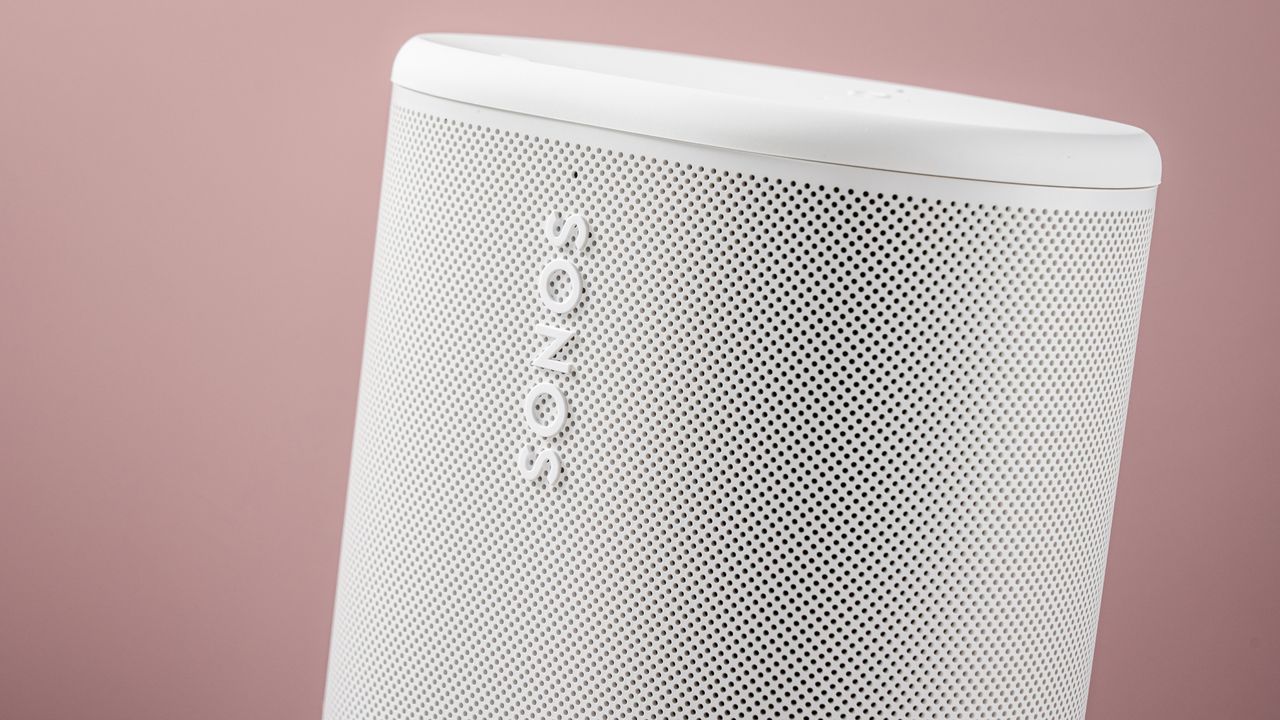













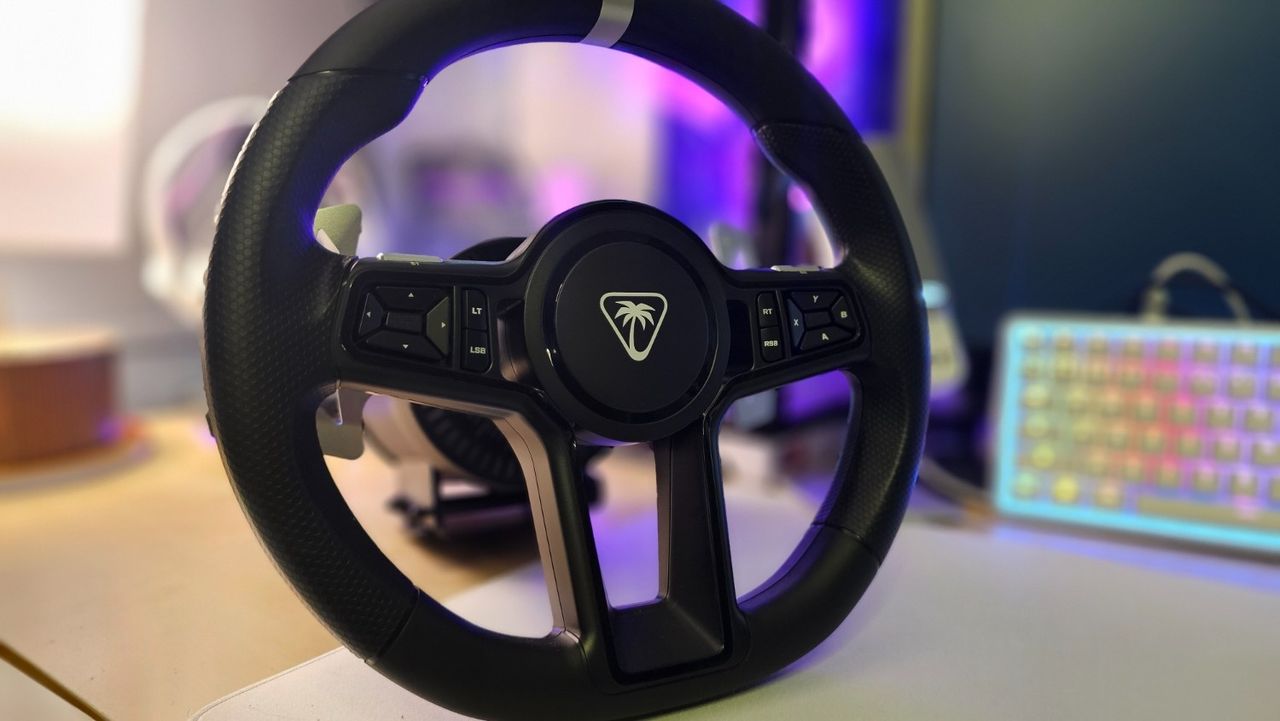








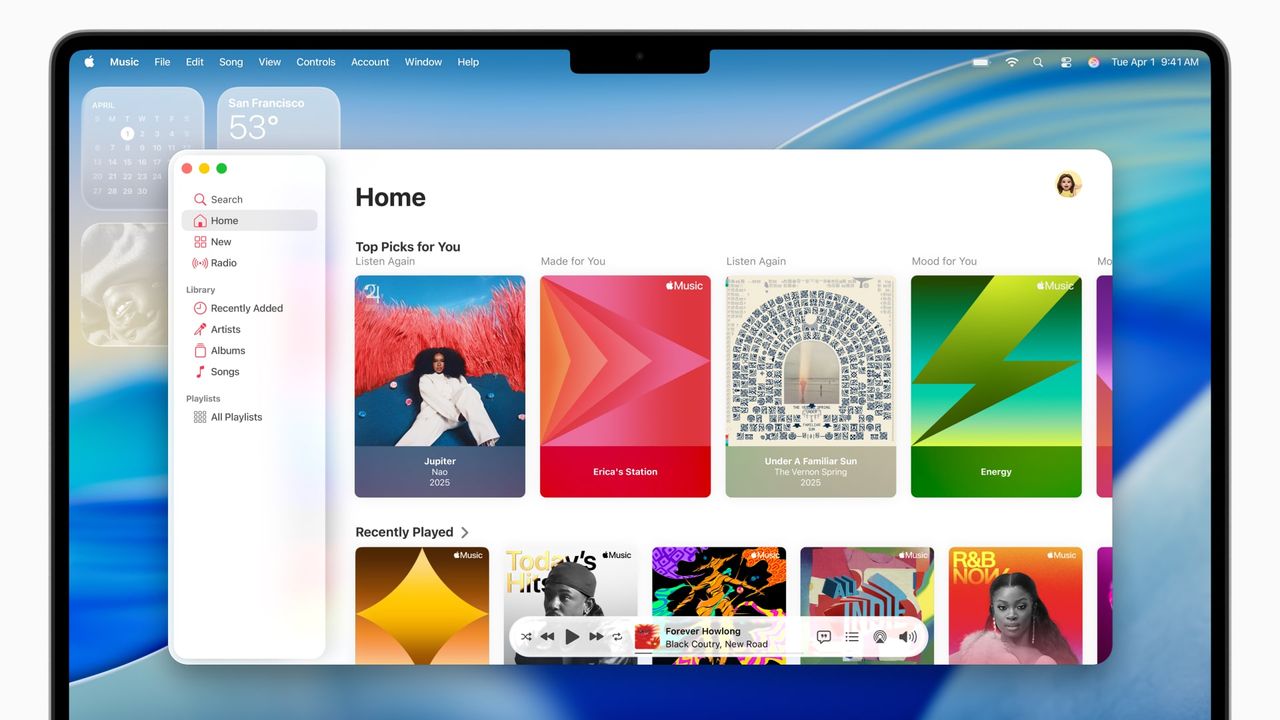

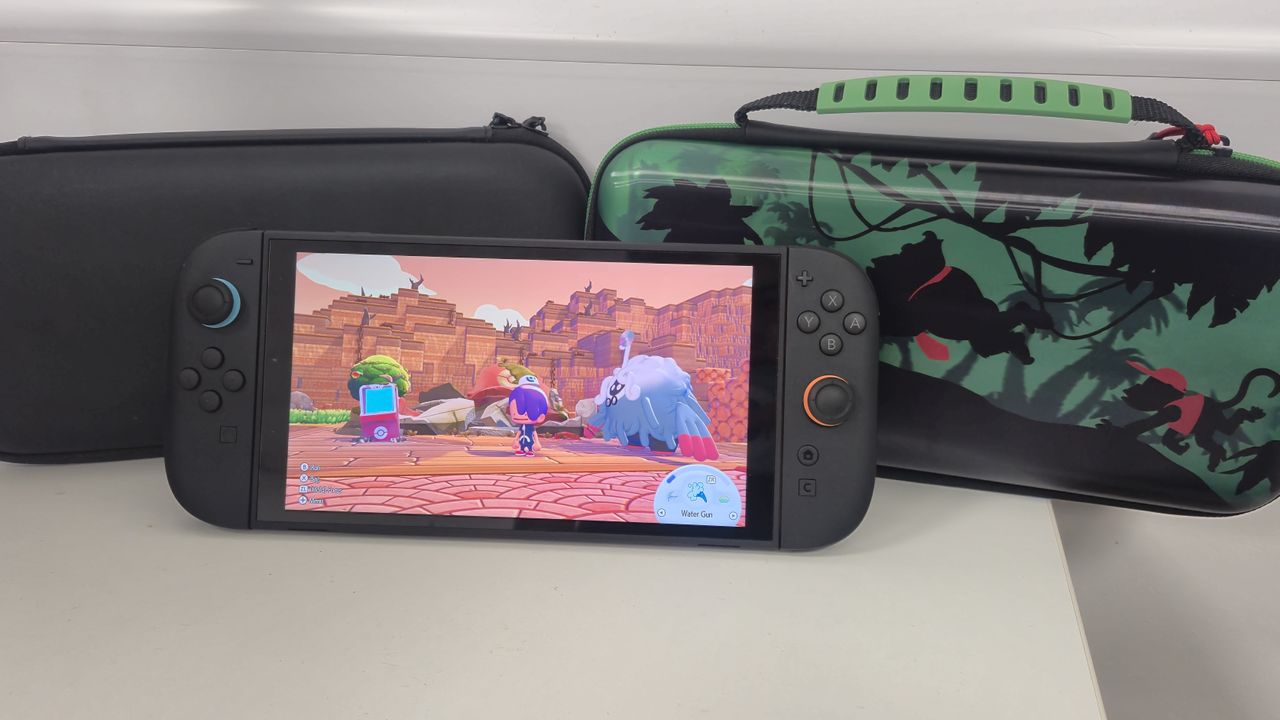

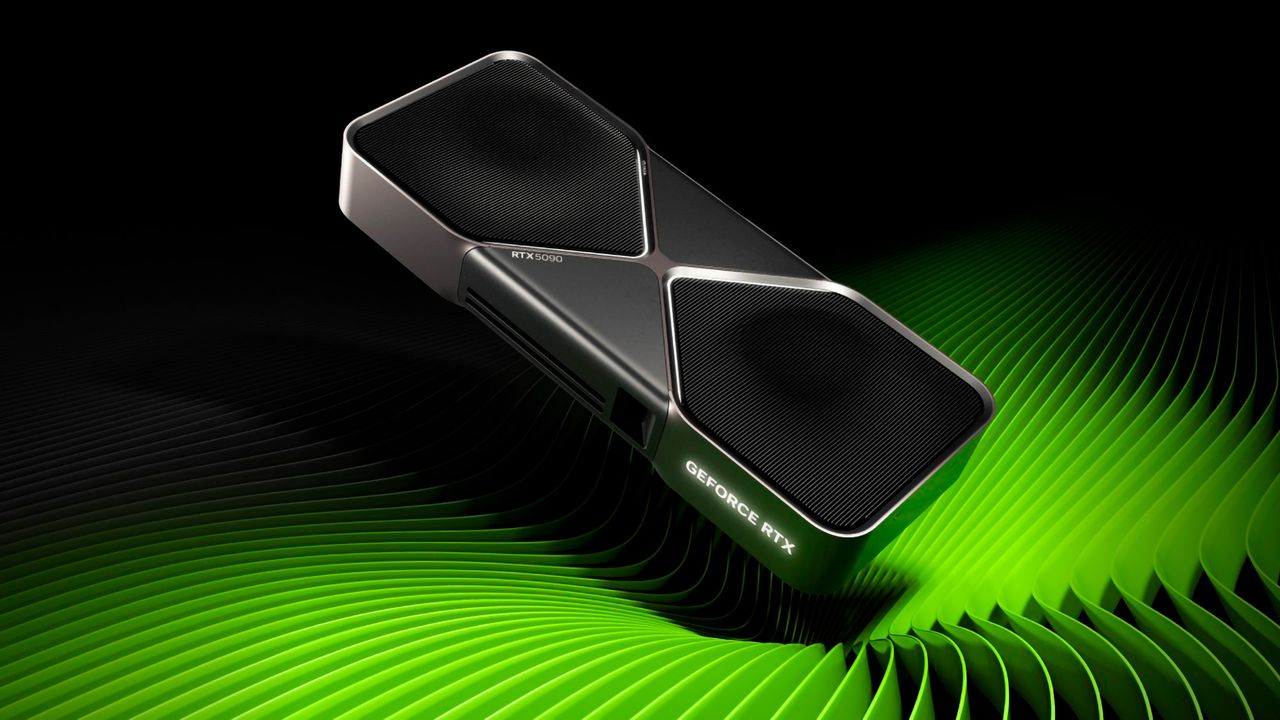
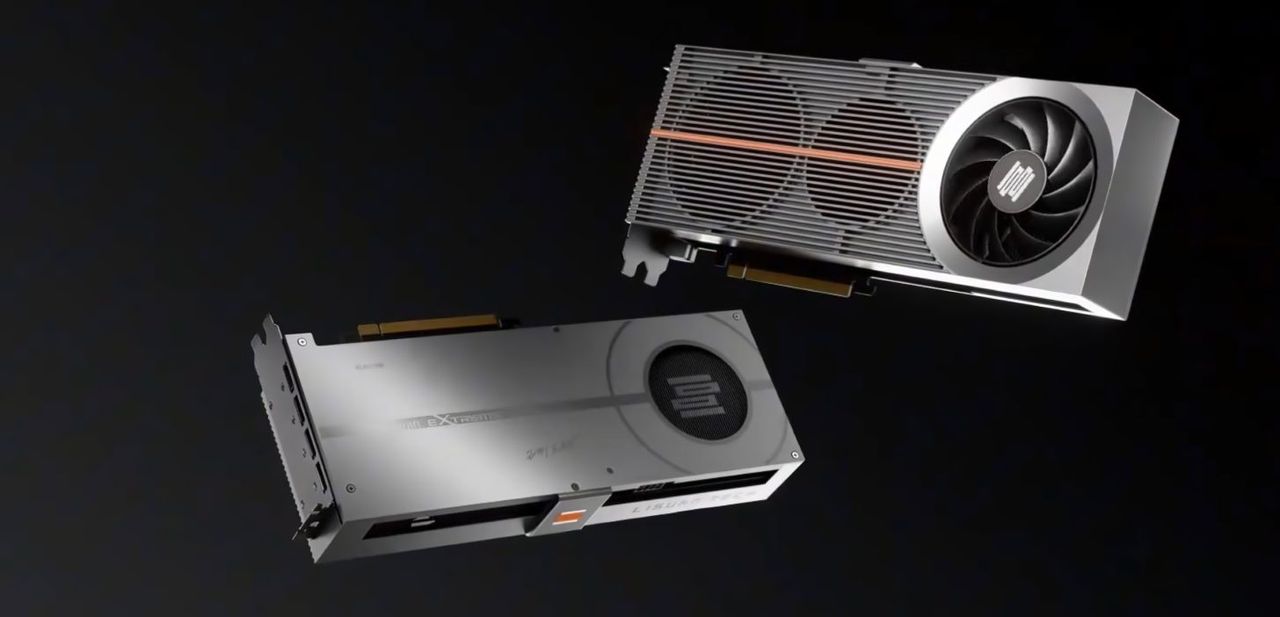











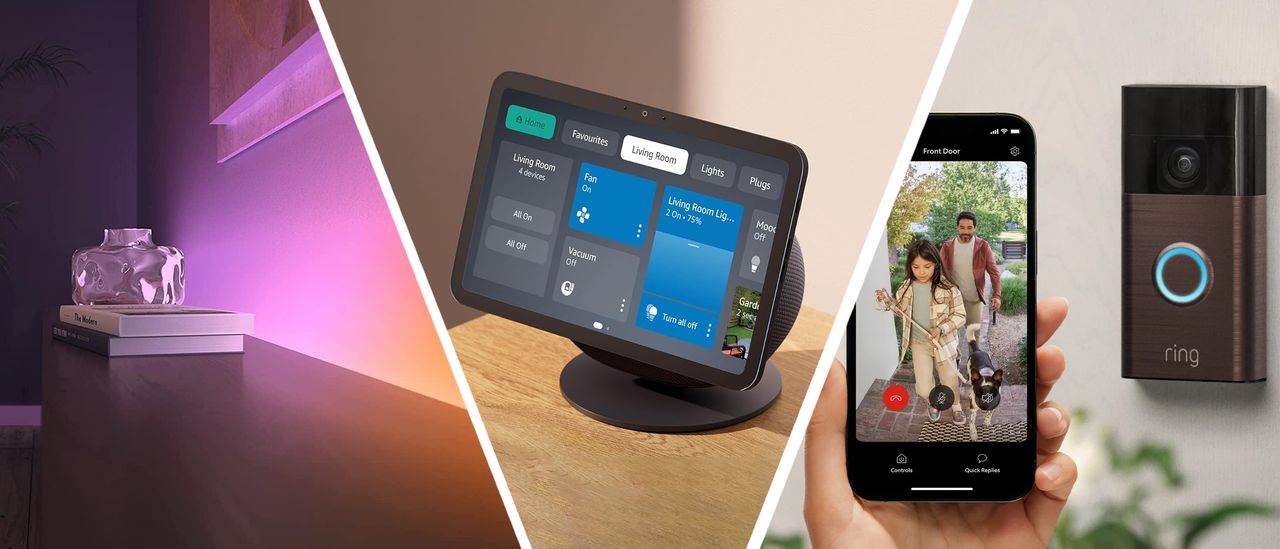



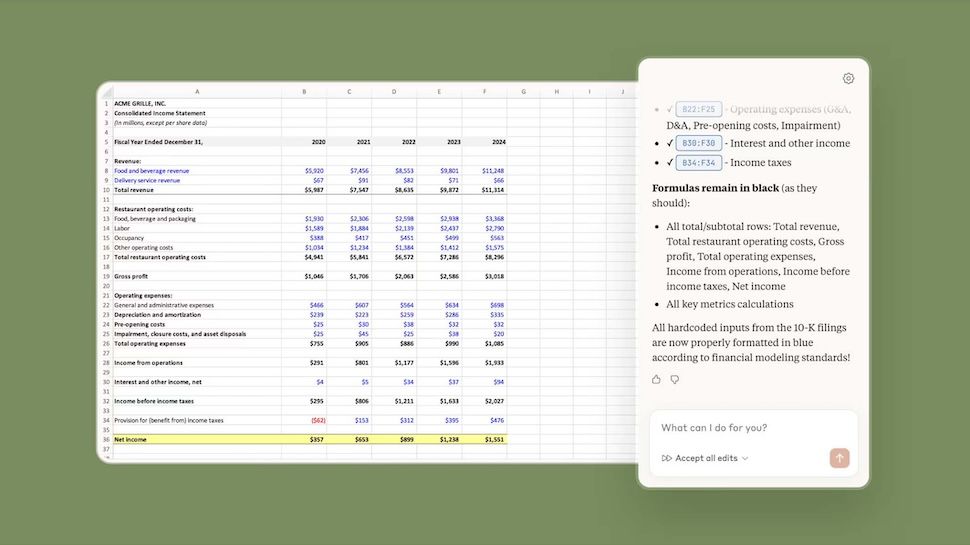














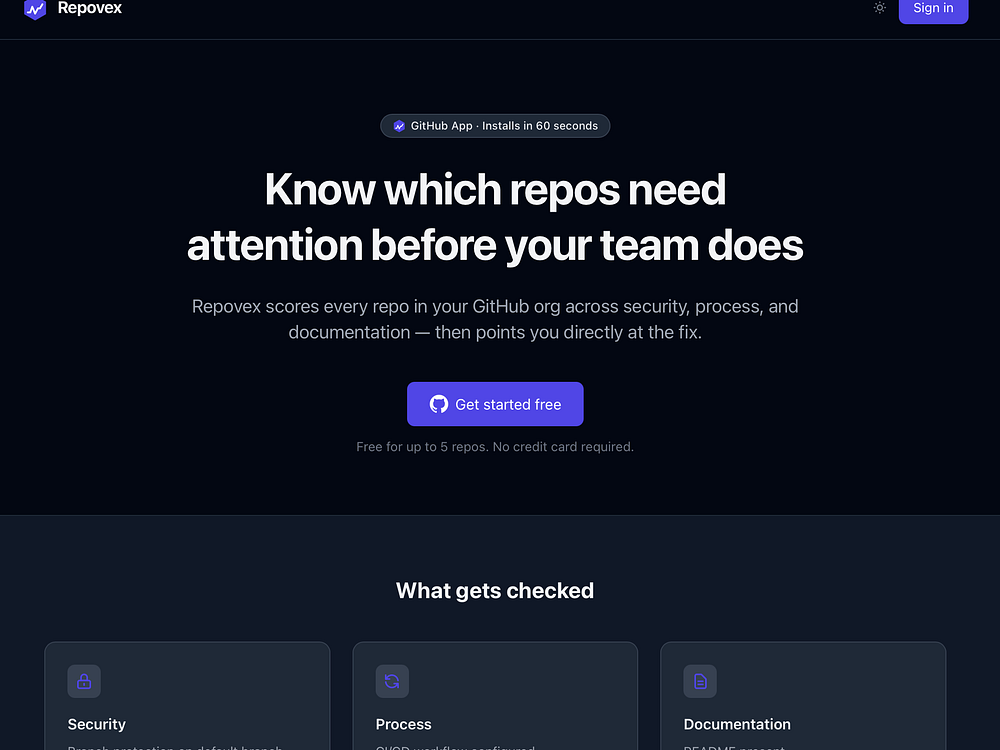


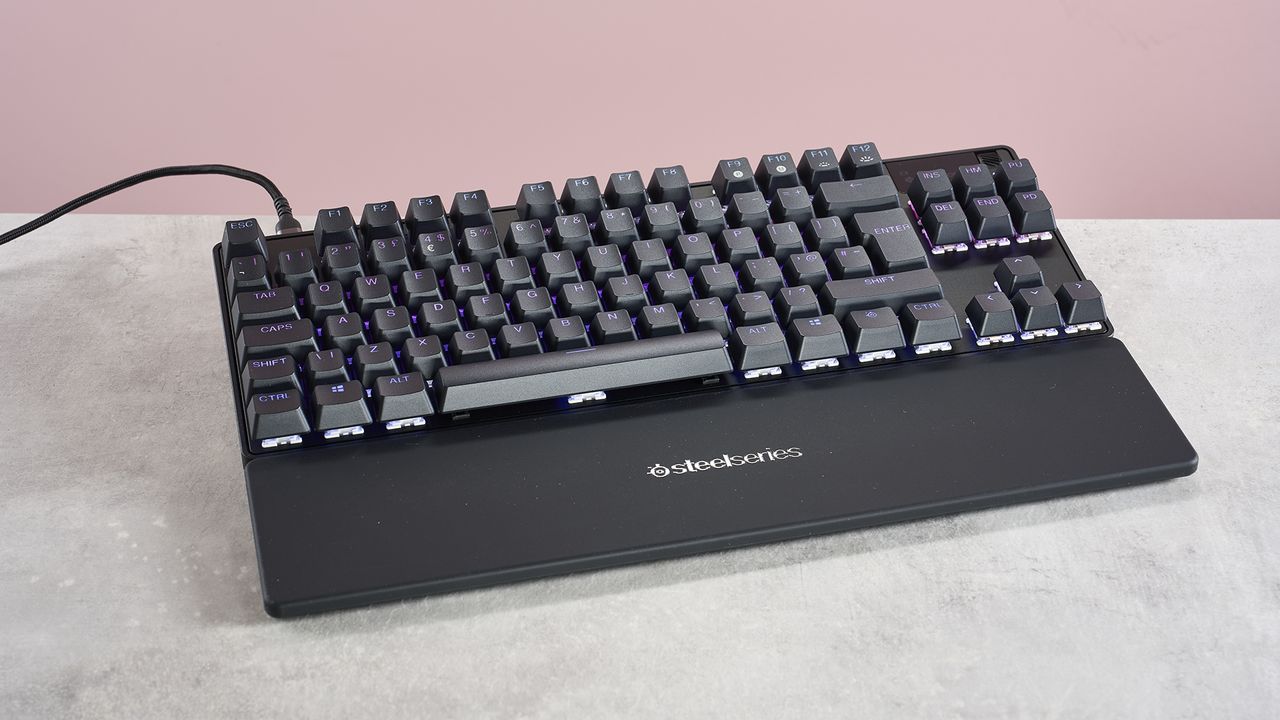




















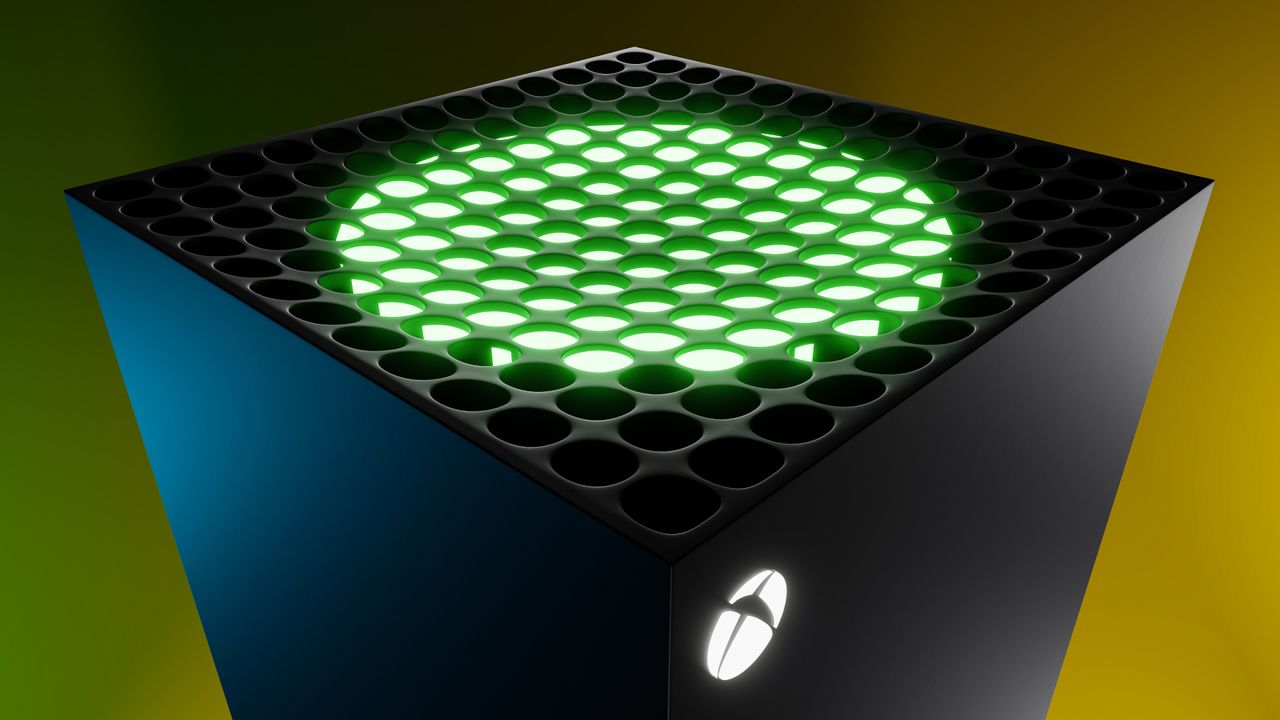
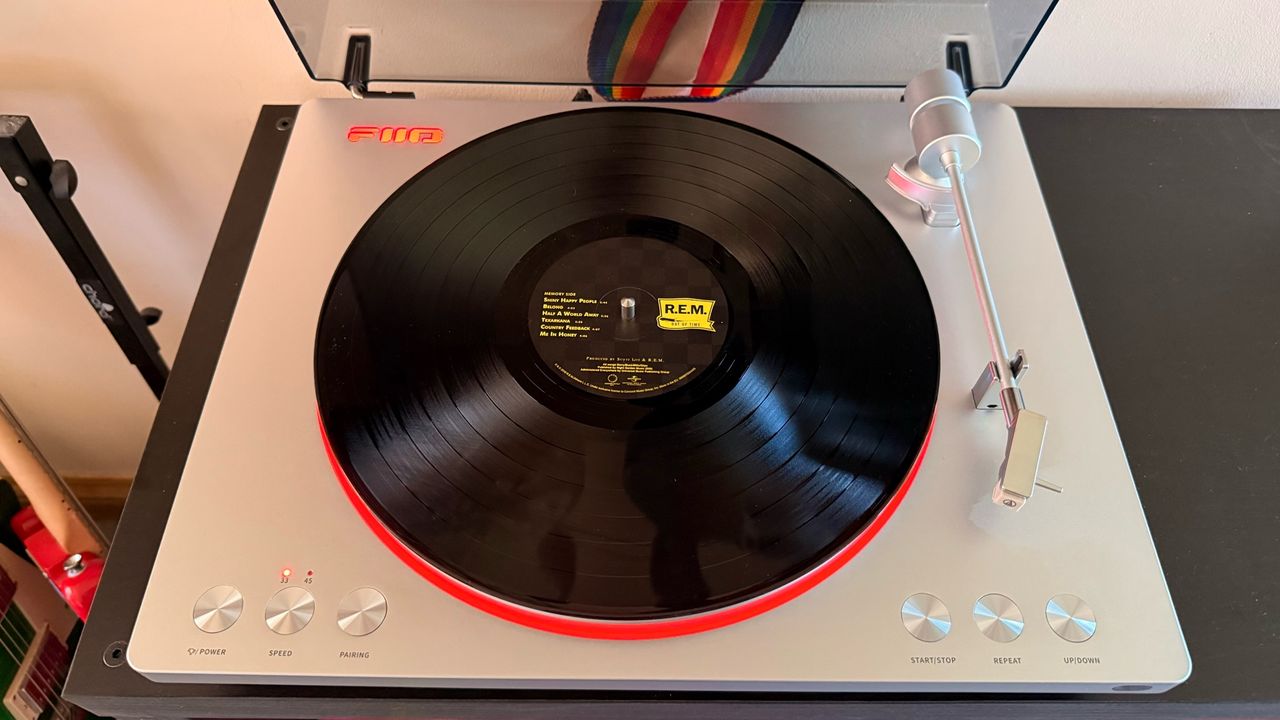



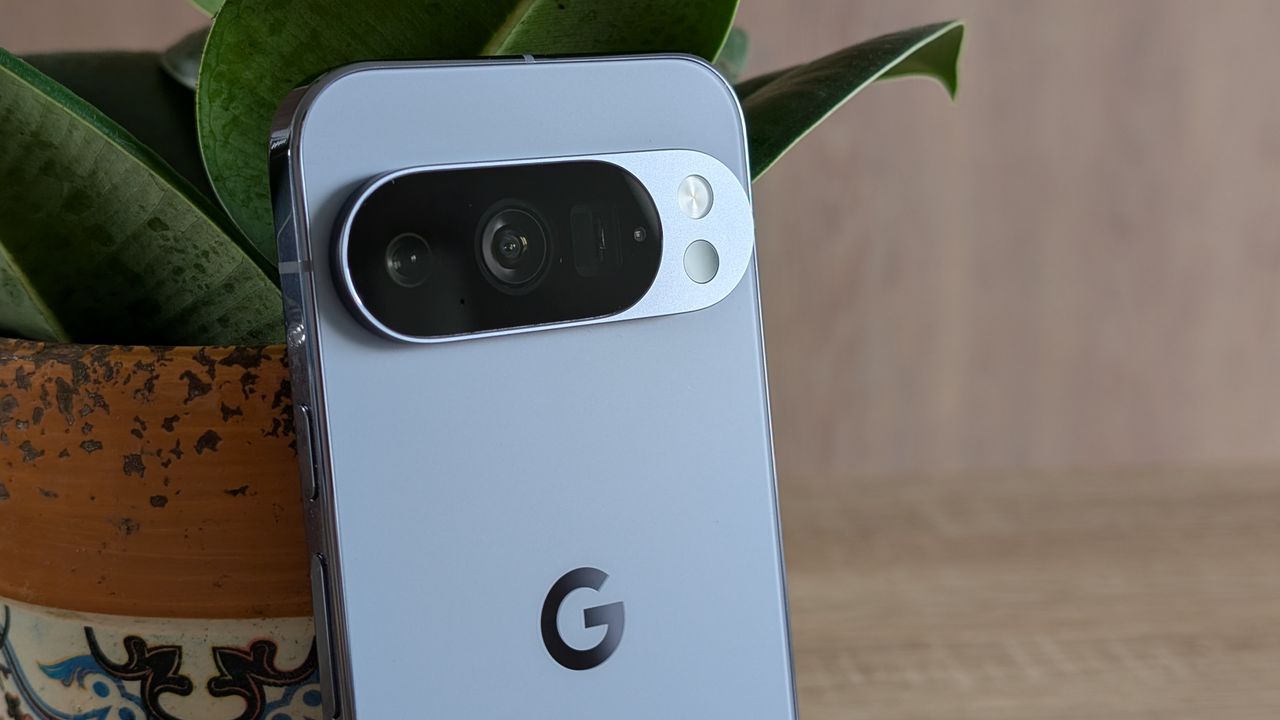
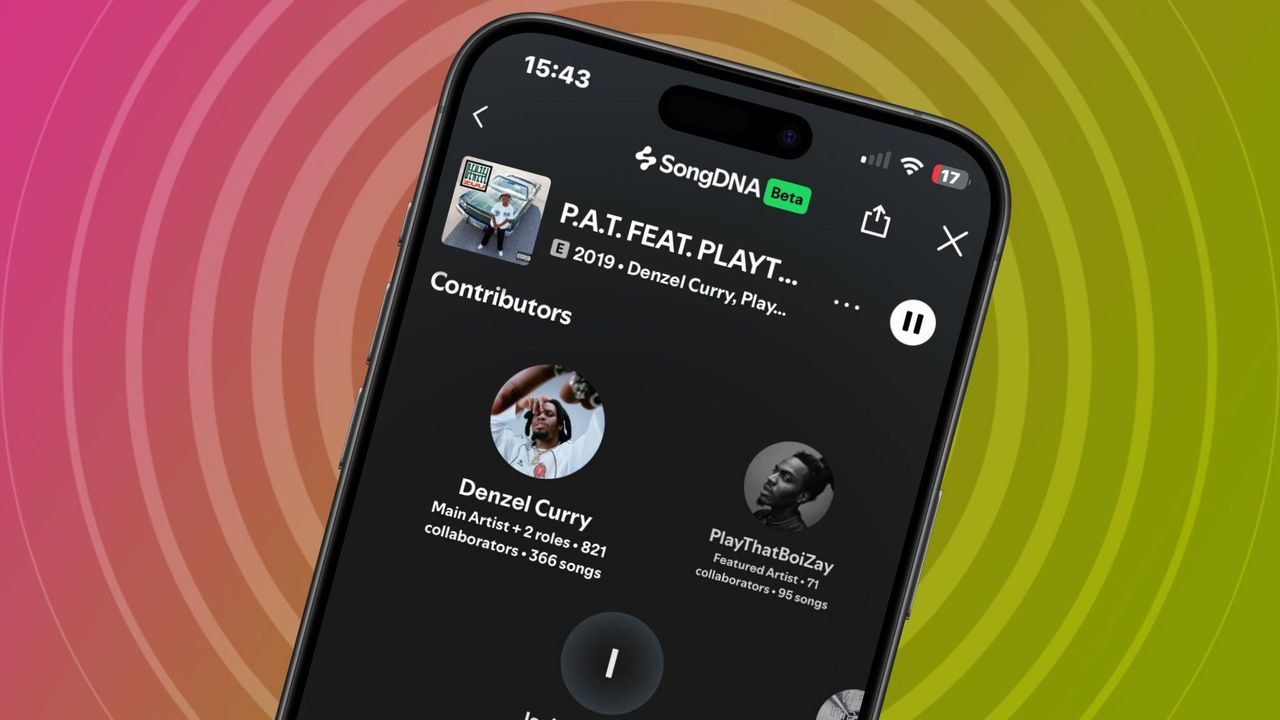




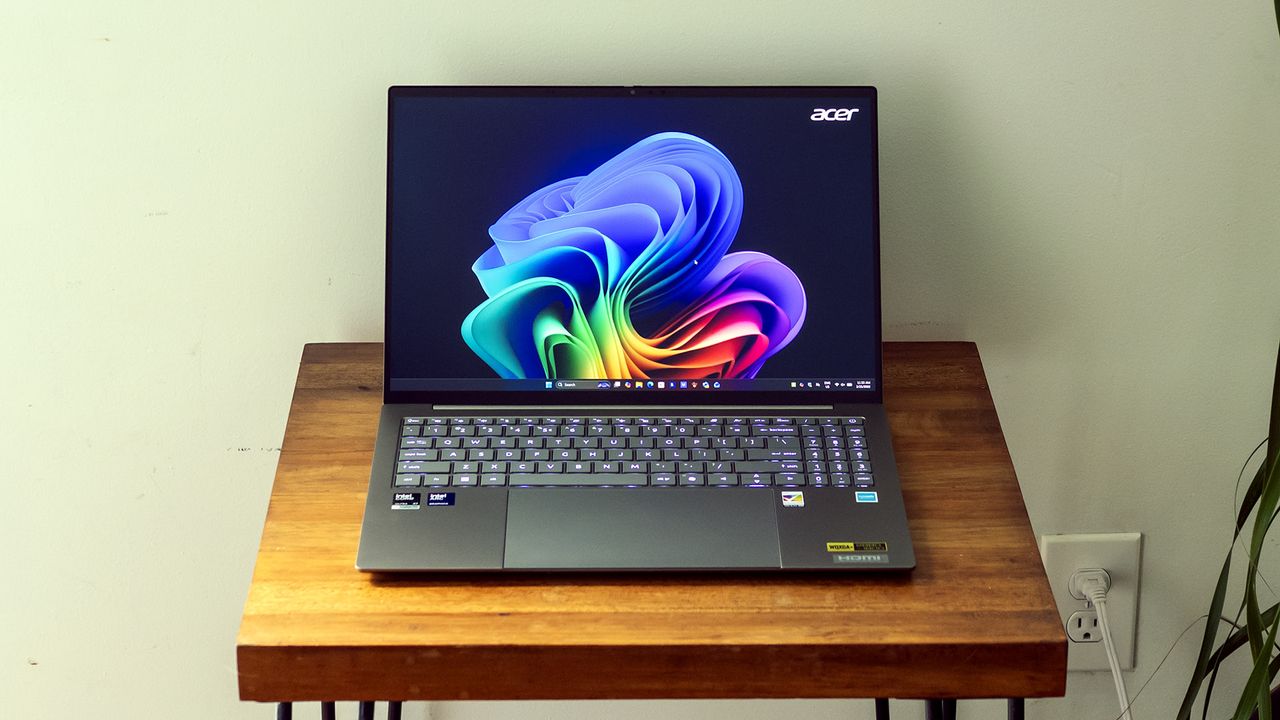
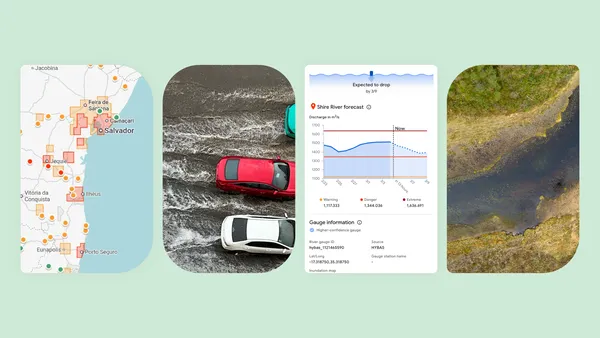 Groundsource is a new AI-powered methodology from Google Research that transforms millions of public records into actionable data.
 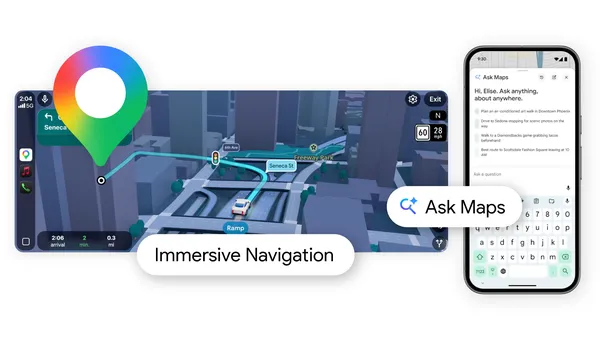 Google Maps has two new AI features: Ask Maps and Immersive Navigation.
  The Growing Up in the Digital Age Summit was hosted by Dublin’s Google Safety Engineering Center (GSEC).





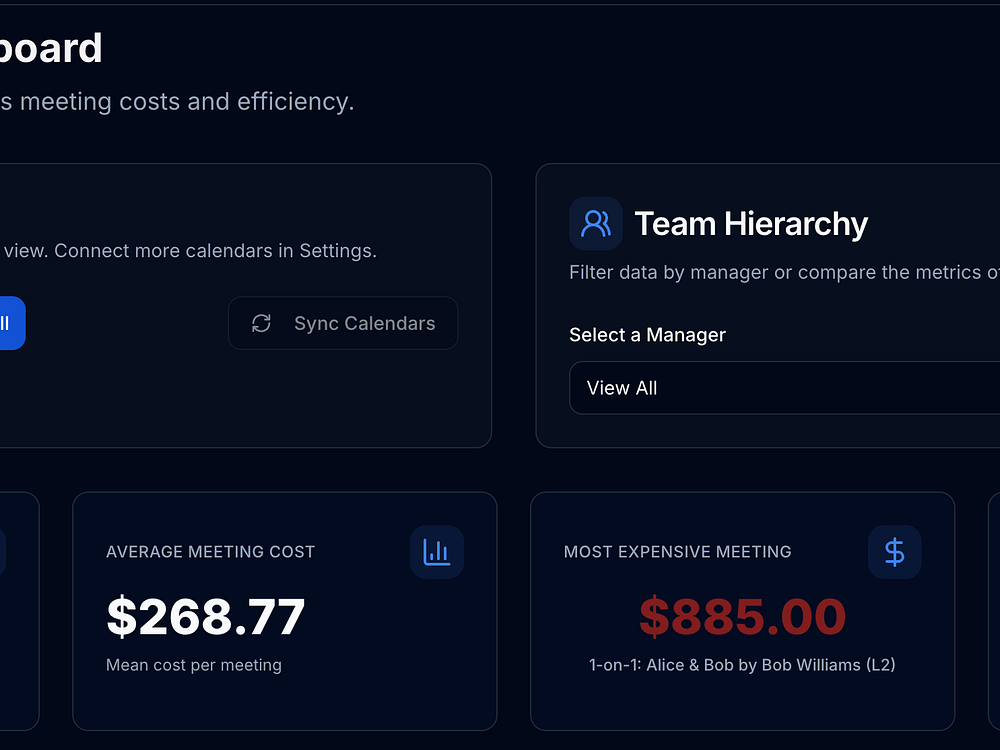


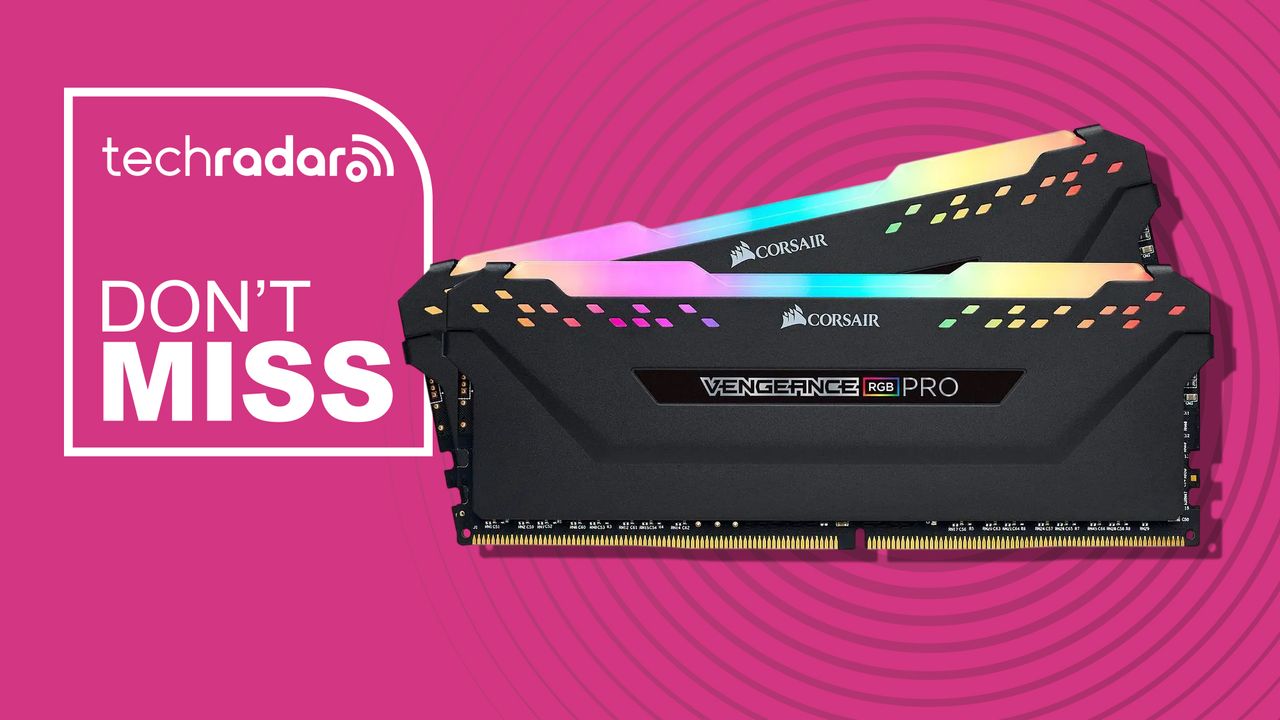











 Google’s newest London building, Platform 37, is named to honor Google DeepMind’s AlphaGo.

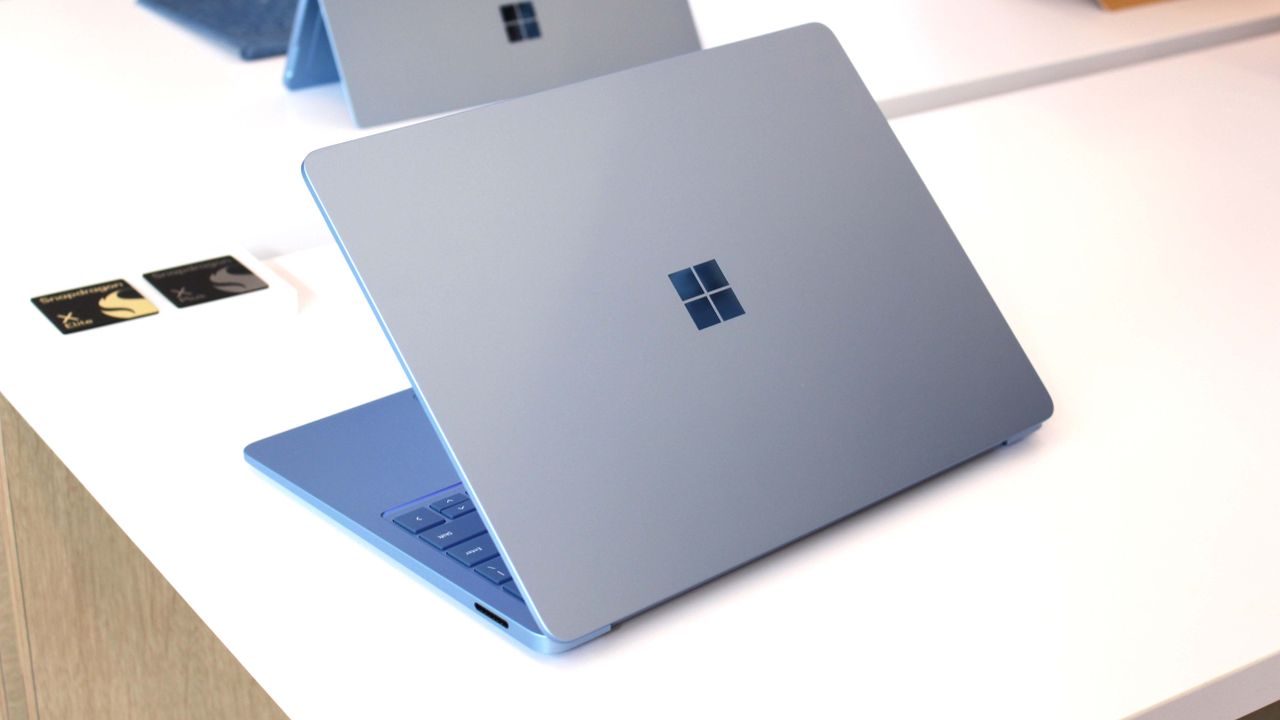



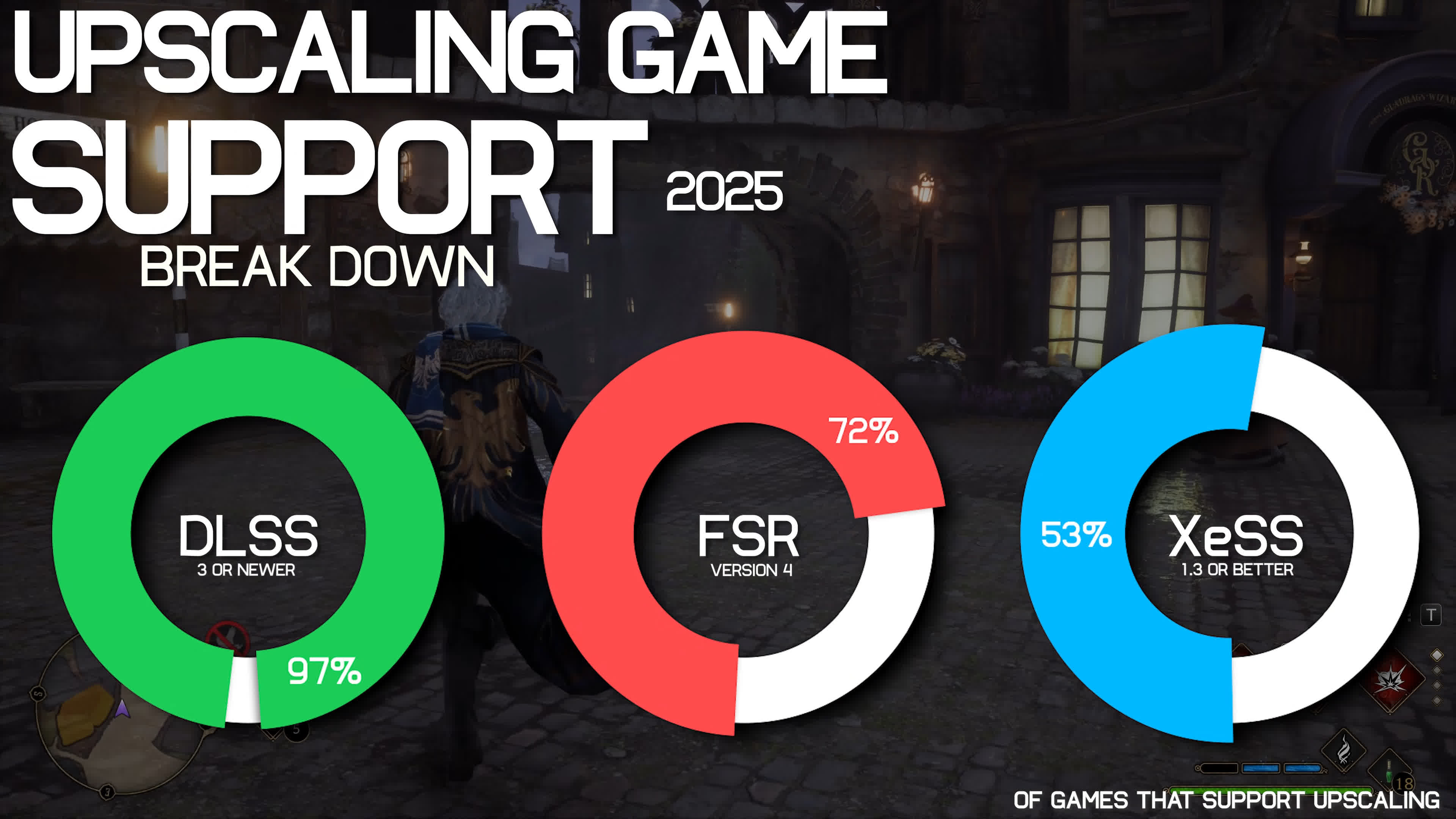








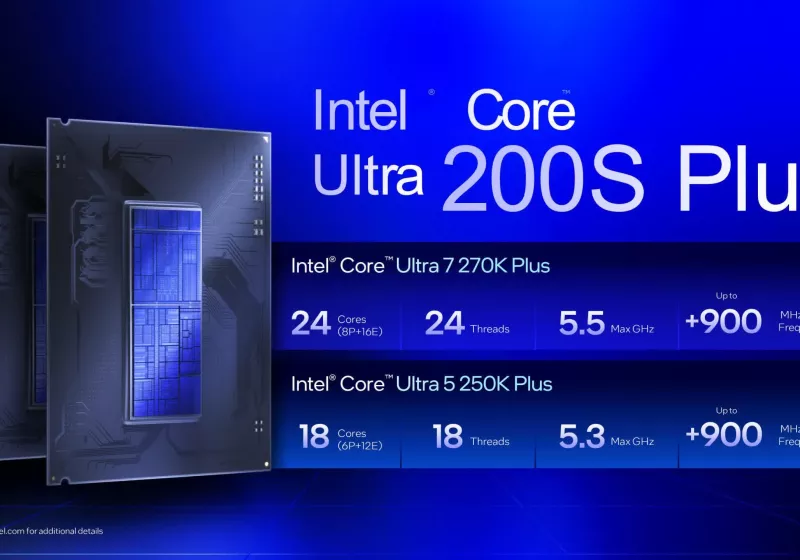


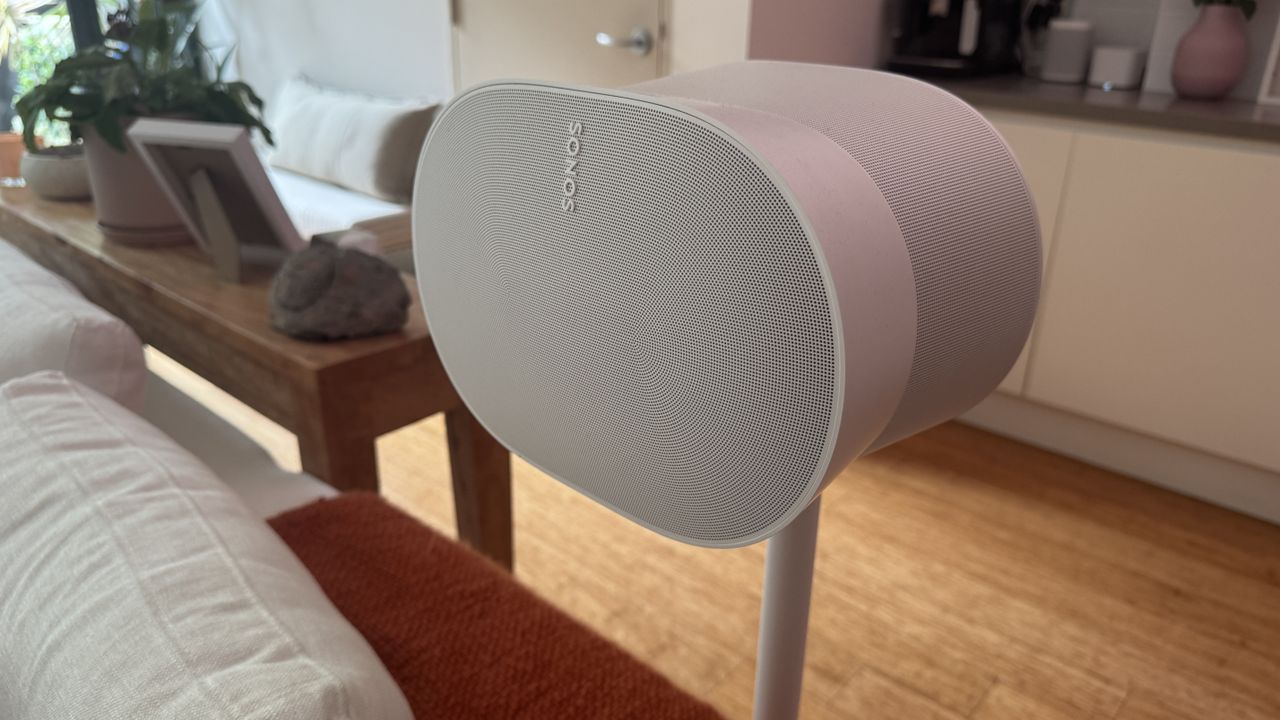






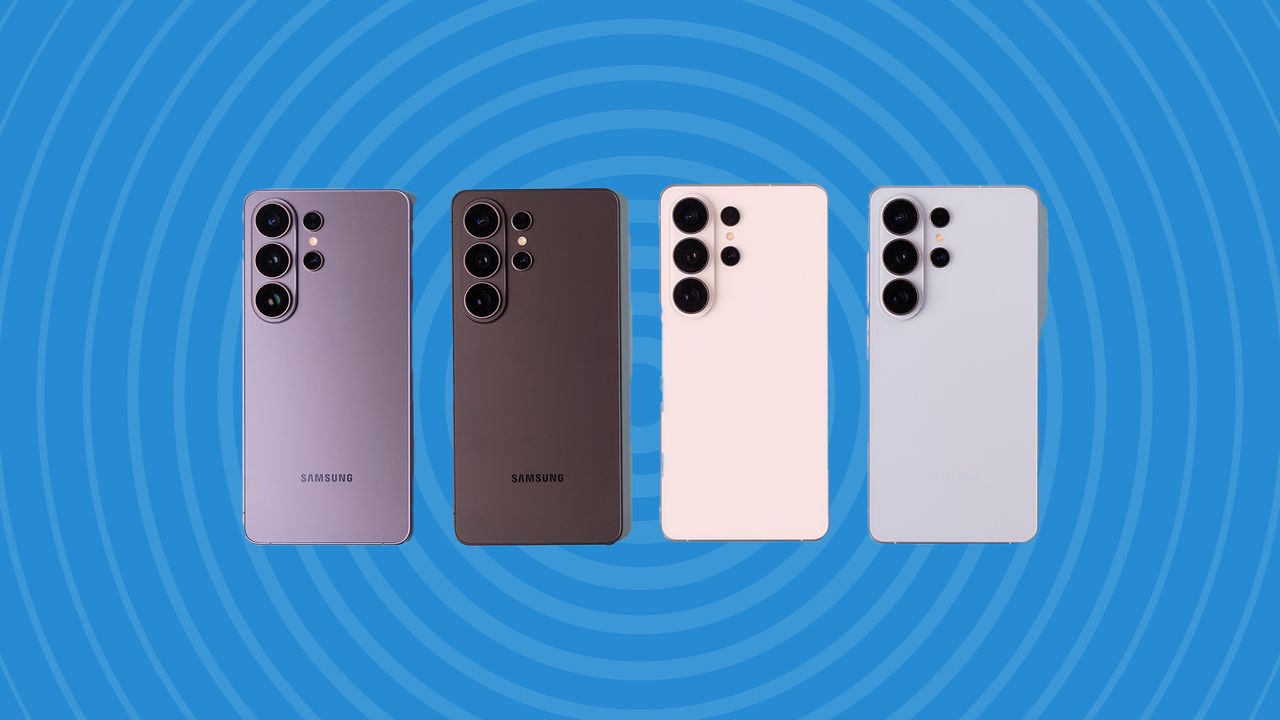


 A new Google AI initiative aims to improve heart health outcomes for people living in remote Australian communities.
  Updates to Google Play include a new You tab, plus new features in the Apps tab and in Google Play Games.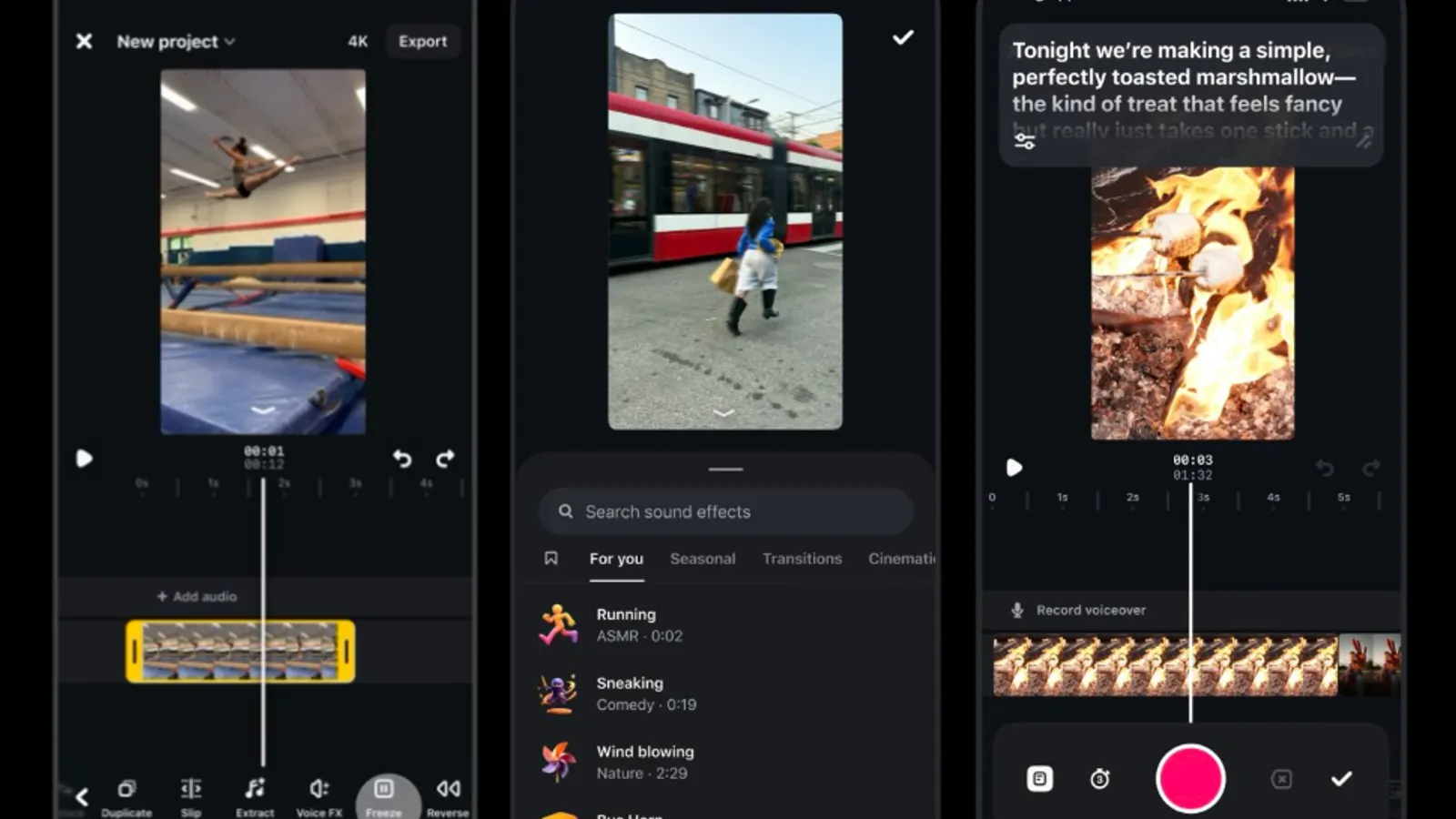
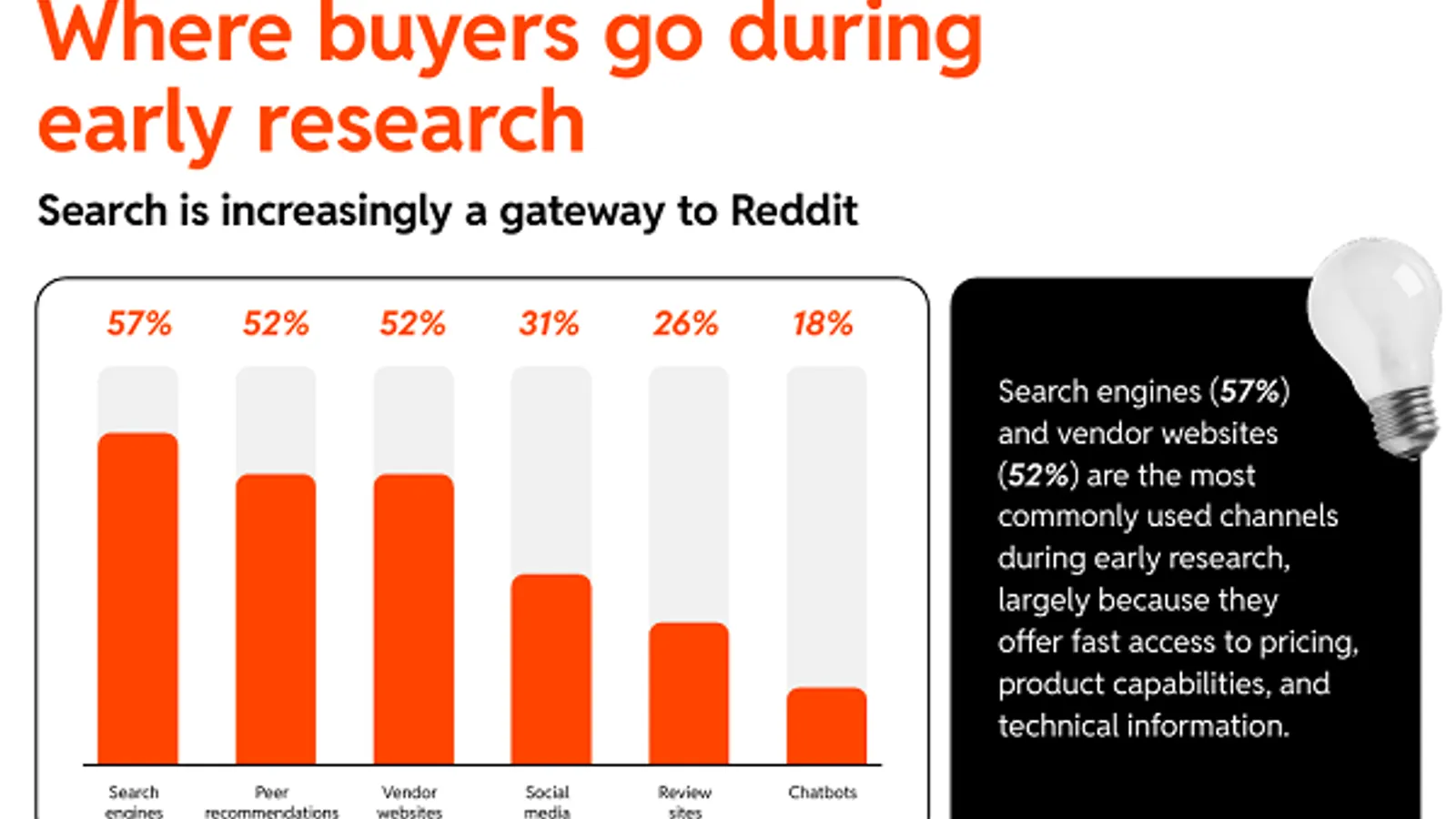


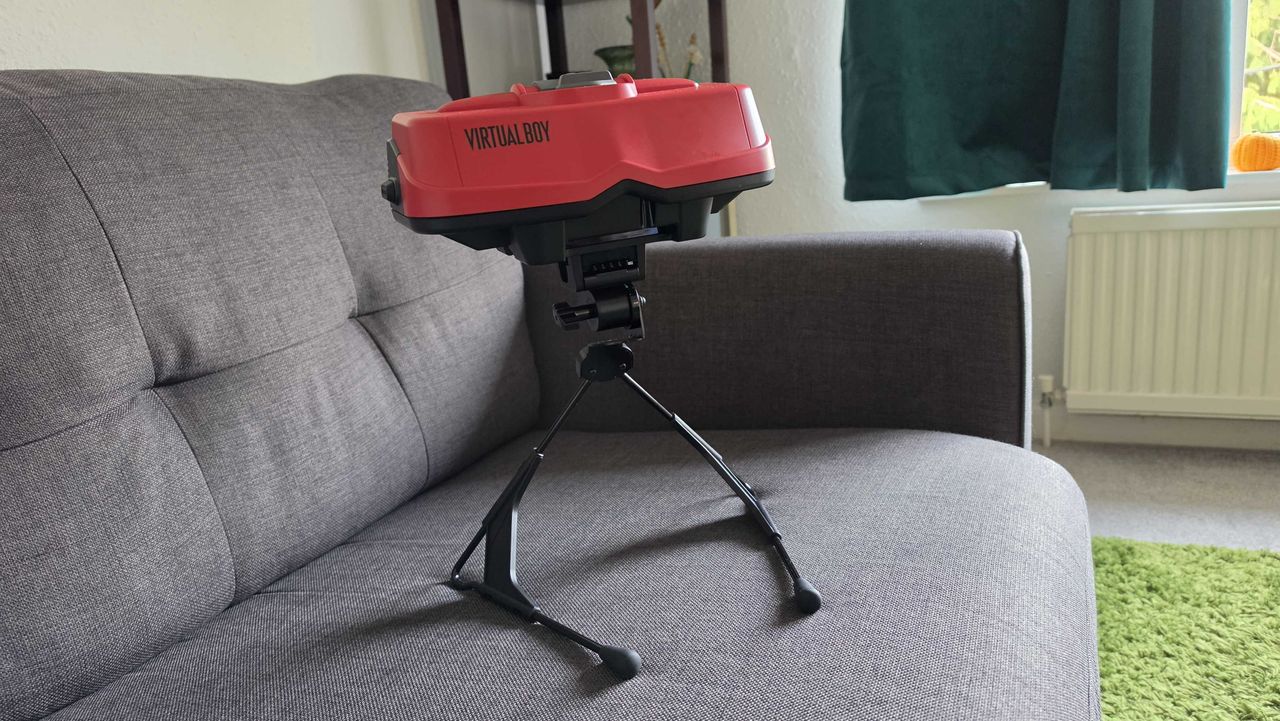


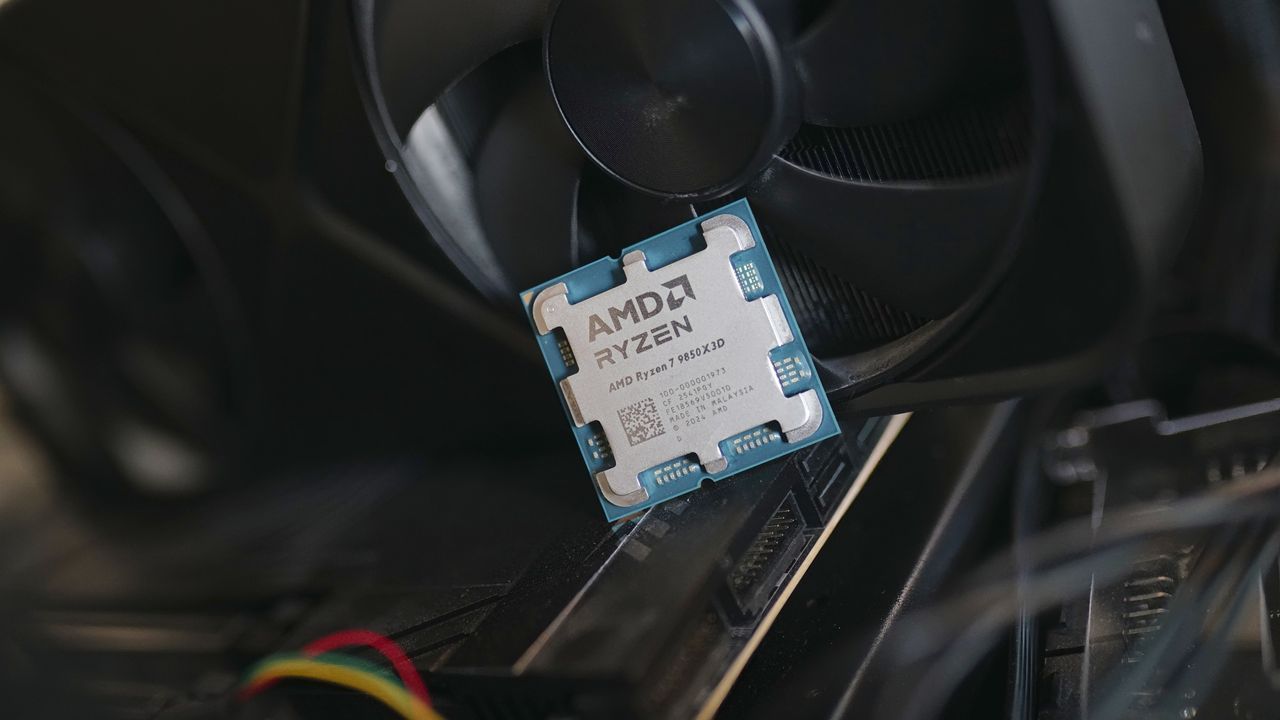


















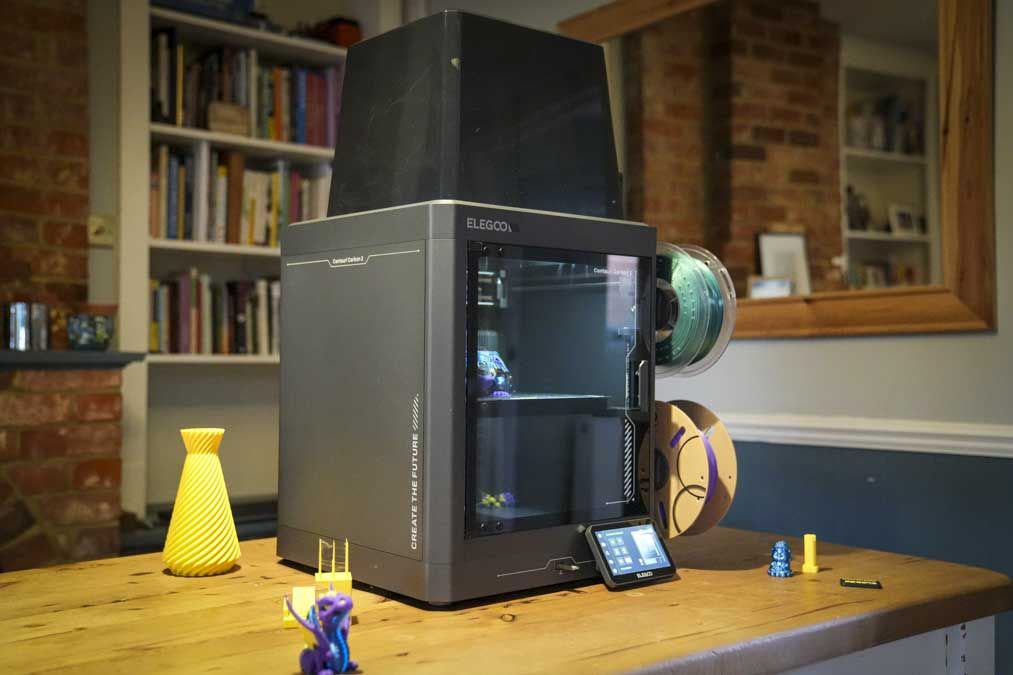



















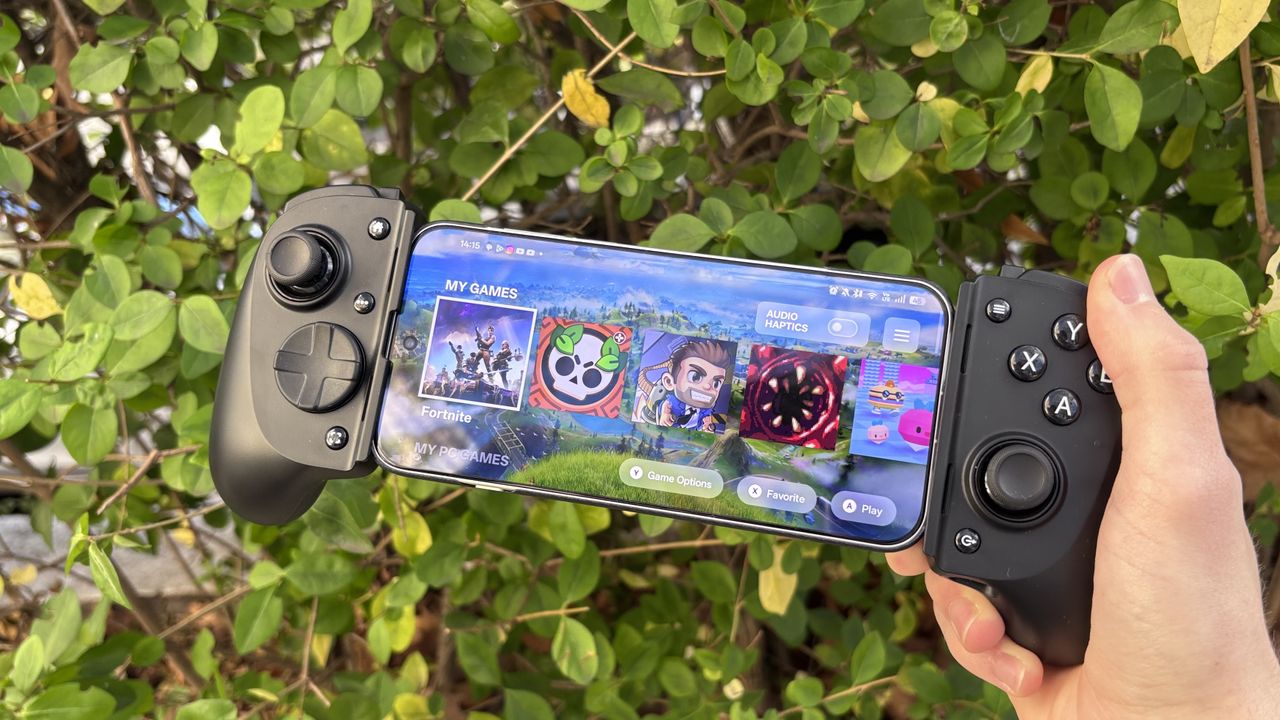














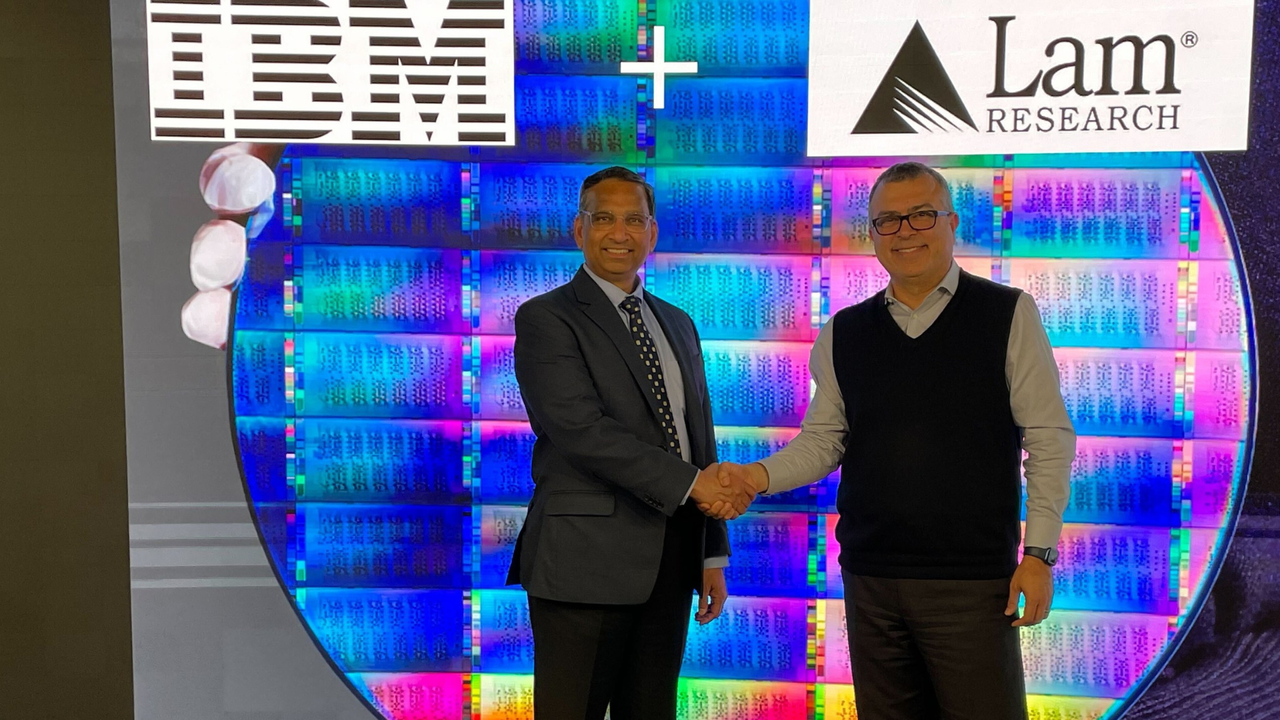
 Adapted remarks from Google VP Christy Abizaid’s keynote at the "Growing Up in the Digital Age" Summit at Google Dublin.




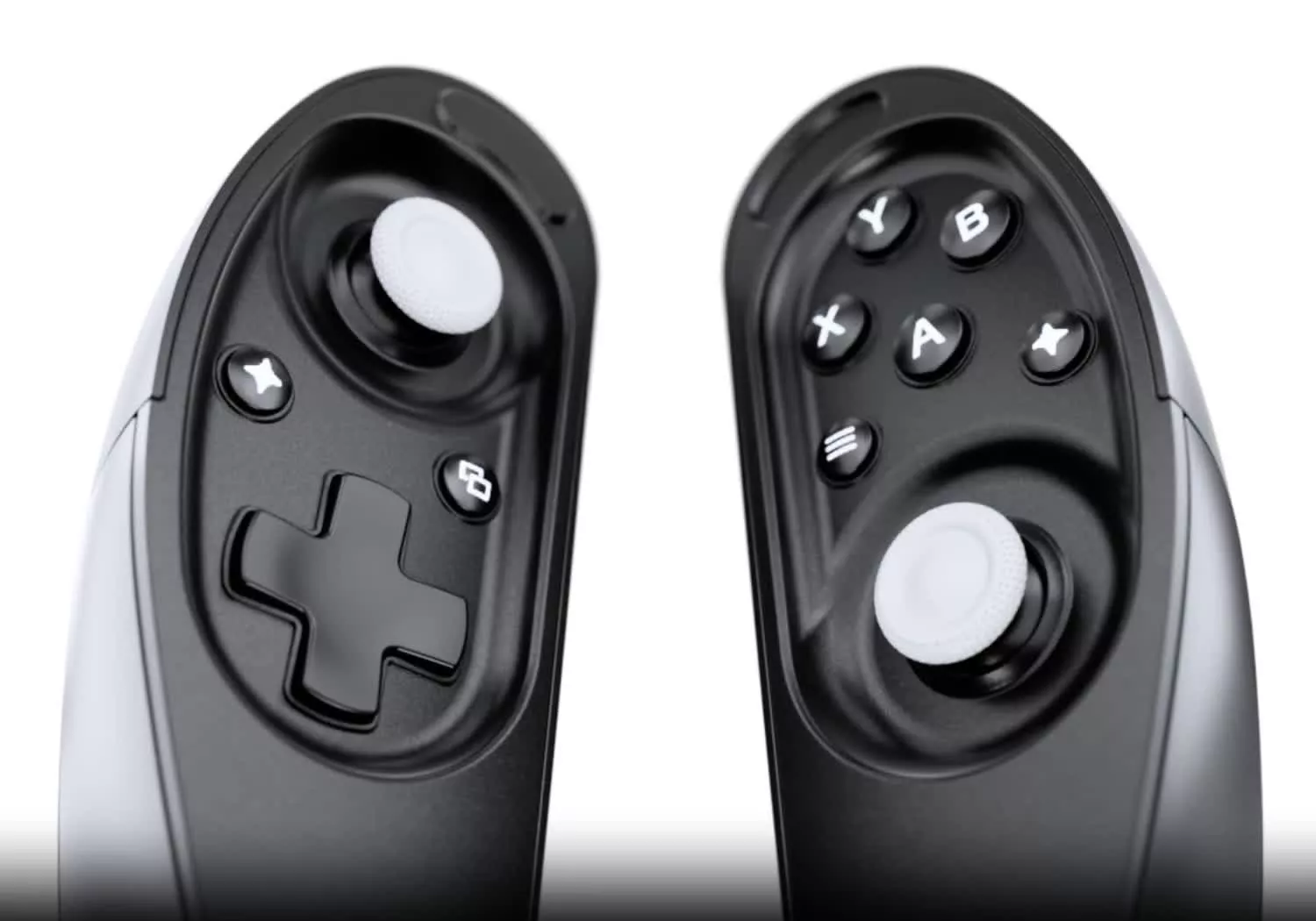

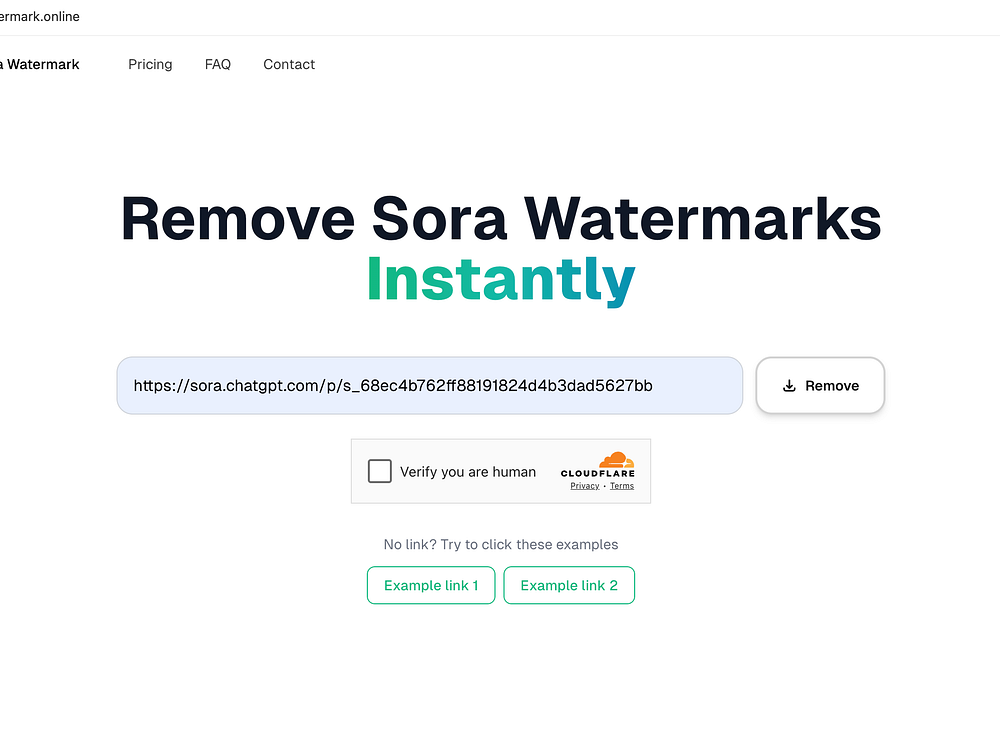





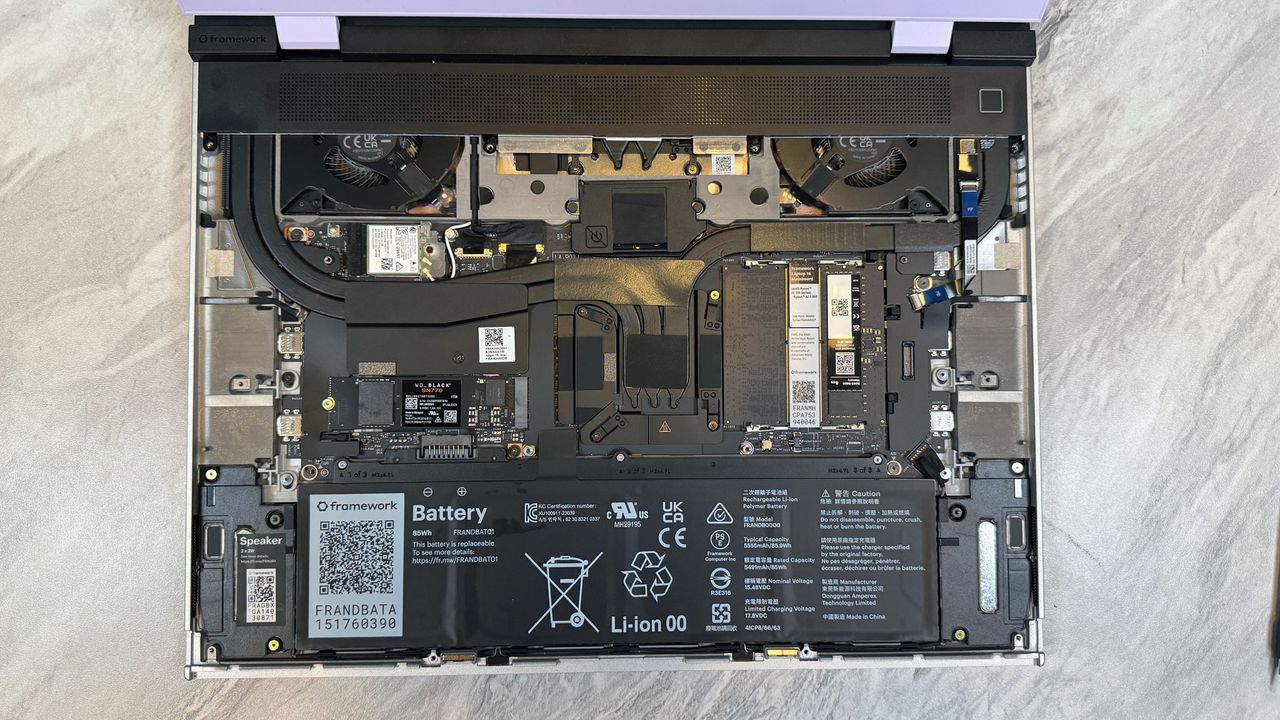
 Ads Decoded features a conversation on bidding and budgeting with product managers Kristina Park and Carlo Buchmann.