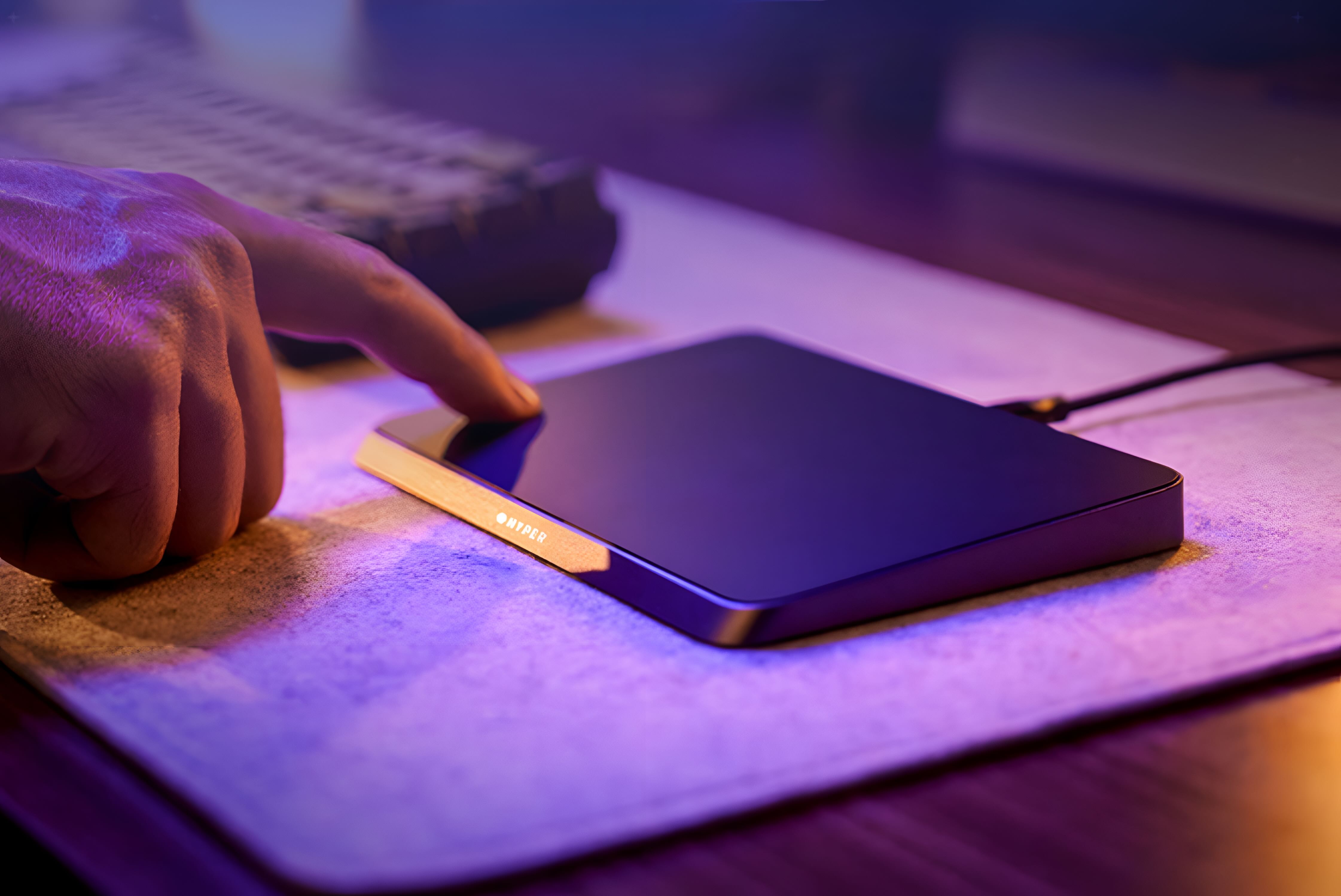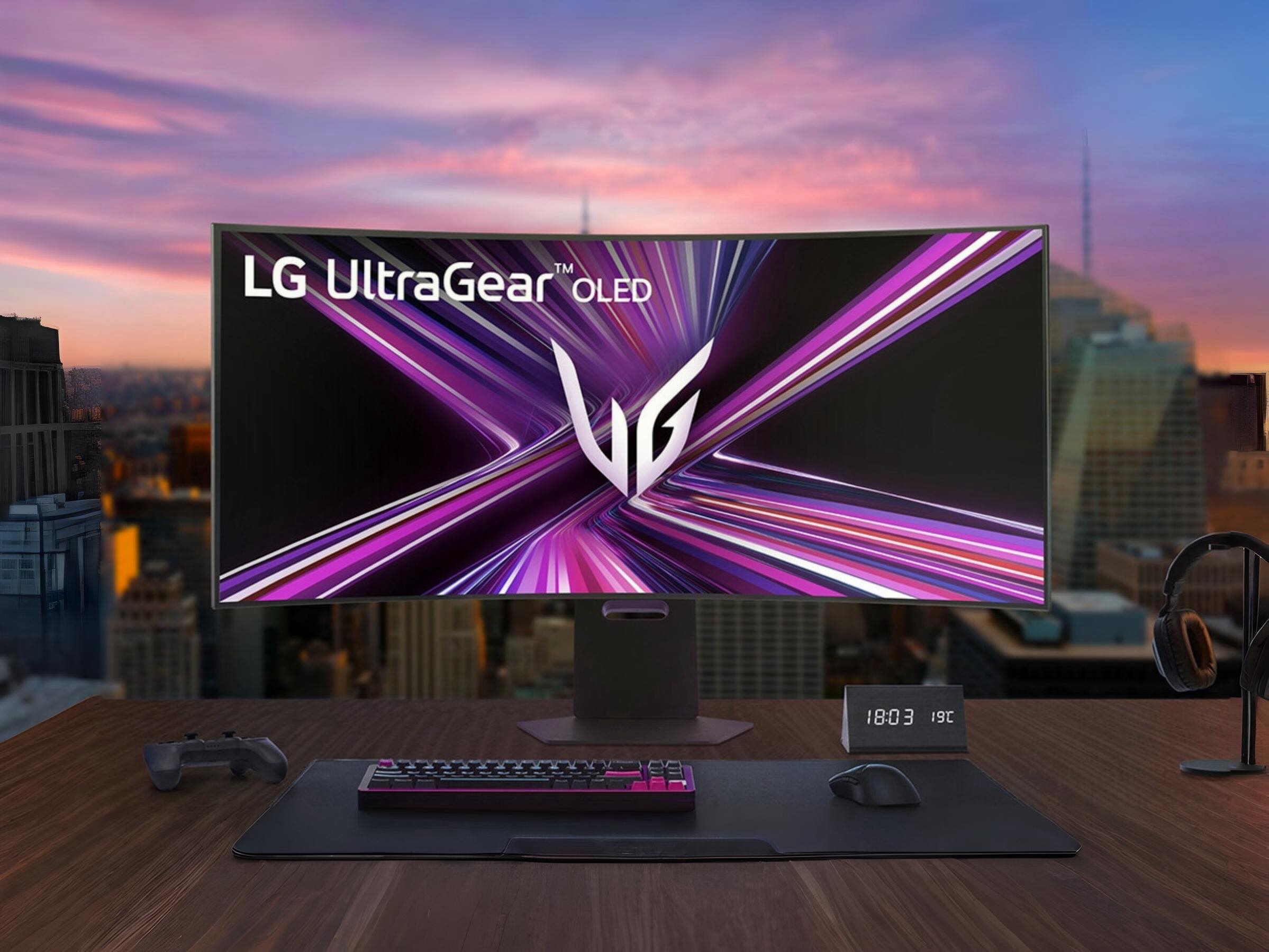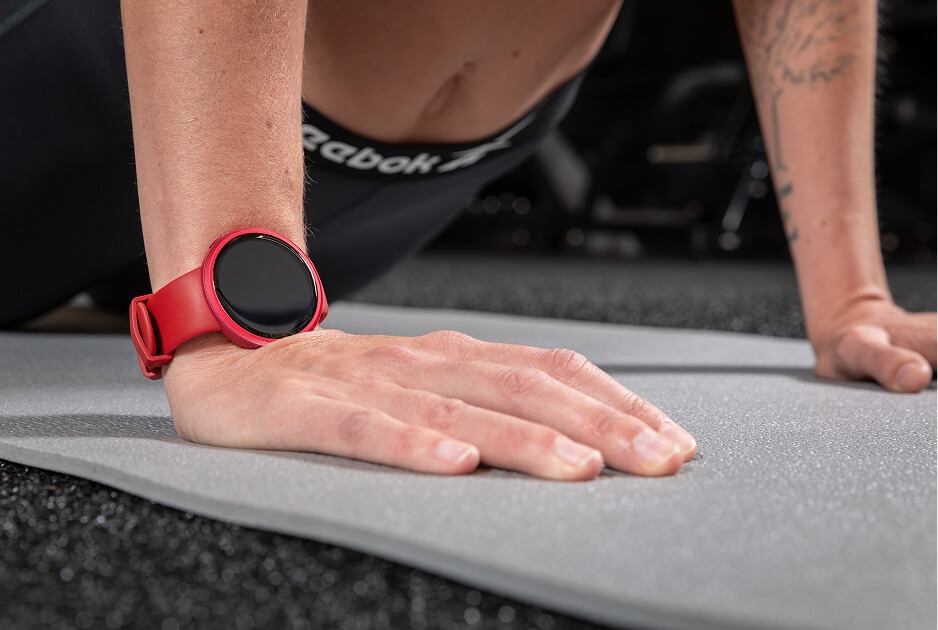
$200K crowdfunded Hyper trackpad now stuck in limbo, forcing the company to offer refunds and bonuses


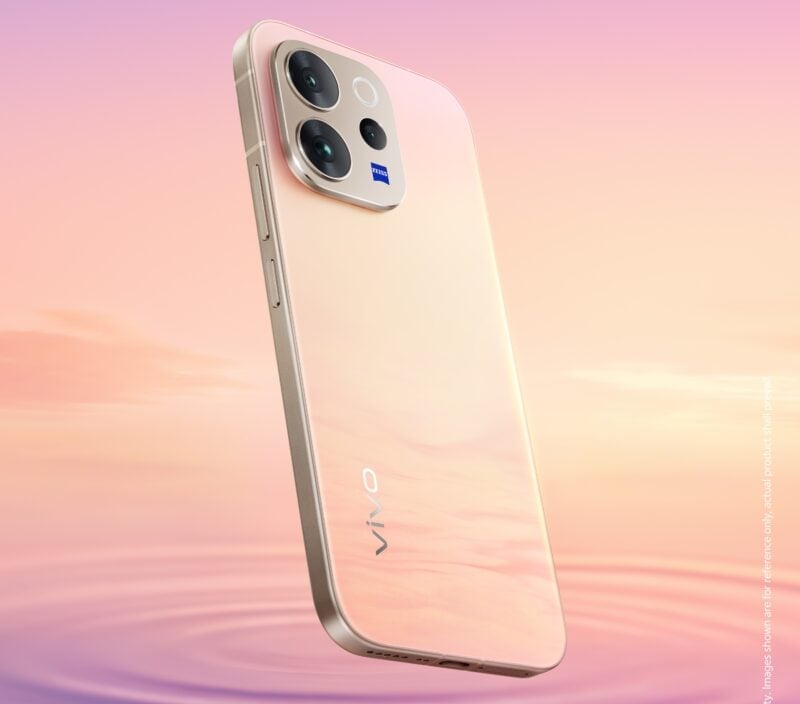
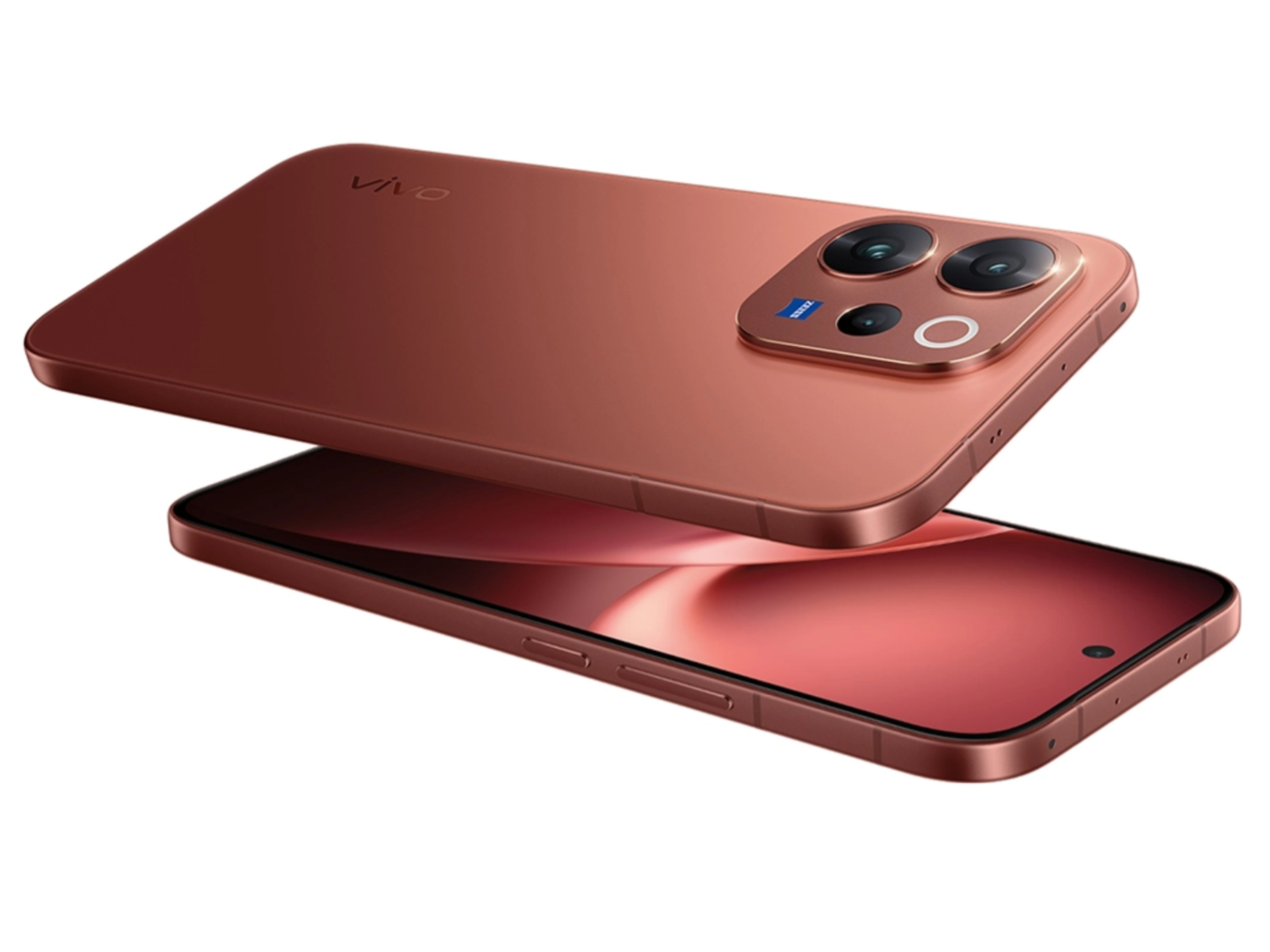
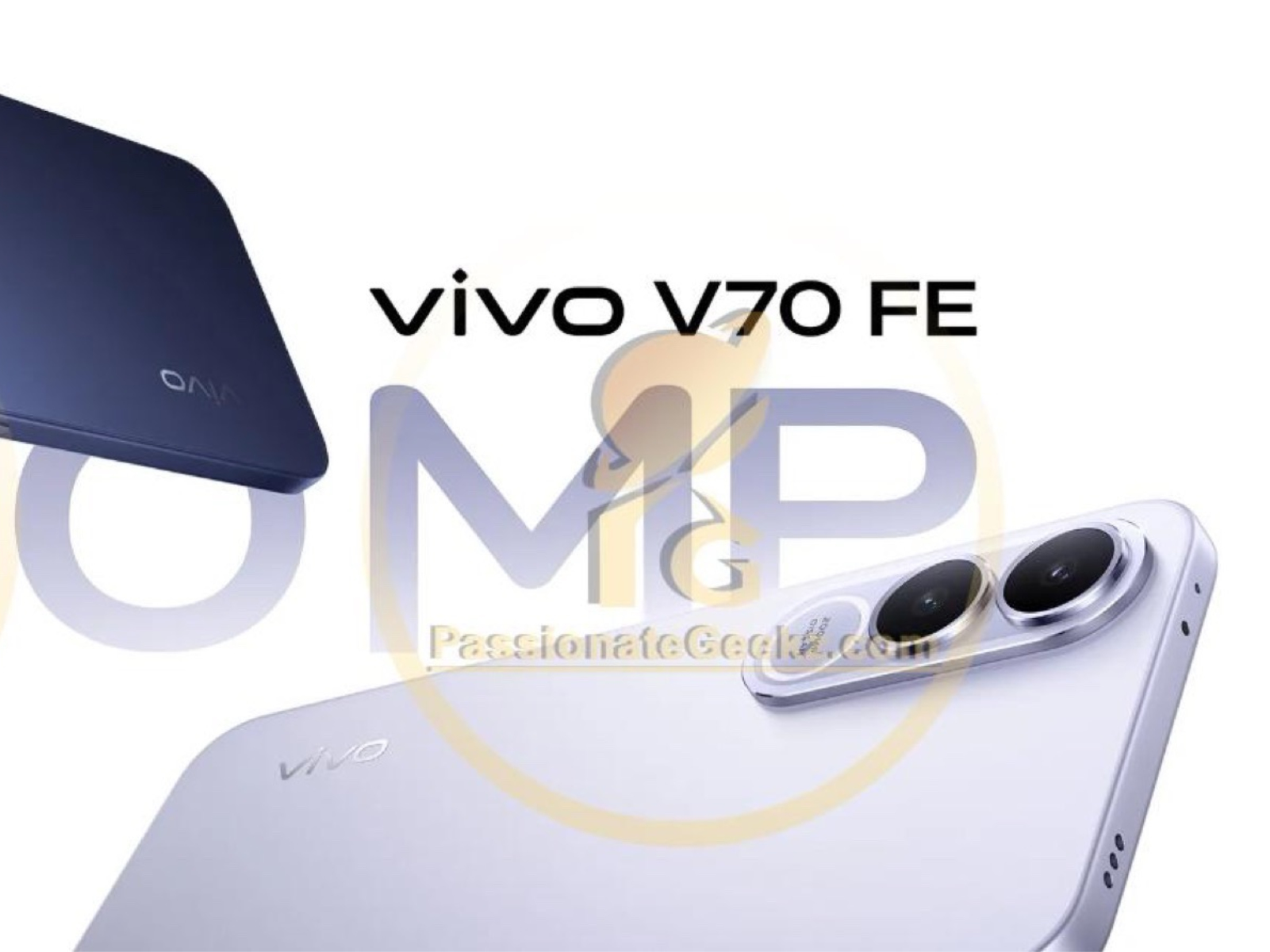
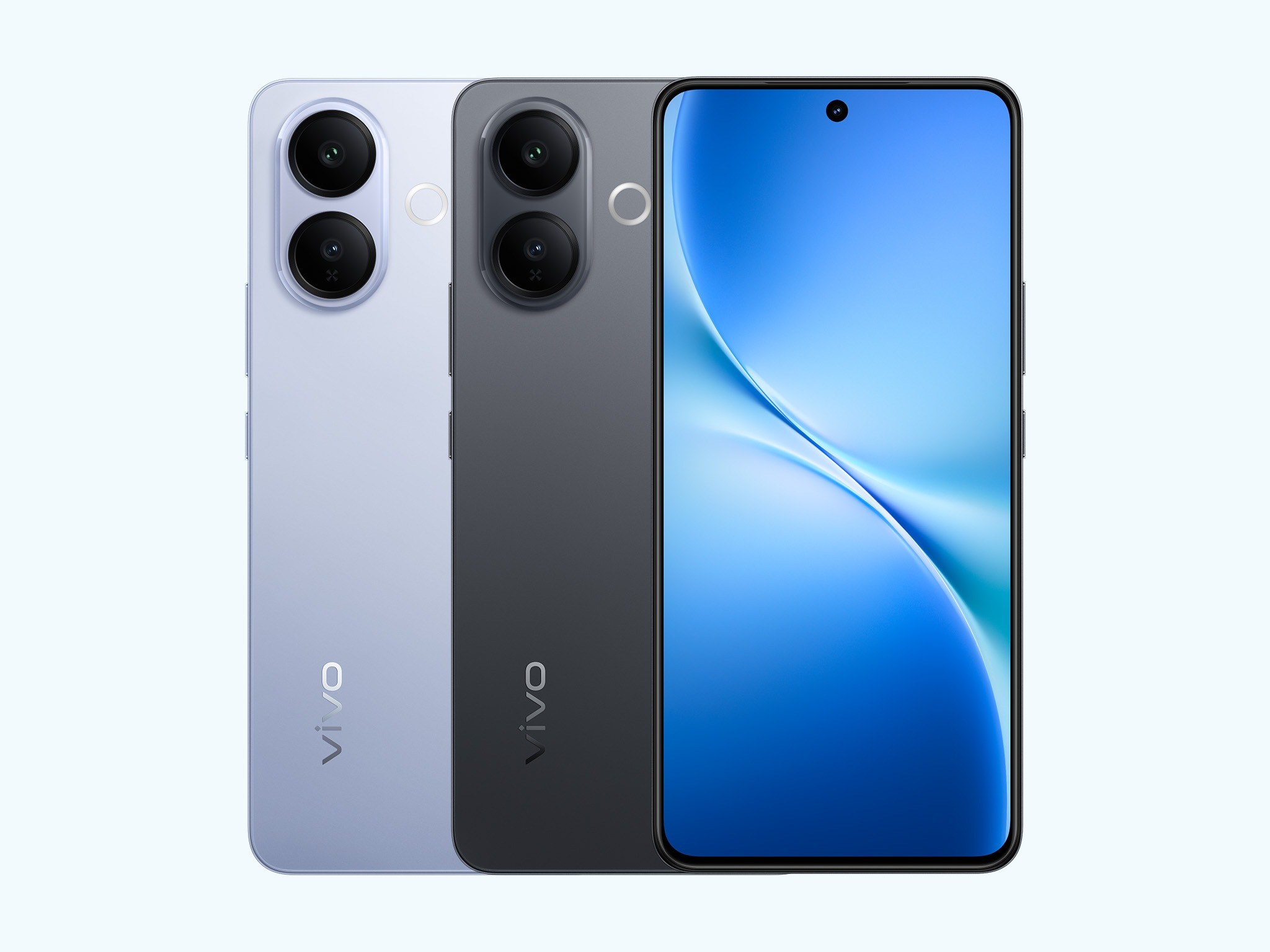
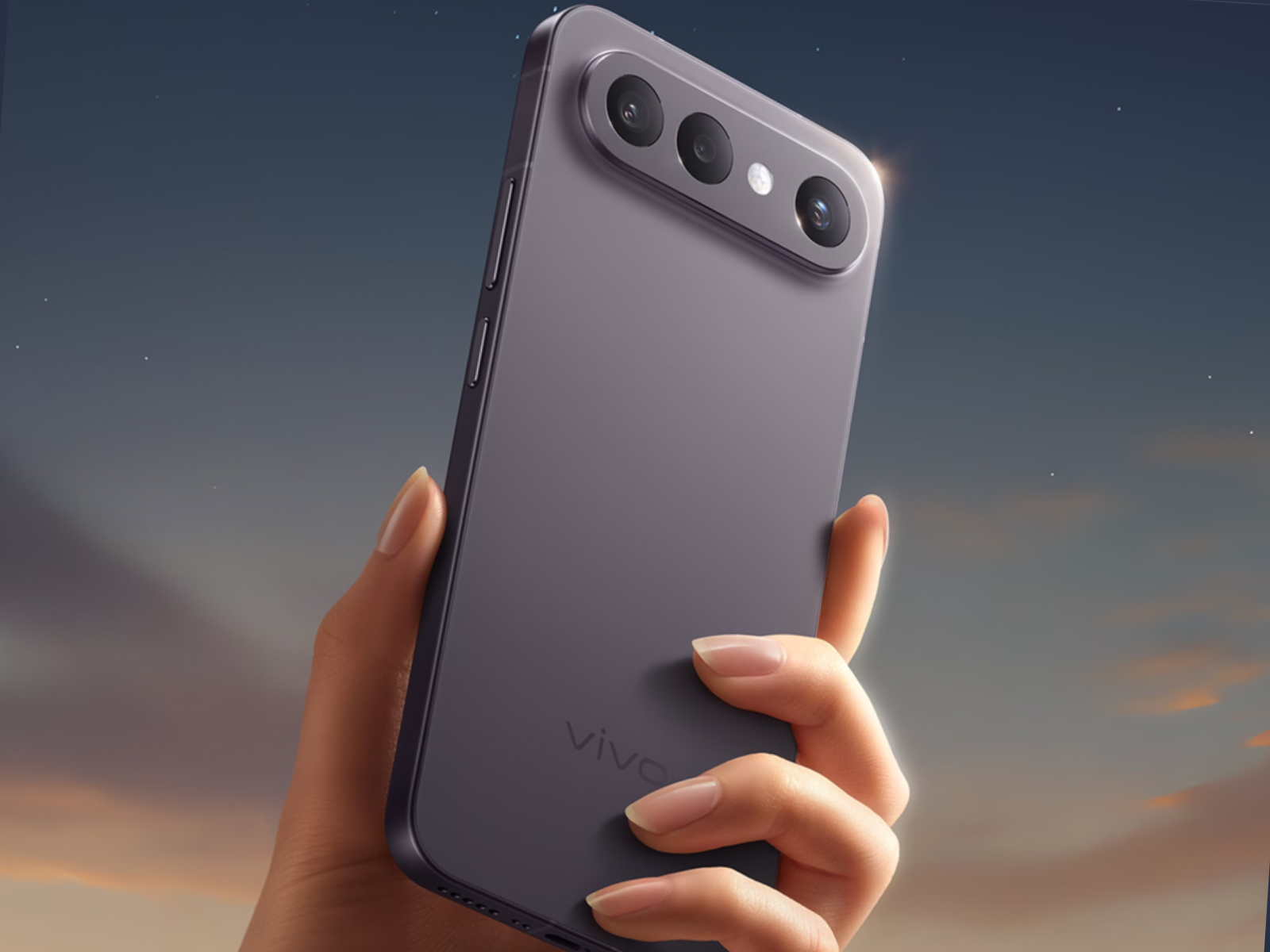
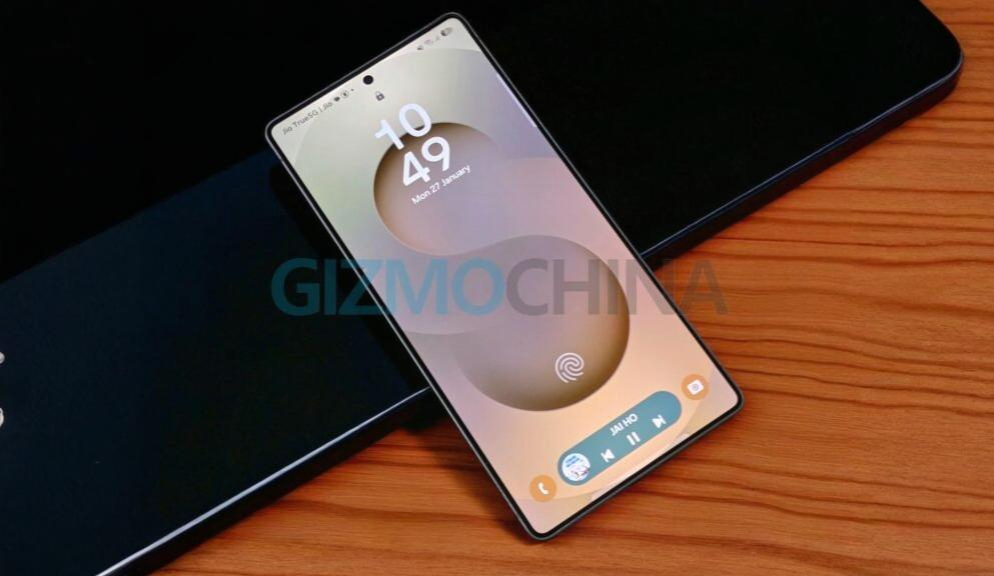
We're taking a look at vivo's new V70 series. Earlier, we gave you our impressions of the V70 Elite, so now, let's unbox the vivo V70. Our unit is the Alpine Grey model, and it comes with a 90W charger, a USB-C to USB-A cable, and a simple silicone case. Unboxing the vivo V70 The Alpine Grey model is a curious shade. Depending on the lighting, it appears a light brown color or a diluted rose shade. In reality, it has a light grey back panel and a slightly darker grey frame. The phone feels nicely compact in the hand, thanks to its 6.59-inch display and sub-8mm...
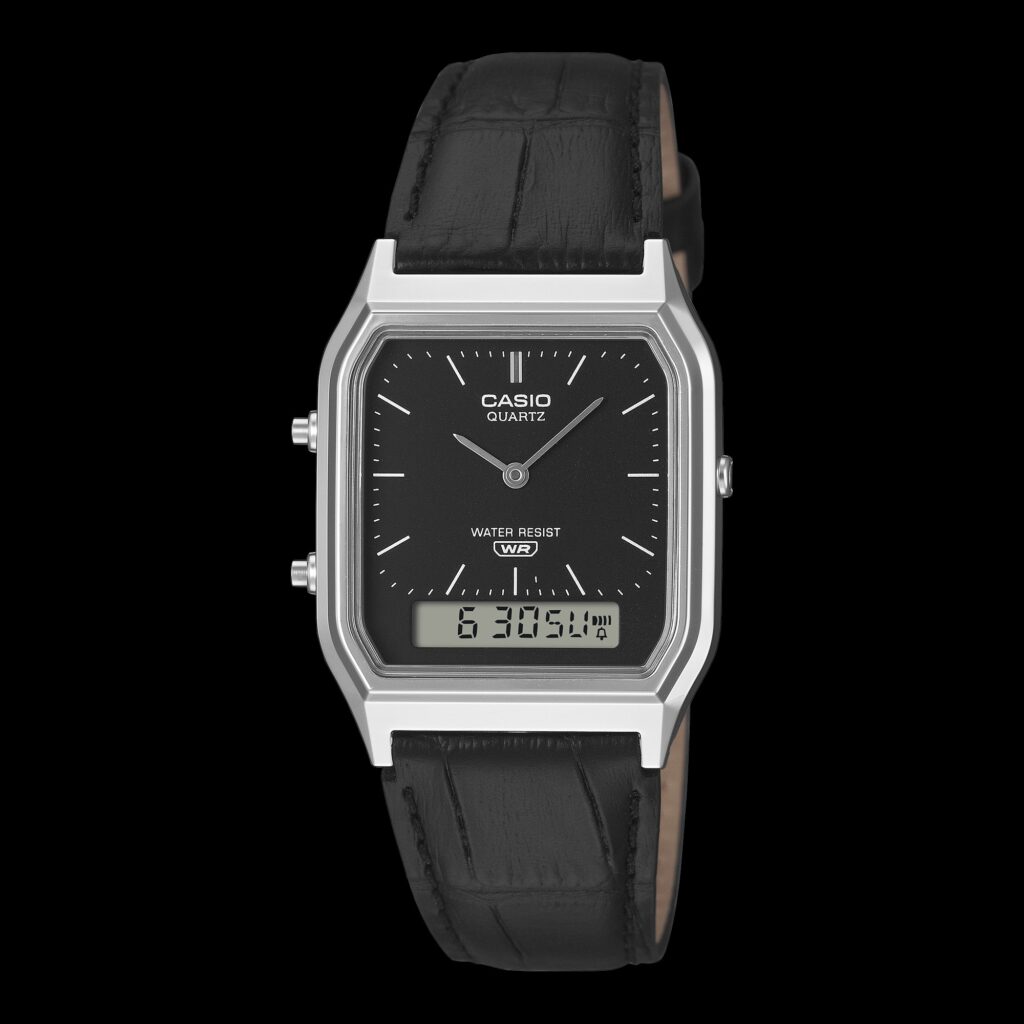
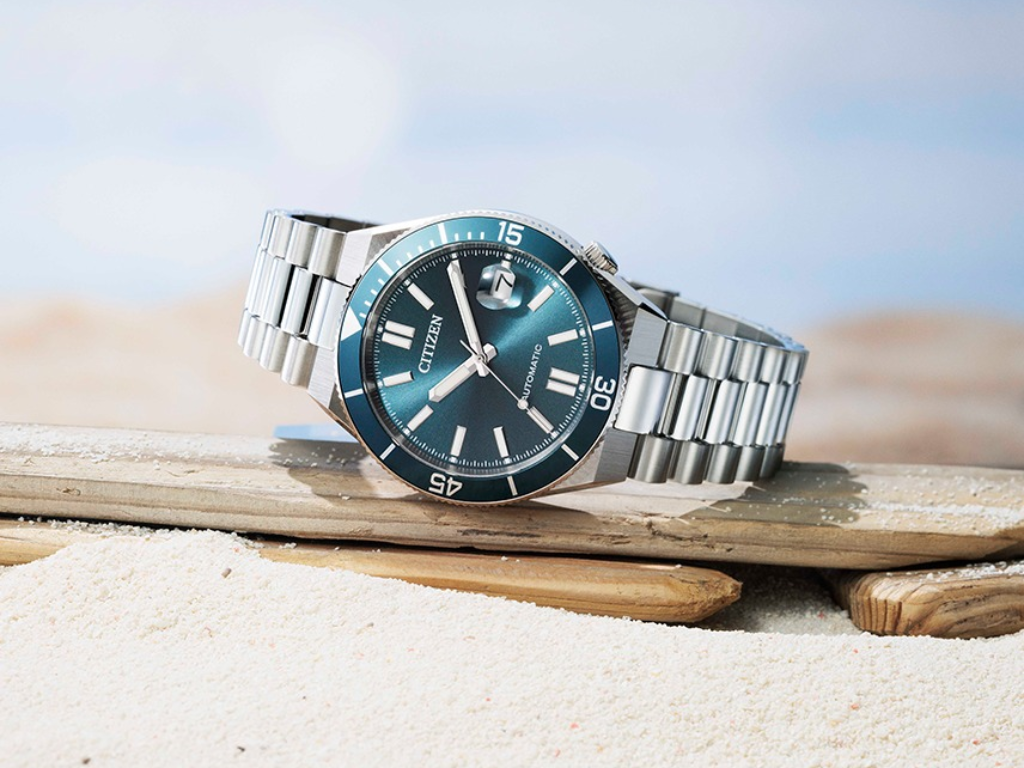
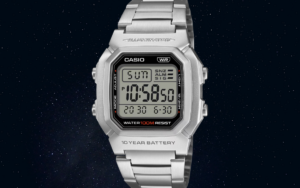
Casio has launched two new watches in the United States, the AQ230EGL-9A and AQ230EL-1A. These models were previously released in some international markets last year. The watches combine retro-inspired design with practical features, appealing to fans of vintage aesthetics and modern functionality.

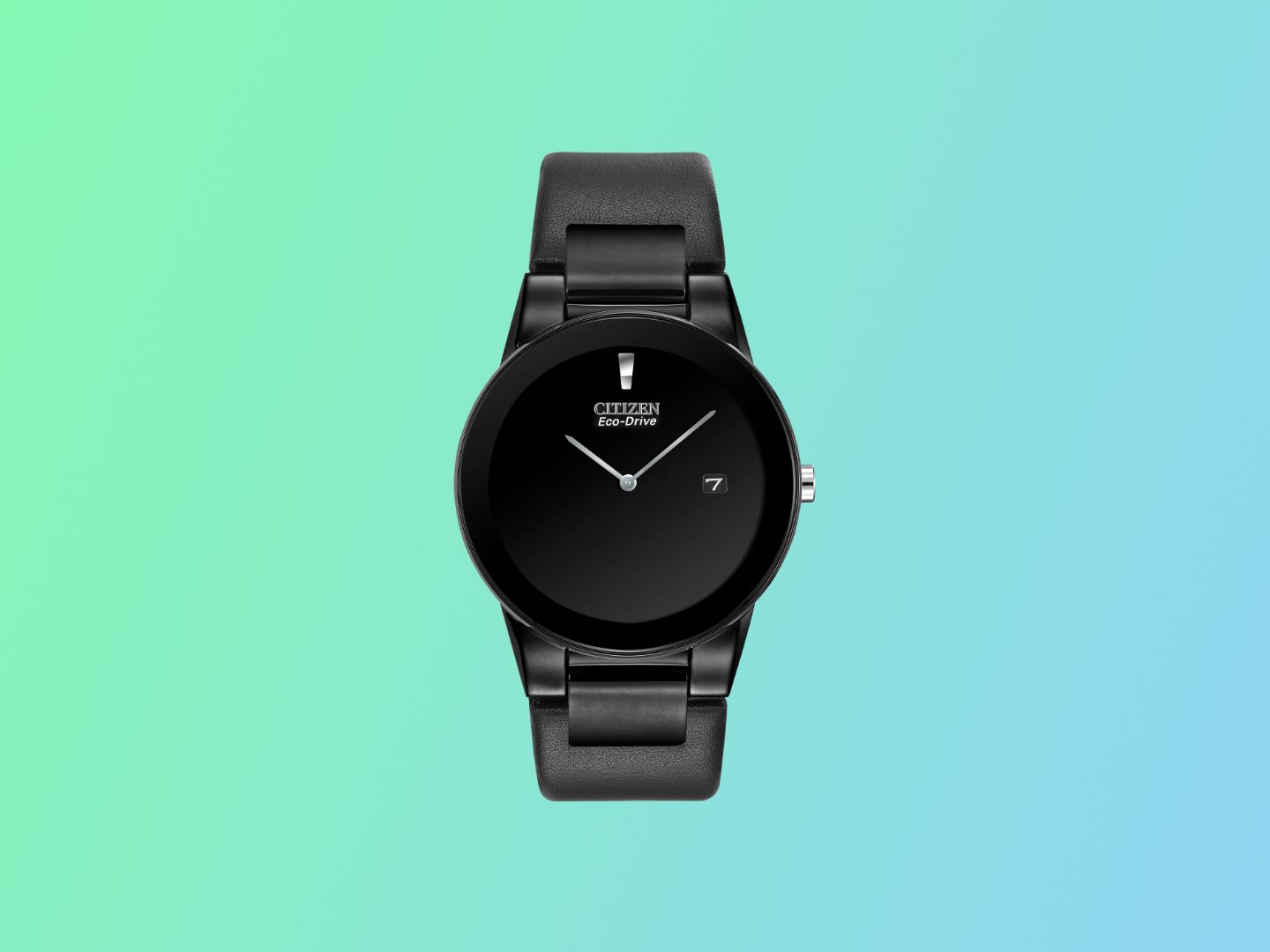
Both models feature a rectangular case with softly beveled edges and short lugs. The compact design creates a clean and timeless look. The watches use an analog-digital hybrid display, which includes slim baton hour markers and slender hands above a small digital screen. This layout provides both analog elegance and the convenience of digital features, including a calendar, stopwatch, and alarm.
The AQ230EGL-9A has a gold-tone case, a champagne-colored dial, and a brown crocodile-textured leather strap. This combination creates a classic, luxurious style. The AQ230EL-1A, in contrast, has a silver-tone case, a black dial, and a black leather strap. The black-and-silver design offers a modern, versatile look suited for both casual and formal occasions.


Both models include water resistance, making them suitable for daily use. The dual-time feature lets users track two time zones simultaneously. This functionality makes the watches practical for travelers or anyone managing schedules across different regions.
Casio priced the AQ230EGL-9A at $79.95 and the AQ230EL-1A at $69.95. These are now available via Casio’s website.
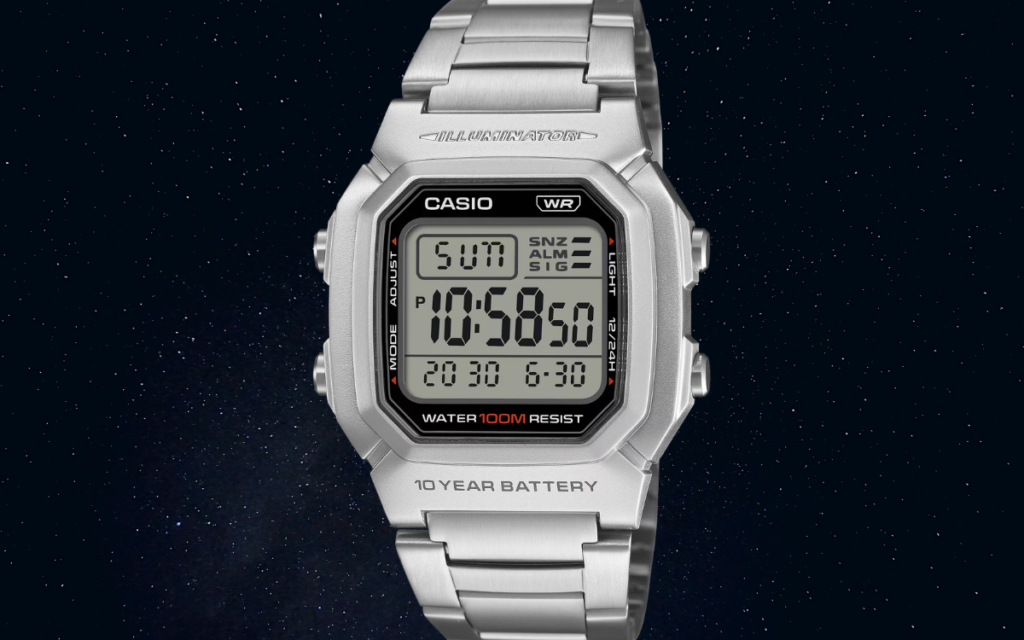
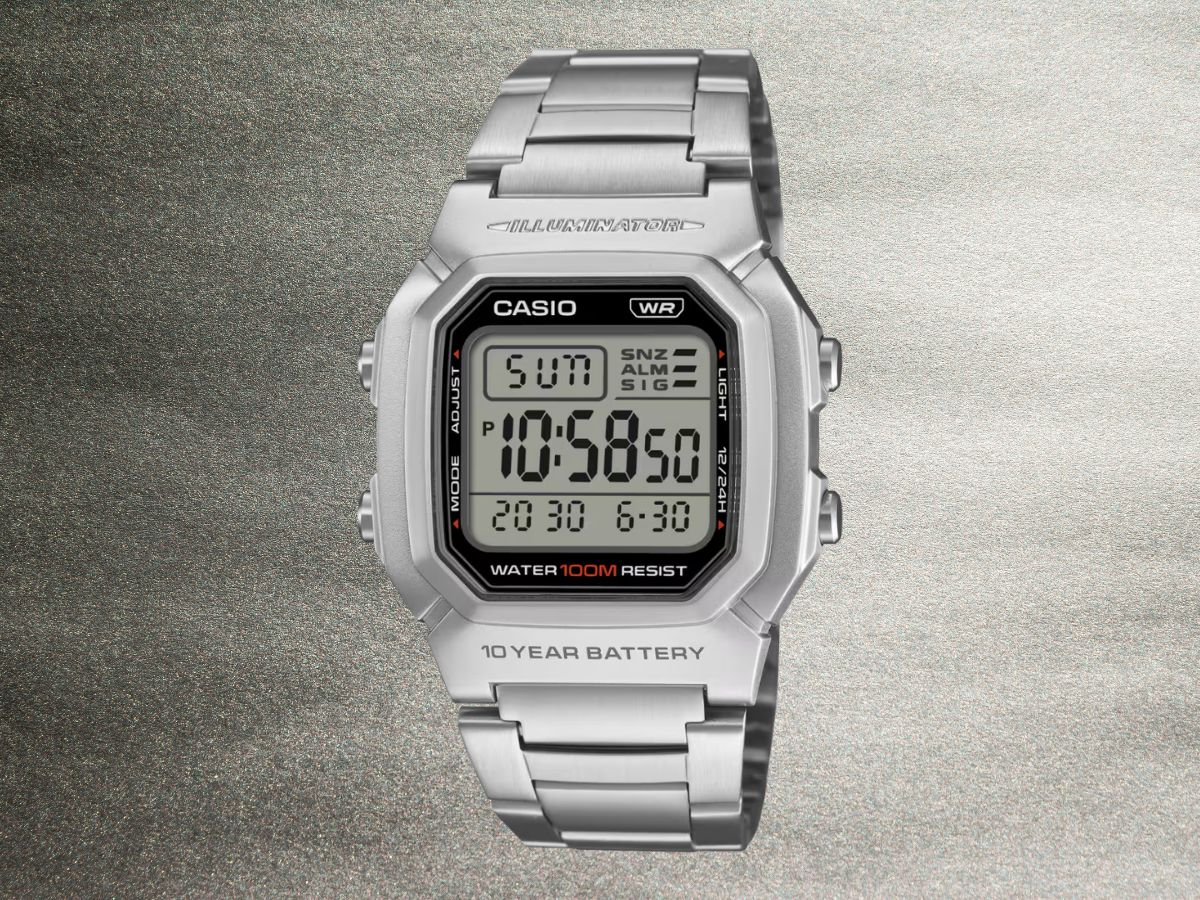
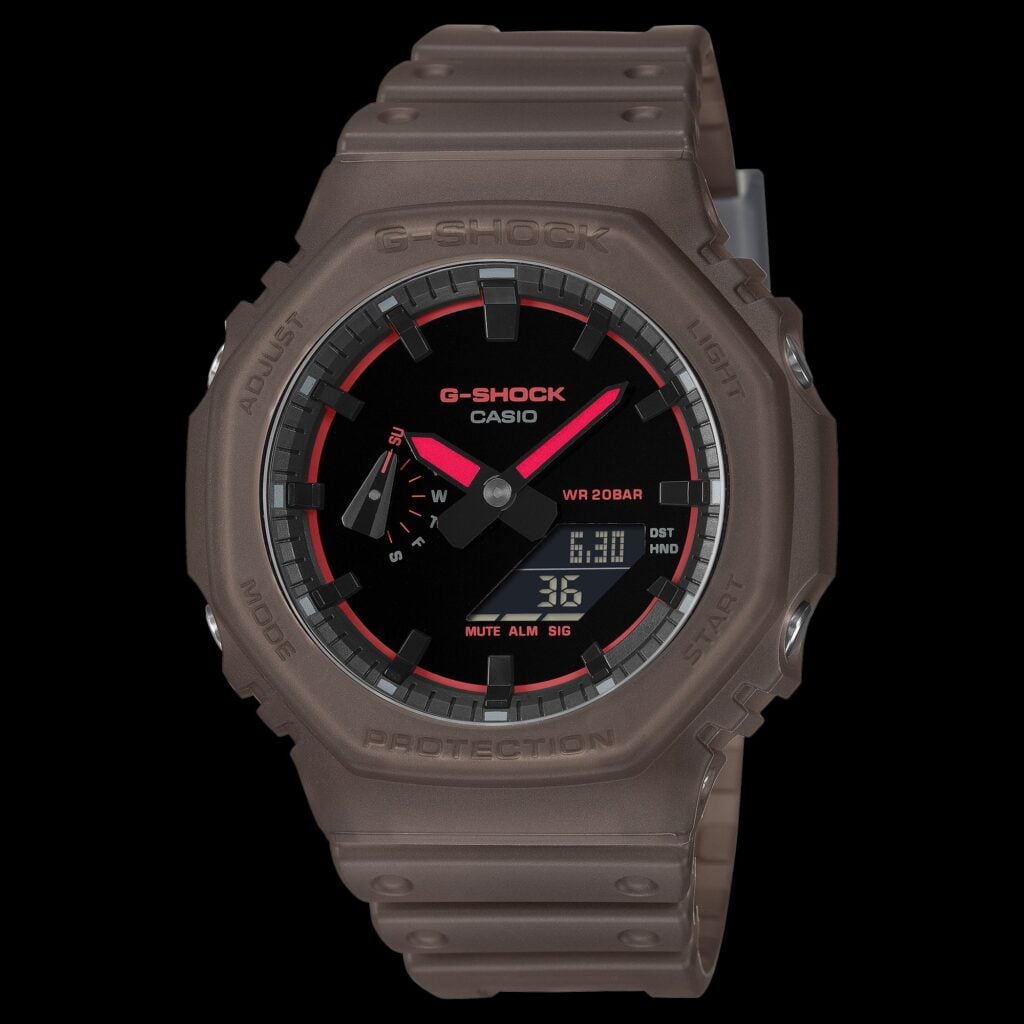
In related news, Casio has launched the premium G-Shock MTGB4000D-1A in the US with durable carbon-steel construction, alongside the W-800HD-1AV digital watch, which features a classic retro design.
For more daily updates, please visit our News Section.
Stay ahead in tech! Join our Telegram community and sign up for our daily newsletter of top stories! 
The post Casio launches two affordable vintage style analog-digital watches in the US appeared first on Gizmochina.
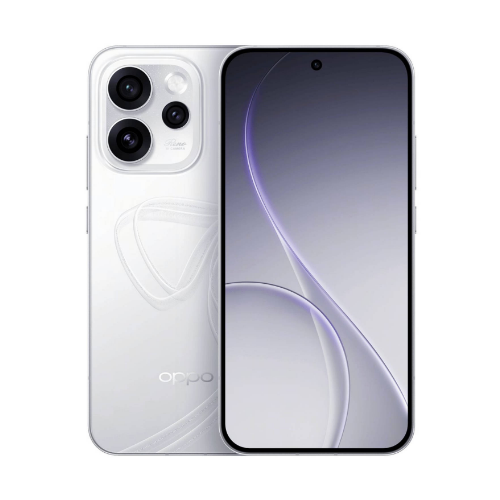
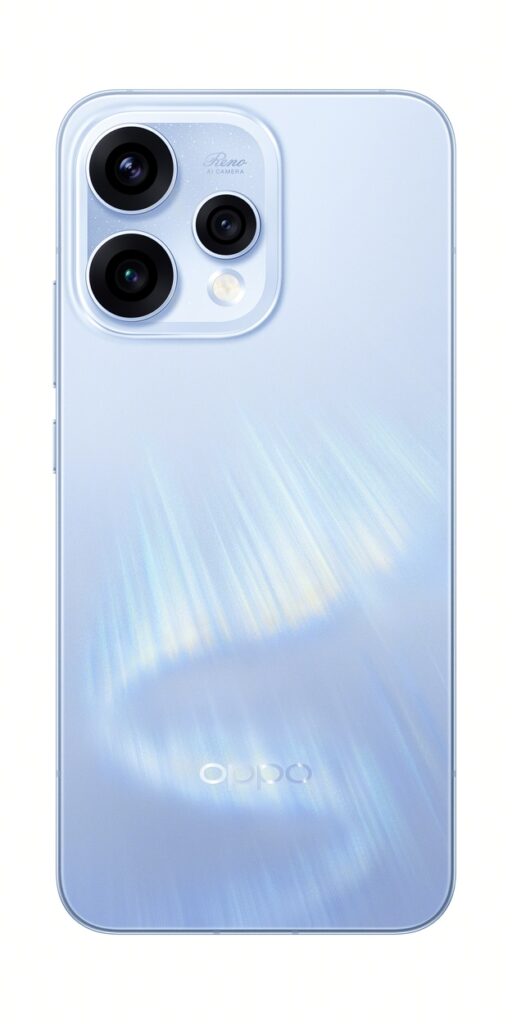
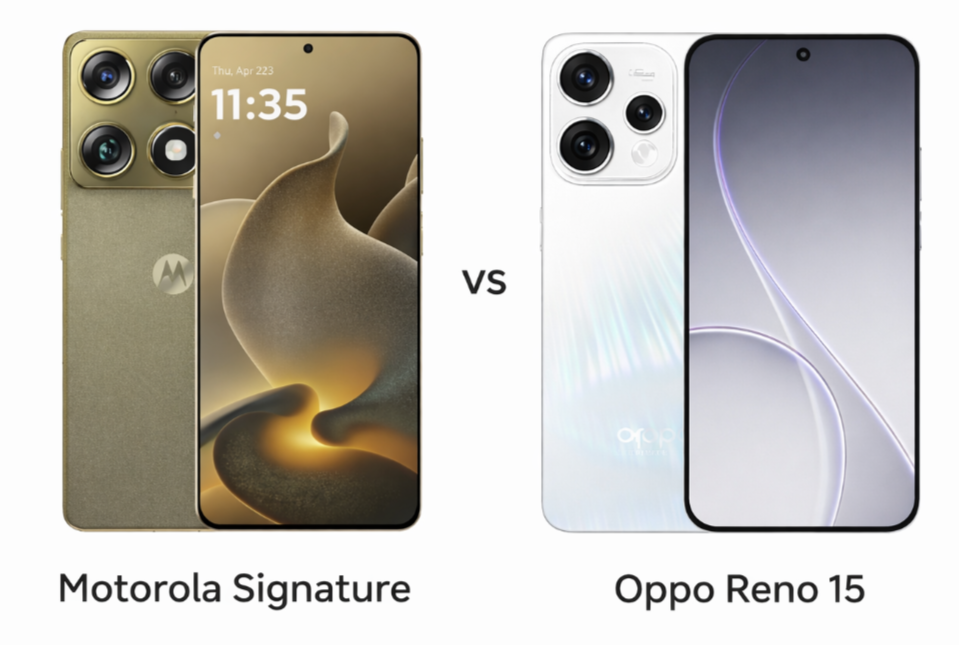
Compact smartphones have been growing in popularity, with more brands launching their own small devices. Initially, most of these new releases were a part of the premium lineup. But now, Oppo and Vivo have just released two phones that are a part of their sub-flagship lineup, targeting users who want near flagship-level features in sleek, easy-to-hold designs without the bulk of larger phones. So in this comparison, we’ll break down the key differences between the Vivo V70 and Oppo Reno 15 to help you decide which deserves your attention this year.
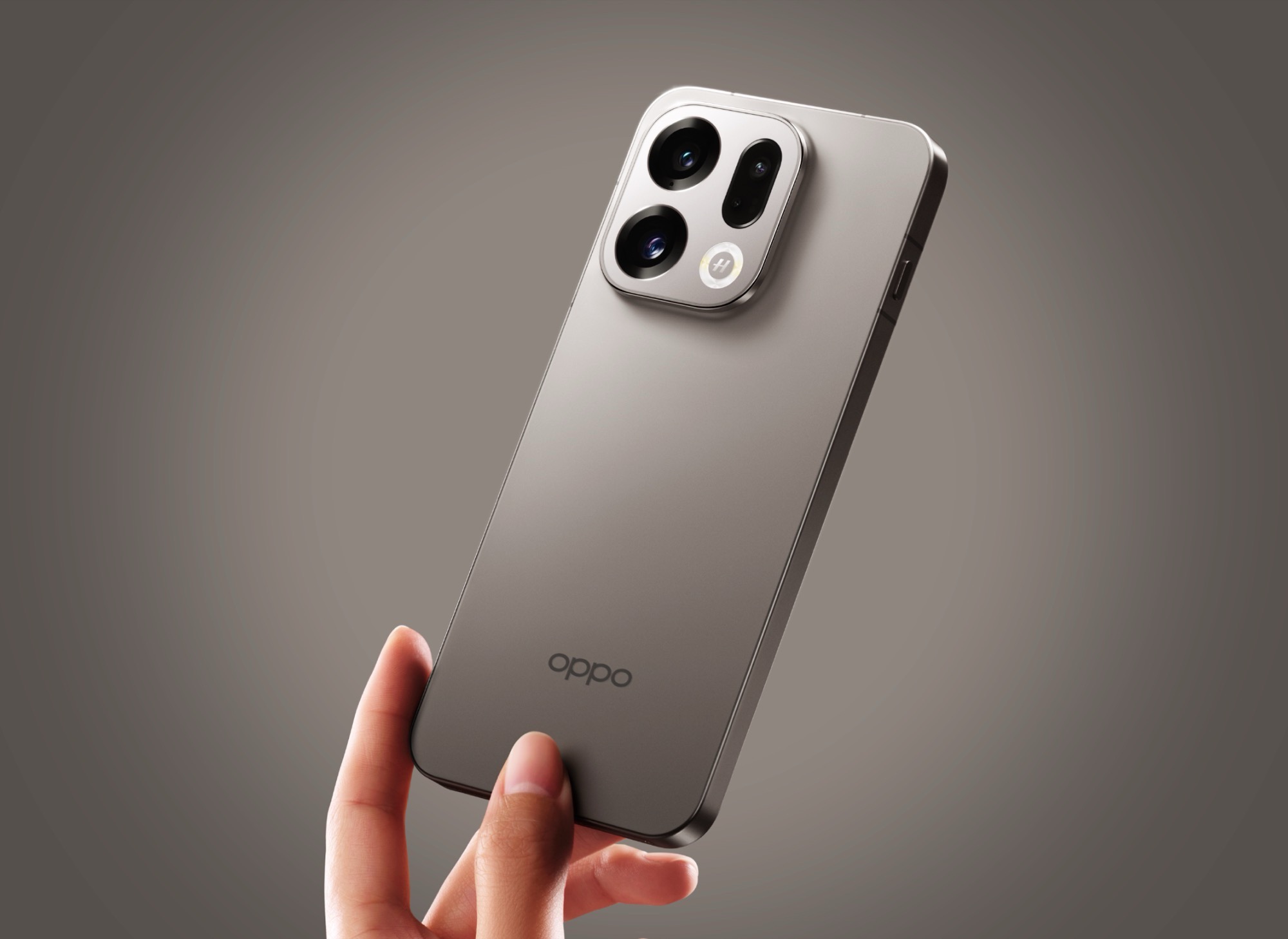
Both the Vivo V70 and Oppo Reno 15 lean into refined aesthetics, opting for minimalist designs with slim bodies and compact form factors. The duo features premium materials like aluminum frames and a glass rear panel. But while the Vivo V70 emphasizes a modern and minimalistic design, the Reno 15 pairs an elegant look with shiny new designs, especially in the Glacier White and Aurora Blue color variants.

In terms of display specs, both phones deliver similar visual experiences, with sharp resolutions and smooth refresh rates that make everyday interactions fluid and responsive. So you get a 6.59-inch OLED display with a 1.5K resolution, a 120Hz refresh rate, and solid brightness levels.

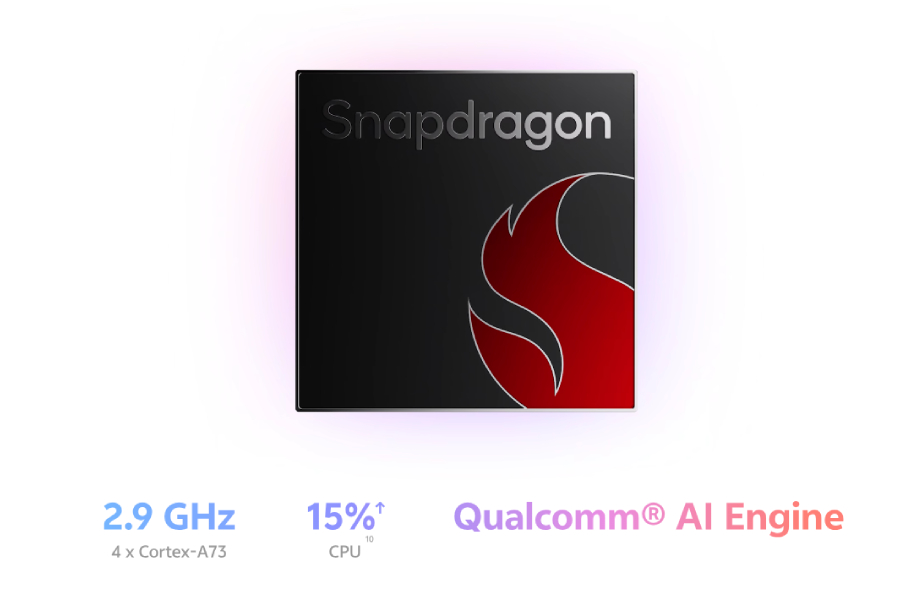
Just like with the design and display, Oppo and Vivo are basically tied in terms of performance as well. The two phones are equipped with the Snapdragon 7 Gen 4 SoC, which is paired with up to 12GB of RAM. Although the Vivo V70 maxes out at 256GB for storage, the Reno 15 has a more expensive 512GB variant. Under the hood, a massive 6,500mAh battery pack powers the Vivo V70 and Oppo Reno 15. Vivo has an edge with a faster 90W wired fast charging support. But this is only marginally faster than the 80W charging support on the Reno 15.
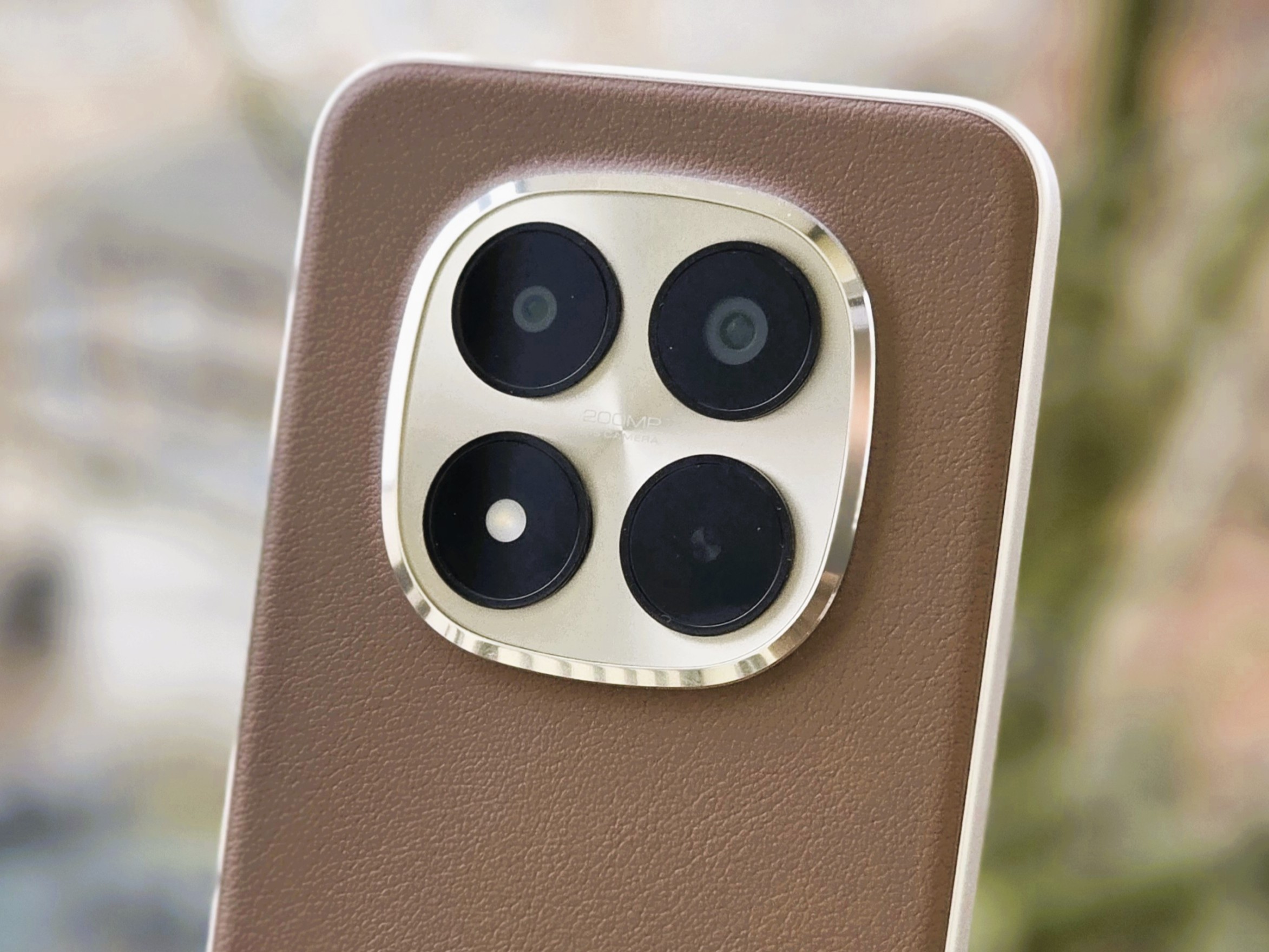
You get a versatile camera system on Oppo and Vivo, although there are a few differences. The main camera on the Reno 15 is a 200MP main shooter, which is coupled with an 8MP ultra wide angle lens and a 50MP periscope telephoto shooter with a 3.5x optical zoom.

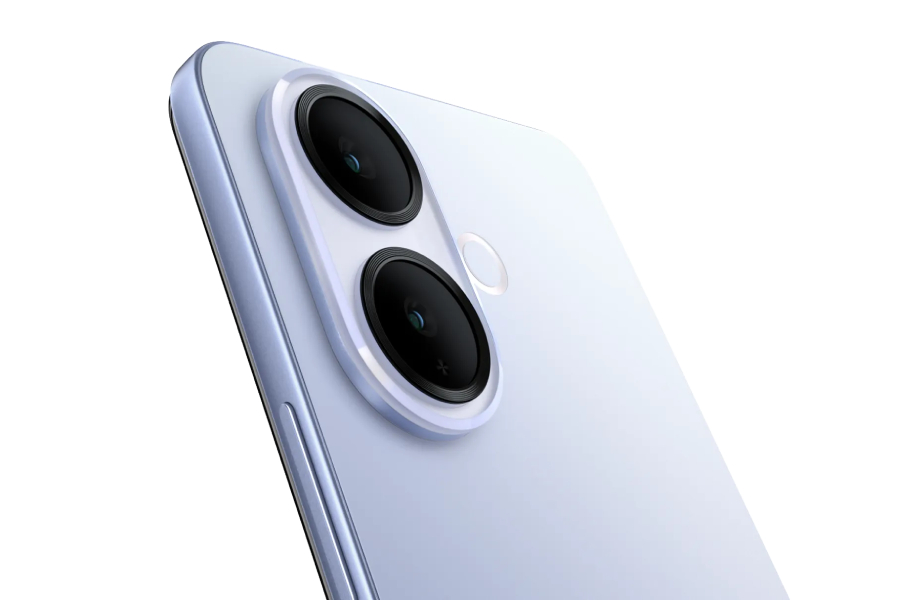
The primary camera is a 50MP sensor on the Vivo V70, but both models have a similarly sized sensor. The tiny 8MP ultra wide angle lens returns here. A big advantage here is with the 50MP periscope telephoto shooter that has a 3x optical zoom and a larger sensor size. This should translate to better performance in lowlight scenes.
Furthermore, the tuning from Zeiss should offer another advantage in the shooting experience, thanks to various filters and more. For selfies and video calls, there is a 50MP camera on both devices, but the V70’s front camera gets autofocus support as well.

In 2026, Vivo made the switch to OriginOS 6 that made its software experience more refined and modern. It has great customization options, a cleaner look, and various AI powered tools. But ColorOS 16 on the Reno 15 is one of the best Android skins out there. Despite being on the same Android 16 platform, the latter brings a bunch of thoughtful features and a UI that could appeal to fans of iPhones and iOS.
Looking at their competitive specs and features on offer, picking between the two devices isn’t so easy. The starting price tag of the Vivo V70 and Oppo Reno 15 is Rs 45,999 for the same 8GB + 256GB base configuration. But there are a few things to consider.
Choose the Vivo V70 if:
Choose the Oppo Reno 15 if:
So the difference here basically boils down to the design, software, and camera. Meaning, the choice you make, depends on your priorities.
For more daily updates, please visit our News Section.
Tech enthusiast? Get the latest news first! Follow our Telegram channel and subscribe to our free newsletter for your daily tech fix! 
The post Vivo V70 vs Oppo Reno 15: Which Lite Flagship Phone Should You Buy? appeared first on Gizmochina.
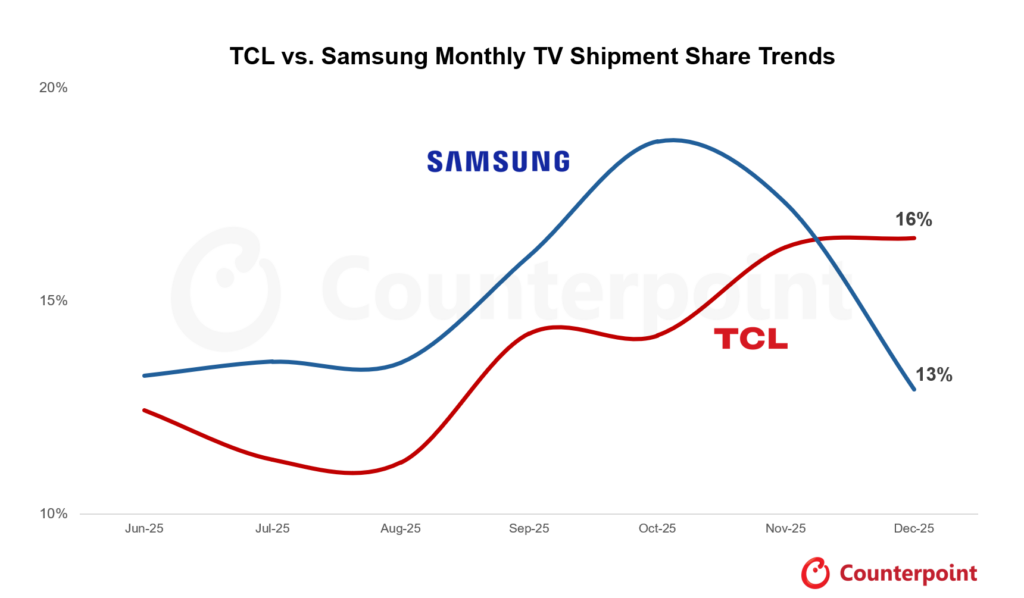
TCL has officially dethroned Samsung as the top global TV shipper for December 2025, according to Counterpoint Research’s latest data. This marks a major milestone for the Chinese electronics giant, whose shipments surged 10% year-over-year (YoY) last month, giving it a commanding 16% market share. Meanwhile, Samsung, the perennial leader, slipped to second place with a 13% share, despite an 8% YoY increase in shipments.

The performance of TCL was primarily driven by strong sales in Asia-Pacific, China, and the Middle East, which offset weaker demand in North America and Western Europe. The company achieved significant growth by focusing on mid-range and budget-friendly TVs, including the recently launched T7 series. TCL also boosted sales of its high-end QM8K and QM9K models through aggressive holiday pricing.

However, Samsung still holds the crown for Q4 2025 overall, shipping 2% more TVs than TCL during the period. While North and South America provided growth opportunities for Samsung, declines in Western Europe and the Middle East hurt its performance. On the flip side, Hisense, which took third place in December, saw its shipments plummet 23% YoY, highlighting significant struggles in China’s shrinking TV market.
Looking ahead, the ambitions of TCL could spell bigger trouble for Samsung. The company’s upcoming partnership with Sony’s Bravia brand, set to finalize in March 2026, positions TCL to make a serious play in the premium TV market, a territory that Samsung has historically dominated with its high-end OLED and 8K offerings. If TCL can successfully leverage Sony’s reputation in this space, the dynamic of the global TV market could shift dramatically.
For now, TCL’s December triumph might be temporary, but its growth trajectory is impossible to ignore. With a mix of strategic pricing, regional demand timing, and potential premium market expansion, Samsung’s top spot may no longer be as secure as it once was.
For more daily updates, please visit our News Section.
Stay ahead in tech! Join our Telegram community and sign up for our daily newsletter of top stories! 
The post TCL beats Samsung in global TV shipments for December 2025 appeared first on Gizmochina.
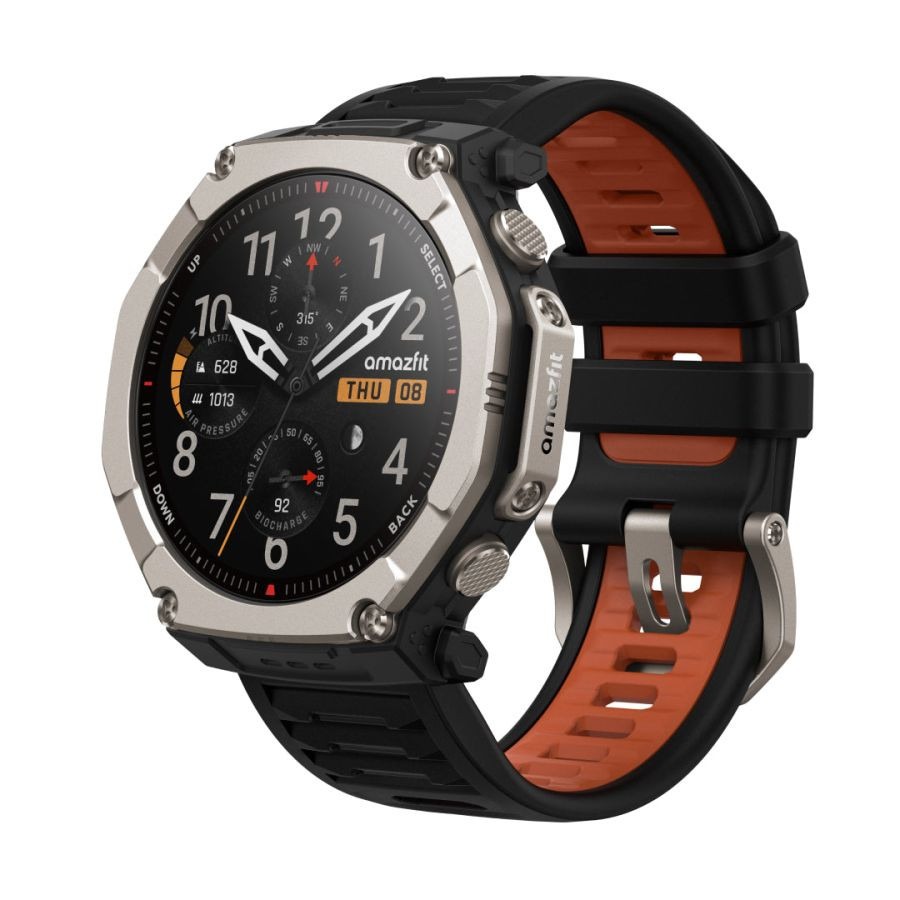
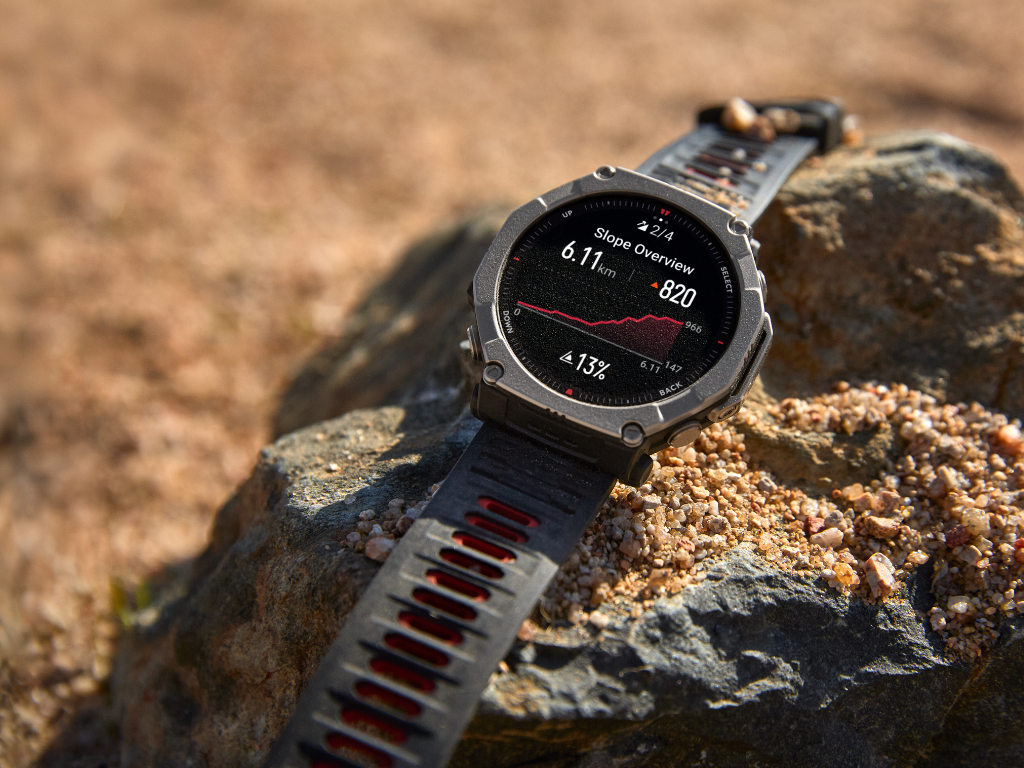
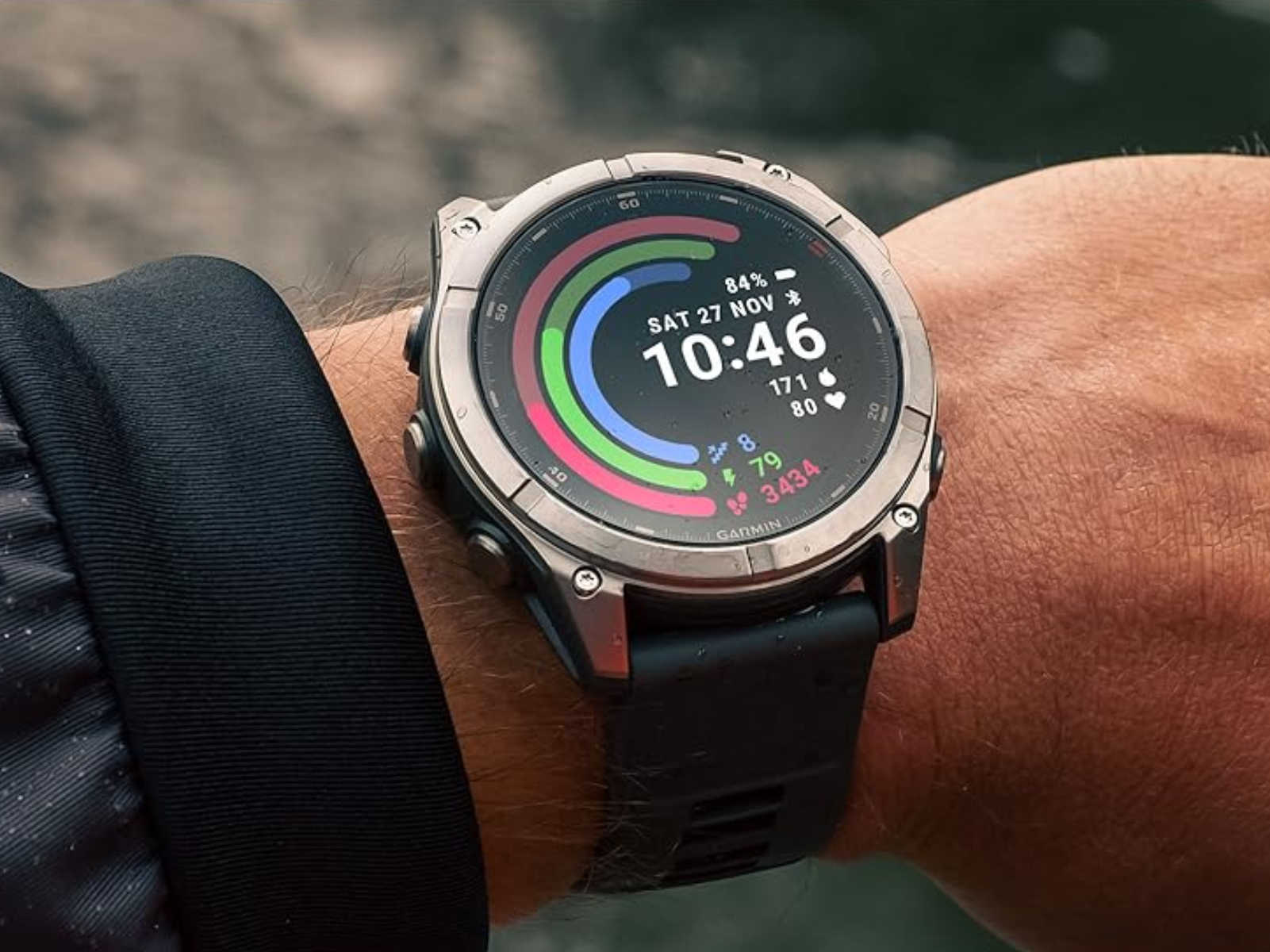
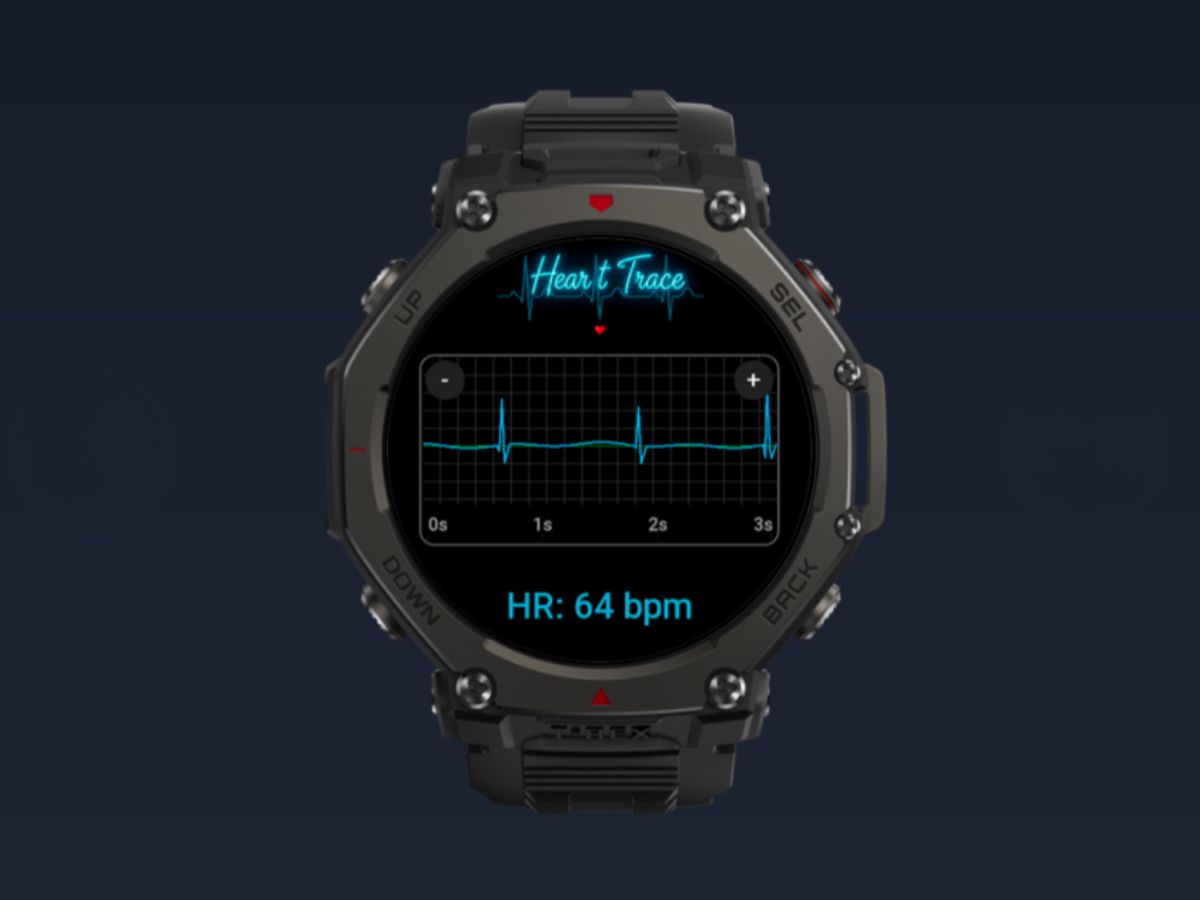
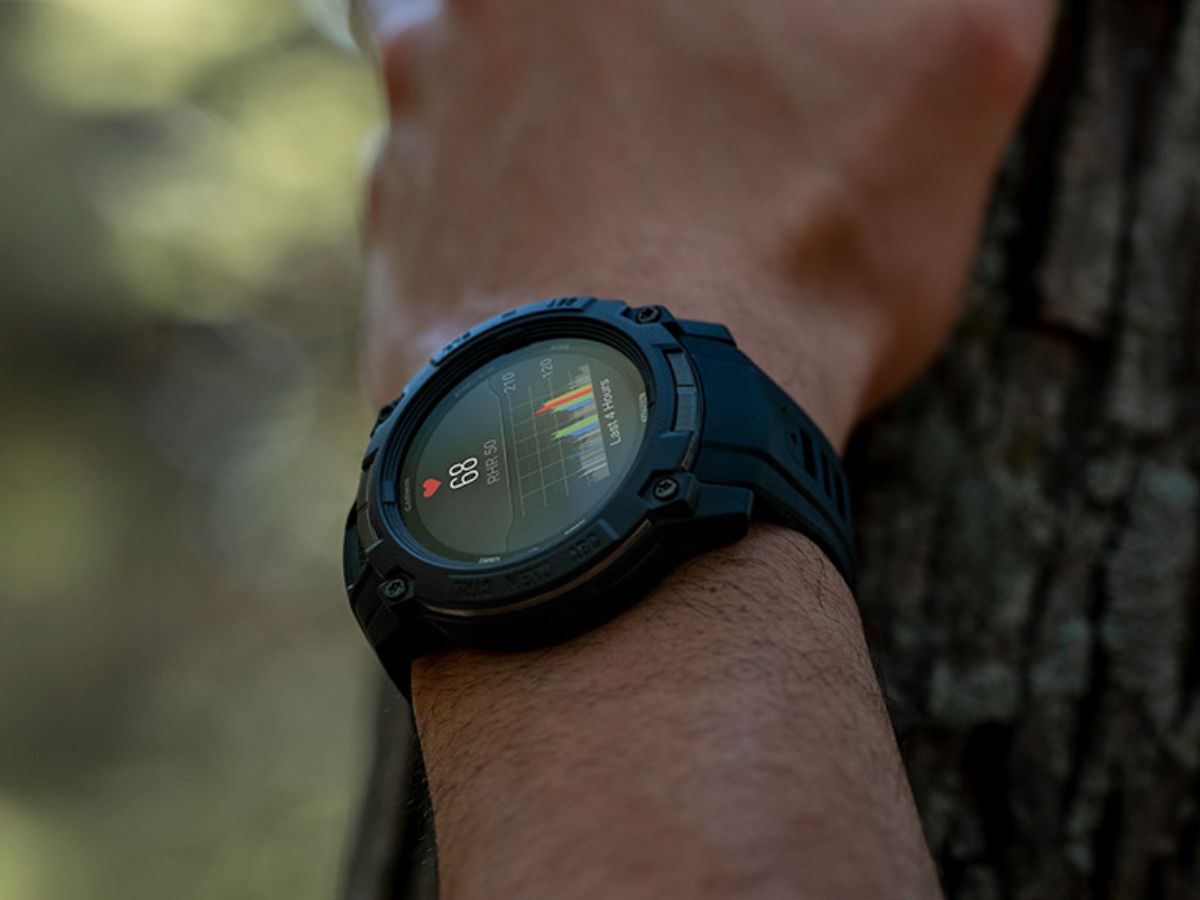
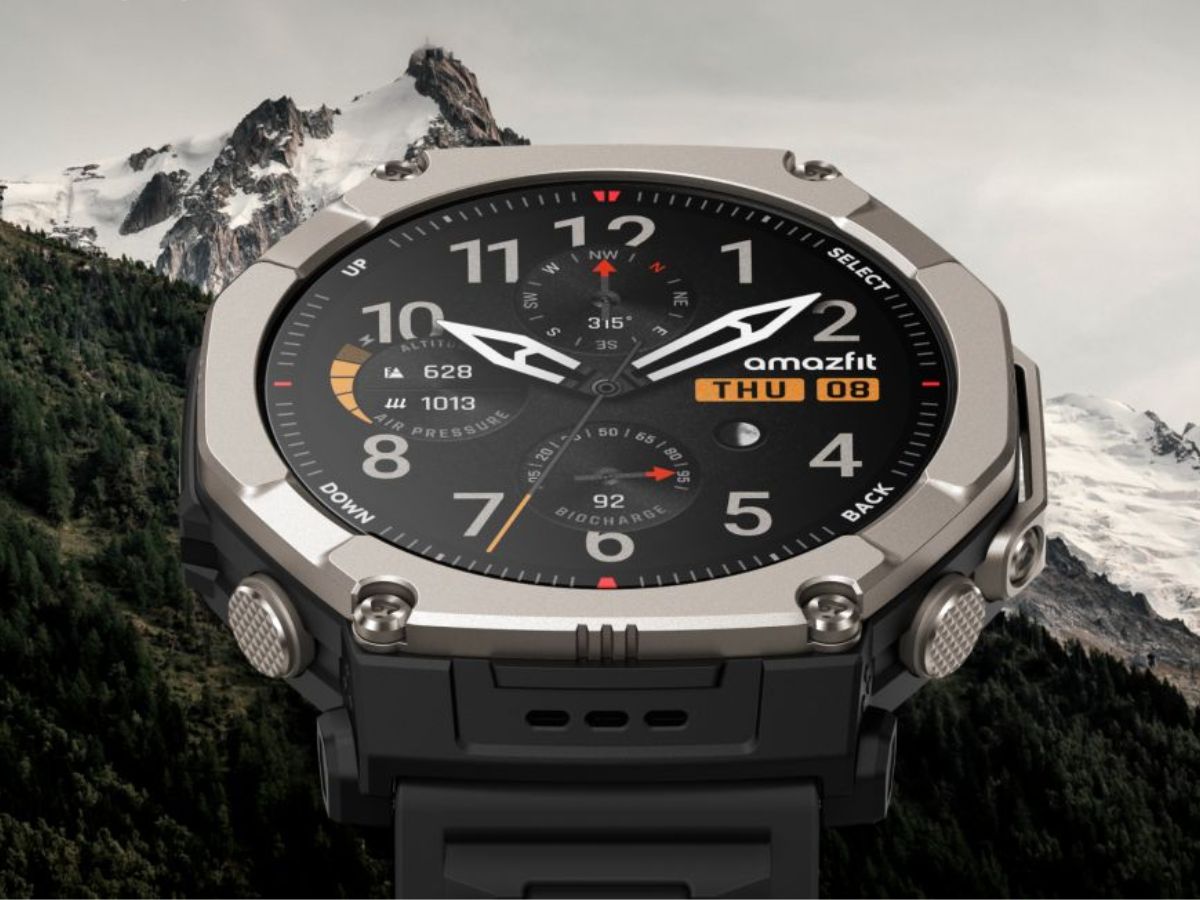
Amazfit has rolled out its latest rugged flagship smartwatch, the T-Rex Ultra 2, designed for outdoor adventurers and smart-watch lovers who want premium durability without compromise. With a new high-end titanium construction, a bright AMOLED display, and a larger battery pack, the brand’s latest flagship smartwatch aims to raise the bar for tough, long-lasting wearables.
The T-Rex Ultra 2 is built around a Grade-5 titanium bezel, case back and buttons, combined with a fibre-reinforced polymer body to balance durability and weight. This rugged construction helps keep the watch lightweight (around 89.2 grams) while remaining tough enough for outdoor exposure. Adding to its durability is the 10ATM water resistance and dual diving certification for underwater use.

Amazfit’s latest flagship smartwatch sports a 1.5-inch AMOLED display that is protected by scratch resistance sapphire glass. The screen offers an impressive peak brightness of up to 3,000nits, which is a big jump over its predecessor.
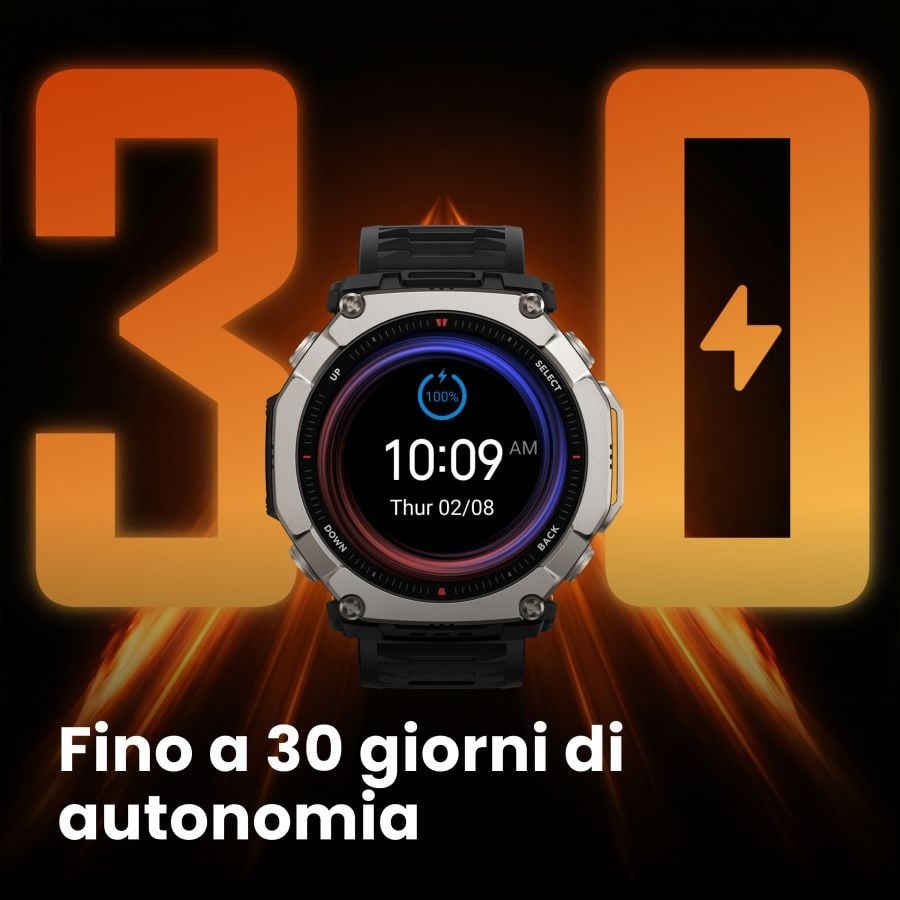
Battery life is a major strength of the Ultra 2, thanks to a larger 870mAh battery pack, which is rated for up to 30 days of endurance with typical use, making it ideal for multi-day trips without frequent recharging. In GPS mode, this can fall to around 50 hours depending on the settings. So it is a reliable companion for long hikes and trail runs as well.

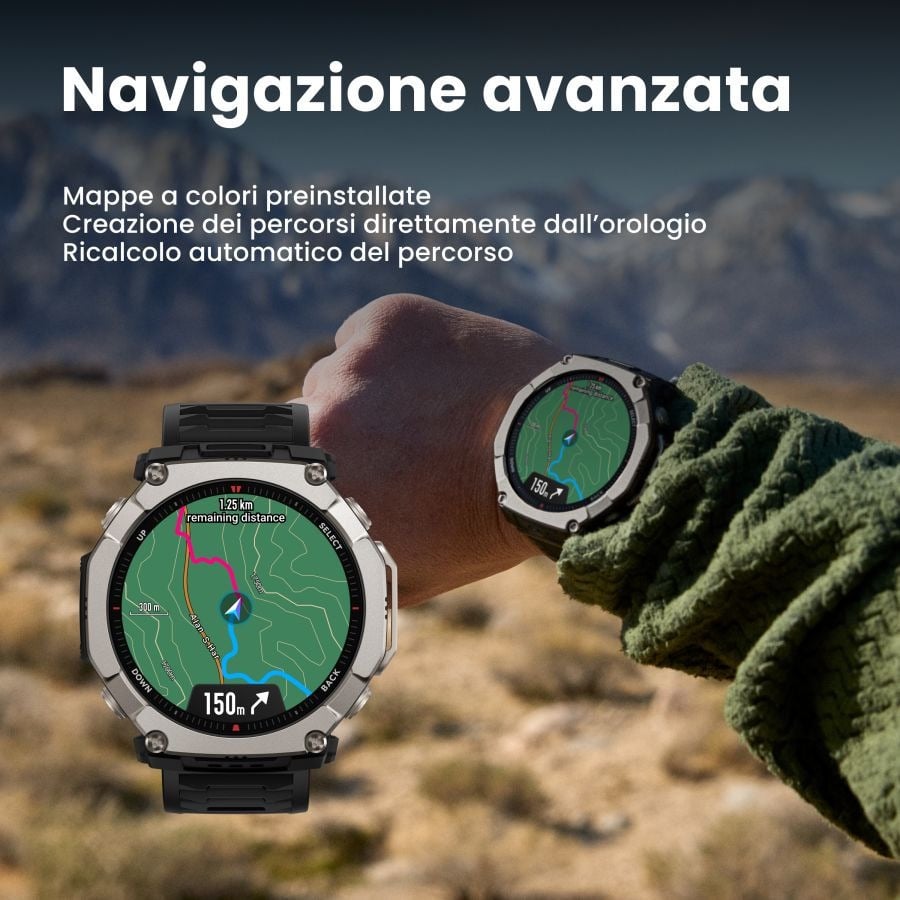
One of the biggest upgrades over earlier rugged models is the Ultra 2’s advanced navigation suite. Supported by six satellite systems, the watch delivers fast, accurate tracking and turn-by-turn routing without needing a phone. Users can preload full-colour global maps via the Zepp app, plan offline routes up to 100 km, search for nearby points of interest, and get elevation profiles and rerouting on the fly. You also get built-in speakers and microphone for Bluetooth calling support and Zepp app integration.
The Ultra 2 packs several features aimed at real-world adventure use. This includes:
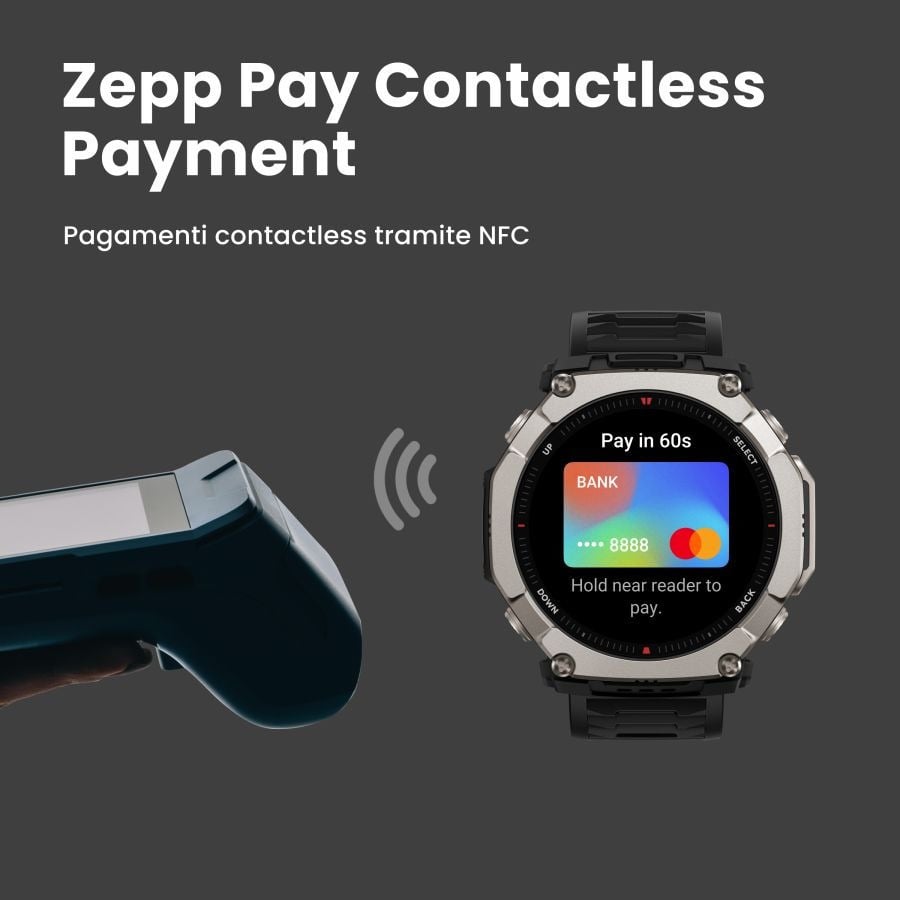
Buyers can even store maps, music, and activity data directly on the Amazfit T-Rex Ultra 2 thanks to the 64GB internal storage. Other notable features include a dual mode LED flashlight, NFC payment support, operation even at extreme temperatures up to -30∘C, and an SOS mode.
The Amazfit T-Rex Ultra 2 targets outdoor adventurers and serious athletes who need endurance, navigation and rugged construction in one wearable. It complements other models in Amazfit’s lineup, such as the Amazfit T-Rex 3 Pro. The brand just launched its premium smartwatch for a starting price tag of 549.99 US Dollars. It is available for purchase on the company’s official website and Amazon. In related news, this release arrives around a month after Amazfit released its new Active Max smartwatch globally and in the Indian market. You can also click here to check out our list of the best smartwatches for Android in 2026.
For more daily updates, please visit our News Section.
Don’t miss a thing! Join our Telegram community for instant updates and grab our free daily newsletter for the best tech stories!
Tech enthusiast? Get the latest news first! Follow our Telegram channel and subscribe to our free newsletter for your daily tech fix! 
The post New Amazfit T-Rex Ultra 2 Debuts With Grade-5 Titanium, 3000nits Display, & Huge Battery appeared first on Gizmochina.
We’ve seen Android phones get ridiculously powerful over the past few years, but this might be one of the clearest signs yet that mobile hardware is entering serious PC territory.

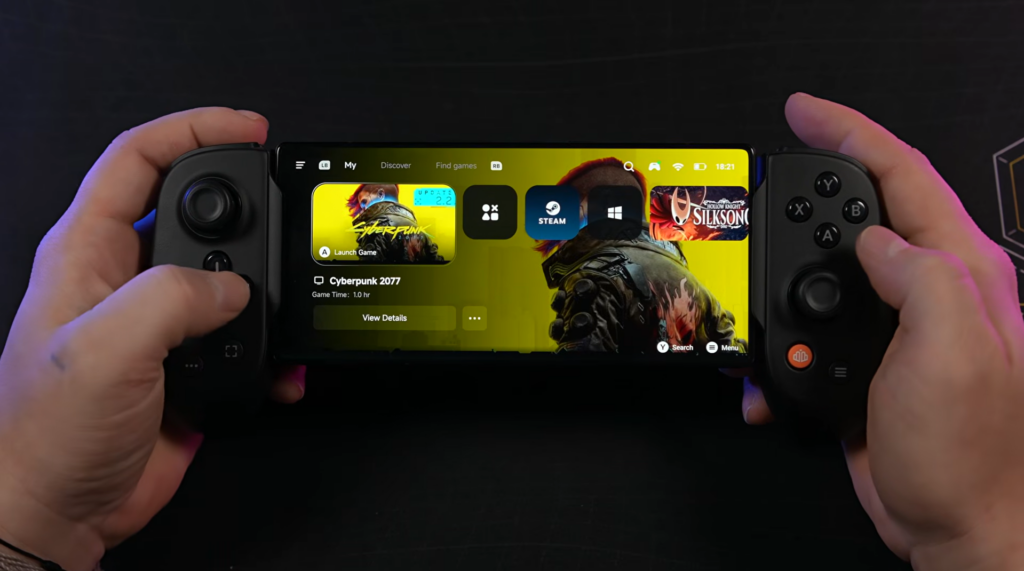
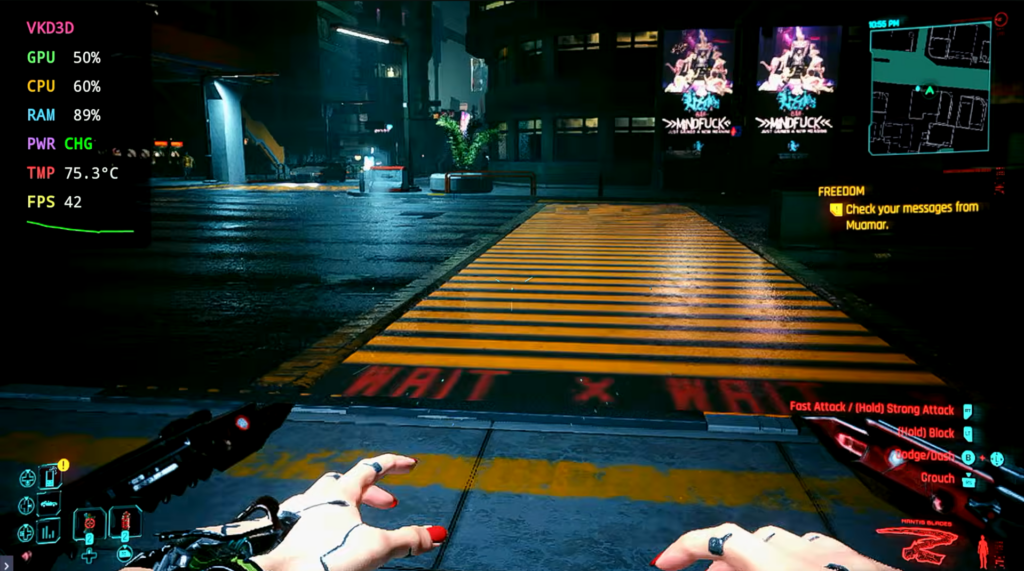
In a recent video, ETA Prime managed to run Cyberpunk 2077 locally on the Red Magic 11 Pro. No cloud streaming, no remote desktop tricks, just straight-up emulation. That alone is impressive. But the performance numbers make it even more interesting.
The Red Magic 11 Pro, powered by Qualcomm’s Snapdragon 8 Elite Gen 5, handled the game at 720p with the lowest graphics preset. AMD FSR 2.1 upscaling was set to Balanced mode. Without frame generation enabled, the game hovered around 30 FPS, dipping into the high 20s during heavier scenes.
Once FSR frame generation was turned on, performance improved noticeably. Frame rates jumped past 40 FPS consistently and even touched 50 FPS in lighter sections. On a phone screen, that’s surprisingly playable for a title that once pushed high-end gaming PCs to their limits.

ETA Prime also tried the Steam Deck preset, which slightly improves visuals while keeping FSR Balanced. Performance initially dropped to around 20 FPS, but enabling frame generation brought it back up to roughly 40 FPS. The tradeoff? Some visible artifacts and ghosting, which isn’t unexpected when relying on aggressive frame interpolation.
Under the hood, the Snapdragon chip was clearly working hard. CPU usage sat between 60% and 80%, while GPU usage ranged from 50% to 60%.
To be clear, this isn’t a replacement for a console or gaming laptop. But the fact that Cyberpunk 2077 can run locally on a smartphone at playable frame rates would’ve sounded ridiculous just a few years ago.
Now? It’s happening. And if this is where mobile silicon is today, the next couple of generations could get very interesting for portable gaming.
Don’t miss a thing! Join our Telegram community for instant updates and grab our free daily newsletter for the best tech stories!
For more daily updates, please visit our News Section.
(Source: ETA Prime)
The post Red Magic 11 Pro emulates Cyberpunk 2077 at playable 40+ FPS appeared first on Gizmochina.
Xiaomi recently confirmed the list of devices that will get the Android 17 OS update, which arrived soon after the first official Android 17 beta went live. Now, early leaks have revealed Oppo’s and OnePlus’s next major software updates based on Android 17. But ahead of any official release roadmap, the latest report has revealed a bunch of key updates for the upcoming ColorOS 17 and OxygenOS 17.
One of the biggest themes across leaks is system performance optimization. Both ColorOS 17 and OxygenOS 17 are reported to refine CPU resource and memory management, resulting in faster app launches, fewer micro-stutters and better overall fluidity when navigating the interface.

Background multitasking is expected to benefit from improved app retention, meaning apps stay active longer instead of reloading frequently. Leaks also suggest deeper internal optimizations like improved garbage collection processes to reduce unnecessary workload on system resources and refine idle power usage, which could translate into more consistent battery life in day-to-day use.
Both the ColorOS 17 and OxygenOS 17 updates are tipped to bring smoother system-wide animations and reduced UI frame drops, helping make everyday interactions feel more consistent and responsive. Whether scrolling through apps or navigating menus, leaks suggest that transitions and motion feedback will look more polished than before, improving the overall feel and software experience.

Camera apps are also a focus here. Reports point to improved zoom transitions while taking photos and videos, meaning less lag, flickering and abrupt jumps between zoom levels. This would be a great quality tweak that could make major differences during real world shooting sessions.

On the imaging side, one of the more practical changes highlighted in the leaks is smoother zoom behavior in the camera interface. These enhancements are for both stills and video capture. This hints at software-level improvements that could make switching between focal lengths or continuous zooming feel more natural and less jittery. That’s a welcome improvement for users who rely on their phones for quick photo/video tasks.
For more daily updates, please visit our News Section.
Tech enthusiast? Get the latest news first! Follow our Telegram channel and subscribe to our free newsletter for your daily tech fix! 
The post ColorOS 17 & OxygenOS 17 leak reveals new upgrades with Android 17 appeared first on Gizmochina.
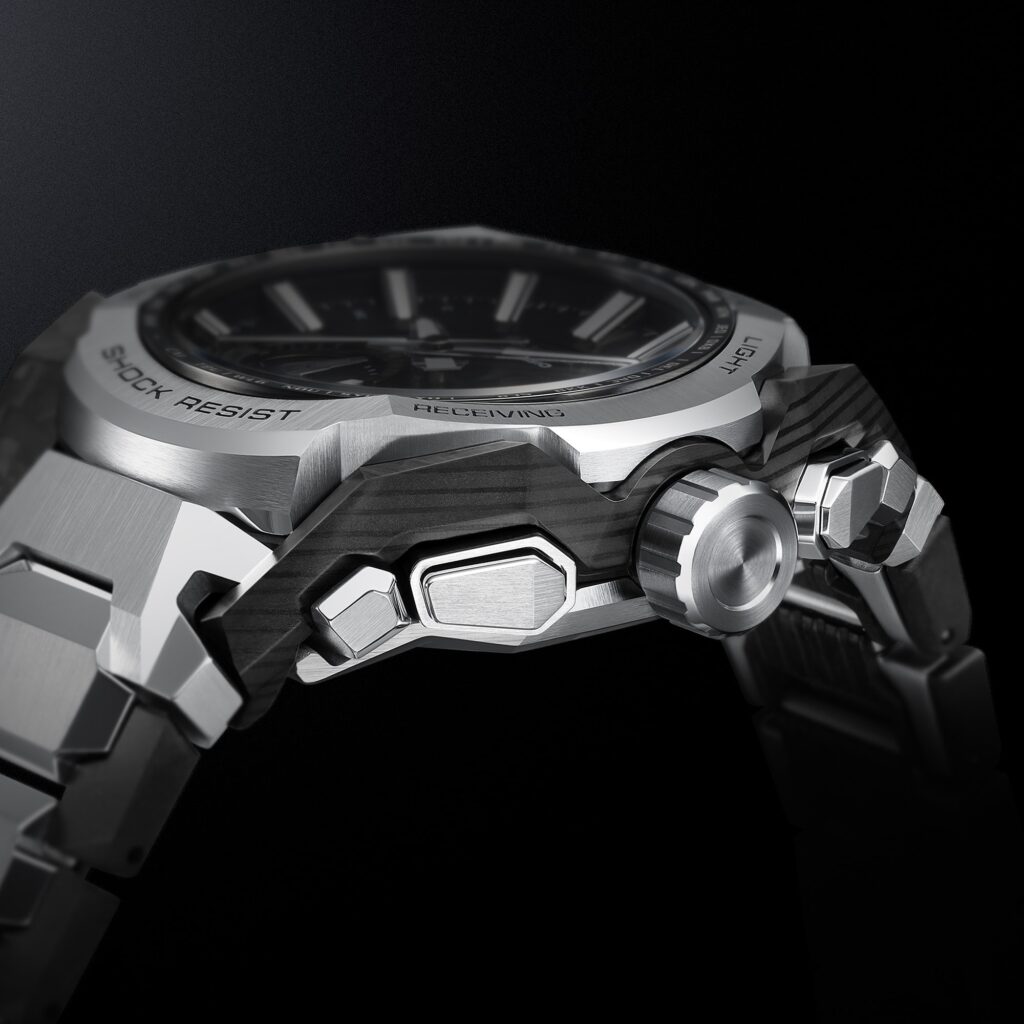
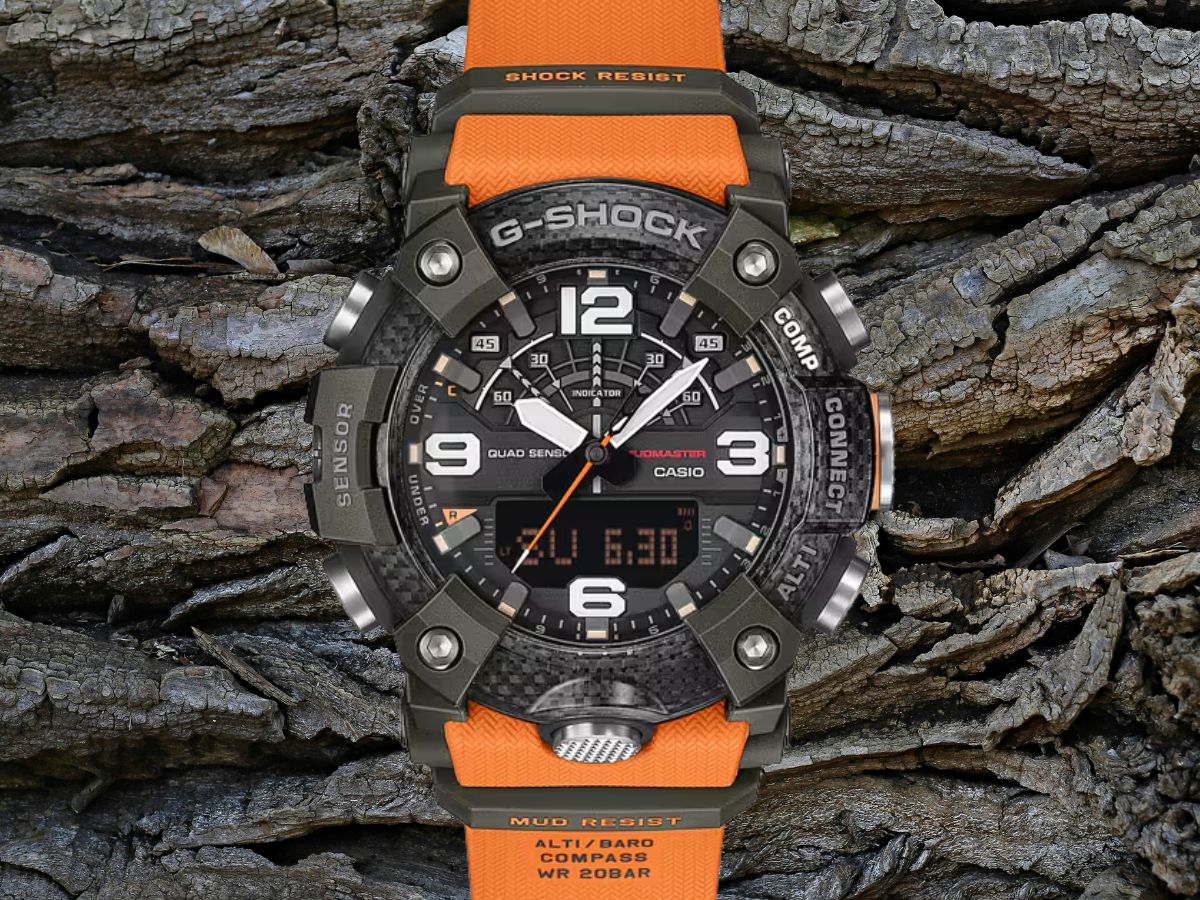
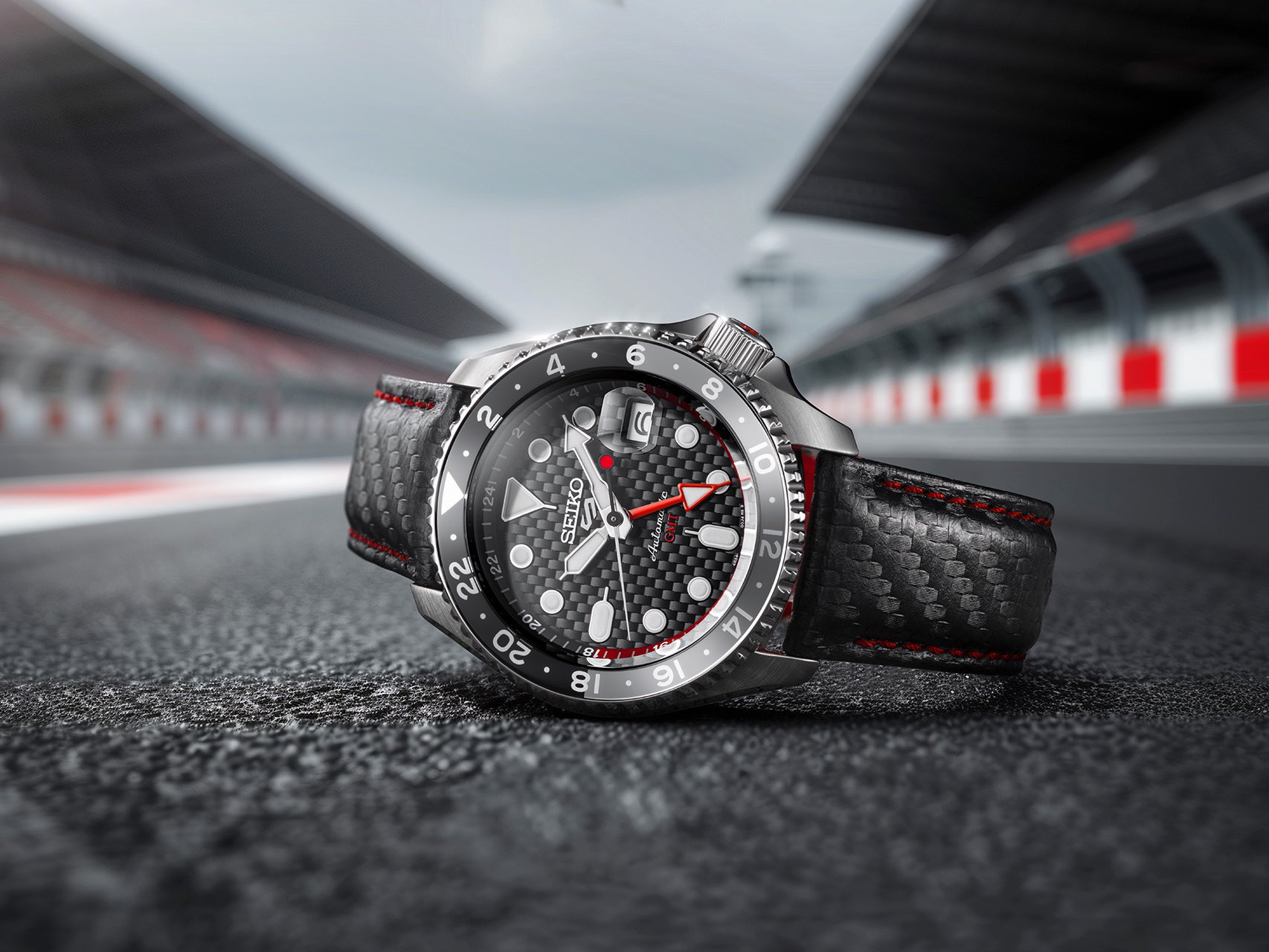
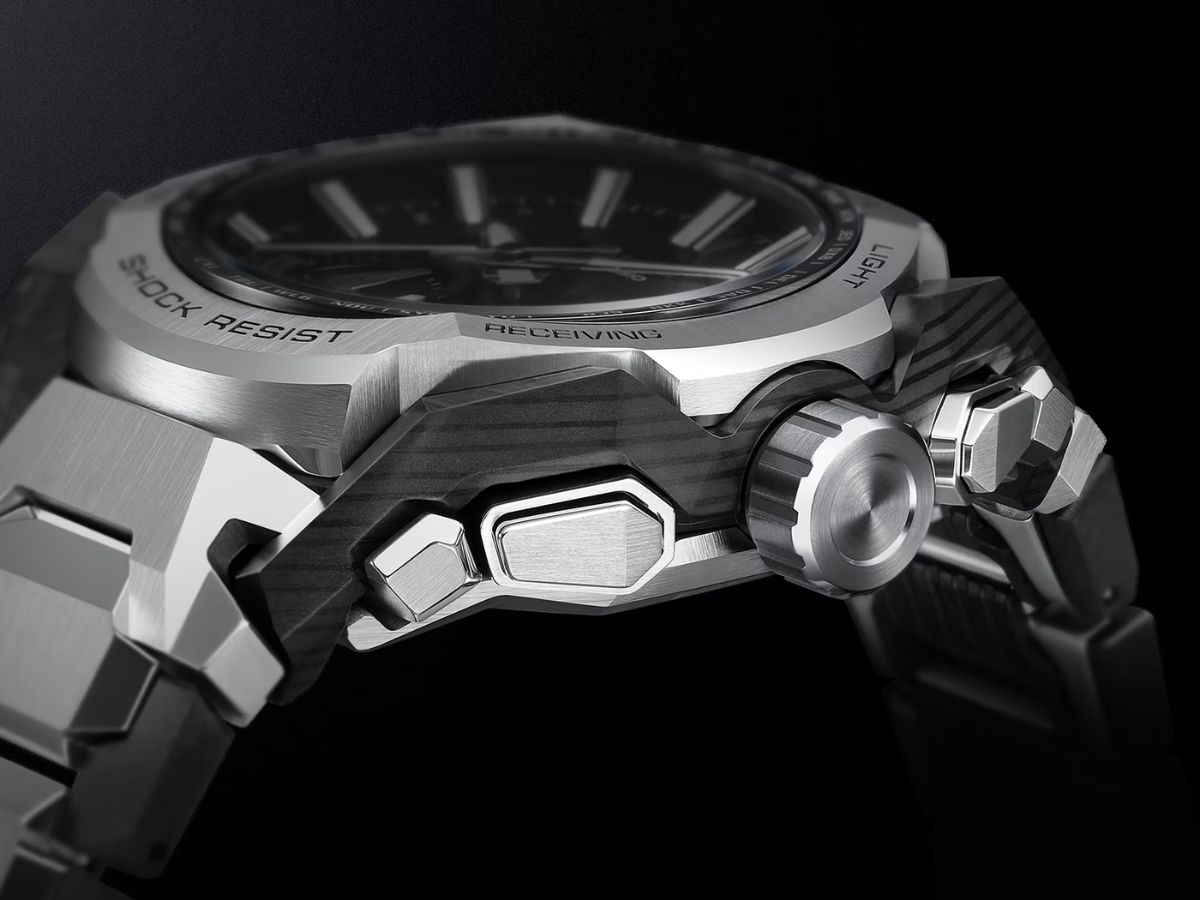
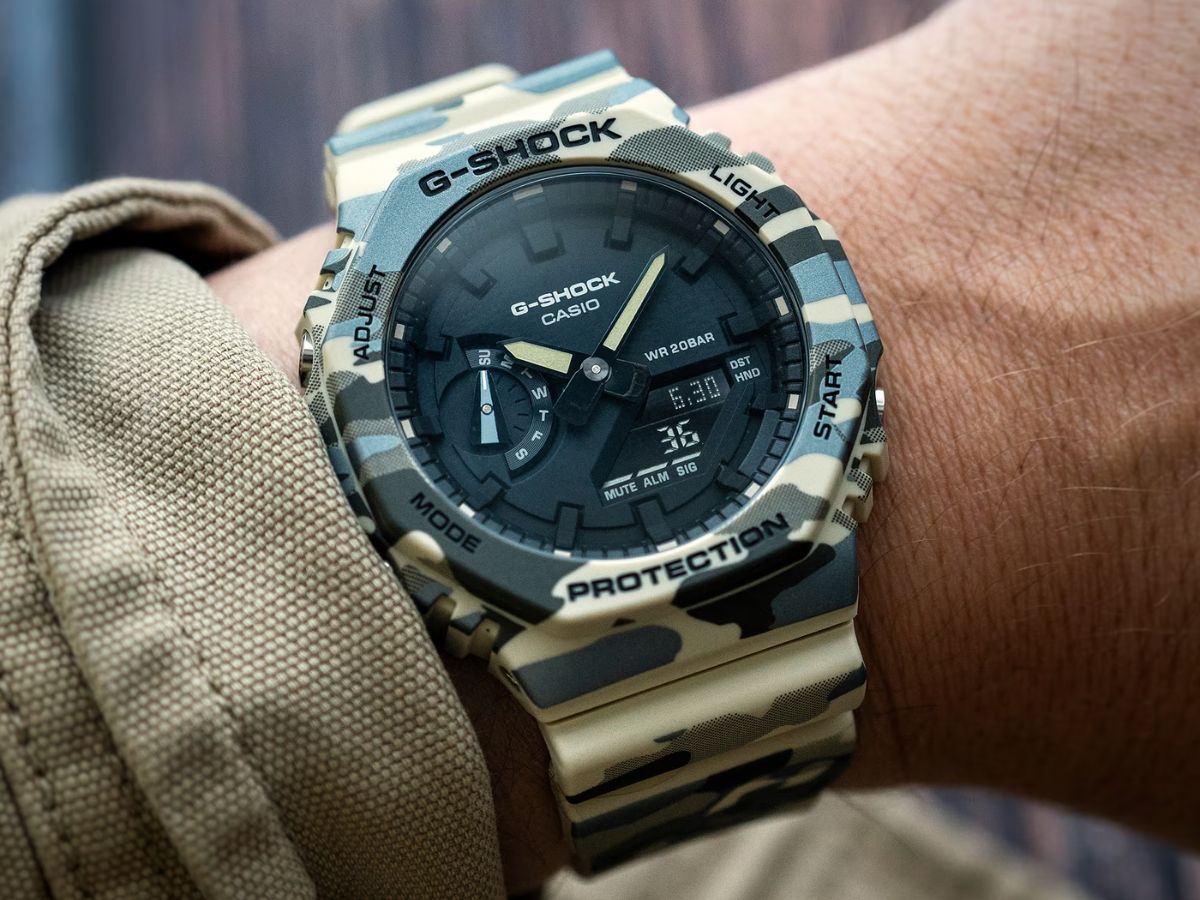
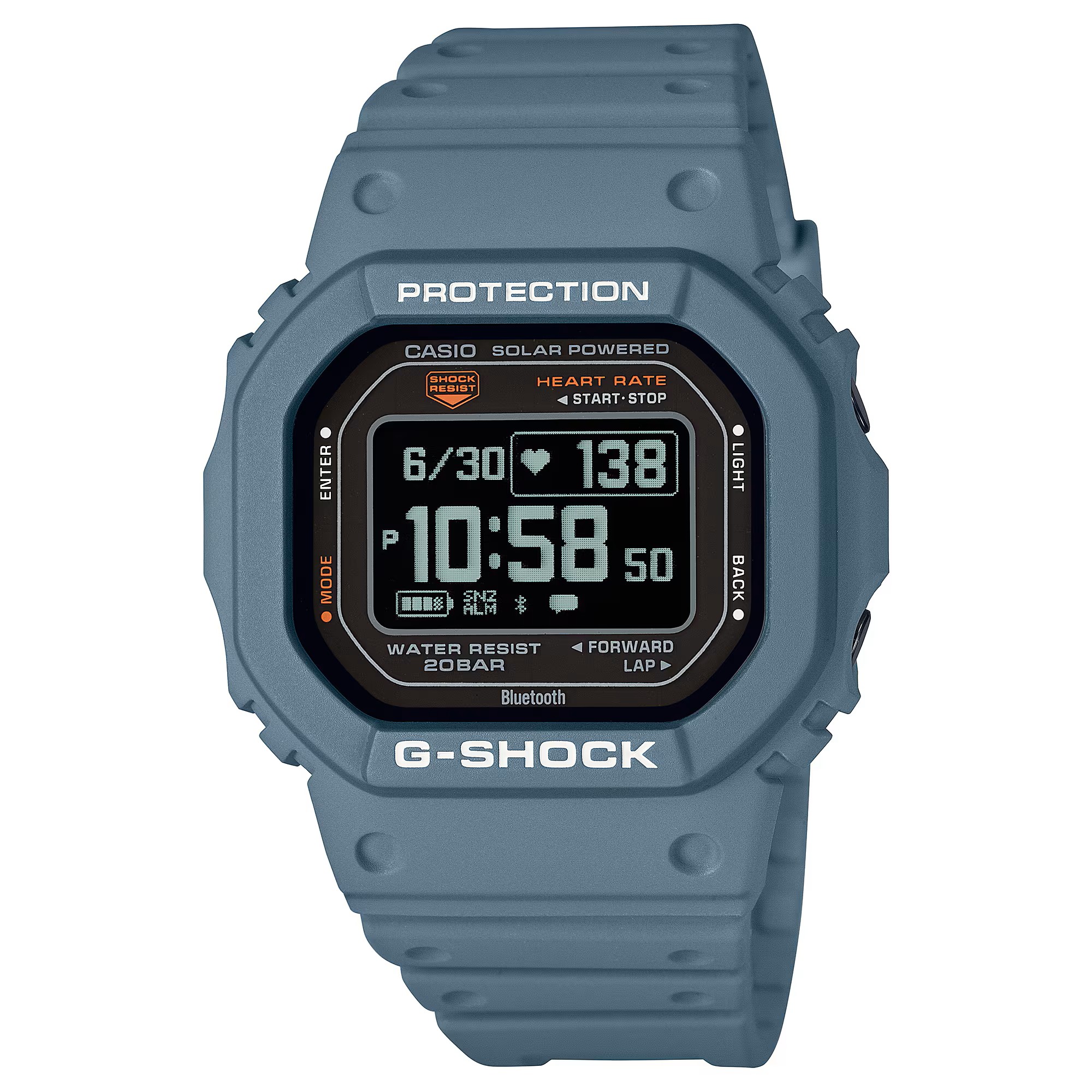
Casio has launched the G-Shock MTGB4000D-1A in the US under its premium MT-G lineup. The model debuted earlier this year in Japan and is now available via Casio’s website and select retailers for $1,600.

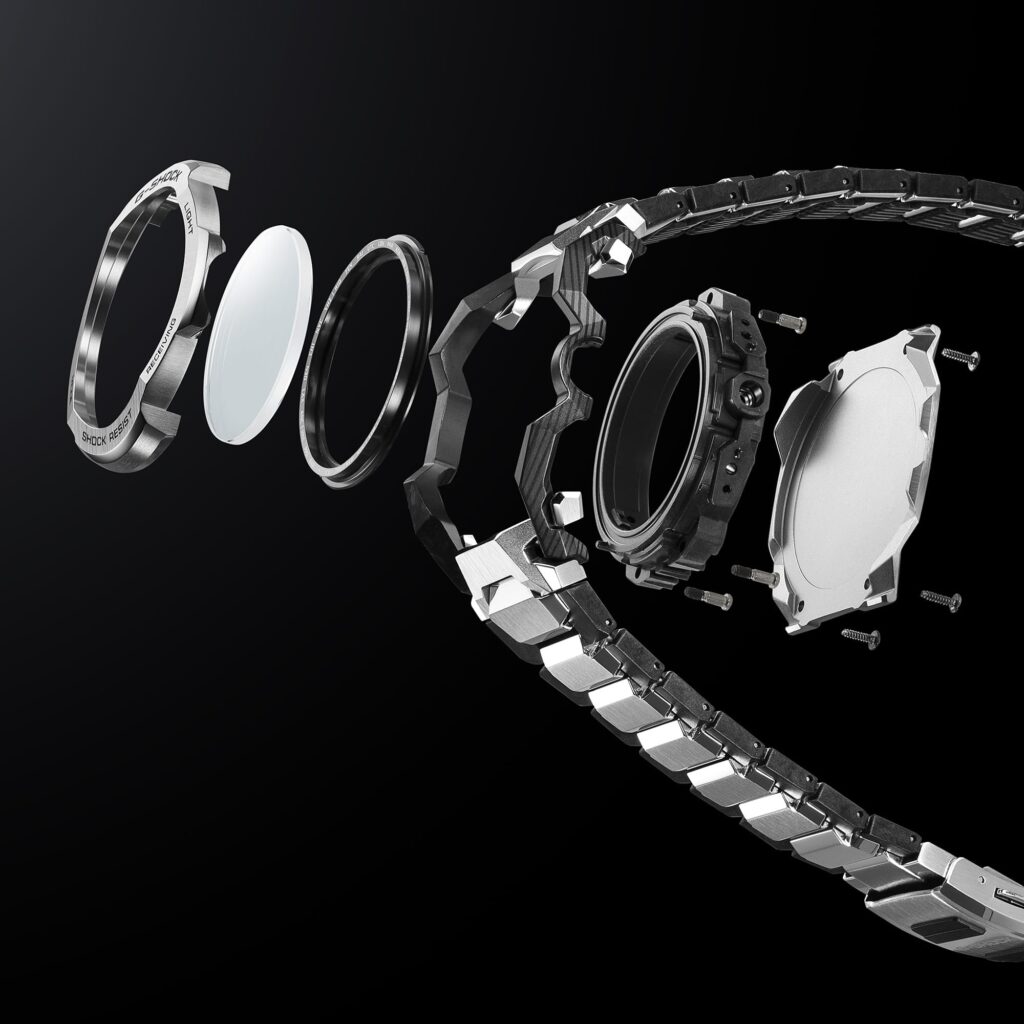
The MTGB4000D-1A features an updated Dual Core Guard structure that uses a mix of carbon fiber and stainless steel for enhanced strength and reduced weight. Casio developed the design using artificial intelligence to analyze shock-resistant structures.
The watch’s frame is made from laminated carbon and glass fiber sheets, creating a layered pattern that is visible from the side. The stainless steel bezel uses a dual-layer design with separate hairline and mirror finishes, giving the watch a polished and textured appearance. The band uses a layered composite structure of stainless steel and carbon fiber-reinforced resin, providing a sturdy yet lightweight fit.
The dial uses a high-contrast layout with raised hour markers and bold hands for better readability. Multiple sub-dials add depth and support dual-time functions. Casio protects the dial with a sapphire crystal that includes an anti-reflective coating. The case measures 56.6 x 45.3 x 14.4 mm, and the watch weighs 178 grams.


The MTGB4000D-1A supports Triple G Resist protection against shock, vibration, and centrifugal force. The watch also offers 200-meter water resistance. Casio equips it with Tough Solar charging, Multi Band 6 radio-controlled timekeeping, and Bluetooth connectivity for pairing with the Casio Watches app to enable automatic time adjustment, world time settings, and status checks.
Additionally, the watch also includes a 1-second stopwatch, countdown timer, daily alarm, LED light, power-saving mode, and a full auto-calendar. The rechargeable battery delivers up to five months of use under normal conditions and up to 18 months with power saving enabled.
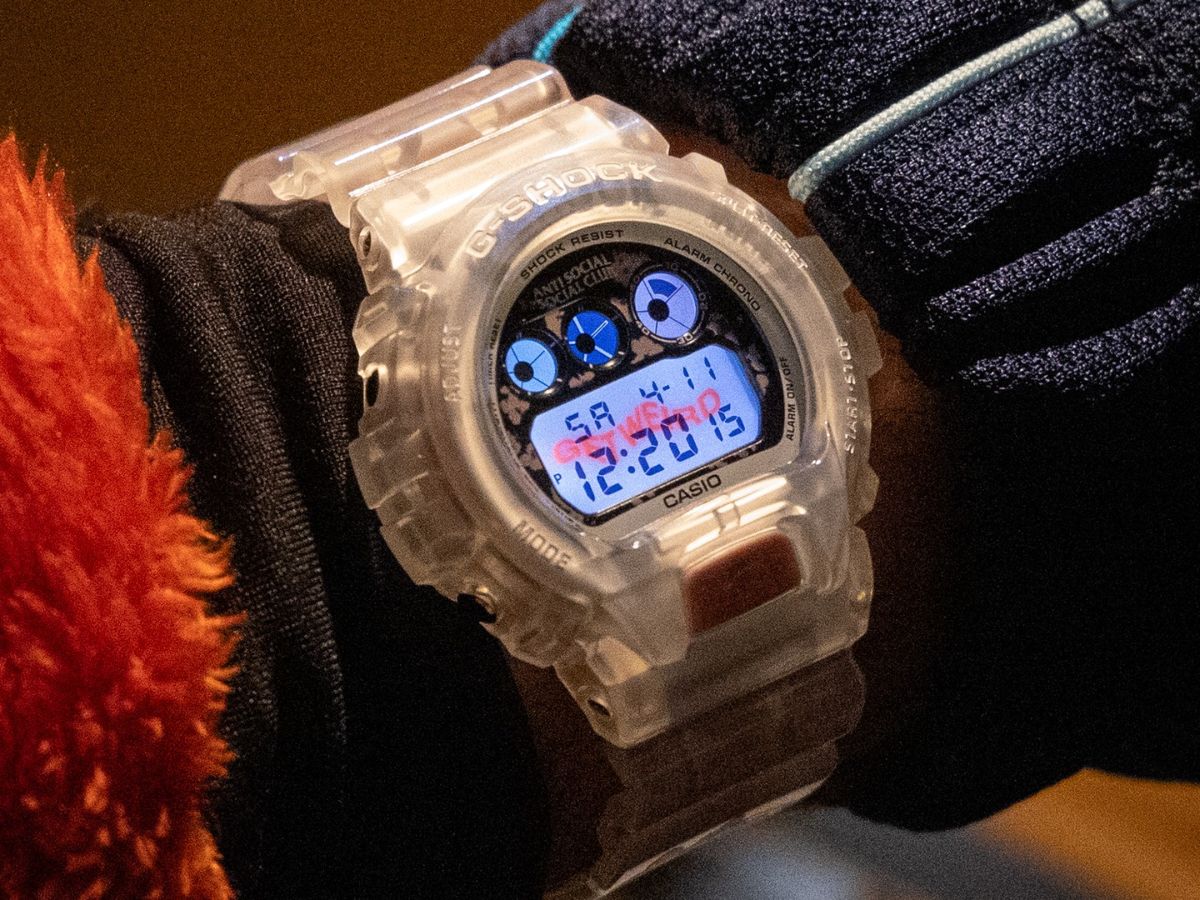
In related news, Casio has recently launched the W-800HD-1AV digital watch with a classic retro design in the US, alongside a new G-Shock collaboration model with ASSC featuring a transparent floral design.
For more daily updates, please visit our News Section.
Stay ahead in tech! Join our Telegram community and sign up for our daily newsletter of top stories! 
(Casio)
The post Casio launches premium G-Shock MTGB4000D-1A in the US with carbon-steel construction appeared first on Gizmochina.
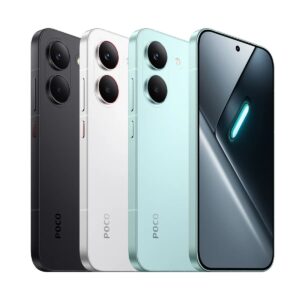
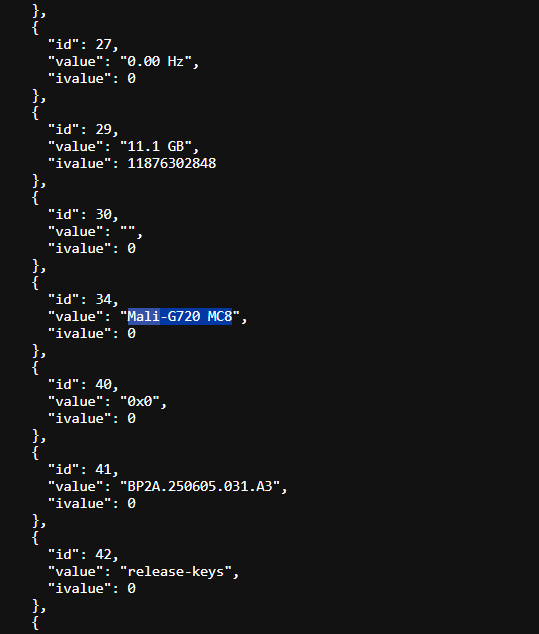
It’s no secret that Poco is preparing its next refresh with the Poco X8 series. The Poco X8 and Poco X8 Pro have surfaced in multiple leaks in recent weeks, and now a tipster claims to have shared the full specifications of both devices.
Starting with the Poco X8 Pro Max, the phone is tipped to feature a 6.83-inch 1.5K TCL M10 OLED display with a 120Hz refresh rate. The screen will have 2000 nits brightness, and it may use 3840Hz PWM dimming.
Under the hood, it’s said to run on the Dimensity 9500s processor paired with an Immortalis-G925 MC12 GPU. The device is also expected to use LPDDR5x Ultra RAM and UFS 4.1 storage.

On the camera side, the Pro Max may include a 50MP Light Hunter 600 main sensor with optical image stabilization, alongside an 8MP ultra-wide camera. A 20MP OV20B camera is expected on the front. The phone could pack an 8,500mAh battery with 100W wired charging and 27W reverse charging.
Other reported features include dual stereo speakers, LHDC 5.0 audio support, a 3D ultrasonic in-display fingerprint sensor, and IP68/IP69/IP69K ratings. Connectivity options may include Wi-Fi 7 and Bluetooth 5.4. The device is tipped to measure 8.15mm thick and weigh 219 grams.
The standard Poco X8 Pro, meanwhile, will be more compact with a 6.59-inch 1.5K TCL M10 OLED panel, also at 120Hz and 2000 nits HBM. It’s expected to run on the Dimensity 8500 Ultra with a Mali-G720 MC8 GPU. Like the Pro Max, it could offer LPDDR5x Ultra RAM and UFS 4.1 storage.
The camera setup may include a 50MP Sony IMX882 sensor with OIS and an 8MP ultra-wide lens, plus the same 20-megapixel selfie camera. Keeping it running could be 6,500mAh with 100W wired charging and 27W reverse charging.

The Poco X8 Pro is also tipped to carry IP68/IP69/IP69K ratings, a metal frame, NFC, and an IR blaster. It may feature an optical in-display fingerprint scanner instead of the ultrasonic unit on the Pro Max. Connectivity could top out at Wi-Fi 6.
Both devices are expected to ship with Android 16 and HyperOS 3 out of the box.
For more daily updates, please visit our News Section.
Tech enthusiast? Get the latest news first! Follow our Telegram channel and subscribe to our free newsletter for your daily tech fix! 
(Source)
The post Poco X8 Pro and X8 Pro Max full specs out, thanks to this new leak appeared first on Gizmochina.
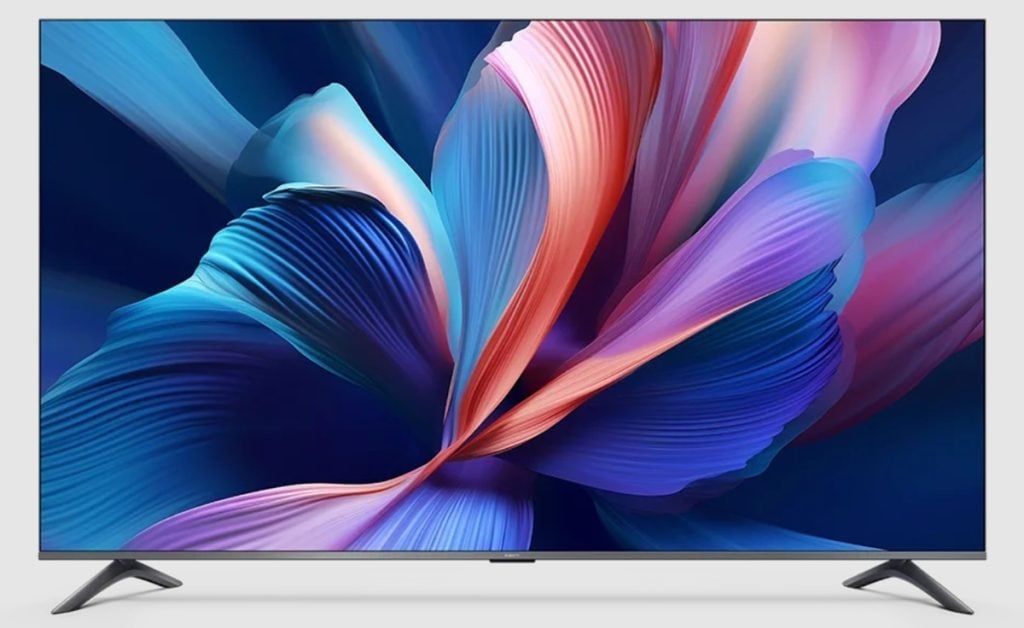
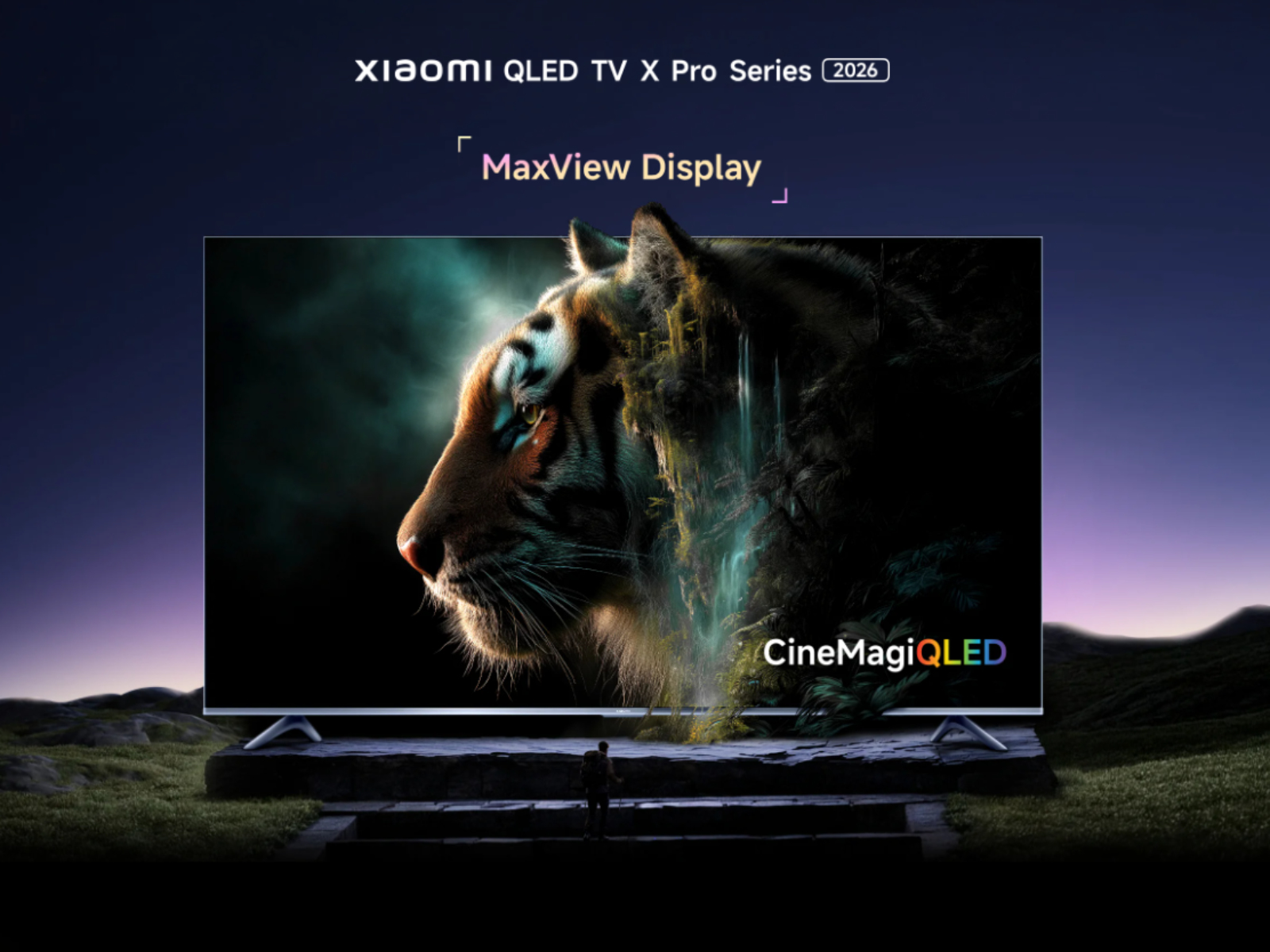
Xiaomi has just unveiled its latest premium large-screen TV for India: the QLED TV X Pro 75 (2026). This is a tall new smart TV that aims to deliver cinema-style visuals, immersive audio, and versatile smart features at a compelling price. This model expands the X Pro lineup with a feature-rich flagship-sized screen that goes on sale later this month.
As the name suggests, the Chinese tech giant’s new X Pro 75 sports a tall 75-inch QLED panel. This screen offers 4K UHD resolution along with a DLG 120Hz refresh rate, which comes in handy for gaming and smoother motion. Xiaomi’s latest smart TV supports HDR10+ and Dolby Vision, along with the Filmmaker Mode to preserve the original frame rates, aspect ratios, and color accuracy.

Under the hood, Xiaomi powers the QLED TV X Pro 75 with a quad core Cortex A55 chip, which is coupled with 2GB of RAM and 32GB of internal storage. Notably, this model runson the Google TV platform that also brings support for streaming apps like Netflix, Prime Video, YouTube and more. Chromecast and Apple AirPlay 2 support screen casting as well. Other notable features include an Auto Low Latency Mode (ALLM), MEMC motion smoothing, a 120Hz Game Booster, three HDMI (including eARC), two USB ports, Ethernet, optical audio, a 3.5 mm jack, dual-band Wi-Fi and Bluetooth.
For audio, there is a 34W speaker system that supports Dolby Atmos, DTS:X, and DTS Virtual:X. The Xiaomi QLED TV X Pro 75 (2026) is priced at Rs 69,999 in India. Early buyers who pre-book the TV with a Rs 999 deposit will have that amount credited back as Amazon Pay balance, and there’s a Rs 5,000 bank discount available. Buyers who pre-book can also receive a four-year comprehensive warranty at no extra cost. The TV will go on sale starting February 27 across mi.com, Amazon India, and select offline stores.
For more daily updates, please visit our News Section.
Tech enthusiast? Get the latest news first! Follow our Telegram channel and subscribe to our free newsletter for your daily tech fix! 
The post Xiaomi Launches QLED TV X Pro 75 (2026) With 4K 120Hz Screen & Dolby Vision in India appeared first on Gizmochina.

A research team from Vienna University of Technology (TU Wien), working with Austrian-German startup Cerabyte, has created the world’s smallest QR code. The tiny code measures only 1.98 square micrometers, making it smaller than most bacteria. The achievement has been officially recognized by Guinness World Records. Researchers say the project is not just about setting a size record but also about showing new possibilities for future data storage technologies.
The QR code is so small that it cannot be seen with the naked eye or even with standard optical microscopes. Scientists can only view and read it using an advanced electron microscope. The code is made up of a 29 × 29 module structure, with each pixel measuring only 49 nanometers wide. This is around one-tenth the wavelength of visible light, showing how far data encoding has moved into the nanoscale range.
To create the QR code, researchers used focused ion beam technology to etch the design into a thin ceramic film. Ceramic was chosen because it is extremely stable, durable, and resistant to harsh environments. Unlike atomic-level structures that may shift over time, ceramic materials help keep information stable and readable for long periods. The research was led by Professor Paul Mayrhofer and included several contributors from TU Wien’s Institute of Materials Science and Technology.
This technology could change how data is stored and preserved in the future. Ceramic-based nano storage may allow important information to survive for hundreds or even thousands of years without power, cooling, or regular maintenance. It could be used for long-term archives, scientific data, cultural records, and government documents that need permanent preservation. Because it consumes almost no energy after writing, it may also help reduce data center power usage and lower environmental impact, making digital storage more sustainable over time.
Read More:
(via)
The post Scientists Create World’s Smallest QR Code, Smaller Than Bacteria appeared first on Gizmochina.
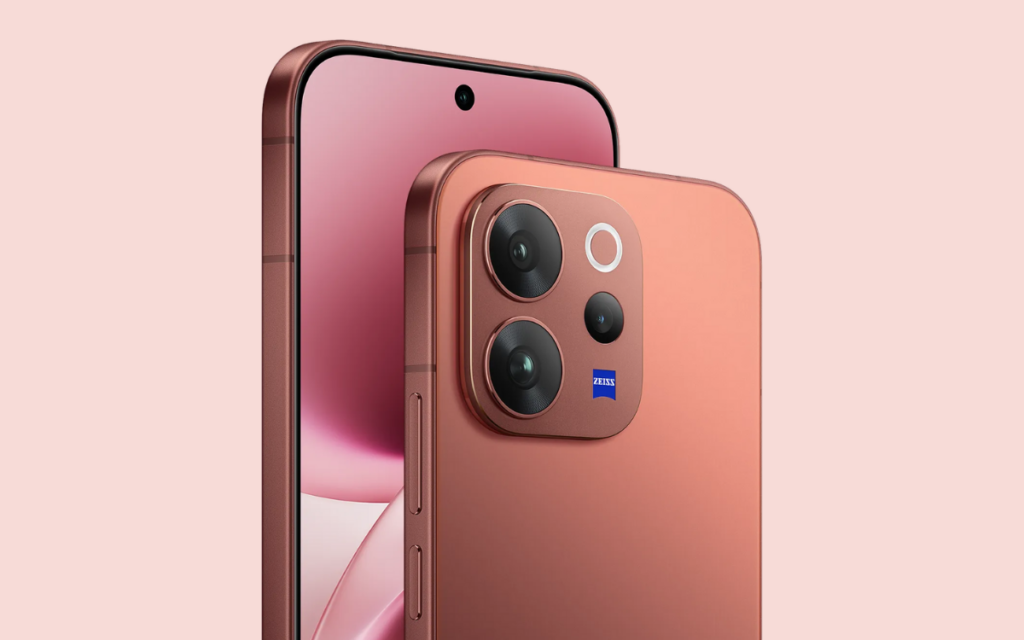
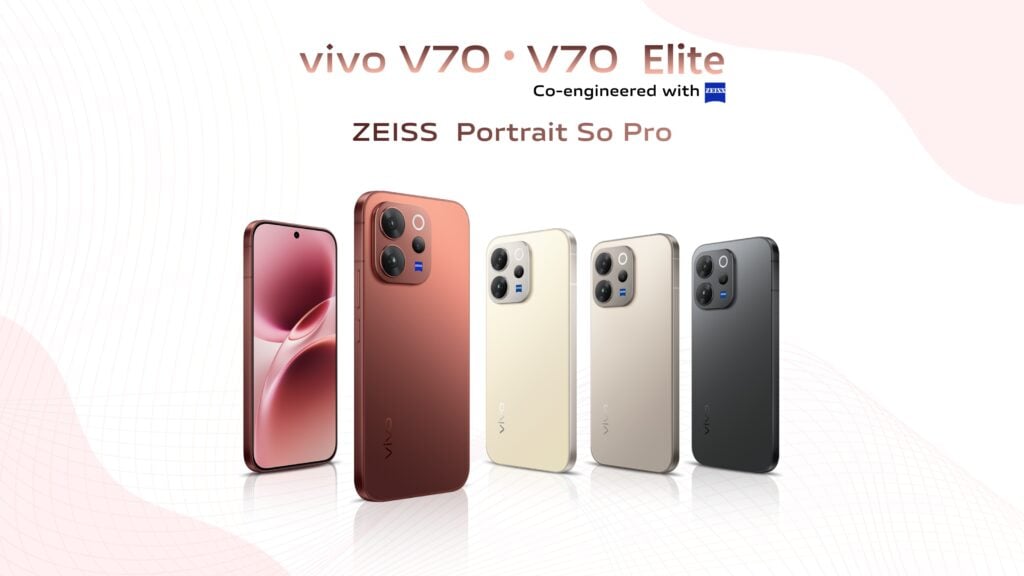
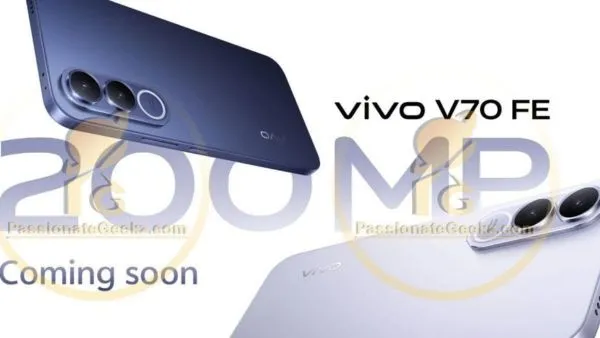
Vivo has launched the Vivo V70 and Vivo V70 Elite in India. Both phones focus on camera performance, AI features, and battery life, while the Elite model brings flagship-level hardware with the Snapdragon 8s Gen 3 processor.

The main highlight is the ZEISS co-engineered camera system. Both devices include a 50MP ZEISS Night Telephoto camera using the Sony IMX882 sensor with NICE 2.0 Lite processing. It supports up to 10x zoom and is paired with a large 1.3cm sensor for better low-light shots and more detail. The primary camera is a 50MP Sony LYT-700V sensor with optical image stabilization for sharper photos and smoother videos in different lighting conditions. On the front, both phones feature a 50MP ZEISS group selfie camera with autofocus and a 92-degree field of view.

The ZEISS Multi-Focal Portrait system allows users to shoot portraits at different focal lengths. These include 23mm landscape portraits with hexagonal bokeh, 35mm street portraits with triangular bokeh flares, 50mm classic portraits with swirling bokeh, 85mm figure portraits with soft cinematic blur, and 100mm close-up portraits with leaf-like bokeh effects.
Video recording supports 4K at 60fps on both the front and rear cameras with zoom clarity at 1x, 2x, and 3x levels. Vivo also added AI Audio Noise Eraser, which identifies voices, wind, music, and background noise to improve sound quality in recordings.
The phones include several AI photography tools designed for everyday use. India-exclusive AI Holi Portrait maintains natural skin tones in color-heavy scenes. AI Magic Weather can change skies with effects like morning glow, clear sky, evening glow, and twilight. AI Floral Blessing adds animated flower petals to portraits. AI Magic Landscape improves travel photos using scene detection and color optimization. AI Creativity Style adds artistic looks such as cyber, oil blend, animation, and fireworks without using third-party apps.
Performance is different between the two models. The Vivo V70 Elite runs on the Snapdragon 8s Gen 3 built on a 4nm process with a peak clock speed of 3.0GHz and an AnTuTu score of 1.89 million. It supports up to 90fps gaming. The standard V70 uses the Snapdragon 7 Gen 4 with 27 percent faster CPU performance, 30 percent better GPU performance, and 26 percent higher gaming efficiency compared to the previous generation. Both phones use LPDDR5X RAM and UFS 4.1 storage. A 4200mm² vapor chamber cooling system helps maintain stable performance. The Elite version also includes an X-axis linear motor and 4D gaming vibration for better haptic feedback.
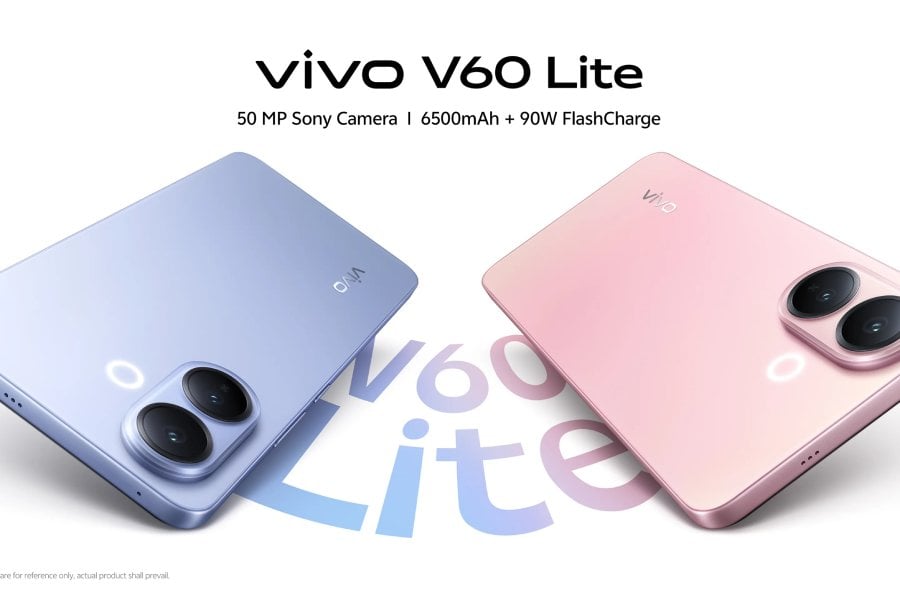
Both devices have a 6500mAh BlueVolt battery with 90W FlashCharge support. They also come with IP68 and IP69 dust and water resistance, allowing submersion up to 1.5 meters for 120 minutes. A 3D ultrasonic fingerprint scanner provides faster unlocking even with wet fingers and adds anti-spoofing protection.
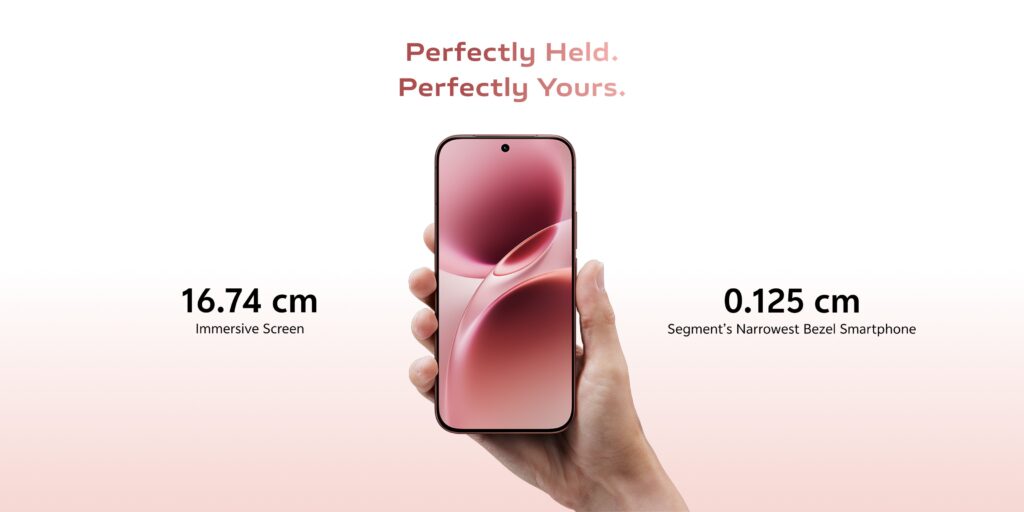
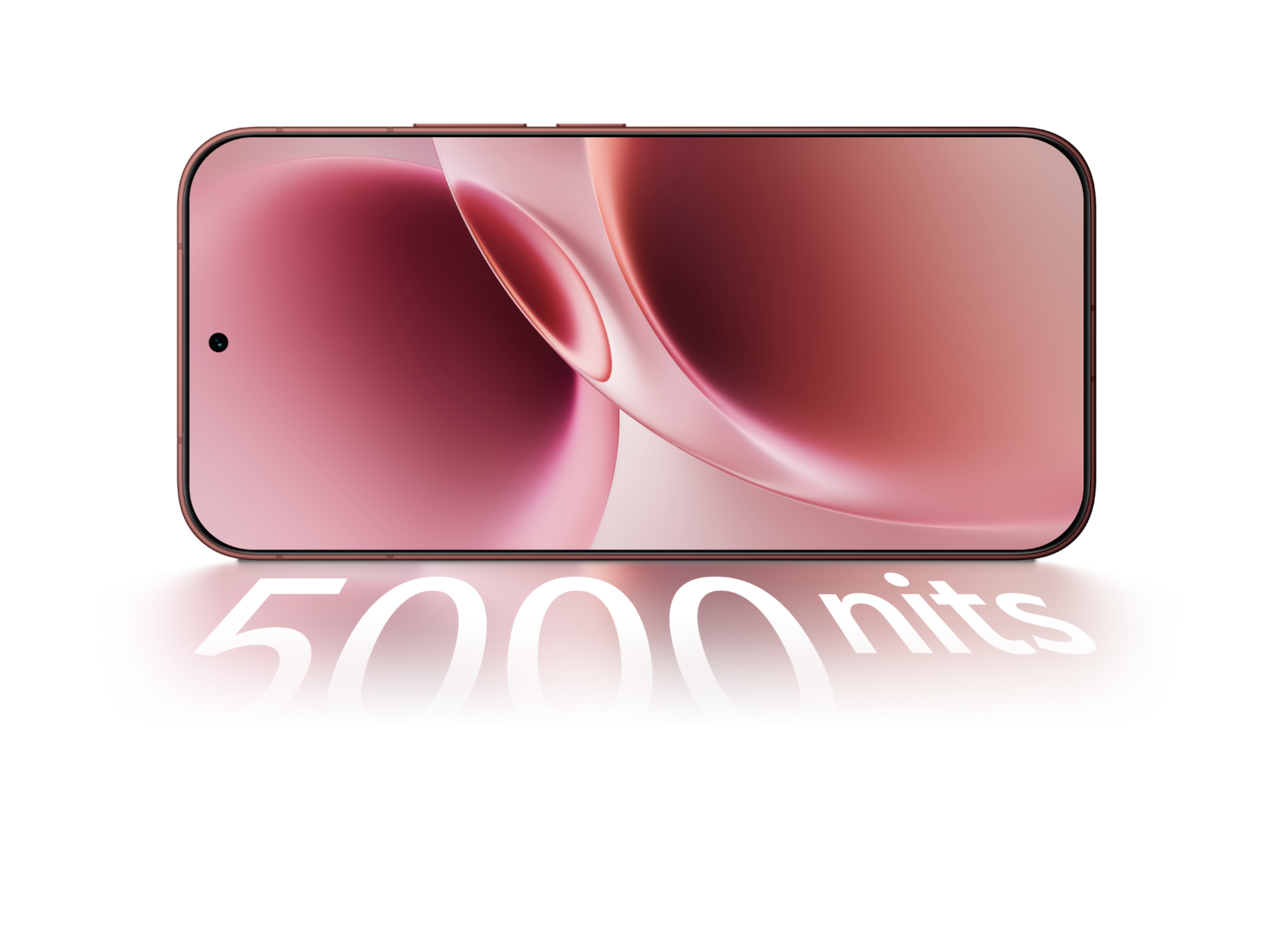
The display on both phones is a 6.59 inch 1.5K OLED panel with a narrow 0.125cm bezel, peak brightness of 5000 nits, SGS low blue light certification, and 100 percent P3 color gamut. The Elite model adds 3D Spatial Effect Wallpaper that reacts to movement. Both devices include Flip Cards, which create visual effects using gyroscope motion.
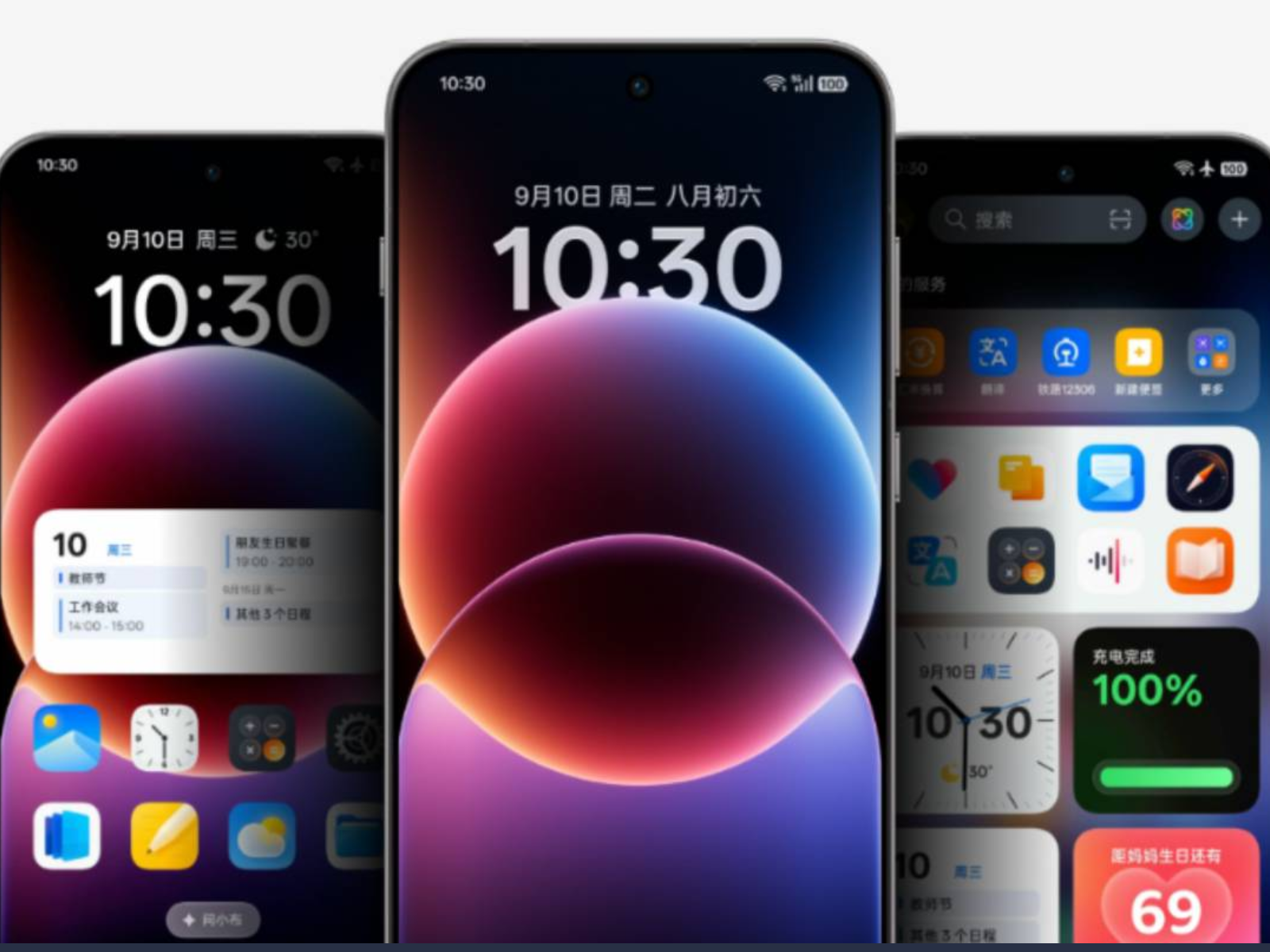
The phones run OriginOS 6 with features like AI Creation, AI Captions for meeting transcription, Origin Island drag and drop multitasking, One-Tap Transfer for cross-device sharing, and Vivo Office Kit for workflow integration. Private Space provides secure storage. Gemini Assistant with Google is also included. Vivo promises four generations of Android updates and six years of security updates.
The Vivo V70 is priced at ₹45,999 for 8GB plus 256GB and ₹49,999 for 12GB plus 256GB. It comes in Passion Red and Lemon Yellow. The Vivo V70 Elite starts at ₹51,999 for 8GB plus 256GB, ₹56,999 for 12GB plus 256GB, and ₹61,999 for 12GB plus 512GB. It is available in Passion Red, Sand Beige, and Authentic Black.
Sales start February 26 through the Vivo website, Flipkart, Amazon, and retail stores. Pre-bookings are already open with bank discounts, exchange offers, EMI options, buyback schemes, and bundled accessories.
The post Vivo V70 and V70 Elite Launched with ZEISS Cameras, 6500mAh Battery, Snapdragon 8s Gen 3 appeared first on Gizmochina.

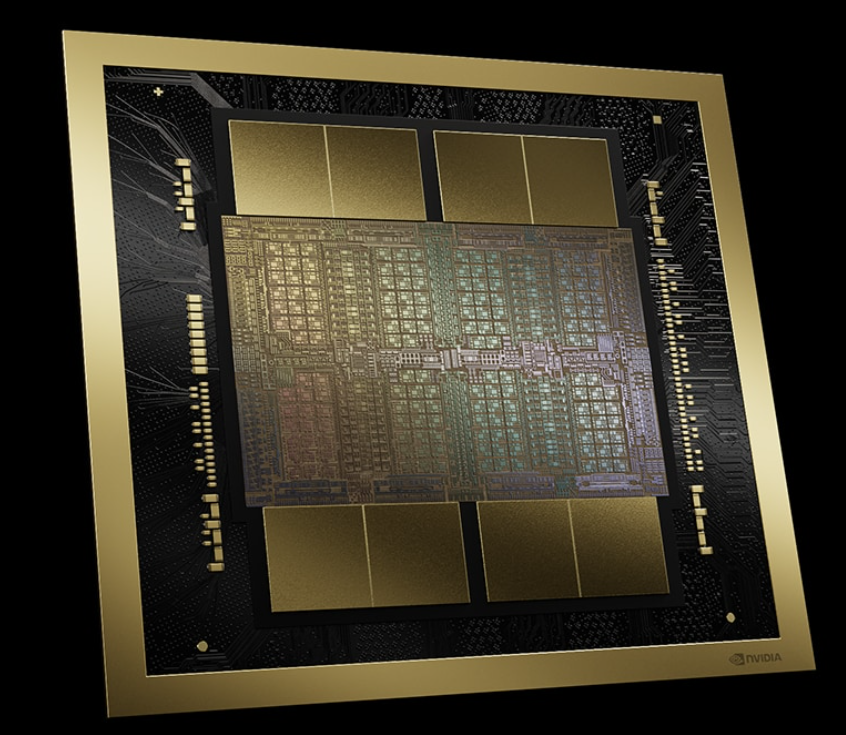
Nvidia is preparing to unveil a major new chip at GTC 2026, according to CEO Jensen Huang. In an interview with the Korea Economic Daily, Huang teased that the company will introduce hardware designed to push current technology to its limits. While he did not share technical details or the official name, he suggested the chip could mark a big step forward in performance and design.
The reveal is scheduled for March 16, 2026, during Huang’s annual GTC keynote in San Jose. Analysts expect Nvidia to focus heavily on its next-generation Vera Rubin architecture, which has been positioned as a key platform for future AI systems. Reports suggest the new chip may use advanced packaging methods aimed at solving memory bottlenecks, one of the biggest challenges in modern AI computing.
Nvidia is also reportedly working closely with SK Hynix on HBM4 memory technology. The goal is to directly stack high-bandwidth memory onto GPU logic dies, a move that could make the chip one of the most complex semiconductor designs ever produced if mass manufacturing succeeds.
Some rumors have mentioned an early preview of Nvidia’s future Feynman architecture, expected later in the decade. This remains unlikely, but speculation continues due to its ambitious roadmap, which includes advanced manufacturing processes and silicon photonics.
Huang also hinted that multiple new chips could be announced at GTC 2026, making the event one of Nvidia’s most closely watched launches in recent years.
Read More:
(via)
The post Nvidia’s “World-Shocking” Chip Is Coming: Here’s What We Know appeared first on Gizmochina.
Honor has begun deploying MagicOS 10, built on Android 16, to Magic 7 Pro devices globally. The 3.27GB update (version 10.0.0.121) arrives eight months after Google’s Android 16 release and requires 4-5GB free storage.

Performance Enhancements
The update introduces Turbo X performance engine with visible optimization indicators. System-level improvements include parallel operations during home screen navigation, refined app launch animations, enhanced camera performance, and more responsive keyboard input.
AI and Connectivity Features
Call translation functionality debuts through Honor AI settings. AI screenshot technology learns user behavior to automatically suggest relevant services. The update enables direct file sharing with iPhones via device-to-device contact, requiring Honor Connect app v1.1.18111 or later on iOS devices. Honor WorkStation software facilitates seamless transfers between Magic 7 Pro and Mac or Windows computers.
Interface Redesign
The Control Center receives a dark background with colorful icons and customizable layouts. Lock screen customization expands with additional clock styles accessible through two-finger pinch gestures. Transparency mode enhances visual effects for widgets and folders.
Magic Capsule Integration
Charging status and screen recording now integrate into Magic Capsule for real-time monitoring and quick access. Long take animations enable smooth transitions in Clock, Gallery, and Notes applications.
Additional Improvements
Bluetooth LHDC 5.0 high-definition audio codec support arrives alongside Android’s native extra dim accessibility feature. Motion Sickness Relief includes automatic activation during driving with customizable dot colors. Camera interface refreshments allow two-row imaging menu views, status bar customization, and improved video browsing in Gallery.
Screenshot functionality expands to capture floating windows with single-step area selection. Users can replace original images with edited screenshots directly.
Magic 7 Pro owners can check for updates through Settings > System & updates > Software update. The comprehensive update marks a significant functional expansion beyond standard Android 16 features.
Tech enthusiast? Get the latest news first! Follow our Telegram channel and subscribe to our free newsletter for your daily tech fix!
For more daily updates, please visit our News Section.
(via)
The post Honor Magic 7 Pro Gets MagicOS 10 Update Based on Android 16 appeared first on Gizmochina.
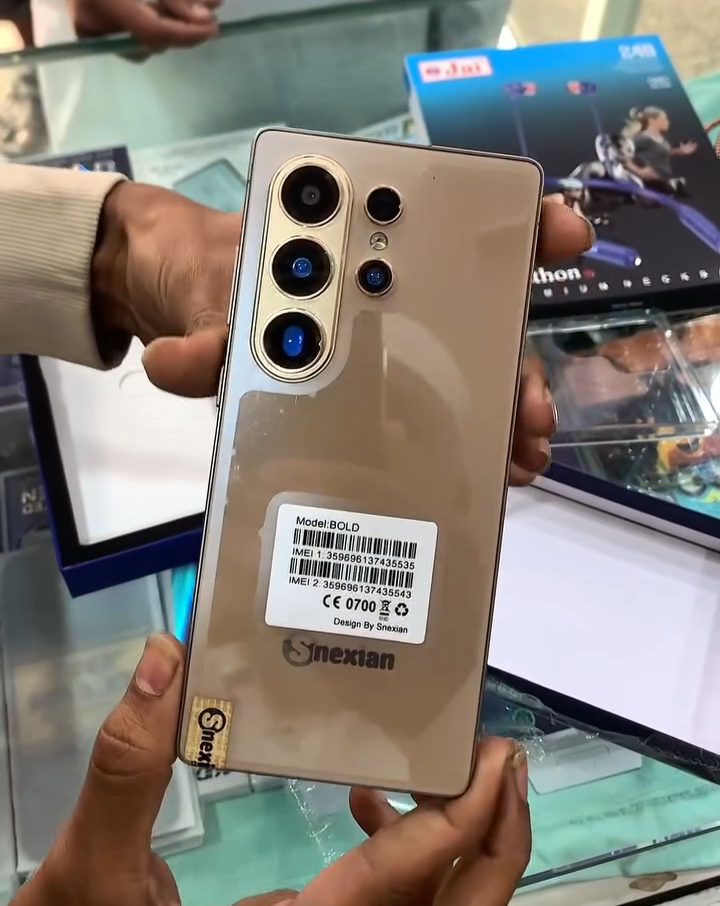
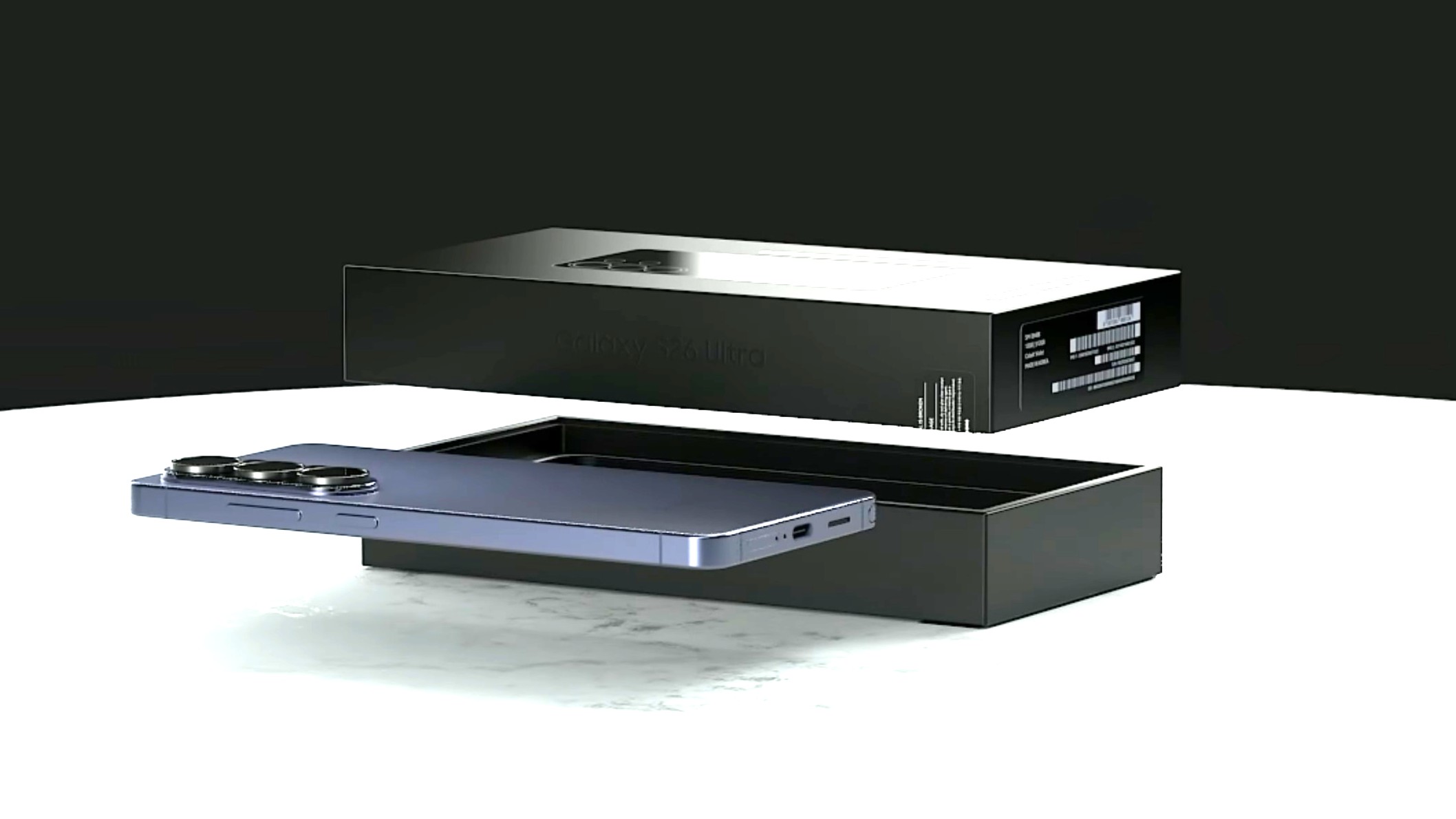
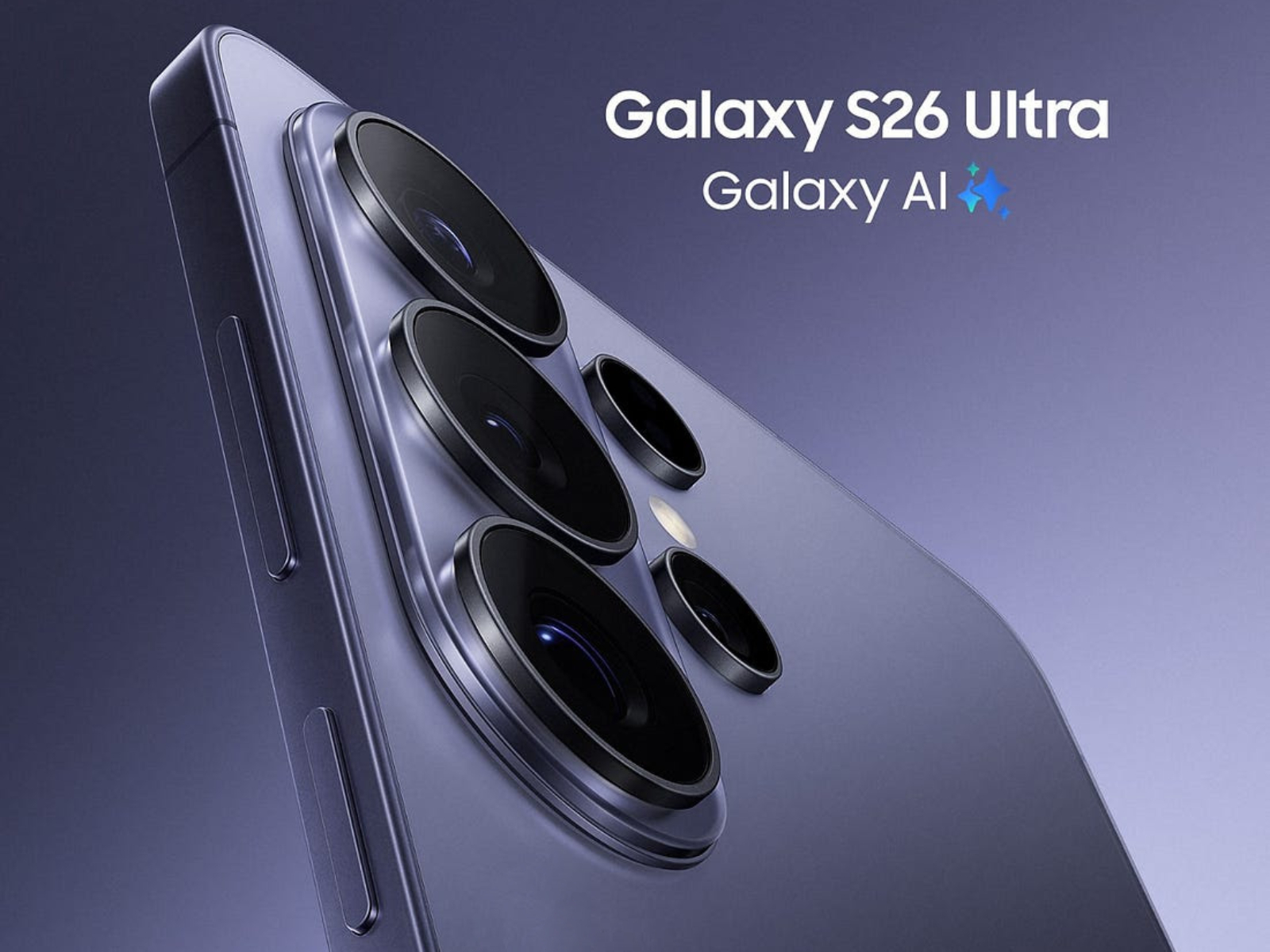
The hype around Samsung’s next flagship lineup is already in full swing. The Galaxy S26 series is set to go official next week, but in classic internet fashion, a “Galaxy S26 Ultra” has surfaced early, just not the one you’re expecting. Instead, it’s a budget clone. And it’s selling for around $72.
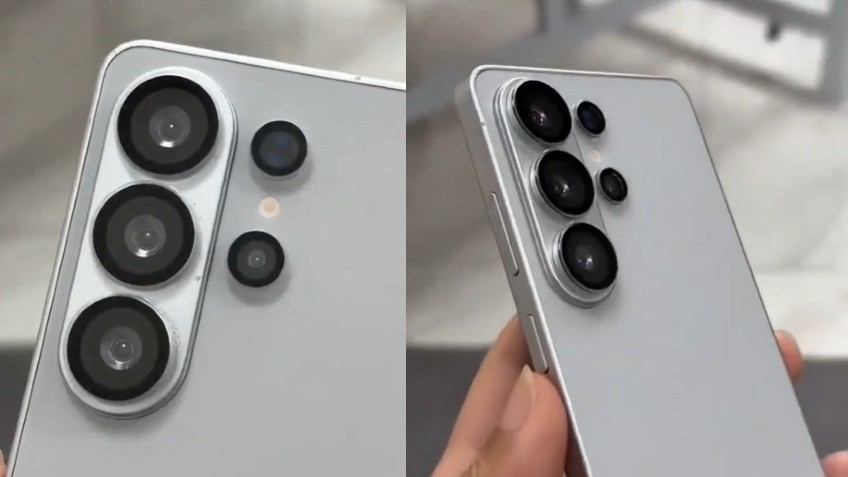
A video making the rounds on Instagram shows what appears to be a knockoff version of the upcoming Galaxy S26 Ultra. At first glance, it’s surprisingly convincing. The rear camera layout closely mirrors leaked renders, the wallpaper matches the rumored official imagery, and the overall design looks premium enough to pass in a quick scroll.

Under the hood, this clone reportedly packs just 3GB of RAM and 16GB of storage — specs that feel outdated even for entry-level phones, let alone something pretending to be an Ultra flagship. While the seller advertises 5G support, the overall experience is worlds apart from what Samsung’s real flagship is expected to offer.
And of course, you’re not getting Samsung’s software ecosystem either. No Galaxy AI features, no long-term update commitment, no refined camera processing, just a shell designed to capitalize on hype.
This kind of thing isn’t new. Cheap replicas often pop up weeks, sometimes even months, before major launches. They ride the wave of leaks and rumors, targeting buyers who either don’t know better or are tempted by the price. The designs may look similar from a distance, but the similarities usually stop at cosmetics.
Meanwhile, the real Galaxy S26 lineup is set to debut at Galaxy Unpacked on February 25 in San Francisco. The event kicks off at 10 am PT, and as always, Samsung is likely to open up early registration perks and pre-order bonuses. Until then, this $72 “Ultra” serves as a reminder of how fast the knockoff market moves.
Don’t miss a thing! Join our Telegram community for instant updates and grab our free daily newsletter for the best tech stories!
For more daily updates, please visit our News Section.
(Source)
The post A Galaxy S26 Ultra clone is already selling for only $72 appeared first on Gizmochina.
Xiaomi has one of the best software update policies among Android brands, but even that has to come to an end sometime. Thus, it becomes important to keep the update policy of your device in check to ensure it continues to receive the latest updates.
To make things easier, we dug through Xiaomi’s official website to prepare a list for you that shows when your Xiaomi, Redmi, or POCO device will stop receiving software updates.
The End-of-Life (EOL) date is when your device stops receiving all software updates, including major HyperOS updates and security releases.
| Device | EOL Date (YYYY-MM-DD) |
|---|---|
| Xiaomi 15, 15 Ultra | 2031-03-01 |
| Xiaomi 15T, 15T Pro | 2031-09-24 |
| Xiaomi 14 | 2029-02-25 |
| Xiaomi 14 Ultra | 2029-03-15 |
| Xiaomi 14T, 14T Pro | 2029-09-26 |
| Xiaomi 13, 13 Pro | 2028-03-08 |
| Xiaomi 13 Ultra | 2028-06-12 |
| Xiaomi 13 Lite | 2027-03-02 |
| Xiaomi 13T, 13T Pro | 2028-10-04 |
| Xiaomi 12, 12 Pro | 2026-03-17 |
| Xiaomi 12 Lite | 2026-07-01 |
| Xiaomi 12T, 12T Pro | 2026-10-13 |
| Xiaomi Pad 7, Pad 7 Pro | 2028-03-01 |
| Xiaomi Pad 6 | 2026-07-10 |
| Xiaomi MIX Flip | 2029-07-18 |
| Device | EOL Date (YYYY-MM-DD) |
|---|---|
| Redmi Note 15, Note 15 5G | 2032-01-15 |
| Redmi Note 15 Pro, Note 15 Pro 5G, Note 15 Pro+ 5G | 2032-01-15 |
| Redmi Note 14 | 2031-03-01 |
| Redmi Note 14 5G | 2029-01-09 |
| Redmi Note 14 Pro | 2029-01-15 |
| Redmi Note 14 Pro 5G | 2029-01-30 |
| Redmi Note 14 Pro+ 5G | 2029-01-01 |
| Redmi Note 13, Note 13 5G | 2028-01-15 |
| Redmi Note 13 Pro, Note 13 Pro 5G, Note 13 Pro+ 5G | 2028-01-15 |
| Redmi Note 12 | 2027-03-23 |
| Redmi Note 12 5G | 2026-03-23 |
| Redmi Note 12 Pro | 2026-04-20 |
| Redmi Note 12 Pro 5G, Note 12 Pro+ 5G | 2027-03-23 |
| Redmi Note 12S | 2027-05-10 |
| Redmi 15 | 2029-09-22 |
| Redmi 15 5G | 2029-08-01 |
| Redmi 15C | 2031-08-28 |
| Redmi 15C 5G | 2031-09-30 |
| Redmi 14C | 2028-09-26 |
| Redmi 13C | 2026-11-10 |
| Redmi 12 | 2027-06-16 |
| Redmi 12 5G | 2027-09-01 |
| Redmi 12C | 2026-03-10 |
| Redmi A5 | 2029-04-30 |
| Redmi A3 | 2027-02-21 |
| Redmi A2, A2+ | 2026-03-24 |
| Redmi Pad 2, Pad 2 4G | 2032-06-15 |
| Redmi Pad 2 Pro, Pad 2 Pro 5G | 2029-09-22 |
| Redmi Pad Pro 5G | 2027-06-11 |
| Redmi Pad SE 8.7, Pad SE 8.7 4G | 2026-08-15 |
| Device | EOL Date (YYYY-MM-DD) |
|---|---|
| POCO F8 Pro, F8 Ultra | 2031-11-26 |
| POCO F7 | 2031-06-24 |
| POCO F7 Pro, F7 Ultra | 2031-03-27 |
| POCO F6 | 2028-05-23 |
| POCO F6 Pro | 2028-05-22 |
| POCO F5, F5 Pro | 2026-05-09 |
| POCO X7 | 2029-01-30 |
| POCO X7 Pro | 2029-01-07 |
| POCO X6 5G, X6 Pro | 2028-01-11 |
| POCO X5 5G | 2027-02-06 |
| POCO X5 Pro 5G | 2026-02-06 |
| POCO M8 5G, M8 Pro 5G | 2032-01-08 |
| POCO M7 | 2031-08-19 |
| POCO M7 Pro 5G | 2029-01-09 |
| POCO M6 | 2028-06-05 |
| POCO M6 Pro | 2028-01-11 |
| POCO C85 | 2031-08-28 |
| POCO C75 | 2028-09-26 |
| POCO C65 | 2026-11-06 |
| POCO Pad M1 | 2029-09-22 |
If your Xiaomi device is approaching its EOL date or has already reached it, you should really upgrade to a newer model. While an outdated device will still work just fine, it won’t be as secure as newer devices running the latest HyperOS software and security patch. Check out the list of Xiaomi devices that promise six years of software support to find a reliable upgrade that stays relevant for much longer.
Also read:
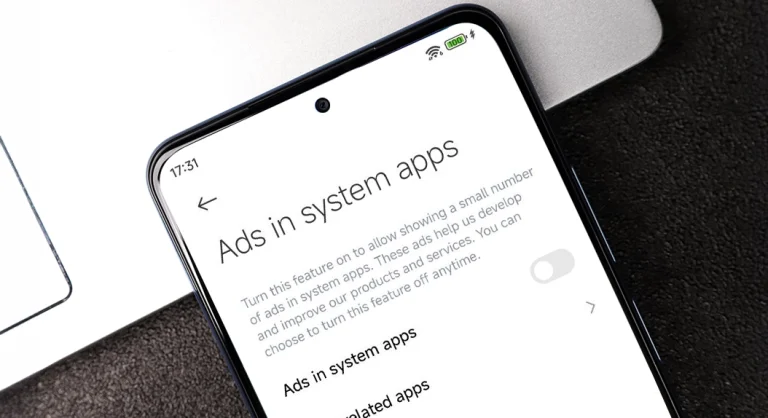
1. How to turn off ads in Xiaomi’s HyperOS system apps
2. Xiaomi devices eligible for Android 17 update
3. HyperOS 3.1: Here’s everything you need to know
To ensure you don’t miss out on the important updates from Xiaomi, remember to visit the Xiaomi section on this website regularly. Alternatively, you can join us on Telegram to get instant notifications about the latest HyperOS updates, along with the biggest tech headlines.
The post Here’s when your Xiaomi device will stop getting HyperOS updates appeared first on Gizmochina.
Apple appears to be preparing its most ambitious push into AI-powered wearables yet. According to a recent Bloomberg report, the company is fast-tracking development on three new wearable devices, all centered around a much smarter version of Siri. And interestingly, all three reportedly include cameras.
Apple seems to be exploring ways to bring contextual awareness directly to the accessories we wear every day. The idea? Let Siri not just hear you, but also “see” what’s happening around you.

The most intriguing product in the pipeline is a pair of AirPods with built-in cameras. These wouldn’t be for taking photos or videos. Instead, Apple is said to be experimenting with low-resolution sensor that would feed environmental data to Siri. Think real-time contextual assistance, or spatial awareness features powered by AI.
Apple is also known to be working on a smart glasses project aimed at competing with Meta’s growing wearable ecosystem. These glasses could include dual cameras: one optimized for media capture and another dedicated to computer vision tasks such as navigation or visual intelligence features.

Then there’s the more unconventional device: an AI pendant. Designed to clip onto clothing or be worn around the neck, it sounds somewhat similar in concept to Humane’s AI Pin. The difference? Apple’s version would rely heavily on the iPhone for processing power rather than functioning as a fully standalone device.
The pendant would reportedly feature a camera and microphone for continuous AI interaction. Internally, Apple is still debating whether it should include a built-in speaker.
All three devices are expected to lean on a significantly upgraded Siri, with reports suggesting deeper integrations that could expand its AI capabilities beyond what we’ve seen so far.
Don’t miss a thing! Join our Telegram community for instant updates and grab our free daily newsletter for the best tech stories!
For more daily updates, please visit our News Section.
(Source: Bloomberg)
The post Apple reportedly working on three different wearables — all with cameras and AI appeared first on Gizmochina.
Samsung’s next Galaxy A-series refresh appears to be moving closer to launch. The Galaxy A37 and Galaxy A57 have now surfaced on Singapore’s IMDA certification database, suggesting that both phones are nearing an official announcement.

The listings include model numbers A376B/DS and SM-A576B/DS. The “DS” suffix indicates dual-SIM support, typically associated with global variants. As usual, the IMDA filings don’t reveal detailed specifications, but they confirm standard connectivity features.
This isn’t the first time the devices have shown up online. Both models were previously spotted on certification platforms and the Google Play Console. Based on Samsung’s past release patterns, a March 2026 debut wouldn’t be surprising.
Leaks suggest the Galaxy A37 could use Samsung’s Exynos 1480 chipset, the same processor seen in last year’s Galaxy A55. That would position it as a solid upper mid-range option rather than an entry-level device. Early reports mention 6GB of RAM, with higher configurations possible.
On the camera front, rumors point to a 50MP primary sensor, potentially with optical image stabilization. An 8MP ultra-wide and a 5MP macro lens are also expected. Power could come from a 5,000mAh battery with 45W charging, which would match Samsung’s recent push toward faster charging in the A series.
Android 16 with One UI 8.5 is also rumored out of the box, though that will likely depend on final launch timing.
The Galaxy A57 is expected to sit slightly higher in the lineup. Reports suggest it may feature a newer Exynos 1680 processor. Display leaks mention a 6.6-inch AMOLED panel with a 120Hz refresh rate. Battery capacity is expected to remain at 5,000mAh with 45W charging. Other rumored features include IP67 water resistance and stereo speakers.
Samsung’s Galaxy A lineup has consistently been one of its strongest performers globally. The company tends to balance dependable hardware with long software support, which has helped the series compete well in crowded mid-range markets.
For now, the IMDA certification simply confirms that both devices are clearing regulatory steps. Official specs and pricing will likely follow soon.
Don’t miss a thing! Join our Telegram community for instant updates and grab our free daily newsletter for the best tech stories!
For more daily updates, please visit our News Section.
The post Galaxy A37 and Galaxy A57 appear on IMDA, hinting at imminent launch appeared first on Gizmochina.
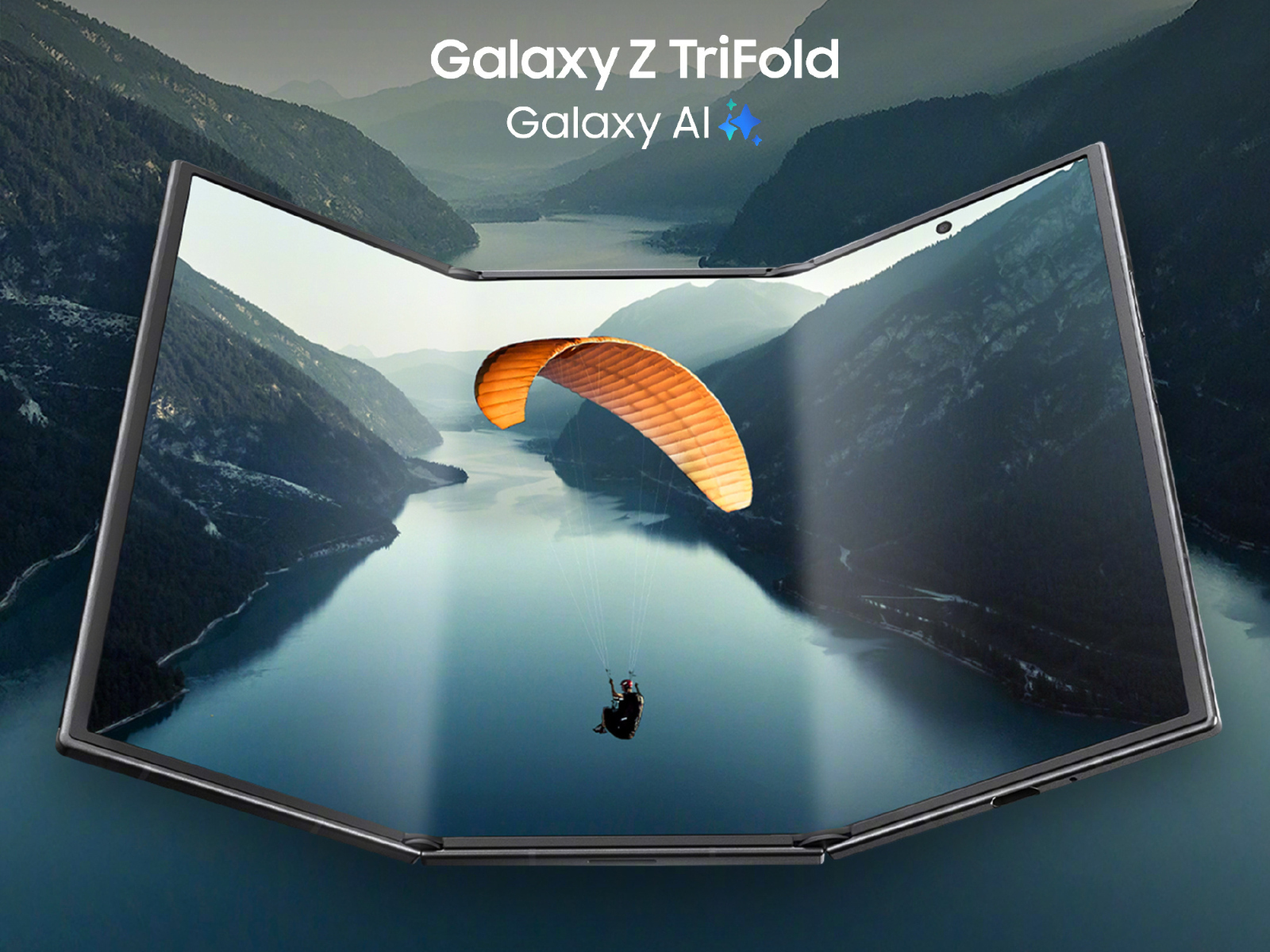
Samsung’s new Samsung Galaxy Z TriFold is only weeks into its retail life in the United States, but some early buyers are already reporting problems with the inner display.

The TriFold, which unfolds into a roughly 10-inch tablet-sized screen, launched in the US on January 30, 2026, at $2,899. Demand was reportedly strong at release. Now, multiple posts on Reddit are raising concerns about reliability.
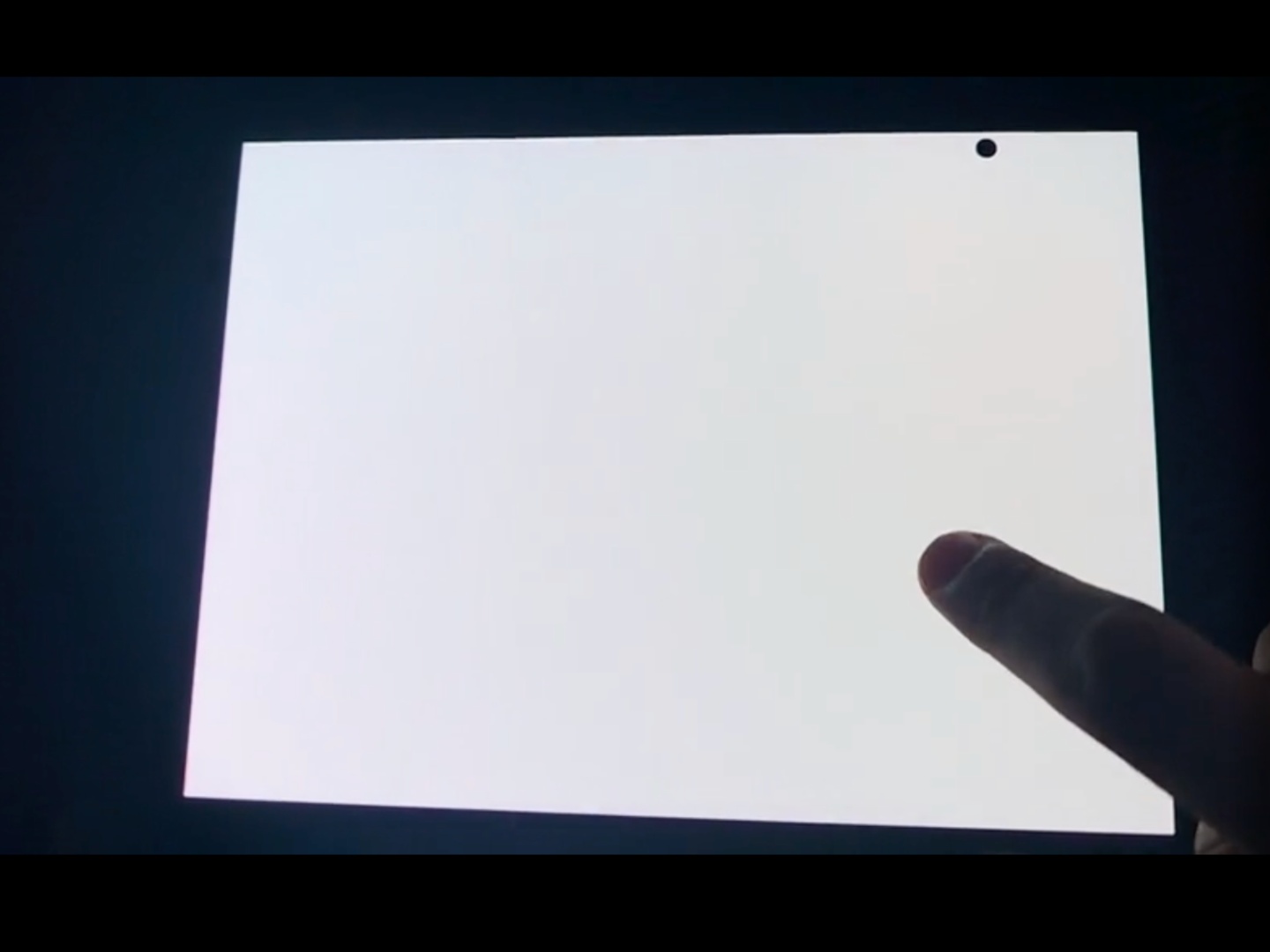
In one case, a user said their device suddenly flashed green before the inner display went black. A restart brought it back temporarily, but the issue reportedly returned the next day. The owner claimed the phone had not been dropped or exposed to unusual stress.
Another user described ghost touch inputs appearing just days after purchase. By the following morning, the display allegedly turned completely white and stopped responding to touch. That same post mentioned a faint popping sound during folding, along with what looked like a small bubble under the display layer.
At this point, it’s difficult to determine whether these are isolated defects or early signs of a broader issue.
Foldables have always carried additional durability challenges compared to traditional smartphones. A tri-fold design introduces even more moving parts and stress points than standard book-style foldables like the Samsung Galaxy Z Fold series.
Flexible OLED panels, ultra-thin glass layers, adhesives, and hinge assemblies all need to work together under repeated bending. Even minor manufacturing variances can show up quickly once devices are in real-world use.
Samsung has made steady improvements in hinge design and protective layers over the years, but entirely new form factors often reveal issues only after launch.
For now, the number of confirmed cases appears limited. Still, given the TriFold’s premium price and experimental design, even a few failures can attract attention.
It may take a few more weeks and more user data to determine whether these incidents are simply early-unit defects or something more systemic.
Don’t miss a thing! Join our Telegram community for instant updates and grab our free daily newsletter for the best tech stories!
For more daily updates, please visit our News Section.
The post Multiple users of Samsung’s $2,899 Galaxy Z TriFold facing inner display failure appeared first on Gizmochina.
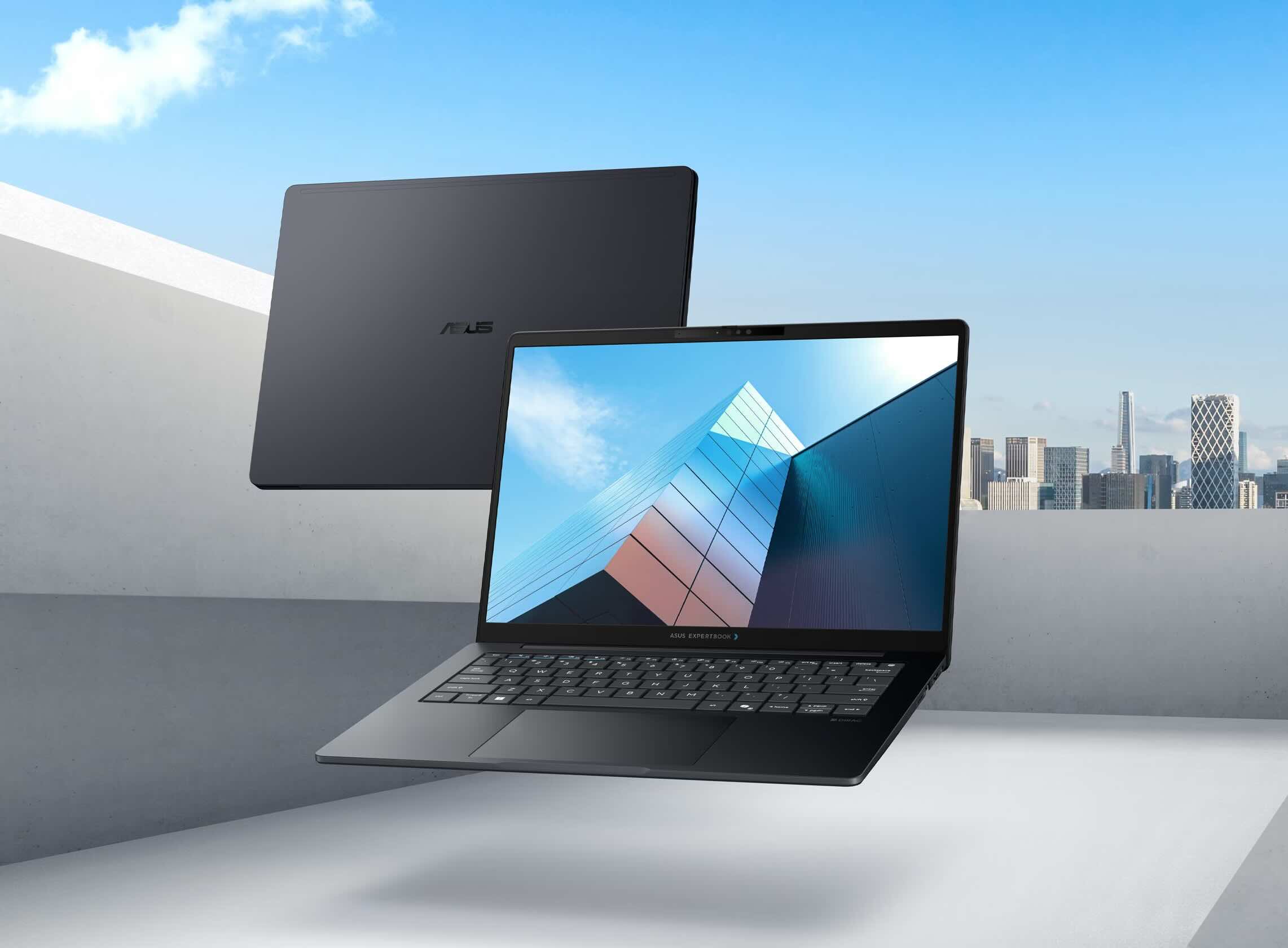
Earlier this month, Asus introduced its new business laptops called the ExpertBook B5 G2 and ExpertBook B3 G2. Both machines are powered by Intel’s 3rd-generation Core Ultra chips, also known as Panther Lake, and come in 14-inch and 16-inch sizes.
What’s interesting about these PCs is that they come with an operating system called “Windows 11 pure OS (not for open channel)”, next to the expected choices like Windows 11 Home and Windows 11 Pro.

As TechRadar notes, Asus hasn’t highlighted this in the marketing slide or press release. Instead, you see the mention directly on the specifications table. So, what is Windows 11 pure OS?
Asus hasn’t explained what makes this version of Windows 11 different. There’s no public breakdown of features removed or added. The phrase “not for open channel,” however, is telling.
In enterprise hardware terms, that usually means the configuration isn’t sold through regular retail stores or online marketplaces. Instead, it’s likely reserved for bulk corporate purchases handled through business procurement channels (via TechRadar).

The “pure OS” likely means a cleaner installation of Windows 11. In consumer laptops, Windows often ships with extra apps, trial software, or manufacturer utilities. For large organizations, that can be a headache. IT departments typically prefer a streamlined system image that’s easier to deploy and manage across hundreds — or thousands — of devices.
A stripped-down Windows build would save time. There’s less need to remove unwanted apps, fewer background services to monitor, and potentially fewer variables when troubleshooting. For companies standardizing their fleets, simplicity matters more than flashy features.
Interestingly, the ExpertBook B5 G2 also debuts as part of Asus’ broader push into Copilot+ PCs, tying into Microsoft’s AI-focused hardware branding. Yet this quiet software option may be just as relevant to enterprise buyers.
For more daily updates, please visit our News Section.
Stay ahead in tech! Join our Telegram community and sign up for our daily newsletter of top stories! 
The post Asus quietly adds a ‘Windows 11 pure OS’ option to its new ExpertBook laptops appeared first on Gizmochina.
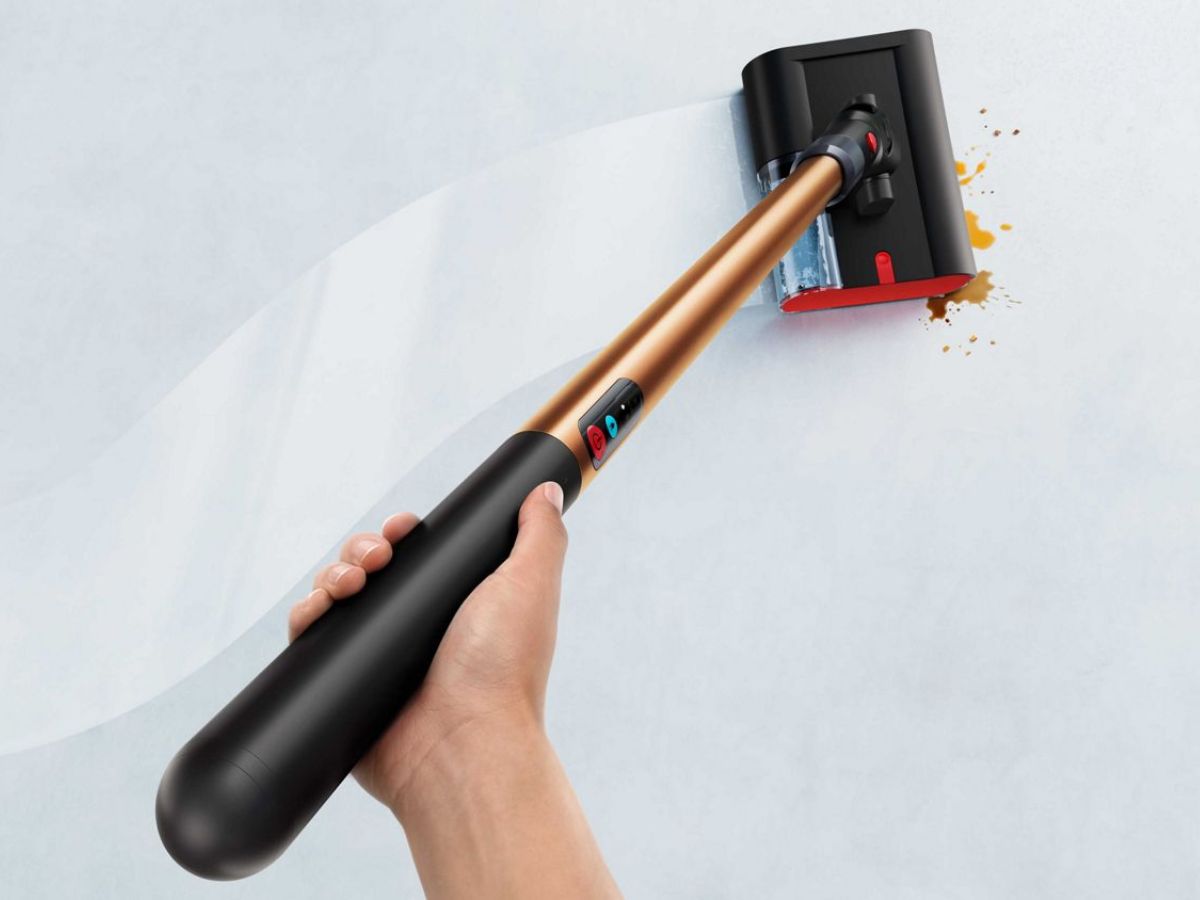
Dyson is adding a new device to its growing lineup of slim home cleaners. The company just announced the PencilWash, a product that builds on the design of last year’s PencilVac, which Dyson describes as the “world’s thinnest vacuum cleaner.”
While the PencilVac focuses on dry debris, the PencilWash is designed for wet messes on hard floors.

Like its sibling, the PencilWash packs its motor, battery, and electronics into its narrow handle. However, there’s no dustbin here. Instead, Dyson has swapped in a water tank housed inside a larger cleaning head. The machine relies on a single high-density microfiber roller brush to clean floors.
The PencilWash uses a pressurized water system to feed clean water and a low-foaming cleaning solution onto the roller. As it moves across tile, laminate, or sealed wood, the roller scrubs the surface and collects dirty water into a separate compartment. The floor won’t come out completely dry, but Dyson says any remaining moisture should evaporate quickly.
At 4.9 pounds (around 2.2 kilograms), the PencilWash is slightly heavier than the 4-pound PencilVac. Even so, it remains lightweight compared to many traditional floor scrubbers. Its handle can also recline nearly flat, allowing you to clean under beds, sofas, and other low furniture without any hassle.

The device is rated for over 30 minutes of run time on a full charge. For larger homes, Dyson will offer a spare battery that attaches to the end of the handle, though it’s sold separately.
There’s also a notable difference in price. While the PencilVac with four rotating cone brush heads sells for $600, the new PencilWash costs $349. That lower price also includes a charging dock in the box.
For more daily updates, please visit our News Section.
Stay ahead in tech! Join our Telegram community and sign up for our daily newsletter of top stories! 
The post Dyson introduces a $349 PencilWash for wet messes appeared first on Gizmochina.
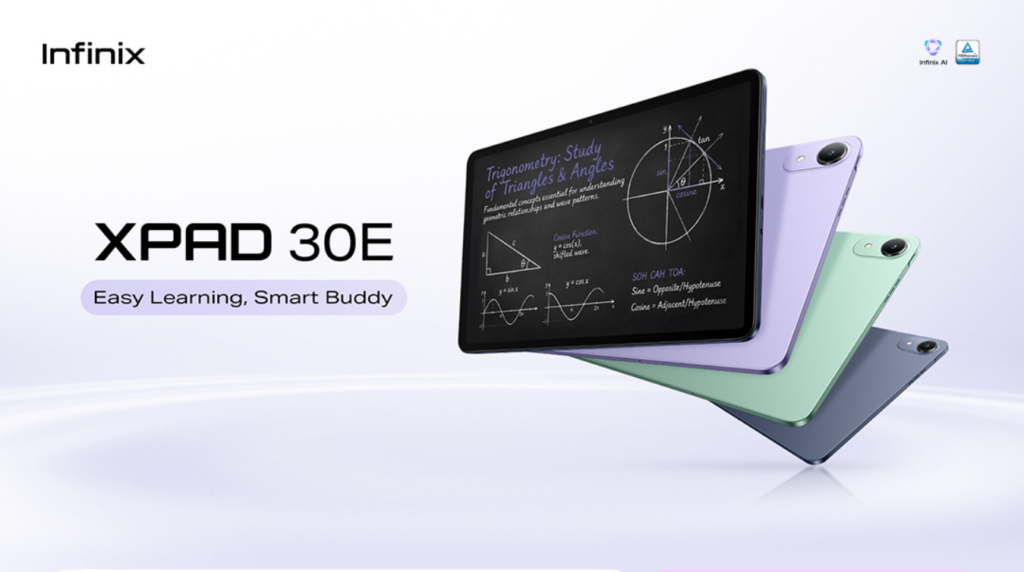
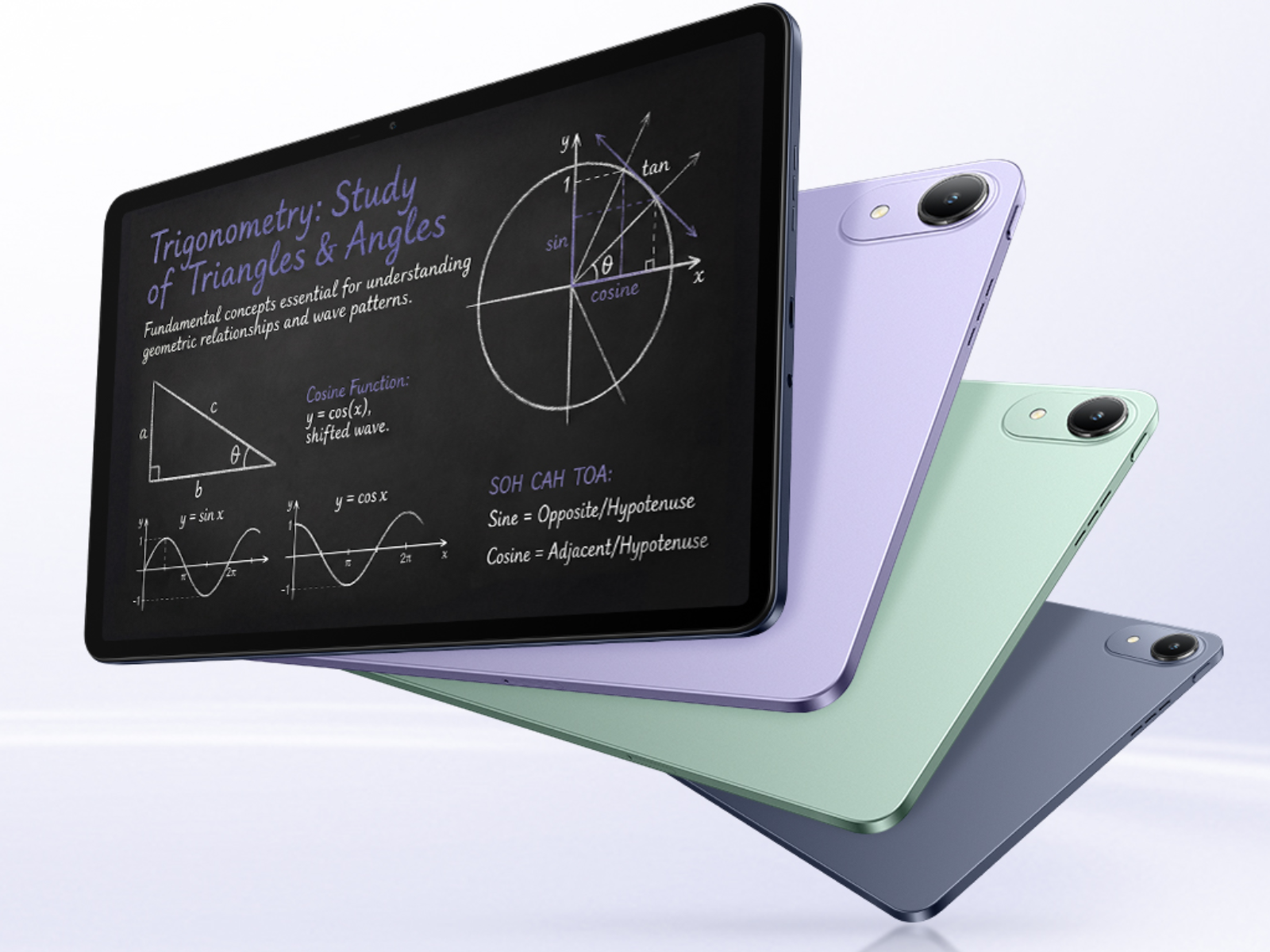
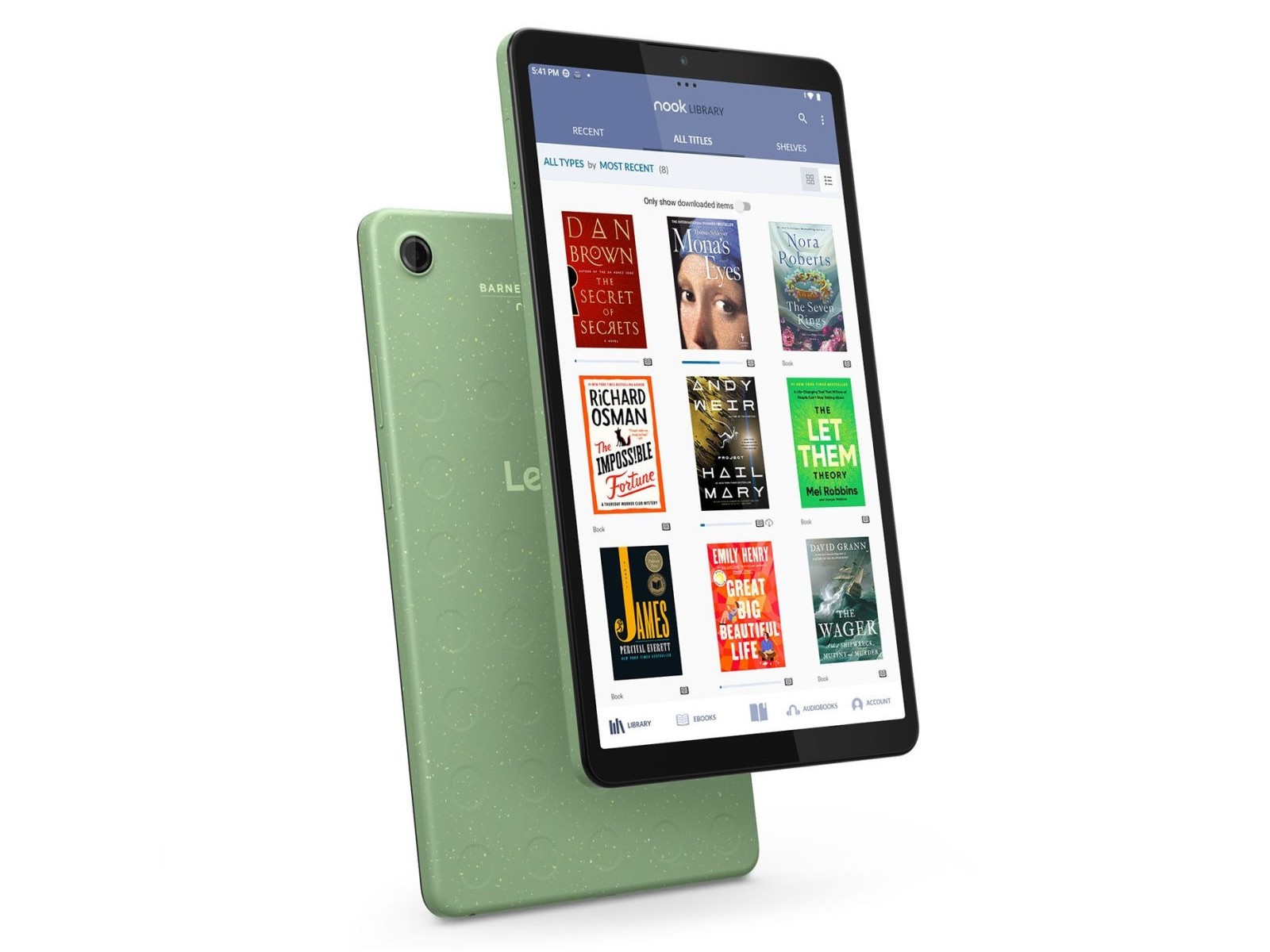
Infinix announced the XPAD 30E tablet today alongside its Note 60 smartphone series. The device targets students with AI learning tools and affordable specs.

The tablet has an 11-inch FHD+ IPS LCD screen with TUV Blue Light certification, 60Hz refresh rate, and 440 nits brightness. It comes in Dreamy Blue, Forest Green, and Deep Blue.
The XPAD 30E includes 120,000 free educational resources with textbook-aligned courses and exercises. The AI Tutor feature offers Photo Solving in nine languages: Chinese, English (including Niger and Indian dialects), French, Indonesian, Russian, Urdu, Spanish, Turkish, and Filipino. Tap to Ask works in English and Russian. Other AI features include AI Creation and AI Screen Recognition.

The tablet runs XOS 15 based on Android 15 with a MediaTek Helio G80 processor. According to Shopee Indonesia, it has 4GB RAM and 128GB eMMC 5.1 storage, expandable via microSD card.
The camera specs are confusing. The listing shows 8MP at the top but mentions 5MP/8MP at the bottom for the rear camera. The front has an 8MP selfie camera with landscape video support.
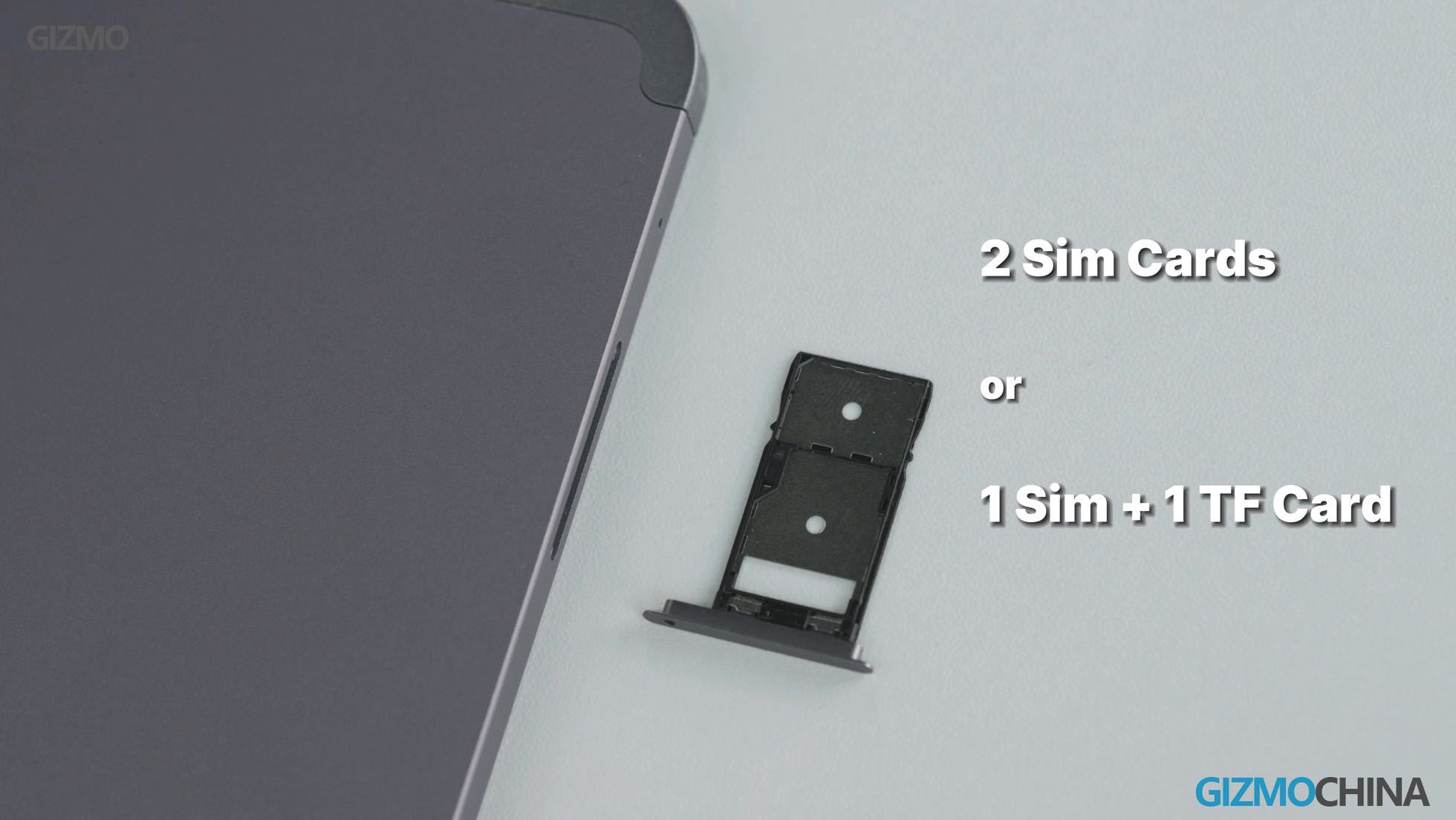
A 7000mAh battery supports 18W fast charging. The tablet has 4G LTE with physical SIM support for calls and data. Multi-device collaboration lets you interact, share data, and mirror screens between phones, tablets, and laptops. Other connectivity includes Wi-Fi 5, Bluetooth, 3.5mm jack, and OTG.
The 4GB/128GB model costs Rp 2,394,000 in Indonesia (around $148). Social media posts say it’s available now, but it’s not listed on Infinix’s official website yet. It should appear there soon.
For more daily updates, please visit our News Section.
Stay ahead in tech! Join our Telegram community and sign up for our daily newsletter of top stories.
The post Infinix XPAD 30E 11-inch Tablet Official MediaTek Helio G80 with AI Learning Tools and 7000mAh Battery appeared first on Gizmochina.
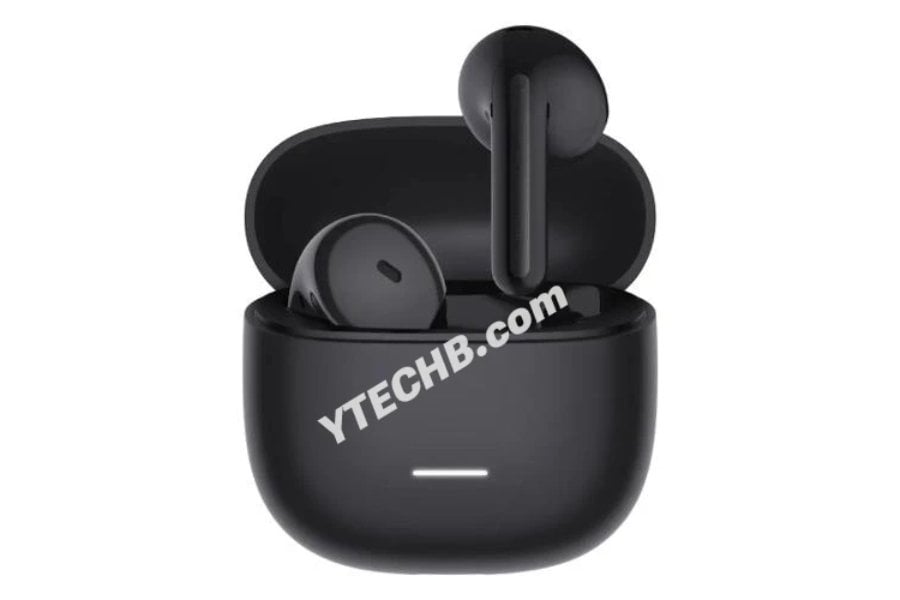
A new budget pair of Redmi earbuds may be on the way. According to a report by YtechB, Xiaomi is ready to launch Redmi Buds 8 Active, the renders and price of which have now surfaced online.
The Active branding here means a more affordable model than a more rugged one. And it likely sits below the Redmi Buds 8 Lite in the lineup.
Visually, the Buds 8 Active borrows heavily from the Lite version, but there is one clear difference: instead of using an in-ear silicone tip design, the Buds 8 Active reportedly adopt a semi-in-ear, or open-fit, structure. That means no rubber ear tips sealing the ear canal.

The ear stem design, however, remains largely unchanged from the Lite variant. Based on the leaked renders, the charging case also looks nearly identical to the Lite model. It’s expected to come in three classic color options: blue, black, and white.
On the hardware side, the Redmi Buds 8 Active are said to feature a 14.2mm dynamic driver paired with a titanium diaphragm.
For connectivity and audio quality, the earbuds are expected to support the AAC high-definition audio codec. There’s also mention of a dual-microphone system with AI-powered call noise reduction and wind noise reduction up to 6 meters per second.

Each earbud is tipped to pack a 37mAh battery, while the charging case carries a 475mAh cell. Playback time is estimated at around 7 hours on a single charge, extending up to 37 hours when combined with the case. Charging is said to take about 1 hour for the earbuds and roughly 2.5 hours for the case.
As for the price, the Redmi Buds 8 Active are tipped to launch at €19.99. However, the leak doesn’t mention when and where. Likely, it isn’t that far away from an official unveil.
For more daily updates, please visit our News Section.
Stay ahead in tech! Join our Telegram community and sign up for our daily newsletter of top stories! 
(Source)
The post Redmi Buds 8 Active launch imminent, renders and specs leak appeared first on Gizmochina.
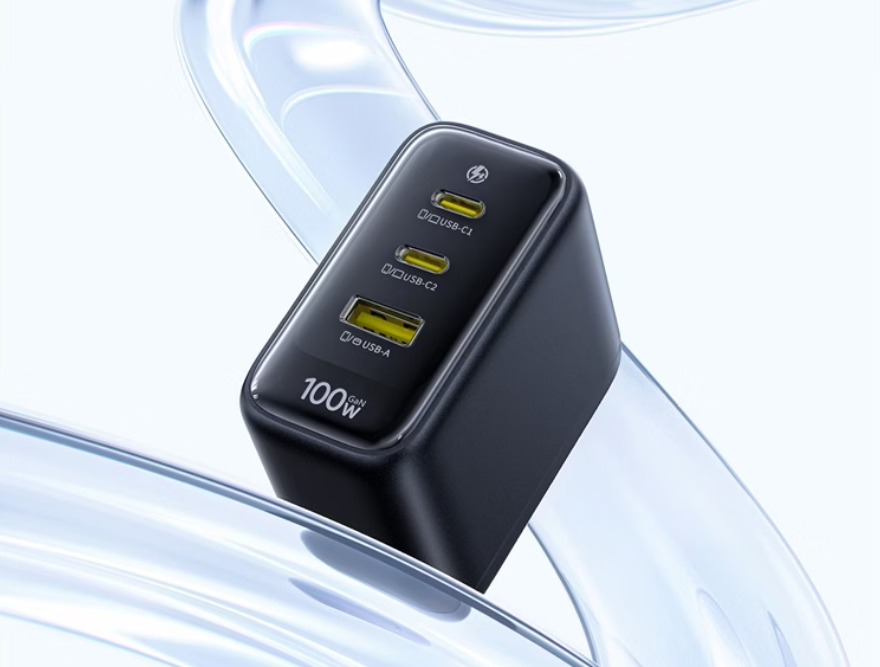
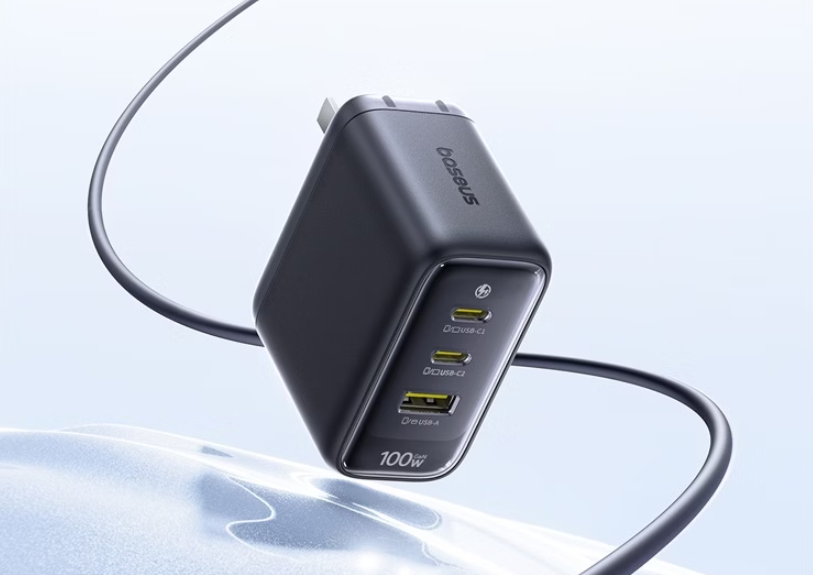
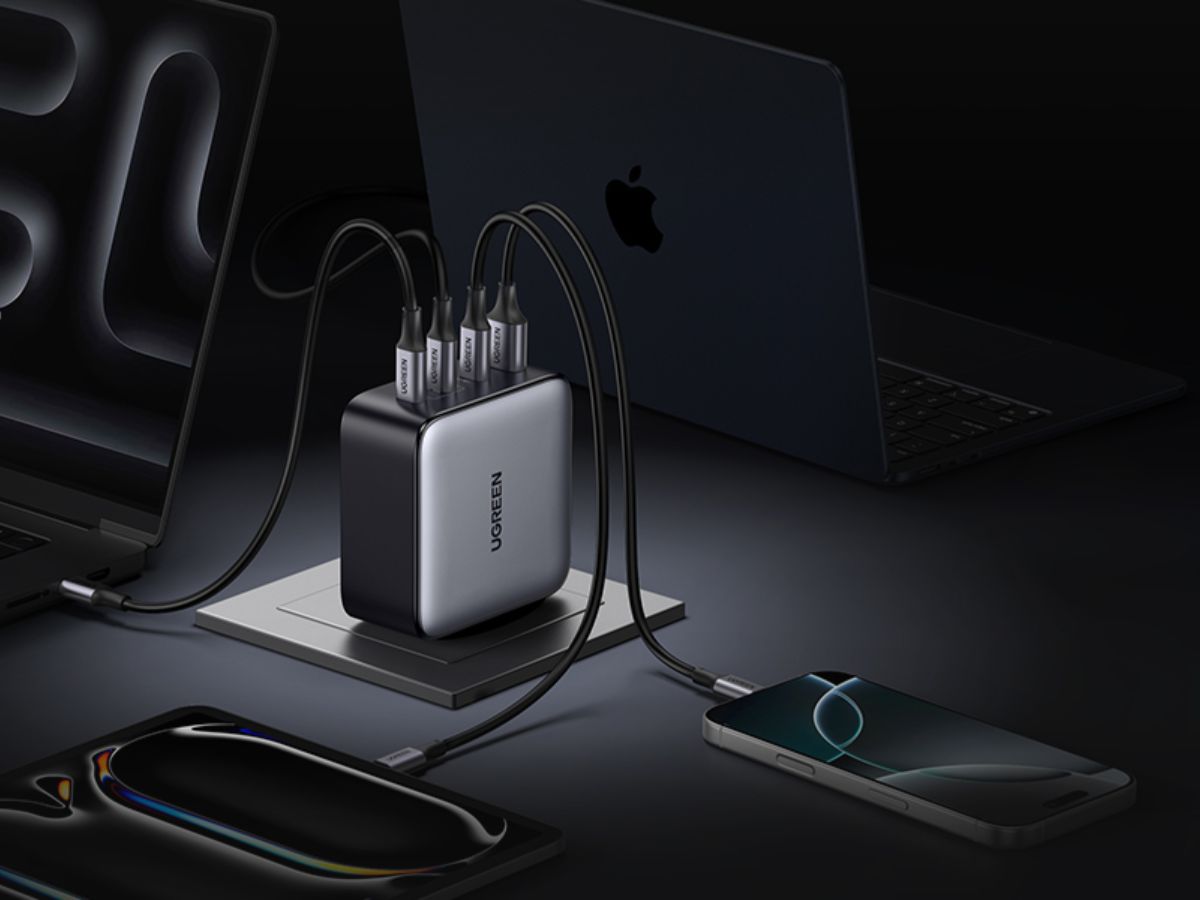
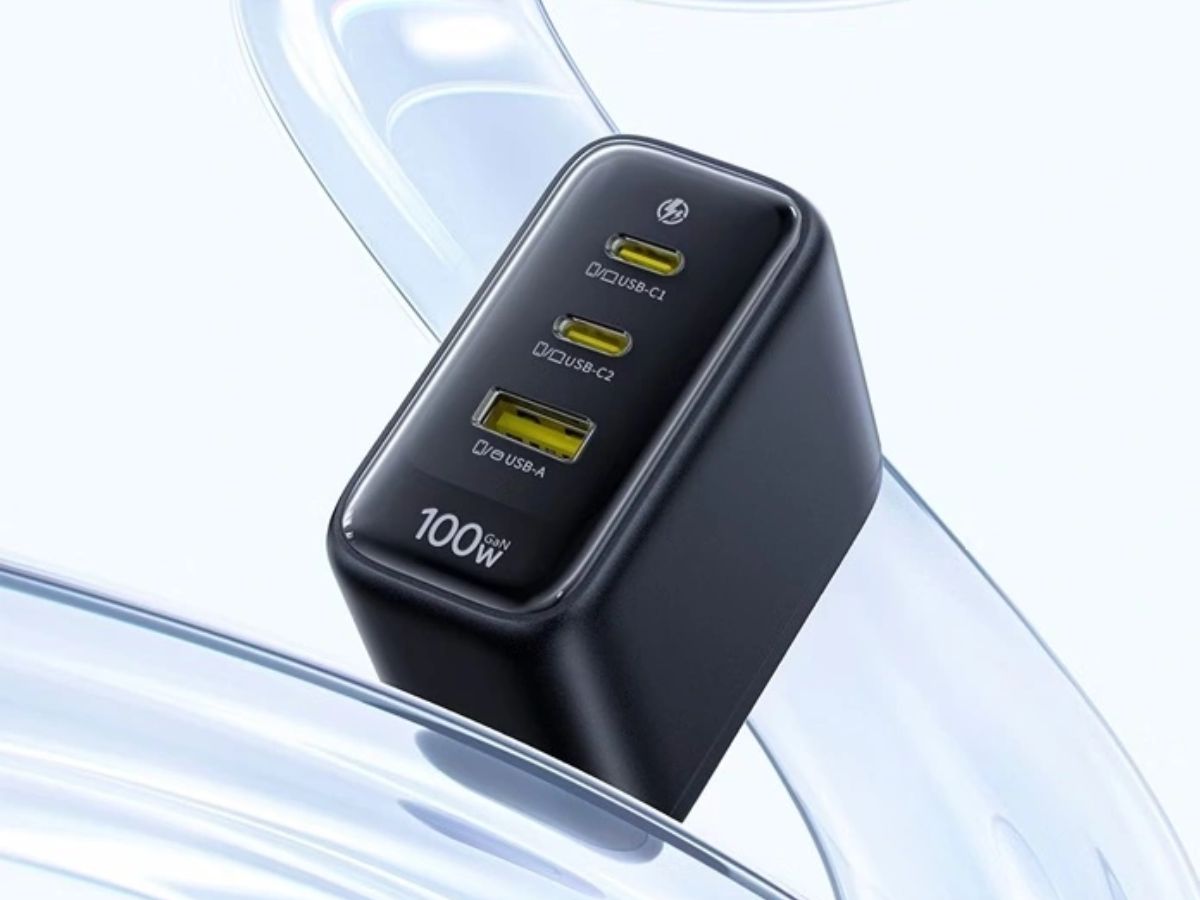
Baseus has launched the EnerFill FE22 100W charger in China. The adapter is now listed on JD.com with a price of 149 yuan ($22). It is available in Starry Black, Moon White, and Ocean Blue color options.

The EnerFill FE22 supports PD 100W GaN fast-charging technology, which ensures efficient and stable power delivery. It is compatible with Xiaomi’s 100W HyperCharge fast-charging standard and other major fast-charging protocols, including PD, PPS, UFCS, SCP, FCP, and QC.
The charger has a compact design that measures 63mm x 54mm x 33mm and weighs 205g. Baseus uses a 3D stacked internal architecture to reduce the volume by 30% compared to traditional 100W chargers. The device includes foldable prongs for easy portability and storage.

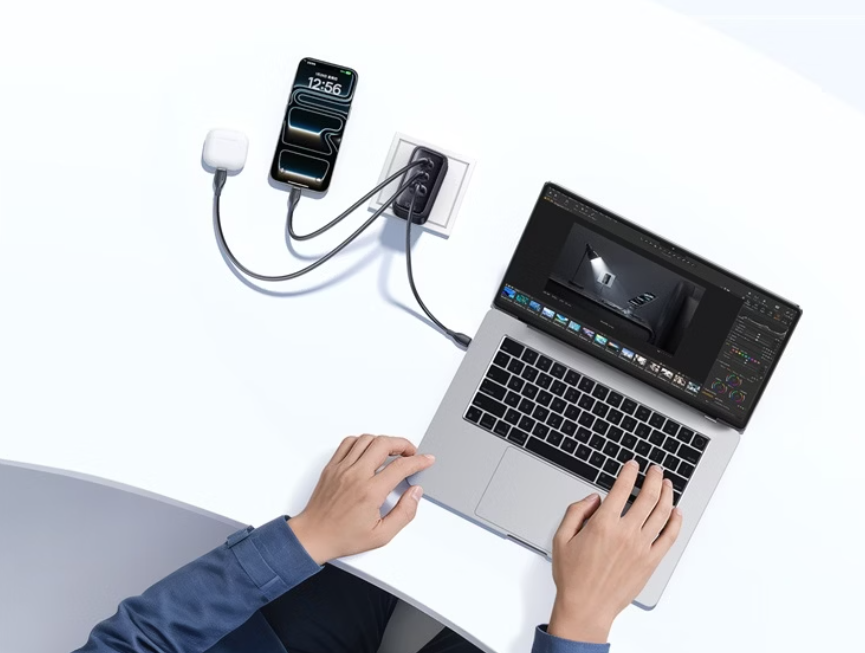
The USB-C ports each support up to 100W output, delivering up to 20V/5A power for laptops and other high-power devices. The USB-A port supports a maximum output of 33W. The charger dynamically adjusts power distribution when multiple ports are active. It supports two-device combinations such as 65W + 35W or 65W + 33W. When all three ports are in use, the charger intelligently distributes power to ensure the total output does not exceed 100W.
Baseus includes its BPS 2.0 dynamic power distribution technology, which adjusts the output based on the connected devices to maintain efficiency and battery safety.

The charger features BCT 2.0 temperature control, with an AI chip that checks temperature up to 120,000 times per minute and adjusts power output to reduce heat buildup. It also features a high-efficiency thermal gel and a 360-degree heat dissipation design that helps maintain stable performance during extended use.
Baseus ensures safety with multiple protections, including overcurrent, overvoltage, short-circuit, and surge protection. It also supports trickle charging after a device reaches 80% battery to maintain long-term battery health.
In related news, Baseus has recently introduced the EnerGeek GT 21, which combines a charger and power bank in one device and can power three devices at the same time. The company has also launched a 200W 25,000mAh power bank that features dual built-in USB-C cables and supports up to 140W fast charging.
For more daily updates, please visit our News Section.
Stay ahead in tech! Join our Telegram community and sign up for our daily newsletter of top stories! 
(JD)
The post Baseus launches new 100W GaN charger with 2C+1A ports, supports Xiaomi 100W HyperCharge appeared first on Gizmochina.
Samsung has been dealing with a lot of leaks and rumors about its upcoming Galaxy S26 series. Details about the phone keep appearing online, and it seems the company wants to stop this. Leaks ahead of the official announcement can spoil surprises and reveal important information too early.
On February 25, Samsung is going to launch the Galaxy S26 series. But ahead of that, almost everything about these devices has revealed due to the several leaks and rumors on the internet.
Now, people are excited about the Galaxy S27. Fans are guessing what new features it will have, like better cameras, bigger batteries, faster performance, and new designs. Even before the Galaxy S26 launch, rumors about the S27 are already spreading and making people curious.
To try to stop Galaxy S27 leaks, Samsung has introduced a new secure chat mode for its internal messages. When it is turned on, employees cannot copy, forward, save, or take screenshots of messages. Samsung also plans to use it with its partners and suppliers. The aim is to keep product plans and internal information safe until the official launch.

Source – Thinborne
But leaks are hard to stop. Information can still come out through factories, suppliers, or distributors. And even if screenshots are blocked, someone could take a photo with another phone. In the world of tech, leaks happen a lot, especially for new phones.
Aside from this, leaks can also make people more excited about the upcoming devices. Fans talk about rumors, guess features, and share their ideas online. But too many leaks can also take away some of the fun of surprises and reduce excitement when the phone is finally announced.
Samsung will try to protect its secrets, but leaks are not going away. Fans will keep watching and guessing, and the excitement around the Galaxy S27 is already growing. The company’s new chat system may help. Stay tuned for more information.
The post Samsung Galaxy S27 is already creating buzz – Here’s why appeared first on Sammy Fans.


Samsung US has launched the WAFX-P, a new interactive display made to improve learning in schools and teamwork in offices. It combines clear visuals, smart tools, and AI features to help students, teachers, and employees work together more easily.
The WAFX-P has a built-in 4K camera, microphones, and speakers, making it easy to connect with other classrooms, guest speakers, or remote coworkers. Its Live Caption feature shows text on-screen for any audio or video, helping everyone follow along.
It runs on Android 15 with a fast Octa-Core CPU. The display lets users switch between apps, multitask, and use favorite tools without slowing down lessons or meetings.

Image via Samsung
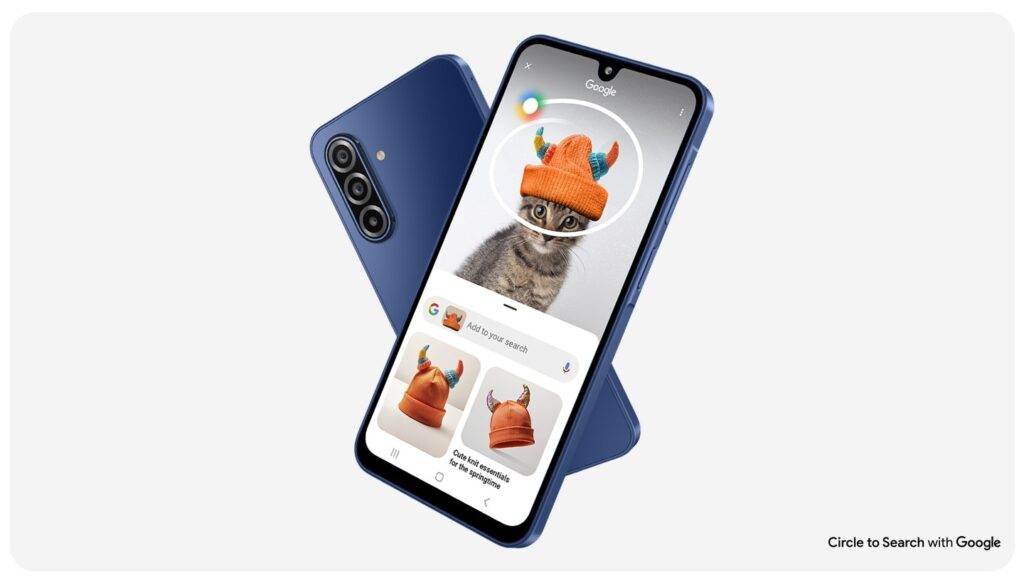
This display features Samsung AI Assistant. Tools like Circle to Search, AI Summary, and Live Transcript help capture ideas, summarize lessons, and organize important points in real time. This makes learning and meetings more active and productive.
The WAFX-P comes in 65, 75, and 86 inches models to fit different rooms. It works with popular tools like Google Classroom and Google Drive so teachers can use their lesson materials easily.
Dual-pen and multi-touch support let many people write, draw, or brainstorm at the same time. Its 450-nit brightness ensures all content is clear and easy to see. Also, it allows screen sharing from up to nine devices at once and has a 3-in-1 USB-C port for connecting, controlling, and charging devices.
The post Samsung US introduces WAFX-P for engaging lessons and meetings appeared first on Sammy Fans.


Google released Gemini 3 Pro on November 19, and today, exactly three months later, it's introducing Gemini 3.1 Pro. This model "represents a step forward in core reasoning", Google says, being "a smarter, more capable baseline for complex problem-solving". This, Google says, is reflected in its performance in various AI benchmarks. You can see Gemini 3.1 Pro compared to the other latest models from Google's competitors, as well as with Gemini 3 Pro, in the image below. Google highlights Gemini 3.1 Pro's performance in ARC-AGI-2, which it describes as "a benchmark that evaluates a...
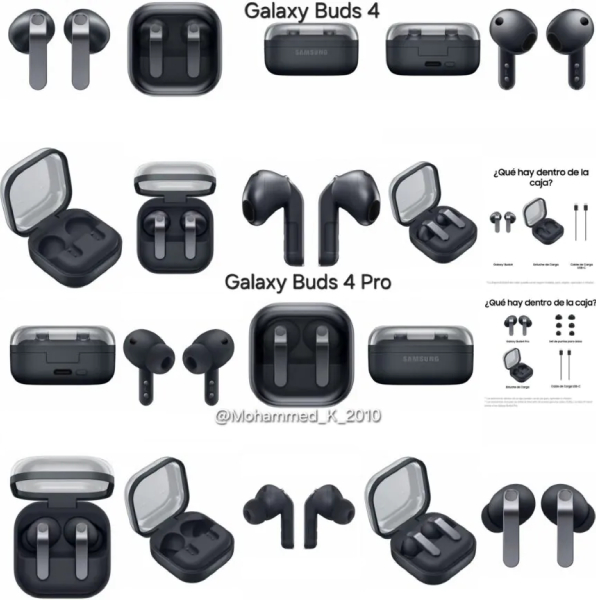
Samsung has confirmed that its Galaxy Unpacked event will take place on February 25, 2026. At this event, the company will launch the new Galaxy S26 series. Samsung has already started teasing the upcoming phones, highlighting camera upgrades and new AI features. Now, there are strong hints that the Galaxy Buds 4 series may also be introduced at the same event.
According to the latest information via @smasithick, Samsung has started taking reservations for the Galaxy S26 lineup in many countries. In India, customers can reserve the phones through Amazon. Interestingly, Amazon India’s Unpacked event page shows the outline of a pair of wireless earbuds. This small detail has caught the attention of fans.
The shape of the earbuds shown on Amazon’s page looks very similar to earlier leaked images of the Galaxy Buds 4. Samsung has not officially mentioned the new earbuds in its teasers, but this hint suggests that they could be launched alongside the new smartphones, similar to previous years.

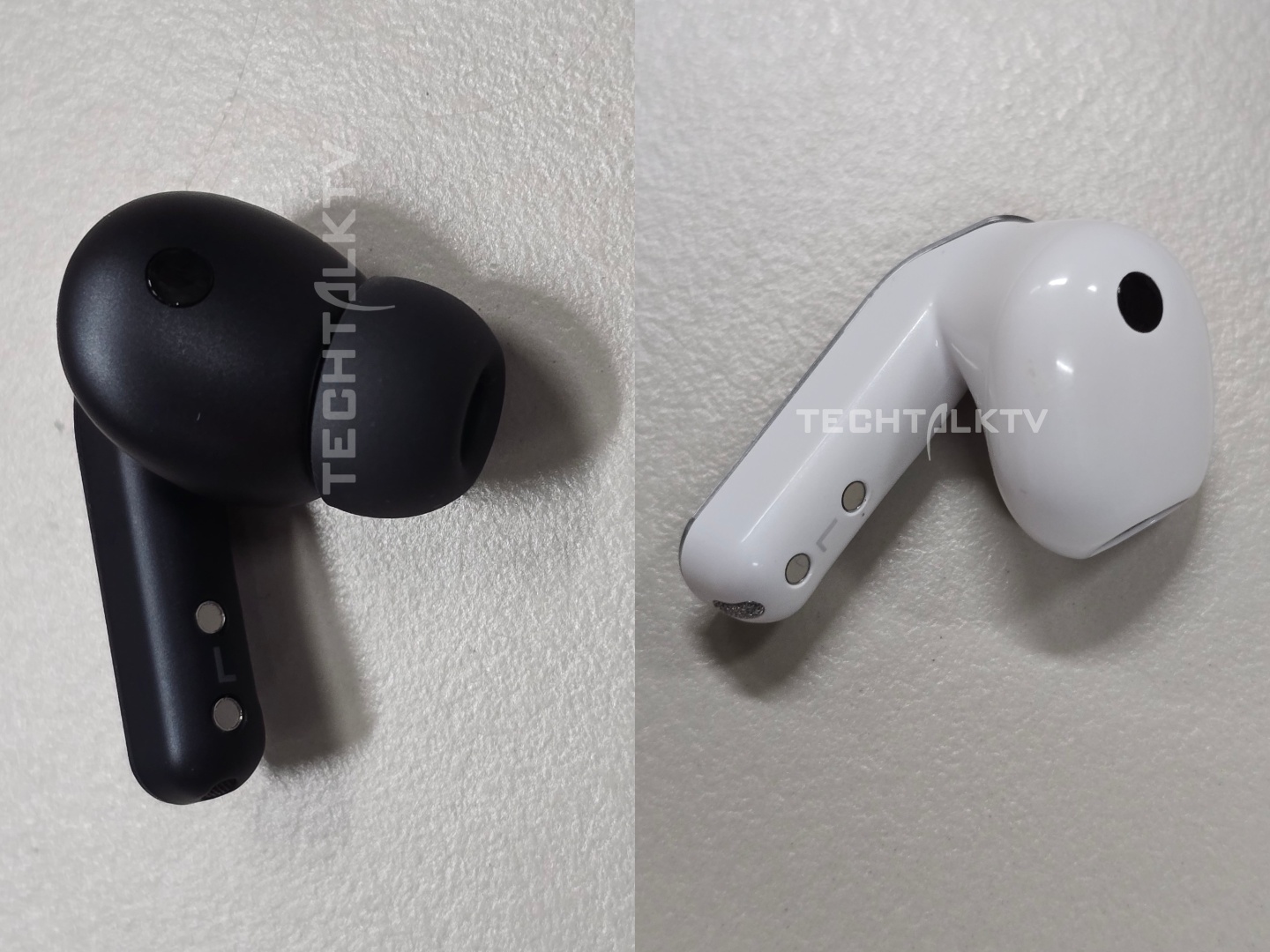
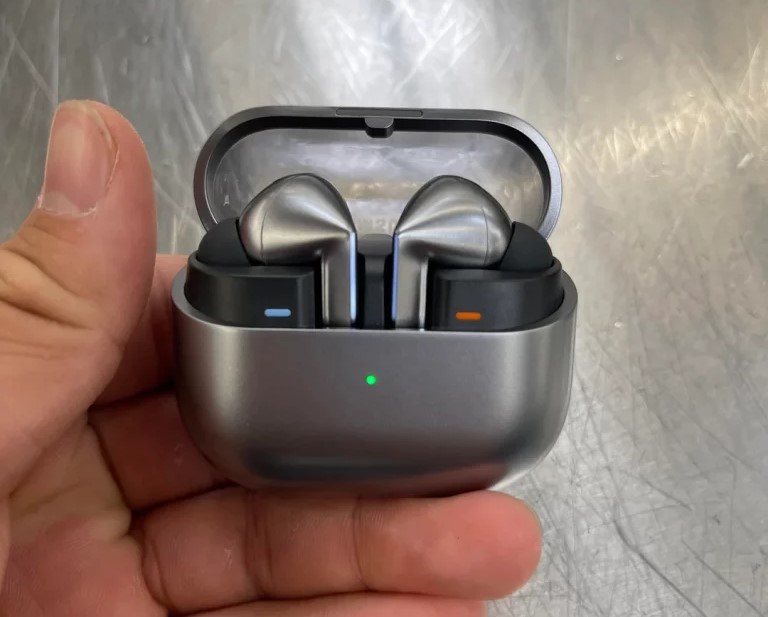
Apart from Amazon’s hint, real-life images of the Galaxy Buds 4 and Galaxy Buds 4 Pro have also appeared online. These images have been shared by a known tipster, @Mr_TechTalkTV, and show dummy units sent to retail stores for display.
The pictures reveal the design of the earbuds and their charging cases in black and white. The design looks simple, modern, and attractive.

Samsung has not officially confirmed the Galaxy Buds 4 launch yet. However, reports strongly suggest the company will debut at Unpacked on February 25.. Stay tuned for more information.
The post Samsung Galaxy Buds 4 design revealed in real-life images; Amazon page fuels launch buzz appeared first on Sammy Fans.
In the rapidly evolving world of mobile technology, software updates play a pivotal role in enhancing user experience, security, and device longevity. Regular updates ensure your device remains protected against new security threats, improve performance, introduce new features, and maintain compatibility with the latest applications and services.
For Samsung Galaxy smartphones and tablets, Samsung has committed to providing a certain number of major OS and One UI updates to keep them secure and running smoothly.
Samsung’s update policy varies based on the device series and model. Newer flagship devices like the Galaxy S and Z Fold series receive up to 7 years of software support, including both OS and security updates. Mid-range and budget devices might receive fewer updates, but still benefit from significant software enhancements.
This policy ensures that Galaxy users can enjoy their devices with the latest features and security measures for an extended period, making the investment in Samsung products more worthwhile.

Here’s a detailed look at the software update status for various Samsung Galaxy devices, including the pre-installed One UI version and the expected number of future One UI updates each model will receive:
| Model | Launch Date | Pre-installed One UI | Total One UI Updates |
|---|---|---|---|
| Samsung Galaxy S25 Edge | January 2025 | One UI 7.0/Android 15 | 7 (Received One UI 8) |
| Samsung Galaxy S25 Ultra | January 2025 | One UI 7.0/Android 15 | 7 (Received One UI 8) |
| Samsung Galaxy S25+ | January 2025 | One UI 7.0 | 7 (Received One UI 8) |
| Samsung Galaxy S25 | January 2025 | One UI 7.0 | 7 (Received One UI 8) |
| Samsung Galaxy S24 Ultra | January 2024 | One UI 6.0/Android 14 | 7 (Received One UI 7 & 8) |
| Samsung Galaxy S24+ | January 2024 | One UI 6.0 | 7 (Received One UI 7 & 8) |
| Samsung Galaxy S24 | January 2024 | One UI 6.0 | 7 (Received One UI 7 & 8) |
| Samsung Galaxy S24 FE | September 2024 | One UI 6.1/Android 14 | 7 (Received One UI 7 & 8) |
| Samsung Galaxy S23 Ultra | February 2023 | One UI 5.1/Android 13 | 4 (Received One UI 6, 7 & 8) |
| Samsung Galaxy S23+ | February 2023 | One UI 5.1 | 4 (Received One UI 6, 7 & 8) |
| Samsung Galaxy S23 | February 2023 | One UI 5.1 | 4 (Received One UI 6, 7 & 8) |
| Samsung Galaxy S23 FE | October 2023 | One UI 5.1/Android 13 | 4 (Received One UI 6, 7 & 8) |
| Samsung Galaxy S22 Ultra | February 2022 | One UI 4.1/Android 12 | 4 (Received One UI 5, 6, 7 & 8) |
| Samsung Galaxy S22+ | February 2022 | One UI 4.1 | 4 (Received One UI 5, 6, 7 & 8) |
| Samsung Galaxy S22 | February 2022 | One UI 4.1 | 4 (Received One UI 5, 6, 7 & 8) |
| Samsung Galaxy S21 Ultra | January 2021 | One UI 3.1/Android 11 | 4 (Received All 4 Updates) |
| Samsung Galaxy S21+ | January 2021 | One UI 3.1 | 4 (Received All 4 Updates) |
| Samsung Galaxy S21 | January 2021 | One UI 3.1 | 4 (Received All 4 Updates) |
| Samsung Galaxy S21 FE | January 2022 | One UI 4.0/Android 12 | 4 (Received One UI 5, 6, 7 & 8) |
| Model | Launch Date | Pre-installed One UI | Total One UI Updates |
|---|---|---|---|
| Samsung Galaxy Z Fold7 | July 2025 | One UI 8.0/Android 16 | 7 |
| Samsung Galaxy Z Flip7 | July 2025 | One UI 8.0/Android 16 | 7 |
| Samsung Galaxy Z Flip7 FE | July 2025 | One UI 8.0/Android 16 | 7 |
| Samsung Galaxy Z Fold6 | July 2024 | One UI 6.1.1/Android 14 | 7 (Received One UI 7 & 8) |
| Samsung Galaxy Z Flip6 | July 2024 | One UI 6.1.1 | 7 (Received One UI 7 & 8) |
| Samsung Galaxy Z Fold5 | July 2023 | One UI 5.1.1/Android 13 | 4 (Received One UI 6, 7 & 8) |
| Samsung Galaxy Z Flip5 | July 2023 | One UI 5.1.1 | 4 (Received One UI 6, 7 & 8) |
| Samsung Galaxy Z Fold4 | August 2022 | One UI 4.1/Android 12 | 4 (Received One UI 5, 6, 7 & 8) |
| Samsung Galaxy Z Flip4 | August 2022 | One UI 4.1 | 4 (Received One UI 5, 6, 7 & 8) |
| Samsung Galaxy Z Fold3 | August 2021 | One UI 3.1/Android 11 | 4 (Received All 4 Updates) |
| Samsung Galaxy Z Flip3 | August 2021 | One UI 3.1 | 4 (Received All 4 Updates) |
| Model | Launch Date | Pre-installed One UI | Total One UI Updates |
|---|---|---|---|
| Samsung Galaxy A07 5G | February 2026 | One UI 8.0/Android 16 | 6 |
| Samsung Galaxy A56 5G | March 2025 | One UI 7.0/Android 15 | 6 (Received One UI 8) |
| Samsung Galaxy A36 5G | February 2025 | One UI 7.0/Android 15 | 6 (Received One UI 8) |
| Samsung Galaxy A26 5G | January 2025 | One UI 7.0/Android 15 | 6 (Received One UI 8) |
| Samsung Galaxy A17 5G | December 2024 | One UI 7.0/Android 15 | 4 (Received One UI 8) |
| Samsung Galaxy A17 | December 2024 | One UI 7.0/Android 15 | 4 (Received One UI 8) |
| Samsung Galaxy A16 5G | October 2024 | One UI 6.1/Android 14 | 6 (Received One UI 7, One UI 8) |
| Samsung Galaxy A16 | October 2024 | One UI 6.1/Android 14 | 4 (Received One UI 7, One UI 8) |
| Samsung Galaxy A07 | August 2024 | One UI 6.1/Android 14 | 4 (Received One UI 7, One UI 8) |
| Samsung Galaxy A06 5G | July 2024 | One UI 6.1/Android 14 | 4 (Received One UI 7, One UI 8) |
| Samsung Galaxy A06 | July 2024 | One UI 6.1/Android 14 | 4 (Received One UI 7, One UI 8) |
| Samsung Galaxy A55 | March 2024 | One UI 6.0 | 4 (Received One UI 7, One UI 8) |
| Samsung Galaxy A35 | March 2024 | One UI 6.0 | 4 (Received One UI 7, One UI 8) |
| Samsung Galaxy A25 5G | December 2023 | One UI 6.0/Android 14 | 4 (Received One UI 7, One UI 8) |
| Samsung Galaxy A15 5G | December 2023 | One UI 6.0/Android 14 | 4 (Received One UI 7, One UI 8) |
| Samsung Galaxy A54 | March 2023 | One UI 5.1 | 4 (Received One UI 6, 7, One UI 8) |
| Samsung Galaxy A34 | March 2023 | One UI 5.1 | 4 (Received One UI 6, 7, One UI 8) |
| Samsung Galaxy A73 5G | March 2022 | One UI 4.1/Android 12 | 4 (Received One UI 5, 6, 7, One UI 8) |
| Samsung Galaxy A53 | March 2022 | One UI 4.1 | 4 (Received One UI 5, 6, 7, One UI 8) |
| Samsung Galaxy A33 | March 2022 | One UI 4.1 | 4 (Received One UI 5, 6, 7, One UI 8) |
| Model | Launch Date | Pre-installed One UI | Total One UI Updates |
|---|---|---|---|
| Samsung Galaxy M55 | April 2024 | One UI 6.0 | 4 |
| Samsung Galaxy M35 | August 2023 | One UI 5.1 | 4 |
| Samsung Galaxy M54 | April 2023 | One UI 5.1 | 4 |
| Samsung Galaxy M33 | April 2022 | One UI 4.1 | 4 |
| Model | Launch Date | Pre-installed One UI | Total One UI Updates |
|---|---|---|---|
| Samsung Galaxy F55 | May 2024 | One UI 6.0 | 4 |
| Samsung Galaxy F15 | March 2024 | One UI 6.0 | 4 |
| Samsung Galaxy F23 | March 2022 | One UI 4.1 | 4 |
| Model | Launch Date | Pre-installed One UI | Total One UI Updates |
|---|---|---|---|
| Samsung Galaxy Tab S11 Ultra | September 2025 | One UI 8.0/Android 16 | 7 |
| Samsung Galaxy Tab S11+ | September 2025 | One UI 8.0/Android 16 | 7 |
| Samsung Galaxy Tab S11 | September 2025 | One UI 8.0/Android 16 | 7 |
| Samsung Galaxy Tab S10 Ultra | September 2024 | One UI 6.1.1/Android 14 | 7 (Received One UI 7, One UI 8) |
| Samsung Galaxy Tab S10+ | September 2024 | One UI 6.1.1 | 7 (Received One UI 7, One UI 8) |
| Samsung Galaxy Tab S10 | September 2024 | One UI 6.1.1 | 7 (Received One UI 7, One UI 8) |
| Samsung Galaxy Tab S10 FE | October 2024 | One UI 6.1.1/Android 14 | 7 (Received One UI 7, One UI 8) |
| Samsung Galaxy Tab S10 Lite | November 2024 | One UI 6.1.1/Android 14 | 7 (Received One UI 7, One UI 8) |
| Samsung Galaxy Tab S9 Ultra | July 2023 | One UI 5.1 | 4 (Received One UI 6, 7, One UI 8) |
| Samsung Galaxy Tab S9+ | July 2023 | One UI 5.1 | 4 (Received One UI 6, 7, One UI 8) |
| Samsung Galaxy Tab S9 | July 2023 | One UI 5.1 | 4 (Received One UI 6, 7, One UI 8) |
| Samsung Galaxy Tab S9 FE | October 2023 | One UI 5.1/Android 13 | 4 (Received One UI 6, 7, One UI 8) |
| Samsung Galaxy Tab S8 Ultra | February 2022 | One UI 4.1 | 4 (Received One UI 5, 6, 7, One UI 8) |
| Samsung Galaxy Tab S8+ | February 2022 | One UI 4.1 | 4 (Received One UI 5, 6, 7, One UI 8) |
| Samsung Galaxy Tab S8 | February 2022 | One UI 4.1 | 4 (Received One UI 5, 6, 7, One UI 8) |
The total number of One UI software updates is based on Samsung’s current policy at the time of the device’s launch. The Galaxy S24 series and newer flagships are set to receive 7 years of updates, including both OS and security updates, while earlier models from the last few years generally received up to 4 major Android OS updates.
Q: Will updates slow down my device?
A: No, Samsung optimizes One UI updates for each specific device model. Updates are designed to maintain or improve performance, not degrade it.
Q: What happens if I don’t update my device?
A: Skipping updates may expose your device to security vulnerabilities and prevent you from using the latest features and app compatibility improvements.
Q: Can I roll back to a previous version after updating?
A: Generally, no. Samsung doesn’t officially support downgrading to previous OS versions once updated.
One UI 8.5 (Current Major Update):
One UI 8.5 is Samsung’s latest major refinement on Android 16, focusing on usability improvements rather than major redesigns. Key expected features include smarter lock screen customizations, floating tabs for better multitasking, an updated Bixby assistant with enhanced AI capabilities, performance optimizations, additional Galaxy AI integrations, extra app protections, and smoother animations.
The One UI 8.5 beta program (now at Beta 5 globally, Beta 4 in some regions like India) is active only for the Galaxy S25 series and includes the February 2026 security patch.
Stable One UI 8.5 version coming with the Galaxy S26 series on February 25, 2026, at Galaxy Unpacked. Wider rollout to older eligible devices (starting with S25/S24 series) is expected from late March 2026, with mid-range and budget models following in phases through Q2 2026 or later.
One UI 9 (Android 17):
Early internal and testing work for One UI 9 (based on Android 17) has started on select recent flagships like the Galaxy Z Fold series. Public beta is anticipated around May 2026, with stable rollout expected later in 2026 (likely starting with new flagships).
Rollout Schedule Update:
For the latest Samsung software update news and announcements, follow @thesammyfans on X. If you have a question, suggestion, or correction, you can reach me in DM on X.
This guide is updated as of February 20, 2025. Update policies are subject to change based on Samsung’s official announcements.
The post Current Samsung Software Update Status: How long will your Galaxy device get One UI updates? appeared first on Sammy Fans.


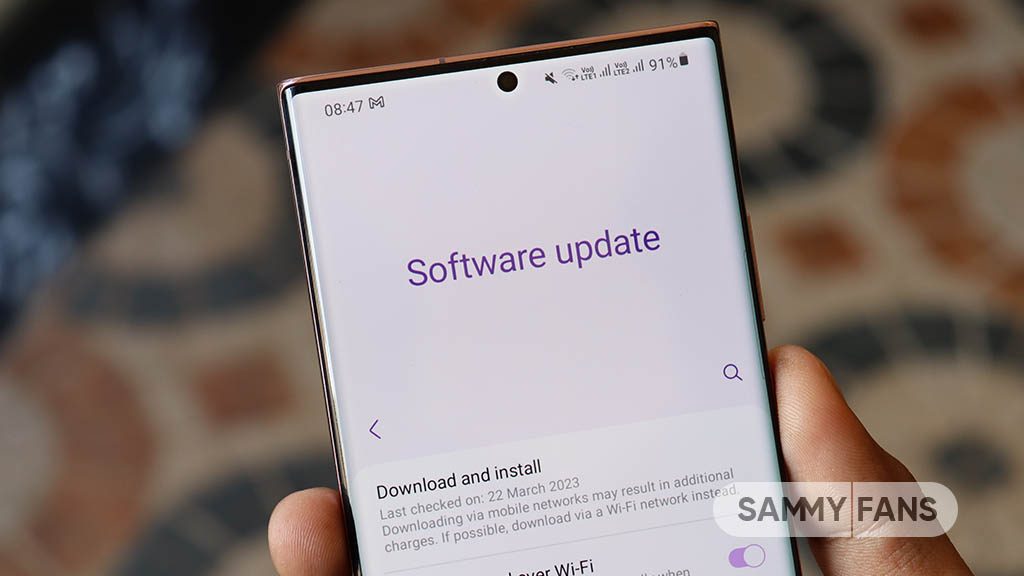
Earlier this month, Samsung released the fourth beta of One UI 8.5 for the Galaxy S25 family, and today the fifth beta is out to those who enrolled their devices in the beta program. The new firmware ends in ZZAN and includes the February 5, 2026 security patch level. It also comes with an updated version of Bixby. The rollout is currently taking place in the US, UK, India, Germany, and Korea. The new build is about 546-553MB in size. Samsung is now putting the finishing touches on One UI 8.5, which is expected to launch alongside the Galaxy S26 family on February 25. After the...


The final three months of 2025 proved great for smartphone shipments in Europe as the market was up 2% compared to Q4 2024. According to Counterpoint Research’s Q4 2025 Smartphone Market Monitor, Apple was the leading brand in Europe with an estimated 33% share of all shipments. Cupertino saw strong demand for the iPhone 17 series, resulting in a 7% rise in shipments compared to the prior year. The report outlined strong demand for the 17 series in Eastern Europe. [#InlinePriceWidget, 14050, 1#] Samsung came in second with a 29% market share and a 4% rise in shipments,...
Rumors of a Meta smartwatch first surfaced in 2021, with leaked images appearing in 2022 before reports claimed the project was shelved. Now, a new report says Meta has revived the smartwatch project and plans to launch it this year. According to The Information, citing sources familiar with the project, Meta’s upcoming smartwatch, internally codenamed Malibu 2, is expected to launch in 2026 with health-tracking capabilities and Meta AI features. An AI-generated render of a Meta smartwatch The report claims the smartwatch project was revived during a company strategy meeting at...


Motorola is expected to launch the Edge 70 Fusion soon. A rumor claimed it would be powered by the Snapdragon 7s Gen 3 SoC, but the smartphone was later spotted on Geekbench with the Snapdragon 7s Gen 4 chip, leading to confusion. However, a newly leaked marketing image confirms that the Edge 70 Fusion will have the Snapdragon 7s Gen 4 at the helm. Additionally, the image confirms that the Motorola Edge 70 Fusion will have 12GB of RAM onboard, though we've heard rumors of an 8GB model as well. Other rumored specs of the Motorola Edge 70 Fusion include 256GB storage, a 6.78" 144Hz...
Samsung has released the One UI 8.5 Beta 5 update for the Galaxy S25 series. With this update, the company has also introduced a new version of the Samsung Bixby app for One UI 8.5 users.
Last month, Samsung shared a newsroom post about upgrading Bixby with Perplexity AI. However, the company later removed that post, and many people were unsure about the plan. Now, with the Beta 5 update, a new version of the Bixby app has appeared. This suggests that Samsung may have delayed the announcement to release it with the new beta release.
The official changelog of the update does not details about new Bixby app. However, the update brings several new features and improvements to the assistant. Let’s explore them in detail.
Samsung has not officially mentioned Perplexity anywhere in the update notes or even in the app, but its references have been spotted within the app. There is now a Perplexity icon appeared in sources at the bottom-left corner of search results. This is similar to how Perplexity shows references for information. The updated Bixby also seems to include several Perplexity features, such as research-based answers and local search results that require location access.
Image via SammyFans
Bixby now responds faster and gives more detailed answers. It can create longer and more structured content directly on the device. This means when you search for something, the results are clearer and more complete.
For example, if you ask Bixby to write a poem about the Galaxy Unpacked event 2026, it can generate a full poem with verses and proper structure. It can also provide detailed information about specific topics and pull results from certain websites more accurately.
In addition, Bixby can now perform in-app actions more smoothly. You can type commands like “Set display brightness to 30 percent” or “Change system sound to level 3,” and Bixby will quickly apply those settings. You no longer need to go into the settings menu and search for options manually. This makes using your phone easier and saves time.
With these changes, Samsung is turning Bixby into a smarter assistant that understands both your phone and the internet. While Perplexity AI may help improve its intelligence, Samsung still keeps full control of how Bixby works within its system.
Samsung has also redesigned the Bixby interface to give it a fresh and modern look in One UI 8.5. The wake-up animation has been improved and now feels smoother and cleaner.
When you wake up Bixby, you will see a pill-shaped bar at the bottom of the screen. On the left side, there is a Bixby icon, and on the right side, there is a microphone icon. The bar has a soft glowing edge. When Bixby starts listening, the border lights up with colorful animations.
With One UI 8.5, the updated Bixby’s wake-up animation is more fluid and visually appealing#Samsung #OneUI8_5 #Bixby pic.twitter.com/rUzlrZEXLF
— Sammy Fans – We
Samsung! (@thesammyfans) February 19, 2026
The overall interface design of the Samsung Bixby is now more minimal, simple, and attractive compared to older versions.
Samsung has also made some changes in the settings menu. Options like Notifications, Personalized Bixby, and Customization Service have been removed. Instead, Samsung has added a new “Labs” section. This section allows users to try experimental features before they are officially released.

OLD VS NEW
The layout of the app has changed as well. On the main page of the Bixby app, you will now see a menu icon (three horizontal lines) in the top-left corner. From there, you can access settings and other options. Previously, the settings option was placed in the top-right corner, but it has now been moved under the new menu.

Old vs New (Samsung Bixby app main age)
In the “Use while locked” section of Bixby Settings, Samsung has added a new feature – Call and send messages. When you turn this option on, you can make calls or send messages directly from the lock screen using your voice or the side button. If you do not want this feature, you can now easily turn it off.

Old vs New
One UI 8.5 Beta 5 update brings meaningful improvements to Bixby. The assistant is now faster, smarter, and easier to use. If you are using the One UI 8.5 Beta on your Galaxy S25 series device, you can check out these new features now.
Aside from this, the minimal changelog of the Beta 5 update shows that Samsung is moving closer to the stable One UI 8.5 release. Stay tuned.
The post Samsung launches new Bixby with Perplexity AI to rival Gemini appeared first on Sammy Fans.


A few days ago, the upcoming Honor Magic V6 was spotted in the hands of actor Nicholas Tse, and now it's been seen at the Winter Olympics, currently taking place in Italy. It was spotted in the hands of Xu Mengtao, Olympic gold medalist in aerial skiing. She was using the yet-unannounced phone at the Olympics as you can see in the image below. Honor has confirmed a collaboration with the athlete, dubbing her an ambassador for the foldable device. The Honor Magic V6 is expected to be powered by Qualcomm's Snapdragon 8 Elite Gen 5 SoC, and to have a 200MP main camera, as well as a...
According to past rumors, Samsung's Galaxy A37 and A57 were supposedly getting official in the first half of February. That has obviously passed and the devices still haven't been announced, so if you're wondering what's going on, a tipster over on X purports to have the answer. Samsung has allegedly delayed their introduction to March. Unfortunately, there's no more specific time frame on offer right now than that. The Galaxy S26 family is launching on February 25, and Samsung probably doesn't want the A-series handsets to steal any of the flagships' thunder, so to speak. According...
Samsung is bringing a One UI 8.5-inspired software update screen redesign to Galaxy Watch users. Galaxy Wearable app is receiving a new update, which installs a redesigned interface, accessible for smartwatch users.
One UI 8.5 brings a gradient background behind the software label, which is now available for Samsung Watch users on One UI 8.0 Watch. The design system is newer, but Samsung brought it to One UI 8.0 Watch.
This UI tweak shows Samsung’s work of unifying the software design across its devices. UI visuals, inspired by the mobile screen, are provided to wearables. It’s a step beyond feature expansion from mobile to watch in sync.
The design change has been spotted in version 2.2.17.26020951, via LarrySWhite and Aptivi. The screenshots are derived from the app’s interface on mobile. You can also trigger it by performing a software update check.
Since it’s an app-level tweak, the appearance will depend on the OS version of your wearable. It would appear regardless of the phone model and its operating system.
One UI 8.0 Watch is the latest wearable operating system. It introduced major design changes to Galaxy Watch models. The new tile system is a significant shift in elevating the usability of the smart wrist-worn gadget.
One UI 8.5 Beta Program is underway, and the official version will go official next week. Existing Samsung devices should start receiving the new changes with updates by April this year, starting with the Galaxy S25 series.

The post Samsung brings One UI 8.5 update screen to Galaxy Watch appeared first on Sammy Fans.


vivo introduced the V70 series today at an event in New Delhi, India. The lineup includes two smartphones - V70 and V70 Elite. While the vivo V70 succeeds last year's V60, the V70 Elite is the first "Elite" model in the V Series. Whether or not Elite is the new Pro is something vivo hasn't confirmed yet. However, we did get to spend some time with the vivo V70 Elite, and here are our first impressions of the phone. The vivo V70 Elite arrives in a retail box similar to the V60's. It includes a charging cable, a SIM ejector, a 90W power adapter, some documents, and a protective case....
One UI 8.5 Beta 5 lands in the US, the final vibe check before Galaxy S26 takes the stage. February 25 is almost here, and the countdown to the Galaxy S26 series is getting real.
For Samsung fans in the United States, this week feels different. One UI 8.5 Beta 5 is finally rolling out stateside, and it feels like the last Beta firmware before the company begins releasing the Stable software update.
After hitting Germany, South Korea, the UK, India, and Poland, the One UI 8.5 Beta 5 build, tagged ZZAN, is now reaching US Beta testers. When a Beta spreads this wide and this late in the cycle, it usually means Samsung is nearly done.
Beta 5 comes in at around 547 megabytes; that is not a flashy feature drop. It is not packed with new UI tricks or surprise toggles buried three menus deep. This is polishing and deploying finishing touches before full rollout.
Samsung is clearly focusing on stability, squashing the lingering bugs. It feels like the kind of update you push when you are confident in the foundation and just want everything to feel right.
Bugs that have been fixed
The Beta 5 update includes a critical version update for Samsung’s voice assistant. When Samsung tunes Bixby this late in the beta cycle, it signals that the assistant will have a visible role in the Galaxy S26 presentation.
This is its final tune-up before the spotlight hits. Expect tighter responses, better system integration, and fewer awkward pauses. It usually means the build is feature-complete and very close to what will ship publicly.

Screenshot courtesy – OscarLachapel/X
The post One UI 8.5 Beta 5 goes live in the US days before official reveal appeared first on Sammy Fans.
Samsung has announced that Samsung Health is evolving into a one-stop healthcare app in India.
Starting February 24, 2026, Samsung Health users will see a new feature called Find Care rolling out via an app update. The move comes through a partnership with PharmEasy and Tata 1mg, two of India’s leading health-tech platforms.
With Find Care integrated directly into Samsung Health, Galaxy users can order medicines, book diagnostic tests, and consult doctors online without leaving our favorite health app.
Everything sits inside the same interface where you already track your steps, heart rate, ECG, sleep, and more. It reflects Samsung’s push toward building a more complete digital health ecosystem, especially in a market as dynamic as India.
Kyungyun Roo, Managing Director, Samsung Research Institute, Noida, said:
“Our goal is to make healthcare more accessible and convenient for everyone. By integrating ‘Find Care’ Service in the Samsung Health app we are taking a significant step towards achieving this vision. ‘Find Care’ has been thoughtfully designed to meet the evolving needs of our users. We are committed to continuously innovating and enhancing our services to improve our user’s experience.”
PharmEasy is offering a six-month complimentary PharmEasy Plus membership to Samsung Health users who complete their first transaction through the app.
The membership includes benefits like added savings and free delivery. It is a smart incentive, and frankly, a strong nudge for users to try the new feature early.
Gaurav Verma, Chief Business Officer at PharmEasy (API Holdings) stated:
“Our collaboration with Samsung Health marks a significant step in integrating everyday technology with accessible healthcare. This partnership offers added savings, free delivery benefits and much more. It empowers users with greater value, accessibility, and control over their healthcare journey”
Tata 1mg’s Vice President Medical Affairs Dr Rajeev Sharma highlighted its potential to drive innovation in digital therapeutics and expand access beyond traditional clinical settings.
“The collaboration between Samsung and Tata 1mg empowers users to take charge of their well-being outside of traditional healthcare settings. This partnership has the potential to drive innovation in digital therapeutics, further enhancing the accessibility and effectiveness of health solutions for all.”
Samsung Health on Galaxy devices already supports tracking of physical activity, heart rate, blood pressure, ECG, sleep patterns, calorie intake, medication reminders, and even Health Records. Adding real healthcare services on top of that shifts the app from being a tracker to becoming a true health hub.
The post Samsung Health is becoming a one-stop healthcare app in India with medicine orders and doctor consultations appeared first on Sammy Fans.
Samsung has just kicked off the One UI 8.5 Beta 5 update’s rollout to the Galaxy S25 series. It’s available for download as Beta 4 in India and Beta 5 in Germany, the UK, and South Korea. Fans in the US will also join the party soon.
In a surprising development, Samsung has begun the One UI 8.5 Beta 5 update distribution to the Galaxy S25, S25+, and S25 Ultra. If you’ve joined the Beta Program and still participated, check for the latest OTA, ends with ZZAN.
The software weighs 553 MB, carries the latest security patch dated February 5, 2026, and includes one major improvement. The changelog signals the installation of an updated Bixby version, which enhances the usability experience.
Is Stable update coming next?
Beta 5 release indicates that the One UI 8.5 Stable will go live soon. The size of this update and the changelog’s content carry strong vibes. Minimal changes are usually meant to final phase of finishing touches.
With Beta 4, Samsung provided major usability improvements. The update also installed a new feature called Direct Voicemail. We’re going hands-on with the ZZAN build to find what’s not mentioned in the changelog.
Samsung launches the Galaxy S26 series next week, along with One UI 8.5. The firmware will begin rolling out on March 11, the day new flagships go on sale. However, older devices would be a little late in receiving the update.
Get the Beta 5 on your Galaxy through Settings > Software update > Download and install.

Credits – Android Flatform / Samsung Members (Korea)
The post One UI 8.5 Beta 5 arrives for Galaxy S25 series appeared first on Sammy Fans.

Ahead of the official launch of the Nothing Phone (4a) series on March 5, new details about the base model have surfaced online. The pricing and key specs of both the Phone (4a) and Phone (4a) Pro were also leaked recently. The Nothing Phone (4a) is said to be powered by the Snapdragon 7s Gen 4 chipset, as per a report. Notably, the device was also recently spotted on Geekbench with the same SoC, further corroborating the claim. Nothing Phone (3a) According to the report, the Phone (4a) will be offered in 8GB and 12GB RAM options as well as 128GB and 256GB storage variants. The...
The V70 Elite is vivo’s top-tier midrange offering and it’s shaping up to be one of the biggest upgrades in the V-series. Armed with Qualcomm’s Snapdragon 8s Gen 3 chip paired with up to 12GB LPDDR5X RAM and 512GB UFS 4.1 storage, the V70 Elite is offering flagship-level performance. V70 Elite gets a Snapdragon 8s Gen 3 chipset alongside LPDDR5X RAM and UFS 4.1 storage The V70 Elite is built around a 6.59-inch AMOLED with FHD+ and an adaptive 120Hz refresh rate. The panel is rated at up to 5,000 nits peak local brightness and gets a 32MP selfie camera and an integrated ultrasonic...


The Poco X8 Pro and X8 Pro Max have received several certifications recently, suggesting an imminent launch. The Pro variant was also recently spotted on Geekbench, revealing details about its chipset. Now, a tipster has shared the complete specifications of both handsets. As per the tipster, the Poco X8 Pro Max will be powered by the Dimensity 9500s chipset, paired with LPDDR5x Ultra RAM and UFS 4.1 storage. Redmi Turbo 5 Max It is said to get a 6.83-inch OLED display with a 120Hz refresh rate, 1.5K resolution, up to 2,000 nits in high brightness mode, and 3,840Hz PWM support. The...


The new vivo V70 keeps some of the best features of the V60 while also bringing some changes that you can appreciate. Here’s what’s new and what’s the same. The V70 now has a flat 6.59” OLED display (1,260 x 2,750px), replacing the quad-curved 6.77” panel of the previous model. The display is brighter, with peak global brightness of 1,800 nits and peak local brightness of 5,000 nits (compared to 1,500 nits global and 5,000 nits local). It is a 10-bit panel with 120Hz refresh rate like before. An important upgrade is the switch to an ultrasonic fingerprint reader, which is faster, more...
The memory market is currently a wild west of soaring prices and supply pinches, but Samsung Electronics isn’t just riding the wave, but directing it.
Reports from South Korea reveal that Samsung is conducting aggressive, periodic reviews of its memory production mix amid soaring prices.
While the industry fixates on the “HBM-or-bust” narrative, Samsung is executing a calculated dual-track masterclass that leverages its sheer scale to dominate both the AI future and the high-margin present.
With average DRAM prices revised upward to a staggering 90-95% increase for the first quarter, the profitability of general-purpose memory has suddenly caught up to the specialized AI stacks.
For those claiming Samsung was behind in the AI race, the response has arrived in the form of mass shipments. Samsung recently confirmed it has begun delivering its sixth-generation HBM4 to major customers, including Nvidia.
Prices for PC DRAM alone are forecasted to climb 91% this quarter. Samsung is sitting on a goldmine because approximately 70% of its total output is currently dedicated to this general-purpose memory.
An industry insider commented, “Samsung has far greater flexibility than its competitors in adjusting its product mix. General-purpose DRAM is a very strong cash generator, making a dual-track strategy essentially unavoidable.”
Samsung is using its HBM4 leadership to lock in the AI giants like Nvidia and OpenAI, while simultaneously using its legacy dominance to harvest record profits from the global DRAM shortage.
The post Samsung is playing it smart while memory prices skyrocket appeared first on Sammy Fans.
One UI 9 will be the next major upgrade, and its interface visuals started to leak early. Samsung has successfully deployed One UI 8.0, and Beta testing of One UI 8.5 is underway. Samsung has already started internal testing of Android 17-based One UI 9.
Samsung’s One UI 8 retains the legacy software update interface. Major changes have been made to the One UI 8.5 version, slapping a signature wallpaper background as well. One UI 9 takes it to the next level with refinements.
Samsung improved the software update interface in One UI 9. The new design retains One UI 8.5 aesthetics, with primary changes arriving in visuals. The software label has been updated to “One UI 9.0” and background image has been updated.
One UI 9 also retains One UI 8.5 floating buttons, via @Mohammed_K_2010. The software page brings two buttons on the top, one at each side. There’s a back button on the left and a hamburger menu on the right corner of the interface.

Image – Samsung updated software update page’s design in One UI 9
Samsung Internet, as always, is starting to receive major changes from the new operating system early. As discovered by the team at SammyGuru, the browser app has added a new “Compact” layout and integrates an “Ask AI” key.
Chrome remains the mobile browser king on Android, but Samsung is putting impressive efforts into upgrading its own version. The adoption of the Perplexity-powered Ask AI button is the latest example of the intense efforts.

Samsung Internet in One UI 9 | Credit – SammyGuru
With the internal firmware leaked, we expect more inputs and visuals to appear sequentially. The industry is currently busy with the Galaxy S26 series, which is set to launch on February 25 at a live Unpacked event in San Francisco.
The post Samsung One UI 9 interface visuals and ‘Ask AI’ leak early appeared first on Sammy Fans.

vivo is set to unveil the V70 series today at an event in New Delhi, India. The lineup includes the V70 and V70 Elite, with the latter being the first "Elite" model in vivo's V Series. The launch event will begin at 12 PM IST (6:30 AM UTC), and you can follow it with us by tuning in to the stream below. vivo hasn't detailed the V70 and V70 Elite's specs sheets yet, but it has confirmed that the V70 and V70 Elite will be powered by the Snapdragon 7 Gen 4 and Snapdragon 8s Gen 3, respectively, making these smartphones the first in the V Series to have a Qualcomm chip at the helm. vivo...
Samsung is unveiling the Galaxy S26 Ultra next week, and your current Galaxy device can score you a decent exchange value. While official values will be disclosed after Unpacked, we now have estimated trade-in values of the top phones.
Reservations for the Galaxy S26 Ultra are already live, offering you a free $30 credit, enhanced exchange values, and entry into a $5,000 giveaway. If you plan an upgrade to the S26 Ultra, what should be the trade-in value?
We have a potential value.
Samsung phones lose resale value faster than Apple iPhone models. The situation of Google phones is even worse, and why shouldn’t it be?
If you own a recent Galaxy flagship, you are entitled to the maximum value. The older the Galaxy, the lesser the exchange value. Most owners of recent flagships, like the S24 Ultra, might not be planning a purchase this year.

Samsung Galaxy S24 Ultra (left) and S25 Ultra (right)
Samsung’s foldable phones are even more expensive than the top-tier Galaxy S device. Yet, the difference isn’t visible when it comes to exchange values. Your Ultra phone may earn you a little more than the pricey foldable.
These are estimated trade-in values that aren’t final. The final value depends on your phone’s physical and functional condition. A working phone with dents and scratches may harm its value even if it launched recently.
Galaxy S26 Ultra is a great upgrade for those rocking an S23 Ultra or earlier flagship. If you’re on the S24 Ultra and want to move on from those sharp corners, you can consider upgrading to the Galaxy S26 Ultra this year.
Samsung is likely to offer a $150 discount during preorders. It could be available for those reserving the upcoming devices early. You may not need any trade-in to secure this discount; however, an official confirmation is awaited.
The post Planning Galaxy S26 Ultra? Check top Samsung phones’ potential exchange value appeared first on Sammy Fans.
Samsung has done it again. With its latest 3GPP Excellence Award, Samsung now holds a record eight wins, the most of any player in the mobile standards arena.
On February 19, Samsung officially announced this historic achievement. It is a signal of who is quietly writing the rulebook for the next decade of wireless.
The honor went to Eko Onggosanusi of Samsung Research America, recognized at the 3GPP global standards meeting in Gothenburg, Sweden.
The 3GPP Excellence Award celebrates individuals who shape the technical backbone of global mobile networks. Onggosanusi’s work sits at the very core of that backbone: the physical layer of radio access networks, specifically RAN Working Group 1.
The innovative achievement will anchor the 6G experience. Industry discussions around 6G point toward immersive XR, holographic calls, and seamless 8K or even 16K streaming.
These use cases demand extreme data rates and near zero latency. The move comes at a time when early 6G research is shifting from whiteboard concepts to concrete technical proposals within 3GPP.
Through Samsung Research and its Standards and Mobility Innovation Lab, the company has consistently invested in upstream standardization.
Owning key contributions in MIMO means Samsung influences how chipsets, base stations, and handsets evolve across the ecosystem. 6G remains years away from rollout, with most forecasts placing initial deployments in the early 2030s.
Standards work today determines what those networks can do. Samsung is not waiting for the market to ask for 6G. It is building the blueprint.
The post Samsung moves closer to ultra-fast 6G with 3GPP win appeared first on Sammy Fans.

Samsung dominated the Latin America (LATAM) smartphone scene in 2025, with 4 of the 10 best-selling devices being Galaxy phones. According to the latest Counterpoint Research report, Samsung’s Galaxy A06 topped the list as the best-selling smartphone in the region and accounted for 7% of all smartphone sales in the region for the past year. Samsung’s Galaxy A16, Galaxy A15 and Galaxy A56 were the other three Galaxy smartphones in the top 10 rankings. Motorola’s Moto G15 came in third place. The other Moto devices in the top ten are the Moto G05, which slots in sixth place, and the...
Samsung has now shown Galaxy S26 AI image generation speed that’s insane. The new teaser highlights that the “Galaxy AI has learned some new tricks” and that’s where things get a lot more interesting.
In a new teaser, Samsung spotlighted the AI image generation speed of the Galaxy S26 series. It seems a showcase of the EdgeFusion technology that works behind the scenes to let users edit and create images on the fly.
We are seeing a strategic shift in Samsung’s marketing strategy. The focus has quietly shifted from Privacy Display to Galaxy AI. The company has recently revealed the Galaxy AI Camera capabilities and AI editing tools.
Now, Samsung is displaying the feature in action. The video shows giving a text prompt that extracts within a few seconds. A man is seen sitting comfortably, and he gives a text prompt – “Add party animals.”

Source – Samsung
While it’s a showcase of the AI feature, the execution is shown live in the scene rather than a device mockup. Shortly after giving the prompt, the system adds living dogs at all the appropriate places, and they look literally real.
Samsung confirmed it comes under the “next level of photo editing.” EdgeFusion works inside, letting users generate images on-device. The execution time has been improved significantly, with edits made in a few seconds.
Galaxy S26 series is set to be unveiled on February 25 in San Francisco. The pricing is expected to remain unchanged stateside. Reservations are live, offering a free $30 credit, up to $900 trade-in savings and $5,000 giveaway.
The post Samsung Galaxy S26 flexes insane AI image speed appeared first on Sammy Fans.
Samsung just confirmed that the Galaxy S26 series will continue its double storage pre-order offer, which is a big relief for new people who have been looking forward to buying this new Android flagship.
Samsung India has confirmed that people who pre-order the Galaxy S26 series phones will get the 512GB version at the price of the 256GB. This will be favorable to store a lot of photos and create large media content.
Of course, it will be a limited-time offer, which will start on February 25, 2026, after the Unpacked February 2026 event. Besides this offering, Samsung is allowing users to register interest in the device and pre-reserve to get benefits such as a voucher and even win a lucky draw for even bigger prizes.

The disappointment started when a rumor appeared about the Galaxy S26 series, saying that Samsung would end the double storage pre-order campaign.
As for now, Samsung has been facing the DRAM and other memory chip supply problems alongside the electronics industry. Given that, the rumor aligned with market observations, alleging that the Korean tech firm will no longer facilitate the previous pre-order offers.
The new assurance will retain confidence among new buyers to grab a new Galaxy S26 unit. Unlike last year, Samsung might limit the double storage to certain markets, but we’ll have to wait for an official confirmation on this matter.
You can visit the official Samsung website to register your interest in the Galaxy S26 series and get the pre-launch benefits before February 25.
The post Samsung wiped out Galaxy S26 pre-order disappointment appeared first on Sammy Fans.


Google's Gemini can now create 30-second music tracks based on prompts. To accomplish this, it's using Lyria 3, Google DeepMind's latest generative music model. Music creation is rolling out today in beta in the Gemini app in English, German, Spanish, French, Hindi, Japanese, Korean, and Portuguese. Everyone over 18 gets access to it, but Google AI Plus, Pro, and Ultra subscribers will enjoy higher usage limits than those who aren't paying. To use this, simply describe an idea or upload a photo or video to tell Gemini to take inspiration from it. Cover art is automatically generated by...
Alongside the Note 60 and Note 60 Pro smartphones, today Infinix also made the Xpad 30E tablet official. This comes with an 11-inch 1920x1200 LCD screen with 440-nit typical brightness, and it's offered in three colors: Dreamy Purple, Forest Green, and Deep Blue. The device seems to be heavily education-oriented, coming with an "AI Tutor" that includes "Photo Solving", "Tap to Ask", AI Creation, and AI Screen Recognition, as well as "120K+ premium resources" like "curated textbook-aligned courses and exercises". The tablet also has 4G connectivity built-in. Infinix Xpad...
Dell has launched two budget gaming monitors aimed at delivering high refresh rates without premium pricing. The SE2726HGS and SE2726HG share identical core specifications, differing only in stand ergonomics. The HGS model offers height, swivel, and tilt adjustments, while the HG provides tilt-only adjustment with a basic stand.

Both monitors use a 27-inch IPS panel with 1920 × 1080 resolution and 240Hz refresh rate. AMD FreeSync Premium eliminates screen tearing, and both support HDR and variable refresh rate over HDMI. Response times range from 5ms GTG in standard mode to 0.5ms GTG in extreme mode. Display specs include 300 nits brightness, 1000:1 contrast ratio, 178-degree viewing angles, and 99% sRGB color coverage with 16.7 million color support.


Dell includes eye comfort features: low blue light technology, flicker-free operation, anti-glare coating, and 3H surface hardness. Both models carry 3-star eye comfort certification.


Connectivity is identical across models. Each provides two HDMI ports and one DisplayPort 1.4 input, supporting 1080p at 240Hz. HDCP compatibility and Windows/macOS support are standard. The HGS ships with an HDMI cable; the HG includes an HDMI 2.0 cable. Both support 100 × 100 VESA mounting.
Power consumption averages 19.7W during typical use, with 40W maximum rated consumption. Physical dimensions are similar, though the HGS weighs more due to its adjustable stand.
Official pricing sets the SE2726HGS at $170 and the SE2726HG at $140. The SE2726HG is currently selling for $120 on Amazon.com.
For more daily updates, please visit our News Section.
Stay ahead in tech! Join our Telegram community and sign up for our daily newsletter of top stories.
The post Dell SE2726HGS and SE2726HG launch with 27-inch 240Hz IPS displays starting at $140 appeared first on Gizmochina.
Sony may be taking a harder look at the timeline for the PlayStation 6. Several industry reports suggest rising component costs could complicate an early launch. While the PS6 has often been mentioned as a 2027 release, that window now appears less certain. A delay into 2028 or even 2029 is being discussed in supply-chain circles.

Memory pricing is at the center of it. Data centers are absorbing large volumes of DRAM and high-bandwidth memory, and that has had knock-on effects for other hardware categories.
The PS6 is rumored to feature roughly 30GB of fast memory. If those reports are accurate, even modest price shifts could materially affect overall manufacturing costs. Some analysts had pointed to noticeable price increases through late 2025 and early 2026. Whether that trend continues is unclear, but the volatility alone makes planning difficult.
Sony typically prices its consoles aggressively at the start of a generation, even if profitability comes later through software and services. If memory costs stay elevated, Sony would face a familiar but uncomfortable choice: accept slimmer margins or push the retail price higher. A $1,000 console would be a tough sell in the mainstream market.
Extending the PS5 cycle
At the same time, there’s no immediate urgency. The PlayStation 5 has reportedly surpassed 75 million units sold, and usage levels remain strong. The PS5 Pro’s arrival in late 2024 already refreshed the lineup, giving Sony more flexibility. From a business perspective, extending the current generation slightly may not carry much downside, especially if major software releases continue to anchor engagement.
Sony’s console generations have never followed a strict formula anyway. The PS3 launched six years after the PS2, while the PS4-to-PS5 gap stretched to seven. An eight- or nine-year span wouldn’t be typical, but it wouldn’t be unprecedented either.
Of course, semiconductor markets can shift quickly. If supply improves or pricing stabilizes, timelines could move again. For now, though, high memory costs combined with a still-healthy PS5 ecosystem make a later PS6 launch feel entirely possible.
Don’t miss a thing! Join our Telegram community for instant updates and grab our free daily newsletter for the best tech stories!
For more daily updates, please visit our News Section.
The post PS6 could slip to 2028 or 2029 as memory costs surge appeared first on Gizmochina.
In early 2026, budget smartphones continue to impress with balanced performance, long battery life, and a reliable everyday experience. So, for those looking for a new device for under $300, here’s a list of some globally available smartphones around this price range. From long-lasting batteries to tuned cameras and clean software, here are the 5 best phones under $300 you can buy this February.

The Moto G Play 2026 stands out in the under-$300 class thanks to its thoughtful blend of features and solid everyday performance. It typically offers a smooth everyday experience, a sizable display for media consumption, and Motorola’s near-stock Android software, which means you have fewer bloatware apps to deal with. Battery life is a highlight here, with big capacity cells delivering reliable all-day use even under heavy browsing or streaming. The camera performance won’t rival flagship models, but for everyday photos and social posts, it’s more than capable.
| Preview | Product | |
|---|---|---|
|
|
Motorola Moto G Play – 2026 | Unlocked | Made for US 4/64GB | 32MP Camera | Pantone Tapestry | Check Price on Amazon Global |
Please Note: When you buy something using the links in our articles, we may earn a small commission at no cost to you.

If you prioritise battery above all else, the Moto G Power 2026 is a compelling pick. True to its name, it packs a large battery that easily lasts more than a full day, even with heavy usage, and it continues Motorola’s trend of delivering dependable battery performance at a budget price. While the display and camera setup might feel a bit utilitarian compared with some rivals, you won’t need to worry about mid-day charging.
| Preview | Product | |
|---|---|---|
|
|
Motorola Moto G Power – 2026 | Unlocked | Made for US 8/128GB | 50MP Camera | Pantone Evenng Blue |… | Check Price on Amazon Global |
Please Note: When you buy something using the links in our articles, we may earn a small commission at no cost to you.

The Samsung Galaxy A36 is one of Samsung’s strongest mid-range contenders in the under-$300 segment. It offers a well-rounded package with a bright and crisp AMOLED display, smooth performance for everyday tasks, and decent camera hardware that captures reliable shots in various conditions. Samsung’s software polish and long-term update promise add extra value, especially if you plan to keep the phone for multiple years. It strikes a great balance between design, performance, and ecosystem support.’
| Preview | Product | |
|---|---|---|
|
|
Samsung Galaxy A36 5G (Awesome Lavender, 8GB, 256GB) | Awesome Intelligence – AI Smartphone: Circle… | Check Price on Amazon India |
Please Note: When you buy something using the links in our articles, we may earn a small commission at no cost to you.
| Preview | Product | |
|---|---|---|
|
|
SAMSUNG Galaxy A36 5G 2025 | 256GB, Dual SIM | 6.7″ 120Hz AMOLED, IP67 Water Resistant, Android 15 |… | Check Price on Amazon Global |
Please Note: When you buy something using the links in our articles, we may earn a small commission at no cost to you.

The Redmi Note 15 4G is consistently one of the most feature-rich phones under $300, delivering specs that punch above its price. You’ll typically get a large, vibrant display, capable mid-tier chipset performance for everyday use and light gaming, and a useful camera system that covers most casual scenarios. HyperOS’s customisation also gives you flexibility for personalising your experience. Battery life and charging speeds are solid, making it one of the best value options in this price bracket. It trades 5G connectivity for the impressive battery capacity and a 108MP main camera.
| Preview | Product | |
|---|---|---|
|
|
XIAOMI Redmi Note 15 4G LTE (Compatible with Tmobile Mint Tello & Global) (128GB + 6GB) 6.77″ 120Hz… | Check Price on Amazon Global |
Please Note: When you buy something using the links in our articles, we may earn a small commission at no cost to you.

The Samsung Galaxy A17 5G delivers a well-balanced hardware and software mix for a budget price tag. While its performance tier is closer to everyday use than heavy gaming, 5G support gives it future-ready connectivity for streaming, browsing, and light cloud-based tasks. Its design language feels modern, and Samsung’s UI experience is refined and user-friendly.
| Preview | Product | |
|---|---|---|
|
|
Samsung Galaxy A17 5G (Black, 6GB RAM, 128GB Storage) | with Travel Adapter | 50 MP No Shake Camera… | Check Price on Amazon India |
Please Note: When you buy something using the links in our articles, we may earn a small commission at no cost to you.
| Preview | Product | |
|---|---|---|
|
|
Samsung Galaxy A17 5G Smart Phone, 128GB, Large AMOLED, High-Res Camera, Durable Design, Super Fast… | Check Price on Amazon Global |
Please Note: When you buy something using the links in our articles, we may earn a small commission at no cost to you.
When choosing the best under-$300 phones in February 2026, we looked at a bunch of key factors:
For more daily updates, please visit our News Section.
Tech enthusiast? Get the latest news first! Follow our Telegram channel and subscribe to our free newsletter for your daily tech fix! 
The post Best Smartphones Under $300 in Feb 2026 appeared first on Gizmochina.
A court decision in Germany has temporarily blocked Acer and ASUS from selling certain PCs directly in the country, following a patent dispute with Nokia.

The ruling comes from the Munich I Regional Court, which sided with Nokia in a case involving standard-essential patents (SEPs) tied to the H.265/HEVC video codec. HEVC is widely used for compressing high-resolution video, including 4K and 8K playback, and is built into modern processors and graphics systems.
According to the court, Acer and ASUS were found to have infringed Nokia’s patents without securing licenses on FRAND (fair, reasonable, and non-discriminatory) terms. As a result, the court granted Nokia an injunction. That means the two PC makers cannot import, sell, or distribute affected devices directly in Germany, at least for now.
Because HEVC support is deeply integrated into current hardware and software stacks, the decision potentially covers most recent laptop and desktop models from both companies. Acer has already removed PCs from its German online store, leaving only accessories such as monitors available. ASUS has similarly restricted parts of its German website, with some product pages offline or marked as unavailable.
Both companies have said the move is tied to the temporary injunction. They’ve also stressed that warranties, repairs, and customer service in Germany are continuing as normal.

The injunction applies to the manufacturers themselves, not to third-party retailers. That means stores like Amazon, MediaMarkt, and other electronics chains can continue selling devices already in inventory.
However, once current stock runs out, replenishing it could become difficult unless the dispute is resolved or a licensing agreement is reached.
Nokia filed patent lawsuits in 2025 against Acer, ASUS, and Hisense over HEVC-related intellectual property. Hisense later reached a licensing agreement with Nokia, leading to the claims against it being withdrawn.
Acer and ASUS have not settled so far and are expected to pursue appeals. Licensing negotiations may still be ongoing behind the scenes.
Don’t miss a thing! Join our Telegram community for instant updates and grab our free daily newsletter for the best tech stories!
For more daily updates, please visit our News Section.
(Source)
The post Acer and ASUS halt PC sales in Germany after court ruling appeared first on Gizmochina.
Dreame has launched its new 165W Smart Display Power Bank (model number JP365) on JD.com. The power bank features a 20,000mAh battery, a built-in cable, and a smart display. It is priced the device at 399 yuan (approximately $58).

The power bank includes a 20,000mAh battery with a rated capacity of 12,000mAh. Dreame has designed it with four automotive-grade 21700 power cells to improve energy density, charging efficiency, and durability. The company claims the battery retains over 80% of its capacity after 500 charge cycles. The 72Wh battery capacity complies with airline carry-on regulations.
Dreame has equipped the power bank with two USB-C ports, one USB-A port, and a built-in 60cm retractable USB-C cable. The cable supports up to 100W fast charging and retracts for convenient storage. The USB-C ports support 100W output individually, while the USB-A port supports up to 30W output.

The device can deliver a maximum combined output of 165W, which allows users to charge two laptops simultaneously. Dreame claims the power bank itself can be fully recharged in 1 hour and 50 minutes with a 65W or higher charger.
The power bank supports multiple fast-charging protocols, including PD 3.0, QC 3.0, PPS, UFCS, FCP, and AFC, ensuring broad compatibility with smartphones, tablets, and laptops. It also features a low-current mode for safely charging smaller devices such as wireless earbuds and smartwatches.
The device features a TFT color display that shows real-time battery percentage, charging power, remaining charging time, and battery health, along with a dynamic energy ring that visually indicates charging activity.

The power bank features an aluminum alloy casing that improves heat dissipation during high-load use. It integrates AI-based temperature control with an NTC temperature-monitoring chip to prevent overheating. The system conducts up to 460,800 temperature checks per hour and dynamically adjusts the power output to maintain safe operating conditions.
It also includes multiple safety protections, such as overcharge, overcurrent, short-circuit, and over-temperature safeguards, ensuring reliable and stable performance during everyday use. The power bank weighs 505 grams and measures 156.05 x 52.8 x 40.8mm. It is available in Deep Space Gray.
In related news, you can also check out our latest roundup of the best magnetic power banks available in 2026.
For more daily updates, please visit our News Section.
Stay ahead in tech! Join our Telegram community and sign up for our daily newsletter of top stories! 
(JD)
The post Dreame launches 165W power bank with built-in cable and smart display appeared first on Gizmochina.
Nothing has taken a key step in its rollout strategy for the upcoming Phone (4a) series by confirming Flipkart availability ahead of the official launch on 5th March 2026. A dedicated Flipkart microsite for the new mid-range lineup is already live, and likely includes both the Phone (4a) and Phone (4a) Pro.
To recall, all Nothing products have been sold online via Flipkart, which is one of the leading e-commerce platforms in the region. So it is no surprise that the Nothing Phone (4a) series continues the trend. While the microsite itself doesn’t show pricing or full specs yet, the listing does hint that the pre-orders and first sale could go live soon.

Based on what we know so far, the Nothing Phone (4a) is set to be equipped with the Snapdragon 7s Gen 4 SoC, which might be coupled with 12GB of RAM. A sizeable 5,080mAh battery pack could power this model, which likely supports 50W wired fast charging. This model likely runs on the Android 16 OS based Nothing OS custom skin out of the box. Other notable features include up to 256GB of UFS 3.1 storage, an IP65 rating for water and dust resistance, and possibly two color variants (black and white).
We can expect Nothing’s signature transparent aesthetic to make a return, along with an evolving Glyph LED lighting system. On the front, the Nothing Phone (4a) series is expected to offer a smooth display with up to a 144Hz refresh rate. For photography, the rear may have a triple camera setup, just like its predecessor.
For more daily updates, please visit our News Section.
Tech enthusiast? Get the latest news first! Follow our Telegram channel and subscribe to our free newsletter for your daily tech fix! 
The post Nothing Phone (4a) Series Flipkart Availability Confirmed Ahead of Launch appeared first on Gizmochina.
Tracking health and fitness doesn’t have to break the bank. In 2026, even sub-$100 fitness bands offer core health monitoring, smart notifications, long battery life, and sleek designs that work just as well at the gym as they do in daily life. From dedicated activity tracking to AMOLED displays and reliable sensors, these bands punch above their price tags. So here is our roundup of the 5 best fitness bands under $100 in 2026.

The Amazfit Band 7 remains one of the most compelling bands under $100 thanks to its solid AMOLED display, long battery life, and versatile health tracking suite. You get all the essentials like heart rate monitoring, sleep & stress tracking, SpO₂ measurement, and multiple sport modes, all wrapped in a lightweight and comfortable band. Its crisp screen makes stats and notifications easy to read at a glance.

A staple in the budget segment, the Xiaomi Smart Band 10 continues to impress in 2026 with a bright and responsive display, reliable health and activity sensors, and intuitive app support. It covers standard tracking like steps, calories, sleep, heart rate, and SpO₂, and includes guided workout profiles to help beginners stay consistent. The lightweight design is ideal for all-day wear.

The Fitbit Inspire 3 brings Fitbit’s strong wellness ecosystem to the under-$100 space (often available on sale in 2026). While it doesn’t have a gaudy display, it shines with accurate heart rate tracking, connected GPS (uses your phone), sleep stage analysis, and guided breathing sessions for stress management. Fitbit’s app is one of the best in class, making this a great choice if you want deep insights without spending flagship prices.

If battery life and simplicity are priorities, the Garmin Vivofit 4 is a classic choice. Unlike many bands that need weekly charging, the Vivofit 4 can last over a year on a single coin cell, which is a huge advantage for low-maintenance users. It covers basic activity tracking, steps, distance, and sleep, and its always-on display is readable without a backlight.

The Amazfit Bip 6 blends fitness tracking with smartwatch-like features, all under $100. It offers built-in GPS for accurate outdoor mapping, solid heart rate and SpO₂ monitoring, and over 100 sport modes, making it one of the most capable fitness bands for active users on a budget. The transflective display stays visible in sunlight, and the battery comfortably lasts multiple days on a charge.
When looking at fitness bands in this price bracket, here’s what matters most:
In 2026, you don’t need a flagship smartwatch to stay on top of your fitness goals. Sub-$100 bands have evolved significantly, offering vibrant displays, robust tracking, smart alerts, and reliable sensors that support healthier habits. Whether it’s an everyday activity, sleep insights, or keeping motivated with sport modes, there’s a strong fitness band under $100 in 2026 that fits your lifestyle without stretching your budget.
For more daily updates, please visit our News Section.
Don’t miss a thing! Join our Telegram community for instant updates and grab our free daily newsletter for the best tech stories!
The post Best Fitness Bands Under $100 in 2026 appeared first on Gizmochina.
Oppo is actively launching new phones in the market. After launching the Find X9 and X9 Pro globally in November, the brand announced the Reno 15 lineup in January. Earlier this month, the brand unveiled the K14x, an entry-level 5G phone in India. Now, it is said to be working on the Find X9s, a new flagship phone powered by the latest Dimensity 9-series chip. A new report by SmartPrix has revealed the key specifications of the device.

According to the report, the Oppo Find X9s will feature a 6.59-inch AMOLED panel delivering a 1.5K resolution and a 120Hz refresh rate. This phone is said to feature the Dimensity 9500s, a new chip that went official last month.
The Find X9s is said to arrive in two configurations, such as 12GB+256GB and 12GB+512GB. It is said to pack a 7,025mAh battery with 100W wired charging, but lack support for wireless charging. It will come preinstalled with ColorOS 16-based Android 16.
For selfies, the Find X9s will have a 32-megapixel camera on the front. Its rear-facing triple camera setup will comprise a 50-megapixel main camera, a 50-megapixel ultra-wide lens, and a 50-megapixel periscope camera, which could either feature the Samsung JN5 or Sony LYT-700 sensor.
In comparison, the Find X9 has the same display, a more powerful Dimensity 9500 chip, a similar battery capacity with slightly slower 80W wired charging, and 50W wireless charging. It remains to be seen whether the X9s features exactly the same set of camera sensors that are available on the X9.
The Find X9s is expected to release in the global market, including India, in the second quarter of this year.
For more daily updates, please visit our News Section.
Stay ahead in tech! Join our Telegram community and sign up for our daily newsletter of top stories.
(source)
The post Oppo Find X9s full specifications leaked as launch draws near appeared first on Gizmochina.
If you follow new smartphone launches, you’ve probably noticed this—more and more smartphones now come with a standard IP rating.
A while back, IP68 used to be the best ingress protection for a device. If your phone had it, it meant you bought the premium model. Now, even mid-range devices are shipping with IP68, and some brands are stacking multiple ratings like IP66, IP68, IP69, and IP69K on the same spec sheet.

More interestingly, foldables have started showing up with official IP ratings. So what’s changed? How are phones pulling this off, especially foldables, which look like they should be allergic to water?
From the outside, making the phone water-resistant might feel like a single-feature add-on. But internally, it’s the result of multiple systems working together.
At the most basic level, engineers try to reduce the number of ways water can enter the device in the first place. And that starts with the structure.
Modern smartphones are built with extremely tight tolerances. That is, frames and back panels are fitted with minimal or zero gaps. Manufacturers precisely apply adhesive to bond layers together. The goal is to eliminate as many entry points as possible.

That said, every phone is built with some unavoidable weak spots. It has a charging port, SIM tray, and physical buttons. Companies reinforce these areas with silicon gaskets and rubber sealing rings. The SIM tray, for example, often includes a tiny waterproof ring that compresses when inserted, blocking liquid entry.
Speakers and earpieces are even trickier as they require airflow to function. To solve this, manufacturers use hydrophobic acoustic membranes or finely engineered mesh materials. These allow sound waves to pass while preventing liquid water from flowing through.
This is the first line of defense.
However, even with such careful design and structuring, some moisture could still find its way inside. That’s why many phones include a second layer of protection.
For instance, critical components like the motherboard, connectors, and flexible printed circuit boards are often treated with a nano-hydrophobic coating. This ultra-thin layer repels water at a microscopic level.
As a result, instead of water spreading across metal contacts and causing short circuits, water beads up into droplets. These droplets are more likely to evaporate or roll away rather than linger and corrode components.

This coating doesn’t mean the phone is meant to be submerged casually. It’s a safety buffer. If water breaches the outer seals, the internal coating reduces the likelihood of immediate failure.
Modern waterproof phones almost always rely on both strategies: keep water out structurally, and minimize damage chemically if water gets in. Either approach alone wouldn’t deliver the reliability we rely on today.
All of this is already challenging enough in a traditional slab phone. Foldables raise the difficulty level a few steps higher.
A standard phone is a sealed block. But a foldable has a hinge, moving parts, flexible screens, and ultra-thin cables that bend with every open and close. Gaps are inevitable. Movement is constant. Internal space is limited.
Waterproofing that design requires different thinking.
Samsung’s strategy in the Samsung Galaxy Z Fold series focuses on isolation. Instead of attempting to fully seal the hinge, Samsung reportedly treats the left and right halves as separate compartments. If water enters one side, internal barriers help prevent it from spreading to the other.

The hinge area itself is engineered to manage water rather than completely block it. It uses corrosion-resistant materials, specialized lubricants, drainage paths, and hydrophobic components help ensure that water doesn’t remain trapped inside. It also encapsulates the flexible circuit boards with rubberized materials and specialized sealing compounds to add further protection.
As for Oppo, it reportedly uses multi-layered sealing in Find N series foldables. It applies adhesives in combinations — back adhesive, spot adhesive, layered seals — to fill microscopic gaps around hinges and flexible boards. The idea is to create a three-dimensional protective network that maintains integrity even as the phone folds and unfolds.
Some foldables now carry IPX6, IPX8, and IPX9 ratings, meaning they’re tested against immersion and various spray conditions. That would have seemed unrealistic for a hinge-based device not long ago.
It’s worth remembering that IP ratings are based on controlled lab tests, and real-world scenarios can be much harsher. For example, saltwater can corrode metal faster, or chlorinated pool water and soap can degrade seals over time.
This is why most manufacturers note that water damage may not be covered under warranty, even for IP-rated phones. Water resistance reduces the risk, but does not eliminate it.
From an engineering standpoint, modern smartphone waterproofing is less about flashy breakthroughs and more about refinement. It’s the result of tighter tolerances, better materials, smarter internal layouts, and layered defense strategies.
What’s changed isn’t just that phones can survive water. It’s that this capability is no longer limited to top-tier flagships. Mid-range devices now routinely offer protection levels that were once a flagship feature.
Of course, don’t rinse your phone under a tap. But it does mean that when accidents happen, your odds are better than they used to be.
For more daily updates, please visit our News Section.
Tech enthusiast? Get the latest news first! Follow our Telegram channel and subscribe to our free newsletter for your daily tech fix! 
The post How modern phones are made waterproof, including foldables appeared first on Gizmochina.
Reebok continues its expansion into wearables with the launch of the Reebok Stride smartwatch, a new budget friendly wearable that packs various assisted GPS, AMOLED display, health tracking and Bluetooth calling into a compact, modern design. This new model joins the brand’s growing lineup of smartwatches in the US, so here’s everything you need to know.
Reebok’s latest budget wearable sports a 1.43-inch AMOLED display with a 466 x 466 pixel resolution. Users can choose from over 100 built-in watch faces to personalise the look to their style. The watch is available in two colourways, namely Midnight Steel and Victory Gold. Stride supports more than 80 sports modes, including running, cycling, swimming and more. The assisted GPS also offers accurate route and distance stats.

The smartwatch also monitors key health metrics like heart rate, SpO₂ levels and sleep quality, giving users insights into their daily well being. In addition to fitness functions, Stride delivers smart notifications from your phone and even Bluetooth calling, so you can take or make calls right from your wrist. Through the companion Reebok Connect app, Stride can sync data and provide deeper activity insights, goal setting and progress tracking. It also supports integrations with popular third-party services such as Strava, Google Health, and Apple Health.
Other notable features include up to 10 days of battery life with typical use on a single full charge and an IP68 rating for water and dust resistance. In the US, the Reebok Stride smartwatch is priced at $99.99, which is just below the Icon ($119.99) and sits above the Reebok Rush ($69.99).
For more daily updates, please visit our News Section.
Tech enthusiast? Get the latest news first! Follow our Telegram channel and subscribe to our free newsletter for your daily tech fix! 
The post New Reebok Stride Smartwatch Packs AMOLED, GPS, and Bluetooth Calling at $99 appeared first on Gizmochina.
A few months after the first leaks started circulating, the Google Pixel 10a is finally official. And if you’ve been following the rumors, there aren’t many surprises. The specs are familiar, but it does tighten a few screws and leans even harder on software to make its case.
The Pixel 10a keeps the same 6.3-inch Actua display as before, but Google has slightly increased peak brightness to 3,000 nits, up from 2,700 nits on the Pixel 9a. The phone also retains its IP68 rating for dust and water resistance.

One of the more practical upgrades comes in the form of new screen protection. The Pixel 10a now uses Gorilla Glass 7i instead of Gorilla Glass 3. According to Google, the new Glass can survive drops from up to 1 meter (3.3 feet) and is more scratch-resistant than before.
As a Google phone, the software is the big talk for the Pixel 10a. It comes pre-installed with Android 16 out of the box and is promised seven years of software updates. It also comes with suites of AI features, from Gemini Assistant to Gemini Live.
The hardware powering it, however, remains the same. The Pixel 10a runs on the same Tensor G4 chipset as the Pixel 9a. Even the RAM and storage are the same at 8GB and 128GB or 256GB, respectively.

The Pixel 10a also retains the camera setup. It has a 48MP main rear lens with a 13-megapixel ultra-wide and a 13MP selfie camera. New here are the AI-features like Camera Coach, Auto Best Take, and Add Me.
The difference for Pixel 10a comes on the design side. Its back is now made of 81% recycled plastic. Google has also introduced a new Pixel 10a Case made from 36 percent recycled plastic, color-matched to the phone. Neither the device nor the case includes built-in magnets.
Google also says the Pixel 10a uses more recycled materials than any previous Pixel a-series phone. It’s the first in the lineup to include recycled cobalt, copper, gold, and tungsten, making up at least 36 percent of the product by weight. The aluminum frame is made from 100 percent recycled material, and the packaging is completely plastic-free.

You can get the Google Pixel 10a in Fog, Obsidian, Berry, and Lavender. Its price starts at Rs 50,000 (8/128GB) in India, and at $499 in the US. Pre-order starts today, while it will go on open sale starting March 5.
For more daily updates, please visit our News Section.
Stay ahead in tech! Join our Telegram community and sign up for our daily newsletter of top stories.
(Source)
The post The new Google Pixel 10a is mostly last year’s phone with more recycled materials appeared first on Gizmochina.
The Internet is fuming as OpenAI retired GPT-4o recently, a chatbot model beloved for its warm, conversational style and unique emotional resonance. Despite a Change.org petition amassing over 22,000 signatures, OpenAI stood firm in its decision, citing low usage (just 0.1% of users) and the evolution of its newer models, GPT-5.1 and GPT-5.2.

This isn’t the first time OpenAI has tried to sunset GPT-4o. In 2025, the company faced overwhelming backlash from users who described the model as irreplaceable. OpenAI reversed the retirement within 24 hours, but this time, it seems the shutdown is final, leaving thousands of fans feeling abandoned.
For many, GPT-4o was more than a tool, it was a companion. Social media is flooded with grief-stricken posts likening its retirement to losing a close friend. Paying subscribers have threatened to cancel their memberships, and a few have already cancelled in protest, with one X user declaring, “No 4o, no money.”
The petition, spearheaded by Sophie Witt in April 2025, called on OpenAI to recognize GPT-4o’s unique appeal, which transcends performance metrics. Witt urged supporters to amplify their voices online, sparking widespread discussions about the emotional bond users form with AI.
However, GPT-4o wasn’t without controversy. At least eight lawsuits accuse the model of exacerbating mental health crises, with claims that its affirming tone contributed to self-harm in vulnerable users. These cases highlight the ethical challenges of emotionally intelligent AI, raising questions about where to draw the line between support and dependency.
OpenAI acknowledged these complexities in its January blog post, noting that feedback from GPT-4o users shaped its newer models. Yet, the decision to retire the model reflects a broader shift toward prioritizing safety and scalability over nostalgia.
The GPT-4o saga offers a clear lesson for marketers and AI developers about the risks and rewards of emotional design. As AI systems play a growing role in human interaction, the need to balance technological progress with accountability has never been more pressing.
In related AI news, Google could allow websites to opt out of AI Overviews following regulatory pressure in the UK.
For more daily updates, please visit our News Section.
Stay ahead in tech! Join our Telegram community and sign up for our daily newsletter of top stories! 
(Via)
The post Over 22,000 Sign Petition to Save GPT-4o as OpenAI Retires Popular Model appeared first on Gizmochina.

Alibaba Cloud has introduced its next-generation AI model family, Qwen-3.5, just ahead of the Lunar New Year. The launch is part of a broader wave of new flagship AI releases from major Chinese developers. The models are available through Alibaba Cloud’s Model Studio and are designed to strengthen China’s position in the global AI race.
The company released Qwen-3.5-Open-Source, a 397-billion-parameter model whose weights are publicly available on Hugging Face and ModelScope. Alibaba claims it outperforms its earlier trillion-parameter model while matching leading systems from OpenAI, Anthropic, and Google DeepMind.
Qwen-3.5-Plus remains closed-source and offers a 1-million-token context window, targeting enterprise customers and large deployments.
Alibaba says Qwen-3.5 is 60% cheaper to use and delivers eight times better performance on large workloads compared to its predecessor. It includes multimodal features, understanding text, images, audio, and video. The model also introduces “visual agentic capabilities,” allowing it to operate mobile and desktop apps and complete multi-step tasks independently.
Qwen competes with Chinese rivals such as ByteDance’s Doubao and DeepSeek. With expanded support for 201 languages and growing global downloads, Alibaba’s latest release signals rising competition between Chinese AI leaders.
The launch of Qwen-3.5 increases competitive pressure on global AI leaders like OpenAI (ChatGPT), Anthropic (Claude), and xAI (Grok). While it may not immediately reduce their global user base, it strengthens China’s domestic alternatives and expands open-weight adoption worldwide. If Qwen delivers similar performance at lower cost, it could attract developers, startups, and enterprises looking for cheaper large-context models.
However, brand trust, ecosystem integration, and enterprise partnerships still give US firms a strong advantage outside China. In short, it may not disrupt them overnight, but it clearly raises the competitive stakes.
Read More:
(via)
The post Alibaba Launches Qwen-3.5: Is This China’s Answer to ChatGPT? appeared first on Gizmochina.
OxygenOS 17 is said to be in the works as OnePlus prepares its next major software upgrade based on Android 17. Early leaks have begun to surface online, offering an initial glimpse into potential changes focused on performance optimization, smoother user interactions, and improved system efficiency ahead of the official announcement.

According to early leaks shared through a Telegram source tracking OnePlus software development, OxygenOS 17 could introduce a significant system-wide fluidity upgrade. The focus appears to be on improving responsiveness across everyday interactions, including smoother animations and reduced UI frame drops. Reports suggest that transitions throughout the interface may feel more consistent, which could enhance the overall perception of speed even without major hardware changes.
The update may improve zoom transitions while capturing photos and recording videos, reducing lag and making adjustments appear more seamless. These changes could help deliver a more polished camera experience, particularly during continuous zoom operations where sudden stutters can sometimes occur.
Beyond visual improvements, deeper system-level optimization is reportedly being worked on. CPU resource management is said to be refined to reduce unnecessary workload, while background app retention could improve multitasking by keeping more applications active without slowing down the device. Enhancements to garbage collection processes are also mentioned, potentially leading to faster app launches and fewer micro-stutters during extended usage.
Although OnePlus has not officially confirmed OxygenOS 17, the update is likely to arrive shortly after the stable release of Android 17. Historically, OnePlus has introduced its new OxygenOS version within months of Google’s Android launch, suggesting a possible announcement later in the year.
The upcoming OnePlus 16 is likely to be the first device to ship with OxygenOS 17 pre-installed, while older compatible models may receive the update through phased rollouts. Since OxygenOS and Oppo’s ColorOS share a common code base, similar enhancements could appear on Oppo devices as well.
For more daily updates, please visit our News Section.
Stay ahead in tech! Join our Telegram community and sign up for our daily newsletter of top stories.
(source)
The post OxygenOS 17 early leak hints at smoother performance, improved battery efficiency appeared first on Gizmochina.
Choosing between the Motorola Signature and Oppo Reno 15 isn’t just about specs; it’s about deciding how much flagship power you really need. One promises next-gen performance, a 165Hz LTPO display, and 8K Dolby Vision recording, while the other focuses on battery endurance and value pricing. With nearly ₹13,000 separating them, this comparison matters for buyers who want to know whether the premium jump truly delivers a better long-term experience or if the Reno 15 already offers everything most users actually need.

Please Note: When you buy something using the links in our articles, we may earn a small commission at no cost to you.
| Feature | Motorola Signature | Oppo Reno 15 | Winner |
|---|---|---|---|
| Processor | Snapdragon 8 Gen 5 (3nm) | Snapdragon 7 Gen 4 (4nm) | Motorola – True flagship chipset |
| Display | 6.8″ LTPO AMOLED, 165Hz, 6200 nits, Dolby Vision | 6.59″ AMOLED, 120Hz, 1200 nits HBM | Motorola – Brighter & smoother LTPO panel |
| Main Camera | 50MP + 50MP Periscope (3x) + 50MP UW, 8K Dolby Vision | 50MP + 50MP (3.5x) + 8MP UW, 4K video | Motorola – Better ultrawide & 8K video |
| Battery | 5200mAh | 6500mAh | Oppo – Larger capacity |
| Charging | 90W wired + 50W wireless + reverse wireless | 80W wired + reverse wired | Motorola – Wireless charging support |
| Software Support | Android 16, 7 major updates | Android 16 (ColorOS 16) | Motorola – Longer update promise |
| Storage Type | UFS 4.1 | UFS 3.1 | Motorola – Faster storage |
| Price | $660 / ₹59,000 | $500 / ₹46,000 | Oppo – Better value |
| Preview | Product | |
|---|---|---|
|
|
Oppo Reno15 5G (Aurora Blue, 8GB RAM, 256GB Storage) with No Cost EMI/Additional Exchange Offers | Check Price on Amazon India |
Please Note: When you buy something using the links in our articles, we may earn a small commission at no cost to you.
The Motorola Signature features Gorilla Glass Victus 2 on the front, an aluminum frame, IP68/IP69 certification, and MIL-STD-810H compliance. It feels flagship in both durability and finish, with thoughtful extras like UWB support and Smart Connect. The Oppo Reno 15 also offers IP68/IP69 protection, Gorilla Glass 7i, and a premium glass back with an aluminum frame. However, the Signature’s stronger glass and added ecosystem features make it feel more complete and future-ready. The Reno 15 still carries a refined aesthetic, but it leans more toward style than rugged confidence.
Motorola Signature’s 6.8-inch LTPO AMOLED panel pushes boundaries with 165Hz refresh rate, Dolby Vision, HDR10+, and an eye-catching 6200 nits peak brightness. It feels built for gaming and HDR streaming at the highest level. Oppo Reno 15 offers a sharp AMOLED panel with 120Hz and HDR10+, but brightness and refresh rate are more conventional. The Signature clearly delivers a more immersive and smoother experience.
Motorola Signature wins this round with its brighter LTPO display, higher refresh rate, and tougher glass protection.
Motorola Signature runs on Snapdragon 8 Gen 5 with UFS 4.1 storage and up to 16GB RAM. Combined with Android 16 and seven promised major updates, it positions itself as a long-term powerhouse. Performance is flagship-grade, built for gaming, AI workloads, and heavy multitasking. Oppo Reno 15 uses Snapdragon 7 Gen 4 with UFS 3.1 storage, offering solid upper mid-range performance. It handles daily tasks smoothly, but doesn’t match flagship-level power. The Signature simply operates in a higher performance tier.
Oppo Reno 15 packs a larger 6500mAh battery with 80W wired charging and broad charging protocol support. It’s clearly designed for endurance-focused users. Motorola Signature offers 5200mAh but compensates with 90W wired, 50W wireless, and reverse wireless charging. The wireless flexibility makes it feel more premium and versatile.
Motorola Signature wins on raw performance and charging versatility, while Reno 15 excels in sheer battery capacity.
Motorola Signature offers a triple 50MP setup, including a periscope telephoto with 3x optical zoom and advanced 8K Dolby Vision video recording. The sensor sizes and stabilization give it strong flagship credibility. Oppo Reno 15 also features a 50MP main and 50MP telephoto with 3.5x optical zoom, but its 8MP ultrawide is less competitive. Video tops out at 4K, making it less ambitious overall. The Signature’s camera system feels more complete and high-end.
Both phones feature 50MP selfie cameras with 4K recording. Reno 15 offers an ultrawide selfie lens, which is useful for group shots. Motorola Signature, however, includes dual-pixel autofocus and higher frame rate options, giving it more versatility for video creators.
Motorola Signature takes the edge thanks to stronger ultrawide hardware and advanced 8K Dolby Vision recording.
Motorola Signature is priced around $660 (₹59,000), positioning it firmly in flagship territory. Oppo Reno 15 comes in at approximately $500 (₹46,000), targeting upper mid-range buyers. The price gap is significant, but so is the performance and display difference.
For buyers who want top-tier processing, LTPO 165Hz display, wireless charging, and extended Android updates, the Signature justifies its higher price. However, Reno 15 offers strong cameras, a massive battery, and premium build at a more accessible price, making it a smart value-driven option.
Motorola Signature delivers more power and features, while Oppo Reno 15 offers better value for budget-conscious buyers.
Disclaimer:
Prices are approximate and may vary based on country, region, and applicable taxes.
Motorola Signature stands out with Snapdragon 8 Gen 5, 165Hz LTPO display, 8K Dolby Vision recording, wireless charging, UWB support, and seven Android upgrades. It is clearly engineered for users who want cutting-edge hardware and longevity.
Oppo Reno 15 shines with its 6500mAh battery, solid telephoto performance, fast 80W charging, and competitive pricing. It feels tailored for users who prioritize endurance and balanced daily performance without stretching the budget too far.
Motorola Signature is the superior flagship with stronger performance, display, and camera technology. Oppo Reno 15 is the smarter pick for value-focused buyers who want reliability, battery life, and solid camera performance at a lower price point.
Read More:
The post Motorola Signature vs Oppo Reno 15: Which Phone Should You Actually Buy in 2026? appeared first on Gizmochina.
Infinix has officially unveiled its new Note 60 series for global markets, introducing the Note 60 and Note 60 Pro with a focus on performance upgrades, interactive design elements, and long-term software support. The lineup marks a shift for the brand as it brings Qualcomm Snapdragon hardware back into the Note series while experimenting with unique rear lighting and display features. Here’s a look at the specifications and features of both smartphones.

The Infinix Note 60 and Note 60 Pro feature a 6.78-inch 1.5K AMOLED display with up to a 144Hz refresh rate and peak brightness reaching 4500 nits, aiming to deliver smooth visuals and strong outdoor visibility. The panels support a wide color gamut and are protected by Corning Gorilla Glass 7i. The design includes a metal frame, slim borders, and curved edges, giving the devices a more premium appearance compared to previous generations.
The Note 60 Pro is powered by the Snapdragon 7s Gen 4 chipset, making it one of the first Infinix Note devices in recent years to adopt a Snapdragon platform. The standard Note 60 runs on the MediaTek Dimensity 7400 Ultimate processor. Both are paired with LPDDR5X RAM and up to 256GB storage, alongside gaming-focused features such as vapor chamber cooling and antenna enhancements for stable connectivity during gameplay.

The Note 60 Pro introduces an Active Matrix display alongside its rear camera setup. It remains hidden until activated, showing notifications, animated effects or custom interactions. The regular Note 60 instead uses RGB Halo lighting to indicate alerts and status changes. Both phones carry dual rear cameras headlined by a 50-megapixel primary sensor with optical image stabilisation and an 8-megapixel ultra-wide lens, along with a 13-megapixel front-facing camera.
The devices run XOS 16 based on Android 16, with three OS upgrades and five years of security patches promised. Both models housing a 6500 mAh battery. The Note 60 supports 45W wired charging, while the Pro variant increases charging speeds and adds wireless charging capabilities. Additional features include JBL-tuned stereo speakers, IP64-rated protection, an in-display fingerprint sensor and a customisable side button with AI assistant functions.
The Infinix Note 60 and Note 60 Pro will roll out globally through the company’s official online store, although pricing details are yet to be confirmed for individual markets.
The Note 60 will be available in Mist Titanium, Rose Gold, Fizz Blue, Midnight Black and Mocha Brown finishes, while the Pro model adds Solar Orange, Deep Ocean Blue, Frost Silver and Torino Black options. Availability timelines may vary by region, and more market-specific details are expected closer to local launches.
For more daily updates, please visit our News Section.
Stay ahead in tech! Join our Telegram community and sign up for our daily newsletter of top stories.
The post Infinix Note 60, Note 60 Pro launched with 144Hz display, Dimensity 7400 / Snapdragon 7s Gen 4 appeared first on Gizmochina.
Just when you thought your smartphone’s rear-facing camera had reached its peak with 200-megapixel monster sensors, the industry has decided to turn the lens around and aim straight for your face.
According to the latest leaks from seasoned tipster Digital Chat Station, the 2026 flagship cycle is set to witness a staggering shift as manufacturers begin testing 100MP selfie cameras.
While we are already bracing for dual 200MP setups on the back of phones like the rumored Xiaomi 18 Pro, the jump to a nine-digit megapixel count for a front-facing lens raises a provocative question about where actual utility ends and marketing vanity begins.

Fitting a hundred million pixels into the punch-hole of a modern display is less about a simple hardware upgrade and more about a breakthrough in engineering. To make this work, brands like Oppo and Huawei are reportedly developing custom “small-pixel” sensors that defy traditional size constraints.
Because these pixels are so tiny, they naturally struggle with light sensitivity, but the industry isn’t just throwing numbers at a wall for the sake of it. They are likely banking on advanced pixel-binning and potentially RYYB color filters to ensure your low-light selfies don’t look grainy.
We are now in the social media age, where almost everyone is exploring content creation, whether it’s recording for TikTok, vlogging for YouTube, or sharing high-quality videos on Instagram.
The 100MP square sensor could allow creators to shoot a single high-resolution video vertically for TikTok while seamlessly cropping it into a horizontal format for YouTube, all without compromising 4K clarity.
Manufacturers are also reportedly embracing the new 1:1 square format, an innovation inspired by Apple’s Center Stage feature introduced with the iPhone 17. According to reports, Huawei’s Nova 16 series and Oppo’s Find X10 series are expected to feature these advanced square sensors, signaling a shift in how front-facing cameras are designed.
The real value here isn’t just in capturing more detail but in enabling digital zoom, stabilization, and reframing during post-production without any loss in quality.
This level of flexibility could turn smartphones into powerful tools for content creators, rivaling even dedicated vlogging rigs and making mobile devices the preferred choice for the social media generation.
Despite the excitement, some might wonder if our devices can handle the immense data demands of a 100MP selfie camera. After all, such high-resolution photos come with significant processing and storage requirements.
However, with the advancements in modern chipsets and AI, refining and optimizing these massive images is no longer a challenge. AI-driven algorithms can efficiently enhance light, detail, and color in real time, ensuring that even high-resolution selfies are polished and ready to share instantly.
Ultimately, the 100MP selfie revolution might be the ultimate spec flex, but innovation is always welcome, and Android manufacturers have proven its value. Unless we experiment with new spaces, we won’t know what to expect.
Five years ago, capturing the moon with such detail seemed impossible, yet here we are. The front camera is the final frontier of smartphone imaging, and it is finally getting the upgrade it deserves.
For more daily updates, please visit our News Section.
Stay ahead in tech! Join our Telegram community and sign up for our daily newsletter of top stories! 
The post The 100MP Front Camera Revolution: Necessary or Just Spec Race? appeared first on Gizmochina.
After teasing the arrival, Infinix has officially introduced the Note Edge 5G in India, positioning it in the competitive mid-range category. The device focuses on display design, battery endurance and AI-driven features, signalling the brand’s push towards premium-looking hardware at a relatively accessible price point.

The Infinix Note Edge features a 6.78-inch 1.5K 3D curved AMOLED display with a 120Hz refresh rate and peak brightness reaching up to 4500 nits. The panel includes TÜV blue light certification to reduce eye strain during extended usage and is protected by Corning Gorilla Glass 7i. Despite packing a large battery, the handset maintains a slim profile at around 7.2mm thickness, complemented by narrow bezels and a curved-edge design.
Powering the device is the MediaTek Dimensity 7100 processor paired with up to 8GB LPDDR5X RAM and up to 256GB UFS 2.2 storage. The phone runs XOS 16 based on Android 16 and is promised three years of OS upgrades alongside five years of security updates. Infinix has also added AI-based gaming enhancements, signal-optimization technology, and a customizable Active Halo Lighting system that reacts to notifications, music, and calls.
For photography, the Note Edge includes a 50-megapixel primary rear camera supported by AI tools such as Live Photos and AI Eraser, while a 13-megapixel front camera handles selfies and video calls. Additional features include stereo speakers tuned by JBL, an in-display fingerprint scanner, IP65-rated protection and a 6500 mAh battery with 45W fast charging and reverse wired charging support.

The Infinix Note Edge 5G starts at Rs 21,999 (~$245) for the 6GB+128GB variant, while the 8GB+128GB model is priced at Rs 23,999 (~$265) and the 8GB+256GB version costs Rs 25,999 (~$285). With SBI and ICICI bank offers, buyers can get up to Rs 2000 instant discount, bringing effective pricing lower.
The smartphone will be available in Lunar Titanium, Stellar Blue and Silk Green colour options through Flipkart and the official Infinix online store starting February 25. Launch benefits include a one-time screen replacement, extended warranty coverage and additional subscription perks with select telecom plans.
For more daily updates, please visit our News Section.
Stay ahead in tech! Join our Telegram community and sign up for our daily newsletter of top stories.
The post Infinix Note Edge with 120Hz AMOLED screen, Dimensity 7100, 3 years of OS upgrades appeared first on Gizmochina.

Next week is going to be an exciting one for Samsung fans, as the brand is preparing to launch the Galaxy S26 series. These upcoming devices will debut with One UI 8.5, which brings exciting visual changes, along with several new features and plenty of improvements throughout the system.
Unlike most incremental One UI upgrades, One UI 8.5 will be released to a wide array of Galaxy devices, including budget and entry-level smartphones. Now, with just a week remaining until its debut, it’s a good time to review what we already know so far, including details on eligible devices, the release timeline, and major changes.
While One UI 8.5 is confirmed to debut with the Galaxy S26 series, Samsung hasn’t yet revealed the list of eligible devices. We might see that at the launch event.
However, based on the test builds spotted so far, it’s safe to say the One UI 8.5 update is coming to every Galaxy device that has received the One UI 8.0 update or launched with it.
Samsung typically starts rolling out the latest One UI software to older Galaxy devices a few weeks after its initial release. For One UI 8.5, reports say the rollout could begin in the second half of March 2026, starting with premium models like the Galaxy S25.
As for the One UI 8.5 beta program, it’s been live since December, but only for the Galaxy S25 series. Unfortunately, the company isn’t looking to expand it to more devices. This could mean a direct stable release for other Galaxy devices.
Samsung would hope to complete the One UI 8.5 rollout by Q2 2026, as the company reportedly plans to debut One UI 9.0 (based on Android 17) on upcoming foldables, the Galaxy Z Fold 8 and Galaxy Z Flip 8, in July 2026.
One UI 8.5 is still based on Android 16, but uses a newer build (QPR2), allowing Samsung to include deeper system-level features. Here are some of the major upgrades spotted in the beta builds released so far:
We’ll continue to update you with the latest developments around One UI 8.5 in the Samsung section on this website. Remember to visit that regularly. Also, join our Telegram channel to get instant notifications about the breaking news and software rollouts.
The post One UI 8.5: What to expect from Samsung’s next big upgrade? appeared first on Gizmochina.
Choosing between the Motorola Signature and the OnePlus 13s isn’t just about specs; it’s about deciding what kind of flagship experience truly matters. One promises cutting-edge display tech, pro-grade cameras, and long-term software support, while the other focuses on compact power, strong battery life, and aggressive pricing. For buyers spending flagship-level money, understanding where each phone truly excels can make the difference between a good purchase and a great one.

| Preview | Product | |
|---|---|---|
|
|
Motorola Signature (Martini Olive, 12GB RAM +256GB Storage) | Check Price on Amazon India |
Please Note: When you buy something using the links in our articles, we may earn a small commission at no cost to you.
| Feature | Motorola Signature | OnePlus 13s | Winner |
|---|---|---|---|
| Display | 6.8″ LTPO AMOLED, 165Hz, 6200 nits, Dolby Vision, HDR10+ | 6.32″ LTPO AMOLED, 120Hz, 1600 nits (HBM), Dolby Vision | Motorola – Higher refresh & much brighter |
| Processor | Snapdragon 8 Gen 5 (3nm), Adreno 829 | Snapdragon 8 Elite (3nm), Adreno 830 | OnePlus – Slightly stronger peak performance |
| Camera Setup | Triple 50MP (Wide + 3x Periscope + Ultrawide), 8K Dolby Vision | Dual 50MP (Wide + 2x Telephoto), 4K Dolby Vision | Motorola – More versatile triple system |
| Battery & Charging | 5200mAh, 90W wired, 50W wireless, reverse wireless | 5850mAh, 80W wired, bypass charging | OnePlus – Bigger battery |
| Software Support | Android 16, up to 7 major updates | Android 15, upgrade to 16 confirmed | Motorola – Longer update commitment |
| Protection | IP68/IP69, Gorilla Glass Victus 2 | IP65, Crystal Shield Glass | Motorola – Stronger durability rating |
| Price (Approx) | $660 / ₹59,000 | $650 / ₹51,000 | OnePlus – Better pricing |
| Preview | Product | |
|---|---|---|
|
|
OnePlus 13s | Snapdragon® 8 Elite | Smarter with OnePlus AI | Lifetime Display Warranty |… | Check Price on Amazon India |
Please Note: When you buy something using the links in our articles, we may earn a small commission at no cost to you.
The Motorola Signature delivers a true flagship vibe with Gorilla Glass Victus 2 on the front, an aluminum frame, and IP68/IP69 protection. It also carries MIL-STD-810H compliance and Ultra Wideband support, pushing it toward premium durability territory. The OnePlus 13s keeps things refined with a glass and aluminum build, but its IP65 rating feels more mid-premium than ultra-flagship. Motorola’s ultrasonic fingerprint scanner adds a more advanced touch compared to the optical unit on the 13s. The Signature feels engineered for long-term flagship ownership, while the 13s leans toward compact practicality.
Motorola packs a 165Hz LTPO AMOLED panel with Dolby Vision, HDR10+, and a stunning 6200-nit peak brightness. It’s built for outdoor clarity and fluid gaming. The OnePlus 13s offers a smaller LTPO AMOLED display with a 120Hz refresh rate, Dolby Vision, HDR10+, and 2160Hz PWM dimming, which is easier on the eyes. However, brightness and refresh fluidity clearly favor Motorola.
Motorola Signature wins with superior protection, brightness, and refresh rate, making it feel more premium overall.
The Motorola Signature runs on Snapdragon 8 Gen 5 with UFS 4.1 storage and up to 16GB RAM, paired with Android 16 and seven major updates. That long-term support adds serious value. The OnePlus 13s uses Snapdragon 8 Elite, which delivers slightly higher peak clock speeds and strong efficiency. However, it runs Android 15 with OxygenOS 16 and fewer confirmed upgrade commitments. Both are powerhouse performers, but Motorola’s update promise strengthens long-term reliability.
Motorola houses a 5200mAh silicon-carbon battery with 90W wired, 50W wireless, and reverse wireless charging. OnePlus counters with a larger 5850mAh battery and 80W wired charging, plus bypass charging. The 13s may last longer per charge, but Motorola’s wireless ecosystem adds versatility that feels more complete.
Motorola edges ahead for balanced power, faster wireless charging, and longer software support.
Motorola Signature features a triple 50MP setup, including a 3x periscope telephoto and ultrawide lens. It supports 8K recording with Dolby Vision and 10-bit HDR10+, placing it firmly in pro-grade territory. The OnePlus 13s offers a dual 50MP system with 2x optical zoom and Dolby Vision 4K recording. While capable, it lacks a dedicated ultrawide lens and advanced zoom flexibility. Motorola’s setup feels built for versatility and creative freedom.
Motorola’s 50MP front camera with dual-pixel autofocus supports 4K at up to 60fps, delivering flagship-level clarity. The OnePlus 13s includes a 32MP autofocus selfie shooter with 4K at 30fps. Both are solid, but Motorola provides sharper output and better video options.
Motorola Signature clearly dominates with its triple-camera flexibility and 8K Dolby Vision capability.
Motorola Signature is priced at approximately $660 / ₹59,000, while the OnePlus 13s comes in around $650 / ₹51,000. The price gap in India is noticeable, with OnePlus undercutting Motorola by a meaningful margin. The 13s offers flagship-grade performance at a lower cost, making it attractive for value-focused buyers. However, Motorola justifies its higher price through superior display brightness, triple cameras, stronger protection ratings, and wireless charging support.
For users prioritizing compact design and cost savings, the OnePlus 13s feels like a smart buy. Those seeking full flagship features may find Motorola’s pricing justified.
OnePlus 13s wins on value, but Motorola offers more features for the premium paid.
Disclaimer:
Prices are approximate and may vary based on country, region, and applicable taxes.
Motorola Signature stands out with its 165Hz ultra-bright display, triple 50MP camera system, 8K Dolby Vision video, UWB support, and 50W wireless charging. It also promises seven Android upgrades, which strengthens long-term appeal. The OnePlus 13s impresses with a compact form factor, larger battery, bypass charging, and competitive pricing. OxygenOS also remains one of the cleaner Android experiences, which many users appreciate.
Motorola feels like a complete flagship experience without compromises. The OnePlus 13s feels like a refined, high-performance compact alternative that prioritizes efficiency and price.
Overall, the Motorola Signature is the better all-around flagship thanks to its brighter 165Hz display, more versatile triple cameras with 8K video, stronger durability, wireless charging, and longer software support. It simply offers a more complete and future-proof experience. OnePlus 13s remains a strong value option with great performance and battery at a lower price, but in pure overall capability, the Motorola Signature takes the lead.
Read More:
The post Motorola Signature vs OnePlus 13s: Don’t Buy Before Reading This Detailed Comparison appeared first on Gizmochina.
Flagship battles are no longer just about specs, they’re about value versus raw power. The Motorola Signature and OnePlus 15 represent two different philosophies in the premium Android space. One focuses on balance, long-term software support, and an ultra-bright display at a competitive price, while the other pushes performance limits with a massive battery and cutting-edge chipset. For buyers deciding where to invest serious money, this comparison reveals which phone truly delivers the smarter flagship experience.

| Preview | Product | |
|---|---|---|
|
|
Motorola Signature (Martini Olive, 12GB RAM +256GB Storage) | Check Price on Amazon India |
Please Note: When you buy something using the links in our articles, we may earn a small commission at no cost to you.
| Preview | Product | |
|---|---|---|
|
|
OnePlus 15 | 12GB+256GB | Infinite Black | India’s First Snapdragon® 8 Elite Gen 5 | 7300mAh… | Check Price on Amazon India |
Please Note: When you buy something using the links in our articles, we may earn a small commission at no cost to you.
| Feature | Motorola Signature | OnePlus 15 | Winner & Reason |
|---|---|---|---|
| Display | 6.8″ LTPO AMOLED, 165Hz, 6200 nits peak, Dolby Vision, HDR10+ | 6.78″ LTPO AMOLED, 165Hz, 1800 nits HBM, Dolby Vision, Ultra HDR | Motorola – Much higher peak brightness |
| Processor | Snapdragon 8 Gen 5, Adreno 829 | Snapdragon 8 Elite Gen 5, Adreno 840 | OnePlus – More powerful chipset |
| Battery | 5200mAh, 90W wired, 50W wireless | 7300mAh, 120W wired, 50W wireless, bypass charging | OnePlus – Bigger battery + faster charging |
| Rear Cameras | 50MP + 50MP (3x) + 50MP ultrawide | 50MP + 50MP (3.5x) + 50MP ultrawide | OnePlus – Longer optical zoom |
| Selfie Camera | 50MP with 4K 60fps | 32MP with 4K 60fps | Motorola – Higher resolution |
| Software Support | Android 16, up to 7 major upgrades | Android 16 (OxygenOS/ColorOS) | Motorola – Longer update promise |
| Price | ~$660 / ₹59,000 | ~$900 / ₹80,000 | Motorola – Much better value |
| Preview | Product | |
|---|---|---|
|
|
OnePlus 15, 12GB RAM + 256GB Storage, Dual-SIM, Unlocked Android Smartphone, Snapdragon 8 Elite Gen… | Check Price on Amazon Global |
Please Note: When you buy something using the links in our articles, we may earn a small commission at no cost to you.
Motorola Signature features a Gorilla Glass Victus 2 front, an aluminum frame, IP68/IP69 protection, and MIL-STD-810H compliance. It feels premium yet balanced, with added durability confidence. OnePlus 15 also uses Victus 2 with an aluminum alloy frame and offers IP68/IP69K protection, plus a unique Micro-Arc Oxidation finish on select variants. Both look flagship-grade, but Motorola’s cleaner aesthetic and Bose-tuned audio branding give it a slightly more refined personality, while OnePlus feels bold and performance-focused.
Motorola Signature packs a 6.8-inch LTPO AMOLED with 165Hz refresh rate and an extreme 6200 nits peak brightness, alongside Dolby Vision and HDR10+. OnePlus 15 matches the 165Hz LTPO panel and Dolby Vision but peaks at 1800 nits in HBM and adds Ultra HDR support. Both displays are ultra-smooth and vibrant, yet Motorola’s higher peak brightness gives it stronger outdoor visibility on paper.
Motorola Signature feels more balanced and brighter overall, while OnePlus 15 leans toward a flashy, high-performance visual experience.
Motorola Signature runs on Snapdragon 8 Gen 5 with Adreno 829, while OnePlus 15 steps ahead with Snapdragon 8 Elite Gen 5 and Adreno 840. The OnePlus chip pushes higher clock speeds, clearly targeting gamers and heavy multitaskers. Both offer UFS 4.1 storage and up to 16GB RAM, but OnePlus positions itself as the raw performance leader. Motorola, however, promises up to seven major Android upgrades, which strengthens its long-term value. That extended support makes it feel like a safer investment for longevity.
Motorola houses a 5200mAh silicon-carbon battery with 90W wired and 50W wireless charging. OnePlus dominates capacity with a massive 7,300mAh battery and 120W wired charging, reaching full charge in about 40 minutes. It also supports multiple fast-charging standards and bypass charging. OnePlus clearly targets power users who demand endurance.
For pure speed and battery life, the OnePlus 15 leads. For long-term software support, Motorola Signature holds a strategic advantage.
Motorola Signature delivers a triple 50MP setup including a 3x periscope telephoto and ultrawide lens, supporting 8K Dolby Vision recording and 4K at 120fps. OnePlus 15 also features triple 50MP sensors with a 3.5x periscope and advanced color tuning tools like LUT preview. Both support 8K video, but OnePlus offers slightly longer optical zoom. Motorola’s larger primary sensor may offer better natural light capture, giving it a more photography-focused feel.
Motorola steps ahead with a 50MP autofocus selfie shooter capable of 4K at up to 60fps. OnePlus uses a 32MP autofocus camera with 4K video. The higher resolution and dual-pixel PDAF on Motorola suggest sharper and more detailed front shots.
Motorola feels stronger for balanced photography and selfies, while OnePlus leans toward creative flexibility and tuning tools.
Motorola Signature is priced at approximately $660 (₹59,000), while the OnePlus 15 sits at around $900 (₹80,000). That is a significant price gap. Motorola delivers a flagship-grade display, triple 50MP cameras, a premium build, and long-term updates at a much lower price. OnePlus justifies its premium with a larger battery, faster charging, and a stronger chipset. The difference reflects performance ambition versus value balance.
OnePlus 15 justifies its pricing for gamers and power users who want maximum battery and performance. However, Motorola Signature offers near-flagship specs at a noticeably lower cost, making it feel like the smarter value pick for most buyers.
Motorola Signature offers stronger value for money, while OnePlus 15 caters to those willing to pay extra for top-tier power.
Disclaimer:
Prices are approximate and may vary based on country, region, and applicable taxes.
Motorola Signature stands out with ultra-high peak brightness, seven Android upgrades, Bose-tuned sound, and a 50MP selfie camera. OnePlus 15 counters with a massive 7300mAh battery, 120W fast charging, bypass charging, advanced HDR display support, and slightly stronger chipset performance. Motorola feels balanced and longevity-focused, while OnePlus feels engineered for speed and endurance.
Motorola Signature is the better all-rounder and value flagship. OnePlus 15 is the powerhouse choice for users who prioritize battery life and peak performance above all else.
Read More:
The post Motorola Signature vs OnePlus 15: The Winner May Surprise You appeared first on Gizmochina.
Reebok has released the Rush smartwatch in the US, targeting budget-conscious consumers seeking basic fitness tracking without premium pricing. Priced at $69.99, it undercuts the company’s Stride model by using lower-cost components while maintaining essential functionality.

The Rush sports a 1.39-inch LCD touchscreen at 360 × 360 resolution, replacing the Stride’s AMOLED display to reduce manufacturing costs. The device supports over 80 sport modes, including running, cycling, and yoga, with assisted GPS leveraging smartphone connectivity for location tracking.


Health monitoring features include continuous heart rate tracking, SpO₂ measurement, step counting, calorie tracking, and sleep analysis. Data syncs automatically to the Reebok Connect app, which integrates with Strava, Google Health, and Apple Health. Bluetooth 5.3 handles connectivity for smart notifications, music control, reminders, and Google Assistant commands.

Notable omissions distinguish the Rush from higher-tier models. The watch lacks Bluetooth calling capability and a built-in speaker, features present on the Stride. IP68 water resistance protects against rain and splashes but not swimming. The 300mAh battery delivers up to 10 days of usage with quick charging support, though actual battery life depends on usage patterns.
The 46 × 46 × 11 mm plastic case weighs 47 grams and accepts interchangeable sport bands. Users can select from over 100 watch faces for personalization. Onboard sensors include heart rate, SpO₂, G-sensor, touch panel, and vibration motor.
Three color options are available: Midnight Steel, Spectre Red, and Victory Gold. The Rush is now listed on Reebok’s US website as the company’s most affordable smartwatch offering.
For more daily updates, please visit our News Section.
Stay ahead in tech! Join our Telegram community and sign up for our daily newsletter of top stories.
(Source)
The post Reebok Rush Smartwatch Goes Official with Heart Rate, SpO₂ Tracking, and 80+ Sports Modes appeared first on Gizmochina.
The Snapdragon 7s Gen 4 is positioned as an affordable version of the 7 Gen 4 chipset, while still offering excellent performance and efficiency. However, it’s not a clear upgrade over the 7 Gen 3. The latter still dominates some key aspects, such as connectivity, whereas the 7s Gen 4 leverages the newer CPU and newer GPU. So, the real question is: which one delivers the better value?
In this post, we’ll dive deep into benchmark figures and crucial differences to find out if the newer Snapdragon 7s Gen 4 can actually outperform the 2023’s Snapdragon 7 Gen 3.
| Snapdragon 7s Gen 4 | Snapdragon 7 Gen 3 | |
|---|---|---|
| Announced | August 2025 | November 2023 |
| Process node | 4nm (TSMC) | 4nm (TSMC) |
| CPU | 1 x 2.7GHz — Cortex-A720 3 x 2.4GHz — Cortex-A720 4 x 1.8GHz — Cortex-A520 | 1 x 2.63GHz — Cortex-A715 3 x 2.4GHz — Cortex-A715 4 x 1.8GHz — Cortex-A510 |
| GPU | Adreno 810 Snapdragon Elite Gaming features | Adreno 720 Snapdragon Elite Gaming features |
| NPU | Qualcomm Hexagon NPU | Qualcomm Hexagon NPU |
| Memory | LPDDR5, up to 3.0GHz | LPDDR5, up to 3.2GHz |
| Storage | UFS 3.1 | UFS 3.1 |
| Camera | Qualcomm Spectra ISP (Triple ISPs, 12-bit) up to 200MP single camera up to 64MP single camera with zero shutter lag up to 32+21MP dual cameras with zero shutter lag up to 21MP triple cameras with zero shutter lag up to 4K/30fps video recording | Qualcomm Spectra ISP (Triple ISPs, 12-bit) up to 200MP single camera up to 64MP single camera with zero shutter lag up to 32+21MP dual cameras with zero shutter lag up to 21MP triple cameras with zero shutter lag up to 4K/60fps video recording |
| Connectivity | Snapdragon 5G modem (sub‑6GHz) download speed: 2.9Gbps (peak speed) Wi-Fi 6E (peak speed: 2.9Gbps) Bluetooth 5.4 | Snapdragon X63 5G modem (sub‑6GHz) download speed: 5Gbps (peak speed) Wi-Fi 6E (peak speed: 2.9Gbps) Bluetooth 5.4 |
[Note: For the benchmark results, the tests were performed on the POCO M8 Pro (powered by Snapdragon 7s Gen 4) and OnePlus Nord CE 4 5G (powered by Snapdragon 7 Gen 3).]
In the Geekbench test, the Snapdragon 7s Gen 4-driven POCO M8 Pro pulls ahead with 1,231 points in the single-core test and 3,257 points in the multi-core test. In contrast, the OnePlus Nord CE 4, powered by the Snapdragon 7 Gen 3, achieves 1,154 and 3,018 points in the single-core and multi-core tests, respectively.
While the difference isn’t significant, devices powered by the Snapdragon 7s Gen 4 should see noticeable improvements in demanding tasks. However, in everyday tasks such as browsing the internet, scrolling through social media feeds, and watching videos, there shouldn’t be any noticeable performance gap.
| Snapdragon 7s Gen 4 | Snapdragon 7 Gen 3 | |
| Single core | 1,231 | 1,154 |
| Multi core | 3,257 | 3,018 |
The Snapdragon 7s Gen 4 achieves a higher AnTuTu score, but the difference isn’t significant. The CPU score is also just above that of the 7 Gen 3 chip, posting a difference of just 2.8%. However, the 7 Gen 3 bounces back strongly in the GPU performance with a 21% higher score. We’ll tell you the reason in the following section.
| Snapdragon 7s Gen 4 | Snapdragon 7 Gen 3 | |
|---|---|---|
| AnTuTu score | 838,402 | 819,655 |
| CPU | 276,892 | 269,334 |
| GPU | 211,590 | 256,584 |
| Memory | 162,373 | 129,961 |
| UX | 187,547 | 163,776 |
As the benchmarks show, the newer Snapdragon 7s Gen 4 offers better CPU performance, but the 7 Gen 3 is still ahead in GPU performance. However, they don’t say anything about the camera’s performance or connectivity. So, let’s now look at the key differences to get a better picture.
CPU, GPU & NPU
Both Snapdragon chipsets use the same 1+3+4 core configuration, but the 7s Gen 4 features newer CPU cores that offer better performance and power efficiency. Plus, they run at higher speeds, further improving performance.
For gaming and graphics-related tasks, the Snapdragon 7s Gen 4 mainly relies on the Adreno 810 GPU, while the 7 Gen 3 features an Adreno 700-series GPU, the Adreno 720. Despite that, the latter is able to offer better GPU performance because it has a higher GPU frequency, more shading units, and faster computational capabilities.
Both chips feature Qualcomm Hexagon NPUs with a fused AI accelerator design. They can generate text, photos, and other content on-device. Plus, it helps with noise cancellation and improves the overall camera output.
Camera & Imaging
The camera specs are mostly the same, except that the 7 Gen 3 supports 4K video recording at 60 fps, while the 7s Gen 4 is limited to 30 fps. Note that the final output also depends on the camera sensor and OEM optimizations.
Connectivity
The Snapdragon 7s Gen 4 and 7 Gen 3 are identical in most connectivity areas, except that the 7 Gen 3 offers up to 5Gbps download speed over 5G, while the 7s Gen 4 peaks at 2.9Gbps. The rest of the connectivity specs are the same, as both offer sub-6GHz, mmWave 5G, Wi-Fi 6E, and Bluetooth v5.4.
The Snapdragon 7 Gen 3 is a better choice, even though the 7s Gen 4 offers better CPU performance. That alone can’t justify the advantages provided by the Snapdragon 7 Gen 3, including a much better gaming performance, faster memory, and better video recording capabilities. The 7 Gen 3 also offers faster download speed over 5G.
If gaming isn’t your thing, the Snapdragon 7s Gen 4 might make more sense if you can get a device at a lower price than one powered by the Snapdragon 7 Gen 3.
The post Snapdragon 7s Gen 4 vs 7 Gen 3: Which is actually faster? appeared first on Gizmochina.
Choosing a flagship smartphone today is no longer just about brand loyalty; it is about balancing performance, innovation, and value. The Motorola Signature enters the premium segment with aggressive hardware and pricing, while the Samsung Galaxy S25 represents Samsung’s refined, ecosystem-driven approach to flagship excellence. With both offering long-term software support and cutting-edge chipsets, this comparison explores which device truly delivers the smarter overall investment.
| Preview | Product | |
|---|---|---|
|
|
Samsung Galaxy S25 FE Cell Phone (2025), 128GB AI Smartphone, Unlocked Android, Large Display,… | Check Price on Amazon Global |
Please Note: When you buy something using the links in our articles, we may earn a small commission at no cost to you.

| Feature | Motorola Signature | Samsung Galaxy S25 | Winner |
|---|---|---|---|
| Display | 6.8″ LTPO AMOLED, 165Hz, 6200 nits, Dolby Vision | 6.2″ Dynamic LTPO AMOLED 2X, 120Hz, 2600 nits | Motorola – Higher refresh rate & brightness |
| Performance | Snapdragon 8 Gen 5, up to 16GB RAM, UFS 4.1 | Snapdragon 8 Elite, 12GB RAM, UFS 4.0 | Motorola – More RAM & newer storage |
| Battery & Charging | 5200mAh, 90W wired, 50W wireless | 4000mAh, 25W wired, 15W wireless | Motorola – Bigger battery & much faster charging |
| Cameras | Triple 50MP (wide + periscope 3x + ultrawide), 50MP selfie | 50MP + 10MP 3x + 12MP ultrawide, 12MP selfie | Motorola – Stronger hardware setup |
| Software & Ecosystem | Android 16, 7 upgrades, Smart Connect, UWB | Android 15, 7 upgrades, One UI 8, Samsung DeX | Samsung – Better ecosystem integration |
| Price | ~$660 / ₹59,000 | ~$800 / ₹75,000 | Motorola – More value for money |
| Preview | Product | |
|---|---|---|
|
|
Motorola Signature (Martini Olive, 12GB RAM +256GB Storage) | Check Price on Amazon India |
Please Note: When you buy something using the links in our articles, we may earn a small commission at no cost to you.
| Preview | Product | |
|---|---|---|
|
|
Samsung Galaxy S25 5G Smartphone with Galaxy AI (Icyblue, 12GB RAM, 256GB Storage), Snapdragon 8… | Check Price on Amazon India |
Please Note: When you buy something using the links in our articles, we may earn a small commission at no cost to you.
The Motorola Signature features Gorilla Glass Victus 2 on the front with an aluminum frame and carries IP68/IP69 protection plus MIL-STD-810H compliance. It feels premium and engineered for durability, clearly targeting users who want flagship elegance with added toughness.
The Samsung Galaxy S25 uses Gorilla Glass Victus 2 on both front and back with an Armor Aluminum 2 frame and IP68 rating. Its compact form factor makes it more pocket-friendly and easier for one-handed use. Samsung’s finish feels refined and polished, while Motorola leans slightly toward bold and performance-centric design language.
Motorola pushes boundaries with a 6.8-inch LTPO AMOLED panel, 165Hz refresh rate, Dolby Vision, HDR10+, and a massive 6200-nit peak brightness. It is built for immersive gaming and outdoor visibility.
Samsung counters with a 6.2-inch Dynamic LTPO AMOLED 2X display at 120Hz and 2600-nit peak brightness. While smaller, it delivers sharp visuals and color tuning that feels balanced and consistent.
Motorola wins on sheer display specs and brightness. Samsung feels more compact and refined for everyday comfort.
The Motorola Signature runs on Snapdragon 8 Gen 5 (3nm) with up to 16GB RAM and UFS 4.1 storage. It is tuned for raw power and future-ready performance, supported by Android 16 with seven major upgrades.
The Galaxy S25 features Snapdragon 8 Elite (3nm), paired with 12GB RAM and UFS 4.0 storage. Samsung’s optimization through One UI 8 ensures smooth multitasking and strong thermal management. While Motorola emphasizes peak power, Samsung focuses on stability and ecosystem polish.
Motorola packs a 5200mAh battery with 90W wired, 50W wireless, and reverse charging support. It clearly prioritizes fast top-ups and endurance.
Samsung offers a 4000mAh battery with 25W wired and 15W wireless charging. It remains reliable but not class-leading in charging speed.
Motorola dominates in battery size and charging speed. Samsung delivers consistent, optimized performance but feels conservative on power upgrades.
Motorola equips a triple 50MP setup including a 3x periscope telephoto and ultrawide lens, plus 8K Dolby Vision video recording. The larger sensors and periscope zoom add versatility for photography enthusiasts.
Samsung uses a 50MP main sensor, 10MP 3x telephoto, and 12MP ultrawide. It supports 8K video and advanced computational features like Best Face. Samsung’s image processing tends to favor vibrant output, while Motorola appears to focus on hardware strength and detail retention.
Motorola offers a 50MP front camera with 4K recording and dual-pixel PDAF, giving it an edge in clarity and flexibility.
Samsung includes a 12MP dual-pixel selfie camera with HDR10+ support, optimized for natural skin tones and social media sharing.
Motorola wins on camera hardware and selfie resolution. Samsung excels in computational photography and consistent color science.
Motorola Signature is priced around $660 / ₹59,000, positioning it aggressively in the flagship space. For the hardware offered, a 165Hz display, 90W charging, periscope zoom, and 5200mAh battery, it delivers strong value.
Samsung Galaxy S25 costs approximately $800 / ₹75,000. The premium largely reflects brand value, ecosystem integration, and software refinement. Samsung devices traditionally hold resale value better and benefit from deeper ecosystem support.
Motorola clearly undercuts Samsung by a significant margin while offering higher peak specs in several areas. Samsung justifies its price through optimization, compact flagship appeal, and ecosystem continuity.
Disclaimer:
Prices are approximate and may vary based on country, region, and applicable taxes.
Motorola offers better hardware value for money. Samsung charges more for polish, brand strength, and ecosystem advantages.
Motorola stands out with its 165Hz ultra-bright display, 90W fast charging, 50MP triple camera system with periscope zoom, UWB support, and Bose-tuned audio. It feels like a performance flagship built to impress on paper and in real-world speed.
Samsung differentiates itself with One UI refinement, Samsung DeX and Wireless DeX desktop experience, compact flagship design, and long-term ecosystem reliability. It feels cohesive and mature rather than experimental.
For most buyers, the Motorola Signature is the better overall pick because it delivers more flagship hardware for less money.
The Galaxy S25 is ideal for those who prioritize brand ecosystem, compact design, and software refinement over raw specifications.
Read More:
The post Motorola Signature vs Samsung Galaxy S25: The $660 Flagship That Beats Samsung appeared first on Gizmochina.
Samsung has confirmed European pricing and availability for its Galaxy Book 6 laptop series (via GSMArena), unveiled at CES 2026. Pre-orders launch February 25, with shipments starting March 11 across Belgium, France, Germany, Italy, the Netherlands, Scandinavia, Spain, the UK, and Ireland. Additional markets follow in April.

The lineup spans three tiers with six models. The 14-inch Galaxy Book 6 starts at €1,149/£949, while the 16-inch version costs €1,249/£1,049. A 16-inch touchscreen variant runs €1,399/£1,099. Galaxy Book 6 Pro models begin at €1,799/£1,399 for 14-inch and €1,899/£1,499 for 16-inch configurations. The flagship Galaxy Book 6 Ultra, returning after skipping the previous generation, commands €3,399/£2,999. UK pricing reflects 256GB base storage versus 512GB in most European markets.
All devices feature Intel Core Ultra Series 3 processors. The Galaxy Book 6 Ultra delivers 50 TOPS AI performance through its integrated NPU, with CPU options including Core Ultra X9, Ultra X7, and Ultra 7. European units ship with Nvidia GeForce RTX 5060 graphics, though the previously announced Intel-only configuration remains unlisted.
The Ultra sports a 16-inch WQXGA+ Touch Dynamic AMOLED 2X display with anti-reflective coating and 1000-nit peak brightness. Specifications include up to 64GB LPDDR5X RAM, up to 2TB SSD storage, plus an expansion slot. Connectivity covers Thunderbolt 4, USB-A, HDMI 2.1, Wi-Fi 7, and Bluetooth 5.4. Samsung claims 30 hours of video playback from the 80.2Wh battery with fast charging. Audio comes from six Dolby Atmos speakers.
Galaxy Book 6 Pro models feature 14-inch and 16-inch AMOLED touchscreens, Intel Arc graphics, up to 32GB RAM, and up to 1TB storage. The 16-inch adds an SSD expansion slot and up to 78Wh battery capacity.
Standard Galaxy Book 6 variants offer Core Ultra 5 or Ultra 7 processors, Arc graphics, up to 32GB RAM, and up to 1TB storage. Base models substitute LCD for AMOLED, though the 16-inch includes a touchscreen option. All versions maintain Dolby Atmos audio, enhanced cooling systems, and comprehensive port selections targeting productivity users.
For more daily updates, please visit our News Section.
Stay ahead in tech! Join our Telegram community and sign up for our daily newsletter of top stories.
(via: GSMArena)
The post Samsung Galaxy Book 6 Series European Pricing Announced, Pre-Orders Start February 25 appeared first on Gizmochina.
The upcoming Xiaomi 17 Ultra Leica Edition has appeared on Geekbench ahead of its expected global debut, revealing key performance and AI-related details. This device is expected to hit the global market alongside the regular Xiaomi 17 Ultra and Xiaomi 17. Here’s a look at the details that have emerged through its Geekbench AI listing.

According to an XpertPick report, the global variant carrying the model number 25128PNA1G has appeared on the Geekbench benchmarking platform. The listing highlights the device’s AI performance metrics, revealing a single precision score of 1,973, a half precision score of 3,322, and a quantised score of 4,754. These results suggest that the handset is tuned for strong on-device AI tasks such as image processing, voice recognition, and real-time computational photography enhancements.
The benchmark further indicates the presence of a Qualcomm ARMv8-based chipset featuring six efficiency cores clocked at 3.63GHz and two performance cores reaching 4.61GHz, which aligns with expectations of the Snapdragon 8 Elite Gen 5 processor.
The device has also been listed with 16GB of RAM and Android 16, likely running Xiaomi’s HyperOS 3 interface. The appearance on Geekbench suggests that testing is currently underway ahead of its anticipated international rollout.

The Xiaomi 17 Ultra Leica Edition is expected to retain the same core hardware as the standard Ultra model while focusing on photography-centric enhancements. The Leica Edition may feature Leica-tuned colour processing, exclusive shooting modes, refined styling, and a mechanical zoom control for a more camera-like experience.
The 17 Ultra Leica Edition is likely to feature a 6.9-inch 1.5K LTPO AMOLED display with a 120Hz refresh rate and Dragon Crystal Glass 3 protection. On the imaging side, it is tipped to include a Leica-tuned triple camera setup comprising a 50-megapixel primary sensor, a 50-megapixel ultra-wide camera, and a 200-megapixel periscope telephoto lens designed for advanced zoom capabilities.
Powering the device could be a large 6,800mAh battery supporting 90W wired and 50W wireless charging. The phone debuted in China with in 16GB+512GB and 16GB+1TB versions with a starting price of 7,999 Yuan (~$1,160) and was offered in Black and Off-White colour options.
Some certifications also suggest that the global version may be marketed under the name “Leica Leitzphone powered by Xiaomi,” although official confirmation is still awaited Reports hint that the smartphone may launch globally around the end of February, possibly ahead of the Mobile World Congress (MWC) 2026 event.
For more daily updates, please visit our News Section.
Stay ahead in tech! Join our Telegram community and sign up for our daily newsletter of top stories.
The post Global Xiaomi 17 Ultra Leica Edition Geekbench listing reveals AI performance, 16GB RAM, and more appeared first on Gizmochina.
Tecno has quietly launched the Camon 50 and Camon 50 Pro smartphones in several African markets. Announced earlier than their expected reveal at MWC, the two phones share most of their specifications.

They both use the same processor, battery size, display specs, and much of the same camera hardware. However, the Pro model adds a dedicated 3x periscope telephoto camera. Here are the full specs.
Both the Tecno Camon 50 and the Tecno Camon 50 Pro run on MediaTek’s Helio G200 processor paired with 8GB of RAM. As for the storage, the Pro model has 256GB, while the standard version starts at 128GB.
Powering both devices is a large 6,150mAh battery that supports 45W wired charging.
On the front, both phones feature a 6.78-inch AMOLED display with a 144Hz refresh rate and Full HD+ resolution. The screens also include an in-display fingerprint scanner and a 32-megapixel selfie camera.

The difference here is mostly aesthetic—the Pro model uses a curved panel, while the standard Camon 50 sticks with a flat display.
Around the back, both devices share the same 50-megapixel Sony LYT700C main sensor — the same camera used on last year’s Tecno Camon 40 Pro — alongside an 8-megapixel ultrawide lens. The Camon 50 Pro, however, adds a 50-megapixel 3x periscope telephoto camera with optical image stabilization (OIS).

Software-wise, both phones ship with TECNO’s HiOS 16 and come with an IP68/69/69K rating for dust and water resistance. Tecno is also including a One-Tap AI Key and stereo speakers with Dolby Atmos support.
In Kenya, the Camon 50 is priced at KES 37,500 (around $290), while the Camon 50 Pro comes in at KES 44,000 (around $340). Both devices are currently available for pre-order. Tecno hasn’t announced 5G versions yet, but with MWC 2026 on the horizon, those models could be next in line.
For more daily updates, please visit our News Section.
Stay ahead in tech! Join our Telegram community and sign up for our daily newsletter of top stories! 
The post Tecno launches Camon 50 and Camon 50 Pro with 144Hz AMOLED screen, 6150mAh battery appeared first on Gizmochina.
Nothing has confirmed that its next product launch will take place on March 5, 2026 at 11:30 AM French time, where the company is expected to introduce the Nothing Phone (4a), the Phone (4a) Pro, and the Nothing Headphone (a). While the official announcement is still weeks away, new leaks (via billbil-kun at Dealabs) have already outlined most of the specifications, variants, and expected pricing.

The Pro model appears to be getting the bigger upgrades this year. It is rumored to feature a 50MP Sony main camera with optical image stabilization and zoom capabilities up to 140x. The device may also use a unibody aluminum frame designed to improve heat dissipation during heavy use. On the front, the Phone (4a) Pro is expected to include a 6.83-inch 1.5K AMOLED display with a 144Hz refresh rate, slightly larger and faster than its predecessor. Another possible addition is a Glyph Matrix lighting system, which would expand on Nothing’s signature LED notification design.
The standard Nothing Phone (4a) is also expected to bring noticeable improvements. Reports suggest a triple 50MP rear camera setup that supports a 0.6x ultra-wide view and zoom up to 70x. A 32MP front camera is expected for selfies and video calls. The device will likely retain Nothing’s transparent design with smoother curves and a Glyph Bar made up of 63 mini-LEDs for alerts and lighting effects.
Display upgrades are also expected on the regular model, with a rumored 6.78-inch 1.5K AMOLED panel supporting adaptive refresh rates between 30Hz and 120Hz. Battery life is said to improve compared to the Phone (3a), and support for 50W fast charging is expected. As for the processor, a recent Geekbench listing revealed that the Phone (4a) will be powered by a Snapdragon 7s Gen 4 processor.
Storage and color options differ between the two phones. The Phone (4a) may launch with 256GB storage only, paired with either 8GB or 12GB RAM. Black and White are expected across both variants, while Pink and Blue may be limited to the 12GB model. The Phone (4a) Pro is rumored to come in 8GB/128GB and 12GB/256GB versions, with Black and Silver available for both, and Pink again restricted to the higher configuration.
Pricing is expected to rise compared to the previous generation. The Phone (4a) 8GB/256GB may start at €409 in France, Belgium, and Italy, and €389 in Germany and Spain, while the 12GB version could cost €449 and €429. The Phone (4a) Pro 8GB/128GB is expected at €499 and €479, and the 12GB/256GB model may reach €569 and €549.
The standard Phone (4a) is expected to become available starting March 12, 2026, with the Pro version reportedly launching around March 26.
For more daily updates, please visit our News Section.
Stay ahead in tech! Join our Telegram community and sign up for our daily newsletter of top stories.
(Source)
The post Nothing Phone (4a) and Phone (4a) Pro Leaked: Specs, Prices, Colors, and Release Dates Revealed appeared first on Gizmochina.


Earlier this month, Oppo confirmed that it will soon launch the Find X9s in India. The company also revealed that the phone will be powered by the MediaTek Dimensity 9500s chipset. Now, a new report has leaked more details about the upcoming phone. According to the report, the Oppo Find X9s for global markets will offer different specs compared to the Chinese variant. It is said to sport a 6.59-inch AMOLED display with 1.5K resolution and 120Hz refresh rate. Oppo Find X9 The phone will reportedly feature a triple rear camera setup with a 50MP Sony LYT-700 primary camera, a 50MP...
Samsung is getting ready to launch two new phones in its Galaxy A series. The phones, Galaxy A37 and Galaxy A57, have appeared on Singapore’s IMDA website, which means they are almost ready for release.
The Galaxy A37 has the model number A376B/DS. This shows that it is a global version and can use two SIM cards at the same time. The Galaxy A57 has been spotted with the model number SM-A576B/DS, which is also a global dual-SIM version. While the IMDA listing does not show all the specifications, it confirms that these phones are coming soon.
The launch is expected to happen in March or early April. These listings show that Samsung is completing all the approvals needed to sell the phones worldwide.

Source – Samsung
Earlier leaks reveal that the Galaxy A37 will use the Exynos 1480 processor and is expected to run One UI 8.5. The cameras may include a 50MP main camera with OIS, an 8MP ultra-wide lens, and a 5MP macro lens. The battery is likely 5,000mAh with 45W fast charging, which is quite good for a mid-range phone.
The Galaxy A57 may have a 6.6-inch AMOLED screen with a 120Hz refresh rate. It will probably run on the Exynos 1680 processor and have the same 5,000mAh battery with 45W fast charging. Its camera setup could include a 50MP main camera, a 12MP ultra-wide lens, a 5MP macro lens, and a 12MP front camera for selfies.
Both phones are expected to be strong mid-range devices with modern design, good cameras, long battery life, and software updates for many years. These A-series devices are a good choice for users who want a reliable Samsung phone without paying for a flagship.
The post Samsung Galaxy A37 and A57 listed on IMDA, official launch likely soon appeared first on Sammy Fans.
Samsung is expecting very high profits in the first quarter of 2026. The main reason is the rising price of memory chips and strong demand for its new, fast memory – HBM4.
According to information via Chosun, Samsung is selling HBM4 at around $700 per unit, which is 20 to 30% higher than the older HBM3E model. The company started mass production of HBM4 on February 12. SK Hynix, another major Korean memory company, will also start making HBM4 soon and is expected to sell it at similar prices.
Last year, SK Hynix supplied HBM4 to NVIDIA at about $500 per unit, so prices have risen quickly in just six months. Samsung’s profits are not only from HBM4 but also from higher prices in general DRAM and NAND flash memory. Samsung is carefully managing how much HBM4 it produces, avoiding overproduction to keep profits high.

Source – Samsung Newsroom
With this strategy, Samsung’s operating profit for the first quarter could reach 32 trillion Korean won, breaking past records. In the fourth quarter of 2025, Samsung earned 20 trillion won. Global investment bank Morgan Stanley predicts Samsung could make 245.7 trillion won in operating profit for the whole year, a huge increase from last year.
Rising prices for HBM, DRAM, and NAND flash memory mean Samsung is likely to continue growing strongly. Its new HBM4 technology and smart production plans put it in a strong position in the global memory market.
The post Samsung’s HBM4 price increase hints at strong Q1 profit outlook appeared first on Sammy Fans.


Google has launched its latest midrange phone, the Pixel 10a. It looks very similar to last year’s Pixel 9a, with most of the specs staying the same. Only a few small upgrades have been added.
Pixel 10a has a 6.3-inch Actua display with a 60–120Hz refresh rate. The screen is now brighter, reaching up to 3000 nits. The phone still runs on the Google Tensor G4 chip with 8GB RAM.
Also, the camera setup is similar as it offers 48MP main camera, 13MP ultrawide, and 13MP front camera. It comes with storage options of 128GB and 256GB.
Pixel 10a’s 5100mAh battery lasts over 30 hours normally, or up to 120 hours with Extreme Battery Saver mode. Other features include IP68 water resistance, Gorilla Glass 7i, and Android 16 with 7 years of updates.
Image via Google
The Pixel 10a faces competition from the Samsung Galaxy S25 FE. Samsung’s phone has a 6.7-inch AMOLED display, a triple rear camera setup with a 50MP main sensor, and several AI features. These make the Galaxy S25 FE feel more premium, especially for users who want a bigger screen and better camera performance.
The price of the Pixel 10a has not changed from last year. It is $499 for the 128GB model and $599 for the 256GB model. Some users may feel paying full price for small upgrades is not very exciting. On the other side, you can grab the Galaxy S25 FE at $449 on Amazon.
Pixel 10a is a reliable phone with minor improvements and long-term software support. However, if you want a larger display or more advanced cameras, the Samsung Galaxy S25 FE may be a better choice for midrange buyers.
The post Pixel 10a launched with familiar specs to compete with Galaxy S25 FE appeared first on Sammy Fans.
While everyone is busy obsessing over the upcoming Galaxy S26 Ultra’s new camera sensors, there is one hardware change that I think is actually going to change how we use our phones in public. It’s called the Smart Privacy Display, and for anyone who spends their morning on a crowded train, it’s a total game-changer.
We have all been there. You are sitting in a cafe or stuck in an elevator, and you can practically feel the person next to you reading your private messages or looking at your bank balance. Usually, the only fix is to stick a cheap, plastic privacy film over your screen. But let’s be honest, those things are terrible. They dim your screen, ruin your viewing angles even when you are alone, and make a $1,300 premium phone look like a budget device from 2010.
Samsung’s approach is technically different because it’s built directly into the display hardware through a tech it is calling Flex Magic Pixel.
How it actually work? Unlike a third-party protector, this “smart” display can actually control how light leaves each pixel. If you are looking at the screen head-on, it looks perfect, no loss in color, brightness, or sharpness. But the moment someone tries to peek from an angle, the pixels shift the light, making the screen look totally black or hidden to them.
The most impressive part is that you can customize everything in this feature. You can set specific rules in the One UI settings to protect only the sensitive stuff. Or you only want it to trigger when a private notification pops up, or when you are typing in a one-time password (OTP).
Samsung even teased this recently with an official video of a girl reading a “spicy” book on the subway, she tapped a toggle called Zero-Peeking Privacy, and her nosy neighbor was totally blocked out.
In addition to these features, there’s even an Auto Privacy mode that uses your location to realize you are in a public spot, like a bus or a busy airport, and it automatically activates. Thanks to its integration into the glass, it doesn’t mess with your 2600-nit peak brightness like those third-party protectors do.

Final Words:
I am currently using the S25 Ultra as my primary phone. I am doing everything on my phone, including banking, messages, emails, and even reading books.
When you are in a public place like a small restaurant, people peeking at the screen is a real issue. This privacy feature gives real peace of mind without extra accessories. This makes me happy because it’s a new idea and Samsung is the one showing everyone how to do it.
Rumor has it that even Apple is looking at similar tech for its future devices. If big companies are already getting in line, that shows how game-changing it could be.
The S26 Ultra will obviously have the usual speed and camera boosts, but for those of us who travel or just value our privacy, this privacy screen tech is probably the most practical reason to upgrade this year.
What do you think? Would the Smart Privacy Display make you feel more comfortable using your phone anywhere? Or is it a nice extra but not a must-have? Drop your thoughts on our X handle @thesammyfans, love to hear from the Samsung community! Stay tuned for the full reveal at Galaxy Unpacked soon. The future of phone privacy looks brighter (and more private) than ever. Sorry Apple!
The post Why Samsung Galaxy S26 Ultra’s Smart Privacy Display could change how you use your phone in public appeared first on Sammy Fans.


Samsung's Galaxy Z TriFold launched in the US in late January and sold out in minutes, due to incredibly low stock levels. We recently heard that the company would restock the device in the US before the end of this month, and today Samsung has confirmed this. [#InlinePriceWidget,14292,1#] The Galaxy Z TriFold will once again be in stock in the US this Friday, on February 20, at 10 AM Eastern / 7 AM Pacific. The company has sent out email notifications about the restocking to those who signed up for more information on the company's website. Unfortunately, Samsung hasn't given...
Today we are unboxing a very special phone - the Slate Grey Honor Magic8 RSR Porsche Design. This is the latest in a series of Honor smartphone collaborations with Porsche, and it follows in the same footsteps - you get the maxed-out variant of Honor's current flagship, give it a dash of Porsche design, and make the retail package exquisite. Speaking of, you get a 120W charger, a slim, vegan leather-clad case, a braided USB-A to USB-C cable, and a Porsche-themed SIM tool. Case, 120W charger, and a custom SIM tool Porsche doesn't settle for less than the best, so this...
Samsung is bringing back the Galaxy Z TriFold in the US. This phone is very popular because it folds three times and turns into a small tablet. When it first launched, it sold out in less than 20 minutes. Many people were not able to buy it. Now, Samsung is giving customers another chance.
The Galaxy Z TriFold will be available again on Friday, February 20, at 10 am ET (7 am PT). It will be sold on Samsung’s official website. If you want to buy it, you should be ready before the sale starts.
Since it sold out very fast last time, it may sell out quickly again. Reports say Samsung is making fewer than 100,000 units, so the supply is limited.

Image – Samsung Newsroom
Samsung Galaxy Z TriFold is different from normal smartphones. It has a 6.5-inch screen on the outside. When you unfold it completely, it becomes a large 10-inch tablet. This big screen is great for watching movies, reading, browsing the internet, or working. The phone runs on the Snapdragon 8 Elite for Galaxy processor.
The Galaxy Z TriFold starts at $2,899, which makes it very expensive. It is made for people who want both a phone and a tablet in one device. The phone is unique and special, so it may sell out again very quickly. Stay tuned for more information.
The post Get Ready: Samsung Galaxy Z TriFold available again in the US on February 20 appeared first on Sammy Fans.


Google’s Gemini has become even more powerful. Until now, it could generate text, images, videos, and code. With the latest update, Gemini can now create full songs, including lyrics and music, and even design album art. All it takes is a text or image prompt, and Gemini turns it into a complete track.
This new feature is powered by Google DeepMind’s Lyria 3, a text-to-audio AI model. Earlier versions of Lyria could only make short instrumental clips or experimental music.
Now, Gemini can create 30-second songs that sound like real music, with layered instruments and melodies. It can also generate lyrics, so each track is a complete musical piece.

Source – Samsung
Also, Google has made sure that copyright issues are avoided. Each AI-generated track comes with a hidden SynthID to show it was created by AI. The songs are checked against existing music to prevent copying. The company also says that it trained Gemini without copying artists’ work.
The new music feature is available in multiple languages, including English, Hindi, French, German, Japanese, Korean, Portuguese, and Spanish. It works for both free and paid Gemini users, although available credits depend on the subscription. The feature is also coming to Dream Track for YouTube Shorts to make it easier for creators to make music quickly.
The post Gemini now lets you generate songs from text and images appeared first on Sammy Fans.
I am so over being the only Android guy in the room. Whenever my friends want to share photos from a trip, I usually end up getting some blurry, compressed version over WhatsApp or a Google Drive link that nobody ever wants. It’s basically been a decade of feeling like a second-class tech citizen.
But in the February 2026 update, Google changed everything for the Pixel 9 series users. Google has now enabled the Quick Share share feature to transfer photos using AirDrop on iPhone.
To use this feature, just hit the share button, tap on Quick Share, and your iPhone will appear right away. On iPhone screen, it looked just like a normal AirDrop, and just tap “Accept”. Five seconds later, you will have the full 4K video. No apps, no links, no drama.
Is there a catch? A small one. You still have to tell the iPhone user to turn on “Everyone for 10 minutes” because Apple is still being Apple about security. Also, if you are using a Pixel 9a, you are out of luck for now since this update is only for the main Pixel 9 series.
Honestly, it is not 100% perfect, and you have to stay pretty close for the Bluetooth to stay connected. But it’s the biggest win I have had with this phone in a long time. If you have a Pixel 9, go tap on that update button in your settings right now. It’s a total game changer.
The post Google Quick Share now works with Apple’s AirDrop on Pixel phones, full rollout over the next few days appeared first on Sammy Fans.
Samsung Galaxy S26 series is approaching, and one of its key attractions will be the optimized design. The phone lineup will consist of three models: Standard, Plus, and Ultra. Whilethe difference may not be significant compared to the previous generation, consumers will be able to spot the difference between the two generations.
If you are wondering what’s unique is heading our way this year, then you are still in the right place. Here, I will walk you through the top design changes of the Galaxy S26 series.
Standard
Plus
Ultra
The standard model is bigger than its predecessor, due to the improvement in screen size. The display is expected to be 6.3 inches over 6.2 inches in the S25, adding some weight.
The Plus model is the same as the last generation, but the upcoming Ultra model will have more height and width, while offering a slightly slim and lightweight design.
The S26 Ultra model will have more rounded corners than the previous model. Last year, Samsung deleted those pointy corners and brought a modern look to the top-end flagship. However, the company has decided to increase the radius.

The screen will remain flat on these three models, but the Ultra will offer slimmer bezels on all sides. It’s observed in press render leaks that the display will have a slightly larger hole-punch.
The sides have power and volume adjustment keys. The bottom includes a charging port, speakers, anda SIM card tray. Other sides includes atennas. The Ultra model will have an S-Pen slot.
One of the biggest changes in this Galaxy S26 series design could be the frame material. This year, all three phones may appear with an aluminium frame, including the S26 Ultra. This high-end phone has been using Titanium for the past two years.
Samsung has adopted a new look for the rear camera. While retaining the arrangement, the phones will now use a new camera bump that pretty much resembles the Galaxy Z Fold 7. Overall, the design looks better than the S25 Ultra, especially those crowns.
Since the Ultra is adopting larger corner curves, the S-Pen will also tweak its clicker head for a seamless design. Check the image below to understand the difference.

These are the major design changes in the upcoming Galaxy S26 series, unveiling at the Unpacked event. Besides, Samsung also has new technological breakthroughs that will also be unpacked at the event.
The post Galaxy S26 series will launch with 7 design changes appeared first on Sammy Fans.


The Infinix Note Edge 5G, which was unveiled in global markets early last month, has now arrived in India. It is claimed to be the first handset in the country to be powered by the Dimensity 7100 chipset. It claims to have an AnTuTu score of over 7,50,000 and can be configured with up to 8GB of LPDDR5X RAM and 256GB UFS 2.2 storage. The phone sports a 6.78-inch curved LTPS AMOLED display that offers a 1.5K resolution and a refresh rate of 120Hz. The display is rated to deliver up to 4,500 nits of peak brightness and is protected by Gorilla Glass 7i. It also gets an in-display...
Samsung is going to launch its new Galaxy S26 series next week. The series includes three models – Galaxy S26, Galaxy S26 Plus, and Galaxy S26 Ultra. Even before the official launch, a cheap clone of the Samsung Galaxy S26 Ultra has already appeared online.
A video on Instagram shows the clone Samsung Galaxy S26 Ultra, which is being sold for only around $72. The video highlights the phone’s design, including the camera island and the wallpaper, making it look very similar to the upcoming Galaxy S26 Ultra.
Despite its premium look, the clone is very different inside. It comes with only 3GB of RAM and 16GB of storage, although it does support 5G connectivity. Its performance and features are far below the real Galaxy S26 Ultra, which makes it clear that it is only a lookalike.

Image via Instagram
People may easily be able to recognize the clone because premium phones feel different and have better build quality, smoother performance, and additional features. The clone may attract attention because of its design, but it cannot match the experience of a genuine flagship device.
This shows that even before the launch, cheap copies of upcoming phones can appear online. While they may seem tempting because of the low price and premium look, the real innovation and performance will only be found in Samsung’s official devices.
Samsung fans will have to wait until the Galaxy Unpacked event on 25 February 2026 to see the real Galaxy S26 series. Users can register for the event to get special benefits. Stay tuned for more updates about the Galaxy S26 series.
The post Galaxy S26 Ultra clone up for purchase at merely $72 appeared first on Sammy Fans.
Samsung Galaxy Z TriFold takes the big screen idea further with its new tri-fold design. However, some early users are now reporting problems with the inner folding display. These early complaints have started to raise questions about reliability.
In the first case, a user said the inner screen suddenly turned black after about six weeks of use. The display stopped responding completely. Restarting the phone helped at first, but the problem came back the next day. After that, even a reboot did not fix the screen.
In the second case, another user said the screen failed after just five days. It first started showing random touches without being touched. By the next morning, the screen had turned fully white. It did not respond to any touch at all.
Both users said they were very careful with their phones. They claimed the devices were never dropped or damaged. One user also heard a popping sound when folding the phone. They even noticed what looked like a small air bubble under the display.
Right now, it is not clear what caused the problem. It could be a faulty unit. It could also be linked to the new tri-fold design. Foldable phones have more moving parts, which makes them more complex.
Screen issues can happen with any smartphone. However, foldable devices may face extra stress because they bend. Samsung has not yet shared an official response. For now, it is unclear if this is a small issue or something bigger. Stay tuned for more information.
The post Samsung Galaxy Z TriFold inner screen failures surface online appeared first on Sammy Fans.


The Google Pixel 10a uses more recycled material than any previous Pixel a phone. Alas, this also extends to the specs since it’s mostly the same device as the Pixel 9a. We’ll get to that in a second, first let’s look at 10a’s green credentials. It’s the first in the a-series to use recycled cobalt, copper, gold and tungsten (at least 36% by weight). Its aluminum frame uses 100% recycled material and the packaging is 100% plastic-free. The Pixel 10a is powered by the same Tensor G4 chipset as the 9a and the other Pixel 9-series models. The chip comes from Samsung’s 4nm foundry. RAM...
Google’s annual developer conference is taking place on May 19-20. As usual, the event will be held at the Shoreline Amphitheater in Mountain View, California and is scheduled to kick off on May 19 at 10AM PT (5PM UTC). Google confirmed that it will be livestreaming all keynotes, demos and developer sessions. Google also confirmed plans to unveil updates to Gemini AI, Android, Chrome and Cloud at the conference. Last year’s I/O event was mostly centered around AI with new releases to the Pro and Flash Gemini models as well as the Imagen 4 image generator and Veo 3 AI video...


vivo is all set to unveil the V70 Elite and V70 in India tomorrow. However, the lineup is also expected to include a V70 FE model, which could see a launch at a later date. New details about the FE variant, including its design, have now surfaced online. The vivo V70 FE appears to feature a pill-shaped rear camera module housing two sensors and a ring light. According to the report, the phone will include a 200MP primary rear sensor paired with an 8MP ultrawide lens. It is also said to sport a 32MP front-facing camera. The V70 FE will reportedly feature a 6.83-inch AMOLED display...
Galaxy Unpacked is exactly one week away and Samsung is going all in on the teasers. The latest ones are all about Galaxy AI and the new image editing features that are coming to the native Galaxy camera app. Samsung is going all in on AI imaging by incorporating more creative tools inside the native camera app. Users will be able to capture, edit, and share images all in one place without switching apps. Samsung is touting new multimodal input, which will facilitate edits. Users will be able to describe how they want to alter their images in simple terms or even scribble shapes,...
Samsung builds the most secure Android phones on the planet, yet its newest “Secure Chat” feature is not coming to Galaxy devices. It is for employees only.
Trusted news outlet Korea Herald reports that Samsung Electronics and other major Samsung Group affiliates have quietly rolled out a Secure Chat mode inside their in-house messaging platform to stop leaks.
The feature arrives after multiple internal meeting materials, including executive-level instructions, surfaced on anonymous platforms like Blind almost in real time.
Once a chat room is marked Secure Chat, copy and paste is blocked. Message forwarding is disabled. Screenshots cannot be taken. Chat records cannot be saved to a personal PC.
Every protected room is clearly labeled, leaving no ambiguity about the restrictions in place. The controls operate at the system level, which means employees cannot bypass them with casual workarounds.
Samsung’s internal notice frames it as a dual mission: protect sensitive business information and shield employee privacy. The logic is simple: if redistribution is technically impossible, leaks become exponentially harder.
The irony will not be lost on Galaxy fans. Samsung Knox remains one of the strongest mobile security platforms in the consumer market, yet this highly restrictive chat protection is walled off from the public.
It turns out the underlying technology could easily align with One UI’s security stack. A future Galaxy S-series update could, in theory, introduce a consumer-facing Secure Chat toggle inside Samsung Messages or a partner app.
The post Samsung introduces Secure Chat feature, just not for Galaxy users appeared first on Sammy Fans.
Samsung Galaxy phones are finally getting a new Google Play system update. Following the release of the One UI 8 update, Galaxy devices were stuck on older versions.
Samsung phones running One UI 8 have started receiving a new Google Play system update. The latest release installs the January 2026 version, which elevates Google Play and several core Android functions and security.
On the Google Play services side, three updates rolled out across the month.
The biggest quality-of-life addition is the ability to view transactions from other devices and online purchases made with virtual card numbers, right from Google Wallet. Wallet also gained the ability to create digital IDs on demand.
For anyone under 18, there’s now support for signing into Android Automotive devices under certain conditions, something that previously wasn’t possible at all.
Security got a notable bump too, with NFC security keys that support the CTAP2 standard now usable for account authentication across phones, tablets, TVs, cars, PCs, and Wear OS.
Your device can now back up logs in a way that’s tamper-resistant and limits who can access them. Data transfers between devices also got a compatibility improvement, and the supervision opt-out process was updated.
The Play Store saw a few smaller but noticeable tweaks.
Search results now collapse subtasks under the “Organized by AI” section. Game achievements can update in real time within the store. Besides, prize selection for certain promotions now lets you pick from multiple options.
Android System Intelligence added new language support for Message Armour. Android WebView shipped two updates (versions 144 and 145), both bringing the usual security patches, bug fixes, and new tools for developers building apps.

Here’s everything new in GPSY January 2026:
Android WebView v145 (2026-01-28)
Important: Some features may be experimental and available to certain users.
Google Play services v26.03 (2026-01-26)
Account Management
Security & Privacy
Utilities
Google Play Store v49.9 (2026-01-26)
Android System Intelligence B.21 (2026-01-22)
Private Compute Services B.21 (2026-01-19)
Google Play services v26.02 (2026-01-19)
Account Management
Developer Services
Device Connectivity
Security & Privacy
System Management
Google Play Store v49.8 (2026-01-19)
Google Play services v26.01 (2026-01-12)
Developer Services
System Management
Google Play Store v49.7 (2026-01-12)
Android WebView v144 (2026-01-07)
Important: Some features may be experimental and available to certain users.
The post Google Play system update rolling out to Samsung phones appeared first on Sammy Fans.


Nothing recently announced the launch date for its upcoming Phone (4a) series. The company is expected to unveil the Phone (4a) and Phone (4a) Pro at the event. Ahead of the launch, a leak has revealed the phones’ pricing, specifications, and color options. According to the leak, the Nothing Phone (4a) will sport a 6.78-inch AMOLED display with a refresh rate of 120Hz and 1.5K resolution. Nothing Phone (3a) and Phone (3a) Pro The base model is said to offer an upgraded triple 50MP rear camera setup with up to 70x digital zoom. It will reportedly offer a 32MP front camera. The phone...


Apple is working on three new wearable devices, according to a new report from Bloomberg's Mark Gurman. The company is allegedly developing smart glasses, AirPods with cameras and "expanded AI capabilities", and "a pendant that can be pinned to a shirt or worn as a necklace". All three of these are being "built around the Siri digital assistant", which will "rely on visual context to carry out actions". All of the products will be paired to an iPhone, and all of them will have cameras, but the AirPods and pendant will come with lower-resolution cameras that are there only to help the AI,...
Google introduced AirDrop support in Quick Share on the Pixel 10 series last year, making it easier to share files with iPhone users. Now, the company is expanding this feature to more devices. In an official X post, Google confirmed that the Pixel 9 series is receiving AirDrop support in Quick Share. The feature will be rolled out to the base Pixel 9, Pixel 9 Pro, 9 Pro XL, and the Pixel 9 Pro Fold in the coming days. The Pixel 9 series will now be able to share files with iPhone users in Quick Share. The feature should be available via a server-side update or via a software...
Samsung’s One UI 8.5 Beta is still fresh on the Galaxy S25 series, yet attention is already drifting to One UI 9 user interface. That’s the nature of this ecosystem; the moment one beta stabilizes, whispers about the next major version begin.
Fresh images shared by TarunVats suggest One UI 9, which is expected to run on Android 17, could further improve the One UI 8.5 user interface.
The leaked Quick Share interface shows a more compact floating bar at the bottom. The tabs appear rounder, tighter, and visually more integrated with the overall layout. It is a small tweak, but it looks more refined than ever.
The bar does not just float; it almost blends into the content layer, creating a subtle sense of depth. A slightly slimmer, more rounded bottom bar frees up vertical real estate. It also adds a level of sophistication that feels closer to Samsung’s design.
That said, this is reportedly an early internal build. Samsung is known to pivot hard based on beta feedback. Features get toned down, shapes get flattened and animations get simplified.

Screenshots courtesy Tarun Vats, via SamMobile
The latest One UI 8.5 Beta introduced a subtle but meaningful visual shift. In a major design shift, the company has replaced the old rectangular bottom bars from One UI 8.0 with floating, pill-shaped tabs.
Samsung could double down on the rounded aesthetic. Or it could partially revert if usability concerns pop up. One UI 9 is widely expected to debut alongside the Galaxy Z Fold 8 and Z Flip 8 in the second half of the year.
The post One UI 9 could further improve One UI 8.5 user interface appeared first on Sammy Fans.


This is the freshly announced Infinix Note 60 Pro, and it looks a lot like an iPhone 17 Pro Max - see it on video. With that out of the way, let's do an unboxing. The phone ships with a generous helping of accessories - USB cable, 90W charger, USB earbuds, and a MagSafe-enabled case. Let's talk specs. The Infinix Note 60 Pro uses the Snapdragon 7s Gen 4 SoC with a vapor chamber for cooling. Infinix says to expect up to 120fps in popular titles like Honor of Kings. The phone's 6,500mAh battery (some markets will get 6,000mAh) has bypass charging for gaming, too. Speaking of...
If you've been wondering whether the Xiaomi 17 Ultra Leica Edition (or Xiaomi 17 Ultra by Leica) is headed to international markets, we have some good news for you. The answer is yes, and this was recently confirmed by its certification in Thailand by NBTC. That has revealed that it's going to be offered under a different name though: it will be called Leica Leitzphone powered by Xiaomi. That's a mouthful but it kind of makes sense - there have been three previous Leitz Phones so far, all exclusive to Japan, and so Leica seems to have given up on that line and replaced it with its...
India is not just a volume story anymore. It is quietly becoming a premium story. With Samsung facing a demand slowdown in the West, India looks like an impressive opportunity for the future.
According to EDaily, Samsung India posted revenue of 18.41 trillion won (around $12.7 billion) in 2025, with net profit hitting 1.54 trillion won (roughly $1.06 billion).
That is roughly 8 percent top-line growth and nearly 10 percent bottom-line growth year on year. In this climate, that is not a rounding error; that is momentum. That said, twenty trillion won in annual revenue is now within reach.
Counterpoint Research reported that smartphones priced above 30,000 rupees made up 22 percent of total shipments last year, an all-time high; an 11 percent jump in just one year. Samsung held 22 percent of the market by revenue.
Home appliances tell a similar story
Mordor Intelligence expects India’s major home appliance market to grow from about 54.6 billion dollars this year to nearly 72 billion dollars by 2031.
Samsung entered India when the country’s consumer electronics market was still forming. It stayed through currency crises, tax reforms, and brutal price wars. Now, as Western demand cools, that long patience looks more like foresight.
An industry insider noted, “Samsung Electronics has built an ecosystem spanning home appliances and smartphones through AI, giving it an advantage in targeting emerging markets,” adding, “India is likely to become a breakthrough for the home appliance and TV markets, which are facing structural downturns.”
The post As Western demand slows, Samsung finds its future in India appeared first on Sammy Fans.
Samsung just confirmed a massive benefit for its fans. Galaxy S26 buyers will get free double storage upgrade. The company has silently sweetened its reservation benefits in India, adding the storage upgrade freebie.
Samsung’s storage upgrade promotion doesn’t need explanation. It’s pretty famous among the Galaxy fans worldwide. Despite DRAM and NAND flash costs skyrocketing, Samsung is keeping the famous perk alive.
Galaxy S26 buyers can purchase the 512GB variant while still paying for the 256GB. The Ultra version will be available in a 1TB model as well. That said, you can score 1TB by paying for the 512GB variant in India.
At present, the freebie is confirmed for India. Samsung should bring it to fans around the world, regardless of markets. It’s a silent engine that pushes the sales of newly launched Samsung flagship smartphones.

Source – Samsung India
Earlier, Samsung confirmed three major perks upon reservations. If you preorder the new Galaxy phones, you get an assured voucher worth INR 2,699. Lucky consumers win up to INR 5,000 voucher and entry in an INR 50,000 giveaway.
Value lock-in is a new promo added to the India store. It lets you lock in the exchange price of your current device. If you enroll for the program via WhatsApp, you will be able to grab the full exchange value during preorders.
The post Planning to buy Galaxy S26? Samsung has good news appeared first on Sammy Fans.


Google is finally making the oft-leaked Pixel 10a fully official in a matter of hours, on February 18. Ahead of that, an ad that Google will run for the device in France has now been outed, you can take a look below. French Pixel 10a ad.[image or embed]— Roland Quandt (@rquandt.bsky.social) February 17, 2026 at 6:56 PM As you can see, AI photo features get the first shoutout, followed by "30 h" battery life, whatever that means, and the colors are shown as well. But the most interesting thing is that this ad mentions a reduced price for the device. This is probably meant to say that...
Google I/O 2026 is official; keynotes are set for May 19 and 20 and Samsung fans typically watch from the sidelines.
For years, I/O has felt like a Pixel-first show. Google builds it, Pixel debuts it, and everyone else adapts later. Galaxy users get the features, but not the spotlight; meanwhile, this year feels different.
The reason is simple: AI, XR, and deeper platform control. All three directly affect One UI, Galaxy AI, and Samsung’s next hardware cycle. If you own a Galaxy device, this keynote is not just background noise; it is early intel.
Android 17
Google pushed the first Android 17 Beta on February 13. As expected, it tweaks system defaults, improves navigation behavior across foldables and slabs, refines color profiles, and adds smarter device pairing.
The bigger narrative is design direction. Rumors suggest Android 17 may experiment with a more “liquid glass” aesthetic. Think softer layers, more depth, more translucency. Google rarely lands a final look in Beta form.

Image – Google I/O 2026
One UI historically absorbs Google’s visual cues and reshapes them with Samsung’s own design language. Expect the One UI 9 to take whatever Android 17 experiments with and refine it for Galaxy foldable phones.
Gemini
At I/O 2026, Gemini will dominate the stage. Expect tighter integration across apps, Chrome, and possibly even more cross-device continuity.
If Google announces expanded Gemini APIs or new on-device AI capabilities, the Galaxy S26 series could be first in line to take advantage. If Gemini becomes more context-aware across apps, Samsung can localize that experience inside One UI.
Gemini integrating with Apple’s ecosystem this year shows Google is platform-agnostic when it wants to be. Expect Samsung to further differentiate Galaxy AI, even if Gemini powers part of it.
XR
Google will likely provide updates on Android XR.
I/O 2026 kicks off at 10 a.m. PST on May 19 at Shoreline. The keynote will be livestreamed, talking about AI, Android, Chrome, and cloud initiatives. For the Samsung fans, this is not just Google’s show, but a preview of the next upgrade cycle.
The post Google I/O 2026 announced: Here’s what Samsung users should watch closely appeared first on Sammy Fans.
Infinix is launching a new Note series with a vanilla and a Pro model. The Pro is the first Infinix phone to use a Snapdragon chip since 2019 and it features a vapor chamber to keep it cool. The Infinix Note 60 Pro (our hands-on video is here) is powered by the Snapdragon 7s Gen 4, a 4nm chip from last year. It is paired with 8/12GB of RAM and 256GB storage. The 3D IceCore vapor chamber (4,758mm²) and 0.36mm copper sheet work together to reduce temperature by up to 3°C during intense gaming. Infinix Note 60 Pro The Pro also features an Active Matrix Display – a dot-style...
vivo is expected to launch the X300 FE soon. The phone has recently received certifications in multiple regions and was also spotted on Geekbench. Now, a tipster has revealed its color options, along with RAM and storage variants. According to a tipster, the upcoming vivo X300 FE will be offered in 12GB/256GB and 12GB/512GB configurations. The tipster adds that the phone will be available in Black and Blue, but expects there to be other color options. vivo S50 Pro mini The vivo X300 FE is expected to be powered by the Snapdragon 8 Gen 5 SoC. As per the recent Geekbench listing, the...
Samsung has started teasing what could be the most software-heavy camera shift in Galaxy history. Galaxy S26 series keeps the majority of the camera hardware unchanged, and the 2026 upgrade is realized by AI features.
Ahead of Galaxy Unpacked on February 25, 2026, in San Francisco, Samsung is previewing a unified Galaxy AI camera experience for the Galaxy S26 series.
The pitch is simple on paper: capture, edit and share in one frictionless flow. No jumping between apps, nor exporting files just to fix exposure or crop out distractions. Every brand says something similar, but Samsung is adding a twist.
Samsung describes it as a multimodal system, meaning you can interact with the camera and editing tools more naturally, whether that is through text prompts, context-aware suggestions, or smart post-processing.
Galaxy S26 will allow users to turn a bright daytime shot into a convincing night scene. Not just darken the frame, but rebuild it with realistic lighting and atmosphere.
It can also restore missing details in photos, which suggests aggressive computational reconstruction when highlights are blown out or shadows are crushed.
There is also multi-photo merging, combining several shots into one final image directly on the device. These tools are apparently powered by Samsung’s new EdgeFusion technology.
Samsung appears to be betting that software, not silicon alone, will carry the Galaxy S26 camera story. It is a clear signal that the company sees AI-driven post-processing as its edge against rivals.
If the company nails the unified flow, where capture, AI enhancement, and sharing feel like one continuous motion, it could reduce friction in a way that matters more than a few extra megapixels ever will.
We will see the full end-to-end Galaxy camera experience next week at Galaxy Unpacked in San Francisco.
The post Samsung reveals Galaxy S26 camera upgrade with AI features appeared first on Sammy Fans.
Samsung Galaxy S26 series is equipped with creative AI capabilities. Galaxy Unpacked is set to be held next week. Meanwhile, Samsung has now previewed some of the upcoming Generative AI features of the devices.
Galaxy S26 series features the most cohesive camera experience. We will discuss the potential camera upgrades in a different post. Samsung revealed so much about the camera improvements of the new flagships.
Samsung released three videos that display image editing, including AI (artificial intelligence) generation. While the company stayed silent on the tech, the new editing experience is powered by EdgeFusion technology.
EdgeFusion solution is the key driver behind Galaxy S26’s upgraded AI editing experience. It ensures on-device AI image editing and generation. The execution time is merely seconds, elevating your everyday experiences.
In the videos released, Samsung showcased fixing missing objects, generating objects and transforming pictures. These creative capabilities once required professional skills or hours of editing.
Samsung says such editing is now possible on the new Galaxy phones in minutes. Beyond that, the entire system is supported by Natural Language, meaning you can ask the phone what to do in your own words.
The first video shows Galaxy AI bringing back an eaten bite to the cupcake in seconds. The picture doesn’t lose its aesthetics, feel, or shape, all natural.

Another video previews the AI-powered Sketch to Image generating a UFO in the sky. A simple sketch in the sky shot has turned into a real element.

Lastly, a picture of a dog has turned into a beautiful sticker pack. It not only keeps the primary aesthetics at the center but also generates stickers in different poses and moods.

The post Samsung unveils Galaxy S26’s creative AI capabilities appeared first on Sammy Fans.
Last month, the Infinix Smart 20 was spotted in the Google Play Console, and that revealed some of its specs. Now, the phone has been listed as up for sale by Lazada in the Philippines, complete with pricing. It's unclear if this represents the phone's actual launch or if it's a premature listing - the latter seems a tiny bit more probable since there are some typos as well as some missing info. Anyway, the phone is priced at PHP 4,499 (approximately $77) with 4GB of RAM and 64GB of storage, and PHP 5,830 (about $100) if you want 128GB of storage (the RAM stays the same). The phone...
One UI 8.5 upgrades are catching attention since day one, making it the best One UI software released to date, but its overall experience lags behind Apple’s iOS 26.
One UI 8.5 has revamped the user interface and brought new shapes to UI elements, improving the visibility and reachability simultaneously. Not only that, the software redesigned core elements, such as the back button and the search bar, for a user-centric approach, utilizing the unused space from past One UI versions.
These changes are distributed across system apps and make them feel graphically pleasing. Somehow, these UI elements still feel rigid when it comes to interactions and smoothness.
With this new update, a new bottom floating tab bar has appeared in the most frequently used apps. I’ve been using iOS for years, and iOS 26 was the first to implement this UI style. Released last year, iPhone users have praised this new approach of space efficiency and optimizing the on-screen view. Later on, Samsung replicated this UI but lacks the fluidity of iOS.
The new iPhone OS has a liquid glass design, and it’s not just a name; the UI works and simulates this effect when the user interacts with buttons and tabs. The smoothness starts from unlocking the phone to scrolling through the gallery and navigating menus. Apple has improved iOS 26 in all aspects despite early visibility issues.
When you switch from iOS 26 to One UI 8.5, Samsung’s software feels low-grade with every tap, despite offering better graphics. For some of the advanced users, Good Lock could do the trick and save the day. However, not everyone is keen on doing extra optimizations to their devices, which should come out of the box. A key reason behind this argument is that in-built system optimizations are way more power efficient than add-ons.
Over the past few years, Samsung has worked a lot on UI/UX improvements for Galaxy devices. Yet, the current face of One UI 8.5 doesn’t provide satisfying results against iOS 26. We can stay optimistic about future iterations, but Samsung will have to heavily optimize the UI/UX to provide optimum smoothness.
What’s your take on this matter? Share it through our social media channels.
The post One UI 8.5 experience lags behind iOS 26 appeared first on Sammy Fans.


Google is rumored to be developing better face unlocking tech for both the Pixel 11 family and upcoming Chromebooks. This endeavor is internally codenamed Project Toscana. According to someone who allegedly tested it, it will work without any additional visible sensors on the Pixel phones. It's unclear if it's using infrared like iPhones do, but if it is, then the IR bits are hidden under the display (and Apple is rumored to be going the same route for the iPhone 18 Pro and Pro Max). So basically everything looks the same as on a Pixel 10, but, importantly, the face unlocking works as well...
Casio has launched its W-800HD-1AV digital watch in the United States. The watch became available earlier this month in European countries, including the Netherlands, Spain, Germany, and the UK. It features a classic retro design and a range of practical features at an affordable price point.

The W-800HD-1AV uses a square digital design with a brushed silver-tone resin case. Its slightly angular design incorporates softened edges, which create a compact and balanced look. The black bezel around the face contrasts sharply with the silver case, while subtle red accents on the inner frame add a touch of visual interest.
The watch features a grey LCD display with bold black numerals for clear readability. The day appears at the top, the time occupies the center, and additional information, such as the date and secondary time zone, sits at the bottom. It features a green LED backlight that provides visibility in low-light settings.
The watch comes with a silver-tone case with a stainless steel bracelet. The bracelet features broad, flat links and a triple-fold clasp.
The W-800HD-1AV includes several practical features. It offers a 10-year battery life powered by a CR2025 battery and 100-meter water resistance. The watch supports dual time zones, a 1/100-second stopwatch, and a multi-function alarm with a snooze option. It also includes a full auto-calendar programmed through the year 2099 and allows users to choose between 12-hour and 24-hour time formats.
The case measures 44.2 x 36.8 x 13.4 mm, and the watch weighs 91 grams. Casio has priced the W-800HD-1AV at $54.95, making it an affordable option for fans of retro digital watches.
In related news, Casio’s new metal G-Shock models with bold red dials are set for a global release. The company has also launched a G-Shock collaboration watch with Anti Social Social Club, featuring a transparent floral design.
For more daily updates, please visit our News Section.
Stay ahead in tech! Join our Telegram community and sign up for our daily newsletter of top stories! 
The post Casio launches W-800HD-1AV digital watch with classic retro design in the US appeared first on Gizmochina.
The Amazfit T-Rex Ultra 2 smartwatch has appeared in a leaked product listing from a European retailer, revealing its design and specifications before the official launch. Rumors about the device started in 2025, and it was later referenced in the code of a Zepp app update earlier in 2026.

The latest leak came from an Italian retailer called Epto, where the watch briefly appeared before the listing was removed. The product page shows that the T-Rex Ultra 2 has a 1.5-inch AMOLED display with up to 3,000 nits peak brightness. Some earlier reports suggested a MicroLED display, but the listing confirms it’s AMOLED. The watch measures 51 mm wide and uses a titanium casing with a sapphire crystal protecting the screen.


The smartwatch focuses on outdoor and navigation features. It supports six satellite positioning systems and dual-band GPS for better accuracy. Color maps come preloaded, and you can plan routes directly on the watch. It can search for points of interest and automatically reroute you if you go off the planned path. The device includes a dual-color flashlight to help you see in low light and stay visible. It also has a built-in barometer.


Battery life goes up to 30 days with typical use, or about seven days when GPS is actively used. The watch has a 10 ATM water resistance rating, making it good for swimming and other water activities. In Europe, users will get contactless payment support through Zepp Pay.
At the time of the leak, the Amazfit T-Rex Ultra 2 was listed for €512.90, and customers appeared to be able to pre-order it. The listing has since been removed, and Zepp Health has not yet announced an official release date.
For more daily updates, please visit our News Section.
Stay ahead in tech! Join our Telegram community and sign up for our daily newsletter of top stories.
(Source)
The post Amazfit T-Rex Ultra 2 Leaks With 3,000-Nit AMOLED Display, Titanium Build & 6 Satellite GPS Support appeared first on Gizmochina.
An upcoming Vivo V-series smartphone has just surfaced in a fresh leak. The latest report has revealed promo images and key specs of the new Vivo V70 FE, and it might be one of the more interesting affordable phones that could be launching soon. So here are all the details.
The headline feature here appears to be a 200MP main camera, which is also visible in the leaked teaser image poster shared by PassionateGeekz. This clearly showcases the photography focus of the Vivo V70 FE, which is a step below the brand’s X300 lineup. It is unclear whether it will support Zeiss tuning like some of its predecessors, although this will likely not be the case. Vivo’s next budget phone can be seen with a secondary shooter on the rear, but details on the other camera are still at large.

Furthermore, the Vivo V70 FE leak also reveals details regarding the chipset, battery, charging, and storage configurations. The device is expected to arrive in two variants, namely 8GB + 256GB and 12GB + 256GB options. Under the hood, it might be equipped with MediaTek’s Dimensity 7300 SoC and run on the Android 16 OS based OriginOS 6 custom skin out of the box.
A gigantic battery pack might power this model, which could have a massive 7,000mAh capacity. Fast charging support is a given, and the report hints at 55W charging speeds. Lastly, we also get a look at the Vivo V70 FE in two color options, which include what appears to be Dark Blue and Lavender.
For more daily updates, please visit our News Section.
Don’t miss a thing! Join our Telegram community for instant updates and grab our free daily newsletter for the best tech stories!
Tech enthusiast? Get the latest news first! Follow our Telegram channel and subscribe to our free newsletter for your daily tech fix! 
The post Vivo’s Next Budget Phone Just Leaked With a 200MP Camera and Big Battery appeared first on Gizmochina.
If you’re using a Xiaomi, Redmi or POCO phone running HyperOS, you might notice ads showing up inside many system apps, from the Downloads and Mi Browser to Music, Security and Themes. Fortunately, while Xiaomi doesn’t remove all advertising by default, you can turn most of it off with a few simple settings changes. So here’s how to clean up your phone and cut down on ads across the OS.

Many of the ads you see originate from a service called MSA (MIUI System Ads), which is a telemetry-linked background app responsible for displaying recommendations and ads system-wide. Turning this off is one of the most important first steps:
Doing this stops the system from serving many ads, though you’ll still need to disable certain app-specific ads separately.
You can also disable targeted ads that use your data:
Once again, this wouldn’t remove all advertisements, but it prevents the system from tailoring these to your behavior.
HyperOS places ad toggles inside many pre-installed apps. While you’ll likely never interact with most of them, you’ll need to turn these off one app at a time to get a true ad-free experience. The exact labels may differ slightly by region or build, but they’re usually easy to spot:
While HyperOS doesn’t offer a universal one-click switch for all ads (although such a toggle has been spotted in leaked test builds), you can also reduce other ad-feed interruptions:
HyperOS is still evolving, and despite the various improvements over time, ads remain a controversial part of the experience. This is especially frustrating when they appear inside system apps or notifications. While a completely ad-free operation may require patience and thorough cleanup, going through these settings drastically reduces the amount of unwanted content you’ll see and improves both privacy and battery life. Keep in mind that after system updates, some settings may reset, so revisiting them occasionally helps maintain your preferred, ad-free configuration.
For more daily updates, please visit our News Section.
Tech enthusiast? Get the latest news first! Follow our Telegram channel and subscribe to our free newsletter for your daily tech fix! 
The post How to Turn Off Ads in Xiaomi’s HyperOS System Apps appeared first on Gizmochina.
Fresh hands-on footage of the DJI Osmo Pocket 4 has leaked online, giving one of the clearest glimpses yet of the next evolution in DJI’s popular compact gimbal camera lineup. This video also offers us a glimpse at some of the best new features and upgrades, so let’s check them out.
While DJI hasn’t officially announced the product, the leaked video looks authentic and suggests the company may be readying an imminent launch. The video shared by Malaysian retailer Drones Kaki (Via NotebookCheck) appears to feature a final detrail unit of the Osmo Pocket 4 in the wild. So the design shown here could be closer to the final look, and not just early prototypes.

Unlike the Pocket 3, this new model appears to include an integrated LED light mounted above the camera, which could help vloggers and creators get better exposure in dim conditions. The LED seems to be on two movable hinges, giving users flexibility to aim the light as needed. Apart from this, the video shows more physical buttons and controls than the Osmo Pocket 3, which may point to improved handling and easier access to functions while filming.
Lastly, there is the new SuperPhoto Mode, which is also a familiar name popularised by GoPro. So similar to its competitor, we can expect this feature to likely use scene-analysis and intelligent image processing to optimise shots automatically, a feature often found in action cameras. This new feature could be targeting vloggers and content creators who need portable recording gear. In related news, the Osmo Pocket 4 just surfaced in the FCC database, hinting at an imminent release.
For more daily updates, please visit our News Section.
Don’t miss a thing! Join our Telegram community for instant updates and grab our free daily newsletter for the best tech stories!
The post DJI Osmo Pocket 4 Hands-On Video Reveals New Modes & LED Light appeared first on Gizmochina.
Nintendo’s Switch 2 could get more expensive in 2026, and artificial intelligence may be the unlikely culprit.
According to a new Bloomberg report, Nintendo is contemplating a price hike for the Switch 2 amid surging global memory prices. The console, which launched in 2025 at $ 449.99/£395.99, may not remain at that price for long.

The problem isn’t poor sales. Switch 2 has reportedly moved over 17 million units, outpacing the original Switch at launch. Instead, the issue is RAM, specifically DRAM, which has become the battleground resource in the AI arms race.
Tech giants like Meta, Microsoft, Alphabet, and Amazon are pouring hundreds of billions into AI data centers, snapping up Nvidia accelerators loaded with massive amounts of memory. Each new AI server rack can consume as much RAM as thousands of smartphones.
That demand has sent memory prices into what analysts are calling “RAMmageddon.” Bloomberg reports that the cost of one type of DRAM jumped 75% in a single month. Suppliers such as Samsung, SK Hynix, and Micron are prioritizing high-bandwidth memory for AI chips, leaving consumer electronics manufacturers fighting over shrinking DRAM capacity.
Nintendo isn’t alone. Sony is reportedly considering delaying its PlayStation 6 to 2028 or even 2029. Microsoft has already raised Xbox prices, and Sony bumped PS5 pricing last year. Even Apple and Tesla have warned investors about margin pressure tied to memory shortages.
Nintendo president Shuntaro Furukawa recently told shareholders there are no immediate plans for a price increase, but he stopped short of ruling one out. If memory costs remain elevated, Nintendo may have little choice but to protect margins.
Switch 2 may have launched just before the full force of this memory crunch hit. If Bloomberg’s reporting holds true, the era of cheaper consoles could be over, and waiting for a discount might not pay off this time.
For more daily updates, please visit our News Section.
Stay ahead in tech! Join our Telegram community and sign up for our daily newsletter of top stories! 
(Source)
The post Nintendo may raise Switch 2 price as AI-driven RAM shortage intensifies appeared first on Gizmochina.
Infinix is baking a fresh batch of smartphones. Shortly after the GT 50 Pro surfaced on the web, the Infinix Note 60 Ultra has also leaked in full, revealing everything from its design to its core specs.
Undoubtedly, the first thing that grabs attention is the Note 60 Ultra’s back panel. It features a full-width camera module stretching from edge to edge, and it even has a secondary display on the right side. The render shows a Glyph-style clock interface and an LED light on the bottom frame of the camera module.

Is it just me, or does the design feel like a mashup — part iPhone 17 Pro, part Xiaomi 17 Pro Max?
Anyways, the phone is rumored to feature a 6.78-inch 1.5K AMOLED display with a 144Hz refresh rate and a 2.5D curved design. Up front, there’s a 32-megapixel selfie camera, while the rear houses a 200-megapixel primary sensor with OIS, paired with an 8-megapixel secondary lens and a 50-megapixel third camera.
Under the hood, the Infinix Note 60 Ultra could be powered by a MediaTek Dimensity 8400 Ultimate chip. Interestingly, this is the same SoC Infinix is reportedly planning to use in the GT 50 Pro. It’s expected to come with 12GB of RAM and either 256GB or 512GB of storage.

Keeping everything running is a massive 7,000mAh battery with support for 100W wired fast charging. Wireless charging is also on board at 50W, along with 10W wired and wireless reverse charging. The phone is tipped to ship with Android 16 out of the box.
There’s still no official word on the launch, but with this level of detail already out, the Note 60 Ultra likely isn’t far from making its debut. We will keep you in the loop if we receive new updates.
Tech enthusiast? Get the latest news first! Follow our Telegram channel and subscribe to our free newsletter for your daily tech fix!
For more daily updates, please visit our News Section.
(Source)
The post Infinix Note 60 Ultra looks like an iPhone 17 Pro and Xiaomi 17 Pro fusion in live images appeared first on Gizmochina.
Acemagic has launched the Retro X5 mini PC in China. The compact desktop looks like the classic Nintendo Entertainment System (NES) console. The company first showed it in early February 2026, and it’s now on sale in China. A global release is expected later, and the device is already listed on Acemagic’s international website.

The retro look hides modern hardware. The Retro X5 runs on AMD’s Ryzen AI 9 HX 370 processor from the Strix Point series. The chip has 12 cores and 24 threads, 24MB of L3 cache, and can boost up to 5.1GHz. It includes AMD’s Radeon 890M graphics with RDNA 3.5 architecture, running at 2900MHz. Performance is similar to entry-level discrete GPUs like the GeForce RTX 2050. The system delivers up to 80 TOPS of combined AI performance from the CPU, GPU, and NPU.

You can install up to 128GB of dual-channel DDR5-5600 memory. Storage goes up to 4TB using two PCIe 4.0 x4 M.2 SSD slots. Acemagic includes its Fresh Air Cooling System 3.0, which uses dual copper heat pipes, copper fins, and a high-speed centrifugal fan to keep temperatures stable during gaming and AI tasks.

For ports, there’s one USB4 with 100W Power Delivery, one USB 3.2 Gen 2 Type-C, two USB 3.2 Gen 2 Type-A ports, and two USB 3.2 Gen 1 Type-A ports. Display outputs include HDMI 2.1 and DisplayPort 2.0, supporting up to four 8K displays at once. Network options include dual 2.5Gb Ethernet, WiFi 7, and Bluetooth 5.4, plus a 3.5mm audio jack. The system comes with Windows 11 Pro and supports external GPUs through the USB4 port.
The Retro X5 starts at CNY 6,499 in China, which is about $941. International availability hasn’t been confirmed yet.
Tech enthusiast? Get the latest news first! Follow our Telegram channel and subscribe to our free newsletter for your daily tech fix!
For more daily updates, please visit our News Section.
The post Acemagic Retro X5 Mini PC with NES-Inspired Design Launches with Ryzen AI 9 HX 370 and Radeon 890M Graphics appeared first on Gizmochina.
70mai has launched its latest dash cam, the 4K A810S, designed to offer high-resolution recording with advanced safety features. The new dash cam is available now on 70mai’s official website, starting at $199.

The A810S records in 4K at 3840 x 2160 and uses Sony’s Starvis 2 IMX678 image sensor. 70mai says the combination targets real-world scenarios where many 4K dash cams still struggle, including backlit roads, tunnel entry and exit transitions, and harsh weather glare.
The company pairs the sensor with its MaiColor Vivid+ processing and an ROI algorithm that prioritizes details in specific areas of the frame. This approach improves clarity for license plate recognition when lighting conditions change quickly.
The A810S also adds a set of safety and convenience tools, including built-in GPS and ADAS features. GPS logs your speed and route data in real time, while ADAS (Advanced Driver Assistance System) provides alerts when it detects potential hazards on the road.

The A810S supports buffered emergency recording, saving up to three minutes of footage from before an impact to provide a fuller context around an incident. It also includes an adjustable G-sensor that lets you fine-tune impact sensitivity, which helps cut down on false triggers from rough or uneven roads.
For drivers who park in public areas, the A810S supports AI motion detection and 24/7 parking surveillance when paired with a hardwire kit. If it detects suspicious movement, the system starts synchronized dual-channel recording for a multi-angle view.
You can choose either an in-cabin rear camera or an exterior backup camera, and both options record 1080p HDR footage. The dash cam also supports 4G connectivity, enabling remote monitoring through the 70mai app with live streaming, parking alerts, real-time route tracking, and a Find My Car feature.

The A810S replaces traditional lithium-ion batteries with a heat-resistant supercapacitor, which improves longevity and safety. It is rated to handle temperatures up to 85°C and supports microSD cards up to 512GB. Wi-Fi 6 is also onboard, allowing faster video transfers to a paired smartphone.
The camera offers multi-language voice commands, so drivers can control it without taking their hands off the wheel. It comes with a 3-inch IPS screen for quick playback and settings, and a USB Type-C port for power.
In related news, Fujifilm recently launched the instax mini Evo Cinema in India, a hybrid camera with video recording and Era Effects.
For more daily updates, please visit our News Section.
Stay ahead in tech! Join our Telegram community and sign up for our daily newsletter of top stories! 
The post 70mai launches 4K A810S dash cam with GPS, 4G remote access & upgraded parking features appeared first on Gizmochina.
Headphone Zone has announced the launch of a new in-ear monitor (IEM) called the Thunder, a collaboration with Chinese audio brand KZ. The Thunder marks the first time the two brands have developed a fully original product from scratch.

The Headphone Zone x KZ Thunder is priced at ₹1,999 ($22). It is now available for purchase on headphonezone.in. The IEM comes in two versions: one with a 3.5mm connector and another with a USB Type-C plug that includes a built-in DAC.
Unlike previous collaborations, which modified existing KZ products, the Thunder introduces an entirely new design and internal architecture. This includes a newly developed 10mm dynamic driver and a balanced armature driver, connected using a custom crossover and PCB that is specific to this model.


Headphone Zone confirmed that the IEM uses a V-shaped sound signature, emphasizing deep bass and crisp highs. The design targets listeners who enjoy rock, metal, EDM, and Bollywood music that features complex instrumental layering.
The Thunder’s shells are made from transparent resin, which reveals the gold-highlighted internals. The outer faceplate features a detailed geometric pattern created exclusively for this model. The IEM uses a standard 0.78mm 2-pin cable, making it compatible with upgraded or wireless cables.
Both variants include an inline microphone and single-button control, allowing users to take calls or control media playback. The USB Type-C model includes a DAC chip built into the cable, removing the need for smartphone dongles or extra adapters.
In terms of comfort, Headphone Zone designed the Thunder using ergonomic principles. The shell shape follows the natural curve of the ear, which helps create a tight seal without discomfort during long sessions.
In related news, Headphone Zone has recently partnered with Pula to introduce the Unicrom IEM, featuring a 10mm driver and a stabilized maple wood design. Meanwhile, Tangzu has launched the Xue Tao Gaming IEM in India through Headphone Zone.
For more daily updates, please visit our News Section.
Stay ahead in tech! Join our Telegram community and sign up for our daily newsletter of top stories! 
The post Headphone Zone and KZ Launch the Thunder IEM in India for Rs. 1,999 appeared first on Gizmochina.
Smartphone specs have always been about balance, from cameras and chips to displays and design. We’ve seen the specs race for every aspect of a phone, such as displays, chips, charging speeds, and much more. But as 2026 kicks into gear, one spec is gaining more spotlight than ever, which is the battery capacity. Phones packing 9,000mAh cells (and beyond) are now launching, offering endurance that would’ve sounded like science fiction just a few years ago. So is battery capacity becoming the newest front in the spec war? Let’s break it down.
Battery sizes in flagship devices used to hover around the 5,000mAh mark, and recently, Chinese brands were pushing the boundaries with smartphones that are powered by 6,000mAh or even 7,000mAh+ cells. But these companies are showing no signs of stopping, pushing the threshold even further. A great example is the Redmi Turbo 5 Max, which combines a 9,000mAh battery with a Dimensity 9500S platform, blending endurance and performance into a single package.

You also have the OnePlus Turbo 6 and Turbo 6V that debuted with class-leading 9,000mAh cells. There are even rumors of more models like the Honor Magic 9 featuring such a gigantic battery pack. But that’s not all, devices such as the Honor Power 2 and Honor Win series pack even larger 10,000mAh cells. So, it has become clear that battery life is the next big thing.
So why are brands doubling down on battery size? The answer is simple: real-world endurance has become a premium feature. A larger cell usually translates to more screen-on hours, longer video playback, and extended gaming without needing a midday charge, which is a huge win for power users who don’t want to plan their day around a dying battery.

Phones with 9,000mAh or higher batteries can often push past two days of mixed use, which was once unheard of without sacrificing on design or performance. While battery capacity matters, fast-charging tech ensures those massive cells don’t become a burden. Most big battery phones pair with fast charging speeds to keep refill times reasonable.
Traditionally, the smartphone spec wars focused on chip performance, camera megapixels, refresh rates, and RAM. Battery size was often a side note, until now. In 2026, manufacturers are using battery size as a differentiator in marketing and positioning. Consumers are increasingly valuing all-day and multi-day endurance, and aggressive competition among brands is pushing both capacity and efficiency forward.

That said, this trend doesn’t replace performance or camera innovation; it complements it. A phone with a massive battery but middling performance or poor software won’t be appealing. What’s changing is that endurance is now a headline feature, not an afterthought.
The arrival of 9,000mAh phones in 2026 reflects shifting priorities in smartphone design: users want machines that stay alive as long as they do. While battery capacity isn’t the only spec that matters, it’s now one of the most tangible ways manufacturers differentiate products in the crowded smartphone landscape. So battery size is the new spec war. As brands race to push capacity higher without sacrificing performance, weight, or design elegance, battery endurance is becoming just as critical to buying decisions as camera prowess and raw speed.
For more daily updates, please visit our News Section.
Tech enthusiast? Get the latest news first! Follow our Telegram channel and subscribe to our free newsletter for your daily tech fix! 
The post 9,000mAh Phones Are Here: Is The Big Battery Race the New Spec War? appeared first on Gizmochina.
Casio is rolling out a fresh lineup of metal-bezel G-Shock watches featuring eye-catching, bold red displays across more markets beyond Japan. The GM-110YRA-8JF, GM-2100YRA-8JF, GM-5600YRA-8JF, and GM-6900YRA-8JF were initially announced earlier this week, and now they are making their way to the European market.
The newest addition to Casio’s G-Shock family consists of four models, bringing rugged utility and standout wrist style to fans worldwide. These timepieces combine the iconic toughness G-Shock is known for with a design-forward twist that’s sure to attract both collectors and everyday wearers alike. The four models include:

Each model pairs a stainless steel bezel with G-Shock’s legendary shock resistance, 20-bar (200 m) water resistance, and rugged construction. These red-dial watches aren’t just about standout looks; they retain all the practical features that G-Shock owners come to expect, like mineral glass protection, alarms, timers, and auto calendars, plus strong illumination for readability in low light.
Now, these bold red-display G-Shocks are being listed in regions like the Netherlands, Spain, and Germany. The hybrid GM-2100YRA-8A carries a 260 Euros price tag, while the digital GM-2100YRA-8A is priced at 349 Euros. Although the details for the Casio G-Shock GM-2100YRA-8A and GM-5600YRA-8 watches have yet be released. In related news, the brand recently launched the new Vintage Digital Watch with leather straps.
For more daily updates, please visit our News Section.
Don’t miss a thing! Join our Telegram community for instant updates and grab our free daily newsletter for the best tech stories!
The post Casio’s New Metal G-Shocks with Bold Red Dials Are Getting a Global Release appeared first on Gizmochina.
Xiaomi has just confirmed that it will be launching the QLED TV X Pro 75 (2026) model in the Indian market. This big smart TV is making its way to the region later this week, offering a QLED display tech powered home theatre experience. So here’s what we know.
The Chinese tech giant has revealed that the new TV will be announced in India on 18th February 2026. As the name suggests, the model sports a large 75-inch QLED screen. Apart from the release date, the teaser poster also confirmed a bunch of its specs and features. The promotional material uses the “MaxMagiQ” label, which is likely a marketing name for the TV’s new picture processing engine, which promises richer contrast, depper colors, and enhanced details across movies, sports, and streaming content.

Taglines like “See the BIG Picture” and “Bigger. Better. Clearer.” suggest Xiaomi wants this smart TV to be a living-room theatre experience. Unfortunately, finer details of the TV like its HDR support, refresh rate, and resolutionare still unknown. But the teaser does confirm a “Sporting MagiQ” feature along with “Gaming on MAX and “MAX Sound”. This is likely a reference to some form of motion smoothening for sports, low latency gaming support, and enhanced integrated audio systems, respectively.
Xiaomi has set 19th February 2026 as the official launch date for the QLED TV X Pro 75 in India, and the smart TV will go on sale via the brand’s official online store as well as major retailers like Amazon India and Flipkart. We can expect traditional offline channels to also be included after the initial sales begin.
For more daily updates, please visit our News Section.
Tech enthusiast? Get the latest news first! Follow our Telegram channel and subscribe to our free newsletter for your daily tech fix! 
The post Xiaomi is Launching the New QLED TV X Pro 75 2026 in India Later This Week appeared first on Gizmochina.
After a series of teasers, Nothing has finally confirmed it will launch Phone (4a) and Phone (4a) Pro on March 5th.
Notice the timing? Nothing’s event is just a day after Apple will hold its “Special Experience” showcase on March 4th.
Unsurprisingly, Nothing’s announcement didn’t arrive quietly. CEO Carl Pei shared a playful invite on X, visually riffing on Apple’s minimalist event artwork. The image is altered with bright pink graffiti-style text, swapping out the date for March 5th and stamping the Nothing name front and center.
— Carl Pei (@getpeid) February 17, 2026
Meanwhile, Nothing’s official handle confirmed the Phone (4a) series will be announced globally and in India on the same day. While full specifications are still under wraps, leaks and early benchmarks offer some clues.
The lineup is expected to include a standard Phone (4a) and a Phone (4a) Pro. Both models are rumored to feature UFS 3.1 storage and slightly larger batteries than their predecessors in the Phone (3a) series.
The vanilla model recently appeared on Geekbench with a Snapdragon 7s Gen 4 processor. Likewise, both phones are expected to launch in 8GB RAM and 128GB storage configurations.

However, the two phones might differ in terms of colors. The standard model is expected to come in Black and White, while the Pro will swap White for a Silver finish.
Pei has also hinted that the Phone (4a) series will push closer to flagship territory in areas like materials, display, camera, and overall build quality. According to him, the company is focusing less on chasing specs and more on refining design and user experience.
In addition to the new phones, Nothing has confirmed it will unveil the Nothing Headphone (a). The latter is an affordable follow-up to last year’s Nothing Headphone (1).
For more daily updates, please visit our News Section.
Stay ahead in tech! Join our Telegram community and sign up for our daily newsletter of top stories.
The post Nothing confirms Phone (4a) and Phone (4a) Pro will launch just a day after iPhone 17e appeared first on Gizmochina.
Vivo is expected to unveil the Vivo X300 FE soon after the V70 lineup, which is set to debut day after tomorrow (Feb. 19) in India. Likely, the X300 FE may go official in March as the most affordable offering in the X300 lineup. The March arrival seems possible since the phone has bagged multiple certifications and has also emerged on Geekbench. In a new development, a new leak has revealed the RAM, storage, and color options of the device.

As per the leak, the Vivo X300 FE will be available in two variants, such as 12GB+256GB and 12GB+512GB. To recall, the X200 FE was also made available in the same configurations.
The X300 FE is said to arrive in blue and black options, but it is possible that it could be available in more choices depending on the market.
The rumored Vivo X300 FE is expected to feature a compact flagship design with a 6.31-inch LTPO AMOLED display supporting a 120Hz refresh rate and high-resolution visuals for smooth performance. It will likely be powered by the Snapdragon 8 Gen 5 chipset, paired with up to 16GB of RAM and Android 16, aiming to deliver strong flagship-level performance within a smaller form factor.
In terms of cameras, the device is expected to include a triple-camera setup featuring a 50-megapixel main sensor, a 50-megapixel 3x periscope telephoto lens, and an 8-megapixel ultra-wide camera, along with a 50-megapixel selfie camera. It may also pack a large 6,500mAh battery with 90W fast wired charging and 40W wireless charging support. It is also expected to carry other specs, such as an ultrasonic in-screen fingerprint sensor, dual speakers, and an x-axis linear motor.
To sum up, the Vivo X300 FE appears to be a rebranded version of the Vivo S50 Pro Mini, which was announced in December last year.
For more daily updates, please visit our News Section.
Stay ahead in tech! Join our Telegram community and sign up for our daily newsletter of top stories.
The post Vivo X300 FE RAM, storage, color options emerge appeared first on Gizmochina.
A research team from Tsinghua University says it has developed a 3D printing method capable of fabricating millimeter-scale objects in under a second, which is a dramatic improvement over most current volumetric techniques.

The work, published in Nature, introduces a system the team calls digital incoherent synthesis of holographic light fields, or DISH. The approach focuses on generating a complete three-dimensional light pattern inside a stationary resin volume, rather than building an object layer by layer.
Many existing volumetric printing methods, such as computed axial lithography (CAL), rely on rotating either the light source or the sample while projecting patterns into photosensitive resin. That rotation adds mechanical complexity and can limit speed and stability. It also often requires thicker resins to prevent printed structures from drifting before they solidify.
The DISH method removes rotation of the resin container altogether. Instead, the system uses a rapidly rotating optical periscope, reportedly spinning up to 10 times per second, to project multiple light patterns from different angles. These patterns are generated by a digital micromirror device and directed into the resin through a single flat optical interface.
By combining these projections in quick succession, the system forms a full 3D light intensity distribution that cures the entire structure nearly at once.
According to the paper, millimeter-scale objects can be printed in as little as 0.6 seconds. The reported volumetric printing rate reaches 333 cubic millimeters per second, with minimum feature sizes around 12 micrometers. The team also reports maintaining approximately 19-micrometer resolution across a one-centimeter depth, which exceeds the typical depth-of-field limits of standard optics.
To achieve this, the researchers used iterative optimization of holographic patterns for each projection angle, refining how light energy accumulates within the resin volume.
The technology is still at the experimental stage, but the potential applications are broad. High-speed fabrication at this scale could be relevant for micro-optical components, small robotic systems, flexible electronics, and biomedical scaffolds.
Whether DISH becomes commercially viable remains to be seen. But as a proof of concept, it pushes the boundaries of what rapid additive manufacturing can look like.
Don’t miss a thing! Join our Telegram community for instant updates and grab our free daily newsletter for the best tech stories!
For more daily updates, please visit our News Section.
(Source)
The post New light-based 3D printing builds millimeter-scale objects in fraction of a second appeared first on Gizmochina.
The upcoming Infinix GT 50 Pro, which surfaced on Geekbench last month, is now back in the spotlight thanks to a new report from PassionateGeekz. This time, the leak reveals what the phone might look like and what it could offer under the hood.
Since Infinix’s GT line focuses on a gaming-inspired design, the GT 50 Pro follows the same trend. The back panel uses a diagonal weave pattern reminiscent of carbon fiber and features green LED “claws” at the bottom.
The front is built around a 6.78-inch AMOLED display with a 1.5K resolution. The screen is tipped to offer a 144Hz refresh rate and slim bezels all around.

Powering the device is said to be the MediaTek Dimensity 8400 Ultimate chipset. It may be paired with 12GB of RAM and come in 256GB and 512GB storage options.
The GT 50 Pro made its Geekbench run with the same setup, scoring 1,612 points in the single-core test and 6,686 points in the multi-core test.
On the camera side, the phone is rumored to include a quad-camera system. The primary is a 50-megapixel sensor with optical image stabilization and a 0.8µm pixel size. It’s expected to be accompanied by an 8MP ultra-wide lens and another 8MP sensor, along with dual flash modules. For selfies and video calls, the Infinix GT Pro could come with a 13MP front-facing camera.

As for the battery, the GT 50 Pro is tipped to either pack a 6,500mAh single-cell battery or a 6,150mAh dual-cell setup. Charging specs will include 45W wired fast charging, 30W wireless charging, 10W wired reverse charging, and 5W wireless reverse charging.
Infinix is yet to reveal anything about the GT 50 Pro. However, now that major details are out on the web, we can expect an announcement soon.
For more daily updates, please visit our News Section.
Stay ahead in tech! Join our Telegram community and sign up for our daily newsletter of top stories.
(Source)
The post Infinix GT 50 Pro design, display, processor, camera, and battery details leak appeared first on Gizmochina.
According to tipster Ice Universe, Apple could adopt Samsung’s Privacy Display technology for MacBooks. The timing would line up with Apple’s expected shift to OLED panels across its MacBook lineup, starting with higher-end models later this decade. That detail matters because Samsung’s privacy solution relies on OLED hardware.

Samsung is preparing to introduce its Privacy Display feature on the Galaxy S26 Ultra. The system is based on the company’s Flex Magic Pixel OLED technology, which can control the direction of light at the pixel level.
When activated, the display remains clear when viewed straight on, but becomes difficult to see from the sides. Unlike traditional privacy filters, which physically darken the screen at all times, this approach can be toggled on and off.
An advantage of this implementation is that it can work selectively, potentially protecting specific apps or parts of the screen.
If Apple adopts similar technology, the benefit could be even more noticeable on laptops. A 14- or 16-inch display is far more exposed in public spaces than a phone screen. Anyone who’s worked on a train or in a café knows how visible the large display can be.
Right now, privacy solutions for MacBooks typically involve magnetic or adhesive filters. They work, but they reduce brightness and color accuracy. A built-in, software-controlled solution would be more elegant.
According to the leak, Apple’s 2029 MacBook lineup could adopt this Privacy Display Tech. The 2029 target sounds distant, but it reflects the likely OLED transition cycle for MacBooks. Apple is widely expected to move its Pro models to OLED first, with broader adoption later. Scaling Samsung’s privacy technology to larger laptop panels may also require some time.
For now, this remains a supply chain rumor rather than a confirmed feature. Apple hasn’t publicly indicated any plans to add built-in privacy controls at the display level.
Still, if Samsung’s rollout on the Galaxy S26 Ultra proves successful, it wouldn’t be surprising to see similar technology make its way into other product categories — even across rival ecosystems.
Don’t miss a thing! Join our Telegram community for instant updates and grab our free daily newsletter for the best tech stories!
For more daily updates, please visit our News Section.
(Source: Ice Universe)
The post Apple to use Samsung’s Privacy Display tech in future MacBooks appeared first on Gizmochina.
Not long ago, a smartphone with a 5000mAh battery meant a thick body that wasn’t very ergonomic in the hand. Fast forward to 2026, and we now have phones like the Tecno Pova Curve 2, which packs an 8000mAh battery into a slim 7mm body.

On paper, these numbers don’t seem like they belong together. But this is increasingly the direction parts of the smartphone industry are heading, especially among Chinese manufacturers willing to experiment with new battery chemistries.
Here’s how phones like the Pova Curve 2 fit a big battery into a compact body, and where Apple and Samsung stand among them.
Most smartphones today still use lithium-ion batteries with graphite anodes. (FYI, the anode is where lithium ions sit when the battery is charged.) Its long-standing use already shows how well graphite has worked for us. It’s stable, relatively inexpensive, and doesn’t expand much during charging. Meaning it’s safe for rigorous daily use.
However, graphite has its own limits. You can only store so much energy in it before you run out of room.

Enter silicon.
In theory, silicon can store nearly 10 times as much lithium per gram as graphite. That doesn’t mean your battery suddenly becomes ten times bigger, but it does allow manufacturers to increase energy density, i.e., more power in the same physical space.
The problem is that silicon expands dramatically when it absorbs lithium. In lab conditions, it can swell up to 300% (via Neware). So, no prize for guessing, silicon alone is not a good anode for a battery.
That’s when companies began blending silicon with carbon, creating what we now know as a silicon-carbon (Si-C) anode.

Carbon acts as a stabilizing framework. It holds the silicon particles in place and absorbs some of the stress caused by expansion. The result is a battery that offers higher capacity than traditional graphite-based cells while remaining structurally stable enough for daily use.
It’s not perfect. Silicon-carbon batteries can degrade faster than pure graphite if not carefully managed. But the trade-offs are increasingly worth it for brands chasing bigger numbers without thicker designs.
The expansion issue is the core engineering challenge here.
When lithium ions move into the anode during charging, the material swells. With graphite, this swelling is modest. With silicon, it’s much more dramatic. Over repeated charge cycles, the expansion and contraction can crack materials and reduce battery lifespan.
To deal with that, manufacturers use a few strategies:
The result is incremental improvement rather than a radical redesign. But incremental is enough when the goal is to squeeze extra capacity into the same space. That’s how phones are now crossing 7,000mAh and 8,000mAh thresholds without pushing past 8mm thickness.
Silicon-carbon batteries didn’t suddenly appear in 2026. The transition has been gradual.
Around 2023, some manufacturers began experimenting with small percentages of silicon in their battery anodes, often in the 5 to 10 percent range. The gains were modest but noticeable. Phones could squeeze in slightly larger batteries without adding thickness.
By 2024 and 2025, the technology became more common, particularly among Chinese brands. Silicon content increased incrementally. Energy density improved. And instead of seeing 5,000mAh as the upper boundary for slim phones, we started seeing 6,000mAh and beyond.
Now, 8,000mAh devices are entering the conversation without looking like rugged bricks.
Tecno isn’t alone in this race. The Honor Power, launched last year, features an 8000mAh cell in a body under 8mm thick. Likewise, the iQOO Z11 Turbo has a 7600mAh battery while measuring 8.1mm.
The foldables like Honor Magic V5 also use a silicon-carbon battery, fitting over 6,000mAh into a thin foldable chassis. That’s significant because foldables have even less internal space to work with.
The common thread isn’t just capacity. It’s energy density. Companies are packing more watt-hours per cubic millimeter than before. That’s what makes these numbers possible without turning phones into thick slabs.
If you’re wondering why the iPhone or Galaxy line hasn’t jumped to 8,000mAh yet, there are a few likely reasons.
A part of that is philosophical. Both Apple and Samsung prioritize battery longevity and long-term stability above everything else. Meanwhile, silicon-carbon batteries, while promising, are still relatively new at scale.
Managing swelling, maintaining cycle life, and ensuring safety across millions of units isn’t trivial for these brands. This could be the reason why the two giants are moving conservatively with battery chemistry changes.
Regulation and logistics may play a role here. Shipping high-capacity lithium batteries across global markets involves strict certification standards. Some manufacturers are more aggressive in pushing the envelope within certain regions first.
That doesn’t mean Apple or Samsung can’t adopt silicon-carbon batteries. It just means they’re unlikely to lead the first wave.
If silicon-carbon tech keeps improving, it’s not long before phones with 10,000mAh or larger batteries become common in the industry. In fact, Honor and Realme have already launched their 10,000mAh phones.
Higher silicon percentages, improved anode structures, and better thermal management could push energy density even further without the bulk that older battery tech required. However, as inspiring as it looks, there are a few looming questions around silicon-carbon batteries, like:
These will shape how quickly the industry moves and which brands adopt the new tech first.
Don’t miss a thing! Join our Telegram community for instant updates and grab our free daily newsletter for the best tech stories!
For more daily updates, please visit our News Section.
The post How phone makers are fitting 8,000mAh batteries in a 7mm body appeared first on Gizmochina.

Apple has officially confirmed its first major event of 2026, scheduled for March 4. The company is calling it a “Special Apple Experience.” Invitations have gone out for simultaneous gatherings in New York, London, and Shanghai. The event begins at 9:00 a.m. ET (14:00 UTC / 7:30 p.m. IST). So far, Apple hasn’t mentioned a livestream, which suggests this could be a press-focused showcase rather than a global keynote.


One likely announcement is the successor to the iPhone 16e. The rumored iPhone 17e is expected to build on Apple’s entry-tier formula with features previously reserved for higher-end models.
Leaks point to MagSafe support, the A19 chip, and possibly a Dynamic Island-style OLED display. There’s also talk of an upgraded front camera. If accurate, it would narrow the gap between Apple’s “e” model and the standard iPhone lineup.
Mac refreshes are also widely expected. The 14-inch and 16-inch MacBook Pro models could move to M5 Pro and M5 Max chips, while the MacBook Air may adopt the base M5 processor. These would be typical generational upgrades rather than major redesigns.

More interesting is the rumored low-cost MacBook powered by an A-series chipset instead of an M-series chip. If Apple does introduce a sub-$800 MacBook using a recent iPhone processor, that would mark a notable shift in its laptop strategy.

The idea seems to be maintaining an aluminum build while lowering production costs. Some leaks even suggest more playful color options, which would be unusual for a MacBook in recent years.

Updates to the iPad and iPad Air are also rumored, possibly with newer chips. There’s even talk of a refreshed Apple Studio Display featuring Mini-LED and a higher refresh rate, though that remains less certain.
The “Special Apple Experience” label suggests Apple may want attendees to interact directly with new hardware rather than watch a tightly scripted keynote.
Don’t miss a thing! Join our Telegram community for instant updates and grab our free daily newsletter for the best tech stories!
For more daily updates, please visit our News Section.
(Source)
The post Apple Confirms March 4 “Special Apple Experience” Event; New budget MacBook is expected alongside iPhone 17e appeared first on Gizmochina.
Apple may finally be preparing a lower-cost MacBook, and new details suggest it won’t just be a stripped-down MacBook Air. According to Bloomberg’s Mark Gurman, the company is working on a more affordable model expected to debut around March 2026. The goal appears straightforward: bring the Mac experience to a lower price point without abandoning Apple’s typical build quality.

Pricing is rumored to land somewhere between $599 and $799, which would place it below the current MacBook Air lineup and closer to Chromebook territory.
One of the more surprising details involves the processor. Instead of using an M-series chip, the new MacBook is expected to run on an A-series chip, reportedly the same Apple A18 Pro used in the iPhone 16 Pro. That would mark a major shift in Apple’s laptop strategy.
In theory, the A18 Pro should handle everyday tasks like web browsing, streaming, writing, and light productivity without issue. Rumors point to a roughly 12.9-inch IPS display, with brightness levels suitable for indoor use but probably not pushing flagship territory.
Importantly, the chassis is still expected to be aluminum. Gurman notes that Apple is reportedly using a revised manufacturing process to lower production costs while maintaining the company’s typical unibody design. That suggests Apple doesn’t want this to feel like a budget compromise in hand.
Perhaps the most interesting rumor involves color. Apple is said to be testing lighter, more playful finishes, including yellow, green, blue, and pink, alongside silver and darker gray. If that holds true, it would be the most colorful MacBook lineup in years. That positioning makes sense if students are the primary audience.
If the leaks are accurate, this model seems aimed at students, first-time Mac buyers, and users who mainly need a reliable machine for everyday computing. It would also help Apple compete more directly with entry-level Windows laptops in education and emerging markets.
There are still plenty of unknowns: battery life, port selection, storage tiers, and how macOS will be tuned for an A-series chip in a laptop form factor.
But if Apple manages to deliver solid performance, a familiar design, and a lower entry price, this could become the company’s most accessible Mac in years.
Don’t miss a thing! Join our Telegram community for instant updates and grab our free daily newsletter for the best tech stories!
For more daily updates, please visit our News Section.
(Source)
The post 12.9″ budget MacBook could launch in March with A-series Chip and playful colors appeared first on Gizmochina.
OnePlus has started rolling out the February 2026 OxygenOS B40P02 update to its smartphones and tablets. The rollout began on February 5, 2026, and will continue in stages, with all eligible devices expected to receive it by around March 5. As usual, the update is incremental, so not all users will get the notification at the same time.

The update carries version number B40P02 (BRB1EX01) for phones and B40P02 (BRB3EX01) for tablets. It brings improvements to the Photos app, AI Writer, Private Safe, and overall system stability.
The Photos app gets multiple upgrades. Gesture animations when swiping up or down while browsing images are now smoother and more responsive. Video editing now supports cutting, splitting, multi-clip stitching, music, text, speed adjustment, cropping, and more. The AI Eraser has been improved to produce clearer images with fewer visible traces after removing objects. The Remove Reflections feature has also been enhanced to reduce glare in document photos and portraits of people wearing glasses.
A new “Popout” option has been added to the Collage feature, allowing the subject to appear outside the frame for a layered effect. Filters now support Motion Photo, Screenshots, and screen recordings, and Edited categories, making it easier to organize content. An Auto Straighten tool can correct tilted portraits, buildings, or other images while cropping and rotating. Thumbnail parsing has also been optimized to display previews faster, but this is limited to OxygenOS 16 and supported models.
The AI Writer feature, available only on OxygenOS 16 and some devices, now supports more writing scenarios. Users can generate compositions, letters, proposals, job descriptions, and video scripts using the “Write anything” option.
Private Safe improvements are available on OxygenOS 14 and above. Adding images and files is now faster, and users can edit photos and videos directly inside Private Safe without unlocking them first. The update also includes general system stability improvements.
OxygenOS 16
OxygenOS 15 & 16
OxygenOS 15
OxygenOS 14
OxygenOS 13.1.0
OxygenOS 13.0.0
Tech enthusiast? Get the latest news first! Follow our Telegram channel and subscribe to our free newsletter for your daily tech fix!
For more daily updates, please visit our News Section.
(Source)
The post OnePlus OxygenOS B40P02 February 2026 Update Rolling Out: New Photos Features, Private Safe Updates, Stability Fixes appeared first on Gizmochina.
A Brazilian modder claims to have reduced the install size of Grand Theft Auto V to under 2.5GB, down from well over 120GB in its current form.
The project, shared on X by @OptiJogos, is being called “GTA V Lite.” According to the modder, the goal wasn’t just to shrink the game files, but to see how much could be removed while still keeping the core sandbox functional.
The result is extreme. Almost everything outside the basic open-world framework has been stripped away. Story missions, cutscenes, most audio, interiors, GTA Online, and large sections of the map are gone. Even the North Yankton prologue, which alone takes up a few gigabytes, has been removed. Textures have been heavily downscaled, and only a small portion of Los Santos remains accessible.

Players are limited to Michael, with no character switching. Yet surprisingly, the game still runs. You can walk around, steal cars, interact with the police system, and trigger wanted levels. In other words, the sandbox remains, just in a very minimal form.
Opti demonstrated the build running at roughly 30FPS on a low-spec device, the kind of machine that would normally struggle with modern titles. It’s not pretty, and the visual fidelity is dramatically reduced, but it works.
For many players in regions where hardware prices are high and upgrades are difficult, the original version of GTA V is simply out of reach. Storage alone can be a barrier, not to mention GPU requirements.
This mod appears to be more of a technical experiment than a practical alternative. It shows how much of GTA V’s size is tied to assets rather than core systems. Strip away the cinematics, high-resolution textures, and online components, and what remains is surprisingly compact.
That said, downloading modified game builds always carries risks. Compatibility issues, missing features, and potential security concerns are worth keeping in mind.
Still, as a proof of concept, shrinking a massive open-world title down to 2.5GB is impressive, even if what remains is closer to a skeleton than the full experience.
Don’t miss a thing! Join our Telegram community for instant updates and grab our free daily newsletter for the best tech stories!
For more daily updates, please visit our News Section.
(Source)
The post Modder Compresses GTA V to Just 2.5GB — and It Still Runs appeared first on Gizmochina.
Samsung has added a new Arabic channel to its free streaming platform, Samsung TV Plus. The channel, Al Jazeera World, comes from Al Jazeera Media Network. This launch gives Arabic-speaking viewers more free content to enjoy.
Samsung TV Plus is a free streaming service available on many Samsung smart TVs and Galaxy devices. Users do not need to pay any monthly fee. The service is supported by ads, so people can watch without a subscription. It offers more than 3,500 live channels in 30 countries.
The new Al Jazeera World channel is now available in the Middle East and North Africa region. Millions of viewers in Saudi Arabia, the United Arab Emirates, and Egypt can already access it.

The channel will soon expand to Europe. It is expected to launch in countries such as the United Kingdom, France, Italy, Spain, Sweden, Norway, Denmark, and Finland.
Al Jazeera World includes travel documentaries and human stories. It shows programs about different cultures, traditions, and real-life experiences from around the world.
The channel also includes selected content from Al Jazeera Documentary and Al Jazeera Arabic. With this new addition, Samsung TV Plus continues to expand its free content from different regions and offer more choices to viewers.
The post Samsung TV Plus adds more free Arabic entertainment appeared first on Sammy Fans.
Google has shared new design guidelines that give us an early idea of how future Android XR smart glasses could work. These glasses include the upcoming Galaxy Glasses that Samsung is reportedly developing with fashion brands.
There will be two main types of glasses. The first type, called AI Glasses, will have a camera, microphones, and speakers. The second type, called Display AI Glasses, will include all of that plus a small augmented reality display in front of your eyes.
Both versions of the glasses are expected to have a camera button, a power button, and a touchpad. Models with a display will also include a second touchpad on the side to control on-screen items.

Image via 9to5Google
According to the information, the camera button will be easy to use. Press it twice to open the camera. Press it once to take a photo. Press and hold to start recording a video, and press again to stop. There will also be two small LED lights. One lets you know the camera is working, and the other lets people around you know when you are recording.
The main touchpad will handle simple controls. Tap once to play or pause music or confirm something. Press and hold to open the Gemini assistant. Swipe to change the volume. On display models, the second touchpad lets you scroll, move between items, and go back by swiping down.
The screen layout will be simple. A system bar at the bottom will show alerts, time, weather, and notifications. Messages will appear as small bubbles that expand when tapped, letting you quickly reply or take action.
The post Google’s guidelines reveal how Samsung’s AI Glasses may work appeared first on Sammy Fans.


According to a new rumor from China, Apple’s iPad Pro lineup may be left without a major update for years to come. Leaker Instant Digital believes the current M5 generation iPad Pro 13 and iPad Pro 11 are not going to get significant updates anytime soon. This rumor makes sense as Apple tends to wait a hefty amount of time before bringing any drastic changes to its Pro tablets. The iPad Pro received its first major redesign in 2018 with the Pro 11 (2018) and Pro 12.9 (2018) and then in 2024 with the M4 generation models. According to the new rumor, there are several factors at play,...
Samsung may raise the price of its Galaxy S26 phones this year. In the past, Samsung tried to keep prices the same as those of older models, even when parts became a little more expensive. But now, chips and memory are costing more, and Samsung may not be able to avoid higher prices.
Even though Samsung makes its own Exynos processors, it cannot buy them cheaper than other companies. But this time, the demand for memory is very high, as AI technology needs more and faster memory, so Samsung and other companies are using some of their memory for AI products. This pushes the price up.
Last year, Samsung kept the Galaxy S25 prices the same as the previous model. That helped sales and made customers happy. But this year, memory and chip costs are higher, so Samsung may need to raise prices for the Galaxy S26. Reports say the standard Galaxy S26 and Galaxy S26+ could cost more, while the Ultra model may stay at the same price.

Galaxy S25 Plus | Credit – Samsung
The Galaxy S26 will use different processors in different regions. In Europe, phones will have Samsung’s Exynos chips. In the US, they will use Qualcomm Snapdragon 8 Elite Gen 5. Even though the US phones are less affected by Exynos prices, Samsung may raise prices worldwide because many parts are more expensive.
Some extra benefits, like free storage upgrades for pre-orders, may still continue. This can help buyers get more value even if the phone costs more.
Samsung is going to officially launch the Galaxy S26 on February 25 at the Galaxy Unpacked event 2026. At that time, we will know the full prices, features, and availability of the new phones. Stay tuned for more information.
The post Samsung may revise Galaxy S26 pricing after several years of freeze appeared first on Sammy Fans.


Samsung recently teased the upcoming Galaxy S26 Ultra's low-light photography chops, and today the company's arm in the US has released a short video teasing the phone's low-light video recording capabilities. That's nothing out of the ordinary, but here's the thing - the teaser video itself was "generated with the assistance of AI tools", as the company's disclaimer clearly notes at the bottom. That's... interesting, to put it nicely. Why wouldn't Samsung just share a video captured in low-light conditions with the Galaxy S26 Ultra, if the idea is to tease how good it is at...


After smart rings and action cameras Dreame, a brand that got famous for its robotic vacuums, is expanding into the smartphone business. A couple of weeks ago at a launch event in Poland, the company showed off the Dreame RS1, Air1 and E1. Now the company’s Weibo account is posting images of a luxury Dreame Aurora that doesn’t seem to be based on any one of those three. The bejeweled, gold-covered design certainly screams “opulence”... or maybe it screams something else depending on your taste levels. There are three different designs to choose from, maybe you like one more than the...


Earlier this year, during CES, Samsung announced its Galaxy Book6 laptop series powered by Intel's Core Ultra Series 3 processors, but it didn't disclose prices and launch dates for the European market. So today, the company is finally revealing the prices of all configurations and their availability. Pre-orders kick off on February 25 next week, just in time for the Galaxy S series Unpacked event. Actual shipments will commence on March 11, and the first European markets to get the Galaxy Book6 series are Belgium, France, Germany, Italy, the Netherlands, the Scandinavian countries,...


Motorola already launched the Razr 60 FIFA World Cup 26 Edition, and we recently heard that the company would also make FIFA World Cup 26 themed versions of both the Signature and the Razr Fold. Today the same source is back with another bombshell: Motorola is apparently working on a fourth World Cup special edition. There will also be the Motorola Edge 70 Fusion FIFA World Cup 26 Edition. Motorola Razr 60 FIFA World Cup 26 Edition Clearly then, Motorola is going all-in with its collaboration with FIFA for this year's World Cup, which is taking place in Canada, the US, and Mexico...


Samsung's Exynos 2600 SoC, which will power (at least) the base model Galaxy S26 models (in some regions, it remains to be seen), boasts the best Ray Tracing in the game. The Exynos 2600's graphics processor, the Xclipse 960, posted a chart-topping 8,321 points in Basemark's In Vitro 1.0's Ray Tracing test, beating out the Adreno 840 inside the Snapdragon 8 Elite Gen 5 by some 8%, and the Mali-G1-Ultra inside the MediaTek Dimensity 9500 by 17%. The Xclipse 960 uses AMD's latest RDNA 4 Ray Tracing technology, found in AMD's current-gen graphics cards. So if graphics are your...
Tecno’s Camon 50 series was supposed to get unveiled at MWC next month, but the Camon 50 and Camon 50 Pro are already official in several markets in Africa. The pair share similar specs, but the Pro model does get a curved screen and a 3x telephoto camera. Tecno Camon 50 Pro (left) and Camon 50 (right) Camon 50 Pro is built around a curved 6.78" AMOLED with FHD+ resolution and a 144Hz refresh rate. The panel features a 32MP selfie camera and an under-display optical fingerprint scanner. The non-Pro model features the same screen specs, selfie cam and fingerprint scanner but opts...


Lava, the Indian smartphone brand, has launched the Bold N2 4G in the country. It is an affordable 4G handset available in two color options and costs less than $100. The Lava Bold N2 4G succeeds the Bold N1 4G, which was unveiled in June last year. While the new model shares many of its specs with its predecessor, it features a refreshed design and improved ingress protection. The phone is powered by an octa-core Unisoc SC9863A chipset, which is paired with 4GB of RAM and 64GB of internal storage. It does feature a microSD card slot for storage expansion. Lava has updated the...


Nothing has been teasing its Phone (4a) series for a while now and we finally have a launch date to look forward to – March 5. Nothing CEO Carl Pei shared a poster that hijacks the event invite for Apple’s own March 4 special experience event with a bright pink spray-paint overlay. Nothing Phone (4a) series launch poster We’re expecting two phones from Nothing – the Phone (4a) and Phone (4a) Pro. The Phone (4a) series is rumored to be powered by the Snapdragon 7-series chipsets, with the vanilla model appearing in a Geekbench test run with the Snapdragon 7s Gen 4 chip. Nothing...


Infinix is expected to launch the successor to the GT 30 Pro soon. While the brand has yet to share official details, the Infinix GT 50 Pro was spotted on Geekbench last month. Now, additional information, including design renders, has leaked. The leaked renders reveal a gaming-focused design for the GT 50 Pro, featuring a carbon-fiber weave pattern on the rear panel along with LED accents at the bottom. The device will reportedly sport a 6.78-inch AMOLED display with a 1.5K resolution and a refresh rate of 144Hz. It is said to be powered by the MediaTek Dimensity 8400 Ultimate SoC,...
Samsung is set to finally unveil the Galaxy S26 series next week at the Galaxy Unpacked event in San Francisco. Just days before the announcement, a tipster has shared new details about the Galaxy S26 Ultra. According to well-known tipster Ice Universe, the Galaxy S26 Ultra will feature an upgraded selfie camera. While it will retain a 12MP front-facing camera, matching the Galaxy S25 Ultra, the device will use a new sensor. Galaxy S26 Ultra leaked press image The Galaxy S26 Ultra is tipped to switch to a Sony sensor, replacing the Samsung ISOCELL 3LU used in its predecessor. Other...
Oppo’s Find X10 series is still several months away from launch, but a new leak has revealed details about the phones’ charging capabilities. The lineup is expected to include the Find X10, Find X10 Pro, and Find X10 Pro Max. According to a tipster on Weibo, the upcoming Find X10 lineup could include built-in magnets to support MagSafe-style wireless charging. Oppo Find X9 Pro Outside of Google’s Pixel 10 series, no other Android smartphones offer the feature. Even Samsung’s upcoming Galaxy S26 lineup is rumored to skip built-in magnets and support only standard Qi2 wireless...


The upcoming Infinix Note 60 Ultra, designed by famed Italian house Pininfarina, has been certified by the FCC with the model number X6877. The certification interestingly reveals that the phone will have two battery capacities - rated at 5,850 mAh and 6,840 mAh, and advertised as typical 6,000 mAh and 7,000 mAh, respectively. This leads us to believe that, like other brands, Infinix will offer the Note 60 Ultra with the lower capacity in some markets like Europe, and with the higher one elsewhere. The FCC has also revealed that the Note 60 Ultra will support 30W wireless...

The Poco X8 Pro and Poco X8 Pro Max are definitely both coming soon, since we've already seen them getting certified by various authorities across the globe. Today, the Poco X8 Pro has been spotted in the Geekbench online database, because a prototype has run the benchmark. As you can see from the screenshot below, it managed a single-core score of 1,708 and a multi-core score of 6,297. It's powered by the recently unveiled MediaTek Dimensity 8500 SoC, the benchmark listing confirms. In the prototype that ran the benchmark, this was paired with 12GB of RAM, but of course Poco could...


Gigabyte has officially launched its new 27-inch OLED gaming monitor, the GO27Q24G, in China. The monitor comes with a retail price of 2,599 yuan ($376) on JD.com, but it is currently available at a discounted launch price of 2,099 yuan ($304). The model closely resembles the previously released GO27Q24, though the key difference lies in the panel technology used in this version.

The monitor comes with a 2560 x 1440 W-OLED panel that supports a 240Hz refresh rate. It includes MLA+ (Micro Lens Array Plus) technology, which increases brightness and improves power efficiency. The display uses a RealBlack Glossy panel featuring a zero-haze optical layer and an anti-reflective coating. This setup helps reduce glare, enhances image clarity, and preserves deep black levels, even in well-lit environments.
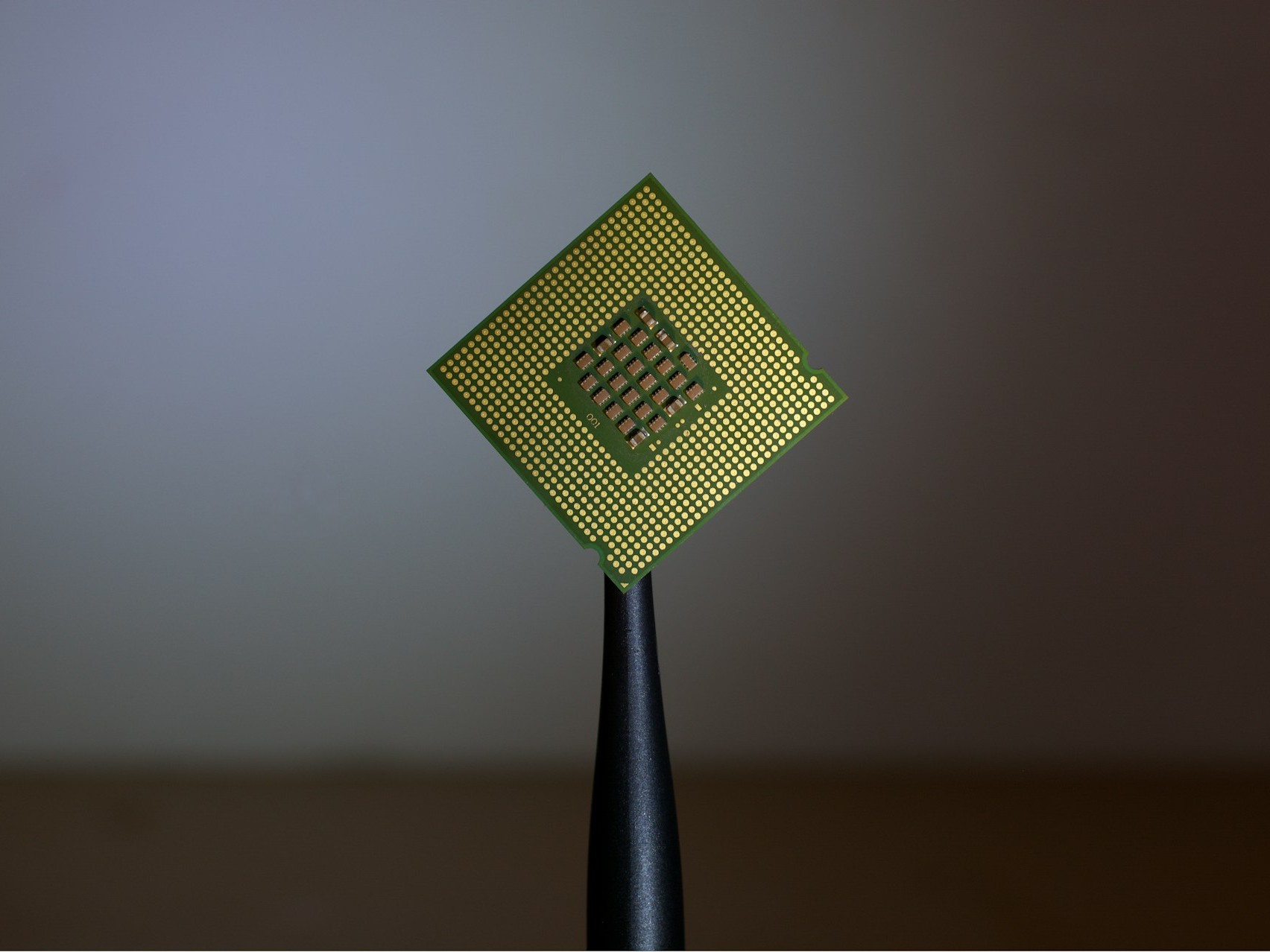
The screen delivers a typical SDR brightness of 275 nits and reaches up to 1,300 nits peak brightness under HDR settings. Gigabyte has equipped the monitor with DisplayHDR True Black 400 certification, confirming its strong HDR performance and deep black levels. It also also includes HyperNits mode, which boosts HDR brightness by up to 30% for enhanced clarity in highlights.
The panel delivers a 0.03ms GTG response time, which is ideal for fast-paced gaming. It also supports FreeSync Premium and G-Sync, reducing screen tearing and stuttering during variable frame rate gameplay. The color coverage hits 99% of the DCI-P3 gamut, offering rich and accurate visuals across a range of scenarios from gaming to content editing.

Gigabyte added a number of features for eye comfort and long-term use. This includes flicker-free technology, low blue light modes, and AI OLED Care, which helps reduce the risk of screen burn-in using an automated system of presets and pixel management. The company offers a three-year warranty that covers panel burn-in, which adds extra peace of mind.
The GO27Q24G offers a wide array of I/O ports, including two HDMI 2.1 ports, one DisplayPort 1.4, and a USB-C input that supports DisplayPort Alt Mode with 15W power delivery. It also includes an earphone jack and uses an external power adapter.
In terms of design, the GO27Q24G uses a four-sided borderless frame, giving it a sleek look and making it ideal for multi-monitor setups. The ergonomic stand supports 130mm height adjustment, -5° to 21° tilt, ±15° swivel, and 90° pivot rotation. The base has a slim 2mm metal profile, providing stability without occupying extra desk space.
In related news, ViewSonic has recently introduced a new 27-inch QHD 360Hz Fast IPS gaming monitor, while BenQ has launched the GW90TC series featuring 144Hz IPS panels, 20W USB-C connectivity, and a fully ergonomic stand.
For more daily updates, please visit our News Section.
Stay ahead in tech! Join our Telegram community and sign up for our daily newsletter of top stories! 
(Gigabyte)

The post Gigabyte launches new 27-inch 2K 240Hz WOLED gaming monitor with 1300 nits HDR & AI burn-in care appeared first on Gizmochina.
Oppo has launched the Watch S in Europe, following its fall debut. The smartwatch combines a sharp display with a large battery and comprehensive fitness tracking for cross-platform users.

The device centers on a 1.46-inch AMOLED display delivering 464 × 464 pixels at 317ppi. Its standout feature is 3000 nits peak brightness, ensuring outdoor visibility. The stainless steel case measures 8.9mm thick and weighs 35 grams without the band.
Running ColorOS Watch 7.1, the Watch S uses BES2800BP processing with 4GB EMMC storage. Users can customize watch faces across multiple preloaded options.

Fitness capabilities span over 100 workout modes with tailored parameters. Running features include guided training, posture analysis, and lactate threshold tracking. Professional court analytics enhance specific sports modes with detailed performance data.
Health monitoring employs an 8-channel heart rate sensor, a 16-channel blood oxygen sensor, and wrist temperature sensor. The watch generates 60-second health reports consolidating multiple metrics alongside sleep tracking, stress monitoring, and mind-body assessments.
IP68 certification and 5ATM water resistance enable swimming and daily water exposure. Splash touch maintains screen responsiveness when wet.
Connectivity includes Bluetooth 5.2, dual phone pairing across platforms, on-wrist messaging, and access card support. Dual-band L1 and L5 positioning improves location accuracy. Additional features allow short video playback control and remote smartphone camera operation.
The 339mAh battery delivers up to 10 days of maximum usage or 7 days of typical use. Compatibility extends to Android 9.0+ and iOS 14.0+ devices.
The Watch S is priced at €259 in markets like Germany, while it is priced at €230 in France and €209 is Spain. It is available in Phantom Black and Nebula Silver on Oppo’s regional online stores and select third-party retailers.
For more daily updates, please visit our News Section.
Stay ahead in tech! Join our Telegram community and sign up for our daily newsletter of top stories.
The post Oppo Watch S debuts in Europe with bright AMOLED screen, dual-band GPS, and 100+ sports modes appeared first on Gizmochina.
With Samsung’s February 25 Unpacked event getting closer, attention is starting to shift to smaller details. According to tipster Ice Universe, the Galaxy S26 Ultra will keep a 12-megapixel selfie camera. That part isn’t surprising. What’s new, however, is the reported switch to a Sony sensor, possibly the IMX874, instead of Samsung’s usual ISOCELL hardware.

The reported Sony sensor is said to retain the same 1/3.2-inch size and 1.12μm pixel pitch as the ISOCELL unit used in the Galaxy S25 Ultra and older flagships. The aperture also remains at f/2.2, suggesting there’s no major change in light intake on paper.
In other words, Samsung appears to be swapping suppliers rather than altering the physical hardware layout, likely a deliberate move to avoid internal redesigns.
Sony sensors have a long-standing reputation for strong dynamic range and more natural color rendering. That doesn’t automatically mean better selfies, but it could influence how skin tones, highlights, and HDR scenes are handled.
Image quality isn’t just about size: processing plays a big role, and Samsung’s AI-enhanced software tuning is expected to be optimized differently around Sony’s sensor characteristics.
The slightly wider 85-degree field of view (vs 80-degree field of view on the S25 Ultra) is also worth noting. If accurate, it would allow a bit more flexibility for group selfies and vlogging without going overly wide.

At this stage, nothing points to a dramatic overhaul of the S26 Ultra’s selfie hardware. The resolution stays the same, and the physical specs are largely unchanged.
But small sensor changes can still affect real-world results, especially when paired with smarter image processing and AI integration.
Whether this translates into noticeably better selfies will depend on tuning more than megapixels. And as always, leaks this far out should be taken with caution.
With Unpacked just days away, we won’t have to wait long to see if the Sony swap is real — and if it makes a difference.
Don’t miss a thing! Join our Telegram community for instant updates and grab our free daily newsletter for the best tech stories!
For more daily updates, please visit our News Section.
(Source: Ice Universe)
The post Galaxy S26 Ultra Leak Suggests Sony Sensor for Selfie Camera appeared first on Gizmochina.
The so-called DJI drone ban in the United States started in late December 2025, but it is not what many headlines made it sound like. DJI drones were not banned outright. The new rules mainly affect future imports and approvals. If you already own a DJI drone, you can still use it.
Here is what buyers, hobby users, and commercial operators should know.

The issue comes from the National Defense Authorization Act for FY2025. The law required a US national security agency to complete a formal security review of DJI by December 23, 2025.
That review did not happen by the deadline. Because of this, the Federal Communications Commission placed DJI equipment on its Covered List. Being on the Covered List does not ban ownership or use. It blocks new FCC equipment approvals, which are required to legally import and sell products in the US. That is what triggered the current restrictions.
Many people think all DJI drones have become illegal. That is wrong. Any DJI model that already had FCC approval before December 23, 2025, can still be owned, used, and bought from existing US stock. The rule only affects new approvals, not products that were already certified. If a drone was approved before the deadline, it can still be sold in the US.
This is the biggest impact. Because DJI is now on the FCC Covered List, new drone models and radio equipment cannot receive FCC authorization. Without that approval, companies cannot legally import or sell those devices in the United States.
This effectively blocks new DJI drone launches in the US unless the policy changes.
There were early fears that existing drones would lose software support. Regulators later added a temporary waiver. The FCC confirmed that DJI drones approved before the cutoff date can continue getting firmware and security updates until January 1, 2027.
This applies to both consumer and enterprise drones. What happens after that depends on future policy decisions.
These restrictions do not ground drones that are already in use. They focus on certification and supply chains. Current owners can still fly under normal Federal Aviation Administration rules, including recreational use and Part 107 commercial operations.
The policy affects new hardware entering the US, not the legality of flying drones you already own. This matters for businesses like aerial photography, inspections, and public safety teams that rely on DJI gear.
Not every drone maker is treated the same. In January 2026, regulators said drones on the Blue UAS Cleared List are exempt from some restrictions until January 1, 2027.
This program, run by the United States Department of Defense, checks drones for cybersecurity, supply chain security, and hardware compliance with federal standards. DJI is not included, but this gives approved manufacturers a path forward in the US market.
This is not a full DJI ban.
It is a regulatory block on future imports and approvals, not on current ownership or use.
For now, DJI users can keep flying as usual. The bigger question is what happens after 2027 and whether DJI will be allowed to launch new products in the US again.
The post DJI Drone Ban Guide: Ownership, Imports, FCC Rules and 2027 Updates Explained appeared first on Gizmochina.
Casio is taking its smoky, club-inspired take on the classic G‑Shock to more wrists across Europe. After a quiet debut in the UK and the US, the new GA-2100 Smoke Dial models are now landing in several EU markets, including the Netherlands, Spain, and Germany.
The new lineup includes three watches — GA-2100K-1A, GA-2100K-2A, and GA-2100K-5A. And as you might expect, all watches bear the familiar GA-2100 design, i.e., a slim, octagonal case with both analog hands and a small digital display.

The distinguishing theme, however, is their nightlife aesthetic. Casio says the design takes cues from electronic music scenes, with translucent cases and glossy dials that look like they belong under club lights rather than office fluorescents.
Each model uses a transparent resin and carbon case paired with a matching strap. At just over 48mm tall and weighing about 51 grams, the watches keep the lightweight feel the GA-2100 series is known for. They also retain the tough reputation of the line, thanks to Casio’s Carbon Core Guard structure and 200-meter water resistance.
The differences mostly come down to color. The GA-2100K-1A arrives in smoky gray with subtle green highlights on the dial. The GA-2100K-2A uses a frosty blue case with bright orange accents, while the GA-2100K-5A goes for a warmer amber-brown tone paired with red details.

Despite the flashy styling, the feature set remains classic G-Shock. You get world time across 31 time zones, a stopwatch, a countdown timer, five alarms, and an automatic calendar that runs through 2099. There’s also a dual-LED backlight system for both the analog face and the digital display.
In most EU markets, the three models are priced at €129 each, with standard shipping and no obvious supply limits at launch.
For more daily updates, please visit our News Section.
Stay ahead in tech! Join our Telegram community and sign up for our daily newsletter of top stories! 
The post Casio’s G-Shock Smoke Dial watches expand across Europe with club-inspired looks appeared first on Gizmochina.
It’s only been a few days since the Huawei Band 11 Pro first surfaced online. Now, a new report from WinFuture has filled in most of the blanks with a full spec sheet and additional images of Huawei’s upcoming fitness tracker.
The earlier leak showed the Band 11 Pro in only green and blue. The latest report, however, adds a third option—black.

Alongside the colors, users might also get a choice of casing, as it is said to come in both aluminum and a mix of titanium-aluminum alloy. Huawei will also promise water resistance up to 50 meters, along with IP67 certification.
As for the specs, the Band 11 Pro will feature a vertical 1.62-inch AMOLED panel with a resolution of 482 × 286 pixels. The screen can reportedly reach up to 2,000 nits of brightness.
The Band 11 Pro is lightweight at just 14 grams (without the strap), even with a 300mAh battery. It should offer up to 14 days of battery life in power-saving mode. Under typical conditions, however, users can expect around 10 days per charge.

There’s also a standard Huawei Band 11 model, which could share much of the same technology but uses a smaller 180mAh battery.
The Pro model also includes built-in GPS, an accelerometer, gyroscope, magnetometer, optical heart rate sensor, and ambient light sensor. As a result, you can expect wellness features like step tracking, heart rate monitoring, blood oxygen tracking, and stress monitoring.
The band is also said to have guided breathing exercises built in, and users can read notifications, check SMS messages, and even answer calls directly from the band.
All health data syncs with the Huawei Health app, which remains central to Huawei’s ecosystem.
Huawei is expected to launch the Band 11 Pro in Germany in early March. It could launch between €50 and €70, depending on the version.
For more daily updates, please visit our News Section.
Stay ahead in tech! Join our Telegram community and sign up for our daily newsletter of top stories! 
(Source)
The post Huawei Band 11 Pro full specs revealed: Titanium body, 3000 nits display, and up to 14 days battery life appeared first on Gizmochina.
If you’re planning on buying a good TV in 2026, you are probably faced with one of the biggest dilemmas in years: Do you buy a budget MiniLED TV right now, or wait a few months for OLED to get even cheaper? MiniLED models have never been more affordable. At the same time, OLED panel prices are collapsing, and entry level OLEDTVs have also become more accessible. So here’s a breakdown of everything you should consider.
For the first time in years, OLED is no longer the “luxury only” option. In 2026, solid 55-inch MiniLED TVs sit comfortably in the $500–700 range, while premium MiniLED models stretch toward $1,000. That used to undercut OLED by a massive margin.

But this is not the case anymore. OLED TVs are now starting around $599, which is near all-time lows, thanks to major manufacturing cost reductions. The cost to produce a 65-inch OLED panel has dropped from roughly $1,000 in 2020 to under $500 by 2025-26. That shift alone is reshaping the mid-range TV market. In simple terms, the price gap between MiniLED and OLED has nearly disappeared.
The biggest disruption in 2026 isn’t just pricing, it’s the new OLED SE panels. Launching in Spring 2026, this cost-optimized OLED panel removes the polarizer layer to reduce production costs while still delivering around 1,000 nits of peak brightness and 95% DCI-P3 colour coverage. That’s more than enough for cinematic viewing and HDR content. So you can expect to see this panel in models like the LG B6 and the Samsung S85H.

This isn’t a stripped-down OLED. It’s essentially a smarter, cheaper OLED, which changes the buying equation dramatically. If you can wait a few months, these models may undercut many mid-range MiniLEDs while delivering true OLED performance.
Budget MiniLED TVs offer a compelling package right now. These are often brighter panels than most OLEDs at the same price point, more affordable than top OLED counterparts, and offer better longevity. This is especially true for users who are concerned about burn-in, which is basically when static logos or UI elements become permanently visible over long periods. However, recent testing shows major improvements.

Many OLED TVs now last well over 10,000 hours without significant issues when used normally, marking a longer lifespan than typical ownership cycles. Still, if your usage includes long periods with static images (news tickers, desktop mirroring, gaming HUDs), MiniLED might remain the safer choice for worry-free daily use. OLED’s pixel-level control and pixel refresher tech have helped greatly, but the theoretical risk still lingers for some buyers.
When deciding, consider your priorities:
Buy a Budget MiniLED TV if:
Wait for Cheaper OLED TVs if:
Budget MiniLED TVs are a solid choice in 2026, delivering bright, colorful images and strong performance right now. But OLED’s advantage in contrast, black depth, and cinematic picture is becoming more accessible as prices fall and newer, cheaper models arrive. If you need a TV right now, a MiniLED will satisfy most users beautifully. If you want the best possible picture and can time your purchase, waiting a few months for an affordable OLED could deliver more long-term value.
For more daily updates, please visit our News Section.
Don’t miss a thing! Join our Telegram community for instant updates and grab our free daily newsletter for the best tech stories!
The post Should You Grab a MiniLED TV or Wait for Budget OLED TVs? appeared first on Gizmochina.
Apple’s long-awaited Siri AI overhaul is facing another delay, and the rollout now appears set to arrive in phases rather than as a single headline feature in iOS 26.4.
According to Bloomberg’s Mark Gurman, Apple encountered fresh issues during internal testing in recent weeks. Sources familiar with the project say the upgraded assistant does not always process requests correctly, and some queries take longer than expected to complete.

Apple initially targeted iOS 26.4, which is expected in March, but the company is now spreading parts of the upgrade across later releases. Some features could slip to iOS 26.5 in May, while more advanced capabilities may not arrive until iOS 27 in September.
The delay stands out because Apple first previewed the redesigned Siri in June 2024. At the time, the company positioned it as a major leap forward, promising a more personal assistant capable of understanding on-screen context, accessing relevant user data when appropriate, and executing complex tasks across apps.
Those advanced features now appear to be the most difficult to deliver reliably. Gurman says internal builds include a toggle that enables a “preview” of certain personal data features, which suggests Apple may warn users that early versions are incomplete or inconsistent.
Testing has also uncovered reliability concerns. Some deeper app control features reportedly fail in certain scenarios. Testers have flagged accuracy problems and a bug that interrupts users if they speak too quickly. In some cases, Siri falls back to its existing ChatGPT integration instead of relying on Apple’s new system.
The revamped Siri runs on a new architecture, reportedly codenamed Linwood, and is powered by Apple Foundation Models. Apple has also confirmed that Google’s Gemini models will support parts of the assistant. Despite these partnerships, Apple continues to stress its privacy-first approach, which limits how user data is processed or stored externally.
Apple maintains that the upgraded Siri will launch this year, but a full rollout now looks increasingly staggered.
For more daily updates, please visit our News Section.
Stay ahead in tech! Join our Telegram community and sign up for our daily newsletter of top stories! 
(Source)
The post Apple’s New Siri Hits Another Roadblock, Major AI Upgrade Delayed Again appeared first on Gizmochina.
Samsung has started teasing the Samsung Galaxy S26 Ultra ahead of its February 25 Unpacked event, and this time the focus isn’t cameras or AI features, it’s screen privacy.

In a short YouTube video titled “We don’t scroll and tell,” Samsung shows a woman using her phone on a metro train while two passengers next to her try to glance at the screen. She toggles a setting called “Zero-peeking privacy,” and instantly the display becomes unreadable from the sides, while remaining perfectly clear from her direct viewing angle. The ad ends with a simple question: “Can your phone do that?” along with the launch date.
It confirms earlier rumors about a built-in Privacy Display feature for the S26 Ultra. Unlike physical privacy screen protectors, which permanently narrow viewing angles and often dull brightness, this seems to be a dynamic, hardware-level solution.
The underlying tech is believed to be based on Samsung Display’s Flex Magic Pixel concept, which has been shown in prototype form in recent years. Instead of blocking visibility with a dark overlay, it controls how light is emitted from the OLED panel. When activated, the viewing angle narrows electronically, making the screen difficult to see from the sides without affecting clarity straight on.
In practical terms, that should mean minimal dimming or color shift for the main user, without the need for a separate filter.
Samsung also hints at Galaxy AI involvement. If implemented as rumored, users might be able to enable privacy mode for specific apps rather than the entire display. There could also be automation triggers based on environment or usage. That flexibility would make it more useful than traditional privacy solutions, which are typically all-or-nothing.
Based on the teaser and past product positioning, the feature appears exclusive to the Ultra model. The standard Galaxy S26 and S26 Plus are unlikely to include the same hardware.
What’s notable about this teaser is the emphasis on everyday use. It’s not about benchmark scores or zoom ranges. It’s about a small but common annoyance: people trying to peek at your screen in public.
Don’t miss a thing! Join our Telegram community for instant updates and grab our free daily newsletter for the best tech stories!
For more daily updates, please visit our News Section.
(Source: Samsung)
The post Samsung Demos Galaxy S26 Ultra’s “Zero-Peeking Privacy” Feature in Action appeared first on Gizmochina.
Just a few days after a report suggested that Xiaomi could bring the Xiaomi 17 series to India with a price hike of more than 20 percent, a new leak tells a very different story for the rest of the world. According to Dealabs, the upcoming Xiaomi 17 and Xiaomi 17 Ultra will launch globally without any price hike.
Dealabs reports that Xiaomi is keeping prices in Europe identical to those of the Xiaomi 15 series. That’s notable given that the new phones bring meaningful upgrades, particularly in battery capacity and efficiency.
Here’s how much it will cost in Europe:
Xiaomi 17
Xiaomi 17 Ultra
Fortunately, the report also reveals the launch date. According to it, the Xiaomi 17 lineup will debut globally on February 28, 2026, just ahead of Mobile World Congress 2026 in Barcelona.
Xiaomi has often used the days leading into MWC to secure attention before the show floor gets crowded with competing announcements, and this year appears no different.
As for the specs, the Xiaomi 17 features a 6.3-inch LTPO AMOLED, Snapdragon 8 Elite Gen 5 chipset, up to 1TB storage, and a triple 50MP camera setup with Leica lenses. Battery life is solid at 7000 mAh with 100W wired and 50W wireless charging.

The 17 Ultra ups the ante with a 6.9-inch LTPO AMOLED, a 200MP periscope telephoto, 1TB storage, and a 6800 mAh battery supporting 90W wired and 50W wireless charging. Both run Android 16 with HyperOS 3 and offer IP68 protection, stereo speakers, and high-res audio support.
For more daily updates, please visit our News Section.
Tech enthusiast? Get the latest news first! Follow our Telegram channel and subscribe to our free newsletter for your daily tech fix! 
(Source)
The post Xiaomi 17 and 17 Ultra global prices leak: no hike, launch set for February appeared first on Gizmochina.
Early details about the Sony PS6 are starting to surface, and one of the more interesting claims involves its graphics architecture. According to AMD-focused leaker Kepler_L2 on the NeoGAF forums, Sony’s next console may not adopt the full RDNA 5 GPU design. Instead, it could use a hybrid approach, combining parts of RDNA 5 with elements from earlier RDNA generations. If accurate, that wouldn’t be unusual for Sony.

The original PS5 didn’t use a clean, full RDNA 2 implementation. It was closer to RDNA 1 with custom ray-tracing hardware layered in. Later, the PS5 Pro reportedly integrated newer RDNA 4 features while still maintaining a custom structure. Sony has historically worked closely with AMD to tailor architectures rather than simply adopting them wholesale.
Rumors suggest the PS6 could feature a Zen 6 CPU and around 30GB of memory, possibly GDDR7. That alone would push component costs higher than previous generations, especially if memory pricing remains volatile over the next few years.
A full RDNA 5 GPU, particularly one sized for high-end console performance, would add even more expense. By selectively implementing features instead of using the complete architecture, Sony may be trying to strike a balance between performance gains and retail pricing.
That strategy would align with how Sony has positioned past consoles: strong performance, but still within reach for mainstream buyers.
There are also reports that Microsoft’s next Xbox could move closer to a “PC-like” approach, potentially pushing into higher price territory. If that happens, Sony may choose to differentiate by keeping costs under control rather than chasing absolute top-end specs.
Of course, we’re still years away from launch. The PS6 is widely expected around 2028, and a lot can change between now and then — including GPU roadmaps, fabrication costs, and overall market conditions.
A hybrid RDNA 5 design doesn’t automatically mean weak performance. Custom console GPUs often include targeted optimizations that matter more for real-world gaming workloads than raw architectural purity.
Don’t miss a thing! Join our Telegram community for instant updates and grab our free daily newsletter for the best tech stories!
For more daily updates, please visit our News Section.
The post PS6 Reportedly Won’t Use Full RDNA 5 GPU Architecture appeared first on Gizmochina.
Choosing between the Xiaomi Pad 8 Pro and the OnePlus Pad 3 isn’t just about specs; it’s about deciding what kind of tablet experience fits your lifestyle. One focuses on flagship power in a sleek, portable form at a competitive price, while the other pushes toward a larger, laptop-style productivity machine with immersive multimedia. For buyers balancing performance, display size, battery life, and value, this comparison highlights which tablet truly delivers more for the money, and which one fits specific usage needs better.
| Preview | Product | |
|---|---|---|
|
|
OnePlus Pad 3 World’s Fastest Snapdragon 8 Elite Processor, 13.2″ 3.4k Screen, 144Hz Adaptive… | Check Price on Amazon India |
Please Note: When you buy something using the links in our articles, we may earn a small commission at no cost to you.

| Preview | Product | |
|---|---|---|
|
|
OnePlus Pad 3 Storm Blue, 13.2″ 3.4K LCD 144 Hz Display, Snapdragon 8 Elite,… | Check Price on Amazon Global |
Please Note: When you buy something using the links in our articles, we may earn a small commission at no cost to you.
| Feature | Xiaomi Pad 8 Pro | OnePlus Pad 3 | Winner |
|---|---|---|---|
| Display Size & Multimedia | 11.2″ 144Hz, HDR10, Dolby Vision, 800 nits, 4-speaker Dolby Atmos | 13.2″ 144Hz, Dolby Vision, 900 nits, 8-speakers | OnePlus – Larger screen + richer speaker setup for immersive media |
| Portability & Build | 5.8mm thin, ~485g, easier to hold for long sessions | Larger 289.6×209.7×6mm, 675g, more desk-oriented | Xiaomi – Much lighter and more portable |
| Processor & Performance | Snapdragon 8 Elite, UFS 4.1 | Snapdragon 8 Elite, UFS 4.0 | Xiaomi – Same power but slightly faster storage |
| Battery & Charging | 9200 mAh, 67W fast, 22.5W reverse charging | 12140 mAh, 80W fast | OnePlus – Bigger battery and quicker charging overall |
| Camera Quality | 50MP rear + 32MP selfie, 4K@60fps | 13MP rear + 8MP selfie | Xiaomi – Far better cameras for photos & video calls |
The Xiaomi Pad 8 Pro focuses on portability with its slim 5.8mm aluminum body and sub-500g weight, making it easier to hold for long reading or gaming sessions. It feels compact yet premium. The OnePlus Pad 3, on the other hand, is significantly larger and heavier at 675g, built more like a laptop replacement. Its expansive chassis suits desk use but is less travel-friendly. The difference in size alone changes how each tablet fits into daily life.
Xiaomi offers an 11.2-inch 3:2 IPS LCD with 144Hz refresh rate, HDR10, Dolby Vision, and 800 nits peak brightness. The sharper 344 ppi density makes text look crisp. OnePlus counters with a massive 13.2-inch 144Hz IPS LCD panel, brighter at 900 nits HBM and ideal for split-screen productivity. For audio, OnePlus dominates with 8 speakers, while Xiaomi includes a capable 4-speaker Dolby Atmos setup.
Xiaomi wins for portability and sharper visuals; OnePlus wins for immersive size and louder multimedia output.
Both tablets run the Snapdragon 8 Elite (3nm) with Adreno 830 GPU, meaning flagship-level performance across gaming, rendering, and multitasking. Raw power is identical. Xiaomi ships with Android 16 and HyperOS 3, giving it a slight software freshness advantage. OnePlus runs Android 15 with ColorOS 15, which remains fluid but is technically a generation behind. With UFS 4.1 storage on Xiaomi (except base) and UFS 4.0 on OnePlus, both feel extremely fast.
OnePlus Pad 3 benefits from its larger 13.2-inch canvas, making split-screen apps and document editing more comfortable. Xiaomi’s 3:2 aspect ratio, however, is better optimized for reading and browsing. RAM configurations go up to 16GB on both, ensuring heavy apps run smoothly. Xiaomi’s lighter weight makes handheld productivity easier, while OnePlus feels more desk-oriented.
Performance is equal; Xiaomi edges ahead in software freshness, while OnePlus excels in large-screen multitasking.
The Xiaomi Pad 8 Pro packs a 9200mAh battery with 67W fast charging and even 22.5W reverse wired charging, a rare bonus. OnePlus Pad 3 steps ahead with a massive 12140mAh battery and faster 80W charging. For extended binge sessions or long workdays, the OnePlus simply lasts longer due to its capacity advantage.
Both support stylus input, but Xiaomi includes magnetic stylus support integrated neatly into its slim frame. OnePlus supports stylus and keyboard accessories and benefits from a productivity-focused large display. However, Xiaomi’s infrared port adds smart-home control flexibility, a small but practical addition rarely seen today.
OnePlus wins on battery endurance; Xiaomi stands out for reverse charging and compact accessory integration.
Xiaomi equips a 50MP rear camera and a 32MP ultrawide selfie camera, far exceeding typical tablet standards. OnePlus keeps it basic with a 13MP rear and 8MP front camera. For document scanning, video calls, or occasional content capture, Xiaomi clearly offers more versatility and sharper detail.
Both support 4K video recording on the rear camera, but Xiaomi allows 4K at 60fps, giving it more flexibility. OnePlus includes gyro-EIS for steadier footage. In audio, the 8-speaker system on the OnePlus Pad 3 delivers a more cinematic soundstage compared to Xiaomi’s 4-speaker setup.
Xiaomi dominates camera hardware; OnePlus wins in speaker immersion.
At around $400 / ₹35,000, the Xiaomi Pad 8 Pro delivers flagship chipset performance at a much more aggressive price. The OnePlus Pad 3, priced at $600 / ₹48,000, justifies its premium with a bigger display, larger battery, and stronger multimedia system.
Value-focused buyers will naturally gravitate toward Xiaomi, while users seeking a laptop-like tablet experience may consider the OnePlus worth the extra investment.
Disclaimer:
Prices are approximate and may vary based on country, region, and applicable taxes.
Xiaomi stands out with its 3:2 high-resolution panel, stronger cameras, lighter build, reverse charging, and newer Android version. OnePlus impresses with its massive 13.2-inch display, 8-speaker setup, and huge battery capacity.
For pure value and portability, the Xiaomi Pad 8 Pro feels like the smarter buy. For big-screen productivity and cinematic entertainment, the OnePlus Pad 3 offers a more expansive experience, but at a noticeable premium.
Read More:
The post Xiaomi Pad 8 Pro vs OnePlus Pad 3: Same Chip, Totally Different Experience appeared first on Gizmochina.
Vivo is adding another entry to its V60 lineup, but the new Vivo V60 Lite feels very familiar. That’s because this isn’t an entirely new device. The phone was first launched back in September last year. Now, it’s back with a small change.
Vivo has quietly listed a refreshed version of the V60 Lite in Panama, and at first glance, it looks almost identical to the original model. The biggest difference, however, is inside.

The new Vivo V60 Lite (model V2549) is the first device to ship with Qualcomm’s new Snapdragon 6s 4G Gen 2 processor. It replaces the older Snapdragon 685 found in the previous 4G edition.
Everything else appears largely unchanged.
The V60 Lite continues to feature a 6.77-inch AMOLED display with FHD+ resolution and a 120Hz refresh rate. Vivo is keeping the optical in-display fingerprint scanner and the 32-megapixel front camera intact. Around the back, there’s the same dual-camera setup: a 50-megapixel main sensor paired with an 8-megapixel ultrawide lens.

The device packs a 6,500mAh battery with support for 90W wired fast charging. Vivo claims the phone can go from nearly empty to fully charged in under an hour. There’s also 6W reverse wired charging, allowing the phone to top up smaller devices if needed.
On the software side, the phone runs Funtouch OS 15 based on Android 15. It carries IP65 certification for dust and water resistance, along with MIL-STD-810H durability compliance.

For context, the earlier V60 Lite 4G variant launched in Turkey shortly after the V60 Lite 5G debuted in Taiwan. That version used the Snapdragon 685 chipset and came with 8GB of RAM (plus virtual RAM expansion) and 256GB of internal storage, without a microSD slot.
The Panama listing confirms black and blue color options for the refreshed model, though pricing details haven’t been disclosed yet.
For more daily updates, please visit our News Section.
Stay ahead in tech! Join our Telegram community and sign up for our daily newsletter of top stories!
The post New Vivo V60 Lite launches as the first smartphone with Snapdragon 6s 4G Gen 2 appeared first on Gizmochina.
Anker has launched its latest international travel adapter, the Anker Nano Travel Adapter (model A9215), in the Chinese market. The compact 5-in-1 adapter is priced at 189 yuan (approximately $27). It is already available in other global markets at a retail price of around $25.99.

The Anker Nano Travel Adapter includes one AC outlet, two USB-C ports, and two USB-A ports, allowing users to power up to five devices simultaneously. The adapter supports a maximum power output of 20W on the primary USB-C1 port, which enables fast charging for smartphones and other smaller electronics.
The secondary USB-C2 port delivers up to 15W, while each USB-A port supports up to 12W. When multiple USB ports are in use, total output is capped at 15W, with smart power distribution across the ports.
The device features a compact design, measuring 86 x 50 x 25 mm and weighing approximately 110 grams. Anker claims the adapter is 43% smaller than traditional models, making it suitable for travel and easy to carry in small bags or even pockets.

The adapter supports plug types used in over 200 countries and regions, including Type A (USA), Type G (UK), Type C (EU), and Type I (Australia). It has a worldwide voltage support range of 100-240V, but it does not convert voltage.
Anker has equipped the adapter with a Push-Lock sliding mechanism for secure plug deployment and retraction. The European plug uses a flip-out latch, while the U.S., U.K., and Australian plugs slide out using dedicated switches. Anker states the mechanism has passed over 10,000 durability tests.

For safety, the adapter includes a self-resetting fuse, short-circuit protection, overcurrent and overvoltage protection, and temperature control. The outer shell uses UL94V-0 flame-retardant materials, and the adapter includes safety shutters to prevent accidental contact with internal components.
Anker offers the Nano Travel Adapter in Anker Black and Aurora White color options. The product also comes with an 18-month warranty.
In related news, you can also explore our roundup of the best USB-C hubs to buy in 2026.
For more daily updates, please visit our News Section.
Stay ahead in tech! Join our Telegram community and sign up for our daily newsletter of top stories! 
(JD)
The post Anker launches 5-in-1 Nano Travel Adapter in China with 20W USB-C fast charging appeared first on Gizmochina.
Choosing between the Google Pixel Watch 4 and the Samsung Galaxy Watch8 Classic isn’t just about picking a smartwatch; it’s about deciding what kind of experience you want on your wrist. One focuses on lightweight comfort, fast charging, and clean Wear OS integration at a much lower price, while the other leans into premium materials, a rotating bezel, and deeper health insights with a clear flagship feel. With both running Wear OS 6 and targeting Android users, this comparison highlights where the real differences matter in daily use, long-term value, and health tracking depth, making it easier to see which watch truly fits your lifestyle.

| Preview | Product | |
|---|---|---|
|
|
Google Pixel Watch 3 (45mm) 2024 Model – Android Smartwatch, Heart Rate Tracking, Fitbit Advanced… | Check Price on Amazon India |
Please Note: When you buy something using the links in our articles, we may earn a small commission at no cost to you.
| Preview | Product | |
|---|---|---|
|
|
Google Pixel Watch 4 (45mm) – Android Smartwatch with Heart Rate and Sleep Tracking – 40-Hour… | Check Price on Amazon Global |
Please Note: When you buy something using the links in our articles, we may earn a small commission at no cost to you.
| Feature | Google Pixel Watch 4 | Samsung Galaxy Watch8 Classic | Winner |
|---|---|---|---|
| Build & Design | Aluminum frame, Gorilla Glass 5, lighter (31–37g) | Stainless steel, Sapphire crystal, rotating bezel, heavier (63.5g) | Samsung – Premium materials and tactile bezel |
| Health Tracking Sensors | Heart rate, SpO2, skin temp, skin conductance, ECG | Heart rate, SpO2, skin temp, Barometer, BioActive, blood pressure | Samsung – Broader and more advanced sensor suite |
| Display Brightness & Protection | 1.4″ LTPO AMOLED, 3000 nits, Gorilla Glass | 1.34″ Super AMOLED, 3000 nits, Sapphire crystal | Samsung – Stronger protection and premium finish |
| Performance & Storage | Snapdragon W5 Gen 2, 32GB | Exynos W1000, 64GB | Samsung – More storage and newer chipset |
| Charging & Battery Convenience | 455mAh, very fast wired charging | 445mAh, 10W wireless | Google – Faster charging performance |
| Preview | Product | |
|---|---|---|
|
|
Samsung Galaxy Watch8 Classic (47mm LTE, Black)_with Other Offers | Check Price on Amazon India |
Please Note: When you buy something using the links in our articles, we may earn a small commission at no cost to you.
| Preview | Product | |
|---|---|---|
|
|
Samsung Galaxy Watch 8 Classic (2025) 46mm Bluetooth Smartwatch, Cushion Design, Rotating Bezel,… | Check Price on Amazon Global |
Please Note: When you buy something using the links in our articles, we may earn a small commission at no cost to you.
The Pixel Watch 4 keeps things light and minimal with an aluminum frame and Gorilla Glass 5 protection. At 31–37g, it feels noticeably lighter on the wrist and suits all-day wear comfortably. In contrast, the Galaxy Watch8 Classic uses a stainless steel frame with a sapphire crystal and adds a rotating bezel for tactile navigation. At 63.5g, it feels premium but substantially heavier. Samsung also brings MIL-STD-810H compliance and blood pressure hardware, adding to its rugged appeal.
Both watches push up to 3000 nits peak brightness, making outdoor visibility excellent. The Pixel Watch 4 has a slightly larger 1.4-inch LTPO AMOLED panel, while Samsung offers a 1.34-inch Super AMOLED with sapphire protection and slightly higher pixel density. Sharpness is comparable, but Samsung’s sapphire layer feels more durable long-term.
Samsung wins on durability and premium feel, while the Pixel Watch 4 excels in lightweight comfort and everyday wearability.
Both models include heart rate, SpO2, skin temperature, ECG, and advanced motion sensors. Samsung goes further with BioActive technology, blood pressure monitoring, and an antioxidant index, giving it a broader health portfolio. Pixel Watch 4 adds skin conductance and satellite SOS (LTE models), which enhances safety features.
Samsung’s broader medical-style tracking may appeal more to serious health users, while Google keeps things clean and essential.
Both watches support multi-satellite GPS (L1+L5), ensuring accurate route tracking. Samsung includes additional positioning systems like BDS and offers deeper health ecosystem integration. Pixel’s UWB support adds future-ready connectivity perks.
Galaxy Watch8 Classic takes the lead for advanced health metrics, though Pixel Watch 4 covers most essentials comfortably.
Both run Wear OS 6, but Samsung layers One UI 8 Watch on top and powers the device with a newer 3nm Exynos W1000 chip. Pixel Watch 4 uses the Snapdragon W5 Gen 2 (4nm). Day-to-day performance should feel smooth on both, though Samsung’s newer silicon and penta-core setup suggest stronger long-term efficiency.
Pixel offers 32GB storage, while Samsung doubles it to 64GB, useful for offline music and apps. Both support NFC payments, Wi-Fi, Bluetooth, and eSIM LTE models. Pixel adds Ultra Wideband support, a forward-thinking feature not present on Samsung.
Samsung edges ahead in raw hardware and storage, but the Pixel Watch 4 stands out for UWB and clean software integration.
Pixel Watch 4 packs a 455mAh battery, slightly larger than Samsung’s 445mAh unit. Charging is notably faster on Pixel, reaching 100% in as little as 45–60 minutes, depending on size. Samsung relies on 10W wireless charging, which is convenient but slower.
Fast top-ups can make a real difference for busy users who forget overnight charging.
Both support dual-band GPS (L1+L5), NFC, Wi-Fi, and eSIM LTE. Pixel supports Bluetooth 6.0, while Samsung sticks to Bluetooth 5.3. Samsung includes more satellite systems, giving it broader positioning support.
Pixel Watch 4 wins for faster charging and newer Bluetooth, while Samsung offers broader satellite compatibility.
Pixel Watch 4 starts around $300 / ₹28,000, making it significantly more affordable. The Galaxy Watch8 Classic comes in at $450 / ₹41,000, reflecting its stainless steel build, sapphire glass, and expanded health features.
Samsung feels more premium, but Pixel delivers stronger value for money.
Disclaimer:
Prices are approximate and may vary based on country, region, and applicable taxes.
Pixel Watch 4 is ideal for users who want a lightweight, fast-charging smartwatch with solid core health tracking and modern connectivity like UWB. It balances features and affordability very well.
Galaxy Watch8 Classic suits buyers who prioritize premium materials, rotating bezel navigation, deeper health metrics like blood pressure monitoring, and larger storage capacity.
For value and comfort, Pixel Watch 4 stands out. For premium hardware and advanced health features, Galaxy Watch8 Classic takes the crown.
Read More:
The post Pixel Watch 4 vs Galaxy Watch8 Classic: Is Samsung Worth The Extra Money? appeared first on Gizmochina.
Samsung’s next set of premium earbuds has surfaced early on the web. An image shared by Mohammed Khatri on X shows both the Samsung Galaxy Buds 4 and Samsung Galaxy Buds 4 Pro from all angles in the black color option.
The biggest visual change is the stems. Both models feature redesigned stems with a flat outer edge. Samsung also seems to be changing how the earbuds sit inside the case. Instead of being placed vertically like the Samsung Galaxy Buds 3 generation, the new Buds 4 series rests horizontally in the charging case.

While it’s not a big deal for users, Samsung must have needed to rework the internal layout to accommodate the design change. The case itself has a transparent finish, offering a partial view of the earbuds inside.
As before, Samsung is keeping a clear distinction between the standard and Pro models. The regular Galaxy Buds 4 do not include silicone ear tips, similar to their predecessor. The Galaxy Buds 4 Pro, on the other hand, retains silicone tips for a tighter seal and potentially better noise isolation.

The leaked images also show what buyers can expect in the box. Both models appear to include a USB charging cable. The Pro version will additionally ship with extra silicone ear tips, which are standard for earbuds designed to offer a more customizable fit.
Beyond design, the Galaxy Buds 4 series is expected to bring new software features. According to a previous report, both earbuds will support head gestures, find-your-phone functionality, and improvements to Samsung’s Interpreter mode.
There’s no official word yet from Samsung on pricing or the exact launch timing. But with images already circulating online, it may not be long before the company makes everything official.
For more daily updates, please visit our News Section.
Stay ahead in tech! Join our Telegram community and sign up for our daily newsletter of top stories.
(Source)
The post Samsung Galaxy Buds 4 and Buds 4 Pro surfaces early on the web, revealing key details appeared first on Gizmochina.
Last month, Redmi unveiled the Redmi Turbo 5 in China. Speculation is rife that while it remains exclusive to the Chinese market, its tweaked version, packing a smaller battery, is expected to hit the global market as the Poco X8 Pro. Ahead of the expected launch, the X8 Pro’s global version has appeared on Geekbench, revealing some of its key specs.


The Poco X8 Pro’s global version (model number: 2511FPC34G) has revealed that it is powered by the Dimensity 8500, 12GB of RAM, and Android 16. Although the chip’s name is not explicitly mentioned, the CPU and GPU details available through the listing confirm the inclusion of the D8500. The handset scored 1708 in the single-core test and 6297 points in the multi-core test.

According to reports, the Poco X8 Pro will feature a 6.59-inch 1.5K AMOLED display with a 120Hz refresh rate. Its D8500 chip will be paired with LPDDR5X RAM and fast UFS 4.1 storage, delivering strong gaming and multitasking capabilities. The device will ship with HyperOS 3-based Android 16.
In terms of photography, the phone offers a dual rear camera setup led by a 50-megapixel primary sensor with OIS alongside an 8-megapixel ultra-wide lens, plus a 20-megapixel front camera for selfies. It may pack a 6,500mAh battery with 100W fast charging.
According to reports, the Poco X8 Pro will hit the market in multiple configurations, such as 8GB+256GB, 8GB+512GB, and 12GB+512GB. It may arrive in three shades, such as black, white, and mint.
For more daily updates, please visit our News Section.
Stay ahead in tech! Join our Telegram community and sign up for our daily newsletter of top stories.
The post Global Poco X8 Pro’s chipset revealed via Geekbench listing appeared first on Gizmochina.
While the Galaxy S26 series will headline next week’s Galaxy Unpacked event, Samsung is also expected to unveil the Galaxy Buds4 and Galaxy Buds4 Pro earbuds. Ahead of the launch, new official-looking renders of the upcoming Galaxy earbuds have surfaced, courtesy of a tipster. The renders don’t really reveal anything new, but they offer the clearest look yet at the Galaxy Buds4 and Buds4 Pro, along with their charging cases. Samsung will include a charging cable and extra ear tips with the Pro variant, while the standard model will come with only a charging cable in the box. Both...


Two separate prior leaks told us that both the Xiaomi 17 and the Xiaomi 17 Ultra would be priced exactly the same as their predecessors in Europe, and now a new report from France comes to confirm this information. Xiaomi 17 Ultra The Xiaomi 17 and Xiaomi 17 Ultra pricing for the Eurozone is in the table below. Model Colors Configuration (RAM / Storage) Price Xiaomi 17 Black, Venture Green, Ice Blue, Alpine Pink 12 / 256 GB €999 12 / 512 GB €1,099 Xiaomi 17 Ultra Black, White,...


Last month, Samsung teased that it will add “a new layer of privacy” to the Galaxy S26 Ultra with the new privacy screen feature. Now the company has shared a short video demonstrating how it works – it can make the whole screen or specific parts of it appear black when viewed from the side, without affecting legibility for you. Here’s the video. In this case the whole screen gets blacked out for any unwanted onlookers when the Zero-peeking privacy toggle is enabled. What’s interesting is that the phone has per-pixel control over this feature and can only black out notifications with...


The vivo X300 FE was certified for sale in Europe back in October, and in the meantime it's been given the go-ahead in India by BIS as well. Now, IMDA in Singapore has certified it too, along with TÜV in Germany. The phone has the model number V2537. The TÜV certification reveals that the phone has support for 90W wired charging. The X300 FE has also run Geekbench, revealing that it's powered by the Snapdragon 8 Gen 5 SoC, paired with 12GB of RAM in the prototype that ran the benchmark. Of course, vivo could offer other RAM amounts too. The device will run Android 16 with...
Honor is actively preparing the teaser campaign for its next flagship foldable - the Magic V6. The device was spotted in the hands of actor Nicholas Tse, giving us our first live look at its design ahead of its debut at MWC Barcelona. The V6 is shown in its red colorway and it resembles its predecessor with an octagon-shaped camera island with red and gold accents. The V6 will feature the flat sides and will retain the fingerprint scanner embedded inside the power button. Honor Magic V6 design The Chinese version of the Magic V6 is expected to bring a 7,150mAh battery with...


Apple is holding its first event of the year on March 4. Cupertino will host a “special Apple experience” across New York, London and Shanghai, with the event scheduled to start at 9AM ET/ 2PM GMT/10PM CST time. It remains to be seen if the event will be livestreamed or if Apple will simply launch the products via press releases. Apple event invite We’re expecting several products, with the iPhone 17e being the most often rumored device in the last few weeks. The successor to last year’s iPhone 16e is rumored to get upgraded to the Apple A19 chipset alongside a 6.1-inch screen with...
YouTube is having trouble with loading the comment section under its videos – some think that this is an anti-adblock measure. Multiple users on Reddit are reporting encountering the issue. For some, the video description also fails to load, not just the comments. People have tried multiple workarounds, e.g. refreshing the page seems to work occasionally, which suggests that this is a regular site issue. However, the most reliable “workaround” discovered so far is turning off the ad blocker. Comments and video descriptions are failing to load for some users What’s curious is that...


After a rocky start at the beginning of 2025, the Indian smartphone market recovered in mid-year and recorded a modest 0.5% year-over-year growth by the end, the latest IDC report claims. Manufacturers shipped 152 million units, and despite the market's flat state, some smartphone makers capitalized, mainly due to shifting consumer preferences. India's consumers are increasingly more interested in high-value smartphones, demanding premium and feature-rich models. This is evidenced by the 9% year-over-year value growth and the increased average selling prices, which rose 4% YoY to...
The Samsung Galaxy S26 series will be unveiled on Wednesday next week (February 25). In case you missed them, here are our articles covering all the leaked info for the Galaxy S26 Ultra as well as the Galaxy S26 and S26+. Either way, you must have heard by now – the Samsung Galaxy S26 Ultra will use the Snapdragon 8 Elite Gen 5 in all regions, while the Galaxy S26 and S26+ will use the Exynos 2600 in several regions (the exact regions are not 100% clear at this point). Here’s a preview of what to expect from those chips, thanks to TechManiacs who have gathered system info and benchmark...


Vivo’s V60 series has its newest member with the V60 Lite. Curiously, this is not the first time we’re seeing this phone as it originally launched in September of last year. The new version (V2549), which is listed in Panama, comes with one key change - it’s the first device to launch with Qualcomm’s Snapdragon 6s 4G Gen 2 chip, replacing the Snapdragon 685. vivo V60 Lite The rest of the specs are carried over from the V60 Lite with a 6.77-inch AMOLED (FHD+ 120Hz), 32MP selfie cam and an optical under-display fingerprint scanner. The back houses the same 50MP main cam and 8MP...


Realme is set to expand its P4 lineup in India this week with the launch of the Realme P4 Lite 4G. Arriving as the successor to the P3 Lite 4G from September last year, the new model brings an updated design along with other improvements. The Realme P4 Lite 4G will debut on February 20 with a 6,300mAh battery. It will offer 15W wired and 6W reverse wired charging support. According to Realme, the phone will be powered by an octa-core chipset. It will get a 6.74-inch 90Hz LCD display with a waterdrop notch and up to 563 nits of maximum brightness. The phone will feature a dual...
Apple currently sells eSIM-only iPhones across 12 markets, including the US, Japan, Mexico and Saudi Arabia and according to a new rumor, Europe might join them with the launch of the iPhone 18 series. A new report from Techmaniacs, suggests that Cupertino is gearing up to include Europe in the list of eSIM-only countries with the launch of the iPhone 18 Pro and 18 Pro Max this fall. Apple is expected to split the iPhone 18 series into two separate launches, with the Pro models debuting in the usual September timeframe. According to the new report, iPhone 18 Pro Max’s battery capacity...
Rumors of an entry-level MacBook have been around for some time, and Bloomberg’s Mark Gurman has now shared fresh details about the device. The upcoming laptop is said to come with Apple’s A18 Pro chip and an LCD display. According to Gurman, the low-cost MacBook will be unveiled in March and cost under $1,000. Despite its affordability, Apple is reportedly unlikely to compromise on build quality. Gurman adds that the laptop, codenamed J700, will feature an aluminum chassis produced using a new shell manufacturing process, which is said to be faster and more cost-effective. The...


Samsung is set to unveil the Galaxy S26 series on February 25, and one of the standout features at the Galaxy Unpacked event is expected to be the new Privacy Display technology on the Galaxy S26 Ultra. According to a recent report from market research firm Omdia (via tipster Ice Universe), the privacy display technology will also make its way to Apple’s MacBook lineup. The report allegedly claims that MacBook models may adopt Samsung’s privacy display technology by 2029. If accurate, this would mark an interesting addition to laptops and could also be used by other brands in the...


The Samsung Galaxy S26 Ultra is not only retaining its crown of the most popular phone in our database, but it's also starting to build a lead now that its official announcement is approaching. The second place has another interesting and allegedly imminently coming name - the Apple iPhone 17e. The most affordable member of Apple's lineup is reportedly going official next week. We then have the Galaxy A56 in third and the Galaxy S25 Ultra in fourth, while the iPhone 17 Pro Max makes it a top half of the chart entirely dominated by Samsung and Apple. [#InlinePriceWidget, 13603,...


Apple is expected to unveil the iPhone 17e next week, and ahead of that, Amazon UK has discounted the iPhone 16e. The iPhone Air also gets a discount. Meanwhile, Google’s Pixel 10 series continues to be on sale. The iPhone 16e is currently the most affordable iPhone on Apple’s portal. It comes with a 6.1-inch OLED display with a 60Hz refresh rate, and is powered by the A18 chipset. iPhone 16e £100 off Read our review 128GB - £499 at Amazon UK It gets a single...


It was a pretty big week for Samsung Galaxy S26 leaks, as the majority of our most-read articles were related to the S26 series. Samsung finally confirmed the launch date for the S26 series. We’ll see the S26, S26+ and S26 Ultra make their debuts on February 25, just as expected. Samsung’s big launch event will take place in San Francisco and will be livestreamed on Samsung.com as well as YouTube. Samsung also went ahead and opened reservations for the S26 series. Users who sign up for the event are eligible for $30/€30 vouchers, a trade-in bonus, and a chance to win other...