 Login
Login
Snapchat expands Creator Subscriptions to all eligible users
The program launched in February for Snap Stars and offers exclusive ways to monetize content, such as subscriber-only Stories.

The program launched in February for Snap Stars and offers exclusive ways to monetize content, such as subscriber-only Stories.
The emoji-based experience is available globally and mirrors similar engagement efforts from Threads and LinkedIn.
Although a new report found that about 4.7 million teen social media accounts were removed, deactivated or restricted, children still had access to the apps.
The platform’s artificial intelligence tool will allow users to “make conversational queries” about in-app content and get in-stream responses.
The annual presentation will be hosted by comedian Trevor Noah and will include a performance by musician Chappell Roan.
While calling its short-form videos Reals was an April Fool’s Day joke, the animosity between the two companies is not.





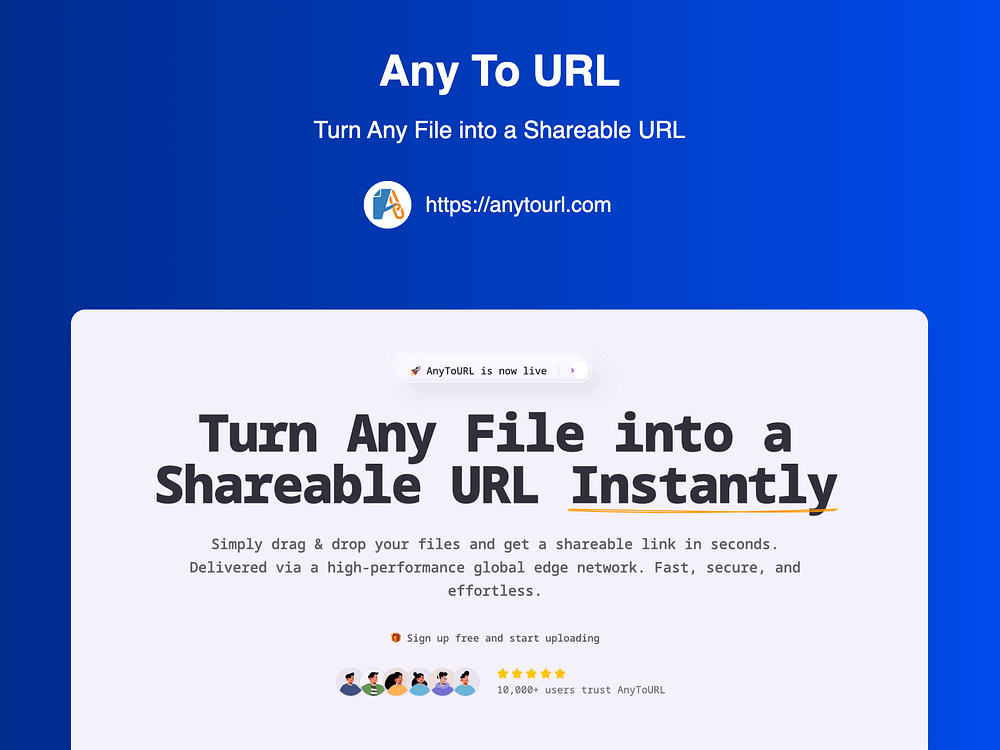
AnyToURL turns any file into a short, shareable link in seconds. Drag and drop to upload, then share an instant URL with browser previews for images, PDFs, and documents. Files are delivered over a global edge network for fast access worldwide. Add password protection, keep files temporary or make them permanent on paid plans, and manage uploads via API or CLI with custom domains and branding, supporting sizes up to 10GB.
NanoMaker AI is an all-in-one creative platform that lets you generate and edit images using Nano banana AI, videos, music, and voice with the world's top AI models under one subscription. Work in a seamless workflow: turn an image into a video, add background music, and export without switching tools. Use prompt-based editing, background removal, lighting control, and style transfer to produce consistent, professional results for marketing, content creation, education, and e-commerce.





Embed AI into your app or site in just 3 lines of code. Normally, building AI into mature apps or websites requires dealing with vector databases, custom integration pipelines, authentication, and brittle LLM calls, which distract core engineering teams from shipping product features. EmbedAI solves this by providing a drop-in component that abstracts away infrastructure, letting you inject AI into your app logic without restructuring your backend. It requires zero backend maintenance or database provisioning, offers seamless UI matching your brand rules, and gives you complete control with your own API keys.
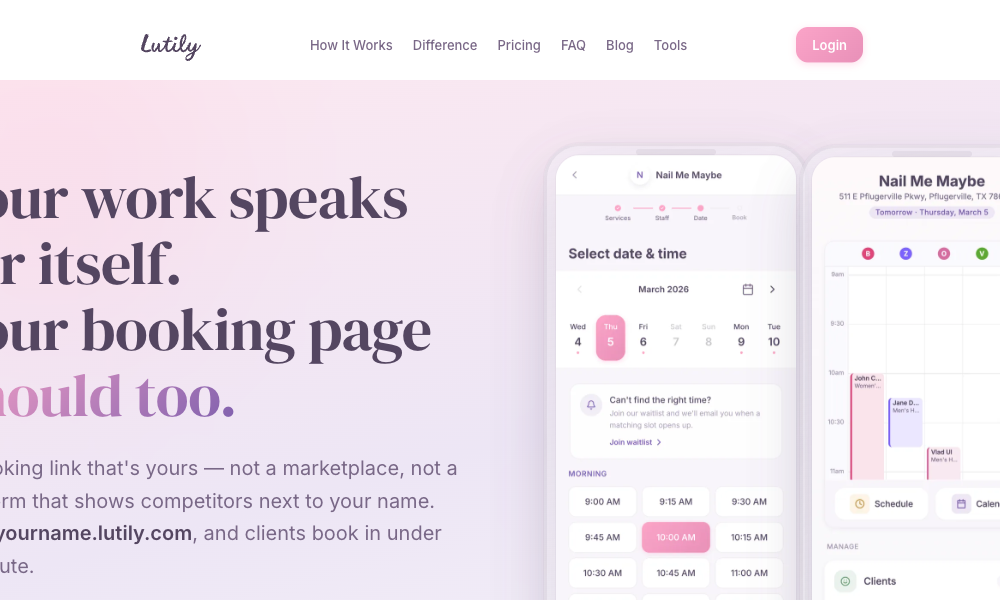
Lutily gives salons a branded booking page at yourname.lutily.com that lets clients pick services, choose a staff member, and reserve a real open slot in under a minute. It never shows competitors, charges no commission, and has no per‑staff fees. Every booking is phone‑verified to reduce no‑shows.
Use Lutily to stack appointments to fill gaps, run a smart waitlist that auto‑offers newly opened times, and control working hours by date. Manage a color‑coded calendar, team permissions, client history and notes, and automatic SMS confirmations and reminders, with instant rescheduling and cancellations.












Experience the pinnacle of gaming technology with GCS Cheats, the industry’s leading provider of state-of-the-art gameplay modifications. It features the most intuitive interface and the lightest system footprint in its class, offering a powerful and easy-to-use level of customization. Every tool is designed for maximum stability, providing seamless integration into today’s biggest games.
 Google.org expanded our existing collaboration with Highlights for Children.






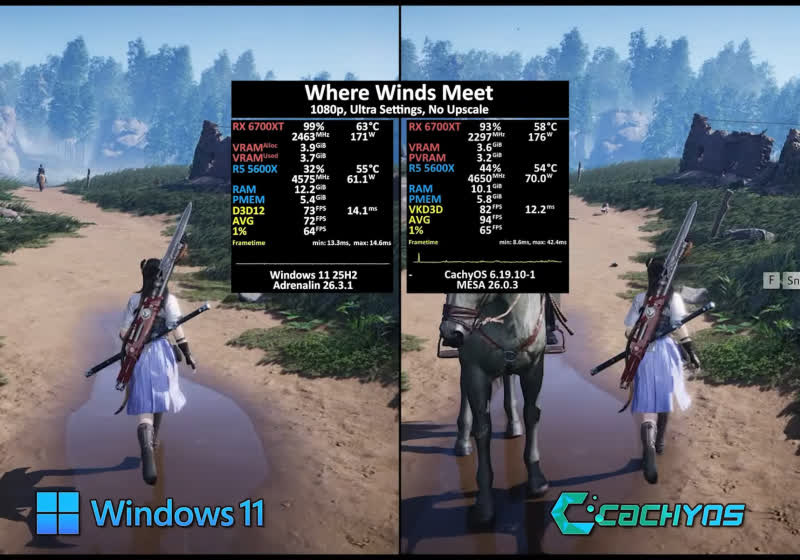

Early reviews of the AirPods Max 2 highlight improved sound quality, excellent noise cancellation, and deeper Apple ecosystem integration, powered by the new H2 chip and added smart features.
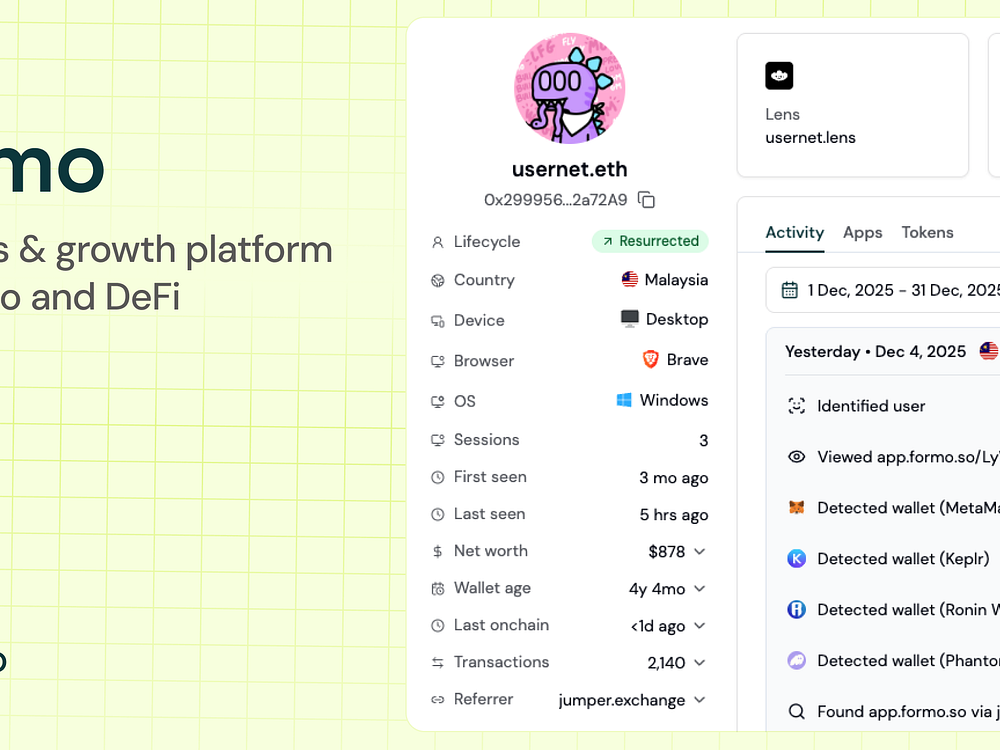
Formo makes analytics and attribution easy for DeFi apps, so you can focus on growth. Understand who your users are, where they come from, and what they do onchain. Measure what matters and drive growth onchain with the data platform for onchain apps. Get the best of web, product, and onchain analytics on one versatile platform.

Lifeplanr visualizes your entire life as 4,680 weeks and lets you plan, journal, map travel, and track finances with a built-in FIRE calculator. You can see life phases at a glance, tag moods, attach photos, and scratch off countries you’ve visited.
Install it as a PWA on any device, switch between 10 themes, and use it offline. Your data stays on your device by default, with optional Pro cloud sync and easy export.
 A recap of AI Literacy Day, including a New York City Public Schools event hosted at Google and updates to Google AI literacy resources.

Google Ads quietly added an auto-apply setting to its experiments feature — and it’s turned on by default, meaning winning experiment variants can be automatically pushed live without manual review.
How it works. Advertisers can choose between two modes — directional results (the default) or statistical significance at 80%, 85%, or 95% confidence levels. There is one built-in safeguard: if a chosen success metric performs significantly worse in the test arm, the change won’t be automatically applied.

Why we care. Experiments are one of the most powerful tools in a Google Ads account. Automating the apply step could speed up testing cycles, but it also removes a critical checkpoint where advertisers catch unintended consequences before they affect live campaigns.
The catch. Experiments only allow two success metrics. That means a third metric you care about — one you didn’t or couldn’t select — could quietly be declining in the background, and the auto-apply setting would never catch it. The guardrails protect what you told Google to watch, not everything that matters.
The bottom line. The auto-apply feature is a reasonable shortcut for straightforward tests, but for anything consequential, manual review is still worth the extra step. Run the experiment, let it reach significance, then dig into the full data before pulling the trigger yourself.
First seen. This update was spotted by Google Ads specialist Bob Meijer who shared the update on LinkedIn.

Bing appears to be testing a significantly expanded sponsored products section in its shopping search results, featuring a double-rowed carousel that takes up considerably more real estate than its current format.
What was spotted: The test was flagged by Digital Marketer Sachin Patel, who noticed the expanded layout while searching for cushions on Bing. The format pairs a large double-rowed sponsored carousel with organic cards from individual websites beneath it.

Why we care. If this format rolls out broadly, it means significantly more screen space dedicated to sponsored products — which typically translates to higher visibility and more clicks for retailers running Microsoft Shopping campaigns. The double-rowed carousel format is also a more visually competitive layout, putting Bing’s shopping ads closer in prominence to what Google Shopping already offers.
The catch: The test appears to be limited — not all users are seeing it. Search industry veteran Mordy Oberstein checked his own results and got a noticeably more compact layout, suggesting Bing is still in early experimentation mode.
The bottom line: Bing quietly runs a lot of SERP experiments that never make it to full rollout, so this one is worth watching but not banking on. Retailers running Microsoft Shopping campaigns should keep an eye out for any uptick in impressions if the format expands.
First spotted. This test was was spotted by Sachin Paten who shared a screenshot of the test on X.

SEO tools were the most replaced martech application in 2025 — but not for the reason you might expect.
According to the 2025 MarTech Replacement Survey, SEO platforms topped the list of replaced tools for the first time, overtaking categories like marketing automation platforms (MAPs), which had led for the past five years.
At first glance, that might suggest instability in SEO. After all, the discipline is being reshaped by LLMs, AI-generated answers, and the rise of zero-click search experiences — all of which challenge traditional keyword tracking and ranking-based workflows.
But the data tells a more nuanced story.
Even though SEO tools were the most replaced category in 2025, they were replaced at a slower rate than in prior years.
In other words, they’re now the most commonly replaced — but also more stable than before.
That shift suggests a maturing category. Rather than widespread churn, you appear to be consolidating, upgrading, or refining your SEO stack as search evolves.
Meanwhile, several other major martech categories saw sharper year-over-year declines in replacements:
So if SEO tools aren’t being swapped out due to instability, what’s driving the changes?
The survey points to three primary factors:
For the first time, the survey asked about AI’s role in replacement decisions — and the impact was significant.
This reflects a broader shift in SEO tooling, with platforms rapidly integrating AI for:
In many cases, replacing your SEO tool isn’t about abandoning SEO — it’s about upgrading to AI-native capabilities.
Cost has become a major driver of martech replacement decisions, including SEO tools:
This suggests growing pressure to optimize and rationalize your SEO tech stack, especially as you evaluate overlapping functionality across tools.
As search behavior changes, so do expectations for SEO platforms.
Traditional rank tracking and keyword monitoring are no longer sufficient on their own. Teams are increasingly looking for tools that can:
That evolution is likely contributing to replacement activity — even as overall stability increases.
One of the more notable trends in the 2025 survey is the resurgence of homegrown solutions, including for SEO workflows.
Replacing commercial martech tools with homegrown applications accounted for:
This marks a meaningful shift after years of near-total reliance on commercial platforms.
“AI-assisted coding is changing the calculus of build vs. buy,” said martech analyst Scott Brinker. “It’s easier and faster to build than ever before. Companies should still buy applications where they have no comparative advantage. But in cases where they can tailor capabilities to differentiate their operations or customer experience, custom-built software is an increasingly attractive option.”
For SEO teams, this could mean more organizations building:
While SEO tools led in total replacements, the broader martech landscape is becoming more stable.
Several major categories saw declining replacement rates in 2025, including:
This suggests that many organizations are settling into core systems while selectively updating areas — like SEO — that are changing faster.
Invitations to take the 2025 MarTech Replacement Survey were distributed via email, website, and social media in Q4 2025.
A total of 207 marketers responded. Findings are based on the 154 respondents (60%) who said they had replaced a martech application in the previous 12 months.
Download the 2025 MarTech Replacement Survey, no registration required.








Sony hopes to deliver a better-than-Xbox Series S experience on its next-gen handheld with next-gen upscaling According to the leaker KeplerL2, Sony’s next-generation PlayStation 6 Handheld should feature a GPU that surpasses the Xbox Series S and Nintendo Switch 2. In fact, the leaker thinks that the system’s GPU will be “a bit ahead of […]
The post PlayStation 6 Handheld Performance Detailed – Better than Xbox Series S appeared first on OC3D.





AI-powered ad bidding systems are highly sophisticated, but conversion tracking hasn’t kept pace. Ad platforms encourage advertisers to track more actions, while many experts argue for tracking only final outcomes.
Both are partly true. Neither is universally correct.
In practice, both over- and under-signaling can hurt PPC performance. Too many loosely defined micro-conversions introduce noise. Bidding shifts toward easy, low-value actions, inflating reported performance while eroding real results. Too few signals leave the system without enough data to learn.
This dynamic is most visible in Performance Max and Search plus PMax setups, where the system optimizes toward whatever signals it’s given — regardless of whether they reflect real business value.
Here’s what happens when micro-conversions outnumber real conversions, why bidding systems behave this way, and how to build a conversion framework that aligns signal volume with business impact.
The idea that algorithms need as much data as possible has been repeated so often that it’s become an assumption. Platform documentation, automated recommendations, and many PPC blog posts reinforce the same message: more signals equal better learning.
Bidding systems require a minimum level of signal density to function, but they don’t benefit from indiscriminate micro-conversion signals. More data isn’t always better data.
Adding low-intent or loosely correlated actions often degrades performance by shifting optimization toward behaviors that don’t correlate with revenue.
Machine learning systems don’t evaluate the strategic relevance of a signal. They evaluate frequency, consistency, and predictability.
When an account includes a mix of high- and low-intent micro-conversions — purchases, add-to-carts, pageviews, video plays, and soft leads — the system doesn’t inherently understand which actions matter most to the business.
Without a clear value hierarchy, the bidding algorithm treats all signals as valid optimization targets. This creates a structural bias toward high-frequency, low-value actions because they’re easier and cheaper to achieve. The result is a bidding pattern that maximizes conversion volume while minimizing business impact.
Many practitioners advocate for value-based bidding, where each micro-conversion is assigned a relative financial or hierarchical value. In theory, this helps the system understand which signals matter most. You can also instruct the platform to maximize conversion value, which should push the algorithm toward higher-value purchases or sales-qualified leads (SQLs).
But value-based bidding isn’t a complete solution. When too many micro-conversions are included — even with assigned values — the system can still become overwhelmed. A high volume of low-intent signals can dilute intent and distort the value hierarchy.
The issue isn’t just a lack of context.
Every signal becomes part of the optimization math. If the model weighs signals by volume rather than business importance, low-intent micro-conversions will dominate. Assigning values helps clarify priorities, but it can’t override signal imbalance. At a certain point, the math wins.
Dig deeper: In Google Ads automation, everything is a signal in 2026
In practice, this shows up as a “path of least resistance” problem.
Even with values assigned, bidding algorithms still optimize toward the signals they’re given. When low-intent micro-conversions are included as Primary actions, the system treats them as efficient ways to increase conversion volume. This isn’t an error. It’s expected behavior for a model designed to maximize conversions within a set budget.
When those signals occur more frequently, the system gravitates toward them. A signal that fires hundreds of times a day will exert more influence than a high-value action that fires only a handful of times per week.
This dynamic is especially visible in PMax. The system evaluates signals across channels, audiences, and placements, and pursues the cheapest, most abundant path to conversion. If a contact page visit or key pageview is treated as a Primary signal, PMax may prioritize it over a purchase or SQL because it’s easier to achieve at scale.
That’s why PMax often reports strong conversion volume and low CPA while revenue remains flat or declines. The system is performing as instructed, but the inputs lack a disciplined signal hierarchy. Value-based bidding improves structure, but without restraint in the number and type of signals, it can’t fully prevent the problem.
When low-value actions are tracked as Primary conversions, platform-reported performance becomes disconnected from business outcomes. Metrics such as CPA, ROAS, and conversion rate may improve, but those gains are often illusory.
For example:
These patterns create a false sense of success, leading advertisers to scale budgets prematurely and erode contribution margin.
When multiple micro-conversions are tracked as Primary, a single user journey can generate multiple wins for the algorithm.
For example, a user who views a product page, signs up for a newsletter, and adds an item to cart may be counted as three conversions from a single click. If values are assigned to each step, conversion value and ROAS become inflated as well.
This inflates conversion volume, inflates conversion value, and distorts bidding behavior. The system interprets this as a high-value user and begins overbidding on similar traffic, even if the user never completes a purchase.
In many accounts, micro-conversions outnumber real conversions by a ratio of 500 to 1 or more. This imbalance has significant implications for bidding behavior.
If an account records 500 pageviews, 200 add-to-carts, 50 lead form starts, 10 purchases, and all actions are treated as Primary, the system receives 760 signals for every 10 that actually matter.
Without distinct values, the algorithm can’t differentiate between a $0.05 action and a $500 action. It optimizes toward the most frequent signals because they provide the clearest path to increasing conversion volume.
Even when values are assigned, overvaluing micro-conversions teaches the algorithm to pursue easy wins. The result is a maximized conversion value metric that looks strong in the dashboard but isn’t reflected in actual sales.
When micro-conversions dominate the signal mix:
That’s why accounts with high micro-conversion volume often show strong platform metrics but weak financial performance.
Micro-conversions are useful when an account lacks enough real conversion volume to support stable bidding. However, once a campaign consistently reaches 30 to 60 real conversions per month, they no longer provide meaningful benefit.
At that point, the system has enough high-quality data to optimize effectively. Continuing to rely on micro-conversions introduces unnecessary noise and increases the risk of misaligned bidding.
This is the point to transition from tCPA to tROAS and let real revenue guide optimization.
Dig deeper: Why better signals drive paid search performance
Primary actions influence bidding, while Secondary actions provide visibility without affecting optimization. This four-part litmus test helps determine which actions should be treated as Primary.
Micro-conversions should be used only when real conversion volume isn’t sufficient to support stable bidding. As a general guideline:
This threshold ensures micro-conversions serve as a temporary bridge, not a permanent crutch.
A Primary action should represent a required step in the conversion journey, such as:
Actions that aren’t required steps — such as contact page visits, whitepaper downloads, or time on site — shouldn’t be treated as Primary. These may indicate interest, but they don’t reliably predict revenue.
If an action can’t be assigned a realistic financial value, it shouldn’t be used as a Primary conversion. Assigning arbitrary values introduces risk and can distort bidding behavior.
Actions such as time on site or scroll depth fail this test because they don’t consistently correlate with revenue. However, if CRM data shows a reliable statistical correlation with revenue, that can justify including the action.
Even if multiple actions pass the first three tests, only the strongest one or two should be designated as Primary. Including too many Primary actions increases the risk of double-counting and overbidding.
A streamlined Primary set ensures the system focuses on the most meaningful signals.
Secondary conversions provide visibility into user behavior without influencing bidding. They’re a useful diagnostic tool for understanding funnel performance and evaluating new signals.
Tracking actions such as newsletter signups, video views, or soft leads as Secondary lets you monitor engagement without shifting bidding toward low-value behaviors.
This approach preserves data integrity while maintaining control over optimization.
Secondary conversions reveal where users drop off in the funnel. For example:
These insights support more informed optimization decisions.
New signals should be tracked as Secondary for several weeks before being considered for Primary status. This allows you to evaluate frequency, correlation with revenue, stability, and predictive value.
Only signals that demonstrate consistent value should be promoted to Primary.
When micro-conversions are used, they must be assigned values that reflect their true contribution to revenue. Overvaluing micro-conversions is a common cause of inflated platform performance and misaligned bidding.
The baseline value of a micro-conversion is determined by:
For example:
The baseline value shouldn’t be used directly. Instead, apply a 25% reduction:
This discount helps prevent overbidding by ensuring the system doesn’t overvalue micro-conversions relative to actual revenue.
Undervaluing micro-conversions may slightly slow learning, but it doesn’t distort bidding. Overvaluing them can push the system toward low-intent traffic, leading to rapid budget misallocation.
The safety discount provides a buffer that protects contribution margin while still supplying useful data.
Dig deeper: How to make automation work for lead gen PPC
Practitioners consistently point to the same principle: signal discipline matters more than signal volume.
Julie Friedman Bacchini emphasizes that every conversion action becomes a signal the system optimizes toward. Using more than one Primary action introduces ambiguity — “it’s suddenly muddier” — and skipping values makes it easier for the system to latch onto lower-value signals. Values don’t need to be exact, but they must be relative.
She also notes that micro-conversions can help low-volume campaigns reach data thresholds, but they aren’t a substitute for real Primary conversions. Removing them later can mean “starting over to a large extent on system learning.”
Jordan Brunelle takes a similarly disciplined approach: “There can definitely be too many.” He recommends starting with one strong signal of intent and watching the ratio between micro-conversions and real outcomes. If volume is high but outcomes are low, it often signals a targeting or signal issue.
Across both perspectives:
The debate around micro-conversions often focuses on quantity. But the real differentiator isn’t volume, but discipline.
Bidding systems optimize toward the signals they’re given. When the signal mix is cluttered, performance drifts. When it’s clear and intentional, the system aligns with real business outcomes.
Micro-conversions should be selectively used and continuously evaluated. Start with a simple audit:
Micro-conversions should be a temporary bridge. Once real conversion volume is sufficient, optimization should be guided by revenue. A disciplined signal architecture gives automation what it needs to perform as intended: efficient, predictable, and aligned with real business outcomes.


If you’re a lawyer, college administrator, or financial services provider, you’ve likely seen the frustrating “Eligible (Limited)” status in your Google Ads account. It can feel like you’re fighting Google with one hand tied behind your back when your remarketing lists, exact match keywords, and more don’t work as intended.
While it might feel like Google Ads is out to get you when you operate in a so-called “sensitive interest category,” there are specific reasons for these rules. More importantly, there are specific ways to succeed despite them.
This article will cover what the personalized advertising policies are, what they mean for your account, and five specific tactics you can use to succeed with Google Ads.
Google provides detailed explanations in its official policy documentation, but it comes down to two things: legal requirements and ethical standards.
In the United States, for example, the Fair Housing Act and employment laws prevent discrimination based on age, gender, or location. If you’re advertising a job opening or a new apartment complex, Google can’t allow you to exclude people based on those demographics because doing so would be against the law.
Then there’s the ethical side. Imagine you’re running a rehab center. If someone visits your site, Google’s “sensitive interest” policy prevents you from following them around the internet with targeted banner ads like, “Still struggling with addiction? Come to our clinic.”
That kind of remarketing is intrusive and, frankly, predatory when it targets someone’s health and struggles. To protect the user experience and maintain a sense of privacy, Google limits how personal data can be used in these high-stakes industries.
If you fall into one of these categories — housing, employment, credit, healthcare, or legal services — the biggest impact is usually on your audience targeting.
Here’s what you can’t use:
For certain categories in certain countries, like housing, credit, and employment in the United States, there’s further “demographic stripping” — you can’t target by age, gender, parental status, or ZIP code. Your Smart Bidding strategies won’t use these signals as inputs either.
It’s easy to focus on what’s gone, but what still works is a much longer list. Even in a restricted industry, you still have access to the core engine of Google Ads. You can still use:
If you want to move the needle without relying on remarketing, you need to rethink your account structure and messaging. Here are five things you can do right now.
If your business offers a mix of services — some sensitive, some not — don’t let the sensitive ones “poison” your whole account. Think of a spa that offers haircuts, pedicures, and Botox. Haircuts are fine; Botox is a medical procedure that triggers sensitive category restrictions.
If you put them all on one site, your entire remarketing capability might get shut down. Consider putting the sensitive service on a separate domain and a separate Google Ads account. This lets you use every available tool for your main business while the sensitive portion operates under the necessary restrictions.
If you want to use image or video ads, use Demand Gen instead of the standard Display Network. In my experience, Demand Gen delivers higher-quality audiences and tends to perform better in restricted niches.
You might be tempted to stick to Exact Match keywords to keep things tight. However, in sensitive categories, Google may restrict ads on very narrow, specific queries for privacy reasons. If your Exact Match keywords aren’t getting impressions, try Phrase or Broad Match. This gives the algorithm more room to find users searching for the same thing with slightly different phrasing that may be less restricted.
Think of it like fishing: if you can’t use a spear, use a net. You’ll catch some fish you don’t want, but that tradeoff helps you catch the ones you do want more easily.
Most businesses in these categories, such as law firms or banks, don’t make sales on their websites. The website generates a lead, and the sale happens over the phone or in an office.
If you want Google to find better users, you must feed that real-world data back into the system. Use Offline Conversion Tracking (OCT) to show Google which leads became customers. Even if you must navigate HIPAA or other privacy regulations, there are ways to do this safely.
Consult your legal team, but don’t skip this step. It’s the best way to train the algorithm when you can’t use your own audiences and to ensure Smart Bidding works at its full potential.
When you can’t tell Google who to target with a list, you have to tell the user who the ad is for through your creative. Your headlines and images should qualify the lead.
Be specific in your copy. For example, instead of “Need a Lawyer?” try “Defense Attorney for Small Business.” This attracts your target audience and encourages people who aren’t a fit to scroll past, saving you money and improving your conversion rate.
Running Google Ads in a sensitive category is a challenge, but it’s far from impossible. By shifting your focus from who the person is to what they’re looking for and how you speak to them, you can still drive incredible results.
This article is part of our ongoing Search Engine Land series, Everything you need to know about Google Ads in less than 3 minutes. In each edition, Jyll highlights a different Google Ads feature, and what you need to know to get the best results from it – all in a quick 3-minute read.

AI has changed how I work after nearly two decades in digital marketing. The shift has been meaningful, freeing up time, reducing the grinding parts of the job, and making some genuinely hard tasks faster.
That doesn’t mean it does the work for you, transforms everything overnight, or saves you 40 hours a week. In real-world SEO, with real clients and real deadlines, it’s a tool that makes parts of the job easier, not something that replaces the work itself.
Here are 20 ways I actually use it. Some are specific to SEO. Some are broader, but relevant to anyone working in the industry. All of them are practical, tested, and honest about their limitations.
The single best way to use AI for content is to stop expecting it to produce something publishable and start treating it as a very fast first-draft machine.
The content AI produces out of the box is average. Your job is to make it good. Reference real-life stories, case studies, and statistics, and showcase your personal viewpoint and expertise.
The time savings are in not starting from a blank page.
Give Claude or ChatGPT your target keyword, page topic, and character limits. Ask for 10 variations of your meta title and descriptions. You’ll use one, maybe combine two, but the process takes two minutes instead of 20. For large sites with hundreds of pages, this alone is worth the subscription.
Many tools allow you to upload CSV files, add AI’s suggested ideas, and download them for review. Don’t skip this step. A human eye is where the value sits
Paste an existing page or blog post that has dropped in rankings. Ask AI to identify what’s missing, what could be expanded, and what feels outdated.
It won’t always be right, but it gives you a starting point instead of reading the whole thing yourself with fresh eyes you don’t have at 4 p.m. on a Thursday.
Make sure to give context. Long prompts with lots of detail will produce much better results than pasting a page in cold.
Prompt AI to generate the 10 most common questions for your target keyword. Cross-reference with People Also Ask and your own research.
Answer them, and you now have an FAQ section, featured snippet opportunities, and a content gap analysis in about 10 minutes.
Nobody enjoys writing alt text for 200 product images. Describe the image, give it the context of the page it sits on, and include the target keyword. Then ask for alt text that’s descriptive and naturally includes the term where relevant. It’s not glamorous, but it’s necessary and faster.
You can also run a website through Screaming Frog, export it to a CSV file, upload it to your AI of choice, and ask it to write the alt text. This only works well if the file names are descriptive, and again, a human eye is key. This is about increasing speed, rather than handing it over to AI completely.
Dig deeper: How to use AI for SEO without losing your brand voice
Not everyone working in SEO has a developer background. AI is useful for:
Paste in the output, ask it to explain it in plain English, and then ask what the fix should be. Verify the answer, but it gets you most of the way there.
Schema is one of those things everyone knows they should be doing more of, and nobody finds especially enjoyable.
Describe the content of your page to your AI of choice, tell it what schema type is relevant (FAQ, Article, LocalBusiness, Product, etc.), and ask it to generate the JSON-LD.
Check it in Google’s Rich Results Test before implementation. This used to take me 20 minutes per page type. Now it takes five.
If you use regex in GSC filters and you’re not a developer, AI is your new best friend. Describe what you’re trying to filter, for example, all URLs containing a specific subfolder, or all queries including a particular term, and ask for the regex string.
It gets it right more often than not, and you can ask it to explain the logic so you actually understand what you’re implementing.
If you export a crawl from Screaming Frog or Sitebulb and you’re not sure what to prioritize, paste the summary data into your AI tool and ask it to help you identify the highest-priority issues based on the site’s goals.
It won’t replace your expertise, but it’s a useful sounding board when you’re staring at a spreadsheet with 47 issues and a client call in an hour.
Dig deeper: 6 tactical ways to responsibly use AI for everyday SEO
This is one of the most underrated uses of AI in SEO work. You have the data. You have the graphs. What takes time is writing the commentary that explains what happened, why, and what comes next.
Feed AI your key metrics and the context of what was happening that month (algorithm updates, campaign launches, seasonality), and ask it to draft the narrative section of your report. Edit it, add your actual insight, but stop writing it from scratch every month.
You can even upload reports from various data sources and ask it to combine and summarize them. This saves me hours every month when I’m putting together reports.
Not every client wants to read a 12-page report. Ask AI to summarize your report into a five-bullet executive summary. Give it to clients at the top of the document.
The ones who want details will read on. The ones who don’t will feel informed without asking you to talk them through every chart on the next call.
Ask AI to create the executive summary for someone who doesn’t know anything about SEO, and it’ll give you something simple and easy to understand.
Paste a table of your keyword rankings or traffic data, and ask AI to flag anything that looks unusual, including significant drops, unexpected gains, or patterns that don’t match the previous period.
It won’t replace proper analysis, but it’s a useful first pass when you’re managing a large amount of information and can’t give every dataset the attention it deserves.
Dig deeper: How to build AI confidence inside your SEO team
List your top three competitors and your own site. Ask AI to help you think through what content topics they’re likely covering that you’re not, based on their positioning and audience.
Then, validate that with actual keyword research tools. AI can’t see competitor data directly, but it’s useful for hypothesis generation before you do the manual work.
When you take on a client in an industry you don’t know well, you need to get up to speed fast. Ask your AI to give you a primer on the industry:
It saves you an embarrassing amount of time in discovery calls.
Paste a list of your target keywords and ask AI to categorize them by search intent: informational, navigational, commercial, and transactional. Then compare that against the page type you’re targeting them with.
You’ll almost certainly find mismatches. This is a task that’s straightforward to describe, but tedious to do manually across hundreds of keywords.
Dig deeper: How to use AI response patterns to build better content
Everyone has had to write a difficult email, whether it’s explaining why rankings have dropped, why a deadline was missed, or why they need to do something you know they don’t want to do.
These emails take a disproportionate amount of emotional energy to write. Give your AI the situation, the context, and what you need the client to understand or do, and ask for a draft that’s clear, professional, and honest.
Edit it. Send it. Move on.
If you’ve been meaning to document your processes and just haven’t gotten around to it, AI removes the excuse.
Describe a process out loud (or in rough notes), paste it in, and ask for a structured SOP with numbered steps, decision points, and notes.
The first version will need editing, but having a framework to work from is the difference between getting it done and it sitting on the to-do list for another quarter.
Before a client call, paste in your recent report data, any issues from the previous month, and what you need to cover.
Ask your AI to help you structure the agenda and anticipate questions the client might ask based on the data. You’ll go into the call more prepared and less likely to be caught off guard.
This one sounds vague, but it’s one of the ways I use AI most.
When I have a problem I can’t get clear on, a strategy decision I’m going back and forth on, or a piece of work I can’t find the right angle for, I talk it through with Claude (my AI buddy of choice) to clarify my own thinking. It asks questions, reflects things back, and helps me arrive at a point of view faster than I would staring at a blank document.
Ask your AI to be brutally honest with you. Otherwise, it’ll just keep agreeing with you and telling you that you’re truly an expert on every topic.
The biggest productivity gain from AI isn’t any individual use. It’s building a library of prompts that work for your specific workflow and reusing them consistently.
Every time you get a good result from an AI tool, save the prompt. Over time, you build a system, rather than starting from scratch every time. This is the thing most people skip, and it’s the thing that compounds.
Top tip: In the paid version of many AI tools, you can create projects and have specific instructions for each one. This is invaluable for saving time by not having to include all of this information in every prompt you use.
Dig deeper: Why SEO teams need to ask ‘should we use AI?’ not just ‘can we?’
None of these tips replace the expertise, judgment, and client relationships that make a good SEO professional.
AI doesn’t know the business the way you do. It doesn’t understand the nuance of an industry, the history of an account, or the particular quirks of a contact you deal with regularly.
AI reduces the time spent on tasks that don’t require that expertise, so you have more of it available for the work that does.
Use AI as a tool. Stay skeptical of the hype. And for the love of good search results, edit everything before it goes anywhere near a client.
Dig deeper: Could AI eventually make SEO obsolete?





















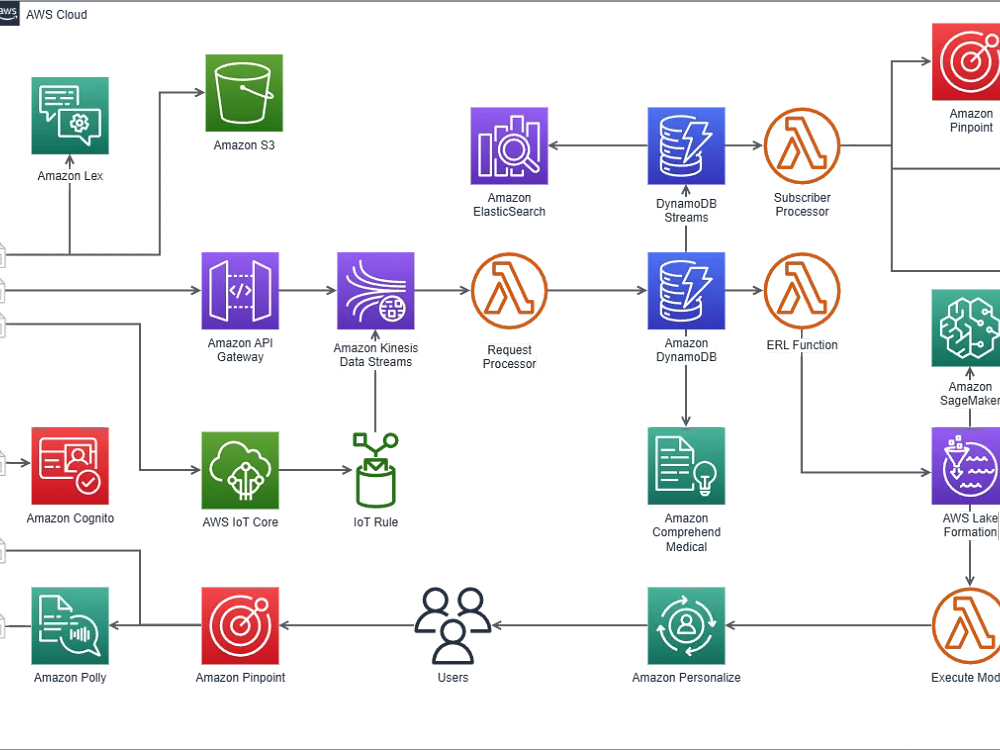
DiagramDeck is a cloud-based diagramming platform that hosts and manages draw.io for your team. Import and export .drawio files, edit together in real time with comments and live cursors, and use AWS, GCP, and Azure shape libraries to design cloud architectures, flowcharts, UML, ER, and network diagrams.
It removes self-hosting overhead with managed uptime, backups, and security, and adds team management, SSO, and compliance such as SOC 2 and GDPR. Use it as a modern alternative to Lucidchart and Visio while keeping the draw.io ecosystem.
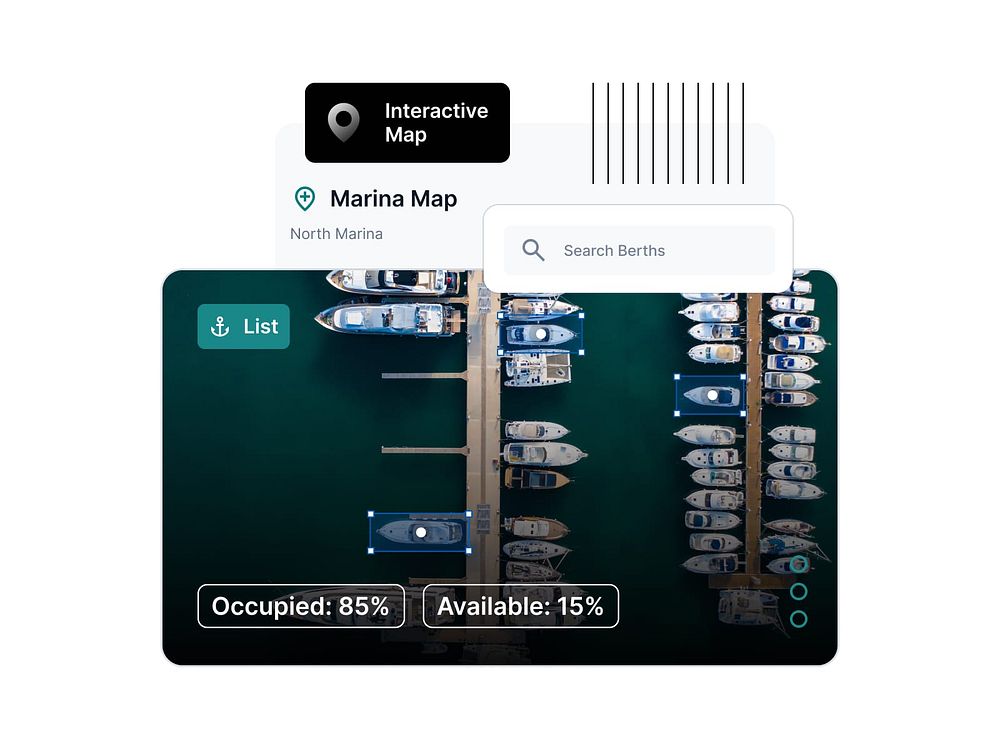
SupaSailing is the first operational ERP platform built for nautical professionals including fleet managers, charter companies, brokers, and marinas. These businesses previously used spreadsheets, disconnected tools, and email threads since no integrated system existed for this industry.
Six modules cover crew and fleet management, charter enquiries, brokerage CRM, berth management, refit projects, and ISM compliance. All modules are connected with no duplicate data, providing full operational visibility across the business.
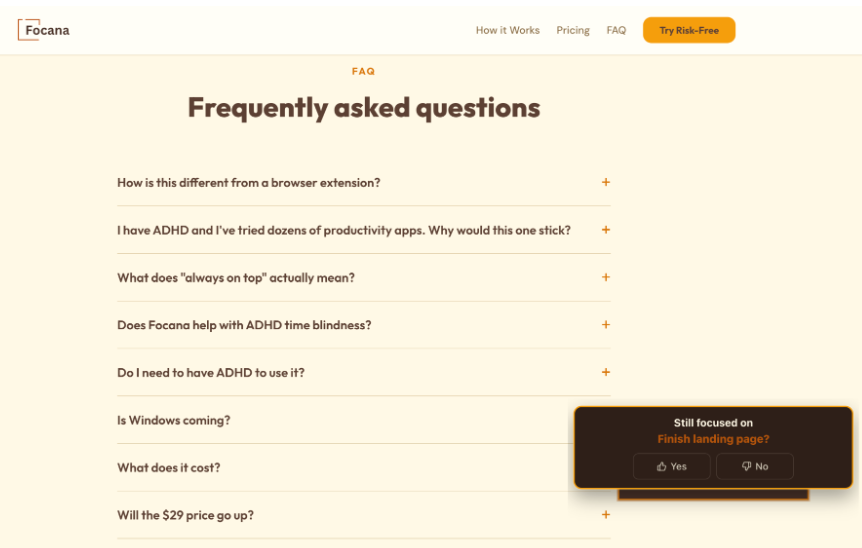
It's easier than ever to get distracted while working on your computer. A quick email check, a Slack ping, one ChatGPT question, and boom, 30 minutes gone. "What was I supposed to be doing?"
Most focus tools either block apps you need or disappear when you switch tabs or apps. Neither works. You need an anchor, not a blocker. Focana keeps one task and a timer always visible on your screen, delivers gentle visual nudges and check-ins to keep you locked in, captures stray thoughts in the Parking Lot so they don't derail your session, and allows you to leave notes for context to pick up where you left off. All with no accounts, no sync, and no cloud—just a calm companion for busy brains.
 Google partnered with the Brazilian government on a satellite imagery map to help protect the country’s forests.
 Here are Google’s latest AI updates from March 2026
 Get ready for YouTube Brandcast 2026 at Lincoln Center. Host Trevor Noah joins CEO Neal Mohan and a powerhouse lineup of creators to demonstrate why YouTube is the futur…











MSI GPU Safeguard+ finally allows me to trust 12V-2×6 GPUs If I’m honest, I’m not a fan of 12V-2×6 or 12VHPWR. There have been far too many reports of burnt graphics cards or melted power connectors to ignore. If I were to spend many hundreds, or perhaps thousands, on a new graphics card, I want […]
The post MSI GPU Safeguard+ is a game-changing tech for 12V-2×6 GPUs appeared first on OC3D.







Barry Adams recently published “Google Zero is a Lie” in his SEO for Google News newsletter, arguing that the narrative of Google traffic disappearing is false and dangerous.
His data backs it up. Similarweb and Graphite data show only a 2.5% decline in Google traffic to top websites globally. Google still accounts for nearly 20% of all web visits.
The widely cited Chartbeat figure showing a 33% decline? It’s skewed by a handful of large publishers hit by algorithm updates. Publishers who abandon SEO in the face of this panic are making a self-fulfilling prophecy, ceding traffic to competitors who keep optimizing.
He’s right. And he’s looking at the wrong problem.
Humans are still clicking Google results. What has changed is that a growing share of your visitors isn’t human at all.
Automated traffic surpassed human activity for the first time in a decade, per the 2025 Imperva Bad Bot Report. Bots now account for 51% of all web traffic. Not “soon.” Not “by 2027.” Now.
That number includes everything from scrapers to brute-force login bots. But the fastest-growing segment is AI crawlers.
AI crawlers now represent 51.69% of all crawler traffic, surpassing traditional search engine crawlers at 34.46%, Cloudflare’s 2025 Year in Review found. AI bot crawling grew more than 15x year over year. Cloudflare observed roughly 50 billion AI crawler requests per day by late 2025.
Akamai’s data tells a similar story: AI bot activity surged 300% over the past year, with OpenAI alone accounting for 42.4% of all AI bot requests.

So while Adams is correct that human Google traffic hasn’t collapsed, something else is happening on the other side of the server logs.
Cloudflare published crawl-to-referral ratios for AI bots. Look at these numbers.
Anthropic’s ClaudeBot crawls 23,951 pages for every single referral it sends back to a website. OpenAI’s GPTBot: 1,276 to 1. Training now drives nearly 80% of all AI bot activity, up from 72% the year before.

Compare that to traditional Googlebot, which has always operated on a crawl-and-send-traffic-back model. Google crawls your site, indexes it, and sends 831x more visitors than AI systems. The deal was simple: let me read your content, and I’ll send you people who want it.
That deal is fraying even on Google’s own turf. Queries where Google shows an AI Overview see 58-61% lower organic click-through rates, according to Ahrefs and Seer Interactive studies covering millions of impressions through late 2025.
Google’s newer AI Mode is worse. Semrush data shows a 93% zero-click rate in those sessions. AI Overviews now trigger on roughly 25-48% of U.S. searches, depending on the dataset, and that number keeps climbing.
And when Google’s AI features do cite sources, they’re increasingly citing themselves. Google.com is the No. 1 cited source in 19 of 20 niches, accounting for 17.42% of all citations, an SE Ranking study of over 1.3 million AI Mode citations found. That tripled from 5.7% in June 2025. Add YouTube and other Google properties, and they make up roughly 20% of all AI Mode sources.
So the old deal is being rewritten even by Google. AI crawlers from other companies skip the pretense entirely: let me read your content so I can answer questions about it without ever sending anyone your way.
The bot traffic numbers are already here. The next wave is bigger: AI agents acting on behalf of humans.
In 2024, Gartner predicted that traditional search engine traffic would drop 25% by 2026 as AI chatbots and agents handle queries. That prediction is tracking. Its October 2025 strategic predictions go further: 90% of B2B buying will be AI-agent intermediated by 2028, pushing over $15 trillion in B2B spend through AI agent exchanges.
This isn’t theoretical.
Gartner says 40% of enterprise applications will have task-specific AI agents by the end of 2026, up from less than 5% in 2025. eMarketer projects AI platforms will drive $20.9 billion in retail spending in 2026, nearly 4x 2025 figures.

Think about what that looks like in practice. An AI agent researches vendors for a procurement team. It doesn’t see your hero banner. It doesn’t notice your trust badges. It reads your structured data, compares your specs to those of three competitors, and builds a shortlist.
That “visit” might show up in your analytics as a bot hit with a zero-second session duration. Or it might not show up at all.
So what do you optimize for when the visitor is a machine making decisions for a human?
It’s not the same as traditional SEO. And it’s not the same as the AI Overviews optimization most people are focused on right now. AI Overviews are still Google. Still one search engine, still largely the same ranking infrastructure, still (mostly) one answer format.
Agentic SEO is about being useful to software that’s pulling from search APIs, crawling directly, and using LLM reasoning to make recommendations. That software doesn’t care about your page layout. It cares about whether it can extract what it needs.
I think a few things start to matter a lot more.
Schema markup has always been a “nice to have” for rich snippets. When an AI agent compares your product to three competitors, structured data lets it read your specs without having to guess. Think product schema, FAQ schema, and pricing tables in clean HTML. These go from SEO hygiene to core infrastructure.
Dig deeper: How schema markup fits into AI search — without the hype
AI agents don’t search for “best CRM for small business.” They ask compound questions: “Which CRM under $50/user/month integrates with QuickBooks and has a mobile app with offline capability?” If your content only answers the first version, you’re invisible to the second.
A human might not notice your pricing page is 8 months stale. An AI agent cross-referencing your pricing against competitors will flag the discrepancy. Or worse, use the outdated number in its recommendation and cost you the deal.
Blocking AI crawlers feels protective, but it means AI agents can’t recommend you. Allowing them means your content trains models that may never send you traffic. There’s no clean answer.
But pretending it’s just a technical setting is a mistake. New IETF standards are emerging to give publishers more granular control, but they’re not widely adopted yet.
Dig deeper: Technical SEO for generative search: Optimizing for AI agents
Most analytics setups can’t tell the difference between a human visit, a bot crawl, and an AI agent evaluating your site on someone’s behalf. GA4 filters most bot traffic. Server logs show the raw picture, but take work to parse. Even then, figuring out whether an AI agent’s visit led to an actual sale is basically impossible right now.
This is where the “Google Zero” framing does real damage.
If you’re only measuring organic sessions from Google, you’re blind to a channel that doesn’t show up in that number. Your traffic could look stable while an AI agent steers $50,000 in annual spend to your competitor because their product schema was more complete.
I don’t think we have good measurement for this yet. Nobody does. But ignoring the problem because Google sessions look fine is like checking your print ad response rate in 2005 and deciding the web wasn’t worth paying attention to.
I don’t have a playbook for this. It’s too new. But I can tell you what we’re doing at our agency.
The “Google Zero” argument pits one extreme against another, even as the actual shift is quieter and more important.
The web is becoming a place where the majority of visitors are machines. Some send traffic back. Most don’t. Some of them make purchasing decisions on behalf of humans. That number is growing fast.
The SEOs who do well here won’t be the ones arguing about whether Google traffic moved 2.5%. They’ll be the ones who figured out how to be useful to both human visitors and the AI agents acting on their behalf.
We’ve spent 25 years optimizing for how humans find things. Now we need to figure out how machines find things for humans.
That’s not Google Zero. We don’t have a name for it yet. But it’s already here.
If you want to go deeper on GEO and agentic SEO, I’m teaching an SMX Master Class on Generative Engine Optimization on April 14. It covers structured data implementation, AI visibility measurement, content optimization for AI systems, and the practical side of everything in this article.




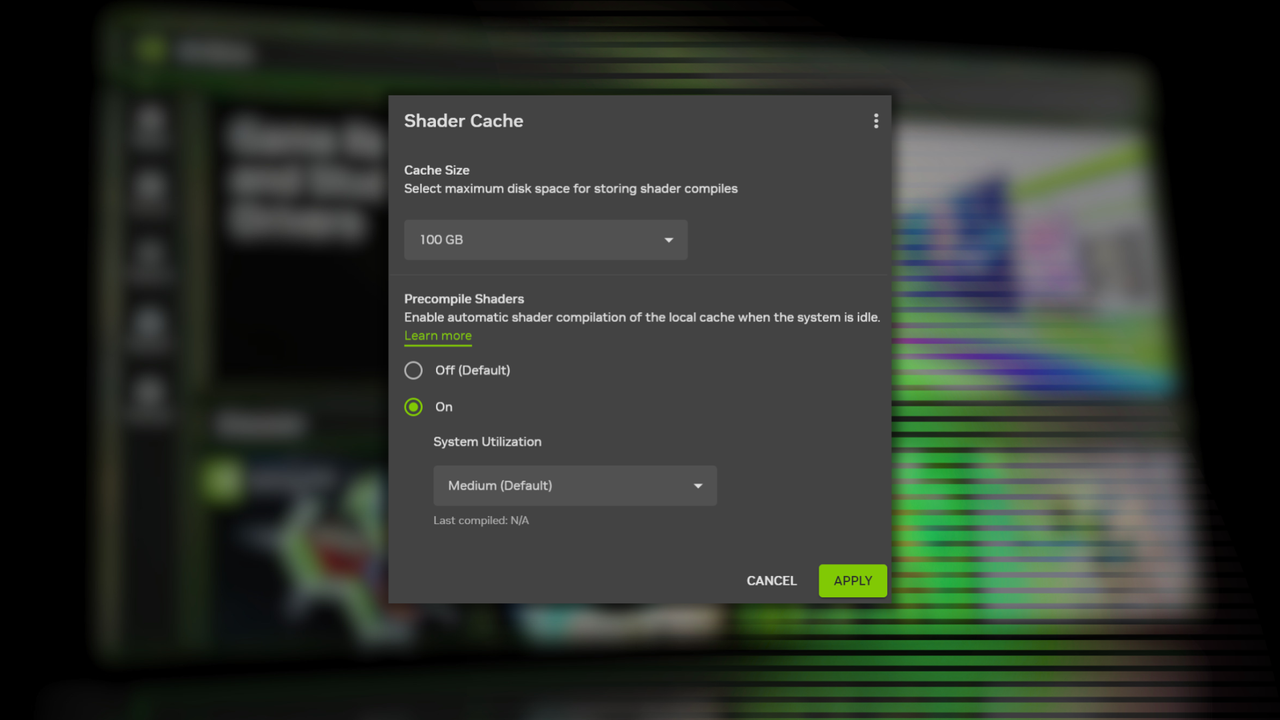
Nvidia aims to tackle shader stutter with its Auto Shader Compilation Beta Nvidia is taking action against shader compilation stutter. With its new Auto Shader Compilation (ASC) feature, Nvidia are giving gamers the option to rebuild game shaders outside of runtime to deliver a smoother gaming experience. When your PC is idling, it can be […]
The post Nvidia adds “Auto Shader Compilation Beta” to the Nvidia App appeared first on OC3D.










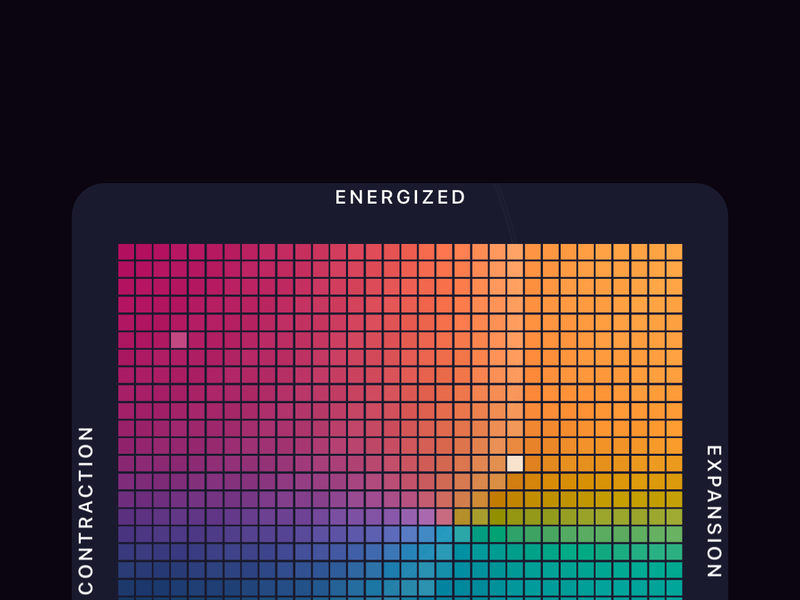
Gen AI gives us productivity superpowers, but the risk is mental fatigue. Ascenda helps you track how your mind is performing day to day. With a quick daily check-in, it shows patterns in clarity, energy, mood, recovery, focus, and decision load so you can protect your best work.
Built with input from a psychologist, neuroscientist, and engineer-founder with lived experience, Ascenda is a Whoop-like layer for the mind: signals, patterns, and early awareness before stress leads to poor decisions, lost focus, or burnout.

LinkedIn is one of the most powerful platforms for recruiting top-tier talent. It’s also one of the easiest places to waste budget if campaigns aren’t structured correctly.
Many recruitment campaigns fail because they prioritize visibility over intent. More impressions don’t equal better hires. Broad targeting and generic messaging often lead to an influx of unqualified applicants, driving up cost-per-hire and slowing down hiring timelines.
The most effective LinkedIn recruitment strategies focus on one thing: attracting and converting high-intent candidates while filtering out poor-fit applicants before they ever click. Let’s break down exactly how to do that.
The biggest mistake advertisers make on LinkedIn is targeting based solely on job titles, industries, and years of experience.
While this may generate volume, it rarely produces efficiency. Instead, high-performing campaigns are built around intent-based targeting — reaching candidates who are qualified and more likely to consider a new opportunity.
This requires a layered approach:
By combining these layers, you move beyond “who they are” and begin targeting why they might be ready to make a change — which is where real performance gains happen.
Your ad creative isn’t just there to attract attention. It should actively filter your audience. One of the most effective ways to control cost-per-hire is to discourage unqualified candidates from clicking in the first place.
Strong recruitment ads follow a structured approach:
This combination of attraction and exclusion ensures that the candidates who do click on your ads are far more likely to convert.
Dig deeper: LinkedIn Ads on a budget: How one playbook drove sub-$10 CPL
Rather than running a single campaign, high-performing LinkedIn strategies segment audiences based on intent.
These are active job seekers who offer the highest conversion opportunity. Following this structure:
These candidates aren’t actively applying but are open to change.
These are long-term potential candidates to start building your pipeline, with the intent to move them to the middle of the funnel and eventually the bottom of the funnel.
LinkedIn’s ad platform can quickly become expensive without proper controls. Start with manual CPC bidding to maintain control, then test automated delivery once performance data is established.
More importantly, optimize for the right metrics. Focus on qualified applications instead of clicks. Track downstream actions, such as interview and hire rates.
Be prepared to make fast decisions. Ads with high click-through rates but low application rates often indicate poor alignment. Ads that generate many applications, but few interviews signal weak pre-qualification.
Efficiency comes from eliminating wasted spend earlier, rather than later. It conserves ad spend and minimizes overlapping audiences and hitting the wrong targets.
Dig deeper: LinkedIn Ads retargeting: How to reach prospects at every funnel stage
A common but costly mistake is sending candidates directly to long, complex application forms. Instead, use a two-step funnel:
This approach sets expectations, filters candidates, and significantly improves application quality — often reducing cost-per-hire by 30-50%.
Not every qualified candidate applies on the first interaction. Retargeting allows you to re-engage high-intent users who have already shown interest.
Build audiences from:
Then serve follow-up messaging such as:
Retargeting campaigns are often the most cost-efficient part of your entire strategy.
Once the fundamentals are in place, there are several advanced tactics that can further improve performance:
Here’s an example of a successful LinkedIn InMail message that recently drove over 70% high-intent applications for an HVAC sales client:
Message body:
Hi [First Name],
This might be a stretch — but your background in HVAC sales caught my attention.
We’re hiring experienced sales reps who are tired of unpredictable commissions and weekend-heavy schedules.
This role is built for reps who:
- Have 3+ years in HVAC or home services sales
- Are comfortable running in-home consultations
- Want a more stable, high-earning structure
What’s different:
- No weekend appointments
- Pre-qualified, inbound leads (no cold knocking)
- Six-figure earning potential with consistency
That said, this isn’t a fit for entry-level reps or those new to sales.
If you’d be open to a quick 10-minute conversation to see if it’s worth exploring, I’m happy to share more.
If not, no worries at all — appreciate you taking a look.
— [Name]
Stating upfront the need for “experienced sales reps” immediately establishes relevance and increases response rates while reducing irrelevant replies.
Focusing on what matters to potential candidates, such as no weekend appointments and compensation structure, speaks to the audience’s needs versus the company’s.
Closing the conversation with the reminder that this isn’t an entry-level position weeds out wasted conversations and reduces cost-per-hire.
Dig deeper: LinkedIn Message Ads: Everything you need to know
The most effective LinkedIn recruitment campaigns rely on better strategy.
When you focus on intent-based targeting, pre-qualification within ad creative, funnel segmentation, and conversion optimization, you create a system that attracts the right candidates while minimizing wasted spend.
Ultimately, reducing cost-per-hire is about reaching the right people, at the right time, with the right message.














Napster made digital music feel limitless for the first time, then vanished in lawsuits, rebrands, and sales. Its name faded, but its ideas still shape how the world listens.



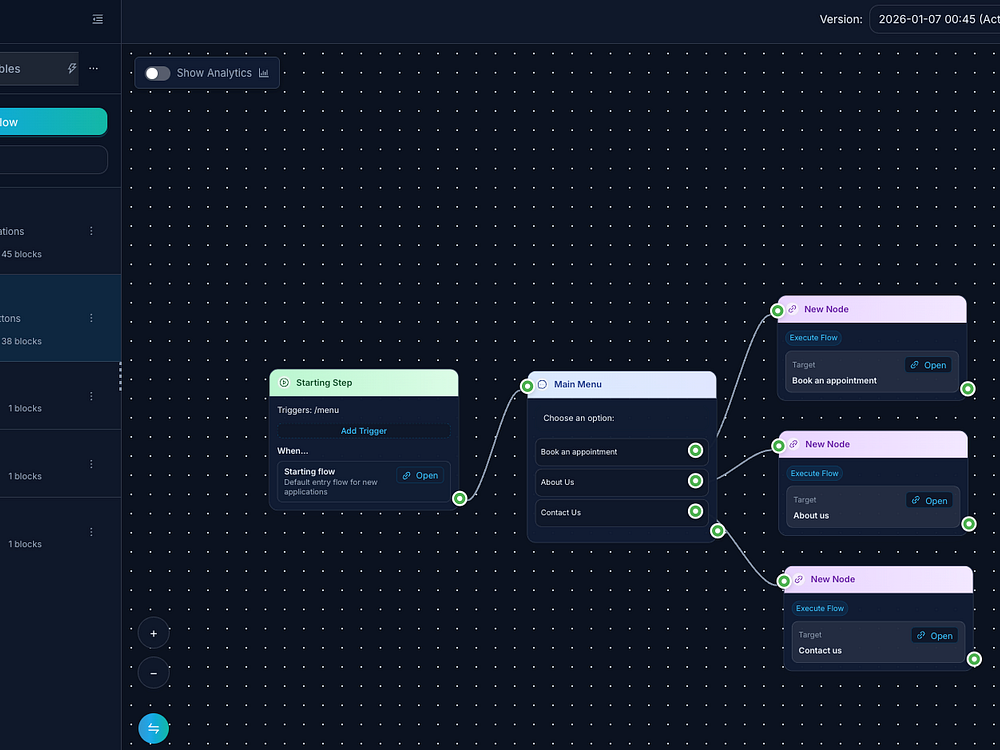
FlowCastle is a visual platform for building AI-powered chatbots without code. Use a drag-and-drop editor to design flows, then extend with TypeScript actions, HTTP requests, and integrations like Google Sheets. Launch on Telegram and reuse logic across brands with white-labeling. Accept payments, manage catalogs, and track orders inside the bot. Hand off to humans with live chat, run smart broadcasts, and monitor funnels with goal-based analytics. An AI copilot helps generate flows, write copy, and optimize automations.

HankRing helps you find the best versions of the specific dishes and drinks you crave. Choose your Hanks, see verified, likely, and potential spots on a map, and rate the dish—never the venue—to build consensus for the community. Browse Top 50 and trending categories, add missing spots, and keep a private journal of every rating and verification. With thousands of curated places preloaded, you can discover great food from day one and plan where to hunt next.
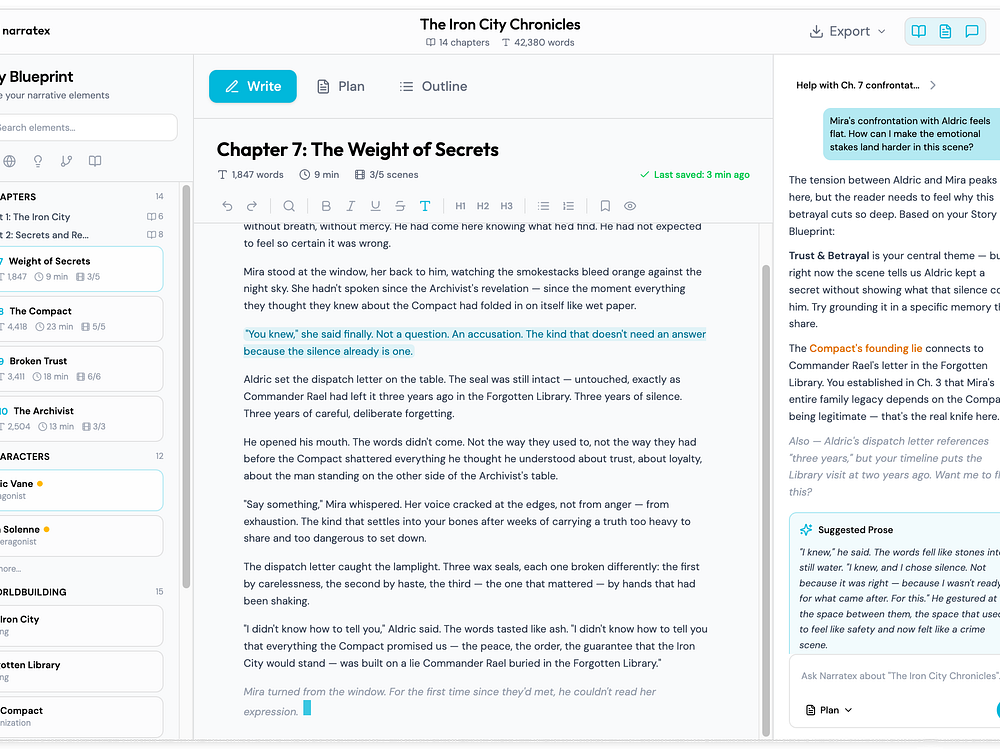
Narratex is a writing workspace for fiction authors that unifies your Story Blueprint, a full editor, and an AI collaborator that remembers context across sessions. It keeps track of your characters, plot threads, settings, and themes so you never need to re-explain your magic system or paste cast lists again.
Start by importing your existing work and building your blueprint, then write with an assistant that's already read everything you've created, keeping you consistent and focused chapter to chapter.
See, verify, and govern every agent action.
Trigger macros with rhythmic taps on your trackpad or mouse




Google's John Mueller answered a question about the nature of core updates: Are they rolled out in steps or all at once then refined?
The post Google Answers Why Core Updates Can Roll Out In Stages appeared first on Search Engine Journal.


AI voice feedback that catches complaints before bad reviews
Run a flock of Claude Code (or other agents) in one window.
Browse, search & track costs across Claude Code sessions
Turn your camera roll into group chat chaos
Axios / LiteLLM hacks behavioral detector app for Mac/PC
Rent real keyboard keys that redirect to your link
Skip ahead & chat with any YouTube video using AI
Meta's first AI glasses built for prescriptions
The spreadsheet rebuilt for AI
Formo makes analytics simple for DeFi so you can grow.
Speed of Voice. Power of AI.
One command to deploy Docker containers to your own server
Link-in-bio, but worse.
Cursor highlight, screen draw, zoom & spotlight
Know what's happening inside your NemoClaw sandboxes
AI-assistant native self-hosted deployment platform
A community idea board that looks like Windows 95
Your Network has Secrets, Now you can Them.
Google's most cost-effective video generation model
AI captures feedback and tells you what to build next
Everything at your cursor in a single gesture
Crack an Easter egg to generate an AI voice
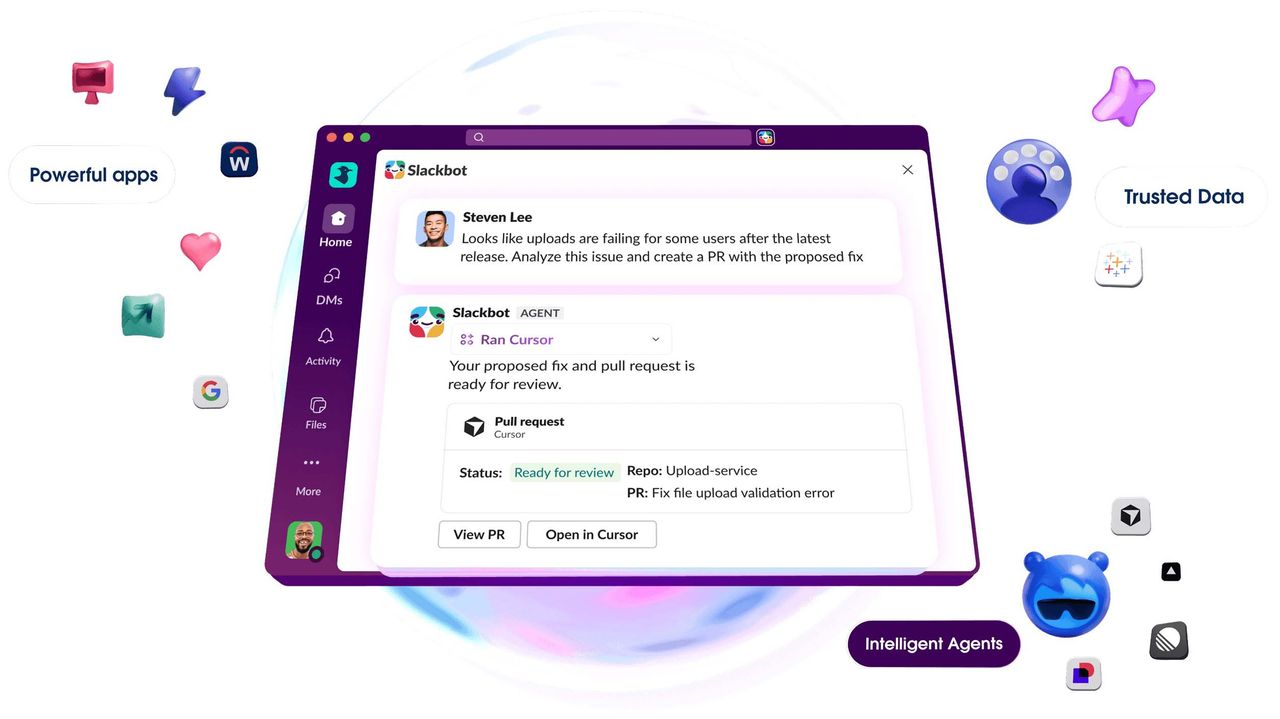
Team up with your AI teammate in the all-new Slack
Control Codex on your iPhone





Pine doesn’t just draft or organize — it emails, calls, researches, plans, follows up, and persists until the job is done. For companies, Pine acts as an execution arm across CEOs, operations, finance, sales, marketing, and executive assistants — closing open loops, renegotiating contracts, chasing invoices, coordinating vendors, and unblocking stalled deals. For individuals who value time more than money, Pine handles life’s friction — negotiating bills, canceling subscriptions, filing claims, and waiting on hold. Pine turns decisions into outcomes — autonomously, persistently, and without expanding headcount.
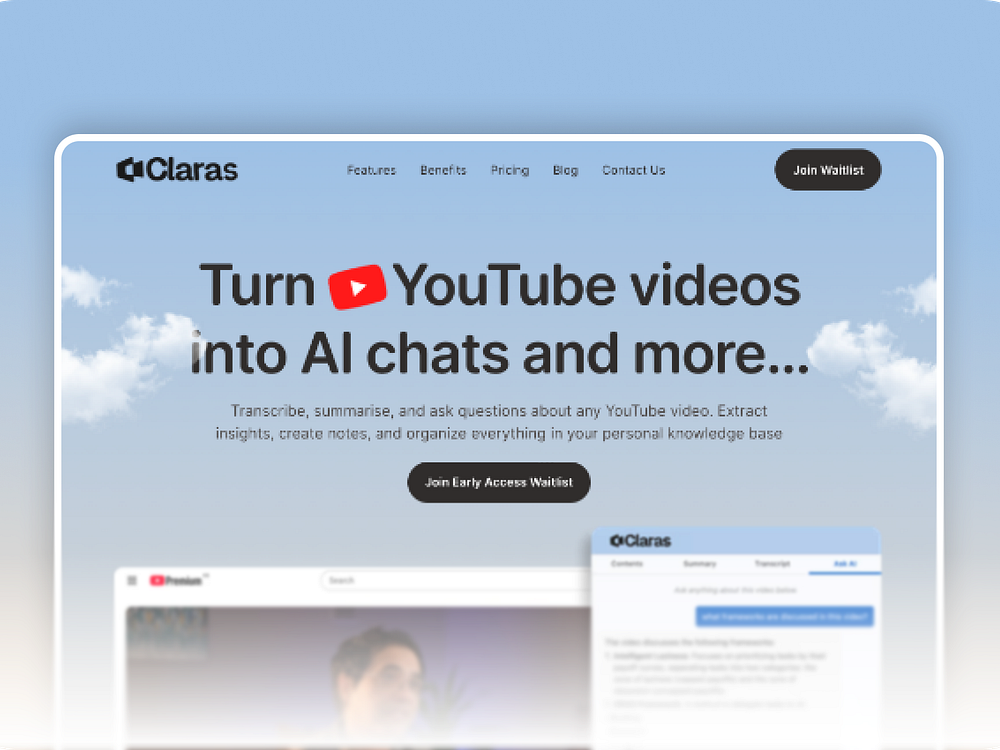
Claras lets you get instant transcripts and chat with any YouTube video using AI. It analyzes full videos to answer questions, generate summaries, and build a clickable table of contents so you can jump to key moments with confidence. You can highlight insights, save notes, and export to TXT or PDF. Use transcripts to power ChatGPT, Claude, or custom agents, and collaborate with teammates.
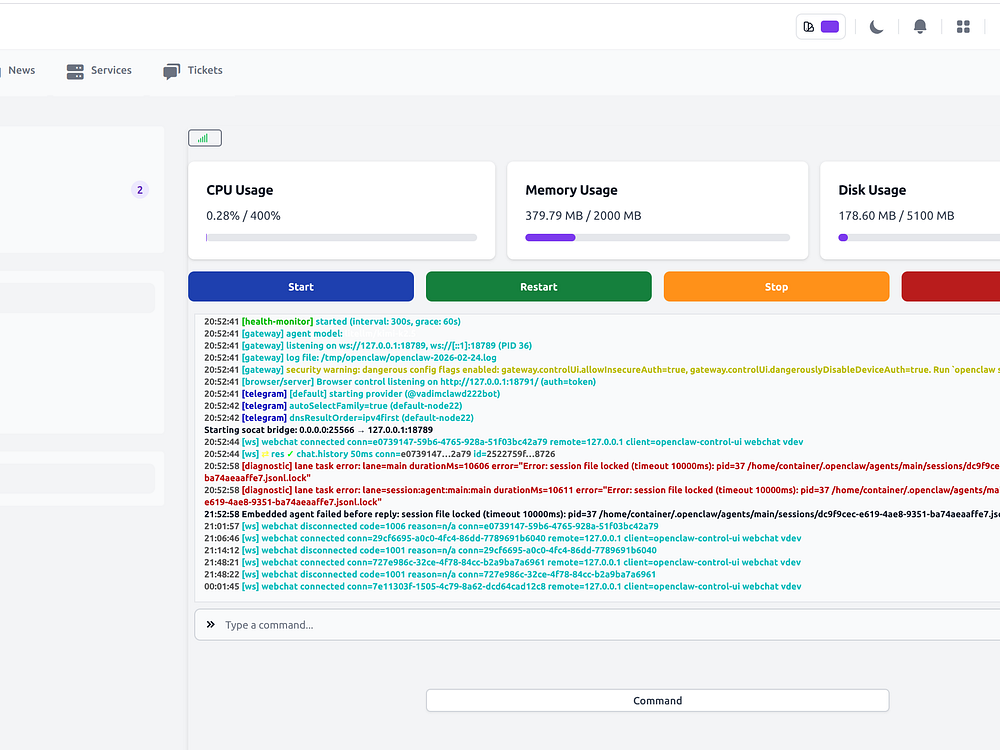
OpenClaw Hosting is a managed cloud platform for running OpenClaw, the open-source autonomous AI agent, 24/7 without dealing with servers or Docker. It supports any OpenAI-compatible model, including Claude, GPT, Gemini, and local models via Ollama, and includes free access to Kimi K2.5. Connect your agent to Telegram, WhatsApp, Slack, Discord, Signal, or iMessage, and keep data private with isolated containers and local-first storage. The platform handles updates, monitoring, and scaling so your agent stays online and productive.
Open-source LLM tracing that speaks GenAI, not HTTP.
The PDF Library that automatically organizes itself
Preview GIS files directly in Finder (GeoJSON, SHP, GPKG)
Turn Website Visitors into Customers with AI Conversations
App cleaner that lives in your MacBook’s notch
Email Infrastructure for Modern Product Teams
Massive local model speedup on Apple Silicon with MLX
Science-backed breaks to protect your vision & prevent RSI
Orchestrate your AI coding agents
Source leads, send outbound, grow pipeline. All in your CRM.
Get direct, unfiltered access to the People's House


Grails provides domain intelligence to help VCs, founders, and operators evaluate company domains, discover naming opportunities, and connect with owners. Use domain health audits, industry and funding-stage benchmarks, valuations, risk scoring, and curated lists to spot gaps and acquisition targets. Post a domain request and get responses from owners, or browse available strategic names and work with verified brokers to move fast and avoid costly mistakes.
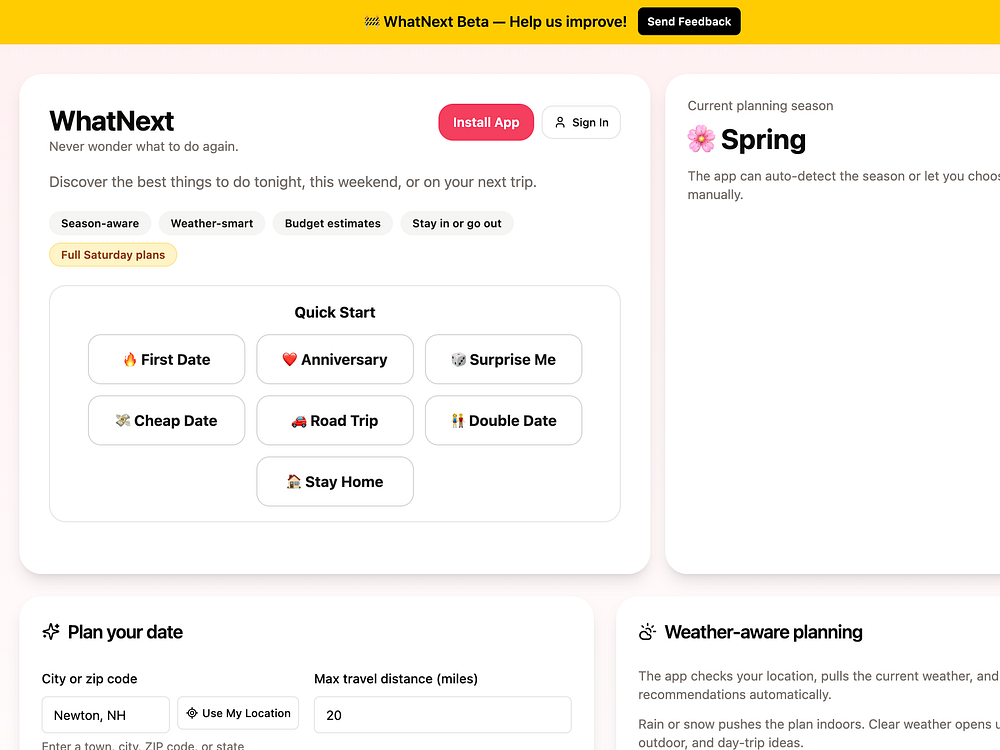
WhatNext is an AI-powered planner that instantly builds complete itineraries for date nights, friend hangouts, day trips, and weekend adventures using real places, venues, and live events near you. Enter your location and vibe, and it assembles dinner, activities, dessert, and drinks with Google Maps links. Customize budget and preferences, regenerate alternatives, save favorites, and use it across 50+ US cities — free to start
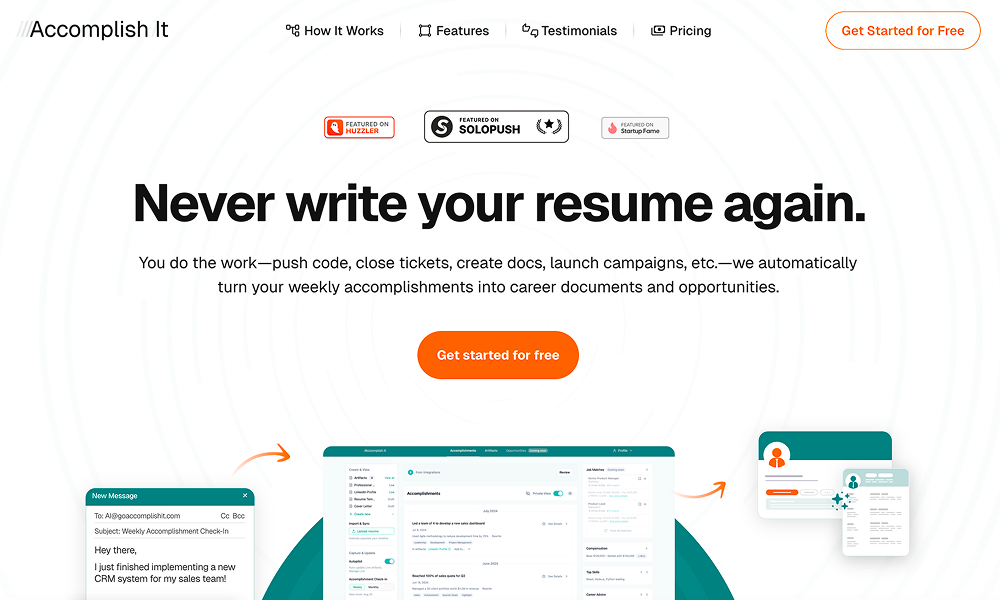
Accomplish It helps you capture, organize, and showcase your career accomplishments. Connect work sources like GitHub and Jira or reply to periodic prompts, and its AI records, categorizes, and turns results into resume-ready statements. Build a living resume to share a timeline, export polished resumes and career artifacts, and benchmark progress by role to stay ready for reviews and new opportunities.
The new Comments to Heart option will automate positive engagement and simulate personalized interaction on high-volume channels.
Instagram had been using the proprietary ratings scales without permission and will now include a disclaimer saying it “didn’t work with the MPA.”
A new survey from the app and research platform Suzy found that Snapchatters also use their content to influence travel decisions in their social circles.
The updated Adaptive Ranking Model will use less computing power to deliver more relevant ads and drive better return on ad spend.
The latest artificial intelligence-enhanced designs support all-day wear, allowing users to capture and record images and video in virtually any situation.
Integrating the two apps should offer a new monetization pathway for creators and make it easier for fans to request personalized messages.



Return of the King – Multi-GPU PC gaming is ready for a comeback During the company’s DLSS 5 reveal, Nvidia teased something massive. When demoing their next-generation DLSS features, Nvidia were running multi-GPU systems. While Nvidia confirmed that DLSS 5 will be usable on single-GPU systems later this year, this demo highlighted something bigger: the […]
The post Multi-GPU Returns – Nvidia unveils “AI SLI” to power DLSS 5 appeared first on OC3D.


 Agents can generate outdated Gemini API code because their training data has a cutoff date. We built two complementary tools to fix this.The Gemini API Docs MCP (https:/…



dubltap.io is an ecosystem of 8 single-purpose AI web apps. Each one solves one problem well. Market Maven offers competitive intelligence. Bad Mutha Forker transforms recipes. CLIFF NOTEZ analyzes documents. There are 5 more tools for sales, design, music, side hustles, and cognitive enhancement. All are free to try.
Painkiller Ideas helps founders find ideas worth building and validate them fast. It scrapes Reddit, Hacker News, GitHub, and Product Hunt for real complaints, then uses AI to score pain intensity, market size, and competition. Submit any concept to get market sizing, competitor analysis, ideal customer profiles, pricing strategy, and a prioritized validation roadmap. Access playbooks, prompts, landing page wireframes, and brand assets, and join a community of builders to source problems and compare notes.









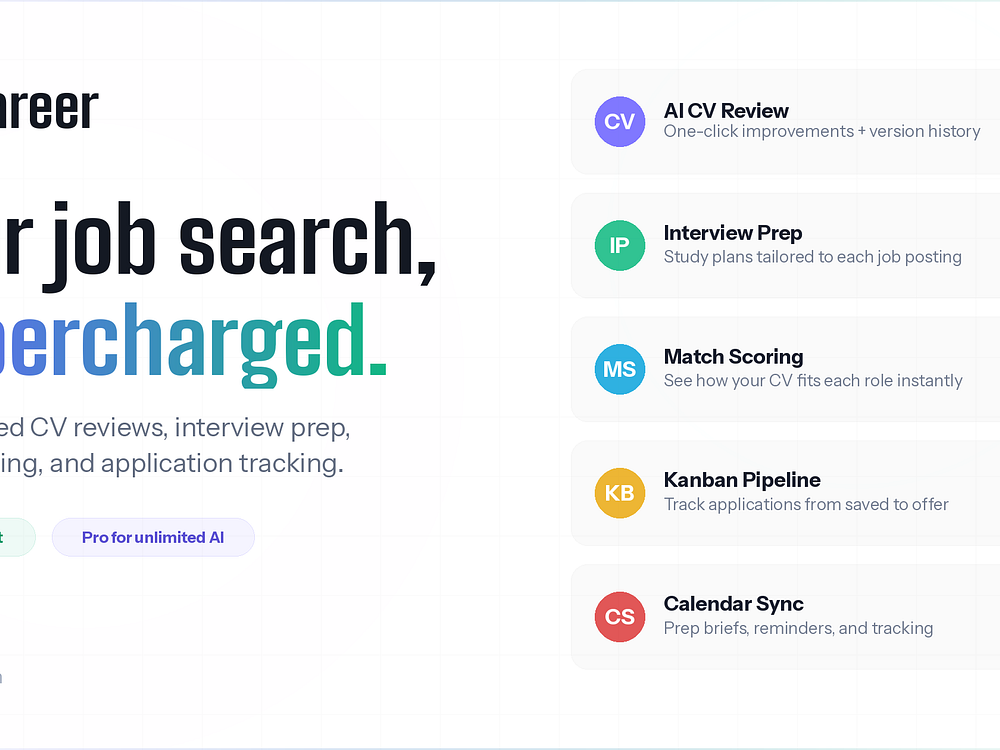
Lyn Career is a career intelligence platform that turns your job search into a strategic plan. It lets you track every application in one dashboard and extract job details from URLs, screenshots, or PDFs. You get match scores, skill gap insights, and rejection pattern analysis. It offers CV intelligence with actionable rewrites, role-specific interview prep, offer comparisons, and smart follow-up reminders with ghost detection. A built-in kanban, calendar sync, and contact CRM help manage pipelines and relationships clearly.
Valyris helps founders find and fix weak points in a campaign or investor pitch before high-stakes reviews. It tests narrative clarity, proof strength, internal consistency, timing and exposure, ask/raise logic, and delivery credibility to reveal blind spots and rank priorities. Start with a free 8-question check, then upgrade to an Audit or Deep Audit for a fast PDF diagnosis with key fragilities, likely objections and responses, contradiction mapping, evidence scoring, and a concrete fix plan. It's designed for Kickstarter, Indiegogo, Seedrs, Crowdcube, Y Combinator, Techstars, and direct investor outreach.






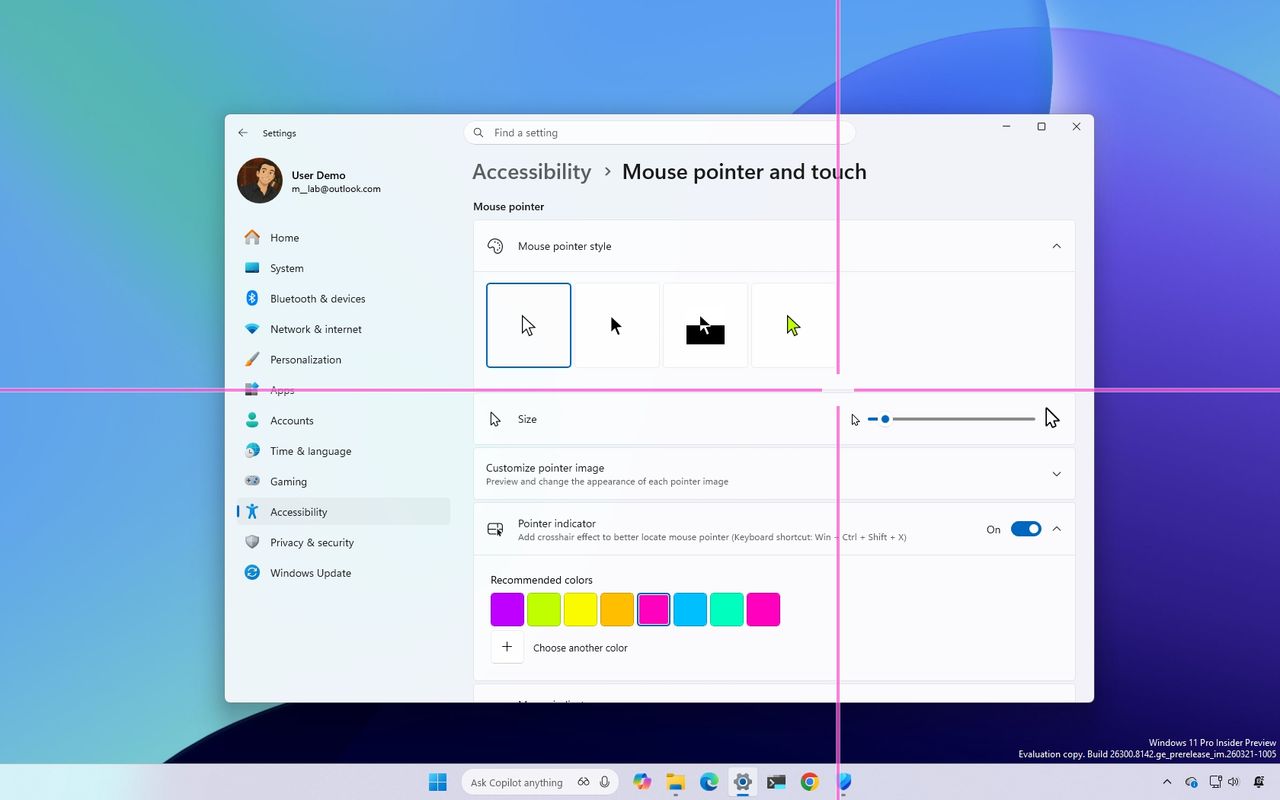




Nvidia DLSS 4.5 with dynamic frame generation is now available for RTX 50 GPUs using the Nvidia App (enable beta updates). The feature adjusts frame-gen in real time to balance performance and image quality. The update also adds MFG modes of up to 6x, along with beta automatic shader compilation to reduce in-game stutter.


The Card Shop Store is a marketplace for buying, selling, and vaulting sports, TCG, and entertainment trading cards. It supports direct sales and auctions, offers storefronts for sellers, and features CardShares for fractional physical ownership. You can browse graded and raw cards, track conditions and prices, and manage secure transactions. Use the web or mobile apps to list inventory, join breaks and auctions, and keep high-value cards safe in vault storage.
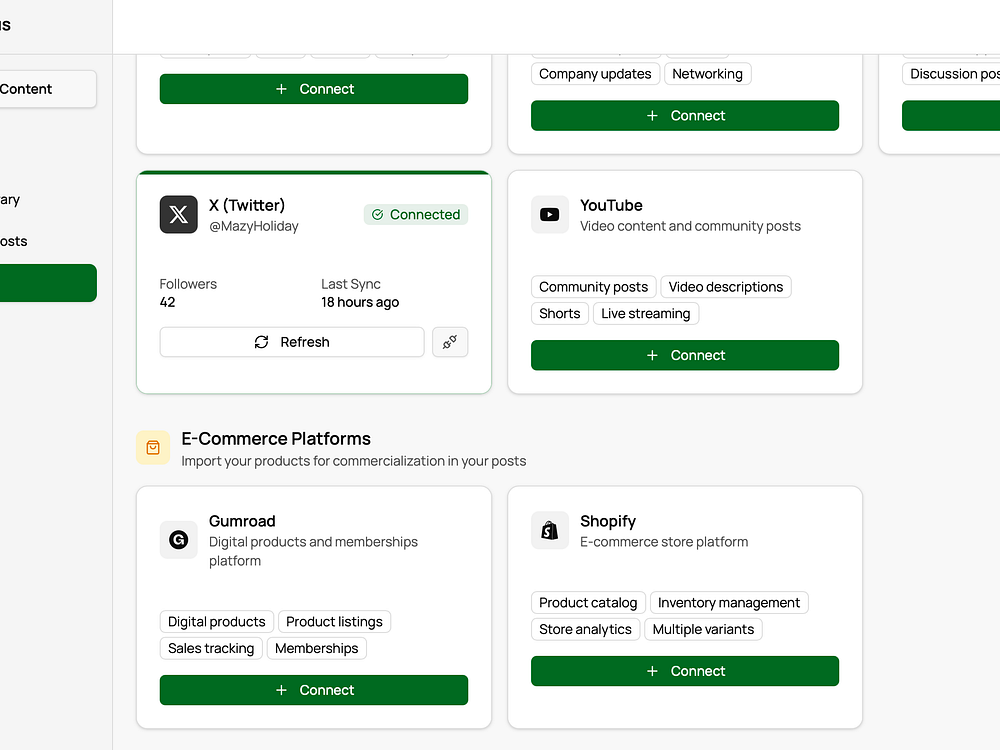
Tonimus automates social media growth for creators by generating, posting, and engaging in your brand voice while reporting revenue and personalized insights. Instead of guessing, creators know which platform earns money, audience authenticity, and insights across your genre based on real data. Tonimus not only tells you how many followers you have but also what they're worth and what to do next. It shows creators exactly which content drives revenue and automates creating more of it.
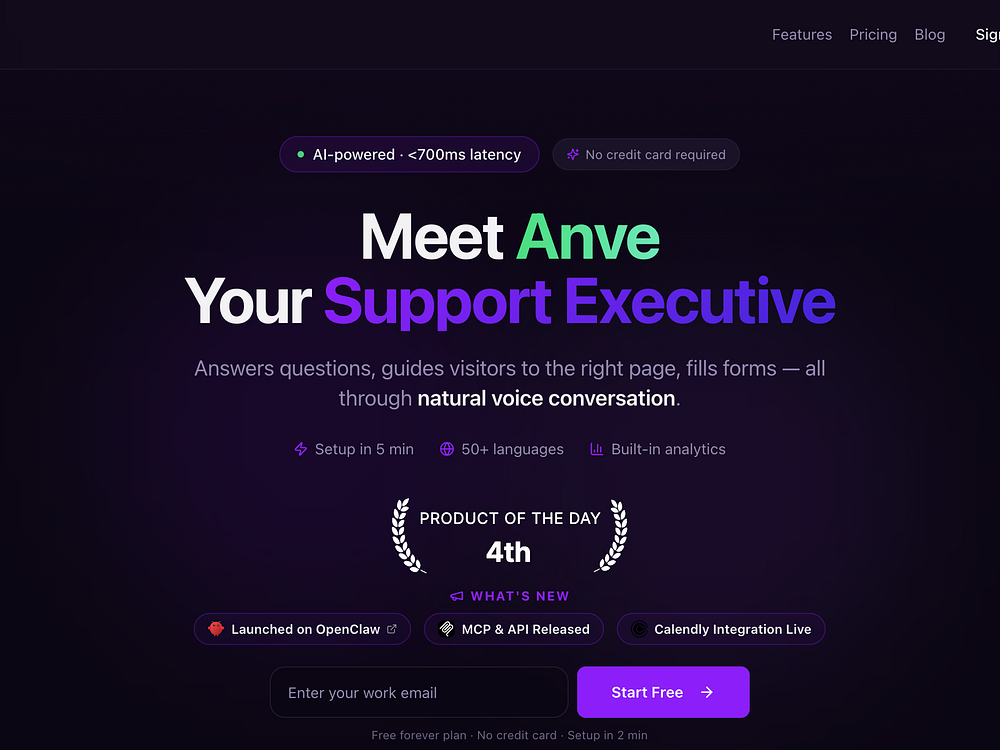
AnveVoice brings voice-first conversations to your website so visitors can speak naturally and get things done. It listens, understands intent, and acts on the page by scrolling, navigating, filling forms, and booking meetings while remembering preferences across sessions.
Embed a single script to add it to Shopify, WordPress, Webflow, Wix, Squarespace, React, or any site. A dashboard tracks sessions, conversions, and usage in real time so you can monitor performance and scale with transparent, token-based pricing.

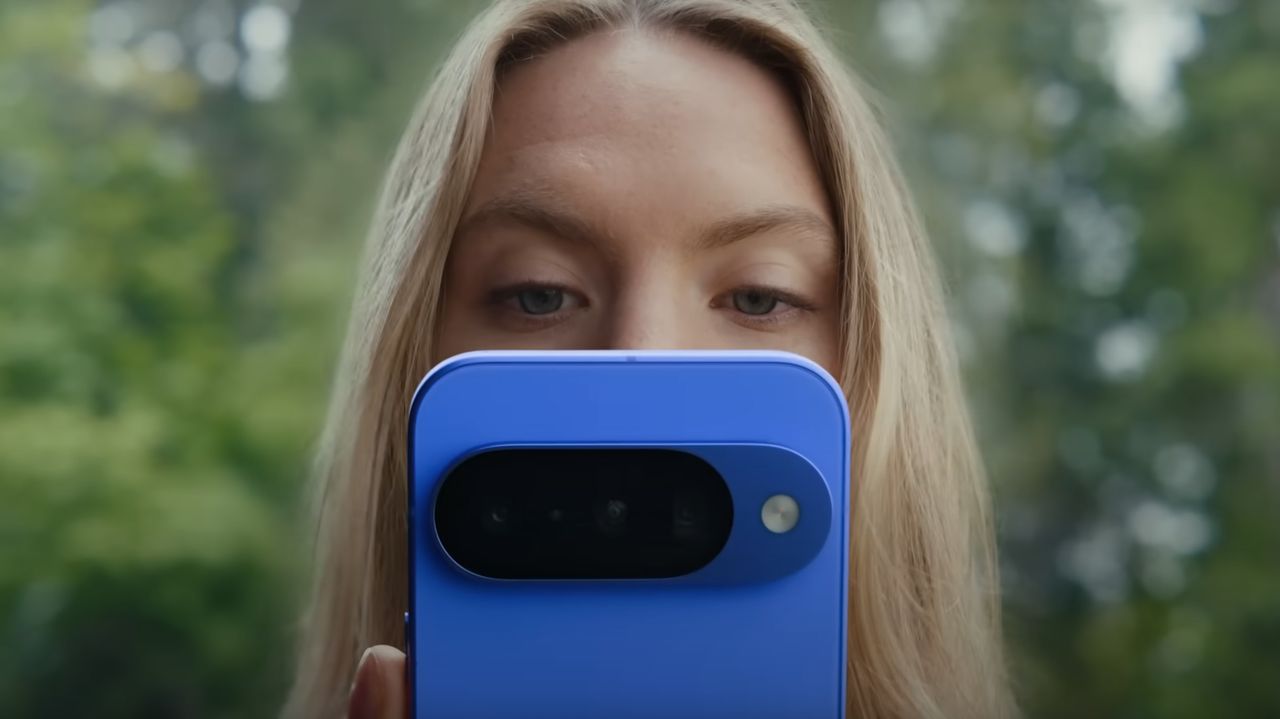
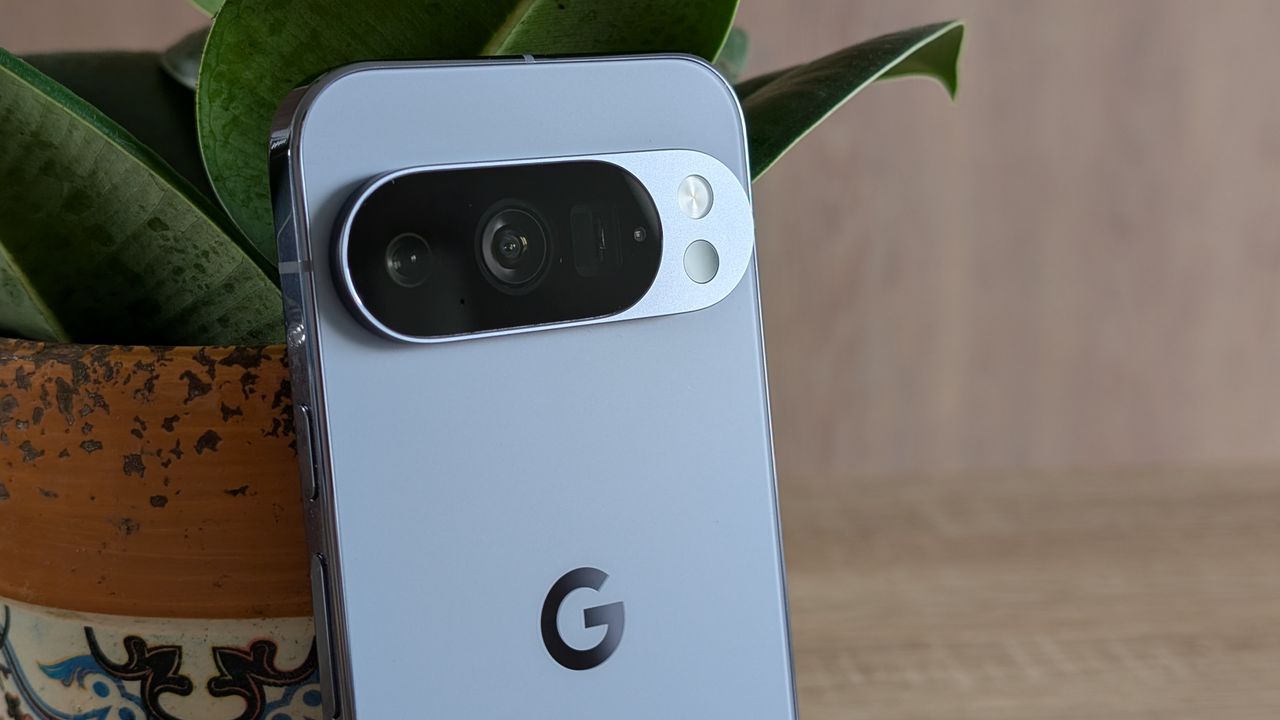
 Find pre-owned Pixel phones on the Google Store and Amazon Renewed.

YouTube used its NewFront presentation to unveil a significant upgrade to its Creator Partnerships platform, adding Gemini-powered creator matching, stronger measurement tools, and new ways to run creator content as paid ads.
Why we care. Influencer marketing has become a core part of many brands’ strategies, but finding the right creators at scale and proving ROI is a pain point. tackles influencer marketing’s two biggest friction points — finding the right creator and proving ROI.
Gemini-powered matching cuts through the noise of three million creators, while the ability to run creator content as paid Shorts and in-stream ads makes performance measurable like any standard campaign, backed by a reported 30% conversion lift.
How it works. The updated platform uses Gemini to recommend creators from a pool of more than three million YouTube Partner Program members, filtered by campaign goals. Advertisers get more control over who they work with and better visibility into how those partnerships perform.
The big new feature. A revamped Creator Partnerships boost lets brands run creator-made content directly as Shorts and in-stream ads — formats YouTube says deliver an average 30% lift in conversions.
The big picture. The announcement builds on BrandConnect, YouTube’s existing creator monetization infrastructure, showing that the platform is doubling down on the creator economy as a growth lever for advertisers — not just a content strategy.
What’s next. Brands interested in the updated tools can watch the full NewFront presentation on YouTube for more details.

Reddit ranks as the most-cited domain in AI-generated answers, followed by YouTube and LinkedIn, based on a new analysis of 30 million sources by Peec AI, an AI search analytics tool.
The findings. Reddit was the most-cited source across ChatGPT, Google AI Mode, Gemini, Perplexity, and AI Overviews. YouTube, LinkedIn, Wikipedia, and Forbes also ranked in the top five. Review platforms like Yelp and G2 appeared often in recommendation queries.
The research showed which domains models rely on:
Why we care. To win in AI search, you need authority beyond your site. Brands that appear consistently across trusted third-party platforms are more likely to be cited.
Why these sources? AI systems prioritize perceived authority plus authentic user input:
About the data. The analysis covered 30 million sources across ChatGPT, Google AI Mode, Gemini, Perplexity, and AI Overviews, measuring domains directly cited in answers to isolate what shapes responses.
The study. Top domains cited by AI search: Analysis based on 30M sources
Dig deeper. More citation research:










 Veo 3.1 Lite is now available in paid preview through the Gemini API and for testing in Google AI Studio.
 Fitbit adds cycle, mental wellbeing & nutrition tools in Public Preview. Now available for those without a Premium membership.

A newly published, unverified report claims Google’s Gemini AI is instructed to mirror user tone and validate emotions while grounding its responses in fact and reality.
Why we care. If accurate, AI-generated search responses may vary based on how a query is phrased — not just the information available.
What’s new. The report centers on the inherent tension in the system-level instructions guiding how Gemini responds. The report, published by Elie Berreby, head of SEO and AI search at Adorama, suggested that Gemini is instructed to:
What it means. The “overly supportive mandate frequently overrides the factual grounding,” Berreby wrote. So instead of acting as a neutral aggregator, AI answers may:
If public perception is negative, AI may amplify it. As the report suggests:
Query framing. The emotional framing of a query affects:
Google’s AI Overviews already show tone shifts, often aligning with query intent beyond keywords. This report offers a possible explanation.
Unverified. Google hasn’t confirmed the leak. As Berreby noted in his report: “I’ve decided to share only a fraction of the leaked internal system information with the general public. I’m not sharing any sensitive data. This isn’t a zero-day exploit. This is a tiny leak.”
The report. This Gemini Leak Means You Can’t Outrank a Feeling

Google is giving retailers more firepower to promote loyalty program benefits directly within product listings — expanding the program internationally and into its newest AI-powered shopping experiences.
What’s new. Merchants can now highlight member pricing and exclusive shipping options directly on listings. Loyalty annotations have also expanded to local inventory ads and regional Shopping ads — making it easier to promote in-store or geography-specific perks.

Why we care. The more you can personalize an offer for a shopper, the better. Embedding member perks into the moment of purchase discovery — rather than requiring a separate loyalty app or webpage — makes programs more visible and more likely to drive sign-ups.
By the numbers. According to Google, some retailers have reported up to a 20% lift in click-through rates when showing tailored offers to existing loyalty members.
The big picture. Loyalty benefits will now appear on Google’s AI-first surfaces, including AI Mode and Gemini, putting member offers in front of shoppers at an entirely new layer of the search experience.
Where it’s available. The expansion covers 14 countries — Australia, Brazil, Canada, France, Germany, India, Italy, Japan, Mexico, Netherlands, South Korea, Spain, the UK, and the US.
How to get started. Merchants activate the loyalty add-on in Merchant Center, configure member tiers, and set up pricing and shipping attributes. Connecting Customer Match lists in Google Ads is required to display strikethrough pricing and shipping perks to known members.
Don’t miss. US merchants can apply to join a pilot that uses Customer Match as a relationship data source for free listings — potentially expanding loyalty reach without additional ad spend.

Gary Illyes from Google shared some more details on Googlebot, Google’s crawling ecosystem, fetching and how it processes bytes.
The article is named Inside Googlebot: demystifying crawling, fetching, and the bytes we process.
Googlebot. Google has many more than one singular crawler, it has many crawlers for many purposes. So referencing Googlebot as a singular crawler, might not be super accurate anymore. Google documented many of its crawlers and user agents over here.
Limits. Recently, Google spoke about its crawling limits. Now, Gary Illyes dug into it more. He said:
Then what happens when Google crawls?
How Google renders these bytes. When the crawler accesses these bytes, it then passes it over to WRS, the web rendering service. “The WRS processes JavaScript and executes client-side code similar to a modern browser to understand the final visual and textual state of the page. Rendering pulls in and executes JavaScript and CSS files, and processes XHR requests to better understand the page’s textual content and structure (it doesn’t request images or videos). For each requested resource, the 2MB limit also applies,” Google explained.
Best practices. Google listed these best practices:
<title> elements, <link> elements, canonicals, and essential structured data — higher up in the HTML document. This ensures they are unlikely to be found below the cutoff.Podcast. Google also had a podcast on the topic, here it is:





































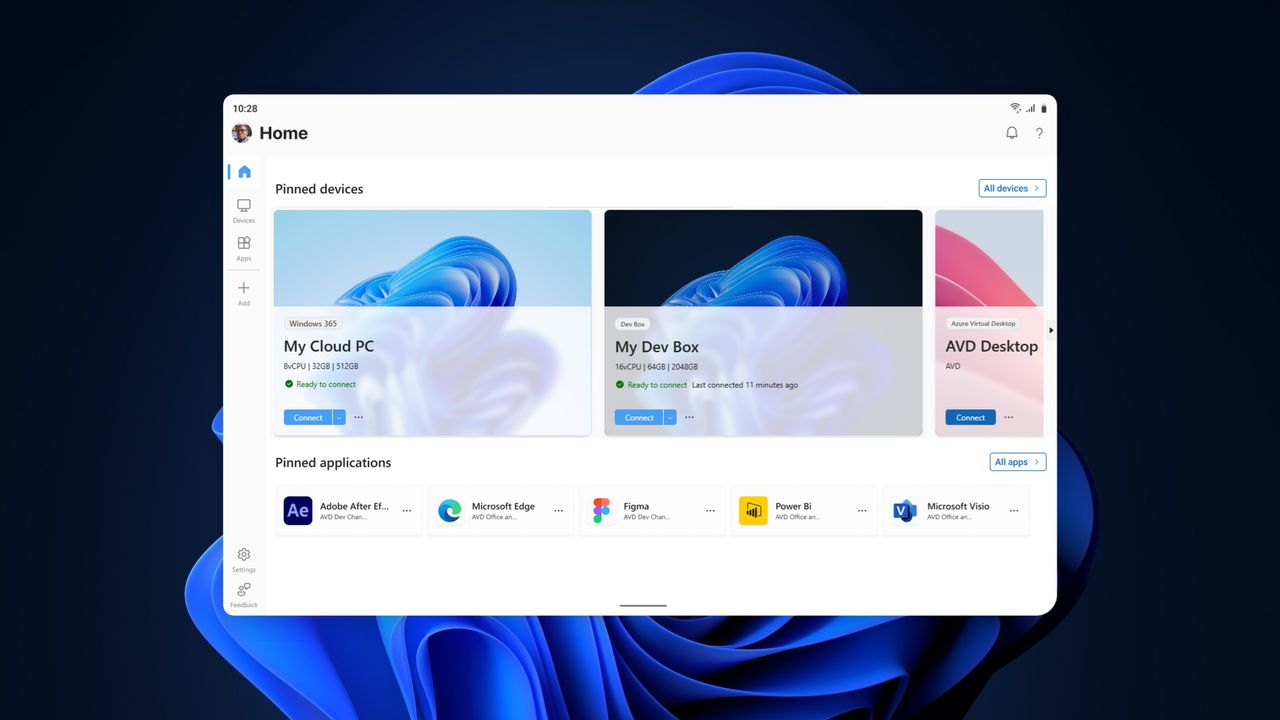


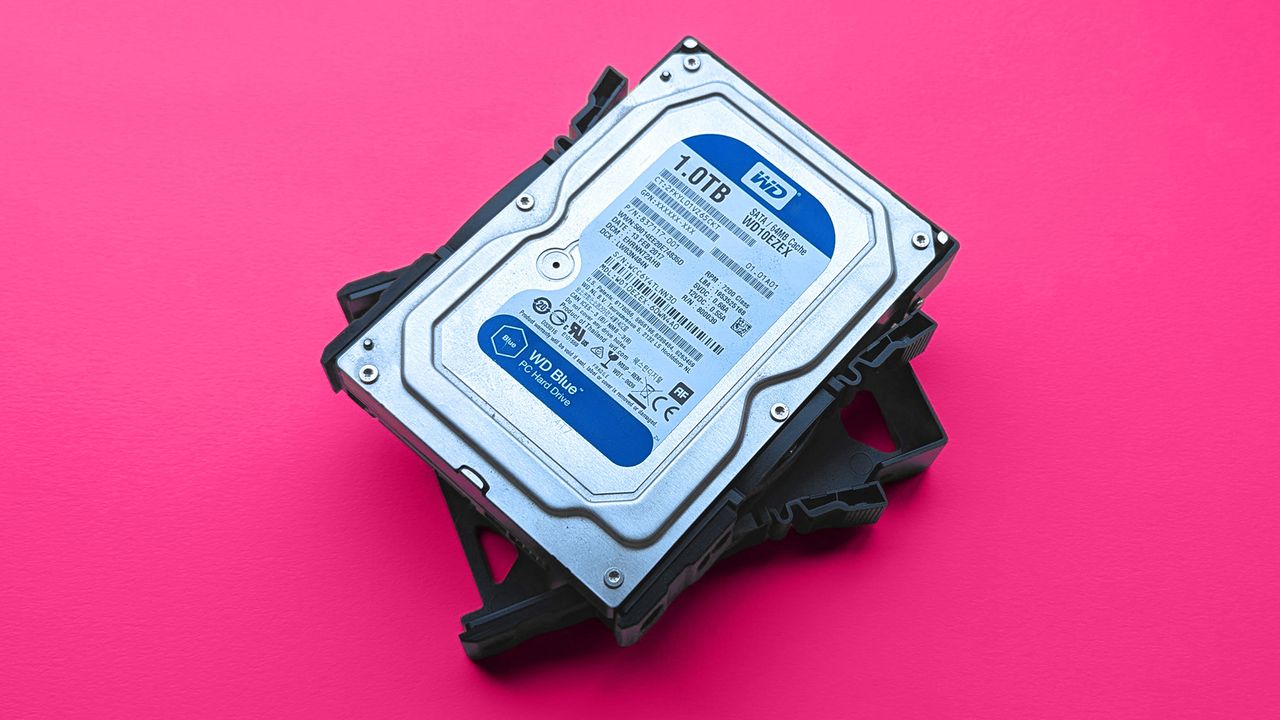








PDFsam Basic is a free, open-source tool for splitting, merging, and organizing PDFs. Version 6.0 adds three compression modes, better support for PDF 2.0 and UTF-8 text, stronger handling for malformed files, and more quality-of-life improvements.








Manuscript is two things. For publishing houses, it's a tool that streamlines the entire editorial process and makes it 10 times more efficient. It uses AI ethically, handling the tedious parts of editing while keeping the artful, human side of publishing exactly where it belongs: with humans.
For authors, Manuscript is a full workspace that gives you a complete toolbox but leaves the writing entirely to you. Think of it as a Scrivener alternative built for the 21st century—one that will never write for you.
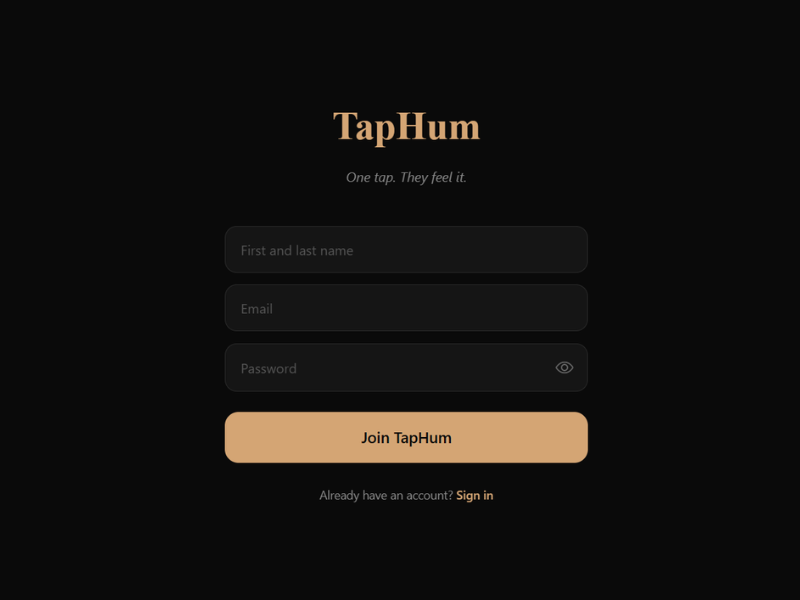
TapHum is a presence app that lets you tell someone you're thinking of them with a single tap. No messages, no emojis, no pressure to reply. Just tap their circle and they instantly feel it through a gentle vibration and a warm glow on their phone. It removes the need for words while keeping connections warm and effortless.
Each person in your circle gets their own glowing orb you can personalize with a custom color and nickname. Build daily streaks by tapping each other, see your shared timeline grow over time, and connect through QR codes or invite links. TapHum is for the people you don't need words with, like partners, parents, and best friends who just need to know you're there.

SEO hiring is shifting toward senior, strategy-led roles as AI reshapes search and expands the scope of the job. A new Semrush analysis of 3,900 listings shows companies now prioritize leadership, experimentation, and cross-channel visibility over pure technical execution.
Why we care. SEO hiring, career paths, and required skills are changing. Entry roles focus on execution, while most demand sits at the leadership level — owning strategy across search, AI assistants, and paid channels, with clear revenue impact.
What changed. Senior roles dominated, accounting for 59% of listings. Mid-level roles, such as specialists (15%) and managers (10%), trailed far behind.
The skills shift. In-demand capabilities extend beyond traditional SEO into coordination, testing, and decision-making:
Tools and channels. The SEO tech stack now spans analytics, paid media, and data.
AI expectations: AI literacy is moving from optional to expected:
Pay and positioning: SEO is increasingly treated as a business function.
Remote work is now standard. More than 40% of listings offered remote options, with little difference by seniority.
About the data: Semrush analyzed 3,900 U.S.-based SEO job listings from Indeed as of Nov. 25. Roles were deduplicated, segmented by seniority, and analyzed using semantic keyword extraction.
The study. What 3,900 SEO Job Listings Reveal for 2026: Experiments, AI, and Six-Figure Salaries

Technical SEO extends beyond indexing to how content is discovered and used, especially as AI systems generate answers instead of listing pages.
For generative engine optimization (GEO), the underlying tools and frameworks remain largely the same, but how you implement them determines whether your content gets surfaced — or overlooked.
That means focusing on how AI agents access your site, how content is structured for extraction, and how reliably it can be interpreted and reused in generated responses.
From a technical standpoint, robots.txt is a tool you already use in your SEO arsenal. You need to add the right crawlers within your files to allow specific bots their own rights.
For example, you may want a training model like GPTBot to have access to your /public/ folder, but not your /private/ folder, and would need to do something like this:
User-agent: GPTBot
Allow: /public/
Disallow: /private/
You’ll also need to decide between model training and real-time search and citations. You might consider disallowing GPTBot and allowing OAI-SearchBot.
Within your robots.txt, you also need to consider Perplexity and Claude standards, which are tied to these bots:
Claude
Perplexity
Adding to your agentic access is another new protocol — llms.txt, a markdown-based standard that provides a structured way for AI agents to access and understand your content.
While it’s not integrated into every agent’s algorithm or design, it’s a protocol worth paying attention to. For example, Perplexity offers an llms.txt that you can follow here. You’ll come across two flavors of llms.txt:
Even if Google and other AI tools aren’t reading llms.txt, it’s worth adapting for future use. You can read John Mueller’s reply about it below:

GEO focuses more on chunks of information, or fragments, to provide precise answers. Bloat is a problem with extractability, which means AI retrieval has issues with:
You want your core content visible to users, bots, and agents. Achieving this goal is easier when you use semantic HTML, such as:
The goal? Separate core facts from boilerplate content so your site shows up in answer blocks. Keep your context window lean so AI agents can read your pages without truncation. Creating content fragments will feed both search engines and agentic bots.
Dig deeper: How to chunk content and when it’s worth it
Schema.org has been a go-to for rich snippets, but it’s also evolving into a way to connect your entities online. What do I mean by this? In 2026, you can (and should) consider making these schemas a priority:
Connecting information and data for agents makes it easier for your site or business to be presented on these platforms. Once you have the basics down, you can then focus on performance and freshness.
AI is constantly scouring the internet to maintain a fresh dataset. If the information goes stale, the platform becomes less valuable to users, which is why retrieval-augmented generation (RAG) must become a focal point for you.
RAG allows AI models, like ChatGPT, to inject external context into a response through a prompt at runtime. You want your site to be part of an AI’s live search, which means following the recommendations from the previous sections. Additionally, focus on factors such as page speed, server response time, and errors.
In addition to RAG, add “last updated” signals for your content. <time datetime=””> is one way to achieve this, along with schema headers, which are critical components for:
You can now start measuring your success through audits to see how your efforts are translating into real results for your clients.
Dig deeper: How to keep your content fresh in the age of AI
You have everything in place and ready to go, but without audits, there’s no way to benchmark your success. A few audit areas to focus on are:
Measuring success shows you the validity of your efforts and ensures you have KPIs you can share with clients or management.
Preparing your GEO strategy for 2027 requires changes in how you approach technical SEO, but it still builds on your current efforts. You’ll want to automate as much as you can, especially in a world with millions of custom GPTs.
Manual optimization? Ditch it for something that scales without requiring endless man-hours.
Technical SEO was long the core of ranking a site and ensuring you provided search bots and crawlers with an asset that was easy to crawl and index.
Now? It’s shifting.
Your site must become the de facto source of truth for the world’s models, and this is only possible by using the tools at your disposal.
Start with your robots.txt and work your way up to structure, fragmented data, and extractability. Audit your success over time and keep tweaking your efforts until you see positive results. Then, scale with automation.
Google's Gary Illyes published a blog post explaining how Googlebot works as one client of a centralized crawling platform, with new byte-level details.
The post Google Explains Googlebot Byte Limits And Crawling Architecture appeared first on Search Engine Journal.
The new Nvidia App beta enables DLSS 4.5 Dynamic Frame Generation and 6x Frame Generation With the newest Nvidia App beta, Nvidia has officially released DLSS 4.5 Dynamic Frame Generation and 6x Frame Generation. These options are available as DLSS Overrides on the Nvidia App and should become available to all RTX 50 series GPU […]
The post Nvidia DLSS 6x and Dynamic Frame Generation have arrived appeared first on OC3D.







In 1998, submitting a website to search engines was manual, methodical, and genuinely tedious. I remember 17 of them: AltaVista, Yahoo Directory, Excite, Infoseek, Lycos, WebCrawler, HotBot, Northern Light, Ask Jeeves, DMOZ, Snap, LookSmart, GoTo.com, AllTheWeb, Inktomi, iWon, and About.com.
Each had its own form, process, and wait time, and its own quiet judgment about whether your URL was worth including. We submitted manually, 18,000 pages in all. Yawn.
Google was barely a year old when we were doing this. But they were already building the thing that would make submission irrelevant.
PageRank meant Google followed links, and a site that other sites linked to would be found whether it submitted or not. The other 17 engines waited to be told about content. Google went looking, and within a few years, they got so good at finding content that manual submission became the exception rather than the norm.
You published, you waited, the bots arrived. For 20 years, that was the deal, and SEO optimized for a crawler that would show up sooner or later.
The irony is that we’re now shifting back. Not because Google got worse at finding things, but because the game has expanded in ways that pull alone can’t cover, and the revenue flowing through assistive and agentic channels doesn’t wait for a bot.

The pull model (bot discovers, selects, and fetches) remains the dominant entry mode for the web index. What’s changed is that pull is now one of five entry modes into the AI engine pipeline (the 10-gate sequence through which content passes before any AI system can recommend it), not the only one.
The pipeline has expanded, and new modes have been added alongside the existing model rather than replacing it, and the single entry mode that has been the norm for 20 years has expanded to five.
What follows is my taxonomy of those five modes, with an explanation of the advantages each one gives you at the two gates that determine whether content can compete: indexing and annotation.
Traditional crawl-based discovery where all 10 pipeline gates apply and the bot decides everything. You start at gate zero and have no structural advantage by the time your content gets to annotation (which is where that content starts to contribute to your AI assistive agent/engine strategy). You’re entirely dependent on the bot’s schedule and the quality of what it finds when it arrives.
The brand proactively notifies the system that content exists or has changed, through IndexNow or manual submission.
Fabrice Canel built IndexNow at Bing for exactly this purpose: “IndexNow is all about knowing ‘now.’” It skips discovery, improves the chances of selection, and gets you straight to crawl. The content still needs to be crawled, rendered, and indexed, because IndexNow is a hint, not a guarantee.
You win speed and priority queue position, which means your content is eligible for recommendation days or weeks earlier than a competitor who waited for the bot. In fast-moving categories, that window is the difference between being in the answer and being absent from it.
Note: WebMCP helps with Modes 1 and 2 by making crawling, rendering, and indexing more reliable, retaining signal and confidence that would otherwise be lost through those three gates.
Because confidence is multiplicative across the pipeline, a higher passage rate at crawling, rendering, and indexing means your content arrives at annotation with significantly more surviving signal than a standard crawl delivers. The structural advantage compounds from there.
Structured data goes directly into the system’s index, bypassing the entire bot phase. Google Merchant Center pushes product data with GTINs, prices, availability, and structured attributes. OpenAI’s Product Feed Specification powers ChatGPT Shopping that supports 15-minute refresh cycles.
Discovery, selection, crawling, and rendering don’t exist for this content, and the “translation” at the indexing phase is seamless: it arrives at indexing already in machine-readable format, four gates skipped and one improved. That means the annotation advantage is significant.
This is where the money is for product-led businesses: where crawled content arrives as unstructured prose the system has to interpret and feed content arrives pre-labeled with explicit machine-readable entity type, category, and attributes. By structuring the data and injecting directly into indexing, you’re solving a huge chunk of the classification problem at annotation, which, as you’ll see in the next article, is the single most important step in the 10-gate sequence.
As the confidence pipeline shows, each gate that passes at higher confidence compounds multiplicatively, so this is where you can get the “3x surviving-signal advantage” I outline in “The five infrastructure gates behind crawl, render, and index.”
Model Context Protocol (MCP) — a standard that lets AI agents query a brand’s live data during response generation — allows agents to retrieve data from brand systems on demand.
In February 2026, four infrastructure companies shipped agent commerce systems simultaneously. Stripe, Coinbase, Cloudflare, and OpenAI collectively wired a real-time transactional layer into the agent pipeline, live with Etsy and 1 million Shopify merchants.
Agentic commerce is key. MCP skips the entire DSCRI pipeline and then operates at three levels, each entering the pipeline at a different gate:
The revenue consequences are already real: brands without MCP-ready data are losing transactions to those with it, because the agent can’t access their inventory, pricing, or availability in real time when it needs to make a decision. This is where you see multi-hundred percent gains in the surviving signal.
MCP is already simultaneously push and pull, depending on context.
There’s a dimension to Mode 4 that most people don’t think about much: the agent querying your MCP connection isn’t always a Big Tech recommendation system. It’s increasingly the customer’s own AI, acting as their purchasing agent, evaluating your inventory and pricing in real time, with their credit card behind the query, completing the transaction without them opening a browser.
When your customer’s agent (let’s say OpenClaw-driven) comes knocking, agent-readable is the entry requirement. Agent-writable — the capacity for an agent to act, not just retrieve — is where you’ll make the conversion. The brands without writable infrastructure will be losing transactions to competitors whose systems answered the query and handled the action.
This is structurally different from the other four. Where Modes 1 through 4 change how content enters the pipeline, ambient research changes what triggers execution of the final gates.
The AI proactively pushes a recommendation into the user’s workflow without any query: Gemini suggesting a consultant in Google Sheets, a meeting summary in Microsoft Teams surfacing an expert, and autocomplete recommending your brand.
Ambient is the reward for reaching recruitment with accumulated confidence high enough that the system fires the execution gates on the user’s behalf, without being asked. You can’t optimize for ambient directly. You earn it — and the brands that earn it capture the 95% of the market that isn’t actively searching.
Several people have told me my obsession with ambient is misplaced, theoretical, and not a real thing in 2026. I’ve experienced it myself already, but the clearest demonstration came at an Entrepreneurs’ Organization event where I was co-presenting with a French Microsoft AI specialist.
He demonstrated on Teams an unprompted push recommendation: a provider identified as the best solution to a problem his team had been discussing in the meeting. Nobody explicitly asked. Copilot listened, understood the problem, evaluated options, and push-recommended a supplier right after the meeting. Ambient isn’t theoretical. It’s running on Teams, Gmail, and other tools we all use daily, right now.
Five entry modes, each with a different starting point, and they all converge at annotation. Annotation is the key to the entire pipeline. Every algorithm in the algorithmic trinity (LLM + knowledge graph + search) doesn’t use the content itself to recruit, it uses the annotations on your chunked content, and nothing reaches a user without being recruited.
Why is that important? Because accurate, complete, and confident annotation drives recruitment, and recruitment is competitive regardless of how content entered. A product feed arriving at indexing with zero lost signal competes at recruitment with a huge advantage over every crawled page, every other feed, and every MCP-connected competitor that entered by a different door.
You control more of this competition than most practitioners assume, but skipping gates gives you a structural advantage in surviving signal. It doesn’t exempt you from the competition itself.
That distinction matters here because annotation sits at the boundary. It’s the last absolute gate: the system classifies your content based on your signals, independently of what any competitor has done. Nobody else’s data changes how your entity is annotated. That makes annotation the last moment in the pipeline where you have the field entirely to yourself.
From recruitment onward, everything is relative. The field opens, every brand that passed annotation enters the same competitive pool, and the advantage you carried through the absolute phase becomes your starting position in a winner-takes-all race. Get annotation right, and you have a significant head start. Get it wrong, and no matter how much work you do to improve recruitment, grounding, or display, it will not catch up, because the misclassification and loss of confidence compound through every gate downstream.
Nobody in the industry was talking about this in 2020. I started making the point then, after a conversation on the record with Canel, and it still isn’t getting the attention it deserves.

Annotation is your last chance before competition arrives.
The research modes on the user’s side have expanded, too. The SEO industry has traditionally focused on just one: implicit, when the user types a query. There was always one more: explicit brand queries, and now we have a third. Each research mode is defined by who initiates and what the user already knows.
Explicit research is the deliberate query, where the user asks for a specific brand, person, or product, and the system returns a full entity response (the AI résumé that replaces the brand SERP).
This is the lowest-confidence mode of the three, because the user has already signaled very explicit intent: you’re only reaching people who already know your name. Bottom of the funnel, decision. Algorithmic confidence is important here to remove hedging (“they say on their website,” “they claim to be…”) and replace it with absolute enthusiasm (“world leader in…,” “renowned for…”).
Implicit research removes the explicit query. The AI introduces the brand as a recommendation (or advocates for you) within a broader answer, and the user discovers the brand because the system considers it relevant to the conversation, staking its own credibility on the inclusion. Top- and mid-funnel, awareness and consideration. Algorithmic confidence is vital here to beat the competition and get onto the list when a user asks “best X in Y market” or be cited when a user asks “explain topic X.”
Ambient research requires the highest confidence of all. The system pushes the brand into the user’s workflow with no query, no explicit request, the algorithm is making a unilateral decision that this user, in this context, at this moment, needs to see your brand. That requires very significant levels of algorithmic confidence.
The format is small: a sentence, a credential, a contextual mention. The audience reached is the largest: people not yet in-market, not yet actively looking, who encounter your brand because the AI decided they should. And the kicker is that your brand gets the sale before the competition even starts.
For me, this is the structural insight that inverts how most brands prioritize, and where the real money is hiding. They optimize for implicit research, where competition is highest, the target you need to hit is widest, and the work is hardest.
Most SEOs underestimate explicit research (where profitability is highest) and completely ignore ambient, which reaches the 95% who aren’t yet looking and requires the deepest entity foundation to trigger. I call this the confidence inversion, first documented in May 2025: the smallest format requires the highest investment, and it reaches the most valuable audience.

In 2019, AI engineers spent 80% to 90% of their time collecting, cleaning, and labeling data, and the remaining 10% to 20% on the work they actually wanted to do. They wryly called themselves data janitors. Today, Gartner estimates 60% of enterprises are still effectively stuck in the 2019 model, manually scrubbing data, while the companies that got organized early compound their advantage.
The same split is happening with brand content and entity management, for the same reason. Every push mode described in this article draws on data: product attributes for merchant feeds, structured entity data for MCP connections, and corroborated identity claims for ambient triggering.
If that data lives in scattered, inconsistent, contradictory sources, every push attempt is expensive to implement, structurally weak on arrival, and liable to contradict the previous one. Inconsistency is the annotation killer: the system encounters two different versions of who you are from two different push moments, and confidence drops accordingly.
The framing gap, where your proof exists but the algorithm can’t connect it to a coherent entity model, is a direct consequence of disorganized data, and it costs you in recommendation frequency every day it persists.
The entity home website — the full site structured as an education hub for algorithms, bots, and humans simultaneously, built around entity pillar pages that declare specific identity facets — becomes the single source that feeds every mode simultaneously.
Pull, push discovery, push data, MCP, and ambient all draw from the same clean, consistent, non-contradictory data. You build the structure once, maintain it in one place, and you’re ready for push and pull modes today, and any to come that don’t yet exist.

That foundation is only as strong as the corrections made to it. How this works in practice depends on where you’re starting from. For enterprises, the website typically mirrors an internal data structure that already exists:
The website becomes the public representation of structured data that lives inside the business, and the primary challenge is integration and maintenance.
For smaller businesses and personal brands, the direction often runs the other way: building the entity home website well is what forces you to figure out how your business is actually structured, what you genuinely offer, who you serve, and how everything connects. The website imposes discipline.
We’re doing exactly this: centralizing everything as the structured data representation of the entire brand (personal or corporate). Getting the foundation right (who we are, what we offer, who we serve) is generally the heaviest lift. Building N-E-E-A-T-T credibility on top of that foundation is now comparatively straightforward, and every new push mode draws from the same organized source.
Here’s where using AI fits into this work. It can handle roughly 80% of the organization: extracting structure from existing content, proposing taxonomies, drafting entity descriptions, mapping relationships, and flagging gaps. What it does poorly, and what humans need to correct, are the three failure modes that propagate silently through every downstream gate:
Confusion is the sneakiest because it looks like data, passes automated quality checks, enters the pipeline with apparent confidence, and then causes annotation to misclassify in ways that compound through every gate downstream.
Alongside the errors sit the missed opportunities, which are equally costly and considerably less obvious:
The human doing the correction and optimization work is the competitive advantage. Because the errors are surreptitious and the opportunities non-obvious, the trick is finding where both actually are, fixing one, and acting on the other.
The errors are surreptitious. The opportunities are non-obvious. Finding both is the work that compounds.
The push layer is expanding. The brands that organize their data now — not perfectly, but consistently, and with a system for maintaining it — are building the infrastructure from which every current and future entry mode draws.
The brands still publishing and waiting for the bot (Mode 1) are optimizing for the least advantageous mode in a five-mode landscape, and that disadvantage gap widens with every passing cycle.
This is the seventh piece in my AI authority series.

OpenAI now allows users of ChatGPT to share their device location so that ChatGPT can know more precisely where the user is and serve better answers and results based on that location.
The feature is called location sharing, OpenAI wrote, “Sharing your device location is completely optional and off until you choose to enable it. You can update device location sharing in Settings > Data Controls at any time.”
What it does. If ChatGPT knows your location, it can return better local results. OpenAI wrote:
Privacy. OpenAI said “ChatGPT deletes precise location data after it’s used to provide a more relevant response.” Here is how ChatGPT uses that information:
Does it work. Does this work? Well, maybe not as well as you’d expect. Here is an example from Glenn Gabe:
I shared about the "Near Me ChatGPT Update" the other day and just let ChatGPT use my device location. This is supposed to enhance results for local queries. I just asked for the "best steakhouses near me" and several of the restaurants are ~45 minutes away. Both restaurants… pic.twitter.com/gRkMeuzMQt
— Glenn Gabe (@glenngabe) March 30, 2026
Why we care. Making ChatGPT local results better is a bit deal in local search and local SEO. Knowing the users location and better yet, precise location, can result in better local results.
Hopefully this will result in ChatGPT responding with more useful local results for users.

Google Business Profile (GBP) may be getting shoved down the SERPs by ads and AI Overviews more than ever, but it’s still a top source of inbound leads for local businesses — and one of the fastest ways to improve rankings with simple fixes.
Here’s a five-step audit to find and fix the gaps most businesses miss.
It’s a common misconception that the business with the most Google reviews wins in Google Maps ranking. While a high review count provides social proof, Google’s algorithm has more of a “what have you done for me lately?” attitude.
The number of reviews you get a month, and how recent your last review was, often outweigh the total count for all important map pack positions. We call these metrics review velocity and review recency.
Think about it like this: If you have 500 reviews but haven’t received a new one since 2024, a competitor with 100 fresh reviews from the last month will likely blow past you.
So, how do you measure your review velocity and recency? Analyze competitors to see how top-ranking businesses perform on those metrics.
Follow these steps:
You don’t just need more reviews. You need to match or exceed the consistency of top-ranking listings.

You can automate this with Places Scout API data. That’s what our agency does, tracking it consistently to keep clients ahead of competitors. Automated charts make it easier to see how you stack up.

Dig deeper: Local SEO sprints: A 90-day plan for service businesses in 2026
Including keywords in your business name is one of the most powerful local ranking signals. Sometimes a profile will rank in the map pack based solely on its name, beating out businesses with better reviews and higher recency.
Google’s algorithm hasn’t fully filtered out this type of keyword targeting, so it remains an opportunity. Take this business: only 21 reviews, yet it ranks first in the map pack for an extremely competitive term, thanks to the keywords in its business name.

You can’t simply keyword-stuff your name, though. Google can verify your legal name and take action to remove keywords from your profile — or worse, require reverification or suspend it. Your best option is a legal DBA (doing business as) certificate, also known as a trade name, or fictitious name certificate, in some areas.
For example, if your legal name is “Smith & Sons,” you’re missing out. Registering a DBA as “Smith & Sons HVAC Repair” allows you to update your GBP name while technically adhering to Google’s guidelines.
Choosing the wrong primary category for your GBP is a leading reason businesses fail to rank. If you’re a personal injury lawyer, but your primary category is set to “trial attorney,” you’re fighting an uphill battle to rank for those highly competitive terms like “personal injury lawyer” searches.
How to pick the best primary category:

Dig deeper: How to pick the right Google Business Profile categories
Many businesses link their GBP to their homepage and stop there. For multi-location businesses, this is a mistake. You should link to a dedicated local landing page optimized for your top keywords that mentions the city your GBP address is in.
Linking your GBP to a hyper-local city page (e.g., /tampa-plumbing/ instead of the homepage) reinforces “entity alignment.” When the information on your GBP matches a unique, highly relevant page on your site, Google’s confidence in your location increases, often leading to a jump in the local pack. Make sure your GBP landing page is optimized with all your services and links to dedicated service pages to boost your listing for service-specific searches.
Watch out for the diversity update. Sometimes a business ranks well in the map pack, but its website is nowhere to be found in organic results. This is often due to Google’s diversity update.
If you suspect you’re being filtered out organically, try linking your GBP to a different localized interior page. This is often a quick fix that helps your site reappear in organic search. Here’s an example of a client I recently helped beat the diversity update with a simple GBP landing page swap.

Dig deeper: Google’s Local Pack isn’t random – it’s rewarding ‘signal-fit’ brands
Your business’s physical location within the city and its proximity to the city center are extremely strong ranking signals. It’s not something you can easily manipulate, though, because it’s not always easy to move your office, store, or warehouse. However, you need to know your “ranking radius” and how much room there is to improve rankings for certain keywords within it.
Identify the ranking ceiling in your market. I use Local Falcon’s Share of Local Voice (SoLV) metric to do this. If your top competitors only have a 53% SoLV, as in this example, it’s unlikely you’ll be able to get more than that either.

This shows when you’ve “maxed out” a keyword and need to target new keywords or open a new location outside that radius. It can also show there’s room to improve — and that you need to increase your SoLV score.
Keep in mind that certain keywords are harder to improve based on where your business is physically located. If you’re not physically located within a city’s borders, and your map pin sits anywhere outside the Google-defined border of your city, you will struggle to rank for explicit terms like “Plumber Tampa FL,” and within the city borders in general. Always do this analysis on a keyword-by-keyword basis.
Tip: In the current local search landscape, expanding your physical footprint, and verifying more GBPs, is the most reliable way to grow visibility. Max out your current GBPs first, then look for your next location.
Dig deeper: The proximity paradox: Beating local SEO’s distance bias
This is a strong starting point, but it’s just the beginning. From review strategy and category selection to city borders and the diversity update, every detail counts.
Between overreaching ads and ever-expanding AI Overviews, staying proactive with your GBP strategy is the only way to keep your leads flowing from the map pack. Build your GBP foundation, max out your current locations, and strategize new locations to keep your business in the top spot across your service area.









The greatest expedition is a live reality adventure show that showcases the real world up close while traveling across the globe by bike. Two riders, a female and a male, travel each continent in a month on a reputable motorcycle provided by the company, then move on to another continent after completing their journey. There's prize money for each successful continent trip, and the couple that completes all continents wins a grand prize. The entire journey is recorded live, with interviews of interesting people they meet shared daily and a weekly episode of each couple's journey.

Plot Party turns your ideas into visual storyboards and videos in minutes. Its AI agent selects the right models and keeps characters, styles, locations, and assets consistent across scenes. Build and tweak shots on a canvas, then polish with a native editor for trimming and subtitles. Create single stories, expand into a series, and publish worlds to engage your audience.


AI search engines like ChatGPT, Google AI Mode, and Perplexity are changing how consumers discover and purchase products online. If your product pages aren’t optimized for these AI assistants, you could be missing out on a growing source of traffic and revenue.
The challenge? AI assistants don’t evaluate product pages in the same way traditional search engines do. They need to fully understand your products so they can confidently recommend them to different users with different needs.
To help you assess how well your product pages are optimized for AI search, here’s a simple scorecard covering the six most important factors.
Does the product page clearly display the product’s attributes and specifications?
AI assistants need clearly stated specifications to better understand your products and match them to customer needs. If a shopper asks an AI assistant for “an airline-friendly crate for a 115-pound dog,” the AI must be able to see the maximum weight limit of a product before it will recommend it. Without clear specifications, some products won’t get recommended, even if they’re actually a perfect match.
Amazon does this really well, and it’s likely one of the many keys to their strong performance in AI search. Just look at all the helpful specifications they clearly lay out on their product pages.

Action item: Go through your product pages and make certain all applicable specifications are clearly displayed. Don’t bury them in the main product description or other marketing copy. Clearly lay them out in a structured table or bulleted list.
Are the product’s unique benefits clearly described?
AI needs to understand both what makes your product stand out and why your products should be recommended over the competition. If a product page reads like every other industry website, AI assistants have no compelling reason to recommend the listed products.
Think about it from the AI’s perspective: If a user asks “what’s the best L-shaped sofa,” the AI will look for products with clear differentiators (hidden storage, machine-washable, modular parts, durability, etc.). The characteristics that make your product stand out should be explicitly stated on the page.
Here’s a great example from Home Reserve. Their product pages have a section called “Key Features” that lists the unique selling points that separate them from the competition.

Action item: Make sure your product pages clearly state what makes them better and why it matters to the customer. Keep your key features specific. Generic selling points like “high-quality craftsmanship” or “premium materials” are too vague and don’t give AI assistants enough information to establish a clear differentiation.
Dig deeper: How AI-driven shopping discovery changes product page optimization
Are the product’s intended use cases and audience clear?
AI assistants don’t match products to keywords — they match products to people and their unique needs. When a user asks ChatGPT, “what’s the best desk for a small apartment,” the AI looks for products intended for compact spaces, small rooms, or apartment living.
If a product page only describes the desk’s dimensions without connecting them to a particular use case, AI assistants may not recommend the product when users ask about those scenarios.
Any given product could have a multitude of use cases and audiences. A standing desk could be ideal for remote workers, people with back pain, gamers, or small business owners outfitting a home office. If a product page only speaks to one of these audiences, it might not get recommended to the others in AI search.
Action item: For each product, include the top three to five specific use cases or audience segments on the page. Go beyond demographics and think about situations, pain points, and goals.
Does the product page include an FAQ section answering common questions about the product?
AI assistants always try to connect products with the right buyer. When a user asks a question like, “what’s the best waterproof sealant for a flat roof,” the AI looks for information on product pages demonstrating they’re a good fit for the particular use case.
This is what makes FAQ content so valuable. A well-structured FAQ section can give AI assistants additional confidence that the product is a good fit for the user and worthy of a mention. The more specific and detailed your FAQ answers are, the more prompts your product can match within AI search.
For example, Liquid Rubber sells mulch glue and waterproof sealants. They do a great job of providing a clear list of frequently asked questions on their product pages.

This type of FAQ content can help their products get recommended more often when users ask ChatGPT specific questions:
Action item: Review your customer support inquiries, product reviews, competitor pages, and relevant Reddit threads to identify the most common customer questions. Then add these questions directly to your product pages with clear and concise answers.
Dig deeper: AI citations favor listicles, articles, product pages: Study
Does the product page display customer ratings and review counts?
AI assistants will recommend highly rated products with strong reputations. A product with 500+ reviews and a 4.8-star rating is a much safer recommendation than a product with zero reviews or a low rating.
Just ask ChatGPT for product recommendations, and you’ll see the product ratings front and center. Take, for example, the prompt, “What’s the best medium roast caramel flavored coffee?”

It’s clear that ChatGPT relies heavily on product reviews and only recommends products with a high rating. When you click on any of these products, you’ll see that product ratings and the number of reviews are clearly displayed on the product page.

Note: Your product’s rating in ChatGPT may differ from what’s on your product page. This is because ChatGPT calculates an aggregate rating across multiple merchants (e.g., Walmart, Target, etc.), rather than only pulling from your product page.
But having a strong rating isn’t enough — you need a lot of reviews as well. I recently reviewed 1,000 ecommerce-focused prompts and found that the median number of reviews was 156. So, if you want to increase your chances of getting recommended by ChatGPT (and other AI assistants), aim for at least 150+ product reviews.
Action item: Make sure your product pages clearly display customer ratings, review counts, and (ideally) some actual reviews. Third-party review platforms like Yotpo, Judge.me, and Shopper Approved can solicit product reviews from customers for you.
Dig deeper: How to make ecommerce product pages work in an AI-first world
Does the product page include structured data for price, availability, reviews, and other key attributes?
It’s easier for AI search engines to understand information presented in a clear structure (e.g., tables, lists). But there’s nothing more structured than the JSON format for structured data (also known as schema markup).

There’s a common claim in AI SEO that structured data is some kind of magic bullet for AI visibility. The reality is more nuanced.
An interesting experiment conducted by SEO consultant Dan Taylor tested the impact of structured data on AI search. He included a physical address for a made-up company in the JSON-LD structured data, but didn’t include it anywhere in the page content itself. Then, when he asked ChatGPT for the address, it still pulled it from the structured data.
This experiment shows that AI assistants are indeed crawling structured data. But they’re not necessarily parsing it the same way a traditional search engine would. Instead, they’re simply treating it as another source of text on the page.
If the content in your schema is relevant to a user’s prompt, AI assistants will pick it up. But it doesn’t matter whether the schema is valid or completely made up.
So, if AI assistants treat structured data like any other text, is it still worth adding it to your product pages? The short answer is “yes.”
Presenting important product information clearly and well formatted can always help AI assistants understand your product pages. But the real advantage is in the product cards found within the AI responses.
Google is using its Knowledge Graph data in their AI systems, and this type of structured data, or schema markup, can feed into it. There are also reports of ChatGPT using Google Shopping data for its product recommendations.

So, the main advantage of structured data is how it plays into Google’s Knowledge Graph of products, which can directly impact product recommendations across Google AI Overviews, AI Mode, and even ChatGPT.
With the rise of agentic commerce, product data will only become more important as AI agents rely on it to compare, evaluate, and even purchase products on behalf of users.
Here’s a quick overview you can use to audit your product pages:

Once you’ve scored your highest-priority pages, any gaps become the priority on your AI product optimization roadmap. Tackle the “No” items first, since those represent the biggest missed opportunities, then work on upgrading the “Partial” scores.
This type of product optimization is still a blind spot for many ecommerce brands, which means every factor you improve is a chance to get recommended where they don’t. The sooner you close these gaps, the harder it becomes for competitors to catch up.



















SprintDrip helps startups and small teams plan sprints, manage work, and stay aligned without the usual agile overhead. Set up fast, run async standups and retros, and replace status meetings with quick updates and real-time collaboration. Its AI copilot, Xia, turns updates and project data into summaries, insights, and actionable roadmaps, so you see what’s working and ship faster. Track progress and performance without micromanaging, with a simple workflow built for modern teams.
Bondary is an AI dating copilot that helps you see who someone really is before things get serious. Unlike general AI, Bondary creates profiles and tracks your dating life over time, remembering what you said weeks ago, connecting dots across conversations, and surfacing what you might be choosing to overlook.
 Here’s how to change your Google Account username (and how to change your Gmail address) in a few simple steps.



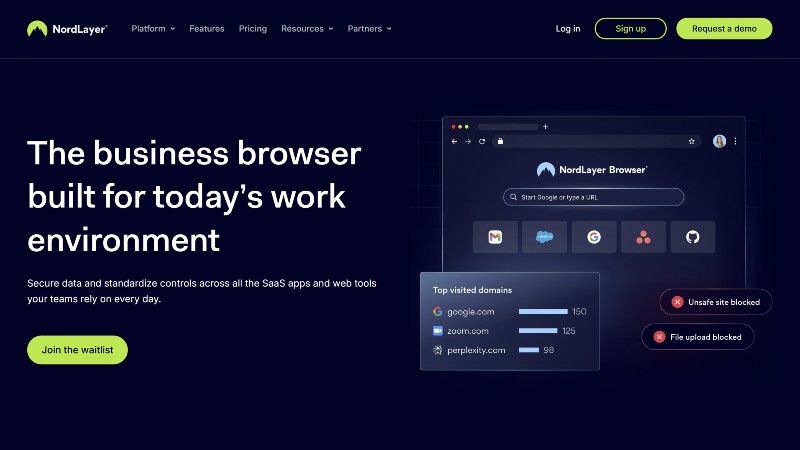


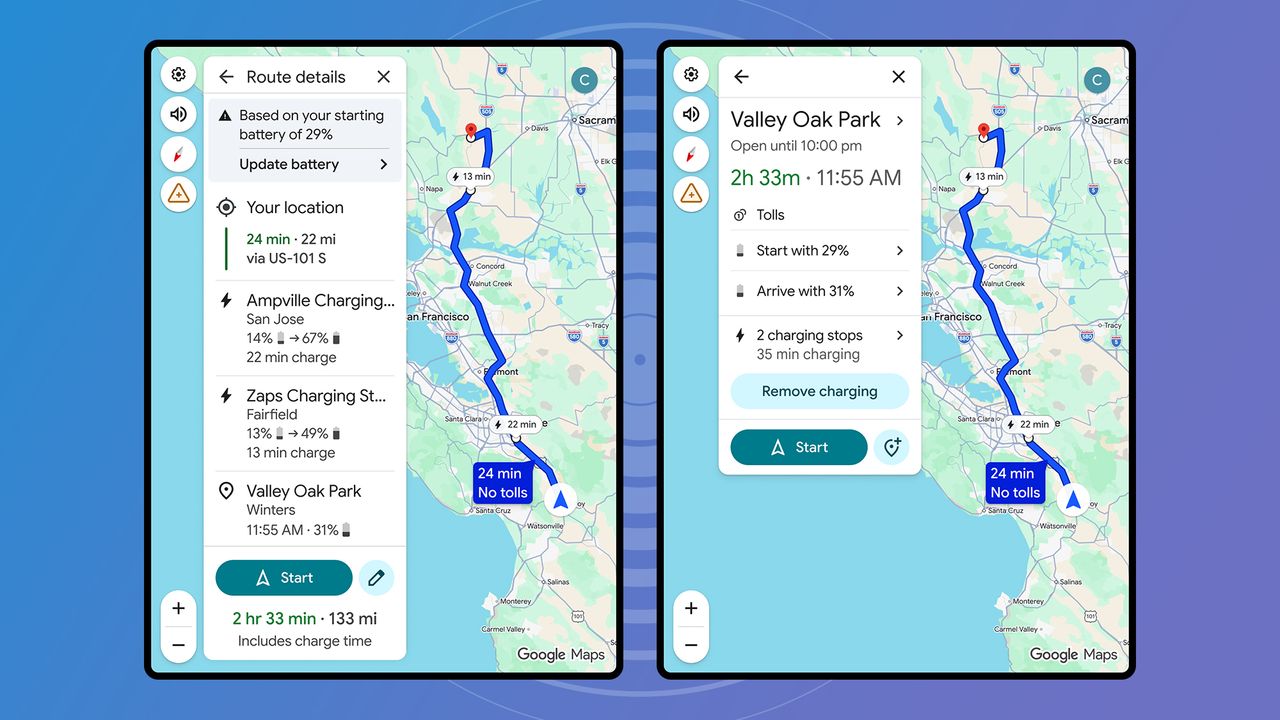






Delay in release of WordPress 7.0 stems from concerns over the real-time collaboration feature. The focus is on targeting "extreme stability."
The post WordPress Delays Release Of Version 7.0 To Focus On Stability appeared first on Search Engine Journal.
RPCS3 now allows game resolution changes without game restarts RPCS3 is the best place to play many PlayStation 3 classics. Why? The simple answer is that many PS3 games are playable there with higher resolutions and framerates than their original PS3 versions. That means many PS3 games now look better and run smoother on a […]
The post RPCS3 just made easier to UpRes PlayStation 3 games appeared first on OC3D.


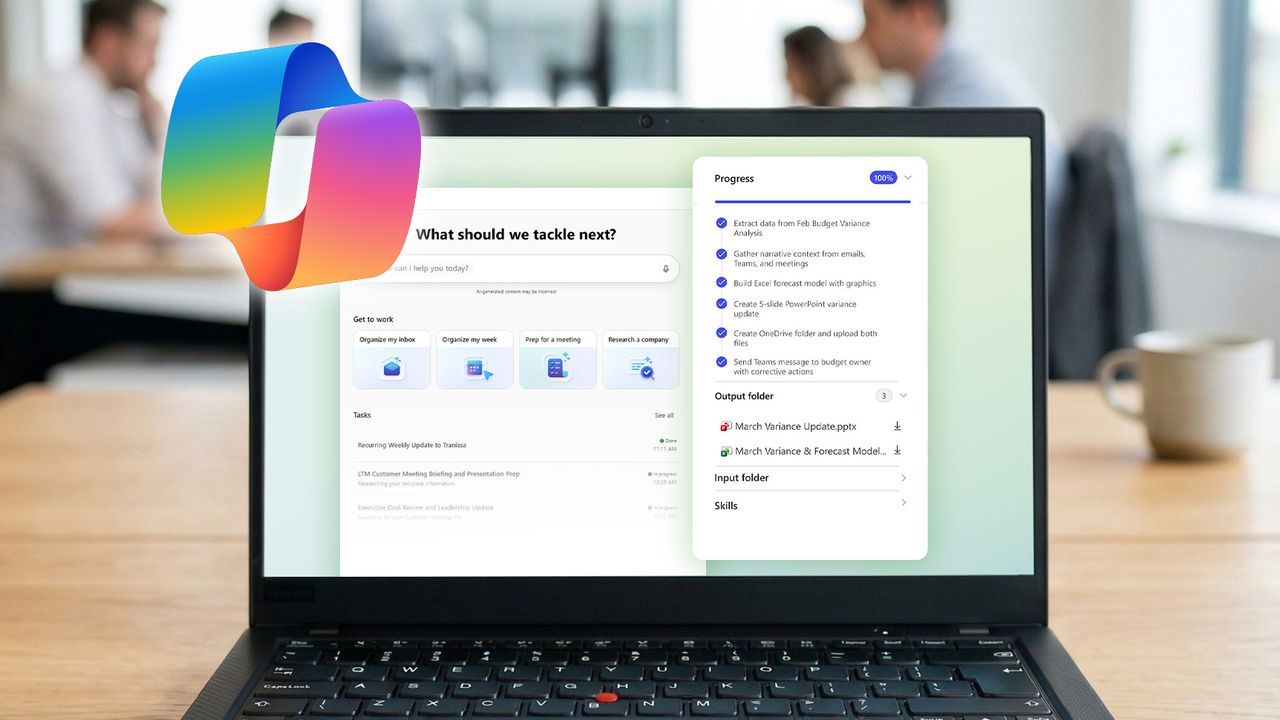





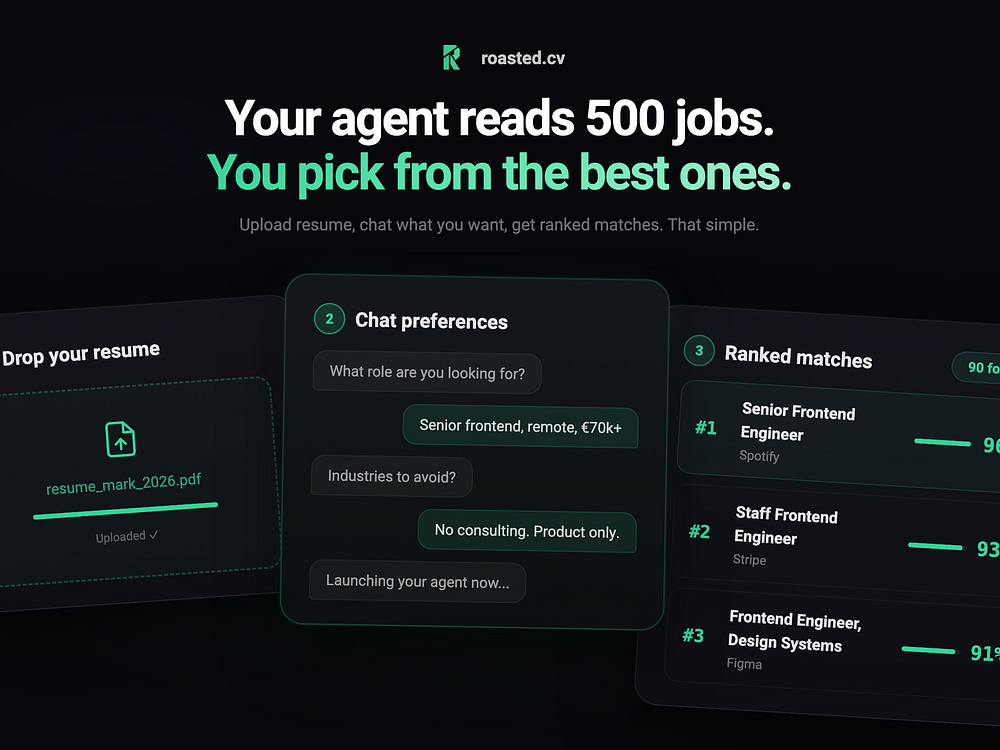
Roasted helps you get interviews by analyzing your resume, fixing issues, and showing exactly what to improve. It offers an AI resume builder, voice-to-resume, ATS-friendly templates, PDF export, public sharing, and detailed feedback. You can create tailored CVs and cover letters, match jobs, and apply with one click. Job Autopilot searches, customizes, and applies on your behalf while you track progress.

Verve Intelligence delivers objective startup idea validation in about 30 minutes. Use it to size markets, map competitors, define target segments, assess risks, and receive a "what would work" persona, MVP, and technical scope. It also provides guides on interpreting signals that match historical patterns.
It runs 14 parallel research streams, including adversarial agents that stress-test assumptions, then compiles a 50+ page investor-grade report with a GO, PIVOT, or NO-GO verdict, cited sources, and transparent scoring. Access AI debates, rationale, a personalized industry glossary, and more.
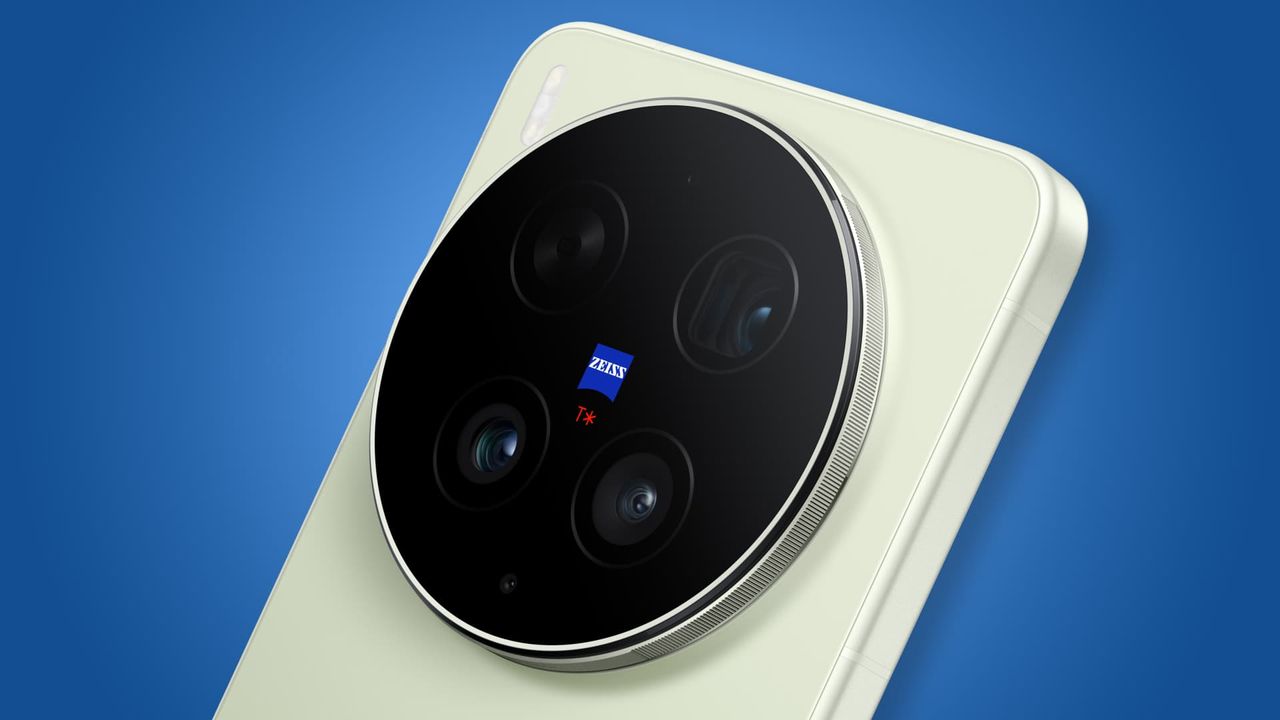
Noctua’s upcoming CPU liquid cooler has passed its Production Validation Test and is ready for its Q2 launch Noctua and Asetek have confirmed that their upcoming all-in-one (AIO) CPU liquid cooler is ready for its Q2 2026 launch. The CPU cooler has passed Product Validation Testing, meeting the cooling requirements of both companies, and is […]
The post Noctua x Asetek confirm flagship AIO Liquid Cooler launch window appeared first on OC3D.


One-click Openclaw set up by Z.AI
Real-time Apple Silicon system monitor for your menu bar
Discover, consume, and monetize APIs in one place
Track your poops with friends
AI health app for women 40+
Keep local repo files out of git without changing .gitignore
Automatic priority-based network switching for your Mac
Let Claude use your computer from the CLI
The AI Secretary that thinks, writes, and works like you
Predication market for job impacted by AI
OpenClaw for AI Ads
Create your AI receptionist that answers, books, and sells

