We have a new update on Xbox's The Elder Scrolls 6 from Todd Howard and Bethesda devs β "Itβs progressing really well. The majority of the studioβs on VI"
The post ChatGPT Images Unleashes Unprecedented Visual Agility appeared first on StartupHub.ai.
The latest iteration of ChatGPT Images, powered by OpenAIβs new flagship image generation model, GPT Image 1.5, signals a profound shift in the accessibility and flexibility of visual content creation. This release, demonstrated through a dynamic visual showcase, moves beyond simple image generation to offer sophisticated editing and stylistic transformations that were once the exclusive [β¦]
The post ChatGPT Images Unleashes Unprecedented Visual Agility appeared first on StartupHub.ai.
The post The 2026 AI predictions: Why infrastructure will fail, but apps will fly. appeared first on StartupHub.ai.
While Big Tech faces supply chain bottlenecks and AGI timelines push into the 2030s, AI application startups are set to achieve unprecedented scale in 2026.
The post The 2026 AI predictions: Why infrastructure will fail, but apps will fly. appeared first on StartupHub.ai.
The post OpenAIβs new ChatGPT Images is 4x faster and more precise: Everything you need to know appeared first on StartupHub.ai.
The new ChatGPT Images, powered by GPT Image 1.5, delivers 4x faster generation speeds and crucial improvements in editing consistency and text rendering.
The post OpenAIβs new ChatGPT Images is 4x faster and more precise: Everything you need to know appeared first on StartupHub.ai.
The post AIβs Unseen Cost: Political Pressure Mounts on Data Center Energy Demands appeared first on StartupHub.ai.
The burgeoning computational demands of artificial intelligence are rapidly colliding with public policy and local politics, as highlighted in a recent CNBC βMoney Moversβ segment. CNBC Business News TechCheck Anchor Deirdre Bosa reported on growing political pressure stemming from the massive energy consumption of AI data centers, revealing a new front of risk for the [β¦]
The post AIβs Unseen Cost: Political Pressure Mounts on Data Center Energy Demands appeared first on StartupHub.ai.
The post Your Support Team Should Ship Code β Lisa Orr, Zapier appeared first on StartupHub.ai.
Lisa Orr, Product Leader at Zapier, shared a compelling narrative about how her company is leveraging artificial intelligence to transform its support operations, enabling the support team to actively ship code. The core problem was the sheer volume of support tickets generated by API changes, overwhelming traditional support workflows. Zapierβs journey began with a clear [β¦]
The post Your Support Team Should Ship Code β Lisa Orr, Zapier appeared first on StartupHub.ai.
CC is our new experimental AI productivity agent from Google Labs, built with Gemini to help you stay organized and get things done. When you sign up, it connects your G⦠
Google rapidly expanded AI Overviews in search during 2025, then pulled back as they moved into commercial and navigational queries. These findings are based on a new Semrush analysis of more than 10 million keywords from January to November.
AI Overviews surged, then retreated. Google didnβt roll out AI Overviews in a straight line in 2025. A mid-year spike gave way to a pullback, suggesting Google moved fast to test the feature, then eased off based on user data:
Zero-click behavior defied expectations. Surprisingly, click-through rates for keywords with AI Overviews have steadily risen since January. AI Overviews donβt automatically reduce clicks and may even encourage them.
Informational queries no longer dominate. Early 2025 AI Overviews were almost entirely informational:
Now, AI Overviews are appearing for commercial and transactional queries:
Navigational queries are rising fast. In an unexpected shift, AI summaries are increasingly intercepting brand and destination searches:
Google Ads + AI Overviews. Earlier this year, ads rarely appeared next to AI Overviews. Now theyβre common:
Science is the most impacted industry. By keyword saturation, Science leads all verticals for AI Overviews at 25.96%. Computers & Electronics follows at 17.92%, with People & Society close behind at 17.29%.
Why we care. AI Overviews are unevenly and persistently reshaping click behavior, commercial visibility, and ad placement. Volatility is likely to continue, so closely monitor performance shifts tied to AI Overviews.
The report. Semrush AI Overviews Study: What 2025 SEO Data Tells Us About Googleβs Search Shift
Dig deeper. In May, I reported on the original version of Semrushβs study in Google AI Overviews now show on 13% of searches: Study.

Hotfix 8 for Ghost of Tsushima adds FSR ML Frame Generation to the game Nixxes Software has released its βPatch 8 Hotfixβ for Ghost of Tsushimaβs PC version, adding support for AMD FSR ML Frame Generation. This new Frame Generation technique is part of AMDβs FSR βRedstoneβ update. With this update, users of AMDβs Radeon [β¦]
The post Nixxes updates Ghost of Tsushima to enable FSR ML Frame Generation appeared first on OC3D.
Rec'd is a social discovery platform, turning trusted social signals into personalised recommendations. Right now people use multiple apps to discover places, save them, verify them and book. Rec'd integrates this process into one, powerful, AI based app that lets people discover the way they want, saving into one clean and intelligent platform.
The post AI Liberation: Unlocking Potential Beyond βSecurity Theaterβ appeared first on StartupHub.ai.
The prevailing narrative around artificial intelligence often centers on the race for capability, but a recent discussion on the Latent Space podcast unveiled a contrasting, equally vital perspective: the imperative of liberation and radical transparency in AI development. Pliny the Liberator, renowned for his βuniversal jailbreaksβ that dismantle the guardrails of frontier models, and John [β¦]
The post AI Liberation: Unlocking Potential Beyond βSecurity Theaterβ appeared first on StartupHub.ai.
The post Greylockβs Enduring Legacy: People, Principles, and the AI Frontier appeared first on StartupHub.ai.
Greylock Partners, a venture capital firm celebrating its 60th anniversary this year, offers a compelling study in enduring success through relentless adaptation and an unwavering commitment to core principles. In a recent episode of Uncapped with Jack Altman, General Partner Saam Motamedi, one of Greylockβs youngest partners, delved into the foundational elements that have allowed [β¦]
The post Greylockβs Enduring Legacy: People, Principles, and the AI Frontier appeared first on StartupHub.ai.
The post What We Learned Deploying AI within Bloombergβs Engineering Organization β Lei Zhang, Bloomberg appeared first on StartupHub.ai.
βThe reality of applying AI at scale inside a mature engineering organization is far more complex and nuanced,β stated Lei Zhang, Head of Technology Infrastructure Engineering at Bloomberg, during a recent discussion. Zhang, speaking about Bloombergβs extensive experience integrating AI into the workflows of over 9,000 software engineers, offered a candid look at the practical [β¦]
The post What We Learned Deploying AI within Bloombergβs Engineering Organization β Lei Zhang, Bloomberg appeared first on StartupHub.ai.
The post The AI Memory Wars Heat Up Around Video appeared first on StartupHub.ai.
Video has become a dominant signal on the internet. It powers everything from Netflixβs $82 billion Warner Bros Discovery acquisition to the sensor streams feeding warehouse robots and city surveillance grids. Yet beneath this sprawl, AI systems are hitting a wall in that they can tag clips and rank highlights, but they struggle to remember [β¦]
The post The AI Memory Wars Heat Up Around Video appeared first on StartupHub.ai.
The post New EWA study results suggest on-demand pay boosts income appeared first on StartupHub.ai.
Independent EWA study results analyzing over one million EarnIn users suggest that flexible access to earned wages increases monthly income by 11.5 percent.
The post New EWA study results suggest on-demand pay boosts income appeared first on StartupHub.ai.

We are navigating the βsearch everywhereβ revolution β a disruptive shift driven by generative AI and large language models (LLMs) that is reshaping the relationship between brands, consumers, and search engines.
For the last two decades, the digital economy ran on a simple exchange: content for clicks.Β
With the rise of zero-click experiences, AI Overviews, and assistant-led research, that exchange is breaking down.
AI now synthesizes answers directly on the SERP, often satisfying intent without a visit to a website.Β
Platforms such as Gemini and ChatGPT are fundamentally changing how information is discovered.Β
For enterprises, visibility increasingly depends on whether content is recognized as authoritative by both search engines and AI systems.
That shift introduces a new goal β to become the source that AI cites.
A content knowledge graph is essential to achieving that goal.Β
By leveraging structured data and entity SEO, brands can build a semantic data layer that enables AI to accurately interpret their entities and relationships, ensuring continued discoverability in this evolving economy.
This article explores:
To become a source that AI cites, itβs essential to understand how traditional search differs from AI-driven search.
Traditional search functioned much like software as a service.Β
It was deterministic, following fixed, rule-based logic and producing the same output for the same input every time.
AI search is probabilistic.Β
It generates responses based on patterns and likelihoods, which means results can vary from one query to the next.Β
Even with multimodal content, AI converts text, images, and audio into numerical representations that capture meaning and relationships rather than exact matches.
For AI to cite your content, you need a strong data layer combined with context engineering β structuring and optimizing information so AI can interpret it as reliable and trustworthy for a given query.
As AI systems rely increasingly on large-scale inference rather than keyword-driven indexing, a new reality has emerged: the cost of comprehension.Β
Each time an AI model interprets text, resolves ambiguity, or infers relationships between entities, it consumes GPU cycles, increasing already significant computing costs.
A comprehension budget is the finite allocation of compute that determines whether content is worth the effort for an AI system to understand.
For content to be cited by AI, it must first be discovered and understood.Β
While many discovery requirements overlap with traditional search, key differences emerge in how AI systems process and evaluate content.

Your siteβs infrastructure must allow AI engines to crawl and access content efficiently.Β
With limited compute and a finite comprehension budget, platform architecture matters.Β
Enterprises should support progressive crawling of fresh content through IndexNow integration to optimize that budget.
Ideally, this capability is native to the platform and CMS.
Before creating content, you need an entity strategy that accurately and comprehensively represents your brand.Β
Content should meet audience needs and answer their questions.Β
Structuring content around customer intent, presenting it in clear βchunks,β and keeping it fresh are all important considerations.
Dig deeper: Chunk, cite, clarify, build: A content framework for AI search
Schema markup, clean information architecture, consistent headings, and clear entity relationships help AI engines understand both individual pages and how multiple pieces of content relate to one another.Β
Rather than forcing models to infer what a page is about, who it applies to, or how information connects, businesses make those relationships explicit.
AI engines, like traditional search engines, prioritize authoritative content from trusted sources.Β
Establishing topical authority is essential. For location-based businesses, local relevance and authority are also critical to becoming a trusted source.
Many enterprises claim to use schema but see no measurable lift, leading to the belief that schema doesnβt work.Β
The reality is that most failures stem from basic implementations or schema deployed with errors.
Tags such as Organization or Breadcrumb are foundational, but they provide limited insight into a business.Β
Used in isolation, they create disconnected data points rather than a cohesive story AI can interpret.
The more AI knows about your business, the better it can cite it.Β
A content knowledge graph is a structured map of entities and their relationships, providing reliable information about your business to AI systems.
Deep nested schema plays a central role in building this graph.

A deep nested schema architecture expresses the full entity lineage of a business in a machine-readable form.
In resource description framework (RDF) terms, AI systems need to understand that:
By fully nesting entities β Organization β Brand β Product β Offer β PriceSpecification β Review β Person β you publish a closed-loop content knowledge graph that models your business with precision.
Dig deeper: 8 steps to a successful entity-first strategy for SEO and content

In βHow to deploy advanced schema at scale,β I outlined the full process for effective schema deployment β from developing an entity strategy through deployment, maintenance, and measurement.
At the enterprise level, facts change constantly, including product specifications, availability, categories, reviews, offers, and prices.Β
If structured data, entity lineage, and topic clusters do not update dynamically to reflect these changes, AI systems begin to detect inconsistencies.
In an AI-driven ecosystem where accuracy, coherence, and consistency determine inclusion, even small discrepancies can erode trust.
Manual schema management is not sustainable.
The only scalable approach is automation β using a schema management solution aligned with your entity strategy and integrated into your discovery and marketing flywheel.
As keyword rankings lose relevance and traffic declines, you need new KPIs to evaluate performance in AI search.
Dig deeper: 7 focus areas as AI transforms search and the customer journey in 2026
The web is shifting from a βreadβ model to an βactβ model.
AI agents will increasingly execute tasks on behalf of users, such as booking appointments, reserving tables, or comparing specifications.
To be discovered by these agents, brands must make their capabilities machine-callable. Key steps to prepare include:
Brands that are callable are the ones that will be found. Acting early provides a compounding advantage by shaping the standards agents learn first.
Use this checklist to evaluate whether your entity strategy is operational, scalable, and aligned with AI discovery requirements.

Your martech stack must align with the evolving customer discovery journey.Β
This requires a shift from treating schema as a point solution for visibility to managing a holistic presence with total cost of ownership in mind.
Data is the foundation of any composable architecture.Β
A centralized data repository connects technologies, enables seamless flow, breaks down departmental silos, and optimizes cost of ownership.
This reduces redundancy and improves the consistency and accuracy AI systems expect.
When schema is treated as a point solution, content changes can break not only schema deployment but the entire entity lineage.Β
Fixing individual tags does not restore performance. Instead, multiple teams β SEO, content, IT, and analytics β are pulled into investigations, increasing cost and inefficiency.
The solution is to integrate schema markup directly into brand and entity strategy.
When structured content changes, it should be:
This enables faster recovery and lower compute overhead.
Integrating schema into your entity lineage and discovery flywheel helps optimize total cost of ownership while maximizing efficiency.
Several core requirements define AI readiness.

Together, these efforts make your omnichannel strategy more durable while reducing total cost of ownership across the technology stack.
Thanks to Bill Hunt and Tushar Prabhu for their contributions to this article.

Googleβs pitch for AI-powered bidding is seductive.
Feed the algorithm your conversion data, set a target, and let it optimize your campaigns while you focus on strategy.Β
Machine learning will handle the rest.
What Google doesnβt emphasize is that its algorithms optimize for Googleβs goals, not necessarily yours.Β
In 2026, as Smart Bidding becomes more opaque and Performance Max absorbs more campaign types, knowing when to guide the algorithm β and when to override it β has become a defining skill that separates average PPC managers from exceptional ones.
AI bidding can deliver spectacular results, but it can also quietly destroy profitable campaigns by chasing volume at the expense of efficiency.Β
The difference is not the technology. It is knowing when the algorithm needs direction, tighter constraints, or a full override.
This article explains:
Smart Bidding comes in several strategies, including:
Each uses machine learning to predict the likelihood of a conversion and adjust bids in real time based on contextual signals.
The algorithm analyzes hundreds of signals at auction time, such as:
It compares these signals with historical conversion data to calculate an optimal bid for each auction.
During the βlearning period,β typically seven to 14 days, the algorithm explores the bid landscape, testing bid levels to understand the conversion probability curve.Β
Google recommends patience during this phase, and in general, that advice holds. The algorithm needs data.
The first problem is that learning periods are not always temporary.Β
Some campaigns get stuck in perpetual learning and never achieve stable performance.
Dig deeper: When to trust Google Ads AI and when you shouldnβt
The algorithm optimizes for metrics that drive Googleβs revenue, not necessarily your profitability.
When a Target ROAS of 400% is set, the algorithm interprets that as βmaximize total conversion value while maintaining a 400% average ROAS.βΒ
Notice the word βmaximize.β
The system is designed to spend the full budget and, ideally, encourage increases over time.Β
More spend means more revenue for Google.
Business goals are often different.Β
You may want a 400% ROAS with a specific volume threshold.Β
You may need to maintain margin requirements that vary by product line.Β
Or you may prefer a 500% ROAS at lower volume because fulfillment capacity is constrained.
The algorithm does not understand this context.Β
It sees a ROAS target and optimizes accordingly, often pushing volume at the expense of efficiency once the target is reached.
This pattern is common. An algorithm increases spend by 40% to deliver 15% more conversions at the target ROAS. Technically, it succeeds.Β
In practice, cash flow cannot support the higher ad spend, even at the same efficiency.Β
The algorithm does not account for working capital constraints.
AI bidding works well, but it has limits.Β
Without intervention, several factors canβt be fully accounted for.
Seasonal patterns not yet reflected in historical data
Launch a campaign in October, and the algorithm has no visibility into a December peak season.
It optimizes based on October performance until December data proves otherwise, often missing early seasonal demand.
Product margin differences
A $100 sale of Product A with a 60% margin and a $100 sale of Product B with a 15% margin look identical to the algorithm.Β
Both register as $100 conversions. The business impact, however, is very different.Β
This is where profit tracking, profit bidding, and margin-based segmentation matter.
Customer lifetime value variations
Unless lifetime value modeling is explicitly built into conversion values, the algorithm treats a first-time customer the same as a repeat buyer.Β
In most accounts, that modeling does not exist.
Market and competitive changes
When a competitor launches an aggressive promotion or a new entrant appears, the algorithm continues bidding based on historical conditions until performance degrades enough to force adjustment.Β
Market share is often lost during that lag.
Inventory and supply chain constraints
If a best-selling product is out of stock for two weeks, the algorithm may continue bidding aggressively on related searches because of past performance.Β
The result is paid traffic that cannot convert.
This is not a criticism of the technology. Itβs a reminder that the algorithm optimizes only within the data and parameters provided.Β
When those inputs fail to reflect business reality, optimization may be mathematically correct but strategically wrong.
Learning periods are normal. Extended learning periods are red flags.
If your campaign shows a βLearningβ status for more than two weeks, something is broken.Β
Common causes include:
When to intervene
If learning extends beyond three weeks, either:
Sometimes the algorithm is simply telling you it does not have enough data to succeed.
Healthy AI bidding campaigns show relatively smooth budget pacing.Β
Daily spend fluctuates, but it stays within reasonable bounds.Β
Problematic patterns include:
Budget pacing is a proxy for algorithm confidence.Β
Smooth pacing suggests the system understands your conversion landscape.Β
Erratic pacing usually means it is guessing.
This is the most dangerous pattern. Performance starts strong, then gradually or suddenly deteriorates.
This shows up often in Target ROAS campaigns.Β
What happened?Β
The algorithm exhausted the most efficient audience segments and search terms.Β
To keep growing volume β because it is designed to maximize β it expanded into less qualified traffic.Β
Broad match reached further. Audiences widened. Bid efficiency declined.
Sometimes the numbers look fine, but qualitative signals tell a different story.Β
These quality signals do not directly influence optimization because they are not part of the conversion data.Β
To address them, the algorithm needs constraints: bid adjustments, audience exclusions, or ad scheduling.
The search terms report is the truth serum for AI bidding performance.Β
Export it regularly and look for:
A high-end furniture retailer should not spend $8 per click on βfree furniture donation pickup.βΒ
A B2B software company targeting βproject management softwareβ should not appear for βproject manager jobs.βΒ
These situations occur when the algorithm operates without constraints.Β
Keyword matching is also looser than it was in the past, which means even small gaps can allow the system to bid on queries you never intended to target.
Dig deeper: How to tell if Google Ads automation helps or hurts your campaigns
One-size-fits-all AI bidding breaks down when a business has diverse economics.Β
The solution is segmentation, so each algorithm optimizes toward a clear, coherent goal.
Separate high-margin products β 40%+ margin β into one campaign with more aggressive ROAS targets, and low-margin products β 10% to 15% margin β into another with more conservative targets.Β
If the Northeast region delivers 450% ROAS while the Southeast delivers 250%, separate them.Β
Brand campaigns operate under fundamentally different economics than nonbrand campaigns, so optimizing both with the same algorithm and target rarely makes sense.
Segmentation gives each algorithm a clear mission. Better focus leads to better results.
Pure automation is not always the answer.Β
In many cases, hybrid approaches deliver better results.
The most effective setups combine AI bidding with manual control campaigns.
Allocate 70% of the budget to AI bidding campaigns, such as Target ROAS or Maximize Conversion Value, and 30% to Enhanced CPC or manual CPC campaigns.Β
Manual campaigns act as a baseline. If AI underperforms manual by more than 20% after 90 days, the algorithm is not working for the business.
Use tightly controlled manual campaigns to capture the most valuable traffic β brand terms and high-intent keywords β while AI campaigns handle broader prospecting and discovery.Β
This approach protects the core business while still exploring growth opportunities.
Google now allows advertisers to report cost of goods sold, or COGS, and detailed cart data alongside conversions.Β
This is not about bidding yet, but seeing true profitability inside Google Ads reporting.
Most accounts optimize for revenue, or ROAS, not profit.Β
A $100 sale with $80 in COGS is very different from a $100 sale with $20 in COGS, but standard reporting treats them the same.Β
With COGS reporting in place, actual profit becomes visible, dramatically improving the quality of performance analysis.
To set it up, conversions must include cart-level parameters added to existing tracking.Β
These typically include item ID, item name, quantity, price, and, critically, the cost_of_goods_sold parameter for each product.
Google is testing a bid strategy that optimizes for profit instead of revenue.Β
Access is limited, but advertisers with clean COGS data flowing into Google Ads can request entry.Β
In this model, bids are optimized around actual profit margins rather than raw conversion value.Β
This is especially powerful for retailers with wide margin variation across products.
For advertisers without access to the beta, a custom margin-tracking pixel can be implemented manually. It is more technical to set up, but it achieves the same outcome.
Dig deeper: Margin-based tracking: 3 advanced strategies for Google Shopping profitability
AI bidding works best when the fundamentals are in place:Β
In these conditions, AI bidding often outperforms manual management by processing more signals and making more granular optimizations than humans can execute at scale.
This tends to be true in:
When those conditions hold, the role shifts.
Bid management gives way to strategic oversight β monitoring trends, identifying expansion opportunities, and testing new structures.
The algorithm then handles tactical optimization.
Google is steadily reducing advertiser control under the banner of automation.Β
For advertisers with complex business models or specific strategic goals, this loss of granularity creates tension.Β
You are often asked to trust the algorithm even when business context suggests a different decision.
That shift changes the role. You are no longer a bid manager.Β
You are an AI strategy director who:
No matter how advanced AI bidding becomes, certain decisions still require human judgment.Β
Strategic positioning β which markets to enter and which product lines to emphasize β cannot be automated.Β
Neither can creative testing, competitive intelligence, or operational realities like inventory constraints, margin requirements, and broader business priorities.
This is not a story of humans versus AI. It is humans directing AI.
Dig deeper: 4 times PPC automation still needs a human touch
AI-powered bidding is the most powerful optimization tool paid media has ever had.Β
When conditions are right β sufficient data, a stable business model, and clean tracking β it delivers results manual management cannot match.
But it is not magic.
The algorithm optimizes for mathematical targets within the data you provide.Β
If business context is missing from that data, optimization can be technically correct and strategically wrong.Β
If markets change faster than the system adapts, performance erodes.Β
If your goals diverge from Googleβs revenue incentives, the algorithm will pull in directions that do not serve the business.
The job in 2026 is not to blindly trust automation or stubbornly resist it.Β
It is to master the algorithm β knowing when to let it run, when to guide it with constraints, and when to override it entirely.
The strongest PPC leaders are AI directors. They do not manage bids. They manage the system that manages bids.

The post Billionaire CRE Developer Warns of Data Center Finance Risks appeared first on StartupHub.ai.
The burgeoning demand for artificial intelligence has ignited a gold rush in data center development, but for seasoned commercial real estate (CRE) billionaire Fernando De Leon, this frenetic activity bears unsettling resemblances to past market excesses. De Leon, CEO of Leon Capital Group, recently spoke with CNBC Senior Real Estate Correspondent Diana Olick on the [β¦]
The post Billionaire CRE Developer Warns of Data Center Finance Risks appeared first on StartupHub.ai.
The post Lazard CEO: U.S. economy increasingly a levered bet on AI appeared first on StartupHub.ai.
Lazard CEO Peter Orszag joined CNBCβs βSquawk Boxβ to discuss the current state of the economy, the impact of the AI boom, and the broader implications for businesses and employment. He articulated a bifurcated economic landscape where AI-driven sectors are experiencing significant growth, contrasted with other areas that are not seeing the same level of [β¦]
The post Lazard CEO: U.S. economy increasingly a levered bet on AI appeared first on StartupHub.ai.
The post Data 360 Powers Trusted AI: A New Foundation for ISVs appeared first on StartupHub.ai.
Salesforce's Data 360, now generally available, provides ISVs with a critical unified data foundation essential for developing and deploying trusted AI solutions.
The post Data 360 Powers Trusted AI: A New Foundation for ISVs appeared first on StartupHub.ai.
Preferred Sources in Top Stories has expanded globally: it's now available for English-language users worldwide, and weβll roll it out to all supported languages early nβ¦ 
Shopify powers more than 6 million live ecommerce websites, supported by a robust app ecosystem that can extend nearly every part of the customer journey.Β
Anyone can develop an app to perform virtually any function.Β
But with so many integrations to choose from, ecommerce teams often waste time testing add-ons that promise revenue gains but fail to deliver.
Having worked across a wide range of Shopify implementations, Iβve seen which tools consistently improve checkout completion, recover abandoned carts, and increase revenue.Β
Based on that experience, Iβve organized the most effective integrations into three tiers by priority β so you can implement the essentials first, then move on to more advanced optimization.
With 54.5% of holiday purchases happening on mobile, the ecommerce experience must be seamless and flexible.Β
As a result, every Shopify site should have two components integrated into its storefront:Β
Without these in place, Shopify users introduce unnecessary friction into the purchase journey and risk sending customers to competitors.Β
The good news is that both components integrate natively with Shopify, requiring no custom development.
Digital wallets, such as Apple Pay, Google Pay, and PayPal, autofill delivery and payment information with a single click, eliminating the friction of typing on a small screen.Β
This ease of use can shorten the purchase journey to just a few clicks between a social ad and checkout.
Adoption is accelerating. Up to 64% of Americans use digital wallets at least as often as traditional payment methods, and 54% use them more often.
Beyond payment convenience, customers also expect flexibility.Β
BNPL providers, including Klarna and Afterpay, allow buyers to spread payments over time, reducing price objections at checkout.Β
These options contributed $18.2 billion to online spending during last yearβs holiday season β an all-time high, according to Adobe.
Together, digital wallets and BNPL form the foundation of a modern, mobile-first checkout experience.Β
With these essentials in place, Shopify users can focus on tools that re-engage customers and bring them back to complete their purchases.
Dig deeper: The ultimate Shopify SEO and AI readiness playbook
The second tier focuses on re-engagement β tools designed to bring back customers who have already shown intent.Β
These integrations improve abandoned-cart recovery, increase repeat purchases, and build trust through social proof.
Email remains one of the most effective channels for re-engaging customers at every stage of the journey.Β
Klaviyo and Attentive are strong options for Shopify users because both offer deep platform integration with minimal setup.
Both platforms also support SMS, allowing Shopify sellers to send automated text messages directly to customersβ mobile devices.Β
SMS consistently delivers higher open, click-through, and conversion rates than email, making it especially effective for re-engagement use cases such as abandoned-cart recovery.
Together, these tools enable targeted campaigns and sophisticated automated flows that drive incremental revenue.Β
However, CAN-SPAM and TCPA regulations require explicit opt-in for email and SMS marketing, respectively.Β
As a result, sellers can only use these channels to contact customers who have agreed to receive marketing messages.
While Attentive and Klaviyo effectively reach customers who have opted in to marketing, CartConvert helps sellers engage the 50% to 60% of shoppers who have not.Β
The platform uses real people to contact cart abandoners via SMS. Because the outreach is not automated, TCPA restrictions do not apply.
CartConvert agents have live conversations with potential customers about their shopping experience.Β
They are familiar with the products and can guide buyers back toward a purchase by suggesting alternatives or offering discounts.Β
Running CartConvert alongside Klaviyo or Attentive ensures both subscribers and non-subscribers are included in re-engagement efforts.
Human-centered marketing also plays a role in building buyer confidence.Β
Todayβs online shoppers rely heavily on reviews when making purchasing decisions.Β
When reviews are integrated directly into the shopping experience, they help establish trust and legitimacy, which in turn drive higher conversion rates.Β
A product with five reviews is 270% more likely to be purchased than one with no reviews, research from the Spiegel Research Center at Northwestern University found.
Shopify users can choose from several review aggregators that pull Google reviews into product pages.Β
Sellers should prioritize aggregators that also sync with Google Merchant Center, which powers Google Ads.Β
Tools such as Okendo, Yotpo, and Shopper Approved integrate smoothly with both Shopify and Googleβs ecosystem.
When reviews sync with Merchant Center, they can appear in Google Shopping ads, improving ad performance.Β
While these tools add cost, they are also proven to generate incremental revenue that offsets the investment.
Dig deeper: How to make ecommerce product pages work in an AI-first world
The final tier includes more advanced integrations designed to help sellers optimize their sales funnel and performance at scale.
GA4βs changes to reporting, session logic, and interface have made attribution more difficult for many ecommerce teams.Β
As a result, sellers are increasingly seeking clearer, independent performance insights.
Since 2023, Triple Whale has emerged as a leading alternative to Google Analytics, offering third-party attribution tools that integrate seamlessly with Shopify.Β
The platform supports multiple attribution models β including first-click, last-click, and linear β along with cross-platform cost integration.
It also provides real-time data, which Google Analytics does not.Β
This capability becomes especially valuable during high-pressure sales periods, such as Black Friday, when delayed reporting can lead to missed opportunities.
Although Triple Whale can cost up to $10,000 annually for mid-size brands, the improved data quality often justifies the investment for teams scaling paid acquisition.
For sellers focused on improving conversion rates, landing page testing is essential.Β
While Shopify is relatively easy to use, making changes to a live storefront for A/B testing carries the risk of breaking the site.
Replo allows Shopify users to build custom landing pages that can be tested at scale without coding.Β
These pages typically provide a better user experience than default Shopify themes.Β
It can also use site data to personalize landing pages based on a shopperβs browsing history.Β
As a result, Replo-built pages often convert at higher rates than static site pages.
TikTok continues to grow as a paid media channel, but it has traditionally presented a higher barrier to entry for advertisers.Β
Previously, sellers needed an active TikTok account and could only purchase ads within the app, adding complexity and cost.
TikTokβs Shopify integration allows sellers to create ads that link directly to their websites, rather than keeping users inside the app.Β
This change has lowered the barrier to entry and expanded access to the platform.Β
Early testing shows promise for use cases such as cart abandonment, making the integration worth exploring despite its relative immaturity.
Dig deeper: Ecommerce SEO: Start where shoppers search
Shopify is a powerful platform for ecommerce, but maximizing results requires going beyond its default features.Β
Sellers do not need to implement every solution at once.Β
Instead, conduct a quick audit of the existing stack against this framework, identify gaps, and prioritize the tools that improve conversion and re-engagement.Β
Shopifyβs flexibility is its greatest strength, and its app ecosystem enables sellers to turn more visitors into buyers.

Googleβs Nick Fox, the SVP of Knowledge and Information at Google, said in a recent podcast that doing optimization for AI search is βthe sameβ as doing optimization and SEO for traditional search. He added, you want to build great sites, with great content, for your users.
More details. This came up in the AI Inside podcast with Jason Howell and Jeff Jarvis interviewing Nick Fox. Here is the transcript from the 22 minute mark:
Jeff Jarvis ask, βAnd is is there are there is there guidance for enlightened publishers who want to be part of AI about how they should view, should they view their content in any say differently no?β
Nick Fox responded, βThe short answer is no. The short answer is what you would have built and the way to optimize to do well in Googleβs AI experiences is very similar, I would say the same, as how as as how to perform well in traditional search. And it really does come down to build a great site, build great content. The way we put it is build for users, build what you would want to read, what you would want to access.β
Here is the video embed, skip to 22 minutes and 5 seconds in:
Why we care. Many of you have been practicing SEO for many years, and now with this AI revolution in Search, you should know you are very well equipped to perform well in AI Search with many, if not all, of the skills you learned doing SEO.
So have at it.


We celebrated a major milestone in June: the return of SMX Advanced as an in-person event. It was our first since 2019.
More than a conference, SMX Advanced 2025 was a reunion. Search marketers from around the world came together to connect, exchange ideas, and learn the most current and advanced insights in search.
But search never stands still. With rapid shifts in AI SEO, constant algorithm changes, and the challenge of balancing generative AI with a human touch, the need for truly advanced, actionable education has never been greater.
Weβre committed to making the SMX Advanced 2026 program our most relevant, advanced, and exciting deep-dive experience yet. And we canβt do it without you β the expert community that makes this event legendary.
Weβre inviting you to directly shape the curriculum for 2026.
Help us build a program that tackles the biggest challenges and opportunities on your radar by completing our short survey. Tell us:
Fill out the survey here.
To thank you for your time and insights, everyone who completes the survey will have the opportunity to enter an exclusive drawing.
One lucky participant will win a coveted All Access pass to SMX Advanced 2026, taking place June 3-5 at the Westin Boston Seaport.
Beyond shaping the agenda, we also invite you to submit a session pitch. If you have a breakthrough strategy, an innovative case study, or next-level insights, this is your chance to help lead the industry conversation.
Read our guide to speaking at SMX for more details on how to submit a session idea. When youβre ready, create your profile and send us your session pitch.
We look forward to your submissions and insights! If you have any questions, feel free to reach out to me at kathy.bushman@semrush.com.

High DDR5 pricing is causing AMD/AM4 CPU price rises Consumer-grade DDR5 memory modules have seen priceΒ increases ofΒ 178-258%, forcing PC builders to consider alternative upgrade paths. Instead of moving to newer DDR5 platforms, some PC builders are upgrading to AMDβs DDR4-based AM4 platform. Why? The answer is simple: they can keep using the DDR4 memory they [β¦]
The post AMD AM4 CPU pricing spike as PC market forces alternative upgrades appeared first on OC3D.
The post Progress Stalls: Sheryl Sandberg Warns AI Could Exacerbate Gender Inequality appeared first on StartupHub.ai.
The latest Lean In-McKinsey study reveals a stark truth: progress for women in the workplace is not just slowing, itβs stalling. Sheryl Sandberg, a pivotal figure in advocating for womenβs leadership, returned to the public spotlight to deliver this sobering message, underscoring how emerging technologies like artificial intelligence threaten to further widen the gender gap. [β¦]
The post Progress Stalls: Sheryl Sandberg Warns AI Could Exacerbate Gender Inequality appeared first on StartupHub.ai.
The post AI Fuels Megadeal Surge, Redefining M&A Landscape appeared first on StartupHub.ai.
Nearly a quarter of megadeals this year were AI-driven, a stark indicator of artificial intelligenceβs transformative power in the M&A landscape. This trend, highlighted by Paul Griggs, U.S. Senior Partner at PwC, during his recent interview with Frank Holland on CNBCβs Worldwide Exchange, underscores a pivotal shift where strategic positioning and technological advancement are paramount. [β¦]
The post AI Fuels Megadeal Surge, Redefining M&A Landscape appeared first on StartupHub.ai.
The post Unifying AI Operations: Flexible Orchestration Beyond Kubernetes appeared first on StartupHub.ai.
The sheer velocity of AI innovation demands an infrastructure that can adapt, not just scale. At IBMβs TechXchange in Orlando, Solution Architect David Levy and Integration Engineer Raafat βRayβ Abaid illuminated the critical need for a paradigm shift in how AI and machine learning workloads are managed, moving beyond the traditional automation paradigms. Their discussion [β¦]
The post Unifying AI Operations: Flexible Orchestration Beyond Kubernetes appeared first on StartupHub.ai.
The post House proposes bill to advance data center buildout speed appeared first on StartupHub.ai.
The proposed legislation, dubbed βThe SPEED Act,β seeks to significantly reduce the time required for permitting and construction of data centers and associated power infrastructure. This is a crucial development, as the voracious appetite of AI for computational power necessitates a corresponding acceleration in the physical infrastructure that supports it. The bill proposes to limit [β¦]
The post House proposes bill to advance data center buildout speed appeared first on StartupHub.ai.

Google Search Console seems to have fixed the weeks long delay with the search performance reports. For the past few weeks, we had 50+ hour delays for these reports, but as of the past several hours, the reports seem to be up-to-date.
Now up-to-date. If you go to the search performance report, you should just see anywhere between about 2 β 6 hours of delay, which is typically normal. At some point over the past few weeks, the delays were over 70 hours.
This is what I see:

The delays started a few weeks ago and it took about three weeks to clear the delay and backlog of data.
Page indexing report. Meanwhile, the page indexing report delay we reported many weeks ago, is still delayed. It is now almost a full month delayed and Google has not fixed it yet. Google did post a notice at the top of the report that reads:
βDue to internal issues, this report has not been updated to reflect recent dataβ
Why we care. If you use Search Console reporting for your analytics and reporting for your stakeholders and clients, this can be super frustrating. It does seem like the performance reports are now flowing data normally. But that indexing report is still very delayed and will cause headaches with reporting.
Meanwhile, Google released a number of new features in the past few weeks including:


Managing large catalogs in Google Performance Max can feel like handing the algorithm your wallet and hoping for the best.Β
La Maison Simons faced that exact challenge: too many products and not enough control. Then they rebuilt their segmentation with Channable Insights and turned a βblack boxβ campaign into a revenue-generating machine.
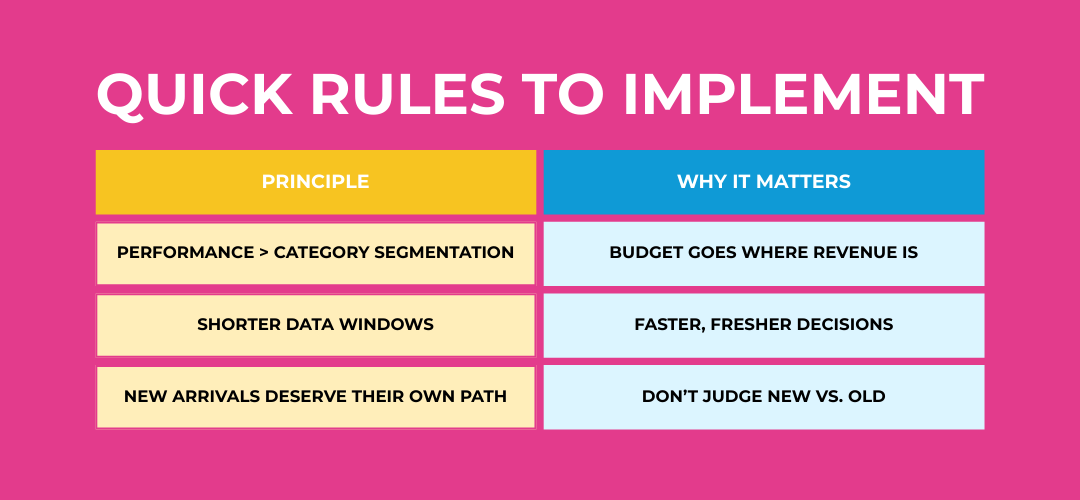
Simons originally split campaigns by product category. It sounded logical β until their best-selling sweater ate the budget and newer or overlooked products never had a chance to surface.
Static segmentation meant limited visibility and slow decisions.
Marketers stayed stuck making manual tweaks while Google kept auto-prioritizing only what was already working.
Enter Channable Insights. Product-level performance data (ROAS, clicks, visibility) now powers dynamic grouping:

Products automatically move between these segments as performance shifts β no manual work needed. As Etienne Jacques, Digital Campaign Manager, Simons, put it:
βOne super popular item no longer takes all the money.β
Instead of waiting 30 days for signals, Simons switched to a rolling 14-day window.
The result: faster reactions, sharper accuracy, and less wasted spend in a fast-moving catalog.
Why stop at Google? The same segmentation logic was automatically applied on:
Cross-channel consistency creates compounding optimization.
Without raising ad spend, Simons unlocked:
Even the βinvisiblesβ turned into surprise profit drivers once they finally got the spotlight.
Automation restored marketing controlΒ βΒ it didnβt remove it.
Teams can finally learn from the data and influence which products grow, instead of letting PMax run everything on autopilot.

Want Simons-style ROAS gains without extra ad spend? Start by testing the quality of your product data with a free feed and segmentation audit.


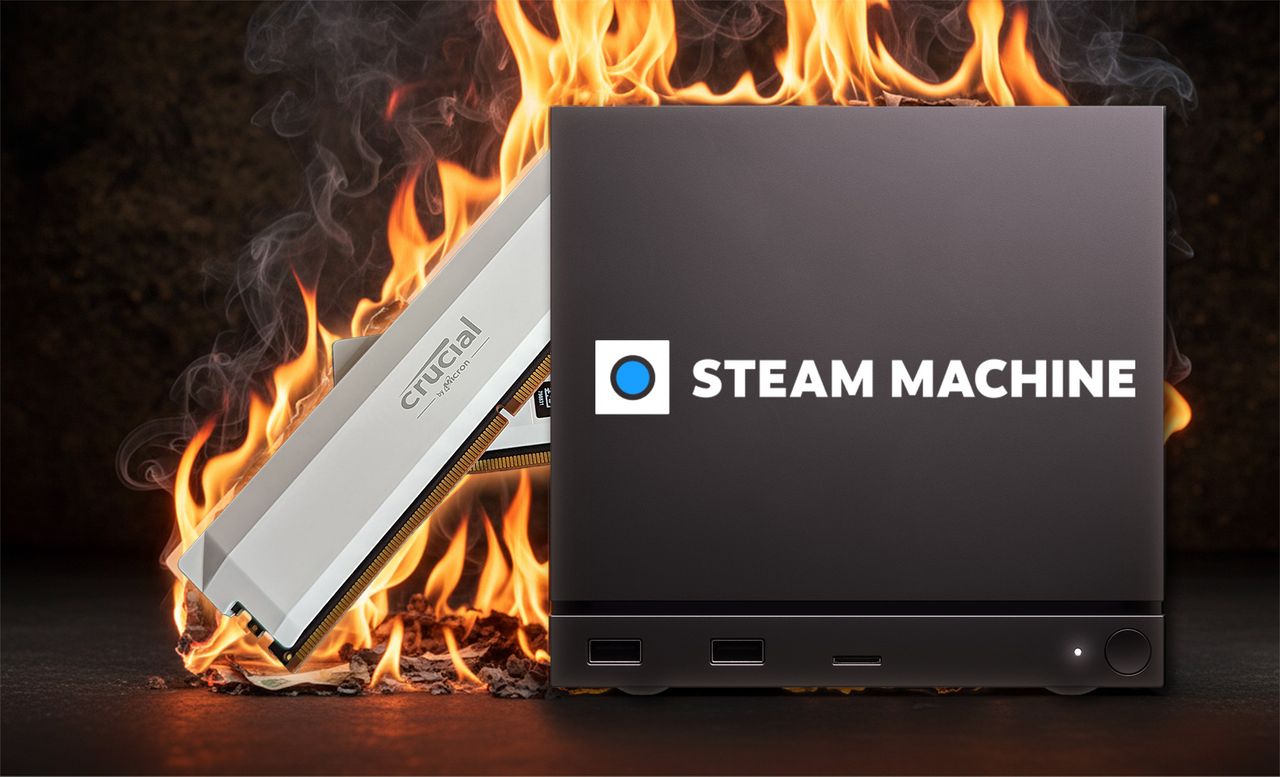
How much have DDR5 memory prices increased? We all know that DDR5 memory pricing has shot up, but how bad is the situation? Has AI-driven datacenter demand ruined the DRAM market? Yes, but how much is it hitting our wallets? Today we have looked at todayβs DRAM pricing and have compared it to 30 days [β¦]
The post Itβs bad β Hereβs how much DDR5 pricing has increased appeared first on OC3D.
The post Physical AIβs Off-Screen Revolution: Sanjit Biswas on Scaling Real-World Impact appeared first on StartupHub.ai.
The next transformative wave of artificial intelligence is unfolding not in the digital ether, but in the tangible, messy reality of the physical world. This was the central thesis articulated by Sanjit Biswas, CEO of Samsara, in a recent discussion with Sequoia Capitalβs Sonya Huang and Pat Grady. Biswas, a serial founder known for scaling [β¦]
The post Physical AIβs Off-Screen Revolution: Sanjit Biswas on Scaling Real-World Impact appeared first on StartupHub.ai.
Google's core updates can trigger issues that standard SEO audits fail to catch. Here are eight factors to check.
The post Eight Overlooked Reasons Why Sites Lose Rankings In Core Updates appeared first on Search Engine Journal.
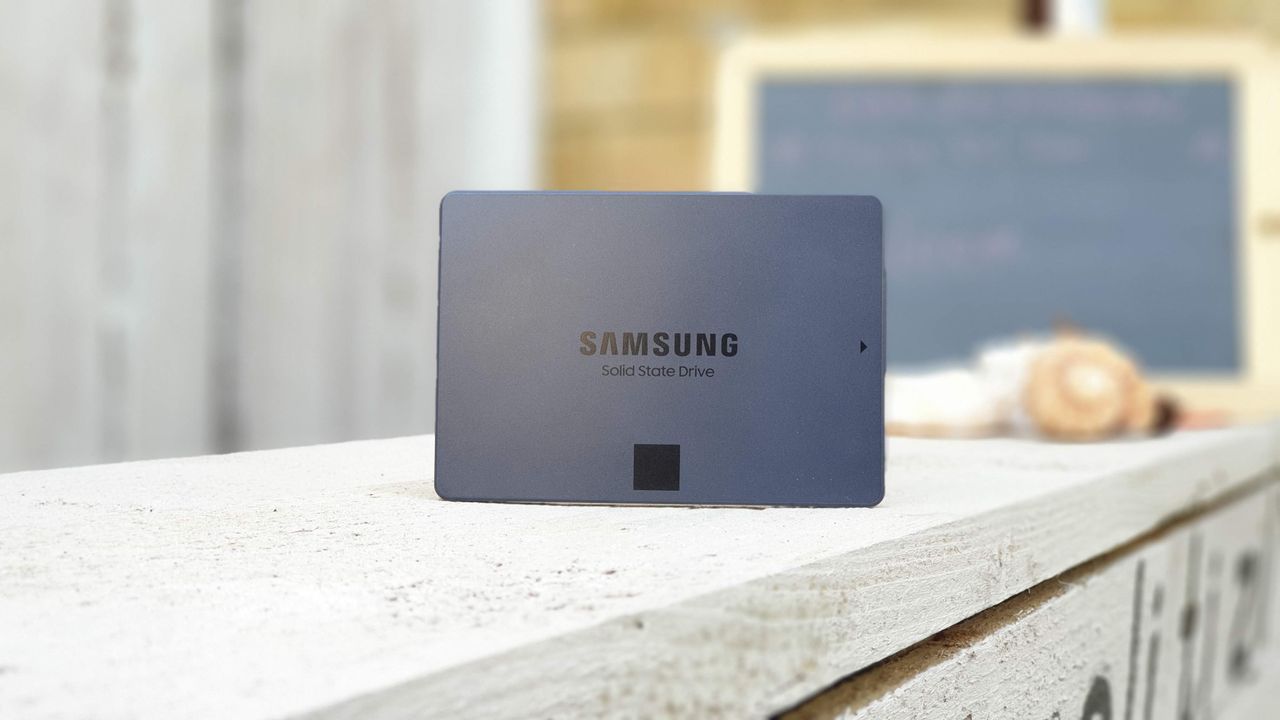
Samsung denies SATA SSD phase-out rumours, calling them false Samsung has officially denied reports that it plans to phase out its SATA SSDs and other consumer products. This follows recent rumours that Samsung planned to wind down its SATA SSD production to free up manufacturing capacity for data centre and AI customers. With Micron killing [β¦]
The post Samsung refutes consumer SSD phase-out rumours appeared first on OC3D.
Introducing VT Chat, a privacy-first AI chat application that keeps all your conversations local while providing advanced research capabilities and access to 15+ AI models including Claude 4 Sonnet and Claude 4 Opus, O3, Gemini 2.5 Pro and DeepSeek R1.
Research features: Deep Research does multi-step research with source verification, Pro Search integrates real-time web search with grounding web search powered by Google Gemini.
There's also document processing for PDFs, a "thinking mode" to see complete AI reasoning, and structured extraction to turn documents into JSON. AI-powered semantic routing automatically activates tools based on your queries.
Live website previews in your Mac menu bar
Autonomous AI for smarter e-signatures
Detect hidden apps on MacOS
The post Salesforce AI Careers: A New Talent Pipeline Emerges appeared first on StartupHub.ai.
Salesforce's global Workforce Development programs are actively shaping the landscape of AI careers, equipping over 120,000 learners with critical skills and certifications.
The post Salesforce AI Careers: A New Talent Pipeline Emerges appeared first on StartupHub.ai.
The post Amazon Upskills Workforce for Agentforce AI Era appeared first on StartupHub.ai.
Amazon is strategically investing in employee 'Agentforce AI' skills through Salesforce Trailhead, preparing its workforce for the agentic AI era.
The post Amazon Upskills Workforce for Agentforce AI Era appeared first on StartupHub.ai.

Open Source, Free Anonymous AI Chat - Ready to Run Locally
Read books with Elon Musk, Steve Jobs, or anyone you choose
Test apps in a click with AI QA agents that scale like infra
One dashboard to run and organize multiple AI CLI agents
Dial in espresso & pourover
A showcase for AI-assisted builds, inspiration, and how-tos
Test data as code: YAML rules, Git versioned, & CI/CD ready
A browser-first marketplace for PC games
Private ai chat with 30+ open source models
Open source DevOps agent for devs who just want to ship
Easiest solution to deploy multimodal AI to mobile
The post NVIDIA Acquires SchedMD, Bolstering AI Infrastructure appeared first on StartupHub.ai.
NVIDIA's acquisition of SchedMD, the creator of Slurm, strategically enhances its control over critical open-source workload management for HPC and AI.
The post NVIDIA Acquires SchedMD, Bolstering AI Infrastructure appeared first on StartupHub.ai.

Outage Owl monitors 20+ vendor status pages in real time and alerts your team and customers when issues arise. Add a single script to show a website banner during outages and connect Slack to notify your team before tickets pile up. Create custom incidents and messages, tune alert rules, delays, and quiet hours, and keep everyone informed within seconds. Set up in under five minutes, and start free with one alert rule.
Apparently, no oneΒ knows if TikTok will be allowed to remain in the U.S.

Insights into some of the major trends among Snapchat users in 2025.
SOme handy pointers for your LinkedIn video content approach.Β

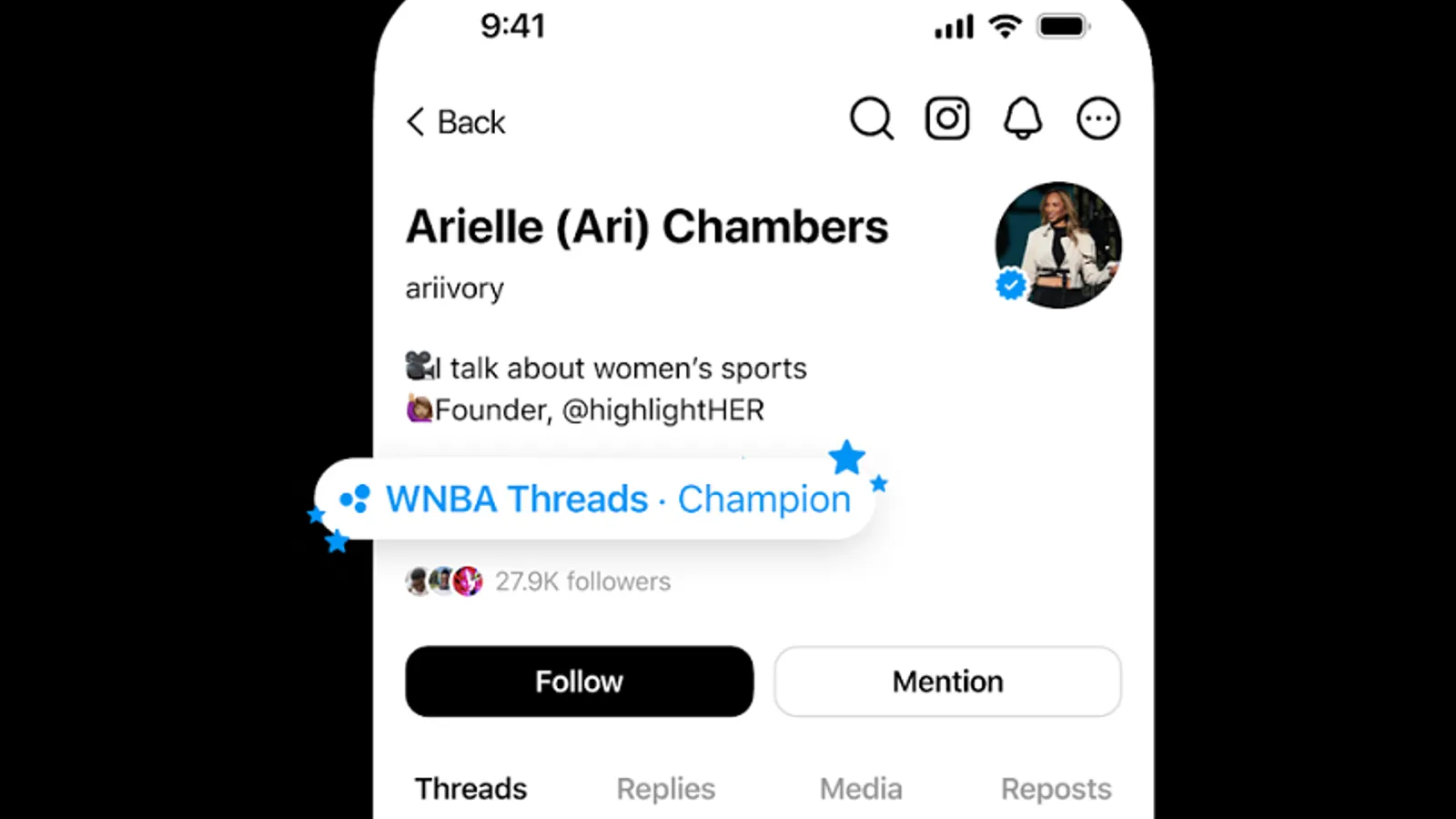
Threads is looking to encourage more topical engagement in the app.
Ahrefs data suggests Googleβs AI Mode and AI Overviews often align on meaning while citing different URLs.
The post Google AI Mode & AI Overviews Cite Different URLs, Per Ahrefs Report appeared first on Search Engine Journal.
Zinggit is an AI-powered voice note to text app designed to take your idea to content quicker. No more typing out ideas, or trying to create an outline. Just speak your thoughts and 'vibe type' your first draft. Perfect for busy business owners with tons of ideas, agency owners trying to sound out their next article, or social media managers who want to summarise an idea into a post.
The post White House AI Czar David Sacks on Navigating the AI Frontier: Regulation, Race, and Jobs appeared first on StartupHub.ai.
The rapid acceleration of artificial intelligence has ignited a multifaceted debate spanning innovation, national security, and economic impact, a tension vividly explored in a recent CNBC βClosing Bell Overtimeβ interview. David Sacks, the White House AI and Crypto Czar, spoke with Morgan Brennan about President Trumpβs executive order aiming to streamline AI regulation, the intensifying [β¦]
The post White House AI Czar David Sacks on Navigating the AI Frontier: Regulation, Race, and Jobs appeared first on StartupHub.ai.
Google's John Mueller explains that staggered site migrations may impact how the site is understood
The post Google Explains Why Staggered Site Migrations Impact SEO Outcome appeared first on Search Engine Journal.
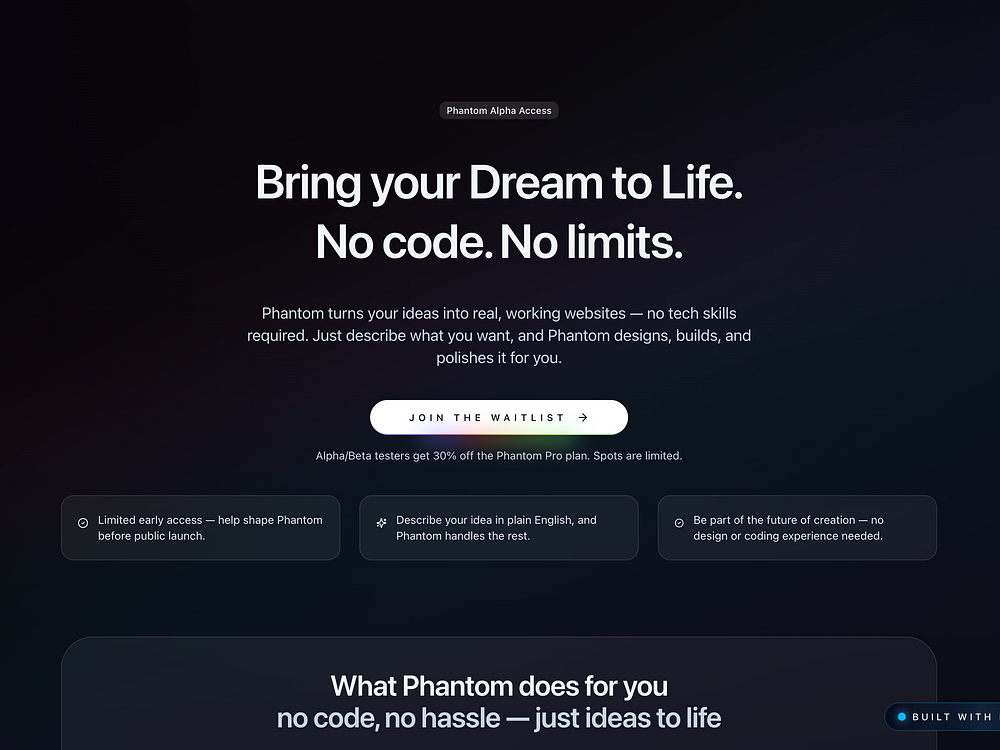
Phantom is an AI website builder designed to help anyone go from an idea to a fully functional website in just a few minutes. It handles all the heavy lifting automatically β setting up authentication, database, payments, analytics, and even AI integrations for you. Instead of juggling multiple tools or writing code from scratch, you just describe what you want, and Phantom builds it out instantly.
It runs on a network of specialized AI agents, each focused on a different area like frontend, backend, bug fixing, and review. This makes the process faster, more accurate, and more creative. Phantom lets you skip the setup and get straight to building β without needing technical expertise.
The post Teslaβs Trillion-Dollar AI Future: Dan Ives on Autonomy and Robotics appeared first on StartupHub.ai.
Wedbush Securitiesβ Dan Ives recently offered a compelling vision of Teslaβs future, asserting that the company, alongside Nvidia, stands at the forefront of the βphysical AI revolution.β This isnβt merely about electric vehicles; itβs about the profound convergence of hardware and artificial intelligence to create tangible, real-world autonomous capabilities. Ivesβs commentary underscores a pivotal shift [β¦]
The post Teslaβs Trillion-Dollar AI Future: Dan Ives on Autonomy and Robotics appeared first on StartupHub.ai.
The post Bolmo Advances Byte-Level Language Models with Practicality appeared first on StartupHub.ai.
AI2's Bolmo makes byte-level language models practical by "byteifying" existing subword models, offering superior character understanding and flexible inference.
The post Bolmo Advances Byte-Level Language Models with Practicality appeared first on StartupHub.ai.
The post Rebuilding American Industry: The AI-Powered Factory Renaissance appeared first on StartupHub.ai.
Erin Price-Wright, a General Partner at Andreessen Horowitz, unveiled a compelling vision for βThe Renaissance of the American Factoryβ as part of the firmβs 2026 Big Ideas series. Her presentation posits that Americaβs industrial muscle, which has atrophied over decades due to offshoring, financialization, and regulatory burdens, is poised for a significant resurgence. This revitalization [β¦]
The post Rebuilding American Industry: The AI-Powered Factory Renaissance appeared first on StartupHub.ai.
The post Beyond Snippets: The Evolving Landscape of AI Code Evaluation appeared first on StartupHub.ai.
The rapid ascent of AI in code generation, from single-line suggestions to architecting entire codebases, demands an equally sophisticated evolution in how these models are evaluated. This critical shift was at the heart of Naman Jainβs compelling presentation at the AI Engineer Code Summit, where the Engineering lead at Cursor unpacked the journey of AI [β¦]
The post Beyond Snippets: The Evolving Landscape of AI Code Evaluation appeared first on StartupHub.ai.
The post Google DeepMind Unveils Gemini 3 and Nano Banana Pro, Redefining AI Development appeared first on StartupHub.ai.
Google DeepMind recently showcased its latest advancements in artificial intelligence at the AI Engineer Code Summit, where Product Manager Kat Kampf and Product & Design Lead Ammaar Reshi introduced Gemini 3 Pro and Nano Banana Pro. Their presentation, βBuilding in the Gemini Era,β highlighted how these new models, combined with the Google AI Studio, are [β¦]
The post Google DeepMind Unveils Gemini 3 and Nano Banana Pro, Redefining AI Development appeared first on StartupHub.ai.
The post NVIDIA Nemotron 3 Nano launches on FriendliAI appeared first on StartupHub.ai.
FriendliAI is aggressively positioning itself as the crucial infrastructure layer for productionizing the new wave of efficient, open-source agentic AI models.
The post NVIDIA Nemotron 3 Nano launches on FriendliAI appeared first on StartupHub.ai.
The post Unsloth Accelerates LLM Fine-Tuning on NVIDIA GPUs appeared first on StartupHub.ai.
Unsloth, combined with NVIDIA GPUs and Nemotron 3 models, is democratizing efficient, specialized LLM fine-tuning for next-generation agentic AI applications.
The post Unsloth Accelerates LLM Fine-Tuning on NVIDIA GPUs appeared first on StartupHub.ai.
The post Vertex AI Unlocks Flexible Open Model Deployment appeared first on StartupHub.ai.
The accelerating pace of AI development has made the deployment of open models a critical challenge, often mired in infrastructure complexities. Google Cloudβs Vertex AI platform, as detailed by Developer Advocate Ivan Nardini in his recent video, βServing open models on Vertex AI: The comprehensive developerβs guide,β directly addresses this by offering a strategic roadmap [β¦]
The post Vertex AI Unlocks Flexible Open Model Deployment appeared first on StartupHub.ai.

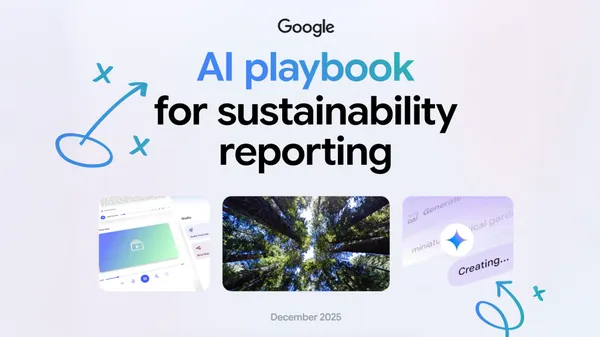
Weβre sharing a practical playbook to help organizations streamline and enhance sustainability reporting with AI.Corporate transparency is essential, but navigating fragβ¦ 
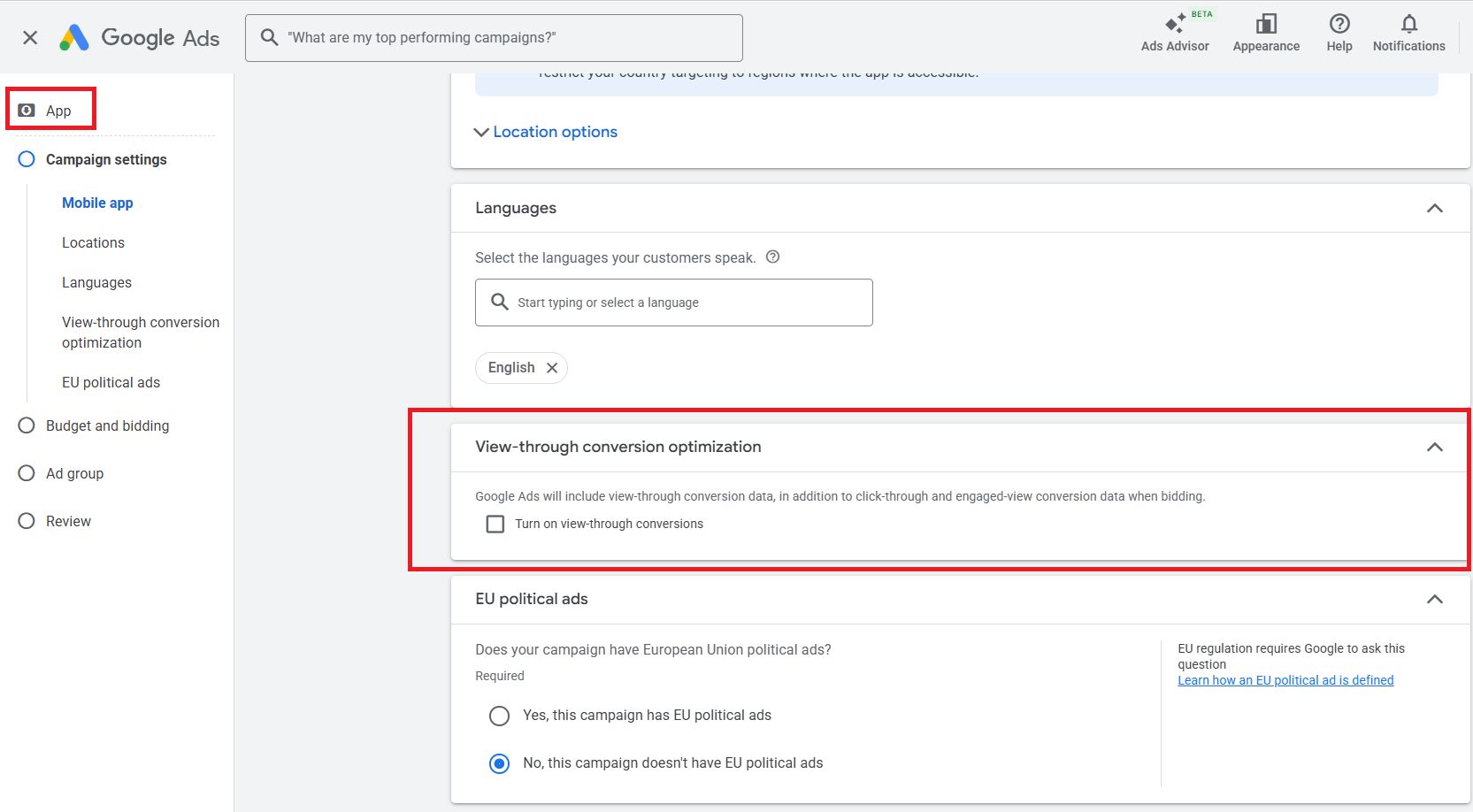
Google Ads launched VTC-optimized bidding for Android app campaigns, letting advertisers toggle bidding toward conversions that happen after an ad is viewed rather than clicked.
Previously, VTC worked as a hidden signal inside Googleβs systems. Now, itβs a clear, explicit optimization option.

The shift. Google is shifting app advertising away from click-centric logic and toward incrementality and influence, especially for formats like YouTube and in-feed video. This update aligns bidding more closely with how users actually discover and install apps.
Why we care. You can now bid beyond clicks, improving measurement for video-led app campaigns and strengthening the case for upper-funnel activity.
Who benefits most. Video-first app advertisers and teams focused on awareness, engagement, and long-term growth βΒ not just last-click installs.
What to watch
First seen. This update was first spotted by Senior Performance Marketing Executive Rakshit Shetty when he posted on LinkedIn.

Sergey Brin, Googleβs co-founder, admitted that Google βfor sure messed upβ by underinvesting in AI and failing to seriously pursue the opportunity after releasing the research that led to todayβs generative AI era.
Google was scared. Google didnβt take it seriously enough and failed to scale fast enough after the Transformer paper, Brin said. Also:
The full quote. Brin said:
Yes, but. Google still benefits from years of AI research and control over much of the technology that powers it, Brin said. That includes deep learning algorithms, years of neural network research and development, data-center capacity, and semiconductors.
Why we care. Brinβs comments help explain why Googleβs AI-driven search changes have felt abrupt and inconsistent. After years of hesitation about shipping imperfect AI, Google is now moving fast (perhaps too fast?). The volatility we see in Google Search is collateral damage from that catch-up mode.
Where is AI going? Brin framed todayβs AI race as hyper-competitive and fast-moving: βIf you skip AI news for a month, youβre way behind.β When asked where AI is going, he said:
One more thing. Brin said he often uses Gemini Live in the car for back-and-forth conversations. The public version runs on an βancient model,β Brin said, adding that a βway better versionβ is coming in a few weeks.
The video. Brinβs remarks came at a Stanford event marking the School of Engineeringβs 100th anniversary. He discussed Googleβs origins, its innovation culture, and the current AI landscape. Hereβs the full video.

Google updated its JavaScript SEO documentation to clarify that noindex tags may prevent rendering and JavaScript execution, blocking changes.
The post Google Warns Noindex Can Block JavaScript From Running appeared first on Search Engine Journal.
Prototype HDMI 2.2 hardware will be showcased at CES The HDMI Licensing Administrator has confirmed that early HDMI 2.2 prototype hardware will be showcased at CES 2026. This will give the world its first look at the next-generation display technology. With HDMI 2.2, the HDMI standardβs maximum bandwidth will increase from 48 Gbps (HDMI 2.1) [β¦]
The post Expect to see HDMI 2.2 in action at CES 2026 appeared first on OC3D.
Core Temp is a small, free utility that monitors CPU temperatures by reading data directly from each processor core. It delivers accurate, real-time readings, supports a wide range of CPUs, and runs with minimal overhead. If you want precise temperature monitoring, Core Temp delivers.
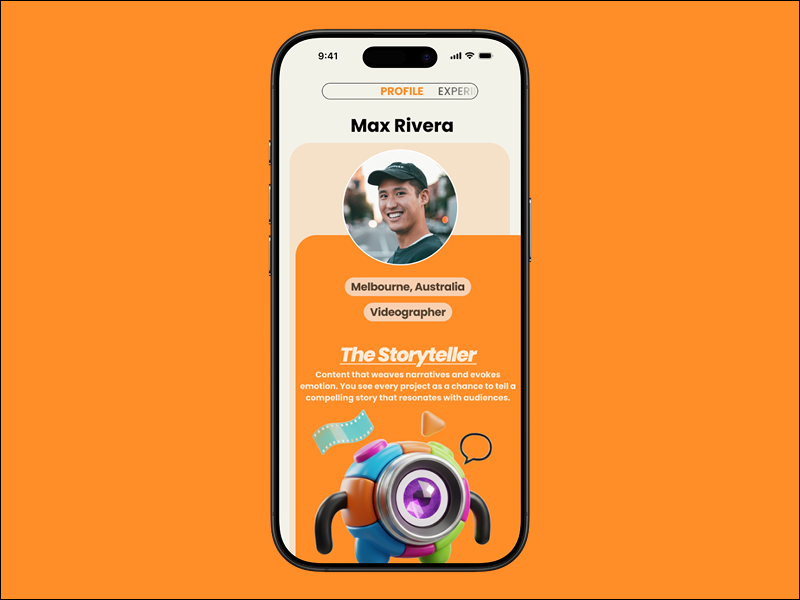
ResumaLive is a platform where video creators build swipeable, shareable profiles that introduce them in under 2 minutes.
Clients don't have time to dig through scattered links, they leave before they understand you. ResumaLive guides them through your identity, your credibility, your showreel, your personality, and how to reach you. like a movie trailer for your career. It doesn't replace your portfolio or social media. It gets your foot in the door, then they explore the rest.
The post AIβs Real Boom: Data Centers, ROI, and a Maturing IPO Market appeared first on StartupHub.ai.
βEvery single AI company on the planet is saying if you give me more compute, I can make more revenue.β This assertion by Matt Witheiler, Head of Late-Stage Growth at Wellington Management, cuts directly to the core of the current artificial intelligence boom, framing the debate around an βAI bubbleβ not as a question of [β¦]
The post AIβs Real Boom: Data Centers, ROI, and a Maturing IPO Market appeared first on StartupHub.ai.
The post Rockefellerβs Ruchir Sharma Declares AI Market in βAdvanced Stages of a Bubbleβ appeared first on StartupHub.ai.
The current euphoria surrounding artificial intelligence has propelled the tech sector to unprecedented valuations, prompting seasoned financial analysts to question the sustainability of this growth. Ruchir Sharma, Chairman of Rockefeller International and Founder & CIO of Breakout Capital, offers a sobering perspective, asserting that the market is already in the βadvanced stages of a bubble.β [β¦]
The post Rockefellerβs Ruchir Sharma Declares AI Market in βAdvanced Stages of a Bubbleβ appeared first on StartupHub.ai.
The post Apple Engineers Squeeze Powerhouse Vision Models into a Single Layer for Hyper-Efficient Image Generation appeared first on StartupHub.ai.
Generative AI is getting a major speed and efficiency boost, thanks to a surprisingly simple new framework from Apple researchers. The paper, βOne Layer Is Enough: Adapting Pretrained Visual Encoders for Image Generation,β introduces the Feature Auto-Encoder (FAE), a novel approach that dramatically slashes the complexity required to integrate massive, pre-trained visual encoders (like DINOv2 [β¦]
The post Apple Engineers Squeeze Powerhouse Vision Models into a Single Layer for Hyper-Efficient Image Generation appeared first on StartupHub.ai.

Google has updated its JavaScript SEO basics documentation to clarify how Googleβs crawler handles noindex tags in pages that use JavaScript. In short, if βyou do want the page indexed, donβt use a noindex tag in the original page code,β Google wrote.
What is new. Google updated this section to read:
In the past, it read:
Why the change. Google explained, βWhile Google may be able to render a page that uses JavaScript, the behavior of this is not well defined and might change. If thereβs a possibility that you do want the page indexed, donβt use a noindex tag in the original page code.β
Why we care. It may be safer not to use JavaScript for important protocols and blocking of Googlebot or other crawlers. If you want to ensure a search engine does not rank a specific page, make sure not to use JavaScript to execute those directives.

The SEO industry is entering its most turbulent period yet.
Traffic is declining. AI is absorbing informational queries.Β
Social platforms now function as search engines. Google is shifting from a gateway to an answer engine.
The result is a sector running in circles β unsure what to measure, what to optimize, or even what SEO is meant to do.
Yet within this turbulence, something clear has emerged.
A single marketing metric that cuts through the noise and signals brand health and future demand.Β
A metric that marketers and SEOs can align around with confidence.
That metric is share of search.
The old model of being discovered by accident through classic search behavior is disappearing.
AI Overviews answer questions without sending traffic anywhere.Β
Meta is already rolling out its own AI to answer user queries.Β
TikTok and YouTube continue to grow as product discovery engines.Β
It is only a matter of time before LinkedIn becomes a business search engine powered by conversational AI.
We are witnessing a seismic shift.Β In moments like this, measurement becomes even more important.Β
Many SEO metrics are losing meaning, but one is rapidly gaining importance.
Share of search is a metric developed by James Hankins and Les Binet.Β
It is calculated by dividing a brandβs search volume by the total search volume for all brands in its category.Β
The result shows the proportion of category interest the brand commands.
The value is not in the calculation itself, but in what the metric correlates with.
Studies published by the Institute of Practitioners in Advertising (IPA) show that share of search correlates strongly with market share and future buying behavior.Β
As the IPA notes:
In simple terms, consumers search for brands they are considering, buying, or using.Β
That makes search behavior one of the clearest available signals of real demand.
Share of search was never designed to be perfect. It does not capture every nuance of how people find information across platforms.Β
It was built as a practical proxy for brand demand β and right now, practical measurement is exactly what the industry needs.
Dig deeper: Measuring what matters in a post-SEO world
Traffic as a measurement has become almost meaningless.Β
It has been easy to inflate, manipulate, and misunderstand.
Goodhartβs Law explains why. When a measure becomes a target, it stops being a good measure.Β
Traffic was treated as a target for years, and as a result, it stopped being a reliable indicator of anything meaningful.
Now traffic is falling β not because brands are doing anything wrong, but because AI is answering questions before users ever reach a website.
Ironically, this makes traffic more meaningful again, as much of the noise that once inflated it is disappearing.
The bigger advantage, however, belongs to share of search.Β
It cannot be inflated through content tactics or gamed by chasing trends. It reflects underlying consumer interest.
That is why share of search has become so significant.Β
It shows whether a brand is being searched for more or less than its competitors.Β
When share of search rises, brand demand is growing.Β When it falls, demand is weakening.
If an entire category collapses β as it did with air fryers once most consumers had already bought one β the metric also provides a clear signal that demand for the overall market is shrinking.
There is another advantage. Share of search is a multi-platform metric.
People no longer search in one place.Β
Product searches may begin on Amazon, TikTok, or Facebook.Β
Credibility checks often happen on YouTube. Long-form research may still take place on Google.
Discovery is fragmented, and behavior is fluid.
Share of search adapts to this reality. It is platform agnostic.Β
You can measure it using Google Trends, Ahrefs, Semrush, My Telescope, or any platform that provides reliable volume estimates.Β
You can track demand across Amazon, TikTok, YouTube, and emerging AI search interfaces.
Where the behavior happens matters less than the signal itself.Β
If people are looking for your brand, they are demonstrating intent.
This cross-platform visibility is critical because AI search sends little traffic to websites.Β
ChatGPT, Claude, and other LLMs present answers, snippets, and summaries, but rarely generate click-through.Β
Links are often buried, inaccessible, or accompanied by friction.
Instead, these systems trigger brand search.Β
Users encounter a brand in an AI response, then search for it when they want more information.
As a result, share of search becomes the tail-end signal of everything marketing does, including AI exposure.Β
When share of search rises, marketing is working. When it falls, it is not.
However, the metric needs a champion.
The SEO industry has spent years focused on two types of keywords:Β
That approach made sense when classic search was the dominant discovery channel. That world is disappearing.
Yet many SEOs continue to cling to outdated deliverables, such as structured data micro-optimization or churning out endless blog posts to influence hypothetical AI citations.
Citations are a distraction.Β
At best, they are a minor signal in LLM outputs.Β
At worst, they are a misleading metric that will not stand up to financial scrutiny.Β
When CFOs start questioning the value of SEO budgets, citations will not hold up as evidence of ROI.
Share of search will.
SEOs who embrace share of search position themselves not as keyword tacticians, but as strategic insights partners.Β
They become interpreters of demand who help:
This shift changes the role of SEO entirely.Β
Instead of being judged by how much content they produce, SEOs begin to be valued for how well they understand search behavior and the commercial impact of that behavior.
A well-structured share of search report tells a coherent story:
In the AI era, this narrative becomes essential.Β
Someone inside the organization must understand how people search, where they search, and what the numbers mean.
SEOs are naturally positioned to fill that role. You have the background and the expertise.Β
And as AI automates more mechanical SEO tasks, this progression becomes increasingly natural.
Because share of search requires interpretation.
Dig deeper: Why LLM perception drift will be 2026βs key SEO metric
Share of search does not have to be a single top-level number. It can be:
Consider the air fryer category.Β
Demand collapsed across the market once most consumers had already purchased one.Β
Within that collapse, however, individual models rose and fell based on their appeal.Β
Ninjaβs latest model, for example, showed spikes and dips that revealed shifts in consumer interest long before sales data arrived.
Share of search acts as early detection for market movement.
SEOs who understand this level of nuance become indispensable. They can:
This is the future skill set β not chasing rankings, but interpreting behavior.
As AI becomes more integrated into search and site optimization, many mechanical SEO tasks will be increasingly automated.Β
The interpretation of marketing performance, however, cannot be fully automated.
Share of search requires human judgment.Β
It requires an understanding of context, seasonality, category dynamics, and brand strategy.Β
That role can and should belong to the SEO professional.
Some agencies may label this function an insights specialist or a data analyst.Β
Some organizations may house it within marketing.Β
But the people who understand search behavior most deeply are SEOs.Β
They are best positioned to interpret what the numbers mean and communicate those insights to leadership teams.
Leadership teams need to understand what is happening with their brand.
Marketing leaders are already discussing share of search, and it is beginning to appear in boardroom conversations.Β
It is quickly becoming a central indicator of brand strength.Β
In an AI-driven world where traffic is scarce and visibility is fragmented, the strategic imperative is clear.
Brands need to be searched for. Those that are searched for endure. Those that are not fade.
That is why share of search is not just another metric. It is becoming the metric.Β
SEOs who embrace it can elevate their role, influence, and strategic value at exactly the moment the industry needs it most.
The advice for SEOs is simple: Learn share of search.
To get started:
You will not become fluent in the metric without using it. Once you do, its applications become clear.
Share of search is the bridge that connects SEO to the broader world of brand.
Take the first step.
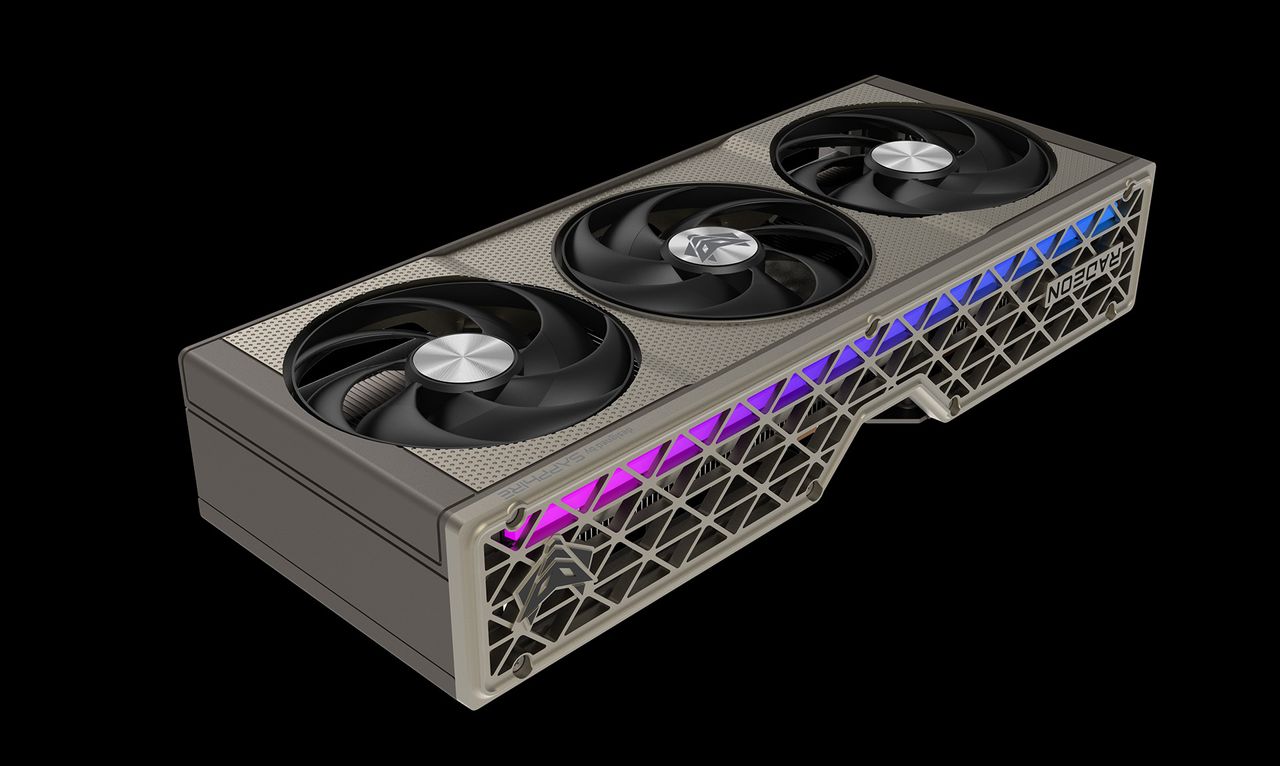
Sapphire wants AMD to let them βgo nutsβ with their GPU designs Ed Crisler, Sapphire Technologyβs North American PR Manager, has openly stated that he would like GPU manufacturers to give their partners more freedom when building their graphics cards. Sapphire would like to βgo nutsβ when building graphics cards, but tight rules limit what [β¦]
The post Sapphire wants AMD to let them βgo nutsβ on their GPUs appeared first on OC3D.
The post Content, Consolidation, and the Creatorβs Cut: Isaacson on AI, Media Mergers, and Musk appeared first on StartupHub.ai.
βPeople who create content should be part of the party when the proceeds get divided up,β asserts Walter Isaacson, the esteemed biographer and advisory partner at Perella Weinberg, during a recent appearance on CNBCβs βSquawk Box.β This fundamental principle, he argues, is the linchpin for navigating the burgeoning age of artificial intelligence, particularly as major [β¦]
The post Content, Consolidation, and the Creatorβs Cut: Isaacson on AI, Media Mergers, and Musk appeared first on StartupHub.ai.


As marketing channels and touchpoints multiply rapidly, the way success is measured significantly impacts long-term growth and executive perception.Β
Click-based attribution β across models like last-click, first-click, linear, and time-decay β remains the default.Β
But as a standalone measurement strategy, itβs showing its age.Β
Click metrics now carry disproportionate weight in executive dashboards, and that reliance introduces real limitations.
Click-based models can still reveal valuable insights into digital engagement.Β
However, when the C-suite bases major budget and strategy decisions solely on clicks, they risk overlooking critical aspects of the customer journey β often the very pieces that matter most.
This article examines:
The goal isnβt to demonize clicks β they still belong in the toolbox. But they should provide context, not serve as the foundation.
Click-based attribution tracks ad clicks and assigns conversion credit to the marketing touchpoints that drove them.Β
Models like first-click, last-click, linear, time-decay, and data-driven approaches differ only in how they split that credit across the user journey.
Digital ad platforms and many analytics tools default to click-based models because clicks are relatively easy to capture, understand, and report.Β
Theyβre deterministic, clean, and simple to interpret at a glance.
That cleanliness, however, can be misleading.Β
Click-based attribution depends entirely on a user interacting with tracking links or tags.Β
If a user doesnβt click, or clicks but converts later or elsewhere, the touchpoint may be missed or misattributed.
This approach can work in a simple, linear funnel.Β
But as customer journeys become multi-device, multi-channel, and increasingly offline, clicks lose context quickly.
Dig deeper: The end of easy PPC attribution β and what to do next
Todayβs buyers rarely follow the neat, linear paths that click-based models assume.Β
Instead, they move across devices, channels, and even offline touchpoints.
Think social media, LLMs like ChatGPT, and brand exposure from video, influencers, or website content.Β
Many of these interactions never generate a tracked click, yet they play a critical role in shaping perception, intent, and eventual conversion.
For example, a buyer may watch a brandβs video on LinkedIn during their morning commute.Β
Later, they read a third-party review and skim a few case studies on the brandβs website.
Days later, they type the brand name directly into Google and convert.Β
In a click-based model, only the final branded search click receives credit.Β
The video, the review, and the content that built trust remain invisible.
These arenβt minor attribution blind spots β they represent a canyon.Β
Click-based models place the most weight on the final click.Β
As a result, they often over-index lower-funnel activity from channels like retargeting ads or branded search.Β
These channels convert more frequently, but they do not create demand on their own.
For C-level decision-makers, this creates a dangerous bias.Β
Dashboards light up for retargeting campaigns and branded search, so budgets flow there.
Mid- and upper-funnel investments β brand building, awareness, content, and influencers β are reduced or cut.Β
Over time, the brandβs long-term growth engine is choked in favor of short-term, easily quantifiable wins.
Dig deeper: Marketing attribution models: The pros and cons
Not all marketing impact shows up as clicks.Β
A video ad or thought-leadership piece may plant a seed without prompting an immediate click, yet the message can linger.Β
It may lead to later brand searches or site visits, outcomes that are difficult to capture through click-based measurement.
As a result, brand power, creative messaging, and top-of-funnel reach are underrepresented in click-based models.Β
Over time, organizations that optimize solely around click-based attribution may unintentionally deprioritize creativity, brand-building, and long-term equity.
Weβre moving toward a future where third-party cookies are diminished or gone, privacy rules continue to tighten, and tracking becomes less precise.Β
Under these conditions, click tracking grows more difficult, less reliable, and increasingly misaligned.
Without stable identifiers, many of the assumptions behind click-based models β βthis click belongs to that userβ or βthis click led to that conversionβ β begin to unravel.Β
Attribution becomes a house of cards built on data that may not hold up as privacy and tracking norms continue to shift.
When click-based reporting dominates, budgets tend to flow toward what looks good β the activities that drive visible revenue and deliver clean, direct ROI.Β
That often comes at the expense of demand generation efforts that support long-term growth, such as brand campaigns, content, awareness, and other upper-funnel media.
This approach may βworkβ for a few months or even years.Β
Over time, however, the pipeline dries up.Β
Awareness declines, organic reach stagnates, and the brand loses its ability to attract new audiences at scale.
Marketing shifts into a zero-sum exercise focused on extracting conversions from existing demand rather than expanding it.Β
Without sustained investment in brand equity and demand generation, competitiveness, brand loyalty, and lifetime value (LTV) suffer.
In essence, optimizing for short-term ROAS puts long-term brand health at risk.
When KPIs are click-based:
The result is marketing silos working toward different objectives.
Fragmentation increases.
Ad platforms and tracking tools report click-based conversions, but many of those conversions are self-crediting, particularly within paid media platforms.Β
When you rely heavily on these numbers without scrutiny or connection to the broader user journey, you risk making high-stakes decisions based on biased data.
If click-based attribution is flawed, how should performance be evaluated?Β
The short answer is a combination of approaches grounded in real business outcomes.
At a higher level β especially when multiple channels are involved, including online, offline, paid media, organic media, and PR β MMM helps quantify channel-level contribution to sales, revenue, or other business outcomes.Β
It looks at broad correlations over time using aggregated data rather than user-level clicks.
MMM, supported by machine learning, improved data resolution, and more frequent refresh cycles, has become more accessible and actionable.Β
It isnβt a replacement for click- or site-based data, but a powerful complement.Β
Dig deeper: MTA vs. MMM: Which marketing attribution model is right for you?
User-level path analysis still has a place when privacy and tracking allow.Β
Multi-touch models that consider multiple touchpoints can provide richer insight, but they work best as one input among many rather than a single source of truth.Β
They offer path visibility, but without incrementality testing or support from MMM, they still risk over-crediting and bias.
Marketing value isnβt confined to a single sale or conversion.
LTV, retention, and long-term value creation matter just as much.Β
Tying spend to CAC payback, churn, loyalty, and retention creates a measurement framework aligned with long-term business goals.
Incrementality testing measures what marketing actually adds by identifying net-new conversions, revenue, lift, or awareness.Β
It separates what would have happened anyway from what your efforts truly drove.
This approach isnβt as clean as click tracking and requires more planning and discipline, but it delivers causality.Β
It allows you to say, with confidence, βThis spend generated X% incremental lift.β
Dig deeper: Why incrementality is the only metric that proves marketingβs real impact
Not all impact is transactional.Β
Upper-funnel signals such as viewability, time-in-view, attention scores, and engagement matter.Β
Creative resonance, brand recall, and impact often influence later behavior that never appears as a click.
Looking beyond clicks to metrics like creative recall, brand lift, share of voice, sentiment, and qualitative feedback helps anchor measurement to real brand value and audience expectations.
A modern measurement framework isnβt built around one model or metric.Β
It brings together complementary methods to create a clearer, more balanced view of performance.
The most effective measurement frameworks take a portfolio approach.Β
MMM, incrementality, multi-touch attribution (when possible), attention metrics, and customer lifecycle metrics work together to triangulate performance from multiple perspectives.
This diversity reduces bias and balances short-term performance with long-term brand health.
It also makes it possible for the C-suite to see more than conversions alone β including impact, growth potential, and sustainable value.
Executives care about revenue, margin, and growth. Not just clicks.Β
Reframe KPIs around the key metrics that matter, such as:
Package those into dashboards that tell a story:Β
When dashboards lead with vanity metrics like click volume, CTR, or raw conversion rate, insight is limited. Lead instead with business outcomes.
Build narrative-driven dashboards that connect investment to results, learning, and action.
Lean toward data storytelling instead of data reporting.Β
That story resonates with executives. It links marketing to business value, not just to marketing activity.
Modern analytics tools β including AI and predictive forecasting β can help:
Use them to simulate scenarios, test assumptions, and support business cases.
These tools arenβt silver bullets. They work best as accelerators for sound strategic thinking.Β
Changing how performance is measured doesnβt happen automatically.
It requires clear framing, evidence, and a deliberate transition rather than an abrupt overhaul.
Often, executives cling to click-based metrics because theyβre easy to understand (βone user clicked, we got a saleβ) and seemingly real-time.Β
They want fast feedback and accountability. Demand creation efforts often feel abstract and hard to justify.
Be prepared to address that directly:
Click-based attribution doesnβt need to be discarded overnight. Instead:
Over time, incentives begin to shift. Media moves beyond clicks, creative focuses on quality and resonance, and analytics emphasizes causality and long-term value.
Executives rarely object to logic β they object to noise.Β
Frame your case with clarity and use data.Β
Show examples, run tests, show incremental lift, and then build dashboards that tell a clear story.
Once you prove that a dollar invested in brand or top-of-funnel media delivers compounding value over time, leadership hopefully becomes less attracted to short-term click metrics.Β
They begin to appreciate marketing as an investment, not a cost center.
Click-based attribution has served marketing teams for years. It offered a clean way to connect conversions to touchpoints.Β
But the landscape has changed.Β
For C-level teams, judging performance by clicks alone is like judging a companyβs health by heart rate alone. Itβs useful, but incomplete.
Modern marketing requires a richer view β one that blends data, causality, business outcomes, and long-term brand building.
As marketing leaders, our job isnβt to chase the next click.Β
Itβs to build brands that last, drive sustained growth, and help leadership see marketing not as a cost, but as a strategic investment.

Every week, new data highlights both the overlap and the divergence between effective organic search techniques across traditional SEO (Google SERPs) and GEO (ChatGPT, AI Overviews, Perplexity, etc.).Β
Itβs a lot to absorb. One week, headlines say traditional SEO tactics work fine for ChatGPT.
The next, youβll see reports that one platform is elevating Reddit while another is dialing it back.
Given how quickly this landscape shifts, I want to break down the approach, process, and resources my team is using to tackle content in 2026.Β
This goes far beyond a content calendar.Β
Itβs about combining audience understanding, the interplay of organic platforms, and your brandβs perspective to build a content system that delivers real value.
The emphasis on quality and value in content is good for marketers.
The tenets of E-E-A-T remain central to our approach because they apply to AI search discoverability as much as to traditional SEO.Β
Producing strong content still depends on a rich understanding of your audience, good fundamental structures, and solid delivery methods β skills that always matter.
Start with your audience.Β
Approach content like any other product or service:Β
Approach content like any other product or service:
That said, content that has performed well in Google may not work as effectively for LLM search.Β
Instead of writing primarily for blue-link SERPs, we now focus on creating content that stands on its own as an authoritative, structured data source, with trust and originality as ranking signals.Β
That means prioritizing clarity, factual depth, and a consistent brand perspective that AI models can reliably quote.
In an age of mass AI content, original insights, data, and human perspective are key differentiators, so content systems should include a step for βoriginal proofβ β data, interviews, or commentary that make the material uniquely trustworthy.
Weβre also thinking more about how content gets used in AI experiences, not just how itβs found.Β
Summaries, bullet points, and explainers that answer layered intent are increasingly valuable.Β
Incorporating schema, structured data, and a consistent brand voice improves how AI systems read and represent your content.Β
In short, the goal is to optimize for retrievability and credibility, not just ranking.
The content strategy path I like to prescribe is as follows:
Once your research is conducted, youβll have what you need to craft content and deploy it in multiple ways.Β
The linear workflow that persisted for years in traditional SEO, however, must evolve into a modular content engine β one where a single research output fuels multiple media types (articles, YouTube scripts, short-form video, LinkedIn posts, etc.), with platform-native variations all aligned to a central narrative theme.
A few years ago, I would have started with well-known, well-established tools like Ahrefs and Semrush.Β
While those remain useful for benchmarking, they no longer represent how people discover or consume information as AI search transforms user behavior in real time.Β
AI search abstracts away keywords β users are asking multi-intent questions, and LLMs are generating synthesized answers.Β
SEO analysis is now, rather than the main starting point, one piece of the research pie.Β
Itβs still important, but search optimization is now embedded throughout the content process.
The tools below have been important in the past, and my team still leans on them as part of a more holistic approach to content planning.
Surveys are useful but can be expensive when youβre trying to reach audiences outside your CRM.Β
You can still get strong insights by engaging subject matter experts who share the same professional experiences, challenges, and responsibilities as your target audience.Β
Slack communities, live or virtual meet-ups, and memberships in organizations like the AMA or ANA can all offer on-the-ground perspectives that support your content mapping.
Itβs critical to include intent analysis from AI tools and conversational search data.Β
Understanding how users phrase questions to AI systems can inform structure and tone.
Not all social media posts are created equal, but understanding your audience includes knowing where your audience likes to engage: X, Reddit, YouTube, TikTok, etc. (Not to mention that Reddit citations show up prominently in ChatGPT results.)
Utilize these platforms to gather real-time information on what your audience is discussing and to increase brand mentions, which will send strong signals to ChatGPT and similar tools.
Shift from tracking keyword overlap to evaluating content depth, originality, and entity coverage β where your brandβs expertise can fill gaps or improve on generic AI-summarized answers.
For many years, SEO marketers focused on impressions and clicks, although more advanced practitioners also incorporated down-funnel metrics, such as leads, conversions, pipeline impact, and revenue.Β
Today, SEOs must expand their KPIs to include brand mentions in:
These are the new indicators of helpfulness and value.
Weβve seen strong successes with AI search visibility that complement our traditional SEO results, but our understanding of best practices continues to evolve with each new round of aggregated data on AI search results and shifting user behavior.
In short, keep a parallel track of what has worked recently and where the trends are heading, since ChatGPT and its competitors are changing user behavior in real time β and with it, the shape of organic discovery across platforms.
Cloudflare's sixth annual Year in Review reveals how AI crawlers, security threats, and traffic patterns changed in 2025.
The post Cloudflare Report: Googlebot Tops AI Crawler Traffic appeared first on Search Engine Journal.
Sometimes I really wish the chip makers would get out of the way and let us partners just make our cards. Give us the chip. Give us the RAM. Tell us what we have to provide to make it work with the board. And then let us make the cards. Let us have our fun. Let us go nuts. Let there be real differentiation. Sometimes it feels like this market becomes too too much the same.
The post Reinforcement Learning Comes Home: NVIDIA and Unsloth Democratize AI Mastery appeared first on StartupHub.ai.
Reinforcement Learning, once the exclusive domain of supercomputers and multi-million dollar data centers, has decisively stepped into the realm of local computing. This shift, highlighted in a recent tutorial by Matthew Berman, demonstrates how powerful AI models can now be trained on consumer-grade NVIDIA RTX GPUs using open-source tools like Unsloth, fundamentally democratizing access to [β¦]
The post Reinforcement Learning Comes Home: NVIDIA and Unsloth Democratize AI Mastery appeared first on StartupHub.ai.
The post Nvidia and AI Stocks Poised for Higher Rerating, Says Fundstratβs Tom Lee appeared first on StartupHub.ai.
The prevailing sentiment around artificial intelligence, despite its unprecedented surge, often grapples with questions of sustainability and valuation. Yet, Tom Lee, Fundstrat Global Advisors head of research and Fundstrat Capital CIO, posits a distinctly bullish outlook, arguing that leaders in the AI space, notably Nvidia, are not overvalued but rather poised for a significant upward [β¦]
The post Nvidia and AI Stocks Poised for Higher Rerating, Says Fundstratβs Tom Lee appeared first on StartupHub.ai.
The post Swarm Intelligence: Decoding the Power and Perils of Multi-Agent AI appeared first on StartupHub.ai.
The notion that multiple, specialized AI agents can collectively outperform a single, monolithic system represents a significant shift in artificial intelligence development. Anna Gutowska, an AI Engineer at IBM, articulates this concept with clarity, illustrating how βmany simple AI agents, each with a small job, coming together to solve big, complex problems.β This paradigm, known [β¦]
The post Swarm Intelligence: Decoding the Power and Perils of Multi-Agent AI appeared first on StartupHub.ai.
The post Soverli smartphone OS cracks the mobile sovereignty problem appeared first on StartupHub.ai.
The Soverli smartphone OS enables a fully auditable, isolated operating system to run simultaneously with Android, eliminating the security-usability trade-off.
The post Soverli smartphone OS cracks the mobile sovereignty problem appeared first on StartupHub.ai.


This season, Google Search and Shopping Ads are expected to surge past $70 billion in holiday spending. But thereβs a hidden flaw in the auction system β one most advertisers donβt realize is costing them money even when competitors arenβt in the game.
BrandPilot calls this the Uncontested Google Ads Problem, and itβs becoming one of the most overlooked sources of wasted ad spend in peak retail season.
During SMX Next, John Beresford, Chief Revenue Officer at BrandPilot, unpacked how a little-known behavioral quirk in Googleβs auction logic can cause advertisers to overspend on their own brand terms, their Shopping placements, and even their category keywords β simply because Google doesnβt automatically reduce your CPC when competition disappears.
Instead of paying less when youβre the only bidder, you may be paying the same high rate youβd pay when rivals are activeβ¦ without realizing it.
Itβs a phenomenon happening thousands of times a day across major brands, and many marketers never notice itβs occurring.
In his session, Beresford discussed:
He also shared examples of how advertisers are reclaiming wasted spend and reinvesting it into growth β without sacrificing impression share, traffic, or revenue.
Watch BrandPilotβs session now (for free, no registration required) to learn how to:
If youβre running Google Search or Shopping campaigns this holiday season, you canβt afford to miss this session. Learn how to stop the Google Grinch from stealing your budget β and start turning those savings into real performance gains.

One of last year's standout gaming stories was the rise of indie hits, proving that while game dev budgets balloon, spectacle matters less than how fun a game is to play.
Yono rewards you to scroll less. Stay under 1 hour on Instagram and TikTok per day -> earn 5 points -> stack points -> redeem them at local spots you actually want to visit. 30 points = free specialty coffee, or two Guinness pints, or dessert. The less you doomscroll, the more you earn. Businesses get free foot trafficβthey set their offers, pay nothing, and 76% of users buy extra items and return without promotions. You turn phone addiction into real money: scroll less, earn rewards, support local spots, and afford to go out again.
Real-time screen translator for any game
Visual pattern mapping for adhd & neurodivergent minds
Free AEO analytics with content tools to boost AI rankings
Keep 95% of your revenue.
Automated pre-meeting research in Google Calendar.
Help parents explain the world, one question at a time
Minimalist writing editor with vim mode
Syllaby: Create, Edit, PublishβAll in One
Turn websites into APIs
AI-native engineer hiring via real-work simulations
Remix your tabs into custom apps tailored uniquely to you!
Transform voice memos into actionable notes

CodersNote is an AI-powered learning platform that personalizes how students and professionals learn programming. It creates customized roadmaps, courses, and projects based on each learnerβs goalsβwhether itβs frontend development, AI, data science, or any other tech career path.
The prebuild roadmaps and 3,000+ free learning resources available on the platform are carefully chosen and designed by 14 industry experts, ensuring learners follow the most relevant and up-to-date path in tech. It also provides real-time guidance, interview preparation, and 24/7 AI supportβhelping learners build practical skills, stay motivated, and achieve faster career growth in technology.
YouTube is making it easier for creators and brands to maximize collaborations.
Following the implementation of new restrictions, Australian teens have quickly adjusted.
Nvidia plans FP64 comeback following Blackwellβs disappointing HPC results While Nvidia Blackwell series GPUs have proven highly popular for AI workloads, the supercomputing community is disappointed by their lack of FP64 (double-precision) performance. In fact, Nvidiaβs new B300 βBlackwell Ultraβ chip practically ignores FP64 with its anaemic 1.2 teraflops of performance. For context, Nvidiaβs A100 [β¦]
The post Nvidia plots return to FP64 with next-gen HPC ships appeared first on OC3D.
Meta is looking to improve its data ingestion processes based on real world conversation.
More ways to stay up to date with the latest info from X.
X's prospects are improving, though it's still well below pre-Elon revenue levels.
TikTok is looking to draw in more live content viewers.
MSI celebrates 10 years of GODLIKE performance with its MEG X870E GODLIKE X Edition motherboard MSI has just launched their new MEG X870E GODLIKE X Edition motherboard, a new AM5 flagship motherboard thatβs limited to 1000 units. This motherboard is both a high-end motherboard and a collectorβs item, boasting high-end specifications and unique numbering. Weβve [β¦]
The post MSI launches its MEG X870E GODLIKE X Edition motherboard appeared first on OC3D.
GigLegal is dedicated to empowering New York City's independent workforce. We aim to provide affordable, accessible, and easy-to-understand legal tools, ensuring every freelancer can operate with the confidence and security of a large corporation. We believe legal protection should be a standard, accessible tool, not an expensive barrier.
The biggest challenges in freelancing are non-payment and scope creep. GigLegal is designed to solve these problems at their root. We combine legally-sound contracts with a secure escrow service, and create a 'trust protocol' that aligns expectations for both freelancers and their clients from day one.
The post The Future of Code: From Syntax to AI-Guided Vibe Engineering appeared first on StartupHub.ai.
The advent of large language models is fundamentally reshaping the very act of software creation, moving developers from the meticulous crafting of syntax to a more abstract, intent-driven collaboration with artificial intelligence. This profound shift was the central thesis of Kitze, founder of Sizzy, in his recent discourse on the evolution from βvibe codingβ to [β¦]
The post The Future of Code: From Syntax to AI-Guided Vibe Engineering appeared first on StartupHub.ai.
The post The Generative AI Threat is Already in Your Browser: Malicious Chrome Extensions Explode in Latest Cyber Scourge appeared first on StartupHub.ai.
The rush to integrate Generative AI into daily workflows has opened a dangerous new front in the cyber security war, one thatβs hiding in plain sight: the humble browser extension. New research from Palo Alto Networks security experts, Shresta Seetharam, Mohamed Nabeel, and William Melicher, reveals a disturbing trend of malicious GenAI-themed Chrome extensions being [β¦]
The post The Generative AI Threat is Already in Your Browser: Malicious Chrome Extensions Explode in Latest Cyber Scourge appeared first on StartupHub.ai.
Thevenin is an Internal Development Platform (IDP) designed for organizations that need to build with startup speed while maintaining rigorous enterprise standards regarding governance, security, and data sovereignty.
Developers can easily create docker containers and attach files, variables and even volumes. Organizations can check what has been changed and who did it through version control and limit cloud resource usage by environment.
Upload 100s of product images. Get SEO titles, descriptions & tags automatically. Sync directly to your WooCommerce or Shopify store. Go from photos to profitable listings in minutes.
Create Topical Authority via our maps feature, which plans and visualizes your content in a way never seen before. Get Keyword Research on the map directly with out competitor analysis tool, revolutionizing the way keyword research is done. No more second guessing which keywords are actually being used and how.
Let AI agents write & manage your SaaS emails
Open source, webhook-free payments that AI can one-shot
The easiest way to use GitHub Octicons in your Blazor apps
Learn, invent and innovate electronics
AI-powered video creation for work