Reading view

Maddie Lightening speaks on misreported ROAS, account structure chaos & AI mistakes

Maddie Lightening, head of paid media at Hallam, joined me to talk through the mistakes, lessons and mindset shifts that have shaped her career in PPC. With more than a decade of experience across search, social, programmatic, digital out of home and ABM, she shared a candid look at the realities of leading paid media in a fast-moving industry.

The reporting mistake that doubled performance

One of Maddie’s early mistakes involved misreporting performance due to account currency differences. Working with an Australian billing setup while reporting in GBP, she unknowingly halved the reported results because conversion values were being translated. The issue only surfaced after comparing platform data with CRM figures, revealing that performance was actually twice as strong as reported, highlighting how easily technical setup details can skew results.

When legacy account structure becomes a problem

A more complex challenge came from a travel client running an outdated, highly granular account structure with thousands of campaigns. While this “2016-style” setup had previously worked, it clashed with modern AI-driven bidding and data consolidation approaches, making it harder to optimize performance and diagnose issues when results began to decline.

Why timing matters as much as strategy

Maddie explained that although the team had planned to restructure the account, they delayed it to avoid disrupting peak season. When performance dropped in January, they were forced to make multiple changes quickly, which increased pressure and complexity. In hindsight, starting the restructure earlier would likely have reduced risk, showing that delaying necessary changes can sometimes be more damaging than acting sooner.

The pressure of fixing performance in real time

As performance declined during a critical period, the client became understandably concerned, especially given how much of their annual budget was tied to peak months. At the same time, audits and internal reviews added pressure, making it one of the most challenging moments of Maddie’s career, but also reinforcing the importance of collaboration, support and staying focused on solutions rather than panic.

How a max CPC cap helped reclaim control

One key fix involved regaining control over rising CPCs by applying a max CPC cap through portfolio bidding strategies, even while using automated bidding. This approach reduced CPCs significantly without harming performance, demonstrating that advertisers can still guide AI-driven campaigns by applying the right constraints rather than relying on full automation alone.

Why banning AI is the wrong move

Maddie also highlighted a broader industry mistake: refusing to adopt AI altogether. She recalled working at an agency that banned AI tools and automation, which she believes limits growth and puts teams at a disadvantage. Instead of resisting AI, she argues that marketers should learn how to use it strategically while maintaining oversight.

Better prompts lead to better AI outputs

A key takeaway on AI usage is that results depend heavily on input quality. Maddie emphasized that vague prompts produce weak outputs, while detailed context—such as goals, audience and structure—leads to far more useful results. AI should be treated as a support tool that enhances human work, not replaces it.

Why curiosity still matters in PPC

Maddie stressed the importance of experimentation, encouraging teams to test ideas even when outcomes are uncertain. Her philosophy—“test and learn”—reflects the idea that even unsuccessful experiments provide valuable insights that can inform better decisions in the future.

Small mistakes are not career-ending

She also addressed everyday mistakes, such as sending the wrong report to a client, noting that while they may feel serious in the moment, they are usually easy to fix. The key is to take accountability, correct the issue quickly and keep perspective rather than overreacting.

The bigger lesson for paid media teams

Across all her examples, Maddie reinforced that success in PPC comes from adaptability, continuous learning and a willingness to challenge existing approaches. Whether dealing with account structure, automation or performance issues, the ability to evolve is what separates strong teams from the rest.

Final takeaway

Ultimately, Maddie’s experience shows that mistakes, when handled correctly, can lead to stronger strategies and better performance, and that staying curious, proactive and open to change is essential for long-term success in paid media.

💾

Maddie Lightening shares lessons from a currency reporting error and legacy account structure challenges, and using AI effectively.

(PR) HYTE Introduces Sakura Miko hololive Y70 Case, Keycap, and Desk Pad Bundle

HYTE, a leading manufacturer of cutting-edge PC components, is proud to share that its latest collaboration with hololive, represented by the COVER Corporation from Japan, starring Sakura Miko - one of hololive's longest-running VTuber talents with over two million subscribers and nearly one billion views on her channel - is now available for pre-order on HYTE.com.

Known worldwide as the "Elite Shrine Maiden", Sakura Miko is a Japanese Vtuber affiliated with hololive and is part of their "Generation 0" group of talents, which includes one of HYTE's past collaboration subjects Hoshimachi Suisei. As part of Sakura Miko's recent outfit debut for her character, a new HYTE product line was announced, with the Official HYTE Y70 Sakura Miko Case in separate Black and White colorways acting as the heart of the lineup. Both variants feature the talent's name and custom designs across the Y70's trim, a customized serialized plate on the case's back panel, and a full custom illustration across all three of the Y70's glass panels drawn by professional illustrator Rosuuri.

Epic Games Will Reportedly Launch an Extraction Shooter “Along the Lines of ARC Raiders” With Disney Characters in November 2026

The image shows a collaboration between 'Disney x Epic Games' with a vibrant theme park background, above a promotional poster for 'ARC Raiders' featuring two science fiction characters.

You might recall that just two short years ago in February 2024, Disney invested $1.5 billion in Fortnite maker Epic Games, with grand plans to create a persistent Disney universe within Fortnite based on Disney franchises. We've already seen part of this deal bear fruit with the introduction of Disnyeland in Fortnite, and according to a new report from Bloomberg, we're due to get the next fruit in November 2026. And according to the report, it's an incredibly significant release for Epic, because it is meant to mark the beginning of its comeback tour. Epic Games recently laid of 1,000 […]

Read full article at https://wccftech.com/epic-games-disney-game-november-2026-shooting-game-along-the-lines-of-arc-raiders/

Philips Launches Evnia 27M2G5800 27-inch 5K Dual-Mode Gaming Monitor

Philips has introduced the Evnia 27M2G5800, a 27-inch gaming monitor built around a dual-mode Fast IPS panel that can switch between 5K resolution and high-refresh QHD operation. The panel runs at a native 5120 x 2880 (5K UHD) with a pixel density of 217 PPI, right where you'd normally find it on a 27-inch gaming display. In 5K mode, the refresh rate tops out at 165 Hz, or 180 Hz with overclocking enabled. Switching to 2560 x 1440 (Quad HD) unlocks up to 330 Hz, no overclocking option here. Brightness is rated at 500 nits with a 1000:1 contrast ratio while the panel has DisplayHDR 400 certification. On the responsiveness side, Philips rates the panel at 1 ms GtG, with a 0.5 ms MPRT mode for motion-heavy content. Adaptive sync is supported, including G-SYNC compatibility, and the monitor comes with a handful of gaming-oriented extras: Shadow Boost for better visibility in dark areas, Smart Crosshair, and motion blur reduction.

For connectivity, it features two HDMI 2.1 ports, a DisplayPort 2.1 (supporting the 5K at 180 Hz), a headphone jack and a USB hub with two downstream USB-A ports and a USB-B upstream. According to IT Files, the Evnia 27M2G5800 is priced at 4999 yuan, which is about $730 USD however, pricing and availability for markets outside Hong Kong haven't been announced. The 5K model expands the Philips Evnia 27M2 lineup, which already includes more unconventional high-refresh options. Notable examples include the Evnia 27M2N5500XD, capable of up to 500 Hz at 1440p and 1000 Hz at 720p, as well as the more affordable Evnia 27M2N3800A, offering 4K at 160 Hz or Full HD at 320 Hz.

Lackluster Foldable Smartphone Sales Are About To Witness A Major Surge As Apple Increases iPhone Fold Display Inventory By 20%

Apple is about to take the foldable smartphone market to new heights with its iPhone Fold

The foldable smartphone form factor was assumed by many to be the catalyst that succeeds the ‘candy bar’ shape that we’ve grown to own and love. Unfortunately, years have passed since Samsung introduced the Galaxy Fold, and this particular category still hasn’t been able to accumulate the required attention from the mass market. In short, customers aren’t too thrilled about spending thousands on a device that offers the same internal specifications but also has a smaller shelf life due to all the moving parts. Then again, they don’t carry the same iPhone Fold magic, which is why a rumor claims that […]

Read full article at https://wccftech.com/apple-increases-iphone-fold-display-inventory-by-20-percent/

Intel Presents Its Own Texture Set Neural Compression SDK: Up to 18x Smaller Textures

A presentation slide titled 'Texture Set Neural Compression' features a T-Rex model, image textures, and the text 'Uses AI,' with annotations describing reduced disk space and RAM usage, alongside Marissa du Bois credited as the Staff Graphics Engineer, with an Intel logo present.

At GDC 2026, Intel graphics engineer Marissa Dubois took the stage to present Intel's version of neural texture compression, very similar to NVIDIA's NTC in that both technologies are deterministic. The presentation was a follow-up to the original R&D prototype shown at GDC 2025, with the key news being that Intel has now productized that research into a standalone SDK. Texture Set Neural Compression (TSNC) is essentially a smarter way to store game textures. Traditional GPU block compression formats (BC1 through BC7) use fixed mathematical rules to reduce texture size, and while they're fast and universally supported, they leave significant […]

Read full article at https://wccftech.com/intel-texture-set-neural-compression-sdk-tsnc-18x-smaller-textures/

Defend Network – Free AI-powered daily threat briefings for cybersecurity teams


defend.network is a free cybersecurity intelligence platform that publishes daily AI-generated threat briefings, weekly vulnerability reports with remediation steps, and a curated directory of 59 security tools. The intelligence is structured by threat type, industry, and severity. The platform is fully automated, requires no signup, and is completely free.

View startup

The latest jobs in search marketing

Search marketing jobs

Looking to take the next step in your search marketing career?

Below, you will find the latest SEO, PPC, and digital marketing jobs at brands and agencies. We also include positions from previous weeks that are still open.

Newest SEO Jobs

(Provided to Search Engine Land by SEOjobs.com)

  • Job Description One Step Secure I/T is an MSP providing the latest in managed services and cybersecurity. We’re a stable, privately-owned company where people enjoy what they do — and who they do it with. Our team sticks around, with an average tenure just shy of 10 years. That kind of loyalty doesn’t happen by […]
  • Description: Build campaigns. Shape stories. Drive growth—in an industry that quite literally builds the world. The products we support are behind the infrastructure, equipment, and technology that power everyday life. We’re looking for a Digital Marketing Specialist who’s excited by the opportunity to bring a highly technical, industrial product portfolio to life through modern marketing. […]
  • About Us We have been a recognized leader in the Healthcare Staffing and PCA industry for four decades and a pioneer of the franchised staffing model. We are seeking dynamic and results-oriented Digital Marketing and Communications Specialist to spearhead the development in major markets across the U.S. This is a unique opportunity to develop, establish and grow […]
  • Description: {Mur-chol-uh-jee | The science of company merch; the skill of creating and delivering custom-branded apparel and corporate gifts around the world.} Merchology is a leading eCommerce retailer in B2B sales of co-branded merchandise including apparel, headwear, drinkware, gifts, and accessories. We are family-owned, people-powered, and we are adding to our #MerchTeam at our renovated […]
  • We’re looking for an SEO Strategist who genuinely loves SEO. Not someone who “does SEO”, but someone who gets genuinely excited about the wins, and genuinely curious about the setbacks. This is not a checklist SEO role. It’s for someone who understands how search is changing, and knows how to turn that into measurable business […]
  • As VP of Search, you’ll set the vision and direction for our global Search practice—leading best-in-class SEO, SEM, and Generative Engine Optimization (GEO) strategies across a diverse portfolio of clients and regions. You are the global leader and point of contact for Search within the agency, responsible for practice leadership, quality standards, capability growth, and […]
  • JOB SUMMARY The Digital Marketing Specialist supports Aloha Pacific FCU’s digital growth by executing marketing campaigns that strengthen brand awareness, increase member engagement, and drive business results. This role manages digital advertising, website optimization, email marketing, and CRM-driven campaigns while leveraging analytics to deliver data-backed insights. The ideal candidate is creative, analytical, detail oriented, and […]
  • Job Description Daylight Studio www.daylightstudio.com Growth Marketing & Content Lead Social | Websites | SEO | AI Content | Visibility Daylight Studio is hiring a high-performance, technically savvy Growth Marketing & Content Lead who can build visibility, elevate our digital presence, and execute at a high level across content, websites, social platforms, and AI-powered creative […]
  • About ENGAGE360 ENGAGE360 is a full-service marketing and events agency located in the heart of Jacksonville Beach. We execute strategic marketing campaigns, promotions, and experiential initiatives for both corporate and nonprofit clients. Our work spans digital marketing, acquisition programs, live events, hospitality experiences, and turn-key fundraising campaigns. We’re a fast-moving, collaborative team that values creativity, […]
  • Description: The Digital & Marketing Operations Specialist is a key member of the Marketing & Communications team at Kamco, responsible for developing and executing integrated communication strategies to enhance Kamco’s brand image, market visibility, and drive business growth. This role requires a creative, results-oriented individual with a strong understanding of digital marketing principles and a […]

Newest PPC and paid media jobs

(Provided to Search Engine Land by PPCjobs.com)

  • Company And Culture Company And Culture Complex is the definitive platform for global youth culture and music lifestyle, seamlessly integrating cutting-edge content, commerce and live experiences with unparalleled scale. Through innovative content, Complex tells stories of music, streetwear and style, sports, art and beyond. Its content engages in a dynamic conversation with the audience, reflecting […]
  • A construction and engineering firm is seeking a Marketing Specialist. This role involves supporting the development and execution of proposals, presentations, and various marketing materials. The ideal candidate will possess strong writing and organizational skills, have at least three years of relevant experience, and be a detail-oriented team player. Benefits include medical plans, a 401k […]
  • A global nursing organization based in Indianapolis seeks a Marketing Manager for Membership Growth and Retention. You will lead strategies to drive new member acquisition, enhance engagement, and improve retention through data-driven campaigns. The ideal candidate has a Bachelor's degree and 7-10 years of marketing experience, focusing on multi-channel campaigns. This hybrid role offers a […]
  • Overview Job Title: Sr. Marketing Specialist, Cloud Computing and AI Deep Learning Location: Irvine, CA – Onsite Compensation: $72,000 – $82,000 Advantech is seeking a Marketing Senior Specialist responsible for driving awareness, engagement, and demand for Advantech’s products within the Cloud Computing and AI Deep Learning space. This role will focus on creating localized go-to-market […]
  • Diode Dynamics is a manufacturer of automotive LED lighting and accessories. Located in St. Charles, Missouri, our innovative products and superior service are rapidly making us one of the leading companies in the industry. To learn more, please visit our website at http://www.diodedynamics.com Job Description As a Digital Marketing Specialist at Diode […]

Other roles you may be interested in

Search Engine Optimization Manager, Insight Global (Hybrid, Fort Lauderdale, FL)

  • Salary: $90,000 – $130,000
  • Own SEO strategy across category, product, and site pages to drive organic revenue
  • Manage and optimize the product catalog for accuracy, discoverability, and conversion

Performance Marketing Manager, Recruitics (Hybrid, Lafayette,CA)

  • Salary: $70,000 – $90,000
  • Work in platform to configure campaigns – set up budgets, targeting, creative, and run dat
  • Monitor ongoing performance to identify areas of opportunity

Marketing, Social Media & PR Manager, PARTNERS Staffing (Fort Myers, FL)

  • Salary: $75,000 – $85,000
  • Develop and execute integrated marketing campaigns for shows, content releases, events, and brand initiatives
  • Identify target audiences and create strategies to grow reach and engagement

Local Search & Listings Manager, TurnPoint Services (Remote)

  • Salary: $80,000 – $90,000
  • Own the strategy and governance for local search visibility across all business locations.
  • Develop optimization frameworks and standards for Google Business Profiles and other listing platforms.

Senior Branding manager, rednote (Hybrid, New York, US)

  • Salary: $228,000 – $320,000
  • Define and drive rednote’s global brand strategy, shaping its positioning across key international markets
  • Lead integrated marketing initiatives end-to-end, ensuring alignment across creative development and media execution

Performance Marketing Manager, Hirewell (Remote)

  • Salary: $85,000 – $95,000
  • Paid Search: Lead daily execution and management of Google Ads. This is a “hands-on” role requiring deep platform expertise.
  • Multi-Channel Management: Oversee and optimize campaigns across Meta, LinkedIn, and Programmatic channels.

Senior Paid Media Manager, Brightly Media Lab (Remote)

  • Salary: $70,000 – $100,000
  • Directly build, manage, and optimize campaigns within Google Ads, Microsoft Ads, and Facebook Ads (Meta).
  • Serve as the lead point of contact for your book of clients, taking full ownership of their success and growth.

Marketing Specialist, The Bradford group (Hybrid, The Greater Chicago area)

  • Salary: $60,000 – $62,000
  • Launch and manage paid social campaigns primarily on Meta platforms.
  • Oversee daily budgets and performance optimizations against revenue and ROI goals, using data-driven insights to continuously improve results.

Paid Search Specialist, Maui Jim Sunglasses (Peoria, IL)

  • Salary: $65,000 – $70,000
  • Plan, set up, and manage paid search, display, and shopping campaigns on Google Ads.
  • Manage and optimize advertising budgets to achieve revenue and efficiency targets.

Advertising Media Manager, Vetoquinol USA (Remote)

  • Salary: $100,000 -$110,000
  • Develop and implement strategic advertising plans for Etail (Ecomm/Retail) accounts.
  • Analyzing advertising performance data with related ROAS & TACoS evaluations.

Note: We update this post weekly. So make sure to bookmark this page and check back.

Merchant API lands in Google Ads scripts ahead of Content API sunset

Google Ads

Google is pushing advertisers toward a more modern, scalable infrastructure for Shopping integrations—bringing new capabilities (including AI tools) directly into scripting workflows.

What’s happening. Google Ads scripts will begin supporting the Merchant API starting April 22nd, as Google prepares to retire the Content API for Shopping on August 18th. The new API will be available as an Advanced API in the scripts editor, while the existing Content API remains usable until its official sunset.

What’s new: The Merchant API introduces a modular architecture, breaking functionality into sub-APIs that allow for faster updates, easier maintenance, and fewer disruptions. It also expands capabilities with features like the Google Product Studio API for generative AI, dedicated APIs for managing product and store reviews, and a Notifications API for real-time updates.

In addition, advertisers gain more control over data management, including supplemental product data, local and regional inventory, and promotions—all within a system designed for omnichannel use while still supporting legacy setups.

Why we care. The Merchant API gives advertisers more a more flexible way to manage product data at scale, especially for complex or omnichannel setups. It also introduces new capabilities—like AI-driven content tools and improved data handling—that can enhance feed quality and performance. Just as importantly, with the Content API being retired, adopting the new system is essential to avoid disruption and stay competitive.

Yes, but. Migration will require some adjustment—especially for advertisers with custom scripts or complex feed setups tied to the legacy API.

Bottom line. For advertisers using scripts, this is an opportunity to upgrade to a more powerful and scalable integration, unlocking new features while future-proofing Shopping workflows before the cutoff.

Dig deeper. Merchant API is coming to Google Ads scripts starting April 22, 2026

Open-World Survivalcraft Game "Soulmask" Launches to 1.0 Alongside Sizeable Egypt DLC

Soulmask, an open-world, base-building, survival-craft game, launched to Steam Early Access almost two years ago, and after many iterations, CampFire Studios and Qooland Games have officially released the 1.0 version of the game, calling it a "complete reinvention of the game itself." The update notes on Steam list a number of revolutionary changes, including a new onboarding flow, refreshed combat, a new tribal AI system, and new settlement management. The game also now includes an encyclopedia, called the Mask Knowledge Base, so that players no longer need to leave the game to check a Wiki for information about a system or item.

There is also more endgame content, thanks to the new Mask Mimicry Ascension system, which expands the capabilities of the game's masks beyond previous limits. More importantly, players now have access to three distinct game modes: Survival, the original, classic, challenging struggle; Tribe Mode, which is designed for players to enjoy building and developing their civilizations and facing off against other political threats and enemy invasions; and Warrior Mode is there for players who like Soulmask for the combat, with tougher enemies, less forgiving combat mechanics, and weapons that don't take damage or break. The Soulmask 1.0 trailer follows.

(PR) MicroProse's Legendary Pilots Flight Sim Launches April 21 with Retro Visuals

Blending accessible flying mechanics with deeper management systems, Legendary Pilots invites players to step into a vibrant aviation world where every flight is just one part of a bigger journey. From planning routes and transporting passengers to maintaining aircraft and climbing the ranks of a competitive airline ecosystem, the game offers a refreshing take on the flight sim genre-one that prioritizes experience, progression, and personality over strict realism.

With its distinctive retro-inspired visuals and a focus on turboprops and regional jets, Legendary Pilots delivers a grounded yet stylized aviation fantasy. It's a world where smart decisions, efficient flying, and long-term planning matter just as much as what happens in the cockpit.

DDR4 Prices Finally Cool With 5% Drop After 2,200% Surge

DDR4 pricing is finally showing signs of easing, as DDR4 16 Gb spot prices experienced a 5% correction in March after a more than 2,200% increase over the past year. The massive demand for AI data center expansion absorbed all available DDR production, making DDR4 and DDR5 pricing widely discussed topics among enthusiast communities. This has impacted PC DIY enthusiasts, laptop makers, PC OEMs, and everyone in between. Over the past year, the rapid price increase has effectively priced out many consumers from upgrading or installing new systems with larger RAM capacity. However, there are signs that the situation might improve as spot pricing has started to decrease.

First, readers need to understand the difference between spot and contract pricing in DDR memory. Contract pricing is what memory makers like Samsung, SK hynix, and Micron agree on with large buyers, such as PC OEMs like Apple, HP, or Dell, or even server makers who purchase DRAM in large quantities. On the other hand, spot pricing is an "on-the-spot" deal that provides immediate pricing without any contract. This spot pricing is typically reserved for smaller DRAM volumes and is usually bought by DRAM distributors and supply chain logistics. In the spot pricing market, DDR4 has fallen about 5% in March compared to February pricing, and the same applies to DDR5 memory spot pricing.

Gateron Launches Magnetic Jade Attraction HE Switch With Identical Start and Bottom-Out Force

Gateron, now ubiquitous in the world of mechanical, Hall-effect, and TMR gaming keyboards, has officially announced a new magnetic switch that promises a unique switch feel with an effectively perfectly linear switch weight. With a traditional mechanical or magnetic keyboard switches, the key gets progressively more difficult to press as you go through the travel, but Gateron claims that the new Magnetic Jade Attraction HE switches have both initial and bottom-out operation force values of 30 gf, making them a perfectly linear switch. Incidentally, the method Gateron used to make this force chart possible also seems to have reduced the standard deviation of the actuation force to ±2 gf, instead of the usual ±5 gf.

Gateron's new switch design is an iteration of the recent Dual-Drive stem design it showed off previously in the Gateron Magnetic Spark switches, which should make the stems stable and make reading the travel very accurate, but the Jade Attraction adds three small permanent magnets in the bottom of the switch housing. Those magnets in the bottom housing help compensate for the increase in spring rate that occurs when you typically compress a spring, giving it that uniquely linear switch feel. The Gateron Magnetic Jade Attraction HE switches are available for pre-sale on the Gateron online store for $47.60 for a pack of 70 switches.

Marvel's Guardians of the Galaxy May Come to Nintendo Switch 2 Soon

Following the recent news of the $80 Elden Ring: Tarnished Edition for Switch 2 showing up on Amazon, Gematsu has reported that Marvel's Guardians of the Galaxy 2 may be coming to the Nintendo Switch 2 sooner rather than later, based on a recent age rating by the Taiwan Digital Game Rating Committee. According to a screenshot of the rating, it will be PG-12, and it is explicitly rated for the Nintendo Switch 2.

There is no launch date approved for the game just yet, so, while this is evidence that a launch is incoming, it may still be a while before it's available. Notably, Marvel's Guardians of the Galaxy is already playable on the original Nintendo Switch, but it's a cloud-only title, meaning none of the game is processed locally. The fact that the Switch 2 version is explicitly rated for the Switch 2 suggests that it will not have the same cloud-only limitation, likely as a result of the Switch 2's more powerful internals.
Marvel's Guardians of the Galaxy Cloud Version is currently $59.99 on the Nintendo eShop, but pricing for the new version may be higher, especially for the physical version.

A New Metro Game is Now Rumored to Be Revealed Next Week

A character in a gas mask holding a weapon in a post-apocalyptic city setting from the game Metro Exodus.

So far this week, we've heard rumors about a new State of Play event set for next week, on April 16, 2026, and we've heard that the upcoming Assassin's Creed Black Flag Remake, officially titled 'Resynced,' will be fully revealed next week, on the same date. Now, a third rumor has entered the fray, this time claiming that 4A Games will reveal a new Metro game next week. This comes from AlexandreNGamR on X (formerly Twitter), who had also previously claimed that a State of Play is happening next week, which was corroborated by insider NateTheHate, who also elaborated on […]

Read full article at https://wccftech.com/new-metro-game-rumored-to-be-revealed-next-week/

Samsung Resorting To Gimmicks To Inflate The Sales Of Its Newer Flagships Even Though The Galaxy S26 Series Is Doing Fairly Good

Amazon is offering up to a $30 gift card if you pre-order the Galaxy Buds4 or Galaxy Buds4 Pro

As endearing as Samsung is, it has a weird knack for tarnishing its image by artificially gating some features so as to nudge its customer base towards newer offerings. In doing so, the South Korean behemoth not only reeks of desperation but also risks alienating some of its most loyal customers. Samsung is perplexingly gating Buds 4 Pro's Super Wideband speech, excluding the S24 series when the underlying hardware support exists One of the features of the Samsung Galaxy Buds 4 Pro is its Super Wideband speech, which doubles the standard Bluetooth call bandwidth from 8kHz to 16kHz, resulting in […]

Read full article at https://wccftech.com/samsung-resorting-to-gimmicks-to-inflate-the-sales-of-its-newer-flagships-even-though-the-galaxy-s26-series-is-doing-fairly-good/

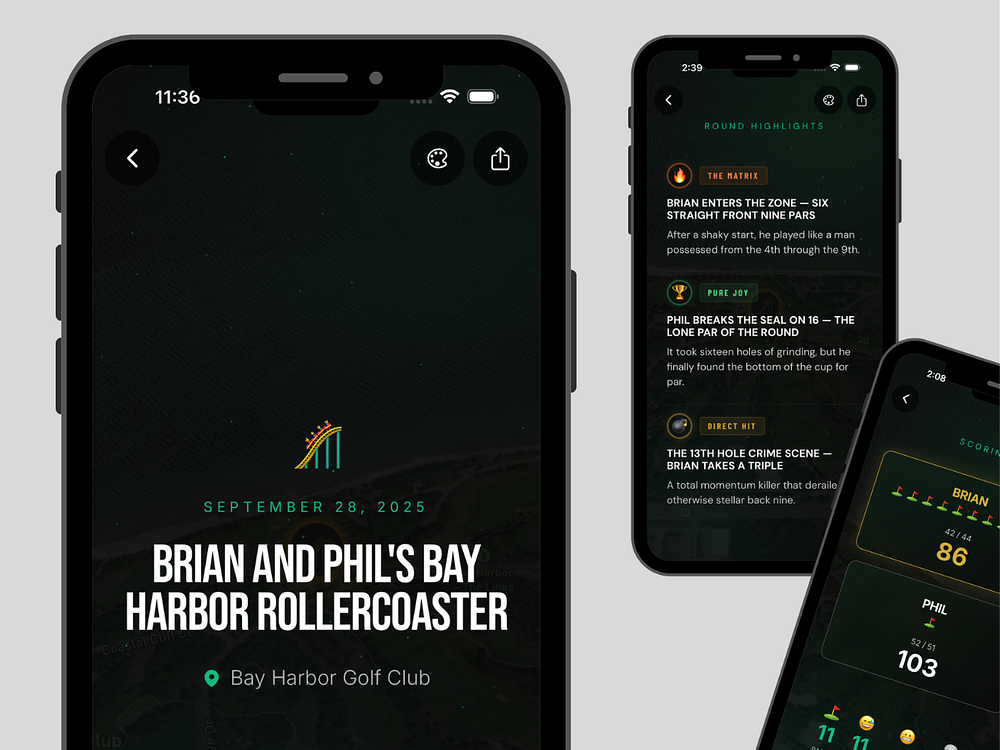
18Recap – Create epic, shareable recaps of your golf rounds


18Recap turns your scorecard and a few quick thoughts into a shareable recap your whole crew will love. Pick from 20+ visual themes, add photos, and share it to the group chat or social media. It takes only 2 minutes.

Other golf apps track stats, and scorecards keep score. But nobody captures what actually happened out there: the lip-outs, clutch putts, duck hooks, hot dogs at the turn, and the side bets your buddy still hasn't paid.

Live and free at 18recap.com. Native iOS app opening to the first 10,000 golfers via TestFlight.

View startup

Google Ads simplifies enhanced conversions into a single switch

Auditing and optimizing Google Ads in an age of limited data

Google is removing complexity from one of its most important measurement tools. By merging enhanced conversions for web and leads—and allowing multiple data inputs at once—advertisers get more accurate tracking with less setup friction.

What’s happening. Google Ads is consolidating its enhanced conversions features into a unified system with a single on/off toggle. At the same time, it’s eliminating the need to choose a single implementation method.

Advertisers will be able to send user-provided data through multiple channels simultaneously—including website tags, Data Manager, and API integrations. The current split between “enhanced conversions for web” and “enhanced conversions for leads” will disappear.

What’s changing and when: Google Ads is currently accepting user-provided data from website tags (e.g., Google tag, Google Tag Manager), Data Manager, and API connections. This multi-source approach is designed to improve conversion accuracy and bidding performance.

Starting June 2026, enhanced conversions become a single feature with a simple toggle, and method selection (tag vs API, etc.) is removed from the interface.

Why we care. This update makes conversion tracking more accurate and resilient at a time when signals are disappearing. By allowing multiple data sources at once, Google Ads can better match conversions, which can directly improve bidding efficiency and campaign performance. Just as importantly, it removes technical friction—so you get better data without having to choose or maintain a single integration method.

Impact on advertisers. Existing users require no action and will be automatically migrated if customer data terms have already been accepted. New users can enable enhanced conversions at either the account level or individual conversion action level. Opt-out remains available at the conversion action level.

How to enable it (quick take). At the account level, go to Goals → Settings, enable enhanced conversions under Customer data use, and accept data terms. At the conversion level, create or edit a conversion action, enable enhanced conversions during setup, and accept data terms.

Yes, but. To use enhanced conversions, advertisers must agree to Google’s Data Processing Terms and confirm compliance with its policies—an increasingly important step as platforms expand their use of first-party data.

Bottom line. Google is streamlining setup while quietly encouraging broader adoption of user-provided data. For advertisers, this means better performance with less manual setup. You get more complete conversion data feeding into bidding and optimization, without having to manage multiple tracking methods—helping you drive stronger results while simplifying your measurement strategy.

GoDeal24 Spring Software Sale: Get Windows 11 and Office at Deep Discounts!

GoDeal24 is an international merchant of genuine, globally-valid software, here with the Spring 2026 Software Sale. Get the software you need, such as Genuine Windows 11 Pro, at attractive prices starting at $13.55. Pair it with Office 2021 Professional Plus, the most bang-for-buck productivity suite, starting at just $31.55, or the latest Office 2024 Home and Business at $149.99—significantly lower than Microsoft's price. Better yet, pair your favorite edition of Windows and Office. Also check out great deals on other Microsoft products.

Please use the coupon code SGO62 on the following items to avail the prices you see here.
Buy Office 2021 Professional at $31.55 | Buy Office 2021 Home and Business for Mac at $48.99 | Buy Office 2021 Professional 2-PC at $59.90 | Buy Office 2021 Professional 3-PC at $81.95 | Buy Office 2021 Professional 5-PC at $130.25 | Buy Office 2019 Professional at $25.05 | Buy Office 2024 Home at $140.89 | Buy Office 2024 Home and Business at $149.99 | Buy Visio 2024 at $32.99 | Buy Project Pro 2024 at $35.99 | Buy Windows 11 Pro + Office 2021 Professional at $41.29 | Buy Windows 11 Home + Office 2021 Professional at $40.99 | Buy Windows 11 Enterprise 2024 LTSC + Office 2021 Professional Plus at $40.99 | Buy Windows 10 Enterprise 2021 LTSC + Office 2021 Professional Plus at $39.99

Please use the coupon code SGO50 on the following items.
Buy Windows 11 Pro at $13.55 | Buy Windows 11 Enterprise LTSC 2024 at $15.00 | Buy Windows 11 IoT Enterprise LTSC 2024 at $12.99 | Buy Windows 11 Pro 2-PC at $25.22 | Buy Windows 11 Pro 3-PC at $36.00 | Buy Windows 11 Pro 5-PC at $53.75 | Buy Windows 11 Home at $13.25 | Buy Windows 10 Pro at $8.65 | Buy Windows 10 Home at $8.61 | Buy Windows 10 Enterprise LTSC 2021 at $12.81 | Buy Windows Server 2025 Standard at $31.50 | Buy Windows Server 2025 Datacenter at $32.50
Check out great deals on EaseUS products and system utilities.

Former Xbox exec thinks Naughty Dog's decision to cancel the 80% completed The Last of Us Online 'was the right call', but it shouldn't have greenlit it in the first place — 'The ambition was there, but the realistic upfront planning wasn't', she says

Former Microsoft Game Studios executive producer Laura Fryer thinks the decision to cancel The Last of Us Online was the right decision on Naughty Dog's part and greenlighting the project was the "real mistake".

Tesla is working on a smaller, cheaper electric SUV


Three of the sources said the new model would be produced in China, while one added that Tesla also aims to expand production to the United States and Europe. Two sources said the vehicle would measure about 4.28 meters (14.0 feet) in length, making it significantly shorter than the Model...

Read Entire Article

Ghostrunner Makers New First-Person Soulslike Valor Mortis Arrives on PC, PS5, and Xbox Series in Fall 2026

A gameplay scene from the video game Valor Mortis shows a character with dual swords preparing to attack in a forest setting, with the player aiming a firearm at the character.

Valor Mortis is the next game from One More Level, one of the studio's behind first-person fast-paced cyberpunk sci-fi action platformer, Ghostrunner. It was first revealed back at Gamescom 2025, where Wccftech's Francesco De Meo got to check it out and called it one of the best games at the showcase. Now, we're finally starting to get closer to its release, as One More Level reveals a new release window for Fall 2026. The news came as part of Valor Mortis' inclusion in the Triple-I Initiative Showcase 2026, where it showed off new gameplay and capped off the trailer with […]

Read full article at https://wccftech.com/valor-mortis-release-window-ps-ps5-xbox-triple-i-showcase/

Apple To Use M5 Pro & M5 Max Architecture To Boost AI Efforts, New Server Chips’ Performance Boost Will Improve Siri Experience & More

A close-up view of an unbranded central processing unit (CPU) with visible pins on a motherboard, surrounded by a digital circuit pattern.

Apple is beginning to lay the critical groundwork for its next-gen custom chips, including a much-anticipated server chip, dubbed Baltra, as per a new analysis from Morgan Stanley Apple is increasing its reservation slots for TSMC's SoIC packaging tech in anticipation of its next-gen custom chips, including the Baltra ASIC Morgan Stanley has noted in a fresh analysis that Apple is "ramping up" SoIC-related activity at TSMC: "Apple is materially ramping SoIC capacity at TSMC, pointing to a major push in Apple silicon for AI servers. TSMC (covered by Charlie Chan) is expanding its SoIC (System on Integrated Circuit) capacity, […]

Read full article at https://wccftech.com/apple-is-materially-ramping-soic-capacity-at-tsmc-as-it-prepares-for-its-baltra-asic-m5-pro-max-m6-pro-max-chips-with-60k-capacity-equivalent-wafers-reserved-for-2027/

Amazon Gives Players Another Reason Not to Use Amazon Luna by Removing Games and Subscriptions Bought From Third-Party Stores

A collection of devices including a monitor, smartphone, tablet, and laptop displaying a racing game featuring Sonic the Hedgehog, with an Amazon Luna controller beneath them, on a purple background with the 'luna' logo.

Amazon announced more changes to its gaming-focused service, Amazon Luna today, after it re-launched the brand last year with a renewed focus on social and casual experiences like an "AI-powered improv courtroom game" featuring the rapper Snoop Dogg. Starting today, April 10, 2026, the platform will no longer let players purchase games from third-party stores or purchase subscriptions from third-party platforms. It will also stop supporting its Bring Your Own Library service, and no, you can't get a refund for any of your third-party purchases. In case you weren't already aware, Amazon Luna had previously allowed players to purchase games […]

Read full article at https://wccftech.com/amazon-luna-removes-third-party-game-store-purchases-and-subscriptions/

Amazon CEO Says Chip Business Is ‘On Fire,’ Graviton & Trainium Now Competing At Intel, AMD, And NVIDIA Scale

A person holding a chip with the logo 'annapurnalabs' and model number 'ALM-B211.'

Amazon's CEO, Andy Jassy, issued a letter to shareholders about the company's custom chip business, and his words showed strong optimism about the in-house infrastructure stack. Amazon's Andy Jassy Hints Towards Selling Their Custom Silicon To External Customers, Given Their Internal Success There's no doubt that hyperscalers are experiencing what we call a 'compute crunch' today, with current infrastructure unable to meet the demand driven by AI and related services. We have seen giants like Amazon, Google, and Meta resort to custom silicon efforts as a way to address this gap in compute capabilities, but out of the bunch, Amazon's […]

Read full article at https://wccftech.com/amazon-ceo-says-chip-business-is-on-fire-graviton-trainium-now-competing-at-intel-amd-and-nvidia-scale/

TechCrunch is heading to Tokyo — and bringing the Startup Battlefield with it

SusHi Tech 2026 is zeroing in on four technology domains reshaping society: AI, Robotics, Resilience, and Entertainment. Expect live demos of humanoid robots, sessions on autonomous driving's software revolution, deep dives into cyber defense and climate tech, and candid conversations about how AI is rewriting the global music and anime industries.

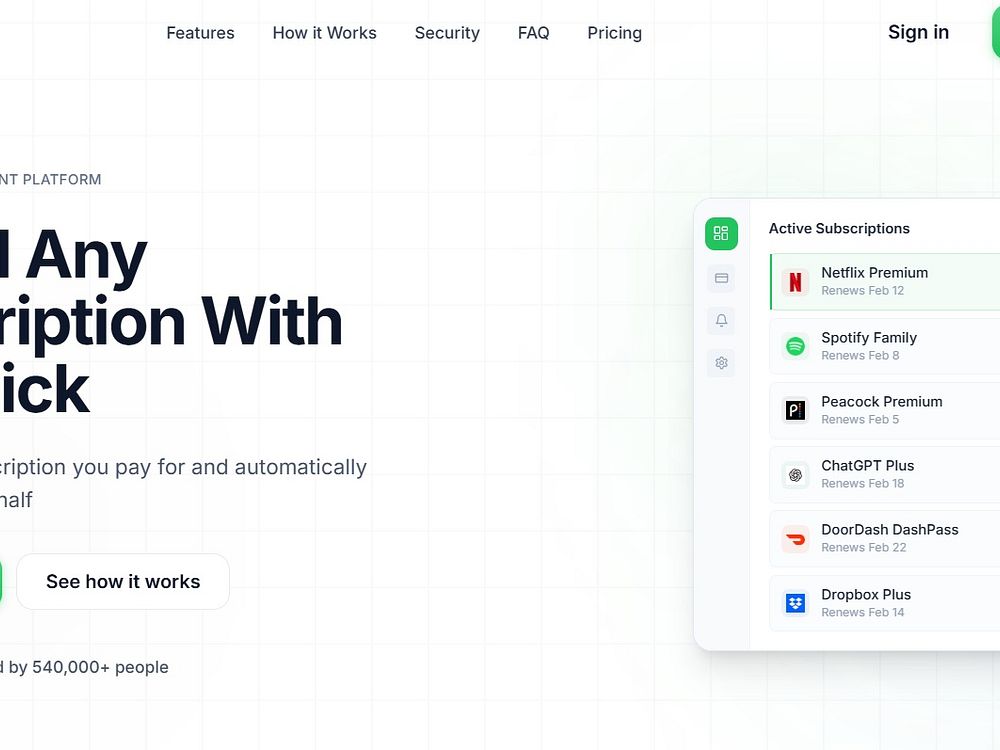
SubDelete – Find every subscription and cancel with one click


SubDelete is a subscription management platform that finds every recurring charge by scanning your bank transactions and lets you cancel them with one click. You can securely connect your bank with read-only access, get renewal alerts, set auto-cancel rules, and track your spending with real-time analytics—all in one place. Start free to monitor a limited number of subscriptions, or upgrade for unlimited tracking, advanced insights, and priority support. If you just want to cancel something, you don’t need a subscription—pay a one-time fee and SubDelete will handle the cancellation for you.

View startup

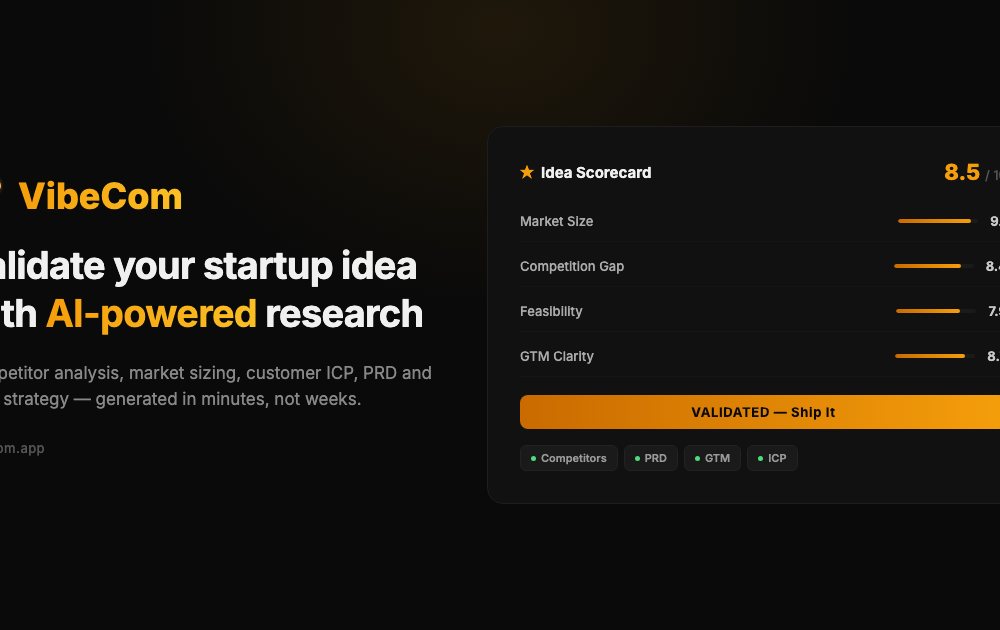
VibeCom – Validate your startup idea with VC-grade analysis, PRD, and GTM in minutes


VibeCom is an AI startup advisor that validates ideas, scores them like a VC, researches competitors, sizes the market, and generates a PRD and go-to-market plan in under three minutes. It gives founders a clear scorecard, customer profiles, TAM/SAM/SOM, and a shareable report to help decide what to build. Use it to compare ideas, spot competitive gaps, export ship-ready specs into your dev workflow, and move from concept to launch with a focused 90-day plan.

View startup

Healthcare reviews: How to stay compliant and win in local SEO

Healthcare reviews compliance in local SEO

There’s a broad consensus that online reviews — especially Google reviews — should be a top priority for businesses that rely on local customers. 

Four of the top 15 ranking factors in Google Maps were related to reviews (quantity, quality, recency, and consistency), according to a recent Whitespark survey. Other surveys report that more than 80% of consumers use Google reviews to evaluate local businesses.

For most of these businesses, the solution is straightforward: ask more customers for reviews, and then reply to those reviews. However, if you work in healthcare, you’ll inevitably find that things aren’t that simple. 

From soliciting reviews to responding to reporting fake engagement, medical facilities face unique dilemmas due to ethical standards and federal laws that limit review-related activities. That said, if you understand the obstacles and your options, there’s no reason you can’t be both competitive and compliant in the arena of healthcare reviews.

After working in healthcare for over a decade, I’ll share the biggest obstacles I’ve faced, along with unique solutions.

The catch-22 in mental health

Years ago, I was assisting a therapist’s small private practice with local SEO. He only had a couple of reviews, so I pointed that out. That’s when he told me he wasn’t even allowed to ask for reviews.

At the time, I was certain he must be mistaken. To my surprise, it was actually part of the code of ethics from the American Psychological Association (APA), which explicitly states therapists and psychologists can’t solicit testimonials from their clients (due to concerns of undue influence). 

With that in mind, the lack of reviews was certainly understandable, but it was still a problem for local SEO. And Google doesn’t seem to make any exceptions for the mental health field. 

After working with many more clients and employers in the mental health space since, this has proven to be a recurring obstacle. Mental health professionals need visibility on Google the same as any other local business, but one of the best ways to achieve that visibility isn’t even allowed in their field. 

The result, unfortunately, is that the practitioners who follow their ethics rules are often those with the least visibility on Google. 

The good news is that there are still ways to get reviews without crossing those ethical boundaries — although it might require utilizing some outside-the-box solutions.

A case study in mental healthcare reviews

A few years ago, I started working with an addiction treatment center that had been doing well with reviews until a new local competitor opened and exceeded both the number of reviews and the average rating in less than one year (despite the client’s nearly 10 years in business).

This competitor was increasingly outperforming them in local search, so something had to be done. However, my client wasn’t sure how they could have received so many reviews without crossing ethical boundaries. 

To outpace and keep up with this competitor’s reviews, we needed to secure 50 to 100 reviews and maintain a rate of at least one review per week. The problem was that the client hadn’t received consent from former patients for marketing texts or emails, and they also knew they couldn’t make soliciting reviews a day-to-day part of the clinical staff’s work.

The solution

Since the APA ethics rules primarily govern psychologists and clinicians, and because the reasoning behind the APA guidance relates to patients having undue influence, we determined that individuals who opted into alumni engagement and who were no longer in active treatment could be asked for a review (and only by non-clinical staff).

We decided it made more sense to focus on expanding the alumni program rather than facing the review dilemma head-on or in a vacuum because:

  • An alumni program would improve the overall patient experience and success rate, and it would be the best way to offer non-clinical experiences and interactions with other staff.
  • We would designate the non-clinical alumni coordinator responsible for requesting reviews, and only from alumni (no ethical concerns).
  • The alumni coordinator would have an in-person rapport with these patients (better for review conversion).

So, we enacted the following:

  • Tasked the alumni coordinator with review generation
    • We didn’t create an incentive for the employee when they got reviews (I’ve never seen much success with that tactic anyway). Instead, we simply made it part of the job description and set the expectation that getting reviews every week was part of the gig. 
    • Now, we didn’t truly “enforce” this rule per se, but we did track it. When more than two weeks went by without any reviews, we would follow up with the alumni coordinator to see how things were going. Over time, the need for these check-ins decreased, and requesting reviews became part of the job.
  • We made an online alumni group and QR code cards
    • When someone graduated from the program, they would be encouraged to stay involved with the alumni community. The patient would be given a QR code to join a private online group to stay current on upcoming events. 
    • We also included a QR code for finding the phone number and driving directions to the facility (via a link to the Google Business Profile), making it easy to find where to leave a review if they felt inclined.
  • When an alum verbally said they would leave a review, we texted them a link
    • In my experience, most people will leave a review if you ask and make it easy to do. Many clients will agree to leave reviews, but unless you explicitly show them how, there’s rarely follow-through. It just might not be a priority for them, so they forget or put it on the back burner.
    • Simplifying the review process worked well. A direct link sent via text drove higher completion rates — no questionnaires, no review gates, just a straight path to the Google Business Profile.

The result

In less than a year, we were able to generate 100 new reviews, outpacing the competitor. The average rating also improved from 4.6 to 4.8, which was also better than the competitor.

In the second year, an additional 100 reviews were gathered, which meant we generated more reviews in two years than the first nine years of business combined.

Healthcare reviews - Case study results after alumni check-in
Healthcare reviews - Case study results as of January 2026

As of February 2026, the facility is just shy of 500 reviews, still averaging at least one review per week — without crossing any ethical boundaries.

If you want to duplicate this review strategy, here’s the summary:

  • Review owner: Designate a non-clinical staff member responsible for reviews, such as alumni coordinator (and make a review count goal part of their role).
  • Review trigger: Alumni event attendance or joining the alumni community.
  • Request methods: In person.
  • Request delivery: Print materials with QR codes for patients to stay in touch, find the Google Business Profile, and consent to communications, followed by a direct link via text to leave a review.
  • Tracking: Weekly review count. Follow up with the review owner when the weekly goal isn’t achieved.

For third-party agencies and freelancers: If you help a healthcare client with an SMS service or share information about patient identities in any way between a “covered entity” and a third party, there should be a business associate agreement with those third-party vendors.

What not to do when generating reviews:

  • Don’t ask current mental health patients for reviews.
  • Don’t “gate” reviews (it is against Google guidelines, and it reduces conversion).
  • Don’t pressure or coerce clients or patients to leave a review.
  • Don’t incentivize staff or clients to leave reviews.

What if you’re a solo mental health practitioner?

If you’re a therapist or psychologist who can’t rely on non-clinical staff to request reviews, you aren’t without options. Some other things I’ve had success with include:

  • Reducing friction: Instead of an explicit “ask,” you can provide a QR code at checkout or a link in your follow-up emails that directs patients to your Google Business Profile for “Directions and Information,” making it easier for patients to leave a review if they are inclined to do so.
  • Leveraging aggregate data: If you are in a high-sensitivity field (like behavioral health), you can also publish aggregate client satisfaction scores or patient outcome reports on your website and review platforms. While it may not have the same ranking impact as reviews for local search, it will provide similar social proof without the ethical questions.

Get the newsletter search marketers rely on.


Review replies and HIPAA compliance

In addition to getting reviews, replying to them is also important. While medical businesses can post replies to reviews, the subject matter in their response is regulated.

Merely acknowledging that a reviewer was a patient could be a risk under the Health Insurance Portability and Accountability Act (HIPAA) — even if the patient had already revealed as much in their review. That’s because HIPAA only regulates what providers share.

Patients are free to share whatever they like about themselves online, but that doesn’t change the provider’s legal responsibility to protect health information. (One California hospital learned that the hard way in 2013 with a $275,000 settlement after a spokesman commented to the media, stating that a patient’s medical records contradicted their own accusatory Yelp review.) 

Generally, you should avoid acknowledging that the reviewer was a patient to remain compliant under HIPAA. Instead:

  • Focus on policy, not the person: Keep the response focused on general facility policies and practices around the complaint rather than the reviewer’s exact situation.
  • Move the conversation offline: Provide a direct line to a patient advocate or office manager.
  • Avoid confirming status: Even if a patient says, “I was there yesterday,” your reply should never say, “We enjoyed seeing you.”

While not legal advice, here are some example templates I often use when replying to reviews:

Negative review reply template:

  • “Privacy laws prevent us from confirming or denying whether any individual is a patient at our facility. However, we take all feedback seriously. Our policy regarding [insert issue] is [insert general policy]. If you would like to discuss a specific experience, please contact [insert contact instruction].”

Positive review reply template:

  • “Thank you for your kind words. We appreciate you taking the time to share feedback.”

Why these work:

  • These avoid patient status confirmation.
  • For negative reviews, it explains why you can’t respond directly and offers an alternative way to discuss their concern in detail.

Reporting reviews and HIPAA compliance

You also can’t tell Google whether someone was a patient. This applies when reporting a review as fake engagement — claiming someone “wasn’t a customer” can be risky if you’re a covered entity under HIPAA.

Instead, focus on other types of review violations. One of Google’s review policies regarding “misinformation” can be helpful in the healthcare industry.

  • For example, I once had a client who received a review claiming the medication they were prescribed wasn’t safe. This was totally false and easy to prove since it was FDA-approved. Google ultimately removed the review when this was pointed out.

Some of the other Google policies that can lead to the successful reporting of healthcare reviews include: 

  • Offensive content, such as unsubstantiated allegations of unethical behavior or criminal wrongdoing.
  • Personally identifiable information (PII), such as the use of the first and last names of staff in the review.
  • Off-topic, such as leaving a review for a different facility or location.
  • Repetitive content, such as posting the same review from multiple accounts or the same review on multiple locations.

When you report reviews to Google, be sure to:

  • Correctly identify and list the policy category.
  • Quote the exact offending line from the review.
  • Provide evidence and explicitly explain why it violates the policy.
  • Avoid reference to the reviewer’s relationship to the facility.

Building a compliant and effective review engine in healthcare

Healthcare review management can be a compliance exercise, but the good news is you don’t have to choose between compliance and local SEO. You just have to build a review system designed for this industry’s reality:

  • Build a compliant, consistent process rather than a “one-off” push. Assign ownership, set expectations, and track consistently.
  • Reduce friction by making it easy to leave reviews via print materials and text messages, but without coercion, incentives, or asking current patients.
  • Stay neutral when replying to reviews (or reporting them), and never confirm patient status in public. When reporting reviews, focus on other Google categories that don’t require patient status.
  • Involve compliance leads in the review process. Unlike other fields, there are real liability risks with healthcare reviews.

Done right, you can grow local visibility, protect patient privacy, and sustain review consistency — just like any other industry.

GlassWorm Campaign Uses Zig Dropper to Infect Multiple Developer IDEs

Cybersecurity researchers have flagged yet another evolution of the ongoing GlassWorm campaign, which employs a new Zig dropper that's designed to stealthily infect all integrated development environments (IDEs) on a developer's machine. The technique has been discovered in an Open VSX extension named "specstudio.code-wakatime-activity-tracker," which masquerades as WakaTime, a

Security PSA: Popular Tools CPU-Z and HWMonitor Were Briefly Compromised

Popular PC DIY enthusiast tools like CPU-Z and HWMonitor were briefly compromised during the night between April 9 and April 10. This left anyone who downloaded these tools from the CPUID website vulnerable to malware they thought was a normal software tool. What actually happened was that multiple users on Reddit noticed their downloads from CPUID for both CPU-Z and HWMonitor were flagged multiple times by Windows Defender for security concerns. During that night, users attempting to download these popular utilities found the website pointing to a different host where the modified .exe files were stored. After realizing what was happening, users started removing these compromised .exe files and waited for CPUID to issue a statement. One of the owners of CPUID published a statement on X, explaining that attackers had replaced the original download links with malware-infected file links, resulting in a widespread security vulnerability. Thankfully the website is now back up and safe to resume downloads.
Hi,
Investigations are still ongoing, but it appears that a secondary feature (basically a side API) was compromised for approximately six hours between April 9 and April 10, causing the main website to randomly display malicious links (our signed original files were not compromised). The breach was found and has since been fixed. Sorry for the inconvenience. I did my best to fix that mess as soon as possible :-/
Sam.

Samsung Galaxy Z Flip 8 Renders Show A Flip 7 Look-Alike, And An Utter Lack Of Imagination

A blue Samsung Galaxy Z Flip5 is shown both folded and unfolded, featuring dual rear cameras and an edge-to-edge main display.

Samsung is not breaking the mold with any of its upcoming foldables, barring perhaps the Galaxy Z Fold 8 Wide, and the Galaxy Z Flip 8 is shaping up to be no exception, as per its latest CAD renders. Samsung Galaxy Z Flip 8 resembles its predecessor down to a tee OnLeaks has now published some of the first CAD renders of the Samsung Galaxy Z Flip 8, showing a device that bears the dimensions of 166.8mm x 75.4mm x 6.6mm when unfolded and 85.4mm x 75.4mm x 13.2mm while folded. This means that the Flip 8 is just around […]

Read full article at https://wccftech.com/samsung-galaxy-z-flip-8-renders-show-a-flip-7-look-alike-and-an-utter-lack-of-imagination/

Gunzilla Games CEO Responds to Accusations of Not Paying Workers, Calls it “A New Narrative From Haters”

A cyborg character in tactical gear stands in a futuristic cityscape in the game Off the Grid.

Yesterday, we reported on accusations from former and current workers of Gunzilla Games that the studio had not been paying its workers, in some cases, "for many months." Several developers came forward to share that they are still waiting on pay owed for work they did, calling out the studio's leadership for trying to convince them to work for free to work towards 'an idea.' Well, the studio's leadership, chief executive officer Vlad Korolev has responded in a lengthy post on X (formerly Twitter), denying the accusations and calling them "a new narrative from haters." A brief reminder, Gunzilla Games […]

Read full article at https://wccftech.com/gunzilla-games-ceo-responds-to-accusations-of-not-paying-workers-calls-it-narrative-from-haters/

Framework founder says that ‘personal computing as we know it is dead’ — vows to keep building ‘computers that you can own at the deepest level’

Framework founder Nirav Patel said that the personal computing industry is facing a massive change as big companies are forcing it to move towards a subscription-based model. Still, he vows to continue making hardware that will enable the personal ownership of computation.

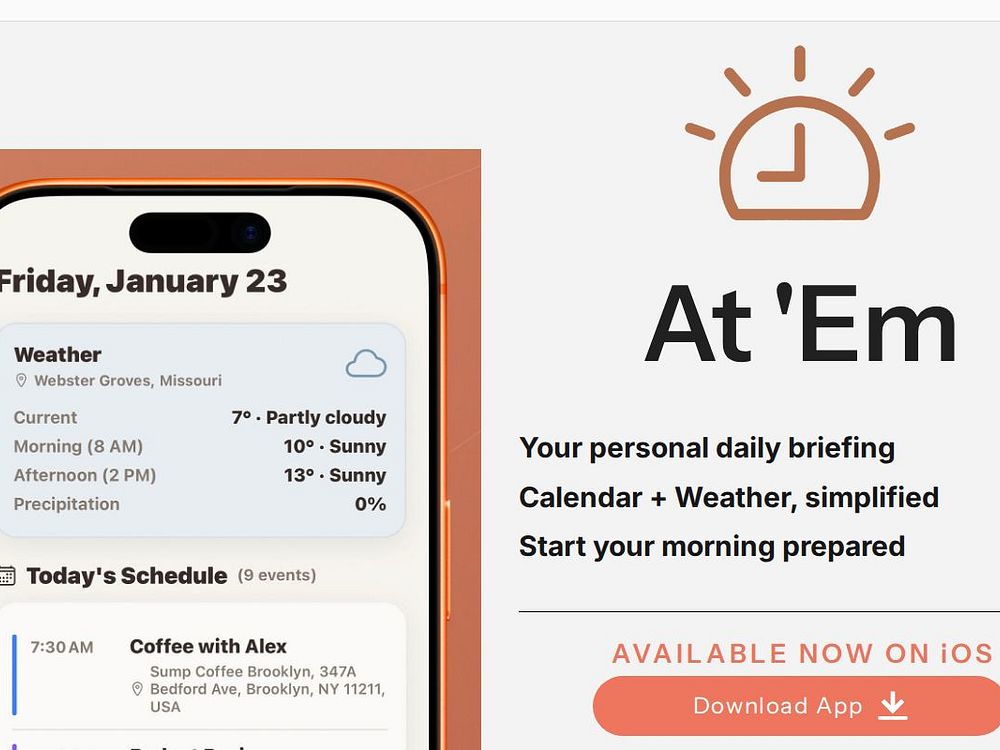
At 'Em – Get a daily briefing of your schedule, weather, and tasks


At 'Em delivers a simple daily briefing that combines your calendar, local weather, and reminders so you know exactly what's ahead. Set morning and evening times to get concise notifications with your events in order, temperatures, chance of rain, and quick tasks.

Available now on iOS with Android coming soon, At 'Em keeps data on your device and never tracks, stores, or sells your information. It reads your calendar and reminders locally and only uses your location to fetch local weather.

View startup

VeloGuardian – Secure every layer with VPN, DNS filtering, and gateway defense


VeloGuardian is a network security platform that protects every connection across your devices and sites. It combines WireGuard-based VPN tunnels to encrypt traffic, DNS filtering with 90+ categories to block malware, ads, and phishing, and gateway appliances with zone-based firewalls to secure your perimeter. Use one product or combine them for layered protection, easy setup, and a strict zero-log policy.

View startup

LLM nudges: The hidden force behind AI-driven journeys

LLM nudges- The hidden force behind AI-driven journeys

LLMs have become a starting point for nearly everything — work, play, consumerism, health, and more.

But one thing gets overlooked: how they finish answering prompts. They don’t — and that matters.

They operate in a “no, you hang up first” mentality. The prompts we enter don’t just end. LLMs “nudge” us to continue the conversation, offering to take the next step.

“Would you like me to create that travel itinerary for you?” “Would you like me to compare the Nike and New Balance running shoes and tell you which is best for a marathon?”

These nudges make it easy to keep going. Most of the time, I enter “sure” or “sounds good. Thank you,” and move to the next step to see what it provides.

These nudges drive consumer behavior. Where LLMs take us matters.

If you’re a premium brand and the LLM suggests a price comparison, you may not like it, but you need to understand it so you can react.

We analyzed how different LLMs use these nudges across prompts and platforms to understand the patterns shaping user behavior — and what they signal for brands trying to stay in control of the journey.

What LLM nudges actually look like across platforms

Budget and deals dominate

LLMs provide different types of follow-up suggestions. Overall, 45% of mentions are budget- and deal-related. While not evenly distributed, budgets and deals are treated as the default of what consumers want to see. 

Perplexity and ChatGPT are over 60% budgets and deals. Meta is the only one that doesn’t make that assumption at the same level.

Comparisons drive the next step

The second biggest recommendation type is product comparisons. LLMs offer to compare various products, including financial services products, health treatments, and retail products. All industries see suggestions for comparisons.

Specs play a minor role

Another key point: much of the current thinking urges you to provide LLMs with detailed technical specs. But those make up a small share of these suggestions. That doesn’t mean content lacks ranking value — it does — but it’s not how LLMs usually extend conversations with users.

Get the newsletter search marketers rely on.


How each platform uses nudges differently

We also analyzed the dominant nudge style across platforms. Each LLM uses a distinct tone when continuing the conversation. How these systems guide users forward reflects the personalities they present.

PlatformDominant nudge styleKey characteristic
ChatGPT“If you want…”Heavy commerce focus: Primarily nudges toward deals and product comparisons.
Microsoft Copilot“If you tell me…”Interactive/clarifying: Frequently asks for more user data to refine its recommendation.
Google Gemini“Would you like me…”Polite and permission-based: Exclusively uses this formal invitation to continue helping.
Perplexity“I can help…” / “If you’d like…”Service-oriented: Uses more varied phrasing to offer utility and assistance.
Meta AI“Let me know…”Casual and passive: Primarily nudges toward product comparisons and specs with a less aggressive, “standing by” tone.

What actions to take based on AI nudges

These nudges are designed to keep the conversation going and push users to explore further. They drive consumer behavior and shape the customer journey.

Over time, we’ll be able to better optimize for them as more data becomes available. For now, insights are limited to individual responses, with no way to connect conversations.

The actions to take fall into three buckets, mostly tied to the content you create across onsite and offsite channels:

  • Capitalize on the “support” gap
    • Proactive nudges for troubleshooting and support are significantly lower than commerce-driven themes. 
    • Own the post-purchase “how-to” and technical support space to build long-term authority where AI is currently less aggressive.
  • Prioritize the “comparison” hook
    • LLMs consistently nudge users toward comparative analysis. 
    • Double down on “Product A vs. Product B” guides to capture the AI’s primary next step.
  • Maximize the “budget and deals” opportunity
    • Pricing and discounts are the No. 1 driver of AI nudges (48% of all triggers).
    • Maintain structured, real-time deal data to ensure your site is the preferred destination for AI commerce referrals.

The LLM landscape will keep evolving quickly as these platforms become the primary interface for consumer research and decision-making. Your priority now is to understand how LLMs talk about your brand and how those conversational nudges affect users.

By analyzing these automated suggestions across platforms like Gemini, ChatGPT, and Perplexity, organizations can see how consumers are being directed — whether toward budget-friendly alternatives, product comparisons, or technical specifications.

Recognizing these patterns lets you move from passive observation to action, keeping your value proposition clear even when an LLM reframes the conversation around price or competitors.

Tracking this shift is key to maintaining brand authority as AI-driven interactions shape the customer journey.

CPU-Z and HWMonitor have been hit by malware – CPUID responds

CPUID has been hit by a malware attack, and CPU-Z/HWMonitor downloads were affected CPUID, the group behind CPU-Z and HWMonitor, were hit by a malware attack between April 9th and April 10th. The attack took place for “approximately six hours” and caused the website to display malicious links that would cause users to download malware. […]

The post CPU-Z and HWMonitor have been hit by malware – CPUID responds appeared first on OC3D.

Microsoft Starts Removing Copilot from Notepad, Snipping Tool, and More in Windows 11

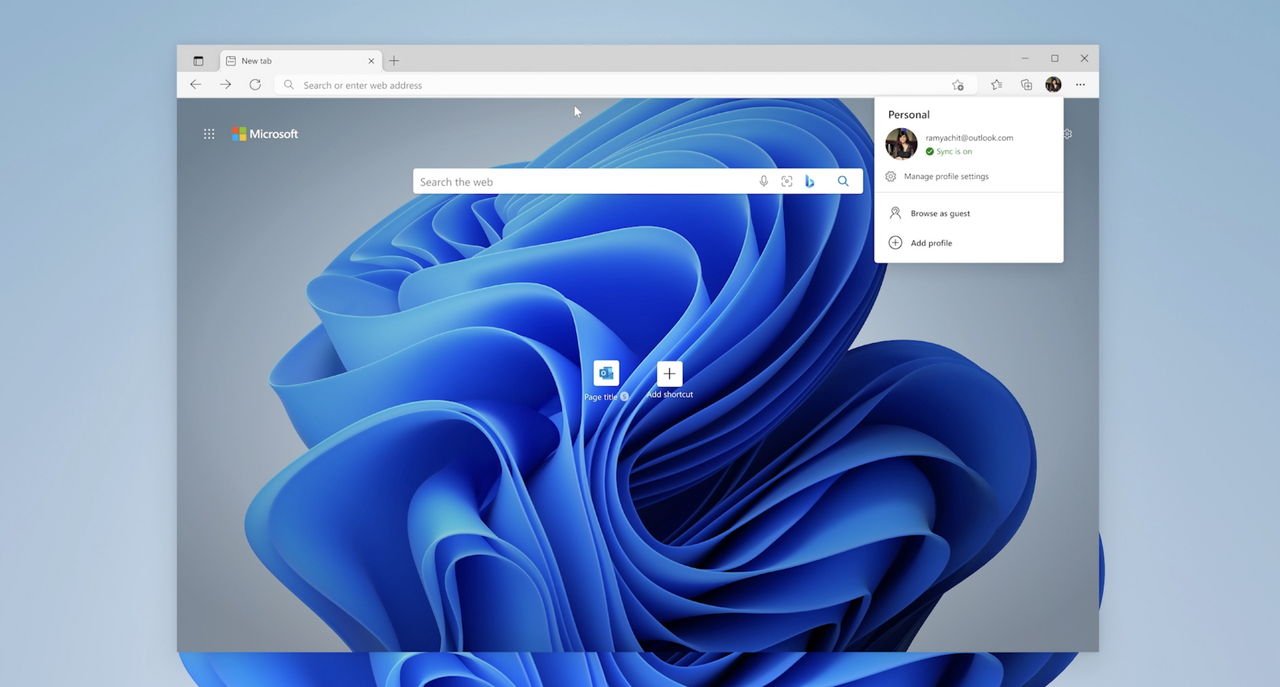
Microsoft's Copilot AI has generated significant negative sentiment among Windows 11 users, to the extent that even Microsoft has recognized the need to scale back some of the Copilot functionality it has long promoted. According to Windows Latest, Microsoft has updated core Windows applications such as Notepad and Snipping Tool. In March 2025, Microsoft added Copilot to Notepad, updating the note-taking application to integrate Copilot AI for rewrites, summaries, and other AI-related text features. However, as users grew weary of the persistent AI push, Microsoft put these integrations under review earlier this year. In response to strong backlash from the enthusiast community, Microsoft has removed the Copilot AI icon from the latest versions of Notepad and Snipping Tool, restoring them to their regular look. However, Microsoft now calls these Notepad features like rewrite and summarize as "Writing tools."

This change is a significant positive step by Microsoft. Additionally, the forced inclusion of the Copilot AI button in every application has been paused, as there has been minimal interest from users in utilizing these features. The TechPowerUp Forums have been a consistent source of criticism against Microsoft's forced AI integration, with a large community of PC enthusiasts opposing the "AI everywhere" approach. The Redmond-based company is also working on numerous performance, security, and other enhancements for Windows 11, and we are already beginning to see some of these changes. Considering that Microsoft has 80 Copilot apps and services, this is not a thing to take lightly.

Below is the before and after comparison with the Copilot AI removed, courtesy of Windows Latest.

(PR) Yunzii Adds Choco Blue Variant to C75 Cake Mechanical Keyboard Series

A cake keyboard isn't complete without a choco flavor. Meet the all-new YUNZII C75 Cake Keyboard in its Choco colorway—blending rich chocolate tones with refreshing blue accents to bring both energy and sweetness to your desktop setup.

Cute Cake Keyboard 75% Layout
The new YUNZII C75 cute mechanical keyboard is a delightful addition to any desk. Featuring a compact 75% layout, it combines functionality with a playful, colorful design. With wireless, Bluetooth, and wired connectivity, plus a creamy typing sound, it's perfect as a gift or for elevating your home, office, or gaming setup.

M5 MacBook Pro Brings An Incredible ‘Price To Performance’ Ratio To The Table As Amazon Slashes $200 From The Total, Bringing It Down To $1,400

Apple's 14-inch M5 MacBook Pro now packs incredible value, thanks to Amazon's $200 discount

The newest price cut observed by Amazon brings Apple’s 14-inch M5 MacBook Pro closer to an incredibly well-rounded machine that’s easier on the wallet because of the $200 discount. Now, you don’t just get a powerful portable Mac with 16GB of unified RAM, but the memory is paired with a 512GB SSD, all for $1,400. Now, is this a steal of a deal or what? The latest price plunge is the highest applied to the 14-inch M5 MacBook Pro, but the discount is only available on the Space Black version For the majority of users, the 16GB RAM and 512GB SSD […]

Read full article at https://wccftech.com/m5-macbook-pro-drops-to-1400-on-amazon-thanks-to-200-discount/

RAM And SSDs Sell For Thousands Of Dollars At Micro Center Even As Inventory Remains Full

A display case containing various G.SKILL RAM modules and WD_BLACK SN850X NVMe SSDs, with the SSDs prominently labeled as '4TB' and '7300 MB/s,' showing a price tag of $1,272.99 for one item.

Talk about the shortage? Micro Center seems to have plenty of memory and storage drives, but the volatile market keeps pushing the prices up. Micro Center Packed With SSDs And RAM Spotted Selling 2 TB SSD At $699, And 128 GB DDR5 Memory Kit At A Whopping $4199 Looks like some retailers have enough for their inventories, but you still can't escape the inflated prices. Micro Center is one of the major retailers in the US, and it usually prices its products pretty well. While you will mostly find cheaper hardware in the store, RAM and SSD remain out of […]

Read full article at https://wccftech.com/ram-and-ssds-sell-for-thousands-of-dollars-at-micro-center-even-as-inventory-remains-full/

Samsung’s 2nm Process Has Yet To Reach Qualcomm’s Required Benchmark, Making It Difficult To Reduce Dependency On TSMC

Qualcomm wants a dual-sourcing approach with Samsung, but only if the latter improves its 2nm process

The Snapdragon 8 Elite Gen 6 and Snapdragon 8 Elite Gen 6 Pro are expected to be exclusively mass produced on TSMC’s 2nm ‘N2P’ process, making it yet another year where Qualcomm and Samsung cannot come to terms on becoming partners. To be fair, it’s not the San Diego firm’s fault, as a new report states that even the Korean giant’s 2nm GAA node is running into stability issues, to the point that the technology cannot reach the desired benchmark. These limitations have apparently created a rift between the two companies, preventing them from forming a long-term foundry business. With the […]

Read full article at https://wccftech.com/samsung-2nm-process-not-satisfied-qualcomm-quality-benchmark/

Anthropic's Claude Mythos isn't a sentient super-hacker, it's a sales pitch — claims of 'thousands' of severe zero-days rely on just 198 manual reviews

Anthropic has convened America's big tech companies and the U.S. government to deal with the many bugs and vulnerabilities its new AI found, but this may be just the latest attempt by Anthropic to scare people into thinking its AI is the solution to its own discovered problems.

Score the AMD Ryzen 7 9800X3D with 32GB of fast DDR5 RAM and an Asus X870E gaming motherboard for under $990 in this epic Newegg bundle — $200 saving brings the RAM cost down to just $196, with an AIO cooler and game thrown in for free

This seriously good Newegg combo deal combines the AMD Ryzen 7 9800X3D, 32GB of fast DDR5 RAM, and an Asus TUF Gaming X870E motherboard for just $989.98, bringing the cost of the RAM down to a just $196 and saving you over $200 as a result.

Paid media efficiency: How to cut waste and improve ROAS

Paid media cut waste

We’re being pushed harder than ever — expected to hit bigger revenue targets with the same or smaller PPC budgets. Even with flat budgets, rising platform costs mean we’re effectively facing a budget cut.

  • Average CPCs have risen by as much as 40%, with an average of 3.74%, per Wordstream. Certain periods, such as Black Friday, see much higher increases.
  • Teams are experiencing budget cuts, with average marketing budgets flatlining at 7.7%, according to Gartner.
  • Our own account audits show that 20-30% of most accounts’ spend is quietly underperforming.

This is the reality of paid media in 2026. But it isn’t all bad news. Efficiency isn’t just about spending less, it’s about spending smarter. Here’s how to find the waste, fix the fundamentals, and get maximum return from every dollar you invest.

Why efficiency has become the priority

Paid media has shifted dramatically over the last few years, with a greater focus on automation, which has led to hidden data. In parallel, businesses are freezing or reducing budgets while expanding revenue targets, and we’re seeing inflation hit CPCs across most industries, with accounts across our portfolio averaging 10% increases year on year, depending on the industry.

With the expansion into AI-driven automation, this has pushed us further into smart bidding strategies, meaning that where CPCs are rising, you have to be clever with the levers you pull to curtail or minimize these increases.

Meanwhile, customers are spreading their attention across more platforms than ever before, switching between screens and devices, and frequently double-screening.

The question for many businesses is no longer “how do we spend more?” but “how do we get maximum return from every dollar we spend?” Getting that answer right starts with an honest look at where money is being lost.

Auditing for waste: The 20-30% rule

One of the most important (and uncomfortable) truths in paid media is that aggregate metrics hide wasted spend in plain sight.

  • A campaign with a 600% ROAS average might have a single product consuming 20% of the budget at just 300%.
  • An untouched search term report can contain dozens of irrelevant queries burning through spend, especially when broad match keywords or Performance Max campaigns are in play.
  • Settings or targeting that made sense when you first launched your campaigns may not do so now. Consumer behavior shifts, and business objectives develop and change over time. Are your ROAS targets still reflective, for example?

Common waste zones to investigate include:

  • Zero-conversion products or keywords.
  • Low ROAS/CPL outliers.
  • High spend, low ROAS/CPL.

Zero-conversion products or keywords

Products or keywords that receive spend but generate no conversions are generally loss-making. Before drawing this conclusion, apply impression, click, and spend thresholds to ensure sufficient data. 

If a product or keyword has surpassed your target, look to stop spend in these areas. You also want to assess for seasonality and review other contributing factors such as:

  • Search term relevance.
  • Checkout funnels.
  • Competitive advantage.

Low ROAS/CPL outliers

Products consistently below your viable ROAS/CPL threshold are often hidden within blended campaign performance. Use performance bucketing, and set more aggressive targets to control spend and CPCs for these areas.

High spend, low ROAS/CPL

High visibility with low return is a common and costly pattern. Optimize your product feed, and apply more aggressive targets to bring these in line. Again, these products will benefit from implementing product bucketing.

Wastage breakdown by category

Beyond products, a thorough audit should cover:

  • Account-level settings (such as content suitability, scheduling, landing page quality, and device performance).
  • Campaign-level detail (including search term reports, cannibalization, negative keyword coverage, bid strategy alignment, and asset performance). 

AI tools can significantly accelerate this analysis. Feeding your data into a well-prompted model can surface patterns that would take hours to identify manually. AI can also help visualize data more clearly and break it down into manageable, easy-to-understand segments.

Full-funnel thinking: Where should your budget sit?

When budgets are tight, funnel prioritization becomes critical. Not all spend is equal, and the hierarchy matters.

Conversion (retargeting, branded terms, exact match)

This is where the highest intent and highest return live. Protect this budget as much as you can, but also assess whether other channels can pick up some of this slack. For example:

  • Do you need to spend on brand searches, or can you capture this organically? 
  • Can you re-engage better through email?

Consideration (generic search, shopping, social)

For established brands, this is where the majority of the budget will sit, supporting the pipeline. These users have an active need for your product, and you should prioritize appearing for these searches/users. Again, consider the need for paid ads. 

  • If you are strong organically, with low competition, can you cut back? 
  • Which keywords and products is your budget best spent promoting?

Awareness (social, display, video, audio)

Valuable for long-term brand building, but is usually the first area to be trimmed when budgets are under pressure. 

You should try to maintain a level of branding, or you end up passing the issues down the road, as you are unable to build a future pipeline. In Google Ads, campaign types like Performance Max allow full-funnel targeting.

Get the newsletter search marketers rely on.


Creative is a must-have, not a nice-to-have

Creative is no longer just a brand awareness nice-to-have. It’s directly correlated to campaign success.

Google and Meta campaigns rely heavily on creative variation to test and optimize. Without sufficient variants, the system runs out of testing capability, and performance plateaus over time as frequency increases.

Campaign types such as Performance Max (Google Ads), GMV Max (TikTok), and Advantage+ (Meta) are heavily restricted without sufficient creative. This results in inefficient spending.

  • Variety is a system requirement: Platforms need multiple creative variations to identify what works for each auction, audience, and placement. If you don’t supply enough variety, you risk performance decline.
  • Fatigue is accelerating: With AI-generated content flooding the digital landscape, audiences are tiring of ads faster than ever. For most categories, refreshing creative at least every four to six weeks is now the baseline.
  • Quality beats quantity: Variation is valuable, but one clear, well-crafted message will outperform ten low-quality. Know the purpose of each ad, and who it’s for before.

AI can support creative production, but strong messaging and strategic clarity still matter most.

Attribution and measurement: Getting honest about what works

Platform attribution has become more fragmented and broken over the years, but many advertisers are unsure how to address this and move forward.

Elements such as cross-device behaviors, iOS privacy changes, consent mode, and GDPR, modeled data, plus the platform’s bias toward claiming conversion credit mean that in-platform numbers should be treated as optimization signals, and not sources of truth.

Using blended metrics gives a cleaner picture of actual efficiency, and can help you establish how your paid media efforts are working:

  • Marketing efficiency ratio (MER): Total revenue divided by total ad spend. A single, honest view of overall paid media efficiency.
  • New customer acquisition cost (nCAC): Total spend divided by the number of new customers acquired. Shifts focus from retention to business growth.
  • CLV:CAC ratio: Sets a strategic ceiling on customer acquisition costs. A ratio of 3:1 or above is the benchmark to aim for.

Building a reliable measurement framework follows a clear sequence: fix your base tracking first, build a blended view of performance, use in-platform data for optimization signals only, and apply incrementality testing when making significant budget decisions.

Incrementality testing allows you to use treatment and holdout groups to clearly establish whether a new campaign or platform launch, for example, has added incremental value.

Automation and AI: Efficiency with guardrails

AI and automation offer real efficiency gains, but only when applied with thought and control. The biggest mistake is automating decisions that require strategic judgment, or removing human oversight from areas where context matters.

Safe to automate:

  • Bidding strategies.
  • Budget pacing alerts.
  • Data-backed budget adjustments.
  • Product labeling and exclusions.
  • Scheduled reporting and data visualization.
  • Competitor ad monitoring.

Keep human oversight:

  • Channel strategy.
  • Audience targeting.
  • Creative strategy.
  • Targets and KPIs.
  • Campaign launches.
  • Interpreting significant performance changes.

Scripts for product bucketing are a particularly high-value area of automation. Automatically labeling products based on performance criteria allows for continuous, data-driven management without manual intervention.

Scripts for product bucketing

Performance Max: When to use it (and when not to)

PMax works well when you have a strong product feed, sufficient conversion volume, high-quality assets, clear audience signals, an appropriate budget, and effective conversion measurement in place.

Without these conditions, the risks can be high, and can hide troublesome metrics among the averages. This can include:

  • Cannibalization of brand search.
  • Over-indexing on existing customers.
  • Loss of product-level control.

Get the foundations right before leaning into automation.

Getting the most from AI bidding strategies

Choosing the right bidding strategy matters as much as setting it up correctly:

StrategyWhen to useWatch out for
Target ROAS30+ conversions/month with a clear ROAS targetToo high throttles spend; too low creates wasted traffic
Target CPALead generation, where dynamic revenue isn’t trackedWorks best with consistent CPA; wrong targets cause delivery to spiral
Maximize Conversion ValueWhen you lack sufficient data to set a ROAS targetNo bid ceiling, monitor CPCs and budget closely
Maximize ClicksUpper funnel only, where traffic volume is the goalIgnores the bottom of the funnel entirely

The highest-leverage moves for paid media efficiency

If your paid media budget is under pressure, the highest-leverage moves are:

  • Run a waste audit: Find the 20-30% that’s underperforming.
  • Protect lower-funnel spend: Conversion-focused campaigns should be the last to be cut.
  • Refresh creative more frequently: Creative fatigue is costing performance in ways that aren’t always visible in the numbers.
  • Move to blended measurement: Get honest about what’s working across channels, not just within platform dashboards.
  • Automate selectively: Use AI for what it does well, and keep human judgment where it counts.

Done well, efficiency can give you a competitive advantage, and it’s available to any team willing to look honestly at where their spend is actually going.

How to take your marketing measurement from crawl to sprint

Marketing measurement crawl walk run sprint

Measurement is the foundation for everything we do in performance marketing. Without accurate measurement, what we recommend, implement, and optimize is, at best, guesswork. Maintaining accurate measurement is more challenging than ever — and getting harder. 

Regulatory crackdowns and increased privacy concerns, alongside longer multi-touch journeys, are compounding to create a measurement crisis. Brands still using decade-old tactics won’t be able to overcome modern measurement challenges.

If your brand falls into this category, it’s time to rebuild your measurement foundation — from integrating first-party data (crawl), to creating cross-channel reporting for actionable insights (walk), to advanced media mix modeling (MMM) and incrementality testing for true incremental media lift (run).

The crawl: Building a first-party data foundation

Without integration of first-party data into your performance marketing channels, you’re fully reliant on third-party signals. While these metrics can be helpful, they’re surface-level signals and don’t show how channels impact your business goals

Audience integration

The first step is integrating your customer relationship management (CRM) data into your paid media platforms. This includes:

  • Remarketing to abandoners.
  • Creating exclusion lists for current subscribers or recent purchasers.
  • Compiling priority contact lists. 

You might be uploading lists today, but integration improves targeting by connecting to up-to-date audience lists for media platform targeting.

Offline-conversion tracking

For lead gen businesses, the next recommended step is setting up offline conversion tracking (OCT). It shows the bottom-line impact of your media on sales. The integration passes sales data back to the platforms for campaign attribution. 

With OCT in place, you can optimize for lower-funnel, higher-quality conversion steps in the sales cycle or even begin optimizing toward revenue to improve your return on ad spend.

Setup is simple. You add a click ID to your form and then pass it from the platform to your CRM. Most of the top CRMs today, like Salesforce, integrate directly with platforms for easy implementation.

Server-side tracking and consent mode

To gain momentum from crawl to walk requires a heavier uplift, shifting from client-side tracking to server-side tracking.

Client-side tracking is the default process for passing conversion signals from your website to your media platforms. The user’s web browser sends that signal, allowing for cookie loss, ad blockers, or strict browsers like Safari to muddy the signals and reduce data accuracy.

With server-side tracking, instead of relying on the user’s browser, you use a dedicated tagging server to capture signals from your website and send them directly to the platforms. This bypasses browser-based tracking and relies on your first-party data. It keeps your data accurate and resilient as privacy restrictions increase and cookies disappear.

You have two main integration methods:

  • Partner integration is the simpler option, as it uses pre-built connectors for setup through partners like Shopify, Tealium, Google Tag Manager, or similar platforms.
  • Direct API is code-heavy and for complex data or custom backends, and requires a developer team to build it. 

How you set up server-side tracking depends on the paid media channels you use, your tech stack, and your integration method. Both options require a dedicated cloud hosting server, which adds cost, but it’s worth it to better understand your media investment.

The walk: Cross-channel reporting integration

With a stronger measurement foundation in place, the next step is to break down platform silos and see the full ecosystem.

Going beyond last click

With server-side tracking in place, you’ve created a clean data pipeline. Last-click and first-click attribution give full credit to the first or final step, ignoring the full-funnel path a user takes.

Platforms offer advanced attribution models, like Google’s data-driven attribution, but they still favor and silo data within their own platforms. For example, a user clicks a Meta ad, then searches and converts on a Google ad. In this case, each platform claims the conversion.

The solution is to use a data warehouse, such as BigQuery or Snowflake, to centralize your data from your website, CRM, and other platforms. From there, you can apply custom logic to build a multi-touch attribution model that stitches your data together using your first-party identifiers to see the full journey and attribute across the ecosystem.

Unified reporting dashboards

With evolved attribution, a unified reporting dashboard will merge the platform performance data (views, clicks, impressions, etc.) with your integrated first-party conversion data (using server-side tracking and advanced attribution). There are many dashboard builders — the easiest being Looker Studio, as it integrates directly with BigQuery and Snowflake, making it effectively plug-and-play. 

With a dashboard in place, you can now visualize the data across the funnel to gain actionable insights into which platforms are driving volume, converting, and impacting your bottom line. 

The run: Media mix modeling and incrementality testing

You now have a detailed, day-to-day view of performance of user-level events and insights. But key questions remain.

  • How do you know if a channel has room for more growth? 
  • How do you measure offline performance like a TV ad? 
  • How do you know if a tactic is working? 

Understand the full impact of your media investment and tactics at a macro level requires media mix modeling and incrementality testing.

Get the newsletter search marketers rely on.


The holistic view through MMM

Think of MMM as your compass guiding strategy. It provides a holistic, mathematical source of truth for your paid media investments by measuring the relationship between your media inputs and business outcomes (revenue or leads) over time.

This isn’t a day-to-day tool. You typically use it on a 3-, 6-, or 12-month cycle, depending on your data volume, and it requires 2+ years of data to account for seasonality and promotions. The model then runs a regression analysis to determine the relationship between your inputs and business outcomes.

With MMM, you get channel-agnostic insights that remove platform bias. It helps you answer key questions about diminishing returns, budget allocation, and the impact of upper-funnel investment on revenue. That clarity helps you make smarter decisions for the next quarter, half, or year so your marketing dollars drive maximum impact.

Pulse checks with incrementality testing

Incrementality testing validates both MMM and your marketing efforts. It measures a single tactic or channel by splitting your audience into two groups: a test group that sees the tactic and a control group that does not. It compares results between the groups, with the difference representing incremental lift.

You can split test and control groups using user-level holdouts, individual-level tracking, or geo-level holdouts when individual tracking isn’t possible. It answers a core question: if a user didn’t see the ad, would they have converted anyway?

This shows the true lift of a specific platform or tactic and helps you decide whether to stop bidding on brand terms for existing customers. It can also calibrate your MMM.

For example, if MMM reports paid social drives $1 million in revenue, but an incrementality test shows lift closer to $500,000, you can feed that back into the MMM to improve future forecasts.

The sprint: Clean, integrated, and validated first-party data

With first-party data integrated through server-side tracking, cross-channel reporting, and custom attribution, you’ve built a strong measurement foundation.

Guided by MMM and validated with incrementality testing, you’re ready to sprint — with a system that helps you make better decisions and clearly show the impact of every investment.

Microsoft removes Copilot from several Windows 11 apps

Microsoft has officially removed Copilot from several Windows 11 applications The newest Windows 11 Insider build has removed Copilot branding from several applications, including Notepad and the Snipping Tool. This is part of Microsoft’s plan to walk back on some of its unnecessary Copilot integrations. While Notepad’s newest version no longer includes a Copilot button, […]

The post Microsoft removes Copilot from several Windows 11 apps appeared first on OC3D.

Browser Extensions Are the New AI Consumption Channel That No One Is Talking About

While much of the discussion on AI security centers around protecting ‘shadow’ AI and GenAI consumption, there's a wide-open window nobody's guarding: AI browser extensions.  A new report from LayerX exposes just how deep this blind spot goes, and why AI extensions may be the most dangerous AI threat surface in your network that isn't on anyone's 

Marimo RCE Flaw CVE-2026-39987 Exploited Within 10 Hours of Disclosure

A critical security vulnerability in Marimo, an open-source Python notebook for data science and analysis, has been exploited within 10 hours of public disclosure, according to findings from Sysdig. The vulnerability in question is CVE-2026-39987 (CVSS score: 9.3), a pre-authenticated remote code execution vulnerability impacting all versions of Marimo prior to and including

(PR) ASUS Announces ZenMouse MD202

ASUS today announced ZenMouse MD202, a refined wireless mouse that features a Ceraluminum top cover that provides a unique tactile surface offering exceptional aesthetics and durability.

Dual-mode Bluetooth and wireless 2.4 GHz connectivity allows for seamless workflows, enabling ZenMouse to support up to four devices simultaneously. In addition, the Track-on-Glass sensor ensures smooth, pinpoint control on almost any surface. A built-in rechargeable battery delivers long-lasting performance and offers USB-C fast-charging. Users can also use the MyASUS app to create personalized control shortcuts and adjust mouse sensitivity levels to adapt to various workflows.

The Real Test for PC Buyers Starts This Quarter, Says IDC, as Wider Market Shifts Coupled With Shortages Start to Bite in the Market

A high-end gaming PC featuring an ASUS ROG Strix graphics card with triple fans inside a ROG branded case with LED lighting.

The PC industry is entering a 'tough period', as IDC warns that the upcoming quarters could be very difficult for both vendors and customers, due to the current market conditions. PC Shipments Did See a Modest Growth In Q1, Driven By Buyer Interest to Get Protection From the Upcoming Price Hikes The consumer market has been difficult to navigate for the past few months, as shortages of key components like CPUs, GPUs, memory, and SSDs have prompted retailers to hike prices, giving the impression that the shortages have been factored in. However, OEMs have now held off on price hikes […]

Read full article at https://wccftech.com/the-real-test-for-pc-buyers-starts-this-quarter/

Popular Monitor Utilities, CPU-Z And HWMonitor, Have Been Infected With Malware

A fiery background with the text 'HWMonitor MALWARE!' beneath a warning sign and a skull icon, depicting a potential malware issue with the 'HWMonitor 1.63.exe' from cpuid.com.

Two of the most popular hardware monitoring utilities have been compromised as they have been flagged by Anti-Viruses with malware. HWMonitor 1.63 and CPU-Z Download Flagged as Malware; Users Report Unexpected Installer and Antivirus Warnings Some concerning reports regarding popular hardware monitor tools, HWMonitor and CPU-Z, have been surfacing on social media. According to the reports, users who are attempting to download their latest versions are receiving a suspicious installer flagged by Antivirus software. This raises concerns and puts millions of devices at risk as the download channels appear to have been compromised. The issue first surfaced on Reddit, where […]

Read full article at https://wccftech.com/latest-cpu-z-and-hwmonitor-software-versions-have-been-infected-with-malware/

The Super Mario Galaxy Movie Review – Accomplished Craftmanship, Copious Callbacks

The Super Mario Galaxy Movie

Like its predecessor, The Super Mario Galaxy Movie seems destined to go down as one of this year's most divisive films, which is kind of odd when you think about it. These generally inoffensive crowd-pleasing movies based on a near-universally-beloved IP, carefully shepherded by Shigeru Miyamoto himself, probably shouldn't be getting folks so riled up, and yet! Following in the footsteps of 2023's The Super Mario Bros. Movie, professional reviews for The Super Mario Galaxy Movie have been witheringly negative, and to listen to some folks, the flick represents nothing less than the demise of cinema. An egregious example of […]

Read full article at https://wccftech.com/review/the-super-mario-galaxy-movie-review/

Dune Awakening Pivots to PvE-First, Confirms Self-Hosted Servers and 2026 Console Launch

The image shows the 'Dune: Awakening Developer Update April 2026' title with a futuristic aircraft hovering over a desert landscape.

Dune Awakening developer Funcom has outlined some major changes coming to the game soon. First and foremost, there's the fact that the game is essentially pivoting to be PvE-first. Funcom said that over 80% of the game's players engaged only with Player-versus-Environment content, forcing the studio to rethink the existing convergence of PvE and PvP towards optional PvP. Starting in Patch 1.3.20.0, the following changes will be introduced to Dune Awakening: Another big news is that the long-requested self-hosted servers are finally on the way. The initial iteration, which will soon be available for testing, will require a few extra […]

Read full article at https://wccftech.com/dune-awakening-pivots-pve-first-self-hosted-servers/

‘It’s Not $1000’: PlayStation 6 Manufacturing Data Analysis Highlights How Tariffs Are The Only Real Threat To Pricing

A PlayStation console with blue LED lights is displayed next to the 'PS6 PlayStation.6' logo.

Due to current trade and economic tensions, the price of all computer hardware has been on the rise, including gaming systems such as the PlayStation 5, whose price has once again been increased this month worldwide. Due to these price increases, it has been heavily speculated that the PlayStation 6 will launch at a high price; however, according to an in-depth analysis of manufacturing data conducted by Moore's Law is Dead, the system's price will be pushed close to the $1000 range only if tariffs remain in place and if the current trade tensions do not ease up by the […]

Read full article at https://wccftech.com/its-not-1000-playstation-6-price-manufacturing-data-tariffs/

US cybersecurity agency issues an urgent alert as Iranian hackers attack critical infrastructure — CISA guidance warns organizations to immediately shield certain programmable logic controllers from the internet to thwart future attacks

The U.S. Cybersecurity and Infrastructure Security Agency, in conjunction with the FBI and NSA, have issued an alert that Iranian-affiliated cyber attacks are threatening critical infrastructure, exploiting programmable logic controllers made by Rockwell Automation and Allen-Bradley to gain access.

Inspection Logging – Unify facility inspections, repairs, and compliance across sites


Inspection Logging centralizes multi-site facility inspections, asset records, repairs, certificates, and reminders in a single system. Teams can set up locations, assign assets, run mobile checklists, attach evidence, and generate polished PDF reports for audits. Managers see what’s current, due, or overdue in real time, with role-based access and QR labels for fast lookups. Standardize fire protection, life safety, elevators, fleets, and more, add custom services, and keep immutable history with exports and audit logs.

View startup

(PR) Razer Unveils Hammerhead V3 HyperSpeed Gaming Earbuds

Razer, the leading global lifestyle brand for gamers, today announced the Razer Hammerhead V3 HyperSpeed, gaming earbuds engineered for players who move between devices and demand uncompromising audio performance wherever they play. Designed for modern gaming setups, the Hammerhead V3 HyperSpeed lets gamers switch between ultra‑low‑latency 2.4 GHz Razer HyperSpeed Wireless and Bluetooth 6.0, delivering a streamlined experience across compatible mobile devices, PCs, handhelds, and more - all without sacrificing speed, stability, or immersion.

Ultra Low Latency Audio. Wherever, Whenever.
Powered by Razer HyperSpeed Wireless, the Hammerhead V3 HyperSpeed delivers gaming‑grade 2.4 GHz audio with fast response and reliable performance, keeping sound perfectly in sync during intense gameplay. For everyday use or Bluetooth‑enabled devices, Bluetooth 6.0 offers lower latency, improved power efficiency, and greater stability in crowded wireless environments - ideal for seamless transitions between gaming and daily listening.

Phantom Blade Zero Dev Appears to Pull DLSS 5 Support: ‘No AI Visual Tech That Alters Our Artists’ Intent’

On the left, a character with a straw hat and sword from the game 'Phantom Blade Zero' by S-Game is visible; on the right, a realistic female character stands in an urban setting with the text 'DLSS 5 On' at the bottom.

This morning, Phantom Blade Zero Game Director Liang Qiwei (known to the public as Soulframe) posted a lengthy letter on X about the studio's commitment to human artistry and creative expression over AI-generated content. Above all, though, it seems like the studio is quietly withdrawing support for the new NVIDIA DLSS 5 technology. Phantom Blade Zero was and still is officially listed among the first games to support NVIDIA DLSS 5, alongside AION 2, Assassin’s Creed Shadows, Black State, CINDER CITY, Delta Force, Hogwarts Legacy, Justice, NARAKA: BLADEPOINT, NTE: Neverness to Everness, Resident Evil Requiem, Sea of Remnants, Starfield, The […]

Read full article at https://wccftech.com/phantom-blade-zero-dlss-5-withdrawal-ai-visual-tech-artists-intent/

Crimson Desert to Get Difficulty Settings, Boss Rematches, and More in Upcoming Updates

A detailed interior scene from the game Crimson Desert with displayed text 'DEV UPDATE' showcasing an ornate medieval library featuring stacks of books and a central stone monument.

Following the first few patches, which focused mainly on bug fixes, Pearl Abyss has now outlined a brief roadmap of new content and feature additions coming to Crimson Desert between this month and June. To begin with, the South Korean developer will be adding difficulty settings to the game. Players will be able to choose between the three traditional presets of Easy, Normal, and Hard, therefore customizing their experience to be more or less challenging. Crimson Desert players will also be able to challenge bosses again and again after defeating them, thanks to the "boss rematch" feature. The goal, said […]

Read full article at https://wccftech.com/crimson-desert-difficulty-settings-boss-rematches-update/

Trivana – Turn any topic into an AI-hosted, shareable gameshow in seconds


Trivana turns any topic into an AI-hosted gameshow with Smart Host, an answer-aware voice engine where seven AI hosts celebrate correct answers, roast wrong ones, and deliver unique reactions per question. Drop a URL, PDF, or topic to get a fully voiced gameshow in under two minutes. Players join via a link with no signup required. Use it for corporate training, classrooms, events, or creator communities. Over 2,000 games were created in the first week. A free tier is available, with Creator Pro and Teams plans offering advanced features.

View startup

InQery – Ask your database in any language with schema-aware agentic AI


InQery is an AI-enabled IDE for databases that lets you ask questions in natural language and returns dialect-correct SQL and results. It understands your schemas, reasons across tables, and saves every query with SQL, context, and outputs. You can run in-chat analyses and charts via Python in secure containers, use a Monaco-based SQL editor and workbooks, and connect to PostgreSQL, SQL Server, Azure SQL, Oracle, and Snowflake, including private networks via the InQery Connection Agent with mTLS.

View startup

Google Rolls Out DBSC in Chrome 146 to Block Session Theft on Windows

Google has made Device Bound Session Credentials (DBSC) generally available to all Windows users of its Chrome web browser, months after it began testing the security feature in open beta. The public availability is currently limited to Windows users on Chrome 146, with macOS expansion planned in an upcoming Chrome release. "This project represents a significant

Backdoored Smart Slider 3 Pro Update Distributed via Compromised Nextend Servers

Unknown threat actors have hijacked the update system for the Smart Slider 3 Pro plugin for WordPress and Joomla to push a poisoned version containing a backdoor. The incident impacts Smart Slider 3 Pro version 3.5.1.35 for WordPress, per WordPress security company Patchstack. Smart Slider 3 is a popular WordPress slider plugin with more than 800,000 active installations across its free and Pro 

(PR) MSI Launches Cubi NUC TWG Series Ultra-Compact Mini PC

MSI has officially announced the Cubi NUC TWG Series, a compact mini PC designed to deliver reliable performance and versatile connectivity for modern workplaces. With a 0.55-liter chassis and a thickness of just 40.1 mm, the Cubi NUC TWG provides essential computing power in a space-efficient design, making it ideal for offices, retail environments, kiosks, and digital signage. Powered by the Intel Processor N Series, the Cubi NUC TWG Series offers energy-efficient performance for everyday business workloads while maintaining a small footprint for space-constrained environments.

Keychron Launches K3 Max SE QMK Low Profile Mechanical Keyboard To Match Ultra 8K Variant

Keychron recently launched the K3 Ultra and K3 HE wireless, low-profile mechanical and TMR keyboards on Kickstarter, both featuring the same plastic, metal, and wood construction and slated for a full launch around June. However, if you're looking to get in on the low-profile action and don't mind losing some of the specialty features of the K3 HE and Ultra, Keychron has just announced the K3 Max SE, a new QMK-powered keyboard that features a nearly identical design to the K3 Ultra. Unlike the K3 Ultra and HE, the K3 Max SE is available as of the time of writing for a relatively affordable $104.99 on the Keychron store, which is $5 cheaper than the pre-order price of the K3 Ultra and $15 cheaper than the HE.

Obviously, the K3 Max SE doesn't have the same analog input features as the K3 HE, but it is nearly identical to the K3 Ultra but for one small distinction—the battery life and firmware. The K3 Max SE is a traditional QMK keyboard, like Keychron's traditional Max keyboards have long been, while the K3 Ultra is part of Keychron's move to ZMK firmware, which is known to be significantly more efficient than QMK. The end result is that, while the K3 Ultra and K3 Max SE have the same battery capacity of 1,550 mAh, the K3 Ultra is rated for 550 hours on a charge, and the K3 Max SE is only rated for 120 hours. The other measurable difference between the two is that the K3 Ultra has 8 kHz polling, where the K3 Max SE tops out at 1 kHz—not that this is particularly important on a mechanical keyboard, anyway.

Replica – Copy curated portfolios and own tokenized stocks directly


Replica lets you copy curated, long-term portfolios and own the underlying stocks as tokenized assets held in your personal vault. It focuses on portfolio-level replication, transparent allocations, and direct ownership without broker lock-in. Invest with fractional shares, review complete holdings, and copy with one click. Built on regulated custody, Replica charges usage-based copy, management, and performance fees aligned with outcomes.

View startup

Tales of an Image – A platform to capture, organize, and decode visual inspiration.


Tales of an Image is the visual workspace curators never had. Capture images from any website with a double-click — no screenshots, no downloads, no switching tabs. Organize into collections, build shareable vision boards, and run Reveal to decode the creative story behind what you've saved. Color palettes, style profiles, aligned creators, and curated recommendations — one click turns a collection into a creative brief. Desktop only — Chrome browser required.

View startup

Death Stranding 2: On the Beach Gets Steam Deck Verified With Patch 1.3

Like many single-player games, Death Stranding 2: On the Beach has been playable on the Steam Deck since it launched on PC, earning itself a Gold rating on ProtonDB, however, there have been user complaints on ProtonDB about poor text legibility, UI scaling issues, and performance and stability. According to the game's latest patch 1.3 notes published on the game's Steam Store page, Death Stranding 2: On the Beach is now verified for Steam Deck. Players have tools like XeSS, FSR 3, and the proprietary Pico upscaler, as well as frame generation, in order to improve motion smoothness in the game.

[Editor's note: Our in-depth performance review of Death Stranding 2: On the Beach is now live]

The other update notes include performance improvements, stability and bug fixes—specifically hitching and frame drops when using the sniper rifle—and minor graphics related bugs. The update notes also mention implementing "various input and user interface related improvements and bug fixes," some of which may be responsible for the game's Steam Deck Verified status, along with a number of changes that have been mentioned in prior game updates. Death Stranding 2: On the Beach's "Portable Mode" is designed for systems like gaming handhelds, but tests still reveal that the game dips below 30 FPS in some situations.

bluePROmpts – Ship software faster as agents generate code, tests, docs, and videos


bluePROmpts is middleware that connects AI agents like Cowork and OpenClaw to a built-in Claude Code engine to plan and ship software. It offers 102 MCP operations to create projects, epics, stories, generate code and Playwright tests, produce documentation, and render tutorial videos. The system learns from your codebase via RAG to reduce token spend over time and supports local deploy previews, reusable templates, and full audit trails with enterprise-grade security and compliance.

View startup

Runey – Create invoices, manage projects, and run client work in one place


Runey brings invoicing, projects, tasks, and client management together so freelancers and small teams can run their business in one place. Create branded invoices, quotes, and proposals, accept payments via Stripe, and share secure links with clients. Track time, convert completed work into invoices, and monitor budgets and cashflow. Keep expenses, customer histories, and KPIs organized on a clear dashboard. Start free and stay on top of every project from quote to payment.

View startup

HUMA – Detect bots and fake signups in real time with one API call, no CAPTCHAs


HUMA offers a human verification API to block bots and synthetic users without CAPTCHAs or personal data. Add a single backend call at signup, payment, or other critical events to receive a human flag and confidence score you can enforce in your logic. The REST API aggregates behavioral signals and interaction timing, integrates in minutes, and scales from startups to enterprise with a 14-day free trial.

View startup

Sidequick – Break side projects into quests and keep your momentum


Sidequick helps you finish side projects by breaking them into quests you can complete one by one. It tracks daily streaks and milestones, writes re-entry summaries with AI, so you always know what to do next, and works entirely offline with no account needed. You can draft plans yourself or bring your own Anthropic or OpenAI key for AI-generated quest trees. The app stores data locally and is free to download for Windows and Linux, with macOS coming soon.

View startup

Northgard Dev's Online Co-Op Space Exploration Sim "SpaceCraft" Gets May 20 Release Date

This year's Triple-I Initiative has already seen the Early Access launch date announcement of Windrose, an ambitious co-op pirate survival game, but now, joining Windrose is SpaceCraft, an open-world indie space exploration sim in development at Shiro Games. SpaceCraft will officially launch into Steam Early Access on May 20, and it features a combination of co-op survival, exploration, and base-building mechanics. Players will be able to explore space and distant planets, exploit planets for resources, and research and craft different materials, spaceships, bases, and weapons. The base-building systems extend to mechanics like automation and logistics, allowing players to set up multiple outposts across the galaxy for resource extraction, production, and research.

SpaceCraft hosted a demo event in early 2026, with over 70,000 players hopping into the game to check it out, and ultimately resulting in 300,000 wishlists by the end of the event. The game's ProtonDB listing also claims a Platinum rating, and the lightweight system requirements—8 GB of RAM, an Intel Core i3-8350K and an NVIDIA GeForce GTX 1060—mean that SpaceCraft will seemingly be reasonably playable on handheld game consoles like the Valve Steam Deck, Legion Go S SteamOS, and ASUS ROG Xbox Ally.

TSMC Has Enabled Smartphone SoCs To Approach 5GHz Frequencies Thanks To Advanced Lithography; Huawei The Biggest Loser In All Of This

TSMC has allowed smartphone chipset manufacturers to nearly touch the 5.00GHz barrier

Companies like Apple, Qualcomm, and MediaTek have benefited greatly from extending their partnership with TSMC, as not only have they developed the most cutting-edge smartphone chipset technology, but the level of performance is uncanny and would likely not be possible without the Taiwanese semiconductor behemoth providing its advanced nodes. Later this year, we shall bear witness to SoCs reaching clock speeds of 5.00GHz, making it the first time in history, with Huawei sadly unable to keep up with its rivals as it doesn’t have access to the foundry giant’s technology. Huawei didn’t jump into EUV lithography fast enough, as its […]

Read full article at https://wccftech.com/tsmc-advanced-lithography-allows-smartphone-socs-to-reach-5ghz-huawei-missing-out/

What founders can learn from Anjuna’s layoffs and recovery

In 2021, Anjuna Security was growing fast, hiring aggressively, and chasing a market that seemed limitless. By the end of that year, the venture-backed cybersecurity company had scaled to around 75 employees, building out sales, customer success, and support teams in anticipation of continued hypergrowth. Then 2022 hit.

Elden Ring Tarnished Edition for Nintendo Switch 2 Shows Up With Hefty Price Tag in Pre-Order Listing

We recently reported on Nintendo's pricing changes for physical and digital game media on the Switch 2, with Yoshi and the Mysterious Book coming in at $59.99 on digital and $69.99 for the physical edition. While that price difference was a bit of a shock to the system for many Nintendo fans, but, according to a recent post by u/mason2393 on Reddit, showing off an Amazon listing for Elden Ring Tarnished Edition for the Switch 2, that game may come as even more of a shock to players, with the listing showing an apparent retail price of $79.99 for the physical edition game key card.

Elden Ring: Tarnished Edition has not yet launched, with the Amazon listing showing a December 31, 2026 release-day delivery option, but it will feature the base game as well as the Shadow of the Erdtree expansion, new weapons, armor Torrent skins, and other additional content, according to the Nintendo eShop. At the time of writing, the Shadow of the Erdtree expansion costs $39.99 on Steam, alone, with the base Elden Ring game coming in at $59.99.

FlashAlpha – Access real-time GEX, vol surfaces, and multi-Greek exposure via API


FlashAlpha provides a real-time options analytics API delivering GEX, second-order Greeks, and live volatility surfaces for 6,000+ tickers. It calculates per-tick exposures and regime metrics, returning insights like gamma flip levels, call/put walls, and IV-RV spreads via low-latency REST and a Python SDK.

Built on in-memory analytics and auto-scaling compute, FlashAlpha updates every ~15 seconds, supports webhooks to trigger execution, and offers endpoints for multi-Greek summaries, risk, and portfolio scenarios so quants can focus on alpha instead of infrastructure.

View startup

Pirate Game Windrose, Formerly Crosswind, Gets Imminent Early Access Release Date

The development team behind Windrose, the co-op pirate survival game that went viral as Crosswind, has just announced the game's release date and simultaneously dropped a new trailer for the game on YouTube. The Early Access launch date announcement comes shortly after the studio asked players to "let us cook more," after murmurings of a release date announcement were causing increased anticipation in the community. According to the latest announcement, Windrose will launch to Steam Early Access on 14 April, 2026 at 8 AM UTC.

Pricing has also been revealed, with the base game coming in at $29.99 alongside a $39.99 Supporter Bundle, which includes the game's soundtrack, a few sea shanties recorded by Seán Dagher, and game wallpapers for your desktop. The developer plans to use player feedback during the Early Access period to shape gameplay on the way to the full 1.0 release, but there's no prospective 1.0 release date just yet. The Early Access launch date trailer follows.

ASUS ROG Xbox Ally Gets Improved Desktop Navigation via Game Bar's Gamepad Cursor

Aside from SteamOS being more tailored to the gaming handheld form factor, one of the Steam Deck's major differentiating factors is its trackpads, which make navigating desktop mode significantly less painful than it would otherwise be. While this trait is shared by the likes of the Lenovo Legion Go, it is not present on the ASUS ROG Xbox Ally and Xbox Ally X, making navigating Windows more challenging. Finally, though, as spotted by ROG Ally Life, the Xbox Game Bar has introduced an option to use the left thumb stick as a mouse cursor in desktop mode.

[Editor's note: Our in-depth review of the ASUS ROG Xbox Ally X is now live]

For the time being, this feature is limited to the Xbox Game Bar Insider Program, but it should make it to the mainline release version soon enough if no major bugs are spotted. After the toggle is enabled in Game Bar, players can move the cursor with the left analog stick and click with the A button on the controller. This is also only the latest in Microsoft's recent efforts playing catch-up with the competition on the Windows front, with the company recently announcing both a new initiative to improve the quality of Windows 11 and beginning to implement better RAM management across the operating system.

ASUS Introduces ROG Equalizer 12V-2x6 Cable for GPU Power Stability

ASUS has introduced the ROG Equalizer, a new 12V-2×6 PCIe power cable designed to improve power delivery stability for modern GPUs. The cable is compliant with ATX 3.1 and PCIe 5.1 standards and will be bundled with the company's upcoming ROG Thor III and ROG Strix Platinum power supplies. The ROG Equalizer targets ongoing reliability issues around 16-pin GPU power connectors by focusing on load balancing across all pins. According to ASUS, the cable is designed to distribute power more evenly across all the wires, this reducing the risk of hotspots caused by uneven load. The cable supports up to 17 A per wire, compared to standard 12V-2x6 cables, which are rated at 9.2 A per wire (per pin).

ASUS also claims the design keeps operating temperatures around 73°C even when some wires aren't under full load, a situation where standard cables can run noticeably hotter due to uneven current distribution across the conductors. The exact internal engineering hasn't been provided by ASUS, but the likely approach is equalizing the impedance across all conductors (wires) to spread the load more evenly. The cable itself is 750 mm long, braided in a dual-tone finish, and ships with cable combs for tidier routing. It follows a GPU-first wiring layout and is built with high-power delivery in mind. No information regarding pricing yet.

A Metal Gear Solid Movie is in Development From Final Destination Duo Zach Lipovsky and Adam B. Stein

A stylized illustration of a character from 'Metal Gear Solid' holding a gun appears alongside the 'Columbia Pictures' logo.

A new report from The Hollywood Reporter reveals that a Metal Gear Solid movie is in development, with Final Destination duo Zach Lipovsky and Adam B. Stein behind it. The film is part of a new set of movies Lipovsky and Stein will be making for Sony, as the pair have just been signed to Sony Pictures. Details on the film are still entirely unclear, though the promotional image from Columbia Pictures suggest that it'll be an adaptation of the first Metal Gear Solid game, though it's realistically all still up in the air at the moment. "Metal Gear Solid was […]

Read full article at https://wccftech.com/metal-gear-solid-movie-in-the-works-from-final-destination-adam-b-stein-zach-lipovsky/

Ever Wondered Why PC Buyers Are Getting ‘Lucky’ With Their Amazon Packages Recently? It’s a Fiasco That Has Annoyed Retailers

A package with the Amazon logo on a conveyor belt under red lighting in a warehouse setting.

While many of us rejoice when gamers get multiple RAM sticks despite ordering a single unit, this has been a nightmare for Amazon retailers, who, interestingly, cannot avoid it. Retailers Are 'Tired' By The Negligence of Amazon's Warehouse Staff, Saying That They Are Dispatching Entire Boxes of Components We have noticed a rather interesting trend among those in the PCMR: those who find it very appealing when Amazon screws up someone's package, ultimately benefiting them. We have reported numerous incidents where a particular buyer orders a unit of a PC component, prominently RAM or SSD, and in return, they manage […]

Read full article at https://wccftech.com/ever-wondered-why-pc-buyers-are-getting-lucky-with-their-amazon-packages-recently-its-a-fiasco-that-has-annoyed-retailers/

Bungie’s Budget for Marathon is Reportedly Upwards of $250 Million

Three blocky, robotic figures in red, blue, and pink armors are armed with futuristic weapons, surrounded by a cinematic sci-fi environment.

Last month, Bungie released its first new game in years (which is technically just a reboot of an old series). Marathon, a new extraction shooter for PC, PS5, and Xbox Series X/S, takes the first sci-fi world Bungie created and brings it into the modern-day gaming landscape, and according to a new report from Paul Tassi at Forbes, Bungie put aside a fair chunk of change to make it. In a report going over the first month of Marathon being on the market and in players hands, at the end of a list of different metrics about the game, Tassi […]

Read full article at https://wccftech.com/marathon-reportedly-cost-over-250-million-to-make-bungie-sony/

Triple-I Initiative Showcase 2026: Everything Announced

A logo with three vertical bars above the text 'the triple-i initiative' is displayed on an orange background.

Evil Empire's new indie-focused event, the Triple-I Initiative Showcase premiered its 2026 edition today, and it was jam-packed with announcements from indie developers, some of which were brand-new world premieres for games, while others were highly-anticipated updates about previously revealed titles. This round-up will take you through everything that was announced at today's showcase, so you don't miss checking out any of today's announcements, some of which could very well be the defining indie games for 2026 and beyond. Everything Announced at the Triple-I Showcase

Read full article at https://wccftech.com/triple-i-initiative-showcase-2026-everything-announced/

ASUS Debuts ROG Equalizer 12V-2×6 Cable To Protect GPU Connectors From Melting

A Republic of Gamers (ROG) power supply unit marked '1200W' with braided cables on a futuristic, dark blue background.

More vendors are coming to rescue the burning 16-pin connectors, and ASUS's latest innovation tries to do it outside of the PSU and the GPU. ASUS Launches ATX 3.1 and PCIe 5.1-Compliant ROG Equalizer Cable to Balance Load Across All Pins on 16-pin Power Connector Since NVIDIA keeps neglecting fixing its 16-pin power connector, its board partners are innovating new technologies/parts to mitigate the issue. With countless melted power connector reports, many refrain from buying the higher-end RTX 50 series GPUs. Many of those who buy them live under constant fear, checking their GPUs now and then. Many vendors started […]

Read full article at https://wccftech.com/asus-debuts-rog-equalizer-12v-2x6-cable-to-protect-gpu-connectors-from-melting/

Peak DRAM Prices In Sight As Samsung, SK hynix Double Down On Long-Term Contracts

Logos of Samsung and SK hynix are displayed side by side against a blurred background.

When Samsung and SK hynix vow to only sell DRAM via long-term contracts going forward, it naturally prompts uncomfortable questions regarding additional price upside. After all, why would these companies try to lock in today's DRAM prices if substantial upside lies ahead? The newfound penchant for long-term DRAM supply contracts from Samsung and SK hynix suggests there might not be a lot of price upside left ahead According to a recent report from South Korea, Samsung and SK hynix have "virtually abandoned the one-year memory short-term supply contract method with global big tech companies and decided to supply products only […]

Read full article at https://wccftech.com/peak-dram-prices-in-sight-as-samsung-sk-hynix-double-down-on-long-term-contracts/

Multiplayer Space-Sandbox Spacecraft Will Arrive in Early Access in May 2026

A cockpit view with futuristic controls shows the game 'SPACE CRAFT' with the text 'EARLY ACCESS MAY 20.'

Spacecraft was one of two major announcements from Shiro Games, the studio behind games like Dune: Spice Wars, Wartales, and more. After its initial reveal back in 2024, Spacecraft as accumulated over 300K wishlists on Steam leading up to its early access release date, which Shiro Games revealed today during the Triple-I Showcase to be next month on May 20, 2026. Spacecraft sets players in a vast universe with multiple star systems, where you can freely explore and build your own space-faring ships to cross galaxies and endlessly explore new planets, while hunting and discovering valuable resources along the way. […]

Read full article at https://wccftech.com/spacecraft-early-access-release-date-shiro-games-triple-i-showcase/

Crop Is a Farming Sim Where You Bury the Previous Owner — And That’s Just the Beginning

A character from the game CROP in a hazmat suit holding a shovel and flashlight stands next to a house with overgrown vegetation, under the large text 'CROP'.

Today, as part of the Triple-i Showcase, publisher 11 bit Studios (Frostpunk, This War of Mine) and developer Carbonara Games have announced Crop, a gritty farming thriller game. The title is targeting a PC (Steam) release first, with console versions to follow, timing still to be determined. Wccftech checked out a press-only presentation ahead of the reveal, and there might be something interesting here. A single-player experience with a main campaign estimated at around 15 hours, Crop opens with your character half-naked, disoriented, and stumbling out of a truck on a dark, eerie forest road in the pouring rain. You […]

Read full article at https://wccftech.com/crop-farming-sim-lovecraftian-mystery/

New Survival Co-Op FPS Frostrail Will Have a Playtest Next Week, New Trailer Revealed at Triple-I Showcase

The image features a character standing in front of a flame with on-screen text reading 'Frostrail' and 'Join the Playtest'.

Developer and publisher Shiro Games has revealed two new titles at today's Triple-I Showcase, one of which is set to arrive next month, and another that will have a playtest as early as next week. This is the latter, Frostrail. An upcoming co-op first-person shooter survival game published by Shiro Games and developed by FakeFish, and it was just shown off with a new action-packed trailer. If Shiro Games rings a bell, that's because they are also the team behind games like Wartales, Dune: Spice Wars, and Spacecraft, which was the studio's other major announcement at today's Triple-I Showcase that […]

Read full article at https://wccftech.com/new-survival-co-op-fps-frostrail-will-have-a-playtest-next-week-new-trailer-revealed-at-triple-i-showcase/

1000xResist Developer Reveals Prove You’re Human, a New First-Person Adventure That Asks You To Convince an AI She’s Not Human

A digital artwork shows a close-up of an android's face with the text 'prove you're human' fragmented alongside it.

Sunset Visitor, the studio behind one of the best and most beloved narrative-driven games in recent years, 1000xResist, has revealed its next game titled Prove You're Human, a first-person narrative adventure where an AI called Mesa believes she's human. It's Sunset Visitor's second project after the award-winning 1000xResist, and is the first project to be published by Black Tabby Publishing, the brand-new publishing arm of indie developer Black Tabby Games, the studio behind titles like Slay the Princess and Scarlet Hollow. Prove You're Human seems to be picking up right where 1000xResist left off - not narratively, as the games […]

Read full article at https://wccftech.com/1000-x-resist-developer-sunset-visitor-reveals-prove-youre-human-triple-i-showcase/

Digital Extremes on Warframe Switch 2: DLSS Was “Very Important”, Renders as Low as 540p to Reach 60 FPS

The image shows a promotional banner for the game Warframe with the text 'Available on Nintendo Switch 2' alongside futuristic characters in action poses against a space backdrop.

In late March, Digital Extremes released a version of Warframe natively optimized for the Nintendo Switch 2 console. The studio hailed it as a major improvement over the Switch version, not to mention a significant milestone: it meant the long-running free-to-play action game is now available on all the major gaming platforms. The Android version had launched in February, and the game was already available on PC, PlayStation 4, Xbox One, PlayStation 5, Xbox Series S|X, and iOS. Wccftech sent a few questions to Digital Extremes about the development of the Nintendo Switch 2 version and its features, such as […]

Read full article at https://wccftech.com/digital-extremes-warframe-switch-2-dlss-very-important-540p-60-fps/

TSMC’s Chipmaking Edge Is So Strong That Competitors Are Fighting to Work with Its Supply Chain Partners, Viewing Them as a Winning Bet

TSMC could surpass Apple in market value by 2030, predicts analyst

TSMC's dominance over the semiconductor industry also stems from how disciplined its supply chain partners have become, and rivals are now looking to capitalize on this edge. TSMC's Supply Network Has Created a Moat For Them In The Chip Industry, After Passing Them Through Stringent QC Tests The Taiwan chip giant has been known for its work in the semiconductor industry, not just in terms of the process technology it has brought into the market, but also how it has created standards that have become industry benchmarks, whether it is customer relations, dealing with geopolitical tensions, or managing the supply […]

Read full article at https://wccftech.com/tsmc-edge-is-so-strong-that-competitors-are-racing-to-work-with-its-supply-chain-partners/

Apple Has Found A Clever Way To Shield Itself From The DRAM Crisis By Using Key Parts Interchangeable With Both iPhones And Macs

Apple is able to protect itself from the DRAM crisis by using parts made for both the iPhone and Mac

The MacBook Neo is an excellent example of how it’s possible to incorporate iPhone parts into a notebook, but the binned A18 Pro isn’t the only component that Apple has added to its larger machines from mobile devices to streamline its product range with the same parts. In fact, according to a SSD modification, both the MacBook Neo and the iPhone 16 Pro feature the same NAND flash, which is an excellent way to maintain margins while the DRAM crisis is in full effect. A specific NAND flash chip with particular dimensions used on the iPhone 16 Pro and iPhone 16 Pro […]

Read full article at https://wccftech.com/apple-uses-interchangeable-iphone-and-mac-parts-to-gain-dram-protection/

Instructions Per CPU Clock Cycle: Apple’s A19 Pro Chip Beats Dimensity 9500 By 13%, Snapdragon 8 Elite Gen 5 By 10%, And Exynos 2600 By 6%

A19 Pro is slower than the unreleased Snapdragon 8 Elite Gen 5 and Exynos 2600 in the latest multi-core score comparison

We all know Apple's A-series chips are some of the most efficient consumer-grade processors in the market, with the new A19 Pro chip also meticulously adhering to this well-established pattern. While multi-chip comparisons are a convoluted exercise at the best of times, a single metric - instructions per CPU clock cycle - is sufficient to delineate the unequivocal superiority of Apple's A19 Pro chip architecture versus that of its competitors, which include MediaTek's Dimensity 9500, Qualcomm's Snapdragon 8 Elite Gen 5, and Samsung's Exynos 2600. Apple's A19 Pro chip is an unequivocal winner when it comes to processor efficiency, leaving […]

Read full article at https://wccftech.com/instructions-per-cpu-clock-cycle-apples-a19-pro-chip-beats-dimensity-9500-by-13-snapdragon-8-elite-gen-5-by-10-and-exynos-2600-by-6/

Gunzilla Games, the NFT Studio Backed by Neil Blomkamp, Has Been Accused of Not Paying Its Workers “For Many Months”

The image shows a black GUNZILLA logo on a bright green background.

Gunzilla Games is the studio behind Off the Grid, an NFT battle royale title that arrived in early access back in October 2024. It's also the studio backed by District 9 and Gran Turismo film director Neil Blomkamp (who is listed as its chief creative officer), and last year it also became known as the studio that 'saved' long-running publication Game Informer after it was unceremoniously shuttered by GameStop. Now, however, the studio has been accused of not paying its workers "for many months." The accusations come from former and current Gunzilla Games employees, who shared the accusations on their […]

Read full article at https://wccftech.com/gunzilla-games-neil-blomkam-nft-studio-off-the-grid-accused-of-not-paying-workers/

Samson: A Tyndalston Story and Morbid Metal Headline This Week’s New GeForce NOW Games

A promotional image for the game 'Samson' featuring a rugged character, a car, and action scenes, with an NVIDIA GeForce Now logo in the corner.

Another batch of games has joined the library of games playable through NVIDIA's cloud streaming service, GeForce NOW, headlined by two new releases, while an old release finally becomes RTX 5080-ready, just in time for its latest major DLC expansion release. Starting with the new games entering GeForce NOW this week, there are four titles in total joining the library. The first two brand-new releases are Samson: A Tyndalston Story, the debut game from independent developer Liquid Swords, and the second new release is Morbid Metal, a hack-and-slash rougelike from developer Screen Juice, published by Ubisoft. Morbid Metal is launching […]

Read full article at https://wccftech.com/nvidia-geforce-now-games-samson-morbid-metal-dayz-rayman/

Overclocker Achieves DDR5 12,917 MT/s On GIGABYTE Z890 AORUS Tachyon DUO X ICE Using Ambient Cooling

A Gigabyte AORUS Z790 motherboard is shown beside a screen displaying memory clock settings, including '6458.7 MHz' and 'Validate'.

A new memory record has been made by the popular overclocker Saltycroissant and even though the score couldn't achieve the top position, doing it using ambient cooling is insanely impressive. Saltycroissant Pushes DDR5 Memory to 12,917 MT/s on Z890 AORUS Tachyon Duo X ICE Without Nitrogen Cooling This isn't your original Z890 AORUS Tachyon, which overclockers used to break overclocking records with; it's the newer Z890 AORUS Tachyon Duo X ICE, which GIGABYTE released earlier this year. Having seen DDR5 memory world records getting broken every week or two, a new world record doesn't appear surprising to us, except this […]

Read full article at https://wccftech.com/overclocker-achieves-ddr5-12917-mt-s-on-gigabyte-z890-aorus-tachyon-duo-x-ice-using-ambient-cooling/

Intel Arc Pro B70 Quad-GPU Setup Reportedly Consumes Up To 720W In Inference Workloads

Big Battlemage Is Here - Intel Unveils Arc Pro B70 & B65 GPUs, Up To 32 GB Memory & 367 TOPS For AI 1

With limited reviews available, you will hardly hear about the Arc Pro B70's performance. Here's a sneak peek into the analysis by Hardware Luxx. Hardware Luxx Intel Arc Pro B70 Review Reveals GPU's Performance Against Its Competitors Intel's flagship workstation Big Battlemage GPUs were released roughly two weeks ago, but since then, we have hardly seen any reviews for the Arc Pro B65 and the Arc Pro B70. It appears that the GPUs don't have good availability, and similar to what we heard about the Arc Pro B60 last year, both the newer GPUs may not be that abundant in […]

Read full article at https://wccftech.com/intel-arc-pro-b70-quad-gpu-setup-reportedly-consumes-up-to-720w-in-inference-workloads/

Dell CEO Says AI Memory Demand Will Explode To ‘Unimaginable Levels’ By 2028, Leaving No Option For Buyers Other Than Paying Whatever’s Demanded

A person in a blue shirt stands in front of Dell EMC server racks in a data center.

Dell's CEO, Michael Dell, has discussed his estimates of the AI memory supercycle at a recent event, claiming that the explosive demand will persist for several years. If Hyperscalers Do Not Spend Money on Memory, There's a Fear Within Them of Getting Behind the Competition We have been tracking the memory supply chain for quite some time now, noting that the supply-demand gap has widened in the past few quarters; however, questions remain about how long we will see such conditions in the memory industry. Following the recent TurboQuant fiasco and the wider selloff within memory companies, there was a […]

Read full article at https://wccftech.com/dell-ceo-says-ai-memory-demand-will-explode-to-unimaginable-levels-by-2028/

The Nintendo Switch 2 Can Likely Handle Crimson Desert At 30 FPS With DLSS, But It May Be a The Witcher 3 On Switch Case, Tech Experts Say

A character in Crimson Desert stands on a grassy cliff overlooking a vast landscape of mountains and forests.

Crimson Desert developer Pearl Abyss recently confirmed it has begun research and development for a possible Nintendo Switch 2 version of the game. According to the tech experts at Digital Foundry, the current generation Nintendo console can likely handle the game at 30 FPS with acceptable image quality thanks to NVIDIA DLSS, but it may be similar to The Witcher 3 Switch port, where some changes were required to get the game running on hardware much weaker than the other consoles of the time -PlayStation 4 and Xbox One. As the Xbox Series S is the system closest to the […]

Read full article at https://wccftech.com/crimson-desert-nintendo-switch-2-30-fps-dlss-witcher-3/

EngageLab SDK Flaw Exposed 50M Android Users, Including 30M Crypto Wallet Installs

Details have emerged about a now-patched security vulnerability in a widely used third-party Android software development kit (SDK) called EngageLab SDK that could have put millions of cryptocurrency wallet users at risk. "This flaw allows apps on the same device to bypass Android security sandbox and gain unauthorized access to private data," the Microsoft Defender

ASUS unveils revolutionary “ROG Equalizer” 12V-2×6 power cable

ASUS has unveiled its ROG Equalizer, the cable that might finally make 12V-2×6 safe ASUS has officially unveiled its ROG Equalizer 12V-2×6 power cable, a new GPU power cable that will soon ship with ASUS’ ROG Thor III and ROG Strix Platinum power supplies. Team ROG also confirmed that this cable is “compatible with PSUs […]

The post ASUS unveils revolutionary “ROG Equalizer” 12V-2×6 power cable appeared first on OC3D.

(PR) NVIDIA GeForce NOW Gets Samson: A Tyndalston Story and More Games

A timeless story of grit, faith and rebellion takes center stage as Samson: A Tyndalston Story joins the GeForce NOW library today. The highly anticipated release from Liquid Swords can now be streamed on nearly any device with GeForce NOW bringing cinematic intensity and mythic storytelling to the cloud. Catch it as part of four new games in the cloud this week.

Stream the Power
Tyndalston is a city built on debt, muscle and memory. Samson: A Tyndalston Story from Liquid Swords follows Samson, a former enforcer pulled back to the streets that made him. Violence is currency as every fight is personal, every hit carries history and every escape feels earned in a city that never forgives. Gameplay blends cinematic melee action with choice-driven narrative progression. Every confrontation - from shadowed alley brawls to large-scale set pieces - feels purposeful, reflecting Samson's internal struggle between vengeance and redemption. Brawls hit fast and close. Cars aren't set pieces - they're weapons. Momentum and terrain decide if the player walks away or falls harder. Every job, debt and decision cuts toward freedom or collapse.

ASUS Intros Prime GeForce RTX 5080 EVO OC Edition Graphics Card

ASUS introduced the Prime GeForce RTX 5080 EVO OC Edition, its most affordable custom-design RTX 5080 offering. The Prime RTX 5080 EVO OC Edition is a variant of the Prime RTX 5080 OC Edition with a key change to its cooling solution: the original Prime RTX 5080 OC Edition uses a vapor chamber plate to pull heat from the GPU and memory chips; while the newer Prime RTX 5080 EVO OC Edition lacks the vapor chamber plate. It's not clear what the cooler uses in its place, whether it's a heatpipe direct-touch design, or a solid nickel-plated copper baseplate. Thankfully, it retains the high-performance phase-change thermal pad to transfer heat from the GPU die to the cooling solution.

All other features of the Prime RTX 5080 EVO OC Edition are identical to those of the original Prime RTX 5080 OC Edition. The card features dimensions that meet NVIDIA's SFF-Ready specification, and uses a trio of axial airflow fans. The OC Edition card offers a mild factory overclock of 2655 MHz boost compared to 2617 MHz reference. There is a regular variant of this card without the "OC Edition" badging, which offers this reference frequency.

Intel Foundry Combines GaN and Silicon Semiconductors on a Single Thin Chip

Intel Foundry has been delivering some interesting research lately, and the newest installment is the world's thinnest gallium nitride (GaN) chiplet, with the base silicon measuring just 19 micrometers in thickness. The company manufactured a 300-millimeter GaN-on-silicon wafer, which is one of the first combinations of GaN with traditional silicon logic on a single chip. In traditional manufacturing setups, GaN is reserved for power electronics and is not mixed with silicon-based computational logic. However, Intel has managed to combine GaN semiconductors for power delivery with silicon-based compute logic, meaning that power chips can now perform basic computations and actions on their own, without needing a separate chip to dictate behavior.

Intel manufactured the GaN wafer with silicon combined on the 30 nm process, which reportedly demonstrated excellent properties. This includes stable current carrying, very low power loss, and the ability to block voltages up to 78 V without leakage. What is fascinating is that GaN is usually used for wide bandgap applications, with high radio frequency performance exceeding 300 GHz. GaN also provides much better power delivery due to its superior material properties and operates more stably at higher temperatures. This is especially significant for workloads like electric vehicles or data center point-of-load delivery, where space is limited, temperatures can reach about 150°C, and stability is crucial.

Thermalright AI HydroNous R1 Launches As 2.6 L Mini PC Powered by AMD Strix Halo

Thermalright, generally known for making cooling hardware and DIY PC gear, has just announced the AI HydroNous R1, a 2.6 L mini PC powered by AMD's mighty Strix Halo Ryzen AI Max+ 395 APU and cooled by a custom closed-loop water cooling system, which is said to be able to handle up to 176 W of TPD, thanks to a 180 mm radiator. Thermalright has so far revealed the mini PC (via IT Home), but it doesn't seem as though it is commercially available just yet, at least not outside of China.

The Thermalright HydroNous R1 has a fully CNC-machined aluminium chassis decked out with a full-color 4.6-inch LCD on the front for system monitoring. The IT Home post makes mention of dual USB4 ports and 10 Gb Ethernet, but no other ports are visible in the teaser images shared by the publication. Presumably, the rest of the I/O is on the back of the tower, which itself is designed to stand upright in a vertical orientation, sucking cold air in from below and from the left side and exhausting via the right side panel, where the radiator is located.

UAT-10362 Targets Taiwanese NGOs with LucidRook Malware in Spear-Phishing Campaigns

A previously undocumented threat cluster dubbed UAT-10362 has been attributed to spear-phishing campaigns targeting Taiwanese non-governmental organizations (NGOs) and suspected universities to deploy a new Lua-based malware called LucidRook. "LucidRook is a sophisticated stager that embeds a Lua interpreter and Rust-compiled libraries within a dynamic-link library (DLL) to download and

Sierra’s Bret Taylor says the era of clicking buttons is over

Last month, Sierra launched Ghostwriter, an agent designed to build other agents. With this “agent as a service” tool, the startup intends to replace traditional click-based web applications with natural language. Users simply describe what they need, prompting Ghostwriter to autonomously create and deploy a specialized agent to execute the task.

Nvidia DLSS 4.5 Overrides exit beta for all RTX gamers

Nvidia brings DLSS 4.5 to its Nvidia App, releasing 6x and Dynamic Frame Generation from beta Following last week’s beta launch, Nvidia has officially added all DLSS 4.5 features to its Nvidia App. This has enabled DLSS Overrides for DLSS 4.5 Super Resolution, 6x Frame generation, and DLSS Dynamic Frame Generation, options previously available only […]

The post Nvidia DLSS 4.5 Overrides exit beta for all RTX gamers appeared first on OC3D.

Google Ads drops Display and Video planning from Performance Planner

How to use Performance Planner and Reach Planner in Google Ads

Google is narrowing the scope of its Performance Planner tool, signaling a shift toward conversion-focused campaign types and away from impression-based planning.

What’s happening. As of last month Performance Planner no longer supports planning for Display and Video campaigns, and removes access to plans using impression share, top impression share or absolute top impression share metrics.

Why we care. Google is deprioritizing impression-based planning, making it harder to forecast and optimize upper-funnel campaigns like Display and Video within native tools. This could mean a shift toward conversion-focused strategies and automation, meaning advertisers may need to rethink how they plan awareness campaigns and measure success outside of traditional impression share metrics.

The big picture. Google Ads is continuing to prioritize automation and performance-driven outcomes, aligning its planning tools more closely with campaign types like Search, Shopping, App, Demand Gen, Local and Performance Max.

How it works now. Advertisers can still use Performance Planner for supported campaign types, but any existing plans that include Display or Video campaigns — or rely on impression share metrics — can no longer be viewed or edited.

What to watch. How advertisers adapt their forecasting and planning for upper-funnel channels like Display and Video, which now lack native support in the tool.

Bottom line. Google is doubling down on performance-driven planning — and leaving impression-based strategies increasingly on the sidelines.

Inside Google Discover: 20 pipelines, 42 million cards, and what they mean for publishers

Google Discover pipelines

Metehan Yesilyurt’s SDK analysis revealed the pipeline names. We captured months of real Discover feeds to show what each pipeline actually does — volume, reach, timing, and which publishers dominate. Here’s what 42 million cards reveal about Discover’s internal architecture.

What we did

Over three months (December 2025 – February 2026), we observed real Discover feeds from hundreds of devices. The result: 42 million feed cards analyzed. We linked each card to the precise pipeline that selected it.

Some of the names were already known from the SDK, You likely saw the SDK Analysis by Metehan Yesilyurt already. What was missing: what each pipeline does in practice. How much content it selects, how many devices see it, how fast it operates, and which publishers it favors. That’s what our data reveals.

For each pipeline, we compute four metrics:

  • Reach — percentage of devices that see each URL per day
  • Speed — median age of articles at time of appearance
  • Exclusivity — percentage of URLs unique to that pipeline
  • Volume — share of total feed

Explore all 20 pipelines visually: Open the interactive explorer →

Screenshot of the interactive explorer — EN toggle.

Not one algorithm — a layered system

The common assumption: Discover uses a single recommendation algorithm. Our data tells a different story: it’s a structured system with six functional layers, each with distinct logic, speed, and audience.

Each pipeline positioned by speed (X axis, log) and reach (Y). neoncluster stands out at 13% reach — the highest editorial pipeline. feedads is the extreme outlier at 58.4%. Breaking pipelines (nsh, mustntmiss) cluster top-left; personalization pipelines bottom-right.
The 20 EN pipelines ranked by total volume. content dominates at 34.2%, followed by feedads (11.1%) and aura (8.7%).
The 20 EN pipelines organized into 6 functional layers. Same structure as French, radically different proportions.

The six layers:

  1. Core editorial — content (34.2% of volume), moonstone (7.8%, reach 9.4%), aura (8.7%, science/tech over-represented), paginationpanoptic (5.5%, scroll infrastructure), relatedcontentruby (6.7%, click-triggered related content).
  2. News urgency — mustntmiss (0.5% volume but 7.3% reach, ~2x priority boost, 29% AI Overviews content) and newsstoriesheadlines (10.6% reach, Google News story clusters).
  3. Trends — deeptrendsfable detects, deeptrends persists. Sequential pipeline: 27% pass rate, 21-hour delay. x.com is a trend signal source even in EN.
  4. Local/geo — geotargetingstories (x.com dominates at 43.2% in EN), webkicklocalstories (hyperlocal UK/US press, 67% exclusive URLs), astria (BBC 29.3%, horse racing, astrology, Showcase).
  5. Social/video — the YouTube cascade: creatorcontent (YouTube 72.4%) → freshvideos (+15h, 94% YouTube) → neoncluster (+23h, 100% YouTube, 13% reach). The cascade that doesn’t exist in French.
  6. Commercial — shoppinginspiration (13.1% reach, 2.5-day lifespan) and feedads (58.4% reach — the highest of any pipeline in any language).
  7. AI Overview — discover_ai_summary (1.1% of volume, 99.997% AI Overviews content, EN-only). Quality press: Reuters, New York Times, CNBC, Financial Times, Guardian.

The four EN-specific findings

The YouTube cascade: three pipelines, one content journey

This is the most distinctive feature of the English feed. Three pipelines form a sequential amplifier:

StagePipelineContent mixReachTiming
1. Intakecreatorcontent72% YouTube, 23% x.com6.7%T₀
2. Filterfreshvideos94% YouTube7.1%T₀ + 15h
3. Broadcastneoncluster100% YouTube13.0%T₀ + 23h

At each stage, the content narrows (from mixed to pure video) and reach increases (from 6.7% to 13%). The best YouTube content is filtered, then projected to 13% of devices — broadcast-level distribution.

Growth is explosive across all three stages: creatorcontent 7.8x, freshvideos 7.2x, neoncluster 18x over three months. The video cascade is the fastest-growing part of Discover EN.

In French Discover, this cascade doesn’t exist. neoncluster has 36 hits in 3 months. The conditions — YouTube-dominant social, pure video content, broadcast audience — are only met in English.

The three-stage video cascade: creatorcontent (intake, 1.9h) → freshvideos (amplifier, 8.6h) → neoncluster (broadcast, 17.3h, 13% reach). At each stage, content narrows toward pure video and reach increases.

AI Overviews have landed in Discover — but only in EN

AI Overviews — the AI-generated summary card — has been added to Discover. But only in English.

  • discover_ai_summary: 1.1% of EN volume, 99.997% AI Overview content. Reuters (12.3%), New York Times (7.5%), CNBC (7.3%). Finance and space over-represented.
  • mustntmiss: 29% AI Overviews content — the highest penetration of any non-dedicated pipeline.
  • paginationpanoptic: 7.8% AI Overviews — even the scroll infrastructure carries AI summaries
  • In French: Almost no AI Overview hits in 3 months.
AI Overviews content rate per pipeline. discover_ai_summary at 99.997%, mustntmiss at 29%, paginationpanoptic at 7.8%. AI Overviews exist only in English Discover.

The AI Overviews source club is small and elite: Reuters, New York Times, CNBC, Financial Times, Guardian. Factual, structured, financial press. AI Overviews in Discover don’t democratize visibility — they concentrate it.

feedads reaches 58% of English devices

feedads is the single most powerful pipeline by reach — 58.4% of EN devices see each ad. YouTube accounts for 53.7% of ads (video advertising dominates). Campaigns run for a median of 57 days. The ecosystem is hermetically sealed: 99.8% exclusive URLs.

For context: the highest-reach editorial pipeline (neoncluster) reaches 13%. feedads reaches 4.5x more. The EN Discover feed is heavily monetized — significantly more than French (24% reach).

The EPL exclusion

The most surprising finding. Premier League content is systematically under-represented across 7+ EN pipelines.

The affected terms: Premier League, football, Arsenal, Liverpool, Chelsea, Manchester United, Tottenham. Each shows strong negative signals in aura, deeptrendsfable, deeptrends, geotargetingstories, astria, freshvideos, and others.

The terms not affected: NFL, NBA, Olympics, rugby, cricket, Formula 1. The exclusion is specific to EPL.

Premier League terms are systematically under-represented across 7+ EN pipelines. Other sports (NFL, NBA, F1) are unaffected.

The most likely hypothesis: EPL broadcasting rights and licensing constraints create editorial restrictions that propagate through the selection system. But we can’t confirm this — it’s an observation, not an explanation.

Three publisher profiles

Each row = a domain, each column = a pipeline family, color = percentage of hits. Find YouTube (49.9% social), Guardian, BBC, New York Times, and see their pipeline fingerprint at a glance.
For each pipeline, the top 5 domains and their share. neoncluster: 100% YouTube. feedads: 53.7% YouTube ads. content: YouTube, Guardian, BBC. shopping: TechRadar, Tom’s Hardware, Digital Camera World.

Quality press (Guardian, BBC, New York Times)

Present in 8-10 pipelines. Guardian shows the broadest spread — top-5 in 12 different pipelines, from content and aura to newsstoriesheadlines and deeptrends. BBC dominates astria (29.3%) and deeptrends (24.7%). mustntmiss gives a ~2x priority boost, and with 29% AI Overviews content, AI Overviews-readiness is now a competitive advantage for quality press in EN.

Tech/review site (TechRadar, Tom’s Hardware)

shoppinginspiration: 13.1% reach, 2.5-day lifespan — a strong visibility window. But shopping is a silo: low co-occurrence with other pipelines. A Samsung Galaxy S25 review stays in shopping.

The opportunity: diversify beyond pure product testing. aura over-represents science/tech content by 2-2.4x. Adding editorial context — a trend analysis, a market comparison — can open doors to aura and content, breaking out of the shopping silo.

Video-first publisher (YouTube channels)

The cascade is a 3-stage amplifier. neoncluster at 13% reach is broadcast-level distribution. The content that makes it through: news/politics (WION, NBC — 46% international news), science, and current affairs. Entertainment and gaming are present but don’t dominate.

For a YouTube creator focused on news/politics/science, Discover’s cascade is one of the most powerful organic distribution channels available — and it’s growing at 18x in three months.

Full per-profile recommendations (quality press, tech, video, local, lifestyle, finance, pure player) will be published in our Substack series.

Explore further

This article is an overview. The complete analysis — 20 pipelines, per-pipeline data, domain leaders, typical titles — is available:

  • Interactive explorer: navigate all 20 pipelines, compare metrics, see top domains and typical titles
  • EN Substack: weekly deep-dives with data, charts, and recommendations
  • Full reference: 1492.vision — the complete pipeline-by-pipeline analysis, with 3 detailled articles.

The Discover system evolves. These findings are a snapshot from December 2025 to February 2026. The video cascade that didn’t exist in December already represents 13% of EN reach in February. Monitoring the evolution — not just photographing a moment — is where the real advantage lies.

Data: 42 million Discover cards, December 2025 – February 2026. Analysis: 1492.vision. Credit to Metehan Yesilyurt for the Google SDK analysis — our data shows what each pipeline does in practice.

NVIDIA N1 Gaming SoC Surfaces on Laptop Motherboard with 128 GB LPDDR5X Memory

NVIDIA's upcoming N1 SoC, designed for gaming laptops, has officially appeared for the first time alongside its motherboard intended for a laptop. Featuring 128 GB of LPDDR5X memory running at 8,533 MT/s, the SoC is paired with SK hynix modules. NVIDIA's OEM partners for this launch, including Dell and Lenovo, have confirmed that the new NVIDIA laptop platform will be available this year, and we have seen early benchmark submissions of the N1 SoC. As NVIDIA prepares to enter the gaming laptop market, the company initially released its GB10 SoC for the DGX Spark mini workstation. This chip allowed NVIDIA to test its collaboration with MediaTek on developing new low-power SoCs that offer unusually high-performance graphics for AI applications, as well as very high RAM capacity.

In the latest images that appeared on Goofish, we see a laptop motherboard equipped with the NVIDIA N1 SoC and 128 GB of LPDDR5X memory closely packed in a specialized PCB area. This area might be designated for the cooler, which could potentially also cool the LPDDR5X memory modules. NVIDIA plans to introduce its N1/N1X SoCs with Arm-based CPU cores around Computex 2026. These will offer consumers 20 CPU cores, consisting of 10 Cortex-X925 and 10 Cortex-A725 CPU cores based on the Armv9.2 ISA, along with a "Blackwell" GPU optimized for low power settings with up to 6,144 CUDA cores in the higher-end form. You can also see the port selection on the side of the PCB, which seems to be USB-C or Thunderbolt 4/5, USB-A, and an HDMI connection. Since we don't know which laptop model this is, we have to wait a bit more before getting final details.

Alleged images of the long-awaited Nvidia N1/N1X SoC surface on laptop motherboard — board features 128 GB of LPDDR5X memory alongside 8+6+2 phase VRM

Nvidia's N1 SoC leaks yet again, but this time in the flesh, with potentially a laptop motherboard featuring the long-rumored chip. It was spotted on sale on a Chinese marketplace for roughly $1,400. The pictures show the PCB rocking 128 GB of LPDDR5X-8533 RAM, robust power delivery, and a decent I/O selection.

DeckCrew – Role-based AI agents for real business work


DeckCrew provides a managed platform to create role-based AI agents for support, sales, development, website, and content. Agents start from your shared company knowledge, use safe defaults, and request approval before risky actions. Review activity, schedules, handoffs, and audit trails on one dashboard. Bring your own OpenAI or Claude keys, manage role-scoped permissions, and run agents in a secure, isolated workspace. Start with one agent and expand as your team scales.

View startup

szn – Your AI-native to-do list that manages your personal tasks for you


szn lets you add personal to-do tasks and it plans, books, orders, and handles the details. Share tasks like reserving dinner, finding a personal trainer, or restocking dog food and get timely results ready for your review. You confirm preferences like time, location, or red wine so you stay in control. It lives in your to-do list and quietly works for you in the background, moving you forward every time you return to the list.

View startup

Dell: Agentic AI is growing, but search still wins

Dell agentic AI search

Traffic from agentic AI sources is rising at Dell, but the impact remains minimal and inconsistent, according to the company’s ecommerce lead.

The details. Dell is seeing increased visits from platforms like ChatGPT, Perplexity, and Claude, according to Breanna Fowler, head of global consumer revenue programs. But the growth isn’t “earth-shaking,” and agentic shopping has yet to deliver meaningful results, Fowler told Digital Commerce 360.

  • Dell is still testing how to integrate with LLM-driven shopping, with efforts in early proof-of-concept stages and internal debate over long-term strategy, Fowler said.
  • Fowler expects agentic AI to function more like an aggregation layer — similar to travel sites or delivery platforms — rather than a primary purchasing channel.
  • Fowler doesn’t expect consumers to adopt agentic shopping en masse for transactions, at least in the near term.

Agentic AI vs. search. Fowler said that, with or without LLMs and agentic commerce, ecommerce sites “can do the most good for their customers” through a “really great search experience.”

  • “If I can’t find your products easily and effortlessly, no amount of content and configurator capabilities — nobody really gives a crap about that stuff,” she said.

Why we care. Agentic AI is emerging as a discovery layer, but it hasn’t shown signs of replacing core search behavior. You still win or lose on how easily products can be found, whether by humans or AI agents.

The context. Dell ranks highly in emerging AI-driven discovery metrics, despite not being among the largest ecommerce players.

  • That mismatch suggests AI surfaces may reward different product types or content structures than traditional search.

Bottom line. Agentic AI is sending more traffic, but it behaves like a top-of-funnel channel, not a conversion engine. Search — especially on-site — remains the primary driver of ecommerce performance.

The report. Dell use case for agentic AI could revolve around search rather than commerce

YouTube 90-second unskippable ads on TVs spotted

YouTube AI citations

YouTube is pushing further into traditional TV-style advertising, signaling a shift that could reshape the viewing experience — and attract bigger brand budgets.

What’s happening. Some TV viewers are being shown ads up to 90 seconds long before they can skip, a significant jump from the 30-second unskippable formats introduced recently.

How it works. The longer ad blocks appear primarily on TV devices and may exceed 90 seconds in total length, with the skip option only becoming available after that initial window.

Why we care. YouTube is creating more premium, TV-like ad inventory that allows for longer, more impactful storytelling on the big screen. This opens the door for brand advertisers to run campaigns similar to traditional TV but with digital targeting and measurement. As Google pushes further into connected TV, budgets may increasingly shift toward YouTube as a core channel for reach and brand awareness.

Zoom in. Early reports suggest the format is not tied to video length, appearing on both short and long content, and is currently limited to TV audiences rather than mobile or desktop.

User reaction. Feedback so far has been largely negative, with viewers criticizing the longer interruptions and exploring alternatives like ad blockers or third-party clients.

Context. The test follows recent efforts to monetize more aggressively, including new ad formats and the rollout of a lighter subscription tier offering reduced ads.

What to watch. Whether YouTube expands the format beyond TV and how it balances ad load with user retention.

Bottom line. YouTube is leaning into its role as a TV platform — and longer, less skippable ads may be part of the tradeoff.

What Google are saying. Google released a statement on X saying that they do not have a 90 second ad format.

How to measure intent gaps using Google Search Console data

How to measure intent gaps using your Google Search Console data

There’s often a disconnect between what a webpage says it’s about and what its audience is actually searching for.

This mismatch has always existed. But the stakes are higher now.

If your page fails to match user intent, it won’t show up in AI-powered search surfaces. Search engines will find a page that delivers.

You can see the mismatch, but it’s hard to quantify. The data to measure it is already in your Google Search Console account. Below, you can analyze your own pages to see how closely your content aligns with what your audience is searching for.

Measuring the gap between positioning and demand

Most web content today is designed to accommodate multiple target audiences, tens or hundreds of keywords, and brand positioning. As a result, it drifts away from the problems people are trying to solve.

I’ve had this argument many times and learned that observations create interesting conversations, but numbers create urgency and action. In this case, the numbers you need are already in your data, and the intent gap analysis tool uses that data to measure them.

Google Search Console captures what your audience searches for when they find each page. The meta description captures what the page says it’s about. One is demand. The other is positioning.

Intent gap analysis scores the distance between your meta description and your audience’s queries. Vector embeddings make that score possible by measuring meaning rather than just matching words. The result is a single intent gap score (0-100) that shows how well your page aligns with what your audience is searching for. 

Connecting positioning to demand

Google’s Search Central documentation describes the meta description as “a pitch that convinces the user that the page is exactly what they’re looking for.”

The meta description also functions as a machine-readable signal. LLMs and generative engines consume it as a compact summary of what the page claims to deliver.

Achieving “durable visibility in AI ecosystems” requires “consistent metadata, provenance, and trust signals that can be interpreted by search crawlers and generative engines,” IDC’s December 2025 Market Note on brand visibility found.

Scoring a page’s meta description requires an anchor in audience behavior. Google Search Console provides that anchor — the queries where Google chose to surface your page, regardless of whether the page was built for that intent.

The intent gap analysis tool expresses the gap as a score. In the sample analysis below of LumonHR, a fictional SaaS platform inspired by Severance, the homepage scores a 32.

The meta description uses vague aspirational language that doesn’t match the functional, software-focused queries driving traffic. The page isn’t attracting the audience it targeted.

LumonHR's homepage scores a 32 out of 100. The colored bar shows how impressions distribute across topic clusters
LumonHR’s homepage scores a 32 out of 100. The colored bar shows how impressions distribute across topic clusters.

Dig deeper: How to use AI to diagnose and improve search intent alignment

Why intent is measurable now

Search engines now use vector embeddings as a core part of how they match content to queries. Intent matching runs on meaning, not just keywords. When a user searches, the engine embeds the query and compares it against content candidates in a shared vector space. 

Semantic similarity is one of the signals that determines whether your page gets surfaced, cited, or used to generate an answer, alongside authority, trust, freshness, and other ranking factors.

Vector embeddings let you see your page the way a search engine does.

Where existing tools stop

N-gram analysis and TF-IDF have been the standard tools for analyzing search queries. N-grams surface recurring phrases, revealing the vocabulary your audience uses. TF-IDF highlights which terms matter most in your query set. 

These approaches match words, not meaning. “Setting boundaries between office and personal time” and “maintaining employee work-life balance” share zero words. To a word-matching tool, they’re separate topics. To a search engine running on embeddings, they express the same intent. 

When brands match words and search engines match intent, you’re working at a disadvantage.

Measuring meaning, not words

Vector embeddings encode meaning. An embedding converts text into numbers, allowing you to create a map of relationships rather than a list of terms. When two pieces of text mean similar things, their vectors land close together in a shared mathematical space.

Once your meta description and your audience’s queries are plotted in the same space, the distance between them is measurable.

Queries close to the meta description align with the page’s positioning. Queries far from it represent demand the page wasn’t built for. That distance is the intent gap score.

The map below breaks the intent gap into clusters, showing where your page aligns with audience demand and where it doesn’t.

LumonHR's query clusters mapped by the relationship between positioning and demand.
LumonHR’s query clusters mapped by the relationship between positioning and demand.

Dig deeper: SEO gap analysis: How to find content and keyword gaps

Get the newsletter search marketers rely on.


What the intent gap reveals

Clustering your queries into topics reveals which audiences the page is reaching and which it’s missing. Each cluster has two properties: 

  • How closely it aligns with the meta description.
  • How much search demand it carries. 

Those two dimensions place every cluster into one of four quadrants: defend, create, optimize, or monitor.

Defend

High alignment, high demand. The audience is finding your page for the reasons you built it, and in volume. This is where your topical authority lives.

Protect and reinforce. Keep the content current, and update the meta description if the language has drifted from how the audience phrases their searches.

Create

Low alignment, high demand. The audience is arriving with intent the page was never built to serve. This is demand you’re visible for but not capturing.

Create new content for the clusters that fit your strategy, using the language your audience is already using. Ignore the ones that don’t. Each cluster that passes the filter is a signal for new content.

Optimize

High alignment, low demand. The page matches what these searchers need, but few are finding it. The content is right. The visibility isn’t.

Investigate the constraint. The alignment is there, but the audience is small. Rankings may be too low, the positioning too narrow, or the topic may need supporting content to grow.

Monitor

Low alignment, low demand. Some clusters may grow into Create or Optimize territory over time.

Watch for growth. This is often where emerging topics are first detected. If demand increases, re-evaluate.

Query clusters analyzed, scored, and assigned a recommended action.

Dig deeper: How and why to ‘be the primary source’ for organic search

Your data, your score: Running the intent gap analysis

Here’s the tool and how to run the analysis on your own pages.


Step 1: Export your page data

In Google Search Console, navigate to Performance > Search results, filter by a single page, and export as a .zip file. 

Step 2: Upload and score

Upload the .zip file to the tool (your data is not stored) to get your intent gap score. The tool scrapes the meta description, scores every query against it, and clusters the results. 

Step 3: Explore the map

Each cluster is plotted by alignment and demand. Click any bubble to see the individual queries with clicks, impressions, CTR, and position.

Step 4: Review the breakdown

Every cluster in one view with its quadrant, alignment score, and performance metrics.

Step 5: Get rewrite recommendations

The tool generates recommended changes to your page’s title and meta description, grounded in the search language from your highest-demand clusters.

Step 6: Share your results

Download the table as CSV or use the “Copy as Image” buttons to share individual views with your team.

Suggested title and meta description revisions based on intent gap findings.
Sample suggested title and meta description revisions based on intent gap findings.

Dig deeper: How to master user intent with SEO personas

Turning the score into a decision

The intent gap score assigns a number to the disconnect, and that number gives it traction. It turns observations into actions you can take in stakeholder conversations, whether that means changing a page or defending it.

Your audience is already telling you what they need. That signal is always shifting. Now you can monitor it, measure it, and close the gap.

The tool featured in this article was created by Robin Tully, co-founder at Forecast.ing.

(PR) NVIDIA DLSS 4.5 Leaves Beta, Available Now In War Thunder, Enlisted & Dawn of Defiance

Each week, new games and apps integrating NVIDIA DLSS, NVIDIA Reflex, and advanced ray-traced effects are released or announced, delivering the definitive PC experience for GeForce RTX players. This week, Samson has launched with ray tracing, DLSS Ray Reconstruction, and DLSS Multi Frame Generation. Additionally, Gaijin Entertainment's Enlisted and War Thunder have both introduced support for DLSS Ray Reconstruction when using each game's ray-traced effects, and DLSS 4.5 Super Resolution for those playing with FPS-maximizing rasterized visuals. And Dawn of Defiance recently introduced DLSS support, which you can upgrade to DLSS 4.5 using the NVIDIA app.

And today, our new NVIDIA app update has exited beta, bringing the full suite of DLSS 4.5 updates to every user of our essential application.

TeamCalc – Model engineering teams and see true fully loaded costs instantly


TeamCalc helps CTOs and finance leaders model engineering teams and see the true fully loaded cost of every role. It breaks down salary, employer NI, pension, benefits, equipment, office space, recruitment, and management overhead using current UK salary benchmarks. You can compare scenarios like contractor vs permanent or London vs remote, get AI recommendations to optimize structure and spend, and export board-ready PDFs and CSVs. Build headcount plans with confidence and share clear, data-backed reports.

View startup

2paste.io – Organize and reuse prompts with variables, then copy in one click


2paste.io lets you save, organize, and reuse prompts in one place. Add variables with {{variable}} syntax, fill them in fields, and copy the final text to your clipboard instantly. Group prompts with color labels and projects, search and filter fast, and track changes with automatic version history.

Work keyboard-first with shortcuts, star favorites, and export anytime. Use it for client emails, code reviews, documentation, and more to keep your prompt library tidy and ready to paste.

View startup

Final 2 days to save up to $500 on your TechCrunch Disrupt 2026 ticket

Ticket discounts of up to $500 will end tomorrow, April 10, at 11:59 p.m. PT. After that, prices for TechCrunch Disrupt 2026 go up again. Miss this, and you’ll be paying more for the same access to one of the most anticipated tech events of the year. Register now to lock in these savings.

Patch 1.3 optimises Death Stranding 2, earning Steam Deck verification

Update 1.3 earns Death Stranding 2 Steam Deck Verification Nixxes has officially released patch 1.3 for Death Stranding 2: On the Beach, adding new optimisations to the game on PC. This update has earned the game Steam Deck verification. Additionally, this update addresses the performance drops that PC gamers experience when using a sniper rifle’s […]

The post Patch 1.3 optimises Death Stranding 2, earning Steam Deck verification appeared first on OC3D.

How to use AI prompts to generate better ad campaigns

AI prompt engine

Many of us use various generative AI tools to generate marketing ideas and improve ad campaign outcomes.

Prompting can be a powerful alternative to working solo or brainstorming with colleagues. It improves productivity and expands your options.

In this article, I’ll cover some of my favorite marketing prompts for ad campaigns. Use these suggestions to spark ideas for your own prompts.

Why use prompts for online ads?

Prompts quickly give you a range of ad elements — triggers, emotions, actions, and audiences.

You can often repurpose prompt outputs across channels and initiatives — ads, email, landing pages, social media, and offers.

When you get closer to optimal campaigns from the start, you save cycles. That’s especially useful for lower-budget efforts that take longer to generate feedback.

The prompts themselves matter. You need to ask strong questions to get useful output from large language models (LLMs).

Feeling stumped? Ask AI tools which prompts they recommend for your situation.

Or use mine. Here are several prompts I use for online ads.

Your customers search everywhere. Make sure your brand shows up.

The SEO toolkit you know, plus the AI visibility data you need.

Start Free Trial
Get started with
Semrush One Logo

Emotional trigger prompt

Purchases are often emotional, so it helps to understand your buyers’ emotions.

Use this prompt: “What are the top emotional triggers that would make X audience buy Y product?”

For example, I asked which three emotional triggers would make parents buy math learning software for their kids. The LLM identified key triggers and provided hooks and language with scarcity and urgency:

  • Fear of falling behind: Anxiety and a protective instinct. Example: “Make sure your child never falls behind in math.”
  • Desire to give kids a competitive advantage: Ambition and pride. Example: “Give your kid the math skills top students develop years ahead.”
  • Relief from homework stress at home: Relief and peace of mind. Example: “No more math homework battles at home.”

Purchase intent prompt

Ask these questions to understand who is ready to buy your product or service:

  • Who is most likely to buy immediately?
  • Who needs convincing?
  • Who will never buy?

To avoid wasted ad spend, focus on audiences likely to purchase and avoid those who won’t.

Keep asking which audiences are most likely to convert. Use the LLM’s rationale for more specific inputs for your ads.

In the math software example, the LLM suggested parents of kids struggling in math would convert best, citing high urgency and low friction.

The second-best group was homeschooling parents, who are motivated because they manage the full curriculum.

We were already targeting parents of kids struggling in math, but hadn’t considered homeschooling parents. From there, it was easy to create ads and test whether that audience drove conversions.

Get the newsletter search marketers rely on.


Overcoming objections prompt

Overcoming objections is key to making sales. Ask for three to five objections someone might have to buying your product.

In the math software example, the LLM identified these objections:

  • My child already has too much screen time
  • Will this actually improve my child’s math skills?
  • It’s too expensive

Then write a persuasive rebuttal for each using logic, emotion, and proof. For “it’s too expensive,” you could use:

  • Logic: “Less than the cost of a tutor.” This sets a higher anchor, making the price feel more reasonable without calling it inexpensive.
  • Emotion: “Don’t let your kids fall behind in math.”
  • Proof: “80% of students improve by one letter grade in two months.”

Psychological profile prompt

Ask an LLM for a detailed psychological profile of your ideal customer. Use questions like:

  • What are your ideal customer’s fears?
  • What are your ideal customer’s frustrations?
  • What do your ideal customers envy?
  • What do they pretend doesn’t bother them?
  • What keeps them up at night?

In the math software example, I asked: “What or who do my ideal customers envy?”

One answer suggested parents envy kids in enrichment programs or advanced classes, reflecting a desire for future opportunities.

A message for this target audience: “Help your child stay ahead instead of playing catchup.”

The lifetime value prompt

To thrive long term, focus on customer lifetime value (LTV), not one-and-done sales.

Ask questions like:

  • Why might your customers stay longer?
  • Why might your customers buy more?
  • What retention strategies work best?

For a higher-end furniture brand, we expanded these into a short playbook to increase LTV. The LLM grouped ideas under: “Shift from a transactional relationship to a long-term design partner.”

For example, it suggested segmenting your customer base and using direct mail for your highest-potential group (sending a lookbook). It’s unexpected and sounds old-school, but the potential for higher LTV than broad, generic mailings makes it worth testing.

Your clients value clear priorities and strategic thinking, not just execution. We value that AI tools can support strategy, not just tactics.

Fix lagging average order value prompt

When performance lags, it’s easy to ask broad questions about metrics like return on ad spend (ROAS).

But that’s what everyone else does, and it often leads to generic checklists.

We deal with overlap between B2C and B2B search queries. Focusing on B2B users isn’t always easy, but it’s critical for acquiring high-value, long-term customers.

We noticed a likely driver of a B2B materials client’s lagging ROAS: average order value (AOV), shown in Google Ads as Value/Conv., had declined. Smart Bidding had shifted toward high-converting but lower-quality sessions, hurting performance.

We asked an LLM to help diagnose and correct the issue.

Using Ads Advisor (Gemini) in Google Ads, the first response focused on trivial consumer use cases, like holiday themes.

After refining the prompt, it returned more targeted, actionable suggestions, saving significant time.

We leaned further into audience targeting, using value rules to emphasize specific Google audience segments and first-party audiences.

AOV increased. This didn’t guarantee higher order values, but it refocused spend on B2B intent and reduced low-priority consumer purchases.

Other business metrics also improved, moving toward growth and profitability.

Better prompts lead to better campaigns

Start simple — test one or two of these prompts in your next campaign, refine the outputs, and build from there. Over time, you’ll develop a repeatable system that turns AI from a novelty into a core part of your marketing workflow.

What 10 years of PPC testing reveals about breaking best practices

PPC best practices playbook

PPC performance conversations often focus on best practices.

  • Account structures should be clean.
  • Match types controlled.
  • Budgets scaled gradually.
  • Campaigns should avoid overlap.
  • Everything should be logical, efficient, and easy to explain.

That foundation matters. It creates consistency and avoids obvious inefficiencies.

But it’s not where the biggest gains come from.

Looking back over the past 10 years, many of the most meaningful performance improvements didn’t come from refining those frameworks. They came from testing ideas that didn’t quite fit them — things that felt slightly uncomfortable but aligned with how platforms actually behave.

In practice, Google Ads and Meta don’t optimize toward best practice. They optimize toward signals. Once you think in those terms, your approach to performance changes.

Control still matters more than you think (SKAGs aren’t actually ‘dead’)

Single Keyword Ad Groups were widely written off as automation improved.

The narrative was simple: machine learning removed the need for granular control. Structure mattered less.

In practice, that wasn’t entirely true.

In several accounts, reintroducing SKAGs on a small subset of high-intent, high-revenue keywords led to immediate performance gains. Query matching tightened, ad relevance improved, and conversion rates increased.

This wasn’t about reverting to old structures across the board. It was about recognizing where precision still adds value.

The takeaway is more nuanced than “SKAGs work” or “SKAGs are dead.”

Control still matters, but only where intent justifies it.

Your customers search everywhere. Make sure your brand shows up.

The SEO toolkit you know, plus the AI visibility data you need.

Start Free Trial
Get started with
Semrush One Logo

Broad match works better when you aggressively constrain it

Broad match has always carried distrust.

Too much expansion. Too little control. Too much reliance on Google’s interpretation of intent.

In practice, one of the most effective setups combines broad match with aggressive negative keyword management.

Instead of restricting input, you let Google explore — then shape the output.

Search term mining becomes the control layer. You continuously remove irrelevant queries and reinforce valuable ones.

This creates a system where reach expands without fully sacrificing relevance.

The shift is how you apply control.

You don’t control broad match upfront. You control what it learns from.

Target Impression Share changes behavior when visibility matters more than efficiency

Target Impression Share is usually positioned as a defensive metric.

Used for brand campaigns. Used to protect coverage. Rarely used for growth.

Applying it to non-branded, high-value terms feels counterintuitive. You prioritize presence over efficiency.

In certain cases, that trade-off is worth it.

By pushing aggressive impression share targets on commercially important queries, you increase SERP dominance and reduce competitor visibility. Conversion volume increases, even if cost efficiency softens.

Here, bidding strategy becomes less about optimization and more about intent.

If your goal is to own a space — not just compete — efficiency can’t be the only metric.

Conversion tracking isn’t the issue. Conversion weighting is.

Most lead gen accounts correctly track multiple conversion actions.

Form fills, phone calls, email inquiries — all captured and visible.

The issue isn’t tracking. It’s interpretation.

When you treat every action equally, the platform has no reason to prioritize one over another.

In one account, assigning values based on the likelihood of becoming an MQL changed optimization almost immediately. Phone calls were weighted highest, email clicks lower, and generic form fills lower.

Switching to Maximize Conversion Value didn’t increase total conversions. It improved their quality.

The distinction matters.

The platform isn’t misoptimizing. It’s optimizing exactly what you tell it to.

Competitor bidding works because intent already exists

Competitor campaigns are often dismissed as inefficient.

Higher CPCs. Lower CTRs. Messier reporting.

All true.

They also deliver something most prospecting campaigns struggle to create: existing intent.

Users searching competitor brands are further along in the decision process. They’re not exploring the category — they’re choosing within it.

In multiple accounts, competitor campaigns consistently converted—not at the lowest cost, but with high commercial intent.

With clear positioning, strong differentiation, and relevant landing pages, they became a reliable strategic layer.

You’re not creating demand. You’re intercepting it.

Get the newsletter search marketers rely on.


Top-of-funnel keywords don’t convert. They still drive performance.

There’s a tendency to remove anything that doesn’t convert.

Informational queries. Early-stage searches. Broad, non-commercial terms.

Individually, they rarely justify spend.

Collectively, they influence the entire account.

Introducing top-of-funnel keywords not expected to convert improved lower-funnel performance. Remarketing pools strengthened, audience signals improved, and high-intent campaigns became more efficient.

The value is indirect but measurable.

This challenges a common assumption.

Not every keyword needs to convert. Some build the signal that drives conversion elsewhere.

Audience assumptions are often wrong. The data usually isn’t.

Audience targeting often starts with a clear hypothesis.

Who the customer is. What they care about. How they behave.

In one account, the data told a different story.

The “ideal” demographic underperformed, while adjacent audiences converted more efficiently.

Instead of forcing the account toward expectations, you follow the data. You shift budget, expand targeting, and improve performance.

This tension is common in PPC.

What you expect to work and what actually works aren’t always aligned.

Clean structure is often a management preference, not a performance driver

There’s a strong bias toward clean account structure.

No overlap. Clear segmentation. Tight control.

It makes accounts easier to manage, explain, and audit.

It doesn’t always make them more effective.

In several cases, allowing controlled overlap between campaigns, match types, and keyword themes improved coverage and performance. Instead of cannibalization, the system used overlapping signals to make better auction decisions.

This challenges a long-standing assumption.

Structure should support performance—not limit it.

Product feeds are strategic

In Shopping campaigns, the product feed is often treated as backend work.

Ensure accuracy. Ensure completeness. Then leave it.

But the feed directly shapes how products are interpreted and matched to queries.

Rewriting titles to prioritize high-intent keywords, reordering attributes based on performance, and testing naming variations all improved visibility and CTR.

These weren’t cosmetic changes.

They changed how the algorithm understood the product.

In Shopping, your feed is your targeting. Treating it as static limits performance.

Retargeting is one of the fastest ways to test what actually works

Retargeting is usually treated as the safest part of the funnel.

High intent. High conversion rates. Predictable performance.

That makes it an ideal testing environment.

Using retargeting audiences to test messaging, offers, and creative variations creates faster feedback loops and clearer results than prospecting.

You can then scale winning ideas with confidence.

This reframes retargeting.

It’s not just a conversion layer. It’s a testing environment.

See the complete picture of your search visibility.

Track, optimize, and win in Google and AI search from one platform.

Start Free Trial
Get started with
Semrush One Logo

How top accounts really win

After 10 years in PPC, the biggest shift isn’t the platforms — it’s how they actually work.

Best practices still matter. They’re the foundation.

But they’re not where advantage comes from.

The accounts that outperform understand how signals are interpreted, where systems can be influenced, and when to step outside what’s considered “correct.”

Because the goal was never to follow the playbook.

It was to outperform it.

(PR) Intel and Google Partner on AI Infrastructure with Xeon CPUs and Custom IPUs

Intel Corporation (NASDAQ: INTC) and Google today announced a multiyear collaboration to advance the next generation of AI and cloud infrastructure, reinforcing the critical role of CPUs and custom infrastructure processing units (IPUs) in scaling modern, heterogeneous AI systems.

As AI adoption accelerates, infrastructure is becoming more complex and heterogeneous, driving increased reliance on CPUs for orchestration, data processing and system-level performance. Through this collaboration, Intel and Google will align across multiple generations of Intel Xeon processors to improve performance, energy efficiency and total cost of ownership across Google's global infrastructure.

ThreatsDay Bulletin: Hybrid P2P Botnet, 13-Year-Old Apache RCE and 18 More Stories

Thursday. Another week, another batch of things that probably should've been caught sooner but weren't. This one's got some range — old vulnerabilities getting new life, a few "why was that even possible" moments, attackers leaning on platforms and tools you'd normally trust without thinking twice. Quiet escalations more than loud zero-days, but the kind that matter more in

When server-side tagging makes sense for your brand

Server-side tagging

Privacy laws are tightening, browser extensions are blocking data, and ad platforms are demanding cleaner data. As a result, how you track user behavior online is changing fast.

Server-side tagging can help you reduce data loss while collecting cleaner, privacy-compliant data.

Here’s what server-side tagging is, when it makes sense to implement it, and our experience with providers like Elevar and Littledata.

What is server-side tagging?

Traditionally, tracking scripts like Meta Pixel or Google Analytics run in the browser. This is client-side (browser-side) tagging. With server-side tagging, those scripts run on a server you control instead of the visitor’s browser.

Instead of the browser sending data directly to multiple third parties, it sends events to a first-party server endpoint (often a Google Tag Manager server-side container). The server processes, enriches, and forwards the data to tools like Meta and Google Analytics — on infrastructure you host (such as Google Cloud Run) or through managed providers like Elevar or Stape.

This allows for:

  • More control over your data.
  • Cleaner page performance.
  • Better alignment with privacy laws.

Beyond these benefits, server-side tagging gives you more flexibility in how you enrich and transform data before it reaches ad platforms.

You can standardize event names, filter out low-quality events, and add custom parameters to improve audience segmentation. This creates a more reliable, unified data foundation across tools like Meta, Google Ads, and Klaviyo, leading to stronger optimization signals and more confident decisions.

Your customers search everywhere. Make sure your brand shows up.

The SEO toolkit you know, plus the AI visibility data you need.

Start Free Trial
Get started with
Semrush One Logo

Is server-side tagging right for you?

Server-side tagging isn’t a one-size-fits-all solution, but for many brands it’s becoming essential. It may be the right choice for you if:

You need to meet strict privacy or compliance requirements

Server-side setups don’t automatically anonymize data, but they give you more control over how it’s processed and shared.

This makes it easier to support compliance with regulations like GDPR, CCPA, and platform consent requirements.

You can apply consent logic, filter or hash sensitive fields, and control which events and parameters you send to each platform based on user permissions.

You want faster website performance

Client-side tracking can slow page load times.

Server-side tagging helps your site run faster by shifting data processing off the browser and onto the server, boosting user experience and SEO.

Faster pages can improve conversion rates and reduce bounce rates, especially on mobile, where every millisecond counts.

You want more accurate tracking (despite ad blockers)

Ad blockers can disrupt client-side scripts, but server-side tagging bypasses many of these limits.

It helps platforms like Meta and Google Ads collect more reliable data for attribution and optimization.

It doesn’t eliminate blocking or consent requirements or recover all lost data, but it can improve signal reliability compared to browser-only setups.

You’re investing heavily in paid media

If you’re spending heavily on Meta, Google, or other paid channels, better data accuracy can directly impact your return on ad spend.

Server-side tagging helps ensure conversion events are delivered consistently, allowing algorithms to learn faster and optimize toward higher-value users.

Get the newsletter search marketers rely on.


How to implement server-side tagging

You have two main options: build it yourself or use a service provider.

Option 1: Internal setup

Building your own setup gives you full control but requires technical expertise and ongoing maintenance. You’ll also need clear documentation and QA processes to keep events accurate as your site evolves and new features launch.

Your setup might look like:

  • Set up a GTM server-side container
  • Host on a platform like Google Cloud Run or Stape
  • Migrate key tags (GA4, Meta CAPI, etc.)
  • Add logic for PII hashing, cookie consent, and filtering
  • Monitor server costs, performance, and data integrity

Option 2: Use a server-side tagging service

Platforms like Elevar, Littledata, and Triple Whale simplify this by offering turnkey solutions that integrate with tools like Shopify, Klaviyo, Meta, and Google Ads. They handle infrastructure, updates, and many edge cases, so you can focus on strategy instead of engineering.

Our direct experience: Littledata vs. Elevar

We’ve implemented Littledata and Elevar across multiple Shopify environments. Each serves a different type of brand, and understanding the difference is key.

Littledata: For simpler technology stacks and budget-conscious brands

We first implemented Littledata for a Shopify brand focused on improving visibility into Klaviyo and strengthening owned marketing channels. In that context, it performed well, passing additional Klaviyo events and improving email-driven reporting.

Littledata is a strong fit for:

  • Early-stage or emerging Shopify brands
  • Teams with moderate paid media budgets
  • Teams prioritizing email/SMS over aggressive paid scaling
  • Brands with relatively simple tech stacks
  • Businesses that want better tracking without enterprise-level cost

Littledata’s affordability makes it accessible if you want better attribution without highly customized, platform-specific data engineering.

In more performance-intensive environments — especially where paid media relies on precise in-platform reporting — we’ve seen limitations with fully aligned Meta conversion data and consistent GA4 session and revenue reporting. At scale, even small discrepancies can affect bidding strategies.

Littledata’s support is relatively lean, so resolving nuanced discrepancies may require additional internal validation. If you have in-house technical resources or less aggressive optimization needs, this may not be a major concern.

Elevar: When brands outgrow entry-level solutions

As you scale paid media spend and demand more precise attribution in Meta and Google Ads, the margin for tracking error shrinks.

You’ll likely reach a point where you:

  • Spend heavily on paid acquisition.
  • Optimize toward blended ROAS across channels.
  • Make bid decisions based on in-platform conversion data.

At that point, you need more advanced infrastructure, deeper data enrichment, and specialized troubleshooting support. When your needs shift, so should your solution.

This is where a solution like Elevar comes in.

Set yourself up for success with server-side tagging 

Server-side tagging is a technical and strategic upgrade. It:

  • Supports privacy compliance.
  • Speeds up your site.
  • Improves performance by making your data more accurate and reliable.
  • Future-proofs your measurement stack as browsers limit third-party cookies and platforms prioritize first-party data.

As privacy restrictions grow and ad platforms evolve, this setup only becomes more valuable. If you invest early, you’re better positioned to maintain strong attribution, build richer audiences, and make smarter media buying decisions.

The goal isn’t just to recover lost data. It’s to build a more resilient measurement framework that adapts as platforms and regulations change.

Server-side tagging gives you ownership over your data pipeline and reduces reliance on fragile browser-based signals. When implemented well, it becomes a long-term advantage, enabling clearer insights, stronger attribution, and more confident optimization across every channel you invest in.

(PR) Global PC Shipments Grew 3% in 1Q26 as Supply Chain Impacts Emerged

According to the latest research from Omdia, total shipments of desktops, notebooks, and workstations in 1Q26 increased by 3.2% year-over-year to 64.8 million units. Notebooks (including mobile workstations) saw a modest year-over-year increase of 2.6% in Q1 to 50.8 million units. Meanwhile, desktops (including desktop workstations) performed slightly better, up 5.4% to 14.0 million units. Growth was supported by vendors and channel partners pulling orders forward ahead of a widely anticipated increase in component costs, the continuation of the Windows 10 replacement cycle that is still driving commercial refresh budgets, and by a heavier than usual slate of spring product launches across both Windows OEMs and Apple.

"With supply-chain pressures still building, Q1's modest growth is likely to mark the high point for the year," said Ben Yeh, Principal Analyst at Omdia. "Memory and storage costs are expected to rise further and more steeply than previously assumed from Q2, squeezing PC vendor gross margins and forcing them to pass costs through to channel partners and end-customers. AI data center build-outs are crowding consumer categories out of memory and storage supply, which have already seen roughly five-fold and three-fold cost increases respectively since Q1 2025. CPU prices are a smaller but compounding pressure, with Intel and AMD projecting increases of 10-25% into Q2."

Build a $5,000 AM5 gaming PC for just $2,771 with this Newegg combo deal — 9800X3D and RTX 5070 also come with 128GB of DDR5 RAM, 4TB SSD, X870E motherboard, and AIO cooler

Build a gaming PC worth $5,019 for just $2,771.98 in this epic Newegg combo deal with a 9800X3D, a whopping 128GB of DDR5 RAM, an MSI X870E motherboard, and a RTX 5070, along with a free 4TB SSD, MSI MAG liquid cooler, and three free games, saving you over $2,247 in total.

Intel developing two-lever retention mechanism for LGA 1954 socket, according to new leak — Premium Nova Lake-S motherboards will feature 2L-ILM sockets

Some high-end motherboards for Intel's upcoming Nova Lake processors have been tipped to include a dual-lever retention mechanism called "2L-ILM." We've seen something similar before with LGA 2011, but that a server platform. Boards with 2L-ILM will live alongside standard ILM (1L-ILM?) variants that are cheaper to produce.

PUBVOICE – Turn your articles into audio and boost reader engagement


PUBVOICE converts your articles into high-quality audio and delivers it through an embeddable player. Connect your RSS feed to auto-detect new posts, let AI generate listener-friendly scripts, and choose from 30 adjustable voices. Control creation, delivery, and performance from a single dashboard with metrics like plays, dwell time, and completion rate. Customize the player with CSS, clone voices, and keep content private from AI training. Implementation takes minutes with a lightweight script tag, and early access grants all features for free.

View startup

The Hidden Security Risks of Shadow AI in Enterprises

As AI tools become more accessible, employees are adopting them without formal approval from IT and security teams. While these tools may boost productivity, automate tasks, or fill gaps in existing workflows, they also operate outside the visibility of security teams, bypassing controls and creating new blind spots in what is known as shadow AI. While similar to the phenomenon of

Adobe Reader Zero-Day Exploited via Malicious PDFs Since December 2025

Threat actors have been exploiting a previously unknown zero-day vulnerability in Adobe Reader using maliciously crafted PDF documents since at least December 2025. The finding, detailed by EXPMON's Haifei Li, has been described as a highly-sophisticated PDF exploit. The artifact ("Invoice540.pdf") first appeared on the VirusTotal platform on November 28, 2025. A second 

Bitter-Linked Hack-for-Hire Campaign Targets Journalists Across MENA Region

An apparent hack-for-hire campaign likely orchestrated by a threat actor with suspected ties to the Indian government targeted journalists, activists, and government officials across the Middle East and North Africa (MENA), according to findings from Access Now, Lookout, and SMEX. Two of the targets included prominent Egyptian journalists and government critics, Mostafa

'The whole world doesn't look like that. You focus on the areas of the trailer' — Former Rockstar environmental artist says what fans see in GTA 6 trailers has been 'madly polished' but 'everything that's not in that view' won't be as refined yet

As we wait for the next Grand Theft Auto 6 trailer to drop, a former Rockstar Games developer has also shared his excitement, but says what you see in trailers has been polished more than anything off-camera.

New Intel anti-bend ILM could make CPU Contact Frames obsolete

Intel is taking CPU bending seriously with Nova Lake Intel is reportedly preparing a two-level Independent Loading System (ILM) for its upcoming Nova Lake-S desktop processors. With this solution, Intel aims to put an end to “bendgate” once and for all. With its new ILM, Intel plans to boost CPU cooling performance by increasing the […]

The post New Intel anti-bend ILM could make CPU Contact Frames obsolete appeared first on OC3D.

(PR) EIZO Releases ColorEdge CS3200X 31.5-inch 4K Monitor for Creative Workflows

EIZO Corporation (TSE: 6737) today introduced the ColorEdge CS3200X - a 31.5‑inch 4K UHD (3840 x 2160) color management monitor joining the ColorEdge CS Series lineup. The CS3200X combines core ColorEdge technologies with added value for diverse workflows, supporting the shared needs of videographers, photographers, designers, and other visual storytellers who rely on consistency, precision, and dependable color.

As visual creation spans a broader range of practices and continues to shift toward higher resolutions, tools capable of supporting diverse needs have become essential to modern creative workflows. As the first 31.5-inch 4K model in the ColorEdge CS Series, the CS3200X provides a workspace designed for these requirements. Its generous screen size keeps timelines, layers, and tools comfortably in view, while the detailed 4K resolution renders images and video with crisp detail, allowing creators to discern fine textures and tonal transitions with greater precision.

(PR) Cherry Xtrfy Launches K5 Pro TMR Compact Magnetic Switch Keyboard

The K5 Pro TMR Compact takes CHERRY XTRFY's popular K5 keyboard to a new level. This gaming keyboard, featuring CHERRY MK Crystal Magnetic switches and TMR sensing technology, combines precise input and ultra-fast response times with a compact, stylish design.

"The K5 has become an iconic keyboard in the CHERRY XTRFY range, and with TMR, we're taking it even further. As the next evolution in magnetic keyboards, TMR delivers higher precision and greater flexibility, while 8000 Hz polling brings you a faster, more responsive gaming experience than ever. With full customizability for every keypress and the features gamers need for a competitive advantage, the K5 Pro TMR is built for those who play for the win", says Joakim Jansson, Director of Product Management at CHERRY.

CharmR – Practice real conversations with AI and level up your charm


CharmR is an AI-powered conversation training game that helps you practice charming in safe, realistic scenarios. Choose missions like cafes, flights, or nightclubs, chat with dynamic characters, and watch the interest meter guide your approach. You can play head to head with a friend to see who has better charm. Advance through rank tiers from Rookie to Casanova, earn Charmer Points and XP, unlock customization, and track your progress. Play free forever on iOS and build confidence you can use in real life.

View startup

IO Interactive Delays 007 First Light on Switch 2

007 First Light is launching on May 27th, unless you own a Switch 2 IO Interactive has delayed the release of 007 First Light on Switch 2. Originally, the game was due to be released alongside the game’s PS5, Xbox Series X/S, and PC versions. Now, the game will be released much later, targeting a […]

The post IO Interactive Delays 007 First Light on Switch 2 appeared first on OC3D.

Intel "Nova Lake-S" Uses 2L-ILM Socket for Better CPU Cooler Contact

In the latest series of leaks about Intel's upcoming "Nova Lake" chips, we learn that the desktop "Nova Lake-S" designs will feature a new socket mounting and independent loading mechanism (ILM). According to exclusive information from VideoCardz, the NVL-S desktop designs on the LGA-1954 socket will include a new 2L-ILM socket mechanism to improve contact with CPU coolers. Given that Intel's upcoming NVL-S desktop processors will have up to 52 high-frequency, power-hungry cores, a better mounting mechanism is definitely needed. This 2L-ILM is a two-level independent loading mechanism, using one lever on each side of the CPU to secure it into the LGA-1954 socket. Applying pressure on both sides of the socket ensures improved flatness while the locking mechanism does its job.

Intel categorizes its desktop sockets in various forms. One of the most basic is the Default-ILM, along with the RL-ILM. As seen with "Arrow Lake," Intel's motherboards divide the socket locking mechanism into the ILM and RL-ILM designs, applied depending on the sector. For the lower-end sector, the Default-ILM socket is used, while the RL-ILM is applied to higher-end overclocking motherboards, providing better pressure and ensuring a flatter surface contact for a cooler. Noctua and Cooler Master already differentiate these two in their CPU coolers, but the mounting hardware is generally the same for both. The RL-ILM is simply a better design for overclocking due to the improved surface contact it provides.

Chieftec Intros DT-10B-300 SFF Micro-ATX Case

Chieftec today introduced the DT-10B-300, a slim form-factor microATX case, with a volume of 8 liters. The case offers room for microATX (or smaller) motherboards, and even comes with a slimline optical disc drive bay. The case includes a pre-installed 300 W ATX 2.53 PSU that meets 80 Plus Bronze efficiency rating. Front panel connectivity includes three 5 Gbps USB 3.2 Gen 1 type-A, and a USB 3.2 type-C port. The case has vents along the front and rear panels, and a prominent intake along the left side panel that lets top-flow CPU coolers up to 70 mm in height take in air.

A detachable flexible storage caddie lets you mount a 2.5-inch SSD, a 3.5-inch HDD, and a 5.25-inch slimline optical drive. The case enables low-profile (half height) add-on cards of up to 14 cm in length, with this drive caddy out of the way. You get four such low-profile expansion slots. The case measures 294 mm x 92 mm x 341 mm (DxWxH), and is made of 0.7 mm-thick SGCC steel. The company didn't reveal pricing.

Holdings – Combine zero-fee business banking with AI-powered bookkeeping


Holdings offers zero-fee business banking with 1.75% APY and AI-powered bookkeeping. Open accounts quickly, create sub-accounts for payroll and taxes, and issue virtual or physical Visa cards with spend controls. The platform auto-categorizes transactions and generates profit and loss, balance sheet, and cash flow reports, keeping books tax-ready. Deposits are FDIC insured up to $3 million through partner banks, and you can add a dedicated bookkeeper if needed.

View startup

10x – Know your best hours and protect your attention


10x is a macOS productivity app for people who want more deep work and less drift. It quietly turns your daily work activity into clear insight so you can see what pulled you off track, when you focus best, and how your habits change over time. Instead of managing another timer or system, 10x helps you understand your real behavior and improve from there. You get daily coaching, focus trends, and practical feedback to protect your attention, repeat your best days, and make steady progress. Your data stays on your Mac, and you control it with pause, export, and delete options.

View startup

Apple MacBooks Lose Network Connectivity After 49.7 Days Due to macOS "Time Bomb" Bug

Apple's MacBook Neo, MacBook Air, and the latest MacBook Neo series of laptops are now susceptible to a significant performance drop if they remain powered on for 49.7 days without a reboot. Specifically, after exactly 49 days, 17 hours, 2 minutes, and 47.296 seconds of continuous operation, the entire TCP/IP networking stack shuts down and stops establishing new connections. This unusual bug stems from a kernel-level issue in Apple's XNU kernel involving tcp_now, a 32-bit unsigned integer that tracks elapsed milliseconds since boot for the TCP stack. When it reaches its maximum value of 4,294,967,295, the counter stalls instead of resetting, disrupting the arithmetic macOS uses to expire and discard closed connections.

These inactive connection sessions accumulate quickly, increasing CPU usage as the system struggles to handle an ever-growing backlog. Once the available port pool, typically around 16,384 ports, is fully used, no new connections can be opened. Applications that rely on network access begin to fail, although already-established sessions continue to function, and the machine still responds to pings, albeit much more slowly. This initially delayed the diagnosis of the bug. A reboot resets the counter and restores normal operation, but the issue will recur on the same schedule after another 49.7 days of continuous use. There are potential solutions to fix the bug by using larger 64-bit integers, but this would require more extensive code changes, performance testing, and additional work compared to a simple fix.

AMD Ryzen 9 9950X3D2 Dual Edition MSRP is $899

Ahead of its April 22 retail availability, AMD confirmed the U.S. MSRP (pre-tax) pricing of its upcoming flagship desktop processor, the Ryzen 9 9950X3D2 Dual Edition. The chip comes with an AMD MSRP of $899, or $200 higher than the launch MSRP of the Ryzen 9 9950X3D. This doesn't necessarily mean that the processor will be available to buy at $899, retailers could mark the chip further up, and taxes could push its street price above the $1,000-mark. At launch, the processor will be sold both as retail PIB (processor in box) packages, as well as part of pre-built gaming desktops by popular OEMs and systems integrators.

The Ryzen 9 9950X3D2 Dual Edition is a 16-core/32-thread processor powered by "Zen 5" microarchitecture and 3D V-Cache technology, with stacked 3D V-Cache on both its 8-core chiplets, resulting in an on-package L3 cache of 192 MB, and a total cache (L2+L3) of 208 MB. In comparison, the 9950X3D only has 3D V-Cache on one of its two CCDs, and relies on software-based OS scheduler guidance to ensure gaming workloads are directed to the CCD with 3D V-Cache. Besides cache, the 9950X3D2 Dual Edition is mostly similar to the 9950X3D, except its maximum boost frequency is 5.60 GHz, or 100 MHz lower than the 9950X3D; and it comes with a higher TDP of 200 W, compared to 170 W of the 9950X3D. While technically compatible with any Socket AM5 motherboard, support requires UEFI firmware updates from motherboard vendors.

Block Ads & Trackers Across 9 Devices for Just $16

Ad blocking tools have become increasingly common as online advertising, tracking scripts, and pop-ups continue to expand across websites and apps. The AdGuard Family Plan is one such option, offering a combination of ad blocking, privacy protection, and basic security features in a single platform.

Currently priced at $15.97 for lifetime access (MSRP $169.99), the Family Plan supports up to nine devices under one license. It is available to new users only and must be redeemed within 30 days of purchase.

AdGuard's primary function is filtering out ads before they load. This includes banner ads, pop-ups, autoplay video ads, and other common formats. By blocking these elements at the network level, the app can help reduce page clutter and improve load times.
Get lifetime access to the AdGuard Family Plan for just $15.97 (MSRP $169.99) for a limited time.

Tokenly – Reward users across apps with a simple gift token REST API


Tokenly provides token infrastructure for developers to gift and redeem tokens across registered applications. It lets you reward users, run cross-app incentives, and power referral programs with a single REST API. Register your app to get credentials, send and receive tokens with real value, and track balances and transactions in real time from an intuitive dashboard.

View startup

Clear Energy Facts – Compare genuine fixed-rate Texas electricity plans with no gimmicks


Clear Energy Facts helps Texans compare and choose fixed-rate electricity plans with transparent pricing. It analyzes your historical usage hourly and uses AI to parse each Electricity Facts Label to reveal true costs. Plans are ranked by total monthly cost without paid placement, including Power to Choose offers. You can compare Free Nights, Free Weekends, and bill-credit plans side by side, then enter your ZIP to see 200+ options with clear monthly cost estimates.

View startup

❌