With a parks-first CEO taking over, Disney appears poised to lean harder into immersive experiences that connect Disney+, theme parks, and fandom in new ways.
Having raised a €30 million Series A round led by CapitalG, business identity verification startup Duna is now among the most well-capitalized European startups founded by Stripe alumni.
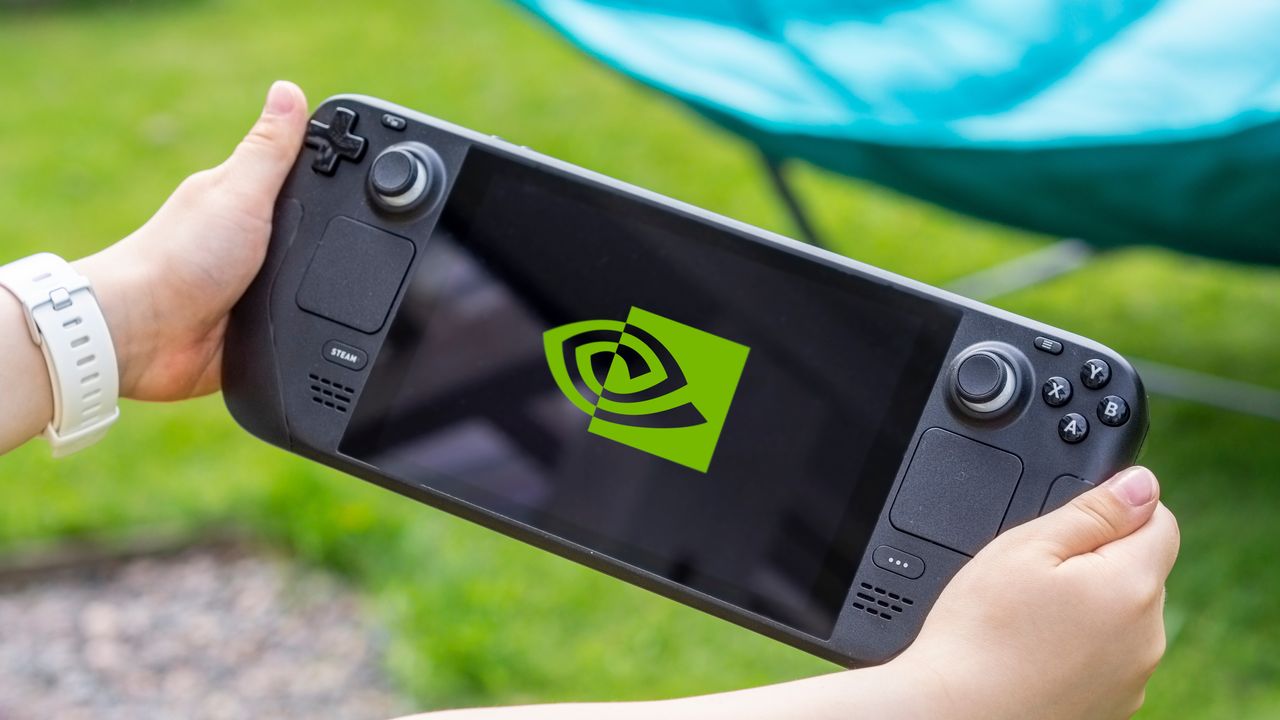
News recently broke that Borderlands 4 may not ever launch on the Nintendo Switch 2, but, as 2K recently announced via the official Borderlands account on X, the looter shooter is officially verified for the Steam Deck. While Borderlands 4 has been playable on the Steam Deck basically since launch, the numerous performance issues it exhibits led us to recommend against playing it on Valve's handheld in our in-depth handheld performance review. There were signs that Gearbox was preparing Borderlands 4 for Steam Deck Verified status, specifically the updated menu screens that came to the game around a month ahead of the announcement.
Importantly, Valve's requirements for Steam Deck verification include functional controller input, seamless compatibility with the Steam Deck hardware and software with no compatibility warnings, support for the default Steam Deck Display resolutions, with good default settings, and full support for Proton. Notably, performance doesn't really enter into the equation, and that has become the main focus of many online users, who pointed out on sites like X and Reddit pointing out that the game still doesn't run well on the Steam Deck, even after numerous performance patches nearly six months after the initial launch. Most users who have tested the game say that they still struggle to maintain a solid 30 FPS in the looter shooter on the Steam Deck's iGPU.
Despite the success of the first game in the series, Overwatch 2 has had a rough time of it, with reviews on Steam rating the game "Mostly Negative," with 34% of its reviews being of a positive nature. It seems as though Blizzard is trying to change this. In one of the multiple developer-led showcases scheduled for early February, Blizzard announced that Overwatch 2 is becoming just "Overwatch," and, more importantly, receiving a number of changes that aim to make gameplay more dynamic and attract more players to the game. The change also marks a number of changes to Overwatch's structure, which will see the game feature an annual story in a system that will officially go into effect with the new Season 1 on February 10. The story will be told across six seasons throughout the year, after which a new story will kick off with a new Season 1 in the following year. The first season in the revamp is called "Reign of Talon," and the plot kicked off with an animated cinematic at the start of the Overwatch spotlight on YouTube, but the rest will be told through various in-game events, animated hero trailers, short stories, and comics released throughout the year.
Blizzard also announced 10 new characters and an all-new class system. The first five characters will launch on February with the start of Season 1, and the rest of the line-up will follow throughout the year. It seems as though the heroes released throughout the year will all somehow be related to the plot being told in that particular year and also enter the game when each respective season launches. The five heroes coming in Season 1 include Domina, a new tank, Emre, a damage hero, Mizuki, a new support, Anran, another damage who will be available to trial from February 5-10, and Jetpack Cat, a stray cat serving aerial support that will be able to move allies around the battlefield from the air. The new update also sees Overwatch's class system get an overhaul, with the main tank, damage, and support roles now divided into three or four subclasses each—initiator, bruiser, and stalwart fall under the tank class; specialist, flanker, recon, and sharpshooter fall under damage, and medic, tactician, and survivor fall under support. Each role also comes with its own set of buffs and perks to consider. Blizzard also revealed that it would be reworking some classic Overwatch heroes later in 2026, although it did not reveal which heroes would be getting reworked.
Built a cool product but can't get traffic? Meet Citedy, the AI-powered competitive intelligence platform that uses analysis to hunt down your competitors, find their weak spots, and automatically generate SEO-optimized articles that leverage their search traffic and chat mentions. Citedy automates competitive warfare by analyzing your competitors' content strategies and creating articles designed to outrank them. It's SEO and content marketing on autopilot, tailored for startups that need to compete with giants.
A map-based tool for solar engineers to streamline site assessment. You can view solar potential, transmission lines, and site constraints in one place instead of juggling multiple data sources, with AI-assisted analysis to speed up your workflow.
Should a linked web page go offline, the new feature will then redirect readers to the archived versions, so that there is no drop in service. The tool also archives a user's own posts, helping to ensure their longevity.
Intel’s Robert Hallock is letting you know how to get the most out of your Intel CPU As part of a newly released video in their “The Blueprint” series, Intel’s Robert Hallock has decided to dive deep into the world of Intel CPU overclocking. Specifically, he has explained how overclocking works for Intel’s Core Ultra […]
Qualcomm Incorporated (NASDAQ: QCOM) today announced results for its fiscal first quarter ended December 28, 2025.
"We are pleased to deliver strong quarterly results, with record total company revenues," said Cristiano Amon, President and CEO of Qualcomm Incorporated. "Our momentum across personal, industrial and physical AI is growing, as evidenced by recent product announcements at CES and customer traction. While our near-term handsets outlook is impacted by industry-wide memory supply constraints, we are encouraged by end-consumer demand for premium and high tier smartphones, and remain on track to achieve our fiscal 2029 revenue goals."
Today (Feb. 4, 2026) Arm (NASDAQ: ARM) published a letter to its shareholders containing the company's results for the third quarter of fiscal year 2026 ended December 31, 2025. The infographic below provides the key highlights:
Here are what the results mean and how they were achieved:
Royalty revenue grew 27% year-over-year to a record $737 million, driven by growth across Arm's target end markets, including AI and general-purpose data center, smartphones, physical AI and edge AI.
License and other revenue of $505 million increased 25% year-over-year, as more leading companies sign high-value licenses for next-generation Arm technologies.
Demand for Arm Compute Subsystems (CSS) continues to exceed expectations as adoption grows in light of increasingly complex chip designs. This represents a significant tailwind to royalty growth, as Arm expands both the value delivered and economics captured per chip.
During the quarter, Arm signed two CSS licenses for use in both edge AI tablets and smartphones, bringing the total number of CSS licenses to 21 across 12 companies.
Additionally, five customers are now shipping Arm CSS-based chips, including two shipping its second-generation platform, while the top four Android smartphone vendors are all shipping Arm CSS-powered devices.
Despite previously taking a very pro-generative AI stance, advocating for AI protagonists in games, Take-Two Interactive's CEO, Strauss Zelnick, recently commented in an interview with Gameindustry.biz that generative AI was not used in the development of Grand Theft Auto VI. The CEO is quoted as saying "Specifically with regards to GTA 6, Generative AI has zero part in what Rockstar Games is building. Their worlds are handcrafted. That's what differentiates them. They're built from the ground up, building by building, street by street, neighborhood by neighborhood. They're not procedurally generated, they shouldn't be. That's what makes great entertainment." He also clarifies that he doesn't think that AI can or will be able to build "great entertainment properties" by themselves, suggesting that Take-Two might think twice about putting AI assets into its games.
He does also mention, however, that he is enthusiastic about AI, and that Take-Two's "products have always been built with machine learning and artificial intelligence," and that "right now we have hundreds of pilots and implementations across our company and within our studios. And we're already seeing instances where generative AI tools are driving costs and time efficiencies." Notably, this isn't the first time we've seen similar rhetoric or AI applied similarly in game studios, despite game workers generally opposing the idea of generative AI in gaming. Embark, the studio behind Arc Raiders, used generative AI to speed up the work on voice acting, while Ubisoft is exploring AI-generated teammates, and EA has announced a pivot to generative AI tools across multiple applications.
PostWizard is your AI-powered marketing assistant designed to turn ideas into viral-ready tweets and threads in seconds. Connect your account to generate high-quality content, create AI images, and schedule posts directly via the official X API. Whether you’re a solo creator or an agency managing multiple brands, PostWizard helps you boost your reach and engagement without the high cost of a social media manager. Stop staring at a blank cursor and start scaling organically, save hours of manual work, and never run out of ideas again.
Valve's new console is on track, according to AMD, and it should start shipping early this year. AMD Says Valve is on "Track" and Will Start Shipping Steam Machine in Early 2026; Also Confirms Microsoft's Next-Gen Xbox is on Track for 2027 Launch AMD itself has confirmed that Valve's next-gen gaming console will start shipping this year. In the Q4 2025 Earnings Call, AMD's CEO, Dr. Lisa Su, stated that Valve is on track to start shipping the Steam Machine in early 2026. We know from earlier reports that Valve is reportedly launching the Steam Machine in 2026, and while […]
Ray Kurzweil’s 1991 AI predictions feel strikingly familiar today, revealing how progress advanced faster than our understanding of intelligence and purpose.
Andreessen Horowitz just raised a whopping new $15 billion in funding. And a $1.7 billion chunk of that is going to its infrastructure team, the one responsible for some of its biggest, most prominent AI investments including Black Forrest Labs, Cursor, OpenAI, ElevenLabs, Ideogram, Fal and dozens of others. A16z general partner with the infra team Jennifer Li (who oversees such investments as ElevenLabs – just valued at $11 billion); Ideagram and Fal, has a clear thesis on where the team is looking […]
NVIDIA is investigating widespread PC gaming issues that appear to be linked to a January Windows update. Users report performance drops and graphical problems, with uninstalling KB5074109 offering temporary relief.
We recently caught up with Epic Games Store VP and GM Steve Allison to learn about how the platform is going in a world increasingly dominated by Steam.
Tenstorrent, a startup focused on designing high-performance AI accelerators and led by the renowned computer architect Jim Keller as CEO, has announced significant hardware updates to its existing Blackhole P150 accelerators, which include the P150a and P150b models. In the latest documentation change, the company notes that its Blackhole P150 accelerators will now work with about 14.3% fewer cores than originally advertised. In the official documents, the P150 accelerators are now shipping with 120 working "Tensix" cores instead of the previously advertised 140 cores. The reason for this change is unknown, as the company provided a vague explanation: "To present a unified interface to metal and other system software, firmware v19.5.0 and later will change the core count on all existing cards to 120. Typical workloads show a non-material (~1-2%) performance difference."
The Blackhole P150 accelerators featured 140 "Tensix" cores and 32 GB of GDDR6 memory, operating at up to 300 W in an actively cooled form factor designed for desktop workstations, and the P150a model includes four passive QSFP-DD 800G ports. However, as the number of cores is reduced by approximately 14%, TeraFLOPS take a nosedive as well. In the older documents for the 140-core SKUs, the BLOCKFP8 8-bit floating point performance was listed at 774 TeraFLOPS, while the new 120-core version reduces that number to 664 TeraFLOPS at the same precision level. Why this sudden change is happening is still a mystery. However, the HPC community with a lot of knowledge in the industry suggests a few reasons.
Clayton described Lin as one of the world's most prolific online narcotics traffickers. For at least four years, the Taiwan-born man managed a massive volume of e-commerce transactions totaling hundreds of millions of dollars. Lin launched the Incognito Market website in October 2020, exploiting the Tor browser's anonymous network in...
Plasma propulsion transforms an inert propellant – often hydrogen – into plasma, a superheated mix of ions and electrons. Magnetic fields then funnel and accelerate the plasma to extreme velocities, generating thrust.
Last week, Blizzard Entertainment announced a flurry of showcase events, one for each of its major titles: World of Warcraft, Overwatch 2, Hearthstone, and Diablo IV. The World of Warcraft showcase happened at the end of last week, with Blizzard digging into its World of Warcraft roadmap for 2026. Today, it followed up with the Overwatch Spotlight, announcing what to expect for the coming year, and a significant change to the game going forward: it's no longer called Overwatch 2, and will instead just be called 'Overwatch' once again. Towards the end of the 35-minute spotlight, Overwatch game director Aaron […]
After weeks of vacillation on the part of the tech-focused rumor mill between a February or March/April 2026 launch for the Pixel 10a, Google has just released official teasers of its new budget smartphone, announcing that the device will launch on February 18, 2026. Google releases official teasers for the Pixel 10a Google has just announced that pre-orders for the upcoming Pixel 10a will go live on February 18. Even so, in-store availability is not expected until March 05. As we noted in a dedicated post, Evan Blass, a known tipster, recently posted a screenshot of the Pixel 10a's certification […]
The memory shortage has become so severe that consumers are now looking to Chinese suppliers like CXMT and YMTC as their 'saviour', hoping to get cheap DDR5/DDR4 modules, but that might never be the case. The retail situation in the RAM market is worsening by the day, with price hikes across the board, especially for higher-capacity modules. Mainly driven by DRAM shortages, it has become tough for gamers to access any memory, and given that the supply situation isn't looking to improve anytime soon, many of us have set our hopes on Chinese memory manufacturers coming to the rescue. Consumers […]
The Asus Vivobook 14 with a Snapdragon X chip, 16GB of memory, and 512GB of storage is currently on sale at Best Buy for just $379.99. This saves you $370 off its $749.99 original price, giving you a discount of nearly 50%.
Microsoft on Wednesday said it built a lightweight scanner that it said can detect backdoors in open-weight large language models (LLMs) and improve the overall trust in artificial intelligence (AI) systems.
The tech giant's AI Security team said the scanner leverages three observable signals that can be used to reliably flag the presence of backdoors while maintaining a low false positive
Threat hunters have disclosed details of a new, stealthy malware campaign dubbed DEAD#VAX that employs a mix of "disciplined tradecraft and clever abuse of legitimate system features" to bypass traditional detection mechanisms and deploy a remote access trojan (RAT) known as AsyncRAT.
"The attack leverages IPFS-hosted VHD files, extreme script obfuscation, runtime decryption, and in-memory
The best-selling Ring Battery Doorbell has changed how I monitor my home, and over 10,000 people have bought it this month – it can be yours for just $59.99.
Nvidia recommends uninstalling Windows 11 Update KB5074109 if users face issues Last month’s Update KB5074109 for Windows 11 is still causing issues, to the point that Nvidia representatives have had to weigh in on their official support forums (via Windows Latest). In response to one use, Manuel@NVIDIA recommended uninstalling the update after users reported issues […]
As Call of Duty: Black Ops 7 fans gear up for Season 2, Treyarch drops details on the new battle pass, revealing operator skins for the new villain, Victoria Atwood, along with new weapon blueprints.
Silicon Motion Technology Corporation (NasdaqGS: SIMO) ("Silicon Motion," the "Company," "we" or similar terms) today announced its financial results for the fourth quarter and year ended December 31, 2025. For the fourth quarter of 2025, net sales (GAAP) increased sequentially to $278.5 million from $242.0 million in the third quarter of 2025. Net income (GAAP) also increased sequentially to $47.7 million, or $1.41 per diluted American depositary share ("ADS") (GAAP), from net income (GAAP) of $39.1 million, or $1.16 per diluted ADS (GAAP), in the third quarter of 2025.
For the fourth quarter of 2025, net income (non-GAAP) increased sequentially to $42.7 million, or $1.26 per diluted ADS (non-GAAP), from net income (non-GAAP) of $33.8 million, or $1.00 per diluted ADS (non-GAAP), in the third quarter of 2025. All financial numbers are in U.S. dollars unless otherwise noted.
Saber Interactive and Focus Entertainment premiered a Gameplay Overview Trailer for 80s action-horror-inspired game John Carpenter's Toxic Commando. This new IP from the creators of Warhammer 40,000: Space Marine 2, World War Z and SnowRunner shows what it is made of - from story and missions to weapons and classes. Zombie addicts and fans of 80s silly gory action horror can finally gear up ahead of John Carpenter's Toxic Commando releasing March 12 on PlayStation 5, Xbox Series X|S, and PC.
Get ready for non-stop zombie destruction
The trailer introduces the highly trained team of mercenaries you'll be cleaning the zombie mess as in this 4-player co-op action survival shooter, taking on multiple missions through a semi-open world infested with Sabers hellish Swarm technology, sending endless, simultaneous waves of mutated monstrosities straight at your face.
As February has just started, Valve finished processing data for the January edition of the Steam Hardware and Software Survey. One of the few interesting takeaways is that for the first time in months, Intel's share of consumer CPU usage has seen an uptick, instead of the slow decline it has been experiencing. According to the January update, Intel's CPU share among Steam platform users has grown to 56.64%, representing a small but pleasant increase of 0.25% over the December data. On the other hand, AMD recorded a slight decrease of 0.19%, now standing at 43.34% of the market. This means that Intel's market share has increased for the first time in months, as data from September reported a market share of 58.61%, then October showed 57.82%, 57.30% in November, and 56.39% in December. The chain of declining share has finally stopped, suggesting that Intel could have a chance to rebound in the consumer market section.
On the contrary, AMD's CPU market share has been rising for months, moving up from 41.31% in September to 43.53% in December, with a small correction now standing at 43.34%. This indicates that many new CPU purchasing decisions were made in favor of AMD, driven by the massive popularity of its Ryzen 9000X3D series, which has been well-received by PC enthusiasts. In contrast, Intel's latest "Arrow Lake" launch has faced some initial challenges with less-than-expected gaming performance, but besides discounts and firmware updates improving the situation, the community is now anticipating the launch of the "Arrow Lake Refresh" scheduled for March or April, which is expected to address these issues by shipping with higher out-of-the-box frequencies and additional tuning.
After years of rumors and speculation, Google confirmed in 2025 that it plans to "fuse" Android and ChromeOS into a single desktop platform. The new system, known internally as Aluminium OS, is reportedly already under active development. What remains unclear is the fate of ChromeOS, the operating system that has...
Nioh 3 features deeper, more flexible combat, a semi-open-world structure, and seamless switching between Samurai and Ninja styles, earning praise as the most complete and accessible entry in the series-and one of the stronger modern Soulslike experiences for fans of demanding action RPGs.
The mission will mark NASA's first crewed test of laser communications in lunar orbit. O2O will use infrared light instead of radio frequencies to transmit voice, mission data, and high-resolution video back to Earth. While the technology has been tested on seven prior uncrewed missions, Artemis II is the first to...
Lucid Engine helps brands measure and grow visibility across AI search engines. It tracks citations and recommendations on ChatGPT, Perplexity, and Gemini, benchmarks competitors, and alerts you when rankings shift. The platform reveals which sources and sentiments drive answers and builds a prioritized backlog to close content gaps so you capture more recommendations. Monitor changes over time with live tracking, geo comparisons, and model release overlays to protect demand.
After accurately predicting a Nintendo Direct Partner Showcase for this week, reliable insider NateTheHate has another prediction, this time to do with the arrival of Final Fantasy VII Rebirth on Nintendo Switch 2, but more importantly, about how Square Enix will start its marketing campaign for Final Fantasy VII Remake Part 3, which, according to NateTheHate, will not be a PlayStation exclusive title at launch, and will instead be multiplatform from day-one. During the latest episode of the NateTheHate podcast, when discussing predictions for tomorrow's Partner Direct Showcase, on the topic of what Square Enix might bring to the table, […]
We've known that a new Mass Effect (which we'll call Mass Effect 5 in this story for the sake of simplicity) was coming ever since late 2020. At that year's edition of The Game Awards, developer BioWare shared a brief trailer showing an aged Liara T'soni and subtly hinting at a direct sequel to the original trilogy, skipping the latest franchise installment, 2017's Andromeda. More than five years later, we've still got very little to go on. Another brief teaser was published on N7 Day 2023, but BioWare was still very much focused on releasing Dragon Age: The Veilguard first. […]
With the understanding across the tech industry being that "no one can escape memory shortages," with price increases for devices already directly impacted by the shortages and rising cost of RAM, the question of popular consoles, like the Nintendo Switch 2, getting a price increase seems inevitable and more like a question of 'when,' instead of 'if.' So far, Nintendo has been cautious on the topic of price increases for the Nintendo Switch 2. When tariffs were the major factor potentially impacting the price of the console, Nintendo president Shuntaro Furukawa made it clear that the price of the console […]
Mint Mobile's incredible coupon code for discounted three-month plans ends tonight, so be quick if you're interested in seriously cheap unlimited plans.
Bridgerton season 4 part 2 first teaser confirms the long-awaited bathtub scene from original books — but I’m still not over Benedict and Sophie’s biggest issue.
Nord Security has quadrupled its patent count since 2023, signaling a massive shift towards post-quantum encryption and AI-driven threat detection to future-proof its privacy tools.
Switzerland wants to expand its surveillance law and require VPNs, messaging apps, social media platforms, and other online services to collect data to help identify their users.
The prolific cybercrime group ShinyHunters took responsibility for hacking Harvard and the University of Pennsylvania, and published the stolen data on its extortion website.
Borderlands 4 can't seem to escape its reputation for poor performance and demanding hardware requirements. Although the game was meant to launch on the relatively low-power Nintendo Switch 2 shortly after it launched on PC and console, the handheld port of the game was delayed, with the development team declaring that it needed more time to "deliver the best game possible" for fans of the series. Now, as of February 3, the development of Borderlands 4 for the Switch 2 has officially been put on hold. This is according to a new announcement by 2K Interactive in a recent earnings call. The gaming giant instead says that it wants to focus on optimizing Borderlands 4 for the devices on which it is already available. It's unclear whether the development will be picked up again at a later stage or if the port is effectively cancelled.
The full statement by 2K reads: "We made the difficult decision to pause development on that SKU. Our focus continues to be delivering quality post-launch content for players on the ongoing improvements to optimize the game. We're continuing to collaborate closely with our friends at Nintendo. We have PGA Tour 2K25 coming out and WWE 2K26, and we're incredibly excited about bringing more of our titles to that platform in the future." No official explanation was provided for the halt in development, but speculation has gone two ways. While some think 2K put the Switch 2 port on hold over performance concerns—Gearbox's Randy Pitchford previously promised that the game would run at 30 FPS "with some dips" on the Switch 2, which didn't give gamers much hope for performance—while others suspect that sales numbers simply didn't justify the increased development costs for the Switch 2. The fact that the Switch 2 version had already been indefinitely delayed lends credence to the theory that performance concerns and optimization difficulties could have had something to do with the cancellation.
Reddit user golfwang999 revealed the end of the PlayStation 3's Netflix app in a post on the site. The message, which is shown on what looks like an era-appropriate Philips CRT TV, confirms the app's imminent demise and advises users to visit Netflix's list of supported devices.
Q4 revenue grew 34 percent year over year to $10.27 billion, while GAAP profits rose 44 percent to $5.57 billion. Gross margin improved from 51 percent to 54 percent, and operating income increased to $1.75 billion from $871 million. Diluted earnings per share (EPS) reached $0.92, up from $0.29 in Q4 2024.
WinRAR 7.20 delivers faster handling of large archives, especially when deleting files or opening ZIPs with massive file counts. The update also enhances automation with smarter archive naming masks, expanded command-line switches, and faster extraction for TAR-based formats.
DMARCTrust monitors DMARC reports to show who sends emails as your domain and whether SPF and DKIM pass. It aggregates data from Gmail, Microsoft, Yahoo, and dozens of providers into a clear dashboard and alerts you to DNS record changes and authentication failures. Set it up in minutes with a unique reporting address and 2FA-secured access. Choose US or EU data hosting, track pass rates over time, and keep non-technical teams informed while protecting deliverability.
Build a Rocket Boy, the studio behind the biggest flop and the worst-reviewed game of 2025, MindsEye, is still chipping away at fixing and improving the game that was the butt of its fair share of jokes last year. The game's latest update, Update 7, is "a big step forward" for both the game and the studio, according to Mark Gerhard, chief executive and chief technical officer at Build a Rocket Boy. The new update focuses on improvements to "campaign flow, making objectives easier to follow, and continuing to refine AI behavior," the patch notes on the game's official website […]
CNET has now published the results of an interesting test where it pitted the battery life of 35 smartphones against each other and, unsurprisingly, the Apple iPhone 17 lineup has emerged as the victors of this relatively exhaustive test. Apple iPhone 17 Pro Max at the top of the smartphone battery life leaderboard, the base iPhone 17 wins second place along with the OnePlus 15 CNET ran two battery life tests on a total of 35 smartphones: a three-hour test where a video was streamed over WiFi with the screen at full brightness, and a 45-minute endurance test spanning multiple […]
Take-Two CEO Strauss Zelnick was asked by GamesIndustry.biz whether developer Rockstar Games had used AI to build Grand Theft Auto 6, and the answer was negative: the state of Leonida, a fictionalized version of Florida, has been entirely handcrafted. That said, Zelnick mentioned that GenAI-powered tools are being used all across Take-Two's studios to "drive costs and time efficiencies". On the topic of AI, I've been enthusiastic since the very beginning. This company's products have always been built with machine learning and artificial intelligence. We've actually always been a leader in the space, and right now we have hundreds of […]
Dispatch was one of the more beloved indie games from 2025, selling over 3 million copies to close out the year and getting several nominations from the DICE Awards and The Game Awards. It was even one of Wccftech's picks for the Best Adventure Games of 2025 and one of our picks for the Best Games of 2025 overall. Everything was coming up roses, and with a Nintendo Switch and Nintendo Switch 2 port coming in January 2026, it seemed like developer AdHoc Studio was about to add another million copies sold to its tally. That was until it actually […]
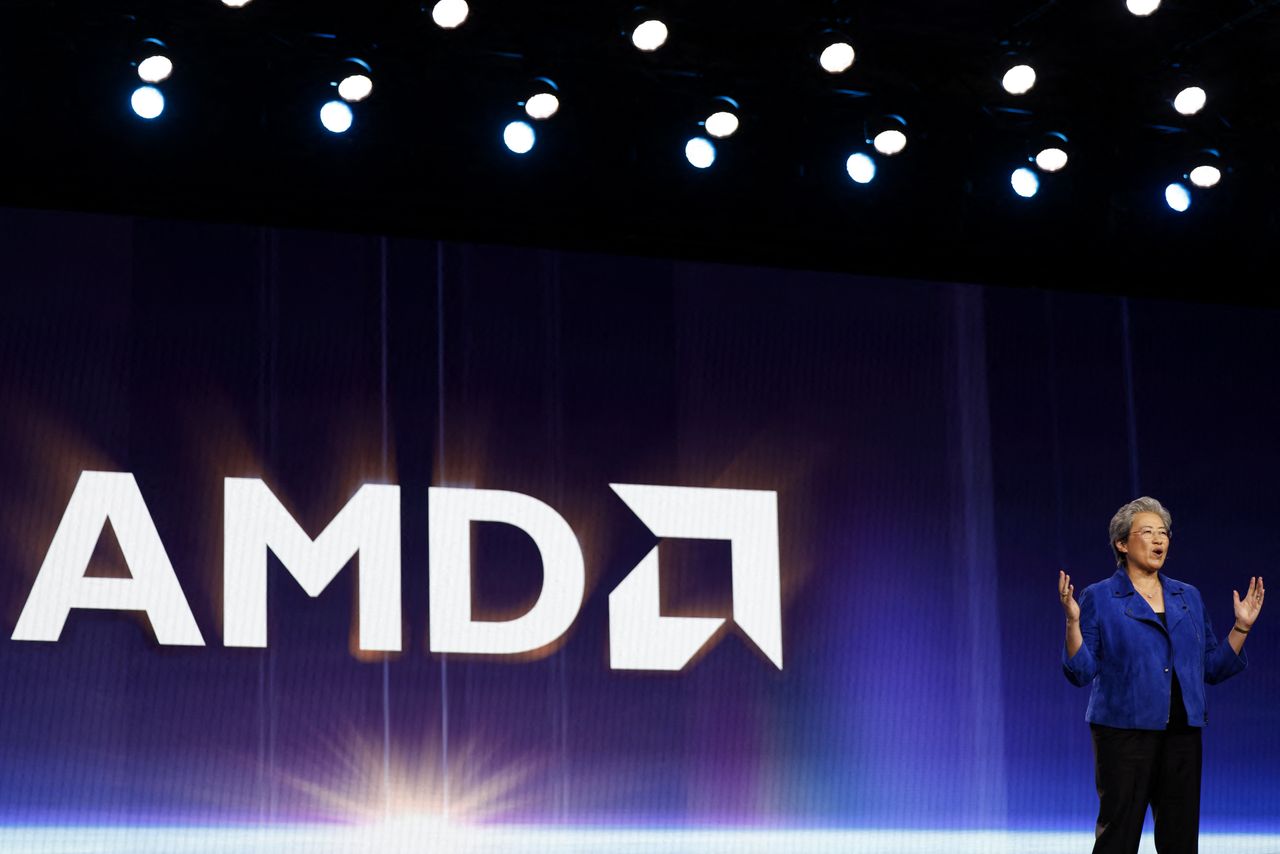
AMD CEO Dr Lisa Su, during the company's latest Q4 2025 earnings call, seemingly confirmed that the release for the new Valve Steam Machine is "on track" to launch during early 2026.
Google Ads introduced multi-party approval, a security feature that requires a second administrator to approve high-risk account actions. These actions include adding or removing users and changing user roles.
Why we care. As ad accounts grow in size and value, access control becomes a serious risk. One unauthorized, malicious, or accidental change can disrupt campaigns, permissions, or billing in minutes. Multi-party approval reduces that risk by requiring a second admin to approve high-impact actions. It adds strong protection without slowing daily work. For agencies and large teams, it prevents costly mistakes and significantly improves account security.
How it works. When an admin initiates a sensitive change, Google Ads automatically creates an approval request. Other eligible admins receive an in-product notification. One of them must approve or deny the request within 20 days. If no one responds, the request expires, and the change is blocked.
Status tracking. Each request is clearly labeled as Complete, Denied, or Expired. This makes it easy to see what was approved and what didn’t go through.
Where to find it. You can view and manage approval requests from Access and security within the Admin menu.
The bigger picture. The update reflects growing concern around account security, especially for agencies and large advertisers managing multiple users, partners, and permissions. With advertisers recently reporting costly hacks, this is a welcome update.
In 2015, PPC was a game of direct control. You told Google exactly which keywords to target, set manual bids at the keyword level, and capped spend with a daily budget. If you were good with spreadsheets and understood match types, you could build and manage 30,000-keyword accounts all day long.
Those days are gone.
In 2026, platform automation is no longer a helpful assistant. It’s the primary driver of performance. Fighting that reality is a losing battle.
Automation has leveled the playing field and, in many cases, given PPC marketers back their time. But staying effective now requires a different skill set: understanding how automated systems learn and how your data shapes their decisions.
This article breaks down how signals actually work inside Google Ads, how to identify and protect high-quality signals, and how to prevent automation from drifting into the wrong pockets of performance.
Automation runs on signals, not settings
Google’s automation isn’t a black box where you drop in a budget and hope for the best. It’s a learning system that gets smarter based on the signals you provide.
Feed it strong, accurate signals, and it will outperform any manual approach.
Feed it poor or misleading data, and it will efficiently automate failure.
That’s the real dividing line in modern PPC. AI and automation run on signals. If a system can observe, measure, or infer something, it can use it to guide bidding and targeting.
Google’s official documentation still frames “audience signals” primarily as the segments advertisers manually add to products like Performance Max or Demand Gen.
That definition isn’t wrong, but it’s incomplete. It reflects a legacy, surface-level view of inputs and not how automation actually learns at scale.
In practice, every element inside a Google Ads account functions as a signal.
Structure, assets, budgets, pacing, conversion quality, landing page behavior, feed health, and real-time query patterns all shape how the AI interprets intent and decides where your money goes.
Nothing is neutral. Everything contributes to the model’s understanding of who you want, who you don’t, and what outcomes you value.
So when we talk about “signals,” we’re not just talking about first-party data or demographic targeting.
We’re talking about the full ecosystem of behavioral, structural, and quality indicators that guide the algorithm’s decision-making.
Here’s what actually matters:
Conversion actions and values: These are 100% necessary. They tell Google Ads what defines success for your specific business and which outcomes carry the most weight for your bottom line.
Keyword signals: These indicate search intent. Based on research shared by Brad Geddes at a recent Paid Search Association webinar, even “low-volume” keywords serve as vital signals. They help the system understand the semantic neighborhood of your target audience.
Ad creative signals: This goes beyond RSA word choice. I believe the platform now analyzes the environment within your images. If you show a luxury kitchen, the algorithm identifies those visual cues to find high-end customers. I base this hypothesis on my experience running a YouTube channel. I’ve watched how the algorithm serves content based on visual environments, not just metadata.
Landing page signals: Beyond copy, elements like color palettes, imagery, and engagement metrics signal how well your destination aligns with the user’s initial intent. This creates a feedback loop that tells Google whether the promise of the ad was kept.
Bid strategies and budgets: Your bidding strategy is another core signal for the AI. It tells the system whether you’re prioritizing efficiency, volume, or raw profit. Your budget signals your level of market commitment. It tells the system how much permission it has to explore and test.
In 2026, we’ve moved beyond the daily cap mindset. With the expansion of campaign total budgets to Search and Shopping, we are now signaling a total commitment window to Google.
In the announcement, UK retailer Escentual.com used this approach to signal a fixed promotional budget, resulting in a 16% traffic lift because the AI was given permission to pace spend based on real-time demand rather than arbitrary 24-hour cycles.
All of these elements function as signals because they actively shape the ad account’s learning environment.
Anything the ad platform can observe, measure, or infer becomes part of how it predicts intent, evaluates quality, and allocates budget.
If a component influences who sees your ads, how they behave, or what outcomes the algorithm optimizes toward, it functions as a signal.
The auction-time reality: Finding the pockets
To understand why signal quality has become critical, you need to understand what’s actually happening every time someone searches.
Google’s auction-time bidding doesn’t set one bid for “mobile users in New York.”
It calculates a unique bid for every single auction based on billions of signal combinations at that precise millisecond. This considers the user, not simply the keyword.
We are no longer looking for “black-and-white” performance.
We are finding pockets of performance and users who are predicted to take the outcomes we define as our goals in the platform.
The AI evaluates the specific intersection of a user on iOS 17, using Chrome, in London, at 8 p.m., who previously visited your pricing page.
Because the bidding algorithm cross-references these attributes, it generates a precise bid. This level of granularity is impossible for humans to replicate.
But this is also the “garbage in, garbage out” reality. Without quality signals, the system is forced to guess.
The signal hierarchy: What Google actually listens to
If every element in a Google Ads account functions as a signal, we also have to acknowledge that not all signals carry equal weight.
Some signals shape the core of the model’s learning. Others simply refine it.
Based on my experience managing accounts spending six and seven figures monthly, this is the hierarchy that actually matters.
Conversion signals reign supreme
Your tracking is the most important data point. The algorithm needs a baseline of 30 to 50 conversions per month to recognize patterns. For B2B advertisers, this often requires shifting from high-funnel form fills to down-funnel CRM data.
As Andrea Cruz noted in her deep dive on Performance Max for B2B, optimizing for a “qualified lead” or “appointment booked” is the only way to ensure the AI doesn’t just chase cheap, irrelevant clicks.
Enhanced conversions and first-party data
We are witnessing a “death by a thousand cuts,” where browser restrictions from Safari and Firefox, coupled with aggressive global regulations, have dismantled the third-party cookie.
Without enhanced conversions or server-side tracking, you are essentially flying blind, because the invisible trackers of the past are being replaced by a model where data must be earned through transparent value exchanges.
First-party audience signals
Your customer lists tell Google, “Here is who converted. Now go find more people like this.”
Quality trumps quantity here. A stale or tiny list won’t be as effective as a list that is updated in real time.
Custom segments provide context
Using keywords and URLs to build segments creates a digital footprint of your ideal customer.
This is especially critical in niche industries where Google’s prebuilt audiences are too broad or too generic.
These segments help the system understand the neighborhood your best prospects live in online.
To simplify this hierarchy, I’ve mapped out the most common signals used in 2026 by their actual weight in the bidding engine:
Signal category
Specific input (The “what”)
Weight/impact
Why it matters in 2026
Primary (Truth)
Offline conversion imports (CRM)
Critical
Trains the AI on profit, not just “leads.”
Primary (Truth)
Value-based bidding (tROAS)
Critical
Signals which products actually drive margin.
Secondary (Context)
First-party customer match lists
High
Provides a “Seed Audience” for the AI to model.
Secondary (Context)
Visual environment (images/video)
High
AI scans images to infer user “lifestyle” and price tier.
Tertiary (Intent)
Low-volume/long-tail keywords
Medium
Defines the “semantic neighborhood” of the search.
Tertiary (Intent)
Landing page color and speed
Medium
Signals trust and relevance feedback loops.
Pollutant (Noise)
“Soft” conversions (scrolls/clicks)
Negative
Dilutes intent. Trains AI to find “cheap clickers.”
Signal pollution occurs when low-quality, conflicting, or misleading signals contaminate the data Google’s AI uses to learn.
It’s what happens when the system receives signals that don’t accurately represent your ideal client, your real conversion quality, or the true intent you want to attract in your ad campaigns.
Signal pollution doesn’t just “confuse” the bidding algorithm. It actively trains it in the wrong direction.
It dilutes your high-value signals, expands your reach into low-intent audiences, and forces the model to optimize toward outcomes you don’t actually want.
Common sources include:
Bad conversion data, including junk leads, unqualified form fills, and misfires.
Overly broad structures that blend high- and low-intent traffic.
Creative that attracts the wrong people.
Landing page behavior that signals low relevance or low trust.
Budget or pacing patterns that imply you’re willing to pay for volume over quality.
Feed issues that distort product relevance.
Audience segments that don’t match your real buyer.
These sources create the initial pollution. But when marketers try to compensate for underperformance by feeding the machine more data, the root cause never gets addressed.
That’s when soft conversions like scrolls or downloads get added as primary signals, and none of them correlate to revenue.
Like humans, algorithms focus on the metrics they are fed.
If you mix soft signals with high-intent revenue data, you dilute the profile of your ideal customer.
You end up winning thousands of cheap, low-value auctions that look great in a report but fail to move the needle on the P&L.
Your job is to be the gatekeeper, ensuring only the most profitable signals reach the bidding engine.
When signal pollution takes hold, the algorithm doesn’t just underperform. The ads start drifting toward the wrong users, and performance begins to decline.
Before you can build a strong signal strategy, you have to understand how to spot that drift early and correct it before it compounds.
How to detect and correct algorithm drift
Algorithm drift happens when Google’s automation starts optimizing toward the wrong outcomes because the signals it’s receiving no longer match your real advertising goals.
Drift doesn’t show up as a dramatic crash. It shows up as a slow shift in who you reach, what queries you win, and which conversions the system prioritizes. It looks like a gradual deterioration of lead quality.
To stay in control, you need a simple way to spot drift early and correct it before the machine locks in the wrong pattern.
Early warning signs of drift include:
A sudden rise in cheap conversions that don’t correlate with revenue.
A shift in search terms toward lower-intent or irrelevant queries.
A drop in average order value or lead quality.
A spike in new-user volume with no matching lift in sales.
A campaign that looks healthy in-platform but feels wrong in the CRM or P&L.
These are all indicators that the system is optimizing toward the wrong signals.
To correct drift without resetting learning:
Tighten your conversion signals: Remove soft conversions, misfires, or anything that doesn’t map to revenue. The machine can’t unlearn bad data, but you can stop feeding it.
Reinforce the right audience patterns: Upload fresh customer lists, refresh custom segments, and remove stale data. Drift often comes from outdated or diluted audience signals.
Adjust structure to isolate intent: If a campaign blends high- and low-intent traffic, split it. Give the ad platform a cleaner environment to relearn the right patterns.
Refresh creative to repel the wrong users: Creative is a signal. If the wrong people are clicking, your ads are attracting them. Update imagery, language, and value props to realign intent.
Let the system stabilize before making another change: After a correction, give the campaign 5-10 days to settle. Overcorrecting creates more drift.
Your job isn’t to fight automation in Google Ads, it’s to guide it.
Drift happens when the machine is left unsupervised with weak or conflicting signals. Strong signal hygiene keeps the system aligned with your real business outcomes.
Once you can detect drift and correct it quickly, you’re finally in a position to build a signal strategy that compounds over time instead of constantly resetting.
The next step is structuring your ad account so every signal reinforces the outcomes you actually want.
Building a strategy that actually works in 2026 with signals
If you want to build a signal strategy that becomes a competitive advantage, you have to start with the foundations.
For lead gen
Implement offline conversion imports. The difference between optimizing for a “form fill” and a “$50K closed deal” is the difference between wasting budget and growing a business.
When “journey-aware bidding” eventually rolls out, it will be a game-changer because we can feed more data about the individual steps of a sale.
For ecommerce
Use value-based bidding. Don’t just count conversions. Differentiate between a customer buying a $20 accessory and one buying a $500 hero product.
Segment your data
Don’t just dump everyone into one list. A list of 5,000 recent purchasers is worth far more than 50,000 people who visited your homepage two years ago.
Stale data hurts performance by teaching the algorithm to find people who matched your business 18 months ago, not today.
Separate brand and nonbrand campaigns
Brand traffic carries radically different intent and conversion rates than nonbrand.
Mixing these campaigns forces the algorithm to average two incompatible behaviors, which muddies your signals and inflates your ROAS expectations.
Brand should be isolated so it doesn’t subsidize poor nonbrand performance or distort bidding decisions in the ad platform.
Don’t mix high-ticket and low-ticket products under one ROAS target
A $600 product and a $20 product do not behave the same in auction-time bidding.
When you put them in the same campaign with a single 4x ROAS target, the algorithm will get confused.
This trains the system away from your hero products and toward low-value volume.
Centralize campaigns for data density, but only when the data belongs together
Google’s automation performs best when it has enough data to be consistent and high-quality data to recognize patterns. That means fewer, stronger campaigns are better as long as the signals inside them are aligned.
Centralize campaigns when products share similar price points, margins, audiences, and intent. Decentralize campaigns when mixing them would pollute the signal pool.
The competitive advantage of 2026
When everyone has access to the same automation, the only real advantage left is the quality of the signals you feed it.
Your job is to protect those signals, diagnose pollution early, and correct drift before the system locks onto the wrong patterns.
Once you build a deliberate signal strategy, Google’s automation stops being a constraint and becomes leverage. You stay in the loop, and the machine does the heavy lifting.
Anthropic is drawing the line against advertising in AI chatbots. Claude will remain ad-free, the company said, even as rival AI platforms experiment with sponsored messages and branded placements inside conversations.
Ads inside AI chats would erode trust, warp incentives, and clash with how people actually use assistants like Claude (for work, problem-solving, and sensitive topics), Anthropic said in a new blog post.
Why we care. Anthropic’s position removes Claude, and its user base of 30 million, from the AI advertising equation. Brands shouldn’t expect sponsored links, conversations, or responses inside Claude. Meanwhile, ChatGPT is about to give brands the opportunity to reach an estimated 800 million weekly users.
What’s happening. AI conversations are fundamentally different from search results or social feeds, where users expect a mix of organic and paid content, Anthropic said:
Many Claude interactions involve personal issues, complex technical work, or high-stakes thinking. Dropping ads into those moments would feel intrusive and could quietly influence responses in ways users can’t easily detect.
Ad incentives tend to expand over time, gradually optimizing for engagement rather than genuine usefulness.
Incentives matter. This is a business-model decision, not just a product preference, Anthropic said:
An ad-free assistant can focus entirely on what helps the user — even if that means a short exchange or no follow-up at all.
An ad-supported model, by contrast, creates pressure to surface monetizable moments or keep users engaged longer than necessary.
Once ads enter the system, users may start questioning whether recommendations are driven by help or by commerce.
Anthropic isn’t rejecting commerce. Claude will still help users research, compare, and buy products when they ask. The company is also exploring “agentic commerce,” where the AI completes tasks like bookings or purchases on a user’s behalf.
Commerce should be triggered by the user, not by advertisers, Anthropic said.
The same rule applies to third-party integrations like Figma or Asana. These tools will remain user-directed, not sponsored.
Super Bowl ad. Anthropic is making the argument publicly and aggressively. In a Super Bowl debut, the company mocked intrusive AI advertising by inserting fake product pitches into personal conversations. The ad closed with a clear message: “Ads are coming to AI. But not to Claude.”
The campaign appears to be a direct shot at OpenAI, which has announced plans to introduce ads into ChatGPT.
“…I wonder why Anthropic would go for something so clearly dishonest. Our most important principle for ads says that we won’t do exactly this; we would obviously never run ads in the way Anthropic depicts them. We are not stupid and we know our users would reject that.
“I guess it’s on brand for Anthropic doublespeak to use a deceptive ad to critique theoretical deceptive ads that aren’t real, but a Super Bowl ad is not where I would expect it.
“Anthropic serves an expensive product to rich people. We are glad they do that and we are doing that too, but we also feel strongly that we need to bring AI to billions of people who can’t pay for subscriptions.
“We will continue to work hard to make even more intelligence available for lower and lower prices to our users.”
The U.S. Justice Department and a coalition of states plan to appeal a federal judge’s remedies ruling in the Google search antitrust case.
The appeal challenges a decision that found Google illegally monopolized search but stopped short of imposing major structural changes, such as forcing a divestiture of Chrome or banning default search deals outright.
Mehta ruled in August 2024 that Google unlawfully maintained its search monopoly through default search agreements with Apple, Samsung, and other device makers. Those deals cost Google more than $20 billion a year and blocked rivals from key distribution channels.
Why we care. The appeal means we still don’t know how much Google will keep controlling where search gets placed. And that control basically decides who wins traffic. If stricter fixes happen, it could change default search settings, open the door to rival search engines, and shift how people use search across devices.
Yes, but. The DOJ and states haven’t detailed their legal arguments. Court filings didn’t specify which parts of the ruling they will challenge, though attention is expected to focus on Chrome and Google’s default search deal with Apple.
What to watch. The U.S. Court of Appeals for the D.C. Circuit is expected to hear the case later this year. For now, it’s business as usual for Google — though its most important contracts now face annual review, and the risk of tougher remedies remains firmly on the table.
What they’re saying. David Segal, Yelp’s vice president of public policy, welcomed the appeal. In a statement shared with Search Engine Land, Yelp said the trial court’s remedies do not go far enough to restore real competition in search:
“Unfortunately, the measures put forth in the trial court’s remedy decision are unlikely to restore competition — for instance, it allows for Google to continue to pay third parties for default placement in browsers and devices, which was the primary mechanism by which Google unlawfully foreclosed competition to begin with.
“Internet users, online advertisers and others who rely on and seek to compete in the industry deserve a level playing field with more, higher quality, and fairer search options — and the need for a more competitive space is all the more clear as Google seeks to leverage its vast power over the web, especially search indexing and ranking, to come to dominate the GenAI space.”
If your CPCs keep climbing, the cause may not be your bid strategy, your budget, or even your competitors.
You might be suffering from low ad quality.
Let’s break down the most foundational — and most misunderstood — metric in your Google Ads account. If you want to stop overpaying Google and start winning auctions on merit, you need to understand how the 1-to-10 Quality Score actually works.
The difference between Quality Score, Ad Strength, and Optimization Score
Before we dive in, let’s clear up the confusion. Google shows a lot of “scores” and “diagnostics,” and you can safely ignore most of them. Quality Score is the exception.
Ad strength is an ad-level diagnostic. It checks whether your responsive ad follows best practices, like having enough headlines and descriptions. It has zero impact on auction performance.
Optimization score is a sales metric. It measures how many Google recommendations you’ve reviewed. It does not reflect real campaign performance.
Quality Score is different. It’s foundational. This keyword-level diagnostic summarizes the quality of your ads. Along with your bid, it determines Ad Rank. Ad Rank determines whether your ad appears at all, where it appears on the SERP, and how much you pay per click.
The formula is simple: Ad Rank = price × quality. The 1–10 score you see is only a summary, but it reflects the real-time quality calculation Google runs on every single search.
Setting up your dashboard: How to find your Quality Score
You can’t fix what you can’t see. To get started, go to your Keywords report in Google Ads and add these four columns:
Quality Score
Exp. CTR
Ad Relevance
Landing Page Exp.
When you analyze Quality Score, don’t judge keywords in isolation. You’ll drive yourself crazy. Look for patterns at the ad group level instead.
If most keywords have a Quality Score of 7 or higher, you’re in good shape. If most are at 5 or below, that’s your cue to roll up your sleeves and improve ad quality.
The three core components of Quality Score and how to fix them
1. Ad Relevance: The ‘message match’
This is the only part of Quality Score fully within your control. It asks one simple question:
Does the keyword match the ad and the landing page?
If your ad relevance is generally “Below average,” the fastest fix is Dynamic Keyword Insertion. It automatically inserts your keywords into the ad text. If you prefer a manual approach, make sure the keywords in the ad group actually appear in both the ad copy and the landing page.
2. Landing Page Experience: The “Delivery”
When Google sends users to your site, do they find what they’re looking for? Or do they bounce after two seconds and head back to Google for a better result?
If your landing page experience score is low, start with the PageSpeed Insights tool. A “Below average” rating often points to slow load times, a poor mobile experience, generic content, weak navigation, or all of the above.
3. Expected CTR: The “Popularity Contest”
Google only makes money when users click, so it favors ads people are most likely to click.
If your expected CTR is lagging, start with competitive research:
Check Auction Insights to see who you’re competing against.
A “Below average” expected CTR means their ads are earning higher click-through rates than yours.
If your ads are great but CTR is still low, review the Search terms report. You may be showing for irrelevant queries, which explains why users aren’t clicking on an otherwise awesome ad.
What’s a realistic Quality Score goal?
I’ll be honest: chasing a 10/10 Quality Score everywhere is a waste of time. It’s unrealistic and usually unnecessary.
Instead, do a quick check-up every few months. Find one or two ad groups with lower Quality Scores, identify the most “Below Average” component, and fix that first.
Improving ad quality takes more effort than raising budgets or bids. But it pays off with more clicks at the same — or even lower — cost.
This article is part of our ongoing Search Engine Land series, Everything you need to know about Google Ads in less than 3 minutes. In each edition, Jyll highlights a different Google Ads feature, and what you need to know to get the best results from it – all in a quick 3-minute read.
Threat actors affiliated with China have been attributed to a fresh set of cyber espionage campaigns targeting government and law enforcement agencies across Southeast Asia throughout 2025.
Check Point Research is tracking the previously undocumented activity cluster under the moniker Amaranth-Dragon, which it said shares links to the APT 41 ecosystem. Targeted countries include Cambodia,
Every year, CES showcases the limitless potential of our industry, but this year, we moved away from proof-of-concepts and towards real-world applications.
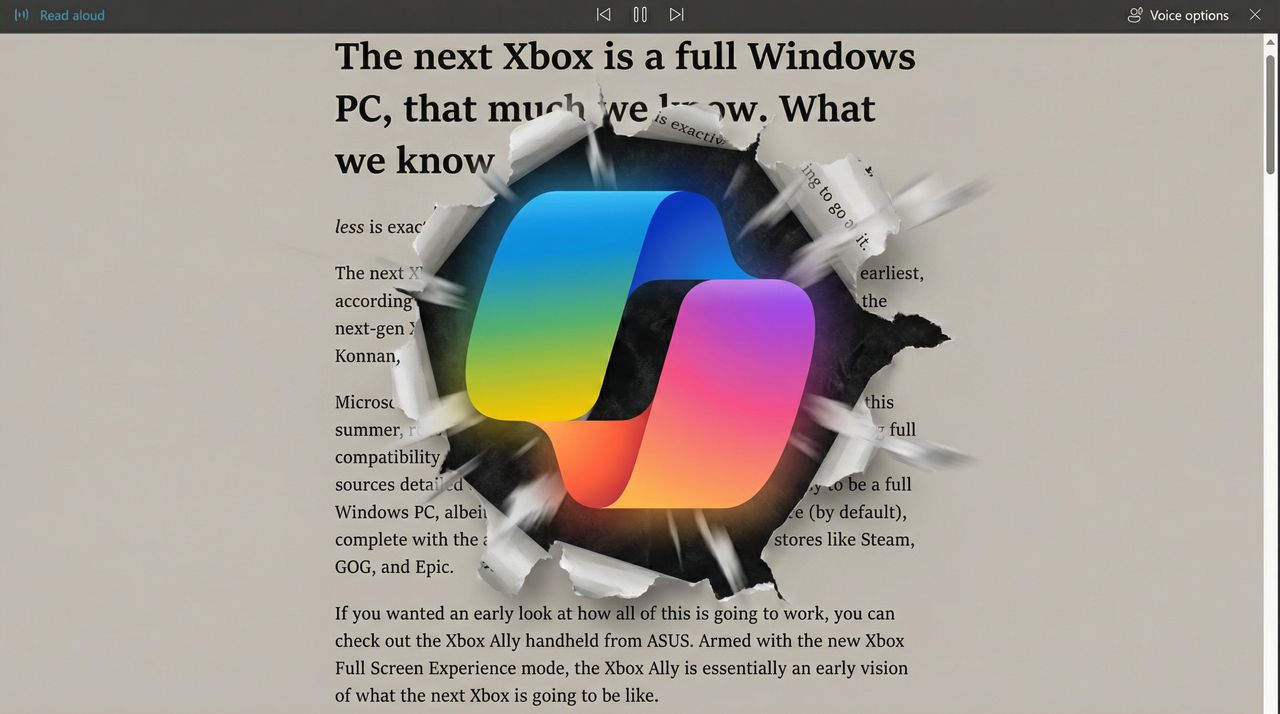
Microsoft's experimental Edge Canary build has some changes for the Read Aloud function. Instead of reading the text on the page, it now launches Copilot Vision instead.
In France, one of the internet's oldest privacy tools may soon become the focus of a national policy debate. Weeks after lawmakers approved a bill to block social media access for anyone under 15, the French government signaled that virtual private networks could be next on its regulatory agenda.
Adobe recently announced that Adobe Animate would soon enter its "end-of-life" phase, meaning customers would eventually lose access to both the software and any project files stored in the cloud. The announcement triggered a massive backlash, with many users pointing to the tool's continued and widespread popularity across a range...
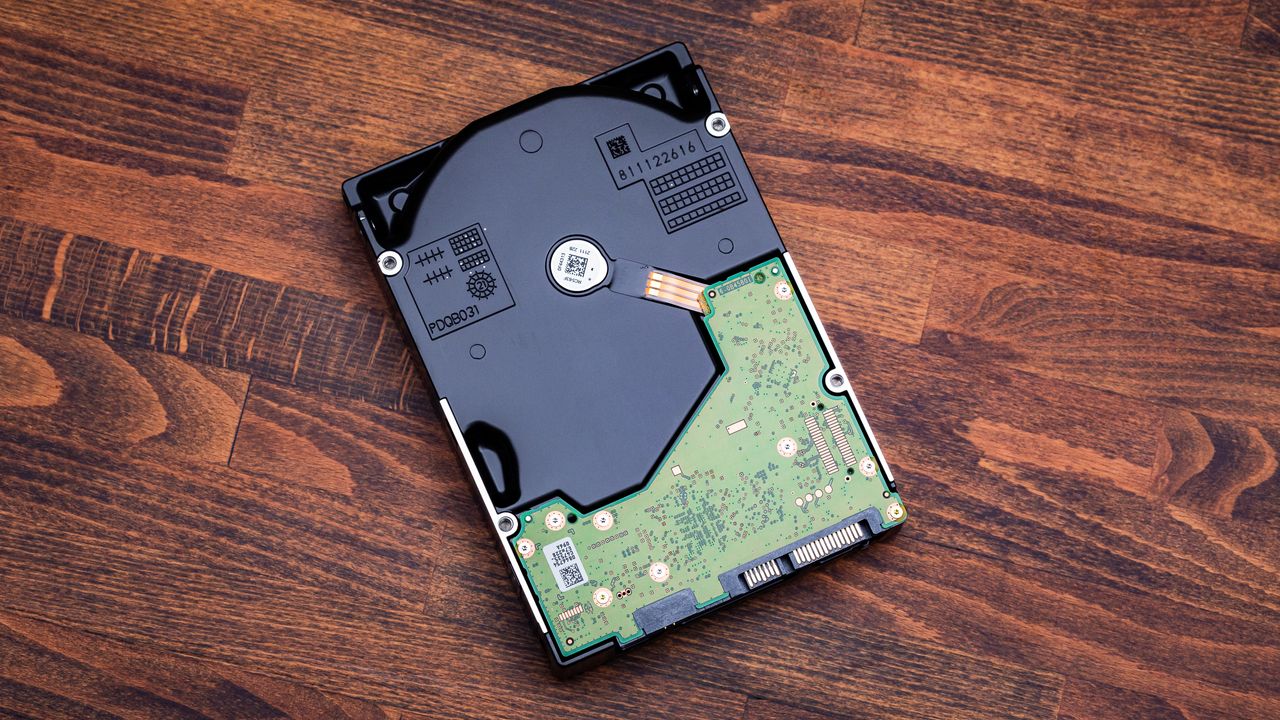
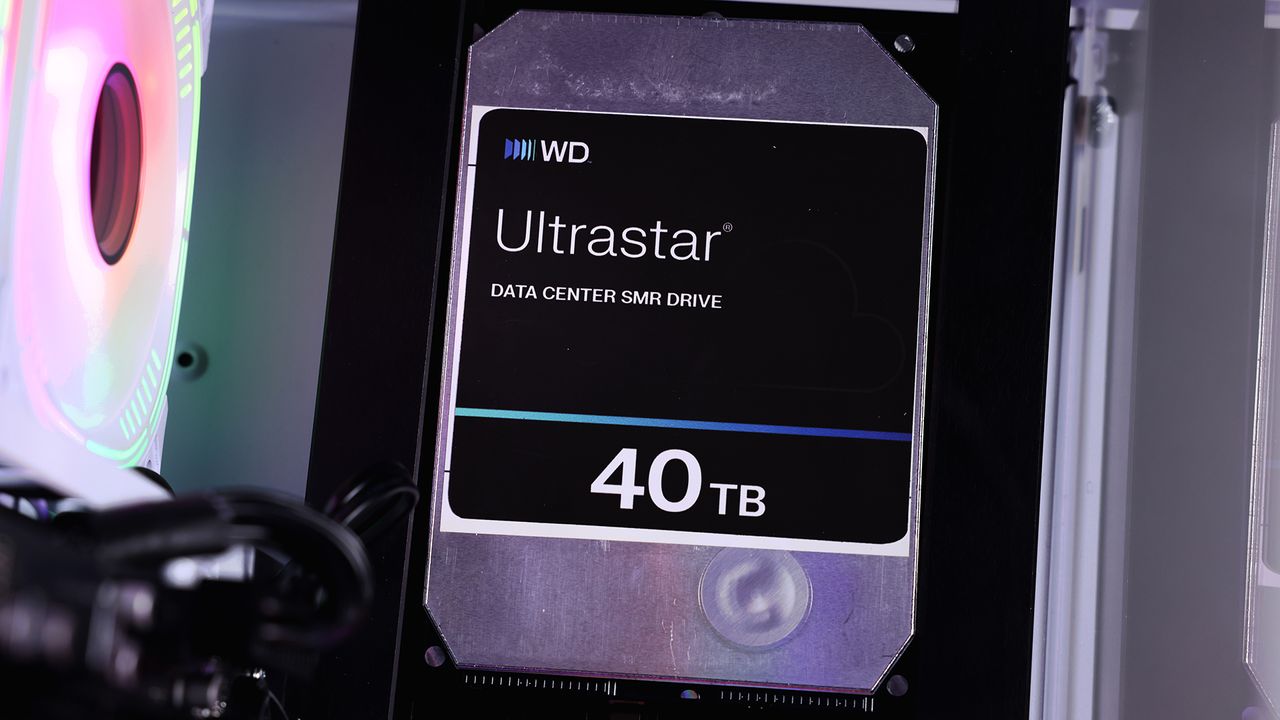
The new High Bandwidth Drive concept represents a shift in how data moves between platters and the interface. Instead of the standard one-head-per-surface design that reads or writes sequentially, the new approach allows multiple read/write heads to operate in parallel across several tracks.
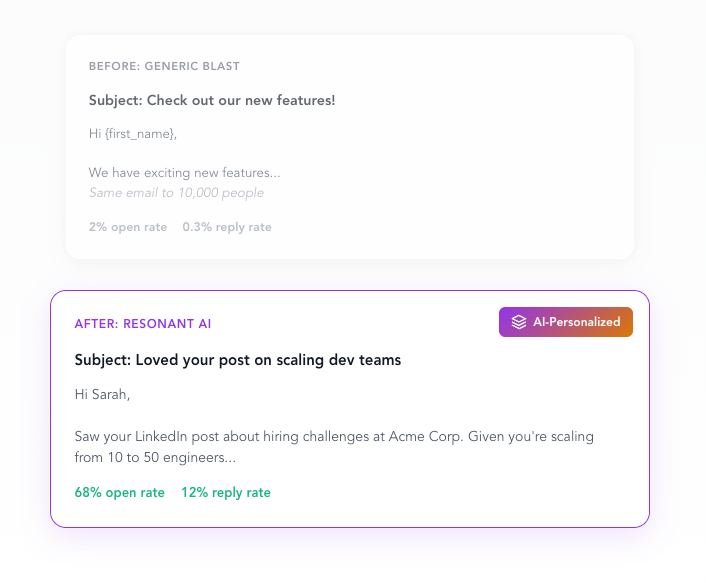
Resonant is an AI-native email platform that writes genuinely personalized outreach using each contact’s social profiles, company news, browsing, and purchase data. Connect your CRM or upload a CSV, set a goal, and Resonant researches LinkedIn, Twitter, and your data to craft context-rich emails that sound handwritten. Review, edit, and send at scale while tracking opens, clicks, and replies. Teams across e-commerce, B2B sales, SaaS, recruiting, and media use it to boost reply rates, revenue, and retention.
Samsung’s Galaxy S26 Ultra recently made its single-core and multi-core run on Geekbench 6, and just like its predecessors, the flagship features an overclocked version of Qualcomm’s Snapdragon SoC. This time, it was the Snapdragon 8 Elite Gen 5, whose performance cores were running at 4.74GHz instead of the default 4.61GHz. Despite this small frequency bump, our single-core and multi-core results are shown to be higher, which obviously makes us question a few things, starting with whether there’s any advantage to Samsung shipping its premium devices with a slightly faster chipset. An active cooling solution coupled with the diminishing returns […]
With barely three weeks left until Samsung removes the wraps from this year's Galaxy S26 series, the South Korean tech behemoth is now entering its most aggressive marketing phase to build up excitement and buzz around the upcoming smartphones. To that end, Samsung has just dropped three short teaser videos that hint at the Galaxy S26 series' massively improved neural framing, low-light photography, and zoom capabilities. Samsung is teasing massive photography-related improvements for the upcoming Galaxy S26 series Last week, Samsung teased the Privacy Display feature of the upcoming Galaxy S26 series. The feature uses Flex Magic Pixel OLED technology that […]
After rumours appeared last week pointing to a Nintendo Direct Partner Showcase happening this week, specifically on Thursday, February 5, 2026, we now know those rumours and reports were correct. Confirmed first through the Nintendo Today! mobile app, Nintendo will host a Partner Showcase Direct event tomorrow, February 5, at 6am PT / 9am ET / 2pm BT. This will be the third Nintendo Direct event of 2026 so far, after the Super Mario Galaxy Movie Direct and a Tomodachi Life: Living the Dream Direct last month. It's also the first Partner Showcase event Nintendo has hosted since July 2025. […]
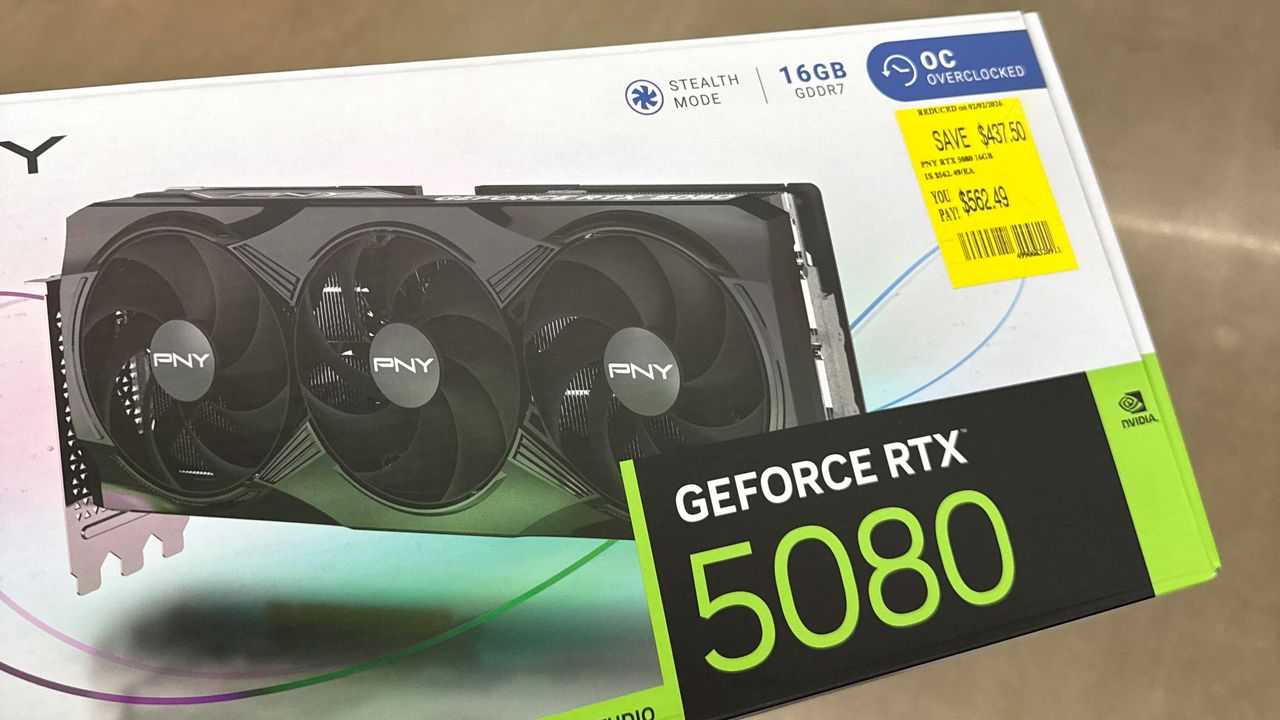
Excellent deals do exist, but they are rarer than a 32 GB DDR5 kit selling for less than $300. User Manages to Snag GeForce RTX 5090 for Just $899, While Another Receives RTX 5080 for Just $562 We rarely see GPUs available at their official MSRP, let alone below it. It took a long time for the GPU market to stabilize, but the worsening DRAM supply just spiked prices higher than they had been. Occassionally, we see users snagging GPUs at lower prices on deals, but two users were extremely lucky to grab them for almost half their prices. The […]
I am not going to lie: I love Team NINJA. If you have been checking out my coverage over the past few years, you likely know this already. Ever since first picking up the PlayStation port of Dead or Alive, I was hooked. There is a specific feel to their combat that no other developer quite replicates. That admiration for the studio founded by the legendary Tomonobu Itagaki, who sadly passed away last October, only deepened as they pioneered the genres I love most: the high-octane character action of Ninja Gaiden and the punishing Masocore depth of Nioh. Even when […]
Samsung's Exynos 2600 chip is certainly shaping up to be one of the highest performing mobile-focused chips of 2026, especially in the graphics department, where its Xclipse 960 GPU is emerging as an absolute beast of a performer. Now, that same GPU has pushed the Exynos 2600 to the top of the Basemark Ray Tracing leaderboard. The Exynos 2600 SoC's Xclipse 960 GPU propels it to the top of the Basemark Ray Tracing leaderboard For the benefit of those who might not be aware, the Exynos 2600 is Samsung's first chip that leverages its 2nm Gate-All-Around (GAA) process, which is a […]
Google may finally be starting to address a popular SEO and AI visibility “tactic”: self-promotional “best of” listicles. That’s according to new research by Lily Ray, vice president, SEO strategy and research at Amsive.
Across several SaaS brands hit hard in January, a pattern emerged. Many relied heavily on review-style content that ranked their own product as the No. 1 “best” in its category, often updated with the current year to trigger recency signals.
What’s happening. After the December 2025 core update, Google search results showed increased volatility throughout January, according to Barry Schwartz. Google hasn’t announced or confirmed any updates this year, but the timing aligns with steep visibility losses at several well-known SaaS and B2B brands. According to Ray:
In multiple cases, organic visibility dropped 30% to 50% within weeks. The losses were not domain-wide. They were concentrated in blog, guide, and tutorial subfolders.
Those sections often contained dozens or hundreds of self-promotional listicles targeting “best” queries. In most cases, the publisher ranked itself first. Many of the articles were lightly refreshed with “2026” in the title, with little evidence of meaningful updates.
“Presumably, these drops in Google organic results will also impact visibility across other LLMs that leverage Google’s search results, which extends beyond Google’s ecosystem of AI search products like Gemini and AI Mode [and AI Overviews], but is also likely to include ChatGPT,” Ray wrote.
Why we care. Self-promotional listicles have been a shortcut for influencing rankings and AI-generated answers. If Google is now reevaluating how it treats this content, any strategies built around “best” queries are in danger of imploding.
The gray area. Ranking yourself as the “best” without independent testing, clear methodology, or third-party validation has been considered (by most) to be a sketchy SEO tactic. It isn’t explicitly banned, but it definitely conflicts with Google’s guidance on reviews and trust.
Google has repeatedly said that high-quality reviews should show first-hand experience, originality, and evidence of evaluation. Self-promotional listicles often fall short, especially when bias is not disclosed.
Yes, but. Self-promotional listicles likely weren’t the only factor impacting organic visibility. Many affected sites also showed signs of rapid content scaling, automation, aggressive year-based refreshes, and other tactics tied to algorithmic risk.
That said, the consistency of self-ranking “best” content among the hardest-hit sites suggests this signal could now carry more weight, especially when used at scale.
What to watch. Whether self-promotional listicles earn citations and organic visibility. Google rarely applies changes evenly or instantly.
If this volatility reflects updates to Google’s reviews system, the direction is clear. Content designed primarily to influence rankings, rather than to provide credible and independent evaluation, is becoming a liability.
For brands chasing visibility in search and AI, the lesson is familiar: SEO shortcuts work until they don’t.
Now you have to win twice: the ranking and the citation.
Google searches for almost anything today, and there’s a good chance you’ll see an AI Overview before the organic results, sometimes even before the ads.
That summary frames the query, shortlists sources, and shapes which brands get considered.
AI Overviews now appear for about 21% of all keywords, according to Ahrefs. And 99.9% are triggered by informational intent.
Search rankings still matter. But AI summaries increasingly determine who wins early consideration.
Here’s what we’re seeing: brands aren’t losing visibility because they dropped from position three to seven. They’re losing it because they were never cited in the AI answer at all.
This article draws on research conducted by Search Influence and the online and professional education association UPCEA, which examined how people use AI-assisted search and how organizations are adapting. (Disclosure: I am the CEO at Search Influence)
Key takeaways
AI citations are becoming a trust signal: Being cited by AI influences credibility and early consideration – before users ever compare sources directly.
AI visibility is cumulative: AI systems pull from your website, YouTube, LinkedIn, and third-party publishers to assemble answers. Your URL isn’t the only thing that matters.
Authority doesn’t guarantee inclusion: Even established brands get sidelined when their content doesn’t match how users ask questions.
Most organizations know AI search matters but lack a plan: The gap isn’t awareness – it’s ownership, prioritization, and repeatable process.
Content structure affects whether you get cited: Pages built for retrieval, comparison, and decision-making outperform narrative or brand-led content.
Examining both sides of the search equation
To understand what’s happening, we need to look at two sides of the same equation – how people are searching today and how organizations are responding (or aren’t).
How AI tools are used alongside traditional search.
Which sources people trust during early research.
While the study focused on professional and continuing education, these behaviors mirror what we’re seeing across industries: more AI-assisted discovery, earlier opinion formation, and trust signals shifting.
A separate snap poll of 30 UPCEA member institutions in October 2025 looked at the other side:
AI search strategy adoption.
Barriers slowing progress.
How visibility in AI-generated results gets tracked.
Together, these datasets show a widening gap between how people search and how organizations have adapted.
So what does the data actually tell us?
The search patterns worth paying attention to
The research highlights several search behaviors that consistently influence how people discover and evaluate options today.
AI tools and AI summaries are influencing trust early
The data makes one thing clear: AI-driven search has moved from the margins into the mainstream.
50% of prospective students use AI tools at least weekly.
79% read Google’s AI Overviews when they appear.
1 in 3 trust AI tools as a source for program research.
56% are more likely to trust a brand cited by AI.
Trust is forming earlier now, often before users compare sources directly.
If you’ve been putting off your AI search strategy because “people don’t trust AI,” the data says otherwise. AI citations are becoming a credibility signal – a trust shortcut before deeper research begins.
Search behavior is diversified
Search doesn’t happen in one place or follow one clean path anymore.
84% of prospective students use traditional search engines during research.
61% use YouTube.
50% use AI tools.
These behaviors aren’t sequential. Users move between surfaces, carrying context with them.
What they see in an AI summary influences how they read a search result. A YouTube video can establish trust before a website ever earns a click.
This is where many strategies fall out of sync. Teams optimize one channel at a time – usually their website – and treat everything else as optional.
But AI search engines pull from everywhere your brand has a presence:
Your website.
Your YouTube channel.
Your LinkedIn content.
Third-party and publisher sites.
Your AI credibility is cumulative. It’s built anywhere your brand shows up, not just where you own the URL.
Search engines and brand-owned websites still matter
The rise of AI search doesn’t mean the end of traditional search. It raises the bar for it.
Even as AI summaries reshape early trust, people still rely heavily on first-party sources and organic results when they evaluate options:
63% rely on brand-owned websites during research.
77% trust university-owned websites more than other sources.
82% are more likely to consider options that appear on the first page of search results.
AI engines prioritize content that search engines can already crawl, interpret, and trust.
If your core content isn’t clearly structured, accessible, and eligible to rank in traditional search, it’s far less likely to be pulled into AI-generated answers.
When teams do take action, their priorities cluster around two themes:
59% focus on the accuracy of AI-generated information about their offerings.
48% focus on improving visibility and competitive positioning.
Those goals are linked. Clear, structured information makes it easier for AI systems to represent a brand. Visibility follows clarity. When that clarity is missing, AI fills in the blanks using third-party sources and competitor content.
Tracking AI visibility remains inconsistent
AI visibility tracking varies widely:
57% know their institution appears in AI-generated answers.
27% have seen their brand referenced occasionally but don’t actively monitor it.
13% are unsure whether they appear in AI-generated responses at all.
Among teams that do track AI visibility:
64% use dedicated tools or formal tracking methods.
29% rely on informal checks or don’t track consistently.
This creates a familiar blind spot. Teams feel the impact of AI search anecdotally but lack consistent visibility into where, how, and why their brand appears.
Universities bring everything search engines are supposed to reward:
High domain authority.
Deep, long-standing content libraries.
Strong brand recognition.
Yet in AI-generated answers, those advantages often don’t translate. When AI systems generate answers, they cite content that already matches the way users ask questions. That often means:
Comparisons.
“Top tools,” “top programs,” or “top options” lists.
Third-party explainers written about brands.
Those formats are dominated by aggregators and publishers – not the institutions themselves.
AI doesn’t look for the biggest brand. It looks for the best answer. Higher education shows what happens when brands rely on authority alone and why every industry needs to rethink how it publishes.
So what do you do about it?
1. Get your foundations in order before chasing AI visibility
The most common question right now: “How do we show up in AI results?”
In many cases, I think the honest answer is to fix what’s already broken.
AI systems rely on the same signals that traditional search does: crawlability, structure, clarity. If your pages are blocked, poorly organized, or weighed down by technical debt, they won’t surface cleanly anywhere.
We’ve seen teams invest energy in AI conversations while core pages still struggle with:
Indexing issues.
Bloated or unclear page structures.
Content written for storytelling, not retrieval.
Start with your traditional SEO foundation. AI systems can only work with what’s structurally sound.
2. Optimize content for retrieval, not just reading
AI search engines favor content that can be lifted cleanly and reused without interpretation. The job of content shifts from “telling a complete story” to “delivering clear, extractable answers.”
Many brand pages technically contain the right information, but it’s buried in long-form prose or brand language that requires context to understand.
Content that performs well in AI answers tends to:
Lead with direct answers, not setup.
Use headings that map to search intent.
Separate ideas into self-contained sections.
Avoid forcing readers (or machines) to infer meaning.
This isn’t about shortening content. It’s about sharpening it. When intent is obvious, AI knows exactly what to pull and when to cite you.
3. Compete on format, not just authority
If AI keeps citing comparisons, lists, and explainers – and it does – brands probably need to own those formats themselves.
AI systems pull from content that already reflects how people evaluate options. When those pages don’t exist on your site, AI cites the aggregators and publishers instead.
To compete, brands need to publish:
Comparison pages that reflect real decision criteria.
“Best for X” content tied to specific use cases.
Standalone explainers that help buyers choose.
Put simply: publish what AI actually wants to cite.
In some cases, being cited from a third-party platform matters more than where your site ranks.
We’ve seen AI Overviews where a brand’s YouTube video is cited alongside their webpage and third-party sources – all shaping the same answer. That blended source set is becoming the norm.
If your content strategy only prioritizes on-site publishing, you’re narrowing your chances of earning AI visibility.
Google has updated two of its help documents to explain the limits of Googlebot when it crawls. Specifically, how much Googlebot can consume by filetype and format.
The limits. The limits, some of which were documented already and are not new, include:
15MB for web pages: Google wrote, “By default, Google’s crawlers and fetchers only crawl the first 15MB of a file.”
64MB for PDF files: Google wrote, “When crawling for Google Search, Googlebot crawls the first 2MB of a supported file type, and the first 64MB of a PDF file.”
2MB for supported files types: Google wrote, “When crawling for Google Search, Googlebot crawls the first 2MB of a supported file type, and the first 64MB of a PDF file.”
Note, these limits are pretty large and the vast majority of websites do not need to be concerned with these limits.
Full text. Here is what Google posted fully in its help documents:
“By default, Google’s crawlers and fetchers only crawl the first 15MB of a file. Any content beyond this limit is ignored. Individual projects may set different limits for their crawlers and fetchers, and also for different file types. For example, a Google crawler may set a larger file size limit for a PDF than for HTML.”
“When crawling for Google Search, Googlebot crawls the first 2MB of a supported file type, and the first 64MB of a PDF file. From a rendering perspective, each resource referenced in the HTML (such as CSS and JavaScript) is fetched separately, and each resource fetch is bound by the same file size limit that applies to other files (except PDF files). Once the cutoff limit is reached, Googlebot stops the fetch and only sends the already downloaded part of the file for indexing consideration. The file size limit is applied on the uncompressed data. Other Google crawlers, for example Googlebot Video and Googlebot Image, may have different limits.”
Why we care. It is important to know of these limits but again, most sites will likely never even come close to these limits. That being said these are the document limits of Googlebot’s crawling.
Buoys, ships, and some autonomous rovers have recently added some detail, but it’s nothing like what we get from satellites today. It’s frustrating to everyone from fishermen to the Coast Guard, meteorologists to offshore wind developers.
Spotify is revamping its lyrics feature, adding offline access for Premium users, global lyric translations, and a more prominent placement in the Now Playing view.
With its pivot to HAMR, Western Digital aims to deliver 100TB+ HDDs Western Digital has promised to launch 100TB HDDs by 2029, delivering a 2.5x increase in storage density over the next three years. This year, Western Digital will launch 40TB HDDs. This drive is their ePMR 40TB UltraSMR HDD, which enters volume production later […]
Microsoft is reportedly walking back on Windows AI integrations If you ask any heavy Windows user about their opinions on Copilot and AI, you will likely hear nothing but complaints. For too long, Microsoft has used Windows as an AI testing ground, with users serving as guinea pigs. AI is being forced on users, even […]
Microsoft has moved its 3D Viewer app onto the deprecated list, and it's expected to disappear from the Microsoft Store in July 2026. I have some suggestions as to what you can use instead.
Xbox consoles are already capable emulation machines through Dev Mode, and a recent community poll suggests Nintendo Switch emulation using Ryujinx could be the next ambitious step.
Zelnick was responding to a question about Google's Project Genie AI tool. Announced last week, the experimental system transforms simple text instructions into short, explorable video environments – interactive worlds, essentially.
The new standard stems from growing safety concerns. While retractable or hidden handles improve airflow and aesthetics, they can become a deadly obstacle in emergencies.
Steven Allison, the Epic Games Store's vice president and general manager, conceded that the launcher boots and responds to user input more sluggishly than Steam. To address complaints that have persisted for years, the company is completely rebuilding the client's backend. "We're ripping the guts out of the Epic Games...
Test Your Idea scans 11 live data sources and tells you what's wrong with your startup before you write a single line of code. You're about to spend six months building something, but will anyone pay for it?
Drop your idea in two sentences and get back a viability score (0-100), real competitors (not the ones you googled), market size with actual sources, the three biggest problems you'll face, and what to fix before you start. Free scan. Full report for $19. No subscription.
This is one of the cheapest OLED Android gaming handhelds on the market, powered by the Snapdragon 865 processor. MANGMI Launches Pocket Max OLED Gaming Handheld at Just $199 as Super Early Bird Price Popular handheld maker, MANGMI, has announced its latest Android gaming handheld called Pocket Max, bringing the power of the Snapdragon 865 processor and Adreno 650 GPU for a smooth gaming experience. It's the second Android handheld device from the company that delivers significantly superior specs out of the box, including the internal hardware and screen, which makes Pocket Max a powerful Android handheld for enthusiasts. While […]
GMKtec’s mini PC delivers impressive performance and 1080p gaming in a compact size, though it’s pricey next to a larger system and not as upgradeable.
China’s two largest memory manufacturers, CXMT and YMTC, are said to each be embarking on an unprecedented expansion spree as they see an opportunity to close the gap with the big-three incumbents.
This 27-inch Acer Nitro XV27U gaming monitor has just hit a record low price on Amazon, scoring you an IPS display with a super-fast 300Hz refresh rate for just $199.99, saving you $100.
One of the biggest reasons new advertisers end up in underperforming Performance Max campaigns is simple: they followed Google’s advice.
Google Ads reps are often well-meaning and, in many cases, genuinely helpful at a surface level.
But it’s critical for advertisers – especially new ones – to understand who those reps work for, how they’re incentivized, and what their recommendations are actually optimized for.
Before defaulting to Google’s newest recommendation, it’s worth taking a step back to understand why the “shiny new toy” isn’t always the right move – and how advertisers can better advocate for strategies that serve their business, not just the platform.
Google reps are not strategic consultants
Google Ads reps play a specific role, and that role is frequently misunderstood.
They do not:
Manage your account long term.
Know your margins, cash flow, or true break-even ROAS.
Understand your internal goals, inventory constraints, or seasonality.
Get penalized when your ads lose money.
Their responsibility is not to build a sustainable acquisition strategy for your business. Instead, their primary objectives are to:
Increase platform and feature adoption.
Drive spend into newer campaign types.
Push automation, broad targeting, and machine learning.
That distinction matters.
Performance Max is Google’s flagship campaign type. It uses more inventory, more placements, and more automation across the entire Google ecosystem.
From Google’s perspective, it’s efficient, scalable, and profitable. From a new advertiser’s perspective, however, it’s often premature and misaligned with early-stage needs.
Performance Max benefits Google before it benefits you
Performance Max often benefits Google before it benefits the advertiser.
Because it automatically spends across Search, Shopping, Display, YouTube, Discover, and Gmail, Google is given near-total discretion over where your budget is allocated. In exchange, advertisers receive limited visibility into what’s actually driving results.
For Google, this model is ideal. It monetizes more surfaces, accelerates adoption of automated bidding and targeting, and increases overall ad spend across the board. For advertisers – particularly those with new or low-data accounts – the reality looks different.
New accounts often end up paying for upper-funnel impressions before meaningful conversion data is available.
Budgets are diluted across lower-intent placements, CPCs can spike unpredictably, and when performance declines, there’s very little insight into what to fix or optimize.
You’re often left guessing whether the issue is creative, targeting, bidding, tracking, or placement.
This misalignment is exactly why Google reps so often recommend Performance Max even when an account lacks the data foundation required for it to succeed.
‘Best practice’ doesn’t mean best strategy for your business
What Google defines as “best practice” does not automatically translate into the best strategy for your business.
Google reps operate from generalized, platform-wide guidance rather than a custom account strategy.
Their recommendations are typically driven by aggregated averages, internal adoption goals, and the products Google is actively promoting next – not by the unique realities of your business.
They are not built around your specific business model, your customer acquisition cost tolerance, your testing and learning roadmap, or your need for early clarity and control.
As a result, strategies that may work well at scale for mature, data-rich accounts often fail to deliver the same results for new or growing advertisers.
What’s optimal for Google at scale isn’t always optimal for an advertiser who is still validating demand, pricing, and profitability.
Smart advertisers earn automation – they don’t start with it
Smart advertisers understand that automation is something you earn, not something you start with.
Even today, Google Shopping Ads remain one of the most effective tools for new ad accounts because they are controlled, intent-driven, and rooted in real purchase behavior.
Shopping campaigns rely far less on historical conversion volume and far more on product feed relevance, pricing, and search intent.
That makes them uniquely well-suited for advertisers who are still learning what works, what converts, and what deserves more budget.
To understand how this difference plays out in practice, consider what happened to a small chocolatier that came to me after implementing Performance Max based on guidance from their dedicated Google Ads rep.
A real-world example: When Performance Max goes wrong
The challenge was straightforward: The retailer’s Google Ads account was new, and Performance Max was positioned as the golden ticket to quickly building nationwide demand.
The result was disastrous.
Over $3,000 was spent with a return of just one purchase.
Traffic to the website and YouTube channel remained low despite the spend.
CPCs climbed as high as $50 per click.
ROAS was effectively nonexistent.
To make matters worse, conversion tracking had not been set up correctly, causing Google to report inflated and inaccurate sales numbers that didn’t align with Shopify at all.
Understandably, the retailer lost confidence – not just in Performance Max, but in paid advertising as a whole. Before walking away entirely, they reached out to me.
Recognizing that this was a new account with no reliable data, I immediately reverse-engineered the setup into a standard Google Shopping campaign.
We properly connected Google Ads and Google Merchant Center to Shopify to ensure clean, accurate tracking.
From there, the campaign was segmented by product groups, allowing for intentional bidding and clearer performance signals.
Within two weeks, real sales started coming through.
By the end of the month, the brand had acquired 56 new customers at a $53 cost per lead, with an average order value ranging from $115 to $200.
More importantly, the account now had clean data, clear winners, and a foundation that could actually support automation in the future.
By starting with Shopping campaigns, advertisers can validate products, pricing, and conversion tracking while building clean, reliable data at the product and SKU level.
This early-stage performance proves demand, highlights top-performing items, and trains Google’s algorithm with meaningful purchase behavior.
Shopping Ads also offer a higher level of control and transparency than Performance Max.
Advertisers can segment by product category, brand, margin, or performance tier, apply negative keywords, and intentionally allocate budget to what’s actually profitable.
When something underperforms, it’s clear why – and when something works, it’s easy to scale.
This level of insight is invaluable early on, when every dollar spent should be contributing to learning, not just impressions.
The case for a hybrid approach
Standard Shopping consistently outperforms Performance Max for accounts that require granular control over product groups and bidding – especially when margins vary significantly across SKUs and precise budget allocation matters.
It allows advertisers to double down on proven winners with exact targeting, intentional bids, and full visibility into performance.
That said, once a Shopping campaign has been running long enough to establish clear performance patterns, a hybrid approach can be extremely effective.
Performance Max can play a complementary role for discovery, particularly for advertisers managing broad product catalogs or limited optimization bandwidth.
Used selectively, it can help test new products, reach new audiences, and expand beyond existing demand – without sacrificing the stability of core revenue drivers.
While Performance Max reduces transparency and control, pairing it with Standard Shopping for established performers creates a balanced strategy that prioritizes profitability while still allowing room for scalable growth.
Google reps are trained to recommend what benefits the platform first, not what’s safest or most efficient for a new advertiser learning their market.
While Performance Max can be powerful, it only works well when it’s fueled by strong, reliable data – something most new accounts simply don’t have yet.
Advertisers who prioritize predictable performance, cleaner insights, and sustainable growth are better served by starting with Google Shopping Ads, where intent is high, control is stronger, and optimization is transparent.
By using Shopping campaigns to validate products, understand true acquisition costs, and build confidence in what actually converts, businesses create a solid foundation for automation.
From there, Performance Max can be layered in deliberately and profitably – used as a tool to scale proven success rather than a shortcut that drains budget.
That approach isn’t anti-Google. It’s disciplined, strategic advertising designed to protect spend and drive long-term results.
An innovative approach to discovering, analyzing, and governing identity usage beyond traditional IAM controls.
The Challenge: Identity Lives Outside the Identity Stack
Identity and access management tools were built to govern users and directories.
Modern enterprises run on applications. Over time, identity logic has moved into application code, APIs, service accounts, and custom authentication
This new Channel 4 documentary dives into the shocking details behind the pop star's controversial 2005 trial. Here's how to watch Michael Jackson: The Trial for FREE.
CIPA data for 2025 indicates a huge growth in the compact camera market, with a disproportionate rise in value, suggesting premium models lead the way.
Borderlands 4 may never arrive on Nintendo’s Switch 2 Borderlands 4 was originally due to launch on Switch 2 on October 3rd, with Gearbox confirming a last-minute delay one week before its planned launch. Now, four months later, Take-Two Interactive, the game’s publisher, has confirmed that they have chosen to “pause development” of the game’s […]
Microsoft is expanding People Skills on the Microsoft 365 profile card in Microsoft Teams, making it easier to understand and organize your colleagues.
Amazon has a big discount on the Razer Basilisk V3 Pro gaming mouse, a superb option we loved in 2022 for its extremely responsive sensors and design that still holds up today.
Texas Instruments (Nasdaq: TXN), a global semiconductor company that designs, manufactures and sells analog and embedded processing chips, and Silicon Labs (Nasdaq: SLAB), a leader in secure, intelligent wireless technology, today announced they have signed a definitive agreement under which Texas Instruments will acquire Silicon Labs for $231.00 per share in an all-cash transaction, representing a total enterprise value of approximately $7.5 billion.
The acquisition will create a global leader in embedded wireless connectivity solutions by combining Silicon Labs' strong portfolio and expertise in mixed signal solutions with Texas Instruments' leading analog and embedded processing portfolio and internally owned technology and manufacturing capabilities. The combined company will accelerate growth by better serving existing and new customers through enhanced innovation and market access.
AMD posted its record fourth quarter revenue of $10.3 billion in 2025, and during the earnings call, the company issued some guidance on the upcoming product portfolio. During the call, AMD confirmed that Valve's Steam Machine is on track and shipping early this year, while its custom SoC division that designs processors for PlayStation and Xbox consoles will deliver an RDNA 5-based SoC for the next-generation Xbox console. While the Steam Machine specifications are confirmed, Xbox "Magnus" SoC is still largely a collection of rumored specifications. The "Magnus" SoC is rumored to feature the largest APU ever designed for a consumer console, with a 408 mm² chiplet design. Of this, 144 mm² is dedicated to the SoC built on TSMC's N3P node, while the GPU occupies 264 mm². The AMD chip is expected to include up to 11 CPU cores—three Zen 6 and eight Zen 6c—alongside a substantial GPU setup with 68 RDNA 5 compute units, four shader engines, and at least 24 MB of L2 cache. Memory might expand to 48 GB of GDDR7 on a 192-bit bus. A dedicated NPU is rumored to offer significant on-device AI performance, with reports suggesting up to 110 TOPS.
Dr. Lisa SuFor 2026, we expect semi-custom SoC annual revenue to decline by a significant double-digit percentage as we enter the seventh year of what has been a very strong console cycle. From a product standpoint, Valve is on track to begin shipping its AMD-powered Steam Machine early this year, and development of Microsoft's next-gen Xbox featuring an AMD semi-custom SoC is progressing well to support a launch in 2027.
At its Innovation Day 2026, Western Digital today unveiled a new customer-centric storage roadmap that reinvents the hard drive for AI needs, reinforcing its position as a strategic storage infrastructure partner for the AI-driven data economy. The announcements reflect how WD's fundamental business transformation has enabled a new generation of storage technologies spanning scalable capacity, breakthrough performance optimizations, power efficiency innovations and an intelligent platform API with cost-effective economics.
As AI generates massive amounts of data, it has spurred intense demand for data storage. To meet the moment, WD has focused deeply on customer needs, particularly capacity with proven reliability and economics, performance, power efficiency, and faster qualifications without customer business disruptions. During its Innovation Day, WD showcased technologies that address these essential customer requirements and will deliver them at scale.
Following a reported 5 – 10% increase in pricing last month, AMD board partners are expected to introduce a second hike this month or in March. It's unclear how large this new increase will be, but any price hike by AIB partners will make RX 9000-series graphics cards even more expensive.
The relationship between AMD and Microsoft dates back more than a decade, with the Xbox One, Series X, and Series S generations built on custom AMD silicon. Each iteration has relied on a system-on-chip (SoC) built around AMD's CPU and GPU cores, blending x86 architecture with Radeon graphics on a...
Liv is a comprehensive wellness platform that integrates mental health support, fitness tracking, and daily management tools specifically designed for ADHD executive function challenges. It currently connects with Google Calendar, Google Tasks, Fitbit API, and offers in-the-moment AI coaching support. The mission is to create accessible mental health and wellness tools informed by lived experiences with combined-type ADHD, bridging the gap between clinical understanding and daily reality for neurodivergent individuals.
Nioh 3 features a vast weapon selection, with many options within the different weapon types for Samurai and Ninja Style sporting a set passive skill, alongside randomly assigned skills that can be used to define your character build. Among these weapon choices are Crucible weapons. These remarkable weapons are difficult to come by while playing the game normally, but there's an easy way to farm them in the early game. Become the Master of Weapons: here's where you can farm Crucible Weapons, and why you should to unlock the full combat potential of Takechiyo. How to Farm Crucible Weapons Farming […]
Nioh 3 is the first new entry in the hardcore action role-playing game series by Team NINJA in over 6 years, and a lot has changed since the second entry. While the basic combat mechanics and loot system are rooted in the franchise's history, the third entry introduces many changes and additions that can leave even veterans a little confused. In this Complete Walkthrough and Guides Hub, you will find everything you need not only to successfully complete your journey through time but also to have tons of fun while doing so, starting from the Warring States period, which can be […]
The updated 14-inch and 16-inch MacBook Pro models that are rumored to launch in March with Apple’s new M5 Pro and M5 Max chipsets are expected to retain the same thermal solution as the previous models. Despite these SoCs being highly efficient, they do tend to get exceptionally hot. While the technology giant might not be too keen to introduce a revamped heatpipe layout or switch to a vapor chamber, a fresh rumor claims that TSMC’s 2.5D packaging will be utilized instead of the company’s Integrated Fan-Out (InFO) technology, helping improve heat dissipation and lower resistance. There are other advantages too, which […]
Yesterday, Epic published the Epic Games Store year-in-review post, revealing new records for sales of third-party games (+57% over last year), total PC users (over 317 million), and monthly active users (MAUs; 78 million in December 2025, when the giveaway of Hogwarts Legacy added around six million users). That said, while playtime spent with third-party games increased by 4%, total engagement across all Epic Games Store titles dropped by 14%, signaling a decrease in first-party engagement of games like Fortnite and Rocket League. Website GamesIndustry.biz was able to interview Epic Games Store General Manager Steve Allison, who admitted that the […]
HetCCL, a proposed computing library, could make Nvidia and AMD AI accelerators play nicely with one another in the same cluster by bridging the two companies' hardware over RDMA.
Many incident response failures do not come from a lack of tools, intelligence, or technical skills. They come from what happens immediately after detection, when pressure is high, and information is incomplete.
I have seen IR teams recover from sophisticated intrusions with limited telemetry. I have also seen teams lose control of investigations they should have been able to handle. The
AMD confirms “next-gen Xbox” release window in Q4 earnings call During the company’s Q4 2025 earnings call, AMD’s CEO, Lisa Su, confirmed that “Microsoft’s next-gen Xbox” would feature AMD semi-custom silicon and launch in 2027. This means that the first “next-generation” console should launch next year, replacing Microsoft’s Xbox Series X and Xbox Series S. […]
How well does AMD's FSR 4 upscaling perform compared to Nvidia's latest DLSS 4.5? Is AMD still relatively close to Nvidia in image quality, or has FSR fallen further behind? Let's find out.
The Nintendo Switch 2 version of Borderlands 4 has been officially canceled. The news was shared yesterday, when Take-Two Interactive deleted the game from its updated list of upcoming releases found in its latest quarterly report. Alan Lewis, a spokesperson for Take-Two, shared the following statement with Variety: We made the difficult decision to pause development on that SKU. Our focus continues to be delivering quality post-launch content for players on the ongoing improvements to optimize the game. We’re continuing to collaborate closely with our friends at Nintendo. We have ‘PGA Tour 2K25’ and ‘WWE 2K26’ coming out for Nintendo […]
AMD's CEO, Lisa Su, has given her outlook on the PC industry, and it appears Team Red isn't very confident about the client segment's growth this year. AMD's Lisa Su Hints Towards Focusing More On Enterprise Within the Client Segment, Through Edge AI Products The PC industry has been in turmoil over the past few quarters, primarily driven by ongoing memory shortages and by companies like NVIDIA, AMD, Dell, and others shifting their focus to enterprise/AI businesses. IDC projections indicate a decline in shipments, further raising pressure on AMD and how it will proceed in the client industry. AMD's CEO, […]
Microsoft has warned that information-stealing attacks are "rapidly expanding" beyond Windows to target Apple macOS environments by leveraging cross-platform languages like Python and abusing trusted platforms for distribution at scale.
The tech giant's Defender Security Research Team said it observed macOS-targeted infostealer campaigns using social engineering techniques such as ClickFix since
The investment comes from backers including the Qatar Investment Authority as demand for chips beyond Nvidia soars and as Qatar aims to build out its AI infrastructure.
FlexiSpot's latest standing desk is one built from the ground up with cable management in mind. That's not always an easy feat when you're dealing with a dynamic height adjusting tabletop.
Electronic Arts Inc. today announced preliminary financial results for its third fiscal quarter ended December 31, 2025.
Selected Operating Highlights and Metrics
Net bookings 1 for the quarter totaled $3.046 billion, up 38% year-over-year.
Battlefield 6 was the best-selling shooter title of 2025, setting new franchise engagement records.
EA SPORTS FC net bookings increased high single digits year-over-year in Q3, excluding the benefit of deluxe edition content timing, driven by strength in Ultimate Team and FC Mobile.
Apex Legends momentum continued in Q3 with net bookings up double-digits year-over-year driven by innovative new features and events.
EasySMX, the leading manufacturer of gaming peripherals, reproduced X05Pro Controller, the next evolution of its highly popular X05 line. Designed through extensive feedback from over 10,000 real gamers worldwide, the X05Pro delivers a balance of quiet operation, precision control, and immersive feedback, making it the ideal choice for PC and console players seeking performance without compromise.
The X05Pro introduces Redesigned Quiet Buttons with restructured mechanics and noise-dampening silicone, significantly reducing click sounds while maintaining tactile responsiveness—perfect for shared spaces like dorms, living rooms, or late-night gaming sessions. Players will also experience enhanced realism with the Dual-Stage Trigger Vibration System, featuring a 2+2 motor structure that brings distinct feedback for acceleration, braking, or in-game combat, combined with 2-stage trigger locks: a longer travel distance for precise control in racing games, and a shorter travel distance for fast firing or immediate action in shooters. Meanwhile, the 8-Directional D-Pad with metal dome switches ensures accurate diagonal inputs, a must-have for fighting game fans and retro enthusiasts.
AMD today unveiled the Kintex UltraScale+ Gen 2 FPGA family. The company's latest announcement is a strategic play for the middle-of-the-market in the FPGA segment that's dominated by the likes of Intel Agilex 5 series. Targeting sectors that demand longevity and reliability, such as medical imaging, industrial automation, and broadcast video production, the Gen 2 family is not just a lithography shrink, but it represents a significant architectural modernization of the existing 16 nm Kintex platform, infusing it with the high-speed connectivity and memory standards required for the data-heavy workloads of 2027 and beyond.
The original Kintex UltraScale+ series from the Xilinx era is popular in the industry, for a performance/Watt balance that made it the suitable for everything from ultrasound machines to 5G radio heads. However, as edge devices have become hungrier for bandwidth, the original platform's connectivity options began to show their age. The Gen 2 update addresses the I/O modernization need. The most striking upgrade is the memory subsystem, replacing DDR4 with newer LPDDR4X, DDR5 and LPDDR5X memory standards. LPDDR tends to be popular for compact, edge devices in the IIoT (industrial IoT) space. This should even pave the way for a new crop of 8K or 4K broadcast-tier cameras. Since these are produced in small batches, FPGAs are preferred over ASICs or elaborate SoCs.
Nimo lets you collect anonymous questions from friends and answer them in stories. Choose a topic for the day, share your link, and receive candid questions without revealing the asker's identity. You can respond in story format and post to social networks to keep the conversation going. Nimo focuses on safer, topic-based prompts, allowing you to control the discussion and make sharing more enjoyable.
Straktur is a Next.js blueprint that enables you to build internal apps with AI while enforcing a clean, scalable architecture. It provides a structured environment—covering authentication, storage, UI components, and database layers—helping you avoid spaghetti code and ship faster. With integrations like BetterAuth, Shadcn/UI, Drizzle, and SQL databases, you have vendor-agnostic options for email and storage. Migrate from Airtable, Retool, or Excel, take ownership of your code, and easily describe features in plain English as your AI writes consistent, production-ready code.
The Eclipse Foundation, which maintains the Open VSX Registry, has announced plans to enforce security checks before Microsoft Visual Studio Code (VS Code) extensions are published to the open-source repository to combat supply chain threats.
The move marks a shift from a reactive to a proactive approach to ensure that malicious extensions don't end up getting published on the Open VSX Registry.
The U.S. Cybersecurity and Infrastructure Security Agency (CISA) on Tuesday added a critical security flaw impacting SolarWinds Web Help Desk (WHD) to its Known Exploited Vulnerabilities (KEV) catalog, flagging it as actively exploited in attacks.
The vulnerability, tracked as CVE-2025-40551 (CVSS score: 9.8), is a untrusted data deserialization vulnerability that could pave the way for remote
Intel's GPU business has always been a mystery, not just on the consumer front, but also in the datacenter segment, but it appears Tan has a plan in mind. Intel's CEO Reveals Recent Efforts to Hire Qualcomm Executive Were a Part of the GPU Business Strategy Intel has been in a struggling position ever since Lip-Bu Tan took over, given that the company still hasn't defined a clear roadmap for where it is heading with AI. When you look at Team Blue's accelerator plans, the only thing we know about is the 'inference-focused' Crescent Island, since progress around Jaguar Shores […]
Zoye allows you to run all your business tools in one place, featuring a personal AI assistant that streamlines your workflow. Manage tasks, CRM, deals, documents, calendar, accounting, reports, automations, and teams—all handled by your AI assistant. This platform is designed to redefine how businesses operate with integrated productivity and management tools.
From flowers that will never wilt to portable coffee machines and smartwatches, there's a perfect Valentine's Day gift for that special someone to show how much you care.
Illustro is an AI illustration generator tailored for websites, marketing, books, and more. Simply describe your idea, choose a style, and generate professional, consistent visuals in seconds. Easily edit your illustrations with AI by adding or removing elements, adjusting colors, and exporting in PNG, JPG, or SVG formats for use in Figma or Adobe Illustrator. You can use your illustrations commercially with full rights and iterate by regenerating them until they perfectly match your brand.
Fake SSDs used to be easy to catch. Operating systems or common diagnostic tools would quickly expose them as something other than what the sticker claimed. Today's counterfeits, however, are far more convincing, often looking legitimate until buyers start noticing performance that feels way off.
DocScribl is an AI-powered workflow scribe that captures browser-based processes, explains each step clearly, and produces visual timelines with screenshots. It allows you to export documentation to PDF and Markdown while providing contextual answers to questions about any process step. Emphasizing privacy, it features local-only capture and encryption, supports versioning and team sharing, and helps standardize processes to speed up onboarding and enhance knowledge transfer.
The next-gen Xbox console from Microsoft, which we know will be powered by a semi-custom SoC currently in development from AMD, is "progressing well to support a launch in 2027," said AMD's chief executive officer, Dr. Lisa Siu, during the company's 2025 fourth quarter earnings call. "For 2026, we expect semi-custom SoC annual revenue to decline by a significant double-digit percentage as we enter the seventh year of what has been a very strong console cycle," Dr. Siu said on the call. "From a product standpoint, Valve is on track to begin shipping its AMD-powered Steam Machine early this year. […]
It might be from 2022, but this robot vacuum and mop is still a very capable set-and-forget cleaning powerhouse that you can get for a massive 64% discount, thanks to a competitive market.
With The Elder Scrolls 6 and Fallout 5 on the horizon, Skyrim's lead designer thinks Bethesda should make the RPGs more "dynamic" than previous titles.
OneOdio, a global audio brand known for delivering accessible and high-performance sound solutions, today announced the launch of the OneOdio solocaster, an all-in-one voice transformer and sound card designed for streaming, recording, gaming and content creation. Engineered for gamers and emerging creators alike, the solocaster combines professional-grade audio performance with creative sound tools and visual customization in a compact, easy-to-use format.
Positioned as a versatile audio hub for live content, the solocaster enables creators to manage microphones, system audio, background music and external sources from a single device. Universal compatibility with five independent audio channels and multi-port connectivity (USB-C, 3.5 mm, XLR, Bluetooth and AUX). The solocaster operates as a true plug-and-play device with no drivers required, supporting virtually all major streaming and recording apps across Windows, Mac and mobile.
Levelplay is proud to announce the launch of its latest all-in-one (AIO) CPU cooling solutions, the Combat Liquid HUD and Combat Liquid SE, expanding the Combat Liquid family with performance-driven cooling and real-time system visibility. Designed for gamers and PC enthusiasts who demand immediate access to live CPU data, the Combat Liquid 360 HUD features an integrated digital display on the pump cap that presents critical system information at a glance, while delivering high-efficiency thermal performance for modern high-core processors.
More Than Just a Display
The Combat Liquid 360 HUD is more than a high-performance CPU cooler—it's a real-time command center for your system. At the heart of the cooler is a 2.6" circular digital display, transforming the pump cap into a mission-ready HUD that delivers live system intelligence at a glance. The display provides real-time readouts including CPU temperature, usage rate, power draw, and clock speeds, allowing users to monitor performance instantly without relying on on-screen software overlays. Simply update the driver and unlock full access to the HUD's real-time system monitoring features.
VFX AI is an enterprise-ready SaaS video platform designed for creators and teams to transform long-form videos into short, impactful clips using AI. It enables cutting, reframing, and editing through straightforward text-based commands, along with advanced editing workflows. The platform identifies key moments, ensures subjects stay in frame, generates captions, and exports videos optimized for platforms like Shorts, Reels, and TikTok. Designed for scalability, VFX AI supports team collaboration, brand kits, SSO, SCIM, and integrates seamlessly with existing tools, allowing for quicker video content production and management.
Western Digital aims to revolutionise the HDD space with plans to boost bandwidth by 8x While SSDs now dominate the consumer PC market, HDDs still have a place within the overall storage market. Mass storage requires a medium that can store large amounts of data, and while SSDs are fast, data density and pricing are […]
AMD (NASDAQ:AMD) today announced financial results for the fourth quarter and full year of 2025. Fourth quarter revenue was a record $10.3 billion, gross margin was 54%, operating income was $1.8 billion, net income was $1.5 billion and diluted earnings per share was $0.92. On a non-GAAP basis, gross margin was 57%, operating income was a record $2.9 billion, net income was a record $2.5 billion and diluted earnings per share was a record $1.53.
For the full year 2025, AMD reported record revenue of $34.6 billion, gross margin of 50%, operating income of $3.7 billion, net income of $4.3 billion, and diluted earnings per share of $2.65. On a non-GAAP basis, gross margin was 52%, operating income was a record $7.8 billion, net income was a record $6.8 billion and diluted earnings per share was a record $4.17.
Western Digital has today presented its latest effort to catch up with traditional QLC NAND Flash SSDs by improving its HDD offerings. With the latest High-Bandwidth HDDs, Western Digital has implemented two new technologies in a classical multi-platter HDD design. The first innovation comes in a form of High Bandwidth Drive Technology, which enables double the I/O bandwidth with a path to 8x the current bandwidth in the future. It relies on simultaneous reading and writing from multiple heads on multiple tracks, which is already in customer hands for validation. The second one is Dual Pivot Technology that introduces a second set of independent actuators on a separate pivot, which will not scarify drive capacity unlike older dual actuator designs.
Using Dual Pivot Technology, HDDs can pack more drive platters in a standard 3.5-inch body for higher capacities, and the performance grows by an additional 2x, which is 4x I/O bandwidth compared to today's drives. This technology will pave the way for 100 TB HDDs, that offer speeds comparable to QLC-based SATA III SSDs, at much better price/performance ratio and better data retention, prompting the massive boom of HDD development. Western Digital's drives with High Bandwidth Drive Technology are already shipping to customers, while drives with Dual Pivot Technology are in development in Western Digital's labs and are scheduled to become available in 2028, with early customer sampling probably much sooner.
Take-Two Interactive's third-quarter financial results have been published, which means there's plenty of information to glean from the company behind 2K and Rockstar's latest numbers. What everyone wants to hear about, though, is Grand Theft Auto VI, which may just be the most anticipated video game ever, and in the meantime, GTA V has hit yet another astronomical sales milestone. While Take-Two's chief executive officer, Strauss Zelnick, didn't get too deep into what's coming for GTA VI, he did confirm in an interview with The Game Business and during the call with investors that we can expect more "marketing beats" […]
Apple appears to be on the cusp of launching its first major products of the new year, namely, the M5 Pro and M5 Max MacBook Pro devices, as two tantalizing signs beef up our confidence in this upbeat projection. Sign #1: The macOS 26.3 RC update and the connection to the M5 Pro and M5 Max MacBook Pro devices Apple has just launched the 26.3 release candidate (RC) build for Xcode, allowing users to leverage OpenAI's Codex and Anthropic's Claude Agent natively for coding-related tasks. So, why is this development a harbinger of sorts? Well, this suggests that the rest […]
EA's announcement that it would be going private in a buyout led by the Saudi Arabia PIF and Silver Lake wasn't the only major deal the company made in 2025. It also struck a deal with Stability AI, a generative AI firm that "is unlocking the power of open-source generative AI to expand human creativity," according to its website. At the time of the deal, Stability AI chief executive officer, Prem Akkaraju, said, "EA is a pioneer in interactive entertainment and understands that innovation begins with the creator. At Stability AI, we put creators at the center and build around […]
Microsoft has unveiled the Publisher Content Marketplace, a new initiative that aims to compensate publishers for quality content while helping better train AI tools. Win-win?
VMware Workstation Pro 25H2 focuses on platform updates, adding USB 3.2 support, newer virtual hardware, improved Hyper-V detection, and compatibility with recent Linux releases like Debian 13, Fedora 42, and RHEL 10, plus a new dictTool utility for working with configuration files.
ProFormaGen assists founders and finance teams in quickly creating professional pro forma models. By answering a few questions, its AI generates 36-month revenue, expense, and cash flow projections along with interactive dashboards. Users can collaborate with teammates, model multiple revenue streams, and track expenses with real-time updates. Additionally, they can export investor-ready reports and full Excel models to share and refine their plans.
The meteoric rise and sustained success of Embark Studio's new third-person extraction shooter, ARC Raiders, will be one for the history books of the video game industry if things keep going the way they are currently going. A new report from Alinea Analytics claims that for the third consecutive month, ARC Raiders was the number one selling title across Steam, PlayStation, and Xbox. That month was, of course, January 2026, during which Alinea Analytics says ARC Raiders sold an additional 1.5 million copies just on Steam. On PlayStation and Xbox, it combined for an additional 1.7 million copies sold, bringing […]
An overseas retailer has listed Intel's forthcoming Core Ultra 200K Plus (codenamed Arrow Lake Refresh) processors along with pricing, suggesting that the refreshed family will carry practically no premium over existing products.
See what to expect for Startup Battlefield 200 in 2026, the ultimate startup pitch competition on the global stage at TechCrunch Disrupt. Join the mailing list to be the first to know when applications drop.
Google updated its Googlebot documentation to clarify file size limits, separating default limits that apply to all crawlers from Googlebot-specific details.
Intel released the 80286 processor on February 1, 1982, making the CPU 44 years old. According to the company, the 16-bit chip represented a significant evolution in the personal computing industry. It introduced several innovative features for advanced computing applications and was considerably faster than the 8086.
During his time as HP CEO, he helped the company expand beyond its traditional PC and printing businesses into services and subscriptions. HP has also made strides in AI-enabled offerings under his leadership.
Stacks is an AI-powered no-code platform that enables users to create a mobile app, website, POS system, and QR menu all in one place. Generate layouts in seconds, customize them with a drag-and-drop builder, and publish to iOS and Android instantly. You can connect WooCommerce payments, send push notifications, manage products and orders, and track sales and inventory. Start for free on a stacksmarket.co subdomain and upgrade for additional features and support.
Cybersecurity researchers have disclosed details of a now-patched security flaw impacting Ask Gordon, an artificial intelligence (AI) assistant built into Docker Desktop and the Docker Command-Line Interface (CLI), that could be exploited to execute code and exfiltrate sensitive data.
The critical vulnerability has been codenamed DockerDash by cybersecurity company Noma Labs. It was addressed by
Last week, Google debuted its latest generative AI experiment, Project Genie. It's a tool capable of generating interactive three-dimensional environments made entirely through generative AI that you can explore for one solid minute. All you need to do (after paying the $250 monthly fee for Google's AI Ultra subscription) is write a prompt to start generating your own game-like worlds, but besides the paywall barrier, there are more than a few limitations to this technology in terms of it becoming the new way to make games. The fact that it runs at a slide-show speed of 24 frames per second, […]
South Korean developer Pearl Abyss announced today that the upcoming open world action/adventure game Crimson Desert has been wishlisted by over two million users across all platforms. It is yet another strong confirmation of the mounting hype behind Crimson Desert. It's been a while since the market got a fantasy triple-A open world game of this scale (the world is said to be twice as big as Skyrim's), after all, and fans can't wait to get their hands on the game after many years of development. Thankfully, in addition to celebrating wishlist milestones, Pearl Abyss is still sharing little nuggets […]
NVIDIA and OpenAI are all that's being talked about in the AI world, not because there have been changes in their commitments, but because the scale of the partnership is so immense that it captures all the market spotlight. Before we dive into the ongoing NVIDIA-OpenAI fiasco, it's important to note the fundamentals that underpin the partnership. Team Green is currently the world's largest AI infrastructure provider, and almost all hyperscalers are dependent on the company, not just for hardware, but also for financial commitments in the form of "collaborations" or whatever you call it. At the same time, NVIDIA […]
Apple TV has unveiled the official trailer for Monarch: Legacy of Monsters season 2, and it’s a rip-roaring preview that threatens to tear your screen in two.
The Canon PowerShot Elph 360 HS A / Ixus 285 HS A appeals to the neo-retro appetite of the Tik Tok generation and it's helping to keep compact cameras alive
Microsoft Advertising today launched the Publisher Content Marketplace (PCM), a system that lets publishers license premium content to AI products and get paid based on how that content is used.
How it works. PCM creates a direct value exchange. Publishers set licensing and usage terms, while AI builders discover and license content for specific grounding scenarios. The marketplace also includes usage-based reporting, giving publishers visibility into how their content performs and where it creates the most value.
Designed to scale. PCM is designed to avoid one-off licensing deals between individual publishers and AI providers. Participation is voluntary, ownership remains with publishers, and editorial independence stays intact. The marketplace supports everyone from global publishers to smaller, specialized outlets.
Why we care. As AI systems shift from answering questions to making decisions, content quality matters more than ever. As agents increasingly guide purchases, finance, and healthcare choices, ads and sponsored messages will sit alongside — or draw from — premium content rather than generic web signals. That raises the bar for credibility and points to a future where brand alignment with trusted publishers and AI ecosystems directly impacts performance.
Early traction. Microsoft Advertising co-designed PCM with major U.S. publishers, including Business Insider, Condé Nast, Hearst, The Associated Press, USA TODAY, and Vox Media. Early pilots grounded Microsoft Copilot responses in licensed content, with Yahoo among the first demand partners now onboarding.
What’s next. Microsoft plans to expand the pilot to more publishers and AI builders that share a core belief: as the AI web evolves, high-quality content should be respected, governed, and paid for.
The big picture. In an agentic web, AI tools increasingly summarize, reason, and recommend through conversation. Whether the topic is medical safety, financial eligibility, or a major purchase, outcomes depend on access to trusted, authoritative sources — many of which sit behind paywalls or in proprietary archives.
The tension. The traditional web bargain was simple: publishers shared content, and platforms sent traffic back. That model breaks down when AI delivers answers directly, cutting clicks while still depending on premium content to perform well.
Bottom line. If AI is going to make better decisions, it needs better inputs — and PCM is Microsoft’s bet that a sustainable content economy can power the next phase of the agentic web.
Vibe coding is a new way to create software using AI tools such as ChatGPT, Cursor, Replit, and Gemini. It works by describing to the tool what you want in plain language and receiving written code in return. You can then simply paste the code into an environment (such as Google Colab), run it, and test the results, all without ever actually programming a single line of code.
In this guide, you’ll understand how to start vibe coding, learn its limitations and risks, and see examples of great tools created by SEOs to inspire you to vibe code your own projects.
Vibe coding variations
While “vibe coding” is used as an umbrella term, there are subsets of coding with support or AI, including the following:
Type
Description
Tools
AI-assisted coding
AI helps write, refactor, explain, or debug code. Used by actual developers or engineers to support their complex work.
GitHub Copilot, Cursor, Claude, Google AI Studio
Vibe coding
Platforms that handle everything except the prompt/idea. AI does most of the work.
ChatGPT, Replit, Gemini, Google AI Studio
No-code platforms
Platforms that handle everything you ask (“drag and drop” visual updates while the code happens in the background). They tend to use AI but existed long before AI became mainstream.
Notion, Zapier, Wix
We’ll focus exclusively on vibe coding in this guide.
With vibe coding, while there’s a bit of manual work to be done, the barrier is still low — you basically need a ChatGPT account (free or paid) and access to a Google account (free). Depending on your use case, you might also need access to APIs or SEO tools subscriptions such as Semrush or Screaming Frog.
To set expectations, by the end of this guide, you’ll know how to run a small program on the cloud. If you expect to build a SaaS or software to sell, AI-assisted coding is a more reasonable option to take, which will involve costs and deeper coding knowledge.
Vibe coding use cases
Vibe coding is great when you’re trying to find outcomes for specific buckets of data, such as finding related links, adding pre-selected tags to articles, or doing something fun where the outcome doesn’t need to be exact.
For example, I’ve built an app to create a daily drawing for my daughter. I type a phrase about something that she told me about her day (e.g., “I had carrot cake at daycare”). The app has some examples of drawing styles I like and some pictures of her. The outputs (drawings) are the final work as they come from AI.
When I ask for specific changes, however, the program tends to worsen and redraw things I didn’t ask for. I once asked to remove a mustache and it recolored the image instead.
If my daughter were a client who’d scrutinize the output and require very specific changes, I’d need someone who knows Photoshop or similar tools to make specific improvements. In this case, though, the results are good enough.
Building commercial applications solely on vibe coding may require a company to hire vibe coding cleaners. However, for a demo, MVP (minimum viable product), or internal applications, vibe coding can be a useful, effective shortcut.
How to create your SEO tools with vibe coding
Using vibe coding to create your own SEO tools require three steps:
Write a prompt describing your code
Paste the code into a tool such as Google Colab
Run the code and analyze the results
Here’s a prompt example for a tool I built to map related links at scale. After crawling a website using Screaming Frog and extracting vector embeddings (using the crawler’s integration with OpenAI), I vibe coded a tool that would compare the topical distance between the vectors in each URL.
This is exactly what I wrote on ChatGPT:
I need a Google Colab code that will use OpenAI to:
Check the vector embeddings existing in column C. Use cosine similarity to match with two suggestions from each locale (locale identified in Column A).
The goal is to find which pages from each locale are the most similar to each other, so we can add hreflang between these pages.
I’ll upload a CSV with these columns and expect a CSV in return with the answers.
Then I pasted the code that ChatGPT created on Google Colab, a free Jupyter Notebook environment that allows users to write and execute Python code in a web browser. It’s important to run your program by clicking on “Run all” in Google Colab to test if the output does what you expected.
This is how the process works on paper. Like everything in AI, it may look perfect, but it’s not always functioning exactly how you want it.
You’ll likely encounter issues along the way — luckily, they’re simple to troubleshoot.
First, be explicit about the platform you’re using in your prompt. If it’s Google Colab, say the code is for Google Colab.
You might still end up with code that requires packages that aren’t installed. In this case, just paste the error into ChatGPT and it’ll likely regenerate the code or find an alternative. You don’t even need to know what the package is, just show the error and use the new code. Alternatively, you can ask Gemini directly in your Google Colab to fix the issue and update your code directly.
AI tends to be very confident about anything and could return completely made-up outputs. One time I forgot to say the source data would come from a CSV file, so it simply created fake URLs, traffic, and graphs. Always check and recheck the output because “it looks good” can sometimes be wrong.
If you’re connecting to an API, especially a paid API (e.g., from Semrush, OpenAI, Google Cloud, or other tools), you’ll need to request your own API key and keep in mind usage costs.
Should you want an even lower execution barrier than Google Colab, you can try using Replit.
Simply prompt your request and the software will create the code, design, and allow testing all on the same screen. This means a lower chance of coding errors, no copy and paste, and a URL you can share right away with anyone to see your project built with a nice design. (You should still check for poor outputs and iterate with prompts until your final app is built.)
Keep in mind that while Google Colab is free (you’ll only spend if you use API keys), Replit charges a monthly subscription and per-usage fee on APIs. So the more you use an app, the more expensive it gets.
Inspiring examples of SEO vibe-coded tools
While Google Colab is the most basic (and easy) way to vibe code a small program, some SEOs are taking vibe coding even further by creating programs that are turned into Chrome extensions, Google Sheets automation, and even browser games.
The goal behind highlighting these tools is not only to showcase great work by the community, but also to inspire, build, and adapt to your specific needs. Do you wish any of these tools had different features? Perhaps you can build them for yourself — or for the world.
GBP Reviews Sentiment Analyzer (Celeste Gonzalez)
After vibe coding some SEO tools on Google Colab, Celeste Gonzalez, Director of SEO Testing at RicketyRoo Inc, took her vibing skills a step further and created a Chrome extension. “I realized that I don’t need to build something big, just something useful,” she explained.
Her browser extension, the GBP Reviews Sentiment Analyzer, summarizes sentiment analysis for reviews over the last 30 days and review velocity. It also allows the information to be exported into a CSV. The extension works on Google Maps and Google Business Profile pages.
Instead of ChatGPT, Celeste used a combination of Claude (to create high-quality prompts) and Cursor (to paste the created prompts and generate the code).
AI tools used: Claude (Sunner 4.5 model) and Cursor
APIs used: Google Business Profile API (free)
Platform hosting: Chrome Extension
Knowledge Panel Tracker (Gus Pelogia)
I became obsessed with the Knowledge Graph in 2022, when I learned how to create and manage my own knowledge panel. Since then, I found out that Google has a Knowledge Graph Search API that allows you to check the confidence score for any entity.
This vibe-coded tool checks the score for your entities daily (or at any frequency you want) and returns it in a sheet. You can track multiple entities at once and just add new ones to the list at any time.
The Knowledge Panel Tracker runs completely on Google Sheets, and the Knowledge Graph Search API is free to use. This guide shows how to create and run it in your own Google account, or you can see the spreadsheet here and just update the API key under Extensions > App Scripts.
AI models used: ChatGPT 5.1
APIs used: Google Knowledge Graph API (free)
Platform hosting: Google Sheets
Inbox Hero Game (Vince Nero)
How about vibe coding a link building asset? That’s what Vince Nero from BuzzStream did when creating the Inbox Hero Game. It requires you to use your keyboard to accept or reject a pitch within seconds. The game is over if you accept too many bad pitches.
Inbox Hero Game is certainly more complex than running a piece of code on Google Colab, and it took Vince about 20 hours to build it all from scratch. “I learned you have to build things in pieces. Design the guy first, then the backgrounds, then one aspect of the game mechanics, etc.,” he said.
The game was coded in HTML, CSS, and JavaScript. “I uploaded the files to GitHub to make it work. ChatGPT walked me through everything,” Vince explained.
According to him, the longer the prompt continued, the less effective ChatGPT became, “to the point where [he’d] have to restart in a new chat.”
This issue was one of the hardest and most frustrating parts of creating the game. Vince would add a new feature (e.g., score), and ChatGPT would “guarantee” it found the error, update the file, but still return with the same error.
In the end, Inbox Hero Game is a fun game that demonstrates it’s possible to create a simple game without coding knowledge, yet taking steps to perfect it would be more feasible with a developer.
AI models used: ChatGPT
APIs used: None
Platform hosting: Webpage
Vibe coding with intent
Vibe coding won’t replace developers, and it shouldn’t. But as these examples show, it can responsibly unlock new ways for SEOs to prototype ideas, automate repetitive tasks, and explore creative experiments without heavy technical lift.
The key is realism: Use vibe coding where precision isn’t mission-critical, validate outputs carefully, and understand when a project has outgrown “good enough” and needs additional resources and human intervention.
When approached thoughtfully, vibe coding becomes less about shipping perfect software and more about expanding what’s possible — faster testing, sharper insights, and more room for experimentation. Whether you’re building an internal tool, a proof of concept, or a fun SEO side project, the best results come from pairing curiosity with restraint.
The use of administrative subpoenas, which are not subject to judicial oversight, are used to demand a wealth of information from tech companies, including the owners of anonymous online accounts documenting ICE operations.
For those looking for a compact-sized mini PC to help with office work, search no more, for we have a 31% discount on ACEMAGIC's K1 Mini. Here's why it's worth your consideration.
February 2026 is shaping up to be a major month for Xbox, with Resident Evil Requiem, Dragon Quest VII Reimagined, Yakuza Kiwami 3 & Dark Ties, and High on Life 2 leading a packed release schedule.
According to Chinese Board Channels, a reliable source of GPU news, AMD's add-in board (AIB) partners are preparing for another round of GPU price increases. They also seem to be shifting their product focus toward 8 GB Radeon models. After distributors implemented a 5-10% price adjustment in January, another increase is reportedly planned for February or March, though the exact percentage is not yet known. Board Channels also reports that AMD is expected to prioritize stocking 8 GB SKUs such as the Radeon RX 9060 XT 8 GB and the older RDNA 3-based RX 7650 GRE, rather than the 16 GB SKUs like the Radeon RX 9070 XT. This shift is due to a shortage of GDDR6 memory, which is reducing the profit margins for AIBs without a significant price increase.
Distributors reportedly stocked up after January's price increase, which could lead to uneven availability if resellers hold onto inventory in anticipation of another adjustment. With DRAM prices having risen sharply in recent months, manufacturers are reassessing which memory configurations to produce, favoring 8 GB variants because they are cheaper to manufacture. This shift might also cause some 16 GB parts to become more expensive, narrowing the price gap between AMD and NVIDIA in the midrange market. The earliest effects of these changes are expected to be seen in mainland China, where partners may allocate more volume to 8 GB cards and reduce the output of certain 16 GB GRE and non-GRE models. We are yet to see how it reflects on the Western stores and pricing imposed by retailers like Amazon, Newegg, and others.
Cable Matters, a leading innovator in connectivity solutions, today announced the release of its first 2-meter (6.6-foot) Thunderbolt 5 Active Cable. Designed to maintain full Thunderbolt 5 performance at extended distances, this new cable delivers elite connectivity for power users, creators, and IT professionals seeking clean, flexible workstation layouts without sacrificing speed or reliability.
The Thunderbolt 5 Active Cable supports up to 80 Gbps of bi-directional data throughput and up to 120 Gbps of video bandwidth with Bandwidth Boost enabled. This allows users to power advanced workflows such as high-resolution video editing, large-scale data transfers, and AI or 3D rendering. The cable also supports up to 240 W charging and can drive demanding display configurations, including dual 8K 60 Hz displays or triple 4K 144 Hz displays, depending on host and GPU capabilities.
Every time a computer receives a network packet, completes a disk write, or a user moves the mouse, the processor handles an event known as an interrupt – a low-level signal that requires switching between user code and system code. For more than four decades, this process has been managed...
Build the Damn Thing helps entrepreneurs transition from having no idea to creating an initial product through a guided BUILD sprint. Users can answer focused questions and leverage proven frameworks with AI assistance to validate ideas, check names and domains, generate a logo, and create an editable business plan with links to launch a live MVP. Additionally, Build the Damn Thing enhances learning through its bestselling book and podcast.
Xbox has announced the first batch of Xbox Game Pass games joining the service for February 2026, headlined by a couple of major past releases and one new day-one launch for the subscription service. That new release is Squanch Games' upcoming High on Life 2, while the other headlining titles include Kingdom Come: Deliverance and Avatar: Frontiers of Pandora. This new batch of games also includes a couple of titles already included in the service for players subscribed to the Game Pass Ultimate tier that are now available for Premium tier members. Once again, unfortunately for Essential tier players, there's […]
In terms of image quality, LED TVs will always be surpassed by mini-LED technology by miles, but the problem is that the transition to an advanced display is always an expensive decision, unless you purchase a Hisense TV. On Amazon, the company’s QD7 family is not just available in multiple sizes, starting from 50 inches, but these will go easy on your wallet and go all the way up to 100 inches. Best of all, you only need $297.99 in cash to get started. For those looking for both media consumption and gaming, we recommend getting a Hisense mini-LED TV […]
Since moving on from the Gamebryo engine, which powered The Elder Scrolls IV: Oblivion, its faithful remake (which proved successful even without having great player retention) and Fallout 3, Bethesda used its Creation Engine for all its games, including The Elder Scrolls V: Skyrim and Fallout 4. Despite powering what is widely considered one of the best role-playing games of all time, the engine caught some flak from gamers for how it manages the sprawling worlds of the games it powers, forcing dated, immersion-breaking loading screens, as seen in Starfield. For this reason, many wish Bethesda would leave this engine […]
Just like NVIDIA, AMD is expected to prioritize 8 GB Radeon GPUs, including SKUs from the previous generation. AMD to Focus More on 8 GB GPUs, Including RX 9060 XT and RX 7650 GRE, While AICs Plan to Carry Out a Second Price Hike Soon AMD GPUs are about to get more expensive as its board partners are planning to implement a second price hike very soon. We reported on this yesterday that AMD's board partners have already implemented a price hike of nearly 5-10% in January, and are expected to hike the prices a second time this month or […]
Obsidian Entertainment was one of the busiest studios in 2025, releasing not just one, but three major titles last year. It began the year with Avowed in February 2025, followed by Grounded 2 releasing in early access in July 2025, and capped off the year with The Outer Worlds 2 in October 2025. Two of those three games were misfires in terms of sales (though they were fairly well received by critics, especially here on Wccftech), and a new report from Bloomberg digs into how the studio is looking to bounce back and "reinvent itself." If you can't guess which […]
Upcoming Arrow Lake Refresh CPUs have been listed on a few European retailers, and it appears that Intel has maintained the same pricing as their predecessors. Intel Core Ultra 5 250K/KF Plus and Ultra 7 270K Plus Listed on Retailers Ahead of Official Launch While we await Intel's announcement on upcoming Intel Arrow Lake Refresh CPUs, some retailers have already gotten their hands on these SKUs. It appears that the CPU launch is quite close, and according to the listings, the processors should cost no more than their predecessors from the current Arrow Lake series. The listings were spotted by […]
One of Loongson's 12-core CPUs has been benchmarked by Phoronix. The Linux outlet discovered the chip is three times slower on average than AMD's latest six-core CPU the Ryzen 5 9600X.
The RAM and storage crisis is causing price hikes across the industry, but if you're shopping for a laptop today, you can still save up to $650 with these 5 best deals I've found in the Dell Tech Days sale.
The best Project Zomboid server hosting doesn't have to be expensive or lack features. I've picked out all the best options for your zombie killing ways.
The Paris prosecutor’s office announced that it is expanding a criminal investigation into X for alleged crimes, including the possession and distribution of child sexual exploitation material.
The Trump administration’s approach to immigration has reached a level of violence that the tech industry cannot ignore. Here's how tech leaders are responding to the moment.
Luffu uses AI in the background to gather and organize family information, learn day-to-day patterns, and flag notable changes so families can stay aligned and address potential well-being issues.
AI-powered search gutted LinkedIn’s B2B awareness traffic. Across a subset of topics, non-brand organic visits fell by as much as 60% even while rankings stayed stable, the company said.
LinkedIn is moving past the old “search, click, website” model and adopting a new framework: “Be seen, be mentioned, be considered, be chosen.”
By the numbers. In a new article, LinkedIn said its B2B organic growth team started researching Google’s Search Generative Experience (SGE) in early 2024. By early 2025, when SGE evolved into AI Overviews, the impact became significant.
Non-brand, awareness-driven traffic declined by up to 60% across a subset of B2B topics.
Rankings stayed stable, but click-through rates fell (by an undisclosed amount).
Yes, but. LinkedIn’s “new learnings” are more like a rehash of established SEO/AEO best practices. Here’s what LinkedIn’s content-level guidance consists of:
Use strong headings and a clear information hierarchy.
Improve semantic structure and content accessibility.
Publish authoritative, fresh content written by experts.
Move fast, because early movers get an edge.
Why we care. These tactics should all sound familiar. These are technical SEO and content-quality fundamentals. LinkedIn’s article offers little new in terms of tactics. It’s just updated packaging for modern SEO/AEO and AI visibility.
Measurement is broken. LinkedIn said its big challenge is the “dark” funnel. It can’t quantify how visibility in LLM answers impacts the bottom line, especially when discovery happens without a click.
LinkedIn’s B2B marketing websites saw triple-digit growth in LLM-driven traffic and that it can track conversion from those visits.
Yes, but: Many websites are also seeing triple-digit (or more) growth in LLM-driven traffic. Because it’s an emerging channel. That said, this is still a tiny amount of overall traffic right now (1% or less for most sites).
What LinkedIn is doing. LinkedIn created an AI Search Taskforce spanning SEO, PR, editorial, product marketing, product, paid media, social, and brand. Key actions included:
Correcting misinformation that showed up in AI responses.
Publishing new owned content optimized for generative visibility.
Testing LinkedIn (social) content to validate its strength in AI discovery.
Is it working? LinkedIn said early tests produced a meaningful lift in visibility and citations, especially from owned content. At least one external datapoint (Semrush, Nov. 10, 2025) suggested that LinkedIn has a structural advantage in AI search:
Google AI Mode cited LinkedIn in roughly 15% of responses.
LinkedIn was the #2 most-cited domain in that dataset, behind YouTube.
Incomplete story. LinkedIn’s article is an interesting read, but it’s light on specifics. Missing details include:
The exact topic set behind the “up to 60%” decline.
Exactly how much click-through rates “softened.”
Sample size and timeframe.
How “industry-wide” comparisons were calculated.
What tests were run, what moved citation share, and by how much.
Bottom line. LinkedIn is right that visibility is the new currency. However, it hasn’t shown enough detail to prove its new playbook is meaningfully different from doing some SEO (yes, SEO) fundamentals.
Capcom removes Denuvo from Resident Evil 4’s PC version with a fresh update Capcom has released a new update for the PC version of Resident Evil 4 (the 2023 remake), removing Denuvo from the game. This is an undocumented change to the PC version of the game, with Capcom releasing new patch notes for this […]
Expect the Epic Games Store to become faster and more stable in 2026 Epic Games has confirmed that its Epic Games Store is getting rebuilt this year. The company is working on the “underlying architecture” of its launcher and plans to ship these improvements this summer. This should make the Epic Games Store more responsive […]
Raspberry Pi is one of the most affordable ways to get your hands on a computer, but memory shortages are causing unwanted price hikes for the company. Here's what you need to know.
Microsoft has announced via Xbox Wire that February 2026's first batch of games coming to Xbox Game Pass have been revealed, and we have the details on what those lucky additions are.
Xbox has announced a deeper partnership with NetEase, integrating UU Accelerator directly into the Xbox PC app in China to improve online stability and reduce connection issues for players.
Mozilla announced that it's giving its Firefox browser an AI kill switch, making it easy to disable all AI enhancements with one click. Microsoft needs to add something similar to Edge instead of making us chase down individual settings.
The Microsoft Surface Laptop 7 sees its best deal since Christmas 2025, giving folks a chance to experience its high performance, design, and battery life at a 38% discount.
Calling all heroes - the GXTrust Batman gaming range has landed, bringing the iconic look and feel of Gotham's greatest protector to your gaming setup. In collaboration with Warner Bros. and DC, this high-performance gaming collection merges bold Batman aesthetics with powerful functionality, giving fans a chance to game in Dark Knight style. Featuring the Ruya Pro Gaming Chair, Carus Gaming Headset, Muta Wireless Controller, and XXL Mousepad, this striking line-up offers everything you need to level up your play, whether you're saving the city in VR or chasing your next high score.
The Ruya Pro Gaming Chair Batman Edition delivers serious comfort with a sleek black and yellow design and premium Batman logo that's unmistakably cool. Built for long gaming sessions and all-day comfort, it's engineered to support even the most intense marathons:
A height adjustable frame, 4D armrests and a tilt-lock mechanism to personalize your position
Built-in lumbar support, extra-thick molded seat cushion, and a removable headrest for maximum comfort and support
A combination of breathable fabric and PU leather that keeps things cool even during high-stakes matches
A durable aluminium star base and Class 4 gas lift tested up to 150 kg, built to endure game after game
Today, developer and publisher Funcom is proud to announce that the biggest free update yet to Dune: Awakening, Dune: Awakening, one of Steam's highest-grossing new releases of 2025, is LIVE along with the paid Raiders of the Broken Lands DLC. The open world survival game inspired by Frank Herbert's Dune as well as Denis Villeneuve and Legendary Entertainment's acclaimed blockbuster franchise, just got a whole lot bigger and better.
Chapter 3 Free Update: Bigger and Better Endgame
Chapter 3 delivers one of the most requested improvements: a bigger and better endgame. Once players reach Tier 6, progression has now been extended. Chapter 3 introduces new systems that let players continue to grow their power, refine their build, and define their role. Importantly, players can now progress meaningfully through PVE-focused content.
Independent game developer WATT Studio has announced that the first public demo for GRIMPS, its wildly chaotic plush-infested shooter, will launches today on Steam. Players will soon get hands-on with a world where cuddly stuffed creatures become deadly enemies, absurd weapons rule the battlefield, and a sarcastic pigeon sidekick might be your only hope of survival.
In GRIMPS, players fight through hordes of possessed plush monsters in a quest to rescue a missing lover and rise to legendary status. Expect fast-paced arena combat, platforming challenges, environmental puzzles and an escalating descent into stuffed-animal mayhem. This game trades traditional polygonal realism for striking color blocking and stylized texture masks, creating a cohesive and atmospheric world filled with custom-built weapons, characters, and environments.
Mozilla's plans to make Firefox "a modern AI browser" have fallen flat on its face. When Anthony Enzor-DeMeo took over the Mozilla the new CEO, he announced plans to make the browser a modernized version of AI-first browsing experience. However, massive community backslash has resulted in the CEO quickly apologizing to the community and promising a killswitch. In the upcoming Firefox version 148, scheduled for a release on February 24, there will be an option to turn off AI features in the browser individually, or all at once. This includes AI-assisted translations, alt text in PDFs, AI-enhanced tab grouping, link previews, and an AI chatbot in the sidebar. Users can choose which features to enable or disable, and those who prefer not to use any AI functions can turn them off entirely with a single switch. This setting will persist even after future updates, ensuring that users who opt out will not encounter generative AI features.
Mozilla is fulfilling its earlier promise to implement an AI killswitch, an option increasingly sought after by many users. While some enjoy a web experience assisted by AI, many do not. Having an option to individually turn off specific features, or all at once, is the perfect solution. Interestingly, this is not the first time we are seeing features from companies that are marked as new updates, but instead delivering a shield from all the "AI enhancements." Users are clearly expressing a frustration of AI everywhere approach, and Mozilla is aiming to position Firefox right where the community wants it to be. For Firefox Nightly users, the feature is available right away. However, for Firefox stable, users must wait a few days until February 24 to install Firefox 148.
The Granite Rapids-WS lineup is designed for Intel's high-end W890 workstation platform and consists of 11 SKUs, including six X-series models with unlocked multipliers and five mainstream models without the X suffix. The full lineup includes the Xeon 698X, 696X, 678X, 676X, 674X, 658X, 656, 654, 638, 636, and 634.
The newly added AWD variant offers 294 miles of range, a top speed of 125 mph, and can accelerate from zero to 60 mph in 4.6 seconds. These figures place it squarely between the rear-wheel-drive base model, which starts at $39,990, and the higher-end Performance trim. The configuration resembles Tesla's recent Standard range offerings, designed for...
Riverside is an all-in-one podcast and video studio for businesses and content creators who demand professional quality without technical complexities. Podcasters, video creators, and businesses worldwide produce studio-quality content in a fraction of the time compared to traditional methods. Businesses and content creators use Riverside for audio and video production, including podcast recording, editing, hosting, and publishing, remote interviews, marketing content like testimonials and case studies, live-streaming conferences with multiple presenters, webinars with interactive elements, and screen capturing for tutorials and product demos.
Most security teams today are buried under tools. Too many dashboards. Too much noise. Not enough real progress.
Every vendor promises “complete coverage” or “AI-powered automation,” but inside most SOCs, teams are still overwhelmed, stretched thin, and unsure which tools are truly pulling their weight. The result? Bloated stacks, missed signals, and mounting pressure to do more with less.
This
Threat actors have been observed exploiting a critical security flaw impacting the Metro Development Server in the popular "@react-native-community/cli" npm package.
Cybersecurity company VulnCheck said it first observed exploitation of CVE-2025-11953 (aka Metro4Shell) on December 21, 2025. With a CVSS score of 9.8, the vulnerability allows remote unauthenticated attackers to execute arbitrary
Samsung's planned initial production runs for its upcoming devices are leading to aberrant outcomes this year, with the South Korean giant planning to produce a lot more Galaxy Z Fold 8 units than the cheaper Galaxy Z Flip 8 ones, while going all-in on the Galaxy S26 Ultra, to the detriment of its base and plus counterparts. Samsung to produce 3.5 million units of the Galaxy Fold 8 vs. just 2.5-3 million units of the Galaxy Z Flip 8 According to ET News, Samsung is planning to produce 3.5 million units of the Galaxy Fold 8 and between 2.5 million […]
Intel is now looking to capitalize on the ongoing DRAM demand by partnering with a SoftBank subsidiary to launch a new "ZAM" memory technology. Intel's ZAM Memory Modules Now Bring In Higher Power Efficiency Through Innovative Interconnect & EMIB Well, with the AI infrastructure buildout being at its peak this year, there has been a gigantic rise in DRAM demand, driven by the adoption of hyperscalers and chip manufacturers. And more importantly, given that memory suppliers are limited worldwide, the supply chain bottleneck is immense right now, underscoring the need for new competitors to enter, which is why Intel is reported […]
Funcom has announced that Dune: Awakening Chapter 3, the game's biggest update yet, is live now. This patch continues the main story following the events of Chapter 2 and significantly revamps the previously lackluster endgame content, introducing numerous new locations, systems, and gear. Wccftech watched a remote presentation by the developer to learn the key details and features of Chapter 3; you can read our in-depth report below. In This Article: New Landsraad Mission System To start, the Landsraad system has been completely overhauled. It is now a contest between the Atreides and the Harkonnen to gain support from minor […]
The Epic Games Store won't be toppling Steam anytime soon, but the numbers shared by Epic in its Epic Games Store 2025 Year in Review blog post clearly show that the digital storefront is growing. The digital storefront best known for giving away free games also saw quite a few players doing more than just claiming a free title each week, spending more time and money in third-party titles. 2025 was a year of record-setting for the EGS, as player spending on third-party games grew by 57% compared to last year, reaching a record-high $400 million. Epic also added that […]
Apple might have adopted a Google Gemini crutch to compensate for its own AI-related shortcomings, but that has not stopped the researchers at the Cupertino giant from trying to explore novel ways to make Siri noticeably better. Now, a new research paper from Apple researchers aims to unlock faster, more natural-sounding responses from Siri. Apple researchers figure out a viable path to elicit faster responses from Siri AI models typically generate speech based on tokens or short snippets of phonetic sounds, often spanning just milliseconds. The model then selects which phonetic sound (speech token) to use in its responses by […]
German retailers' inventory saw DDR5 memory prices stabilizing for the first time in months, with some kits even miraculously seeing price cuts compared to the start of January. This doesn't indicate that the crisis is over, or even that there will be no more price hikes, but rather that the unpredictability is finally starting to wither.
Intel and SoftBank subsidiary, Saimemory, have signed a new collaborative agreement to advance the development and manufacture of a new type of vertical-stacked memory known as Z-Angle Memory, or ZAM.
The MSI MAG Pro X870E-P WiFi is a sub-$300 X870E motherboard with PCIe 5.0, fast networking, and EZ DIY features, built for productivity-focused users.
NordVPN’s latest no-logs audit once again validates the company’s long-standing privacy claim: it doesn’t retain any identifying logs of its users. Here's why it matters.
Capcom is flexing its superior optimization skills with its upcoming Resident Evil Requiem release, and it might make you reconsider the platform you first play it on...
Innovations are coming at marketers and consumers faster than before, raising the question: Are we actually ready for the agentic web?
To answer that question, it’s important to unpack a few supporting ones:
What’s the agentic web?
How can the agentic web be used?
What are the pros and cons of the agentic web?
It’s important to note that this article isn’t a mandate for AI skeptics to abandon the rational questions they have about the agentic web.
Nor is it intended to place any judgment on how you, as a consumer or professional, engage with the agentic web.
With thoughts and feelings so divided on the agentic web, this article aims to provide clear insight into how to think about it in earnest, without the branding or marketing fluff.
Disclosure: I am a Microsoft employee and believe in the path Microsoft’s taking with the agentic web. However, this article will attempt to be as platform-agnostic as possible.
What’s the agentic web?
The agentic web refers to sophisticated tools, or agents, trained on our preferences that act with our consent to accomplish time-consuming tasks.
In simple terms, when I use one-click checkout, I allow my saved payment information to be passed to the merchant’s accounts receivable systems.
Neither the merchant nor I must write down all the details or be involved beyond consenting to send and receive payment.
For fun, I put this question to four different AI models, and the responses are telling:
Copilot: “The agentic web is an emerging layer of the internet where AI agents can reason and take actions on behalf of people or organizations, turning expressed intent into outcomes while preserving user choice, transparency, and control.”
Gemini: “The agentic web is an evolution of the internet where autonomous AI agents – rather than just human users – interact with websites, APIs, and each other to perform complex tasks and make decisions on our behalf. “
Perplexity: “The agentic web is an emerging phase of the internet where autonomous AI agents act as the primary interface, navigating, interpreting, and taking actions across websites and services on behalf of users with minimal human involvement.”
Claude: “The agentic web is an evolution of the internet where AI agents autonomously navigate, interact with, and complete tasks across websites and services on behalf of users.”
I begin with how different models answer the question because it’s important to understand that each one is trained on different information, and outcomes will inevitably vary.
It’s worth noting that with the same prompt, defining the agentic web in one sentence, three out of four models focus on diminishing the human role in navigating the web, while one makes a point to emphasize the significance of human involvement, preserving user choice, transparency, and control.
Two out of four refer to the agentic web as a layer or phase rather than an outright evolution of the web.
This is likely where the sentiment divide on the agentic web stems from.
Some see it as a consent-driven layer designed to make life easier, while others see it as a behemoth that consumes content, critical thinking, and choice.
It’s noteworthy that one model, Gemini, calls out APIs as a means of communication in the agentic web. APIs are essentially libraries of information that can be referenced, or called, based on the task you are attempting to accomplish.
This matters because APIs will become increasingly relevant in the agentic web, as saved preferences must be organized in ways that are easily understood and acted upon.
Defining the agentic web requires spending some time digging into two important protocols – ACP and UCP.
Agentic Commerce Protocol: Optimized for action inside conversational AI
The Agentic Commerce Protocol, or ACP, is designed around a specific moment: when a user has already expressed intent and wants the AI to act.
The core idea behind ACP is simple. If a user tells an AI assistant to buy something, the assistant should be able to do so safely, transparently, and without forcing the user to leave the conversation to complete the transaction.
ACP enables this by standardizing how an AI agent can:
Access merchant product data.
Confirm availability and price.
Initiate checkout using delegated, revocable payment authorization.
The experience is intentionally streamlined. The user stays in the conversation. The AI handles the mechanics. The merchant still fulfills the order.
This approach is tightly aligned with conversational AI platforms, particularly environments where users are already asking questions, refining preferences, and making decisions in real time. It prioritizes speed, clarity, and minimal friction.
Universal Commerce Protocol: Built for discovery, comparison, and lifecycle commerce
The Universal Commerce Protocol, or UCP, takes a broader view of agentic commerce.
Rather than focusing solely on checkout, UCP is designed to support the entire shopping journey on the agentic web, from discovery through post-purchase interactions. It provides a common language that allows AI agents to interact with commerce systems across different platforms, surfaces, and payment providers.
That includes:
Product discovery and comparison.
Cart creation and updates.
Checkout and payment handling.
Order tracking and support workflows.
UCP is designed with scale and interoperability in mind. It assumes users will encounter agentic shopping experiences in many places, not just within a single assistant, and that merchants will want to participate without locking themselves into a single AI platform.
It’s tempting to frame ACP and UCP as competing solutions. In practice, they address different moments of the same user journey.
ACP is typically strongest when intent is explicit and the user wants something done now. UCP is generally strongest when intent is still forming and discovery, comparison, and context matter.
So what’s the agentic web? Is it an army of autonomous bots acting on past preferences to shape future needs? Is it the web as we know it, with fewer steps driven by consent-based signals? Or is it something else entirely?
The frustrating answer is that the agentic web is still being defined by human behavior, so there’s no clear answer yet. However, we have the power to determine what form the agentic web takes. To better understand how to participate, we now move to how the agentic web can be used, along with the pros and cons.
Here, I want to focus on consumer-facing applications of the agentic web and how to think about them in relation to the tasks you already perform today.
Here are five applications of the agentic web that are live today or in active development.
1. Intent-driven commerce
A user states a goal, such as “Find me the best running shoes under $150,” and an agent handles discovery, comparison, and checkout without requiring the user to manually browse multiple sites.
How it works
Rather than returning a list of links, the agent interprets user intent, including budget, category, and preferences.
It pulls structured product information from participating merchants, applies reasoning logic to compare options, and moves toward checkout only after explicit user confirmation.
The agent operates on approved product data and defined rules, with clear handoffs that keep the user in control.
Implications for consumers and professionals
Reducing decision fatigue without removing choice is a clear benefit for consumers. For brands, this turns discovery into high-intent engagement rather than anonymous clicks with unclear attribution.
Strategically, it shifts competition away from who shouts the loudest toward who provides the clearest and most trusted product signals to agents. These agents can act as trusted guides, offering consumers third-party verification that a merchant is as reliable as it claims to be.
2. Brand-owned AI assistants
A brand deploys its own AI agent to answer questions, recommend products, and support customers using the brand’s data, tone, and business rules.
How it works
The agent uses first-party information, such as product catalogs, policies, and FAQs.
Guardrails define what it can say or do, preventing inferences that could lead to hallucinations.
Responses are generated by retrieving and reasoning over approved context within the prompt.
Implications for consumers and professionals
Customers get faster and more consistent responses. Brands retain voice, accountability, and ownership of the experience.
Strategically, this allows companies to participate in the agentic web without ceding their identity to a platform or intermediary. It also enables participation in global commerce without relying on native speakers to verify language.
3. Autonomous task completion
Users delegate outcomes rather than steps, such as “Prepare a weekly performance summary” or “Reorder inventory when stock is low.”
How it works
The agent breaks the goal into subtasks, determines which systems or tools are needed, and executes actions sequentially. It pauses when permissions or human approvals are required.
These can be provided in bulk upfront or step by step. How this works ultimately depends on how the agent is built.
Implications for consumers and marketers
We’re used to treating AI like interns, relying on micromanaged task lists and detailed prompts. As agents become more sophisticated, it becomes possible to treat them more like senior employees, oriented around outcomes and process improvement.
That makes it reasonable to ask an agent to identify action items in email or send templates in your voice when active engagement isn’t required. Human choice comes down to how much you delegate to agents versus how much you ask them to assist.
Agents communicate with other agents on behalf of people or organizations, such as a buyer agent comparing offers with multiple seller agents.
How it works
Agents exchange structured information, including pricing, availability, and constraints.
They apply predefined rules, such as budgets or policies, and surface recommended outcomes for human approval.
Implications for consumers and marketers
Consumers may see faster and more transparent comparisons without needing to manually negotiate or cross-check options.
For professionals, this introduces new efficiencies in areas like procurement, media buying, or logistics, where structured negotiation can occur at scale while humans retain oversight.
5. Continuous optimization over time
Agents don’t just act once. They improve as they observe outcomes.
How it works
After each action, the agent evaluates what happened, such as engagement, conversion, or satisfaction. It updates its internal weighting and applies those learnings to future decisions.
Why people should care
Consumers experience increasingly relevant interactions over time without repeatedly restating preferences.
Professionals gain systems that improve continuously, shifting optimization from one-off efforts to long-term, adaptive performance.
What are the pros and cons of the agentic web?
Life is a series of choices, and leaning into or away from the agentic web comes with clear pros and cons.
Pros of leaning into the agentic web
The strongest argument for leaning into the agentic web is behavioral. People have already been trained to prioritize convenience over process.
Saved payment methods, password managers, autofill, and one-click checkout normalized the idea that software can complete tasks on your behalf once trust is established.
Agentic experiences follow the same trajectory. Rather than requiring users to manually navigate systems, they interpret intent and reduce the number of steps needed to reach an outcome.
Cons of leaning into the agentic web
Many brands will need to rethink how their content, data, and experiences are structured so they can be interpreted by automated systems and humans. What works for visual scanning or brand storytelling doesn’t always map cleanly to machine-readable signals.
There’s also a legitimate risk of overoptimization. Designing primarily for AI ingestion can unintentionally degrade human usability or accessibility if not handled carefully.
Choosing to lean away from the agentic web can offer clarity of stance. There’s a visible segment of users skeptical of AI-mediated experiences, whether due to privacy concerns, automation fatigue, or a loss of human control.
Aligning with that perspective can strengthen trust with audiences who value deliberate, hands-on interaction.
Cons of leaning away from the agentic web
If agentic interfaces become a primary way people discover information, compare options, or complete tasks, opting out entirely may limit visibility or participation.
The longer an organization waits to adapt, the more expensive and disruptive that transition can become.
What’s notable across the ecosystem is that agentic systems are increasingly designed to sit on top of existing infrastructure rather than replace it outright.
Avoiding engagement with these patterns may not be sustainable over time. If interaction norms shift and systems aren’t prepared, the combination of technical debt and lost opportunity may be harder to overcome later.
Where the agentic web stands today
The agentic web is still taking form, shaped largely by how people choose to use it. Some organizations are already applying agentic systems to reduce friction and improve outcomes. Others are waiting for stronger trust signals and clearer consent models.
Either approach is valid. What matters is understanding how agentic systems work, where they add value, and how emerging protocols are shaping participation. That understanding is the foundation for deciding when, where, and how to engage with the agentic web.
Digital PR is about to matter more than ever. Not because it’s fashionable, or because agencies have rebranded link building with a shinier label, but because the mechanics of search and discovery are changing.
Brand mentions, earned media, and the wider PR ecosystem are now shaping how both search engines and large language models understand brands. That shift has serious implications for how SEO professionals should think about visibility, authority, and revenue.
At the same time, informational search traffic is shrinking. Fewer people are clicking through long blog posts written to target top-of-funnel keywords.
The commercial value in search is consolidating around high-intent queries and the pages that serve them: product pages, category pages, and service pages. Digital PR sits right at the intersection of these changes.
What follows are seven practical, experience-led secrets that explain how digital PR actually works when it’s done well, and why it’s becoming one of the most important tools in SEOs’ toolkit.
Secret 1: Digital PR can be a direct sales activation channel
Digital PR is usually described as a link tactic, a brand play or, more recently, as a way to influence generative search and AI outputs.
All of that’s true. What’s often overlooked is that digital PR can also drive revenue directly.
When a brand appears in a relevant media publication, it’s effectively placing itself in front of buyers while they are already consuming related information.
This is not passive awareness. It’s targeted exposure during a moment of consideration.
Platforms like Google are exceptionally good at understanding user intent, interests and recency. Anyone who has looked at their Discover feed after researching a product category has seen this in action.
Digital PR taps into the same behavioral reality. You are not broadcasting randomly. You are appearing where buyers already are.
Two things tend to happen when this is executed well.
If your site already ranks for a range of relevant queries, your brand gains additional recognition in nontransactional contexts. Readers see your name attached to a credible story or insight. That familiarity matters.
More importantly, that exposure drives brand search and direct clicks. Some readers click straight through from the article. Others search for your brand shortly after. In both cases, they enter your marketing funnel with a level of trust that generic search traffic rarely has.
This effect is driven by basic behavioral principles such as recency and familiarity. While it’s difficult to attribute cleanly in analytics, the commercial impact is very real.
We see this most clearly in direct-to-consumer, finance, and health markets, where purchase cycles are active and intent is high.
Digital PR is not just about supporting sales. In the right conditions, it’s part of the sales engine.
Secret 2: The mere exposure effect is one of digital PR’s biggest advantages
One of the most consistent patterns in successful digital PR campaigns is repetition.
When a brand appears again and again in relevant media coverage, tied to the same themes, categories, or areas of expertise, it builds familiarity.
That familiarity turns into trust, and trust turns into preference. This is known as the mere exposure effect, and it’s fundamental to how brands grow.
In practice, this often happens through syndicated coverage. A strong story picked up by regional or vertical publications can lead to dozens of mentions across different outlets.
Historically, many SEOs undervalued this type of coverage because the links were not always unique or powerful on their own.
That misses the point.
What this repetition creates is a dense web of co-occurrences. Your brand name repeatedly appears alongside specific topics, products, or problems. This influences how people perceive you, but it also influences how machines understand you.
For search engines and large language models alike, frequency and consistency of association matter.
An always-on digital PR approach, rather than sporadic big hits, is one of the fastest ways to increase both human and algorithmic familiarity with a brand.
Secret 3: Big campaigns come with big risk, so diversification matters
Large, creative digital PR campaigns are attractive. They are impressive, they generate internal excitement, and they often win industry praise. The problem is that they also concentrate risk.
A single large campaign can succeed spectacularly, or it can fail quietly. From an SEO perspective, many widely celebrated campaigns underperform because they do not generate the links or mentions that actually move rankings.
This happens for a simple reason. What marketers like is not always what journalists need.
Journalists are under pressure to publish quickly, attract attention, and stay relevant to their audience.
If a campaign is clever but difficult to translate into a story, it will struggle. If all your budget’s tied up in one idea, you have no fallback.
A diversified digital PR strategy spreads investment across multiple smaller campaigns, reactive opportunities, and steady background activity.
This increases the likelihood of consistent coverage and reduces dependence on any single idea working perfectly.
In digital PR, reliability often beats brilliance.
One of the most common mistakes in digital PR is forgetting who the gatekeeper is.
From a brand’s perspective, the goal might be links, mentions, or authority.
From a journalist’s perspective, the goal is to write a story that interests readers and performs well. These goals overlap, but they are not the same.
The journalist decides whether your pitch lives or dies. In that sense, they are the customer.
Effective digital PR starts by understanding what makes a journalist’s job easier.
That means providing clear angles, credible data, timely insights, and fast responses. Think about relevance before thinking about links.
When you help journalists do their job well, they reward you with exposure.
That exposure carries weight in search engines and in the training data that informs AI systems. The exchange is simple: value for value.
Treat journalists as partners, not as distribution channels.
Secret 5: Product and category page links are where SEO value is created
Not all links are equal.
From an SEO standpoint, links to product, category, and core service pages are often far more valuable than links to blog content. Unfortunately, they are also the hardest links to acquire through traditional outreach.
This is where digital PR excels.
Because PR coverage is contextual and editorial, it allows links to be placed naturally within discussions of products, services, or markets. When done correctly, this directs authority to the pages that actually generate revenue.
As informational content becomes less central to organic traffic growth, this matters even more.
Ranking improvements on high-intent pages can have a disproportionate commercial impact.
A relatively small number of high-quality, relevant links can outperform a much larger volume of generic links pointed at top-of-funnel content.
Digital PR should be planned with these target pages in mind from the outset.
Secret 6: Entity lifting is now a core outcome of digital PR
Search engines have long made it clear that context matters. The text surrounding a link, and the way a brand is described, help define what that brand represents.
This has become even more important with the rise of large language models. These systems process information in chunks, extracting meaning from surrounding text rather than relying solely on links.
When your brand is mentioned repeatedly in connection with specific topics, products, or expertise, it strengthens your position as an entity in that space. This is what’s often referred to as entity lifting.
The effect goes beyond individual pages. Brands see ranking improvements for terms and categories that were not directly targeted, simply because their overall authority has increased.
At the same time, AI systems are more likely to reference and summarize brands that are consistently described as relevant sources.
Digital PR is one of the most scalable ways to build this kind of contextual understanding around a brand.
Secret 7: Authority comes from relevant sources and relevant sections
Former Google engineer Jun Wu discusses this in his book “The Beauty of Mathematics in Computer Science,” explaining that authority emerges from being recognized as a source within specific informational hubs.
In practical terms, this means that where you are mentioned matters as much as how big the site is.
A link or mention from a highly relevant section of a large publication can be more valuable than a generic mention on the homepage. For example, a targeted subfolder on a major media site can carry strong authority, even if the domain as a whole covers many subjects.
Effective digital PR focuses on two things:
Publications that are closely aligned with your industry and sections.
Subfolders that are tightly connected to the topic you want to be known for.
This is how authority is built in a way that search engines and AI systems both recognize.
Digital PR is no longer a supporting act to SEO. It’s becoming central to how brands are discovered, understood, and trusted.
As informational traffic declines and high-intent competition intensifies, the brands that win will be those that combine relevance, repetition, and authority across earned media.
Google discussed its 2025 year-end report on crawling and indexing challenges for Google Search. The biggest issues were faceted navigation and action parameters, which accounted for about 75% of the problems, according to Google’s Gary Illyes. He shared this on the latest Search Off the Record podcast, published this morning.
What is the issue. Crawling issues can slow your site to a crawl, overload your server, and make your website unusable or inaccessible. If a bot gets stuck in an infinite crawling loop, recovery can take time.
“Once it discovers a set of URLs, it cannot make a decision about whether that URL space is good or not unless it crawled a large chunk of that URL space,” Illyes said. By then it is too late and your site has slowed to a halt.
The biggest crawling challenges. Based on the report, these are the main issues Google sees:
50% come from faceted navigation. This is common on ecommerce sites, where endless filters for size, color, price, and similar options create near-infinite URL combinations.
25% come from action parameters. These are URL parameters that trigger actions instead of meaningfully changing page content.
10% come from irrelevant parameters. This includes session IDs, UTM tags, and other tracking parameters added to URLs.
5% come from plugins or widgets. Some plugins and widgets generate problematic URLs that confuse crawlers.
2% come from other “weird stuff.” This catch-all category includes issues such as double-encoded URLs and related edge cases.
Why we care. A clean URL structure without bot traps is essential to keep your server healthy, ensure fast page loads, and prevent search engines from getting confused about your canonical URLs.
Intel Core Ultra 5 250KF PLUS CPU listed – Are Core Ultra PLUS KF series CPUs incoming? Retail listing for Intel’s upcoming Core Ultra 200 PLUS series CPUs has been uncovered by the leaker @momomo_us. This has unveiled Intel’s upcoming Core Ultra 5 250KF PLUS CPU for the first time, a CPU that could become […]
Modder makes Resident Evil sharper and more vibrant with a new 4K texture mod A game modder called “Evgeshajk” has created a new 4K texture mod for Resident Evil HD Remastered, Capcom’s 2014 remake of the first Resident Evil game. This mod increases the game’s texture resolution, making characters and backgrounds much more detailed. This […]
A true icon of the 1990s golden age of combat flight simulation is preparing for takeoff once again. F-22: Air Dominance Fighter, originally developed by Digital Image Design, is releasing soon on Steam, published by MicroProse—a name synonymous with some of the most respected and influential PC flight simulations ever made.
Originally renowned for striking a rare balance between accessibility and authenticity, F-22: Air Dominance Fighter puts players in control of one of the most advanced jet fighters ever conceived. More than a cockpit experience, the game also allows players to command the wider air war as an AWACS controller—overseeing the entire theatre, directing allied aircraft, observing every engagement in real time, and instantly jumping into the cockpit of any F-22 when the situation demands it.
Intel and SoftBank subsidiary Saimemory have signed an agreement to work together on developing and selling Z-Angle Memory (ZAM) technology aimed at AI and high-performance computing tasks. ZAM is described as a stacked DRAM architecture designed to go beyond current high-bandwidth memory (HBM) solutions. The goal is higher memory capacity and bandwidth at lower power. The name refers to vertical (Z-axis) stacking, according to reports from EE Times Japan. The project builds on Intel Next Generation DRAM Bonding (NGDB) work, developed under the U.S. government-backed Advanced Memory Technology (AMT) program in collaboration with Sandia, Lawrence Livermore, and Los Alamos national laboratories. Recent NGDB prototypes featuring eight vertically stacked DRAM layers have demonstrated full functionality using this new vertical stacking and bonding approach, as disclosed by Sandia in January.
According to reports from Nikkei and Wallstreet.cn, Saimemory is targeting two to three times the capacity of today's HBM, with 40-50% lower power consumption, while keeping costs competitive. Saimemory plans to have prototypes ready by early 2028, with commercial products following in 2029. SoftBank is said to be investing around ¥3 billion through the prototype phase. For Intel, the partnership marks a return to advanced memory technologies after exiting the DRAM market decades ago.
Cyber Acoustics, a leading provider of reliable and affordable audio solutions for 30 years, today announced the launch of its latest monitor-mounted speaker bar, the patent-pending CA-2890GX with LED lights.
Designed for casual gamers looking to enhance their play sessions with immersive lighting and surprisingly loud, crisp sound, the CA-2890GX is an ideal speaker for games with great musical soundtracks, such as Stardew Valley, Undertale, Ori and the Blind Forest, Ori and the Will of Wisps, Enter the Gungeon, Binding of Isaac, Slay the Spire, Hollow Knight: Silk Song, and Castle Crashers, as well as games with vivid dialogue, including Disco Elysium, The Walking Dead (Telltale series), Life is Strange, Firewatch, and Hades.
Intel's upcoming "Arrow Lake Refresh" are weeks away from the final release, but new listing suggests that there might be more SKUs getting a refresh makeover than we initially thought. In the latest listing by a Romanian retailer, there is a new SKU called Core Ultra 5 250KF Plus, with a code number BX80768250KF. The SKU is supposed to be the first version of the ARLR family with a "KF" mark, meaning that there won't be an integrated GPU in this processor Instead, only the CPU is provided, meaning that a GPU is mandatory, much like the previous KF SKUs. In the listing there is a mention of 4.2 GHz frequency, which aligns with the previously rumored Core Ultra 5 250K Plus and its P-core base speed of 4.2 GHz. This means that other specifications will remain similar to the Core Ultra 5 250K Plus, like the E-Core base speed of 3.5 GHz, E-Core turbo of 4.7 GHz, and P-Core boost frequency of 5.3 GHz. The only difference will be the lack of iGPU, as it has been a case with previous KF SKUs.
Interestingly, the Romanian retailer is also listing the Core Ultra 250K Plus (BX80768250K) and Core Ultra 270K Plus (BX80768270K), while the flagship Ultra 9 290K Plus is not yet listed. This doesn't necessarily mean the SKU won't exist, but rather that this preliminary listing is incomplete for now. For the Core Ultra 5 250KF Plus, the retailer listed it at 1,049 Romanian Leu, which is about $243. As previous leaks suggest a March or April release of the ARLR family, we can expect the information and listings to intensify in the coming weeks. Some early benchmark runs also point to a 10% performance boost in flagship SKUs with the new refresh, so we have to wait and see how these mid-range chips perform in more testing.
Broadcom Inc., a global leader in semiconductor and infrastructure software solutions, today announced the industry's first Wi-Fi 8 access point (AP) and switch solution purpose-built with a unified architecture for AI-ready enterprise networks.
Building on Broadcom's first-to-market Wi-Fi 8 radios launched in October 2025, the new enterprise-grade Wi-Fi 8 AP platform is powered by a new accelerated processing unit (APU) chip, the BCM49438, designed to optimize wireless networking and AI acceleration at the enterprise edge. Additionally, Broadcom unveiled an enterprise-grade switch platform powered by a new Ethernet switch, the Trident X3+ BCM56390, with Broadcom's industry-leading multi-gigabit PHY and PoE power sourcing equipment (PSE) chips. Together, these platforms form a unified architecture that maximizes the performance, efficiency and security for the Wi-Fi 8 wireless network in the enterprise.
Data from ASUS's Future of SMB Report reveals that small and medium-sized businesses (SMBs) are increasingly adopting the mindset, and tools, of large enterprises to stay competitive. According to the report, 88% of SMB owners in the United States believe that "thinking bigger" is essential for future growth. This shift is being driven in part by competitive pressure: among those who strongly agree, 41% say they face the most competition from larger enterprises, not just peers or start-ups.
Rather than relying solely on headcount or traditional infrastructure, SMBs are using AI-powered PCs to boost productivity and streamline decision-making. From intelligent forecasting to content creation and workflow automation, AI is now a key enabler of enterprise-level capability delivered with small business agility.
Nintendo's return to the modern handheld gaming market has proven to be a record-breaking success. The company has reportedly sold 155 million Switch units worldwide since its initial launch. The latest Nintendo Switch 2 has sold 17.37 million units since its release in June 2025. During the holiday quarter, shipments reached 7.01 million units globally, while the original Switch sold 1.36 million units in the same period. Combined lifetime shipments for the Switch family now stands at 155.37 million units, surpassing the Nintendo DS total of 154.02 million, making it Nintendo's best-selling console ever.
Regarding software for these record-breaking units, sales for the new console are also strong, with 37.93 million Switch 2 titles sold to date, largely driven by first-party games. Mario Kart World has reached 14.03 million copies, Donkey Kong Bananza 4.25 million, and Pokémon Legends: ZA 3.89 million. Kirby Air Riders, released in November, has sold 1.76 million units. The older Switch remains commercially relevant, with cumulative software sales of 108.93 million this quarter. Long-running catalog titles such as Mario Kart 8 Deluxe, now at 70.59 million copies, and Super Mario Party Jamboree at 9.41 million, continue to sell well, aided by backward compatibility.
Users on X can now prompt Grok to generate clips up to 10 seconds long and at resolutions up to 720p. xAI announced that users have created approximately 1.245 billion videos over the past 30 days. In the hours since the release of version 1.0, users have already begun posting videos showcasing its advancements.
Build 26300.7674 is the first public test of what's expected to become the major feature update for 2026. Unlike routine quality improvements, this new release is designed to bring deeper system-level changes, particularly around Copilot.
While the entire RTX 50 series has soared in popularity, the RTX 5060 is climbing faster, followed by the GeForce RTX 5070. Steam Hardware Survey for January 2026 Reveals the GeForce RTX 5060 Saw a 40% Increase in Popularity, While RTX 5070 Saw a 19% Jump Month Over Month It's no coincidence that the budget RTX 50-series GPUs are now being adopted faster than ever. Blame the current market, which is forcing gamers to buy GPUs at significantly higher prices. NVIDIA and AMD have been making new supply strategies for their latest-gen GPUs, and this is resulting in much higher […]
The announcement of Star Wars: Galactic Racer at The Game Awards 2025 was among the most unexpected. It had been many years since there was a Star Wars-themed racing game, so many gamers were overjoyed at the news. At the same time, it was not clear based on the released footage, screenshots, and info whether the game would include Podracing, the high-speed fictional sport featured prominently in the movie Star Wars: The Phantom Menace, in which a very young Anakin Skywalker enters and wins a podrace. The most popular older racing games, Star Wars Episode I: Racer, Star Wars: Racer […]
Take advantage of this Newegg deal on an ABS Kaze II Aqua gaming PC, down to just $1994.99 with discount code DEAL5ABS. This 26% saving nets you a PC with a 24-core Intel Core i9-14900KF CPU, an Nvidia GeForce RTX 5070 Ti GPU, a 2TB SSD, and 32GB of DDR5 RAM.
Elon Musk merges SpaceX and xAI to help achieve his dreams of putting AI data centers in orbit, with a goal of hitting 100 gigawatts of compute in space.
Controlling a lunar lander using a 1980s home computer is not for the faint of heart, and this project shows how one intrepid developer linked the world of BASIC to the simulated world of Kerbal Space Program using Python and Serial.
The power supply unit touches every part of your PC, and that means an older PSU poses a unique risk to your precious components if it fails. If you’re trying to get more life out of an old PC or pulling an older computer off the shelf during today’s RAMpocalypse, consider a proactive PSU replacement as cheap insurance.
Microsoft today rolled out multi-turn search globally in Bing. As you scroll down the search results page, a Copilot search box now dynamically appears at the bottom.
About multi-turn search. This type of search experience lets a user continue the conversation from the Bing search results page. Instead of starting over, the searcher types a follow-up question into the Copilot search box at the bottom of the results, allowing the search to build on the previous query. Here’s a screenshot of this feature:
Here’s a video of it in action:
What Microsoft said. Jordi Ribas, CVP, Head of Search at Microsoft, posted this news on X:
“After shipping in the US last year, multi-turn search in Bing is now available worldwide.
“Bing users don’t need to scroll up to do the next query, and the next turn will keep context when appropriate. We have seen gains in engagement and sessions per user in our online metrics, which reflect the positive user value of this approach.”
Why we care. Search engines like Google and Bing are pushing harder to move users into their AI experiences. Google is blending AI Overviews more deeply into AI Mode, even as many publishers object to how it handles their content. Bing has now followed suit, fully rolling out the Copilot search box at the bottom of search results after several months of testing.
I’ve spent over 20 years in companies where SEO sat in different corners of the organization – sometimes as a full-time role, other times as a consultant called in to “find what’s wrong.” Across those roles, the same pattern kept showing up.
The technical fix was rarely what unlocked performance. It revealed symptoms, but it almost never explained why progress stalled.
No governance
The real constraints showed up earlier, long before anyone read my weekly SEO reports. They lived in reporting lines, decision rights, hiring choices, and in what teams were allowed to change without asking permission.
When SEO struggled, it was usually because nobody rightfully owned the CMS templates, priorities conflicted across departments, or changes were made without anyone considering how they affected discoverability.
I did not have a word for the core problem at the time, but now I do – it’s governance, usually manifested by its absence.
Two workplaces in my career had the conditions that allowed SEO to work as intended. Ownership was clear.
Release pathways were predictable. Leaders understood that visibility was something you managed deliberately, not something you reacted to when traffic dipped.
Everywhere else, metadata and schema were not the limiting factor. Organizational behavior was.
Once sales pressures dominate each quarter, even technically strong sites undergo small, reasonable changes:
Navigation renamed by a new UX hire.
Wording adjusted by a new hire on the content team.
Templates adjusted for a marketing campaign.
Titles “cleaned up” by someone outside the SEO loop.
None of these changes look dangerous in isolation – if you know before they occur.
Over time, they add up. Performance slides, and nobody can point to a single release or decision where things went wrong.
This is the part of SEO most industry commentary skips. Technical fixes are tangible and teachable. Organizational friction is not. Yet that friction is where SEO outcomes are decided, usually months before any visible decline.
SEO loses power when it lives in the wrong place
I’ve seen this drift hurt rankings, with SEO taking the blame. In one workplace, leadership brought in an agency to “fix” the problem, only for it to confirm what I’d already found: a lack of governance caused the decline.
Where SEO sits on the org chart determines whether you see decisions early or discover them after launch. It dictates whether changes ship in weeks or sit in the backlog for quarters.
I have worked with SEO embedded under marketing, product, IT, and broader omnichannel teams. Each placement created a different set of constraints.
When SEO sits too low, decisions that reshape visibility ship first and get reviewed later — if they are reviewed at all.
Engineering adjusted components to support a new security feature. In one workplace, a new firewall meant to stop scraping also blocked our own SEO crawling tools.
Product reorganized navigation to “simplify” the user journey. No one asked SEO how it would affect internal PageRank.
Marketing “refreshed” content to match a campaign. Each change shifted page purpose, internal linking, and consistency — the exact signals search engines and AI systems use to understand what a site is about.
Without a seat at the right table, SEO becomes a cleanup function.
When one operational unit owns SEO, the work starts to reflect that unit’s incentives.
Under marketing, it becomes campaign-driven and short-term.
Under IT, it competes with infrastructure work and release stability.
Under product, it gets squeezed into roadmaps that prioritize features over discoverability.
The healthiest performance I’ve seen came from environments where SEO sat close enough to leadership to see decisions early, yet broad enough to coordinate with content, engineering, analytics, UX, and legal.
In one case, I was a high-priced consultant, and every recommendation was implemented. I haven’t repeated that experience since, but it made one thing clear: VP-level endorsement was critical. That client doubled organic traffic in eight months and tripled it over three years.
Unfortunately, the in-house SEO team is just another team that might not get the chance to excel. Placement is not everything, but it is the difference between influencing the decision and fixing the outcome.
The second pattern that keeps showing up is hiring – and it surfaces long before any technical review.
Many SEO programs fail because organizations staff strategically important roles for execution, when what they really need is judgment and influence. This isn’t a talent shortage. It’s a screening problem
The SEO manager often wears multiple hats, with SEO as a minor one. When they don’t understand SEO requirements, they become a liability, and the C-suite rarely sees it.
Across many engagements, I watched seasoned professionals passed over for younger candidates who interviewed well, knew the tool names, and sounded confident.
HR teams defaulted to “team fit” because it was easier to assess than a candidate’s ability to handle ambiguity, challenge bad decisions, or influence work across departments.
SEO excellence depends on lived experience. Not years on a résumé, but having seen the failure modes up close:
Migrations that wiped out templates.
Restructures that deleted category pages.
“Small” navigation changes that collapsed internal linking.
Those experiences build judgment. Judgment is what prevents repeat mistakes. Often, that expertise is hard to put in a résumé.
Without SEO domain literacy, hiring becomes theater. But we can’t blame HR, which has to hire people for all parts of the business. Its only expertise is HR.
Governance needs to step in.
One of the most reliable ways to improve recruitment outcomes is simple: let the SEO leader control the shortlist.
Fit still matters. Competence matters first. When the person accountable for results shapes the hiring funnel, the best candidates are chosen.
SEO roles require the ability to change decisions, not just diagnose problems. That skill does not show up in a résumé keyword scan.
Every department in a large organization has legitimate goals.
Product wants momentum.
Engineering wants predictable releases.
Marketing wants campaign impact.
Legal wants risk reduction.
Each team can justify its decisions – and SEO still absorbs the cost.
I have seen simple structural improvements delayed because engineering was focused on a different initiative.
At one workplace, I was asked how much sales would increase if my changes were implemented.
I have seen content refreshed for branding reasons that weakened high-converting pages. Each decision made sense locally. Collectively, they reshaped the site in ways nobody fully anticipated.
Today, we face an added risk: AI systems now evaluate content for synthesis. When content changes materially, an LLM may stop citing us as an authority on that topic.
Strong visibility governance can prevent that.
The organizations that struggled most weren’t the ones with conflict. They were the ones that failed to make trade-offs explicit.
What are we giving up in visibility to gain speed, consistency, or safety? When that question is never asked, SEO degrades quietly.
What improved outcomes was not a tool. It was governance: shared expectations and decision rights.
When teams understood how their work affected discoverability, alignment followed naturally. SEO stopped being the team that said “no” and became the function that clarified consequences.
International SEO improves when teams stop shipping locally good changes that are globally damaging. Local SEO improves when there is a single source of location truth.
Ownership gaps
Many SEO problems trace back to ownership gaps that only become visible once performance declines.
Who owns the CMS templates?
Who defines metadata standards?
Who maintains structured data? Who approves content changes?
When these questions have no clear answer, decisions stall or happen inconsistently. The site evolves through convenience rather than intent.
In contrast, the healthiest organizations I worked with shared one trait: clarity.
People knew which decisions they owned and which ones required coordination. They did not rely on committees or heavy documentation because escalation paths were already understood.
When ownership is clear, decisions move. When ownership is fragmented, even straightforward SEO work becomes difficult.
Across my career, the strongest results came from environments where SEO had:
Early involvement in upcoming changes.
Predictable collaboration with engineering.
Visibility into product goals.
Clear authority over content standards.
Stable templates and definitions.
A reliable escalation path when priorities conflicted.
Leaders who understood visibility as a long-term asset.
These organizations were not perfect. They were coherent.
People understood why consistency mattered. SEO was not a reactive service. It was part of the infrastructure.
What leaders can do now
If you lead SEO inside a complex organization, the most effective improvements come from small, deliberate shifts in how decisions get made:
Place SEO where it can see and influence decisions early.
Let SEO leaders – not HR – shape candidate shortlists.
Hire for judgment and influence, not presentation.
Create predictable access to product, engineering, content, analytics, and legal.
Stabilize page purpose and structural definitions.
Make the impact of changes visible before they ship.
These shifts do not require new software. They require decision clarity, discipline, and follow-through.
Visibility is an organizational outcome
SEO succeeds when an organization can make and enforce consistent decisions about how it presents itself. Technical work matters, but it can’t offset structures pulling in different directions.
The strongest SEO results I’ve seen came from teams that focused less on isolated optimizations and more on creating conditions where good decisions could survive change. That’s visibility governance.
When SEO performance falters, the most durable fixes usually start inside the organization.
GOG celebrates its game Preservation Program with a free game giveaway Until Friday, February 5th at 2 PM UTC, GOG will be giving away free copies of Alone in the Dark: The Trilogy 1+2+3 for free on PC. This trilogy of games has had a huge impact on the survival horror gaming genre. It has […]
A new report suggests that only 3.3% out of the Microsoft 365 and Office 365 users who interact with Copilot Chat actually pay for it after CEO Satya Nadella indicated it had grown “nearly 3x year-over-year”.
As AI workloads, industrial digitalization, and edge data centers continue to scale, industrial manufacturers are facing a fundamental shift in how high-performance computing platforms must be designed. Today's systems must not only deliver extreme performance, but also ensure continuous uptime, remote operability, and long-term deployment stability in demanding production environment. In response to these demands, ASRock Industrial proudly announced the launch of IMB-X1904, a high-performance EATX motherboard powered by Intel Xeon 600 processors and the W890 chipset, designed to serve as a new backbone for AI computing, advanced industrial automation, and compute-intensive applications.
Designed for manufacturers that operate performance-critical systems, the IMB-X1904 delivers exceptional performance with robust-class processing power, high-speed DDR5 memory, extensive PCIe Gen 5 expansion, and next-generation I/O in a platform engineered for continuous operation, remote deployment, and secure lifecycle management.
OCBASE has updated its OCCT tool to include overclocking support for Intel's latest Xeon 600 "Granite Rapids-WS" workstation processors, designed for precise tuning of Intel's best HEDT offering. While OCCT is traditionally known for hardware stability testing, OCBASE aims to transform it into a universal platform that combines fine-tuning, including overclocking, with stability testing in a single application. The company has worked with Intel to create a special skin for the OCCT tool, featuring an Intel-like blue and white theme. Besides the visual makeover, lots of under the hood changes follow.
For instance, Intel's flagship Xeon 698X, with 86 cores and 172 threads and 336 MB of L3 cache, can be overclocked from the application UI. The processor operates at a 2.0 GHz base clock and can boost up to 4.8 GHz with Turbo Boost Max 3.0 or 4.6 GHz with Turbo Boost 2.0. Intel confirms that the 698X is fully unlocked, which is unusual for the Xeon processor family. With OCCT, users can now make per-core clock adjustments and live parameter edits while running continuous stress tests. Currently in a closed beta program, the public release is expected within weeks and will include Linux compatibility.
Nintendo's latest financial results revealed that the original Switch hybrid sold 1.36 million units in the third quarter of fiscal year 2026 that ended on December 31, 2025.
Recent videos from Sega Saturn homebrew specialist XL2 showcase a rudimentary implementation of ray tracing running on Sega's CD-ROM console, which launched in 1994. While the second demo uses an emulator, the first manages the feat on real hardware.
David Michaud-Cromp, level design team lead at Ubisoft Montreal, says he was placed on unpaid disciplinary suspension last week for publicly speaking out against the company's RTO plans. Ubisoft is forcing employees back into the office full-time five days per week, with a limited number of annual remote work days...
Navigator is a privacy-first AI coworker that guides users into automating real workflows by educating them on effective prompting, connecting the right tools to execute tasks, and enabling the creation and control of agents and automations with proven, tested workflows, all within a single app. It avoids model lock-in and ensures you only pay for what you use.
Recent major cloud service outages have been hard to miss. High-profile incidents affecting providers such as AWS, Azure, and Cloudflare have disrupted large parts of the internet, taking down websites and services that many other systems depend on. The resulting ripple effects have halted applications and workflows that many organizations rely on every day.
For consumers, these outages are
The historic Q1 2026 earnings, where Apple registered a whopping $143.756 billion in revenue, were thanks to iPhone sales, which accounted for more than 50 percent of the aforementioned figure. With this massive growth, the company has extended its hold in the U.S. smartphone market for Q4 2025, with the iPhone 17 launch ensuring that no other competitor, including Samsung, can generate momentum to derail Apple’s success in the region. U.S. smartphone market saw sales increase 1% year-over-year, with Apple’s share percentage increasing to an unrivaled 69% Part of why Apple has dominated this region, according to Counterpoint Research, is […]
Generative AI is pushing demand in all areas of the industry, and data interconnects, such as Silicon Photonics, may well be the next big bottleneck that hyperscalers need to be paying attention to.
A Brazilian modding team has improved its resurrected RTX 5070 Ti with a hole in it by recycling parts from an RTX 2080 Ti and an AMD RX 580 to break a benchmark world record.
Long-running UK retailer Game is officially closing the last of its standalone stores, after entering administration last month. It's also confirmed that managing director Nick Arran is exiting the company after nine years.
Nintendo confirms that the Switch is now its most successful console Nintendo has updated its sales data for its dedicated consoles, confirming that the original Switch is now the most successful gaming system. As of December 31st, 2025, the console has sold over 155.37 million units, surpassing the Nintendo DS, which sold 154.02 million units […]
AVerMedia Technologies, a global leader in streaming and digital audiovisual solutions, today announces the launch of Live Streamer, a new mobile streaming app, and new feature updates to its PC-based Streaming Center software. These updates together expand AVerMedia's creator ecosystem across mobile and PC workflows. Developed to complement the X'TRA GO GC515 and ELITE GO GC313Pro capture devices, Live Streamer offers a lightweight alternative for creators who want the flexibility of mobile streaming without replacing their existing PC-based workflows. For moments when portability matters such as traveling, staying in hotels, or creating content on the move, creators can now stream using just their mobile devices, without carrying a laptop.
"Creators don't always want to carry a full PC setup, but they still need control, reliability, and quality when streaming on the go," said Michael Kuo, President and CEO of AVerMedia Technologies. "With the GO Series and Live Streamer, we're offering a mobile streaming solution that is easy to use, powerful where it matters, and flexible enough to fit into different creative moments."
Logitech G today announced the Logitech G325 LIGHTSPEED Wireless Gaming Headset, a new wireless gaming headset designed for players who want effortless versatility, immersive audio, and all-day comfort, without the premium price tag. Offered at just $79.99 MSRP, the G325 delivers LIGHTSPEED wireless performance and premium audio, in a modern, minimalist design.
"We want all gamers to have premium experiences," said Ujesh Desai, General Manager of Logitech G. "That's why we packed so much into the new G325 headset. It's got a super comfortable design, long battery life, great audio, and works across PC, console, and mobile. It's designed for gamers who love to play across a variety of platforms."
SpaceX has filed for permission to launch up to 1 million satellites configured as "orbital data centers." These spacecraft would operate in low Earth orbit between roughly 500 and 2,000 kilometers in a mix of low-inclination and Sun-synchronous planes, forming a dense, solar-powered compute mesh interconnected by high-bandwidth links.
Bring all your creative tools together in one place. The PXZ platform combines AI-powered solutions for image, video, voice, writing, and chat, making it easy to manage your creative projects efficiently.
Duckr provides waterfowl hunters with real-time migration tracking, offline GPS maps, and property boundaries, helping you identify where to hunt. Get weather updates tailored for hunters, including wind, pressure, moon phases, and sunrise/sunset times, along with species identification, audio calls, and tips for every species. Stay compliant with updated season dates and bag limits for all 50 states. Sync across devices, download maps for areas without service, and access community sighting reports to enhance your hunting strategy.
The Russia-linked state-sponsored threat actor known as APT28 (aka UAC-0001) has been attributed to attacks exploiting a newly disclosed security flaw in Microsoft Office as part of a campaign codenamed Operation Neusploit.
Zscaler ThreatLabz said it observed the hacking group weaponizing the shortcoming on January 29, 2026, in attacks targeting users in Ukraine, Slovakia, and Romania, three
Apple has yet to announce its M5 Pro and M5 Max MacBook Pro models, but that doesn’t mean that the company will delay its redesigned versions sporting OLED upgrades and its first 2nm chipsets for this platform, the M6. According to the latest report, the new portable Macs are expected to arrive in Q4 2026, but the latest information states that the sole supplier of OLED panels, Samsung, has yet to initiate mass production of the core component. Previously, the Korean manufacturer was reported to be ahead of schedule with the display manufacturing, hinting that Apple would face little to […]
Today, Nintendo reported its Q3 financial results, revealing that the Nintendo Switch 2 console has already sold 17.37 million units as of December 31, 2025. As a reminder, the hybrid console debuted in stores on June 5, 2025, and immediately set new sales records. Last quarter, the game developer, publisher, and console manufacturer announced that the Switch 2 had reached 10.36 million units. This means that in the last three months, Nintendo added 7.01 million units. Sure, it was the Holiday quarter, but the figure remains nonetheless impressive. The company's forecast of 19 million units sold by the end of […]
 Login
Login



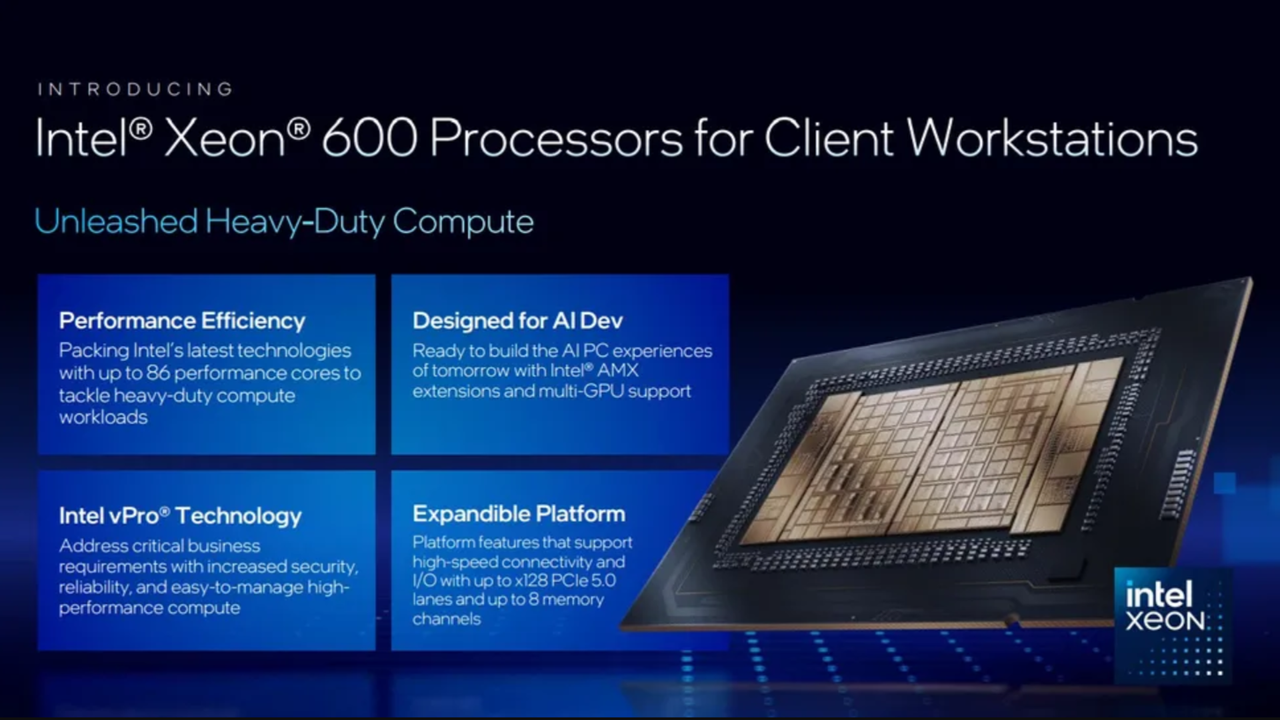







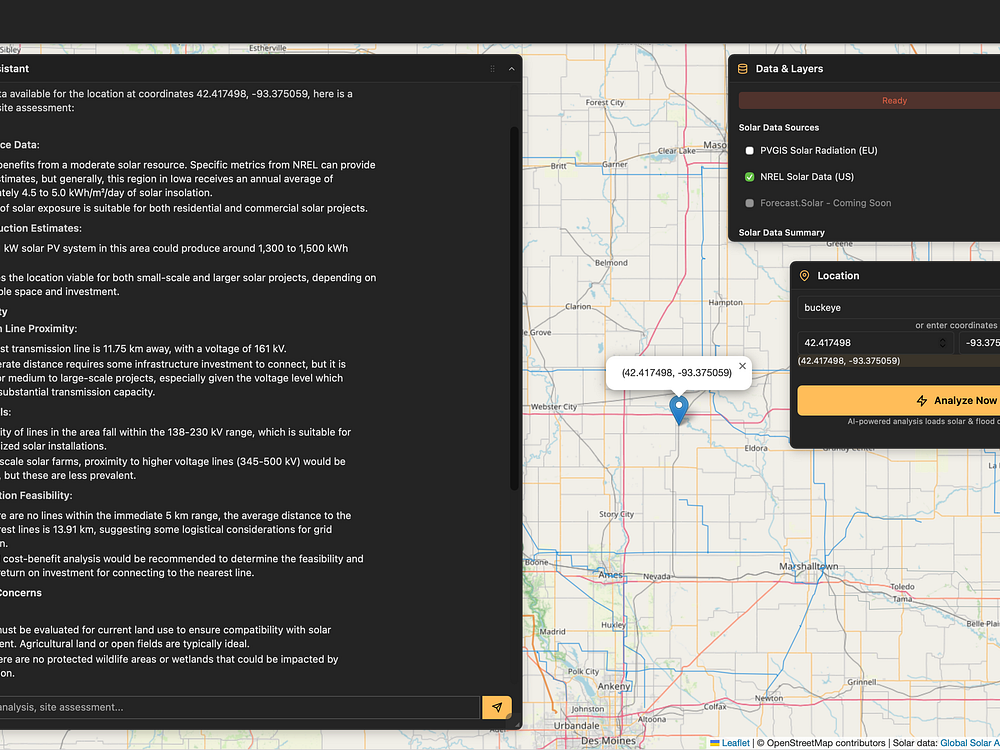
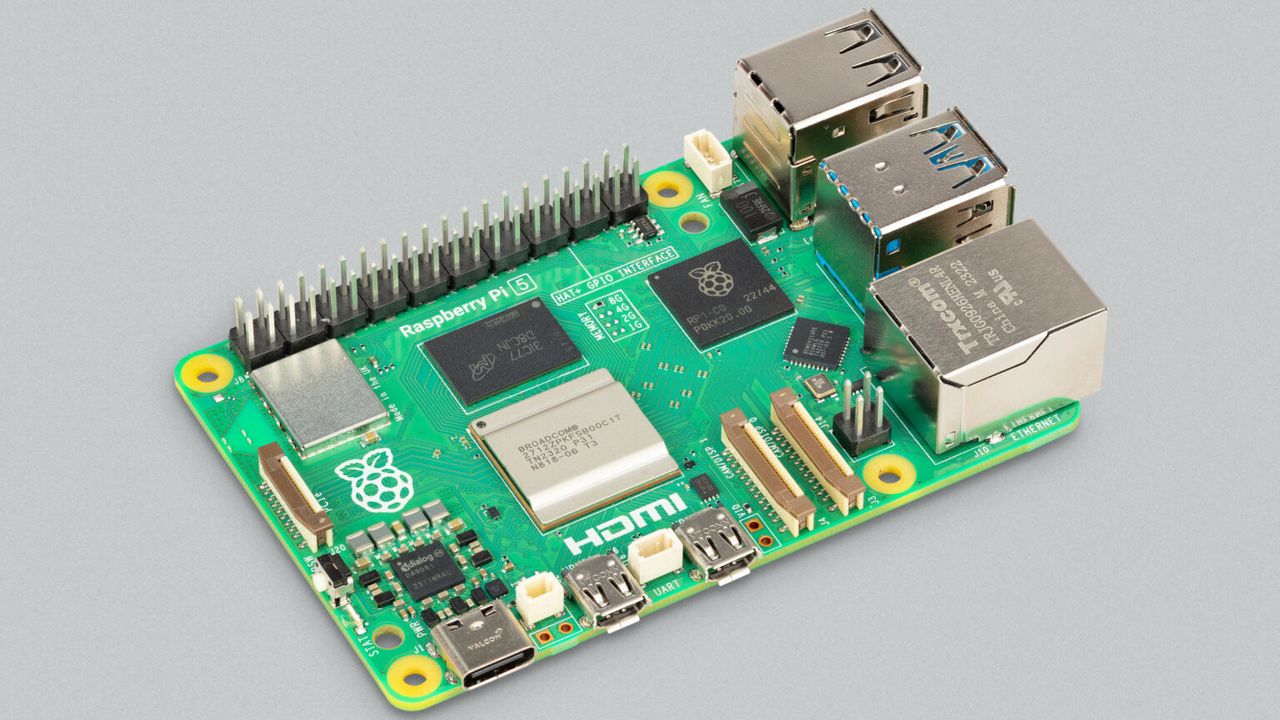
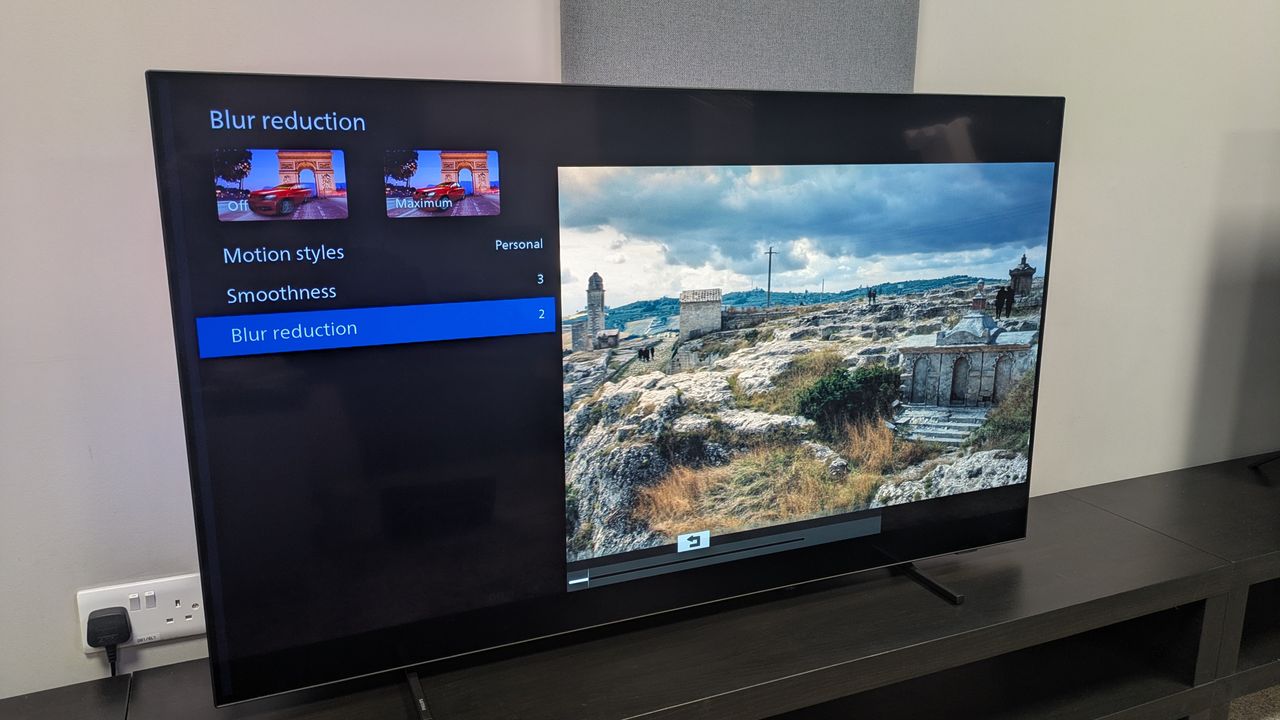


























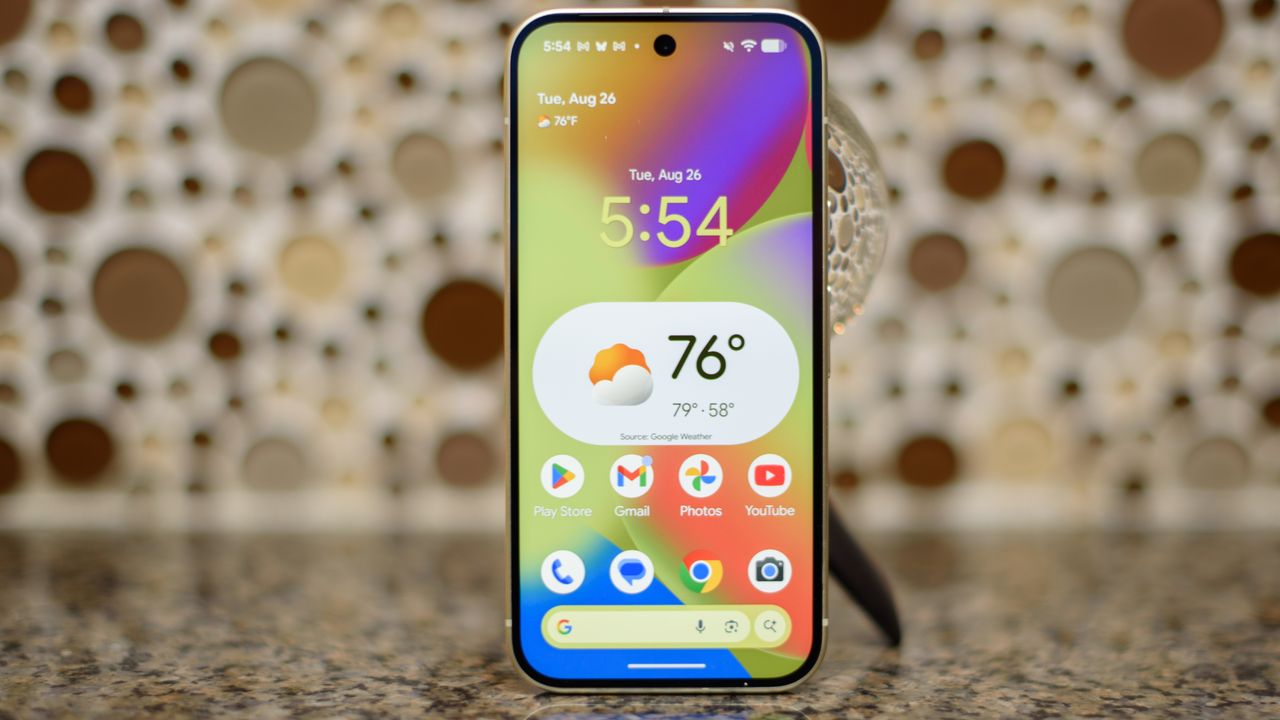



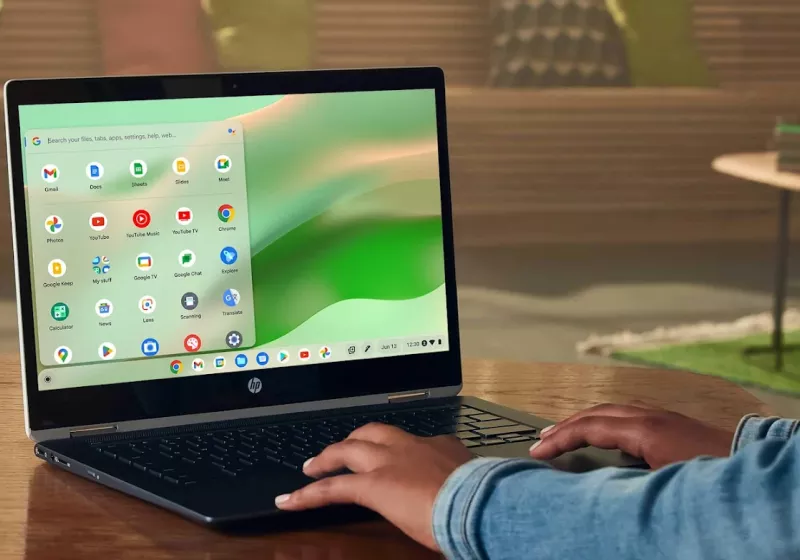




 Google AI announcements from January