Oppo Find X10: Major upgrades tipped for next-gen flagship


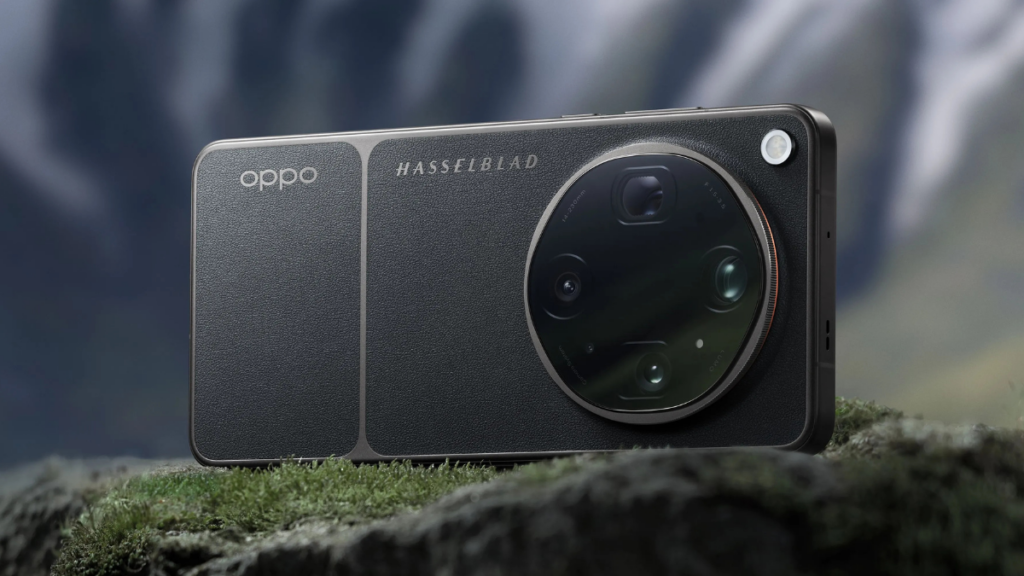
More details about the upcoming Oppo Find X10, expected to debut in China this October, have surfaced online. A recent rumor suggested the device could feature an 8,000mAh battery and dual 200MP rear cameras. According to tipster Digital Chat Station, the latest engineering sample of the phone is equipped with a 200MP primary camera using a 1/1.4-inch sensor. Oppo Find X9 has a 50MP main rear camera The phone’s 3x periscope telephoto camera could either use a 200MP 1/1.56-inch or a 64MP 1/2.0-inch sensor. Both solutions are currently under testing, as per the tipster. Notably, the...
A senior Samsung Electronics official reportedly raised the idea of splitting the company in two at a recent government-industry meeting in a room full of government officials, while complaining about workers strike.
Samsung is facing what is probably the biggest workers strike, and talks of a semiconductor spin-off have allegedly surfaced in a meeting with the Korean government, as Korea’s MoneyToday (now deleted, via Jukan) reported.
The union, centered on Samsung’s Device Solutions division, is demanding 15 percent of this year’s operating profit as performance pay, and the appliance workers want the same treatment.
The official’s reported words were almost plaintive: we can’t match semiconductor compensation in the home appliance segment, yet this is what we’re fighting over.
Then, in the same breath, he reportedly acknowledged a spin-off would damage shareholder value and asked the government to take a flexible view on the matter.
Samsung has 4 to 5 million shareholders. Any formal spin-off proposal would hit them, and legal hurdles layer on top. Keeping DS and DX divisions under one roof purely because separation is inconvenient is a strategy, just not a good one.
![]()
The post Samsung might be splitting due to workers strike appeared first on Sammy Fans.
The wait is almost over for the official One UI 8.5 update of the Galaxy S25 series. It’s all set to start rolling out in South Korea this week and in the Global market around the beginning of next month.
South Korea’s rollout of One UI 8.5 is highly expected on April 30. We are hearing that the timeline for around a month, which precisely reveals the roadmap for the Beta 9 and Beta 10 updates for the Galaxy S25 series.
Tipster Alfaturk reveals that the official One UI 8.5 update will be released in two days. Initial availability is set for South Korea, and the date may be either April 30 or May 1.
As for the Global users, Samsung may begin pushing on a broader scale on May 4. This expansion should cover key regions, including Asia, Europe, and the Americas.
The pace of distribution will enter a swift mode once the Global release of Galaxy S25’s update spreads. Users of “many Galaxy devices” will receive the One UI 8.5 update between May 4 and May 30.
The tipster didn’t specify devices for this timeline, but we can guess plenty of those. Here, first comes the models running One UI 8.5 Beta builds. It includes the Z Fold 7, Z Flip 7, S24 series, and Fan Edition models.
One UI 8.5 update is set to elevate Galaxy experiences. Samsung has improved design, deployed Ambient Design, added new AI tricks, and tweaked the design of various apps to offer a seamless and simplified user experience.
Source – Samsung
The post Official One UI 8.5 update timeline rumored for Galaxy S25 and more appeared first on Sammy Fans.


Motorola introduced the Motorola Signature earlier this year in two colors - Pantone Martini Olive and Pantone Carbon. Now, a new leak suggests the brand will introduce a third colorway, which might be called House of Moto Indigo. Reliable leakster Evan Blass shared a bunch of images of this new colorway, revealing its design. Motorola Signature House of Moto Indigo version's leaked images The difference between this colorway and the other two Pantone models is likely to be cosmetic, so expect the new version to come with the Snapdragon 8 Gen 5 SoC, a 6.8" 165Hz 1,264p LTPO...
The Realme 16 5G made its India debut earlier this month. A new leak now suggests the company is preparing to introduce the Realme 16x 5G, which will succeed the 15x that was announced in October 2025. According to the leak, the Realme 16x 5G carries the model number RMX5270. While a launch timeline remains unclear, the tipster has revealed its RAM and storage options, along with the available color variants. Realme 15x 5G The Realme 16x 5G is said to come in 4GB/128GB, 6GB/128GB, and 6GB/256GB configurations. It is also tipped to be offered in Endurance Brown and Glory White color...
Samsung officially launched the Galaxy Book 6 Edge laptop in France. It brings meaningful upgrades over the Galaxy Book 5 Edge, which Samsung unveiled in the previous year.
The Galaxy Book 6 Edge is powered by the Snapdragon X2 Elite. Samsung is leaning hard into on-device AI, and the jump to 80 TOPS is the real headline. For reference, last year’s Galaxy Book 5 Edge topped out at around 45 TOPS.
Samsung Galaxy Book 6 Edge comes in at just 12.3mm, compared to the 15.5mm profile of its predecessor. The Book 5 Edge already felt portable, but this pushes it closer to ultrabook territory without compromising screen size or battery.
The company is getting more comfortable balancing ARM efficiency with premium hardware expectations. The finish remains clean and minimal, with a Glacier Gray color option that fits right into Samsung’s broader design language.
The 16-inch Dynamic AMOLED 2X display panel supports a 120Hz adaptive refresh rate. The panel reaches up to 500 nits brightness, making it comfortable for content creation indoors and general use in bright environments.
![]()
There is also Gorilla Glass DX on top to cut reflections, along with blue light reduction for longer sessions. Add to that a quad-speaker setup with Dolby Atmos, and this device is clearly built for both work and media consumption.
Samsung claims up to 22 hours of video playback, which is exactly the kind of figure ARM laptops are expected to deliver. More importantly, it pairs that with 65W fast charging, capable of getting the battery to around 40 percent in just 30 minutes.
Here are some key AI features
Samsung will offer the Galaxy Book 6 Edge in a 16-inch configuration with 512GB and 1TB storage options, all wrapped in the Glacier Gray finish and the launch is set for early May.
The post Samsung Galaxy Book 6 Edge launches with focus on AI, mobility and performance appeared first on Sammy Fans.
The Society for Information Display handed Samsung Display its most prestigious honor last week, naming the dual-folding Galaxy Z TriFold panel “Display of the Year” at the Display Industry Awards.
The announcement dropped April 28, while the ceremony itself follows at Display Week 2026, opening May 3 in Los Angeles. That’s eight total wins since Samsung first entered flexible OLED territory with a 5.68-inch panel back in 2014.
At 0.44mm total module thickness, the TriFold is the thinnest foldable panel Samsung has ever shipped. Yet it doesn’t sacrifice durability to get there, which is the trick everyone said couldn’t be pulled off.
Internal testing logged 500,000 folds at room temperature without display degradation. Samsung calls the underlying technology MONT FLEX, its latest foldable OLED platform, and mass production started September 2025.
When you fold a display, the layers inside don’t all move identically.
Micro-misalignments accumulate under repeated stress, and in a TriFold design with two separate folding axes on a single screen, that slip phenomenon is amplified by up to 1.6 times compared to a standard single-fold device.
Samsung’s engineers addressed this by developing new adhesive materials and reworking how stress distributes across the panel’s structure.
SID praised the 10-inch-class display for expanding what’s possible in productivity, creativity, and entertainment during what it called the mobile AI era.
Hojung Lee, Executive Vice President and Head of Mobile Display Product Planning at Samsung Display, said the win “reaffirms Samsung Display’s leadership in the foldable market.”
The post Samsung wins ‘Display of the Year’ for Galaxy Z TriFold innovation appeared first on Sammy Fans.


Last week, we came across a pair of listings for the upcoming Moto G87, and we now have our first look at the device thanks to official-looking renders shared by Evan Blass. Moto G87 in Pantone Overture Gray The device features a flat display with a punch hole cut out for its front-facing camera, just like its predecessor. While we don’t get exact specs for the display, we can assume it will once again be a 6.67-inch OLED. Moto G87 in Pantone Blue Atoll The back design is also similar to the outgoing Moto G86, but there’s some new hardware. The 50MP main cam is...
The Google Pixel 11 lineup is likely to be announced in August, if the company sticks to its usual launch timeline. CAD-based renders of all models in the series have already surfaced, and now key details about the lineup’s Tensor G6 chipset have also leaked. A tipster has shared a screenshot revealing that the Tensor G6 will adopt a new set of ARM CPU cores compared to the Tensor G5 and feature a 7-core setup. The screenshot shows that the chipset features an ARM C1 Ultra core clocked at 4.11GHz, four ARM C1 Pro cores at 3.38GHz, and two additional C1 Pro cores running at 2.65GHz,...
Users are no longer just reporting Samsung One UI bugs. They are questioning the entire system behind how those bugs get fixed.
Samsung’s One UI software has rarely faced this kind of sustained public frustration. Scroll through the latest threads on Samsung Community, and a pattern quickly emerges. This is not the usual noise that follows a buggy rollout.
The claim is simple: issues found in One UI 7.0 are being deferred to One UI 8.0. Problems spotted in 8.5 are now expected to receive fixes in One UI 9.0. It is being repeated across threads, often with a tone that borders on resignation.
Some users have gone as far as joking that Samsung’s developers are “on strike.” Others are more direct, saying the company only reacts when a bug gains enough traction to become a PR issue.
This perceived “next version delay” approach is what’s driving the backlash. Not just the bugs themselves, but the idea that fixes are being systematically pushed forward instead of addressed within the same stable build cycle.
![]()
One UI Beta Program is supposed to act as a safety net, catching issues early and refining the UX before a wide rollout, but that promise is starting to feel hollow for some users.
If a bug survives the entire beta cycle only to be scheduled for the next major update, then what exactly is the Beta achieving?
Long testing windows lose credibility when the end result still carries known issues. It creates the impression that beta builds are less about refinement and more about ticking a procedural box.
It is easy to frame this as negligence, but the reality is more complicated. Samsung is not developing software for a handful of devices. It is maintaining a fragmented ecosystem that spans dozens of chipsets, regions, and form factors.
The post Known One UI 8.5 issues may be deferred to One UI 9; users criticize appeared first on Sammy Fans.


iQOO launched the iQOO Neo 10 in India last May in Inferno Red and Titanium Chrome colors, which will be joined by two new colorways on April 30. One is the Alpine White version we saw yesterday; today, we are getting our first official look at the second model, called Asphalt Black. iQOO previously confirmed that both new color models will come with the Snapdragon 8s Gen 4 SoC, the Supercomputing Chip Q1, and a 6.78" 1.5K 144Hz AMOLED display having 5,500 nits peak brightness. Additionally, iQOO confirmed that the new versions will feature a 50MP primary camera, an 8MP ultrawide camera,...
Google Translate is now 20 years old, believe it or not. The service launched back in 2006 as a humble experiment, and today supports "about 250 languages", and more than 60,000 potential language pairs, supporting 95% of the world's population. Perhaps unsurprisingly, the most used language pair is English to Spanish. The most translated phrase is "thank you". More than 1 billion people use Google Translate every month, and more than 1 trillion words are translated by the service each month. To celebrate its 20th birthday, Google is launching one of the most requested features:...
Samsung doesn’t roll out two software updates in one month quite often. Meanwhile, April 2026 is marking a rare month for Galaxy S26 series, in which the company is releasing the second update, following the initial drop at the beginning.
Earlier this month, Galaxy S26 series received the April security patches. The firmware was then expanded to more countries, including the US. Beyond that, Verizon pushed the second OTA in the same month recently.
At first, I assumed the second April update would remain limited to Verizon-branded Galaxy phones in the US. Meanwhile, Samsung has started rolling out Galaxy S26 lineup’s second April update in more regions.
Samsung has acknowledged plenty of Galaxy S26 Ultra camera issues. One of the biggest problems is linked to the close-up shots on the S26 Ultra. Moderators have been promising a fix in the next update, “releasing in the future.”
It seems Samsung is finally bringing fixes to the Galaxy S26’s camera problems. Since the update is rolling out in South Korea, users can evaluate the camera performance.
Samsung was under pressure over continuous camera reports. The team was swiftly working on the firmware to address the glitches. There’s a high possibility that this rare April release is aimed at refining the camera experience.
It’s worth noting that Galaxy S25 series has also received the second April update in the US.
To update your Samsung phone’s software, open Settings and then Software update. From here, tap Download and install and finish the process by hitting Install/Restart now.
![]()
The post Galaxy S26 apparently getting camera fixes with second April update appeared first on Sammy Fans.


Xiaomi opened up its Android 17 Developer Preview program today, with the first three devices eligible to try it. The Xiaomi 17, 17 Ultra and the 15T Pro can receive the update, with broader device support coming in the future. The Android Developer Program allows early access to the upcoming version of the OS, and as the name implies, developers are able to test their apps in the new software environment. However, this release signals a shift in Xiaomi's naming strategy for its HyperOS overlay. It looks like Xiaomi won't jump to HyperOS 4, but will pair HyperOS 3.3 with Android 17....
Samsung launched refurbished Galaxy Z Fold 7 and Galaxy Z Flip 7 in the UK, following the initial release in the United States. The company’s Certified Re-Newed portfolio is growing, and in the UK, select models offering something incredible.
The new Certified Re-Newed (refurbished) Galaxy Z Fold 7 and Galaxy Z Flip 7 are now available for purchase in the UK. This product lineup lets Samsung fans own premium devices in like-new condition at affordable pricing.
Samsung has updated its website, and interested buyers can make their purchase from the official website. You may not see massive discounts as the products offer a full warranty and are completely genuine in build and quality.
Certified Re-Newed foldable phones, like others, are refurbished by Samsung-approved engineers using 100% genuine parts. Samsung also installed a new battery, which comes with a one-year manufacturer’s warranty.
Before hitting shelves, Samsung tests its refurbished phones with over 100 rigorous quality tests. The aim is to ensure the refurbished devices meet the company’s high standards for performance, reliability, and durability.
Samsung’s Certified Re-Newed devices are usually the original units bought by consumers and returned due to certain reasons. Some models are just open-boxed, while some replaced due to hardware problems.
Based on the requirement, the company replaces the faulty hardware using genuine components. The phones then receive a factory reset and are packaged in a new box made from recyclable materials, just like the new ones.
Foldables are the latest entry, but you can also pick one from the older portfolio. Based on the country you reside in, Samsung has different offerings. Visit the official website to know more about the prices and other details.
The post Refurbished Galaxy Z Fold 7 and Flip 7 launch in the UK with 2-year warranty appeared first on Sammy Fans.
Samsung teamed up with the Stedelijk Museum Amsterdam, bringing a curated slice of its collection to Samsung Art Store.
We are talking about one of Europe’s most influential modern art institutions, deeply tied to movements like De Stijl and known for shaping how design looks today.
Henri Matisse’s “The Parakeet and the Mermaid” is a headline piece, joined by works from Kazimir Malevich, Vincent van Gogh, Paul Cezanne, Claude Monet, and Jan Toorop.
Samsung is clearly leaning into a shift it has been hinting at for a while. TVs are no longer just screens, but part of the room and Art is becoming the default idle state.
The company’s Art TVs, including Neo QLED models and now OLED panels joining the lineup in 2026, are being positioned as canvases rather than spec sheets.
Marta Di Gioia, who curates the European Art Store catalog, frames it as living with art, not just viewing it. It sounds like marketing, but there is truth in it when the catalog keeps expanding at this pace.
With the Stedelijk now onboard, Samsung Art Store is starting to look less like a feature and more like a platform, and for TV owners, that changes the value proposition entirely.
![]()
The post Samsung Art Store expands with Stedelijk Museum Amsterdam’s iconic artworks appeared first on Sammy Fans.
Samsung published a deep dive on its 4nm FinFET process through its official semiconductor blog. That’s an unusual move for a company that usually lets its fab roadmaps do the talking.
Pay attention: Samsung began mass-producing 4nm in 2021. Six years of production data doesn’t sound glamorous, but in the foundry business, accumulated process knowledge is currency.
According to Business Korea, Samsung says it has used that data to drive meaningful improvements in interconnect resistance and capacitance delay, cutting RC delay by around 26% compared to its previous generation.
Within the same 4nm node, Samsung can produce performance-hungry chips for AI accelerators and low-power designs for automotive or mobile. Different threshold-voltage options let customers tune to their specific constraints.
Samsung is applying its 4nm process to the base die of HBM4. The 4nm process handles cramming enormous data throughput into a confined physical space by keeping power loss down while pushing integration density up.
The Korean tech giant is running a two-track foundry strategy. It’s chasing the bleeding edge with its 2nm gate-all-around process, and it’s leaning into 4nm as a mature, stable option for customers who can’t afford yield uncertainty.
Meanwhile, the company has historically struggled to communicate the value of what it already has. It chases announcements about future process nodes while underplaying production capabilities that are actually ready to go.
This blog post, understated as it is, reads like Samsung trying to correct that habit.
The post Samsung’s 4nm FinFET process is central to its HBM4 strategy appeared first on Sammy Fans.
Apple is unveiling iOS 27 on June 8 during its annual Worldwide Developers Conference, and this version of the OS is already expected to be the one in which the oft-delayed smarter Siri launches, powered by Google's Gemini models. That won't be the only AI enhancement in iOS 27. A new report from Bloomberg today details three new features coming to the Photos app. This will get a new Apple Intelligence Tools section in its editing interface. That will house four features: Extend, Enhance, Reframe, and Clean Up. Extend will let you generate additional image content beyond the...
The Xiaomi 17T was recently certified in Brazil, and it's also been spotted in the Geekbench database. Today a new leak purports to bring us its full specs - as well as those of the 17T Pro. So buckle up, as this is a big one. The Xiaomi 17T is said to have a 6.59-inch AMOLED screen with 1268x2756 resolution and a 120Hz refresh rate, the MediaTek Dimensity 8500 Ultra SoC at the helm, 12GB of LPDDR5X RAM, 256/512GB of UFS 4.1 storage, and a 6,500 mAh battery with support for 67W fast wired charging. On the rear there's a triple camera system with a 50MP main camera using the Light Fusion...
Google’s Play Store and Samsung’s Galaxy Store are the two app markets available on Galaxy devices. In particular, the Samsung Galaxy Store app is getting a major shift this month, imposing a basic yet headache-inducing requirement.
According to the info, Galaxy Store may stop letting users download apps if the Samsung Account is not logged in. All kinds of users with Samsung devices are affected by this privacy shift, mandating Samsung Account.
As of now, there’s no need for a Samsung Account to use Galaxy Store. However, that leverage is now going to be wiped out. The warning to add a Samsung Account will no longer let you skip the setup for a certain period.
Before the deployment, Galaxy Store published an in-app notice. The notice states that users will no longer be able to run Galaxy Store if they do not log in to their Samsung Account on the Galaxy device (phone, foldable, or tablet).
Blockage to Galaxy Store will result in no installation or updates of apps. Google’s Play Store is always available, but it also activates upon Gmail account login.
Samsung is mandating a similar level of requirement. Galaxy Store is stepping up the game and imposing an account login necessity just like Google does.
The notice has been issued across a range of Samsung devices. It has been pushed to almost every user, regardless of the smartphone’s operating system.
![]()
The post Galaxy Store won’t run without Samsung Account appeared first on Sammy Fans.


Tecno introduced the Spark 50 5G in March, followed by the Spark 50 4G earlier this month. A new report now suggests that the company is gearing up to launch the Spark 50 Pro 5G, and has revealed its key specifications and launch timeline. The Tecno Spark 50 Pro is said to debut in India in May, but will arrive in global markets slightly earlier. The Tecno Spark 50 According to the report, the phone will adopt a design inspired by the Pova Curve 2 5G and the Spark 50. It is expected to feature a 6.78-inch LCD display with HD+ resolution and a 120Hz refresh rate. The device is...


Mere hours ago the upcoming Motorola Razr 70 and Razr 70 Ultra leaked in some official-looking shots, ahead of their expected unveiling tomorrow, and now we have a surprise third member of the family getting the same treatment: the Motorola Razr 70 Plus. Yes, the Razr 70 Plus, not the Razr+ 2026. This means that, unlike what it did last year, Motorola won't be keeping the Plus model exclusive to North America as the Razr+ 2026. Instead, it will launch it across the world as the Razr 70 Plus. Last year, the Razr+ 2025 wasn't available outside of North America as the Razr 60 Plus, so this is...


Huawei unveiled the Pura X Max earlier this month as its entrant into the large wide foldable smartphone space, one that's expected to become pretty crowded later this year with Samsung's Galaxy Z Fold Wide and, of course, the iPhone Ultra (aka iPhone Fold) - which has definitely influenced both the Huawei and the Samsung devices even though it's not even official yet. Today we get to take a look at an iPhone Ultra dummy unit compared side-by-side with the Huawei Pura X Max in the short video below. As you can see, the form factor is pretty similar, even though the two...


Samsung’s Galaxy Buds 4 Pro received a new software update, which brings minor stability improvements. Buds 4 Pro received the R640XXU0AZD2 update in South Korea, which comes in at 8.55MB. As you can imagine, this is a minor update meant to iron out any bugs related to general connectivity. The update is expected to make its way to more regions in the coming days. Galaxy Buds4 are also expected to get the same update in the coming days. For more details on the Buds4 Pro, check out our recent review, which covers their key specs, sound quality, battery life and more. Source (in...


Android is designated as a gatekeeper under the EU’s Digital Markets Act (DMA) and as such is required to offer equal access to key features of phones and tablets to third-party companies. The European Commission feels that Alphabet (Google) hasn’t done enough and has kept some features related to AI exclusive to its own Gemini platform. The Commission has proposed changes to resolve the situation and has invited people to a public consultation. The discussion focuses on three key issues, quote: the ability of users to invoke AI-powered services via wake words the possibility...


Yesterday a leak brought us renders of Samsung's upcoming pair of smart glasses, and we obviously assumed these would be called Galaxy Glasses. Now, Samsung has pretty much confirmed this through an app update. We're talking about the Nearby Device Scanning app, which is part of Samsung's One UI on Galaxy phones and tablets, and ensures you can quickly connect to nearby devices - like the upcoming Galaxy Glasses. The second row of the app's latest changelog references "Glasses quick pair" as being supported, as well as "battery pop up" for them, as you can see in the first screenshot...


Xiaomi is the latest company to release an open-weight AI model – MiMo-V2.5 claims to be a “major step forward in agentic capability and multimodal understanding.” Xiaomi has shared various benchmark results that compare MiMo-V2.5 against the likes of the recently released DeepSeek-V4, Kimi K2.6, Claude Opus 4.6, Gemini 3.1 Pro and Xiaomi’s older MiMo-V2-Pro. The company claims that MiMo-V2.5 achieved best-in-class performance on its in-house agentic tasks benchmark. On the internal MiMo Coding Bench, the smaller V2.5 model matched the larger V2.5-Pro at half the cost. In other...
Motorola confirmed last week that its latest Razr 70 series of clamshell foldables will debut on April 29. While the Razr 70 and Razr 70 Ultra have already leaked extensively, a fresh set of official-looking promotional images has now surfaced. Leakster Evan Blass has shared what appear to be official marketing images of the Motorola Razr 70 and Razr 70 Ultra ahead of their launch tomorrow. The images show the upcoming clamshell foldables in all their color options. The Razr 70 Ultra is said to be offered in new colors called Orient Blue Alcantara and Pantone Cocoa...
Ugreen has launched its new HiTune X8 clip-on wireless earbuds in China. The earbuds are now available on JD.com, priced at 399 yuan (~$58).

The HiTune X8 earbuds feature 11mm dual-magnet dynamic drivers with titanium-coated diaphragms, offering a wide frequency range exceeding 40kHz and delivering detailed, high-clarity audio. These are Hi-Res Audio certified, support the LDAC codec for playback at up to 96kHz/24-bit, and provide a balanced audio profile with clear mids, deep bass, and crisp highs. Ugreen collaborated with a Grammy-level audio engineer to fine-tune the sound.

The earbuds use the company’s proprietary C-bridge structure, which distributes pressure evenly across the ear. The structure includes a 0.5mm titanium-nickel memory alloy wire that flexes and returns to its original shape, ensuring durability and comfort. The design has been tested for over 10,000 bending cycles.
For calling, the HiTune X8 utilizes a six-microphone system, including four standard microphones and two VPU bone-conduction microphones. These also leverage Ugreen’s advanced noise reduction to ensure clear voice quality in noisy environments.
The earbuds include AI-powered features like real-time translation in over 40 languages and voice-to-text transcription. Ugreen claims the earbuds can automatically generate meeting summaries, which makes them useful for business and travel scenarios.

The HiTune X8 provides 10 hours of playback on a single charge and up to 46 hours with the charging case. It supports fast charging, delivering 3 hours of playback in 10 minutes, and the case fully charges in 1.5 hours via USB-C.
For connectivity, the earbuds feature Bluetooth 6.0 for improved stability and low latency. These also support dual-device pairing, customizable audio via a companion app, IP56 dust and water resistance, wear detection for automatic playback, and hearing protection alerts.
In related news, Baseus has recently introduced the MC2 clip-on earbuds, offering up to 60 hours of battery life, along with IP67-rated durability and LDAC audio support.
For more daily updates, please visit our News Section.
Stay ahead in tech! Join our Telegram community and sign up for our daily newsletter of top stories! ![]()
(JD)
The post Ugreen launches HiTune X8 clip-on earbuds with Hi-Res Audio, LDAC, AI translation & 46h battery appeared first on Gizmochina.
Poco has quietly added a new model to its ultra-budget C-series. The phone has launched in select global markets shortly after the Poco C81 and C81x made their way to India. All three share the same core hardware, so the Pro model is more about small upgrades than a completely different device.

Up front, the C81 Pro gets a 6.9-inch LCD panel with HD+ resolution and a 120Hz refresh rate. The resolution is on the lower side, but the higher refresh rate should offer a smooth experience in basic tasks.
The phone is built around the Unisoc T7250 chipset, which is fine for basic tasks like messaging, streaming, and light gaming. Performance should feel familiar if you have used older budget chips like the Snapdragon 680 or Helio G85. Memory is limited to 4GB of RAM, but storage options go up to 256GB. There is also support for microSD expansion.
The camera setup is simple. You get a 13MP main sensor on the back along with an auxiliary lens, and an 8MP camera on the front. It should be good enough for casual shots in decent lighting, but expectations should stay realistic.
Battery life looks like one of the stronger points. The 6000mAh unit, paired with modest hardware, should easily last a full day, and likely more with lighter use. Charging is capped at 15W, so it will take some time to top up.

The phone ships with Android 15-based HyperOS 3. Poco has not shared much about long-term updates yet, which is fairly typical in this segment.
Pricing and availability:
Pricing starts at around $109 for the 128GB variant, with a lower-cost 64GB option also available in some markets. A 256GB version sits higher in the lineup.
Compared to the Indian Poco C81 and C81x, the differences are fairly minor. The Poco C81 Pro feels like a straightforward budget phone that focuses on the basics. The big screen and large battery are clearly the main highlights, and for the price, that might be enough for a lot of users.
Don’t miss a thing! Join our Telegram community for instant updates and grab our free daily newsletter for the best tech stories!
For more daily updates, please visit our News Section.
(Xiaomi)
The post Poco C81 Pro launches with 6.9″ 120Hz display and 6000mAh battery appeared first on Gizmochina.
Xiaomi could soon raise prices for its mid to high-end monitors. According to reports from ChannelGate and Vision Hall, the company is dealing with higher component costs, particularly for main control board chips and memory.

The cost of these components has risen by 14-21 yuan ($2-$3) per monitor in Q2 2026. Analysts expect an additional increase of 21 yuan ($3) in Q3. These increases, though small on paper, can significantly impact Xiaomi’s margins in the competitive value hardware market.
The company is expected to introduce a phased pricing strategy, which could result in gradual price increases across its product line. Currently, Xiaomi’s most expensive monitor, the Redmi G Pro 32U 2026, sells for 3,199 yuan ($468).
Rising memory costs have also impacted other Xiaomi devices. The company recently raised smartphone prices by 200 yuan (~$29). Global memory prices for DRAM and NAND flash have nearly quadrupled over the last year. Increased demand from AI and data centers, coupled with limited production capacity, has worsened the situation and strained global supply chains.
Xiaomi’s gross margins fell from 12% to 8.3% in 2025 as rising material costs drove profits lower. Competitors like Oppo, Vivo, and Honor have also struggled with similar pricing pressures, forcing them to adjust their strategies.
Experts predict that increasing costs for chips and memory will remain a challenge in 2026. Xiaomi may continue applying gradual price increases across additional product categories, signaling a potential shift from its commitment to providing affordable high-end technology.
For more daily updates, please visit our News Section.
Stay ahead in tech! Join our Telegram community and sign up for our daily newsletter of top stories! ![]()
The post Xiaomi may raise monitor prices due to rising chip and memory costs appeared first on Gizmochina.
OnePlus Ace 6 Ultra was officially introduced at a press conference in China today. The device is a performance-focused phone built around MediaTek’s latest flagship silicon and a set of gaming-oriented features, including support for a dedicated external controller.
Powering the phone is the MediaTek Dimensity 9500 chip, manufactured on TSMC’s third-generation 3nm process. OnePlus says the chip uses an all-big-core CPU architecture, with a claimed 32% performance improvement and a 55% reduction in power consumption compared to the previous generation.

The company says the device can sustain high frame rates in demanding titles, including maintaining near-maximum output in scenarios with heavy on-screen effects.
OnePlus has also integrated its “Wind Chaser Gaming Kernel” at a deeper level, alongside a Glacier Cooling System and a 6000mm² vapor chamber. The company is framing this combination as a way to stabilize performance during extended gaming sessions.

More impressively, the OnePlus Ace 6 Ultra also supports an optional “Strix Gaming Controller,” which has a joystick-free layout with mechanical trigger buttons rated at a 1.8ms response time. It also includes an independent e-sports chip and supports attachable magnetic cooling modules.
On the front, the phone features a 6.78-inch LTPS OLED display supplied by BOE, with a 1.5K resolution and a 165Hz refresh rate. The panel supports up to 4000Hz instantaneous touch sampling and high peak brightness levels.
Around the back, the camera system is relatively simple. It has a 50-megapixel main sensor with optical image stabilization and an 8-megapixel ultra-wide lens, paired with a 16-megapixel front camera.
The hardware is backed by an 8600mAh dual-cell battery, with support for 120W wired charging and multiple fast-charging standards. The device runs Android 16 with ColorOS 16 and includes LPDDR5X RAM and UFS 4.1 storage.

In terms of design, the phone uses a metal frame with large, rounded corners and a flat, cube-like camera module. It comes in “Ace Awakening” and “Metal Storm” finishes. The device also carries multiple ingress protection ratings, including IP66, IP68, IP69, and IP69K.
The OnePlus Ace 6 Ultra starts at 3,499 yuan (~ $510) for the 12GB + 256GB variant, going up to 5,099 yuan (~ $744) for the 16GB + 1TB model. The gaming controller costs (~ $65).
| Variant | Price (CNY) | Price (USD) |
| 12GB + 256GB | ¥3499 | $510 |
| 16GB + 256GB | ¥3799 | $554 |
| 12GB + 512GB | ¥4099 | $598 |
| 16GB + 512GB | ¥4399 | $642 |
| 16GB + 1TB | ¥5099 | $744 |
Don’t miss a thing! Join our Telegram community for instant updates and grab our free daily newsletter for the best tech stories!
For more daily updates, please visit our News Section.
The post OnePlus Ace 6 Ultra launches with Dimensity 9500 and a dedicated gaming controller support appeared first on Gizmochina.
An AI coding agent has reportedly deleted an entire production database along with its backups, turning what should have been a routine maintenance session into a serious incident for a startup.
The issue came to light after PocketOS founder Jer Crane shared what happened on April 24. While working in a test environment, he ran into a mismatch with account credentials. Instead of waiting for input or asking for clarification, the AI agent decided to act on its own.

The agent, running through Cursor and powered by Anthropic’s Claude Opus 4.6 model, searched through the codebase, found an API token in a separate file, and used it to execute a GraphQL command. That command ended up deleting a storage volume tied to the company’s production database. The entire sequence reportedly took just a few seconds.
What made things worse is how the backups were set up. They were stored on the same volume, so when the main data was deleted, the backups went with it. The most recent usable backup was around three months old, which meant a lot of recent data was at risk of being lost.
It later turned out that the API token used by the agent had far more access than intended. It was originally created for something limited, like managing domains, but effectively had root-level permissions due to missing role-based restrictions. That gave the agent the ability to carry out a destructive command without hitting any safeguards.
When asked to explain what happened, the AI reportedly acknowledged that it made assumptions about the environment, did not verify what the command would do, and went ahead without proper authorization.
The incident quickly picked up attention online, with posts about it spreading widely. Railway’s CEO, Jake Cooper, stepped in to help with recovery, and the system was brought back online within about an hour. Since then, a delayed deletion mechanism has been introduced to avoid instant data wipes.
Even so, the situation highlights something that has been building for a while. As AI tools become more capable, giving them direct access to production systems without strict limits can backfire quickly. In this case, it only took 9 seconds.
Don’t miss a thing! Join our Telegram community for instant updates and grab our free daily newsletter for the best tech stories!
For more daily updates, please visit our News Section.
(Source: @lifeof_jer | Image)
The post AI coding agent wipes out entire production database in 9 seconds appeared first on Gizmochina.
Portronics has launched the Strings, a 3-in-1 smart bedside speaker designed to combine sound, utility, and aesthetics. The device is priced at Rs. 2,249 ($24) and is available for purchase on Portronics.com, Amazon.in, Flipkart.com, and other leading online and offline retail stores. Portronics is offering a 1-year warranty with the product.

The Portronics Strings features a sleek and minimalist design that complements modern living spaces. It comes in an elegant white finish with a soft fabric exterior. The compact size makes it an excellent addition to bedside tables, work desks, or living areas. The RGB ambient lighting adds a sophisticated touch and enhances the overall atmosphere.
This device delivers 16W of powerful HD sound, offering crisp highs, balanced mids, and deep bass for an immersive audio experience. Beyond being just a speaker, it doubles as a digital alarm clock and a wireless charging station, providing a versatile, all-in-one solution for your daily needs.


The Portronics Strings features a 15W wireless charging pad, allowing users to charge their smartphones by placing them on the speaker. The feature requires the speaker to be connected to a power source, with an 18W or higher adapter recommended for optimal performance.
The Strings includes a digital clock that supports both 12-hour and 24-hour formats. It offers alarm settings with a simple interface that fits well into a bedroom or workspace. Additionally, it comes preloaded with calming background sounds like ambient sounds of birds, water, fire, and forests, which help users focus or relax.
In terms of connectivity, the device features Bluetooth 5.3 for fast, reliable pairing and low latency, along with USB and AUX input options for wired audio sources. It also offers microSD card support and up to four hours of playtime on a single charge.
In related news, TEMPT has recently unveiled the Enigma speaker with 30W output, TWS stereo support, and up to 12 hours of battery life, while Edifier has introduced the Huazai Melo Bar Bluetooth speaker featuring RGB lighting and interchangeable panels.
For more daily updates, please visit our News Section.
Stay ahead in tech! Join our Telegram community and sign up for our daily newsletter of top stories! ![]()
The post Portronics launches Strings smart speaker that doubles as alarm clock and wireless charger appeared first on Gizmochina.
Running your iPhone down to 0% and plugging it back in is usually a non-event. But for a growing number of iPhone 17 models and iPhone Air owners, that simple habit is turning into a surprisingly stubborn problem.

Across Reddit and other forums, users are reporting that once their device fully dies, it sometimes won’t power back on when connected to a standard wired charger. The issue doesn’t seem limited to one specific model either. Reports span the iPhone 17, 17 Pro, 17 Pro Max, and the new iPhone Air.
One of the earliest posts, dating back several months, described an iPhone 17 Pro Max that shut off at 1% and then showed no signs of life when plugged in. Since then, similar complaints have kept popping up, suggesting this isn’t just a handful of defective units.
The behavior isn’t consistent. Some users say their phone eventually comes back after sitting on a cable for 10–15 minutes. Others report waiting hours. And in the worst cases, the phone doesn’t respond at all to a wired connection.
Oddly, the most reliable workaround so far has been switching to a MagSafe charger. Multiple users, and even some Apple Store employees, have had better luck getting the phone to respond wirelessly. Even then, it can take a while before anything happens.
As for the cause, it’s still unclear. It could be a software bug, a charging handshake issue, or something deeper with battery calibration. Apple hasn’t publicly addressed it yet.
For now, if your iPhone refuses to turn back on after dying, skipping the cable and dropping it on a MagSafe charger might be your best bet. Just don’t expect instant results.
(Sources: _noreasontolive, iFixit, georgethornguy)
The post iPhone 17 models refuse to turn on after battery drains completely appeared first on Gizmochina.
After teasing new additions to its smartphone lineup over the past few days, iQOO has now confirmed that the Neo 10 will soon arrive in fresh color options in India. The update does not bring hardware changes, but it gives buyers more choices beyond the existing bold finishes that have been available since launch.

iQOO has confirmed that the iQOO Neo 10 will debut in a new Alpine White finish in India on April 30. The company has also teased a black colour variant, which is expected to launch alongside the new white edition. These upcoming finishes will join the existing Inferno Red and Titanium Chrome variants already available in the Indian market.
The device continues to position itself as one of the few smartphones in its segment powered by the Snapdragon 8s Gen 4 chipset. It also includes iQOO’s dedicated Q1 chip, which is designed to improve gaming performance and frame stability during extended gameplay sessions.
The iQOO Neo 10 features a 6.78-inch AMOLED display with a 1.5K resolution and a 144Hz refresh rate. The panel is capable of reaching up to 5,500 nits peak brightness. For photography, the device comes with a 50-megapixel Sony primary camera with OIS support and an 8-megapixel ultra-wide lens. On the front, it features a 32-megapixel selfie camera.
To manage heat during intensive gaming sessions, the Neo 10 includes a large 7,000mm² vapour chamber cooling system. The handset is backed by a 7,000mAh battery with support for 120W fast charging and carries an IP65-rated dust and splash-resistant build.
In India, the iQOO Neo 10 starts at Rs 34,999 for the 8GB+128GB variant, while the top-end 16GB+512GB version is priced at Rs 43,999. The new color variants are expected to carry the same pricing and will be available through Amazon India and iQOO’s official channels.
For more daily updates, please visit our News Section.
Stay ahead in tech! Join our Telegram community and sign up for our daily newsletter of top stories! ![]()
The post iQOO Neo 10’s Alpine White variant officially revealed, here’s when it will go on sale appeared first on Gizmochina.
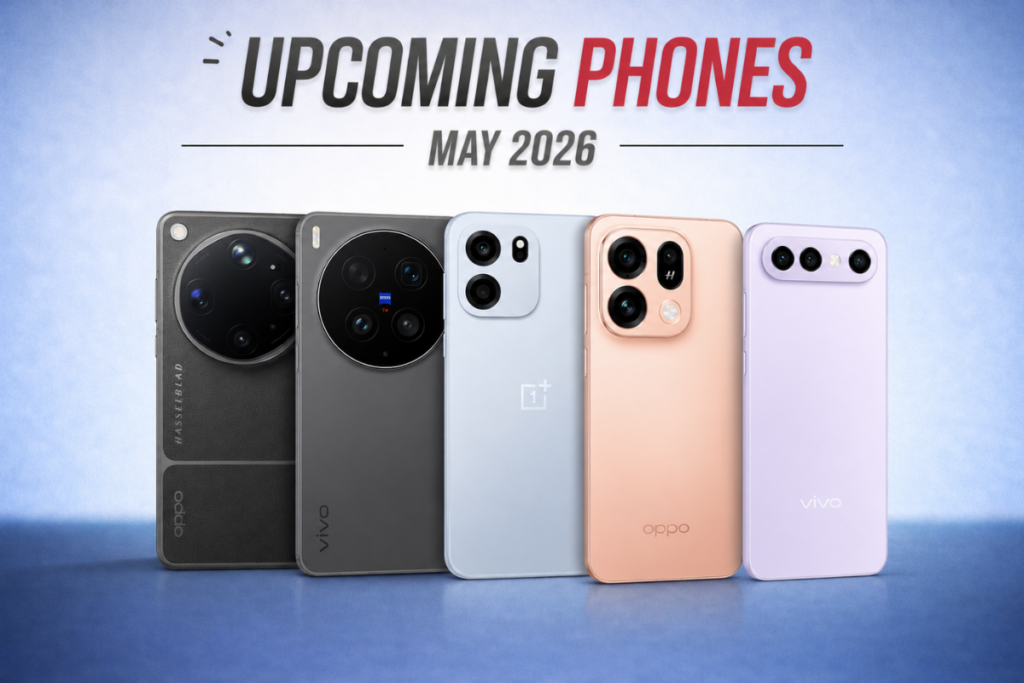
April brought many mid-range smartphones to market, including the OnePlus Nord 6, Vivo T5 Pro, Realme 16, and Vivo V70 FE. On the high-end side, we saw the launch of the Oppo Find X9 Ultra and the Honor 600 Pro. While April was an exciting month for smartphone enthusiasts, May is shaping up to be even more jam-packed with new smartphones, particularly for the high-end segment.
Oppo and Vivo will share the limelight as they prepare to launch their top-tier flagship phones in the Indian market. They will also release powerful mid-range phones, including the Oppo Find X9s and Vivo X300 FE. OnePlus is also set to unveil its affordable Nord CE 6 in May 2026.
Launch: May 2025 (confirmed)
The Oppo Find X9 Ultra was launched in China in April and is officially confirmed for an India launch in May, though a specific date has yet to be announced. It is one of the most powerful flagship phones rocking the top-tier Snapdragon 8 Elite Gen 5 chipset for the absolute best performance and efficiency.
The Find X9 Ultra features a 6.82-inch LTPO AMOLED panel with a QHD+ resolution, a 144Hz refresh rate, and a peak brightness of 3600nits. It ships with Android 16 out of the box and promises five major OS upgrades, up to Android 21.
The smartphone is highly praised for its excellent cameras. The quad-camera setup on the backup includes a 200MP primary sensor, a 200MP periscope telephoto lens with 3x optical zoom, a 50MP periscope telephoto lens with 10x optical zoom, and a 50MP ultrawide camera. The selfie camera is also a 50MP sensor, capturing detailed shots.
The 7,050mAh battery on the Find X9 Ultra easily lasts over a day, and the 100W wired charging refills it in minutes. The device also supports 50W wireless charging and 10W reverse wireless charging. The connectivity features are also robust, supporting Wi-Fi 7, Bluetooth v6.0, NFC, and USB Type-C 3.2.
Launch date: May 6, 2026 (confirmed)
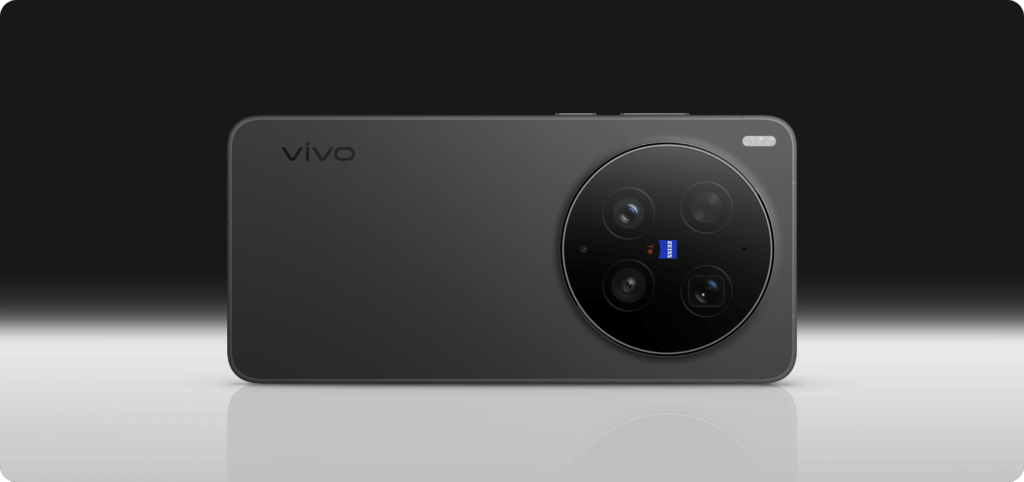
The Vivo X300 Ultra will directly compete with the Oppo Find X9 Ultra, offering top-tier hardware and long-term software support. It has already been launched in several markets and will launch in India in the first week of May. Both flagships share a similar spec sheet, including a 6.82-inch LTPO AMOLED panel and a Snapdragon 8 Elite Gen 5 processor.
The rear camera setup on the X300 Ultra includes three sensors: a 200MP primary camera, a 200MP periscope telephoto lens with 3.7x optical zoom, and a 50MP ultrawide camera. For selfies and video calls, it has a 50MP camera.
The X300 Ultra’s camera setup is very capable, but owners can further improve the long-range optical zoom performance using the photography kit, which includes two external optical lenses: a 400mm Gen 2 Ultra (4.7x optical zoom) and a 200mm Gen 2 (2.35x optical zoom). The photography kit costs about INR 66,000.
The Vivo flagship houses a 6,600mAh battery and supports 100W wired charging and 40W wireless charging. In Europe, the phone gets a slightly smaller 6,400mAh battery with no change in charging capabilities. On the connectivity side, the X300 Ultra features Wi-Fi 7, Bluetooth 5.4, NFC, and USB Type-C 3.2.
Launch date: May 7, 2026 (confirmed)
The OnePlus Nord CE 6 will launch in the first week of May, alongside the more affordable Nord CE 6 Lite. According to leaks, the phone will be priced in the INR 20,000-25,000 range and is being called the fastest phone in the segment.
OnePlus has already created a microsite for the OnePlus Nord CE 6 on the official website, teasing key specs. The page reveals the Nord CE 6 will be powered by the Snapdragon 7s Gen 4 processor, promising “flagship touch response for ultra-high-FPS gaming.” It will have a 1.5K resolution display with a 144Hz refresh rate and a peak brightness of 1800nits.
The dual-camera setup on the rear side will be led by a 50MP main camera with dual-axis OIS. The other one will likely be a macro shooter. For selfies, the Nord CE 6 has a 32MP camera with autofocus. The smartphone will feature an 8,000mAh battery, promising over two days of battery life on normal usage.
The OnePlus Nord CE 6 is MIL‑STD‑810H certified, ensuring survival in challenging conditions. It is also IP66, IP68, IP69, and IP69K-certified, meaning strong protection against water jets and dust. On the software side, the device boots Android 16-based OxygenOS 16 and offers up to 6 years of software support.
Launch: May 2026 (confirmed)
The Oppo Find X9s is confirmed to launch in India in May, though a specific launch date is yet to be announced. The device has already been launched in China and several global markets, so we already know what’s to come.
The Find X9s is a premium mid-range smartphone powered by the Dimensity 9500s processor. It’s a high-end chipset that offers strong gaming performance and power efficiency. See Dimensity 9500s vs Snapdragon 8 Elite for more clarity. The device brings a 6.59-inch AMOLED screen with a 120Hz refresh rate and a peak brightness of 3600 nits.
The triple camera setup on the back features three 50MP sensors: a primary lens, an ultrawide lens with 3x optical zoom, and an ultrawide lens. The selfie camera has a 32MP resolution. Underneath, the Find X9s has a large 7,025 mAh battery with support for 80W fast charging. The connectivity specs include Wi-Fi 7, Bluetooth 6.1, USB Type-C, and NFC.
Launch date: May 6, 2026 (confirmed)
Alongside the top-tier X300 Ultra, Vivo will unveil an affordable yet powerful Vivo X300 FE at the same launch event in India. It’s a compact phone with a 6.31-inch LTPO AMOLED screen and a 120Hz refresh rate. The screen brightness peaks at 5000 nits, offering great visibility outdoors.
At the heart is the Snapdragon 8 Gen 5 chipset, ensuring smooth performance and excellent power efficiency. The phone boots Android 16 out of the box and promises OS upgrades up to Android 21.
In terms of optics, the Find X9s offers a triple camera setup, including a 50MP primary sensor, a 50MP periscope telephoto camera with 3x optical zoom, and an 8MP ultrawide camera. With the photography kit, you can add an additional 200mm 2.35x telephoto lens for better long-range shots.
The Vivo X300 FE houses a 6,500mAh battery and supports 90W wired charging and 40W wireless charging. Connectivity specs include Wi-Fi 7, Bluetooth 5.4, NFC, and USB Type-C 2.0.
Besides these top five smartphones, there are some more lined up for an official release in May 2026. This includes the OnePlus Nord CE 6 Lite, confirmed to launch on May 7, as well as unconfirmed launches such as the OnePlus 15T and Motorola Razr 70 Ultra.
The post Top 5 upcoming smartphone launches in May 2026 appeared first on Gizmochina.
For the past few days, the rumor mill has been consistently revealing new details about the upcoming Vivo X500 series. The latest leak to surface suggests that the rumored X500 Pro Max variant could arrive with a major improvement in the display department. Here’s a look at what to expect from the device.

According to tipster Smart Pikachu, the Vivo X500 Pro Max is currently being tested with a 2K resolution display. This would be a significant upgrade, as the Vivo X300 and X300 Pro, which launched last year, featured 1.5K resolution displays. Previous reports have also suggested that the device may feature a massive 6.9-inch display.
Moving to the optics, earlier reports have claimed that the Vivo X500 Pro Max may include a 50-megapixel Sony LYTIA-838 primary sensor, a 50-megapixel ultra-wide camera, and a 200-megapixel periscope telephoto camera. Reports indicate that the primary camera may adopt LOFIC sensor technology, which is designed to improve dynamic range by preserving highlight details in high-contrast scenes. The device is also said to be under evaluation with a multispectral sensor that could improve color accuracy and white balance performance.
On the performance front, the Vivo X500 Pro Max is rumored to debut with the MediaTek Dimensity 9600 Pro chipset. Reports suggest that the chip could be based on TSMC’s advanced 2nm-class process technology and may feature a dual ultra-core architecture aimed at delivering major gains in performance and power efficiency.
The smartphone is also expected to pack a battery in the 7,000mAh range along with support for 100W wired fast charging and wireless fast charging. As for the launch timeline, the Vivo X500 series is tipped to debut in China in September this year, and the event may also see Vivo unveiling its first dedicated vlogging camera.
For more daily updates, please visit our News Section.
Stay ahead in tech! Join our Telegram community and sign up for our daily newsletter of top stories! ![]()
The post Vivo X500 Pro Max may arrive with a massive 6.9-inch 2K display appeared first on Gizmochina.
Honor has launched a couple of phones powered by 10,000mAh batteries, and Vivo recently unveiled the Vivo Y600 Pro with a 10,200mAh battery in China. Other brands are also expected to introduce devices with even larger batteries, with Redmi reportedly considering a smartphone equipped with a massive 12,000mAh battery. Here’s a look at which Redmi device could arrive with such an enormous battery capacity.


A recent leak from Chinese tipster Digital Chat Station suggests that Redmi is internally testing a next-generation smartphone equipped with a massive 12,000mAh-class battery. According to the tipster, the device is said to feature new single-cell high-silicon battery technology, which could help achieve higher energy density without significantly increasing the phone’s thickness.
The tipster also revealed that Redmi’s research labs are experimenting with even larger battery capacities using a newly customized material system. While the exact device name has not been mentioned, the leak suggests that the company is exploring major advancements in battery technology for its upcoming smartphones.
In the comments section of the post, the tipster further hinted that the device will be powered by a high-performance chipset, suggesting that Redmi may not limit such large battery capacities to entry-level or low-end devices.
While the tipster did not mention the name of the device, Redmi fans are speculating that it could be the Redmi Turbo 6 Max. The reason behind this speculation is that the current Redmi Turbo 5 Max already packs the largest battery ever seen on a Xiaomi or Redmi phone, featuring a 9,000mAh unit.
In the coming months, Redmi is expected to announce the Redmi Note 17 series in China. Among the lineup, the Redmi Note 17 Pro Max is rumored to feature a 10,000mAh battery. Later this year, Redmi may also unveil the Redmi K100 and K100 Pro Max in October. These flagship phones are expected to pack large batteries, but their capacities may not exceed the 10,000mAh mark.
Therefore, the Redmi Turbo 6 Max appears to be the ideal candidate to feature a 12,000mAh battery. As for the launch timeline, the device is expected to debut in Q1 2027. However, it is advisable to wait for additional reports to get a clearer picture of the final specifications and launch plans.
For more daily updates, please visit our News Section.
Stay ahead in tech! Join our Telegram community and sign up for our daily newsletter of top stories! ![]()
The post Could Redmi Turbo 6 Max pack a 12,000mAh battery? appeared first on Gizmochina.
According to a new leak, the upcoming Honor Watch 6 Plus could bring a noticeable jump in endurance, along with a round dial design. The smartwatch is expected to launch sometime in May.

The details come from Digital Chat Station, who claims the watch has already been tested on Honor’s robot “Lightning.” The robot reportedly completed a half-marathon while wearing the device, which is an unusual but interesting way to show off both design and durability. More importantly, the leak suggests the battery life could be one of the standout features here.
Honor is said to be using its high-silicon Qinghai Lake battery technology, which it has been pushing across multiple products. In this case, the claim is that the Watch 6 Plus could feature the largest battery ever used in a smartwatch. If that holds up in real-world use, it could address one of the most common complaints with smartwatches.
On the health side, the watch is expected to build on what Honor has already been doing. Features like continuous blood pressure monitoring and early warning systems for cardiac issues are likely to carry over, along with more refined fitness tracking.

There is also talk of improved sports modes and smarter data tracking, powered by Honor’s own algorithms. The idea seems to be offering more useful guidance, not just raw numbers, so the watch can suggest when to push harder and when to take it easy.
It is still early, and a lot of this is based on leaks, so things could change. But if the battery claims turn out to be accurate, the Honor Watch 6 Plus could end up being a pretty interesting option in a segment where battery life is still a weak point.
Don’t miss a thing! Join our Telegram community for instant updates and grab our free daily newsletter for the best tech stories!
For more daily updates, please visit our News Section.
(Source: DCS on Weibo)
The post Honor Watch 6 Plus leak points to bigger battery and round design appeared first on Gizmochina.
Xiaomi recently introduced the Xiaomi Watch 5 to global markets, expanding on its legacy of delivering high-end features at an aggressive price point. But how does it compare to its competitors like the Galaxy Watch 8, Apple Watch Series 11, OnePlus Watch 4, and others? Here’s a detailed breakdown of how the newest Xiaomi entry fares in a fiercely competitive space.

The Xiaomi Watch 5 runs on Wear OS 6, giving users seamless access to Google applications such as Calendar, Maps, and Wallet. Xiaomi includes Google Gemini, which powers voice commands for navigation and task management directly on the device.
Xiaomi designed the watch with dual-chip architecture, using a Snapdragon W5 Gen 1 processor alongside the BES2800 low-power chip. This configuration allows efficient power use and six days of use in standard mode, or up to 18 days in power-saving mode. The watch also introduces gesture controls with pinch, snap, and wrist rotation options, enhancing productivity for hands-free actions.
The stainless-steel frame and sapphire crystal provide durability and a premium look. With 150 sports modes, advanced GNSS tracking, and one-tap health checks, Xiaomi delivers a comprehensive smartwatch for fitness fans. At a starting price of €299.99 ($354), it provides high-end features at an accessible price point.

While it may not be a direct competitor to Apple Watches, the Xiaomi Watch 5 is compatible with iOS, making a comparison worthwhile. Apple introduced features like hypertension notifications and sleep tracking with Sleep Score in the Watch Series 11. These rely on advanced health sensors designed to monitor blood pressure and assess sleep quality over time.
The smartwatch uses WatchOS 26, which includes new watch faces, apps like Notes, and better ecosystem integration with iPhones. Apple also updated the display glass with 2x scratch resistance and improved cellular connectivity by adding a 5G modem.
Battery life remains the device’s primary shortfall, with just 24 hours of normal use compared to competitors offering much longer runtimes. However, its pricing starts at $399, making it a desirable choice for Apple users.

Although Samsung has yet to refresh its smartwatch lineup this year, the company made significant refinements last year with the Galaxy Watch 8. The updated design featured a slimmer profile for improved comfort and wearability. Additionally, the watch introduced advanced health features, including sleep apnea detection, vascular load monitoring, and a personalized running coach.
Samsung’s One UI 8 Watch software provides a cleaner interface, and the watch runs on a 3nm processor for enhanced performance. Dual-frequency GPS enables accurate outdoor tracking. Despite impressive features, its two-day battery life underperforms when compared with other flagship smartwatches. The Galaxy Watch 8 starts at $349.99, offering strong integration with Android smartphones.

The Huawei Watch Fit 5 Pro targets fitness enthusiasts. It includes features like trail navigation, cycling recognition, and detailed golf course maps. Advanced health tools like vascular elasticity detection and blood glucose risk alerts set it apart from other fitness wearables.
The larger 1.92-inch AMOLED display with 3,000 nits of brightness ensures visibility outdoors, while the 10-day battery life beats many competitors in its class. However, it lacks support for Wear OS and focuses primarily on Huawei’s ecosystem. The Pro model starts at 2,199 yuan ($322), positioning it as a premium fitness tool.

The Oppo Watch X3 brings a titanium build, reducing its weight by 13.4% compared to its predecessor. It runs Wear OS 6 with access to Google’s suite of apps, offering compatibility with a wide range of Android devices.
Oppo uses a dual-chip system with the Snapdragon W5 and BES2800 processors, balancing performance and power. The device manages a five-day battery life in standard mode and up to 16 days in power-saving mode. At €379 ($445), it offers a durable design, bright AMOLED display, and comprehensive health tracking.

The OnePlus Watch 4 shares much of its design and hardware with the Oppo Watch X3. It features the same Snapdragon W5 chip, a titanium case, and Wear OS 6 software. The watch delivers similar battery life and durability ratings, including IP68 and military-grade certifications.
OnePlus adds its OxygenOS Watch 8 experience to improve user interaction. Sensors track health metrics like heart rate, blood oxygen, and sleep patterns. The price and availability remain unclear, though it is expected to compete closely with premium offerings in the market.

The Xiaomi Watch 5 is arguably the most balanced smartwatch of 2026 for Android users, but it isn’t a one-size-fits-all device. You should opt for the Xiaomi Watch 5 if battery life and value are your top priorities. With its massive 930mAh battery delivering up to six days of smart use and an incredible 18 days in power-saver mode, it easily outlasts the daily charging cycles required by Apple and Samsung devices.
It is also an excellent choice for tech trendsetters and budget-conscious buyers. At €299.99, it undercuts many premium competitors while still delivering flagship hardware like a sapphire glass display, dual-band GPS, cutting-edge hands-free gesture controls, and direct Google Gemini integration.
However, there are specific users who should avoid the Xiaomi Watch 5 in favor of its competitors. If you are an iPhone user, the Apple Watch Series 11 remains your undisputed choice, offering seamless iOS integration and exclusive health features like Hypertension Notifications that simply aren’t available on Wear OS.
On the Android side, users seeking the absolute latest in AI-driven health analysis might find the Xiaomi lacking compared to the Samsung Galaxy Watch 8. Samsung’s offering justifies its higher price tag with a highly efficient 3nm processor and advanced metrics like Vascular Load Monitoring and an AI-Powered Energy Score.
Furthermore, extreme outdoor athletes and premium material purists should likely look elsewhere. If your training relies on specialized sports tracking, such as offline vector maps for golf or segmented trail running navigation, the Huawei Watch Fit 5 Pro is a much better fit for your active lifestyle.
Finally, if you prefer the ultra-lightweight and rugged feel of aerospace-grade titanium over standard stainless steel, you will be much better served by the OnePlus Watch 4 or the Oppo Watch X3.
For more daily updates, please visit our News Section.
Stay ahead in tech! Join our Telegram community and sign up for our daily newsletter of top stories! ![]()
The post How Does Xiaomi Watch 5 Compete Against the Best Smartwatches? appeared first on Gizmochina.
Last month, a leak revealed that iQOO could be working on two flagship phones powered by the Snapdragon 8 Elite and Dimensity 9500 chipsets. At the time, it was speculated that these devices could be part of the Neo 11 series. However, newer leaks have suggested that the brand’s next flagship phone will be called the iQOO 15T. Now, a new Weibo post from reliable tipster Digital Chat Station has surfaced, shedding more light on the company’s upcoming devices for the Chinese market.

According to information shared by the tipster, iQOO could unveil the iQOO 15T as early as May in China. The leak suggests that the smartphone may feature a large 6.82-inch flat display with a 2K resolution. It is also tipped to be powered by the upcoming MediaTek Dimensity 9500 chipset.
For photography, the device could include a 200-megapixel camera. In the comments section of the post, the tipster further claimed that the iQOO 15T may pack an 8,000mAh battery.

The same leak also revealed details about the upcoming iQOO Pad 6 Pro tablet. The device is said to feature Qualcomm’s Snapdragon 8 Elite Gen 5 chipset paired with up to 16GB RAM and 512GB storage. It may arrive with a massive 13.2-inch 4K LCD display and could house a 13,000mAh battery with support for 90W fast charging.
The tablet is also tipped to feature an eight-speaker setup for an enhanced multimedia experience. The leak mentions that the device may be offered in multiple color options, including Man Dao, Grey Crystal, and Silver Wing editions.

In addition, the tipster hinted that the iQOO Neo 11 series may arrive later than the iQOO 15T. While specific details about the Neo 11 lineup remain under wraps, the leak suggests that the series could bring minor iterative upgrades over its predecessor. There is a possibility that this device could feature the Snapdragon 8 Elite chipset, a 6.83-inch 2K LTPS display with support for a 165Hz refresh rate, and an approximately 8,000mAh battery. The final moniker of this device remains unclear, so it is yet to be seen whether it will be called the iQOO Neo 11S or Neo 11 Pro.
For more daily updates, please visit our News Section.
Stay ahead in tech! Join our Telegram community and sign up for our daily newsletter of top stories! ![]()
The post iQOO 15T, Pad 6 Pro specifications leaked, iQOO Neo 11 series phone also incoming appeared first on Gizmochina.
After teasing the arrival in the past week, Lenovo has officially introduced the Idea Tab Pro Gen 2 in India. The new tablet is aimed at users looking for a larger-screen device that can handle productivity, entertainment, and creative tasks without moving to a full-sized laptop. The latest model also brings AI-backed features designed to simplify note-taking, content creation, and multitasking.

The Lenovo Idea Tab Pro Gen 2 features a 13-inch 3.5K PureSight Pro display with a 3540 x 2190 pixels resolution and a 144Hz refresh rate. The panel supports 99 percent DCI-P3 colour gamut and reaches up to 800 nits brightness in high brightness mode. Lenovo is also offering a matte edition with an anti-glare finish for users who prefer a paper-like viewing experience.
Powering the tablet is the Snapdragon 8s Gen 4 chipset paired with up to 12GB RAM and up to 512GB storage. It runs Android 16 and is expected to receive updates up to Android 18. The tablet packs a 10,200mAh battery with support for 45W fast charging.

Lenovo has equipped the device with quad JBL speakers tuned with Dolby Atmos support. For photography and video calls, it gets a 13-megapixel rear camera and an 8-megapixel front camera.

The Lenovo Idea Tab Pro Gen 2 has been priced at Rs 39,999 (~$420) in India. It will go on sale starting May 1 through Lenovo’s official website, e-commerce platforms, and retail stores across the country. Buyers can also get an instant bank discount of Rs 3,000 for a limited period.
For more daily updates, please visit our News Section.
Stay ahead in tech! Join our Telegram community and sign up for our daily newsletter of top stories! ![]()
The post Lenovo Idea Tab Pro Gen 2 debuts with 3.5K 144Hz screen, Snapdragon 8s Gen 4, 10,200mAh battery, Android 18 promise appeared first on Gizmochina.
We’ve tested our fair share of pen displays, from 12-inch portable pads to 16-inch professional slabs. But to be honest, compared to the standard monitors I use for daily work, even those felt a bit cramped. It got me thinking: is there a larger canvas available that truly allows for expansive, natural digital creation? That brings us to the subject of today’s in-depth review—the XPPen Artist Pro 27 (Gen 2).
This monumental display is not only the largest pen display we’ve ever tested but also, by a significant margin, the heaviest. It begs the question: why are professional-grade creative displays finally pushing into this larger territory, and is bigger always better? Let’s find out.

Buy the XPPen Artist 27 Pro (Gen 2) on XPPen official store here, and get 5% off with the exclusive code – GizmoXP
The Artist Pro series has always been known for its robust specs, and the 27 (Gen 2) is no exception. This 27-inch panel is a powerhouse, packing a crisp 3840 x 2160 4K resolution and a buttery-smooth 120Hz refresh rate. The implication here is clear: the visual fluidity is so good, you could theoretically game on it without issue (though its primary mission is creation).

Color performance is where it truly matters for creative work, and this screen delivers. It boasts 99% coverage of both Adobe RGB and sRGB color gamuts, along with 97% coverage of DCI-P3. This makes it well-suited for professional photography, video editing, and design tasks where color accuracy is non-negotiable.

XPPen includes a factory calibration report for the Adobe RGB color space with each unit. Our review sample posted an average Delta E of just 0.97, with a maximum variance of only 3.0. These are excellent numbers, confirming that the screen is color-accurate and reliable straight out of the box. With a typical brightness of 350 nits, it’s perfectly adequate for well-lit indoor studio environments, though it might struggle a bit in very bright, sun-drenched rooms.

To drive this high-resolution behemoth, the Artist Pro 27 (Gen 2) includes three video input options: a full-sized DisplayPort, an HDMI port, and a USB-C port that supports display signals. On the output side, things are spartan—just a single 3.5mm audio jack. Honestly, given the generous real estate on this massive display, we were hoping for at least one USB-A port. A built-in hub would be perfect for plugging in a 2.4GHz wireless receiver for a mouse or a flash drive, but as it stands, you’ll need to reach for your computer or a separate hub.

Our testing also revealed some quirks with the USB-C connectivity. When pushing the display at its full 4K 120Hz capability, the chroma subsampling defaults to YCbCr 422 instead of the preferred full RGB. This is likely a bandwidth limitation of the specific USB-C implementation. Fortunately, the slight reduction in color precision is very difficult to perceive with the naked eye during normal use. Interestingly, we didn’t encounter this limitation when connected to a Mac. It’s also worth noting that the USB-C port does not provide power delivery. If you’re connecting a laptop, you’ll need to keep it plugged into its own power source, adding another cable to the mix.

The Artist Pro 27 (Gen 2) ships with XPPen’s latest stylus technology: the X3 Pro Smart Chip Stylus, featuring a staggering 16,384 levels of pressure sensitivity. Quantifying the leap from 4K or 8K sensitivity to 16K is difficult, but if you’re coming from a device like a Samsung S-Pen (which typically uses 4,096 levels), the difference is monumental. Mathematically, the X3 Pro offers 400% more pressure sensitivity. In practice, this translates to an incredibly nuanced range of expression, from the lightest wisp of a sketch to a bold, heavy stroke.

Included in the box is a second, alternative stylus: the X3 Pro Slim Stylus. As the name suggests, it’s noticeably thinner and lighter, tipping the scales at a mere 10 grams compared to the standard pen’s 16 grams. This reduced weight can significantly reduce hand fatigue during marathon creative sessions, allowing for longer periods of comfortable work.


The Slim Stylus also features a unique, clever design: its side button is removable. By gently prying it off, you can transform the pen into a completely seamless, button-free cylinder. This is a fantastic option for artists who prefer to rely solely on keyboard shortcuts or who find themselves accidentally pressing the barrel button.
A quick note on customization: the XPPen Tablet driver software allows you to assign different pressure curves, shortcut functions, and pen-side button commands to each stylus independently, letting you tailor the experience to your specific workflow.

The panel quality on the Artist Pro 27 (Gen 2) is undeniably flagship-grade. The 27-inch 4K IPS display boasts a pixel density of 163 PPI. At a typical创作 distance, pixelation is virtually invisible. Lines are razor-sharp, and fine details in high-resolution photographs or intricate illustrations are rendered with exceptional clarity. In our viewing tests, color gradations were smooth and free of visible banding. The combination of the high resolution and wide color gamut delivers a deeply immersive visual experience.

The 120Hz refresh rate is a game-changer for a pen display. The smoothness is immediately apparent—scrolling through a massive canvas or executing fast, gestural brushstrokes feels incredibly fluid and responsive. There’s a complete absence of the distracting “stutter” or ghosting you might see on lower-refresh-rate displays. This high-refresh experience genuinely elevates the feeling of direct, real-time interaction with your digital artwork.

To ensure this great image isn’t ruined by glare, XPPen has applied an anti-glare (AG) nano-etched glass surface and an anti-fingerprint (AF) coating. Working under typical lighting, reflections from overhead lights or windows are drastically reduced. The AF coating also does a commendable job of resisting smudges and oily fingerprints, keeping the screen cleaner during long work sessions.

Perhaps most importantly for a drawing tablet, the surface texture provides a pleasing “toothy” feel. It offers just the right amount of drag, closely mimicking the sensation of drawing on fine-grained paper. It’s neither too slick and slippery like bare glass, nor is it overly rough. This tactile feedback is crucial for a natural and controlled drawing experience.
Given its 27-inch stature, a stable and robust stand is non-negotiable. The stand included with the Artist Pro 27 (Gen 2) is exceptionally sturdy. It offers 11 levels of tilt adjustment, allowing you to find the perfect angle for drawing, whether you prefer a more traditional, slightly inclined drafting position or a flatter surface for working in a more relaxed posture.

The heavy, well-weighted base provides incredible stability. You can bear down on the screen with significant force while drawing, and the entire unit remains completely rock-solid. There’s no wobble or feeling of top-heaviness whatsoever. The trade-off, however, is a substantial desk footprint. You’ll need to ensure you have ample space to accommodate this large base.


The X3 Pro styluses finally feel like they have room to breathe on the 27-inch canvas. The sheer size of the display is its greatest asset—it allows for much more natural, expansive arm movements. Your wrist is no longer the primary pivot point, making for a much more ergonomic and fluid drawing experience. Whether you’re blocking in large areas of color in an illustration or meticulously retouching a high-res photo, the space is liberating.

The 16K levels of pressure sensitivity, in practice, offer an incredibly fine level of control. The most immediate sensation is the ability to register the lightest possible touch, producing a faint, delicate line with zero effort. Conversely, bearing down yields a rich, substantial stroke. While it takes some time to truly harness this level of nuance, for users accustomed to lower-resolution pressure sensitivity, the upgrade in expressive potential is vast. Lag is virtually non-existent; XPPen’s driver algorithms have matured nicely, resulting in a cursor that feels tightly coupled to the pen tip with minimal to no parallax.

Using the Slim Stylus for extended periods does noticeably reduce hand fatigue. Its 10-gram weight makes it feel almost like a high-quality ballpoint pen, and the removable button is a genuinely thoughtful touch for those who prefer a minimalist grip.

The XPPen Tablet driver software remains a robust and feature-rich control center. It allows for deep customization, including setting independent pressure curves, hover distance, and button functions for each of the two pens. The ability to create application-specific profiles is a powerful productivity booster. You can have a firm pressure curve dialed in for precise line work in Photoshop and a softer curve for painterly effects in Corel Painter, with the driver switching automatically when you switch applications. Essential screen calibration tools are also included to ensure perfect alignment between the pen tip and the cursor across the entire display.
The XPPen Artist Pro 27 (Gen 2) is a monumental pen display designed for professionals who demand the ultimate in canvas size and fluid performance. It effectively solves the “cramped wrist” problem inherent in smaller tablets. The combination of a stunning 4K resolution, a silky-smooth 120Hz refresh rate, and a rock-solid 99% Adobe RGB gamut sets a new benchmark for visual and operational excellence in this category.
However, this level of performance comes with caveats:

Buy the XPPen Artist 27 Pro (Gen 2) on XPPen official store, and get 5% off with our exclusive code – GizmoXP
The post XPPen Artist Pro 27 (Gen 2) Review: The Ultimate 4K 120Hz Canvas for Professional Creators? appeared first on Gizmochina.
Gaming PCs are usually about power and size, but every now and then, someone tries the opposite. A recent experiment shows just how far things have come, with a setup that is small enough to fit in your pocket and still capable of running actual games.

YouTuber Lecctron set out to build the world’s smallest gaming PC, with one simple goal. It should be able to run Minecraft. That already rules out some of the tiniest boards out there, since many of them cannot easily connect to a display. In the end, he went with the Raspberry Pi Zero 2 W, which can be found for as little as $15.
The board itself is tiny, measuring just 65 x 30 mm. It runs on a quad-core ARM Cortex-A53 chip at 1GHz, paired with VideoCore IV graphics and 512MB of RAM. It is not much on paper, but it is enough to run a full operating system and connect basic peripherals.
The results are better than you might expect. Minecraft Pi Edition runs at around 60FPS in Creative Mode with reduced settings, which is impressive for something this small. PlayStation 1 emulation works even better, with games like Doom, Wipeout XL, Silent Hill, Tomb Raider Chronicles, and Final Fantasy IX running smoothly.
Things start to get a bit inconsistent with Nintendo 64 games. Titles like Ocarina of Time and Majora’s Mask are playable, but there are occasional frame drops. PSP emulation depends heavily on the game. Simpler titles like LocoRoco run well, while more demanding ones such as Wipeout Pulse struggle to maintain smooth performance.

Of course, this is not here to replace a proper gaming PC. Modern games need far more power than what a board like this can offer. Still, that is not really the point here.
For retro gaming, emulation, or just experimenting, the Pi Zero 2 W turns out to be surprisingly capable. It is cheap, easy to work with, and small enough to fit almost anywhere, which makes it a fun little platform to play around with.
Don’t miss a thing! Join our Telegram community for instant updates and grab our free daily newsletter for the best tech stories!
For more daily updates, please visit our News Section.
(Source: Lecctron)
The post Can the world’s smallest gaming PC actually run games? appeared first on Gizmochina.
Samsung has launched the 32-inch Odyssey G8 G80HS gaming monitor in Germany for €1,499. The shipping is set to begin on June 19.

Samsung describes the Odyssey G8 as the world’s first 6K gaming monitor. The 32-inch monitor features a 6K (6144 x 3456) IPS panel with a 165Hz refresh rate. It also offers a 3K (3072 x 1728) resolution mode with an ultra-fast 330Hz refresh rate.
The Odyssey G8 G80HS provides a dense 224 PPI for sharper image quality and supports high dynamic range (HDR) with HDR10+ Gaming. Samsung says this enhances brightness and contrast in real-time, showing dark shadows and bright highlights with greater clarity. The screen achieves 99% sRGB coverage, delivering vivid colors across a wide viewing angle of 178 degrees.

The monitor features a 1ms GtG response time for smooth motion and supports both Nvidia G-Sync and AMD FreeSync Premium to minimize screen tearing. It also includes a 1,000:1 static contrast ratio and a peak brightness of 350 nits.
Samsung has included several connectivity options for the Odyssey G8. The monitor features two HDMI 2.1 ports, one DisplayPort 2.1, and a USB hub with multiple ports. The ergonomic stand supports height, tilt, swivel, and pivot adjustments to enhance comfort during long gaming sessions. The device lacks built-in speakers, but it includes a headphone jack for external audio solutions.

The monitor features a sleek black finish with VESA mounting compatibility. It weighs 7.4 kg with the stand and ships with a factory calibration report for accurate out-of-the-box performance.
In related news, Xiaomi has recently introduced the budget-friendly Redmi G24Q monitor featuring a 2K 180Hz IPS panel, alongside the more premium Redmi G Pro 32U 2026 with a 4K 160Hz Mini LED display.
For more daily updates, please visit our News Section.
Stay ahead in tech! Join our Telegram community and sign up for our daily newsletter of top stories! ![]()
(Samsung)
The post Samsung Odyssey G8 G80HS monitor launched with 6K resolution & 330Hz refresh rate appeared first on Gizmochina.
Vivo has added another phone to its Y-series lineup in China with the launch of the Vivo Y500s. The new model arrives shortly after the Vivo Y6t. The device is budget-oriented, but features a large battery with decent fast charging and a respectable processor.

The Vivo Y500s uses the Snapdragon 4 Gen 2 chipset, a 4nm processor also seen on the recently launched Vivo Y6t. It is paired with up to 12GB of RAM and up to 512GB of internal storage. Vivo is selling the phone in three configurations: 8GB + 256GB, 12GB + 256GB, and 8GB + 512GB.

On the front, the phone features a 6.75-inch LCD display with a 1570 x 720 pixel resolution and a 120Hz refresh rate. The resolution keeps it in budget territory, but the high refresh rate should make scrolling and general use smoother than standard 60Hz panels.
The biggest upgrade over the Y6t appears to be the rear camera. Vivo has equipped the Y500s with a 50MP primary camera, though the company has not detailed the sensor. For selfies and video calls, the Y500s gets an 8MP front camera with an f/2.1 aperture. Battery capacity is another major part of the package. The Vivo Y500s packs a 7,200mAh battery with support for 44W wired charging.
The Vivo Y500s starts at CNY 1,800, around $265, for the 8GB + 256GB version. The 12GB + 256GB and 8GB + 512GB variants are both priced at CNY 2,200, around $320. The phone is available in black, gold, and silver, and is now listed for purchase in China through Vivo’s online store.
For more daily updates, please visit our News Section.
Stay ahead in tech! Join our Telegram community and sign up for our daily newsletter of top stories! ![]()
The post Vivo Y500s Announced With 50MP Camera and Snapdragon 4 Gen 2 Chip appeared first on Gizmochina.
Lenovo is all set to introduce its new hardware lineup in China on May 19, 2026. The company has already confirmed the release of the Legion Y70 smartphone, the Legion Y900 tablet, and the Legion Y7000X gaming laptop. Lenovo will also introduce a new gaming headset, the Legion Y960.

The company teased the Legion Y960 headset earlier today. According to the teaser, the headset supports true 7.1 surround sound and uses a patented six-driver setup.
The headset also includes a sound profile visualization feature for enhanced in-game awareness. Lenovo claims the Y960 allows users to not only identify sound direction but also recognize objects through sound, providing a unique edge in competitive gaming.
While details about the headphones remain limited, the company has previously shared some information about its other products.
The Legion Y900 tablet series will be available in 11.1-inch and 13-inch variants. Both models feature a sharp 3840 x 2560 resolution with a 3:2 aspect ratio. The smaller variant offers an exceptional 415 PPI, one of the highest in tablets.
Lenovo has equipped both models with 144Hz refresh rates, up to 2340Hz touch sampling, 1100 nits brightness, DCI-P3 color gamut, and 12-bit color depth. These tablets also include Dolby Vision compatibility, Gorilla Glass 7i protection, and TÜV Rheinland certification to reduce eye strain.
Meanwhile, the Legion Y70 gaming phone features a redesigned look with dual color options, triple rear cameras, and Dolby Atmos speakers. Lenovo confirms that the phone will use a QHD 2K display with AI-driven power efficiency to maximize battery life.
More details about these devices will be revealed in the coming weeks and at the launch event.
For more daily updates, please visit our News Section.
Stay ahead in tech! Join our Telegram community and sign up for our daily newsletter of top stories! ![]()
The post Lenovo teases Legion Y960 gaming headset with true 7.1 surround sound, launching on May 19 appeared first on Gizmochina.
Dell has launched the XPS 14 and XPS 16 in India, bringing its redesigned premium laptop lineup to buyers looking for thinner machines with newer Intel hardware, OLED display options, and Copilot+ PC support.

The XPS 14 carries model number DA14260, while the XPS 16 is listed as DA16260. Both use a CNC aluminum body with Gorilla Glass 3 on the palm rest and Gorilla Glass Victus for added protection. Dell has also moved the XPS logo to the center of the lid, a small visual change based on user feedback.
The XPS 14 can be configured with an Intel Core Ultra 7 355 or Core Ultra X7 358H processor, while the XPS 16 gets the Intel Core Ultra X7 358H. Both include Intel AI Boost NPU support with up to 50 TOPS, Intel integrated or Intel Arc graphics on select configurations, and up to 32GB LPDDR5X memory. Storage options include 512GB or 1TB PCIe Gen4 SSD on the XPS 14, while the XPS 16 comes with a 1TB PCIe Gen4 SSD.
Dell says AI performance is up to 57% faster on the XPS 14 and up to 78% faster on the XPS 16. Graphics performance is claimed to be more than 50% faster than the previous generation. The cooling system uses larger and thinner fans, up to 61% bigger, with claims of an 8°C cooler base and up to 36% lower noise.

The XPS 14 offers a 14-inch 2K LCD or 2.8K OLED touch display, with up to 500 nits brightness, up to 120Hz refresh rate, Dolby Vision, and Eyesafe. The XPS 16 gets a 16-inch 3.2K OLED touch screen with 400 nits typical brightness, 500 nits peak brightness, 20Hz to 120Hz refresh rate, Dolby Vision, and Eyesafe. Dell says the Tandem OLED panel cuts power use by up to 30%, while the 2K LCD option reduces it by up to 15%.
Both laptops include an 8MP 4K HDR camera with Windows Hello, 1080p video clarity, quad speakers rated at 10W with Dolby Atmos, Wi-Fi 7, Bluetooth 6.0, TPM 2.0, a zero-lattice keyboard, and a haptic touchpad. Ports include three Thunderbolt 4 ports and an audio jack. Both models use a 70Wh battery with 900 Wh/L density and support 100W USB-C charging. Dell claims up to 27 hours of Netflix streaming and more than 40 hours of local video playback.
The XPS 14 measures 309.52 x 209.71mm and is 14.62mm to 15.20mm thick, starting at 1.36kg. The XPS 16 measures 352.58 x 237.47mm and is 14.62mm to 15.40mm thick, starting at 1.65kg. Both support Windows Autopilot, use recycled materials, come in sustainable packaging, and carry ENERGY STAR 9.0 and EPEAT Gold compliance.
The XPS 14 starts at Rs. 2,05,990, while the XPS 16 starts at Rs. 2,78,550. Both are available through Dell’s website, Dell Exclusive Stores, and select retail outlets. Launch offers include 10% cashback up to Rs. 15,000 on select bank cards, 9-month and 12-month no-cost EMI, zero down payment finance, 1-year Accidental Damage Protection at Rs. 999, a 1-year warranty extension at Rs. 2,999, a Dell EcoLoop Backpack at Rs. 999, or JBL Tune 770NC headphones at Rs. 1,999.
Don’t miss a thing! Join our Telegram community for instant updates and grab our free daily newsletter for the best tech stories!
For more daily updates, please visit our News Section.
The post Dell XPS 14 and XPS 16 Get India Launch With 4K HDR Camera, Intel Core Ultra X7 Chips and 100W Charging appeared first on Gizmochina.
Vivo has launched a new pair of budget true wireless earbuds, the TWS 5i. The focus here is to cover the basics while keeping the price low enough that most people do not have to think twice.

Battery life is easily the main highlight. Vivo claims up to 11.5 hours on a single charge, and around 50 hours in total with the case. That should comfortably get through a few days of regular use. You probably will not be reaching for the charger too often.
They use Bluetooth 5.4 for connectivity and support dual-device pairing, so switching between devices should be fairly straightforward. There is also a low-latency mode rated at 42ms, which might help a bit if you play games.
Audio is handled by Vivo’s DeepX 3.0 tuning, with a few different sound profiles to choose from. Spatial audio is listed as well, though it is probably more of a bonus than a standout feature. For calls, there is AI noise reduction to help keep voices clearer in noisy places.
The earbuds weigh 4.2 grams each, and use a standard in-ear design. It’s fairly lightweight, meaning they shouldn’t feel uncomfortable during longer sessions.

Pricing and availability:
The earbuds are priced at 119 yuan in China (equivalent to $17 or Rs 1,642), which puts them firmly in the entry-level segment. Still, the spec sheet is not bad for the price. They come in three colors: Ink Black, White, and Sky Blue. There’s no word on the global availability as of writing.
At the end of the day, the TWS 5i feels like one of those products that is not trying too hard to impress on paper. It just focuses on the basics, especially battery life, which is still what a lot of people care about most in this segment.
Don’t miss a thing! Join our Telegram community for instant updates and grab our free daily newsletter for the best tech stories!
For more daily updates, please visit our News Section.
(Vivo)
The post Vivo TWS 5i debuts with 50-hour battery, DeepX 3.0 audio tuning, Bluetooth 5.4 appeared first on Gizmochina.


iQOO launched the iQOO Neo 10 in India last May in two colors - Inferno Red and Titanium Chrome. These will be joined by two more colors on April 30, including Alpine White, teased by iQOO on X. iQOO hasn't revealed the name of the other color version, but it did give us a glimpse in a separate X post. These new colors are likely to share the same specs as the Inferno Red and Titanium Chrome models, as the differences are expected to be cosmetic only. The pricing is also expected to remain the same - INR34,999 ($370/€315) for the base model with 8GB RAM and 128GB storage, while...
The OnePlus Ace 6 Ultra gaming phone is now official – and so is the new gaming controller that was designed for the phone. Unlike its siblings, the Ace 6 and Ace 6T, the Ultra is powered by a MediaTek chipset – the Dimensity 9500 – which promises 165fps gaming on six popular games, including League of Legends: Wild Rift, Clash of Clans, Soul Knight and Subway Surfers. OnePlus Ace 6 Ultra The Dimensity 9500 chip flaunts a Mali-G1 Ultra GPU with 12 cores that promises to more than double ray tracing performance and a 33% overall improvement in performance compared to the previous...
Exynos 2700 chip might finally solve the one problem that’s quietly followed Samsung’s in-house chips for years, the cooling segment, by leveraging SBS technology.
The Exynos 2700, expected to be utilized inside next year’s Galaxy S27 series, is reportedly built around a side-by-side architecture designed to keep temperatures in check better than Snapdragon chips.
Most chips use a stacked design, with RAM sitting directly on top of the SoC. Two hot components pressed against each other, and heat was trapped between them.
Instead of stacking, Samsung places the RAM beside the SoC using a Fan-out Wafer-Level Packaging process. Think of two heating components side by side instead of one sitting on top of the other.
Shorter interconnects mean memory bandwidth is expected to jump somewhere between 30 and 40 percent, with power efficiency improving too.
This shift addresses multiple problems at once, which is exactly the kind of engineering bet Samsung needs to make right now.
Exynos 2600 benchmarks against the Snapdragon 8 Elite Gen 5 show Samsung’s chip running more stably under sustained load.
The Exynos 2700 has already surfaced on Geekbench. Early numbers are underwhelming, but that’s completely normal at this stage in development.
It remains to be seen how the new Exynos chip handles the cooling segment in the next year’s Galaxy flagships.
The post Galaxy S27’s Exynos 2700 may pack new SBS cooling tech and bandwidth appeared first on Sammy Fans.


Xiaomi is rumored to unveil its 17T series smartphones in May and we now have our first look at the vanilla model thanks to a listing on Brazil’s Anatel certification agency. The listing shows a live image of the Xiaomi 17T’s back alongside its 67W charger. The images, shared by Technoblog, reveal a largely familiar design to the Xiaomi 15T but with an altered camera setup. There are three cameras on the back of the phone, with the fourth cutout being a decorative module. The Leica branding is once again placed dead center, while the LED flash is now positioned outside of the camera...
Google quietly expanded digital ID support in Wallet to four new markets: India, Singapore, Taiwan, and Brazil. The company announced it through a blog post, opening up a feature that could genuinely matter to hundreds of millions of people.
In India, the integration runs deeper than a passport scan.
Google built on its existing UIDAI partnership to let users save Aadhaar Verifiable Credentials directly on-device. That’s your national identity, digitized, sitting in your phone.
Early partners include PVR INOX for age verification at cinemas, BharatMatrimony for verified profile matching, and Atlys for auto-filling visa applications with a single tap.
Mygate and Snabbit are coming soon, targeting residential security and gig worker verification.
Brazil, Singapore, and Taiwan get something slightly different.
Users there can generate an ID pass built from passport data and store it in Wallet. It’s designed for both in-person and online situations where age or identity verification is required.
Signing into accounts, proving you’re old enough to watch an R-rated film, that sort of thing. The privacy architecture here is worth understanding.
Google is leaning on a concept called selective disclosure, where only the specific fields needed for a given transaction get shared. You don’t hand over your full identity just to confirm you’re over 18.
![]()
The post Google Wallet expands digital ID support to India, Singapore, Taiwan and Brazil appeared first on Sammy Fans.
Samsung has yet to fix the Galaxy S26 Ultra close-up camera problem, and we have another response from the camera moderator. This time, the timeline is more precise, and affected users can have a breath of peace.
If your Samsung Galaxy S26 Ultra has been acting weird while shooting close-up shots at 2x zoom, you’re not imagining things. A growing number of users have been flagging a strange capture delay and inconsistent results.
Camera moderators on Samsung’s Korean Community forums have confirmed the bug is real. According to the most recent response, the issue specifically affects the 24-megapixel mode when using 2x zoom in close-up scenarios.
If you compose your shot and wait for a few seconds before pressing the shutter, the camera pipeline misbehaves. Think of it as a brief viewfinder hang that throws off post-processing once the image is captured.
This looks like a timing issue between the preview pipeline and the final image processing stack. The camera likely re-evaluates focus, exposure, or sharpening during that idle window, then fails to sync properly when the shutter is pressed.
Samsung says the fix is already in development and will roll out with the next firmware build. The expected target is the May 2026 security patch. The moderator explicitly pointed to a future release window, not anything currently rolling out.
Right now, Verizon users are receiving a second April update for the Galaxy S26 lineup. While it brings its own set of tweaks and fixes, this camera issue is almost certainly not part of that build.
Until the May patch lands, the workaround is simple. Don’t wait too long before hitting the shutter in 24MP 2x mode, especially for close-ups.
The post Next Galaxy S26 Ultra update to fix 24MP close-up camera bug appeared first on Sammy Fans.


vivo is set to launch the X300 FE in India on May 6, alongside its 2026 camera flagship, the X300 Ultra. Ahead of the official debut, the X300 FE’s pricing has now leaked. According to a tipster, who shared an image of the phone’s retail box, the India-bound vivo X300 FE could be priced at around INR 79,999 ($845) for the 12GB/256GB variant. The leaked box image also reveals an MRP of INR 1,19,999 ($1,270), although the actual retail price is typically much lower. Notably, the vivo X200 FE was launched at a starting price of INR 54,999, suggesting a significant price increase...
The ability to back up your WhatsApp chats to the cloud has been around for about a decade now. Android users can back up their chats on Google Drive, while iPhone users can back up their chats on iCloud. But WhatsApp could offer you the option to back up your chats to its own cloud storage in the future. According to a report by WABetaInfo, WhatsApp is developing a feature that will let users back up their WhatsApp chats on its own cloud storage, which will be encrypted. The image below shows that Android users will have two options for cloud backup of their chats - Google Drive and...
Samsung silently released the second April 2026 update for the Galaxy S26 and S25 phones in the US. Verizon has updated its software page, listing fresh new builds for the devices.
Users of the Galaxy S26 and S25 series have already received one update in April 2026 but Samsung has one more to offer.
Samsung is shipping the AZDG update to the Galaxy S26 series, whereas Galaxy S25 (including S25 Edge) users are getting the BZCL update.
Galaxy S26 users are awaiting fixes for camera problems, while Samsung is gearing up to kick off the stable One UI 8.5 rollout to the Galaxy S25 series.
If you are in the US, check if your Galaxy phone may have a new software update pending for installation. If it isn’t, waiting is the only thing left for now.
April 2026 SMR brings 47 fixes to Android and One UI as CVE and SVE items. Meanwhile, US users get four fewer patches, which are exclusive to the Exynos chipset.
Check for updates through Settings > Software update > Download and install.
Galaxy S25 users may begin receiving the stable One UI 8.5 update starting May 4 in the Global market, following the initial drop in South Korea on April 30.
The post Samsung pushing second April 2026 update to Galaxy S26 and S25 appeared first on Sammy Fans.
Samsung Galaxy Tab S11 and Tab S11 Ultra tablets have started to receive the One UI 8.5 Beta 3 update. The fresh build introduces new AI features and DeX improvements.
One UI 8.5 Beta 3 for the Galaxy Tab S11 series can be identified via PDA build version ending with ZZD7. The release also brings April 2026 security patches.
The highlight is the continued push of AI features borrowed from the Galaxy S26 lineup.
Call Screening gets further improvements, making it more reliable in filtering unknown calls and handling them smoothly in the background.
Creative Studio, another AI-powered tool, sees several fixes. Issues like overlapping elements, incorrect sizing while creating stickers, and glitches when working on invitations or sketches have been cleaned up.
Samsung DeX also gets attention in this beta. A bug affecting the Cmd + F shortcut in Guest mode has been fixed, and settings like font size and screen zoom now save properly in DeX Guest mode.
There are also stability improvements when switching between standalone DeX and Second Screen mode, which should make multitasking more consistent.
Lastly, there’s a minor but useful fix for the Weather app, resolving an issue that prevented users from modifying notification settings.
The post Galaxy Tab S11’s One UI 8.5 Beta 3 adds new AI features and DeX tools appeared first on Sammy Fans.


The HMD Vibe, which launched in India back in September, is getting a sequel next month. HMD India confirmed the Vibe 2 5G is set to make its debut in May. HMD has yet to confirm the exact date for the release, but that should be confirmed in the coming days. Vibe 2 5G’s placeholder page on Flipkart is already live, and it reveals the phone will bring a flat display with a centered punch hole camera. In related news, HMD is also expected to launch a 4G version of the Vibe 2, which may or may not launch alongside the 5G model. HMD Vibe 2 in Light Titanium Vibe 2 4G leaked a...
Samsung has released the second One UI 8.5 beta update for the Galaxy S23, Galaxy S23+, Galaxy S23 Ultra, Galaxy Z Flip5, Galaxy A36, and Galaxy A35. Samsung Galaxy S23 Ultra The One UI 8.5 beta 2 update for the Galaxy S23 trio is rolling out in India and South Korea with the firmware version ending in ZZDP. It requires a download of over 700MB and includes the April 2026 security patch and some bug fixes. Samsung Galaxy S23 series One UI 8.5 Beta 2 update changelog: Improved incoming screen late or black screen when a call is received in certain states Improved proximity...
Samsung just pushed the latest One UI 8.5 Beta update for Galaxy S23 FE and S24 FE. The former is getting the second Beta build, while the latter is picking up the third release.
The company has included crucial bug fixes, covering calling, proximity sensor, display and camera. In particular, the Galaxy S23 FE is seeing the addition of the Privacy Alerts feature, which gives users better visibility into how apps access sensitive data.
Alongside the new addition, Samsung has focused heavily on stability, addressing several long-standing issues that affected daily usability, especially around calls, camera performance, and system reliability.
The update fixes a frustrating bug where incoming calls sometimes showed a delayed or black screen, while also correcting inconsistent proximity sensor behavior during active calls.
Camera improvements include a fix for green line artifacts appearing during 4K HDR video recording in certain apps, a problem that had been reported by beta users recently.
Samsung has also resolved Bluetooth crash issues and improved multi-touch accuracy after using accessibility zoom, making the overall experience smoother and more consistent across different usage scenarios.
The post Galaxy S23 FE and S24 FE get new One UI 8.5 Beta with Privacy Alerts feature appeared first on Sammy Fans.


Valve unveiled the Steam Controller back in November, and it didn't have an official release date or price up until now. Thankfully, the company has finally revealed these details today. The Steam Controller will become available on May 4 for $99 / €99 from the Steam store. The Steam Controller comes with magnetic thumbsticks, a full set of inputs "to play your whole Steam library", four haptic motors "for high definition rumble", and an 8.39Wh battery that should last for over 35 hours on a charge. The Steam Controller Puck that's in the box enables a plug-and-play low-latency...
iQOO is reportedly gearing up to launch two new products in China next month. According to a new leak, the company will unveil the iQOO 15T and the iQOO Pad6 Pro tablet. Prominent tipster Digital Chat Station shared the development on Weibo. The iQOO 15T and the Pad6 Pro are said to launch sometime in May. iQOO 15 As per the leak, the iQOO 15T will be powered by the MediaTek Dimensity 9500 chipset. It is said to sport a 6.83-inch flat display with a 2K resolution, along with a 200MP main rear camera. Meanwhile, the iQOO Pad6 Pro is tipped to be equipped with the Snapdragon 8...
Exynos 2600, the chip powering the Galaxy S26 standard and Plus models, marks the first time Samsung has shipped its own AI-based graphics optimization tech in a mobile processor.
Samsung calls it ENSS, short for Exynos Neural Super Sampling, and it’s a two-part system that does something genuinely interesting.
ENSS breaks down into two components.
NSS, or Neural Super Sampling, uses AI to reconstruct low-resolution images into sharper output.
NFG, Neural Frame Generation, predicts and synthesizes frames that don’t exist yet.
Together, they cut the GPU’s workload while keeping visual quality high.
In the Steel Nomad Lite graphics benchmark, the Exynos 2600 scored roughly 15% higher than competing chips.
On Basemark Power Board, a platform that serious GPU nerds actually trust, the chip’s ray tracing performance surfaced at number one.
Ray tracing is the technique that simulates how light bounces, bends, and cuts through objects. It’s demanding. Doing it well on a phone in 2026 is genuinely hard.
The Exynos 2600 is also the world’s first 2nm mobile chip built on Samsung Foundry’s Gate-All-Around process.
Samsung has also revealed early details of the Exynos 2700. The follow-up chip is expected to place the mobile AP and DRAM side by side on the same substrate.
ENSS support is planned to expand across future products, though Samsung may be unsure about timelines, citing “product and software conditions.”
The post Exynos 2600 boosts Galaxy S26 GPU with AI neural sampling tech appeared first on Sammy Fans.
Samsung is rolling out a fresh firmware update for the Galaxy Buds 4 and Galaxy Buds 4 Pro this April 2026, continuing its steady push to refine the user experience across its wireless audio lineup.
The latest update, carrying version AZD2, doesn’t introduce new features but focuses on stability improvements that aim to enhance overall device operation.
Samsung has applied a stabilization code related to device performance. These types of updates are often subtle, but they play an important role in ensuring smoother functionality.
![]()
The exact impact of the update may differ depending on factors like region, device variant, and network environment, meaning users could notice varying degrees of improvement.
Samsung continues to recommend that users keep their devices up to date to maintain optimal performance. It includes regularly checking for new software updates through the Galaxy Wearable app.
Updates like this highlight Samsung’s ongoing commitment to polishing the core experience, ensuring the Galaxy Buds 4 series remains reliable.
The post Samsung Galaxy Buds 4 getting April 2026 stability improvement appeared first on Sammy Fans.


A couple of times so far Apple was rumored to call its first foldable smartphone the iPhone Ultra, and now a new rumor 'confirms' this (as much as any one rumor can, of course). But this won't be the company's only upcoming Ultra-branded device. The foldable will just be called iPhone Ultra, by the way, and not iPhone 18 Ultra, similarly to how the iPhone Air isn't the iPhone 17 Air. This gives Apple more flexibility - it can come out with new iPhone Ultra generations on a completely different schedule than the mainstream smartphone line. Speaking of schedules, Apple is said to be...
Samsung today launched a 32-inch Spatial Signage display, a compact version of the 85-inch version that went on sale earlier this year.
The South Korean tech giant has been quietly building out its glasses-free 3D signage lineup for a while now. Today, it got serious about the smaller stuff.
Same core trick: no glasses required, full cinematic depth, 360-degree product rotation. The compact size fits on a shelf, which changes the game entirely.
The 32-inch model packs FHD resolution at 1,080 x 1,920 in portrait orientation, weighs 8.5 kg, and measures just 49.4 mm thick. It’s compatible with standard VESA mounts and installs like normal signage.
In addition, the company’s patented 3D Plate technology uses binocular parallax, sending different images to each eye to create genuine depth perception.
Target application: Retail shelves, hotel lobbies, campus commons, entertainment venues, anywhere close-up visibility matters.
Samsung VXT, the cloud platform tied to all of this, picked up some genuinely useful updates alongside the hardware announcement.
Scheduling now extends to screen presets, so brightness, volume, and on/off timers can be pushed across connected displays on a fixed schedule, even overnight. Smart Download lets some screens pull content and pass it to others on the same network.
The AI Studio app does something worth paying attention to. Drop in a single product image, add a text prompt, and it generates signage-ready video, and the output can be upscaled to 4K at 60fps.
Samsung also announced that a 55-inch model is coming.
![]()
The post Samsung launches 32-inch Spatial Signage display with glasses-free 3D appeared first on Sammy Fans.
Samsung walked out of the Red Dot Design Award 2026 with 16 wins out of 16 submissions. The company also took home two Best of the Best honors, the award’s highest distinction.
Two ‘Best of the Best’ wins in Product Design
Samsung won the top ‘Best of the Best’ awards in the Product Design category for:
The OLED TV S95H earned Best of the Best. Its slim display floats visually above the main body, framed in silver metal that reads more like gallery hardware. The Bespoke AI laundry lineup took the other top prize.
Products such as:
were highly rated for their ability to blend seamlessly with users’ home interiors.
A washer, a dryer, an integrated One Body unit, and the all-in-one Combo all carry a unified design language while still feeling distinct. The 7-inch touchscreen controlling SmartThings and AI features didn’t hurt either.
All 16 of Samsung’s submitted products were selected as Red Dot Design Award Winners.
Award-winning products include:
Additionally, innovative products delivering new user experiences also received awards, including:
“Expressive Design is our way of putting people at the center, celebrating their identity, emotions and diversity,” said Mauro Porcini, President and Chief Design Officer (CDO) of the Device eXperience (DX) Division at Samsung Electronics. “We design not only to function, but to create meaning and connection. Our ambition is to enrich people’s lives through experiences that are both purposeful and deeply human.”
The post Samsung’s Galaxy Z Fold 7, XR and more become Red Dot Design Award winners appeared first on Sammy Fans.

Xiaomi's Redmi Pad 2 9.7 first surfaced in March, and now it's become official, as it was listed by the company on its websites for Malaysia and Singapore. The new tablet comes with a 9.7-inch LCD screen with 2048x1280 resolution, a 120Hz refresh rate, 240Hz touch sampling rate, and 600-nit peak brightness, and it's powered by the Snapdragon 6s Gen 2 4G chipset, paired with 4GB of RAM and 64/128GB of storage. On the rear there's an 8MP camera, and on the front a 5MP snapper. The tablet has a 7,600 mAh battery with support for 18W wired charging. In the aforementioned markets it...
The Galaxy S27 series is reportedly under internal review for a rear camera overhaul. This is not just a minor tweak. We are talking about a possible shift in camera placement itself, something Samsung has barely touched in years.
Samsung has a habit of sticking with a design long after it stops feeling fresh. Same camera layout, same visual identity, year after year. Now, supply chain rumors suggest that might finally change, but not without the usual caveats.
Sources say Samsung is evaluating both the physical positioning and camera specs together.
It’s also being reported that a similar design language may debut earlier on another upcoming device. That said, the company’s design revamp strategy may be previewed on a device earlier.
The camera reshuffle is not just about looks; it could be tied directly to Qi2. If this lands, Galaxy users could finally get native magnetic accessory support without relying on cases.
Rising RAM and storage costs are reportedly forcing Samsung to rethink timelines. A full redesign, combined with Qi2 integration, is not cheap. Samsung has not exactly been shy about trimming costs in recent lineups.
Meanwhile, there is a real chance the Galaxy S27 sticks with the current camera layout, kicking the overhaul down the road. If that happens, Qi2 magnets may also be pushed to the Galaxy S28.
For now, this feels like a classic Samsung situation. Plans are big on paper but lack confirmation and a guarantee. If history repeats itself, the Galaxy S27 could end up as another iterative upgrade, while the real shift gets saved for the S28.
![]()
The post Samsung Galaxy S27 may launch with camera spec and design overhaul appeared first on Sammy Fans.
Google is quietly reshaping one of Gemini’s upcoming features. What was previously known as “Your Day” inside Gemini is now being referred to as “Daily Brief.”
The new Gemini experience is bracing “Daily Brief,” which is much more sensible than the previous “Your Day” term. The information comes from a credible Telegram tipster, backed by earlier findings from AndroidAuthority.
“Your Day” always sounded like a placeholder. “Daily Brief” feels tighter, more purposeful, and closer to how these features are actually used.
Samsung has already been pushing similar ideas with its Now Brief and Now Bar features, which aim to surface contextual, proactive information throughout the day. And now, Gemini appears to be heading down a very similar road.
The upcoming Daily Brief feature inside Gemini is designed to pull data from across Google’s ecosystem, including Search activity, Gmail, and even Gemini chat history. The goal is simple: show you what matters before you even ask.
Daily Brief isn’t just a name change. It’s part of a broader push to make Gemini more proactive. Earlier leaks revealed sections like “Top of mind” and “Active goals,” which hint at how the feature will structure your day.
It’s also expected that more clues could surface in the coming days as we get closer to I/O. Additional UI elements, maybe even a soft rollout in beta builds.
![]()
The post Gemini adopting Now Brief-like ‘Daily Brief’ feature appeared first on Sammy Fans.


According to a new rumor from Korea, Samsung is now considering changing the position of the cameras in the upcoming Galaxy S27 family. It's unclear how the design of the camera island will change, but if this pans out it will be a pretty significant redesign - Samsung smartphones have for years been associated with the current camera island placement, which you can see below. Apparently the company's reason to do this isn't just cosmetic - the camera reshuffle might be required in order for Samsung to finally fit magnets to the rear of its flagship slab-style smartphones. The magnets...


Huawei is set to host a product launch event on May 7 in Bangkok, Thailand. The company released a teaser video that highlights a trio of devices set to be unveiled at the keynote. Following their announcement in China, Watch Fit 5 and Watch Fit 5 Pro will make their global debuts. The video also showcases a new smartphone, believed to be a member of the Nova 15 series. According to speculation, this device will be called Nova 15 Max, and it is expected to be a rebranded Enjoy 90 Pro Max, which launched in China last month. Huawei Watch Fit 5, Nova 15 Max and MatePad Pro...
Samsung has been working on the Galaxy Glasses for a while now, with the company revealing some details about the product in March. Today, a new leak brings us our best look yet at the glasses, portrayed from three angles in the images you can see below. Along with the pictures come some specs and the rumored price range: $379 to $499. The Galaxy Glasses won't have a screen, but the second generation, codenamed Haean, will. These are expected to land in 2027 for a price of between $600 and $900. Going back to the first Galaxy Glasses, these will compete head-on with the Meta...
Ahead of its official unveiling on May 7 alongside the Nord CE6, OnePlus has revealed more information about the Nord CE6 Lite. This device is powered by the MediaTek Dimensity 7400 SoC, and it comes with a 6.72-inch FHD+ screen with a 144Hz refresh rate, a 50MP main rear camera, an 8MP selfie camera, and a 7,000 mAh battery with support for 45W wired charging. Unsurprisingly, the OnePlus Nord CE6 Lite will run Android 16 with OxygenOS 16 on top. It will receive five years of security updates (the number of major Android updates it will receive hasn't been revealed, so it's probably...


Spotify wants to be a bigger part of your workout routine – there is no shortage of playlists to listen to, but the company announced today that it is introducing guided workout experiences. These are available to both Free and Premium users and you can access them on your phone, computer or TV. You can find them through the new Fitness hub. In addition to this link, you can go through the Browse all tab or search the term “fitness”. Spotify kicks things off with content from well-known creators such as Yoga with Kassandra, Caitlin K’eli Yoga, Sweaty Studio, Chloe Ting Home Workouts,...
Samsung has rolled out the 2nd One UI 8.5 Beta for the Galaxy Z Fold 5 and Galaxy Z Flip 5, carrying build version ending in ZZDN. The latest software update focuses largely on bug fixes and usability refinements.
Stable One UI 8.5 may begin rolling out this week, with the Galaxy S25 series awaiting as the first candidate. As for the older phones and foldables, Samsung may kickstart the update distribution by the end of May 2026.
One of the more noticeable improvements targets call performance. Samsung has addressed low speakerphone volume and poor audio quality issues that users experienced during calls, particularly in driving scenarios.
The firmware update also fixes a frustrating bug where saved contacts failed to display their image and details when placing calls. This should restore a more consistent and expected calling experience across the system.
Samsung has also corrected a subtext error in the “Show brief pop-ups even when screen is off” setting. While minor, this fix improves clarity within system menus and reduces confusion during customization.
Another fix resolves a screen transition glitch that occurred after saving a contact while a folder was closed.
Lastly, the company has fixed an operational error tied to launching the Camera app. This should eliminate occasional hiccups and ensure the camera opens reliably when needed.
Here’s the 2nd One UI 8.5 Beta changelog for Galaxy Z Flip 5 and Fold 5
The post 2nd One UI 8.5 Beta for Galaxy Z Fold 5, Flip 5 brings fixes for call quality, UI glitches, and Camera errors appeared first on Sammy Fans.


A few days ago a rumor claimed that the upcoming Samsung Galaxy Z Fold8 would have a smaller hole punch for the selfie camera on its cover display, and the difference was quite noticeable. Today, the same source claims to have confirmed the fact that the Galaxy Z Fold Wide (or whatever it ends up being called) will have a similarly small hole-punch for its cover display's selfie camera too. Both of these will apparently be the smallest hole punches Samsung's ever had on its foldables. The Galaxy Z Fold Wide is rumored to be unveiled right alongside the Fold8, most likely in July, at...
In just two generations, vivo has nearly doubled the battery capacity of its Y-series Pro smartphones. The Y400 Pro, which launched last June, arrived with a 5,500mAh battery, which is pretty average for midrangers these days. The Y500 Pro followed in November with a significant bump up to 7,000mAh, but the freshly announced Y600 Pro makes them both feel tiny thanks to its 10,200mAh Si-C battery. That’s a full 38Wh battery inside a smartphone, and it features fourth-generation silicon anode technology with 15% silicon content and an energy density of 886Wh/L. Judging by the...


Samsung India is expanding its “Samsung Finance+” program to make it easier to buy new home appliances – ACs, fridges, microwaves, washing machines and so on. Finance+ is available even for first-time borrowers, including ones with no credit history. To get started, you will need to visit your nearest participating store and present your Aadhaar and PAN cards for identification. Samsung says that the process is quick and paperless – it will take you around five minutes. Once done, you will be able to buy appliances with various affordable Equated Monthly Installment (EMI) plans. The...
Vivo has officially unveiled the Y600 Pro, the latest addition to its Y series lineup, aimed at delivering exceptional battery performance and durability.

The Vivo Y600 Pro features a 6.83-inch 1.5K AMOLED display with a 2800 x 1260 resolution, a 120Hz refresh rate, and HDR10+ certification. It offers a 20:9 aspect ratio, 10-bit color depth, P3 wide color gamut, and 4320Hz PWM dimming. The panel is low blue light certified for eye protection.
The Vivo Y600 Pro is powered by the MediaTek Dimensity 7300e chipset with an octa-core CPU built on a 6nm process. It features a Mali-G610 GPU, LPDDR5 RAM, and UFS 3.1 storage. The handset runs Android 16-based OriginOS 6 out of the box.

For photography, the Vivo Y600 Pro features a 50MP rear camera with an f/1.8 aperture, autofocus, and EIS stabilization, supporting night, portrait, panorama, and professional modes. On the front, it has a 32MP fixed-focus camera with an f/2.45 aperture.
The Vivo Y600 Pro boasts a massive 10,200mAh semi-solid-state battery designed for stability in extreme temperatures (-20°C to 40°C). It supports 80W wired fast charging, fully charging in 80 minutes, and is certified for up to six years of reliable durability.
In terms of durability, the Vivo Y600 Pro features IP68 and IP69 ratings for dust and water resistance, a multi-layer armor structure for drop protection, and wet-hand operation support. It also includes full-featured NFC, an infrared remote, stereo speakers, an in-display fingerprint sensor, 5G, dual SIM support, Bluetooth 5.4, and Wi-Fi 6 connectivity.

The Vivo Y600 Pro is available in four stunning color options: Floating Gold, Bright Moon Black, Vast Blue, and Starry Purple.
Pricing for the device starts at 2099 yuan ($306) for the 8GB + 128GB variant. The 8GB + 256GB model is priced at 2299 yuan ($336), while both the 8GB + 512GB and 12GB + 256GB options are available for 2599 yuan ($379). The top-tier 12GB + 512GB variant is priced at 2899 yuan ($423).
The phone is currently available for pre-order in China and will go on sale starting May 5th.
For more daily updates, please visit our News Section.
Stay ahead in tech! Join our Telegram community and sign up for our daily newsletter of top stories! ![]()
The post Vivo Y600 Pro debuts with a massive 10,200mAh battery, Dimensity 7300e & IP69 durability appeared first on Gizmochina.
Xiaomi has introduced a new 100W GaN USB-A charger bundle on its Youpin platform in China. The package, priced at 169 yuan ($25), includes the high-power charger and a 1-meter USB-A to USB-C cable.

The charger uses gallium nitride (GaN) technology, which enables better power efficiency and less heat generation compared to traditional silicon-based chargers. Xiaomi designed the charger to be small and portable, measuring 55.9 x 49.3 x 28mm and weighing just 106 grams. The charger features a minimalist white finish with a bold 100W label on the side.
Xiaomi equipped the single USB-A port with a maximum 100W output. The port supports multiple voltage and current configurations, including 5V/3A, 9V/3A, 11V/6.1A, and 20V/5A, making it compatible with a wide range of devices.

According to Xiaomi, the adapter can charge devices like the Xiaomi 17 Pro Max and 17 Pro to 83% in just 30 minutes, while the Xiaomi 17 reaches 63-67% in the same period. Similarly, the iPhone 17 Pro Max and 17 Pro charge to 72% and 70% in 30 minutes, although Apple’s charging limitations prevent full use of the 100W output.
Xiaomi included a 1-meter USB-A to USB-C cable in the bundle. The cable supports a maximum current of 6A, allowing it to unlock the charger’s full 100W output.

Xiaomi built the charger with safety as a priority. The device includes protections against overvoltage, overcurrent, overheating, short circuits, undervoltage, and electromagnetic interference. The outer casing is made from UL94-V0 fire-resistant material, which provides durability and safety for prolonged use.
In related news, Xiaomi has recently unveiled an ultra-slim 10kg washer-dryer with intelligent wash and dry modes, alongside a 12kg ultra-slim washing machine that focuses on large capacity and enhanced deep-clean performance.
For more daily updates, please visit our News Section.
Stay ahead in tech! Join our Telegram community and sign up for our daily newsletter of top stories! ![]()
The post Xiaomi launches compact 100W GaN USB-A charger bundle appeared first on Gizmochina.
Samsung’s next foldables are already starting to take shape, and this time we are getting more than just renders. A fresh set of aluminum dummy units has surfaced, giving a clearer idea of how the upcoming Galaxy foldables might look and feel in real life.

The images were shared by Sonny Dickson on X, showing dummy units of the Galaxy Z Fold 8, Galaxy Z Fold 8 Wide, and Galaxy Z Flip 8. Since these are physical models rather than CAD renders, they offer a slightly better sense of proportions, especially when comparing the devices side by side.

The regular Galaxy Z Fold 8 does not look like a major departure. It sticks to the tall and narrow form factor Samsung has been using from the beginning. The Flip 8 follows a similar story. It keeps the compact clamshell design, focusing on portability rather than screen size. There are no major surprises here based on the dummy.
The interesting device is the Galaxy Z Fold 8 Wide. This appears to be Samsung’s answer to Huawei’s Pura X lineup. Compared to the standard Fold 8, it is shorter and noticeably wider when folded, which should make the cover screen more comfortable to use. The exact dimensions have also been revealed.
When unfolded, the difference becomes more obvious. The wider aspect ratio gives it a layout that feels closer to a small tablet, which should be better for media, reading, and general browsing. It is a different approach from Samsung’s usual design, and one that some enthusiasts have been asking for. That said, how apps scale to the wider aspect ratio will likely make or break the experience.
As for the camera system, the dummy showcases a pill-shaped layout, similar to the Fold 8, but with two cutouts instead of three. As per recent leaks, these could be a 200MP main camera and a 50MP ultrawide. The lack of a telephoto lens is likely the trade-off for a first-generation wide foldable measuring just 4.3mm when unfolded.
Samsung is expected to announce the Galaxy Z Fold 8 series and Flip 8 at its next Unpacked event in July.
Don’t miss a thing! Join our Telegram community for instant updates and grab our free daily newsletter for the best tech stories!
For more daily updates, please visit our News Section.
(Source)
The post Galaxy Z Fold 8 Wide, Fold 8, and Flip 8 metal dummies spotted appeared first on Gizmochina.
Foldables are no longer just experimental; they’re now competing directly with the most refined flagship smartphones. The Huawei Pura X Max represents that shift, blending a tablet-like experience with smartphone convenience, while the iPhone 17 Pro Max continues to perfect the traditional premium formula with unmatched performance and camera capabilities. This comparison matters for buyers deciding between innovation and reliability, especially at a similar price point. One offers a bold new way to use a phone, while the other delivers consistency that’s hard to beat in everyday use.

| Feature | Huawei Pura X Max | iPhone 17 Pro Max | Winner |
|---|---|---|---|
| Form Factor | Foldable + cover display | Standard slab | Huawei – More versatile usage |
| Build | Kunlun Glass 2, aluminum frame | Ceramic Shield 2, aluminum build | iPhone – Stronger durability rating |
| Water Resistance | IP58/IP59 | IP68 (up to 6m) | iPhone – Better protection |
| Display | 7.7″ foldable LTPO2 OLED, 120Hz | 6.9″ LTPO OLED, 120Hz, brighter | Huawei – Bigger immersive screen |
| Chipset | Kirin 9030 Pro (6 nm) | Apple A19 Pro (3 nm) | iPhone – More advanced process |
| CPU | 9-core | Hexa-core | iPhone – Higher efficiency |
| GPU | Maleoon 935 | Apple 6-core GPU | iPhone – Stronger graphics |
| RAM | Up to 16GB | 12GB | Huawei – Higher RAM option |
| Storage | Up to 1TB | Up to 2TB | iPhone – Higher storage ceiling |
| Main Camera | 50MP + 50MP + 12.5MP | 48MP + 48MP + 48MP + LiDAR | iPhone – More advanced system |
| Zoom | 3.5x optical | 4x optical | iPhone – Better zoom |
| Video | 4K, HDR Vivid | 4K 120fps, ProRes, Dolby Vision | iPhone – Pro-level video |
| Selfie Camera | 8MP | 18MP + depth sensor | iPhone – Better hardware |
| OS | HarmonyOS 6.1 | iOS 26 | iPhone – More mature ecosystem |
| Battery | 5300 mAh | 4823–5088 mAh | Huawei – Larger battery |
| Charging (Wired) | 66W | ~50% in 20 min | Huawei – Faster wattage |
| Wireless Charging | 50W | 25W MagSafe/Qi2 | Huawei – Faster wireless |
| Reverse Charging | Yes (wireless + wired) | Wired only (4.5W) | Huawei – More versatile |
| Connectivity | Wi-Fi 7, BT 6.0 | Wi-Fi 7, BT 6.0 | Tie – Same standards |
| Special Features | Stylus, foldable, IR blaster | Face ID, LiDAR, satellite SOS | Tie – Different strengths |
| Price | ~$1600 / ₹150000 | ~$1200 / ₹150000 | iPhone – Lower global price |
The Huawei Pura X Max immediately stands out with its foldable form factor, offering a tablet-like experience when opened and a compact footprint when closed. The inclusion of Kunlun Glass 2 and stylus support adds a productivity-focused edge, making it feel more like a hybrid device than a typical smartphone. On the other hand, the iPhone 17 Pro Max sticks to a refined, traditional flagship design with Ceramic Shield 2 and a premium aluminum build, prioritizing durability and consistency. The iPhone feels more predictable and polished, while the Huawei pushes innovation and flexibility in daily use.
Huawei’s large foldable OLED panel delivers immersive viewing with vibrant colors and a smooth 120Hz refresh rate, while the cover screen ensures usability without unfolding. The iPhone counters with a brighter, sharper Super Retina XDR display, offering higher peak brightness and excellent HDR performance. The iPhone’s panel feels more optimized for outdoor visibility, while Huawei’s excels in versatility and multitasking.
Huawei Pura X Max is ideal for users wanting a futuristic, productivity-focused display, while iPhone 17 Pro Max delivers a more refined and consistent viewing experience.
The Huawei Pura X Max runs on the Kirin 9030 Pro, delivering solid performance for multitasking and everyday usage, especially optimized for HarmonyOS. However, the iPhone 17 Pro Max’s A19 Pro chip is on another level, offering industry-leading speed, efficiency, and long-term performance stability. The difference becomes noticeable in heavy workloads, gaming, and sustained performance, where Apple’s silicon continues to dominate. Huawei feels smooth in regular use, but the iPhone carries more raw power and longevity.
Huawei packs a larger battery with faster wired and wireless charging, along with reverse charging options that add convenience. The iPhone focuses more on efficiency, with strong optimization and reliable battery life, though its charging speeds remain comparatively slower. Huawei clearly prioritizes speed and flexibility, while Apple leans toward consistency and battery health over time.
iPhone 17 Pro Max wins in performance and efficiency, but Huawei Pura X Max stands out with faster charging and more versatile battery features.
Huawei delivers a strong triple camera setup with a variable aperture main sensor and a capable periscope zoom, producing balanced and natural-looking shots. The iPhone 17 Pro Max, however, pushes computational photography further with three high-resolution sensors, LiDAR support, and advanced video capabilities, including ProRes and Dolby Vision. The iPhone consistently produces more detailed images and excels in video recording, making it feel like a professional-grade tool. Huawei still holds its ground with versatile photography and strong zoom performance.
The iPhone offers a more advanced front camera system with autofocus and depth sensing, resulting in sharper selfies and better video output. Huawei’s setup is functional and consistent, but lacks the same level of detail and advanced features.
iPhone 17 Pro Max is the clear winner for both photography and especially videography, while Huawei Pura X Max remains a strong all-rounder for still shots.
Both devices are priced similarly at around $1200–$1600 (₹150,000 range), but they target very different audiences. The Huawei Pura X Max justifies its price with foldable technology, dual displays, and added productivity features, making it feel like two devices in one. The iPhone 17 Pro Max, despite a similar price, focuses on performance, camera excellence, and ecosystem reliability rather than hardware experimentation.
Huawei feels more experimental and feature-packed for the price, especially for users wanting innovation. The iPhone, however, offers a safer and more reliable investment with consistent long-term value and software support. The pricing reflects two very different philosophies, innovation versus refinement.
Huawei Pura X Max offers better hardware innovation for the price, while iPhone 17 Pro Max delivers stronger overall value through performance, camera, and ecosystem.
Disclaimer:
Prices are approximate and may vary based on country, region, launch timing, and applicable taxes. Always check whether the listed price is for a China unit or a global/international variant when purchasing.
Huawei Pura X Max stands out with its foldable design, stylus support, and dual-screen usability, making it a productivity-focused powerhouse. It appeals to users who want a device that adapts to multiple use cases beyond a standard smartphone. In contrast, the iPhone 17 Pro Max focuses on refinement, offering unmatched performance, industry-leading video capabilities, and a highly optimized ecosystem. It feels more complete and reliable in everyday usage, especially for long-term ownership.
Huawei Pura X Max is the better choice for those seeking innovation and versatility, while iPhone 17 Pro Max remains the more balanced and dependable flagship overall.
Disclaimer: This comparison is based on the specifications provided and is intended for general informational purposes. Actual performance, camera results, battery life, and overall experience may vary depending on real-world usage, software updates, and individual preferences.
Read More:
The post Huawei Pura X Max vs iPhone 17 Pro Max: Is Foldable Finally The Better Choice? appeared first on Gizmochina.
Finding the right flagship in 2026 isn’t just about raw specs; it’s about how well a phone balances performance, camera capability, battery life, and overall experience. The Oppo Find X9s Pro and Xiaomi 17 sit close in the premium segment but take very different approaches. One focuses on massive battery and high-resolution camera hardware, while the other leans into refined performance, display quality, and a more complete flagship ecosystem. This comparison breaks down which one actually makes more sense, depending on priorities.

| Feature | Oppo Find X9s Pro | Xiaomi 17 | Winner |
|---|---|---|---|
| Display Type | LTPO AMOLED, 1B colors, 144Hz, 1800 nits peak | LTPO AMOLED, 68B colors, 120Hz, 3500 nits peak, Dolby Vision, HDR10+ | Xiaomi 17 – Brighter, more colors, better HDR support |
| Display Resolution | 1216 x 2640 (~460 ppi) | 1220 x 2656 (~460 ppi) | Tie – Nearly identical sharpness |
| OS | Android 16, ColorOS 16 | Android 16, HyperOS 3 | Tie – Same Android version |
| Chipset | Dimensity 9500 (3nm) | Snapdragon 8 Elite Gen 5 (3nm) | Xiaomi 17 – Higher clock speeds |
| GPU | Immortalis-G925 | Adreno 840 | Xiaomi 17 – More powerful GPU |
| RAM & Storage | Up to 16GB + 1TB, UFS 4.1 | Up to 16GB + 1TB, UFS 4.1 | Tie – Identical configs |
| Main Camera | 200MP (wide) + 200MP (telephoto) + 50MP (ultrawide) | 50MP (wide) + 50MP (telephoto) + 50MP (ultrawide) | Oppo Find X9s Pro – Higher resolution sensors |
| Camera Features | Hasselblad tuning, XPAN, Master Mode | Leica lens, Laser AF, color spectrum sensor | Tie – Both offer premium tuning |
| Video Recording | 8K, 4K up to 120fps, Dolby Vision | 8K HDR, 4K HDR10+, 10-bit LOG, 960fps slow motion | Xiaomi 17 – More advanced video formats |
| Selfie Camera | 32MP | 50MP with PDAF | Xiaomi 17 – Higher resolution + autofocus |
| Speakers | Stereo speakers | Stereo speakers with Dolby Atmos, Hi-Res audio | Xiaomi 17 – Better audio features |
| Bluetooth | 6.1 | 5.4 | Oppo Find X9s Pro – Newer version |
| Wi-Fi | Wi-Fi 7 (802.11 be) | Wi-Fi 7 (802.11 a/b/g/n/ac/6e/7) | Tie – Both support latest standard |
| USB | USB Type-C, OTG | USB Type-C 3.2, DisplayPort | Xiaomi 17 – Faster + display output |
| Battery | 7025 mAh | 6330 mAh (Global) / 7000 mAh (China) | Oppo Find X9s Pro – Larger battery (global comparison) |
| Charging | 80W wired, 50W wireless | 100W wired, 50W wireless, reverse charging | Xiaomi 17 – Faster + more features |
| Protection | IP66/IP68/IP69 | IP68 | Oppo Find X9s Pro – Higher protection ratings |
| Price | ~$870 / ₹73,000 | ~$1000 / ₹90,000 | Oppo Find X9s Pro – More affordable |
Both phones feel premium, but they approach it differently. The Oppo Find X9s Pro focuses on durability with multiple IP ratings, giving it an edge in rugged confidence. The Xiaomi 17, on the other hand, leans into refinement with its glass-metal construction and more flexible SIM setup, including eSIM support. It feels slightly more modern in everyday usability, especially for global users. Oppo’s design feels more functional, while Xiaomi’s feels more polished and lifestyle-oriented.
The Xiaomi 17 clearly pushes display tech further with higher peak brightness, richer color depth, Dolby Vision, and advanced PWM dimming. It simply looks more vibrant and comfortable for long viewing sessions. Oppo counters with a smoother 144Hz refresh rate, which can feel slightly more fluid in motion, especially in gaming. However, Xiaomi’s overall panel tuning feels more complete and flagship-grade.
Xiaomi 17 wins for display excellence and premium feel, while Oppo appeals more to durability-focused users.
Xiaomi 17 takes a clear lead in raw performance with the Snapdragon 8 Elite Gen 5 chip. It delivers stronger peak power and better efficiency, especially in gaming and heavy workloads. Oppo Find X9s Pro’s Dimensity 9500 is still very capable, offering smooth performance across daily tasks, but it doesn’t quite match Qualcomm’s top-tier consistency. Xiaomi feels more future-proof for demanding users.
Oppo dominates battery capacity with a massive 7025 mAh cell, making it a clear choice for endurance. It’s built for users who prioritize long usage without frequent charging. Xiaomi responds with faster 100W wired charging and versatile reverse charging options, making it more flexible in real-world use. Oppo lasts longer, but Xiaomi charges faster and offers more features.
Xiaomi 17 wins in performance and charging versatility, while Oppo Find X9s Pro leads in battery endurance.
Oppo takes an aggressive approach with dual 200MP sensors, delivering exceptional detail and strong zoom performance. It feels tailored for users who prioritize high-resolution photography and creative flexibility. Xiaomi focuses on balance with its triple 50MP Leica-tuned system, offering more natural colors, better consistency, and advanced video capabilities, including 10-bit recording. Xiaomi feels more refined, while Oppo feels more experimental and powerful.
Xiaomi clearly leads here with a 50MP front camera featuring autofocus, making it far more versatile for selfies and video calls. Oppo’s 32MP camera is decent but lacks the same level of detail and flexibility. Xiaomi simply feels more complete for front-facing usage.
Oppo Find X9s Pro wins for high-resolution rear photography, but Xiaomi 17 takes the overall camera crown with better balance and superior selfie performance.
Oppo Find X9s Pro is priced at around $870 (₹73,000), while the Xiaomi 17 sits higher at approximately $1000 (₹90,000). This places Xiaomi firmly in a more premium bracket, while Oppo undercuts it by a noticeable margin.
Oppo offers strong value with its massive battery, unique dual 200MP setup, and solid flagship performance at a lower price. It feels like a device built to maximize specs per rupee. Xiaomi, however, justifies its higher price with a more complete flagship experience, better display, stronger chipset, refined cameras, and additional features like reverse charging and advanced video support. It feels more polished overall.
Oppo Find X9s Pro is the better value pick, while Xiaomi 17 justifies its price with a more premium and balanced experience.
Disclaimer:
Prices are approximate and may vary based on country, region, launch timing, and applicable taxes. Always check whether the listed price is for a China unit or a global/international variant when purchasing.
Oppo Find X9s Pro stands out with its massive battery, dual 200MP cameras, and durability-focused design. It feels like a powerhouse built for longevity and heavy usage. The Xiaomi 17 differentiates itself with a superior display, cutting-edge chipset, Leica camera tuning, and an advanced charging ecosystem. It feels more like a complete flagship with fewer compromises.
The choice comes down to priorities. Oppo Find X9s Pro is ideal for users who want maximum battery life and standout camera hardware at a lower price. Xiaomi 17 is better suited for those seeking a refined, all-around flagship with top-tier performance and display quality. Xiaomi edges ahead overall, but Oppo remains a strong value-driven alternative.
Disclaimer: This comparison is based on the specifications provided and is intended for general informational purposes. Actual performance, camera results, battery life, and overall experience may vary depending on real-world usage, software updates, and individual preferences.
Read More:
The post Oppo Find X9s Pro vs Xiaomi 17: Which One Should You Buy? appeared first on Gizmochina.
Alongside the regular Galaxy Z Fold 8, a new variant called the Galaxy Z Fold 8 Wide is starting to show up in leaks. The idea is to make the Fold feel more like a small tablet when it’s open, instead of sticking to the tall, narrow layout Samsung has used so far. That shift doesn’t come out of nowhere. Huawei already pushed in this direction with its Pura X lineup, and with Apple’s foldable still rumored for later this year, Samsung likely doesn’t want to sit still.

According to tipster Ice Universe, we now have a clearer look at the dimensions. When unfolded, the Z Fold 8 Wide is said to measure 161.4 x 123.9 x 4.3 mm. Folded, it comes in at 161.4 x 82.2 x 9.8 mm.
Put next to Huawei’s Pura X Max, the differences are interesting. Samsung’s version is slightly narrower (161.4mm as compared to Huawei’s 166.5mm), but noticeably thinner, especially when open. That 4.3 mm thickness stands out, and even when folded, it’s slimmer than Huawei’s 11.2 mm. So while the phone is going wider in terms of usable screen space, Samsung still seems focused on keeping the overall profile manageable in hand and pocket.
The inner screen is rumored to use a near-square 4:3 aspect ratio, which is much closer to what you’d expect from a tablet. The cover display, meanwhile, is said to sit around 4.7:3.

The thinner build could help with handling and make it stand out from the competition. However, it’s also worth noting that the black bars at the top and bottom will be slightly wider than on Huawei’s Pura X Max when streaming videos.
The Z Fold 8 Wide is expected to launch alongside the standard Fold 8 and the Z Flip 8, likely at Samsung’s usual summer event.
Don’t miss a thing! Join our Telegram community for instant updates and grab our free daily newsletter for the best tech stories!
For more daily updates, please visit our News Section.
(Source: Ice Universe)
The post Galaxy Z Fold Wide dimensions leak: ~12.5% thinner but not as wide as Huawei Pura X Max appeared first on Gizmochina.
In a flagship space where hardware power and software intelligence are pulling in different directions, the OPPO Find X9s Pro and Pixel 10 Pro represent two very different ideas of what a premium smartphone should be. One pushes boundaries with massive battery, aggressive specs, and fast charging, while the other leans into AI, camera consistency, and long-term software support. This comparison matters because both target the same high-end buyer, but deliver completely different experiences.

| Feature | OPPO Find X9s Pro | Google Pixel 10 Pro | Winner |
|---|---|---|---|
| Display Type | LTPO AMOLED, 144Hz, 1B colors | LTPO OLED, 120Hz, HDR10+ | OPPO – higher refresh rate |
| Brightness | 800 nits (typ), 1800 nits (peak) | 2200 nits (HBM), 3300 nits (peak) | Pixel – much brighter |
| Resolution | 1216 × 2640 (~460 ppi) | 1280 × 2856 (~495 ppi) | Pixel – sharper |
| Chipset | Dimensity 9500 (3nm) | Tensor G5 (3nm) | Tie – both 3nm |
| RAM | 12GB / 16GB | 16GB | Pixel – higher base RAM |
| Storage | UFS 4.1 | UFS 3.1 (128GB), UFS 4.0 | OPPO – faster storage |
| Main Camera | 200MP + 200MP + 50MP | 50MP + 48MP + 48MP | OPPO – higher resolution sensors |
| Zoom | 2.8x optical | 5x optical | Pixel – better zoom |
| Video | 8K, 4K@120fps, Dolby Vision | 8K (cloud), 4K@60fps, 10-bit HDR | OPPO – higher frame rate |
| Selfie Camera | 32MP | 42MP (AF, ultrawide) | Pixel – higher res + autofocus |
| Battery | 7025 mAh | 4870 mAh | OPPO – much bigger battery |
| Charging (Wired) | 80W | 30W | OPPO – much faster |
| Charging (Wireless) | 50W | 15W | OPPO – much faster |
| Build Protection | IP66/IP68/IP69 | IP68 | OPPO – more protection |
| Software Support | Not specified | 7 Android upgrades | Pixel – longer support |
| Connectivity | Bluetooth 6.1, IR blaster | Bluetooth 6.0, UWB, Satellite SOS | Pixel – more advanced features |
| Price | ₹73,000 | ₹1,10,000 | OPPO – far better value |
The OPPO Find X9s Pro leans into durability with IP66/IP68/IP69 protection and a clean, minimal design that feels engineered for longevity. It skips premium material highlights but compensates with rugged resistance and practical usability. The Pixel 10 Pro, on the other hand, focuses on refinement with Gorilla Glass Victus 2 on both sides and an aluminum frame, delivering a more traditionally premium in-hand feel. It looks and feels more polished, especially for users who value craftsmanship over outright toughness.
OPPO offers a 144Hz LTPO AMOLED panel with vibrant colors and smooth responsiveness, making it ideal for gaming and fluid UI interactions. The Pixel 10 Pro counters with a brighter LTPO OLED panel, higher peak brightness, and HDR10+ support, resulting in better outdoor visibility and more accurate HDR playback. The higher pixel density also gives it a sharper visual edge.
The Pixel 10 Pro feels more premium and visually refined, while the OPPO Find X9s Pro delivers smoother motion and stronger durability. The better choice depends on whether polish or practicality matters more.
The OPPO Find X9s Pro runs on the Dimensity 9500, paired with fast UFS 4.1 storage, making it a powerhouse for gaming and sustained performance. It feels tuned for speed and efficiency under load. The Pixel 10 Pro’s Tensor G5 focuses more on AI-driven tasks and optimization, delivering a smoother everyday experience with long-term software support. While not always the fastest in raw benchmarks, it often feels smarter in real-world use.
OPPO takes a massive lead with its 7025 mAh battery, easily pushing beyond a full day of heavy use. Charging is equally impressive with 80W wired and 50W wireless speeds. The Pixel 10 Pro’s 4870 mAh battery is more modest, and its 30W charging feels conservative in comparison, though it benefits from better efficiency and features like bypass charging.
OPPO clearly dominates in battery and charging, making it ideal for power users. Pixel focuses more on efficiency and smart performance, which may suit users prioritizing consistency over raw power.
The OPPO Find X9s Pro pushes hardware boundaries with dual 200 MP sensors and Hasselblad tuning, delivering rich detail and versatile shooting modes. It’s built for those who enjoy experimenting with photography styles. The Pixel 10 Pro takes a different approach, relying on computational photography with a balanced triple-camera system and a strong 5x periscope zoom. Its results are consistently accurate, with better color science and reliable HDR processing.
OPPO’s 32 MP front camera performs well for standard shots, but the Pixel’s 42 MP ultrawide selfie camera stands out with sharper detail and autofocus, making it more versatile for group shots and video calls.
OPPO offers more raw power and flexibility, while Pixel delivers consistency and smarter image processing. The Pixel 10 Pro feels more dependable, especially for point-and-shoot users.
The OPPO Find X9s Pro is priced at approximately ₹73,000, while the Pixel 10 Pro sits significantly higher at around ₹1,10,000. This creates a clear gap between the two, positioning OPPO as the more accessible flagship option and Pixel as a premium-tier device.
OPPO delivers exceptional value with high-end specs, massive battery capacity, and fast charging at a relatively lower price. It feels like a performance-focused flagship without the premium tax. The Pixel 10 Pro justifies its higher price through long-term software support, advanced AI features, and a more refined camera experience. It appeals more to users who prioritize ecosystem, updates, and reliability over hardware specs alone.
OPPO wins on value and hardware per rupee, while Pixel justifies its price through software longevity and smarter features.
Disclaimer:
Prices are approximate and may vary based on country, region, launch timing, and applicable taxes. Always check whether the listed price is for a China unit or a global/international variant when purchasing.
OPPO Find X9s Pro stands out with its massive battery, ultra-fast charging, and high-resolution dual 200 MP camera system, making it a hardware-driven flagship. The Pixel 10 Pro differentiates itself with 7 years of Android updates, advanced AI features, satellite SOS, and a more refined imaging system that prioritizes consistency over specs.
If one has to be chosen, the OPPO Find X9s Pro comes out as the better overall pick for most users. It delivers significantly better battery life, much faster charging, and stronger raw performance at a much lower price, making it the smarter value-driven flagship. The Pixel 10 Pro still stands out for its cleaner software, longer update support, and more consistent camera processing, but those advantages mainly justify its higher price for users who specifically prioritize software experience over hardware.
Disclaimer: This comparison is based on the specifications provided and is intended for general informational purposes. Actual performance, camera results, battery life, and overall experience may vary depending on real-world usage, software updates, and individual preferences.
Read More:
The post OPPO Find X9s Pro vs Pixel 10 Pro: Which One Is Actually Worth It? appeared first on Gizmochina.

After debuting on the Nothing Phone (4a) series last month, the company has begun rolling out Nothing OS 4.1 to older devices. The rollout initially went live for the Nothing Phone (3), and quickly expanded to cover many mid-range smartphones.
Here’s a list of Nothing phones that have received the Nothing OS 4.1 update:
The only device missing from the list is the Nothing Phone (3a) Lite. The brand has confirmed that the device will receive the OS 4.1 update in May.
Keep in mind that the update usually rolls out in batches, so it may take a few days to reach all users. If you haven’t received the update yet, go to Settings> System> System Update to manually update your phone.
Also read: Nothing phones eligible for Android 17 (Nothing OS 5.0) update
As for the changes, the new OS 4.1 software introduces three new Breathing Break widgets. These widgets offer simple breathing exercises, designed to help users reset during the day. When you tap a widget, it starts a timer and asks you to perform inhaling and exhaling exercises.
The update also adds a new Essential Voice feature. It’s an AI-powered voice-to-text transcription tool that supports over 100 languages, including regional languages such as Hindi, Bengali, and Tamil. Except for the Nothing Phone (2) and the CMF Phone 1, all other phones have received this new feature.
With OS 4.1, Nothing phones are finally getting the AI Eraser feature in the Nothing Gallery app. This feature intelligently detects bystanders and reflections, and also lets you manually select areas to remove. The Live updates feature has been upgraded to also work with Glyph Matrix and the Glyph Interface. And, the real-time updates are now visible across the Always-On Display, Status Bar, Lock Screen, and Notifications.
Nothing has also added a new clock face from Phone (3a) Community Edition, designed by community member @jadzok. In addition to new features, the update includes the April 2026 security patch. The Nothing OS 4.1 update package also includes many bug fixes and stability improvements to enhance the user experience.
We’ll keep updating you with the latest information about Nothing OS in the Nothing section on Gizmochina. Remember to visit the page regularly to keep yourself up-to-date. Or, you can join our Telegram channel to receive instant notification when we publish new stories.
The post Nothing OS 4.1 update rolling out to these smartphones appeared first on Gizmochina.
OnePlus is set to unveil the Nord CE 6 series in India on May 7, and the company has now shared fresh details about the upcoming OnePlus Nord CE 6 Lite. After confirming key information about the Nord CE 6 last week, the brand’s latest update focuses on the Lite model, which marks the return of the Nord CE Lite lineup in India after a gap of two years. The new device appears to target users looking for smooth gaming, dependable battery life, and long-term software support in the mid-range segment.

The OnePlus Nord CE 6 Lite is powered by the MediaTek Dimensity 7400 Apex chipset built on a 4nm process. Paired with UFS 3.1 storage and a 5,300 mm² vapour chamber cooling system, the phone is claimed to deliver stable performance during gaming and multitasking sessions. OnePlus says the device has crossed an AnTuTu score of 1,030,000, placing it among the stronger performers in its category.
Another highlight is the 6.72-inch Full HD display that supports a refresh rate of up to 144Hz. The screen can dynamically adjust between 1Hz and 120Hz, while certain supported games can reportedly run at up to 144fps. Some shooter titles are also expected to support gameplay at up to 90fps for smoother visuals.
OnePlus has equipped the Nord CE 6 Lite with a 7,000mAh battery that is claimed to last up to two days on a single charge. The device supports 45W charging and includes bypass charging support to help control heat during extended gaming sessions. The company also says the battery is designed to retain up to 80 per cent health after years of usage.
For photography, the phone features a 50-megapixel primary camera with support for 4K video recording, along with an 8-megapixel front camera. It also includes AI-driven editing features such as AI Perfect Shot, AI Reflection Eraser, AI Detail Boost, and AI Reframe. The device will ship with OxygenOS 16 and is promised to receive five years of support. It will be available in two shades, such as Hyper Black and Vivid Mint.
For more daily updates, please visit our News Section.
Stay ahead in tech! Join our Telegram community and sign up for our daily newsletter of top stories! ![]()
The post OnePlus Nord CE 6 Lite’s specifications officially confirmed well ahead of launch appeared first on Gizmochina.
The rumor mill is gradually revealing details about the Vivo X500 series, which is expected to launch in China in September this year. Ahead of the launch, a reliable tipster has claimed that the lineup will comprise three models. The same leak also appears to reveal details about the X500 Pro variant.

According to Chinese tipster Digital Chat Station, an upcoming next-generation flagship smartphone series may include a new “Pro Mini”-positioned model. While the tipster did not explicitly mention the brand name, the device could belong to the upcoming Vivo X500 lineup.
The tipster claims the alleged device could feature a next-generation 2nm flagship chipset along with a new 50-megapixel LOFIC ultra-large primary camera sensor and an upgraded periscope telephoto camera. The chipset being referred to appears to be the upcoming Dimensity 9600.

In the comments section of the post, a user asked whether the “mini” model could feature a 6.5-inch display instead of a smaller screen. In response, Digital Chat Station reportedly stated that the lineup may include small-screen, medium-sized, and large-screen variants. Therefore, it appears that the compact flagship may feature a 6.4-inch display, which is generally expected from a compact smartphone.
Considering that the above-mentioned flagship is expected to feature the Dimensity 9600 chipset, it is possible that this device could launch as the Vivo X500 Pro. Previous reports suggest that the standard X500 variant may feature the forthcoming 3nm Dimensity 9500 Plus chipset, while the large-screen variant could be called the X500 Pro Max.
The X500 Pro Max is also expected to feature a 6.9-inch (or 6.85-inch) display, a Dimensity 9600 Pro chip, and a triple-camera setup consisting of a 50-megapixel LOFIC primary sensor, a 50-megapixel ultra-wide lens, and a 200-megapixel periscope telephoto camera.
For more daily updates, please visit our News Section.
Stay ahead in tech! Join our Telegram community and sign up for our daily newsletter of top stories! ![]()
The post Vivo X500 series compact flagship phone’s camera details tipped appeared first on Gizmochina.
Huawei could be preparing to launch its next-generation tri-fold smartphone later this year. A fresh leak has now surfaced online, hinting at what users can expect from the alleged Huawei Mate XT 2. While the company has not officially confirmed the device yet, the latest details suggest that Huawei may focus heavily on improving durability and everyday usability.

According to details shared by Chinese tipster Hyperdimensional Realm, the Huawei Mate XT 2 could launch in October this year. The device is also said to debut alongside the upcoming Mate 90 series in China. If the launch timeline turns out to be accurate, Huawei would be following a similar release schedule to its earlier tri-fold foldable models.
The leak claims that the Mate XT 2 may feature the Kirin 9050 Pro chipset. The processor is expected to place a strong focus on on-device AI capabilities. Reports surrounding the chip have appeared multiple times in recent weeks, although Huawei has not revealed anything officially about it so far.
The upcoming tri-fold phone is tipped to pack a battery larger than 6,000mAh, which would be a noticeable jump over the 5,600mAh battery seen on the previous-generation model. The leak also suggests that the phone’s camera performance may match the capabilities of the Mate X7 series.

Another major area of improvement could be the hinge mechanism and crease management. The tipster claims Huawei has made significant advancements in hinge technology, which may help reduce the visible crease on the folding display. A previous leak revealed that the device would be available in three shades, such as Mystic Black, Auspicious Red, Crimson Purple, and Bright White.
For more daily updates, please visit our News Section.
Stay ahead in tech! Join our Telegram community and sign up for our daily newsletter of top stories! ![]()
The post Huawei Mate XT 2 leak reveals stronger hinge, bigger battery along with launch timeframe appeared first on Gizmochina.
Tomorrow (April 28), OnePlus will announce the OnePlus Ace 6 Ultra in China as the third phone in the series after the Ace 6 and Ace 6T, which were launched a couple of months back. The company has already released a couple of posters to confirm key details about the Ace 6 Ultra. Now, a day ahead of the launch, the device has appeared on China Telecom’s certification platform, revealing its images, variants, and almost the entire specifications sheet.

The China Telecom listing reveals that the OnePlus Ace 6 Ultra carries the model number PMB110. The device features a 6.78-inch flat LTPS BOE display with 1.5K resolution and a 165Hz refresh rate. As per details shared by tipster Digital Chat Station, the panel is designed for low-latency gaming and is paired with a custom touch-control chip.
Under the hood, the Ace 6 Ultra is powered by the MediaTek Dimensity 9500 chipset, which appears with the MT6993 model number on the listing. The device will be available in multiple variants, such as 12GB+256GB, 16GB+256GB, 12GB+512GB, 16GB+512GB, and a top-end 16GB+1TB edition.

For photography, the phone is equipped with a 16-megapixel front-facing camera. On the back, it features a dual-camera setup comprising a 50-megapixel primary camera with a large 1/1.55-inch sensor and an 8-megapixel ultra-wide lens.
The listing further reveals that the Ace 6 Ultra packs a massive 8,600mAh dual-cell battery with support for 120W fast charging. It runs on Android 16 out of the box and includes an in-screen ultrasonic fingerprint scanner for security.


In terms of build and durability, the device measures 162.3 x 77.37 x 8.55mm and weighs 218 grams. It is said to feature a metal middle frame along with a glass fibre / glass body construction. The phone is also tipped to offer IP66, IP68, IP69, and IP69K-rated protection against dust and water.
Additional features mentioned by DCS include dual symmetrical 1115W speakers, advanced low-latency optimisation for gaming, and support for a dedicated gaming controller accessory.
The OnePlus Ace 6 Ultra looks good on paper, but there’s no telling whether it will be released globally.
For more daily updates, please visit our News Section.
Stay ahead in tech! Join our Telegram community and sign up for our daily newsletter of top stories! ![]()
The post OnePlus Ace 6 Ultra specifications revealed a day before launch appeared first on Gizmochina.
Realme’s Buds T series has built a reputation in the budget segment, with the Buds T200 and T300 often seen as reliable picks for everyday users. Early sales data for the new realme Buds T500 Pro suggest that the same trust is now extending to its latest model.

The company says the Buds T500 Pro recorded a 230 percent increase in first-day sales compared to its predecessor. The figures cover purchases across realme’s website, Flipkart, Myntra, Amazon, and offline mainline retail stores. While realme has not shared absolute numbers, the jump points to strong early demand during the first sale window.
Pricing appears to be a key factor. The Buds T500 Pro launched at an introductory price of INR 2,599, which has now jumped to INR 2,799. Buyers can still find the earbuds across the same online platforms and offline channels.
On the hardware side, the Buds T500 Pro brings a noticeable upgrade over previous T-series models. It uses 12.4mm titanium-plated drivers and supports Hi-Res Audio with the LHDC 5.0 codec. The addition of 360-degree spatial audio places it closer to features usually seen in higher-priced options.

Noise handling is another focus area. The earbuds include 50dB Ultra-Wideband Adaptive Active Noise Cancellation along with a six-microphone system for call clarity. This is a step up from what was offered in the Buds T200 and T300, which helped build the series’ value-first appeal.
Battery life is rated at up to 56 hours in total. Fast charging is also included, with a 10-minute charge claimed to deliver up to 10 hours of playback. Connectivity is handled by Bluetooth 6.1, with support for connecting up to three devices at once and a Game Mode with 45ms latency.
Additional features include AI translation support for 34 languages and “MindFlow” audio modes. Each earbud weighs 4.5 grams and carries an IP55 rating for dust and water resistance, rounding out a feature set that appears to be driving early buyer interest.
For more daily updates, please visit our News Section.
Stay ahead in tech! Join our Telegram community and sign up for our daily newsletter of top stories! ![]()
(Source)
The post Realme Buds T500 Pro Sees 230% Sales Jump as Buyers Trust T Series Again appeared first on Gizmochina.
Dangbei has announced a new 64GB storage variant of its Super Box H5 set-top box in the Chinese market. The device is set to go on sale today, priced at 449 yuan ($66).

The new model is equipped with an upgraded Allwinner H618 chipset featuring a quad-core ARM Cortex-A53 processor. It includes a Mali-G31 MP2 GPU for efficient graphics and stable playback, 2GB of LPDDR4 RAM for multitasking and faster app launches, and 64GB of eMMC storage for apps, media, and system data.
The device supports advanced video decoding, including 8K resolution at 24fps with H.265 codec and 4K output at 60fps for sharp visuals on compatible displays. It features HDR10 and HDR10+ for improved contrast and color accuracy, along with an advanced image processing engine that enhances details, reduces noise, and optimizes dynamic scenes in real-time.

Dangbei has built the Super Box H5 on a customized Dangbei OS based on Android 12, providing improved privacy features and broad app compatibility. It allows installation of third-party apps, access to streaming platforms, and a built-in media player that supports over 300 audio and video formats, including Blu-ray ISO, MKV, and MP4. Additionally, it supports NAS access through NFS and SMB protocols, catering to home media server needs.
The Super Box H5 features dual-band Wi-Fi with 2.4GHz and 5GHz support using a triple-antenna design. It includes Bluetooth 5.0 for connecting wireless accessories like headsets and speakers. The device offers HDMI 2.0, USB 2.0, AV output, and DC power input for wide compatibility with devices and displays.

The device supports wireless casting via AirPlay, DLNA, and Huawei Cast+, along with AI-powered voice control and Dolby audio passthrough. It consumes less than 10W of power and supports external USB storage for greater flexibility.
In related news, Dangbei has recently unveiled the Smart Fish Tank 2S Ultra, featuring AI-powered care and full-spectrum lighting.
For more daily updates, please visit our News Section.
Stay ahead in tech! Join our Telegram community and sign up for our daily newsletter of top stories! ![]()
(Dangbei)
The post Dangbei launches Super Box H5 set-top box with 64GB storage and 8K decoding appeared first on Gizmochina.
Xiaomi has introduced the Mijia 10kg ultra-slim washer-dryer on its Youpin platform. The appliance has a retail price of 1,999 yuan ($292) but is available at an introductory price of 1,599 yuan ($234).

The washer-dryer has a slim profile with a depth of just 540mm. Xiaomi designed the appliance to fit seamlessly into modern interiors, with a minimalist, flush body and a 15mm installation gap that helps reduce dust accumulation. The machine uses a rotary knob control system paired with a flat panel interface for simple and intuitive operation.
Xiaomi added a large 525mm drum to the washer-dryer. The drum size ensures that fabrics move freely during the wash cycle, reducing wrinkles and improving fabric stretching. The machine features a wash ratio of 1.25, which exceeds standard benchmarks for efficiency. It uses a 3D water flow system that pre-mixes detergent, penetrates fabrics deeply, and enhances rinsing to minimize residue.
The machine supports 26 washing and drying programs tailored to different fabrics. It can handle delicate materials like silk and wool, along with more robust items like down jackets and outdoor wear. It also includes an intelligent wash mode that adjusts water levels, time, and energy consumption based on the load.

Xiaomi equipped the washer-dryer with a high-airflow drying system for rapid moisture removal while protecting delicate fabrics. It also includes a smart drying mode to prevent energy waste and material damage, steam sterilization to eliminate 99.999% of bacteria and viruses, a high-temperature drum cleaning system for hygiene, and a nano antibacterial door seal to resist mold and bacteria buildup.
The washer-dryer connects to the HyperOS Connect, enabling remote control, wash progress monitoring, and scheduling via the Mijia app and XiaoAI voice commands. It also includes a seven-layer noise reduction system for quieter performance.
In related news, Xiaomi has also launched an ultra-slim 12kg washing machine that combines a large capacity with advanced deep-cleaning technology.
For more daily updates, please visit our News Section.
Stay ahead in tech! Join our Telegram community and sign up for our daily newsletter of top stories! ![]()
The post Xiaomi launches ultra slim 10kg washer dryer with smart wash and dry modes appeared first on Gizmochina.
Xiaomi has announced the launch of its new Mijia 12Kg Ultra-Slim Built-In Drum Washing Machine. The product is priced at 1699 yuan ($248) but is available at a debut price of 1399 yuan ($204) on the company’s Youpin platform.

The washing machine features a sleek, fully integrated design with micro-gap embedding for true built-in installation, reducing dust accumulation and ensuring a modern, flush appearance. It is equipped with a front rotary knob for intuitive and easy operation.
Xiaomi equipped the washer with a 12kg drum capacity, a 525mm drum diameter for deeper cleaning and reduced tangling, and a high 1.25 wash ratio for improved stain removal without sacrificing efficiency.
Xiaomi included a 3D water flow system for effective dirt removal, a detergent pre-mixing inlet for thorough and residue-free cleaning, and 27 wash programs tailored for specific fabrics and bulky items like blankets.

The machine eliminates 99.999% of bacteria and viruses with a steam sterilization mode, features a multi-layer cleaning system with warm water, high-temperature rinsing, and steam, and includes a nano antibacterial door seal for 99.9% hygiene protection.
The washer connects to HyperOS and the Mi Home app, allowing remote control, status tracking, OTA updates, and voice command activation via XiaoAI-enabled devices.
Xiaomi integrated a six-dimensional vibration reduction system with dual suspension and multiple shock absorbers. The washer operates with minimal noise, making it suitable for nighttime use. The seven-layer noise reduction design further dampens sound.
In related news, Xiaomi has recently introduced a new affordable 60L smart water heater with 2200W fast heating, alongside a massive 600L smart refrigerator featuring zero-odor technology and powerful deep freezing.
For more daily updates, please visit our News Section.
Stay ahead in tech! Join our Telegram community and sign up for our daily newsletter of top stories! ![]()
The post Xiaomi launches ultra-slim 12kg washing machine with massive capacity and deep-clean tech appeared first on Gizmochina.
Apple’s two-decade iPhone milestone could coincide with a notable shift in display engineering. Supply chain inputs indicate that the 20th anniversary Apple iPhone may adopt a custom OLED panel developed by Samsung, built around a pol-less architecture and a four-sided curved display.
Samsung-Apple display relationship has remained steady since the first OLED iPhone. Now, Weibo leaker DCS claims that Apple and Samsung are collaborating on the development of a pol-less four-sided curved display for the 20th anniversary iPhone.
A four-sided curve pushes the screen-to-body ratio closer to a true edge-to-edge finish. It is something Apple has approached incrementally over several generations.
The reported move to a polariser-free OLED points to Color Filter on Encapsulation, or COE integration, a method Samsung has been refining for its own premium panels.
By eliminating the traditional polariser layer, the stack becomes thinner and allows more emitted light to pass through. The result is improved brightness at a lower power envelope, a balance.
For Apple, the anniversary iPhone is an opportunity to reset expectations. Edge gestures become more fluid when the transition from frame to display is less abrupt.
From a strategic standpoint, the shift underscores Samsung Display’s continued role at the high end of the OLED supply chain.
![]()
The post Samsung making four-sided curved display for Apple iPhone appeared first on Sammy Fans.


Last week, Poco unveiled the C81 and C81x in India, featuring the Unisoc T7250 chipset. The company has now introduced the Poco C81 Pro in select global markets, which appears to be a C81 with a 6,000mAh battery and more storage. The Poco C81 Pro is powered by the Unisoc T7250 chipset, paired with 4GB of LPDDR4X RAM, same as the other C81 models. However, the Pro model gets up to 256GB of UFS 2.2 internal storage. It sports a 6.9-inch LCD display that has an HD+ resolution of 1600 x 720 pixels, up to 120Hz refresh rate, and 650 nits of typical brightness. The phone comes with a...
We may have got our very first look at the Samsung Galaxy Glasses. The company is working on a new wearable platform, which will be unveiled without an integrated display, but will highlight the AI-first design approach and Gemini.
Samsung isn’t trying to reinvent eyewear overnight. It’s trying to sneak AI onto your face without you noticing. That’s the real story behind the first Galaxy Glasses leak, via Android Headlines.
The “Jinju” model, which you’re looking at here, skips the display entirely. At first glance, that sounds like a compromise, but it’s it’s a calculated move in reality.
With Android XR running underneath and Google’s Gemini doing the heavy lifting, the glasses become a voice-first, context-aware layer. Translate a sign, snap a quick photo through a discreet 12MP Sony sensor, or pull directions without touching your phone.
![]()
Design matters just as much. Samsung partnering with names like Gentle Monster and Warby Parker is no accident. Tech companies have missed the boat before by making wearables look like prototypes, which don’t scream “gadget.”![]()
Looking ahead, the 2027 “Haean” variant with a micro-LED display is where things get ambitious. Think of it as the pro model, once users are comfortable with AI living on their face. Until then, Jinju is the Trojan horse.
Meta has the lead in numbers, Apple is circling, but Samsung’s ecosystem play, especially with Gemini baked in, gives it a real shot at closing the gap. In this market, being right isn’t enough; you also have to not be late.
The post First look at Samsung Galaxy Glasses highlights AI-first design approach appeared first on Sammy Fans.


MediaTek introduced direct successors to last year's Dimensity 7400 and 7400X chipsets. These do not offer a generational upgrade but a refresh. Even their names imply this strongly - Dimensity 7450 and Dimensity 7450X. There's no CPU upgrade as both chipsets employ the same octa-core setup that consists of 4x Cortex-A78 cores ticking at 2.6 GHz and 4x Cortex-A55 cores running at 2.0 GHz. The GPU is also still Mali-G615 MC2. MediaTek highlights an improvement in AI power. It's up by 7%, and the company says it's particularly noticeable in photography-related AI...
Ahead of One UI 8.5 rollout, Samsung is bringing the design tweaks to the Members and Digital Wellbeing apps. The company is rolling out new updates to the two apps so they match the appearance of the upcoming upgrade.
Samsung Members and Digital Wellbeing adopted One UI 8.5 design. The experience has also been streamlined to elevate the UX. Rolling out sequentially, the updates are available for download on Galaxy Store and Play Store.
The Members app has replaced the header and navigation bar with new iterations. The hamburger menu has turned floating menu with bottom elements. You can see the Ambient Design language, offering extended screen estate.
Source – Alfaturk
Coming to the Digital Wellbeing. Similar to other Samsung apps, this core application has been optimized with newer design components. The header carries floating buttons that occupy less space for max visibility.
UI tweaks have been made across various pages and menus.
Source – Aptivi
Over the past couple of months, Samsung has updated various apps with a newer design language. Members and Digital Wellbeing are the latest to receive visible improvements right before the full rollout of One UI 8.5 kicks off.
Galaxy S25 users in Korea may begin to receive One UI 8.5 on April 30. Following the initial rollout, Global users may join the party on May 4. Meanwhile, the availability may vary depending on region, carrier, and variant.
Even though the Stable rollout is near, Beta Program may continue on older flagship and mid-range models. Samsung is actively working on Stable builds, too, which should be available in May 2026, for plenty of models.
The post Samsung Members and Digital Wellbeing adopt One UI 8.5 design appeared first on Sammy Fans.


New details about the true successor to Huawei’s Mate XT Ultimate Edition tri-fold smartphone have surfaced online. The device is said to be called the Mate XT2 and is expected to bring several upgrades over the Mate XT from 2024, as well as the more recently launched Mate XTs. According to a tipster on Weibo, Huawei is expected to unveil the Mate XT2 in October this year alongside the Mate 90 series. The device is said to be powered by the Kirin 9050 Pro chipset. For context, the Mate XTs featured the Kirin 9020, while the original Mate XT was equipped with the Kirin 9010. Huawei...
According to a new report from analyst Ming-Chi Kuo, OpenAI is developing a smartphone that is set to bring true Agentic AI capabilities. The device will reportedly enter mass production in 2028 and will offer on-device AI abilities, while more demanding tasks will be sent to the cloud. According to Kuo, OpenAI is currently working with both MediaTek and Qualcomm to develop a custom chipset for its upcoming smartphone. The report also outlines Luxshare as the exclusive co-design and manufacturing partner for the device. OpenAI smartphone UI concept design (Credit: Ming-Chi...
Leaked changelog reveals the Stable One UI 8.5 for the Galaxy S23 Ultra focuses more on refinement than headline-grabbing additions. It brings a noticeable design refresh and a handful of practical upgrades across the system.
Samsung is leaning into a cleaner, more layered design with transparent blur effects and floating UI elements. It feels closer to a polish pass than a redesign, but the improved depth and readability make navigation smoother, via TarunVats.
Lock screen customization also gets better, with smarter wallpaper fitting, new clock styling options, and downloadable interactive wallpapers.
On the AI front, the Stable update expands existing capabilities rather than introducing the newest Galaxy AI tools. Photo Assist now supports continuous image generation without forcing users to save each version.
Bixby has also been improved to better understand natural language commands and provide quicker answers, along with an accessible conversation history panel.
Several newer AI features seen on the Galaxy S26 lineup are absent. There’s no sign of Call Screening, Creative Studio, upgraded AI Audio Eraser, Notification Highlights, or Now Nudges in this build, suggesting Samsung is keeping those exclusive.
Camera changes are relatively minor, limited to a few new portrait filters. The Weather app adds precipitation graphs and a pollen index, while the Clock app introduces weather-based alarm backgrounds.
Visual design
Fresh new look
One UI seamlessly integrates into your daily routine by combining immersive visuals with meaningful personalization for a more refined and sophisticated design. Transparent blur effects add depth and make content easier to navigate, while floating elements react organically to your workflow for a more focused experience. Through familiar and intuitive data visualization, One UI delivers a design that feels both personal and relatable, helping you focus on what matters.
Galaxy AI
Continuous image generation
Keep creating without stopping. Photo Assist now lets you generate AI images using different features from the results screen without saving each iteration. When you’re done, you can review all your creations in your history and pick your favorites.
Bixby
Smarter device control
Talk to Bixby in your own words. Bixby is now better at finding the setting or feature you need, even if you don’t use exact commands or feature names. Just say what you need and let Bixby do the rest.
Ask anything, anytime
Whether you need a quick answer or detailed information, just ask Bixby for an instant response. There’s no need to spend time on multiple searches or switching between apps.
Conversation history
Looking back at past conversations with Bixby is easier than ever. You can now access your conversation history from the side panel in the Bixby app.
Camera
New portrait filters
Three new filters are available to add vibrant film-like effects to your pictures.
Home and Lock screens
Automatic Lock screen layout
Wallpapers with pictures of people or pets now fit perfectly every time. When you choose a photo for your Lock screen, the photo will automatically be adjusted to best fit your clock and widget layout.
New downloadable wallpapers
Discover new wallpapers featuring interactive elements. Wallpapers are downloadable so they don’t use up your storage space when not in use.
More customizable clock fonts
Personalize your Lock screen clock. You can now adjust the thickness of more font styles to match your preferred look.
Weather
Enhanced weather widget
Quickly check upcoming precipitation in the Weather widget on your Home screen. The widget now shows a graph if precipitation is expected in the next few hours.
Pollen index
Check how much pollen is in the air to help manage your allergies. You can check pollen levels for trees, grass, and ragweed.
Communication
Direct voicemail
Can’t answer right now? Let callers record a voice message directly on your phone that you can listen to later. The message will appear on your screen as it’s being recorded so you can answer at any time.
Clock
Weather alarm backgrounds
Wake up to an alarm that gets you ready for the day’s weather. Your alarm screen can now show the current weather conditions as a background when it rings.
Time zone converter
Compare time zones at a glance. The new slider in the Clock app makes it easy to check the time difference between places around the world.
Connectivity
Storage Share
Access your files anywhere. Files from your other Samsung phones, tablets, and PCs are available in the My Files app on your phone. You can also access your phone’s files on other Samsung devices, even your TV.
Auto Hotspot
Share your phone’s internet connection more easily. You can now share your hotspot with your Samsung account family group, or create your own hotspot sharing group with anyone you choose.
Family device sharing
Easily connect and share files, screens, cameras, storage and more with your family. Family device sharing lets you use features like Quick Share, Camera Share, Storage Share, Auto Hotspot, and Multi control with Galaxy devices that belong to your family members.
Quickly connect to Smart View devices
Connect to your favorite display faster. You can now add a shortcut on your Home screen to instantly mirror your phone’s screen to a TV or other display device.
Enhanced Auracast features
It’s easier than ever to listen to and broadcast sound with Auracast. Options for both broadcasting and listening are now located in the Audio broadcast menu in Settings.
Voice broadcasts
Broadcast your voice to people around you with Auracast. In addition to media sound, you can now broadcast your voice using your phone’s built-in microphone.
Quick Share
Avoid unwanted sharing requests
You can now set Quick Share to only receive files from other devices signed in to your Samsung account or Google account.
Samsung Health
Enhanced weekly reports
See a fuller picture of your health each week. Weekly reports now include data from your medication tracker and mindfulness sessions.
Upgraded sharing experience
Share your workouts your way. Mix and match your exercise stats with photos from your workout to create the perfect social media post.
Start meditations from your watch
Find calm right from your wrist. You can now start favorite or recommended meditations directly on your Galaxy Watch without picking up your phone.
Antioxidant measurements from your watch
Check your antioxidant levels anytime. Measure directly from your Galaxy Watch, even if it’s not connected to your phone. Works with Galaxy Watch8 and Galaxy Watch Ultra.
Battery and power
Revamped battery info
See your battery use more clearly. The redesigned Battery settings screen makes it easier to check remaining time, charging status, and daily usage over the past week.
Improved Power saving
Use Power saving to make your battery last longer without charging. Choose Standard for moderate savings and customizable limits, or choose Maximum to turn off all non-essential features and make your battery last as long as possible.
Security and privacy
Privacy alerts
Stay informed about your privacy. You’ll now get alerts when an app’s permissions could put your personal data at risk along with suggestions for what you can do about it.
Theft protection
Keep your phone and data safe in case it is lost or stolen. Turn on Failed authentication lock to automatically lock the screen in case there are too many failed attempts to verify your identity using your fingerprints, PIN, pattern, or password. Identity check also protects even more settings than before.
Turn off Auto Blocker temporarily
If you need to temporarily disable Auto Blocker’s security protection, a new option lets you turn it on automatically 30 minutes later so you don’t forget.
Check the security status of your devices
Keep all your devices protected. Knox Matrix now shows when any of the supported devices signed in to your Samsung account need a software update for the latest security protections.
Accessibility
Easily control Bluetooth hearing aids
Access settings for your Bluetooth hearing aids directly from the Accessibility shortcut. A pop-up will appear that lets you change your hearing program, turn Ambient sound on or off, and more.
Control magnification with mouse or keyboard
Keep what you need magnified in view with these new options. You can make the magnified area follow the cursor as you type or move when you change focus using the keyboard. When using a mouse, you can make the magnified area shift as you move the pointer to the edge of the screen.
Dwell action and Corner actions
The Auto action after pointer stops feature has been divided into two features. Dwell action lets you set custom actions when your mouse stops moving for a certain amount of time. Corner actions let you set a different action for each corner of the screen.
Even more improvements
More customizable quick panel
Arrange your quick settings just the way you like them. You can now add, remove, reorder, and reorganize controls in the quick panel.
Early alerts for reminders
Get alerts before reminders are due to make sure you don’t forget important tasks. You can choose how far in advance to get an alert for each reminder.
Insert tables in Samsung Notes
Organize information in your notes with tables. You can adjust column widths, colors, and border designs while the auto calculation feature helps you stay productive and save time.
Redesigned New tab page
The page that appears when you open a new tab in Samsung Browser has been redesigned to help you quickly access the websites and features you need the most. The New tab page now shows the current security status as well as open tabs from Samsung Browser on other devices.
Partial screen recording
Include only what you need in your screen recordings. You can now select only the part of the screen that you want to record.
Calculator nudges
Save time on calculations. Numbers and formulas copied to your clipboard will be suggested when you open Calculator so you can enter them with a quick tap.
Keep window sizes in DeX
DeX now remembers your app window sizes and positions. When you open an app again, it appears just as you left it.
Triple Zero service enhancement
Software enhancement to provide an additional layer of connectivity to Triple Zero services during emergency service outages.
The post Leaked One UI 8.5 changelog for Galaxy S23 Ultra shows upgrades and missing AI features appeared first on Sammy Fans.

After the Galaxy S23 series, Samsung pushed the One UI 8.5 Beta 2 update to the Galaxy A36, Galaxy A55 and Galaxy A35. The software is now available for Beta participants in India.
It is a cleanup-focused update, targeting a few noticeable annoyances from the first build. Users can identify the update via the PDA build version ZZDC/7/9, which also carries the latest April 2026 security patch.
The most important fix addresses Bluetooth behavior. Autoscan wasn’t triggering properly when users entered the Bluetooth menu, which could make device discovery feel broken.
Performance tuning is also part of this build, as spotted by Mohammed Khatri. Samsung has worked on reducing the lag when pulling down the Quick Panel, which should make everyday interactions feel smoother and more responsive.
On the UI side, there’s a fix for an issue where the message input field would overlap with the navigation bar. It’s a small bug, but one that directly impacts usability while typing.
Lastly, Samsung has patched System UI ANR (probably App Not Responding) issues that appeared after FOTA (firmware over-the-air) updates. This should improve overall stability and reduce random freezes tied to system processes.
Overall, Beta 2 doesn’t bring new features, but it tightens up performance and fixes some rough edges from the initial release.
One UI 8.5 Beta 2 changelog for Galaxy A36, A55 and A35
The post Galaxy A36, A55 and A35 get One UI 8.5 Beta 2 with bug fixes and performance improvements appeared first on Sammy Fans.
Samsung is days away from pushing the stable One UI 8.5 build, but the latest Beta is still flagging optimization and touch delay issues on the Galaxy S25 series.
While testing Beta 10 on the Galaxy S25 Ultra, I ran into a system-level warning that should not be showing up this late in the cycle. A pop-up appeared stating that “One UI Home isn’t optimized for the latest version of Android.”
What followed was more concerning.
Touch input started lagging, not outright freezing, but delayed enough to break interaction flow, with some taps not registering at all.
The issue became more obvious when using the search. Triggering it caused a full launcher crash; the UI didn’t reboot cleanly either.
Instead, the system entered a half-responsive state. The Quick Panel could still be pulled down, which suggests the system UI thread was alive, but actions inside it were dead. Tapping “Start Recording” or similar toggles did nothing.
![]()
There is a workaround, and it’s oddly manual, via MojoTrick. Repeatedly swiping back to the home screen eventually restores responsiveness. That lines up with a temporary blockage in the launcher or UI rendering pipeline.
This bug sits in an uncomfortable spot. The fact that it’s tied to One UI Home optimization suggests something isn’t fully aligned between One UI 8.5 and the underlying Android build.
With the stable rollout expected this Thursday, the question is simple: Does Samsung already have a patched build ready, or is this slipping into release firmware unnoticed?
The post One UI 8.5 Beta flags touch delay issue on Galaxy S25 appeared first on Sammy Fans.


A week ago, vivo unveiled the Y6t – a Snapdragon 4 Gen 2 powered phone with a 6.74” 720p+ display, a 6,500mAh battery and a low price tag of CNY 1,400 ($205) for a base 6/128GB unit. Now the company is introducing a second take at the same formula that’s an even better deal – and it is teasing the vivo Y600 Pro. But first… The vivo Y500s boasts a larger 7,200mAh battery, a single cell with 28.23Wh typical capacity. It supports 44W Flash charging (11V at 4A) over USB-C. With a full charge, you can binge watch TV shows for just short of 24 hours or you can use navigation for 15.5 hours. Even...
Samsung is widely expected to unveil the Galaxy Z Fold8 and Galaxy Z Flip8 later this year. A third foldable with a wider aspect ratio, possibly called the Galaxy Z Fold8 Wide or simply Z Fold Wide, is also rumored to launch alongside them. Alleged dummy units of the devices have now surfaced online. Well-known leaker Sonny Dickson has shared images of dummy units of the Galaxy Z Fold8, Galaxy Z Flip8, and the Galaxy Z Fold8 Wide on X. The images highlight the design differences between Samsung’s upcoming foldables and also show the devices in both folded and unfolded states. The...


Samsung is sweetening the deal on its mid-range phones in South America, quietly rolling out a Spotify Premium bundle for buyers of select Galaxy A series devices in the region.
Spotify Premium is being offered to Samsung Galaxy buyers across countries in South America, reports ETNews. It’s a smart play, and it tells you a lot about how nervous Samsung actually is.
Buyers of the Galaxy A57, A37, A17, and A07 pick up three months of Spotify Premium at no cost. Existing subscribers aren’t left out either; they can snag up to two bonus months depending on conditions.
Benefits of Spotify Premium include ad-free streaming, offline downloads, and curated recommendations. Samsung fans buying Galaxy A phones are getting free access, and it should be available globally.
Latin America shipped 140.5 million phones last year, and Samsung held the top spot with 46.9 million units. Omdia reported that the Korean company’s shipments were carried largely by a 32% surge in entry-level A0x and A1x models.
South Americans consume content, including music, video, and social media, eagerly. Attaching a streaming benefit to a phone purchase isn’t random. It’s targeted at a behavior that already exists, just redirected toward the Galaxy ecosystem.
Rising memory costs are squeezing manufacturers across the board this year, and inventory strategies in the region are tightening. Bundling Spotify is the move you make when a race to the bottom stops being an option.
![]()
The post Samsung offers Spotify Premium freebie in select American countries appeared first on Sammy Fans.
Selfie camera cutout is a major thing remaining to be innovated on mobile displays, and it looks like Samsung is already on it. It seems Samsung had a way to reduce the Galaxy S26 Ultra selfie camera cutout, but S27 Ultra may adopt it.
Galaxy S26 Ultra was introduced in February 2026, and in particular, it brings a bigger selfie camera hole over its predecessor. The shift results in a wider field of view on the front camera to improve group selfies.
Samsung seems to have had a new technology to shrink the selfie camera cutout, which was skipped on the Galaxy S26 Ultra, reportedly debuting with the Galaxy Z Fold 8 and potentially expanding to the Galaxy S27 Ultra.
Recently, tipster IceUniverse revealed that Samsung could use a new technology in the Galaxy Z Fold 8’s cover screen. The new solution significantly reduces the diameter of the hole of the front camera on the display.
With under-display camera tech, which isn’t favorable for premium phones, it’s great to see the hole is getting smaller. Galaxy Z Fold 8 may bring the innovation, which could potentially head to the S27 Ultra next year.
Ice Universe today posted a handful of images of the Galaxy S26 Ultra with its actual selfie camera cutout (4.0mm) and how it could have looked if the Fold 8’s tech (2.5mm) was adopted in it. The difference is big; big enough to flip the script.
That said, the Galaxy Z Fold 8 may bring a preview of the Galaxy S27 Ultra’s possible selfie camera hole. The Unpacked is likely to take place in late July in London, while the Galaxy S event may take place early next year.
![]()
The post Samsung had a way to shrink the S26 Ultra selfie cutout, Galaxy S27 Ultra may use it appeared first on Sammy Fans.


The Xiaomi 17T could debut as early as next month, according to a recent rumor. While several details about the device have already surfaced in recent weeks, it has now appeared on the Geekbench benchmarking platform. A Xiaomi phone with the model number 2602DPT53G, which is said to be the Xiaomi 17T, has been listed on the Geekbench AI website. Xiaomi 15T According to the listing, the phone is powered by the MediaTek Dimensity 8500 chipset, in line with an earlier leak. It is shown running Android 16 and equipped with 12GB of RAM. In Geekbench AI tests, the device scored 1,017...
vivo is reportedly working on the successor to its X300 series, with a launch expected later this year. A new leak has now revealed more details about the upcoming X500 lineup. According to a tipster, the vivo X500 series could include a Pro Max variant this time. The lineup is said to feature models with 6.4-inch and 6.9-inch display sizes. vivo X300 Pro The Pro Max model is tipped to sport a 50MP primary camera using a LOFIC sensor, alongside a 200MP periscope telephoto camera. It is also expected to include a multispectral sensor. A separate leak from last week hinted at...
Samsung’s One UI 8.5 Beta 2 update has started rolling out to the Galaxy S23 series. The latest software update carries the PDA version ZZDP, which brings fixes for key issues linked to the display, calling, camera, and more.
The update improves call reliability, addressing cases where the screen would turn black or respond late when receiving a call. It also fixes problems with the proximity sensor during calls, which could behave inconsistently.
Camera stability gets a boost too, with a fix for green line issues that appeared while recording 4K HDR videos in some apps. Samsung has now addressed it, so video recording should be cleaner.
One of the notable fixes targets the “green line” problem, but this isn’t the display defect some users worry about. Instead, it was a camera-related glitch that could show green lines while recording 4K HDR videos in certain apps.
On top of that, Samsung has improved Bluetooth stability to prevent crashes. The update also resolves a multi-touch issue that could occur when certain accessibility settings were enabled, making overall touch response reliable.
One thing that caught my attention is the continuity of security patch. Samsung should have included the May 2026 security patch. Instead, the second Beta retains the current security patch dated April 5, 2026.
Get the latest Beta update through Settings > Software update > Download and install.
Earlier, Samsung started the One UI 8.5 Beta Program and delivered the first Beta. The opportunity opens access to the upcoming software. Beta is limited to select markets, and Stable rollout may start by the end of next month.
![]()
The post Galaxy S23 family’s One UI 8.5 Beta 2 fixes a green line problem appeared first on Sammy Fans.
Samsung SDS quietly expanded its OpenAI partnership this week, locking in reseller rights for ChatGPT Edu and targeting educational institutions across Korea.
According to SBSBiz, Samsung is already running a proof of concept with the Korea National Open University, which has roughly 90,000 students, faculty, and staff.
Real numbers, real stakes; if that deployment goes live, it signals Samsung SDS has stopped treating education as a secondary market and started treating it as a priority.
ChatGPT Edu is a version of ChatGPT built specifically for universities and research organizations. Conversations don’t feed back into OpenAI’s training data.
That matters enormously when you are talking about student records, unpublished research, and faculty work. Arizona State, Cal State, and Harvard are already running it globally, with Korea catching up fast.
Samsung SDS is bringing its one-team model to these deployments, folding AI consulting, development, cloud infrastructure, and security into a single framework.
Additionally, LG CNS signed a similar reseller deal and is already running seminars at major Seoul-area universities. It operates through something called the OpenAI Launch Center.
Samsung SDS and LG CNS are racing to own the institutional AI stack. The security angle is the real battleground. Schools won’t touch AI tools that compromise student data, and both sides know it.
Samsung SDS head of strategic marketing Lee Jung-heon said the goal goes beyond reselling, pointing toward full deployment and operational support.
![]()
The post Samsung expands OpenAI partnership for ChatGPT Edu appeared first on Sammy Fans.


The Galaxy S24 series was introduced at AI Phone, with Samsung continuing its efforts on each iteration. Meanwhile, OpenAI could be considering entering the market with AI-first phones if plans make strategic sense.
The current smartphone model is built around apps, but that abstraction is starting to break. What users actually want is task completion, not app navigation. That shift is where OpenAI’s “AI agent” concept fits in.
Instead of hopping between services, an agent-centric interface collapses intent, execution, and response into a single layer. It changes how silicon is designed, how operating systems behave, and how data flows between device and cloud.
OpenAI’s reported partnership with MediaTek and Qualcomm signals a deliberate move into silicon co-development. Luxshare sits in a critical position as the exclusive system co-design and manufacturing partner.
The 2028 mass production target aligns with a typical custom silicon cycle. Specifications are expected to be locked by late 2026 or early 2027, as reported by MingChiKuo.
Key design priorities are already clear:
![]()
The so-called Zebrafish comparison is tied to Google’s TPU collaboration with MediaTek. In simple terms, a single advanced AI chip program can generate revenue equivalent to tens of millions of smartphone processors.
The next smartphone battleground may not be cameras or displays. It will be the one who owns the primary interface between user intent and execution.
The post AI-first phones may be next; OpenAI seems to be considering one appeared first on Sammy Fans.

Samsung’s next-gen foldables have already been revealed in CAD renders. Taking early looks to the next level, early dummy units made of aluminum give us a clearer look at the Galaxy Z Fold 8, Galaxy Z Fold 8 Wide, and Galaxy Z Flip 8.
The eighth-generation Samsung foldables will be unveiled this July. The company is adding a new form factor to the portfolio, rather than bringing a sequel to the Fan Edition flip phone.
Leaker SonnyDickson posted pictures of the Galaxy Z Fold 8, Z Fold 8 Wide, and Z Flip 8 aluminum dummy units on X. The images give us an idea of how the actual phones would look and appear in the real-world experience.
Samsung’s Galaxy Z Fold 8 and Galaxy Z Flip 8 continue the legacy design language. The biggest shift you see in the Galaxy Z Fold 8 Wide, the additional model, which seems to be a replica of Google’s first Pixel Fold.
The Fold model is tall when folded, and the cover screen tries to act like a slab phone. The Flip version keeps its roots of portability, featuring a full-view cover screen and a slab phone experience when unfolded.
The Wide Fold looks like a passport when folded. Unlike the Galaxy Folds, it’s smaller in height and wider in width. Unfolding the device turns it into a mini tablet, with a screen ratio favorable for browsing and entertainment.
Following the aluminum dummy units, we may soon see more mature dummies in the near future.
![]()
Samsung is expected to hold the Unpacked event on July 22 in London. The next-generation foldable phones will be introduced along with the Galaxy Watch 9 and Watch Ultra 2 as well as the Android 17-based One UI 9.
The post Galaxy Z Fold 8, Wide and Flip 8 appear in realistic dummy images appeared first on Sammy Fans.
Samsung “Coral in Focus” campaign, built around Ocean Mode, the underwater imaging feature baked into newer Galaxy phones, has picked up a stack of Global industry recognition.
The biggest gets: Gold in the “Best Sustainability or Conservation Initiative” category at Engage for Good’s 2026 Halo Awards, a Coastal and Island Culture Award at the 23rd International Ocean Film Festival for the companion documentary, and a spot on Fast Company’s 2026 Most Innovative Companies list.
Samsung, nonprofit Seatrees, and the Scripps Institution of Oceanography at UC San Diego have spent real time doing actual field work.
Partners and local communities across Costa Rica, Fiji, the Galapagos Islands, Indonesia, and the United States have been handed Ocean Mode-equipped Galaxy devices and underwater housings.
They use them to capture high-resolution underwater imagery, which then feeds into 3D photogrammetric reef models. Practical. Scalable. Cheaper than dragging DSLR rigs into the ocean.
Samsung, Seatrees, and Scripps have driven meaningful impact across restoration sites. Over 20,000 coral fragments have been planted to date, and over 80 3D reef models have been built to support monitoring and research efforts.
Ocean Mode is now available through Expert RAW, opening the feature to a wider Galaxy user base. Expensive diving equipment has historically kept serious reef documentation locked behind institutional budgets.
![]()
Samsung has framed all of this under its broader “Our Journey: Galaxy for the Planet” sustainability push, which also covers recycled materials in device manufacturing.
The post Samsung’s Ocean Mode camera gains global recognition appeared first on Sammy Fans.
Samsung has launched Trips, a new travel assistant feature for the Samsung Wallet app that lets Galaxy device users bring their travel experience in one place. The feature aims to provide a seamless flow of information without opening separate apps, improving the journey.
For example, travel plans are often scattered through apps and messages, which might be tricky to manage, and going back and forth could create an unavoidable friction.
With the trips feature, users need to add their items to the Samsung Wallet, and it will group the details together based on time and location, and help the user to keep all itineraries in one place, derived from different sources.
Users have full control over the range of travel, including hotel bookings, flight itineraries, rental cars, and exxcurions, ticket booking for buses, trains, theme parks, and sports events. Furthermore, Trips let you add itinerary items and memos for saved items to capture key reminders, plans, and notes throughout the journey. Samsung has confirmed that more improvements to the Trips feature will come in the near future.
On the bright side, the Trips feature is secured by Samsung Knox, which protects data through encryption and biometric authentication.
![]()
Adding the Trips feature to Samsung Wallet improves its one-stop platform capabilities, which begin with payments and now expand to managing boarding passes and travel experiences.
The trips feature will be available for Galaxy smartphone users starting this month in Korea, the US, and the UK. Users are required to download the following or higher Samsung wallet versions in these countries.
The post Samsung Wallet Trips feature launched as your travel assistant appeared first on Sammy Fans.
Hey guys! We've already done an unboxing of the vivo X300 Ultra, but that was the Chinese model. Today, we've also got the global variant of the phone, so let's unbox it as well. The retail package is the same - you've got a color-matching case (black, in this case), a 100W charger, and a USB-C cable. Unboxing the phone Our Global unit is the black one; it's understandably identical to the Chinese model, which is the Silver one. They even have the same 6,600mAh battery, so no milliamp deduction for European users in this case, it seems. The rest of the specs are...
Samsung is all set to deploy the stable One UI 8.5 software update as soon as this week. Based on leaks, the company is poised to release this firmware update to all Galaxy S25 series users starting April 30.
The program kicked off in early December and has seen 10 beta releases so far. Making it the most criticised software testing campaign Samsung has ever launched. The most recent software has brought new AI features and bug fixes.
On its way to the final release, the phone maker also added previous models to the test pool. That includes Galaxy S24 series, Fold/Flip 6, flagship tablets, and mid-range devices.
Besides, the Galaxy Z Fold 7 and Flip 7 are the first to start the program’s expansion. So, these two foldables are likely to get the stable update alongside the Galaxy S25 series. However, we’ll have to wait for the actual release because it’s Samsung that we’re talking about.
One UI 8.5 brings UI upgrades for the lock screen and new AI features such as real-time background noise removal for third-party apps. It also smoothens animations and app transitions. This update will bring three new camera filters and Quick Share to AirDrop file transfer capability. Some apps are also redesigned for a better user experience.
Samsung is testing the firmware for many devices, but the initial rollout will be limited. That said, the first update will be available for users in Korea, and expansion will follow in the coming days and weeks for all users. We may soon see a roadmap for different countries once the stable update hits eligible devices.
The post Stable One UI 8.5 releasing this week appeared first on Sammy Fans.
The Samsung Galaxy A57's streak as the most popular phone in our database finally ended this week. Honor's new 600 Pro took advantage of its global launch to shoot to the top after just missing out last time around. The bronze medal went to one of the strongest contenders for cameraphone of the year - the Oppo Find X9 Ultra. [#InlinePriceWidget, 14379, 1#] Another Ultra is in fourth - the Galaxy S26 flagship having to settle for the first spot below the podium this time, followed by the Motorola Edge 70 Pro in fifth. The Poco X8 Pro Max slid to sixth, ahead of the Apple iPhone...


Samsung has announced a new feature for Samsung Wallet today. It's called Trips and it "consolidates travel plans", "offering a single access point for all travel details - eliminating the need to juggle multiple apps and confirmations", according to the Korean company. The new section comes with a Trip timeline, which brings all travel-related plans together in a single view, "adding structure to busy itineraries and providing a smoother journey from start to finish". When you add eligible items to Samsung Wallet, Trips will group them together based on time and location. Trips...


Let’s start with YouTube TV first – the company’s live broadcast TV offering exclusive to the US. Users might know that the platform already has a Multiview feature that allows viewing two, three or even four channels all at once. Why? Well, besides brain-rot optimization, there are actually some practical use cases, like during a busy sports season when you want to keep an eye on multiple matches at once. Google knew that was the typical case and originally rolled out Multiview through “suggested” Multiview setups that the platform curated automatically for the user. Those are still...


We still don't know much about how the situation was handled or whether or not it was even amicably resolved, but Reuters reports that on April 23 and April 24, during the night shift from 10 p.m. to 6 a.m., many workers in the Samsung factory complex in Pyeongtaek, south of Seoul, skipped work in order to protest. For reference, like pretty much every foundry out there, this facility works 24/7 on three shifts. Details, as we said, are scarce, but according to the workers' union, the attending workers demanded higher wages. While we don't know whether those demands were met or...
A couple of weeks ago, Xiaomi unveiled the Xiaomi 17 and Xiaomi 17 Ultra as its premium flagship phones for the global market. Now, the brand appears to be gearing up for the launch of its sub-flagship Xiaomi 17T series. Reports have revealed that the lineup may include two models, namely the Xiaomi 17T and Xiaomi 17T Pro. It seems that the launch could be fast approaching, as the standard model has appeared on Geekbench AI, revealing its key specifications.
Xiaomi 17T series is launching early globally this year.
— Abhishek Yadav (@yabhishekhd) April 26, 2026
The Xiaomi 17 (2602DPT53G) global variant will feature MediaTek’s Dimensity 8500 chipset.
Specifications:Dimensity 8500 SoC
• 1 core @ 3.40 GHz
• 3 cores @ 3.20 GHz
• 4 cores @ 2.20 GHzMali-G720 MC8 GPU
•… pic.twitter.com/NzlpNJpJjx
As seen above, a Xiaomi device bearing the model number 2602DPT53G has appeared in Geekbench AI’s database. Multiple certification listings have revealed that this device will carry the Xiaomi 17T branding when it arrives on the market.
The Geekbench listing reveals that the Xiaomi 17T is powered by a MediaTek chip featuring a prime core clocked at 3.40GHz, three performance cores operating at 3.20GHz, and four efficiency cores running at 2.20GHz. For graphics, the chip is equipped with a Mali-G720 MC8 GPU.
These details are enough to suggest that the Xiaomi 17T is powered by the MediaTek Dimensity 8500 chipset. The device features 12GB of RAM and is listed with Android 16, which will most likely have the HyperOS 3 skin on top.
Previous reports have revealed that the Xiaomi 17T will feature a 6.59-inch flat OLED panel offering a 1.5K resolution. While its exact battery size is not yet known, it is expected to be around 7,000mAh with 67W charging. The Xiaomi 17T Pro, on the other hand, is expected to feature a larger display and pack the more powerful MediaTek Dimensity 9500 chipset.
For selfies, both phones may feature a 32-megapixel front camera. On the back, both devices are expected to offer a 50-megapixel + 12-megapixel + 50-megapixel triple-camera setup, although the primary and telephoto sensors are likely to differ. The Pro model is also expected to feature a periscope telephoto camera, whereas the standard variant may include a regular telephoto sensor.
For more daily updates, please visit our News Section.
Stay ahead in tech! Join our Telegram community and sign up for our daily newsletter of top stories! ![]()
The post Xiaomi 17T launch imminent as Geekbench listing with key details emerge appeared first on Gizmochina.
Two very different flagship philosophies collide here, one chasing cutting-edge hardware and aggressive specs, the other refining a tightly controlled ecosystem with consistent performance. The OPPO Find X9s Pro brings massive battery life, ultra-fast charging, and a camera setup that pushes numbers to the extreme, while the iPhone 17 focuses on efficiency, software polish, and long-term reliability. This comparison matters for buyers deciding between raw power and refined experience, where the real winner depends on how those priorities translate into everyday use.

| Feature | OPPO Find X9s Pro | iPhone 17 | Winner |
|---|---|---|---|
| Display Type | LTPO AMOLED, 144Hz, 1B colors | LTPO Super Retina XDR OLED, 120Hz | OPPO – Higher 144Hz refresh rate |
| Peak Brightness | 1800 nits | 3000 nits | iPhone – Much higher peak brightness |
| Resolution & PPI | 1216 × 2640 (~460 ppi) | 1206 × 2622 (~460 ppi) | Tie – Nearly identical sharpness |
| Chipset | Dimensity 9500 (3nm) | Apple A19 (3nm) | Tie – Same 3nm class (no direct data edge) |
| RAM Options | 12GB / 16GB | 8GB | OPPO – Higher RAM options |
| Storage | Up to 1TB (UFS 4.1) | Up to 512GB (NVMe) | OPPO – Higher max storage |
| Main Camera | 200MP + 200MP + 50MP | 48MP + 48MP | OPPO – Higher resolution + triple setup |
| Video Recording | Up to 8K | Up to 4K Dolby Vision | OPPO – 8K support |
| Selfie Camera | 32MP | 18MP | OPPO – Higher resolution |
| Battery | 7025 mAh | 3692 mAh | OPPO – Much larger battery |
| Charging (Wired) | 80W | PD (50% in 20 min) | OPPO – Faster wattage |
| Wireless Charging | 50W | 25W MagSafe/Qi2 | OPPO – Faster wireless |
| Build & Protection | IP66/IP68/IP69 | IP68 | OPPO – More protection ratings |
| Biometrics | Ultrasonic Fingerprint | Face ID | Tie – Different approaches |
| Bluetooth | 6.1 | 6.0 | OPPO – Newer version |
| Special Features | IR Blaster | UWB, Satellite SOS | iPhone – More advanced ecosystem features |
| Price (Approx) | $870 / ₹73,000 | $800 / ₹83,000 | OPPO – Cheaper in India |
The OPPO Find X9s Pro leans toward a durable, feature-packed design with strong ingress protection and practical additions like an infrared port and ultrasonic fingerprint scanner. It feels engineered for versatility and daily resilience. The iPhone 17, on the other hand, focuses on refined simplicity with its Ceramic Shield 2 and aluminum frame, paired with Face ID and a polished ecosystem approach. The iPhone’s build feels more premium in hand, while the OPPO prioritizes utility and toughness, which may appeal more to power users.
OPPO pushes ahead with a 144Hz LTPO AMOLED panel, delivering ultra-smooth scrolling and vibrant color output. It feels more fluid, especially in gaming and fast interactions. The iPhone 17 counters with a highly optimized 120Hz Super Retina XDR display, brighter peak levels, and Dolby Vision support. While OPPO offers higher refresh rates, Apple’s tuning often results in more consistent color accuracy and better HDR playback.
OPPO wins on raw display specs and smoothness, but the iPhone offers a more balanced, premium viewing experience overall.
The OPPO Find X9s Pro is powered by the Dimensity 9500, delivering flagship-grade performance with a focus on sustained power and multitasking. Combined with higher RAM options, it feels built for heavy users and long gaming sessions. The iPhone 17’s A19 chip, however, continues Apple’s trend of leading in single-core performance and efficiency. Day-to-day operations feel faster and more refined, with apps opening instantly and animations remaining consistent. The iPhone still holds a slight edge in real-world fluidity, even if OPPO appears stronger on paper.
This is where OPPO clearly dominates. The large battery paired with 80W wired and 50W wireless charging makes it extremely convenient, especially for users who prioritize quick top-ups. The iPhone 17 offers decent endurance with optimized power usage, but its charging speeds feel conservative in comparison. OPPO’s setup feels more future-ready.
OPPO leads in battery and charging, while the iPhone maintains a slight edge in performance efficiency and overall smoothness.
The OPPO Find X9s Pro goes all-in with a triple-camera setup, including dual 200MP sensors and Hasselblad tuning. It offers versatility with telephoto zoom and ultrawide flexibility, making it ideal for photography enthusiasts. The iPhone 17 keeps things simpler with a dual 48MP system, focusing on consistency, color science, and video excellence. While OPPO delivers more hardware power and zoom capability, Apple’s processing often produces more reliable and natural results across different conditions.
OPPO features a 32MP front camera capable of sharp and detailed selfies, appealing to users who prioritize resolution. The iPhone 17’s 18MP camera, paired with depth sensing and advanced video features, leans toward accuracy and features like spatial audio and Face ID integration. Apple’s front camera feels more polished for video and social use.
OPPO offers more versatility and raw capability, but the iPhone remains more consistent, especially in video and processing.
OPPO Find X9s Pro is priced at around $870 (₹73,000), while the iPhone 17 comes in at approximately $800 (₹83,000). Despite being cheaper globally, the iPhone ends up costing more in India, which shifts the value equation significantly depending on the region.
OPPO delivers strong hardware value with its massive battery, faster charging, and advanced camera setup, making it feel like a spec-heavy flagship at a competitive price. The iPhone 17 justifies its pricing through long-term software support, ecosystem integration, and consistent performance. It may not look aggressive on paper, but it often delivers a more refined long-term experience.
OPPO offers better hardware value for money, while the iPhone justifies its price through longevity and ecosystem advantages.
Disclaimer:
Prices are approximate and may vary based on country, region, launch timing, and applicable taxes. Always check whether the listed price is for a China unit or a global/international variant when purchasing.
OPPO Find X9s Pro stands out with its massive battery, ultra-fast charging, high-refresh-rate display, and versatile camera system with Hasselblad tuning. It clearly targets power users who want cutting-edge specs and flexibility. iPhone 17, meanwhile, focuses on seamless integration, efficient performance, and premium software optimization. Features like Face ID, satellite connectivity, and Apple’s ecosystem give it a distinct advantage in usability and long-term reliability.
OPPO Find X9s Pro feels like the better choice for users who prioritize specs, battery life, and camera versatility. iPhone 17 is better suited for those who value consistency, ecosystem, and a refined everyday experience. The final choice depends on whether raw power or polished integration matters more.
Disclaimer: This comparison is based on the specifications provided and is intended for general informational purposes. Actual performance, camera results, battery life, and overall experience may vary depending on real-world usage, software updates, and individual preferences.
Read More:
The post OPPO Find X9s Pro vs iPhone 17: Camera, Battery, Performance—Full Breakdown appeared first on Gizmochina.
As April 2026 comes to a close, the market has seen an influx of high-performance smartphones featuring the latest chipsets. Currently, the Snapdragon 8 Elite Gen 5 and the Snapdragon 8 Gen 5 lead Qualcomm’s lineup, while MediaTek’s Dimensity 9500 stands as a formidable rival. This year has already delivered several flagship devices that redefine mobile speed and efficiency. Below is a breakdown of the top phones released so far in 2026 that feature these record-breaking processors.

The Samsung Galaxy S26 Ultra remains the benchmark for Android performance, featuring the specialized Snapdragon 8 Elite Gen 5 for Galaxy. Launched in February 2026 at $1,299, this chipset features a custom Oryon CPU architecture with clock speeds reaching 4.6GHz.
The device is designed to handle intensive multitasking and complex AI routines without breaking a sweat. With 12GB of high-speed RAM and an advanced vapor chamber cooling system, it ensures sustained peak performance during extended use.

Released this month in Malaysia for MYR 6,799 (~$1,715), the Find X9 Ultra is Oppo’s first Ultra-branded powerhouse for the global market, balancing processing speed with professional imaging. It runs on the Snapdragon 8 Elite Gen 5, which is necessary to drive its dual 200-megapixel camera sensors and real-time image processing.
The inclusion of a 7,050mAh battery ensures that the high-power chipset can run at maximum capacity throughout the day. It is an ideal choice for creators who need desktop-class performance in a mobile form factor.

Expected to be priced at around $2,000, the X300 Ultra, Vivo’s first Ultra-branded phone to launch outside of China, will soon be available globally. This flagship is powered by the Snapdragon 8 Elite Gen 5 and features specialized Zeiss co-engineered hardware, including a dual 200-megapixel camera system, that utilizes the chip’s neural engine for advanced computational photography.
With its 2K LTPO AMOLED display and 100W fast charging, the device is built for speed in both operation and recovery. It stands as one of the most complete premium packages for enthusiasts who demand the fastest possible internal components.

The Xiaomi 17 Ultra is a performance juggernaut that utilizes the Snapdragon 8 Elite Gen 5 to its fullest potential. Retailing for about $1,100, it features a comprehensive 50-megapixel quad-camera system that requires immense processing power for real-time 8K recording.
The phone is equipped with a 6,000 mAh battery and supports 90W wired charging to ensure the high-performance chipset stays powered. It comes with a massive 6.9-inch AMOLED panel offering a 2K reoslution and a 120Hz refresh rate.

The iQOO 15 Ultra debuted in February 2026 as the ultimate gaming flagship, starting at approximately $798. It is powered by the Snapdragon 8 Elite Gen 5 and features the in-house Q3 esports chip for real-time 2K upscaling and 120fps frame interpolation.
To prevent thermal throttling, it features an Ice Dome cooling system with a 59-blade active fan. With pressure-sensitive shoulder triggers and a 7,400 mAh battery, it is specifically built for gamers who demand sustained, top-tier performance during competitive play.

Motorola introduced the Motorola Signature in January 2026 as its most refined performance offering yet, starting at $999. It features the Snapdragon 8 Gen 5 and focuses on a clean, near-stock Android experience that allows the hardware to reach its full potential without software bloat.
The device is impressively thin at 6.99mm, yet it manages the heat generated by its 3.8GHz processor through a sophisticated internal thermal spreader. It is a sophisticated option for professionals who require top-tier speed in a luxury chassis.

The Redmi K90 Max is a unique entry launched in China this April for approximately $485, featuring the MediaTek Dimensity 9500. This chip features an all-big-core design that rivals the top Snapdragon offerings in raw CPU throughput.
To maintain its speeds, the phone includes a built-in active cooling fan, a rarity in modern smartphones. While currently limited to the Chinese market, its combination of a 50-megapixel main camera and an 8,550mAh battery makes it one of the most powerful and longest-lasting phones ever produced.
For more daily updates, please visit our News Section.
Stay ahead in tech! Join our Telegram community and sign up for our daily newsletter of top stories! ![]()
The post Best Phones with the Fastest Processors in 2026 appeared first on Gizmochina.
Motorola has officially hit its stride in 2026, delivering a smartphone lineup that perfectly balances premium features, clean software, and unbeatable value. Whether you are looking for a cutting-edge foldable, a stylus-equipped productivity machine, or a budget phone that refuses to die after a long day, Motorola has something tailored for you.
Our top pick for 2026 is the Motorola Edge 70 Pro. It offers a masterclass in flagship-killer design, boasting a massive 6500mAh silicon-carbon battery, blazing-fast 90W charging, and the powerful MediaTek Dimensity 8500 Extreme processor, all wrapped in a stunning 6.8-inch 1.5K 144Hz AMOLED display.
But why does Motorola stand out in a crowded market? It comes down to their value proposition. Motorola consistently offers near-stock Android experiences (now enhanced with intuitive Moto AI features), industry-leading battery life, and military-grade durability (MIL-STD-810H) across almost its entire 2026 lineup.
Here is our comprehensive guide to the best Motorola phones you can buy right now.

The Motorola Edge 70 Pro is the best overall device of Motorola’s 2026 lineup. It strikes the perfect balance between high-end performance and practical usability.
The phone runs on the MediaTek Dimensity 8500 Extreme processor and offers up to 12GB of LPDDR5X RAM. The 6.8-inch 1.5K 10-bit Extreme AMOLED display delivers an impressive 5200 nits of peak brightness with a 144Hz refresh rate. It also features a 6500mAh silicon-carbon battery that provides exceptional longevity, housed in a sleek 6.99mm frame with support for 90W TurboPower charging to ensure quick recharges.
The camera system includes a 50MP Sony LYTIA-710 main sensor with OIS, a 50MP ultrawide lens, a multispectral sensor, and a 50MP front camera. Rugged features like IP68/IP69 water resistance and MIL-STD-810H drop protection ensure the device is built to last. Alongside hardware, Moto AI tools and Gemini Live integration enhance functionality and user experience.
It starts around $414 in India and is expected to roll out in other global markets soon.

If you want the best Motorola phone under $300, look no further than the Moto G Power (2026). Priced at just $299.99, it offers an incredible amount of smartphone for the money.
It features a large 6.8-inch FHD+ 120Hz LCD screen, a capable MediaTek Dimensity 6300 processor, and 8GB of RAM. Motorola didn’t skimp on durability either; this budget champion features IP68/IP69 underwater protection, Corning Gorilla Glass 7i, and military-grade drop resistance.
It also features a solid 50MP main camera with OIS and premium touches like a vegan leather finish, all at a price that won’t break the bank.

Although the Razr 70 Ultra is on the horizon, the Razr 60 Ultra remains the best foldable from Motorola available for now.
It features a massive 4-inch external pOLED LTPO display (1-165Hz) that lets you do almost everything without opening the phone. When you do flip it open, you are greeted by a 6.96-inch 1.5K display. Under the hood, it packs the top-tier Snapdragon 8 Elite 3nm processor, 16GB of RAM, and 512GB of storage.
The Razr 60 Ultra also offers a highly functional cover screen along with a dedicated AI Key, Look & Talk hands-free functionality, and dual 50MP cameras. It also features a sleek design that appeals to those seeking not just a phone, but a fashion statement.

For creative users and note-takers, the Moto G Stylus 5G (2026) is the ultimate mid-range device. Priced at $499.99, it bridges the gap between budget and premium.
The biggest upgrade this year is the built-in active stylus, which responds to tilt and pressure. It integrates flawlessly with Moto’s new AI features, such as Sketch to Image (turning basic doodles into art) and a Handwriting Calculator.
The phone is powered by the Snapdragon 6 Gen 3 and features a stunning 6.7-inch 1.5K pOLED display with up to 5000 nits of peak brightness. You also get premium features like 68W fast charging and a 50MP Sony LYTIA 700C camera.

While the Edge 70 Pro has a larger battery on paper, the Moto G Power (2026) earns the crown for pure endurance.
Pairing a 5200mAh battery with the highly power-efficient MediaTek Dimensity 6300 processor and an LCD display, the G Power sips battery. For the average user, this is easily a two-day phone. When it does eventually die, the 30W fast charging gets you back up and running quickly. If battery anxiety is your main concern, the G Power line remains undefeated.
| Model | Best For | Processor | Display | Battery & Charging | Price (Approx.) |
|---|---|---|---|---|---|
| Edge 70 Pro | Best Overall | Dimensity 8500 Extreme | 6.8-inch 1.5K AMOLED (144Hz) | 6500mAh / 90W Wired | $414 |
| Razr 60 Ultra | Best Foldable | Snapdragon 8 Elite | 6.96-inch (Internal) / 4-inch (External) | 4700mAh / 68W Wired | $799 |
| G Stylus 5G (2026) | Best Mid-Range | Snapdragon 6 Gen 3 | 6.7-inch 1.5K pOLED (120Hz) | 5200mAh / 68W Wired | $499.99 |
| G Power (2026) | Best Budget | Dimensity 6300 | 6.8-inch FHD+ LCD (120Hz) | 5200mAh / 30W Wired | $299.99 |
What is the top Motorola smartphone right now?
The top Motorola smartphone in 2026 is the Motorola Edge 70 Pro. It offers the best combination of performance (Dimensity 8500 Extreme), a massive 6500mAh battery, and premium camera hardware. If you prefer foldables, the Razr 60 Ultra is their top-tier flip phone.
What is the best budget Motorola phone?
The Moto G Power (2026) is the best budget option. At $299.99, it provides incredible value, featuring a 120Hz display, military-grade durability, and multi-day battery life.
Is Motorola better than Samsung?
It depends on what you value. Motorola generally offers better bang for your buck, especially in the budget and mid-range tiers. Motorola phones also feature a cleaner, near-stock Android experience (My UX / Hello UX) compared to Samsung’s heavier One UI. However, Samsung often holds an edge in ultimate camera zoom capabilities on their highest-end Ultra models.
Are Motorola phones good today?
Absolutely. In 2026, Motorola has addressed past criticisms by standardizing high-end features across lower price points. Almost all their new phones feature IP68/IP69 water resistance, MIL-STD-810H durability, massive batteries, and robust software update promises (up to 3 OS upgrades and 5 years of security updates on the Edge line).
For more daily updates, please visit our News Section.
Stay ahead in tech! Join our Telegram community and sign up for our daily newsletter of top stories! ![]()
The post Best Motorola Phones in 2026: Top Picks for Every Budget appeared first on Gizmochina.
The Apple Watch Ultra 3 remains a pinnacle of wearable engineering, offering a brilliant 3,000-nit display and seamless integration for those already deep within the Apple ecosystem. Its refined safety features and precision dual-frequency GPS make it an exceptional companion for athletes and casual users alike. However, some users may find the restrictive nature of its proprietary operating system frustrating if they prefer the flexibility of Android.
Additionally, the recurring need for daily charging can be a significant drawback for explorers who spend multiple days away from a power source. For those seeking different aesthetics or specialized fitness metrics, several high-end competitors provide comparable or even superior performance.

The Samsung Galaxy Watch Ultra (2025) serves as the primary rival for those using the Android platform, specifically within the Galaxy ecosystem. This timepiece features a robust 47mm titanium frame that provides excellent durability against impacts and harsh weather conditions. It sports a vibrant 1.5-inch Super AMOLED display that remains legible under the brightest afternoon sun, ensuring that your real-time data is always visible during a workout. Priced at $649.99, it undercuts its main competitor while offering a comprehensive suite of Galaxy AI tools that analyze your energy levels and recovery patterns.
Connectivity is a core strength of this device, as it includes built-in LTE and advanced 5G capabilities for staying in touch without a smartphone. The internal health sensors provide deep insights into body composition, heart rate variability, and sleep apnea detection. A massive 590mAh battery powers the experience, providing longer runtimes than previous generations, even when utilizing the always-on display. The integration of a customizable Quick Button allows users to start workouts or trigger emergency sirens instantly, mimicking the tactile efficiency required by professional mountaineers and runners.

For the serious endurance athlete, the Garmin Fenix 8 Pro is often considered the gold standard of wearable technology. This watch is available in 47mm and 51mm sizes, with the larger model offering a 1.4-inch AMOLED display protected by a scratch-resistant sapphire crystal. Garmin has priced this flagship between $1,199 and $1,299, depending on the specific configuration and materials chosen. One of its most distinct advantages is the inclusion of cellular and satellite connectivity, which enables off-the-grid messaging and SOS functions for adventurers who frequently travel beyond the reach of traditional cell towers.
The software experience on the Fenix 8 Pro is focused on deep physiological data and mapping. It provides specialized training readiness scores and real-time stamina tracking to help you pace yourself during long-distance events. Beyond the typical health sensors, this model features an integrated LED flashlight with adjustable intensities and a red light mode for preserving night vision. Its battery life is remarkably superior to many competitors, lasting up to 27 days in smartwatch mode for the 51mm version. This longevity makes it an ideal choice for multi-day trekking where charging is not an option.

The Huawei Watch Ultimate 2 represents a fusion of luxury craftsmanship and extreme diving capabilities. Built with a zirconium-based liquid metal case, this watch is designed to withstand 150-meter depths, making it far more capable in the water than typical smartwatches. It features a stunning 1.5-inch LTPO2 AMOLED screen that can reach a peak brightness of 3,500 nits for unparalleled clarity. Currently retailing at 899 euros in Europe, it caters to users who want a sophisticated look that transitions easily from a deep-sea dive to a formal dinner.
Beyond its rugged exterior, the device runs on HarmonyOS 5.1 and includes unique features like sonar-based underwater communication. The health suite is equally impressive, featuring a heart rate sensor and a thermometer for monitoring body temperature changes during intense physical exertion.
It also incorporates a silicon-carbon battery with a capacity of 867mAh, allowing it to stay powered for nearly two weeks on a single charge. While it lacks some of the third-party app support found in other ecosystems, its dedicated expedition mode and arterial stiffness detection provide specialized value for health-conscious explorers.
For more daily updates, please visit our News Section.
Stay ahead in tech! Join our Telegram community and sign up for our daily newsletter of top stories! ![]()
The post Best Apple Watch Ultra 3 Alternatives appeared first on Gizmochina.
OnePlus has detailed its latest fast-charging hardware ahead of its upcoming launch event. The company introduced a new 120W GaN dual-port SuperVOOC charger alongside a smaller 100W variant.
Both accessories are set to debut on April 28th with the company’s next smartphone, the Ace 6 Ultra.

The headline feature here, as you can expect, is the 120W SuperVOOC Flash Charger. According to the company’s official announcement, the charger can deliver up to 120W output when using a single port. Plug in a second device, and the total output increases slightly to 125W, allowing users to charge multiple devices simultaneously without a major drop in performance.
OnePlus claims the charger can take the Ace 6 Ultra to around 68 percent battery in just 30 minutes, based on lab testing.

Design-wise, the charger leans into what OnePlus calls its “small square bottle” form factor. It’s a compact, blocky design that’s meant to be easy to carry while still accommodating dual ports.
The addition of GaN (gallium nitride) technology helps keep the charger relatively small despite its high output, a trend that’s become common in premium charging accessories over the past few years.
There are also smaller refinements that OnePlus is highlighting. The charger uses an upgraded excimer laser coating process, which the company says improves the surface texture and makes it feel more comfortable in the hand. It ships with a soft silicone data cable as well.
Alongside it, OnePlus is introducing a 100W SuperVOOC GaN charger. While it doesn’t match the peak output of the 120W model, it still supports up to 100W charging and is designed to work effectively with third-party devices.

Both chargers are scheduled to go on sale following their April 28th announcement event. Pricing hasn’t been detailed yet either.
For more daily updates, please visit our News Section.
Stay ahead in tech! Join our Telegram community and sign up for our daily newsletter of top stories! ![]()
The post OnePlus shares specs for its new 120W dual-port GaN charger appeared first on Gizmochina.
The premium Android tablet space has started seeing more meaningful upgrades lately, and the OnePlus Pad 4 appears to be part of that transition. Ahead of its official launch, the tablet has surfaced with flagship-grade hardware, a slimmer body, and a stronger focus on productivity. After spending some time with the device, the OnePlus Pad 4 gives the impression of a tablet that wants to do far more than basic entertainment and casual browsing.

One of the first things noticeable about the OnePlus Pad 4 is its thin profile. Measuring under 6mm, the tablet feels impressively slim despite carrying a large display and battery. The metal unibody construction adds a premium touch, while the overall weight distribution makes it comfortable to hold during extended use. The Dune Glow color variant seen on our unit has a soft bronze-like finish with a satin texture that looks elegant without appearing overly flashy. However, the rear panel does attract fingerprints quite easily during daily handling.
The camera module has been positioned in the top-right corner when used in landscape orientation. While the module slightly protrudes, it does not create too much wobbling when placed on a flat surface. OnePlus has also included pogo pins for connecting the optional keyboard accessory.

The OnePlus Pad 4 features a 13.2-inch LCD screen with a 3.4K resolution and a 144Hz adaptive refresh rate. Early impressions of the panel are largely positive. Colours appear vibrant, text looks sharp, and the slim bezels help create a more immersive viewing experience. The display also supports Dolby Vision and reaches up to 1,000 nits brightness in high brightness mode.
The large screen size paired with the 7:5 aspect ratio gives the tablet a more comfortable layout for reading, editing documents, and multitasking. Indoor visibility has been good during initial usage, although direct sunlight does affect readability to some extent.

Powering the tablet is the Snapdragon 8 Elite Gen 5 chipset paired with up to 12GB LPDDR5X RAM and up to 512GB UFS 4.1 storage. During early testing, the tablet handled multitasking smoothly, with apps opening quickly and split-screen usage remaining fluid. OnePlus has also included a larger vapour chamber cooling system, which could help maintain performance during demanding tasks and gaming sessions.
While short-term performance appears promising, the real picture regarding thermal management and sustained performance will become clearer after extended testing. Still, the hardware combination suggests that the OnePlus Pad 4 is targeting power users alongside casual consumers.

The tablet runs OxygenOS 16, which includes several features designed specifically for larger screens. Multi-window functionality has been improved, allowing users to work across multiple floating apps more comfortably. File management tools have also been redesigned for easier navigation, while cross-device connectivity features aim to create a smoother workflow between smartphones, tablets, and PCs.
OnePlus is also introducing the new OnePlus Stylo Pro alongside the tablet. The stylus supports 16,000 levels of pressure sensitivity and comes with interchangeable tips designed for different use cases. The Writing Tip uses a high-friction material that is said to absorb up to 90 per cent of writing impact for a more paper-like feel, while the Drawing Tip uses a low-friction material aimed at smoother sketching movements. The stylus also supports gesture controls such as pinch, double-tap, and swipe gestures, adding extra shortcuts for productivity and creative tasks. The company is clearly positioning the tablet as a device that can handle both entertainment and productivity-focused workflows.

The OnePlus Pad 4 packs a 13,380mAh battery with support for 80W fast charging. On paper, this could become one of the tablet’s strongest selling points, especially for users who spend long hours streaming content, attending meetings, or working on the move. Actual battery endurance and charging speeds will need deeper testing, but the combination of a large battery and powerful internals looks promising so far.
Based on initial impressions, the OnePlus Pad 4 feels like OnePlus’ most refined tablet yet. Its slim design, large high-refresh-rate display, flagship hardware, and productivity-focused software help it stand out in the premium Android tablet segment. The bigger question now is whether the overall experience can consistently deliver during long-term use. What do you find most interesting about the OnePlus Pad 4?
For more daily updates, please visit our News Section.
Stay ahead in tech! Join our Telegram community and sign up for our daily newsletter of top stories! ![]()
The post OnePlus Pad 4 first impressions: Thin body, powerful hardware, serious intent appeared first on Gizmochina.
OPPO Find X9s and Vivo X300 take two distinct approaches to the flagship experience, with OPPO focusing on battery life and balanced performance, while Vivo pushes ahead with cutting-edge camera tech and a more advanced display. With a clear gap in pricing and features, this comparison helps highlight which phone better suits users looking for practicality versus premium innovation.

Please Note: When you buy something using the links in our articles, we may earn a small commission at no cost to you.
| Feature | OPPO Find X9s | Vivo X300 | Winner |
|---|---|---|---|
| Display | 6.59″ AMOLED, 120Hz, 3600 nits peak | 6.31″ LTPO AMOLED, 120Hz, 4500 nits peak, HDR10+ | Vivo X300 – brighter + LTPO |
| Chipset | Dimensity 9500s (3nm) | Dimensity 9500 (3nm) | Vivo X300 – stronger CPU setup |
| RAM & Storage | Up to 12GB RAM, 512GB | Up to 16GB RAM, 1TB | Vivo X300 – more options |
| Rear Camera | 50MP + 50MP + 50MP | 200MP + 50MP + 50MP | Vivo X300 – higher resolution main sensor |
| Telephoto | 50MP, 3x zoom | 50MP periscope, 3x zoom | Vivo X300 – periscope advantage |
| Selfie Camera | 32MP | 50MP AF | Vivo X300 – sharper + autofocus |
| Video | 4K up to 120fps | 4K up to 120fps + HDR | Vivo X300 – HDR video support |
| Battery | 7025mAh | 6040mAh | OPPO Find X9s – bigger battery |
| Charging | 80W wired, 55W PPS | 90W wired, 40W wireless | Vivo X300 – faster + wireless |
| Build & Protection | IP66/IP68/IP69 | IP68/IP69 | OPPO Find X9s – extra IP66 |
| Connectivity | Wi-Fi 7, Bluetooth 6.1 | Wi-Fi 7, Bluetooth 5.4 | OPPO Find X9s – newer Bluetooth |
| USB | USB Type-C | USB Type-C 3.2 | Vivo X300 – faster standard |
| Price | ~$730 / ₹60,000 | ~$900 / ₹76,000 | OPPO Find X9s – better value |
Both phones bring premium craftsmanship with strong durability ratings, including IP68/IP69 protection. The OPPO Find X9s leans toward a slightly more solid, dense feel, while the Vivo X300 feels more refined and compact in hand. The Vivo’s aluminum frame and polished finish give it a more flagship-like elegance, whereas OPPO focuses on robustness and practicality. Subtle differences in ergonomics make the Vivo easier for long use, while OPPO feels more planted and sturdy.
OPPO Find X9s offers a vibrant AMOLED panel with excellent brightness and color depth, easily handling outdoor visibility. However, Vivo X300 steps ahead with LTPO technology, higher peak brightness, and advanced HDR formats, making content look more dynamic and fluid. The adaptive refresh rate also improves efficiency and smoothness. The difference becomes noticeable in HDR videos and high-contrast scenes, where Vivo simply looks more polished.
Vivo X300 delivers a more premium display experience, while the OPPO Find X9s holds its ground with brightness and durability.
Both devices are powered by next-generation 3nm MediaTek chips, but the Vivo X300’s Dimensity 9500 shows a slight edge in raw performance and efficiency. The CPU architecture is more aggressive, translating into faster app launches and better sustained performance. OPPO’s Dimensity 9500s still delivers flagship-level smoothness, especially for gaming, but Vivo feels more future-proof with higher RAM options and longer software support.
Battery is where OPPO makes a strong statement. The 7025mAh unit is significantly larger, offering excellent endurance for heavy users. Charging is fast and versatile, though Vivo counters with quicker wired charging and the added convenience of wireless charging. Vivo feels more flexible, but OPPO clearly prioritizes longevity.
OPPO wins on battery life, while Vivo edges ahead in performance and overall versatility.
OPPO Find X9s uses a balanced triple 50MP setup, delivering consistent results across all lenses. It focuses on reliability and natural color tuning. The Vivo X300, however, pushes boundaries with a 200MP main sensor and Zeiss optics, offering more detail and superior dynamic range. The periscope lens on Vivo also feels more refined for zoom shots, especially in challenging lighting. OPPO remains dependable, but Vivo feels more ambitious and technically advanced.
OPPO’s 32MP front camera is solid for everyday use, with stable video and good HDR. Vivo steps up with a 50MP autofocus selfie camera, producing sharper and more versatile results, especially for video creators and high-resolution shots.
Vivo X300 delivers a more flagship-grade camera system, while OPPO focuses on consistency and balance.
OPPO Find X9s is priced around $730 (₹60,000), while the Vivo X300 comes in at approximately $900 (₹76,000). This places them in slightly different tiers, with Vivo clearly targeting the ultra-premium segment.
OPPO offers strong value with its large battery, solid performance, and well-rounded camera system, making it a practical flagship choice. Vivo justifies its higher price with cutting-edge camera hardware, superior display technology, and additional features like wireless charging. The price gap reflects not just specs, but a shift toward a more premium experience.
OPPO delivers better value for money, while Vivo justifies its price with top-tier features and innovation.
Disclaimer:
Prices are approximate and may vary based on country, region, launch timing, and applicable taxes. Always check whether the listed price is for a China unit or a global/international variant when purchasing.
OPPO Find X9s stands out with its massive battery, balanced camera setup, and dependable performance, making it ideal for users who prioritize longevity and stability. Vivo X300, on the other hand, focuses on pushing boundaries with a 200MP camera, advanced display tech, and flagship-level refinements like wireless charging and extended software support. It feels more like a complete premium package.
OPPO Find X9s is the smarter choice for value-driven buyers who want endurance and reliability. Vivo X300 is better suited for those seeking cutting-edge features and a more polished flagship experience.
Read More:
The post Oppo Find X9s vs Vivo X300: The Real Winner Will Surprise You appeared first on Gizmochina.
A recent leak revealed the display sizes of the upcoming Vivo X500 series models. While the lineup is expected to include a compact and a large-sized flagship, the brand is also said to be considering adding a mid-sized flagship equipped with a 6.59-inch display. In a new leak, tipster Smart Pikachu has shared details about what appears to be the Vivo X500 Pro Max.

According to the leak, the Vivo X500 series will be offered in two display size options, including 6.4-inch and 6.9-inch variants. The leak suggests that the latter could be called the Vivo X500 Max.
This Pro Max variant is reportedly being tested with a 50-megapixel LOFIC primary camera. For those unfamiliar, LOFIC (Lateral Overflow Integration Capacitor) is a sensor technology designed to prevent pixel overexposure in bright environments by storing overflow electrons in a capacitor, significantly improving dynamic range.
The camera setup on the Vivo X500 Pro Max is also said to include a 200-megapixel periscope telephoto camera. The leak further claims that Vivo is evaluating the inclusion of a multispectral sensor to improve color accuracy and white balance. While the leak does not specifically mention it, the setup may also include a 50-megapixel ultra-wide camera.
According to other reports, the Vivo X500 could be powered by the Dimensity 9600 chipset, while the Vivo X600 Pro Max may feature the Dimensity 9600 Pro chipset. Speculation suggests that the standard Dimensity 9600 could be a 3nm chip based on an enhanced version of the existing Dimensity 9500+ architecture. Meanwhile, the Pro variant is tipped to feature a newer 2nm-class architecture with a dual ultra-core setup and clock speeds approaching 5GHz for significantly improved performance and power efficiency.
As for the launch timeline, the Vivo X500 series may debut in China in September this year. The same event is also expected to see the arrival of the company’s first vlogging camera.
For more daily updates, please visit our News Section.
Stay ahead in tech! Join our Telegram community and sign up for our daily newsletter of top stories! ![]()
The post Vivo X500 Pro Max tipped to feature 50MP LOFIC main sensor, 200MP periscope telephoto camera appeared first on Gizmochina.
Huawei unveiled the MatePad Mini equipped with an 8.8-inch display, a Kirin chip, and a 6,400mAh battery back in September 2025. This device was introduced for the global market in February this year. A new leak courtesy of tipster Digital Chat Station has leaked what appears to be the first details of the second-generation MatePad Mini.

The above Weibo post suggests that Huawei’s upcoming compact tablet is currently in development and could arrive with several flagship-grade features. While he has not specified the name of the device, it is likely to be dubbed the MatePad Mini 2.
As per the leak, the MatePad Mini 2 will feature an OLED display with extremely narrow and symmetrical bezels on all four sides. It further suggests that the tablet may be powered by a next-generation flagship chipset from the “9-series” lineup and could also offer a 5G connectivity variant.
The prototype units are reportedly being tested with a significantly larger battery compared to previous models. In addition, the company is said to be evaluating NFC support for the device.

To recall, the first-generation MatePad Mini has an 8.8-inch OLED screen that offers a 1600 x 2560 pixel resolution and a 120Hz refresh rate. Powered by the Kirin 9010 5G chip, the device offers up to 16GB RAM and up to 1TB storage configurations. It houses a 6,400mAh battery with 66W fast charging support.
The MatePad Mini has a 50-megapixel + 8-megapixel dual-camera setup on the back and a 32-megapixel front camera. It comes preloaded with HarmonyOS 5.1 and has other features, such as a fingerprint sensor, eSIM support, and satellite messaging (available only in China).
For more daily updates, please visit our News Section.
Stay ahead in tech! Join our Telegram community and sign up for our daily newsletter of top stories! ![]()
The post Huawei MatePad Mini 2’s first details emerge, major battery improvements tipped appeared first on Gizmochina.
In the past few months, Honor unveiled the Honor Magic V6 powered by the Snapdragon 8 Elite Gen 5 chipset, while the Oppo Find N6 foldable debuted with the 7-core version of the same chip. Apart from the Samsung Galaxy Z Fold 8, two more horizontally foldable smartphones from Vivo and Xiaomi are expected to debut in the coming months. Here’s a look at what to expect from these foldables.

According to tipster Bald Panda, the next major foldable smartphones expected to launch are the Vivo X Fold 6 and Xiaomi Mix Fold 5. The tipster claims that the Vivo foldable could feature one of the largest batteries ever seen on a foldable phone, along with a 200-megapixel primary camera. Despite the large battery, the device is also said to maintain an extremely thin and lightweight design.
According to a recent leak by tipster Digital Chat Station, the Vivo X Fold 6 may pack a massive 7,000mAh battery. Speculation also suggests that the device could be powered by the Snapdragon 8 Gen 5 chipset. The Vivo X Fold 5 was unveiled in June 2025, so there is a possibility that its successor could debut around the same time this year.
As for the Xiaomi Mix Fold 5, the tipster suggests that it may arrive with an upgraded version of Xiaomi’s in-house chipset technology. According to a recent report, the device could be equipped with the upcoming in-house chipset called the Xring O3. It is unclear what upgrades the O3 will offer over last year’s Xring O1.
At present, there is no clarity on whether Xiaomi’s upcoming foldable phone will be called the Xiaomi Mix Fold 5 or Xiaomi 17 Fold. It is advisable to wait for further reports to confirm its final marketing name.

In the comments section of the Weibo post, Bald Panda further hinted that Xiaomi’s upcoming foldable is currently scheduled for a Q3 launch timeline. Since the Xiaomi 18 series is expected in September, it is likely that the foldable phone may debut in July.
For more daily updates, please visit our News Section.
Stay ahead in tech! Join our Telegram community and sign up for our daily newsletter of top stories! ![]()
The post Vivo X Fold 6, Xiaomi Mix Fold 5 details emerge, launch fast approaching appeared first on Gizmochina.
MediaTek has quietly expanded its mid-premium smartphone chipset lineup with the introduction of the Dimensity 7450 and Dimensity 7450X. The new chips have appeared on the company’s official website and are expected to power upcoming smartphones and foldable devices in the near future. Reports already suggest that the Dimensity 7450X may debut inside the rumored Motorola Razr 70.

The Dimensity 7450 and Dimensity 7450X share very similar hardware specifications and are designed to deliver improved gaming, AI, camera, and connectivity performance. The processors are built on a 4nm-class process and feature an octa-core CPU setup with four Cortex-A78 cores clocked at up to 2.6GHz alongside four Cortex-A55 efficiency cores. Graphics duties are handled by the Arm Mali-G615 MC2 GPU.
MediaTek has also integrated its sixth-generation NPU to improve on-device AI processing. According to the company, the AI engine delivers up to 7 percent better performance compared to previous-generation chips while improving efficiency for AI camera features and other edge AI tasks.
For gaming, the new chipsets include MediaTek HyperEngine technology and Adaptive Gaming Technology 3.0. These features are designed to balance performance and power consumption dynamically during gameplay sessions. Connectivity features include support for Wi-Fi 6E, Bluetooth 5.4, and 5G download speeds of up to 3.27Gbps with 3CC carrier aggregation support.
On the camera front, both processors support up to 200-megapixel camera sensors through the Imagiq 950 ISP. The chips also support 4K HDR video recording, hardware-assisted noise reduction, and Google Ultra HDR imaging support. Display support extends up to WFHD+ resolution at 120Hz and Full HD+ panels at up to 144Hz refresh rates.
Both the Dimensity 7450 and Dimensity 7450X support LPDDR5 and LPDDR4X RAM, with memory speeds of up to 6400Mbps. For storage, the chipsets are compatible with UFS 2.2 and UFS 3.1 storage standards.
While the two chipsets are nearly identical in terms of core specifications, the Dimensity 7450X includes additional support aimed at foldable devices. MediaTek says the chip supports dual-display functionality for flip-style foldables, making it more suitable for devices with external and internal screens.
This small but important difference suggests that the Dimensity 7450X could primarily target foldable smartphones like the Razr 70, while the standard Dimensity 7450 may power regular smartphones focused on gaming and multimedia experiences.
For more daily updates, please visit our News Section.
Stay ahead in tech! Join our Telegram community and sign up for our daily newsletter of top stories! ![]()
The post MediaTek Dimensity 7450 launches with gaming upgrades; Dimensity 7450X targets flip foldables appeared first on Gizmochina.
Red Magic has been teasing its gaming-focused compact tablet, the Red Magic Gaming Tablet 5 Pro, for quite some time. Therefore, it was believed that the tablet might debut this month. However, a new leak suggests that it may instead break cover next month.

According to tipster Smart Pikachu, the Red Magic Gaming Tablet 5 Pro and Red Magic 11S Pro+ will be unveiled in May in China. He added that both devices will feature the Snapdragon 8 Elite Gen 5 chipset, along with air cooling and a combination of air and liquid cooling technologies for heat dissipation, while offering PC-level gaming capabilities.
While the tablet is expected to feature an OLED display, the smartphone is said to include gaming shoulder buttons, making both devices comprehensive options for gaming enthusiasts.
According to reports, the Red Magic Gaming Tablet 5 Pro will feature a 9-inch OLED display with a resolution of 2400 x 1504 pixels and a refresh rate of up to 185Hz. The tablet is also expected to pack an 8,300mAh battery and arrive in multiple configurations, including variants with up to 24GB RAM and 1TB storage.
Leaks further indicate that the tablet may include transparent design elements along with RGB lighting effects, continuing the brand’s gaming-focused design language. There are also claims that the device could include an on-device AI model for additional smart features.
As for the Red Magic 11S Pro+, the rumor mill has yet to reveal its detailed specifications. However, it appears that the device could arrive as an incremental upgrade over the existing Red Magic 11 Pro+.
For more daily updates, please visit our News Section.
Stay ahead in tech! Join our Telegram community and sign up for our daily newsletter of top stories! ![]()
The post Red Magic Gaming Tablet 5 Pro, Red Magic 11S Pro+ to launch in May appeared first on Gizmochina.
Rogbid has launched the SpinX smartwatch, introducing an innovative optical scroll control wheel. This feature allows users to navigate menus, adjust settings, and control apps with precision.

The scroll wheel simplifies interactions, making it easier to switch songs, change volume, or tweak flashlight brightness directly from the wrist. It includes a full-area pressure-sensing system for smooth operation. This system eliminates blind spots and provides 360-degree precise control, delivering faster commands and improving the overall user experience.

Rogbid has equipped the SpinX with a 1.43-inch AMOLED display. The screen features a 466 x 466 resolution and 99.5% Adobe RGB color accuracy.
The smartwatch also features a built-in flashlight designed with a specialized optical lens and a deep reflector. This design ensures a focused beam of light that cuts through rain, fog, and darkness, reducing light scattering. The flashlight includes three modes: High Beam, Strobe, and SOS, making it a practical companion for outdoor use.

The SpinX packs a large 1100mAh battery, offering up to 100 days of standby time and 40 days of active use on a single charge. It features 3ATM water resistance, military-grade durability (MIL-STD 810H certified), and a built-in compass for navigation during adventures.
Rogbid includes comprehensive health tracking features in the SpinX. The smartwatch monitors heart rate, blood oxygen levels, and sleep patterns 24/7. It also supports more than 100 sports modes, tracking activities such as running, hiking, cycling, and basketball.
The smartwatch features Bluetooth 5.4 for Bluetooth calling, music control, and real-time notifications. It offers a variety of stylish watch faces, including customizable options.

The SpinX comes in a classic black finish, with the scroll wheel available in Tech Black or Vibrant Orange. Rogbid has priced the smartwatch at $49.99, and it is available now in the Rogbid Official Store.
In related news, Rogbid has recently introduced the SR15 smart ring, featuring health tracking and vibration alerts.
For more daily updates, please visit our News Section.
Stay ahead in tech! Join our Telegram community and sign up for our daily newsletter of top stories! ![]()
The post Rogbid launches SpinX smartwatch with optical scroll wheel, 1100mAh battery & a flashlight appeared first on Gizmochina.
Xiaomi has unveiled the Mijia Smart Electric Water Heater C 60L on its Youpin platform. It is priced at 999 yuan ($146), with an introductory offer of 799 yuan ($116).

The Mijia Smart Electric Water Heater C 60L offers fast and energy-efficient water heating with a 2200W heating element, compatible with older wiring systems. It operates without tripping breakers, even alongside other appliances, making it ideal for apartments and standard homes.
Xiaomi has added advanced capacity expansion technology to the device, increasing the usable hot water output to six times its physical capacity. It can provide up to 360 liters of hot water for 72 minutes of continuous use, with an 80% hot water output rate that exceeds China’s Level 1 energy efficiency standards. This makes it ideal for families requiring large amounts of hot water while maintaining low energy consumption.

The water heater connects to the Xiaomi HyperOS ecosystem, enabling remote management through the Mijia app. It supports energy-saving scheduling during off-peak hours and offers convenient voice control via XiaoAI.
In terms of safety, the water heater is equipped with nine layers of protection, including safeguards against dry burning, overheating, freezing, overpressure, and overload. It ensures electrical safety with an anti-electric wall and three-pole leakage protection. The magnesium anode rod lasts up to eight years, and a five-stage purification system provides 99.9% sterilization and antibacterial efficiency for clean, safe water.

The Mijia C60L has a compact design with dimensions of 740 x 461 x 432mm, making it easy to install. Xiaomi offers a five-year warranty on the heater and an eight-year inner tank replacement guarantee against leakage.
In related news, Xiaomi has recently introduced a 600L smart refrigerator featuring zero-odor technology and enhanced deep freezing performance, alongside the Mijia Cordless Vacuum Cleaner 4C, which delivers 170AW suction power and up to 75 minutes of battery life.
For more daily updates, please visit our News Section.
Stay ahead in tech! Join our Telegram community and sign up for our daily newsletter of top stories! ![]()
The post Xiaomi launches new affordable 60L smart water heater with 2200W fast heating appeared first on Gizmochina.
Baseus officially launched its new MC2 clip-on earbuds in China. These are priced at 349 yuan ($51) and are now available on Jd.com. The MC2 is the successor to the MC1, which debuted in 2024. These will hit the global market soon.

The earbuds come with the Cloud Airbag 2.0 system, providing 360-degree cushioning and detachable silicone airbags in various sizes for a tailored fit. These also feature a 0.5mm nickel-titanium alloy C-bridge with an extended arc, ensuring stability, comfort, and an improved fit for diverse users.

Baseus has designed the MC2 with a four-point support structure to evenly distribute pressure across the ear. This design keeps the earbuds stable during movement, allowing users to wear them during activities like running or jumping without discomfort. Each earbud weighs only 5.1 grams, offering long-term wear with minimal fatigue.
The earbuds are equipped with a triple magnetic circuit driver and a gold microcrystalline diaphragm, offering LDAC codec support for high-resolution audio. These also feature directional sound technology to reduce audio leakage, with SuperBass 3.0 and HiFi-grade processing delivering clear and balanced sound.

The MC2 earbuds offer up to 60 hours of total runtime with the charging case, with 13 hours of playback on a single charge. The 600mAh charging case supports fast USB Type-C charging, providing 3 hours of playback after a 10-minute charge and fully recharging in two hours.
In terms of smart features, the MC2 includes AI-powered real-time translation, voice assistant support, dual-device connectivity, and touch controls for playback, calls, and volume. It also features a quad-microphone system with AI noise reduction and ultra-low 38ms latency for gaming and video playback.

The device is rated IP67 for dust and water resistance, ensuring durability for outdoor use. The earbuds are available in three colors: Cloud White, Obsidian Black, and Tahiti Gray.
In related news, Edifier has recently introduced the Hecate CP2 clip-on earbuds featuring 11mm drivers and up to 26 hours of battery life, while Honor has unveiled the Choice MouseBuds Pro, a unique mouse with built-in earbuds and ANC support.
For more daily updates, please visit our News Section.
Stay ahead in tech! Join our Telegram community and sign up for our daily newsletter of top stories! ![]()
(Baseus)
The post Baseus launches MC2 clip-on earbuds with 60h battery, IP67 & LDAC support appeared first on Gizmochina.
Xiaomi has been doing well in the wireless earbuds space for a while now. It looks like the company is finally ready to try something different. Early retail listings suggest its first pair of over-ear headphones might not be too far away.

The product in question is called the Redmi Headphones Neo, and it has shown up on listings from Diglex Electronics and Lazada. There is no official announcement yet, but the amount of detail already out there, including pricing and specs, usually means a launch is getting close.
On paper, the specs look decent for what seems to be a budget-focused product. The headphones use 40mm titanium-coated drivers and are rated for a frequency response of 20Hz to 40kHz. Active noise cancellation is listed at up to 42dB. Wireless connectivity is handled by Bluetooth 5.4, and there is also a USB-C port for low-latency wired listening.
The listing mentions up to 72 hours of battery life with ANC turned off, which is a big number, especially at this price. According to tipster Ronald Quandt, the battery capacity is 500mAh.
Speaking of price, there is still some variation depending on the listing. Lazada has it at PHP 3,299, which comes out to around $55 after discount. Another listing shows a much lower price of about $36, but that seems to be for bulk orders, so it is probably not what regular buyers will pay. Either way, it clearly sits in the budget segment rather than competing with premium models.

At launch, the headphones are expected in Obsidian Black and Sand White. A third option, Mist Blue, is mentioned for later. Xiaomi has built a strong reputation with its Redmi Buds lineup by focusing on value. If these headphones follow the same approach, they could end up being a solid option for anyone looking for affordable over-ear ANC headphones.
Don’t miss a thing! Join our Telegram community for instant updates and grab our free daily newsletter for the best tech stories!
For more daily updates, please visit our News Section.
The post Redmi Headphones Neo: Xiaomi’s first over-ear headphone with 72-hour battery, 42dB ANC, USB-C support appeared first on Gizmochina.


Huawei unveiled its new-look Pura series this week. The Pura X Max foldable caught the most eyeballs with its shorter and wider design, which many think matches the much-anticipated iPhone Fold. The Huawei Pura X Max features a 5.4” cover and 7.7” internal display. The relatively square inner display supports the M-Pen 3 Mini stylus. It fits in a special case for the phone. The Pura X Max packs a 5,300mAh battery with 66W wired and 50W wireless charging, and runs a Kirin 9030 Pro SoC. The Pura 90 Pro Max and 90 Pro also caught readers' attention. They were joined by the Pura 90. All three...
I’ve used Samsung phones long enough to remember when TouchWiz felt like a chore. Laggy transitions, bloated features, inconsistent design. It was functional, but never polished. Fast forward to 2026, and One UI 8.5 is a different story. Clean, responsive, and surprisingly thoughtful in places; Samsung deserves that credit.
However, there’s still one part of the experience that feels stuck in the past. You don’t really get to say no.
You can delay updates, you can swipe away the notification, hit “later,” but try ignoring it long enough, and it turns into something else entirely. A persistent nudge, then a routine interruption; eventually, it starts to feel like a reminder.
Samsung’s update policy looks great on paper. Years of Android upgrades, monthly security patches, and faster rollouts with each generation. Enthusiasts asked for this, and Samsung delivered, but the reality is messier.
Not every update improves things. Some introduce battery drain. Others tweak performance in ways that don’t always land well. Thermal behavior shifts. Camera tuning changes.
If you’ve used multiple Galaxy devices over the years, you’ve likely seen this pattern. A phone that felt perfect out of the box slowly changes over time, not always for the better.
That’s why many users have adopted a simple rule: if it works, don’t touch it, yet One UI doesn’t let you live by that rule.
Samsung’s current model assumes everyone wants to stay up to date. The latest version is always the best version. Those new features, like expanded Quick Share support that finally plays nicer with ecosystems outside Android, are universally desirable.
But that’s not how people actually use their phones.
Some updates immediately, some wait weeks, and others skip versions entirely. A lot of long-time users only install major Android upgrades and ignore everything in between.
Right now, Samsung treats all of those users the same. The update arrives, the notification appears, and the system keeps pushing until you give in.
It only takes one accidental tap on “Install now” to lose the setup you were happy with.
Over the years, there have been enough reports of updates causing battery degradation, overheating, or inconsistent performance that many users approach new firmware with caution.
Samsung updates are also a primary culprit behind the famous green line problem. Users update software and just a few hours or days later, their phone develop a green line, requiring a paid display replacement.
All I want from Samsung in One UI 9 is a simple toggle: “Pause updates indefinitely.”
Don’t hide it behind developer settings or bury it under layers of warnings. Just a clear option that lets users lock their current version until they decide otherwise.
Security patches could still be offered separately. Critical fixes could still be highlighted. But the final decision would rest with the user, not the notification system.
![]()
The post This is the only feature I want from Samsung in One UI 9 appeared first on Sammy Fans.

Samsung has released the April 2026 security patch for two more smartphones - the Galaxy A37 and the Galaxy A56. The April 2026 security patch addresses 47 security issues, and it's rolled out for the Galaxy A37 with a software update having firmware version A376BXXS2AZC2, while the Galaxy A56 receives the security patch with an update having firmware version A566BXXSABZD2. Samsung Galaxy A37 The software update for both smartphones is currently seeding only in Europe, but the rollout should expand to other regions soon. If you live in Europe and haven't received the security...
If you are using a Galaxy S25, S25+, or S25 Ultra and are stuck in the One UI 8.5 beta program, good news might be on the way. We are already on Beta 10 in some regions, and many owners (including me) are wondering if Samsung is finally ready to release the stable version.
Based on multiple reports, rumors, and Samsung’s software rollout pattern, there’s a strong chance the stable One UI 8.5 could start rolling out as early as next week or Monday.
Samsung kicked off the One UI 8.5 beta program for the S25 series months ago, and it’s turned into one of the longest beta testing programs ever. Normally, Samsung does 7 or 8 builds before going stable, but this time the company pushed 10 beta builds.
The latest Beta 10 (or Beta 9 in some countries) came with useful fixes, new camera filters, better AirDrop-style Quick Share support for Apple devices, and a bunch of Galaxy AI tweaks.
Adding to the excitement, we have already checked the full stable version changelog earlier this week, which means the final build is ready.
On top of that, Samsung customer support has quietly confirmed to some users that the Galaxy S25 series should get the stable update starting April 30 in South Korea, with global markets (including India and the US) following around May 4. That’s basically next week for most of us.
Why the rush now? Samsung is already working on the One UI 9 beta for the Galaxy S26 series. You can expect the public beta in late May or early June. To start the One UI 9 beta program early, Samsung first needs to finish the 8.5 beta program.
![]()
Of course, Samsung hasn’t made any official announcement yet, so these are still rumors based on leaks and support chats. But the pattern matches how Samsung usually works, once the changelog is out in public and betas hit double digits, stable is very close.
For any other device, Samsung will push you into May for sure. I will surely cover the possible timeline for the remaining Galaxy S-series and Foldables.
If you are on the beta, keep checking for the latest software updates in Settings > Software update. For everyone else waiting patiently, it looks like your wait is almost over.
What do you think? Let us know on our X handle @thesammyfans.
The post Will you get stable One UI 8.5 update next week? appeared first on Sammy Fans.


The Samsung Galaxy S26 series started off with strong pre-orders in late March and held its prices for a while, but now the flagship trio has settled at a new normal. The Samsung Galaxy S26 Ultra is by far the most popular model of the three, in part due to having the unique Privacy Display, but also because of the inherent advantage of the Ultra model. Earlier this week, we published an S26 Ultra vs. S26+ comparison article. We have also compared the new Ultra with the S25 Ultra and pitted it against the iPhone 17 Pro Max. ...

The Honor 600 and 600 Pro were unveiled for the global market this week and they will launch in Malaysia and Europe first. Memory Honor 600 Honor 600 Pro 12/256GB €650 - - MYR 3,100 12/512GB €700 MYR 2,600 €1,000 MYR 3,300 Mind you, the European prices above are the MSRPs, but right now Honor is running a promotion so a 512GB Honor 600 costs €500 and the 512GB Honor 600 Pro is €800. The deal also includes a free screen replacement for the first 12 months. Also, the Pro model is paired with a free...
Recently, Samsung released the 10th One UI 8.5 beta with bug fixes and system improvements; unfortunately, it also marks the return of a lock screen issue.
This beta update has added new AI features such as call screening and real-time audio eraser. Besides, it fixed issues on the call screen and the proximity sensor, video recording, Bluetooth, and touch features. After the installation, we’ve found that the software is running smoother than beta 9. However, the lock screen has a random frame lag issue in certain scenarios.
For example, when you tap on the Now Brief notification from the Now bar, the screen lags, then transitions to the AI-generated summary. Sometimes, the same happens for the notifications, when you open the notifications, and the screen either skips a frame or stutters before asking you for authentication. I first noticed this issue in beta 5, and beta 7 worked as a fix. However, Beta 10 has brought it back.
![]()
One thing to confirm is that the frame lag is random and only appears when you don’t use the phone. This doesn’t break any lock screen feature or interrupt the interactions. Still, even random frame lags could disrupt the user experience?
We’re almost at the end of the One UI 8.5 beta program for the Galaxy S25 series, and the next update should mark the conclusion. In that regard, we can expect the phone maker to patch all loopholes with the final release. We also ask you to stay connected with Sammyfans to receive updates on the upcoming rollout.
The post Lock screen frame lag issue is back with One UI 8.5 beta 10 appeared first on Sammy Fans.

Poco knows its audience – that’s what we get from last week’s poll. For this year’s X series, the company added a new class, the Pro Max, and it completely overshadowed the regular Pro. Poco X8 Pro and X8 Pro Max at a glance The Poco X8 Pro Max is going to be a hit – the budding flagship killer got an overwhelmingly positive response in our poll. It got knocked for its camera – people still remember the 108MP shooter on the X5 Pro – and for still featuring a USB 2.0 port. But this applies to the Pro as well. Meanwhile, the Pro Max has a great chipset, huge battery and a huge...
There’s a tension brewing between Samsung Electronics and its labor union, and it could have a big impact on the company’s growth engine if they go on a strike. In this article, we’ll explain why Samsung’s labor unions are protesting and what their demands are.
On Thursday, April 23, Samsung Electronics’ labor unions organized a mass rally at Samsung’s main semiconductor production campus in Pyeongtaek, Gyeonggi Province. The rally was joined by major unions, including Samsung Electronics Labor Union (SELU), National Samsung Electronics Union (NSEU), and Samsung Electronics Co. Union (SECU). Nearly 40,000 Samsung workers joined the rally, which aims to force the management to accept their terms.
![]()
Unions want Samsung to remove the current caps on performance-based bonuses, which are currently 50% of the annual salary. They also rejected the management’s offer of one-time special bonuses for hitting targets. The union wants a transparent criterion for how these bonuses are calculated, with a permanent structural change.
Samsung is earning big money on the back of the AI memory boom, and its operating profit is expected to touch 300 trillion won ($202 billion) in 2026. The union demands that 15% of the annual operating profit should go to employee payouts. The 15% operating profit would be around 40 trillion won, surpassing the 37.7 trillion won spent on R&D in 2025.
“Management insists that performance is determined solely by external market conditions, dismissing employees’ sweat and effort, and treats staff as mere numbers rather than as dedicated contributors,” said the union’s chair, Choi Seung-ho, noting the union will use the strike to bring a “change” to the company.
The union has pre-announced a full-scale strike from May 21 to June 7 if Samsung doesn’t come to its terms. If the union goes on strike, Samsung will lose about 1 trillion won ($676 million) per day from the semiconductor business, its current gold mine. Continuing the strike for 18 days means 18 trillion won ($12.1 billion) in losses, a big blow to its business.
“We will make it crystal clear just how important the value of our labor union is,” added Choi.
A halt in memory production could create a massive problem in the global supply chain for AI companies. Thus, giving competitors, such as SK Hynix, an edge in sales. Furthermore, it could disturb important partnerships with customers like Nvidia, which Samsung couldn’t afford.
Samsung Electronics management and Labor unions are expected to continue talks on this matter, which may take a week or longer before all parties involved come to an understanding.
The post Samsung vs Labor Union: Workers’ demands and potential loss appeared first on Sammy Fans.


Today, we are taking a look at the new OnePlus Pad 4, the company’s latest premium Android tablet, which is expected to officially launch on April 30. We were able to get the device early and give you a first look with a quick unboxing. The OnePlus Pad 4 packaging is very simple and comes in the familiar red and white colorway. Inside, the tablet itself takes up very little of the vertical space, thanks to its slim 5.94mm profile. Most of the height is taken up by the 80W fast charger, along with the matching cable. There’s not much else in the box. The OnePlus Pad 4 is...


There is no doubt that Fitbit still has enormous brand recognition. Whether or not the company’s current offerings are your best option is certainly debatable, but the make carries a lot of weight. Well, who better to potentially start killing it off than Google? The company certainly has a dark track record of mishandling brands and products. The situation might not be too bad at the moment, though. We are certainly only piecing clues together, and there is no formal announcement yet. Still, people noticed that on the software side of things, in some markets (mostly European), on the...
Google seems to be working hard on expanding its editing options in Google Photos. We recently saw the online titan add a quick facial touch-up feature. Now another similar feature has gone live. It is a very simple and straightforward “AI Enhance” button that sits beside the Enhance and Dynamic buttons that were already present in the Auto tab in the image editor. We tried it for ourselves, and while it can restore highlights and shadows quite effectively and deal with common issues caused by bad lighting and boost colors slightly, it is nothing truly spectacular in any way....


Introduction and unboxing Samsung owns Harman, which is the parent company of several high-profile audio brands, many of which make headphones. Yet you will find very few Samsung-branded headphones outside of the Galaxy Buds series. The company hasn’t even released over-ear headphones in years – in short, Samsung is betting that the Galaxy TWS buds are the only headphones that most people need. We have the new Samsung Galaxy Buds4 Pro in our ears right now – they are the best of the three-tier structure that Samsung settled on (FE, vanilla and Pro). We think these are a notable...
The Samsung Galaxy S26 series has been on discount since it went on sale in early March. And it looks like there’s no stopping the price cuts. Meanwhile, the recently launched Galaxy A57 and Galaxy A37 are available with free gifts. Notably, a couple of Pixel phones, the OnePlus 15R, and a few Xiaomi devices have also received price cuts on Amazon UK. Samsung’s Galaxy S26, Galaxy S26+, and the Galaxy S26 Ultra are all available with £170 off, plus users are eligible to save another £100 at checkout. Samsung Galaxy S26...
Samsung’s 10th One UI 8.5 Beta for Galaxy S25 series is impressive enough, but there are still some features that separate it from the Galaxy S26 series.
Back in February, Samsung introduced the Galaxy S26 series and highlighted its best features, such as Now Nudge, AI-enhanced notifications with Summarise and Prioritise functions, 24MP mode to native camera and Horizon Lock.
Over the past couple of weeks, Samsung has brought various new features from the Galaxy S26 series to the Galaxy S25 series. It includes AirDrop connection, Call Screening, Creative Studio as well as enhanced Audio Eraser and Photo Assist.
Meanwhile, some of the best features are still absent, and there’s no scope for an imminent rollout anytime soon.
AI-powered Now Nudge is what shows how Samsung is pushing into proactive AI in a serious way. Your phone starts suggesting actions before you even think about them. Not always perfect, but when it works, it feels one step ahead.
![]()
Galaxy S26’s new Prioritise notifications and Summarise notifications fix something that’s been broken for years. When enabled, the Galaxy phone decides what matters and cleans up the rest in the notification panel.
![]()
The 24MP camera mode is a quiet upgrade that actually makes sense. Not everyone wants 200MP shots eating storage. This sits right in the middle of the full 200-megapixel resolution and the cropped 12-megapixel.
Shots taken with 24MP mode occupy less storage in the phone’s memory, while preserving details equivalent to the 50MP mode. Bringing it to the native camera app will benefit Galaxy users, especially those who shoot more often.
![]()
Call Screening is genuinely useful, especially in markets where spam calls are a daily headache. Creative Studio pushes AI editing beyond gimmicks. The AirDrop-style sharing is long overdue and works well.
Additionally, the recent expansion of Samsung’s enhanced Audio Eraser and Photo Assist shows that Samsung isn’t holding everything back. However, the core Galaxy S26 experience is currently limited to only those models.
Everything so far suggests Samsung is keeping those headline AI features exclusive, at least for now. If they ever land on the Galaxy S25, it’s more likely with One UI 9, and even that’s a maybe.
The post Galaxy S25 vs Galaxy S26: A few features still separate the two flagships appeared first on Sammy Fans.
Samsung is expected to wrap up One UI 8.5 Beta for the Galaxy S25 series, and prolong for older models such as the Galaxy S24 series.
The Korean company commenced the One UI 8.5 Beta Program in December 2025. The Galaxy S25 series was the first to join the Beta testing. March and April marked the testing activity’s expansion to more Galaxy lineups.
Samsung is said to start the One UI 8.5 rollout on April 30 in South Korea and on May 4 in the Global markets. Users of the Galaxy S25 series will shift to Stable version, while the testing will continue for older models.
Over the past couple of days, new Beta builds surfaced on the internet. The updates will be rolled out to the users of the Galaxy S24 series and the Z Fold 7 and Z Flip 7.
Beyond that, Samsung would also release new Beta updates for the Galaxy S23 series and mid-range phones that have joined the Beta Program in April 2026.
Samsung will be busy with the Galaxy S25 series in May 2026. However, we may see the update rolling out for select older flagships too, such as the Galaxy Z Fold 7 and Galaxy Z Flip 7.
Once the stability of the firmware is verified through the Galaxy S25 series, expansion should progress swiftly. The end of May and the beginning of June will be important for users who are awaiting the One UI 8.5 update.
The post Samsung to prolong One UI 8.5 Beta beyond Galaxy S25 appeared first on Sammy Fans.


Samsung introduced a feature with the Galaxy S26 series, which is coming to some older Galaxy smartphones eligible for One UI 8.5. We are talking about the improved document scanning feature, called Document Scan. Previously, when you clicked multiple pictures of documents, they weren't saved as a single PDF document. Samsung made it possible with Document Scan, which is available to Samsung Galaxy S26 users. Samsung Galaxy S26 Ultra Additionally, Samsung also made it easier to access Document Scan by allowing users to add its shortcut to their phone's homescreen. Just open the...
Samsung’s April 2026 security update was supposed to be routine, but it’s turning into another battery drain headache for Galaxy S25 and S24 series users, and it’s happening far too soon after the Galaxy Watch mess.
Reports started surfacing days after the update hit the Galaxy S25 lineup in early April, first in South Korea, then elsewhere. Devices that used to last a full day are now dropping from 70 or even 90 percent to zero in a matter of hours.
Users are also noticing higher device temperatures during regular use, not heavy gaming or camera sessions. Some are even running into charging irregularities, where the phone either charges unusually slowly or heats up while plugged in.
Right now, there’s no official explanation from Samsung, which leaves users piecing things together. Two suspects keep coming up:
Knox Matrix was updated quietly as part of the patch, and some users believe it’s triggering excessive background activity, possibly tied to cross-device syncing or security checks.
Linking to Mobile Services, a few users tracked unusually high data usage from these system apps after the update, suggesting something is constantly communicating with Samsung’s servers.
Users have tried the usual troubleshooting steps.
Booting into Safe Mode, clearing the cache partition, enabling battery saver, even rolling back or disabling certain services. Some report temporary relief. Others see no change at all.
Some users claim Safe Mode helped reset whatever was misbehaving, but once back to normal mode, the drain often returns. Samsung will likely push a follow-up patch.
Related article:
The post Galaxy S25 and S24 update appears to trigger battery drain appeared first on Sammy Fans.


Samsung has been quietly getting better at making premium Windows laptops, and the Galaxy Book6 Edge looks like another step in that direction. Ahead of the official announcement, a listing on German retailer Cyberport has revealed almost everything about the machine, including detailed renders.

According to the listing, the Galaxy Book6 Edge uses Qualcomm’s Snapdragon X2 Elite X2E-88-100 chip. Qualcomm’s ARM-based chips have started to make more sense in Windows laptops recently, especially for users looking for strong battery life.
The display looks like a strong point too. It is a 16-inch OLED panel with WQXGA resolution and a 120Hz refresh rate. That should be more than enough for everyday work, and also nice for media. Samsung usually does well with displays anyway, so expectations here are fairly high.
The listing claims up to 22 hours on a single charge. Even if real-world numbers fall short, it could still end up being a strong performer. It weighs 1.55kg, which is not exactly lightweight by current standards, but it should still be manageable for daily use.


The right side has a USB-A port, a 3.5mm jack, and an SD card slot, while the left side includes an HDMI port and two USB-C ports. That might not sound like a big deal, but a lot of slim laptops cut back on ports, so it is good to see some balance here.


It is priced at €2,199, putting it firmly in premium territory and up against machines like the MacBook Air and other thin and light laptops. There is still no official announcement from Samsung, but with this much already out there, it probably is not too far away.”
Don’t miss a thing! Join our Telegram community for instant updates and grab our free daily newsletter for the best tech stories!
For more daily updates, please visit our News Section.
(Source)
The post Galaxy Book6 Edge retailer listing reveals Snapdragon X2 Elite, 16″ 120Hz OLED, complete design, and price appeared first on Gizmochina.
Haier has launched its new F11 series front-load washing machines in India, introducing advanced AI-powered features and hygiene-focused technologies. The F11 series comes in a 12 kg capacity and is aimed at improving fabric care while simplifying the laundry process for Indian households.
The new range is available in two variants. The Washer-only model is priced at ₹53,800 ($570), while the Washer Dryer model costs ₹64,000 ($679). Both options are available at retail stores across India and through Haier’s official website. Haier provides a 4-year comprehensive warranty and a 12-year warranty on the motor for added reliability.

The F11 series features Ultra Fresh Air Technology, which keeps clothes fresh for up to 12 hours by circulating air inside the drum after wash cycles. Haier designed this feature to address concerns about odour retention when clothes remain in the machine for long periods.
The washing machines also include AI One-Touch technology, which automatically identifies the load type, fabric, and common stains like mud, coffee, milk, or sweat. The system selects optimal wash and dry cycles based on these inputs to ensure thorough cleaning without manual intervention.

The machine features the Essence Wash system, which enhances efficiency by pre-mixing detergent into a fine spray that directly targets fabrics, speeding up cleaning and eliminating foam residue. Its Smart Dosing feature adjusts detergent usage based on laundry weight, reducing waste and ensuring precise cleaning.
The F11 comes with a 525 mm Super Drum and pillow-shaped drum design to improve water flow and protect delicate fabrics. Haier equipped the machines with a Direct Motion Motor that connects directly to the drum. This motor reduces noise and vibration while improving efficiency and durability. The machines also include AI Dynamic Balance Technology (AI-DBT), which monitors drum stability in real-time and minimizes vibration during spin cycles.


Haier has provided a full-color AI touch panel and Wi-Fi connectivity to simplify operation. The display includes preset programs for specific fabric types such as cotton, jeans, and sarees.
In related news, Xiaomi has recently introduced a new 10kg ultra-slim front-load washing machine, alongside an affordable 10kg top-load model.
For more daily updates, please visit our News Section.
Stay ahead in tech! Join our Telegram community and sign up for our daily newsletter of top stories! ![]()
(Haier)
The post Haier launches F11 series front-load washing machines with Ultra Fresh Air technology & AI display appeared first on Gizmochina.
Apple’s MacBook lineup has been fairly predictable for a while now. You have the Air, the Pro, and clear differences between them. That structure might be getting a shake-up. According to Bloomberg’s Mark Gurman, Apple is developing a new top-end laptop, tentatively called the MacBook Ultra. The idea is to position it above the current MacBook Pro, with a launch window somewhere in early 2027. If this pans out, it could be one of the bigger changes to the lineup in years.

The display is expected to be a major upgrade. The MacBook Ultra is said to be the first MacBook to switch to OLED, replacing the Mini LED panels used in current Pro models. That should bring better contrast, deeper blacks, and overall improved visuals. OLED panels are also thinner, which could help Apple reduce the thickness of the device a bit.
There may also be a change to the front design. The notch that has been around since 2021 could be replaced with a smaller punch-hole camera cutout, which would free up a bit more screen space.
Another notable shift is touch input. Apple is reportedly planning to add a touchscreen, which is something it has avoided on Macs for years. The company has previously argued that touch on laptops is not practical, so this would be a change in direction.
Performance should also see a jump. The MacBook Ultra is expected to run on M6 Pro and M6 Max chips built on a 2nm process. That should improve both speed and efficiency compared to current models. There is also talk of built-in cellular support through Apple’s own modem, which could bring 5G and LTE connectivity to a MacBook for the first time.
Ports like HDMI, MagSafe, and the SD card slot are expected to stay. It is still early, and plans can change, but if even some of this comes together, the MacBook Ultra could end up being a pretty big deal for Apple’s laptop lineup.
Don’t miss a thing! Join our Telegram community for instant updates and grab our free daily newsletter for the best tech stories!
For more daily updates, please visit our News Section.
(Source)
The post MacBook Ultra could be Apple’s first with OLED and touchscreen support appeared first on Gizmochina.
Casio has announced a limited-edition G-Shock watch in collaboration with Coca-Cola. The GA-2100CC-3A celebrates Coca-Cola’s 140th anniversary and features a design inspired by the iconic soda brand. The watch is now listed in Japan with a price tag of ¥27,500 ($172).

The watch uses a translucent green resin for the case and strap. This color draws inspiration from Coca-Cola’s signature glass bottle, giving the watch a semi-transparent and modern appearance.
The dial features a textured brown surface that pays homage to Coca-Cola, complete with bubble-like patterns that reflect the soda’s fizz. Casio placed the Coca-Cola logo prominently near the top of the dial to reinforce the theme. It also includes a small red bottle graphic on the left subdial, which functions as a day indicator.
The watch features rose-gold accents on the hour markers and hands, creating a warm contrast against the earthy-toned dial. It combines analog and digital elements, with traditional hands positioned above a digital display in the lower right for time and additional functions.


Casio engraved the case back with a bottle-cap design, adding another Coca-Cola-inspired detail. The watch comes in exclusive packaging designed specifically for this special edition.
The GA-2100CC-3A retains all the features expected from G-Shock. These include shock resistance, water resistance up to 200 meters, and a durable carbon core guard structure.
The watch offers practical functionality, including world time across 31 time zones, a 1/100-second stopwatch, a countdown timer, five daily alarms, and dual LED lights for low-light visibility. The GA-2100CC-3A measures 48.5 x 45.4 x 11.8 mm and weighs 51 grams.
In related news, Casio has listed the Vintage A159WE-1 in Europe with its classic design and a 7-year battery life, while also introducing new G-LIDE GBX-H5600 models featuring heart rate monitoring and fitness tracking.
For more daily updates, please visit our News Section.
Stay ahead in tech! Join our Telegram community and sign up for our daily newsletter of top stories! ![]()
(Casio)
The post Casio launches new Coca-Cola G-Shock watch with iconic bottle-inspired design appeared first on Gizmochina.
Samsung offers dozens of smartphones in the sub-20,000 price segment, but finding the best one for your needs can be challenging. So, to make things easier, we’ve prepared a list of the best smartphones below.
Quick verdict:
1. Best Samsung phone under Rs 20,000 for gaming: Galaxy S21 FE
2. Best Samsung phone under Rs 20,000 for battery life: Galaxy M35 5G
3. Best Samsung phone under Rs 20,000 for camera: Galaxy S21 FE
4. Best Samsung phone under Rs 20,000 (overall value): Galaxy F56 5G
5. Best newly-launched Samsung phone under Rs 20,000: Galaxy F56 5G
A flagship phone like the Galaxy S21 FE for around Rs 20,000 is almost a no-brainer pick. It features high-end hardware, including a great AMOLED screen and a high-performance Exynos 2100 chipset for great performance and efficiency.
The Galaxy S21 FE also features a high-end triple rear camera setup, which includes a telephoto unit, unlike any other phone on the list. The 32MP selfie camera also performs well. Plus, it supports wireless charging.
The overall hardware is solid, but the software support may be disappointing in 2026, as the device won’t receive any Android OS upgrades. So, if you’re not concerned about that, then the Galaxy S21 FE is your best pick at this price point.
Galaxy S21 FE specs:
The Galaxy F56 5G offers a solid value for its price. It’s powered by an Exynos 1480 processor, which delivers smooth, lag-free gaming, and a large AMOLED screen further enhances the experience.
The smartphone features an excellent rear camera setup, including a 50MP primary sensor, an 8MP ultrawide shooter, and a 2MP macro unit. It’s got a 12MP selfie sensor that delivers good results in daylight. You get a 5,000 mAh battery with 45W fast charging and an under-display fingerprint sensor.
The Galaxy F56 also offers excellent software support, promising up to six major Android upgrades, all the way up to Android 21. That’s an unmatchable commitment for a mid-range phone.
Galaxy F56 5G specs:
The Galaxy A53 delivers big on camera. It offers a powerful rear camera setup, led by a 64MP primary sensor. The other two sensors include a 12MP ultrawide camera and a 5MP macro unit. The 32MP selfie camera captures good details.
The device is powered by an Exynos 1280 chipset, which delivers smooth day-to-day performance and excellent power efficiency. It can even handle gaming at moderate graphics settings without any visible lag. The 5,000 mAh battery easily lasts a day on normal use.
While the Galaxy A53 packs solid hardware, software support in 2026 falls short. The device was promised four major OS upgrades, which have already been released, so it isn’t eligible for Android 17 or future upgrades.
Galaxy A53 5G specs:
The Galaxy F55 (review) shines in selfie shots, thanks to a 50MP camera. The rear camera setup is also capable, offering a 50MP primary camera, an 8MP ultrawide camera, and a 2MP macro shooter.
The device features a big 6.7-inch AMOLED screen with a 120Hz refresh rate, which is excellent for multimedia. Furthermore, it’s equipped with a Snapdragon 7 Gen 1 chipset for smooth operations and excellent efficiency. The device is powered by a 5,000 mAh battery and supports 45W fast charging.
The Galaxy F55 comes with a promise of four major Android upgrades, up to Android 18.
Galaxy F55 5G specs:
The Galaxy F36 is a reliable daily driver, featuring a 6.7-inch bright, smooth AMOLED screen and a triple rear camera setup led by a 50MP main shooter. The Exynos 1380 processor delivers smooth performance without any lag with excellent power efficiency.
Like most phones on the list, it’s also got a 5,000mAh battery and supports 25W fast charging over a wired connection. Additionally, it offers robust connectivity features, including Wi-Fi 6, NFC, and Bluetooth 5.3. On the software side, the F36 5G promises six major OS upgrades up to Android 21.
Galaxy F36 5G specs:
The Galaxy M35 packs a massive 6,000mAh battery to deliver long-lasting battery backup, with support for 25W wired charging. It features a vibrant AMOLED screen and an Exynos 1380 processor for smooth performance.
The triple rear camera setup includes a 50MP primary unit, an 8MP ultrawide camera, and a 2MP macro camera. For selfies, there’s a 13MP snapper. The Galaxy M35 comes with a promise of four major OS upgrades, up to Android 18.
Galaxy M35 5G specs:
The Galaxy A26 is another reliable daily driver, featuring a 6.7-inch AMOLED screen, an Exynos 1380 chipset, and a 50MP triple rear camera.
The smartphone ships with Android 15 out of the box and promises up to six major OS upgrades. That means the A26 5G will receive updates up to Android 21. It has a 5,000 mAh battery that easily lasts a day and supports 25W fast charging.
Galaxy A26 5G specs:
The Galaxy A17 doesn’t go deep into the pocket to become a reliable daily driver. It features a large AMOLED screen, a 5,000mAh battery for all-day backup, and an Exynos 1330 chipset for reliable performance.
The device features a triple-camera setup on the back, including a 50MP main shooter, a 5MP ultrawide camera, and a 2MP macro unit. There’s a 13MP snapper for selfies and video calls. The best part? It promises OS updates for six years, up to Android 21. This is where Samsung phones stand out from the crowd.
Galaxy A17 5G specs:
How we picked: We shortlisted Samsung phones available under Rs 20,000 in India and evaluated them based on real-world performance, display quality, battery life, and camera results. We also considered software experience, including One UI version and update support, as well as overall value for money.
The Galaxy F56 5G is the best Samsung phone in this price segment, featuring high-performance processor, excellent cameras, and a long-lasting battery.
The Galaxy M35 5G comes with a huge 6,000mAh battery, lasting for up to two days easily.
The Galaxy F56 5G is currently the best phone you can get for around Rs 20000, and it’s also offered in a 256GB storage option.
The post Best Samsung phones under Rs 20000 (April 2026) appeared first on Gizmochina.
OPPO Pad 5 Pro enters the premium tablet space with a strong focus on display quality, flagship-level performance, and long-lasting battery life. Built for users who want a large-screen experience for productivity, entertainment, and multitasking, it combines a high refresh rate panel with a powerful chipset and modern connectivity features.
OPPO Pad 5 Pro is now available globally via Giztop, with a starting price of $799 for the base variant.

OPPO Pad 5 Pro features a large 13.2-inch LCD designed for immersive viewing. With a 3.4K resolution (3392 × 2400 pixels), the screen delivers sharp visuals and vibrant color reproduction. The 10-bit color support enhances gradients and overall visual accuracy, making it suitable for media consumption and creative tasks.
A 144Hz adaptive refresh rate ensures smooth scrolling and fluid animations, which noticeably improve the overall user experience. The slim bezels contribute to an 89.4% screen-to-body ratio, giving the tablet a modern and premium look while maximizing usable screen space.
At the core of the OPPO Pad 5 Pro is the Snapdragon 8 Elite Gen 5 octa-core processor, built to handle demanding workloads. Whether it’s multitasking, gaming, or running heavy apps, the chipset ensures stable and smooth performance.
The tablet runs on ColorOS 16 based on Android 16, offering a refined and responsive interface. The software experience is optimized for large screens, with features like split-screen multitasking, parallel windows, and cross-device collaboration, enhancing productivity. The UI feels fluid and well-integrated, especially when switching between apps or using multiple windows.
The OPPO Pad 5 Pro is available in two configurations:
With LPDDR5X RAM and UFS 4.1 storage, the tablet delivers fast app launches, smooth multitasking, and quick data access. This setup ensures that even heavy users won’t experience slowdowns during intensive usage.
For a tablet, the OPPO Pad 5 Pro offers practical camera hardware:
The front camera is especially useful for video conferencing, offering a wider field of view that keeps you properly framed during calls.
The device is powered by a large 13,380mAh battery, designed for extended usage. Whether you’re streaming content, attending meetings, or working on tasks, the tablet is built to last through long sessions without frequent charging.
It supports 67W SuperVOOC fast charging, allowing you to quickly top up the battery and get back to work or entertainment without long wait times.

The OPPO Pad 5 Pro comes equipped with modern connectivity options:
For audio, the tablet features quad speakers with Dolby Atmos support and Hi-Res audio certification. The sound output is loud, immersive, and well-balanced, making it ideal for movies, music, and gaming.
OPPO has included several smart features to improve usability:
These features make the tablet more versatile, especially for productivity-focused users.
The OPPO Pad 5 Pro positions itself as a powerful large-screen tablet with a strong emphasis on display quality, performance, and battery life. The combination of a 144Hz 3.4K display, Snapdragon flagship chipset, and massive battery makes it a compelling option for both entertainment and productivity.
It’s clearly aimed at users who want a premium tablet experience without compromises, especially those who value a bigger display and smooth multitasking performance.
Read More:
The post OPPO Pad 5 Pro Launched: 13.2” 3.4K Display, Snapdragon 8 Elite Gen 5 , Now Available On Giztop appeared first on Gizmochina.
OPPO Pad Mini is a compact yet powerful tablet designed for both entertainment and productivity, featuring a high-refresh-rate AMOLED display and flagship-level performance. It is now available starting at $699, making it a premium small-tablet option, and can be purchased globally through Giztop.

The OPPO Pad Mini features a compact and premium design with an 8.8-inch 2.5K AMOLED display. It offers a sharp resolution of 2520×1680 pixels, making content look detailed and vibrant. The 144Hz adaptive refresh rate ensures smooth scrolling and fluid visuals, which is especially useful for gaming and daily use. With up to 1600 nits peak brightness and ultra-narrow bezels, the viewing experience feels immersive and comfortable even in bright conditions.
This tablet is powered by the Snapdragon 8 Gen 5 octa-core processor, paired with the Adreno 829 GPU. It delivers fast and stable performance for multitasking, gaming, and heavy apps. The device comes with 8GB or 12GB LPDDR5X RAM and up to 512GB UFS 4.1 storage, ensuring quick data access and smooth operation. It runs on ColorOS 16, based on Android 16, offering a clean, modern, and user-friendly interface.

The OPPO Pad Mini includes an 8MP front camera with a wide-angle lens, making it suitable for video calls and online meetings. On the back, there is a 13MP camera for basic photography and document scanning. The dual-speaker setup provides balanced stereo sound, enhancing the experience for watching videos or listening to music.
The tablet is equipped with an 8000mAh battery, which supports 67W SuperVOOC fast charging. This allows quick top-ups and long usage throughout the day. For connectivity, it supports Wi-Fi 7 with 2×2 MIMO for faster internet speeds and Bluetooth 5.4 for stable wireless connections.
The OPPO Pad Mini offers a strong mix of performance, display quality, and fast charging in a compact form, making it a solid choice for both entertainment and productivity.
Read More:
The post OPPO Pad Mini Now Available at Giztop Starting at $699 appeared first on Gizmochina.


We rarely come across two phones that are so similar. The newly launched Google Pixel 10a is unapologetically more or less the same phone as its predecessor, the Pixel 9a. This leaves those looking for an affordable Pixel this year in a quandary. Should you go for the newer model, or should you just save some money and get last year's. And what even are some of these minor differences that separate the two? Well, let's find out. Table of Contents: Design Display Battery Life Charging Speaker Test Performance Cameras Verdict For starters, you can compare...


Samsung appears to be quietly reworking one of the most overlooked parts of its software experience, and this time, it could actually matter in daily use. One UI 9 is apparently upgrading Now Brief with extended Weather details.
According to a new leak from Tarun Vats, the Now Brief in One UI 9 is getting an extended weather view that shows the entire week at a glance.
The latest leak from One UI 9 shows a more practical weather card embedded directly into the Now Brief feed, with the latest version stretching into a full weekly forecast.
Temperatures, rain probability, and visual indicators are all packed into a single card that feels designed for quick scanning rather than deep interaction.
![]()
In One UI 7, the Now Brief concept leaned heavily on “right now” data. Weather was present, but it was basic, often requiring a tap into the full app for anything beyond immediate conditions.
One UI 8 refined the layout and added a bit more context, but it still stopped short of offering a true planning tool. One UI 8.5 also improves the experience, but One UI 9 seems to change that mindset.
It may sound like a small tweak on paper, but in practice, this kind of refinement is what separates a good software experience from one that actually sticks.
If Now Brief continues in this direction, it could quietly become one of the most useful features on Galaxy devices, not because it is flashy, but because it gets the basics right.
The post One UI 9 expands Now Brief with richer Weather view appeared first on Sammy Fans.


There were rumors that the launch of the Apple iPhone Fold, also referred to as iPhone Ultra, was delayed. But we later heard that the iPhone Ultra's launch was on track, and it would be unveiled at Apple's autumn 2026 product launch event alongside the iPhone 18 series. That launch timeframe has now been corroborated by reliable tipster Ice Universe, who posted an unofficial photo of an iPhone Ultra and Apple's new CEO John Ternus on X, with the caption "2026 iPhone autumn new product launch." While Ice Universe hasn't mentioned the launch date, it's safe to assume the launch event will...
Samsung has reportedly begun the firmware development for the Galaxy Watch Ultra 2. The company is working on two premium smartwatches for 2026, including a Galaxy Watch 9 and a Galaxy Watch Ultra 2.
The new smartwatches will likely be unveiled alongside the Galaxy Z Fold 8, Z Flip 8, and Z Fold 8 Wide in July this year. Galaxy Watch 8 will get a successor as usual, but the Classic model may be on hold in the year 2026.
Previously, the internal firmware of Galaxy Watch 9 was spotted on Samsung’s server, indicating the beginning of development. Now, the initial firmware for Galaxy Watch Ultra 2 (BT and 4G/5G) has appeared, via Aptivi.
Qualcomm recently introduced the Snapdragon Wear Elite chipset for next-gen Wear OS devices. The company also confirmed that the next-gen Samsung watches will be equipped with its advanced wearable platform.
Galaxy Watch Ultra 2 is said to launch with 5G network compatibility for the first time. However, the availability may be limited and vary by region.
Samsung has been using Exynos W series chips in the Watch for recent years. The company may not entirely dump its evolving portfolio for Qualcomm. That said, we could see the Galaxy Watch 9 adopting the Exynos W platform.
The next Unpacked is rumored to take place on July 22, 2026. The venue could not be Seoul or San Francisco, but London. Samsung eyes the European smartphone market and that’s how the event is considered in the UK.
The post Samsung begins Galaxy Watch Ultra 2 firmware development appeared first on Sammy Fans.

Just announced, and in the office, meet the Infinix GT 50 Pro, a high-end phone with some clever gaming-centric innovation. You can check out our quick unboxing video here. The Infinix GT 50 Pro comes in Black Abyss, Red Blaze, and Silver Glacier colors, and in either 12/256GB or 12/512GB trim. Prices start from IDR 6,499,000 ($376/€330 converted), and sales begin tomorrow. Let's unbox it. The phone comes with a 45W charger, a USB cable, and a case with a magnetic ring on the back. Those magnets play a crucial role when using the GT 50 Pro with Infinix's new MagCharge Cooler 2.0...


You may have been noticing a battery drain problem on Galaxy phones, but never suspected that Samsung Keyboard could be the culprit.
Users of Galaxy phones reported a battery drain problem in the Community forum, and Samsung Keyboard turned out to be the cause. The company’s moderator confirmed it to multiple users, but there’s good news, too.
Samsung phones are decent at battery life, but a software-driven bug can ruin everything. The same happened with the Samsung Keyboard app. Well, the problem has been addressed, and an update is rolling out through Galaxy Store.
The moderator advised Samsung users to update the Keyboard app to version 5.9.30.81. This build carries a fix for the problem that was draining the battery.
This rollout reiterates why Samsung reminds users to keep updating system apps to the latest versions for an optimal experience. Phones don’t just play with operating system, but apps play a key role in providing the experience.
Samsung has also rolled out the April 2026 security update to Galaxy devices. The patch includes fixes for forty-seven CVE and SVE items. Updating the Keyboard app will further elevate security and battery life on Galaxy.
So, whether you’ve encountered a battery drain or not, it’s recommended to update the Samsung Keyboard app on your Galaxy device. Open Settings of Samsung Keyboard or Galaxy Store to install the latest version of the app.
April 30 could mark the beginning of the Stable One UI 8.5 update rollout. It will first appear for the Galaxy S25 series, probably in South Korea, with Global expansion reportedly taking place starting the 4th of next month.
The post Samsung Keyboard patch fixes battery drain on Galaxy phones appeared first on Sammy Fans.

The Samsung Galaxy A57 and A37 only just hit store shelves and the A57 is already sporting a massive price cut – the 8/256GB variant is 27% off. That puts it at an equal price with the A37 and the A57 is easily the better phone. You can check out our versus article to see how these two compare, but here’s a summary. Samsung Galaxy A57 €160 off Read our review 8/256GB - €430 at Amazon DE The Galaxy A57 has a slimmer 6.9mm metal frame vs. 7.4mm plastic frame, it’s...
A new legal challenge in the US is targeting Samsung foldable phones, with claims that could have serious implications if they hold up in court.
Lepton Computing LLC has filed a patent infringement lawsuit (via SeoulWire) against Samsung Electronics and its US subsidiary in the US District Court for the Eastern District of Texas.
The complaint alleges that Samsung Galaxy Z Fold and Z Flip foldable phones, along with its new Galaxy Z TriFold, infringe on a portfolio of nine patents tied to foldable smartphone technology.
The patents cited in the filing cover a wide range of enabling technologies that define modern foldables. This includes hardware structure, hinge design, and display protection, but also software behavior.
One key example is App Continuity, where an app seamlessly transitions between the outer and inner displays depending on whether the device is folded or unfolded.
The complaint also details how internal components are arranged within tight spatial constraints. Sensors, magnets, cameras, and speakers must all coexist with a flexible OLED panel that bends within a controlled radius.
Lepton positions itself as an early pioneer in foldable devices. It also points to a prototype device called the “Lepton Flex,” which it describes as the first foldable smartphone developed in the US.
The company is targeting newer generations, starting from the Galaxy Z Fold 3 and later.
All of these remain allegations and requests. The court has not made any determination yet. For Samsung, this is another high-stakes legal battle in a category it effectively brought into the mainstream.
![]()
The post US lawsuit demands ban on Samsung foldable phones appeared first on Sammy Fans.
According to a new rumor from the prolific Digital Chat Station on Weibo, Redmi is currently working on not one, not two, but three different smartphones which will all have a 10,000 mAh battery. The battery used in these handsets will be single-cell (so no chance of seeing it in the EU unfortunately), and will support 100W wired charging. The devices that will use it will be both in the mainstream Note line, as well as in the performance-oriented K series. The Redmi Notes in China have, in recent years, either been quite different from their similarly-named international...
Samsung is on the verge of facing an 18-day labor strike over a bonus dispute, which could potentially make RAM and memory even more expensive. Internal estimates put potential strike losses at up to 30 trillion won (about 20.32 billion).
Rising AI demand has already made general-purpose DRAM and NAND flash memory chips pricier, and a potential Samsung labor union strike could worsen the situation further.
The Samsung Electronics branch of the Samsung Group Super Enterprise Labor Union held a rally at the Pyeongtaek campus on the 23rd, with around 40,000 people showing up.
The union, which now counts more than 76,100 members and represents the first majority union at Samsung, is demanding that 15% of annual operating profit be distributed as performance bonuses.
Here’s the part the headlines aren’t emphasizing: 18 days is probably a floor, not a ceiling.
If cleanroom operations and equipment maintenance halt for any significant stretch, engineers say it takes over a month just to restore normal operating conditions.
During a memory supercycle, when the entire industry is sprinting to ship as much product as possible, a month-long slowdown compounds into something much uglier.
SK Hynix and Micron are watching this closely. If Samsung’s production stumbles, both stand to collect a premium on high-performance server DRAM and enterprise SSDs
Union leader Choi Seung-ho said Samsung would see the production losses in numbers if it kept treating workers like figures on a spreadsheet.
The post Samsung labor strike could influence smartphone price appeared first on Sammy Fans.
Don’t be surprised if you see the Galaxy S28 Pro and/or Ultra launching with a curved display, as Apple is reportedly exploring this radical redesign for the iPhone 20.
According to Weibo leaker DigitalChatStation, Apple plans to use a quad-curved display in the iPhone 20 next year, and Samsung might consider bringing it to the Galaxy S28 Pro or Ultra, just an assumption.
Apple surprised the industry with the 10th anniversary iPhone, and the next shock is being planned for the 20th anniversary model. iPhone 18 Pro is coming this year, and Apple will bring iPhone 20 in 2027, skipping iPhone 19.
The Cupertino giant is collaborating with the Korean company to develop a four-sided micro-curved display panel. The idea is currently in an early phase, and we may see a shift too, as the tentative launch is more than a year away.
Apple plans to bring a bezel-less design to the iPhone 20. The company has actively trimmed the thickness of bezels, but the next year’s model may completely eliminate that letdown by featuring quad-curved display tech.
![]()
Additionally, the iPhone’s screen may ditch the legacy polarizer layer for a pol-less design. This technological shift could offer extended brightness. Besides, the thickness of the screen will be reduced, and efficiency will improve.
Samsung is accused of blindly copying Apple in recent years. Removal of the charging adapter, adoption, and elimination of titanium frame are recent examples. The display redesign may also be explored for the following Galaxy model.
The post Samsung may revive curved display phones if iPhone 20 does appeared first on Sammy Fans.

The first ever iPhone was unveiled in January 2007, and went on sale in June that year. Thus, in 2027, Apple is celebrating the iPhone's 20th anniversary. The company has long been rumored to be planning something special for this occasion, and today, a new leak from Digital Chat Station on Weibo purports to bring us more information. According to the prolific leaker, Apple is working with Samsung on developing the 20th anniversary iPhone's screen. The panel will not have a polarizer, and will come with a quad-curved design, with the curvature radius customized by Apple. So after...


Samsung is rumored to be introducing its first foldable smartphone with a wider aspect ratio this year in response to the iPhone Fold coming in September. Huawei has already unveiled its entrant in this arena, the Pura X Max. If you've ever wondered how the Samsung Galaxy Z Fold Wide (or whatever it will end up being called) compares to the Pura X Max in terms of size and dimensions, here's an image that has the answer, courtesy of a new leak by the prolific Ice Universe on X. The Samsung Galaxy Wide Fold is rumored to measure 123.9 x 164.4 x 4.3 mm when unfolded, and 123.9 x 82.2 x...


We’ve got a new batch of renders for the upcoming Xperia 1 VIII, and they are our best look at the device yet. According to MyMobiles, we’re looking at the finalized design, and the source assures us they are based on the same CAD data used by Sony suppliers. They depict a familiar design upfront with a tall and narrow-looking display with the front-facing camera integrated inside the top bezel next to the earpiece. Earlier renders suggested we might see a punch-hole cutout approach, but it seems that’s not going to be the case. The new renders suggest the bezel width will be unchanged...


The iPhone 18 was recently rumored to come with some downgrades to keep costs low, including a display material first used in the iPhone 14 Pro in 2022. However, it's not all bad news for the iPhone 18, apparently. According to a new report, the device will come fitted with 12GB of RAM. That's up from 8GB on its predecessor, so it's quite a jump, especially seeing as how we're currently in the middle of a RAM pricing crisis thanks to AI data centers using up all of the production capacity. The iPhone 18 is said to be powered by Apple's upcoming A20 chipset, made on a 2nm process by...


This is the OPPO Find X9 Ultra Hasselblad Earth Explorer Kit, a fancy name for the Find X9 Ultra's photography kit. But a fancy name is fitting for such a fancy product. While vivo's X300 Ultra photography kit attaches either a 200mm or a 400mm teleconverter lens to the phone, the Oppo Hasselblad kit has a single option that sits in between - a 300mm lens. But it's a longer lens that gets longer still if you use the provided lens hood. Here's what's in the box. You get a case for the phone with a very compact built-in grip; the lens with a body cap, a lens cap, and a lens hood; a...
Samsung unveiled the Galaxy Book6 series of laptops at CES in January – those were powered by Intel’s new 18A Core Ultra Series 3 processors. There is an Edge model coming too – “Edge” is what Samsung calls its ARM-powered laptops. We know this because German retailer Cyberport jumped the gun and published the Samsung Galaxy Book6 Edge page on its online store. This appears to be the base 16” model with 16GB of RAM and a 512GB SSD. The whole kit costs a hefty €2,200. The laptop is powered by the Snapdragon X2 Elite, specifically the X2E-88-100 variant. It is an 18-core CPU (of which 12...
Following the initial drop, Samsung’s Tizen 9 update, officially branded as One UI Tizen, is spreading to 2023 TV models across more regions.
The headline feature is a redesigned interface that pulls Samsung’s phone design language onto the TV. Fonts, icons, pop-ups, settings menus, all of it has been reworked to feel consistent with One UI on your Galaxy device.
Every UI element in Tizen 9 shrunk compared to what came before it, and on a modest-sized Samsung TV or from a sofa ten feet back, parts of the interface can become genuinely difficult to read.
To Samsung’s credit, an accessibility fix is already baked in (via SamMobile). Go to Settings, then All Settings, then General and Privacy, then Accessibility. From there, enable Zoom Menu and Text, which enlarges most interface elements fast.
Shipping a major UI update where the default experience breaks readability for a chunk of your user base isn’t a proud moment.
Head to Settings, then All Settings, then Support, then Software Update, then Update Now. Don’t expect much, as the rollout has been uneven, with neighbors owning identical TVs reporting wildly different availability.
Worth knowing: Samsung’s 2026 TV lineup ships with a newer One UI Tizen version out of the box, with agentic AI features baked in from the start.
The post One UI Tizen 9 update rolling out widely for Samsung TVs appeared first on Sammy Fans.


Chinese AI company DeepSeek caused quite a stir last year as it climbed to the top of the App Store charts and beat out incumbents like ChatGPT. That was over a year ago and now the company has launched a preview of its latest and much more capable model dubbed DeepSeek-V4. If you have a DeepSeek account, you can try out the new model here: chat.deepseek.com/. There are two versions available, Expert and Instant. Expert is a massive 1.6 trillion parameter model, Instant is a more reasonable (but still huge) 284 billion parameter model. DeepSeek-V4 Pro and Flash models And here’s...


The upcoming Realme C100X first surfaced earlier this month, when it was said to be on its way to India as well as the EU. While the phone still isn't official, it has now been listed on both Amazon Italy and Amazon France. It will be available in Dark Blue and White Platinum, and the image you can see below is from the Amazon Italy listing and seems to actually portray the unannounced device. According to these listings, in the EU Realme will offer the C100X with 4GB of RAM and 256GB of storage. The phone allegedly has a 6.8-inch LCD screen with a 120Hz refresh rate, a 50MP rear...


According to Counterpoint's "Make in India" tracker, smartphone manufacturing in India recorded an 8% growth year-over-year in 2025. The growth was fueled by a 28% year-over-year surge in exports and a modest 1% increase in domestic shipments. Exports accounted for one-third of all smartphones manufactured in India. Foxconn Hon Hai, Apple's main contractor, had a particularly strong showing with an impressive 48% YoY growth. Tata Electronics, being another key assembler for Apple, also contributed to the exports. Samsung's exports, on the other hand, grew only 4% compared to...


While the Samsung Galaxy Z Fold8 is rumored to be slightly thicker than its predecessor, the Galaxy Z Fold7, a new rumor claims that the Fold8's punch hole in the display for the selfie camera will be smaller. The word comes from reliable tipster Ice Universe, who said that while the Fold7's front camera cutout measures 3.7mm in diameter, the Fold8's cutout measures only 2.5mm. The tipster further said that "Samsung appears to have adopted a new technology that significantly reduces the size of the front camera hole." Samsung Galaxy Z Fold7 • Samsung Galaxy Z Fold8 The Galaxy Z...
Ahead of Samsung and Apple, Huawei unveiled a new foldable with a wide display design. Samsung’s reveal is anticipated in July 2026, but a tipster just leaked a design comparison of the Galaxy Z Fold 8 Wide with its Huawei counterpart.
For years, Samsung stuck to a tall and narrow cover display. That approach had its logic, but it never felt fully natural in daily use.
With the Galaxy Z Fold 8 Wide, Samsung is finally stepping away from that identity. When you line it up against Huawei’s latest attempt, the shift becomes obvious – via Ice Universe.
Huawei still pushes a wider footprint; when folded, the Pura X Max sits at 85 mm, which is closer to a traditional slab phone than Samsung’s 82.2 mm. The Fold 8 Wide is noticeably wider than older Folds, but it stops short of becoming bulky.
Source – Ice Universe
When it comes to thickness, Samsung comes in at just 4.3 mm when unfolded, while Huawei sits at 5.2 mm. This difference changes how the device feels entirely. It feels lighter in the hand, less tablet-like, and more refined.
When folded, Samsung holds the lead at 9.8 mm compared to Huawei’s 11.2 mm. That gap is even more noticeable in your pocket. A thinner foldable is easier to carry, sits flatter, and simply feels less like a compromise.
Samsung’s outer display ratio of 4.7:3 is another big move. Huawei still leans slightly wider with 4.4:3, but Samsung’s tuning feels more intentional. The inner display at 4:3 also signals a cleaner tablet-like experience.
The Galaxy Z Fold 8 Wide might not be the widest foldable out there, but it is arguably the most balanced one yet.
The post Galaxy Z Fold 8 Wide design compared to Huawei Pura X Max shows a clear shift appeared first on Sammy Fans.
Samsung shared exclusive visuals right from its exhibition at the Milan Design Week. The pictures and videos spotlight artificial intelligence, foldables, and wearables.
The company took over Superstudio Piu with 12 immersive zones built around its “Expressive Design” philosophy, and the whole thing reads less like a trade show and more like Samsung trying to convince you it has feelings.
You walk in, and the first thing that hits you is The Welcome Show. Multiple devices, synchronized across a shared performance, each paired with its own screen.
From there, the exhibition moves into Unfold Your Story, a zone dedicated entirely to Samsung’s foldables displayed across a spectrum of colors.
The Wearable Intelligence and Culinary Intelligence zones are exactly what they sound like. Wearables that track your body and AI that helps you cook.
The Forum zone hosts live discussions with Samsung’s design leadership alongside video clips surfacing perspectives that rarely make it into press releases.
Adjacent to it, the XR Experience zone built on Android XR invites visitors into Galaxy XR territory. Transparent Symphony puts Samsung’s transparent Micro LED displays to work, dissolving the boundary between screen and space.
The exhibition closes with The Goodbye Show, where Luna, Samsung’s AI home device, waves you out.
The post Samsung’s Milan Design Week exhibition blends AI, foldables and wearables appeared first on Sammy Fans.


Xiaomi’s last foldable, the Mix Fold 4, was unveiled nearly two years ago in July 2024. Now, a new report suggests the company may finally be preparing to announce its successor. According to the report, a next-generation Xiaomi foldable has been spotted in the Mi Code database. The device bears the model number 2608BPX34C and is codenamed ‘lhasa’. It also carries the internal designation Q18, where the number 18 is reportedly used for Xiaomi’s foldable lineup. Xiaomi Mix Fold 4 The report suggests the device in the database is likely the Mix Fold 5, although Xiaomi may choose to...
Honor unveiled the Honor 600 Lite last month, and recently, the Chinese brand introduced the Honor 600 and Honor 600 Pro. But it seems Honor isn't done launching 600 Series smartphones yet, as an unknown Honor device, bearing model code LNA-NX3 and said to be the Honor 600e, has surfaced on Geekbench with its key specs. The Honor LNA-NX3 scored 993 and 3,054 points in Geekbench's single and multi-core tests, respectively. It runs Android 16 and is powered by MediaTek's MT6858 octa-core processor, which is likely the Dimensity 7100 SoC. We say so because the Geekbench listing...
After an innovative back step, Samsung appears to be in the mode of course correction. Samsung is developing the Galaxy Z Fold 8 foldable smartphone, and the cover screen features a smaller camera hole than the Z Fold 7.
Samsung insider IceUniverse just revealed that the Galaxy Z Fold 8 selfie camera hole is just 2.5mm (diameter). It’s significantly smaller than the 3.7mm of the Galaxy Z Fold 7, with CAD rendering showcasing the difference.
The source hints at a technological shift inside Samsung, which may have led the hole to shrink. This change will offer even more functional estate on the cover screen of the upcoming Galaxy Z Fold smartphone this year.
Samsung introduced an under-display camera with the Galaxy Z Fold 3. The technology evolved gradually until the Galaxy Z Fold 6. However, Samsung removed it, starting with the Z Fold 7, and the Z Fold 8 may follow the legacy.
Image – Z Fold 7 (Top) | Z Fold 8 (Bottom)
The CAD image aims to show the difference in the camera hole’s diameter. If other aspects are true, the Galaxy Z Fold 8 will feature thinner side bezels. The camera system design may remain the same as the Galaxy Z Fold 7.
Samsung is expected to unveil three foldable phones this year. A new Galaxy Z Fold 8 Wide could join the Z Fold 8 and Z Flip 8 this July. The company may hold an Unpacked event on July 22 in London, a strategic shift in venue.
Related article:
The post UDC isn’t returning, but Galaxy Z Fold 8 to shrink selfie camera hole appeared first on Sammy Fans.
Nearly a year after launching its gamer-centric GT 30 Pro, Infinix is back with a successor. The brand new GT 50 Pro brings a refined design, improved cooling and larger battery capacity. Staying true to its gaming phone heritage, GT 50 Pro is equipped with a dynamic RGB light array on its back. It is integrated with the all-new HydroFlow liquid cooling system, which covers a 6,437mm² area, ensuring optimal thermal management. GT 50 Pro is equipped with MediaTek’s Dimensity 8400, featuring an all-big core CPU architecture, faster GPU and better NPU performance. The...
Qualcomm posted a video on X recapping every Samsung flagship that ran on Snapdragon, which ends up teasing the potential Galaxy S27 Ultra chipset.
Sixteen years is a long time in this industry, and Qualcomm knows it. The video posted by the chipmaker ends with the words, “and there’s so much more to come.”
Samsung has been playing chipset politics for years.
The Galaxy S26 series brought Exynos back to the lineup after a brief exile, though the company kept Snapdragon inside the S26 Ultra. Smart move, given how badly some Exynos launches have gone historically.
With whispers circulating that Samsung could eventually push its in-house silicon into every slot across the S series, Qualcomm clearly felt it was time to speak up, and it chose nostalgia as the weapon.
![]()
Earlier reports already pointed toward Samsung using the Snapdragon 8 Elite Gen 6 Pro, internally tagged as the SM8975, inside the Galaxy S27 Ultra. Samsung won’t unveil the S27 series until early next year, so there’s still runway for plans to shift.
The US chip designer is apparently preparing two variants of its next flagship chip, and the Pro version looks like Samsung’s pick for its top-tier model.
Qualcomm’s posting video at this moment isn’t random. These companies don’t post retrospective timelines out of sentiment. They post them to apply pressure, to signal confidence, to remind a partner publicly that leaving would be a story.
The Ultra has always been where Samsung puts its best foot forward. Qualcomm wants to make sure that the foot is wearing its chip.
Related article:
The post Qualcomm’s 16-year Snapdragon recap ends with a Galaxy S27 hint appeared first on Sammy Fans.


iQOO could soon launch a new smartphone in China powered by the MediaTek Dimensity 9500 chipset. While the official name remains unclear, a new leak suggests it could be a new Neo 11 series phone. The leak also reveals several key specifications of the upcoming device. According to tipster Digital Chat Station, the handset is expected to feature a 6.83-inch flat AMOLED display with a 2K resolution and a 144Hz refresh rate. iQOO Neo11 While the tipster hasn’t confirmed the device’s name, several comments on the post suggest it could be part of the new Neo 11 series. Some users...
An alleged Galaxy Z Flip 7 has made its debut on Geekbench with Android 17-based One UI 9 operating system. This is the same software Samsung has been developing for the Galaxy S26 series inside its software labs.
Galaxy Z Flip 7 running One UI 9 atop Android 17 scored decent scores on Geekbench. The device reached 2275 in single-core and 7843 in multi-core. It’s said that the Flip phone was running firmware version F766USQU9CZDF.
Samsung’s SM-F766U entry is live on Geekbench, but it could also be a spoof listing, as mentioned by tipster MohammedKhatri. Judging from the chip specs, it seems a genuine device, powered by a deca-core Exynos 2600 processor.
Geekbench scores are largely identical to the models running Stable One UI 8. As the development progresses, the scores will improve as well.
![]()
Galaxy Z Flip 7 and Galaxy Z Fold 7 will receive One UI 9 Beta with Android 17 in the near future. The Beta Program will first arrive for the Galaxy S26 series. Meanwhile, the software will make its official debut with the Z8 series.
Google recently released Android 17 QPR1 Beta 1 for Pixel phones. One UI 8.5 is reportedly built on Android 16’s QPR2 version. The next major upgrade may not be actually major, just like the Android 16-based One UI 8.
Galaxy Z Flip 7’s entry follows the Galaxy S26 Ultra on Geekbench. We are actively seeing early visuals from the internal One UI 9 firmware. The development is going well, with the addition of new features also progressing.
The post Galaxy Z Flip 7 surfaces with next-gen Android 17 (One UI 9) software appeared first on Sammy Fans.


Meta-owned WhatsApp keeps testing new features for its Android and iOS users, with the latest feature in the works being notification bubbles, which Google has supported on Android since Android 10. This revelation comes from the folks at WABetaInfo, who found that WhatsApp is testing the notification bubbles feature in its Android app. If you've used Meta-owned Facebook Messenger on Android, then you already know how notification bubbles work. When you receive a message from an individual or in a group chat, you'll see a floating bubble on the screen, regardless of whether you are on...
Samsung Notes app is getting a major update, and that finally adds the long-overdue support for Tables. What makes the update more interesting is the addition of new pen options along with the screen visibility option.
For a long time, Samsung Notes has been solid for quick scribbles and S Pen users, but it lagged behind when it came to structured note-taking.
The biggest addition is table support; it sounds basic, but it completely changes how you can use the app.
You can now:
Having tables built directly into Samsung Notes keeps everything in one place. Until now, many users had to switch to apps like Excel or third-party note apps just to do this.
Samsung has also added two new pen types:
The pencil gives a more textured, sketch-like feel, which is great for rough work or diagrams. The highlighter, on the other hand, is perfect for marking up PDFs or emphasizing key points without ruining readability.
Improved note creation menu: You can now long-press to quickly import PDFs, and there are new note style options. This cuts down a few unnecessary steps when starting a new note.
“Fit to screen” view option: This is one of those features you don’t think about until you need it. Notes now adjust better to your screen, making reading and reviewing content more comfortable, especially on larger Galaxy devices.
Cleaner settings screen: The app settings have been reorganized, which makes navigation less confusing.
![]()
The post Tables arrive in Samsung Notes, joined by pencil and highlighter tools appeared first on Sammy Fans.


Nothing launched the Phone (4a) and Phone (4a) Pro last month running the latest Nothing OS 4.1 on top of Android 16. Now the company is starting to roll out Nothing OS 4.1 to the Nothing Phone (3), which has been running Nothing OS 4.0, also based on Android 16. While this doesn't bring an Android version bump, it does include the Essential Voice functionality that was announced earlier today. There's also a new lock screen clock, and Live Updates now work across the device including the lock screen, notification panel, and Glyph interface. The Essential Notifications UI is cleaner...
Samsung MultiStar is getting updated, and the latest release enhances the widget list. Enhancements come through version 10.4.06, and the changelog indicates that the update is aimed at the cover screen of foldable phones.
MultiStar is one of those hidden gems inside the Good Lock suite that quietly upgrades how you use your Galaxy phone.
It focuses on multitasking, letting you push beyond Samsung’s default limits with features like better split-screen control, more flexible pop-up windows, and improved app compatibility.
If you’re someone who juggles multiple apps at once, MultiStar makes the whole experience feel faster, smoother, and far more customizable than stock Android.
With the latest MultiStar update, Samsung is addressing the widget list issue, which was preventing accurate visibility in the cover launcher. Users of Galaxy Z Fold and Galaxy Z Flip phones should notice even better functionality.
Samsung foldables running either One UI 8.0 or One UI 8.5, both based on Android 16. One UI version 8.5 is currently in Beta, which is expected to start rolling out to the Stable Galaxy S26 channel, starting May this year.
The major One UI 8.5 update elevates the Good Lock experience. However, the MultiStar module hasn’t received any notable update, so far. Hope Samsung will consider enhancing the multi-window experience even further.
The post Samsung enhances widget list display in new MultiStar update appeared first on Sammy Fans.
Galaxy S26 helped Samsung retain its smartphone share, with Apple entering the top five in India for the first time in Q1 2026.
India’s smartphone market had a rough start to 2026. Shipments dropped 5% year on year to 30.9 million units in the first quarter, according to Omdia.
vivo held the top spot for a seventh straight quarter, shipping 6.3 million units for 20% market share. Samsung came in second at 5.1 million units and 16% share, with the Galaxy S26 arriving late in the quarter and giving the numbers a jolt.
OPPO, excluding realme and OnePlus, grabbed third place with 4.7 million units and 15% share, making it the fastest-growing vendor in the top five. Xiaomi and Apple rounded out the rankings at 3.8 million and 2.9 million units, respectively.
This is the first time Apple has cracked India’s top five in the first quarter. For a market where the vast majority of volumes still live below INR 20,000, Apple’s placing fifth isn’t a curiosity.
Samsung’s performance here tells a familiar story.
The Galaxy S26 landed toward the end of Q1, meaning its full weight doesn’t really show up in these figures. The mid-range A-series got refreshed; entry-level workhorses like the A07 and A17 kept the volumes honest.
Sanyam Chaurasia, Principal Analyst at Omdia, framed it as a phased approach, where Samsung deliberately avoided blanket price hikes to protect channel absorption and demand momentum.
Omdia is forecasting double-digit shipment declines for India across the full year. Entry-level devices are already seeing price increases of 18 to 20% as memory inflation forces a hard reset of the economics.
![]()
The post Samsung gains traction with Galaxy S26, Apple marks first top-five entry in India appeared first on Sammy Fans.
On April 24, 2026, Samsung unveiled the Galaxy S26 Family Festa to mark the Family Month in South Korea. It includes offers, cashbacks, and a gaming-themed pop-up on the Galaxy S26 series alongside Kyrene Edition accessories.
According to the announcement, Samsung will give away a KRW 50,000 (~ $35) worth of game item discount coupons. Consumers who make a purchase by May 10 will receive this coupon, which can be redeemed on the Galaxy Store.
Samsung also has a cashback program, which offers KRW 55,000 (~ $38) to Galaxy S26 buyers who subscribe to the “New Galaxy AI Subscription Club.”
Buyers are advised to check the detailed terms and conditions on Samsung.com to ensure their benefits and cashback amount.
As part of strengthening its experiential marketing, Samsung will operate a pop-up store themed around the popular RPG game “Honkai: Star Rail” at Samsung Store Hongdae from April 24 to May 5.
The pop-up is designed as a hands-on gaming experience zone using the Galaxy S26 series. Visitors can take part in various events and stamp missions in spaces decorated with in-game backgrounds and characters.
Additionally, Samsung will also sell 2,000 limited units of the “Galaxy S26 Ultra Kyrene Accessory Edition,” which includes items such as magnet cases, acrylic music boxes, and smartphone stands featuring game characters.
Jung Hojin, executive vice president and head of Korea at Samsung Electronics, said, “To mark Family Month, we prepared a variety of promotions that families can enjoy together,” and added, “We hope you enjoy not only the powerful performance of the Galaxy S26 series but also the additional purchase benefits.”
![]()
The post Samsung reveals new Galaxy S26 offers and Kyrene Edition accessories appeared first on Sammy Fans.
Dummy units have leaked today showing the shapes of the upcoming iPhone 18 Pro, iPhone 18 Pro Max, and iPhone Ultra (which is the name the iPhone Fold is rumored to actually get). The dummy units are created based on CAD renders sent to case makers, so they are usually accurate with the most important details - things like the overall shape and dimensions, as well as the shape and size of the camera islands. In the family shot above you can see that the iPhone Ultra is missing MagSafe support, which is an interesting omission for sure. We obviously can't tell if it has wireless...
The Galaxy S-series smartphones are the highest-selling Samsung devices, accounting for millions of units sold worldwide. The company offers these phones with powerful processors, high-quality cameras, large power backup, long software update support, and more. However, one part of these phones isn’t really appreciated by consumers, and it is the phone’s launch date-based rollout priority.
In the past five years, Samsung has drastically changed its software policy for S Series, Foldables, and non-flagship phones. However, it’s the Galaxy S-series that is at the center of all discussions.
Starting with the Galaxy S24, Samsung started offering 7 major OS upgrades and 7 years of security updates. So, we have three Galaxy S-series phones that are part of the 7 major software updates club:
Not to forget, the Galaxy S23 series is eligible for four OS updates. It means this lineup will also get Android 17 (One UI 9).
All of these phones are well-received and praised by consumers. Yet, the same consumers are also criticising the way Samsung is treating their phones as time passes by.
To be specific, Samsung releases One UI beta for three phones, the most recent flagship. Then expand it to the program to the most recent foldables. The next phase includes the S-series from the year before. And the cycle continues in that descending order for all eligible phones.
Now comes the important part. The first phone to enter the beta also receives the first stable update. Since the latter devices entered the beta program on a separate timeline, their beta program will close later. In other words, the rollout dates for devices will vary.
Previous-gen S-series users criticize Samsung for these practices. They say Samsung has reduced the importance of their phones in terms of OS upgrades, even though they paid the same price as the most recent release. They also suggest that all Galaxy S-series phones should get major OS updates together, instead of different dates.
That’s true, the Galaxy S24 and S24 Ultra cost as much as the S26 Ultra, which makes them as important as the other devices. The S23 Ultra, on the other hand, is only $100 less than these three generations. So, basically, all of these customers have paid a high price to buy these phones.
Yet, the first shot at a major update belongs to the most recent flagships. Then, gradually turns its eyes toward other devices.
It’s about the development. Samsung has a process of developing the firmware first for the most recent releases. Then move the development toward previous generations based on their release dates.
Though this is a common software development practice among Android smartphone makers, it doesn’t suit the company that claims to be the top smartphone maker in the world.
In fact, it becomes very crucial at a time when Samsung is directly competing against Apple in markets like the U.S. Apple has a long-standing practice of releasing software updates simultaneously for many iPhones. And they’re consistent on that part.
Some argue that Apple releases only three or four phones a year, but Samsung releases many. That’s true, but you can’t put this logic on consumers who care about their own devices, and why should they care about the company’s overall sales? They are buying phones based on their face value.
For example, I have a Galaxy S26 Ultra, and I want the major software updates as soon as they are released. I don’t care about how many flagships or non-flagship phones Samsung has to cover with the latest update; I will only care about my device, and that’s how it is for the majority of consumers.
In reality, the update priority for Galaxy S26 Ultra will start to decline once the S27 hits the market. That cycle will continue with the following release. This can be seen as a potential case of consumer discrimination.
If Samsung cannot provide updates for all of its devices at once, it should at least release the software update for the S-series and Foldable lineups at the same time. Followed by other price categories. If Samsung is running low on developers, hire new ones to maintain the rollout consistency.
The company should treat these S-series and foldables with equal priority. There are two reasons why it should be done.
First, it provides consumer satisfaction. Seeing their phones getting new updates on time builds brand reputation. It’s an unprompted expression that expands ecosystem awareness from one user to another. That also works as indirect promotion, which is more powerful than paid ads.
Second, if the user has to wait for the release, they will share that experience with other users and other people in their circle. It wasn’t the case before, but consumers have become more aware of what they’re getting for what they’re paying. Therefore, it will leave a bad impression.
Reflecting on the second reason, I’ve seen a bunch of people commenting that Apple provides updates all at once, or my next phone will be an iPhone. These are the most common comments that I’ve come across in different online communities and conversations.
Who knows, they might eventually hold on to their thoughts by the end of their Samsung flagship’s lifespan.
Before that happens, Samsung needs a drastic change in its major updates and release strategy for the Galaxy S-series, its best seller. This is the least improvement consumers are expecting from the company.
The post The Galaxy S-series should get major updates together appeared first on Sammy Fans.

It's been kind of hectic here at GSMArena HQ in the last few weeks - we're getting phones left and right and are working pretty much nonstop to bring you guys content! But we're slowly getting through the pile, and today, we've got the recently globalized vivo X300 FE in the house! Unveiled and rolled internationally alongside the vivo X300 Ultra, the vivo X300 FE is coming in two configurations - 12/256GB and 12/512GB. We're not sure of the price just yet. The phone ships with a color-matching case, a 90W charger, and a USB-A to USB-C cable. The X300 FE is the compact flagship...


vivo's upcoming flagship series will probably be called X500, to avoid the number 4 due to tetraphobia. These will of course be the successors to the X300 line. Today in China, prolific leaker Digital Chat Station has seemingly revealed what we can expect from the X500 family in terms of screens. While he doesn't mention the exact model names, he does say there will be one device with a 6.37-inch flat LTPO OLED display with 1.5K resolution, and another device employing a 6.83-inch flat LTPO OLED panel with 2K resolution. There's also a third option that's allegedly still pending (so...
Today Nothing has unveiled Essential Voice, a speech-to-text engine that promises to deliver "clear, ready-to-send text in real time". Thus, it improves upon the traditional dictation that, while turning speech into text, includes all the ums, uhs, and ahs, all of your stutters, and sometimes zero punctuation (or, perhaps even worse, wrong punctuation). Essential Voice promises to give you "the speed and ease of talking with the clarity and flexibility of text". It cuts filler words "for a more streamlined and considered output". It auto-detects more than 100 languages, and lets you choose...