Apple compromised on its principles by partnering with Taboola, a veritable fount of scammy and untrustworthy ads, and Apple's consumers are now having to contend with the result: a deluge of shoddy advertisements on Apple News. Apple News ads appear to be deteriorating by the day in terms of quality The veteran tech journalist, Kirk McElhearn, has just penned an interesting post, titled "I Now Assume that All Ads on Apple News Are Scams." For the benefit of those who might not be aware, Apple struck a deal with Taboola, one of the largest ad-tech companies in the world, back […]
Investors Email helps founders book investor meetings through managed cold email outreach that protects your domain reputation. It provides pre-warmed sending domains, an AI-matched database of over 200,000 verified VCs and angels, and personalized messages at scale. The platform handles warmup, scheduling, deliverability, and bounce filtering, then forwards real investor replies to your inbox so you can continue from your own domain, with analytics on opens, clicks, and replies.
All the ways to watch Winter Olympics cross-country skiing 2026 live streams for FREE, as the world's best skiers try to stop Norway from dominating the podium.
Apple continues to keep us in suspense as the M5 Pro and M5 Max launches remain in limbo, with the only concrete details available to us being that these chipsets will arrive in the first half of 2026. Recently, evidence of only the M5 Max and M5 Ultra was referenced in iOS 26.3 Beta, with the M5 Pro strangely missing. This led us to believe that Apple may add it later in the code, but one YouTuber had an ‘Eureka’ moment when he said that the ‘middle of the pack’ SoC is just another rebranded M5 Max that utilizes the […]
After the colossal success of ARC Raiders, dev Embark Studios has "long-term security," and has two new games in the works that "we hope to finish someday."
Intel's "Arrow Lake Refresh" has not even been released, but the company has already canceled its flagship SKU planned for this refresh cycle, according to a report from VideoCardz. Two sources close to the media note that Intel's flagship Core Ultra 9 290K Plus might not roll out at all, despite the massive hype and leaked benchmarks indicating that Intel is releasing this CPU SKU as part of the "Arrow Lake Refresh" generation expected to arrive in March or April. Reportedly, Intel will instead focus on delivering value with its Core Ultra 7 270K Plus SKU, which carries 8 P-Cores and 16 E-Cores and a 5.5 GHz maximum turbo boost. For individual boosting frequency, P-Cores top out at 5.4 GHz, while the base runs at 3.7 GHz. For E-Cores, the boost frequency is set to a maximum of 4.7 GHz, while the base is set at 3.2 GHz.
As for a possible reason why Intel would cancel this SKU, the sources close to VideoCardz note that product overlap is the main issue, as the flagship Core Ultra 9 290K Plus would have the same core configuration as the Core Ultra 7 270K Plus, just with slightly higher clock speeds. Additionally, Intel already maintains a Core Ultra 9 285K SKU from the regular "Arrow Lake" family, meaning that the company would have three similar SKUs at the very top of the stack. This way, it would only have to maintain two products, which would simplify manufacturing and supply chain logistics, allowing Intel to spend more time preparing for the next-generation "Nova Lake" launch later this year.
The company shared results from a new set of experiments with TechCrunch, suggesting that it could eliminate one of the most expensive and complex components of its fusion process – the laser preheating system – by making subtle adjustments to the machinery that ignites the reaction.
The mysterious businessman pitched Jeffrey Epstein on numerous mobility startups in an era when the sector was white hot, according to TechCrunch's review of hundreds of documents released by the Department of Justice.
The acquisition could mark the beginning of consolidation in the carbon-removal market since removal costs remain higher than buyers would like to pay.
Google updated its "Get on Discover" docs, adding page experience guidance and naming clickbait and sensationalism, alongside the February Discover update.
Looking to take the next step in your search marketing career?
Below, you will find the latest SEO, PPC, and digital marketing jobs at brands and agencies. We also include positions from previous weeks that are still open.
Job Description Salary: $75,000-$90,000 Hanson is seeking a data-driven strategist to join our team as a Digital Marketing Strategist. This role bridges the gap between marketing strategy, analytics and technology to help ensure our clients websites and digital tools perform at their highest potential. Youll work closely with cross-functional teams to optimize digital experiences, drive […]
Join Aya Healthcare, winner of multiple Top Workplace awards! We’re seeking a motivated SEO Strategist to join our fast-paced marketing team and help drive organic growth across multiple healthcare brands and websites under the Aya Healthcare umbrella. This role offers an exceptional opportunity to gain comprehensive corporate SEO experience while working alongside industry-leading professionals. Reporting […]
Who We Are With a legacy spanning four decades, Action Property Management has become the premier choice for homeowner’s association management. Founded in 1984, Action began with a single client and a vision to elevate ethical and professional standards in the HOA industry. Our unwavering commitment to integrity, and professionalism coupled with our core values […]
Job Description PLUS Incentive & Rich Benefit Plan Position Summary The Digital Marketing Manager is a key role responsible for the strategy, execution, and optimization of Olympic Hot Tub’s digital marketing efforts. You will work closely with the Company President and external partners to develop and manage cohesive digital campaigns that drive qualified traffic, generate […]
Job Description At VAL-CO we work together as a global leader in providing innovative, value-focused products and services to the poultry, livestock and horticultural industries. We believe in all that we do by valuing people, integrity, quality, profitability, and stewardship. VAL-CO recognizes the importance and value of our employees and their families, and our customers […]
POSITION DESCRIPTION Position: Website Content Manager Department: Office of Communications and Public Relations Reports To: Executive Director of Communications and Public Relations Classification: Exempt General Description The Website Content Manager develops, maintains, and optimizes archdiocesan websites and content to shape our online presence and ensure they align with and support the mission and priorities of […]
JobType: Full-Time (Exempt) Salary: $62,000 – $67,000 The Performance Marketing Specialist is responsible for optimizing QuaverEd’s website experiences to drive lead generation, trial conversion, and overall marketing performance. This role combines analytical insight, SEO strategy, and conversion rate optimization to improve how users discover, engage with, and move through QuaverEd’s digital funnel. Working closely with […]
Join our Team – Come for a Job Stay for a Career! Wearwell is a global industry leader in the anti-fatigue matting market. Our team members are more than just another number – they are family. As our business grows, so must we. We are seeking a Digital Marketing and E-Commerce Specialist to join our […]
We are looking for an experienced Senior SEO Specialist to lead advanced SEO strategy development, oversee multiple client projects, and drive measurable results in organic performance. This is a leadership-oriented position for a professional who combines deep technical expertise, strong analytical thinking, and strategic vision. As a Senior SEO Specialist, you’ll take ownership of SEO processes from comprehensive audits to keyword strategy, content architecture, and reporting while mentoring […]
Job Description Hi, we’re TechnologyAdvice. At TechnologyAdvice, we pride ourselves on helping B2B tech buyers manage the complexity and risk of the buying process. We are a trusted source of information for tech buyers, delivering advice and facilitating connections between our buyers and the world’s leading sellers of business technology. Headquartered in Nashville, Tennessee, we […]
Overview Job Title: Paid Media Specialist – Contract – 1099 Location: Marlton, NJ/Hybrid About HomeSource: Our organization is a fast-growing, data-driven marketing and technology company that partners with clients across multiple industries to accelerate growth through performance marketing, analytics, and automation. We are seeking a highly skilled and analytical Paid Media Specialist (Contract/1099) to join […]
Bowery Boost is a women-founded, NYC-based digital growth and creative agency helping women-founded and mission-driven e-commerce brands scale profitably. We specialize in paid media, performance creative, and analytics for brands across beauty, fashion, wellness, and CPG. We combine creative storytelling with data-driven strategy, using our in-house analytics platform Boostify and creative performance tools like Motionapp […]
We are NoGood is an award-winning, tech-enabled growth consultancy that has fueled the success of some of the most iconic brands. We are a team of growth leads, creatives, engineers and data scientists who help unlock rapid measurable growth for some of the world’s category-defining brands. We bring together the art and science of strategy, […]
When customers are searching for a electronics products, we want the obvious choice to be theklicker! By comparing prices from major e-commerce booking sites, we’re making it easy for people to find their electronics gadgets they want at a price they’ll love. In the silicon valley city of Palo Alto, we seize opportunities to learn […]
Position: Paid Search Media Strategist Location: Phoenix, Arizona (On-site 16th Street & Northern) Status: Exempt Compensation: Competitive salary DOE, Health, Dental Vision, 3 weeks PTO, generous paid holiday schedule, mobile phone allowance and matching 401-K (after 1st year of employment), In office with WFH Fridays, dog friendly and energetic work environment, future upward mobility and […]
Strategic Leadership: Define and lead the strategy for SEO, AEO, and LLMs, ensuring alignment with overall business and product goals.
Roadmap Execution: Develop and implement the SEO/AEO/LLM roadmap, prioritizing performance-based initiatives and driving authoritative content at scale.
Google is rolling out a beta feature that lets advertisers run structured A/B tests on creative assets within a single Performance Max asset group. Advertisers can split traffic between two asset sets and measure performance in a controlled experiment.
Why we care.Creative testing inside Performance Max has mostly relied on guesswork. Google’s new native A/B asset experiments bring controlled testing directly into PMax — without spinning up separate campaigns.
How it works. Advertisers choose one Performance Max campaign and asset group, then define a control asset set (existing creatives) and a treatment set (new alternatives). Shared assets can run across both versions. After setting a traffic split — such as 50/50 — the experiment runs for several weeks before advertisers apply the winning assets.
Why this helps. Running tests inside the same asset group isolates creative impact and reduces noise from structural campaign changes. The controlled split gives clearer reporting and helps teams make rollout decisions based on performance data rather than assumptions.
Early lessons. Initial testing suggests short experiments — especially under three weeks — often produce unstable results, particularly in lower-volume accounts. Longer runs and avoiding simultaneous campaign changes improve reliability.
Bottom line. Performance Max is becoming more testable. Advertisers can now validate creative decisions with built-in experiments instead of relying on trial and error.
First seen. Google Ads expert spotted the update and shared his view on LinkedIn.
Raspberry Pi recently unveiled a new revision of the Raspberry Pi 4 Model B board. The single-board computer now comes in a "Dual RAM" variant, PCN 45, which adds a second DRAM module while maintaining near-full compatibility with existing software and accessories. The change reflects the current state of the...
GPT-5.3 Codex merges the advanced coding capabilities of GPT-5.2 Codex with the reasoning and professional knowledge of GPT-5.2 into a single, unified model that is 25 percent faster than its predecessors. According to OpenAI, the model even contributed to its own development, as early versions were used to debug training processes,...
Google enabled basic AirDrop compatibility by making its Quick Share transfer feature interoperable with Apple's file-sharing technology. Android Vice President of Engineering Eric Kay has now confirmed that the feature will soon expand to additional devices, though he did not specify which models will receive support.
Rufus remains one of the easiest and most reliable ways to create bootable USB drives. The tool now does a better job cleaning up partitions before formatting, improves SSD detection with long IDs, and includes several important bug fixes. Longtime users continue to praise Rufus for being fast and lightweight.
AffordWhere helps you plan an international move with real numbers. Enter your salary to see take-home pay after taxes, neighborhood-level rents from real listings, and a full cost-of-living breakdown. You can explore visa requirements, healthcare systems, first-month costs, cultural insights, and job market data across 85+ cities in 32 countries. It is free to use with no sign-up required—calculations run on-device and data updates monthly.
Linkflare helps you save, enrich, and organize anything you find online. It makes bookmarks into living entries with metadata for articles, recipes, movies, products, places, and more and offers distraction-free and offline reading. You can import existing bookmarks, subscribe to RSS feeds, share collections, and automate organization with tags, rules, and saved searches. Your data stays private in EU hosting, with an exportable Vault that preserves copies if sources disappear.
The Bose Ultra Open Earbuds drop to a new low price of $199 at Amazon, so here's why now's the time to snap up some of the best open-ear buds you can buy.
Elon Musk has merged SpaceX and xAI, creating what might be the blueprint for a new Silicon Valley power structure. With his $800 billion net worth already rivaling historic conglomerate GE’s peak market cap, and Musk being vocal about his view that “tech victory is decided by velocity of innovation,” the question isn’t whether a personal conglomerate can be built, but rather how far Musk himself is […]
The two-line letter to the CIA's director is the latest warning in recent years from a long-serving Democratic senator with knowledge of secret government programs and intelligence operations.
Isabela Merced, who you'll recognize as Dina from HBO's The Last of Us and Hawkgirl in James Gunn's recent Superman film, has been chosen to star in SEGA's upcoming film adaptation of its classic zombie franchise, The House of the Dead. Confirmed in a report from Deadline, Merced will lead the adaptation, which is set to be written and directed by Paul W.S. Anderson, who is right at home in a gore-filled zombie world, as he's arguably most known for directing the Resident Evil films that star Milla Jovovich (who also happens to be his wife). The report adds that […]
The Galaxy Ring has remained a subject of consternation for Samsung ever since a user's device swelled up on his finger just before he boarded a flight. Now, another Galaxy Ring has swelled up over a period of time, but here the South Korean behemoth does not appear to be at fault. A Galaxy Ring owner complains of the device's battery swelling up discreetly months after it became defunct A Redditor who goes by the username u/MaybeNotThrowing recently detailed his harrowing Galaxy Ring experience, one that could have resulted in an injury. Basically, our protagonist purchased the Galaxy Ring as […]
At $599, no other computer matches the performance and value offered by the M4 Mac mini, which is why this compact, but exceptionally powerful computer has quickly become a favorite for customers who want to run localized AI agents to simplify their daily tasks. Unfortunately, a surge in orders has created a shortage of this hardware, which will be disappointing given its price hasn’t been affected by the DRAM crisis. The M4 Mac mini’s biggest strength is its architecture, with its tight integration allowing you to run the AI chatbot Maltbot, whereas on other machines, performance bottlenecks would exist We […]
In what might appear counterintuitive to most people, Apple TV does not actually let you own the movies that you've bought, with most purchases remaining locked to a given region, as illustrated by a Redditor's recent plight. Apple TV's content licensing policies leave much to be desired A Redditor who goes by the username u/AlpacAKEK recently penned an interesting post, explaining the pitfalls associated with purchasing movies from Apple TV. The user maintained a "small movie library" populated with titles purchased from the Apple TV. However, the Redditor lost access to all but three movies upon changing his Apple ID […]
Google Ads rolled out a new data source diagnostics feature in Data Manager that lets advertisers track the health of their data connections. The tool flags problems with offline conversions, CRM imports, and tagging mismatches.
How it works. A centralized dashboard assigns clear connection status labels — Excellent, Good, Needs attention, or Urgent — and surfaces actionable alerts. Advertisers can spot issues like refused credentials, formatting errors, and failed imports, alongside a run history that shows recent sync attempts and error counts.
Why we care. When conversion data breaks, campaign optimization breaks with it. Even small connection failures can quietly skew conversion tracking and weaken automated bidding. This diagnostic tool helps teams catch and fix issues early, protecting performance and reporting accuracy. If you rely on CRM imports or offline conversions, this provides a much-needed safety net.
Who benefits most. The feature is especially useful for advertisers running complex conversion pipelines, including Salesforce integrations and offline attribution setups, where small disruptions can quickly cascade into bidding and reporting issues.
The bigger picture. As automated bidding leans more heavily on accurate first-party data, visibility into data pipelines is becoming just as critical as campaign settings themselves.
Bottom line. Google Ads is giving advertisers an early warning system for data failures, helping teams fix broken connections before performance takes a hit.
First seen. The update was first spotted by digital marketer Georgi Zayakov, who shared the new option on LinkedIn.
Performance Max has come a long way since its rocky launch. Many advertisers once dismissed it as a half-baked product, but Google has spent the past 18 months fixing real issues around transparency and control. If you wrote Performance Max off before, it’s time to take another look.
Mike Ryan, head of ecommerce insights at Smarter Ecommerce, explained why at the latest SMX Next.
Taking a fresh look at Performance Max
Performance Max traces its roots to Smart Shopping campaigns, which Google rolled out with red carpet fanfare at Google Marketing Live in 2019.
Even then, industry experts warned that transparency and control would become serious issues. They were right — and only now has Google begun to address those concerns openly.
Smart Shopping marked the low point of black-box advertising in Google Ads, at least for ecommerce. It stripped away nearly every control advertisers relied on in Standard Shopping:
Promotional controls.
Modifiers.
Negative keywords.
Search terms reporting.
Placement reporting.
Channel visibility.
Over the past 18 months, Performance Max has brought most of that functionality back, either partially or in full.
Understanding Performance Max search terms
Search terms are a core signal for understanding the traffic you’re actually buying. In Performance Max, most spend typically flows to the search network, which makes search term reporting essential for meaningful optimization.
Google even introduced a Performance Max match type — something few of us ever expected to see. That’s a big deal. It delivers properly reportable data that works with the API, should be scriptable, and finally includes cost and time dimensions that were completely missing before.
Search term insights vs. campaign search term view
Google’s first move to crack open the black box was search term insights. These insights group queries into search categories — essentially prebuilt n-grams — that roll up data at a mid-level and automatically account for typos, misspellings, and variants.
The problem? The metrics are thin. There’s no cost data, which means no CPC, no ROAS, and no real way to evaluate performance.
The real breakthrough is the new campaign-level search term view, now available in both the API and the UI.
Historically, search term reporting lived at the ad group level. Since Performance Max doesn’t use ad groups, that data had nowhere to go.
Google fixed this by anchoring search terms at the campaign level instead. The result is access to far more segments and metrics — and, finally, proper reporting we can actually use.
The main limitation: this data is available only at the search network level, without separating search from shopping. That means a single search term may reflect blended performance from both formats, rather than a clean view of how each one performed.
Search theme reporting
Search themes act as a form of positive targeting in Performance Max. You can evaluate how they’re performing through the search term insights report, which includes a Source column showing whether traffic came from your URLs, your assets, or the search themes you provided.
By totaling conversion value and conversions, you can see whether your search themes are actually driving results — or just sitting idle.
There’s more good news ahead. Google appears to be working on bringing Dynamic Search Ads and AI Max reports into Performance Max. That would unlock visibility into headlines, landing pages, and the search terms triggering ads.
Search term controls and optimization
Negative keywords
Negative keywords are now fully supported in Performance Max. At launch, Google capped campaigns at 100 negatives, offered no API access, and blocked negative keyword lists—clearly positioning the feature for brand safety, not performance.
These negatives apply across the entire search network, including both search and shopping. Brand exclusions are the exception — you can choose to apply those only to search campaigns if needed.
Brand exclusions
Performance Max doesn’t separate brand from generic traffic, and it often favors brand queries because they’re high intent and tend to perform well. Brand exclusions exist, but they can be leaky, with some brand traffic still slipping through. If you need strict control, negative keywords are the more reliable option.
Also, Performance Max — and AI Max — may aggressively bid on competitor terms. That makes brand and competitor exclusions important tools for protecting spend and shaping intent.
Optimization strategy
Here’s a simple heuristic for spotting search terms that need attention:
Calculate the average number of clicks it takes to generate a conversion.
Identify search terms with more clicks than that average but zero conversions.
Those terms have had a fair chance to perform and didn’t. They’re strong candidates for negative keywords.
That said, don’t overcorrect.
Long-tail dynamics mean a search term that doesn’t convert this month may matter next month. You’re also working with a finite set of negative keywords, so use them deliberately and prioritize the highest-impact exclusions.
Modern optimization approaches
It’s not 2018 anymore — you shouldn’t spend hours manually reviewing search terms. Automate the work instead.
Use the API for high-volume accounts, scripts for medium volume, and automated reports from the Report Editor for smaller accounts (though it still doesn’t support Performance Max).
Layer in AI for semantic review to flag irrelevant terms based on meaning and intent, then step in only for final approval. Search term reporting can be tedious, but with Google’s prebuilt n-grams and modern AI tools, there’s a smarter way to handle it.
Channels and placements reporting
Channel performance report
The channel performance report — not just for Performance Max — breaks performance out by network, including Discover, Display, Gmail, and more. It’s useful for channel visibility and understanding view-through versus click-through conversions, as well as how feed-based delivery compares to asset-driven performance.
The report includes a Sankey diagram, but it isn’t especially intuitive. The labeling is confusing and takes some decoding:
Google also announced that Search Partner Network data is coming, which should add another layer of useful performance visibility.
Channel and placement controls
Unlike Demand Gen, where you can choose exactly which channels to run on, Performance Max doesn’t give you that control. You can try to influence the channel mix through your ROAS target and budget, but it’s a blunt instrument — and a slippery one at best.
Placement exclusions
The strongest control you have is excluding specific placements. Placement data is now available through the API — limited to impressions and date segments — and can also be reviewed in the Report Editor. Use this data alongside the content suitability view to spot questionable domains and spammy placements.
For YouTube, pay close attention to political and children’s content. If a placement feels irrelevant or unsafe for your brand, there’s a good chance it isn’t driving meaningful performance either.
Tools for placement review
If you run into YouTube videos in languages you don’t speak, use Google Sheets’ built-in GOOGLETRANSLATE function. It’s faster and more reliable than AI for quick translation.
You can also use AI-powered formulas in Sheets to do semantic triage on placements, not just search terms. These tools are just formulas, which means this kind of analysis is accessible to anyone.
Search Partner Network
Unfortunately, there’s no way to opt out of the Search Partner Network in Performance Max. You can exclude individual search partners, but there are limits.
Prioritize exclusions based on how questionable the placement looks and how much volume it’s receiving. Also note that Google-owned properties like YouTube and Gmail can’t be excluded.
Based on Standard Shopping data, the Search Partner Network consistently performs meaningfully worse than the Google Search Network. Excluding poor performers is recommended.
Device reporting and targeting
Creating a device report is easy — just add device as a segment in the “when and where ads showed” view. The tricky part is making decisions.
Device analysis
For deeper insight, dig into item-level performance in the Report Editor. Add device as a segment alongside item ID and product titles to see how individual products behave across devices. Also, compare competitor performance by device — you may spot meaningful differences that inform your strategy.
For example, you may perform far better on desktop than on mobile compared to competitors like Amazon, signaling either an opportunity or a risk.
Device targeting considerations
Device targeting is available in Performance Max and is easy to use, much like channel targeting in Demand Gen. But when you split campaigns by device, you also split your conversion data and volume—and that can hurt results.
Before you separate campaigns by device, consider:
How competition differs by device
Performance at the item and retail category level
The impact on overall data volume
Performance Max performs best with more data. Campaigns with low monthly conversion volume often miss their targets and rarely stay on pace. As more data flows through a campaign, Performance Max gets better at hitting goals and less likely to fall short.
Any gains from splitting by device can disappear if the algorithm doesn’t have enough data to learn. Only split when both resulting campaigns have enough volume to support effective machine learning.
Conclusion
Performance Max has changed dramatically since launch. With search term reporting, negative keywords, channel visibility, placement controls, and device targeting now available, advertisers have far more transparency and control than ever before.
It’s still not perfect — channel targeting limits and data fragmentation remain — but Performance Max is fundamentally different and far more manageable.
Success comes down to knowing what data you have, how to access it efficiently using modern tools like AI and automation, and when to apply controls based on performance insights and data volume needs.
Watch: PMax reporting for ecommerce: What Google is (and isn’t) showing you
Microsoft is finally discontinuing legacy V3 and V4 printer driver support, starting with the non-security update KB5074105 released in January, changes that will roll out broadly in February 2026. This change could affect some printers from working correctly.
AMD Ryzen Threadripper Pro 9995WX HEDT processor with 96 cores and 192 threads comes with a default TDP of 350 W. However, heavy overclocking can bring the CPU to 1,300 W and requires a custom integrated heat spreader (IHS) that serves as a direct-die waterblock. In the latest endeavor by Geekerwan, the enthusiast created a custom fin structure inside the Ryzen Threadripper Pro 9995WX IHS that serves as a direct-die waterblock to achieve an impressive overclock of 5.325 GHz, drawing an astonishing 1,340 W during load, with the entire system drawing around 1,700 W. According to Geekerwan, he contacted ASUS China regional manager Tony Yu to experiment with different IHS designs before "ruining" the IHS of a $12,000 HEDT CPU. He then proceeded with trying a straight fin structure common in commercial waterblocks, but also conducted computer simulations that showed a curved, wavy S-shaped fin structure is the most efficient in capturing heat, as the coolant flows over a longer distance with minimal obstruction, resulting in 20% better cooling than the straight fin structure.
The IHS of the AMD Ryzen Threadripper Pro 9995WX processor is 4.1 mm thick, which left Geekerwan with about 2.0 mm of fin depth and about 2.1 mm for the structural integrity of the IHS, which is subject to a lot of water pressure. After a heavy 19-hour session of CNC milling, the result is a CPU that ran between 30-50°C, which is an amazing temperature under Cinebench 2026 load. The system also placed 7th in Cinebench R23, just behind an LN2-cooled AMD Ryzen Threadripper Pro 7995WX running at 6.2 GHz. Impressive heat dissipation and the massive 5.325 GHz clock on a 96-core system are also made possible with an industrial chiller, two Bosch water pumps from cars, and a 37-gallon water tank. You can check out the entire process below.
MSI's most powerful GPU—the GeForce RTX 5090 Lightning Z—will come with an extreme price tag to match, as the company has listed its GPU for NT$165,000, which works out to about $5,200. The company noted this pricing in a 24-hour giveaway scheduled to begin on Monday, February 9, at 10:00 AM Taiwanese time, lasting until Tuesday, February 10. The listing has revealed that the card we previewed at the 2026 International CES show is not only a premium design but also a premium-priced product, as the supply is limited to only 1,300 samples. MSI advertises a factory boost clock of 2,730 MHz and an "Extreme Performance" OC profile of 2,775 MHz. Additionally, the GPU is capable of reaching 3,742 MHz, which is the fastest LN2 GeForce RTX 5090 GPU ever.
The MSI GeForce RTX 5090 Lightning Z will come with an 800 W power limit out of the box, while the "Extreme" power preset mode gives it a 1000 W power envelope on the 360 mm AIO water cooling. The extensive engineering involved in the PCB design along with a 40-phase VRM allows the GPU to sustain multi-kilowatt loads. The card uses 28 Gbps Samsung GDDR7 memory, which can be overclocked to 36 Gbps on LN2. Additionally, only LN2 is capable of taming the XOC BIOS, which comes with 2.5 kW of power load and will require extensive PCB modifications. For a product that costs $5,200, only extreme overclockers would dare to modify the card. For the rest of us mere mortals, MSI recommends a power supply with a capacity of 1600 W, providing ample room for basic overclocking without ruining the card.
NVIDIA's upcoming "Vera Rubin" AI systems are scheduled for late summer shipping in the form of VR200 NVL72 rack-scale solutions that will power the next generation of AI models. However, not every memory maker of HBM4 qualified for a design win, as Micron has reportedly fallen out of the equation, with only Samsung and SK hynix left to supply the precious HBM4 memory. According to leaked institutional notes from SemiAnalysis, which tracks the supply chain in great detail, SK Hynix will represent about 70% of the HBM4 supply for VR200 NVL72 systems, with Samsung getting the remaining 30% of the supply. For a major memory maker like Micron, there is reportedly zero commitment for the supply of HBM4 memory.
Interestingly, this is not the end of Micron's share of memory in NVIDIA VR200 NVL72 systems. Instead of HBM4, the company will supply LPDDR5X memory for "Vera" CPUs, which can be equipped with up to 1.5 TB of LPDDR5X, making up for the lost share with the HBM4. It is possible that Micron didn't qualify for the significant system upgrade that NVIDIA performed for VR200 NVL72, which went from the initial system target of 13 TB/s in March 2025 to 20.5 TB/s in September. However, at CES 2026, NVIDIA confirmed that the VR200 NVL72 system is now operating at 22 TB/s of bandwidth, marking a nearly 70% increase in system bandwidth, all derived from aggressive memory specification scaling that the company demanded from the memory makers.
Unlike traditional testing, which requires hundreds or thousands of charge – discharge cycles, the model can estimate a new battery's useful life after just 50 cycles. The team says the approach reduces the time and energy required for testing by up to 95 percent, allowing engineers to evaluate performance with...
Take-Two CEO Strauss Zelnick seems confident that Grand Theft Auto 6 won't be delayed from its November launch date, since marketing is officially set to begin this summer.
If you primarily want a tablet device to mark up, highlight, and annotate your e-books and documents, and perhaps sometimes scribble some notes, Amazon's new Kindle Scribe Colorsoft could be worth the hefty investment.
MindsEye was the worst game of 2025 by Metacritic's standards. While developer Build a Rocket Boy has made significant strides to work on and improve the game, including a major update that was released earlier this week, the studio's co-chief executive officer, Mark Gerhard, reportedly believes the game's issues stem from more than just Build a Rocket Boy (BaRB) failing to deliver a solid product. In a new report from Insider-Gaming, the studio claims to have obtained evidence of a "coordinated campaign to purposefully and maliciously damage Build a Rocket Boy's reputation and undermine confidence in MindsEye. We are working […]
Clair Obscur: Expedition 33 is a role-playing game that has already become legendary, less than one year after its release. Sweeping multiple Game of the Year awards in recognition of its narrative and gameplay achievements, the game developed by French development studio Sandfall Interactive is set to have a lasting influence on the RPG genre as a whole, and it's safe to bet the first Clair Obscur-like game won't take too long to see the light of day. These awards, however, may be nothing compared to the high cultural honor Sandfall Interactive has now received. As reported on the game's […]
Nioh 3 is officially out, and it only took the game three hours (one for every Nioh game) for it to become the most-played Nioh game on Steam ever. After going live at 05:00 UTC, with 22K+ jumping in right away, per SteamDB, it had already surpassed its predecessors' concurrent player counts just three hours later. The first Nioh game peaked on Steam at 10,649 concurrent players, meaning that Nioh 3 had more than doubled the first game's peak concurrent player count right from the start. Nioh 2's peak concurrent player count currently sits at 41,325 players, which Nioh 3 […]
DLSS can represent a massive improvement in your performance in games, but it can also introduce a CPU bottleneck. Here, we benchmark various CPUs in multiple games to see how CPU performance scales across resolutions and DLSS quality settings.
Intel and AMD have reportedly warned customers in China about tightening server CPU supplies, with delivery times stretching significantly and prices already moving higher. According to Reuters, average prices for Intel server processors in China have increased by more than 10%, depending on contract terms, while delivery times for some Xeon models have extended to as much as six months. The situation appears most severe for Intel's fourth and fifth-generation Xeon processors, where backlogs are reportedly building fast. AMD is facing similar, though less extreme constraints, with some server CPU orders now quoted at eight to ten weeks for delivery. China remains a major market for both companies, accounting for over 20% of Intel's total revenue, and includes customers such as large server OEMs and cloud operators like Alibaba and Tencent. The supply crunch is being driven by a mix of factors, including surging demand tied to AI infrastructure and so-called "agentic AI" systems, which significantly increase CPU requirements alongside GPUs.
Manufacturing limits are also having a negative effect with Intel admitting supply issues linked to manufacturing and yield problems, while AMD relies on TSMC, which now gives priority to high-profit AI chips. Rising memory costs in China have put more pressure on the market, with buyers rushing to buy CPUs to avoid paying more for complete systems later. Both companies say they are working to improve supply. Intel told Reuters its inventory hit a low point in Q1 but expects gradual improvement through 2026, while AMD stated it remains confident in its ability to meet demand based on supplier agreements and its partnership with TSMC. For now, however, customers may still be facing higher prices and longer waits for server CPUs.
Stageworks is an all-in-one theatre platform that unifies ticketing, marketing, patron management, and reporting. You can sell online, at the door, or on mobile with reserved seating, general admission, flex passes, bundles, and pay-what-you-will pricing. Build seating layouts in minutes and track patrons over their lifetime. Run email and SMS campaigns with revenue attribution, link tracking, and performance insights to see what drives sales. Start free and upgrade to unlock integrated marketing tools and growth.
Cybersecurity researchers have taken the wraps off a gateway-monitoring and adversary-in-the-middle (AitM) framework dubbed DKnife that's operated by China-nexus threat actors since at least 2019.
The framework comprises seven Linux-based implants that are designed to perform deep packet inspection, manipulate traffic, and deliver malware via routers and edge devices. Its primary targets seem to
Amazon Luna's monthly freebies for February have been revealed, and included are Indiana Jones and the Great Circle's downloadable content (DLC), The Order of Giants, Alan Wake 2, and more.
The VPN Trust Initiative is updating its seal of approval. To keep the VPN Trust Seal badge, VPNs now have to prove they are secure, private, and ethical every single year.
The European Commission on Friday accused TikTok of purposefully designing its app to be "addictive," calling out features such as infinite scroll, autoplay, push notifications, and its recommendation engine.
The short, swipeable stories in the About the Song feature are summarized from third-party sources to highlight interesting details and behind-the-scenes moments.
The most powerful GeForce RTX 5090 ever produced will cost over $5000, and users have to particitipate into lottery to win the chance to "purchase" the card. MSI Announces One-Day Lottery Event for GeForce RTX 5090 32G Lightning Z, The Enthusiast-Grade RTX 5090 Rated At Up To 2500W Since the unveiling of the card at CES, we have been wondering how much it costs. The answer is out, and as expected, it costs more than what we expected. The MSI GeForce RTX 5090 32G Lightning Z is probably the most insane RTX 5090 ever produced, and with a max TDP […]
It might be difficult to imagine that increased sales of Nintendo's latest hybrid console, the Nintendo Switch 2, in any region, let alone its home base of Japan, would actually hurt the console's profitability. But that's exactly what's happening, according to Nintendo president Shuntaro Furukawa. In the company's official translation of its Q&A section from its third-quarter financial report, Furukawa confirmed that the "better-than-projected" sales of the Nintendo Switch 2 in Japan will negatively impact the Switch 2's operating and gross profit. How is that the case? Because the parts Nintendo uses to manufacture the Nintendo Switch 2 are purchased […]
Remember when renowned game writer and designer Chris Avellone stood on the stage of Xbox's E3 2018 showcase to unveil Dying Light 2 and its choice and consequence system? That was the main way developer Techland signaled the shift from the first game's action-adventure genre to an action RPG. Avellone is famous for having written and/or designed some of the best Western RPGs, including Fallout 2, Planescape: Torment, Icewind Dale, Star Wars: Knights of the Old Republic II, Neverwinter Nights 2, Fallout: New Vegas, Pillars of Eternity, Tyranny, and Torment: Tides of Numenera. The goal was to create a narrative […]
This is perhaps one of the wildest damage we have seen so far on the RTX 40 series GPUs, but the user is unsure whether MSI will honor the warranty Redditor Reports a Massive Power Short in the VRM Section that Left the RTX 4080 Super With a Hole in the PCB We've all seen a horrible 16-pin power connector burn on GPUs, and even a capacitor pop on GPUs, but this failure seems so insane that it literally blew a hole in the PCB. Redditor u/TwistedCollossus reports that his RTX 4080 Super card died due to a short circuit. […]
Ori developer Moon Studios took a big swing with No Rest for the Wicked, choosing to make something outside of its 2D platforming comfort zone and instead direct its talents into making an action RPG. After its initial early access launch in May 2024, it was clear that the game had a lot of unrealized potential, and the time to realize that potential as an early access game. Now, over a year and a half later, during which the game has seen more than a few significant updates, the most recent being a co-op update that went live last month, […]
With just around two weeks until Samsung officially unveils its Galaxy S26 series, we are now getting extremely detailed renders of the Galaxy S26 Ultra, those too in the stunning cobalt violet color. Samsung's Galaxy S26 Ultra looks stunning in the cobalt violet color The famous tipster, Evan Blass, first leaked these renders earlier today. However, Samsung soon forced him to take down those images. Fortunately for us, Android Headlines was still able to publish these stunning renders of the Galaxy S26 Ultra. As we noted recently in a dedicated post, the Galaxy S26 Ultra is expected to sport a […]
A Redditor was able to get a 1 TB PNY CS2241, a 2 TB Samsung T5 Evo, and two WD Black SN770 SSDs for a total of just $210 at their local Walmart. These items have a combined retail value of around $1,327 currently, so our lucky scavenger saved over a grand by looking through the clearance aisle.
Traditional ranking performance no longer guarantees that content can be surfaced or reused by AI systems. A page can rank well, satisfy search intent, and follow established SEO best practices, yet still fail to appear in AI-generated answers or citations.
In most cases, the issue isn’t content quality. It’s that the information can’t reliably be extracted once it’s parsed, segmented, and embedded by AI retrieval systems.
This is an increasingly common challenge in AI search. Search engines evaluate pages as complete documents and can compensate for structural ambiguity through link context, historical performance, and other ranking signals.
AI systems don’t.
They operate on raw HTML, convert sections of content into embeddings, and retrieve meaning at the fragment level rather than the page level.
When key information is buried, inconsistently structured, or dependent on rendering or inference, it may rank successfully while producing weak or incomplete embeddings.
At that point, visibility in search and visibility in AI diverges. The page exists in the index, but its meaning doesn’t survive retrieval.
The visibility gap: Ranking vs. retrieval
Traditional search operates on a ranking system that selects pages. Google can evaluate a URL using a broad set of signals – content quality, E-E-A-T proxies, link authority, historical performance, and query satisfaction – and reward that page even when its underlying structure is imperfect.
AI systems often operate on a different representation of the same content. Before information can be reused in a generated response, it’s extracted from the page, segmented, and converted into embeddings. Retrieval doesn’t select pages – it selects fragments of meaning that appear relevant and reliable in vector space.
This difference is where the visibility gap forms.
A page may perform well in rankings while the embedded representation of its content is incomplete, noisy, or semantically weak due to structure, rendering, or unclear entity definition.
Retrieval should be treated as a separate visibility layer. It’s not a ranking factor, and it doesn’t replace SEO. But it increasingly determines whether content can be surfaced, summarized, or cited once AI systems sit between users and traditional search results.
Structural failure 1: When content never reaches AI
One of the most common AI retrieval failures happens before content is ever evaluated for meaning. Many AI crawlers parse raw HTML only. They don’t execute JavaScript, wait for hydration, or render client-side content after the initial response.
This creates a structural blind spot for modern websites built around JavaScript-heavy frameworks. Core content can be visible to users and even indexable by Google, while remaining invisible to AI systems that rely on the initial HTML payload to generate embeddings.
In these cases, ranking performance becomes irrelevant. If content never embeds, it can’t be retrieved.
How to tell if your content is returned in the initial HTML
The simplest way to test whether content is available to AI crawlers is to inspect the initial HTML response, not the rendered page in a browser.
Using a basic curl request allows you to see exactly what a crawler receives at fetch time. If the primary content doesn’t appear in the response body, it won’t be embedded by systems that don’t execute JavaScript.
To do this, open your CMD (or Command Prompt) and enter the following prompt:
Running a request with an AI user agent (like “GPTBot”) often exposes this gap. Pages that appear fully populated to users can return nearly empty HTML when fetched directly.
From a retrieval standpoint, content that doesn’t appear in the initial response effectively doesn’t exist.
This can also be validated at scale using tools like Screaming Frog. Crawling with JavaScript rendering disabled surfaces the raw HTML delivered by the server.
If primary content only appears when JavaScript rendering is enabled, it may be indexable by Google while remaining invisible to AI retrieval systems.
Why heavy code still hurts retrieval, even when content is present
Visibility issues don’t stop at “Is the content returned?” Even when content is technically present in the initial HTML, excessive markup, scripts, and framework noise can interfere with extraction.
AI crawlers don’t parse pages the way browsers do. They skim quickly, segment aggressively, and may truncate or deprioritize content buried deep within bloated HTML. The more code surrounding meaningful text, the harder it is for retrieval systems to isolate and embed that meaning cleanly.
This is why cleaner HTML matters. The clearer the signal-to-noise ratio, the stronger and more reliable the resulting embeddings. Heavy code does not just slow performance. It dilutes meaning.
What actually fixes retrieval failures
The most reliable way to address rendering-related retrieval failures is to ensure that core content is delivered as fully rendered HTML at fetch time.
In practice, this can usually be achieved in one of two ways:
Pre-rendering the page.
Ensuring clean and complete content delivery in the initial HTML response.
Pre-rendered HTML
Pre-rendering is the process of generating a fully rendered HTML version of a page ahead of time, so that when AI crawlers arrive, the content is already present in the initial response. No JavaScript execution is required, and no client-side hydration is needed for core content to be visible.
This ensures that primary information – value propositions, services, product details, and supporting context – is immediately accessible for extraction and embedding.
AI systems don’t wait for content to load, and they don’t resolve delays caused by script execution. If meaning isn’t present at fetch time, it’s skipped.
The most effective way to deliver pre-rendered HTML is at the edge layer. The edge is a globally distributed network that sits between the requester and the origin server. Every request reaches the edge first, making it the fastest and most reliable point to serve pre-rendered content.
When pre-rendered HTML is delivered from the edge, AI crawlers receive a complete, readable version of the page instantly. Human users can still be served the fully dynamic experience intended for interaction and conversion.
This approach doesn’t require sacrificing UX in favor of AI visibility. It simply delivers the appropriate version of content based on how it’s being accessed.
From a retrieval standpoint, this tactic removes guesswork, delays, and structural risk. The crawler sees real content immediately, and embeddings are generated from a clean, complete representation of meaning.
Clean initial content delivery
Pre-rendering isn’t always feasible, particularly for complex applications or legacy architectures. In those cases, the priority shifts to ensuring that essential content is available in the initial HTML response and delivered as cleanly as possible.
Even when content technically exists at fetch time, excessive markup, script-heavy scaffolding, and deeply nested DOM structures can interfere with extraction. AI systems segment content aggressively and may truncate or deprioritize text buried within bloated HTML.
Reducing noise around primary content improves signal isolation and results in stronger, more reliable embeddings.
From a visibility standpoint, the impact is asymmetric. As rendering complexity increases, SEO may lose efficiency. Retrieval loses existence altogether.
These approaches don’t replace SEO fundamentals, but they restore the baseline requirement for AI visibility: content that can be seen, extracted, and embedded in the first place.
Structural failure 2: When content is optimized for keywords, not entities
Many pages fail AI retrieval not because content is missing, but because meaning is underspecified. Traditional SEO has long relied on keywords as proxies for relevance.
While that approach can support rankings, it doesn’t guarantee that content will embed clearly or consistently.
AI systems don’t retrieve keywords. They retrieve entities and the relationships between them.
When language is vague, overgeneralized, or loosely defined, the resulting embeddings lack the specificity needed for confident reuse. T
he content may rank for a query, but its meaning remains ambiguous at the vector level.
This issue commonly appears in pages that rely on broad claims, generic descriptors, or assumed context.
Statements that perform well in search can still fail retrieval when they don’t clearly establish who or what’s being discussed, where it applies, or why it matters.
Without explicit definition, entity signals weaken and associations fragment.
Structural failure 3: When structure can’t carry meaning
AI systems don’t consume content as complete pages.
Once extracted, sections are evaluated independently, often without the surrounding context that makes them coherent to a human reader. When structure is weak, meaning degrades quickly.
Strong content can underperform in AI retrieval, not because it lacks substance, but because its architecture doesn’t preserve meaning once the page is separated into parts.
Detailed header tags
Headers do more than organize content visually. They signal what a section represents. When heading hierarchy is inconsistent, vague, or driven by clever phrasing rather than clarity, sections lose definition once they’re isolated from the page.
Entity-rich, descriptive headers provide immediate context. They establish what the section is about before the body text is evaluated, reducing ambiguity during extraction. Weak headers produce weak signals, even when the underlying content is solid.
Sections that try to do too much embed poorly. Mixing multiple ideas, intents, or audiences into a single block of content blurs semantic boundaries and makes it harder for AI systems to determine what the section actually represents.
Clear sections with a single, well-defined purpose are more resilient. When meaning is explicit and contained, it survives separation. When it depends on what came before or after, it often doesn’t.
Structural failure 4: When conflicting signals dilute meaning
Even when content is visible, well-defined, and structurally sound, conflicting signals can still undermine AI retrieval. This typically appears as embedding noise – situations where multiple, slightly different representations of the same information compete during extraction.
Common sources include:
Conflicting canonicals
When multiple URLs expose highly similar content with inconsistent or competing canonical signals, AI systems may encounter and embed more than one version. Unlike Google, which reconciles canonicals at the index level, retrieval systems may not consolidate meaning across versions.
The result is semantic dilution, where meaning is spread across multiple weaker embeddings instead of reinforced in one.
Inconsistent metadata
Variations in titles, descriptions, or contextual signals across similar pages introduce ambiguity about what the content represents. These meta tag inconsistencies can lead to multiple, slightly different embeddings for the same topic, reducing confidence during retrieval and making the content less likely to be selected or cited.
Duplicated or lightly repeated sections
Reused content blocks, even when only slightly modified, fragment meaning across pages or sections. Instead of reinforcing a single, strong representation, repeated content competes with itself, producing multiple partial embeddings that weaken overall retrieval strength.
Google is designed to reconcile these inconsistencies over time. AI retrieval systems aren’t. When signals conflict, meaning is averaged rather than resolved, resulting in diluted embeddings, lower confidence, and reduced reuse in AI-generated responses.
Complete visibility requires ranking and retrieval
SEO has always been about visibility, but visibility is no longer a single condition.
Ranking determines whether content can be surfaced in search results. Retrieval determines whether that content can be extracted, interpreted, and reused or cited by AI systems. Both matter.
The visibility gap occurs when content ranks and performs well yet fails to appear in AI-generated answers because it can’t be accessed, parsed, or understood with sufficient confidence to be reused. In those cases, the issue is rarely relevance or authority. It’s structural.
Complete visibility now requires more than competitive rankings. Content must be reachable, explicit, and durable once it’s separated from the page and evaluated on its own terms. When meaning survives that process, retrieval follows.
Visibility today isn’t a choice between ranking or retrieval. It requires both – and structure is what makes that possible.
Neocities is home to almost 1.5 million human-made websites, keeping the GeoCities dream alive. Bing search would rather promote dangerous clone sites, and the Neocities founder isn't having any luck with AI-powered support.
I recently lost the ability to open Notepad and other apps on my Windows 11 PC when Microsoft's servers suffered authentication issues. Has it gone too far?
Rebirth Island in Warzone has been given a much needed overhaul, and it's more than just a bit of snow. With the rework comes a new easter egg, and here's how you solve it.
Simon Lin, the chairman of Wistron, has gone on record to say that AI is not a bubble and that the growth of AI-related orders for the company will be higher in 2026 than those it had in 2025. Reuters is quoting him saying "We believe AI really does help all industries, so I don't think it's a bubble; I think it will mark a new era. A new AI era is arriving." Wistron is expecting AI-related orders to see them through all the way into 2027 and this year's growth is expected to be "significant."
Wistron is expecting to open its new US manufacturing facility this half of 2026, where the company will be producing AI servers on behalf of NVIDIA. Wistron is said to have a four-year contract with NVIDIA that is valued at as much as US$500 billion. The question here is if the industry is trying its best to make as much profit out of the current market trend, or if this really is a long-term business for companies such as Wistron. We've seen past bubbles where company leadership has denied it being a bubble, until it was, but maybe it's different this time around.
GALLOP INNOTEK today unveiled a new generation of silicone-free thermal gap pad, the GTP160-NS. This GTP160-NS is engineered to solve silicone out-gassing or silicone bleeding in sensitive electronics, optical systems, satellite technology, and medical devices.
With the non-silicone formulation, GALLOP INNOTEK uses different materials like acrylic or urethane polymers to solve the siloxane compatibility problem. This marks a major milestone in GALLOP's efforts to provide thermally conductive pads for silicone-sensitive applications.
The rule, issued by the Commerce Department's Bureau of Industry and Security, bans code written in China or by Chinese-owned firms from vehicles that connect to the cloud. By 2029, even their connectivity hardware will be covered under the same restrictions.
Once Analytics is a self-hosted, first-party web analytics platform that runs entirely on your Cloudflare account. It installs in minutes, creates a Worker and D1 database, and tracks unlimited sites with a sub-1KB script.Choose progressive privacy levels from cookieless aggregates to session and returning visitor insights with GDPR-friendly defaults. You can view real-time dashboards, query raw data, and export CSVs while Cloudflare handles uptime and scaling. Pay once and keep full ownership of your data.
The U.S. Cybersecurity and Infrastructure Security Agency (CISA) has ordered Federal Civilian Executive Branch (FCEB) agencies to strengthen asset lifecycle management for edge network devices and remove those that no longer receive security updates from original equipment manufacturers (OEMs) over the next 12 to 18 months.
The agency said the move is to drive down technical debt and minimize
Bethesda has confirmed that Indiana Jones and the Great Circle will have a proper Game Card in its physical Nintendo Switch 2 edition, unlike Oblivion Remastered, Skyrim, and Fallout 4.
In School Spirits season 3, Simon is being pushed to the side so the Maddie-Wally relationship can flourish – but one star doesn't necessarily think that's a bad thing.
Mewgenics is the long-awaited spiritual successor to The Binding of Isaac, but will it live up to its legacy? Broadly, yes, though it might not be for everyone.
Elegoo’s Centauri Carbon 3D printer is $144 off for the Super Bowl weekend, just $269 for a fast, fully enclosed CoreXY machine with 500mm/s print speeds.
At Web Summit Qatar, AI-powered biotech startups describe how automation, data, and gene editing are filling labor gaps in drug discovery and rare disease treatment.
Spotify is now limiting each app to only five users and requires devs to have a Premium subscription. If developers need to make their app available to a wider user base, they will have to apply for extended quota.
Memory suppliers have dramatically changed the way DRAM contracts traditionally operate, according to a new report, with newer spot prices now being reflected in an 'interesting' way. DRAM Manufacturers Have Narrowed Agreement Timelines, Limiting It To Just a Few Weeks Well, across the industry, memory shortages have been discussed from the consumer perspective, but when it comes to players in the supply chain, the dynamics are quite different. It appears that in the era of a DRAM supply crunch, memory suppliers like Samsung, SK hynix, and Micron are all focused on one thing: maximizing profitability from their production lines. A report by […]
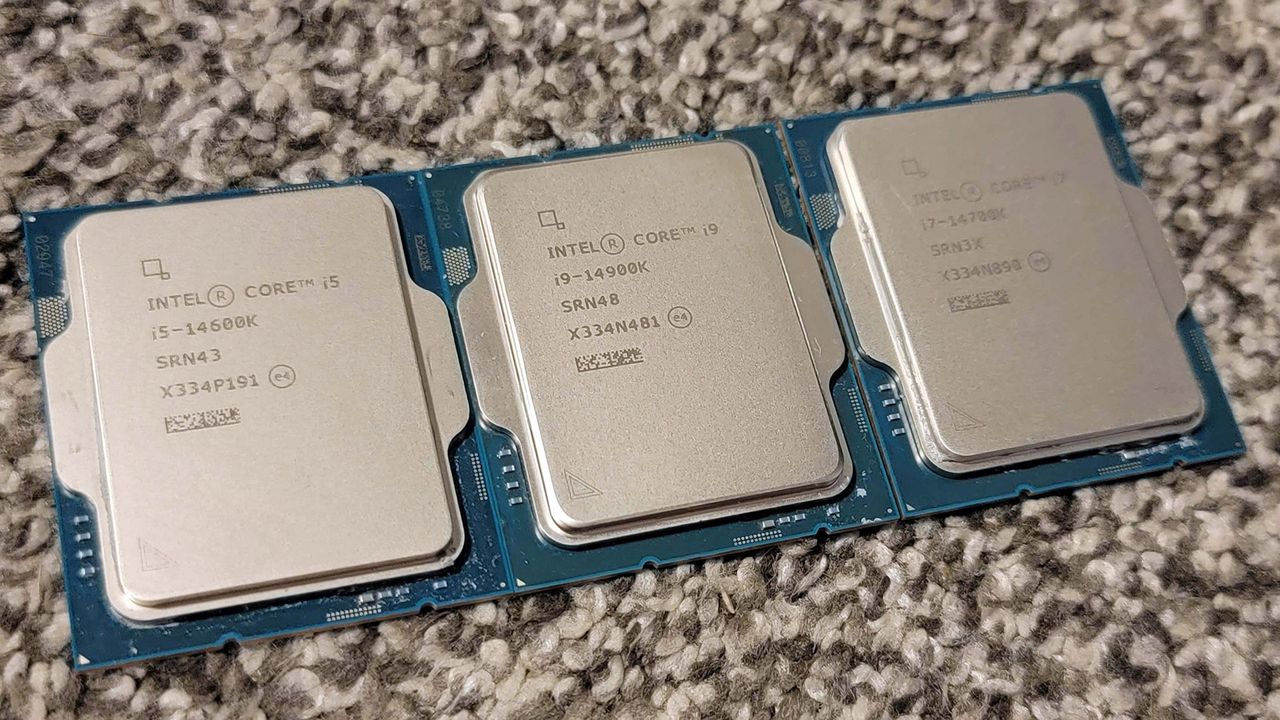
Despite numerous CPU failures, the Ryzen 7 9800X3D RMA rate is roughly on par with other Ryzen 9000 CPUs. Out of 40,000 Units Shipped on Mindfactory, Only 0.71% Ryzen 7 9800X3D Boxed CPUs Were RMA'd; Intel Core i9 14900K is Still One of the Most Failed CPUs AMD Ryzen 7 9800X3D failure reports have definitely caused some panic in the community, as we see users reporting dead CPUs very frequently. While AMD and its motherboard board partners have claimed that they have been investigating the failure issues, the 9800X3D isn't the only one that suffers from such failures. In fact, […]
MSI’s X870E Ace Max returns with premium features and style. But is it a standout motherboard or just another high-end placeholder in the X870E lineup?
Limited budgets, no dedicated analytics staff, siloed teams, and competing priorities make it difficult to connect media outreach to real outcomes.
That’s where collaboration with SEO, PPC, and digital marketing teams becomes essential.
Working together, these teams can help PR do three things that are hard to accomplish alone:
Show the connection between media outreach and customer action.
Incorporate SEO – and now generative engine optimization (GEO) – into measurement programs.
Select tools that match the metrics that actually matter.
This article lays out a practical way to do exactly that, without an enterprise budget or a data science team.
Digital communication isn’t linear – and measurement shouldn’t be either
One of the biggest reasons PR measurement breaks down is the lingering assumption that communication follows a straight line: message → media → coverage → impact.
In reality, modern digital communication behaves more like a loop. Audiences discover content through search, social, AI-generated answers, and media coverage – often in unpredictable sequences. They move back and forth between channels before taking action, if they take action at all.
That’s why measurement must start by defining the response sought, not by counting outputs.
SEO and PPC professionals are already fluent in this way of thinking. Their work is judged not by impressions alone, but by what users do after exposure: search, click, subscribe, download, convert.
PR measurement becomes dramatically more actionable when it adopts the same mindset.
Step 1: Show the connection between media outreach and customer action
PR teams are often asked a frustrating question by executives: “That’s great coverage – but what did it actually do?”
The answer usually exists in the data. It’s just spread across systems owned by different teams.
SEO and paid media teams already track:
Branded and non-branded search demand.
Landing-page behavior.
Conversion paths.
Assisted conversions across channels.
By integrating PR activity into this measurement ecosystem, teams can connect earned media to downstream behavior.
Practical examples
Spikes in branded search following major media placements.
Referral traffic from earned links and how those visitors behave compared to other sources.
Increases in conversions or sign-ups after coverage appears in authoritative publications.
Assisted conversions where media exposure precedes search or paid clicks.
Tools like Google Analytics 4, Adobe Analytics, and Piwik PRO make this feasible – even for small teams – by allowing PR touchpoints to be analyzed alongside SEO and PPC data.
This reframes PR from a cost center to a demand-creation channel.
Matt Bailey, a digital marketing author, professor, and instructor, said:
“The value of PR has been well-known by SEO’s for some time. A great article pickup can influence rankings almost immediately. This was the golden link – high domain popularity, ranking impact, and incoming visitors – of which PR activities were the predominate influence.”
Step 2: Incorporate SEO into PR measurement – then go one step further with GEO
Most communications professionals now accept that SEO matters.
What’s less widely understood is how it should be measured in a PR context – and how that measurement is changing.
Traditional PR metrics focus on:
Volume of coverage.
Share of voice.
Sentiment.
SEO-informed PR adds new outcome-level indicators:
Authority of linking domains, not just link counts.
Visibility for priority topics, not just brand mentions.
Search demand growth tied to campaigns or announcements.
These metrics answer a more strategic question: “Did this coverage improve our long-term discoverability?”
Enter GEO. As audiences shift from blue-link search results to conversational AI platforms, measurement must evolve again.
Generative engine optimization (also called answer engine optimization) focuses on whether your content becomes a source for AI-generated answers – not just a ranked result.
For PR and communications teams, this is a natural extension of credibility building:
Is your organization cited by AI systems as an authoritative source?
Do AI-generated summaries reflect your key messages accurately?
Are competitors shaping the narrative instead?
Tools like Profound, the Semrush AI Visibility Toolkit, and Conductor’s AI Visibility Snapshot now provide early visibility into this emerging layer of search measurement.
The implication is clear: PR measurement is no longer just about visibility – it’s about influence over machine-mediated narratives.
David Meerman Scott, the best-selling author of “The New Rules of Marketing and PR,” shared:
“Real-time content creation has always been an effective way of communicating online. But now, in the age of AI-powered search, it has become even more important. The organizations that monitor continually, act decisively, and publish quickly will become the ones people turn to for clarity. And because AI tools increasingly mediate how people experience the world, those same organizations will also become the voices that artificial intelligence amplifies.”
Step 3: Select tools based on the response sought – not on what’s fashionable
One reason measurement feels overwhelming is tool overload. The solution isn’t more software – it’s better alignment between goals and tools.
A useful framework is to work backward from the action you want audiences to take.
If the response sought is awareness or understanding:
Brand lift studies (from Google, Meta, and Nielsen) measure changes in awareness, favorability, and message association.
These tools help PR teams demonstrate impact beyond raw reach,
If the response sought is engagement or behavior:
Web and campaign analytics track key events such as downloads, sign-ups, or visits to priority pages.
User behavior tools like heatmaps and session recordings reveal whether content actually helps users accomplish tasks.
If the response sought is long-term influence:
SEO visibility metrics show whether coverage improves authority and topic ownership.
GEO tools reveal whether AI systems recognize and reuse your content.
The key is resisting the temptation to measure everything. Measure what aligns with strategy – and ignore the rest.
Katie Delahaye Paine, the CEO of Paine Publishing, publisher of The Measurement Advisor, and “Queen of Measurement,” said:
“If PR professionals want prove their impact, they need to go beyond tracking SEO to also understand their visibility in GEO as well. Search is where today’s purchasing and other decision making starts, and we’ve known for a while that good (or bad) press coverage drives searches for a brand. Which is why we’ve been advising PR professionals who want to prove their impact on the brand to ‘bake cookies and befriend’ the SEO folks within their companies. Today as more and more people rely on AI search for their answers, the value of traditional blue SEO links is declining faster than the value of a Tesla. As a result, understanding and ultimately quantifying how and where your brand is showing up in AI search (aka GEO) is critical.”
PR teams don’t need to become SEO experts overnight. And SEO teams don’t need to master media relations.
What’s required is shared ownership of outcomes.
When these groups collaborate:
PR informs SEO about narrative priorities and upcoming campaigns.
SEO provides PR with data on audience demand and search behavior.
PPC teams validate messaging by testing what actually drives action.
Measurement becomes cumulative, not competitive.
This reduces duplication, saves budget, and produces insights that no single team could generate alone.
Nearly 20 years ago, Avinash Kaushik proposed the 10/90 rule: spend 10% of your analytics budget on tools and 90% on people.
Today, tools are cheaper – or free – but the rule still holds.
The most valuable asset isn’t software. It’s professionals who can:
Ask the right questions.
Interpret data responsibly.
Translate insights into decisions.
Teams that begin experimenting now – especially with SEO-driven PR measurement and GEO – will have a measurable advantage.
Those who wait for “perfect” frameworks or universal standards may find they need to explain why they’re making a “career transition” or “exploring new opportunities.”
I’d rather learn how to effectively measure, evaluate, and report on my communications results than try to learn euphemisms for being a victim of rightsizing, restructuring, or a reduction in force.
Measurement isn’t about proving value – it’s about improving it
The purpose of PR measurement isn’t to justify budgets after the fact. It’s to make smarter decisions before the next campaign launches.
By integrating SEO and GEO into PR measurement programs, communications professionals can finally close the loop between media outreach and real-world impact – without abandoning the principles they already know.
The theory hasn’t changed.
The opportunity to measure what matters is finally catching up.
There’s a dangerous misconception in B2B marketing that video is just a “brand awareness” play. We tend to bucket video into two extremes:
The “viral” top-of-funnel asset that gets views but no leads.
The dry bottom-of-funnel product demo that gets leads but no views.
This binary thinking is breaking your pipeline.
In my role at LinkedIn, I have access to a unique view of the B2B buying ecosystem. What the data shows is that the most successful companies don’t treat video as a tactic for one stage of the funnel. They treat it as a multiplier.
When you integrate video strategy across the entire buying journey – connecting brand to demand – effectiveness multiplies, driving as many as 1.4x more leads.
Here’s the strategic framework for building that system, backed by new data on how B2B buyers actually make decisions.
The reality: The ‘first impression rose’
The window to influence a deal closes much earlier than most marketers realize.
LinkedIn’s B2B Institute calls this the “first impression rose.” Like the reality TV show “The Bachelor,” if you don’t get a rose in the first ceremony, you’re unlikely to make it to the finale.
Research from LinkedIn and Bain & Company found 86% of buyers already have their choices predetermined on “Day 1” of a buying cycle. Even more critically, 81% ultimately purchase from a vendor on that Day 1 list.
If your video strategy waits until the buyer is “in-market” or “ready to buy” to show up, you’re fighting over the remaining 19% of the market. To win, you need to be on the shortlist before the RFP is even written.
That requires a three-play strategy.
Play 1: Reach and prime the ‘hidden’ buying committee
The goal: Reach the people who can say ‘no’
Most video strategies target the “champion,” the person who uses the tool or service. But in B2B, the champion rarely holds the checkbook.
Consider this scenario. You’ve spent months courting the VP of marketing. They love your solution. They’re ready to sign.
But when they bring the contract to the procurement meeting, the CFO looks up and asks: “Who are they? Why haven’t I heard of them?”
In that moment, the deal stalls. You’re suddenly competing on price because you have zero brand equity with the person controlling the budget.
Our data shows you’re more than 20 times more likely to be bought when the entire buying group – not just the user – knows you on Day 1.
The strategic shift: Cut-through creative
To reach that broader group, you can’t just be present. You have to be memorable. You need reach and recall, both.
LinkedIn data reveals exactly what “cut-through creative” looks like in the feed:
Be bold: Video ads featuring bold, distinctive colors see a 15% increase in engagement.
Be process-oriented: Messaging broken down into clear, visual steps drives 13% higher dwell times.
The “Goldilocks” length: Short videos between 7-15 seconds are the sweet spot for driving brand lift – outperforming both very short (under 6 seconds) and long-form ads.
The “Silent Movie” rule: Design for the eye, not the ear. 79% of LinkedIn’s audience scrolls with sound off. If your video relies on a talking head to explain the value prop in the first 5 seconds, you’ve lost 80% of the room. Use visual hooks and hard-coded captions to earn attention instantly.
This is where most B2B content fails. We focus on selling capability (features, specs, speeds, feeds) and rarely focus on buyability (how safe it is to buy us).
When a B2B buyer is shortlisting vendors, they’re navigating career risk.
Our research with Bain & Company found the top five “emotional jobs” a buyer needs to fulfill. Only two were about product capability.
The No. 1 emotional job (at 34%) was simply, “I felt I could defend the decision if it went wrong.”
The strategic shift: Market the safety net
To drive consideration, your video content shouldn’t be a feature dump. It should be a safety net. What does that actually look like?
Momentum is safety (the “buzz” effect)
Buyers want to bet on a winner. Our data shows brands generate 10% more leads when they build momentum through “buzz.”
You can manufacture this buzz through cultural coding. When brands reference pop culture, we see a 41% lift in engagement.
When they leverage memes (yes, even in B2B), engagement can jump by 111%. It signals you’re relevant, human, and part of the current conversation.
Authority builds trust (the “expert” effect)
If momentum catches their eye, expertise wins their trust. But how you present that expertise matters.
Video ads featuring executive experts see 53% higher engagement.
When those experts are filmed on a conference stage, engagement lifts by 70%.
Why? The setting implies authority. It signals, “This person is smart enough that other people paid to listen to them.”
Consistency is credibility
You can’t “burst” your way to trust. Brands that maintain an always-on presence see 10% more conversions than those that stop and start. Trust is a cumulative metric.
Microsoft Teams will soon introduce a toolbar hiding option, enhancing video calls by providing more screen space and reducing clutter for smoother collaboration.
According to Nikkei Asia, some of the biggest PC makers like ASUS, Acer, Dell, and HP are exploring alternative memory suppliers amid industry-wide memory shortages, which are forcing PC OEMs to seek supply even from Chinese memory maker CXMT. Late last year, CXMT unveiled its homegrown DDR5-8000 and LPDDR5X-10667 memory modules at the 2025 China International Semiconductor Expo. This has likely prompted many OEMs to start finding alternatives to the traditional triad of SK Hynix, Samsung, and Micron, whose supply has been very limited outside AI accelerator workloads.
CXMT offers 12 Gb and 16 Gb LPDDR5X capacities, while DDR5 scales to 16 Gb and 24 Gb module formats. The 16 Gb DDR5 chips from CXMT measure 67 square millimeters, with a density of 0.239 Gb per square millimeter. The G4 DRAM cells are 20% smaller than CXMT's previous G3 generation. Reportedly, CXMT manufactures these chips using a 16 nm node, which is three years behind Samsung, SK Hynix, and Micron in manufacturing capabilities. However, CXMT is progressing quickly, and its DRAM modules adhere to the official JEDEC specifications and even exceeding the specification, making them ideal for OEM PCs depending on the use case.
Tesla has dominated the continent's fully electric segment for years, but its momentum faltered sharply in 2025. JATO's figures show Tesla's registrations plunged 27 percent compared to 2024. Volkswagen filled that gap with a 56 percent jump, largely driven by its new ID.7 sedan. The result: VW's European battery-electric sales reached 274,278 units, overtaking Tesla's 236,357.
The GPU manufacturer offered news outlets another opportunity to examine its upcoming motion clarity technologies in Munich this week. It confirmed to Hardwareluxx that owners of RTX 50 series graphics cards can begin using 6x multi-frame generation and dynamic multi-frame generation beginning in April.
Last year saw more than 100 cases of Ryzen 9000 chips failing in Asrock motherboards. The manufacturer initially blamed the faults on several areas, including memory compatibility conflicts, user error, and even debris in the CPU socket.
Nevar is a GEO (Generative Engine Optimization) and verification platform that helps brands measure, verify, and improve their visibility in AI-generated answers from systems like ChatGPT and Perplexity. It tracks mentions and citations, surfaces high-value questions, and updates a strategy model weekly to raise inclusion rates.
Nevar integrates with WordPress to auto‑optimize content using MCP brand templates, manages AI crawler access, and supports multimodal brand validation. Teams use it to increase trustworthy AI references while reducing hallucinations
A previously undocumented cyber espionage group operating from Asia broke into the networks of at least 70 government and critical infrastructure organizations across 37 countries over the past year, according to new findings from Palo Alto Networks Unit 42.
In addition, the hacking crew has been observed conducting active reconnaissance against government infrastructure associated with 155
All the ways to watch T20 World Cup 2026 live streams online from anywhere for FREE, with Pakistan, South Africa and England looking to dethrone India.
An Assassin's Creed cooperative multiplayer game, codenamed "AC League", that was initially developed as an Assassin's Creed Shadows DLC, has reportedly been canceled.
Late last year, it seemed like Half-Life 3, the third entry in the Valve series, was about to be announced. Every available indication, whether updates to the Source 2 engine or rumors from reliable insiders about a trailer in preparation, seemed to point to an imminent reveal before the end of 2025. However, 2025 has ended without any confirmation of what the HLX project is, and the complete lack of information from the usual sources plunged the community into doom and gloom, with many starting to doubt the game really exists, or believing it was ultimately cancelled. While we still don't know if HLX […]
The 2nm GAA process was recently reported to have achieved yields of 50 percent, indicating that while there is room for improvement, Samsung can reach a stage where it can be in the same conversation as TSMC. As the latter faces production problems, the opportunity for the Korean foundry is ripe for the taking, as the latest report states that Samsung is eyeing a 130 percent bump in 2nm GAA orders. Tesla is already a notable customer for this technology, with the EV manufacturer previously said to have signed a $16.5 billion deal. Analysts predict that Samsung’s precise 130 percent […]
According to the French website Origami, Ubisoft has canceled a secret Assassin's Creed co-op game codenamed AC League. Origami, which has a solid track record, claims to have verified the information with six current Ubisoft employees before publishing the story. First and foremost, it should be clarified that this is not Assassin's Creed Invictus, the arcade Fall Guys-inspired PvP multiplayer game that was previously leaked to be in development. AC League was originally meant to be the rumored Assassin's Creed Shadows co-op mode, which later morphed into a standalone title. It was in development at Ubisoft Annecy, the studio that […]
In Dragon Quest VII Reimagined, your character level is only half the battle. To truly unlock the potential of your party, you need to master Vocations. While the game streamlines many aspects of the classic experience, it still doesn't explicitly list the precise Proficiency Points required to reach the next rank, leaving players to guess based on the progress bars in the menu. If you’re looking to master any Vocation as quickly as possible without turning the game into a tedious grind, I’ve conducted extensive testing to find the most time-efficient loops. Here is the best way to power up […]
The Bambu Lab P1S, one of our all-time favorite 3D printers, is back in stock and still a record-low price, available for you to pick up today for only $399.99.
Chinese tech YouTube channel Geekerwan tests direct die cooling on the 96-core Ryzen Threadripper Pro 9995WX, using a CNC-engraved IHS and automotive-grade cooling components.
A report from consumer firm Circana has shown that two-thirds of those opposed to AI believe it isn't useful on their devices, while a third weren't interested at all in the technology.
European officials believe that two Russian “Inspector” SIGINT spacecraft operating in geostationary orbit have intercepted communications from at least a dozen European satellites.
Adafruit says that the current bill, which forces 3D printer manufacturers to scan for gun and gun components, is too broad and is prone to massive false positive and false negative rates.
Representatives from both the Google Search and Bing Search teams are recommending against creating separate markdown (.md) pages for LLM purposes. The purpose is to serve one piece of content to the LLM and another piece of content to your users, which technically may be considered a form of cloaking and against Google’s policies.
“Not sure if you can answer, but starting to hear a lot about creating separate markdown / JSON pages for LLMs and serving those URLs to bots.”
Google’s response. John Mueller from Google responded saying:
“I’m not aware of anything in that regard. In my POV, LLMs have trained on – read & parsed – normal web pages since the beginning, it seems a given that they have no problems dealing with HTML. Why would they want to see a page that no user sees? And, if they check for equivalence, why not use HTML?”
Recently, John Mueller also called the idea stupid, saying:
“Converting pages to markdown is such a stupid idea. Did you know LLMs can read images? WHY NOT TURN YOUR WHOLE SITE INTO AN IMAGE?” That is of course, converting your whole site to an MD file, which is a bit extreme, to say the least.
I did collect a lot of John Mueller’s comments on this topic, over here.
Bing’s response. Fabrice Canel from Microsoft Bing responded saying:
“Lily: really want to double crawl load? We’ll crawl anyway to check similarity. Non-user versions (crawlable AJAX and like) are often neglected, broken. Humans eyes help fixing people and bot-viewed content. We like Schema in pages. AI makes us great at understanding web pages. Less is more in SEO !”
Why we care. Some of us like to look for shortcuts to perform well on search engines and now the new AI search engines and LLMs. Generally, shortcuts, if they work, only work for a limited time. Plus, these shortcuts can have an unexpected negative effect.
“I’ve had concerns the entire time about managing duplicate content and serving different content to crawlers than to humans, which I understand might be useful for AI search but directly violates search engines’ longstanding policies about this (basically cloaking).”
Developed under the direction of Assistant Professor Shady Farah of the Technion's Faculty of Chemical Engineering, and carried out with colleagues from MIT, Harvard University, Johns Hopkins University, and the University of Massachusetts, the work demonstrates a functioning cell-based system that produces and delivers insulin independently.
Mazin, who also wrote the brilliant Chernobyl miniseries, will create, write, executive-produce, and showrun the Baldur's Gate 3 show, writes Deadline. Chris Perkins, the former Head of Story at Wizards of the Coast, will serve as consultant.
As you know, enterprise network security has undergone significant evolution over the past decade. Firewalls have become more intelligent, threat detection methods have advanced, and access controls are now more detailed. However (and it’s a big “however”), the increasing use of mobile devices in business operations necessitates network security measures that are specifically
Embark Studios is introducing new changes to Arc Raiders ahead of the second expedition kicking off next month, including an adjustment to the required Stash value.
One of the biggest attractions of the upcoming Apple iPhone 17e was supposed to center around its adoption of the Dynamic Island. However, a new report now wants you to perish that thought, and abandon any similar design change hopes for the base iPad as well. Apple won't bring any design-related changes to the iPhone 17e and the base iPad According to a new report from MacOtakara, Apple will retain the existing design language for the iPhone 17e and the base iPad. Specifically, the report notes that Apple won't bring the Dynamic Island to the iPhone 17e, opting to retain […]
In Dragon Quest VII Reimagined, the hunt for Metal Slimes remains the fastest way to grind experience points, but taking them down is no easy feat, as you can only hit them for 1 point of damage (when they don't dodge your attacks) and are as quick to run away from battle as ever before. While there are skills such as the Warrior's Metal Slash, which can deal more damage to Metal Slimes, these are not enough to guarantee their defeat every time you encounter one in battle. However, there is a secret in the AI logic of the Pirate […]
Dragon Quest VII Reimagined is the third version of the seventh entry in the series, which established Japanese role-playing games following the original PlayStation release and the first Nintendo 3DS remake. While the game roughly follows the same story beats, Dragon Quest VII Reimagined introduces many gameplay tweaks meant to make the experience more welcoming for all sorts of players while retaining most of the features that define a Dragon Quest experience. In this Complete Walkthrough and Guides Hub, you will find everything you need to make your journey to restore the world much more enjoyable. Overview Dragon Quest VII […]
Deadline reports that a Baldur's Gate 3 HBO series is now underway, with Craig Mazin attached as creator, writer, showrunner, and executive producer. Mazin is primarily known for his acclaimed work on the TV shows Chernobyl and The Last of Us, the latter of which is particularly relevant because it's also an adaptation of a game. Previously in his career, he also co-wrote the screenplays for movies like Scary Movie 3 and 4, The Hangover Part II and III, and The Huntsman: Winter's War. The big difference compared to the adaptation of Naughty Dog's The Last of Us is that the Baldur's Gate […]
At Integrated Systems Europe (ISE) 2026 in Barcelona, Akasa showcased its latest solutions that embed LCD screens in passively-cooled cases. There are three versions, including "Kepler," "Maxwell Pro Plus," and "Euler CMX," all of which come with an LCD screen for monitoring or providing a visual interface that a user might need. First on the list is the new "Kepler" chassis, which is a 2U rack-mountable design with support for microATX and Mini-ITX boards, compatible with either Intel LGA1851 or LGA1700 sockets, capable of running anything from 12th to 14th Generation Intel Core processors, or Core Ultra in the latest 15th Generation "Arrow Lake." The system limits the CPU TDP to 35 W, which makes sense since it is a completely passively cooled enclosure. Kepler includes a 150 W AC-to-DC converter to power the system, and there is the possibility to install up to four single-slot low-profile PCIe cards or anything that fits within four slots of low-profile PCIe space.
PitchMode helps founders train to craft and deliver a 60-second elevator pitch that hooks investors. It builds clarity and confidence so you can explain your product quickly and keep attention in investor meetings. Start for free and practice until your message sticks.
llmboost tracks how your brand appears across AI platforms like ChatGPT, Claude, Perplexity, and Gemini. It delivers visibility scores, sentiment and context analysis, and competitor benchmarks. The platform monitors mentions, flags risky or incorrect responses, and generates export-ready dashboards and automated reports.
Agencies and resellers can white-label the platform to manage multiple clients, set pricing, and control access from a single hub, while direct clients benefit from fast onboarding and clear plans.
Cybersecurity researchers have discovered a new supply chain attack in which legitimate packages on npm and the Python Package Index (PyPI) repository have been compromised to push malicious versions to facilitate wallet credential theft and remote code execution.
The compromised versions of the two packages are listed below -
@dydxprotocol/v4-client-js (npm) - 3.4.1, 1.22.1, 1.15.2, 1.0.31&
Apple was previously reported to be making the iPhone 18 Pro Max thicker and heavier than any of its predecessors, but that would be out of sheer necessity because the latest rumor has shared the battery sizes for both the eSIM and non-eSIM versions of the flagship. In short, if you have any intentions of purchasing the iPhone 17 Pro Max, you might want to hold off on your upgrade and wait for the successor. Up to a 3.67 percent larger battery is rumored to be found on the iPhone 18 Pro Max, with Apple’s efficient A20 Pro SoC and […]
The AI frenzy is now coming for CPUs, as a new Reuters report says both Intel and AMD are struggling to meet enterprise demand, which has driven up prices. Server CPUs Are Now Under Immense Demand From Hyperscalers, Potentially Forcing Intel/AMD to Shift Away From Client Products The broader tech supply chain is currently under significant pressure, courtesy of the infrastructure buildout, as we have seen over the past few quarters, DRAM, NAND, and semiconductors are experiencing massive shortages. This has ultimately created an adverse impact not just on consumers alone, but also on manufacturers like Intel and AMD, as […]
DLSS 4.5 Dynamic Frame Generation will be released in “Spring” At a recent event, an Nvidia representative reportedly stated that its DLSS Dynamic Frame Generation technology would be released in “April”. Since then, Nvidia has stated that this was a “misunderstanding”, reconfirming that DLSS Dynamic Frame Generation would be released this “Spring”. At the event, […]
ASUS IoT, a global leader in AIoT solutions, today announced PE1000U, a compact DIN-rail-mountable edge computer powered by an Intel Core Ultra Series 2 processor. Measuring just 63 x 110 x 160 mm, PE1000U features extensive I/O connectivity to address the growing demand for real-time intelligence at the edge. Housed in a fanless, rugged IP40-rated chassis that's been subjected to US MIL-STD-810H testing for 5Grms vibration, PE1000U is able to operate in environments with temperatures ranging between -25°C to 70°C. It accepts a wide 9-36 V DC power input and includes built-in ignition control, making it suitable for on-vehicle deployment. PE1000U is also ideal for collaborative robots, AMR, industrial vision equipment, and other space-constrained deployments where reliability is paramount.
Performance and connectivity in a palm-sized package
PE1000U is powered by either an Intel Core Ultra 265U or 235U processor paired with hybrid cutting-edge CPU, GPU, and NPU acceleration for high single-thread responsiveness for motion control while simultaneously accelerating AI inference and graphics workloads. Front-access I/O connectors include four USB ports, up to four COM ports, and up to four Ethernet ports (two 2.5G by default) to simplify sensor, camera, and network integration. Onboard dual CAN Bus and an isolated DIO module enhance deterministic control, while DisplayPort and HDMI outputs support up to two 4K displays for HMI or machine-vision monitoring.
According to HardwareLuxx, NVIDIA has confirmed that Dynamic Multi Frame Generation (MFG) and Multi Frame Generation 6x mode are scheduled for release in April. HardwareLuxx visited NVIDIA's Munich office in Germany and obtained some exclusive information from the company. This includes the exact release date for NVIDIA's latest Dynamic Multi Frame Generation and Multi Frame Generation 6x mode, which are bringing NVIDIA DLSS 4.5 technologies to the public. With DLSS 4.5, NVIDIA can get the GPU to draw up to 5 frames following each traditionally rendered frame, made entirely using generative AI. Using the new MFG 6x mode results in a 6x performance uplift, where a game that traditionally runs at 60 FPS can now run at 360 FPS.
However, for setups where a monitor is maxed out at 240 Hz or 144 Hz, like many gaming panels are, using 6x MFG would be overkill. This is where Dynamic MFG comes into play. This technology will determine which MFG multiplier is needed based on the display's refresh rate capability that is used for the MFG target and the input framerate from the upscaler. The company calls this "automatic transmission" for MFG, making a parallel to modern vehicle automatic transmission systems that also switch gears based on the need. For example, in demanding game scenarios, the MFG multiplier could be 4x, 5x, or 6x, while less demanding game sections like the settings menu or some static scenes will require only a 2x multiplier to achieve the FPS goal. HardwareLuxx tested this and reported smooth transitions while keeping the FPS stable.
Notki helps freelancers, consultants, and agencies capture project updates and turn them into client-ready reports in seconds. Type or dictate notes and let AI transcribe, summarize, and organize everything into clear timelines. Share polished reports with granular permissions, track opens, and keep every client aligned. Use smart search, project timelines, and team controls to manage work across clients without chaos.
Artificial intelligence (AI) company Anthropic revealed that its latest large language model (LLM), Claude Opus 4.6, has found more than 500 previously unknown high-severity security flaws in open-source libraries, including Ghostscript, OpenSC, and CGIF.
Claude Opus 4.6, which was launched Thursday, comes with improved coding skills, including code review and debugging capabilities, along with
MarkInMinutes is an AI-powered grading assistant for professors and teachers. Upload assignments and rubrics, submit student work in DOCX, PDF, PPTX, XLSX, or code, and receive structured, evidence-cited feedback aligned to your criteria. You can batch process entire classes, review AI analyses, adjust scores, and export final grades while retaining full control over decisions. The platform reduces grading time, improves documentation, and ensures consistent, fair evaluations across courses.
All the ways to watch Winter Olympics Figure Skating 2026 live streams for FREE, with Ilia Malinin, Alysa Liu and Kaori Sakamoto headlining the action.
Feel like you haven’t been on top of your fitness goals to start the year? I’ve found 5 of the best deals on Garmin watches across different price points from as low as AU$211.
Microsoft's January 2026 Patch Tuesday update – already notorious for causing serious issues – is now being blamed for slowing down Nvidia graphics cards. While Nvidia has acknowledged the problem, Microsoft has yet to respond to the latest reports.
SponsorRadar is a database and outreach platform for YouTube sponsorships. It tracks over 414,000 sponsorships across more than 31,000 brands and over 21,000 channels, updated daily, so you can see who sponsors your competitors and how to reach them. Connect your channel to get brand matches with contact info and estimated deal ranges, then generate a professional media kit with real analytics. Send personalized pitches from Gmail and track responses. Brands, agencies, and managers use it to research competitors, spot trends, and discover creators.
12-month discounts on NBN plans are rare, but you can definitely find extra savings if you know where to look – and I've found 3 providers worth considering.
AMD's high-performance CPU journey continues on the desktop platform with the arrival of the Zen 5 core architecture. The new architecture has several fundamental changes that allow huge performance uplifts in single-core and multi-core applications. These can be attributed to the 16 percent IPC improvement that the new architecture has on offer. Replacing the AMD Ryzen 7000 "Zen 4" CPUs, the Ryzen 9000 "Zen 5" CPUs do not change the core configurations but enhance them in certain ways. The architectural upgrades allow Zen 5 chips to run cooler, consume lower power, and support the latest features on existing and upcoming […]
JobHustler automates your job search across LinkedIn, ZipRecruiter, Indeed, Glassdoor, and Monster without browser extensions or platform credentials. It scans listings, filters for quality matches with a 70% fit score, and helps you act faster. Use built-in AI to tailor resumes and generate cover letters for each application, and get started on a free tier that never stops.
MachineGames' studio director Jerk Gustafsson has promised that it will return to the Wolfenstein franchise, though it may be "later" instead of "now."
There have been previous rumors that Guerrilla games was working on a new multiplayer game in the Horizon universe, but it was thought that the game would be an MMO. Instead—or maybe in addition to the MMO—Sony has just announced Horizon Hunters Gathering, a co-op PvE game with teams of three players. It seems like Hunters Gathering will largely follow a similar formula to the Monster Hunter series, where parties take on missions to hunt monsters. At launch, there will be three playable characters to choose from, each with their own weapons, abilities, strengths, and weaknesses, and there will be two mission types to choose from during the first playtest, scheduled for late February. Machine Incursion sees players defend an area from a machine attack, replete with a tough boss fight at the end. Cauldron Descent is a dungeon crawling-style affair, where players mount an assault on a machine base, exploring a multi-stage dungeon and fighting enemies along the way and tackling environmental puzzles. Hunters Gathering will also have a campaign mode at launch, which can be played through single-player or in co-op mode.
While the Hunters Gathering announcement trailer details much of the gameplay, it does not confirm if players will stick with one class throughout various missions, but there is no mention of progression, so it seems as though players will choose a character at the start of each mission queue. Guerrilla Games also confirmed that more hunters will be added to the game at a later stage, adding credence to this theory. Horizon Hunters Gathering is set in the American West, 1,000 years into the future and after the collapse of civilization. The premise is that the hunters are the last line of defense against the machines that roam the wilds and threaten human tribes. The machine designs will feel familiar to anyone who's played the original single-player Horizon games, but the visual style is now much more stylized and cartoon-like. The game will launch on PC and PlayStation 5 and cross-play will be available at launch, although an exact launch date has not yet been announced.
Keychron has announced two new low-profile wireless keyboards, the K3 HE and K3 Ultra, both set to launch on February 12. The pair builds on the company's recent HE and Ultra designs, combining a slim form factor with gaming-focused features and wood accent details. Similar to the K2 HE, the upcoming K3 HE keyboard uses Lime low-profile hall effect magnetic switches, so users will be able to adjust actuation points, trigger and reset behavior, and configure multi-action or analog inputs. The Keychron K3 HE is also expected to support third-party low-profile Hall effect switches, including Gateron Magnetic Jade Pro and TTC KOM, avoiding a fully proprietary ecosystem. By contrast, the K3 Ultra sticks with traditional mechanical switches, using pre-lubed low-profile Milk POM switches with a high 8,000 Hz polling rate. This puts input latency as low as 0.125 ms, targeting competitive gaming scenarios where response time is a priority. The keyboard runs on ZMK firmware and is rated for up to 550 hours of battery life in 2.4 GHz wireless mode.
Both models emphasize portability and are expected to use an ABS bottom case with metal and wood frame similar to earlier HE Special Edition keyboards. The keyboards will be available in black and white versions. Keychron has not yet disclosed final pricing, though early access requires a $3 reservation fee.
A Redditor who enjoys experimenting with old hardware and ancient operating systems recently tried a small but clever experiment: installing an NVMe drive in a PCI-based machine. The idea was to force a modern(ish) SSD to operate under the constraints storage devices faced in the 1990s, requiring it to interact...
Nexafin automatically detects your recurring bills and shows what's due this week, what's overdue, and what's coming up. You can connect bank, credit, and investment accounts across 12,000+ institutions or import CSV/PDF statements if you prefer not to link. Enjoy a 30-day free trial.
Super Mario Bros. Wonder + Meetup In Bellabel Park is just as chaotic and trippy as the base game, but major additions to the multiplayer mode make it a must-have party game.
During the company's fourth-quarter earnings call on Thursday, it offered an update on its plans to merge traditional and AI search together and hinted that although search is not yet monetized, "it's an enormous market and opportunity."
Nvidia’s RTX 60 series may have been pushed back to 2028 According to The Information (paywalled article), Nvidia has delayed its “Kicker” (RTX 50 SUPER) GPU lineup, citing memory shortages. As a knock-on effect, this change delays the next-generation of Nvidia GPUs, the RTX 60 series, until at least 2028. In December, Nvidia reportedly delayed […]
EMEET today announced the launch of the EMEET S600L, a 4K webcam designed to deliver clear, consistent, and professional-quality video through the integration of intelligent imaging technology and a built-in ring light. The S600L is created for creators, streamers, and professionals seeking high-quality visuals without complex setups.
Powered by a 4K imaging system and EMEET's AI imaging capabilities, the S600L delivers sharp detail, balanced exposure, and natural color reproduction across various lighting environments. Intelligent image processing helps ensure visual clarity and stability, whether users are live streaming, recording content, or participating in virtual meetings.
Darmoshark has announced a new wireless gaming mouse designed specifically for users with big hands, with the mouse making its debut in a post on Bilibili. The Darmoshark M9 has a similar shape to the ever-popular Razer Viper V3 Pro, but it measures in at 136.5 × 68.1 × 43.5 mm, compared to the Viper V3 Pro's 127.1 × 63.9 × 39.9 mm. A few millimeters' difference may not seem like much, but it's a bigger difference across the board than the difference between the original Razer Viper Ultimate (126.8 × 57.6 × 37.8 mm) and the Viper Mini (118.3 mm × 53.5 × 38.3 mm), and the shape being what it is, it should provide a decent experience for users who would otherwise feel cramped on a standard-size gaming mouse. Darmoshark makes no hard claims, but it says that it "may well be the largest mouse to date."
The Darmoshark M9 doesn't skimp on the specs, either, featuring a PixArt PAW 3950 sensor, a Nordic 54L15 MCU, Omron Optical switches, and a 500 mAh battery, all at a claimed weight of 59 g—only 5 g heavier than the Viper V3 Pro and roughly the same weight as the Logitech G Pro X Superlight 2. This hardware means it will have 8 kHz polling as well as features like a 20 FPS mode and adjustable lift-off. Like the aforementioned mice, it has a solid shell and two programmable side buttons. It seems as though the increased shell size has made it necessary to move the hump slightly to the back for more palm support without affecting click height too much, and the scroll wheel has a rubberized coating. The mouse is already available in China for RMB 400, which converts to roughly $58, although it's likely the price will increase if and when it eventually gets a global release.
As 2026 gets underway, it's clear that AI's momentum hasn't stalled in the least. If anything, it's picking up speed, especially with the recent surge of interest in AI-powered agents, often referred to as agentic AI, that are beginning to reshape how the technology is used.
Parano.ai delivers AI-assisted competitive intelligence that tracks competitors’ marketing, product updates, pricing, reviews, hires, funding, and website changes in real time. It sends executive summaries, change-detection comparisons, and tailored alerts to your inbox, Slack, or Microsoft Teams.
Set your competitors, fine-tune signals with granular filters, and receive daily or weekly digests for faster decisions. Pricing is per competitor with unlimited seats.
The GeekBook X14 Pro is an ultra-lightweight 14-inch display laptop featuring Windows 11 Pro and a premium build with a stylish magnesium alloy outer. Inside, an impressive CPU and GPU offer a powerful combination, making it a great option for business and creative use.
Andreessen Horowitz VC Jennifer Li, who oversees some of the firm's fastest-growing AI companies, warns founders not to believe every ARR claim made on X.
It has been only a few days since Apple's new AirTag 2 hit the store shelves. Yet, iFixIt is now out with a teardown of the device, revealing interesting insights about the coin-like tracker. iFixIt: Apple AirTag 2 still does not sport "tamper proof" speakers iFixIt's teardown of the AirTag 2 has revealed a few interesting aspects about the new device: For the benefit of those who might not be aware, the new AirTag's key specs include: The new AirTag is available at the same $29 price point. You can also buy a bundle of 4 for $99.
AT&T’s subpar service and customer service were quickly in the negative spotlight when a customer on Reddit explained his horrible experience with the U.S. carrier concerning an iPhone 17 Pro that was supposed to arrive brand new at the designated address. Unfortunately, not only was the box shipped with a broken factory seal, but the device also had a smudged display, clearly indicating it had been opened before. Naturally, the first instinct would have been to return the product, which would have been a simple process, right? Wrong, and after the customer endured the excruciating after-sales support, he was charged triple […]
As Call of Duty: Black Ops 7 and Warzone starts Season 2, its devs joined us to talk how they're handling the challenges of live-service game development.
Capcom has released a free playable demo of Monster Hunter Stories 3: Twisted Reflection, the next and biggest entry in Monster Hunter's JRPG spin-off series for platforms. Here's what you can expect from the demo.
Corsair has been listed on Nasdaq since September 2020, when the company made an IPO at $17 per share. However, the company, which is a gaming staple, has now fallen to a measly sub-$5 range for the first time. Just days ahead of its full-year earnings and Q4 2025 results scheduled for February 12, Corsair is trading at $4.80 with a market capitalization of $504.63 million. During the first three months of its public listing, the stock reached an all-time high of $51.37, and the price has been in free fall since. This represents a 90% market value reduction over nearly five and a half years.
For the previous Q3 2025 report, the company reported a year-over-year revenue increase of 14% to $345.8 million, with projections for a full-year outlook being $1.425 billion to $1.475 billion, and adjusted operating income in the range of $76 million to $81 million. However, since the stock is now falling, we can expect that the earnings will possibly be at the lower end of the range. Interestingly, Corsair is one of the few publicly listed companies with revenues exceeding its market capitalization. This indicates that the company is capturing a significant revenue share among PC enthusiasts, but its operating costs are very high, and the business is net profit margin negative, which is a massive concern for investors using their hard-earned funds.
Wardogs is a new massively multiplayer tactical FPS that has been in development at Bulkhead for a number of years. It puts players in all-out warfare in a massive 256 km² map with 99 other players split into three teams. On February 5, 2026, the game studio released a new gameplay trailer and a Steam Store page for the upcoming FPS, revealing some previously unknown details about the upcoming shooter. One of the major reveals is that Wardogs will use Easy Anti-Cheat, which may spell bad news for Linux gamers. EAC does have a Linux mode that developers can enable, and Team17, the publisher behind the game, is known for being Linux-friendly, but there is currently no guarantee that Wardogs will be playable on devices like the Valve Steam Deck, the upcoming Steam Machine, or any other Linux system out there. Minimum hardware requirements are fairly low, calling for an NVIDIA GeForce GTX 1660 or AMD Radeon RX 590, 16 GB of RAM, and either an Intel Core i5 8600 or AMD Ryzen 5 3500, meaning it will likely be reasonably playable on a iGPU if playing at lower resolution and quality settings.
Aside from the confirmation of EAC, the Wardogs Steam page denies that the game is a battle royale or an extraction shooter, instead emphasizing that it's a "new tactical take on the all-out-warfare FPS genre that rewards decision-making, communication, and teamwork," all within a modern militaristic setting and a fully player-driven sandbox with destructible environments and building mechanics. The game will feature realistic graphics, vehicular combat, and it will give players the freedom to approach the game as they see fit. The upgrade system depends on purchasing gear, weapons, and vehicles from a store, and each player starts with $10,000, but earnings persist from match to match. The game format itself revolves around controlling a 4 km² zone located randomly on the map—the more players a team has in the control zone, the more points they rack up. Wardogs is slated to launch in 2026, but the game studio will conduct limited playtests ahead of launch.
Blizzard is officially dropping the "2" from Overwatch 2, signaling a renewed focus on evolving the storyline and enhancing gameplay rather than releasing sequels disconnected from earlier titles. The company believes that introducing a fully connected annual storyline will deepen player engagement over time.
Resolut streamlines accounts receivable so you get paid on time and protect cash flow. Connect QuickBooks, orchestrate email, SMS, and phone reminders, and escalate with legal voice when needed, all without harming client relationships. The platform offers a dynamic billing portal with multiple payment options, automatic cash application, and AI-driven credit risk assessment. Use autopilot or co-pilot modes to balance automation with control, cut DSO, and eliminate administrative burdens across the full AR cycle.
Right now, there's a big air of mystery around MachineGames, and what its next project will be. The developer is mostly known for its take on the Wolfenstein series; its last game, Indiana Jones and the Great Circle, meant it took several years off from the Wolfenstein franchise to make a different kind of excellent Nazi-punching adventure. But now that its treasure-hunting adventure is out, with its own DLC, and will soon be available on the Nintendo Switch 2, the question once again becomes: what's next for MachineGames? Presumably, what's next is Wolfenstein 3, and in a recent interview with […]
Tesla's CEO is highly optimistic about the prospect of computing in space, as Musk believes Earth's energy constraints hinder the advancement of AI. Tesla's CEO Claims Energy Is a Problem On Earth, But in Outer Space, Chips Will Be the Next Constraint As the world of AI infrastructure advances, many experts argue that the 'dot-com' moment for this buildout will come when hyperscalers realize there isn't enough energy on the grid to sustain datacenter development, which would ultimately lead to a compute glut. Energy is a massive constraint that the AI bandwagon currently witnesses, given that it is argued that […]
One mechanic that Embark Studios uses to keep players engaged in ARC Raiders is the game's Expeditions, which are essentially a big reset for your Raider. Things like your Workshop, player level, skill points, blueprints, coins, quests, and stash upgrade progress all get reset, letting you start again with new rewards and buffs to make your next round of Topside visits all the more intriguing. What makes Expeditions interesting to complete (and what helps keep players logging onto ARC Raiders each day) is that you have a limited amount of time to prepare for them, with Expeditions running on a […]
Nvidia's RTX 50 series Super refresh supposedly is design complete, but the GPU maker won't be releasing any new RTX GPUs in 2026, according to a report in The Information.
For many local businesses, performance looks healthier than it is.
Rank trackers still show top-three positions. Visibility reports appear steady. Yet calls and website visits from Google Business Profiles are falling — sometimes fast.
This gap is becoming a defining feature of local search today.
Rankings are holding. Visibility and performance aren’t.
The alligator has arrived in local SEO.
The visibility crisis behind stable rankings
Across multiple U.S. industries, traditional local 3-packs are being replaced — or at least supplemented — by AI-powered local packs. These layouts behave differently from the map results we’ve optimized in the past.
Analysis from Sterling Sky, based on 179 Google Business Profiles, reveals a pattern that’s hard to ignore. Clicks-to-call are dropping sharply for Jepto-managed law firms.
When AI-powered packs replace traditional listings, the landscape shifts in four critical ways:
Shrinking real estate: AI packs often surface only two businesses instead of three.
Missing call buttons: Many AI-generated summaries remove instant click-to-call options, adding friction to the customer journey.
Different businesses appear: The businesses shown in AI packs often don’t match those in the traditional 3-pack.
Accelerated monetization of local search: When paid ads are present, traditional 3-packs increasingly lose direct call and website buttons, reducing organic conversion opportunities.
A fifth issue compounds the problem:
Measurement blind spots: Most rank trackers don’t yet report on AI local packs. A business may rank first in a 3-pack that many users never see.
AI local packs surfaced only 32% as many unique businesses as traditional map packs in 2026, according to Sterling Sky. In 88% of the 322 markets analyzed, the total number of visible businesses declined.
At the same time, paid ads continue to take over space once reserved for organic results, signaling a clear shift toward a pay-to-play local landscape.
What Google Business Profile data shows
The same pattern appears, especially in the U.S., where Google is aggressively testing new local formats, according to GMBapi.com data. Traditional local 3-pack impressions are increasingly displaced by:
AI-powered local packs.
Paid placements inside traditional map packs: Sponsored listings now appear alongside or within the map pack, pushing organic results lower and stripping listings of call and website buttons. This breaks organic customer journeys.
Expanded Google Ads units: Including Local Services Ads that consume space once reserved for organic visibility.
Impression trends still fluctuate due to seasonality, market differences, and occasional API anomalies. But a much clearer signal emerges when you look at GBP actions rather than impressions.
Mentions inside AI-generated results are still counted as impressions — even when they no longer drive calls, clicks, or visits.
Some fluctuations are driven by external factors. For example, the June drop ties back to a known Google API issue. Mobile Maps impressions also appear heavily influenced by large advertisers ramping up Google Ads later in the year.
There’s no way to segment these impressions by Google Ads, organic results, or AI Mode.
Even there, however, user behaviour is changing. Interaction rates are declining, with fewer direct actions taken from local listings.
Year-on-year comparisons in the US suggest that while impression losses remain moderate and partially seasonal, GBP actions are disproportionately impacted.
As a counterfactual, data from the Dutch market — where SERP experimentation remains limited — shows far more stable action trends.
The pattern is clear. AI-driven SERP changes, expanding Google Ads, and the removal of call and website buttons from the Map Pack are shrinking organic real estate. Even when visibility looks intact, businesses have fewer chances to earn real user actions.
Local SEO is becoming an eligibility problem
Historically, local optimization centered on familiar ranking factors: proximity, relevance, prominence, reviews, citations, and engagement.
Today, another layer sits above all of them: eligibility.
Many businesses fail to appear in AI-powered local results not because they lack authority, but because Google’s systems decide they aren’t an appropriate match for the specific query context. Research from Yext and insights from practitioners like Claudia Tomina highlight the importance of alignment across three core signals:
Business name
Primary category
Real-world services and positioning
When these fundamentals are misaligned, businesses can be excluded from entire result types — no matter how well optimized the Google Business Profile itself may be.
How to future-proof local visibility
Surviving today’s zero-click reality means moving beyond reliance on a single, perfectly optimized Google Business Profile. Here’s your new local SEO playbook.
The eligibility gatekeeper
Failure to appear in local packs is now driven more by perceived relevance and classification than by links or review volume.
Hyper-local entity authority
AI systems cross-reference Reddit, social platforms, forums, and local directories to judge whether a business is legitimate and active. Inconsistent signals across these ecosystems quietly erode visibility.
Visual trust signals
High-quality, frequently updated photos, and increasingly video, are no longer optional. Google’s AI analyzes visual content to infer services, intent, and categorization.
Embrace the pay-to-play reality
It’s a hard truth, but Google Ads — especially Local Services Ads — are now critical to retaining prominent call buttons that organic listings are losing. A hybrid strategy that blends local SEO with paid search isn’t optional. It’s the baseline.
What this means for local search now
Local SEO is no longer a static directory exercise. Google Business Profiles still anchor local discoverability, but they now operate inside a much broader ecosystem shaped by AI validation, constant SERP experimentation, and Google’s accelerating push to monetize local search.
Discovery no longer hinges on where your GBP ranks against nearby competitors. Search systems — including Google’s AI-driven SERP features and large language models like ChatGPT and Gemini — are increasingly trying to understand what a business actually does, not just where it’s listed.
Success is no longer about being the most “optimized” profile. It’s about being widely verified, consistently active, and contextually relevant across the AI-visible ecosystem.
Our observations show little correlation between businesses that rank well in the traditional Map Pack and those favored by Google’s AI-generated local answers that are beginning to replace it. That gap creates a real opportunity for businesses willing to adapt.
In practice, this means pairing local input with central oversight.
Authentic engagement across multiple platforms, locally differentiated content, and real community signals must coexist with brand governance, data consistency, and operational scale. For single-location businesses with deep community roots, this is an advantage. Being genuinely discussed, recommended, and referenced in your local area — online and offline — gets you halfway there.
For agencies and multi-location brands, the challenge is to balance control with local nuance and ensure trusted signals extend beyond Google (e.g., Apple Maps, Tripadvisor, Yelp, Reddit, and other relevant review ecosystems). The real test is producing locally relevant content and citations at scale without losing authenticity.
Rankings may look stable. But performance increasingly lives somewhere else.
The distributed denial-of-service (DDoS) botnet known as AISURU/Kimwolf has been attributed to a record-setting attack that peaked at 31.4 Terabits per second (Tbps) and lasted only 35 seconds.
Cloudflare, which automatically detected and mitigated the activity, said it's part of a growing number of hyper-volumetric HTTP DDoS attacks mounted by the botnet in the fourth quarter of 2025. The
Accessing the Storage settings on Windows 11 now triggers a UAC prompt, giving admins an extra layer of security over system files and device security.
The NexPhone runs Windows 11, Android, and Linux. With a Q3 2026 launch and a $549 price tag, it's a bold attempt to revive the "PC in your pocket" dream.
During today's Nintendo Direct, SQUARE ENIX announced PARANORMASIGHT: The Mermaid's Curse, the second installment in the series, following the cult hit PARANORMASIGHT: The Seven Mysteries of Honjo, is coming to Nintendo Switch and other major platforms on Feb. 19. The company also revealed that FINAL FANTASY VII REBIRTH, the acclaimed sequel and second game in the FINAL FANTASY VII remake series, is coming to Nintendo Switch 2, Xbox Series X|S and Xbox on PC on June 3.
In addition to these exciting announcements, the Nintendo Direct also debuted a new trailer for the upcoming action-RPG The Adventures of Elliot: The Millennium Tales, which is coming to Nintendo Switch 2 and other platforms on June 18.
Artificial Intelligence may be eating the world of software now, but gamers are suffering. According to The Information, NVIDIA has reportedly entirely postponed the launch of its GeForce RTX 50 "SUPER" refresh, as the company's executives are prioritizing AI accelerators over the gaming sector, which consumes precious cutting edge GDDR7 memory. The GeForce RTX 50 "SUPER" refresh was originally scheduled for an announcement at CES 2026, with shipping in Q1 or Q2 of 2026. However, the GDDR7 memory used in the SUPER lineup was a high-capacity 3 GB version, which NVIDIA managers in December deemed too important for gamers, postponing the refresh entirely.
The "SUPER" series was planned with denser GDDR7 memory modules, offering 3 GB of capacity per chip, increasing the memory configuration of the standard GeForce RTX 5070, RTX 5070 Ti, and RTX 5080. Initially, the RTX 5070 SUPER was planned with an upgrade to offer 18 GB, while the RTX 5070 Ti SUPER and RTX 5080 SUPER would each provide 24 GB of GDDR7 memory. As NVIDIA's AI GPU portfolio also uses the high-density GDDR7 memory, like the RTX PRO 6000 "Blackwell" and "Rubin CPX" the company has decided to instead prioritize this high-margin business, leaving gamers with inflated prices of the regular GeForce RTX 50-series.
Break out the cake and green sprinkles - GeForce NOW is turning six. Since launch, members have streamed over 1 billion hours, and the party's just getting started. Throughout February, members can look forward to new games, fresh ways to play across more devices and even more ways to bring RTX power to every screen in the house. There's plenty to celebrate: the February games list kicks off with 24 new games. Start with the 10 new games in the cloud this week, including the launch of Team Jade's Delta Force and the newest title launching in the PUBG universe, PUBG: BLINDSPOT.
Reporting for Duty
Delta Force, now boots on the ground and fully deployed on GeForce NOW, brings the tactical first‑person shooter from Team Jade (TiMi Studio Group) to the cloud. The game features high-stakes extraction with an all-out warfare mode, giving players a playground of open environments, vehicles and gadgets to pull off coordinated assaults. Players join elite units tasked with tackling high‑risk missions across sprawling maps, from tight urban incursions to rugged open‑terrain operations. Expect strategic objectives, combined‑arms combat with land, air and sea vehicles, and tense firefights where teamwork and planning are just as important as quick reflexes.
When Intel unveiled its "Panther Lake" Core Ultra Series 3 mobile processors built on the 18A node, the company announced that a separate version fine-tuned for handheld gaming consoles is in the works. Called Intel Core Ultra G3 "Panther Lake," the chip is now scheduled to arrive in the second quarter of 2026, according to Golden Pig Upgrade. The company plans to bring two SKUs to the masses, which will be called G3 and G3 Extreme, each carrying a 14-core CPU configuration consisting of two P-Cores, eight E-Cores, and four additional LPE-Cores. However, the real star of the show of this SoC will be the Arc integrated graphics, which will arrive with 12 Xe3 cores in the G3 Extreme, or 10 Xe3 cores in the regular G3.
For the G3 Extreme, the plan is to run the Arc B380 iGPU with 12 Xe3 cores at 2.3 GHz, which is just 200 MHz shy of the flagship Core Ultra X9 388H's Arc B390. Basically, G3 Extreme handhelds can expect similar gaming performance to what we observed in our review of the flagship SKU, just with two P-Cores less and a slightly lower GPU clock. For the regular G3, the CPU configuration retains its capability, but the GPU drops to a 10-Core Xe3 IP called Arc B360. This integrated graphics drops core counts and GPU boost frequency to 2.2 GHz, which will result in a significant reduction in both gaming performance and TDP. Intel still hasn't revealed plans about TDP configurations, so we have to wait a bit longer for that.
During the recent Cisco AI Summit, Intel CEO Lip-Bu Tan announced that the company has appointed a new "chief GPU architect." Tan did not disclose the executive's name at the event, but subsequent reports confirmed that former Qualcomm executive Eric Demmers will lead the new venture.
The original PowerShot 600 arrived in the summer of 1996. The pioneering digital camera featured a 1/3-inch CCD image sensor capable of generating photos with a maximum resolution of 832 x 608 pixels. It was paired with a 50mm, f/2.5 aperture lens and an optical viewfinder. The shooter packed 1MB...
Convly is a solution that allows users to manage Microsoft Teams messages directly from Slack. It lets them stay in Slack while handling Teams direct messages, group chats, and meeting conversations. Convly supports formatted text, message edits and deletions, replies, images, and file sharing. It is useful for companies that use Slack while working with clients or partners on Teams, for organizations where different departments rely on different collaboration tools, and in M&A contexts where multiple platforms coexist. By bridging Slack and Microsoft Teams, Convly provides a practical way to maintain consistent communication across two widely used collaboration platforms.
The Notta Memo is a compact AI voice recorder that attaches to the back of your mobile phone, recording audio and using AI to transcribe, summarise, and translate with the aid of the companion app, making it a far superior option than a notepad for meetings, lectures, and everyday note-taking.
Best Buy's Super Bowl TV sale is ending soon, and I'm rounding up my 13 favorite deals that I'm recommending to family and friends on best-rated 4K, QLED, and OLED TVs.
Get ready for some selfies that are out of this world. Crew-12 is expected to head to the International Space Station next week, while the highly anticipated Artemis II mission -- which will bring humans around the moon for the first time since the 1960s -- was delayed until March.
Launched last September, Vibes lets you create and share short-form AI-generated videos and access a dedicated feed that displays AI videos from others.
Today, The Verge's Tom Warren has published some updates on the Xbox schedule for this year. In 2026, the Xbox brand celebrates its 25th anniversary, and Microsoft is trying to launch games in four of its biggest franchises: Forza Horizon, Halo, Gears, and Fable. We already know the date of Playground's Forza Horizon 6, which will be released on May 19, 2026, as announced during the recent Xbox Developer Direct 2026. Warren adds that his sources indicate Halo Studios (formerly known as 343 Industries) is targeting a Summer release for Halo Campaign Evolved, the single-player remake of the 2001 game […]
Google wowed tech enthusiasts back in late 2025 when it made the Quick Share function for Pixel 10 devices compatible with Apple's AirDrop, allowing seamless file transfers between Android and iOS ecosystems. Now, as per the comments from a Google bigwig, that seamless interplay is coming to a lot more devices in 2026. Google is bringing the seamless interplay between Quick Share and Apple's AirDrop to a lot more Android devices this year We noted back in November 2025 that Google reverse-engineered AirDrop without any apparent input from Apple, essentially finding a workaround for seamless file transfers between Pixel 10 […]
Last week, as part of a flurry of showcases Blizzard Entertainment announced to start 2026, the studio hosted a World of Warcraft: State of Azeroth showcase, which dug into the roadmap the company has for the long-running MMORPG in 2026. Following that showcase, in an interview with The Game Business, game director Ion Hazzikostas and executive producer and vice president Holly Longdale went further into what they envision for the future of World of Warcraft, and the "bigger vision" they have for the franchise. It's clear that Blizzard has a lot coming for World of Warcraft. The game's next major […]
Nvidia representative recommends GeForce graphics card owners to uninstall the Windows 11 KB5074109 update to solve framerate drops and gaming artifacts.
HP and Dell are reportedly qualifying CXMT memory chips for their products, while Asus and Acer are asking their partners to source locally-made memory modules. The ongoing memory chip shortage is forcing even big companies to look for alternative sources to Micron, Samsung, and SK hynix.
Google has released the February 2026 Discover core update, which focuses specifically on how content is surfaced in Google Discover.
“This is a broad update to our systems that surface articles in Discover,” Google wrote.
Google said the update is rolling out first to English-language users in the U.S. and will expand to all countries and languages in the coming months. The rollout may take up to two weeks to complete, Google added.
What is expected. Google said the Discover core update will improve the “experience in a few key ways,” including:
Showing users more locally relevant content from websites based in their country.
Reducing sensational content and clickbait.
Highlighting more in-depth, original, and timely content from sites with demonstrated expertise in a given area, based on Google’s understanding of a site’s content.
Because the update prioritizes locally relevant content, it may reduce traffic for non-U.S. websites that publish news for a U.S. audience. That impact may lessen or disappear as the update expands globally.
More details. Google added that many sites demonstrate deep knowledge across a wide range of subjects, and its systems are built to identify expertise on a topic-by-topic basis. As a result, any site can appear in Discover, whether it covers multiple areas or focuses deeply on a single topic. Google shared an example:
“A local news site with a dedicated gardening section could have established expertise in gardening, even though it covers other topics. In contrast, a movie review site that wrote a single article about gardening would likely not.”
Google said it will continue to “show content that’s personalized based on people’s creator and source preferences.”
During testing, Google found that “people find the Discover experience more useful and worthwhile with this update.”
Expect fluctuations. With this Discover core update, expect fluctuations in traffic from Google Discover.
“Some sites might see increases or decreases; many sites may see no change at all,” Google said.
Rollout. Google said it is “releasing this update to English language users in the US, and will expand it to all countries and languages in the months ahead. “
Why we care. If you get traffic from Google Discover, you may notice changes in that traffic in the coming days. Google recommends that if you need guidance, Google has “general guidance about core updates applies, as does our Get on Discover help page” in those help documents.
ASROCK implements “comprehensive internal reviews” in response to reports of CPU failures ASROCK has released an official statement in response to recent reports of AMD Ryzen 9000 CPU failures on their AM5 motherboards. The company claims that they have started a “comprehensive internal reviews and rigorous verification processes”. Additionally, they have been working in “seamless […]
Each week, new games and apps integrating NVIDIA DLSS, NVIDIA Reflex, and advanced ray-traced effects are released or announced, delivering the definitive PC experience for GeForce RTX players.
This week, gamers can check out Nioh 3, Sea of Remnants' Closed Alpha, and Vampires: Bloodlord Rising, featuring DLSS 4 with Multi Frame Generation, and Carmageddon: Rogue Shift and Nightmare Frontier, featuring DLSS Super Resolution.
Alphabet reported quarterly revenue of $113.8 billion, an 18 percent increase from a year earlier, fueled by the performance of its AI systems. Net profit surged 30 percent to $34.5 billion, with Gemini at the center of that growth.
CapFrameX is a free Windows tool for capturing and analyzing PC gaming performance, with an emphasis on frame times, FPS behavior, and smoothness metrics like 1% and 0.1% lows.
Guerrilla Games has unveiled its new cooperative action game, Horizon Hunters Gathering, a spin-off tactical experience set in the world of Horizon Zero Dawn.
The 2026 Home Depot Presidents' Day sale is live, and I'm sharing today's top deals on appliances, tools, and furniture, along with everything I'm buying to refresh my home.
As eight of the world's best players head to Newcastle, here's how to watch PDC Premier League Darts Night 1 live streams online from anywhere in the world.
The Elder Scrolls 4: Oblivion Remastered, Fallout 4: Anniversary Edition, and Indiana Jones and the Great Circle are all coming to Nintendo Switch 2 this year.
The administration's $12 billion stockpile of critical minerals is aimed at blunting China's influence. But it also revels the direction of the global economy.
As NVIDIA's cloud service GeForce NOW celebrates its sixth anniversary, with a new batch of games set to join the service, a new batch of games are also getting support for NVIDIA's DLSS 4 with Multi-Frame Generation, including the critically acclaimed Masocore from Team Ninja that will arrive on PC and PS5 tomorrow, Nioh 3. While the full game won't be available until tomorrow, February 6, 2026, if you haven't already, you can download the Nioh 3 demo to get yourself prepared for the full release. The demo and the full game both support NVIDIA DLSS 4 with Multi-Frame Generation. […]
Today, Guerrilla Games has finally unveiled its upcoming online co-op action game: Horizon Hunters Gathering. Announced over four years ago, the game indeed features the stylized, slightly cartoonish look players got a glimpse of in early 2023 with the footage leak. It's undoubtedly a big departure from the main series' trademark highly realistic visuals, and it remains to be seen whether it will resonate with fans. Visually, at least, the MMORPG Horizon Steel Frontiers, in development at NCSoft, certainly looks more similar to the main games. Anyway, first and foremost, Guerrilla's Game Director Arjan Bak reassured fans that they're not going to stop […]
If the report is true, then we will have to wait a few more months before seeing the next-gen gaming handhelds powered by newer Intel chips. Intel Reportedly Delays Panther Lake for Gaming Handhelds to Q2 2026; Two SKUs with 12 and 10 Xe3 Cores Supposedly in the Making Not long ago, Intel's VP and GM, Robert Hallock, confirmed that dedicated Panther Lake SoCs for gaming handhelds will be released this year. While Robert didn't share any details on the launch, the prominent leaker "Golden Pig Upgrade" suggested the launch at the end of Q1 2026. The leaker said in […]
Apple might release the iPhone 17e in a matter of days, if the latest rumors from the Cupertino giant's labyrinthine supply chain are anything to go by. Apple iPhone 17e reportedly launching on February 19 According to the rumors circulating within Apple's case and accessory manufacturing circles, the Cupertino giant might launch the iPhone 17e via a press release on Thursday, February 19. Do note that Apple typically launches new products on Mondays or Tuesdays, with Wednesdays also seeing occasional launches. As such, a Thursday launch is quite aberrant for Apple. It is for this reason that we would urge […]
Samsung’s Heat Pass Block (HPB) is currently applied to the Exynos 2600 and is an excellent implementation to help lower temperatures and improve thermal resistance by 16 percent. With reports doing the rounds that other chipset makers will also adopt this technology to their SoCs, the latest rumor now claims that Qualcomm will be implementing it in its Snapdragon 8 Elite Gen 6 Pro and Snapdragon 8 Elite Gen 6 later this year. Looking at the high clock speeds achieved by the Snapdragon 8 Elite Gen 5, the thermal limitations of passive coolers like vapor chambers are already being reached, requiring more […]
Today's Nintendo Direct Partner Showcase event had a lot of announcements that were exciting for players who don't have any other console or device to play games on besides a Nintendo Switch 2, because most of the biggest announcements were about games already available elsewhere coming to the Switch 2. Three of those bigger ports all came from Bethesda, as Bethesda Game Studios boss Todd Howard appeared to reveal that Indiana Jones and the Great Circle, The Elder Scrolls IV: Oblivion Remastered, and Fallout 4: Anniversary Edition are all coming to Nintendo Switch 2 in 2026. Two out of three […]
Most PPC teams still build campaigns the same way: pull a keyword list, set match types, and organize ad groups around search terms. It’s muscle memory.
Search now behaves more like a conversation than a lookup. In AI Mode, users ask follow-up questions and refine what they’re trying to solve. AI Overviews reason through an answer first, then determine which ads support that answer.
In Google Ads, the auction isn’t triggered by a keyword anymore – it’s triggered by inferred intent.
If you’re still structuring campaigns around exact and phrase match, you’re planning for a system that no longer exists. The new foundation is intent: not the words people type, but the goals behind them.
An intent-first approach gives you a more durable way to design campaigns, creative, and measurement as Google introduces new AI-driven formats.
Keywords aren’t dead, but they’re no longer the blueprint.
The mechanics under the hood have changed
Here’s what’s actually happening when someone searches now.
Google’s AI uses a technique called “query fan out,” splitting a complex question into subtopics and running multiple concurrent searches to build a comprehensive response.
The auction happens before the user even finishes typing.
And crucially, the AI infers commercial intent from purely informational queries.
For instance, someone asks, “Why is my pool green?” They’re not shopping. They’re troubleshooting.
But Google’s reasoning layer detects a problem that products can solve and serves ads for pool-cleaning supplies alongside the explanation. While the user didn’t search for a product, the AI knew they would need one.
This auction logic is fundamentally different from what we’re accustomed to. It’s not matching your keyword to the query. It’s matching your offering to the user’s inferred need state, based on conversational context.
If your campaign structure still assumes people search in isolated, transactional moments, you’re missing the journey entirely.
An intent-first strategy doesn’t mean you stop doing keyword research. It means you stop treating keywords as the organizing principle.
Instead, you map campaigns to the why behind the search.
What problem is the user trying to solve?
What stage of decision-making are they in?
What job are they hiring your product to do?
The same intent can surface through dozens of different queries, and the same query can reflect multiple intents depending on context.
“Best CRM” could mean either “I need feature comparisons” or “I’m ready to buy and want validation.” Google’s AI now reads that difference, and your campaign structure should, too.
This is more of a mental model shift than a tactical one.
You’re still building keyword lists, but you’re grouping them by intent state rather than match type.
You’re still writing ad copy, but you’re speaking to user goals instead of echoing search terms back at them.
Once campaigns are organized around intent instead of keywords, the downstream implications show up quickly – in eligibility, landing pages, and how the system learns.
Campaign eligibility
If you want to show up inside AI Overviews or AI Mode, you need broad match keywords, Performance Max, or the newer AI Max for Search campaigns.
Exact and phrase match still work for brand defense and high-visibility placements above the AI summaries, but they won’t get you into the conversational layer where exploration happens.
Landing page evolution
It’s not enough to list product features anymore. If your page explains why and how someone should use your product (not just what it is), you’re more likely to win the auction.
Google’s reasoning layer rewards contextual alignment. If the AI built an answer about solving a problem, and your page directly addresses that problem, you’re in.
Asset volume and training data
The algorithm prioritizes rich metadata, multiple high-quality images, and optimized shopping feeds with every relevant attribute filled in.
Using Customer Match lists to feed the system first-party data teaches the AI which user segments represent the highest value.
That training affects how aggressively it bids for similar users.
Even as intent-first campaigns unlock new reach, there are still blind spots in reporting, budget constraints, and performance expectations you need to plan around.
No reporting segmentation
Google doesn’t provide visibility into how ads perform specifically in AI Mode versus traditional search.
You’re monitoring overall cost-per-conversion and hoping high-funnel clicks convert downstream, but you can’t isolate which placements are actually driving results.
The budget barrier
AI-powered campaigns like Performance Max and AI Max need meaningful conversion volume to scale effectively, often 30 conversions in 30 days at a minimum.
Smaller advertisers with limited budgets or longer sales cycles face what some call a “scissors gap,” in which they lack the data needed to train algorithms and compete in automated auctions.
Funnel position matters
AI Mode attracts exploratory, high-funnel behavior. Conversion rates won’t match bottom-of-the-funnel branded searches. That’s expected if you’re planning for it.
It becomes a problem when you’re chasing immediate ROAS without adjusting how you define success for these placements.
Google Search is entering an “expansionary moment,” fueled by longer queries, more follow-up questions, and rising use of voice and images. That’s according to Alphabet’s executives who spoke on last night’s Q4 earnings call.
In other words: Google Search is shifting toward AI-driven experiences, with more conversations happening inside Google’s own interfaces.
Why we care. AI in Google Search is no longer an experiment. It’s a structural shift that’s changing how people search and reshaping discovery, visibility, and traffic across the web.
By the numbers. Alphabet’s Q4 advertising revenue totaled $82.284 billion, up 13.5% from $72.461 billion 2024:
Google Search & other: $63.073 billion (up 16.7%)
YouTube: $11.383 billion (up 8.7%)
Google Network: $7.828 billion ( down 1.5%)
Alphabet’s 2025 fiscal year advertising revenue totaled $294.691 billion, up 11.4% from $264.590 billion in 2024:
Google Search & other: $224,532 billion (up 13.4%)
YouTube: $40.367 billion (up 11.7%)
Google Network: $29.792 billion ( down 1.9%)
AI Overviews and AI Mode are now core to Search. Alphabet CEO Sundar Pichai said Google pushed aggressively on AI-powered search features in Q4, highlighting how central they’ve become to the product.
“We shipped over 250 product launches, within AI mode and AI overviews just last quarter,” Pichai said.
This includes Google upgrading AI Overviews to its Gemini 3 model. He said the company has tightly linked AI Overviews with conversational search.
“We have also made the search experience more cohesive, ensuring the transition from an AI Overview to a conversation in AI Mode is completely seamless,” Pichai said.
AI is driving more Google Search usage. Executives repeatedly described AI-driven search as additive, saying it boosts overall usage rather than replacing traditional queries.
“Search saw more usage in Q4 than ever before, as AI continues to drive an expansionary moment,” Pichai said.
Engagement rises once users interact with AI-powered features, Google said.
“Once people start using these new experiences, they use them more,” Pichai said.
Changing search behavior. Google shared new data points showing how AI Mode is changing search behavior — making queries longer, more conversational, and increasingly multimodal.
“Queries in AI Mode are three times longer than traditional searches,” Pichai said.
Sessions are also becoming more conversational.
“We are also seeing sessions become more conversational, with a significant portion of queries in AI Mode, now leading to a follow-up question,” he said.
AI Mode is also expanding beyond text.
“Nearly one in six AI mode queries are now non-text using voice or images,” Pichai said.
Google highlighted continued distribution of visual search capabilities, noting that:
“Circle to Search is now available on over 580 million Android devices,” Pichai said.
Gemini isn’t cannibalizing Search. As the Gemini app continues to grow, Google says it hasn’t seen signs that users are abandoning Search.
“We haven’t seen any evidence of cannibalization,” Pichai said.
Instead, Google said users move fluidly between Search, AI Overviews, AI Mode, and the Gemini app.
“The combination of all of that, I think, creates an expansionary moment,” Pichai said.
AI is no longer an experimental layer in search. It’s actively mediating how customers discover, evaluate, and choose local businesses, increasingly without a traditional search interaction.
The real risk is data stagnation. As AI systems act on local data for users, brands that fail to adapt risk declining visibility, data inconsistencies, and loss of control over how locations are represented across AI surfaces.
Learn how AI is changing local search and what you can do to stay visible in this new landscape.
How AI search is different from traditional search
We are experiencing a platform shift where machine inference, not database retrieval, drives decisions. At the same time, AI is moving beyond screens into real-world execution.
AI now powers navigation systems, in-car assistants, logistics platforms, and autonomous decision-making.
In this environment, incorrect or fragmented location data does not just degrade search.
It leads to missed turns, failed deliveries, inaccurate recommendations, and lost revenue. Brands don’t simply lose visibility. They get bypassed.
Business implications in an AI-first, zero-click decision layer
Local search has become an AI-first, zero-click decision layer.
Multi-location brands now win or lose based on whether AI systems can confidently recommend a location as the safest, most relevant answer.
That confidence is driven by structured data quality, Google Business Profile excellence, reviews, engagement, and real-world signals such as availability and proximity.
For 2026, the enterprise risk is not experimentation. It’s inertia.
Brands that fail to industrialize and centralize local data, content, and reputation operations will see declining AI visibility, fragmented brand representation, and lost conversion opportunities without knowing why.
Paradigm shifts to understand
Here are four key ways the growth in AI search is changing the local journey:
AI answers are the new front door: Local discovery increasingly starts and ends inside AI answers and Google surfaces, where users select a business directly.
Context beats rankings: AI weighs conversation history, user intent, location context, citations, and engagement signals, not just position.
Zero-click journeys dominate: Most local actions now happen on-SERP (GBP, AI Overviews, service features), making on-platform optimization mission-critical.
Local search in 2026 is about being chosen, not clicked: Enterprises that combine entity intelligence, operational rigor by centralizing data and creating consistency, and on-SERP conversion discipline will remain visible and preferred as AI becomes the primary decision-maker.
Businesses that don’t grasp these changes quickly won’t fall behind quietly. They’ll be algorithmically bypassed.
How AI composes local results (and why it matters)
AI systems build memory through entity and context graphs. Brands with clean, connected location, service, and review data become default answers.
Local queries increasingly fall into two intent categories: objective and subjective.
Objective queries focus on verifiable facts:
“Is the downtown branch open right now?”
“Do you offer same-day service?”
“Is this product in stock nearby?”
Subjective queries rely on interpretation and sentiment:
“Best Italian restaurant near me”
“Top-rated bank in Denver”
“Most family-friendly hotel”
This distinction matters because AI systems treat risk differently depending on intent.
For objective queries, AI models prioritize first-party sources and structured data to reduce hallucination risk. These answers often drive direct actions like calls, visits, and bookings without a traditional website visit ever occurring.
For subjective queries, AI relies more heavily on reviews, third-party commentary, and editorial consensus. This data normally comes from various other channels, such as UGC sites.
Industry research has shown that for objective local queries, brand websites and location-level pages act as primary “truth anchors.”
When an AI system needs to confirm hours, services, amenities, or availability, it prioritizes explicit, structured core data over inferred mentions.
Consider a simple example. If a user asks, “Find a coffee shop near me that serves oat milk and is open until 9,” the AI must reason across location, inventory, and hours simultaneously.
If those facts are not clearly linked and machine-readable, the brand cannot be confidently recommended.
This is why freshness, relevance, and machine clarity, powered by entity-rich structured data, help AI systems interpret the right response.
Set yourself up for success
Ensure your data is fresh, relevant, and clear with these tips:
Build a centralized entity and context graph and syndicate it consistently across GBP, listings, schema, and content.
Industrialize local data and entities by developing one source of truth for locations, services, attributes, inventory – continuously audited and AI-normalized.
Make content AI-readable and hyper-local with structured FAQs, services, and how-to content by location, optimized for conversational and multimodal queries.
Treat GBP as a product surface with standardized photos, services, offers, and attributes — localized and continuously optimized.
Operationalize reviews and reputation by implementing always-on review generation, AI-assisted responses, and sentiment intelligence feeding CX and operations.
Adopt AI-first measurement and governance to track AI visibility, local answer share, and on-SERP conversions — not just rankings and traffic.
The evolution of local search from listings management to an enterprise local journey
Historically, local search was managed as a collection of disconnected tactics: listings accuracy, review monitoring, and periodic updates to location pages.
That operating model is increasingly misaligned with how local discovery now works.
Local discovery has evolved into an end-to-end enterprise journey – one that spans data integrity, experience delivery, governance, and measurement across AI-driven surfaces.
Listings, location pages, structured data, reviews, and operational workflows now work together to determine whether a brand is trusted, cited, and repeatedly surfaced by AI systems.
Introducing local 4.0
Local 4.0 is a practical operating model for AI-first local discovery at an enterprise scale. The focus of this framework is to ensure your brand is callable, verifiable, and safe for AI systems to recommend.
To understand why this matters, it helps to look at how local has evolved:
Local 1.0 – Listings and basic NAP consistency: The goal was presence – being indexed and included.
Local 2.0 – Map pack optimization and reviews: Visibility was driven by proximity, profile completeness, and reputation.
Local 3.0 – Location pages, content, and ROI: Local became a traffic and conversion driver tied to websites.
Local 4.0 – AI-mediated discovery and recommendation: Local becomes decision infrastructure, not a channel.
Local 4.0 is a new operating model for AI-first local discovery at enterprise scale. The focus is on understanding, verifying, and recommending based on consumer intent.
Understandable by AI systems (clean, structured, connected data).
Verifiable across platforms (consistent facts, citations, reviews).
Safe to recommend in real-world decision contexts.
In an AI-mediated environment, brands are no longer merely present. They are selected, reused, or ignored –often without a click. This is the core transformation enterprise leaders must internalize as they plan for 2026.
Discovery in an AI-driven environment is fundamentally about trust. When data is inconsistent or noisy, AI systems treat it as a risk signal and deprioritize it.
Core elements include:
Consistency across websites, profiles, directories, and attributes.
Listings as verification infrastructure.
Location pages as primary AI data sources.
Structured data and indexing as the machine clarity layer.
Why ‘legacy’ sources still matter
Listings act as verification infrastructure. Interestingly, research suggests that LLMs often cross-reference data against highly structured legacy directories (such as MapQuest or the Yellow Pages).
While human traffic to these sites has waned, AI systems utilize them as “truth anchors” because their data is rigidly structured and verified.
If your hours are wrong on MapQuest, an AI agent may downgrade its confidence in your Google Business Profile, viewing the discrepancy as a risk.
Discovery is no longer about being crawled. It’s about being trusted and reused. Governance matters because ownership, workflows, and data quality now directly affect brand risk.
AI systems increasingly reward data that is current, efficiently crawled, and easy to validate.
Stale content is no longer neutral. When an AI system encounters outdated information – such as incorrect hours, closed locations, or unavailable services – it may deprioritize or avoid that entity in future recommendations.
For enterprises, freshness must be operationalized, not managed manually. This requires tightly connecting the CMS with protocols like IndexNow, so updates are discovered and reflected by AI systems in near real time.
Beyond updates, enterprises must deliberately design for local-level engagement and signal velocity. Fresh, locally relevant content – such as events, offers, service updates, and community activity – should be surfaced on location pages, structured with schema, and distributed across platforms.
In an AI-first environment, freshness is trust, and trust determines whether a location is surfaced, reused, or skipped entirely.
Unlocking ‘trapped’ data
A major challenge for enterprise brands is “trapped” data, which is vital information, often locked behind PDFs, menu images, or static event calendars.
For example, a restaurant group may upload a PDF of their monthly live music schedule. To a human, this is visible. To a search crawler, it’s often opaque. In an AI-first era, this data must be extracted and structured.
If an agent cannot read the text inside the PDF, it cannot answer the query: “Find a bar with live jazz tonight.”
Key focus areas include:
Continuous content freshness.
Efficient indexing and crawl pathways.
Dynamic local updates such as events, availability, and offerings.
At enterprise scale, manual workflows break. Freshness is no longer tactical. It’s a competitive requirement.
AI does not select the best brand. It selects the location that best resolves intent.
Generic brand messaging consistently loses out to locally curated content. AI retrieval is context-driven and prioritizes specific attributes such as parking availability, accessibility, accepted insurance, or local services.
This exposes a structural problem for many enterprises: information is fragmented across systems and teams.
Solving AI-driven relevance requires organizing data as a context graph. This means connecting services, attributes, FAQs, policies, and location details into a coherent, machine-readable system that maps to customer intent rather than departmental ownership.
Enterprises should also consider omnichannel marketing approaches to achieve consistency.
As AI-driven and zero-click journeys increase, traditional SEO metrics lose relevance. Attribution becomes fragmented across search, maps, AI interfaces, and third-party platforms.
Precision tracking gives way todirectional confidence.
Fragmentation is a material revenue risk. When local data is inconsistent or disconnected, AI systems have lower confidence in it and are less likely to reuse or recommend those locations.
Treating local data as a living, governed asset and establishing a single, authoritative source of truth early prevents incorrect information from propagating across AI-driven ecosystems and avoids the costly remediation required to fix issues after they scale.
AI-mediated discovery is now the default – and local 4.0 gives enterprises control, confidence, and competitiveness by aligning data, experience, and governance into the AI discovery flywheel.
This isn’t about chasing trends; it’s about ensuring your brand is accurately represented and confidently chosen wherever customers discover you next.
Local 4.0 is integral to the localized AI discovery flywheel
AI-mediated discovery is becoming the default interface between customers and local brands.
Local 4.0 provides a framework for control, confidence, and competitiveness in that environment. It aligns data, experience, and governance around how AI systems actually operate through reasoning, verification, and reuse.
This is not about chasing AI trends. It’s about ensuring your brand is correctly represented and confidently recommended wherever customers discover you next.
Nvidia reportedly makes a 30% cut to its planned GPU supply in China A report on Board Channels has claimed that Nvidia is reducing its supply of GPUs by 30% in China. Currently, it is unknown how Nvidia’s GPU supply is impacted in other regions. If this report is true, Nvidia’s supply of GPUs may […]
Microsoft recently shipped AI agents in OneDrive to general availability for AI-powered document search and analysis, but you'll need a Microsoft 365 Copilot license to access the tool.
Announcing North Series Momentum Edition—a performance-driven expression of North's transformative design, delivering Momentum-powered cooling straight out of the box.
With three Momentum fans featuring LCP blades and true FDB bearings, North Series Momentum Edition keeps high-performance components running smoothly, supported by the same iconic open front design and top mesh ventilation as the original. That performance foundation is paired with a blackened oak front and
dark alloy accents for a sleek aesthetic that integrates naturally into the gaming station.
Forge Nano, Inc., a technology company pioneering domestic battery and semiconductor innovations, today announced a breakthrough that fundamentally redefines the economics and architecture of advanced semiconductor manufacturing. The company has demonstrated high-speed, defect-free atomic layer deposition (ALD) coatings in semiconductor features at a 1000:1 aspect ratio. Conformality is maintained at production-scale while providing coverage on features 2 orders of magnitude greater than line-of-sight techniques.
This breakthrough removes the primary constraint that has limited 3D semiconductor scaling and enables architectures previously considered uneconomic or impossible. The demonstration was performed on production-representative wafers supplied by C2MI, a leading semiconductor process development and manufacturing innovation center in Canada, with conformality, defectivity and electrical performance independently validated through the partner's internal metrology and reliability testing.
The new Roblox feature is built on the same underlying technology as Roblox Cube, the company's 3D asset generator introduced last year. While the first iteration produced only static geometry, the updated engine links prompt-based generation to the platform's runtime physics, collision, and scripting layers, allowing newly created assets to...
That 8 million figure matters because it puts PS5 ahead of Nintendo's brand-new Switch 2 in the same calendar quarter. Nintendo's latest investor presentation shows Switch 2 hardware sell-in of 7.01 million units for its fiscal Q3 (Oct – Dec 2025). In other words: Sony's five-year-old console still managed to...
Vitalityfit is an independent comparison portal for over-the-counter medicines, cosmetics, and health products in Germany. It aggregates daily prices from over 50 verified online pharmacies and shops, allows you to order directly with merchants, and helps you save 20–30% on average. You can search by product, ingredient, or symptom, track multiple items with a wishlist, and browse guides to buy safely. Vitalityfit launched in 2019 and is free to use on the web and mobile apps (iOS and Android).
Runo is a running metronome that turns your target cadence into an audible beat so you can maintain pace without looking at your wrist. Set exact steps per minute from 120 to 220, layer the beat over music or podcasts, and review run history to track cadence trends. Runo syncs with Strava, connects to Bluetooth heart rate monitors, and includes an Apple Watch app with optional haptic cues. You can train with friends on leaderboards and build a consistent stride that improves efficiency and reduces injury risk.
The Shokz OpenRun are older now, but they remain some of the best bone conduction headphones you can buy if you're into running and exercise – and they're back down to a record-low price on Amazon.
The PS5 managed to outsell the Nintendo Switch 2 in the latter half of 2025 by 1 million units. The console sold 8 million units between October and December, which Sony partly attributes to Ghost of Yotei and other live service games.
The ransomware attack at Conduent allowed hackers to steal a "significant number of individuals’ personal information" from the govtech giant's systems. Conduent handles personal and health data of more than 100 million people across America.
Fundamental has built a new foundation model to solve an old problem: how to draw insights from the huge quantities of structured data produced by enterprises.
ElevenLabs CEO argued at Web Summit Qatar that voice is the next interface for AI, as OpenAI, Google, and Apple push conversational systems into wearables, new hardware, and everyday interactions.
After it was rumoured to appear during today's Nintendo Direct Partner Showcase, once the showcase started, it didn't take too long for Final Fantasy VII Rebirth to appear, with a new trailer showcasing the second entry in the FFVII Remake Trilogy on Nintendo Switch 2, and a release date, with it arriving almost precisely as predicted: on June 3, 2026. Two weeks ago, the reliable insider NateTheHate pointed to Final Fantasy VII Rebirth arriving on Nintendo Switch 2 and Xbox Series X/S sometime this year. Following that, yesterday, ahead of today's Partner Showcase, NateTheHate pointed to Rebirth appearing at today's […]
NVIDIA's plans for this year's consumer GPU launches are unclear, but a new report says the RTX 50 SUPER series won't launch at all. NVIDIA's Consumer GPU Plans Are Currently Under Jeopardy, Driven by Memory Supply Constraints The DRAM supply shortage has forced GPU manufacturers to revise their roadmaps, leading to significant disruptions in many future launches. At this year's CES, we saw no talk about next-gen consumer GPUs at all, and the main reason is simply that getting the necessary chips has become difficult. Now, according to The Information, NVIDIA has "no plans" to launch a new GPU this […]
Apple's upcoming low-cost MacBook is one of the year's most anticipated consumer devices. And, in what constitutes a nod to the ongoing memory crisis, the device will feature reduced RAM to preserve its low retail price. Apple's low-cost MacBook to retail at between $699 and $799 As per the reporting by Taiwan's Mirror Daily, Apple's upcoming low-cost MacBook is expected to sport the A18 Pro chip, the same SoC that powers the iPhone 16 Pro and Pro Max, and remains comparable to the M1 chip in performance. Surprisingly, and in what likely constitutes a nod to the constrained memory supply, […]
As part of the company's third-quarter financial results, which revealed that the PS5 has sold over 92.2 million units as of December 31, 2025, and that Ghost of Yotei's launch sales managed to surpass the sales of Ghost of Tsushima, we also got an update from Sony's chief financial officer Lin Tao about how the company is handling the ongoing memory shortage crisis. The answer, which will delight anyone who was perhaps planning to pick up a PS5 in 2026, is that Sony has defended itself against the shortages - for now. "As for securing a supply of memory, we […]
NVIDIA's GeForce NOW cloud gaming service is turning six this month. As you might recall, it launched right as the COVID-19 pandemic started spreading globally in February 2020. The service has undoubtedly greatly improved over the last few years, convincing more publishers to bring their games to the cloud and also continuously improving the backend technology to raise the bar for cloud gaming, as they did a few months ago with the RTX Blackwell upgrade. NVIDIA took the opportunity to confirm that GFN users have streamed over one billion hours of gameplay to date. Given the ongoing memory shortage, it […]
The inner display belonging to the iPhone Fold is one of the most complex pieces present in Apple’s first foldable smartphone, with the technology giant previously reported to be experiencing technical problems in eliminating the crease, which is an area that was earlier said to have been addressed by the company. As the firm explores Ultra-Thin Glass (UTG) panels of varying thickness, a fresh report states that Apple is also mulling the use of a polyimide film (PI) placed on top of this glass to improve scratch resistance. Assuming this is what the Cupertino firm is planning, the iPhone Fold will be […]
SpaceX is fast becoming a pivotal cornerstone of Elon Musk's almost unbounded space-related ambitions. Just last week, the mega-billionaire effected the $250 billion acquisition of xAI by SpaceX, bestowing a valuation of $1 trillion on SpaceX in the process and unlocking the preliminary stages of AI datacenters in space. Yet, Elon Musk's ambitions vis-à-vis SpaceX continue to grow, and might soon encompass a dedicated Starlink phone. SpaceX might launch a dedicated Starlink phone to corner the market for satellite-connected devices As per a report from Reuters, SpaceX is mulling the launch of a dedicated Starlink phone, quoting three different sources […]
The company has started investigations to mitigate Ryzen 9000 CPU failures on AMD AM5 motherboards. ASRock Starts Internal Reviews and "Rigorous" Verifications for Ryzen 9000; BIOS Optimizations are Also Being Carried Out If you have been reading our reports on Ryzen 9000 series CPUs, you might be aware that most deaths happened on ASRock motherboards. While 800 series motherboards remain the number one killer of Ryzen 9000 CPUs, some reports have also surfaced on the 600 series motherboards. Ryzen 9000 CPU failures aren't uncommon, and it's not just limited to ASRock motherboards, but in comparison with other vendors, ASRock's AM5 […]
Fractal Design's North cases kicked off the wood accent trend, and it's been one of our favorite cases since 2022. Now the company is updating the line, with an all-black North Momentum Edition that includes the company's new and improved fans, while the larger XL model now supports rear-connector motherboards.
This MSI Codex R2 gaming PC is on sale direct from MSI, costing just $959 for a rig with a 10-core Intel Core i5-14400F, Nvidia GeForce RTX 5060, 16GB of DDR5 RAM, and a 1TB SSD.
For Tesla to reach its goal of producing a million Optimus robots a year, it will need mountains of critical materials and deep supply chain cooperation. The majority of that "Optimus Chain" is found in China, highlighting Tesla's future dependence on U.S.-China trade relations.
Right now, it’s hard to find a marketing conversation that doesn’t include two letters: AI.
SEOs, strategists, and marketing leaders everywhere are asking the same question in different ways:
How do we use AI to cut manpower, streamline work, move faster, and boost efficiency?
Much of that thinking makes sense. If you run a business, you can’t ignore a tool that turns hours of grunt work into minutes. You’d be foolish to try.
But we’re spending too much time asking, “Can AI do this?” and not enough time asking, “Should AI do this?”
Once the initial excitement fades, some uncomfortable questions show up.
If every title tag, meta description, landing page, and blog post comes from AI, where does differentiation come from?
If every outreach email, proposal, and report is machine-generated, what happens to trust?
If AI agents start talking to other AI agents on our behalf, what happens to judgment, creativity, and the human side of business?
This isn’t anti-AI. I use AI. My team uses AI. You probably do, too.
This is about using AI well, using it intentionally, and not automating so much that you accidentally automate away the things that make you valuable.
What ‘automating too much’ looks like in SEO
The slippery part of automation? It rarely starts with big decisions. It starts with small ones that feel harmless.
First, you automate the boring admin. Then the repetitive writing. Then the analysis. Then client communication. Then, quietly, decision-making.
In SEO, “too much” often looks like this:
Meta titles and descriptions generated at scale, with barely any review.
Content briefs created by AI from SERP summaries, then passed straight to an AI writer for drafting.
On-page changes rolled out across templates because “the model recommended it.”
Link building outreach written by AI, sent at volume, and ignored at volume.
Reporting that is technically accurate but disconnected from what the business actually cares about.
If this sounds harsh, that’s because it happens fast.
The promise is always “we’ll save time.” What usually happens is you save time and lose something else. Most often, you lose the sense that your marketing has a brain behind it.
The sameness problem: if everyone uses the same tools, who wins?
This is the question I keep coming back to.
If everyone uses AI to create everything, the web fills up with content that looks and sounds the same. It might be polished. It might even be technically “good.” But it becomes interchangeable.
That creates two problems:
Users get bored. They read one page, then another, and it’s the same advice dressed up with slightly different words. You might win a click. You’ll struggle to build a relationship.
Search engines and language models still need ways to tell you apart. When content converges, the real differentiators become things like:
Brand recognition.
Original data or firsthand experience.
Clear expertise and accountability.
Signals that other people trust you.
Distinct angles and opinions.
The irony?
Heavy automation often strips those things out. It produces “fine” content quickly, but it also produces content that could have come from anyone.
If your goal is authority, being indistinguishable isn’t neutral. It’s a liability.
When AI starts quoting AI, reality gets blurry
This is where things start to get strange.
We’re already heading into a world where AI tools summarize content, other tools re-summarize those summaries, and someone publishes the result as if it’s new insight. It becomes a loop.
If you’ve ever asked a tool to write a blog post and it felt familiar but hard to place, that’s usually why. It isn’t creating knowledge from scratch. It’s remixing patterns.
Now imagine that happening at scale. Search engines crawl pages. Models summarize them. Businesses publish new pages based on those summaries. Agents use those pages to answer questions. Repeat.
Remove humans from the loop for too long, and you risk an internet that feels like it’s talking to itself. Plenty of words. Very little substance.
From an SEO perspective, that’s a serious problem. When the web floods with similar information, value shifts away from “who wrote the neatest explanation” and toward “who has something real to add.”
That’s why I keep coming back to the same point. The question isn’t “can AI do this?” It’s “should we use AI here, or should a human own this?”
The creativity and judgment problem
There’s a quieter risk we don’t talk about enough.
If you let AI write every proposal, every contract, every strategy deck, and every content plan, you start outsourcing judgment.
You may still be the one who clicks “generate” and “send,” but the thinking has moved somewhere else.
Over time, you lose the habit of critical thinking. Not because you can’t think, but because you stop practicing. It’s the same way GPS makes you worse at directions. You can still drive, but you stop building the skill.
In SEO, judgment is one of our most valuable assets. Knowing:
What to prioritize.
What to ignore.
When a dip is normal and when it is a warning sign.
When the data is lying because the tracking is broken.
AI can support decisions, but it can’t own them. If you automate that away, you risk becoming a delivery machine instead of a strategist. And authority doesn’t come from delivery.
The trust problem: clients do not just buy outputs
Here’s a reality check agency owners feel in their bones.
Clients don’t stay because you can do the work. They stay because they:
Trust you.
Feel looked after.
Believe you have their best interests at heart.
Like working with you.
It’s business, but it’s still human.
When you automate too much of the client experience, your service can start to feel cheap. Not in price, but in care.
If every email sounds generated, clients notice.
If every report is a generic summary with no opinion, clients notice.
If every deliverable looks like it came straight from a tool, clients start asking why they are paying you instead of the tool.
The same thing happens in-house. Stakeholders want confidence. They want interpretation. They want someone to say, “This is what matters, and this is what we should do next.”
AI is excellent at producing outputs. It isn’t good at reassurance, context, or accountability. Those are human services, even when the work is digital.
The accuracy and responsibility problem
If you automate content production without proper oversight, eventually you’ll publish something wrong.
Sometimes it’s small. A definition that is slightly off. A stat that is outdated. A recommendation that doesn’t fit the situation.
Sometimes it’s serious. Incorrect medical advice. Legal misinformation. Financial guidance that should never have gone live.
Even in low-risk niches, accuracy matters. When your content is wrong, trust erodes. When it’s wrong with confidence, trust disappears faster.
The more you scale AI output, the harder quality control becomes. That is where automation turns dangerous. You can produce content at speed, but you may not spot the decay until performance drops or, worse, a customer calls it out publicly.
Authority is fragile. It takes time to build and seconds to lose. Automation increases that risk because mistakes don’t stay small. They scale.
The confidentiality problem that nobody wants to admit
This is the part that often gets brushed aside in the rush to “implement AI.”
SEO and marketing work regularly involves sensitive information—sales data, customer feedback, conversion rates, pricing strategies, internal documents, and product roadmaps. Paste that into an AI tool without thinking, and you create risk.
Sometimes that risk is contractual. Sometimes it’s regulatory. Sometimes it’s reputational.
Even if your AI tools are configured securely, you still need an internal policy. Nothing fancy. Just clear rules on what can and can’t be shared, who can approve it, and how outputs are reviewed.
If you’re building authority as a brand, the last thing you want is to lose trust because you treated sensitive information casually in the name of efficiency.
The window of opportunity, and why it will not last forever
Right now, there’s a window. Most businesses are still learning how to use AI well. That gives brands that move carefully a real edge.
That window won’t stay open.
In a few years, the market will be flooded with AI-generated content and AI-assisted services. The tools will be cheaper and more accessible. The baseline will rise.
When that happens, “we use AI” won’t be a differentiator anymore. It’ll sound like saying, “we use email.”
The real differentiator will be how you use it.
Do you use AI to churn out more of the same?
Or do you use it to buy back time so you can create things others can’t?
That’s the opportunity. AI can strip out the grunt work and give you time back. What you do with that time is where authority is built.
Where SEO fits in: less doing, more directing
I suspect the SEO role is shifting.
Not away from execution entirely, but away from being valued purely for output. When a tool can generate a content draft, the value shifts to the person who can judge whether it’s the right draft — for the right audience, with the right angle, on the right page, at the right time.
In other words, the SEO becomes a director, not just a doer.
That looks like this:
Knowing which content is worth creating—and which isn’t.
Understanding the user journey and where search fits into it.
Building content strategies anchored in real business value.
Designing workflows that protect quality while increasing speed.
Helping teams use AI responsibly without removing human judgment.
If you’re trying to build authority, this shift is good news. It rewards expertise and judgment. It rewards people who can see the bigger picture and make decisions that go beyond “more content.”
The upside: take away the grunt work, keep the thinking
AI is excellent at certain jobs. And if we’re honest, a lot of SEO work is repetitive and draining. That’s where AI shines.
AI can help you:
Summarize and cluster keyword research faster.
Create first drafts of meta descriptions that a human then edits properly.
Turn messy notes into a structure you can actually work with.
Generate alternative title options quickly so you can choose the strongest one.
Create scripts for short videos or webinars from existing material.
Analyze patterns in performance data and flag areas worth investigating.
Speed up technical tasks like regex, formulas, documentation, and QA checklists.
This is the sweet spot. Use AI to reduce friction and strip out the boring work. Then spend your time on the things that actually create differentiation.
In my experience, the best use of AI in SEO isn’t replacing humans. It’s giving humans more time to do the human parts properly.
Personalization: The dream and the risk
There’s a lot of talk about personalized results. A future where each person gets answers tailored to their preferences, context, history, and intent.
That future may arrive. In some ways, it’s already here. Search results and recommendations aren’t neutral. They’re shaped by behavior and patterns.
Personalization could be great for users. It also raises the bar for brands.
If every user sees a slightly different answer, it gets harder to compete with generic content. Generic content fades into the background because it isn’t specific enough to be chosen.
That brings us back to the same truth: unique value wins. Real expertise wins. Original experience wins. Trust wins.
Automation can help you scale personalization — but only if the thinking behind it is solid. Automate personalization badly, and all you get is faster irrelevance.
A practical way to decide what should be automated
So how do we move from “can AI do this?” to “should AI do this?”
The better approach is to decide what must stay human, what can be assisted, and what can be automated safely.
These are the questions I use when making that call:
What happens if this is wrong? If the cost of being wrong is high, a human needs to own it.
Is this customer-facing? The more visible it is, the more it should sound like you and reflect your judgment.
Does this require empathy or nuance? If yes, automate less.
Does this require your unique perspective? If yes, automate less.
Is this reversible? If it’s easy to undo, you can afford to experiment.
Does it involve sensitive information? If yes, tighten control.
Will automation make us look like everyone else? If yes, be cautious. You may be trading speed for differentiation.
These questions are simple, but they lead to far better decisions than, “the tool can do it, so let’s do it.”
What I would and would not automate in SEO
To make this practical, here’s where I’d draw the line for most teams.
I’d happily automate or heavily assist:
Early-stage research, like summarizing competitors, clustering topics, and extracting themes from customer feedback.
Drafting tasks that a human will edit, such as meta descriptions, outlines, and first drafts of support content.
Repetitive admin work, including documentation, tagging, and reporting templates.
Technical helper tasks, like formulas, regex, and scripts—as long as a human reviews the output.
I would not fully automate:
Strategy: Deciding what matters and why.
Positioning: The angle that gives your brand a clear point of view.
Final customer-facing messaging: Especially anything that represents your voice and level of care.
Claims that require evidence: If you can’t prove it, don’t publish it.
Client relationships: The conversations, reassurance, and trust-building that keep people with you.
If you automate those, you may increase output, but you’ll often decrease loyalty. And loyalty is a form of authority.
The real risk is not AI. It is thoughtlessness.
The biggest risk isn’t that AI will take your job. It’s that you use it in a way that makes you replaceable.
If your brand turns into a machine that churns out generic output, it becomes hard to care.
Hard for search engines to prioritize.
Hard for language models to cite.
Hard for clients to justify paying for.
If you want to build authority, you have to protect what makes you different. Your judgment. Your experience. Your voice. Your evidence. Your relationships.
AI can help if you use it to create space for better thinking. It can hurt if you use it to avoid thinking altogether.
Human involvement
It’s easy to get excited about AI doing everything. Saving on headcount. Producing output 24/7. Removing bottlenecks.
But the more important question is what you lose when you remove too much human involvement. Do you lose:
Differentiation?
Trust?
The ability to think critically?
The relationships that keep clients loyal?
For most of us, the goal isn’t more marketing. The goal is marketing that works — for people we actually want to work with — in a way we can be proud of.
So yes, ask, “Can AI do this?” It’s a useful question.
Then ask, “Should AI do this?” That’s the one that protects your authority.
And if you’re unsure, start small. Automate the grunt work. Keep the thinking. Keep the voice. Keep the care.
That’s how you get the best of AI without automating away what makes you valuable.
As AI-driven bidding and automation transform paid media, first-party data has become the most powerful lever advertisers control.
In this conversation with Search Engine Land, Julie Warneke, founder and CEO of Found Search Marketing, explained why first-party data now underpins profitable advertising — no matter how Google’s position on third-party cookies evolves.
What first-party data really is — and isn’t
First-party data is customer information that an advertiser owns directly, usually housed in a CRM. It includes:
Lead details.
Purchase history.
Revenue.
Customer value collected through websites, forms, or physical locations.
It doesn’t include platform-owned or browser-based data that advertisers can’t fully control.
Why first-party data matters more than ever
Digital advertising has moved from paying for impressions, to clicks, to actions — and now to outcomes. The real goal is no longer conversions alone, but profitable conversions, according to Warneke.
As AI systems process far more signals than humans can handle, advertisers who supply high-quality customer data gain a clear advantage.
CPCs may rise — but profitability can too
Rising cost-per-clicks are a fact of paid media. First-party data doesn’t always reduce CPCs, but it improves what matters more: conversion quality, revenue, and return on ad spend.
By optimizing for downstream business outcomes instead of surface-level metrics, advertisers can justify higher costs with stronger results.
How first-party data improves ROAS
When advertisers feed Google data tied to revenue and customer value, AI bidding systems can prioritize users who resemble high-value customers — often using signals far beyond demographics or geography.
The result is traffic that converts better, even if advertisers never see or control the underlying signals.
Performance Max leads the way
Among campaign types, Performance Max (PMax) currently benefits the most from first-party data activation.
PMax performs best when advertisers move away from manual optimizations and instead focus on supplying accurate, consistent data, then let the system learn, Warneke noted.
SMBs aren’t locked out — but they need the right setup
Small and mid-sized businesses aren’t disadvantaged by limited first-party data volume. Warneke shared examples of success with customer lists as small as 100 records.
The real hurdle for SMBs is infrastructure — specifically proper tracking, consent management, and reliable data pipelines.
The biggest mistakes advertisers are making
Two issues stand out:
Weak data capture: Many brands still depend on browser-side tracking, which increasingly fails — especially on iOS.
Broken feedback loops: Others upload CRM data sporadically instead of building continuous data flows that let AI systems learn and improve over time.
What marketers should do next
Warneke’s advice: Step back and audit how data is captured, stored, and sent back to platforms, then improve it incrementally.
There’s no need to overhaul everything at once or risk the entire budget. Even testing with 5–7% of spend can create a learning roadmap that delivers long-term gains.
Bottom line
AI optimizes toward the signals it receives — good or bad. Advertisers who own and refine their first-party data can shape outcomes in their favor, while those who don’t risk being optimized into inefficiency.
This week didn’t produce one big headline. It produced many small signals — the kind that quietly shape what attacks will look like next.
Researchers tracked intrusions that start in ordinary places: developer workflows, remote tools, cloud access, identity paths, and even routine user actions. Nothing looked dramatic on the surface. That’s the point. Entry is becoming less visible while impact
Intel’s ARC B390 graphics chip delivers console-like performance in Alan Wake 2, despite using higher game settings Intel’s Panther Lake ARC B390 graphics chip has been benchmarked against Microsoft’s Xbox Series S in Alan Wake 2, with Digital Foundry reporting strong performance from Intel’s integrated graphics. At both 30W and 45W TDPs, Intel’s iGPU delivered […]
Pearl Abyss has released Crimson Desert's 2nd gameplay overview video, this time covering the game's complex combat system and in-depth player progression system.
GL.iNet, a leading developer in OpenWrt-based networking and remote access solutions announces the launch of the Comet 5G (GL-RM10RC), the world's first remote KVM with 5G RedCap (Reduced Capacity). With its cellular connectivity through 5G RedCap, Comet 5G can still provide remote access when Wi-Fi or Ethernet connection is down.
Multi-network Failover
Comet 5G features a multi-network failover system, it automatically switches from Ethernet, Wi-Fi 6, then cellular, ensuring the device stays online when the primary connection method fails. This makes Comet 5G suitable for troubleshooting and maintenance in air-gapped environments or disaster recovery cases, where network conditions are restricted and unstable.
In the latest set of enablement patches, Intel has confirmed that the upcoming "Nova Lake-P" processors will utilize Xe3P-LPG to power their integrated graphics. In addition, "Nova Lake-P" processors will include multiple new IPs like the Xe3P-LPM for media processing, which includes decoding and encoding, and the Xe3P-LPD for display output processing. These new IPs will work in tandem to deliver the next generation of Intel graphics, which will be separated into two categories within the "Nova Lake" generation. Interestingly, we learned a while back that not every "Nova Lake" SKU will ship with the same GPU configuration. "Nova Lake-H" mobile variants are expected to support ray tracing with the Xe3P-LPG graphics, while "Nova Lake-S," "Nova Lake-HX," and "Nova Lake-UL" may not.
The company seems to be selectively enabling advanced GPU features across these SKUs rather than providing a uniform feature set, as Xe3P-boosted "Nova Lake-H" notebook chips will be succeeding "Panther Lake-H" with its Xe3 GPU IP, so the new P variant will bring more power to mobile gaming setups and be a true successor in late 2026 or early 2027. This type of segmentation is a common strategy to differentiate products using the same silicon, which will influence purchasing decisions for gamers, creators, and laptop buyers of the future "Nova Lake" systems. Additionally, bundling next-generation GPU graphics IP like the Xe3P-LPG will be of massive significance only to those users relying on integrated GPUs, while those purchasing systems with discrete GPUs will focus primarily on the CPU and display/media output side.
The discovery, made by software researcher Nicolás Alvarez and shared with MacRumors, points to two chip identifiers: T6051 and T6052. Each is tied to platform codes H17C and H17D, which align with Apple's internal numbering for its M-series processors. Within this scheme, 17 denotes the M5 generation, and the trailing letters...
In its first hardware-related blog post since announcing the Steam Machine, Steam Frame, and Steam Controller 2 in November, Valve confirmed that it has internally delayed the upcoming devices. The three products were set to debut sometime before the end of March, but Valve and its hardware partner, AMD, recently...
TSMC is now looking to expand its fab operations in Kumamoto, Japan, as the chip giant now plans to introduce 3nm production lines, a massive upgrade from the previous plans. TSMC's Japan & US Projects Will Be On Par In Terms of Process Technologies Being Produced Within the Same Timeline The Taiwan chip giant has realized that expanding production in Taiwan alone won't do the job, given the gigantic node demand from the AI sector. More specifically, it is the advanced processes that are in significant demand by HPC customers, which is why production lines responsible for nodes like 3nm […]
Starfield was the first unfortunate victim of Microsoft's acquisition of Bethesda, as the open-world space role-playing game was the first title from the studio in years to not hit a PlayStation console. However, things have changed a lot since the game's release, and with Microsoft's multiplatform pivot, it's only a matter of time until every previous Xbox console exclusive hits PlayStation 5. Now, after a rumored internal delay into 2026, it seems like the wait for Starfield to land on Sony's current-generation console is reportedly close to an end. In a new report shared today, Polish publication PPE revealed that […]
Despite no official driver that supports Intel MFG on the Alchemist series, this user was able to turn it on using a quick copy-and-paste method. YouTuber Enables Intel Multi-Frame Generation on Arc A380 Using Simple Driver Modification; Unlocks Triple-Digit Frame Rates in Cyberpunk 2077 Intel's new XeSS3 Multi-Frame Generation feature has been announced for all the Arc GPUs, including the first generation of Arc graphics. However, the official driver for the older hardware hasn't been rolled out yet. It's a similar story for the Arc B series, which will soon get the XeSS 3 MFG support, but right now, users […]
After months of consistent decline, Intel’s consumer CPUs have enjoyed a small but significant spell of market share growth, at least according to the latest Steam Hardware Survey.
The upgraded launcher will be released as a mid-year update, featuring upgrades such as private DMs, player avatars and profiles, and even independent live chat. Beyond the social features, EGS will be made lighter and quicker, less reliant on Epic's backend to do everything, which should result in a better user experience.
Digital Foundry discovered that DLSS 4.5's upscaler alone can resolve noise generated by ray tracing effects without the help of in-game denoisers or DLSS Ray Reconstruction.
Valve is reportedly delaying the latest Steam hardware due to uncertainty with memory chip pricing, but it seems to still be on track to arrive during the first half of 2026.
Today’s “AI everywhere” reality is woven into everyday workflows across the enterprise, embedded in SaaS platforms, browsers, copilots, extensions, and a rapidly expanding universe of shadow tools that appear faster than security teams can track. Yet most organizations still rely on legacy controls that operate far away from where AI interactions actually occur. The result is a widening
The elusive Iranian threat group known as Infy (aka Prince of Persia) has evolved its tactics as part of efforts to hide its tracks, even as it readied new command-and-control (C2) infrastructure coinciding with the end of the widespread internet blackout the regime imposed at the start of January 2026.
"The threat actor stopped maintaining its C2 servers on January 8 for the first time since we
Best Buy has a 40% discount on the ASUS Vivobook 14, an efficient and dependable laptop for workplace productivity, featuring a Snapdragon X processor, 29 hours of battery life, 16GB of RAM, and more.
Satya Nadella announces that security boss Charlie Bell is moving to focus on engineering quality, and he'll be replaced by Microsoft veteran Hayete Gallot.
AutoFull, a leading brand in the esports peripheral equipment industry known for its professional-grade gaming furniture and player-driven design philosophy, has launched the new and upgraded AutoFull M6 Ultra 2.0 gaming chair, the latest evolution of its flagship ergonomic gaming throne designed for gamers, creators and hybrid workers seeking uncompromising comfort and performance. The AutoFull M6 Ultra 2.0 gaming chair is available now from AutoFull US website at $599.99 (RRP $899.99) and £599.99 (RRP £999) on the UK website.
The AutoFull M6 Ultra 2.0 builds on the success of the original M6 Ultra with next-generation comfort technology and extensive adjustability, positioning it as a premium solution for long gaming sessions, competitive esports, professional streaming and everyday work. Designed to transition seamlessly between gaming, work and leisure, the chair delivers precision support across the entire body while maintaining a luxurious, stable and durable construction.
ASRock is closely monitoring recent discussions regarding the performance and behavior of AMD Ryzen 9000 series processors on ASRock AMD platforms. In response to these reports, we have implemented comprehensive internal reviews and rigorous verification processes. We have been working in seamless coordination with AMD continuously to further validate system performance across a wide range of hardware configurations, while optimizing BIOS and enhancing overall system stability.
ASRock deeply values user feedback as a cornerstone of our continuous improvement. Customers experiencing technical difficulties or seeking further assistance are encouraged to contact the ASRock Technical Support Department. We remain committed to delivering high-performance products that meet the highest standards of quality and performance.
MelGeek has officially entered the gaming mouse market with the Horus Lightweight Esports Gaming Mouse, signaling a technically focused expansion following the brand's recent innovations in mechanical keyboard design.
Weighing approximately 49 grams, the mouse maintains structural rigidity without aggressive shell perforation. Its internal layout is tuned to a 50:50 balanced weight distribution, helping preserve sensor alignment during rapid hand movements.
ASUS Republic of Gamers (ROG) today announced the ROG Strix Aiolos SSD Enclosure, a premium external SSD enclosure built for gamers and creators who demand top-tier performance, seamless device management. Engineered for next-generation NVMe M.2 storage, the ROG Strix Aiolos delivers lightning-fast transfer speeds, enhanced thermal efficiency, and an exclusive ROG SSD Dashboard, which provides real-time drive status updates. Designed for life on the move, it also incorporates a durable metal hook with a fabric tag to ensure convenient and secure portability.
Ultra-fast transfers and smarter storage management
The ROG Strix Aiolos delivers high-speed portable performance with USB-C 3.2 Gen 2x2 connectivity supporting transfer speeds of up to 20 Gbps, enabling users to move large media files or entire game libraries with ease. Its versatile dual M.2 interface, compatible with both NVMe PCIe (2242/2260/2280) and SATA SSDs, offers flexible upgrade and expansion options for a wide range of user needs. For effortless oversight, the enclosure features the exclusive ROG SSD Dashboard, which features a custom UI that provides users with a complete real-time overview of SSD status, performance, and other key metrics. Tailored for ROG enclosures, it makes storage management simple and intuitive.
ZOTAC GAMING, a global leader in PC gaming hardware, is launching the ZOTAC GAMING ALLOY microATX computer case in select Asia Pacific regions.
ALLOY is The Brand's first-ever Computer Case catered to DIY PC enthusiasts looking for a relatively compact microATX (mATX) form factor and optimized cooling performance. Designed to match the distinctly robust and elegant design language of current generation ZOTAC GAMING products, the ALLOY is made with today's flagship GPUs in mind, enabling enthusiasts to build high-end, high-performance gaming PCs with ease.
Alphacool International GmbH from Braunschweig is a pioneer in PC water cooling technology. With one of the most comprehensive product portfolios in the industry and over 20 years of experience, Alphacool now expands its lineup with the Apex Thermal Putty X1. The Alphacool Apex Thermal Putty X1 is a high-performance alternative to conventional thermal pads. As a non-curing, electrically non-conductive silicone gel, it adapts perfectly to uneven surfaces and varying gap heights with minimal contact pressure. No need to choose pad thickness, no compromises, lower temperatures.
A key advantage of the Apex Thermal Putty lies in its optimal consistency for handling and shape stability. Under light pressure, the material adapts ideally to different gap heights while remaining dimensionally stable. This reliably compensates for unevenness and tolerances between the cooler and the component, ensuring optimal contact between the heat source and the heatsink at all times. This is especially important for modern graphics cards and other sensitive electronic components, as delicate parts such as memory chips or voltage regulators are effectively protected from damage.
The idea emerged from Levesque's own frustration while sourcing hard drives in bulk. Traditional online retailers emphasize total price, but that metric can obscure how much actual storage value a user receives.
picAId turns ordinary property photos into professional-looking images. Upload photos from your phone and get enhanced results that improve lighting, color, and clarity for MLS and marketing. Agents and sellers save time and avoid expensive shoots while maintaining consistent, polished visuals across listings.
Blizzard has announced that it's dropping the "2" in Overwatch 2, alongside major plans for the hero shooter, which begins next month with the game's first year-long narrative titled "The Reign of Talon".
Nintendo president Shuntaro Furukawa has told shareholders that Western sales for the Switch 2 were not as strong as they expected by the end of 2025, but sales in the West exceeded expectations.
The SkyPixel Awards 2025/6 have not yet closed, but already the quality of entries is stunning. Leading the pack is a beautiful image of children studying on a frozen lake and it's glorious
All the ways to watch Winter Olympics 2026 live streams for FREE, with Mikaela Shiffrin, Johannes Hosflot Klaebo and Eileen Gu eyeing gold at Milano Cortina.
All the ways to watch Winter Olympics Ice Hockey 2026 live streams for FREE, with Canada's Connor McDavid and USA's Matthew Tkachuk headlining the action.
Spotify users in the U.S. and the UK will soon be able to buy physical books in the app. There's also a new tool that syncs physical books to audiobooks.
Nintendo is wasting no time in 2026. Following the successful launch of the Nintendo Switch 2 and its launch window games, the Japanese company returned with its Partner Showcase format to highlight the third-party titles coming to both the new hardware and the original Switch. Here's everything announced during the event, including new looks at new and already announced games and third-party port announcements. Official Livestream You can watch the full 30-minutes long Nintendo Direct Partner Showcase stream directly below. Every February 2026 Nintendo Direct Partner Showcase Announcement Orbitals The Nintendo Direct Partner Showcase opened with a new look at Orbitals, […]
Exactly a week after dropping the first 'Features Overview' video dedicated to the open world and story of Crimson Desert, developer Pearl Abyss has released the second entry in the series. The new video dives deep into the action/adventure RPG's combat mechanics and character progression ahead of its March 19, 2026 launch date. The showcase reveals a combat system designed around fluidity, expressiveness, and player choice, combined with progression paths that, according to the developers, will reward exploration and experimentation. At the heart of Crimson Desert's combat are weapon variety and seamless skill chaining. Players can wield an arsenal of […]
Smartphone chipset revenues for MediaTek crossed $10 billion for Q4 2025, with SoCs like the Dimensity 9500 and Dimensity 8500 contributing to those figures as the Taiwanese firm targets a wider adoption of its premium silicon. However, with this segment accounting for a whopping 59 percent of the total quarterly revenue, MediaTek could face some trouble down the road, as previous estimates have stated that the company will face a decline in chipset shipments in 2026, thanks to rising DRAM and NAND flash costs, but will still hold the top position this year over its rivals. A closer look at the […]
Sony has posted its own quarterly financial report, revealing that PS5 shipments have now reached 92.2 million units, up from 84.2 million units declared in the previous quarter. This means that Sony sold 8 million PlayStation 5 consoles in its fiscal Q3, a rather significant (-15.8%) decrease from Q3 2024. This is only slightly offset by marginally better PS5 shipments in Q1 and Q2 2025 compared to the previous year. Overall, in FY 2024, Sony had shipped 15.7 million units as of Q3, whereas this year, the total fiscal year sales to date amount to 14.4 million units, or -8.3%. […]
Compared to your typical action role-playing game, Nioh 3 is way more complex. Each of the weapons available in the game has extensive movesets that require multiple button combinations to accommodate the huge Martial Arts loadout that has now become typical for the series. While Nioh 3 streamlines the complexity of its predecessor's controls and button combinations, it adds unexpected mechanical challenges that make it difficult to consistently unleash Martial Arts set to specific motion and button combinations. Complete The Shogun's Preparation: change this setting ASAP to improve combat flow and ultimately make fighting enemies more enjoyable. Change the Controls to Type B ASAP […]
Take-Two says that GTA 6 is handcrafted and doesn’t use Generative AI In an interview with GamesIndustry.biz, Take-Two Interactive’s CEO, Strauss Zelnick, has confirmed that Grand Theft Auto VI (GTA 6) has not used generative AI at any point in its development. “Their worlds are handcrafted”, the CEO said regarding Rockstar Games. However, the CEO […]
Valve discusses Steam Machine pricing and upgrade options As part of a new FAQ post on their Steam Machine gaming system, Valve has confirmed that their Steam Machine, Steam Controller, and Steam Frame hardware will launch in the first half of this year. Furthermore, Valve has confirmed that its Steam Machine is upgradable. Sadly, pricing remains […]
BMW faced a wave of criticism in 2022 when heated seats were offered as part of its ConnectedDrive functions-on-demand program in markets like the United Kingdom, Germany, and South Korea. Owners could pay the equivalent of around $18 per month to access the feature – more than the $12 per...
Forever Voice lets you create a living autobiography in your real voice so loved ones can ask questions and hear your stories through natural conversation. You author and approve the content, grounding responses in your words, memories, and values. Built with privacy and consent in mind, it offers private, permission-based access, strong encryption, and control over who can listen. Forever Voice also works with Times of My Life to capture and preserve your legacy.
Just a few hours after AMD CEO Lisa Su publicly shared that they expected the Steam Machine to start shipping in early 2026, Valve posted an update revealing there will actually be a slight delay. In a blog post dedicated to launch timing and other FAQs for the whole family of upcoming Steam Hardware products, Valve admitted they've had to revisit the shipping schedule and pricing due to the ongoing memory and storage shortages that have hit the tech industry hard. They had hoped to be able to share both the launch and price details by now, but that just […]
The M5 was announced back in October 2025, but Apple is just getting warmed up because it has plans to launch the M5 Pro, M5 Max, and M5 Ultra in the first half of 2026. Though the first two higher-end chipsets have been reported to launch around the time the company releases its macOS 26.3, it is the iOS 26.3 Beta that contains evidence of these SoCs. However, the release candidate only mentions two of the three silicon, casting a shadow of doubt in our minds as we discuss the details below. The M5 Pro wasn’t mentioned in the iOS 26.3 […]
Well, it appears the prospect of integrating Chinese memory into consumer products is becoming a reality, as major manufacturers are now exploring this route. HP, Dell, Acer & ASUS Are Currently Validating CXMT's DDR5 Modules, Rushing to Adopt Chinese Memory Memory shortages have grown massively in severity, and with that, OEMs on the client side have few options left to satisfy consumer demand. DRAM contract pricing is rising by triple-digit percentages each quarter, making it no longer feasible to buy DDR5/DDR4 modules in spot without passing the increased costs directly onto consumers. However, Nikkei Asia reports that major PC manufacturers […]
 Login
Login









 Google shares an update on its work and suggestions for how policymakers can help everyone be more secure in the Quantum Era.












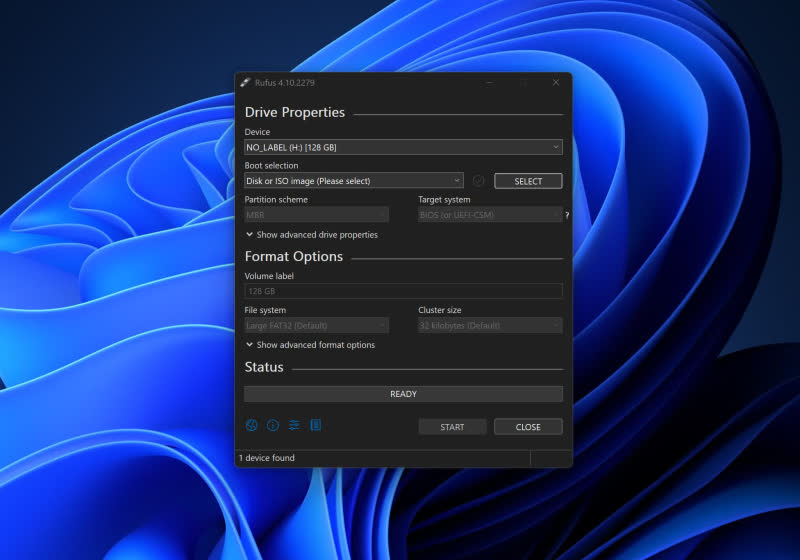

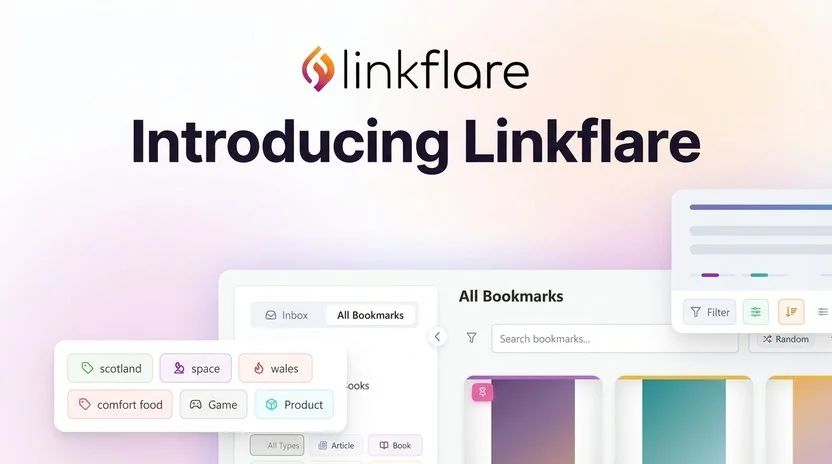
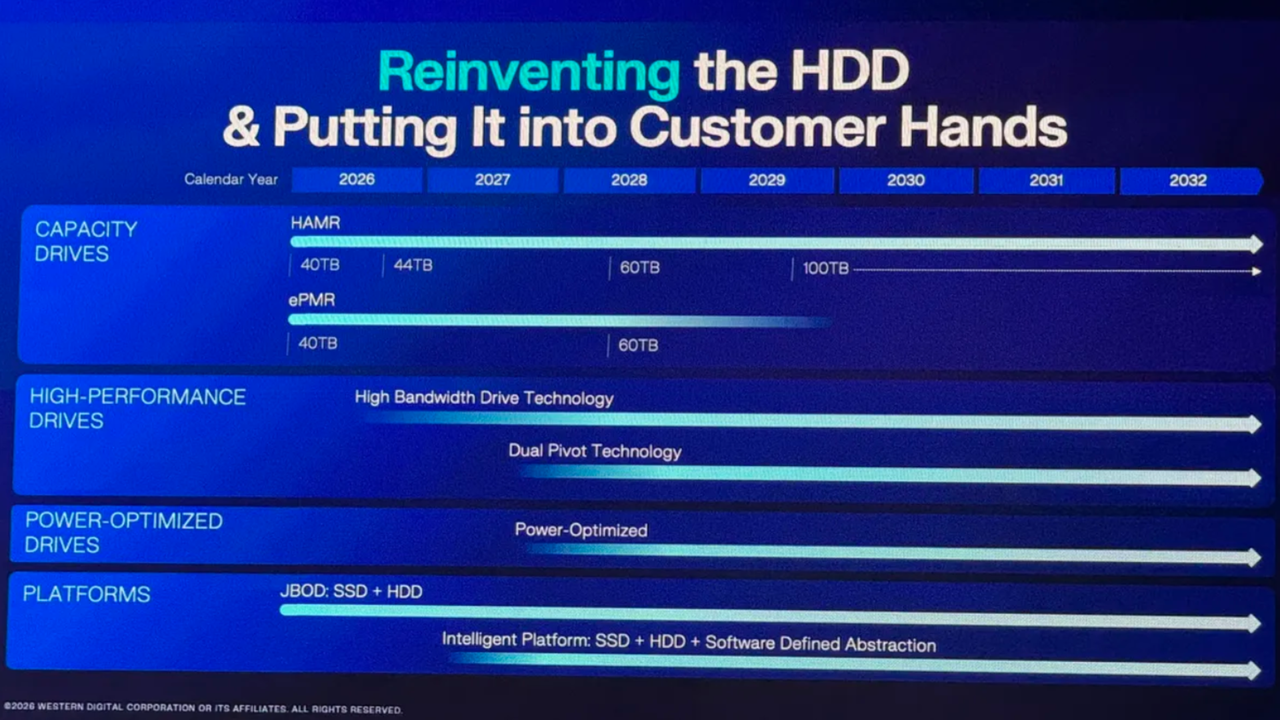































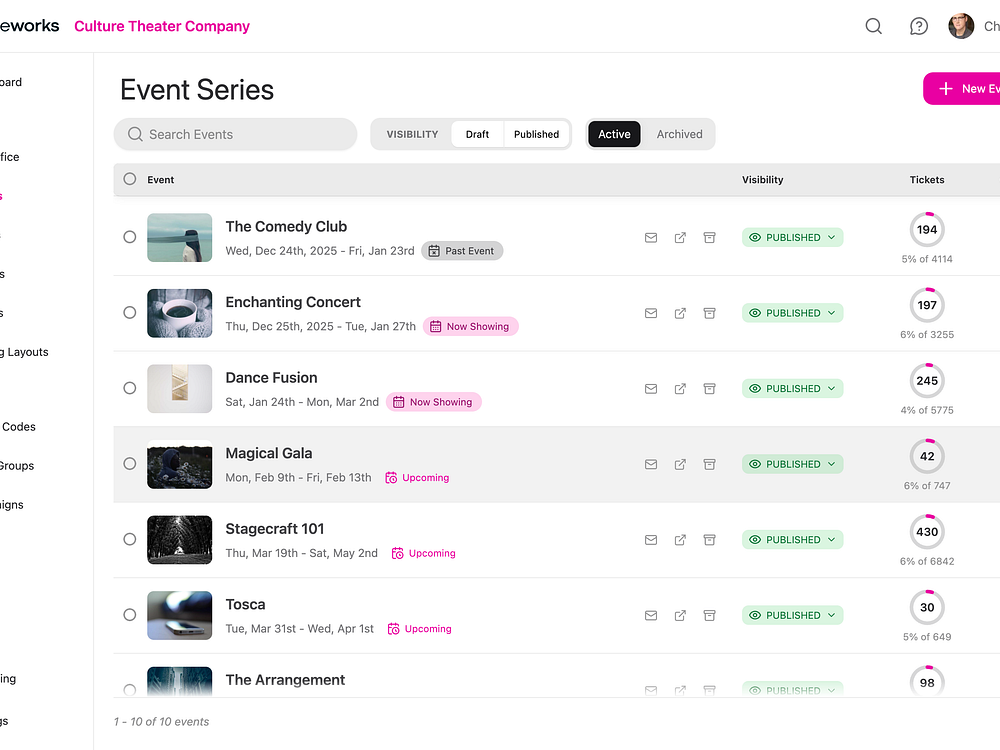
































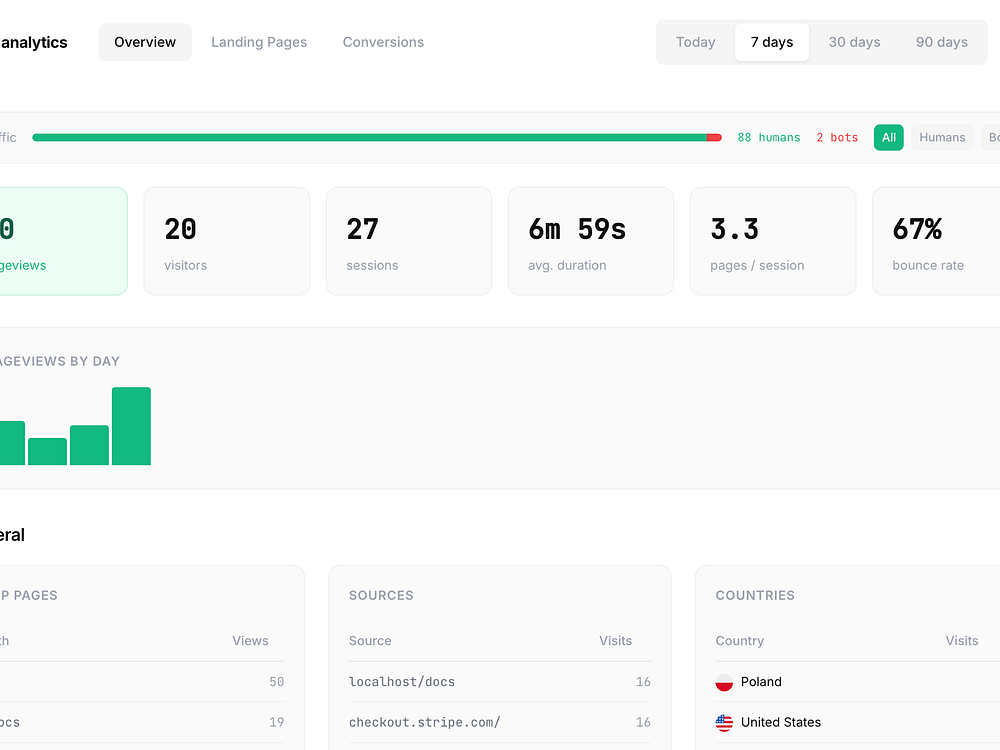


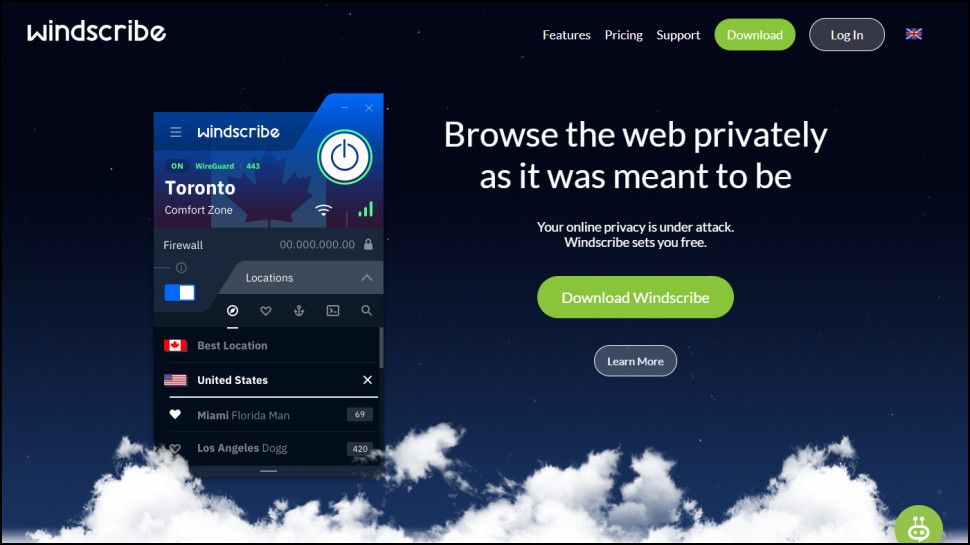










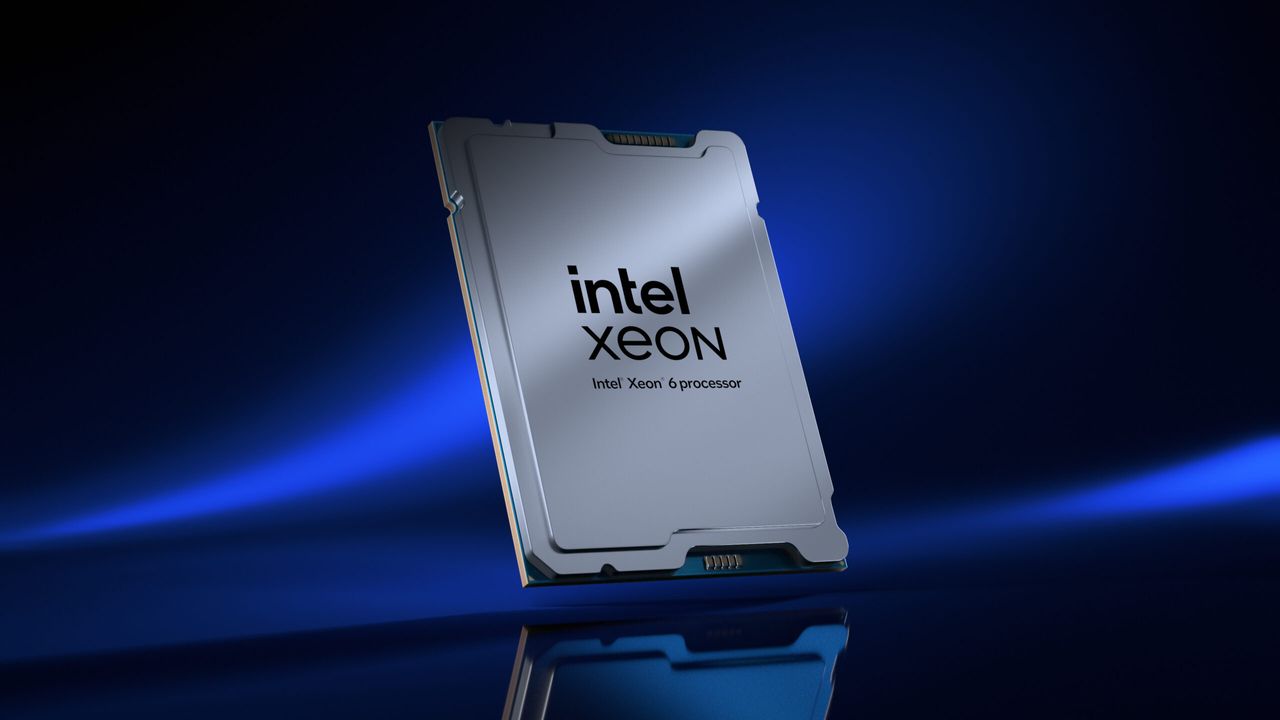



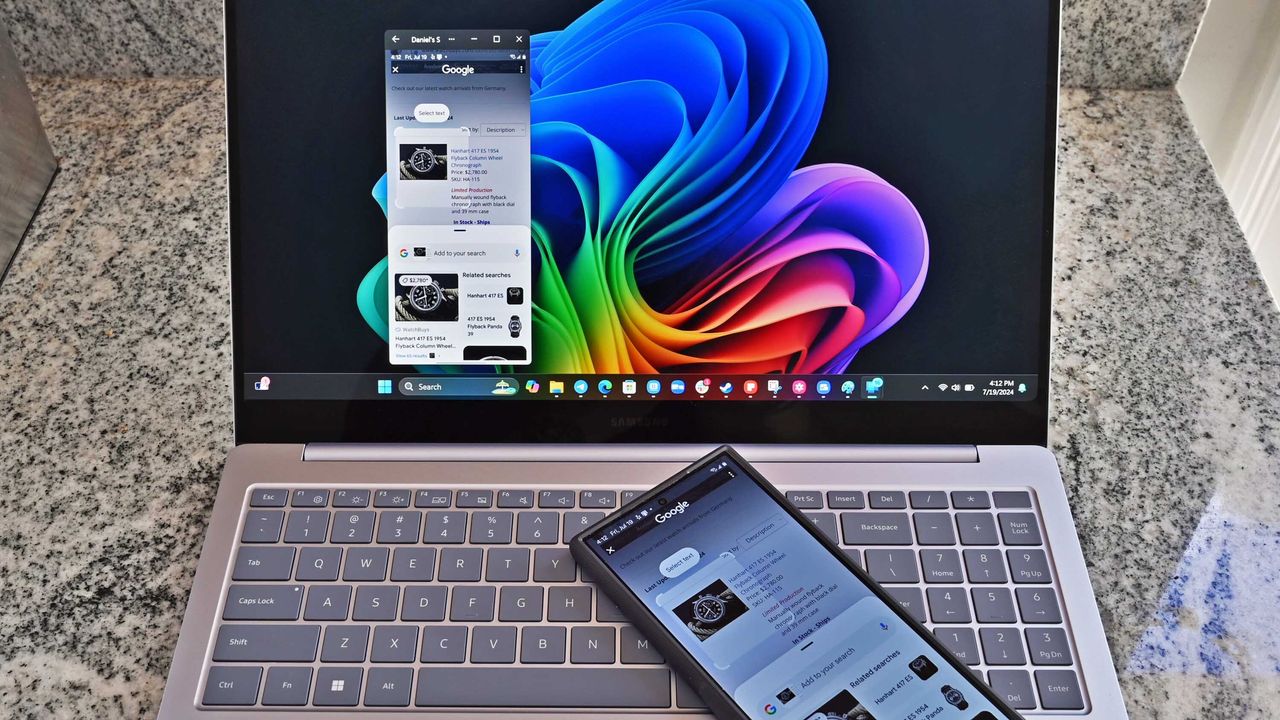




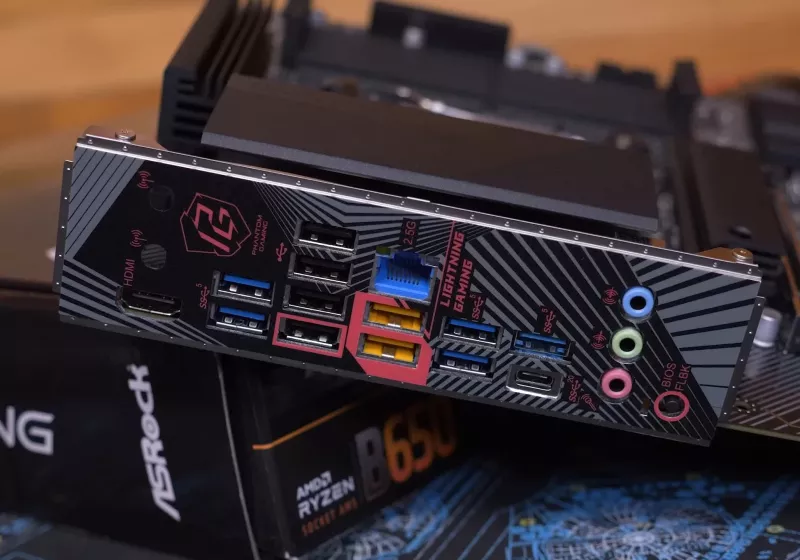













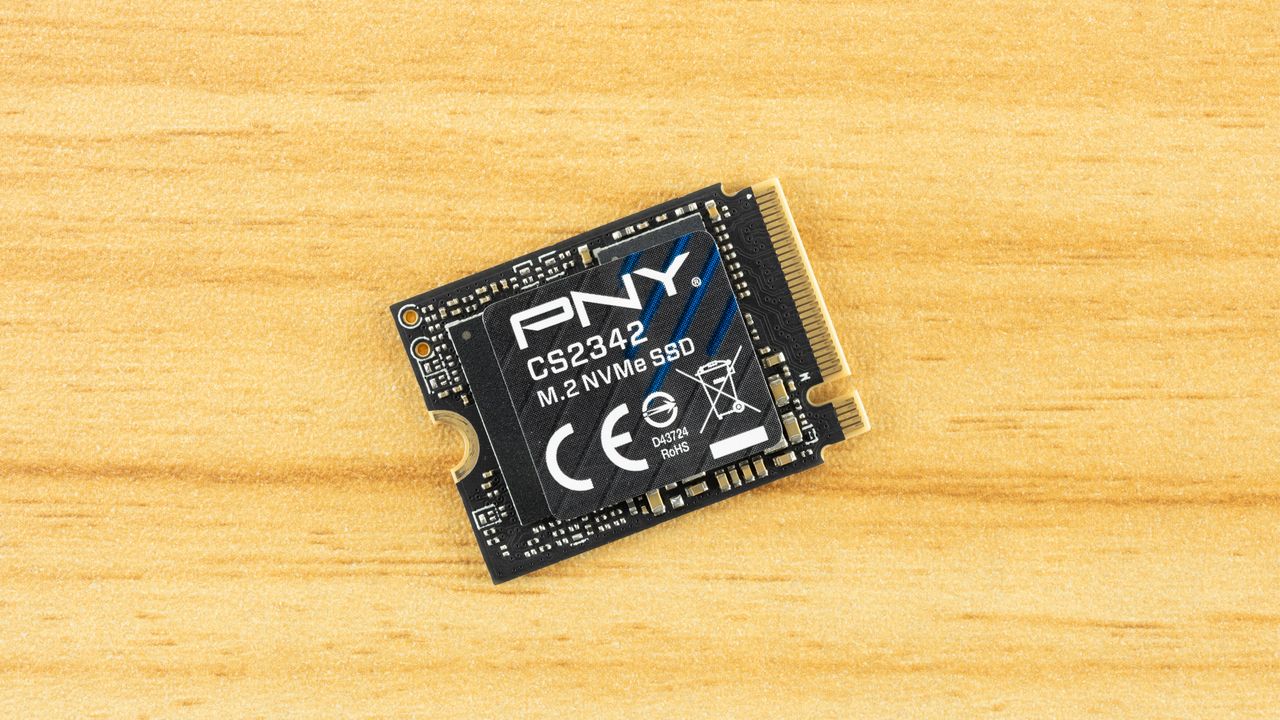
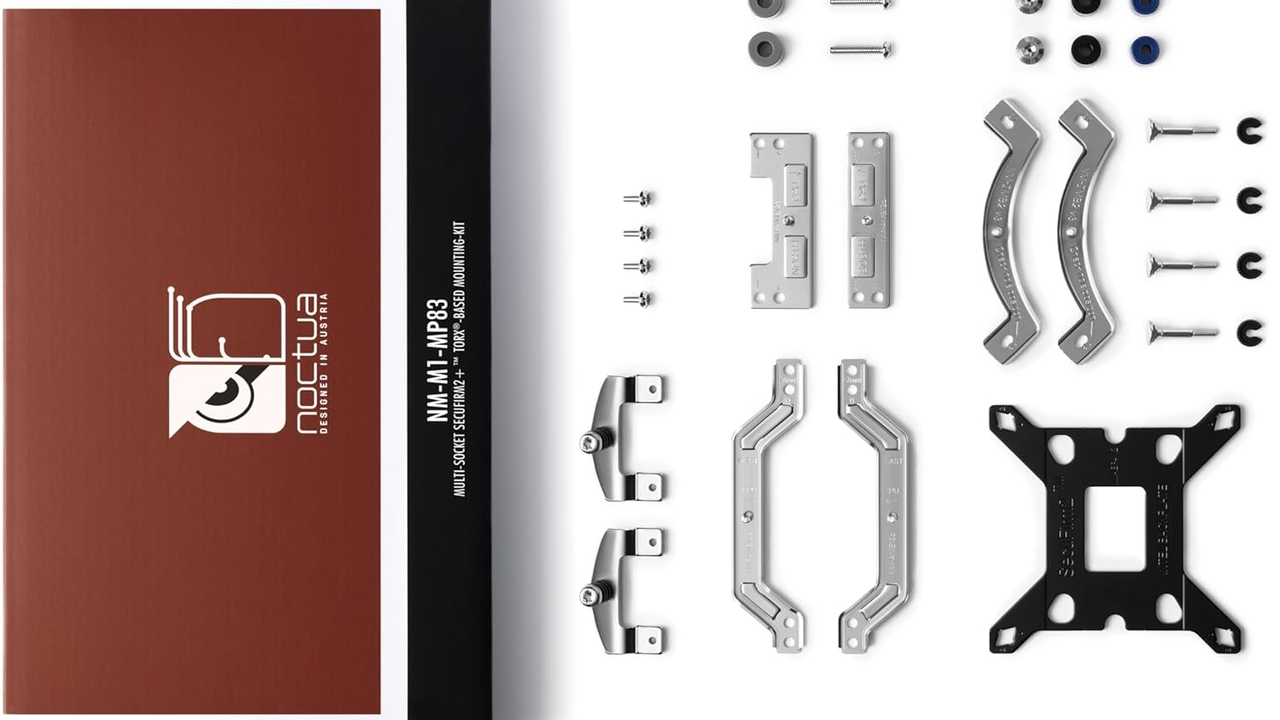
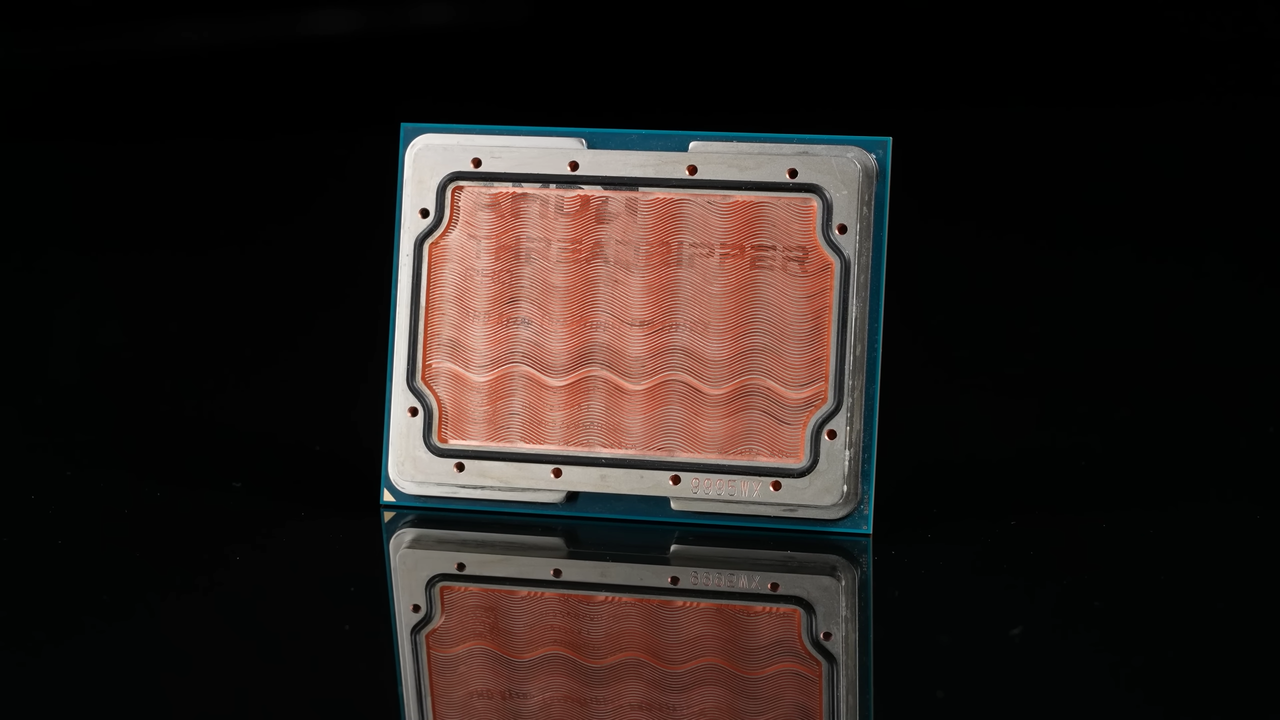




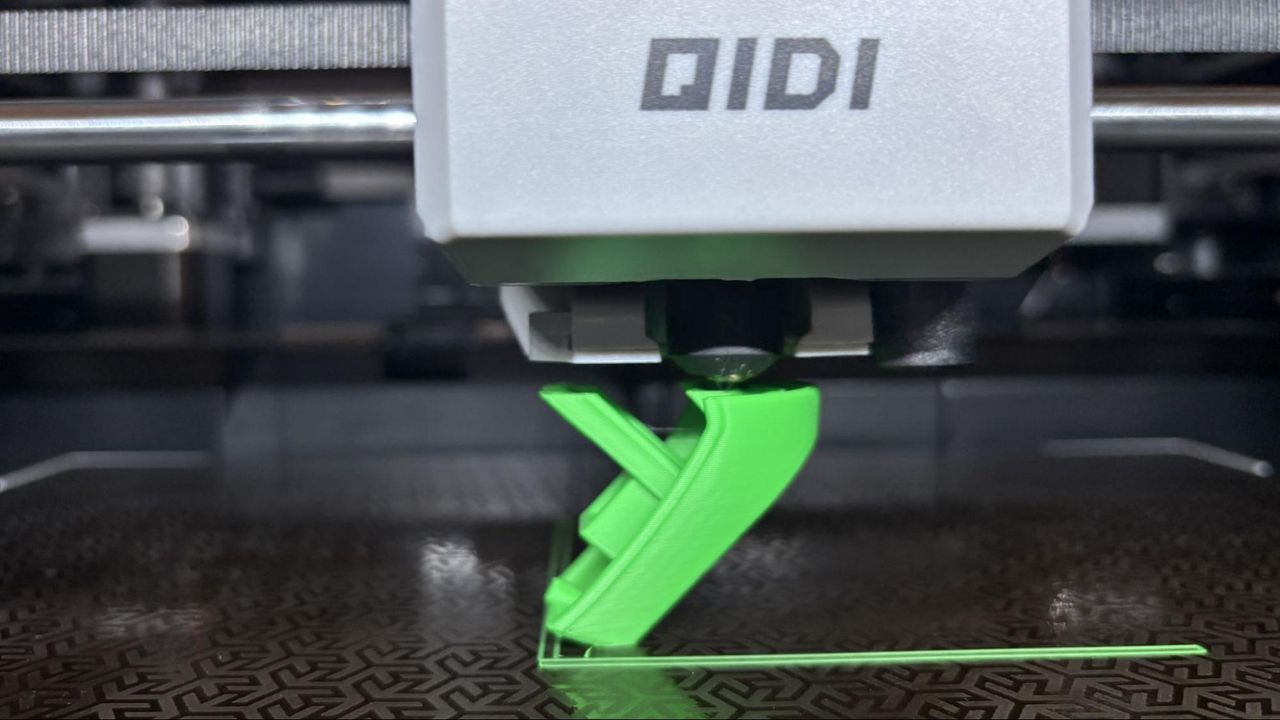





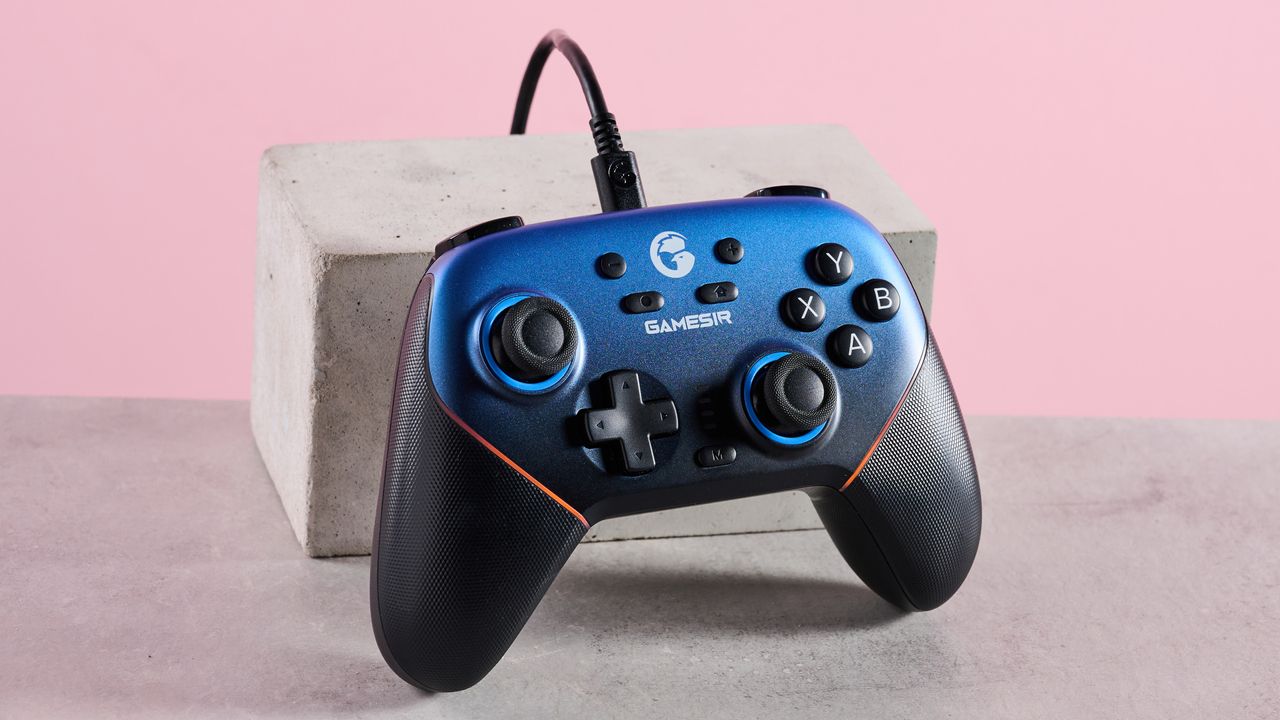
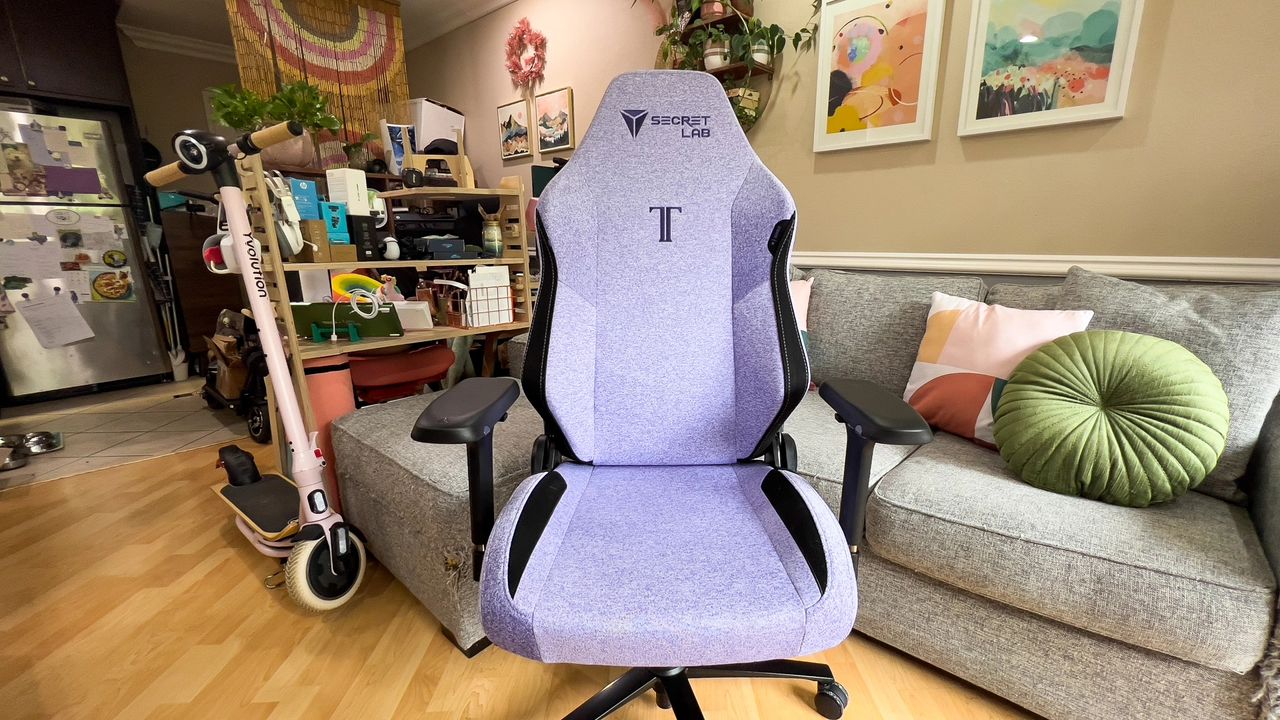




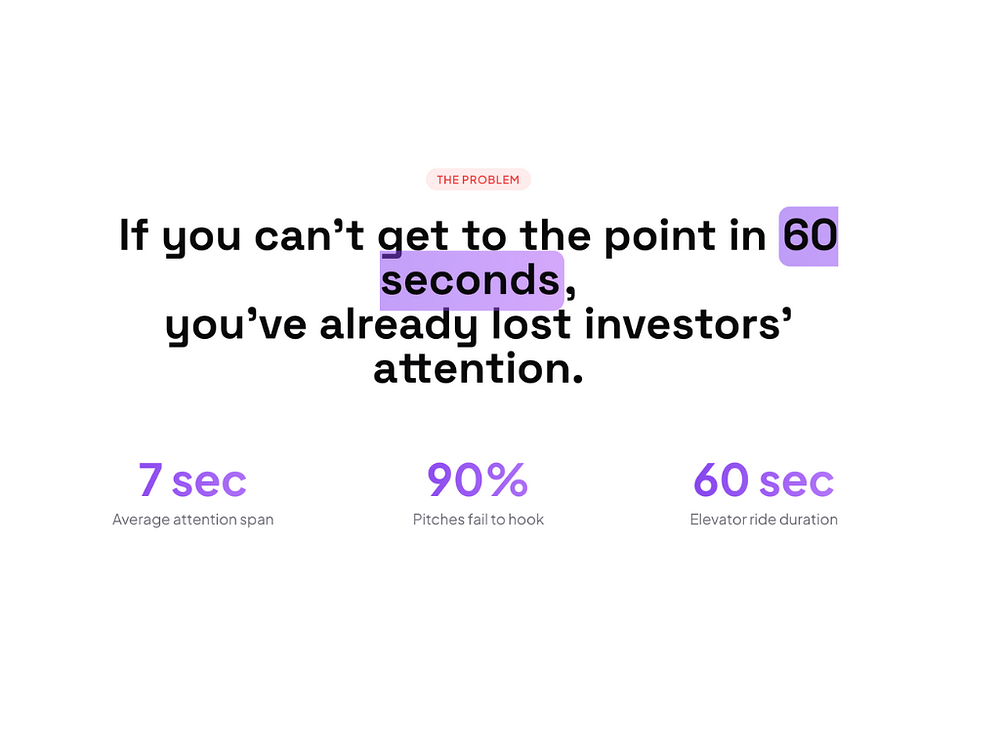







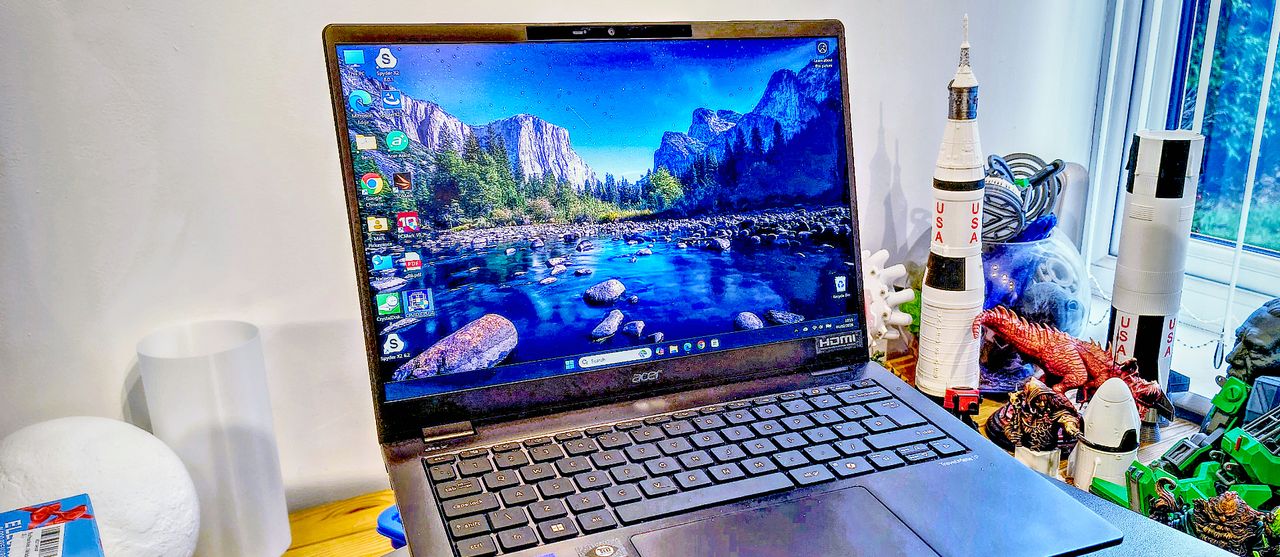





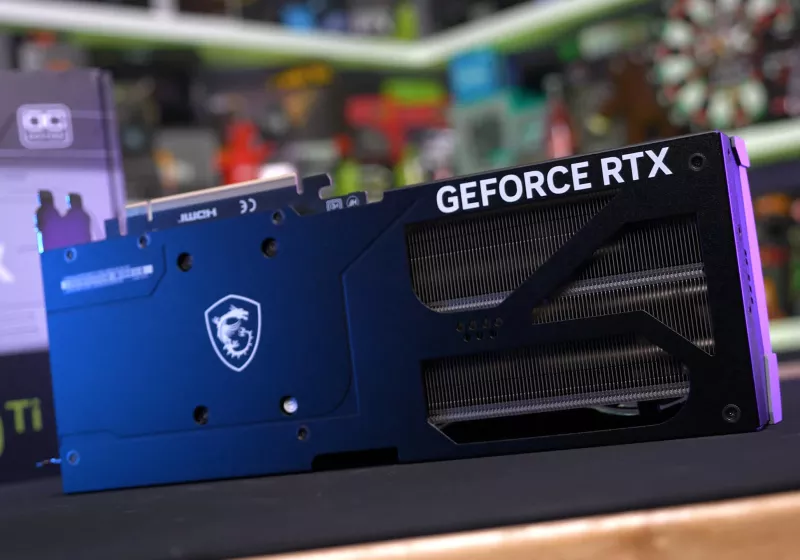

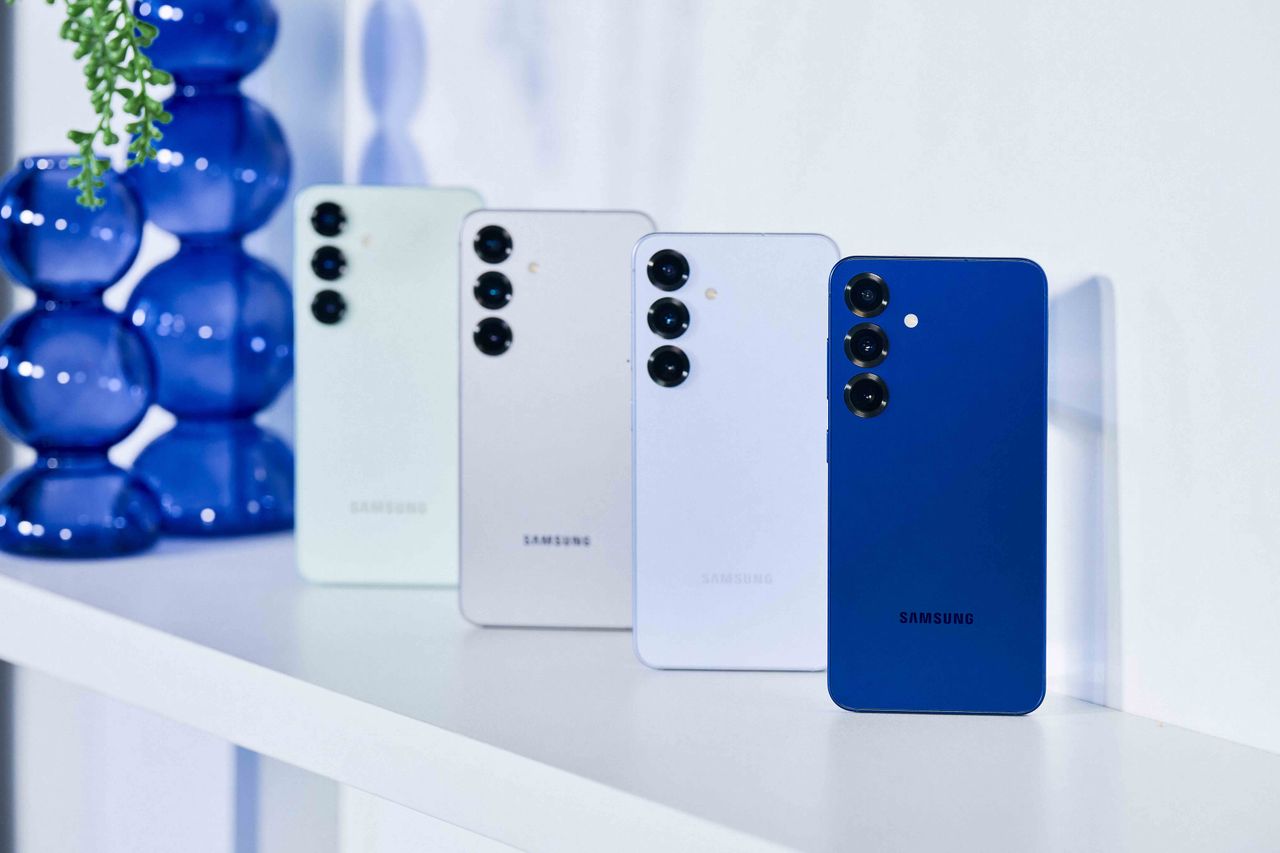






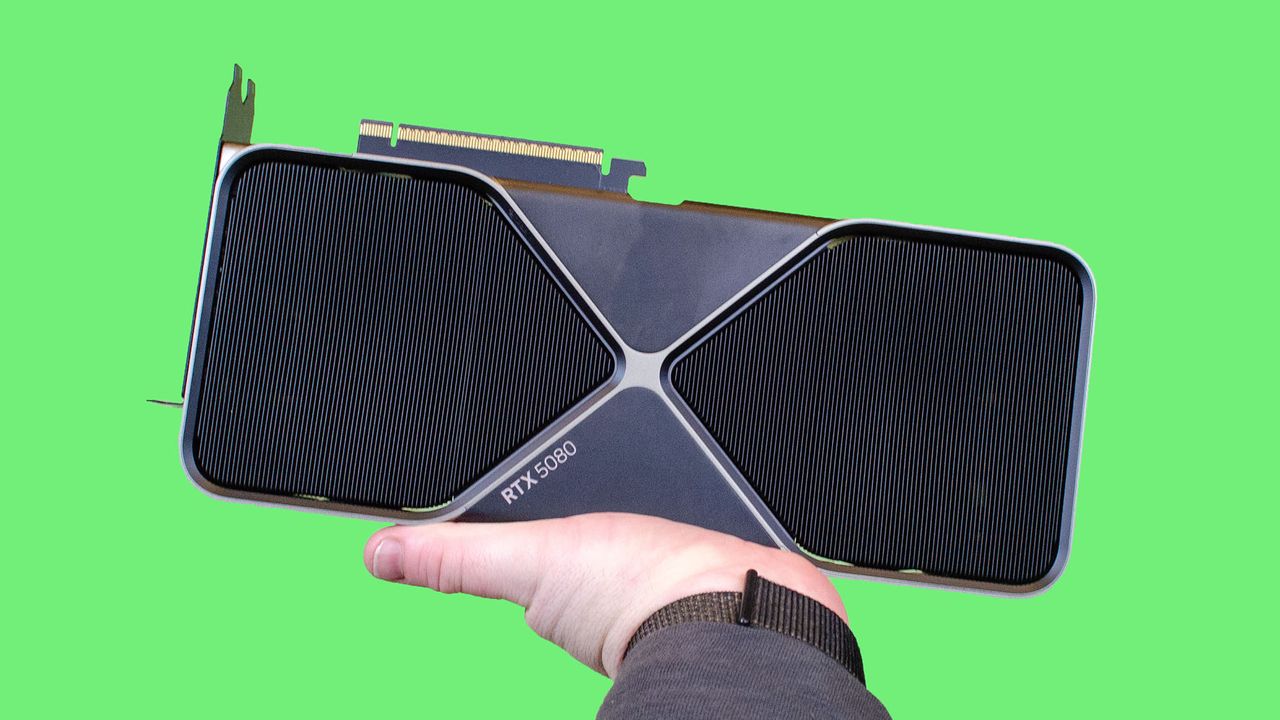









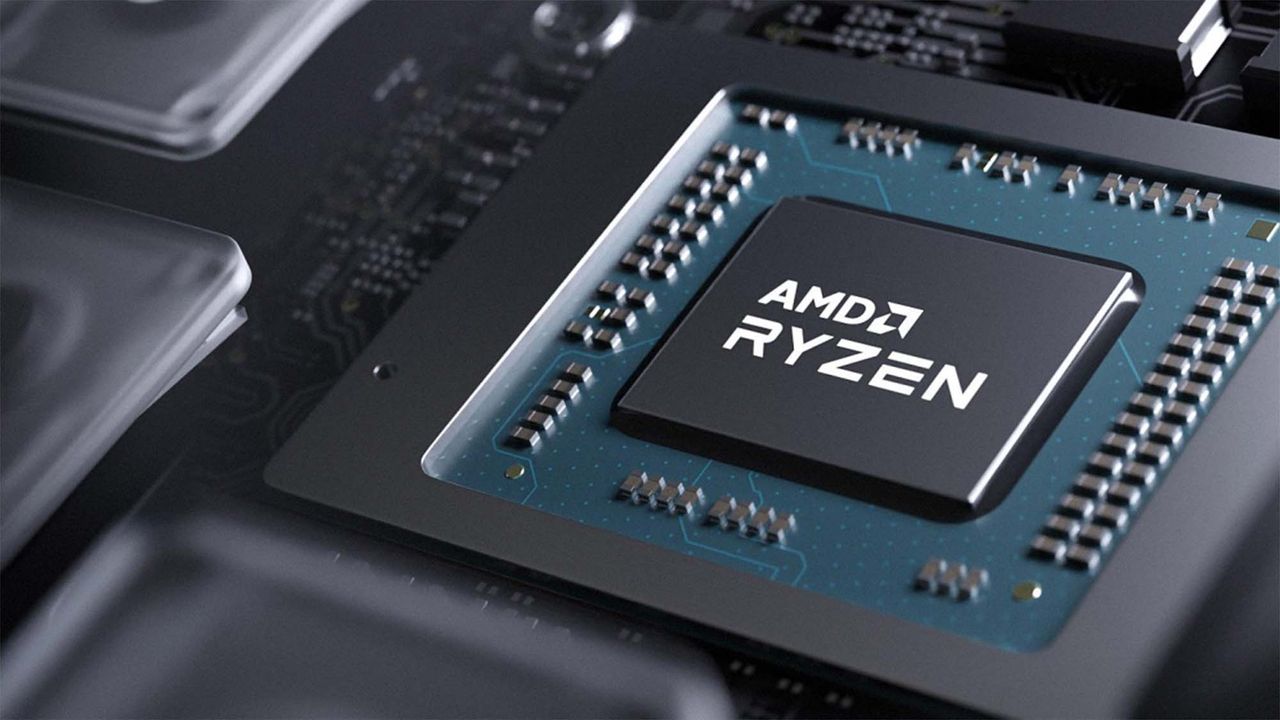










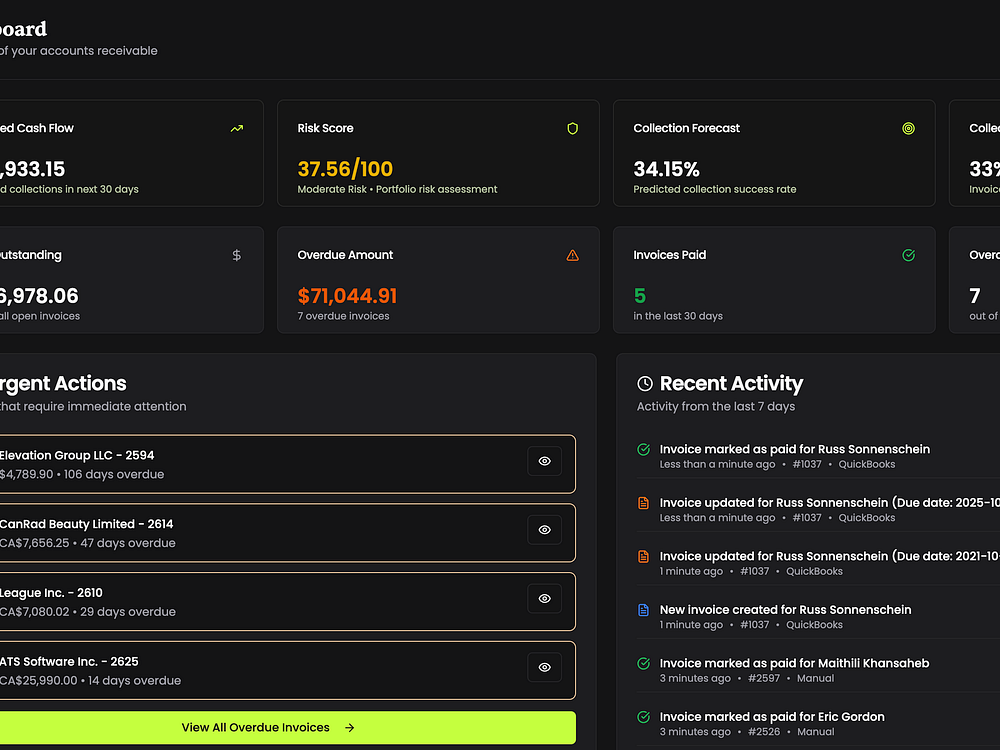
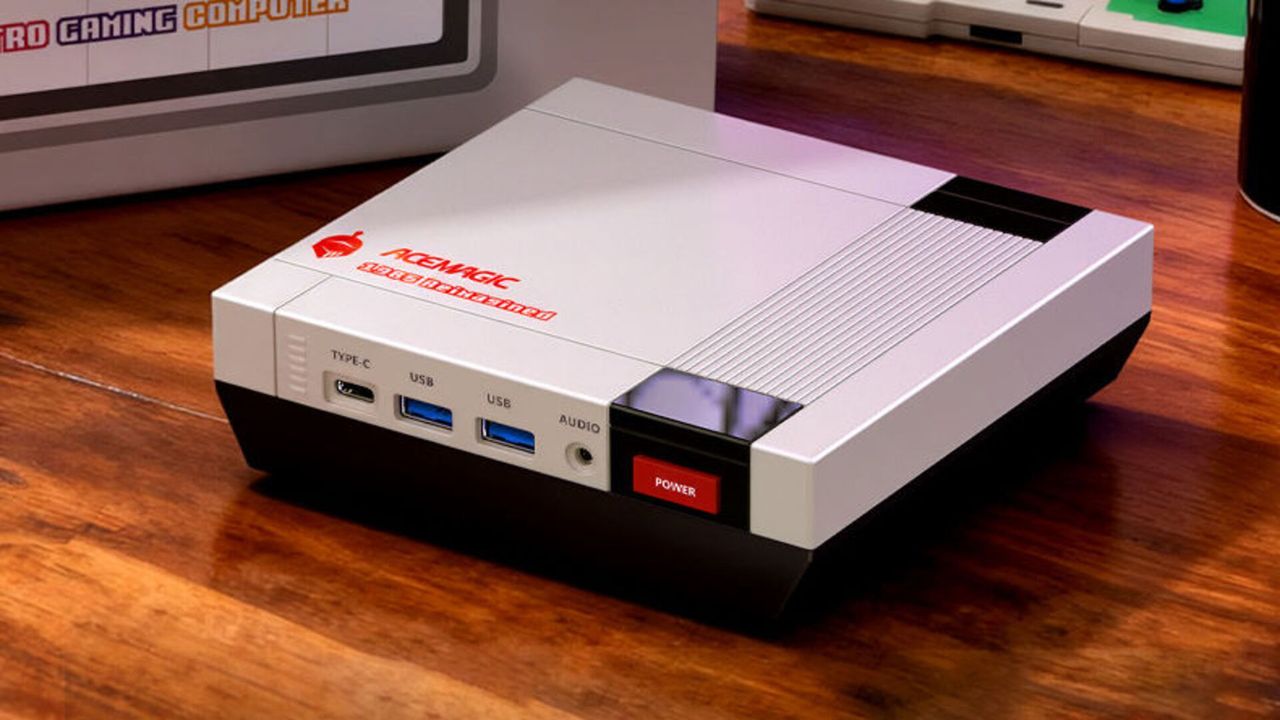




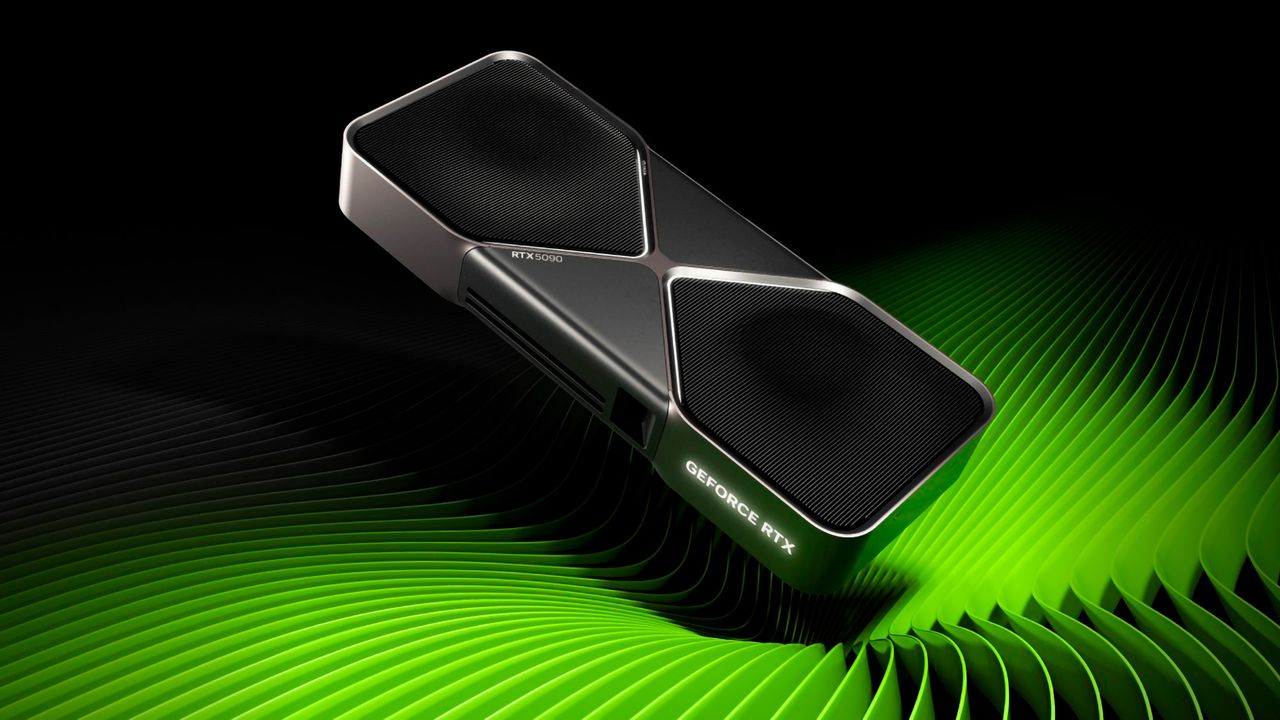









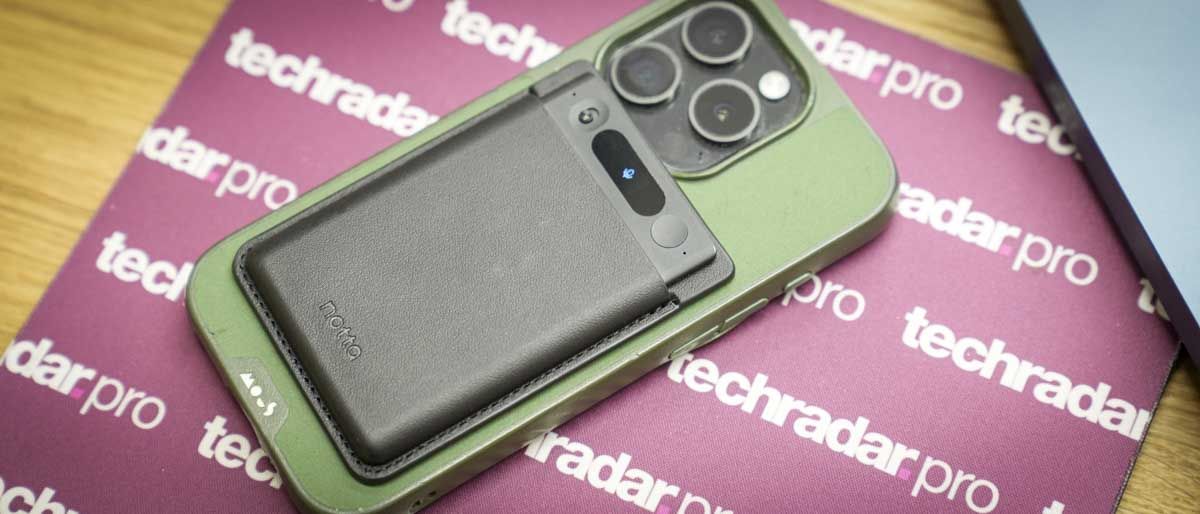






 Learn how Google's NAI framework uses AI to make technology more adaptive, inclusive and helpful for everyone.




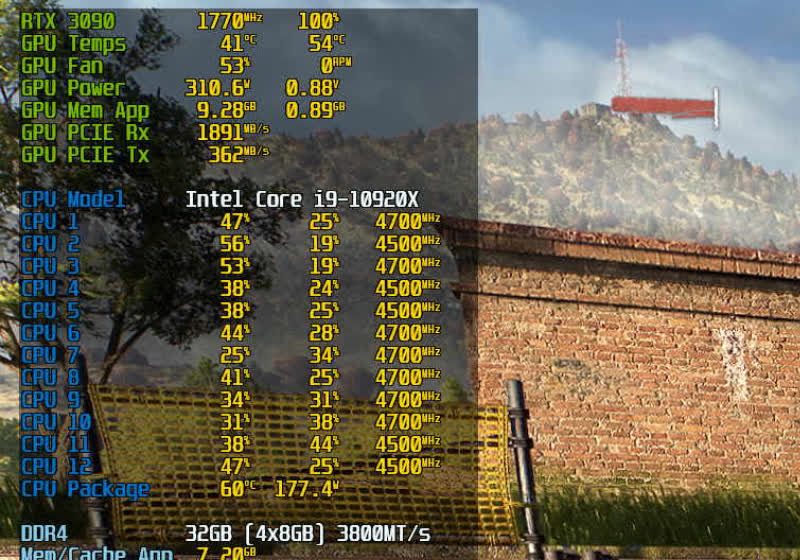




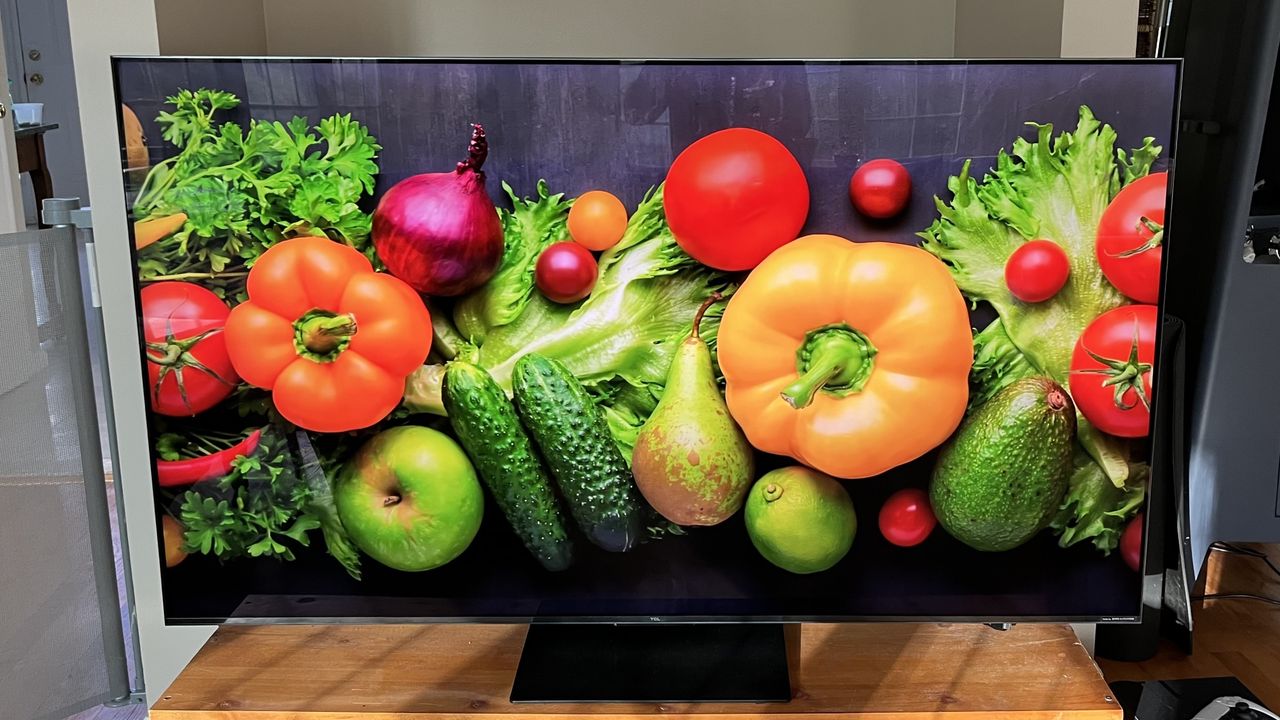



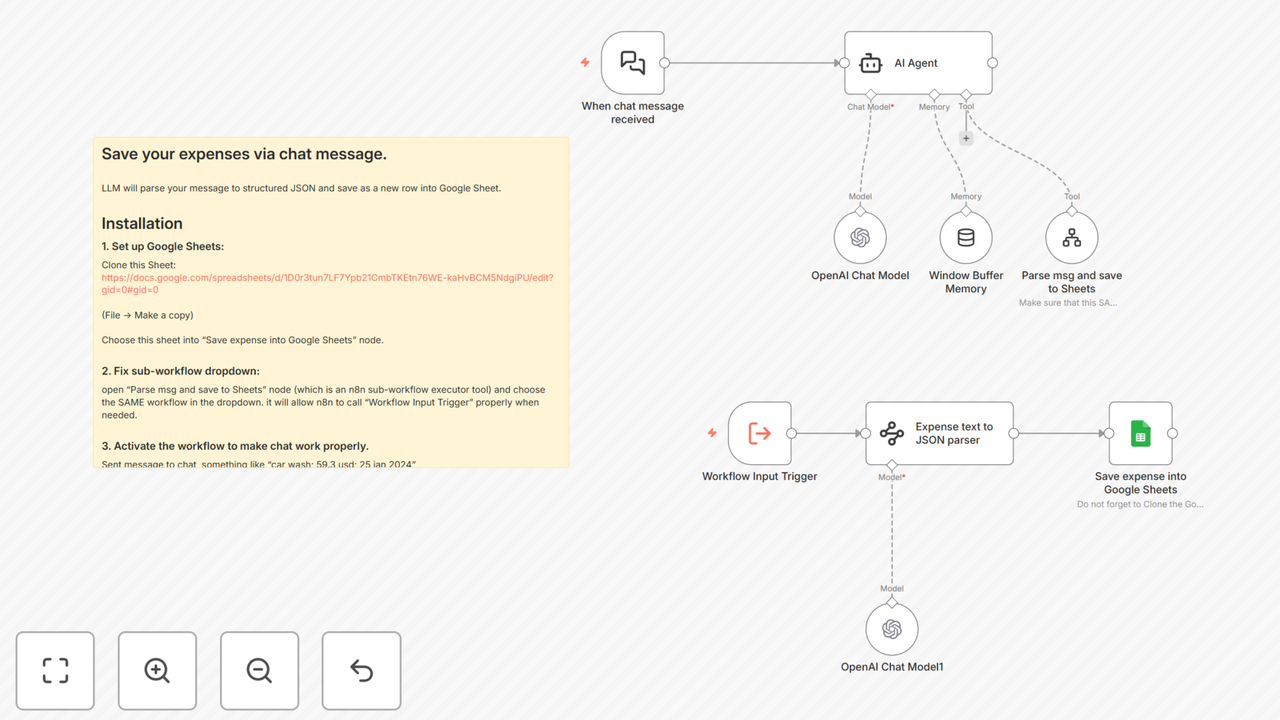

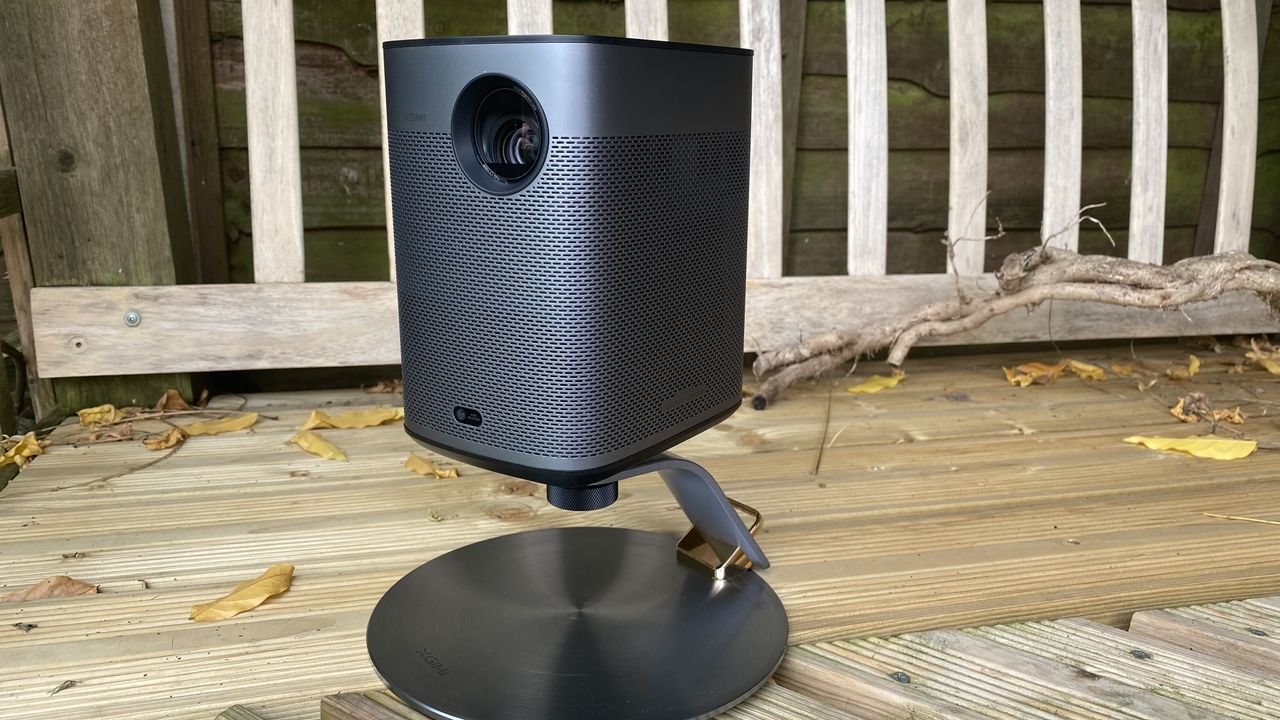





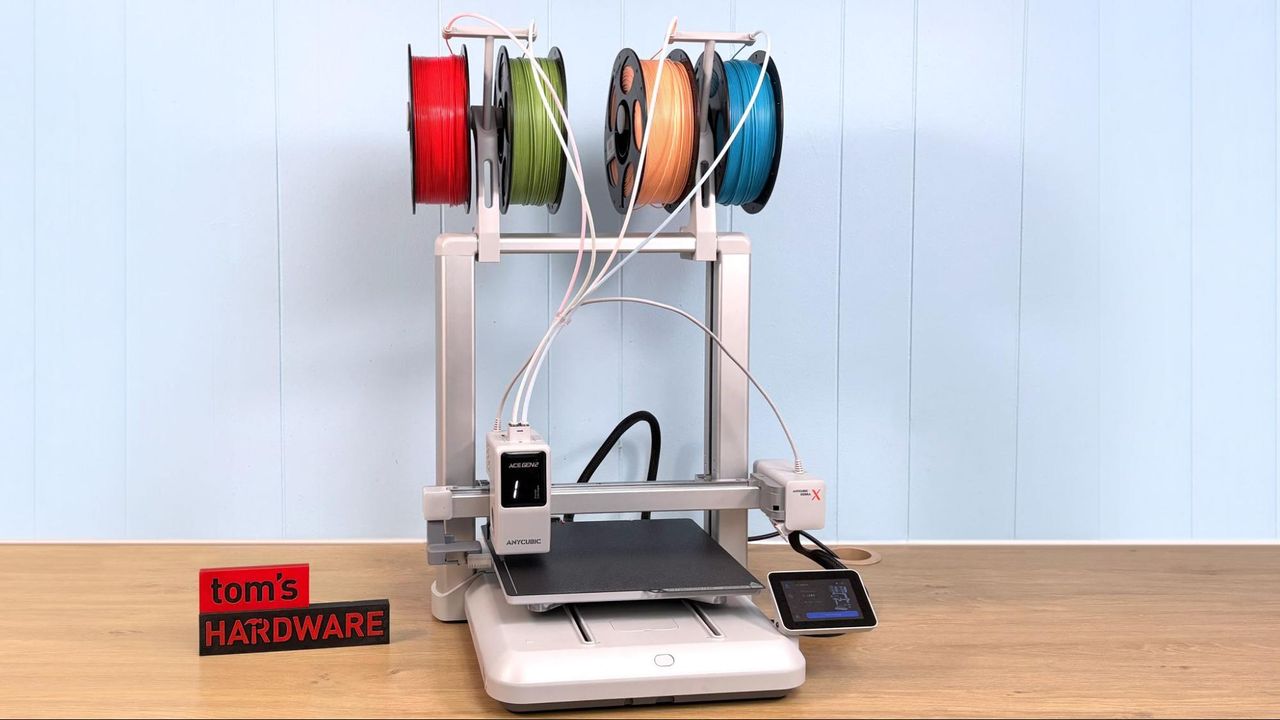
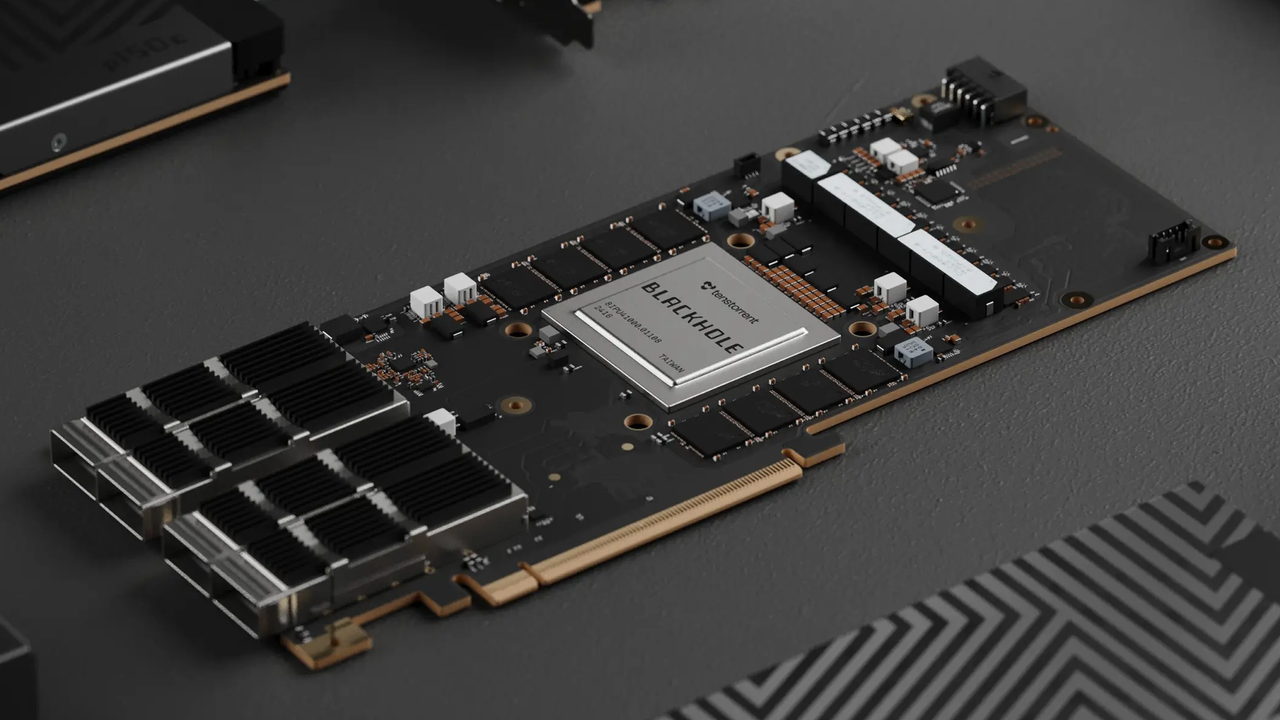
 Google Cloud built an industry-first AI tool to help U.S. Ski and Snowboard athletes.









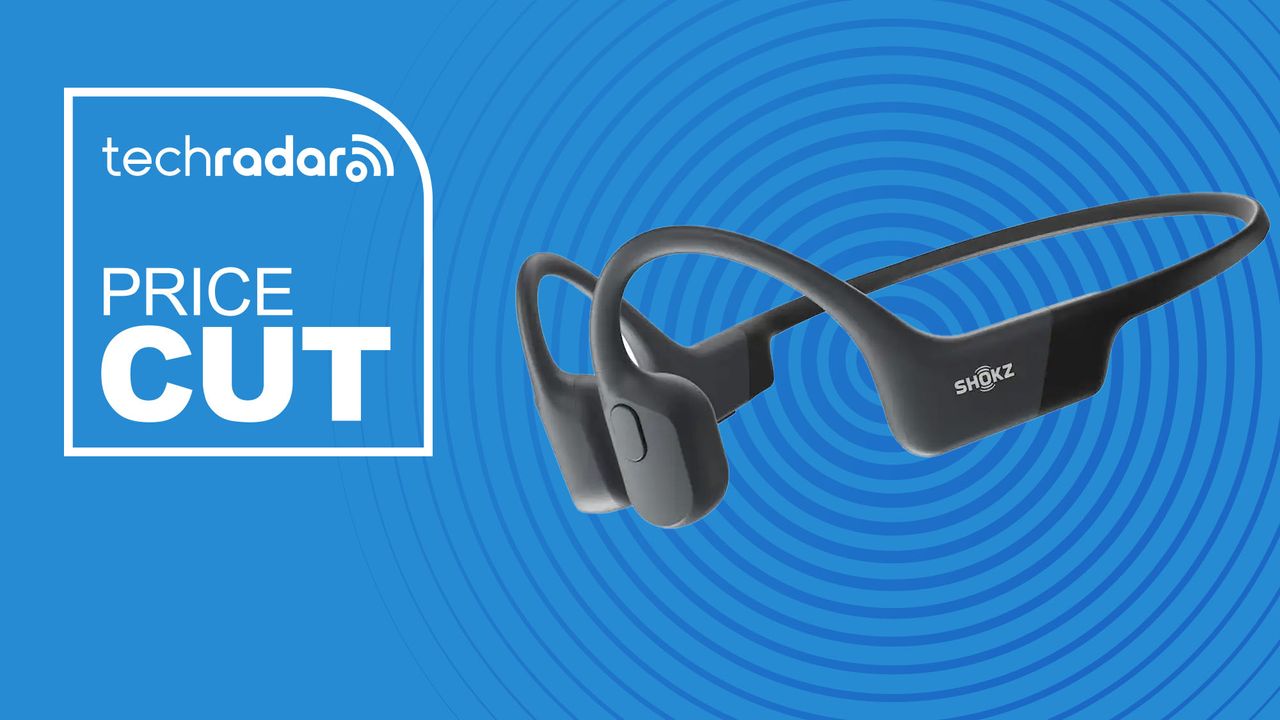


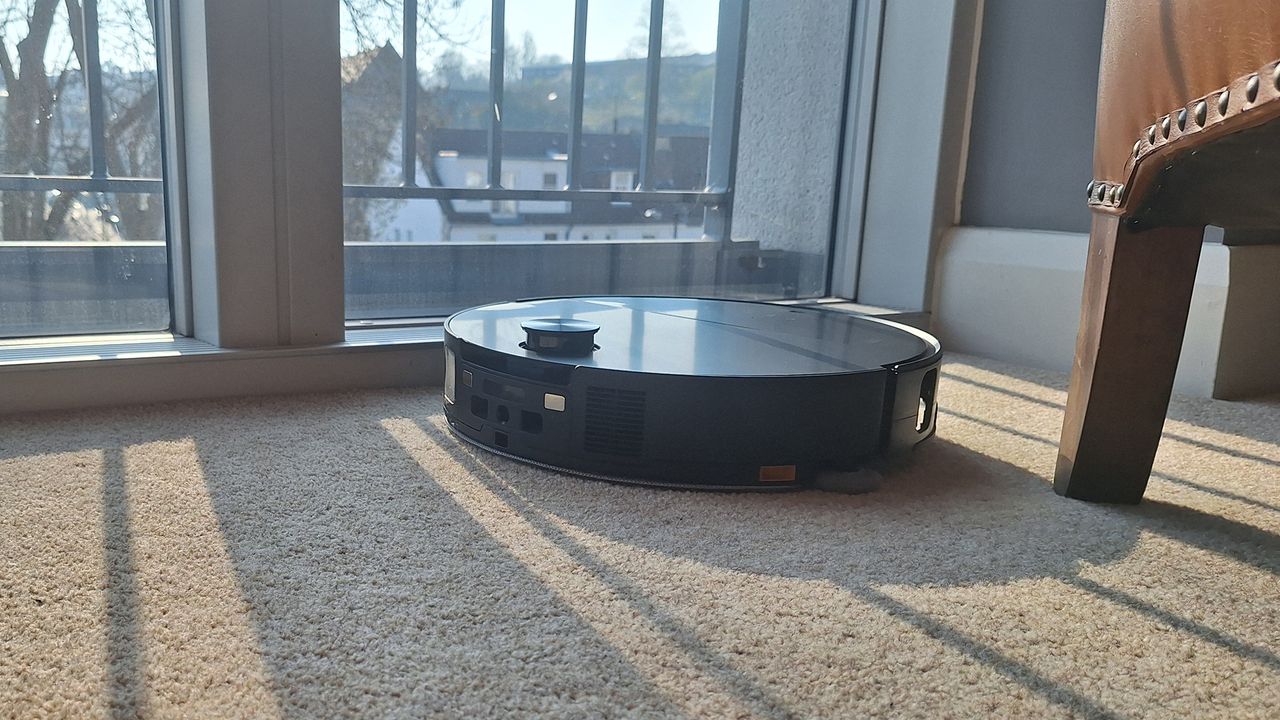


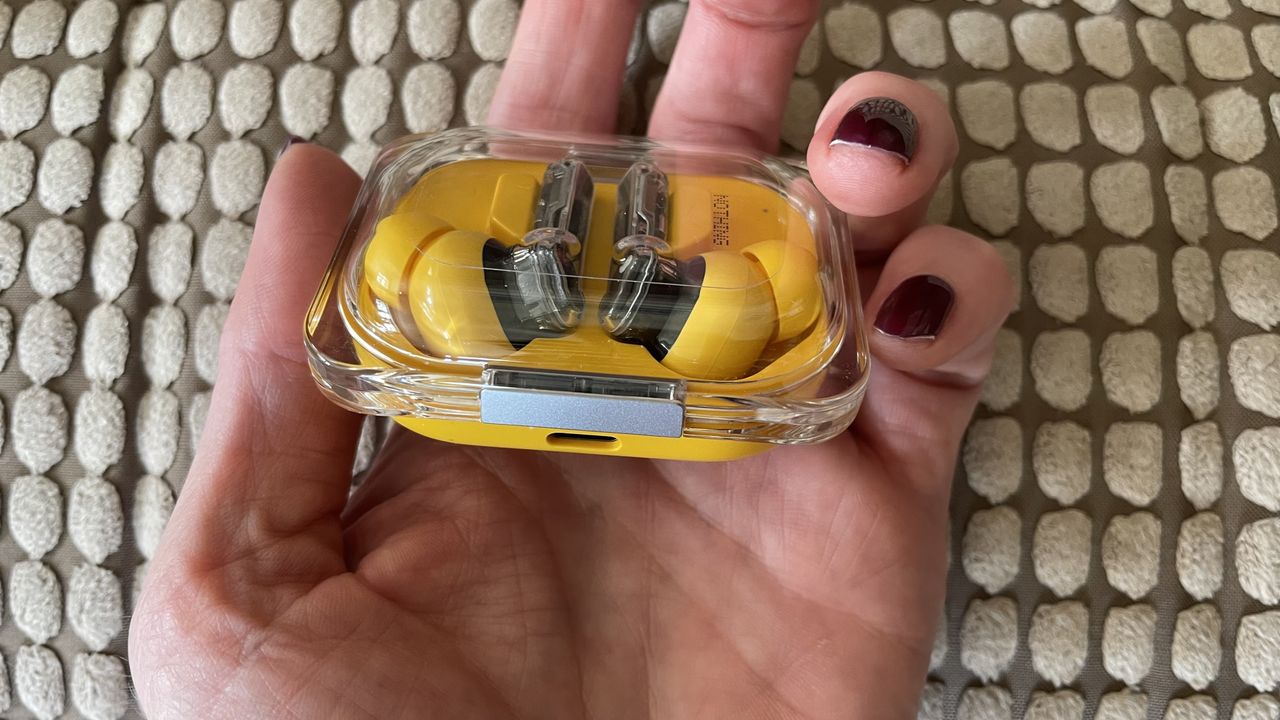







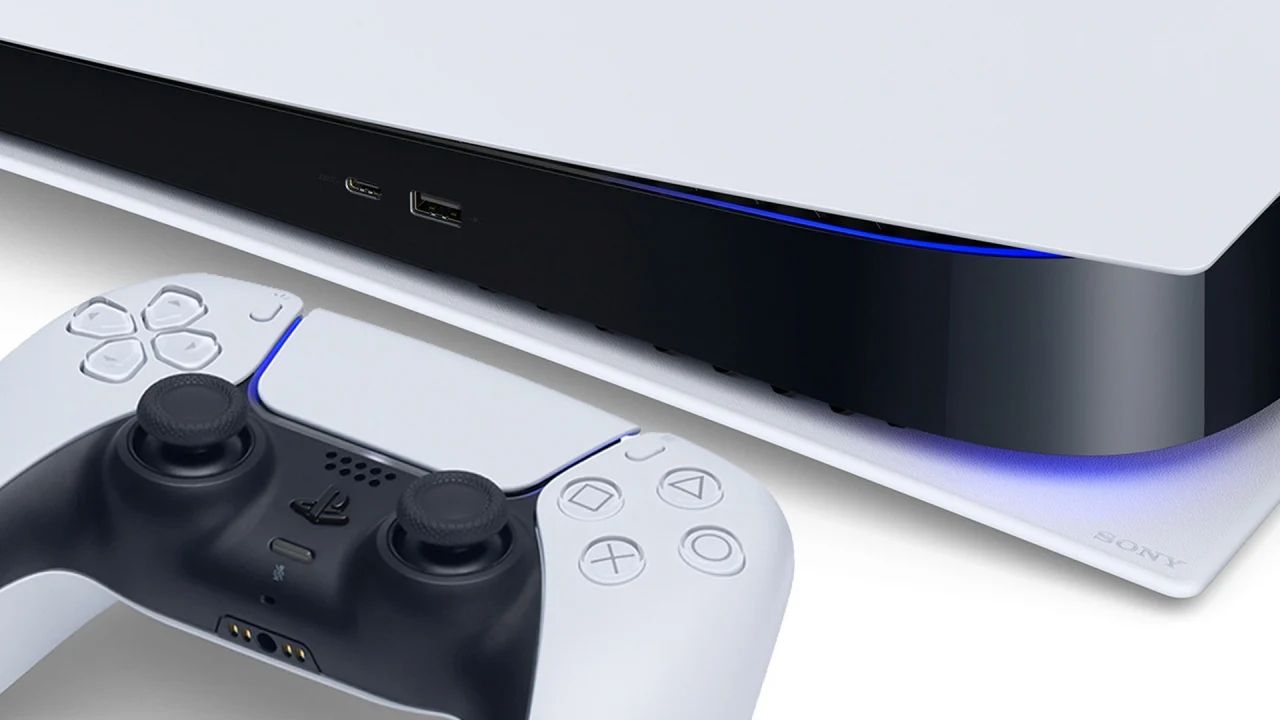


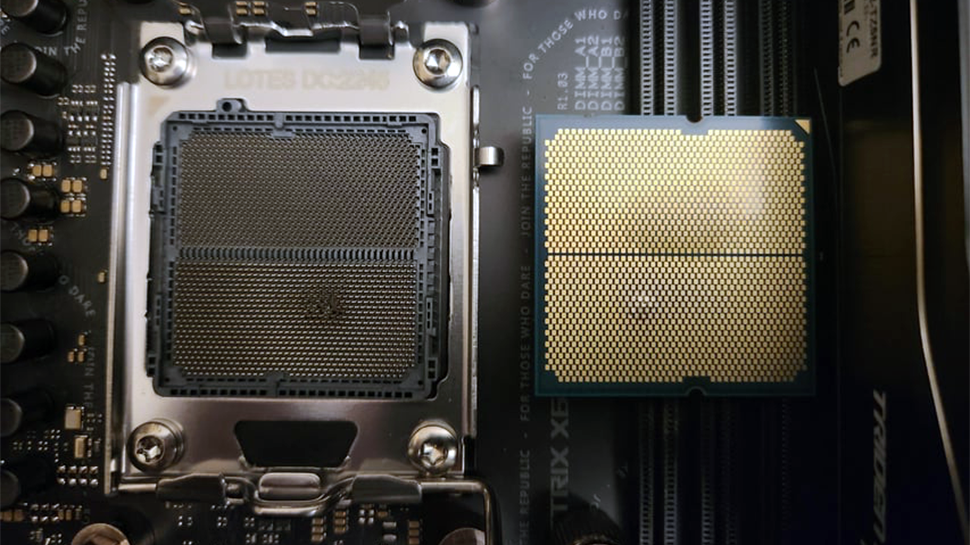
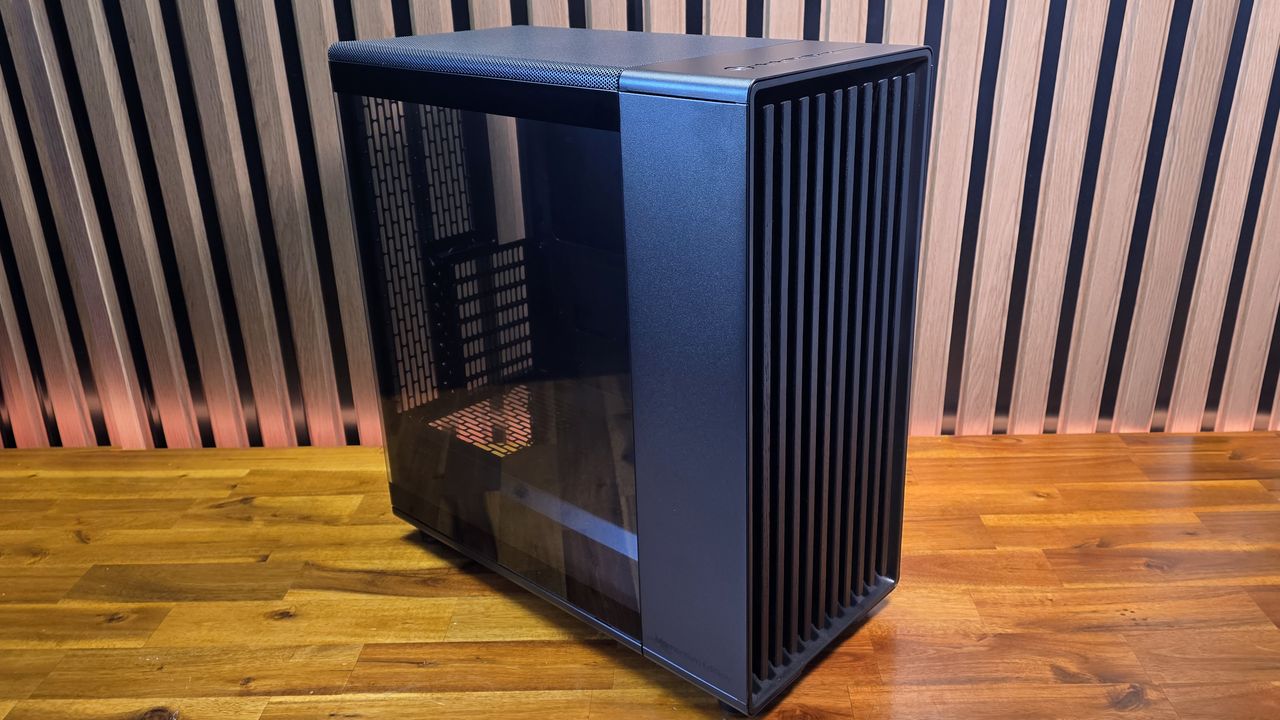



 Learn more about Google’s new ad that will run during football’s Big Game on February 8.