Search visibility no longer starts and ends with rankings. AI-driven search has changed where discovery happens — across Google, ChatGPT, Perplexity, and beyond.
Generative engine optimization (GEO) is how brands adapt, shaping how they’re retrieved and represented inside those systems.
Traditional SEO metrics miss a growing share of that visibility. Pages are now summarized, excerpted, and cited in environments where clicks are optional, and attribution is fragmented. When an AI-generated summary appears, users click traditional search results far less often — in one analysis, just 8% of the time.
That creates a measurement gap. Assessing this gap is where GEO metrics come in.
What visibility means in generative search
GEO focuses on whether AI systems can find, understand, and select your content when generating answers. In generative search, visibility is more than about being indexed or ranked. Your content must be used — cited, summarized, or incorporated — into AI responses.
GEO builds on SEO and AEO, shifting the focus from where content ranks to how clearly it can be interpreted and trusted in context.
In practice, that means optimizing for:
Extractability: Can this be easily summarized?
Credibility: Is this a trustworthy source to cite?
GEO performance shows up across a distinct set of signals that reflect presence, usage, and downstream impact.
1. AI citation frequency
AI citation frequency measures how often your brand, website, content, or experts are cited in AI-generated answers.
This is one of the clearest GEO metrics because it shows whether generative systems consider your content useful enough to reference.
Track citation frequency across:
Google AI Overviews.
Google AI Mode.
Perplexity.
ChatGPT search.
Gemini.
Copilot.
Claude, where source visibility is available.
Industry-specific AI tools and assistants.
Citation frequency should be tracked at the topic level, not only the domain level. A SaaS company, for example, may want to know whether it’s cited for “customer onboarding software,” “product adoption metrics,” and “best tools for reducing churn” separately.
The goal is repeatable citation across high-value topics.
2. Share of Model Voice (SOMV)
Share of Model Voice measures how often your brand appears in AI-generated answers compared with competitors.
Traditional share of voice tells you how visible a brand is across search, media, or advertising. Share of Model Voice applies that idea to AI responses.
A simple way to calculate it:
SOMV = Brand appearances across a prompt set ÷ Total answers generated for that prompt set
For example:
You analyze 100 relevant prompts.
Your brand appears in 28 of the resulting AI-generated answers.
Your Share of Model Voice is 28%.
This metric is especially useful for competitive categories because AI answers often compress the consideration set. A user doesn’t see 10 blue links. They may see three recommended vendors, two cited articles, or one synthesized answer.
That’s why relative presence matters more than absolute visibility.
3. Answer inclusion rate
Answer inclusion rate measures how often your owned content is used to generate an AI answer, regardless of whether the user clicks.
This differs from citation frequency. A brand may be mentioned without its content being cited. And a page may be used as supporting material even when the brand is not the central recommendation.
Track inclusion across informational, comparison, and decision-stage prompts.
For example, a B2B SaaS company in the SEO or analytics space might track prompts like:
Informational: “What is generative engine optimization?”
Exploratory: “How should brands measure AI search visibility?”
Comparison: “SEO vs GEO vs AEO”
Category-level: “Best GEO tools for B2B SaaS”
Decision-stage: “How do I evaluate GEO platforms?”
This metric helps identify which content formats are easiest for AI systems to retrieve and summarize.
In many cases, clear definitions, comparison tables, statistics pages, glossaries, and answer-first explainers perform better than broad thought leadership pages because they’re easier to extract and reuse.
4. Entity recognition and authority
Entity recognition measures how well AI systems understand who your brand is, what it does, and what topics it should be associated with.
This matters because generative systems don’t only match keywords. They interpret entities, relationships, topical authority, and corroborating signals.
Strong entity recognition means AI systems can accurately connect your brand to:
Your company name.
Products and services.
Founders or executives.
Authors and subject-matter experts.
Industry categories.
Locations.
Use cases.
Awards, partnerships, and third-party mentions.
Knowledge graph data.
Structured data.
Google’s guidance for AI features emphasizes that the same fundamentals still apply: make content accessible, maintain a strong page experience, and use structured data to help systems interpret what’s on the page.
In practice, inconsistencies across these signals make it harder for AI systems to reliably connect your brand to the right topics.
5. Sentiment in AI responses
Sentiment measures how AI systems describe your brand.
Tracking mentions isn’t enough. Brands also need to know whether AI-generated responses frame them as credible, outdated, expensive, risky, innovative, niche, enterprise-grade, beginner-friendly, or anything else.
You can monitor:
Positive, neutral, and negative descriptions.
Recurring adjectives or claims.
Incorrect comparisons.
Outdated product details.
Missing differentiators.
Reputation issues.
Hallucinated features or limitations.
This is where GEO overlaps with PR and brand management. AI-generated answers can shape perception before the user ever reaches your site.
6. Prompt coverage
Prompt coverage measures how many relevant prompts surface your brand. This is the GEO version of keyword coverage, but prompts are more conversational, specific, and intent-rich.
A strong prompt set should include:
Informational prompts.
Comparison prompts.
“Best” and “top” prompts.
Problem-aware prompts.
Solution-aware prompts.
Buyer-stage prompts.
Role-specific prompts.
Use-case prompts.
Local or industry-specific prompts.
Follow-up prompts.
For a cybersecurity company, “best cybersecurity platforms” is only part of the picture. Relevant prompts also look like:
“How do mid-market companies reduce phishing risk?”
“What tools help security teams manage vendor risk?”
“Compare managed detection and response providers.”
“What should a CISO look for in an incident response partner?”
Prompt coverage shows whether your brand is visible across the way people actually ask AI systems for help.
7. Content retrieval success rate
Content retrieval success rate measures how often AI systems pull from your owned content when answering relevant prompts. This is where it gets technical.
If your content isn’t crawlable, structured, fresh, or easy to parse, it may struggle to appear in generative outputs, regardless of subject-matter strength.
Conversion influence measures how visibility in AI-generated outputs contributes to downstream business outcomes. That connection isn’t always direct — and it’s rarely cleanly attributed.
A user may see your brand in an AI answer, search your name later, visit directly, ask a colleague, or convert through a paid retargeting path.
Still, brands should track directional signals:
AI referral traffic.
Assisted conversions.
Branded search lift.
Direct traffic changes.
Demo or lead quality from AI-referred sessions.
Returning visitors after AI visibility spikes.
Sales conversations mentioning ChatGPT, Perplexity, Gemini, or AI Overviews.
Pipeline influenced by AI-discovery queries.
AI search visitors convert at a 23x higher rate than traditional organic search visitors, even though AI traffic volume was much smaller, according to Ahrefs.
That’s the measurement nuance: AI search may drive fewer sessions, but the sessions that do occur can be higher-intent.
GEO measurement is still in its early stages, and no single platform captures the full picture. Most brands will need a mix of automated tools, manual audits, analytics configuration, and competitive testing.
Emerging GEO analytics platforms
A growing set of tools — from established SEO platforms to GEO-native products — now track how brands appear across AI-driven search experiences.
For example:
Semrush AI Toolkit surfaces visibility trends tied to AI-driven search.
SE Ranking AI Visibility Tracker monitors brand presence across AI-generated outputs.
Profound focuses on AI citation frequency, sentiment, and competitive visibility.
Peec AI tracks brand presence and representation across AI systems.
The category is still evolving, but early tools give brands a way to move from assumptions to actual visibility data.
Prompt testing frameworks
Manual prompt testing is still useful, especially when building a baseline. Create a controlled prompt set by topic, funnel stage, persona, and geography.
Run those prompts consistently across the same AI platforms. Capture:
Whether your brand appears.
Which competitors appear.
Which sources are cited.
How your brand is described.
Whether the answer is accurate.
Whether your owned content is cited.
Whether the answer changes across repeated tests.
Because AI answers can vary, single-prompt testing isn’t enough. Track patterns over time.
Analytics and logs
Use GA4, server logs, CRM fields, and referral data to identify traffic and conversions from AI platforms — particularly shifts in direct, branded, and assisted conversions.
Track known AI referrers, including ChatGPT, Perplexity, Gemini, Copilot, Claude, and other AI tools, where possible. Treat this as directional rather than complete, because many AI-influenced journeys show up as direct, branded search, or otherwise unattributed traffic.
Search Console and traditional SEO tools
Search Console still matters, even as clicks decline.
Impressions show whether content is being surfaced, while query data highlights where AI Overviews are absorbing demand, where branded search is increasing, and where content may need restructuring for answer inclusion.
Traditional SEO tools remain useful for technical health, content gaps, backlinks, keyword demand, and competitive research. GEO measurement builds on that foundation, tracking how content is surfaced in AI search.
How to build a GEO measurement framework
Start with a baseline. Choose 5-10 core topics you want AI systems to associate with your brand. For each, map prompts across the user journey. Then build a dashboard across four categories — and assign each to a clear action:
Visibility: Where do we show up?
AI citation frequency.
Share of Model Voice.
Prompt coverage.
Answer inclusion rate.
Accuracy and reputation: How are we represented?
Sentiment in AI responses.
Message consistency.
Misinformation or hallucination rate.
Competitive framing.
Technical and content: Can our content be used?
Content retrieval success rate.
Schema coverage.
Crawlability.
Freshness.
Entity consistency.
Business impact: Does it drive outcomes?
AI referral traffic.
Assisted conversions.
Branded search lift.
Direct traffic movement.
Lead quality.
Pipeline influenced by AI discovery.
Review these metrics together, not in isolation. Use them to decide what to update, expand, or deprioritize. Finally, connect the framework to business goals.
A publisher may prioritize citations and source inclusion. A B2B SaaS company may focus on category prompts and comparison visibility. An ecommerce brand may look at product recommendations, review sentiment, and visibility across discovery surfaces.
There’s no universal GEO dashboard — only the one that helps your team decide what to do next.
GEO metrics are only useful if they change what teams do next. Define the topics you want to be known for, track how those topics show up across AI systems, and use that data to decide what to update, expand, or deprioritize.
Treat visibility as a feedback loop. If your brand isn’t appearing, refine the content. If it’s appearing inconsistently, strengthen the signals around it. If it’s showing up but misrepresented, correct the source.
Over time, the advantage goes to teams that act on these signals consistently — not just the ones that track them.
Ultra-fast and ultra-portable – Satechi launches its 80 Gbps DotDisk NVMe SSD enclosure Need ultra-fast SSD storage in a portable form factor? Satechi has just released its new 80 Gbps DotDisk NVMe SSD enclosure, delivering next-generation external SSD connectivity. This SSD enclosure is designed for 80 Gbps USB4 V2 and Thunderbolt 5 systems but is […]
Palit confirms next-generation GPU plans for Galax, KFA2, and HOF It’s been a confusing week or so for Palit, Galax, KFA2 and HOF. No, Galax isn’t leaving the GPU market, and neither is KFA2 or HOF. In fact, Palit has just issued a statement confirming that all of these brands are working on “the next […]
Windows 11 is set to gain a new feature that will boost CPU frequency in bursts when initiating high-priority tasks to speed up app launches and system responsiveness.
After the unification of Palit's sub-companies, GALAX and KFA2, under one roof, Palit has confirmed that the company is already developing next-generation GALAX Hall-of-Fame (HOF) graphics cards, as well as regular GALAX and KFA2-branded GPU models. The company claims that the current generation of GPUs is here to stay, but what's especially interesting is the note about next-generation GPUs being in development. This means that the upcoming NVIDIA GeForce RTX 60-Series "Rubin" gaming GPUs will also be available in GALAX HOF and KFA2 variants, allowing extreme overclockers to access more HOF generations in the future. As Palit is one of NVIDIA's biggest add-in card partners, we expect that future product launches will remain NVIDIA-exclusive.
Additionally, Palit has emphasized that the leader of Galax Brazil, Ronaldo from TecLab, will continue with GALAX to work on the GPUs and enhance GALAX branding and market presence in every possible way.
Satechi has launched the DotDisk, a compact M.2 NVMe enclosure with a USB4 V2 interface running at up to 80 Gbps. Satechi isn't new to the SSD enclosure space, having previously launched products like the compact Mini NVMe SSD in 2024, the USB4 Slim NVMe SSD enclosure last year, and the versatile Thunderbolt 5 CubeDock docking station shown at CES in January. This new addition can accommodate a single M.2 2280 PCIe 4.0 drive and supports capacities up to 8 TB, with the slot being user-accessible for later upgrades. The enclosure is made from milled aluminium with an integrated cooling fan. Active cooling in something this small is worth noting, as most compact enclosures rely on passive heat dissipation and can throttle under sustained load. A thermal pad is included to help seat the drive properly against the heatsink.
The USB-C port covers Thunderbolt 5, Thunderbolt 4, USB4 V2, and USB4, so it'll work with most modern Macs and PCs without adapter hassle. A Thunderbolt 5 cable ships in the box alongside a magnetic screwdriver for installation. OS compatibility covers macOS Sonoma 14.6 and later, Windows 11, and Linux. Worth mentioning that the enclosure is not compatible with SSDs equipped with heatsinks, double-sided and 2230/2242/2260 sizes. The Satechi DotDisk comes in silver and Space Black and is available now at satechi.com for $199.99. No SSD is included.
One of the clearest signals in the data is how Gen Z approaches streaming. The report finds that 59% of users in that group subscribe to and unsubscribe from platforms specifically to watch a single show or film. In effect, streaming subscriptions have become temporary access points rather than ongoing...
Manufacturers can now review the 0.5 draft specification for PCIe 8.0. The spec aims to increase bandwidth significantly while reducing power consumption.
Bloomberg notes that apart from a brief uplift in March when Pokémon Pokopia launched, Nintendo's stock price has been on a downward trajectory this year. It started 2026 at $68.15 but is currently at $47.38, a fall of more than 30%.
AMD's Instinct MI430X GPU will be the fastest FP64 chip, delivering up to 6x the performance of Rubin in classic HPC workloads. AMD Delivers The Biggest Leap In FP64 Compute With MI430X, 6x Rubin Performance & Deployment In The Discovery System at ORNL By 2028 The AI segment continues to push up compute FLOPS in the exascale range through low-precision formats such as FP4, FP6, and FP8. These formats lead the AI spectrum, and while they are important for neural networks, higher-precision formats such as FP64 still hold a lot of value in High-Performance Computing workloads. AMD has always been […]
The Gothic series may not be the most popular role-playing game series, but its impact on more successful games is undeniable. Without the rough edges and janky gameplay of the franchise developed by Piranha Bytes, some all-time classics like The Witcher 3: Wild Hunt would never have existed. With its undeniable cult classic status, it wasn't surprising to see many excited about experiencing the game that started it all with modern visuals and updated gameplay. However, the development of the Gothic 1 Remake was far from being smooth, with multiple delays and changes based on player feedback. Having experienced a […]
Intel’s Core Ultra 5 225 has been swept under the rug, given the disappointing debut of Arrow Lake, but with a slight price adjustment, it could be a compelling CPU.
Anthropic has signed a deal with SpaceX to access the latter's massive data center, which has over 220,000 Nvidia GPUs and 300 megawatts of computing power.
NoxidJobs is a newly launched job board for the UK market that combines job discovery with a lightweight Applicant Tracking System for employers. Businesses can create profiles, post vacancies, and manage applications from one simple dashboard, making it easier to start hiring without paying for a separate ATS. For job seekers, NoxidJobs offers a clean and focused way to browse UK opportunities. The platform is designed to grow into new markets over time, aiming to reduce fragmentation by bringing job listings, employer profiles, and application management into one product.
The Place lets you map your organization's purpose and priorities and lets them drive what your team works on next. Whether replying to an email, taking a meeting, or completing a task.
Capture ideas with Create, plan work on To-Do, map your Outcomes, and let our AI-powered Inbox surface what deserves attention first. It connects to Google Workspace or Microsoft 365 and keeps data secure with ISO 27001 and GDPR compliance.
Bad week.
Turns out the easiest way to get hacked in 2026 is still the same old garbage: shady packages, fake apps, forgotten DNS junk, scam ads, and stolen logins getting dumped into Discord channels like it’s normal. Some of these attack chains don’t even feel sophisticated anymore. More like some tired guy with a Telegram account and too much free time. The worst part is how often this stuff
Having an incident response retainer, or even a pre-approved external incident response firm, is not the same as being ready for an incident. A retainer means someone will answer the phone. Operational readiness determines whether that team can do meaningful work the moment they do.
That distinction matters far more than many organizations realize. In the first hours of a security incident
Many companies expand internationally by duplicating their U.S. website, translating the language, and keeping the same architecture, navigation, and content structure across markets.
Then performance drops. International versions may convert at half the rate of the original site or struggle to gain traction altogether.
The issue usually isn’t translation. It’s assuming users in different markets search, navigate, and evaluate information the same way.
Using insights from Google SERPs and LLMs, here’s how to localize website architecture and navigation for international SEO.
How to use Google to localize content
Google’s SERP interface is localized for individual markets. Each element — menu order, topic filters, questions, tags, AI structures — reflects learned user behavior.
For example, if you search for a topic or product in the UK and Italy, you’ll get different interfaces: The Italian site might show two shopping options, while the UK site puts images at position two. These aren’t arbitrary — they’re algorithmic predictions based on observed behavior in each specific region.
Google has already done the user research. You just have to extract the signals systematically. Every SERP element is optimized through behavioral data, for example:
Menu order reflects click-through analysis across millions of users.
Use these nine SERP interface elements to contain localization intelligence.
Menu order/filters reveal primary and secondary search intent. They are localized and dynamic — their order changes due to seasonalities, changes of intent, content behaviors, and breaking news.
Topic filters show hierarchical refinement patterns (2-3 levels deep). They are influenced by trends and seasonalities, and Google mixes classic search topics with shopping filters.
People Also Ask (PAA): Three levels are enough for discovering patterns and recurring entities through clustering.
People Also Search For (PASF) are similar to PAAs but are related searches showing journey connections. In this case, a three-level depth is sufficient to obtain meaningful data.
Image search tags for entity search: Each tag is also an entity related to the searched entity, or an attribution of that entity. They place entity associations in a visual search context.
AI Overview fan-outs are AI-predicted follow-up questions from Google.
AI Mode fan-outs are conversational search path predictions, ideal for exploring entities and triplets.
Google web guides are pillar pages that break down a topic into subtopics. It’s ideal for understanding how Google reasons around a subject.
Multi-LLM comparative analyses examine how ChatGPT, Gemini, and Perplexity structure their answers. LLM answers help identify both the universal semantic core shared across regions and the region-specific entities that emerge when prompted with local context. This reveals which entities matter globally versus locally.
Table of nine localization framework signals
Signal
What
Why
How to (manual)
How to (with tools)
1. Search Menu Order
Reveals primary and secondary search intent
Menu position shows how Google classifies query intent per market
Open incognito browser, set location to target city, search query, record visible menu items in exact order
Tag frequency = entity salience; informs which entities need visual content
Click Images tab, observe tag chips below search bar, document all visible tags (8-15), note multi-word tags
Topically.io, SerpAPI (image search with tags), Selenium scripts
6. AI Overview Fan-Outs
Google’s AI-predicted follow-up questions; entity relationships the model learned
Specifically informs Google AI Overview, AI Mode, and Web Guide structure; shows content sequencing for user journey
N/A
Qforia by iPullRank, Gemini API with Python/Colab
7. AI Mode Fan-Outs
Conversational search path predictions; multi-turn journey Google anticipates
Reveals complex topic exploration paths; growing importance as Google pushes AI Mode heavily
N/A
Qforia by iPullRank, Gemini API with conversational context in Python/Colab
8. Google Web Guide
Google’s editorial content organization; H2-level structure Google considers comprehensive
Direct blueprint for navigation structure (not URL paths); categories reveal information types users need
Perform search, look for “Web Guide” or “Guide” SERP feature (appears ~20-30% of queries), expand sections, document H2 headings
N/A (no tools available)
9. Multi-LLM Comparative Analysis
How ChatGPT, Gemini, Perplexity structure answers to identical queries; consensus vs. unique entities
Consensus entities = must-have content; weak/incomplete answers = information gain opportunities; validates citation-worthy content
Enter identical query in each LLM interface, copy full responses, document response length/format/entities/citations (for Perplexity), perform in local language per market
OpenAI API (ChatGPT), Google Gemini API, Perplexity API – all via Python/Colab for batch processing and entity extraction
Scaling with international SEO
Here’s an example of a product breakdown between international sites:
148 products × 6 query variants = 888 queries
Four markets = 3,552 combinations
Nine signals = 31,968 data points
However, you don’t need all 31,968 data points. Patterns emerge across 15 to 20 products, roughly 10% to 15% of the catalog. Entity relationships repeat across product categories, so sampling 15 products across factions can reveal critical localization patterns.
How to transform data into taxonomy
Let’s say there’s a hypothetical website based on the Star Wars movies called “SWLegion.com,” which sells tabletop wargaming miniatures. It has several products across factions, eras, and types.
Below is SWLegion.com’s complete URL structure across four markets.
Category
U.S. (root)
UK (/en-gb/)
Italy (/it-it/)
Spain (/es-es/)
STORE HOME
/store/
/en-gb/store/
/it-it/negozio/
/es-es/tienda/
TYPE OF UNIT CATEGORIES
Accessories
/store/accessories/
/en-gb/store/accessories/
/it-it/negozio/accessori/
/es-es/tienda/accesorios/
Battle Force Packs
/store/battle-force-packs/
/en-gb/store/battle-force-packs/
/it-it/negozio/pacchetti-forza-battaglia/
/es-es/tienda/paquetes-fuerza-batalla/
Battlefield Expansions
/store/battlefield-expansions/
/en-gb/store/battlefield-expansions/
/it-it/negozio/espansioni-campo-battaglia/
/es-es/tienda/expansiones-campo-batalla/
Commander Expansions
/store/commander-expansions/
/en-gb/store/commander-expansions/
/it-it/negozio/espansioni-comandante/
/es-es/tienda/expansiones-comandante/
Core Sets
/store/core-sets/
/en-gb/store/core-sets/
/it-it/negozio/set-base/
/es-es/tienda/sets-basicos/
Operative Expansions
/store/operative-expansions/
/en-gb/store/operative-expansions/
/it-it/negozio/espansioni-operative/
/es-es/tienda/expansiones-operativas/
Personnel Expansions
/store/personnel-expansions/
/en-gb/store/personnel-expansions/
/it-it/negozio/espansioni-personale/
/es-es/tienda/expansiones-personal/
Starter Sets
/store/starter-sets/
/en-gb/store/starter-sets/
/it-it/negozio/set-iniziali/
/es-es/tienda/sets-iniciales/
Unit Expansions
/store/unit-expansions/
/en-gb/store/unit-expansions/
/it-it/negozio/espansioni-unita/
/es-es/tienda/expansiones-unidad/
Upgrade Expansions
/store/upgrade-expansions/
/en-gb/store/upgrade-expansions/
/it-it/negozio/espansioni-potenziamento/
/es-es/tienda/expansiones-mejora/
FACTION FILTERS
Shadow Collective
/store/shadow-collective/
/en-gb/store/shadow-collective/
/it-it/negozio/collettivo-ombra/
/es-es/tienda/colectivo-sombra/
Mercenaries
/store/mercenaries/
/en-gb/store/mercenaries/
/it-it/negozio/mercenari/
/es-es/tienda/mercenarios/
Galactic Empire
/store/galactic-empire/
/en-gb/store/galactic-empire/
/it-it/negozio/impero-galattico/
/es-es/tienda/imperio-galactico/
Galactic Republic
/store/galactic-republic/
/en-gb/store/galactic-republic/
/it-it/negozio/repubblica-galattica/
/es-es/tienda/republica-galactica/
Rebel Alliance
/store/rebel-alliance/
/en-gb/store/rebel-alliance/
/it-it/negozio/alleanza-ribelle/
/es-es/tienda/alianza-rebelde/
Separatist Alliance
/store/separatist-alliance/
/en-gb/store/separatist-alliance/
/it-it/negozio/alleanza-separatista/
/es-es/tienda/alianza-separatista/
TYPOLOGY FILTERS
Heroes
/store/heroes/
/en-gb/store/heroes/
/it-it/negozio/eroi/
/es-es/tienda/heroes/
Varies
/store/varies/
/en-gb/store/varies/
/it-it/negozio/varie/
/es-es/tienda/varios/
Infantry
/store/infantry/
/en-gb/store/infantry/
/it-it/negozio/fanteria/
/es-es/tienda/infanteria/
Tools
/store/tools/
/en-gb/store/tools/
/it-it/negozio/strumenti/
/es-es/tienda/herramientas/
Vehicles
/store/vehicles/
/en-gb/store/vehicles/
/it-it/negozio/veicoli/
/es-es/tienda/vehiculos/
ERA FILTERS
All Eras
/store/all-eras/
/en-gb/store/all-eras/
/it-it/negozio/tutte-ere/
/es-es/tienda/todas-eras/
Age of Rebellion
/store/age-of-rebellion/
/en-gb/store/age-of-rebellion/
/it-it/negozio/era-ribellione/
/es-es/tienda/era-rebelion/
The New Republic
/store/the-new-republic/
/en-gb/store/the-new-republic/
/it-it/negozio/nuova-repubblica/
/es-es/tienda/nueva-republica/
Fall of Jedi
/store/fall-of-jedi/
/en-gb/store/fall-of-jedi/
/it-it/negozio/caduta-jedi/
/es-es/tienda/caida-jedi/
Reign of the Empire
/store/reign-of-the-empire/
/en-gb/store/reign-of-the-empire/
/it-it/negozio/regno-impero/
/es-es/tienda/reino-imperio/
CONTENT SECTIONS
Lore Section
/lore/
/en-gb/lore/
/it-it/lore/
/es-es/lore/
Rules Section
/star-wars-legion/rules/
/en-gb/star-wars-legion/rules/
/it-it/star-wars-legion/regole/
/es-es/star-wars-legion/reglas/
Mini Painting Academy
/mini-painting-academy/
/en-gb/mini-painting-academy/
/it-it/accademia-pittura-miniature/
/es-es/academia-pintura-miniaturas/
About Us
/about-us/
/en-gb/about-us/
/it-it/chi-siamo/
/es-es/sobre-nosotros/
Extract entities across signals
Using the above product catalog as an example, use each product as a query seed.
Start manual, with 10-15 products to internalize patterns. Then automate with APIs/Python, and store in a CSV/JSON. Cross-reference entities to identify co-occurrence patterns.
Combine all nine signals into a unified dataset. Then, extract entities mentioned across signals.
Weighted co-occurrence analysis
Track which entities appear together across signals. This reveals which concepts users naturally connect in their thinking.
Each signal has a different reliability weight based on how directly it reflects user intent:
Query fan-outs: 2.5 (AI predicts relationships from observed behavior)
PAA: 2.0 (actual user questions connecting entities)
PASF: 2.0 (sequential journey connections)
Image tags: 1.5 (visual/entity search context)
Topic filters: 1.0 (broad categorization)
For example, say there’s a significant variation in entity relationship complexity across markets, measured as total weighted co-occurrence scores (sum of all entity pair connections, weighted by signal reliability):
U.S.: 2,639.5 total weight
UK: 2,359.0 total weight
Spain: 2,266.0 total weight
Italy: 1,084.5 total weight
This means the U.S. and UK show 2x more entity relationship complexity than Italy, indicating more complex user journeys requiring deeper content architectures.
Cross-market entity patterns
Not all entities matter equally across markets. Your content strategy depends on recognizing three distinct patterns:
Universal entities (all four markets): These appear consistently across the U.S., UK, Spain, and Italy. Users everywhere expect this content.
Market-specific: These entities show concentrated interest in just one market based on current signal validation. Cover these entities deeply in their market of reference but maintain lighter coverage in other markets. In future quarterly re-analysis, verify if interest for these entity types has increased in other targeted markets to determine whether to expand coverage depth accordingly.
Regional (2-3 markets): These entities appear in most but not all markets, requiring selective deployment. Build content, deploy to 2-3 markets, and evaluate ROI before expanding.
Ontology pattern recognition
Beyond individual entities, track how different types of entities connect. This reveals what content formats work in each market.
Entities cluster into four categories:
Products (actual sellable items)
Lore (Star Wars universe entities)
Rules (game mechanics)
Painting (techniques and processes)
Cross-ontology co-occurrence reveals which content types users expect:
When products and lore entities appear together frequently across signals, users think in terms of narrative context for purchases:
These ontology patterns vary dramatically by market, revealing which entities matter, how users think about connections, and how to optimize internal linking architecture. Here’s an example weighted co-occurrence analysis
USA: Product × Lore, weight 60.0 (highest of any market)
What this means: American users discover products through lore narratives — build battle scenarios linking story to miniatures.
Internal linking strategy: From the “AT-ST Walker” product page, prominently link to /lore/battle-of-hoth/ with anchor text emphasizing narrative context (“Deploy the AT-ST in the iconic Battle of Hoth”). From lore pages, link back to related products within battle scenario descriptions.
UK: Painting × Lore, weight 15.0 (unique to UK and U.S. only)
What this means: British users want battle-themed painting guides — content like “Paint a Hoth snow base” works here but is less relevant elsewhere.
Internal linking strategy: From /mini-painting-academy/snow-base-tutorial/, link to /lore/battle-of-hoth/ and to relevant product pages like “Snowtrooper Unit Expansion.” Create bidirectional links between painting techniques and the lore/battle contexts where those techniques apply.
Spain: Product × Lore, balanced at 27.0 each
What this means: Spanish users balance story interest with product focus — equal emphasis needed.
Internal linking strategy: Moderate internal linking between product and lore pages. From “Luke Skywalker Commander” product page, include links to both /lore/luke-skywalker/ and related products. Avoid over-emphasizing either connection type.
Italy: Product × Lore weight 10.5 (weakest)
What this means: Italian users don’t connect lore to products — skip elaborate battle scenarios. Focus on product specs and painting basics.
Internal linking strategy: Minimize product-to-lore internal links. From product pages, prioritize linking to /mini-painting-academy/ tutorials and related products by faction or unit type. Keep lore pages separate from product discovery paths.
Entities should appear in 3+ signals to be validated. One appearance could be an anomaly or noise.
False-positive check
Signals reveal what users reference, not always what they want. For example, a site appears across multiple markets in various signals, so it’s confirmed as a universal entity in LLM responses across all markets. But its presence in Image Search tags is minimal.
Interpretation: Users ask about the site as a reference point but aren’t searching for images of its products extensively.
Strategy: Build a comparison article/FAQ, not extensive image galleries or deep informational content.
Validation question: Does the signal show what users want or what they’re using for context?
Coverage gap analysis
For example, let’s say signal validation reveals dramatically different entity landscapes across markets — in other words, how many distinct, validated entities appeared in 3+ signals per market:
U.S.: 31 entities
UK: 28 entities
Spain: 29 entities
Italy: 16 entities
Italy has half the entity coverage of other markets, revealing a fundamental difference in how Italian users approach this product category — a strong strategic signal.
If Italian users show concentrated interest in fewer entities, with heavier emphasis on foundational questions (for example, PAAs) rather than deep entity exploration, they’re asking, “what is this?” and “how does this work?”
There’s an information gain opportunity here: While competitors might translate all 31 US entities to Italian, creating shallow content Italian users don’t need, you can dominate the 16 entities that actually matter to this market with comprehensive, beginner-focused content.
Actions to take:
Italy needs foundational 101-level content rather than deep entity exploration.
FAQ-driven approach matches PAA dominance in Italian signals.
Invest in clear product specifications, basic painting tutorials, and simple rule explanations.
Build comprehensive coverage of the 16 validated entities before considering the other 15.
Monitor quarterly. If Italy’s validated entity count grows, market maturity increases, and expand coverage accordingly.
You’re not trying to force-fit U.S. models onto Italian users, you’re serving the actual information needs for this market.
How to structure internal architecture
Maintain a consistent technical structure across all markets with canonical tags, hreflang, CMS architecture, and analytics.
For the complete structure of the SWLegion.com example, see its full architecture.
Ecommerce section:
U.S. (root): /store/, /store/{category}/, /store/{filter}/
Entity slugs within content localized for official translations (Spain: /es-es/lore/conde-dooku/ vs English /count-dooku/).
What stays consistent
Path structure: /lore/, /store/, /rules/ exist everywhere even if entity coverage or category emphasis differs.
Product inventory: Physical products remain the same across markets (same 148 SKUs), though merchandising and filtering emphasis may vary.
Core navigation sections: All markets have Store, Lore, Rules, Mini Painting Academy, About Us, but internal linking architecture and content depth within each section adapts to market signals.
Entity coverage
Create a master entity list flagged by market validation. This will become your strategic content roadmap, preventing duplication while ensuring comprehensive coverage where it matters.
Entities cluster into two strategic categories:
Universal entities validated across all 4 markets: Darth Vader, Luke Skywalker, painting, terrain, miniatures, core factions (Galactic Empire, Rebel Alliance, Separatist) — these form your foundation and users everywhere expect this content.
Market-specific entities showing concentrated validation in one or two markets: 501st Legion (U.S./UK only), Shatterpoint comparison (Italy only), Wookiees (Spain only) — these are your localization differentiators.
Phase 1 build: Start with universal entities. Build 12-15 cornerstone pages, translate to all four markets for 48-60 total pages. These establish a baseline coverage across your entire international footprint.
Phase 2 build: Add market-specific entities. Create 25-35 localized pages to be deployed selectively only to validated markets. A 501st Legion deep-dive may go live in the U.S. and UK but not in Italy or Spain.
Total strategic content: 73-95 pages across four markets. This is a better, more refined strategy than covering 148 product entities × four markets, adding lore/rules/painting content for all entities across all markets, which would create dozens of wasted pages.
How to implement an AI roadmap
Building out your international SEO can present some challenges. Here are some roadblocks and strategies to do it right.
Implementation challenges
Let’s look at some hurdles to implementing AI to search.
CMS limitations
Most CMS platforms aren’t designed for entity-level localization. What’s needed is conditional page creation based on market validation.
For example: Add a “Target Markets” custom field to your CMS with checkboxes for different markets — U.S., UK, Italy, Spain, in our example.
Content team scaling
Creating dozens of localized pages requires subject matter expertise, native language writers, and cross-market coordination.
Start with one market — the second-largest, not the largest, to learn with a lower risk. Build 5-10 entity pages, validate traffic and conversions, and then scale to other markets only when ROI is proven.
Maintenance
Markets evolve, new products launch, entities gain or lose relevance, and signals need periodic re-analysis.
Re-run an abbreviated nine-signal analysis on the top 20 entities on a quarterly basis. Look for significant shifts: If entities drop from 3+ signals to one signal, consider deprecating content.
Continuous intelligence systems
Here are some tools to help monitor AI systems:
Wikipedia edit monitoring: Create watchlists for 10-15 key entities per market, and set email alerts for significant edits. Major additions or edit wars signal rising interest — if that happens, review entity page content and update accordingly.
Reddit velocity tracking: Track comment velocity on entity mentions. Entities mentioned in 5+ threads in one week (an unusual spike) should be investigated.
TikTok and Instagram trends analysis: Monitor trending hashtags and viral content patterns related to your product categories. Rising hashtag usage or viral content patterns can indicate emerging entity interest before they appear in traditional search signals.
Google Trends “rising” analysis: Monitor “rising” queries monthly (not absolute volume). Queries with +100% week-over-week growth signal emerging interest.
Building a roadmap
Now that you know what roadblocks lie ahead, here’s how to implement the plan.
Month 1: Foundation
Choose one market for learning and prototyping. Select 10-15 products to sample and conduct a systematic nine-signal analysis.
Create an entity list with co-occurrence weights and 3-5 validated market-specific entities.
Months 2-3: Content creation
Build universal pillar pages and translate to all markets, and build market-specific entity hubs, starting with one initially. Implement internal linking based on co-occurrence weights.
Expand to all markets. Run continuous intelligence systems, including: Wikipedia watchlists, Reddit monitoring, TikTok/Instagram trends, and schedule quarterly signal re-analysis.
How to measure success
After implementing changes and incorporating AI into your international search strategy, here’s how to determine what’s working and where to improve.
Entity coverage rate
This metric tells you if you’re covering entities that actually matter to users in each specific market, not just translating pages indiscriminately.
Formula: (Entity pages built / Total validated entities from signal analysis) × 100
Example: Your signal analysis validated 28 entities in the UK (entities appearing in 3+ signals). You built dedicated pages for 22 of these entities. Your entity coverage rate is: 22/28, or 79%.
Target: 70%+ coverage for each priority market.
Consider the strategic difference. For example, let’s say your UK site covers 79%, or 22 of 28 validated entities, focusing resources on entities users actually search for, ask questions about, and engage with across multiple signals.
While a competitor translates 148 product entities, achieving “100% coverage” on paper, but wastes resources covering entities UK users show minimal interest in.
Your 21% gap (6 uncovered entities) isn’t a failure, but a strategic prioritization.
These lower-priority entities can be added if quarterly re-analysis shows their signal validation strengthening — moving from 2 signals to 3+ or appearing in additional signal types.
Tools for tracking entity coverage:
Screaming Frog: Crawl your site and count entity pages by market subfolder.
Google Sheets: Cross-reference validated entity lists against live URL inventory.
LLM topic visibility
Track whether your site appears in LLM responses for key topics, not individual citation counts. The goal is to measure topical authority, not vanity metrics.
For ChatGPT/Gemini/Perplexity/Claude: Use WAIKay.io to systematically track your visibility across multiple LLMs. The platform allows you to:
Set up monitoring for specific queries across ChatGPT, Gemini, Perplexity, and other AI platforms
Track whether your domain appears in responses (mentions, summaries, citations)
Monitor visibility changes over time with historical tracking
Generate reports showing presence/absence per topic, per LLM
For AI Overviews/AI Mode: Use Semrush One to monitor Google’s AI-powered SERP features. Alternative tools, such as Ahrefs, Advanced Web Rankings, and SISTRIX (AI Overview presence reporting), offer similar capabilities.
Target benchmarks:
Universal topics: Visibility in 2+ LLMs across all markets.
Market-specific topics: Visibility in 2+ LLMs for a specific market’s language queries.
This validates if your content quality and entity coverage are sufficient for LLMs to consider you an authoritative source worth including in their responses. Lack of visibility signals content gaps or insufficient topical depth.
Incorporate AI and LLMs into your international SEO today
Most international sites treat taxonomy as infrastructure: build once, maintain minimally, and refresh every 2-3 years during a website redesign.
Our SWLegion.com example started with an identical architecture across four markets. Implementing this strategy, we showed how to localize architecture and navigation and optimize for each market.
This strategy builds something fundamentally different — architecture that breathes with market behavior, responding to signals rather than assumptions. You’re cultivating taxonomy rather than just maintaining a website.
Your new taxonomy will reflect current user behavior and also anticipate and adapt to behavioral shifts before competitors notice that the market has changed.
Over the past few decades, digital marketing has settled into a stable system. While it spans SEO, content marketing, social media, and digital advertising, many programs have relied on a predictable core that didn’t always use every available channel.
This gave digital marketers a sense of predictability and comfort. For years, teams stuck with what worked and refined execution through the same familiar framework. AI search has disrupted that comfort and exposed our inconsistencies. To succeed with AI SEO, we need a much more comprehensive approach.
AI SEO rewards strategic marketing
Over the past 15 to 20 years, digital marketing settled into a predictable rhythm, with each channel playing a defined role.
Content marketing, social media, SEO, paid advertising, and email followed similar strategies with little variation. Little happened outside this structure, and many of us grew “lazy.”
The structure worked, so we let other strategies fall away.
The problem? It created a false sense of security. We should have been doing more all along, and those broader strategies are now driving real visibility in AI search.
AI has disrupted digital marketing in ways that weren’t obvious at first. It’s changed user search behavior and how brands are evaluated.
Traditional search relied on algorithms and a primary source. AI pulls from multiple inputs across many sources.
Those sources should already exist. They’re your marketing — the way you present your brand across platforms like social media, third-party directories, press releases, brand mentions, and more. In short, anything outside your website.
In this system, your website and the strategic marketing that supports it are just one part of the whole. It’s now one of many sources AI uses to understand your brand and offer. AI search reflects the strength of marketing across all these sources.
Visibility Is not limited to your website
One of the biggest disruptions AI has caused is that the website is no longer central to your marketing strategy or visibility. It’s now part of a much larger ecosystem. You still need a strong website, as always, but you must account for how much broader the landscape has become with AI search.
While driving traffic to your website still matters, it’s no longer the only focus. The goal used to be maximizing website visibility — achieve that, and results would follow. That still works to a degree, but treating it as the only path to visibility is outdated.
AI pulls information from a wide range of sources — articles, brand mentions across platforms, third-party profiles, published content — and all of it shapes how it understands who you are and what you do.
Your website is just one part of this broader scope. If you focus only on your website, you limit AI’s ability to find you.
This is where most marketing programs fall short, especially those built before AI. To modernize, your brand must be visible across a much wider scope.
AI SEO requires an intentional presence
AI favors brands that show up online with intent. They’ve built a cohesive ecosystem across the wider internet.
A segmented marketing approach may have worked in the past, but it no longer has the same impact. We got away with it because when each channel performed well, it still felt effective and met our goals.
AI doesn’t allow this anymore. It favors brands with many connected signals, because it links them across the internet. It evaluates how your brand appears across these sources and looks for consistent messaging and expertise.
When these signals align, your AI visibility strengthens. When they’re scattered or your broader presence is weak, your AI visibility is weak.
This is why it’s important to develop a marketing strategy that accounts for this. A brand with a coordinated presence across the internet — across its website and other marketing channels — is what’s required today.
Lazy marketing strategies are exposed
This is the real issue with “lazy marketing.” We define it as sticking to the old approach — treating each channel separately and relying on the same tactics that have always worked. That approach may have delivered results before, but those days are gone.
At the time, this approach still delivered results. A strong SEO foundation consistently drove leads, and paid advertising offered similar predictability. These tactics worked so well that there was little need to go beyond them.
We need to go beyond it to keep up. Your brand needs to show up across multiple sources — that’s how AI finds you. If your competitors are already building their presence, you need to do the same or get left behind. They’ll take more space in AI-generated answers than you.
This means that if you have gaps in your marketing, you can’t hide them anymore. AI exposes these inconsistencies and forces you into the broader digital space.
Transition into the era of AI search
Now is the time to move beyond the old model and adopt a new understanding of what works in digital marketing. The old approach no longer works on its own — it must be part of a broader system.
These are the strategies we should have been using all along: press releases, directory listings, and marketing beyond your own website.
GeIL pushes its memory speeds to DDR5-8000 with its new DDR5 Spear V memory modules Golden Emperor International Limited (GeIL) has just unveiled its new DDR5-8000 JEDEC standard memory modules. These new modules will be on show at Computex 2026, signalling a leap in mainstream DDR5 memory performance. These new modules strictly adhere to JEDEC’s […]
A new report claims Halo Studios is actively developing “Halo Next,” the next mainline Halo campaign. The report also details Joseph Staten’s reported plans for Halo Infinite’s sequel, the role of the Endless, and the possible return of the Flood.
Qualcomm Technologies, Inc. today announced the Snapdragon 6 Gen 5 Mobile Platform and Snapdragon 4 Gen 5 Mobile Platform, expanding its portfolio with next-generation capabilities designed for real-world experiences. By focusing on the technologies users rely on most, these platforms strengthen Snapdragon's mobile offerings with stronger performance and extended battery life.
Introducing Snapdragon Smooth Motion UI
Snapdragon 6 Gen 5 and Snapdragon 4 Gen 5 introduce Snapdragon Smooth Motion UI to enhance device interactions with seamless, lag-free navigation. Snapdragon 6 Gen 5 delivers 20% faster app launches and 18% less screen stutter for more immersive and reliable performance. Focused on the essentials, Snapdragon 4 Gen 5 enables smooth, all‑day responsiveness with 43% faster app launches and 25% less screen stutter.
Golden Emperor International Ltd. - one of the world's leading PC components and peripheral manufacturers, is proud to announce its latest breakthrough in high-performance computing at Computex 2026. Leading the charge is the industry-first DDR5 8000 MT/s JEDEC Standard memory, alongside the global debut of the AQUARIUS Diamond RGB product line.
Witness 8000 MT/s: Simply Truly Plug & Play
GeIL is redefining the boundaries of high-speed DRAM by introducing the DDR5-8000 MT/s specification that fully adheres to JEDEC standards. Unlike traditional high-frequency modules that require manual BIOS adjustments or overclocking profiles, GeIL's JEDEC 8000 MT/s modules offer a "True Plug & Play" experience.
This reflects a shift from earlier phases of the AI boom, when advances in conversational models and features like voice drove adoption. Those improvements still matter, but they no longer spark the same immediate interest as tools that generate visual content.
Taiwan High Speed Rail (THSR) told local media that on April 5, a 48-minute stoppage affected four trains – though some outlets say it was three trains. The disruption was caused by a General Alarm signal that triggered emergency response protocols instructing the trains to stop manually.
AMD is in advanced talks with Samsung to utilize the company's 2nm technology to produce its next-gen AI CPUs and accelerators. AMD Aims To Diversify Its 2nm Production Through Samsung Deal As TSMC All Booked Out Till 2028 Recently, AMD announced that its CPUs and GPUs for AI datacenters are gaining lots of orders, & supply tightness is a reality that they would have to live with in the years ahead. Currently, AMD mainly relies on TSMC for making chips through the Taiwanese giant's advanced process and packaging technologies. So far, AMD's success has relied solely on TSMC, but AMD […]
Final Fantasy VII Remake Part 3 is set to redefine the series' scope with the inclusion of the Highwind airship, but even in terms of combat gameplay, the third and final entry in the series is set to deliver the best experience of the trilogy, going by what series director Naoki Hamaguchi has teased in a recent interview with German publication ntower. "We’ve designed each character to have their own unique appeal, so we didn’t create the game with the intention of having just one character stand out above the rest," Hamaguchi-san said to a question asking about his favorite […]
We're now just two weeks away from the launch of LEGO Batman: Legacy of the Dark Knight and the developers at TT Games have revealed the game's official PC system requirements. Unfortunately, it's not great news. In fact, to our knowledge, LEGO Batman: Legacy of the Dark Knight might very well be the first PC game to require Frame Generation to be enabled as a requirement for the Minimum spec. This is troubling on its own and even more so because the specs mention the game would run at 30 frames per second with Frame Generation enabled. Basically, the developers […]
Arm's AGI CPU has seen explosive demand amidst the Agentic AI boom, as the company now reports double the revenue by 2028. Arm Says Its AGI CPU Demand Is So Massive That It Has Doubled Its Revenue Estimates To Over $2 Billion by 2028 In March, Arm launched its AGI CPU, which is specifically designed to address the growing Agnetic AI needs. Unlike traditional x86 solutions, the AGI CPU is based on the Arm architecture, which has been gaining momentum in the data center segment. The move was seen as a big deal for Arm, which switched from an IP […]
As data center demand surges toward zettabyte scale, Seagate, Toshiba, and Western Digital are pursuing sharply different technology strategies in their pursuit towards 100TB and beyond.
GameNative's latest update brings Lossless Scaling's multi-frame generation technology to Android devices. Enabling a triple-digit FPS experience from a 30 FPS base frame rate.
Negotiations between the National Samsung Electronics Union, which represents workers in the company’s chipmaking division, and management have seemingly broken down over a single issue.
Chromatic 3D Materials has successfully tested 3D-printed rocket propellant capable of withstanding 1,800 PSI combustion pressures, potentially paving the way for faster rocket production, more advanced thrust geometries, and resilient distributed defense manufacturing.
Gryphin is a visual project management platform that lets teams plan, track, and deliver work across Kanban, Calendar, Gantt, Chat, and Whiteboard views. Drag and drop tasks, customize workflows, and see progress at a glance. It adds AI task breakdown, real-time cursors and presence, built-in chat, sprints, automations, and templates. Import Trello boards in one click to unlock richer views and collaboration without added complexity.
Repairit repairs corrupted videos, photos, documents, and audio across desktop, web, and mobile. It fixes playback errors, restores damaged images, recovers unreadable files, and repairs Outlook PST and OST files. It also uses AI to enhance quality, unblur faces, colorize old photos, animate portraits, and remove objects. Choose the desktop toolkit for comprehensive repair, try quick fixes online, or use the Relumi app to retouch and restore on the go.
It’s fixed now, but Windrose was quietly killing PC SSDs with excessive data writes The hit pirate game Windrose, which recently reached a peak player count of over 220,000 in Steam Early Access, has been found to be causing excessive data writes on PC players’ SSDs. While the issue has now been patched, the YouTuber […]
Google Chrome is quietly pushing a 4GB AI model onto devices and reinstalling it if removed. The company says it is designed to protect your privacy when using AI features.
The global tablet market remained flat in Q1 2026, with shipments rising just 0.1% year on year to reach 37 million units, according to the latest research from Omdia. While tablet shipments declined sequentially, in line with typical seasonal patterns, regional performance was led by Latin America, followed by the Middle East and Africa. However, this growth was largely driven by inventory build-up rather than underlying end-user demand, pointing to a weaker demand outlook.
"Heading into 2026, tablets have been relegated in importance for vendors across margins, volume, and overall value," said Himani Mukka, Research Manager at Omdia. "In this supply-constrained environment, consumers and vendors alike are being more deliberate about which devices to prioritize. PC vendors are focusing on notebooks and desktops, while those operating across both smartphones and tablets are gravitating toward smartphones due to their outsized contribution to overall business."
MSI today announces the launch of the DATAMAG LITE 40Gbps, a magnetic portable SSD that combines high-speed performance with everyday convenience. Available in 1 TB, 2 TB, and 4 TB capacities, the DATAMAG LITE leverages the USB4 40 Gbps interface to deliver transfer rates of up to 4000 MB/s read and 3600 MB/s write, making it an ideal portable storage solution for users who need fast and flexible storage on the go. Complementing the hardware, the dedicated DATAMAG App provides users with an intuitive way to check remaining capacity, back up and restore photos and videos, and keep important data safe and accessible at all times.
Magnetic Portable SSD
Built for users who need fast and convenient storage on the move, the DATAMAG LITE 40Gbps features a practical magnetic attachment design. Using the included metal ring, the drive can attach securely to compatible devices for easier access and greater portability. A hanging ring adds further convenience, keeping the SSD within reach wherever everyday life or work takes you.
ASUS today announced the latest version of the ASUS Chromebook CM14 (CM1406), a powerful yet budget-friendly 14-inch laptop featuring a stylish and premium design. This laptop is built for everyday productivity, with support for up to 8 GB of LPDDR5x-6400 MT/s RAM and 128 GB of eMMC storage. The FHD display with a wide viewing angle and 86% screen-to-body ratio enhances the viewing experience There's also full connectivity via an HDMI port and two USB 3.2 Gen 1 Type-C full-function ports.
The series features an exciting range of three colors—Platinum Silver, Forest Blue, and Blue Aura. The keyboard matches the chassis for a cohesive look, while the polished diamond-cut finish gives the device an elegant and premium appearance. Effortless power is delivered by the MediaTek Kompanio 540 processor—using an efficient Arm-based architecture—and easy portability is assured with a starting weight of just 1.32 kg. A 180° lay-flat hinge allows the expansive FHD display to be easily shared, and HDMI support—a rare feature for this price point—enables enhanced learning, entertainment, and work experiences. Up to 23 hours of battery life ensures maximum on-the-go convenience.
PCI-SIG has released a small update on its upcoming PCIe 8.0 standard, with the draft milestone reaching version 0.5. Perhaps the most intriguing aspect of this draft update is not the performance itself, but the exploration of a new connector technology to support this high-bandwidth protocol. Last year, we learned that PCI-SIG plans to implement a 256.0 GT/s raw bit rate and 1 TB/s of bidirectional bandwidth in the x16 lane configuration. We had assumed that the protocol would continue using the familiar connector technology seen in previous PCIe updates. However, it turns out that the current connector might be a limiting factor, prompting the search for a replacement for the traditional PCIe electrical connection.
The traditional PCIe connector is a copper-based link with up to 16 lanes connecting graphics cards to a slot. In a full x16 lane configuration, the PCIe generation supported by the motherboard provides the best performance, offering the maximum bandwidth the platform can deliver. However, with a 256 GT/s raw bit rate, the connector provides about 1 TB/s of bidirectional bandwidth, which is eight times faster than the current PCIe 5.0 platform used with modern GPUs and CPUs. This indicates that the current physical layer facilitating communication between a GPU and a motherboard is nearing saturation with the advent of PCIe 8.0, necessitating the consideration of an alternative connection method.
NVIDIA is bringing 10x manufacturing capacity and creating over 3000 high-paying jobs in the US through its partnership with Corning. U.S. Optical Connectivity Manufacturing Sees A Big Boost From NVIDIA & Corning Partnership Press Release: NVIDIA and Corning Incorporated today announced a multiyear commercial and technology partnership to dramatically expand U.S.-based manufacturing of the advanced optical connectivity solutions needed to power next-generation AI infrastructure. Corning will increase its U.S.-based optical connectivity manufacturing capacity by 10x and expand its U.S. fiber production capacity by more than 50% to meet the accelerating demand driven by AI factory buildouts. The expansion includes the construction of […]
PCI-SIG has released the PCIe 8.0 specification with the 0.5 draft detailing up to 1 TB/s bandwidth & 256 GT/s data rates. PCIe 8.0 Standard Will Be Ready by 2028, Made For Next-Gen Data Centers With 1 TB/s Bandwidth The PCIe 8.0 specification highlights a major uplift versus existing standards, offering 8x the raw data rate and bandwidth of PCIe 5.0. On paper, PCIe 8.0 offers a 256 GT/s data rate and 1 TB/s of raw bi-directional bandwidth via a 16x lane configuration. The standard utilizes the PAM4 signaling technology and is backward-compatible with existing PCIe technology. PCI-SIG states that […]
CAPCOM's PRAGMATA launched last month on PC and consoles after years of development. Although the long development cycle did not bode well for the company's new IP, the game turned out great, selling over 1 million copies in just a few days of availability. The game's success wasn't limited to its launch window, as Hugh and Diana's adventure has been confirmed to have hit over 2 million copies sold worldwide, while the game received some surprise improvements on PlayStation 5 Pro that make this version of the game even more the definitive console version. While celebrating this new sales milestone […]
Motherboard shipments are going to see a sharp decrease in 2026 as PC component prices continue to rise, and consumer interest is at an all-time low. Motherboard Makers Will Ship Several Million Lower Units Than Last Year As Consumer Interest In PC Hardware Spirals Down PC component prices are at an all-time high. The worst-affected products are memory, graphics cards, and storage. Meanwhile, CPUs have also started to get more expensive as AI demand continues to get wilder each passing day. And it's not a matter of just rising prices; consumer hardware also sees wide-spread shortages. The main reason is […]
WaySpend unifies your finances on one dashboard so you can track spending, manage budgets, and see net worth across cash, stocks, crypto, and real estate. Connect thousands of banks via Plaid or import CSV/PDF statements and get AI-powered insights on where your money goes. It helps you plan for financial independence with FIRE simulations, Coast FIRE tracking, and lifestyle inflation detection. It uses read-only bank access with 256-bit encryption and never stores your credentials.
Inkfluence AI turns a single prompt into a structured, professionally formatted ebook. You can write, edit, brand, and export as PDF, EPUB, or DOCX with layouts ready for Amazon KDP. The platform includes a cover designer, AI audiobook conversion, translation into 30+ languages, and real-time cloud sync across web and iOS. Create guides, lead magnets, and client deliverables you can sell or share with consistent branding and export-ready files.
Cybersecurity researchers have discovered three packages on the Python Package Index (PyPI) repository that are designed to stealthily deliver a previously unknown malware family called ZiChatBot on Windows and Linux systems.
"While these wheel packages do implement the features described on their PyPI web pages, their true purpose is to covertly deliver malicious files," Kaspersky
AMD’s next-generation Ryzen motherboards could be very similar to today’s designs This week, Biostar confirmed that it plans to showcase “next-generation AMD” motherboards at Computex 2026. While the company did not release any information about these motherboards, it did unveil that we would learn more very soon. According to the leaker MEGAsizeGPU, the next generation […]
During the announced Xbox Special Look broadcast, SEGA and RGG Studio revealed plenty of new details about Stranger Than Heaven, their upcoming new intellectual property. First of all, the game is targeting a Winter 2026 launch on Xbox Game Pass, Xbox Series X|S, Xbox on PC, Xbox Cloud Gaming, Steam, and PlayStation 5. Stranger Than Heaven is set up as a sprawling, multi-generational saga spanning 50 years of Japanese history, from 1915 to 1965. The story begins in 1915 San Francisco, where a young boy named Makoto Daito (born to an American father and Japanese mother; played by actor Yu Shirota) faces […]
Cost Seg Smart delivers engineering-based cost segregation studies for residential and commercial properties across the U.S. Enter your property details and receive a CPA-ready, IRS ATG-aligned report with component-level MACRS schedules, audit documentation, and Form 3115 support in under an hour. Pricing starts at $495, with studies using RSMeans cost data, assessor records, and satellite imagery to produce IRS-defensible results your CPA can file immediately.
Remodeling feels like a luck game where you're the only one who doesn't know the rules. RemoDone brings clarity starting with your contract. We turn scope, warranties, and payment terms into plain English and help you track milestones so nothing slips. Stay informed, ask the right questions, and stay in control from day one to done.
Serving up a considered combination of looks, usability and performance, this rather cute bean-to-cup coffee machine is worthy of a spot in your kitchen.
Not too long ago, 2K Games announced that it was suspending the development of Borderlands 4 on the Nintendo Switch 2, stating that the focus would be "delivering quality post-launch content for players on the ongoing improvements to optimize the game." Now, Take-Two CEO, Strauss Zelnick, has commented on the launch delay in an interview with Game File's Stephen Tolito, explaining that the Switch 2 just isn't the target platform for Borderlands 4. The executive explained that Sony's PlayStation 5 and the Xbox are the primary consoles for Borderlands 4, and that, although Take-Two wants to meet players on the consoles they're playing on, the studio wants to "make sure that we've addressed Borderlands 4 from a consumer's point of view before we bring it to more platforms."
Zelnick maintains that running Borderlands 4 is still "doable" on the Nintendo Switch 2, although Nintendo gamers may be in for a significant wait if the game's performance on the Steam Deck and other, more powerful, gaming handhelds is anything to go by. It should be noted that a recent update to Borderlands 4 claimed to deliver a 20% performance improvement at high resolutions and up to 40% improvements at 1080p on the minimum PC spec.
A dozen critical security vulnerabilities have been disclosed in the vm2 Node.js library that could be exploited by bad actors to break out of the sandbox and execute arbitrary code on susceptible systems.
vm2 is an open-source library used to run untrusted JavaScript code inside a secure sandbox by intercepting and proxying JavaScript objects to prevent sandboxed code from accessing the host
Earlier this week, five people who touch every layer of the AI supply chain sat down at the Milken Global Conference in Beverly Hills, where they talked with TechCrunch about everything from chip shortages to orbital data centers to the possibility that the whole architecture that undergirds the tech is wrong.
Since FBC: Firebreak launched in June 2025, it has not managed to top even 2,000 concurrent players on Steam, according to SteamDB, with low player counts ultimately resulting in Remedy putting active development for the co-op shooter on ice in March 2026. In Remedy Entertainment's Q1 2026 earnings report, however, the game studio announced that it would not actually be sunsetting the game itself. Instead, Remedy will "remain live and playable" on PC and all platforms it launched on, and it will remain playable via PlayStation Plus, and Xbox Game Pass. Remedy says that "upkeeping the infrastructure will not incur significant costs" for the studio.
The game studio also reinforced that Control Resonant is still on-track for a 2026 launch, and that it expects 2026 to be a pivotal year, with the studio likely expecting strong launch figures for Resonant, given how popular the first Control game was. The studio didn't share exact numbers, but noted that Control continued to show strong sales figures in early 2026. The studio also confirmed that it is in the proof-of-concept phase of an as-yet unnamed new project and in full production on remakes of Max Payne 1 and 2.
ATK has become known for its impressive budget gaming peripherals that provide gamers with an alternative to flagship gaming mice and keyboards without having to empty their wallets. The brand's latest launch is the ATK Dragonfly A9 Mini, which, the brand claims, will be a world-first exclusive launch of the PixArt PAW 3955 Master sensor, which will be a custom version of the existing PAW 3955 sensor. The mouse itself looks to be a pretty close match to the compact shape of the Logitech G Pro X Superlight 2C, and it will likely weigh the same as or a little less than Logitech's design, which comes in at 51 g.
As for exact internal specifications, not much has been revealed, but it would make sense for ATK to use a Nordic 52-series MCU and either tuned Omron optical or Huano mechanical switches. Regardless of MCU, the ATK Dragonfly A9 Mini will likely feature 8 kHz polling and ATK's typical "Ice-Feel" coating. The skates deviate from Logitech's design, with two large flat skates at the front and back as well as the typical ring around the sensor. Pricing and availability have not yet been announced, but it will likely cost around the same $59.98-74.98 range as the regular Dragonfly A9 series.
1stStep.ai helps you land interviews faster by tailoring your resume to each job, writing cover letters, and scoring ATS keyword matches in about 30 seconds. Upload a resume or import from LinkedIn to see skill gap analysis, targeted rewrites, and clean, downloadable formats. Use the built-in job search to find nearby roles, bulk-apply with custom resumes, and track applications in one place. Optimize your LinkedIn profile, prep for interviews, and keep data local—parsing runs in your browser with optional backups.
Scamp is a local-first design tool that writes real TSX and CSS Modules directly into your project folder. You can draw layouts, set flex, and style elements while it saves code exactly as you would. It watches your files for changes and updates the canvas instantly for true bidirectional sync. A built-in terminal runs agents like Claude Code in your project context. No cloud or accounts—just standard files you can open in any editor and commit with git.
Bugzy is a QA workflow platform that helps teams manage what happens after bugs are found, from report to release decision. Instead of just capturing issues, Bugzy connects them to environments and release cycles, giving teams a clear view of what’s inside each release and what needs attention before shipping.
With built-in technical context like logs, network activity, and session replay, Bugzy makes issues easier to understand and reproduce. It brings structure to QA workflows, helping teams track progress, collaborate, and make confident release decisions with a clear sign-off step.
FlowBeacon is an all-in-one pool maintenance app for DIY owners and certified pool operators. It streamlines water testing, calculates chemical dosing, tracks chemical inventory, and organizes checklists and maintenance across single or multiple pools. Use analytics to spot trends, store photos and notes, and keep a complete history so your water stays clear and equipment runs smoothly.
Google’s Sameer Samat, the Android chief, has already confirmed that the company’s Android 17 will not be a Liquid Glass makeover, but don’t believe that's because the Tensor chips powering the Pixel family are underpowered in any manner. Sure, these SoCs are slower than current-generation competitors, but running Apple’s latest UI shouldn’t be a problem for them. It’s just that Google has a different vision for how its Android platform should look and behave, and there’s actually a major benefit for users with the company sticking to Material You. Google is highly conservative in background processing, which helps preserve battery life, […]
Apple's MacBook Neo has popularized a trend of high-end smartphone SoCs powering low- and mid-tier laptops. And, Samsung now appears to be readying a Chromebook version of its 2028-launching Exynos 2800 SoC to power not only a MacBook Neo rival but also take on Apple's base M7 chip. Samsung has much grander plans for the Chromebook version of its Exynos 2800 chip than merely to power a MacBook Neo competitor, and those plans revolve around tackling Apple's base M7 chip itself The tipster Schrödinger appears to be on a roll lately. Just hours back, he revealed the CPU architecture of […]
Out of the blue, Nintendo shadowdropped a Star Fox Direct and revealed the previously rumored game. It's a remake of the original 1997 Nintendo 64 title, which may be a little confusing for some, since there were already a remake and a reimagining of that classic game. Anyway, Nintendo describes it as a "cinematic take" with fully voiced dialogue, a sweeping orchestral soundtrack, all-new cutscenes, and redesigned characters with a more animal-like aesthetic. It will be released exclusively for the Nintendo Switch 2 on June 25, 2026. Among the game's additions is a prologue depicting a past mission involving James McCloud, Fox's father, that […]
CURSD measures how luck skews outcomes across major sports with the CURSD Luck Score (CLS). It blends up to 21 signals—expected goals, Pythagorean expectation, injury burden, schedule strength, and more—into a single rating from -100 (cursed) to +100 (blessed). Explore daily-updated rankings for soccer, hockey, basketball, and baseball, dive into team pages and records, and read match reports grounded in xG and advanced stats. Use the data to settle debates, spot regression candidates, and get weekly picks informed by CLS.
Mimicry lets you spin up mock REST APIs in seconds so you can ship without waiting on backends. Define paths, generate realistic data with Faker, and manage full CRUD operations and relationships. Push data or seed via API, and toggle Chaos Mode to simulate real-world latency and random errors. Use it for prototyping, testing, and CI with 24-hour guest persistence to keep data available while you iterate.
In the age of content creators, Fallout co-creator Tim Cain believes that players increasingly don't think for themselves and parrot influencer opinions.
The LVFS (Linux Vendor Firmware Service) is a firmware update project that's been gaining traction in recent years, especially with distributions like Bazzite and SteamOS serving as simplified operating systems for devices like gaming handhelds, and manufacturers like Framework and System76 releasing Linux-first hardware. While Dell and Lenovo have previously allowed firmware updating for a number of their devices, it was just announced by Richard Hughes, a Gnome developer and maintainer, that both Dell and Lenovo have recently become premier sponsors of LVFS, meaning they each donate in excess of $100,000 annually to keep the project sustainable and fund development.
Becoming a premium sponsor of the LVFS also means that Dell and Lenovo will be able to implement several custom features, allow for 1,500 monthly uploads and 10,000,000 monthly downloads, and more closely collaborate with the LVFS developers. The LVFS previously announced a sustainability plan, which sought to secure $400,000 in additional annual donations to fund development and a $30,000 annual budget for hosting costs.
Today (May 6, 2026) Arm (NASDAQ: ARM) published a letter to its shareholders containing the company's results for its fourth quarter and fiscal year 2026 ended March 31, 2026. The infographic below provides the key highlights for the quarter:
Arm delivered record-breaking quarterly and full-year results, with Q4 FYE26 revenue reaching $1.49 billion and full-year revenue at $4.92 billion. FYE26 was Arm's third consecutive financial year since going public of more than 20% revenue growth.
Arm delivered record full-year royalty revenue of $2.61 billion alongside Q4 FYE26 revenue at $671 million, with this driven by growth across smartphones, Edge AI, Physical AI and Cloud AI, where data center royalties more than doubled year-over-year. Meanwhile, Arm's Q4 FYE26 revenue for licensing reached a record $819 million, with yearly revenue at $2.31 billion.
NannyContract helps families and nannies draft, negotiate, and sign professional nanny agreements in one streamlined workflow. Use the AI contract builder to generate terms that reflect your location's expectations, share for review, handle edit requests, and finalize with secure digital signatures and a clean PDF audit trail. Start free and pay a one-time $29 only when you're ready to sign, with no signup required.
Formasty is a form builder for businesses that want to avoid high costs for limited responses. It lets you create forms with AI, multi-step forms, use conditional logic to show the right questions, accept file uploads, and customize forms to match your brand. The core idea is simple: unlimited forms, unlimited submissions, fixed price.
It works well for leads, inquiries, bookings, applications, and other workflows where you need reliable forms without worrying about submission caps or monthly limits. Instead of pricing that grows with usage, Formasty gives you one fixed cost and the features you need for long-term use.
FeedFilter shows you who is spamming your social media feed. The website audits the people you follow and evaluates their recent posts for deception, clickbait, promotion, rage bait, and other low-signal filler. The app filters out unwanted content as you scroll and is fully customizable so you can see more of what actually matters.
Cybersecurity researchers have exposed a new Mirai-derived botnet that self-identifies as xlabs_v1 and targets internet-exposed devices running Android Debug Bridge (ADB) to enlist them in a network capable of carrying out distributed denial-of-service (DDoS) attacks.
Hunt.io, which detailed the malware, said it made the discovery after identifying an exposed directory on a Netherlands-hosted
Chinese researchers used supercomputers to model Yellowstone, revealing that tectonic forces shaped magma pathways and sparking ambitions for full planetary simulation systems.
Following Lisa Su's revelation, a disgruntled Redditor predicted: 'The RAM economy will permanently change and data centers will be a nuisance for the rest of recorded time'.
Microsoft's Bing team published a framework describing how grounding for AI-generated answers differs from traditional search across five measurement areas.
Don't sleep on Halo Infinite's new Gauntlet co-op mode. It's some of the most fun I've had with Halo PvE in ages, and a must-play if you like a challenge.
Omarchy 3.7 is out, and gaming is the headline feature. The Arch-based distro led by David Heinemeier Hansson has rolled out what it's calling a Gaming Edition update, overhauling Linux gaming support across the board. Steam now installs automatically without any user input and drops the problematic SDL_VIDEODRIVER environment variable that was causing compatibility issues with many games. RetroArch got a bigger overhaul, the AUR dependency is gone, making installation much faster, and the emulator comes pre-configured out of the box. Users can now drop their BIOS and ROM files into ~/Games, scan the directory, and they're ready to go with the CRT Royale shader enabled by default. Beyond emulation, Omarchy 3.7 adds launchers for Lutris (Battle.net games like Diablo, StarCraft, and WoW), Heroic (Epic Games titles without anti-cheat, so no Fortnite or Rocket League), and Moonlight for streaming games from a Windows PC running Sunshine. An Xbox Cloud Gaming web app rounds out the gaming additions, covering Game Pass titles including ones that won't run natively on Linux.
Outside of gaming, the update introduces a new unified omarchy command that replaces the previous scattered omarchy-* commands, with tab completion and a cleaner interface for installing software, taking screenshots, and analyzing issues. Built-in screen text extraction is also new, powered by the Tesseract OCR engine. The cliamp text-based music player now ships by default, and there's improved support for ASUS ExpertBook Panther Lake laptops alongside Intel FRED enabled by default on Panther Lake systems. The full release notes covering additional features, improvements, and bug fixes are available on GitHub, where Omarchy 3.7 can also be downloaded.
AMD's next-generation 900-series chipset to launch alongside Ryzen desktop processors powered by the "Zen 6" microarchitecture, could be fundamentally the same chipset as the current 800-series, based on the same "Promontory 21" silicon designed by ASMedia. What differentiates the platform from current 800-series and previous 600-series chipset could be a series of add-on features, new BIOS-level software features AMD is introducing with its next-gen processors, and a significantly overhauled memory support.
With its next-gen Ryzen "Olympic Ridge" desktop processors, AMD is introducing a new client I/O die, probably built on the 4 nm foundry node. This new cIOD is expected to feature a new set of DDR5 memory controllers that support higher DRAM clock speeds, tighter timings, and come with native support for CUDIMMs and CAMMs. The motherboard-side readiness for CUDIMMs and DDR5 CAMMs could be exclusive to AMD 900-series chipset models. AMD is readying the new EXPO 1.2 standard for overclocking DDR5 memory modules. With these upgraded memory controllers and native support for CUDIMMs backed by EXPO 1.2, AMD can catch up with Intel in terms of DDR5 memory speeds.
A recent pull request effectively turned Copilot into a "co-author" for every programming project created in Visual Studio Code – even when the programmer behind the screen did not use Copilot at all. Users informed Microsoft that they did not like the change, criticizing the company for adding more "slop"...
The movie Mortal Kombat II is out in just two days in the United States, and so far, the reception has been much better than that of the previous installment, released in 2021. Early reviews highlight better fights, cooler costumes, nastier fatalities, stronger character dynamics, and the standout performance of new entry Karl Urban as Johnny Cage. Gamers, however, may be more interested in the future of the gaming franchise. There have been rumors about a new Injustice 3 game from NetherRealm dating all the way back to 2025, and new reports have just rekindled that rumor. Still, Mortal Kombat […]
GALAX will continue making GPUs under its new leadership at Palit as it addresses the recent confusion caused by miscommunication. GALAX Is Alive & Kicking Under Palit, Working on Current & Next-Generation GPUs A few days ago, we exclusively broke the news that Palit had taken full control of GALAX, handling their entire business and RMA support. The initial messaging between different GALAX teams suggested that the GPU vendor was ending its PC business and would be dissolved under GALAX; however, that's not true. As per new statements, Palit has confirmed that GALAX is not leaving the graphics card market […]
HummingBytes is the all-in-one platform for personalized AI media. Stop paying for multiple $20/month AI subscriptions — one plan unlocks the best image and video models on the market, including Google Nano Banana Pro, Seedream 4.5, GPT-Image-1.5, Veo 3.1, Seedance 1.5 Pro, and Sora 2.
Generate studio-quality product photography, social posts, thumbnails, shorts, and brand films from a single workspace without juggling tabs, credits, or billing accounts. Plans start at $5.99/month and every tier, including Lite, includes commercial rights and unlimited storage. It is built for daily creators, agencies, and ecommerce sellers who need to ship visual content fast.
AI diagnostic models show strong performance on complex cases, though limitations in handling uncertainty raise concerns about real-world clinical use.
The Blink Doorbell 2K+ is available in wired and battery-powered versions, and US subscribers can get AI-generated video descriptions sent to their phones.
Robinhood CEO Vlad Tenev says more than 150,000 retail investors joined the fintech’s new venture fund, which offers exposure to private tech companies like OpenAI, Stripe, Databricks, and Oura before they go public.
The Razer Barracuda Pro is a special premium headset that elevates the sound of music and video games with great sound and the ability to connect to devices simultaneously, and it's now on offer for a 44% discount.
Xbox is introducing a brand new boot-up animation for Xbox consoles as part of the company’s ongoing brand refresh under CEO Asha Sharma. The new startup sequence embraces nostalgia and continues Xbox’s return to a more distinct visual identity.
The Razer BlackWidow V4 75% keyboard is now 32% discount for a limited time. If you're on the hunt for a customizable mechanical keyboard with snappy performance rates for gaming and work, then this bargain is for you.
The 7th Edition of Microsoft's Surface laptop is enjoying an 32% discount for its Snapdragon X Elite variant with a 13.8-inch touchscreen to give folks an edge in completing everyday IT tasks for a lower price.
AMD has released Adrenalin Edition 26.5.1 WHQL, adding game support for PRAGMATA, Honor of Kings: World, INDUSTRIA 2, Tides of Tomorrow, and MONGIL: STAR DIVE. On the bug fix side, two issues are resolved: intermittent stuttering while playing Resident Evil Requiem on the "Raccoon City" map on Radeon RX 9000 series, and corruption while playing God of War on Radeon RX 9000 series.
A few known issues remain. Battlefield 6 continues to see intermittent crashes on Ryzen AI 9 HX 370 systems, texture flickering when AMD Record and Stream is active, and FSR Upscaling and Frame Generation showing as inactive on RX 9000 cards. RoadCraft is also experiencing crashes on RX 9000 series, and a new known issue notes corruption in Satisfactory on RX 9000 series products.
Cybersecurity researchers at Kaspersky found that the attack compromised multiple versions of Daemon Tools, from 12.5.0.2421 through 12.5.0.2434. What made the campaign particularly difficult to detect was that the malicious installers were distributed directly from the official website and signed with legitimate digital certificates belonging to AVB Disc Soft, the...
On the PS5, players will have access to HDR and 4K gameplay as well as PS5 Pro enhancements and support for ray tracing. HDR / 4K and ray tracing are also supported on the Xbox and Microsoft Store versions, we're told.
The lawsuit alleges that a series of updates pushed to certain Roku-powered TVs introduced recurring issues that, in some cases, rendered the devices unusable. The models named include Roku Select Series and Roku Plus Series sets, along with TCL's 3-, 4-, 5-, and 6-series TVs running Roku OS.
Rambus wants to address ongoing AI bandwidth problems with its new PCIe 7.0 Switch IP that features Time Division Multiplexing. Rambus Introduces PCIe 7.0 Switch IP with Time Division Multiplexing for Scalable AI and Data Center Infrastructure Press Release: Rambus, a premier chip and silicon IP provider making data faster and safer, today announced the Rambus PCIe 7.0 Switch IP with Time Division Multiplexing (TDM), a new addition to its advanced interconnect IP portfolio designed to address the rapidly escalating bandwidth, latency, and scalability requirements of AI, cloud, and high-performance computing (HPC) systems. As AI infrastructure grows in scale and architectural complexity, […]
Samsung has finally entered the hallowed trillion-dollar club, courtesy of the memory-driven tailwind that continues to emanate from AI-focused data centers, going on to permeate nearly every facet of the global consumer electronics industry. Samsung is worth $1.2 trillion right now and continues to close in on Tesla's valuation, courtesy of the relentless global demand for memory resources As per a tabulation by CompaniesMarketCap, Samsung is worth $1.21 trillion right now, and remains poised to overtake Tesla as the world's tenth most valuable company. This comes as the operating profit of Samsung's semiconductor unit in Q1 2026 surged by an […]
SpaceXAI has announced that it will provide Anthropic access to its Colossus 1 supercomputer with 220,000 NVIDIA GPUs and is also planning orbital compute clusters. From Land To Space, SpaceXAI Has Offered Anthropic With Multi-Gigawatt Compute Capacity For Its AI Needs Anthropic is starving for more compute for its AI requirements. The company is expanding its capabilities at a scale like none other, while reportedly making in-house chips & working with some big chipmakers. The company also announced a partnership with Amazon for a 6GW Trainium chip capacity for its Claude AI models, among several other partnerships. Today, SpaceXAI has […]
Following the sale of CCP Games from Pearl Abyss for $120 million in cash and non-cash elements, the Icelandic studio known mainly for the MMORPG EVE Online announced that it is rebranding and will be called Fenris Creations henceforth. The split was the result of a joint strategic review between the two parties, who mutually concluded that independent ownership was the better fit, citing "broader differences in operating context, current strategic focus, and long-term priorities". The new ownership group comprises Fenris Creations' senior management and long-term investors, including Omega Ventures co-founder Birgir Már Ragnarsson, who takes over as Board Chairman. CEO Hilmar Veigar Pétursson confirmed there will be no […]
PCI-SIG announces availability of the first PCIe Gen8 draft, reassures 256 GT/s data transfer rate, maintains backwards compatibility, evaluates new connector technology.
AlohaGo is a personalized itinerary planner built exclusively for Oahu that optimizes your entire trip. Unlike other planners that offer generic recommendations, AlohaGo personalizes travel around your budget, style, pace, and interests. It gives you a complete day-by-day plan with timing, cost estimates, and booking tips. You can edit live, swap activities, and compare budget, mid-range, and luxury options with clear breakdowns. Save and adjust your plan as your trip evolves to explore Hawaii with confidence and make the most of every dollar.
CEREVITY is a private telehealth therapy network designed for high-level professionals like founders, executives, attorneys, and physicians. We connect you with experienced, PSYPACT-credentialed clinicians who understand leadership, performance, and high-stakes decision-making pressures. Same-week scheduling, no waitlists, no insurance paperwork, and coverage across all 50 states.
Sessions range from standard 50-minute appointments to 3-hour intensives and monthly concierge retainers for ongoing priority access. Everything is private-pay, so your therapy stays off corporate and insurance records.
Gardyn delivers AI-guided meditation tailored to how you feel in the moment. It generates calming sessions on demand, offers a curated library for sleep, focus, and healing, and includes breathing tools and journaling by voice, video, or text. Use it to sleep deeper, manage stress, and build daily rituals that keep you grounded. Your reflections and sessions stay private and encrypted, and you can start free or unlock unlimited access for $12/month.
The latest Currys Epic Deals sale is still live at the retailer this week, so I've taken a look through and picked out the 23 top tech deals that I think are worth your attention.
U.S. prosecutors said a ransomware gang fueled Russian government corruption, and allowed the gang's leaders to avoid paying taxes and dodge the country's military draft.
Braintrust, a startup that makes an “operating system for engineers building AI software,” notified customers that hackers broke into one of its Amazon cloud environments, and is asking customers to rotate their API keys.
The project would be a "multi-phase, next-generation, vertically integrated semiconductor manufacturing and advanced computing fabrication facility," according to the proposal.
The Chinese AI lab came to prominence in early 2025 after launching a large language model that trained on a fraction of the compute power and at a fraction of the cost of the big U.S. models like those from OpenAI and Anthropic.
The search index is evolving from ranking pages to supporting AI-generated answers. In a technical blog post “on the evolving technical characteristics of the index,” published today, Microsoft Bing explained why AI search needs a different indexing system than traditional web search.
Traditional search vs. grounding systems. Microsoft said traditional search can rely on users to self-correct, while AI systems need stronger evidence because they generate committed answers.
Traditional search is built around documents. Users get ranked links, scan the results, and decide what to trust.
Grounding systems are built around supportable facts with clear sourcing. The AI uses that information to generate a combined answer, where mistakes can compound across sources and reasoning steps.
They shared this table:
What’s different. Traditional ranking is optimized for relevance. Grounding must also assess whether information is accurate, up to date, clearly sourced, and sufficient to support an answer. That means AI indexes need to account for whether:
A page’s meaning survives chunking and transformation.
The source is clearly identified.
The information is fresh enough to use.
Important facts are actually retrievable and groundable.
Grounding systems need to detect disagreements between sources before generating an answer.
Stale content. Stale content creates a different risk in AI answers, Microsoft said. In traditional search, it may hurt ranking quality. In grounding systems, it can directly generate a wrong answer.
Contradictions. A search engine can rank one source above another and let users decide. Grounding systems must recognize conflicting evidence before turning it into a single answer, according to Microsoft.
Retrieval is more complex. Search is usually a single interaction: query in, ranked results out. Microsoft said grounded AI systems may retrieve information repeatedly, refine based on earlier results, combine evidence, and reassess confidence before answering.
How indexing quality is measured. Search quality has traditionally focused on ranking performance and user behavior. Grounding systems also need to measure factual fidelity, source quality, freshness, evidence strength, and conflict detection. The industry is still learning how to rigorously measure grounding quality, Microsoft said.
Grounding doesn’t replace search. Grounding builds on existing search infrastructure while adding systems focused on evidence quality, attribution, and deciding when an AI system should avoid answering, Microsoft said.
Why we care. For decades, search indexes helped determine which pages users should visit. Today, AI grounding determines which information supports an AI-generated answer. Microsoft described grounding as a new layer on top of traditional search, built for AI systems that need higher confidence in the information they use. That shift could push brands and publishers to focus more on creating information AI systems can confidently use.
AMD releases its Radeon Software Adrenalin 26.5.1 driver for Pragmata, Industria 2, and more AMD has officially released its AMD Software 26.5.1 WHQL driver for AMD Radeon GPUs. This new driver includes game-specific optimisations for some of the newest games, including Pragmata, Honor of Kings: World, Industria 2, and Tides of Tomorrow. This driver also […]
Apple has removed all RAM upgrade options for the Mac Studio M3 Ultra from sale Apple has officially removed its high-memory Mac Studio M3 Ultra models from sale, limiting the device to 96GB of unified memory. In March, Apple removed its 512GB configuration from sale, and now the Mac Studio M3 Ultra 256GB option has […]
Point-in-Time Restore is a new Windows 11 feature that redefines recovery for the modern PC user. Here's how it differs from the classic System Restore and why you might want to start using it as soon as it's available.
From the infamous LASO Master challenge in Halo to bizarre achievements in High on Life and Lollipop Chainsaw, this list rounds up seven of the weirdest, funniest, and most difficult Xbox achievements ever created.
Many believe Subnautica 2 dev Unknown Worlds and publisher Krafton are severing ties, but devs have confirmed that the two are "co-publishing" the title.
Microsoft Teams is adding Brand Impersonation Protection for external VoIP calls. The feature warns users when a first‑contact caller appears to be posing as a trusted organization. It arrives as attackers increasingly target external Teams calls.
When Firaxis first conceived of Civilization VII, the ambition was to boldly re-approach the series' classic structure with new mechanics rooted in a more nuanced historical perspective, while honoring and building upon the time-tested strategic gameplay that players love. Since our February 2025 launch, those same players have only helped us better achieve that initial, ambitious vision.
Today, we're thrilled to officially announce the release date for the Test of Time update for Civilization VII, free for all players when it releases on May 19.* This is much more than just another update; it's a direct result of your passion, feedback, and patience. It also wouldn't have been possible without our dedicated and invaluable Firaxis Feature Workshop participants, who were essential to shaping Test of Time's features by putting them through their paces over the past months.
NVIDIA GeForce GTX 10-series graphics cards turn 10 today. In May 2016, NVIDIA debuted the GeForce GTX 1080, powered by the "Pascal" graphics architecture on the TSMC 16 nm FinFET foundry node. This would go on to be the final generation of NVIDIA GeForce GPUs to truly comply with Moore's Law. To illustrate, the GeForce GTX 1080, a predecessor to the current RTX 5080, needed a single 150-Watt 8-pin power connector, and could play AAA games of its time at 4K Ultra HD with the game being rendered at native resolution (no upscaling). "Pascal" established phenomenal standards of performance-per-Watt over the GTX 9-series "Maxwell" generation.
It seems as though a recent patch to Pragmata on the PS5 Pro has increased the game's render resolution, although Capcom has yet to actually announce the change. According to recent tests by Digital Foundry and Brazil Pixel on YouTube, Pragmata's Patch 1.21 has increased the internal render resolution from 864p to 1080p. Notably, this is now the same resolution as the game uses on the base model PS5, which produced a cleaner image in some cases before the update, because it used a native render resolution of 1080p from the outset. Pragmata will still use Enhanced PSSR to upscale the image, whereas the base console uses FSR, and in Digital Foundry's testing, the image produced in Patch 1.21 is much cleaner, with little to no impact on the final frame rate.
Google Chrome is reportedly downloading a 4 GB AI model onto user PCs without consent, prior information, or any way for less technical users to discover it independently. According to Alexander Hanff, who publishes a blog called "That Privacy Guy," Google Chrome is installing a 4 GB Gemini Nano model locally without user consent. The researcher discovered that Google Chrome downloads and installs the local AI model automatically, without any user input. Google Chrome initiates this process by creating an "OptGuideOnDeviceModel" folder, which contains a "weights.bin" file that is exactly 4 GB. This file is used for Google's Gemini Nano model, which handles on-device scam detection, AI-assisted writing, and other tasks. The entire process takes about 15 minutes to complete, all without the user's knowledge.
Why does this happen? Google Chrome automatically scans your device to assess whether it can run local AI models and only triggers the download when AI features are active. There is no specific checkbox in the browser settings indicating a 4 GB local AI model download. Interestingly, users who deleted this 4 GB model found that Google Chrome redownloaded it repeatedly, continuing the cycle. The only way to prevent or disable the download is by disabling Chrome's AI features through the "chrome://flags" settings, using enterprise policy settings in your organization, or simply uninstalling Chrome to stop the automatic downloads.
A recent report by Nikkei Asia highlights several interesting cases in which 3D engines are being used for far more than simply powering commercial video games. Japanese sources describe the "extended life" of popular SDKs such as Unity and Unreal Engine, which together account for around 70% of the traditional...
Nvidia said the deal will expand Corning's US-based optical connectivity manufacturing capacity tenfold and boost its domestic fiber production capacity by more than 50%. Collectively, the new facilities will create north of 3,000 high-paying jobs, we are told. Financial terms of the agreement were not disclosed, nor was a timeline...
It's one thing to partner with either one or two major names in the AI segment, but OpenAI got AMD, NVIDIA, Intel, Microsoft, & Broadcom to accelerate large-scale AI training. OpenAI Announces Mega-Partnership With AMD, NVIDIA, Intel, Microsoft & Broadcom To Accelerate AI The new announcement from OpenAI comes as a supercomputer network partnership that aims to accelerate large-scale AI training. For this purpose, AMD, Broadcom, Intel, Microsoft, and NVIDIA are working with the firm to develop a new protocol called MRC (Multipath Reliable Connection) with the goal of improving GPU networking performance and resilience in large training clusters. OpenAI […]
Today, Bloomberg's Tech In Depth newsletter covers a thorny subject: should Nintendo raise the Switch 2 pricing in response to the current economic environment and the ongoing memory shortage? Sony did, across its entire PlayStation ecosystem (PS5, PS5 Slim, PS5 Pro, and PlayStation Portal). Nintendo, on the other hand, has maintained steadfast so far, but Bloomberg points out that investors aren't quite happy with this strategy. The company's stock has been on a steady decline for five consecutive months, marking the longest sustained decline in Nintendo's stock since 2016. This is despite the Nintendo Switch 2 continuing to sell extremely […]
Apple's MacBook Neo appears to have unleashed a litany of earthquakes within the fairly complacent Windows 11-based laptop sphere, so much so that Microsoft is now apparently paying third-party organizations to come up with favorable comparisons to downplay the MacBook Neo's utility. Signal65 concludes in a Microsoft-funded report that Windows 11-based laptops provide higher value than Apple's MacBook Neo In its latest Lab Insights report, which has been commissioned by none other than Microsoft itself, Signal65 notes: "[Across the segment targeted by Apple's MacBook Neo], many Windows 11 laptops are designed to target similar audiences with a differentiated value proposition […]
Biostar is the first motherboard vendor to confirm that next-gen AMD motherboards will be displayed at Computex, possibly made for Ryzen "Zen 6" CPUs. First AMD Ryzen "Zen 6" Motherboards Could Be Shown off at Computex, Or They Could Be A Further Refresh of Existing Designs [Update - 5/7/2026] - Biostar reached out to us and said that there aren't any next-gen motherboards. The ones in the press release are refreshed 800-series designs. BIOSTAR is only releasing their new 800 series motherboards, not any new gen of AMD ones. Out of all the AMD motherboard vendors, it is Biostar that […]
Samsung's display-related prowess remains unmatched right now, even as it continues to expand its lead by undertaking ambitious innovation. Now, a new leak has shed some much-needed light on a new holographic display that Samsung might be developing for Apple's secretive Spatial iPhone. Samsung appears to be working on its MH1 holographic display that supposedly uses eye-tracking and diffractive beam-steering, possibly to enable Apple's rumored Spatial iPhone Samsung typically implements significant technological upgrades with each new generation of its display panels. For instance, the M16 panels that are slated for the iPhone 18 Pro and Pro Max will swap blue […]
Before RTX, there was GTX, and the last GTX family, the GeForce 10 "Pascal" series, has its own fan base to this day, as it offered one of the biggest GPU performance jumps. NVIDIA GeForce GTX 1080 "Pascal" GPU Was Solid, But The 1080 Ti Killed AMD's Vega A Year Later And Retained Dominance For Years In May 2016, NVIDIA unveiled its first Pascal GPUs to the world, the GeForce GTX 10 series. Today marks 10 years since the iconic launch, and while a lot has changed in the gaming graphics segment, we all still have beloved memories of the […]
Nvidia invests $300 million in Corning to help partners that deploy its hardware in the U.S. to get enough of optical fiber, grant Nvidia control over a significant chunk of domestic fiber production.
Amazon has confirmed Prime Day will take place in June this year, and it's giving us a preview of the summer sale with incredible device deals that you can shop right now.
ExpressVPN's new 14.1.0 update for Windows, Mac, and Linux brings a minimized startup option, faster kill switch toggling, more reliable reconnections, and full keyboard and screen reader support.
The Russian media regulator, Roskomnadzor, has set an ambitious and alarming goal: to block 92% of all Virtual Private Network (VPN) services operating within the country by 2030. Here's all we know.
Genesis AI, a startup that raised a $105 million seed round to build foundational AI for robotics, has unveiled its first model, GENE-26.5, but also a demo showcasing a set of robotic hands performing complex tasks.
Google is expanding its Analytics Data API to include cross-channel conversion reporting — giving developers programmatic access to paid and organic performance data.
What’s happening. The new feature, currently in alpha, allows Google Analytics and Google Ads users to pull conversion data across channels via the API — mirroring what’s available in the Conversion performance report in the Analytics interface.
This means developers can now access the same insights without relying on manual reporting.
Why we care. As measurement becomes more complex, advertisers need unified views of performance across paid and organic channels. This update enables teams to automate reporting, integrate data into their own systems and build more advanced analysis workflows.
It’s particularly valuable for businesses managing multiple platforms and looking to centralise performance data.
The caveat. This feature may not be available to every Google Analytics property yet. Google says it is actively working to expand access, and advertisers should check with their support teams to confirm eligibility.
What to watch:
When the feature moves beyond alpha and becomes widely available
How advertisers use API access to build custom attribution models
Whether more reporting capabilities are added to the Data API
Negative keywords aren’t a checklist anymore. In 2026, they’re a series of strategic decisions — and how you make them shapes how the algorithm interprets your account.
If you’re still treating negatives like maintenance, you’re missing the point. Every exclusion is a signal: who you want to reach, what you’re willing to pay for, and how your campaigns should perform.
Here are six decisions that define modern negative keyword strategy — and why they matter more than ever.
How negative keywords shape campaign performance
Negative keywords are how you sculpt a campaign so the right ad shows up for the right person. The user’s query should match the ad. The ad should match the landing page. That alignment is what creates a good experience for the person on the other side of the screen (a.k.a., your ideal client).
When that alignment breaks down, you waste budget. You also drag down click-through rate (CTR) and Quality Score, and push CPCs up. All of this is what ultimately makes the algorithm work against you in an ads account.
But many of us were never really taught how negatives fit into an overall account strategy. We were taught how to add them. There’s a big difference.
Now let’s get into the six strategic choices.
1. How aggressive should you be with negatives?
This is the first decision an account manager needs to make, and most people skip it.
Are you scraping the bottom of the barrel every week, pulling out every search term that didn’t convert? Are you letting things slide so you can keep mining new keyword opportunities? Or are you somewhere in the middle, adding negatives mostly to show that you’re doing something?
There’s no universal right answer. But you do need to pick a level of aggression and back it up based on the account’s performance and goals.
A growth-focused account probably shouldn’t be aggressive. An efficiency-focused account probably should. A small-budget account that can’t afford to learn slowly often needs to be more aggressive than an enterprise account that can.
Pick the level. Defend the level when you’re working in the account and talking to your team. Then the rest of your choices become easier.
2. How to use match types for negative keywords
Negatives don’t match the same way regular keywords do — broad, phrase, and exact — but most advertisers default to one match type without thinking about why.
Here’s how I think about it:
Negative exact match: Use this for strict removal. A specific long-tail variation that’s wasting budget, but you don’t want to nuke similar queries.
Negative phrase match: Use this for groups of related queries you want gone. Competitor names, certain question phrases, and intent modifiers like “tutorial” or “review.”
Negative broad match: Use this for words you want eliminated entirely — words like “cheap,” “dangerous,” or “free,” that signal a misaligned audience no matter how the rest of the query is constructed.
This isn’t an either/or decision. A real negative keyword strategy uses all three match types intentionally, in different places, and for different reasons.
3. When should you add negative keywords?
I’ve seen everything here. Some account managers add negatives on a strict weekly cadence, even when the data doesn’t call for it. Some only touch them when something stops converting. Some only review when a quarterly check-in forces them to. And some add them just to look busy on a status report.
My recommendation: don’t add a negative just because a keyword didn’t convert, especially when you’re trying to scale. You never know if it would’ve converted with a little more volume. Be careful, and tie the trigger back to your account’s goals.
For accounts in growth mode, the trigger might be: “This query has cost more than 3x my target CPA with zero conversions over 90 days.”
For accounts focused on efficiency, the trigger might be: “This query cost more than $X without converting, period.”
Both are valid. They just align to different goals in different accounts.
4. What time frame should guide your decisions?
How far back are you looking when you make the call to add something as a negative?
A 30-day window is aggressive. You’re cutting things off before they’ve had a real chance to convert. That’s appropriate for short-cycle ecommerce, fast-moving promotions, or tightly capped budgets. But this might not work for all accounts.
A 90-day window is balanced. Long enough for sales cycles to play out, short enough to actually act on. This is the default I recommend for most paid search accounts.
A 365-day window is conservative. You’re giving every query maximum runway. Appropriate for high-consideration B2B or anything with a long buying cycle.
Longer time frames give individual queries more chances to succeed. Shorter time frames protect your budget faster. Pick the time frame that matches the aggressiveness level you set in your top choice, and don’t make these decisions in isolation from each other.
5. How much should you sculpt your campaigns?
This is where the role of AI really starts to matter when it comes to negative keywords.
How much control do you want over your account?
And maybe more importantly: how much do you trust the machine?
Some advertisers embed competitor keywords as negatives in non-brand campaigns just to keep the targeting clean. Some account managers let those queries through because they’re converting, even if they technically “shouldn’t.” Some refuse to add negatives at the campaign level at all, because they trust the algorithm to figure out what should match where.
Consider that the machine and the algorithms have more information than we do. The platforms know what was searched before the query and more about user behavior. They know what was searched after. They know what session context the user is in. They can match queries to keywords in ways we can’t replicate manually.
But sculpting accounts is still how we communicate intent to that machine. If you don’t sculpt, the bidding algorithm doesn’t know what you actually want, and it just optimizes against the goals you handed it, which isn’t always the same thing as the outcomes you actually care about.
I lean toward more sculpting in 2026, not less. The algorithm has gotten better and will continue to improve, but so have the ways it can spend your budget on the wrong queries.
6. How should you manage negatives in practice?
This is the choice that didn’t exist five years ago.
In 2026, you have options that previous generations of account managers never had:
A fully manual review with a spreadsheet and a search term report.
Google Ads’ built-in negative keyword suggestions.
A third-party tool that surfaces negatives semantically.
Pasting your search term report into a chat and letting AI flag candidates for you.
Delegating the entire task to a tool that adds negatives on autopilot, with no human in the loop.
The question isn’t which one is best. The question is: how comfortable are you removing yourself from the loop? At what level do you want AI to handle this task?
For some accounts that are highly templated, low-stakes, and high-volume, maybe fully delegated AI negative keyword management is fine. For most accounts, I’d recommend a hybrid: AI surfaces candidates, and you approve them. The middle ground gives you speed without sacrificing oversight.
But the most important part is to make this decision intentionally, not by default, and to be able to defend the choice to key stakeholders. If you’re still doing all your negatives by hand in 2026, that should be a deliberate choice, not just “how I’ve always done it.”
A few golden rules that hold up in any era
No matter which choices you make above, a handful of things still hold true:
Pull the search terms report regularly. The data won’t tell you what to decide, but it will tell you what to decide about. Make sure you look at the reports regularly, and remember no decision is still a decision.
Keep your negatives updated as your campaigns evolve. The negatives that made sense for last quarter’s strategy may be the wrong ones now.
Start with a few negatives and build from there. Being too negative too soon is genuinely harmful when an account is in a growth phase.
Humans don’t search in straight lines. The query that looks irrelevant to your offer might be the final step before a conversion. Ad platforms try to teach us this in their documentation and training and reiterate that intent is messy, nonlinear, and often unpredictable. But as PPC practitioners, we still find ourselves resisting the idea that the system can make these judgment calls on our behalf.
Paul DeMott, owner of Helium, sees this most clearly in high-spend accounts:
“Most negative keyword lists are too exhaustive and haven’t been revisited in years… aggressive negative lists often hurt more than they help. You’re constraining the algorithm’s exploration on the exact accounts where it has the signal to make smart calls.”
The risk today isn’t under-negating. It’s over-sculpting based on outdated assumptions.
Jordan Brunelle, owner of Good Growth Marketing, points to a related issue: shutting down queries too quickly because they don’t match the product or service literally.
“A lot of account managers are quick to negate keywords that don’t perfectly match their product/service… we must get into the head of the searcher and consider what their ultimate need is.”
Intent isn’t always obvious at the query level. It often becomes clear only at the conversion level.
“Most account managers still treat ‘vague’ queries as bad and overuse negatives to control them… the mistake isn’t allowing these queries, it’s blocking them before you’ve seen how they actually convert.”
Top accounts aren’t restrictive. They’re responsive. They remove proven irrelevance, not theoretical inefficiency.
That tension between control and trust is showing up everywhere. As platforms introduce features like previewing the impact of negative keywords before applying them — something Menachem Ani, founder of a Google Premier Partner agency JXT, recently highlighted — the direction is clear: more data-driven decisions, less reactive cleanup.
At the same time, the core principle hasn’t changed. As Boris Beceric, a Google Ads consultant, reminded practitioners, efficiency starts with exclusion:
“Most small budgets don’t fail because the offer is bad. They fail because the ads get shown for the wrong searches.”
Beceric’s post on LinkedIn reframes negatives as a proactive efficiency tool, not just a cleanup task, and underscores that deciding what not to target is just as strategic as deciding what to include.
Together, these perspectives capture the evolution of negative keyword strategy: from maintenance to signal-shaping, from exclusion to intent communication. The smartest account managers aren’t just adding negatives — they’re auditing, previewing, and sculpting them with purpose and a larger goal in mind.
What your negative keyword decisions are really doing
Negative keywords have always been part of paid search. What’s changed in 2026 is how much depends on how you guide — or defer to — the machine.
The real risk is making decisions about negative keywords on autopilot. Stale lists, over-sculpting, and unexamined habits quietly shape how the algorithm interprets your intent.
Every choice ties back to one question: what are the goals of this ad account?
A growth-focused account makes different choices than an efficiency-focused one. A small-budget account behaves differently from an enterprise one. A B2B account isn’t the same as high-velocity ecommerce. Even the “right” level of control shifts as Smart Bidding gains more signal.
Negative keywords aren’t a checklist in 2026. They’re a series of decisions that compound over time — and the account managers who make them intentionally, with fresh data, and clear goals, are the ones who deliver better results and can explain why.
Xbox cancels its Copilot plans Xbox’s new CEO, Asha Sharma, has announced that they have stopped the development of Copilot for consoles and will be winding down Copilot for mobile. Xbox is stepping away from Microsoft’s “AI everything” mantra and aims to bring Xbox “back on track”. In her post on the matter, Sharma claims […]
PCI-SIG members now have access to version 0.5 of the PCI Express 8.0 standard PCI-SIG members have today gained access to version 0.5 of the PCIe 8.0 standard, arriving ahead of schedule to industry partners. This is the official first draft of the PCIe 8.0 specification, incorporating feedback from the standard’s 0.3 release last year. Currently, the […]
The new Windows Run box has been officially unveiled, and it's a genuine improvement over the legacy interface with faster launch times and more features. This is what happens when the people working on Windows actually care.
In the world of Hall effect and TMR gaming keyboards, tactile switches are somewhat of a rarity, largely because the tactile bump somewhat defeats the object of having an adjustable actuation point. Despite this, Keychron has just announced not one, but two tactile magnetic switches for its Ultra-Fast Lime Magnetic Switch line-up: the Banana and Silent Banana switches. There is also a new Silent Red linear switch joining the two Banana variants and the original Lime linear switch. The new switches are available on Keychron's online store for $29.99 for a pack of 110 switches, which is very much on the affordable side of the spectrum, especially compared to the Gateron Magnetic Jade Emerald Heavy Tactile switch, which comes in at $59.50 for 70 switches or $76.50 for 90.
All three new switches share similar characteristics, with 3.5 mm of total travel, pre-lubed construction, N-pole magnet configurations for compatibility with most HE keyboards, like Wooting and Keychron's own HE 8K series, and 30 gf starting actuation force—the Silent Red and Lime bottom out at 55 gf, while the Banana variants both bottom out at 50 gf. Curiously, the Silent Red switch uses silicone buffers in side rails to silence the bottom-out, while the Silent Banana tactile switch features a silencing circlip to dampen the bottom out. This was likely a consideration to prioritize the switch's bottom-out feel, but it may result in a switch that is not completely silent, but rather with a damped bottom-out sound.
AMD's CPU offerings will soon expand into more categories, specializing in different tasks and use cases. During the latest Q1 earnings call, AMD CEO Dr. Lisa Su confirmed that customers are increasingly interested in specialized EPYC solutions and that future CPU generations will cater to different customer needs. This means that agentic AI will receive a dedicated EPYC CPU SKU, HPC workloads will have their own EPYC CPU SKU, AI training and inference will get a separate EPYC SKU, and cloud workloads will have a distinct SKU. This expansion of task-specialized CPU designs will go beyond the "Venice" CPU platform, which is expected to be released this year. At CES 2026, AMD confirmed that EPYC "Venice" will be a highly dense CPU package with up to 256 cores and 512 threads of "Zen 6c" cores, while the regular "Zen 6" configuration will have a maximum of 96 cores and 192 threads.
With this generation of EPYC CPUs based on the "Zen 6" core IP, AMD will promote "Venice" CPUs broadly, while the "Venice" CPU generation will be complemented by the "Verano" CPUs. These appear to use the same "Zen 6" microarchitecture but have optimizations specifically designed for AI infrastructure. Contrary to previous assumptions that "Verano" would be a "Zen 7" IP, it is now confirmed to be part of the 6th-generation EPYC CPU family. This indicates that AMD is starting its CPU customization for different workloads as early as this year. As the server CPU market is projected to reach $120 billion by the end of this decade, less than 3.5 years away in 2030, it makes sense to have different CPU SKUs for each task and capture a significant portion of that revenue. Server CPUs are also expected to grow at a 35% compound annual growth rate, which is impressive for a relatively mature market.
CCP Games, the developer of EVE Online, just announced that it has been bought out by its board of directors, meaning it will no longer operate as a subsidiary of Pearl Abyss. As the announcement highlights, the studio is "returning to a model similar to how the company operated before 2018, and one designed to support strategic decision-making for persistent live games and long-running virtual worlds." The company was sold by Pearl Abyss for $120 million, and the transaction was executed using both cash and non-cash assets. Following the sale, CCP Games will also rebrand to Fenris Creations, and it has also forged a new partnership with Google DeepMind, who owns a minority stake in the company.
Hilmar Veigar Pétursson, CEO of Fenris Creations, says that "EVE Online exists today because of pioneering thinking, patience, and trust between developers and players," and that the DeepMind partnership will "enable us to carry that legacy forward—continuously evolving a living universe and actively exploring what it can become, with forever in mind." The collaboration with DeepMind will also see Google's AI project develop an offline version of EVE Online running in a local server in order to "test and evaluate models in a controlled setting" and "explore new gameplay experiences enabled by these technologies." It remains to be seen how the studio and EVE Online will change with the new strategy and alongside the DeepMind partnership, but there don't seem to be any real structural changes at the time of writing.
According to Economic Daily News, TSMC is overhauling Fab 15A in Central Taiwan Science Park, transitioning it from 28/22 nm to 4 nm production. Old equipment is being cleared out and replaced with new tooling, and the total bill (cleanrooms and machinery included) is expected to top NT$100 billion (US$3.16 billion). The displaced 28/22 nm tools aren't going to waste either, heading to TSMC facility in Dresden, Germany, which is ramping toward mass production in 2027 on mature nodes aimed at the automotive and industrial market. Fab 15B stays on 7 nm for now. Further up the process roadmap, TSMC's 1.4 nm fab at the Phase 2 Central Taiwan site in Taichung is coming together faster than planned. Groundwork is mostly completed and construction bidding is expected to start shortly. If things keep moving at this pace, trial production could start as early as Q3 2027, with full mass production following in the second half of 2028.
There are also talks of 1 nm arriving at the Central Taiwan site earlier than previously expected. Worth noting that 1.4 nm isn't part of TSMC's US fab plans at all. Once all four Phase 2 fabs are running at capacity, the Taichung complex is expected to be the single largest production base for AI and HPC chips anywhere in the world. In April, TSMC introduced its A13 (1.3 nm) process at the 2026 North America Technology Symposium as a direct shrink of the previously announced A14 (1.4 nm) node. The new node offers around 6% area reduction, along with improved performance and power efficiency through design-technology co-optimization. The A13 node remains fully backward compatible with A14 design rules to allow easier migration. TSMC A13 node is expected to enter mass production in 2029, one year after A14.
"Search is dead" has been a recurring headline for years. First, it was social media that was supposed to replace it. Then apps. Then, voice assistants. Now it's generative AI.
The recently introduced 6600 ION SSD is available in both U.2 and E3.L form factors and can provide up to 245 terabytes of storage in a single drive. Micron describes the new unit as the highest-capacity commercially available SSD in the industry, in line with other high-capacity drives released in...
The complaints focused on how Apple marketed its AI features alongside the iPhone 16 and certain iPhone 15 models. Consumers who purchased those handsets between June 2024 and March 2025 may be eligible for payments of up to $95 per device. Apple denied any wrongdoing as part of the settlement.
Apple iPhone 18 Pro is now widely expected to sport a more efficient display sourced from Samsung and LG, leaving China's BOE scrambling for the proverbial crumbs. At the same time, tipsters continue to feud over the size of the Dynamic Island on the iPhone 18 Pro and Pro Max, with the latest CAD renders inviting some hefty skepticism. The LTPO+ OLED screens from Samsung and LG will allow for an improved battery life on the Apple iPhone 18 Pro duo, as the Dynamic Island conundrum continues According to The Elec, Samsung and LG are now expected to supply the […]
Among the games rumored to launch in the coming months on Nintendo Switch 2 is a The Legend of Zelda: Ocarina of Time remake. Little is known about this project, but today, some additional details on the remake of one of the best games of all time have been shared by Nash Weedle. Speaking during the latest episode of the Attack The Backlog podcast, the leaker said the developers are rebuilding the entire game from scratch for this remake. The leaker first heard about the project back in 2022, at which point the studio was hiring creative and artistic leads. […]
According to a new survey conducted by Ipsos at the end of last year, almost half of all queried Americans said they would oppose an AI data center being built near their community.
Valve just released the 3D CAD files for the Steam Controller and Puck under a CC BY-NC-SA 4.0 International license, allowing gamers and enthusiasts to design and 3D print their own accessories for these gadgets. The company even encouraged everyone to share their creations.
ElevateForward.ai unifies diagnostics, strategy design, and execution in one platform so leaders gain clarity and move faster. Use guided Insight Reports and Elevate Studio to spot misalignment, set priorities, and turn plans into 90-day roadmaps with real-time progress tracking. Invite your team, align KPIs, and refine decisions with cross-report intelligence and AI assistance.
Vetano is a mobile hiring and gig platform that helps employers see real people and real work before the interview. Employers can post jobs or gigs, share a Vetano link anywhere they already recruit, and review ID-verified profiles, intro videos, and proof-of-skill videos to shortlist candidates faster. Talent can build a verified profile, show their skills through video, apply to jobs, find gigs, and keep 100% of what they earn. Vetano is built for restaurants, trades, retail, automotive, haircare, and other hands-on industries where resumes often do not show the full story.
The Iranian state-sponsored hacking group known as MuddyWater (aka Mango Sandstorm, Seedworm, and Static Kitten) has been attributed to a ransomware attack in what has been described as a "false flag" operation.
The attack, observed by Rapid7 in early 2026, has been found to leverage social engineering techniques via Microsoft Teams to initiate the infection sequence. Although the incident
Norton Neo just got a massive privacy and security upgrade. The AI-native browser now features a built-in adaptive VPN, proactive anti-phishing tools, and zero-setup anti-fingerprinting to keep your data safe.
Sender packs automation, segmentation, and SMS into an affordable email marketing tool with a useful free plan — built for small businesses and solo operators.
Cybersecurity must be reimagined with AI technologies, strong governance and operational discipline, and rapid skill and capability development in 2026.
Leaders from Coinbase, M13, and Mignano Law Group talk about how M&A is an early-stage strategy at TechCrunch Disrupt 2026. Register to hear this live.
Three days left to lock in 50% off a second ticket to Disrupt 2026. Buy one TechCrunch Disrupt 2026 ticket, and get a second ticket at 50% off. Gain more visibility in the tech industry. Offer ends May 8 at 11:59 p.m. PT.
Samsung crossed the $1 trillion valuation mark after shares surged on AI-driven chip demand, making it only the second Asian company after TSMC to hit the milestone.
Generating high-quality leads from Google Ads often comes down to one unexpected factor: speed. If potential customers have to jump through hoops to reach you, you’ll lose business fast.
That’s why Google Ads offers a trio of what I call “Contact Us assets.” Instead of sending users to a landing page, Call Assets, Lead Forms, and Message Assets let customers call you, fill out a form, or start a conversation directly from your search ads.
Let’s dive into how to set up and optimize these three essential assets to simplify your funnel, capture valuable personally identifiable information (PII), and turn an expensive click into a lasting customer relationship.
Call Assets: The must-have for phone leads
If the action you want someone to take after clicking your ad is calling you, you need to use Call Assets. They display your phone number alongside your ads, allowing users to call you directly from the ad with a single click.
If you’ve been relying on Call Ads to drive phone calls from Google Search, those are being deprecated. You’ll need to use Call Assets alongside Responsive Search Ads instead.
3 essential tips for Call Assets
If you want Google’s bidding algorithms to prioritize phone calls, you need to set “Calls from ads” as a Primary conversion action.
There’s nothing worse for a customer than calling a business and getting voicemail — or worse, no answer at all. Use asset scheduling to show your phone number only when someone is available to answer. If your business closes at 5 p.m., consider stopping your call asset at 4:55 p.m.
Getting a phone call is important, but it’s just as important for Google to know that call happened so it can optimize for more of them. When you enable call tracking, Google uses a forwarding number. That means the number shown in the ad may not be your actual business number, but it lets Google (and you) track call duration and see which keywords triggered the calls.
Lead form assets: Capturing data in the ad
Lead Form Assets let users submit their email address or phone number directly within the ad. If you’ve run lead generation ads on Meta or TikTok, the experience will feel familiar.
The main difference is that on social media, the lead form is the ad. In Google Search, it’s an optional asset attached to your Responsive Search Ad alongside your primary headlines.
Because of that, you probably won’t see the same volume from Lead Form Assets as you would from a dedicated landing page. But if generating form fills is your primary goal, Lead Form Assets are absolutely worth enabling.
Essential tips for lead form assets
Because Lead Form Assets are so easy to complete directly from the SERP, they’re often more vulnerable to low-quality submissions. To improve lead quality, add a screening question. A simple question about budget or specific needs forces users to pause and qualify themselves before submitting.
Don’t let these leads sit idle in the Google Ads interface. You need a system that pushes them directly into your CRM through a third-party integration. The longer it takes to respond, the colder the lead becomes.
Make sure to set “Lead form submission” as a Primary conversion action if you want Smart Bidding to prioritize lead generation. You can run it alongside your standard website lead form conversion action, which should also remain set to Primary.
Message assets: The beta that means business?
Message Assets are the newest addition to Google’s “Contact Us” assets, and they’re currently in beta. I wrote about them last year.
These assets let potential customers start a conversation with you through WhatsApp, Facebook Messenger, or Zalo directly from your search ads. They don’t support SMS text messaging — only third-party messaging apps.
Essential tips for Message assets
You can’t use Message Assets until you complete Google’s full advertiser verification process. It’s part of Google’s effort to keep the advertising ecosystem safe.
Message Assets only appear on mobile devices, which makes sense—most people aren’t trying to start a WhatsApp chat from a desktop browser.
Message Assets are compatible with Search and Performance Max campaigns.
What sets ‘Contact Us’ assets apart
The biggest reason to use these three “Contact Us” assets is to capture personally identifiable information (PII) from potential customers. When someone calls you, fills out a form, or sends a message, they’re giving you a direct way to follow up.
This data is incredibly valuable. Once you have an email address or phone number, you can follow up through email marketing or direct outreach without paying for another ad click. It turns a one-time ad interaction into a potential long-term customer relationship.
How to get the best results from Call, lead form, and Message Assets
Whichever asset you use, implement third-party lead tracking software to capture, filter, track, and respond to your leads. Once calls, forms, and messages start coming in, you need a system for responding quickly.
You also need a way to tell Google which leads were high quality and which were spam or a poor fit. Lead tracking software lets you send that data back into Google Ads so the platform can learn what a qualified customer looks like for your business—and stop wasting budget on junk leads.
If direct contact is central to how you win business, these contact assets aren’t just nice to have. They’re essential for effective lead generation.
This article is part of our ongoing Search Engine Land series, Everything you need to know about Google Ads in less than 3 minutes. In each edition, Jyll highlights a different Google Ads feature, and what you need to know to get the best results from it – all in a quick 3-minute read.
Everything looked normal in the SEO data. Google Search Console, traffic, and indexing — no red flags. Then I opened Scrunch, our AI citation monitoring tool, and looked at platform-by-platform presence for searchinfluence.com over the prior 30 days:
Google AI Mode: 37.8%
Copilot: 22.2%
Google Gemini: 16.3%
ChatGPT: 9.6%
Perplexity: 7.8%
Claude: 0.0%
Meta AI: 0.0%
Two platforms at zero. Every crawler reads the same site, so content quality and topical authority can’t account for that gap. They’re identical for every platform on the list.
What varies is access — whether each platform’s crawler is allowed in. Nothing else explains how Google AI Mode hits 37.8% while Claude lands at 0%. So I opened the logs.
What 7 days of Cloudflare logs showed
Seven days of Cloudflare data (April 4-10) for searchinfluence.com revealed 29,099 bot requests, 65.8% of them AI bots. Here’s a per-bot share of those requests rate-limited (HTTP 429, “too many requests”), broken out by bot user-agent (UA, the identifier each request sends):
Amazonbot: 51% rate-limited
ClaudeBot: 29%
GPTBot: 29%
Bytespider: 61% blocked (different mechanism: 403/5xx, not 429)
ChatGPT-User: 0%
PerplexityBot: 0%
The split isn’t random. Training crawlers, the ones that pull whole sites in big bursts, get throttled. User-facing crawlers, the ones that fire human-paced requests during a live user query, don’t.
AI training crawlers take far more than they give back, so it makes sense that hosting infrastructure has started fighting back. Whether that’s the right fight for your site is a separate question.
The 429s in our logs were being passed through Cloudflare with a cache status of dynamic or bypass. So I wrote them off as downstream of Cloudflare, must be a web application firewall (WAF) or security plugin. That assumption sent me down a multi-hour rabbit hole through the wrong layers.
Suspect 1: Solid Security’s HackRepair default ban list
A WordPress security plugin we use for hardening, with a built-in bot UA blocklist. Toggled it off, ran a 24-hour before/after on per-bot 429 counts. No change.
Two bots even spiked higher in the post-toggle window. Coincidental crawl bursts, not a regression. Ruled out.
Suspect 2: Solid Security’s other firewall subsystems
24,538 firewall log entries over 30 days. Every single one was a /wp-login.php brute-force lockout. Zero entries for ClaudeBot, GPTBot, or Amazonbot. Rules empty. IP Management clean. Ruled out.
Suspect 3: Sucuri Cloud WAF
SI has a Sucuri subscription. Logged into the portal and saw warnings across every service column (Monitoring, Firewall/CDN, SSL, Backups). A dig and curl confirmed why: DNS resolved to Cloudflare ranges, and response headers showed no x-sucuri-id. Sucuri was never in the request path. The subscription existed; the activation never happened. Ruled out.
Suspect 4: Cloudflare itself
Originally written off because cache-status was dynamic/bypass. That inference was sloppy: Cloudflare can return 429 from rate-limit rules with the same cache-status. Going back to the right view (Security → Analytics → Events tab, filtered by ClaudeBot UA, last 24 hours): zero events. Cloudflare took no security action on ClaudeBot in 24 hours while passing through 608 ClaudeBot 429s. Ruled out.
At that point, we were out of suspects on layers we could see.
The reproduction test that changed everything
We ran 60 fast curl requests with a ClaudeBot UA against three different paths. 60 x 429 every time. Control runs: same paths, browser UA → 60 x 200 (HTTP “OK”). Same paths, Googlebot UA → 60 x 200. The block was unambiguously UA-based — not path-based, not rate-based.
The headers gave it away. A single curl -I showed x-powered-by: WP Engine. We were on a managed host, and the block was firing from a layer that hadn’t been on the suspect list: the host’s own platform infrastructure, sitting between Cloudflare and WordPress. The hosting platform itself.
The bot-by-bot fingerprint
Once we knew which question to ask, we ran the rest of the AI bot UA list through the same curl harness.
Bot UA
Result
Status
ClaudeBot
60/60 x 429
Blocked
GPTBot
8/10 x 429, 2/10 cached (200)
Blocked
Amazonbot
10/10 x 429
Blocked
Bytespider
10/10 x 520
Blocked (520 is a Cloudflare-specific error: origin returned an invalid response, possibly IP-blackholed)
anthropic-ai (older Anthropic UA)
10/10 x 200
Not blocked
CCBot (Common Crawl)
10/10 x 200
Not blocked
Two findings:
The blocklist is dated: It targets the AI training crawler set as of mid-2024. The older anthropic-ai UA is allowed. CCBot, the Common Crawl bot that feeds many LLM training pipelines, is allowed. If the intent is “no LLM training data,” this gap defeats it. Scrapers can use CCBot’s UA, or Common Crawl can pull the site directly, and the data ends up in training sets anyway. The named-bot list is a fence with a gate left open.
Cached responses serve through the block: WP Engine’s edge cache returns cached pages to ClaudeBot just fine (x-cache: HIT in the headers). Cache-miss requests hit the origin handler and get 429. This explains the Cloudflare data exactly: in 24 hours, 1,054 ClaudeBot requests returned 200 (cache hits) and 608 returned 429 (cache misses). Same UA, same site, two outcomes.
It’s worth flagging that ~100% of our 24-hour “ClaudeBot” traffic came from a single Microsoft/Azure IP (AS8075, Microsoft’s network), not Anthropic’s published AWS ranges. Almost certainly, it’s a spoofed UA: a scraper on Azure pretending to be ClaudeBot. A meaningful slice of “AI crawler 429s” in WAF reports may be appropriate for blocking imposter traffic, not legitimate Anthropic crawl.
“Further information cannot be provided around our firewall, as this can compromise its secure integrity.”
That’s the company’s own statement, verbatim. Whatever the rules are, customers don’t get to see them.
Their 2025 Year in Review reports 75 billion bot requests mitigated via Cloudflare-powered bot management. No documented user portal control opts you out per-site or per-bot. I checked every customer-facing setting that could plausibly fire AI bot 429s:
Utilities → Redirect bots: Off (default).
Web rules: Empty.
Robots.txt setting: Not customized. Live /robots.txt only disallows a few specific PDFs.
All clean. The block is somewhere customers can’t reach.
A few more reasons it’s invisible:
It returns 429, not 403: Returning “forbidden” can get a site flagged by search engines as a site-wide failure, so 429 is the safer choice. But 429 reads as “rate limit” in every WAF analytics tool, which sends investigators chasing rate-limit configurations at the wrong layer.
It fires below the WAF plugins: Wordfence, Sucuri, and Solid Security all log at the WordPress application layer. WP Engine’s block fires at the platform edge, before the request reaches WordPress. Plugin logs show nothing.
It fires below customer Cloudflare, too: WP Engine runs its own Cloudflare-backed bot management at the hosting edge. That’s a separate Cloudflare layer behind your own Cloudflare zone. Events fired there don’t appear in your Cloudflare dashboard.
WP Engine’s billing already accounts for the block: They exclude “suspected bots” from billable metrics. From a hosting-cost perspective, the customer benefits. From a GEO/AEO perspective, the customer pays in citation absence, without ever knowing they signed up.
What WP Engine confirmed when I asked
After several rounds of canned auto-replies, I reached a live agent. The relevant exchanges:
On the policy itself:
“WP Engine does enforce platform‑wide rate limiting on certain high‑impact bots to protect overall server performance, and that part can’t be selectively disabled per bot.”
On whether the customer-facing Web Rules Engine could route around it:
“Allowing AI bot IPs via Web Rules Engine does not override WP Engine’s platform-wide rate limiting rules, which operate at the infrastructure level.”
On whether the SEO downside was acknowledged anywhere internally:
“The documentation acknowledges that blocking or rate limiting bots like Amazonbot and similar user agents can impact their crawling and indexing… It emphasizes balancing bot management with SEO considerations and suggests customers be empathetic as many did not configure these bots themselves.”
Read that last bit twice. The internal framing assumes the customer is being protected from bots they didn’t ask for. For agencies, content sites, B2B SaaS, and anyone whose growth depends on AI search citations, the assumption inverts. Those bots are the audience the customer is trying to reach.
There’s an escalation path:
“If you have an exceptional use case or need a bot to behave differently than the platform defaults allow, we can escalate it to ProdEng (product engineering) for review.”
So the policy isn’t immutable. It’s just not a self-service setting.
WP Engine appears to be the outlier here
We assumed every managed host did this. Public record on the other three top-managed WordPress hosts contradicts that:
Pressable explicitly states in its knowledge base: “Pressable does not currently disallow these bots by default.” Customer manages it via robots.txt.
Pantheon explicitly states: “We do not block identified bot traffic from entering the platform.” They detect and exclude bots from billing only.
Outside managed WP, the closest analog is SiteGround, which blocks training crawlers by default but is more transparent about the policy and distinguishes training bots from user-action bots.
One wrinkle: Flywheel, a managed WP host owned by WP Engine since 2019, has no documented AI bot block. Same parent company, two products, two different stated policies. Not a corporate-wide stance. A product-level decision specific to WP Engine.
Caveat on the comparison: we confirmed WP Engine’s block empirically with curl. We didn’t run the same diagnostic against Kinsta, Pressable, or Pantheon. What we have for them is their public documentation, which is reliable but not the same as a live test.
The precise claim: based on what each host publicly discloses, WP Engine appears to be the only top-tier managed WP host with a default-on, non-disableable platform-level AI bot block.
The question shifts. It’s not “Are other hosts doing this?” It’s “Why is WP Engine, and apparently only WP Engine, doing it this way?”
How to check whether it’s happening to you
The standard audit advice for your WAF logs doesn’t catch this. Below are three steps that don’t require root access.
Step 1: Reproduce with curl (a command-line tool that fetches URLs)
for i in $(seq 1 30); do
  curl -sI -A "ClaudeBot/1.0 (+https://www.anthropic.com/claudebot)" \
    "https://yourdomain.com/" \
    -o /dev/null -w "%{http_code}\n"
  sleep 0.05
done | sort | uniq -c
Then run the same loop with a Mozilla/5.0 … browser UA. If the browser run returns 200s and the ClaudeBot run returns 429s, the block is UA-based and someone in your stack is doing it. If both return the same code, you don’t have this problem.
Step 2: Identify your host
Run curl -I https://yourdomain.com/ and look at the response headers for x-powered-by or server. They often name the host (WP Engine, Pressable, Kinsta, etc.). If your host is unmanaged or self-hosted, this article likely doesn’t apply. Investigate your WAF instead.
Step 3: Check what the host actually controls
For WP Engine specifically, confirm Utilities > Redirect Bots is off and that Web Rules has no AI UA blocks, then open a support ticket. Here’s recommended wording:
“We’ve reproduced via curl that requests with ClaudeBot/GPTBot/Amazonbot user-agent strings receive HTTP 429 responses for cache-miss requests on our environment. Cloudflare and our security plugins are not the source. Is this WP Engine’s platform-level AI crawler mitigation? Can it be disabled or scoped per-bot for our environment?”
For other hosts, the equivalent path is their portal’s security section first, then a support ticket with the same evidence.
What to do once you know
Four real options, in order of effort.
Escalate to your host’s product engineering
WP Engine’s support agent named an “exceptional use case” escalation path. The policy isn’t immutable; it’s just not a self-service toggle. SEO and AI search visibility is exactly the kind of case that the escalation path is built for.
Allowlist via the customer-controllable Web Rules Engine
WREn lets you allowlist UAs at the site level, but the support agent confirmed it doesn’t override the platform rules. It’s useful for the bots not on the platform list (CCBot, anthropic-ai), but not a fix for the ones that are.
Move to a host that doesn’t impose this
A nuclear option, but worth costing out if AI search visibility is a strategic priority and ProdEng escalation goes nowhere. Kinsta’s and Pressable’s documented stances both leave AI crawler access to the customer.
And to be clear: AI search visibility absolutely should be a strategic priority right now. ChatGPT alone handles billions of queries a week, and the answers cite a small set of sources. If your category is being decided in those answers and your site can’t be crawled, you don’t get cited.
There is no “I’ll just rank later” backup plan, because the citation set hardens fast. Treating AI access as optional in 2026 is the same call as treating organic search as optional in 2008. It worked for a while. Then it didn’t.
Accept the block as a deliberate policy
Some companies will conclude that staying out of AI training data is the right call. The honest version: tell the team that’s what’s happening, factor it into AI-search expectations, stop running GEO/AEO audits that score you on missing citations you weren’t going to get anyway.
The wrong move is to keep running the WAF audit playbook and concluding that nothing’s wrong. The block fires invisibly, and the citation’s absence shows up months later in dashboards that no one connects back to it.
The citation correlation
Googlebot ~100% access → Google AI Mode 37.8% citation presence
GPTBot 54% access → ChatGPT 9.6%
PerplexityBot 100% access → Perplexity 7.8%
ClaudeBot 57% access → Claude 0.0%
The platform-by-platform split in citations matches the platform-by-platform split in crawl access. Where the bot can read the site, the AI cites it at meaningful rates. Where the bot is blocked, citation presence collapses.
Suggestive, not proof: 7-day correlation on a single site, no controlled before/after. Part 2 publishes the post-fix numbers if we get the block lifted (or move hosts). The intuition: crawl access is the floor; content quality, topical authority, and freshness are the ceiling. If the bot can’t read you, the ceiling doesn’t matter.
Perplexity is the wrinkle: 100% access, 7.8% citation. Full access alone doesn’t guarantee citation. But the absence of access (Claude at 0%) is decisive.
Caveats
Single-site case study: The diagnostic generalizes; the specific numbers don’t.
AI citation is multi-factor: Content quality, topical authority, entity coverage, freshness, schema, brand recognition: all of those matter. Crawl access is the floor, not the whole game.
Bot UAs can be spoofed: Roughly 100% of our “ClaudeBot” traffic was from a non-Anthropic IP. The host-level block is doing the right thing for those impostors.
AI bots don’t fully respect crawl-delay:InMotion’s coverage is a good reference: GPTBot and ClaudeBot only partially honor crawl-delay in robots.txt, so the 429 is one of the few signals they actually act on. That’s a feature, until they improve crawl-delay compliance.
WP Engine’s defaults aren’t malicious: They’re protecting customers who didn’t ask for AI bot traffic. The opacity is the issue, not the intent. Customers who do want the traffic should have a way to say so without escalating to product engineering.
If you’re on WP Engine, run the diagnostic above. If the curl reproduction shows the same pattern, you’ve got the same issue. Open a ticket and see where that goes, or switch providers.
If you’re on a different managed host, run it anyway. The diagnostic takes three minutes.
If you’re spending months on content updates, schema markup, and llms.txt files while a default-on platform setting is silently blocking the crawlers you’re trying to reach, you’re optimizing the ceiling of a building with no floor.
Full disclosure on method: An AI assistant (Claude) ran the curl tests, parsed headers, and walked the architecture with me. Where this piece says “we” tested or reproduced something, that’s me plus the AI. Where it says “I,” it was me directly: portal logins, the WP Engine support chat.
Google announced five changes to how the search engine will show links and citations within its AI Search features – AI Mode and AI Overviews. These changes aim to make it “easy for you to connect with authentic voices and explore useful information across the web,” Google’s Hema Budaraju, VP, Product Management, wrote.
Here are the five changes that are rolling out in AI Mode and AI Overviews:
(1) Suggested angles at the end of the AI responses. Google may show suggestions for where to go next at the end of many AI responses within AI Mode or AI Overviews. This “section links to unique articles or in-depth analyses on different facets of your topic, making it easy to satisfy your curiosity,” Google explained.
Here is what it looks like:
(2) Easier access to your news subscriptions. Google will highlight links from your news subscriptions in AI Mode and AI Overviews. Google said this makes it easier for “you can quickly access the content you trust and get more value from your subscriptions.” Google added in its early testing that searchers were “significantly more likely to click links that were labeled as their subscriptions.”
(3) Social media and online discussions include creator’s name, handle and community name. When Google’s AI features cite social media or online discussions, Google will not just include the name of the website, but also the creator’s name and handle – along with the community name.
This is to make it easier to understand these responses are from firsthand sources. We saw Google testing this earlier.
Here is what it looks like:
(4) More links, next to relevant text. Google also said it will show more links directly within the AI responses, right next to the relevant text it was citing. This should encourage searchers to dig deeper into those websites because those citations and links are right next to the related text.
Here is what it looks like:
(5) Hover over inline links. Google’s AI features will give you a quick preview of a website when you hover your cursor over an inline link in the AI feature, AI Mode or AI Overviews, on desktop. We saw Google testing this in February and I feel this is a better method to encourage searchers to click over.
The information in the overlay includes name of the website or title of the web page and maybe more useful information.
Here is what it looks like:
Why we care. Google wrote, “We’ll keep testing, learning and improving these features based on what works best for you.”
These changes, in my opinion, should increase the chances of searchers clicking from the AI experiences to the cited page. And it also shows Google is making changes to try to improve the overall ecosystem. The big question is, will these changes be enough?
Agentic AI is driving a shift towards CPUs in the AI market, AMD confirms During their Q1 2026 earnings call, AMD’s CEO, Lisa Su, confirmed that new AI deployments are shifting their focus from GPUs towards CPUs. The push for Agentic AI is creating more CPU tasks. This has led to an increase in the […]
Xbox Mode has officially started rolling out on Windows 11, but early feedback from users has been mixed. From rollout confusion and missing features to glitchy UI behavior and disappointing performance gains, fans are already questioning whether the new gaming-focused mode is ready for prime time.
Microsoft Edge will soon remove the ability to pin apps and websites to the Sidebar. Microsoft says the change is part of simplifying Edge, but the move leaves Copilot in place and removes a feature many people rely on.
Scientists at the Shenzhen Institutes of Advanced Technology have developed a "living plastic" with a built-in kill switch. The material contains spores from engineered Bacillus subtilis, a common soil bacterium, that remain inactive during normal use.
Security researcher Tom Jøran Sønstebyseter Rønning recently shared evidence that Microsoft's web browser-based password manager stores all of its saved passwords in memory without encryption while running. He released and demonstrated a simple proof of concept that displays the passwords and their associated accounts.
AMD's first-quarter results were good news for investors. Revenue hit $10.3 billion, up 38% year over year, while the data center segment climbed 57% to $5.8 billion on the back of Epyc CPUs and Instinct GPUs. Client and Gaming also improved, rising 23% to $3.6 billion, with gaming revenue up...
The 2nm GAA process will have a couple more iterations before Samsung has confidence in its cutting-edge 1.4nm lithography, but that doesn’t mean the company cannot begin early testing of its next-generation Exynos SoC on the newer manufacturing process. Early specification details reveal that Samsung will bring a new threshold for maximum clock speeds, not to mention the System Level Cache (SLC) boosted to a whopping 96MB. Bleeding-edge Exynos likely sticking with the same 10-core CPU cluster, with Samsung’s 1.4nm process bringing a 25 percent efficiency gain The Exynos 2700 is yet to be released, but @SPYGO19726 has shared some juicy […]
A chip supply deficit is a situation that no company wants to face, especially when it hinders a popular product’s supply. Apple has witnessed tremendous success with the MacBook Neo launch, which starts from $599, and is reportedly facing A18 Pro chip supply issues earlier. This conundrum not only threatened the company’s ability to ship its more affordable computer to customers, but Apple also faced the possibility of having to overpay TSMC for the same silicon due to the latter’s supply choke. Fortunately, the Cupertino firm didn’t reach its trillion-dollar status by caving in, which is why it has reportedly asked suppliers […]
The StarFighter Linux laptop is finally available for purchase on the website, after months of delays. The startup behind this model is a small team based in rural England and runs out of a barn located some 30 miles southeast of London.
For nearly 20 years, we at The Hacker News have mostly told scary stories about cyberspace — big hacks, broken systems, and new threats.
But behind every headline, there’s a quieter, better story.
It’s the story of leaders making tough calls under pressure, teams building smarter defenses, and security products that keep hunting threats 24/7 — even when it’s hard.
Most of the time, this work is
Analysts recently confirmed what identity security teams have quietly feared: AI agents are being deployed faster than enterprises can govern them. In their inaugural Market Guide for Guardian Agents, Gartner states that “enterprise adoption of AI agents is accelerating, outpacing maturity of governance policy controls.” Enterprise leaders can request access to the Gartner Market Guide for
Over the past few months, a growing number of users have reported being locked out of their Facebook accounts — often suddenly, and sometimes permanently. What used to feel like a rare inconvenience has become a widespread frustration, affecting everyday users, creators, and business owners alike.
So what’s actually driving the increase? It’s a combination of AI moderation, security shifts, platform economics, and evolving user behavior.
Here’s what’s really going on behind the scenes.
The rise of AI moderation — and its tradeoffs
At the center of the issue is Facebook’s parent company, Meta, which now relies heavily on artificial intelligence to monitor activity across billions of accounts. These systems are designed to:
Detect harmful content.
Prevent scams and abuse.
Enforce community standards at scale.
But there’s a tradeoff. AI systems don’t understand nuance the way humans do. As a result, they can:
Flag normal behavior as suspicious.
Misinterpret context (especially in messages or posts).
Trigger account restrictions based on patterns rather than intent.
This has led to a rise in false positives, where legitimate users are locked out without clear justification. Reports of wrongful account disabling are widespread, often driven by AI-only moderation with little to no meaningful human review. In some cases, appeals are resolved almost instantly — suggesting minimal human intervention despite stated policies.
Cybercrime has surged in recent years, prompting social platforms to tighten security measures.
Facebook now uses more aggressive signals to detect:
Logins from new locations or devices.
Rapid changes to account details.
Unusual messaging or posting behavior.
While these measures help stop bad actors, they also create unintended consequences:
Traveling, using a VPN, or switching devices can trigger lockouts.
Legitimate users can get caught in the same net as bad actors.
The system is designed to act quickly — but sometimes, that speed comes at the cost of accuracy.
Once a hacker gains access, they often change the email and password associated with the account, triggering security flags and locking the original owner out completely. From Facebook’s perspective, the account is now compromised — which it is — but recovery systems don’t always prioritize quickly restoring access to the rightful owner.
The role of new features and identity verification
Recent years have introduced additional layers of security, including:
Two-factor authentication requirements.
Identity verification checks.
Paid support options tied to account verification.
While these features improve security, they also introduce friction:
Add friction to account recovery.
Create barriers for users who can’t easily verify their identity.
Lead to lockouts if verification fails.
In some cases, users report being asked to submit identification multiple times without resolution, further compounding frustration.
The business incentive behind platform changes
Meta’s primary reason for heavily investing in AI moderation, automated enforcement and Meta’s heavy investment in AI moderation, automated enforcement, and self-service recovery tools is driven by a simple reality: it’s more cost-effective.
Automation offers instant scalability, lower operational costs, and efficient handling of “standard” cases. However, this efficiency comes at a cost. Unless you are an agency or a larger entity operating within Business Manager, access to meaningful support is often limited — leaving many users stuck without a clear escalation path.
Meta’s dominant position in social media advertising, combined with strong financial performance and significant political influence, creates relatively little external pressure to overhaul its support systems.
Meanwhile, search results related to account recovery are often dominated by Meta’s own resources, funneling users back into the same limited support ecosystem — even when alternative solutions may exist.
There’s a fundamental reality at play: Facebook operates at an enormous scale.
With billions of users, even a small error rate can impact millions of people. As a result, Meta’s support systems cannot realistically provide personalized assistance to everyone. Automation becomes the default — even when it’s imperfect.
Internal fragmentation further complicates the issue. Facebook isn’t a single system — it’s an ecosystem that includes:
Personal profiles.
Pages.
Ad accounts.
Business Manager.
Instagram, Threads, and WhatsApp.
Each of these systems operates with its own rules, infrastructure, and support pathways. When issues span multiple systems — which is often the case — there’s no single team that fully “owns” the problem. This makes resolution slower, more complex, and more difficult to navigate.
What feels like a deeply personal issue is often the result of a system optimized for global efficiency, not individual nuance. Facebook is designed to minimize large-scale risk — and that priority can conflict directly with fast, human-centered support.
Lack of human support and regaining access
One of the most consistent complaints isn’t just the lockouts — it’s what happens after. Users frequently report:
Limited access to human support.
Automated responses that don’t resolve the issue.
Confusing or broken recovery workflows.
While Meta has introduced new support tools, much of the process remains automated. If your issue doesn’t fit neatly into predefined categories, resolution becomes significantly more difficult.
That’s largely because Facebook’s support system is built around rigid, predefined pathways — like “my account was hacked,” “I can’t log in,” or “my ad was rejected.” In reality, most issues don’t fall cleanly into one of these buckets. They’re often layered: part hack, part lockout, or tied to both personal accounts and Business Manager access, sometimes compounded by unclear or incorrect policy flags.
When a case doesn’t align with a single category, the system struggles to route it properly. Instead of moving toward resolution, users are often pushed through repetitive workflows — submitting forms that don’t fully apply — leaving them stuck in frustrating loops with no clear path forward.
William Jennings, sole proprietor of WKJ Consulting, a social account recovery consultancy, has seen firsthand how these gaps have fueled an underground recovery market. In some cases, fraudulent services exploit locked-out users by demanding payment through unconventional methods like game credits — an ecosystem that exists largely because legitimate, accessible recovery channels are limited.
Accounts linked through Meta’s Account Center (Facebook and Instagram) tend to have a smoother recovery path. In some cases, users can subscribe to Meta Verified on a linked Instagram account to unlock chat support and file an admin dispute claim.
Jennings notes:
“Meta Verified acts like paid protection — roughly 90% effective at preventing wrongful restrictions or disabling, though it offers no guarantee if rules are actually broken.”
A structured recovery approach often includes:
Subscribing to Meta Verified for access to chat support.
Filing an admin dispute claim with proper documentation (error screenshots, emails, account URL, and ID verification).
Escalating to legal support in more severe cases.
It’s important to note that hacked accounts must go through dedicated recovery flows (such as facebook.com/hacked or instagram.com/hacked), and prevention is significantly more effective than recovery.
After regaining access, essential protective steps include enabling two-factor authentication, saving recovery codes, and maintaining enhanced security measures.
Facebook lockouts are a direct byproduct of the platform’s evolution. As Meta continues to scale automation and prioritize efficiency, users are increasingly interacting with systems designed for speed, safety, and risk mitigation.
Most of the time, these systems work quietly in the background. But when they fail, they can feel abrupt, opaque, and incredibly difficult to navigate.
Access to real support is often tied to high ad spend, established business accounts, and paid verification products. This creates an uneven support landscape where large advertisers receive faster assistance, while individuals and small businesses are left with limited options.
For a platform operating at global scale, this is largely by design. But for users caught in the system, the experience can feel deeply frustrating.
For over two decades, parked domains generated income for advertisers and publishers. Recent Google Ads policy changes restricting ads on parked, expired, or mistyped domains show that nothing lasts forever.
If industry shifts have affected you, this article may interest you. Today, we’ll take a deeper look at domain monetization and whether you can still stabilize and optimize income from domain traffic.
The domain market shake-up
In 2025, Google began rolling out significant changes to its Search Partner Network to improve inventory quality. These updates tightened controls and limited ad delivery across parked, expired, and mistyped domains.
That process concluded Feb. 10, “Parked Domains” were removed as a dedicated ad placement option. Since then, ads no longer appear on these sites through the previous opt-in setup, signaling a broader shift away from this inventory.
Given Google’s scale, this change affected many publishers and domain owners and couldn’t be ignored. It drove a notable market adjustment: some long-standing domain parking and monetization businesses shut down, others rebuilt their frameworks from scratch, and new entrants began exploring opportunities in the evolving landscape.
New developments in domain monetization
This shift is clear in recent developments.
Across domain forums, users show uncertainty as they navigate the transition and assess new ways to monetize idle domains. At the same time, the rise of domain conferences worldwide highlights growing interest, attracting new players and creating new opportunities.
Though this transformation is still in its early stages, a positive trajectory is emerging. Opportunities to monetize domains remain — this is a phase where new structures are taking shape.
New players are building and testing solutions, some of which will likely prove viable and help move the market toward a more stable, sustainable direction.
RollerAds’ domain monetization solution
In response, several monetization platforms have adapted their infrastructure to better support domain traffic. One example is RollerAds, which supports parked domain traffic through its existing ad delivery ecosystem.
The platform draws on experience in domain traffic monetization and focuses on formats such as Direct Click ads.
A key factor in performance stability is a monetization model based on content-safe, high-demand verticals like eeommerce, which tend to deliver stronger payouts. A large share of revenue also comes from RSOC (Related Search on Content) units that guide users to sponsored search results, capturing and monetizing intent-based traffic.
Through simple DNS integration, the platform lets you connect large domain portfolios at scale, turning them into ongoing revenue streams instead of unused holdings.
Domain monetization example from RollerAds
Here’s a representative example of monetization results from the RollerAds platform. A publisher acquired the ******.ws domain for $5.95 to monetize it. After connecting it exclusively to the platform, the domain began generating about $7 per month consistently, covering its initial cost relatively quickly.
While the amount is modest, it comes from a single low-traffic domain and requires no ongoing management, making it a fully passive income stream.
Now consider a scenario where the same publisher owns hundreds or thousands of similar domains. Instead of managing each individually, they can focus on expanding their portfolio or core business while maintaining automated revenue streams. With higher-quality domains and stronger traffic, earning potential scales upward.
During its operation, this domain did not generate any abuse reports.
Domains sale & monetization
One key advantage of modern domain monetization setups is that you don’t have to choose between earning from a domain and selling it. You can do both in one place. A domain can keep generating income from traffic while it’s listed for sale, so it doesn’t sit idle.
At the same time, the revenue it generates provides a clearer picture of its actual value instead of relying on guesswork.
This combined approach is also available on RollerAds, where you can monetize domains and list them for sale within the same platform.
Adapting to change in domain monetization
The domain market is undergoing a period of change that brings challenges and new opportunities. In this environment, the key is to stay flexible, test different approaches, and use available tools — whether to monetize domains or sell them.
If you’re facing monetization challenges or looking to list domains for sale, RollerAds may be the right partner. Get in touch with the managers to find a convenient, profitable solution for your needs. Domain monetization remains active and continues to build a more stable foundation as the market evolves.
AMD predicts major gaming decline due to “higher memory and component costs” During the company’s Q1 2026 earnings call, AMD predicted that its “gaming” revenue would decline substantially during the second half of this year. Why? Rampant AI datacenter demand has substantially raised memory prices and component costs. This has made AMD’s gaming products more […]
Microsoft's partnership with OpenAI just became non-exclusive, meaning rival companies like Google can access OpenAI's models, making Copilot AI in Windows 11 less exclusive, consequently costing it its bargaining chip and competitive edge.
Elon Musk recently announced an ambitious project called Terafab, which he plans to build on Tesla's campus in eastern Travis County, Austin, Texas. Thanks to recent court hearings in Grimes County, Texas, we have learned that the first phase of the Terafab project is expected to cost $55 billion. However, if additional phases are constructed, this figure could rise to $119 billion. While this is an astonishingly high amount, it seems justified given Terafab's ambitious goals. Semiconductor manufacturing is one of the greatest marvels of the modern world, with only a few companies competing for the top spot. The engineering and scientific expertise required for building modern semiconductor manufacturing facilities is so rare that it is concentrated in just a few places around the globe.
The goal of Terafab is to consolidate the entire chip manufacturing process under one roof. The plant is expected to integrate several stages of semiconductor production at a single site, including logic fabrication, memory, packaging, testing, and mask production. This setup is unusual, as these steps are typically spread across multiple specialized facilities and companies. The idea behind Terafab is that consolidating these processes could accelerate development by allowing engineers to design, test, and revise chips with fewer delays, essentially enabling rapid prototyping. This contrasts with the traditional, lengthy process of manufacturing chips at one site, packaging them at another, and testing them in-house. A typical semiconductor fab for nodes below 3 nm costs over $20 billion, but that only covers silicon manufacturing. Terafab's goal to handle everything will push that cost astronomically high.
Logitech International (SIX: LOGN) (Nasdaq: LOGI) today announced financial results for the fourth quarter and full Fiscal Year 2026.
For Fiscal Year 2026:
Sales were $4.84 billion, up 6 percent in US dollars and 4 percent in constant currency compared to the prior year.
GAAP operating income was $775 million, up 18 percent compared to the prior year. Non-GAAP operating income was $911 million, up 18 percent compared to the prior year.
GAAP earnings per share was $4.80, up 16 percent compared to the prior year. Non-GAAP EPS was $5.78, up 19 percent compared to the prior year.
Cash flow from operations was $1.04 billion. The year-ending cash balance was $1.7 billion. The Company returned $768 million of cash to shareholders through its annual dividend payment and share repurchases.
Valve's recent launch of the Steam Controller was successful from day one, and the company is now releasing something for the modding community to begin their adventures. Today, Valve has released 3D CAD files, providing modders with a 3D model for their needs. This means anyone can now access Steam Controller and Puck drawings in STP and STL formats, along with engineering drawings that highlight critical features and areas to avoid when modding. This allows anyone to design accessories with known clearances. The community's efforts should soon bear fruit, as Valve recognizes that its community is full of enthusiasts with a wealth of expertise who create new accessories daily. This will include 3D prints from creative individuals, as well as potential accessories to enhance the Steam Controller experience for some users.
Yesterday, Valve reassured customers that a restock of the Steam Controller is happening soon, as the initial release was so successful that the entire stock sold out in just 30 minutes. The demand has been exceptional, even for a controller priced at $99. The site experienced such a high volume of traffic that the payment processing system froze, causing many customers to encounter errors before both the website and payment processor resumed functioning. To prepare, some customers loaded their Steam Wallets with funds days in advance, but the high demand still prevented them from securing a unit immediately. For those who managed to purchase one, congratulations. However, those who didn't are turning to resellers, who are charging about $300 for the controller. Valve is reassuring customers not to worry, as another stock drop is coming soon. With the 3D files now in the hands of the modding community, we should start seeing some interesting designs on social media.
Rambus Inc. (NASDAQ: RMBS), a premier chip and silicon IP provider making data faster and safer, today announced the Rambus PCIe 7.0 Switch IP with Time Division Multiplexing (TDM), a new addition to its advanced interconnect IP portfolio designed to address the rapidly escalating bandwidth, latency, and scalability requirements of AI, cloud, and high-performance computing (HPC) systems.
As AI infrastructure grows in scale and architectural complexity, system designers are increasingly challenged to move massive volumes of data efficiently across CPUs, GPUs, accelerators, and NVMe storage. The Rambus PCIe 7.0 Switch IP with TDM is architected to help meet these demands by enabling more flexible and efficient utilization of PCIe links, supporting emerging disaggregated and pooled compute architectures while maintaining low latency and deterministic performance.
By the time of the retraction, the paper had already traveled far. Published in May 2025 in Humanities & Social Sciences Communications, it attempted to measure ChatGPT's impact by combining results from 51 separate studies. The authors compared outcomes between students who used the chatbot and those who did not,...
It was only two months ago at GDC 2026 when Sonali Yadav, Xbox's Gaming AI partner group product manager, said Gaming Copilot would be coming to current-gen Microsoft consoles, with the rollout expected to take place this year.
This Samsung Odyssey OLED G60SF gaming monitor is now at an all-time low price of just $649.99 for a limited-time only, thanks to Woot, saving you $349.
The capital figures in this filing far exceed what was disclosed when Elon Musk announced Terafab in March, where the project carried a $20 billion price tag.
Apple quietly pulls high Unified Memory capacity Mac Studios and Mac minis from the Apple store as the memory crunch continues to affect consumer products.
AMD sets record data center revenue as demand for CPUs from the AI sector skyrockets and is poised to increase even further as agentic AI gains momentum.
AIRankCite helps solo founders see and improve how AI answer engines cite their products. Paste your URL to analyze your homepage, extract your category, and surface Reddit, Hacker News, and forum threads that shape recommendations for queries in your niche. It delivers a ranked hitlist with confidence scores, evidence, and a context-aware seeding kit, plus competitor tracking and keyword monitoring across ChatGPT, Perplexity, Claude, Gemini, Copilot, and Meta AI. The first scan is free.
Qujam is a self-serve geofence advertising platform that lets you build, target, and launch campaigns in minutes. You can draw geofences, run addressable and event geofencing, and deliver OTT, CTV, display, video pre-roll, and digital audio ads to devices seen at specific locations. Manage budgets, flights, and creative uploads, then monitor performance in a live reporting dashboard with multi-campaign views and custom date ranges. Register for free, use credit card billing, and get creative support when needed.
TickerLeague brings financial markets to life with interactive data, rankings, and games across stocks, indices, crypto, commodities, and forex. Explore market cap and revenue leaderboards, track upcoming earnings, and compare dividends with clear, visual tools. Build a profile, test forecasts in the Earnings Estimates game, and climb global leaderboards. Use free calculators like investment growth and compound interest, plus story-driven If You Invested tools to see how strategies would have performed.
Utah is pioneering controversial new internet restrictions, making a reliable VPN essential for digital privacy. Here are the top three providers offering the best speeds, local servers, and security for residents of the Beehive State.
A sweeping Pentagon push to integrate AI into military systems includes nearly every major tech player except Anthropic, exposing a growing divide over how far such technology should go.
RUSE has been re-released on Steam with full Steam Deck support After ten years of being MIA, the one-of-a-kind real-time strategy (RTS) game RUSE has returned to PC. The game returns to Steam with all its DLC included, and existing owners will now receive all the game’s DLC. RUSE is an RTS game from Eugen […]
Biostar plans to showcase next-generation AMD motherboards at Computex 2026 Biostar has claimed that it plans to showcase “next-generation AMD” motherboards at Computex 2026. This should include a new Valkyrie gaming model and other, more mainstream, motherboard designs. Given their “next-generation” teaser, these new motherboards are unlikely to be refreshed versions of AMD 800-series motherboards. […]
The LG gram Book 15 for 2026 has made its debut at a discounted $599, which immediately makes me think of the MacBook Neo. Here's how the two laptops compare.
Multiple users have raised concerns about Teams' status indicator, noting that it marks them as unavailable after only a few minutes of inactivity. They argue this feature feels intrusive surveillance and micromanagement rather than a helpful productivity tool.
Lego Batman is advertising 60 FPS, but it's really 15 FPS. Frame generation is supposed to make good performance better, not hide the fact that a game is running poorly. Lego Batman's spec sheet just crossed that line.
Well over five years since its release in late 2020, it is now possible to run Linux on PlayStation 5 with older system software, opening the way for many interesting applications, including turning the current-generation Sony system into an emulation beast. This is exactly what one user did, proving how the system has all it takes to run PlayStation 3 games natively with little intervention, further highlighting Sony's disinterest in delivering the sort of backward compatibility users would love to see. Shortly after developer Andrew Nguyen released their Linux loader online, X user Retropierdolnik shared a video showcasing the PlayStation […]
Being the first ever remake of the series, and the remake of one of its most popular entries, Ubisoft is going all in with Assassin’s Creed Black Flag Resynced. With a new post on its official website, the publisher moved away from the visual comparisons with the original and instead provided some additional details on parkour and core movement improvements, stealth and combat, complete with brand new gameplay footage. All of the improvements detailed this week seem to be based on the idea of improving what the original had and making it smoother for a more enjoyable experience. "One thing […]
Denmark's Energinet grid operator has pressed pause on new connection requests in the country as potential new data centers and other installations put total demands of up to 60 GW on its docket.
Microsoft's study says that it's not just enough to give employees access to AI tools for them to make the most of it. Instead, they should revamp their processes and systems to integrate AI use from the top-down.
The Apex Legends Season 29 update reduces stuttering by addressing physics calculations that struggled to keep up at high frame rates enabled by modern high-end CPUs.
Digital safety compliance platform built for construction companies and trades businesses. It offers GPS-verified work sessions, a custom form builder, AI paper-to-digital conversion, credential tracking with expiry alerts, and crew broadcasting. Workers always join free.
WaiverKit replaces paper waivers with secure digital forms that customers sign on their own phones. Build custom templates with an AI composer or drag-and-drop builder, share via QR code, and receive legally timestamped PDFs compliant with ESIGN and UETA. Search and retrieve waivers instantly, automate receipts and reminders, and translate forms into multiple languages. WaiverKit supports custom branding, guardian signing, and multi-location teams for gyms, studios, rentals, events, and more.
Google has announced expanded Binary Transparency for Android as a way to safeguard the ecosystem from supply chain attacks.
"This new public ledger ensures the Google apps on your device are exactly what we intended to build and distribute," Google's product and security teams said.
The initiative builds upon the foundation of Pixel Binary Transparency, which Google introduced in October 2021
Cybersecurity researchers have disclosed details of an intrusion that involved the use of a CloudZ remote access tool (RAT) and a previous undocumented plugin dubbed Pheno with the aim of facilitating credential theft.
"According to the functionalities of the CloudZ RAT and Pheno plugin, this was with the intention of stealing victims' credentials and potentially one-time passwords (OTPs),"
While we still don't know for certain when Landman season 3 will be released on Paramount+, we do have an new update from its director that confirms a working release date theory.
Valve releases official Steam Controller and Puck CAD files for modders and accessories makers With the release of official CAD files for its Steam Controller and Puck, Valve has made it much easier for modders and accessories makers to create mods, stands, and custom add-ons for Valve’s new gamepad. Valve’s package contains STL and STP […]
Synology today announced the availability of the new FS6420 and FS3420, two all-flash block and file storage systems built for latency-sensitive enterprise workloads. The new systems offer significant improvements in IOPS and throughput performance for on-premises virtualization, databases, and enterprise applications.
"More organizations than ever are running demanding on-premises workloads and need storage that can accommodate them." says Jeffrey Huang, Product Manager at Synology. "The FS6420 and FS3420 deliver substantial IOPS improvements over their predecessors, boosting performance for latency-sensitive workloads. They're strong options for a wide range of mid-size and large enterprises and colocation environments looking to implement enterprise applications and virtualization workloads."
AMD reported impressive first-quarter 2026 earnings, and during the earnings call, CEO Dr. Lisa Su shared some intriguing insights about the agentic AI era. This era is driving CPU usage to unprecedented levels, to the extent that the number of CPUs in a single compute node is becoming almost equal to the number of GPUs. In response to a question from an analyst, Dr. Lisa Su explained that the traditional setup of one CPU paired with four or even eight GPUs is shifting towards a one-to-one ratio of CPUs to GPUs. This change indicates a surge in CPU demand due to the agentic features, which require large language models to utilize the host CPU for continuous updates and orchestration of these agents. Previously, CPUs primarily served as hosts to initiate GPU operations for training and inferencing AI models. However, as AI becomes more agentic, the CPU's role is becoming significantly more important.
AMD's Lisa Su...We certainly see the movement towards where in the past, the CPU to GPU ratio was primarily just as a host node in like a 1:4 or 1:8 configuration node, now changing and getting closer to a 1:1 configuration or even -- you can even imagine if you get lots and lots of agents that you could have more CPUs and GPUs...
AMD today announced financial results for the first quarter of 2026. First quarter revenue was $10.3 billion, gross margin was 53%, operating income was $1.5 billion, net income was $1.4 billion and diluted earnings per share was $0.84. On a non-GAAP(*) basis, gross margin was 55%, operating income was $2.5 billion, net income was $2.3 billion and diluted earnings per share was $1.37.
"We delivered an outstanding first quarter, driven by accelerating demand for AI infrastructure, with Data Center now the primary driver of our revenue and earnings growth," said Dr. Lisa Su, AMD chair and CEO. "We are seeing strong momentum as inferencing and agentic AI drive increasing demand for high-performance CPUs and accelerators. Looking ahead, we expect server growth to accelerate meaningfully as we scale supply to meet demand. Customer engagement around MI450 Series and Helios is strengthening, with leading customer forecasts exceeding our initial expectations and a growing pipeline of large-scale deployments providing us with increasing visibility into our growth trajectory."
A few hours ago, Ubisoft leaker xj0nathan decided to share a screenshot from a private playtest of Assassin's Creed Invictus, the rumored multiplayer Fall Guys-inspired spin-off. However, the official Assassin's Creed X account responded to him quickly, claiming that the screenshot had been heavily altered with AI tools: Nice try… This might have started as an image from our private test, but it’s been heavily altered (most probably with AI). Not great to spread misinformation. 👎 For those genuinely curious about the project: we'll share more when the time is right! As you would expect, the leaker didn't take too […]
Poddle is an AI-powered decision intelligence platform designed to help founders, product teams, and business leaders think better, faster, and more strategically. It transforms scattered information, ideas, and signals into structured insights by combining human input with intelligent agents. Instead of passively consuming content, users actively co-create ideas, validate assumptions, and explore strategic directions through collaborative spaces like decisions, insights, and ideas archive.
Raziel centralizes startup equity, venture funds, crypto, real estate, and public equities into one portfolio management dashboard. Track performance, analyze returns, manage capital calls, and generate reports with AI-powered data ingestion and over 12,000 integrations.
Raziel offers enterprise-grade security with SOC 2 in progress and supports users from individual angels to family offices and funds.
Ceyla unifies creative tools, multi-model chat, and intelligent agents so you can create, converse, and build in one place. It lets you produce consistent characters, generate influencer-style photos in global locations, and reimagine rooms with interior design styles. You can explore personalities for companionship, coaching, and planning, and equip teams with industry-focused AI, shared billing, and commercial usage rights.
Palo Alto Networks has released an advisory warning that a critical buffer overflow vulnerability in its PAN-OS software has been exploited in the wild.
The vulnerability, tracked as CVE-2026-0300, has been described as a case of unauthenticated remote code execution. It carries a CVSS score of 9.3 if the User-ID Authentication Portal is configured to enable access from the internet or any
Enterprise AI will be QuTwo’s bread and butter. “AI is the north star that we will continue to aim for. Quantum is just a new type of compute,” said Sarlin, who is adamant that QuTwo is an AI company.
Boox’s phone-like ereader gets a flashy Pro upgrade, with color E Ink, stylus support and mobile data making it more versatile, though the even higher price stings.
With a little over a month left before the launch of Assassin's Creed: Black Flag Resynced, Ubisoft has given us a look at what to expect from the latest entry into the long-running game franchise, specifically the overhauled combat, parkour, and stealth. The game studio showed off a long list of features and updates to the game, but the gist of it is that Ubisoft has invested time making the combat more reactive and challenging, the parkour more responsive and fluid, and the stealth gameplay more engaging and intuitive.
Possibly the most important and exciting new mechanic coming to Assassin's Creed: Black Flag Resynced is a combat rework that makes enemy NPCs more interesting to face off against. According to Ubisoft, the combat in Black Flag Resynced will be "more demanding," thanks to what it calls Adaptive Enemies, which will spot attack patterns and adapt to them over the course of a combat encounter. "For example, wait around too much for a Parry, and enemies will react by performing Unstoppable Attacks that cannot be parried. Abuse a Kick too much, and enemies will quickly dodge them. The trick is to alternate between offense and defense. Varying your combos helps. Rotate between Kicks, Sweeps, Rope Darts, Pistols and Heavy Strikes at the end of your attack combos to confuse enemies." Enemies will also come with different archetypes, each of which have their own strengths and weaknesses, like the soldiers, who prefer to work in pairs and coordinate attacks, or the Brute, Captain, and Demolitionist, which will require players to break their guard before going in for a takedown.
Phinite is a cloud-agnostic platform to design, deploy, manage, observe, and scale multi-agent AI systems across the full lifecycle. It centralizes orchestration, integrations, and real-time supervision so teams can build reliable agent workflows, enforce guardrails, and ship to production faster. Developers connect channels and APIs, monitor performance, and audit activity from one control plane built for enterprise compliance.
Tapni is a business card CRM that helps you turn real-life meetings into qualified leads. Share your profile with a tap or QR code, capture contacts via forms or an AI business card scanner, and auto-sync every lead to CRMs like Salesforce, HubSpot, and many others.
Teams brand profiles, track analytics, and manage lead ownership from a central dashboard, while automated follow-ups keep deals moving and eliminate manual data entry.
Fluenta is a startup-idea validator for solo founders and indie hackers who want to avoid shipping dead ideas. Unlike ChatGPT, which uses 18-month-old press releases, Fluenta scans over 200 live sources daily across six market signals: search demand, social pain, competition density, monetization, funding momentum, and urgency triggers. Each idea gets a 0-100 Launch Readiness Score with sourced data and a build, kill, or pivot verdict.
Explore more than 1,000 pre-scored ideas for free from sources including YC, a16z, McKinsey, and GitHub, or run an Idea X-Ray on your own concept for a detailed report in about 15 minutes. Plans start at $9/month with pay-as-you-go credits.
In a recent post on X, Xbox CEO, Asha Sharma, announced that Copilot on console will officially exit active development, while Copilot on mobile will also be wound down. Copilot for Gaming was previously announced in March 2025, with the feature first making its way to mobile and later announcements predicting that Copilot would be coming to Xbox Series consoles sometime in 2026. Copilot was slated to land on Xbox consoles in the form of an AI that effectively watches you game by taking screenshots and monitoring inputs and then providing suggestions and recommendations based on that data. Judging by the wording in the announcement, this appears to be another move by Xbox Gaming CEO, Asha Sharma, to earn back the trust of gamers in what she calls "a return to Xbox." It's unclear what this means for the rest of the Xbox Gaming software suite, especially when it comes to devices like the ASUS ROG Xbox Ally and its Xbox Game Bar, but it seems likely at this point that those integrations may also eventually be removed.
The full post by Sharma reads:
Xbox needs to move faster, deepen our connection with the community, and address friction for both players and developers.
Today, we promoted leaders who helped build Xbox, while also bringing in new voices to help push us forward. This balance is important as we get the business back on track.
As part of this shift, you'll see us begin to retire features that don't align with where we're headed. We will begin winding down Copilot on mobile and will stop development of Copilot on console.
Columns unifies data connection, preparation, and visualization so teams turn messy files into clear, shareable insights. Use Flow to define transformations in plain language and keep everything in sync from input to output. With Drive, drop in CSVs, PDFs, or spreadsheets to automatically extract and structure data. With Graph, build brand-matched charts and dashboards you can embed or export, and schedule updates and alerts when metrics change.
savvio turns any video, article, or document into clear notes, a visual map of ideas, and a step-by-step action plan you can follow. Drop in tutorials, lectures, or recordings and see summaries, connections, and checklists in seconds. Grow your plans as you learn, expand steps when you’re stuck, and keep everything organized in one place while you track progress.
OpenAI officially launches self-serve ChatGPT ads with CPC bidding, conversion tracking, and expanded advertiser access through its new Ads Manager platform.
During her firm's fourth quarter earnings call, AMD CEO Dr. Lisa Su discussed the company's AI growth, the impact of agentic AI on her firm's business and competition in the AI CPU market. AMD's earnings call comes at a time when CPUs are believed to be playing a crucial role in the AI industry due the growth in agentic AI workloads. AMD's larger rival Intel saw its shares close 23% higher last month following its earnings report which saw a major profit beat and CEO Lip-Bu Tan explain the importance of CPUs in today's world. AMD CEO Discusses CPU Market […]
Apple had gone all-in on AI at its WWDC 2024, promising a veritable suite of AI-powered capabilities that have yet to materialize even after two years. And now, the Cupertino-based tech giant is paying the price for over-promising and under-delivering on its much-hyped AI-powered Siri. Apple to pay $250 million to settle a class-action lawsuit that had accused it of running a false advertisement campaign by hyping up the yet-to-be-seen AI capabilities of its Siri voice assistant For the benefit of those who might not be aware, Apple had extensively touted a more personalized Siri at its WWDC 2024, promising […]
While the Kindle Scribe Colorsoft might be a tempting upgrade for a digital notebook, there's no word on when, or if, it will be released in Australia. The 2024 Kindle Scribe from AU$449 will serve you very well indeed.
Mouse P.I. for Hire’s gameplay and visuals are like a beautiful vintage cheddar — it's just a shame that the Switch 2 edition grates some performance problems on the top.
Nuro has been granted a permit to begin driverless testing of Lucid Gravity SUVs equipped with its autonomous tech on California public roads — vehicles that will eventually be used in Uber’s premium robotaxi service. But the Silicon Valley-based startup says it isn’t quite ready to begin.
SAP plans to buy German AI startup Prior Labs and invest heavily in it. It is also prohibiting customers' agents use to a select few like Nvidia's NemoClaw.
The company is making a big bet that the swiping model is outdated and most matches never turn into actual dates. The company wants to fix that by redesigning profiles, changing how people interact, and focusing a lot more on getting users to meet in real life.
A security researcher has discovered that Microsoft Edge will load all your stored passwords into memory in plaintext at startup, making it easy for malware to scrape those passwords.
Google Chrome users who have noticed unusual disk activity or unexplained drops in available storage should look for a folder called "OptGuideOnDeviceModel" inside their Chrome directory. It holds roughly 4GB of weights for Google's Gemini Nano LLM, downloaded by the browser without user consent.
AMD expects that overall PC and Gaming demand will decline in the second half of this year due to rising memory and component prices. RAMpocalypse Is The Primary Reason Why PC and Gaming Demand Will Decline In The Second Half of This Year, Says AMD In its Q1 2026 earnings, AMD's Client and Gaming segment saw a 23% increase in revenue versus the prior year, reaching $3.94 billion, while declining 9% versus the previous quarter. AMD states that its client side, which includes desktop and laptop segments, saw great traction through a strong portfolio of products, which includes its latest […]
AMD's MI450 GPUs are now being sampled to customers, and there's already huge interest in the MI500 series within AI Inference data centers. Customers Are Lining Up To Deploy AMD's MI450 GPUs As Sampling Begins, Next-Gen MI500 Also Gains Traction In The "AI Inferencing" Segment During the Q1 2026 earnings call, AMD CEO Dr. Lisa Su confirmed that they have started sampling the first Instinct MI450 GPUs to "lead" customers, and the chips remain on track for deployments at various data centers in the Helios rack, which will see production shipments commence in the second half of this year. Several […]
AMD has just announced its earnings for Q1 2026, posting a record revenue of $10.3 billion driven by strong demand for its EPYC CPUs & Instinct accelerators in the AI segment. AMD Delivers An Outstanding Q1 2026, Driven By Strong Sales of EPYC CPUs & Instinct Accelerators While Tackling Supply Constraints In The Agentic AI Era AMD's CEO outlined an "outstanding" first quarter for the company, with revenue of $10.3 billion, a 38% increase versus the previous year. This growth was driven mainly by strong demand in the data center and AI segments, which were up 7% year over year […]
Apple’s launch strategy for this year is going to be a little different, as the base iPhone 18 isn’t going to be a part of the lineup, with the company delaying the unveiling to early 2027. It turns out that the device’s absence from the September keynote is part of a bigger plan to maintain healthier margins during the DRAM shortage, at least that’s what a tipster wants you to believe. The base iPhone 17 is already the best-selling smartphone in the world, with Apple expected to dominate markets by keeping it around for longer With Apple previously claimed by Weibo […]
Global Reach Hub is a global platform of smart apps to sell, organize, automate, and scale businesses. It brings together an ecosystem of connected apps covering areas like payments, logistics, mobility, health, sales, and finance, operating in multiple countries and languages.
You use, sell, and promote the apps from a single place, with trackable links and an affiliate program to monetize. The hub continuously grows, allowing new projects to be added without changing the structure while keeping everything integrated.
Chinese researchers developed a coal fuel cell that generates electricity without combustion while capturing carbon dioxide and potentially achieving significantly higher efficiency levels.
Xbox CEO Asha Sharma confirms the end of Copilot on console and mobile, marking a shift away from AI features as the company focuses on speed, community, and core priorities.
The Logitech Astro A50 X is an extremely expensive item that can connect to multiple platforms and provide immensely satisfying sound quality, and now people have a better chance at owning one with this 25% discount.
SteelSeries has unveiled the Arctis Nova Pro Omni, offering feature-rich audiophile-quality performance in a wireless, platform-agnostic gaming headset.
The Steam Controller sold out instantly when it launched this week, but Valve has issued a new statement confirming it's working hard to get a restock.
Another day and another Apple Mac configuration appears to have been pulled, all in a bid to conserve precious memory resources for Apple's upcoming M5-based Mac Studio and Mac mini devices. Just days after pulling the base M4 Mac mini, Apple has narrowed the M3 Ultra Mac Studio configurator to the lone 96GB memory option First, Apple increased their lead times. And now, entire memory configurations for the Mac Studio and Mac mini devices are going offline. Just last week, Apple pulled the base variant of the Mac mini, which sported the M4 chip, 16GB RAM, 256GB of storage, and a […]
Shortly after the new leadership cabinet for Xbox chief executive officer Asha Sharma was made public, Sharma took to her personal X (formerly Twitter) account to comment on the appointments but also to reveal another change regarding Xbox's direction. Microsoft's Copilot AI, which had been introduced into the gaming ecosystem as Gaming Copilot through the mobile Xbox app and the Xbox PC app, is seemingly something that no longer aligns with platform's direction. "Xbox needs to move faster, deepen our connection with the community, and address friction for both players and developers," Sharma began in her statement. "Today, we promoted […]
HitKeep is an open-source, privacy-first web analytics platform you can self-host or run in managed EU or US regions. It ships as a single auditable binary with zero external dependencies—no PostgreSQL, Redis, or ClickHouse—and stores data in embedded DuckDB.
Track conversions and multi-step funnels, compare periods, share read-only dashboards, and get scheduled email reports. Enforce data sovereignty with cookie-free tracking, zero telemetry, RBAC, and WebAuthn/TOTP 2FA, and export everything to Parquet, JSON, or CSV.
Kit.Club is a skincare community and product discovery platform that helps you find routines and products that truly fit. Explore honest reviews, follow real routines, and browse curated Kits from people you'd actually ask. Search in your own words or let guided discovery narrow choices by concerns, ingredients, or goals. Track what’s trending, read editorials explaining ingredients and techniques, and share your own Kit to help others.
GetHireToday is an AI-powered resume builder designed to help resumes pass ATS filters. It uses AI to rewrite weak resume bullets with measurable impact, scores resumes against job descriptions, and exports clean ATS-safe PDFs. A free tier lets users build a complete resume before upgrading.
Abhishek Das, co-founder and co-CEO of Yutori, says building reliable automation requires strict standards, not optimistic assumptions about user patience.

 Login
Login











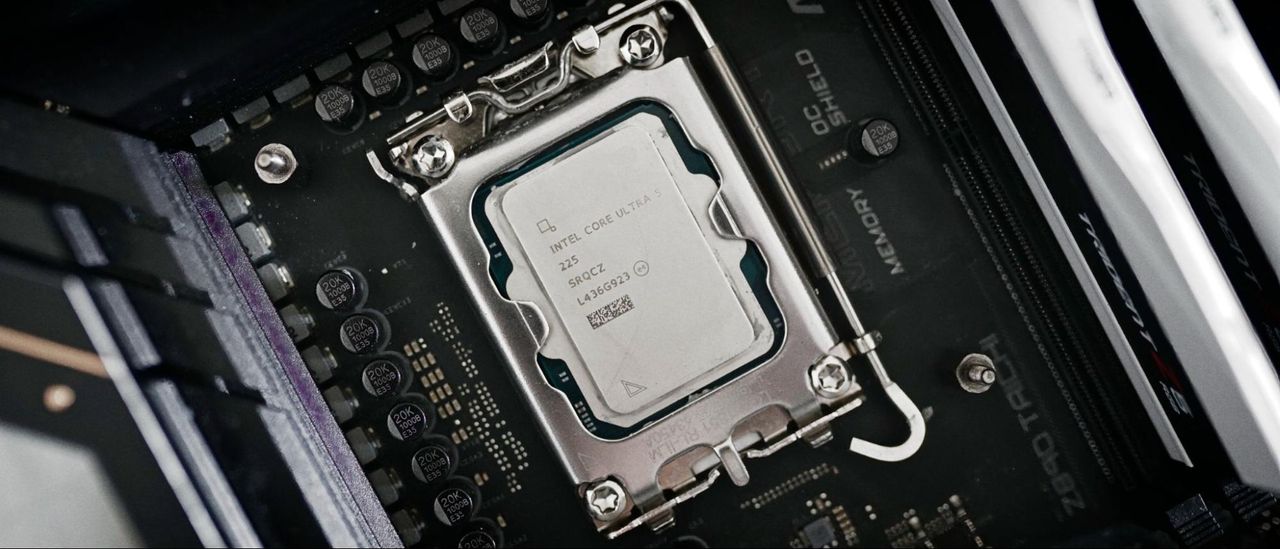



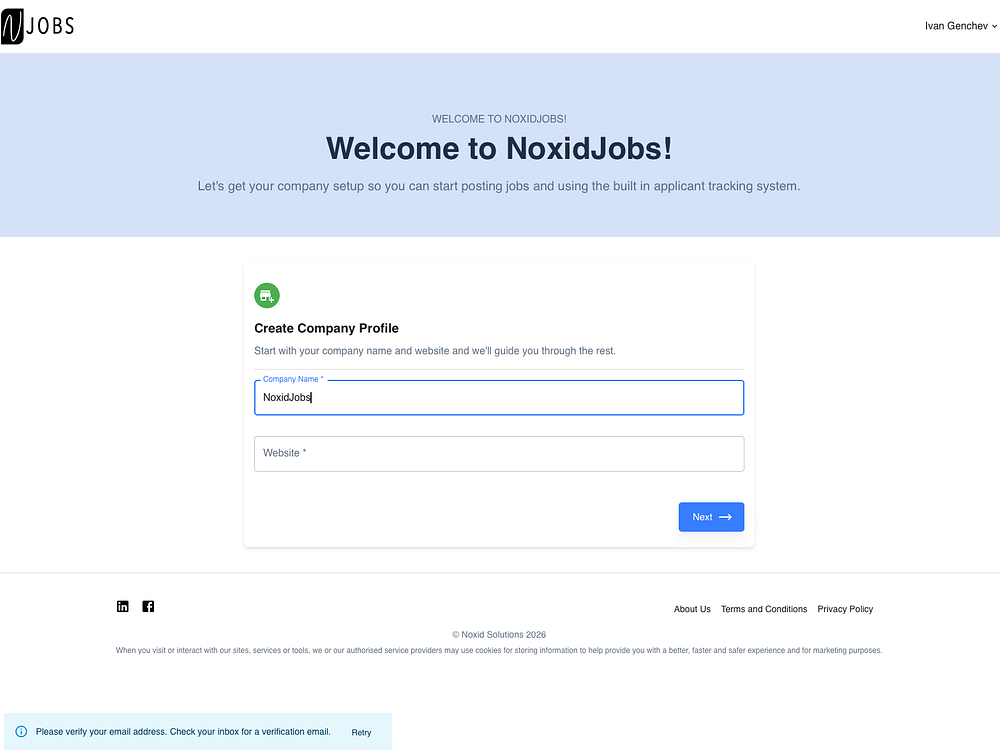




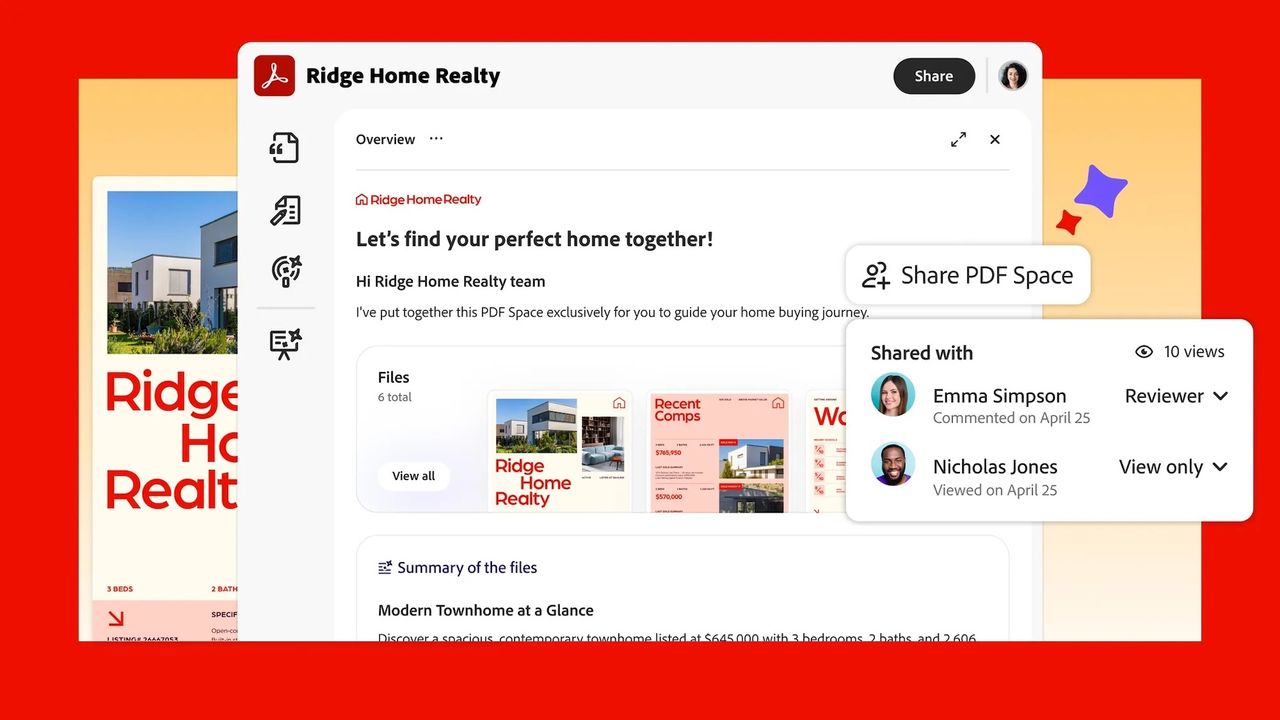
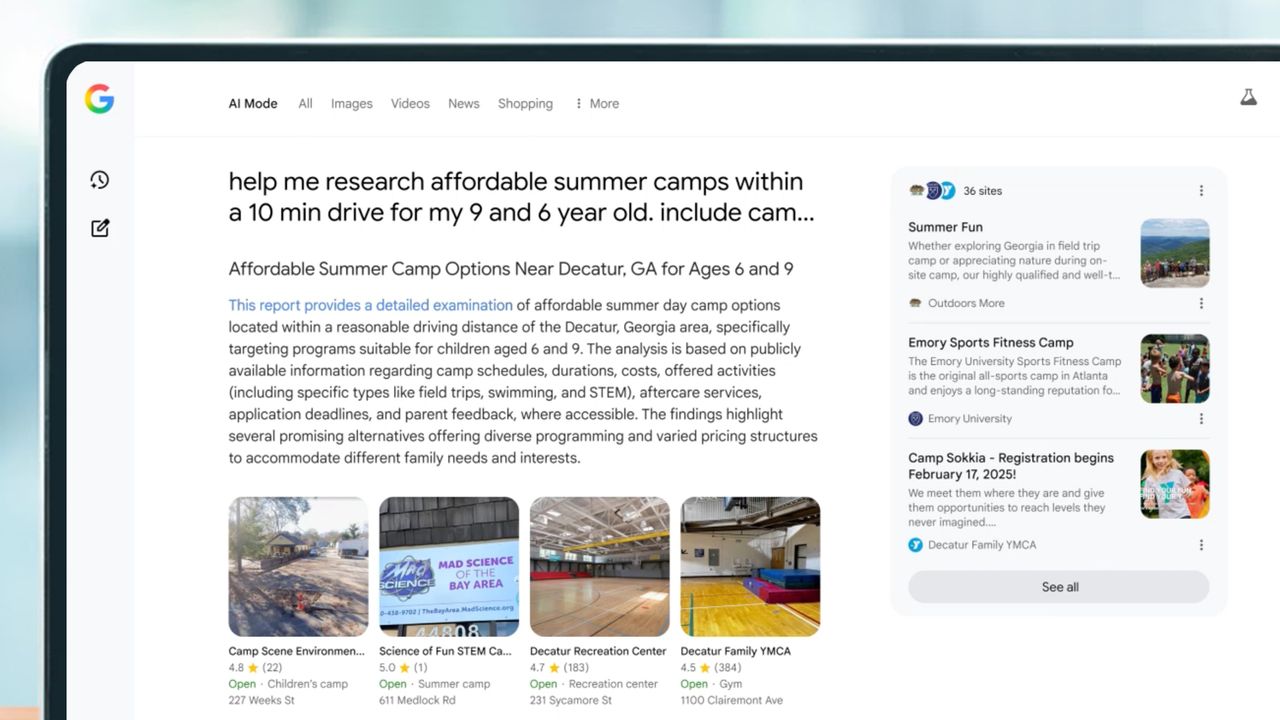
















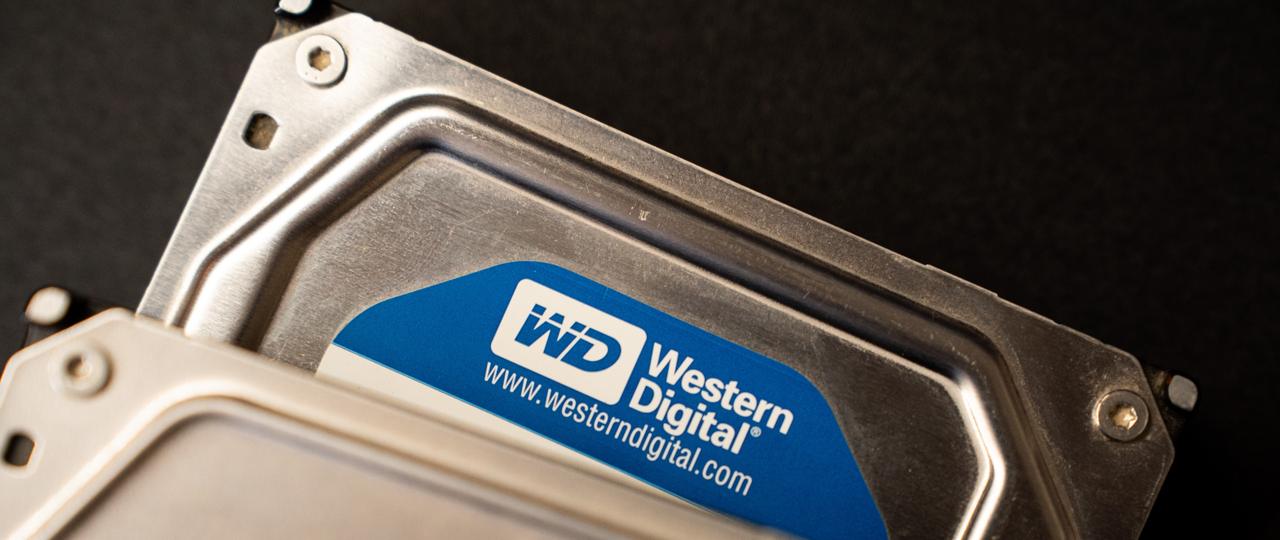





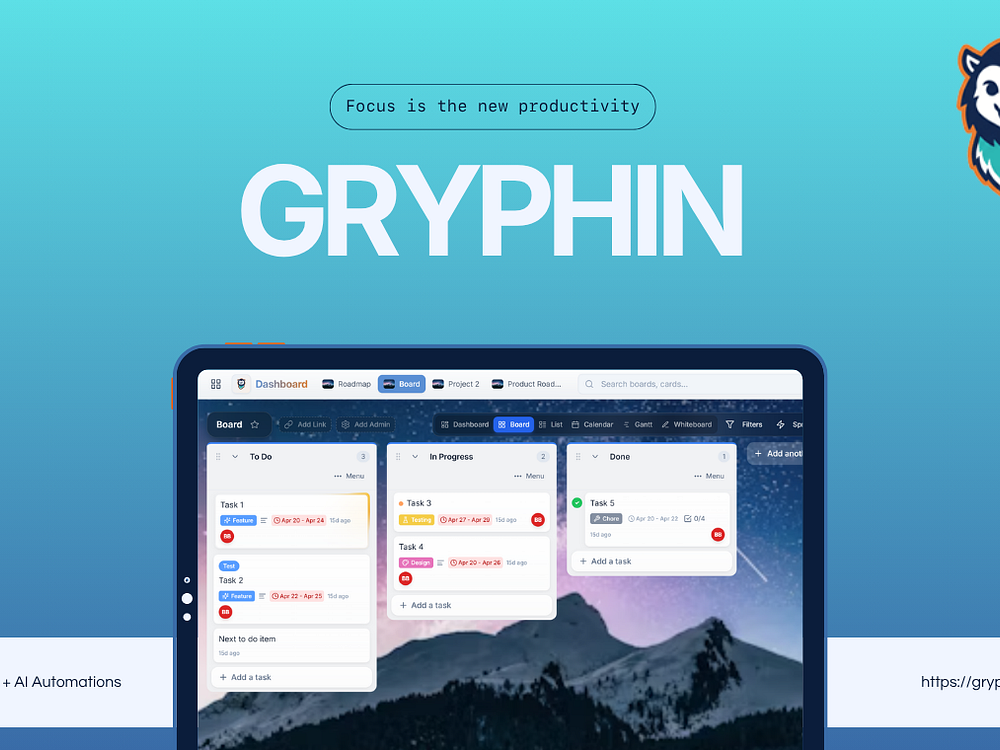






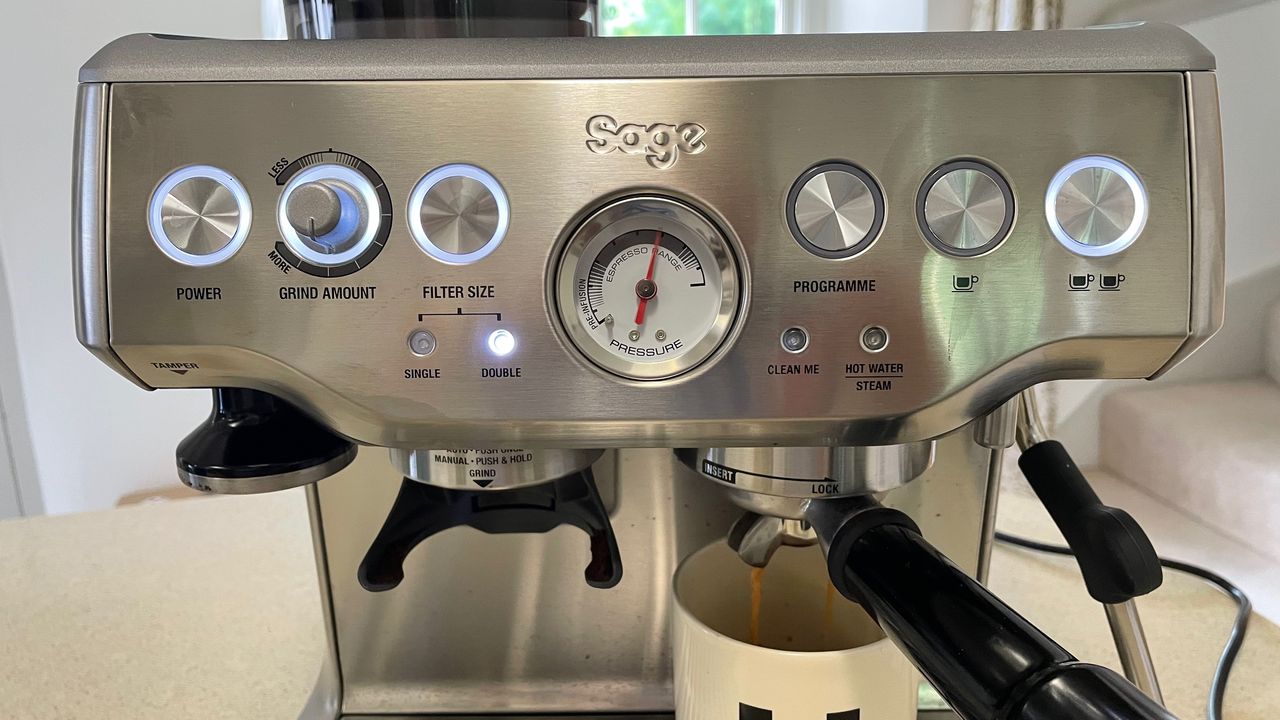






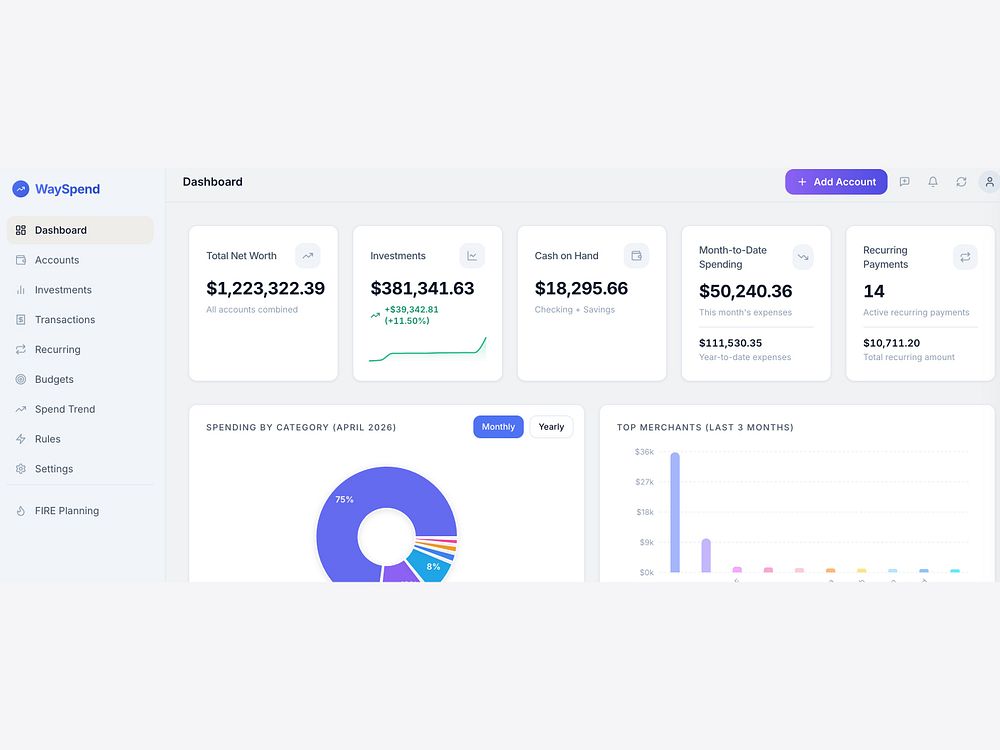










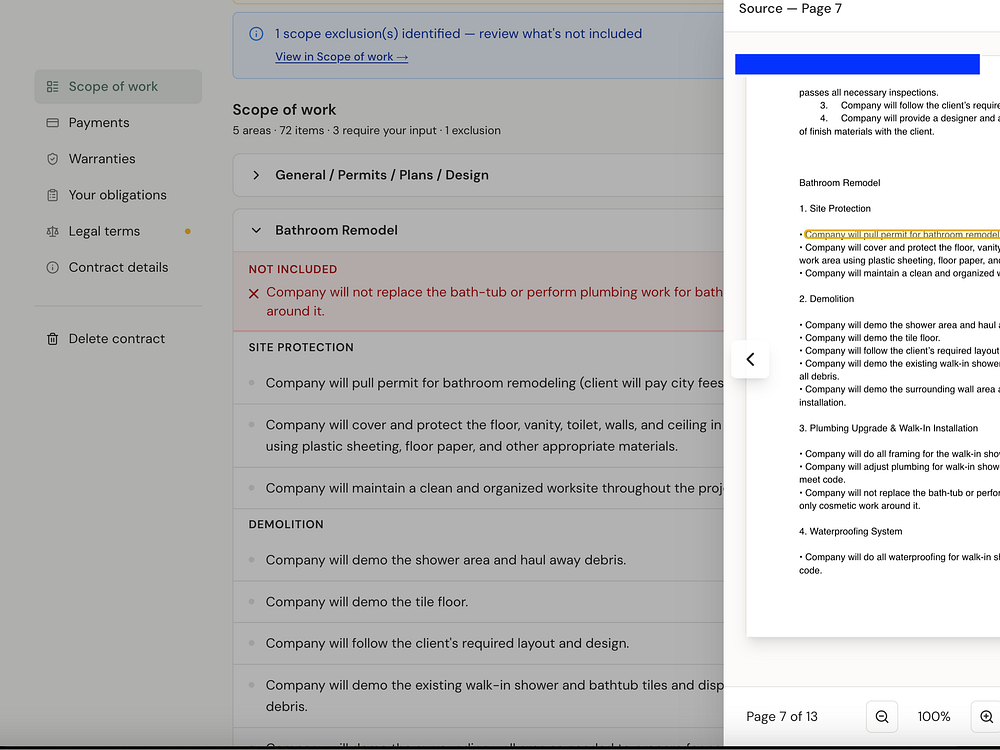




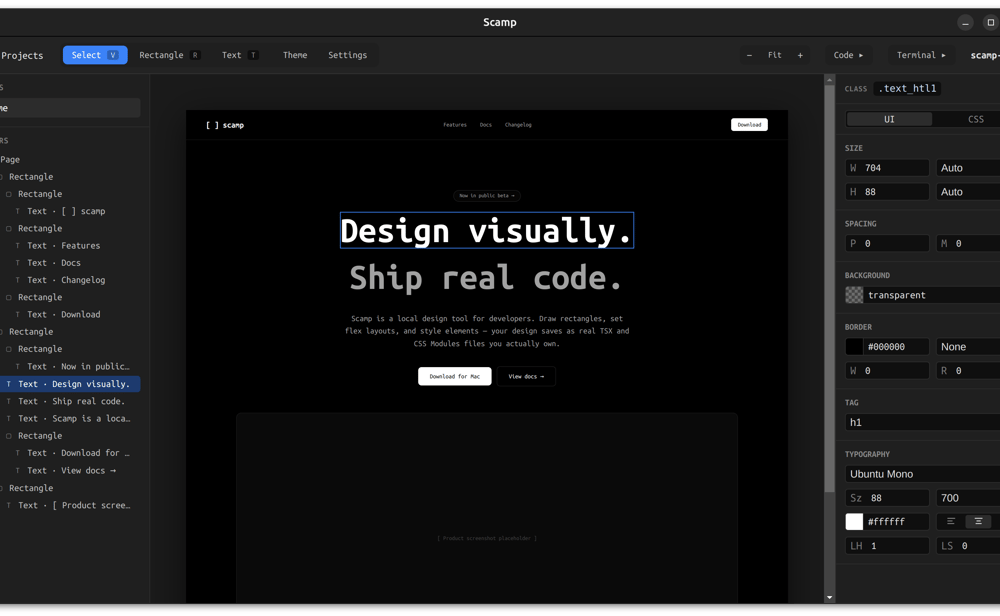
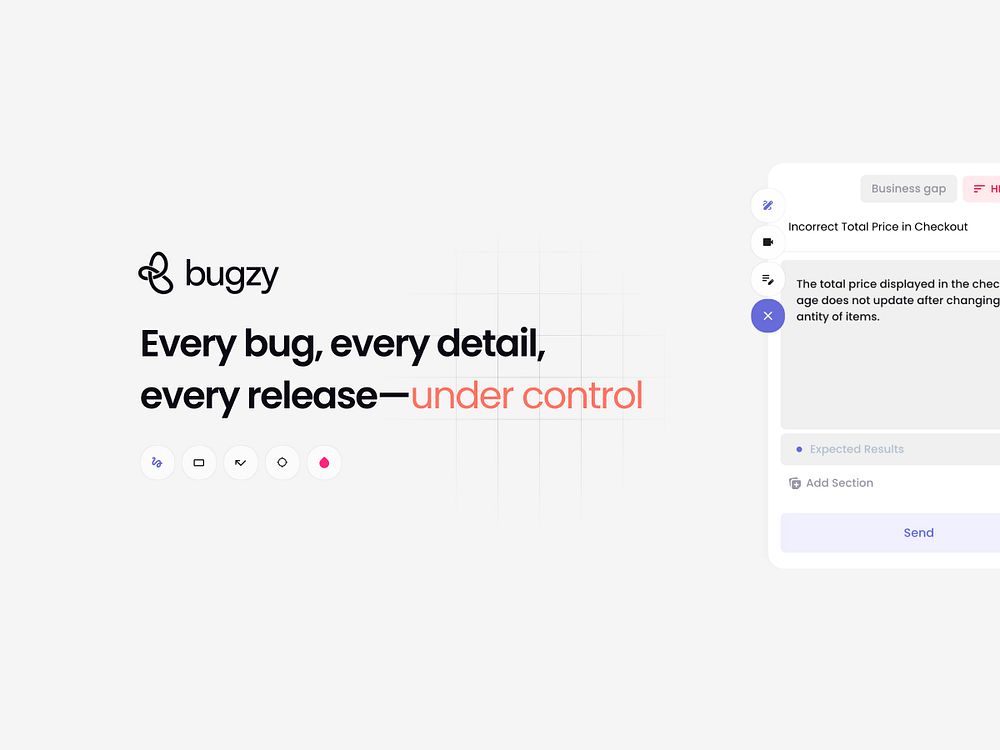
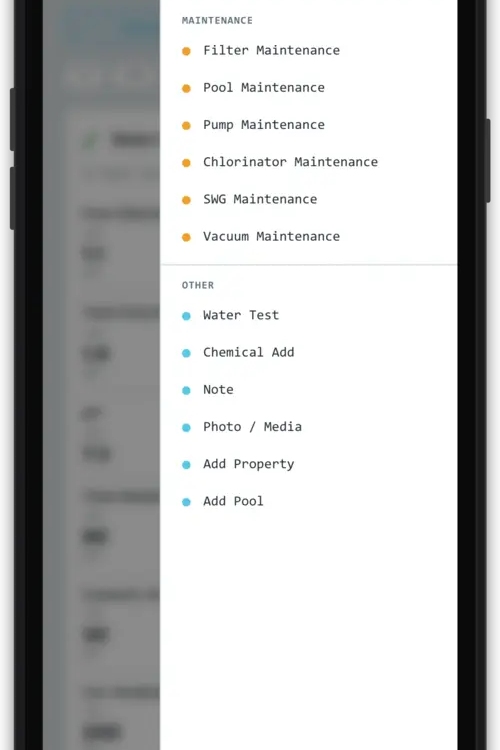







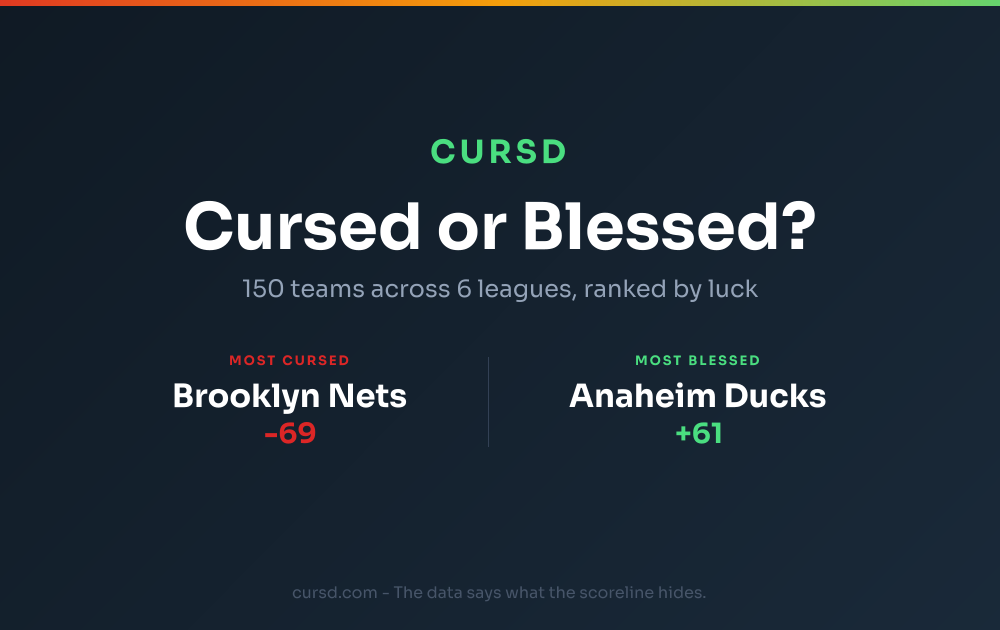


































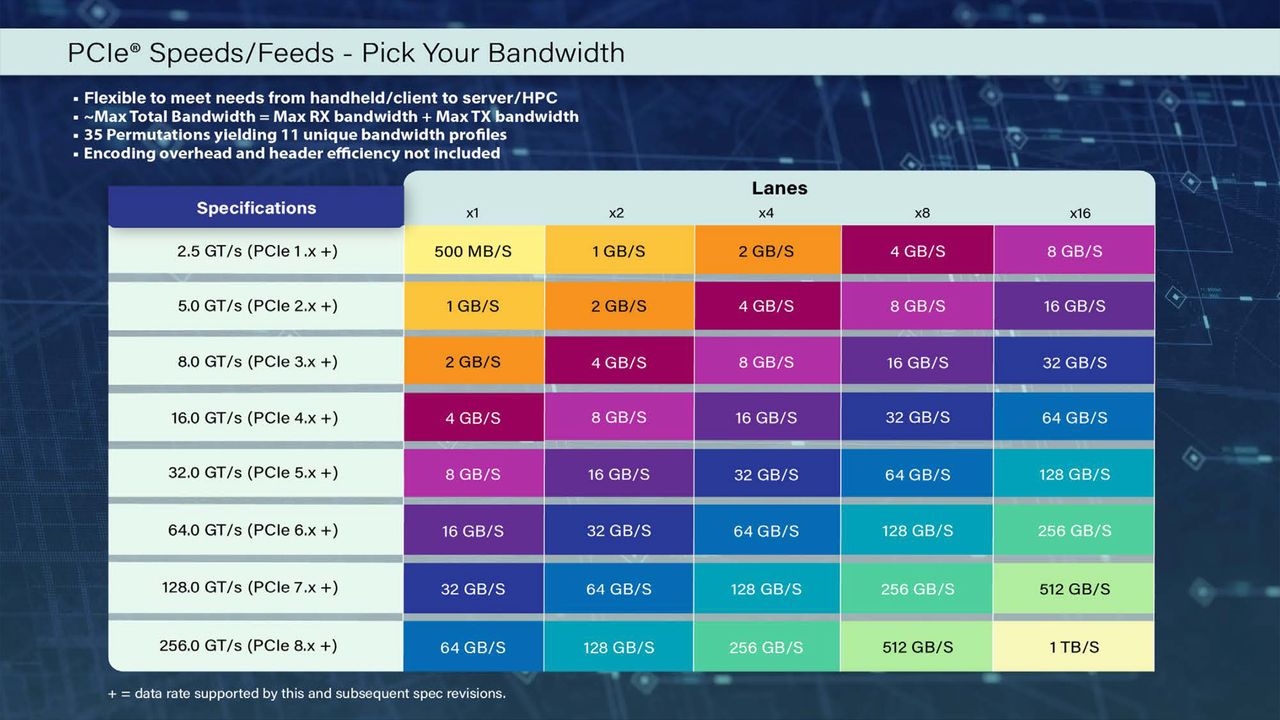


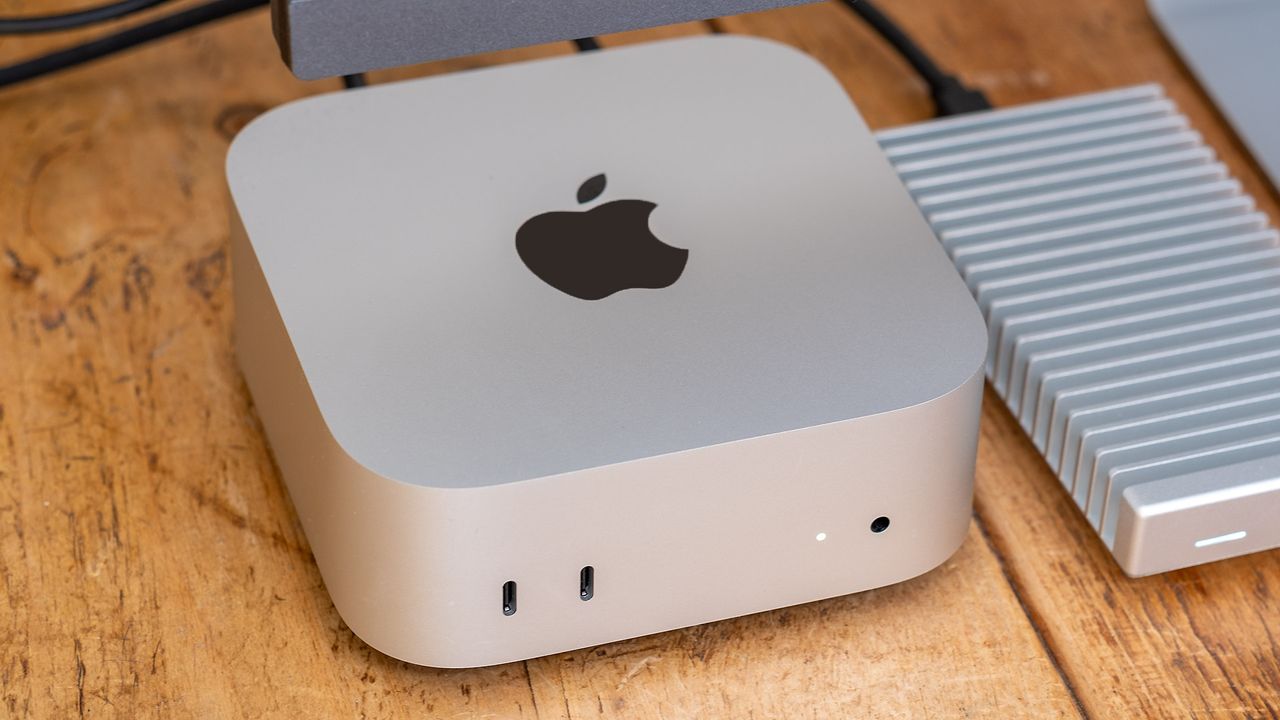


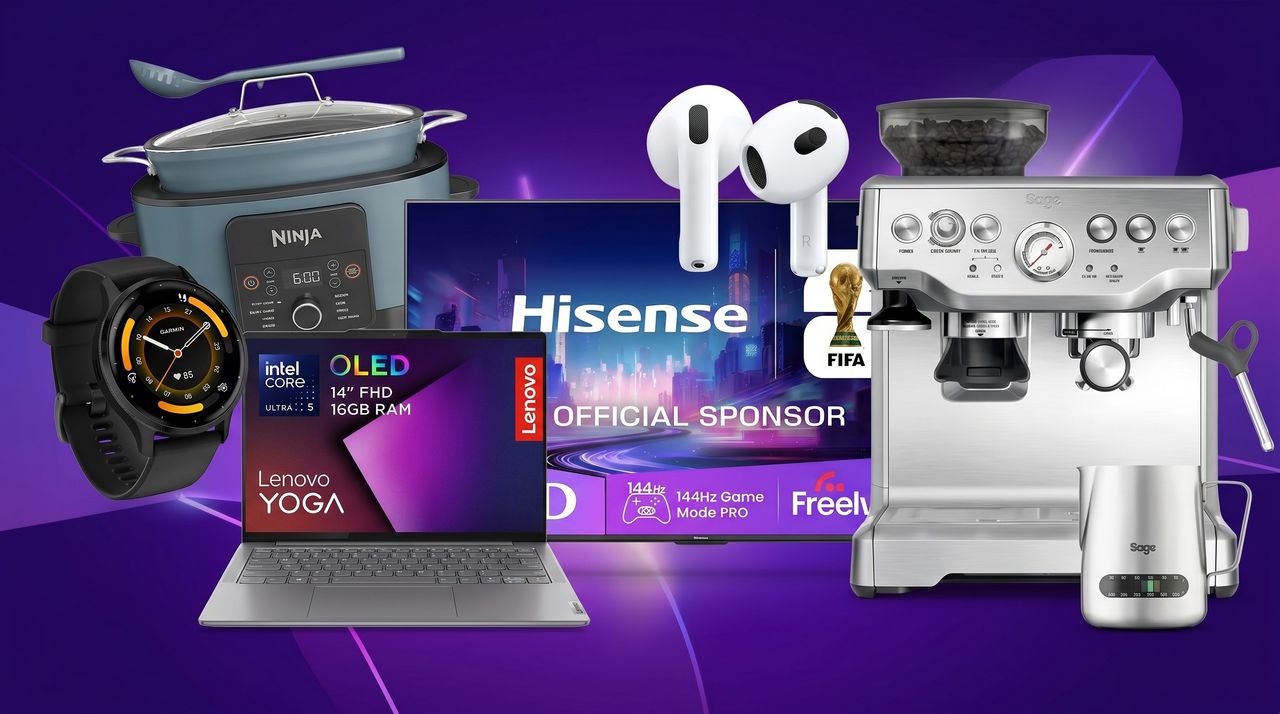






















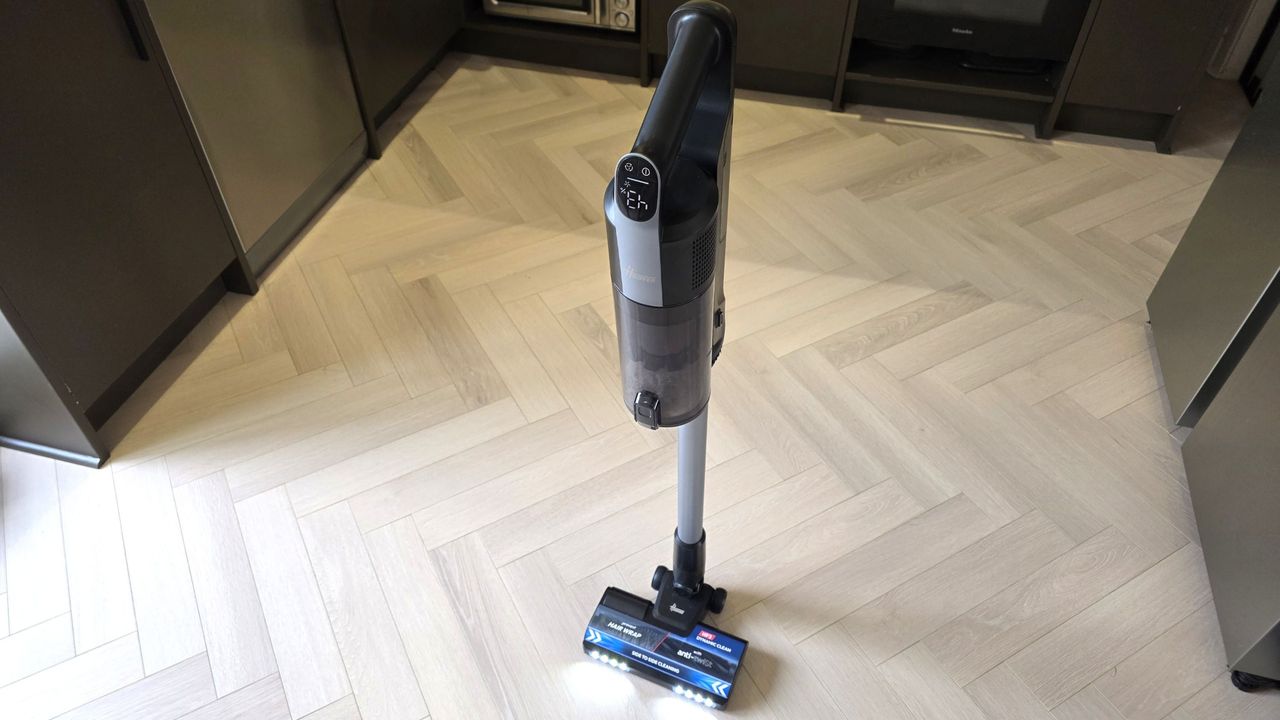




 We’ve rounded up the top ways you can use Google’s AI Mode, Search Live and Shopping to help your plants thrive.
  We're partnering with Believe to offer Google Flow Music to artists, producers and songwriters.






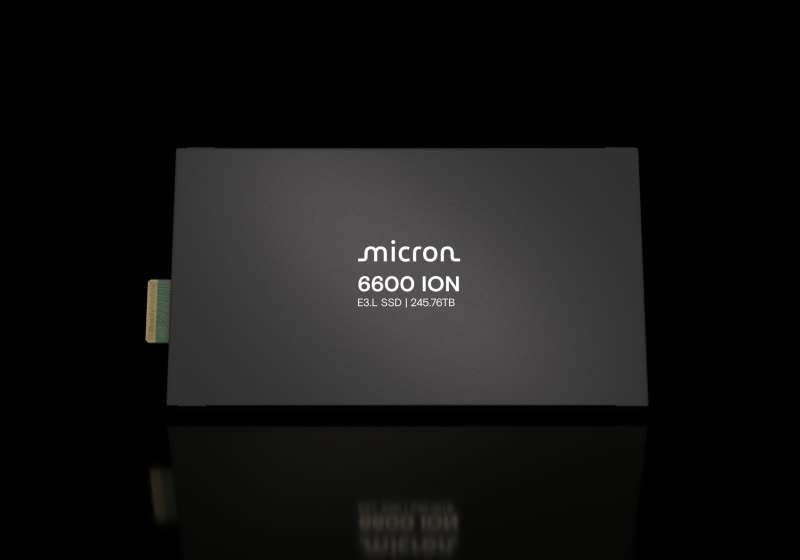















 New updates to AI Mode and AI Overviews in Google Search make it easier for you to dive deeper online.
  AI makes it easy to generate ad creative quickly, but that speed can’t come at the cost of accuracy, brand loyalty or performance.