Casio launches two new radio-controlled watches with solar charging


CAD renders of the upcoming Motorola Razr 70 Ultra surfaced late last month, revealing the clamshell foldable in a silver shade. Now, a new set of press renders has surfaced online, showcasing the phone in two new color options. The leaked press renders showcase the Razr 70 Ultra in Orient Blue Alcantara and Pantone Cocoa Wood finishes. The former appears to feature a faux leather rear panel, while the latter adopts a matte wooden texture. A closer look at the images reveals the absence of a selfie camera on the inner folding display. This is likely an oversight, as earlier CAD...


The Oppo Find X9 Ultra is set to debut in China and global markets on April 21. Ahead of the launch, Oppo has revealed the phoneβs full camera specifications, while its design and other key specs have surfaced via a China Telecom listing. Oppo recently confirmed that the Find X9 Ultra will feature a 50MP periscope telephoto camera with 10x optical zoom, and has now revealed the rest of the deviceβs camera specs through a social media post. It will feature a 200MP primary sensor with an almost 1-inch size, said to deliver 10% better light intake than the Find X8 Ultra. The phone will...
Alongside a trio of new smartphones, Ai+ also unveiled its first tablet. PulseTab brings entry-level specs, a 10.95-inch LCD and an 8,000mAh battery. It boots nxtQ OS based on Android 16 and will be available in India from May. PulseTab is built around a 10.95-inch IPS LCD with FHD+ resolution and a 90Hz refresh rate. The panel is rated at up to 400 nits peak brightness and is flanked by quad speakers. PulseTab features a 13MP rear camera and an 8MP front-facing shooter. It is equipped with MediaTekβs Helio G88 chipset paired with 6GB RAM and 128GB storage. You also get support for...
Samsung today expanded One UI 8.5 Beta to several devices, and the company also announced April Wave 2 expansion. This time, we know which devices are getting the Beta Program invite, and itβs scheduled for later this month.
One UI 8.5 Beta Wave 2 will happen in April 2026. Samsung confirmed the next set of devices, which are the Galaxy Z Fold 5, Galaxy Z Flip 5, and Galaxy S23 FE.
Itβs worth noting that the One UI 8.5 Beta for the Z Fold 5 and Z Flip 5 will only be available in South Korea and the US. The Galaxy S23 FE may get the update in India, South Korea, the United Kingdom and the United States.
Devices that received the One UI 8.5 Beta today are the Galaxy S23 series and the Galaxy A36. Besides, weβve reported new Beta update rollouts for phones that were already running One UI 8.5 Beta firmware.
The story may not just stay limited to what Samsung disclosed. Various Galaxy devices are internally testing One UI 8.5 Beta builds. The company may end up opening early access to devices as much as possible.
Galaxy S21 FE is the only model from 2021 that received Android 16-based One UI 8.0 update. It was widely anticipated to receive the One UI 8.5 update as well.
Meanwhile, Samsung has no plans to provide the mid-cycle update to the 2nd-gen Fan Edition phone. Thereβs no internal Alpha/Beta firmware under development, indicating that the device will spend its remaining life on One UI 8.
Thereβs no denying the wonder from Samsung. We did see it happening with the Galaxy Watch 4, and providing One UI 8.5 update to the Galaxy S21 FE isnβt impossible either.
The post Samsung announces April One UI 8.5 Beta Wave 2 but doesnβt want us to hear the bad news appeared first on Sammy Fans.
If you own a Galaxy phone, today feels like a little gift from Samsung. The company just rolled out new One UI 8.5 beta updates and opened the beta program to even more Galaxy devices. In addition to the beta updates, the company also released the April 2026 security update.
This means millions of users can now try new One UI 8.5 features early, enjoy smoother performance, and get the latest April 2026 security patch at the same time. It doesnβt matter if you have an expensive flagship or a cheaper Galaxy phone, thereβs good news waiting in your software update section.
If you are using the Galaxy S25 series, Samsung brings the One UI 8.5 Beta 9 build for the S25, S25+, and S25 Ultra. Moving to the S24 series, Samsung added bS24, S24+, and S24 Ultra.
Source β Samsung Mobile Press
Both beta updates bring the same improvements: easy file sharing with Apple devices (like AirDrop), three new camera filters (Classic Film, Pop Film, and Blanc), plus fixes for Bluetooth, notifications, gallery, always-on display, and lock screen problems. These betas started rolling out in India first and are quickly expanding to other countries like Germany, Poland, South Korea, the UK, and the US.
The Galaxy S25 FE also received its One UI 8.5 Beta 2 today. It comes with many of the same bug fixes and improvements, though the AirDrop feature is not included yet for this model.
The good news doesnβt end there. Samsung also started a brand new One UI 8.5 beta program for older flagship phones and even some mid-range models.
Samsung started the One UI 8.5 beta program for the Galaxy S23 series (S23, S23+, S23 Ultra, and S23 FE). It is available in phases, starting in India, South Korea, UK, and US. It also includes the April 2026 security patch.
Samsung Galaxy S23 Ultra
The Galaxy Z Fold5 and Galaxy Z Flip5 Beta registration is now live in South Korea and the US. While the Galaxy A36 5G users living in India have already received the first One UI 8.5 Beta update.
Along with these betas, the April 2026 security patch is spreading wider today. The latest patch fixes 47 vulnerabilities, 33 from Googleβs Android Security Bulletin, 10 from Samsung Mobile, and 4 from Samsung Semiconductor.
The April 2026 patch is also rolling out separately to more (non-beta) Galaxy S25, S24, and S23 models in different regions. These updates are rolling out in phases, so not everyone will see them at the same time. The best way to check is to go to Settings > Software update on your phone or open the Samsung Members app and look for the beta banner for registration.
If your Galaxy device is on this list, you might be one of the lucky ones getting these updates today. Are you getting the One UI 8.5 beta or the April security patch today? Drop a DM on @thesammyfans and let us know which device you have.
The post Samsung brings joy to millions of Galaxy users β Are you one of them? appeared first on Sammy Fans.


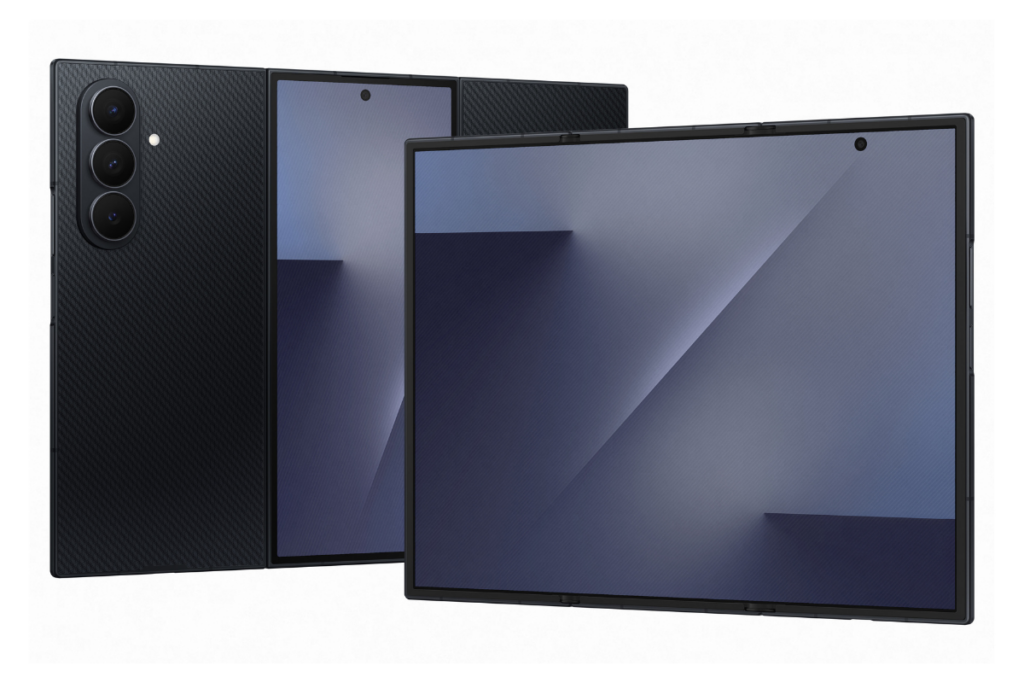
Samsung unveiled the Galaxy S26 series smartphones in February, and the next big smartphone announcement from the Korean brand is expected to be the Galaxy Z Fold8, Galaxy Z Flip8, and a wide foldable, which could be called Galaxy Z Fold Wide (or Fold8 Wide). There's no word from Samsung on the launch dates of these foldables, but according to Korea Economic TV, they will be unveiled on July 22. Korea Economic TV reports that these Galaxy foldables will be unveiled at a Galaxy Unpacked event in London, UK, without specifying the event time. Samsung Galaxy Z Fold8's leaked CAD-based...
Samsung is expanding the One UI 8.5 beta program, this time for the Galaxy S23 series, Z Fold 5, Z Flip 5, and Galaxy S23 FE. Along with these, the company also joined Galaxy A36 5G, the first from the A-series.
Samsung is allowing these phones to enter the beta program and test the latest features before the stable release. Before these phones, Samsung also introduced the Galaxy S24 series in the test pool.
One thing to notice here is that the Galaxy Z Fold 5 and Flip 5βs One UI 8.5 beta is limited to certain markets. Samsung has announced that these two phone users in the U.S. and Korea can participate in the beta program. We donβt know the reason for these limitations, but thatβs how it is. On the other hand, the Galaxy A36 5Gβs beta is limited to Indian users.
![]()
First opened in December, the One UI 8.5 beta program inducted the Galaxy S25 series. Following a four-month run, the company is still testing One UI 8.5 for the lineup. Earlier today, the S25 series, along with the S24 series, received the 9th and 8th beta updates, respectively.
The first thing that these phones are getting is AirDrop support for Quick Share to send and receive files. That said, users just need to weaken the visibility setting, and you can turn your Galaxy smartphone into a cross-platform device for AirDrop file sharing.
Furthermore, the new betas add new camera improvements as well as bug fixes for a smoother user experience.
Samsung has confirmed that the One UI 8.5 beta program will not end here and will be expanding to more devices later this month. You can stay connected with us to know more about these phones when the program opens.
The post Samsung keep on expanding One UI 8.5 beta and itβs not the end appeared first on Sammy Fans.


Recently leaked marketing materials of the Motorola Edge 70 Pro revealed its design. Now we are looking at the leaked renders of the Edge 70 Pro, showing the smartphone in three new colors. One of these models features a wooden design on the back cover, but there's no confirmation on whether it's a real wood texture or just a design. The name of this model isn't known either. Motorola Edge 70 Pro's leaked renders However, the source reports that the other two models are called Pantone Titan and Pantone Zinfandel. It also claims that the blue version's back panel has a...


Indian tech brand Ai+ announced a trio of new smartphones at a big launch event today. Nova Flip is the brandβs first foldable phone, opting for a flip-style design. Nova 2 and Nova 2 Ultra are conventional slab phones with 6,000mAh batteries, 5G connectivity and 50MP main cams. Ai+ Nova Flip This is the first foldable phone from the brand, and at first glance, it sure looks like a Nubia Flip 2. A closer examination of its specs reveals thatβs the case, with the only exception being that the Nova Flip runs on nxtQ OS based on Android 15. Outside of the software department,...


Ahead of its scheduled launch later this month, official-looking renders of the Oppo Find X9s Pro have surfaced online, revealing the phone in four color options. The handset is set to debut alongside the Oppo Find X9 Ultra on April 21. Reliable tipster Evan Blass has shared design renders of the Find X9s Pro on X. At first glance, the phone appears largely similar to the existing Find X9 Pro. It features the same rectangular rear camera module and a flat back panel with Oppo branding at the bottom. On the front, the device sports slim display bezels and a hole-punch cutout for the...
OnePlus has introduced the SUPERVOOC 100W Dual Ports GaN Power Adapter Lite in India alongside the Nord 6. The new charger uses third-generation Gallium Nitride technology to deliver high output in a compact design, targeting users who need fast charging across multiple devices.

The adapter features a dual-port setup with one USB-A port and one Type-C port. It supports both single-device and dual-device charging, with dynamic power allocation based on usage. When a single port is used, the charger can deliver up to 100W via SUPERVOOC fast charging or up to 65W through Power Delivery. With both ports active, it distributes power intelligently with a combined maximum output of 100W.

In terms of dual-port configurations, the adapter supports multiple output splits depending on connected devices. These include 33W + 33W, 30W + 18W, 67W + 33W, and 45W + 18W combinations. For single-port output at a technical level, it supports 11V at 6.1A max or 11V at 9.1A max.

The charger is built to support a wide range of charging standards. These include SUPERVOOC, Power Delivery 3.0, PPS, Quick Charge, and UFCS. This ensures compatibility with smartphones, tablets, and laptops across different brands.
From a hardware standpoint, the adapter uses polycarbonate material for its outer shell. It measures 55 x 30.5 x 70 mm, with the height including the pins, and weighs approximately 150 grams. The compact size is enabled by GaN technology, which allows tighter internal component placement while maintaining thermal efficiency. The charger is rated for an input range of 100 to 240V at 50 or 60Hz with 2.1A support, making it suitable for international use.
OnePlus claims the adapter achieves up to 90% conversion efficiency, which helps reduce energy loss and heat generation during operation.
The SUPERVOOC 100W Dual Ports GaN Power Adapter Lite is available in white. It is priced at Rs. 3,499, with an introductory offer price of Rs. 3,199. The charger is available through the OnePlus India online store.
For more daily updates, please visit ourΒ News Section.
Stay ahead in tech!Β Join ourΒ Telegram communityΒ andΒ sign up for our daily newsletterΒ ofΒ top stories!
The post OnePlus 100W Power Adapter Lite Dual Port GaN Charger Debuts in India appeared first on Gizmochina.
Motorola looks to be preparing a new addition to its Edge 70 lineup, with early leaks pointing to an upcoming Edge 70 Pro. Some promotional materials have surfaced online, giving a rough idea of what the company might be focusing on this time.

The images, shared by tipster @_intakhab_alam, highlight the tagline βSeize the Night,β which suggests Motorola is leaning into low-light photography as a key feature. Thatβs not entirely new for the brand, but it does hint that camera performance could be a bigger focus here.
In terms of design, the phone doesnβt seem to move too far away from what Motorola has been doing recently. It appears to feature a quad-curved display and back, paired with a flat middle frame that has contoured edges for a comfortable grip. Leaks mention materials like wood grain and nylon-style textures, which could help it stand out a bit from the usual glass-backed phones.

Certifications have revealed a few concrete details, though. The Edge 70 Pro is said to pack a 6,500mAh battery, a notable increase over the 6,000mAh unit of the Edge 60 Pro. Wired charging is expected to stay the same at 90W this year. There are also mentions of wireless charging, Wi-Fi 6E, and NFC.
Interestingly, a Pro+ variant is also expected this year, which would sit above the Pro and below the top-end Motorola Signature. The series already includes the standard Edge 70, Edge 70 Fusion, Edge 70 Fusion+, and the Motorola Signature.
Based on whatβs known so far, the Pro version will likely aim somewhere between the mid-range and flagship tiers. Thereβs still no word on the processor, display, or full camera setup, so a lot of the picture is incomplete for now. But the direction seems fairly clear: a phone that focuses on battery life and camera versatility, rather than just pushing raw performance. More details should surface in the coming weeks as Motorola gets closer to an official announcement.
Donβt miss a thing! Join our Telegram community for instant updates and grab our free daily newsletter for the best tech stories!
For more daily updates, please visit our News Section.
(Source)
The post Motorola Edge 70 Pro spotted in leaked promo materials appeared first on Gizmochina.
Apple seems to have closed out 2025 on a strong note, at least going by the latest data from Counterpoint Research. In the fourth quarter, iPhones accounted for five of the top ten best-selling smartphones globally, which is a fairly solid presence considering how competitive the market has been.

At the top of the list is the iPhone 17 Pro Max, which reportedly held about 5% of total smartphone sales on its own. The regular iPhone 17 comes in second, followed by the iPhone 17 Pro in third. That kind of lineup dominance isnβt entirely surprising for Apple, though, especially in markets like the US and parts of Europe, where the ecosystem tends to play a big role.
Apple also has a couple of older models still holding on. The iPhone 16 sits in fourth place, while the iPhone 16e shows up further down in eighth. Interestingly, the iPhone Air doesnβt appear in the rankings.
Samsung takes four spots overall, mostly through its mid-range lineup. The Galaxy A56, A36, and A07 are placed fifth, sixth, and seventh, while the Galaxy S25 just makes it into tenth. Xiaomi appears once with the REDMI A5 in ninth, which is pretty much in line with what we have seen in recent years.

Taken together, these top ten models account for around 23% of global smartphone sales in the quarter, which gives some idea of how concentrated the market is at the top.
If you zoom out a bit, Appleβs position wasnβt just limited to this quarter. Its devices showed up consistently throughout 2025, with the iPhone 16 being the only one to stay in the top ten across all four quarters. Samsung and Xiaomi, meanwhile, moved around a bit more.
As for whatβs driving this, itβs probably a mix of things. The iPhone 17 series had a strong start, and the base model in particular seems to have helped, thanks to upgrades like a higher refresh rate and more RAM.
Overall, Apple still seems to be holding its ground at the higher end of the market. Android brands are pushing hard in the mid-range and budget space, but when it comes to the top spots, iPhones are still showing up more often than not.
Donβt miss a thing! Join our Telegram community for instant updates and grab our free daily newsletter for the best tech stories!
For more daily updates, please visit our News Section.
The post iPhones alone take 5 of the top 10 spots in best-selling list appeared first on Gizmochina.
AI+ has expanded its smartphone lineup in India with the launch of the Nova 2 and Nova 2 Ultra. These devices aim to cater to different segments, offering a mix of essential features and performance upgrades, along with large batteries and modern software.

The AI Plus Nova 2 features a 6.745-inch HD+ display with a 120Hz refresh rate and in-cell technology. It is powered by a Unisoc T8200 chip, and it comes in configurations such as up to 6GB of RAM and up to 128GB storage.
On the other hand, the Nova 2 Ultra offers a 6.78-inch AMOLED display with 1.5K resolution, a 144Hz refresh rate, and peak brightness of up to 2500 nits. It is powered by the MediaTek Dimensity 7400 chipset, paired with up to 8GB of LPDDR4x RAM and 128GB of UFS storage. Both phones run on Android 16 with NxtQ OS.

For cameras, the Nova 2 features a 50-megapixel rear sensor along with an 8-megapixel front camera. The Nova 2 Ultra steps up with a 50-megapixel Sony IMX752 primary camera with OIS, an 8-megapixel ultra-wide lens, and a 13-megapiixel front camera, along with additional AI camera features.
Both devices are backed by a 6,000mAh battery, with the Nova 2 supporting 18W charging and the Ultra variant supporting 33W charging. Connectivity features include 5G, Wi-Fi, Bluetooth, USB Type-C, and IP64 rating. The Ultra model also adds dual speakers, VC cooling, and gaming-focused features like dedicated triggers and customisation options.
The Nova 2 is priced starting at Rs 8,999 and will go on sale from April 14, at 12 noon. The Nova 2 Ultra starts at Rs 14,999 and will be available from April 17, at 12 noon. Both phones will be sold via Flipkart in India.
The Nova 2 will be available in Purple, Green, Pink, Blue, and Black colors, while the Nova 2 Ultra will come in Blue, Green, Purple, Black, and Red options.
For more daily updates, please visit ourΒ News Section.
Stay ahead in tech!Β Join ourΒ Telegram communityΒ andΒ sign up for our daily newsletterΒ ofΒ top stories!Β ![]()
The post AI+ Nova 2 Ultra debuts with AMOLED screen, Dimensity 7400 for Rs 14,999 (~$160), Nova 2 tags along appeared first on Gizmochina.
A recent report revealed that the iQOO 16 moniker has appeared in the IMEI database. While it is expected to launch in October this year, the rumor mill has already started revealing its key specifications. A new Weibo post by reliable tipster Digital Chat Station has revealed the chipset that will power the device.

Reports have revealed that Qualcommβs next-generation 2nm chip will arrive in two versions. While the official monikers are yet to be confirmed, these chipsets are tentatively dubbed the Snapdragon 8 Elite Gen 6 (SM8950) and Snapdragon 8 Elite Gen 6 Pro (SM8975), respectively.
As mentioned above, DCS claims that the iQOO 16 will be powered by the Snapdragon 8 Elite Gen 6 Pro. The tipster also suggests that the device will feature a 2K Samsung display with a flat design and a very high refresh rate. A recent report revealed that the screen may support a 165Hz or 185Hz refresh rate.
The rest of the iQOO 16βs specifications are also expected to be powerful, according to the tipster, but they remain under wraps. Since it is expected to debut later this year, it may come preloaded with OriginOS 7 based on Android 17.
The same source recently revealed that its rear camera setup will be headlined by a 200-megapixel main camera. This sensor will be joined by a 50-megapixel ultra-wide lens and a 50-megapixel periscope telephoto camera.
Its base model is expected to feature a 12GB + 256GB configuration. With the rise in memory costs, this variant could be priced at 5,000 Yuan, which is approximately $730.
In related news, iQOO is expected to launch the iQOO 15T by mid-2026 in China. One of the major highlights of this phone is that it may come equipped with a built-in cooling fan.
Stay ahead in tech!Β Join ourΒ Telegram communityΒ andΒ sign up for our daily newsletterΒ ofΒ top stories!Β ![]()
The post iQOO 16 tipped to feature Snapdragon 8 Elite Gen 6 Pro, set to rival OnePlus 16 appeared first on Gizmochina.
AI+ held a major launch event today in India to unveil the Nova 2 series, a tablet, and a couple of TWS earbuds. The same event also saw the arrival of the Nova Flip, which is the brandβs first foldable display phone. Whatβs surprising is that this phone carries an astonishing price tag of Rs 29,999.

The AI+ Nova Flip features a 6.9-inch AMOLED inner display with a resolution of 2790 x 1188 pixels, along with a 3.1-inch AMOLED cover screen. It runs on Android 15 with NxtQ OS on top and is powered by the MediaTek Dimensity 7300 chip, coupled with 8GB of LPDDR4X RAM and 256GB of storage.
For photography, the device includes a 50-megapixel main camera along with a 2-megapixel depth sensor, while the front houses a 32-megapixel camera. It also supports up to 10x digital zoom. The phone is backed by a 4325mAh battery, which is quite large for a flip phone, with 33W charging support.
Additional features include dual SIM 5G support, Bluetooth, NFC, OTG, GPS, and a USB-C port. The device also includes a side-mounted fingerprint sensor along with sensors such as a gyroscope and Hall sensor. It comes with an IP64 rating for dust and water resistance.
The Nova Flip is priced at Rs 29,999 and is expected to go on sale starting May 2026. It will be available in a Glacier White color option, also referred to as Pantone Cloud Dancer.
For more daily updates, please visit ourΒ News Section.
Stay ahead in tech!Β Join ourΒ Telegram communityΒ andΒ sign up for our daily newsletterΒ ofΒ top stories!Β ![]()
The post AI+ Nova Flip for Rs 29,999 (~$320) brings 6.9-inch foldable screen, big battery, IP64 rating appeared first on Gizmochina.
Weβve been putting the Samsung Galaxy S26 up against flagships from across the market. If youβre curious, itβs already faced off against the OnePlus 15 and the Nothing Phone (4a) Pro.
Today, weβre comparing the Galaxy S26 with a more recent flagship, the Vivo X300s, which launched just last week in China. Both phones sit in the increasingly competitive βaffordable flagshipβ tier. But the two are very different ideas of how a flagship phone should be in 2026.Β

Vivo is about bigger battery, higher megapixel counts, faster charging, while Samsung offers refinement, long-term support, and a more compact form factor. Letβs go through them in detail here.Β
The Galaxy S26, as you might know, is a relatively compact flagship. At 149.6mm tall and weighing just 167 grams, itβs noticeably smaller and lighter than the Vivo X300s. You can actually use it one-handed without thinking about it.
The Vivo X300s, by comparison, is large, and unapologetic about it. At 162mm tall and 217 grams, itβs closer to what youβd expect from an βultraβ phone. The extra size makes room for its bigger battery and camera system, but it also means youβll feel it in your pocket.
Both phones use glass and aluminum builds, but Samsung uses Gorilla Glass Victus 2 on both sides and Armor Aluminum 2 for the frame. Meanwhile, Vivo offers IP68/IP69 ratings, which technically give it an edge in ingress protection.
No prize for guessing, Vivo gives you more screen in almost every sense. The X300s has a 6.78-inch LTPO AMOLED panel with a 144Hz refresh rate, compared to the S26βs 6.3-inch Dynamic LTPO AMOLED 2X display at 120Hz.
On paper, Vivo offers a higher refresh rate, higher resolution (1260 x 2800), and features like 2160Hz PWM dimming and HDR Vivid. But in everyday use, youβre unlikely to notice a major difference between Samsung and Vivo.
Both phones run flagship chips, but from different ecosystems.
The Vivo X300s uses the MediaTek Dimensity 9500, built on a 3nm process with a peak clock speed of 4.21GHz. Samsungβs Galaxy S26, meanwhile, uses different chips depending on the region: Snapdragon 8 Elite Gen 5 in some markets and Exynos 2600 in others.
On paper, Samsungβs Snapdragon variant is slightly more aggressive, with a 4.74GHz peak core speed. But these are flagship SoCs, so everyday performance will feel smooth on either device.
Where Samsung pulls ahead is software longevity. The S26 promises up to seven major Android updates, compared to five on the Vivo. Thatβs a meaningful gap if you plan to keep your phone for several years.
When it comes to cameras, the Vivo X300s goes all-in on hardware. It features a 200MP main sensor, a 50MP periscope telephoto, and a 50MP ultrawide. It even supports optional external zoom lenses with Zeiss optics.
Samsung, on the other hand, opts for a 50MP main sensor, a 10MP telephoto, and a 12MP ultrawide.
Thereβs no doubt Vivo has the edge in flexibility. Higher-resolution sensors allow for more cropping, and the periscope lens β plus optional add-ons β suggests itβs built for users who want to experiment with zoom and detail.
Samsungβs advantage lies in predictability. Features like Best Face, strong HDR processing, and consistent video performance make it easier to get reliable results without much effort.
The Vivo X300s packs a massive 7100mAh battery, significantly larger than the Galaxy S26βs 4300mAh cell.
Charging speeds widen the gap further. Vivo supports 90W wired and 40W wireless charging, while Samsung sticks to 25W wired and 15W wireless. Even with Samsungβs efficiency optimizations, itβs hard to see it competing on endurance or charging time.
The S26 does offer reverse wireless charging and tighter accessory integration, but that doesnβt change the core difference: the Vivo is built to last longer and charge faster.
The Vivo X300s and Galaxy S26 donβt really compete on the same terms, even though they sit in the same category.
The Vivo X300s is all about maximizing hardware β a bigger battery, faster charging, higher-resolution cameras, and a larger, faster display. Itβs trying to win on specs.
The Galaxy S26 is more restrained. It focuses on usability, long-term software support, and a compact design thatβs increasingly rare among flagship Android phones.
Ultimately, it comes down to what you value more: raw hardware or a more balanced, long-term experience.
For more daily updates, please visit ourΒ News Section.
Stay ahead in tech!Β Join ourΒ Telegram communityΒ andΒ sign up for our daily newsletterΒ ofΒ top stories!
The post Vivo X300s vs Samsung Galaxy S26: Specs vs Longevity appeared first on Gizmochina.

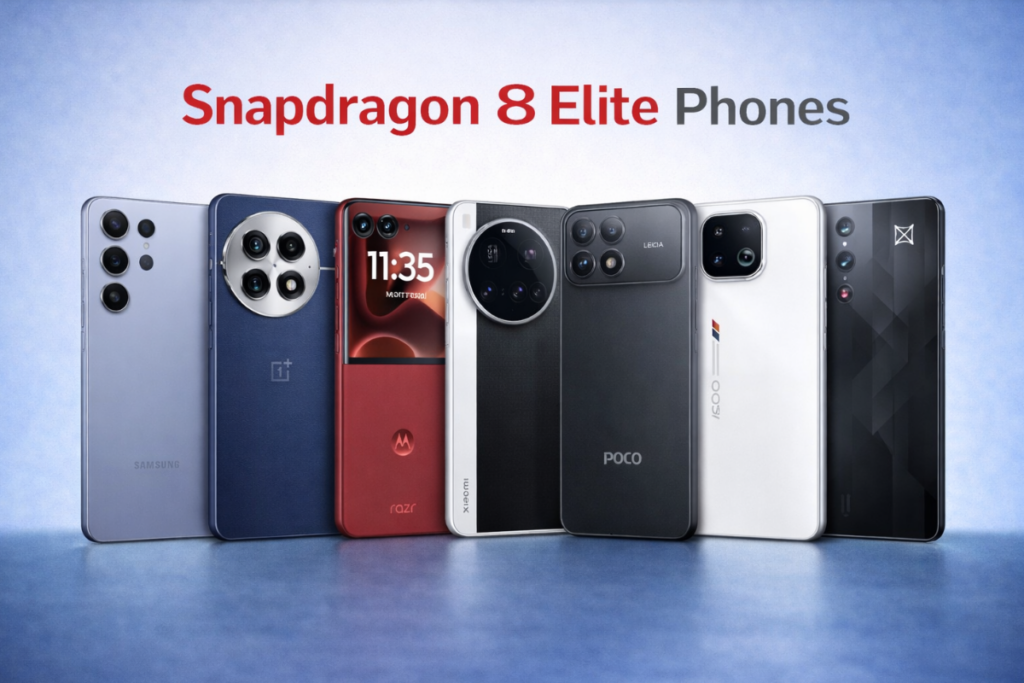
The Snapdragon 8 Elite is Qualcommβs first mobile chipset to feature custom Oryon cores, offering excellent performance and power efficiency. It quickly became a popular choice for the premium segment, and now we have dozens of phones from various brands rocking the same chipset.
Hereβs a list of Snapdragon 8 Elite phones that are available in the market. To keep the list relevant for our readers, we have excluded phones that havenβt been released outside China.
The post Every Snapdragon 8 Elite phone so far: Complete list appeared first on Gizmochina.
Xiaomi is expected to unveil the Xiaomi 18, 18 Pro, and 18 Pro Max smartphones in September this year in China. While the standard and Pro models are expected to feature compact form factors, the Pro Max edition could be a larger model. To recall, the Xiaomi 17 Pro Max from last year packed a 7,500mAh battery. Now, a new leak reveals that the Xiaomi 18 Pro Maxβs battery could be significantly larger than its predecessor.

According to well-known tipster Digital Chat Station on Weibo, an upcoming large-screen flagship based on a next-generation platform is currently being tested with a battery starting with the number 8. The engineering prototype is said to target a maximum capacity of around 8,500mAh, marking a notable jump compared to current flagship standards.
While he has not specified the name of the device, he could be referring to the Xiaomi 18 Pro Max. The leak also mentions that the device is being tested with support for 100W fast charging along with wireless charging.
Previous reports have revealed that the Xiaomi 18 Pro Maxβs rear camera setup could include dual 200-megapixel cameras and a 50-megapixel ultra-wide lens. The primary camera is said to feature SmartSensβ first-ever 200-megapixel sensor.
The Xiaomi 18 Pro Max is expected to feature a large flat display with ultra-narrow bezels and support for advanced color standards suitable for high-resolution content creation. While the screen size is not known yet, it could be around 6.9 inches like the previous generation. On the performance side, it is tipped to debut with Qualcommβs next-generation Snapdragon 8 Elite Gen 6 series chipset built on a 2nm process, paired with next-generation memory for improved multitasking.
The Xiaomi 18 Pro Max is expected to retain the rear-facing secondary display, which was introduced in the previous generation. This time, it is expected to be more versatile and AI-driven than before.
/For more daily updates, please visit ourΒ News Section.
Stay ahead in tech!Β Join ourΒ Telegram communityΒ andΒ sign up for our daily newsletterΒ ofΒ top stories!Β ![]()
The post Xiaomi 18 Pro Max could be massive 8,500mAh battery appeared first on Gizmochina.
Oppoβs upcoming Pad Mini has now appeared on Geekbench, offering an early look at its performance. The listing, tied to the model number OPD2515, gives us a clearer idea of what to expect ahead of its April 21 launch in China.

According to the benchmark, the tablet scores 2,762 in single-core and 9,037 in multi-core. More importantly, it confirms the use of Qualcommβs Snapdragon 8 Gen 5 chip. That places it just below the very top-tier Snapdragon 8 Elite Gen 5.
Compared to the Snapdragon 8 Elite (as seen in devices like the OnePlus Pad 3), the gap doesnβt look too wide. Single-core performance is said to be around 14% lower, while multi-core numbers are much closer, with only a small difference. In practical terms, that should still be more than enough for most popular titles on the Google Play Store. The listing also confirms Android 16 and 12GB of RAM.

The company shared a video teaser yesterday, showing slim, even bezels all around. The centered hole-punch camera sits on the shorter side. Beyond that, earlier leaks point to an 8.8-inch LTPO OLED display with a 3:2 aspect ratio and support for up to 144Hz refresh rate.
Battery capacity is expected to be around 8,000mAh, with 67W fast charging. The tablet is also said to be quite slim at 5.39mm and weigh about 279g, so portability seems to be a big focus here.
Oppo is also rumored to be working on a more powerful Pad 5 Pro alongside it, likely aimed at users who want higher raw performance.
For now, this Geekbench listing does give a decent idea of where the Pad Mini sits, somewhere between performance and portability, rather than pushing purely for top-end specs. More details should be confirmed once the tablet is officially announced later this month.
Donβt miss a thing! Join our Telegram community for instant updates and grab our free daily newsletter for the best tech stories!
For more daily updates, please visit our News Section.
(Source: Geekbench)
The post Oppo Pad Mini shows up on Geekbench confirming chipset, CPU performance appeared first on Gizmochina.
The upcoming Enco Clip2, set to debut on April 21 at 19:00, leans heavily into design, with a form factor thatβs meant to double as both audio gear and a fashion accessory.

The earbuds come with a gold-toned finish, and each piece is designed to clip onto the ear more like an earring than a traditional bud. Theyβre also quite light at around 5.2 grams per side, and Oppo is using an ultra-thin titanium plate to help with fit and flexibility. It seems aimed at comfort as much as aesthetics.
On the audio side, Oppo has once again partnered with Dynaudio for tuning. The Enco Clip2 is said to use dual DACs and dual drivers, which should help with clarity and separation, at least on paper. As with most things here, the real test will be how it sounds in everyday use.
One feature Oppo is highlighting is support for voice commands that work with Apple devices. That includes basic controls like skipping tracks, adjusting volume, and handling calls, without needing to reach for the phone.
Under the hood, the earbuds are powered by a 6nm chip, which Oppo claims improves noise reduction performance significantly. Thereβs also AI-based call noise cancellation, along with features like real-time translation, though how well those work in practice isnβt clear yet.

Battery life is rated at up to 40 hours in total, with about 9.5 hours per charge, which is in line with other options in this segment. The earbuds also support Bluetooth 6.1, with a claimed connection range of up to 400 meters, though that would likely depend on conditions.
At a glance, OPPO seems to be trying something slightly different here: focusing as much on how the earbuds look and feel as on how they sound. Whether that balance works will depend on how it all comes together in actual use.
Donβt miss a thing! Join our Telegram community for instant updates and grab our free daily newsletter for the best tech stories!
For more daily updates, please visit our News Section.
(Source: Oppo on Weibo)
The post Oppo Enco Clip2 teaser reveals key specifications ahead of April 21 launch appeared first on Gizmochina.
Oppo is all set to announce the Oppo Find X9s Pro on April 21 in China. This compact flagship will take on the OnePlus 15T in the home market. While OnePlusβ offering is a performance-focused device, the Find X9s Pro will arrive with top-notch cameras. The company is yet to reveal the X9s Proβs design, but a new leak, courtesy of reliable tipster Evan Blass, has revealed renders showcasing its four color options.
Oppo Find X9s Pro color options revealed


As seen in the images, the Find X9s Pro will arrive in color options such as cyan, orange, titanium, and white. The overall design of the phone is consistent with the existing X9 models, but it will be the smallest of the lineup, as it is said to feature a 6.32-inch display.
According to reports, the Find X9s Pro will feature a 6.32-inch OLED display with 1.5K resolution and a 144Hz refresh rate. It is expected to be powered by the Dimensity 9500 chipset, paired with LPDDR5x RAM and UFS 4.1 storage. The device may be available in multiple configurations, going up to 16GB RAM and 1TB storage.


The smartphone is likely to pack a 7,025mAh battery with support for 80W wired and 50W wireless charging. It is also said to include dual speakers, an X-axis linear motor, and an ultrasonic in-screen fingerprint sensor for enhanced usability.
For cameras, the Find X9s Pro could feature a 50-megapixel front sensor and a rear setup led by a 200-megapixel Samsung HPE primary camera with OIS support, a 50-megapixel ultra-wide lens, and an OIS-enabled 200-megapixel periscope telephoto camera powered by the Samsung HP5 sensor, along with a 3.2-megapixel multispectral unit and Hasselblad tuning.
As a recent report revealed, the Find X9s Pro will have support for the optional Hasselblad teleconverter kit. It will run on ColorOS 16 based on Android 16 and offer IP68 and IP69 ratings.
For more daily updates, please visit ourΒ News Section.
Stay ahead in tech!Β Join ourΒ Telegram communityΒ andΒ sign up for our daily newsletterΒ ofΒ top stories!Β ![]()
The post Oppo Find X9s Pro official images leaked, four color options revealed appeared first on Gizmochina.
Just days after reports suggested the MediaTek Dimensity 9600 Pro could flirt with 5GHz clock speeds, a new leak is adding a bit more shape to the rumor.
According to tipster Digital Chat Station (DCS) on Weibo, the Dimensity 9600 Pro will use a 2+3+3 CPU layout built around what the tipster describes as a βdual-core all-big-core architecture.β
More specifically, the chip is said to feature two high-performance βCanyonβ cores, alongside three βGelas-bβ and three standard βGelasβ cores. The tipster further reiterates that the prime core clock speeds are expected to push close to the 5GHz mark.
The leak also mentions support for SME 2 (Scalable Matrix Extension 2), an extension designed to improve machine learning and AI-related workloads. On the graphics side, the chip is tipped to feature an Arm βMagniβ GPU.

Memory and storage upgrades are also on the table. The Dimensity 9600 Pro is rumored to support LPDDR6 RAM and UFS 5.0 storage, both of which promise faster data throughput and improved efficiency over todayβs standards.
Underlying all of this is TSMCβs N2P process. According to DCS, internal specifications reportedly suggest a 10 to 15 percent boost in performance alongside a 25 to 30 percent reduction in power consumption.
Interestingly, even Qualcommβs Snapdragon 8 Elite Gen 6 Pro is expected to deliver a performance uplift of under 20%, despite reaching similar clock speeds near the 5GHz mark.

Anywho, as you might have guessed by now, the Dimensity 9600 lineup wonβt be a one-size-fits-all affair. The Pro model is set to carry the most advanced architecture, while the standard variant is rumored to stick with a 3nm process and will likely target more mainstream devices.
According to previous reports, the Vivo X500 series and the Oppo Find X10 lineup will be the first to use the Dimensity 9600 chip.
For more daily updates, please visit ourΒ News Section.
Stay ahead in tech!Β Join ourΒ Telegram communityΒ andΒ sign up for our daily newsletterΒ ofΒ top stories!Β ![]()
The post MediaTek Dimensity 9600 core setup leaks, performance gains capped at 15% appeared first on Gizmochina.
Just weeks after unveiling the Enjoy 90 series, Huawei has quietly expanded its Enjoy 90 lineup with the launch of the Huawei Enjoy 90m Plus. Unlike the earlier announcement, this new model has appeared on Huaweiβs official website without much fanfare.
Visually, the Enjoy 90m Plus has a noticeable change in the back design. Instead of two clearly separated lenses, the new model merges them into a single oval-shaped black capsule design. The design is more similar to the OnePlus 15 rather than the other Enjoy 90 phones.Β

The phone also introduces an exclusive coral orange color option. Itβs also available in white and black.Β
In terms of performance, the Enjoy 90m Plus is powered by the Kirin 8000 processor. The phone runs on HarmonyOS 6.0 out of the box, along with Huaweiβs AI-based security features to help prevent fraud and protect user data.
For storage, the Enjoy 90m Plus is available in 128GB and 256GB variants. On the camera side, it comes with a 50-megapixel rear camera that supports up to 10x digital zoom. On the front, there is an 8-megapixel camera for selfies and video calls.

The device features a 6.67-inch LCD with a 120Hz refresh rate. The resolution is HD+ (1604 Γ 720 pixels), which is not the sharpest in its class, but the higher refresh rate should help with smoother scrolling and animations.Β
As for the battery, Huawei has equipped the phone with a large 6620mAh cell. It supports up to 40W fast charging, along with compatibility for 9V/2A charging. The device also includes support for StarFlash E1.0 and Bluetooth 6.0.
Huawei has not yet announced pricing or availability details for the Enjoy 90m Plus, but you can expect the final details to appear soon.
For more daily updates, please visit ourΒ News Section.
Stay ahead in tech!Β Join ourΒ Telegram communityΒ andΒ sign up for our daily newsletterΒ ofΒ top stories!Β ![]()
The post Huawei Enjoy 90m Plus launches quietly with a OnePlus 15-like design appeared first on Gizmochina.
After announcing the Motorola Razr Fold in January, Motorola is now gearing up to launch its clamshell foldable. The device appeared in CAD renders a couple of weeks earlier.Β
Now, new official-looking renders of the Razr 70 Ultra, or possibly the Razr Ultra (2026), have surfaced via OnLeaks in collaboration with Android Headlines.
The images suggest the device will arrive in at least two finishes: Pantone Cocoa Wood and an Orient Blue Alcantara option. Like its predecessor, the outer display houses a triple-camera setup, with all three sensors reportedly clocking in at 50 megapixels.
One notable omission from these renders is any clear look at the internal camera. According to Android Headlines, thatβs likely down to early rendering inconsistencies rather than a redesign, so donβt expect Lenovo to ditch the selfie camera or move to an under-display solution just yet.

It is said to feature a 7-inch internal foldable screen paired with a 4-inch cover display. The left edge now features a dedicated Moto AI button, while power and volume controls stay right-mounted. The bottom houses a USB Type-C port, a speaker grille, a microphone, and a SIM slot. A secondary microphone sits topside.
Under the hood, the Razr 70 Ultra is expected to pack a Qualcomm Snapdragon 8 series chip, alongside a familiar 4,700mAh battery and 68W fast charging.
Timing-wise, the launch could be strategically aligned with the 2026 FIFA World Cup. Lenovo and Motorola have partnered with FIFA as an Official Technology Partner for the event, so the company will reportedly target a debut in the weeks leading up to kickoff on June 11.
Not to forget, the Razr 70 standard model has already surfaced on Chinaβs TENAA with images and specifications. Both will likely launch on the same day.
For more daily updates, please visit ourΒ News Section.
Stay ahead in tech!Β Join ourΒ Telegram communityΒ andΒ sign up for our daily newsletterΒ ofΒ top stories!Β ![]()
(Source)
The post Motorola Razr 70 Ultra foldable surfaces in official press renders appeared first on Gizmochina.
The Xiaomi TV S Mini LED 2026 series has been announced and is now available for pre-order in China. The lineup introduces upgraded display technology and audio features, giving an early look at what the brand is offering this year across multiple screen sizes.

The Xiaomi TV S Mini LED 2026 series comes with Mini LED display technology combined with a low-reflection screen coating aimed at improving viewing clarity in different lighting conditions. The panel supports 4K resolution along with a native 144Hz refresh rate, which can be pushed up to 288Hz in certain scenarios. Peak brightness is rated at 2000 nits, while color reproduction covers 94 percent of the DCI P3 gamut.
Xiaomi has also focused on picture processing with its AI-based image engine, which works alongside the Mini LED backlight system that varies depending on the screen size. For instance, the 55-inch model features 576 dimming zones, with higher variants offering even more precise control over brightness and contrast.
On the audio front, the TVs feature a 2.1-channel speaker setup tuned with Harman input and support Dolby Atmos for an enhanced sound experience. Additional features include Xiaomiβs eye protection mode, Wi-Fi 6, Bluetooth 5.2, and its latest smart TV interface based on HyperOS.
The Xiaomi TV S Mini LED 2026 series is available in multiple sizes, including 55-inch, 65-inch, 75-inch, 85-inch, and 100-inch variants. The starting price for the 55-inch model is CNY 3,099, which roughly converts to around $453, while the larger 100-inch variant goes up to CNY 10,499, approximately $1,535. With subsidies applied in China, the effective starting price drops further.
The TVs are currently available for pre-order and come bundled with a complimentary video streaming membership for a limited period. Sales are expected to begin soon in China, with no confirmation yet on global availability.
For more daily updates, please visit ourΒ News Section.
Stay ahead in tech!Β Join ourΒ Telegram communityΒ andΒ sign up for our daily newsletterΒ ofΒ top stories!Β ![]()
The post Xiaomi TV S Mini LED 2026 series launched with up to 100-inch screen size, 2000-nits, AI features appeared first on Gizmochina.
The Oppo A6s Pro has officially launched in China, but its official listing has not revealed the detailed specifications of the device. However, the phone was recently spotted in the China Telecom database, through which its key specifications had already surfaced. Hereβs a look at whatβs packed inside the A6s Pro.

The Oppo A6s Pro features a 6.57-inch OLED display with a resolution of 2372 x 1080 pixels, offering sharp visuals in a compact footprint. The device follows a clean design approach with a horizontal camera module and is built using a combination of plastic and metal elements.
Powering the device is the MediaTek Dimensity 6300 chipset, paired with multiple RAM and storage configurations. Users can choose between 8GB or 12GB of RAM and up to 512GB of internal storage, with support for additional expansion up to 256GB. The smartphone houses a large 7,000mAh battery and supports 80W charging.
The Oppo A6s Pro runs on Android 16 out of the box, layered with Oppoβs ColorOS 16. For photography, the device features a 50-megapixel main camera supported by a 2-megapixel secondary sensor, along with a 16-megapixel front camera for selfies and video calls.
Additional features include 5G, Wi-Fi, Bluetooth, NFC, USB Type-C, and multiple sensors such as proximity, light, gravity, and direction sensing. It also includes an in-display fingerprint scanner for security. It measures 8.32mm in thickness and weighs around 193 grams.
The Oppo A6s Pro is available in multiple configurations including 8GB+128GB, 8GB+256GB, 12GB+256GB, and 12GB+512GB. Pricing details are yet to be announced. The device comes in three colour options named Lucky Lotus, Moonlit Night, and Azure Sky. It is scheuledd to on sale on April 14 in China. The appearance of the device suggests that the Oppo F33 Pro heading to the global market could be based on the Oppo A6s Pro.
For more daily updates, please visit ourΒ News Section.
Stay ahead in tech!Β Join ourΒ Telegram communityΒ andΒ sign up for our daily newsletterΒ ofΒ top stories!Β ![]()
The post Oppo A6s Pro debuts with 6.57-inch display, 7,000mAh battery, 80W charging appeared first on Gizmochina.
Zebronics has launched the Zeb Silencio 200T wireless headphones in India, expanding its lineup of audio products. The headphones are priced at βΉ2,999 ($32) and are now available for purchase on Amazon.in. These come in three color options: Blue, Black, and Maroon.

The Zeb Silencio 200T headphones deliver high-quality sound with 40mm Neodymium drivers. They include equalizer modes like Sound Monster and Vocal Enhance, along with a low-latency Gaming Mode for seamless gameplay.
The headphones offer 48dB Hybrid Active Noise Cancellation (ANC) for superior noise reduction. They feature a 1000mAh battery, providing up to 100 hours of playback without ANC, and support rapid charging, delivering 10 hours of use with a 10-minute charge.
The Zeb Silencio 200T offers Bluetooth v6.0 for wireless connectivity and an AUX port for wired use. It features dual pairing for effortless switching between two devices and dual-microphone Environmental Noise Cancellation (ENC) for clear voice calls.

For comfort, the headphones feature soft ear cushions and an adjustable headband for long listening sessions. They also include touch controls for easy management of playback, volume, and calls, along with support for voice assistants like Google Assistant and Siri for added convenience.
The headphones weigh 263 grams, making them lightweight and portable. Zebronics includes compatibility with an app, giving users added control over audio settings.
In related news, Anker has recently unveiled the Soundcore Space 2 headphones with upgraded ANC and up to 70 hours of battery life, while Noise has introduced the Airwave Max 6 headphones featuring 45dB ANC and a massive 120-hour battery life.
For more daily updates, please visit ourΒ News Section.
Stay ahead in tech! Join our Telegram community and sign up for our daily newsletter of top stories! ![]()
The post Zebronics launches Zeb Silencio 200T headphones with 48dB ANC & 100h battery appeared first on Gizmochina.
Samsung India has launched the Bespoke AI WindFree Pro Air Conditioner, bringing smart cooling technology and a sleek design to the Indian market. This latest innovation combines cutting-edge features with an aesthetic focus, designed to seamlessly fit into contemporary homes.

The air conditioner offers a unique 5 Motion Wind system. It allows users to choose from five cooling modes: Max Wind for instant cooling, Surround Wind for an evenly distributed breeze, Long Reach Wind for extended airflow, Down Wind for directed comfort, and WindFree mode for gentle cooling without harsh air blasts. Samsung claims the WindFree mode uses up to 77% less energy compared to traditional cooling modes. The WindFree technology relies on 23,000 micro-holes that gently disperse air across the room to enhance comfort without creating cold drafts.
The AI-powered functionality takes cooling to the next level. The AI Auto Cooling feature analyzes room temperature, humidity, and user patterns to automatically adjust settings. The AI Energy Mode optimizes power efficiency and reduces energy consumption by up to 30%.
The air conditioner integrates with Samsungβs SmartThings app, which lets users control cooling settings, monitor energy consumption, and create schedules. The device also supports voice control through Bixby, Google Assistant, and Alexa, enabling seamless hands-free operation.

The Bespoke AI WindFree Pro AC features a luxurious and modern design. Samsung offers two color options, Essential White and Soapstone Charcoal, to suit different interior styles. The slim, minimalist appearance not only blends into modern homes but also enhances their aesthetic appeal.
To ensure durability and performance, Samsung has equipped the air conditioner with a DuraFin Ultra anti-corrosion coating and a Copper Anti-Bacterial Filter, which helps capture dust and eliminate up to 99% of airborne bacteria. The 3-step Auto Clean function keeps the unit hygienic by automatically drying its Heat Exchanger after use.
The AC delivers powerful performance with a cooling capacity of 4.75 kW. The Twin Compressor reduces noise while maintaining efficiency, and the slim outdoor unit saves space without compromising performance.
The Samsung Bespoke AI WindFree Pro Air Conditioner is available for βΉ66,990 on Samsung.com and at select retail stores.
In related news, Xiaomi has recently introduced the Mijia Air Conditioner Energy Saving Pro, focusing on enhanced efficiency and intelligent features.
For more daily updates, please visit ourΒ News Section.
Stay ahead in tech! Join our Telegram community and sign up for our daily newsletter of top stories! ![]()
(Samsung)
The post Samsung launches Bespoke AI WindFree Pro AC with 5 Motion Wind & AI cooling appeared first on Gizmochina.
MSI has officially launched the MAG Infinite S AI 2nd gaming desktop. This new system offers configurations featuring Intelβs latest Core Ultra processors and Nvidia RTX 50-series GPUs. It targets gamers and creators who demand high performance, AI-driven optimization, and upgrade-friendly designs.

The desktop supports four CPU options. These include the Core Ultra 7 265 processor, Core Ultra 7 265F processor, Core Ultra 5 225 processor, and Core Ultra 5 225F processor.
The flagship Intel Core Ultra 7 265 processor comes with 20 hybrid cores and an integrated NPU for AI acceleration, alongside Nvidiaβs 5070 Ti GPU featuring Blackwell architecture. It supports DLSS 4 for smoother 4K gameplay at up to 240 FPS.
MSI has designed the MAG Infinite S AI 2nd for easy upgrades. The system features tool-free components like the EZ M.2 Clip and EZ PCIe Clip II for quick upgrades to storage and graphics cards. It also supports up to 64GB of DDR5 memory and includes multiple storage options, such as an M.2 NVMe SSD slot and three drive bays for 2.5-inch and 3.5-inch drives.


The MAG Infinite S AI 2nd is equipped with MSIβs Silent Storm Cooling AI for efficient cooling and low noise during heavy use. It also features the MSI AI Engine, which optimizes fan speeds, lighting, audio, and screen color based on user activities like gaming, work, or meetings.
The desktop offers a variety of connectivity options. At the rear, it includes USB 3.2 and 2.0 ports, an RJ45 2.5G Ethernet port, HDMI 2.1 and DisplayPort 1.4 (both supporting up to 4K@60Hz), Wi-Fi antenna slots, and audio jacks for line-in, line-out, and mic-in.
The top of the desktop features USB 3.2 ports, including a Type-C, along with mic-in and headphone-out ports. It also supports Wi-Fi 6E for faster and more reliable wireless connections during gaming sessions.
The desktop also features a tempered glass side panel, customizable RGB lighting with MSI Mystic Light, and Ambient Link for syncing lighting with in-game events. Its hardware undergoes rigorous MIL-STD-1916 testing for durability and long-term reliability.
In related news, MSI has recently introduced a new 27-inch 2K 144Hz monitor featuring circular polarization eye-care technology, alongside the MAG 345CQRF E20 gaming monitor, which comes with a 34-inch near-4K Rapid VA panel and a 240Hz refresh rate.
For more daily updates, please visit ourΒ News Section.
Stay ahead in tech! Join our Telegram community and sign up for our daily newsletter of top stories! ![]()
(MSI)
The post MSI launches MAG Infinite S AI 2nd Gaming Desktop with up to Intel Core Ultra 7 and RTX 5070 Ti appeared first on Gizmochina.
Huawei may be getting closer to launching its next wearable, this time in the form of AI-powered smart glasses. A recent post from He Gang, CEO of Huaweiβs Consumer Business Group, offers an early look at what it can do.

He shared a photo taken using the upcoming Huawei AI Glasses, and the image includes a visible βHUAWEI AI Glassesβ watermark. Itβs a small detail, but it confirms that the product is already in a functional stage, at least internally. The sample itself, a shot of a blue plush toy, doesnβt say much on its own, though it does show that basic photography is part of the package.
This also suggests Huawei is moving beyond its earlier audio-focused smart glasses. The new model appears to include both camera and audio features, which puts it closer to what other companies have been trying in this space.
Based on earlier reports, the glasses could launch in the first half of 2026, possibly around April 21, alongside other Huawei products. That timing hasnβt been confirmed yet, but it lines up with recent activity.

On the software side, the glasses are expected to run on HarmonyOS, with a focus on integration across Huawei devices. One feature thatβs been mentioned is real-time translation, which could be useful in situations like travel or meetings.
There are also signs of deeper integration in HarmonyOS 6, where a βDevice Photo Importβ option has been spotted. It appears to allow photos taken from the glasses to sync directly to a connected phone, with status updates shown in real time. Itβs a small feature, but it hints at how Huawei is thinking about cross-device use.
In terms of design, the glasses are expected to be fairly lightweight and come in a few color options, including silver and black variants. Nothing unusual there, but it suggests Huawei is aiming for something that blends in rather than stands out too much.
Taken together, it looks like Huawei is preparing a more feature-complete pair of smart glasses, not just for audio, but for photography and basic AI functions as well. More details should become clearer once the company officially announces the product.
Donβt miss a thing! Join our Telegram community for instant updates and grab our free daily newsletter for the best tech stories!
For more daily updates, please visit our News Section.
(Source: Hua Hegang on Weibo)
The post Huawei AI Glasses teased with real-world camera sample appeared first on Gizmochina.
Xiaomi recently showed off its latest cooling setup in a live-streamed event, putting the REDMI K90 Max up against two other air-cooled phones. The idea was simple: stress the devices under heavy gaming and see how they hold up.

The test conditions were fairly demanding. The K90 Max was run through a 4-hour MOBA session at 144fps with maximum graphics. According to Xiaomi CEO Lei Jun, the phone reached a peak surface temperature of 36.7Β°C. For comparison, βcompetitor Aβ and βcompetitor Bβ reached 42.8Β°C and 39.0Β°C, respectively. The CEO didnβt name the devices, for obvious reasons. The CEO also noted that the phone uses a βlarge fanβ and focuses on improving the airflow efficiency.
While he didnβt share details like the ambient temperature, the gap between the devices still gives a rough idea of how effective Xiaomiβs cooling system might be.
According to previous reports, the cooling fan is around 18.1mm in diameter, roughly 6% bigger than typical setups. Claimed airflow is around 0.42 CFM, with up to 40% better utilization, though itβs hard to compare directly without independent testing.
Another point mentioned in leaks is fan noise. The system is said to stay relatively quiet even under load, which is usually a concern with fan-based designs.

On the design side, the K90 Max is shown in a βSpace Silverβ finish, with a metal frame and slim bezels. The fan opening is integrated into the design, and it stands out visually as a key selling point of the phone. The phone also carries IP66, IP68, and IP69 ratings, suggesting the airflow system is sealed to protect internal components.
Whether those numbers hold up outside controlled demos is something weβll only know once we get our hands on the device.
Donβt miss a thing! Join our Telegram community for instant updates and grab our free daily newsletter for the best tech stories!
For more daily updates, please visit our News Section.
(Source: Lei Jun on Weibo)
The post REDMI K90 Max beats two of its competitors in cooling fan performance appeared first on Gizmochina.
Samsung just rolled out the Exynos 2600 in late 2025, shipping it in Galaxy S26 devices starting in February. As usual, the rumor mill has now moved to whatβs next, and Samsung seems ahead in this journey.
The Exynos 2700 has already surfaced in Geekbench listings months before its expected debut alongside the Galaxy S27 series.
The listing reveals a chip carrying the model number S5E9975. On paper, it features a 10-core CPU, but not in the configuration weβre used to seeing. Instead of the standard three-cluster design of Exynos 2600, Samsung seems to be experimenting with a four-cluster layout for the Exynos 2700.
That breakdown includes a single core clocked at 2.30GHz, four cores at 2.40GHz, another single core at 2.78GHz, and four more cores pushing up to 2.88GHz.Β

These arenβt peak clock speeds, of course, but the early numbers are still respectable. The chip scores 2,603 in single-core and 10,350 in multi-core on Geekbench 6. Interestingly, the multi-core result closely matches what the current Exynos 2600 can deliver, even without reaching 3GHz clock speeds.
On the graphics side, the chip is paired with whatβs listed as an Xclipse 970 GPU. Early GPU benchmarking results show an OpenCL score of 15,618.
The test device itself is equipped with around 12GB of RAM and a newer version of Android. Thatβs fairly typical for early benchmark sightings.
As you might expect, early benchmark leaks rarely tell the full story. These chips are often tested before final optimizations are in place, and performance can change significantly by the time they are ready for actual devices.
For more daily updates, please visit ourΒ News Section.
Stay ahead in tech!Β Join ourΒ Telegram communityΒ andΒ sign up for our daily newsletterΒ ofΒ top stories!Β ![]()
The post Galaxy S27βs Exynos 2700 appears on Geekbench with a 10-core CPU appeared first on Gizmochina.
Xiaomi has launched the Mijia Smart Curtain 3 Pro in crowdfunding on Youpin at a price of 799 yuan ($116). The smart curtain system supports independent control of the left and right sides, allowing precise adjustments for indoor lighting and privacy.

Xiaomi has equipped the curtain system with a dual-drive setup powered by two DC brushless motors. Each motor delivers 1.2 Nm of torque, enabling the system to handle curtain weights of up to 60 kg. The motors operate quietly, producing less than 30 dB of noise during operation and under 26 dB when using a single motor.
The system features independently adjustable curtains on each side, allowing users to optimize lighting by letting in sunlight or blocking harsh light as needed. It uses a dual-layer, reinforced aluminum alloy track for durability and high-elastic rubber-coated rollers for smoother, quieter motion.

The Mijia Smart Curtain 3 Pro offers multiple control options, including voice commands, the Mi Home app, remote control, and manual pull operation. Its built-in Wi-Fi module allows for remote management, even when users are away from home.
The system allows personalization with custom opening positions, adjustable speeds (10-100%), and a wake-up mode that gradually opens curtains to mimic natural sunlight. It features soft start and stop for smooth operation.
Xiaomi has designed the curtain system to integrate seamlessly with its smart home ecosystem, allowing users to automate scenes like movie mode or sleep mode.
In related news, Xiaomi has introduced new budget-friendly refrigerators, including a 186L double-door model and a 216L triple-door variant.
For more daily updates, please visit ourΒ News Section.
Stay ahead in tech! Join our Telegram community and sign up for our daily newsletter of top stories! ![]()
The post Xiaomi launches Mijia Smart Curtain 3 Pro with quiet motors & independent left-right control appeared first on Gizmochina.
OnePlus Nord 6 and Nothing Phone (4a) represent two very different approaches in the upper mid-range segment, one focused on flagship-level performance and massive battery capacity, and the other built around design, camera versatility, and balanced everyday use. Both offer strong overall packages, but the real difference comes down to how they perform in daily life and which one delivers better value for the price.

| Feature | OnePlus Nord 6 | Nothing Phone (4a) | Winner |
|---|---|---|---|
| Display | 6.78β³ AMOLED, 165Hz, HDR10+, up to 3600 nits | 6.78β³ AMOLED, 120Hz, HDR10+, up to 4500 nits | Nord 6 β smoother 165Hz gives better real-world fluidity |
| Build & Protection | IP68/IP69K, premium durability | IP64, glass back with Glyph lights | Nord 6 β far better durability |
| Performance | Snapdragon 8s Gen 4, UFS 4.1 | Snapdragon 7s Gen 4, UFS 3.1 | Nord 6 β flagship-level power |
| Rear Camera | 50MP + 8MP ultrawide | 50MP + 50MP periscope + 8MP ultrawide | Nothing (4a) β zoom lens adds versatility |
| Selfie Camera | 32MP, 4K video | 32MP, 1080p video | Nord 6 β better video capability |
| Battery | 9000mAh, 80W, reverse charging | 5080β5400mAh, 50W, reverse charging | Nord 6 β massive battery advantage |
| Software | Android 16, ColorOS 16 | Android 16, Nothing OS 4.1 | Nothing (4a) β cleaner UI experience |
| Connectivity | Wi-Fi 7, Bluetooth 6.0, IR | Wi-Fi 6, Bluetooth 5.4 | Nord 6 β newer connectivity tech |
| Price | ~$460 / βΉ39,000 | ~$450 / βΉ32,000 | Nothing (4a) β significantly better value |
| Preview | Product | |
|---|---|---|
|
|
Nothing Phone 4a (8GB 256GB Black) | Check Price on Amazon |
Please Note: When you buy something using the links in our articles, we may earn a small commission at no cost to you.
The OnePlus Nord 6 leans toward a rugged, premium feel with full IP68/IP69K protection, making it far more durable in harsh conditions. It feels like a phone built for long-term use and outdoor reliability. In contrast, the Nothing Phone (4a) focuses on visual identity, with its signature transparent back and mini-LED Glyph lighting adding personality. However, its IP64 rating limits its toughness. One feels engineered for resilience, while the other prioritizes design flair and uniqueness.
The Nord 6 clearly pushes boundaries with a 165Hz AMOLED panel, delivering smoother scrolling and a more responsive gaming experience. Its higher brightness handling and PWM dimming also improve usability in extreme lighting. The Nothing Phone (4a) still holds its ground with a vibrant AMOLED display and higher peak brightness, but the 120Hz refresh rate feels slightly less fluid in direct comparison. The difference becomes noticeable during fast interactions.
The Nord 6 wins for durability and smoothness, while the Nothing Phone (4a) appeals more to users who value distinctive design over raw display performance.
The OnePlus Nord 6 is powered by the Snapdragon 8s Gen 4, placing it firmly in flagship territory. It handles heavy gaming, multitasking, and sustained workloads effortlessly, with UFS 4.1 storage boosting speed further. The Nothing Phone (4a), running on Snapdragon 7s Gen 4, is efficient and stable but clearly a tier below. Itβs well-optimized for daily use, yet lacks the raw power that demanding users might expect.
Battery is where the Nord 6 dominates with its massive 9000mAh capacity, easily lasting beyond a full day with heavy usage. The 80W charging and reverse charging add flexibility. The Nothing Phone (4a), with its 5080β5400mAh battery, offers reliable endurance but feels conventional. Its 50W charging is decent, though not class-leading.
The Nord 6 is the clear powerhouse, ideal for gamers and heavy users. The Nothing Phone (4a) suits balanced everyday performance but doesnβt push boundaries.
The Nothing Phone (4a) takes a strong lead with its versatile triple camera setup, especially the 50MP periscope telephoto lens offering 3.5x optical zoom. This adds real flexibility for portraits and distant shots. The Nord 6 sticks to a simpler dual-camera setup, delivering solid primary shots with OIS but lacking zoom versatility. While image quality is reliable, it feels less ambitious.
Both devices feature 32MP front cameras, but the Nord 6 edges ahead with 4K selfie video support, making it more appealing for content creators. The Nothing Phone (4a) limits selfie video to 1080p, which feels slightly outdated at this level.
The Nothing Phone (4a) wins for rear camera versatility, especially with zoom. The Nord 6 is better for video-focused users and consistent primary camera output.
The OnePlus Nord 6 is priced around $460 (βΉ39,000), while the Nothing Phone (4a) comes in at about $450 (βΉ32,000). The price gap is noticeable, especially in markets like India, where the Nothing Phone (4a) undercuts the Nord 6 by a significant margin.
The Nord 6 justifies its higher price with flagship-level performance, a massive battery, and stronger durability. It feels like a long-term investment for power users. Meanwhile, the Nothing Phone (4a) delivers excellent value by offering a unique design, versatile cameras, and a clean software experience at a lower cost. It sacrifices performance but maintains a strong overall package.
The Nothing Phone (4a) is the better value pick for most users, while the Nord 6 is worth the premium for those who prioritize power and endurance.
Disclaimer:
Prices are approximate and may vary based on country, region, and applicable taxes.
OnePlus Nord 6 stands out with its extreme battery capacity, flagship chipset, and superior durability rating, making it ideal for heavy users and gamers. On the other hand, the Nothing Phone (4a) shines with its Glyph interface, periscope zoom camera, and clean Nothing OS experience, offering a refreshing alternative in a crowded market.
Choose the Nothing Phone (4a) as it offers better overall value with a more versatile camera, clean software experience, and a significantly lower price, while still delivering smooth everyday performance; the OnePlus Nord 6 is only the better pick if you specifically need flagship-level power and extremely long battery life.
Read More:
The post OnePlus Nord 6 vs Nothing Phone (4a): Which One Should You Really Buy in 2026? appeared first on Gizmochina.
Oppo has shared another early look at its upcoming Pad Mini. The teaser comes from Qiao Jiadong, Director of Smart Ecosystem Products at Oppo, and it mostly highlights the front design.
From whatβs shown, the tablet uses a center punch-hole display placed along the shorter edge, with fairly even bezels on all sides. It gives the device a clean, symmetrical look, and it seems like Oppo is encouraging vertical use for things like reading or browsing. The bezels are quite slim as well.

A previous report points to an 8.8-inch OLED display with a resolution of 2880 Γ 1920 and a 3:2 aspect ratio. Itβs also said to support a 144Hz adaptive refresh rate using LTPO tech, along with peak brightness of around 1800 nits and full DCI-P3 coverage. On paper, that should translate to smooth scrolling and decent visibility outdoors.
As for performance, the Pad Mini is expected to run on Qualcommβs Snapdragon 8 Gen 5, which should be more than enough for most games. The body itself looks slim, reportedly around 5.39mm thick and weighing about 279g, with a metal finish. Color options are said to include dark gray, purple, and cyan.
Thereβs also a single 13MP rear camera on the back, housed in a capsule-style module. Battery capacity is tipped at 8000mAh, with 67W fast charging, and thereβs mention of eSIM support as well, which could make it more usable on the go.
The Pad Mini is expected to be part of Oppoβs upcoming launch event later this month, alongside products like the Watch X3 Mini, Enco Clip 2, and the Find X9 Ultra.
The overall direction is fairly clear: a compact tablet with a focus on display quality and performance. More details should be confirmed at launch.
Donβt miss a thing! Join our Telegram community for instant updates and grab our free daily newsletter for the best tech stories!
For more daily updates, please visit our News Section.
(Source: OPPO Qiao Jiadong on Weibo)
The post Oppo Pad Mini teaser flaunts unusually slim, symmetrical bezels appeared first on Gizmochina.
Samsung held a media briefing in Seoul last week and the session covered how the Galaxy S26 smartphones and Galaxy Buds 4 earbuds were designed.
During the session, Samsung dropped something no one had expected: real numbers behind the design decisions of Galaxy S26 and Buds 4 series. However, the framing Samsung kept returning to was βhuman-centered design.β
One hundred million ear shapes: thatβs what Samsungβs team analyzed when reworking the Buds 4 fit. On top of that, Samsung engineers ran more than 10,000 wear simulations.
Song Jun-yong, Head of the Design Group at Samsungβs MX Division, was clear about the stakes. βFit is not just about comfort, but also performance.β
Samsung also tracked how users actually pull out, wear, and store their earbuds, then redesigned around those behaviors.
![]()
On the phone side, the Galaxy S26 Ultra has finally dropped its angular identity. Previous Ultra models were noticeably sharper than the standard and Plus variants.
Now all three models share the same outer silhouette. The specific geometry Samsung landed on is called 7R. Corners follow a circular arc with a 7mm radius.
Executive Vice President Lee Ji-young explained that the number came from balancing three factors: the signature Galaxy aesthetic, grip comfort, and overall proportional harmony.
The S Pen tip on the S26 Ultra was given an asymmetrical curvature to complete the 7R language. The camera module got quieter too; with Samsung applying Ambient Island on the back.
![]()
The post Samsung studied 100 million ear shapes for Galaxy Buds 4, now imagine the S26 appeared first on Sammy Fans.
Samsung crafted the Hearapy app, which is now available for download. Users of Samsung and even non-Samsung devices can grab this application. It aims to help users fight against motion sickness during their travel.
Original story as follows
Samsung has introduced a new and simple way to help people deal with motion sickness during travel. Many people feel dizzy, nauseous, or uncomfortable when they are in a car, train, or airplane. This happens because the inner ear senses movement, but the eyes may be looking at something still, like a phone. This confuses the brain and causes uneasiness.
For this, Samsung has created the Hearapy app, which works with the Galaxy Buds 4 Pro. The idea is very easy to follow. Before starting your journey, you just need to listen to a special low sound for 60 seconds. This sound is called a 100 Hz tone and is designed to help your body adjust to movement.
This process is based on research from Nagoya University in Japan. Scientists found that this special low sound can activate the balance system in the inner ear. When this system works properly, it reduces the chances of feeling motion sickness. In tests, people felt less stress and fewer symptoms while traveling.
![]()
The Hearapy app makes everything simple for users. It automatically sets the correct time and sound level, so there is no need to adjust anything. You just play the sound and get ready for your trip.
Samsung Galaxy Buds 4 Pro are designed to deliver this sound clearly. They also block outside noise, so the tone is not disturbed. This helps the sound work better and improves the results.
The post Samsung unveils Hearapy to combat motion sickness [Download] appeared first on Sammy Fans.


Samsung has just announced that it's expanding the One UI 8.5 beta program to more devices. The beta is now available to the Galaxy S23 series (including the Galaxy S23 FE), the Galaxy Z Fold5, the Galaxy Z Flip5, and the Galaxy A36. The beta program for these phones will be available in select markets, including India, Korea, the UK, and the US. If you are in one of the supported markets, you should see a banner inside the Samsung Members app advertising the beta program, but do note that this is a phased rollout, so it might take a while to reach you. The One UI 8.5 beta now has...
The Realme C100 series has been expanding over the last few weeks and the latest addition is the C100 4G. It brings a familiar design, MediaTekβs Helio G92 Max chipset and a massive 8,000mAh battery, which is even larger than the one on the C100 5G. Realme C100 4G Realme claims the C100 4G can deliver over 23 hours of video streaming, 20+ hours of navigation or 13+ hours of gaming on a single charge. When you do need to recharge, C100 4G supports up to 45W wired charging. Like the other C100 members, C100 4G brings reverse wired charging support with up to 10W speeds for charging...
With new One UI 8.5 Beta updates, Samsung has fresh perks for the users of Galaxy S25 and S24 series: AirDrop sharing and three new camera filters.
Samsung just dropped One UI 8.5 Beta 9 and Beta 2 updates for the S25 and S24 series, respectively. Changelog of both updates carry exact the same content, even the ending of the PDA version is also the same.
Whatβs impressive is the addition of AirDrop support and new camera filters.
Users of the S25 and S24 phones can now share files with iPhone users. Quick Share has been upgraded with AirDrop support.
The upgraded Quick Share allows you to transfer photos, videos, and other supported files across Android and iOS. The best part: neither party needs to install any other app; just the preinstalled apps work.
![]()
Samsung first brought AirDrop support to the Galaxy S26 series. We heard in the past that an expansion is being planned for various devices. With the latest Beta builds, AirDrop is no longer exclusive to the Galaxy S26 series.
Samsungβs release notes also mention the addition of three new camera filters, namely Classic Film, Pop Film, and Blanc. Thanks to the new filters, Galaxy Camera now has an even wider set of presets to assist in photography.
Related article:
Apart from this, the updates bring various improvements and bug fixes. The aim is to optimize the system stability and reliability. Rumors say Beta 10 would also arrive, which could drop sometime around April 20.
The post Galaxy S25 and S24 users get AirDrop and 3 new camera filters appeared first on Sammy Fans.
Samsung is doing great today. Samsung today released several new One UI 8.5 beta updates for Galaxy S25, S24, S23, and other Galaxy phones. The latest update brings many fixes. Talking about the fix, the Galaxy S25 users are waiting for one specific fix for their flagship device.
If you have a Galaxy S25 Ultra and love taking beautiful photos, I have important news. The 5x virtual aperture mode (for background blur, bokeh) is not working properly for some users. Instead of being clean and even blurred, the background sometimes looks messy. This problem is more visible while using 3x or 5x zoom.
Samsung moderators on the official community forums (via Mojo Trick) have now confirmed the bug. The issue has been noted and will be fixed in the upcoming One UI 8.5 software update, confirmed moderator. Why is this big news for Galaxy S25 users? When a key feature like virtual aperture doesnβt work well, it hurts the overall user experience.
The One UI 8.5 for the Galaxy S25 series is currently in beta testing, and the stable version is expected to arrive very soon, possibly by the end of April 2026 in some regions, with wider rollout in early May.
Just to confirm, this update is not just about one small bug. The One UI 8.5 beta has already brought several camera improvements, such as better manual controls, fixes for blurry moving subjects, and restored features like Single Take and Dual Recording. Samsung has been active in addressing camera-related complaints during the beta phase.
If you are experiencing the glitch, report it in the Samsung Members app under Error report. More reports help Samsung fix issues faster.
In the meantime, you can try the regular Camera appβs Portrait mode for simpler shots, or just wait for the stable One UI 8.5.
Samsung continues to improve the S25 Ultraβs already strong camera system through software. Enjoy the latest Beta version for your Galaxy S25 series.
Source β Samsung Mobile Press
The post Most awaited fix for the Galaxy S25 Ultra coming with One UI 8.5 appeared first on Sammy Fans.
Samsung will reportedly supply its best M16 OLED display to Apple and Google for iPhone 18 Pro and Pixel 11 smartphones. The industry report has no mention of the Galaxy S27 series, sparking uncertainty about key hardware.
According to ETNews, Samsung Display will supply OLED panels using the M16 organic material set for the Google Pixel 11 series, Appleβs iPhone 18 Pro and Pro Max, as well as a foldable iPhone set to launch later this year.
Samsung develops its highest-performance OLED panels for flagship phones using its latest material sets, known as the βMβ series. The M16 set is said to deliver top-level performance in brightness, color, lifespan, and power efficiency.
Samsung Display is standardizing its second-half flagship OLED shipments around M16. This is the successor to M14, the same material set that powered the iPhone 16 Pro and later expanded into the iPhone 17 lineup.
Google is also stepping up. The Pixel 11 series joins the list, meaning two of Samsungβs biggest external customers are getting its best display tech at the same time.
Meanwhile, there is no clear confirmation that the Galaxy S27 series will launch with M16. If history is any guide, Samsung tends to lag one generation behind in adopting the newest material set.
Samsung Display is moving fast, and its external clients are benefiting first. As a result, you could soon have an iPhone 18 Pro or Pixel 11 with a more advanced OLED stack than the Galaxy S27.
The post Samsung to give Apple and Google its best M16 OLED for iPhone 18, Pixel 11 β Will Galaxy S27 catch up? appeared first on Sammy Fans.
Samsung officially launched One UI 8.5 Beta Program for the Galaxy A36. This activity allows Samsung users to enjoy the latest software before its public release.
To get the Beta software, you need to complete a simple sign-up process. Once done, your device will receive the Beta firmware over the air, opening up a whole new experience.
Galaxy A36 5Gβs One UI 8.5 Beta is available in India. Users interested in joining the test can register through the Samsung Members app. Make sure your phone has a SIM card inserted and Samsung Account logged in.
Open Samsung Members > tap Beta Program banner > hit Enroll. You will need to give your consent to the terms and conditions of the Beta Programme. Once done, wait for a few minutes so your participation is verified.
Now, head toward your phoneβs Settings, followed by Software update page. Here, hit the Download and install button so your device fetch the latest firmware. Once completed, hit Install/Restart now to finish the installation process.
One UI 8.5 Beta has reached a decent level of stability. It can also be installed on your primary device if you are eager to test out advancements. Make sure to create a backup before initiating the Beta participation process.
![]()
The post One UI 8.5 Beta goes live for Galaxy A36 βΒ How to register and install Beta 1 appeared first on Sammy Fans.


Insta360βs latest accessory is a magnetically attached 3.5-inch touchscreen with two key features. It serves as a viewfinder for your rear cameras and also mirrors your phoneβs screen, allowing you to access all apps and menus on your Android or iOS device. Insta360 Snap comes in two varieties β a standard version priced at $80/β¬86/Β£73 and a $90/β¬96/Β£83 one, which adds an adjustable LED light. Both connect via USB-C and draw power from your phone. Insta360 claims this minimizes lag to as low as 30ms, which is much better than competing Bluetooth options. ...
Samsung has rolled out the One UI 8.5 Beta 2 update for the Galaxy S25 FE. This release follows the recent Beta rollouts to the Galaxy S25 and S24 lineups. Samsung will soon push the second Beta update to the Galaxy S24 FE.
However, unlike recent updates for the Galaxy S25 and Galaxy S24 series, the second One UI 8.5 Beta still misses the new AirDrop-style sharing feature, which is also expected to be absent on the Galaxy S24 FE for now.
One UI 8.5 Beta 2 for Galaxy S25 FE focuses mainly on polishing the experience rather than adding major features. The update brings three new camera filters and improves overall system stability to improve the user experience.
Annoying bugs have been addressed, including Bluetooth connection drops, notification card clipping, and flickering during dual recording. Samsung also reduced Gallery lags and fixed incorrect AOD time display in certain situations.
There are also small but noticeable UI refinements, like smoother notification behavior during screen rotation and a fix for the lock screen briefly appearing before incoming calls. Overall, itβs a cleanup update aimed at improving day-to-day usability.
![]()
The post Galaxy S25 FE One UI 8.5 Beta 2 lacks AirDrop, carries many improvements appeared first on Sammy Fans.
Samsung has launched the One UI 8.5 beta program for the Galaxy S23 series, bringing our first look at the new features for this flagship lineup before the final release. The beta program was reported in key markets through the Samsung Members app for Galaxy S23, S23+, and S23 Ultra. At the time of reporting, the test is not open for Galaxy S23 FE.
Users need to open the Samsung Members app and go to the beta section, check the beta banner, and sign up for One UI 8.5. Following this process, you can check for the latest software update and download. The beta update package is big, and you should opt for a Wi-Fi connection.
One UI 8.5 beta program for Samsung Galaxy S23 series
One UI 8.5 brings new system upgrades and user interface changes. Some of the notable improvements in this update are the customizable quick panel and refreshed app visuals. The company also brought system smoothness for a better user experience.
Besides the new features, Samsung is shipping this build with the April 2026 security patch. This security update is already out for Galaxy S23 series devices running One UI 8.0.
The first beta software is the stepping stone for this test program. The company will push new test firmwares with new improvements and bug fixes with future releases. These will improve the software and prepare it for stable rollout, which could happen in May. However, weβll have to wait for more information.
The One UI 8.5 beta program for the Galaxy S23 series follows the beta 9 and beta 2 for the Galaxy S25 and S24 series respecitvely. These two updates have installed AirDrop support for Quickshare and the three new camera filters. On the other hand, this new firmware fixed bugs found in the previous firmware.
The post Breaking: Samsung launches One UI 8.5 beta for Galaxy S23 series appeared first on Sammy Fans.
Samsung just released the latest Beta updates for Galaxy flagships. The Galaxy S25 series is getting the One UI 8.5 Beta 9 and the Galaxy S24 series is getting One UI 8.5 Beta 2.
The latest ZZD5 build is available in India, and the expansion will cover more countries, including Germany, Poland, South Korea, the UK, and the US.
One UI 8.5 Beta 9 for Galaxy S25 and Beta 2 for Galaxy S24 bring a mix of useful features and small fixes. The biggest highlight is support for AirDrop connection with Apple devices, making file sharing easier.
The camera gets three new filters called Classic Film, Pop Film, and Blanc, giving users more creative options. The filters derived from the latest flagships as part of offering more ways to capture your moments.
Samsung has also fixed issues like Bluetooth randomly disconnecting and notification cards appearing cut off at the top. Several visual and performance problems have been improved across the system.
These include screen flickering during dual recording zoom, stuttering when opening gallery albums, and incorrect AOD time display in certain situations.
Samsung also refined the overall interface for better usability. Notification cards now behave properly when rotating the device, and the lock screen no longer flashes briefly during incoming calls before switching to the call screen.
Source β SammyFans
The post Samsung releases One UI 8.5 Beta 9 and Beta 2 to Galaxy S25 and S24 series appeared first on Sammy Fans.
Samsung is now rolling out the April 2026 update to the Galaxy S25 series in Europe and India. After an initial drop in South Korea, itβs the first expansion, covering prominent markets before reaching the United States.
Galaxy S25, S25+ and S25 Ultra are receiving April 2026 security update in Europe and India. Users can identify the update via PDA number ending with BZCH. The firmware weighs roughly 530 megabytes, as perΒ TarunVats.
Samsungβs April patch contains 47 improvements for Galaxy devices. The complete SMR carries fixes from Google and Samsung for Android and One UI. If your device has Exynos chip, there are four specific fixes included.
One UI 8.5 Beta is also available in Europe, India and the US. April patch has only arrived for those avoiding the Beta testing. To check for updates, navigate through Settings > Software update > Download and install.
Samsung is close to releasing the 9th Beta update. It would also include the April 2026 security patch. The Beta rollout is anticipated this week, and we may see a surprise drop even today as well.
April patch has also arrived for Galaxy A55 and Galaxy A56 in South Korea. Both phones will likely be joining the One UI 8.5 Beta activity later this month.
The post Galaxy S25 now getting April 2026 update globally β Europe, India appeared first on Sammy Fans.


According to a new report out of Korea, Apple is expected to exclusively source foldable screens from Samsung Display. These foldable OLED panels will likely be used in the companyβs upcoming iPhone Fold. Korean publication The Elec reports, citing industry sources, that Samsung Display will supply Apple with its foldable OLED panels for the next three years. During the period, Apple will not be using foldable panels from other suppliers, the report stated. Samsung Display is said to begin production of the OLED foldable screens in the 2nd quarter with initial shipments expected to...
Samsung has already discontinued the Galaxy Z TriFold in Korea, but it still has some stock left for the US. That said, the device's discontinuation in the US market is also imminent. So if you want one, but haven't so far managed to grab it because of how quickly it has repeatedly gone out of stock, you will have another chance soon. On April 10, Samsung is restocking the device in the US, both in its online store and also at its physical stores in Cerritos, CA, Bloomington, MN, Elmhurst, NY, Garden City, NY, Glendale, CA, Houston, TX, and Frisco, TX. Do keep in mind that so far...
Galaxy S26 Ultra is selling beyond expectations, with Samsung reportedly increasing April 2026 production. The news comes out from a Korean outlet, which also indicates that the May forecast has been reduced.
According to ZDNet, Samsung is ramping up the production of Galaxy S26, S26+ and S26 Ultra to keep selling at scale in April 2026.
Information pulled from supply chain sources suggests that the South Korean tech giant is aiming for an output of 3 million units this month. The revised production plan is up by 600,000 units, as compared to the initial target.
April 2026 expected output:
All focus is on the Galaxy S26 Ultra, which is set alone for a total production of the base and Plus versions. Galaxy S26 Plus, in comparison, has a very small target of just 200,000 units, which isnβt new if youβre a seasoned Samsung reader.
Last but not least, the report mentions that the company may have reduced its production target for May 2026. Samsung decides output based on demand from analysis and future scope, and May could see a cut in production.
Whatβs notable this year is that the Ultra model accounts for over 60β70 percent of total S26 sales.Β Even in the past, the Galaxy S Ultra made up about half of S-series sales, but this year its share is especially high.
Privacy Display is the biggest feature pushing the sales of the Galaxy S26 Ultra. The chip choice, Snapdragon-exclusivity, is another reason encouraging buyers to consider the Ultra flagship in countries where Exynos exists.
The post Galaxy S26 Ultra selling beyond expectations, forcing major production shift appeared first on Sammy Fans.
Samsung is preparing something bigger than a routine launch. Word from the Korean supply chain suggests Samsung plans to launch the Galaxy Z Fold 8, Z Wide Fold, and Flip 8 on July 22, 2026, in London, UK.
If accurate, it will be the first time Samsung unpacks its strategic devices in the city of London. This is not just about a new venue; it is positioning, via WowTV Korea.
Europe is where the premium market is tightening, and where Apple is quietly gaining ground. Samsung still leads with roughly 35 percent share, but Apple sits close behind at 27 percent.
The spotlight will fall on three devices: Galaxy Z Fold 8, Galaxy Z Flip 8, and a new entrant insiders are calling the βWide Fold.β Samsung is said to be moving toward a 4:3 aspect ratio, a noticeable shift from the taller, narrower foldables.
It closely mirrors whatβs expected from Appleβs foldable iPhone. The device is tipped to come in about 0.5mm thinner than Appleβs rumored foldable. If these confirmation points hold steady, Samsung is not waiting to react; it is preempting.
Samsung had quietly stepped back from stylus support in the Galaxy Z Fold 7 due to thickness and weight constraints. The report indicates that Samsung might reintroduce stylus support on the foldable phone, probably the Wide Fold.
Bringing back S Pen support on a thinner chassis tells you a lot about how far the engineering has come. It also reopens a key differentiation point that Apple still does not match in the foldable space.
If this Unpacked plays out as expected, July 22 could set the tone for the next phase of the foldable race.
The post BREAKING: Samsung Galaxy Z Fold 8, Wide Fold and Flip 8βs launch date and venue leaks appeared first on Sammy Fans.


Google Chrome on desktop is getting two long-awaited features. These included vertical tabs as well as a new immersive reading mode. Both of these features have been available on other browsers for a while now so Chrome is late to the party as usual, but better late than never. The vertical tabs feature is exactly what it sounds like. Instead of having all tabs appear in a row at the top of the browser, they appear in a vertical stack on the side. This allows you to see a lot more tabs at once than what can fit in a horizontal row, and the column can be collapsed to take less...
The Edge 70 Pro is one of three Edge 70 devices still left to be launched according to a recent rumor, and today a couple of purported marketing images showing it have been outed by a tipster over on X. As you can see, the tagline for the device is going to be "seize the night", which makes us think Motorola will heavily market its camera abilities, especially for nighttime photography. The handset will be offered in three colorways, depicted in the image above, though these don't match up with what was recently leaked, so as always don't forget to take any rumor (including this...
Samsungβs Galaxy A37 and Galaxy A57 are now available for purchase in the US. Launched back in March 2026, the two mid-range phones went on sale stateside, with Samsung offering up to a $210 discount to early buyers.
Galaxy A37 comes in 128GB and 256GB memory variants, pairing 8GB of RAM. The device starts atΒ $450 for the base version, and goes up toΒ $539 for the higher memory variant.
Galaxy A57 comes in two memory configurations, both featuring 8GB of RAM. This smartphone comes with a price tag of $550, and spending an additional $60 doubles the storage to 256GB.
![]()
Samsung lets you save up to $210 toward the purchase of the Galaxy A37 and Galaxy A57. It includes a trade-in credit of up to $180 and a $30 instant Samsung Credit.
Besides, you get up to 30 percent off select buds and cases with your purchase.
Notably, Samsung announced 12GB RAM variants for the Global market. However, the official website doesnβt list that version in the US. The move seems driven to present the A57 behind the S25 FE due to pricing decisions.
Galaxy S25 FE is a better option even without stretching your budget. The 256GB model, which originally cost $750, is currently $600. Opting for the base, 128GB model, saves another $100, without compromising on experiences.
The post Galaxy A37 and A57 now available for purchase in the US, skipping 12GB RAM β Save up to $210 appeared first on Sammy Fans.
Galaxy S26 series debuted enhanced Photo Assist and Log Video feature upgrades, which Samsung reportedly plans to offer on older phones and tablets.
TipsterΒ Alfaturk revealed on X possible lists of Samsung phones and tablets, which could receive the enhanced Photo Assist and Log Video feature upgrades from Galaxy S26 series.
Powered by Galaxy AI, Photo Assist is Samsungβs native photo editing solution. With the Galaxy S26 series, it has gained some useful perks such as editing across versions. It also added a text input option for precise outputs.
Samsung may expand the new Photo Assist to these Galaxy phones, foldables and tablets:
Log Video is another impressive feature, available on select Samsung devices. The Galaxy S26 flagships allow users to add colors to the Log Video footage on the fly. This added convenience is getting ready for many more devices.
Samsung may offer the ability to add colors to videos recorded in Log mode on various phones, foldables and tablets, including:
Note that the list is based on inputs from the community forum and moderators. Samsung usually distributes software-driven perks to existing devices. The rollout is expected to happen as part of the Stable One UI 8.5 update.
Source β Samsung YouTube
The post Galaxy S26βs Photo Assist and Log Video upgrades coming to older Samsung phones appeared first on Sammy Fans.


WhatsApp is rolling out username support to users right now, letting people ditch the phone number requirement. Itβs a phased rollout, limited for now, but itβs real and itβs moving.
WABetaInfo spotted the WhatsApp username feature surfacing in the latest Beta builds on both Android and iOS platforms. You wonβt see it unless the rollout has hit your account specifically, which is the annoying part.
Want to check? Open WhatsApp, go to Settings, then Profile.
Right now, sharing WhatsApp access means handing over your phone number. A username system changes that: someone can reach you without ever knowing your phone number digits.
WhatsApp still requires a phone number to create and run an account.
Usernames sit between 3 and 35 characters, can only use lowercase letters, numbers, periods, and underscores, and must contain at least one letter.
WhatsApp is introducing something called a username key alongside this rollout. Itβs a 4-digit code that someone needs to send you a message via username.
A username system shifts how people share contact information. It could quietly reduce how often Samsung users feel compelled to use other apps for privacy reasons.
Signal, Telegram, and others built identity around usernames years ago. WhatsApp is late to this.
Image via WABetaInfo
The post WhatsApp βusernameβ feature is rolling out now appeared first on Sammy Fans.
The worldβs top 10 best-selling smartphones have been revealed and five of them were Android, including the Galaxy S25 flagship.
Apple owned the fourth quarter of 2025, five spots in the global top 10. Samsung managed four, and the one Android that outsold everything else was not the Galaxy S25 Ultra; it wasnβt even a top-tier flagship.
iPhone 17 Pro Max led the entire Counterpoint list, with the iPhone 17 and Pro stacking up right behind it. The standard iPhone 17 punched harder than its predecessor this cycle, because Apple finally stopped embarrassing itself on specs.
The Galaxy A56 was the best-selling Android smartphone globally for the quarter, trailed closely by the A36 and the budget-tier A07. Three of Samsungβs four top-10 spots went to mid-range and entry-level devices.
So where did the Galaxy S25 Ultra land?
Well, Samsungβs Galaxy S25 Ultra didnβt make the list at all. The base S25 scraped into tenth place, helped along by second-half promotions. Samsungβs flagship device couldnβt crack the top nine without a sale pushing it there.
That said, the S25 Ultra is a genuinely impressive device that most of the world has no intention of buying.
![]()
Xiaomiβs Redmi A5 took ninth, driven by demand across Latin America and the MEA region.Β Samsung keeps betting big on flagships and AI capabilities.
The market keeps buying A-series phones and Redmi handsets. That gap between Samsungβs strategy and Samsungβs actual sales mix has been widening for years.
![]()
The post iPhone 17 dominates, but the worldβs best-selling Android isnβt Galaxy S25 Ultra appeared first on Sammy Fans.
With the debut of the APV (Advanced Professional Video) codec on the Galaxy S26 Ultra, Samsung is not just improving mobile video; it is laying the groundwork for smartphones to step into real production workflows.
Regarding the APV codec, Samsung developers are hinting at something bigger, a future where a Galaxy Ultra device is not just capable of shooting cinematic content, but is trusted in actual film production environments.
When asked, βAs a developer from the Visual Solution Team, what are your plans going forward?β
Samsungβs Sunmi Yoo responded:
We plan to continue advancing the codec so that both users and creators can find even greater value in Galaxy-based video editing. Through APV, we look forward to the day when Galaxy S26 Ultra is even used in film production environments.
Samsung didnβt exactly reveal its plans for the APV codec. However, the functionality will continue to be improved with each major generation of Galaxy. The next wonder, we may see happening sometime in July this year.
Developed in collaboration with Samsung Research and standardized through the Internet Engineering Task Force, the codec is built with editing in mind. It preserves more visual data while still maintaining efficient compression.
Samsung claims an over 10 percent reduction in file size at the same quality level compared to similar codecs. Smaller files mean faster transfers, less strain on storage, and smoother timeline performance.
More importantly, APV supports YUV 4:2:2 color sampling. Compared to the 4:2:0, 4:2:2 retains significantly more color information, impacting color grading. Samsung is essentially bringing semi-professional color fidelity.
Related article:
![]()
The post Samsung APV codec will evolve to elevate video editing experience appeared first on Sammy Fans.
Samsung Galaxy S26 Ultra comes with new camera improvements, but one of its standout integrations is the APV codec, and the company has shared details behind this video codec development and its bright side.
The goal here is to make the Galaxy S26 Ultra a compact camera that can shoot professional, ready-to-edit videos without dedicated camera equipment. That said, the phone delivers four built-in cinematic LUTs (look-up tables). These provide color correction presets that instantly change the color and tone of a video to predefined values.
The Advanced Professional Video (APV) codec is a video codec optimized for video editing. What makes it special is that APV preserves image data that gets lost during video compression in similar codecs. This data and image preservation is combined with size efficiency.
This new codec provides better colors based on the YUV 4:2:2 and a lossless level of image quality, with minimal degradation after continuous editing.
Data loss during video compression is one of the biggest problems for conventional codecs, but it is necessary to reduce file size. Thatβs why Samsung engineers have been looking for a new solution.
Samsung MX Business leaders collaborated with Samsung Research Lab to develop its own APV codec, which took three years to make and meet the Android standards. However, there were some challenges in implementing APV for the real-time processing of UHD to 8K video within Galaxy devices. The core concern was heat generation and system stability.
Samsungβs memory business has brought a solution that assures optimum performance through storage stability. Thatβs how the company validated the thermal management and system-level optimizations under high-load conditions.
Additionally, the company said it has collaborated with chipset partners, including Qualcomm, to deliver this new video quality experience.
βOur goal is to make it easier for everyday users to create professional, cinematic content. Weβll also continue collaborating with partners to expand the APV ecosystem,β said Junseang Min from MX Business at Samsung Electronics.
Junseang Min from MX Business at Samsung Electronics showing APV codec video recording on Galaxy S26 Ultra
The post Samsung revealed wonders of Galaxy S26 Ultraβs APV camera videos appeared first on Sammy Fans.


Xiaomi is expected to unveil the 18 Pro and 18 Pro Max in September, one year after their predecessors. According to a new rumor from a tipster on X, both upcoming devices will use the same 200MP periscope telephoto camera. The interesting thing is that it will have an 85mm focal length, which is way less than the 115mm focal length of the 17 Pro and 17 Pro Max's 50MP periscope telephoto camera. Thus, the output on the 18 Pro and 18 Pro Max will probably be marketed 3x or 3.5x instead of 5x like on the current generation. Xiaomi 17 Pro Max With the higher-res sensor used, Xiaomi...


The Oppo F33 series has finally received a launch date. It will include the standard F33 and the F33 Pro, succeeding last yearβs Oppo F31 lineup. Oppo has confirmed that the F33 series will be unveiled in India on April 15. The company also revealed the phoneβs design and color options through a poster shared on X. The F33 Pro will feature a 50MP front camera and a 50MP camera at the back paired with a 2MP depth sensor. The poster also reveals that the front camera will have a wide FoV and offer a 0.6x wide angle mode. According to Oppo, the F33 Pro will sport a 6.57-inch...


Realme silently launched the C100 yesterday, and before that it starred in a hands-on alongside the C100i, so you may have been wondering what happened to the C100i. While it's still not exactly official, it has now been spotted in the Google Play Console. The listing has yielded the image you can see above, and it's also revealed the phone's main specs. It is powered by the Unisoc T615 SoC, paired with 4GB of RAM. It has a screen with 720x1570 resolution, and the model number RMX5377. According to the previous leak, the C100i has a 6.8-inch LCD screen with the aforementioned...
Samsung is expected to outclass NVIDIA in profits next year despite a smaller market cap. The company just posted earnings guidance for Q1 2026, estimating operating profit of nearly $42 billion in a single quarter. Thatβs a 755% jump over the same period last year.
We just reported that Samsung made more money in one quarter of 2026 than it did in the entire year of 2025. The memory chip market has been building toward something like this for a while; HBM demand exploded and AI infrastructure build-outs accelerated.
Every hyperscaler on the planet needed more memory, faster, and Samsung is the company that makes the stuff the entire industry runs on. KB Securities (via Jukan) projects Samsungβs full-year operating profit at $221 billion in 2026, and the 2027 projection sits at $330 billion.
KB Securitiesβ 2027 forecast for NVIDIA falls below $330 billion. If Samsung hits that target, it becomes the most profitable company on the planet by operating income, and it would do it while carrying a market capitalization thatβs roughly 19% of NVIDIAβs.
Analysts tracking the memory cycle believe it hasnβt peaked. Weβre sitting at the midpoint, with prices still having room to climb. Samsungβs own guidance suggests the company knows it.
The most profitable company in the world might not be the one building the AI future. It might be the one quietly selling the memory it runs on, and that should make Big Tech a little uncomfortable.
Bookmark this. KB Securities expects Samsung to make more money than Nvidia next year. pic.twitter.com/KNlDOG3gEd
β Jukan (@jukan05) April 8, 2026
The post Samsung is printing so much money it could beat NVIDIA next appeared first on Sammy Fans.
Samsung and Minted have announced a partnership expansion to bring new artworks from independent artists around the globe to the Samsung Art Store.
These artworks are coming from the first-ever βFrame Itβ art challenge winners. The contest was co-hosted by both brands in December 2025. These artworks will be available through 2026 to bring new art styles to Samsung users. The company has shared the winners:
Autumn River by Wendy Keller (Source β Samsung)
Minted arts have been available for Samsung Art Store users since 2019, but the new Frame It competition has enabled new creations that are specifically targeting Samsung Frame series TVs. As an outcome, 180 artworks by 98 independent artists will be available on the Art Store.
Both partners are also supporting these independent artists with prizes ranging from $2,000 to $750, and an Editorβs pick of $150, as well as a commission on net sales.
Furthermore, new Samsung x Minted artworks will be available through seasonal themes to vary their appearances and user experience.
The post Samsung and Minted are bringing independent artworks to the Art Store appeared first on Sammy Fans.


Last month, the Samsung Galaxy Z TriFold went out of stock in the U.S., and the company indicated that the phone wouldnβt be restocked. However, itβs now announced that Galaxy Z TriFold will be returning to sale once again this Friday.
Samsung has listed this phone on its official online store with a tagline, βComing soon β the return of our popular trifold screen.β The company also announced that this sale will be available until supplies last.
It has an official countdown timer running on the Samsung Store, which could help you to stay ready to place an order. Besides the online store, you can also find the phone at Samsungβs official experience stores.
Samsung Galaxy Z TriFold is returning in the U.S.
Launched in December, the Samsung Galaxy Z TriFold brings a new generation of foldable form factor. It folds twice to create a massive 10-inch tabelt size screen space that helps users to see content bigger and multitask better than ever.
Once closed, the TriFold becomes an ordinary phone with its 6.5-inch Dynamic AMOLED 2x display offering you all functions without requiring you to unfold the device. Its dimensions make the phone as hand-frinedly and its weight makes it easy to carry.
It equips three rear cameras: a 12MP ultra-wide, a 200MP high-quality main camera, and a 10MP 3x telephoto optical zoom camera. Thereβs one 10MP selfie camera on the foldable display and the other on the cover.
The phone uses the Snapdragon 8 Elite chipset, coupled with the One UI 8.0 operating system with Galaxy AI features. It comes with Samsungβs 7 OS upgrades and seven years of security patch support.
Unlike Fold 7, Z TriFold ships a 5,600mAh battery, the largest Samsung has ever packed inside a foldable phone. And, it supports 45W fast super charging. Now comes the price, the phone was launched at $2,899 in crafted black color and 512GB of storage.
The post Galaxy Z TriFold returning on sale after shocking ending appeared first on Sammy Fans.


Samsungβs Exynos 2700, which is expected to power the next-generation Galaxy S27 and S27 Plus, has just appeared in a pair of Geekbench listings. The SoC bears the S5E9975 model number, with the listing also containing the ERD identifier, which implies it is likely tested on an engineering board. Exynos 2700 features a 10-core CPU with ARMv8 cores. The speediest cores clock in at 2.88GHz while the efficiency ones are capped between 2.3GHz and 2.4GHz. The listing reveals that Exynos 2700 earned 2,603 single-core and 10,350 multi-core scores. Nothing impressive at first glance, but we...
A recent report claimed that Appleβs foldable iPhone ran into issues during its engineering test phase, potentially delaying its launch beyond the September window by several months. However, a new report contradicts that claim, suggesting that Apple remains on track to unveil the iPhone Fold in September. Bloombergβs Mark Gurman has dismissed recent claims of a delay, stating that development remains on track. Citing people with knowledge of the matter, Gurman reports the foldable iPhone will be unveiled alongside the iPhone 18 Pro. pic.twitter.com/ESgl3uiUWFβ Majin (@MajinBuofficia)...


Samsung is expecting to hit over $38 billion (KRW 57.2 trillion) in operating profits for the first quarter of 2026, fueled by its semiconductor division. The figure would represent all-time high quarterly earnings and a 753% rise compared to the Q1, 2025 earnings. The Q1 earnings would also trump Samsungβs entire 2025 annual profit, which is a remarkable feat. Consolidated figures based on K-IFRS (in trillion won) 2026 Q1 (guidance) 2025 Q4 2025 Q1 Sales 133 93.84 79.14 Operating profit 57.2 20.07 ...
Samsung is upgrading the Galaxy S25 Ultra camera experience, bringing a new tool called Ocean Mode. This is the same feature Samsung built a couple of years ago to help map coral reefs and monitor underwater ecosystems.
An Expert RAW update pushed to the S25 Ultra running One UI 8.5 Beta, specifically version 5.0.08.2, appears to have brought Ocean Mode. It was never meant for your average consumer, but the Galaxy S26 Ultra got it first.
Earlier this year, the company signaled Ocean Mode would go public, and now here it is, landing on the Galaxy S25 Ultra through a Beta firmware update.
Ocean Mode uses algorithms to correct the color distortion and visual warping that happens the moment you point a camera at anything underwater.
Samsungβs Galaxy phones carry IP ratings for fresh water. Ocean Mode is a camera algorithm. It corrects what your lens captures underwater. It does absolutely nothing to the physical integrity of your device.
Use a proper waterproof housing for anything serious. Donβt let a software feature create a false sense of security about hardware limitations that havenβt changed.
Whether this stays locked to the S25 Ultra or spreads to the S24 Ultra in the coming weeks is the question worth watching.
![]()
The post Galaxy S25 Ultra gets βOcean Modeβ camera via Expert RAW appeared first on Sammy Fans.
Galaxy S26 Ultra is the first phone that features built-in Privacy Display technology. Weβve already heard that this technology will be adopted by Chinese phone makers later this year.
Market research firm Sigmaintell (via TheElec) projects global smartphone shipments featuring privacy display technology will climb from 1 million units in 2025 to 21 million in 2026.
Itβs going to be a 20-fold jump in twelve months; then 29 million in 2027, a roughly 40 percent year-over-year increase. Numbers like that donβt happen by accident; Galaxy S26 Ultra opened the door for this segment.
Huawei and Xiaomi are reportedly weighing their own versions. Oppo and Vivo are said to be deep in development. When Samsung moves on something premium, the rest of the Android field doesnβt wait around to see how it plays out.
Privacy displays solutions on mobile separate standard pixels from a dedicated set of privacy-mode pixels. Those dedicated pixels carry an additional black matrix layer on top of a color filter on the encapsulation layer.
Sigmaintell thinks this technology moves into foldables next. However, this technology currently carries penalties in resolution and brightness. Well, nobody should expect this in next yearβs Z Fold without serious groundwork being laid first.
The forecast says 29 million units by 2027. Samsung got here first. The question now isnβt whether privacy displays become standard in premium Android. Itβs whether anyone catches up before Samsung makes the gap embarrassing.
![]()
The post Galaxy S26 Ultra fuels Privacy Display growth to 21M in 2026, 29M in 2027 appeared first on Sammy Fans.


Honor has launched a pair of new smartphones, but they arenβt exactly brand new, as weβve seen them before with other names. Honor X5d and X5d Plus are rebranded versions of the Honor X5c and X5c Plus, respectively, which launched back in 2025. The X5d series brings identical specs and looks to the X5c models, though there is a new Tidal Blue color option to help differentiate them. Honor X5d and X5d Plus both feature 6.74-inch IPS LCDs with HD+ resolution and a 90Hz refresh rate. They get a 5MP selfie camera housed inside a waterdrop notch and a side-mounted fingerprint...
Xiaomi has established a strong reputation in the smart home market, offering affordable and advanced devices.
In 2026, the brandβs range of outdoor security cameras caters to various user needs, from remote 4G connectivity to advanced zoom capabilities.
Here is a detailed look at the best Xiaomi outdoor cameras available this year.

The Xiaomi Outdoor Camera CW100 Dual provides high-quality security monitoring with dual cameras in one device. It features a 3MP professional sensor and Wide Dynamic Range (WDR) technology that captures sharp and clear visuals. The dual lenses offer nearly 180Β° of coverage, reducing blind spots and allowing users to monitor two areas simultaneously.
The camera includes smart AI detection for identifying humans and vehicles. It sends real-time alerts for disturbances and allows users to set virtual fences for added security. The full-color night vision ensures clear video even in low light. With advanced features at an accessible price, this camera is ideal for users who need reliable coverage without overspending.
Key Features:
Price: Β£39.99

The Xiaomi Outdoor Camera CW500 Dual combines a static fixed camera and a pan-tilt-zoom (PTZ) camera. This combination ensures comprehensive coverage for larger spaces. The 4MP ultra-HD sensors deliver 2.5K resolution for clear and detailed video.
The PTZ camera pans 355Β° horizontally and tilts 95Β° vertically, allowing users to monitor every corner of a property. The fixed camera continuously watches over a single angle, while the PTZ camera tracks motion within the zone. The camera supports full-color night vision along with dual-band Wi-Fi 6 for stable connectivity, ensuring smooth playback without interruptions.
Key Features:
Price: Around $65

The Xiaomi Outdoor Camera CW700S stands out with its advanced zoom capabilities. The camera offers 9x hybrid zoom using a telephoto and wide-angle lens, allowing users to capture distant details such as faces or license plates. It produces sharp, 2.5K ultra-HD images for both close-up and wide-angle shots.
The camera provides full-color night vision, even in low light, using its built-in white and infrared lighting. The PTZ functionality enables 360Β° horizontal coverage, making it a reliable choice for monitoring large outdoor spaces. The cameraβs IP66 weather rating ensures durability in harsh conditions.
Key Features:
Price: Around $90

The Xiaomi Outdoor Camera BW500 uses a built-in 10,000mAh battery that can last up to six months on a single charge. It features energy-efficient technology to minimize power consumption and is compatible with optional solar panels for uninterrupted operation in remote locations.
The camera records in 2.5K resolution with a 136Β° wide field of view to reduce blind spots. Its smart night vision automatically adjusts for full-color or black-and-white recording based on the lighting. Designed to perform well in outdoor conditions, the camera has an IP67 rating for protection against dust and water.
Key Features:
Price: Around $95

The Xiaomi Smart Outdoor Camera 4 4G offers complete independence from Wi-Fi by using built-in 4G LTE connectivity. You can install this camera anywhere with cellular coverage and monitor footage through the Xiaomi Home app. Xiaomi includes a free, unlimited data plan for seamless operation without additional subscription costs.
The dual 5MP sensors support 3K resolution, combining a wide-angle view with a telephoto perspective for detailed monitoring. Advanced AI detection reduces false alarms by distinguishing between humans and vehicles. The camera also features two-way voice communication and active defense alerts with sound and light alarms for enhanced security.
Key Features:
Price: 379 yuan ($55)
For more daily updates, please visit ourΒ News Section.
Stay ahead in tech! Join our Telegram community and sign up for our daily newsletter of top stories! ![]()
The post The Best Xiaomi Outdoor Cameras You Can Buy in 2026 appeared first on Gizmochina.
ALLDOCUBE iPlay 80 mini Ultra is a compact yet powerful gaming tablet designed for users who want high performance in a smaller form factor. With a fast processor, smooth high refresh rate display, and 5G connectivity, this tablet aims to deliver a strong balance between portability and power. It is especially appealing for gamers, content consumers, and users who need a capable device on the go.

This tablet features an 8.8-inch IPS display with a sharp 2.5K resolution of 2560 Γ 1600 pixels. The screen supports a 144Hz refresh rate, making scrolling and gaming very smooth. Colors appear vibrant, and the viewing angles are wide thanks to the IPS panel. The compact size makes it easy to hold with one hand, while still offering enough screen space for immersive viewing and gameplay.
The device is powered by the MediaTek Dimensity 8300 chipset, which delivers strong performance for both gaming and everyday tasks. It comes with 12GB RAM and 256GB internal storage, ensuring smooth multitasking and enough space for apps, games, and media. The tablet runs on Android 16, offering a modern and clean software experience with access to Google Play services.

The iPlay 80 mini Ultra is equipped with a 7200mAh battery, which is quite large for its size. This allows for long hours of usage, whether you are gaming, watching videos, or browsing. It supports 20W fast charging and is compatible with up to 33W charging, helping reduce downtime when you need to recharge.
For cameras, the tablet includes a 5MP front camera and a 13MP rear camera with LED flash. While not designed for heavy photography, they are suitable for video calls and basic photos. The device supports 5G LTE connectivity, ensuring fast internet speeds on the go. It also includes Wi-Fi 6E and Bluetooth 5.3 for stable and fast wireless connections. Additionally, it supports dual Nano SIM cards and expandable storage via TF card up to 1TB.
ALLDOCUBE iPlay 80 mini Ultra will be available at a special first sale price of $314.99 at AliExpress. The sale runs from April 10, 2026, to April 15, 2026, making it a limited-time offer for early buyers. At this price, it delivers excellent value considering its high-end specs and compact design.

Overall, this tablet stands out as a powerful mini gaming device with a high refresh rate display, strong performance, and 5G support. It is a great option for users who want flagship-level features in a portable size without spending too much.
The post ALLDOCUBE iPlay 80 mini Ultra Launch Deal: 144Hz Gaming Tablet for Just $314.99 appeared first on Gizmochina.
OPPO K15 Pro+ is designed for users who want strong performance, long battery life, and a smooth display experience in one device. It combines high-end hardware with a clean and modern software experience, making it suitable for gaming, multitasking, and everyday use.
OPPO K15 Pro+ is currently available via Giztop, with global shipping offered for international buyers. The device starts at an attractive price of $599, making it a strong value option considering its high-end display, powerful chipset, and massive battery.

The phone features a large 6.78-inch AMOLED display with a sharp Full HD+ resolution of 2772 Γ 1272 pixels. It supports a 165Hz refresh rate, delivering extremely smooth scrolling and gaming visuals. With up to 1800 nits brightness and 450ppi density, the screen remains clear and vibrant even in bright outdoor conditions.
Powered by the MediaTek Dimensity 9500s chipset, the device ensures fast and efficient performance. It comes with 12GB LPDDR5X RAM, allowing seamless multitasking and smooth app usage. Storage options include 256GB and 512GB UFS 4.1, offering fast data speeds and plenty of space. There is also a microSD card slot for further expansion.
The OPPO K15 Pro+ features a dual rear camera setup with a 50MP Sony IMX890 primary sensor with OIS and an 8MP ultra-wide lens. This setup captures detailed photos with stable shots. On the front, a 16MP camera handles selfies and video calls effectively.

One of the biggest highlights is its massive 8000mAh battery, designed for extended usage without frequent charging. It supports 100W SuperVOOC fast charging, allowing the device to recharge quickly despite the large battery size.
The phone runs on ColorOS 16 based on Android 16, offering a smooth and user-friendly interface. Additional features include an under-display fingerprint sensor, an advanced cooling system, and multiple sensors for enhanced usability.
Overall, the OPPO K15 Pro+ stands out as a powerful and well-balanced smartphone with a strong focus on performance and battery life.
Read More:
The post OPPO K15 Pro+ Now Available on Giztop: 165Hz Display, 8000mAh Battery at $599 appeared first on Gizmochina.
Vivo has confirmed that the Vivo T5 Pro will be unveiled on April 15 in India. The launch date poster once again reiterates that the device will pack a massive 9,020mAh battery. Its microsite available on Flipkart states that some of its key specs will be confirmed on dates preceding the launch. Ahead of the launch, the device has appeared on the Geekbench benchmarking platform to reveal its chipset.

The Vivo T5 Pro Geekbench listing reveals that it is powered by the Snapdragon 7s Gen 4 chip. Although the chipβs name is not directly mentioned, the CPU and GPU details available through the Geekbench listing are sufficient to confirm the inclusion of the said chip.


The Geekbench listing further reveals 12GB of RAM and Android 16, which will have the OriginOS 6 skin on top. In the single-core and multi-core tests, the device scored 1214 and 3146 points, respectively.
Recent reports have revealed that the Vivo T5 Pro will feature a massive 6.8-inch AMOLED screen delivering a 1.5K resolution and a 144Hz refresh rate. Its 9,020mAh battery is expected to support 90W fast charging. The device will also carry an IP68/IP69 rating for dust and water resistance.
The brand has already confirmed through the Flipkart landing page that the 12GB RAM variant of the device will offer 256GB of built-in storage. It will support 120fps gaming in select titles and will include a large 7,000mmΒ² vapor chamber unit for heat dissipation.
For more daily updates, please visit ourΒ News Section.
Stay ahead in tech!Β Join ourΒ Telegram communityΒ andΒ sign up for our daily newsletterΒ ofΒ top stories!Β ![]()
The post Vivo T5 Pro gets spotted with Snapdragon 7s Gen 4 before April 15 appeared first on Gizmochina.
iQOO appears to be working on a new performance-focused flagship, as a new leak hints at another model in the iQOO 15 series. While the current lineup includes the iQOO 15 and 15 Ultra, the brand may introduce a new variant aimed at bringing gaming-centric features to a wider audience.

A Weibo post by tipster Digital Chat Station suggests that the new device could be called the iQOO 15T. It is expected to borrow certain high-end features from the Ultra model, including a built-in cooling fan.
This move indicates that iQOO may be looking to bring advanced thermal management to more accessible devices. In terms of timeline, the iQOO 15T is likely to launch before the iQOO 16, which is expected to debut in China around October. This places the possible arrival of the 15T somewhere in mid-2026.
Apart from the iQOO 15T, the brand is also said to be working on the Neo 11 and Neo 11 Pro. These devices are expected to feature a 6.83-inch 2K OLED display and could be powered by the Snapdragon 8 Elite and Dimensity 9500 chipsets, respectively. They may pack batteries of up to 8,000mAh and include a metal middle frame along with an ultrasonic in-screen fingerprint sensor, suggesting a focus on both performance and build quality.
As for the iQOO 16, early reports indicate that it may arrive with a 2K Samsung display supporting refresh rates of up to 165Hz or even 185Hz. The device is also expected to feature the Snapdragon 8 Elite Gen 6 chipset. In terms of cameras, it could include a 200-megapixel primary sensor, accompanied by a 50-megapixel ultra-wide lens and a 50-megapixel periscope telephoto camera.
It is advisable to take this leak with a pinch of salt and wait for more reports to confirm the iQOO 15Tβs existence.
For more daily updates, please visit ourΒ News Section.
Stay ahead in tech!Β Join ourΒ Telegram communityΒ andΒ sign up for our daily newsletterΒ ofΒ top stories!Β ![]()
The post iQOO 15T with built-in cooling could be in works appeared first on Gizmochina.
A fresh leak out of China suggests Xiaomi could switch from Omnivision camera sensors to SmartSens in the upcoming Xiaomi 18 series.
According to information shared by Digital Chat Station on Weibo, a top-five smartphone brand is planning to use a SmartSens sensor in its next flagship lineup. While the tipster didnβt name the company outright, itβs widely speculated to be the Xiaomi 18 series.
The leak suggests the lineup could feature dual 200-megapixel main cameras with a 1/1.28-inch sensor size. On higher-end models, these sensors are expected to support LOFIC HDR 3.0, which is a hardware-level sensor technology that improves dynamic range.
LOFIC β short for lateral overflow integration capacitor β combines linear and logarithmic charge storage within a single pixel. This should result in more balanced images, especially in high-contrast environments like sunsets or backlit scenes.

Xiaomi has been gradually exploring alternatives to Sony sensors. The company switched from Sony to Omnivision on Xiaomi 17 Pro series, and earlier reports suggest the company is testing other domestic imaging solutions too. So this move wouldnβt be entirely surprising if Xiaomi does so.Β
The Xiaomi 18 Pro models are also said to pair the SmartSens 200MP sensor with experimental modular optics. That could include magnetic, snap-on lenses, which might allow users to attach accessories like telephoto converters directly to the phone.
On the performance side, the devices are expected to run on Qualcommβs Snapdragon 8 Elite Gen 6 Pro chip, paired with up to 16GB of RAM, and a battery reportedly reaching 7,000mAh.
None of this is confirmed yet, and of course, Xiaomi hasnβt commented publicly. But the company has hinted it may keep the rear display introduced on the Xiaomi 17 Pro for the Xiaomi 18 Pro.
Donβt miss a thing!Β Join our Telegram communityΒ for instant updates and grab ourΒ free daily newsletterΒ for the best tech stories!
For more daily updates, please visit ourΒ News Section.
The post Xiaomi 18 Pro rumored to feature SmartSens 200MP sensor with improved HDR appeared first on Gizmochina.
Oppo is preparing to launch the Watch X3 Mini globally on April 21 in its home country. The company is positioning it almost like a piece of jewelry first, and a smartwatch second, which is a slightly different approach compared to most wearables in this space.

Design is clearly a big part of the pitch here. The Watch X3 Mini features a compact body with a polished finish, sapphire crystal on the front, and what Oppo describes as an 18K gold stainless steel case. Itβs available in gold, mocha brown, and silver, all of which look more fashion-focused than sporty. Thereβs also a special edition package that includes a themed charging stand, leather strap, and a few accessories, though how widely that bundle will be available isnβt entirely clear yet.
On the health side, Oppo is adding a mix of standard and slightly more niche features. One of the highlights is a menstrual cycle tracking system that goes a bit further than usual, offering predictions and workout suggestions based on different phases. There are also tools for stress monitoring, sleep tracking, and even things like sun exposure guidance. Some of these features sound ambitious, so itβll be interesting to see how they perform in actual use.
The watch uses a fairly advanced sensor setup, including wrist temperature tracking, multi-channel heart rate monitoring, and blood oxygen tracking. Again, most of this isnβt entirely new on its own, but Oppo seems to be bundling it together into a more lifestyle-focused experience.
In terms of functionality, the Watch X3 Mini supports standalone features like messaging and communication, along with camera preview and phone-finding tools. It also runs over 100 apps, according to Oppo, which should cover basic use cases.
Battery life is rated at up to 7 days in a power-saving mode, or around 2.5 days with full features enabled, which is fairly typical for this category.

The launch is expected to happen alongside other Oppo products, including the Find X9 Ultra and new audio accessories. More details around pricing and availability should become clearer at the event.
Donβt miss a thing! Join our Telegram community for instant updates and grab our free daily newsletter for the best tech stories!
For more daily updates, please visit our News Section.
(Source: Oppo on Weibo)
The post Oppo Watch X3 Mini health features detailed ahead of April 21 launch appeared first on Gizmochina.
Oppo has confirmed that the Oppo F33 series will break cover on April 15 in India. The lineup has two models, namely the F33 and F33 Pro. Ahead of the launch, the brand has confirmed a few details about the upcoming F-series phones.

Oppo has confirmed that the Oppo F33 Pro will feature a 50-megapixel ultra-wide camera with a 100-degree FOV on the front. This camera will be powered by the GalaxyCore GC50F6 sensor with an f/2.0 aperture and an 18mm focal length.
For an enhanced selfie experience, the F33 Pro offers an AI Groupfie feature, which can automatically expand to 0.6x when two people enter the frame. It also comes with support for a face distortion correction algorithm that can detect up to six faces at one time.
The F33 series also brings a colorful Front Fill Light for better low-light selfies, along with a Popout mode that creates layered, dynamic images directly in-camera. The Dual-View Video feature enables simultaneous recording from both front and rear cameras, adding versatility for content creation. Additionally, the F33 Pro debuts a refreshed Starry Sea Lens Module design, giving the camera system a more distinctive and modern look.
On the back, both the F33 and F33 Pro will feature a 50-megapixel main camera equipped with the OmniVision OV50D40 sensor, which will be paired with a 2-megapixel depth sensor. For the first time, these F-series phones will have an AI Portrait Glow feature, which can automatically apply the most suitable lighting in real time. It offers options like Natural Light, Flashlight, Rim Light, and Studio Light.
The compamy has also confirmed that the Oppo F33 Pro will feature a 6.57-inch flat display. It will be offered in three shades: Misty Forest, Starry Blue, and Passion Red.
For more daily updates, please visit ourΒ News Section.
Stay ahead in tech!Β Join ourΒ Telegram communityΒ andΒ sign up for our daily newsletterΒ ofΒ top stories!Β ![]()
The post Oppo F33, F33 Pro set to launch next week, design, camera details confirmed appeared first on Gizmochina.
New phones donβt always show up with a launch teaser first. Quite often, they quietly appear in certification databases, and that seems to be the case with the iQOO 16 and Vivo V80, both of which have now been listed in the GSMA IMEI database, courtesy of Smartprix.

It usually means the devices are past the early stages and moving closer to testing or certification. So while nothing is official yet, itβs a decent sign that both phones are getting closer to launch.
The iQOO 16 is expected to succeed the iQOO 15 (our review), which was very much focused on performance. Thatβs kind of been iQOOβs approach for a while now: capable chips, aggressive cooling, and charging speeds that are usually higher than rivals. Thereβs no confirmation on specs yet, but it wouldnβt be surprising if the new model follows the same pattern, just with newer hardware and maybe some tweaks to thermals.
The Vivo V80 should be a bit different in comparison. The V series has always leaned more toward design and camera features rather than raw power. Based on previous models, things like the βAura Lightβ and portrait-focused imaging will likely return. Itβll probably use an upper mid-range Snapdragon or Dimensity chip, something that keeps things smooth without pushing too hard on performance.

From here, the next step is typically regional certifications, and thatβs when more concrete details start showing up.
For now, thereβs not much confirmed, but the overall direction feels familiar. The iQOO 16 will likely aim at performance-heavy users, while the Vivo V80 sticks to cameras and design. Nothing unexpected, but still worth keeping an eye on as more information comes in.
Donβt miss a thing! Join our Telegram community for instant updates and grab our free daily newsletter for the best tech stories!
For more daily updates, please visit our News Section.
(Source)
The post iQOO 16, Vivo V80 spotted on IMEI database appeared first on Gizmochina.
Oppo is starting to build some momentum around its next flagship lineup, with new details emerging about the Find X9s Pro. The phone is expected to sit alongside the Find X9 Ultra, but from whatβs been shared so far, it might end up being the more interesting of the two, especially if you care about camera flexibility.

There have been two Geekbench listings (model PME110) making the rounds, which point to the phone running on MediaTekβs Dimensity 9500, paired with 16GB of RAM. The scores, around 3559 single-core and 10475 multi-core, are pretty much in line with what youβd expect from the chipset. It should have no trouble with gaming or heavier workloads.
As for the rest of the hardware, leaks suggest a relatively compact 6.32-inch OLED display with a 1.5K resolution and a 144Hz refresh rate. On the camera side, the setup sounds ambitious: a 200MP main sensor along with a 200MP periscope telephoto offering 2.8x optical zoom, with the teleconverter acting as an extra layer on top.
Battery capacity is said to be around 7,025mAh, which is quite large, paired with 80W wired and 50W wireless charging. The phone is expected to weigh about 198g, and color options could include Natural White, Native Titanium, Vibrant Orange, and Wind Chaser Green.
The company has confirmed a China launch on April 21, and in the lead-up, itβs been teasing a few camera-focused features. One of the more unusual additions is an optional Hasselblad-branded teleconverter designed for the Find X9s Pro. Itβs meant to extend the phoneβs zoom capabilities, and early clips suggest it does make a noticeable difference.

Taken together, the Find X9s Pro looks like Oppo is trying something slightly different: a more compact flagship that still leans heavily into camera hardware. The teleconverter, in particular, could be a bit of a differentiator if it ends up working well in real-world use.
Thereβs still no official word on pricing just yet, but with the launch set for April 21, that shouldnβt be too far off.
Donβt miss a thing! Join our Telegram community for instant updates and grab our free daily newsletter for the best tech stories!
For more daily updates, please visit our News Section.
(Source: Geekbench)
The post Oppo Find X9s Pro spotted on Geekbench with Dimensity 9500, 16GB RAM appeared first on Gizmochina.
Redmi will hold a major launch event later this month in China. The event will see the arrival of the Redmi K90 Max, Redmi K Pad 2, and new laptops. Earlier today, the company released official images showcasing the K90 Maxβs design for the first time. At the same time, the brand has also revealed the K Pad 2βs official images, highlighting its design, color options, and key specifications.


The Redmi K Pad 2 continues with a compact 8.8-inch tablet form factor, making it easier to carry while still offering a large screen for gaming and media consumption. It features a metal unibody construction, giving it a premium and sturdy feel. Compared to its predecessor, the rear design looks cleaner, with a simplified camera module and the removal of the decorative strip.
Another noticeable change is the repositioning of the power button to the right side, which should improve accessibility during landscape use. The button is also expected to integrate a fingerprint sensor for quick unlocking. It will be available in three shades: Deep Black, Spotlight Purple, and Space Silver.

The Redmi K Pad 2 is confirmed to feature an 8.8-inch LCD panel that offers a 165Hz refresh rate and promises improvements in brightness, touch response, and eye comfort. Under the hood, it is powered by the Dimensity 9500 chipset, which is said to bring a noticeable jump in both single-core and multi-core performance compared to the previous generation.
The tablet packs a large 9,100mAh battery, aiming to deliver extended gaming sessions without frequent charging. It is expected to include dual X-axis motors for better haptic feedback and a tuned dual-speaker setup for an enhanced audio experience.
Last year, the Redmi K Pad was rebranded as the Xiaomi Pad Mini in the global market. Therefore, it is likely that the second-generation Redmi K-series tablet could be renamed as the Xiaomi Pad Mini 2 globally.
For more daily updates, please visit ourΒ News Section.
Stay ahead in tech!Β Join ourΒ Telegram communityΒ andΒ sign up for our daily newsletterΒ ofΒ top stories!Β ![]()
The post Redmi K Pad 2 officially confirmed to pack Dimensity 9500, 9,100mAh battery appeared first on Gizmochina.
OnePlus has launched the OnePlus Nord 6, bringing a strong mix of performance and battery capacity to the mid-premium segment. The smartphone features a 165Hz AMOLED display, a Snapdragon 8-series SoC, and a massive 9000mAh battery. It also introduces OxygenOS 16 based on Android 16, along with durability upgrades and gaming-focused enhancements. Here is a closer look at its specifications, features, and pricing.

The OnePlus Nord 6 features a 6.78-inch AMOLED display with a 1.5K resolution of 2772 x 1272 pixels and supports up to 165Hz refresh rate. The panel supports up to 3600 nits peak brightness, 10-bit colour depth, and 3840Hz PWM dimming. It runs on OxygenOS 16 based on Android 16 and is confirmed to receive four Android updates along with six years of security patches.
The Nord 6 is powered by the Snapdragon 8s Gen 4h chip, up to 12GB LPDDR5X RAM, and 256GB UFS 4.1 storage. The phone packs a 9000mAh battery with support for 80W fast charging, 27W reverse charging, and bypass charging. A large heat dissipation system is also included to maintain performance during extended usage.

For photography, the phone features a 50-megapixel Sony LYTIA-600 main camera with OIS and EIS, along with an 8-megapixel ultra-wide camera. On the front, there is a 32-megapixel camera supporting 4K video recording. Other features include Wi-Fi 7, Bluetooth 6, NFC, a USB Type-C port, an in-display fingerprint sensor, an IR blaster, and dual stereo speakers.
In terms of durability, the Nord 6βs display is protected by Crystal Guard material and carries IP66, IP68, IP69, and IP69K ratings along with MIL-STD-810H certification. Finally, the device measures 8.5mm in thickness and weighs around 217 grams.
The OnePlus Nord 6 is priced at Rs 38,999 (~$420) for the 8GB+256GB variant and Rs 41,999 (~$450) for the 12GB+256GB model. It is offered in Quick Silver, Fresh Mint, and Pitch Black colour options.
The smartphone will be available from April 9 at 12PM via OnePlus online store, Amazon, OnePlus Store app, and offline retail outlets. Launch offers include Rs 2,000 (~$21) instant discount on select bank cards and up to six months no-cost EMI options.
For more daily updates, please visit ourΒ News Section.
Stay ahead in tech!Β Join ourΒ Telegram communityΒ andΒ sign up for our daily newsletterΒ ofΒ top stories!Β ![]()
The post OnePlus Nord 6 debuts with massive 9000mAh battery, flagship Snapdragon 8-series chip, 165Hz display appeared first on Gizmochina.
Samsung has begun rolling out its 2026 home audio lineup in the US, bringing a mix of new Wi-Fi speakers under the Music Studio series and updated Q-Series soundbars. The focus this year is on smarter audio tuning and easier integration across multiple devices.

The new soundbar range is headlined by the HW-Q990H, which comes with an 11.1.4 channel setup and supports Dolby Atmos over both HDMI and wireless connections. It also includes dual active subwoofers. Like previous high-end models, it uses SpaceFit Sound Pro to adjust audio based on the room, but now relies on a built-in microphone for more accurate tuning. Features such as Adaptive Sound, Sound Elevation, and Auto Volume are also part of the package, handling content detection, aligning audio with the screen, and keeping volume levels steady.


Below it, the HW-Q900H and HW-Q800H carry over most of the same features, including Dolby Atmos, SpaceFit Sound Pro, Adaptive Sound, AI Dynamic Bass Control, and Auto Volume. The differences mainly come down to channel output and where they sit in the lineup. Samsung is also adding the HW-QS90H, which is designed as a single-unit option. It has a 7.1.2 channel configuration with four built-in woofers, so there is no separate subwoofer. A built-in gyro sensor detects whether it is placed on a table or mounted on a wall and adjusts the sound accordingly.

On the speaker side, the Music Studio 7 is aimed at users who want a single speaker setup. It delivers 3.1.1 channel audio and supports Dolby Atmos in both wired and wireless modes. Samsung has added Pattern Control to manage sound direction and reduce distortion, along with AI Dynamic Bass Control, SpaceFit Sound Pro, and Active Voice Amplifier Pro. It supports Wi-Fi, Bluetooth, and Spotify Tap.

The Music Studio 5 is a smaller option built for tighter spaces. It uses waveguide technology to spread sound more evenly and includes AI-based audio processing, Dynamic Bass Control, SpaceFit Sound Pro, and Active Voice Amplifier Pro. Connectivity options remain the same as the larger model.
Both speakers work with Q-Symphony, allowing them to sync with compatible Samsung TVs and soundbars. The feature now supports up to five devices and adjusts audio based on how the speakers are placed.
Samsung is also offering control through its Samsung Sound app, which brings device grouping, playback control, and audio settings into one place.
The Music Studio 5 starts at USD 299.99, while the HW-Q990H is priced at USD 1,999.99. The lineup is now rolling out through Samsungβs website and retail stores, with some models expected to arrive later.
For more daily updates, please visit ourΒ News Section.
Stay ahead in tech!Β Join ourΒ Telegram communityΒ andΒ sign up for our daily newsletterΒ ofΒ top stories.
(Source)
The post Samsung 2026 Home Audio Lineup Announced with New Music Studio Speakers and Q-Series Soundbars appeared first on Gizmochina.
Xiaomi has started crowdfunding for its latest home security device, the Smart Camera 4 Max AI Zoom Edition, in China. The device is priced at 799 yuan (~ $116) during the crowdfunding phase, with a suggested retail price of 999 yuan (~ $145).
At first glance, the new camera doesnβt look drastically different from the earlier Smart Camera 4 Zoom Edition. The design is familiar, but Xiaomi has shifted to a silver-gray finish and added a fabric base this time around.Β

As for the actual hardware, the camera combines a 12MP telephoto lens with an 8MP wide-angle lens, both using a relatively bright f/1.6 aperture. The camera supports 4K monitoring, 12x hybrid zoom, and 3x lossless zoom.
It also functions well in low-light. The camera has full-color night vision and a new photography mode for capturing everyday moments rather than just surveillance footage.
The Smart Camera 4 Max AI Zoom also supports a 360-degree horizontal and 180-degree vertical pan-tilt range, with motor speeds said to be 30 percent faster than the Xiaomi C700. It can track people and pets, continuing a trend seen across many smart home cameras, but Xiaomi is trying to make this tracking more precise.

Under the hood, the device runs on a 3T quad-core chip, which Xiaomi claims is 300 percent more powerful than the C700.
The more notable addition, though, is software. Xiaomi is introducing its first βAI care model,β which targets three main use cases: children, the elderly, and pets.Β
The system can recognize behaviors β like whether a child is studying β and generate daily reports. It also supports searching through recorded footage using text or video cues.Β
Buyers who pick it up early will get a one-month trial of the AI service, after which it will likely shift to a subscription model.
For more daily updates, please visit ourΒ News Section.
Stay ahead in tech!Β Join ourΒ Telegram communityΒ andΒ sign up for our daily newsletterΒ ofΒ top stories!Β ![]()
The post Xiaomi starts crowdfunding for its latest smart home camera appeared first on Gizmochina.
Qualcommβs next flagship mobile chip, the Snapdragon 8 Elite Gen 6 series, has previously been tipped to focus more on efficiency than major CPU gains. Now, a fresh detail from tipster Fixed Focus Digital adds another layer to that narrative.Β
According to the leak, Qualcomm could introduce an LPE (Low Power Efficiency) core as a dedicated coprocessor in the Snapdragon 8 Elite Gen 6.Β
An LPE core is ideal for handling smaller background tasks. These could include things like sensor monitoring, notification handling, or always-on features that donβt require the full CPU to wake up. Offloading such tasks to a tiny, ultra-efficient core would allow the primary cores to remain idle more often, which in turn helps conserve power.

If that happens, it would complement the changes already rumored for the CPU layout. The current Snapdragon 8 Elite Gen 5 uses a 2+6 configuration, with two high-performance cores and six performance cores running at the same frequency tiers. For the next generation, Qualcomm is expected to move to a 2+3+3 setup, splitting those six cores into two clusters.Β
Clock speeds for these clusters are under wraps, but separating them could allow Qualcomm to run different groups of cores at different frequencies depending on the workload. That would give the scheduler more flexibility in balancing performance and power use.
The addition of an LPE core would take that further by moving the smallest background processes away from the CPU entirely.Β
None of this is confirmed yet, but the overall direction suggests Qualcomm is focusing on reducing power consumption across both active and idle scenarios.
For more daily updates, please visit ourΒ News Section.
Stay ahead in tech!Β Join ourΒ Telegram communityΒ andΒ sign up for our daily newsletterΒ ofΒ top stories!Β ![]()
(Source)
The post Snapdragon 8 Elite Gen 6 tipped to feature LPE core as co-processor appeared first on Gizmochina.
Alongside its new stylus phone, Motorola has also introduced the Moto Pad 2026, an 11-inch tablet aimed at everyday productivity and media use. It doesnβt try to do anything too ambitious, but it covers the basics fairly well.

The tablet features an 11-inch display with a 2.5K resolution and a 90Hz refresh rate. It should be sharp enough for reading and streaming, while the higher refresh rate helps keep things smooth during general use. Thereβs also a quad-speaker setup tuned for Dolby Audio, which should make it a decent option for watching content.
Under the hood, it runs on the MediaTek Dimensity 6300, a 5G chipset more commonly seen in mid-range phones. Itβs not designed for heavy workloads, but it should handle everyday tasks like reading, streaming, and light multitasking fairly well.
One of the more notable additions is Smart Connect, which allows the tablet to work more closely with Motorola phones and other compatible devices. You can move content between screens or continue tasks across devices, which can be useful if youβre already in that ecosystem. The tablet is backed by a 7040mAh battery with 20W charging, which should be enough for a full day of typical use.
Pricing and availability:
Pricing starts at $249.99, keeping it firmly in the affordable category. The Moto Pad 2026 will be available in the United States starting April 30 through T-Mobile and Metro by T-Mobile. It will also be sold directly via Motorolaβs official website at the same MSRP.
Overall, it feels like a fairly straightforward tablet, not particularly flashy, but practical enough for users who want a larger screen for work or entertainment without spending too much.
Donβt miss a thing! Join our Telegram community for instant updates and grab our free daily newsletter for the best tech stories!
For more daily updates, please visit our News Section.
(Source: Motorola)
The post Moto Pad 2026 launched with 11β³ 2.5K display, stylus support, and quad speakers with Dolby Atmos appeared first on Gizmochina.
Motorola has introduced the Moto G Stylus (2026), continuing its push to make stylus-equipped phones more accessible in the mid-range segment. The idea here is fairly straightforward: give users a practical tool for writing, sketching, and quick input, without pushing into flagship pricing.

As expected, the built-in βactive stylusβ is the main highlight. It supports pressure and tilt, so itβs not just for basic taps or navigation. Motorola is also leaning into software. You can sketch inside the Notes app and turn drawings into AI-generated images, or write out math problems and have them recognized and solved. Itβs not something everyone will use daily, but it does add some real utility.
On the front, the phone features a 6.7-inch AMOLED display with a 120Hz refresh rate and 1.5K resolution. Peak brightness is rated at 5000 nits, which sounds impressive, though real-world visibility will depend on how it behaves outside controlled conditions.
Itβs built around the same 4nm Snapdragon 6 Gen 3 5G chipset as last yearβs Moto G Stylus, but Motorola claims a roughly 10% performance boost, likely due to faster memory and storage: UFS 3.1 (up from 2.2) and LPDDR5X (up from LPDDR4X).
Camera setup includes a 50MP Sony LYTIA 700C (1/1.56-inch) main sensor, paired with a 13MP ultrawide that also handles macro shots, along with a 32MP front camera. You get 4K video recording across all cameras, plus some AI-based image processing and hybrid zoom.
The device is rated IP68 and IP69 for dust and water resistance, which is still relatively uncommon at this price point. It packs a 5200mAh battery with 68W wired charging and 15W wireless charging, and runs Android 16 out of the box.
Pricing and availability:
Starting at $499.99, the Moto G Stylus (2026) sits in the upper mid-range segment and will go on sale in the US starting April 16.
Donβt miss a thing! Join our Telegram community for instant updates and grab our free daily newsletter for the best tech stories!
For more daily updates, please visit our News Section.β
(Source)
The post Moto G Stylus 2026 debuts with pressure & tilt sensitive stylus, starting at $499 appeared first on Gizmochina.
SanDisk has launched a rather expensive 2TB Extreme Pro UHS-II SD card for professionals and the like. And that is reflected directly in its price.Β
The new card from SanDisk is priced at $1,999.99. According to a report from Tomβs Hardware, thatβs more than four times the cost of SanDiskβs own 2TB UHS-I card, which sells for under $500.
What youβre paying for here is speed and reliability. The card supports sequential read speeds of up to 310MB/s and write speeds of up to 305MB/s, which makes it a UHS-II tier card. Itβs designed for workloads like 8K video recording and high-resolution burst photography, where sustained performance matters more than raw capacity alone.

Thereβs also a durability angle. SanDisk says the card comes with an IP68 rating, meaning it can handle dust, water exposure, and even drops from up to six meters.Β
Still, the pricing stands out even within SanDiskβs own lineup. At roughly $1 per gigabyte, the 2TB UHS-II card matches the cost-per-GB of the 512GB version but remains significantly more expensive than UHS-I alternatives, which can dip as low as $0.21 per gigabyte. Even SanDiskβs newer microSD Express cards are far cheaper on a per-GB basis.
Below is a breakdown of SanDisk cards on a price/GB basis (via Tomβs Hardware):

In other words, this isnβt meant to be a mainstream upgrade. Itβs a niche product for people who need both capacity and speed in a single, portable format, and are willing to pay a premium to avoid compromises.
For more daily updates, please visit ourΒ News Section.
Stay ahead in tech!Β Join ourΒ Telegram communityΒ andΒ sign up for our daily newsletterΒ ofΒ top stories!Β ![]()
The post SanDisk launches 2TB UHS-11 SD card for staggering $2000 appeared first on Gizmochina.
The Redmi K90 Max has surfaced in official renders for the first time, offering a glimpse at its rear design ahead of launch. The company has showcased the device in a new Space Silver color, setting the tone for what appears to be a performance-focused smartphone with a refined look.

The Redmi K90 Maxβs Space Silver variant features a cool-toned silver finish paired with a flat frame made of aluminium alloy, giving the device a clean and minimal appearance. While the front is not visible, it appears to be equipped with a flat display, as it is a gaming-focused phone.
At the back, the phone carries a horizontally aligned camera module similar to the Pro Max variant, but with a key difference. One section of the module houses a visible vent for the internal cooling system instead of a traditional speaker layout. Below this, a wide air outlet stretches across the panel, hinting at a more aggressive thermal setup.
The cooling system includes a large internal fan measuring over 18mm, designed to improve airflow efficiency. Redmi claims measurable gains in airflow compared to standard solutions, with faster heat dissipation during intensive tasks. The structure is said to be isolated from the motherboard, ensuring durability while maintaining dust and water resistance.

As per reports, the Redmi K90 Max could feature a 6.83-inch OLED panel with 1.5K resolution and a 165Hz refresh rate, paired with the Dimensity 9500 chipset. The device is also tipped to pack a large 8,500mAh battery with 100W charging support, along with an ultrasonic in-screen fingerprint scanner for secure unlocking.
On the audio front, it may include Bose-tuned symmetrical dual speakers, while haptic feedback could be handled by a large X-axis linear motor. The phone is further expected to retain its built-in cooling fan system for thermal management and carry IP68 and IP69 ratings for dust and water resistance.
For more daily updates, please visit ourΒ News Section.
Stay ahead in tech!Β Join ourΒ Telegram communityΒ andΒ sign up for our daily newsletterΒ ofΒ top stories!Β ![]()
The post Redmi K90 Max design revealed in Space Silver ahead of launch appeared first on Gizmochina.
Xiaomi has launched a new power bank in China, bringing attention to updated safety norms and improved everyday usability. The device, called the Xiaomi Magnetic Power Bank 10000 7.5W 2026 Edition, aligns with upcoming regulatory standards while adding a few practical features.

The 2026 edition is designed to comply with Chinaβs latest mobile power safety regulations, which are set to be implemented in 2027. Xiaomi claims the device passes multiple new compliance tests, including scenarios like heat exposure, overcharging, and physical stress. It also features a redesigned battery cell along with several layers of protection that work across both hardware and circuit levels.
Another addition is the ability to check battery health and status through a connected system, offering users more visibility into long-term usage. The company has also mentioned a recommended usage period of five years, which is now printed on the device to guide users on safe replacement timelines.
The power bank comes with a total capacity of 10000mAh and supports both wired and wireless charging. Wired output can go up to 33W, while wireless charging reaches up to 15W. It also supports wired input up to 30W, allowing faster top-ups when needed.
A key highlight is its magnetic attachment system, supported by strong internal magnets that keep compatible devices securely attached. There is also a built-in adjustable stand, which allows the phone to be placed at different angles for media viewing or gaming while charging.
The device includes a small digital display that shows battery percentage, charging status, and alerts. It can charge up to three devices at once through a combination of wired and wireless connections and supports multiple charging protocols for wider compatibility.
Priced at around 199 Yuan (~$29), the Xiaomi Magnetic Power Bank 2026 Edition is now available in China.
For more daily updates, please visit ourΒ News Section.
Stay ahead in tech!Β Join ourΒ Telegram communityΒ andΒ sign up for our daily newsletterΒ ofΒ top stories!Β ![]()
The post Xiaomi 10000mAh Magnetic Power Bank (2026) officially unveiled with safety upgrades appeared first on Gizmochina.
A new leak suggests that OnePlus could be exploring a different product category, with tipster Digital Chat Station sharing details about what appears to be an image of the companyβs first gaming-focused handheld device. Continue reading ahead to know whatβs known about it.

Based on the leaked image, the device looks significantly thicker than a typical smartphone and appears to include built-in purple-colored grips on both sides. This kind of design usually indicates a focus on long gaming sessions, where comfort and control are key. Shoulder buttons are also visible, hinting at a more immersive control setup, especially for competitive titles.
The overall layout suggests that OnePlus is not simply adapting a phone into a gaming accessory but working on a dedicated form factor. There are expectations of a large internal battery to support extended gameplay, along with the possibility of an active cooling system to manage heat during demanding sessions.


According to details shared by the above-mentioned tipsters, the device could feature an 8-inch display and run on a flagship Dimensity processor. This combination suggests that performance will be a major highlight, especially for high frame rate gaming and sustained workloads.
Interestingly, the control system is expected to move away from traditional joystick-heavy layouts. Instead, the focus may be on FPS-style interaction, blending touchscreen input with physical triggers. This approach could align well with games like BGMI and similar shooters, where quick reactions and precise input matter.
There are also hints that the device may borrow several characteristics from modern smartphones, including high refresh rate screens, responsive multi-touch input, and advanced performance tuning. These additions could help bridge the gap between mobile gaming and handheld console experiences.
At this point, OnePlus has not shared any official details about such a product. However, if these leaks turn out to be accurate, the company could be preparing to enter a new segment that blends smartphone power with dedicated gaming hardware.
For more daily updates, please visit ourΒ News Section.
Stay ahead in tech!Β Join ourΒ Telegram communityΒ andΒ sign up for our daily newsletterΒ ofΒ top stories!Β ![]()
The post OnePlus gaming consoleβs leaked render appears to reveal design for the first time appeared first on Gizmochina.
Casio has launched the G-Shock DW5600MNC series in the United States. The new watches were first revealed in February this year and later released in Japan. Each model from the series is priced at $165 and is now available to order in the US.

Casio offers the DW5600MNC series in three color schemes. The DW-5600MNC-1 comes in an all-black style with a monochromatic finish. The DW-5600MNC-7A8 is light gray with neon yellow accents for a fresh and bright appearance. The DW-5600MNC-8A2 features sporty colors, including a gray base with navy, orange, and yellow accents.
The series introduces a cloth band for improved comfort. Casio used polyester material for the band, which stretches up to 2.7 times its size to ensure a superior fit. The watches also include the Fidlock magnetic buckle system. This system uses magnets combined with a mechanical locking mechanism to make putting the watch on or removing it easy and quick. Casio designed the buckle for one-handed operation, which adds convenience to daily use.


The company has incorporated bio-based resin into key parts of the bezel. This material reduces the environmental impact compared to traditional resin while maintaining the durability G-Shock watches are known for. The DW5600MNC models remain shock-resistant and water-resistant up to 200 meters.
The watches retain G-Shockβs well-known rugged features. The DW5600MNC includes a 1/100-second stopwatch, a countdown timer with a range of up to 24 hours, multi-function alarms, a Super Illuminator LED backlight, and a full auto calendar accurate up to the year 2099. Casio also ensured a long battery life of approximately five years with a CR2016 battery.
Each DW5600MNC model has a compact case size of 48.9 x 42.8 x 13.4 mm and a weight of 53 grams. The watches are compatible with wrist sizes between 145 to 215 mm.
In related news, Casio has recently introduced the AE-1600HX series watches, featuring a large display, 100m water resistance, and an impressive 10-year battery life.
For more daily updates, please visit ourΒ News Section.
Stay ahead in tech! Join our Telegram community and sign up for our daily newsletter of top stories! ![]()
The post Casio launches new G-Shock watches in the US with stretchable cloth straps & magnetic buckles appeared first on Gizmochina.
Hisense has officially unveiled the Vidda S Mini TV in China. The new Mini LED TV comes in three sizes: 55-inch, 65-inch, and 75-inch, and will be available for purchase starting April 17. The pricing starts at 2,552 yuan ($372) for the 55-inch model, 3,493 yuan ($509) for the 65-inch version, and 4,434 yuan ($646) for the largest 75-inch option.

The Vidda S Mini TV uses a Mini LED backlight system with up to 180 local dimming zones. The panel supports 180Hz refresh rates for smoother motion, making the TV suitable for fast-paced content and gaming. It features a 10-bit display that produces 1.07 billion colors and achieves 96% DCI-P3 color gamut coverage for vibrant and precise color reproduction.
Hisense included an anti-glare (AG) coating and a low-reflection (LR) layer to improve visibility in bright environments. The TV reaches a peak brightness of 600 nits and integrates RGB intelligent light sensing to adjust brightness and color temperature based on ambient lighting conditions.

The TV offers six-layer eye protection with 20,000Hz PWM dimming, low blue light filtering, and flicker-free technology for long-term viewing comfort.
The Vidda S Mini TV boasts a 2.1-channel speaker system with a built-in 1.2L independent subwoofer, which delivers up to 120W of total sound output. The audio setup supports Dolby Audio and DTS decoding.
Hisense equipped the TV with several gaming-friendly features. The Vidda S Mini TV includes HDMI 2.1 ports, Variable Refresh Rate (VRR), Auto Low Latency Mode (ALLM), and MEMC motion compensation.

The TV also supports Bluetooth 5.4 and Wi-Fi 6 for stable and fast connectivity. It includes two HDMI 2.1 ports, two USB 2.0 ports, an Ethernet port, and AV inputs for versatility across devices.
For smart features, Hisense has integrated the Xinghai large language model with DeepSeek AI. This allows advanced voice controls, multi-command recognition, and even support for regional dialects. It can also wirelessly cast content from Android, iOS, Windows, and macOS devices.
In related news, Hisense has recently opened pre-orders for the XR10 4K triple laser projector with a 6,000-lumen output, and also showcased its RGB Mini-LED gaming monitor alongside the 5K GX Ultra at AWE 2026.
For more daily updates, please visit ourΒ News Section.
Stay ahead in tech! Join our Telegram community and sign up for our daily newsletter of top stories! ![]()
(JD)
The post Hisense launches Vidda S Mini TV with Mini LED, 180Hz refresh & Dolby Audio appeared first on Gizmochina.
Sony might be planning a big design refresh for its next Xperia flagship. Fresh images of the Sony Xperia 1 VIII (via Insider Sony) reveal a design that doesnβt quite follow the companyβs recent playbook.
The phone is noticeably different from earlier Xperia models, which have typically stuck to a tall, minimalist look with subtle changes year over year.


What stands out here is the camera layout. It feels familiar, not to Sony users, but to those who remember the OnePlus 10 Pro. Of course, the resemblance isnβt one-on-one, but the overall arrangement and styling do give an old OnePlus vibe.Β
Up front, things are more in line with Sonyβs usual approach. The renders show a flat display with relatively standard bezels, rather than the ultra-thin borders seen on many competing flagships.Β
The front-facing camera sits within the top bezel instead of a punch-hole or notch. And in classic Sony fashion, there are also visible stereo speakers on the front.Β
Beyond the design, early rumors also suggest some changes in the camera system. The Xperia 1 VIII is expected to feature a triple-camera setup built around 48-megapixel sensors. While the ultrawide camera may remain unchanged from the previous generation, the main and telephoto cameras could see more meaningful updates.

Specifically, leaks suggest a larger primary sensor, which typically helps with low-light performance and overall image quality. Thereβs also talk of a new telephoto sensor, possibly falling somewhere between 1/3-inch and 1/2-inch in size.
That said, itβs still just a rumor at this point. Sony has not confirmed anything yet, and details like the final design, hardware, and feature set could change before launch.
Donβt miss a thing!Β Join our Telegram communityΒ for instant updates and grab ourΒ free daily newsletterΒ for the best tech stories!
For more daily updates, please visit ourΒ News Section.
The post Sony Xperia 1 VIII renders show a OnePlus 10 Pro-like design appeared first on Gizmochina.
The foldable space could be getting a bit more crowded, and maybe more interesting, if the latest leaks are anything to go by. Thereβs fresh chatter around Appleβs first foldable, and more specifically, what it might be called.

According to Weibo tipster @DigitalChatStation, Appleβs upcoming wide-format foldable may actually launch as the iPhone Ultra. Thatβs not confirmed, of course, but the name alone is enough to get other brands thinking. The same leak suggests that some Chinese manufacturers are already considering using βUltraβ branding for their own wide foldable devices.
No specific brands were named, but that hasnβt stopped the speculation. Names like a possible βHuawei Pura Ultra 2β or βXiaomi MIX Fold Ultraβ have already started floating around online. Unofficial, obviously, but not entirely unrealistic given how naming trends usually evolve.

The mention of a βwide foldableβ is also interesting. It lines up with earlier reports about Huawei working on a new model, possibly called the Pura X2. That device is said to feature a 7.69-inch WQHD+ inner display with a wider aspect ratio, along with a 5.5-inch outer screen. The goal seems to be better usability both when folded and unfolded. Thereβs also talk of a newer Kirin 9030-series chip and an upgraded telephoto camera, though details are still a bit thin.
As for Apple, its foldable iPhone is still expected sometime in the second half of 2026. A lot of the interest around it isnβt just about hardware; itβs also about how Apple might approach software and durability. If the βUltraβ branding does stick, it would clearly place the device at the very top of Appleβs lineup, both in terms of features and pricing.
At this point, the direction is becoming clearer: foldables are moving further into the premium space, and βUltraβ might just be the next label everyone wants to use.
Donβt miss a thing! Join our Telegram community for instant updates and grab our free daily newsletter for the best tech stories!
For more daily updates, please visit our News Section.
(Source: @DigitalChatStation on Weibo | Image)
The post Appleβs first foldable could be called iPhone Ultra, says tipster appeared first on Gizmochina.
If you have been in the loop, you might know smartphones are quietly getting more expensive. Just as Nothing Phone (3a) Lite saw a price bump today, Motorola has also increased prices for a handful of its devices in India. The revised pricing takes effect immediately and touches both its budget and mid-range portfolio.
Over the past few months, smartphone makers have been dealing with higher component costs, currency fluctuations, and ongoing supply chain pressure. This in turn, is directly affecting consumers, and Motorolaβs latest revision fits neatly into that pattern.
The price hike affects three devices across the Moto G and Edge lineups, including the Moto G35, Moto G57 Power, and Motorola Edge 60 Fusion. The increases vary depending on the variant, but in most cases, buyers are now paying between Rs 500 and Rs 2,000 more than before.
For the Moto G35, the base 4GB + 128GB variant now costs Rs 12,499, up from Rs 11,999. The higher-end 8GB + 128GB version sees a steeper jump, going from Rs 12,999 to Rs 13,999.

The Moto G57 Power, a higher-end phone in Motorolaβs budget lineup, has also seen price changes. Its 8GB + 128GB model now retails at Rs 15,999, compared to its earlier price of Rs 14,999.
The biggest increase is on the mid-range Motorola Edge 60 Fusion. The 8GB + 128GB variant now costs Rs 22,999 (up from Rs 20,999), while the 8GB + 256GB and 12GB + 256GB variants have climbed to Rs 24,999 and Rs 26,999, respectively.

For buyers, the right time to purchase a phone is getting harder to predict. Prices that were once stable for months are now more fluid, even for devices that have been on the market for a while.
Donβt miss a thing!Β Join our Telegram communityΒ for instant updates and grab ourΒ free daily newsletterΒ for the best tech stories!
For more daily updates, please visit ourΒ News Section.
(Via)
The post Motorola increases Moto G35, Moto G57 Power, and Edge 60 Fusion prices in India appeared first on Gizmochina.
Minisforum has introduced the Elite M1 Lite, a compact mini PC powered by the Intel Core Ultra 5 125U processor, now available globally, including in China.

The Intel Core Ultra 5 125U processor features 12 cores and 14 threads with a maximum turbo frequency of 4.3GHz. It includes a dedicated Neural Processing Unit (NPU) that delivers up to 21 TOPS of AI computing power. The NPU allows the M1 Lite to handle AI workloads like smart office tasks and on-device processing with minimal reliance on cloud-based resources.
The system supports up to 96GB dual-channel DDR5-5600 RAM via two SO-DIMM slots. It includes two M.2 2280 PCIe Gen4 SSD slots for storage, with configurations available for 512GB or 1TB pre-installed SSDs.

The Elite M1 Lite offers versatile connectivity options. It supports triple-display setups via an HDMI 2.1 port, a DisplayPort 1.4, and a USB4 port, enabling resolutions of up to 8K at 60Hz or 4K at 144Hz. The USB4 port provides 40Gbps data transfer speeds and supports Power Delivery input (up to 100W) and output (up to 15W).

It also features two USB 3.2 Gen2 Type-A ports, two USB 2.0 Type-A ports, a 3.5mm audio combo jack, and a 2.5GbE LAN port. For wireless connectivity, the device includes Wi-Fi 6E and Bluetooth 5.2.
The cooling system uses phase-change materials and a blower fan to maintain stable performance under load. The fan keeps noise levels under 45dB even at maximum speeds. The M1 Lite weighs 0.6kg and measures 130 x 126 x 50.4mm, making it compact enough to fit on small desks or mount behind a monitor using the included VESA bracket.
The Minisforum Elite M1 Lite is priced competitively for both the US and Chinese markets. In the US, the barebone version starts at $311, while the 16GB RAM + 512GB SSD configuration is priced at $615. In China, the barebone model is available for Β₯2,199, and the 16GB + 512GB variant costs Β₯4,399.
In related news, Gmktec has recently unveiled the NucBox K17 mini PC, powered by an Intel Core Ultra 5 processor and supporting up to 16TB of storage.
For more daily updates, please visit ourΒ News Section.
Stay ahead in tech! Join our Telegram community and sign up for our daily newsletter of top stories! ![]()
The post Minisforum launches Elite M1 Lite Mini PC with Intel Core Ultra 5 125U & up to 96GB DDR5 RAM appeared first on Gizmochina.
Infinix is getting ready to launch the Note 60 Pro in India. The phone first showed up globally back in February 2026, and the India version looks set to follow pretty closely, with a few localized touches and launch offers.

The Infinix Note 60 Pro is scheduled to go official on April 13 at 12 PM IST, with pre-orders opening a few days earlier on April 8. Itβll be available in Deep Ocean Blue, Mocha Brown, and Solar Orange, which, at least from the renders, look fairly distinct.
One of the more unusual bits here is the back. Infinix is using what it calls an active matrix display. Itβs essentially a hidden LED panel that lights up for notifications, battery status, and a few custom animations. It stays invisible otherwise, so the back doesnβt look busy all the time. The idea is somewhat similar to what Nothing has been doing, just executed differently.
Under the hood, the phone runs on the Snapdragon 7s Gen 4, built on a 4nm process. Itβs paired with up to 12GB LPDDR5 RAM and 256GB UFS 2.2 storage. Nothing too surprising here, but it should be more than enough for everyday use and some gaming on the side.
On the front, thereβs a 6.78-inch AMOLED display with a 1.5K resolution and a 144Hz refresh rate. Infinix is also claiming peak brightness of up to 4,500 nits, which sounds impressive on paper.

Camera setup is fairly standard for this category: a 50MP main sensor with OIS, an 8MP ultrawide, and a 13MP front camera. It does support 4K video recording on both sides, which is still a nice addition at this level.
Battery capacity is listed at 6,500mAh, with support for 90W wired and 30W wireless charging. The wireless charging support sets this mid-range apart from its competition. Other features include stereo speakers tuned by JBL, an IP64 rating, and Android 16 with XOS 16 on top.
For India, the hardware is expected to remain mostly unchanged, including the metal frame and Gorilla Glass 7i protection. Infinix is also expected to bundle in some launch offers.
All in all, the Note 60 Pro seems to be leaning heavily on its design and display, while still covering the basics on performance and battery.
Donβt miss a thing! Join our Telegram community for instant updates and grab our free daily newsletter for the best tech stories!
For more daily updates, please visit our News Section.
The post Infinix Note 60 Pro India launch confirmed for April 13 appeared first on Gizmochina.

Researchers developed a novel bio-AI system where living rat cortical neurons were trained to perform real-time computational tasks. The study focuses on combining biological neural networks with machine learning techniques using a closed-loop reservoir computing approach. The goal is to explore whether living neurons can act as functional computing systems rather than just biological components.
The system integrates living neurons with high-density microelectrode arrays and microfluidic devices. Neural signals are recorded, converted into continuous outputs, and fed back into the system as electrical stimulation in a loop of about 330 milliseconds. A real-time learning method continuously adjusts the output to match target signals, allowing the system to learn without external intervention.
To improve performance, neurons were physically organized into 128 micropores connected through microchannels. This design prevented excessive synchronization, which is common in unstructured neural networks. As a result, neuron correlation dropped significantly from 0.45 to around 0.12, leading to more complex and efficient network behavior. The lattice network structure showed the best overall performance.

The system successfully generated different waveform patterns such as sine, square, and triangular waves across multiple time intervals. It also demonstrated the ability to approximate complex chaotic systems like the Lorenz attractor. During training, the system maintained strong accuracy, achieving correlation levels above 0.8.
Despite its capabilities, the system shows a performance decline after training stops, with increasing error during autonomous operation. A key limitation is the 330-millisecond feedback delay, which restricts the systemβs ability to handle fast-changing signals. Future work aims to reduce latency using specialized hardware, with potential applications in brain-machine interfaces, neural prosthetics, and next-generation bio-hybrid AI systems.
Read More:
(via)
The post Rat Brain Cells Trained to Perform AI Tasks in Groundbreaking Study appeared first on Gizmochina.
We are in the second week of April, the likely timeline when Samsung could rollout new One UI 8.5 Beta updates for Galaxy S25, S24 and S23 series.
One UI 8.5 Beta Program is already open for Galaxy S25 and S24 series, whereas the Galaxy S23 lineup may mark its entry this April. Newly discovered builds are the same across all lineups, signaling a good pace of testing.
Users of the Galaxy S25 series will get the 9th Beta, while the Galaxy S24 series users will get the 2nd Beta. Users of the Galaxy S23 series will join the Beta Program, with signups bringing them the 1st build over the air.
Next One UI 8.5 Beta builds could be as follows:
Galaxy S25 series may also receive the 10th Beta update. The rollout is expected to take place on 20th of April. We also heard that the public release could begin at the end of this month, while Global expansion may happen on May 4.
Samsung has officially released the One UI 8.5 on March 11. Galaxy S26 series comes preinstalled with the latest version of the software. Older devices will likely begin grabbing the official update sometime in May this year.
New One UI 8.5 beta builds spotted
β’ Galaxy S25 Series β ZZD5
β’ Galaxy S24 Series βZZD5
β’ Galaxy S23 Series β ZZD5Samsung appears to be preparing for its next beta rollout
pic.twitter.com/9fG6bh1udX
β AlfatΓΌrk (@Alfaturk16) April 8, 2026
The post One UI 8.5 April rollout set for Galaxy S25, S24, S23 appeared first on Sammy Fans.


It seems the development and testing of Samsungβs Exynos 2700 chipset is progressing well as its CPU hit Geekbench for the first time.
In its first appearance, Samsungβs Exynos 2700 posted a 2,603 single-core score and 10,350 multi-core on Geekbench CPU, viaΒ AbhishekYadav. The chip runs a deca-core configuration, which is already interesting.
One prime core sits at 2.78GHz, four performance cores at 2.88GHz, then a middle cluster of four at 2.40GHz, plus a single low-power core at 2.30GHz. Paired with the Xclipse 970 GPU, the tested unit pulled an OpenCL score of 15,618.
The prototype device ran Android 16 with 12GB of RAM onboard. And yes, that means Samsung is already deep into the OS development for the S27 lineup.
Samsung has been fighting to reclaim Exynos credibility since the 2200 generation embarrassed them globally. Every benchmark entry between now and launch will be scrutinized harder than any Qualcomm chip ever faces.
The company is rumored to use an enhanced 2nm process in manufacturing the Exynos 2700. It would be used in the Galaxy S27 and S27 Plus, and the utilization rate will increase as compared to the Galaxy S26 series.
Exynos 2600, used in the S26 and S26+, turned out to be a huge success. It still lags behind its Snapdragon counterpart, but it has significantly solidified Samsungβs credibility in the mobile processor andΒ Foundry market.
Itβs said that the S27 lineup may add a Pro version, while keeping the three unchanged. That said, the range would bring S27, S27+, S27 Pro, and S27 Ultra. These are just early rumors, and the product plan may change as well.
![]()
The post Galaxy S27βs Exynos 2700 makes its Geekbench debut: Hereβs what the numbers tell us appeared first on Sammy Fans.
Samsung just shipped the April 2026 security update to the Galaxy S24 and S23 series, including FE models. The rollout follows the recent opening for the Galaxy S25 series, which followed the wider availability of the Galaxy S26 series.
The April 2026 update is now available for download on the Galaxy S24, S24 FE, S24+, S24 Ultra, S23, S23 FE, S23+, and S23 Ultra devices. The rollout has only started in South Korea, with wider availability following in the next few days.
Samsung yesterday revealed the details of its April 2026 security patch. The OTA carries forty-seven improvements for Galaxy users. If your device runs a Snapdragon chip, expect four fewer patches than Exynos devices.
![]()
Software update notifications may be delayed. You can speed up the process by manually fetching the latest firmware. To do so, open Settings, followed by Software update page and hit the Download and install.
One UI 8.5 Beta is available on the Galaxy S24 series. Samsung is preparing to kickstart the Beta testing for the S23 series. The Beta Program expansion will likely take place this month, while the exact timeline is unknown.
April patch sets the foundation for the Beta Program opening. If youβre a Galaxy S24 smartphone user and enrolled in Beta, itβs not the one for you. The security patch is based on One UI 8.0, which is based on Android 16.
The post Galaxy S24 and S23 phones grab April 2026 update (FE too) appeared first on Sammy Fans.


vivo recently began teasing the arrival of the T5 Pro in India and confirmed its battery capacity. The company has now announced an official launch date. The vivo T5 Pro will be unveiled in India on April 15 and will be available via vivoβs official online store as well as Flipkart. The device is confirmed to pack a massive 9,020mAh battery and feature a 7,000mmΒ² vapor chamber cooling system. It will measure 8.25mm in thickness and carry IP68 and IP69 dust and water resistance ratings. The handset is also confirmed to feature a 144Hz display. As per a recent leak, the vivo...

The upcoming Infinix Hot 70 got certified by the FCC back in March, and now it's also been spotted in the Google Play Console. This listing comes with the frontal image of the phone which you can see below. It also reveals that the Hot 70 has the model number X6895 and is powered by the MediaTek Helio G99 SoC, which is 4G only. It has 4GB of RAM and a screen with 720x1576 resolution. According to the aforementioned FCC certification, it will have two versions, one with a battery rated at 5,430 mAh, the other rated at 5,600 mAh. These will probably be advertised as 5,600 mAh and...
After confirming the Redmi K90 Maxβs launch in China, the company has now shared the phoneβs official design on Weibo. Redmi also confirmed that it will unveil the Redmi K Pad 2 alongside the K90 Max. Redmi showcased the design of the βSpace Silverβ color variant of the K90 Max on Weibo. The phone features a flat rear panel with a camera module similar to the K90 Pro Max. However, instead of the speaker grille seen on the K90 Pro Max, the upcoming handset features a larger grille for its built-in cooling fan, with an additional air outlet vent positioned underneath the camera...
Apple is locking in its foldable future and itβs doing it the Samsung way. The first foldable iPhone, tentatively named iPhone Ultra, will solely rely on Samsung Display and Apple might have already banned the entry of any other firm for three years.
Multiple industry sources confirm that Apple has agreed to source iPhone Ultra phoneβs foldable OLED panels exclusively from Samsung Display for the next three years.
Samsung Display reportedly pushed for the deal first. Supplying a critical component to a direct rival like Apple always needs justification, especially when Samsungβs MX Division is competing head-on in premium phones.
BOE has made progress in foldables, shipping panels to Chinese OEMs; however, yields and durability remain sticking points at Appleβs quality thresholds. LG Display is even further behind with no commercial track record in foldable panels.
Production is expected to begin in Q2, with initial shipments pegged at around 3 million units this year. Even with Apple entering the segment, scaling too fast carries risk.
The foldable OLED panels will use CoE (Color filter on Encapsulation). It removes the polarizer, reducing thickness and minimizing stress in the folding area. Apple is also sticking with the M14 OLED material set, the same as iPhone 17 Pro.
Related article:
The post iPhone Ultra foldable to rely fully on Samsung Display, no rivals allowed for 3 years appeared first on Sammy Fans.
April 8 is not a good day if you were planning to pick up a budget Samsung phone in India. Weβre seeing a fresh round of price revisions across the Galaxy M and F lineup. No slow rollout, no silent tweaks; retail channels have already started updating tags.
Tipster AbhishekYadav flagged the changes, and from what weβre hearing on the ground, this aligns with what distributors were briefed earlier this week.
Hereβs the damage:
Itβs a full sweep across the entry and lower mid-range portfolio. The kind of move Samsung usually avoids mid-cycle unless something breaks badly in the supply chain.
Weβve been tracking component pricing for months now, and the pressure has been building. DRAM and NAND prices have surged sharply this quarter, in some cases touching a 30 percent jump.
Samsung is both a supplier and a buyer in this game. It makes memory, but its smartphone division still operates on tight internal pricing. That matters a lot in India, where the Galaxy M and F series run on razor-thin margins.
The post Every Samsung phone getting a price hike in India today and by how much appeared first on Sammy Fans.
Samsung Electro-Mechanics has been supplying glass substrate samples to Apple since last year and the AI chip industry is paying attention.
TheElec sources confirmed this week that Samsungβs advanced packaging division has been feeding Apple experimental substrate materials, the kind that replace the organic core inside traditional flip chip-ball grid array packaging with glass.
Appleβs AI server chip is being developed with Broadcom and is expected to be manufactured at TSMC. Samsung Electro-Mechanics is running a pilot glass substrate line, while mass production isnβt targeted until after 2027.
Samsung Electro-Mechanics has been running glass substrate trials with Broadcom since last year too. Broadcom sits at the center of the custom AI chip market, co-designing silicon with Google, Meta, OpenAI, and now Apple.
If Samsung locks in Broadcom as a customer, those substrates could end up inside chips built for half of Silicon Valley. But Apple coming directly to Samsung changes the texture of this story.
Apple has a documented habit of bringing things in-house. That said, the Cupertino giant doesnβt rely on a partner, study the space intensely, then quietly build the capability internally and cut the partner out.
The post Apple taps Samsung for breakthrough AI chip material appeared first on Sammy Fans.


OnePlus could soon venture into the gaming handheld market, according to recent leaks. An alleged image of a OnePlus-branded handheld has surfaced online, along with some of its key specifications. In a now-edited Weibo post, well-known tipster Digital Chat Station shared an image of what appears to be a OnePlus gaming handheld. The device appears to feature purple textured grips on either side, along with shoulder trigger buttons, rear cameras with an LED flash, a USB Type-C port at the bottom, and volume keys on the side. While the alleged device shares several design cues with...
Samsung has a totally killer plan for Bixby, and ultimately, you wonβt be required to use apps on Galaxy devices. Bixby has been upgraded with LLM and the integration of Perplexityβs AI capabilities is a solid move.
On March 31, Samsung relaunched Bixby not as a smarter voice assistant but as what it calls a βdevice agent.β A voice assistant waits for commands, while an agent understands what you actually want and figures out how to get there
Jisun Park, Corporate Executive Vice President and Head of Language AI at Samsungβs Mobile eXperience division, laid out what that looks like in practice.
The new architecture puts an LLM at the core, which means Bixby now interprets intent rather than matching commands. Samsung rebuilt individual device functions as callable agents, each defined in a way the LLM can invoke on the fly.
![]()
Ask the new Samsung Bixby service to make your screen visible only to you and it activates Privacy Display. Tell it your eyes are tired and it recommends and switches on Eye Comfort Shield, right there in the conversation.
Bixby supports multiple languages, but Korean is structurally brutal for language models. Park said they surpassed their original Korean performance targets by a significant margin.
![]()
Samsungβs Bixby is already available across Samsungβs broader device lineup. You can tell your robot vacuum to start cleaning while youβre across town. You can flip on the air conditioning before you get home.
The phone becomes a control surface for the entire household. Thatβs the actual play here: a single conversational layer across every Samsung device you own.
![]()
The post Samsung wants you to stop using apps, Bixby will do everything appeared first on Sammy Fans.


Samsung and Apple flop the EU repairability report once again. Two of the most powerful phone manufacturers on the planet just got schooled by Motorola.
The βFailing the Fix 2026β report from the US PIRG Education Fund (via WIRED) dropped this week, and itβs not kind to the industryβs biggest names.
This isnβt the old French repairability index system. The report has shifted to the EUβs EPREL database, a framework designed to capture how repairs actually work in the real world, not just how manufacturers say they work on paper.
The scoring pulls from disassembly ease, spare parts availability, repair documentation access, standard tool compatibility, and declared software support duration.
![]()
Inside the EPREL system, Samsung lists only the regulatory minimum: five years of software support. Samsung scores the worst possible marks in the software category despite offering better coverage than most of its rivals.
Ease of disassembly now carries more weight than any other factor in the scoring. That shift hit Samsung and Apple harder than most.
Samsungβs scores were calculated from just five models because its EPREL listings are incomplete. The company had the opportunity to update its official regulatory disclosures, which may have improved its repairability scores.
The post Samsung and Apple score near the bottom in 2026 EU repairability report appeared first on Sammy Fans.
A new experiment from Marques Brownlee (MKBHD) offers a rare, side-by-side look at how Samsungβs smartphone selfies from the original Galaxy S1 to the latest Galaxy S26 have evolved over more than 15 years.
The YouTuber recreated the same self-portrait across every major Galaxy S generation, starting from the original Galaxy S1 and moving all the way to the Galaxy S26.
The intent was simple: hold framing constant and expose the shifts in HDR handling, color tuning, and computational photography.
Early Galaxy S models lean heavily on basic sensor output, with limited dynamic range and inconsistent exposure control. The transition phase begins around the mid-2010s.
Devices like the S6 and S7 introduce more reliable HDR stacking, though results often skew toward artificial contrast. By the time Samsung enters the S10 and S20 era, the company is clearly pushing computational photography harder.
Recent models show a different philosophy. The S23 and S24 outputs appear more controlled. Skin tones are steadier and highlights retain detail without aggressive flattening.
One result breaks the progression; the Galaxy S20 stands out for the wrong reasons. The 2020βs flagship struggles with both dynamic range and clarity. Bright areas wash out, while facial details lack definition.
![]()
The S23 and S24 represent a stable baseline, where HDR, detail retention, and tonal accuracy are largely in sync. The improvements on the recent models, including the Galaxy S25 and S26, are now incremental, not dramatic.
It's Samsung's turn: I took the same photo with every gen Samsung Galaxy S from 26 to 1. Holy HDR pic.twitter.com/AoLsKBwEFf
β Marques Brownlee (@MKBHD) April 7, 2026
The post MKBHD shoots Galaxy S1 to S26 selfies, one model fails badly appeared first on Sammy Fans.
iQOO launched the Z11 in China in late March, and now we have the first clues telling us that it will also be sold in other markets, joining the already available Z11x. The global Z11 has been certified in Indonesia by SDPPI with the model number I2512. It's also been certified by the Bluetooth SIG, as well as Thailand's NBTC. Its global debut is now only a matter of time. We're not sure if it will have the exact same specs as the Chinese Z11, but if it does, here's what to expect. iQOO Z11 global certifications The iQOO Z11 sold in China comes with a 6.83-inch AMOLED screen...
Samsung has now started the first sale of the Galaxy A37 and A57 with some incredible discounts. Shoppers can purchase the smartphones in India, starting today, and the company has a decent discount offer for all.
Galaxy A37 and Galaxy A57 come with an instant discount of INR 3,000 in India. You can score this instant discount by making a payment through one of the eligible banksβ credit cards, including HDFC, ICICI, SBI, and Axis Bank.
Galaxy A37 is available in three configurations:
![]()
Galaxy A57 comes in two configurations:
![]()
The discount of INR 3,000 is available across both models and all configurations. You can also get the smartphone on early EMI, which removes the cost burden. Samsung also lets you unlock 6 percent extra corporate benefit for special pricing.
Galaxy A37 and A57 come with a striking new design. The camera bump looks familiar to the Galaxy S26 series flagships. Samsung has also made them thinner than their predecessors to improve the in-hand feeling.
The costs of these smartphones have spiked significantly due to memory prices. Other components, such as application processor and camera sensors, are also playing a major role in increasing the cost of bill of materials.
The post Galaxy A37 and A57 go on sale with incredible discounts appeared first on Sammy Fans.
Galaxy S25 series users have marked a big win over Samsung and forced it to reverse a decision on the latest AI features for this flagship.
Samsung has officially announced that itβs working on a new software update that will bring new AI features for the Galaxy S25 series. The company specifically mentioned that the feature list includes call screening, which has become a cornerstone for this discussion.
The Galaxy S26 series comes with new performance upgrades and AI features. Since the launch day, Galaxy S25 users have been expecting these new additions to descend to their phones with the One UI 8.5 update.
Users reached Samsung through its community moderators and verified whether the call screening feature would be a part of the One UI 8.5 rollout. The moderators denied the compatibility.
This was the turning point for the entire scenario, in which Samsung users started criticising Samsungβs 7 OS update policy. They alleged that the company is keeping the new features exclusive to the Galaxy S26 series as a selling point. And they are feeling betrayed even after purchasing a premium phone. Thatβs not it; the company also denied access to call screening for the Galaxy Z Fold 7 and Flip 7 series.
This criticism is genuine, and there are a few reasons. The Galaxy S25 series was launched in January last year, which makes it only one year old, and has received one major OS update so far. Meanwhile, the Z Fold 7 and Flip 7 are the most recent foldables.
What makes the scenario even more concerning is that these previous-gen devices come with a high-end chipset. Therefore, they could run all of the latest features without any performance issues.
Third, and the final features like call screening are software-focused. Hence, developers can install it via an OTA update. With these facts, Samsung appeared to be neglecting previous flagships and limiting the new feature pack.
User raised questions, if Samsung is doing this to only a year-old flagship, it may also discriminate against the S26 series when the S27 lineup launches. These are some of the most genuine comments that Samsung should read.
Following the initial backlash, Galaxy S24 and S23 series users also joined the movement and forced Samsung to come up with an announcement in their favor.
With the release of the Galaxy S24 series, Samsung started selling the 7 OS upgrade and 7 years of security update support. The policy is in effect for premium phones launched over the time span of past two years.
This is one of the selling points of Samsung S-series and foldables, which assures consumers of getting long-term support, keeping the phone updated with new features. However, the most recent incident suggests that Galaxy S-series and Foldable users may face some lag in the 7 OS upgrade as the years goes bye.
From my perspective, Samsung should be doing these after-sales services without user complaints. In fact, itβs its responsibility to keep its existing users happy. So that they could refer to that good experience to their family and friends. Similarly, if they are getting mistreated, they will spread that experience as well. This will hurt the consumer trust in the brandβs after-sales services.
As the software experience is picking up consumersβ interest, this attitude of Samsung leaders for existing users wonβt go unattended. Also, if it wants to compete against Apple, it must fix such flaws. For example, Apple has already released the call screening feature for all of the supported devices from the past generation. And the good thing is, no one has to ask for it. The company just gave it away. This should be the common standard of after-sales services.
We expect that this user backlash will set an example for Samsung, and it should not neglect its past yearβs flagships, such as the Galaxy S25 series.
The post Galaxy S25 users forced Samsung to reverse a bad decision appeared first on Sammy Fans.


The Realme C100 and C100i have both been quietly launched in Thailand, but it now turns out that there's a third member of the family on the way too: the C100x. This is headed to India according to a new report. According to unnamed "trusted sources", it will have 4GB of RAM and 64/128GB of storage. It will be offered in India in two colorways called Golden Coast and Deepblue Tides. This leak also gives us the phone's model number, which is RMX5366. This device has already been entered into the EPREL database in the EU, and its listing reveals that it has a battery capacity rated at...


Another day, another Oppo A6 variant. At this point, it almost feels like Oppo is playing a game, but here we are. The company has quietly launched the Oppo A6k in China, packing a 7,000mAh battery and a Dimensity 6300 chipset. The Oppo A6k sports a 6.75-inch LCD display with a 120Hz refresh rate, HD+ resolution, and 1,125 nits of peak brightness. The phone carries an IP69 dust and water resistance rating. The Dimensity 6300 SoC is paired with up to 12GB of LPDDR4X RAM and up to 512GB of UFS 2.2 storage. You also get a microSD card slot for storage expansion. At the back, the...


The OnePlus Nord 6 has gone fully official in India today. You can register your interest for it on the OnePlus website, and the first sale will take place on April 9 at 12PM local time. The phone is priced at INR 38,999 with 8GB of RAM and 256GB of storage, and INR 41,999 with 12GB of RAM and 256GB of storage. For both options, there's an INR 3,000 bank discount which brings the effective price down to INR 35,999 and INR 38,999, respectively. OnePlus Nord 6 in Fresh Mint (left), Pitch Black (center), and Quick Silver (right) You can get the device in Fresh Mint, Pitch Black,...


If you thought that the day would pass without another Oppo A6 series announcement, guess again. Following a detailed leak from earlier this week, Oppo has finally unveiled the international version of its A6c. It features several differences from the Chinese A6c, including a Unisoc chipset, a larger 7,000 mAh battery and a different camera island. The global A6c arrives with the CPH2895 model number and brings a 6.75-inch IPS LCD with HD+ resolution and a 120Hz refresh rate. It is equipped with a Unisoc T7250 (T615) chipset paired to 4GB LPDDR4X RAM and up to 128GB UFS 2.2...


Rumors about the iPhone Fold have been going on for years at this point, and Apple is expected to introduce its first non-slab phone this September alongside the iPhone 18 Pro series. We now have a new look at how the trio compares size-wise thanks to case mold images shared by Sonny Dickson. The Fold features a peculiar, wide design just as previously rumored. We can spot a dual camera setup on the back, which is expected to consist of two 48MP sensors (wide and ultrawide) housed inside a camera plateau like on the iPhone Air. The new images were not accompanied by exact dimensions,...
The Honor Win launched in December and according to a new leak from China the brand is already busy working on its successor. We will tentatively call this the Honor Win 2. It will allegedly be powered by the upcoming Snapdragon 8 Elite Gen 6 SoC, but the 'normal' version, not the Pro - Qualcomm is rumored to be releasing two options this year, with the Pro being the proper successor to the 8 Elite Gen 5. The Honor Win 2 reportedly has a 6.89-inch QHD+ OLED screen with a 185Hz refresh rate, an ultrasonic in-display fingerprint scanner, and a 10,000 mAh battery. So, compared to...
Samsung dropped a firmware update for Galaxy XR today, and itβs not a minor patch. Android Enterprise support has landed, paired with a five-year software commitment. For a platform that launched in October 2025, thatβs a bold statement.
Android Enterprise extends the management framework that IT departments have trusted across millions of Android phones into spatial computing.
The Galaxy XR can now be deployed at scale in manufacturing floors, hospitals, retail environments, and training facilities without giving corporate security teams a collective heart attack.
Organizations get fully managed and dedicated device support, zero-touch enrollment, QR code provisioning, and DPC identifier setup.
Managed Google Play handles app distribution. Admins can push password policies, configure networks, and remotely lock or wipe devices.
βOur vision for XR extends beyond hardware β itβs about building a secure, scalable ecosystem informed by our users,β said James Choi, EVP and Head of XR R&D Team, Mobile eXperience (MX) Business at Samsung Electronics. βWith Android Enterprise support and ongoing platform upgrades, Galaxy XR demonstrates how real-world use cases across work, discovery, and play influence our direction.β
Virtual keyboard positioning now saves your preferred depth and height. Desktop session restore brings back up to three apps in their original layout after a reboot.
Accessibility improvements include single eye tracking and pointer customization. Wall panel alignment helps users line up content against physical surfaces without the usual guesswork.
Auto Spatialization is the flashiest addition, converting 2D content in Chrome and YouTube into 3D photos and video. Five years of updates on a first-gen XR headset is a commitment Samsungβs phone line had to earn over time.
![]()
The post Samsung Galaxy XR gets Android Enterprise support and 5-year update promise appeared first on Sammy Fans.

Today, Motorola has officially introduced the Moto G Stylus (2026) and the Moto Pad (2026). The Moto G Stylus (2026) comes with a stylus, as the name implies, which responds to tilt and pressure "in supported apps", according to the official press release. This enables "broader shading, finer lines, and more natural strokes, bringing a pen-on-paper feel to everyday tasks". The stylus lasts for up to 100 hours on standby and "nearly" four hours of writing. It fully recharges in 15 minutes and it's IP68 and IP69 certified for dust and water resistance, just like the phone itself, which...
Samsung has made a big change in the price of Galaxy S26 Ultra just a month after the release, declining below the Galaxy S25 Ultra.
The company launched the Unlocked Galaxy S26 Ultra at a starting price point of $1,299 in the US. Its 512GB version is priced at $1,499 and 1TB at $1,799. Following the new discount, these prices have declined to the following:
Samsung Galaxy S26 Ultra now starts at $1,099 in the US
Thatβs a $200 saving on each model. Compared to that, the 256GB version of the Galaxy S25 Ultra is priced at $1,299, the 512GB at $1,419, and the 1TB variant at $1,659. These prices are basically the launch prices of the phone from a year ago.
This is the first major price cut for the lineup, which appears to be applied for a limited time. Still, getting the $200 off without a trade-in is a big offer for anyone looking to buy this phone upright.
On the other hand, Samsung is offering up to $720 instant credit for people who want to swap their old phone for a new Galaxy S26 Ultra.
Launched on February 25, the Galaxy S26 Ultra comes with a new Snapdragon chipset with improved performance and new AI features. The design embraces refreshed material and an optimized frame for a new look.
The highlighted feature of this phone is the privacy display, which hides the content from side view to protect your data from unknown people while using the phone in public.
Samsung has also improved the main camera, capturing more light in photos and videos in nightitme. Features like horizontal lock steady mode offer unique video stabilization that you wonβt find in iPhones.
After the latest discount, the Galaxy S26 Ultra is now also competitive in price category than the S25 Ultra. Are you considering buying one? Share your thoughts on our social media channels.
The post Samsung Galaxy S26 Ultra price slips below S25 Ultra appeared first on Sammy Fans.
It appears that Perplexity has made progress with the Hey Perplexity wake-up phrase for the Galaxy S26 series after dumping the βHey Plexβ.
Perplexity app version 2.81.2 app insights from AndroidAuthority revealed a new wake-up voice setup screen mentioning βHey Perplexity.
βSay Hey Perplexity to open the assistant, even when the screen is off,β found in the setup, changing from Hey Plex mentioned in the past. The assisting screenshot shows the setup screen with instructions.
There are no other details available about the upgrade and the reason behind this change, as promised by the company.
![]()
Prior to the launch of the Galaxy S26 series, Samsung announced Perplexity integration with the new phones and Hey Plex wake-up phrase to trigger the voice assistant. This functionality is the same as the Google Gemini, which comes as the default AI agent for the S26 series users.
The S26 series comes with the pre-installed Perplexity app, and initially, it had a setup process for Hey Plex. Early test shows that the feature was working better than expected. However, itβs not as fluent as Gemini.
Despite this, Perplexity unpromptly removed the feature from the latest S-series phones. Soon after, Perplexity CEO Aravind Srinivas announced that the feature would be renamed to Hey Perplexity without confirming a rollout date. Since then, users have been waiting for this wake-up phrase transition.
The latest insight shows that the lineup may soon receive Hey Perplexity with a new app update.
The post Leak confirms βHey Perplexityβ for Galaxy S26 is coming appeared first on Sammy Fans.


Oppo is launching the Find X9s Pro alongside the Find X9 Ultra in China on April 21, and the brand has been in full teaser campaign mode for a while now. Today a video surfaced showing that the Find X9s Pro will get an optional Hasselblad co-branded teleconverter to take zooming to another level. The quality seems good, but that's not the point here - the point is to tease the existence of the teleconverter, of course. The Find X9s Pro has also been spotted on Geekbench today with the model number PME110. It managed a single-core score of 3,463 and a multi-core score of 10,174 in...


Sonyβs upcoming Xperia 1 VIII appeared in a set of case renders last week, showcasing a boldly redesigned camera island and a punch-hole cutout display. Well, we now have an updated computer-aided design (CAD) look at the next Xperia flagship, which once again confirms the previously leaked design. This is the second source showcasing a square-shaped camera island housing three camera sensors. The design is reminiscent of the OnePlus 10 Pro, though we should once again remember that these are merely renders and not the phoneβs final design. Then again, this is the second source showing...
Xiaomi President Lu Weibing has just confirmed on Weibo that Redmi is launching the K90 Max later this month. This might just be the new name for the highly anticipated K90 Ultra, or a new device entirely, it's unclear at this point. What is clear, however, is that the K90 Max will come with an active cooling fan with a larger diameter than competitors' solutions. Air intake volume can reach 0.42cfm, which, according to Lu, is 30% more than in competing devices. And it achieves all of this with a noise "as low as" 32dB on the lowest of three speeds. Redmi K90 Max...
A leak just surfaced thatβs either the best Samsung news in years or a very well-timed fantasy. A new leak suggests that Samsung could keep the Galaxy Z Fold 8 price the same as Fold 7.
Samsung is planning three configurations for the Galaxy Z Fold 8, all targeted at a July 2026 launch. The variants are expected to be 12GB RAM with 256GB storage, 12GB with 512GB, and a top-shelf 16GB with 1TB.
According to the leak, Samsung intends to hold the line at $1,999, $2,199, and $2,499. Word-for-word, the same structure as the Fold 7. If that actually happens, it will be the most deliberate pricing decision Samsung has made in years.
Foldables are no longer curiosities; they are inching toward mainstream adoption, and the biggest obstacle has always been price. Keeping the Fold 8 at $1,999 removes the objection for a lot of buyers who are willing to join the Fold Army.
The Galaxy Z Wide Fold is rumored to arrive around the same time, a device clearly designed to cut off Appleβs anticipated foldable iPhone. A surprise price hike on the Fold 8 would muddy that narrative badly.
Currency swings, supply disruptions, last-minute spec changes, any of those can move final retail pricing. @TheGalox_ has a solid track record, but even reliable sources work from information that can become stale between now and launch.
The post Samsung Galaxy Z Fold 8 price leak sounds too good to be true appeared first on Sammy Fans.
Samsung is equipping the Galaxy Watch Ultra 2 with 5G network support, but it might be limited to the US, as a new leak signals 4G version exclusivity in Europe.
The European version of the Galaxy Watch Ultra 2 carries model number SM-L715F, and early test firmware for that moniker has already been spotted, viaΒ GalaxyClub.
Standalone 5G on a smartwatch isnβt the same transformative leap it is on a phone. However, it matters for latency on calls, responsiveness when the watch is untethered from your phone, and future-proofing for health and emergency services.
Samsungβs 5G watch ambitions were supposed to be a big deal. It was reported weeks ago that the Galaxy Watch Ultra 2 would become the companyβs first smartwatch with a 5G modem.
If accurate, European consumers paying premium prices for a product called βUltraβ deserve the same hardware as American customers. The word βUltraβ implies no compromises; a 4G-only modem in 2026 is a compromise.
Could Samsung announce a 5G variant for Europe later?
Samsung may take some time to bring a 5G-compatible variant. But right now, development resources on are clearly pointed at the 4G version, and thereβs been no indication that a 5G European variant is even in the pipeline.
The development of Watch 9 and Watch Ultra 2 is underway. Samsung may introduce these new smartwatches alongside the next-gen foldables. All the devices are expected to go official at an Unpacked event around July 2026.
Source β Samsung Mobile Press
The post Samsung limits Galaxy Watch Ultra 2 5G to the US? Europe stuck with 4G appeared first on Sammy Fans.


Oppo is officially unveiling the Find X9 Ultra on April 21, and ahead of that we've seen it in some hands-on images. Today a quick hands-on video has surfaced showing the device in all its glory. View this post on Instagram A post shared by Random Leaks (@random__leaks) It looks like what we've seen in the pictures, the camera island size wanting to send the message that this is the ultimate camera-centric phone. After all, Oppo says one of the telephoto cameras in there is like a built-in teleconverter. The camera island's bezel is weirdly shaped, and the huge...
Amazfit has launched two new smartwatches in India, the Active 3 Premium and the T-Rex Ultra 2. The two devices expand the companyβs portfolio across mid-range and premium segments, with a clear split between general fitness use and rugged outdoor tracking.

The Active 3 Premium comes with a 1.32-inch AMOLED display with a 466 Γ 466 resolution and a 60Hz refresh rate. The panel reaches up to 3,000 nits of peak brightness and is protected by sapphire glass with an anti-fingerprint coating. It uses a 45mm stainless steel case with four physical buttons. The watch measures 45 Γ 45 Γ 11mm and weighs 38 grams.
It runs on Zepp OS 5 and supports Zepp Flow AI voice control. Connectivity includes Bluetooth 5.3 LE, with compatibility for Android 7.0 and above and iOS 14.0 and above. A built-in microphone and speaker enable Bluetooth calling.
The smartwatch includes the BioTracker 6.0 PPG biometric sensor with a 5PD + 2LED setup, along with an accelerometer, 3-axis motion sensor, barometer, ambient light sensor, and a skin temperature sensor. It supports five satellite positioning systems, including GPS, GLONASS, GALILEO, and QZSS.
Fitness tracking includes more than 170 workout modes, including HYROX race. It also supports automatic recognition of 25 strength training movements and 8 sports activities. Running-focused tools include built-in workouts, Zepp Coach plans, lactate threshold tracking, running power, ground contact time, track run mode, smart trajectory correction, and a virtual pacer.
Additional features include 24-hour heart rate, SpO2, and stress monitoring, along with BioCharge. The watch also supports notifications, to-do lists, calendar reminders, music control, and camera control. It includes 4GB of internal storage and supports offline maps. The device is rated 5ATM for water resistance and is backed by a 365mAh battery, rated for up to 12 days of typical use, 7 days of heavy use, and up to 24 hours of continuous GPS tracking.
The T-Rex Ultra 2 sits at the top end of the lineup and focuses on durability and extended outdoor use. It features a 1.5-inch AMOLED display with a 480 Γ 480 resolution, 60Hz refresh rate, and peak brightness of up to 3,000 nits. The display is protected by sapphire glass and 2.5D tempered glass, along with an anti-fingerprint coating. The watch uses a Grade 5 titanium bezel and case back, and measures 51 Γ 51 Γ 14.3mm. It weighs 89.2 grams without the strap.


It also runs Zepp OS 5 with Zepp Flow AI voice control and supports Bluetooth 5.2 LE connectivity. Like the Active 3 Premium, it includes a microphone and speaker for Bluetooth calling.
The T-Rex Ultra 2 supports dual-band positioning and six satellite systems, along with a circularly polarized GPS antenna. It offers more than 187 workout modes, including HYROX race, and includes automatic recognition for strength training and sports activities. Running features include Zepp Coach, track run mode, smart trajectory correction, virtual pacer, and race achievement predictions.
Health tracking is handled by the BioTracker 6.0 PPG sensor, supported by sensors such as an accelerometer, barometer, ambient light sensor, and temperature sensor. It includes continuous heart rate, SpO2, and stress monitoring, along with BioCharge.
The device also includes 64GB of internal storage, support for full-color global maps, and a built-in dual-mode flashlight with adjustable brightness and a Boost Mode. Additional features include a green light mode designed for use with night vision goggles and an SOS signal function. The watch is rated for 10 ATM water resistance and includes dual diving certifications.
Battery capacity is 870mAh, with claimed usage of up to 30 days under typical conditions, 15 days with heavy use, and up to 44 hours in trail running mode. Continuous GPS usage is rated at over 50 hours.
In India, the Active 3 Premium is priced at Rs. 15,999 and is available in Apex Silver. The T-Rex Ultra 2 is priced at Rs. 49,999 and comes in Black Magma. Both models are available through the Amazfit India online store, Amazon.in, and offline retail channels.
For more daily updates, please visit ourΒ News Section.
Stay ahead in tech!Β Join ourΒ Telegram communityΒ andΒ sign up for our daily newsletterΒ ofΒ top stories!
The post Amazfit Active 3 Premium, T-Rex Ultra 2 Smartwatches Debut in India with AMOLED Displays, GPS, Long Battery appeared first on Gizmochina.
Huawei has officially launched the Huawei Vision Smart Screen 6 SE, a new smart TV aimed at delivering a premium viewing and connected home experience. The device went on sale on April 7 at 14:08 China time, with a starting price of 3899 Yuan (approximately $540 USD). It is available through Huawei Mall, authorized e-commerce platforms, and offline experience stores.
The Smart Screen 6 SE features a sixth-generation Super Mini LED LCD panel with 4K Ultra HD resolution. A key highlight is its 288Hz refresh rate, which ensures ultra-smooth motion, especially beneficial for fast-moving content and gaming. The display also offers a wide 178-degree viewing angle, along with improved brightness and contrast, with peak brightness increased by around 50% for more detailed visuals.

Powering the device is Huaweiβs self-developed Honghu chipset, built on a dual-core A73 and dual-core A53 architecture. It comes with 3GB RAM, expandable with an additional 1GB of virtual memory, and 64GB of internal storage. Huawei claims the new model delivers about 15% better responsiveness than its predecessor.
In terms of connectivity, the TV includes dual HDMI 2.1 ports, enabling support for high-bandwidth gaming and smooth 4K content playback. It runs on HarmonyOS, allowing seamless integration with Huaweiβs ecosystem. The built-in AI camera supports video calls, home monitoring, and fitness tracking.
Additional features include AI-powered picture enhancement, eye protection mode, children mode, and cross-device interaction, making it a well-rounded smart TV available in 55, 65, 75, and 85-inch variants.
Read More:
(via)
The post Huawei Unveils Vision Smart Screen 6 SE: 288Hz 4K Mini LED TV Goes Official appeared first on Gizmochina.
Xiaomi has expanded its smart lighting lineup with a new series, the Mijia Ceiling Light Pro Ultra-Thin. As the name suggests, the focus here is on a slim, low-profile design that doesnβt visually crowd the ceiling, while still delivering strong brightness and more natural-looking light. Thereβs also a clear push toward βhealthierβ lighting this time, alongside the usual smart features.

The series comes in three variants, each aimed at a slightly different room size. L100 (Large Square) is the top-end model, meant for bigger living rooms (around 25-45γ‘). It pushes up to 10,000 lumens at 150W, which is quite a lot for a ceiling light. Xiaomi claims an average illuminance of β₯300lx, along with a Ra98 color rendering index. The panel itself measures 1050 Γ 650mm and is just 29mm thick.
D60 (Large Round) sits somewhere in the middle, targeting spaces like smaller living rooms or larger bedrooms (15β25γ‘). Itβs rated at 75W and delivers up to 5,200 lumens. Diameter is 600mm, with a 24mm thickness.
D50 (Small Round) is designed for more compact rooms under 15γ‘. It drops to 60W and 4,200 lumens. This one measures 500mm across and is also 24mm thick.
All three use a custom full-spectrum LED setup, and you can adjust the color temperature between 2700K and 5700K. They also carry an RG0 rating, meaning minimal blue light hazard.

The ultra-thin design is clearly a big part of the appeal. Theyβre meant to sit close to the ceiling and spread light more evenly, rather than acting as a bulky fixture in the center of the room. On the smart side, Xiaomi is bundling in its HyperOS smart connectivity system. That means the usual stuff, such as remote control, scheduling, and linking with other Xiaomi devices.
Pricing is fairly aggressive, especially once subsidies are factored in:
The emphasis here seems to be on comfortable, soft lighting rather than just raw brightness. The wide light surface and high CRI should help with things like reading or desk work, though real-world performance will depend on placement and room size.
The Mijia Ceiling Light Pro Ultra-Thin series is already listed and available for purchase on Xiaomi Youpin and other e-commerce platforms in the home country.
Donβt miss a thing! Join our Telegram community for instant updates and grab our free daily newsletter for the best tech stories!
For more daily updates, please visit our News Section.
(Source)
The post Xiaomi launches Mijia Ceiling Lights Pro Ultra-Thin with high brightness, diffusion layer, and smart controls appeared first on Gizmochina.
Tecno has historically faced criticism for its slow software updates, and that trend hasnβt quite shifted yet. The company has recently announced its Android 16 rollout schedule, but most of its competitors are already offering Android 17 betas. Despite the wait, we finally have official details on which devices are eligible and when they can expect the new HiOS 16 update.
The Android 16 update for Tecno devices comes with the HiOS 16 skin on top, offering additional features and upgrades beyond whatβs already included in Android 16. The update will be rolled out to the Camon 40 series, Camon 30 series, and several devices in the POVA and Phantom lineup as per the timeline below.
The company states that the availability of the update will depend on region, model type, and carrier certification. Because of this staged rollout, the same device in one region may receive the update earlier than some regions. You can manually check for available updates in the System update section inside the Settings app.
Also read: Android 17: Every new feature discovered so far
HiOS 16 focuses on smoother performance, visual changes, and much deeper AI integration through Ella and AIGC tools. It introduces a refreshed design language, βSuperfluidity,β aimed at smoother animations, cleaner transitions, and a more cohesive visual experience. The UI has effects similar to Liquid Glass.
The Minus One screen is now more structured, allowing you to quickly access tools such as real-time translation and other smart services. You can access key actions and information without even opening individual apps.
AI has been a major focus in HiOS 16, now featuring a more powerful built-in βEllaβ assistant with deeper system integration and better context understanding. It can help you manage daily routines, offer proactive suggestions, summarize YouTube videos, and integrate with WhatsApp to read and reply to messages.
The latest software offers AI-driven photo editing upgrades in the Gallery app, an intelligent calling assistant for real-time subtitles, call summaries, and noise cancellation.
HiOS 16 lets you transfer files with iPhones with just a single tap without requiring an internet connection. The software also introduces OneLeap for managing multiple devices. Furthermore, it brings App Flash Launch 2.0, Sensory Scheduling 3.0, and MemCompress to enhance the overall performance. There are also some gaming-related upgrades, such as Gaming Bypass Charging and a more precise touch control.
Remember to visit the Android 16 section on Gizmochina regularly for fresh details. Alternatively, you can join our Telegram channel for instant updates.
The post Tecno Android 16 (HiOS 16) update: Full list of eligible devices and rollout timeline appeared first on Gizmochina.

A new and highly secretive AI startup, Project Prometheus, is quietly emerging as one of the most ambitious bets in the artificial intelligence race. Backed by Amazon founder Jeff Bezos and co-led by former Google executive Vikram Bajaj, the company was founded in 2025 with a bold goal: to take AI beyond chatbots and into the physical world.
Unlike tools such as ChatGPT or Claude Code, Prometheus is focused on building systems that understand real-world environments. Its AI models are being designed to work in industries like aviation, engineering, and architecture, using domain-specific data such as jet engine design.
A major boost to the company comes from the hiring of Kyle Kosic, a co-founder of xAI. Kosic, who previously worked with Elon Musk and helped build the Colossus supercomputer, will now lead Prometheusβ AI infrastructure efforts.
The startup is also part of a growing βtalent warβ in AI, where top engineers are being aggressively recruited with massive offers. Notably, all 11 co-founders of xAI have now exited, highlighting rising tensions in the industry.
Prometheus is expanding fast, with offices in San Francisco, London, and Zurich, and hundreds of employees already hired. Its long-term plan includes raising tens of billions of dollars and building a Berkshire Hathaway-style investment model, acquiring stakes in companies, and using their data to train smarter AI.
Despite its rapid growth, Prometheus remains highly secretive, with no official public statements yet.
Read More:
(via)
The post Inside Project Prometheus: The Secret AI Startup of Jeff Bezos, Thatβs Hiring Top xAI Talent appeared first on Gizmochina.
Fujifilm has introduced a new hybrid camera in India, expanding its X Series lineup with a model aimed at both photographers and video creators. The Fujifilm X-T30 III brings a familiar design but focuses heavily on improving video capabilities and intelligent shooting features.

The Fujifilm X-T30 III combines a 26.1 megapixel X-Trans CMOS 4 sensor with the X-Processor 5, delivering faster image processing and improved dynamic range. This setup ensures consistent image quality for both still photography and video recording, making it suitable for a wide range of shooting scenarios.
On the video side, the camera supports 6.2K recording at 30fps with 10-bit color, along with 4K at 60fps and high-speed 1080p at 240fps. The open gate recording mode captures the full sensor area, allowing flexibility for cropping into different aspect ratios such as vertical or cinematic formats without losing clarity.


Fujifilmβs color science remains a key highlight, with a dedicated film simulation dial offering 20 presets. New additions like REALA ACE and NOSTALGIC Neg provide distinct looks, while custom slots allow users to save their own color profiles for quick access during shoots.
The camera also features AI-powered autofocus that can detect a variety of subjects including people, animals, birds, vehicles and even drones. Combined with digital stabilisation, it helps in maintaining sharp focus and smoother handheld footage during motion-heavy scenes.
Fujifilm X-T30 III price and availability
The Fujifilm X-T30 III is priced at Rs 102,999 for the body only, while the kit with a 13-33mm lens is available at Rs 119,999. It weighs around 378 grams and retains a compact form factor with a centre viewfinder and a tilting rear display suited for varied shooting angles.
With features that bridge still photography and advanced video, the X-T30 III is positioned for creators who want versatility without moving to larger systems. It also supports wireless connectivity with Instax Link printers for instant prints.
For more daily updates, please visit ourΒ News Section.
Stay ahead in tech!Β Join ourΒ Telegram communityΒ andΒ sign up for our daily newsletterΒ ofΒ top stories!Β ![]()
The post Fujifilm X-T30 III launches as a compact hybrid camera built for creators, brings 6.2K video, AI autofocus appeared first on Gizmochina.
Redmi has officially confirmed that the Redmi K90 Max will debut this month in China. This phone will be rivalled by the OnePlus Ace 6 Ultra, which is also expected to break cover this month. Interestingly, both phones will be equipped with a 165Hz refresh rate display and will be powered by the same Dimensity chip. Today, tipster Digital Chat Station shared a Weibo post revealing more details about the Ace 6 Ultra.

As per the leak, the OnePlus Ace 6 Ultra will have a 16-megapixel front camera. On the back, it will feature a 50-megapixel main camera along with an 8-megapixel ultra-wide sensor.
The leak further states that the Ace 6 Ultra will be available in multiple configurations, such as 12GB+256GB, 12GB+512GB, 16GB+256GB, 16GB+512GB, and 16GB+1TB. In terms of color options, the device will be available in Black and Titanium.
The Ace 6 Ultra will feature the Dimensity 9500 chip and an 8,500mAh battery, similar to the K90 Max. While the display size of the Redmi phone is not known yet, the Ace 6 Ultra will house a 6.78-inch flat OLED screen delivering a 1.5K resolution and a 165Hz refresh rate.
The Redmi K90 Max will have some differentiating features, such as a built-in cooling fan and a dedicated D2 graphics chip. It appears that these features will be absent on the OnePlus offering.
For more daily updates, please visit ourΒ News Section.
Stay ahead in tech!Β Join ourΒ Telegram communityΒ andΒ sign up for our daily newsletterΒ ofΒ top stories!Β ![]()
The post OnePlus Ace 6 Ultraβs specifications leaked once again, revealing cameras, variants, and color options appeared first on Gizmochina.
Oppo has added another model to its A-series lineup in China, the Oppo A6k, and this one seems clearly aimed at users who care more about battery life than anything else. Yes, itβs a budget phone, with a few practical compromises along the way.

Up front, thereβs a 6.75-inch LCD display with HD+ resolution (1570 Γ 720). Not exactly sharp, and Oppo isnβt really trying to sell it that way either. Instead, the focus is on smoothness. The panel supports a 120Hz refresh rate and 240Hz touch sampling, so general navigation should feel relatively fluid compared to some of its competitors. Brightness goes up to 900 nits typically, with a peak of 1125 nits. Anything over 1000 nits is quite impressive for an IPS panel and should be enough for comfortable outdoor use.
The phone runs on the MediaTek Dimensity 6300, a fairly familiar 5G chip in this segment. Itβs paired with LPDDR4X RAM and UFS 2.2 storage, so nothing unusual there.
In terms of actual use, this should handle everyday tasks like calling, messaging, web browsing, video streaming, and even some lightweight games just fine. Itβs not built for heavy workloads, but thatβs kind of expected here. Benchmark numbers land roughly around 530K on AnTuTu v11 and about 770 / 1980 on Geekbench 6, which is about where youβd expect it to be.
Cameras are fairly straightforward. Thereβs a 50MP main sensor, along with a 2MP monochrome lens, and an 8MP front camera. Nothing particularly ambitious, but it covers the basics. A side-mounted fingerprint sensor is also here, which honestly still feels quicker than in-display options at this price.
The main talking point, though, is the battery. Oppo has gone with a 7000mAh unit, which is hard to ignore. For most users, that should comfortably last more than a day, maybe even stretch into a second depending on usage. Charging is rated at 45W SuperVOOC, with support for UFCS and a few other standards, so itβs not locked to one ecosystem.

It comes in Dawn Gold, Twilight Blue, and Seashell White in the home country.
Pricing and availability:
The phone is currently available for sale in China.
Donβt miss a thing! Join our Telegram community for instant updates and grab our free daily newsletter for the best tech stories!
For more daily updates, please visit our News Section.
(Source)
The post Oppo A6k 5G launches in China with Dimensity 6300, 7000mAh battery, starting at around $290 appeared first on Gizmochina.
Xiaomi Mijia Electric Shaver Pro Set is available for purchase on the Chinese Platform Youpin for 699 yuan (approximately $95β$100 USD). It is offered as a premium gift box package that includes multiple grooming attachments for everyday use.Β
Pros: Smart features, long battery life, hygienic charging base, multi-use kit
Cons: Slightly premium pricing, may feel complex for basic users, limited global availabilityΒ

This set includes an electric shaver, a multi-functional wireless charging base, a sideburn trimmer, and a nose hair trimmer. Itβs ideal for users who want a single device for full face grooming. The charging base is a key highlight; it doesnβt just charge the shaver but also sterilizes and air-dries it automatically when placed on the dock. This makes daily maintenance effortless and hygienic.
The shaver uses a double-ring corrugated blade net, which covers more surface area compared to traditional designs. Combined with stainless steel blades and a cross + reciprocating cutting system, it delivers faster and cleaner shaves. The high-speed motor performs around 5 million cuts per minute, while a smart chip adjusts power based on beard thickness.

For sensitive skin, the silicon-based microbead coating reduces friction and gives a smoother glide. The built-in pressure sensor prevents you from pressing too hard, reducing irritation and skin damage.
With Type-C charging and up to 95 days of battery life, itβs highly convenient. The color display shows battery, mode, and travel lock status clearly.
Read More:
(via)
The post Xiaomiβs New Electric Shaver Pro Set is Insane β 95 Days Battery & Smart Cleaning appeared first on Gizmochina.
Last week, Oppo revealed that the Oppo Find X9s Pro, which is slated to launch on April 21 in China, will be equipped with dual 200-megapixel cameras. The rumor mill has been speculating that this phone could be equipped with a pair of Samsung HP5 sensors that have been previously used on some flagships and even mid-range phones. However, a new Weibo post from reliable tipster Digital Chat Station has revealed the exact sensors that will be powering the X9s Proβs dual 200-megapixel cameras.

According to the tipster, the Find X9s Pro will have a 200-megapixel primary camera based on a 1/1.4-inch HPE sensor. To put into context, the sensor is slightly smaller the X9 Proβs Sony IMX828 (1/1.7-inch) 50-megapixel primary camera.
The leak also reveals the existence of a 200-megapixel periscope telephoto lens using the HP5 sensor with around 2.8x optical zoom and an f/2.6 aperture. While the tipster has not mentioned in the leak, the X9s Proβs rear setup will also have a 50-megapixel camera for ultra-wide shots.
On the front, the Find X9s Pro will sport a 6.32-inch 1.5K flat display with a 144Hz refresh rate and LIPO technology. It will be powered by the Dimensity 9500 chipset and include a large 7,025mAh battery with support for 80W wired and 50W wireless charging. Additional features could include a second-generation multispectral sensor, an ultrasonic fingerprint scanner, IP68 rating, and a Hasselblad-branded external telephoto accessory.

In a related update, DCS revealed that the Find X9 Ultra is said to arrive in three versions. Both the standard and the 16GB+1TB satellite communication variants are expected to be offered in colour options such as Earth Tundra, Canyon Sand, and Polar Glacier.
A special Hasselblad βExplorer Master Kitβ is reportedly tied to the 16GB + 1TB satellite edition in the Earth Tundra finish, aligning with earlier rumours about the deviceβs positioning.
For more daily updates, please visit ourΒ News Section.
Stay ahead in tech!Β Join ourΒ Telegram communityΒ andΒ sign up for our daily newsletterΒ ofΒ top stories!Β ![]()
The post Oppo Find X9s Proβs dual 200MP cameras to be powered by these Samsung sensors appeared first on Gizmochina.
MediaTek is reportedly working on the Dimensity 9600 series of flagship chipsets. Recent reports have revealed that the brand may unveil 2nm chips, namely the Dimensity 9600 and 9600 Pro, later this year. Today, tipster Digital Chat Station released a Weibo post to reveal the performance leap the D9600 series will offer.


According to DCS, the Dimensity 9600 and 9600 Pro may introduce a dual ultra-core CPU setup, marking a notable change from previous designs. The chip is said to reach peak clock speeds close to 5GHz, which places it in a new league for smartphone processors.
The architecture is expected to follow a 2+3+3 core configuration, with two ultra-large cores leading performance-heavy tasks. This approach could bring desktop-level processing capabilities to mobile devices. The chipset is also believed to be based on TSMCβs advanced N2P process, which may result in a 25 to 30 percent drop in power consumption, but this is yet to be verified, claims the tipster.
Earlier reports suggest that MediaTek could segment the lineup into multiple tiers. The standard version may be based on an enhanced Dimensity 9500+, while the Pro and Pro Max variants are likely to adopt the newer 2nm-class architecture. This layered strategy could allow brands to target different price segments while maintaining flagship-grade performance.

The Dimensity 9600 series is also expected to benefit from MediaTekβs involvement in developing advanced AI chips, including work related to Googleβs TPU platform. This could translate into better on-device AI capabilities and improved power efficiency in real-world usage.
Leaks indicate that the Vivo X500 series and the Oppo Find X10 lineup may adopt the Dimensity 9600 series, particularly in their Pro Max models. Meanwhile, competing Snapdragon 8 Elite Gen 6 series chipsets from Qualcomm are expected to be reserved for select ultra-premium devices, setting up an interesting battle in the flagship segment.
For more daily updates, please visit ourΒ News Section.
Stay ahead in tech!Β Join ourΒ Telegram communityΒ andΒ sign up for our daily newsletterΒ ofΒ top stories!Β ![]()
The post Dimensity 9600 Pro tipped to deliver insanely powerful desktop-level 5GHz performance appeared first on Gizmochina.
Samsungβs next big software push is bleeding out in pieces, and the latest One UI 9 builds have let slip two features worth paying attention to: Tap to Share and Now Brief design tweaks.
One UI 9 will launch with the next-gen foldable phones around July this year. Samsung is internally testing this software, which could launch first as the Beta Program on the Galaxy S26 series.
One UI 9 is bringing Tap to Share to Quick Share, and yes, it works exactly like AirDrop. You unlock both Android phones, overlap the tops, hold them there, and the files move. It also adopted Appleβs NameDrop sharing functionality.
The settings page of Tap to Share feature has descriptive text explaining the workflow (via SammyGuru). Thereβs also a header image, though itβs currently a placeholder borrowed from the βShare with Apple devicesβ screen.
The placeholder assets at this stage are normal, and the underlying mechanics are clearly in motion. A full dialog box surfaces on first use, walking you through the steps. For a feature thatβs still non-functional, the UI scaffolding is surprisingly complete.
![]()
Inside the Personal Data Intelligence app, the Now Brief widget finally has some color. Weβre talking a blue-to-orange gradient that kicks in during evening hours.
Open the widget and it gets even more dramatic, with bright gradient shifts that apparently vary across different times of day. Such small things matter in software that people stare at every day.
![]()
The post One UI 9 leak surfaces Tap to Share and a colorful Now Brief appeared first on Sammy Fans.
The Galaxy S26 Ultra filmed a live Street League Skateboarding competition on April 4. Not as a stunt, not as a side experiment, but as part of the actual broadcast.
Samsung confirmed that the S26 Ultra captured the SLS DTLA Takeover in Los Angeles, with devices physically embedded into the course itself: rails, ledges, gaps.
The footage fed directly into live production, enabling near-instant replay in a sport where the difference between a landed trick and a bail happens in under a second.
The S26 Ultra brings enhanced stabilization, Super Steady with horizontal lock, and Instant Slow-Mo to a context where all three matter simultaneously. High-speed motion, cramped physical spaces, low-light pockets under course obstacles.
![]()
Itβs a genuinely hostile shooting environment, and Samsung claims the device held up alongside conventional broadcast cameras without a drop in clarity.
Brett Clarke, Chief Revenue Officer at Thrill Sports, the parent company of SLS, called it an evolution in how the sport reaches fans.
Joshua Cho, Samsungβs EVP heading the Visual Solution Team within the MX Business, framed it as extending what the company proved at Milano Cortina into a rawer, less predictable setting.
With Los Angeles 2028 on the horizon, the companyβs direction is obvious: position Galaxy hardware as a legitimate broadcast tool before the worldβs biggest sporting event lands in its backyard.
The post Samsung Galaxy S26 Ultra filmed live skateboarding competition appeared first on Sammy Fans.


Realme has officially revealed the launch date and key specifications of the Narzo 100 Lite 5G. The upcoming budget phone will succeed the Narzo 80 Lite 5G, which was unveiled in June last year. The Narzo 100 Lite 5G will debut in India on April 14 with a 7,000mAh battery and a 144Hz display. It is confirmed to be powered by the MediaTek Dimensity 6300 chipset and will feature a 5,300 mm2 vapor chamber for cooling duties. The phone will sport a 6.8-inch display with up to 900 nits of max brightness and 180Hz touch sampling rate. As for photography, the Narzo 100 Lite 5G will...
Last week, Infinix began teasing the arrival of the Note 60 Pro in India. The company has now confirmed the launch date and revealed some of its key specifications. The phone originally made its global debut back in February. The Infinix Note 60 Pro is scheduled to launch in India on April 13. It will feature an active matrix display at the back and is powered by the Snapdragon 7s Gen 4 SoC, same as the global model. Infinix also revealed that the phone will feature an aluminium frame and will be available in Deep Ocean Blue, Mocha Brown, and Solar Orange colors in India. Meanwhile,...


Honor is unveiling the 600 and 600 Pro on April 23, and ahead of that the company is already teasing the duo internationally. Mere hours ago, we saw some leaked live images of the 600 Pro, and now a Geekbench run by a prototype has surfaced. The Honor 600 was spotted on Geekbench in March, and now it's the Pro's turn. It managed a single-core score of 2,858 and a multi-core score of 8,666 in Geekbench 6.6, as you can see from the screenshot below. It has the model number VKP-NX9, and it's powered by the Snapdragon 8 Elite SoC. This was paired with 12GB of RAM in the specific...
The Realme C100 series is now official as the C100 5G was silently launched in Thailand. The device offers budget specs, and its key selling point is a 7,000mAh battery, which supports 45W charging. Thanks to its mega battery, Realme C100 is said to comfortably last two days with regular use. Realme tested the phone in its labs, and it managed nearly 20 hours of continuous video streaming and over 18 hours of GPS navigation on a single charge. Realme C100 features a 7,000mAh battery with 6.5W reverse charging It also brings bypass charging and reverse wired charging (6.5W)...

Galaxy S25 users are mentally prepared to receive the Stable One UI 8.5 update after two more Beta builds. Now, weβre hearing the potential release dates from a credible source who has a solid track record of Samsung leaks.
According to TarunVats, Samsung may start Stable One UI 8.5 release on April 30. It is said to be the date for initial rollout that will happen in South Korea. If this date is accurate, Global users may begin getting the update on May 4.
On March 11, Samsung began the official rollout of One UI 8.5. It was the same day that the Galaxy S26 series started shipping to users. Now, the next wave is set to take place on April 10 when the new A phones go on sale.
One UI 8.5 Beta is running for more than three months. Back in December, Samsung launched it for the Galaxy S25 series. After receiving eight Beta updates, Galaxy S25 users were waiting for the Stable One UI 8.5 update.
Meanwhile, Samsung plans to push at least two more Beta updates. The 9th Beta could be available this week, while the Beta 10 could arrive sometime around April 20.
Samsung just confirmed the rollout of several Galaxy S26 features to the Galaxy S25 series. The company pushed a notice through Samsung Members app. Call Screening is the main highlight, along with other enhancements.
That said, if you are on One UI 8, the end of April and beginning of May are a crucial period, especially for Galaxy S25 users. The expected dates align with our own estimations, but they are not officially confirmed yet.
![]()
The post Stable One UI 8.5 release dates leak for Galaxy S25 series appeared first on Sammy Fans.
Samsungβs April 2026 update is covering another important smartphone, the Galaxy S25 FE. Samsung started the latest SMR rollout for the Galaxy S26 series, which later expanded to the S25 series and several foldables.
Now, Galaxy S25 FE users can download the April 2026 update. The OTA is readily available for installs in South Korea. Owners of the phone can identify the software update through the PDA build version S731NKSS6AZCH.
Samsung revealed the details of April patch, confirming 47 patches for Galaxy devices. Since the S25 FE comes with Exynos chipset, it gets the complete package. The SMR contains critical, high and moderate levels of fixes.
The Korean tech giant is also running One UI 8.5 Beta Program. Itβs available in South Korea and a few more countries. If you are on Beta firmware, wait for the second build, which should carry the April security improvements.
One UI 8-based April patch has arrived for those avoiding Beta testing. The smartphone is eligible for new security updates every month. Samsung guarantees seven years of software support, including major OS and patches.
Check for updates through Settings, followed by Software update and Download and install. Once fetched, the firmware will be downloaded. Once it gets done, hit Install/Restart now to initiate the installation process.
The post Samsung pushes April 2026 update to the Galaxy S25 FE appeared first on Sammy Fans.


After teasing a special launch in Japan, Google has officially unveiled the Pixel 10a in a new βIsai Blueβ finish. The colorway has been created exclusively for the Japanese market in collaboration with the Japanese brand Heralbony, marking the Pixelβs 10th anniversary. The Google Pixel 10a in Isai Blue offers more than just a fresh coat of paint. It arrives in a special edition box featuring artwork by Heralbony artist Midori Kudo. The package also includes a custom blue bumper case and a set of stickers showcasing original artwork by Heralbony artist Nozomi Fujita. Beyond...
WhatsApp is currently working on bringing its own in-app noise cancellation for voice and video calls. This has been spotted in the latest beta version of WhatsApp for Android, so it's still actively being worked on. This feature automatically filters out background noise to make conversations clearer. So if you're surrounded by traffic or crowds, or if you're in a windy environment, this will hopefully help you be heard better by those you're talking to. This can be enabled and disabled at will, as you can see in the screenshots above. The toggle is available in the call menu. It...
vivo initially launched the X300 FE in Russia in early March, in white, purple, and black. Now, the phone is expected to make it to India "very soon", according to a new leak. Over there, it will be available in black and purple (already seen in Russia), but also in green. If you were wondering what a green X300 FE might look like, wonder no more, for we have a leaked image of it to show you. The phone comes with a 6.31-inch LTPO AMOLED screen with 120Hz refresh rate, the Snapdragon 8 Gen 5 SoC at the helm, a triple rear camera system (50MP main with OIS, 50MP periscope telephoto...
Google will be rolling out its April 2026 Google Play system updates. While nothing here screams βmajor feature drop,β the changes quietly touch almost every Android and Samsung Galaxy device you might be using right now.
It is the kind of update that works in the background, but still shapes how smooth, secure, and connected your experience feels. For Samsung users running One UI, these updates matter more than they look on paper.
Hereβs a quick breakdown of what Google is pushing with Play services v26.13 and Play Store v50.9:
Smarter sign-in on Android Automotive
Device Connectivity upgrades (Phone)
Location Sharing gets refined (Phone)
More frequent Location History processing (Phone)
System Management improvements (All devices)
Google Wallet bug fixes (Phone)
Play Store now shows download numbers in ads (Phone)
Play Games Leagues from the You tab (Phone)
Samsungβs One UI already layers a lot on top of Android. That sometimes makes these Play system updates feel invisible, but they are not. In the April 2026 release, security and stability improvements are listed as a single line.
On Samsung Galaxy devices, where One UI, Knox security, and Google Mobile Services all stack together, these under-the-hood updates reduce crashes, tighten data protection, and keep everything running smoothly.
The post Hereβs everything new in April 2026 Google Play system updates appeared first on Sammy Fans.
Samsung added, removed, and shifted Galaxy devices from one category to another in its April 2026 software updates chart.
We keep a record of Samsung updates chart editions of each month, helping us detect exactly what changed month over month, and the April 2026 edition has some notable tweaks.
Samsungβs software plan page added Galaxy A37 and A57 phones, which were introduced in late March 2026. The company also tweaked the identity of a category, impacting Galaxy A56, but users face no impact from this change.
One budget phone from the Galaxy M series has been retired, while one popular Galaxy A phone has been shifted to Quarterly updates.
Breakdown of all changes from March to April:
Newly Added
Removed / Dropped
Shifted: Monthly β Quarterly
Reclassified (within Monthly, section change)
Related articles:
The post Samsung Updates 2026: March to April β Breakdown of all changes appeared first on Sammy Fans.
The first Apple foldable iPhone appears to be delayed again: details surfacing from the supply chain suggest serious engineering problems during the test phase.
Weβre talking core design validation failures, the kind that force teams to tear back to fundamentals before the device moves toward mass production. Apple had lined up an initial production target somewhere between 7 and 8 million units.
Worth remembering that the number exists because Apple believed demand would be there. It probably still is, but demand doesnβt matter if the hardware isnβt ready to ship, as per the NikkeiAsia report (via Jukan).
Hereβs the thing about building a foldable: the problems are always the same.
Samsung knows this intimately because the company bled for it publicly. The company spent years perfecting foldables with each generation. The current foldable lineup operates on a foundation that took years to stabilize.
The first foldable iPhone has to be close to perfect. Appleβs entire market identity depends on it. A stumbling debut isnβt just bad PR; itβs a category-defining mistake that competitors will reference for a decade.
A late entry into a mature category requires something more than polish. It requires a genuinely different product, and right now Apple is still figuring out if its product can even survive testing.
The post Samsung spent years fixing foldables, now Apple is learning why that was so hard appeared first on Sammy Fans.

In the market for a big-screen Android flagship? If so, it's nearly impossible not to come across the Samsung Galaxy S26 Ultra or the Google Pixel 10 Pro XL. The newly announced Galaxy S26 Ultra and the Google Pixel 10 Pro XL are two different worlds, or just the two opposite ends of the spectrum called Android, if you wish. One represents a philosophy built around heavy customizations and heaps upon heaps of features (S26 Ultra), while the other represents Google's take on the Android experience (Pixel 10 Pro XL). That doesn't mean there are no proprietary features on the Pixel, but...
Samsungβs April 2026 security update is rolling out now to the Galaxy Z Fold 7, Flip 7, TriFold, Fold 6, Fold SE and Flip 6. The initial rollout has started in South Korea, with Global expansion taking place in a couple of days.
Recently, Samsung revealed the details of its April 2026 patch. The company provides up to forty-seven fixes to Galaxy devices. The update has already landed on the Galaxy S26 series (widely) and the Galaxy S25 series (Korea).
Foldables are the latest to join the expansive list of devices. Samsungβs latest April 2026 update expansion covers the Galaxy Z Fold 7, Z Flip 7 and Z Flip 7 FE, the Galaxy Z Fold 6, Fold SE and Flip 6, as well as the Z TriFold.
If you own one of the eligible models, check now for the latest updates.
You may receive a system notification for the same. However, the process can also be fast-paced by triggering it through Settings > Software update > Download and install.
One UI 8.5 Beta Program is also underway for several devices. That said, if youβre running a Beta firmware, the April patch will arrive with the next Beta. Itβs currently available for those sticking to the Stable One UI 8.0 version.
Samsung plans to open the Stable One UI 8.5 rollout in May 2026. Galaxy S25 series may surprise by receiving the update a little earlier. However, users may have to go through two more Beta releases, as per the rumors suggest.
The post Samsung releases April 2026 update for Galaxy Z Fold 7, Flip 7, TriFold, Fold 6/SE and Flip 6 appeared first on Sammy Fans.
On March 6, Samsung shared its April 2026 software rollout roadmap. Itβs important information for every Galaxy device user. The company has made some notable changes in this monthβs roadmap, compared to March 2026.
Samsung offers new security updates to premium Galaxy phones and foldables on a monthly basis. This is the companyβs most superior software update offering, which also includes Enterprise Edition models and select non-premium devices.
Galaxy Foldable Series
Galaxy S Series
Enterprise Models
Galaxy A57 5G β added to Monthly > Enterprise Models (brand new entry)
Galaxy A56 5G β shifted from Galaxy A series to Enterprise Models
Samsungβs Galaxy A, Galaxy M, Galaxy F and Galaxy Tab devices support quarterly software updates. Devices enter this category after their launch, and thatβs not the only case with this second-class update category.
Premium Galaxies that receive monthly updates get shifted to the quarterly plan after hitting their first-class support. Samsung usually transfers devices from monthly to quarterly around a year before complete stoppage of updates.
Galaxy Foldable Series
Galaxy S Series
Galaxy A Series
Galaxy A37 5G β added to Quarterly > Galaxy A Series
Galaxy C Series
Galaxy M Series
Galaxy M23 5G β present in March, absent in April
Galaxy F Series
Galaxy Tab S Series
Galaxy Tab A Series
Enterprise Models
Galaxy A53 5G β moved from Monthly > Enterprise Models to Quarterly > Enterprise Models
Related article:
The post Samsung updates One UI software rollout roadmap β April 2026 appeared first on Sammy Fans.
Samsung today shared the details of its April 2026 security patch. The full update includes 47 improvements for Galaxy devices. If you own a Snapdragon or MediaTek chip device, expect 4 fewer security improvements.
If youβre on a recent Galaxy flagship, this update closes off some genuinely uncomfortable attack paths, especially the kind that rely on brief physical access. Fourteen critical vulnerabilities from Google sit at the core of this SMR.
Several of them target core Android layers where privilege escalation and remote code execution can quietly expand the vulnerability surface.
April 2026 patch from Samsung includes fixes from the Android Security Bulletin alongside its own SVE stack and Samsung Semiconductor patches. Google handles the platform-level cracks, Samsung tightens the device-specific seams.
Google Patches for the following CVEs from Android Security Bulletin are applied in this Security Maintenance Release β April 2026 Package.
Critical β 14
CVE-2023-20713, CVE-2025-47392, CVE-2025-64505, CVE-2025-64720, CVE-2025-65018, CVE-2026-0039, CVE-2026-0040, CVE-2026-0041, CVE-2026-0042, CVE-2026-0043, CVE-2026-0044, CVE-2026-0049, CVE-2026-0052, CVE-2026-0080
High β 18
CVE-2025-22424, CVE-2025-22426, CVE-2025-48600, CVE-2025-48651(A-467762899), CVE-2026-0016, CVE-2026-0018, CVE-2026-0036, CVE-2026-0045, CVE-2026-0046, CVE-2026-0048, CVE-2026-0050, CVE-2026-0055, CVE-2026-0056, CVE-2026-0058, CVE-2026-0059, CVE-2026-0067, CVE-2026-0079, CVE-2026-21381
Moderate β 1
CVE-2026-20435
Samsung also patched four high-severity vulnerabilities tied to its semiconductor stack. Anything touching firmware or low-level hardware abstraction layers can undermine the entire security baseline if left exposed.
Samsung Semiconductor patch is also included in this Security Maintenance Release for the following CVEs:
High β 4
CVE-2025-52908, CVE-2025-52909, CVE-2025-54601, CVE-2025-54602
Samsungβs own Vulnerabilities and Exposures reveal a pattern. Several flaws revolve around physical access abuse and privilege misuse.
The company has confirmed that most of these SVEs affect devices running Android 14, 15, and even early Android 16 builds.
Samsung Mobile provides 10 Samsung Vulnerabilities and Exposures (SVE) items described below:
High
SVE-2025-2188(CVE-2026-21007)
Affected versions: Android 14, 15, 16
SVE-2025-2589(CVE-2026-21010)
Affected versions: Android 14, 15, 16
SVE-2026-0775(CVE-2026-21003)
Affected versions: Selected Android 14, 15, 16 devices
Moderate
SVE-2025-1863(CVE-2026-21006)
Affected versions: Android 15
SVE-2025-2300(CVE-2026-21008)
Affected versions: Android 14, 15, 16
SVE-2025-2443(CVE-2026-21009)
Affected versions: Android 14, 15, 16
SVE-2026-0025(CVE-2026-21012)
Affected versions: Android 14, 15, 16
SVE-2026-0102(CVE-2026-21011)
Affected versions: Android 14, 15, 16
Samsung has started pushing its April 2026 Security Maintenance Release.
The post Donβt ignore April 2026 patch, Samsung reveals crucial details appeared first on Sammy Fans.
We have some great news. The much-anticipated vivo X300 Ultra has just arrived for review. We're fans of vivo's Ultra, because it always pushes the envelope when it comes to imaging innovation. As usual, we're doing the unboxing first. Like its predecessors, this year's vivo Ultra comes with a color-matching case, a charger, and a USB cable. What's new with the X300 Ultra is the charger. It's now a 100W USB-C unit, up from the 90W USB-A unit of the X200 Ultra. Unboxing the vivo X300 Ultra We also received vivo's new Photography Kit, which has grown substantially in terms of...
Samsung projected an operating profit of 57.2 trillion won ($37.92 billion) for Q1 2026. Revenue is expected to reach 133 trillion won for the quarter, a 68 percent jump year over year.
Thatβs more than the South Korean chipmaker earned across all of 2025, and itβs nearly triple the previous record quarterly profit of 20 trillion won, set just three months ago.
While analysts expected 40.6 trillion won, Samsung blew past that by a margin that should embarrass forecasters.
Samsungβs chip division did the heavy lifting, generating an estimated 54 trillion won in operating profit, which is 95 percent of the companyβs total target; everything else is basically noise.
Data center buildouts have been draining the worldβs memory supply for months now, pulling chips away from phones and PCs and game consoles, and tightening supply enough that contract DRAM prices shot up roughly 50% in Q1 alone.
The companyβs Mobile Business posted a 4 trillion won profit despite pressure on component costs. Meanwhile, rising memory and materials costs, compounded by Middle East supply chain friction, will squeeze margins in Q2.
βAs customers anticipated further increases, actual contract prices came in higher, leading to the beat,β said Kim Sunwoo, senior analyst at Meritz Securities. Straightforward.
Samsung went from a 6.69 trillion won operating profit one year ago to 57.2 trillion won today. The AI gold rush isnβt coming, but it already ran through Samsungβs books.
Full quarterly results drop on April 30.
The post Samsungβs $38 billion Q1 2026 is bigger than all of 2025, profits soaring 8x appeared first on Sammy Fans.


vivo launched the X300 Ultra last week, and if you have been curious to take a look at this monster of a camera phone's insides, you're in luck. The Chinese YouTube channel WekiHome has taken one apart, and the full disassembly is shown in the video embedded below, complete with details about each and every component. Of course, it's in Chinese, but try the auto-translated captions, they are surprisingly good (at least for English). This device is, as you may already know, vivo's all-out camera-centric flagship for 2026, and unlike its predecessors, it will also be available...


The iPhone Fold (or Ultra) has widely been reported to finally become official this fall alongside the iPhone 18 Pro and iPhone 18 Pro Max. However, recent rumors have claimed that it wouldn't actually start shipping right away - Apple would announce it at the same event as the Pros, but those would become available in late September as usual, while the Fold would take a few more weeks to actually arrive in stores according to one source. Another source claimed it might only be released in December. However, Apple seems to be doing all it can to have the iPhone Fold's arrival fully...


Limited editions are all the rage in many different fields, and Google apparently wants to play this game too. So it's preparing a Pixel phone that will be limited to only one market - it's not limited in the number of units available (that we know of), but will only be sold in Japan. What is this mystery device? Google's official X account for Japan has released the teaser image you can see below. And while it doesn't outright say what device this is, we're going to go ahead and assume it's just a colorway for an existing phone, a hue that won't be available elsewhere. Since...


Last week, we got a detailed leak for the HMD Crest 2 and Crest 2 Pro, which outlined their core specs and design. We now have pricing and availability details from the same source. HMD Crest 2 will reportedly launch at INR 14,999 ($131) for the 6GB RAM and 256GB storage trim. It seems it will once again be India-exclusive like its predecessor. As a recap, the device is expected to feature a 6.78-inch AMOLED (FHD+ 90Hz), Qualcomm's Snapdragon 4 Gen 4 5G SoC, a 50MP main camera and a 6,000mAh battery with 33W charging. HMD Crest 2 renders As for the Crest 2 Pro, that device is...


Last week, a report suggested that Oppo was planning to launch its F33 series in India in the third week of April. Now, a fresh leak has revealed the specifications and pricing of the F33 Pro 5G, while also indicating that the lineup will be unveiled on April 14. According to the leak, the Oppo F33 Pro 5G will feature a 6.57-inch display and be powered by the MediaTek 6360 Max chipset. The device is also tipped to weigh 194 grams and carry an IP69K rating. The handset is said to sport a 50MP primary rear camera alongside a 2MP depth sensor, while the front is said to house a 50MP...


Last week, Samsung rolled out an update for the Galaxy S26 series in South Korea, and that update has now spread to more regions, including Europe, the US and India. The S94xBXXS2AZCL update comes in at a little over 556MB, and its changelog lists device security improvements alongside the April 5, 2026, security patch. Galaxy S26 Ultra update screen Interestingly enough, Galaxy S26 Ultra users have been reporting instances of blurry images coming from the phoneβs 3x telephoto camera, and it was expected that the April update would bring a fix, thereβs no such mention inside the...


Honor has finally revealed the launch date for its 600 series. The Honor 600 and 600 Pro are set to make their official debut on April 23 at 10 AM in France. Both phones are now listed on the official landing page, and Honor has an early-bird campaign which gives potential buyers a flat β¬150 discount for signing up, as well as a chance to win accessories for just β¬0.10. The announcement news comes just hours after we saw live images of the Honor 600 Pro. That device brings a major redesign compared to the China-exclusive Honor 500 Pro with an updated camera island that has a pretty...
The Galaxy S27 series, which is expected to debut in early 2027, could include four models, with Samsung said to be adding a new βProβ option. According to a report from ETNews, citing industry sources, the Samsung Galaxy S27 lineup will include the Galaxy S27, S27+, S27 Ultra, and a new Galaxy S27 Pro. Privacy Display feature on the Galaxy S26 Ultra The report claims that the upcoming Galaxy S27 Pro will be a high-end model and share most of its hardware with the Galaxy S27 Ultra variant, including the Privacy Display feature, which was introduced with the Galaxy S26 Ultra....


Users of the Galaxy S25, S25+, and S25 Ultra are getting the April 2026 security update. This development comes a little after the company expanded the Galaxy S26 lineupβs April update to Europe, India, and the US.
Samsungβs April 2026 security update is available for the Galaxy S25 series in South Korea. The patch details are yet to be released by Samsung. Expansion outside Korea would take some time, just like the Galaxy S26 series.
Users can identify the update through the PDA build version BZCH. The update weighs around 550 megabytes and the content seems familiar. The changelog has nothing specific about the fixes apart from a newer security patch.
Update β Galaxy S25 Edge
Samsungβs Galaxy S25 Edge has also started grabbing the April 2026 security update. Initially available in South Korea, the BZCH would soon be available in the Global markets.
Just recently, Samsung confirmed the rollout of Galaxy S26βs features to the Galaxy S25 series. The updates would come as part of One UI 8.5. However, the company hasnβt disclosed when the public rollout will begin.
AI-powered Call Screening is the most important Galaxy S26 feature confirmed to arrive on the Galaxy S25 series. Samsung also confirmed βuseful enhancementsβ for last yearβs flagships as part of the One UI 8.5 upgrade.
One UI 8.5 Beta is also underway in six countries. If youβre on Beta, itβs not the firmware update for your device; you will get the 9th Beta. It appears only when your Galaxy phone is running the Android 16-based One UI 8.
If you are not a Beta Program participant, you will get the BZCH build. Check for updates manually through Settings > Software update > Download and install.
![]()
The post Samsung Galaxy S25 (Edge too) users grab April 2026 update appeared first on Sammy Fans.