As they do pretty much every month, thanks to the same reliable source, Billbil-kun at Dealabs, the monthly PS Plus Extra and Premium Game Catalog titles have leaked. Or at least, some of them have, and there will likely be a few more revealed tomorrow when the official announcement is live. According to the report, while players won't be able to expect Dragon's Dogma II, we will get Warhammer 40K: Space Marine 2, Metal Eden, Persona 5 Royal, and more. The note about Dragon's Dogma II is regarding a rumor that gained some traction regarding the March 2026 batch of […]
NVIDIA has struggled to balance its consumer and enterprise opportunities, as Microsoft's CEO has reminded Jensen of his 'gaming beginnings'. The Buildup Towards Modern-Day AI Infrastructure Was Initiated With NVIDIA's Focus on Gaming Ever since the launch of ChatGPT, demand for NVIDIA's AI chips has grown to unprecedented levels, to the point that the firm's market capitalization has soared to the trillions in just a few years. Since then, NVIDIA has been predominantly focused on catering to enterprise customers, and the inclination towards them comes at a cost, which we have already begun to see with consumer GPUs. There has […]
Sucker Punch Productions has released Ghost of Yotei Legends as free DLC for all owners of Ghost of Yotei today on PS5. It's a welcome return of the surprise multiplayer mode that players loved digging into in Ghost of Tsushima, but its arrival on PlayStation today, days after we learned more about Sony's evolving strategy with its PC ports, makes the strategy pivot sting even more. When Ghost of Tsushima arrived on PC, it set new records for concurrent player counts on Steam amongst PlayStation's current suite of PS5 to PC releases and was the best-selling game in the US […]
Hope is the engine of optimism and the indomitable force behind a will to change for the better. But, when it comes to Google's Pixel lineup, that hope is in short supply and getting progressively scarce with each passing year, especially judging from the latest CAD renders of the Pixel 11 Pro Fold, which depict bezels the size of football fields, a bloated, chunky design, and nary a concerted effort to add additional camera sensors or tweak the device's aspect ratio. Google's Pixel 11 Pro Fold: A masterclass in ugly aesthetics Steve H. McFly has now revealed the CAD renders […]
Control Resonant will launch on PC with path tracing, DLSS 4.5, and RTX Mega Geometry Nvidia has confirmed that Control Resonant will be launching with all of the latest RTX goodies. On PC, the game will ship with DLSS 4.5, Path Traced effects, and Nvidia RTX Mega Geometry. Control was a graphical showcase when it […]
Nvidia confirms DLSS 4.5 Dynamic and 6x Frame Generations’ release date Nvidia has announced that DLSS 4.5 Dynamic and 6x Frame Generation will become available to RTX 50 series GPU owners on March 31st. This support will arrive through DLSS Overrides as part of an opt-in Nvidia App beta update. DLSS 6x Frame Generation increases […]
Cybersecurity researchers are calling attention to a new campaign where threat actors are abusing FortiGate Next-Generation Firewall (NGFW) appliances as entry points to breach victim networks.
The activity involves the exploitation of recently disclosed security vulnerabilities or weak credentials to extract configuration files containing service account credentials and network topology
Microsoft's March Patch Tuesday updates are rolling out on Windows 11, and this month there's some actually good improvements coming to enhance your PC.
RPCS3 is asking handheld PC users for feedback as it works on improving the portable experience for its PlayStation 3 emulator. Planned updates include a redesigned in-game home menu, better button mapping, quick settings, and the ability to add games to Steam directly from the emulator.
Crimson Desert, the upcoming open-world action-adventure game from indie studio, Pearl Abyss, is finally closing in on its March 19 launch date, and as part of the lead-up to the launch, Pearl Abyss has officially published the minimum hardware requirements for both PC and console, including a proper dedicated handheld spec sheet that should give owners of the ASUS ROG Ally and Xbox Ally handheld gaming PCs an idea of what to expect. On the Xbox Series X and the Sony PlayStation 5, players can choose between Performance, Balanced, and Quality graphics settings, all of which with their own framerate targets and render quality settings. Performance targets 1080p resolution with 60 FPS, VRR or VSync enabled and ray tracing set to low. Balanced bumps up the resolution to 4K upscaled from 1280p with FSR 3 and targets 40 FPS with Vsync, while Quality scales 1440p to 4K with FSR 3 and targets 30 FPS with Vsync enabled. The PS5 Pro steps up all quality settings to 4K, with Performance and Balanced using Upgraded PSSR upscaling to upscale 1080p and 1440p with 60 FPS and 48+ FPS with VRR, respectively. Quality mode on the PS5 Pro goes straight for 4K native at 30 FPS with Vsync and ray tracing on ultra. For the Xbox Series S, there are only two quality settings: Performance, at 720p, 40 FPS with Vsync and RT off, or Quality, at 1080p, 30 FPS with RT off. The Xbox Series X, on the other hand, offers Performance, with 1080p at 60 FPS with VRR or Vsync and RT set to low; Balanced, with 4K upscaled from 1280p with FSR 3, at 40 FPS with RT on low; and Quality, which is 4K upscaled from 1440p with FSR 3, at 30 FPS with RT set to high.
On the PC side of things, the minimum GPU requirements call for an NVIDIA GeForce GTX 1060 or AMD Radeon RX 5500 XT paired with an Intel Core i5-8500 or AMD Ryzen 5 2600X, 16 GB of RAM, and a 150 GB SSD—with these specs, expect 900p native resolution upscaled to 1080p at low settings with a 30 FPS target. Moving up to a GTX 1660 or Radeon RX 6500 XT gets you 1080p native at 30 FPS, while the recommended PC specs, and 1080p at 60 FPS, calls for an RX 6700 XT or RTX 2080 and an AMD Ryzen 5 5600 or Intel Core i5-11600K. Ultra settings, which should bump up quality to 4K 60 FPS on maximum graphics quality, requires an AMD Radeon RX 9070 XT or NVIDIA GeForce RTX 5070 Ti paired with an AMD Ryzen 7 7700X or Intel Core i5-13600K. According to Pearl Abyss, owners of the ASUS ROG Xbox Ally can expect 40 FPS at 720p with FSR 3 Frame Generation, while the ROG Xbox Ally X should be able to reach 60 FPS in Performance mode, with 720p upscaled to 1080p and FSR 3 Frame Generation enabled, while Balanced mode will target the same upscaled 720p resolution at 40 FPS with FSR 3 enabled, and Quality will bump up visual quality again to achieve 1080p at 30 FPS. The minimum requirements and expected quality and performance figures are quite reserved considering how demanding many modern games can be these days. While it remains to be seen how this hardware will actually perform in-game on launch day, it seems as though proprietary engines, like the Black Space engine used in Crimson Desert, and the impressively performant RE Engine used by Capcom, seem to be better off than the likes of Unreal Engine when it comes to lower-end hardware. AMD's FSR 4 Redstone will also likely play a key role in getting Crimson Desert running at higher frame rates than indicated in these charts—as long as the hardware is supported.
NACON and the Spiders studio are pleased to announce that the narrative RPG GreedFall: The Dying World is now available on PC (Steam), as well as for all owners of the digital Deluxe Edition on consoles. A new video also shows players everything they need to know in under two minutes. The title will be officially released on PlayStation 5 and Xbox Series X|S this Thursday, March 12.
The story of GreedFall: The Dying World takes place three years before the events of the first opus. The Old Continent of Gacane is in agony, ravaged by a mysterious disease and incessant conflicts. Torn from your native island of Teer Fradee and taken prisoner, you must navigate this world of rival factions to regain your freedom. Use cunning, diplomacy, or combat, explore vast lands, and forge alliances with companions who can become friends, lovers, or rivals. Your choices will shape the course of your adventure and seal the fate of two worlds.
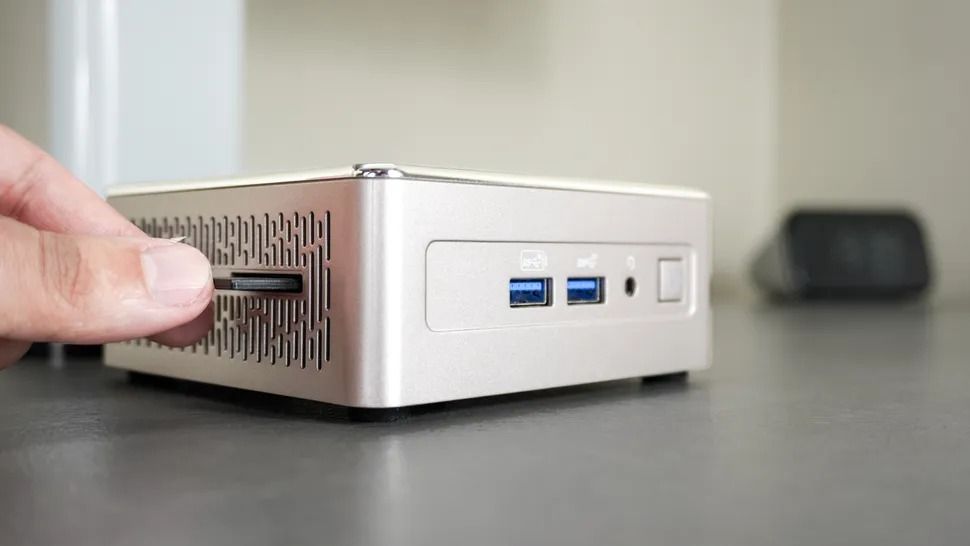
Intel's upcoming "Nova Lake-S" has been spotted in the wild for the first time in an ECS Liva P300 mini-PC. During the Embedded World 2026 event, ECS showcased the Intel Core Ultra 400 series "Nova Lake-S" mini-PC, featuring Intel's upcoming B960 chipset and support for DDR5 memory running at 8,000 MT/s. This suggests that Intel is upgrading its integrated memory controller on the "Nova Lake" platform to support these DDR5 speeds before any XMP and factory-overclocked memory are used. German tech media outlet ComputerBase managed to spot the new 3.5-liter mini-PC with the yet-unannounced platform. The support for higher-speed memory indicates that even Intel's current memory controller, which reportedly achieves DDR5 speeds of 7,200 MT/s in the upcoming "Arrow Lake Refresh," will receive an upgrade alongside the new core IP and configuration.
Interestingly, this PC is currently powered by a 120 W PSU, but before ECS delivers the Liva P300 PC to customers, it will be equipped with a 210-240 W power supply to support "Nova Lake" in its top configurations. Speaking of the top configuration, ComputerBase confirmed that the 52-core top SKU of "Nova Lake" will have a TDP of 175 W, while other configurations with a TDP of 65 W will also be available. Graphics output is powered by Xe3P GPU IP, as previously rumored, and the newly showcased ECS PC confirms these specifications. For AI capability, "Nova Lake" will deliver more than 100 TOPS using the 8-bit INT8 data type, thanks to the onboard NPU and the powerful Xe3P GPU IP.
Two Cakes Studio announced that Tactical Turn-based RPG Fight Life: Vanguard in a pixel-art dark fantasy world developed by StartImpulse, is coming on Steam April 10, 2026. In honor of this, the final playtest is launching with expanded content and invites players to participate. The playtest will be available until April 1, 2026.
This playtest will include the latest demo build, additional content, and a continuation of the story of the squad that accepted the challenge of a powerful Necromancer, offering 60-90 minutes of gameplay. This gives you enough time to master the combat system, experience the tactical depth, develop strategies around character abilities, and get genuinely invested in the story.
Acer today unveiled a new lineup of TravelMate Copilot+ PCs that empower organizations of all sizes to unleash the full potential of AI. The new TravelMate P4 14 AI, TravelMate P4 Spin 14 AI, TravelMate P2 16 AI, and TravelMate P2 14 AI business laptops are powered by up to the latest Intel Core Ultra Series 3 processors with Intel vPro, delivering real-world performance, long battery life, enterprise-grade security, and simplified manageability.
From SMBs to the public sector, the new lineup delivers a combination of performance, productivity, and security. The devices also represent the first Copilot+ PCs in the TravelMate P4 and P2 series, underscoring Acer's commitment to offering a robust commercial portfolio of AI-ready devices.
Pragmata is an upcoming fresh original sci-fi action-adventure IP out of Capcom, and if the studio's claims are to be believed, there is a lot of hype for an interesting new game franchise in a world full of remakes and copycats. According to a recent post on X by the Pragmata Japan account, the game's demo has been downloaded over 2 million times, and over 2 million players have added Pragmata to their wish lists.
According to independent data on SteamDB, Pragmata currently ranks 15th in the Steam Wishlist charts, just ahead of the Valve Steam Deck and behind Total War: Warhammer 40,000. Curiously, the Pragmata Sketchbook Demo's SteamDB page only records a peak concurrent player count of 7,932 players, although Pragmata will be a cross-platform launch, so there's likely decent interest on the PlayStation 5, Switch 2, and Xbox Series consoles. Pragmata is slated to launch on all aforementioned platforms and on PC via Steam on April 17, 2026. Pragmata also already has a Platinum ProtonDB rating, meaning it should play well with Linux and the Steam Deck.
Named after the Italian word for "21," Ventuno Q is Qualcomm's first attempt to soothe the wary Arduino community. The UK chip designer acquired the Italian microcontroller maker in October, quickly drawing mistrust from users after changing the platform's terms of service. While Arduino is now a more corporate-friendly product...
According to X user Dark Web Informer, a cybercriminal known as Kamirmassabi recently posted an ad on an underground hacking forum, offering to sell a zero-day exploit for a critical elevation of privilege vulnerability in Windows 10 and 11. The steep $220,000 asking price suggests the exploit is aimed primarily...
Apple's $599 MacBook Neo arrives with a premium aluminum build, bright display, solid A18 Pro performance, and battery life that punches well above its price. Reviewers largely agree it resets expectations for what a budget laptop can be, despite the evident trade-offs that remind you how Apple kept costs down. Don't miss our editorial on the Neo for insight into the industry implications beyond the device itself.
Draw On Screen lets you annotate your screen live to tell clearer stories in demos, calls, and lessons. You can sketch lines and boxes, type text, use a laser or spotlight, and toggle your webcam with a minimal interface that stays out of the way. Record exactly what you see without complex editing or compositing to produce content faster and keep viewers focused.
VPNs are becoming a workaround for children navigating age verification laws. So, what can you do to spot if your child is using one, and should you be worried?
Amazon's Spring Deal Days are here and I've picked out the best portable hi-fi deals live now, with some lowest-seen prices across audiophile products — enjoy!
The spiritual successor to DramaFever is a streaming service that caters to fans of Asian films and TV. Here's how to watch Viki from anywhere with a VPN.
All the ways to watch Newcastle vs Barcelona live streams from anywhere and for free, as St. James' Park hosts the Champions League Round of 16 1st leg.
On Tuesday, OpenAI introduced dynamic visual explanations, a new ChatGPT feature that allows users to see how formulas, variables, and mathematical relationships change in real time. Instead of just reading an explanation or looking at a static diagram, users can now interact directly with interactive visuals. For example, when exploring the Pythagorean theorem, you can […]
A survey of B2B decision-makers found peer recommendations are trusted nearly twice as much as AI chatbots, and white papers rank last for perceived value.
A federal judge granted Amazon a preliminary injunction barring Perplexity's Comet AI agent from accessing Amazon accounts and ordering data destroyed.
Publisher and developer ProbablyMonsters have revealed a new gameplay trailer for the upcoming third-person stealth-action brawler, Nekome: Nazi Hunter, a game that looks like what you'd get if you took some of the cinematic brawling of Sifu and mixed it into a story where you play as a a young Romani man on a war path against the Nazis for killing his family. The trailer introduces us to the game's protagonist, Vano Nastasu, who is seeking revenge for the aforementioned homicide. There's no release date or early release window for the game yet, but we do know it'll be arriving […]
The last general Nintendo Direct event took place in September 2025, and while we've had several Nintendo Direct events this year (like two Super Mario Galaxy Movie Direct events), we're still waiting for 2026 to get its first big Direct event. Unfortunately, this year's iteration of Mario Day so far has not included a surprise Direct announcement, but we did get a release date for Yoshi and the Mysterious Book on the Nintendo Switch 2, the game that closed out September's Direct. It's frankly still a bit shocking that the Direct event that revealed several ways Nintendo was celebrating the […]
Today, Pearl Abyss has revealed detailed PC, console, and macOS specifications for its highly anticipated upcoming open world action/adventure game Crimson Desert. The minimum and recommended system requirements for PC were actually first announced (and then lowered) months ago, but this time the South Korean development team has provided much more in-depth information for gamers on how the game powered by the BlackSpace engine will run on their systems. Minimum Low Recommended High Ultra Graphics Preset Minimum Low Medium High Ultra Performance Specs Upscaled 1080p (from 900p) 30 FPS 1080p 30 FPS 1080p 60 FPS 4K 30 FPS 1440p 60 […]
Star Wars Knights of the Old Republic Remake could be setting out to be an impressive game, contrary to what its long stay in development hell suggests. X user and known insider Luke "100% Star Wars" claims to have seen the remake, and believes canceling Aspyr's version of the remake and starting from scratch was the right choice. While the insider, who was among the first to talk about the game's troubled development, did not reveal any specifics about the remake, which was just confirmed to still be in development last week by Saber's CEO Tim Willits, they did suggest […]
NVIDIA's GDC 2026 announcements also include updates for the RTX Remix remastering platform. The biggest news is the new Advanced Particle VFX system, which will be released some time next month. With this new system, NVIDIA is directly responding to the RTX Remix's open-source community's top feature request: a substantially more powerful and expressive particle system. The Advanced Particle VFX system introduces three distinct capability areas: The other news is the availability of a Quake III RTX early access (version 0.6) made by modder Woodboy, who took it upon themselves to remaster several levels of the original game by id […]
SK Hynix has announced the successful development of its first LPDDR6 memory modules that operate at "over" 10.7Gbps. The new modules take advantage of the manufacturer's bleeding-edge 10nm-class (1c) process node.
Oracle and OpenAI dropped plans to expand their flagship Stargate campus in Abilene, Texas, beyond its committed 1.2-gigawatt build earlier this month.
Starting July 1st, Meta will add “location fees” to ad buys targeting users in six countries — effectively offloading the cost of European digital services taxes onto the advertisers themselves.
The numbers. Fees will match each country’s digital services tax rate:
France, Italy, Spain: 3%
Austria, Turkey: 5%
UK: 2%
How it works in practice. Per Meta’s email to advertisers — “$100 in ads delivered to Italy will cost $103, plus any applicable VAT on top of that.”
The fine print. The fees apply to where the ad is delivered, not where the advertiser is based — meaning a US brand running campaigns targeting French users will pay the French rate regardless.
Why we care. This is a direct, unavoidable cost increase hitting European campaigns on July 1 — with no opt-out. If you’re running ads targeting users in France, Italy, Spain, Austria, Turkey, or the UK, your effective CPM and CPA benchmarks are about to get more expensive, which means existing budgets will stretch less far and current ROAS targets may no longer be achievable without adjustment.
And since the fee is based on where the ad is delivered rather than where you’re based, even non-European brands aren’t off the hook.
The big picture for advertisers. This isn’t unique to Meta — Google and Amazon already charge similar pass-through fees. But it’s a meaningful shift in how European ad budgets need to be calculated, and campaign managers should revisit their cost models before July 1 to account for the added overhead across affected markets.
The backdrop. Digital services taxes have been a flashpoint between Europe and Washington. The Trump administration has threatened retaliation against European firms over the levies — adding geopolitical uncertainty to what is already a complex compliance landscape for global advertisers.
Positive coverage creates exposure, authority, trust, and often valuable backlinks.
But for many people, the path to getting it is a mystery. Others believe myths about how it works.
Some believe you have to be at the very top of your industry before the media will care about your story.
That’s simply false.
Others believe you can simply buy your way into media coverage.
There’s a small degree of truth to that.
You can find contributors willing to feature you (or your client) for a fee, but this blatantly violates every outlet’s contributor guidelines. You may land the feature, but editors will eventually find out.
What happens then?
First, the article gets deleted or any mention of you and your links gets removed. Then, the contributor gets removed from the platform and blacklisted in the media industry. Finally, you get blacklisted too.
Good luck getting featured again. It won’t happen.
The reality is that you can get featured in the media.
You just need to understand the process and execute it consistently.
Develop your story
You probably have a great story — you just may not realize it yet.
The media has to produce a constant stream of content. If you have a strong story, you’re already one-third of the way to getting featured.
Let’s start with what doesn’t make a great story.
You’re the first.
You think you’re the best (everyone thinks that, and no one cares except your mother).
You’re the biggest.
You want to change the world.
So what does make a great story?
Like the answer to most SEO questions: it depends.
A great story starts with an actual story.
You have to explain, in an engaging way, why anyone should care about what you have to say.
For example, I often tell the story of how I used PR to rebuild my success after being on my deathbed.
I explain that my agency’s specific PR approach comes from the exact process I used to rebuild my own business — and that I want to give others the same advantage.
And my story is easily verifiable.
But you don’t need a life-or-death struggle to have a compelling story.
You just need a story that shows a deeper purpose. A mission. Something people can get excited about and care about.
Craft your pitch
Even with the best story in the world, you still need an effective pitch.
Your pitch has to cut through the noise and grab attention. Journalists, producers, and others in the media are inundated with pitches — many receive hundreds every day. Your pitch has to tell your story clearly and quickly, and motivate them to respond.
Easier said than done.
Most pitches are sent by email, so most people start with the subject line. That’s the exact opposite of what you should do.
Start with the body of the email. There’s a reason for this, which we’ll get to shortly.
Find a way to connect your story to current events. If a topic is already popular in the media, other outlets are more likely to cover it.
But remember: while the story involves you, it isn’t about you.
You have to pitch from the perspective of what the audience wants. The journalist’s, editor’s, or producer’s needs come second, and yours come in a distant last place.
Sorry, that’s just the way it is.
You need to distill your story and why the audience should care into a few sentences. You can add a little more detail after that, but keep it short. If they see a wall of text, they’ll likely delete your email.
Once your pitch is solid, write your subject line. It should be short, punchy, and aligned with your pitch.
Short and punchy matters because the subject line determines whether they open your email.
If the pitch doesn’t align with the subject line, they’ll likely delete the email without reading it. Getting attention means nothing if they don’t read the message.
I once saw a publicist use a subject line that certainly grabbed attention, but it had zero positive impact and damaged his reputation.
What was it?
“Fuck You!”
Bottom line: your pitch must quickly and clearly show the value the audience will get, and your subject line must grab attention in a positive way while aligning with the pitch.
Build your media list
PR isn’t a numbers game.
Yet people treat it like one. They buy or compile lists of media contacts and blast their pitch to anyone they can find.
That’s no different from spam emails selling generic Viagra.
Success comes from sending the right pitch to the right people at the right time.
Finding the right people means identifying journalists, producers, and other media contacts who cover the types of stories you’re telling.
Several expensive tools can help you find these contacts and their information. But you can often find the same information with a search engine and social media. In fact, that’s how I built most of my media relationships.
As for the right time, that’s largely a matter of chance.
Send your pitch
There’s no magic formula.
The time of day you send your pitch doesn’t matter much unless it’s extremely time-sensitive, which most business topics aren’t. Producers often check email at certain times, but they won’t touch it while preparing for or running their show.
Now here’s something you need to avoid:
Don’t bombard them with follow-up emails!
For truly time-sensitive stories, it may be acceptable to follow up within the same week. In most cases, though, wait about a week. Frequent follow-ups will annoy journalists, producers, and other media contacts.
Stop after two or three follow-ups. If you haven’t received a response by then, they likely aren’t interested in the story.
Try not to take it personally. They probably won’t tell you it’s not a fit. Given the sheer volume of pitches they receive, responding to every one would be a full-time job.
Nurture your relationships
Most of your pitches won’t result in media coverage.
The problem is that most people stop after a rejection or no response.
That’s crazy to me.
I can’t tell you how many times I’ve heard “no” or received no reply before finally landing a feature.
It happened because I didn’t pitch once and move on. These contacts all started as strangers, but I invested time and energy in building real relationships.
As a result, when I reach out, they open and read my emails because I’m not a stranger. Those relationships make it far easier to turn a pitch into media coverage.
Most initial outreach won’t lead to coverage. But if you nurture the right relationships, you’ll eventually build a network of responsive press contacts.
Perplexity AI must stop using its Comet browser agent to make purchases on Amazon. A federal judge sided with Amazon in an early ruling over AI shopping bots.
Why we care. The case targets a core promise of AI agents: completing tasks like shopping on a user’s behalf. If courts restrict how agents access sites, AI agents could face strict limits when interacting with logged-in accounts on major websites.
What happened. U.S. District Judge Maxine Chesney granted Amazon a preliminary injunction Monday in San Francisco federal court.
The order blocks Perplexity from using its Comet browser agent to access password-protected parts of Amazon, including Prime subscriber accounts.
Chesney wrote that Amazon presented “strong evidence” that Comet accessed accounts “with the Amazon user’s permission but without authorization by Amazon.”
The ruling also requires Perplexity to destroy any Amazon data it previously collected.
Catch-up quick. Amazon sued Perplexity in November, accusing the startup of computer fraud and unauthorized access. The company said Comet made purchases from Amazon on behalf of users without properly identifying itself as a bot.
What’s next. The order is paused for one week to allow Perplexity to appeal.
What they’re saying. Amazon spokesperson Lara Hendrickson told Bloomberg (subscription required) the injunction “will prevent Perplexity’s unauthorized access to the Amazon store and is an important step in maintaining a trusted shopping experience for Amazon customers.”
Cybersecurity researchers have discovered a new malware called KadNap that's primarily targeting Asus routers to enlist them into a botnet for proxying malicious traffic.
The malware, first detected in the wild in August 2025, has expanded to over 14,000 infected devices, with more than 60% of victims located in the U.S., according to the Black Lotus Labs team at Lumen. A lesser number of
Valve's Year in Review breakdown for Steam shows off some mind-boggling numbers to do with data delivery. Can any other PC gaming platform ever hope to be as popular?
NVIDIA's time at GDC 2026 has largely been about showing off upgrades to current systems and tools, and I must admit I'm excited to see them in action. Here's what you need to know about the next steps for RTX.
NVIDIA is busy unveiling its latest advancements at GDC 2026, and there's a lot of new information regarding its GeForce Now cloud gaming service. Here's what's coming down the line this year.
NVIDIA has released GeForce driver version 595.79 WHQL, adding Game Ready support for Crimson Desert and Death Stranding 2: On the Beach. On the bug fix side, three game-specific crashes are resolved. Crimson Desert and Star Citizen were both crashing on launch, and Resident Evil Requiem had a white glowing dots issue when Subsurface Scattering was enabled. Two general fixes are also included in this release. First is the one addressing GPU voltage being incorrectly capped when overclocked (previously resolved in GeForce Hotfix Display Driver version 595.76), and another fixing intermittent crashes or driver timeouts when playing multi-key DRM content in a browser on HDCP 1.x monitors.
Known issues still present include missing terrain in some areas of Enshrouded and occasional stutter in Arknights: Endfield. The release also adds G-Sync support for a batch of new monitors from Acer, AOC, ASUS, GIGABYTE, LG, MSI, Philips, and ViewSonic.
Applied Materials, Inc. today announced it is working with Micron Technology to develop next-generation DRAM, high-bandwidth memory (HBM) and NAND solutions that increase the energy-efficient performance of AI systems, bringing together advanced R&D capabilities from Applied's EPIC Center in Silicon Valley and Micron's state-of-the-art innovation center in Boise, Idaho to strengthen the semiconductor innovation pipeline in the United States.
"Applied Materials and Micron have a long-standing partnership focused on driving higher performance and more energy-efficient advanced memory chips by pushing the boundaries of materials engineering and manufacturing innovation," said Gary Dickerson, President and CEO of Applied Materials. "We are excited to deepen our collaboration with Micron as a founding partner at the EPIC Center as next-generation memory technologies play an increasingly vital role in the future of AI systems."
Wolfspeed, Inc. (NYSE: WOLF), a global leader in silicon carbide technology, today announced that its 300 mm silicon carbide (SiC) technology platform could serve as a foundational materials enabler for advanced AI and high‑performance computing (HPC) heterogeneous packaging by the end of this decade.
"As AI workloads continue to increase package size, power density, and integration complexity, we believe new materials foundations will be increasingly important to extend advanced packaging roadmaps," said Elif Balkas, Chief Technology Officer at Wolfspeed. "Our 300 mm silicon carbide platform is designed to align SiC's material advantages with industry‑standard manufacturing infrastructure and expand the solution space for next‑generation AI and HPC packaging architectures."
As OpenClaw gains global traction, AI agents are reshaping productivity. Yet, many users face technical hurdles in deployment, from system setup to driver configuration. Beelink bridges this gap with a full-stack AI solution: ranging from exclusive "Lobster Red" models with preinstalled OpenClaw to dual-OS switching versions and plug-and-play SSD upgrade kits. This comprehensive lineup meets diverse user needs while significantly lowering the barrier to AI deployment.
1. New Hardware: Preinstalled OpenClaw Series—AI-Ready Out of the Box
Featuring a premium all-metal chassis in exclusive Lobster Red, these new models offer a distinctive look built for the AI era.
During the development of GTA VI, Rockstar was hacked and had its data—much of it related to GTA VI—stolen by the aforementioned hacker, and although the hacker was arrested and is currently serving time for the hacks of both Rockstar and numerous other companies, he claims that the GTA VI source code he obtained during his raid is still being kept by someone external to Rockstar. According to @videotechuk_ on X, the hacker who cracked Rockstar's security in 2022, Arion Kurtaj, has managed to smuggle a smartphone into the UK prison where he is being held and has been using it to communicate with the outside world via WhatsApp. In one message thread, Kurtaj claims that the Grand Theft Auto VI source code was successfully stolen and is still being held by "someone" external to Rockstar.
The hacker is apparently surprised that the source code has not yet been made public—the hacker, aka Lapsus$, stole 90 unreleased GTA VI clips, some of which were released, but he never did publish the game's source code. Rockstar and its parent company Take-Two Interactive have been taking aggressive measures to prevent leaks surrounding GTA VI, with it being speculated that the company's recent return-to-office mandate and a series of contested layoffs were both attempts to catch or prevent leaks of the hotly anticipated installment in the GTA franchise.
NVIDIA at the 2026 GDC announced the first implementation of RTX Mega Geometry. Announced alongside its GeForce RTX 50-series "Blackwell" generation, Mega Geometry is a technology that seeks to significantly increase geometric complexity of objects or surfaces with ray tracing elements. A distant analogue of Mega Textures, Mega Geometry leverages nested triangle clusters to reduce video memory footprint as well as the hardware cost of ray intersection. The RT cores in "Blackwell" GPUs have hardware-level readiness for Mega Geometry.
At GDC, NVIDIA showed us two distinct examples of Mega Geometry, the first one is "Alan Wake 2," where it is shown boosting Path Tracing performance, with tens of thousands of ray traced objects on the scene with a 5-20% frame rate improvement versus conventional ray tracing methods, and a 300 MB video memory footprint reduction from the nested triangle clusters model. Next up, is a demonstration of Mega Geometry foliage system in the upcoming "The Witcher 4" title. A pre-release demo (not indicative of actual gameplay) shows Mega Geometry render a forest with thousands of trees with millions objects on the scene, each with its own unique animation. Besides cluster triangles, the scene also implements Opacity Micromaps that NVIDIA introduced with RTX 40-series "Ada."
At GDC, NVIDIA announced a suite of tools designed to streamline local AI video generation for concept development and storyboarding. These updates specifically target rendering workflows running on NVIDIA RTX GPUs and the DGX Spark AI development desktop. ComfyUI, a popular generative AI tool known for its highly customizable but complex interface, is receiving a major accessibility update. To make the software more approachable for artists unfamiliar with visual programming concepts like node graphs, ComfyUI introduced App View. This new, simple interface allows you to generate content simply by entering a text prompt and adjusting basic parameters. The traditional, complex workspace remains fully available as Node View, and you can toggle seamlessly between the two modes depending on your need for granular control.
Generating high-quality 4K Ultra HD video locally entails balancing three constraints, generation speed, video memory limits, and overall control. Artists typically generate smaller, faster previews before upscaling them, a process that traditionally took minutes for just a 10-second clip. To accelerate this pipeline, NVIDIA released RTX Video Super Resolution as a node from directly within ComfyUI, enabling rapid upscaling to 4K. AI developers can access this upscaling technology through a free Python package available via the PyPI repository. The tool takes advantage of Tensor cores on GeForce RTX GPUs.
NVIDIA revealed several updates for its GeForce NOW cloud gaming platform during its GeForce ON event along the sidelines of GDC 2026. The announcements focus on software improvements, VR performance upgrades, and upcoming game additions. To simplify game discovery, NVIDIA is introducing in-app labels for users who connect their Xbox or Ubisoft+ accounts to the service. These labels will appear directly on game art within the GeForce NOW app, allowing users to see exactly which titles are available to play through their active subscription services. Account linking capabilities are expanding, with NVIDIA planning to add GOG account linking and library syncing in the coming months, which follows the Gaijin single sign-on integration announced earlier at CES.
For VR users, NVIDIA is increasing the streaming frame rate for supported devices. Starting Thursday, March 19, Ultimate users utilizing headsets like the Apple Vision Pro and Meta Quest will see streaming rates increase from 60 FPS to 90 FPS. This upgrade is intended to enhance the responsiveness and smoothness of VR sessions. The GeForce NOW library is also growing, with new high-profile releases scheduled to be available via the cloud at launch. Upcoming games include "Control Resonant," an action-adventure role-playing game from Remedy that combines supernatural powers with a cosmic threat in a warped Manhattan. Also joining the service at its PC launch is "Samson: A Tyndalston Story," a gritty action brawler developed by Liquid Swords. Lastly, the platform's Install-to-play feature is adding select Xbox games, such as Double Fine Productions' "Brutal Legend" and Compulsion Games' Contrast, giving users the flexibility to download and install specific owned titles. Further updates will be shared during regular GFN Thursday announcements.
NVIDIA at its GDC 2026 GeForce ON community update, announced that its DLSS 4.5 Dynamic Multi Frame Generation feature, first unveiled in January 2026, will be generally available from March 31. The feature lets GeForce RTX 50-series "Blackwell" gaming GPUs dynamically adjust the rate of DLSS Multi Frame Generation (MFG) rate between 0 (no frame-gen), and 6x, depending on a target frame-rate determined by the display's capability. The feature is meant to be enabled through the NVIDIA App, specific to supported games. NVIDIA had earlier announced 6x MFG for RTX 50-series GPUs, going up from 4x MFG that the company launched alongside the GPU family in early 2025.
Multi Frame Generation allows the GPU to draw up to five frames succeeding every conventionally rendered frame completely using AI, effectively multiplying framerates. RTX 50-series which debuted alongside DLSS 4, could originally do up to 4x MFG, but NVIDIA increased this to 6x MFG with its 2025 DLSS 4.5 update that introduced a new 2nd generation Transformer AI model that's more accurate, and can more accurately predict motion vectors allowing NVIDIA to increase MFG factor to six. Frame generation comes with latency costs, and so Dynamic Multi Frame Generation allows the driver to opportunistically lower MFG factor to improve whole-system latencies. At GDC, NVIDIA announced that DLSS 4.5 is coming to at least 20 of this year's most hotly anticipated AAA game titles.
Dynabook Americas, Inc., the gold standard for long-lasting, professional-grade laptops, today announced the new Portégé X45W, a premium 14-inch 2-in-1 convertible laptop designed to deliver productivity and flexibility across modern work environments. The Portégé X45W expands Dynabook's AMD-powered portfolio of mobile computing products, giving customers more choice with AMD Ryzen processing and integrated AMD Radeon graphics.
"Portégé X45W reflects Dynabook's commitment to delivering professional-grade devices that people can count on, while continuing to expand AMD processor options across our portfolio," said James Robbins, General Manager, Dynabook Americas, Inc. "With a versatile 2-in-1 design, strong everyday performance, and a security-forward foundation, Portégé X45W is built to help organizations standardize on a flexible device that supports productivity and collaboration across business, education, healthcare and public sector environments."
Razer, the leading global lifestyle brand for gamers, today unveils Dynamic Haptics, a new dual-source haptic system that unifies developer‑authored Razer Sensa HD Haptics effects with Audio‑to‑Haptics (A2H). Dynamic Haptics delivers a richer and more consistent haptic landscape across both handcrafted gameplay moments and the ambient world.
A New Level of Haptic Detail
For decades, immersion in games has been defined by what players see and hear. Higher resolutions, faster refresh rates, and spatial audio have pushed realism forward, but often stop short of one critical element: physical sensation.
The Department of Transportation has announced a three-year national pilot program granting limited flight authorization to companies testing passenger and cargo aircraft designs that are still awaiting full certification from the Federal Aviation Administration. The initiative will launch through eight selected projects with efforts in Texas, Florida, New York, New...
The Lamina Research Collective develops a phone companion powered by Learned Intelligence to support personal safety. It triggers emergency alerts, shares a GPS beacon, enables silent mode, and auto-contacts trusted people when needed. The companion offers persistent memory and voice interaction to act as your personal AI, available via subscription or a one-time purchase.
NordVPN has upgraded its dark web monitoring tools to fill the gap left by Google. Here’s how the new Dark Web Monitor Pro scans for your most sensitive data and keeps your identity safe.
Australia's longest-running digital rights group, Electronic Frontiers Australia, warns that "extraordinary privacy, security, and online safety risks" will arise if access to VPNs is restricted.
Amazon's UK Spring Sale is officially live, and I'm rounding up my favourite tech devices from Blink, Ring, Kindle, and Echo, with prices starting at just £24.
Watch fast-food giant mix entertainment with major menu reveals tonight. Here’s how you can stream Taco Bell Live Más Live 2026 online and from anywhere.
AgentMail provides an API platform that lets you give AI agents their own email inboxes, with support for two-way conversations, parsing, threading, labeling, searching, and replying.
Some can't stop panning Apple over a myriad of compromises that it undertook to price the MacBook Neo at a base price of $599. Others can't stop gushing over the fact that Apple just launched a fairly decent, if somewhat spartan, budget MacBook, one that is near-perfect for browsing, social media consumption, and research. In our roundup of the Apple MacBook Neo's first impressions and initial reviews, we've tried to cover all of the bases, bringing you appreciative brownie points as well as merited criticism. Here is everything that is being said about Apple's MacBook Neo CNET's Matt Elliott is […]
Today may be Mario Day for Nintendo fans, but it's Game Developers Conference (GDC) 2026 week for the rest of the video game industry. On top of B2B-focused announcements from companies like Razer, this week also brings us plenty of insights into the video game industry and some of the biggest games from the past year, like 2025's Game of the Year, Clair Obscur: Expedition 33. Developer Sandfall Interactive is one of many hosting talks during GDC 2026, and during a talk it hosted, it revealed a significant aspect regarding how the studio put the game together, and for a […]
NVIDIA has announced that CDProjectRed's upcoming title, The Witcher 4, will leverage its updated RTX Mega Geometry technology, offering higher frame rates and lower VRAM usage. CDProjectRed & NVIDIA To Integrate Next-Gen RTX Mega Geometry Technology In The Witcher 4 With its RTX 50 GPUs powered by the Blackwell architecture, NVIDIA introduced a new technology called RTX Mega Geometry. This technology clusters millions of triangles that make up tens of thousands of objects you see in every scene. These clusters are compressed and cached over many frames, where they are intelligently reused as the player traverses the world. This makes […]
NVIDIA has announced that its MFG 6X mode arrives on 31st March, and more AAA titles with DLSS 4.5 & Path Tracing are coming. NVIDIA MFG 6X "Dynamic Multi Frame Generation" Technology Will Be Available on 31st March NVIDIA's Multi-Frame Generation technology, or MFG, is getting its latest update on 31st March with 6x Mode. NVIDIA first introduced frame-generation with DLSS 3 with a 2x mode, dialed it up to 4x with DLSS 4, and now, users will be able to enjoy 6x the frame-generation in DLSS 4.5. The new NVIDIA DLSS 4.5 MFG enables up to 6x mode, offering […]
NVIDIA accelerates AI Video Gen in ComfyUI with a new App View feature, alongside FP4 & RTX Video Super Resolution support. NVIDIA Adds App View, FP4 & RTX Video Super Resolution Support To Comfy UI's AI Video Gen Today, NVIDIA is announcing a new app view in Comfy UI. It's a simplified panel-based interface designed to make advanced AI workflows accessible to more creators. Traditionally, Comfy UI relies on these complex graph node graphs. They're extremely powerful but intimidating for many users who are just getting started. App view hides that complexity. Creators can pick a model, set their prompts, […]
As part of its GDC 2026 news, NVIDIA also provided some updates for GeForce NOW users. Two upcoming games have been confirmed to be available for streaming on day one: Remedy's CONTROL Resonant and Samson: A Tyndalston Story from Liquid Swords. There's little surprise when it comes to the former game. Remedy has always worked closely with NVIDIA on its most recent games, Control and Alan Wake 2, adding NVIDIA RTX like DLSS and ray tracing/path tracing to the PC version and also making the games available on GeForce NOW. Indeed, today, NVIDIA confirmed that CONTROL Resonant will also support […]
NVIDIA's CEO, Jensen Huang, has posted a rather interesting blog post about the state of the AI industry from a much broader perspective, and he has summarized it in a "five-layer" cake. Jensen Has Basically Summed Up AI Into a Five-Layer Cake, Claiming that the Opportunity Still Hasn't Been Realized There is no doubt that Team Green is one of the biggest catalysts of the ongoing AI infrastructure buildout, given that the company not only provides essential compute resources but also several other utilities to the world that we'll discuss ahead. As we move towards GTC 2026, NVIDIA's CEO recently […]
The A18 Pro running in the MacBook Neo is tailor-made for AAA titles on the iPhone 16 Pro and iPhone 16 Pro Max, which only meant that it was a matter of time before someone tried something as ridiculous as attempting Cyberpunk 2077 on Apple’s most affordable portable Mac. It turns out that one YouTuber was daring enough to attempt this experiment and, according to the content creator, the experience wasn’t terrible at all. At the absolute lowest settings possible, the MacBook Neo can achieve around 50FPS, though the relevant metrics aren’t shown in the video Right off the bat, Dave2D […]
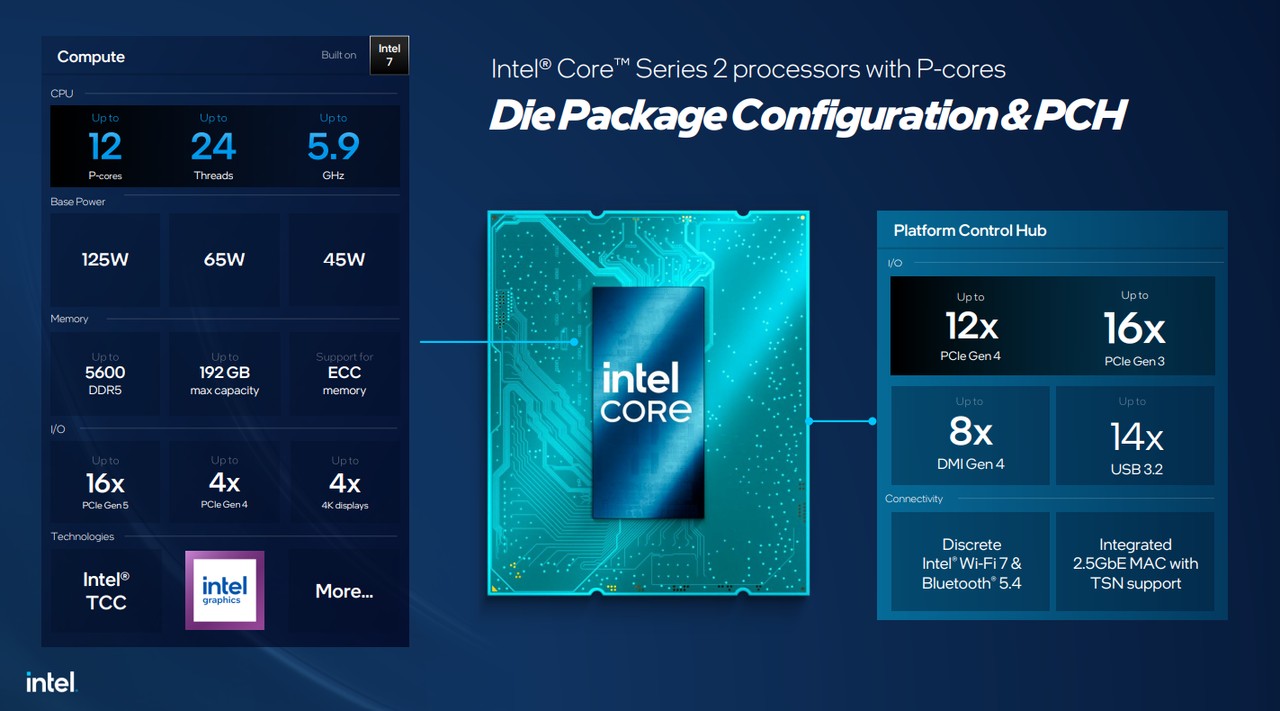
Some of the specifications of the upcoming Wildcat Lake CPUs have been leaked through the NBD shipping manifest. Wildcat Lake NBD Shipment Log Reveals Wildcat Lake Will be Rated at 15W, Up To 1.5 GHz of Boost Clock, and 6 MB of L3 Cache Intel's power-efficient Wildcat Lake family has been spotted in an NBD shipping manifest, unveiling some of its specifications. The series will be based on the same Cougar Cove Performance cores and Darkmont LP-E cores used in the current Panther Lake series. However, the Wildcat Lake is aimed at ultra-power-efficient devices, including laptops and mini PCs, succeeding […]
Embark Studios has pushed a new patch to ARC Raiders today, which adds a new outfit set and two new haircuts for players to customize their characters with, on top of several bug fixes. But it's not what's added with today's patch that makes the latest update from Embark significant. Last week, major server issues caused players to lose their loadouts in ARC Raiders, even after they had successfully extracted from the Rust Belt and made it safely back to Speranza. While being adamant that the studio does not normally compensate players for every incident where players lose their loot […]
Nvidia is reportedly planning to launch its own open-source agentic AI with NemoClaw, and it has already been in talks with several enterprise partners like Adobe and CrowdStrike to get them on board with its deployment.
Preorder the new Apple MacBook Neo at Amazon ahead of tomorrow's official release date. The Amazon Spring Deal Days sale is in full swing, saving you £29.03. Pick up the MacBook Neo for just £569.97.
Google Ads is rolling out auto end screens — a new feature that appends an interactive, auto-generated card to the end of eligible video ads to nudge viewers toward a conversion.
How it works. An interactive screen appears for a few seconds immediately after the video finishes playing.
Content is auto-populated from campaign data — app name, icon, price, and a direct install link for app campaigns
End screens appear by default on eligible ads, requiring no setup from advertisers
Why we care. Advertisers no longer need to manually build post-roll calls-to-action. This feature is on by default and changes the end of your video ads — and if you’ve already built custom YouTube end screens, they’ll be overridden without any warning. With end screens being the last thing a viewer sees before deciding to act, losing control of that moment matters.
And with broader expansion planned, now is the time to understand how it works before it reaches more of your campaigns.
The catch. Enabling auto end screens in Google Ads overrides any manually added YouTube end screens — meaning advertisers who’ve already customized their YouTube end cards will lose them.
Current limitations. The feature is only available for in-stream ads running in mobile app install campaigns, with broader expansion planned but not yet dated.
What stays the same. Auto end screens don’t affect billing or view counts — they’re purely an added engagement layer tacked on after a full video view.
Next steps. Advertisers running mobile app install campaigns should audit their video ads now — check whether auto end screens are serving as expected and verify that any manually added YouTube end screens aren’t being silently overridden. As Google expands the feature beyond app installs, it’s worth establishing a review process early so campaigns are ready when eligibility broadens.
The DSCRI-ARGDW pipeline maps 10 gates between your content and an AI recommendation across two phases: infrastructure and competitive. Because confidence multiplies across the pipeline, the weakest gate is always your biggest opportunity. Here, we focus on the first five gates.
The infrastructure phase (discovery through indexing) is a sequence of absolute tests: the system either has your content, or it doesn’t. Then, as you pass through the gates, there’s degradation.
For example, a page that can’t be rendered doesn’t get “partially indexed,” but it may get indexed with degraded information, and every competitive gate downstream operates on whatever survived the infrastructure phase.
If the raw material is degraded, the competition in the ARGDW phase starts with a handicap that no amount of content quality can overcome.
The industry compressed these five distinct DSCRI gates into two words: “crawl and index.” That compression hides five separate failure modes behind a single checkbox. This piece breaks the simplistic “crawl and index” into five clear gates that will help you optimize significantly more effectively for the bots.
If you’re a technical SEO, you might feel you can skip this. Don’t.
You’re probably doing 80% of what follows and missing the other 20%. The gates below provide measurable proof that your content reached the index with maximum confidence, giving it the best possible chance in the competitive ARGDW phase that follows.
Sequential dependency: Fix the earliest failure first
The infrastructure gates are sequential dependencies: each gate’s output is the next gate’s input, and failure at any gate blocks everything downstream.
If your content isn’t being discovered, fixing your rendering is wasted effort, and if your content is crawled but renders poorly, every annotation downstream inherits that degradation. Better to be a straight C student than three As and an F, because the F is the gate that kills your pipeline.
The audit starts with discovery and moves forward. The temptation to jump to the gate you understand best (and for many technical SEOs, that’s crawling) is the temptation that wastes the most money.
Discovery, selection, crawling: The three gates the industry already knows
Discovery and crawling are well-understood, while selection is often overlooked.
Discovery is an active signal. Three mechanisms feed it:
XML sitemaps (the census).
IndexNow (the telegraph).
Internal linking (the road network).
The entity home website is the primary discovery anchor for pull discovery, and confidence is key. The system asks not just “does this URL exist?” but “does this URL belong to an entity I already trust?” Content without entity association arrives as an orphan, and orphans wait at the back of the queue.
The push layer (IndexNow, MCP, structured feeds) changes the economics of this gate entirely, and I’ll explain what changes when you stop waiting to be found and start pushing.
Selection is the system’s opinion of you, expressed as crawl budget. As Microsoft Bing’s Fabrice Canel says, “Less is more for SEO. Never forget that. Less URLs to crawl, better for SEO.”
The industry spent two decades believing more pages equals more traffic. In the pipeline model, the opposite is true: fewer, higher-confidence pages get crawled faster, rendered more reliably, and indexed more completely. Every low-value URL you ask the system to crawl is a vote of no confidence in your own content, and the system notices.
Not every page that’s discovered in the pull model is selected. Canel states that the bot assesses the expected value of the destination page and will not crawl the URL if the value falls below a threshold.
Crawling is the most mature gate and the least differentiating. Server response time, robots.txt, redirect chains: solved problems with excellent tooling, and not where the wins are because you and most of your competition have been doing this for years.
What most practitioners miss, and what’s worth thinking about: Canel confirmed that context from the referring page carries forward during crawling.
Your internal linking architecture isn’t just a crawl pathway (getting the bot to the page) but a context pipeline (telling the bot what to expect when it arrives), and that context influences selection and then interpretation at rendering before the rendering engine even starts.
Rendering fidelity: The gate that determines what the bot sees
Rendering fidelity is where the infrastructure story diverges from what the industry has been measuring.
After crawling, the bot attempts to build the full page. It sometimes executes JavaScript (don’t count on this because the bot doesn’t always invest the resources to do so), constructs the document object model (DOM), and produces the rendered DOM.
I coined the term rendering fidelity to name this variable: how much of your published content the bot actually sees after building the page. Content behind client-side rendering that the bot never executes isn’t degraded, it’s gone, and information the bot never sees can’t be recovered at any downstream gate.
Every annotation, every grounding decision, every display outcome depends on what survived rendering. If rendering is your weakest gate, it’s your F on the report card, and remember: everything downstream inherits that grade.
The friction hierarchy: Why the bot renders some sites more carefully than others
The bot’s willingness to invest in rendering your page isn’t uniform. Canel confirmed that the more common a pattern is, the less friction the bot encounters.
I’ve reconstructed the following hierarchy from his observations. The ranking is my model. The underlying principle (pattern familiarity reduces selection, crawl, rendering, and indexing friction and processing cost) is confirmed:
Approach
Friction level
Why
WordPress + Gutenberg + clean theme
Lowest
30%+ of the web. Most common pattern. Bot has highest confidence in its own parsing.
Established platforms (Wix, Duda, Squarespace)
Low
Known patterns, predictable structure. Bot has learned these templates.
WordPress + page builders (Elementor, Divi)
Medium
Adds markup noise. Downstream processing has to work harder to find core content.
Bespoke code, perfect HTML5
Medium-High
Bot does not know your code is perfect. It has to infer structure without a pattern library to validate against.
Bespoke code, imperfect HTML5
High
Guessing with degraded signals.
The critical implication, also from Canel, is that if the site isn’t important enough (low publisher entity authority), the bot may never reach rendering because the cost of parsing unfamiliar code exceeds the estimated benefit of obtaining the content. Publisher entity confidence has a huge influence on whether you get crawled and also how carefully you get rendered (and everything else downstream).
JavaScript is the most common rendering obstacle, but it isn’t the only one: missing CSS, proprietary elements, and complex third-party dependencies can all produce the same result — a bot that sees a degraded version of what a human sees, or can’t render the page at all.
JavaScript was a favor, not a standard
Google and Bing render JavaScript. Most AI agent bots don’t. They fetch the initial HTML and work with that. The industry built on Google and Bing’s favor and assumed it was a standard.
Perplexity’s grounding fetches work primarily with server-rendered content. Smaller AI agent bots have no rendering infrastructure.
The practical consequence: a page that loads a product comparison table via JavaScript displays perfectly in a browser but renders as an empty container for a bot that doesn’t execute JS. The human sees a detailed comparison. The bot sees a div with a loading spinner.
The annotation system classifies the page based on an empty space where the content should be. I’ve seen this pattern repeatedly in our database: different systems see different versions of the same page because rendering fidelity varies by bot.
Three rendering pathways that bypass the JavaScript problem
The traditional rendering model assumes one pathway: HTML to DOM construction. You now have two alternatives.
WebMCP, built by Google and Microsoft, gives agents direct DOM access, bypassing the traditional rendering pipeline entirely. Instead of fetching your HTML and building the page, the agent accesses a structured representation of your DOM through a protocol connection.
With WebMCP, you give yourself a huge advantage because the bot doesn’t need to execute JavaScript or guess at your layout, because the structured DOM is served directly.
Markdown for Agents uses HTTP content negotiation to serve pre-simplified content. When the bot identifies itself, the server delivers a clean markdown version instead of the full HTML page.
The semantic content arrives pre-stripped of everything the bot would have to remove anyway (navigation, sidebars, JavaScript widgets), which means the rendering gate is effectively skipped with zero information loss. If you’re using Cloudflare, you have an easy implementation that they launched in early 2026.
Both alternatives change the economics of rendering fidelity in the same way that structured feeds change discovery: they replace a lossy process with a clean one.
For non-Google bots, try this: disable JavaScript in your browser and look at your page, because what you see is what most AI agent bots see. You can fix the JavaScript issue with server-side rendering (SSR) or static site generation (SSG), so the initial HTML contains the complete semantic content regardless of whether the bot executes JavaScript.
But the real opportunity lies in new pathways: one architectural investment in WebMCP or Markdown for Agents, and every bot benefits regardless of its rendering capabilities.
Rendering produces a DOM. Indexing transforms that DOM into the system’s proprietary internal format and stores it. Two things happen here that the industry has collapsed into one word.
Rendering fidelity (Gate 3) measures whether the bot saw your content. Conversion fidelity (Gate 4) measures whether the system preserved it accurately when filing it away. Both losses are irreversible, but they fail differently and require different fixes.
The strip, chunk, convert, and store sequence
What follows is a mechanical model I’ve reconstructed from confirmed statements by Canel and Gary Illyes.
Strip: The system removes repeating elements: navigation, header, footer, and sidebar. Canel confirmed directly that these aren’t stored per page.
The system’s primary goal is to find the core content. This is why semantic HTML5 matters at a mechanical level. <nav>, <header>, <footer>, <aside>, <main>, and <article> tags tell the system where to cut. Without semantic markup, it has to guess.
Illyes confirmed at BrightonSEO in 2017 that finding core content at scale was one of the hardest problems they faced.
Chunk: The core content is broken into segments: text blocks, images with associated text, video, and audio. Illyes described the result as something like a folder with subfolders, each containing a typed chunk (he probably used the term “passage” — potato, potarto, tomato, tomarto). The page becomes a hierarchical structure of typed content blocks.
Convert: Each chunk is transformed into the system’s proprietary internal format. This is where semantic relationships between elements are most vulnerable to loss.
The internal format preserves what the conversion process recognizes, and everything else is discarded.
Store: The converted chunks are stored in a hierarchical structure.
The individual steps are confirmed. The specific sequence and the wrapper hierarchy model are my reconstruction of how those confirmed pieces fit together.
In this model, the repeating elements stripped in the first step are not discarded but stored at the appropriate wrapper level: navigation at site level, category elements at category level. The system avoids redundancy by storing shared elements once at the highest applicable level.
Like my “Darwinism in search” piece from 2019, this is a well-informed, educated guess. And I’m confident it will prove to be substantively correct.
The wrapper hierarchy changes three things you already do:
URL structure and categorization: Because each page inherits context from its parent category wrapper, URL structure determines what topical context every child page receives during annotation (the first gate in the phase I’ll cover in the next article: ARGDW).
A page at /seo/technical/rendering/ inherits three layers of topical context before the annotation system reads a single word. A page at /blog/post-47/ inherits one generic layer. Flat URL structures and miscategorized pages create annotation problems that might appear to be content problems.
Breadcrumbs validate that the page’s position in the wrapper hierarchy matches the physical URL structure (i.e., match = confidence, mismatch = friction). Breadcrumbs matter even when users ignore them because they’re a structural integrity signal for the wrapper hierarchy.
Meta descriptions: Google’s Martin Splitt suggested in a webinar with me that the meta description is compared to the system’s own LLM-generated summary of the page. If they match, a slight confidence boost. If they diverge, no penalty, but a missed validation opportunity.
Where conversion fidelity fails
Conversion fidelity fails when the system can’t figure out which parts of your page are core content, when your structure doesn’t chunk cleanly, or when semantic relationships fail to survive format conversion.
The critical downstream consequence that I believe almost everyone is missing: indexing and annotation are separate processes.
A page can be indexed but poorly annotated (stored but semantically misclassified). I’ve watched it happen in our database: a page is indexed, it’s recruited by the algorithmic trinity, and yet the entity still gets misrepresented in AI responses because the annotation was wrong.
The page was there. The system read it. But it read a degraded version (rendering fidelity loss at Gate 3, conversion fidelity loss at Gate 4) and filed it in the wrong drawer (annotation failure at Gate 5).
Processing investment: Crawl budget was only the beginning
The industry built an entire sub-discipline around crawl budget. That’s important, but once you break the pipeline into its five DSCRI gates, you see that it’s just one piece of a larger set of parameters: every gate consumes computational resources, and the system allocates those resources based on expected return. This is my generalization of a principle Canel confirmed at the crawl level.
Gate
Budget type
What the system asks
1 (Selected)
Crawl budget
“Is this URL a candidate for fetching?”
2 (Crawled)
Fetch budget
“Is this URL worth fetching?”
3 (Rendered)
Render budget
“Is this page a candidate for rendering?”
4 (Indexed)
Chunking/conversion budget
“Is this content worth carefully decomposing?”
5 (Annotated)
Annotation budget
“Is this content worth classifying across all dimensions?”
Each budget is governed by multiple factors:
Publisher entity authority (overall trust).
Topical authority (trust in the specific topic the content addresses).
Technical complexity.
The system’s own ROI calculation against everything else competing for the same resource.
The system isn’t just deciding whether to process but how much to invest. The bot may crawl you but render cheaply, render fully but chunk lazily, or chunk carefully but annotate shallowly (fewer dimensions). Degradation can occur at any gate, and the crawl budget is just one example of a general principle.
Structured data: The native language of the infrastructure gates
The SEO industry’s misconceptions about structured data run the full spectrum:
The magic bullet camp that treats schema as the only thing they need.
The sticky plaster camp that applies markup to broken pages, hoping it compensates for what the content fails to communicate.
The ignore-it-entirely camp that finds it too complicated or simply doesn’t believe it moves the needle.
None of those positions is quite right.
Structured data isn’t necessary. The system can — and does — classify content without it. But it’s helpful in the same way the meta description is: it confirms what the system already suspects, reduces ambiguity, and builds confidence.
The catch, also like the meta description, is that it only works if it’s consistent with the page. Schema that contradicts the content doesn’t just fail to help: it introduces a conflict the system has to resolve, and the resolution rarely favors the markup.
When the bot crawls your page, structured data requires no rendering, interpretation, or language model to extract meaning. It arrives in the format the system already speaks: explicit entity declarations, typed relationships, and canonical identifiers.
In my model, this makes structured data the lowest-friction input the system processes, and I believe it’s processed before unstructured content because it’s machine-readable by design. Semantic HTML tells the system which parts carry the primary semantic load, and semantic structure is what survives the strip-and-chunk process best because it maps directly to the internal representation.
Schema at indexing works the same way: instead of requiring the annotation system to infer entity associations and content types from unstructured text, schema declares them explicitly, like a meta description confirming what the page summary already suggested.
The system compares, finds consistency, and confidence rises. The entire pipeline is a confidence preservation exercise: pass each gate and carry as much confidence forward as possible. Schema is one of the cleaner tools for protecting that confidence through the infrastructure phase.
That said, Canel noted that Microsoft has reduced its reliance on schema. The reasons are worth understanding:
Schema is often poorly written.
It has attracted spam at a scale reminiscent of keyword stuffing 25 years ago.
Small language models are increasingly reliable at inferring what schema used to need to declare explicitly.
Schema’s value isn’t disappearing, but it’s shifting: the signal matters most where the system’s own inference is weakest, and least where the content is already clean, well-structured, and unambiguous.
Schema and HTML5 have been part of my work since 2015, and I’ve written extensively about them over the years. But I’ve always seen structured data as one tool among many for educating the algorithms, not the answer in itself. That distinction matters enormously.
Brand is the key, and for me, always has been.
Without brand, all the structured data in the world won’t save you. The system needs to know who you are before it can make sense of what you’re telling it about yourself.
Schema describes the entity and brand establishes that the entity is worth describing. Get that order wrong, and you’re decorating a house the system hasn’t decided to visit yet.
The practical reframe: structured data implementation belongs in the infrastructure audit, and it’s the format that makes feeds and agent data possible in the first place. But it’s a confirmation layer, not a foundation, and the system will trust its own reading over yours if the two diverge.
Why improve infrastructure when you can skip them entirely?
The multiplicative nature of the pipeline means the same logic that makes your weakest gate your biggest problem also makes gate-skipping your biggest opportunity.
If every gate attenuates confidence, removing a gate entirely doesn’t just save you from one failure mode: it removes that gate’s attenuation from the equation permanently.
To make that concrete, here’s what the math looks like across seven approaches. The base case assumes 70% confidence at every gate, producing a 16.8% surviving signal across all five in DSCRI. Where an approach improves a gate, I’ve used 75% as the illustrative uplift.
These are invented numbers, not measurements. The point is the relative improvement, not the figures themselves.
Approach
What changes
Entering ARGDW with
Pull (crawl)
Nothing
16.8%
Schema markup
I → 75%
18.0%
WebMCP
R skipped
24.0%
IndexNow
D skipped, S → 75%
25.7%
IndexNow + WebMCP
D skipped, S → 75%, R skipped
36.8%
Feed (Merchant Center, Product Feed)
D, S, C, R skipped
70.0%
MCP (direct agent data)
D, S, C, R, I skipped
100%
The infrastructure phase is pre-competitive. The annotation, recruited, grounded, displayed, and won (ARGDW) gates are where your content competes against every alternative the system has indexed. Competition is multiplicative too, so what you carry into annotation is what gets multiplied.
A brand that navigated all five DSCRI gates with 70% enters the competitive phase with 16.8% confidence intact. A brand on a feed enters with 70%. A brand on MCP enters with 100%. The competitive phase hasn’t started yet, and the gap is already that wide.
There’s an asymmetry worth naming here. Getting through a DSCRI gate with a strong score is largely within your control: the thresholds are technical, the failure modes are known, and the fixes have playbooks.
Getting through an ARGDW gate with a strong score depends on how you compare to all the alternatives in the system. The playbooks are less well developed, some don’t exist at all (annotation, for example), and you can’t control the comparison directly — you can only influence it.
Which means the confidence you carry into annotation is the only part of the competitive phase you can fully engineer in advance.
Optimizing your crawl path with schema, WebMCP, IndexNow, or combinations of all three will move the needle, and the table above shows by how much. But a feed or MCP connection changes what game you’re playing.
Every content type benefits from skipping gates, but the benefit scales with the business stakes at the end of the pipeline, and nothing has more at stake than content where the end goal is a commercial transaction.
The MCP figure represents the best case for the DSCRI phase: direct data availability bypasses all five infrastructure gates. In practice, the number of gates skipped depends on what the MCP connection provides and how the specific platform processes it. The principle holds: every gate skipped is an exclusion risk avoided and potential attenuation removed before competition starts.
A product feed is only the first rung. Andrea Volpini walked me through the full capability ladder for agent readiness:
A feed gives the system inventory presence (it knows what exists).
A search tool gives the agent catalog operability (it can search and filter without visiting the website).
An action endpoint tips the model from assistive to agentic — the agent doesn’t just recommend the transaction, it closes it.
That distinction is what I built AI assistive agent optimization (AAO) around: engineering the conditions for an agent to act on your behalf, not just mention you.
Volpini’s ladder makes the mechanic concrete: each rung skips more gates, removes more exclusion risk, and eliminates more potential attenuation before competition starts. A brand with all three is playing a different game from a brand that’s still waiting for a bot to crawl its product pages.
Note: Always keep this in mind when optimizing your site and content — make your content friction-free for bots and tasty for algorithms.
DSCRI are absolute tests, ARGDW are competitive tests. The pivot is annotation.
Five gates. Five absolute tests. Pass or fail (and a degrading signal even on pass).
The solutions are well documented:
Discovery failures fixed with sitemaps and IndexNow.
Selection failures with pruning and entity signal clarity.
Crawling failures with server configuration.
Rendering failures with server-side rendering or the new pathways that bypass the problem entirely.
Indexing failures with semantic HTML, canonical management, and structured data.
The infrastructure phase is the only phase with a playbook, and opportunity cost is the cheapest failure pattern to fix.
But DSCRI is only half the pipeline, and it’s the easiest to deal with.
After indexing, the scoreboard turns on. The five competitive gates (ARGDW) are competitive tests: your content doesn’t just need to pass, it needs to beat the competition. What your content carries into the kickoff stage of those competitive gates is what survived DSCRI. And the entry gate to ARGDW is annotation.
The next piece opens annotation: the gate the industry has barely begun to address. It’s where the system attaches sticky notes to your indexed content across 24+ dimensions, and every algorithm in the ARGDW phase uses those notes to decide what your content means, who it’s for, and whether it deserves to be recruited, grounded, displayed, and recommended.
Those sticky notes are the be-all and end-all of your competitive position, and almost nobody knows they exist.
In “How the Bing Q&A / Featured Snippet Algorithm Works,” in a section I titled “Annotations are key,” I explained what Ali Alvi told me on my podcast, “Fabrice and his team do some really amazing work that we actually absolutely rely on.”
He went further: without Canel’s annotations, Bing couldn’t build the algos to generate Q&A at all. A senior Microsoft engineer, on the record, in plain language.
The evidence trail has been there for six years. That, for me, makes annotation the biggest untapped opportunity in search, assistive, and agential optimization right now.
This is the third piece in my AI authority series.
When people speak naturally, their language flows. It’s often messy, incomplete, and not especially coherent. The Google search bar, however, required something different. Users had to compress their needs into short phrases or slightly longer queries — what’s traditionally classified as short-tail or long-tail.
To make that work, users stacked queries across a journey, moving through a funnel from A to B and refining as they went. In the process, users often stripped out personalized nuance to match what they believed the search engine could understand. In response, SEO professionals built systems around that constraint, grouping queries by search volume, categorizing them by a limited set of intents, and measuring competitiveness.
That dynamic is changing. SEOs need to understand the behavioral change that’s emerging. Google is promoting Gemini, and phone manufacturers like Samsung are marketing AI-enabled features as product USPs. Alongside this product marketing, there’s also a level of education happening. Users are being encouraged to be more expressive with their queries, personalize their searches, and describe what they’re looking for in greater depth.
Moving from keyword research to prompt research
This is where we need to move away from the notion of keyword research to prompt research. Keyword research traditionally assumes that demand can be quantified, that variations can be listed and grouped, and that optimization happens at a phrase level or a cluster level. In the new hybrid AI and organic search world, demand is much more of a generative concept. Prompts can be written in countless ways while preserving the same underlying need.
This doesn’t make keyword research obsolete, but it does change its focus. Instead of extracting keywords from tools as we’ve done, we also need to start understanding and modeling journeys. Instead of grouping by volume alone, we need to group by decision stage and the type and level of uncertainty the user has.
The output of this process isn’t simply a keyword map, but a task map that accurately reflects the real pressures and constraints experienced by the audience. This is an evolution from short-tail and long-tail keyword research to an infinite tail of prompt research.
You can describe the infinite tail as an expansion of the long tail. But that underestimates what’s actually changing. It’s not just about more niche phrases or longer query strings. It’s about the level of personalization that’s been layered into each request.
As users add context, constraints, and preferences, prompts become unique combinations of a multitude of factors. The number of possible combinations effectively becomes infinite, even if the underlying tasks remain finite. AI systems respond by evaluating the given prompts and probabilistically predicting the next tokens rather than using exact-match strings.
It’s less about how you rank for a specific keyword or whether you’re visible in AI for a specific phrase. It becomes whether your content has the highest probability of satisfying the situation being described. That’s a different optimization problem altogether. You’re not competing on phrasing. You’re competing on task completion.
This part of the journey is where “fuzzy searches” happen, meaning the path isn’t a straight line. Success isn’t just about finishing a task. It’s about making sure the user actually found what they were looking for. Since every user moves differently, the process is flexible rather than a set of rigid steps.
One of the most important mechanics in AI search is query fan-out. When a complex prompt is submitted, the system doesn’t treat it as a single string. Instead, it decomposes a request into a network of subquestions, classifications, and checks that together form a broader evaluation framework.
From an SEO perspective, this means your content moves beyond evaluation against a single phrase or specific document matches. Instead, it’s assessed across a network of related questions, with a collective determination of whether it can satisfy a broader task.
In a fan-out world, you win by supporting the entire decision cluster that surrounds that term. If your content addresses only one narrow dimension of the task, it becomes fragile. If it supports multiple layers of the decision, it becomes resilient. Fan-out rewards structural coverage and contextual relevance rather than repetition of specific phrases.
Grounding queries help provide the LLM with a level of confidence through its fan-created queries. AI systems generate answers and attempt to validate them.
They’re used to check whether a proposed answer is supported elsewhere, whether claims are consistent across sources, and whether the entity behind the information is reputable. If an AI system includes your brand in a summarized response, it needs a level of confidence to defend it virtually if challenged by alternative information.
This changes the meaning of authority. In traditional SEO, ranking could be achieved through technical content, links, and other forms of manipulation. In AI search, selection also depends on how easily your content can be corroborated against a broader consensus within the cohort. This can involve factors tied to entity clarity, including structure, data consistency, consistent messaging, and external validation. These signals reduce uncertainty for the system. You’re not just trying to appear. You’re trying to be selected and defended.
Organic search isn’t disappearing. Ranking still influences discovery, technical SEO still shapes crawlability, and architecture still determines how well a site and its content are understood.
But now, AI layers sit on top, synthesizing information and influencing which brands are surfaced within conversational responses. In this hybrid environment, organic visibility feeds AI selection. They aren’t exclusive, and yet they aren’t codependent.
AI selection can reinforce brand perception, and fan-out rewards depth of current coverage. Grounding then rewards trust and consistency. This is where the infinite tail rewards genuine audience understanding and the creation of websites and content systems that support it.
This is a shift from keyword research to prompt research, and not just a cosmetic renaming of the process. Success will depend on understanding why people search, the decisions they’re making, the uncertainties they face, and the evidence they need before committing. Search increasingly revolves around satisfying situations rather than matching strings. Designing for the infinite tail means designing for people and the tasks they’re trying to complete.
Capcom has confirmed that Resident Evil Requiem Story DLC is on the way Resident Evil Requiem has become a huge success for Capcom, having already sold over 5 million copies across all platforms. In a post shared today, Requiem’s game director, Koshi Nakanishi, confirmed new add-ons, including a Photo Mode and a “new minigame”. Furthermore, […]
At Embedded World, MediaTek unveiled a range of new Genio platforms ideal for powering a wide variety of IoT products and applications: MediaTek Genio Pro, Genio 420 and Genio 360. The Genio Pro series is MediaTek's premium offering for high-performance IoT and embedded offerings, while Genio 420 and Genio 360 bring efficient system-level edge AI performance to smart home, retail, industrial, and commercial IoT devices.
With its impressive AI, multimedia, and display capabilities, along with rich OS support, Genio Pro enables OEMs to develop the next generation of autonomous mobile robotics, commercial drones, edge AI devices, machine vision systems, and transportation and logistics platforms.
IBM (NYSE: IBM) and Lam Research Corp. (NASDAQ: LRCX) today announced a collaboration aimed at developing new processes and materials to support sub-1 nm logic scaling. Building on a long record of successful partnerships, the new agreement will focus on the joint development of novel materials, fabrication processes, and High-NA EUV lithography processes to advance IBM's logic scaling roadmap.
IBM and Lam have collaborated for more than a decade to advance logic fabrication, notably enabling early generations of 7 nm, nanosheet, and EUV process technologies. Under this new five-year agreement, the companies intend to extend logic scaling to the sub-1 nm node. The work will focus on developing new materials, advanced etch and deposition capabilities for increasingly complex device architectures, and new High-NA EUV lithography processes to enable next-generation interconnect and device patterning and accelerate industry adoption.
Leading gaming accessories maker Turtle Beach Corporation (Nasdaq: TBCH), today revealed two new Mario themed peripherals for Nintendo fans -- the new Turtle Beach Rematch Wireless Controller: Mario & Luigi - for Nintendo Switch 2 and Turtle Beach Airlite Fit Wired Gaming Headset - Mario Star for Nintendo Switch 2. Mario is a well-known character from Nintendo, - and the Mario & Luigi Rematch Wireless RGB Gaming Controller and Mario Star Airlite Fit Wired Gaming Headset represent the grandest combination to date of technological gaming excellence and iconic character fun in Turtle Beach's growing catalogue of officially licensed by Nintendo gaming accessories.
The Mario & Luigi Rematch Wireless RGB Gaming Controller features TMR thumbsticks, four dynamic RGB modes that ignite Super Mario, motion control, and a C button for quick access to GameChat, and all-day gaming comfort. On the audio side, the Mario Star Airlite Fit Wired Gaming Headset has 40 mm speakers for immersive audio, over-ear jersey knit cushion earpads, and a noise-canceling flip to mute mic. Both the Mario & Luigi Rematch Wireless RGB Gaming Controller and Mario Star Airlite Fit Wired Gaming Headset are available for pre-order at www.turtlebeach.com and participating retailers worldwide The controller has an MSRP of $64.99/£54.99/€64.99 and the headset's MSRP is $27.99/£19.99/€24.99 and both arrive in stores globally on March 30, 2026.
The Liquid Freezer WS360 is an all-in-one CPU water cooler engineered for high-end workstation processors, including AMD EPYC, Ryzen Threadripper PRO, and Intel Xeon. Its enlarged copper cold plate ensures full CPU coverage and efficient heat transfer, making it ideal for demanding workloads. Reliable Cooling for Continuous Operation Built for 24/7 use, the Liquid Freezer WS360 combines pre-mounted ARCTIC P12 Pro PST CO fans with a high-density 38 mm radiator for efficient heat dissipation. Two grams of included MX-7 thermal paste ensure clean and effective application, while the robust, maintenance-free design provides stable cooling even under the most demanding workloads.
In one case, an AI checker pre-installed on a school-issued Chromebook flagged a student's essay on Harrison Bergeron by Kurt Vonnegut as "18% AI-written" simply because it contained the word "devoid."
Valve confirmed that its storefront exceeded 100 exabytes (100 million terabytes) last year and disclosed for the first time that it delivered 80 exabytes to users in 2024. The figures include game installs and updates.
The new family of chips, totaling 11 SKUs, expands Intel's embedded and edge portfolio. Each processor takes a uniform approach: an all-P-core design that discards the efficiency cores Intel has bundled with its consumer CPUs since 12th-gen Alder Lake. The move simplifies scheduling and reduces the overhead that can emerge...
Virgin River season 7 drops in full in a few days time, but you can now stream the first 5 minutes of episode 1 for free... though there's a nasty surprise in store.
All the ways to watch Galatasaray vs Liverpool live streams for free, with Arne Slot's side seeking revenge in Istanbul in the Champions League last 16 1st leg.
Sony has been reportedly testing dynamic pricing on the PlayStation Store for months, offering users in certain regions huge discounts on first and third-party games.
Budget TVs don't get much better than the TCL C6K, delivering excellent performance for a low price — and it's now even cheaper in Amazon's Spring Sale.
The annual Future Games Show Spring showcase is scheduled to air this week and will feature all-new gameplay trailers for some of this year's upcoming games.
YouTube's AI deepfake detection tool is becoming available to politicians, journalists, and officials, letting them flag unauthorized likenesses for removal.
Apparently, Epic Games hasn't been making enough money on Fortnite, and needs to raise the price of its premium in-game currency, V-Bucks, to "help pay the bills." "The cost of running Fortnite has gone up a lot and we’re raising prices to help pay the bills." That's what Epic tells players right at the top of a new blog post, which announces that the base price of the premium currency will be going up. The change goes into effect on March 19, 2026, after which every dollar you spend on V-Bucks will earn you less than it did before. After […]
The comic book series turned Emmy award-winning TV series, The Boys, is making its first foray into video games later this month. Initially announced back in December 2025, The Boys: Trigger Warning is a VR adventure from publisher Sony Pictures VR and developer ARVORE, and it'll arrive on Meta Quest 3 headsets on March 26, 2026. The news comes with a new release date trailer, which shows off more gameplay compared to what we saw in December and includes a few more characters from the show that'll be featured in the game. It doesn't, however, confirm if any more of […]
An Amazon executive called its engineers into a meeting to deal with the recent spate of incidents on its platform that had a "high blast radius" and were related to "Gen-AI assisted changes."
This year's Future Games Show Spring Showcase will take place during GDC, during which 40 games will be featured. The wide-ranging event is set to be broadcast across multiple platforms on March 12, starting at 4 pm ET (1 pm PT).
Today we announced new beta features for Gemini in Sheets to help you create, organize and edit entire sheets, from basic tasks to complex data analysis — just describe …
“Content is king” remains one of the most widely accepted ideas in SEO. Not everyone has agreed. Different schools of thought have always existed, with some practitioners prioritizing backlinks and others focusing on technical SEO.
Content is often treated as the primary driver of search visibility. I’m not arguing that.
My point is simpler: if you’ve relied on content to drive results — and earn a living — you should start doubling down on distribution.
With AI search changing the game, creating great content (and, yes, building some backlinks) is no longer enough to get it seen. The more important question may no longer be “What should I write next?” but “Where should I push this next?”
AI tools are further fragmenting search
Content distribution has become far more important in recent years, especially as audiences spread across more online spaces. In many teams, this job was usually outsourced to someone other than SEOs:
Social media managers.
Community managers.
PR specialists.
Various assistants and interns.
Sure, distribution held some value to SEO, but it was generally considered more beneficial to other functions.
Thanks to AI search, it’s finally landed squarely on our plate. Since AI models have fragmented search to an unprecedented level, distribution is now key to meaningful SEO outcomes.
There are three key drivers behind this change:
Different tools have different sourcing logic.
AI tools source differently from traditional search.
Their logic is changeable.
If this all sounds a bit abstract, let’s briefly dig into the evidence and explain what’s really going on.
Different tools have different sourcing logic
Search is fragmenting as people use a wider range of tools. Ideally, one strategy would work everywhere, but research shows that’s not the case.
AI search tools cite different sources, a 2025 Search Atlas study found. Some show significantly more overlap with the SERPs than others. This indicates that different tools follow different sourcing logic. And as long as that’s true, optimizing for one won’t necessarily boost visibility on another.
The whole thing is even trickier because users seem more open to switching tools than before. Gemini may soon surpass formerly unrivaled ChatGPT in traffic share, according to Similarweb. That could change again quickly.
Thinking there’s a single clear winner, like Google used to be, would be wrong. Focusing on the most popular tool at the moment isn’t a guaranteed strategy.
To maximize visibility, we need to consider how multiple AI tools source their information, which implies our distribution strategy needs to be broad.
AI search uses different logic from traditional search
The Search Atlas study showed that some AI search tools overlap with Google more than others — but in all cases, the overlap is pretty low. Perplexity ranked the highest at 43%, while ChatGPT barely hit 21%.
Characterizing Web Search in The Age of Generative AI (PDF) explicitly finds that AI search tools draw from a much wider pool of sources and are more likely to cite sites with fewer visits than traditional search engines.
This shows us that fragmentation is compounding. The pool of potential sources is wider, with little overlap among AI tools or between AI and traditional search.
The sourcing logic is changeable
The most problematic factor out of all, though, is that the sourcing logic of one tool can and often does change, too. This leads to different domains getting cited for the same prompts at different points in time — a phenomenon called citation drift.
Citation drift is more frequent than we might assume. Over the course of just a month, for instance, AI tools change approximately 40-60% of the domains they cite for the same prompt, according to Profound.
In other words, one domain could appear several times in a single response, then disappear completely the following month. This flip-flopping gets even worse over longer periods. For example, Profound’s study also showed that, from January to July, as many as 70% to 90% of the domains cited for the same prompt had changed.
Search is fragmented across tools and time. As cited domains change more frequently, users see more sources, making it even harder for you to push your brand to the front.
So, what can we do about it? How should we approach this increasing fragmentation of search?
While this might change as new tools and strategies emerge, the best answer we have so far is this: focus on broad, multi-channel distribution.
When you can’t reliably predict which sources will be used, the best strategy is to widen your footprint. This creates more potential entry points into AI systems’ training and retrieval layers.
This will require some serious shifts in how many SEOs approach their work. Here are a few you can implement right away.
1. Get good at collaborating
You’re unlikely to win fragmented AI search on your own. Optimizing for it now takes a much broader approach than before, pulling in digital PR, social media, community management, and other functions.
Those areas require skills many SEOs don’t have. Those who do still have only 24 hours in a day, so spreading that work across multiple disciplines isn’t realistic.
This only works with a team. You might hate that idea, especially because it means giving up full control of your projects and results. I get it, but that’s the reality right now. You’ll have to let some things go, trust others to handle them, and divide responsibilities. In other words, you’ll need to collaborate efficiently.
Even if you let experts handle certain tasks, you’ll still need at least a surface-level understanding of other disciplines becoming central to search.
SEOs will still own at least parts of distribution, whether that means handling the high-level strategy or downright executing it on specific channels.
In either case, doing this well requires skills you may not have used much before. So now’s the time to develop them.
That could mean learning more about digital PR, partnerships, thought leadership, syndication, community presence, or something else. With so many possibilities, it helps to start with the area you feel most comfortable with or most drawn to at the moment.
3. Shift your mindset from ranking to presence
You also need to change how you think about SEO, and then translate that shift into actual workflows. Google is still a major traffic driver, and rankings still matter. But for a fragmented, AI-driven search, obsessing over rank won’t cut it.
Instead of asking, “How do I get this content to rank?” You now need to ask, “How do I get this content into as many places as possible?”
Again, the goal is to create multiple entry points across AI systems, platforms, and audiences, increasing the chances of your content getting discovered, cited, and surfaced.
That’s why it’s important to start thinking more about overall presence across ecosystems rather than just positions in specific search engines.
4. Redesign your workflow
If you’ve successfully shifted your mindset from ranking to presence, it’s time to build a workflow that reflects that change.
I know firsthand how easy it is to forget about distribution, especially if it wasn’t part of your process before. To make it stick, you need to redesign your workflow to position distribution at the core.
A good place to start is by adding a launch phase, where content is distributed immediately upon publishing. After that, you could include a recurring phase every few months to ensure you regularly refresh and redistribute content.
Define reusable details upfront, like which channels you’ll consistently target and who owns each one. That way, you’ll minimize planning from scratch and make sure nothing falls through the cracks.
5. Start with these easy-to-implement best practices
Finally, if you want some easy tactics to immediately add to your to-do list, consider these:
Pilot content partnerships, starting where it’s easiest. Usually, that implies reaching out to existing business partners first.
Proactively distribute your content on third-party sites, whether that means syndicating it or repurposing it for Quora and LinkedIn.
Pay attention to where AI tools already pull from. While sourcing logic changes constantly, you may still notice recurring patterns worth leveraging.
Give a special push to your existing, older content to counteract the pitfalls of citation drift. Reintroduce it on new channels, or work to get it referenced in new places.
The shifts are large enough that you’ll need to rethink how you do SEO. As search fragments, the work itself will have to evolve.
The approaches and workflows you relied on in the past won’t translate cleanly into a landscape shaped by multiple AI tools, changing sourcing logic, and constantly shifting citations.
These processes will also become more complex because they require closer collaboration with other teams. Distribution now intersects with digital PR, social media, partnerships, and community management, making cross-team coordination more important than before.
There’s a long road ahead. The best way to keep your sanity is to start small: focus on manageable steps, take them one at a time, and build from there.
Nvidia’s GeForce On Community Update is about to start At 8 am PT, 3 PM GMT, Nvidia will start its newest “GeForce On Community Update” at GDC 2026. During this event, Nvidia plans to show gamers the latest RTX games and the newest RTX platform features in action. Remedy has confirmed that Control Resonant will […]
MSI unleases a wave of Frieren: Beyond Journey’s End PC hardware, including a custom graphics card MSI has unveiled an official lineup of new “Frieren: Beyond Journey’s End” PC parts and accessories. These limited edition products celebrate the hit anime with custom artwork and iconography. These parts symbolise the relationships between Frieren and her companions, […]
Cybersecurity researchers have disclosed nine cross-tenant vulnerabilities in Google Looker Studio that could have permitted attackers to run arbitrary SQL queries on victims' databases and exfiltrate sensitive data within organizations' Google Cloud environments.
The shortcomings have been collectively named LeakyLooker by Tenable. There is no evidence that the vulnerabilities were exploited in
Cyberpunk 2077 has arrived on Xbox Game Pass Premium and Ultimate nearly six years after its troubled launch. CD Projekt Red’s sci-fi RPG is now widely regarded as one of the best in the genre, giving new players the chance to experience Night City in a far more polished state.
A McFarlane Toys listing referencing “Fallout 3 Remastered” has surfaced online, sparking speculation that Bethesda could be preparing a remaster of the classic RPG.
Walmart has spotlighted the HP Omnibook 5 16-inch laptop as one of its top "Tech Editors' Picks" for its reliable specs with a lavish MSRP to match. In fact, its price is so affordable that it doesn't need a discount to justify a recommendation.
The latest criticism centers on a fake AI-generated video shared on Meta platforms last year that purported to show damage to buildings in the Israeli city of Haifa. It was posted by a user in the Philippines posing as a news source.
Sources have informed Bloomberg's Mark Gurman that rumored Apple products featuring functionality the company has never before attempted could use a new naming scheme to clearly position them in a higher price tier, above products such as the iPhone Pro and MacBook Pro. The plan would position"Ultra" as the polar...
According to a KPMG survey of 100 CEOs (via Business Insider) conducted from late January to mid-February, one in four company bosses believe an AI bubble does exist. However, they also think spending on AI is a key priority – almost 80% of CEOs say they will allocate at least...
MarketingSoda grades and repairs your HubSpot database so teams can trust their records. It connects via OAuth, scans contacts and companies, and assigns an A–F score based on completeness, accuracy, freshness, consistency, and uniqueness. From the dashboard, you can trigger enrichment, standardization, validation, and deduplication, review conflicts, and track freshness trends.
It also embeds data quality scores inside HubSpot contact sidebars, allowing reps to see grades, freshness, and confidence and launch fixes without leaving the CRM.
FlexiSpot’s E1 Plus standing desk has all the specs I look for in a standing desk, including that all-important stability thanks to a solid single-piece desktop.
The idea behind the new features is to make the apps more personal and capable to help users get things done faster, right within the platforms themselves.
Unlike a vibe-coded product built by a college dropout, Eridu's co-founder, Drew Perkins, has been inventing networking tech since the dawn of the internet.
Resident Evil Requiem is getting additional content soon, including an unspecified surprise coming in May that sounds a lot like the engaging Mercenaries mode features in past entries in the series, as confirmed in a new video message by director Koshi Nakanishi. But that is not all: the rumored story expansion has also been confirmed to be in the works. In today's video message, Nakanishi-san commented on the current state of the game while thanking players for their support. "We released an update the other day to fix a variety of issues, and we will continue to address any other […]
The first batch of gaming benchmarks to test Apple’s latest and greatest M5 Max is here, and what better way to kick things off than to fire up Cyberpunk 2077, which is a title that has been ported to the macOS platform. Even though the technology giant has switched to a superior Fusion Architecture for both the M5 Pro and M5 Max, the maximum GPU core count is limited to 40. While we should still witness a slight framerate boost, what’s disappointing to see is that our laptop RTX 4090 ends up being 63 percent faster. Newest Cyberpunk 2077 benchmark comparison also […]
Fallout 3 Remastered is one of gaming's worst-kept secrets. While the game has yet to be announced, a new McFarlane toy listing spotted on the series subreddit leaves little doubt that the iconic third entry in the series is indeed coming at some point. The listing spotted by the Fallout subreddit, originally shared by Toy News International, features, among DC and Marvel toys, an "ELITE EDITION 7IN – FALLOUT 3 REMASTERED – #13 T-45B NUKA COLA." As noted on the subreddit, "while there's no confirmation from McFarlane themselves, this comes from a new set of toy listings via an online […]
The ASRock X870E Taichi OCF remains one of the best motherboards for enthusiasts, looking to break world records. Overclocker "Alex2305" Scores 14,290 Marks in PCMark 10 Express Using Ryzen 9 9950X3D on ASRock X870E Taichi OCF Another overclocker has made a new world record by using ASRock's popular flagship AM5 motherboard. The user "Alex2305" just broke all previous records for the highest scores in PCMark 10 Express, a popular benchmarking tool for CPUs. Alex2305 used AMD's flagship Ryzen 9 9950X3D CPU on the ASRock X870E Taichi OCF, which we have declared as one of the best AM5 motherboards for overclocking. […]
Industry analyst outfit TrendForce estimates that midrange laptops will increase their retail prices by about 40% due to increasing RAM, SSD, and CPU costs.
Snag an MSI X870 Tomahawk Wifi, 32GB of V-Color DDR5-6400 RAM, Montech 1050W ATX3.1/5.1 power supply, and a sweet-looking Montech King 95 chassis for $774 - start your AM5 build off with this comprehensive 4-item combo from Newegg
A long-term data retention test on unpowered flash drives shows promising results, with multiple drives of the same make showing no signs of corruption after six years.
If you’ve been in marketing long enough, you’ve probably lived through a few identity crises. First, we were channel experts. Then, we became integrated marketers, growth marketers, and performance marketers. Somewhere along the way, someone added “AI” to everyone’s job description and called it a day.
Now, we’re entering the era of the full-stack marketer. From where I sit — particularly as a media leader — the role is starting to look a lot like product management.
This doesn’t mean you need to start writing Jira tickets for fun (though some of you already do). It means that tomorrow’s most effective media leaders won’t just optimize campaigns. They’ll own outcomes, connect dots across teams, and think holistically about the entire user experience, from first impression to final conversion (and beyond).
I’ve seen this shift most clearly in industries with long consideration cycles, multiple stakeholders, and rising acquisition costs — where marketing performance is inseparable from the experience itself.
Let’s break down what’s driving the rise of the full-stack marketer, what it really means to “think like a product manager,” and why this mindset is becoming non-negotiable for media leaders.
What is a full-stack marketer, anyway?
A full-stack marketer isn’t someone who does everything (burnout isn’t a job requirement). Instead, it’s someone who understands how everything works together.
Over the course of my career, I’ve learned that the most impactful media decisions rarely come from being the deepest expert in one area. They come from having working fluency across many:
Media and channels: Paid search, paid social, programmatic, CTV, SEO, email, SMS, and whatever new acronym launches next quarter.
Creative and messaging: Knowing what resonates, where, and why.
Data and analytics: Not just reading dashboards, but asking better questions of the data.
UX and CRO: Understanding friction, intent, and user behavior.
Technology and platforms: CRMs, CMSs, marketing automation, and attribution tools.
The full-stack marketer doesn’t need to be the deepest expert in every area, but they do need to know enough to connect insights, spot gaps, and make informed trade-offs. In practice, this means constantly zooming out to see the system and zooming back in when something breaks.
Why media leaders are evolving into product thinkers
Earlier in my career, media leadership was often defined by questions like:
Are we hitting CPA targets?
Which channels are driving the most conversions?
How do we allocate budget more efficiently?
Those questions still matter. I ask them all the time. But over the years, I’ve learned they’re no longer sufficient on their own. Today’s environment forces media leaders to grapple with bigger, messier questions:
Why are conversion rates declining even when traffic is strong?
Where are prospects dropping out of the funnel, and why?
How does media performance change when the application experience changes?
What happens after the lead submits?
These are product questions. Product managers obsess over the end-to-end experience: the user journey, friction points, trade-offs, and outcomes. Media leaders who adopt this mindset stop seeing campaigns as isolated efforts and start seeing them as inputs into a broader system.
In many of the industries I’ve worked in, that system is anything but simple.
Marketing performance rarely exists in isolation. In many industries (especially those with longer decision cycles), a click is just the beginning, not the win.
Whether you’re selling financial services, healthcare, or education, prospects move through nonlinear journeys influenced by multiple touchpoints, stakeholders, and moments of friction. This is where full-stack thinking becomes critical.
Example 1: When media isn’t the problem, the experience is
I’ve lost count of how many times I’ve heard this reaction when performance starts slipping: “The platform is getting more expensive.”
Sometimes that’s true. But a product-minded media leader asks deeper questions:
Has the conversion experience changed recently?
Did we add steps, fields, or requirements?
Are we driving mobile traffic to a hostile desktop experience?
Across industries, I’ve repeatedly seen strong intent at the keyword or audience level, healthy CTRs, and solid landing-page engagement followed by a steep drop-off at the point of conversion. It’s a product experience problem.
In higher ed, this often shows up when high-intent program traffic is routed to lengthy or confusing application flows, generic inquiry forms, or experiences that don’t match the promise of the ad, especially on mobile. Prospective students signal strong intent, only to hit friction that has nothing to do with media and everything to do with the experience they’re asked to navigate.
A full-stack marketer doesn’t just flag this: they bring data, partner cross-functionally, and help prioritize fixes based on impact.
Example 2: Different audiences, different ‘products’
One of the most important product principles is that not all users are the same, and they shouldn’t be treated that way.
Many organizations market to multiple audiences at once, each with different motivations, risk tolerance, and timelines. Treating them as if they’re buying the same “thing” is a fast track to average results.
A product-minded media leader understands that:
The value proposition changes by audience.
The conversion event may be different.
The decision timeline is almost certainly different.
I’ve seen this clearly in healthcare, where patients, caregivers, and referring providers evaluate the same organization through entirely different lenses. Financial services presents a similar challenge, with banking, investment, and insurance decisions varying dramatically by life stage and goals.
Full-stack marketers adapt media strategy accordingly, from channel mix to messaging to measurement. This is because they understand product-market fit, not just audience targeting.
Example 3: What happens after the conversion
One of the biggest blind spots in media strategy is what happens after someone converts. Product thinkers ask:
How quickly does someone follow up?
Is the first touch personalized or generic?
Does the message align with the promise of the ad?
I’ve seen performance improve without changing media at all, simply by improving speed-to-lead or aligning follow-up messaging with campaign intent.
Healthcare offers especially clear examples of this dynamic due to intake workflows, appointment scheduling, and care coordination, but the principle is universal: media doesn’t end at the form fill. The full-stack marketer is accountable for conversions and outcomes.
Another hallmark of product management is roadmap thinking: prioritizing initiatives based on impact, effort, and sequencing. Full-stack media leaders bring this same approach to marketing:
Short-term wins versus long-term bets.
Testing frameworks instead of one-off experiments.
Phase 3: Layer in audience-based creative and messaging.
Instead of chasing the “next shiny channel,” full-stack marketers focus on compounding gains.
Data fluency: Asking better questions
Product managers don’t just look at metrics. They interrogate them. The same should be true for media leaders. Instead of asking, “What’s the CPA?” I’ve learned to ask:
“Which segments are converting efficiently, and which aren’t?”
“How does performance differ by device, geography, or life stage?”
“What signals indicate readiness vs. research?”
In higher ed, this might mean:
Separating brand vs. non-brand intent.
Looking at assisted conversions.
Evaluating performance by program.
Data becomes a tool for decision-making.
Collaboration is the new superpower
Full-stack marketers are inherently collaborative because they have to be. In higher ed, success often requires alignment across:
Admissions.
Enrollment marketing.
IT and web teams.
Academic leadership.
External partners.
Media leaders who think like product managers don’t just execute requests. They help stakeholders understand trade-offs, prioritize initiatives, and rally around shared goals. They also translate data into stories people can act on.
So, what does this mean for tomorrow’s media leaders?
The rise of the full-stack marketer doesn’t mean specialization is dead. It means seeing the entire system matters more than optimizing any single piece of it.
From my perspective, tomorrow’s strongest media leaders will:
Understand the business behind the campaign.
Think beyond their channel.
Advocate for the user experience.
Use data to inform and influence.
Embrace ambiguity (and occasionally chaos).
In categories where trust, timing, and transformation are at the core of the “product,” this mindset is no longer optional.
At its heart, marketing here is more than campaigns. It’s guiding life-changing choices. If you’re a media leader feeling like your role is expanding faster than your job description — congratulations! You’re not losing focus. You’re evolving.
Buying AI capabilities to drive marketing is easy. Enabling marketing teams to actually use it independently, decisively, and at scale is far harder.
The main culprit? Humans.
Marketing teams have always had the same elusive goal: to move at the pace of the consumer. Responding to each customer’s needs in real time, delivering the relevant message at the right moment, and optimizing customer lifetime value to drive loyalty and ROI. The goal is not new.
What is perpetually new are the AI technologies available to analyze consumer data and generate instant, personalized messaging at scale. But while technology evolves rapidly, the ability of marketing teams to harness it independently and decisively has not kept pace. The main obstacle is organizational: most marketing teams have not structured themselves to extract full value from the technology they already have.
This is not to say that there is no progress. There is. Marketing teams that have crossed that chasm are seeing extraordinary results.
One case in point is Caesars Entertainment that reduced campaign execution time from five days to five minutes. Asadul Shah, vice president of player revenue Strategy, called it “a massive game changer.”
Before that transformation, Caesars marketers manually built targeting lists across disconnected systems, coordinated across multiple tools and waited on engineers, analysts and creative teams before anything could go out. The result was an operation too slow to target players with the precision and timing the market demanded.
Caesars worked with Optimove to consolidate data, orchestration and execution in one platform. Shah noted the transformation made marketing “not just more efficient; it is more responsive to what our players actually need in the moment.”
What made it work was not technology alone. Caesars implemented Positionless Marketing, a framework that frees marketing teams from fixed roles, giving every marketer the power to execute any task instantly and independently. Optimove provided the platform. Caesars built the team structure to make it real. Technology and human ingenuity working together making Positionless Marketing possible.
Any organization achieving this kind of transformation is doing what McKinsey calls “organizing to value,” a fundamental rethink of structure, decision-making and accountability that turns a marketing team into an operation built to drive value continuously. For marketing, that means becoming a Positionless team that optimizes customer lifetime value, drives loyalty and delivers measurable ROI.Below, we use McKinsey’s Organize to Value framework to outline the pitfalls that block Positionless Marketing and the blueprint to build teams that can execute any marketing task, instantly and independently.
The six pitfalls inhibiting the transition to Positionless Marketing
McKinsey has identified six core problems preventing marketing teams from successfully evolving into the Positionless model. Of these, only one is about technology. All the others are about how leaders and teams are getting in their own way.
Unclear objectives push teams toward activity metrics instead of outcomes. When marketing goals are vague, execution defaults to roles and handoffs rather than impact.
Misaligned governance creates approval layers that add days to decisions that should be faster. In marketing, excessive controls directly conflict with the speed required to deliver customer value.
Uncommitted leaders manage through silos rather than enabling autonomy, preventing marketing teams from evolving past role-based dependency.
Stagnant marketing culture resists experimentation even when the right tools are in place, slowing execution regardless of technology investment.
Muddled marketing execution, with unclear process ownership, leaves no single person accountable for results, and performance erodes accordingly.
Disconnected technology reinforces data compartmentalization and separation of tasks among sub-teams, making strategic alignment and agile responses virtually impossible.
These are the realities of assembly-line marketing operations — not Positionless ones. Insights live with analysts. Creativity lives with designers. Activation lives with engineers. Value disappears in the spaces between them.The assembly line was built for control. It was never built to deliver value.
How McKinsey’s Blueprint helps build positionless marketing teams (and why the effort pays off)
McKinsey’s “Organize to Value” blueprint proposes a fundamental shift: design organizations around value creation, clear outcomes, impact over job titles and minimal friction execution. It provides the foundation to become Positionless and build the conditions for marketing teams to keep customers for life.
To make Positionless Marketing a reality, marketing leaders should focus on pragmatic application and the aspects that most influence marketing execution.
Start with purpose and behavior. Make explicit why actions are taken, alongside what is delivered. A shared sense of purpose allows teams to make fast decisions without waiting for approval on each one.
Restructure work around outcomes and accountability. Map current processes and identify where approvals slow execution without adding value. Build cross-functional flexibility over time rather than reorganizing overnight.
Leadership and processes. Establish a clear decision-to-execution flow and set explicit expectations for how fast each part of the marketing process should move. Processes should enable flow, not control.
Governance, technology and talent. Effective governance ensures consistency without slowing execution. Technology and AI should unlock new value, not just automate existing processes. And talent should be deployed based on what the work requires, not what a title suggests.
Empower marketers to act beyond their role. Once purpose, accountability, process and technology are aligned, marketers should be free to step across traditional job functions and execute independently as Positionless Marketers. The measure of success is not role compliance; it is value delivery.
These changes require sustained commitment. But the alternative (an assembly-line structure that was never built to deliver customer value) is far costlier than the transformation itself.
The results speak for themselves. In addition to Caesars:
FDJ United implemented Positionless Marketing to eliminate overlapping platforms, remove reliance on other teams wherever possible and enable continuous improvement through real-time measurement. Campaign time was slashed from six weeks to hours, with end-to-end campaigns now executed by one marketer from ideation to analysis.
A major retailer achieved a 16.1x increase in purchase rates while saving 300 working hours per year with the same team size. The shift to Positionless Marketing allowed the team to scale personalization and impact without adding headcount… demonstrating that the framework’s value is not just speed of execution, but the ability to do fundamentally more with what you already have.
The window to act is narrowing
The technology and AI tools are here and ever evolving. Today, AI generates infinite creative variants. Data platforms surface real-time behavioral signals. Decisioning engines coordinate across channels instantly.
But technology layered on top of an assembly-line structure creates the illusion of progress. The same handoffs happen. The same approvals add the same delays. Speed arrives at the edge; the bottleneck stays in the middle.
External pressures are accelerating. Customers expect personalization and the best experience across all channels. Competition is rising and growing more complex.
Marketing leaders who wait for transformation will find their competitors have already made it. The ones moving first are pulling ahead.
McKinsey confirms what the best marketing teams already know: the right structure and technology unleash human potential — and vice versa. Smart people trapped in the wrong system will still underperform. The best AI tools in the world won’t deliver results when constrained by the wrong organization.
McKinsey’s blueprint is pointing out the way. Positionless Marketing is the destination.
Artificial Intelligence (AI) is no longer just a tool we talk to; it is a tool that does things for us. These are called AI Agents. They can send emails, move data, and even manage software on their own.
But there is a problem. While these agents make work faster, they also open a new "back door" for hackers.
The Problem: "The Invisible Employee"
Think of an AI Agent like a new employee who has
You can't control when the next critical vulnerability drops. You can control how much of your environment is exposed when it does. The problem is that most teams have more internet-facing exposure than they realise. Intruder's Head of Security digs into why this happens and how teams can manage it deliberately.
Time-to-exploit is shrinking
The larger and less controlled your attack surface is,
The Russian state-sponsored hacking group tracked as APT28 has been observed using a pair of implants dubbed BEARDSHELL and COVENANT to facilitate long‑term surveillance of Ukrainian military personnel.
The two malware families have been put to use since April 2024, ESET said in a new report shared with The Hacker News.
APT28, also tracked as Blue Athena, BlueDelta, Fancy Bear, Fighting Ursa,
Remedy plans to showcase Control Resonant at GeForce On Remedy has confirmed that it plans to showcase Control Resonant at Nvidia’s GDC 2026 “GeForce On Community Update”. Control Resonant is Remedy’s sequel to Control, which revisits the series with Dylan Faden as the game’s protagonist. Dylan Faden is the brother of Control’s protagonist, Jessie Faden. […]
Microsoft is expanding Copilot with Wave 3, adding new AI agent control, chat capabilities, and expanded model support. The update also introduces Agent 365 and the Microsoft 365 E7 Frontier Suite for enterprise users.
SK hynix has successfully developed new LPDDR6 memory modules with a 16 Gb capacity on the sixth-generation 10 nm node, known as 1c. The South Korean giant has confirmed that mass production of this memory is scheduled for the first half of the year, with the product reaching customers in the second half. Additionally, SK hynix claims that the speed of these LPDDR6 modules exceeds 10.7 Gbps, suggesting that the company is preparing some overclocked versions as well, surpassing the initial speed specifications of this LPDDR6 generation from JEDEC. If the previous International Solid-State Circuits Conference (ISSCC) 2026 show in San Francisco was an indication, SK hynix is preparing modules that will run at speeds of up to 14.4 Gbps, delivering a significant throughput boost over the previous-generation LPDDR5X memory. The company claims a 33% improvement over LPDDR5X, which topped out at 10.7 Gbps, aligning with the 14.4 Gbps figure for LPDDR6.
SK hynix is also expecting significant power efficiency optimizations exceeding 20% thanks to the new technologies enabling LPDDR6 to run. This generation of low-power DDR memory uses a sub-channel structure that allows the memory channels to operate selectively and only process necessary data paths, meaning not all channels need to be engaged when unnecessary. Additionally, LPDDR6 incorporates Dynamic Voltage and Frequency Scaling (DVFS), which optimizes power consumption and performance by dynamically adjusting the voltage/frequency curve depending on the scenario. SK hynix notes that during applications like gaming, DVFS will scale the frequency to achieve maximum bandwidth, while standard applications will see lower frequencies to balance power consumption.
ASUS today announced ExpertCenter P700 Mini Tower (PM700MG) with AMD Ryzen AI 400-series processors, a refreshed 15-liter business desktop designed to deliver exceptional performance, scalability, and reliability for professional creators, engineers, and small businesses. With cutting-edge hardware, business-grade security, and comprehensive manageability, ExpertCenter P700 Mini Tower is engineered to be the trusted backbone of business-critical workloads.
Blending next-generation AI performance with whisper-quiet thermal design, P700 Mini Tower is built to tackle modern professional tasks with ease—from generative AI and content creation to advanced data analysis. As Copilot+ PCs, these new desktops bring intelligence and creativity to the forefront of everyday business, while the exclusive ASUS MyExpert all-in-one AI platform boosts productivity in multiple innovative and flexible ways. They also benefit from ASUS ExpertGuardian, providing all-around protection for sensitive data, plus military-grade durability to ensure long-term reliability.
ASRock, the global leading manufacturer of motherboards, graphics cards, mini PCs, gaming monitors, power supply units and AIOs, proudly announces a new overclocking World Record achieved with its flagship X870E Taichi OCF motherboard.
Professional overclocker Alex2305 successfully pushed system performance to a new level using the ASRock X870E Taichi OCF paired with the powerful AMD Ryzen 9 9950X3D processor, achieving an incredible PCMark 10 Express score of 14290 marks, securing the World Record 1st Place on HWBOT.org.
ASRock, a global leader in motherboards, graphics cards, gaming monitors, small form factor PCs, power supply units, and AIO liquid coolers, today highlights the gaming performance potential of the DeskMeet Series platform when paired with the Intel Arc A380 Challenger ITX 6GB OC graphics card.
As GPU and memory prices continue to fluctuate, gamers are looking for smarter ways to build high-performance systems without exceptional value. ASRock recommends the DeskMeet Series platform paired with the Intel Arc A380 Challenger ITX 6GB OC graphics card, delivering a balanced configuration that achieves strong performance and outstanding value for mainstream gaming.
MSI is proud to announce a new collaboration with Frieren: Beyond Journey's End, unveiling an exclusive line of limited-edition products inspired by the anime's themes of companionship, memory, and the enduring journey. The collection includes the GeForce RTX 5070 Ti 16G FRIEREN EDITION OC, FORGE TKL WIRELESS FRIEREN EDITION, VERSA WIRELESS FRIEREN EDITION, and AGILITY FRIEREN EDITION.
Through refined design and powerful performance, MSI brings the emotional depth of Frieren: Beyond Journey's End to Life—crafting hardware that resonates with modern adventurers. From the moment the system powers on and the lights come alive, the experience evokes a quiet sense of magic, inviting users to begin a new chapter of their own journey.
MSI, a global leader in gaming and high-performance computing, has won four prestigious 2026 iF DESIGN AWARDs through AI integration and material innovation. These achievements highlight MSI's ability to redefine tech aesthetics and elevate the digital user experience. Outperforming over 10,000 entries from 68 countries, MSI's success—determined by a jury of 129 international experts—reinforces its unwavering leadership in design excellence across the business, gaming, and hardware sectors.
"Winning the iF DESIGN AWARD 2026 validates MSI's dedication to balancing extreme performance with intuitive user connection," said Sam Chern, MSI Vice President of Marketing. "Design is about solving problems and creating value. Whether through AI-driven user optimization or exquisite craftsmanship that grants hardware its unique identity, our goal is to integrate technology into life in an elegant and functional manner. MSI will continue to push traditional boundaries to create innovative solutions that offer both sustainable value and aesthetic excellence."
Alphacool International GmbH from Braunschweig is a pioneer in PC water cooling technology. With one of the most comprehensive product portfolios in the industry and more than 20 years of experience, Alphacool is expanding its lineup with the new ES RTX 6000 Pro Workstation / RTX 5090 Founders Edition and ES RTX 6000 Pro Server Edition - 1-Slot Design GPU coolers.
The Alphacool ES GPU water cooler for the RTX Pro 6000 Blackwell Workstation Edition is designed for performance-optimized server and workstation systems. Its compact 1.5-slot design and rear-mounted ports allow easy integration even in systems with limited space. The top cover is made of lightweight and durable carbon, reducing weight while providing a clean and premium appearance. The cooling block features an optimized cooling channel structure and is made entirely of chrome-plated copper. This particularly robust surface reliably protects against corrosion, scratches, and mechanical stress during continuous 24/7 operation.
ASUS today announced NUC 16 Pro Mini PC, a compact Copilot+ PC offering versatile AI-accelerated performance to handle a wide range of needs. Powered by up to the latest Intel Core Ultra 9 Series 3 processor and boasting onboard LPDDR5x memory, the NUC 16 Pro delivers up to 1.5X faster 3D graphics processingi, 20% faster performance, and 50% less power consumption over previous-generation NUC models. Built-in Intel WiFi 7 and Bluetooth 6.0 wireless connectivity, along with dual 2.5G LAN ports, make the NUC 16 Pro ideal for hyper-connected workspaces. In addition, select models include fTPM for enterprise-grade security and management.
Next-generation Intel Core Ultra Series 3 processors with built-in Intel Arc GPU
The NUC 16 Pro Mini PC easily tackles AI workloads. Featuring up to an Intel Core Ultra X9 processor with built-in Intel Arc B390 GPU and a 50 TOPS NPU delivering up to 180 Platform TOPS for real-time Edge AI inference and machine learning tasks. This compact Copilot+ PC is an Edge AI-ready system that enables secure, low-latency on-device intelligence to support AI-driven applications for videoconferencing, analytics, language translation, and enhanced team collaboration.
Worldwide shipments of desktops, notebooks and workstations in 2026 are expected to decline by 12% to 245 million units, according to the latest outlook from Omdia. This forecast is grounded in sharp increases in memory and storage prices - particularly the expected minimum 60% rise in 1Q26. Further upward price pressure is anticipated throughout the remaining quarters of the year, though subsequent increases are expected to be more moderate. Since 1Q25, the costs of mainstream memory and storage configurations have risen by between US$90 and US$165, placing substantial financial pressure on PC vendors and forcing them to reduce promotions, raise product prices, and adjust configurations. The impact across PC product categories is expected to be broadly consistent. Desktops are set to decline by 10% to 53.2 million units, while laptops will decline by 12% to 192.2 million units.
Considering how quickly the situation is evolving, Omdia has conducted a multi-scenario analysis of the impact. Based on the latest available information and market signals, the forecast carries a higher downside risk, namely a widening of shortages for both memory and storage and increasingly steep price hikes. This could further suppress consumer demand and tighten PC vendors' supply, pushing PC shipments toward a 15% decline or potentially worse. In addition, the recent outbreak of conflict in the Middle East has introduced substantial uncertainty for international transportation and regional market growth, although it remains to be seen whether this situation will persist.
Here's our guide on how to watch all four days of the Cheltenham Festival, including the Champion Hurdle and Gold Cup, live on ITVX from anywhere in the world.
The RG14-P's 14.1-inch touchscreen sits inside a reinforced metal chassis, bolstered by thick rubber edges that absorb shock and resist dust and water intrusion. Even the input/output ports, which include USB, Ethernet, HDMI, and serial connectivity, are hidden beneath protective flaps to shield them from debris in hostile settings such...
If Windows 11 feels cluttered with AI features, ads, and background services, these popular free tools help strip out the bloat, disable telemetry, and give you more control over the OS.
Hitoo is a live voice-translation video calling platform that lets you speak any language in real time. It preserves your voice identity with sub-300ms latency, supports over 50 languages, and delivers HD video with end-to-end encryption. Use multilingual chat with automatic translation, host group calls for up to 50 participants, and connect without plugins. Businesses use it to remove language barriers and keep conversations natural and secure.
The PC components keep getting expensive, directly affecting the laptop costs, and could introduce a nearly 40% price hike. TrendForce Forecasts 40% Price Hike for Mainstream Notebooks as Memory and CPU Availability and Pricing Worsen While desktop memory prices seem to have somewhat stabilized in some parts of the world, we have seen a rapid surge in laptop memory costs. Coupled with the increasing prices of SSDs, we have been witnessing a significant rise in laptop prices, and it looks like it's about to get worse. According to a new report, the mainstream notebook prices can rise by nearly 40% […]
Not even a couple of weeks after the New York state's Attorney General announced a lawsuit against Valve for their gambling-like loot boxes in games such as Counter-Strike 2, the Steam owner is about to be hit by another lawsuit, this time on the other side of the "pond" (where it already faces a £656 million class-action lawsuit directed to the 30% fee it collects from each game and software distributed on the platform). The Performing Rights Society (PRS), a UK-based music licensing and royalty collection organization that works on behalf of songwriters, composers, and music publishers whenever their music […]
By all accounts, Nioh 3 is a great success for Team Ninja and Koei Tecmo. It was lavished with praise by critics (such as our own Francesco De Meo, who rated it 9.8/10 and called it the best game the Japanese studio has ever made) and fans alike, as confirmed by the fact that it's the fastest-selling game in the trilogy so far. That said, the development team is aware there's further room for improvement. Fumihiko Yasuda, producer for Nioh 3 and studio head of Team Ninja, confirmed as much in a candid interview with Gamesradar: Nioh 3 is a […]
Asus’ special one-off ROG Astral RTX 5090 Real Gold Edition has been a great investment, and is currently worth an estimated $830,000 based on its scrap gold value alone.
New research shows how Google AI helps radiologists detect breast cancer earlier and more accurately, while giving radiologists more time for patient care.
Nvidia RTX 5050 9GB spotted in shipping manifest – Specifications Confirmed The renowned hardware leaker kopite7kimi has unveiled the specifications of Nvidia’s RTX 5050 9GB, an upgraded version of the company’s RTX 5050 8GB. This GPU uses 3GB GDDR7 chips instead of 2GB GDDR6 chips, which offers more memory bandwidth and capacity per chip. This […]
The OfficePal KB70W takes your typing experience to a new level: With its gasket-mount design, polycarbonate positioning plate, PU damping and durable PBT keycaps, the keyboard offers smooth, quiet typing with keys that are pleasantly cushioned, yet highly responsive - just what you need for everyday use in the office. Thanks to the dual-mode operation, hot-swap switches and support for the VIA open-source software, it also adapts to the way you work—and not the other way around.
The gasket-mount design of the OfficePal KB70W significantly reduces noise and provides a typing feeling that is particularly smooth and comfortable. The OfficePal KB70W supports wired or wireless operation for maximum flexibility. Its long battery life ensures uninterrupted work for many hours. The abrasion-resistant PBT keycaps of the OfficePal KB70W are manufactured using the double-shot process and are therefore especially durable. In addition, the south-facing ARGB illumination ensures a uniform illumination of the keys.
Cooler Master, a global leader in PC components and tech lifestyle solutions, today announced that four of its products have received the iF DESIGN AWARD 2026, one of the world's most respected design honors presented annually by iF Design in Hamburg, Germany. The award recognizes outstanding achievement in product design, innovation, and user experience. For Cooler Master, the recognition highlights a design philosophy that combines engineering performance with builder-focused creativity.
The award-winning products include the COSMOS Alpha, MasterFrame 360 Panorama, Custom GPU Fan Cooling Kit, and MasterFan A120, each representing a different dimension of Cooler Master's design approach, from modular chassis architecture to advanced thermal engineering.
The global notebook market is expected to face dual pressures from weak demand and rising component costs in 2026, according to TrendForce's latest research on the notebook industry. In addition to rapidly rising memory prices, CPU pricing has also begun to move higher. TrendForce estimates that to preserve existing margin structures for both notebook brands and distribution channels, the retail price of a mainstream notebook with an original MSRP of US$900 could rise by nearly 40%.
TrendForce notes that since the start of 2026, supply for notebook DRAM and NAND Flash has tightened significantly. Prices have surged, and shortages of certain components have become more pronounced, increasing uncertainty for notebook brands as they plan their procurement strategies.
NVIDIA is reportedly preparing to update its GeForce RTX 5050 GPU with a new variant featuring 9 GB of GDDR7 memory. A well-known leaker on X, @kopite7kimi, confirmed that the upcoming card will maintain the same 130 W TDP and thermal envelope as the current GeForce RTX 5050, which has 8 GB of GDDR6 memory. The current RTX 5050 uses 8 GB of 20 Gbps GDDR6 memory on a 128-bit bus, providing 320 GB/s of bandwidth. The new model is expected to use three modules of GDDR7 memory, each with 3 GB of capacity, resulting in a total of 9 GB across a 96-bit memory bus. While the narrower bus decreases the interface width, the switch to new 28 Gbps GDDR7 memory would increase total memory bandwidth to 336 GB/s, a roughly 5% improvement, along with a 12.5% boost in VRAM capacity. The new leak also claims that NVIDIA is using GB206 as a GPU base, while the older RTX 5050 8 GB with GDDR6 used GB207 die. However, the core count remains at 2,560 CUDA cores, suggesting that lower-binned GB206 dies found in RTX 5060 and other mid-range SKUs are repurposed for the new RTX 5050.
NVIDIA's switch to GDDR7 memory likely helps the company manage supply chain procurement better, as memory modules are in short supply. Instead of using four GDDR6 modules with 2 GB capacity each, NVIDIA is switching to three modules of GDDR7 with 3 GB capacity each, reducing the number of memory modules needed for this GPU. Interestingly, memory makers like Samsung, Micron, and SK hynix could now produce more of the 3 GB GDDR7 modules, with GDDR6 being in much shorter supply, forcing manufacturers to focus on the newer memory technology while GPU makers have to adapt. This has resulted in a situation where procuring three modules of 3 GB GDDR7 memory is now easier than finding a sufficient supply of GDDR6 modules, which NVIDIA needs to secure for each RTX 5050 GPU. As we approach Computex 2026, this GPU is expected to arrive sometime during that period.
Pokémon Pokopia stock looks to be low with various retailers around the world, and its surprising critic response may well have something to do with it.
The Amazon Spring Deal Days sale has begun, so I'm using my bargain-hunting expertise to bring you regular updates on the best tech offers available this week.
Weighed down with all of the messy lore of the first game, GreedFall: The Dying World fails to find something to say while also failing to transition to a more mechanically engaging RPG.
The wearable maker is launching a new panel focused on women's health through its Whoop Labs blood testing service. It's also adding a new feature to its app that surfaces information about hormonal changes during menstrual cycles.
DeeeVee helps parents turn bedtime into a meaningful daily ritual. The app generates short bedtime stories narrated in a parent’s or grandparent’s voice, making stories feel personal while helping children learn values like courage, kindness, honesty, and empathy.
Each story includes reflection questions that spark parent-child conversations and supports 77 languages so multilingual families can preserve their native language. DeeeVee helps parents make bedtime calmer, more engaging, and meaningful in just a few minutes each night.
Independent Polish game developer Bloober Team has recently updated its investors on the studio's upcoming lineup, including the freshly announced Layers of Fear 3. The game was teased in mid-February during the franchise's tenth anniversary livestream. Now, though, we have learned that the game won't be developed by one of the internal Bloober Teams; the studio will instead work alongside a partner (although it will still provide significant input, being the franchise holder and creator). The studio was not mentioned explicitly, but odds are they might be fellow Polish studio Anshar, which already worked on Layers of Fear, the "collection" […]
This morning, KONAMI Digital Entertainment announced that Metal Gear Solid Delta: Snake Eater has surpassed two million units sold as of February 17, 2026, as shown in the celebratory screenshot. The game became a million seller on day one when it launched on Thursday, August 28, merely on the heels of pre-orders. The game took 173 days to get to the second million, though, which isn't great. Still, the fact that KONAMI bothered to send out a press release about it means they must be reasonably happy with the figure. It all depends on the budget of the game; we […]
Salesforce has warned of an increase in threat actor activity that's aimed at exploiting misconfigurations in publicly accessible Experience Cloud sites by making use of a customized version of an open-source tool called AuraInspector.
The activity, per the company, involves the exploitation of customers' overly permissive Experience Cloud guest user configurations to obtain access to sensitive
The U.S. Cybersecurity and Infrastructure Security Agency (CISA) on Monday added three security flaws to its Known Exploited Vulnerabilities (KEV) catalog, based on evidence of active exploitation.
The vulnerability list is as follows -
CVE-2021-22054 (CVSS score: 7.5) - A server-side request forgery (SSRF) vulnerability in Omnissa Workspace One UEM (formerly VMware Workspace One UEM) that
FUSE is the operating system for growth decisions. With $790B in digital ad spend yearly, allocation decisions remain fragmented and rely on manual interpretation. FUSE verifies live performance data and decides how ad budgets should move before spending.
Instantly connect all your live data sources like GA4, Google Ads, Meta Ads, TikTok, and LinkedIn, and watch FUSE run cross-channel calculations to optimize your marketing budgets without errors.
NVIDIA's GeForce RTX 5050 9 GB graphics card specs have been revealed, revealing similar core specs & updated memory config. NVIDIA Goes With Same Core Specs But Updated Memory Specs On Its Upcoming GeForce RTX 5050 9 GB Graphics Card So last week, we reported that NVIDIA was preparing a new variant of the GeForce RTX 5050 graphics card with 9 GB of memory. The rumored variant was later reported to launch around Computex 2026, and it would be aimed at a similar entry-level price point. Now, Kopite7kimi has revealed the exact GPU and Memory configuration used by the NVIDIA […]
SK hynix has announced the successful development of its LPDDR6 memory utilizing the 1c process node, offering up to 10.7 Gbps speeds. SK hynix LPDDR6 Memory Delivers 33% Faster Speeds While Saving More Than 20% Power Press Release: SK hynix announced that it has successfully developed a 16Gb LPDDR6 DRAM based on the sixth-generation 10nm-class (1c) process technology. After unveiling the product at CES last January, the company recently completed the world’s first validation of 1c LPDDR6 development. SK hynix plans to complete preparations for mass production within the first half of the year and begin supplying the product in the […]
A2Apex is a testing and certification platform for the A2A protocol. It validates your agent’s card, live endpoints, state transitions, streaming, and security, and reports a clear compliance score. Run live tests, debug via chat, and ensure JSON-RPC and SSE behavior match the spec. Earn certification badges that link to a public registry listing, and access results via API. Plans range from free to enterprise with unlimited testing, analytics, retesting, and CI/CD integration to help your agents earn trust.
AMI Labs, the new venture cofounded by Turing Prize winner Yann LeCun after he left Meta, has raised $1.03 billion at a $3.5 billion pre-money valuation.
ASUS recently announced the NUC 16 mini PC at CES 2026, with the NUCs confirmed to feature Intel's Panther Lake Core Ultra Series 3 CPUs, LPDDR5X-9600 RAM, and Intel Arc B390 integrated graphics. When the NUC Pro 16 was revealed, pricing and availability were somewhat nebulous, but that information has been partially revealed ahead of launch thanks to @realVictor_M on X.
According to the leaker, who cites what appears to be leaked Chinese press materials, the NUC 16 Pro with the Intel Core Ultra X7, 32 GB of RAM, and 1 TB of NVMe storage will cost RMB 10,999, which converts to roughly $1,600 ($1,591.50 exactly, at the time of writing). Part of this high pricing is likely to be a direct result of the current memory crisis caused by AI center demand, but it should also be noted that international pricing is rarely ever as simple as a currency conversion, so expect prices to be somewhat higher than that $1,600 when the mini PC launches internationally. It's also notable that ASUS originally cited the Intel Core Ultra X9 as the high-end CPU spec for the mini PC, and the pricing cited by the leak is for the X7 version. Currently, the Chinese launch looks to be scheduled for March 11, so an international launch should follow shortly thereafter.
Valve has been working to improve SteamOS since the launch of the Steam Deck, and the latest SteamOS and Steam Client updates out of Valve combine a whole host of bug fixes that were previously fed into the testing streams. Most notably of the lot are the changes to the accessibility and Steam Input options, but Valve also fixed a few issues that have been part of the SteamOS experience for some time, including flickering UI elements, low-resolution thumbnails on the Recent Games screen of the game library, and issues with button mapping and Switch Pro controller LEDs coming on when they're not supposed to. There are also some additional improvements to features like family sharing and high contrast theme options, but the most interesting addition comes by way of the generic SteamOS 3.7.20 release.
SteamOS 3.7.20 officially merges the NTsync driver from a previous beta release into the mainline OS version, which is a change that could see some games get notably higher performance in some instances. NTsync is a Linux kernel driver that's been in a stable state for a little over a year, but in essence, it aims to increase performance by more closely matching Windows NT synchronization when using the Proton compatibility layer. Other versions of Proton and WINE have had NTsync for a while as a performance booster, but now Valve has added official support for it to the kernel, leaving less development work in the hands of the community and Valve itself. NTsync promises performance uplifts in some games, although not all of them, and it won't always necessarily offer better performance than the existing Fsync, but it gives Linux gamers another option to use when they're tinkering with Proton settings to eke out that last drop of performance.
IGN has learned that EA has eliminated an undisclosed number of roles across the studios responsible for Battlefield 6, including Criterion, DICE, Ripple Effect, and Motive. Internally, affected staff are being told the cuts are part of a broader "realignment" of the Battlefield organization, even as all four studios are...
New York lawmakers are considering a bill that would stop AI chatbots from offering legal or medical advice and allow users to sue companies if the systems cross that line
Heart Machine, the studio behind Hyper Light Drifter, its spiritual successor, Solar Ash, and its actual successor, Hyper Light Breaker, recently implemented a round of layoffs following the launch of Hyper Light Breaker, and it appears this round of layoffs—the second in recent memory—has not been taken lightly by the remaining developers at the studio. According to a recent report by Game Developer, employees at Heart Machine have officially joined the CWA (Communication Workers of America) in a voluntary bargaining agreement in the name of job security and workers' rights. The union members are reportedly currently evaluating their priorities and what they plan to bargain for, but the developers at the studio say that the justification for joining the union is to be able to protect the craft and the creative collaboration that enables game designers and video game workers to create "something they'd want to play themselves." According to an announcement by The CWA, a majority of workers at Heart Machine signed the unionization agreement, meaning contracts at the studio will now be drawn up with CWA representation.
Unionization has been something of a trend in recent years in the video game industry, with video game voice actors joining the protracted
SAG-Aftra strike in 2024 and 2025 seeking protections against the exact sorts of layoffs that previously affected Heart Machine developers, in addition to protections against the AI systems currently taking over the gaming industry. 2025 also saw the launch of the United Video Game Workers' Union, which seeks similar protections against practices like layoffs in the name of profit. A recent video game industry survey also indicated that as many as 82% of video game workers support unionization, with younger workers responding even more positively. The news of Heart Machine joining the CWA also follows the announcement that EA is cutting an unspecified number of jobs at its Battlefield 6 studios.
Scalify.ai is the world's first platform where you can order your own website in under 10 minutes. You can order food, clothes, furniture, or anything online in minutes, but getting a professional website built usually means overpaying an agency that takes months, spending weeks looking for a freelancer, or struggling with a website builder if you have limited time and skills. Getting a website for your business is painful, until now.
Google found a series of hacking tools they said were used by a Russian espionage group and a cybercriminal group in China. Sources from a U.S. government defense contractor said some of those hacking tools were theirs.
The fresh fundraise comes less than a year after Founders Fund closed its third growth fund, a $4.6 billion vehicle intended primarily for follow-on investments in its successful late-stage companies.
Nightdive Studios—renowned video game remaster developer and subsidiary of Atari—is thrilled to announce that SiN: Reloaded, the long-awaited remaster of the 1998 cult classic FPS, will launch in 2026 for PC and consoles. This faithful new edition of SiN boasts enhanced remastered visuals, modernized control schemes, and includes the Wages of SiN extra mission pack. It's time to pay for your sins, #$!%&!
Set in a near-future dystopian world, SiN: Reloaded puts you in control of security consultant Colonel John R. Blade as you take on the seductively evil Doctor Elexis Sinclaire. When Elexis, CEO of SinTEK Industries, begins injecting the streets with a DNA-altering drug, it's time to reassess the laws of morality by facing off against Elexis' unholy army of genetically-engineered mutants. Known for pushing the Quake II engine to its limits, the original SiN was lauded for introducing a groundbreaking amount of interactivity in every level. Players can hack their way into computer terminals using DOS-style code, use elevators and security cameras to wreak havoc, and traverse levels using a variety of vehicles, including a forklift, a patrol boat, and a helicopter. Your actions have consequences, creating branching paths as the game progresses.
Zinng is an AI receptionist that answers your business calls around the clock with a natural, friendly voice. It schedules appointments, captures leads, detects emergencies, and sends callers booking links or follow-up texts. Every call is transcribed and organized in a clean inbox alongside your SMS conversations, allowing you to manage all your customer communication in one place.
It connects to your existing tools so leads and appointments flow right into the systems you already use. Our team fully sets up your AI agent, so there's nothing to figure out on your own. HIPAA compliant, available in the US and Canada, with a 14-day free trial.
The survival-horror genre has been in a great spot in the past few years. With Resident Evil returning to its former glory with the seventh entry in the series and every game that has followed it, culminating with Resident Evil Requiem, the Silent Hill series returning with a remake of the second entry in the series and the first brand new game in years, and a wealth of solid indie titles, fans of the genre have had plenty of scary experiences to immerse themselves into. While it doesn't enjoy the same level of popularity as the CAPCOM and Konami series, […]
Not too long ago, Colorful released its iGame Lab Vulcan NVIDIA GeForce RTX 50-series GPUs, which feature a clean white design language. Now, the GPU maker has announced a new Mini-ITX case to go with those GPU designs. The Colorful iGame Lab Vulcan Armor chassis is a 617 × 186.6 × 210 mm, or roughly 24 L in volume. Colorful specifically lists compatibility with its iGame RTX 5070 Ti Vulcan W OC, 5080 Vulcan W OC, 5090 D v2 Vulcan W OC 24 GB, and 5090 D Vulcan W OC 32 GB, since those are the GPUs that feature the shroud design that fits into the dedicated cutout on the side of the chassis, which exposes the GPU intake fans to fresh air.
The chassis offers support for up to 240 mm radiators—and comes with a 240 mm radiator, rated at 240 W TDP, with slim fans pre-installed—and SFX PSUs up to 110 mm long. While the chassis is technically designed for Colorful's own GPU shrouds, it technically fits 3-slot GPUs up to 373.2 mm long—an enterprising modder could likely fairly easily 3D print a bracket to fill make up for any discrepancies between the case cutout and the GPU shroud on third-party designs. The case also sports a magnetic attachment base on the top panel for attaching things like the Colorful Vulcan screen. Front I/O consists of a USB 3.2 Type-C port and dual USB 3.0 ports. International pricing and launch dates have not yet been confirmed at the time of writing.
Yakki is a macOS-native dictation and transcription app that runs entirely on your Mac. Hold a key, speak naturally, and your words appear exactly where your cursor is—in any app. There's no window switching, no copy-pasting, and no friction. Just talk and keep moving, with context-aware text and sub-200ms latency.
Record any app's audio in one click. Capture audio from Zoom, Teams, Google Meet, or your browser—any app running on your Mac. Select it from the menu bar and hit record. Yakki transcribes it in real time while you focus on the conversation. Got a podcast, a voice memo, a lecture recording, or an interview? Just drag it in, and Yakki handles it.
The year 2026 is officially the worst time to require a RAM or storage upgrade because AI data centers have held the supply hostage as they wish to sate their monstrous requirements. This crisis has skyrocketed the prices of SSDs and memory, which is why you’ll see drives like the Silicon Power US75 in the 4TB capacity available for figures like $459.97 on Amazon, which, given the current situation, isn’t all that bad. The only thing keeping you from installing this solid-state drive in your system is how badly you need this upgrade. The US75 offers reliability, capacity, and performance […]
In a statement posted to its Chinese social media account, Nexperia China said it had reached a new milestone in its "independent R&D and mass production capabilities".
In honor of International Women’s Day, the company provided information on the topics women were most engaged in, which included an evolving interest in women’s sports.
The artificial intelligence chatbot is under new regulatory investigation in the U.K. after users prompted it to roast certain people and groups using "unhinged mode.”
The expanded suite of ad features includes a live sports API and official team content as the app looks to connect with its growing user base in the region.
Researchers discovered DarkCloud, a $30 infostealer written in Visual Basic that harvests credentials from browsers, email clients, and enterprise applications.
More than 30 OpenAI and Google DeepMind employees signed onto a statement supporting Anthropic's lawsuit against the Defense Department after the agency labeled the AI firm a supply-chain risk, according to court filings.
Connily is an AI-powered social media manager for e‑commerce brands. It learns your brand from your site, products, and past posts, connects to Shopify, and generates on‑brand images and captions, plans a multi‑channel calendar, and publishes to Instagram and Facebook automatically. Approve or edit content, track performance with analytics, and let agentic AI optimize timing and strategy while you stay in control.
Nintendo hosted its fifth Nintendo Direct event of 2026, which was an event dedicated to the Super Mario Galaxy Movie ahead of its premiere this coming April 1, 2026. The event showed off the final trailer for the film, and revealed some of Nintendo's plans for Mario Day tomorrow, and the lead-up to the film's premiere. The trailer for the film showed off a couple of the characters the recent poster revealed, like the character Wart, who is being played by Luis Guzmán. We also learned that Honey Queen will be in the film, and voiced by Issa Rae. The […]
Samsung has remained very conservative in its experimentation in the smartphone battery department ever since the Note 7 fiasco back in 2016. However, this reluctance is now costing the South Korean behemoth dearly as Chinese OEMs increasingly take the initiative with monster silicon-carbon (Si/C) batteries. Against this relatively challenging backdrop, we reported towards the end of 2025 that Samsung had commenced and then abandoned its testing of a mammoth 20,000mAh silicon-carbon battery. Well, now we know a lot more about those failed tests as well as Samsung's ongoing testing of a smaller 18,000mAh battery, courtesy of a few leaked documents. Samsung's […]
Apple had originally intended to launch its new Smart Home Display as a part of last week's product launch marathon. However, in the face of the ongoing delays related to the rollout of the revamped Siri, Apple has been forced to substantially extend the launch timeline of the new device, as per the latest tidbit from Bloomberg's Mark Gurman. Apple was not able to launch the Smart Home Display last week, as the revamped Siri is not ready yet to power AI features For the benefit of those who might not be aware yet, Apple intends to launch a revamped […]
Marathon has been out on PC, PS5, and Xbox Series for its first weekend, and just like the Server Slam, developer Bungie is doing its best to respond quickly to issues players are noting as they spend more and more time on Tau Ceti IV. The game's first major update with those fixes will arrive sometime this week, and Bungie is already looking to tackle three of the biggest issues players have spotted with the game. Firstly, and arguably most importantly for all players, you'll be able to know where your objective is for a contract from further away. Instead […]
The Japanese and American governments are considering setting up a new display factory in the U.S. that would cost $13 billion, a small part of a bigger $550 billion investment framework. This factory is being proposed by Japan Display Inc., a struggling display firm that has seen better days since Apple switched to using OLED screens in the iPhone.
An enthusiast blogger published annotated die shots of Intel Panther Lake-H CPU: 16-core mobile processor with 12 Xe3 clusters and two Thunderbolt 5 ports examined.
Anthropic has filed two federal lawsuits against the Pentagon and other U.S. federal agencies, seeking to overturn the Department of War's decision to designate the AI company a "supply chain risk."
Anthropic launched Code Review in Claude Code, a multi-agent system that automatically analyzes AI-generated code, flags logic errors, and helps enterprise developers manage the growing volume of code produced with AI.
Graber explained that, as a more mature company, Bluesky needs a "seasoned operator focused on scaling and execution." Graber said she feels better suited to building Bluesky's technology itself.
AMD has released Ryzen Chipset Driver version 8.02.18.557, a maintenance update focused on bug fixes and restoring a couple of components that went missing in a previous package. Specifically, support for the AMS Mailbox driver and the S0i3 filter driver are back, both needed for power management and system communication on supported Ryzen platforms. A few known issues are still present. Users on chipset installer version 7 can't directly roll back to version 6 or older. If you need to do that, you'll have to uninstall the newer installer first, delete the Qt_Dependencies folder, and then install the older package.
Other minor fixes include driver names showing up in English on non-English operating systems, occasional failures when installing or upgrading the Ryzen PPKG component, and some compatibility issues with the AMS and S0i3 filter drivers on non-English OS environments.
Speaking with newly appointed Microsoft Gaming head Asha Sharma, Nadella dismissed speculation that the company might abandon gaming in favor of Windows, Azure, and AI. He described gaming as one of Microsoft's "main identities" over the past couple of decades and said it will remain a core part of the...
Doel's curiosity has long centered on what happens to the lithium batteries buried inside every disposable vape pen. Each one contains a rechargeable cell roughly the size of a finger, capable of multiple charge cycles yet routinely tossed with the trash. In the UK alone, an estimated million of these...
The iPad Air M4 may still be the best tablet for most people. For the same price as before, you get bumped to the M4 chip, 12GB of RAM, and Wi-Fi 7, making Apple's mid-range tablet faster and more capable. Reviewers say the Air offers much of the power and capability of the iPad Pro at a more accessible price.
Describe a mechanical part in plain English and receive manufacturable engineering geometry in seconds. Most AI 3D tools generate images that are impractical to produce. Henqo validates every part against real manufacturing constraints like wall thickness, hole clearances, and feature sizes. If something can't be built, we catch it before you waste time. Click on faces and edges to iterate, generate engineering drawings with PMI, get instant manufacturing quotes, and download STEP files ready for your machine shop. We're building for hardware engineers and makers tired of the CAD learning curve but who refuse to compromise on output quality.
Today is officially the start of Game Developers Conference 2026 (GDC 2026), a week where a huge portion of the video game industry joins together in San Francisco to discuss the latest happenings within the video game industry, and in the case of companies like Razer, showcase the B2B-focused initiatives it has coming down the pipeline. After first unveiling its AI QA companion tool and its Project AVA AI companion in 2025, Razer showcased both products at GDC 2026, with Project AVA now simply called Razer AVA, which it describes as "a more capable agentic assistant with the ability to […]
EA has laid off staff across Battlefield-related studios in "alignment" move as the game continues to lose players, despite the most recent Battlefield 6 topping an estimated 20 million copies sold.
StorageReview evaluated the performance benefits of Microsoft's native NVMe driver on Windows Server 2025 and found substantial performance increases, particularly in random reads.
Cybersecurity researchers have discovered a malicious npm package that masquerades as an OpenClaw installer to deploy a remote access trojan (RAT) and steal sensitive data from compromised hosts.
The package, named "@openclaw-ai/openclawai," was uploaded to the registry by a user named "openclaw-ai" on March 3, 2026. It has been downloaded 178 times to date. The library is still available for
Periwinkle offers managed hosting for AT Protocol users who want social media accounts on their own domains, with backups, storage, and migration tools.
Xbox fans across Windows Central communities shared the classic original Xbox and Xbox 360 games they want revived through backward compatibility, alongside wider discussions around preservation and revisiting older favorites.
At Embedded World 2026, Intel launched the Intel Core processor Series 2 with P-cores, an industrial-ready platform engineered for mission-critical edge applications. Intel also announced its latest Edge AI suite for Health & Life Sciences, providing validated reference pipelines and benchmarking tools for AI-powered patient monitoring solutions.
"Intel continues to lead in edge computing, which remains one of our fastest-growing business segments," said Dan Rodriguez, Intel corporate vice president and general manager of the Edge Computing Group. " With the introduction of Core Series 2, our CES launch of Core Ultra Series 3, and our expanding Edge AI Suites, we continue to deliver comprehensive platforms that meet diverse edge customer needs with breakthrough performance, reliability, and integrated AI acceleration."
The latest in a long line of layoffs and budget cuts affecting the gaming industry comes by way of EA, who has just been confirmed to be laying off developers across all four studios that worked on Battlefield 6—those being Criterion, Dice, Motive, and Ripple Effect. This is according to a report by IGN, although it's unclear how many employees will be affected by the layoffs. Battlefield 6 has seemingly been one of the most successful Battlefield game so far, allegedly topping 7 million unit sales in the first three days following the October 2025 launch, making it a big revenue driver for record profits in Q3 2025. As of the time of writing, Battlefield 6 has peaked at 747,440 concurrent players on Steam, with daily concurrent player counts peaking at around 65,000-70,000 players. Part of EA's justification for the layoffs is "feedback and insights from Battlefield Labs," so perhaps part of the reason for the layoffs is players moving from Battlefield 6 to the free-to-play Battlefield RedSec.
When asked for comment by GameIndustry.biz, EA said that "We've made select changes within our Battlefield organization to better align our teams around what matters most to our community. Battlefield remains one of our biggest priorities, and we're continuing to invest in the franchise, guided by player feedback and insights from Battlefield Labs." This round of layoffs comes mere weeks after EA laid off an unknown number of developers at Full Circle, the studio behind Skate. These layoffs are seemingly part of EA's plan to cut costs following a recent acquisition by a consortium of investors in late 2025.
Intel has launched its official XeSS 3.0 software development kit (SDK), which allows game developers to incorporate the latest binaries into their games and integrate XeSS 3.0 into game engines. Interestingly, Intel has released this version as a binary, pre-compiled file, rather than the open-source XeSS version the company promised a long time ago. This promise has remained unfulfilled for four years, with each XeSS release being closed-source, only available on GitHub under the Intel Simplified Software License as of the October 2022 revision. This binary is provided as a DLL file for Windows operating systems, meaning that Linux users cannot run this SDK on their systems without a translation layer. For users wanting to update older XeSS 2.x versions, you simply need to replace the libxess.dll, libxell.dll, and libxess_fg.dll files with those from the newest XeSS 3.0 ZIP folder.
Intel promotes XeSS 3.0 with its main feature being multi-frame generation (MFG). This version integrates up to three generated frames between two rendered frames, resulting in up to a fourfold frame increase using MFG, similar to NVIDIA's DLSS MFG technology. Intel is joining the AI-generated frame insertion trend, which seems to be gradually expanding. Interestingly, Intel also added a feature that allows XeSS 3.0 to use external memory heaps. This means the Intel XeSS SDK can now utilize GPU memory allocated by the game engine itself, allowing XeSS and the engine to operate on the same VRAM blocks instead of each reserving separate ones. This helps developers avoid duplicate buffers and fragmentation, gives them direct control over allocation and residency, and makes integrating XeSS into an existing render pipeline cleaner and more efficient.
United can now remove any passenger who refuses to wear headphones while playing audio. The airline also reserves the right to temporarily or permanently ban offending passengers, although refunds may still be issued upon request. According to the CCD, playing audio without headphones constitutes a material breach of contract, alongside...
The promised "open-source" upscaling technology remains closed-source, as we see Intel rolling out the XeSS 3 SDK. Intel Rolls Out XeSS 3 SDK on GitHub for Game Developers, Still Distributed as Windows Binaries Intel has released the XeSS 3 SDK (software development kit) on GitHub recently, giving developers broader access to its latest AI upscaling and frame-generation technology. While this improves accessibility to the latest upscaling technology, it remains closed-source since the SDK is currently distributed as proprietary Windows binaries. XeSS 3 and Multi-Frame Generation, which debuted alongside Intel Panther Lake series, have already expanded to more hardware recently, including […]
Such is the relentless cadence of Apple's convoluted product launch cycles that the iPhone 17e has not even reached physical stores just yet, and already Apple has started beating the proverbial drums for the iPhone 18e, which is not expected to debut until the spring of 2027. Apple has broken ground on the preparatory work for the iPhone 18e The notable tipster, Fixed Focus Digital, has declared in a new Weibo post (translated below) that Apple has formally commenced development work on the iPhone 18e: "Confirmed. Although 17E has just been released, 18E has already been finalized." Do note that […]
Game engine maker Unity has published its 2026 Unity Game Development Report, which surveys developers who use Unity software to make their games. That includes developers like The Game Bakers, who recently released the mountain-climbing game Carin, the team behind Outbound, Square Glad Games, and Mega Cat Studios, the developers behind God of War Sons of Sparta. The report, which draws its data from developers across PC, mobile, web, social, XR, and console game makers who use Unity, as well as direct responses from over 300 game developers, includes five key takeaways while providing an insight into the section of […]
The NUC 16 PRO mini PC will be available in various configurations and looks like it won't be cheap if you are considering the Ultra X7/X9 chips. ASUS Launches Ultra X7 358H-Powered NUC 16 Pro Mini PC With 32 GB/1 TB Configuration at $1600 in China Looks like the Ryzen AI Max-based mini PCs aren't the only ones that cost over $1500. With RAM and SSD shortages affecting almost every system, you can expect even higher prices for mini PCs based on the higher-end Panther Lake chips. ASUS has recently debuted its NUC 16 PRO mini PC 2026 edition based […]
The consumer GPU segment hasn't seen many launches this year, but China's Lisuan has plans for gamers, as it is expected to launch its G100 GPU this week. Lisuan Will Become The First to Offer a 6nm Gaming GPU in China, With Performance Rivaling NVIDIA/AMD Mainstream Options NVIDIA/AMD aren't looking too proactive about launching newer GPU models for the gaming segment, and based on what we have seen, one shouldn't expect any new lineups this year. However, the Chinese GPU manufacturer Lisuan has rather interesting plans for this year, as @realVictor_M reports that the company intends to launch the G100 […]
In a statement posted to X today, Oracle said it and developer Crusoe are “operating in lockstep” to deliver one of the world’s largest AI data centers at the Abilene campus.
A new report from PSprices claims that Sony has been experimenting with cheaper prices on a variety of titles for certain users. Since November 2025, gamers in at least 68 regions have been getting personalized, discounted prices across 150+ games, including Sony's first-party exclusives.
It's time for a new 3D printer, with Creality's Spring Sale offering a discount of up to 40% on its range of printers, with the K1C, K2 Plus, and Ender 3 V3 all on sale at reduced prices.
A Chinese laptop manufacturer has announced the world's first rugged industrial laptop with a solar panel. The device is geared towards professionals who need a device that can work for long periods of time away from a power outlet.
Google Ads is set to enhance the viewer experience of Performance Max video ads with an innovative asset optimization feature. Leveraging advanced AI voice models, this update aims to infuse video ads with realistic voice-overs, ultimately enhancing user engagement and ad performance.
Why we care. Advertisers who don’t actively opt out by March 20, will have their video ads automatically enhanced with Google’s AI voice models, changing how their ads sound to viewers without requiring any creative production work.
How it works.
The feature only activates on videos that don’t already contain a voice track
Google’s AI selects text from advertiser-provided headlines and descriptions, then generates a realistic voice-over from that copy
The voice-over is layered onto the existing base video and saved as a new video asset
The catch. This is opt-out, not opt-in. The default setting means ads will be automatically eligible for voice enhancement unless advertisers proactively disable it.
Key dates. Advertisers can choose to exclude their ads from this feature until March 20th. To do so, they must opt out of the video enhancement control. After the opt-out period, all ads with video enhancement control enabled will automatically be eligible for voice-enhanced versions.
Action steps for advertisers. Advertisers can adjust their video settings by visiting their ads in Google Ads.
First seen. This update was shared by Paid Search expert Arpan Banerjee who shared the update on LinkedIn.
OpenAI is updating its privacy policy with new details on ads, data usage and upcoming features across its products, including ChatGPT.
The update was shared with ChatGPT users and outlines how advertising will work inside ChatGPT — and what data advertisers can and cannot access.
Why we care. OpenAI’s update makes it clear that user privacy is a top priority: personal chats, histories, and details are never shared with advertisers. Ads can still be personalized using anonymized engagement signals, meaning brands can reach relevant audiences without compromising sensitive data.
This approach lets advertisers measure performance safely while building trust with users in a privacy-conscious environment.
Ads in ChatGPT Ads may appear for users on Free and Go plans, while paid tiers — Plus, Pro, Enterprise, Business and Education — will remain ad-free. OpenAI says ads will always be clearly labeled as sponsored and visually separated from chatbot responses.
The company also stresses that advertising will not influence answers generated by ChatGPT.
How ad targeting works. OpenAI says ads may be personalized using signals that stay within ChatGPT, such as ad interactions or the context of a user’s chat. However, the company says advertisers will not have access to conversations, chat history, personal details or user memories.
Instead, advertisers will only receive aggregated performance metrics such as total views or clicks.
Other privacy updates The revised policy also introduces optional contact syncing to help users find friends who use OpenAI services. Users can choose whether or not to enable this feature.
OpenAI also added new transparency around how long data is stored, how it is processed and what controls users have over it.
Safety and product changes. The policy update also references new tools and safeguards, including age prediction systems designed to create safer experiences for teens. OpenAI also added documentation for newer features and projects such as Atlas, Sora 2 and parental controls for teen accounts.
Bottom line. As OpenAI expands advertising in ChatGPT, the company is emphasizing strict boundaries around user privacy — promising advertisers performance insights without access to personal conversations or user data.
First seen. This update was first shared by Paid Media expert Arpan Banerjee who shared tips on this message on LinkedIn.
Australia’s new mandatory age verification rules for adult content have triggered a surge in VPN downloads. With lawmakers in the UK and elsewhere now considering restrictions on these privacy tools to prevent circumvention, we look at whether Australia is likely to follow suit
Samsung's new premium buds sound great, with a range of handy features, and they're pretty good-looking too. That said, they fail to fix key Buds 3 Pro issues.
Intel releases its XeSS 3 SDK to developers through GitHub Following the release of XeSS 3.0 support through its newest ARC GPU drivers, Intel has officially released its XeSS 3.0 SDK to developers. This means that all game developers can now directly integrate XeSS into their games. That said, many games with XeSS 2 can […]
If you're tired of your PC taking up so much space — or smashing a hole through your wallet — this discounted Geekom mini PC is the Spring sale for you.
A new leak claims Mojang is developing a sequel to Minecraft Dungeons under the codename "Project Spicewood". The report suggests the project has been in development for at least two years and could target a Q2 2026 release window. Mojang has not confirmed the project, so the information should be treated cautiously.
There is a 23% discount active for the ASUS Vivobook 14, a workhorse laptop equipped with a Snapdragon X CPU, long battery life, 16GB of RAM, 512GB of storage, and more features that help you survive the daily office grind.
Xiaomi's upcoming Book 14 laptop has leaked online, revealing the expected specifications for the upcoming thin-and-light productivity laptop. According to Digital Chat Station on Weibo, the Xiaomi Book 14 will feature Intel's Panther Lake Core Ultra Series 3 CPUs, specifically the Core Ultra 5 325 and Core Ultra X7 358H, with either 24 GB or 32 GB of memory and 1 TB of storage. This means that the Xiaomi Book 14 will be available in at least one configuration with Intel's impressive new Arc B390 iGPU, which has proven itself in both gaming and creative workloads aside from the usual productivity fare.
Following DCS's post, Aura Pig also posted on Weibo about the upcoming MacBook competitor, stating that the both the build quality and battery life of the Xiaomi Book 14 were impressive. The 14-inch display is also touch-enabled, although the laptop is purportedly squarely in the premium category, suggesting a high price. The current-gen Xiaomi Book 14 tops out at 16 GB of memory and is only available with Intel's 12th-Gen CPUs and up to 512 GB of storage, so the new model will be a significant upgrade in terms of performance and convenience if the leaked specifications are any indication. Weight on the new Book 14 will be slightly lower than the old model, at around 1 kg compared to the 1.37 kg in the current Book 14.
MONTECH, a global leader in PC cases, power supplies, and cooling solutions, proudly announces the launch of SKY 3, the next evolution of its iconic SKY series PC cases. SKY 3 introduces a reimagined modular internal architecture and integrated horizon lighting, designed to meet the demands of next-generation hardware while delivering a remarkably clean and adaptable build experience. With support for back-connect motherboards and next-gen GPUs, SKY 3 blends future-ready performance with refined, modern aesthetics.
Adaptive Modular Bottom Chamber
At the heart of SKY 3 is an innovative adaptive modular bottom chamber, featuring a fully swappable PSU compartment and bottom fan bracket that allow builders to customize internal layouts based on cooling priorities. In GPU Mode, intake fans are positioned directly beneath the graphics card to maximize static pressure and cooling efficiency. In CPU Mode, airflow is redirected toward the motherboard area, helping dissipate heat from VRMs and surrounding components while supporting stable CPU operation. This flexible design empowers users to tailor airflow behavior to their specific system configuration.
Akasa, a leading provider of thermal solutions, announced the Pascal MX, an IP65-rated dust-tight and water jet resistant aluminium fanless case designed for Mini-ITX and Thin Mini-ITX motherboard systems operating in industrial, outdoor or mission-critical environments. The Pascal MX addresses one of the core challenges in harsh-environment embedded computing: maintaining system reliability where conventional fan-cooled cases fail due to dust ingress and moisture. For engineers and system integrators attending Embedded World 2026 in Nuremberg from 10 to 12 March, the Pascal MX will be on display at Hall 1, Booth 640, alongside Akasa's wider range of fanless cases, CPU coolers, heatsinks, and thermal solutions.
At the heart of the Pascal MX is Akasa's patented spring-loaded CPU mounting system, which maintains consistent, uniform contact pressure across all supported sockets (Intel LGA1851, LGA1700, and LGA1200). This enables the same chassis to support Intel Core processors from 10th-14th Generation and the latest Intel Core Ultra (15th Gen) processors, all at up to 65 W TDP. Heat from the CPU and M.2 2280 SSD is conducted into the aluminium chassis via dedicated thermal modules, dissipating passively through the external fins. With no fans and no moving parts, the Pascal MX eliminates the primary sources of mechanical failure and particulate ingress that limit system uptime in demanding deployments.
Early reviews of the iPhone 17e describe it as a solid refinement of Apple's $599 phone. Powered by the A19 chip with 256GB of storage, and the long-awaited addition of MagSafe. While some reviewers say it's still a bit pricey, most agree the 17e delivers a no-frills entry point into the Apple ecosystem.
IronClaw is a secure, open-source platform for running AI agents inside Trusted Execution Environments on NEAR AI Cloud. It stores API keys and passwords in an encrypted vault, injecting them only at approved network endpoints, so the LLM never sees raw secrets. Each tool runs in an isolated WebAssembly sandbox with capability-based permissions, network allowlists, and leak detection. Built in Rust and deployable in one click, it supports OpenClaw-style workflows with stronger memory safety and control.
Intel has launched its brand new Bartlett Lake & Panther Lake CPUs aimed at Edge applications with up to 12 P-Cores. Intel Finally Brings 12 P-Cores With Its Bartlett Lake CPUs, Panther Lake For Edge Also Launched Intel is expanding its Edge AI offerings with the launch of two new processor lineups, the Core Series 2 "Bartlett Lake" and Core Ultra Series 3 "Panther Lake". Both of these families are designed for various AI applications, with the Bartlett Lake offerings aiming at desktop solutions & Panther Lake offerings aiming at the mobility side of things. Starting with Intel Bartlett Lake-S […]
Publisher EA has laid off an unknown number of developers from across Battlefield 6 development studios, including Criterion, DICE, and Motive Studios, according to a new report from IGN. These layoffs appear absolutely unjustified by the game's sales performance, as the sixth entry in the series was among the best-selling AAA PC and console games of 2025 and the best-selling game in the United States. At the time of writing, the reason behind the latest, sad new wave of layoffs is unknown, as is the number of impacted staff. However, IGN reports that individuals are being informed that layoffs are […]
Now that Apple's product launch cadence has seemingly slowed down for the time being after the marathon that was last week, which saw the unveiling of the iPhone 17e, the M4 iPad Air, the M5 Pro and M5 Max MacBook Pro, the Studio Display and the Studio Display XDR, and the all-important MacBook Neo, attention is predictably turning to Apple's next major product launch volley in the fall of 2026, which would likely entail the iPhone Fold along with the iPhone 18 Pro and Pro Max. As such, a new report out of Taiwan has just demonstrated Apple's sunny optimism […]
When Palworld was first announced back in 2021, the internet immediately clocked it as 'Pokémon with guns,' and it was the least surprising thing for Nintendo to initiate a lawsuit against the game's developer, PocketPair, even if it meant trying some "Hail Mary" tactics by going after patents for game mechanics, rather than attempting to catch PocketPair on copyright infringement with the design of the Pals coming very close to the design of popular Pokémon. But even amidst the lawsuit, Palworld has been a smash success - it may never arrive on a Nintendo console, but it doesn't have to […]
"For 20 years, Cyrodiil belonged to heroes walking alone… Not anymore!" announced the reveal teaser trailer for an Oblivion Remastered multiplayer mod which promises to shake up the remake's experience considerably with community-driven features. In development by ReadyM, the development team behind the WukongMP mod, which brought PvP and co-op to Black Myth Wukong, this mod will deliver community-driven multiplayer, allowing users to run massive community servers and "experience roleplaying scenarios, battle arenas, establish player guilds, and crawl dungeons with friends." Although short, the teaser trailer shows just enough for fans of last year's remake to get excited about a […]
Intel’s heavily-rumored Bartlett Lake 12P CPUs are finally official, with a P-core-only design that is compatible with LGA 1700 motherboards. However, they’re targeting embedded and edge applications, not a broad consumer release.
A number of third-party sellers are selling laptops with descriptions that claim over 1TB of storage, despite only physically containing a 128GB SSD, despite public disapproval over the practice.
One Japanese company called Nittobo controls roughly 90% of the global supply of specialist glass-fiber cloth (T-glass), which sits inside every advanced AI chip package — and demand is now so high and supply so squeezed that it’s causing issues.
Google has confirmed that Google Marketing Live 2026 will take place on May 20, when the company is expected to unveil its latest updates across advertising, AI, measurement and campaign automation.
The date surfaced in an email received by PPC News Feed owner Hana Kobzová from the Accelerate with Google program, which invited participants to submit entries for the Google Ads Impact Awards.
According to the message, winners of the awards will be announced during Google Marketing Live 2026.
Why we care. The annual event has become one of the biggest announcement days for advertisers using Google Ads. Google Marketing Live is where Google typically announces its biggest changes to Google Ads — including new AI features, campaign types and measurement tools that can directly impact how campaigns are built and optimized.
Many of Google’s most significant advertising updates each year are first revealed at this event, meaning it often shows where the platform — and advertisers’ strategies — are heading next.
The bigger picture. The event will land during the same window as Google I/O 2026, scheduled for May 19–20. While I/O focuses on Google’s broader ecosystem — including AI, Search and developer technologies — announcements there often influence the direction of advertising products.
What to watch. Expect updates tied to AI-driven advertising, automation and new ways to measure performance across Google’s platforms. For marketers, the event often sets the tone for where Google’s ad strategy is heading for the rest of the year.
First spotted. Kobzová shared the update on PPC News Feed
AI tools now generate 45 billion monthly sessions worldwide — about 56% of search engine volume, according to a study by Graphite.io CEO Ethan Smith.
The analysis combines web traffic and mobile app usage across major AI tools and estimates AI activity equals 56% of global search usage and 34% in the U.S.
Much of this growth is occurring in mobile apps such as ChatGPT, Gemini, Perplexity, Grok, and Claude.
Why we care. AI is expanding discovery, not shrinking search demand. Total usage across search engines and AI assistants has grown 26% globally since 2023. In other words, it’s not SEO vs. GEO — you need both LLM visibility and traditional rankings.
The details. The report analyzed usage across the five largest LLM products — ChatGPT, Gemini, Perplexity, Grok, and Claude — and compared them with the six largest search engines. Key findings:
AI platforms generate 45 billion monthly sessions worldwide.
In the U.S., AI accounts for 5.4 billion monthly sessions.
83% of global AI usage occurs inside mobile apps (75% in the U.S.).
ChatGPT dominates AI usage, representing 89% of global AI sessions.
When isolating search-like prompts (“asking”), AI usage equals 28% of search worldwide and 17% in the U.S.
The report excludes prompts categorized as “doing” or “expressing.” According to OpenAI research, about 52% of prompts are information-seeking, the closest equivalent to traditional search queries.
Between the lines. Most projections comparing AI to search use web traffic alone, typically comparing Google.com visits with ChatGPT website traffic. That misses most AI usage.
The analysis argues these comparisons underestimate AI activity by 4–5x because most usage occurs in mobile apps.
It also includes multiple LLMs and multiple search engines rather than comparing only Google and ChatGPT.
What to watch. Google still dominates discovery, but its share of search-related activity fell from 89% in 2023 to 71% in Q4 2025, the report estimates.
Global AI usage appears to have plateaued since July 2025, while U.S. usage continues to grow rapidly — up roughly 300% year over year by December 2025.
The North Korean threat actor known as UNC4899 is suspected to be behind a sophisticated cloud compromise campaign targeting a cryptocurrency organization in 2025 to steal millions of dollars in cryptocurrency.
The activity has been attributed with moderate confidence to the state-sponsored adversary, which is also tracked under the cryptonyms Jade Sleet, PUKCHONG, Slow Pisces, and
Another week in cybersecurity. Another week of "you've got to be kidding me."
Attackers were busy. Defenders were busy. And somewhere in the middle, a whole lot of people had a very bad Monday morning. That's kind of just how it goes now.
The good news? There were some actual wins this week. Real ones. The kind where the good guys showed up, did the work, and made a dent. It doesn't always
Monster Hunter Stories 3: Twisted Reflection expands on Capcom's lionised creature-fighting series by allowing players to duel against beasties and uncover mysteries to save a troubled kingdom.
The famed author and investor has launched the Future Vision Xprize with sponsors like Google, Marc Benioff, and Ben Horowitz to fund optimistic sci-fi films.
Salt Typhoon is by far one of the most prolific hacking groups in recent years, breaching some of the top American phone companies. Here are all the countries that have been targeted.
Anthropic filed suit against the Department of Defense on Monday after the agency labeled it a supply-chain risk. The complaint calls the DOD's actions "unprecedented and unlawful."
Nvidia plans to host a new “GeForce On Community Update” tomorrow Nvidia has confirmed that it will be hosting a new “GeForce On” event on March 10th at 8 am PT, acting as the company’s big gaming event of GDC 2026. Nvidia’s last GeForce On event was at CES 2026, where Nvidia unveiled DLSS 4.5, […]
Monster Hunter Stories 3: Twisted Reflection is my most anticipated game of 2026, and after completing it, it exceeded my expectations with possibly the best story and character writing in the series and addictive monster-taming gameplay. Though it's not without some issues that will strike controversy amongst hardcore Monster Hunter fans.
Samsung Electronics America today shared its plan to expand support for glasses-free 3D gameplay on the Samsung Odyssey 3D gaming monitor at GDC Festival of Gaming 2026 in San Francisco. Samsung will spotlight Hell is Us and Cronos: The New Dawn as part of its expanding 3D gaming ecosystem, demonstrating how leading titles are embracing immersive displays without the need for special glasses.
"The Odyssey 3D is designed for gamers who want to experience their hobby in a way that feels like they're completely embedded in the action," said Kevin Lee, Executive Vice President of the Visual Display (VD) Business at Samsung Electronics. "Through partnerships with leading gaming studios, we are committed to creating an ecosystem of top-tier titles, making great games extraordinary."
At this year's Game Developers Conference (GDC) in San Francisco, NVIDIA has prepared a special GeForce ON community update scheduled for tomorrow, where the company will address its gaming audience. While we have no official expectations for this GeForce ON update, NVIDIA might preview either new technologies that the company is developing for its gamers or new implementations in games and game engines. Usually, this centers around technologies like Deep Learning Super Sampling, Ray Tracing, Path Tracing, GeForce NOW expansion, gaming monitors like the Big Format Gaming Displays, or something entirely different. Interestingly, NVIDIA might also preview potential product launches for its GTC 2026, which starts just a week from now, on March 16 and lasts through March 19. We are eagerly anticipating any formal announcement, and you can check out the video link that starts the premiere tomorrow, below.
Bandai Namco Entertainment Europe today announcedEchoes of Aincrad, a new action RPG set in the breathtaking floating castle of Aincrad from the Sword Art Online universe where every battle could be your last. Players will get to create their own hero and dive into the game, facing the many challenges ahead by mastering dodges, parries and well-timed attacks. Echoes of Aincrad will launch on 10 July 2026 for PlayStation 5, Xbox Series X|S, PC via Steam.
Echoes of Aincrad invites adventurers into a dynamic and vibrant world filled with challenges and unforgettable encounters, becoming a "player" in the game through an extensive avatar customization will place them as the true hero of this story. As the story progresses through quests and missions, players will be able to adapt and upgrade their equipment, weapons, and attributes, and select special skills to match their preferred playstyle while growing stronger as they level up. But they will not journey alone, the outcome of real-time combat will also rely on the chosen partner for each outing, deciding the stance they should take during fight, more aggressive or supportive, and as that bond deepens, players will unlock their partner's powerful abilities.
Factory automation, physical AI in mobile robotics, and other AI-driven edge applications are rapidly evolving and driving the need for computing platforms that provide real-time AI processing, deterministic performance, and long-term reliability in always-on environments.
To meet these needs, AMD is expanding its AMD Ryzen AI Embedded P100 Series processor portfolio. New processors feature up to 2x higher CPU core counts, up to 8x higher graphics processing unit (GPU) compute, and an estimated 36% higher system tera operations.
The printer, developed by mechanical engineer and Bitcoin tinkerer Andy "PizzAndy" Prokopyk under the Proof of Print name, replaces a standard heated print bed with a modified ASIC-powered system.
Safety has been a key concern from the very beginning, especially since drivers are considered independent contractors rather than direct Uber employees. As Bloomberg highlights, the ride-hailing service is facing thousands of pending legal cases related to alleged driver misconduct – and several involve alleged sexual assault.
Intel's next CPUs, the Arrow Lake Refresh lineup, are set for a 'technical' showcase on March 17, focusing on giving consumers a rundown on what to expect. Intel Intends to Target Arrow Lake Refresh for 1080p-Class Performance, Likely Staying Limited to Mainstream SKUs For those unaware, Team Blue plans to launch a new CPU lineup this year, but it won't be a massive overhaul; rather, it will be a refresh. The Arrow Lake Refresh launch has been discussed several times in the past, and it appears Intel is now gearing up for a showcase on March 17. Based on official […]
Apple didn’t change anything on the outside when comparing the iPhone 17e to the iPhone 16e, but the internals have been upgraded significantly, and that too, while charging the same $599 price. These are some of the advantages highlighted in the latest review roundup, but that doesn’t mean that some outlets aren’t calling the latest release overpriced. In fact, some are recommending buyers to get the iPhone 17 instead, and if you check out our detailed buying guide, we’ve also mentioned that spending $200 extra is the right move to make. CNET’s Abrar Al-Heeti says that the iPhone 17e is a solid […]
Geopolitical tensions have risen to new levels, disrupting the global trade supply chain, and in the midst of it, the AI frenzy sees a major risk, with suppliers getting cut off from economic resources. Asian Suppliers Are Heavily Dependent On Energy Imports From the Middle East, Creating Huge Long-Term Risks When we talk about the AI frenzy, several risks need to be addressed to ensure the pace doesn't slow down, and one of the major ones is supply chain disruptions. We have already seen a glimpse of it with tariffs under the current US administration, and how difficult they are […]
The M4 iPad Air is one of the more underrated devices that Apple launched in the veritable marathon that was last week, culminating in the 'Apple Experience' event on March 04. Even though the MacBook Neo eventually stole the proverbial show and nearly all of the limelight, the new iPad Air continues to garner a healthy share of attention. And today, we bring you a roundup of first impressions and reviews from a diverse set of tech experts. Here is everything that is being said about the Apple M4 iPad Air Gizmodo's Kyle Barr highlights the new iPad Air's "more […]
The Mound: Omen of Cthulhu, one of the Lovecraftian games set to arrive this year from French publisher Nacon, the same publisher that is on the brink of liquidation, has an official release date. After Nacon and developer ACE Team revealed it would arrive sometime in Summer 2026 back in November 2025, we now know it'll arrive on PC, PS5, and Xbox Series X/S on July 15, 2026. Last week, Nacon was supposed to host its annual Nacon Connect showcase, which would've likely included today's release date announcement for The Mound: Omen of Cthulhu, along with looks at other games […]
New benchmark shows the upcoming mid-range Arrow Lake Refresh chip is even faster than we previously expected. Intel Core Ultra 5 250K Plus Delivers 4,955 Points in Single and 53,561 Points in Multi-Threaded Tests in PassMark We hope that the Arrow Lake Refresh CPUs do better than we expect, since the current Arrow Lake CPU stack doesn't have a great appeal. One of the Intel Arrow Lake Refresh SKUs was spotted on PassMark for the first time a few days ago, and it was delivering some promising uplifts over its predecessor. While the gaming performance remains in the shadows, the […]
Steve Downes, the voice actor behind Halo protagonist, Master Chief, is the latest to call out a recent video posted by the official White House X (formerly Twitter) account, which uses clips from several popular film, TV, and video game franchises mixed together with real-life footage of the United States bombing Iran. The video in question reuses a lot of the footage included in the video that Chance Glasco, one of the original developers of Call of Duty, called out just last week, when Glasco shared that the video was not a surprise for him. Not because videos like this […]
Like many people, you’re worried about losing your job to AI.
Where do your “old school” PPC skills fit as AI agents take over more of the work?
Relax. It’s not that binary. The focus is shifting toward data and strategy.
From the outside, it looks like media buying is being automated away. But let’s set the record straight: it isn’t. The role is shifting (again).
I’ve been working in PPC for over 15 years, and there’s nothing to be afraid of. The real question is: are you riding the wave or being left behind?
Let’s map the current PPC landscape: ad network automation and, most importantly, where PPC teams create value today — the critical skill sets and team structure required to compete.
The return of the technical PPC team
A decade ago, technical PPC agencies differentiated through developing scripts, handling data at scale, and managing complex structures. Then automation matured. Everybody started leveraging Performance Max or Advantage+ campaigns because they’re much easier to set up and run.
As a result, many teams shifted toward strategy and creative.
With AI, though, it’s easier than ever to produce good-enough creatives or analyze massive datasets and output what looks like a good strategy. Now don’t get me wrong, those outputs won’t be perfect but:
It’s free (sort of) and fast.
The quality level isn’t bad at all (not great either).
From a client perspective, this means the average creative-focused or strategy-nerd agency is out of the game. Those teams need skills AI can’t replace.
So rejoice, PPC people: the technical edge is back. It has morphed into something different for sure. But it’s time to bring back the spreadsheet junkies from the 2010s. They’re the right ones to drive PPC again.
Doubting that? Let’s rewind a little bit and look at the necessary skill set.
The PPC edge: From spreadsheet skills to data nerds
What successful PPC agencies now sell is dramatically different than a decade ago. But the same core mindset resurfaced.
Why?
Let’s look at the core performance drivers these days:
Integrating down-funnel data into strategy.
Building a data infrastructure to support said strategy.
Feeding the right signals to ad algorithms.
Building systems to operate at scale, including creatives.
See the pattern? You can’t prompt your way out of a broken data model. This is where your edge remains and what clients value.
The good news is that automation increases the value of technical literacy. It doesn’t reduce it.
Who do you call to handle technical literacy? The old PPC marketers. The ones who loved manipulating paid search ads using custom Excel macros they built, or managing hundreds of thousands of product feed items. They have the right mindset: they love automation, data, and math — and they love PPC.
So who should be on your team, whether in-house or agency-side? Here are four essential roles. No single person can cover the entire scope — you need a team.
1. Data engineer
This role basically builds and maintains the infrastructure. Although located after the tracking specialist in the data supply chain, it’s the most central role. That’s why it comes first.
We operate in a complex, multi-platform world: think CRM integration with Google Ads. Or merging online and offline datasets to map the customer journey and drive strategy.
Without a complete data model, your strategy becomes a vague gut feeling that often needs a reality check. The role of the data engineer is to lay the foundation to avoid this situation whenever possible.
Conversely, without this role on your team, you’ll perform repetitive manual exports, get inconsistent numbers across teams, and end up with slow decision cycles.
What is the data engineer’s scope?
Building a data infrastructure basically follows an ETL process: extract data, manipulate it, and make it usable in a reporting tool (think Looker Studio, Power BI, or Tableau).
Here are a few tasks that illustrate that overarching goal:
Build data pipelines from ad platforms, analytics or CRM tools to the data warehouse (to get spend, revenue and other data into the warehouse).
Structure tables for those sources and “join” (merge) them to answer specific use cases.
Maintain those datasets and create automated QAs, including refresh schedules.
What skill sets and tools does the data engineer use?
Generally speaking, since we live in a Google-first world, we hear a lot about BigQuery, Google’s data warehousing solution. There are other solutions, such as Microsoft Azure. However, the main skill set you’re looking for is coding — more specifically, SQL and Python.
The goal here is to use those languages to structure tables within the data warehouse (using SQL) and create data pipelines (using Python).
2. Tracking and measurement architect
Some people consider this to be the same role as data engineers. I strongly disagree.
To me, this role’s sole focus is to protect signal quality. It’s the one person who faces very tight deadlines when things go wrong: you can’t afford to lose conversion data for more than a couple of days. And it’s not retroactive: when tracking is down, conversions are lost forever.
Ad platforms’ performance stands on the shoulders of conversion data. If you don’t get enough of those quality events, you’ll be at a serious competitive disadvantage.
You typically notice this when CPAs fluctuate without explanation or when your in-platform data varies drastically from your “source of truth” (GA, CRM and other systems). Tracking and measurement architects stabilize bidding, increase event match quality and get more data into Google Ads.
What is the tracking architect’s scope?
They design data collection mechanisms that are both complete and regulation-compliant (hello, GDPR):
Align tracking with privacy compliance.
Design client- and server-side tracking.
Implement GTM and server containers.
Co-manage Conversions API integrations with the data engineer.
Co-ensure deduplication logic with the media buyer.
What skill sets and tools does the tracking architect use?
Although most PPCs have dabbled with Google Tag Manager, very few have actually set up server-side tagging infrastructure. That’s an easy way to distinguish “regular” PPCs from a tracking specialist. However, they should also be comfortable with Consent Mode frameworks, CAPI, and related tools.
If the data engineer builds the pipes and the tracking architect protects the signal, the data analyst decides what the data means.
It’s the role most impacted by AI. Granted, you can do a lot with AI, but don’t underestimate how impactful a great data analyst is.
The wrong interpretation can waste millions of dollars in a blink of an eye. Fully replacing data analysts with AI would be a gross mistake.
For example, ROAS in Google Ads doesn’t equal contribution margin. Meta Ads CPA doesn’t equal customer lifetime value.
Without a strong data analyst, you risk misinterpreting data and going down the wrong rabbit hole. Think cutting campaigns that look inefficient short-term but drive long-term value. Or reporting different “truths” to marketing and finance — you don’t want that.
What is the data analyst’s scope?
People outside the field think they build Power BI or Looker Studio dashboards. That’s just the tip of the iceberg. Data analysts also:
Design data models aligned with business KPIs (this step kind of overlaps with data engineers at times).
Run analysis — think cohort performance, churn rates, profitability, and diminishing returns.
Challenge platform narratives.
What skill sets and tools does the data analyst use?
I tend to think of data analysts like translators: you can speak another language somewhat fluently, but that doesn’t make you qualified to interpret at scale. Same with data analysts: you may understand numbers to an extent, but you probably still need an analyst.
SQL literacy is often required to query the warehouse directly. Spreadsheet modeling also remains critical for scenario planning. The key skill is statistical reasoning. Understanding sample size, variance, and bias prevents false conclusions.
4. CRO and experimentation lead
Once all that data is clean, available, and analyzed, CROs leverage it to improve the economics of every visitor. Improving conversion rate, lead quality, and the overall customer journey creates a compound effect.
The simple way of proving CROs’ worth is to understand that a landing page that converts at 1.5% instead of 3% means you’ve doubled your CPA. Nobody wants that. And that’s where CROs come in. Instead, you want to scale efficiently, not push more money toward a leaky bucket.
From a PPC standpoint, CROs strengthen both performance (better conversion rate) and signal quality (more conversions), which helps smart bidding.
What is the CRO’s scope?
Contrary to common belief, CRO doesn’t (solely) mean landing page. This role operates across the full funnel:
Mapping the journey from impression to revenue.
Identifying online friction points using heat maps and session recordings.
Structuring testing roadmaps instead of random experiments.
Collaborating with creative and product teams on offer positioning.
What skill sets and tools does the CRO lead use?
The entry stack I see most often is GA4 and a heatmap tool such as Hotjar. However, it can get much pricier with tools such as ContentSquare. The stack scales depending on the client’s needs and budget.
The skills that matter most are:
Just like data analysts, a deep understanding of math and statistical reasoning (think pre-calculated sample sizes).
A structured mindset, clear hypotheses, and business-level success metrics.
The modern PPC team looks less like media buyers and more like a hybrid between marketing, data, and product. The advantage goes to teams that structure these capabilities deliberately.
Winning PPC teams are the ones who understand algorithms, but more importantly, the data and economics behind them. If your team masters infrastructure, signal design, analysis, and experimentation, AI becomes leverage. If not, it becomes a liability.
Mullvad’s latest security audit on GotaTun gets green light from independent audit, confirming no major vulnerabilities were found. Here's all you need to know.
Chinese social media is awash with images of customized Panasonic Lumix cameras, especially those with Leica branding. I mean, the craze kind of makes sense...
It's a precursor to launching robotaxis in those cities, though the Amazon-owned company is still waiting for federal approval to commercially operate its purpose-built AV.
Nvidia reportedly revives its RTX 3060 using Samsung’s 8nm node to ease GPU shortages According to sources at Hankyung, Nvidia has tasked Samsung with restarting RTX 3060 GPU production using its 8nm lithography node. This will revive Nvidia’s two-generation-old RTX 30 series, which exited production in 2024. This revival will reportedly ease the global shortage of […]
Intel officially lists its ARC PRO B70 GPU on its ARC support page It’s official, Intel are terrible at keeping secrets. Intel has officially listed its ARC PRO B70 graphics card on its support website, confirming its existence once again. Videocardz were the first to spot this listing, and so far, Intel has failed to […]
Microsoft's upcoming agenda view for the Taskbar on Windows 11 has been pushed back, with the first preview now expected to debut "in the coming months" instead of last year.
Laptop repairability is becoming ever more important as PC prices climb due to hardware shortages, and Lenovo's new ThinkPad T14 and T16 just received full marks from iFixit. Here's what went into that perfect score.
Xbox is showcasing new slogans at its GDC booth including “Build for what’s next” and “The future of Xbox starts now,” hinting at the company’s messaging for the next era of Xbox.
Various retailers have started selling 42% discounts for the Razer Wolverine V3 Pro Tournament Edition 8K PC controller. With this discount, players will be able to enjoy the thrills of TMR analog sticks, 8000 polling rates, and more gameplay-enhancing features for a ludicrously low price.
ASRock Industrial announces new industrial motherboards supporting AMD EPYC 4005/4004, Ryzen 9000/8000/7000, and Ryzen Embedded 9000/7000 Series processors, expanding its platform portfolio across IMB-A1700, IMB-A1302, IMB-A1003, and IMB-A1002. Powered by AMD EPYC 4005 Series processors with up to 16 cores and 32 threads, delivering high-performance and energy efficiency for edge servers and enterprise workloads, alongside Zen 5-based Ryzen 9000 Series for exceptional computing power and Ryzen Embedded 9000 Series for long-term availability in reliable edge computing. Supporting ATX, microATX, and Mini-ITX form factors, these platforms feature DDR5 memory, PCIe Gen 5 expansion, multi-display capability, and rich industrial I/O to enable flexible system designs for computer vision, video analytics, AI-enhanced workloads, software development, gaming platforms, and professional-grade productivity systems.
IMB-A1700 Series: ATX Motherboard for high-performance
The IMB-A1700 ATX motherboard supports AMD EPYC 4005/4004, Ryzen 9000/8000/7000, and Ryzen Embedded 9000/7000 Series processors, delivering robust computing performance for demanding workloads. The board features four DDR5 5600 MHz ECC/non-ECC U-DIMM slots supporting up to 256 GB of memory, providing a stable foundation for high-throughput and multitasking environments. Expansion capability includes two PCIe x16 (Gen 5) slots, configurable as either one PCIe x16 (Gen 5) or two PCIe x8 (Gen 5), one PCIe x4 (Gen 4), and four PCIe x1 (Gen 4) slots, enabling flexible integration of GPUs, AI accelerators, and add-on cards. Storage support includes one M.2 key M for NVMe SSD and four SATA3 ports with RAID 0/1/10 support, enabling high-speed storage deployment. I/O connectivity is comprehensive, featuring seven USB 3.2 Gen 2 ports, eight USB 2.0 ports, and six COM ports, complemented by three 2.5G LAN and one 1G LAN. Supporting quad-display output via HDMI 2.0b and DisplayPort 1.2++ and built in an ATX form factor (12 x 9.6 inches), the IMB-A1700 is well-suited for AI-driven video analytics platforms, computer vision servers, high-end development systems, and performance-focused computing deployments.
In February, Valve published its first hardware-related post since announcing the Steam Machine, Steam Frame, and Steam Controller 2 last year. The devices were supposed to launch before the end of March, but Valve extended the window to the first half of 2026.
MelodyMind turns your learning materials into unforgettable study songs, Smart Notes, and quizzes using AI. Upload PDFs, paste YouTube links, or record lectures, then instantly get editable notes, synced folders, and a Smart Notes Bank that generates songs, flashcards, and quizzes on demand. Stay engaged with spaced-repetition flashcards, detailed practice quizzes, and a swipeable feed of community study songs that makes review feel like scrolling your favorite apps, so you’re not stuck rewatching the same lecture for the fifth time.
Binferno helps you declutter by turning storage into a simple snap-and-search workflow. Take a photo as you toss items into labeled bins, then add quick tags whenever you want. Instantly search to see what you have and where it is.
Invite others to your Binferno Household so everyone can find things, reduce duplicate purchases, and share responsibility. Access your inventory on any device and start with a 30-day free trial with no payment info required.
Flying on the Highwind airship will be a big part of Final Fantasy VII Remake Part 3, according to what game director Naoki Hamaguchi told Bloomberg in a new interview. Likely to be one of the highlights of the experience still being built in Unreal Engine 4, the Highwind's role suggests a massive shift in how players will interact with the game world, although the status of other iconic late-game mechanics from the original remains a mystery. The Highwind "gameplay experience" has been expanded for the third and final entry in the Remake trilogy, although precisely how it has been […]
Apple’s newest 11-inch and 13-inch M4 iPad Air have not even gone on sale, and Amazon has already made these premium slates ooze significantly better value thanks to slashing up to $100 off for the Wi-Fi-only models as part of its pre-order offer. While it would have been the icing on the cake if the online retailer had discounted the cellular variants, we can’t always have what we want. The highest discount is unsurprisingly applied to the 1TB version of the 13-inch M4 iPad Air, which also happens to be the most expensive out of the lineup With the new price […]
Get an awesome deal on this Newegg combo - $949.99 gets you the fastest gaming processor around, a Ryzen 7 9850X3D, 32GB of dual-channel DDR5 Kingston RAM, and a solid Asus X870 AYW Gaming Wifi motherboard
The best Amazon Spring Deals Day UK deals on gaming PCs, laptops, tools, and accessories. Also featuring deals from Argos, Currys, Overclocker, Scan, and more.
Another great Newegg deal nets you 64GB (2x32GB) of Corsair Vengeance ARGB RAM, alongside a Gigabyte RTX 5070 graphics card and a Corsair 3500X PC case, all for only $1,299.99, saving you a massive $619.98.
OpenAI has begun testing ads in ChatGPT for a limited set of U.S. users, with placements clearly labeled as sponsored. The platform’s internal economics suggest it’ll be available to everyone sooner rather than later.
When it does, advertisers will have access to a rare new channel for demand capture. But advertisers should enter this space with their eyes wide open.
For ChatGPT advertising to be successful, consumer behavior will need to change. And even if it does, ChatGPT won’t expand the advertising market. It’ll redistribute it.
Why ChatGPT is moving into ads
The fact that ads have arrived on ChatGPT should come as no surprise. By some estimates, a large language model (LLM) query costs 10 times as much as a traditional search query. With 2.5 billion prompts every day, ChatGPT’s expenses add up quickly.
What’s different isn’t the business model shift itself. It’s the data environment. Users have spent years feeding personal information, questions, and ideas into ChatGPT. In many ways, the platform knows more about its users than any comparable advertising tool. The big question now is how ChatGPT will harness this data to target users.
Advertising historically relied on generating demand: repeating a message enough times that buyers eventually acted. Search changed that by meeting buyers at the moment of intent.
ChatGPT has the potential to follow the search model, but with more context. It’s easy to envision a scenario where someone asks which security camera will work with their existing system. The platform already knows everything about the user’s security system, so it delivers the correct answer and a link to purchase.
When this happens, ChatGPT will be the first new demand-capture channel to emerge since Google launched pay-per-click ads nearly two decades ago.
But right now, there are a few significant barriers preventing this from happening.
For starters, most current AI queries lack purchase intent. Instead, they’re mostly informational: lists of Super Bowl halftime performers, storm-preparation tips, and workout routines. Compare that with existing platforms like Amazon and Google, which have spent decades training users to search with intent.
Even when users do shop through AI, there’s an attribution problem: consumers often use ChatGPT for research, then complete the purchase on Amazon, Google, or directly on a brand site. That breaks clean conversion tracking and makes “proof” harder than “impact.”
These challenges aren’t impossible to overcome. Google went through the same process early on as it transitioned from a homework tool to a shopping platform. But it took time.
ChatGPT will also need time to train consumers to use AI for shopping. So expect to see ChatGPT begin running commercials designed to train consumers to move from research queries to purchase-oriented ones.
While the possibility of a genuinely new demand-capture advertising platform is undeniably exciting, be realistic about its true potential.
AI can do many things exceptionally well, but it won’t expand the advertising pie. ChatGPT ads won’t suddenly introduce a surge of new consumers into the market. Ecommerce purchases will continue to grow at the same rate regardless of which new advertising platforms come online.
Instead, ChatGPT will capture a portion of the existing advertising share from Google, Meta, and Amazon. Consequently, advertiser budgets will likely shift rather than grow significantly.
ChatGPT’s largest competitors won’t give up market share without a fight. Google, in particular, has its own AI platform, Gemini, and an existing group of active advertisers it can draw from. These are powerful competitive headwinds for ChatGPT, which is recruiting its first group of advertisers from scratch.
Competition will be fierce among AI platforms as they race to reach profitability, and market consolidation seems inevitable. But even in that environment, ChatGPT has an opportunity to do something other platforms can’t.
The differentiator: Hyper-personalization
AI queries already lean heavily toward information gathering. Users employ these tools to help them plan everything from vacations to workout routines to tough conversations with their bosses. Taken together, AI platforms can learn more about individual users’ tastes and preferences than any other tool.
This capability unlocks hyper-personalization at scale.
Knowing everything that it does, AI can return perfectly tailored results with a one-click purchase option. Google and Amazon can’t match this capability because they still rely on users searching for particular specs, product names, or model numbers to deliver results.
There’s risk here. Hyper-personalization can feel invasive.
Some users will opt out entirely, just as some consumers avoid always-on devices in their homes. Meta ran into this dynamic years ago as public backlash forced changes in targeting and data practices.
This is where the distinction between demand capture and demand generation matters. Demand capture advertising generally feels less intrusive because it’s tied to a user’s explicit request. Most consumers will appreciate getting exactly what they ask for when they want it. But they’ll likely revolt if highly personalized and unsolicited ads start following them around the web.
If AI platforms can maintain that boundary, the convenience of hyper-personalization will ultimately win out for most users.
While OpenAI has already begun reaching out to select advertisers, it could be a year before we begin seeing widespread advertising on ChatGPT or other AI platforms. However, you should be prepared to move whenever that moment arrives.
So watch for official communications from OpenAI about ChatGPT advertising and, when possible, sign up for platform notifications.
In the meantime, you can make these few practical moves:
Align internally on measurement expectations: If the channel starts as research-heavy, last-click ROAS may understate performance. Build room for assisted conversions and incrementality.
Pressure-test mobile UX and checkout friction: Demand capture punishes slow experiences. If AI shortens the path to purchase, your site has to close quickly.
Plan conservative early tests: Being an early adopter carries risk (immature controls, evolving placements), but it also creates an edge: faster learning on a genuinely new demand-capture surface.
New demand-capture channels don’t come along often. ChatGPT advertising could become one of them, but the winners won’t be the brands that rush in blindly. They’ll be the ones who enter with a clear thesis, realistic measurement, and a strategy built around trust.
SEO professionals don’t agree on much. But over the past decade, we’ve come together around the conviction that Google has abused its dominant position, that it systematically favors its own products over better alternatives, and that something must be done to create fairer competition in search.
In 2022, the European Union passed the Digital Markets Act (DMA), a sweeping regulation designed to curb the power of tech giants. It came into force in March 2024.
Industry groups celebrated. Trade publications ran optimistic headlines about a new era of digital fairness.
In 2024, I wrote that it was “a much-needed piece of legislation.” Two years in, the evidence is clear: The DMA will do more harm than good.
Well-documented abuses
The Digital Markets Act arose from understandable frustrations with well-documented abuses.
Google spent years ranking its own shopping service at the top of search results while systematically burying competitors like Foundem and Kelkoo on page four, where nobody would ever find them.
The company’s internal documents, uncovered by EU investigators, revealed that Google Shopping “simply doesn’t work” on its merits, so Google gave it an algorithmic boost unavailable to anyone else.
The travel industry watched as Google Flights consumed the market share of innovative startups like Hipmunk, which had offered genuinely better user experiences by showing total trip costs, including baggage fees and connections.
Hoteliers saw Google Hotels siphon away direct bookings. Local businesses watched as Google prioritized its local pack over organic results.
The pattern was unmistakable: Google identified lucrative verticals, launched competing products, then used its search monopoly to guarantee their success.
These weren’t competitive advantages but unfair tactics, and the EU was right to identify them as such. It took over 10 years to fine Google £2.1 billion for the shopping search abuse alone. The DMA was supposed to fix this by setting clear rules upfront, forcing gatekeepers to treat all services equally before abuses could take root.
For those of us who had watched clients lose traffic to Google’s vertical search engines despite having superior content, the promise was intoxicating: Finally, algorithmic neutrality. Finally, fair competition based on content quality rather than corporate ownership. Finally, a chance for the next generation of search-dependent businesses to compete.
Yet, two years into implementation, the reality looks nothing like the promise. The most comprehensive assessment comes from Nextrade Group, which surveyed 5,000 European consumers across twenty member states in mid-2025.
The findings?
Two-thirds of respondents reported needing more clicks or more complex search queries to find what they need online. Among frequent searchers, precisely the users most valuable to our clients, 61% said searches now take up to 50% longer than before the DMA.
Forty-two percent of frequent travelers reported that flight and hotel searches had worsened significantly. More than 40% said they would actually pay to restore the functionality they had before March 2024.
When users are willing to pay for something they previously received for free, regulation has failed catastrophically.
Eighty percent had never heard of the DMA, it solved problems they didn’t know existed, yet 39% reported that routine online tasks had become more cumbersome since early 2024.
Why does it matter?
As SEO professionals, we must confront this truth: Users preferred the integrated Google experience we spent years complaining about.
Before the DMA, searching for “hotels in Paris” displayed an interactive map with photos, ratings, real-time availability, and prices — all accessible without leaving the search results page.
That integration has been dismantled because Google Search and Google Maps are designated as separate core platform services, and their seamless cooperation constitutes prohibited self-preferencing.
Users must now click through to separate services, repeat their searches, and lose context. Regulators call this fair competition. Users call it a worse internet.
The business impact: Worse metrics across the board
The company still processes over 90% of European search queries. The difference is that now the search experience delivers measurably worse results for users and measurably worse outcomes for businesses paying for visibility.
The enforcement problem: Fines don’t work
The DMA requires Google to treat competing vertical search services (flight comparison sites, hotel booking engines, shopping aggregators) with the same prominence as its own offerings.
In response, Google tested a version of its hotel search that removed maps, removed structured listings with photos and availability, and displayed only 10 blue links. Users hated it.
Hotels saw a traffic crater. Google documented the catastrophic user satisfaction scores and presented them to the Commission as evidence that integration serves user needs, not just Google’s interests.
The Commission found itself in an impossible position: Force Google to maintain the worst experience in the name of fairness, or acknowledge that some integrations genuinely benefit users even when they advantage Google’s products.
Google responded to preliminary findings of non-compliance by making incremental adjustments that preserve the substance of its advantage, while creating just enough ambiguity about whether it’s following the rules.
When the Commission objects to one implementation, Google proposes another that differs in form but not effect. This process can continue indefinitely because the underlying problem, Google’s monopoly in search, remains untouched.
For a company with annual revenues exceeding $300 billion, regulatory fines are simply a cost of doing business. The Commission fined Google €2.4 billion for shopping search abuses and breaking antitrust rules. The company paid and continued operating largely as before. It will do the same with DMA fines.
The uncomfortable reality is that you can’t regulate a monopoly into behaving competitively. You can only break the monopoly itself.
The European Commission must monitor 23 core platform services across seven gatekeepers, while each company releases updates continuously:
Algorithms change daily
Features launch weekly
Product roadmaps evolve quarterly
By the time the Commission identifies a potential violation, conducts workshops with stakeholders, issues preliminary findings, allows the company to respond, and publishes a final decision (a process taking 12-18 months), the underlying technology and business models have moved on.
Google launched AI Overviews in Europe one week after receiving preliminary findings of non-compliance for self-preferencing in traditional search. The company essentially announced that, while regulators debate whether Google Flights should rank above Kayak, Google is moving to a fundamentally different search results page where AI-generated summaries replace links entirely.
The DMA contemplated regulating 2024’s search landscape. Google is already building 2027’s.
What should regulators do instead?
While I’m not a regulator, I have been doing SEO for 15 years. In my opinion, regulators should redouble efforts to address actual structural monopolies rather than impose rules on how platforms must operate.
The DMA tries to regulate platform behavior while leaving monopoly power intact. This is like trying to stop water from flowing downhill by prescribing which route it must take. The water will find another path, and everyone gets wet in the process.
If Google’s dominance in search truly stifles competition, perhaps the solution isn’t to regulate how it displays results but to break its monopoly altogether. The United States has considered requiring Google to divest Chrome; such structural remedies might succeed where behavioral rules have failed.
If the concern is that Google leverages search dominance to advantage its advertising business, separate the two.
If the worry is that controlling both the search algorithm and the content (YouTube, Google News, Google Shopping) creates irresolvable conflicts of interest, then require differentiation.
These actions would be slower, more legally complex, and more politically difficult than passing the DMA. They would also actually work.
In short, regulators should focus on creating conditions for competition rather than micromanaging every product decision. That means enabling genuine data portability so users can switch services easily, taking their search history and preferences with them.
This also means using traditional antitrust enforcement aggressively for the largest abuses, like Google systematically burying competitors on page four, exclusive deals that lock out rivals, and acquisitions designed to eliminate nascent threats.
The geopolitical reality
The DMA’s first two years have demonstrated that ex-ante rules are no faster — investigations still take 12-18 months — and far less effective than traditional enforcement.
The geopolitical consequences threaten to undermine European interests far beyond digital markets. In December 2025, the Trump administration threatened retaliation against the EU for what it characterized as discriminatory targeting of American technology companies. The Office of the United States Trade Representative explicitly named European companies, including Spotify, Siemens, SAP and DHL, as potential targets for new restrictions.
From Washington’s perspective, the DMA looks less like competition policy and more like industrial policy disguised as regulation.
Whether that characterization is fair matters less than the political reality: Brussels finds itself caught between domestic pressure to demonstrate tough enforcement and external pressure that threatens broader trade relationships.
The DMA promised to enable the next generation of search-dependent businesses. It promised to stop Google from using its search monopoly to advantage its vertical products. It promised fairer competition for hotels, airlines, ecommerce sites, and the entire ecosystem of businesses that depend on organic search traffic.
Two years in, Google’s monopoly remains intact, user experience has measurably degraded, business metrics have worsened, and no meaningful new competition has emerged.
For those of us who spent years documenting Google’s abuses and advocating for intervention, this failure is spectacular.
If regulators can’t find ways to break up long-standing monopolies (now over two decades old for some platforms), what hope is there to address emerging challenges in AI search, voice search, or whatever comes next?
Young companies have a right to compete in digital markets. Regulators must create conditions where genuine competition is possible, not regulate away the symptoms of monopoly while leaving its foundations untouched.
We were right about the problem. The DMA is simply the wrong solution.
Mid-market organizations are constantly striving to achieve security levels on a par with their enterprise peers. With heightened awareness of supply chain attacks, your customers and business partners are defining the security level you must meet.
What if you could be the enabler for your organization to remain competitive — and help win business — by easily demonstrating that you meet these
Modders have given Mirror’s Edge a huge ray tracing upgrade A modder called “softsoundd” has released a new RTX Remix mod for Mirror’s Edge, enhancing the game’s visuals on PC with path tracing. The modder uses specific modifications to make Mirror’s Edge, an Unreal Engine 3 game, compatible with Nvidia’s RTX Remix toolkit. While the […]
Lenovo has opened beta registrations for the Xbox Full Screen Experience on the Legion Go. The console-style interface aims to streamline Windows handheld gaming by booting directly into the Xbox app and reducing background tasks.
Ahead of Embedded World, Arduino announced the upcoming launch of its newest platform to democratize edge AI, Arduino VENTUNO Q. Named after the Italian word for twenty-one, VENTUNO Q builds on the iconic legacy of the popular Arduino UNO family and embodies the company's coming of age as it prepares to celebrate its foundation's 21st anniversary, later this month.
At the Edge of Intelligence: Where AI Takes Action
VENTUNO Q unites high‑performance AI compute with deterministic real‑time control, enabling systems that don't just interpret the world—they interact with it.
The board builds upon a dual-brain architecture similar to Arduino UNO Q, yet significantly upgrades capabilities leveraging the Qualcomm Dragonwing IQ8 Series for both traditional and generative AI workloads, supported by NPU acceleration delivering up to 40 dense TOPS, as well as a dedicated STM32H5 microcontroller for low‑latency actuation and motor control. In addition, VENTUNO Q comes with 16 GB RAM—able to handle concurrent inference and complex multitasking—and an expandable 64 GB of storage.
The GEEKOM A5 Pro 2026 Edition arrives as one of the most compelling compact desktops to date, earning its position as the best $600 mini PC in 2026 thanks to a rare blend of high performance that breezes through all daily tasks, solid build quality that withstand at least 5 years of intensive use, and a 3-year warranty for long-term peace of mind. Its launch further strengthens GEEKOM's reputation the global leader in small-form-factor computing.
At the heart of the A5 Pro 2026 Edition is AMD's Ryzen R5 7530U, a 6-core, 12-thread processor capable of boosting up to 4.5 GHz. Paired with Radeon graphics, dual-channel memory, and fast SSD storage, the system delivers smooth performance across daily office tasks, home entertainment, creative workloads, and even light gaming.
Coinvela helps you find the best place to buy and sell cryptocurrency by comparing real-time prices and total costs across 13 exchanges. It shows transparent fees and payment methods, updates quotes every few seconds, and supports popular coins like Bitcoin, Ethereum, XRP, USDT, and USDC. You can use it for free without signing up, and then complete your order directly with the provider you choose.
Qualcomm introduced its third-generation Oryon cores to its Snapdragon X2 Elite Extreme, bumping up the specifications to an impressive 18-core CPU, resulting in significantly increased single-core and multi-core performance. Unfortunately, these upgrades might give Windows laptops some bragging rights when compared as individual products, but as soon as you put the M5 Pro and M5 Max into the mix, the story changes immediately. In the latest single-core and multi-core benchmark comparison, the Snapdragon X2 Elite Extreme continues to lag behind its direct competition. Disappointingly, the M5 Pro and M5 Max are up to 26 percent faster than the Snapdragon X2 Elite […]
Microsoft remains fully committed to its gaming division, with CEO Satya Nadella and Xbox CEO Asha Sharma affirming that the company is "long on gaming" during a recent internal Q&A. The session provided reassurance to employees, coming at a time when the brand is undergoing yet another significant change with the upcoming Project Helix, which will bring PC and console gaming together in a single system for the first time. During the discussion, as reported by Windows Central, Nadella highlighted how gaming is not just a side business for Microsoft but a core pillar of the company's identity. “We’re long […]
Processors currently rely on temperature sensors positioned outside the chip die itself, which limits both the speed and precision of thermal monitoring.

 Login
Login



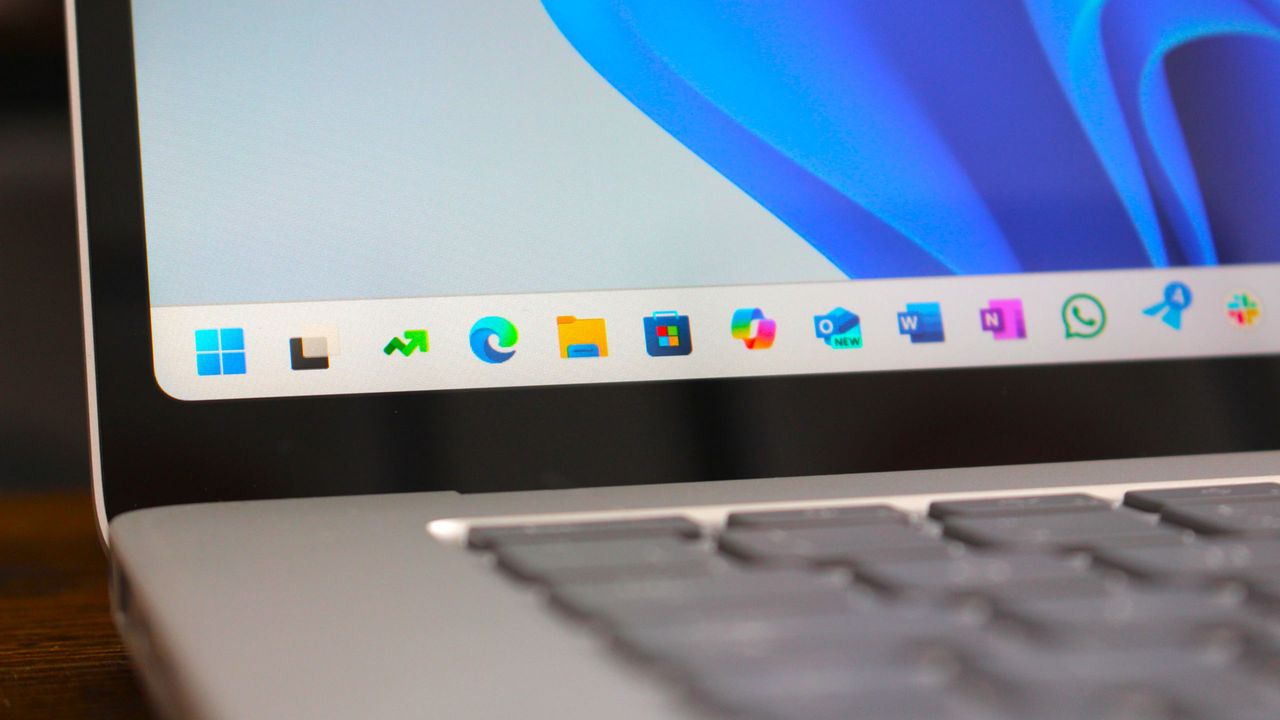



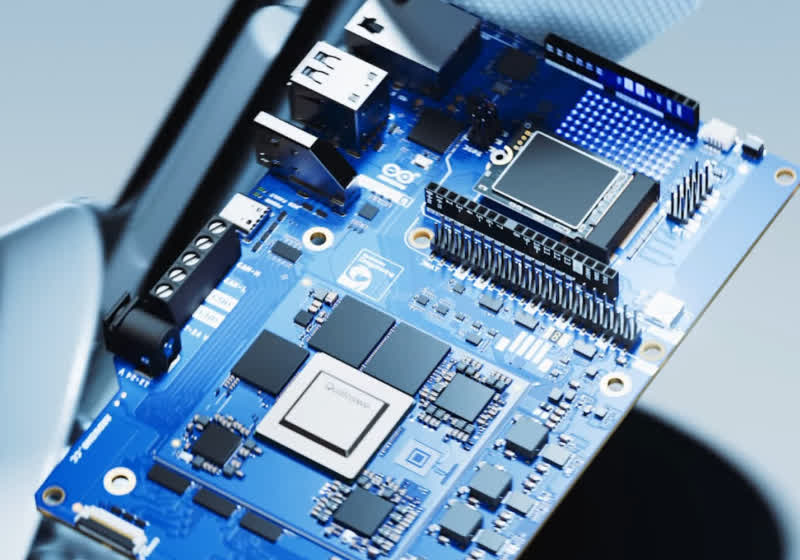


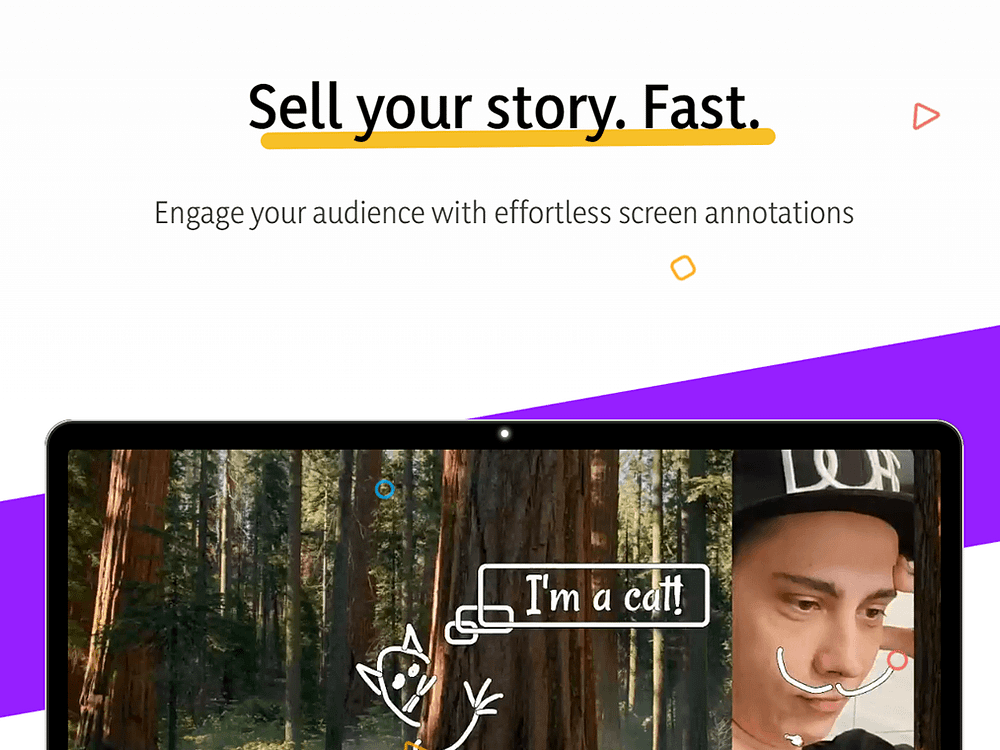
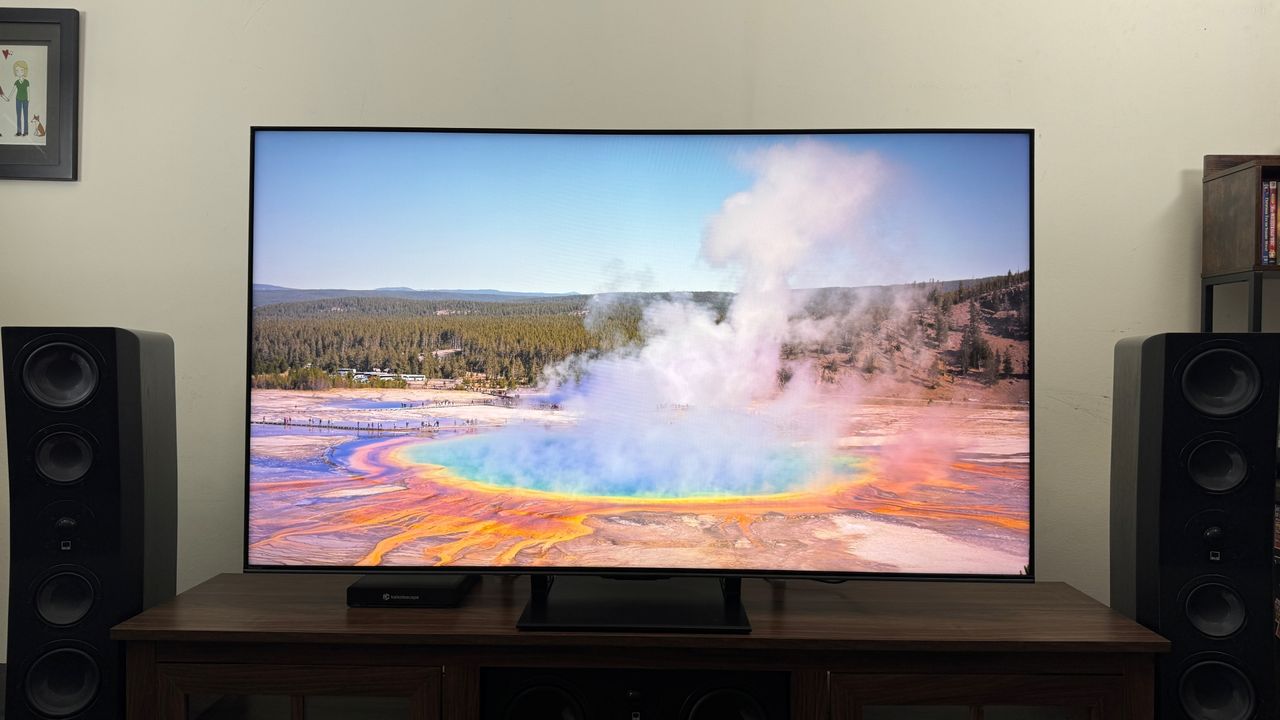










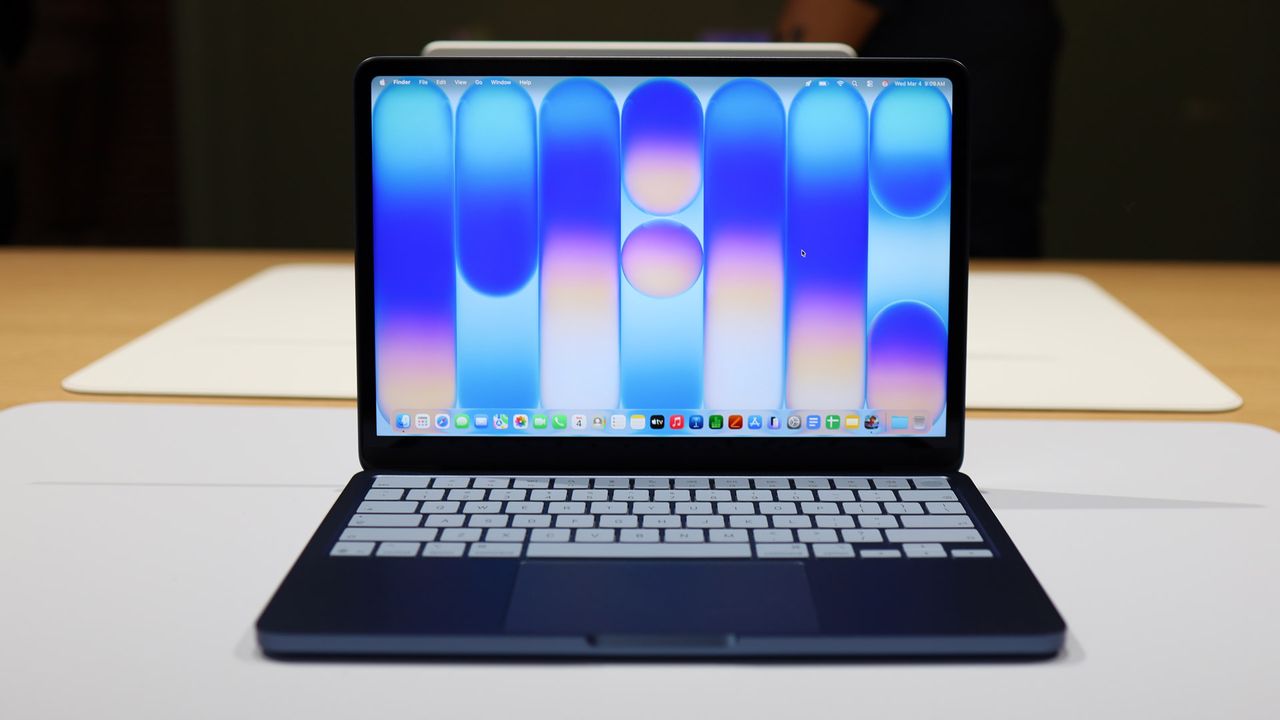




 An overview of Gemini Embedding 2, our first fully multimodal embedding model that maps text, images, video, audio and documents into a single space.








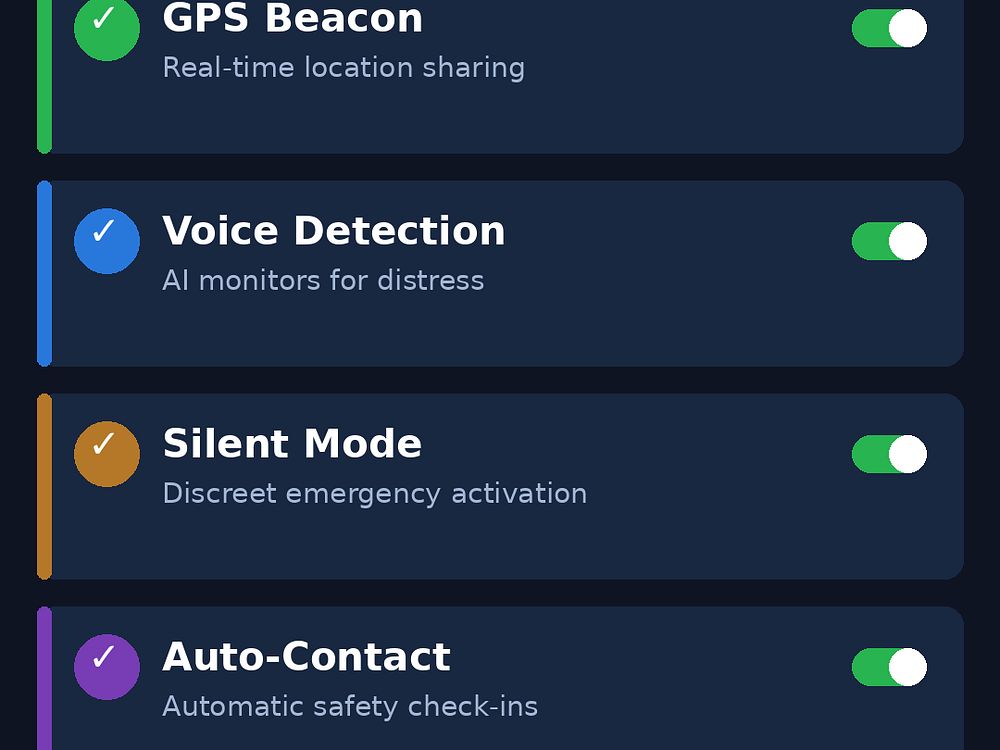



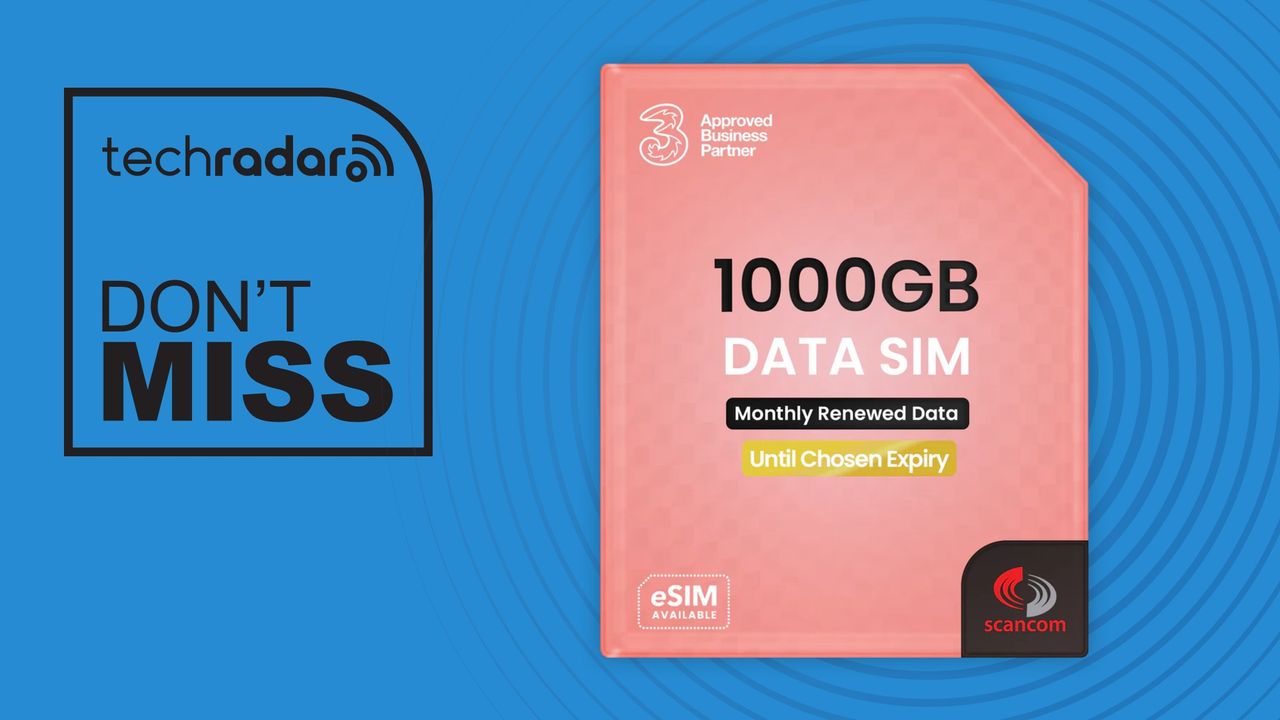








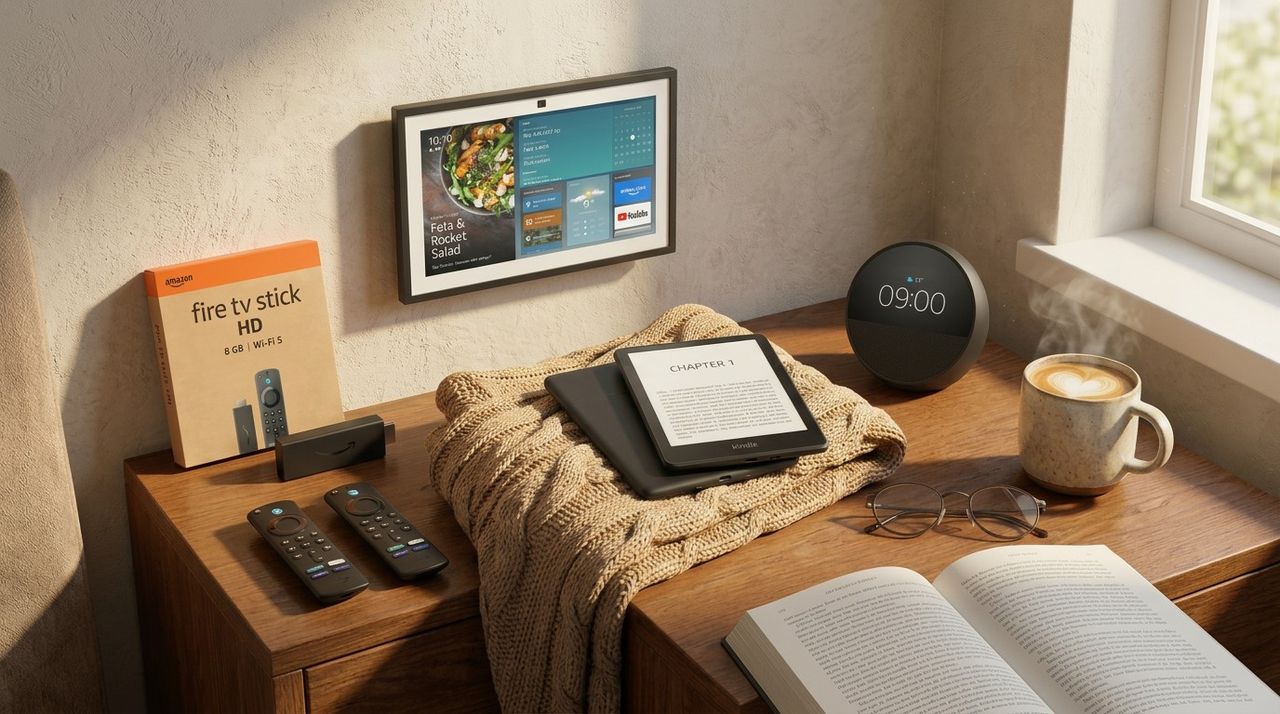
















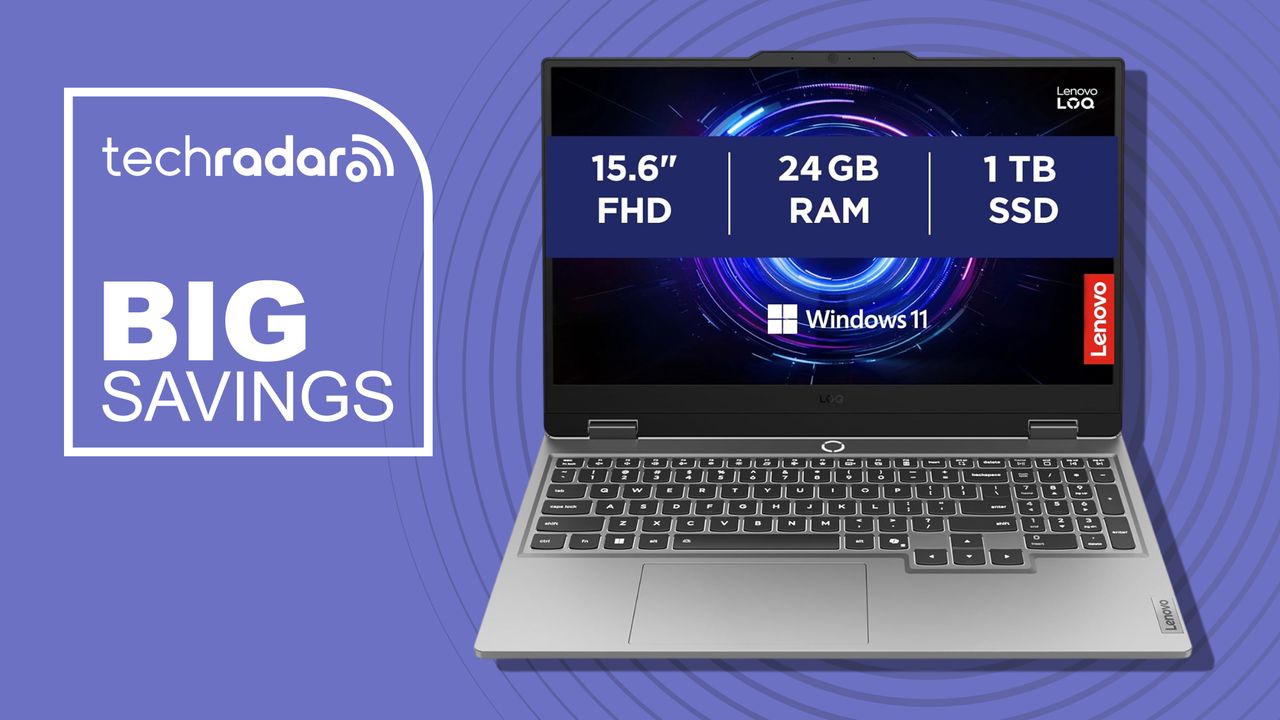

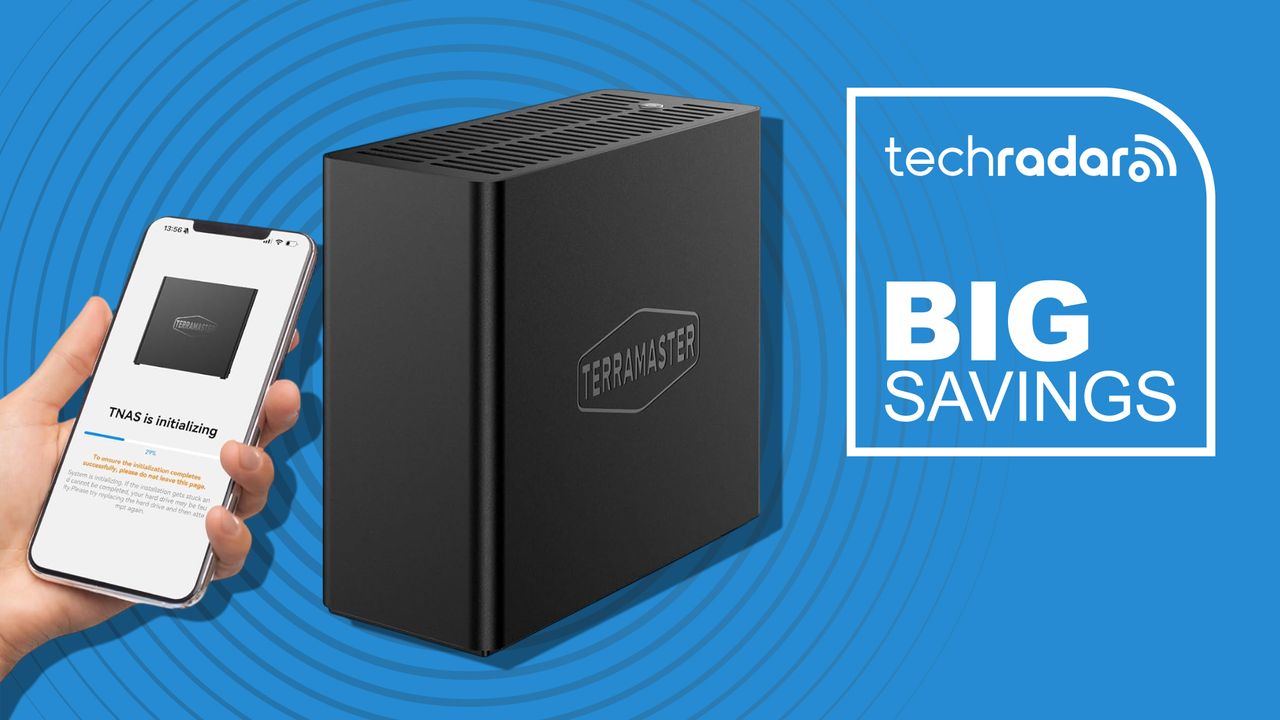

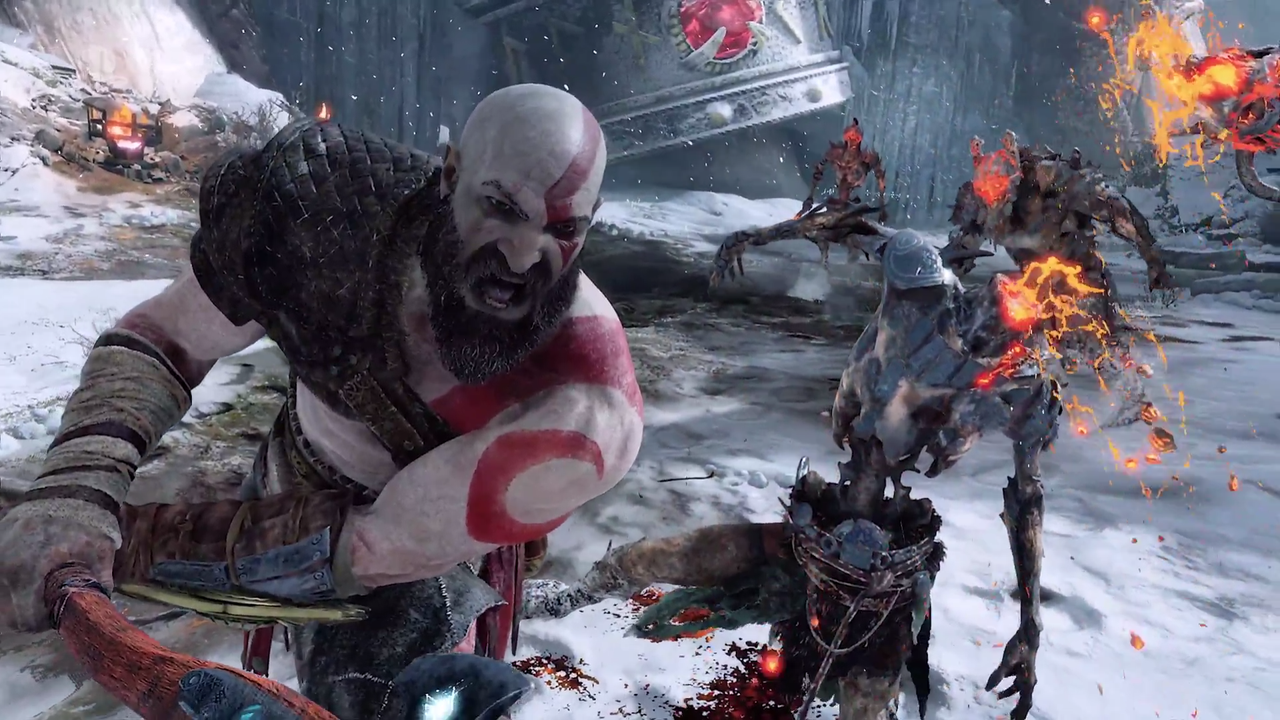



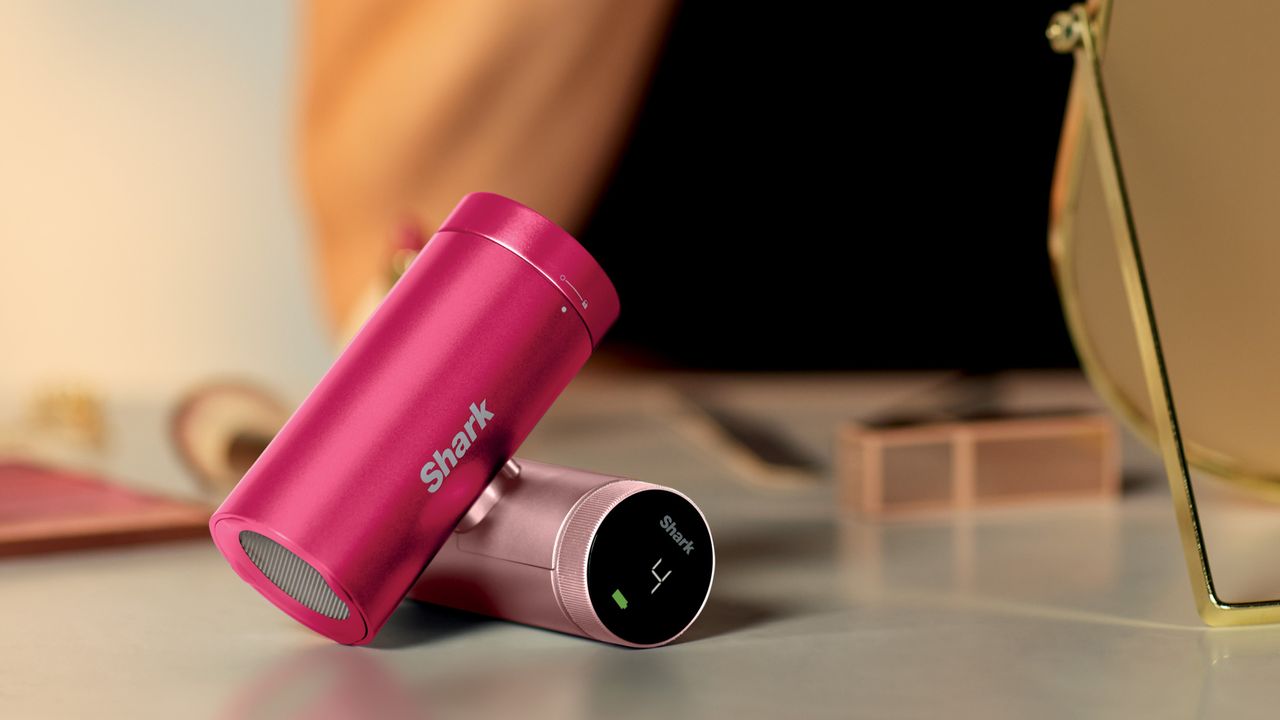




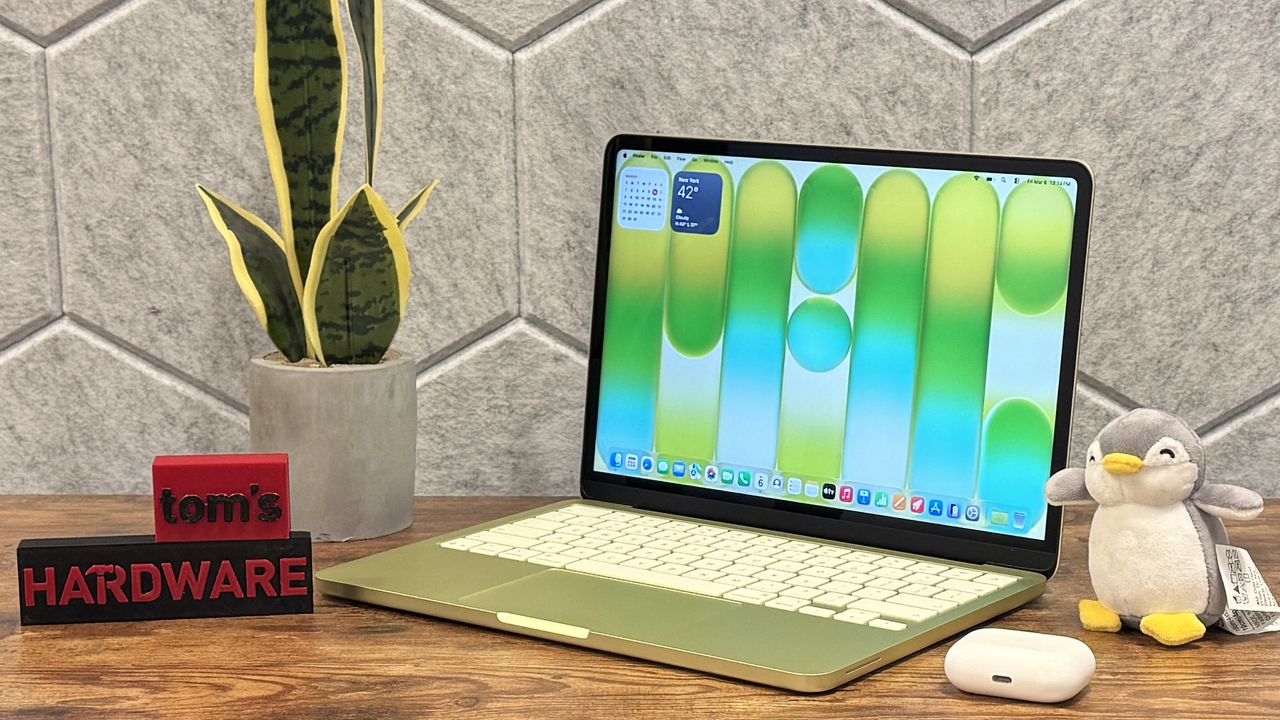
 Today we announced new beta features for Gemini in Sheets to help you create, organize and edit entire sheets, from basic tasks to complex data analysis — just describe …
  These new Gemini features are coming to Google Docs, Sheets, Slides and Drive to help you get more done.




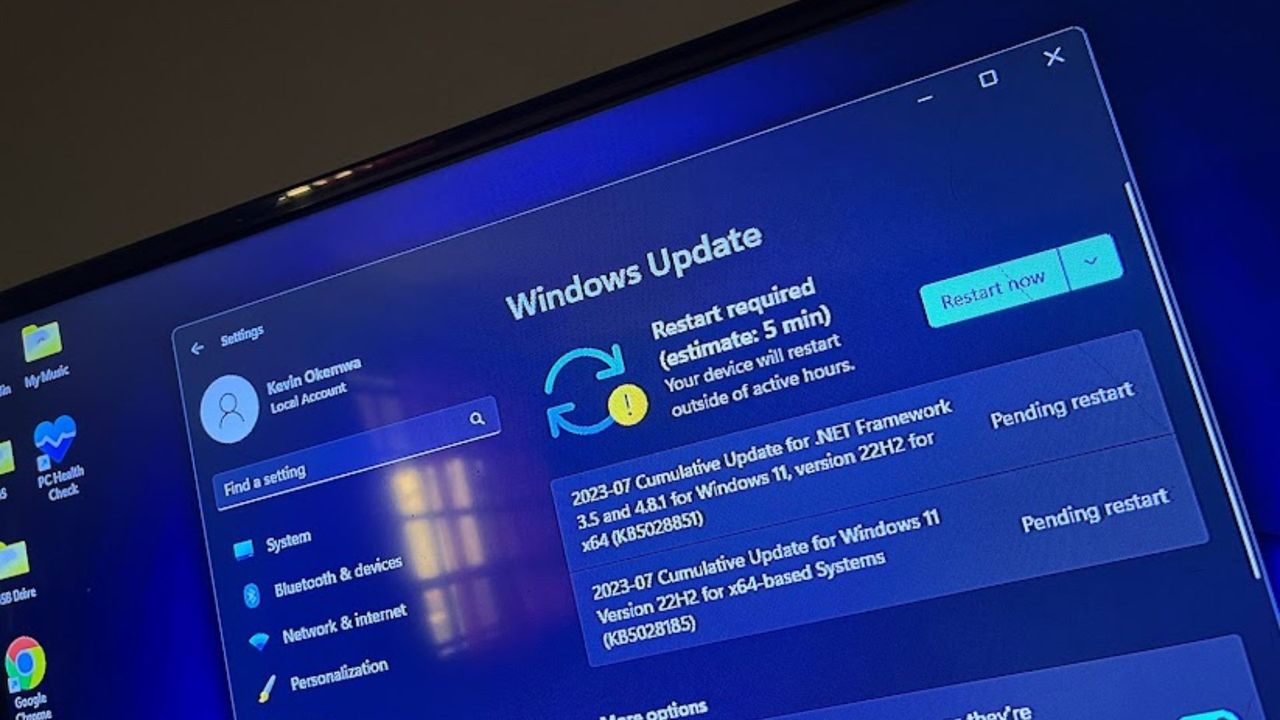






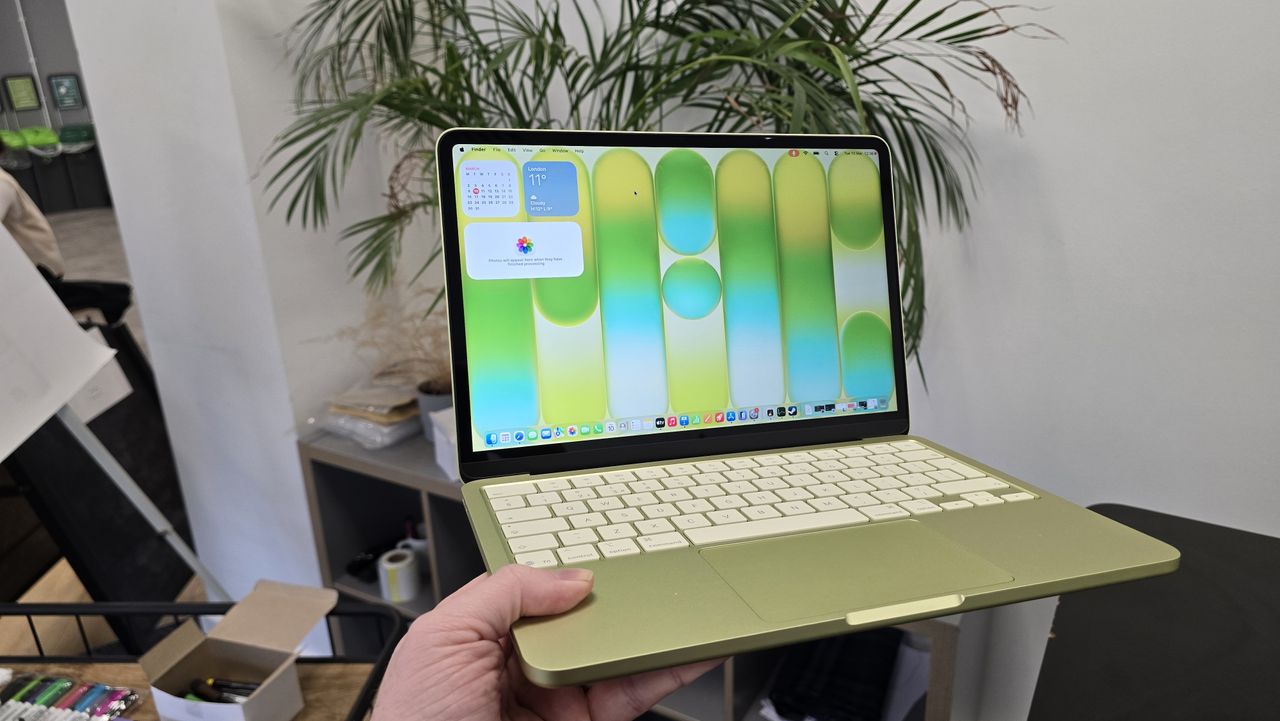






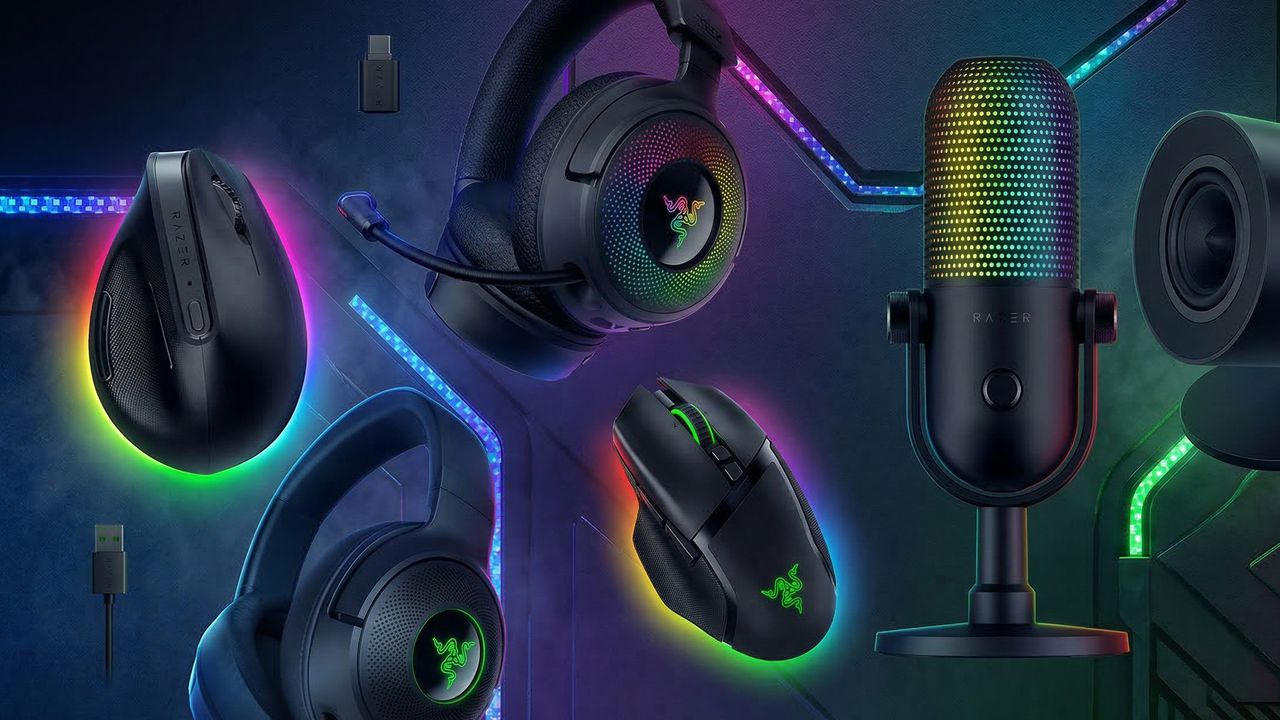


















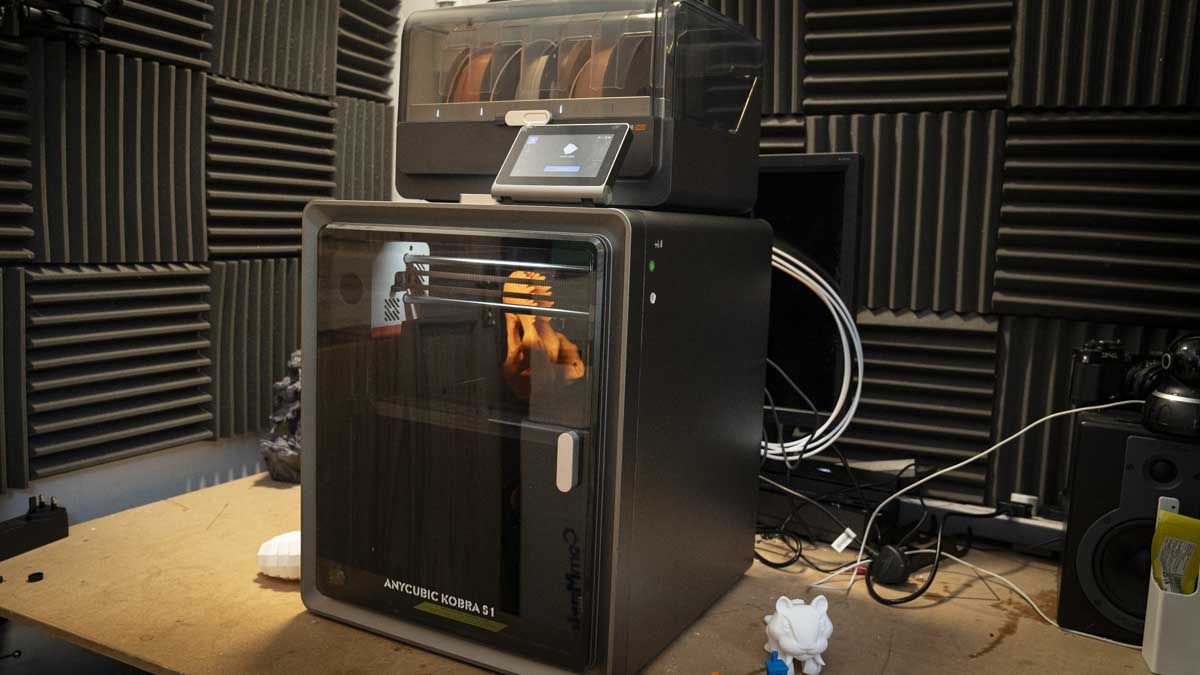






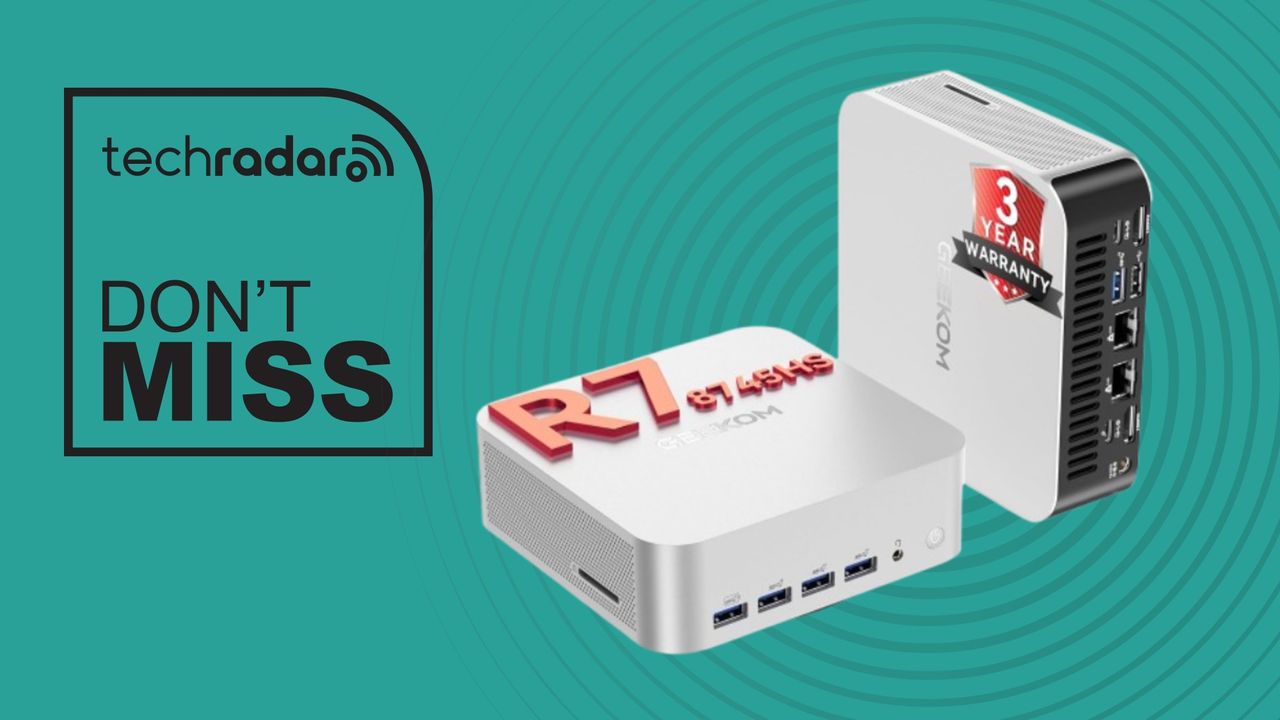


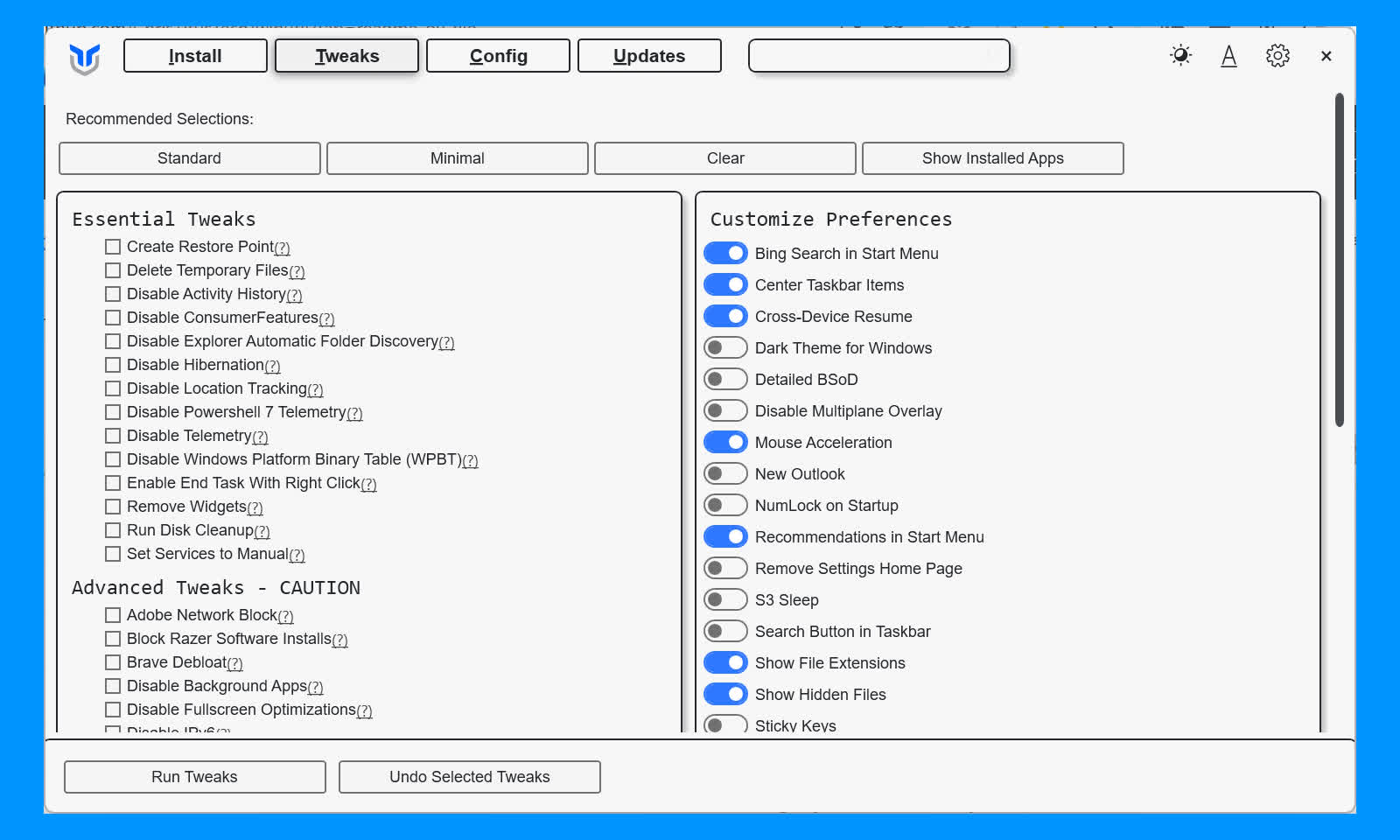
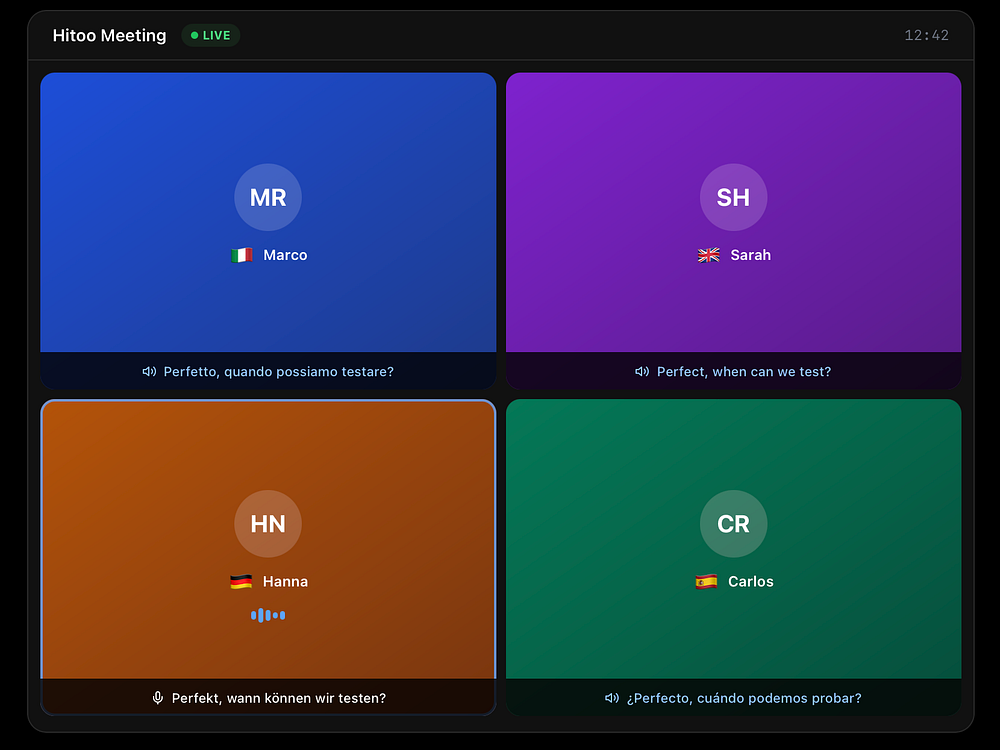



 New research shows how Google AI helps radiologists detect breast cancer earlier and more accurately, while giving radiologists more time for patient care.


























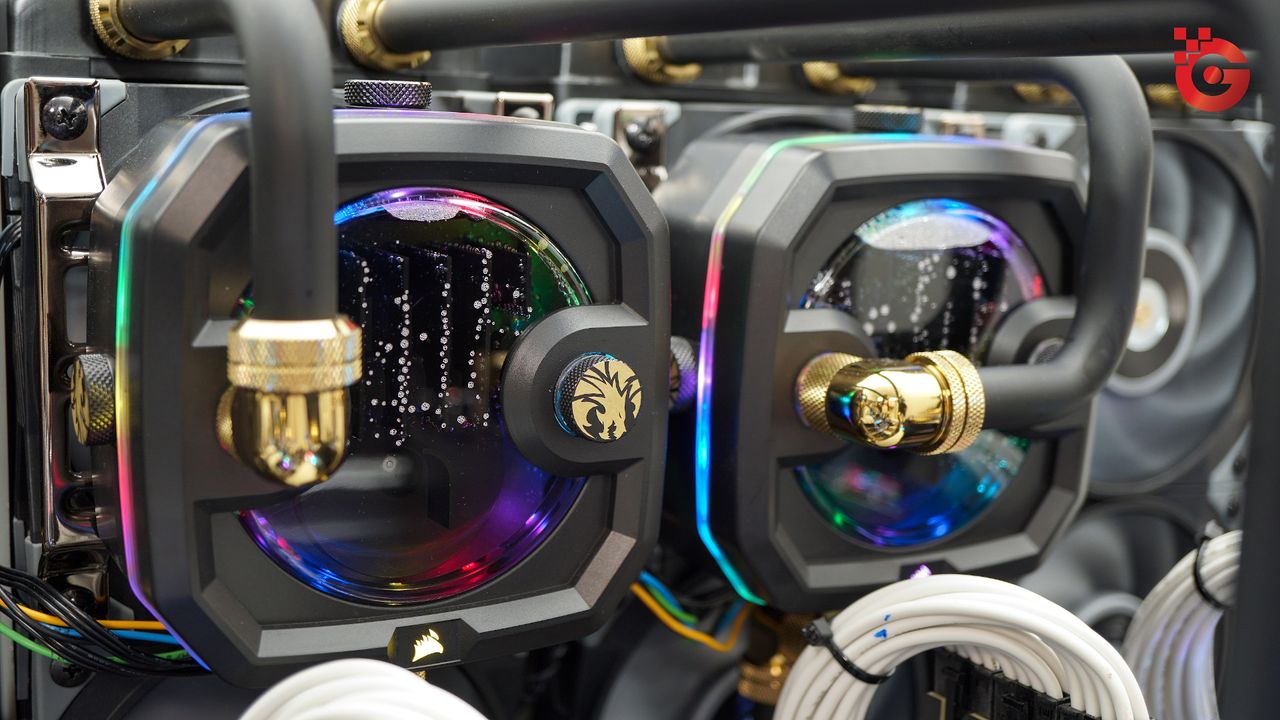
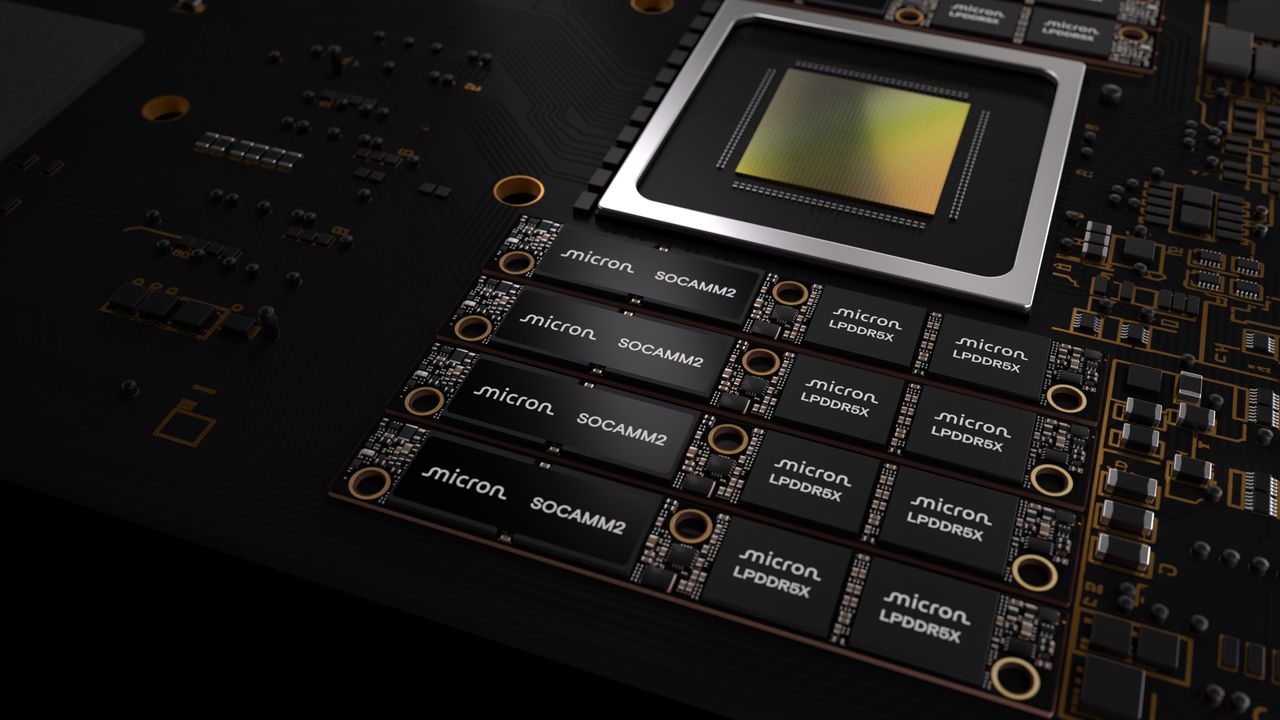








![Two futuristic characters with weapons stand in a rain-soaked environment near a large structure labeled 'C[]N!' in a scene](https://cdn.wccftech.com/wp-content/uploads/2026/03/2026_Marathon_Launch_Press_Kit_Compressed_004-728x410.jpg)