Xbox “Project Helix” is looking more PC-like by the day According to a post by the prominent leaker KeplerL2 (via WCCFTECH), Microsoft will allow 3rd parties to build custom Xbox “Project Helix” machines. These systems will be available alongside official Microsoft consoles. This opens the door to ASUS ROG Xbox consoles, MSI consoles, and Xbox […]
SOLAI Limited ("SOLAI" or the "Company"), a technology-driven personal AI and digital infrastructure provider, today announced the launch of Solode Neo, a personal AI device designed to run and host autonomous AI agents at home or in the office. This launch marks a key milestone in executing the Company's multi-layer personal AI infrastructure blueprint.
Solode Neo sits at the center of SOLAI's personal AI infrastructure strategy. Packaged in a sleek, compact design that blends seamlessly into any home, office or living space, the device only requires a power outlet and a Wi-Fi connection to start working.
Zondision, a leader in light-field 3D display tech, announced its flagship ZIMO1, a 27-inch glasses-free 3D display for consumers and creators. It will launch on Kickstarter on April 21, offering an immersive display that combines high-performance 3D visualization, real-time interaction, and an open ecosystem.
ZIMO1 offers high-definition stereoscopic visuals without headsets or glasses. Backed by over a decade of optical engineering and AI eye tracking, it switches between 2D and 3D modes while maintaining image quality.
Manufacturers are under increasing pressure to improve efficiency, resilience, and responsiveness in the face of ongoing supply chain volatility and rising operational complexity. In this environment, AI is no longer a future ambition but an operational necessity. With 94% planning to increase AI investment in 2026 and an expected $2.86 return for every dollar spent, the priority has shifted from experimentation to execution.
At Hannover Messe 2026, Lenovo in partnership with NVIDIA are demonstrating how manufacturers can close that gap by deploying AI solutions already proven at scale across its own global operations, delivering measurable improvements in lead time, cost, quality, and productivity.
"Manufacturers don't need more AI pilots. They need AI that runs at scale in production," said Jonathan Wu, Chief Technology Officer of Smart Manufacturing at Lenovo. "At Lenovo, we've already done this across our own global manufacturing operations, achieving significant improvements in lead time, cost, and productivity. At our largest site in North America, lead time was reduced by 85%, logistics costs by 42%, and productivity was boosted by 58% by deploying AI and Gen-AI enabled solutions. That experience is what we bring to our customers."
MSI proudly announces the VERSA 300 WIRELESS 8K, MSI's first 8K gaming mouse, designed to deliver ultra-fast responsiveness, precision control, and long-lasting performance for competitive gamers. Combining an advanced PixArt PAW3395 optical sensor, an 8000 Hz polling rate, and an ultra-lightweight 66 g design, the VERSA 300 WIRELESS 8K empowers players with exceptional speed and accuracy in every movement.
As the latest addition to the VERSA 300 series, the VERSA 300 WIRELESS 8K expands on the success of earlier models, including the VERSA 300 WIRELESS and VERSA 300 ELITE WIRELESS. Built around the core strengths of precision, comfort, and versatility, the series features lightweight symmetrical designs and advanced sensors to support a wide range of gaming styles and hand sizes. Available in both classic black and white color options, the VERSA 300 WIRELESS 8K gives users greater freedom to match their setup and express their personal style.
AGON by AOC, the world's leading gaming monitor brand, announces the AGON PRO AG326UZD2, the brand's most advanced 32" (31.5" - 80 cm) 4K display to date. Built around a 4th generation QD-OLED panel, the AG326UZD2 pushes the boundaries of what a single monitor can deliver, whether for competitive gaming, console play, content creation or cinematic entertainment.
A Generational Leap in QD-OLED
Where the original AG326UD introduced gamers to a 31.5" QD-OLED at UHD resolution with exceptional color accuracy and a 165 Hz refresh rate, the AG326UZD2 represents a significant step forward. The move to 4th generation QD-OLED technology brings a brighter, more refined panel with a peak brightness of 1,000 nits (3% APL) and an upgraded VESA DisplayHDR True Black 500 certification, up from True Black 400 on its predecessor. Combined with a practically infinite contrast ratio and perfect black levels thanks to QD-OLED technology, the result is a breathtaking HDR experience with noticeably more highlight detail and punch.
After removing its previous bonus cap last September, SK Hynix is set to pay out 10% of its annual operating profits to employees as performance-based bonuses this year. With memory prices at record highs, analysts predict the company will generate about 250 trillion won ($169 billion) in operating profit, putting...
With Ingrid coming soon to Street Fighter 6 as the final Year 3 character, many have started to wonder who will be part of the game's Year 4 roster. While CAPCOM has yet to say anything on the matter, a reliable source who correctly revealed the Year 2 characters (including the unexpected arrival of Terry Bogard and Mai Shiranui) before the official announcements provided the alleged list of new characters, which includes Final Fantasy VII's Tifa Lockhart, among others. Commenting last month on the Street Fighter official subreddit, user RnK_Clan revealed that Vega will be among the Year 4 characters, […]
Apple's seemingly limitless splurge on mobile DRAM is now producing real-world consequences. Despite its best efforts to paper over the emerging flaws in its strategy, the Cupertino-based tech giant is now being forced to pinch pennies by severely downgrading the base iPhone 18 model, as per a new analysis published by Schrödinger Intel. Apple's upcoming base iPhone 18 might get an enhanced version of the M12 display tech that debuted back in 2023 We reported yesterday that the base iPhone 18, which is slated to launch in the spring of 2027 alongside the iPhone 18e and the iPhone Air 2, […]
Ubisoft's chief executive officer, Yves Guillemot, personally confirmed back in 2024 that "players can be excited about some remakes, which will allow us to revisit some of the games we've created in the past and modernize them." Now, the first of those remakes is almost here with Assassin's Creed Black Flag Resynced, and according to a new report, the rest of the remakes players might hope to see follow Black Flag won't make it out to store shelves if Black Flag doesn't fly off those same walls. According to Insider-Gaming, who has been part of why Assassin's Creed Black Flag […]
Nscale will be adding 30,000 NVIDIA Rubin GPUs in addition to the 100,000 chips that are already being deployed at its facilities in 2027. Nscale Scales Up Its AI Datacenters With 30,000 Additional NVIDIA Rubin GPUs, Bringing The Total Count To 130,000 NVIDIA's Vera Rubin AI chips are hot in demand, and the reason behind this is simple: they are aiming to be the fastest solution for AI inferencing, fueling the race towards Agentic AI. Josh Payne, Founder and CEO at Nscale said: “Customer demand for advanced AI infrastructure continues to accelerate across markets, and our focus is on bringing the […]
A little less than a year ago from the time of this writing, Nintendo announced Splatoon Raiders, a single-player-focused spin-off of the popular multiplayer series. It was seemingly the natural next step from the single-player campaigns available in the mainline entries players had already enjoyed, and today, through the Nintendo Today! app, Nintendo revealed that it'll be arriving exclusively for Nintendo Switch 2 later this year on July 23, 2026. The release date reveal came at the tail end of a new gameplay trailer that showed off plenty of combat and the world players will get to explore with a […]
InsideBnB delivers real-time market research for short-term rental hosts and real estate investors. Instead of using complex spreadsheets, you can paste any property link to generate instant revenue projections, cap rates, and a definitive 'BUY/HOLD/AVOID' verdict based on 24 months of historical data. The platform features interactive map tools to visualize market activity down to the ZIP code, analyze ADR, occupancy, and RevPAR, benchmark your competitors, and spot high-yield neighborhoods before acquiring a new asset.
BeyondBudget is a forward-looking budget planner that simulates your finances months and years ahead. Instead of tracking what you already spent, you build a detailed model of your income, expenses, and debt. Then see exactly how your cash, debt balances, and savings change over time. It supports avalanche and snowball debt payoff, calculates how much extra money you have each month for debt or savings, and maintains a safety buffer in your checking accounts. You can model multiple checking and savings accounts, a business account, rewards credit cards, seasonal expenses, and year-over-year cost increases. It's a full simulation of your financial life, not just a spending tracker.
Search has changed, and brands need to catch up fast, according to IBM’s Alexis Zamkow (global lead of Marketing Transformation solutions) and Sandhya Ranganathan Iyer (associate partner – AI), speaking yesterday at Adobe Summit.
AI tools don’t just help people search. They answer questions, compare products, and recommend brands. In many cases, users never even visit a website.
That means if your brand isn’t part of the AI-generated answer, you may not be part of the decision.
To keep up, brands need more than new tactics. They need a system — a GEO (Generative Engine Optimization) playbook. Here’s a recap of their presentation, Adapt or Disappear: How Brands Win with AI-Powered Search.
The AI shift: You’re marketing to machines
AI agents now sit between you and your customer.
They take a complex market and simplify it. They decide what information to show. And they often speak on your behalf.
“These machines are disintermediating the brand experience,” Zamkow said.
At the same time:
Consumers are using AI for research and decisions
Businesses are adopting it even faster
Many searches now end without a click
Zamkow said an estimated 75% of search visibility could shift to AI agents in the next two years.
That’s why visibility today depends on being part of the answer itself.
The GEO playbook: 12 components every brand needs
To respond, the speakers outlined a 12-part playbook. It spans content, technology, and operations.
1. Strategic content foundations
Your content must tell one clear story — everywhere.
That includes your website, PR, social, and third-party mentions. If each channel says something different, AI won’t trust your brand.
For example, if your site highlights premium quality, but reviews focus on low price, that mixed message weakens your authority.
Consistency builds trust for people and machines.
2. Retrieval-grade passage standards
AI doesn’t rank webpages. It extracts answers. So your content must be easy to extract.
Good content looks like:
Clear questions and answers.
Short, focused sections.
Direct language.
For example, instead of a long paragraph, write:
Question: What are the best running shoes for beginners?
Answer: A short, clear response
This makes it easier for AI to reuse your content in answers.
3. Technical foundations
Even great content won’t work if AI can’t read it.
Machines rely on:
Clean HTML (not just visual design)
Structured data (schema, metadata)
Pages that load content directly
One example from the session: a beautiful website appeared to AI as “a headline and a blank page.”
If your content isn’t readable, it won’t be used.
4. On-site search + genAI search alignment
Start with your own site.
If your internal search — especially AI-powered search — works well, you’re already ahead.
Think of it this way: If your own system can’t find answers on your site, external AI tools won’t either
Strong internal search helps train your content for external visibility.
5. AI search citation qualification model
In GEO, the goal isn’t just to be mentioned. It’s to be cited.
Mentions mean you show up.
Citations mean AI trusts you.
AI looks for signals like:
Clear expertise.
Consistent messaging.
Agreement across sources.
Zamkow called citations the “holy grail” of visibility.
6. Extraction optimization
AI tools pull content from many places and combine it.
To be included, your content must be:
Easy to extract.
Clearly structured.
Rich in context.
If your content is hard to break apart, AI will skip it and use something else.
7. Real estate: third-party strategy
Your website is no longer your main source of visibility.
85% of mentions come from external domains.
Third-party content drives most citations.
That includes:
Reddit
Social media
Reviews and forums
Media coverage
This means your PR and social teams are now critical to search success.
Your brand lives across the internet — not just on your site.
8. Measurement, KPIs, and reporting
Old metrics don’t tell the full story anymore.
Instead of just tracking clicks, you need to track:
How often AI mentions your brand.
Where you’re cited.
Which platforms show your content.
The key question changes from “Did we get traffic?” to “Did AI recommend us?”
9. SOPs (standard operating procedures)
Consistency doesn’t happen by accident. Teams need clear rules for:
How content is written.
How it is structured.
How it is published.
Without SOPs, different teams will create different formats. That confuses AI and weakens your visibility.
10. Prompting best practices
Search is now conversational.
While people still type keywords, they are increasingly describing their needs using more conversational language. For example:
Old search: “running shoes”
New search: “I’m training for a marathon. What shoes should I buy?”
Your content needs to match these types of questions.
That means thinking like the user — and writing like the answer.
11. Change management
This shift affects the whole organization.
Marketing, IT, PR, and product teams all play a role.
That means:
Training teams on new workflows.
Aligning goals and KPIs.
Breaking down silos.
This is bigger than just a marketing update. It’s a company-wide change.
12. Governance + versioning
GEO is never finished.
AI systems change constantly. Competitors update content. Rankings shift fast.
To keep up, brands need:
Ongoing monitoring.
Regular content updates.
Clear ownership of changes.
If your content becomes outdated, you can quickly lose your position in AI answers.
From SEO tactics to GEO systems
The GEO playbook reflects a larger change in how marketing works:
From keywords to prompts.
From links to citations.
From websites to ecosystems.
From traffic to answer eligibility.
From campaigns to continuous content.
The focus has shifted to building a system that consistently feeds AI the right information.
This is now a leadership issue
This shift is already reaching the top of the organization.
In one example, a product leader asked why their brand didn’t show up in an AI recommendation. The issue quickly escalated beyond marketing.
“This is not a problem for your SEO team,” Zamkow said. “This is at the CEO level.”
As AI becomes the front door to discovery, every leader will care about visibility.
Adapt or disappear
AI is already shaping how people discover and choose brands.
Consumers trust it. Businesses are using it. And it’s growing fast.
Brands that build and follow a clear GEO playbook — across all 12 components — will stay visible.
Picture this: Your company relies on Data Studio for SEO reporting.
It’s right before your next big meeting when you’re planning to present results… but Data Studio has an outage (again) and suddenly you have nothing to show.
That’s embarrassing. And it happens more than it should.
Here’s how rigid SEO dashboards like those produced in Data Studio are holding you back and why code-driven SEO reporting is the only way to remain efficient and competitive.
The problem with Data Studio
In the not-too-distant past, Data Studio was considered one of the best ways to customize SEO reporting.
But things have evolved, and with new technology at our fingertips, Data Studio’s flaws are only becoming more pronounced.
Here are some common issues that you may recognize when generating reports using Data Studio.
It’s easy to explode your dataset, and then everything breaks
You assume Data Studio can handle massive “Google-scale” data, but it’s buggy. For example, there are low limits on rows and fields, and even adding a few dimensions or joining multiple data sources can break the report at the worst times.
You’re manually clicking through a slow interface
Every change in Data Studio requires manual updates. You’re clicking, refreshing and waiting to see whether it worked. That makes iteration painfully slow. Even with added AI features, they only address a small part of the report development workflow.
Relatedly, debugging reports is a nightmare
Whereas agents can simply scan files with code-based reports, in Data Studio, a user has to laboriously click around the interface.
The API is weak
Like a lot of Google services, Data Studio isn’t built as an API-first platform. This is something Google got institutionally wrong decades ago. Not being able to manage the platform using external tools creates bottlenecks.
Despite its recent rebrand, Data Studio hasn’t become any more relevant — not with the technologies that are now in play for SEO reporting.
But it’s not just Data Studio. Really, what SEO teams are up against is the rigidity of any dashboard-based reporting tool. Now all that is changing.
The shift away from rigid SEO dashboards is now possible because large language models are becoming more capable of generating reliable code, and APIs are accessible across many platforms.
This has led to the rise of AI-driven coding tools, including Claude Code, OpenAI Codex, and Gemini CLI.
At a high level, it works like this: You describe what you want in your SEO report, and they handle the heavy lifting.
These tools are “agentic” because they can execute multi-step workflows like pulling data, transforming it, analyzing it, and then generating reports with minimal intervention.
You don’t need advanced coding skills to use them, but a basic understanding of data structures and APIs will make the process effective.
In practice, the entire reporting workflow can be done programmatically from start to finish.
They generate code that connects directly to data sources through APIs, removing the need to rely on dashboard connectors or preconfigured data pipelines.
From there, they can analyze the data and create full reports. This can happen in minutes as you become more familiar with the tools.
While each of the tools I mentioned has different strengths (for instance, some are better at reasoning, others at speed or integrations), they essentially do the same thing: transform SEO reporting from a manual, rigid process into something with endless possibilities.
The power of this technology is hard to overstate.
Why AI coding tools are better for SEO teams
AI coding tools are removing the roadblocks between data, development, and reporting for SEO teams.
Faster SEO reporting and analysis
Speed is the most obvious advantage.
Agentic coding assistants are enabling SEOs to create reports that previously required support from developers.
In many cases, tasks that previously took days can be done in hours and tasks that took hours can be done in minutes.
You can see this improvement even in small interactions.
For example, when data is processed directly in the browser (instead of re-querying a dashboard), it makes filtering, sorting, and slicing data significantly faster.
Instead of waiting for a dashboard to refresh after every change, you can interact with the data in real time.
That’s just one way these technologies make you more agile.
Flexible and custom reporting workflows
Instead of having to work in predefined templates and a fixed structure, you can build the report for exactly what the situation requires.
Plus, every major data visualization and plotting library is available on demand in any programming language.
If you feel like one approach isn’t capturing the whole story in your SEO report, you can switch or combine multiple frameworks in the same output.
From rankings and traffic trends to keyword clusters or content performance, you can apply nearly any chart.
The examples below come from Observable Plot, created by data visualization expert Mike Bostock, but many other charting libraries are available.
While setup and onboarding take some initial effort, these tools are accessible to most roles on the team and immediately become more efficient than traditional reporting.
Transparent data constraints
Data limitations are clearer, too.
For example, when you’re working with browser-based charting libraries, you have a better feel for how many rows you’re handling and what the system can realistically process.
And when you do hit a limit, you understand exactly what’s happening and how to adjust. This helps prevent misleading or incomplete reporting.
What are some practical ways you can use these agentic coding assistants to run SEO reporting?
Pre-meeting reports
Before client meetings, you can pull data from Google Search Console and GA4 via APIs, then have it cleaned and segmented programmatically and generate a notebook, dashboard or slide deck in a single workflow.
Technical SEO analysis
Say you need to analyze crawl data or log files. Instead of exporting, filtering, and then visualizing the data manually, you could get the raw data, process it with code, and generate custom visualizations tailored to the exact problem you’re trying to solve.
Ad hoc stakeholder requests
Once data connections are established, last-minute reporting requests no longer have to mean staying up late to pull data and build reports. The next time someone asks for something like “non-brand CTR trends by device over the last 90 days,” you can produce this data with much less effort.
Really, if you can imagine it, you can do it with these agentic coding assistants. As a result, SEO teams can do more proactive analyses.
What this means for agencies and in-house teams
AI is impacting all knowledge workers, not just SEOs.
By now, many have seen the viral article “Something Big Is Happening” by Matt Shumer, which paints a startling picture about the future of AI-powered work and adopting an “adapt or die” mentality.
Research is beginning to show how these types of technologies are impacting productivity.
One study by Stanford and MIT researchers found that access to AI tools in the workplace increases productivity by at least 14% on average, with a 34% increase for low-skilled workers.
The bottom line is that anything that can be generated with code is going to be eaten by these CLI tools and agents, because they’re just so much faster.
Businesses are catching on. Up to 64% of businesses now generate a majority of their code with AI assistance, according to a Business Insider report, and high-adoption teams are producing nearly double the output.
For SEO teams, they’re experiencing faster reporting cycles, more iterative analyses, and the ability to handle more complex data.
AI coding assistants are also helping analysts become builders. Non-technical users can build and iterate in ways that were previously out of reach.
Ultimately, this shift is becoming table stakes. The SEO teams that integrate these tools into their workflows will move faster and produce better results.
The competitive advantage is going to those who adopt these technologies first.
Where to begin, though? Consider piloting a small project:
Start with one repeatable reporting workflow.
Connect a data source like Google Search Console via API.
Test and refine a single report before expanding to other use cases.
The future of SEO reporting is agentic and code-driven
Traditional SEO reporting tools are quickly becoming a bottleneck.
AI coding assistants are helping SEO teams respond to any type of reporting without the added friction, while delivering faster, better insights.
The companies that adapt will gain the advantage in SEO execution. Start by replacing one recurring report with a code-driven workflow and build from there.
Microsoft is rolling out a suite of updates across Microsoft Advertising to help brands stay visible — not just to people, but to AI agents increasingly making decisions on their behalf.
What’s new. The update spans measurement, commerce, and media, with new tools designed to help advertisers show up in AI-driven experiences and transactions.
On the ads side. Microsoft is introducing AI Max for Search campaigns, which expands query matching and personalizes ad delivery across AI surfaces like Copilot and Bing. It’s also launching “Offer Highlights,” new ad formats that surface key selling points — like free shipping — directly within AI conversations.
Zoom in:
Expanded AI Visibility in Microsoft Clarity shows how brands appear in AI-generated answers, including which content gets cited and where competitors outperform.
New Universal Commerce Protocol support in Microsoft Merchant Center structures product data so AI agents can discover and transact on it more easily.
Copilot Checkout enhancements enable purchases directly inside Microsoft Copilot, reducing friction from discovery to sale.
Also notable. A new AI-powered audience generation tool lets advertisers describe their ideal customer in plain language, with the system building targeting segments automatically.
Why we care. Microsoft is changin how visibility works in Microsoft Advertising — shifting from clicks and rankings to being selected by AI systems. Tools like AI Max, AI Visibility, and Offer Highlights help brands show up in AI-driven decisions, not just search results. As AI agents take a bigger role in discovery and transactions, advertisers who adapt early will have a clear advantage.
Between the lines. This is a shift from optimizing for clicks to optimizing for selection — ensuring your brand is chosen by AI systems, not just seen by users.
What to watch. Early data suggests AI-driven traffic is growing far faster than human traffic, signaling where future demand may concentrate.
Bottom line. Microsoft is preparing advertisers for a world where winning means being understood — and trusted — by AI agents, not just ranking in search results.
Security teams often present MTTR as an internal KPI. Leadership sees it differently: every hour a threat dwells inside the environment is an hour of potential data exfiltration, service disruption, regulatory exposure, and brand damage.
The root cause of slow MTTR is almost never "not enough analysts." It is almost always the same structural problem: threat intelligence that exists
Richard Gadd arrives on HBO Max with Half Man, a twisted tale of two brothers intertwined for all the wrong reasons. But is it on par with Baby Reindeer?
Fintech giant Revolut, which secured a full banking license in the U.K. in March after years of waiting, was most recently valued at $75 billion in a secondary share sale.
Tech companies are constantly on the hunt for new customers, and Cash App, the fintech company owned by Jack Dorsey’s Block, believes it has found a promising new demographic: children. The company, which already offers financial services to teens, said this week that it is expanding its youth-focused services in an effort to build a […]
Valve “secretly” uploads a Steam Controller unboxing to Steam It looks like Valve will soon be ready to launch its new Steam Controller. A new unboxing video for the controller has been uploaded to Steam, and while it is currently unwatchable, it implies that Valve will either open pre-orders or launch the product very soon. […]
Microsoft's Surface Pro 11 is our go-to laptop for everyday tasks, creative artistry, and casual browsing, and its Snapdragon X Elite CPU and 13" OLED screen configuration is now 36% cheaper to help folks skip out on the recently announced price hikes.
Microsoft is moving the Raise Hand and Leave buttons in Teams meetings to reduce accidental clicks. The update, scheduled for June 2026, also adds a customizable meeting toolbar with pin, unpin, and reorder options.
AMD finally delivers dual 3D V-Cache on Zen 5 with the 9950X3D2, but does twice the cache translate into real gains? We test performance, power, and value to see if this flagship makes sense.
A Reddit user writes that they experienced this unwelcome scenario: an NZXT Kraken AIO allegedly leaked onto an Asus ROG Astral RTX 5090, damaging the flagship card and motherboard. It led to a months-long warranty dispute that, according to the post, may now end up in court, with the owner...
NVIDIA has just released its latest DLSS 4.5 SDK, which allows developers to integrate the latest tech, such as Dynamic Frame Gen & More, into their latest games. NVIDIA DLSS 4.5 Dynamic Frame-Generation, Updated Ray Reconstruction, & Enhanced Upscaling Tech Is Now Available To Devs With The Latest Streamline SDK Release Today, NVIDIA is finally releasing the highly anticipated DLSS 4.5 Streamline SDK. With this release, devs have the ability to easily integrate all the DLSS 4.5 goodies that come with the 2nd Gen transformer AI models, such as enhanced upscaling, frame-gen, Ray Reconstruction, and dynamic frame-generation support to their […]
The new ProArt monitor aims for a high refresh rate operation alongside excellent color accuracy and color reproduction for professionals. ASUS Debuts 4K OLED ProArt PA32USD Monitor for Professionals; 4K HDR QD-OLED Panel, 240 Hz Refresh Rate, 1000 Nits of Peak Brightness, and DP 2.1 Interface Most monitor manufacturers focus on delivering gaming monitors in affordable and premium categories, but ASUS is also taking care of its professional lineup known as ProArt. The ProArt series of hardware is aimed at professionals who want premium features to excel at what they do the best. The monitor ProArt series has just received […]
The AGON PRO AG326UZD2 is a high-end gaming monitor that not just features competitive specifications, but also the latest QD-OLED panel for improved visual clarity. AOC Debuts 32-inch QD-OLED AGON PRO AG326UZD2 Gaming Monitor, Featuring up to 240 Hz Refresh Rate, and Latest DisplayPort 2.1 Interface Popular monitor maker, AOC, has today introduced a premium offering in its AGON PRO lineup called AG326UZD2. The company usually launches affordable gaming monitors most of the time, but the AGON PRO AG326UZD2 brings a competitive and premium OLED monitor that is based on the Samsung's 4th gen QD-OLED panel for improved visual fidelity. […]
A truckload of futile attempts have been made by Samsung to maintain its dominance over Apple in the smartphone market. Unfortunately, with the Korean giant’s market share dwindling and the DRAM shortage threatening to erode its lead as its rival mulls a price freeze on the iPhone 18 lineup, it’s becoming even more difficult for competitors to obtain a foothold. In the wake of multiple factors, a new report highlights a shift in Samsung’s strategies where it targets a lucrative business model as opposed to competing with Apple in the smartphone market and failing continuously. That specific model is maintaining its role as […]
The Ryzen 9 9950X3D2 is one of the most unique CPUs we’ve ever reviewed, and although its price feels like a kick in the gut, it offers some interesting, highly specialized improvements in certain workloads based on our testing.
TP-Link, one of the most popular consumer router brands in the U.S., met with FCC officials to discuss how it can secure a conditional approval to continue introducing and selling new routers.
ShelfCheck helps beauty enthusiasts track every product in their collection and catch expiration dates before products go bad. Beauty enthusiasts own 40+ products on average and throw away 20-40% of them expired or forgotten. ShelfCheck turns your camera into a beauty product scanner that identifies each product with AI, estimates expiry dates, and alerts you before anything goes bad.
It offers barcode scanning for fast catalog building, photo backup for visual reference across devices, and expiry tracking across your entire collection. Currently in closed Android beta with iOS launching Spring 2026.
Widgetfied unifies lead generation, booking, payments, routing, and reporting for service businesses. Launch a hosted business page with scheduling, AI estimates, a KPI dashboard, and Stripe payments, or embed the widgets on your own site.
Its Data Miner taps commercial and government sources like census and mortgage data to score prospects and feed bookings. Orders flow into route optimization with live GPS, and Google Calendar sync keeps your schedule tight. Everything connects without copy-pasting between tools.
Demand Gen campaigns have high visibility across YouTube, Discover, and Gmail. However, they pose a key challenge: the “attribution illusion.” You’ll often question whether reported conversions in the platform are truly incremental or if these users would’ve converted through search either way.
That’s why in November, Google launched asset uplift experiments, giving you the ability to measure the impact of Demand Gen creative through an A/B split test. This means you can replace assumptions with a clearer view of what’s actually driving incremental results.
Relying too heavily on creative instinct or default reporting can lead you down an inefficient path and divert valuable creative resources toward poor-performing assets. Using Google’s A/B testing capabilities helps you isolate the impact of individual assets and avoid that outcome.
Why attribution doesn’t equal incrementality
If a user views a Demand Gen ad on YouTube and doesn’t click but then searches for the brand and converts, Google may attribute partial or full credit to the Demand Gen campaign and creative. This attribution more so reflects correlation rather than causation.
Accurate measurement and the scientific method show the need to understand the scenario in which the creative isn’t shown. By withholding the test assets from a segment of the target audience, it’s possible to establish a baseline.
The difference in conversion rates or any primary KPI between the treatment group — those who were exposed to the ad — and the control group — those who weren’t exposed — shows the actual incremental lift the creative is driving.
One common mistake is launching experiments without enough data to reach statistical significance. To avoid inconclusive or invalid results, make sure your campaign meets these prerequisites before setting up the test.
Conversion volume
Google recommends having at least 50 conversions across treatment and control arms during the experiment to measure lift accurately. If your primary conversion doesn’t receive this volume, consider optimizing the test around high-intent micro-conversion actions, such as “Add to Cart.”
Budget minimums
Experiments should run with continuous, uninterrupted spending. If your Demand Gen campaign is limited by budget and stops early each day, the control group data will be skewed.
The campaign must have a sufficient budget to run for at least four weeks, or until a statistically significant result is achieved.
Creative isolation
Test only one new variable at a time. To determine if a specific video asset drives uplift, keep all other campaign elements, such as audience, bidding, and standard image assets, unchanged.
Setting up a creative uplift test is now more streamlined within Google Ads. To build a valid experiment, follow these steps.
1. Define a clear hypothesis
Every valid scientific test begins with a clear hypothesis. Avoid running tests without a defined objective. For example:
Bad hypothesis: “Let’s see if our new video works.”
Good hypothesis: “Adding user-generated content (UGC) to our Demand Gen asset group will drive a 10% incremental lift in ‘purchase’ conversions compared to standard static image carousels.”
Navigate to the Experiments interface
Log in to your Google Ads account and navigate to the left menu. Select Campaigns > Experiments. Click the plus (+) button to create a new experiment, choose Asset tests provided by you, and make it a Demand Gen campaign experiment.
Configure a 50/50 split
Google will prompt you to define your split. To set up statistically sound results, use a 50/50 cookie-based split.
This ensures both control and treatment groups have equal historical data and algorithmic weighting, and prevents users from ending up in both arms of the test. Assign your existing campaign as the control, and the duplicated campaign with new assets as the treatment.
Lock your variables
Once the experiment begins, you must practice extreme discipline. Don’t change audiences or targeting, and avoid drastic bid and budget changes.
Any adjustment made to either campaign during the testing window will introduce noise and could invalidate the statistical significance of your results.
Set the duration
Run the experiment for at least four weeks.
Week 1 serves as a learning period while the algorithm adjusts to the audience split, new creative, and bid model learning (especially if leveraging smart bidding).
Weeks 2 to 4 provide actionable performance data.
For longer conversion cycles, such as B2B SaaS, consider extending the test to six or eight weeks.
When the experiment concludes, review results in the Experiments dashboard, where a report showing the performance of each arm and its confidence interval across metrics is available. Interpret the outcomes as follows to validate your hypothesis made earlier.
If the treatment group shows a positive lift with 95% confidence, your creative asset has been proven to drive incremental conversions.
From there, you can calculate incremental cost per acquisition (iCPA) by dividing the treatment group’s total ad spend by the incremental conversions above the control arm.
Use this iCPA as your benchmark for scaling the campaign going forward.
Outcome 2: Negative lift
Occasionally, a new creative asset may suppress performance. It may be too disruptive, or the video may have a high skip rate, causing the algorithm to reduce delivery to high-intent users. Pause the treatment asset immediately. This allows you to let data guide your budget decisions vs. preference.
Outcome 3: Inconclusive result
If the difference between groups is negligible and the system cannot confidently attribute conversions to the ad after four weeks and adequate conversion volume, consider extending the test for two more weeks to collect additional data.
If results are still inconclusive, it could be that creatives are too similar. Test a significantly different creative asset, as small changes rarely produce a statistically significant lift in Demand Gen.
Prove creative impact with incrementality testing
Creative is a key remaining lever and differentiator you can pull to drive performance. Producing high-quality video or UGC is just the first step in this world, where creative bandwidth and impact must be proven as a driver of results.
Demand Gen is a powerful tool for visual storytelling, but justifying its budget to stakeholders requires rigorous, scientific evidence of its impact. Asset uplift experiments enable just that. Begin your first holdout test, establish a baseline, and let data guide your creative decisions and roadmap.
For 20 years, Google Ads management has followed the same basic model: you log in, review performance, make changes, and hope they work before the next check-in.
Agencies, freelancers, and in-house teams all work this way, even as the tools have changed. Spreadsheets gave way to scripts, and scripts gave way to automated bidding, but the core loop never changed — someone still had to sit in the account.
groas aims to change that model by introducing a system designed to automate campaign execution end-to-end.
Our company announced today it has developed a fully end-to-end autonomous system that’s designed to match or exceed PPC performance benchmarks observed in internal testing. It’s designed to operate without routine manual approvals or constant dashboard monitoring.
From campaign creation through bid management, ad copy generation, keyword expansion, negative keyword pruning, budget allocation, and dynamic landing page deployment — along with everything else you can do in the Google Ads console and beyond — the entire workflow now runs autonomously, 24/7.
The system runs on a distributed network of specialized AI agents that handle different parts of campaign management and communicate in real time.
We didn’t start here.
A year ago, groas launched as a lightweight product that surfaced optimization recommendations for you to review and implement. The same model most PPC products still follow.
By the founder’s own admission, it was a fairly unremarkable v1. But what it lacked in sophistication, it made up for in something more valuable: real data from large volumes of real campaigns at scale.
Hundreds of early customers across the world signed up and connected their Google Ads accounts, representing a wide range of ad spend levels, campaign structures, and conversion goals.
These weren’t a narrow slice of one vertical. They spanned dozens of industries and niches — from local service businesses spending a few thousand a month to large agencies managing seven-figure monthly budgets across full client portfolios.
That diversity became the most important asset groas built.
The custom-trained, fine-tuned models that now power the system were shaped by this breadth — not a static dataset or simulation, but live campaigns with real money on the line across every industry and budget tier.
Without that base of early adopters, what groas is today couldn’t exist. The training data that enables autonomous management came from actively managing real dollars across real campaigns, learning what worked and what didn’t in conditions no synthetic environment could replicate.
David Pourquery, founder and CEO of groas, said:
“We kept seeing the same pattern. We’d surface a recommendation that would clearly improve performance, and it would sit there for days or weeks because the account manager was busy, or the client needed to approve it, or someone was on vacation. The insight had a shelf life, and by the time it got implemented, the data had moved on. So we stopped recommending and started doing.”
That realization drove a complete six-month rebuild. The result is a system of interconnected AI agents, each specialized in a different part of campaign management, collectively processing over 100,000 data points per hour per campaign.
The network handles a wide range of tasks typically performed inside the Google Ads console without the limits of working hours, cognitive load, or the tradeoffs that come with managing multiple accounts. The system automates most day-to-day campaign management tasks that would typically require manual input. If you wouldn’t have time to do it, the agents would.
From day one, groas built dynamic landing pages into the system, deployed and continuously A/B tested to find winning combinations of messaging, layout, and calls to action for every campaign. groas deploys them with a single line of JavaScript on your existing site — no developer resources, no new hosting, no CMS changes. The system tests and iterates 24/7, designed to improve conversion rates through continuous testing.
There’s a full undo capability for each agent action, but the point is you don’t need to regularly check into groas or Google Ads. Weekly reports are emailed, summarizing what was done, while a dedicated human PPC account manager oversees everything groas does around the clock.
Onboarding is fully hands-off. After sign-up, your groas account manager learns your business, audits your existing Google Ads accounts, and delivers a detailed action plan within 24 hours. From there, they implement everything across groas and Google Ads with zero work on your side.
In less than a year since shifting to full autonomy, groas now manages eight figures in monthly ad spend across its client base. Every account came through organic discovery or direct referrals — the company hasn’t spent anything on paid acquisition to date.
The client base has consolidated around two profiles:
Businesses moving away from agency relationships where results haven’t kept pace with cost. These are companies paying $5,000 to $15,000 per month and looking for more consistent performance and transparency. groas provides an alternative by automating day-to-day execution while reducing management overhead.
Agencies. This is now the larger segment. Agencies plug groas into their clients’ accounts behind the scenes, bundle the cost into your existing fees, and let the agent network handle day-to-day execution while their teams focus on strategy, creative direction, and client relationships. The implementation runs behind the scenes within agency workflows. groas turns a labor-intensive, low-margin service into something that scales without added headcount. groas offers a 30% lifetime recurring commission for referrals, but most of you choose to pay for it yourselves and keep the margin.
Google’s automation — from Performance Max to AI Max to broad match expansion — has pushed the industry toward more black-box control for years. Many advertisers feel they are losing visibility into what’s actually happening inside their campaigns. Meanwhile, agencies and recommendation-based products still run the old loop: review, recommend, wait for approval, implement, repeat.
groas occupies a category that didn’t exist. Instead of helping you manage campaigns better or relying on Google’s automation, it removes you from the execution loop while keeping you in the strategic loop through a dedicated account manager.
The PPC industry has spent two decades debating how much to automate. groas is the first to answer “everything” and back it up with eight figures in managed spend.
The growth points to something the industry has been circling for years without arriving at. The bottleneck in Google Ads performance has often been the limits of manual execution — constrained by time, attention, and the volume of data modern campaigns generate.
groas didn’t build a better recommendation engine — it reduced the need for traditional recommendation-based workflows.
groas starts at $999 per month for up to $15,000 in managed ad spend, scaling to $6,999 per month for up to $150,000. No contracts, lock-ins, or setup fees. The only requirement is at least $2,000 per month in Google Ads spend — below that, there isn’t enough data for the agents to optimize effectively.
Yelp is rolling out its most significant AI update yet, centered on a new conversational “Yelp Assistant” designed to move users from searching to actually booking, ordering, and scheduling — all in one flow.
What’s new. Yelp Assistant sits at the center of the update, acting as a chatbot that can answer complex queries, recommend businesses, and complete actions like reservations or appointments without leaving the app.
Zoom in. The assistant pulls from Yelp’s massive base of user reviews and photos to generate tailored recommendations, explain why a business fits, and let users refine results conversationally. It can then take the next step — booking a table, ordering food, or requesting a quote — directly within the same interaction.
What else is new. Yelp is expanding integrations with platforms like Vagaro, Zocdoc, and Calendly to streamline bookings across categories like beauty, healthcare, and home services, while deepening delivery ties with DoorDash.
Also notable. An upgraded “Menu Vision” feature uses AI and visual overlays to show dishes, reviews, and photos in real time when scanning a menu, helping users decide what to order faster.
Why we care. Yelp is shifting from a discovery platform to a transaction-driven experience powered by AI. With Yelp Assistant handling recommendations and bookings in one flow, visibility alone may not be enough — businesses will need to be optimized for conversion within the platform. The update also signals more competition for high-intent users as Yelp tightens control over the path from search to purchase.
Between the lines. Yelp is leaning into AI not just for discovery, but for conversion — turning intent into transactions without sending users elsewhere.
What’s next. The assistant is live on iOS and Android with broader expansion across categories and desktop coming later this year.
The cybersecurity industry has spent the last several years chasing sophisticated threats like zero-days, supply chain compromises, and AI-generated exploits. However, the most reliable entry point for attackers still hasn't changed: stolen credentials.
Identity-based attacks remain a dominant initial access vector in breaches today. Attackers obtain valid credentials through credential stuffing
Cybersecurity researchers have discovered a new iteration of an Android malware family called NGate that has been found to abuse a legitimate application called HandyPay instead of NFCGate.
"The threat actors took the app, which is used to relay NFC data, and patched it with malicious code that appears to have been AI-generated," ESET security researcher Lukáš Štefanko said in a
Cybersecurity researchers have discovered a vulnerability in Google's agentic integrated development environment (IDE), Antigravity, that could be exploited to achieve code execution.
The flaw, since patched, combines Antigravity's permitted file-creation capabilities with an insufficient input sanitization in Antigravity's native file-searching tool, find_by_name, to bypass the program's Strict
NymVPN's newest update is here. Windows users can now try out beta split tunneling to better manage their traffic, while a new post-quantum protocol promises to upgrade security and speed across all apps.
Access Now's latest report on internet shutdowns reveals that 2025 was the worst year on record for digital freedom. With VPNs and satellite internet increasingly under fire, we recap the year’s biggest threats and look at what’s next for global connectivity.
Xbox is hiring a senior brand and reputation lead, suggesting a renewed focus on messaging, consistency, and how the platform presents itself across media, partners, and its community.
While OEM devices are not ruled out, the company remains committed to building and selling its own hardware, offering clearer direction amid ongoing speculation.
Kioxia Corporation today announced KIOXIA EG7 Series solid state drives (SSDs), the first client solution to adopt Kioxia's BiCS FLASH generation 8 4-bit-per-cell, quadruple-level cell (QLC) technology. The QLC-based KIOXIA EG7 Series delivers equivalent performance as TLC-based solutions, enabling better total cost of ownership (TCO) for value-oriented slim laptops, as well as commercial and consumer notebooks and desktops.
KIOXIA EG7 Series SSDs bring the performance and power efficiency advantages of KIOXIA BiCS FLASH generation 8 QLC 3D flash memory to common computing workloads for PC OEMs. The new drives deliver random read and write performance of up to 1,000 KIOPS, sequential read speed of up to 7,000 MB/s, and sequential write speed of up to 6,200 MB/s.
ASUS today announced ProArt PA40SU, a premium external SSD enclosure designed for creators who require fast, stable storage in a refined, portable form factor. USB4 technology enables transfer speeds of up to 40 Gbps for efficient handling of large media files and backups.
The enclosure features a four-level smart cooling fan that keeps temperatures in check for sustained performance during extended workloads, and its Stealth Black chassis has an ultraslim profile that measures a mere 13.5 mm—ideal for in-studio or on-location use. In addition, the PA40SU includes the exclusive ProArt SSD Dashboard for real-time monitoring.
A new research paper from Nvidia describes how an in-development update to ReSTIR (Reservoir Spatiotemporal Importance Resampling) path tracing addresses several of its flaws. While the technology is not quite ready for implementation in commercial games, it could enhance path tracing performance by 100% to 200%.
A pair of FCC regulatory filings show that TP-Link met with officials on Thursday, during which the company's lawyers and consultants spoke with staff for FCC Commissioners Olivia Trusty and Anna Gomez.
Intel's Unlocked CPUs have been restricted to high-end desktop models, but that is about to change as the company plans overclocking support on more SKUs. Intel Changes Its Unlocked Desktop CPU Strategy: No Longer Limited To High-End SKUs, Also Coming To Budget & Mainstream Offerings The new Intel client division is making some drastic changes in the desktop segment. Recently, Robert Hallock revealed how Intel is planning to offer AMD-like socket longevity moving forward, while also keeping existing platforms fresh with new refreshes. For this matter, Intel has already launched Arrow Lake "Core Ultra 200S Plus" for LGA 1851, and […]
Assassin's Creed Black Flag Resynced continues to be one leaky ship. After the game's existence was revealed long before its official announcement (something that Ubisoft itself acknowledged), new footage of the highly anticipated remake leaked online, showing how the game's visuals will be on par with those of the best-looking entry in the series to date: last year's Assassin's Creed Shadows. The leaked footage, shared on X by KAMI, is most likely lifted from the game's official trailer which will officially make its debut in a few days, on April 23. While it does not feature any gameplay, the footage […]
The massive AI cycle has prompted semiconductor giants such as TSMC to invest billions into infrastructure, but even that won't be enough to keep up with demand. TSMC Says It Won't Be Able To Keep Up With AI Demand Despite Billions Being Spent To Bring Up New Production Facilities Earlier this week, TSMC announced in its earnings call that the company's capital expenditures are expected to reach $56 billion in 2026. That's lots of money, and all of this is being poured into the construction of new chipmaking facilities, while upgrading existing lines to sustain more production. Despite all of […]
Snag a huge bargain on this ABS Kaze II gaming rig from Newegg, fitted with a 9800X3D, RTX 5080, 32GB of DDR5 RAM, and a 2TB SSD, all for just $3,039.99 using a coupon code.
Cerebras' sales hit half a billion dollars in 2025, but 86% of its revenue comes from Abu Dhabi-based G42 and Mohamed bin Zayed University of Artificial Intelligence, which represents major risks.
Physicists have confirmed for the first time that chaotic growth in a 2D quantum system follows precise statistical rules, validating a 40-year-old mathematical model that describes how random, uneven surfaces evolve over time.
Playmaji has opened pre-orders for its $199 USB peripheral that lets owners digitize and play physical retro games on Windows 11 PCs, laptops, and PC gaming handhelds
BidWolf connects homeowners with trusted local contractors and streamlines the bidding process. Post a project, receive competitive bids within hours, compare options, and choose the right pro with confidence. Contractors are reviewed with verified credentials, and you can communicate through built-in messaging. Use the free estimator to scope your project and manage bids on the go with iOS and Android apps.
Mindry combines guided journaling with AI coaching to help you build real self-awareness. Choose from 20 therapeutic journeys across four proven frameworks, write honest reflections, and receive personalized AI insights that actually respond to what you wrote, not generic affirmations.
The AI coach reads your words, notices patterns you might miss, and responds like a perceptive friend who knows a lot about psychology. It's not therapy and doesn't pretend to be. It's a daily practice that helps you see yourself more clearly.
Free to journal. Premium unlocks unlimited AI coaching insights and advanced analytics.
A new plugin enables you to see exactly how much water your AI prompts are using up, and make a donation to offset it by giving water back to communities in need.
Microsoft’s next-generation Xbox will lack custom GPU silicon, leaker claims The specifications for Microsoft’s next-gen Xbox “Project Helix” console have already leaked, and they paint a clear picture. Microsoft’s next-generation Xbox will be a powerful console, with its “Magnus” chip bringing together AMD Zen 6 CPU cores, RDNA 5 graphics, and a powerful NPU. Now, […]
Valve has quietly uploaded a Steam Controller unboxing video to the Steam platform. However, the video is currently unavailable for viewing, as attempting to play it results in a "This video has not been processed for streaming" message. This occurred late last night when one of the Valve watchers noticed, via a SteamDB entry, that Valve had uploaded a video titled "steam_controller_unboxing_2026" on April 20. It makes it seem as one of the clearest indications that the launch of this new hardware from Steam is imminent, possibly just days away.
This follows another confirmation from the same industry insider, @SadlyItsBradley on X, who noted recent shipping documents indicating that Valve has received its first large volume imports of a new wireless controller. The company may be stocking up warehouses in preparation for the Steam Controller's launch. Since this happened early last week, Valve's stockpiling of the new Steam Controller may be complete, and the first unboxing materials are about to be released for streaming. Additionally, this might coincide with the launch and pricing update, as we currently have no information about the Steam Controller's price. For now, all we know is that the launch is imminent, and we expect to hear the news any day now.
iPhones are gradually being treated to camera hardware upgrades to elevate the user experience, with Apple rumored to be testing new, higher-resolution sensors to rival its competitors. The Cupertino firm was earlier said to be evaluating a 200MP primary shooter for the iPhone, and now, a tipster claims that the same treatment is being given to the periscope telephoto camera, an area where Chinese smartphone makers have already invested an estimated $30 million. A 200MP camera could become a standard for every unit on the iPhone, but knowing Apple, it will probably take years to implement The tetraprism telephoto camera first […]
Not content with selling more than 1 million units in just 48 hours, which is an excellent result for a brand new IP, CAPCOM has already improved PRAGMATA with a new PlayStation 5 Pro patch. This patch introduces official PSSR support (PlayStation Spectral Super Resolution) for a noticeably sharper image quality. Patch 1.210, which has gone live today, "adds official support for the upgraded PSSR," the publisher confirmed on the game's official X profile. While some users noted that the game already used the system-wide toggle to enable the tech at launch, this official support brings significant optimizations. According to […]
Earlier this month, The Ankler published a report in which they mentioned that the Mass Effect TV series in development at Amazon Prime Video would have to be partially rewritten to accommodate "non-gaming audiences", as mandated by Amazon's new Head of Global TV, Peter Friedlander. The report added that Friedlander, who took over as Head of TV in October 2025, has apparently been taking an active role in approving script decisions across multiple Amazon Prime projects, with several being delayed as a result. Needless to say, this wasn't exactly thrilling news for fans of BioWare's beloved sci-fi gaming franchise. At […]
PC OEMs, such as ASUS and MSI, are rumored to build their own custom Microsoft "Project Helix" machines besides the official Xbox console. Microsoft's Project Helix Will Exist As Both A PC and A Console, As Rumor Points To OEM Vendors Creating Their Own Custom Designs Recently, there have been reports about Microsoft's Project Helix plans, which is the codename for the SoC powering the next-generation Xbox console. Microsoft is deeply engaged with AMD on its Project Helix SoC, which will feature support for FSR Diamond, a brand new upscaling technology with lots of AI-specific innovations centered around Neural Rendering. […]
AMD hits at Frame Generation “Upgrade Ratio Option” for RDNA 4 users Last month, AMD confirmed at GDC 2026 that it was working on “ML-based multi-frame generation” as part of “FSR Diamond”. Now, it looks like AMD is getting ready to launch its first implementation of Multi Frame Generation, teasing a new “Frame Generation Upgrade […]
Apple will have a new CEO on September 1st Apple has announced that Tim Cook will soon step down as CEO and take on a new role as “Apple Executive Chairman”. He will be stepping down on September 1st, after which John Ternus will become Apple’s CEO. John Ternus is Apple’s Senior Vice President of […]
Last month, we shared some gorgeous screenshots from the in-development Dark Souls 2 path tracing mod "Lighting Engine". Now, modder Ganaboy has released a beta version that can be downloaded by anyone through the DSLighting Engine Discord channel. This build of the Lighting Engine adds path tracing and also removes almost all of the game's default 'fake lights'. The author recommends playing with as little player light as possible; the torch and light mechanics are crucial in the early game, and timers should be preserved as much as possible when not needed. There is minimal post-processing because the path tracing […]
China's domestic memory manufacturers are rushing to produce HBM chips, but the biggest DRAM maker has run into roadblocks with HBM3 tech. CXMT Is Reportedly Struggling With Its HBM3 Development & Has Delayed The Project To 2H 2026, A Cause of Concern for China's Domestic AI Markets The AI market in China is booming at an incredible pace, led by Huawei and several other chipmakers. Despite facing strict bans on advanced chip production, the AI market has endured, & domestic DRAM makers are now sampling their very first HBM3 solutions, which will be coupled with the latest AI chips. At […]
Accounting Ketchup provides AI-powered catch-up bookkeeping for QuickBooks Online with a flat monthly rate per month cleaned. Connect securely via Intuit OAuth, let the system auto-categorize and reconcile transactions, then review flagged items so nothing changes without your approval. In 3 to 7 business days, you get CPA-ready financials including a clean P&L, balanced balance sheet, and reconciled accounts kept inside your QuickBooks. Pricing starts at $69 per month of cleanup with no subscription and includes human review before delivery.
Nexus is a bookmark manager built for people who read carefully. Smart collections update automatically based on tags, so a link tagged design appears in your Design collection without folder drag-and-drop. You can share any collection privately with specific friends to view or collaborate, or make it public with a short shareable URL. The same list works as a team reading queue or a link-in-bio. Every saved page gets a Wayback Machine snapshot to prevent link rot. It features a fast keyboard-first UI and quick capture via bookmarklet and mobile share sheet. The beta is invite-only while it stabilizes.
The U.S. Cybersecurity and Infrastructure Security Agency (CISA) on Monday added eight new vulnerabilities to its Known Exploited Vulnerabilities (KEV) catalog, including three flaws impacting Cisco Catalyst SD-WAN Manager, citing evidence of active exploitation.
The list of vulnerabilities is as follows -
CVE-2023-27351 (CVSS score: 8.2) - An improper authentication vulnerability in PaperCut
It seems as though 2026 will be the year of age verification for online communication platforms. Following the prior news about Discord starting to require age verification for all accounts—a move that the company later walked back after backlash—it has now been revealed that Sony will soon start to mandate age verification for PSN online communication features. This is according to a report by Push Square, which shared a screenshot of an age verification prompt from the PlayStation Store.
The screenshot shows a QR code that redirects users to start an age verification process on their smartphones, which would prompt users to provide a copy of their ID, perform a facial scan, or receive a text message on their mobile phone that uses information stored by the mobile network provider to ascertain their age. Sony has more details about the age verification options on a FAQ page. At the time of writing, age verification seems to be limited to the UK and Ireland, but this seems to be a move to comply with recent age verification requirements, and there are currently age verification laws being implemented or talked about everywhere from the US to the EU, and Australia, and all of those laws restrict teens and children from accessing similarly risky or potentially harmful content online, meaning similar processes may be implemented across the board.
Natalie Vock, a well-known Valve contractor and Linux graphics driver developer, recently debuted a new patch that enabled better VRAM management on Linux for GPUs with low VRAM. When we originally covered the set of kernel patches, we noted that it could cut VRAM usage in half in some applications, potentially making certain aging graphics hardware viable for gaming where it may not have been before the patches. Aside from some early tests by Vock herself, not much other data was available at the time to draw any conclusions about the potential performance improvements. Now, thanks to NJ Tech on YouTube, we have some idea of how the patch could improve performance on a GPU like the AMD Radeon RX 6500 XT, which has a mere 4 GB of VRAM. The YouTuber tested the GPU across nine games, including some heavy hitters, like Crimson Desert, Hogwarts Legacy, and Cyberpunk 2077 in CachyOS, which was the first Linux distribution to package and release Vock's kernel patches in what it calls GPU Booster. In the current GPU market, it would be nice to have a silver bullet to make low VRAM GPUs viable, but the results are far more varied than that, with some games seeing no improvement and others seeing up to 100% increases in FPS.
In Alan Wake II, VRAM use is actually increased, but there's a more than 2× increase in FPS, going from 14 FPS to a very playable 42 FPS average. In Resident Evil: Requiem, VRAM use is identical, but there's a 16% FPS increase, and in Silent Hill f, the story is similar, with identical VRAM utilization but marginal performance increases. Crimson Desert saw a decrease in VRAM usage, but there was no measurable performance increase as a result, as was the case with Hogwarts Legacy and Cyberpunk 2077, both of which saw reduced VRAM usage but an increase of 1 FPS average in the former and identical performance in the latter. The Last of Us Part 2 actually saw a 1 FPS drop in both average and 1% low FPS, but it seems as though there was just too much graphics memory pressure for Vock's VRAM patches to mitigate the issue. Death Stranding 2 and Marvel's Spider-Man 2 also saw little to no improvement despite reduced VRAM utilization in the former. The full video by NJ Tech follows.
The CEO of Qualcomm has landed in Korea to discuss crucial plans with the executives at Samsung and SK Hynix. Qualcomm CEO's Visit To Korea Can Be A Push To Secure Chip & Memory Capacity at Samsung & SK Hynix As supply constraints continue to grip the AI and PC markets, chipmakers are rushing to secure supply across the globe. Reports are emerging from Korean outlets that Qualcomm's CEO, Cristiano Amon, has visited the country today (April 21st), and is likely to hold meetings with executives from Samsung Foundry and SK Hynix. The main agenda that is likely to be […]
Anthropic has just landed a multi-Gigawatt deal with Amazon, where it would train & deploy its Claude models on Trainium chips through 2026. Amazon Is Investing Over $20B in Anthropic, While Also Supplying 6GW of Trainium Chips To Anthropic Last week, Anthropic launched its Claude Opus 4.7 models, bringing faster AI capabilities such as Agentic workflows. Today, Anthropic announced that it is collaborating with Amazon to secure additional capacity for its AI models. The new deal will give Anthropic access to multi-Gigawatt worth of compute capacity. For the first half of 2026, Anthropic will secure up to 5GW of compute […]
Betula is an AI voice assistant with her own phone number—the one you give out instead of yours. She manages your calls, filters spam, and keeps you updated live via text so you can step in or send a reply she'll speak aloud. She also texts, sets reminders, schedules appointments, journals your thoughts, delivers daily briefings on stocks, news, and weather, finds local businesses, gets quotes, and remembers every interaction. Built for professionals and small business owners who need a real assistant, not another app.
BaselineBody is a daily movement app for iPhone that removes every decision from your routine. No workout library, plans, streaks, or notifications. You open it, press start, and the system generates a 10 to 20 minute session of mobility, bodyweight strength, or breathwork based on what you need that day. If you trained hard at the gym, it gives you recovery. If you're rested, it pushes harder. You don't have to think about it.
Most fitness apps fail because choosing is exhausting, not because the workouts are bad. Baseline fixes that by removing the decision entirely. Three disciplines, one app, $9.99/year. Built by a solo developer with 10 years in fitness tech. Launching May 2026.
Philips' attractive milk frother is extremely simple to use and does an excellent job of foaming milk, but there's just one texture and it's rather thick.
SplitPost helps solo creators repurpose a single blog post into a week of platform-native content that follows their voice rules. Define banned phrases, required vocabulary, sentence patterns, contraction preferences, and formatting once. Then paste your long-form content, choose platforms, and SplitPost generates and validates outputs in two passes, rewriting any violations before review so you can queue posts without editing. Paid plans add carousel images, emotional intent, ad copy, exports, and team features.
Tim Cook has announced that he will be stepping down as Apple CEO on September 1. Senior vice president of hardware engineering John Ternus, long seen as the company's leading succession candidate, will take over following a summer transition period.
Trivmo is a new way to meet people anywhere for dating, hangouts, activities, and travel. Most apps focus on swiping, but real connections rarely happen. Trivmo is designed to help people actually meet. It offers verified profiles, voice notes to feel real chemistry, fun trivia to break the ice, Travel Mode to meet before you arrive, Hangout Mode to meet when you're free, and activities to connect around shared interests. Would love your feedback.
The web changes constantly and you shouldn't have to watch it. DiffHook monitors any webpage and sends a notification whenever something updates. Track competitor pricing, catch new job listings as they post, trigger a Zap when a policy page changes, or get alerted when a product is back in stock. Anything you'd refresh a tab for, DiffHook handles 24/7 at the interval you set.
Starting on September 1, Ternus will lead one of the world's most valuable companies, but if you're not a dedicated Apple enthusiast, you've probably never heard of this man, who has largely remained out of the spotlight until now.
insightDiff is an AI-powered tool that compares website screenshots and helps you understand what actually changed. Instead of relying on pixel-based diffs, it analyzes text, layout, images, and structure to highlight meaningful differences such as missing content or layout shifts. You can upload screenshots or capture pages via URL, making it easy to use without complex setup.
implo.ai is a curated marketplace for AI assets built for small businesses and solopreneurs. Browse ready-to-deploy prompts, automation workflows, AI agents, custom GPTs, MCP servers, Cursor rules, and Notion templates that install in minutes and work with ChatGPT, Claude, Gemini, Midjourney, Zapier, Make, n8n, and more. Every product includes clear docs, real output examples, instant delivery, and a 14-day money-back guarantee. Creators can sell to a vetted audience with quality gating and instant Stripe payouts.
At a webinar to celebrate the video editing platform’s one-year anniversary, the company announced improved captions, as well as better effects customization and memory.
The company is reportedly looking to reduce its global workforce by about 10%, or approximately 8,000 people, as it increases its reliance on artificial intelligence.
Mother’s Day is inching closer, and if you’re still scrambling to look for the perfect gift, these kitchen upgrades are perfect for the mum who loves to cook.
When Microsoft announced the next-gen Xbox Project Helix, it confirmed what had been long rumored—that Helix would be a console-PC hybrid, just like Valve's upcoming Steam Machine, able to play both PC and Xbox games. Although it has not yet been confirmed what shape this hybrid experience will take, a recent leak from insider KeplerL2 on the NeoGAF forums has potentially revealed some information about what to expect from Project Helix. While it was previously rumored that the upcoming Xbox hardware would be more powerful than the Canis and Orion APUs Sony is working on for the PS6 series, it now seems as Xbox's Project Helix console APU will feature no customization at all, making it basically a bog-standard PC, albeit a decently powerful one, at that.
This would effectively end the era of console performance back-and-forth that Sony and Xbox have been engaged in since what feels like the dawn of time. It also has a few implications for upcoming scaling methods. For starters, and this is more or less confirmed by KeplerL2, it means that tech like the upcoming FSR Diamond upscaling tech will be cross-platform, perhaps with small tweaks or different presets on a per-platform basis. It also means that the recent rumor that Microsoft was looking to return to platform-exclusive games would culminate in PC and Xbox exclusives, rather than simply Xbox exclusives, if that rumor turns out to be true. It seems as though Helix will still feature RDNA 5 graphics and Zen 6/6c CPU cores, but it will likely be similar to the situation we've seen with the AMD Ryzen Z1 Extreme and Ryzen Z2 used by most Windows gaming handhelds in 2026.
A recent report from Nikkei Asia yet again highlights how tight the market has become. It centers on the ongoing memory shortage, which is expected to persist until chipmakers have both the capacity and the facilities to meet demand for AI-focused components from hyperscale customers.
Orbital Marketing AI is an all-in-one platform that acts as your AI marketing team, creating sales copy, emails, graphics, social posts, ads, and more. It combines AI chat, text and image generation, video with audio, translation, and document tools with templates and multi-turn workflows to speed content from idea to publication. Store outputs in one place, upload your own data for context, and collaborate to plan, edit, and publish consistent, SEO-ready content across channels.
Google is rolling out Gemini in Chrome in Australia, Indonesia, Japan, the Philippines, Singapore, South Korea, and Vietnam. The company is rolling this feature out to both desktop and iOS in all of these countries except Japan.
During the Steam Medieval Fest, buying Kingdom Come: Deliverance will contribute $1 towards the preservation of its iconic Pirkštejn Castle in real life.
The Xbox Ally is currently one of the most affordable ways to play Xbox PC games on the go, with an above-average display and additional gameplay-enhancing features, all for 20% off.
Apple today announced that, effective immediately, Apple executive Johny Srouji will become chief hardware officer. Srouji, who most recently served as senior vice president of Hardware Technologies, will assume an expanded role leading Hardware Engineering, which John Ternus most recently oversaw, as well as the hardware technologies organization.
"Johny is one of the most talented people I have ever had the privilege to work with," said Apple CEO Tim Cook. "He has played a singular role in driving Apple's silicon strategy, and his influence has been felt deeply not just inside the company, but across the industry. He has always led his organization with remarkable deftness and judgment, and time and again, his team has delivered breakthrough innovations that have transformed our products. We are incredibly fortunate to have him as Apple's chief hardware officer."
Lenovo's Legion Go 2 recently received a stark price increase, bumping up the already expensive Windows gaming handheld from $1,349.99 to $1,999.99. Now, it seems as though the RAMpocalypse-era price increases have come for the Legion Go S, Lenovo's ostensibly budget-oriented gaming handheld models that launched at $899.99 for the Z1 Extreme version with 32 GB of RAM and $649.99 for the Z2 Go model with 16 GB of RAM. Following the price increases, the Lenovo Legion Go S, powered by AMD's Ryzen Z1 Extreme APU, 32 GB of RAM, and a 1 TB SSD, now comes in at a whopping $1,579.99 with SteamOS and $1,679.99 with Windows—although the Windows version is "discounted" to $1,049.99 currently.
Meanwhile, the Legion Go S with the Ryzen Z2 Go, 16 GB of RAM, and a 512 GB SSD is priced at $989.99. Those are the current Best Buy prices. On the Lenovo US online store, the Legion Go S with SteamOS and AMD's Z2 Go APU is listed at $1,049.99. The Legion Go S with the Z2 Go was already a tough sell, especially compared to the original Legion Go, which feature a more powerful CPU and iGPU and cost about the same used and only a little more new, at least if you could find it new. With the price increases, devices like the ASUS ROG Ally X at $899.99 are looking all the more enticing.
Apple has officially announced that long-time hardware chief John Ternus will become the company's new Chief Executive Officer (CEO), taking over from the current CEO, Tim Cook. We have reported that Apple's succession planning is underway as the company considers who will lead one of the largest and most powerful companies in the world. As we reported late last year, John Ternus, Apple's Senior Vice President of Hardware Engineering, has been selected as the prime candidate for the new role. He has been with Apple since 2001 and has led the hardware division since 2013. Under his leadership, the hardware engineering efforts behind the iPhone, iPad, the entire Mac lineup, AirPods, Vision Pro, and countless prototypes have been developed. One of his most impressive feats is leading the transition of Apple MacBooks from Intel-based designs to custom, in-house developed Apple Silicon SoCs.
Interestingly, John Ternus will officially become CEO on September 1, 2026, when Tim Cook steps down to become Apple's executive chairman. Ternus and Cook will collaborate on the transition over the summer months to ensure that Apple's long-term goals remain a priority. "It has been the greatest privilege of my life to be the CEO of Apple and to have been trusted to lead such an extraordinary company. I love Apple with all of my being, and I am so grateful to have had the opportunity to work with a team of such ingenious, innovative, creative, and deeply caring people who have been unwavering in their dedication to enriching the lives of our customers and creating the best products and services in the world," said Tim Cook.
Google’s Pixel 10 family wouldn’t be the first choice for the majority of U.S. consumers looking to snag themselves a flagship smartphone, but when Amazon brings forth a discount of epic proportions, there will be some considerations. The Pixel 10 Pro and Pixel 10 Pro XL are the company’s top-end offerings, which have received some salivating price cuts of up to $300, making them viable alternatives if you don’t plan on gravitating to devices belonging to Apple, Samsung, or Motorola. The Tensor G5 isn’t the fastest smartphone chipset out there, powering the Pixel 10 Pro and Pixel 10 Pro XL, […]
In an announcement that largely came out of the blue, and despite the many assertions to the contrary by Bloomberg's Mark Gurman, Apple's current CEO, Tim Cook, is preparing to step down as soon as September 2026. Even so, Cook is not heading into the proverbial sunset, but would stay on in an advisory and ceremonial capacity on Apple's board. Apple is now heading towards a high-stakes transition of power at the highest possible echelon Back in November 2025, Reuters and Financial Times both reported that Apple's CEO, Tim Cook, was likely to step down in 2026 after well over […]
HistOracle lets you chat with historical figures and experience their eras. Built with history experts and powered by AI, it delivers cited answers and context as you explore conversations. Cited, social, and immersive, it invites you to share dialogues and dive into music, food, and artifacts to feel the texture of the past. Use it to learn, discuss, and connect with the people who shaped history.
Sonder is an AI-powered social astrology app that lets you calculate precise birth charts, explore synastry compatibility, and get daily transit insights using Swiss Ephemeris data. It analyzes over 12 planetary positions to reveal traits, relationship dynamics, and areas for growth. Create shareable Big 3 and compatibility content, browse celebrity charts, and message Sonder AI for personalized interpretations. Enjoy instant, accurate calculations tailored to your exact birth data.
The proposal will be discussed at the an ISO meeting in Singapore, the first time held in ASEAN, bringing more than 35 national bodies and 250 AI experts.
Nikhyl Singhal, founder of The Skip, explains how AI is shifting product management from a communication-heavy role into one focused on judgment and building.
The Vietnam Banks Association says Huawei also works with SCB, SeABank, and Home Credit on security, data analytics, cloud computing, and banking systems.
TNG eWallet has been approved by Peninsular Malaysia's labor department as a salary account provider and processed payments for over 160,000 migrant workers in 2025.
Starting today, Google AI Pro and Ultra subscribers get increased usage limits in Google AI Studio. This update also includes access to Nano Banana Pro and Gemini Pro mo…
Google updated its YouTube and Discover Feed ad requirements as of April 2026 to clarify how election-related ads are handled, without changing how the rules are enforced.
Why it matters. Advertisers using YouTube and Discover placements already operate under tight guidelines, and election ads have historically been a gray area. This update is meant to remove confusion rather than introduce new restrictions.
What’s new (and what’s not). The update explicitly states that election ads are exempt from YouTube and Discover Feed ad requirements, but this is purely a clarification. There are no changes to enforcement, meaning advertisers who were compliant before should not need to adjust their approach.
Why we care. Google is removing confusion around how election ads are treated on YouTube and Discover. While these ads are exempt from placement-specific requirements, they still must follow Google Ads policies. The result is clearer guidance, fewer approval issues, and more predictable campaign launches.
Zoom in. Election ads exception Election ads do not need to follow the specific YouTube and Discover Feed ad requirements, but they are still governed by broader Google Ads policies. To qualify for this exemption, advertisers must complete the Election Ads verification process and be verified in the region where the ad will run.
Between the lines. This is not a policy shift but a documentation update. Google is drawing a clearer distinction between placement-specific requirements and its wider ads policy framework.
What advertisers should do. Advertisers running political campaigns should confirm their verification status and continue to follow Google Ads policies closely, as the exemption does not mean reduced scrutiny.
With 16 teams in the hunt for a place in this year's NBA Final, see how to watch NBA Playoffs 2026 live streams around the world with TV channels explained.
The transition has been expected for some time and ends one of the longer and more impactful runs a CEO has had at any company. Cook had inherited a company that many industry watchers and enthusiasts struggled to separate from its famed founder. What he leaves behind is a $4 trillion business with annual revenue that has more than quadrupled on his watch.
Nvidia’s ReSTIR path tracing tech is about to become a lot faster Nvidia Research has released a paper detailing a new “enhanced” version of ReSTIR PT (Spatiotemporal Importance Resampling PT), which reportedly delivers 2-3x the performance of Nvidia’s original version. Alongside improved performance, this new version of ReSTIR PT exhibits less “visual and numerical error”, […]
Ubisoft dates Assassin’s Creed Black Flag reveal showcase Ubisoft has confirmed that it will be hosting a “Worldwide reveal showcase” for Assassin’s Creed Black Flag Resynced on April 23rd. The event will start at 5 PM BST, with Ubisoft saying that “The Iconic Solo Pirate Adventure Returns”. If this statement is correct, we are unlikely […]
The 8BitDo Ultimate 3-Mode Controller for Xbox is a relatively new gamepad armed with Hall Effect Sensors, 1000Hz polling on PC, and a generous price considering the premium-level tech it features, and it's on sale for 37% off.
Lenovo’s ThinkPad T14 Gen 7 earned a perfect 10/10 repairability score from iFixit, exposing how far Microsoft’s Surface Laptop lineup still trails behind.
As Capcom's first original IP to launch in over a decade, Pragmata has had a rather successful launch, garnering very respectable sales and user reviews. Now, Capcom has announced in a press release that the new sci-fi adventure has surpassed 1 million copies sold in as little as two days. While it remains to be seen whether Pragmata manages to match the meteoric success of Resident Evil Requiem, which sold 5 million units in six days, Pragmata has thus far seemingly been a successful endeavor—something increasingly rare in the modern age of successive remakes and sequels.
Despite the impressive sales, Pragmata's Steam peak concurrent player count still sits at 68,687, which is only marginally higher than it was on launch day. Pragmata also has yet to launch on the Nintendo Switch 2 in Japan and certain parts of Asia, so it would not be surprising to see those sales figures get a small bump around that launch date, too. It should also be noted that player counts are hardly as accurate an indicator of commercial success for a single-player game as they are for live-service games.
Cthulhu: The Cosmic Abyss is the latest Lovecraftian horror game to hit the market, but beyond its horror elements, it is first and foremost a puzzle game. Of course, the fun in every puzzle game is solving the puzzle that the developers have put in front of you, but it's also understandable if you need a hint or two. This guide, and the other six on their way, will take you through each chapter of Cthulhu: The Cosmic Abyss. For more on Cthulhu: The Cosmic Abyss, check out my review. You can also check out our PC optimization guide to […]
Later this year, Apple is rumored to alter its launch strategy with the launch of the iPhone 18 Pro, iPhone 18 Pro Max, and the highly anticipated iPhone Fold. While we should expect the entire lineup to comprise the premium materials, early 2027 could witness a major change to this approach. According to the latest rumor, the base iPhone 18 could be the center of cost-cutting, as Apple looks to reduce its manufacturing bill since DRAM and SSD cost increases are forcing an entire re-assessment of launches. The base iPhone 18 could resemble the low-cost iPhone 18e due to manufacturing […]
HUDIMM is being proposed as a cheaper memory spec using only 1x 32-bit subchannel per stick instead of 2x 32-bit in order to populate less ICs. Turns out, halving the bandwidth like that actually slashes the performance in half too, alongside the expected capacity reduction. Two HUDIMMs running in dual channel perform similar to a single regular DDR5 stick.
FleetProxy.io lets you route traffic through rotating mobile, residential, or datacenter proxies in over 200 locations worldwide. Pick your proxy type, connect through the API or dashboard, and start collecting data in minutes. Every request goes through a clean IP so you avoid blocks, captchas, and rate limits that slow down scraping, SEO tracking, and ad verification projects. The dashboard shows bandwidth, request volume, and costs in real time so there are no billing surprises. No minimum spend, no feature gating, and 24/7 support through live chat, email, and Telegram. It works for solo developers running small jobs and teams handling millions of requests daily.
A critical security vulnerability has been disclosed in SGLang that, if successfully exploited, could result in remote code execution on susceptible systems.
The vulnerability, tracked as CVE-2026-5760, carries a CVSS score of 9.8 out of 10.0. It has been described as a case of command injection leading to the execution of arbitrary code.
SGLang is a high-performance, open-source serving
This sentence construction ("It's not just this — it's that") has become so common in AI-generated writing that it's no longer just a clue that a piece of writing may be synthetic — it's almost a guarantee.
The ID@Xbox and IGN April 2026 Showcase has been announced, and will bring Xbox and PC gamers a closer look at new indie games on the way later this week.
The Razer Wolverine V3 Pro and its wired-only Tournament Edition are having a 25% discount to help Xbox and PC players achieve smoother gameplay inputs and comfort for cheaper prices.
Some Windows 11 PCs hit BitLocker recovery after the April 2026 update. Here's what's causing it and how to fix this problem before or after installing the system update.
Windrose, the viral co-op, PvE, survival pirate game, launched on April 14 to a rather positive reception, garnering an 89% positive review rating on Steam and peaking at just under 70,000 concurrent Steam players on launch day. The rest of the launch week, however, seems to have been a smashing success, even by comparison to the launch day. At the time of writing, Windrose has managed to attract a peak concurrent player count of 222,134, according to SteamDB, thanks to a surge in players on the weekend following the game's launch.
Further, according to a recent announcement by the developer on the game's official Discord server and Steam, Windrose has surpassed 1 million sales. The developer also notes that the team is currently working on updates and fixes for the game, and is taking community feedback seriously during the Early Access period. It has already confirmed that the game will be receiving new biomes in an upcoming updater, as well as new plot points. Although a full update roadmap has not yet been released, the developer plans to showcase upcoming content in an upcoming update.
Ubisoft just confirmed a recent rumor that it would host a reveal event for Assassin's Creed: Black Flag Resynced before the end of April in a tongue-in-cheek post on X. The post, which contains a video with the opening quote "Gaming's worst-kept secret," confirms that the Assassin's Creed: Black Flag remake will be officially revealed on April 23 during a worldwide reveal showcase on the Ubisoft YouTube channel. The event will start at 16:00 UTC (18:00 CEST, 9:00 PDT).
This is around the time that previous leaks predicted the game would be announced, lending credence to the predicted early July release date. It was previously rumored that Assassin's Creed: Black Flag Resynced would be revealed as early as April 16, but that launch date was seemingly pushed back, as were many things during the recent Ubisoft reshuffle.
The MacBook Neo has done something Apple almost never does: it surprised the industry. When Asus co-CEO described Apple's $599 laptop as a genuine "shock" to the Windows PC market, he wasn't being dramatic. PC makers had spent years safely assuming Apple would never touch the sub-$700 segment. That assumption...
Getting to try snippets of new games without having to spend extra money at your local rental store was awesome, and it was doubly cool for PC games, since rental outlets for such titles weren't a thing. Some of my earliest PC gaming memories involved demo discs, and now thanks...
There's a lot that has been said about Microsoft's new head of its gaming division and the Xbox platform, Asha Sharma, particularly with regard to the fact that she's coming into the world of video games from an outsider's perspective. But by the same token, she's also (at least publicly) made it abundantly clear she is trying to listen and learn from those already ingrained in the industry, and she just showed that same sentiment once again by reaching out to one of PlayStation's former bosses, Shawn Layden. While Sharma represents the next era of leadership for one of the […]
This is an excellent bundle deal you shouldn't miss, offering parts that would cost you a couple of hundred dollars more if you buy them individually. Micro Center Hosts an Amazing CPU Bundle Deal: Includes GIGABYTE B650 Gaming X AX V2, AMD Ryzen 7 9700X, and Corsair Vengeance DDR5 Memory for Just $549, Valid Till April 30 If you have been looking for an awesome deal on PC parts, Micro Center is hosting an amazing bundle deal for Ryzen lovers. Right now, you can get a Ryzen 9700X bundle deal for an incredibly low price, which would cost you several […]
The PC version of PRAGMATA delivers very solid performance and excellent visuals, as outlined in our review and detailed performance analysis. However, there are still a few things that advanced users may want to tweak. How to Tweak FoV in PRAGMATA For instance, the game only has three Camera Distance options: Near, Standard, and Far. Those who would like to tweak the Field of View (FoV) even further must download the latest nightly release of Praydog's REFramework, which unlocks new settings in games powered by the RE Engine like PRAGMATA. Follow the instructions below: Optimize Your HDR Experience in PRAGMATA […]
Youfiliate monitors affiliate links in your YouTube video descriptions and alerts you the moment one breaks. It crawls your channel, checks link health continuously, and centralizes issues in a clear dashboard so you can fix problems fast. Use real-time notifications and regular scans to prevent lost commissions and keep every affiliate link earning.
RunMat is an open-source runtime for MATLAB-syntax code that executes .m files with automatic GPU acceleration in the browser, on desktop, or from the CLI with no license or installation required. It fuses operations and keeps data on the device to run math faster, and includes built-in 2D/3D plotting integrated with your computations.
Debug as you write with variable inspection and shape checks, and track every change with automatic versioning, project snapshots, and easy sharing. It runs across Metal, Vulkan, and DirectX 12 on macOS, Linux, and Windows, backed by a high-bandwidth cloud filesystem. It is MIT licensed, auditable, and supports SSO, SCIM, and self-hosted deployments.
Intel Foundry seems to be on a roll, as the company has reportedly increased its semiconductor tool orders by 50% compared to last year. This is a significant expansion, especially considering that Intel currently has no official new clients for its Foundry business. It's an exciting development, suggesting that Intel's CEO, Lip-Bu Tan, wouldn't invest in significantly expanding its foundry capacity without concrete deals in sight. Last week, UBS Group noted that new foundry commitments are expected this fall, and we can see the supply chain starting to ramp up to accommodate new customers. According to Anue media, many firms in semiconductor manufacturing are expected to be part of this ramp-up. The most well-known is ASML, but there are countless suppliers involved in both front-end and back-end foundry work. This includes companies like KINK Company, which provides inspection, laser processing, and other tools, as well as firms like E&R Engineering, which supplies diamond disks to flatten wafer surfaces.
In reality, semiconductor plants are much more complex than just acquiring EUV machines. Intel is already a major ASML customer for High-NA EUV scanners, which are boosting Intel's expansion for the 14A node. However, many additional tools for chemical treatment, inspection, metrology, and other processes are also needed for Intel to manufacture its 18A, 18A-P, and 18A-PT nodes, while also ramping up the 14A node.
Microsoft has just announced a new ID@Xbox showcase for April 23, 2026, where it will show off a number of new indie games coming to Xbox in the near future. The event starts on April 23 at 5 PM GMT (10 AM PT, 1 PM ET), and it will be presented live on the IGN YouTube channel, as well on Twitch, X, and on IGN's various sister sites. The announcement was confirmed by IGN, who is again partnering with Xbox for the event.
The confirmed ID@Xbox Showcase line-up includes Aphelion, Mistfall Hunter, Solo Leveling Arise Overdrive, and There Are No Ghosts at the Grand, among others. Previous years' ID@Xbox events saw showcases from some of the more interesting indie games from recent years, including Mouse: P.I. For Hire, Invincible VS, Hollow Knight Silksong. This year may also feature release date announcements for games that were previously shown off at other ID@Xbox events, like Awaysis, Darkwood 2, Don't Fret, and Ungodly.
Step into a dreamscape of play with the GameSir T7 Pro Wireless "Sugar Whirl" - a part of Pastel Collection. Inspired by the delicate swirl of cotton candy and morning skies, its translucent blending shell blends soft pinks, blues, and lavenders into a controller that's as stunning as it is precise. Designed for effortless style and graceful control. Crafted for players who cherish beauty in every detail.
Officially licensed by Xbox, this controller brings wireless freedom directly to your console. No messy cables. Experience seamless, native-level connectivity with ultra-low latency.
The company describes HUDIMM as a patent-pending solution aimed at giving system integrators more flexibility and a lower cost of entry. Standard DDR5 modules use a two sub-channel architecture, with a 2×32-bit configuration optimized for both capacity and throughput.
The 128GB Pixel 10 is down to $549, its lowest recorded price so far. It offers Google's latest Tensor chip, a 120Hz OLED display, and long-term software support, making it a competitive option in the mainstream segment.
Despite Starfield's arrival on PS5 landing directly in the middle of the pack when it comes to sales numbers compared to other recent ports of Xbox-published games to PlayStation, its sales were enough to bring the game back to the top of the United States sales charts. Its weekly sales charts, that is. Circana executive director and video game industry analyst Mat Piscatella reported that for the week ending on April 11, 2026, which was the week during which Starfield arrived on PS5, it was the best-selling game in the US for the weekly sales charts. Not only did the […]
AMD seems to be preparing its own Multi Frame-Generation "MFG" technology for FSR, as hinted at in the newest additions to the FidelityFX SDK. Soon, All Three GPU Vendors Will Have MFG "Multi-Frame Generation" Support As AMD's FSR Suite Sees A New Addition AMD's FSR Redstone is the latest technology suite for Radeon GPUs. The new update brought several updates, including updated upscaling, updated frame-gen, & Ray Regeneration support, all of which leverage AI and Machine Learning for better performance and visuals. But there's one area that AMD has so far lagged, and that's Multi-Frame Generation of MFG. With MFG, […]
After it was first rumored to get its full reveal last week, only for a new set of rumors to push the reveal to this week, today Ubisoft finally came out and confirmed that Assassin's Creed Black Flag Resynced will get its full reveal this week in just two days time on April 23, 2026, with a full premiere on YouTube. The company also acknowledged that the remake has long been the video game industry's biggest open secret, and in a post on the official X (formerly Twitter) account announcing the premiere, a short teaser opened by calling it "Gaming's […]
We take a brief look at FEX, the translation layer that allows PC games to run on ARM64 devices, such as Android Tablets. While the results are promising, it still has a long way to go.
Convo is a real-time AI meeting assistant that runs on your desktop and stays invisible to others. It listens locally, never joins as a bot, and provides instant cues, facts, and smart replies while you talk. After the call, it drafts follow-ups, extracts action items, and generates structured summaries.
Convo connects with Zoom, Meet, Teams, Slack, and Webex, and uses your docs, Slack channels, and past meetings for context. It supports macOS and Windows, offers org-wide search, and integrates with 5,000+ apps via Zapier, Make, and a public API.
Google is experimenting with video ads inside the local pack, signaling a shift toward more immersive, visual formats in location-based search.
Driving the news. The test was spotted by Anthony Higman, who shared that Google is integrating “immersive map view videos” into PPC ads tied to local results.
These video ads appear within the local pack — the map-based listings that show businesses near a user’s search.
What’s new. Instead of static listings or text-based ads, some advertisers may now have the option to surface video content directly in local search results.
The feature appears tied to settings within Google Ads’ Location Manager.
It may be enabled through a pre-opted setting in the shared library.
The format blends paid ads with Google Maps-style immersive experiences.
Why we care. This update could significantly increase visibility and engagement in high-intent local searches. Video ads in the local pack offer a new way to stand out and showcase locations, products, or services more effectively than static listings. This could also mean advertisers needing to start investing in video creative to stay competitive local listings.
Yes, but. The feature appears to be in early testing, and it’s unclear how widely it’s available or how performance compares to traditional local ads.
There’s also the question of creative requirements, as video production adds complexity for advertisers.
The bottom line. Google is bringing video into one of its most intent-driven surfaces — local search — as it looks to make ads more immersive and engaging.
First spotted. This update was spotted by Adsquire founder Anthony Higman who shared spotting the new local listing ad type on LinkedIn.
Turkey is preparing new online controls, including VPN licensing, following recent school attacks. In response, Proton VPN has seen sign-ups double, vowing never to log or share user data with authorities.
PlayStation 3 emulation has become easier than ever RPCS3, the PlayStation 3 emulator, has received a new “Plug and Play” update that makes game configuration much easier. With the newest version of the emulator, PS3 games will now “automatically configure themselves” using recommended settings from the RPCS3 Wiki. Until now, these settings needed to be […]
ExplorerPatcher has now been downloaded more than 42 million times as of a couple of weeks ago, so I thought I'd see how it can transform my Windows 11 PC. Here's why it's not mainstream despite being quite useful.
With the launch of Forza Horizon 6 around the corner, it's about time that Xbox Games announce the official Xbox accessories to go along with the latest installment in the racing sim franchise. The official Forza Horizon 6 accessory bundle consists of a limited edition wireless Xbox controller and a limited edition wireless headset. From a hardware perspective, both seem identical to their non-limited edition versions, but the Forza Horizon 6 versions have some unique aesthetic touches.
Both the Forza Horizon 6 controller and the headset feature striking neon blue, pink, and yellow accents. Where the controller has metallic silver accents and opaque plastic components, the controller brings back the transparent tech look and features a printed racetrack design across the front of the controller's face. Like other Xbox Wireless Controllers and headsets, the limited edition Forza Horizon 6 versions are compatible with Android, iOS, Windows PCs, and Xbox Series and Xbox One consoles. The limited edition Forza Horizon 6 Xbox controller is available for $89.99 from the Microsoft Store, while the wireless headset is $134.99 on the Microsoft Store.
With the DL40N, Shuttle introduces the fanless successor to the tried-and-tested DL30N. Equipped with the efficient 'Twin Lake-N' platform, DDR5 support and dual 2.5 Gbit LAN, the 1.35-liter system sets new standards for modern network infrastructures and reliable 24/7 continuous operation.
In the world of compact business PCs, Shuttle's DL series has been a mainstay for years. With the new Shuttle XPC Barebone DL40N, we are opening the next chapter for small form factor solutions. As a direct evolution of our best-selling DL30N, the system delivers precisely the upgrades demanded by modern IT projects in industry, retail and the office sector today: greater bandwidth, modern memory standards and absolute reliability.
Studio Far Far Games and publisher Digital Vortex Entertainment are thrilled to announce that Bylina, their isometric action-adventure rooted in Slavic folklore, is now available on Steam. PlayStation 5 and Xbox Series X/S versions will launch later in 2026.
In Bylina, take on the role of Kestrel, a young bogatyr, a Slavic knight of legend, born without hero's powers in a world where gods, monsters, and humans exist side by side. Unmarked by destiny, unblessed by the gods, and underestimated by everyone, Kestrel's just a stubborn kid whose dreams outweigh his abilities
Xbox has revealed the second batch of games joining Xbox Game Pass for the remainder of April 2026, and it's a much more solid wave of entries compared to the first batch, if only because the games listed are actually new entries to the service and not just a bunch of games previously already available at the Game Pass Ultimate tier moving down to Premium. The new entries include a wave of games launching directly into Xbox Game Pass, including titles previously announced like Double Fine's upcoming Kiln and Poncle's new Vampire Crawlers. It also includes Aphelion, the upcoming sci-fi […]
Although little is currently known about the next-generation Xbox Project Helix, it's clear the system will be quite different from the Xbox One and the Xbox Series X|S, as it is set to bridge the gap between PC and console gaming. How this will be achieved remains to be seen, but in terms of hardware, according to known AMD leaker KeplerL2, Microsoft has decided to abandon the last thing that made an Xbox feel like an Xbox: custom hardware. "MS has 0 customization on the GPU side this time," the leaker said on the NeoGAF forums in a thread discussing […]
The new Pro series PSUs will bring excellent reliability for modern PC builds, particularly for enthusiasts with high-end RTX 50 series GPUs. ASRock Launches Pro Series PSUs in 750W, 850W, and 1000W Capacities, Offering PCIe 5.1 and ATX 3.1 Compliance Popular hardware manufacturer, ASRock, has launched its latest power supply units in the new Pro series, featuring various capacities and fully modular design for PC builds. These units will bring all the modern features for better reliability and support for latest-gen hardware that makes running the system more reliable than ever. The PRO series offers power supply units in three […]
Samson: A Tyndalston Story is the debut game from developer Liquid Swords, the studio founded by Christofer Sundberg, the founder of Avalanche Studios and one of the creators of the Just Cause series. Now, after a less-than-ideal launch earlier this month, Sundberg and the team are committed to making Samson work, with a flurry of bug and technical fixes on the way, and a console release scheduled for its 2026 roadmap. Samson was meant to be a smaller-scaled, double-A sized game, according to Liquid Swords, but even within that scope, the game still launched with a lot of technical issues. […]
Copyright01 offers an online copyright deposit service that lets you prove authorship in minutes. Upload files, text, images, code, or URLs to receive a PDF certificate with QR verification, a SHA‑256 fingerprint, and an electronic timestamp recognized in 181 countries under the Berne Convention. Manage deposits in a secure dashboard with encrypted storage and a public registry. Start free with 3 deposits, then upgrade with credit packs or a monthly plan.
Every digital PR (DPR) team’s been there: New data drops and the team huddles while someone stares at a blank Google doc spiraling over angles and journalist targets. Eventually, a pitch limps out the door just in time to hit “Send” before end of day.
The pitch then lands in a top-tier publication, everyone celebrates, and the next month the whole team does the exact same thing over again, like it never happened.
But here’s the thing nobody talks about: That winning pitch is a valuable asset, and most teams will just leave it sitting in their sent folder collecting virtual dust.
Whether it was a data study, a product launch, or an expert quote, that pitch is a template. And with AI, you can clone its DNA onto every new campaign rather than reinventing the wheel every single time.
By the numbers
The stakes for getting this right have never been higher. About 46% of journalists receive six or more pitches every single workday, and of those, 49% seldom or never respond to a pitch, per Muck Rack’s State of Journalism report.
Pitch volume keeps climbing while relevance drops, with 47% of journalists saying they seldom or never receive pitches relevant to what they cover, Cision’s 2025 State of the Media Report found.
The volume problem is real, and AI is making it worse by enabling everyone to quickly and easily generate pitches. This means journalist inboxes are quickly filling up with content that sounds more generic than ever.
So how do you get your pitches in front of as many journalists as possible while actually getting noticed? The answer is deceptively simple: Rather than blindly scaling your pitch generation, scale what you already know lands.
I call it the “DPR duplication method,” and the idea behind it is simple: rinse, reuse, repeat.
The process is straightforward. You take a pitch that generated coverage previously, determine exactly what made it work structurally, and then use AI to replicate that structure for your next campaign rather than prompting from a blank slate.
It works across pitch types, too, which is the part I love most about it. Data studies, product launches, expert quotes, reactive commentary — it doesn’t matter. If the structure worked once, it can work again, and if it worked 10 times, it can work 20.
One of my favorite pitches to use with this method is one I sent to an editor at PR Daily, and the subject line read: “Your basset hound is the cutest [New SEO study for PR Daily].”
The pitch was built around a data study on YouTube thumbnail performance, with findings that were specific, visual, and easy for a journalist to turn into a standalone story without much heavy lifting on their end. It landed. Same-day response.
Anatomy of a winning pitch: What made it work?
So why did it work? There are four reasons, and you can replicate every single one:
The subject line led with a personal connection before it ever mentioned the pitch, directly referencing the editor’s dog before dropping the study hook in brackets. This made it impossible to ignore because initially it didn’t feel like a pitch. Instead, it felt like a personal message from someone who actually knew them.
The opening hook built rapport before it built a case, acknowledging their pet and sharing something personal before naturally transitioning into the actual reason for the email. By the time the data showed up, they were already reading and receptive.
The stat sequencing moved from the broadest behavioral finding down to the most specific and visual. This gave them multiple angles to work with, depending on what their audience needed most. It didn’t force them to figure out the story themselves. Plus, it was also about a topic they were already covering.
The CTA was framed entirely around their readers and not around my study or client. It asked whether their audience of growing businesses interested in videography would benefit from the findings. The CTA wasn’t simply, “Would you like to cover this?” Instead, it was, “Would your readers benefit?” That’s a very different ask, and journalists immediately feel the difference.
Steal the structure: Prompt by prompt
Don’t describe your best pitch to the AI. Instead, give it the pitch by pasting in the full text. Then, ask it to mirror the specific parts that made the pitch work rather than having it write something new from scratch.
Here’s how that looks using a hypothetical campaign. Say you are pitching a new survey for a financial wellness company that shows one in three Americans have skipped a doctor’s appointment in the last year because of cost. This is strong data with a clear emotional hook that a lot of journalists covering personal finance or healthcare would care about.
You need to pitch it, and you need it to land. So you open the PR Daily pitch above, and you use it as your blueprint, duplicating each component that made it work for the new campaign.
Duplicate the subject line
That PR Daily subject line worked because it opened with something personal to the journalist before it ever mentioned the study, and you want that same energy in every new pitch you send:
“Create seven headlines with each provided stat. For example: [paste your winning subject line format].”
“Make this subject line more focused on [new topic]: [paste winning subject line].”
“Make this subject line more newsworthy based on the articles I provided: [paste current subject line draft].”
“Make this statistic into a newsworthy headline: [paste stat].”
“Make this headline more personal to a journalist covering [beat]: [paste headline].”
Duplicate the opening hook
The opening worked because it felt human before it felt like a pitch, and injecting that same warmth and specificity into a new campaign is as simple as showing the AI exactly what you mean rather than trying to describe it:
“Love this opening. Make the new opening mimic more of this: [paste opening from winning pitch].”
“Here is some trending news. Highlight this in the opening hook: [paste URL].”
“Make this opening more [inflation/healthcare/financially] focused: [paste current opening].”
“Here is another example of what is happening right now. Let’s incorporate it: [paste URL].”
“Make this intro feel more like a journalist would write it and less like a press release: [paste current intro].”
The stats in the PR Daily pitch moved from the broadest finding down to the most specific and surprising, which handed the journalist a ready-made narrative she could work with instead of a list of numbers she had to interpret herself:
“Here are my key statistics: [paste stats]. Make the stats mimic this verbiage: [paste stat section from winning pitch].”
“Make this statistic more clear and newsworthy but not misleading: [paste stat].”
“Rewrite these stats so they flow like a story, starting broad and getting more specific: [paste stats].”
“Make these stats feel more conversational and less like a press release: [paste stats].”
Duplicate the CTA
The CTA worked because it put the journalist’s readers at the center of the ask rather than the study or the client, and that shift in framing is something you want to carry into every pitch you send:
“Make the CTA more like this: [paste CTA from winning pitch]. New topic is [insert topic].”
“Make this CTA more [topic] focused: [paste current CTA].”
“Rewrite this CTA so it leads with what the journalist’s readers will get, and not what we want covered: [paste current CTA].”
“Make this feel less salesy and more like a genuine offer: [paste current CTA].”
Duplicate the follow-up
The follow-up gets the exact same treatment, because there is a version of your best follow-up already sitting in your sent folder. You should be using this winning follow-up as the model every time instead of writing a new one:
“Mimic this follow-up and add the link [paste URL]: [paste your winning follow-up].”
“Mention [insert trend] from [insert article] in this follow-up: [paste follow-up].”
“Rewrite this follow-up so that it leads with a new stat we did not include in the original pitch: [paste follow-up and new stat].”
“Make this follow-up shorter and punchier while keeping the same structure: [paste follow-up].”
Every component has a proven version already sitting in your sent folder, so use it. Re-prompting with the actual text of the original rather than describing it will consistently yield more faithful results, as the AI won’t need to guess at your voice. Instead, it has a blueprint.
You can duplicate anything
Ask yourself what is preventing your current pitches from landing. The first answer that comes to mind probably isn’t the lack of a new AI tool. Rather, it’s likely a structural ingredient from something that already worked and that you stopped using the moment it landed coverage.
The DPR duplication method can apply to every part of your outreach (e.g., headlines, pitch intros, stat formatting, CTAs, sign-offs, and follow-ups). Every single component can be duplicated and evolved from a version that has already proven its effectiveness.
I know what you might be thinking at this point: Won’t pitches start to sound the same if they all pull from the same structure? The answer is no, because the structure is yours, built from your wins, your voice, and your relationship with a specific editor about her specific dog. Nobody else has that blueprint.
Here are some questions worth considering before your next campaign:
What group of stats did you love from a past pitch, and how can you use them as a formatting model for new data?
What pitch generated an outsized amount of press, and what was the structural reason it actually worked?
What headlines received responses from journalists, and what was the pattern that made them land?
What in your past experience can be enhanced with AI rather than replaced by it?
Using AI doesn’t require sacrificing the secret sauce of what generates press — because the strategy is still yours. AI just helps you execute it faster and more consistently without losing the specific ingredients that made your best work actually work.
Open the pitch that generated your best coverage in the last 12 months, whether it was a data study, product launch, or expert quote pitch. Identify the things that made it work, including the subject line, opening hook, stat or story sequence, and the CTA. Notice what made each one feel specific, human, and impossible to ignore.
Then prompt AI to duplicate each component individually using that pitch as the model. Add current news context where it fits, combine everything, refine as needed, and duplicate the follow-up, too.
In 2026, news SEO content performance isn’t just defined by page views and clicks — brand awareness is taking center stage. With the emergence of multimodal search, digital editorial strategy is no longer just about the first page of Google. You have to meet readers anywhere and everywhere they consume content.
Amid this industry shift, AI platforms are an increasingly important traffic source for publishers to consider. If publishers want to remain relevant, it’s critical to find ways to play ball with Google AI Overviews, chatbots, voice assistants, and other emerging technologies.
Fortunately, utility news content is a key deliverable that can connect with audience needs across platforms throughout a variety of breaking news and evergreen windows.
What is utility news content?
Utility news content is service journalism that’s specifically crafted to provide simple and straightforward answers to topline questions. The recent rise of answer engine optimization (AEO) is driven by a similar methodology.
Service journalism encourages readers to contemplate:
What does this topic mean?
Why does this angle connect with my interests and needs?
How can I apply this information to my life?
When constructing a utility content strategy, we must remember: Simple isn’t stupid. Don’t overcomplicate the process. Listen to the needs of your audience and let those signals guide you to the right places.
In terms of execution, the “set it and forget it” days of evergreen content are fading in favor of more proactive audience engagement strategies.
To maximize the impact of utility news content, it’s essential to:
Map out evergreen targets in advance with trend forecasting around seasonal events and recurring search patterns.
Track the breaking news cycle closely to pinpoint new areas of opportunity.
Refresh existing explainers when corresponding breakout queries arise.
Create new utility posts when content gaps exist.
Recirculate related resources across appropriate platforms in timely windows.
Track article performance to assess overall impact and share key takeaways with editorial stakeholders.
Consolidate related articles in a streamlined content library for easy access and regular review.
What are traditional utility news content examples?
These helpful guides show that simple and straightforward content can serve reader needs by breaking news within a crucial window of time, zoning in on evergreen themes of interest, and connecting with seasonal tentpole event calendars.
During my tenure as SEO Director at ESPN from 2022-2026, I spearheaded a utility content initiative that prioritized fan-forward queries throughout a variety of game and event windows. In managing that workflow, I picked up helpful dos and don’ts for making utility content shine within a newsroom.
These examples demonstrate why utility news content can resonate in AI modules if you have a proper editorial strategy in place.
Create content that can maintain relevance throughout long-term event cycles
When the Indiana Pacers started trending for the “NBA teams that have never won an NBA championship” theme at the end of the 2025-26 NBA season, updating this evergreen piece of content to maintain accuracy secured consistent AI Overview placement through to the championship.
Answer breaking news questions with evergreen resources
Following his unexpected passing in July 2025, Hulk Hogan’s wrestling titles were a major search topic that translated well into this breakout explainer. Its evergreen potential can resonate with audiences beyond the initial post-demise trending window.
Create evergreen lists in advance that can spike off of breaking news
Recirculate guides that can benefit from frequent updates
With LeBron and Bronny James frequently in the news, this fun evergreen take reflects their evolving stats and provides a related link to feature complementary content.
With the rise of zero-click search, some concerns have been raised about investing in service journalism when related SERP modules regularly snatch up topline shelf space in time-sensitive windows.
Though declining click-through rates are alarming, service journalism isn’t only about traffic. Publishers have a duty to showcase legitimate sourcing and provide accurate information that serves audience needs across top platforms.
Among many recent studies, Ahrefs presented new data in December 2025 that showed how easy it is for LLMs to get confused and present inaccurate information to users. Google AI Overviews can also sometimes produce “predictions” that share outcomes on events that haven’t happened yet.
Inaccuracies are especially concerning in breaking news windows, which AI Overviews have been increasingly staking their claim on (as noted by Glenn Gabe).
Additionally, innocent online interactions can quickly turn dangerous, which The Guardian emphasized in a 2025 investigation that uncovered how Google’s AI Overviews gave “very dangerous mental health advice” to billions of searchers.
Though visibility challenges are frustrating, we can’t sit idly by and let the general public be led astray when seeking timely information. In 2026 (and beyond), AI-friendly utility news content is still worth championing in your newsroom.
How can publishers pinpoint the best topics for utility news content?
An ideal utility content workflow should function under a healthy combination of breaking news reaction and evergreen trend forecasting.
A variety of tools and interfaces can help publishers during the ideation process:
Google Trends
‘Trending now’ section
Toggle upper navigational features to explore trends within different regions, date ranges, and content categories.
“Past 4 hours” is ideal for breaking news brainstorming.
Use “Search volume” and “Started” filters alongside search interest activity chart to gauge the timing and format of potential pieces.
Older trends can be repurposed past the breaking news window in the form of timelines and “bigger picture” explainers.
Sift through the “Trend breakdown” section for angles of interest that could translate into breakout explainers.
Tap into the “In the news” section for brand performance validation and competitor intel.
Standalone topic searches
Discover trending questions, people, places, events, and things in “Rising queries” section.
Determine essential phrases to target in headlines and subheadlines with the “Top queries” section.
Conduct localized research with the “Interest by subregion” module in “Classic Explore” view.
Use the comparison bar to narrow down potential topics of interest for breakout articles and establish the most search-friendly phrasing for headlines.
Experiment with “YouTube,” “News,” and “Image” search filters to assess how searches on topics of interest may vary by platform.
Regularly share related insights with external departments that can incorporate search-friendly angles into their workflows and deliverables (e.g., The video team with “YouTube” search, the photo team with “Image” search).
Use “Past hour” filter during breaking news windows to assess urgent audience queries and predict where search behavior may be going next.
Use “Past 5 years” and “2004-present” filters to identify seasonal audience trends that can positively influence year-over-year content planning and “all-time highs” in search interest
When do search interest spikes occur every single year?
What content can you refresh on an annual basis to capitalize on cyclical audience behavior?
How should you stagger your content rollout during a recurring event window?
Experiment with the “Suggest search terms” Gemini feature for supplementary content research (Note: If you use AI tools in a prominent way during the content creation process, it’s important to be transparent with your audience and include a corresponding disclosure statement within the final deliverable).
Curated pages (ad hoc basis)
Zone in on trending takeaways around tentpole events with mass interest.
Regularly check the Google Trends homepage for featured modules around elections, sporting events, awards shows, etc.
Curated newsletter (typically Monday-Friday)
Take the guesswork out of daily Google Trends analysis.
Receive top trends, breakout queries, data visualizations, and interesting stats from industry experts that can be applied to breakout articles.
Sign up on the Google Trends homepage.
Competitor research throughout all modules
Gauge where you’re winning and pick up on lingering content gaps where other publishers may have an edge.
Google News
Explore primary topics of interest in the “Top stories” homepage section.
Dig into upper navigational bar content categories based off of newsroom beats.
Discover regional opportunities in the “Local” section.
Access the platform regularly to receive a curated selection of articles in the “For you” section based off of your personal user behavior and interests.
“Follow” searches that would benefit from regular monitoring to streamline the daily research process. Press the star button on the upper right-hand side of an individual search to save topic to your “Following” section.
Utilize standalone topic searches for targeted content ideation.
Explore standalone source searches for validating brand performance and conducting competitor research.
People Also Ask
Converse with “AI Mode” to uncover topic clusters that extend beyond your initial search.
Semrush
Pinpoint high-volume Q&A angles that maintain long-term relevance in seasonal windows.
Alternative search platforms
Identify trends that can spark content with compatibility across a variety of formats, including articles, videos, and social posts:
Google Autocomplete: Ideal for research on high-intent long-tail keywords.
YouTube search bar: Ideal with topics that can be enhanced by strong visuals and/or a video walk-through approach.
TikTok search bar: Ideal for targeting younger demographics.
How should utility news content be constructed for success on AI platforms?
Once the brainstorming process is complete, search strategists need to adopt the right techniques to make sure that corresponding content serves utility needs.
Utility news content can be structured to be more “AI-friendly,” so to speak. Specifically, LLMs are more likely to cite content that contains:
Simple and straightforward formatting
FAQ styling
Easily extractable answers
Fresh updates
Objective stats that lean into substance
Include AI-friendly tactics like bullet point lists, numbered steps, tables, keyword-targeted subheadings, and snackable paragraphs to better position your content for LLMs.
Don’t bury the lead
Answer the most search-friendly questions in the top half of the article using the five journalism staples: Who, what, where, when, why, how?
Break out the buzziest angles from live blogs, rolling roundups, and extensive features into standalone articles. Quick-hit explainers and deep dive analyses can cover the same general topic and serve different audiences.
Important themes can get lost in bigger pieces and fail to surface in related external searches, whereas separate articles with targeted headlines can increase search potential.
Highlight E-E-A-T (experience, expertise, authoritativeness, and trustworthiness)
Promote need-to-know information that can appeal to the masses while elevating the unique value your brand can offer:
Quotes from brand experts.
In-house data.
Original reporting.
Regional angles.
Historical context.
Be sure to create author pages to consolidate content from in-house experts, make articles more discoverable, and encourage ongoing followership.
Utilize timestamps to your advantage
Implement a “Last updated” marker to produce the freshest search signal possible to readers and crawlers. Refresh articles with new and noticeable updates, such as content, headlines, photos, videos, and links.
Tweak and recirculate content across a variety of related news windows to get articles back into feeds and provide readers with related context. Small-scale updates can build up to substantial traffic and AI Overview placements throughout a calendar year.
You should also be adding new links to supplementary stories as news cycles evolve. These updated links send a fresh signal to Google, provide essential context to readers, and reinforce your E-E-A-T on top priority topics for your brand. Create short, concise titles and headlines that prioritize search-friendly entities
When crafting headlines, avoid conversational fluff (including quotes, which are better utilized elsewhere) and instead zone in on people, places, events, etc.
Try to keep your headlines within 60 characters or less to stay on the safe side with Google’s roulette of SERP formatting. Google is increasingly randomizing the appearance of search results with the influx of multimodal sources flooding the scene.
For instance, “Top stories” carousels have been disappearing on more newsy searches, which can shift SERPs back to their traditional title tag structure (which can sometimes cut off titles and headlines at less than 60 characters) vs. a headline structure (which tends to have more wiggle room with character count).
Though frontloading keywords isn’t a requirement in titles and headlines (variety and readability are helpful for UX), you should keep top-priority themes away from the 60-character cutoff point as a precaution.
Remember, it’s okay to tweak titles and headlines if readers aren’t connecting with them. Fresh angles can provide a late traffic surge, especially when paired with homepage and/or app placement.
If SERPs lag in reflecting your latest updates, re-index articles in Google Search Console.
Be strategic with keyword placement
As Google tests out AI-generated headline rewrites, it’s increasingly important to optimize original headlines with essential terms that readers are searching for.
You’ll also want to showcase supplementary keywords in meta descriptions. Utilize a call to action when appropriate, especially with guides in urgent windows like natural disasters, shootings, etc.
Mirror top keywords from titles and headlines into URLs, but tread carefully with years and specific numbers in URLs to maintain evergreen status as news cycles evolve.
Don’t forget to optimize your images! Include keyword-rich alt text and captions on any images in your news content, which help AI models better understand visuals within your content and improve your odds of discoverability.
Implement sitemaps and structured data
Enable a news-specific sitemap to optimize delivery of timely content. This will emphasize freshness, streamline indexing, and boost overall search visibility.
Additionally, employ schema markup to help ensure the proper indexation of articles. “NewsArticle,” “LiveBlogPosting,” and “FAQPage” are especially relevant for surfacing utility news content.
How can you recirculate utility news content effectively?
Once publishers have established a productive utility content workflow, it’s essential to employ a strategic recirculation strategy to maximize visibility in all appropriate channels.
“SEO is dead” messaging has been spreading over the past year. Everyone’s entitled to their own opinion, but I believe that as long as people are searching for the information they need online, traditional search best practices are still very much alive.
However, certain old-school SEO ideologies are dying off, chief among them being that search performance lives and dies with the first page of SERPs. With ongoing AI visibility challenges, search strategies must extend beyond Google’s digital walls.
We must recirculate always, in all ways
In 2026, search strategists need to be audience strategists to surface content across all the places people visit online.
Collaborate and find common ground with departments across your organization to be able to quickly elevate search-friendly angles and content within crucial news windows.
A strong strategy is essential to ensure your brand stays top of mind across platforms when timely audience needs arise.
Channels that can benefit from cross-departmental search and distribution strategies include:
Your website/homepage
Apps
Alerts
Newsletters
Podcasts
Instagram/Threads
Facebook
X
Bluesky
Reddit
TikTok
Linkedin
YouTube
Google Discover
News aggregators (Apple News, Smart News, etc.)
How should newsrooms assess the performance of utility news content?
With a growing list of platforms in the content recirculation mix, performance tracking is evolving with additional nuances for publishers to consider.
Prior to Google’s Search Generative Experience and AI Overviews, utility news content was primed for placement in knowledge panels, featured snippets, and “Top stories” carousels. Google started to take up more of that top shelf space with its own bespoke charts and modules over time, minimizing publisher activity during top priority events.
As AI Overviews have become increasingly prominent in search results, respected institutions such as the Pew Research Center have noted declining click-through rates across the news industry. This development has pushed publishers to place greater emphasis on overall brand visibility alongside their traditional prioritization of page views and clicks.
Though standard metrics remain important, publishers should rethink what “successful content” means as audience engagement shifts.
In 2026 (and beyond), search strategists should pay extra attention to:
AI Overview placements.
Featured snippet placements.
People Also Ask placements.
“Top stories” placements.
Percentage of traffic from chatbots.
Overall search impressions.
Organic search traffic across multiple utility pieces under one general topic.
Year-over-year growth of evergreen SEO content.
Other metrics that can indicate a positive editorial experience and encourage long-term brand loyalty include:
Scroll depth.
Time spent on site.
Return visits on evergreen content.
Bookmarked entry pages.
Newsletter, app, and other subscription signups from individual pages.
Dedicated AI platforms from companies like Profound, Semrush, Similarweb, Ahrefs, and other industry vendors can help demystify the performance tracking process.
Though every AI interaction may not lead to a click or page view, consistent placements in related modules can psychologically trigger trust and encourage long-term reader loyalty, as pointed out by Go Fish Digital.
Since this performance ideology may differ from what some stakeholders are accustomed to, ongoing newsroom search training is critical to ensure that leadership understands the broader industry implications.
For instance, positive performance snapshots should be regularly shared with editorial partners to reinforce the impact of the content investment. Postmortem reports can also provide performance insights following tentpole events, driving home key takeaways and reinforcing best practices for the future.
How does personalization play a role in surfacing utility news content?
The recent rise in personalization features underscores the growing need for publishers to adopt brand-first editorial strategies. To maximize brand reach despite decreased visibility in traditional SERPs, it’s critical for publishers to leverage features that can strengthen brand loyalty.
Preferred sources in Google “Top stories” carousels and new follow capabilities in Google Discover can increase the value of everyday interactions that are likely to trigger needs utility content can address.
For example, Google shared that when someone picks a preferred source in “Top stories,” they click that site twice as often on average. With such benefits, publishers should demystify these offerings and encourage readers to curate their content consumption habits in their favor.
Instructions to guide your readers to choose your brand as a preferred source in Google’s “Top stories” carousel:
Log into your Google account.
Search for a trending topic that would populate a “Top stories” carousel.
Click on the star icon next to “Top stories.”
Enter [source name] in the search bar and check the corresponding box.
Reload results and watch the content shift based on your new selection.
Once you pick your favorite sources, they’ll appear more frequently in “Top stories” carousels or in a dedicated “From your sources” section on search results pages.
Instructions to guide your readers to enable the “Follow” feature in Google Discover:
Log into your Google account.
Scroll through your Google Discover feed.
Find a story from your favorite source.
Click the “Follow” button in the upper right-hand corner.
Once you track sources, you’ll see more of their content in your feed.
To maximize visibility around these new features and simplify the signup process, publishers can install related buttons on their article pages and create standalone documentation that illustrates implementation.
How can utility news content benefit a newsroom and the industry at large?
We know that readers benefit from personalized strategies, but there are also advantages to sharing the utility content ideation and creation process with more colleagues in your newsroom. Service journalism can have a positive internal impact by creating a pathway for more colleagues to participate in the content creation process.
Opening up the utility workflow within your organization can encourage colleagues across the following departments to showcase unique expertise and encourage a culture of inclusivity that can elevate search-friendly coverage:
Editorial sections: In-house experts to loop in during the research process and support with content gap coverage.
Audience engagement: Trend trackers who pinpoint which emerging topics are worth creating content around and featuring on the website, apps, and other spaces.
Social media: Cross-platform collaborators to link up with on shared trends that can maximize brand visibility in multimodal search.
Data and analytics: Methodical minds who can explain how performance insights should influence future content roadmaps.
Design: Visual visionaries who can create bold new environments for search stats to live on, including maps and infographics.
Product: Technical talents who can build proprietary tools that address reader needs in unique ways during timely windows.
Features: Outside-the-box thinkers with strong sourcing who can highlight newsy angles in a narrative and/or investigative fashion.
Copy editors: Streamlined strategists who ensure maximum accuracy in explainers, guides, and other objective resources.
Freelance writers: External partners who can bolster internal efforts with outside expertise and supplemental bandwidth.
PR and communications: Internal partners who can spotlight brand priorities that can be elevated through search-friendly content.
Visibility, trust, and why utility content still wins
Though the SEO industry faces unique challenges in 2026, publishers can still benefit from creating utility content. Amid LLM inaccuracies and AI growing pains, we must continue to serve our readers with accurate, authoritative articles in digestible formats that align with evolving content preferences.
With Google testing out adding more links in AI Overviews, I remain cautiously optimistic that publishers and AI platforms can work in tandem to provide optimal editorial experiences to audiences in the future.
In the meantime, keep these fundamental best practices in mind:
Prioritize audience needs.
Elevate newsroom expertise.
Forge a path forward that champions evolution while honoring lasting fundamentals.
Monday’s recap shows the same pattern in different places. A third-party tool becomes a way in, then leads to internal access. A trusted download path is briefly swapped to deliver malware. Browser extensions act normally while pulling data and running code. Even update channels are used to push payloads. It’s not breaking systems—it’s bending trust.
There’s also a shift in how attacks run.
Have you been paying attention to the latest AI news? Take our quiz, then catch up on AI bringing Val Kilmer back, Gemini mastering human writing and more.
After their reveals at CES 2026, MSI has launched the 322UR and 321UP OLED monitors, both promising to address some of the display type's biggest issues.
Deezer says consumption of AI-generated music on the platform is still very low, between 1% and 3% of the total streams, and 85% of these streams are detected as fraudulent and are demonetized.
The tornado hit a newer part of the factory, primarily used for R2 logistics such as deliveries of parts. Rivian has paused operations in the building and expects to start back up sometime this week.
AMD’s best value 2026 CPU launch could be four years old AMD’s Ryzen 7 5800X3D CPU launched in April 2022, and it looks like it is about to return as a new “AMD AM4 10 Year Anniversary Edition” CPU. HXL has unveiled an image of the rumoured CPU’s box on Twitter/X, suggesting that the 5800X3D […]
MSI launches two new 4K 240Hz X24-series QD-OLED gaming monitors MSI is taking its QD-OLED lineup to the next level with its new MPG 322UR QD-OLED X24 and MAG 321UP QD-OLED X24 gaming monitors. These new screens are now officially available and should be available worldwide soon. These new 4K OLED screens support refresh rates […]
The United Kingdom has acquired a special, one-day-only 20% discount for the 2TB Seagate Expansion Card, an invaluable upgrade component that will fix your Xbox Series X|S's limited storage problem.
Sandisk introduced new Extreme PRO CFexpress 4.0 Type B memory cards, expanding its high-end storage lineup with capacities ranging from 128 GB up to 4 TB. The new cards target professional video workflows, including high-resolution formats up to 12K. Using a PCIe Gen 4 interface the cards can deliver sequential read speeds of up to 3,700 MB/s and write speeds of up to 3,500 MB/s across the lineup. Sustained write performance varies by capacity, with the 2 TB and 4 TB models rated at up to 3,100 MB/s, the 1 TB model at 1,950 MB/s, and lower-capacity variants (128 GB to 400 GB) at up to 900 MB/s. Higher-capacity models (1 TB to 4 TB) support VPG1600 certification, while lower capacities are rated for VPG800 or VPG400, depending on the SKU.
Sandisk also added its SmartIdle feature to reduce thermal load during idle periods by lowering power consumption. The cards are built for field use, with resistance to drops of up to 5 meters and bend forces up to 70 N. As expected for this class of storage, they are aimed at sustained high-bitrate recording scenarios, including 4K, 6K, 8K, and higher. Pricing starts at $249.99 for the 128 GB model and goes up to $1,799.99 for the 4 TB variant. All models are backed by a limited lifetime warranty.
The story began in 2024, when an unnamed company completed a server upgrade. The incoming systems came with higher-capacity memory already installed, rendering the existing modules redundant. 72 sticks of registered DDR4 RAM were set aside for disposal. Before they were scrapped, an employee took them. They eventually passed to...
Apple switched to its new Fusion Architecture for the M5 Pro and M5 Max, meaning that both of its chipsets can now pack up to an 18-core CPU and 40-core GPU in the latest MacBook Pro lineup, bringing increased multi-core and graphics performance to the table. However, these improvements would typically mean that the machines will become more expensive, but Amazon has taken a different direction, slashing the 14-inch and 16-inch models by up to $200. Now, you get to tackle the most intensive workloads while pocketing some savings. The more attractive discount is applied on the 16-inch M5 Pro […]
When multiple analysts cite various supply chain sources to assert that Apple is apparently buying up all the DRAM it can get its hands on, you should pay attention. And now, Goldman Sachs analyst Michael Ng has become the latest to add to this chorus, albeit taking a much more benign stance on the topic of Apple's margins. A Goldman Sachs analyst takes a benign stance towards the impact on Apple's margins from its rampant DRAM-buying activities We reported on a specific bit of supply chain chatter in early April, which suggested that Apple was actively buying up "all available mobile […]
Ex Machina, Civil War, Warfare, and 28 Years Later writer Alex Garland is leading the charge on an upcoming Elden Ring movie being made by A24 with Bandai Namco collaborating - this much we've known since May 2025. Now, the latest update from Garland and company is that the film has a release date set for March 3, 2028, and the full cast has been selected, though it's unclear what roles everyone will be playing. In a press release Bandai Namco confirmed that the film is in production (though that much was already obvious after footage of the set leaked […]
NVIDIA has shared a new and improved ReSTIR algorithm, which improves Path Tracing performance by 2-3x, setting the stage for next-gen gaming. Ray Tracing Is Cool, But Path Tracing Is Cooler & NVIDIA Is Making PT Faster by 3x With Its New ReSTIR Algorithms PC games are rapidly adopting Path Tracing as a means to deliver next-generation visual fidelity. Just like Ray Tracing, NVIDIA is the one who has paved the way for Path Tracing on PCs first. However, just like Ray Tracing in its early days, Path Tracing faces a challenge, and that's the requirement of faster hardware. As […]
SK hynix agreed last September to remove its previous bonus cap and allocate 10% of annual operating profit directly to employees as performance-based payouts.
Sponsorship Manager gives creators a single dashboard to run sponsorships from outreach to renewal. Track deals, deliverables, invoices, and conversations, automate follow-ups, and get renewal reminders so revenue doesn't slip. Share branded sponsor updates and rate cards, send proposals, and manage a pipeline with Kanban, calendar, and finance views. AI features generate proposals and follow-ups, while the sponsor portal keeps partners informed. Built for podcasters, YouTubers, influencers, and event hosts.
Wedding DJ Finder is an online directory that helps couples find highly reviewed wedding DJs for their ceremony and reception. Browse profiles by location, music styles, and ratings, read reviews, and view photos to compare options. Use search to explore top DJs in your area and connect with the right fit to keep your dance floor packed.
Back in December, Google began showing read more links on some of the search result snippets within Google Search. Today, Google published new documentation around best practices on how to show Read more links in the Google search results.
The best practices. The new documentation was posted over here in the snippets section and it lists three best practices:
Make sure content is immediately visible on the page to a human (and not hidden behind an expandable section or tabbed interface, for example).
Avoid using JavaScript to control the user’s scroll position on page load (for example, don’t force the user’s scroll position to the top of the page).
If you make history API calls or window.location.hash modifications on page load, make sure you don’t remove the hash fragment from the URL, as this breaks deep linking behavior.
What it looks like. Google also posted an illustration of these links, here it is:
Here is an example of how they look:
Why we care. These read more links do add an additional eye-catching link to the search result snippets. Hopefully, this leads to encouraging more clicks to websites and no less.
More clicks to websites is a good thing, so make sure to review the best practices to encourage more clicks to your site.
Rand Fishkin didn’t get into SEO because he saw the future.
He got into it because he had no choice.
In the early 2000s, Fishkin helped run a small web business with his mom in Seattle. They hired another company to do SEO until they couldn’t afford to pay them anymore.
That moment pushed him into search marketing. More than 20 years later, Fishkin has become one of the best-known voices in SEO — and one of Google’s biggest critics.
In this interview, he looks back at how search has changed, what went wrong, and what may happen next.
Early SEO was wild
SEO today can feel messy. But in the early days, it was even more chaotic.
“There was no social media,” is how Fishkin described that era, where forums like WebmasterWorld and Search Engine Watch were the center of the industry.
People shared tactics openly. Many of those tactics were risky. Buying links was common — and effective.
Fishkin did it, too. Then Google’s Matt Cutts called him out in public.
That moment changed how he approached SEO. He spent years focusing on “white hat” practices and following Google’s guidelines.
Looking back, though, Fishkin now questions whether that shift went too far. He believes Google’s own behavior over time has made those guidelines harder to trust.
The early industry wasn’t just chaotic — it was also full of strange and memorable moments. Fishkin recalled massive conference parties with huge budgets and over-the-top ideas, including a staged “retirement” of the Ask Jeeves mascot.
But what stood out most to him wasn’t the tactics or the parties.
“My favorite thing… is people,” he said, pointing to the relationships and friendships built over decades in search.
When Google stopped sending traffic
Many people think AI is the big turning point in search.
Fishkin says the shift started much earlier — around 2011.
That’s when the idea of “zero-click search” first appeared. Google began answering more queries directly on the results page instead of sending users to websites.
At first, it was small features like weather boxes and calculators.
Then it grew:
Around 2016–2017: nearly half of searches ended without a click
By 2018: more than half
Today: more than two-thirds
Fishkin emphasized that this trend didn’t start with AI — it has been building for more than a decade.
Publishers had a chance — and missed it
Fishkin believes publishers could have taken action early — but didn’t.
“The time to fight back… was 15 or 20 years ago,” he said.
In his view, large media companies should have worked together to push back against Google’s growing control. They could have demanded payment for content or limited how Google used it.
Instead, they allowed Google to crawl and use their content freely.
At the same time, Google expanded its influence through lobbying and policy.
“Publishers just missed that opportunity,” Fishkin said.
Now, he argues, the focus has to shift to adapting:
Build subscription businesses
Monetize attention, not just traffic
Learn how to operate within platform ecosystems
Some companies have already made that shift. Fishkin pointed to The New York Times as an example of a business evolving beyond traditional news consumption.
Did Google change?
Fishkin does not believe Google has become worse for users.
“If it was easier or better to search on Bing… people would go to those places,” he said.
But he does believe Google has become much harder for publishers and creators.
The change, he said, was gradual. As Google grew, went public, and aligned with investor expectations, its priorities shifted toward growth and revenue.
“They became the people that they spent time with,” Fishkin said.
The biggest AI mistake people make
Fishkin says most people misunderstand how AI works.
They treat AI answers like search results — consistent and reliable.
But they aren’t.
If you ask the same question multiple times, the answers can vary widely.
“You will get completely different answers. And if you do that 10 times, you will get 10 incredibly unique different answers,” he said.
His advice is simple: don’t rely on a single response. Ask multiple times and look for patterns. If the same answer shows up consistently, it’s more likely to be trustworthy.
This matters most for important decisions, like health or finance, where relying on one answer could be risky.
What he misses about the early days of SEO
Fishkin doesn’t miss a specific tactic or tool.
He misses the level of opportunity that existed in the early web.
Back then, smaller creators and independent sites had a better chance to succeed. Traffic was more evenly distributed.
“The world of clicks and traffic… was so… flat compared to… today,” he said.
What’s next?
Fishkin believes the future of media and search may look more like the past.
He expects a smaller number of powerful platforms to control most of the flow of information.
At the same time, individual creators will still produce much of the content — but within those systems.
“Google just killed every excuse for not running video ads.”
“Total game changer! You don’t need a production budget anymore.”
“Upload a few product images and get campaign-ready video in minutes.”
From Google Ads > Tools > Asset Studio, you can build, manage, and scale images and videos across ad formats.
The recent addition of Veo (Google’s AI video generation model) and Nano Banana Pro means you can now turn a handful of product images into full-motion video ads, for free, in no time.
Apparently, video creative is no longer a constraint. But does Asset Studio actually change the game? Read on to find out if it’s worth your time.
A tale of two Veos
Google is its own biggest cheerleader for the power of its AI images and video.
A recent Think with Google article showcases AI-generated ads for Cosmorama, a Greek travel agency. The videos are genuinely imaginative: think a flamenco dancer in the clouds, not just close-ups of headphones and sneakers.
As part of learning Asset Studio, I set out to reverse-engineer their approach. I wasn’t trying to match the quality. I just wanted a proof of concept using Nano Banana and Veo.
What I got instead was a series of dead ends.
No scene-level control: I’d read that prompting plays a major role in video output. But there’s actually no prompt function for scenes in Asset Studio. You select an image from your Asset Library, and that’s it. Google decides how to animate it. There’s no way to direct motion, pacing, or narrative.
Human performer restrictions: Video generation repeatedly failed with errors about “specific individuals.” I assumed that meant celebrities or real people. In practice, anything that resembled a human face — even AI-generated — triggered issues. The only assets that consistently worked were tightly cropped: hands, partial torsos, and abstract scenes.
No real audio control: The Cosmorama video featured cinematic music. In Asset Studio, you’re limited to a small set of preloaded audio. There’s no way to upload custom music or meaningfully shape the sound layer.
After so many false starts, I returned to the article. It mentioned Nano Banana and Veo by name. It never said they were used inside Asset Studio.
When Veo 3 became available in Asset Studio, I didn’t realize how many limitations it would have, resulting in a completely different experience from the stand-alone version.
Capability
Veo (Full Version)
Veo (Asset Studio)
Control level
Advanced control (API, model tiers, audio support)
Simplified UI with fixed constraints
Text-to-video prompting
Full prompt control: – Scene – Camera movement – Lighting – Style – Subject/action
None
Use cases
Production-ready pipelines
Lightweight asset generation
Scene stitching
Multi-scene / narrative workflows (stitching and extensions)
None
Human generation
Support (with policy constraints)
Limited / often restricted
What’s available may still help you create some great 10-second motion ads, but don’t go into it expecting flamenco dancing.
For years, paid search managers had one move for visual assets: push back.
“I need a vertical version.”
“The first five seconds need to be more engaging.”
“Can you remove the text overlay?”
Creative’s been a constraint, but always someone else’s constraint to solve. Asset Studio changes that. You can edit, adapt, and post YouTube video ads, even without access to the brand’s YouTube channel.
But the constraint doesn’t disappear. It just changes hands.
Managing creative strategy and production — even within Asset Studio — takes more time than not owning that role.
Using Asset Studio, I’ve manually adapted logos to new aspect ratios, generated variations that need further edits, and written voiceover scripts I never would have been involved in creating before.
And since production can’t exist without a strategy, I’m spending more time on that too. This is definitely game-changer territory, but maybe not the way you’d hoped:
If you’re a brand that would otherwise need a production team: This is likely faster and more affordable than the alternative, satisfying the velocity mandate.
If you’re an agency absorbing this work on top of an existing scope: You’re likely taking on a new responsibility that wasn’t priced in.
It removes a bottleneck and replaces it with ownership. If that shifts what your role actually covers, it’s worth revisiting your contract scope.
Will this get me in trouble? AI ad compliance explained
No federal laws in the U.S. prohibit the use of AI in ads. But that’s starting to change.
New York recently passed a law requiring advertisers to clearly disclose when an ad includes a “synthetic performer,” and it’s set to take effect in June 2026. (Hat tip to Sam Tomlinson for his LinkedIn post flagging this.)
Asset Studio doesn’t generate a visible watermark (such as the Gemini sparkle), and there’s no way to add an AI disclosure in Google Ads.
A couple of things worth knowing if you’re using Asset Studio specifically:
You’re likely covered for now. Asset Studio can’t generate content with human performers. As mentioned above, anything resembling a face consistently triggers errors. That means the New York law’s “synthetic performer” provision wouldn’t apply to what Asset Studio actually produces today.
There’s a watermarking layer. Google uses SynthID to invisibly tag AI-generated images. If disclosure requirements become more explicit, that infrastructure already exists to support it.
Asset Studio’s limitations may actually insulate you from the most immediate compliance concerns, but if you want to proactively disclose AI use for ethical reasons, there’s no built-in way to do that.
Josh Spanier, Google’s VP of AI and Marketing Strategy, has this advice for marketers running AI-generated ads:
“Stop fearing ‘AI slop.’ Humans made bad ads long before robots.”
Interesting suggestion, but not all of our clients and stakeholders will be quite so enthusiastic about paying to run AI slop ads.
Fortunately, tight control of Asset Studio images and video is easier than you might think. Unlike AI Max, where AI-generated assets can run before you’ve reviewed them, Asset Studio output isn’t automatically published. From your Asset Library, you choose which assets to run. The rest never see the light of day.
What you can produce in Asset Studio is somewhat limited, but here are some of the non-sloppy features I’m most excited about.
Image fidelity: Product images that actually look like your product
Asset Studio’s Nano Banana 2 is built specifically for product integrity. Unlike general-purpose AI image tools like Midjourney, it lets you add up to five reference images and effectively “locks” the product. Only the surrounding environment is up for reinterpretation.
Trim: Cut right to the action
Client-produced video is rarely built for YouTube. Long intros and slow builds lose viewers before the message lands. Trim lets you jump straight to the action, without going back to the client for a new cut.
Voiceovers and templates: Sleeper tools
For a tool suite that promises to replace a production department, Asset Studio’s constrained voiceover and template options may seem underwhelming. Voiceover only works with audio ads or pre-existing video, and templates feel like glorified slide decks.
But the more I reviewed the landscape of YouTube video ads, the more I realized: most companies struggle with messaging more than production quality. Low budget isn’t limiting sales, but bad scripts and concepts are.
Templates and voice-overs let you test the right words faster than waiting for a new creative brief and a published video.
In one campaign I’m running, an Asset Studio video I built in under 30 minutes using a template is already showing 10x the CTR of the client’s best-performing video.
Beating the control may not be the highest bar to clear, but it’s a start.
Is Asset Studio a game changer? Not yet. But I’m not sure it needs to be.
Positioning it as real competition against global creative brands sets everyone up for disappointment.
The more useful frame: it’s a tool suite that makes creative faster and more accessible for accounts that couldn’t justify a production budget before.
It does shift some of that strategy and production work onto the paid search manager who didn’t traditionally live in that role.
But the bigger question is: what does any of this actually lead to? The point of digital marketing creative isn’t to produce more assets. It’s to drive conversions and sales. That’s still what needs to be proven.
Tests are running now. I’ll share what holds up, and what doesn’t.
The fastest way to fall in love with an AI tool is to watch the demo.
Everything moves quickly. Prompts land cleanly. The system produces impressive outputs in seconds. It feels like the beginning of a new era for your team.
But most AI initiatives don't fail because of bad technology. They stall because what worked in the demo doesn't survive contact with real operations. The gap between a
ASRock has a unique solution to the DDR5 shortage ASRock has an interesting new solution to the DDR5 shortage. On Intel 600/700/800 series motherboards, HUDIMM memory support is now available. These new memory modules use only one of the DDR5 standard’s two 32-bit memory channels, enabling the production of more affordable modules. With DDR5 memory […]
Former PlayStation CEO Shawn Layden questions Xbox’s Game Pass strategy, calling its outlook grim, as new Xbox CEO Asha Sharma responds publicly and signals openness to discussion.
A security researcher's TotalRecall Reloaded tool finds a way to sidestep Windows 11's security features for Windows Recall, granting it access to sensitive data even without Windows Hello authentication.
NVIDIA has developed a new algorithm for path tracing that will make it 2-3 times faster, deliver better visual quality, and improve the robustness of real-time path tracing. Scheduled for a technology demo at the ACM conference on Computer Graphics and Interactive Techniques in May, NVIDIA has found a way to make real-time path tracing a fully realistic rendering process, moving beyond the usual emulation, software denoising, upscaling, and other techniques we use today. Since real-time path tracing is extremely compute-intensive, modern GPUs are still not powerful enough to execute the full path tracing technology in all its potential. Instead, we currently rely on emulations in modern games, implemented across many titles to address this computational demand. Below is the abstract described on NVIDIA's paper page, though the paper itself is not yet available as its publication is scheduled for May. However, note that the technology is still in development, and we have to wait more for it to hit commercial games.
NVIDAAlgorithms leveraging ReSTIR-style spatiotemporal reuse have recently proliferated, hugely increasing effective sample count for light transport in real-time ray and path tracers. Many papers have explored novel theoretical improvements, but algorithmic improvements and engineering insights toward optimal implementation have largely been neglected. We demonstrate enhancements to ReSTIR PT that make it 2-3x faster, decrease both visual and numerical error, and improve its robustness, making it closer to production-ready. We halve the spatial reuse cost by reciprocal neighbor selection, robustify shift mappings with new footprint-based reconnection criteria, and reduce spatiotemporal correlation with duplication maps. We further improve both performance and quality by extensive optimization, unifying direct and global illumination into the same reservoirs, and utilizing existing techniques for color noise and disocclusion noise reduction.
AMD is planning a significant return to establishing new manufacturing ties with its former silicon manufacturing venture, which it sold back in 2008. According to recent reports, AMD intends to collaborate with GlobalFoundries for new Co-Packaged Optics (CPO) for the next-generation Instinct MI500 series of AI accelerators. CPO technology will help AMD remain competitive in the AI data center space, where signal transfer is limited by traditional copper-based wiring. By harnessing the power and speed of light, CPO technology will enable data transfer between multiple nodes, and even multiple facilities, without the speed loss and increased latency associated with copper-based connections. Consequently, AMD is investing considerable effort to secure Photonics Integrated Circuit (PIC) manufacturing with its former partner, GlobalFoundries, which will handle PIC manufacturing, while the actual packaging will be managed by ASE to finalize the CPO design. This approach allows AMD to leverage the strengths of both companies, likely resulting in the best solution for its systems next year.
The Instinct MI500 series of AI accelerators is scheduled for release in 2027, as this year's lineup focuses on the Instinct MI400 series, which includes multiple SKUs for AI and HPC workloads. While these designs are already among the industry's leading AI accelerators, AMD aims to enhance performance further with the 2027 release using CPO technology. This will significantly contribute to delivering a solution that uses less power and offers much higher overall bandwidth compared to traditional copper data transfers. However, AMD is not alone in this CPO push. NVIDIA is also collaborating with semiconductor makers to develop a CPO system for "Vera Rubin," particularly the "Rubin Ultra" variant.
Current systems emphasize sight and sound, with some progress in haptics. Smell remains largely absent, despite its unusually strong connection to memory and emotion.
Not just Samsung and SK Hynix, the third major memory maker, Micron, has also joined the race in producing the high capacity GDDR7 memory. Micron Starts Sampling 24 Gb (3 GB) GDDR7 Memory Modules Rated At 28 GT/s and 32 GT/s As Spotted on the Official Website Finally, the third major memory maker has also started working on its own 24 GB or 3 GB GDDR7 (we will use 3 GB instead of 24 GB throughout the article for making it simple) memory modules. Micron, which recently exited the consumer market as it aimed to focus more on the data […]
LMSY shows why your website isn’t recommended by AI and where you’re losing customers. Most sites are visible but not selected because AI can’t clearly understand or verify them. LMSY scans your domain and reveals inconsistent messaging, missing entities, weak signals, and gaps in structured answers. It shows how AI interprets your site and why competitors get recommended instead. Then you get clear, actionable steps to fix your messaging, improve consistency, and become easier for AI to reuse and recommend.
You’ve audited your client’s website and compiled performance data. You’ve identified what’s working, what can be improved, and your recommendations for future strategies. But how do you turn that data into a presentation that’s easy to explain and builds trust?
Start with stories. Storytelling isn’t just for entertainment. It’s how people make sense of information. That’s what makes it so effective for data presentation.
One of the simplest ways to structure that story is the three-act structure. It’s a familiar framework used everywhere, from Aristotle’s Poetics to Star Wars.
What is the three-act structure?
The three-act structure is a simple framework that shows how a story moves from beginning to middle to end. It shows how a protagonist moves from their starting point to a meaningful change.
Applied to data storytelling, it helps you organize your insights, position your client as the main character (the protagonist), and clearly show what happens next.
While similar to the five-point narrative arc, this framework is organized into three manageable sections: what the story is about, what happens when the main character is introduced to conflict, and how that conflict is resolved.
This is where the protagonist’s norm and conflict — the issue the main character is meant to face, also known as the antagonist — are established. The protagonist wants something, and the conflict is holding them back from what they want.
An event or circumstance occurs that incites the protagonist into action. The background is established, the goals are defined, and the audience is invested in the protagonist’s success.
Act 2: The middle
The story is developed, and tension builds. The protagonist experiences roadblocks caused by the conflict/antagonist that hinder them from their ultimate goal. Conflict arises until it can no longer be ignored, causing a pivotal moment that leads into the final act.
Act 3: The end
The narrative is affected by the change in Act 2, bringing the story to a final showdown between the protagonist and the conflict/antagonist, ultimately resulting in a resolution. The protagonist may find closure or know what path lies ahead (this may set the stage for a sequel).
The three-act structure helps you understand website data on a deeper level. It also prepares the data to be presented to your client in a way that places them at the center of the story.
Using the three-act structure to identify your data’s narrative
Why bother using the three-act structure as a framework for strategy analysis? It builds trust, showing your client that you’re going on a journey alongside them.
You and your client are on the same team, with the same destination in mind: their success, even if the data isn’t communicating immediate results.
The application of the three-act structure to data storytelling happens in three steps.
Step 1: Briefly recap the existing strategies, establish previous wins, and identify the challenge currently affecting performance. This sets the baseline of Act 1.
Step 2: Explain the roadblocks and how they stand in the way of the overall strategy’s success. This parallels the growing conflict found in the structure’s Act 2.
Step 3: Recommend the next steps and how you plan to address the conflict. Show what success looks like by providing examples of how your recommendations fit the narrative of your client’s goals. This is Act 3, the resolution of the structure.
Where is your client’s story in the three-act structure?
Your client is the protagonist of their story. To work more effectively together, you need to communicate to your client that you’re invested in the story of their success.
At the heart of each data set is the story of how your client is impacted. When you communicate what the data is saying, position yourself as the guide who helps the main character get where they need to go.
An example of applying the three-act structure framework to data analysis and presenting the data’s narrative would look like this:
Act
Goal
Scenario
Approach
1
Set the stage, center your client as the protagonist while introducing the challenge as the antagonist.
Your client’s website has received a substantial increase in organic traffic as a result of your most recent strategy, but is experiencing a high bounce rate on select pages.
Recap the strategy that led to the traffic increase and summarize the outcome from a high-level perspective.
2
Identify the conflict, potential roadblocks, and related stakes.
The high bounce rate is preventing your website from experiencing consistent traffic flow.
Explain why a high bounce rate is detrimental to overall performance, and connect the affected pages to the overall strategy.
3
Recommend strategies and outline next steps.
Your client’s high bounce rate indicates low page speed due to large images that take a long time to load.
Help the client visualize how best practices lead to better outcomes. Recommend image compression as a next step.
The conclusion doesn’t always mean the end of the story
Finding the story in your data — and communicating it clearly — is how you build trust with clients.
Clients don’t want industry jargon. They want to feel seen, understood, and that they’ve entrusted their digital marketing success to the right person. Stories, and the connections they form, get them there.
Reaching the conclusion of your data’s narrative isn’t the end, but the beginning: the start of strategy implementation, of collaborative partnerships, and of greater results.
When looking at data, you and your client are on a journey together. A downward trend in your data doesn’t mean your story is over, and an upward trend doesn’t mean there’s no hope for a sequel. In either case, a new journey (your next strategy) can begin.
AI has quickly become the most overconfident line item in the modern marketing roadmap.
Budgets are shifting. Teams are being restructured. Vendors are being evaluated almost exclusively through the lens of how “AI-powered” they appear. There is a growing assumption that once the right models are in place, performance will follow. Better targeting. Smarter segmentation. Higher conversion. More efficient spend.
It sounds almost inevitable.
But there is a quieter reality beneath the momentum. One that rarely makes it into boardroom conversations or conference keynotes.
Most organizations are not struggling to use AI. They are struggling to feed it.
And what they are feeding it is far less reliable than they think.
The uncomfortable truth about inputs
AI does not create truth. It scales whatever it is given.
If the underlying data is fragmented, outdated or manipulated, the model does not correct it. It operationalizes it. At speed. At scale. With confidence.
This is where the gap begins.
Marketers have spent years investing in data infrastructure, pipelines and orchestration layers. On paper, the foundation looks strong. There is more data available than ever before. There are more signals, more touchpoints, more attributes tied to every customer.
The assumption is that this abundance translates into readiness. But volume is not the same as validity.
A customer profile built from five disconnected identifiers is not a unified identity. An email address that exists in a CRM is not necessarily active, reachable or even tied to a real person. Engagement signals that appear recent may be the result of automated activity, privacy shielding or bot interaction.
AI models are not designed to question these inputs. They are designed to find patterns within them.
So, when the inputs are flawed, the outputs become convincingly wrong.
Identity is the fault line
At the center of this problem is identity.
Every AI-driven use case in marketing depends on the assumption that you know who you are analyzing, targeting or predicting. Whether it is propensity modeling, churn prediction, audience creation or personalization, identity is the anchor.
Yet identity remains one of the least stable components of the data stack.
Consumers move across devices, channels and environments constantly. They use different email addresses. They share accounts. They create new profiles. They disengage and re-engage in ways that are difficult to track cleanly. Over time, what appears to be a single customer often becomes a composite of partial truths.
Even within authenticated environments, identity degrades. Touchpoints go inactive. Behavioral signals lose relevance. Records persist long after the underlying reality has shifted.
Most systems are not built to continuously reconcile these changes. They capture identity at a moment in time and treat it as durable.
And AI inherits that assumption.
Which means many models are making decisions based on identities that no longer exist in the way they are represented.
The hidden impact of fraud and synthetic activity
Another layer omplicates the picture further. Not all data is simply outdated. Some of it is intentionally misleading.
Fraud is evolving alongside marketing technology. The barriers to creating accounts, generating engagement, or exploiting promotional systems have decreased significantly. Automated tools and AI itself have made it easier to simulate legitimate behavior at scale.
Fake accounts are not always obvious. They can pass basic validation checks. They can engage with content. They can move through funnels in ways that resemble real users.
From a model’s perspective, they are indistinguishable unless additional context is applied.
This creates a subtle but meaningful distortion.
Acquisition models begin to optimize toward patterns that include fraudulent behavior. Lifecycle strategies adapt to engagement that is not human. Performance metrics improve on the surface while underlying efficiency erodes.
The result is a feedback loop where AI reinforces the very issues it should be helping to solve.
And because the outputs look sophisticated, the problem becomes harder to detect.
Why traditional data strategies fall short
Most organizations are aware that data quality matters. Significant effort goes into cleansing, deduplication and normalization. Records are standardized. Fields are filled. Duplicates are merged.
These steps are necessary, but they are not sufficient. Clean data is not the same as accurate data.
A perfectly formatted email address can still be inactive. A deduplicated profile can still represent multiple individuals. A normalized dataset can still be missing critical context about behavior, risk or authenticity.
Traditional data practices tend to focus on structure. AI requires substance.
It requires an understanding of whether an identity is real, whether it is active, whether it is behaving in ways that align with genuine consumer patterns.
Without that layer, even the most sophisticated models are operating on incomplete information.
The illusion of readiness
This is how the mirage takes shape.
Dashboards show high match rates. Databases contain millions of records. Models produce outputs that appear precise. Campaigns are executed with increasing automation.
From the outside, it looks like progress.
But underneath, there are unresolved questions.
How many of those identities are actually reachable today?
How many represent real individuals versus synthetic or low-quality accounts?
How often are behavioral signals refreshed and validated?
How much of the model’s learning is influenced by noise?
These are no longer rare. They are foundational.
And yet they are often overlooked because they sit below the level where most AI initiatives begin.
A different way to think about AI readiness
True AI readiness does not start with model selection. It starts with input integrity.
It requires a shift in focus from how much data you have to how much of it you can trust.
That trust is built on a few critical dimensions.
First, identity accuracy. Not just the ability to match records, but to ensure that those records reflect real, current individuals. This includes understanding when identities change, when they become inactive and when they should no longer be used as the basis for decisioning.
Second, activity validation. Knowing that a signal occurred is not enough. You need confidence that it represents meaningful human behavior. This is where distinguishing between genuine engagement and automated or manipulated activity becomes essential.
Third, risk awareness. Every dataset contains some level of fraud or abuse. The question is whether it is visible and accounted for. Without that visibility, models will absorb and propagate those patterns.
When these elements are in place, AI begins to operate on a different plane. Predictions become more reliable. Segments become more actionable. Optimization aligns more closely with real outcomes.
Where this creates advantage
Organizations that address these foundational issues are creating a structural advantage.
They are able to suppress low-value or risky identities before they enter the modeling process. They can prioritize outreach to individuals who are both reachable and likely to engage. They can detect and mitigate fraudulent behavior before it distorts performance metrics.
Over time, this compounds.
Models trained on higher-quality inputs learn faster and generalize better. Campaigns become more efficient. Measurement becomes more trustworthy.
Perhaps most importantly, decision-making becomes more grounded in reality.
This is where AI begins to deliver on its promise.
The path forward
There is no question that AI will continue to reshape marketing. The capabilities are real, and the pace of innovation is not slowing down.
But the idea that AI alone will solve underlying data challenges is a misconception. If anything, it raises the stakes.
Because AI does not just expose weaknesses in your data. It amplifies them.
The organizations that recognize this early are taking a more deliberate approach. They are investing in understanding their identity layer. They are prioritizing the validation of activity and the detection of risk. They are treating data not as a static asset, but as a dynamic system that requires continuous refinement.
They are not asking, “How do we apply AI to our data?”
They are asking, “Is our data worthy of AI?”
It is a more difficult question. It requires a deeper level of introspection. It challenges assumptions that have been in place for years.
But it is also the question that separates real readiness from the illusion of it.
And in a landscape where everyone is accelerating toward AI, clarity at the foundation is what ultimately determines who moves forward, and who simply moves faster in the wrong direction.
Cybersecurity researchers have discovered a critical "by design" weakness in the Model Context Protocol's (MCP) architecture that could pave the way for remote code execution and have a cascading effect on the artificial intelligence (AI) supply chain.
"This flaw enables Arbitrary Command Execution (RCE) on any system running a vulnerable MCP implementation, granting attackers direct access to
After months of waiting, all eight episodes of new crime drama Mint are streaming on BBC iPlayer — and it might be the best creative risk the service has ever taken.
Intel to showcase next-generation PC gaming handhelds at Computex 2026 According to “information obtained by Videocardz“, Intel plans to debut new “ARC G3” and “ARC G3 Extreme” handhelds at Computex 2026. These new PC handhelds should utilise Intel’s Panther Lake silicon and Intel Xe3 graphics. It has been reported that Intel’s ARC G3 and ARC […]
SK hynix Inc. (or "the company", www.skhynix.com) announced today that it has begun mass production of the 192 GB SOCAMM2, a next-generation memory module standard based on the 1cnm process (sixth-generation of the 10-nanometer technology) LPDDR5X low-power DRAM.
SOCAMM2 is a module that adapts low-power memory - which was previously used mainly in mobile products like smartphones - for server environments. It is designed to be a primary memory solution for next-generation AI servers.
Four years on, we revisit the Ryzen 7 5800X3D vs Core i9-12900K with modern games and DDR4 vs DDR5 configs. The result: still neck and neck, but memory choice now makes a real difference.
Silicon Valley startup Sabi is the latest entrant to suggest using the brain as an interface device. The company is developing a noninvasive device that translates internal speech into text. Rather than relying on implanted hardware, Sabi is building a wearable device – initially in the form of a beanie,...
Intel is working with partners to release a cost-effective DDR5 memory design called HUDIMM, but it will lead to much lower performance. DDR5 HUDIMM Memory May Look Great For Budget Builders, But The Performance Impact Is So Huge, It Makes DDR4 Look Better Last week, Intel introduced a new DDR5 memory standard, along with its partners, called HUDIMM. The HUDIMM standard stands for Half-UDIMM & what it does is switch from two 32-bit channels that are featured on normal memory modules to just one 32-bit channel. This should allow memory makers to build cost-effective memory by populating half of the […]
Shuhei Yoshida is among the most recognizable figures in the video games industry. Having been at Sony for decades, working as a producer on many beloved PlayStation games like Gran Turismo, Ape Escape, and The Legend of Dragoon, Yoshida-san eventually became the head of PlayStation Studios in 2008, stepping down in 2019 to Hermen Hulst (now one of the two SIE CEOs). However, this transition was rocky, as Yoshida-san confirmed during the 2026 edition of Australian games festival ALT: GAMES to have been fired from the role because he didn't listen to then CEO Jim Ryan. As reported by This Week in Video Games, Yoshida-san didn't mince words on the matter, […]
Sanan Optoelectronics, China's largest LED chipmaker, has abandoned its $239 million bid to acquire Dutch lighting firm Lumileds after CFIUS blocked it.
The Tokyo District Court has ruled that "spoiler articles" that describe the plot of a movie/show in detail now count as copyright infringement. The prosecution argued that these articles are "adaptations" made without permission, and that they earn ad revenue, further taking away fair compensation for IP holders.
NASA's JPL turned off one instrument aboard the Voyager 1 space probe after it experienced an unexpected drop in power levels. Scientists are working on a fix to swap onboard powered devices with low-power alternatives to make the spacecraft last longer.
Synthetic You builds a custom AI mentor prompt based on your psychology. In about 15 to 20 minutes, you answer six short assessments covering MBTI, Enneagram, Saboteurs, Human Design, Attachment, and Love Languages. Then you get your profile and a calibrated system prompt to use with ChatGPT, Claude, or Gemini. Use it without an account and pay once with no subscription, so your AI stops guessing and starts coaching you the way you respond best.
Adamo delivers a low-latency teleoperation platform for mission-critical robotics. It connects to humanoids, autonomous vehicles, and robot arms to enable real-time remote control with about 40ms glass-to-glass latency and 99.5% uptime. A robust SDK with ROS and ROS2 support integrates quickly, while multi-path bonding and end-to-end encryption keep sessions stable and secure.
Adamo also provides a 24/7 global operator network and records synchronized video, telemetry, and commands, turning interventions into high-quality training data for imitation learning and model improvement.
Researchers have squirrelled a tiny camera module into earbuds that allows your listening gear to see what you see — but don't get excited about AirPods with cameras just yet.
All the ways to watch Boston Marathon 2026 live streams online – including for FREE – with Sharon Lokedi and John Korir returning to defend their titles.
SK Hynix delivers double the bandwidth of traditional RDIMM modules with less power with its newest SOCAMM2 LPDDR5X modules SK Hynix has begun mass production of its new 192GB SOCAMM2 memory modules, using its next-generation 1cnm LPDDR5X low-power DRAM technology. These chips use SK Hynix’s 6th-generation 10nm process. SK Hynix claims they deliver significant performance […]
Other World Computing (OWC), a trusted leader in high-performance storage, memory, connectivity, software, and accessories that empower creative and business professionals to maximize performance, enhance reliability, and streamline workflows, today announced from NAB 2026, OWC Booth #N2373, the launch of the OWC Express 4M2 Ultra, the first certified Thunderbolt 5 four-slot NVMe M.2 SSD enclosure.
Built for professionals seeking the fastest DIY RAID performance in a compact design, the OWC Express 4M2 Ultra enables customers to install their choice of NVMe M.2 drives and configure in RAID 0, 1, 4, 5, or 10, as well as JBOD, for speeds of up to 6622 MB/s. A solid aircraft-grade aluminium body and smart adaptive fan provide effective and quiet thermal management. A second Thunderbolt 5 port enables daisy chaining of up to five additional Thunderbolt devices, including additional Express 4M2 Ultra enclosures that can be combined into a single massive capacity volume. OWC Express 4M2 Ultra is compatible with Thunderbolt 5, 4, 3 (Mac only), and USB4 systems.
Lexar, a global leader in memory and storage solutions, today announces the expansion of its popular Lexar Professional SILVER PLUS range as it adds the 2 TB microSDXC UHS‑I Card version, bringing a new class‑leading, high‑capacity option for SILVER PLUS users. The Lexar Professional SILVER PLUS microSDXC UHS-I Card is available in 64 GB, 128 GB, 256 GB, 521 GB, 1 TB and the new 2 TB version from €20.23 from Amazon.
Building on the range's success as DJI's recommended microSD cards, the new 2 TB card offers creators greater flexibility with a broader range of capacities to suit different shooting needs, from casual capture to professional workflows. Providing both speed and reliability, the new 2 TB model delivers the fastest read speeds in its class, offering up to 245% faster performance than standard UHS‑I microSD cards.
Nioh 3 is finally getting new additional content next week, on April 27, via a free update announced today in a new letter shared on the game's official website by Producer Kohei Shibata. "We would first like to express our gratitude to the many players around the world who have taken the time to play Nioh 3 since its release. We are currently hard at work developing future updates and DLC for the game," said Shibata-san in the new letter. "I would also like to take this opportunity to briefly introduce the free update scheduled for release on April 27. […]
AMD will be leveraging GlobalFoundries for the development of its MRM Co-packaged Optic solution for the next-gen Instinct MI500 AI accelerators. GlobalFoundries & AMD Working Together on Co-Packaged Optics Hardware For Instinct MI500 Accelerators CPO or Co-Packaged Optics (Silicon Photonics) is the next-generation solution that reduces reliance on copper and harnesses light to transfer signals. These CPOs are packaged alongside hardware accelerators such as GPUs and will be a key solution for next-gen AI factories, offering improved interconnect latency and creating high-bandwidth connections between CPU and GPU. Both AMD and NVIDIA will be leveraging these technologies for their next-gen AI […]
AMD's 3D V-Cache CPUs deliver a huge boost versus the Non-X3D part in AI benchmarks, showcasing why they are best suited for RAG pipelines. AMD 3D V-Cache Vs Non 3D V-Cache CPU Benchmarks in AI Showcase a Massive Uplift For RAG Pipelines We know that there are two ways to do AI: the first is LLM, which is currently the most popular model. LLMs are AI models that have been pre-trained on a large set of data and feature various parameter sizes. But LLMs' limitations can be seen when it needs to generate responses on data it wasn't trained on. […]
FeeTrace helps SaaS founders and finance teams uncover and cut Stripe fees. Connect a Stripe account with read-only OAuth, and it breaks down costs by transaction size, method, geography, currency, and product to reveal segments raising your effective rate. Its AI produces prioritized, step-by-step recommendations with estimated annual savings, then tracks implementation and trends over time. Get alerts, monthly investor-ready reports, and a clear roadmap to lower payment costs.
Grape is an AI note-taking app that helps you capture ideas, organize knowledge, and find anything fast. It lets you chat with AI that can create, update, delete, and search your notes and folders. Use semantic search, voice recording with instant transcription, a rich block editor, and an infinite canvas for sketches. Turn notes into flashcards, adaptive quizzes, and mind maps. Start free with a local database you own, then upgrade for unlimited AI features and cross-device sync.
Cybersecurity researchers have flagged a new malware called ZionSiphon that appears to be specifically designed to target Israeli water treatment and desalination systems.
The malware has been codenamed ZionSiphon by Darktrace, highlighting its ability to set up persistence, tamper with local configuration files, and scan for operational technology (OT)-relevant services on the local subnet.
A new Microsoft Edge promotion highlights a sweepstakes with a staggering $2 million prize pool, including a $1 million cash grand prize, three Mercedes-Benz cars, and thousands of instant-win prizes.
The new 31.5-inch 4K QD-OLED gaming monitors are officially available. Both MPG 322UR QD-OLED X24 and MAG 321UP QD-OLED X24 feature the 4th-gen QD-OLED panel powered by QD-OLED Penta Tandem technology, increasing light efficiency by 30%. The displays are equipped with DarkArmor Film to deliver 40% deeper blacks and 2.5x better scratch resistance. Additionally, Uniform Luminance supports HDR curve customization, ensuring accurate and consistent visuals across all gaming environments.
MPG 322UR QD-OLED X24
Built for enthusiast setups, the MPG 322UR QD-OLED X24 introduces the AI Care Sensor, utilizing precise human detection for real-time OLED protection while ensuring complete user privacy. Connectivity options include full bandwidth DisplayPort 2.1a (UHBR20) and a USB Type-C port with 98 W Power Delivery to streamline desktop cable management. Gamers can also use the exclusive Gaming Intelligence app to easily customize their display profile and settings.
This morning, Japanese developer and publisher CAPCOM announced that its brand-new sci-fi intellectual property, PRAGMATA, is off to a great start, having sold more than 1 million units in its first 2 days on the market. In the press release, CAPCOM noted that the IP (which has been in development for a long time) was crafted by a team of younger developers who successfully created an innovative gameplay experience by fusing action gameplay with puzzle elements (the real-time hacking mini-game). To offset the lack of a pre-existing fanbase or brand recognition, CAPCOM implemented a series of marketing initiatives that paid […]
MSI has finally launched its updated 31.5" QD-OLED gaming monitors with Penta Tandem & AI Care sensor technologies. MSI Rolls Out MPG 322UR QD-OLED X24 and MAG 321UP QD-OLED X24 Gaming Monitors With Updated Specs For Gaming At CES 2026, MSI introduced two brand new 32" QD-OLED gaming monitors, the MPG 322UR QD-OLED X24 and MAG 321UP QD-OLED X24. Both of these monitors feature the latest 5-layer Tandem OLED architecture with EL Gen 3 technology, offering some of the best luminous efficiency and longevity in the market. Now, MSI is finally launching these two new designs. MPG 322UR QD-OLED X24 […]
Google is preparing two brand new chips under its TPUv8 belt, one for training & one for inference AI workloads. Google TPUv8 Lineup Expected To Be Unveiled Next Week, Focusing on AI Inference & Training While Boosting The Semiconductor Supply Chain Reports indicate that Google is working on not one, not two, but three chips that will form the basis of its next-gen TPU and AI ventures. We already discussed two of these chips, the memory processing unit and the next-gen TPU series. Now, more details have emerged regarding what to expect from the next-gen TPU series. The TPUv8 AI […]
Octripus is building a copilot for professional guides and travel creators. We help clients turn the time spent juggling messy links, notes, and voice messages into a beautifully structured, personalized travel guide created with the help of a smart assistant.
We focus on building the best tool to turn a travel creator's expertise into a media product they can use for promotion and additional income. Daily plans, place cards, logistics, and must-see spots are all included in a mobile-friendly format. Travel guides are easy to share across social networks or messaging apps.
SK Hynix is now mass-producing SOCAMM2 memory with up to 192 GB capacities for NVIDIA & next-gen AI Data Centers. Prepped For NVIDIA's Vera Rubin & AI Data Centers, SK Hynix Begins Mass Production of SOCAMM2 Memory With 192 GB Capacities At CES 2026, SK Hynix announced that it had delivered its next-gen memory solutions, such as SOCAMM2, to NVIDIA for its upcoming AI data center solutions. Now, four months later, SK Hynix is announcing that it has begun mass production of the memory, and it will be utilized by NVIDIA's next-gen platform for AI. NVIDIA will be utilizing SOCAMM2 […]
NonaGuard delivers security, performance, and upgrade risk analysis for Odoo instances so partners and agencies can spot issues early and prove value. It monitors all client environments from one dashboard, runs 200+ read-only checks, assigns a Pulse Score, and generates branded PDF reports with clear remediation steps. Connect Odoo 15–19 via AES-encrypted credentials, get smart alerts and AI insights, and turn findings into billable remediation work.
Titra tracks GLP-1 medications like Ozempic, Wegovy, Mounjaro, and Rybelsus. It estimates serum levels using published pharmacokinetic data and benchmarks your results against clinical trials and an anonymous global community. You can log doses, rotate injection sites safely, record side effects with clinical context, and track weight, TDEE, and nutrition. It syncs with Apple Health or Google Health Connect and lets you generate PDF reports for your doctor. Data stays on your device, with no ads, and the app supports 24 languages.

 Login
Login





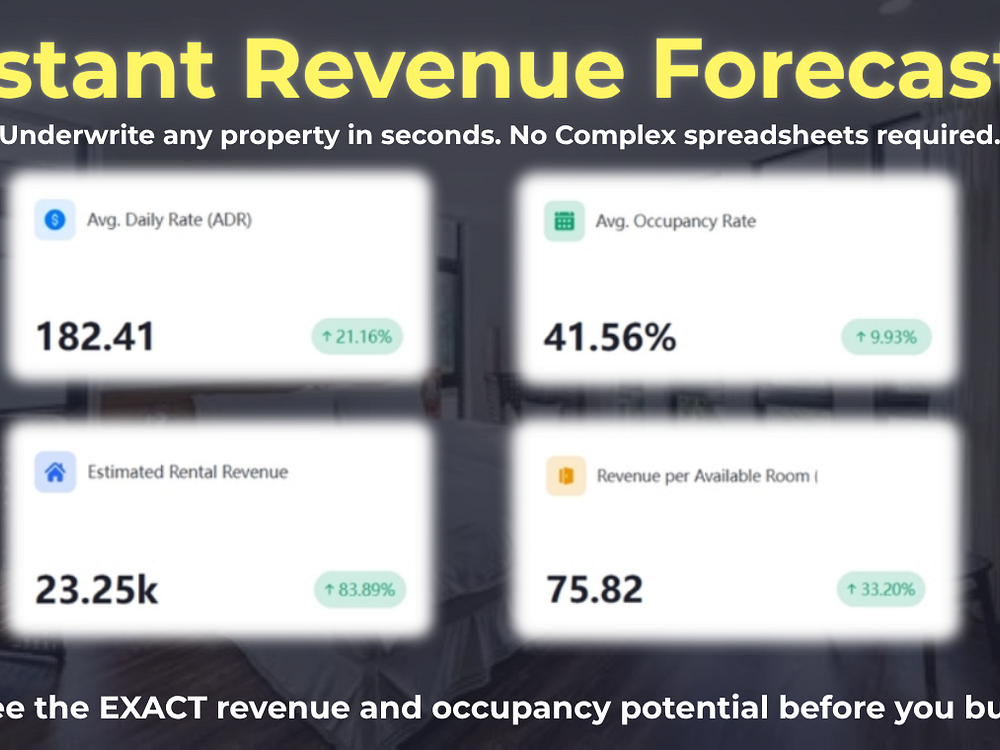
 Leon Smith, the 2026 National Teacher of the Year, reflects on his visit to Google’s campus in California.








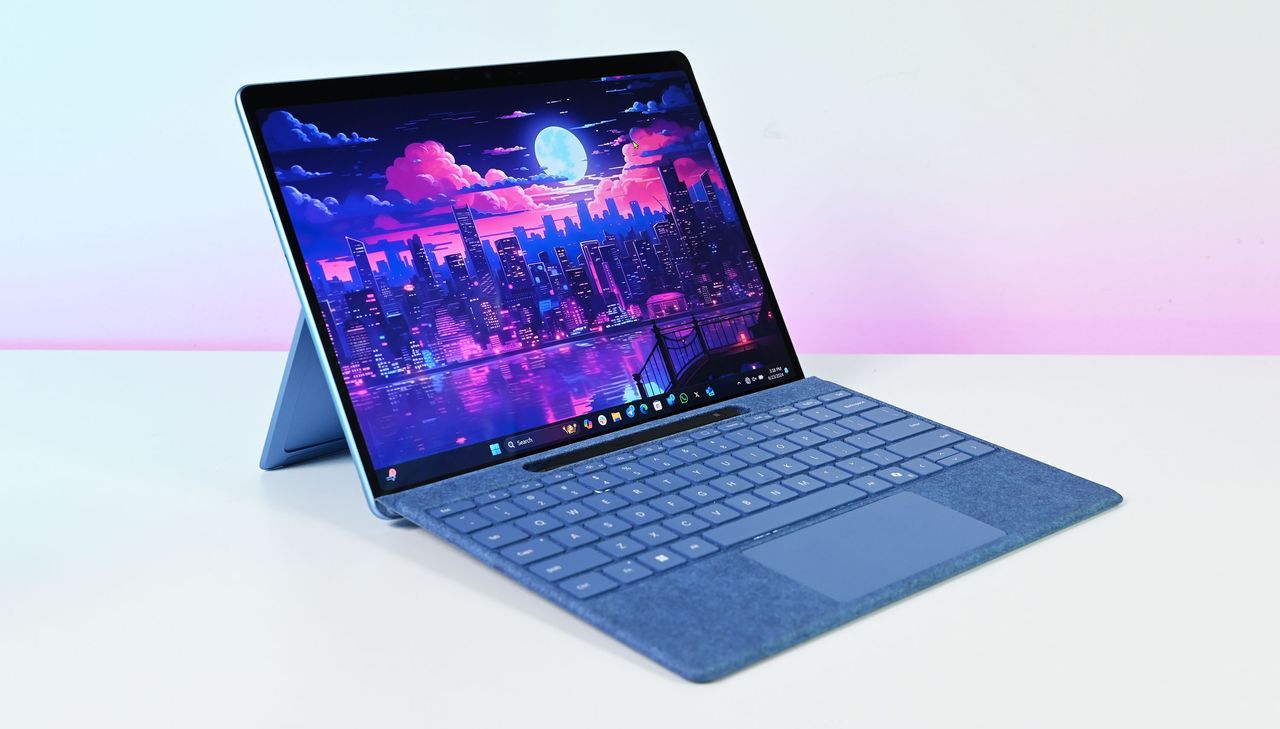
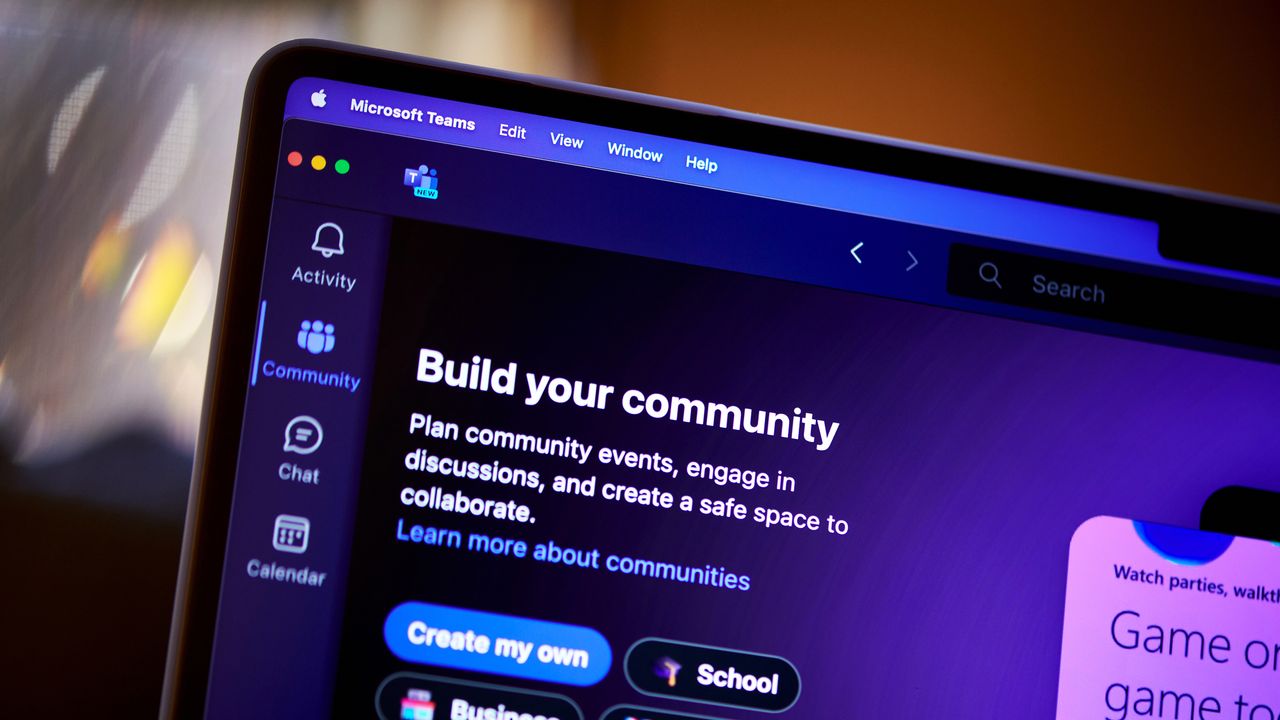

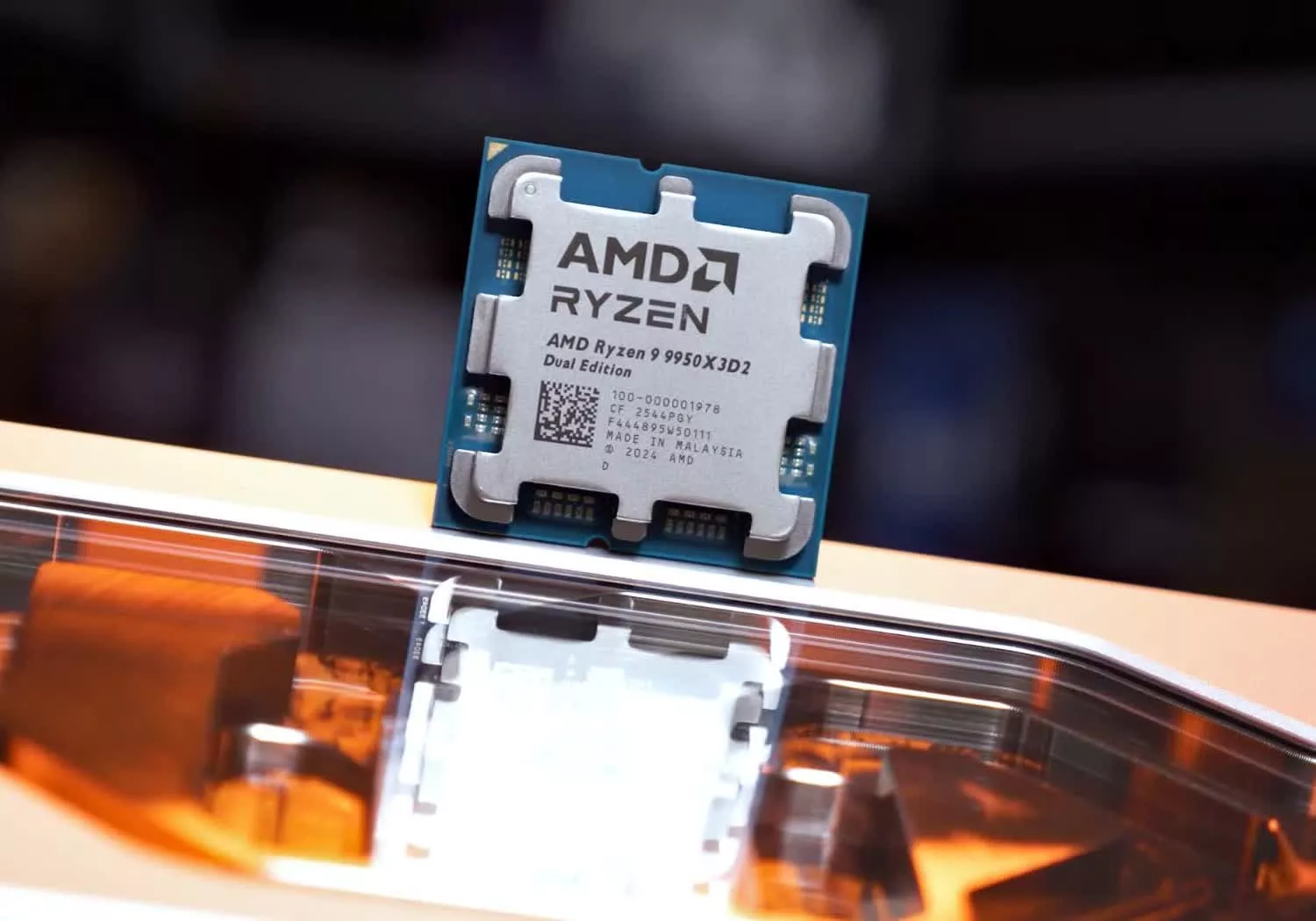

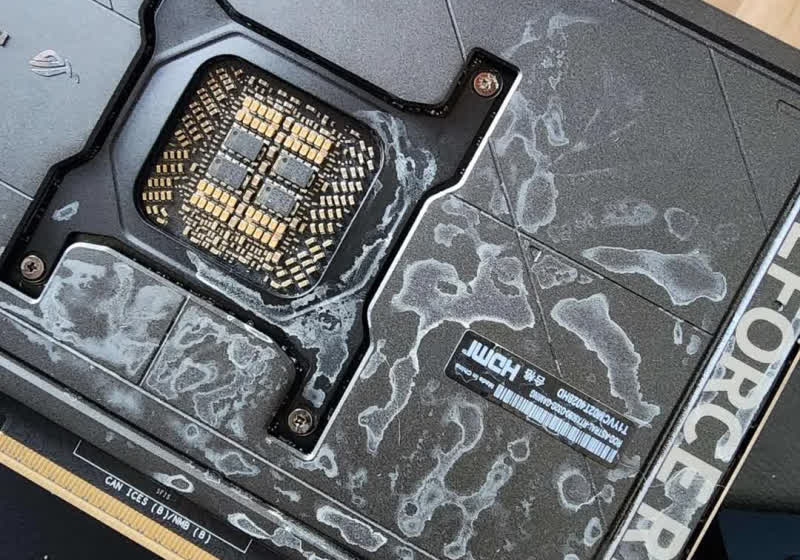


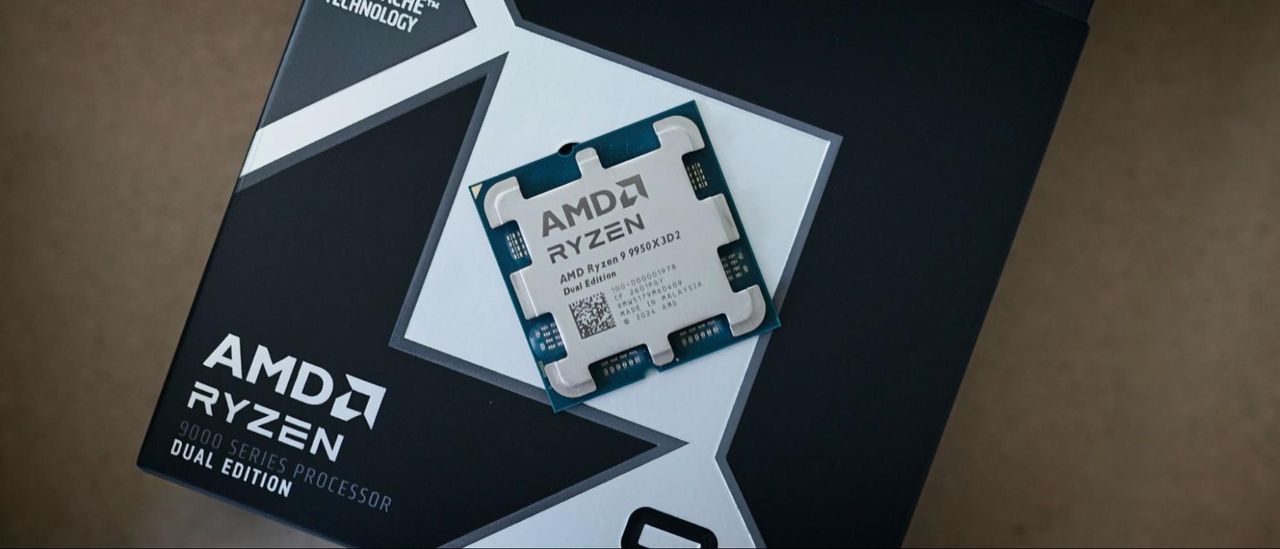

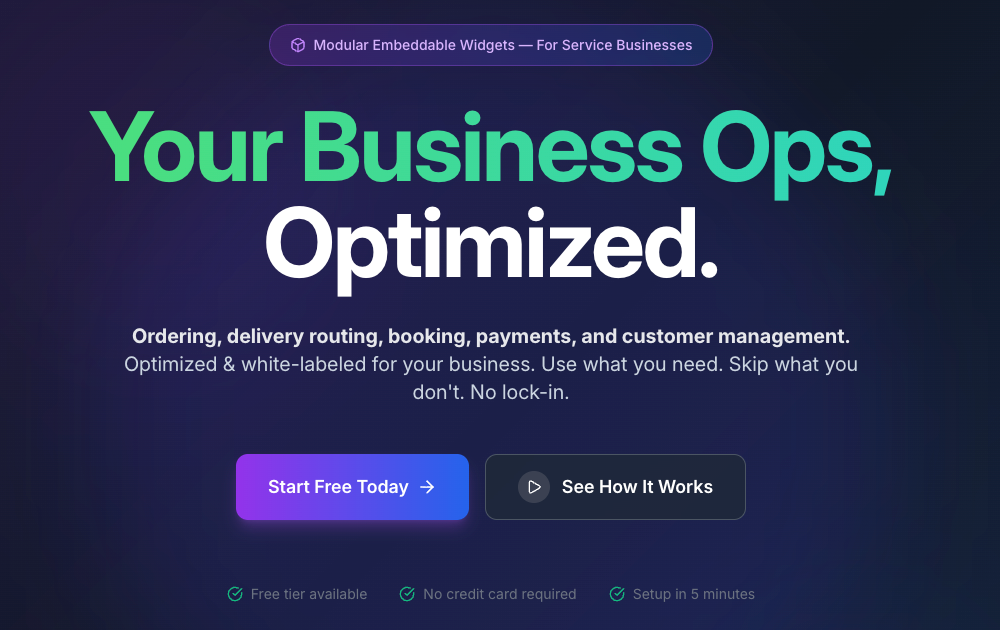






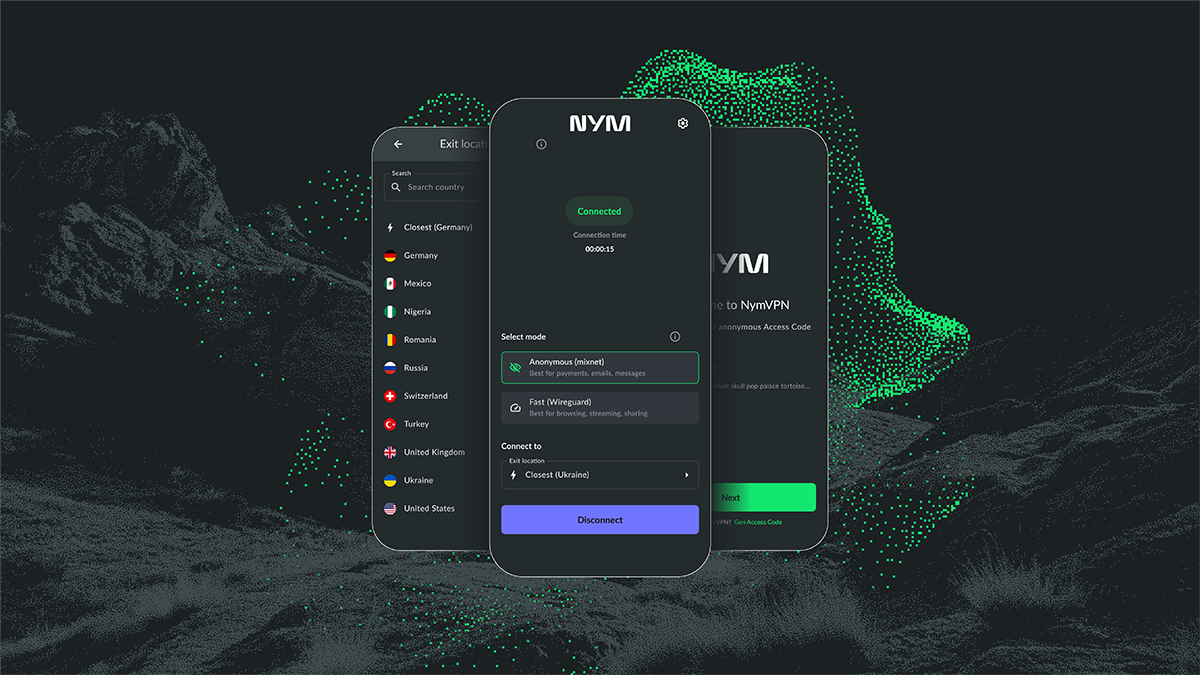








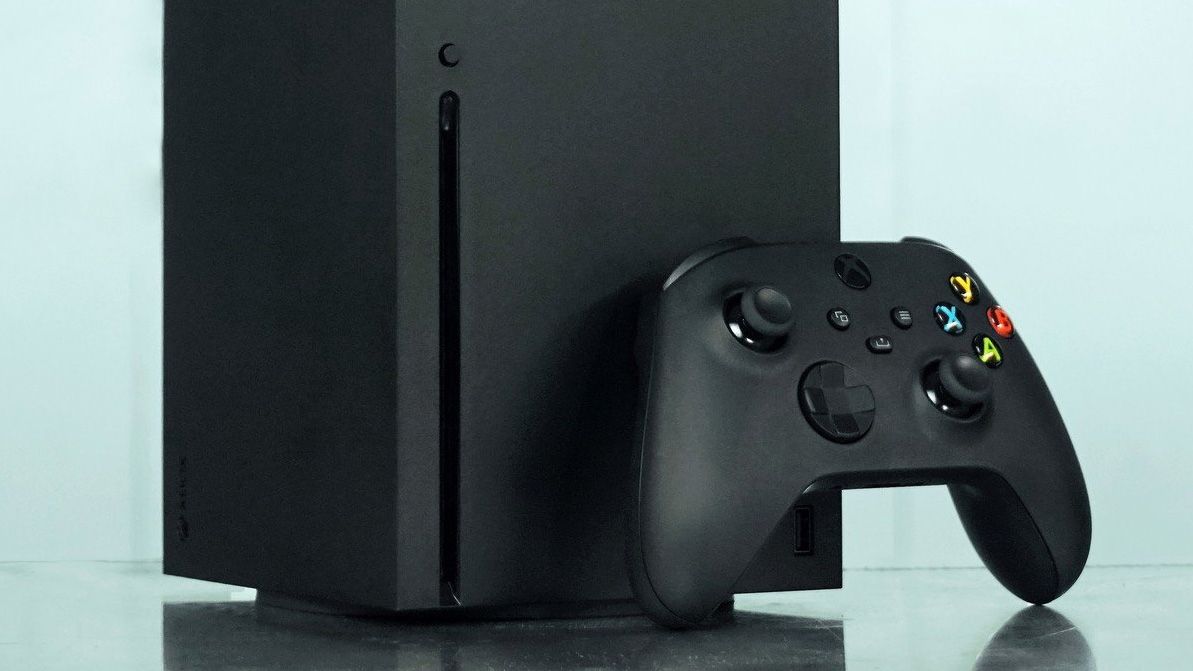










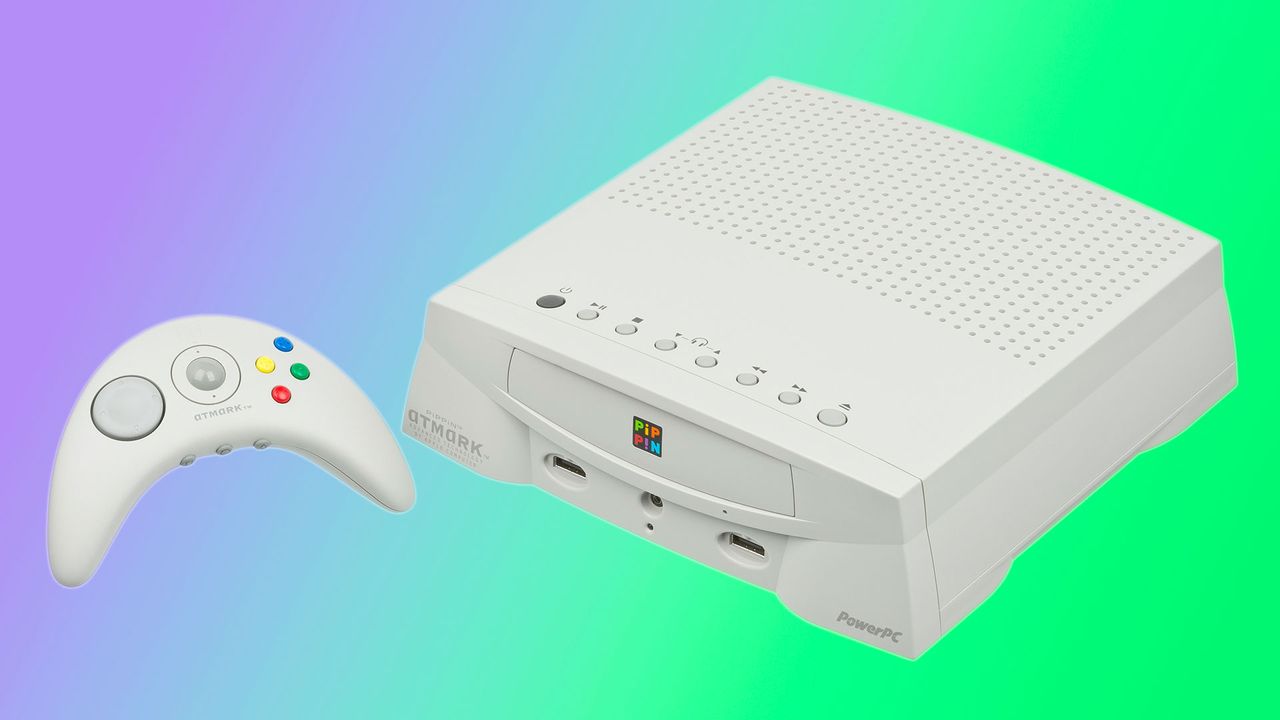
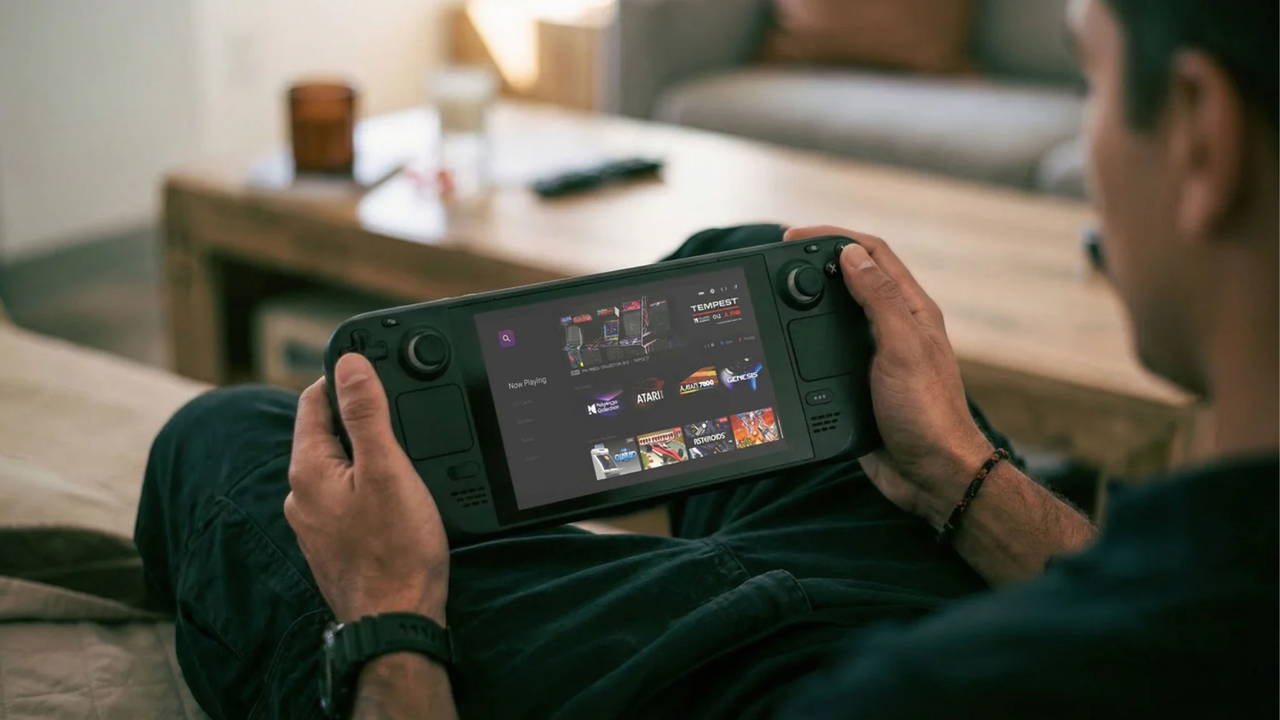

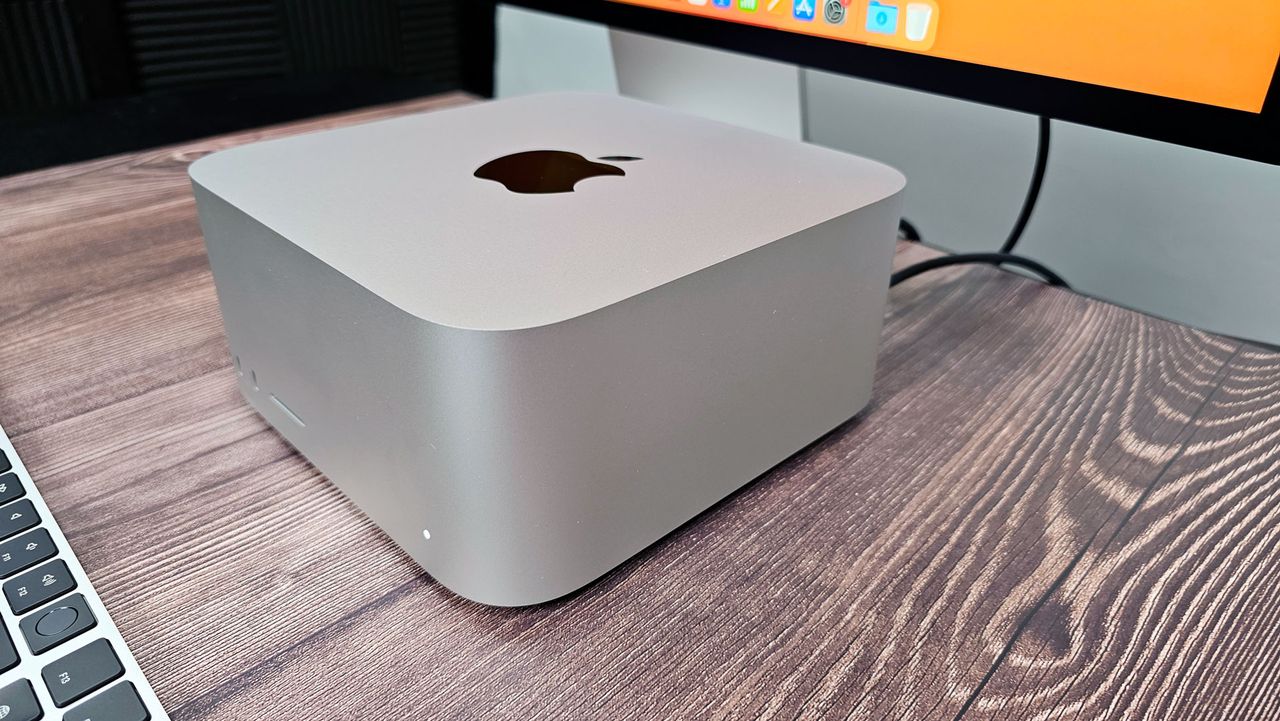
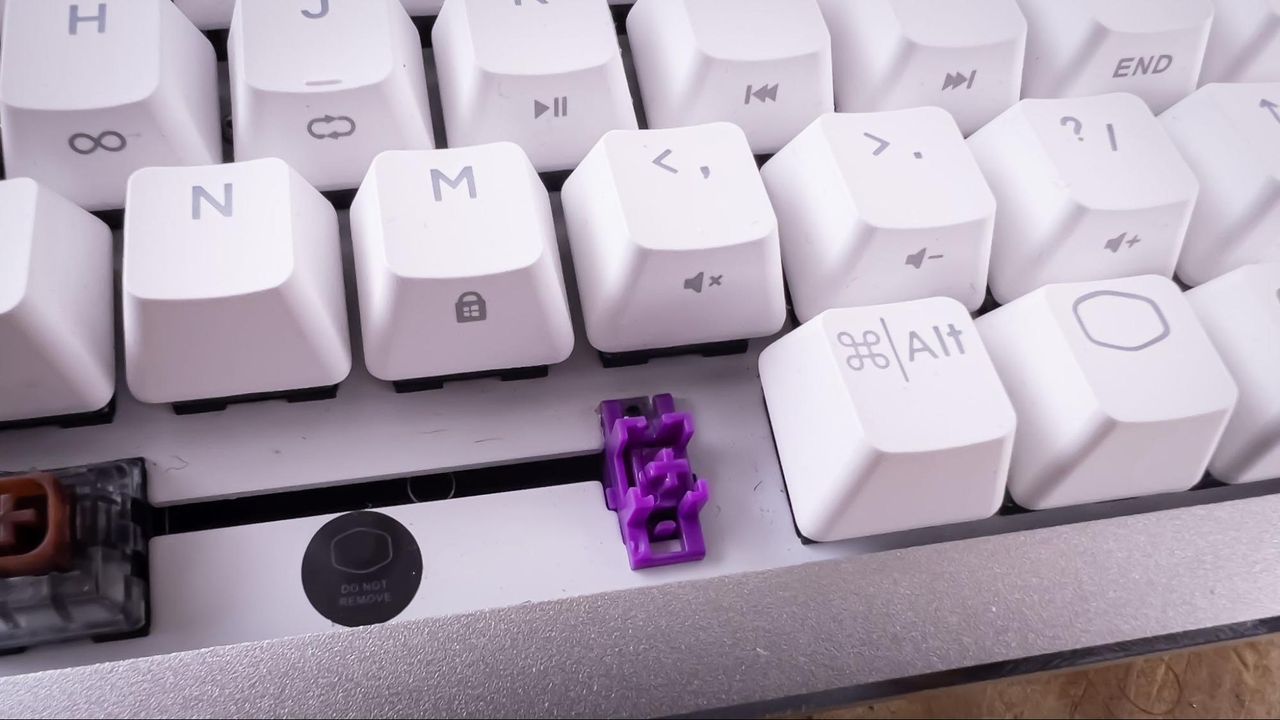

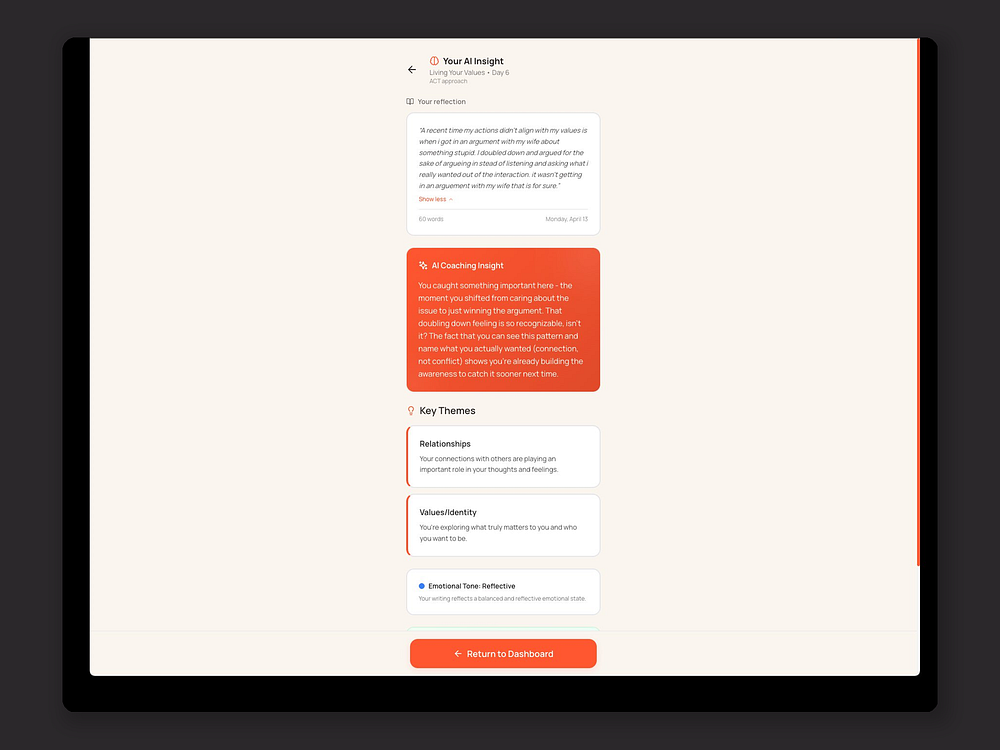




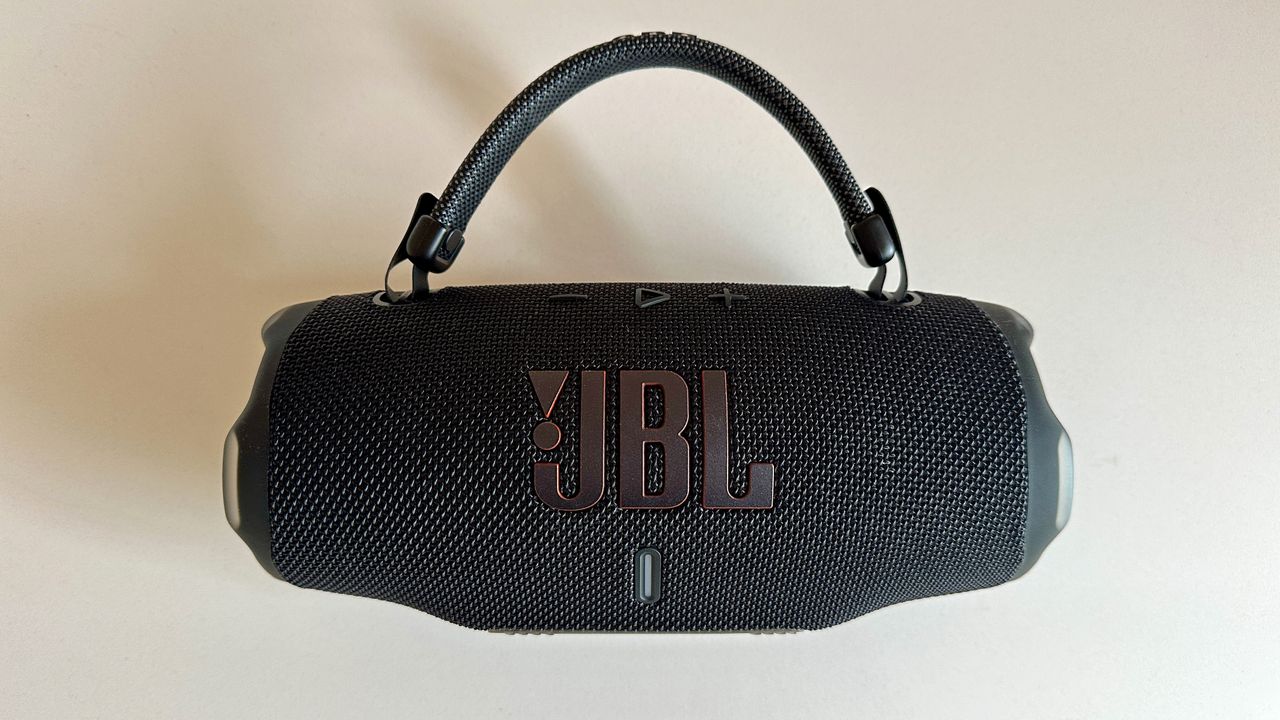










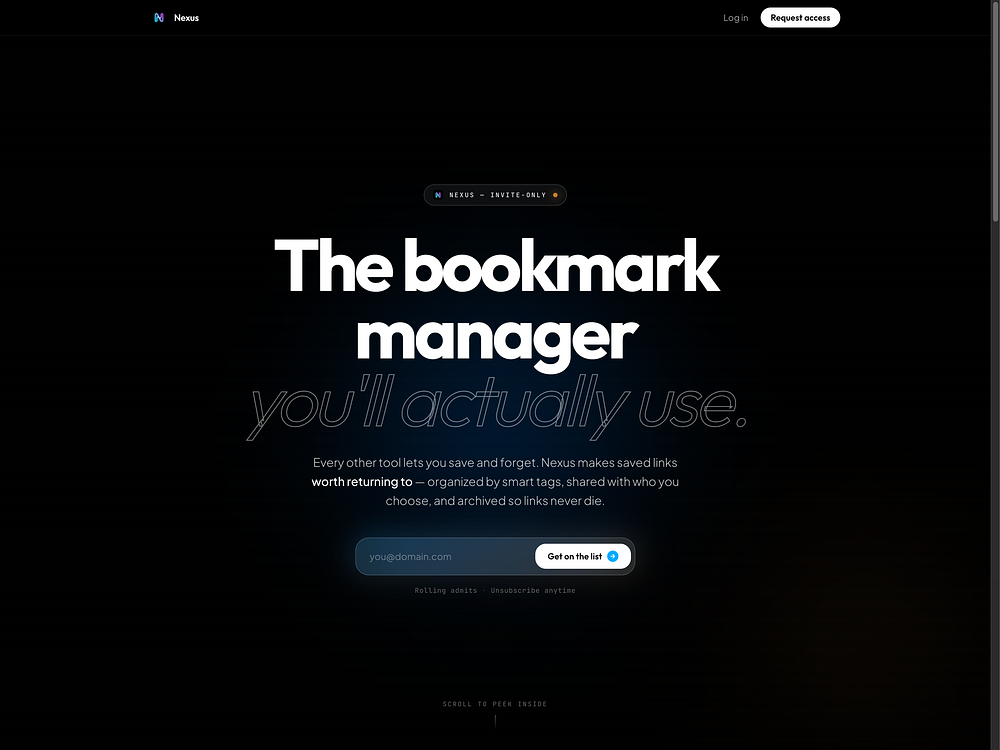
 Small businesses across the EEA, U.K. and Switzerland can now use Pomelli in English to create custom, on-brand campaigns.
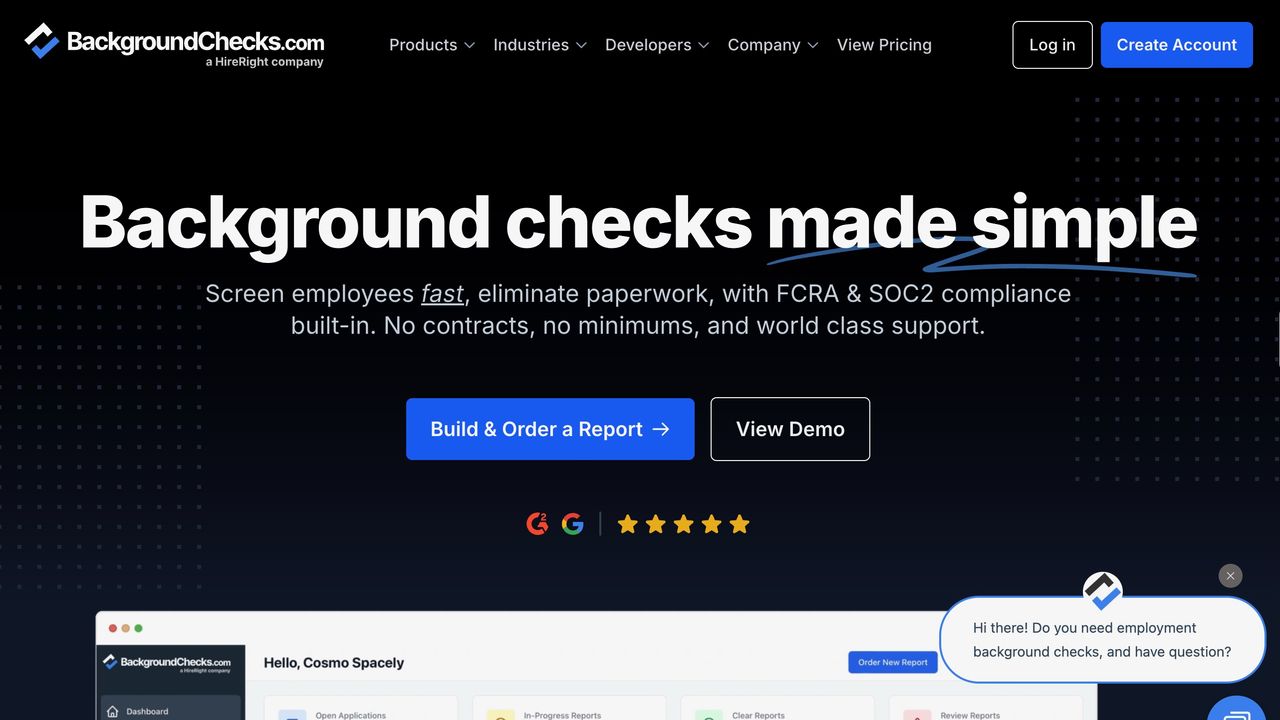


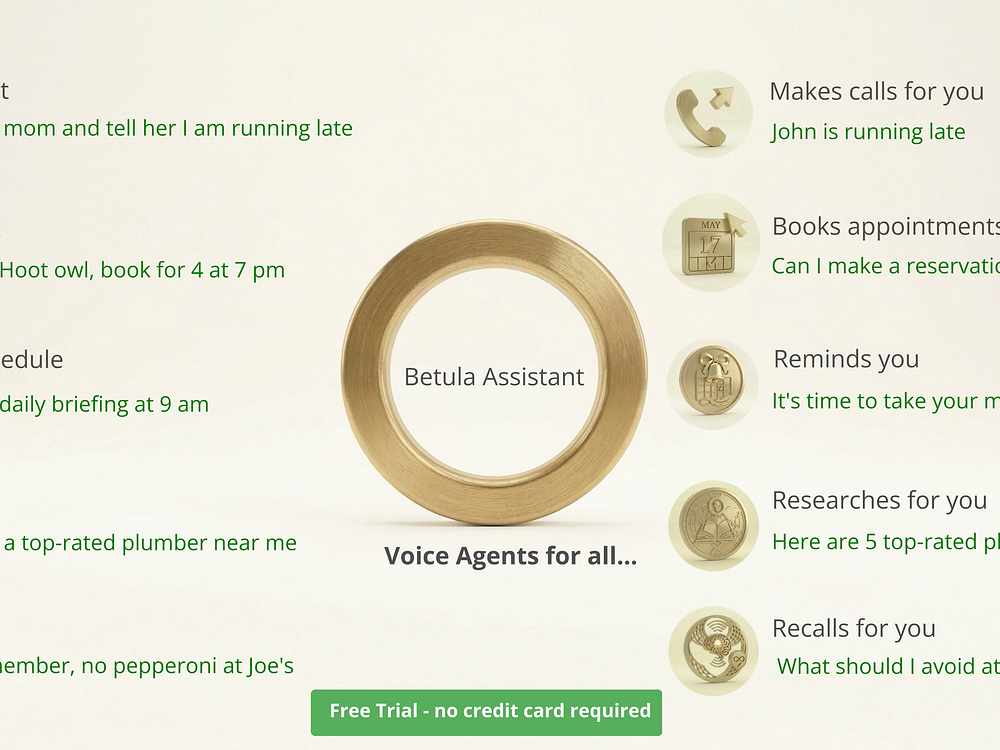

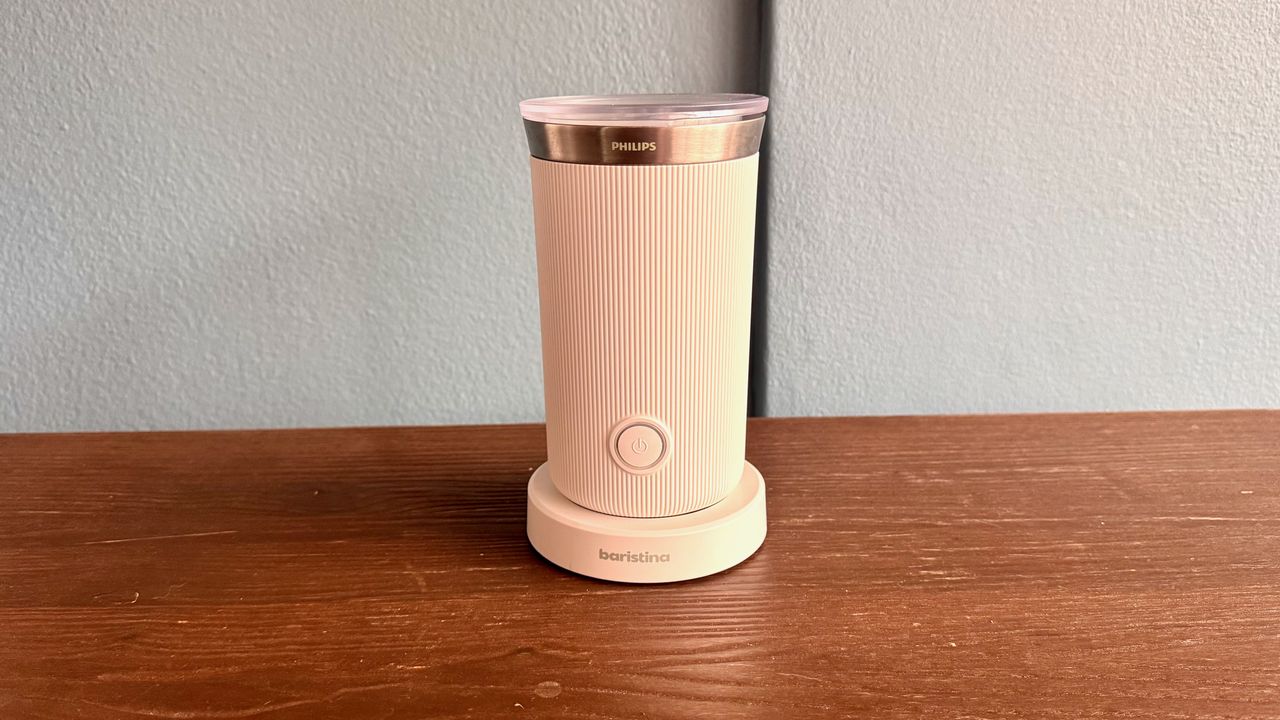


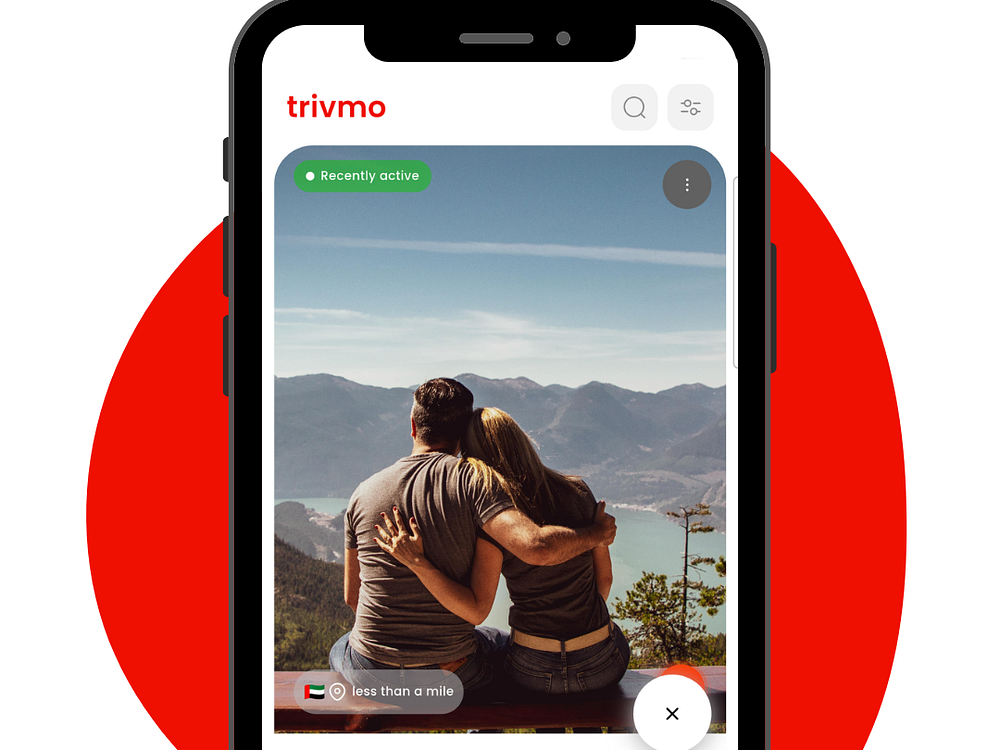
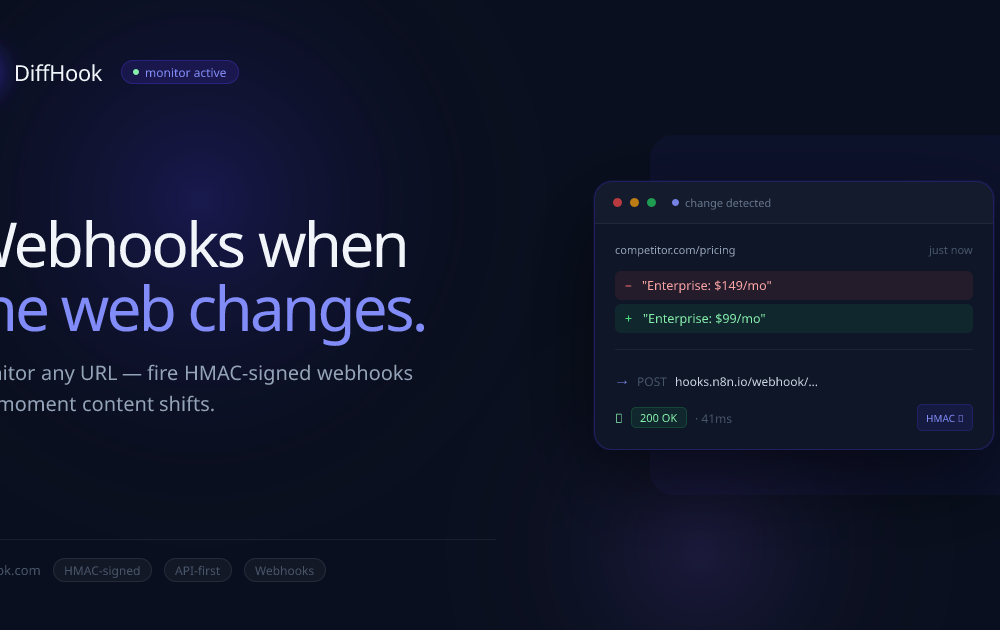

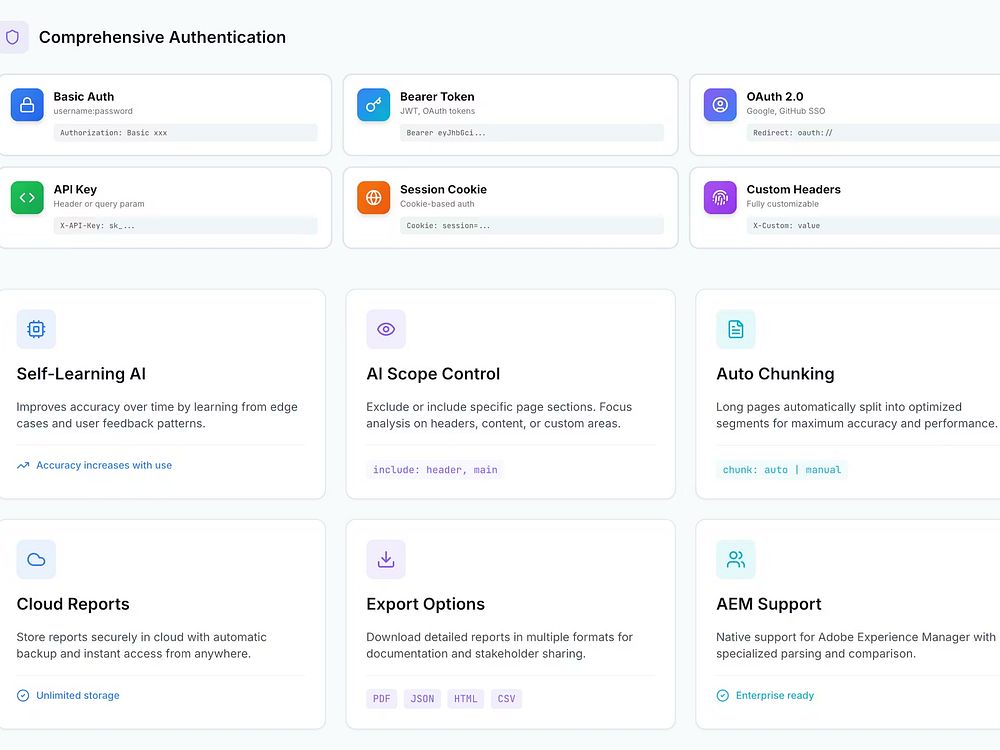
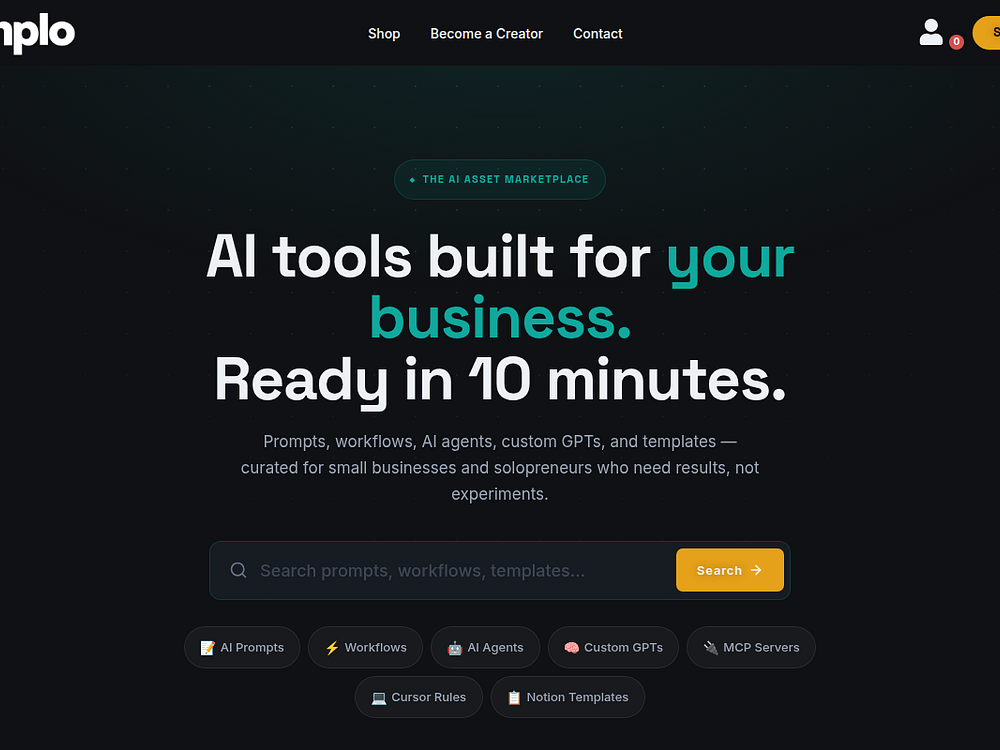
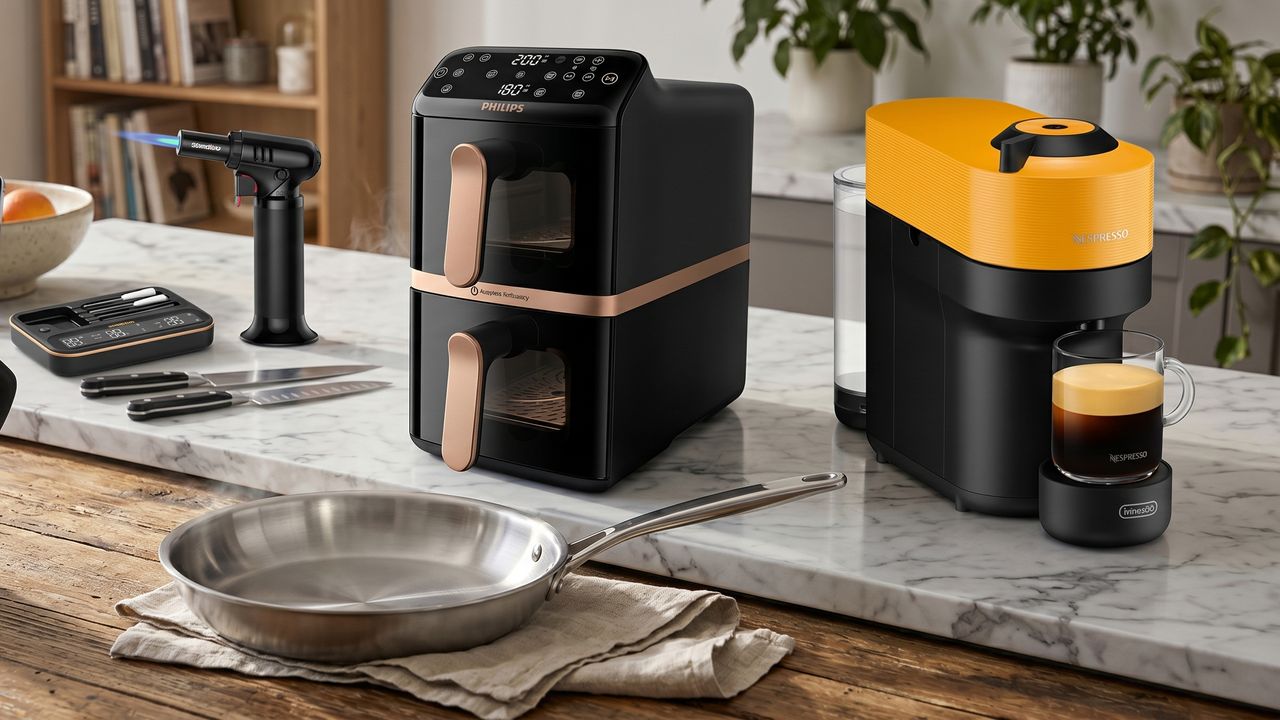



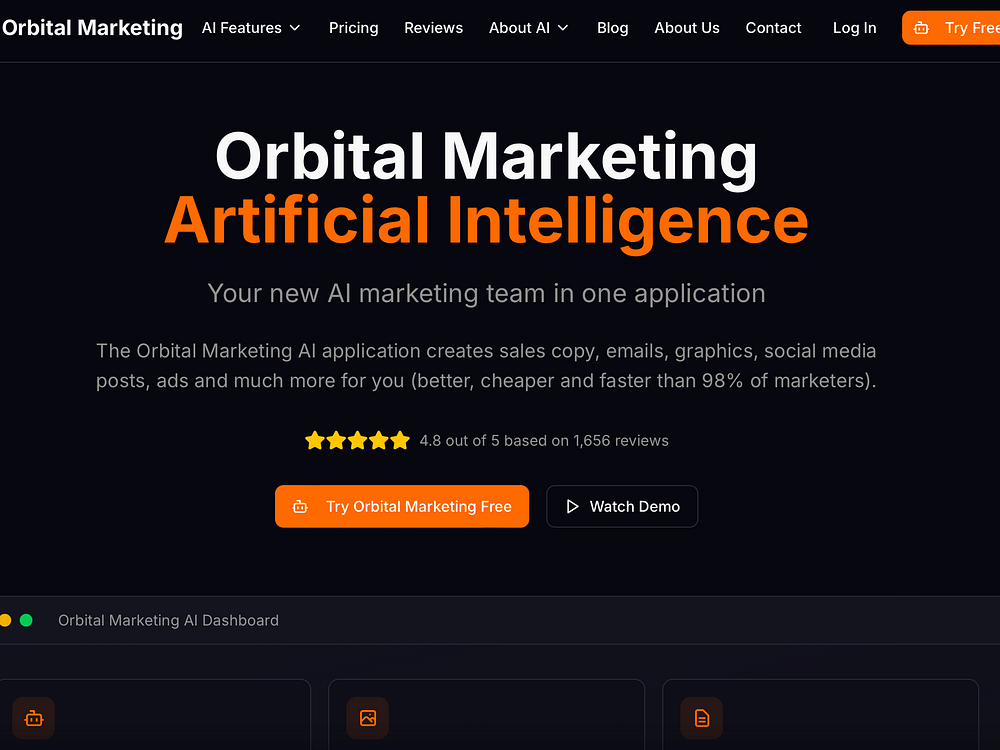
 Google is rolling out many of Chrome's latest AI features in Australia, Indonesia, Japan, Philippines, Singapore, South Korea and Vietnam.































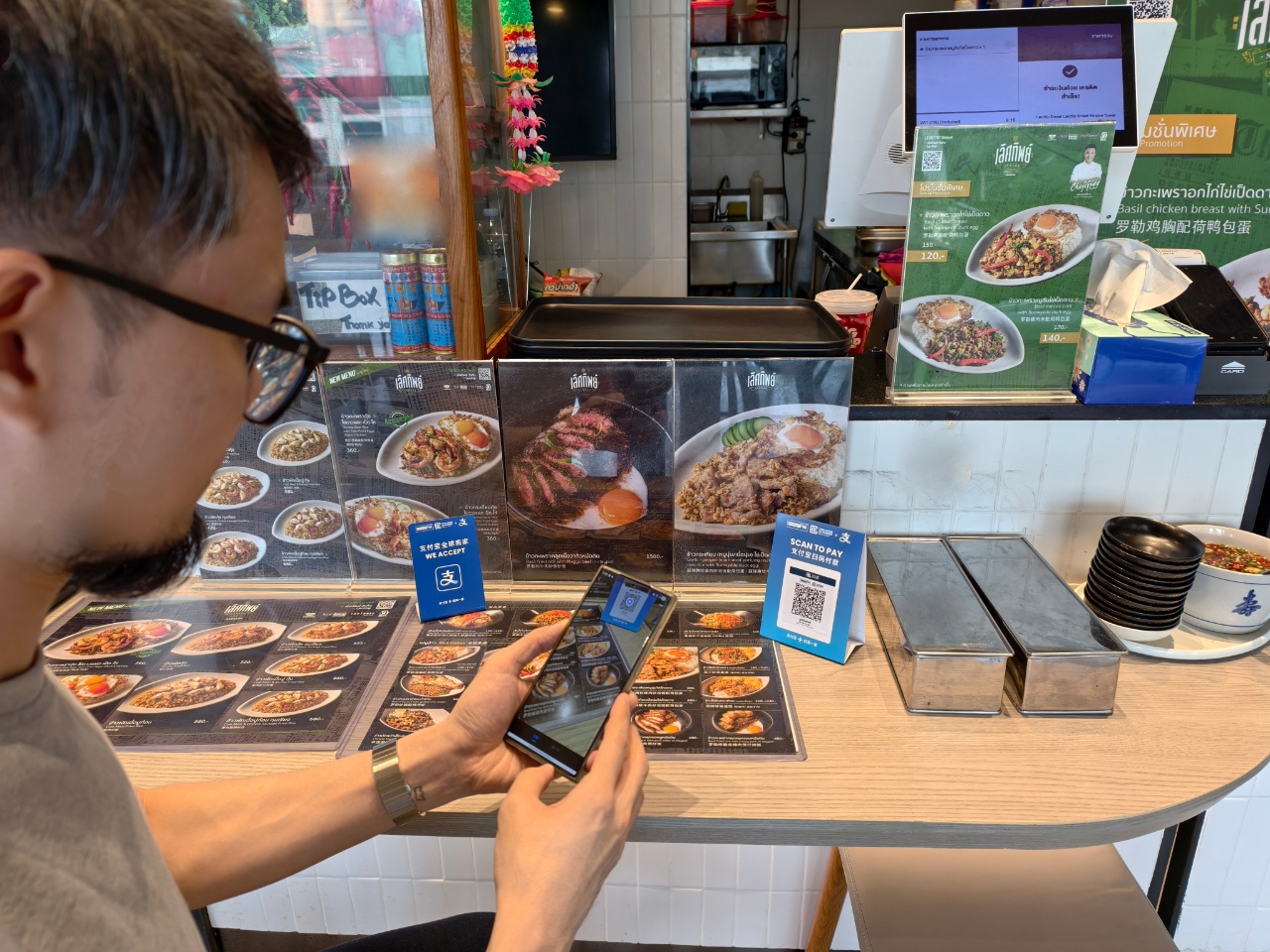




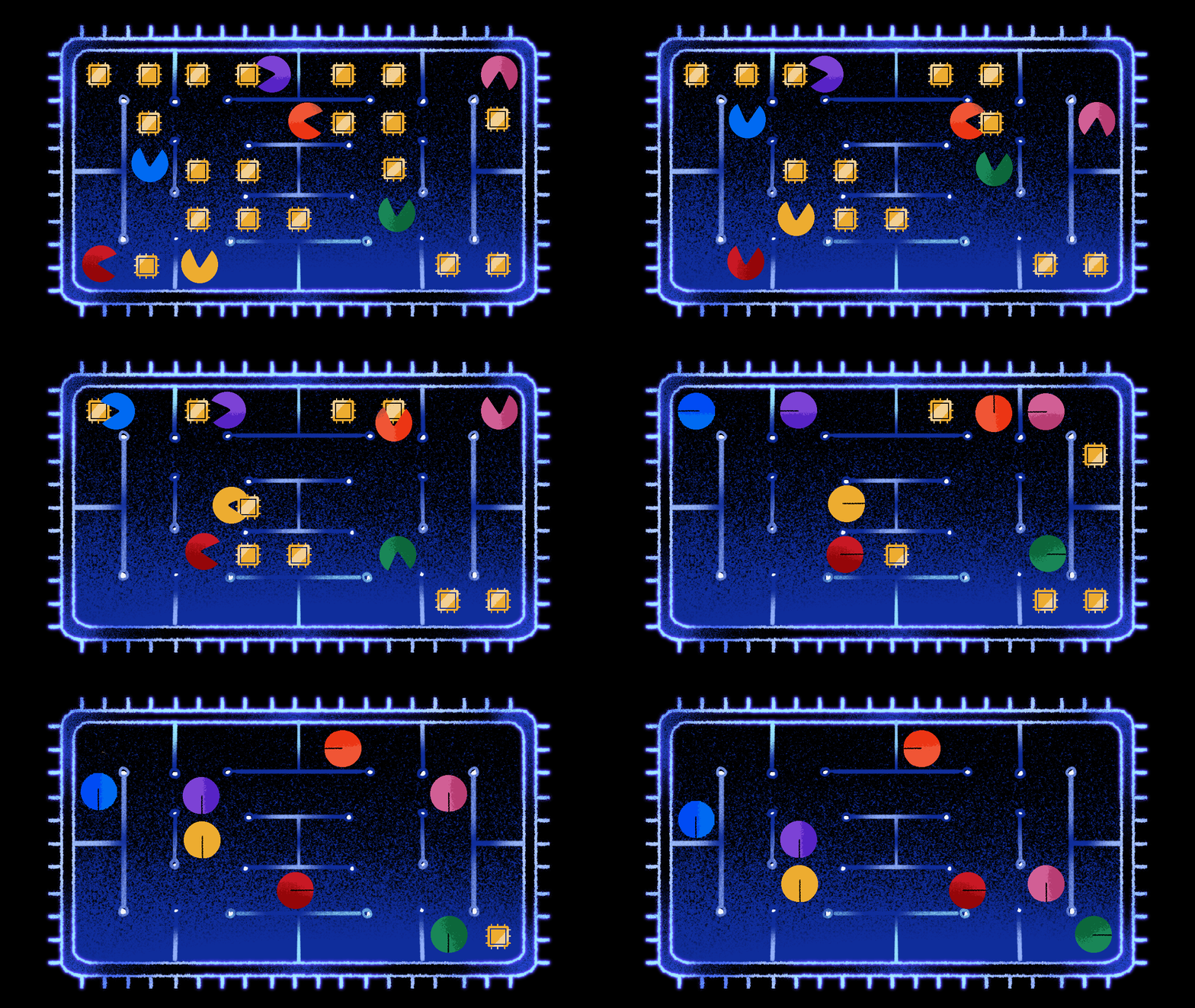
 Starting today, Google AI Pro and Ultra subscribers get increased usage limits in Google AI Studio. This update also includes access to Nano Banana Pro and Gemini Pro mo…
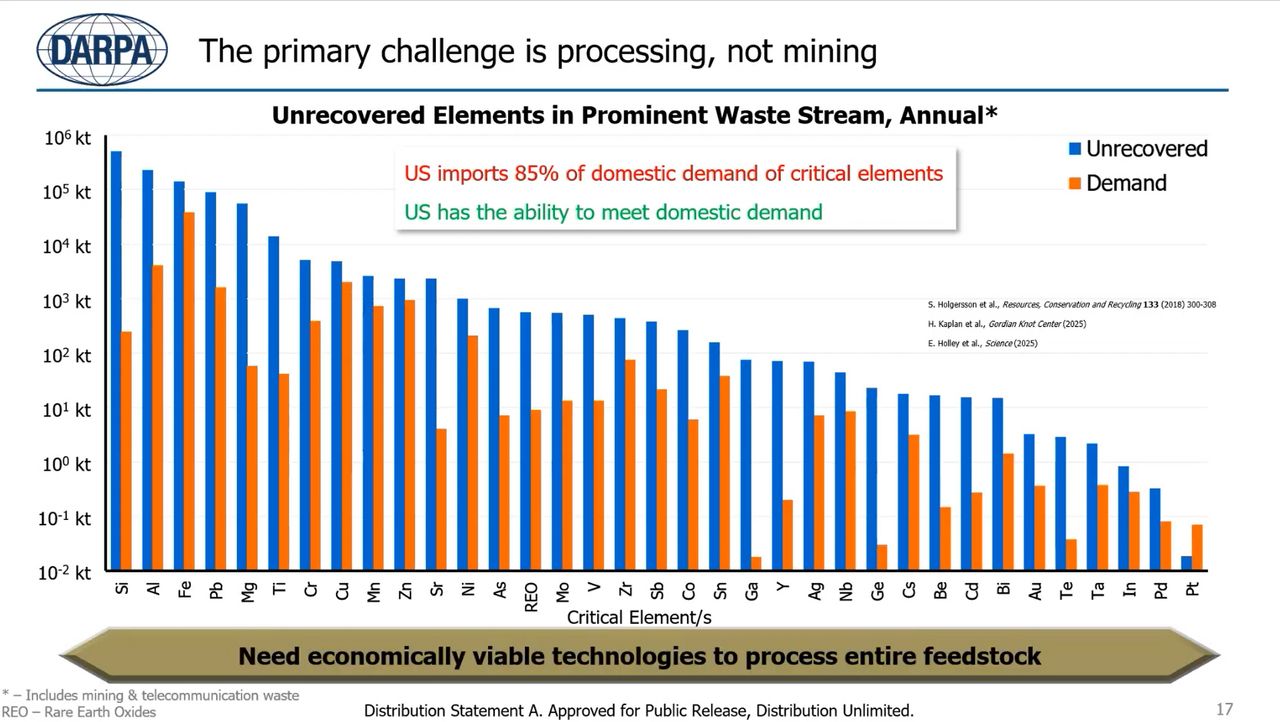


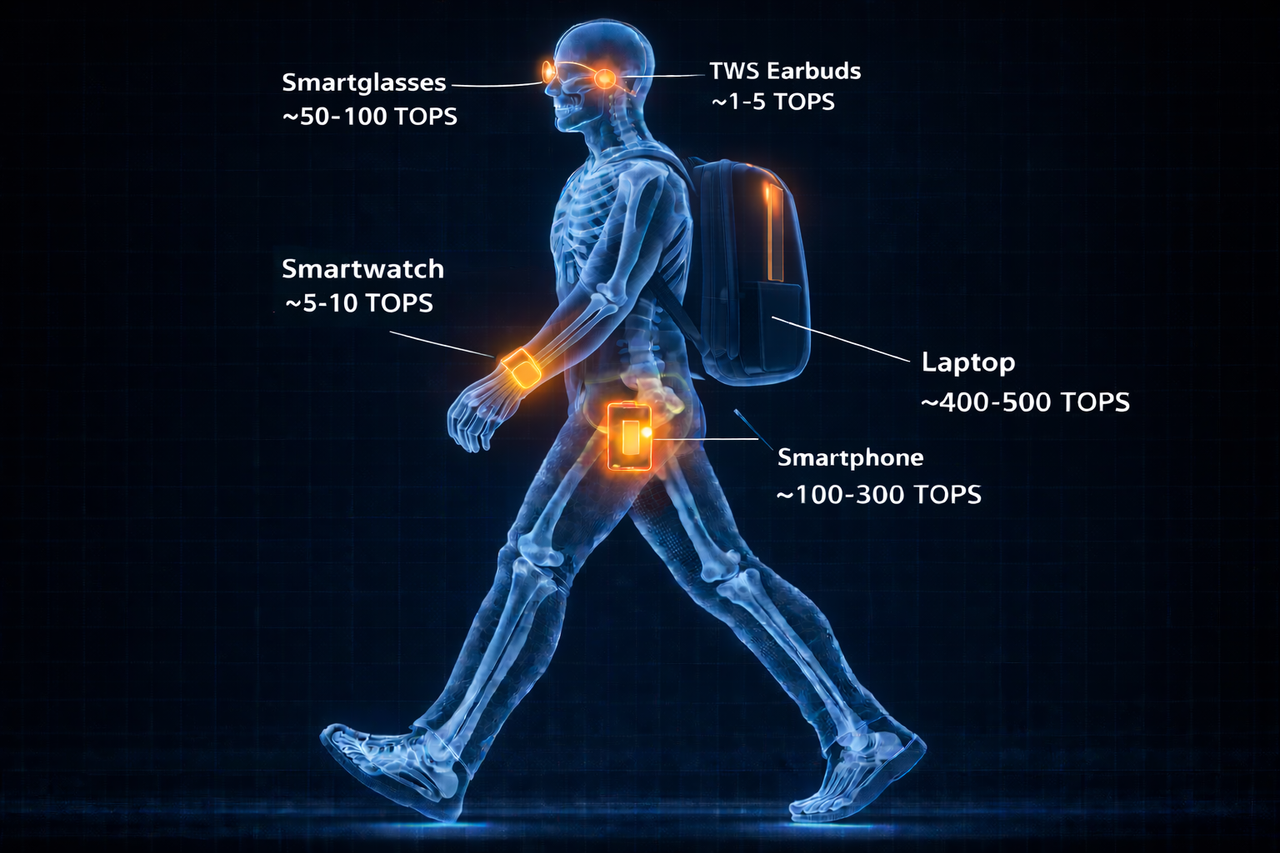


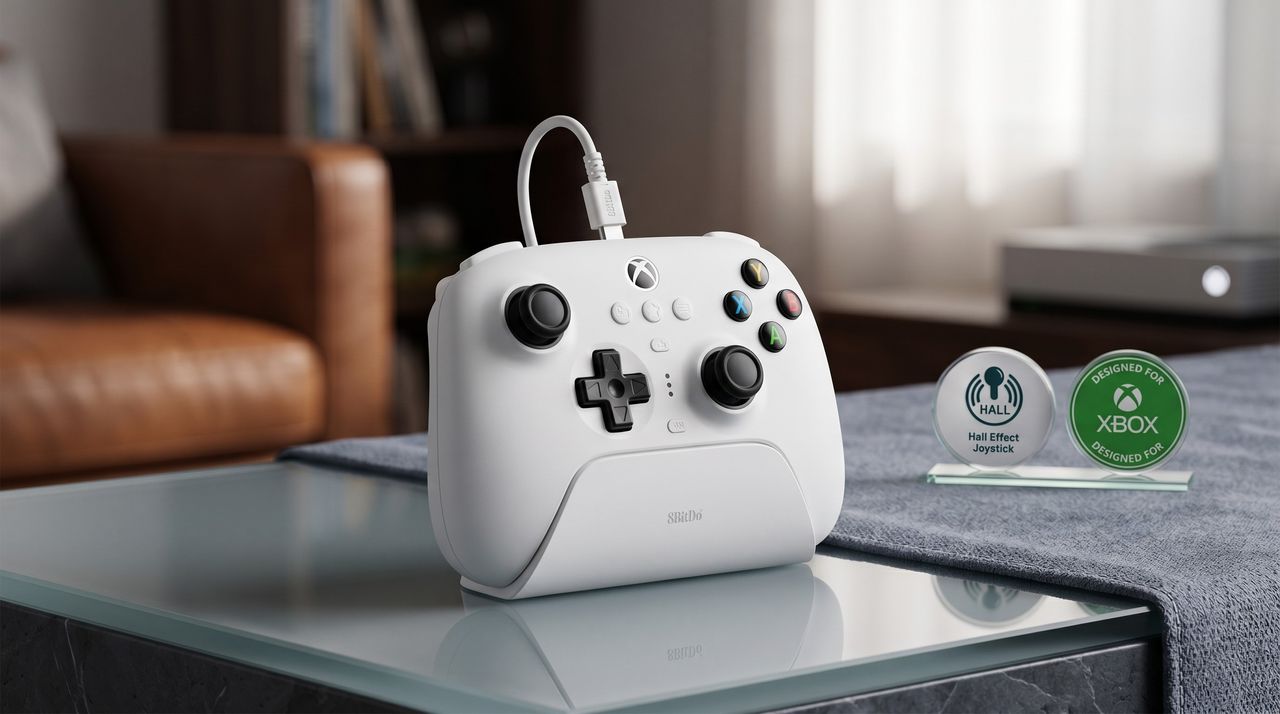





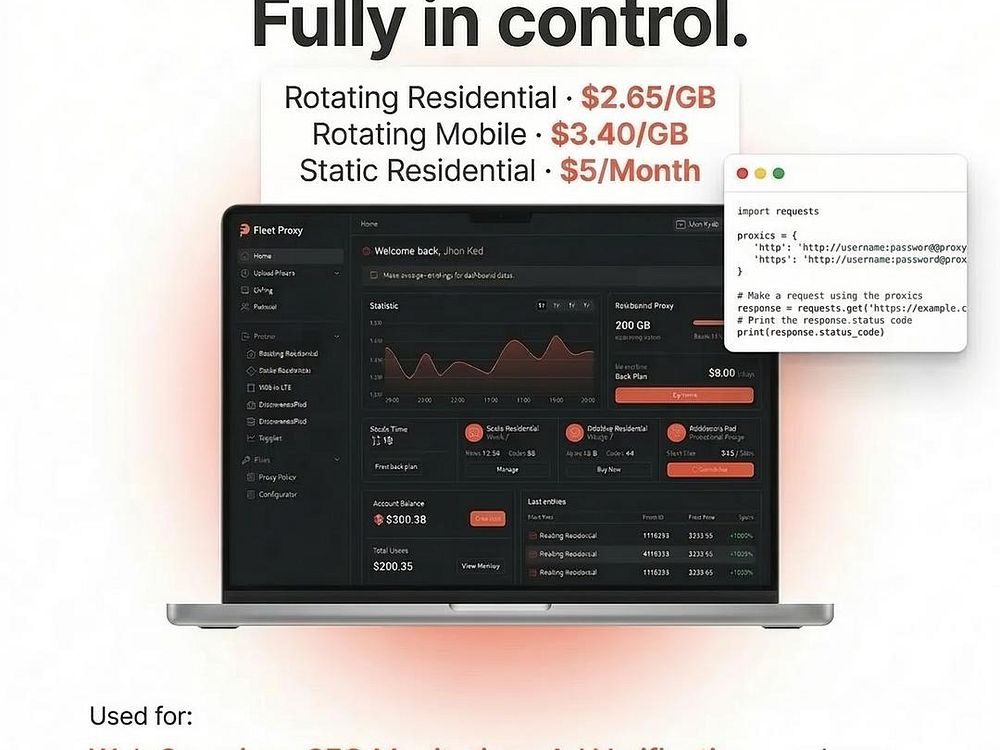





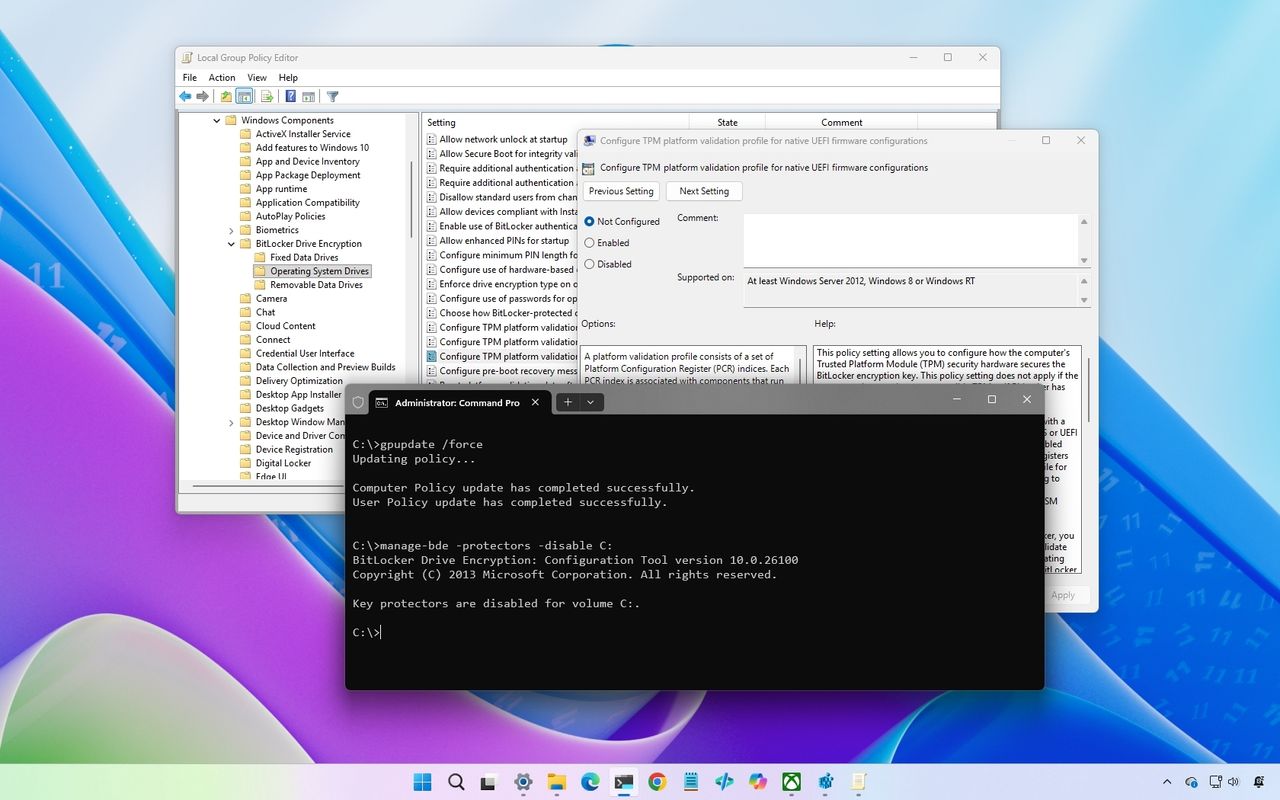


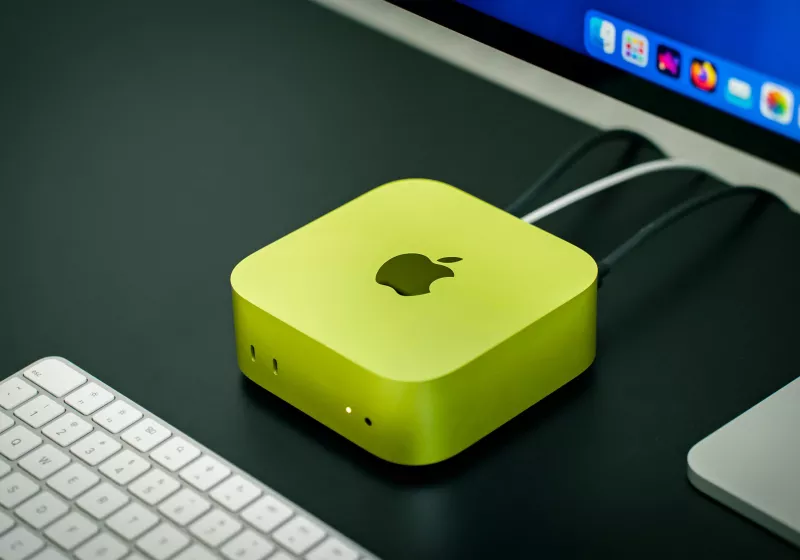







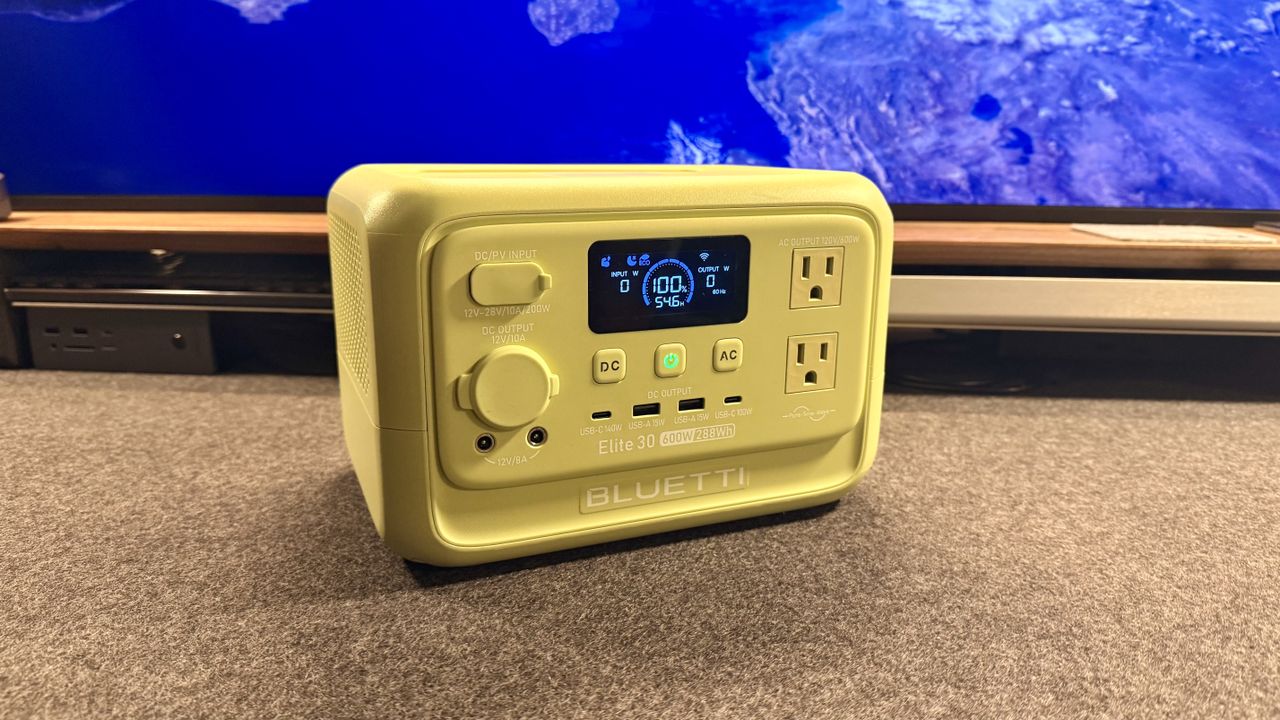
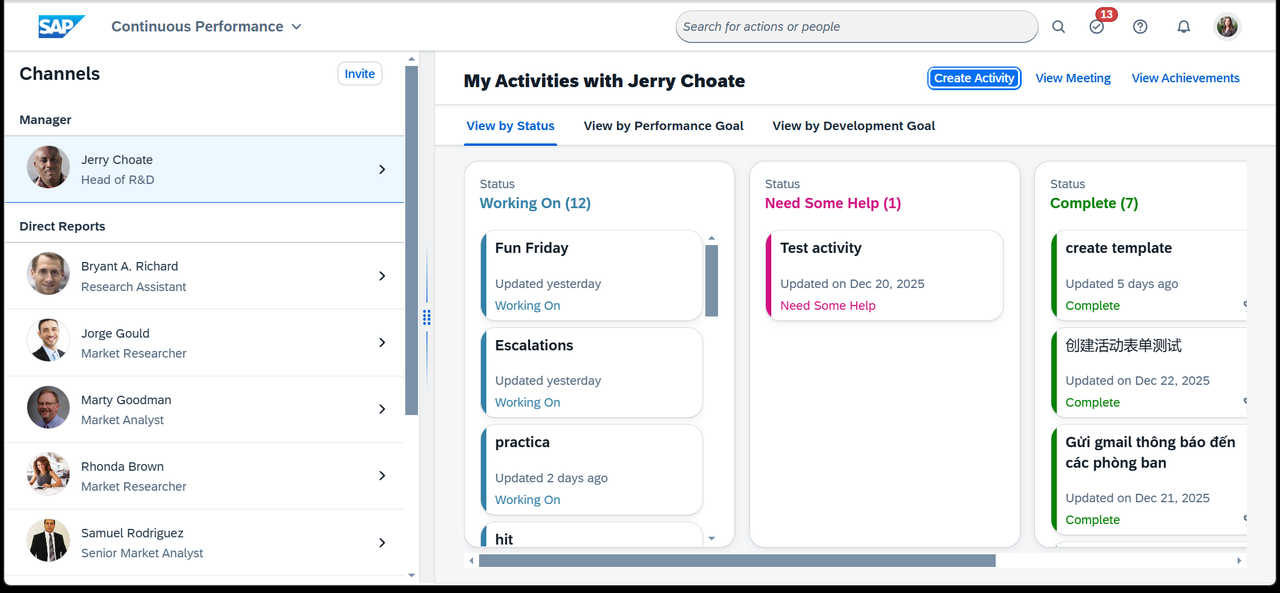







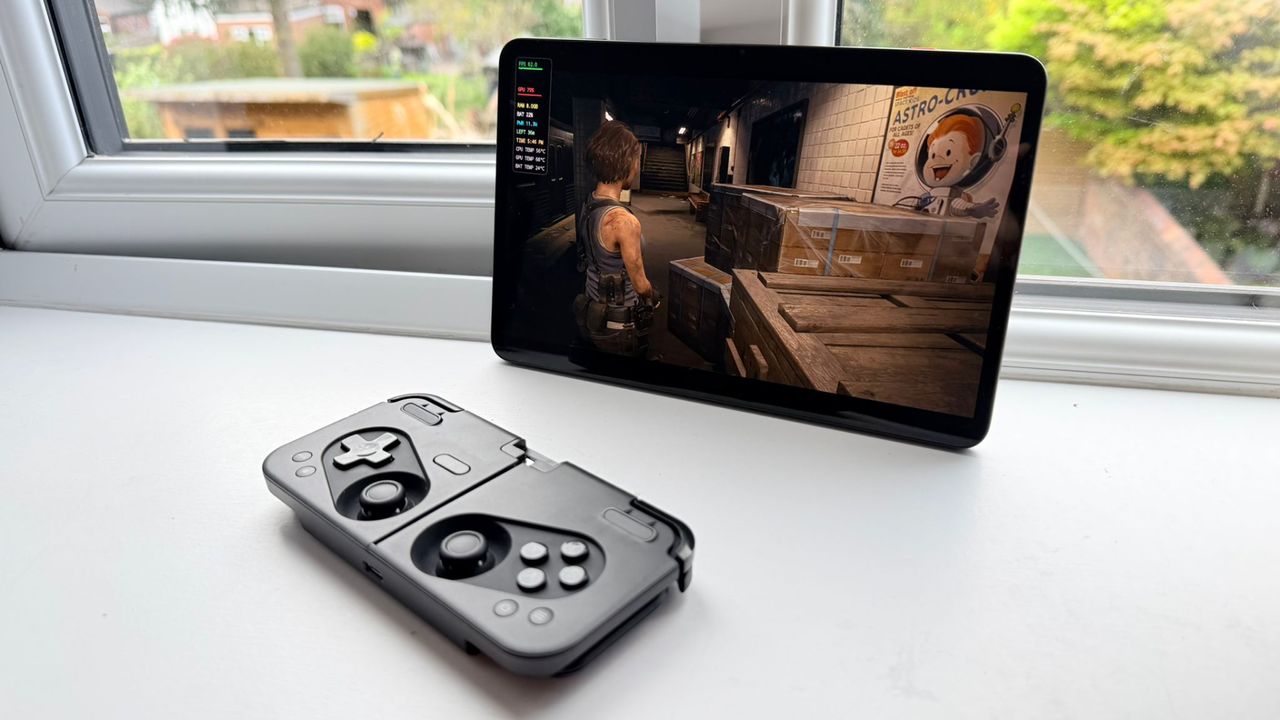
 New touch-up tools in Google Photos’ image editor let you refine skin texture, remove blemishes, brighten eyes or whiten teeth.