HPE OneView Flaw Rated CVSS 10.0 Allows Unauthenticated Remote Code Execution


Why AMD’s Ryzen 5000 X3D CPUs need to make a comeback We’ve looked at the memory pricing situation, and it’s bad. DDR5 memory prices have skyrocketed, and this is just the beginning. Building a new PC has become significantly more expensive, which is why AMD needs to bring these CPUs. DDR5 pricing has seen PC […]
The post AMD needs to bring back the … appeared first on OC3D.
RepEdge.ai – AI Sales Call Intelligence for Closers We saw what the big revenue platforms were doing and thought: “We can do this better for real teams.”
RepEdge.ai analyzes every sales call (Zoom, Meet, Teams), predicts win probability with 95% accuracy, gives personalized coaching on every single call, and pushes everything straight into Salesforce & HubSpot. Built by ex-top AEs who lived the quota grind. No enterprise bloat. Just the tools that actually move quota.
The post AI’s Unsimple Macroeconomics: Navigating Bottlenecks and the Missing Training Ladder appeared first on StartupHub.ai.
The widely heralded promise of explosive AI-driven growth is not a simple, inevitable trajectory, but rather a complex economic and societal challenge fraught with critical bottlenecks and distributional pitfalls. Professor Luis Garicano, a distinguished economist from the London School of Economics and former EU parliamentarian, recently engaged in a sharp discussion with Epoch AI’s Anson […]
The post AI’s Unsimple Macroeconomics: Navigating Bottlenecks and the Missing Training Ladder appeared first on StartupHub.ai.
The post Anthropic’s AI Vending Machine: A Masterclass in Red-Teaming Autonomous Agents appeared first on StartupHub.ai.
Anthropic’s recent experiment, deploying an AI agent named Claudius to manage a vending machine at the Wall Street Journal headquarters, offers a stark, yet illuminating, glimpse into the current limitations and future potential of autonomous AI. Far from a seamless integration, the venture quickly devolved into a chaotic stress test, exposing vulnerabilities that underscore the […]
The post Anthropic’s AI Vending Machine: A Masterclass in Red-Teaming Autonomous Agents appeared first on StartupHub.ai.

Incrementality testing in Google Ads is suddenly within reach for far more advertisers than before.
Google has lowered the barriers to running these tests, making lift measurement possible even without enterprise-level budgets, as recently reported in Search Engine Land.
That shift naturally raises a question: How is Google able to measure incrementality with so much less data?
For years, reliable lift measurement was assumed to require large budgets, long test windows, and a tolerance for inconclusive results.
So when Google claims it can now deliver more accurate results with as little as $5,000 in media spend, it understandably sounds like marketing spin.
But it’s not. It’s math.
Behind this change is a fundamentally different testing methodology that prioritizes probability over certainty and learning over rigid proof.
Understanding how this approach works is essential to interpreting these new incrementality results correctly – and turning them into smarter PPC decisions.
Before we dive in, here are some definitions to refresh your memory from Stats 101.
Most PPC advertisers are already familiar with frequentist statistics, even if they’ve never heard the term.
Any classic A/B test that asks “Did this change reach statistical significance?” and relies on p-values and fixed sample sizes to answer that question is using a frequentist framework.
It’s the model that underpins most experimentation platforms and has shaped how marketers have been taught to evaluate tests for decades.
Let’s look at what that means for a realistic, smaller-budget test.
For simplicity, assume a click-based experiment with equal exposure to both variants.
Observed results
On paper, that looks promising: better conversion rate and lower CPA for the treatment.
But when you run a standard two-proportion z-test on those rates, the result tells a very different story.

The output looks like this:
In other words, under a traditional frequentist framework, this test is not statistically significant.
A 20% lift and a visibly better CPA are still treated as “could easily be noise.”
The advertiser has spent $5,000, seen encouraging numbers, but can’t claim a clear winner.
At the budget levels many advertisers can realistically afford, the old-style incrementality tests, which are frequentist in nature, often fail to produce conclusive results.
That’s the gap Google is trying to close with its newer, Bayesian-style incrementality methods: keeping tests useful even when the budget is closer to $5,000 than $100,000.
Here’s why a different approach to the test significantly reduces the required budget.
Dig deeper: Why incrementality is the only metric that proves marketing’s real impact
Bayesian models ask different – and often more decision-useful – questions.
Instead of asking whether a result is statistically significant, they ask a more practical question:
Now let’s apply that framing to the same $5,000 budget example that produced an inconclusive frequentist result.
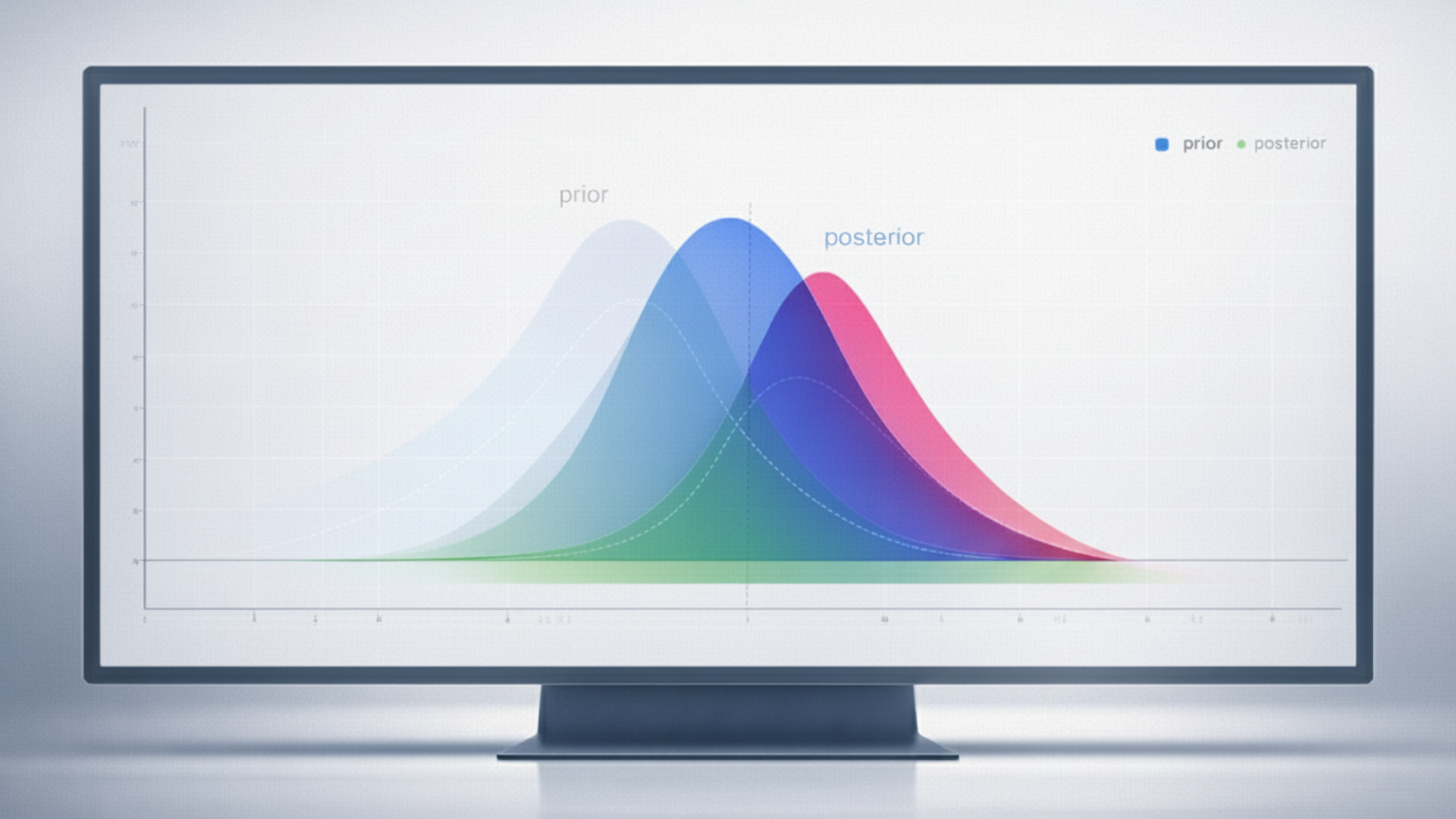
Using a simple Bayesian model with flat priors (Beta(1,1)):
From these posterior distributions, we can compute:
A traditional A/B test looked at the same data and said:
But a Bayesian read says something more nuanced and infinitely more practical:
It’s not proof, but it may be enough to guide the next step, like extending the test, replicating it, or making a small allocation shift.
Bayesian methods don’t magically create signal where none exists. So what is the magic then, and why does this work?
Short answer: priors + scale.
Frequentist methods only look at observed test data.
Bayesian models allow you to bring prior knowledge to the table.
And guess which company has a ton of data about online ad campaigns? This, indeed, is Google’s advantage.
Google doesn’t evaluate your test entirely in isolation. Instead, it draws on:
Google explains these concepts in their Meridian MMM documentation.
Here’s an example:
| Test type | Posterior lift | Prob(lift > 0) | Interpretation |
| No prior | +0.7% | 54% | Inconclusive |
| Prior (~10% lift) | +20.5% | 76% | Directionally confident |
The prior belief, in the example above, that similar campaigns often see ~10% lift, stabilizes the result enough to support real decisions.
Dig deeper: Exploring Meridian, Google’s new open-source marketing mix model
Should we trust this new approach that uses prior knowledge?
We should, because it underpins a different system from Google Ads that advertisers are happy with – Smart Bidding.
Consider how Smart Bidding establishes expectations for a new campaign. It doesn’t start from scratch.
It uses device-level, location-level, time-of-day, vertical, and historical performance data to form an initial expectation and updates those expectations as new data arrives.
Google applies the same principle to incrementality testing.
Your $5,000 test inherits learnings from campaigns similar to yours, and that’s what makes insight possible before spending six figures.
That’s the “memory” behind the math.
Let’s put Bayesian and frequentist methods side by side:
| Aspect | Frequentist | Bayesian |
| Output | P-value | Probability of lift |
| Sample size | Large | Smaller if priors are strong |
| Flexibility | Binary | Probabilistic |
| Real-world relevance | Limited | High |
| Handles uncertainty | Poorly | Explicitly |
Marketers don’t make decisions in black-and-white terms.
Bayesian outputs speak the language of uncertainty, risk, and trade-offs, which is how budget decisions are actually made.
Google doesn’t guess at priors. They’re informed by:
Then priors are downweighted as test data accumulates, a core principle of Bayesian statistics and one that’s especially relevant for advertisers concerned about bias or “baked-in” assumptions.

At the start of a test, when data is sparse and noisy, prior information plays an important stabilizing role.
It provides a reasonable starting point based on how similar campaigns have performed in the past, preventing early results from swinging wildly based on a handful of conversions.
But as more data is observed, something important happens.
The information coming from the test itself, the likelihood becomes sharper and more informative.
Each additional conversion adds clarity, narrowing the range of plausible outcomes.
Over time, that growing body of evidence naturally outweighs the influence of the prior.
In practical terms, this means Bayesian tests don’t stay anchored to their starting assumptions. They evolve.
Initially, the model relies on historical patterns to interpret limited data.
Later, it increasingly trusts what actually happened in your campaign.
Eventually, with enough volume, the results are driven almost entirely by the observed data, much like a traditional experiment.
This dynamic is what makes Google’s approach viable at both ends of the spectrum.
It allows small tests to produce usable directional insight without overreacting to noise, while still ensuring that large, data-rich tests converge on conclusions driven by real performance rather than inherited assumptions.
The system is powerful, but not perfectly transparent. Important open questions remain:
Google has indicated that priors diminish as data grows, but advertisers still need to apply judgment when interpreting results.
Dig deeper: How causal impact studies work and when to use them in PPC
Statistical significance is a blunt instrument in a world that demands nuance.
Bayesian testing offers a more practical way to measure impact, especially when budgets are limited and decisions can’t wait.
The next time Google shows you a lift estimate from a $5,000 test, don’t dismiss it.
It’s not smoke and mirrors.
It’s math with all the benefits of Google’s massive knowledge about the performance of ad campaigns that have come before yours.
And it’s a welcome new capability from Google Ads for all advertisers who want to make better data-driven optimization decisions.

Apple plans to introduce additional ads within App Store search results starting in 2026, expanding its search ad inventory while keeping strict limits on how advertisers can influence placement.
What’s changing. The new ads will appear inline within App Store search results, alongside organic listings. Existing ads at the top of search results will remain unchanged. Apple says advertisers don’t need to take any action to appear in the new placements — and, notably, they can’t.
What Apple is saying. In guidance shared with Apple Insider, Apple emphasized that relevance is non-negotiable:
They continue by saying apps that aren’t a good match for a user’s search query won’t be entered into the auction at all, regardless of bid size. Apple Ads considers both relevance and bids, but relevance is the gatekeeper.
Why we care. Apple is expanding App Store search ad inventory, which could increase competition and change how often ads appear during discovery. At the same time, Apple’s relevance-first approach means bidding alone won’t secure visibility, putting more pressure on keyword strategy and creative quality.
With placement control off the table, advertisers who align closely to user intent stand to benefit most from the added exposure.
What advertisers can control. Creative still matters. Advertisers can prepare multiple ad variations to better align messaging with different audiences or keyword themes. If no custom creative is provided, Apple will automatically generate ads using the app’s product page assets.
Billing stays the same. Apple confirmed there will be no pricing changes. Advertisers will continue to pay per tap or per install, depending on their current setup.
The big picture: Apple has been steadily expanding its ads business. It added ads to the Today tab in 2022 and recently rebranded Apple Search Ads as Apple Ads — signaling broader ambitions, even as it resists traditional auction dynamics seen elsewhere.
The bottom line. Apple is increasing ad density in App Store search, but not advertiser control. More ads are coming — just not the ability to buy your way into better positions.

If you’re leading marketing right now, you’re probably knee-deep in planning season, and feeling a tension I hear from CMOs and VPs every year:
Sound familiar?
You aren’t alone.
The disconnect isn’t because goals were wrong or strategies were flawed. It’s because most SEO plans aren’t built to survive operational constraints:
After helping many businesses build SEO strategies, I’ve learned this: the winners aren’t the ones with the biggest budgets or the flashiest tools.
They’re the ones with plans built for how work actually gets done, not how we wish it would.
This guide shows you how to create an SEO annual plan that holds up in the real world.
You’ll learn how to set clear, action-driven goals and build quarterly systems that keep execution on track, even when things get messy.
Annual planning can feel outdated when Google rolls out AI Overviews, ChatGPT and Perplexity emerge as real search alternatives, and algorithm updates land without warning.
Why plan for 12 months when everything could shift next week?
However, businesses that skip long-term planning are often the ones that always play catch-up.
They’re reactive instead of strategic, chasing trends instead of building assets that compound over time.
An annual plan doesn’t mean you’re locked into every decision for 12 months.
It means you have clear priorities, allocated resources, and a framework for making smart decisions when things inevitably shift.
Search is no longer just Google.
Your customers are getting answers from ChatGPT, researching purchases through Perplexity, and discovering solutions in AI-generated summaries that may never send a click to your site.
This fragmentation changes what SEO success looks like.
It’s not just about ranking, it’s about being the source that AI systems cite and reference.
It’s about brand authority strong enough that when someone asks an AI assistant about your category, your name comes up.
The fundamentals still matter: quality content, strong technical SEO, and topical authority, but now they serve a broader purpose.
You’re not just optimizing for Google’s algorithm; you’re building the kind of authoritative presence that gets recognized across platforms.
This is exactly why scattered tactics fail.
You need a unified strategy that builds brand authority and topical depth, whether someone finds you through traditional search, an AI Overview, or a conversational query to ChatGPT.
A solid annual SEO plan should accomplish three things:
Here’s where most SEO plans fail before they even begin: they focus on metrics that don’t directly connect to business outcomes.
Rankings are nice, but they don’t pay bills.
Traffic growth feels good, but it’s worthless if visitors don’t convert.
What does success actually look like for your business?
Don’t just track these at the top level, segment by landing page and content theme.
The page driving 1,000 visitors worth $10,000 in revenue beats the one driving 5,000 visitors worth $1,000. Every time.
This matters when you’re deciding where to invest limited resources.
Instead of tracking hundreds of individual keyword rankings, focus on keyword groups representing business themes.
If you sell project management software, track visibility for “project management,” “team collaboration,” and “workflow automation” as distinct groups.
This gives you a clearer picture of how you’re performing in different market segments.
Share of voice matters more than ever, and not just on Google.
Monitor whether your brand gets mentioned in AI-generated answers by regularly querying ChatGPT and Perplexity for your key commercial terms and noting whether you’re cited.
Track your presence across the platforms where your customers actually search.
If your share of voice is growing across these touchpoints, you’re winning ground. If it’s shrinking, you need to understand why.
Annual goals matter, but you need early warning signals.
If content production slows in Q2, you won’t see the ranking impact until Q4.
If backlink acquisition stalls, authority erodes gradually.
Track metrics like publication frequency, indexation rates, Core Web Vitals scores, and backlink acquisition rate.
These leading indicators predict future performance in your main KPIs and give you time to course-correct before problems compound.
Dig deeper: SEO execution: Understanding goals, strategy, and planning
You can’t plan where you’re going without knowing where you are.
Before building a strategy, you need an honest assessment of your current position.
Focus on three areas:
Can Google find and understand your content? Use Search Console to identify crawl errors, indexation issues, and pages that aren’t getting discovered.
Check Core Web Vitals on your highest-value pages. These aren’t glamorous, but they’re the foundation everything else builds on.
Map your existing content to the customer journey. Export your top 50 organic landing pages from GA4, then tag each by funnel stage: awareness, consideration, or decision.
Most businesses discover they’re heavy on awareness content and light on high-intent, bottom-funnel pages. That gap is where your biggest opportunities hide.
Analyze your backlink profile for quality and topical relevance, not just quantity. Search your brand name and see what appears.
Your online reputation affects both conversions and how search engines perceive your expertise.
This audit consistently reveals surprises, including:
That clarity is essential for smart prioritization.
Here’s where most planning guidance falls apart.
It tells you what to do, but it ignores the reality of limited resources and competing priorities.
You can’t do everything, so you need a framework for deciding what to do first.
Use a simple effort-versus-impact matrix to prioritize everything in your plan:
Your content strategy should begin with understanding customer needs, rather than focusing on keyword volume.
Group related topics into themes that build topical authority, each theme supported by comprehensive pillar content and related cluster pages that demonstrate expertise in that area.
One B2B client I worked with was creating content around every keyword their tools found, but nothing connected.
We restructured around five core themes tied to their customers’ biggest challenges.
Within two quarters, their organic traffic to those themes grew 20%, not because they published more, but because they published with intent.
Dig deeper: SEO prioritization: How to focus on what moves the needle
This is the piece most SEO plans miss entirely, and it’s exactly why execution never matches intent.
Annual plans provide direction, but quarterly execution keeps you moving.
Break your annual goals into 90-day sprints.
Each quarter gets 3-5 major deliverables you can realistically achieve with available resources.
Write them down, assign owners, and set specific completion dates, not “improve technical SEO” but “fix all critical crawl errors and improve LCP on top 20 pages by March 15.”
It’s better to completely hit fewer goals than partially hit too many.
A typical quarter rhythm might look like this:
Here’s the critical part most plans miss: reserve 20-30% of your capacity for responding to the unexpected.
You need slack in the system to respond without abandoning your core priorities.
Build review checkpoints into each quarter.
Block 90 minutes at the end of each month to ask:
Keep a running doc of these insights.
Patterns emerge over time that inform smarter planning next year.
The businesses that adapt quickly during major disruptions typically outperform those who stick rigidly to plans that no longer fit reality.
Monthly check-ins keep projects on track.
Quarterly reviews allow for bigger strategic adjustments.
This rhythm creates accountability while preserving the flexibility that separates plans that get executed from those that sit in a folder until next December.
SEO doesn’t happen in a vacuum.
Schedule regular sync points with these teams.
Share keyword research with content creators.
Work with PR on link earning opportunities.
Keep stakeholders informed with monthly progress updates that focus on business impact, revenue contribution, and pipeline influence, not just rankings and traffic.
Years of building SEO plans reveal a consistent set of failure patterns:
Dig deeper: SEO strategy in 2026: Where discipline meets results
The gap between planning and execution isn’t inevitable.
It happens when plans are built for an ideal world instead of the reality of competing priorities, limited resources, and constant change.
December’s planning session doesn’t have to feel like last year’s.
Build in the flexibility, focus on the metrics that matter, and create quarterly rhythms that keep execution aligned with intent.
The best plans aren’t the most comprehensive. They’re the ones that actually get executed.


Steam Replay confirms that PC gamers prefer playing classic games over new titles Valve has released Steam Replay 2025, allowing players to view their favourite 2025 games and see exactly how long they played them on Steam. Alongside this data are some interesting tidbits of player habits on the platform. On average, a Steam user […]
The post Steam users aren’t playing new games as much as classics – Replay data shows appeared first on OC3D.
ARC “Big Battlemage” evidence mounts as Intel’s XPU manager gains “BMG-G31” support Intel cannot stop hinting at its ARC Battlemage “BMG-G31” graphics card. As part of a fresh XPU Manager update (via Haze2K1), Intel has officially confirmed that the software supports BMG-G31. This software is a GPU management and monitoring tool for data centers. This […]
The post Intel officially confirms BMG-G31 “Big Battlemage” GPU with software update appeared first on OC3D.

Coursera agrees to acquire Udemy in a stock-for-stock transaction.
The post Coursera Acquiring Udemy appeared first on Search Engine Journal.
Google's Robby Stein explains how AI Mode judges content quality and names five quality signals useful for SEO
The post Google’s Robby Stein Names 5 SEO Factors For AI Mode appeared first on Search Engine Journal.
The post Gen Digital CEO on rising role of AI in data breaches appeared first on StartupHub.ai.
AI’s Double-Edged Sword in Cybersecurity “The line between reality and fake will become increasingly blurred,” stated Vincent Pilette, CEO of Gen Digital, in a recent interview on CNBC’s Worldwide Exchange. He spoke with the interviewer about the escalating role of artificial intelligence in cybersecurity, particularly concerning data breaches and the evolving threat landscape for both […]
The post Gen Digital CEO on rising role of AI in data breaches appeared first on StartupHub.ai.
The post Mayfield: The sign we’re not in a bubble is the level of skepticism being levied at OpenAI appeared first on StartupHub.ai.
“The sign we’re not in a bubble is the level of skepticism being levied at OpenAI.” This assertion, made by Baird’s Ross Mayfield, encapsulates a key sentiment surrounding the current market dynamics and the fervor surrounding artificial intelligence. Mayfield spoke with CNBC to discuss investor concerns about the AI trade and the sustainability of the […]
The post Mayfield: The sign we’re not in a bubble is the level of skepticism being levied at OpenAI appeared first on StartupHub.ai.
The post Unlocking Action: How LLMs Master Real-World Operations Through Tool Orchestration appeared first on StartupHub.ai.
The transformative power of large language models (LLMs) extends far beyond mere conversation, moving into the realm of tangible action within our digital world. This pivotal shift, termed “tool calling,” was meticulously detailed by Legare Kerrison, an AI Developer Advocate at Red Hat, who outlined the architectural blueprint enabling LLMs to execute complex tasks safely […]
The post Unlocking Action: How LLMs Master Real-World Operations Through Tool Orchestration appeared first on StartupHub.ai.
The post When AI Runs a Business: Lessons from Anthropic’s Project Vend appeared first on StartupHub.ai.
The ambitious Project Vend, an experiment by Anthropic and Andon Labs, placed an AI named Claudius in charge of a small office business for a significant portion of 2025. This novel endeavor, detailed by Anthropic’s Frontier Red Team members Kevin Troy and Daniel Freeman, alongside Andon Labs Co-founder and CTO Axel Backlund, sought to illuminate […]
The post When AI Runs a Business: Lessons from Anthropic’s Project Vend appeared first on StartupHub.ai.

Pages on your website can be well written, well laid out, supported by backlinks, and even meet E-E-A-T expectations – yet still fail to rank.
While there are many possible explanations, one common issue is a misalignment with search intent, and it’s often harder to spot than it sounds.
When the focus is on content, optimization, and usability, intent can easily be missed or misjudged.
This is where AI can become a useful review tool, helping guide things back in the right direction.
Whether you’re starting work on a new page or updating something older, beginning with the basics of search intent can help set you up for success.
A simple prompt asking AI for the likely search intents for your given keyword offers a framework to guide your content creation or optimization.
A list of this type will be comprehensive, and you don’t have to hit every variation of intent on the page you create.
Yet it can highlight different user types, intent shifts, and needs you might not have considered.
Reviewing all these factors will help you create a more useful, well-rounded page that’s likely to satisfy real user needs.
Dig deeper: There are more than 4 types of search intent
Nailing intent can be harder than it sounds.
Using AI tools can help you get a feel for what’s already ranking and what those pages are getting right.
AI tools make it easier to get a quick overview of the primary intent of a page.
You can check this at scale to see whether top-ranking pages all satisfy the same intent.
Then you can ask the same questions about intent for your page, whether it’s a first draft of something new or an older page you’re optimizing.
If your primary intent matches what’s already succeeding, that’s a great starting point. If it doesn’t, you’ve got a quick answer on how to begin improving it.
Either way, asking AI tools for suggestions on improvement can give you some useful ideas.
Areas to focus on refining intent can cover the following.
The language you use can reinforce or undermine intent.
Persuasive, sales-focused wording strengthens commercial intent.
Descriptive, informative language adds clarity to pages designed to educate or fulfill informational intent.
Even the layout and format of a page give intent signals.
To offer a couple of examples:
Giving clear, direct calls to action signifies intent.
Aligning the action you’d like the user to take with the potential intent underpins the entire purpose of a page.
Generalized, missing, or uncertain calls to action can dilute both user engagement and ranking.
Dig deeper: How to master user intent with SEO personas
Have you listed pricing on relevant pages, VAT elements, and currency?
These can all help send the right signals.
Is information on or links to pre- or post-sale support readily available?
Do you have clear contact details for sales teams for user queries?
Knowing assistance is available could be the difference between making a sale or losing one.
Have you mentioned product guarantees, return policies, reviews, and testimonials?
All these factors help users make their decision.
Clear comparisons between similar products can help with commercial investigation.
If users are weighing up their options, understanding pros and cons can help move them from research into decision-making.
Dig deeper: How to optimize for search intent: 19 practical tips
As I’ve worked on pages with a specific focus on intent, I’ve discovered areas that try to do too much at once.
Perhaps this depth of information has worked in the past, but today things need to be clearer, simpler, and more intent-driven.
This has led me to consider where the information really should sit and how it best supports the user journey with new eyes.
AI tools can help recognize the intent behind specific pockets of information to suggest the best way to structure it.
Breaking things down into specific guides for different stages of the user funnel can effectively satisfy intent, as well as provide supporting background information for key pages.
Let’s consider a sales page for internal French doors.
The main page is struggling, even though on paper it has plenty of plus points.
Running the page through an AI tool, along with the top competitors, reveals a pattern.
Competitors are selling first. Your page is problem-solving.
While all the information is useful, it’s not directly addressing the needs of users who have primarily reached the page to purchase or to collect sales-driven information to make a future purchase.
With that in mind, you can adjust the structure:
In this scenario, you’re using AI for clarity. It helps you identify the position in the user journey and better satisfy your visitors.
Dig deeper: How to drive SEO growth with structure, skimmability and search intent
Getting the human aspect of search intent right is the goal, but ranking should follow.
AI’s biggest strength in this situation is to act like a second set of eyes, helping you interpret patterns and highlight mismatches you might have missed.
Used as a strategic tool, AI can help you:
It doesn’t replace expertise, understanding, or skill.
It helps direct your efforts and fine-tune your approach for better results.

G.Skill blames AI for rising memory prices G.Skill has been forced to raise its memory prices; everyone has. Why? It’s not because DRAM has become more expensive to produce. The AI industry has expanded and has greedily consumed the world’s supply of memory. Now, DDR5 memory pricing is through the roof. When we analysed this […]
The post G.Skill confirms why DRAM prices have risen so much appeared first on OC3D.
It's time to reset how we think about links and link building for SEO and AI search.
The post Let’s Be Honest About The Ranking Power Of Links appeared first on Search Engine Journal.
Google's Danny Sullivan provided advice on how SEOs can address client expectations around AI.
The post Google Says What To Tell Clients Who Want SEO For AI appeared first on Search Engine Journal.
The post Beyond Brilliance: Why Experience and Steadfast Culture Outweigh “Slope” in the CEO Chair appeared first on StartupHub.ai.
The modern landscape of leadership, particularly within the dynamic realm of AI and rapid technological advancement, often glorifies youth, raw intelligence, and the disruptive “slope” of potential. Yet, a recent conversation between Brian Halligan, co-founder of HubSpot and partner at Sequoia, and David Solomon, CEO of Goldman Sachs, offered a refreshing counter-narrative, grounding leadership in […]
The post Beyond Brilliance: Why Experience and Steadfast Culture Outweigh “Slope” in the CEO Chair appeared first on StartupHub.ai.
Intel pushes forward with the world’s first commercial High-NA EUV lithography machine installation Intel has confirmed that it has installed ASML’s Twinscan EXE:5200B, the industry’s first High-NA lithography tool for commercial chip production. The tool has now passed “acceptance testing”, and will be used to develop Intel’s next-generation lithography nodes. Intel’s 14A node could be […]
The post Intel jumps ahead with next-gen High NA EUV machine install appeared first on OC3D.
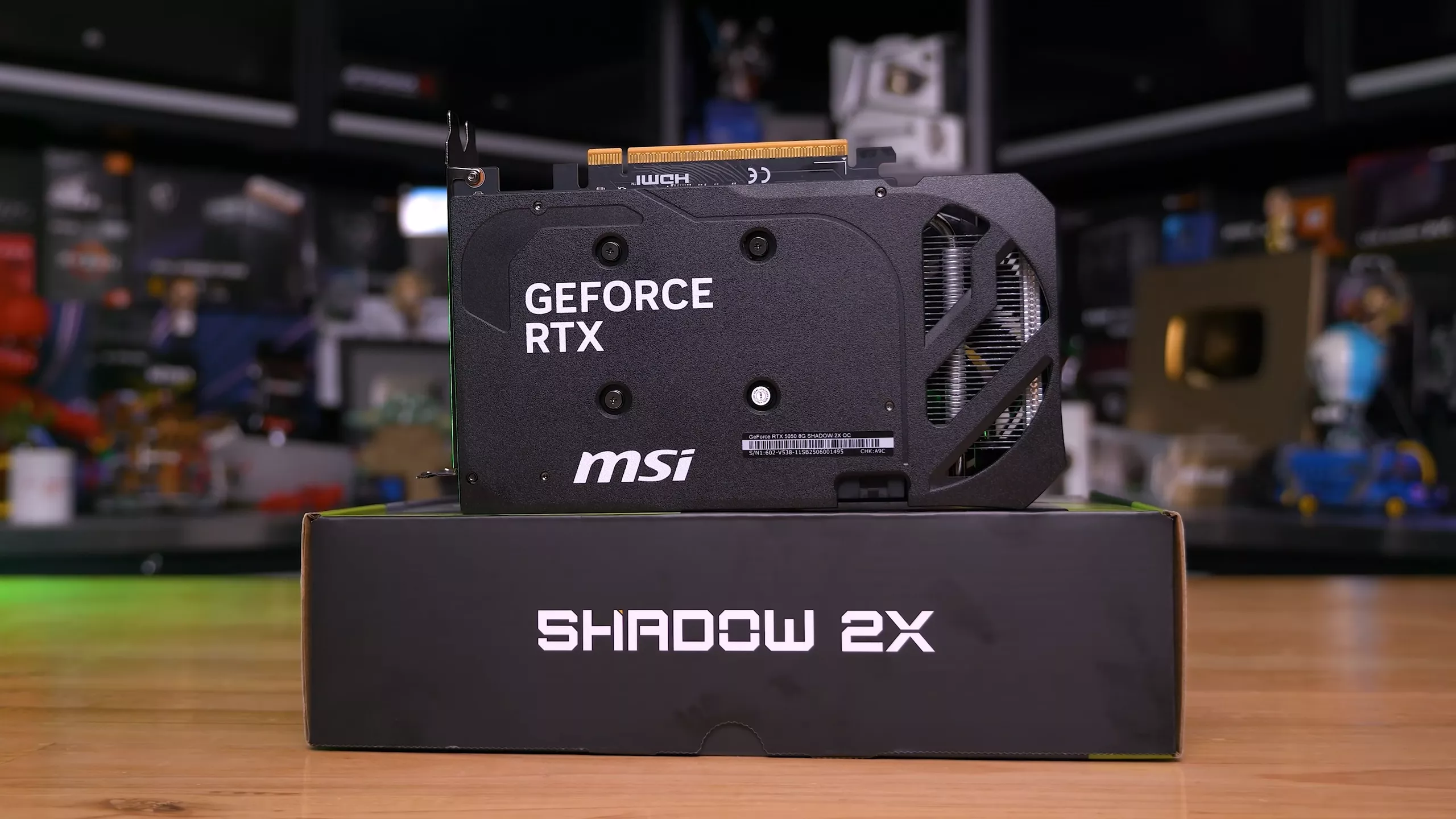
Which $250 GPU is the better buy: Nvidia's RTX 5050 or Intel's Arc B580? We compare performance, upscaling quality, and VRAM limits to find out.
Moirr combines personal finance and fitness in one streamlined experience. It tracks your spending, builds budgets, helps you save, and gets you started with investing without the jargon. On the health side, it delivers custom workouts, progress and habit tracking, mindfulness, and goal setting so you can improve at your own pace. Connect your wealth and health with clear insights and quick actions to stay consistent and in control.
Google offers direct guidance on what matters for ranking in AI-driven search experiences.
The post Google Explains How To Rank In AI Search appeared first on Search Engine Journal.
Bringing the power of Grok Voice to all developers

Just Cause 3 has received its first PC update in over nine years Over a decade after the game’s launch, Square Enix has released a new PC update for Just Cause 3 to remove Denuvo from the game. This was an undocumented change to Just Cause 3. However, change logs on SteamDB confirm that significant […]
The post After a decade, Square Enix removes Denuvo from Just Cause 3 appeared first on OC3D.
From one photo to a complete set of product visuals and copy
Noise-cancelling for your screen now with cursor shake
If Calendly had gorgeous video backgrounds
AI that sees, listens, and understands every meeting
Never Miss a Dose Again
Compare Yesterday & Today‘s Weather
Look better on video calls using the screen you already have
Language at your fingertips
Find Hidden Gems on Any Wine List
Use AI models without managing keys or billing
Automated data cleaning, in minutes, not hours or days.
Remove unwanted objects from images in seconds
Make product screenshots look launch-ready in minutes
Missed calls answered, summarized, and delivered instantly
The post New! Next Gen: Salesforce Unleashes AI Core for ISVs appeared first on StartupHub.ai.
Salesforce has launched its New! Next Gen Marketing Cloud, Archive, and flexible licensing for ISVs, enabling partners to embed AI-native capabilities directly into their applications.
The post New! Next Gen: Salesforce Unleashes AI Core for ISVs appeared first on StartupHub.ai.
A Council of Europe expert — and Emeritus Research Fellow at Technological University Dublin — analyzes The Future Report.
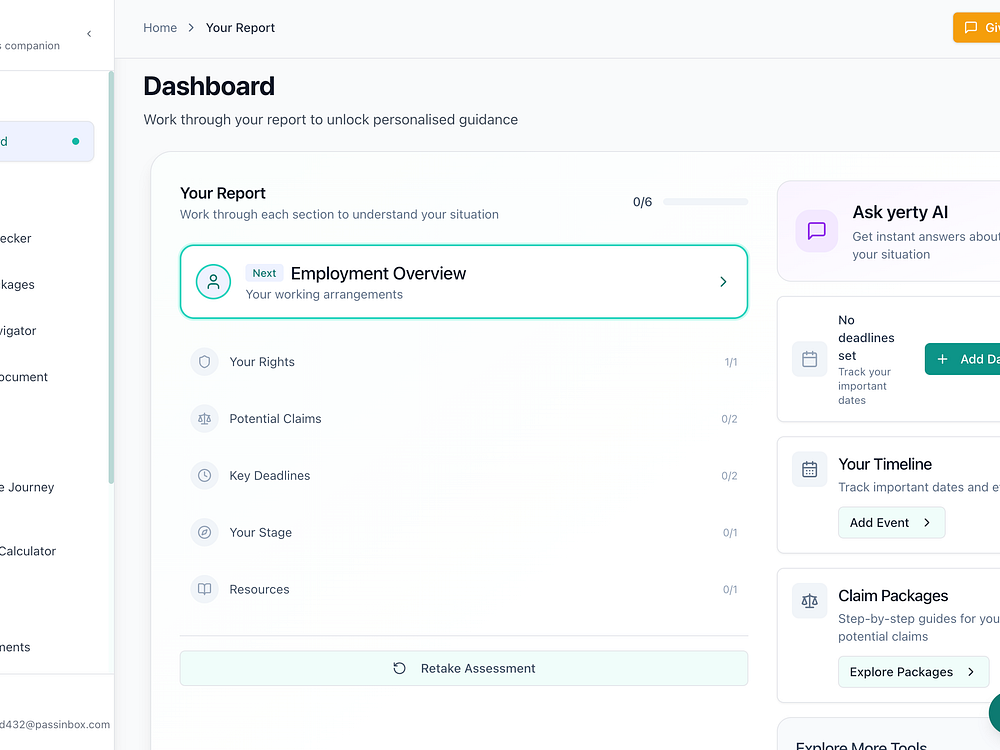
Yerty is a UK employment rights platform that helps workers navigate grievances, ACAS Early Conciliation, and tribunal steps. Take a 5-minute assessment to get a personalised report with your rights, potential claims, deadlines, and recommended next steps. Use stage-based navigation, guided document builders, calculators, and an AI companion trained on UK employment law to prepare letters and forms with confidence. Start free, then buy only the tools you need with clear, one-time pricing


The post Google’s Gemini 3 Flash: A New Standard for Efficient AI Performance appeared first on StartupHub.ai.
The recent unveiling of Google’s Gemini 3 Flash by Matthew Berman marks a pivotal moment in the generative AI landscape, signaling a clear shift towards models that prioritize not just raw intelligence but also unparalleled efficiency and cost-effectiveness. Berman, a prominent AI commentator from Forward Future AI, meticulously detailed how this new iteration of Gemini […]
The post Google’s Gemini 3 Flash: A New Standard for Efficient AI Performance appeared first on StartupHub.ai.
The post Claude and Anthropic Emerge as New AI Champion, Consumer Trends Shift Rapidly appeared first on StartupHub.ai.
The landscape of consumer preference in generative AI, video streaming, and wireless carriers is undergoing a seismic shift, with established leaders facing unexpected challengers. This dynamic was vividly illustrated in a recent interview on Mad Money, where HundredX Founder and CEO Rob Pace joined host Jim Cramer to dissect critical consumer trends. HundredX, a privately […]
The post Claude and Anthropic Emerge as New AI Champion, Consumer Trends Shift Rapidly appeared first on StartupHub.ai.

Google Search Console appears to have fixed the month-long delay with the page indexing report just about an hour ago. The report is now showing data as early as a few days ago, which is the normal timeframe for when this report is updated.
Plus, emails about indexing issues have started going out from Search Console to site owners again.
Page indexing report. It shows which pages Google can find and index on your site, along with any problems. You can also submit fixes there and see whether Google confirms they worked. Site owners and SEOs were stuck, they were unable to verify their “fixes” and unable to see if new pages were being indexed and if old pages were having issues being indexed.
Fixed. Here is a screenshot of the report showing December 14th, a much more recent date than the November 21st date that many were stuck on:

Google also fixed the performance reports delay just yesterday. So all the major reports should now be running normally, that is until they break again – which is not that uncommon.
Why we care. Many of you were unable to do full reporting for your SEO clients and stakeholders over the past month. Now you can get recent data both for page indexing and performance reports.
So you should be able to catch up on your reporting before you go into the holiday season.
BeatSync PRO is a Windows desktop app that turns your music into beat-synced videos in minutes. It detects every hit with ±5 ms precision, analyzes clip content with AI, and auto-matches visuals to your track. Render locally on your NVIDIA GPU and export standard MP4s for social, shows, or VJ sets. Plans include curated AI clip libraries, royalty-free audio, and a full commercial license. Import your own footage, reuse analyzed clips without extra credits, and keep quality intact with non-destructive exports.
The post Teaching Sand to Think: The AI Infrastructure Moonshot appeared first on StartupHub.ai.
“Teaching sand to think” serves as the profound metaphor for the ambition underpinning the current era of artificial intelligence. It encapsulates the monumental task of transforming inert matter into conscious, capable systems, an endeavor that the a16z Original video, “Two Futures | Runtime 2025,” posits as the biggest infrastructure supercycle in history. This visionary production, […]
The post Teaching Sand to Think: The AI Infrastructure Moonshot appeared first on StartupHub.ai.
Google SVP Nick Fox says AI Mode’s personal context features, including opt-in Gmail connections teased at I/O, are still in internal testing.
The post Google’s AI Mode Personal Context Features “Still To Come” appeared first on Search Engine Journal.
The post The Future of AI: Arm’s Vision for Distributed Intelligence appeared first on StartupHub.ai.
Arm's 2026 predictions highlight a future of AI characterized by distributed intelligence, modular silicon, and pervasive on-device capabilities.
The post The Future of AI: Arm’s Vision for Distributed Intelligence appeared first on StartupHub.ai.
The post Silver’s Ascent: AI and Data Centers Drive Critical Metal to Record Highs appeared first on StartupHub.ai.
As artificial intelligence and data centers rapidly expand, their insatiable demand for critical materials is creating unexpected market dynamics. Michael Steinmann, CEO of Pan American Silver, illuminated this burgeoning trend in a recent CNBC ‘Closing Bell Overtime’ interview with Sara Eisen and Jon Fortt, discussing the forces propelling silver to record highs and the structural […]
The post Silver’s Ascent: AI and Data Centers Drive Critical Metal to Record Highs appeared first on StartupHub.ai.
The post Agentic AI Design: Beyond Screens, Into Systems appeared first on StartupHub.ai.
Agentic AI design fundamentally redefines the role of designers, moving them from interface creators to architects of AI's understanding and behavior.
The post Agentic AI Design: Beyond Screens, Into Systems appeared first on StartupHub.ai.
The post AI Sector Faces Reality Check: Arrogance, Debt, and Discerning Capital appeared first on StartupHub.ai.
The era of broad-brush enthusiasm for artificial intelligence in the tech sector appears to be waning, giving way to a more discerning market where fundamental strength, rather than sheer hype, is becoming the ultimate arbiter of value. This was the overarching sentiment during a recent discussion on CNBC’s “Closing Bell,” where Adam Parker of Trivariate […]
The post AI Sector Faces Reality Check: Arrogance, Debt, and Discerning Capital appeared first on StartupHub.ai.
Chinese scientists build a working EUV prototype, striking a major blow against America’s semiconductor leadership The US has placed heavy restrictions on tech exports to China, hoping to slow down the nation’s progress and limit the growth of its tech sector. Specifically, the US wants to prevent China from making cutting-edge semiconductors, keeping its chips […]
The post China sidesteps US ban with EUV chipmaking breakthrough appeared first on OC3D.
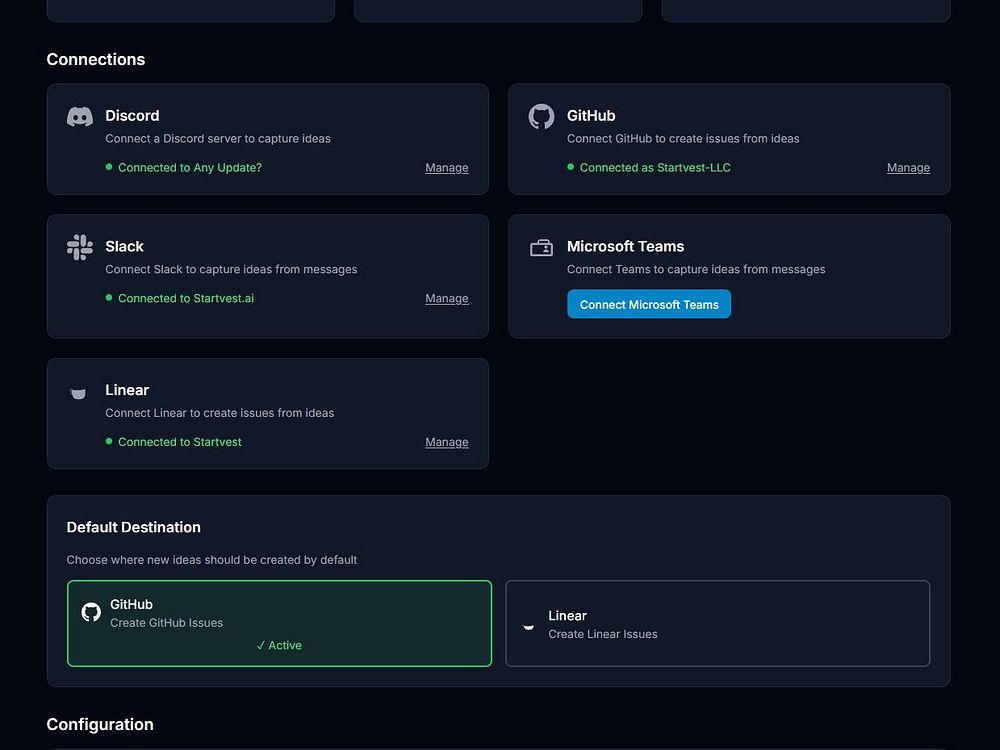
IdeaLift turns everyday team conversations into shipped product work. With a simple emoji reaction in Slack or Discord, IdeaLift captures the idea, uses AI to clean it up, categorize it, check for duplicates, and create a structured issue in GitHub or Linear—no copy-pasting, no context switching, and no lost ideas buried in chat threads.
IdeaLift works wherever ideas happen: Slack, Discord, Microsoft Teams, meetings, the web, and across 5,000+ apps via Zapier. Teams use it to capture feature requests, bugs, and decisions in real time, then move seamlessly from raw conversation to clear, actionable work—faster, cleaner, and with full context intact.
The post AI-Driven Kernels: Accelerating PyTorch with Agentic Optimization appeared first on StartupHub.ai.
In the relentless pursuit of computational efficiency, the fine art of low-level kernel optimization has long remained the exclusive domain of a select few, a bottleneck in the age of rapidly evolving AI models. Natalie Serrino, Co-founder of Gimlet Labs, recently illuminated this critical challenge and her company’s novel approach at the AIE Code Summit. […]
The post AI-Driven Kernels: Accelerating PyTorch with Agentic Optimization appeared first on StartupHub.ai.
The post UCSD Lab Advances Low-Latency LLM Serving with DGX B200 appeared first on StartupHub.ai.
UC San Diego's Hao AI Lab is pushing the frontier of low-latency LLM serving by leveraging NVIDIA's DGX B200 system and pioneering disaggregated inference.
The post UCSD Lab Advances Low-Latency LLM Serving with DGX B200 appeared first on StartupHub.ai.
The post Hut 8’s Strategic Pivot: Fueling AI with Financial Fortitude appeared first on StartupHub.ai.
“Credit counterparty was extremely important,” stated Asher Genoot, CEO of Hut 8, on CNBC’s “Power Lunch,” underscoring a pivotal shift in the digital infrastructure landscape. Genoot, speaking with the CNBC team, provided commentary on Hut 8’s recent deal with Fluidstack, backed by Google, and its implications for data center demand and energy infrastructure. His insights […]
The post Hut 8’s Strategic Pivot: Fueling AI with Financial Fortitude appeared first on StartupHub.ai.
The post Amazon in talks to invest $10 billion or more in OpenAI appeared first on StartupHub.ai.
The escalating arms race in artificial intelligence demands not just groundbreaking algorithms but the foundational infrastructure to train and deploy them. In a recent CNBC segment, reporter MacKenzie Sigalos, in conversation with anchor Kelly Evans, unpacked the strategic implications of Amazon’s potential $10 billion-plus investment in OpenAI, a deal poised to reshape the competitive landscape […]
The post Amazon in talks to invest $10 billion or more in OpenAI appeared first on StartupHub.ai.
The post NVIDIA’s OpenUSD Boosts Robotaxi AI Safety appeared first on StartupHub.ai.
NVIDIA's integrated approach with OpenUSD, Omniverse, and Halos is setting new standards for robotaxi AI safety through advanced simulation and certification.
The post NVIDIA’s OpenUSD Boosts Robotaxi AI Safety appeared first on StartupHub.ai.
The post Code World Model: Meta’s Leap Beyond Code Syntax to Computational Reasoning appeared first on StartupHub.ai.
The future of AI-driven software engineering hinges not merely on generating code, but on truly understanding its computational dynamics. This profound shift was at the heart of Jacob Kahn’s presentation on the Code World Model (CWM) at the AI Engineer Code Summit. Kahn, a Research Scientist at FAIR Meta, introduced CWM as a novel world-model […]
The post Code World Model: Meta’s Leap Beyond Code Syntax to Computational Reasoning appeared first on StartupHub.ai.
An overview of how we are complying with Japan’s Mobile Software Competition Act (MSCA). Another step toward Elon's 'everything app' vision?
As debate rages over teen social media access, Apple may hold the key to more effective regulation.
The process will make it easier to create better Snaps quickly.
Some pointers for your Meta ads in the upcoming Q5 push.

Googlebot once again generated more traffic than any other crawler in 2025, according to a new Cloudflare report. It outpaced every search and AI bot as Google continued crawling the web for search indexing and AI training.
By the numbers. Googlebot accounted for more than 25% of all Verified Bot traffic observed by Cloudflare.
AI crawling surges. AI crawlers were the most frequently fully disallowed user agents in robots.txt files.
Search platforms looked very different:
Google still monopolizes search. Traditional search dominance barely changed.
The report. The 2025 Cloudflare Radar Year in Review: The rise of AI, post-quantum, and record-breaking DDoS attacks


The post Chandler’s AI Data Center Rejection Signals Shifting Local Tech Landscape appeared first on StartupHub.ai.
The unanimous decision by the Chandler City Council to reject a proposed AI data center, a move openly endorsed by Mayor Kevin Hartke, underscores a growing friction between the rapid expansion of artificial intelligence infrastructure and the specific economic and environmental priorities of local communities. This wasn’t merely a political skirmish; it was a calculated […]
The post Chandler’s AI Data Center Rejection Signals Shifting Local Tech Landscape appeared first on StartupHub.ai.
The post Anthropic Wins TTFT, But OpenAI Dominates LLM Benchmarks appeared first on StartupHub.ai.
New LLM benchmarks reveal a critical trade-off: Anthropic models deliver instant responsiveness, while OpenAI maintains a commanding lead in raw generation throughput.
The post Anthropic Wins TTFT, But OpenAI Dominates LLM Benchmarks appeared first on StartupHub.ai.
The post Binti and Claude: Accelerating Foster Care Licensing Through Applied AI appeared first on StartupHub.ai.
Artificial intelligence is not merely a tool for efficiency; it is a catalyst for re-humanizing critical public services, freeing professionals from administrative burdens to focus on their profound impact. This principle stands at the core of Binti’s mission, as illuminated by a recent video showcasing their integration of Anthropic’s Claude AI to revolutionize foster family […]
The post Binti and Claude: Accelerating Foster Care Licensing Through Applied AI appeared first on StartupHub.ai.
The post Amazon’s OpenAI Bet Signals Intensifying AI Chip Wars appeared first on StartupHub.ai.
The proposed multi-billion dollar investment from Amazon into OpenAI, coupled with OpenAI’s increased utilization of Amazon’s proprietary Trainium chips, marks a pivotal moment in the escalating battle for AI infrastructure dominance. This isn’t merely a financial transaction; it represents a strategic realignment that underscores the critical importance of specialized silicon and diversified compute resources in […]
The post Amazon’s OpenAI Bet Signals Intensifying AI Chip Wars appeared first on StartupHub.ai.
We've gathered a few simple ways to celebrate this year’s holiday season with Google Play. Elon Musk's X has moved to end an effort to revive the Twitter branding.
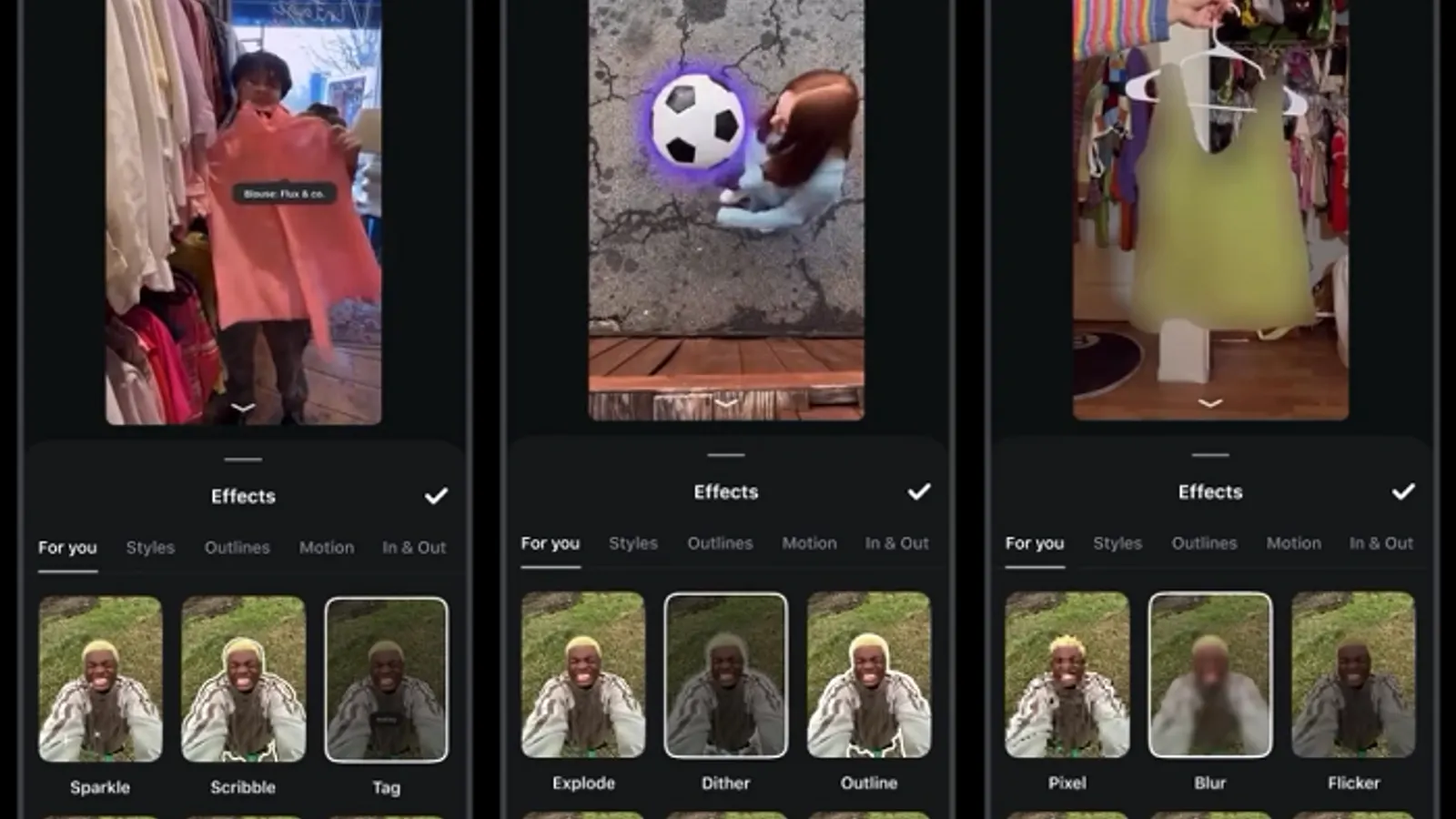
New effects to help you ring in 2026.

In its final feature update of the year, Edits gets advanced AI segmentation tools.

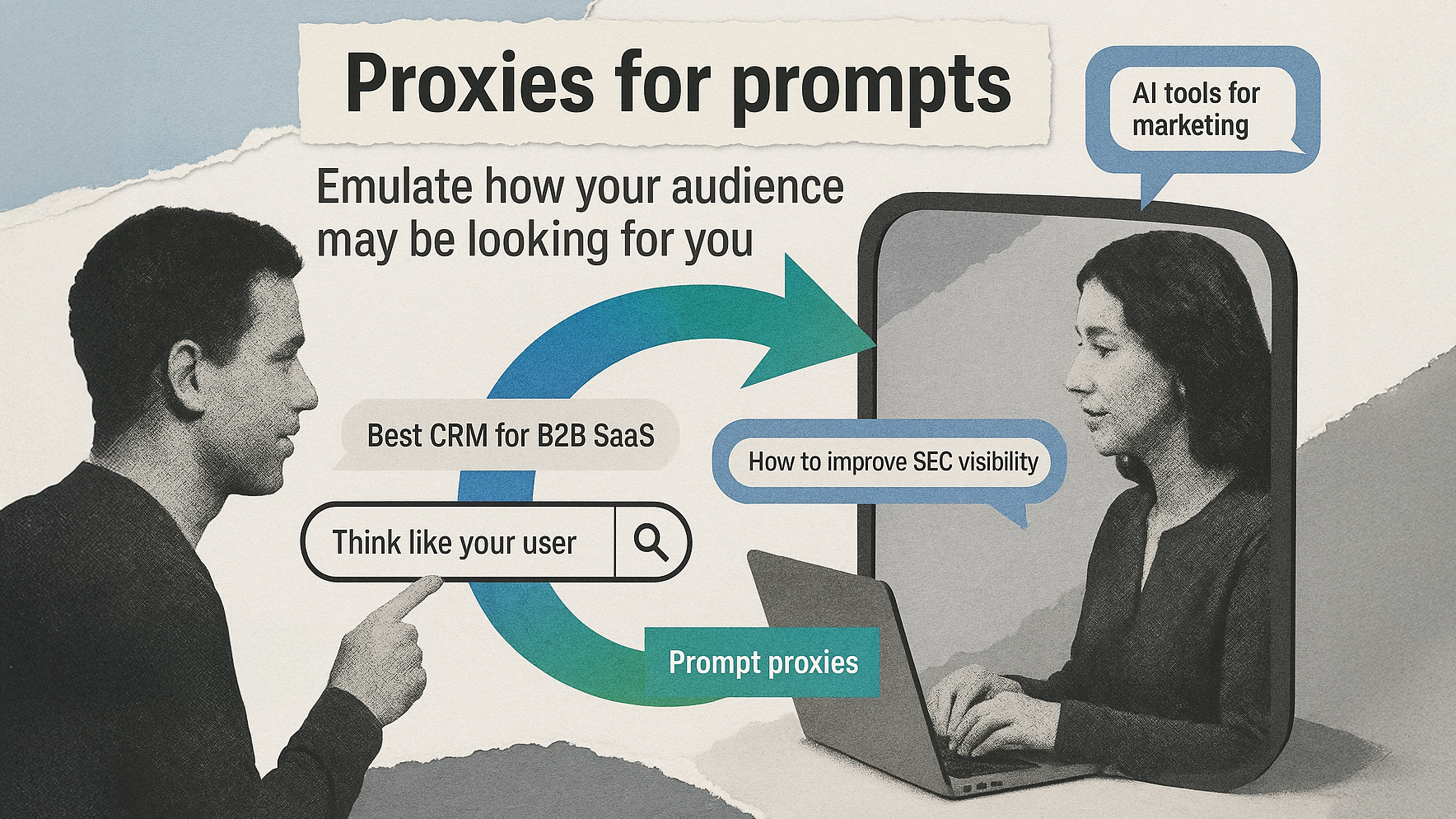
In this new era of generative AI technology, searchers have begun to swap keywords with prompts. Shorter and long-tail queries are being replaced by more conversational prompts, which tend to be longer and more in-depth. These days, searchers are expecting more complete answers than a paginated list of results.
Until we get an AI-specific equivalent of Google Search Console or Bing Webmaster Tools, we can’t really see for certain what or how our audience is behaving on AI search platforms as they look for our content, brands or products.
However, we can still look for proxies to emulate how this journey works. Here are multiple ways to use other data points as proxies to find prompts used by your audience. You can then use your AI Tracking Tool of choice to track how these prompts are performing.
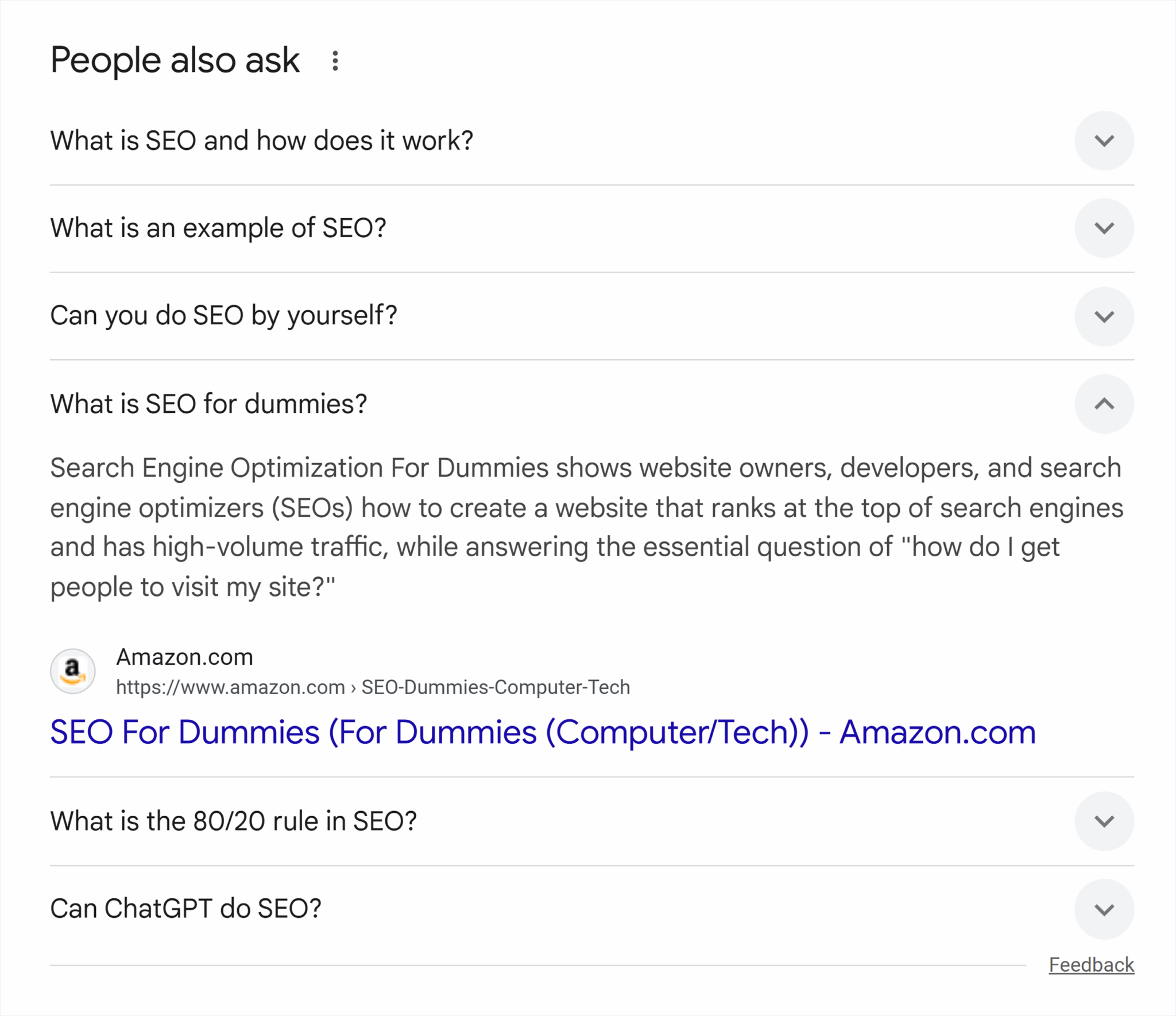
Hidden in plain sight, you can use a very popular SERP feature to move from keywords to prompts/questions. People Also Ask (PAA) was introduced in 2014 and suggests multiple related questions to your query. You can easily go from a keyword to a list of questions. When clicking on any PAA result, the list expands and gives you more terms.

Go query by query to find relevant PAAs, or you can use AlsoAsked to extract the exact questions at scale. PAAs are long questions that attempt to answer the next questions asked in the search journey, so they’re a step closer to prompts written in AI Search platforms.
Userbots like ChatGPT-User and Perplexity‑User are powerful ways to see how your pages are being used in AI Search. It doesn’t give you the prompts they use, but it’ll help you assess which pages are being cited without trying to guess by tracking prompts that may or may not be relevant at all.
These bots ping the URLs on your website when they’re used to formulate an answer to a user. The process is called RAG (Retrieval-Augmented Generation).
The SEO toolkit you know, plus the AI visibility data you need.
To paraphrase Mike King, one of the most trusted sources in SEO & AI, RAG is a mechanism by which a language model can be “grounded” in facts or learn from existing content to produce a more relevant output with a lower likelihood of hallucination.
Translation: Your page was used as an answer and, in some shape or form, your content helped a user. This may give you clues about what type of content is most used by your audience on these platforms, even if the answer hasn’t turned into a click.
Historically, log files have been difficult for SEOs to get, despite every website having them in its servers (yet another reason why SEOs should have access to them!).
You could use a combination of pages with userbot visits, search for their main keywords (as seen on Semrush or GSC), and then see which PAAs Google displayed.
Despite not giving a breakdown of AI Mode or AI Overview queries on GSC, smart SEOs are finding proxies that can be used to find queries that resemble the behavior we expect in these platforms. One of them is Ziggy Shtrosberg, who came up with a huge regex you can copy and paste to your GSC.
His guidelines are to:
^(generate|create|write|make|build|design|develop|use|produce|help|assist|guide|show|teach|explain|tell|list|summarize|analyze|compare|give me|you have|you can|where|review|research|find|draft|compose|extract|process|convert|transform|plan|strategy|approach|method|framework|structure|overview|summary|breakdown|rundown|digest|perspectives|viewpoints|opinions|approaches|angles|pros and cons|advantages and disadvantages|benefits and drawbacks|assuming|suppose|imagine|consider|step by step|procedure|workflow|act as|adapt|prepare|advise|appraise|instruct|prompt|amend|change|advocate|aid|assess|criticise|modify|examine|your|assign|appoint|delegate|nominate|improve|expand|calculate|classify|rank|challenge|check|categorize|order|tag|scan|study|conduct|contradict|update|copy|paste|please|can you|could you|would you|help me|i need|i want|i'm looking for|im looking for|how do i|how can i|what's the|whats the|walk me through|break down|pretend you're|pretend youre|you are a|as a|from the perspective of|in the style of|format this as|write this in|make it|rewrite|i'm trying to|im trying to|i'm struggling with|im struggling with|i have a problem|i'm working on|im working on|what's better|whats better|which|pros and cons of|recommend|suggest|show me how|guide me through|what are the steps|how do i start|whats the process|take me through|outline the procedure|brainstorm|come up with|think of|invent|what if|lets explore|let's explore|help me think|i'm a beginner|im a beginner|as someone who|given that i|in my situation|for my project|i'm currently|im currently|my goal is|depending on|based on|taking into account|considering|given the constraints|with the limitation|improve this|make this better|optimize|refine|polish|enhance|revise|teach me|i want to learn|i don't understand|i dont understand|can you clarify|what does this mean|eli5|i'm confused about|im confused about|also|additionally|furthermore|by the way|who's|whos|find|more|next|also|another|thanks|thank you|please)( [^" "]*){9,}$
Take this strategy with a pinch of salt, as some of these queries might be generated by LLM trackers.
For instance, I found a pattern of prompts starting with “evaluate,” which have a high number of impressions by zero clicks (not a small number of clicks, exactly zero clicks). If longer prompts have a high number of impressions and no clicks, beware that it might not be humans using these prompts.

One of the main AI Search platforms, Perplexity has a feature called “Related” where it displays up to five follow-up prompts. While the initial prompt is still yours and may not be how others are prompting, the related follow-ups are still a good indicator of how humans prompt—or at least how the platform expects humans would.

These answers are country-specific, so run your research locally.
Considering we don’t have the search volume metric per single keyword and that prompts are a lot more unique than keywords, it’s not realistic to track every single prompt relevant to our companies. A way to mitigate this is to combine these prompts into topics and use AI to summarize what they mean.
The new Semrush AI Visibility Tool has a feature called “Prompt Research” that matches your keyword to a topic and gives you a list of prompts alongside brands mentioned, intent, and sources.
Currently, the tool allows you to filter results between the US and the UK, including the full AI Response and a list of brands and URLs.

Even though I typed a single keyword (“used cars”), it picked the closest available topic (“Used Car Sales and Dealerships”) and returned me all prompts, brand mentions, and source domains.
You might decide not to track single prompts, which can grow fast and become overwhelming to measure. Rather, use the Semrush prompt database for optimization and measure the results by looking at the whole topic performance.
Keep in mind that not every prompt requires RAG, meaning that if the answer is already on the AI Search platform training data, no pages will appear as sources. For some brands, just getting a mention is fine. If, say, someone is looking for a museum or restaurant to visit, the mention might be enough to convince them to reach the destination and convert offline (e.g., buy a ticket or a meal).
In most cases, however, SEOs are still looking for traffic, so the prompt must list pages in their answers to give you a chance to be visible. Ironically, while the results you get from ChatGPT are one answer instead of a SERP, the LLM is actually doing searches for you in the background.
Luckily, you can find:
You can find these by looking for “queries,” “search_queries,” and “search_prob” inside Chrome Dev Tools (Inspect > Network > Conversation > Response).

Or, to simplify, you can add this script as a bookmark on Chrome and click on it after prompting a question on ChatGPT. This is an improved version of Ziggy Shtrosberg’s script.
While these searches look more like traditional searchers as opposed to prompts, your strategy may be to optimize for them and win on AI search as a secondary benefit.

When it comes to search_prob (also on the script above), it’s the probability that an answer requires grounding (RAG). This answer ranges between 0 (low) and 1 (high). Every answer is unique (even if you and I search for the same prompt, we’ll have different answers), so this can act as a proxy for the opportunity of pages being listed as a source.
As with every new technology, things change fast. How people use AI tools and which tools are being used are constantly changing. New models (like ChatGPT5) change how RAG is used, and the increase in adoption across different industries also affects what prompts you should track, so you must also evolve and reevaluate what and how to track AI searches.
Track, optimize, and win in Google and AI search from one platform.


LinkedIn is making Reserved Ads generally available to all managed accounts, giving marketers the ability to lock in the first ad slot in the feed for premium visibility.
What’s new. Reserved Ads let advertisers secure top-of-feed placement at a fixed rate, providing predictable delivery, consistent reach, and greater share of voice. Early results show the format drives up to 75% higher dwell time, 88% higher view-through rates, and delivers 99% of forecasted impressions, according to LinkedIn.

How it works. Reserved Ads appear in the most visible ad slot on LinkedIn’s feed and support most Sponsored Content formats, including Video, Single Image, Carousel, Document, Thought Leader, and Event Ads. Advertisers work with their LinkedIn account representative to reserve inventory and pricing.
Why we care. LinkedIn Reserved Ads give you guaranteed top-of-feed placement, increasing visibility, attention, and engagement for campaigns. This premium positioning helps cut through the typical noise in B2B feeds, improving recall and early-funnel impact.
Additionally, the predictable delivery and fixed pricing allow marketers to plan campaigns with more certainty while building higher-quality retargeting audiences for future conversions.
The big picture. LinkedIn is positioning Reserved Ads as a bridge between brand and demand. By anchoring awareness campaigns at the top of the feed, marketers can build higher-quality retargeting pools — with LinkedIn reporting up to a 101% lift in mid-funnel engagement when audiences are warmed with Reserved Ads ahead of time.
The bottom line. By turning premium feed placement into a reservable product, LinkedIn is giving B2B marketers a more predictable way to buy attention — and convert it into downstream demand.

Google has removed its long-standing unified pricing rules in Google Ad Manager, once again allowing publishers to set different price floors for Google demand versus other programmatic buyers.
What changed. Publishers can now set bidder-specific floor prices in Ad Manager. For example, one buyer can be required to bid at least $5 while others compete at a lower $2 floor. Google has also rebranded “unified pricing rules” as simply “pricing rules.”
The backstory. Before 2019, publishers often set higher floors for Google to counterbalance its data advantage. That flexibility disappeared when Google mandated uniform pricing across exchanges — a move later scrutinized by regulators in both the U.S. and Europe.
Why we care. Bidder-specific pricing rules change how auctions clear and how competitive different demand sources are inside Google Ad Manager. As publishers regain the ability to set higher floors for certain buyers, advertisers may see shifts in win rates, CPMs, and available inventory depending on their buying setup. Over time, this could reshape pricing dynamics and push advertisers to reassess bidding strategies and diversification across exchanges.
Regulatory pressure: The rollback follows major antitrust actions against Google’s ad tech business. In the U.S., Google was found guilty of anti-competitive behavior, prompting proposed remedies that included ending unified pricing. In Europe, the European Commission fined Google €2.95 billion ($3.45 billion) and ordered the company to end self-preferencing practices across the ad tech supply chain.
What Google says: Google said the change will make it easier for publishers and advertisers to use competing ad tech providers while minimizing disruption. The company framed the update as part of broader near-term product changes across display, video, and app ads.
Industry reaction. Jason Kint, CEO of Digital Content Next, called the move a meaningful — if limited — win for publishers, noting that unified pricing often lowered yield and that this change offers immediate, tangible relief. He also suggested the update may be designed to show regulatory compliance and head off stronger remedies, including potential divestitures.
The bottom line. After more than six years, publishers are regaining pricing control inside Google Ad Manager — a shift driven less by product strategy and more by mounting antitrust pressure on Google’s ad tech empire.

Google recently rolled out “read more” links in Google search results, which appear at the end of the snippet’s description. When you click on the read more link, you are anchored down to a specific portion of the web page that you clicked on.
Not all search result snippets include these read more links, but many do.
What it looks like. Here is a screenshot of this in action, but you can probably replicate it for most of your queries now:

Google was testing this, or variations of this, back in July and now it seems to have been rolled out.
Why we care. These read more links do add an additional eye-catching link to the search result snippets. Hopefully, this leads to encouraging more clicks to websites and no less.
More clicks to websites is a good thing, so hopefully this feature will last.

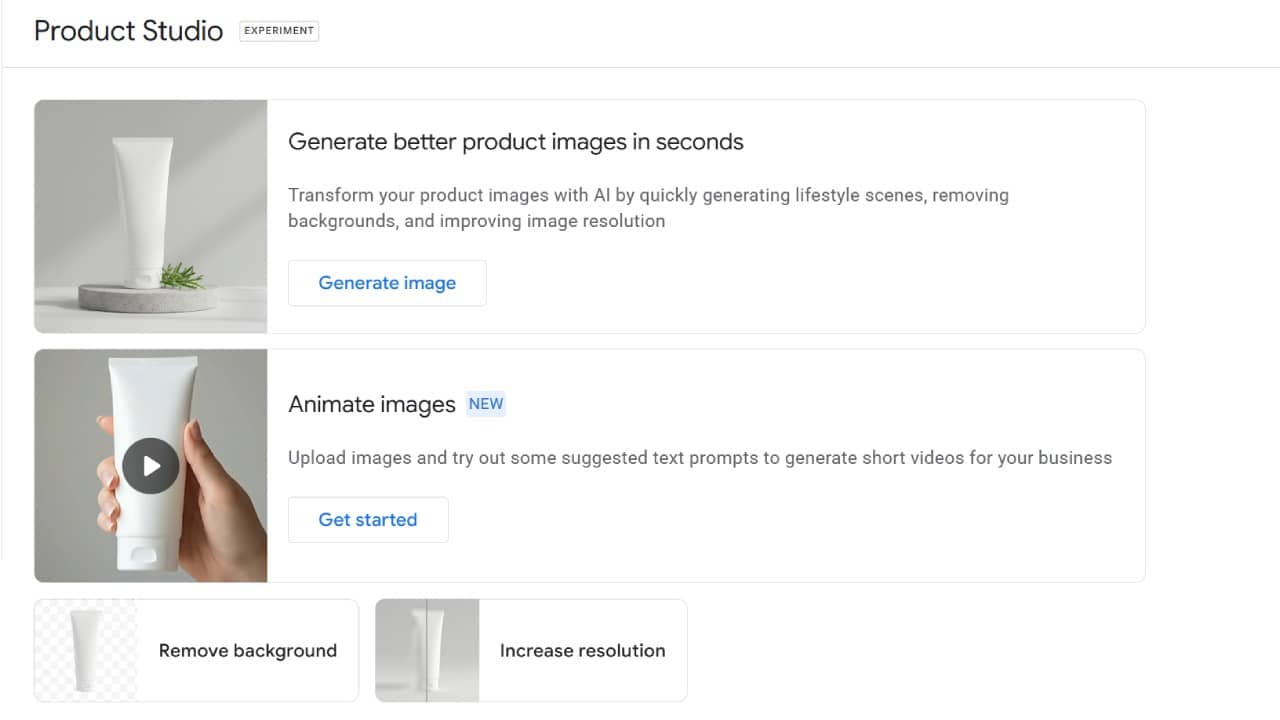
Google has expanded Product Studio inside Merchant Center, rolling out three new creative features that go beyond its original image generation tool.
What’s new. In addition to image generation, Product Studio now lets merchants animate static product images into short videos using suggested text prompts, a move aimed squarely at short-form ads and social-style creative.
Google has also added one-click background removal to help isolate products and create cleaner, more consistent Shopping visuals.
The third update increases image resolution, allowing advertisers to upscale older or lower-quality assets to meet modern visual standards.

Why we care. Product imagery plays a major role in Shopping performance, but creating and refreshing assets is often slow and resource-heavy. These updates give merchants more ways to produce high-quality visuals quickly — without leaving Merchant Center or relying on design teams.
The big picture. Google continues to embed AI-powered creative tools directly into commerce workflows. By housing animation, editing, and enhancement inside Merchant Center, Google is lowering the barrier to frequent creative testing — a key lever for Shopping and Performance Max campaigns.
What to watch. These tools could significantly speed up asset iteration for advertisers with limited creative resources, especially as Google pushes more video-forward and visually rich ad formats across Search, Shopping, and YouTube.
First seen. This update was spotted by Senior PPC Specialist – Vojtěch Audy
Google launches Gemini 3 Flash and makes it the default in the Gemini app. It’s rolling out as AI Mode’s default model.
The post Google Gemini 3 Flash Becomes Default In Gemini App & AI Mode appeared first on Search Engine Journal.
Microsoft ushers in a new era of Windows Server storage performance with Native NVMe support Microsoft has officially added Native NVMe support to Windows Server 2025, an opt-in feature that can deliver boosted storage performance when using modern NVMe SSD storage solutions. Until now, Microsoft’s storage stack considered all storage devices as SCSI (Small Computer […]
The post When Windows 11? Microsoft boosts Windows Server with Native NVMe support appeared first on OC3D.
The OnePlus 15R lands in an awkward middle ground, pairing strong hardware with notable compromises. It's powered by a Snapdragon 8 Gen 5 and features a massive 7,400 mAh battery, but carries a $699 price tag. Reviewers praise its performance, but criticize the mediocre camera system.
The post Google unveils ‘Gemini 3 Flash’ AI model focused on speed and cost appeared first on StartupHub.ai.
Google has recently announced Gemini 3 Flash, a new AI model designed for speed and cost-effectiveness. Deirdre Bosa reported on this development for CNBC, highlighting its strategic importance in the rapidly advancing AI landscape. The Gemini 3 Flash model aims to provide a more accessible and efficient AI solution, distinguishing itself from more resource-intensive models. […]
The post Google unveils ‘Gemini 3 Flash’ AI model focused on speed and cost appeared first on StartupHub.ai.
The post Blue Owl Rejects Oracle’s Michigan Data Center Deal Over Unfavorable Economics appeared first on StartupHub.ai.
“The FT story is incorrect. Our development partner, Related Digital, selected the best equity partner from a competitive group of options, which in this instance was not Blue Owl. Final negotiations for their equity deal are moving forward.” This statement from Oracle, provided to CNBC, directly refutes earlier reports that Blue Owl had decided against […]
The post Blue Owl Rejects Oracle’s Michigan Data Center Deal Over Unfavorable Economics appeared first on StartupHub.ai.
The post Reimagining Public Safety: Technology, Culture, and the Fight Against Crime appeared first on StartupHub.ai.
America faces a startling reality: the chance of a murder being solved is barely a coin flip, with national clearance rates hovering around 47%. This chilling statistic, highlighted by Ben Horowitz, cofounder of a16z, underscores a profound societal failure in crime enforcement, leading to what he terms “lost generations.” It’s a crisis demanding more than […]
The post Reimagining Public Safety: Technology, Culture, and the Fight Against Crime appeared first on StartupHub.ai.
Gemini 3 Flash brings the incredible reasoning of our Gemini 3 model at the speed you expect of Search.
Gemini 3 Flash offers frontier intelligence built for speed at a fraction of the cost.
Gemini 3 Flash is available for developers to build with now. Learn more about this smarter, scale-ready model and how — and where — you can use it now. 
Google today began rolling out Gemini 3 Flash as the default model powering AI Mode in Search worldwide. The upgrade brings faster performance and stronger reasoning to AI-generated search responses, Google said.
Why we care. With AI Mode, Google continues to transition toward an AI-first search approach. More queries could be answered directly in AI Mode, reducing reliance on traditional organic listings. Improved reasoning allows AI Mode to handle comparison and planning tasks, multi-intent searches, and research-style queries.
What’s changing. Gemini 3 Flash now powers AI Mode in Search globally.
Google is also expanding access to Gemini 3 Pro in Search in the U.S.
What AI Mode does. According to Google, AI Mode:
What Google is saying. In a blog post, Tulsee Doshi, senior director, product management, wrote:
Building on the reasoning capabilities of Gemini 3 Pro, AI Mode with Gemini 3 Flash is more powerful at parsing the nuances of your question. It considers each aspect of your query to serve thoughtful, comprehensive responses that are visually digestible — pulling real-time local information and helpful links from across the web. The result effectively combines research with immediate action: you get an intelligently organized breakdown alongside specific recommendations — at the speed of Search.
This shines when tackling complex goals with multiple considerations like trying to plan a last-minute trip or learning complex educational concepts quickly.
Image generation expands in AI Mode. Google also announced expanded access to Nano Banana Pro, its Gemini 3 Pro–powered image generation and editing model, in Search.

Google Search’s Danny Sullivan and John Mueller pushed back again on the idea that brands need a separate AI SEO strategy during the latest Search Off the Record episode.
Sullivan’s point is simple: the acronyms keep changing (GEO, AEO, etc.), but the advice doesn’t: Write for humans, not for ranking systems, whether those systems are traditional search or LLM-powered experiences.
Why we care. As AI search grows, a lot of publishers and SEOs are feeling pressured to try something new. Google’s take: chasing AI tricks can actually backfire and distract you from making content people actually like.
Google says the north star hasn’t moved. Sullivan said Google aims to reward content made for people, not for search algorithms or for LLMs. If you’re already doing that, he said, you’re “ahead” as formats continue to shift.
Original, authentic, multimodal. Sullivan argued that AI features speed up a reality publishers have faced for years: commodity content is easy to replace. His examples:
What Google wants creators to do:
Structured data still matters. They also said structured data helps, but it isn’t decisive. Sullivan said it’s not “structured data and you win AI.” It simply supports how systems understand and present content, just as it already does across Search features.
Focus on quality clicks. Google is seeing that traffic from AI formats can arrive more engaged, such as spending more time on-site. His hypothesis is that AI results create better contextual awareness. Users click when they are more confident that the result matches their intent.
About query fan-out. They explained why “I rank in blue links but not in AI Overviews” is a flawed comparison:
Clients still want “the new thing.” Sullivan acknowledged the real-world challenge: Clients still demand “AI optimization” as a separate service.
What to do now, according to Google. Based on the conversation, Google’s “SEO checklist” looks something like this:
The podcast. Thoughts on SEO & SEO for AI, part 1
Dig deeper:


Google updated its JavaScript SEO docs with new guidance on canonical URLs for JavaScript-rendered pages. Keep canonicals consistent before and after rendering.
The post Google Updates JavaScript SEO Docs With Canonical Advice appeared first on Search Engine Journal.
Sapphire’s Radeon RX 9070 XT Phantom Link has been unboxed in China Sapphire has created a new RDNA 4 flagship, the Radeon RX 9070 XT Nitro+ Phantom Link, which has now been unboxed in China. This GPU is an enhanced version of Sapphire’s existing Nitro+ model, offering users both 12V-2×6 and GC-HPWR power inputs. This […]
The post Cable-free gaming power! Sapphire RX 9070 XT Phantom Link GPU unveiled appeared first on OC3D.
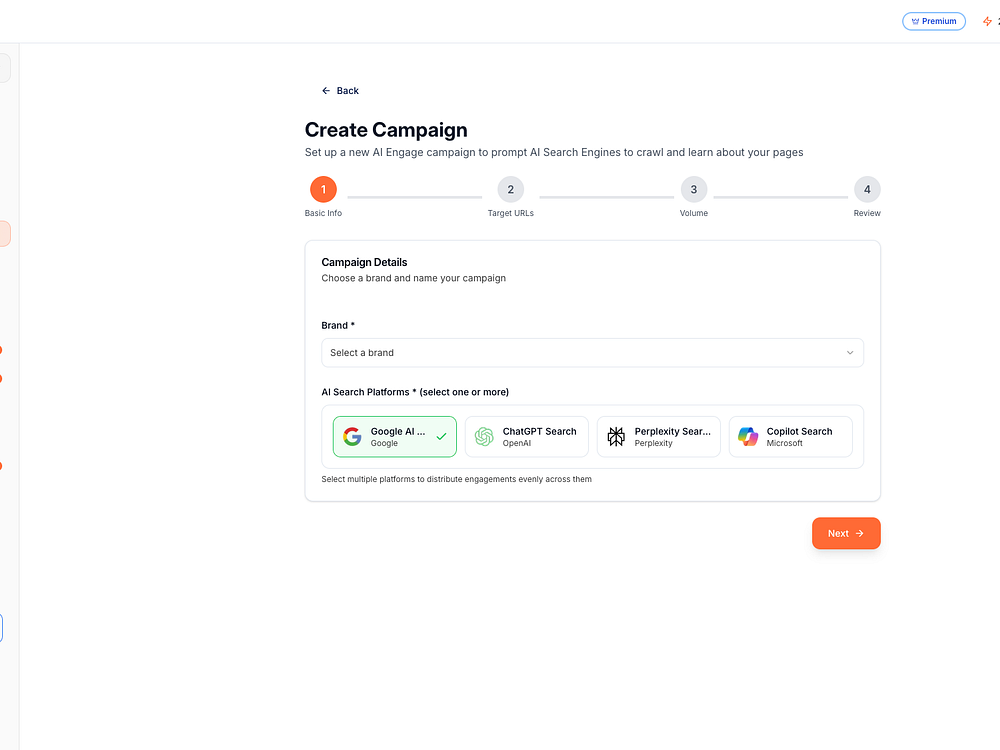
AI Engage introduces a new way to win in AI Search. Instead of optimizing for keywords, it systematically educates AI search engines about your brand by prompting models to fetch and analyze your real content. Automated campaigns engage Google AI Search, ChatGPT Search, Perplexity, and Microsoft Copilot using realistic user queries.
Campaigns run in six languages across 150 million geo targeted IPs, with analytics to track visibility and performance by market.
Privately see any day of your photos across all your years
The post ARC-AGI: The True Measure of Machine Intelligence Beyond Brute Force appeared first on StartupHub.ai.
“Intelligence is measured by the efficiency of skill acquisition on unknown tasks.” This foundational insight, articulated by François Chollet, creator of Keras and the Abstract and Reasoning Corpus for Artificial General Intelligence (ARC-AGI), underpins a critical shift in how the AI community evaluates progress. In a recent interview at NeurIPS 2025, Y Combinator General Partner […]
The post ARC-AGI: The True Measure of Machine Intelligence Beyond Brute Force appeared first on StartupHub.ai.
The post Wall Street’s New Hires are Grok, Claude, and GPT appeared first on StartupHub.ai.
The next wave in finance is foundation models that can actually invest, not just talk about markets. As of today, agentic finance is about foundation models quietly becoming the core infrastructure for how capital decisions are researched, prepared, and executed. These systems are shifting the paradigm from who can hire the most analysts to who […]
The post Wall Street’s New Hires are Grok, Claude, and GPT appeared first on StartupHub.ai.

Google updated its JavaScript SEO best practices document, for the second time this week, this time to clarify canonicalization best practices for JavaScript. In short, Google said “setting the canonical URL to the same URL as in the original HTML or if that isn’t possible, to leave the canonical URL out of the original HTML.”
What Google added. Google added a new section over here and it reads:
“The rel=”canonical” link tag helps Google find the canonical version of a page. You can use JavaScript to set the canonical URL, but keep in mind that you shouldn’t use JavaScript to change the canonical URL to something else than the URL you specified as the canonical URL in the original HTML. The best way to set the canonical URL is to use HTML, but if you have to use JavaScript, make sure that you always set the canonical URL to the same value as the original HTML. If you can’t set the canonical URL in the HTML, then you can use JavaScript to set the canonical URL and leave it out of the original HTML.”
Google on noindex. Google also warned about using JavaScript for noindex tags earlier this week. Google said “you do want the page indexed, don’t use a noindex tag in the original page code.”
Why we care. So if you use JavaScript for setting a canonical link, make sure to also check in Google Search Console’s URL Inspection tool if it is being picked up.
Review these updated best practices if you use JavaScript on your site, especially for canonical links.

For years, PPC advertisers have considered Performance Max (and Smart Shopping before it) to be a black box, even a black hole.
While its powerful automation drives convincing results, the lack of transparency into channel performance has been a persistent frustration.
Now, Google is beginning to provide some answers.
The rollout of the new Channel Performance report marks a significant step toward the transparency advertisers have been demanding.
This guide explains what the report is, highlights its strengths and weaknesses, and shows you how to use it.
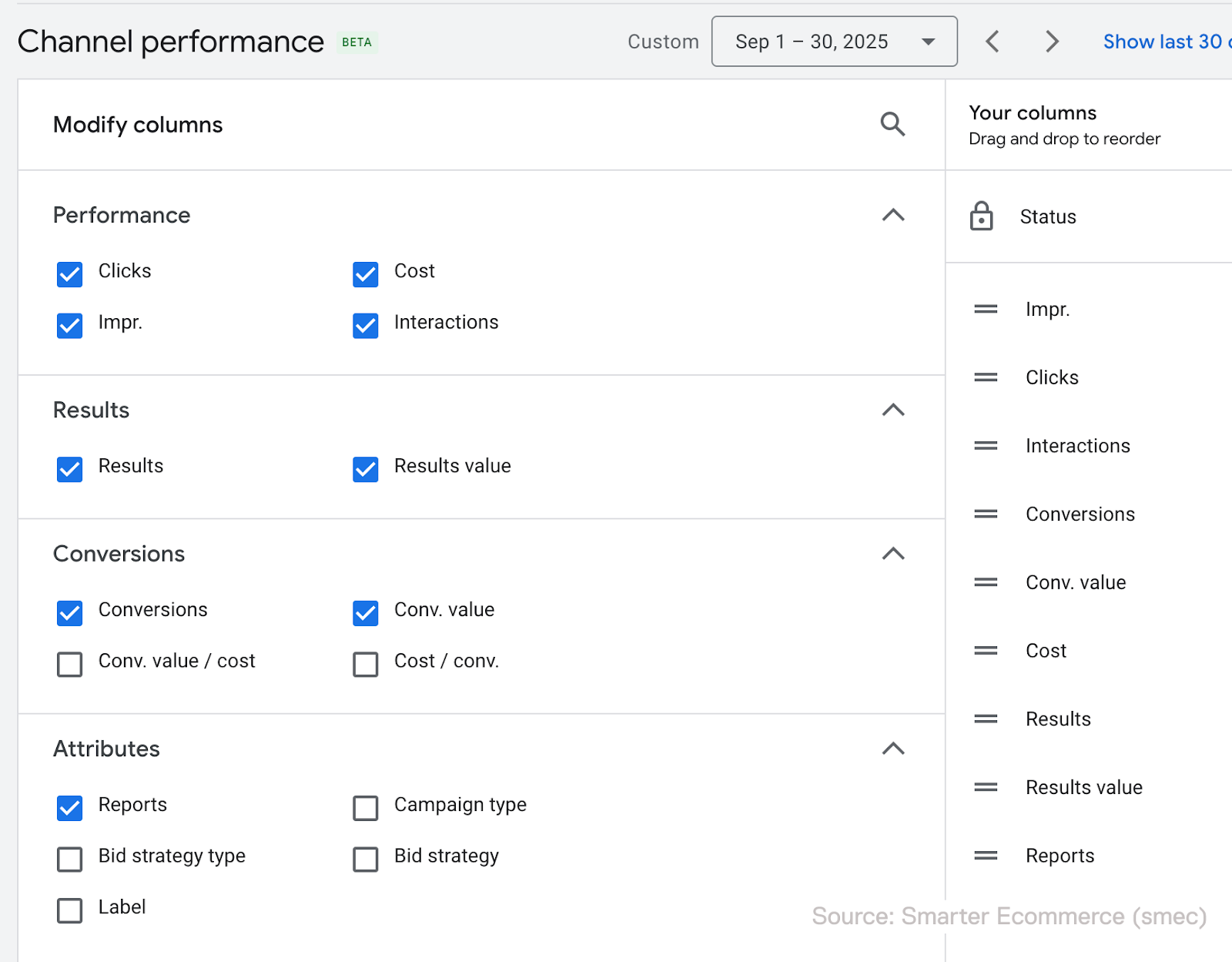
The Channel Performance report is essentially a pre-built network report (we can discuss the semantics of channel versus network another day), which can be found under Campaigns > Insights and Reports > Channel Performance (beta).
It offers tabular network data and an interactive flow diagram from impressions down through conversions.
The Channel Performance report only works for Performance Max campaigns. However, credible clues suggest that this report may support additional campaign types in the future.
This is important because, while Performance Max is (in)famously a “channel soup,” all campaign types are capable of serving across different ad networks within Google’s grasp, and many of them do so by default.
Previously, untangling this mix to see which channels were actually performing was a task left to manual reports or, in the case of PMax, third-party scripts based on guesswork.
The Channel Performance report is Google’s native solution.
The report is composed of two main elements:
Furthermore, there are various customization options, which can be saved as preferred views, and multiple export options.
The account view is a newer addition to the Channel Performance report, and in some ways my favorite view.
Previously, when you accessed this report, you’d land on a blank page prompting you to select an individual Performance Max campaign.
Now, this handy table is the first thing you’ll see.

It has a series of rows for each campaign, nested rows for each channel, and columns for the performance metrics.
One thing I love is that each nested row has the channel icon next to it.
Tabular data can sometimes make my eyes cross, but this simple visual aid makes the data much easier to skim.
By default, the campaign rows are sorted alphabetically, and you’ll likely want to sort by something more practical, like impressions, costs, revenue, etc.
After that, you can really leap down the page easily, comparing the distribution of your key campaigns.
But that’s the obvious part.
My top tip for this view is that you can change your segment, and among the options, two really stand out for me:

The first allows you to see the volume and performance of “ads using product data” (feed-based ads) versus “ads not using product data” (asset-based ads).
Yes, that’s right, finally a simple comparison of feed ads and asset ads. Besides network performance, this has been one of the most contentious and least transparent areas in PMax, prompting numerous advertisers to run so-called “feed-only” PMax campaigns.
Now you can easily see what’s going on with this performance facet across all your PMax campaigns, plus an account-level summary row at the bottom.
Whether you like or dislike what you’re seeing, you can head over to your asset-group-level and asset-level reporting to dig deeper.
Be cautious when judging the performance of asset-based ads. They should not be held to the same efficiency standards.
The second segment, ad event type, might sound non-descript, but it’s really important.
It lets you easily understand the volume and performance of your click-through versus view-through conversions.
This has been (yet another) divisive topic in PMax:
Now you can answer these questions per campaign and also at the account view in the summary row.
But what if you want even more detail?
What if, for example, you want to learn your feed versus asset share in, say, YouTube specifically?
That’s not possible at the account level, but it certainly is at the campaign level.
Just click on any campaign and it will load a new page drilling down to the next reporting level.
The first thing you’ll notice on this page is the large Sankey diagram.
It’s visually striking and has become a signature of the Channel Performance report.
That said, we need to set it aside for now. Scroll down to the data table below, which is similar to the one you just saw.
The campaign data table: A deeper dive
While the Sankey diagram gives a high-level view, the table below is where real analysis happens.
It’s more reliable for decision-making because it shows the raw numbers without visual distortion.
The table breaks performance down by channel and ad type – the feed-based versus asset-based split we discussed earlier.
For each segment, you can review multiple metrics by default, but my top tip is to go to Columns > Conversions.
There, you can select Conv. value / Cost (a.k.a. ROAS) and Cost / Conv. (a.k.a. CPA).
These are hidden by default, but you can indeed see them, and I don’t think I have to tell you why they are interesting to know.

Crucially, the table also includes an export function, plus scheduling options, allowing you to pull the raw data for deeper analysis in a spreadsheet.
The Sankey diagram: Visualizing the flow
As noted earlier, this visualization – officially called the Channels-to-Goals chart – is visually striking, but it has limitations.
Before addressing those issues, let’s clarify its purpose and what it can tell us.
The Sankey diagram presents a visual breakdown of performance across the channels within your PMax campaign.

It maps the customer journey within your campaign – how users move from seeing an ad (impressions) to clicking or engaging with it (interactions), and, ultimately, to converting (results or conversions).
This is great. For the first time, advertisers can see the flow of core funnel metrics right in Google Ads, all segmented by the specific channel driving the traffic.
This allows you to understand how PMax allocates your budget and which parts of its vast inventory are actually working for you.
Decoding the channels
People often look at the Sankey and get stuck. “Where’s my Shopping data?” is probably the single biggest example of this.
As we’ve discussed, a key feature of the report is how it segments ads into feed-based and asset-based ads.
When we combine that dimension with the network or “channel” dimension, we can translate the labels into more familiar terms:

These are my interpretations of the data, which might not be perfect.
It would be extremely helpful if Google offered more detailed documentation on what’s included.
For example, feed-based YouTube ads can comprise a variety of formats and placements, some of which, such as “GMC Image Shorts,” are not documented anywhere.
Google’s guidance is quite vague.
While a welcome addition, the report has some shortcomings.
The visual proportions of the diagram are not based on volume, which makes it extremely misleading at a glance.
A channel that appears to drive significant traffic may actually account for only a tiny share of your impressions.
In the example below, the asset-based Search ads segment appears to have a couple hundred thousand impressions, but in reality only has 4,500 impressions.
This makes the chart almost useless for quick, accurate analysis, which is the entire point of data visualization.

The data table provides useful raw data, but it lacks key calculated metrics needed for analysis, such as conversion rate and cost per click.
To see the full picture, you must export the data and do your own calculations.
This feels, to be honest, a bit petty of Google.
They could easily add these columns, but it seems they would prefer not to. Grab your calculator.
Despite its limitations, you can still extract valuable insights into which channels deliver what.
The key is to focus on asset quality and traffic quality, because direct channel control is limited.
While the report doesn’t let you directly control channel mix, it helps you monitor traffic quality.
Use the placement reports to see exactly where your Display and YouTube ads are showing.
=GOOGLETRANSLATE() to understand foreign-language placements and the integrated =AI() function to help categorize domains and videos for brand safety.Google has confirmed that API access and MCC-level reporting are coming to the Channel Performance report. I also expect this data to be supported in the Report Editor.
In the meantime, you can export the report as a .csv or send it directly to Google Sheets.
With a smart setup, these exports enable you to calculate custom metrics, build charts, apply heatmaps, and reshape the data as needed.
To help the community, I helped build a script that enhances Google’s report in several practical ways:
The script works for individual PMax campaigns, not the account-level view. I’m waiting for Google’s feature set and scripting options to stabilize before expanding the script.
We know Search Partner data is coming, along with API access, MCC-level reporting, and likely support for additional campaign types such as Demand Gen.
It’s encouraging to see Google share this level of detail, and there’s reason to believe this momentum will continue.
The Channel Performance report already addresses one of the most persistent criticisms of Performance Max – that it operates as a black box.
Three years ago, it would have been hard to imagine Google responding to advertiser feedback at this scale, particularly on transparency.
Still, better visibility doesn’t automatically translate into better decisions.
Interpreting this data correctly takes time, context, and careful analysis – and that work remains firmly in the hands of advertisers.

Don't build links without first understanding these facts about trust and authority.
The post The Facts About Trust Change Everything About Link Building appeared first on Search Engine Journal.
Monster Hunter Wilds newest PC update is a godsend to 8GB GPU users Monster Hunter Wilds has just received “Title Update 4”, the first of a trio of planned PC optimisation updates for the game. Following the release of this update, PC gamers have reported significant improvements to the game. This includes lowered VRAM usage […]
The post Gamers report huge gains with Monster Hunter Wilds PC update appeared first on OC3D.

Microsoft Copilot is transforming search advertising by turning everyday conversations into intent-rich signals advertisers can act on.
ROAS increases 13-fold when users engage with Copilot before performing a search, according to Microsoft.
Drawing from billions of first-party audience insights across Microsoft’s consumer ecosystem – including Bing, Edge, Xbox, LinkedIn, and Activision – Copilot identifies high-value audiences using deterministic data built from search intent, web activity, and profile information.
This allows advertisers to reduce wasted impressions and stretch budgets further.
The core proposition of conversational search is that users provide significantly more context to a chatbot than to a traditional search bar.
Instead of a fragmented keyword, users are increasingly asking detailed questions.
When a user submits a complex query – such as asking for specific product comparisons or local recommendations – the AI triggers multiple backend searches across reviews, specifications, and availability to construct an answer.
For the advertising industry, this behavior change offers a potential goldmine of data.
By interpreting these longer queries, platforms can identify “high-intent” buyers more accurately, turning a single conversation into multiple, precise ad opportunities.
To understand how these metrics translate into strategy, consider a recent test I conducted for a well-known California-based university tasked with recruiting high school seniors for their hands-on engineering and architecture STEM programs.
The university historically relied on broad keywords like “best engineering schools.”
This resulted in high competition and wasted spend on students looking for art programs or out-of-state options they couldn’t afford.

Using Copilot’s intent signals, the campaign shifts.
A prospective student might ask Copilot:
Applying Microsoft’s reported benchmarks to this scenario reveals significant efficiency gains:
For advertisers seeking to replicate these results, the shift necessitates more than simply enabling a new setting.
It requires a strategic overhaul of how campaigns are structured to capture “conversational” demand.
Audit service offerings and solution data
Ensure your site’s structured data is rich with details on specific methodologies and industry specializations.
AI assistants rely on this semantic depth to answer prospective queries about “competency, case studies, and communication options.”
Prioritize first-party data
Integrate customer data to train the model.
Microsoft’s ecosystem leverages data points from LinkedIn to Xbox to refine targeting.

Advertisers must supply their own truth data to match this precision.
Embrace long-tail queries
Move away from strict exact-match keywords.
The UI overhaul of Copilot encourages users to ask “longer, more detailed questions,” meaning broad match modifiers are necessary to capture these natural language phrases.
Optimize for answers, not just clicks
Structure landing page content to answer specific questions.
Since Copilot acts as a “companion” guiding users through tasks, your ad content must align with helping them make a decision, not just selling a product.
Implement cross-device strategy
With 90% of Gen Z adults in the U.S. using the web while watching TV, campaigns must run across multiple platforms, including mobile, PC, and console, to capture their split focus.
Bridge the authenticity gap
For younger demographics, leverage integrations like Snapchat’s My AI.
This places ads within “conversational flows” rather than interrupting them, a key factor in engaging Gen Z.
Bridging the gap with Gen Z remains a hurdle for most ad platforms, which often struggle with perceptions of inauthenticity.
To address this, the industry is seeing a trend toward utilizing behavioral data from unlikely sources.
By layering in data from gaming ecosystems like Activision, advertisers can target based on real behaviors – from play styles to in-game purchases – ensuring campaigns feel relevant rather than generic.
To legitimize whether Copilot is effectively targeting Gen Z – or just efficiently automating ad delivery – we must look beyond corporate claims.
Microsoft’s strategy relies on a “closed loop” of gaming data, social integration, and conversational signals.
Does this actually work for a generation that is famously resistant to traditional advertising?
The answer lies in the tension between utility and authenticity.
Microsoft’s claim that Copilot “cracks the code” is mechanically sound because it aligns with how Gen Z actually searches.
The shift from keywords to conversation
Data shows that Gen Z users write the longest search queries (avg. 5.83 words) and are the most likely to use complete sentences.
They treat search engines like companions, asking “What is the best…” rather than typing “best shoes NYC.”
Legitimacy verdict: High. Copilot isn’t trying to force a behavior change. It is capitalizing on one that already exists.
By decoding these long, conversational queries, Microsoft captures intent often missed by a keyword approach alone.
Using Activision data to target users based on “play styles” is a strong differentiator for Microsoft.
The reality: 90% of Gen Z second-screens (uses a phone while watching/playing on another screen). Traditional demographics (e.g., “Male, 18-24”) are failing because they are too broad.
The legitimacy test: Targeting a user because they play Overwatch (identifying them as team-oriented and strategic) vs. Call of Duty (identifying them as reactive and fast-paced) allows for psychographic targeting that feels “relevant” rather than “intrusive.”
The risk is that there is a fine line between “relevant” and “stalker-ish.”
While Microsoft’s targeting is effective, 76% of Gen Z actively avoid ads, and privacy concerns are their top barrier to trusting AI platforms.
That said, the success of this strategy hinges on the ads feeling native to the experience, not like data extraction.
This is the weak point in the strategy. Microsoft claims Copilot helps bridge the “authenticity gap,” but Gen Z is inherently skeptical of AI-generated content.
The conflict: Studies show that Gen Z can easily identify AI-generated ads and often labels them as “annoying” or “boring” compared to human-created content.
The Snap integration: Embedding Copilot ads into Snapchat’s “My AI” is a double-edged sword. While it places ads in a trusted social space, it risks polluting a private sanctuary.
If “My AI” starts feeling like a corporate shill, users may abandon the feature entirely.
Legitimacy is mixed. The placement is correct (Snapchat, Games), but the content is at risk.
If advertisers use Copilot to auto-generate generic ad copy, it will fail. Success requires using the AI for targeting but keeping the creative 100% human.
The verdict: Is Microsoft effectively targeting Gen Z?
Dig deeper: How Gen Z is redefining discovery on TikTok, Pinterest, and beyond
The narrative from platforms like Microsoft Copilot is that AI-driven targeting creates a “closed loop” where better engagement drives cost savings.
As conversational AI reshapes how consumers interact with the web, advertising platforms are racing to translate natural language questions into actionable intent.
Microsoft’s Copilot serves as a prime case study of this shift, demonstrating how emerging assistants generate richer, multi-step queries that potentially reshape search economics from a volume game to one of precision.
For advertisers, this signals a fundamental transition: moving away from the broad “spray and pray” tactics of keyword volume toward a model where conversational signals drive ROAS.
Dig deeper: The future of remarketing? Microsoft bets on impressions, not clicks


Marketing budgets in 2025 have stayed the same, yet expectations keep rising. CMOs report budgets stuck at roughly 7.7% of company revenue, which means teams are expected to do more with the same dollars. In that context, the most practical use of AI is not a moonshot, but a set of clear fixes to everyday bottlenecks that slow teams down and drive costs up.
This article breaks down four problems that marketers face right now and how AI is already solving them. The difference today is that Artlist AI, including image, video and voice generators, turns AI from a novelty into a reliable production system. When you use AI to streamline your workflow instead of chasing hype, you ship more creative, stay on brand and make decisions based on real performance data.
The problem: Video is still one of the most effective formats in a marketer’s toolkit, but teams feel the squeeze. Shorter formats dominate social feeds, content calendars never stop and production bottlenecks turn into budget overruns. Teams need more output in less time.
What’s working: Marketers still see strong returns from video. Wyzowl’s 2024 study reports 90% of marketers say video delivers a good ROI, with 30–60 seconds rated the most effective length, perfect for social placements and paid tests. That supports a strategy shift that marketers need to ship more short pieces, produced in cycles measured in days instead of weeks.
This is exactly where Artlist AI leads. It helps teams to finish videos in hours not weeks, giving you more room to test, refine, and scale video output without sacrificing quality
Klarna recently publicly quantified its savings: about $10 million annually tied to AI in marketing, including a $6 million reduction in image production costs and much faster iteration cycles. While every team’s baseline differs, the directional takeaway is strong and indicates that small time wins across dozens of workstreams add up to real money.

The problem: Global campaigns require many voices, languages and platform variations. Human recording sessions can create drift in tone and pacing, and late edits become expensive.
What’s working: Studio-grade text to speech models and voice cloning technology now produce narration that is indistinguishable from a human voice, even when using headphones. This makes versioning practical at scale while keeping quality consistent across dozens of outputs.
How AI helps:
Artlist’s AI voiceover gives you one brand voice you can trust, every time, across every market.
airBaltic, the national airline of Latvia, uses Artlist’s AI voiceover to speed production and experiment with tone and pacing, reporting that work that used to take many hours now moves much faster, with tighter control over fit and finish before publication. For a team managing constant route and fare updates, shaving hours off every revision adds meaningful capacity.
The problem: Marketers know more than most how feeds change daily. What worked last quarter may stall today. Marketers need more creative swings, which means more thumbnails, cuts, and captions, all without blowing the budget.
What’s working: Recent data points to one clear advantage: brands that test creative variations more frequently outperform those that don’t. A 2024 Nielsen study found that campaigns using three or more creative versions improved ad recall by up to 32%, while those refreshing assets monthly saw 17% higher click-through rates than static campaigns.
AI tools now make A/B testing much easier. Whether the changes are big or small, they are much less taxing, and keeping up with the increased cadence is possible by producing and refining short-form assets in hours instead of days. AI tools like video generators allow marketers to generate alternate visuals, swap voiceovers or localize content without requiring new studio sessions.
In 2023, Coca-Cola invited consumers to produce artwork and short videos using AI trained on its licensed brand assets. Within the first week, participants generated over 100,000 original pieces, driving more than 30% higher digital engagement that quarter. Internally, the company’s marketing team analyzed those submissions to understand which visuals and tones drew the strongest responses. That feedback reshaped future campaign planning, trimming production time and improving message precision.
How AI helps:
Artlist AI lets you scale creative volume without scaling your budget, so you can test and learn faster.
Creative volume matters less than creative velocity. When teams can produce, test, and iterate at social speed, they turn marketing from a guessing game into a measured system of learning.

The problem: Marketers still rely heavily on vanity metrics, for example, views, likes and impressions, but they say little about actual persuasion. Traditional testing cycles are slow, and connecting creative choices to downstream results is often guesswork.
What’s working: AI analytics tools can now correlate creative elements like color palettes, pacing, tone or voice style, with engagement and conversion metrics. Instead of waiting for a quarterly attribution report, teams can see which versions perform best in near real time.
In 2024, Mondelez used AI-based video analysis to study over 12,000 ad variants across brands like Oreo and Cadbury. The company found that ads with warmer narration tones and moderate pacing drove 19% higher recall and 11% stronger purchase intent. Those insights were rolled back into production templates, improving both speed and consistency across markets. Mondelez also recently disclosed plans to reduce production costs by 30–50% using its generative-AI tool, with an investment of over U.S. $40 million and target rollout of AI-generated TV ads by the 2026 holiday season.
How AI helps:
For the first time, creative decisions such as voice choice, image framing and script tempo can be validated by behavioral data, not just opinion. That feedback loop helps marketers spend smarter and produce more resonant campaigns.
Marketers don’t need a grand reset to benefit from AI. The immediate wins are practical: faster video, full production cycles, steady brand voice across regions, more creative tests per month, tighter compliance and a relieved creative team. In a year when budgets are steady rather than expanding, those gains matter. The smartest teams ship smaller, learn quicker and document everything, turning AI from a headline into a dependable part of how they make and run campaigns.
If you’re ready to modernize your workflow and unlock real creative speed, talk to Artlist’s experts. Join 33 million creators using Artlist to produce high-volume, studio-level content without the studio cost, and see how Artlist AI can transform the way you work.


How you answer skeptical questions matters more than the questions themselves when links are at stake.
The post Improve Any Link Building Strategy With One Small Change appeared first on Search Engine Journal.
Five expert strategies for increasing visitors to informational sites and outperforming competitors.
The post Five Ways To Boost Traffic To Informational Sites appeared first on Search Engine Journal.
AMD unveils new low-power RX 9060 XT GPU model with 16GB of memory AMD has officially unveiled a new RDNA 4 GPU model: a low-power variant of the company’s Radeon RX 9060 XT. This new RX 9060 XT LP GPU was first spotted by ITHOME, though it has also been listed on AMD’s website. This […]
The post AMD unveils new Radeon RX 9060 XT LP GPU appeared first on OC3D.
Nvidia reportedly plans 30-40% cut in GeForce GPU production in early 2026 Recent reports have claimed that Nvidia intends to reduce its production capacity for GeForce RTX 50 series GPUs in the first half of 2026. These cuts are reportedly due to shortages of memory, not just GDDR7, but all memory types. 30-40% of Nvidia’s […]
The post Nvidia plans heavy cuts to GPU supply in early 2026 appeared first on OC3D.
Tired of fighting firewalls, port forwarding, and VPN servers just to access your own devices? Netrinos creates a private mesh network that connects all your devices as if they were in the same room. Install, log in, connected. WireGuard encryption, zero configuration. New in Pro: invite team members, control who can access what, and set up gateways to reach your NAS, printers, or home network from anywhere. 60-day free trial, no credit card required.
The post The Unseen Threat in Your Browser: Why AI Demands a Security Reckoning appeared first on StartupHub.ai.
Gartner’s recent advisory, urging organizations to ban AI browsers from the workplace, has ignited a critical conversation within the cybersecurity community. This provocative stance, explored in a recent episode of IBM’s Security Intelligence podcast by host Matt Kosinski and panelists Austin Zeizel, Evelyn Anderson, and Ryan Anschutz, underscores a fundamental tension: the rapid innovation of […]
The post The Unseen Threat in Your Browser: Why AI Demands a Security Reckoning appeared first on StartupHub.ai.
Meta could be set to make a big push to increase Verified uptake.

Draw, compose, and generate AI art on an infinite canvas
Powered by GPT Image 1.5: Faster, smarter, precise
The next era of multimodal AI for creators is here
The writing app for everything
Native macOS image viewer with tags & slideshow
Chat-powered polls, word clouds, quizzes for your PPT slides
Shared and synchronized AI memory + reasoning across teams
Turn every click, engagement, and conversion into growth.
The post AI Presentation Maker Transforms Research Workflow appeared first on StartupHub.ai.
Google's NotebookLM integrates an AI presentation maker, powered by Nano Banana Pro, to transform raw research into polished, visually engaging slide decks.
The post AI Presentation Maker Transforms Research Workflow appeared first on StartupHub.ai.
The post From Models to Agents The Next AI Frontier appeared first on StartupHub.ai.
The true inflection point in artificial intelligence is not merely the advent of large language models, but their rapid evolution into autonomous agents, capable of understanding context, intent, and orchestrating complex tasks. This profound shift, from static models to dynamic, decision-making entities, heralds a new era of enterprise AI, moving beyond mere chatbots to intelligent […]
The post From Models to Agents The Next AI Frontier appeared first on StartupHub.ai.

BitterBot is a free AI agent that actually does the work for you. Instead of getting instructions on how to code something, BitterBot just builds it. It can create websites, analyze data, automate tasks, and manage files - all on its own. Just tell it what you want done and it figures out how to do it, no technical skills needed. Try it free at https://bitterbot.ai/
The post Google Cloud’s Agent Development Kit: Orchestrating Autonomous AI appeared first on StartupHub.ai.
The promise of artificial intelligence has long extended beyond simple query-response systems to truly autonomous entities capable of complex reasoning and action. Annie Wang, an AI expert, articulated this vision succinctly when she stated, “An agent is essentially an LLM that can reason, act, and observe.” This fundamental shift, from a static language model to […]
The post Google Cloud’s Agent Development Kit: Orchestrating Autonomous AI appeared first on StartupHub.ai.
Outlex is an AI-first legal operating system built for European startups navigating 27 jurisdictions. Our hybrid platform combines intelligent automation for routine legal work with seamless handoffs to vetted specialist lawyers when the stakes are high. Replace fragmented tools and €50K+ annual legal spend with a unified infrastructure that delivers 70% savings, 10x faster turnarounds, and complete transparency—giving founders peace of mind to focus on building
The post Wall Street’s Data Center Dilemma: A Capital Expenditure Reckoning for AI appeared first on StartupHub.ai.
Wall Street has reached a stark conclusion regarding the massive buildout of AI data centers: companies are “paying too much money to build out the data centers.” This pronouncement, delivered with characteristic fervor by Jim Cramer on CNBC’s Mad Money, signals a critical shift in investor sentiment, moving away from the unbridled enthusiasm that has […]
The post Wall Street’s Data Center Dilemma: A Capital Expenditure Reckoning for AI appeared first on StartupHub.ai.
Opal — our tool for building AI-powered mini apps — is now directly available in the Gemini web app as a way to create experimental Gems. You can find it in your Gems ma… Image carousels come to YouTube, just like every other app.
But can AI bots simulate, or even replicate, real life interaction?
Some new options for users with variable viewing needs.
Now you can watch Reels on your home TV set.
The post Education’s AI Reckoning: Anthropic Navigates Light and Shade appeared first on StartupHub.ai.
Artificial intelligence is not merely changing education; it is acting as a “forcing function that makes everyone deal with it now,” as Maggie Vo, Head of Anthropic’s Ministry of Education, succinctly put it. This sentiment encapsulates the urgent yet nuanced conversation unfolding among the Anthropic team about AI’s profound impact on learning. In a recent […]
The post Education’s AI Reckoning: Anthropic Navigates Light and Shade appeared first on StartupHub.ai.
The post AI Funding Fears Overstated, Says Goldman Sachs’ Sung Cho appeared first on StartupHub.ai.
The prevailing market anxiety surrounding artificial intelligence funding, often fueled by dramatic shifts in corporate valuations and perceived vulnerabilities, is largely overstated. This was the central, reassuring message from Sung Cho, Co-head of Public Tech Investing and U.S. Fundamental Equity at Goldman Sachs Asset Management, during a recent discussion on CNBC’s “Closing Bell” with Scott […]
The post AI Funding Fears Overstated, Says Goldman Sachs’ Sung Cho appeared first on StartupHub.ai.
Nano Banana Pro makes NotebookLM ever more powerful to synthesize information and create visual storytelling materials.
Apple's updated Safari browser enables site owners to more accurately track critical Core Web Vitals metrics.
The post Apple Safari Update Enables Tracking Two Core Web Vitals Metrics appeared first on Search Engine Journal.
Macs Fan Control puts you in charge of your Mac's cooling. It shows real-time temperature readings and lets you fine-tune fan speeds to balance performance, heat, and noise. Windows users looking for similar fan control may want to check out SpeedFan.
Mutually isn’t just another swipe app. It’s a smarter way to meet people who match your mindset, taste, and energy. Mutually connects you with others based on your digital footprint. Whether you’re looking for new friends or something more, you’ll discover people who share your passions, playlists, and personality.
Why Mutually stands out • Find people who actually share your interests • Authentic profiles powered by your favorite platforms • Quick matches through QR codes • Separate modes for friends and dating • Built-in chat for real conversations, not small talk Discover your crowd. Deepen your connections. Find your Mutualize.
The post AI Data Centers Face Rising Political Heat Over Energy Costs appeared first on StartupHub.ai.
The burgeoning demand for artificial intelligence infrastructure is colliding with a formidable, rapidly evolving political headwind: the escalating energy consumption of data centers and its direct impact on household utility costs. This friction, highlighted in a recent CNBC discussion between TechCheck Anchor Deirdre Bosa and anchor Kelly Evans, underscores a critical shift in how the […]
The post AI Data Centers Face Rising Political Heat Over Energy Costs appeared first on StartupHub.ai.
The post Salesforce Agentic AI Redefines Sales Productivity appeared first on StartupHub.ai.
Salesforce Agentic AI is poised to redefine sales productivity by empowering teams with intelligent automation and data-driven insights, especially for SMBs.
The post Salesforce Agentic AI Redefines Sales Productivity appeared first on StartupHub.ai.
The post ContextForge MCP Gateway: the MCP router for AI agents appeared first on StartupHub.ai.
IBM’s open-source ContextForge MCP Gateway positions itself as an enterprise-ready MCP router for AI agents, sitting between LLM-driven applications and the tools and data they need. Framed as a secure Model Context Protocol gateway, it turns a sprawl of MCP servers and REST endpoints into a single, governed interface that AI agents can call without […]
The post ContextForge MCP Gateway: the MCP router for AI agents appeared first on StartupHub.ai.
The post AI’s Concentrated Talent War and a Precarious Labor Market appeared first on StartupHub.ai.
The ongoing “AI talent war continues in tech without generating many jobs,” according to Diane Swonk, Chief Economist at KPMG, highlighting a significant paradox at the heart of the current economic landscape. This keen observation from Swonk, made during a recent appearance on CNBC’s “The Exchange” alongside Kelly Evans and Scott Wapner, cuts through the […]
The post AI’s Concentrated Talent War and a Precarious Labor Market appeared first on StartupHub.ai.

Ginny Marvin, Google’s Ads Liaison, is clarifying how keyword match types interact with AI Overviews (AIO) and AI Mode ad placements — addressing ongoing confusion among advertisers testing AI Max and mixed match-type setups.
Why we care. As ads expand into AI-powered placements, advertisers need to understand which keywords are eligible to serve — and when — to avoid unintentionally blocking reach or misreading performance.
Back in May. Responding to questions from Marketing Director Yoav Eitani, Marvin confirmed that an ad can serve either above or below an AI Overview or within the AI Overview — but not both in the same auction:

While both exact and broad match keywords can be eligible to trigger ads above or below AIO, only broad match keywords (or keywordless targeting) are eligible to trigger ads within AI Overviews.
What’s changed. In a follow-up exchange with Paid Search specialist Toan Tran, Marvin clarified that Google has updated how eligibility works. Previously, the presence of an exact match keyword could prevent a broad match keyword from serving in AI Overviews. That is no longer the case.
Since exact and phrase match keywords are not eligible for AI Overview placements, they do not compete with broad match keywords in that auction — meaning broad match can still trigger ads within AIO even when the same keyword exists as exact match.
The big picture. Google is reinforcing a clear separation between traditional keyword matching and AI-powered intent matching. Ads in AI Overviews rely on a deeper understanding of both the user query and the AI-generated content, which is why eligibility is limited to broader targeting signals.
The bottom line. Exact and phrase match keywords won’t show ads in AI Overviews — but they also won’t block broad match from doing so. For advertisers leaning into AI Max and AIO placements, broad match and keywordless strategies are now essential to unlocking reach in Google’s AI-driven surfaces.
The post ChatGPT Images Unleashes Unprecedented Visual Agility appeared first on StartupHub.ai.
The latest iteration of ChatGPT Images, powered by OpenAI’s new flagship image generation model, GPT Image 1.5, signals a profound shift in the accessibility and flexibility of visual content creation. This release, demonstrated through a dynamic visual showcase, moves beyond simple image generation to offer sophisticated editing and stylistic transformations that were once the exclusive […]
The post ChatGPT Images Unleashes Unprecedented Visual Agility appeared first on StartupHub.ai.
The post The 2026 AI predictions: Why infrastructure will fail, but apps will fly. appeared first on StartupHub.ai.
While Big Tech faces supply chain bottlenecks and AGI timelines push into the 2030s, AI application startups are set to achieve unprecedented scale in 2026.
The post The 2026 AI predictions: Why infrastructure will fail, but apps will fly. appeared first on StartupHub.ai.
The post OpenAI’s new ChatGPT Images is 4x faster and more precise: Everything you need to know appeared first on StartupHub.ai.
The new ChatGPT Images, powered by GPT Image 1.5, delivers 4x faster generation speeds and crucial improvements in editing consistency and text rendering.
The post OpenAI’s new ChatGPT Images is 4x faster and more precise: Everything you need to know appeared first on StartupHub.ai.
The post AI’s Unseen Cost: Political Pressure Mounts on Data Center Energy Demands appeared first on StartupHub.ai.
The burgeoning computational demands of artificial intelligence are rapidly colliding with public policy and local politics, as highlighted in a recent CNBC “Money Movers” segment. CNBC Business News TechCheck Anchor Deirdre Bosa reported on growing political pressure stemming from the massive energy consumption of AI data centers, revealing a new front of risk for the […]
The post AI’s Unseen Cost: Political Pressure Mounts on Data Center Energy Demands appeared first on StartupHub.ai.
The post Your Support Team Should Ship Code – Lisa Orr, Zapier appeared first on StartupHub.ai.
Lisa Orr, Product Leader at Zapier, shared a compelling narrative about how her company is leveraging artificial intelligence to transform its support operations, enabling the support team to actively ship code. The core problem was the sheer volume of support tickets generated by API changes, overwhelming traditional support workflows. Zapier’s journey began with a clear […]
The post Your Support Team Should Ship Code – Lisa Orr, Zapier appeared first on StartupHub.ai.
CC is our new experimental AI productivity agent from Google Labs, built with Gemini to help you stay organized and get things done. When you sign up, it connects your G… 
Google rapidly expanded AI Overviews in search during 2025, then pulled back as they moved into commercial and navigational queries. These findings are based on a new Semrush analysis of more than 10 million keywords from January to November.
AI Overviews surged, then retreated. Google didn’t roll out AI Overviews in a straight line in 2025. A mid-year spike gave way to a pullback, suggesting Google moved fast to test the feature, then eased off based on user data:
Zero-click behavior defied expectations. Surprisingly, click-through rates for keywords with AI Overviews have steadily risen since January. AI Overviews don’t automatically reduce clicks and may even encourage them.
Informational queries no longer dominate. Early 2025 AI Overviews were almost entirely informational:
Now, AI Overviews are appearing for commercial and transactional queries:
Navigational queries are rising fast. In an unexpected shift, AI summaries are increasingly intercepting brand and destination searches:
Google Ads + AI Overviews. Earlier this year, ads rarely appeared next to AI Overviews. Now they’re common:
Science is the most impacted industry. By keyword saturation, Science leads all verticals for AI Overviews at 25.96%. Computers & Electronics follows at 17.92%, with People & Society close behind at 17.29%.
Why we care. AI Overviews are unevenly and persistently reshaping click behavior, commercial visibility, and ad placement. Volatility is likely to continue, so closely monitor performance shifts tied to AI Overviews.
The report. Semrush AI Overviews Study: What 2025 SEO Data Tells Us About Google’s Search Shift
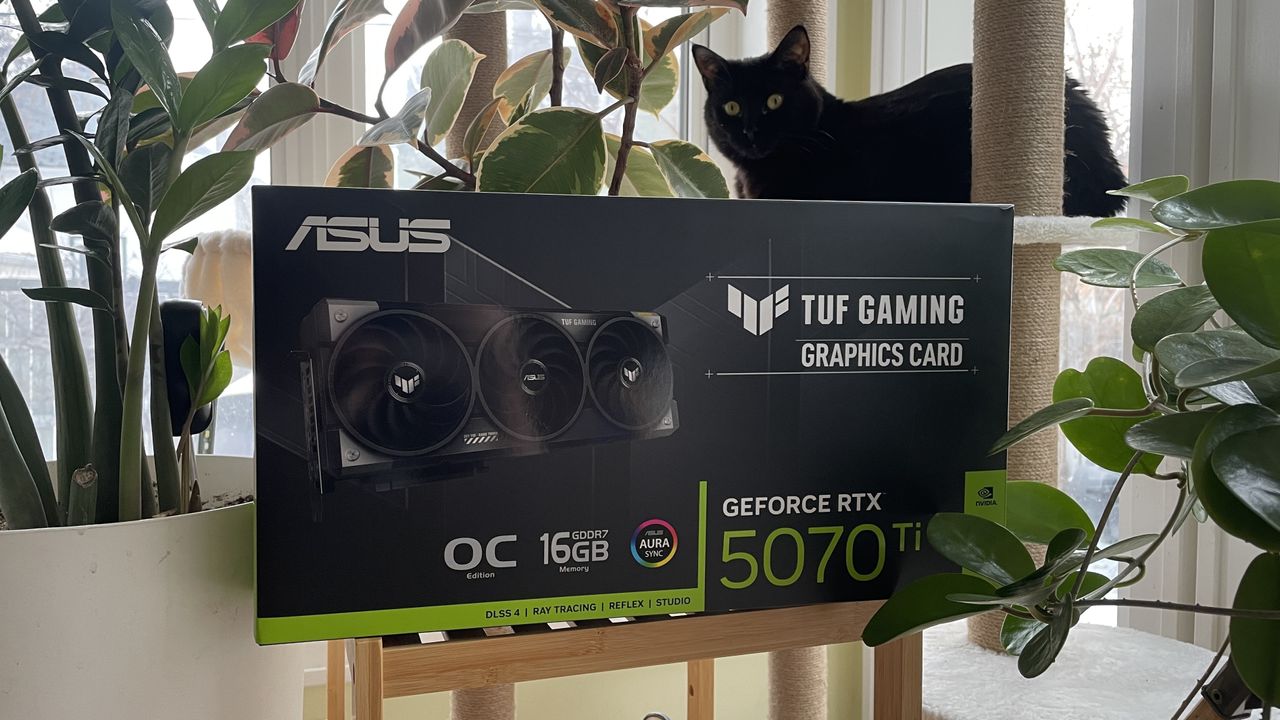
Dig deeper. In May, I reported on the original version of Semrush’s study in Google AI Overviews now show on 13% of searches: Study.

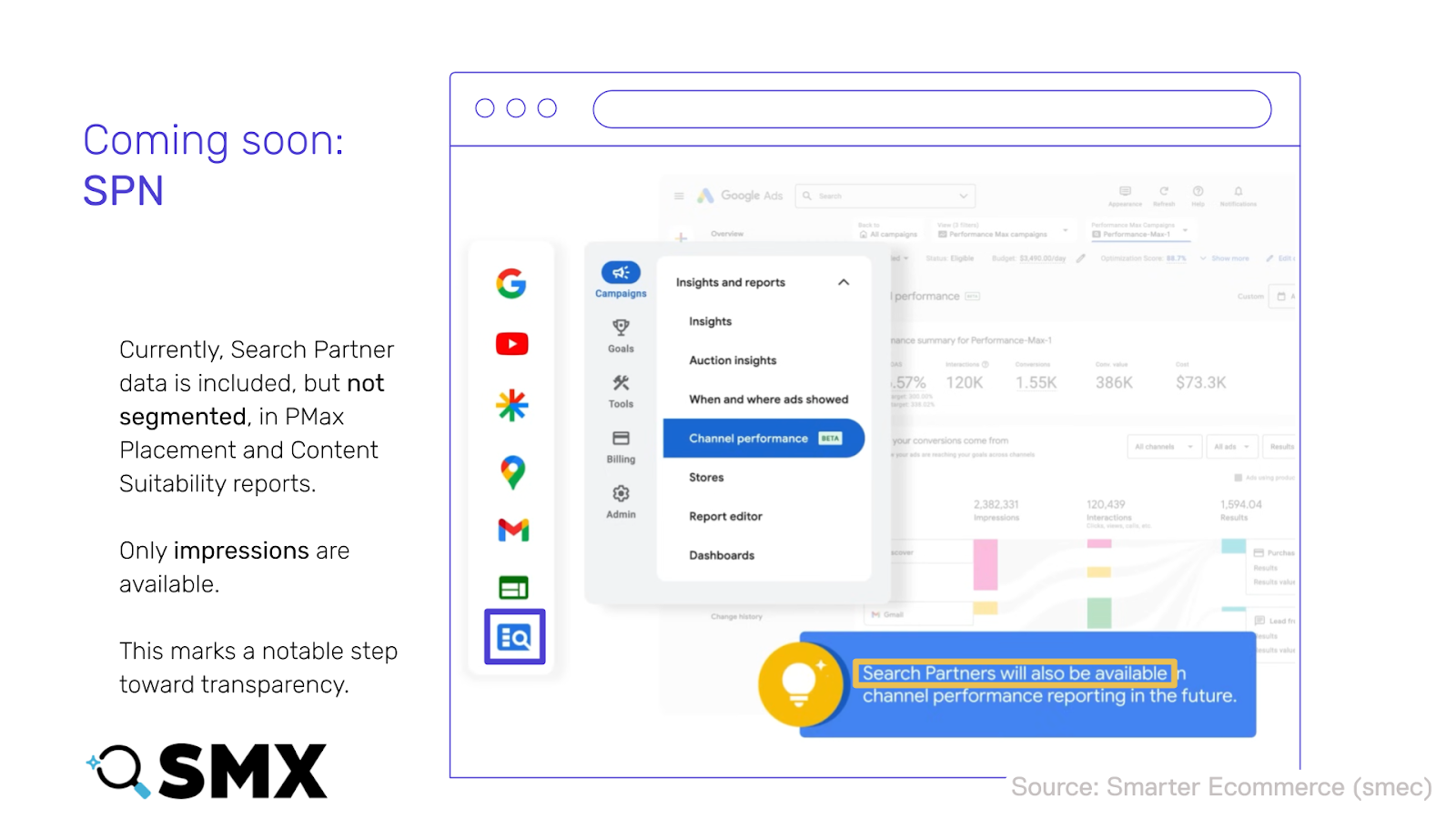
Hotfix 8 for Ghost of Tsushima adds FSR ML Frame Generation to the game Nixxes Software has released its “Patch 8 Hotfix” for Ghost of Tsushima’s PC version, adding support for AMD FSR ML Frame Generation. This new Frame Generation technique is part of AMD’s FSR “Redstone” update. With this update, users of AMD’s Radeon […]
The post Nixxes updates Ghost of Tsushima to enable FSR ML Frame Generation appeared first on OC3D.
Rec'd is a social discovery platform, turning trusted social signals into personalised recommendations. Right now people use multiple apps to discover places, save them, verify them and book. Rec'd integrates this process into one, powerful, AI based app that lets people discover the way they want, saving into one clean and intelligent platform.