9 amazing Valentine's Day gifts to show your other half how much you appreciate them
Illustro is an AI illustration generator tailored for websites, marketing, books, and more. Simply describe your idea, choose a style, and generate professional, consistent visuals in seconds. Easily edit your illustrations with AI by adding or removing elements, adjusting colors, and exporting in PNG, JPG, or SVG formats for use in Figma or Adobe Illustrator. You can use your illustrations commercially with full rights and iterate by regenerating them until they perfectly match your brand.
DocScribl is an AI-powered workflow scribe that captures browser-based processes, explains each step clearly, and produces visual timelines with screenshots. It allows you to export documentation to PDF and Markdown while providing contextual answers to questions about any process step. Emphasizing privacy, it features local-only capture and encryption, supports versioning and team sharing, and helps standardize processes to speed up onboarding and enhance knowledge transfer.
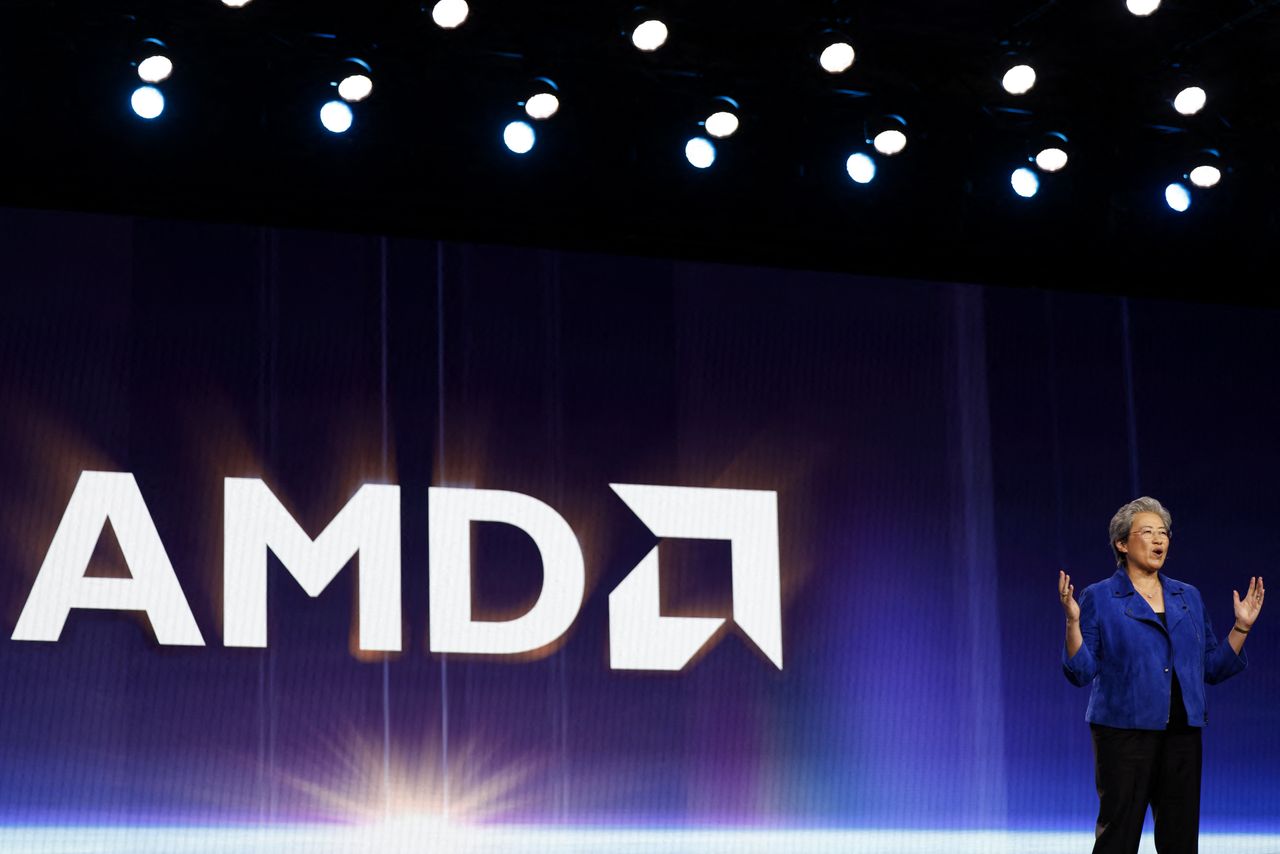
The next-gen Xbox console from Microsoft, which we know will be powered by a semi-custom SoC currently in development from AMD, is "progressing well to support a launch in 2027," said AMD's chief executive officer, Dr. Lisa Siu, during the company's 2025 fourth quarter earnings call. "For 2026, we expect semi-custom SoC annual revenue to decline by a significant double-digit percentage as we enter the seventh year of what has been a very strong console cycle," Dr. Siu said on the call. "From a product standpoint, Valve is on track to begin shipping its AMD-powered Steam Machine early this year. […]
Read full article at https://wccftech.com/amds-semi-custom-soc-thatll-power-the-next-gen-xbox-is-progressing-well-to-support-a-launch-in-2027-says-amd-ceo/


VFX AI is an enterprise-ready SaaS video platform designed for creators and teams to transform long-form videos into short, impactful clips using AI. It enables cutting, reframing, and editing through straightforward text-based commands, along with advanced editing workflows. The platform identifies key moments, ensures subjects stay in frame, generates captions, and exports videos optimized for platforms like Shorts, Reels, and TikTok. Designed for scalability, VFX AI supports team collaboration, brand kits, SSO, SCIM, and integrates seamlessly with existing tools, allowing for quicker video content production and management.
A handy update to make your pol options stand out.
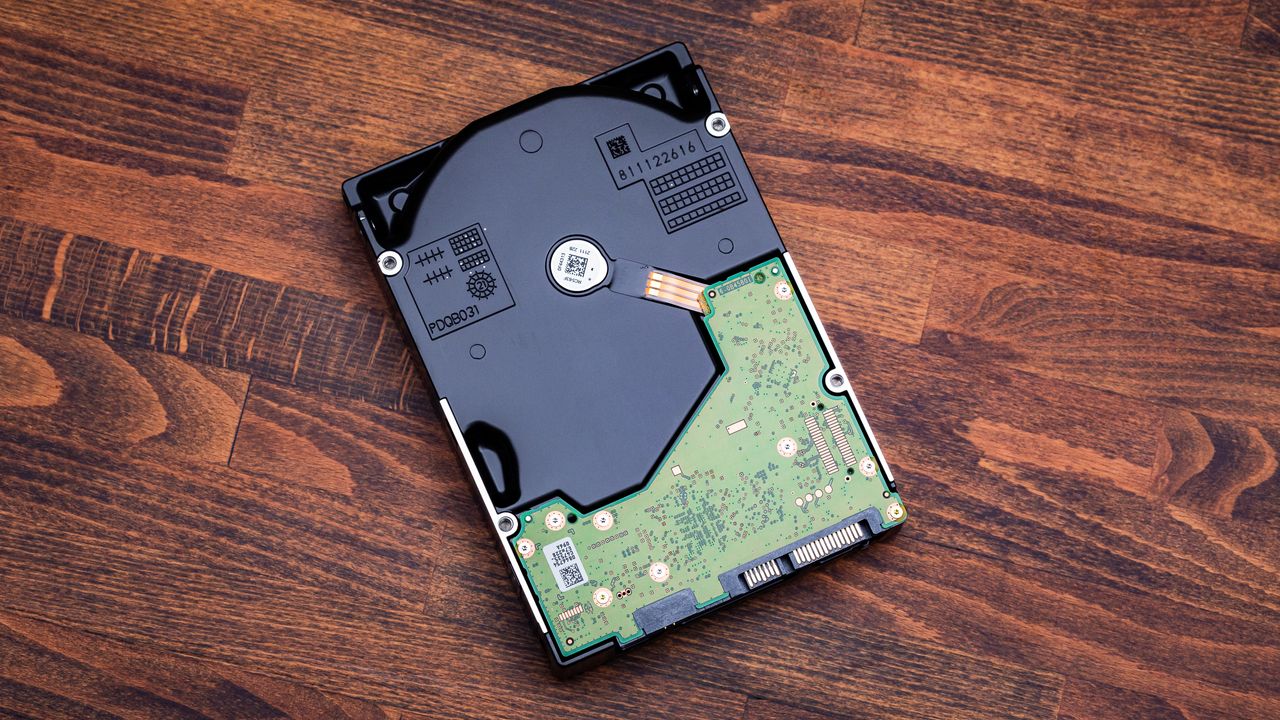
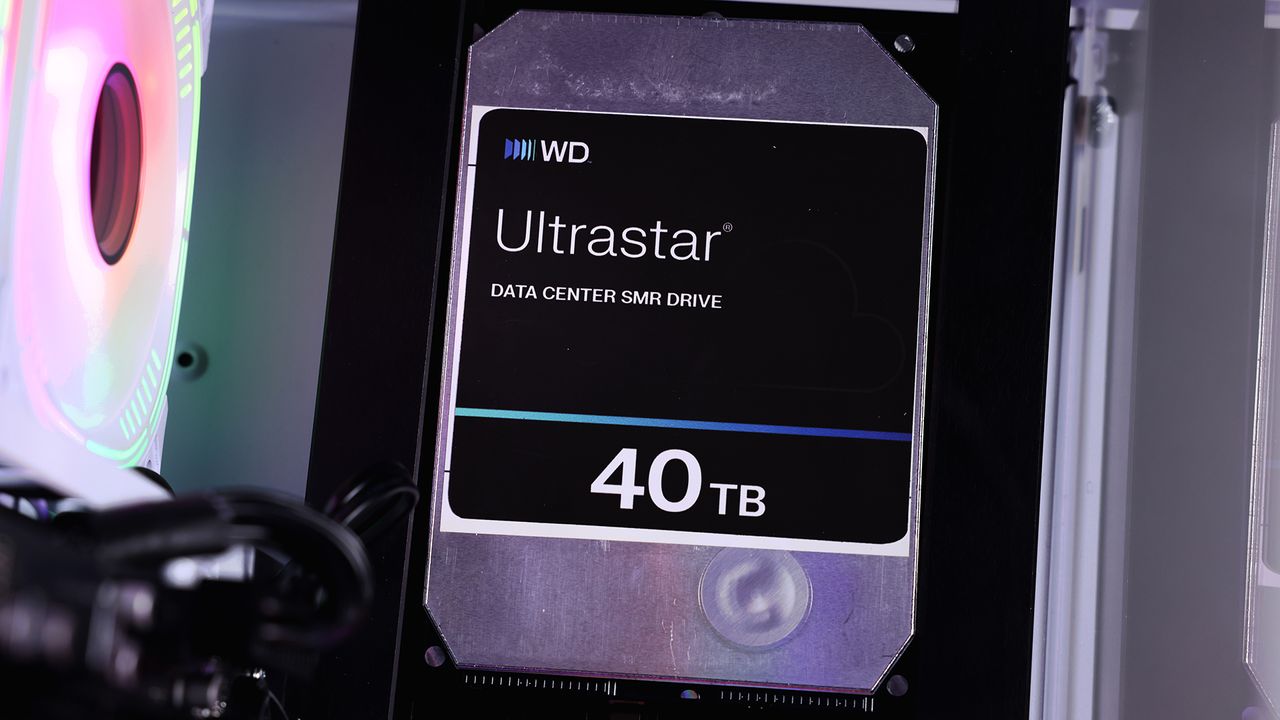
Western Digital aims to revolutionise the HDD space with plans to boost bandwidth by 8x While SSDs now dominate the consumer PC market, HDDs still have a place within the overall storage market. Mass storage requires a medium that can store large amounts of data, and while SSDs are fast, data density and pricing are […]
The post Western Digital to revolutionise HDDs with “High-Bandwidth Drive” and “Dual Pivot” tech appeared first on OC3D.
Everyone uses "cloud computing"… but almost nobody knows who actually coined the term. Take a guess.
Take-Two Interactive's third-quarter financial results have been published, which means there's plenty of information to glean from the company behind 2K and Rockstar's latest numbers. What everyone wants to hear about, though, is Grand Theft Auto VI, which may just be the most anticipated video game ever, and in the meantime, GTA V has hit yet another astronomical sales milestone. While Take-Two's chief executive officer, Strauss Zelnick, didn't get too deep into what's coming for GTA VI, he did confirm in an interview with The Game Business and during the call with investors that we can expect more "marketing beats" […]
Read full article at https://wccftech.com/more-grand-theft-auto-vi-marketing-beats-coming-in-summer-2026-while-gta-v-has-sold-over-225m-copies/

Apple appears to be on the cusp of launching its first major products of the new year, namely, the M5 Pro and M5 Max MacBook Pro devices, as two tantalizing signs beef up our confidence in this upbeat projection. Sign #1: The macOS 26.3 RC update and the connection to the M5 Pro and M5 Max MacBook Pro devices Apple has just launched the 26.3 release candidate (RC) build for Xcode, allowing users to leverage OpenAI's Codex and Anthropic's Claude Agent natively for coding-related tasks. So, why is this development a harbinger of sorts? Well, this suggests that the rest […]
Read full article at https://wccftech.com/apple-might-be-days-or-even-hours-away-from-launching-the-m5-pro-and-m5-max-macbook-pro-devices-as-two-tantalizing-signs-lead-the-way/

EA's announcement that it would be going private in a buyout led by the Saudi Arabia PIF and Silver Lake wasn't the only major deal the company made in 2025. It also struck a deal with Stability AI, a generative AI firm that "is unlocking the power of open-source generative AI to expand human creativity," according to its website. At the time of the deal, Stability AI chief executive officer, Prem Akkaraju, said, "EA is a pioneer in interactive entertainment and understands that innovation begins with the creator. At Stability AI, we put creators at the center and build around […]
Read full article at https://wccftech.com/to-be-a-great-electronic-artist-you-need-the-best-technology-and-tools-ea-digs-further-into-its-deal-with-stability-ai/

Google's crawl team filed a bug against WooCommerce for add-to-cart parameters wasting crawl budget. WooCommerce fixed it. Other plugins haven't.
The post Google’s Crawl Team Filed Bugs Against WordPress Plugins appeared first on Search Engine Journal.
VMware Workstation Pro 25H2 focuses on platform updates, adding USB 3.2 support, newer virtual hardware, improved Hyper-V detection, and compatibility with recent Linux releases like Debian 13, Fedora 42, and RHEL 10, plus a new dictTool utility for working with configuration files.
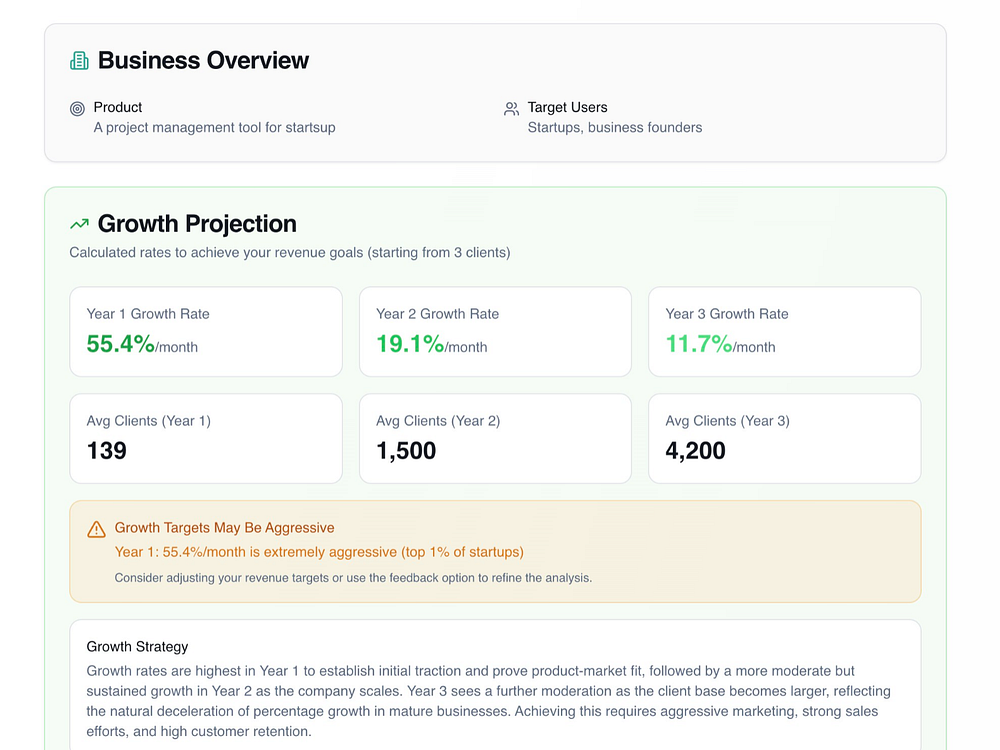
ProFormaGen assists founders and finance teams in quickly creating professional pro forma models. By answering a few questions, its AI generates 36-month revenue, expense, and cash flow projections along with interactive dashboards. Users can collaborate with teammates, model multiple revenue streams, and track expenses with real-time updates. Additionally, they can export investor-ready reports and full Excel models to share and refine their plans.
The meteoric rise and sustained success of Embark Studio's new third-person extraction shooter, ARC Raiders, will be one for the history books of the video game industry if things keep going the way they are currently going. A new report from Alinea Analytics claims that for the third consecutive month, ARC Raiders was the number one selling title across Steam, PlayStation, and Xbox. That month was, of course, January 2026, during which Alinea Analytics says ARC Raiders sold an additional 1.5 million copies just on Steam. On PlayStation and Xbox, it combined for an additional 1.7 million copies sold, bringing […]
Read full article at https://wccftech.com/arc-raiders-dominance-continues-reportedly-stands-as-top-selling-game-across-steam-xbox-and-playstation-for-third-consecutive-month/


Several EU nations are looking to implement teen social media restrictions.

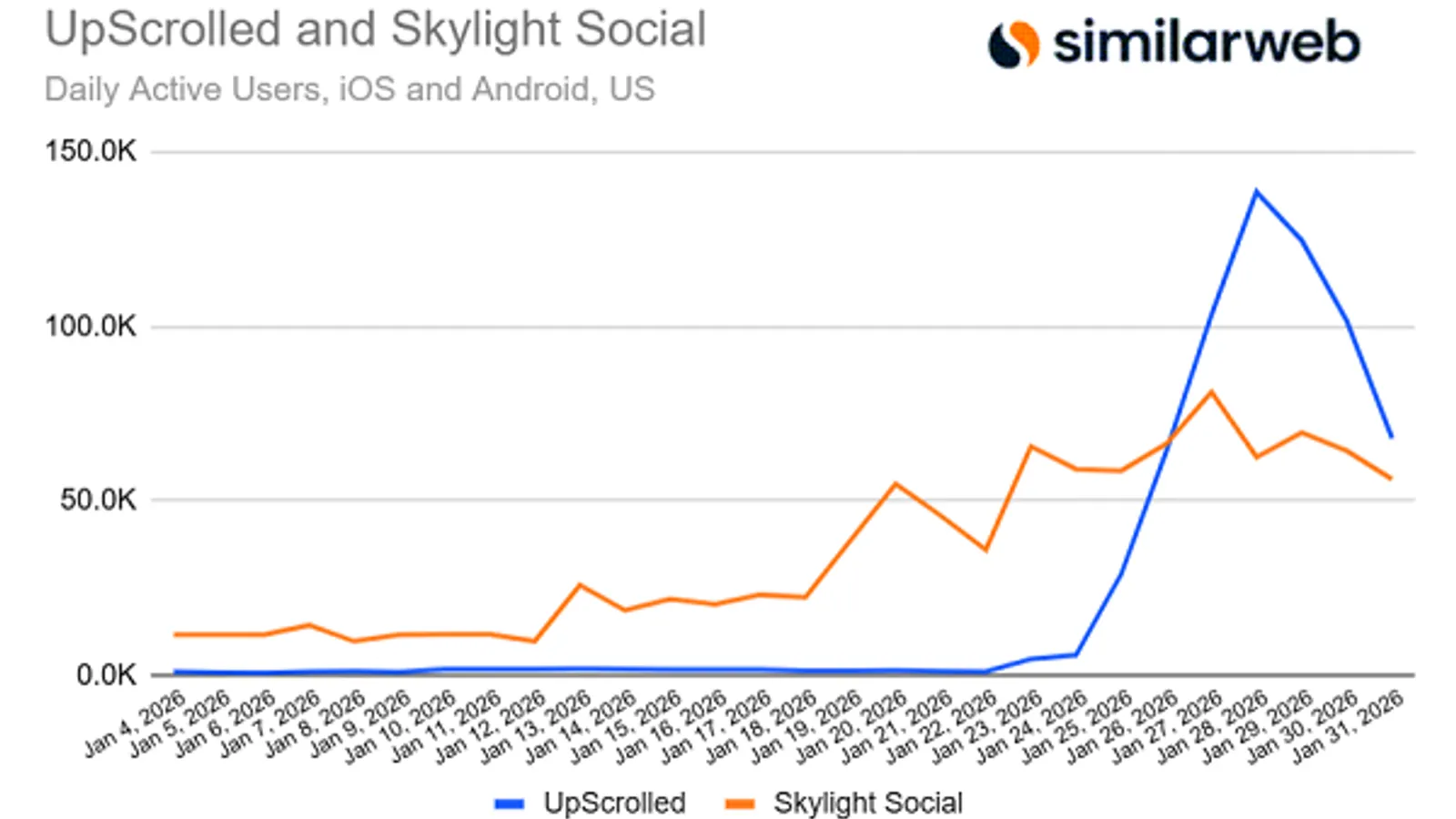
Interest in UpScrolled appears to be waning as TikTok gets back on track in the US.
LinkedIn says that more B2B buying activity now stems from creator content.
Google updated its Googlebot documentation to clarify file size limits, separating default limits that apply to all crawlers from Googlebot-specific details.
The post Google Updates Googlebot File Size Limit Docs appeared first on Search Engine Journal.
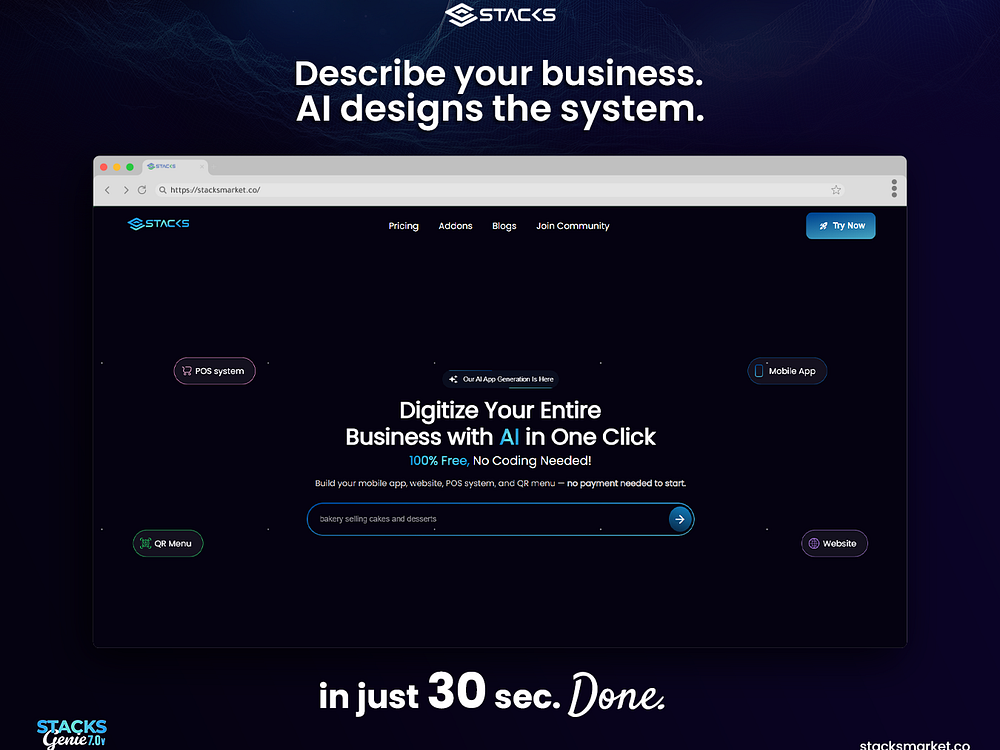
Stacks is an AI-powered no-code platform that enables users to create a mobile app, website, POS system, and QR menu all in one place. Generate layouts in seconds, customize them with a drag-and-drop builder, and publish to iOS and Android instantly. You can connect WooCommerce payments, send push notifications, manage products and orders, and track sales and inventory. Start for free on a stacksmarket.co subdomain and upgrade for additional features and support.

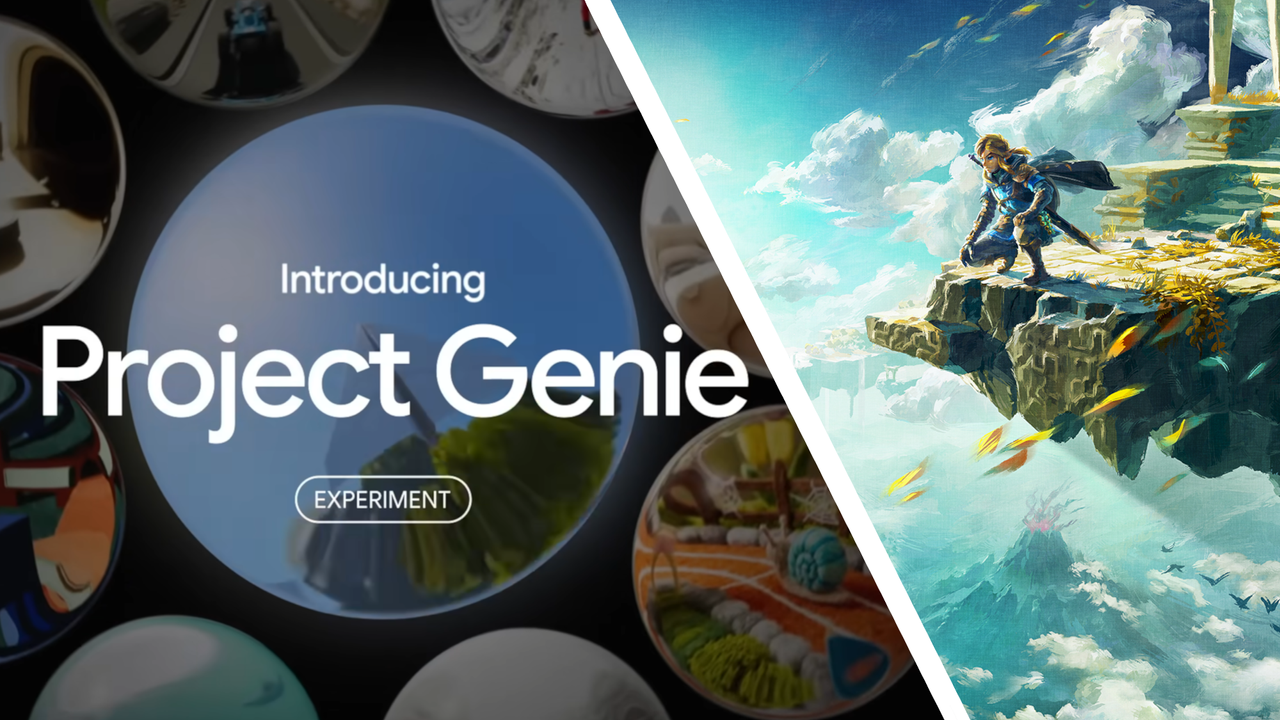
Last week, Google debuted its latest generative AI experiment, Project Genie. It's a tool capable of generating interactive three-dimensional environments made entirely through generative AI that you can explore for one solid minute. All you need to do (after paying the $250 monthly fee for Google's AI Ultra subscription) is write a prompt to start generating your own game-like worlds, but besides the paywall barrier, there are more than a few limitations to this technology in terms of it becoming the new way to make games. The fact that it runs at a slide-show speed of 24 frames per second, […]
Read full article at https://wccftech.com/googles-project-genie-shows-meaningful-progress-in-content-generation-but-it-cant-replace-creative-vision-says-analyst/

South Korean developer Pearl Abyss announced today that the upcoming open world action/adventure game Crimson Desert has been wishlisted by over two million users across all platforms. It is yet another strong confirmation of the mounting hype behind Crimson Desert. It's been a while since the market got a fantasy triple-A open world game of this scale (the world is said to be twice as big as Skyrim's), after all, and fans can't wait to get their hands on the game after many years of development. Thankfully, in addition to celebrating wishlist milestones, Pearl Abyss is still sharing little nuggets […]
Read full article at https://wccftech.com/crimson-desert-2-million-wishlists-middle-the-witcher-3-zelda/

NVIDIA and OpenAI are all that's being talked about in the AI world, not because there have been changes in their commitments, but because the scale of the partnership is so immense that it captures all the market spotlight. Before we dive into the ongoing NVIDIA-OpenAI fiasco, it's important to note the fundamentals that underpin the partnership. Team Green is currently the world's largest AI infrastructure provider, and almost all hyperscalers are dependent on the company, not just for hardware, but also for financial commitments in the form of "collaborations" or whatever you call it. At the same time, NVIDIA […]
Read full article at https://wccftech.com/the-nvidia-openai-fiasco-isnt-about-compute-its-about-control/

The UK ICO has launched a formal investigation into the app.
The investigation relates to algorithmic manipulation and the latest Grok misuse controversy.

Microsoft Advertising today launched the Publisher Content Marketplace (PCM), a system that lets publishers license premium content to AI products and get paid based on how that content is used.
How it works. PCM creates a direct value exchange. Publishers set licensing and usage terms, while AI builders discover and license content for specific grounding scenarios. The marketplace also includes usage-based reporting, giving publishers visibility into how their content performs and where it creates the most value.
Designed to scale. PCM is designed to avoid one-off licensing deals between individual publishers and AI providers. Participation is voluntary, ownership remains with publishers, and editorial independence stays intact. The marketplace supports everyone from global publishers to smaller, specialized outlets.
Why we care. As AI systems shift from answering questions to making decisions, content quality matters more than ever. As agents increasingly guide purchases, finance, and healthcare choices, ads and sponsored messages will sit alongside — or draw from — premium content rather than generic web signals. That raises the bar for credibility and points to a future where brand alignment with trusted publishers and AI ecosystems directly impacts performance.
Early traction. Microsoft Advertising co-designed PCM with major U.S. publishers, including Business Insider, Condé Nast, Hearst, The Associated Press, USA TODAY, and Vox Media. Early pilots grounded Microsoft Copilot responses in licensed content, with Yahoo among the first demand partners now onboarding.
What’s next. Microsoft plans to expand the pilot to more publishers and AI builders that share a core belief: as the AI web evolves, high-quality content should be respected, governed, and paid for.
The big picture. In an agentic web, AI tools increasingly summarize, reason, and recommend through conversation. Whether the topic is medical safety, financial eligibility, or a major purchase, outcomes depend on access to trusted, authoritative sources — many of which sit behind paywalls or in proprietary archives.
The tension. The traditional web bargain was simple: publishers shared content, and platforms sent traffic back. That model breaks down when AI delivers answers directly, cutting clicks while still depending on premium content to perform well.
Bottom line. If AI is going to make better decisions, it needs better inputs — and PCM is Microsoft’s bet that a sustainable content economy can power the next phase of the agentic web.
Microsoft’s announcement. Building Toward a Sustainable Content Economy for the Agentic Web

Vibe coding is a new way to create software using AI tools such as ChatGPT, Cursor, Replit, and Gemini. It works by describing to the tool what you want in plain language and receiving written code in return. You can then simply paste the code into an environment (such as Google Colab), run it, and test the results, all without ever actually programming a single line of code.
Collins Dictionary named “vibe coding” word of the year in 2025, defining it as “the use of artificial intelligence prompted by natural language to write computer code.”
In this guide, you’ll understand how to start vibe coding, learn its limitations and risks, and see examples of great tools created by SEOs to inspire you to vibe code your own projects.
While “vibe coding” is used as an umbrella term, there are subsets of coding with support or AI, including the following:
| Type | Description | Tools |
| AI-assisted coding | AI helps write, refactor, explain, or debug code. Used by actual developers or engineers to support their complex work. | GitHub Copilot, Cursor, Claude, Google AI Studio |
| Vibe coding | Platforms that handle everything except the prompt/idea. AI does most of the work. | ChatGPT, Replit, Gemini, Google AI Studio |
| No-code platforms | Platforms that handle everything you ask (“drag and drop” visual updates while the code happens in the background). They tend to use AI but existed long before AI became mainstream. | Notion, Zapier, Wix |
We’ll focus exclusively on vibe coding in this guide.
With vibe coding, while there’s a bit of manual work to be done, the barrier is still low — you basically need a ChatGPT account (free or paid) and access to a Google account (free). Depending on your use case, you might also need access to APIs or SEO tools subscriptions such as Semrush or Screaming Frog.
The SEO toolkit you know, plus the AI visibility data you need.
To set expectations, by the end of this guide, you’ll know how to run a small program on the cloud. If you expect to build a SaaS or software to sell, AI-assisted coding is a more reasonable option to take, which will involve costs and deeper coding knowledge.
Vibe coding is great when you’re trying to find outcomes for specific buckets of data, such as finding related links, adding pre-selected tags to articles, or doing something fun where the outcome doesn’t need to be exact.
For example, I’ve built an app to create a daily drawing for my daughter. I type a phrase about something that she told me about her day (e.g., “I had carrot cake at daycare”). The app has some examples of drawing styles I like and some pictures of her. The outputs (drawings) are the final work as they come from AI.
When I ask for specific changes, however, the program tends to worsen and redraw things I didn’t ask for. I once asked to remove a mustache and it recolored the image instead.
If my daughter were a client who’d scrutinize the output and require very specific changes, I’d need someone who knows Photoshop or similar tools to make specific improvements. In this case, though, the results are good enough.

Building commercial applications solely on vibe coding may require a company to hire vibe coding cleaners. However, for a demo, MVP (minimum viable product), or internal applications, vibe coding can be a useful, effective shortcut.
Using vibe coding to create your own SEO tools require three steps:
Here’s a prompt example for a tool I built to map related links at scale. After crawling a website using Screaming Frog and extracting vector embeddings (using the crawler’s integration with OpenAI), I vibe coded a tool that would compare the topical distance between the vectors in each URL.
This is exactly what I wrote on ChatGPT:
I need a Google Colab code that will use OpenAI to:
Check the vector embeddings existing in column C. Use cosine similarity to match with two suggestions from each locale (locale identified in Column A).
The goal is to find which pages from each locale are the most similar to each other, so we can add hreflang between these pages.
I’ll upload a CSV with these columns and expect a CSV in return with the answers.
Then I pasted the code that ChatGPT created on Google Colab, a free Jupyter Notebook environment that allows users to write and execute Python code in a web browser. It’s important to run your program by clicking on “Run all” in Google Colab to test if the output does what you expected.

This is how the process works on paper. Like everything in AI, it may look perfect, but it’s not always functioning exactly how you want it.
You’ll likely encounter issues along the way — luckily, they’re simple to troubleshoot.
First, be explicit about the platform you’re using in your prompt. If it’s Google Colab, say the code is for Google Colab.
You might still end up with code that requires packages that aren’t installed. In this case, just paste the error into ChatGPT and it’ll likely regenerate the code or find an alternative. You don’t even need to know what the package is, just show the error and use the new code. Alternatively, you can ask Gemini directly in your Google Colab to fix the issue and update your code directly.

AI tends to be very confident about anything and could return completely made-up outputs. One time I forgot to say the source data would come from a CSV file, so it simply created fake URLs, traffic, and graphs. Always check and recheck the output because “it looks good” can sometimes be wrong.
If you’re connecting to an API, especially a paid API (e.g., from Semrush, OpenAI, Google Cloud, or other tools), you’ll need to request your own API key and keep in mind usage costs.

Should you want an even lower execution barrier than Google Colab, you can try using Replit.

Simply prompt your request and the software will create the code, design, and allow testing all on the same screen. This means a lower chance of coding errors, no copy and paste, and a URL you can share right away with anyone to see your project built with a nice design. (You should still check for poor outputs and iterate with prompts until your final app is built.)
Keep in mind that while Google Colab is free (you’ll only spend if you use API keys), Replit charges a monthly subscription and per-usage fee on APIs. So the more you use an app, the more expensive it gets.
While Google Colab is the most basic (and easy) way to vibe code a small program, some SEOs are taking vibe coding even further by creating programs that are turned into Chrome extensions, Google Sheets automation, and even browser games.
The goal behind highlighting these tools is not only to showcase great work by the community, but also to inspire, build, and adapt to your specific needs. Do you wish any of these tools had different features? Perhaps you can build them for yourself — or for the world.
After vibe coding some SEO tools on Google Colab, Celeste Gonzalez, Director of SEO Testing at RicketyRoo Inc, took her vibing skills a step further and created a Chrome extension. “I realized that I don’t need to build something big, just something useful,” she explained.
Her browser extension, the GBP Reviews Sentiment Analyzer, summarizes sentiment analysis for reviews over the last 30 days and review velocity. It also allows the information to be exported into a CSV. The extension works on Google Maps and Google Business Profile pages.

Instead of ChatGPT, Celeste used a combination of Claude (to create high-quality prompts) and Cursor (to paste the created prompts and generate the code).
AI tools used: Claude (Sunner 4.5 model) and Cursor
APIs used: Google Business Profile API (free)
Platform hosting: Chrome Extension
I became obsessed with the Knowledge Graph in 2022, when I learned how to create and manage my own knowledge panel. Since then, I found out that Google has a Knowledge Graph Search API that allows you to check the confidence score for any entity.
This vibe-coded tool checks the score for your entities daily (or at any frequency you want) and returns it in a sheet. You can track multiple entities at once and just add new ones to the list at any time.

The Knowledge Panel Tracker runs completely on Google Sheets, and the Knowledge Graph Search API is free to use. This guide shows how to create and run it in your own Google account, or you can see the spreadsheet here and just update the API key under Extensions > App Scripts.
AI models used: ChatGPT 5.1
APIs used: Google Knowledge Graph API (free)
Platform hosting: Google Sheets
How about vibe coding a link building asset? That’s what Vince Nero from BuzzStream did when creating the Inbox Hero Game. It requires you to use your keyboard to accept or reject a pitch within seconds. The game is over if you accept too many bad pitches.

Inbox Hero Game is certainly more complex than running a piece of code on Google Colab, and it took Vince about 20 hours to build it all from scratch. “I learned you have to build things in pieces. Design the guy first, then the backgrounds, then one aspect of the game mechanics, etc.,” he said.
The game was coded in HTML, CSS, and JavaScript. “I uploaded the files to GitHub to make it work. ChatGPT walked me through everything,” Vince explained.
According to him, the longer the prompt continued, the less effective ChatGPT became, “to the point where [he’d] have to restart in a new chat.”
This issue was one of the hardest and most frustrating parts of creating the game. Vince would add a new feature (e.g., score), and ChatGPT would “guarantee” it found the error, update the file, but still return with the same error.
Track, optimize, and win in Google and AI search from one platform.
In the end, Inbox Hero Game is a fun game that demonstrates it’s possible to create a simple game without coding knowledge, yet taking steps to perfect it would be more feasible with a developer.
AI models used: ChatGPT
APIs used: None
Platform hosting: Webpage
Vibe coding won’t replace developers, and it shouldn’t. But as these examples show, it can responsibly unlock new ways for SEOs to prototype ideas, automate repetitive tasks, and explore creative experiments without heavy technical lift.
The key is realism: Use vibe coding where precision isn’t mission-critical, validate outputs carefully, and understand when a project has outgrown “good enough” and needs additional resources and human intervention.
When approached thoughtfully, vibe coding becomes less about shipping perfect software and more about expanding what’s possible — faster testing, sharper insights, and more room for experimentation. Whether you’re building an internal tool, a proof of concept, or a fun SEO side project, the best results come from pairing curiosity with restraint.
Build the Damn Thing helps entrepreneurs transition from having no idea to creating an initial product through a guided BUILD sprint. Users can answer focused questions and leverage proven frameworks with AI assistance to validate ideas, check names and domains, generate a logo, and create an editable business plan with links to launch a live MVP. Additionally, Build the Damn Thing enhances learning through its bestselling book and podcast.
Xbox has announced the first batch of Xbox Game Pass games joining the service for February 2026, headlined by a couple of major past releases and one new day-one launch for the subscription service. That new release is Squanch Games' upcoming High on Life 2, while the other headlining titles include Kingdom Come: Deliverance and Avatar: Frontiers of Pandora. This new batch of games also includes a couple of titles already included in the service for players subscribed to the Game Pass Ultimate tier that are now available for Premium tier members. Once again, unfortunately for Essential tier players, there's […]
Read full article at https://wccftech.com/avatar-frontiers-of-pandora-high-on-life-2-and-kingdom-come-deliverance-headline-new-xbox-game-pass-games/

In terms of image quality, LED TVs will always be surpassed by mini-LED technology by miles, but the problem is that the transition to an advanced display is always an expensive decision, unless you purchase a Hisense TV. On Amazon, the company’s QD7 family is not just available in multiple sizes, starting from 50 inches, but these will go easy on your wallet and go all the way up to 100 inches. Best of all, you only need $297.99 in cash to get started. For those looking for both media consumption and gaming, we recommend getting a Hisense mini-LED TV […]
Read full article at https://wccftech.com/hisense-mini-led-tvs-with-amazing-picture-quality-start-from-297-99-on-amazon/

Since moving on from the Gamebryo engine, which powered The Elder Scrolls IV: Oblivion, its faithful remake (which proved successful even without having great player retention) and Fallout 3, Bethesda used its Creation Engine for all its games, including The Elder Scrolls V: Skyrim and Fallout 4. Despite powering what is widely considered one of the best role-playing games of all time, the engine caught some flak from gamers for how it manages the sprawling worlds of the games it powers, forcing dated, immersion-breaking loading screens, as seen in Starfield. For this reason, many wish Bethesda would leave this engine […]
Read full article at https://wccftech.com/you-are-talking-about-putting-your-developers-into-a-situation-where-they-cant-play-the-game-heres-why-the-elder-scrolls-6-will-use-creation-engine-again/

Just like NVIDIA, AMD is expected to prioritize 8 GB Radeon GPUs, including SKUs from the previous generation. AMD to Focus More on 8 GB GPUs, Including RX 9060 XT and RX 7650 GRE, While AICs Plan to Carry Out a Second Price Hike Soon AMD GPUs are about to get more expensive as its board partners are planning to implement a second price hike very soon. We reported on this yesterday that AMD's board partners have already implemented a price hike of nearly 5-10% in January, and are expected to hike the prices a second time this month or […]
Read full article at https://wccftech.com/amd-is-rumoredly-prioritizing-8-gb-gpus/

Obsidian Entertainment was one of the busiest studios in 2025, releasing not just one, but three major titles last year. It began the year with Avowed in February 2025, followed by Grounded 2 releasing in early access in July 2025, and capped off the year with The Outer Worlds 2 in October 2025. Two of those three games were misfires in terms of sales (though they were fairly well received by critics, especially here on Wccftech), and a new report from Bloomberg digs into how the studio is looking to bounce back and "reinvent itself." If you can't guess which […]
Read full article at https://wccftech.com/that-sucks-what-are-we-learning-new-report-reveals-how-obsidian-looks-to-bounce-back-after-two-commercial-misses-in-2025/

Upcoming Arrow Lake Refresh CPUs have been listed on a few European retailers, and it appears that Intel has maintained the same pricing as their predecessors. Intel Core Ultra 5 250K/KF Plus and Ultra 7 270K Plus Listed on Retailers Ahead of Official Launch While we await Intel's announcement on upcoming Intel Arrow Lake Refresh CPUs, some retailers have already gotten their hands on these SKUs. It appears that the CPU launch is quite close, and according to the listings, the processors should cost no more than their predecessors from the current Arrow Lake series. The listings were spotted by […]
Read full article at https://wccftech.com/intel-core-ultra-200-plus-series-skus-listed-on-eu-retailers/


AI-powered search gutted LinkedIn’s B2B awareness traffic. Across a subset of topics, non-brand organic visits fell by as much as 60% even while rankings stayed stable, the company said.
By the numbers. In a new article, LinkedIn said its B2B organic growth team started researching Google’s Search Generative Experience (SGE) in early 2024. By early 2025, when SGE evolved into AI Overviews, the impact became significant.
Yes, but. LinkedIn’s “new learnings” are more like a rehash of established SEO/AEO best practices. Here’s what LinkedIn’s content-level guidance consists of:
Why we care. These tactics should all sound familiar. These are technical SEO and content-quality fundamentals. LinkedIn’s article offers little new in terms of tactics. It’s just updated packaging for modern SEO/AEO and AI visibility.
Dig deeper. How to optimize for AI search: 12 proven LLM visibility tactics
Measurement is broken. LinkedIn said its big challenge is the “dark” funnel. It can’t quantify how visibility in LLM answers impacts the bottom line, especially when discovery happens without a click.
What LinkedIn is doing. LinkedIn created an AI Search Taskforce spanning SEO, PR, editorial, product marketing, product, paid media, social, and brand. Key actions included:
Is it working? LinkedIn said early tests produced a meaningful lift in visibility and citations, especially from owned content. At least one external datapoint (Semrush, Nov. 10, 2025) suggested that LinkedIn has a structural advantage in AI search:
Incomplete story. LinkedIn’s article is an interesting read, but it’s light on specifics. Missing details include:
Bottom line. LinkedIn is right that visibility is the new currency. However, it hasn’t shown enough detail to prove its new playbook is meaningfully different from doing some SEO (yes, SEO) fundamentals.
LinkedIn’s article. How LinkedIn Marketing Is Adapting to AI-Led Discovery
Capcom removes Denuvo from Resident Evil 4’s PC version with a fresh update Capcom has released a new update for the PC version of Resident Evil 4 (the 2023 remake), removing Denuvo from the game. This is an undocumented change to the PC version of the game, with Capcom releasing new patch notes for this […]
The post Capcom removes Denuvo from its Resident Evil 4 Remake appeared first on OC3D.
Expect the Epic Games Store to become faster and more stable in 2026 Epic Games has confirmed that its Epic Games Store is getting rebuilt this year. The company is working on the “underlying architecture” of its launcher and plans to ship these improvements this summer. This should make the Epic Games Store more responsive […]
The post The Epic Games Store is getting rebuilt for speed and ease of use appeared first on OC3D.
Riverside is an all-in-one podcast and video studio for businesses and content creators who demand professional quality without technical complexities. Podcasters, video creators, and businesses worldwide produce studio-quality content in a fraction of the time compared to traditional methods. Businesses and content creators use Riverside for audio and video production, including podcast recording, editing, hosting, and publishing, remote interviews, marketing content like testimonials and case studies, live-streaming conferences with multiple presenters, webinars with interactive elements, and screen capturing for tutorials and product demos.


Samsung's planned initial production runs for its upcoming devices are leading to aberrant outcomes this year, with the South Korean giant planning to produce a lot more Galaxy Z Fold 8 units than the cheaper Galaxy Z Flip 8 ones, while going all-in on the Galaxy S26 Ultra, to the detriment of its base and plus counterparts. Samsung to produce 3.5 million units of the Galaxy Fold 8 vs. just 2.5-3 million units of the Galaxy Z Flip 8 According to ET News, Samsung is planning to produce 3.5 million units of the Galaxy Fold 8 and between 2.5 million […]
Read full article at https://wccftech.com/samsung-thinks-the-galaxy-z-fold-8-will-sell-better-than-the-cheaper-galaxy-z-flip-8-this-year/

Intel is now looking to capitalize on the ongoing DRAM demand by partnering with a SoftBank subsidiary to launch a new "ZAM" memory technology. Intel's ZAM Memory Modules Now Bring In Higher Power Efficiency Through Innovative Interconnect & EMIB Well, with the AI infrastructure buildout being at its peak this year, there has been a gigantic rise in DRAM demand, driven by the adoption of hyperscalers and chip manufacturers. And more importantly, given that memory suppliers are limited worldwide, the supply chain bottleneck is immense right now, underscoring the need for new competitors to enter, which is why Intel is reported […]
Read full article at https://wccftech.com/intel-plans-to-enter-the-memory-business-once-again/

Funcom has announced that Dune: Awakening Chapter 3, the game's biggest update yet, is live now. This patch continues the main story following the events of Chapter 2 and significantly revamps the previously lackluster endgame content, introducing numerous new locations, systems, and gear. Wccftech watched a remote presentation by the developer to learn the key details and features of Chapter 3; you can read our in-depth report below. In This Article: New Landsraad Mission System To start, the Landsraad system has been completely overhauled. It is now a contest between the Atreides and the Harkonnen to gain support from minor […]
Read full article at https://wccftech.com/dune-awakening-chapter-3-out-now-biggest-update/

The Epic Games Store won't be toppling Steam anytime soon, but the numbers shared by Epic in its Epic Games Store 2025 Year in Review blog post clearly show that the digital storefront is growing. The digital storefront best known for giving away free games also saw quite a few players doing more than just claiming a free title each week, spending more time and money in third-party titles. 2025 was a year of record-setting for the EGS, as player spending on third-party games grew by 57% compared to last year, reaching a record-high $400 million. Epic also added that […]
Read full article at https://wccftech.com/epic-games-store-saw-record-setting-third-party-sales-growth-in-2025-reaches-317m-pc-users/

Apple might have adopted a Google Gemini crutch to compensate for its own AI-related shortcomings, but that has not stopped the researchers at the Cupertino giant from trying to explore novel ways to make Siri noticeably better. Now, a new research paper from Apple researchers aims to unlock faster, more natural-sounding responses from Siri. Apple researchers figure out a viable path to elicit faster responses from Siri AI models typically generate speech based on tokens or short snippets of phonetic sounds, often spanning just milliseconds. The model then selects which phonetic sound (speech token) to use in its responses by […]
Read full article at https://wccftech.com/apple-researchers-figure-out-a-way-to-unlock-faster-more-natural-sounding-conversations-with-siri/

View Wi-Fi & ethernet details from the menubar

Innovations are coming at marketers and consumers faster than before, raising the question: Are we actually ready for the agentic web?
To answer that question, it’s important to unpack a few supporting ones:
It’s important to note that this article isn’t a mandate for AI skeptics to abandon the rational questions they have about the agentic web.
Nor is it intended to place any judgment on how you, as a consumer or professional, engage with the agentic web.

With thoughts and feelings so divided on the agentic web, this article aims to provide clear insight into how to think about it in earnest, without the branding or marketing fluff.
Disclosure: I am a Microsoft employee and believe in the path Microsoft’s taking with the agentic web. However, this article will attempt to be as platform-agnostic as possible.
The agentic web refers to sophisticated tools, or agents, trained on our preferences that act with our consent to accomplish time-consuming tasks.
In simple terms, when I use one-click checkout, I allow my saved payment information to be passed to the merchant’s accounts receivable systems.
Neither the merchant nor I must write down all the details or be involved beyond consenting to send and receive payment.
For fun, I put this question to four different AI models, and the responses are telling:
I begin with how different models answer the question because it’s important to understand that each one is trained on different information, and outcomes will inevitably vary.
It’s worth noting that with the same prompt, defining the agentic web in one sentence, three out of four models focus on diminishing the human role in navigating the web, while one makes a point to emphasize the significance of human involvement, preserving user choice, transparency, and control.
Two out of four refer to the agentic web as a layer or phase rather than an outright evolution of the web.
This is likely where the sentiment divide on the agentic web stems from.
Some see it as a consent-driven layer designed to make life easier, while others see it as a behemoth that consumes content, critical thinking, and choice.
It’s noteworthy that one model, Gemini, calls out APIs as a means of communication in the agentic web. APIs are essentially libraries of information that can be referenced, or called, based on the task you are attempting to accomplish.
This matters because APIs will become increasingly relevant in the agentic web, as saved preferences must be organized in ways that are easily understood and acted upon.
Defining the agentic web requires spending some time digging into two important protocols – ACP and UCP.
Dig deeper: AI agents in SEO: What you need to know
The Agentic Commerce Protocol, or ACP, is designed around a specific moment: when a user has already expressed intent and wants the AI to act.
The core idea behind ACP is simple. If a user tells an AI assistant to buy something, the assistant should be able to do so safely, transparently, and without forcing the user to leave the conversation to complete the transaction.
ACP enables this by standardizing how an AI agent can:
The experience is intentionally streamlined. The user stays in the conversation. The AI handles the mechanics. The merchant still fulfills the order.
This approach is tightly aligned with conversational AI platforms, particularly environments where users are already asking questions, refining preferences, and making decisions in real time. It prioritizes speed, clarity, and minimal friction.
The Universal Commerce Protocol, or UCP, takes a broader view of agentic commerce.
Rather than focusing solely on checkout, UCP is designed to support the entire shopping journey on the agentic web, from discovery through post-purchase interactions. It provides a common language that allows AI agents to interact with commerce systems across different platforms, surfaces, and payment providers.
That includes:
UCP is designed with scale and interoperability in mind. It assumes users will encounter agentic shopping experiences in many places, not just within a single assistant, and that merchants will want to participate without locking themselves into a single AI platform.
It’s tempting to frame ACP and UCP as competing solutions. In practice, they address different moments of the same user journey.
ACP is typically strongest when intent is explicit and the user wants something done now. UCP is generally strongest when intent is still forming and discovery, comparison, and context matter.
So what’s the agentic web? Is it an army of autonomous bots acting on past preferences to shape future needs? Is it the web as we know it, with fewer steps driven by consent-based signals? Or is it something else entirely?
The frustrating answer is that the agentic web is still being defined by human behavior, so there’s no clear answer yet. However, we have the power to determine what form the agentic web takes. To better understand how to participate, we now move to how the agentic web can be used, along with the pros and cons.
Dig deeper: The Great Decoupling of search and the birth of the agentic web
Working from the common theme across all definitions, autonomous action, we can move to applications.
Elmer Boutin has written a thoughtful technical view on how schema will impact agentic web compatibility. Benjamin Wenner has explored how PPC management might evolve in a fully agentic web. Both are worth reading.
Here, I want to focus on consumer-facing applications of the agentic web and how to think about them in relation to the tasks you already perform today.
Here are five applications of the agentic web that are live today or in active development.
A user states a goal, such as “Find me the best running shoes under $150,” and an agent handles discovery, comparison, and checkout without requiring the user to manually browse multiple sites.
How it works
Rather than returning a list of links, the agent interprets user intent, including budget, category, and preferences.
It pulls structured product information from participating merchants, applies reasoning logic to compare options, and moves toward checkout only after explicit user confirmation.
The agent operates on approved product data and defined rules, with clear handoffs that keep the user in control.
Implications for consumers and professionals
Reducing decision fatigue without removing choice is a clear benefit for consumers. For brands, this turns discovery into high-intent engagement rather than anonymous clicks with unclear attribution.
Strategically, it shifts competition away from who shouts the loudest toward who provides the clearest and most trusted product signals to agents. These agents can act as trusted guides, offering consumers third-party verification that a merchant is as reliable as it claims to be.
A brand deploys its own AI agent to answer questions, recommend products, and support customers using the brand’s data, tone, and business rules.
How it works
The agent uses first-party information, such as product catalogs, policies, and FAQs.
Guardrails define what it can say or do, preventing inferences that could lead to hallucinations.
Responses are generated by retrieving and reasoning over approved context within the prompt.
Implications for consumers and professionals
Customers get faster and more consistent responses. Brands retain voice, accountability, and ownership of the experience.
Strategically, this allows companies to participate in the agentic web without ceding their identity to a platform or intermediary. It also enables participation in global commerce without relying on native speakers to verify language.
Users delegate outcomes rather than steps, such as “Prepare a weekly performance summary” or “Reorder inventory when stock is low.”
How it works
The agent breaks the goal into subtasks, determines which systems or tools are needed, and executes actions sequentially. It pauses when permissions or human approvals are required.
These can be provided in bulk upfront or step by step. How this works ultimately depends on how the agent is built.
Implications for consumers and marketers
We’re used to treating AI like interns, relying on micromanaged task lists and detailed prompts. As agents become more sophisticated, it becomes possible to treat them more like senior employees, oriented around outcomes and process improvement.
That makes it reasonable to ask an agent to identify action items in email or send templates in your voice when active engagement isn’t required. Human choice comes down to how much you delegate to agents versus how much you ask them to assist.
Dig deeper: The future of search visibility: What 6 SEO leaders predict for 2026
Agents communicate with other agents on behalf of people or organizations, such as a buyer agent comparing offers with multiple seller agents.
How it works
Agents exchange structured information, including pricing, availability, and constraints.
They apply predefined rules, such as budgets or policies, and surface recommended outcomes for human approval.
Implications for consumers and marketers
Consumers may see faster and more transparent comparisons without needing to manually negotiate or cross-check options.
For professionals, this introduces new efficiencies in areas like procurement, media buying, or logistics, where structured negotiation can occur at scale while humans retain oversight.
Agents don’t just act once. They improve as they observe outcomes.
How it works
After each action, the agent evaluates what happened, such as engagement, conversion, or satisfaction. It updates its internal weighting and applies those learnings to future decisions.
Why people should care
Consumers experience increasingly relevant interactions over time without repeatedly restating preferences.
Professionals gain systems that improve continuously, shifting optimization from one-off efforts to long-term, adaptive performance.
Life is a series of choices, and leaning into or away from the agentic web comes with clear pros and cons.
The strongest argument for leaning into the agentic web is behavioral. People have already been trained to prioritize convenience over process.
Saved payment methods, password managers, autofill, and one-click checkout normalized the idea that software can complete tasks on your behalf once trust is established.
Agentic experiences follow the same trajectory. Rather than requiring users to manually navigate systems, they interpret intent and reduce the number of steps needed to reach an outcome.
Many brands will need to rethink how their content, data, and experiences are structured so they can be interpreted by automated systems and humans. What works for visual scanning or brand storytelling doesn’t always map cleanly to machine-readable signals.
There’s also a legitimate risk of overoptimization. Designing primarily for AI ingestion can unintentionally degrade human usability or accessibility if not handled carefully.
Dig deeper: The enterprise blueprint for winning visibility in AI search
Choosing to lean away from the agentic web can offer clarity of stance. There’s a visible segment of users skeptical of AI-mediated experiences, whether due to privacy concerns, automation fatigue, or a loss of human control.
Aligning with that perspective can strengthen trust with audiences who value deliberate, hands-on interaction.
If agentic interfaces become a primary way people discover information, compare options, or complete tasks, opting out entirely may limit visibility or participation.
The longer an organization waits to adapt, the more expensive and disruptive that transition can become.
What’s notable across the ecosystem is that agentic systems are increasingly designed to sit on top of existing infrastructure rather than replace it outright.
Avoiding engagement with these patterns may not be sustainable over time. If interaction norms shift and systems aren’t prepared, the combination of technical debt and lost opportunity may be harder to overcome later.
The agentic web is still taking form, shaped largely by how people choose to use it. Some organizations are already applying agentic systems to reduce friction and improve outcomes. Others are waiting for stronger trust signals and clearer consent models.
Either approach is valid. What matters is understanding how agentic systems work, where they add value, and how emerging protocols are shaping participation. That understanding is the foundation for deciding when, where, and how to engage with the agentic web.

Digital PR is about to matter more than ever. Not because it’s fashionable, or because agencies have rebranded link building with a shinier label, but because the mechanics of search and discovery are changing.
Brand mentions, earned media, and the wider PR ecosystem are now shaping how both search engines and large language models understand brands. That shift has serious implications for how SEO professionals should think about visibility, authority, and revenue.
At the same time, informational search traffic is shrinking. Fewer people are clicking through long blog posts written to target top-of-funnel keywords.
The commercial value in search is consolidating around high-intent queries and the pages that serve them: product pages, category pages, and service pages. Digital PR sits right at the intersection of these changes.
What follows are seven practical, experience-led secrets that explain how digital PR actually works when it’s done well, and why it’s becoming one of the most important tools in SEOs’ toolkit.
Digital PR is usually described as a link tactic, a brand play or, more recently, as a way to influence generative search and AI outputs.
All of that’s true. What’s often overlooked is that digital PR can also drive revenue directly.
When a brand appears in a relevant media publication, it’s effectively placing itself in front of buyers while they are already consuming related information.
This is not passive awareness. It’s targeted exposure during a moment of consideration.
Platforms like Google are exceptionally good at understanding user intent, interests and recency. Anyone who has looked at their Discover feed after researching a product category has seen this in action.
Digital PR taps into the same behavioral reality. You are not broadcasting randomly. You are appearing where buyers already are.
Two things tend to happen when this is executed well.
This effect is driven by basic behavioral principles such as recency and familiarity. While it’s difficult to attribute cleanly in analytics, the commercial impact is very real.
We see this most clearly in direct-to-consumer, finance, and health markets, where purchase cycles are active and intent is high.
Digital PR is not just about supporting sales. In the right conditions, it’s part of the sales engine.
Dig deeper: Discoverability in 2026: How digital PR and social search work together
One of the most consistent patterns in successful digital PR campaigns is repetition.
When a brand appears again and again in relevant media coverage, tied to the same themes, categories, or areas of expertise, it builds familiarity.
That familiarity turns into trust, and trust turns into preference. This is known as the mere exposure effect, and it’s fundamental to how brands grow.
In practice, this often happens through syndicated coverage. A strong story picked up by regional or vertical publications can lead to dozens of mentions across different outlets.
Historically, many SEOs undervalued this type of coverage because the links were not always unique or powerful on their own.
That misses the point.
What this repetition creates is a dense web of co-occurrences. Your brand name repeatedly appears alongside specific topics, products, or problems. This influences how people perceive you, but it also influences how machines understand you.
For search engines and large language models alike, frequency and consistency of association matter.
An always-on digital PR approach, rather than sporadic big hits, is one of the fastest ways to increase both human and algorithmic familiarity with a brand.
Large, creative digital PR campaigns are attractive. They are impressive, they generate internal excitement, and they often win industry praise. The problem is that they also concentrate risk.
A single large campaign can succeed spectacularly, or it can fail quietly. From an SEO perspective, many widely celebrated campaigns underperform because they do not generate the links or mentions that actually move rankings.
This happens for a simple reason. What marketers like is not always what journalists need.
Journalists are under pressure to publish quickly, attract attention, and stay relevant to their audience.
If a campaign is clever but difficult to translate into a story, it will struggle. If all your budget’s tied up in one idea, you have no fallback.
A diversified digital PR strategy spreads investment across multiple smaller campaigns, reactive opportunities, and steady background activity.
This increases the likelihood of consistent coverage and reduces dependence on any single idea working perfectly.
In digital PR, reliability often beats brilliance.
Dig deeper: How to build search visibility before demand exists
One of the most common mistakes in digital PR is forgetting who the gatekeeper is.
From a brand’s perspective, the goal might be links, mentions, or authority.
From a journalist’s perspective, the goal is to write a story that interests readers and performs well. These goals overlap, but they are not the same.
The journalist decides whether your pitch lives or dies. In that sense, they are the customer.
Effective digital PR starts by understanding what makes a journalist’s job easier.
That means providing clear angles, credible data, timely insights, and fast responses. Think about relevance before thinking about links.
When you help journalists do their job well, they reward you with exposure.
That exposure carries weight in search engines and in the training data that informs AI systems. The exchange is simple: value for value.
Treat journalists as partners, not as distribution channels.
Not all links are equal.
From an SEO standpoint, links to product, category, and core service pages are often far more valuable than links to blog content. Unfortunately, they are also the hardest links to acquire through traditional outreach.
This is where digital PR excels.
Because PR coverage is contextual and editorial, it allows links to be placed naturally within discussions of products, services, or markets. When done correctly, this directs authority to the pages that actually generate revenue.
As informational content becomes less central to organic traffic growth, this matters even more.
Ranking improvements on high-intent pages can have a disproportionate commercial impact.
A relatively small number of high-quality, relevant links can outperform a much larger volume of generic links pointed at top-of-funnel content.
Digital PR should be planned with these target pages in mind from the outset.
Dig deeper: How to make ecommerce product pages work in an AI-first world
Search engines have long made it clear that context matters. The text surrounding a link, and the way a brand is described, help define what that brand represents.
This has become even more important with the rise of large language models. These systems process information in chunks, extracting meaning from surrounding text rather than relying solely on links.
When your brand is mentioned repeatedly in connection with specific topics, products, or expertise, it strengthens your position as an entity in that space. This is what’s often referred to as entity lifting.
The effect goes beyond individual pages. Brands see ranking improvements for terms and categories that were not directly targeted, simply because their overall authority has increased.
At the same time, AI systems are more likely to reference and summarize brands that are consistently described as relevant sources.
Digital PR is one of the most scalable ways to build this kind of contextual understanding around a brand.
Former Google engineer Jun Wu discusses this in his book “The Beauty of Mathematics in Computer Science,” explaining that authority emerges from being recognized as a source within specific informational hubs.
In practical terms, this means that where you are mentioned matters as much as how big the site is.
A link or mention from a highly relevant section of a large publication can be more valuable than a generic mention on the homepage. For example, a targeted subfolder on a major media site can carry strong authority, even if the domain as a whole covers many subjects.
Effective digital PR focuses on two things:
This is how authority is built in a way that search engines and AI systems both recognize.
Dig deeper: The new SEO imperative: Building your brand
Digital PR is no longer a supporting act to SEO. It’s becoming central to how brands are discovered, understood, and trusted.
As informational traffic declines and high-intent competition intensifies, the brands that win will be those that combine relevance, repetition, and authority across earned media.
Digital PR, done properly, delivers all three.

Google discussed its 2025 year-end report on crawling and indexing challenges for Google Search. The biggest issues were faceted navigation and action parameters, which accounted for about 75% of the problems, according to Google’s Gary Illyes. He shared this on the latest Search Off the Record podcast, published this morning.
What is the issue. Crawling issues can slow your site to a crawl, overload your server, and make your website unusable or inaccessible. If a bot gets stuck in an infinite crawling loop, recovery can take time.
The biggest crawling challenges. Based on the report, these are the main issues Google sees:
Why we care. A clean URL structure without bot traps is essential to keep your server healthy, ensure fast page loads, and prevent search engines from getting confused about your canonical URLs.
The episode. Crawling Challenges: What the 2025 Year-End Report Tells Us.

Intel Core Ultra 5 250KF PLUS CPU listed – Are Core Ultra PLUS KF series CPUs incoming? Retail listing for Intel’s upcoming Core Ultra 200 PLUS series CPUs has been uncovered by the leaker @momomo_us. This has unveiled Intel’s upcoming Core Ultra 5 250KF PLUS CPU for the first time, a CPU that could become […]
The post Intel’s Leaked Core Ultra 250KF PLUS could be their next budget CPU KING! appeared first on OC3D.
Modder makes Resident Evil sharper and more vibrant with a new 4K texture mod A game modder called “Evgeshajk” has created a new 4K texture mod for Resident Evil HD Remastered, Capcom’s 2014 remake of the first Resident Evil game. This mod increases the game’s texture resolution, making characters and backgrounds much more detailed. This […]
The post Modder stuns with Resident Evil HD Remaster 4K Texture pack appeared first on OC3D.
While the entire RTX 50 series has soared in popularity, the RTX 5060 is climbing faster, followed by the GeForce RTX 5070. Steam Hardware Survey for January 2026 Reveals the GeForce RTX 5060 Saw a 40% Increase in Popularity, While RTX 5070 Saw a 19% Jump Month Over Month It's no coincidence that the budget RTX 50-series GPUs are now being adopted faster than ever. Blame the current market, which is forcing gamers to buy GPUs at significantly higher prices. NVIDIA and AMD have been making new supply strategies for their latest-gen GPUs, and this is resulting in much higher […]
Read full article at https://wccftech.com/nvidia-rtx-5060-and-rtx-5070-see-a-sudden-jump-in-popularity/

The announcement of Star Wars: Galactic Racer at The Game Awards 2025 was among the most unexpected. It had been many years since there was a Star Wars-themed racing game, so many gamers were overjoyed at the news. At the same time, it was not clear based on the released footage, screenshots, and info whether the game would include Podracing, the high-speed fictional sport featured prominently in the movie Star Wars: The Phantom Menace, in which a very young Anakin Skywalker enters and wins a podrace. The most popular older racing games, Star Wars Episode I: Racer, Star Wars: Racer […]
Read full article at https://wccftech.com/yes-star-wars-galactic-racer-has-podracing/


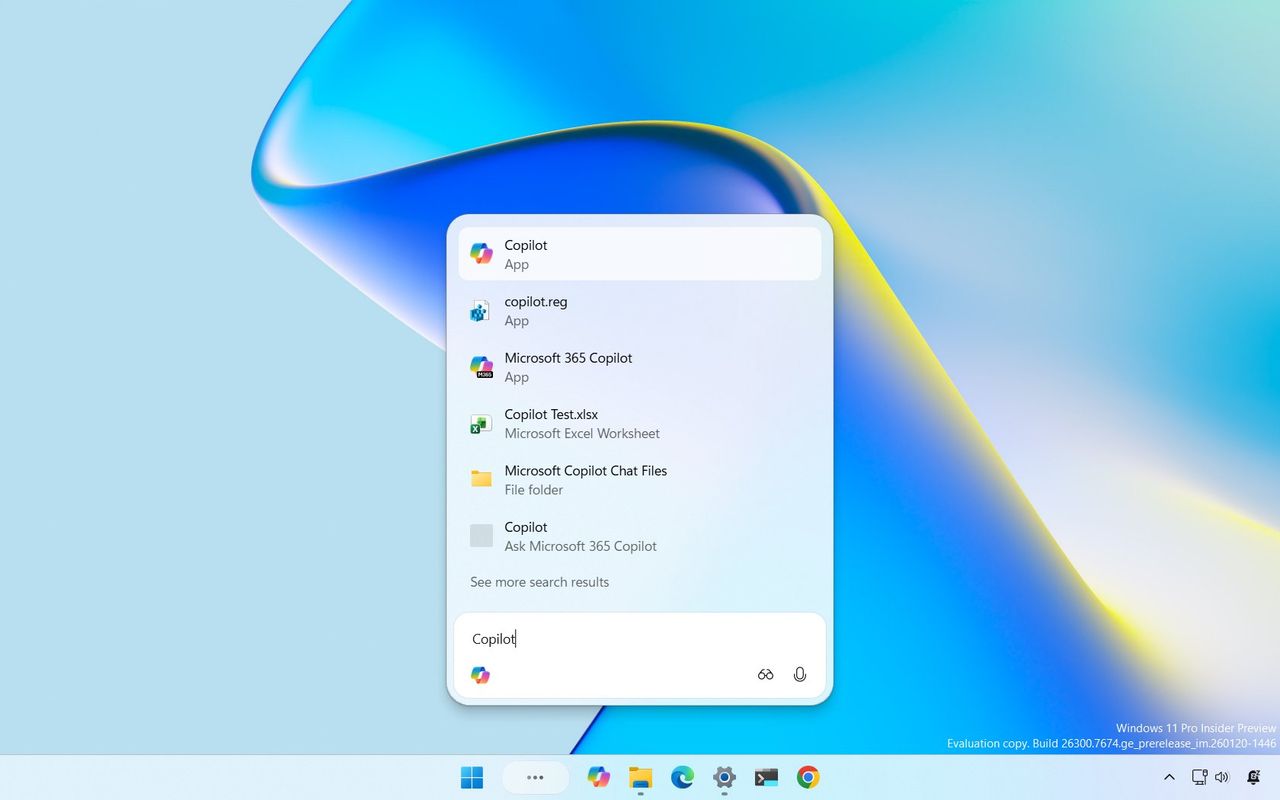
Microsoft today rolled out multi-turn search globally in Bing. As you scroll down the search results page, a Copilot search box now dynamically appears at the bottom.
About multi-turn search. This type of search experience lets a user continue the conversation from the Bing search results page. Instead of starting over, the searcher types a follow-up question into the Copilot search box at the bottom of the results, allowing the search to build on the previous query. Here’s a screenshot of this feature:

Here’s a video of it in action:
What Microsoft said. Jordi Ribas, CVP, Head of Search at Microsoft, posted this news on X:
Why we care. Search engines like Google and Bing are pushing harder to move users into their AI experiences. Google is blending AI Overviews more deeply into AI Mode, even as many publishers object to how it handles their content. Bing has now followed suit, fully rolling out the Copilot search box at the bottom of search results after several months of testing.


I’ve spent over 20 years in companies where SEO sat in different corners of the organization – sometimes as a full-time role, other times as a consultant called in to “find what’s wrong.” Across those roles, the same pattern kept showing up.
The technical fix was rarely what unlocked performance. It revealed symptoms, but it almost never explained why progress stalled.
The real constraints showed up earlier, long before anyone read my weekly SEO reports. They lived in reporting lines, decision rights, hiring choices, and in what teams were allowed to change without asking permission.
When SEO struggled, it was usually because nobody rightfully owned the CMS templates, priorities conflicted across departments, or changes were made without anyone considering how they affected discoverability.
I did not have a word for the core problem at the time, but now I do – it’s governance, usually manifested by its absence.
Two workplaces in my career had the conditions that allowed SEO to work as intended. Ownership was clear.
Release pathways were predictable. Leaders understood that visibility was something you managed deliberately, not something you reacted to when traffic dipped.
Everywhere else, metadata and schema were not the limiting factor. Organizational behavior was.
Dig deeper: How to build an SEO-forward culture in enterprise organizations
Once sales pressures dominate each quarter, even technically strong sites undergo small, reasonable changes:
None of these changes look dangerous in isolation – if you know before they occur.
Over time, they add up. Performance slides, and nobody can point to a single release or decision where things went wrong.
This is the part of SEO most industry commentary skips. Technical fixes are tangible and teachable. Organizational friction is not. Yet that friction is where SEO outcomes are decided, usually months before any visible decline.
I’ve seen this drift hurt rankings, with SEO taking the blame. In one workplace, leadership brought in an agency to “fix” the problem, only for it to confirm what I’d already found: a lack of governance caused the decline.
Where SEO sits on the org chart determines whether you see decisions early or discover them after launch. It dictates whether changes ship in weeks or sit in the backlog for quarters.
I have worked with SEO embedded under marketing, product, IT, and broader omnichannel teams. Each placement created a different set of constraints.
When SEO sits too low, decisions that reshape visibility ship first and get reviewed later — if they are reviewed at all.
Dig deeper: SEO stakeholders: Align teams and prove ROI like a pro
Without a seat at the right table, SEO becomes a cleanup function.
When one operational unit owns SEO, the work starts to reflect that unit’s incentives.
The healthiest performance I’ve seen came from environments where SEO sat close enough to leadership to see decisions early, yet broad enough to coordinate with content, engineering, analytics, UX, and legal.
In one case, I was a high-priced consultant, and every recommendation was implemented. I haven’t repeated that experience since, but it made one thing clear: VP-level endorsement was critical. That client doubled organic traffic in eight months and tripled it over three years.
Unfortunately, the in-house SEO team is just another team that might not get the chance to excel. Placement is not everything, but it is the difference between influencing the decision and fixing the outcome.
The second pattern that keeps showing up is hiring – and it surfaces long before any technical review.
Many SEO programs fail because organizations staff strategically important roles for execution, when what they really need is judgment and influence. This isn’t a talent shortage. It’s a screening problem
The SEO manager often wears multiple hats, with SEO as a minor one. When they don’t understand SEO requirements, they become a liability, and the C-suite rarely sees it.
Across many engagements, I watched seasoned professionals passed over for younger candidates who interviewed well, knew the tool names, and sounded confident.
HR teams defaulted to “team fit” because it was easier to assess than a candidate’s ability to handle ambiguity, challenge bad decisions, or influence work across departments.
SEO excellence depends on lived experience. Not years on a résumé, but having seen the failure modes up close:
Those experiences build judgment. Judgment is what prevents repeat mistakes. Often, that expertise is hard to put in a résumé.
Without SEO domain literacy, hiring becomes theater. But we can’t blame HR, which has to hire people for all parts of the business. Its only expertise is HR.
Governance needs to step in.
One of the most reliable ways to improve recruitment outcomes is simple: let the SEO leader control the shortlist.
Fit still matters. Competence matters first. When the person accountable for results shapes the hiring funnel, the best candidates are chosen.
SEO roles require the ability to change decisions, not just diagnose problems. That skill does not show up in a résumé keyword scan.
Dig deeper: The top 5 strategic SEO mistakes enterprises make (and how to avoid them)
Every department in a large organization has legitimate goals.
Each team can justify its decisions – and SEO still absorbs the cost.
I have seen simple structural improvements delayed because engineering was focused on a different initiative.
At one workplace, I was asked how much sales would increase if my changes were implemented.
I have seen content refreshed for branding reasons that weakened high-converting pages. Each decision made sense locally. Collectively, they reshaped the site in ways nobody fully anticipated.
Today, we face an added risk: AI systems now evaluate content for synthesis. When content changes materially, an LLM may stop citing us as an authority on that topic.
Strong visibility governance can prevent that.
The organizations that struggled most weren’t the ones with conflict. They were the ones that failed to make trade-offs explicit.
What are we giving up in visibility to gain speed, consistency, or safety? When that question is never asked, SEO degrades quietly.
What improved outcomes was not a tool. It was governance: shared expectations and decision rights.
When teams understood how their work affected discoverability, alignment followed naturally. SEO stopped being the team that said “no” and became the function that clarified consequences.
International SEO improves when teams stop shipping locally good changes that are globally damaging. Local SEO improves when there is a single source of location truth.
Many SEO problems trace back to ownership gaps that only become visible once performance declines.
When these questions have no clear answer, decisions stall or happen inconsistently. The site evolves through convenience rather than intent.
In contrast, the healthiest organizations I worked with shared one trait: clarity.
People knew which decisions they owned and which ones required coordination. They did not rely on committees or heavy documentation because escalation paths were already understood.
When ownership is clear, decisions move. When ownership is fragmented, even straightforward SEO work becomes difficult.
Dig deeper: How to win SEO allies and influence the brand guardians
Across my career, the strongest results came from environments where SEO had:
These organizations were not perfect. They were coherent.
People understood why consistency mattered. SEO was not a reactive service. It was part of the infrastructure.
If you lead SEO inside a complex organization, the most effective improvements come from small, deliberate shifts in how decisions get made:
These shifts do not require new software. They require decision clarity, discipline, and follow-through.
SEO succeeds when an organization can make and enforce consistent decisions about how it presents itself. Technical work matters, but it can’t offset structures pulling in different directions.
The strongest SEO results I’ve seen came from teams that focused less on isolated optimizations and more on creating conditions where good decisions could survive change. That’s visibility governance.
When SEO performance falters, the most durable fixes usually start inside the organization.
Dig deeper: What 15 years in enterprise SEO taught me about people, power, and progress
GOG celebrates its game Preservation Program with a free game giveaway Until Friday, February 5th at 2 PM UTC, GOG will be giving away free copies of Alone in the Dark: The Trilogy 1+2+3 for free on PC. This trilogy of games has had a huge impact on the survival horror gaming genre. It has […]
The post GOG celebrates game preservation by making Alone in the Dark: The Trilogy free on PC appeared first on OC3D.
Navigator is a privacy-first AI coworker that guides users into automating real workflows by educating them on effective prompting, connecting the right tools to execute tasks, and enabling the creation and control of agents and automations with proven, tested workflows, all within a single app. It avoids model lock-in and ensures you only pay for what you use.

The historic Q1 2026 earnings, where Apple registered a whopping $143.756 billion in revenue, were thanks to iPhone sales, which accounted for more than 50 percent of the aforementioned figure. With this massive growth, the company has extended its hold in the U.S. smartphone market for Q4 2025, with the iPhone 17 launch ensuring that no other competitor, including Samsung, can generate momentum to derail Apple’s success in the region. U.S. smartphone market saw sales increase 1% year-over-year, with Apple’s share percentage increasing to an unrivaled 69% Part of why Apple has dominated this region, according to Counterpoint Research, is […]
Read full article at https://wccftech.com/apple-us-smartphone-market-share-q4-2025-company-is-unbeatable/

WordPress published AI guidelines with five principles designed to encourage responsible use of AI.
The post WordPress Publishes AI Guidelines To Combat AI Slop appeared first on Search Engine Journal.
Nintendo confirms that the Switch is now its most successful console Nintendo has updated its sales data for its dedicated consoles, confirming that the original Switch is now the most successful gaming system. As of December 31st, 2025, the console has sold over 155.37 million units, surpassing the Nintendo DS, which sold 154.02 million units […]
The post The Switch becomes Nintendo’s all-time best-selling console appeared first on OC3D.
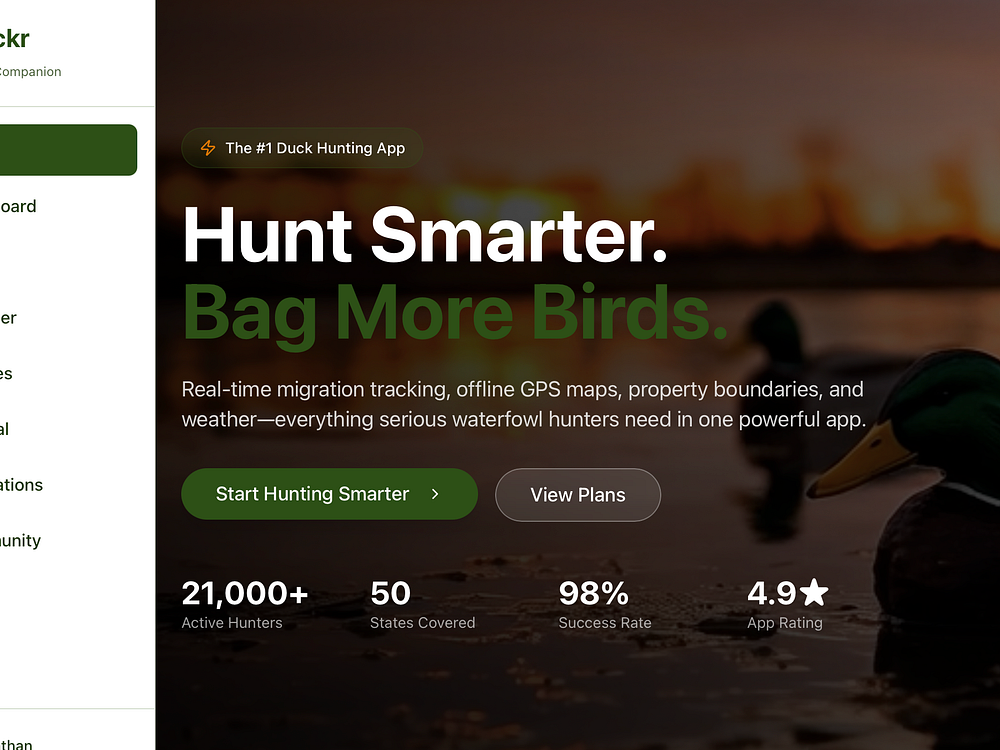
Duckr provides waterfowl hunters with real-time migration tracking, offline GPS maps, and property boundaries, helping you identify where to hunt. Get weather updates tailored for hunters, including wind, pressure, moon phases, and sunrise/sunset times, along with species identification, audio calls, and tips for every species. Stay compliant with updated season dates and bag limits for all 50 states. Sync across devices, download maps for areas without service, and access community sighting reports to enhance your hunting strategy.

Apple has yet to announce its M5 Pro and M5 Max MacBook Pro models, but that doesn’t mean that the company will delay its redesigned versions sporting OLED upgrades and its first 2nm chipsets for this platform, the M6. According to the latest report, the new portable Macs are expected to arrive in Q4 2026, but the latest information states that the sole supplier of OLED panels, Samsung, has yet to initiate mass production of the core component. Previously, the Korean manufacturer was reported to be ahead of schedule with the display manufacturing, hinting that Apple would face little to […]
Read full article at https://wccftech.com/oled-m6-macbook-pro-launch-in-q4-2026-but-samsung-yet-to-start-mass-production/

Today, Nintendo reported its Q3 financial results, revealing that the Nintendo Switch 2 console has already sold 17.37 million units as of December 31, 2025. As a reminder, the hybrid console debuted in stores on June 5, 2025, and immediately set new sales records. Last quarter, the game developer, publisher, and console manufacturer announced that the Switch 2 had reached 10.36 million units. This means that in the last three months, Nintendo added 7.01 million units. Sure, it was the Holiday quarter, but the figure remains nonetheless impressive. The company's forecast of 19 million units sold by the end of […]
Read full article at https://wccftech.com/nintendo-switch-2-sold-17-million-first-switch-best-selling-console/

Tasks and notes across days, on one simple timeline
Build an AI team that works for you
Connect your data to your agents.
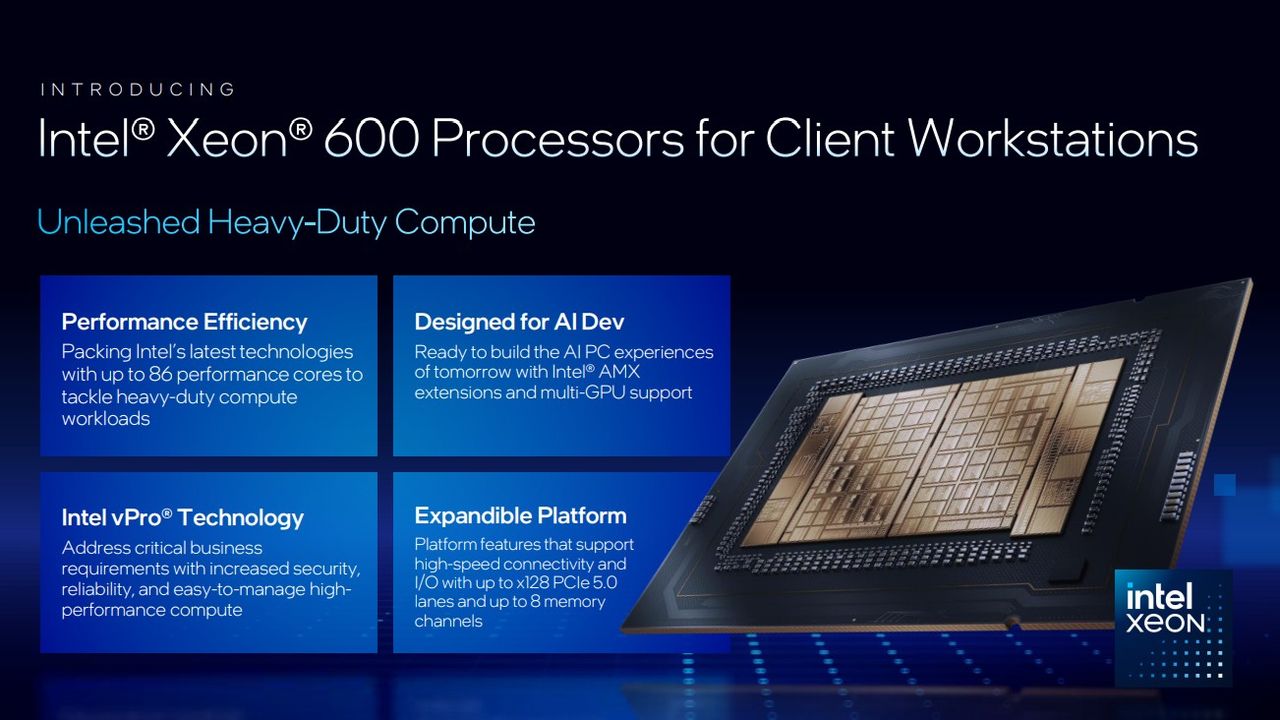
Wind Study (Hilbert Curve) is a new interactive experience from Google Arts & Culture that takes you inside artist Jitish Kallat’s work. Intel delivers up to 86 cores on a single socket with its Xeon 600 series workstation processors Intel has officially launched its new Xeon 600 series of workstation processors. These CPUs deliver up to 86 performance cores and eight DDR5 memory channels to deliver exceptional performance for demanding workstation tasks. Add its 128 PCIe 5.0 […]
The post Intel delivers HUGE performance with its Xeon 600 workstation CPUs appeared first on OC3D.
Turn your iPhone into a padel highlight machine
Create finished, on-brand docs from simple recordings.
The telepathic AI writing tool
Find the best middle point meetup spot between everyone
The AI Agent that doesn't charge 1$ per support ticket
Replace Dropbox & WeTransfer for music collaboration
Your dedicated OpenClaw server in 1 click
Trace the Pattern, Train Your Brain
iOS app to count days in countries, set limits and alerts
Open-source identity-based VPN & remote access platform
Display any company logo with a single URL. No API needed.
Modern Paint Basics for macOS
Turn your ideas into products that sell
Claude meets Wikipedia, for curious people
Create audio courses and audiobook summaries instantly
Terminal for Claude Code with GUI controls
A command center for working with agents
A full Answer Engine Optimization (AEO) platform for free
65% AI resolution rate in 90 days, or you pay nothing
It’s never been easier to bring your ideas to life.
Turn BlocPad tasks into AI safe automation instructions
Turns any meeting, PDF, or file into presentable insights
Output window for your AI agents
A browser extension to visualize grid layouts on any webpage
One memory across OpenClaw, ChatGPT, Claude & Gemini
Find documents on your Mac using natural language
Turn any website into an MCP server for AI
AI call agent and workflow automations for small businesses
Visualize your AI agents work in a pixel world
Your AI finally knows what you're doing
Learn more about using Google tools to stay in the know on the 2026 Winter Olympics. Kurodot is a platform for building immersive, browser-based museums and exhibitions. It allows curators to create 3D showrooms, control lighting and atmosphere, arrange works using a drag-and-drop interface, and edit sculptures with precision tools. Real-time features like ranking mode, zero-gravity focus maps, and crowd control enhance visitor engagement. An analytics dashboard tracks user behavior and impact, all supported by a secure cloud infrastructure and fast rendering for smooth experiences across multiple devices.

The acquisition of NUVIA for $1.4 billion could have ended horribly for Qualcomm, but the San Diego firm can now find itself on almost an equal footing with Apple’s A-series and M-series of chipsets with the purchase. With the involvement of Gerard Williams III, who founded NUVIA, the Snapdragon 8 Elite Gen 5 with its third-generation Oryon cores became possible, and Qualcomm is just getting started. The company is expected to introduce its first 2nm SoCs, the Snapdragon 8 Elite Gen 6 Pro and Snapdragon 8 Elite Gen 6, both of which will likely be the recipients of the fourth-generation custom […]
Read full article at https://wccftech.com/gerard-williams-iii-the-man-behind-nuvia-and-qualcomm-oryon-cores-has-left-the-company/


UnitExplorer is a browser-based calculator for fast and precise unit conversions. Whether you are a student, traveler, or professional, you can easily convert between length, weight, temperature, currency, and more. With a clean interface and real-time exchange rates, it is designed to replace clunky conversion tables and slow search queries. Get accurate results instantly without installing any apps.

Being modeled after the classic PlayStation and 3DS entries, Dragon Quest VII Reimagined features different sub stores in every new land you visit. Upon returning to L'Arca after Ruff joins your party, you may be surprised to find the village still appears to be filled with animals. Thankfully, there is no new curse to break. By entering the Mayor’s House, you will reveal the truth: the villagers are simply dressed up for La Festa, a festival celebrating the town's salvation. How to Start the Minigame To participate in the festivities, you must first look the part. Head over to the […]
Read full article at https://wccftech.com/how-to/how-to-complete-the-larca-animal-minigame-in-dragon-quest-vii-reimagined/

One of the first true tests of your patience in Dragon Quest VII Reimagined isn’t a boss fight, but the light-refracting puzzle found deep within the Pit of Silence. To restore Alltrades Abbey, you must first release the High Priestess Jacqueline, who is trapped in a magical cage powered by two massive crystals on the upper level. If you’re finding the mirror mechanics a bit finicky, don't worry - you aren't alone. After spending way too many minutes aligning the mirrors during my first playthrough, I’ve mapped out the exact placements you need to shatter both crystals and get back […]
Read full article at https://wccftech.com/how-to/how-to-solve-the-pit-of-silence-mirror-puzzle-in-dragon-quest-vii-reimagined/

Dragon Quest VII Reimagined is the third version of the seventh entry in the series, which established Japanese role-playing games following the original PlayStation release and the first Nintendo 3DS remake. While the game roughly follows the same story beats, Dragon Quest VII Reimagined introduces many gameplay tweaks meant to make the experience more welcoming for all sorts of players while retaining most of the features that define a Dragon Quest experience. In this Complete Walkthrough and Guides Hub, you will find everything you need to make your journey to restore the world much more enjoyable. Overview Dragon Quest VII […]
Read full article at https://wccftech.com/how-to/dragon-quest-vii-reimagined-complete-walkthrough-and-guides-hub/

Although it streamlines many of its most challenging elements to be more welcoming than the PlayStation original, Dragon Quest VII Reimagined can still be a massive undertaking for newcomers that may have some trouble getting into the game and enjoying it right from the beginning. To maximize your understanding of the early game, and thus its enjoyment, we have put together a list of beginners' tips that are sure to help you enjoy Dragon Quest VII Reimagined more, especially if this is your first time putting the fragments of the forgotten past back together again. Always Talk to Everyone and […]
Read full article at https://wccftech.com/how-to/dragon-quest-vii-reimagined-essential-beginners-tips-to-master-the-early-game/

As you explore the Poolside Cave in Dragon Quest VII Reimagined to help the Roamers complete their trial, you will come across a cryptic riddle in the cave's Underground Level 2 map : “A chest that rests in a wintry bath, Will show us the Almighty's path.” While your instinct in any RPG is to open every chest you see, this room is a minefield. Most of the treasure chests here are either completely empty or, far worse, are actually Canniboxes in disguise. These monsters are notorious for their high critical hit rate and their ability to cast Whack (the […]
Read full article at https://wccftech.com/how-to/what-is-the-correct-chest-to-open-in-the-poolside-cave-in-dragon-quest-vii-reimagined/

If you’ve been breezing through Dragon Quest VII Reimagined until Alltrades Abbey, prepare for a dramatic wake-up call. Cardinal Sin, who has usurpued the real High Priestess to trick travelers journey to the Abbey for a Vocation change, is your first true combat test, the moment where the game stops holding your hand and demands that you quickly get to grips with the basis of the Vocation System. After you free High Priestess Jacqueline in the Pit of Silence, she will offer you the chance to change your Vocations at Alltrades Abbey. At first, I found it more comfortable sticking […]
Read full article at https://wccftech.com/how-to/how-to-beat-cardinal-sin-in-dragon-quest-vii-reimagined/

Proper MP management is always key in any entry in the Dragon Quest series. Even with all of its tweaks and changes over the original, MP management continues to be an extremely important element of Dragon Quest VII Reimagined, one that you should master to graduate from being a series newbie to a true pro. If you're having trouble with it, however, you can follow these tips to become a master MP manager, and ultimately have more fun with the game right from the very beginning. Don't Go Overboard and Learn When to Take the Reins Back This is self-explanatory, […]
Read full article at https://wccftech.com/how-to/how-to-manage-mp-like-a-pro-in-dragon-quest-vii-reimagined/

Dragon Quest VII Reimagined introduces a level of flexibility never before seen in the series by offering three distinct difficulty presets: Easy Going, Happy Medium, and Tough Going. These roughly correspond to your traditional Easy, Normal, and Hard modes. While these presets are a good starting point, the "reimagined" experience allows you to adjust every parameter individually, even during the game (Main Menu, Settings, Difficulty Level). After extensive testing, I have found that the default Happy Medium can still feel a bit too simple for both series veterans and those accustomed to RPG mechanics. To achieve a playthrough that rewards […]
Read full article at https://wccftech.com/how-to/best-difficulty-settings-for-a-balanced-first-playthrough-in-dragon-quest-vii-reimagined/

It is a miracle that the 13-inch and 15-inch M4 MacBook Air remains discounted on Amazon, whereas the price of consumer electronics is slowly rising because the DRAM supply has been choked, causing a serious supply and demand problem. However, don’t think that Apple is immune to these shortages because the company’s portable Mac lineup is slowly becoming more expensive, meaning that you’ll have to either pay the full price or a substantial premium if you don’t act fast. Fortunately, some configurations and colors continue to be available at $150 off for both display sizes, starting from $849.99. The Midnight color […]
Read full article at https://wccftech.com/m4-macbook-air-prices-are-creeping-upwards-get-yours-for-150-off-on-amazon/

CONNETY is a private internal newsletter for teams. It sends teammates a small number of personal (non-work) questions on a regular basis, collects their answers, and publishes them as a shared team newsletter that everyone can read. The process runs fully on autopilot. CONNETY has a curated bank of approximately 600 questions across 10 categories and 3 reflection levels. It adds a lightweight relationship layer on top of existing work tools, helping teammates build personal context over time to support engagement, collaboration, and retention without meetings or facilitation.
The report looks at the latest engagement trends across the major social apps.
TikTok US is back in action after winter storms disabled a major data center.
Elon Musk is reportedly exploring a merger of his AI and space exploration projects.
BullRun Forever Toolkit provides free, privacy-first financial calculators and simulators to plan debt payoff, budgets, investments, retirement, real estate, credit, and auto financing. Use tools like ROTH IRA and 401(k) calculators, investment and net worth projections, home affordability, student loan analysis, and debt strategy planners to model scenarios with penny-verified math. The toolkit works on any device, has no ads or sign-ups, and runs most calculations locally to protect your data.
AirMusic is an AI music creation platform designed for musicians, creators, and brands. It allows users to generate royalty-free tracks in various styles, extend songs, create AI covers, and add sung vocals from lyrics. With features like separate stems, custom instrumentals, and voice cloning, users can achieve unique performances. Additionally, AirMusic offers tools to analyze BPM, key, and mood, write lyrics, and even transform images or portraits into music videos. Users enjoy commercial-ready outputs, robust privacy protections, and easy downloads in MP3 or WAV formats for seamless publishing.
Evenpay provides compensation intelligence that transforms your HR, payroll, performance, and job data into fair and defensible pay decisions. It builds a transparent job architecture, runs structured compensation reviews, and generates full EU Pay Transparency Directive reports. With an AI-powered Compensation Specialist, real-time pay-gap alerts, and objective pay justification workflows, Evenpay helps HR and managers identify, explain, and resolve inequities before they affect compliance or culture. Evenpay is the most efficient way to establish a compliant, fair, and data-driven pay structure.
ARC Raiders has a lot of systems that its players need to be aware of, and while the gear you take with you each time you go Topside is important, you also need to be levelling up your Raider's skill tree appropriately, if you want to be able to make the best of your runs. While completing the full Skill Tree is a slog, since you don't just have to unlock skills by spending individual points, you need to spend a certain amount of skill points in each of the three sections (Conditioning, Mobility, and Survival) to move into the […]
Read full article at https://wccftech.com/how-to/the-best-skills-in-arc-raiders/

With PC games growing increasingly complex — especially ones built on Epic's Unreal Engine 5 — default/max graphics presets rarely (if at all) strike the optimal balance between visual fidelity and performance that most PC gamers seek, and Code Vein II is no exception to this rule. As a demanding Unreal Engine 5 game, many PC gamers — on various PC setups, including high-end ones — have unfortunately voiced their frustrations when it comes to the game's performance profile. This guide should hopefully help you attain an optimal balance between performance and visuals. We will break down how each graphics […]
Read full article at https://wccftech.com/code-vein-ii-pc-graphics-optimization-guide-our-recommendations-for-balancing-performance-visuals/

Intel has unveiled its next-gen Xeon 600 workstation CPUs codenamed Granite Rapids, featuring up to 86 cores & better cores/$ value than Threadripper. Intel Fires Back At AMD Threadripper 9000 With Better Cores/$ Value On Xeon 600 Workstation CPUs Today, Intel is officially introducing its latest workstation CPU family, Xeon 600. These processors are based on the same Intel 3 process technology with Redwood Cove P-Cores, and are aimed at content creators, professionals, data scientists, and several other workstation segments such as AI Dev, Media, Energy & Geo-Sciences, Life Sciences & Healthcare, and Financial Services. These chips will replace the […]
Read full article at https://wccftech.com/intel-xeon-600-cpus-launched-up-to-86-cores-better-value-than-threadripper/

The saga continues, and the reports are now surfacing more frequently than ever. ASRock remains the top killer of Ryzen CPUs. Multiple Ryzen 9000 CPUs Dead Reports Surface on Reddit; Ryzen 9800X3D, 9950X3D, 9600X, and 9700X Killed on ASRock Motherboards It's crazy to think how fast the dead CPU reports are piling up, and from a 6-core non-X3D to a 16-core X3D CPU, nothing appears to be safe. We reported yesterday that at least four Ryzen 5 9600X dead CPUs were found in a single month, but today we have gathered five different Ryzen CPU failure cases, comprising various Ryzen […]
Read full article at https://wccftech.com/five-ryzen-9000-cpus-killed-in-a-single-day-by-asrock-motherboards/

Learn how to use simple Gemini prompts to create a 2026 budget, find hidden savings and organize your spending.
Ubisoft, like most major triple-A publishers and developers, gets its fair share of criticism, and since the company announced a "major reset" last month, it's been getting far more than its fair share. The reset saw it cancel the long-awaited Prince of Persia: Sands of Time Remake, among other projects, while others were delayed, and the company confirmed that there would not only be more layoffs coming, but it would end its remote work policies, instituting a return-to-office mandate. All of this, including the introduction of a voluntary layoff program at Ubisoft's headquarters in Paris, has sparked heavy criticism from […]
Read full article at https://wccftech.com/ubisoft-montreal-lead-fired-after-critical-comments-on-new-return-to-office-mandate/

The biggest enemy of electronics is dust, and what better way to eliminate this persistent nemesis than with a compact, yet extremely powerful, portable air blower? However, there are a ton of options littered on Amazon, with some of them either not packing enough power or their battery begins to degrade after a few months, leading to lower runtimes. Fortunately, the WOLFBOX MF200 excels in removing all sorts of particles from your expensive belongings, and you can grab one from the online retailer for $99.99, or 23 percent off. The MF200 offers a multitude of attachments for extreme versatility, not […]
Read full article at https://wccftech.com/wolfbox-mf200-portable-air-blower-with-removable-battery-lots-of-attachments-for-99-99-on-amazon/

X's latest video generator sees improvements in various aspects.

Though Snap also says that the teen social ban has various flaws.
TikTok US is back in action after winter storms disabled a major data center.
Bit & Grain helps makers track tools, materials, and projects in one place. You can add items quickly using AI import from Amazon, Home Depot, or Toolnut links, or by snapping a photo to identify a tool. The app allows you to build a hierarchical location system for every item, schedule maintenance with reminders, and receive low-stock alerts for consumables and lumber. Plan projects with tasks, budgets, and assigned tools, and gain insights on spending and total inventory value to guide your purchases and insurance decisions.

Austria's Supreme Court has just delivered a ruling that has the potential to send shockwaves through the video game industry, as it declares that the loot boxes found in EA Sports FC and in its FC Ultimate Mode "do not constitute gambling," a ruling that EA is only too happy to accept. Reported by GamesMarkt, while the ruling states that the lootboxes in EA Sports FC are not gambling, it still adds that gambling is part of the equation. "In this video game, despite the random allocation of individual content from the Packs, the human player can use their own […]
Read full article at https://wccftech.com/austrian-supreme-court-declares-ea-sport-fcs-loot-boxes-and-fc-ultimate-mode-do-not-constitute-gambling/

As we mentioned in our Nioh 3 info roundup article, this third entry in Koei Tecmo and Team Ninja's fantasy action RPG series is the first one not published by Sony and, as such, releases day and date on PC alongside PlayStation 5. What we did not know exactly were the terms of a console-specific timed exclusivity. The lack of any mention of an Xbox Series S|X version was a dead giveaway that it would not be available at launch, and indeed, Sony was still likely to have secured some sort of temporal exclusivity. Now, more information on this matter […]
Read full article at https://wccftech.com/nioh-3-could-launch-xbox-as-early-as-in-august/

The Tensor G5 was a disappointing release, as Google’s first SoC to utilize TSMC’s cutting-edge lithography was once again behind the competition in raw performance and efficiency. Despite these shortcomings, the Mountain View is expected to witness the highest year-over-year chipset shipments growth for 2026, beating out its rivals, who are estimated to see declines in the tally due to the DRAM shortage. Global smartphone chipset shipments to decline by 7% in 2026, with Chinese OEMs hit the hardest; Apple, Samsung, and Google are better positioned thanks to a strong integrated supply chain and robust focus on in-house silicon development The […]
Read full article at https://wccftech.com/google-tensor-soc-shipments-2026-facing-least-resistance-due-to-dram-shortage/

Scientists are working to sequence the genome of every known species on Earth. Elon Musk is reportedly exploring a merger of his AI and space exploration projects.
TikTok's latest research report digs into ROI and effective ad approaches.

As part of the v23 Ads API launch, Performance Max campaigns can now be reported by channel, including Search, YouTube, Display, Discover, Gmail, Maps, and Search Partners. Previously, performance data was largely grouped into a single mixed category.
The change under the hood. Earlier API versions typically returned a MIXED value for the ad_network_type segment in Performance Max campaigns. With v23, those responses now break out into specific channel enums — a meaningful shift for reporting and optimization.
Why we care. Google Ads API v23 doesn’t just add features — it changes how advertisers understand Performance Max. The update introduces channel-level reporting, giving marketers long-requested visibility into where PMax ads actually run.
How advertisers can use it. Channel-level data is available at the campaign, asset group, and asset level, allowing teams to see how individual creatives perform across Google properties. When combined with v22 segments like ad_using_video and ad_using_product_data, advertisers can isolate results such as video performance on YouTube or Shopping ads on Search.
For developers. Upgrading to v23 will surface more detailed reporting than before. Reporting systems that relied on the legacy MIXED value will need to be updated to handle the new channel enums.
What to watch:
Bottom line. The latest Google Ads API release quietly delivers one of the biggest Performance Max updates yet — turning a black-box campaign type into something advertisers can finally analyze by channel.

Search marketing is still as powerful as ever. Google recently surpassed $100 billion in ad revenue in a single quarter, with more than half coming from search. But search alone can no longer deliver the same results most businesses expect.
As Google Ads Coach Jyll Saskin Gales showed at SMX Next, real performance now comes from going beyond traditional search and using it to strengthen a broader PPC strategy.
As search marketers, we’re great at reaching people who are actively searching for what we sell. But we often miss people who fit our ideal audience and aren’t searching yet.
The real opportunity sits at the intersection of intent and audience fit.
Take the search [vacation packages]. That query could come from a family with young kids, a honeymooning couple, or a group of retirees. The keyword is the same, but each audience needs a different message and a different offer.

There are two main types of targeting:
For example, targeting [flights to Paris] is content targeting. Targeting people who are “in-market for trips to Paris” is audience targeting. Google builds in-market audiences by analyzing behavior across multiple signals, including searches, browsing activity, and location.

To build a modern targeting strategy, you need to answer two questions:
For example, to reach Google Ads practitioners for lead gen software, you could build custom segments that target people who use the Google Ads app, visit industry sites like searchengineland.com, or search for Google Ads–specific terms such as “Performance Max” or “Smart Bidding.”
You can also layer in content targeting, like YouTube placements on industry educator channels and topic targeting around search marketing.
If you work in a restricted category such as legal or healthcare and can’t use custom segments or remarketing, use non-linear targeting. Ignore the offer and focus on the audience. Choose any Google data audience with potential overlap, even if it’s imperfect, and let your creative do the filtering.
Use industry-specific jargon, abbreviations, and imagery that only your target audience will recognize and value. Everyone else will scroll past.

Low-quality traffic is the real problem. You’re better off paying $10 per click with a 10% conversion rate than $1 per click with a 0.02% conversion rate.
When evaluating targeting strategies, focus on conversion rate and cost per acquisition, not just cost per click.
By expanding beyond traditional search keywords and using content and audience targeting, you can reach the right people and keep driving strong results.


People inspecting ChatGPT responses are spotting references to ads in the page source. One line reads: “InReply to user query using the following additional context of ads shown to the user.” The reference appears even when no ad is actually displayed.

Driving the news. Digital Marketer Glenn Gabe first flagged the issue on X after noticing the ad-related language in ChatGPT’s source code. Others have since replicated it while testing commercial queries like auto insurance.
Why we care. Ads in ChatGPT have been talked about for weeks. This piece of code spotted signals that ChatGPT ads are moving from concept to near-launch, creating a new, high-intent advertising channel. The presence of ad logic in the system suggests targeting and eligibility are already being tested, favoring early advertisers.
With limited inventory and ads likely woven into conversational responses rather than shown as banners, this could become premium, high-impact real estate that directly competes with organic answers.
Between the lines. The ads aren’t visible, but the logic appears to be live. That suggests OpenAI may already be testing ad eligibility, suppression rules for paid tiers, or internal triggers ahead of a broader rollout.
Context. OpenAI confirmed in January that ads are coming to ChatGPT for some users. The company said ads would be sold on an impression basis, and early indications suggest they won’t be cheap.
Bottom line. ChatGPT may not be showing ads yet — but the infrastructure is already in place.
Dig deeper. Glenn Gabe spots code that shows ChatGPT ads is imminent.
Modder disassembles ASUS’ ROG Xbox Ally X to give it a 64GB memory upgrade SlickBuys Mods and Repairs has managed to craft a custom 64GB ASUS ROG Xbox Ally X handheld. This mod replaces the four 6GB of LPDDR5X memory chips on the handheld with larger 16GB memory packages. This upgraded the handheld from its […]
The post Modder delivers huge 64GB upgrade for ASUS’ ROG Xbox Ally X appeared first on OC3D.
Notepad++ reports that attackers compromised its former ISP in 2025 and redirected app update traffic to malicious servers without exploiting the editor's code itself – an incident we reported last month. The project has since migrated to a new host and strengthened update verification. Users must manually update to Notepad++ 8.9.1 to receive the latest security fixes.
Calibre 9.1 introduces a new virtual bookshelf view that displays book spines on digital shelves, along with an Edit Book button that lets users jump directly into editing supported ebook formats from their current reading position. The update also brings refinements such as adjustable chat font sizes and updated Kobo compatibility.
Shiru Notes provides a calm, paper-like environment to capture your thoughts with cloud capabilities. It autosaves notes as you write, encrypts your content for privacy, and offers a minimal interface to help you focus on your ideas. You can quickly jot down fleeting moments and access your notes from anywhere. Start with no credit card and receive 50 free notes.

It's officially February, which means that we're finally within the release month for Resident Evil Requiem. The new mainline entry in the long-running horror franchise looks like it could be one of the series' best, if it's able to strike the right balance between its RE2 and RE7-inspired sections featuring Grace Ashcroft and its RE4-inspired sections with the iconic Leon Kennedy. Resident Evil Requiem will be arriving on PC, PS5, Xbox Series X/S, and Nintendo Switch 2 on February 27, 2026, and ahead of that release date, developer Capcom has shared a new short film to get players in the […]
Read full article at https://wccftech.com/evil-has-always-had-a-name-capcoms-new-short-film-sets-the-mood-for-resident-evil-requiem/

We've just received yet another material signal as to the potency and overall effectiveness of Samsung's Exynos 2600 chip, which is expected to launch within the upcoming Galaxy S26 series. Samsung's Exynos 2600 matches the performance of Qualcomm's Snapdragon 8 Elite Gen 5 chip in Vulkan on Geekbench As is evident from the X post above, Samsung's Exynos 2600 chip (Galaxy S26) has managed to snag a score of 27,478 on Vulkan, which is just a smidge shy of the score of 27,875 that Qualcomm's Snapdragon 8 Elite Gen 5 chip (Redmagic 11 Pro) has secured. Practically, the two chips […]
Read full article at https://wccftech.com/samsungs-exynos-2600-goes-toe-to-toe-with-qualcomms-snapdragon-8-elite-gen-5-in-vulkan-on-geekbench/

SMIC, China's biggest chip manufacturing company, is now looking to advanced packaging, given how NVIDIA and others have leveraged it to scale performance beyond the norms of Moore's Law. SMIC Plans to "Strengthen" Cooperation With OSAT Partners, In Order to Effectively Develop Packaging Solutions Advanced packaging has been a key resource for chip manufacturers to scale performance significantly over the past few years. Scaling laws have pushed beyond the traditional transistor-shrinking approach towards newer techniques, and one way to do so is to bring innovation to backend semiconductors, such as TSMC's CoWoS. According to a DigiTimes report, SMIC is now […]
Read full article at https://wccftech.com/chinas-smic-is-expanding-advanced-packaging-efforts/

Apple is widely believed to have adopted TSMC's SoIC packaging for its upcoming M5 Pro and M5 Max chips, bringing with it an unprecedented level of silicon-related flexibility and granularity. Now, Apple's new Mac configurator is giving tantalizing confirmatory signals as to this eventuality. The new Apple Mac configurator brings flexibility and granularity to the front We noted recently that, as per leaked anecdotes, Apple appears to be opting for TSMC's SoIC-MH packaging technology for its upcoming M5 Pro and M5 Max chips. For the benefit of those who might not be aware, the SoIC is a 3D packaging solution that […]
Read full article at https://wccftech.com/apples-new-packaging-tech-for-m5-pro-and-m5-max-chips-hinted-within-the-revamped-mac-configurator/

Ahead of HBO's The Last of Us season two premiering last year, all signs were pointing to the show telling the story of both games over the course of four seasons. We were getting hints towards four seasons in 2024, and while showrunner Craig Mazin has made it clear that he wouldn't be adding to the story beyond what's in the games, he definitively said in an interview with Collider last year that "there’s no way to complete this narrative in a third season." Well, it seems like a lot has changed since that May 2025 interview, besides the fact […]
Read full article at https://wccftech.com/hbos-the-last-of-us-may-wrap-up-in-three-seasons-not-four-it-certainly-seems-that-way-says-hbo-boss/

Following a string of successful releases, Bethesda has struggled to deliver the same level of quality it did with The Elder Scrolls V: Skyrim. Although Fallout 76 has received significant improvements since its launch, Starfield has yet to receive the same treatment, as, aside from some minor improvements and additional content, the latest open-world RPG from the studio is essentially still the same game it was at launch in late 2023. Though it is undeniable that the game feels a little dated compared to other modern open-world role-playing games, the Skyrim design lead thinks Starfield would have been received much better if it were […]
Read full article at https://wccftech.com/starfield-would-be-talked-about-like-the-second-coming-if-a-new-studio-had-put-it-out-how-bethesda-lost-the-game-of-expectations/

Memory contract pricing is rising at a rate never seen before, and according to a new report, QoQ quotations have almost doubled amid gigantic demand. DRAM Prices Are Expected to Double This Quarter Alone, As Most of the Allocations Will Be Towards Hyperscalers Well, memory shortages have been a topic of discussion at the outlet several times now, and it is important to discuss key developments with our readers to ensure they are "mentally prepared" for the craziness ahead. A report by DRAMeXchange, an outlet that extensively tracks DRAM and NAND contract pricing, states that price negotiations between memory suppliers […]
Read full article at https://wccftech.com/memory-prices-reach-shocking-levels-as-manufacturers-are-now-quoting-a-125-premium/

SSD scams aren't uncommon, but fake SSDs are now easily bypassing basic system checks and appearing legitimate to the operating systems. Redditor Buys 2 TB Samsung 990 PRO SSD for $207 That Could Hardly Go Beyond 20 MB/s Transfer Speeds; Samsung Magician Flagged it as a Fake Product Scammers are now getting better at duping customers into buying their fake SSDs. SSD scams have been on the rise due to NAND shortage, and similar to how we are witnessing high RAM prices and fake RAM modules in the market, SSDs are being manipulated too. Redditor u/xox-lover reported that he was […]
Read full article at https://wccftech.com/user-scammed-with-fake-samsung-990-pro-ssd-that-runs-like-usb-2-0-sticks/

Players in the United States have GameStop, players in Canada have EB Games, and players in the UK have GAME as their major gaming-dedicated retailers. Or at least, UK players did have GAME, as the retailer is set to close its last three remaining standalone GAME stores after it made creditors aware it would be entering administration, the UK phrase for declaring bankruptcy. After Bloomberg reported that GAME had entered administration, a report from The Game Business (via VGC) a few days later identified that the last three standalone GAME stores in the UK would be closed, as the company […]
Read full article at https://wccftech.com/uk-video-game-retailer-game-to-close-its-last-three-standalone-stores/

We’re expanding Game Arena with Poker and Werewolf, while Gemini 3 Pro and Flash top our chess leaderboard. Puget Systems names the most reliable consumer CPU of 2025 Puget Systems has shared its internal data on CPU reliability, confirming who makes the most reliable consumer-grade processors. AMD Ryzen 9000 VS Intel Core Ultra 200. Overall, failure rates for both CPU families are nearly identical: 2.52% for AMD’s Ryzen CPUs and 2.49% for Intel’s […]
The post AMD VS Intel – Puget Systems unveils the most reliable CPU of 2025 appeared first on OC3D.

LinkedIn tested what drives AI search visibility and shared results. Content structure, expert authorship, and timestamps showed the clearest impact.
The post LinkedIn Shares What Works For AI Search Visibility appeared first on Search Engine Journal.
The next-gen Samsung OLED displays will be G-Sync compatible to offer a tear-free gaming experience. Samsung Announces High-Refresh Rate 2026 OLED TV and Odyssey Monitor Lineups are NVIDIA G-Sync Compatible for Smooth Gaming Experience Samsung Electronics has announced that its latest 2026 OLED TV and Odyssey gaming monitors will feature NVIDIA G-Sync compatibility. The new OLED displays will aim to deliver a smoother gaming experience by eliminating screen tearing, bringing a more pleasant experience. The company has already introduced these OLED displays a few weeks ago at CES, but confirmed the NVIDIA G-Sync compatibility in a press release today. Our […]
Read full article at https://wccftech.com/samsung-confirms-its-2026-oled-tvs-and-odyssey-monitors-will-be-nvidia-g-sync-compatible/

If nothing else, Dragon Quest VII Reimagined is simply the best-looking entry in the three-decade-old role-playing series by a long shot.
Read full article at https://wccftech.com/review/stay-cool-and-praise-the-almighty-dragon-quest-vii-reimagined-ps5-review/

Before Call of Duty 4: Modern Warfare forever changed the first-person shooter landscape and the Call of Duty franchise, the world of FPS games was dominated by classic World War I and World War II-era shooters. Of course, we still get historic shooters, but it's developer Hoothanes and publisher 4Divinity's upcoming WWII-era shooter, The Defiant, that has FPS feeling those OG COD and even Medal of Honor vibes. The Defiant is an upcoming single-player first-person shooter set during WWII, but not from an angle we've commonly seen before. You'll play as Chinese soldiers fighting in China's War of Resistance against […]
Read full article at https://wccftech.com/what-call-of-duty-used-to-be-like-new-wwii-shooter-the-defiant-is-giving-fps-fans-og-cod-and-medal-of-honor-vibes/

The data shows that the latest processors from both brands are equally reliable, and the failure rates are almost identical. Puget Systems Tracking Reveals Nearly 2.5% Failure Rates for Latest AMD and Intel CPUs; Non-X3D Chips Reportedly Die More Often Than X3D Counterparts We mostly see AMD's Ryzen X3D chips on the news as the processors are often reported dead by users. While the reports largely comprise the Ryzen 9800X3D, other X3D and non-X3D Ryzen processors also get cooked regularly. Surprisingly, when the failure rates are compared against Intel processors, something interesting is revealed. Puget Systems data on its in-house […]
Read full article at https://wccftech.com/intel-core-ultra-200-and-amd-ryzen-9000-cpus-reportedly-have-similar-failure-rates-reveals-puget-systems-analysis/

TSMC's 2nm process is reported to be experiencing large-scale adoption from chip manufacturers, with the likes of NVIDIA, AMD, and ASIC designers battling for capacity. TSMC's 2nm Process Capacity Is "Heavily Contested" Between Mobile & HPC Customers With the AI frenzy, we have seen HPC customers accounting for a significant share of TSMC's total revenue, and it appears that, with N2-class nodes, the influence of chip manufacturers will only increase. Based on a report by Ctee, it is discussed that 2nm customers are reporting the biggest-ever capacity, since mobile clients like Apple and Qualcomm will drive the initial adoption, but […]
Read full article at https://wccftech.com/tsmcs-2nm-node-to-see-the-fiercest-competition-yet/

AMD's partners are reportedly preparing a fresh new wave of price bumps for Radeon GPUs that are expected to go live this quarter. AMD Radeon GPUs Are Going To Become More Expensive This Quarter As DRAM Supply Constraints Continue As per a new report published by Board Channels, it looks like AMD partners are preparing a second wave of price bumps on Radeon GPUs. The price bumps follow the original wave, which affected both AMD and NVIDIA GPUs, with up to $40 hikes (based on memory configurations). Once again, the price bump is due to the ever-rising memory prices and […]
Read full article at https://wccftech.com/amd-radeon-gaming-gpus-getting-another-price-bump-this-quarter/


SEO has historically been an exercise in reverse-engineering algorithms. Keywords, links, technical compliance, repeat.
But that model is being reimagined.
Today, visibility is earned through trust, usefulness, and experience, not just relevance signals or crawlability.
Search engines no longer evaluate pages in isolation. They observe how people interact with brands over time.
That shift has given rise to human experience optimization (HXO): the practice of optimizing how humans experience, trust, and act on your brand across search, content, product, and conversion touchpoints.
Rather than replacing SEO, HXO expands its scope to reflect how search now evaluates performance. Experience, engagement, and credibility have become difficult to separate from visibility itself.
Below, we’ll look at how HXO shows up in modern search, why it matters now, and how it reshapes the boundaries between SEO, UX, and conversion.
Modern search engines reward outcomes, not tactics.
Ranking signals increasingly reflect what happens after the click, aligning with Google’s emphasis on user satisfaction over isolated page signals.
In practice, that means signals tied to questions like:
Visibility today is influenced by three overlapping forces:
HXO emerges as a response to two compounding pressures:
In short, optimization that ignores human experience is no longer competitive.
Dig deeper: From searching to delegating: Adapting to AI-first search behavior
For a long time, SEO, UX, and CRO operated as separate disciplines:
But that separation no longer works.
Traffic alone doesn’t mean much if users don’t engage. Engagement without a clear path to action limits impact. And conversion is difficult to scale when trust hasn’t been established.
HXO now acts as the unifying layer:
That convergence is increasingly visible in how search-driven experiences perform.
Page experience affects both visibility and post-click behavior. Search intent informs page structure and UX decisions alongside keyword targeting. Content clarity and credibility influence whether users engage once or return through search again.
In this environment, optimization is less about securing a single click. It’s about supporting attention and trust over time.
One of the most persistent misconceptions in search is that E-E-A-T – or, experience, expertise, authoritativeness, and trustworthiness – can just be “added” to content.
Add an author bio. Add citations. Add credentials.
Those elements do matter. They help provide context and communicate expertise. But treating E-E-A-T primarily as a set of small, on-page additions doesn’t fully capture how search systems evaluate expertise and trust.
In practice, E-E-A-T isn’t just about how one page is formatted. It’s a broader, more holistic view of how a business demonstrates credibility to users over time. That tends to be an output of:
Search engines aren’t evaluating content in isolation. They’re evaluating the context around it, too.
Per Google’s Search Quality Rater Guidelines, that includes:
Viewed this way, E-E-A-T is reinforced through consistent systems and patterns, not isolated page-level changes.
Today’s search landscape is flooded with competent, well-structured content that meets a similar baseline of accuracy and readability. “Good” content is no longer a meaningful bar.
Because of that, first-hand experience is becoming an increasingly important content differentiator. That can look like:
There’s a meaningful difference between:
For example, a guide to subscription pricing that summarizes common models may be factually sound. But a piece written by someone who’s priced, tested, and revised subscription tiers over time is more likely to surface tradeoffs, edge cases, and decision logic.
That’s something aggregation can’t replicate.
This is why we’re seeing creators and operators increasingly outperform faceless brands. Within the world of human experience optimization, the “human” part is key.
Dig deeper: 4 SEO tips to elevate the user experience
“Helpful content updates” are often discussed as if performance issues stem from technical gaps or tactical mistakes.
In practice, when content fails to be helpful, the underlying causes tend to sit elsewhere.
Common patterns include:
In contrast, content that users consistently find helpful usually reflects deeper alignment. It tends to emerge from:
SEO can improve discoverability and structure, but it can’t compensate for unclear positioning or disconnected experiences. When helpfulness is missing, the issue is rarely confined to the page itself.
That view lines up with how Google described its helpful content system, which looks at broader site-level patterns and long-term value rather than isolated pages or tactics.
Closing these gaps requires a broader view of how people experience, trust, and engage with a brand beyond any single page. HXO provides a framework for that shift.
Human experience optimization doesn’t begin with keywords. It begins with people and the situations that lead them to search in the first place.
In practice, adopting HXO usually involves a few shifts in focus:

Keyword research remains useful, but it’s rarely sufficient on its own.

Teams need a clearer understanding of motivations, anxieties, and decision contexts, not just what terms people type into a search bar.
Page-level audits often miss the broader experience users actually encounter. A more useful lens looks at:
HXO tends to surface gaps between functions that operate independently. Addressing those gaps requires coordination across:
The goal isn’t alignment for its own sake, but shared responsibility for how users experience the brand.
Traditional metrics still have a place, but they don’t tell the full story. Teams practicing HXO often expand measurement to include:
HXO isn’t a tactic to deploy or a framework to layer on. It reflects a longer-term advantage rooted in how consistently a brand shows up for users.
In modern search, the brands that perform most reliably tend to share a few traits:
As a result, search visibility can’t be engineered through isolated optimizations. It’s shaped by the cumulative experiences people have with a brand before, during, and after a search interaction.

Ads are now being tested in ChatGPT in the U.S., appearing for some users across different account types. For the first time, advertising is entering an AI answer environment – and that changes the rules for marketers.
We’ve used AI as part of ad creation or planning for years across Google, LinkedIn, and paid social. But placing ads inside an AI system that people trust to help them think, decide, and act is fundamentally different. This is not just another channel to plug into an existing media plan.
The biggest question is not targeting. It’s psychology. If advertisers simply replicate what works in search or social, performance will disappoint, and trust may suffer.
To succeed, brands need to understand how and why people use ChatGPT in the first place and what that means for attention, relevance, and the customer journey.
People open ChatGPT to do something. That might be:
This is very different from feed-based platforms, where people expect to scroll, be interrupted, and discover content passively.
In task-based environments like ChatGPT, behavior changes:
This is why clicks are likely to be harder to earn than many advertisers expect. If an ad does not help the user move forward with what they are trying to achieve, it will feel irrelevant, even if it is topically related.
Add to this the fact that trust in AI environments is still forming, and the tolerance for poor or interruptive advertising becomes even lower.
Dig deeper: OpenAI moves on ChatGPT ads with impression-based launch
For years, search volume has shaped how we plan.
Keywords told us what people wanted, how often they wanted it, and how competitive demand was. That logic underpinned both SEO and paid media strategy.
ChatGPT changes that.
People are not searching for keywords. They are outsourcing thinking. They describe situations, ask layered questions, and seek outcomes rather than information alone.
There is no query data to optimize against. Instead, success depends on understanding:
This is where behavioral insight replaces keyword demand as the strategic foundation.
Rather than planning around queries, advertisers need to plan around behavior modes, the mindset a user is in when they turn to ChatGPT.
A useful way to think about this is:
These modes closely mirror the human drivers we already recognize in search behavior: shaping perspective, informing, reassuring, and simplifying.
The difference is that ChatGPT compresses these moments into a single interface.
Dig deeper: What AI means for paid media, user behavior, and brand visibility
A key shift advertisers need to internalize is that relevance in ChatGPT is not about being related. It is about being useful.
An ad can be perfectly aligned to a category and still fail if it does not help the user complete their task.
In a task environment, anything that creates extra work or pulls attention away from the goal feels like friction. This means the creative rules change.
High-performing ads are likely to behave less like traditional advertising and more like:
They fit into the flow of what the user is doing.
Generic brand ads, pure awareness messaging, and content that feels like a detour are likely to underperform.
Dig deeper: Your ads are dying: How to spot and stop creative fatigue before it tanks performance
The same assets that make a strong ChatGPT ad – practical guides, frameworks, calculators, explainers, and reassurance-led content – also do much more than support paid performance.
They build authority for SEO and generative optimization, earn coverage and credibility through digital PR, and reinforce brand trust across social and owned channels.
This is where silos start to break performance.
Paid media teams cannot create “helpful ads” in isolation if SEO teams are working on authority, PR teams are building trust signals, and brand teams are shaping voice independently. In AI-led discovery, these signals converge.
The most effective ads may borrow from:
The line between advertising, content, and credibility becomes increasingly blurred.
Judging ChatGPT ads purely on click-through rate risks missing their real impact.
In many cases, these ads may influence decisions without triggering an immediate click. They may help a brand enter a shortlist, feel safer, or be remembered when the user returns later through another channel.
More meaningful indicators may include:
This reinforces the need for teams to work more closely together. If performance is distributed across the journey, measurement and accountability must be too.
Dig deeper: AI tools for PPC, AI search, and social campaigns: What’s worth using now
This is not simply a new ad format. We are looking at a behavioral shift.
The brands most likely to succeed will not be the ones that move fastest or spend the most. They will be the ones who understand:
A practical starting point is returning to jobs-to-be-done thinking. Map the actions that happen before someone buys, inquires, or commits and identify where AI reduces effort, uncertainty, or complexity.
From there, the question becomes more powerful than “how do we advertise here?”:
How can we be genuinely helpful at the moment it matters?
That mindset will not only shape performance in ChatGPT, but across the wider future of AI-led discovery. And in that world, behavioral intent will matter far more than keywords ever did.
Intel users discover a way to enable XeSS 3 on older Intel ARC GPUs Intel has confirmed that XeSS will be available on its ARC Battlemage B580 and other GPUs this month. However, gamers are not patient enough for that. Intel ARC users have already found ways to enable XeSS 3 on Intel’s older ARC graphics […]
The post Intel fans enable XeSS 3 on ARC B580 and other GPUs early appeared first on OC3D.
HarvestMyData automates the extraction of emails and phone numbers from Instagram followers, following lists, and hashtags. It eliminates the need for proxies and logins, providing results in minutes. Users can receive the data by email or through a Telegram bot for quick integration with their outreach tools.


The release of Final Fantasy VII on the original PlayStation back in 1997 marked a historical year for Japanese role-playing games. While the gameplay didn't deviate much from its predecessors' turn-based formulas, 3D visuals and cinematic presentation made a significant difference, turning the seventh entry in the series into one of the most popular games ever released. Though the game was ultimately very successful, the hardware of the time imposed some limitations on the development team's vision for the combat system, and it's only with the Final Fantasy VII Remake trilogy that the team was able to fully realize it. However, the […]
Read full article at https://wccftech.com/theres-no-way-this-was-how-combat-was-envisioned-community-remains-skeptical-of-how-final-fantasy-vii-remake-trilogy-realizes-the-originals-vision/

The only time that Samsung came close to replicating Apple’s Face ID technology on its Galaxy smartphones was with its iris scanner, which debuted on the Galaxy S8 lineup. Since then, the company has incorporated the ever-reliable fingerprint scanners on its devices, but the Galaxy S27 Ultra could offer something that’s a tier above Face ID. The latest report mentions the use of Polar ID, which leverages polarized light instead of 3D depth mapping for facial recognition. The use of this technology also removes one glaring obstacle: the need for a cutout to accommodate the necessary components. Polar ID on […]
Read full article at https://wccftech.com/galaxy-s27-ultra-to-feature-polar-id-advanced-version-of-face-id/

Intel's Core Ultra 9 290K Plus CPU has leaked out once again, and delivers up to a 11% performance boost over the 285K. Intel Core Ultra 9 290K Plus Is Up To 11% Faster Than Core Ultra 9 285K In Latest Leak The Intel Core Ultra 9 290K Plus will be the flagship chip within the Core Ultra 200S Plus "Arrow Lake Refresh" family. This chip is expected to retain the same configuration unless the blue team suddenly comes out with a new Arrow Lake-S die, which remains highly unlikely. So we can expect the CPU to offer the same […]
Read full article at https://wccftech.com/intel-core-ultra-9-290k-plus-over-10-percent-faster-vs-285k-latest-leak/

Today, Chinese developer Seed Sparkle Lab confirmed that its debut game, the anime-inspired life/farming simulation Starsand Island, will launch on Wednesday, February 11, on Steam Early Access and Xbox Game Preview. Starsand Island will be available in two editions. The Standard one includes the base game and all Early Access content. Players who purchase the game during the launch period will also receive an exclusive Chinese New Year bonus featuring festive outfits and furniture inspired by traditional Chinese patterns. Those players seeking greater customization options may purchase the pricier Deluxe Edition, which includes all the content of the Standard Edition, as well […]
Read full article at https://wccftech.com/anime-inspired-life-sim-starsand-island-debuts-next-week-early-access/


Competitive research is a gold mine of insights in the world of organic discovery. Clients always love seeing insights about how they stack up against their rivals, and the insights are very easily translated into a multi-dimensional roadmap for getting traction on essential topics.

If you haven’t already done this, 2026 needs to be the year when you add competitive research from answer engine optimization (AEO) (I’ll use this acronym interchangeably with AI search) into your organic strategy – and not just because your executives or clients are clamoring for it (although I’m guessing they are).
This article breaks down the distinct roles of SEO and AEO competitive research, the tools used for each, and how to turn those insights into clear, actionable next steps.
Traditional SEO research is great for content planning and development that helps you address specific keywords, but that’s far from the whole organic picture in 2026.
Combined, SEO and AI competitive research can give you a clear strategy for positioning and messaging, content development, content reformatting, and even product marketing roadmapping.
Let’s start with the tried-and-true tools of traditional SEO research. They excel at:
A few years ago, pre-ChatGPT and the competitors that followed, SEO research was the foundation of your organic strategy. Today, those tools are a vital piece of organic strategy, but the emergence of AI search has shifted much of the focus away from traditional SEO.
Now, SEO research should be used to:
AEO tools cover very different parts of the customer journey. These include:
AEO tools operate before the click, often replacing multiple SERP visits with a single synthesized answer. They offer a new type of research that’s a blend of voice-of-customer, competitive positioning, and market perception. That helps them deliver tremendous competitive insights into:
Let’s break this down a little further. Organic search experts can use insights from AI search tools to:
Dig deeper: How to use competitive audits for AI SERP optimization
Aside from adding AEO functionality (leaders here are Semrush and Ahrefs), SEO research tools essentially function in much the way they did a few years ago. Those tools, and their uses, include:
Ahrefs is a great source of info for, among other things:
I also like to use Ahrefs for a couple of more advanced initiatives:
Dig deeper: Link intent: How to combine great content with strategic outreach
BuzzSumo sends you alerts about where your competitors receive links from their public relations and outreach efforts.
This is the same idea as the batch analysis, but it’s more real-time and gives you good insights into your competitors’ current priorities.
Semrush is a super-useful tool for competitive research.
You can use the domain versus domain tool to see what keywords competitors rank for with associated metrics. You can get insights on competitor keywords, ad copy, organic and paid listings, etc.
Armed with all of this research, a fun content maneuver I like to suggest to clients is “[Client] vs. [Competitor]” pieces of content, particularly once they have some differentiators fleshed out to play up in their content.

With this angle, I’ve gotten some great first-page rankings and reached users with buying intent.
Using their brand name might not always get you to rank above your competitor. Still, if you’re a challenger taking on bigger brands, it’s a good way to borrow their brand equity.
On the AEO side, I love tools with a heavy measurement component, but I also make a point of digging into the actual LLMs themselves, like ChatGPT and Google AI Mode, to combine reporting tools with source data.
This is similar to how my team has always approached traditional SEO research, which balances qualitative tools with extensive manual analysis of the actual SERPs.
The tools I recommend for heavy use are:
Profound is the most purpose-built AEO platform I’m using today. It focuses on how brands and competitors appear inside AI-generated answers, not just whether they rank in classic SERPs. Its insights help users:
All of these insights help to move competitive research from the simple question of “who ranks” to the more important answer of “who is recommended and why.”
Ahrefs remains a foundational tool for traditional SEO research, but its insights primarily reflect what ranks, not what gets synthesized or cited by AI systems.
They have, however, built in some new AI brand tracking tools worth exploring.
ChatGPT is invaluable as a qualitative competitive research layer. I use it to:
This tool is the clearest signal we have today of how AI Overviews will impact demand capture. It provides insight into:
This resource combines traditional community research with AI-era discovery.
Because Reddit content is disproportionately represented in AI answers, this has become a first-class competitive intelligence source, not just a qualitative one. It helps to surface:
Dig deeper: How to use advanced SEO competitor analysis to accelerate rankings & boost visibility
Presenting competitive insights to clients or management teams in a digestible package is a good start (and may make its way up to the executive team for strategic planning).
But where the rubber really meets the road is when you can make strong recommendations for how to use the insights you’ve gathered.
Aim for takeaways like:
Ultimately, your clients or teammates should be able to use your insights to understand the market and align with you on priorities for initiatives to expand their footprint in both traditional and AI search.
Raspberry Pi blames AI infrastructure for its latest round of price increases Less than two months after its last round of memory-related price increases, Raspberry Pi has announced it must further increase the cost of its high-memory products. For its flagship 16GB Raspberry Pi models, pricing will increase by $60. For its 1GB memory products, […]
The post Raspberry Pi confirms up to $60 price increases due to memory costs appeared first on OC3D.
Foragd is a web-based feed reader that lets you collect, curate, and consume RSS, Atom, and other syndicated sources across devices. It puts content first with a simple UI, large images, and elegant typography. It has a responsive design and works across mobile and desktop.
Use powerful filtering by text, category, or author, full‑text search, favorites, and OPML import/export. Group feeds, save searches as subscriptions, and fetch full article content when feeds show summaries. Everything syncs in the cloud, with a single plan offering generous subscriptions and email newsletter inclusions.
FocusUp is a mindful productivity app designed to end the cycle of overwhelming to-do lists by focusing on just five meaningful wins each day. By shifting the focus from "doing everything" to "doing what matters," the platform helps users achieve a sustainable balance across three core pillars: Body, Mind, and Wealth.
It’s a minimalist workspace that combines intelligent guidance with habit tracking to ensure consistent progress without the burnout. FocusUp doesn't just manage your tasks; it adapts to your lifestyle, offering personalized insights that turn small, intentional victories into long-term success.
Samsung has reserved around three-quarters of the Galaxy S26 series' initial production run for the Galaxy S26 Ultra, which constitutes an indirect admission of sorts on the part of the South Korean tech behemoth that the other two variants in the lineup won't attract a lot of consumer interest. The lopsided initial production run of the Galaxy S26 series: Galaxy S26 Ultra gets 3.6 million units, while the base S26 and S26+ will have to make do with a cumulative initial volume of just 1.3 million units As per the latest tidbit from Ice Universe, Samsung has planned an initial […]
Read full article at https://wccftech.com/samsungs-initial-production-run-confirms-the-base-galaxy-s26-will-not-sell-well-the-galaxy-s26-ultra-remains-the-champ/


For years, conversations about paid media have revolved around one question: should companies build in-house teams or outsource to agencies?
That debate makes sense, but it misses the real issue. The problem isn’t where paid media sits in the org chart. It’s how performance leadership is structured.
Many companies run Google Ads and other paid channels with capable teams, solid budgets, and documented best practices. Campaigns are live. Dashboards are full. Optimizations happen on schedule. Yet:
This is rarely a talent issue. It’s usually a structural one.
Across dozens of B2B paid media accounts, from SaaS to service businesses spending five figures a month, we see the same pattern.
Performance does not collapse overnight. It slows gradually.
Campaigns keep running. Costs look stable. Leads still come in. But growth stalls. Leadership sees motion without insight. Decisions turn reactive. Paid media shifts from a growth engine to a cost center that has to defend its existence.
The gap isn’t effort or execution. Over time, strategy narrows when teams work in isolation.
When performance stalls, the default response is to hire. A new specialist. A channel owner. A more senior role.
Extra resources can ease the workload, but headcount alone rarely fixes the real problem.
In in-house teams, three challenges are consistent:
Leadership teams often lack a clear, shared view of how paid media drives pipeline and revenue. The data exists, but it’s scattered across disconnected platforms, tools, and dashboards.
Without strong integrations, even well-run campaigns operate with weak feedback loops, limiting how much they can improve.
Many teams try to follow proven best practices. The issue isn’t intent. It’s context. What works for one company or growth stage can be ineffective, or even harmful, for another.
Without external benchmarks or fresh perspectives, teams struggle to see what actually applies to their business.
Day-to-day execution eats up available capacity. Teams focus on keeping things stable instead of pushing performance forward. Testing starts to feel risky, even though real gains usually come from the few experiments that work.
Over time, this creates the illusion of optimization: steady activity without meaningful progress.
These structural issues don’t just affect companies already running paid media. They often show up earlier, before the first campaigns even launch.
In many B2B organizations, paid advertising enters the picture when growth from outbound sales, partnerships, or organic channels starts to slow.
Budgets roll out cautiously. Execution gets delegated. Results are expected to emerge from platform defaults.

What’s usually missing is strategic ownership:
Without this foundation, early results disappoint. Budgets get cut. Confidence fades. Paid media gets labeled ineffective before it has a real chance to work.
Ironically, this early phase is where external perspective can deliver the greatest long-term impact. It’s also when companies are least likely to seek it.
Outsourcing is often framed as a way to cut costs or add execution power. In reality, its biggest advantage is perspective.
External performance teams work across many accounts, industries, and growth stages. They:
That outside view matters most in areas like tracking architecture, platform integrations, and account structure, where partial best-practice adoption can quietly erode performance.
A common scenario looks like this:
Outsourcing isn’t a cure-all. It breaks down when companies expect external partners to fix performance in isolation, or when strategy and execution live in separate worlds.
It works best as a hybrid model:
In this setup, partners don’t replace teams. They raise the bar.
That’s why a specialized Google Ads agency creates the most value when the goal isn’t just running campaigns, but turning paid media back into a predictable, scalable growth lever.
High-performing organizations are increasingly separating strategy from execution volume.
They bring in outside expertise not because something is broken, but because they want:
This approach builds momentum before budgets get cut, not after results decline. It also helps leadership understand why paid media performs the way it does, restoring confidence in the channel.
Organizations that avoid long plateaus tend to:
In this context, outsourcing isn’t about cost efficiency. It’s about preserving strategic sharpness as platforms and markets evolve.
The in-house versus outsourced debate reduces a deeper issue: who owns performance direction, and how often it gets challenged?
As paid media platforms automate and evolve, the companies that sustain growth aren’t the ones with the biggest teams. They’re the ones with the clearest perspective.