Reading view

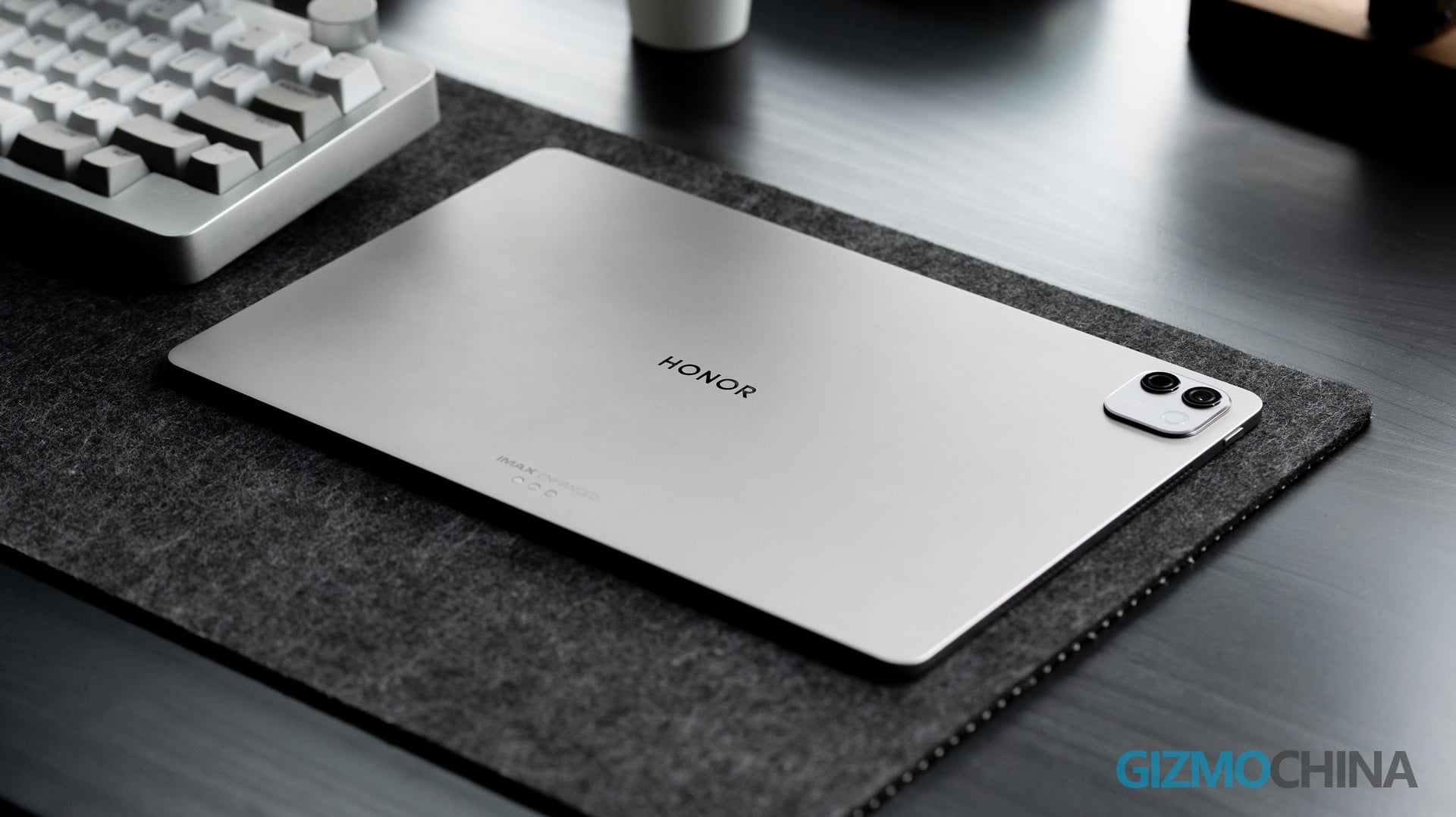
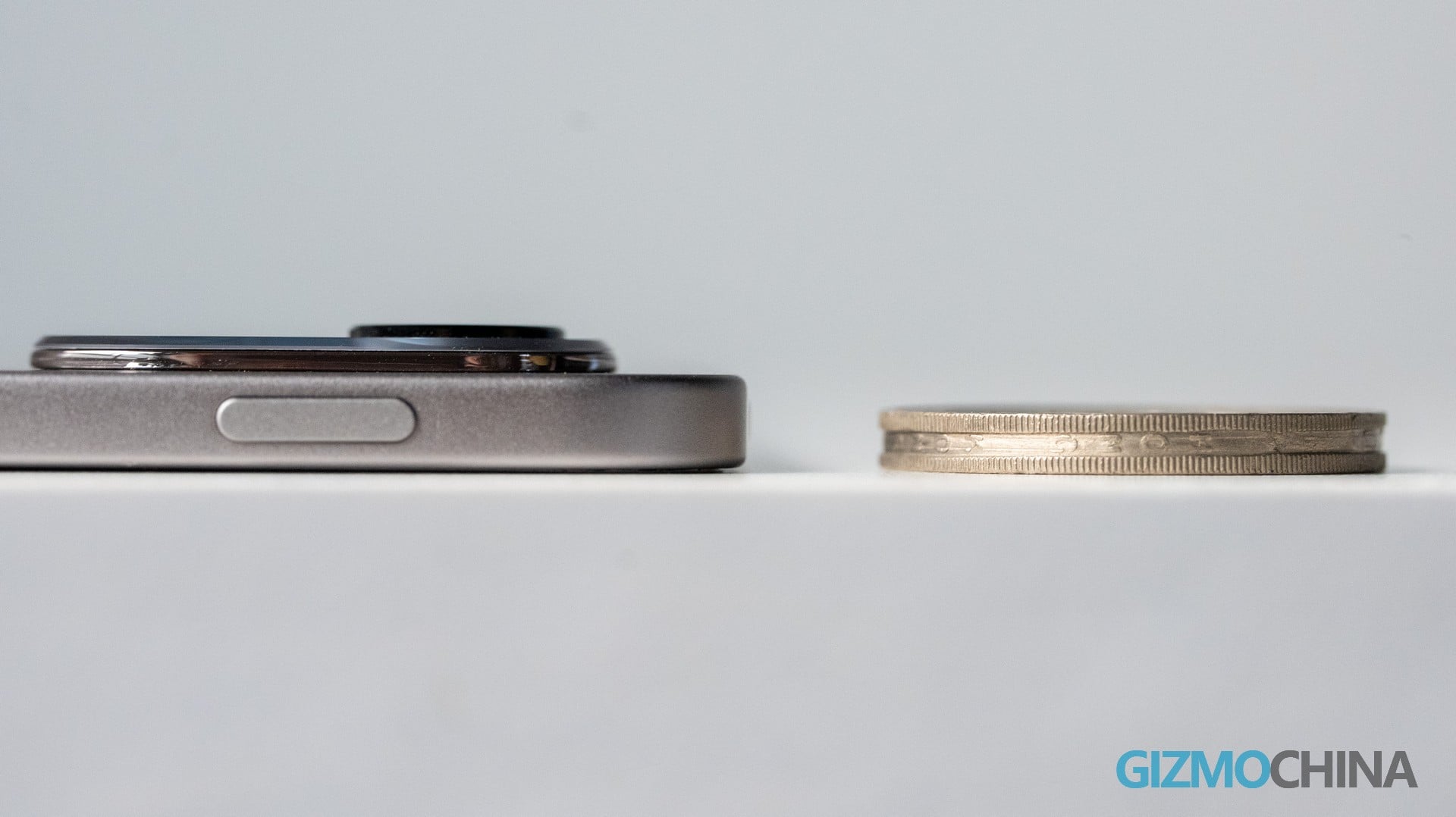
Honor MagicPad4 unboxing

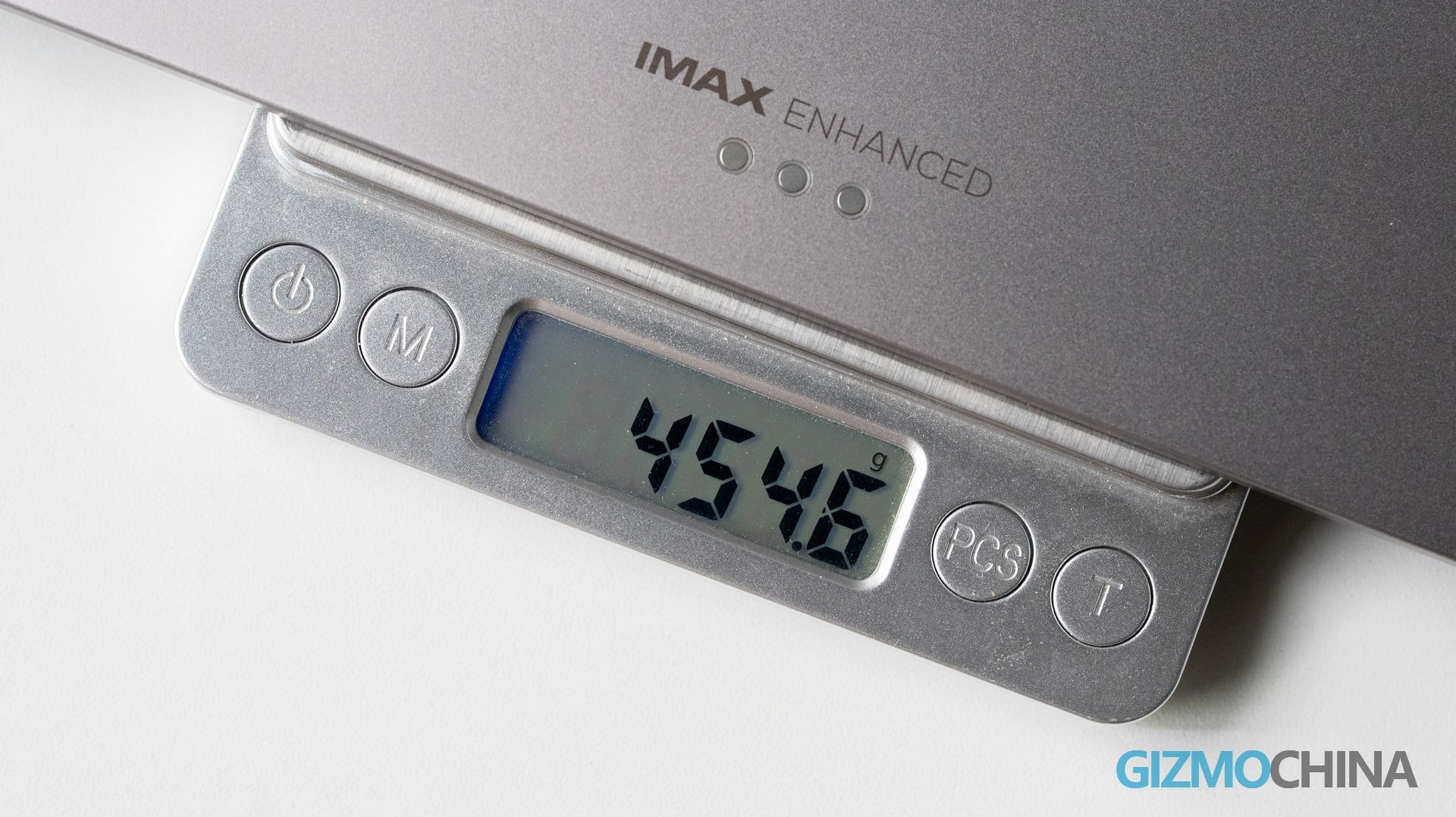
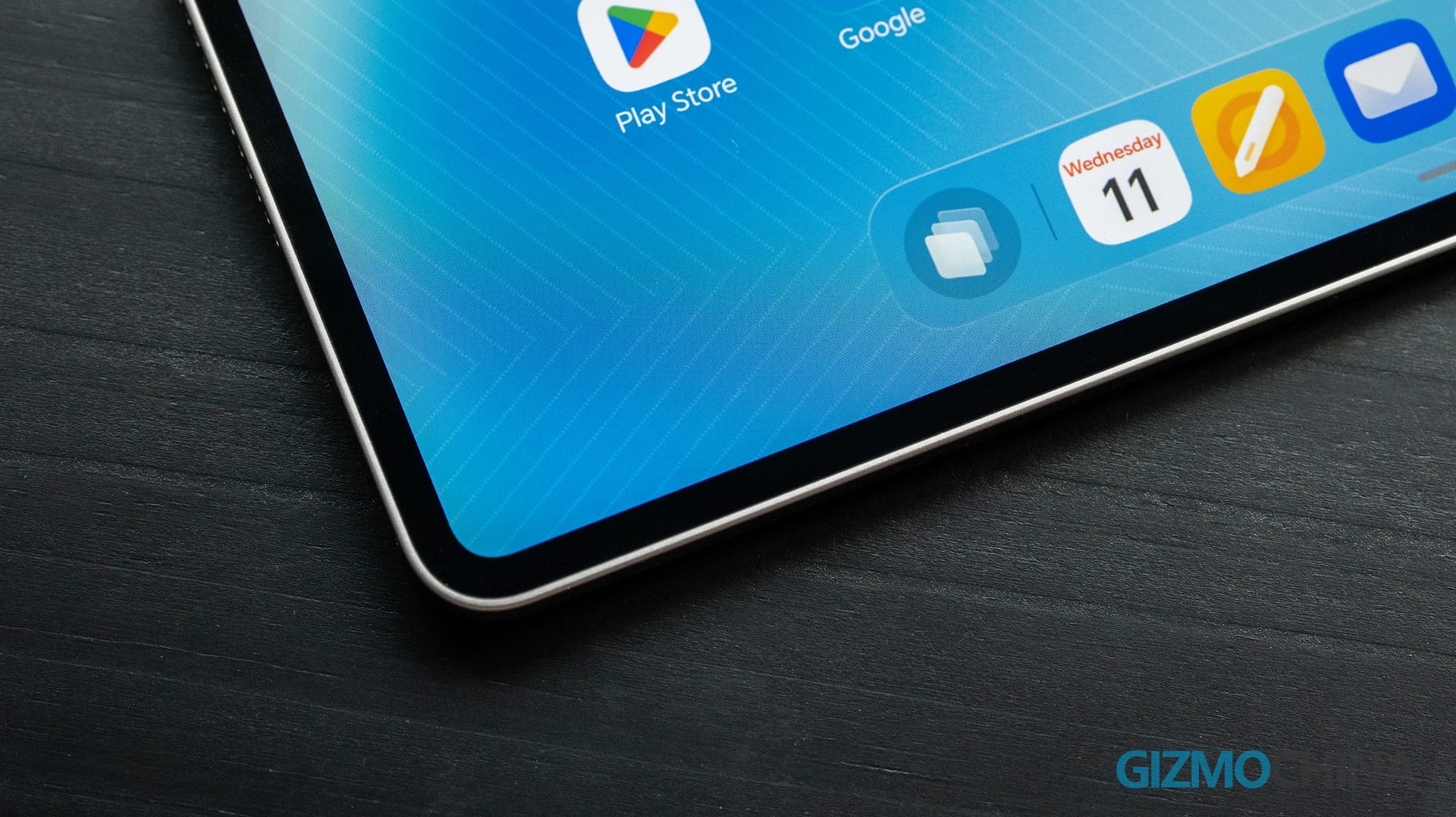
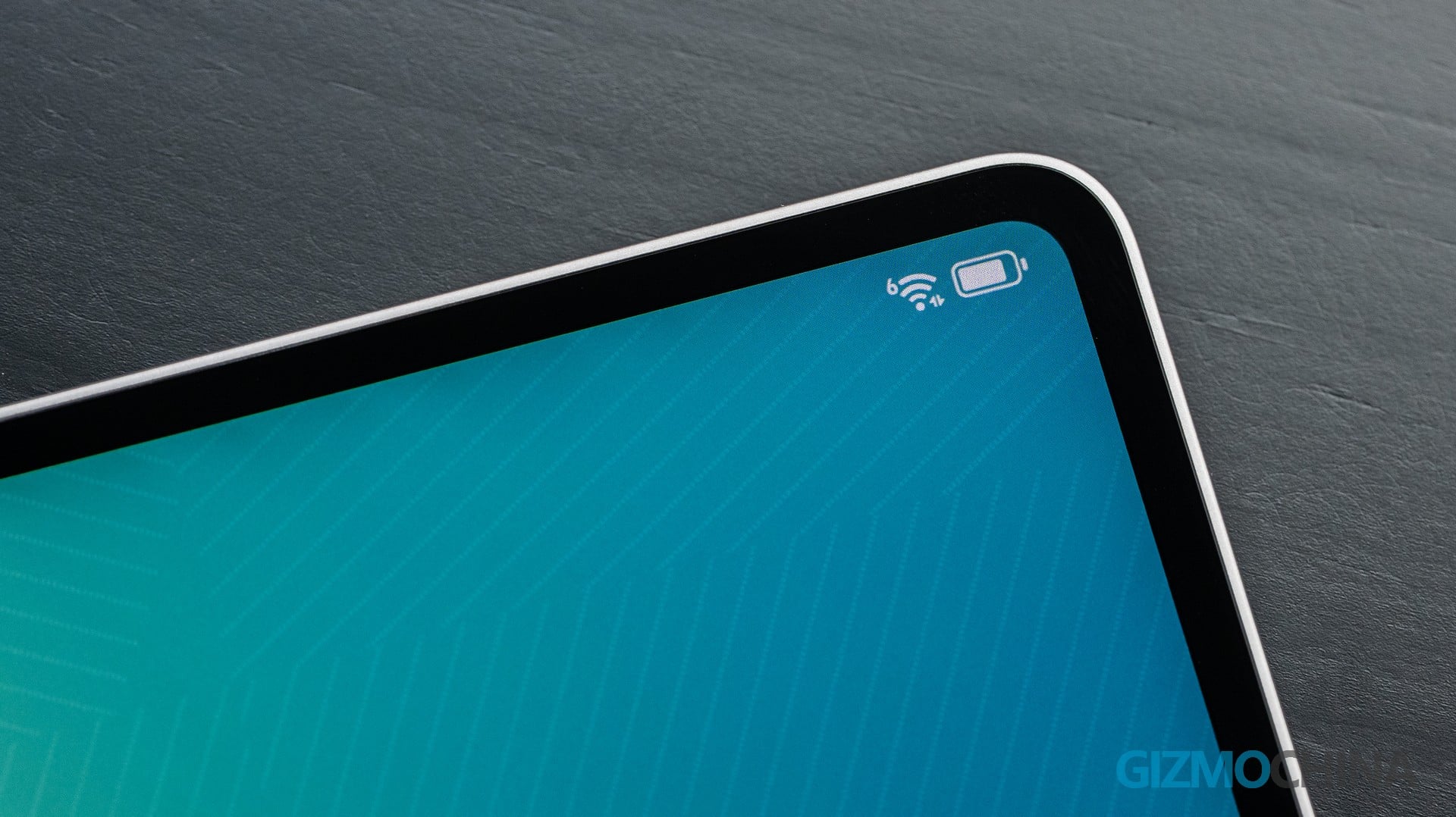
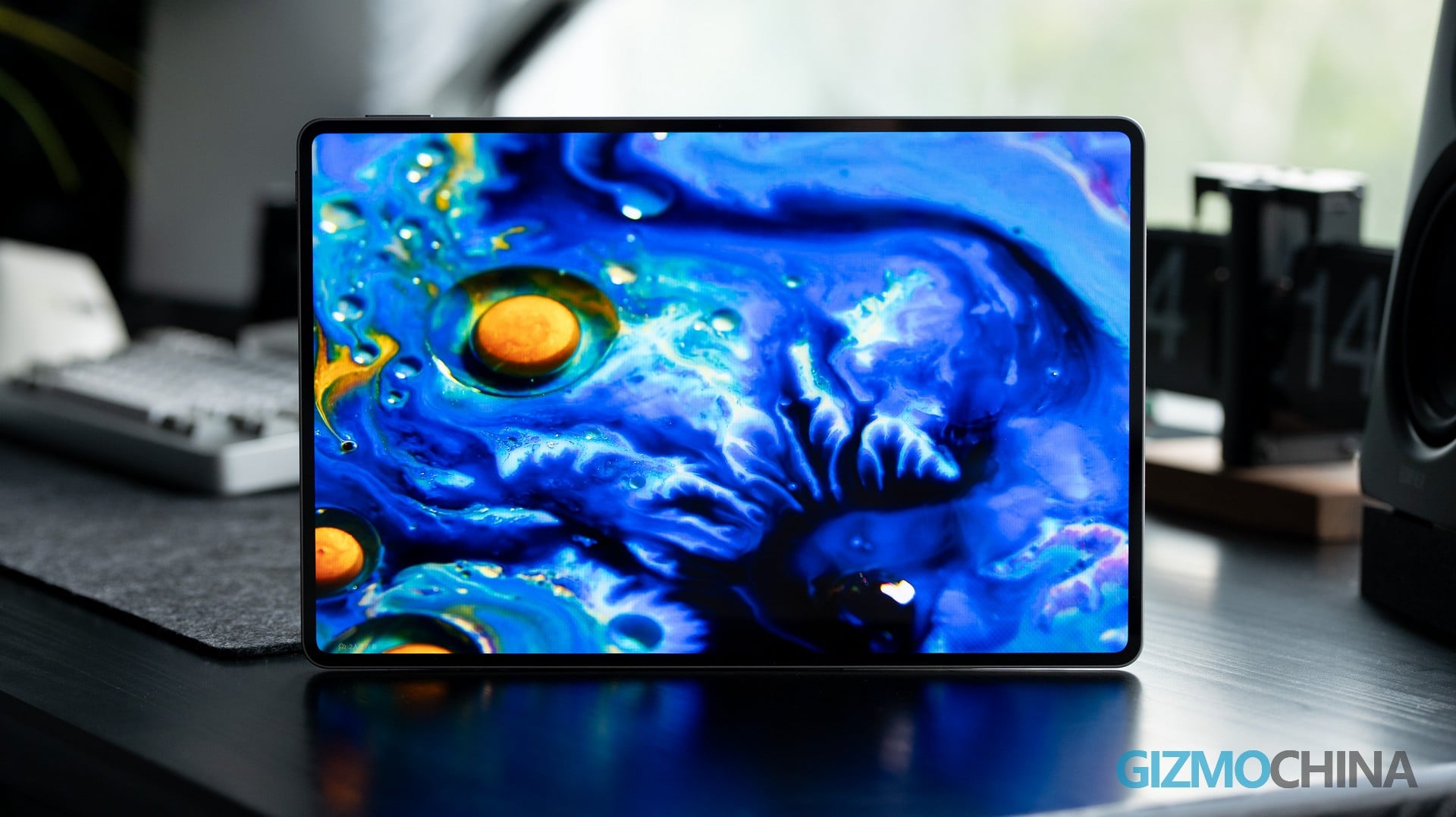
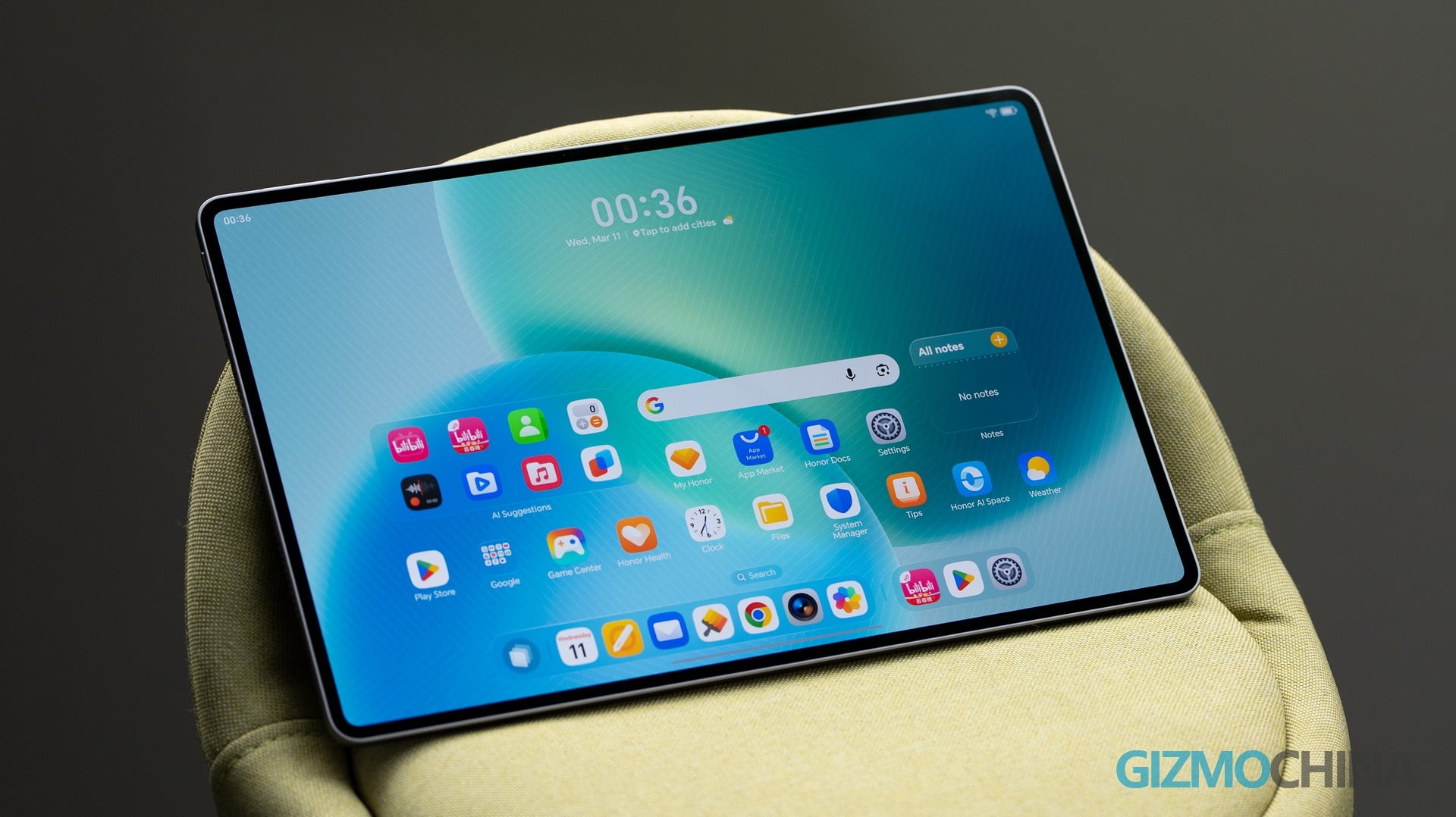
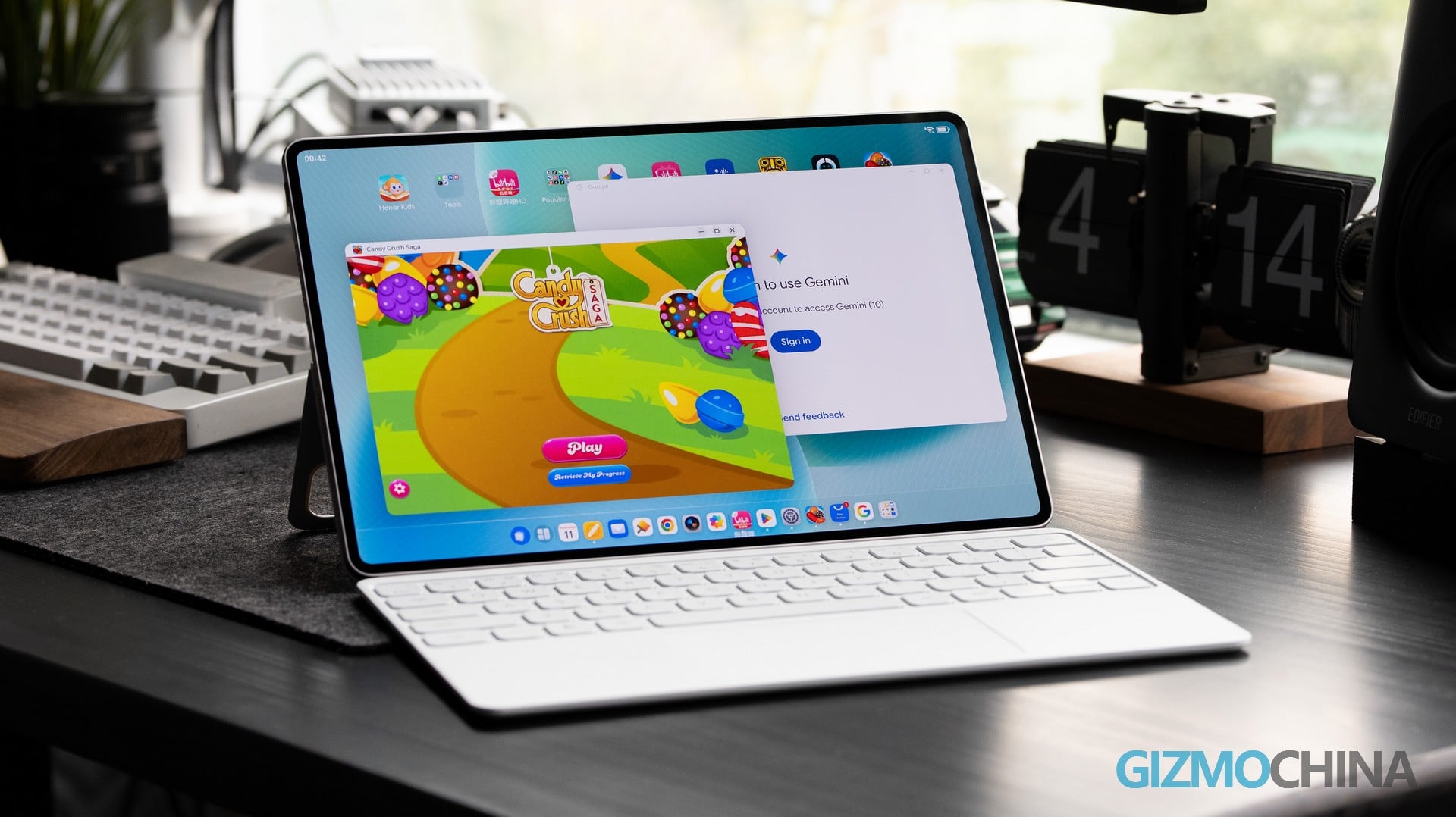
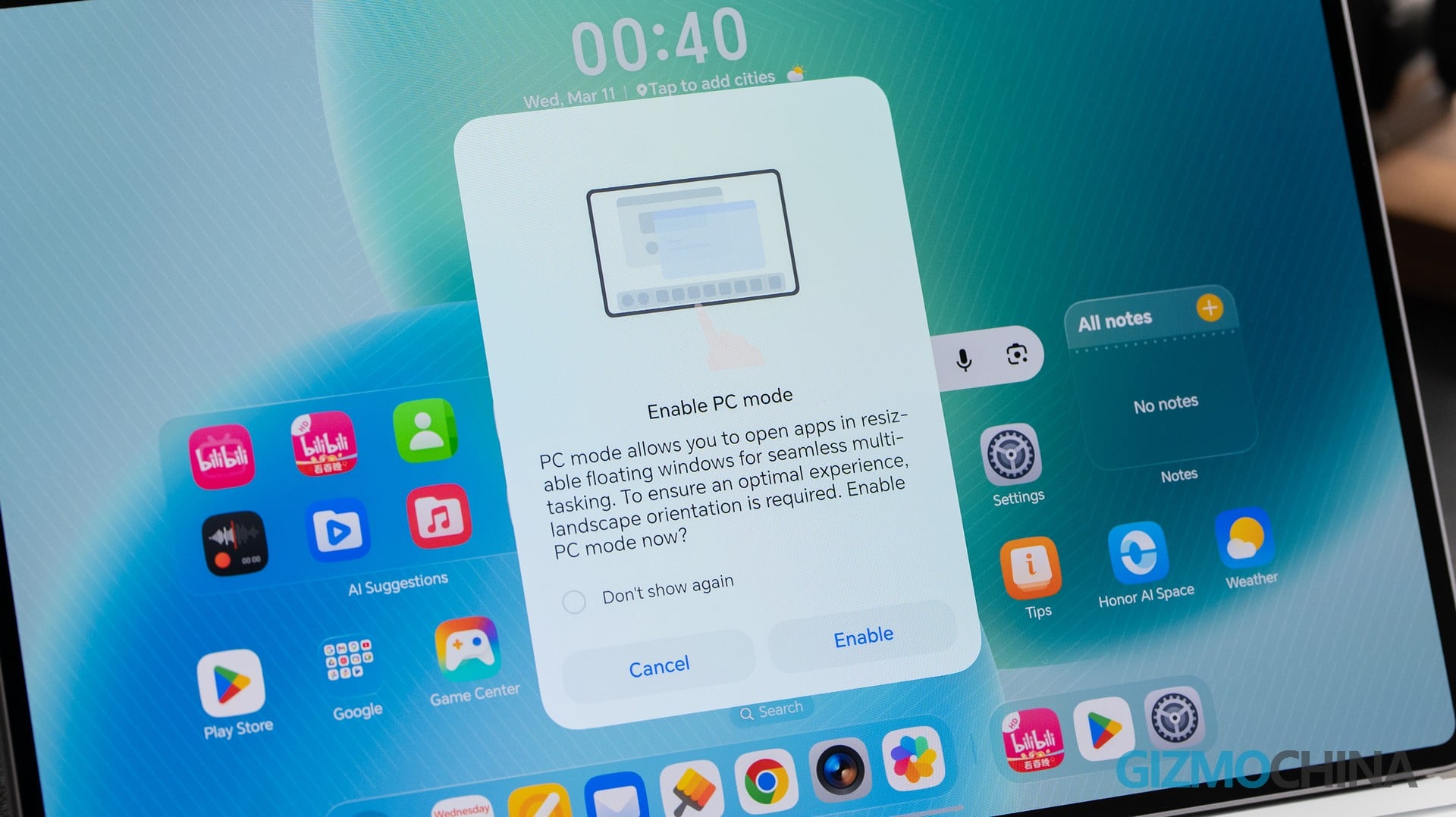
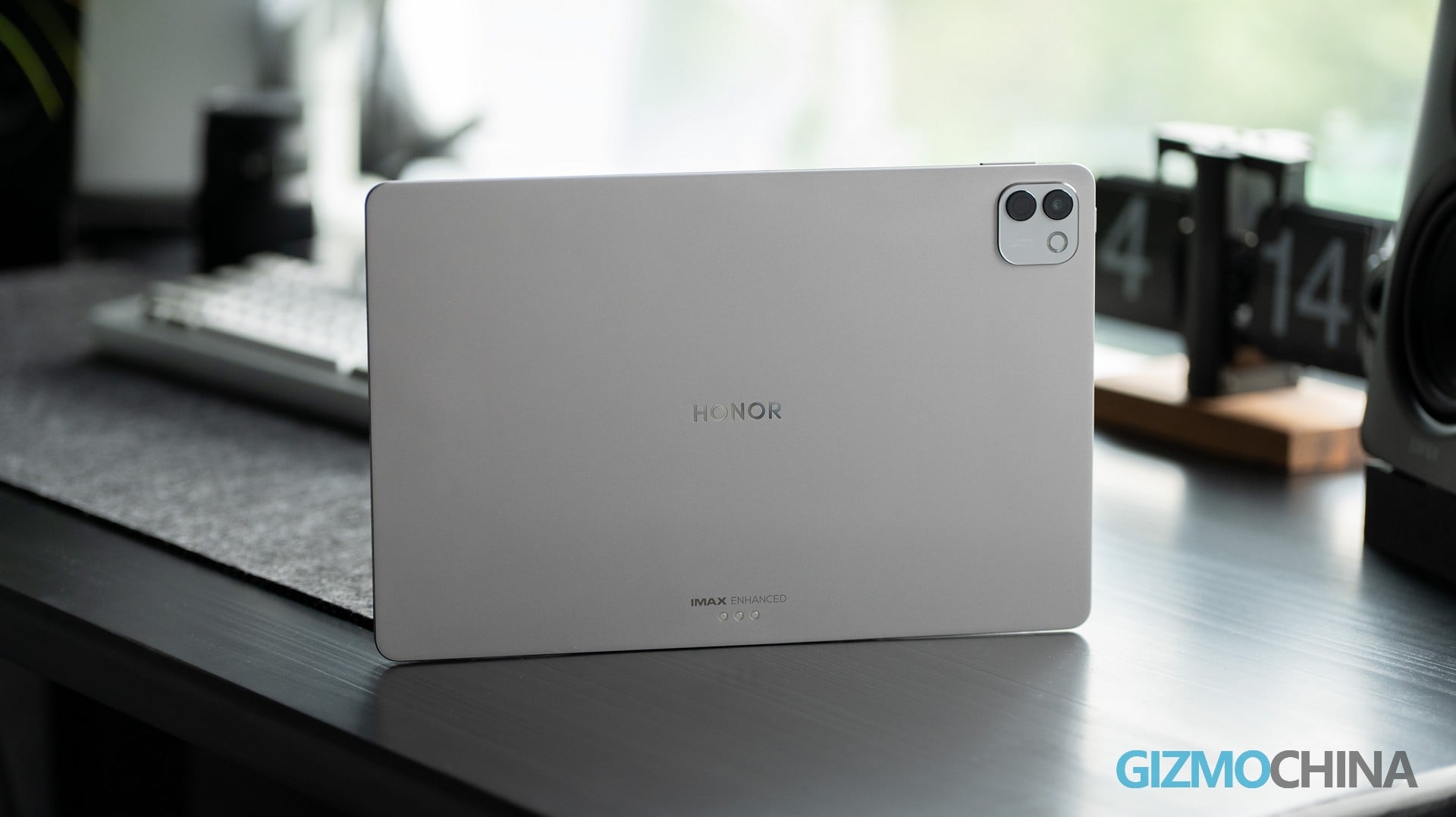
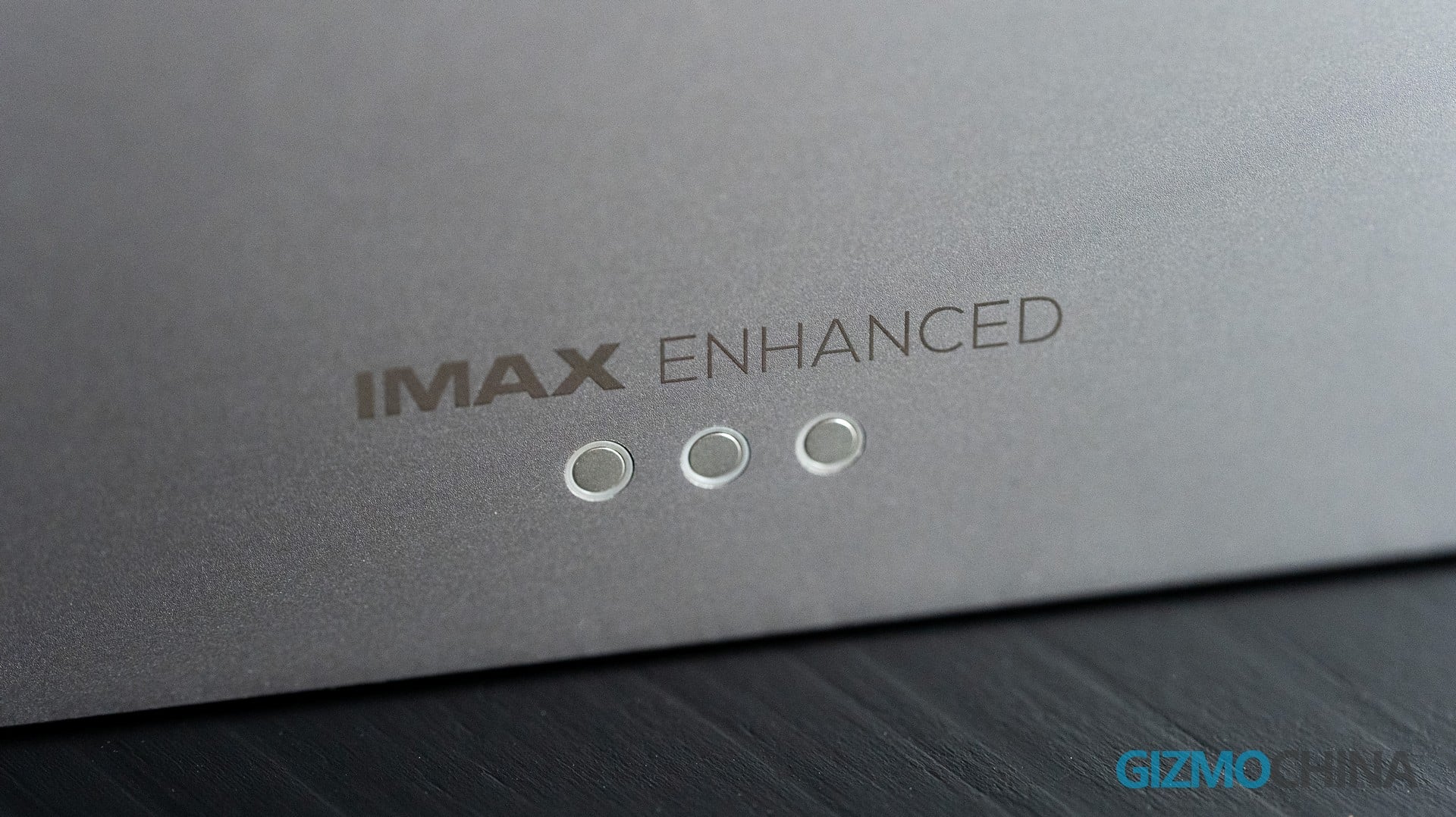
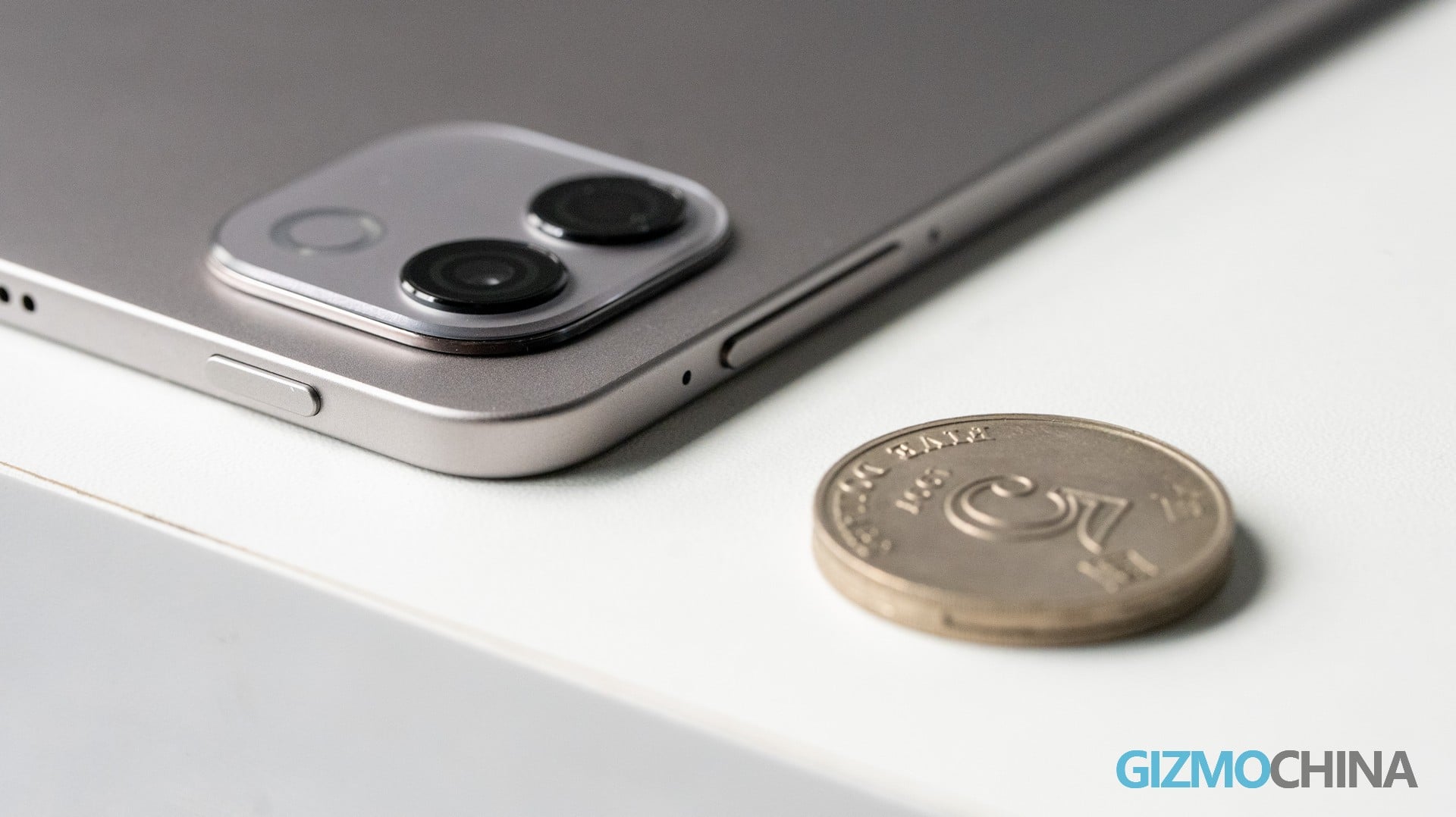
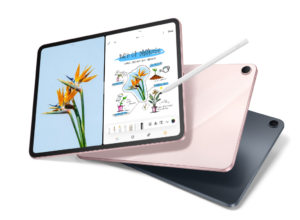
As Android tablets go, the Honor MagicPad 4 is a very complete package! You can get one for €650/£600 and that includes some nice additions. But let's first see what comes as standard. The tablet ships in either white or black, and either 12/256GB or 16/256GB variants, and packs a USB-A to USB-C cable and a 66W charger. Unboxing the tablet In Germany and other markets, you also get the MagicPad4 Smart Keyboard and the Magic Pencil 3 for free with the tablet. In the UK, you need to pay an extra £30 for each. The Smart Keyboard and Magic Pencil 3 Combine the slate...

Apple’s AI struggles reason for delayed Apple TV, HomePod mini launch

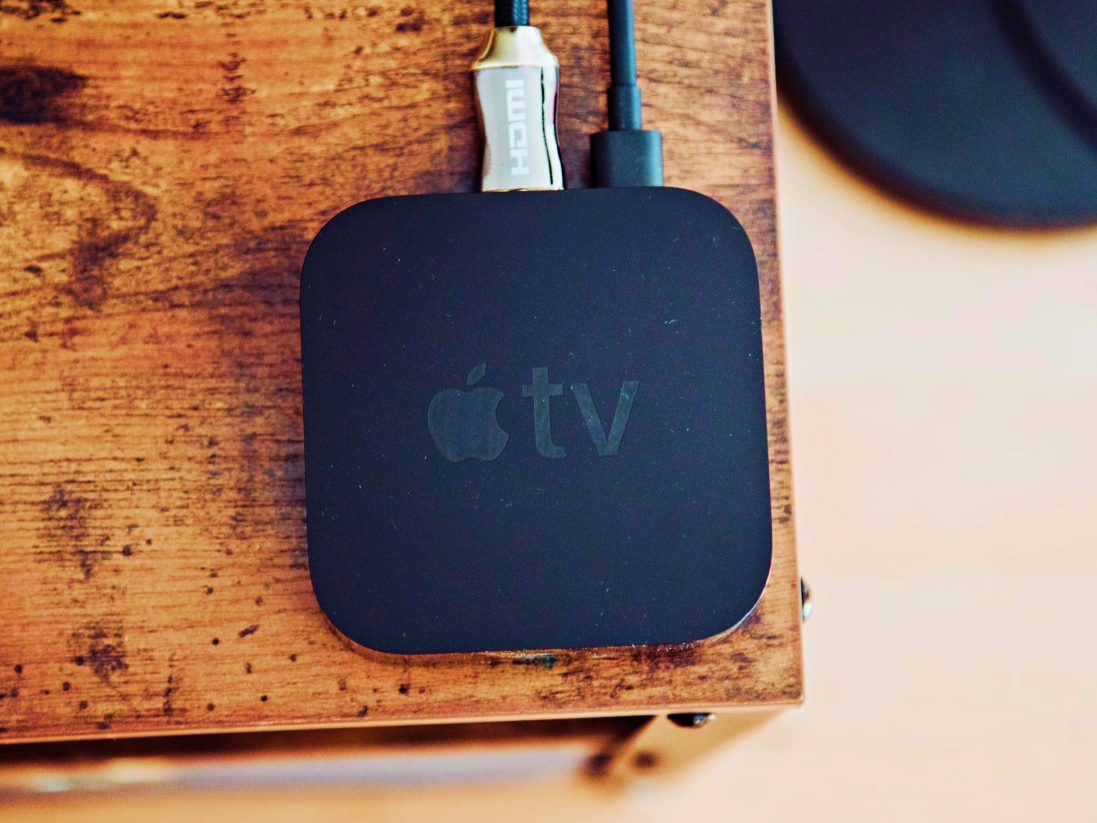
New Apple TV and HomePod mini models are reportedly "ready" for launch but remain shelved as Apple struggles to finalize its revamped, AI-powered Siri. With software bottlenecks now dictating hardware cycles, the highly anticipated upgrade to the A17 Pro-powered streamer and S9-equipped smart speaker may finally debut between iOS 26.5 and iOS 27.

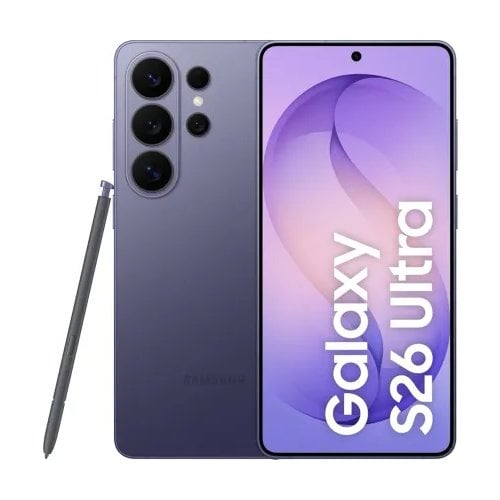
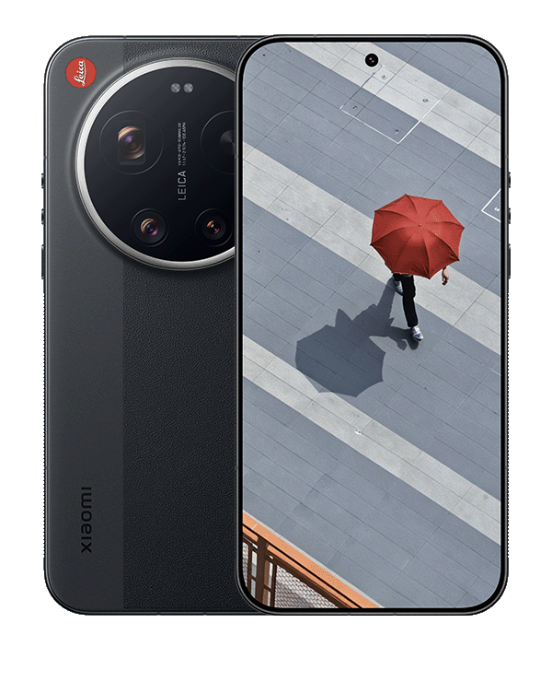
Deals: Galaxy S26 series, Pixel 10 lineup, Xiaomi 17 Ultra, Poco X8 Pro Max discounted

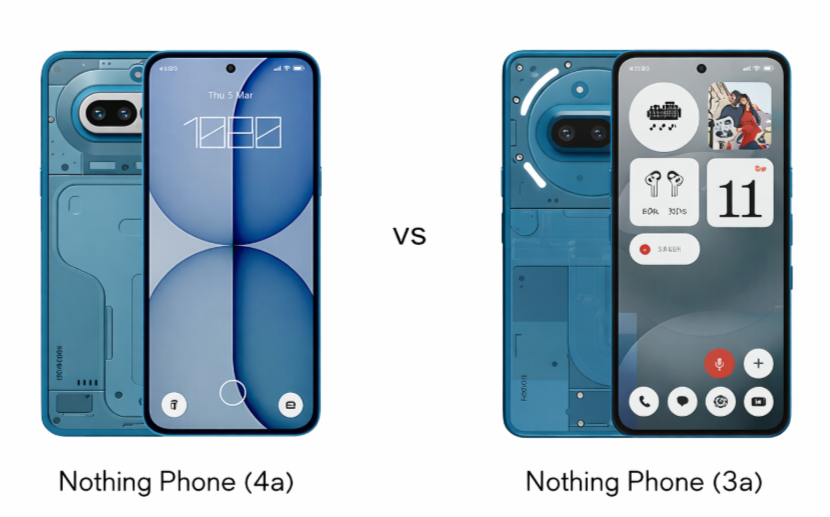
Flagship smartphones from Samsung, Google, and Xiaomi are currently seeing discounts, while mid-range offerings from Poco have also received price cuts. Meanwhile, the recently launched Nothing Phone (4a) Pro is now up for pre-order, with deliveries set to begin on March 27. The entire Galaxy S26 lineup is being offered with a £100 voucher that brings the price down across variants. While the Galaxy S26 Ultra is powered by the Snapdragon 8 Elite Gen 5 for Galaxy chipset, the Galaxy S26 and S26+ come with the Exynos 2600 chipset. ...

Hideo Kojima’s Death Stranding 2 PC release gets new ‘To the Wilder’ mode as the ‘upper limit’ of difficulty

Death Stranding 2: On the Beach has launched on PC, and Kojima Productions is responding to complaints that the game felt too easy by adding a new top-tier difficulty setting, “To the Wilder,” also available on PS5. Billed by the studio as the “upper limit” of challenge, the mode intensifies Timefall damage and forces stricter resource management, pushing players to plan routes and rely on items that were previously optional.

Crimson Desert launch: “Graphics device not supported” error greets Intel Arc users on Steam

Crimson Desert’s March 19 Steam launch drew hundreds of thousands of players, but Intel Arc GPU owners are being blocked by a “Graphics device not supported” error because Pearl Abyss does not officially support Arc cards. The studio disclosed the incompatibility only after release in its FAQ and is directing affected buyers to seek refunds, with no timeline offered for future support.

Samsung Galaxy S26 gets disassembled on video

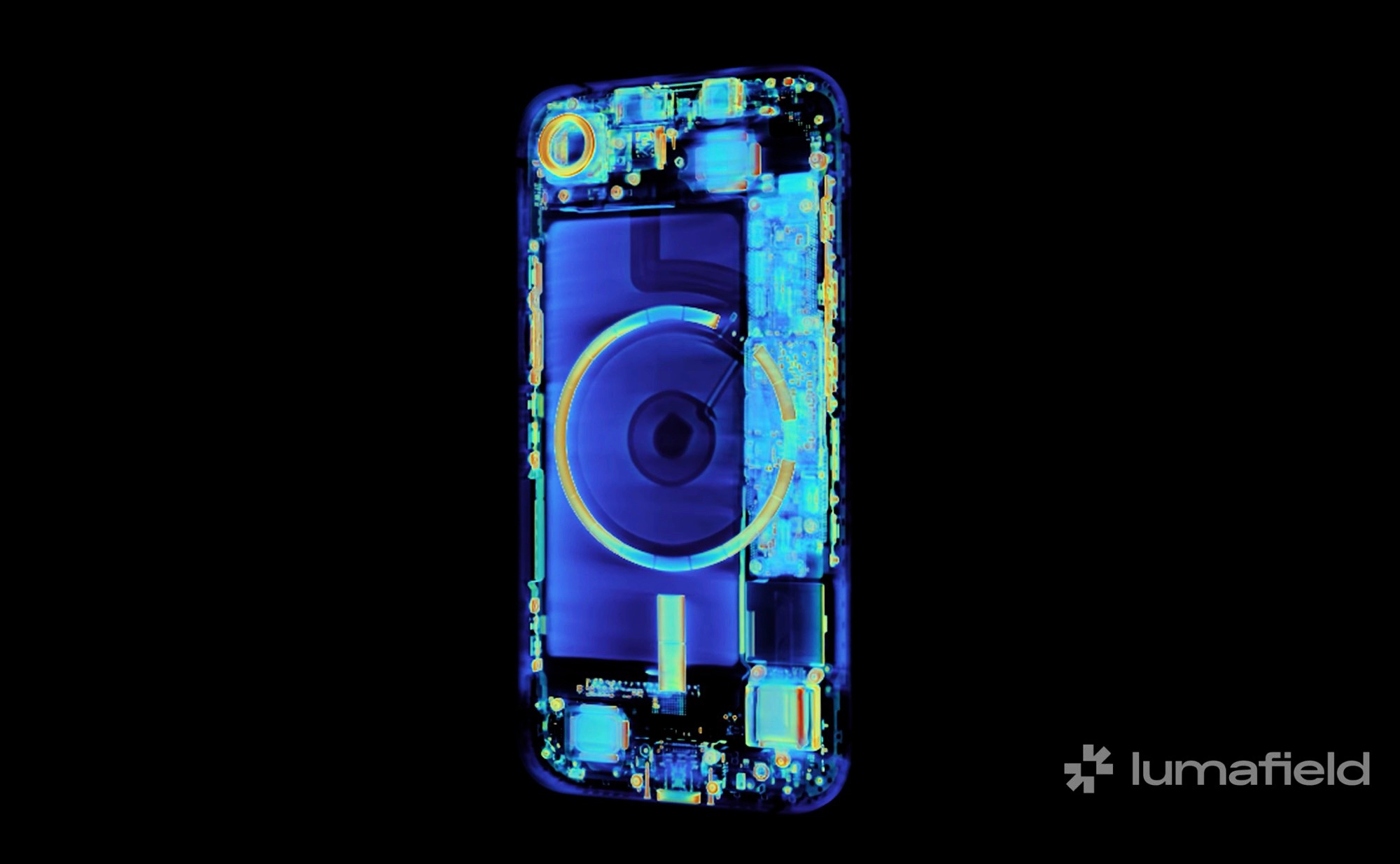
Samsung launched the Galaxy S26 alongside the Galaxy S26+ and S26 Ultra a few weeks ago, and today we have our first look at the vanilla device's innards, courtesy of a disassembly video by the YouTube channel PBKreviews. [#InlinePriceWidget,14456,1#] [#InlinePriceWidget,14457,1#] [#InlinePriceWidget,14320,1#] The device's teardown starts, as it does a lot of times, with removing the SIM tray, then the back comes off after applying some heat to make the adhesive come off easily. Take a look at the entire process below. In the end, the Galaxy S26 gets a very good...

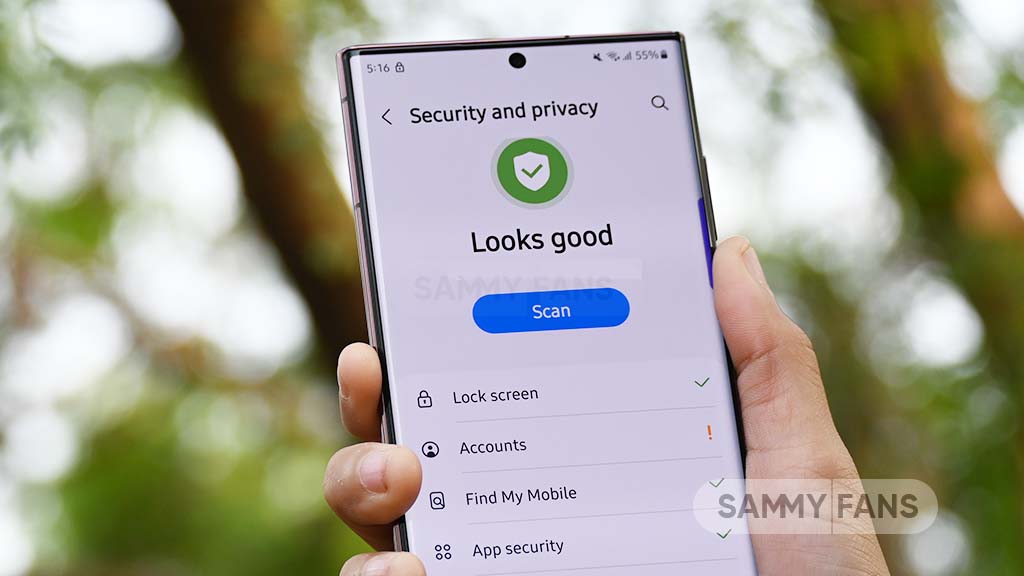
Samsung is finally treating software like a continuous platform

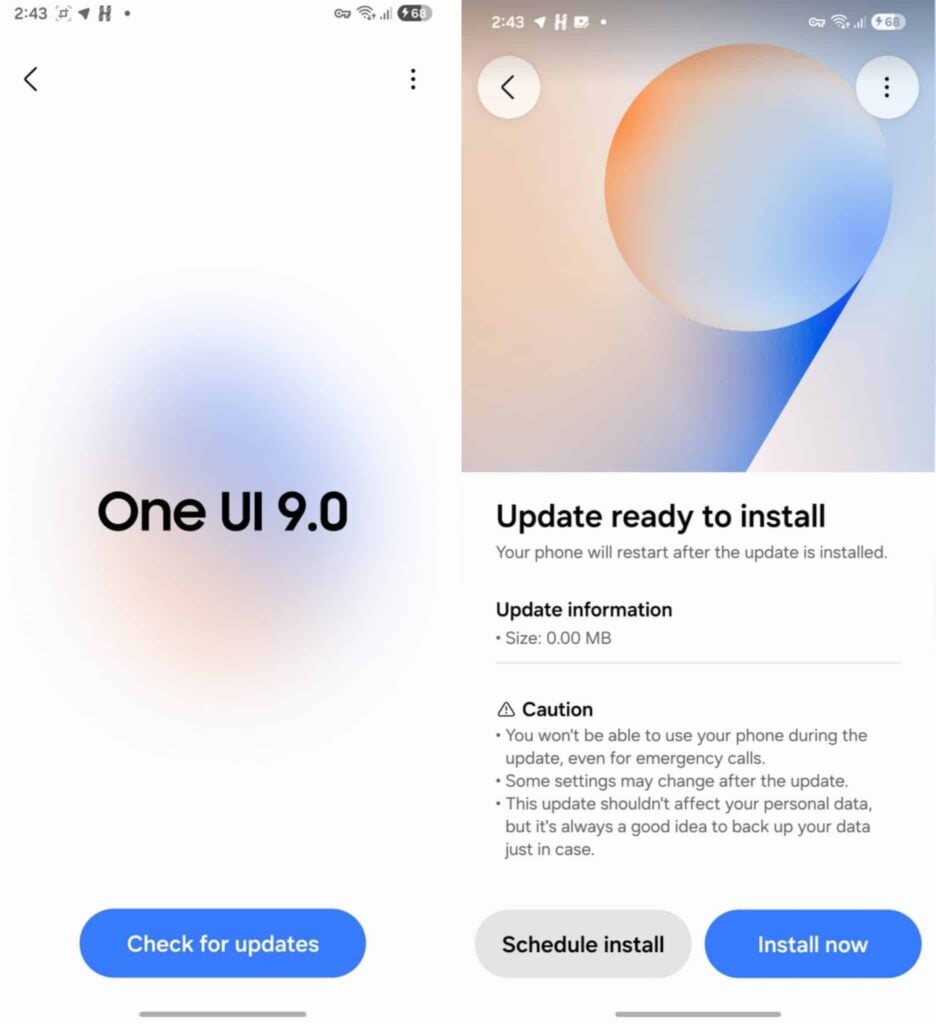
Samsung barely let the Galaxy S26 settle before flipping the switch on its next big software cycle. Within days of the March 11 launch, firmware spotting activity revealed early internal testing of Android 17-based One UI 9.

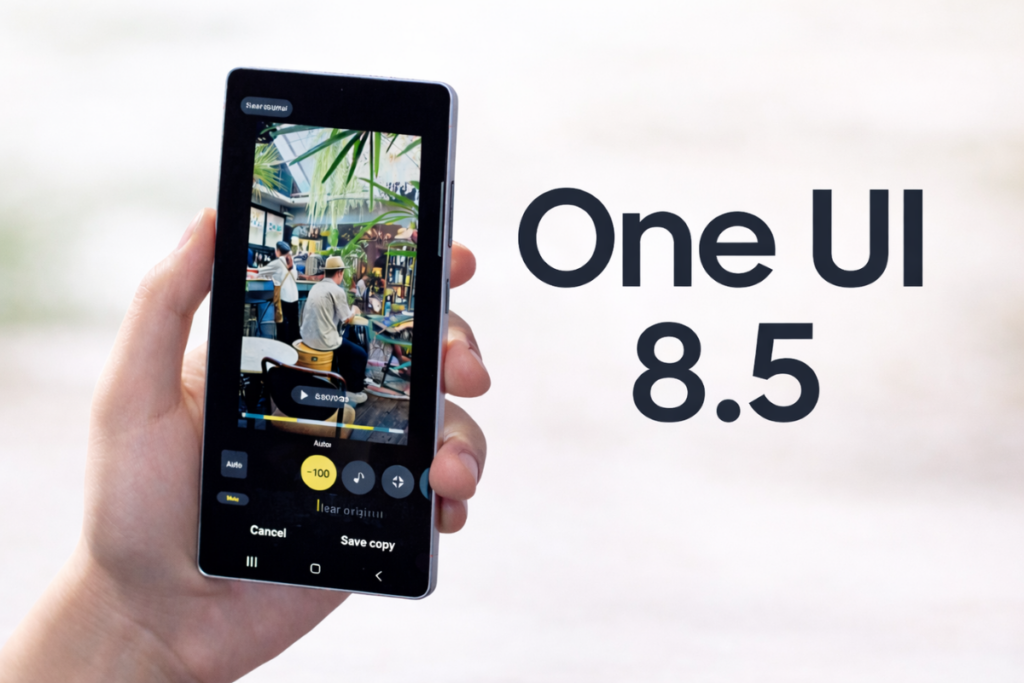
One UI 8.5 Beta first arrived in December 2025 for the Galaxy S25 series. Fast forward to March 2026, the Galaxy S26 ships with stable One UI 8.5 out of the box. At the same time, Beta activity for newer foldables is heating up.

Samsung is effectively running parallel tracks. One track stabilizes and distributes the current version. The other pushes forward on the next major base. Both move at the same time, with shared learnings feeding back into each other.

Pay attention, Google pushes rapid Android iterations with Pixel-first optimizations. Apple runs a tightly controlled ecosystem where iOS development, testing, and rollout happen in a highly synchronized loop.

Samsung’s new approach closes that gap.

By starting One UI 9 testing immediately after shipping One UI 8.5, Samsung is effectively decoupling development from release.

Engineers are not waiting for one rollout to finish before starting the next. For the Galaxy community, this could mean faster feature maturity.

Treating One UI as a continuous platform aligns Samsung closer to how modern software ecosystems operate. Faster iteration, overlapping development, and constant feedback loops are how you stay competitive against Google and Apple.

If Samsung can maintain stability while pushing this pace, it will redefine what Galaxy software feels like. Updates will seem less like big annual jumps and more like a steady stream of improvements.

Right now, the early One UI 9 testing tells a clear story. Samsung is moving faster than ever, and it is doing it in plain sight.

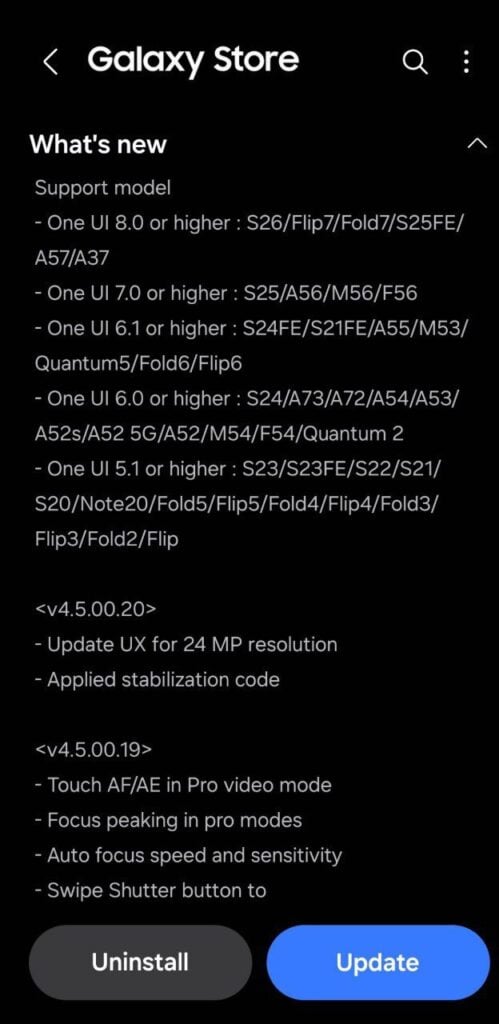
Samsung One UI 9 Software Update Screen

Image courtesy – Mohammed Khatri

The post Samsung is finally treating software like a continuous platform appeared first on Sammy Fans.

Poco X8 Pro/Pro Max official, A37 and A57 incoming, Week 12 in review

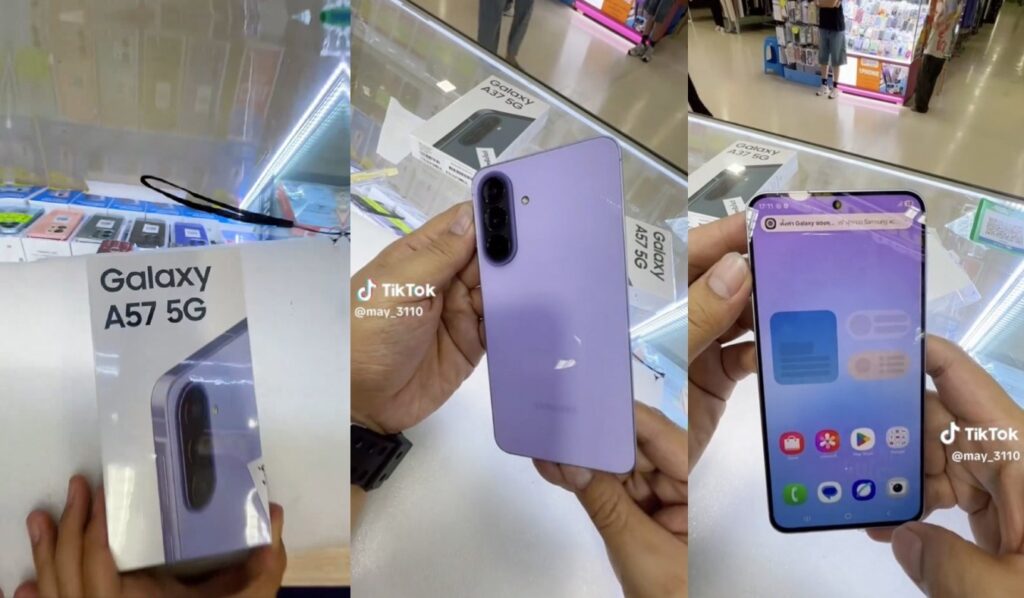
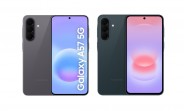
The Galaxy A37 and A57 are coming soon, and the leaks keep coming and coming. This week, we saw both handled in Thailand. The source posted videos of the pair on TikTok and shared some rumored prices. Apparently, the A57 will cost THB 17,999 ($554) for the 12/256GB trim and THB 20,999 ($646) for the 12/512GB version. The A37 will cost THB 13,999 ($430) in its single 8/256GB trim. A somewhat shocking report from Korea said that Samsung will discontinue its TriFold just three months after it launched. Well, Samsung later confirmed the report - the TriFold is going away, first in Korea and...

News of the week: Galaxy Z Fold 8 battery capacity could be 5,000mAh

It’s been a busy week if you follow Samsung leaks as closely as I do. The Galaxy Z Fold 8 battery story broke earlier, but it didn’t quite sit right to just report it and move on. This one deserves a second look; a slower, more critical read.

For the first time in years, Samsung might actually be doing something about the Fold’s weakest link.

Here’s what the leak tells us.

The Galaxy Z Fold 8 is expected to be equipped with a dual-cell battery setup rated at 2,369mAh and 2,485mAh. The combination brings the combined rated capacity to 4,845mAh, which Samsung will almost certainly market as 5,000mAh.

If that number sounds familiar, it should; that is in line with the Galaxy S26 Ultra. Meanwhile, the Fold is not a slab phone. It is running two displays, one of them tablet-sized, with a hinge mechanism and internal constraints.

Still, numbers only tell half the story. Efficiency, thermal headroom, and software tuning will decide whether this finally fixes the Fold’s long-standing battery anxiety. If you have used the Fold 7 as a daily driver, you already know what I mean.

If you’ve been following the Fold series, you’ve probably noticed the pattern. The Galaxy Z Fold 2 pushed things to 4,500mAh back in 2020. Then came the Fold 3, and Samsung actually stepped back to 4,400mAh.

Since then, every new foldable, including the Z Fold 4, Z Fold 6, and Z Fold 7, has stuck at 4,400mAh. Now, with the Fold 8, we are potentially looking at a jump to 5,000mAh. That’s roughly a 13 to 14 percent increase.

Samsung’s engineering team has finally hit the wall with the 4,400mAh limit. While it’s not revolutionary, but significant enough to matter. More importantly, it breaks a five-year plateau, taking the Galaxy Z Fold near S Ultra.

The post News of the week: Galaxy Z Fold 8 battery capacity could be 5,000mAh appeared first on Sammy Fans.

New iQOO Neo 11 series phone in works! First details emerge

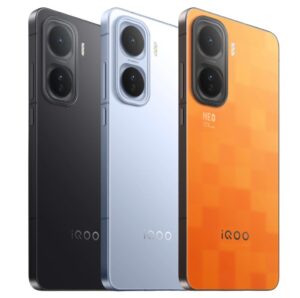
iQOO Neo 11

At the end of 2024, iQOO unveiled the iQOO Neo 10 and Neo 10 Pro in China, which was followed by the iQOO Neo 10 Pro+ last year. However, the company unveiled the iQOO Neo 11 equipped with the Snapdragon 8 Elite in November 2025 in China. A new leak reveals that the brand is now preparing to launch a new Neo 11 series phone in China. Here’s a look at the first details about this phone.

iQOO Neo 11’s first details emerge

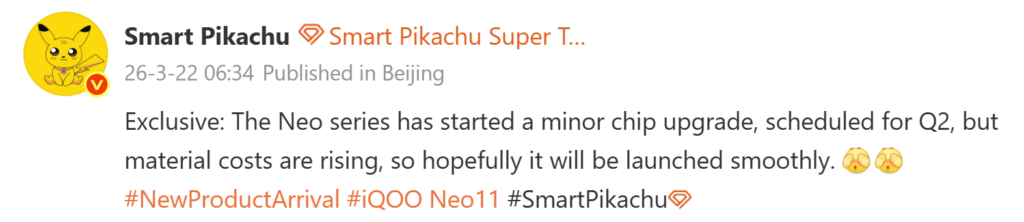
According to tipster Smart Pikachu, the iQOO Neo 11 is scheduled to break cover in the second quarter of this year in China. However, he speculates that rising component costs may impact its rollout.

He revealed that the upcoming iQOO Neo 11 series phone will arrive with a minor upgrade in the chip department. It will swap the Snapdragon chip with a Dimensity SoC. It remains to be seen whether the device will feature the Dimensity 9500 or the toned-down Dimensity 9500s.

At present, there is no clarity about the final moniker of the phone. Therefore, it remains to be seen whether it will be called the iQOO Neo 11 Pro or something else. Apart from featuring a Dimensity chip, the rest of its specifications could be identical to the existing model.

Alleged iQOO Neo 11 Pro specifications (expected)

The Dimensity 9500 / 9500s-powered iQOO Neo 11 could feature a 6.82-inch AMOLED 1.5K 144Hz display, a 16-megapixel front camera, and a 50-megapixel (OIS) + 8-megapixel (ultra-wide) dual-camera setup. It may arrive with up to 16GB of LPDDR5x RAM, up to 1TB of UFS 4.1 storage, a 7,500mAh battery with 100W charging, an ultrasonic in-screen fingerprint sensor, and OriginOS 6-based Android 16.

In related news, a report claimed that iQOO has no plans to launch a Neo-branded phone in India this year. Therefore, the Neo 11 series phone is expected to remain exclusive to the Chinese market.

For more daily updates, please visit our News Section.

Stay ahead in tech! Join our Telegram community and sign up for our daily newsletter of top stories! 💡

The post New iQOO Neo 11 series phone in works! First details emerge appeared first on Gizmochina.

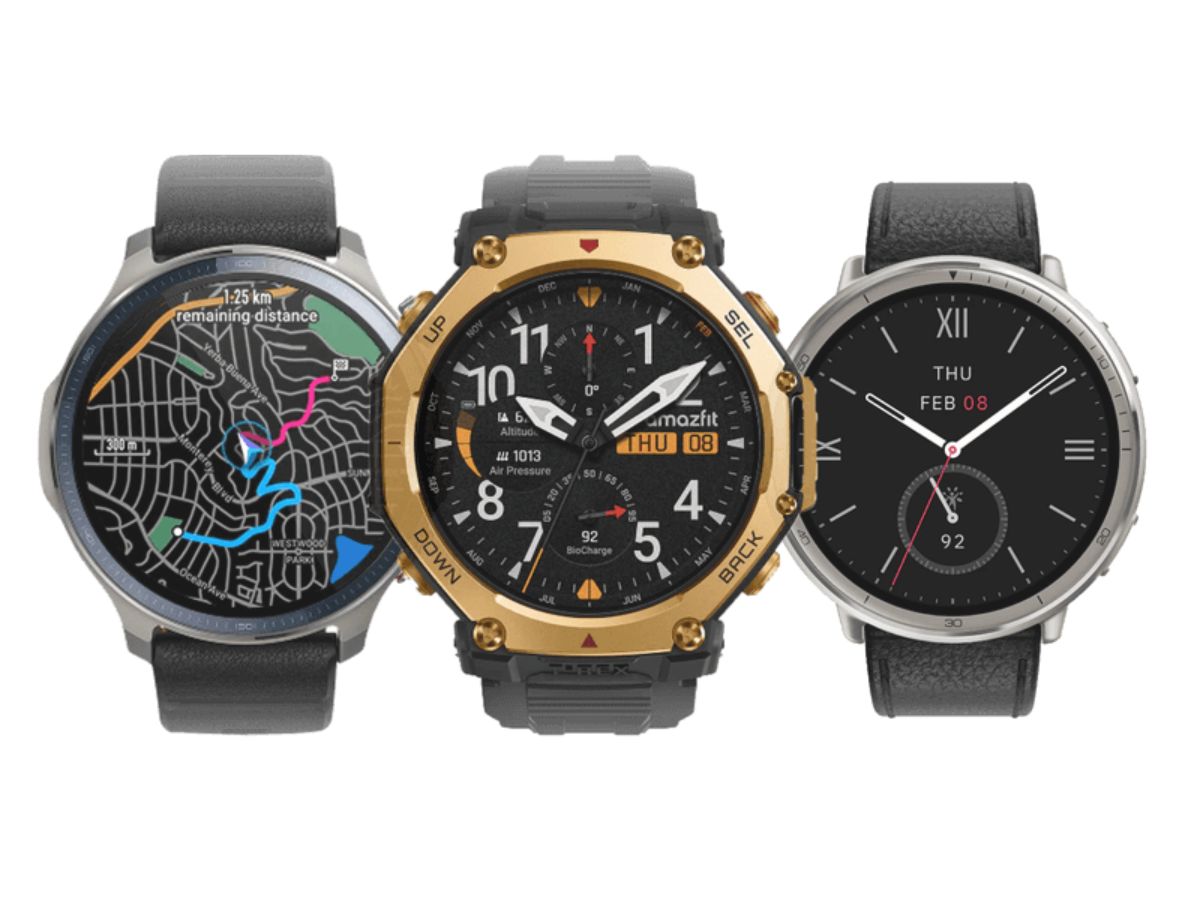
Oppo Watch X3 Mini surfaces in leak as a compact alternative

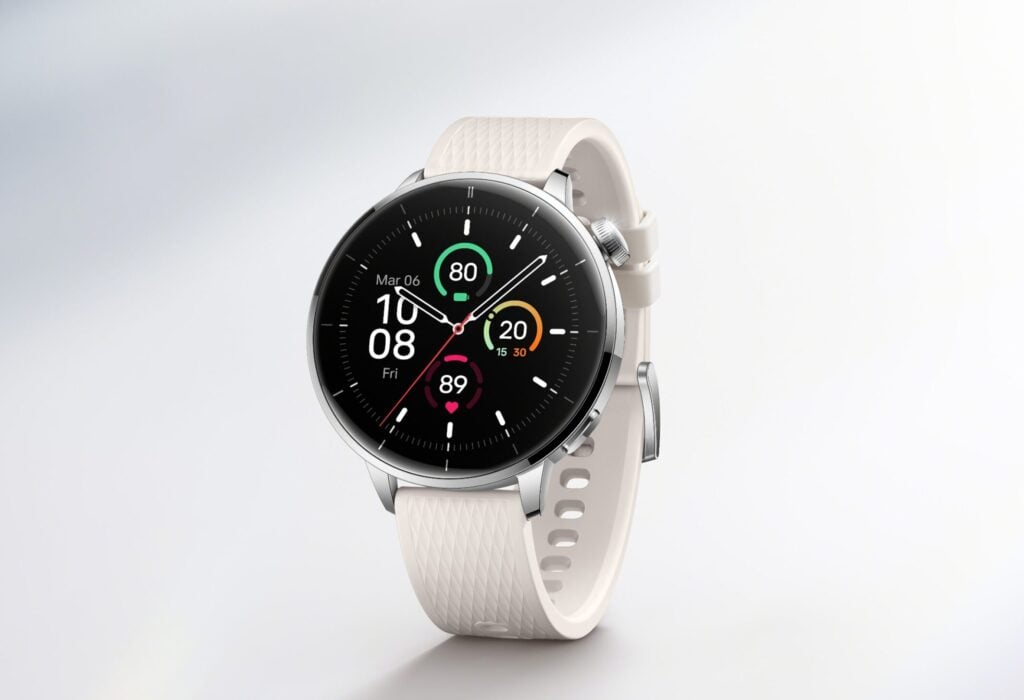
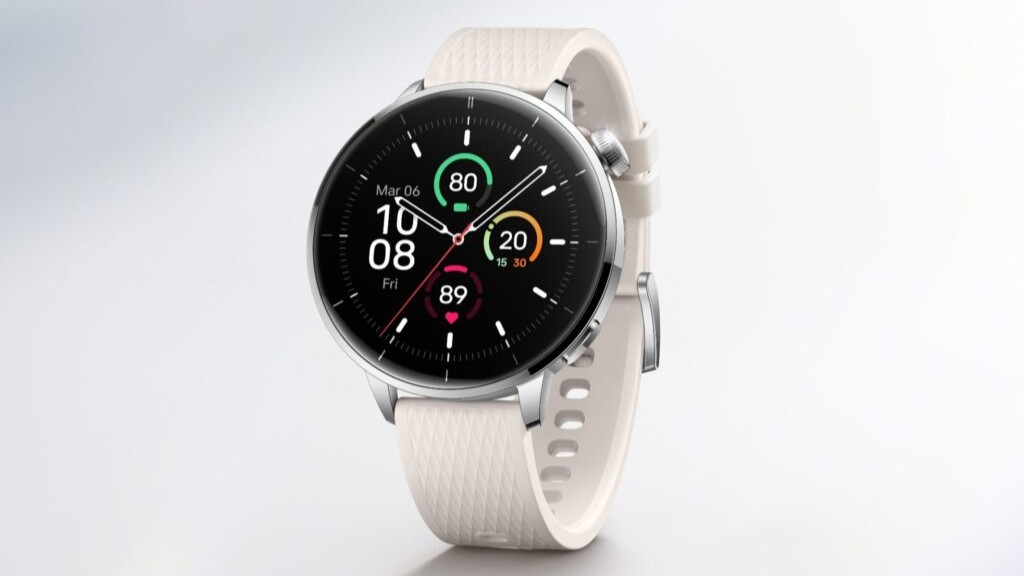
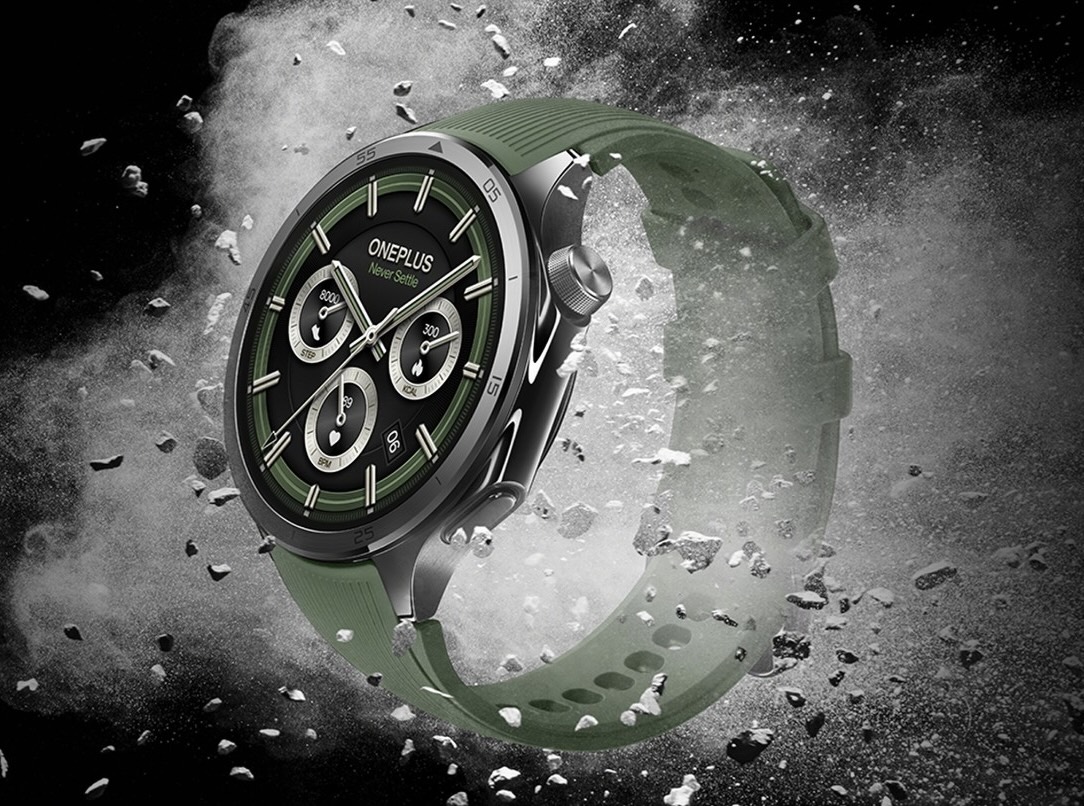
OnePlus Watch 3 43mm

Oppo could be preparing to add a smaller option to its smartwatch lineup. Fresh leaks point to a compact version of the Oppo Watch X3, likely aimed at users who liked the main model but found it a bit too big for daily wear.

OnePlus Watch 3 43mm

The standard Watch X3, which recently launched in China, leans heavily into the premium side. It brings a titanium build, a bright 1.5-inch LTPO OLED display, and the Snapdragon W5 Gen 1 chip, along with features like ECG and skin temperature tracking. Battery life is also a strong point, especially in power-saving modes. It’s clearly positioned as a flagship smartwatch.

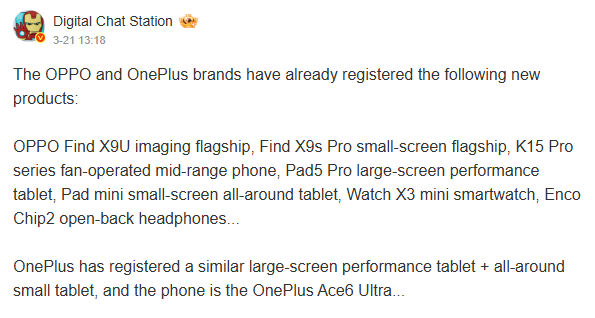
Now, according to tipster Digital Chat Station, Oppo is also working on what’s being referred to as the Watch X3 Mini. The name isn’t confirmed, but the idea has been floating around for a while, and this latest mention makes it feel a bit more real.

If Oppo sticks to its earlier approach, the Mini version will likely focus on making the watch easier to wear for longer periods. That usually means a smaller case and display panel, probably somewhere in the 1.3 to 1.4-inch range. A slightly smaller battery is also likely, which could impact overall endurance a bit. These trade-offs aren’t unusual, though, and for many people, the more comfortable size matters more.

There’s still no clear word on when it might launch. Some earlier reports mentioned April, but nothing solid yet. Global availability is also a question mark. Oppo has reworked similar models under the OnePlus brand before, so there’s a chance this could follow a similar path.

For now, it looks like Oppo is trying to cover both ends: large, feature-packed wearables and something a bit more compact. If this Mini version does arrive, it could end up being the more practical choice for a lot of users.

Don’t miss a thing! Join our Telegram community for instant updates and grab our free daily newsletter for the best tech stories!

For more daily updates, please visit our News Section.

(Source: DCS on Weibo)

The post Oppo Watch X3 Mini surfaces in leak as a compact alternative appeared first on Gizmochina.

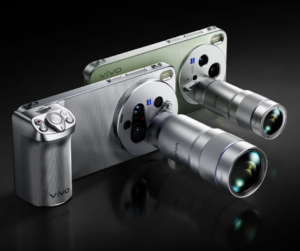
Vivo X300 Ultra could be priced at around 7,499 Yuan (~$1,090)

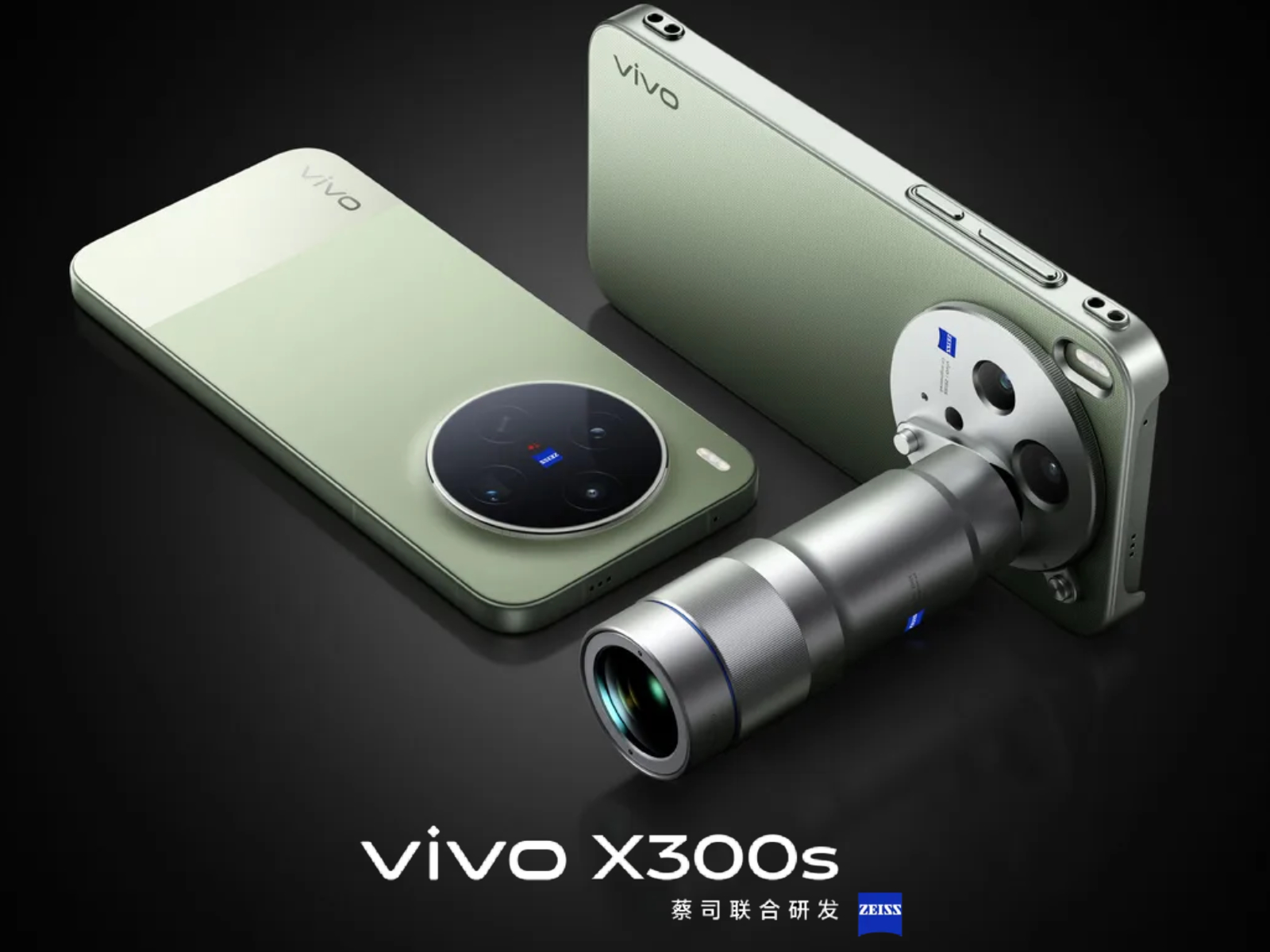
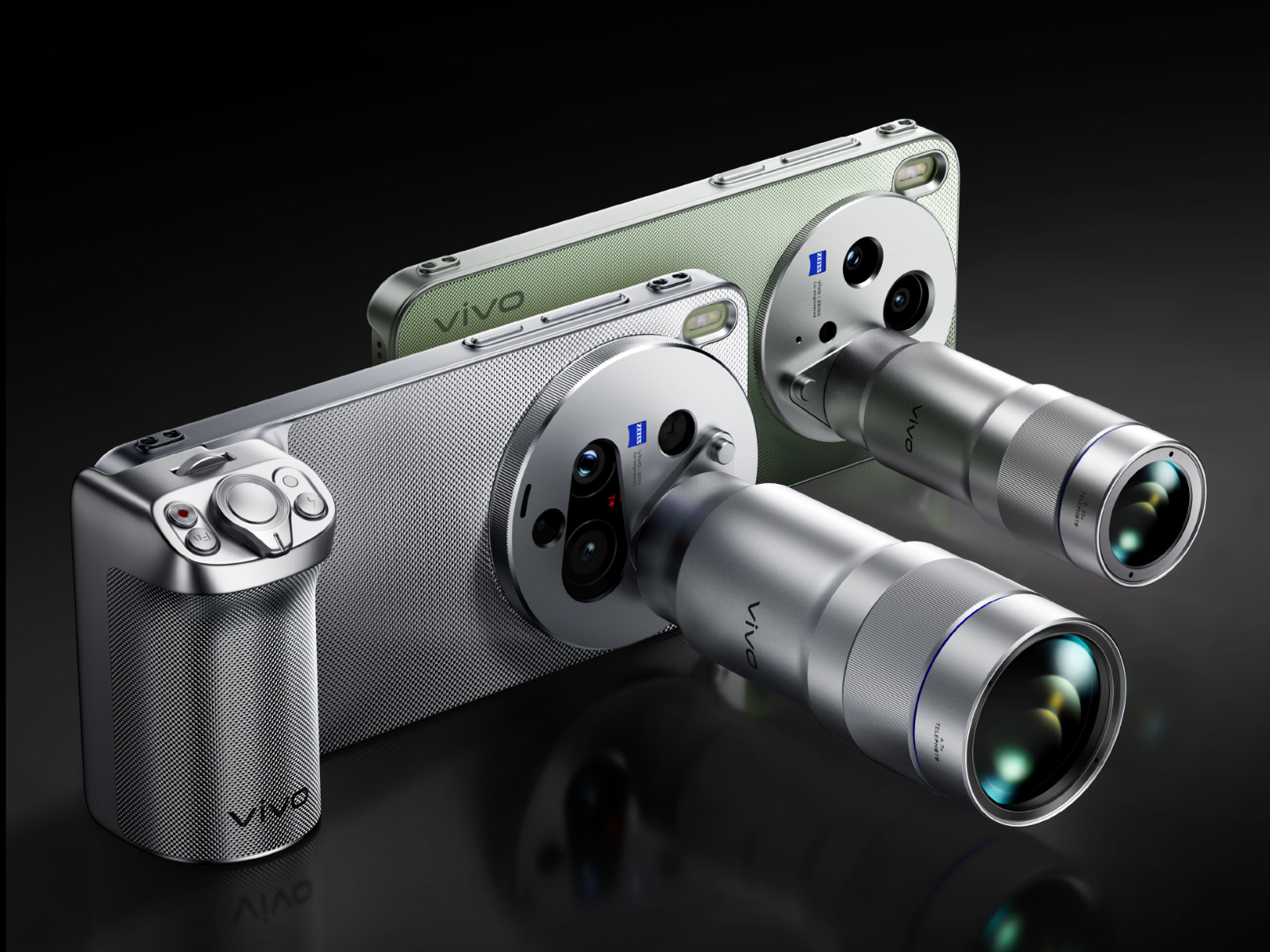
Vivo X300 Ultra and X300s with telephoto extender

Vivo is scheduled to unveil the Vivo X300 Ultra on March 30 in China. This will be followed by the Oppo Find X9 Ultra’s launch in April. These devices will compete with the Xiaomi 17 Ultra, which debuted back in December in China. Reports suggest that the photography capabilities of the X300 Ultra and Find X9 Ultra could be better than the Xiaomi 17 Ultra, but Xiaomi may have a pricing advantage over these rivals.

Vivo X300 Ultra, Find X9 Ultra to be priced higher than Xiaomi 17 Ultra

Vivo X300 Ultra and Oppo Find X9 Ultra to cost more than Xiaomi 17 Ultra

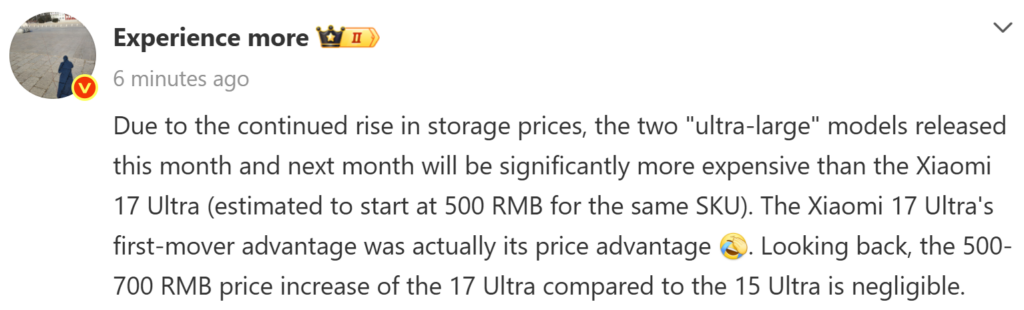
Tipster Experience More suggests that the upcoming ultra-flagship smartphones, expected to include the Vivo X300 Ultra launching this month in China and the Oppo Find X9 Ultra arriving next month, will see noticeable price increases. Due to rising storage costs, both devices are tipped to be priced significantly higher than the Xiaomi 17 Ultra, with an estimated increase of around 500 yuan (~$70) for comparable variants.

The tipster adds that the Xiaomi 17 Ultra’s early-mover advantage was largely due to its pricing. In hindsight, the 500 yuan to 700 yuan price increase over the Xiaomi 15 Ultra now seems relatively minor, especially as upcoming ultra-flagships like the Vivo X300 Ultra and Oppo Find X9 Ultra are expected to launch at noticeably higher prices due to rising storage costs.

To recall, the Xiaomi 17 Ultra has been available in China in three versions, such as 12GB+512GB, 16GB+512GB, and 16GB+1TB. These variants are priced at 6,999 Yuan (~$1,020), 7,499 Yuan (~$1,080), and 8,499 Yuan (~$1,235), respectively.

With the Vivo X300 Ultra expected to cost 500 yuan more than the 17 Ultra, it is likely that its 12GB+512GB version could be priced at around 7,500 Yuan (~$1,090).

For more daily updates, please visit our News Section.

Stay ahead in tech! Join our Telegram community and sign up for our daily newsletter of top stories! 💡

The post Vivo X300 Ultra could be priced at around 7,499 Yuan (~$1,090) appeared first on Gizmochina.

Redmi K100 Pro Max leak reveals Snapdragon 8 Elite Gen 6 Pro, LPDDR6 RAM

Redmi K90 Pro Max - 2.1 speaker

Speculations are rife that after Xiaomi unveils the Xiaomi 18 series in September this year in China, its sub-brand Redmi may announce the Redmi K100 series in October. The lineup is expected to include two models initially, such as the Redmi K100 and K100 Pro Max. Recent leaks have revealed a few details about the Pro Max variant. Now, in a new leak, tipster Digital Chat Station has mentioned key information about its chipset, RAM, storage, and more.

Redmi K100 Pro Max’s key details tipped

In a new Weibo post, DCS has shared details of a new sub-series performance flagship from Xiaomi. While he has not specified the name of the device, it appears to be the Redmi K100 Pro Max. According to the leak, the device may feature a next-generation 2nm Snapdragon flagship chipset, tentatively dubbed the Snapdragon 8 Elite Gen 6 Pro, alongside up to 16GB LPDDR6 RAM and 1TB storage.

The focus appears to be on delivering strong core performance and an upgraded display experience, while imaging is said to remain at a standard flagship level rather than a major upgrade. Overall, the device is tipped to offer a more balanced package in its segment, prioritizing performance, memory, and screen improvements over camera enhancements.

While DCS has claimed that the K100 Pro Max’s camera setup will not have a major upgrade, a previous leak by the same source suggested that the Redmi K100 Pro Max may feature a 200-megapixel main camera, a 50-megapixel ultra-wide lens, and a 50-megapixel periscope telephoto camera.

Globally, this phone may get rebranded as the Poco F9 Ultra. It is expected to launch along with the Poco F9 Pro (rebranded version of K100) in the first quarter of 2027.

For more daily updates, please visit our News Section.

Stay ahead in tech! Join our Telegram community and sign up for our daily newsletter of top stories! 💡

The post Redmi K100 Pro Max leak reveals Snapdragon 8 Elite Gen 6 Pro, LPDDR6 RAM appeared first on Gizmochina.

Oppo Find N6 achieves strong first sale with record-breaking demand

Oppo Find N6 specs features leak

Oppo recently unveiled its latest foldable smartphone, the Oppo Find N6, and early sales figures suggest a strong market response. The device, which focuses on improving foldable display quality, has already gained attention following its official release in China.

Oppo Find N6 sets foldable sales record

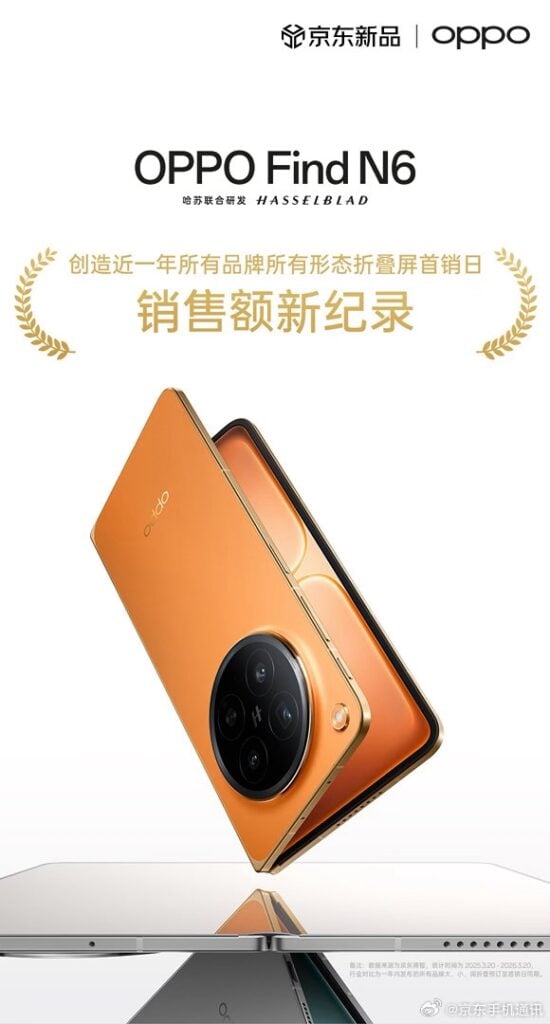
Oppo Find N6 poster
Oppo Find N6 achieves strong first sale

The above poster released by Oppo states that the Oppo Find N6 has set a new first-day sales record across all foldable smartphones in the past year. In China, the device carries a starting price of 9,999 yuan (~$1,450). According to data from major e-commerce platforms in China, the device recorded the highest first-day sales revenue among all foldable phones launched in the past year.

The brand has also indicated that certain variants, particularly the 1TB titanium color option, were quickly sold out in offline stores. This suggests strong demand for higher-end configurations of the device.

The Oppo Find N6 focuses heavily on delivering a flatter foldable display experience, addressing one of the key concerns in foldable smartphones. A major part of this improvement comes from its new titanium alloy hinge and memory glass technology. The structure is designed to maintain screen flatness even after repeated folding. The display is said to retain its shape with a very high recovery rate, helping reduce visible creases over time.

The device has also received certification for durability, including passing extensive folding tests and maintaining long-term flatness. These enhancements aim to improve reliability for everyday usage.

In terms of specifications, the Oppo Find N6 is powered by the Snapdragon 8 Elite Gen 5 chipset. It features a quad-camera setup with a 200-megapixel sensor and packs a 6,000mAh battery. The device supports 80W wired charging and 50W wireless charging, along with multiple levels of water resistance.

The Find N6 was also showcased at a pop-up event attended by international diplomats, highlighting interest in both its design and technological advancements. The device will be released in select global markets in the coming weeks.

For more daily updates, please visit our News Section.

Stay ahead in tech! Join our Telegram community and sign up for our daily newsletter of top stories.

The post Oppo Find N6 achieves strong first sale with record-breaking demand appeared first on Gizmochina.

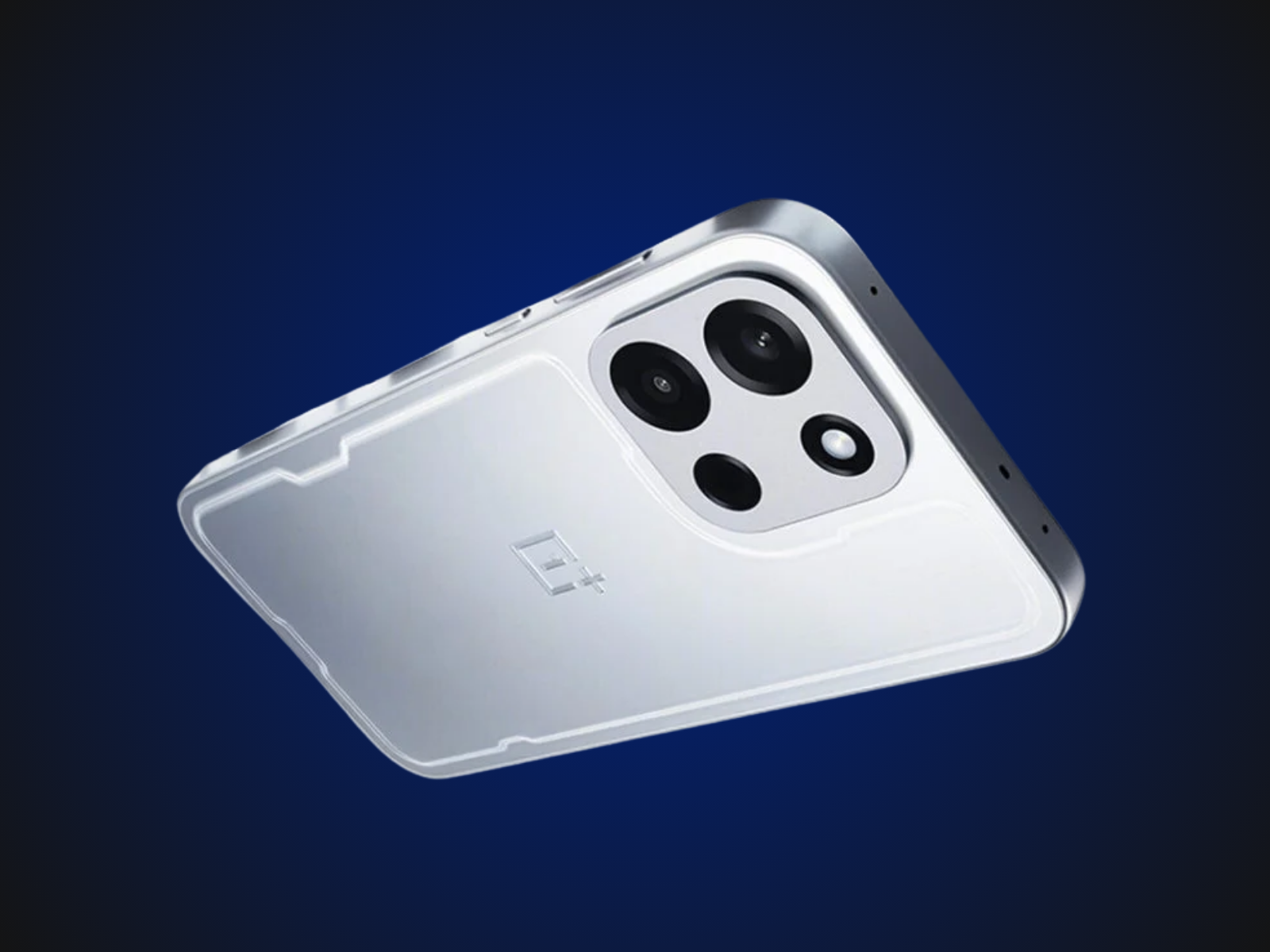
OnePlus Ace 6 Ultra to launch in April with 6.8-inch 165Hz display, Dimensity 9500

OnePlus-Ace-6T

On March 24, OnePlus will announce the OnePlus 15T in China. Next month, the brand may expand its Ace 6 series lineup by adding a new model. The existing models, such as the Ace 6 and Ace 6T, will soon be joined by a new model dubbed the OnePlus Ace 6 Ultra. Here’s a look at what to expect from the device.

OnePlus Ace 6 Ultra’s key details, launch timeline appear

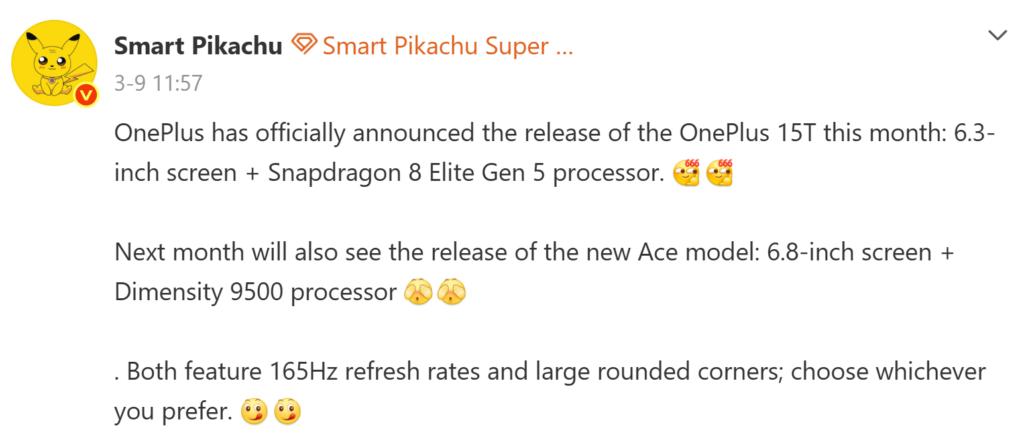
According to tipster Smart Pikachu, the OnePlus Ace 6 Ultra will have a massive 6.8-inch display offering a 165Hz refresh rate. Under the hood, it will feature the Dimensity 9500 chipset.

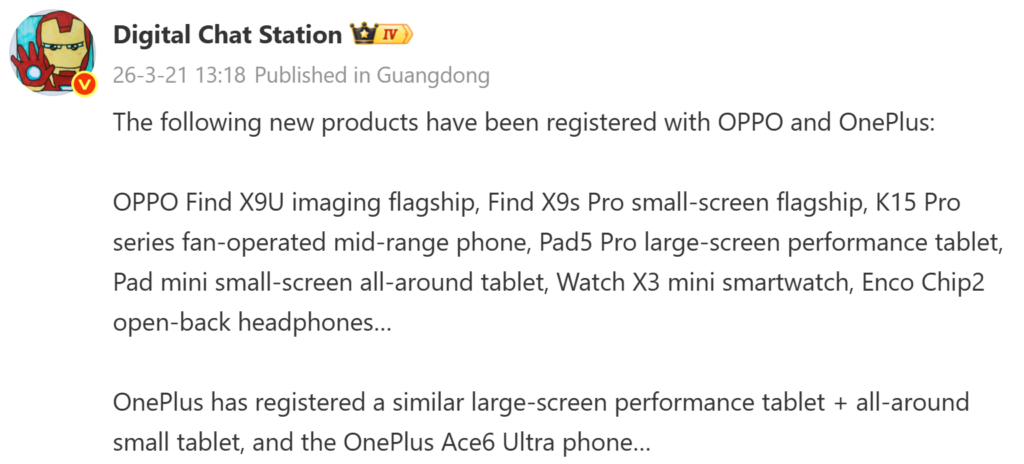
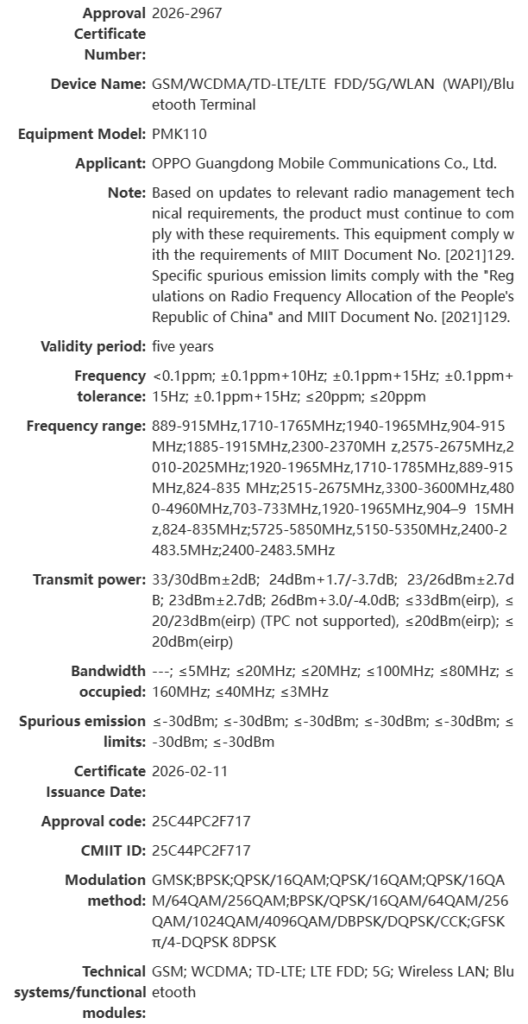
Tipster DCS claimed that the OnePlus Ace 6 Ultra has already passed a certification in China, but did not reveal details about its model number. We have spotted a new Oppo/OnePlus phone with model number PMK110 in the database of China’s SRRC. It remains to be seen whether it is the upcoming OnePlus Ace 6 Ultra or something else.

Oppo / OnePlus PKM110 SRRC certified

This phone is expected to rival the Redmi K90 Ultra, a Dimensity 9500-powered performance-focused flagship phone, which is also expected to debut in April in China. At present, there is no clarity on whether the Ace 6 Ultra will be released globally.

New OnePlus tablets in works

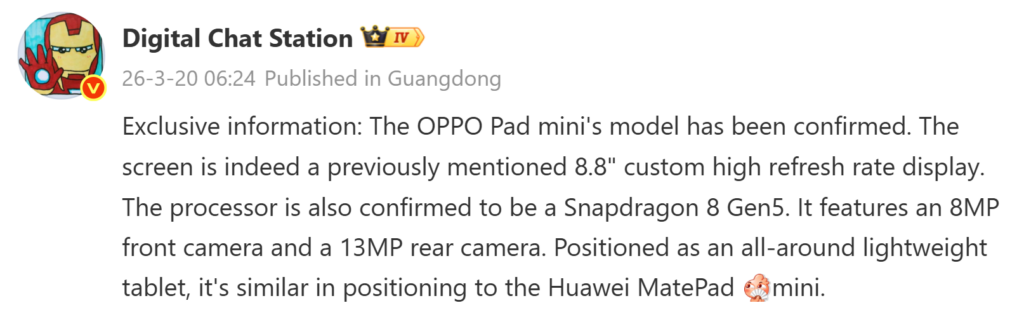
OnePlus is currently working on two new tablets, such as the OnePlus Pad 3 Pro and OnePlus Pad Mini. These devices have also received an important certification in China, claims the tipster.

While the OnePlus Pad Mini will be a compact tablet featuring an 8.8-inch display and a Snapdragon 8 Gen 5 chipset, the OnePlus Pad 3 Pro will be a larger model equipped with a 13.2-inch display and a Snapdragon 8 Elite Gen 5 chipset. These devices are said to be based on the forthcoming Oppo Pad Mini and Pad 5 Pro, respectively.

These devices may debut alongside the OnePlus 15T / Ace 6 Ultra.

For more daily updates, please visit our News Section.

Stay ahead in tech! Join our Telegram community and sign up for our daily newsletter of top stories.

The post OnePlus Ace 6 Ultra to launch in April with 6.8-inch 165Hz display, Dimensity 9500 appeared first on Gizmochina.

Samsung quietly drops Galaxy S26 price by ₹8,000 in offline stores—with a catch

Samsung seems to be running a quiet little deal on the Galaxy S26 in India, and unless you walk into a store and ask, you probably won’t hear about it. There’s no mention on the official website or major e-commerce platforms, but offline buyers might have a small advantage right now.

The base 12GB + 256GB variant of the Galaxy S26 launched at ₹87,999 in late February. But between March 21 and March 31, some retail stores are reportedly offering it for ₹79,999, a straight ₹8,000 drop. The catch? It’s a cash-only deal, and it’s not being advertised openly. You’ll likely need to check with store staff directly to confirm if it’s available.

The offer was first pointed out by tipster Abhishek Yadav. With a significant portion of buyers leaning toward Amazon or Flipkart for convenience, these kinds of in-store deals are one way to keep retail partners in the game.

The Galaxy S26 series launched with noticeable price hikes across the board, which didn’t go unnoticed. While pre-order buyers got some added value through storage upgrades and launch offers, those who picked it up at full price after that window might feel this a bit more. Walking into a store now and getting the same phone for less, especially with a simple cash payment, doesn’t exactly feel great in hindsight.

That said, the deal doesn’t seem to be universal. Availability could vary depending on the store, location, and stock. Some retailers may not even bring it up unless you ask.

With the offer expected to run till the end of the month, it might be worth checking a nearby store if you were already considering the S26. Just make sure to compare it with any ongoing bank or exchange offers online, because sometimes those can close the gap more than you’d expect.

(Source)

The post Samsung quietly drops Galaxy S26 price by ₹8,000 in offline stores—with a catch appeared first on Gizmochina.

OnePlus 15T teaser highlights 360° antenna setup and G2 e-sports chip

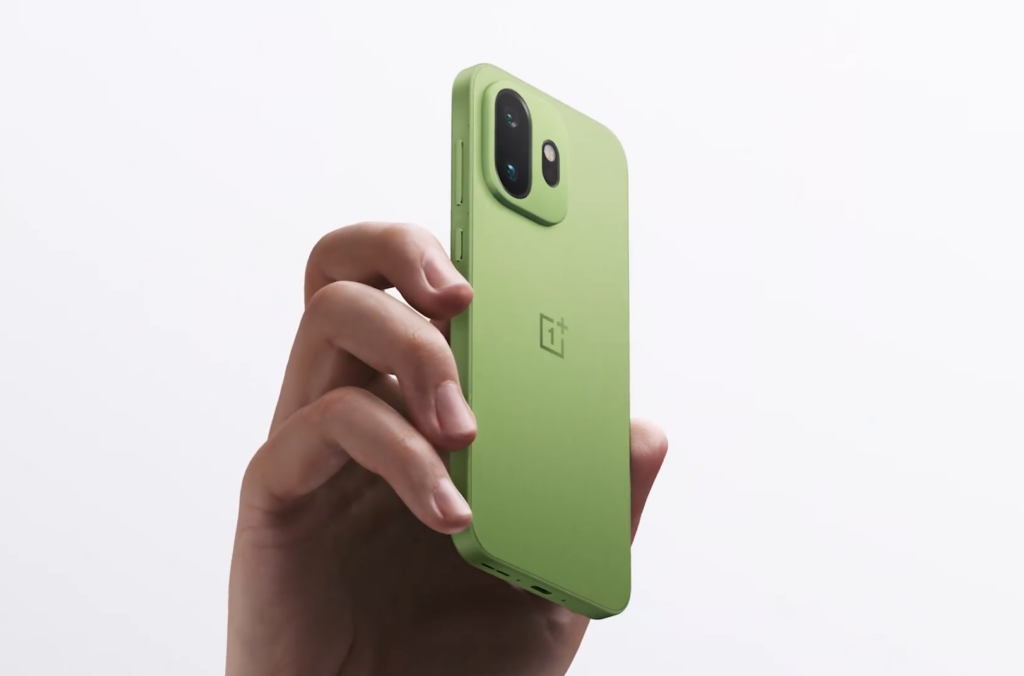
OnePlus 15T

OnePlus is starting to build momentum around its next compact flagship, the OnePlus 15T, and the latest teasers are putting a clear spotlight on connectivity. Instead of just improving raw performance, the company seems to have focused on improving the connectivity as well. Stable internet connectivity is important for competitive gaming.

OnePlus 15T

In recent teasers on Weibo, OnePlus has highlighted what it calls a 360° surround antenna system, paired with an “anti-blockage” design. The idea is fairly straightforward: better signal strength no matter how you’re holding the phone. It’s the kind of thing that doesn’t sound flashy, but can make a noticeable difference in real-world use, especially in places with weaker coverage.

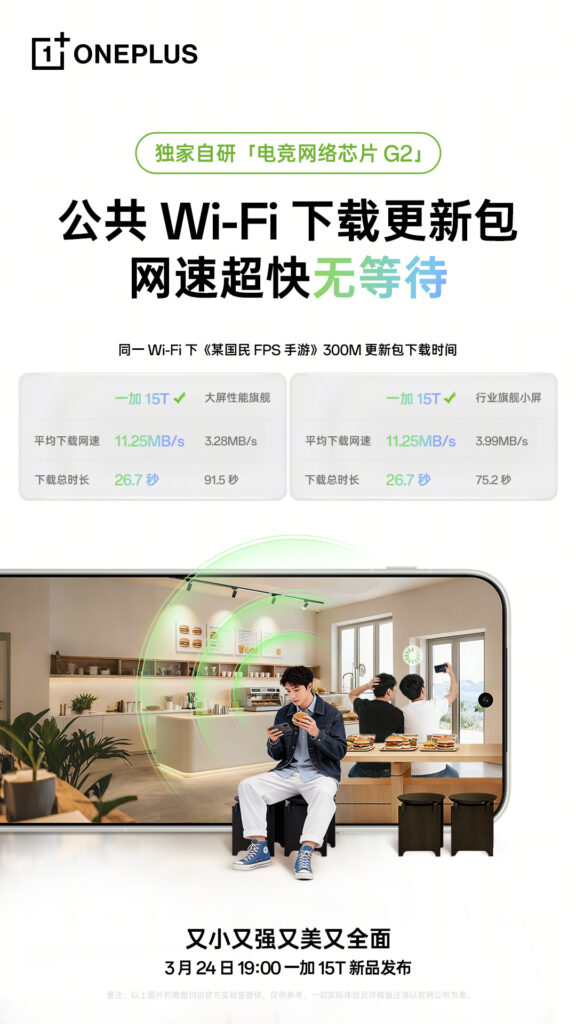
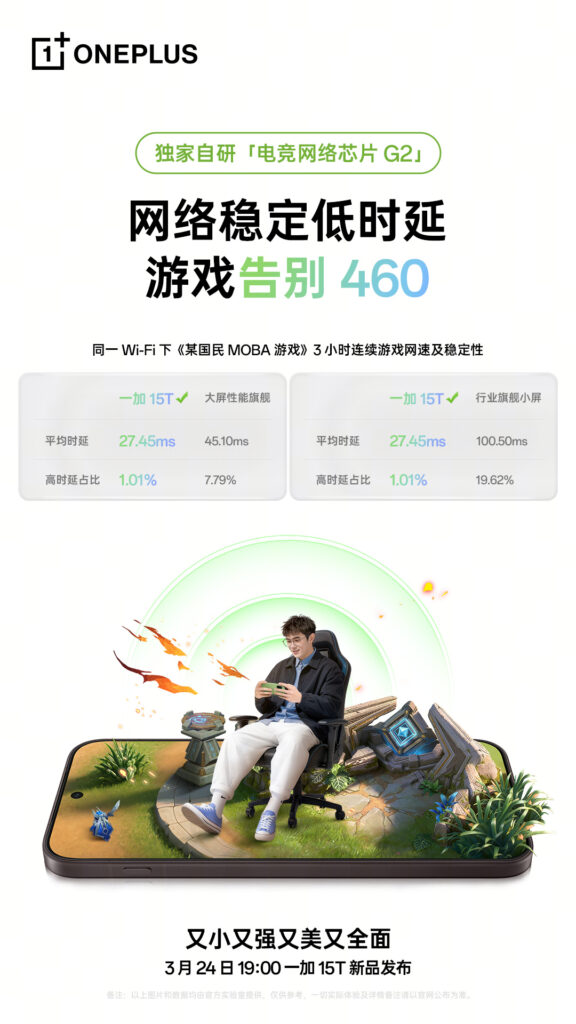
There’s also a dedicated G2 esports network chip, which OnePlus is carrying over from its main flagship lineup. This chip is meant to improve Wi-Fi stability, reduce latency, and prioritize gaming traffic when needed. This is paired with the Snapdragon 8 Elite Gen 5 main processor and a touch-response chip, forming what the company calls an “Esports Tri-Core” setup. It’s a bit of branding, sure, but the goal seems to be smoother gameplay with fewer interruptions.

Importantly, this isn’t just about gaming. OnePlus is pitching these upgrades as something that benefits general use too, with faster downloads, more stable browsing, and fewer random drops in signal. Similar approaches have shown up in a few gaming-focused devices before, but it’s interesting to see this level of focus in a compact flagship.

The OnePlus 15T has already been teased with a 6.32-inch 1.5K AMOLED display and a dual 50MP camera setup, along with a familiar premium design. It’s set to launch in China on March 24. Global availability, as usual with these models, is still a bit unclear.

With just days to go, OnePlus seems to be positioning the 15T as a compact phone that doesn’t compromise where it matters.

Don’t miss a thing! Join our Telegram community for instant updates and grab our free daily newsletter for the best tech stories!

For more daily updates, please visit our News Section.

(Sources: 1, 2

The post OnePlus 15T teaser highlights 360° antenna setup and G2 e-sports chip appeared first on Gizmochina.

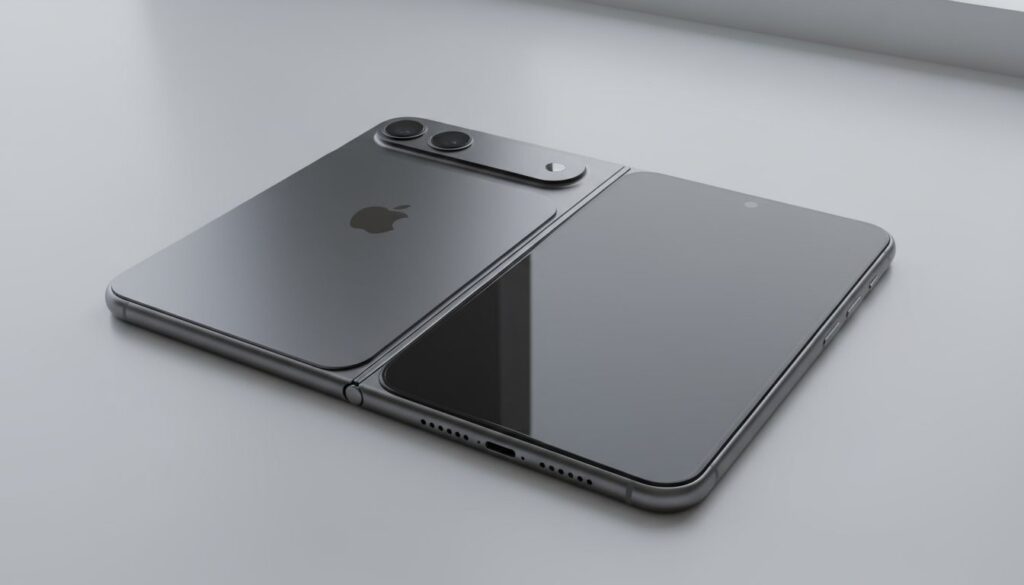
iPhone Fold may not release in September as expected, here’s the new launch timeframe

Alleged iPhone Fold design

Apple is expected to introduce its first foldable iPhone this year, but its availability timeline could be different from usual launches. As per Barclays analyst Tim Long, the device may be announced alongside the iPhone 18 Pro series but released later.

iPhone Fold: Expected launch timeline and strategy

Alleged iPhone Fold design

According to Tim Long, Apple could unveil the iPhone Fold alongside the iPhone 18 Pro and Pro Max in September, following its typical announcement cycle. However, the foldable model may only go on sale in December 2026, indicating a staggered rollout strategy.

Apple has followed a similar approach in the past. Devices such as the iPhone X and iPhone XR were introduced during the standard launch event but became available weeks later. This suggests that a delayed release for a new form factor like a foldable device would not be unusual.

The delay could be linked to production complexity or supply chain considerations. Reports indicate that the foldable iPhone has reached an advanced stage of development, with its design nearing completion, which supports the possibility of a release within the year.

The iPhone Fold is expected to support multitasking features such as running two apps side by side when unfolded. This would align it with existing foldable devices that focus on productivity and larger screen usage.

Tim Long also suggests that Apple may adopt a split launch strategy for its upcoming lineup. The base iPhone 18 and related models could arrive in March 2027, alongside either an iPhone Air successor or a possible return of the Plus variant.

If this strategy is implemented, Apple could move towards a more flexible release cycle, allowing it to better manage new categories like foldable devices while maintaining updates to its main lineup.

For more daily updates, please visit our News Section.

Stay ahead in tech! Join our Telegram community and sign up for our daily newsletter of top stories.

(via)

The post iPhone Fold may not release in September as expected, here’s the new launch timeframe appeared first on Gizmochina.

Is the OnePlus 15s BIS certified in India? Expected to offer one major change compared to OnePlus 15T

OnePlus 15T design

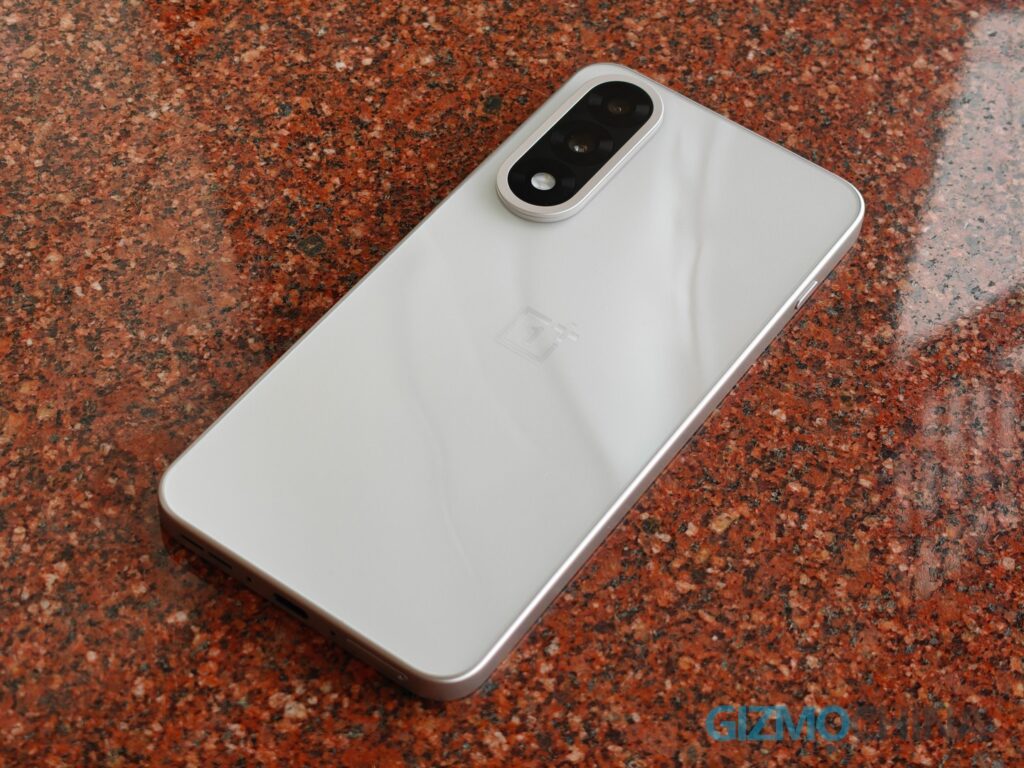
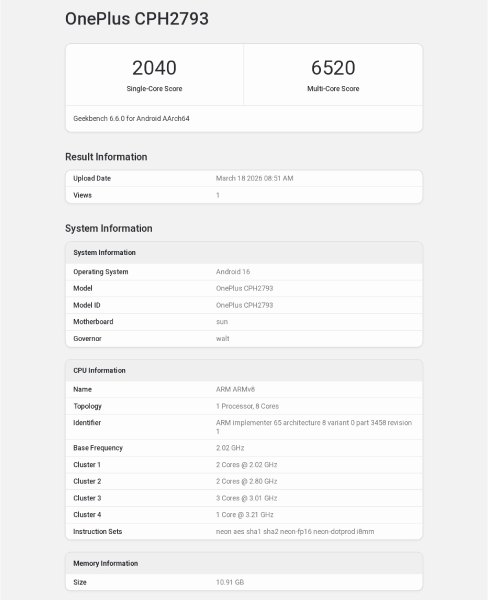
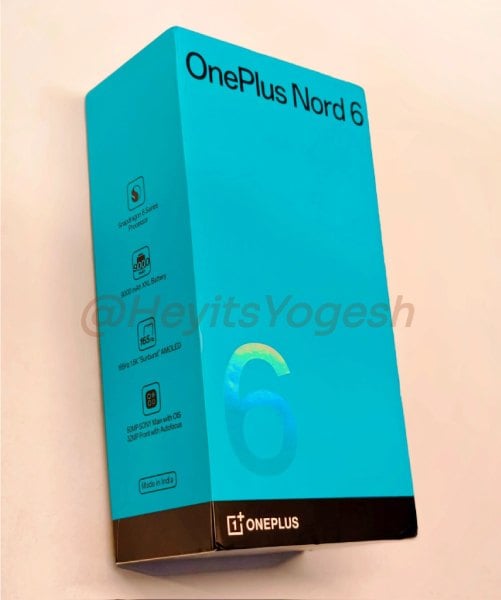
OnePlus is gearing up to launch the Nord 6 series in India. Reports have revealed that the Nord 6 and Nord CE 6 have the model numbers CPH2793 and CPH2805, respectively. These devices have already received India’s BIS certification, which is one of the prerequisites to launch a phone in the Indian market. In a new development, a new OnePlus phone has been approved by India’s BIS. While there is no concrete evidence to support the claim, this could be the forthcoming OnePlus 15s.

Alleged OnePlus 15s BIS certified

OnePlus CPH2943 has just cleared BIS certification.

This is not a Nord 6 series device. Could this be the OnePlus 15T/15s? pic.twitter.com/sQKU2bDt2w

— Sudhanshu Ambhore (@Sudhanshu1414) March 20, 2026

As can be seen above, a forthcoming OnePlus phone with model number CPH2943 has surfaced in the database of India’s BIS certification. It remains to be seen whether it could be the OnePlus 15s or something else.

OnePlus 15s specifications (expected)

The OnePlus 15s is expected to pack the same specifications as the OnePlus 15T, which is scheduled to launch on March 24 in China. However, there could be one key difference between the two models.

To recall, the OnePlus 13s, launched last year, is the company’s first phone with an autofocus-enabled 32-megapixel front camera. Therefore, it is likely that the said feature could be retained on the OnePlus 15s.

A new report has revealed that the OnePlus 15T, on the other hand, will have a 16-megapixel front camera like its previous generation. The rest of the specifications could be identical on the OnePlus 15s and 15T.

OnePlus 15s / 15T specifications

Being a slightly tweaked version of the 15T, the OnePlus 15s is expected to arrive with a 6.32-inch OLED flat 1.5K 165Hz screen, a Snapdragon 8 Elite Gen 5hh chip, up to 16GB of LPDDR5x Ultra RAM, up to 1TB of UFS 4.1 storage, and a 7,500mAh battery with 100W wired and 50W wireless charging.

The 15T has a 16-megapixel front camera and an OIS-enabled 50-megapixel + 50-megapixel (3.5x periscope telephoto) dual camera setup. It has other specifications, such as an X-axis linear motor, dual speakers, a Plus key, and an IP68/69/69K-rated body.

For more daily updates, please visit our News Section.

Stay ahead in tech! Join our Telegram community and sign up for our daily newsletter of top stories.

The post Is the OnePlus 15s BIS certified in India? Expected to offer one major change compared to OnePlus 15T appeared first on Gizmochina.

Vivo X300 Ultra does not pack a 7,000mAh battery, here’s the exact capacity

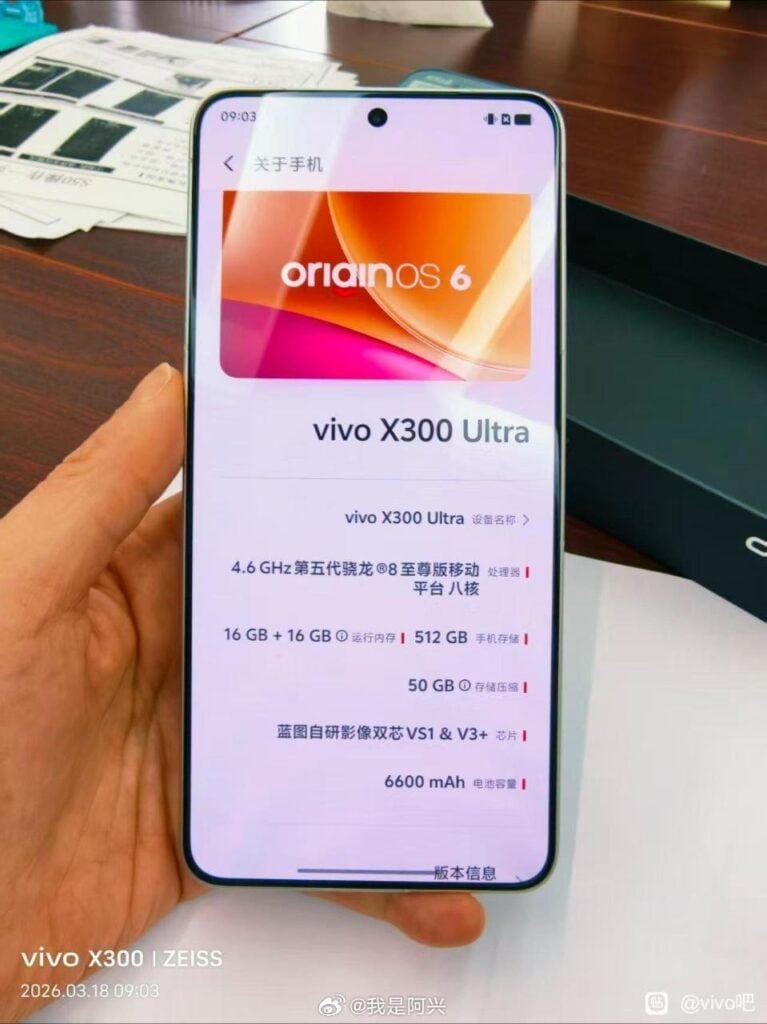
VIvo X300 Ultra live shot

Several reports have claimed that the Vivo X300 Ultra will pack a battery of around 7,000mAh capacity. While the phone is scheduled to launch on March 30 in China, the brand has confirmed only a few camera details but is yet to confirm other specifications, including the battery capacity. A leaked image that is now circulating online suggests that it packs a smaller battery than expected.

Vivo X300 Ultra key details emerge

VIvo X300 Ultra live shot

As can be seen above, the Vivo X300 Ultra image circulating on Weibo reveals several key details about its specifications. Under the hood, the device is powered by the Snapdragon 8 Elite Gen 5 chipset.

The chip is accompanied by 16GB of RAM, 16GB of virtual RAM, and 512GB of internal storage. The screenshot also mentions the inclusion of Vivo’s VS1 and V3+ chips. The VS1 reportedly handles image pre-processing (before ISP), while the V3+ takes care of post-processing (after capture) to enhance final photo and video output.

Coming to the elephant in the room, the Vivo X300 Ultra does not pack a 7,000mAh battery as rumors claimed. Instead, it features a 6,600mAh unit, which is still larger than the 6,510mAh battery that powers the existing Vivo X300 Pro. Therefore, the X300 Ultra’s battery is expected to last more than a day with normal usage. As per recent certifications, the Ultra edition may support 100W wired charging, and as per other reports, it may support 40W or 50W wireless charging.

Speaking of battery size, the Vivo X300s, which is scheduled to launch alongside the X300 Ultra, will pack the largest battery seen on an X-series device. It is said to feature a massive 7,100mAh battery.

These devices, along with the Vivo Pad 6 Pro and a rumored vlogging camera, are also scheduled to launch on March 30. Most of these products may remain exclusive to China, while the X300 Ultra is expected to release globally in the second quarter of this year.

For more daily updates, please visit our News Section.

Stay ahead in tech! Join our Telegram community and sign up for our daily newsletter of top stories.

(via)

The post Vivo X300 Ultra does not pack a 7,000mAh battery, here’s the exact capacity appeared first on Gizmochina.

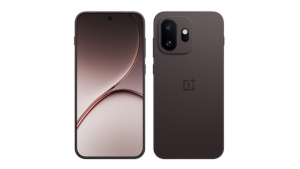
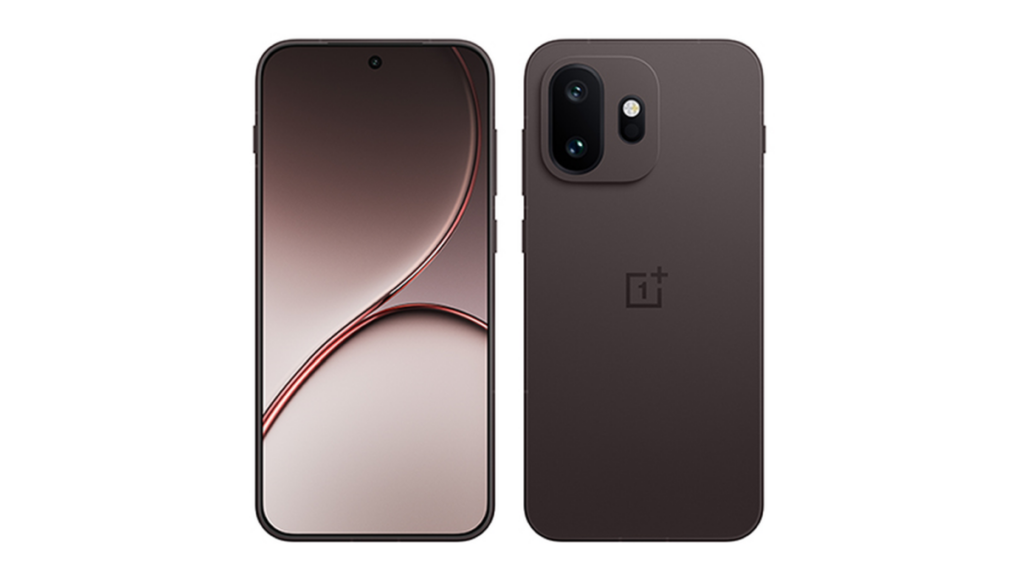
This OnePlus 15T online listing reveals everything days before launch

OnePlus 15T

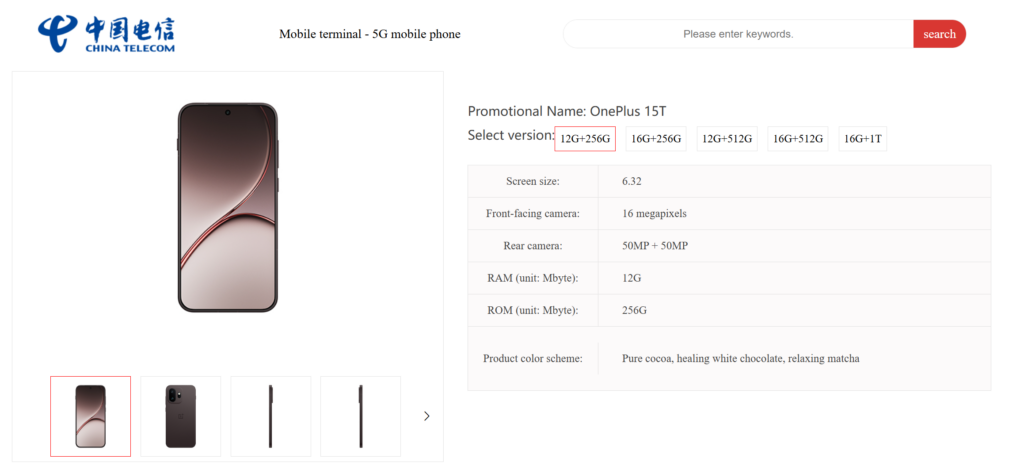
OnePlus is gearing up to launch the OnePlus 15T on March 24 in China, but ahead of its debut, most details have already surfaced online. A premature listing on China Telecom has revealed the phone’s core specifications, design elements, and hardware configuration, offering a clear picture of what to expect from this compact flagship.

OnePlus 15T specifications revealed

OnePlus 15T China Telecom listing

The listing shows that the OnePlus 15T will feature a 6.32-inch LTPS OLED flat display with a resolution of 2640 x 1216 pixels. The company has already confirmed support for a 165Hz refresh rate, along with an ultrasonic in-screen fingerprint sensor. The device runs on Android 16 and is powered by the Snapdragon 8 Elite Gen 5, which is mentioned as the SM8850 in the China Telecom listing.

It will be available in multiple LPDDR5x RAM and UFS 4.1 storage options, including 12GB+256GB, 12GB+512GB, 16GB+256GB, 16GB+512GB, and 16GB+1TB. The phone packs a 7,500mAh battery, and OnePlus has already confirmed support for 100W wired charging, 50W wireless charging, and bypass charging to help manage heat during extended usage.

For photography, the OnePlus 15T includes a 16-megapixel front camera. On the rear, it features a dual-camera setup with a 50-megapixel primary sensor and a 50-megapixel periscope telephoto lens. The main sensor is believed to be the Sony IMX906, while the 3.5x periscope telephoto lens is expected to use the Samsung JN5 sensor. Similar to its predecessor, the device does not include an ultra-wide camera.

OnePlus 15T
OnePlus 15T

The listing further reveals that the device measures 150.56 x 71.82 x 8.48mm and weighs 194 grams. It features a glass fibre back paired with a metal frame. OnePlus has also confirmed IP66, IP68, IP69, and IP69K ratings for dust and water resistance. Color options include Pure Cocoa, Healing White Chocolate, and Relaxed Matcha.

Rumors are rife that the OnePlus 15T could be heading to markets outside of China in the next few months. Likely, it may get rebranded as the OnePlus 15s globally.

For more daily updates, please visit our News Section.

Stay ahead in tech! Join our Telegram community and sign up for our daily newsletter of top stories.

(source|via)

The post This OnePlus 15T online listing reveals everything days before launch appeared first on Gizmochina.

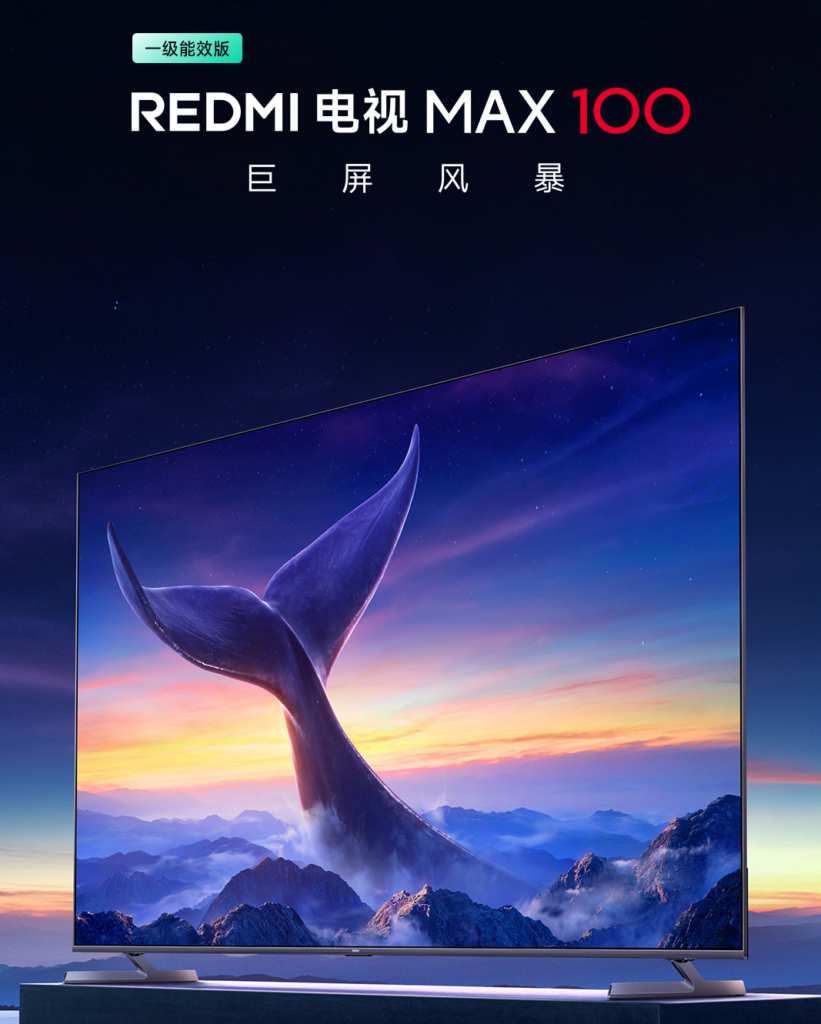
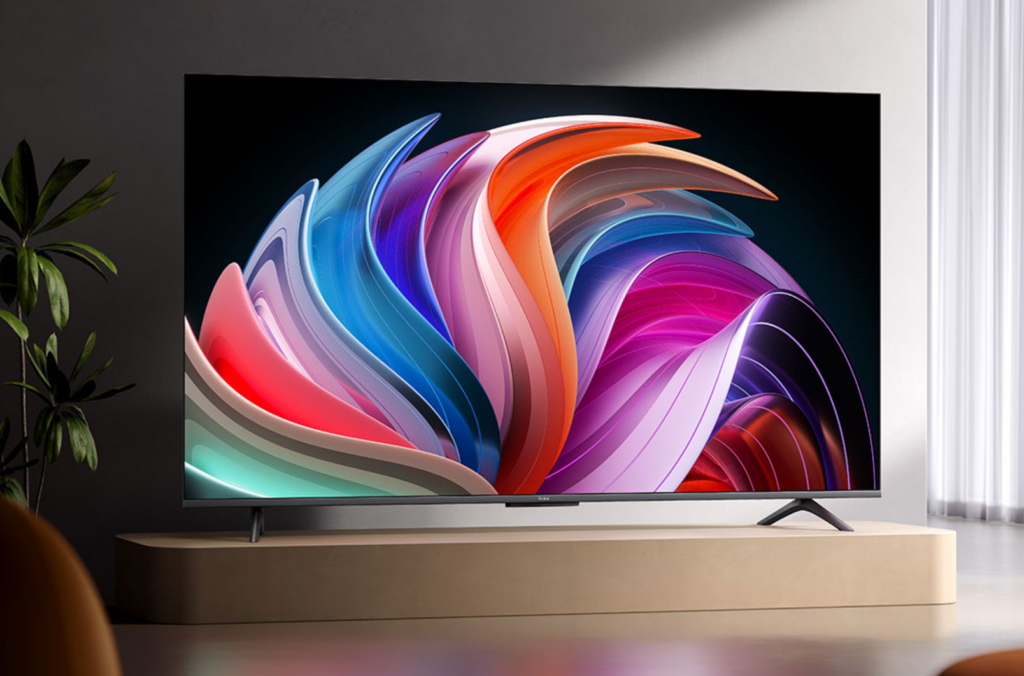
Redmi Smart TV MAX 100-inch 2026 launched with 144Hz display; new A Pro series tags along

Redmi Smart TV Max 100-inch

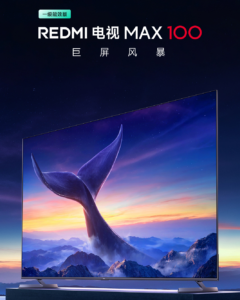
Redmi has introduced its 2026 lineup of Redmi smart TVs in China, bringing updates across both premium large-screen and mainstream segments. The highlight of the announcement is the new Redmi TV MAX 100-inch model, alongside refreshed A Pro series variants.

Redmi Smart TV MAX 100-inch announced

Redmi Smart TV MAX

The Redmi Smart TV MAX 100-inch 2026 model is priced at 8,799 Yuan (~$1,280). It features a 4K resolution panel with a 144Hz refresh rate, making it suitable for both entertainment and gaming. The display is said to deliver brightness levels between 400 to 600 nits, offering better visibility compared to smaller variants in the lineup.

The TV is equipped with a 30W speaker system and includes HDMI 2.1 support. It runs on a five-core A55 processor and comes with 4GB RAM and 64GB storage. Power consumption is rated at 450W. Alongside it, Xiaomi has also introduced an 85-inch model priced at 4,899 Yuan (~$711), featuring slightly lower brightness and a 20W speaker output with 3GB RAM.

Redmi A Pro series TV range unveiled

Redmi A Pro TV series range

The A Pro series spans multiple sizes, starting from 43 inches to 75 inches. Prices begin at 1,799 yuan (~$260) for the 43-inch model and go up to 3,599 yuan (~$520) for the 75-inch variant. Most models in this series support 4K resolution with a 144Hz refresh rate, except the base version, which is limited to 60Hz.

Across the lineup, Xiaomi is focusing on high refresh rate panels, improved system memory, and better overall efficiency. The A Pro models offer up to 94 percent DCI-P3 color gamut and include configurations with HDMI 2.1 support depending on the size.

The TVs are powered by quad-core or five-core A55 processors, paired with up to 3GB RAM and 64GB storage. Speaker output ranges from 16W to 20W in the A Pro series, while the MAX variant delivers more immersive audio experience.

With this lineup, Xiaomi is expanding its presence across both entry-level and ultra-large screen categories. The addition of a 100-inch model at a relatively competitive price point reflects a growing demand for bigger displays in home entertainment setups.

For more daily updates, please visit our News Section.

Stay ahead in tech! Join our Telegram community and sign up for our daily newsletter of top stories.

The post Redmi Smart TV MAX 100-inch 2026 launched with 144Hz display; new A Pro series tags along appeared first on Gizmochina.

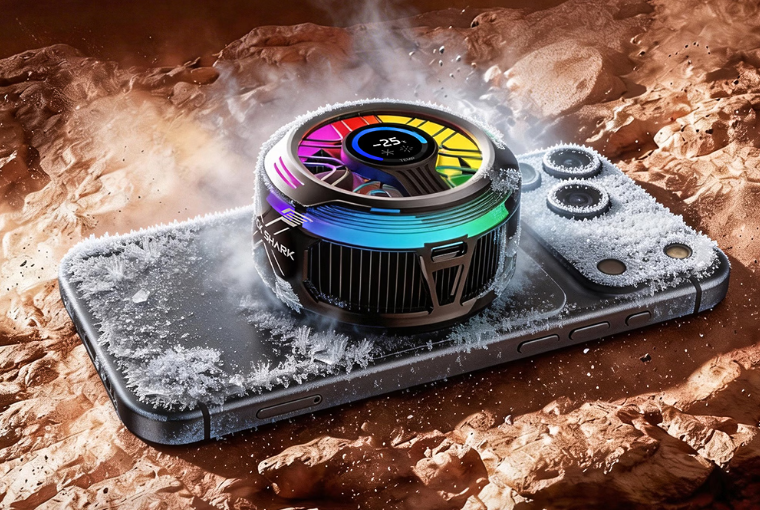
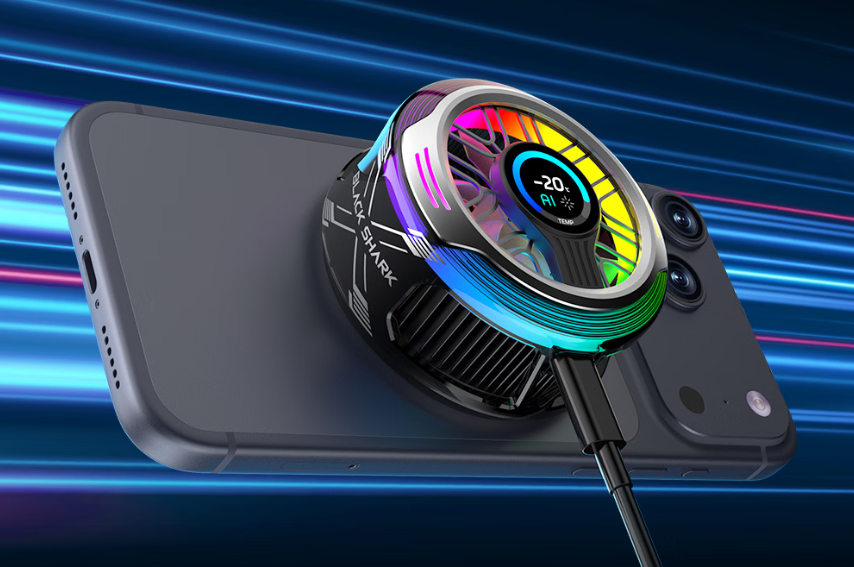
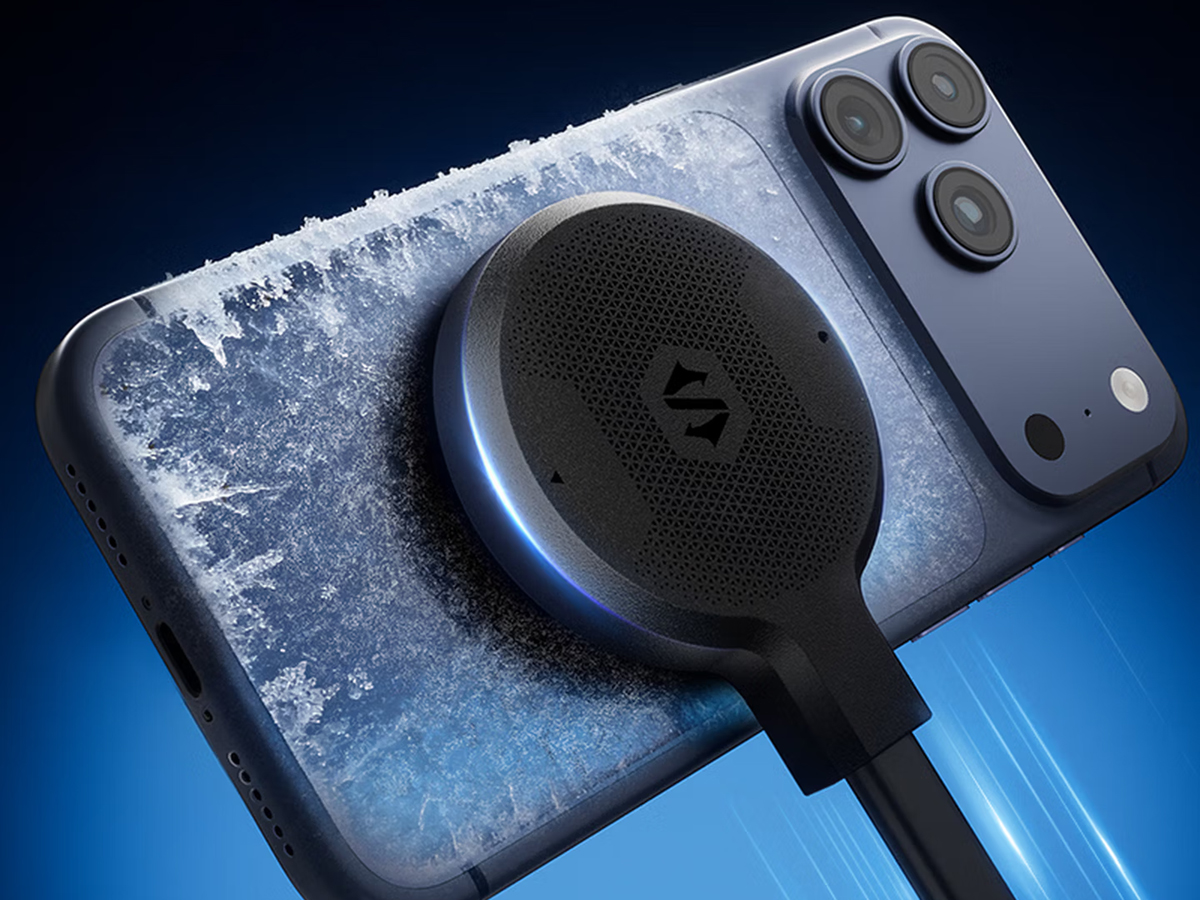
Black Shark launches Ice Cooling Back Clip 6 Pro with full-color display and 35W cooling power

Black Shark Back Clip 6 Pro

Black Shark has launched the Ice Cooling Back Clip 6 Pro Magnetic Edition in China, now available for pre-order at a price of 249 yuan (~$36). The cooling accessory introduces advanced features like a full-color HD display and a powerful 35W cooling system, making it a top-tier solution for mobile gamers.

Black Shark Back Clip 6 Pro

Black Shark Back Clip 6 Pro Specs

The Back Clip 6 Pro features a 40x40mm custom TEC chip with 35W cooling power, achieving a maximum temperature drop of 50°C. In a 25°C environment, it can lower surface temperatures to -25°C. Black Shark improved the internal layout and increased cooling elements, delivering 30% better performance than the previous generation.

The cooler includes a 0.71-inch HD display for real-time stats like cooling, power, temperature, and fan speed, with customizable wallpapers. It also features 16 RGB LEDs for a sleek, gaming-inspired lighting effect.

The Back Clip 6 Pro features the ICECOLD 2.0 system for efficient, quiet cooling (39dB or lower) and Cold Forging Technology 2.0, boosting heat dissipation by 26%. It weighs 104 grams and includes an aviation-grade aluminum plate for improved cooling efficiency.

Black Shark Back Clip 6 Pro

Black Shark has equipped the cooler with dual temperature sensors and AI controls to optimize cooling while preventing overheating, overcooling, and condensation. It also features dual over-temperature protection, a secure 12N magnetic attachment, soft silicone padding to prevent scratches, and dual air outlets to keep hands cool during gaming.

The cooler supports app integration through the Black Shark Equipment Box app. Black Shark recommends using a 40W or higher charger to unlock its full performance potential.

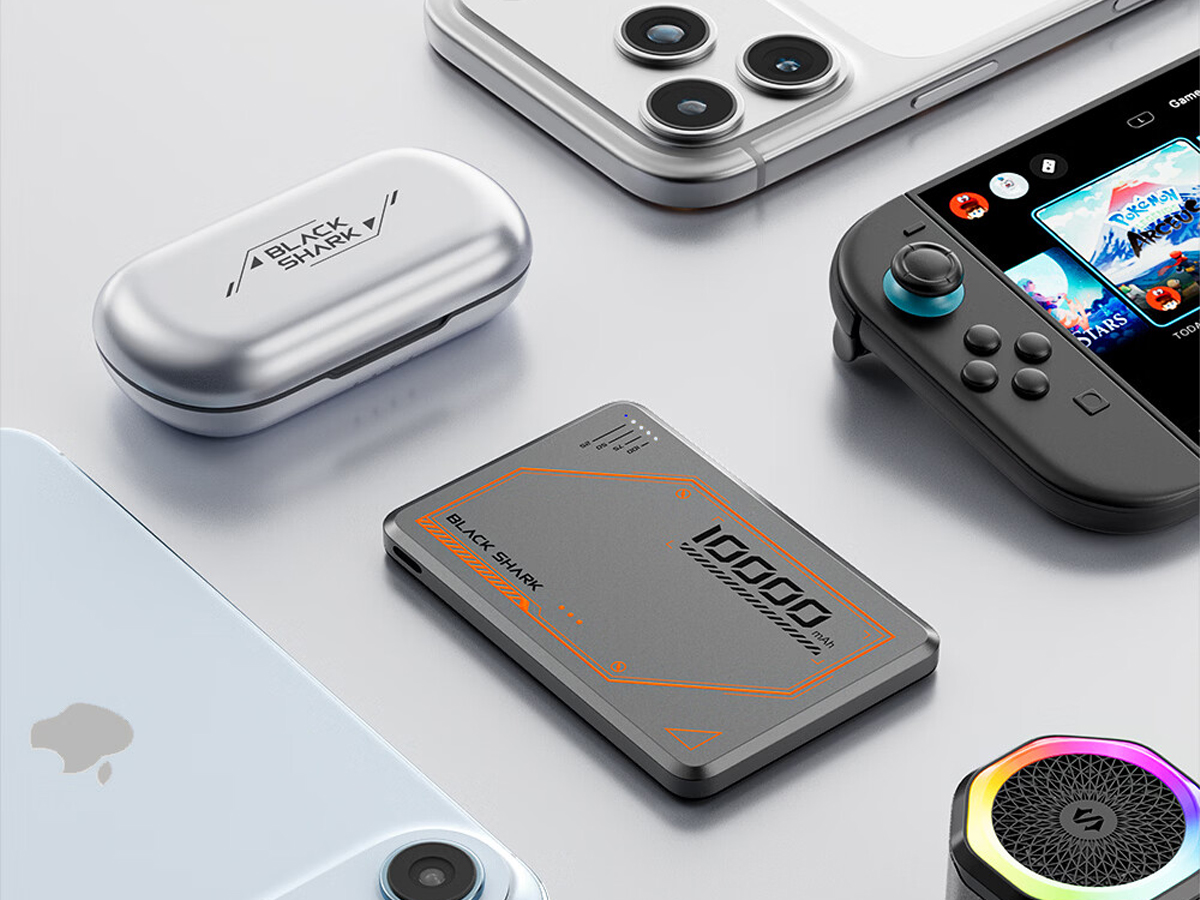
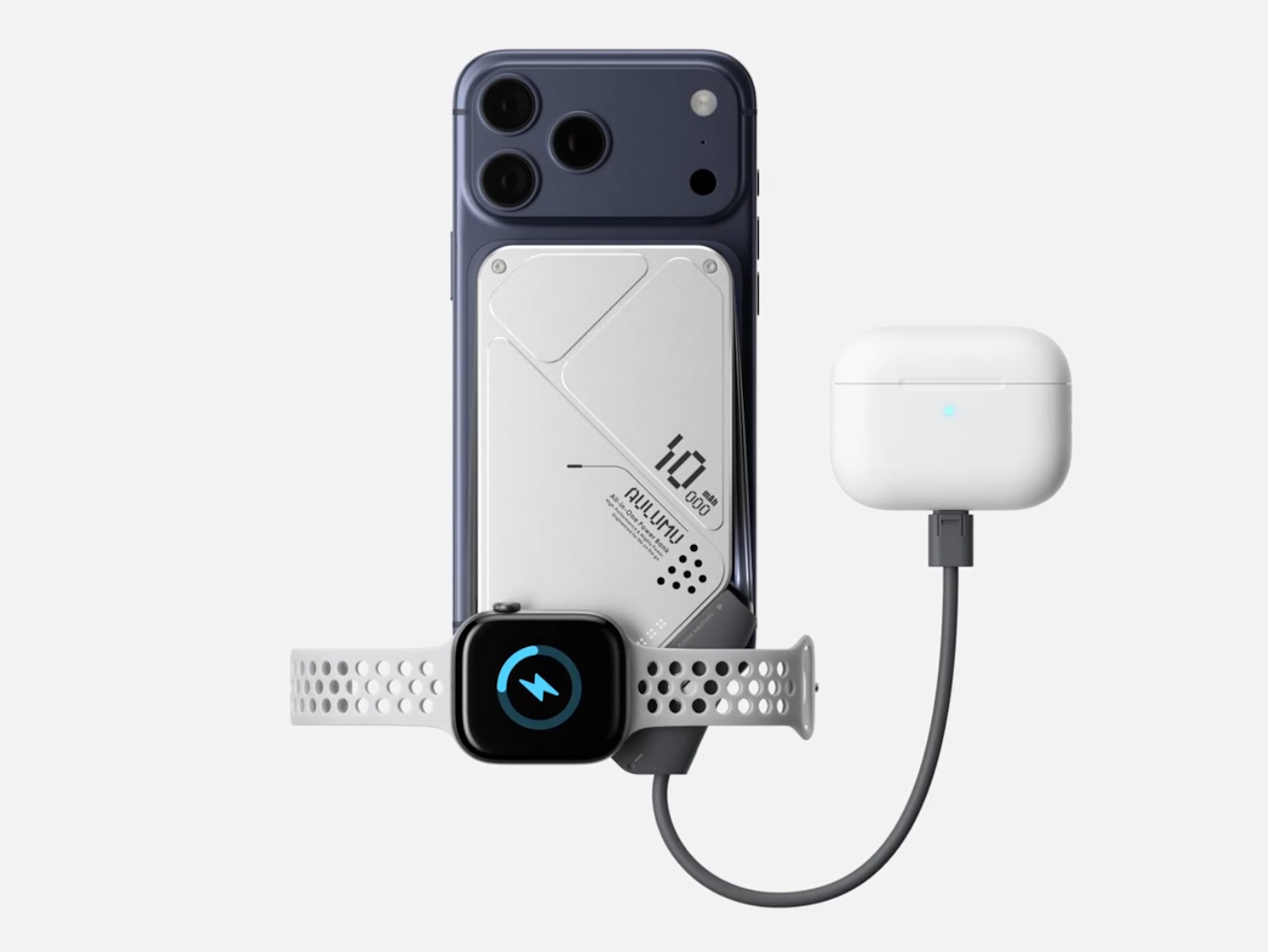
In related news, Black Shark has recently launched the Black Shark Gaming Tablet globally with the Snapdragon 8s Gen 3 chipset and a 144Hz display. It has also introduced the Blade 3 magnetic power bank with a 10,000mAh capacity, supporting 30W wired and 15W wireless charging.

For more daily updates, please visit our News Section.

Stay ahead in tech! Join our Telegram community and sign up for our daily newsletter of top stories! 💡

(JD)

The post Black Shark launches Ice Cooling Back Clip 6 Pro with full-color display and 35W cooling power appeared first on Gizmochina.

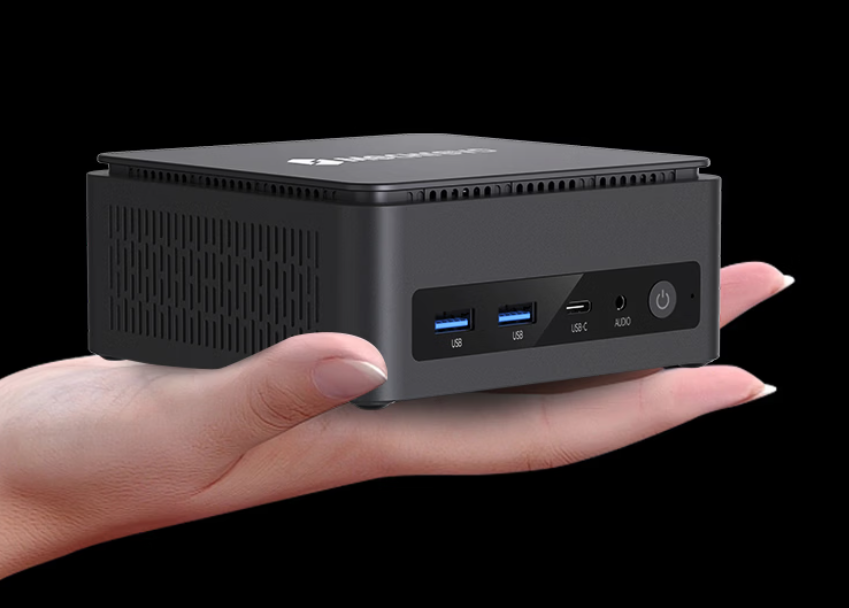
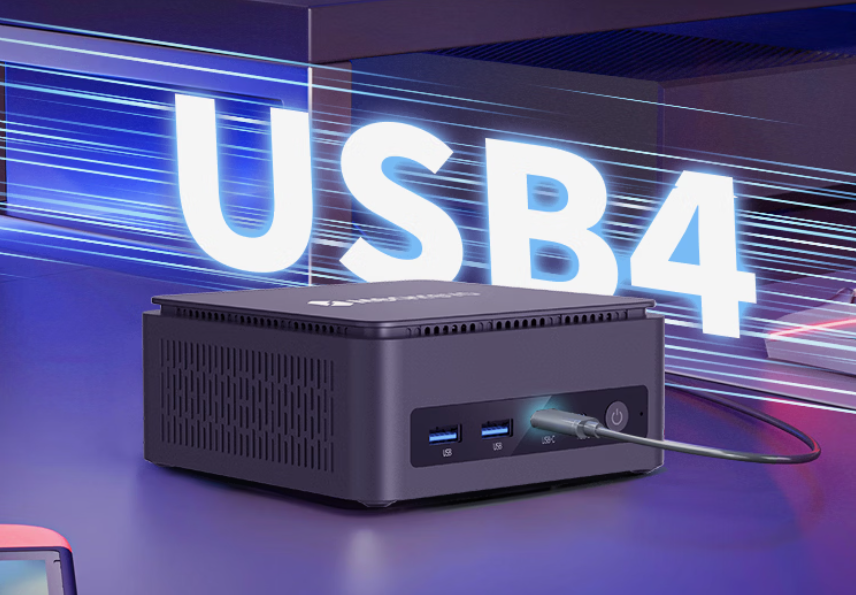
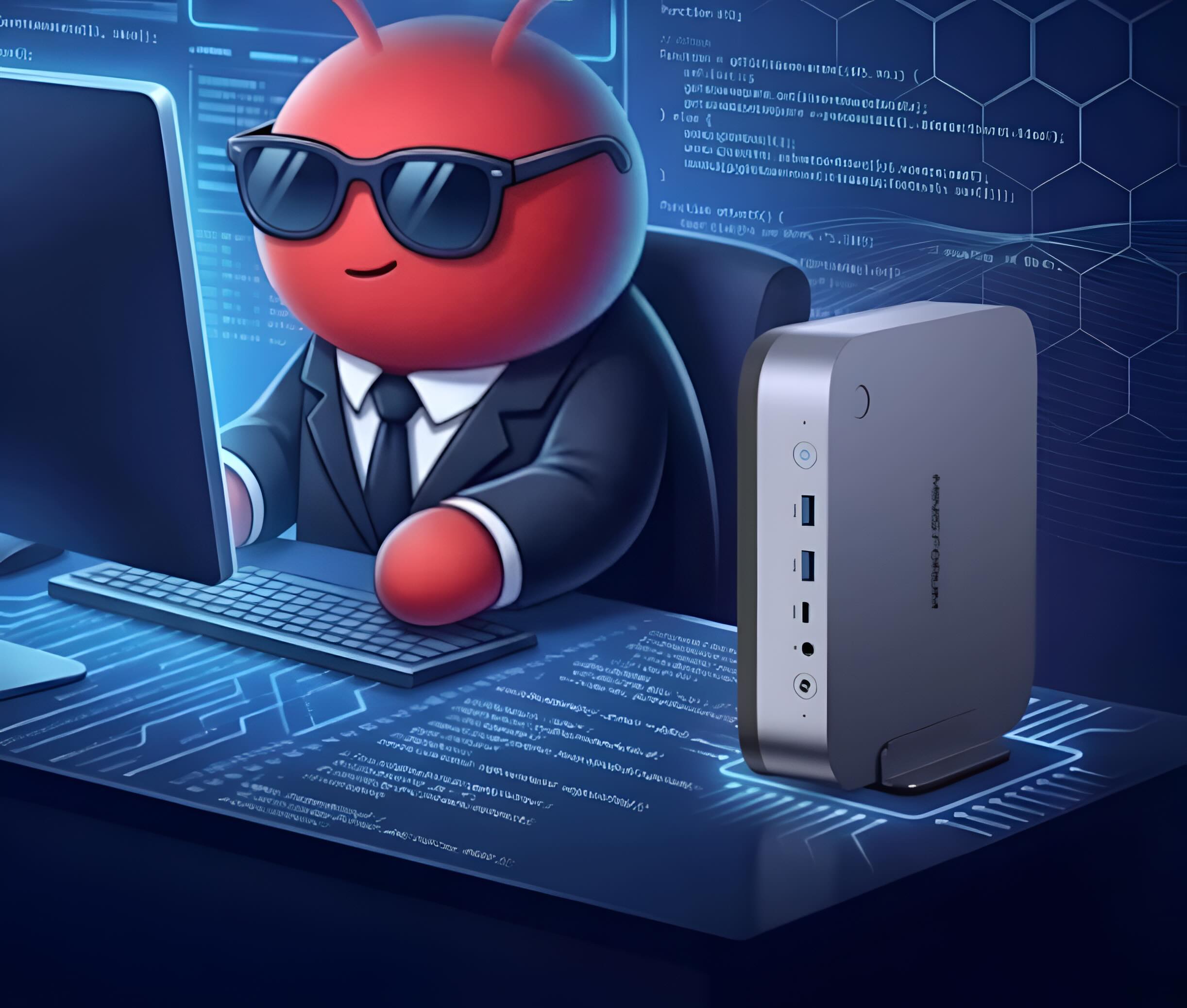
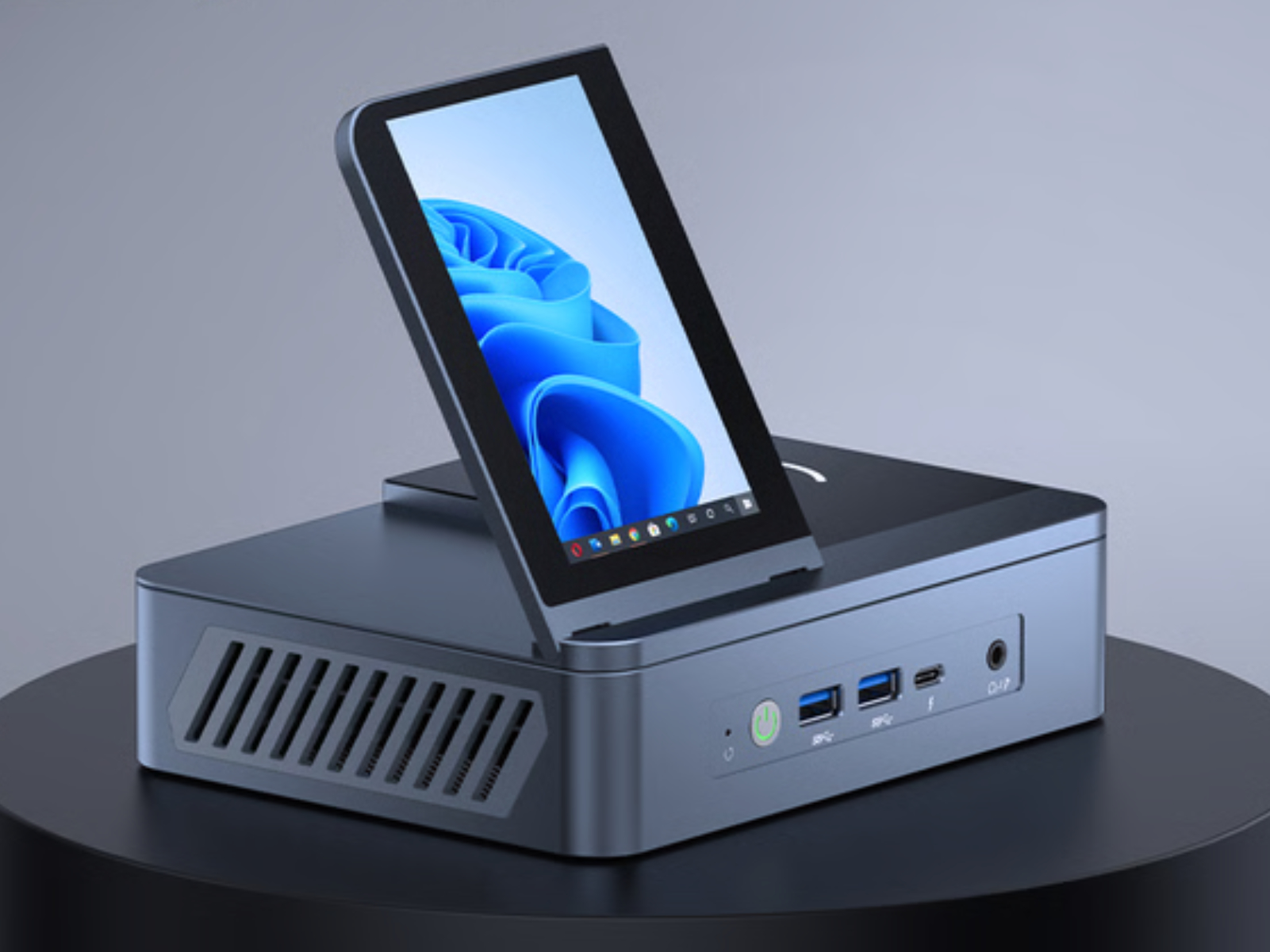
Mechrevo launches iMini E300 Mini PC with Ryzen 7 7445HS, USB 4 & OpenClaw AI support

Mechrevo iMini E300 mini PC

Mechrevo has launched pre-orders for its new OpenClaw iMini E300 mini PC. The compact device is available in two configurations. The base model, which includes 16GB of RAM and 512GB of storage, costs 3,299 yuan ($480). The upgraded version with 1TB of storage is priced at 3,699 yuan ($536). Sales will officially begin on March 25.

Mechrevo iMini E300 mini PC

Mechrevo iMini E300 Specifications

The iMini E300 is powered by the AMD Ryzen 7 7445HS processor with 6 cores, 12 threads, a 4.7GHz boost clock, and AMD Radeon 740M graphics, offering efficient performance for everyday tasks and light creative workloads.

The Mechrevo mini PC includes 16GB of DDR5 memory running at 5600MT/s, expandable to 64GB for more intensive tasks. It features a PCIe 4.0 SSD with a base storage of 512GB. Additionally, dual M.2 2280 slots support additional storage upgrades, making it ideal for users requiring extra capacity.

Mechrevo iMini E300 mini PC

For connectivity, the iMini E300 includes a front USB 4 port (40Gbps), two USB-A 3.2 Gen 2 ports, and a 3.5mm audio jack. The rear panel includes HDMI, DisplayPort, another USB-A 3.2 Gen 2 port, a USB-A 2.0 port, and two 2.5Gb Ethernet ports. It also supports Wi-Fi 6E and Bluetooth 5.4 for wireless connections.

Mechrevo iMini E300 mini PC

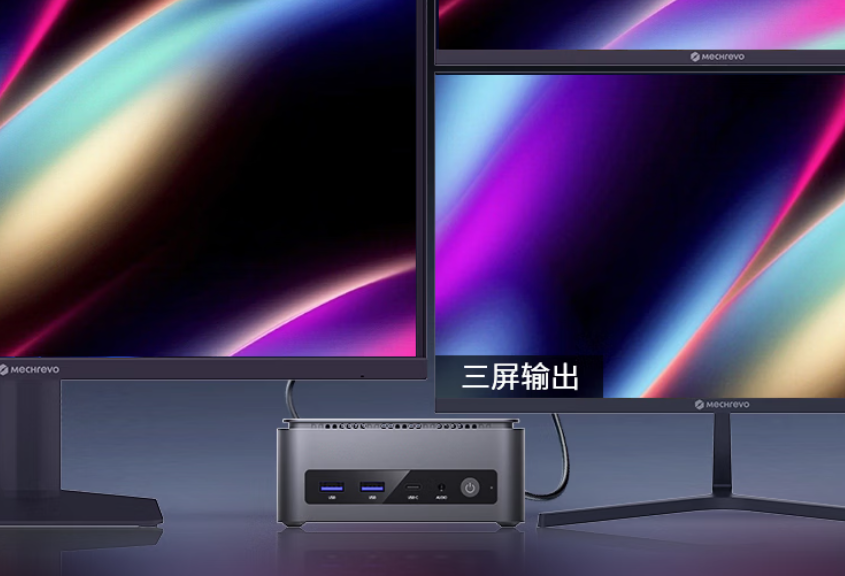
The mini PC supports up to three 4K displays at up to 240Hz and comes with Windows 11 Home pre-installed. It also includes the OpenClaw Gateway engine, enabling seamless local AI deployment for running AI models and workflows.

The iMini E300 has a compact design with a volume of 0.87 liters and a thickness of 53.6mm. It supports wall mounting, allowing users to save desk space and maintain a clean setup.

In related news, Machenike has recently introduced a new gaming mini PC powered by up to an Intel Core i9-14900HX processor, paired with an RTX 5070 GPU and up to 32GB DDR5 RAM, while GMKtec has unveiled the EVO-T2 mini PC featuring Intel Panther Lake CPUs, up to 64GB RAM, and high-speed Phison SSD storage.

For more daily updates, please visit our News Section.

Stay ahead in tech! Join our Telegram community and sign up for our daily newsletter of top stories! 💡

(JD)

The post Mechrevo launches iMini E300 Mini PC with Ryzen 7 7445HS, USB 4 & OpenClaw AI support appeared first on Gizmochina.

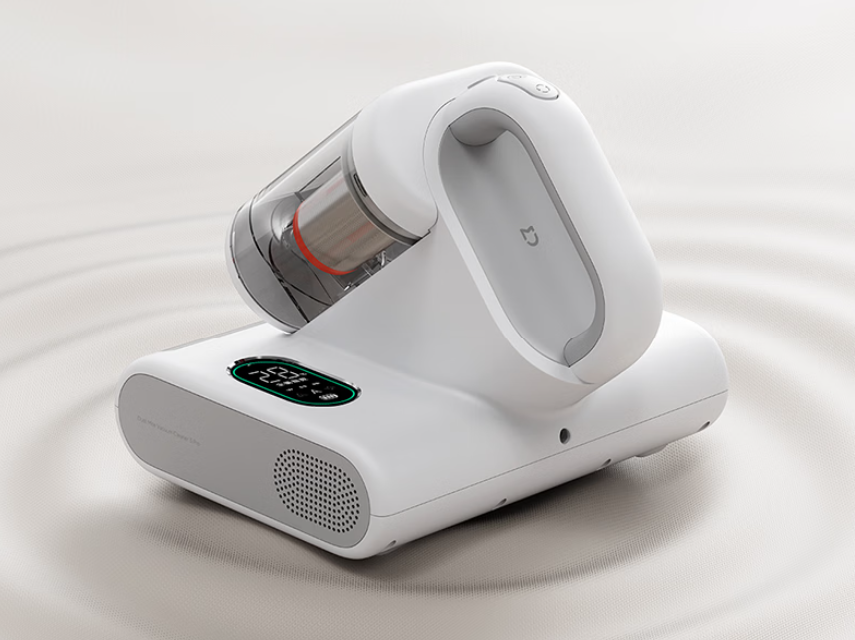
Xiaomi launches Mijia Mite Remover 3 Pro with 17,000Pa suction, 1.7kg cordless design & UV sterilization

Xiaomi Mijia Mite Remover 3 Pro

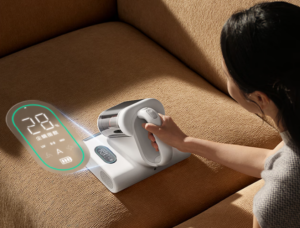
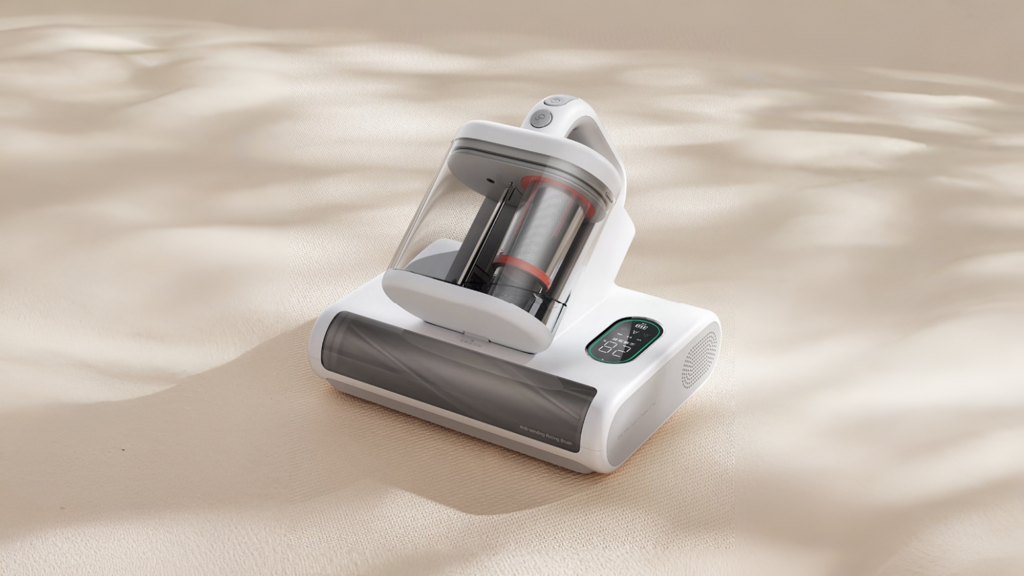
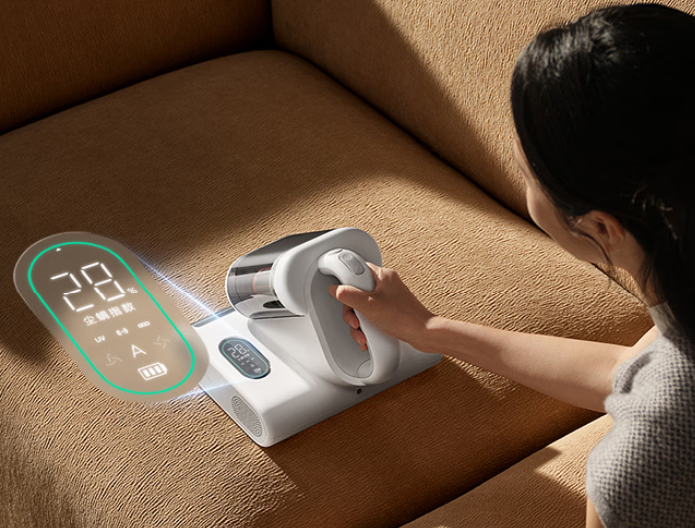
Xiaomi has launched the Mijia Mite Remover 3 Pro, a new smart cleaning device designed to combat dust mites and allergens. The product is now available for pre-order on JD.com at an introductory price of 599 yuan ($86).

Xiaomi Mijia Mite Remover 3 Pro

Mijia Mite Remover 3 Pro Specifications

The Mijia Mite Remover 3 Pro features a lightweight design, weighing just 1.7kg. Its cordless build allows users to move freely without being restricted by cables. The compact dimensions, measuring 244 x 232 x 208mm, make it easy to handle during cleaning and convenient to store.

The device features a powerful motor with 17,000Pa suction power and a high-frequency tapping system operating at 72,000 beats per minute to remove dust mites, skin flakes, and debris. Its 20cm wide suction inlet efficiently covers large surfaces like beds, sofas, and carpets.

Xiaomi Mijia Mite Remover 3 Pro

The device includes an LED display that provides real-time information, such as dust mite levels and operating status. Its intelligent dust mite sensor automatically adjusts suction power based on the level of contamination when used in smart mode.

The Mijia Mite Remover 3 Pro runs on a 2,500mAh battery, which provides up to 30 minutes of runtime in gentle mode. In intelligent mode, the runtime ranges between 15 and 25 minutes, depending on cleaning conditions. The strong mode offers up to 15 minutes of continuous operation. The device supports fast charging, allowing users to fully recharge the battery in approximately 2.5 hours.

Xiaomi has included a six-layer filtration system that captures particles as small as 0.3 microns. The filtration system achieves a 99% efficiency rate, significantly reducing secondary air pollution. Its dual dust cup design separates dust and airflow, ensuring stable suction performance while reducing clogging. The 0.4L dust collection cup minimizes the need for frequent emptying.

Xiaomi Mijia Mite Remover 3 Pro

The device also integrates an LED UV sterilization system that works alongside ultrasonic technology to disrupt dust mite reproduction. Additionally, a safety mechanism automatically turns off the UV light when the device is lifted from a surface. The dust cup and filter components are washable, making maintenance simple.

In related news, Xiaomi has recently introduced a new purple color option for the Mijia Colorful Suitcase and also unveiled the Mijia IH Rice Cooker 2, featuring a fluorine-free ceramic pot and eight cooking modes.

For more daily updates, please visit our News Section.

Stay ahead in tech! Join our Telegram community and sign up for our daily newsletter of top stories! 💡

(JD)

The post Xiaomi launches Mijia Mite Remover 3 Pro with 17,000Pa suction, 1.7kg cordless design & UV sterilization appeared first on Gizmochina.

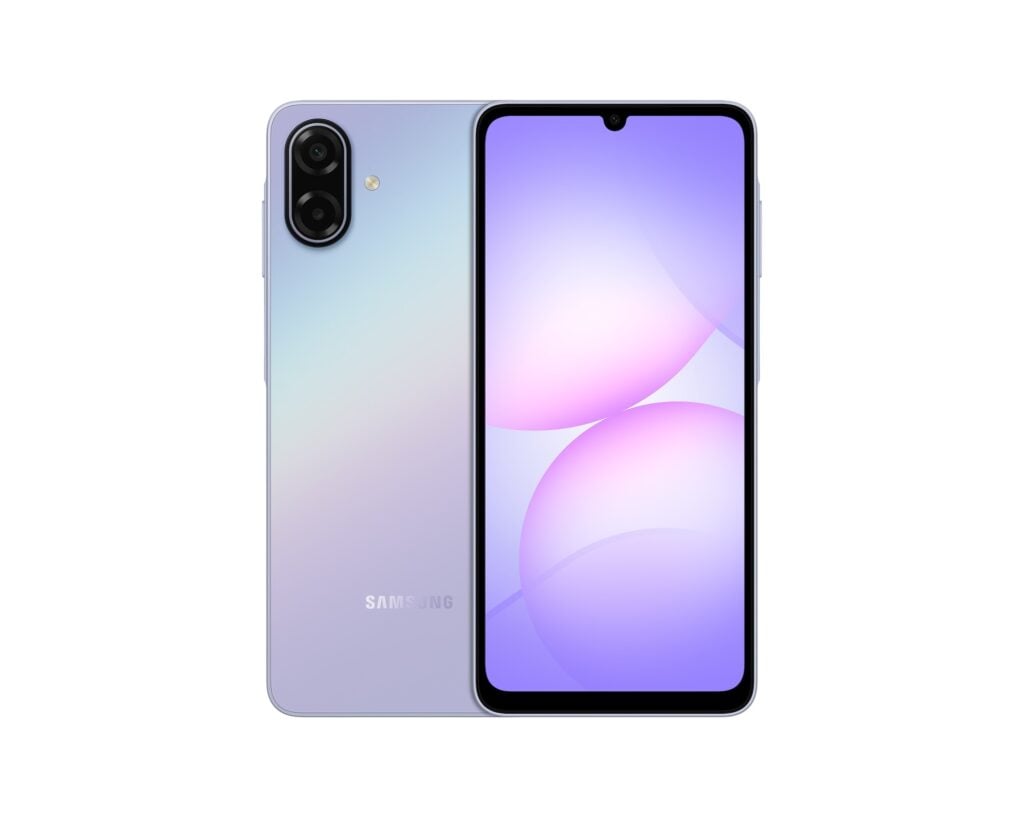
Smartphones might bring back waterdrop notches and microSD cards in 2026

Samsung-Galaxy-A07-5G-Launch-specs-price

A new leak suggests that some smartphone makers might be circling back to features that, until recently, felt like they were on their way out.

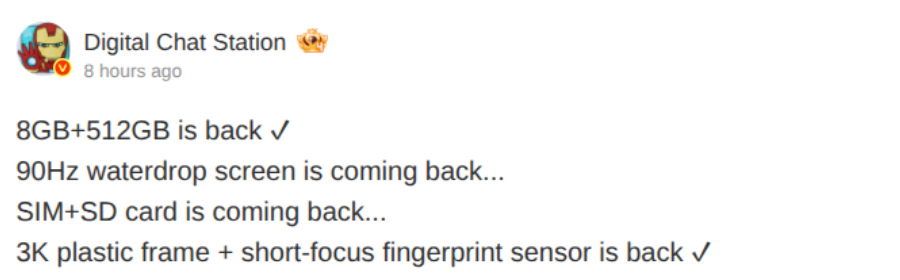
According to a post by Digital Chat Station on Weibo, several older hardware choices could be making a return in upcoming devices. And the list is oddly specific.

DCS says future phones could feature a top configuration of just 8GB of RAM paired with 512GB of storage, along with 90Hz waterdrop-notch displays, support for SIM plus microSD cards, and even plastic frames paired with short-focus (optical) fingerprint sensors.

Rising global smartphone prices could be behind the shift

As you might expect, none of this sounds particularly exciting for 2026. In fact, much of the industry has been moving in the opposite direction. Toward higher refresh rates, punch-hole or under-display cameras, metal or glass builds, and the gradual disappearance of expandable storage.

The return of these more conventional features could be tied to rising component costs, particularly for memory and storage. Several Chinese brands like OnePlus, Oppo, Vivo, and iQOO have already nudged prices upward for their budget devices. Meanwhile, Samsung has also increased smartphone prices in markets like India.

Samsung Galaxy A07 5G

And while prices are rising, consumers’ willingness — or ability — to spend more on phones might not be increasing at the same pace. As a result, manufacturers could be looking for ways to keep retail prices in check, even if that means leaning on older hardware and design choices.

What makes this leak interesting isn’t any single feature. It’s the combination. A return to waterdrop notches, expandable storage, and plastic builds suggests manufacturers may be re-evaluating what they can realistically deliver as smartphone prices continue to climb globally.

These decisions help reduce costs, but they also bring back some practical perks, like storage flexibility, that many users still appreciate.

Don’t miss a thing! Join our Telegram community for instant updates and grab our free daily newsletter for the best tech stories!

For more daily updates, please visit our News Section.

The post Smartphones might bring back waterdrop notches and microSD cards in 2026 appeared first on Gizmochina.

OnePlus Watch 4 specs leak paints a somewhat disappointing picture

The OnePlus Watch 4 has started appearing in leaks and certification listings, which usually means a launch isn’t too far off. But going by what’s surfaced so far, this might be one of those updates that focuses more on refinement than anything dramatic.

The latest bit of info comes from tipster Sudhanshu Ambhore, who spotted the watch on the EMVCo database. That certification mainly relates to contactless payments, and devices tend to show up there fairly close to launch. What’s a little interesting is that there are two model numbers listed: XL905 and XL907. It’s not clear what the difference is yet, but it could point to multiple variants, maybe different sizes or a slightly tweaked version.

As for the hardware, things look… familiar. The Watch 4 is expected to stick with the Snapdragon W5 Gen 1 from last year’s Watch 3. The chip itself dates back to 2022 and has since been succeeded by the newer W5 Gen 2 series, announced in August 2025.

The display also doesn’t seem to change—a 1.5-inch LTPO AMOLED panel with a 466 × 466 resolution, which is basically what we’ve already seen before. There is mention of a slightly larger 47mm case, though, so the overall feel on the wrist might be a bit different.

Battery capacity is said to be 646mAh, which again sounds very similar to the current model. So expectations here should probably be in line with what OnePlus already delivers. One area that does stand out a bit more is durability. The watch is tipped to come with an IP69 rating, which, if accurate, would make it more resistant to harsher conditions than before.

There’s also some mixed info around the software. One leak mentions Wear OS 5, while the certification listing points to Wear OS 6, which seems more likely at this point.

Put together, the Watch 4 looks like a careful update. Not underwhelming, but not trying too hard to surprise either.

Don’t miss a thing! Join our Telegram community for instant updates and grab our free daily newsletter for the best tech stories!

For more daily updates, please visit our News Section.

(Source)

The post OnePlus Watch 4 specs leak paints a somewhat disappointing picture appeared first on Gizmochina.

Huawei Mate 80 Pro Max Wind Edition Features Built-In Fan and Triple Camera Setup

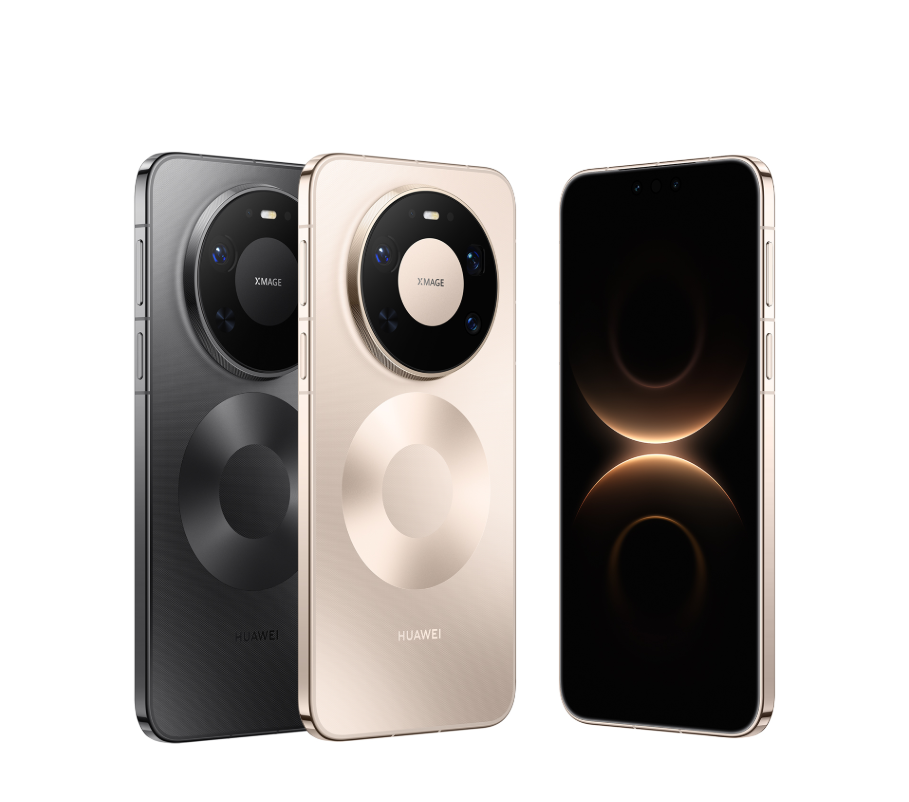
Huawei Mate 80 Pro Max Wind Edition

Huawei has launched a new version of its Mate 80 Pro Max (review), called the Mate 80 Pro Max Wind Edition. This model adds a built-in cooling fan and is currently available for pre-order in China. The company is expected to share full details at its March 23 launch event.

Huawei Mate 80 Pro Max Wind Edition

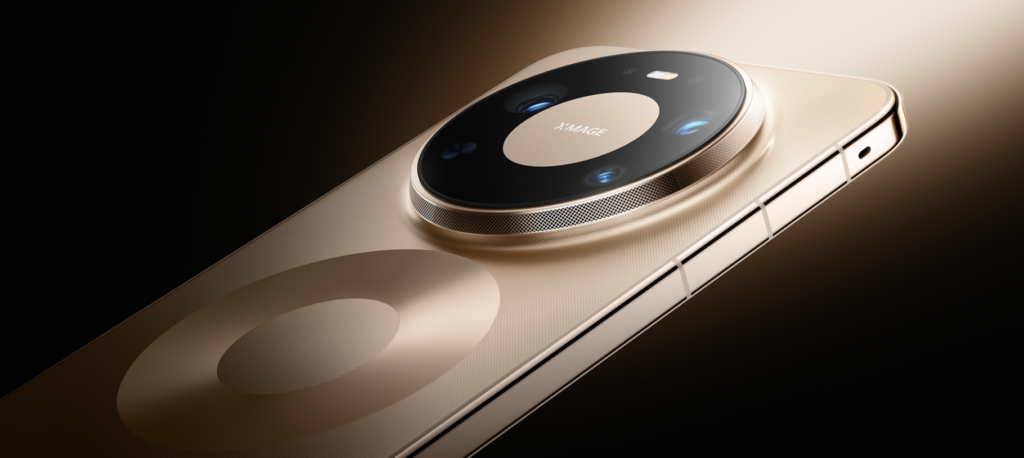
The phone looks similar to the standard Mate 80 Pro Max, but there are visible changes in the camera area. The rear camera ring is wider and includes small ventilation holes. These vents house an active cooling fan placed inside the camera module. This setup is designed to control heat during heavy usage.

Huawei Mate 80 Pro Max Wind Edition

The fan is expected to help the Kirin 9030 Pro chipset maintain performance during long sessions such as gaming or intensive tasks. It may also help with heat management during extended video recording. To make space for the fan, Huawei has removed one rear camera. The Wind Edition features a triple-camera system instead of the quad-camera setup on the standard model.

Other specifications remain the same as the regular variant. The device has a 6.9-inch AMOLED LTPO display. It is powered by the Kirin 9030 Pro processor and includes a 6,000mAh battery. Charging support includes 100W wired and 80W wireless charging.

The Mate 80 Pro Max Wind Edition is available in Polar Night Black and Polar Day Gold. It comes in two storage options: 16GB RAM with 512GB storage, and 16GB RAM with 1TB storage.

Huawei has not confirmed the price yet. For reference, the standard Mate 80 Pro Max starts at 7,999 yuan ($1,162) in China. Pricing and more details are expected to be announced at the March 23 event.

For more daily updates, please visit our News Section.

Stay ahead in tech! Join our Telegram community and sign up for our daily newsletter of top stories! 

The post Huawei Mate 80 Pro Max Wind Edition Features Built-In Fan and Triple Camera Setup appeared first on Gizmochina.

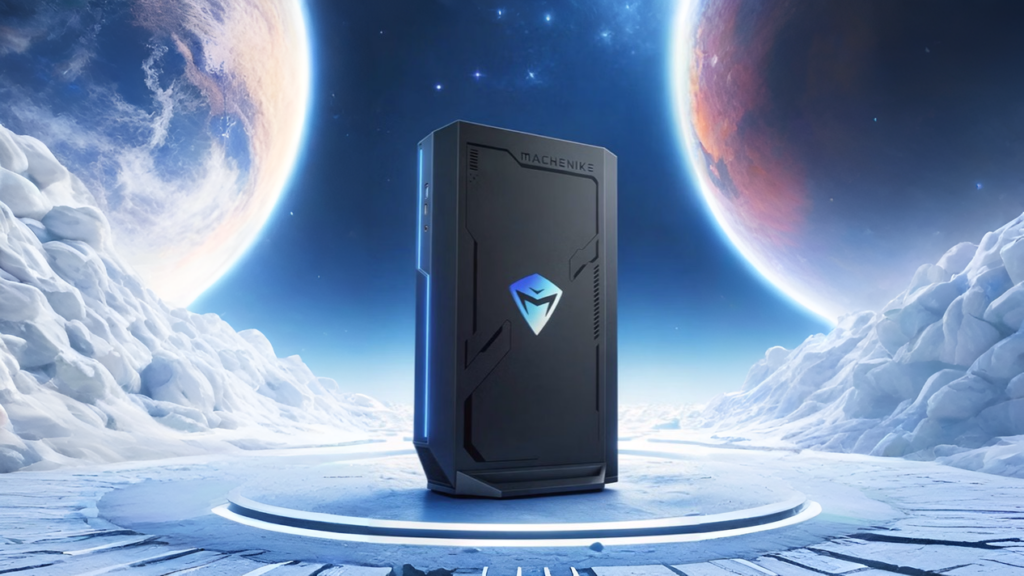
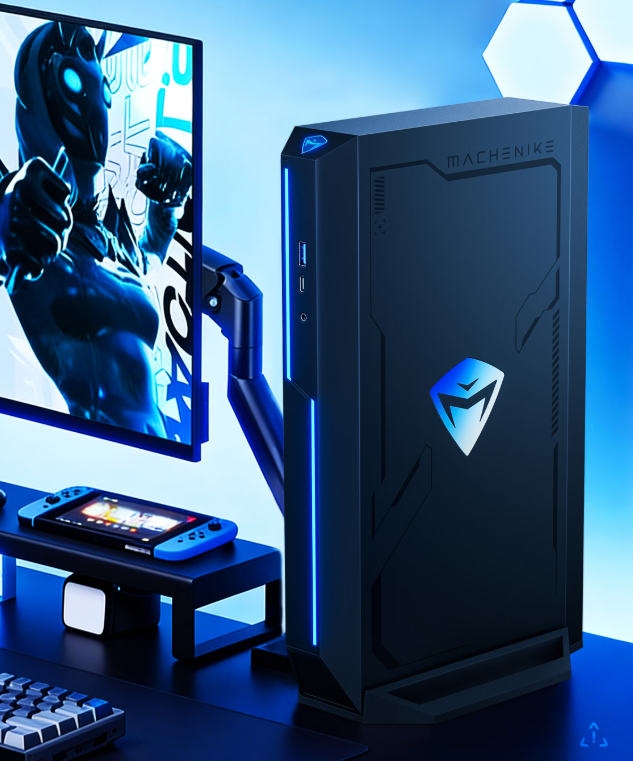
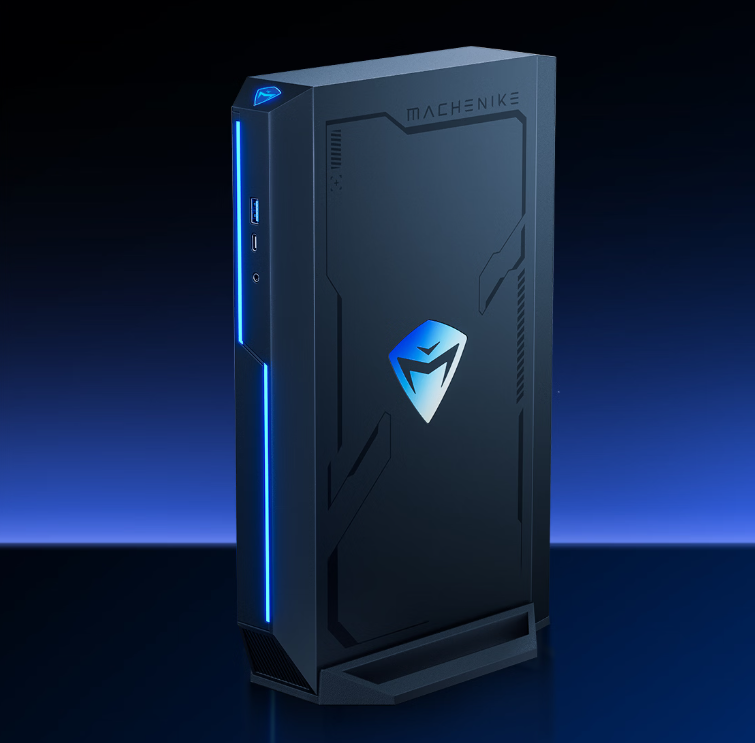
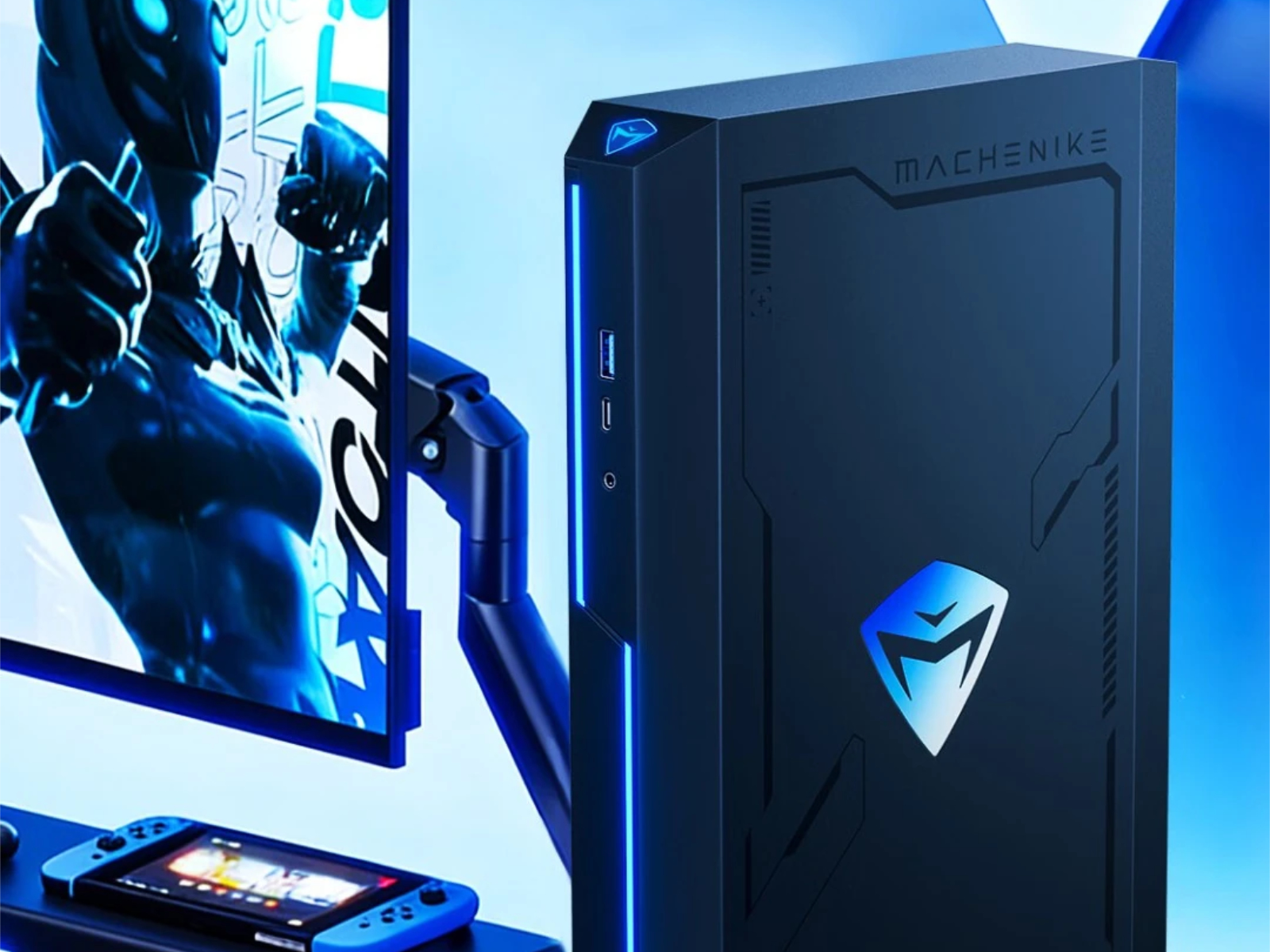
Machenike launches new gaming mini PC with up to i9-14900HX, RTX 5070 & 32GB DDR5 RAM

Machenike Dawn Mini PC

Machenike has launched its new Dawn gaming mini PC in China, which combines powerful hardware with a compact design. The device will be available for purchase starting March 22.

Machenike Dawn Mini PC

Machenike Dawn Mini PC Specs

The mini PC offers Intel 14th Gen Core i7-14700HX or i9-14900HX processors with Nvidia GeForce RTX 5060 or RTX 5070 laptop GPUs, making it ideal for gaming, content creation, and multitasking.

The gaming pc features a compact 3-liter vertical chassis (333 x 212.1 x 54 mm, expanding to 111 mm with the base) with ARGB lighting, a matrix-style ventilation design, and engraved cosmic rune elements. It can be positioned vertically or horizontally, offering flexibility while delivering high performance in a small form factor.

Machenike Dawn Mini PC

Machenike has implemented its Frost Storm cooling system to ensure stable performance. The cooling system includes dual 12V high-pressure fans and a large vapor chamber measuring 194 x 115 x 3.1 mm. It also features ultra-thin fins and a heat dissipation area of 260,440 mm², improving airflow and cooling efficiency compared to earlier models.

The system includes 32GB of DDR5-5600 memory and a 1TB PCIe Gen4 SSD as standard. The memory can be upgraded to 128GB using two SO-DIMM slots. The device also provides dual storage options with one PCIe Gen5 and one PCIe Gen4 M.2 SSD slot.

The mini pc offers a wide range of connectivity options, including Wi-Fi 6E, Bluetooth 5.3, and a 2.4Gbps Ethernet port. The front panel features USB-A, USB-C, and a 3.5mm audio jack, while the rear panel includes HDMI 2.1, USB-A, USB-C with DisplayPort 1.4 support, and an RJ45 LAN port. Machenike also includes a Type-C expansion dock in the package, which adds additional USB and HDMI ports.

Machenike Dawn Mini PC

Pricing and Availability

Machenike has priced the i7-14700HX with RTX 5060 model at 13,999 yuan ($2,100). The i9-14900HX with RTX 5060 model costs 14,999 yuan ($2,250), while the i9-14900HX with RTX 5070 variant is priced at 15,999 yuan ($2,400).

For more daily updates, please visit our News Section.

Stay ahead in tech! Join our Telegram community and sign up for our daily newsletter of top stories! 💡

(JD)

The post Machenike launches new gaming mini PC with up to i9-14900HX, RTX 5070 & 32GB DDR5 RAM appeared first on Gizmochina.

Google Pixel 10 Just Got a Massive Price Cut on Amazon: Big Price Drop + Crazy Exchange Offer

pixel 10

If you’ve been waiting to grab a flagship Pixel at a lower price, this deal might be hard to ignore. The Google Pixel 10 has dropped to just $549 (from $799) on Amazon, making it one of the most aggressive discounts seen on a current-gen Pixel device.

In India, the phone is now listed at ₹69,489 (down from ₹79,999), with an additional exchange offer of up to ₹33,600, pushing the effective price even lower for eligible users.

This deal significantly improves the value proposition of the Pixel 10, especially considering its long-term software support and flagship-grade camera system. With 7 years of Android updates, Google is clearly positioning this as a future-proof device. Combined with the new Tensor G5 (3nm) chip, you’re getting a refined AI-focused experience, better efficiency, and smoother daily performance.

The camera remains a standout, with a 48MP main sensor + 5x telephoto lens, delivering some of the best computational photography in this segment. Add features like Ultra-HDR, Best Take, and 10-bit HDR video, and it’s clear this phone still competes with premium flagships.

At this discounted price, the Pixel 10 feels less like a niche choice and more like a smart buy, especially for users who prioritize camera quality and a clean Android experience.


📊 Key Specs (Quick Look)

  • Display: 6.3″ OLED, 120Hz, up to 3000 nits
  • Chipset: Google Tensor G5 (3nm)
  • RAM & Storage: 12GB + 128GB / 256GB
  • Camera: 48MP + 10.8MP (5x) + 13MP
  • Selfie: 10.5MP (4K video)
  • Battery: 4970mAh, 30W wired, 15W wireless (Qi2)
  • Software: Android 16, 7 years updates
  • Build: Glass (Victus 2), IP68

Please Note: When you buy something using the links in our articles, we may earn a small commission at no cost to you.

Read More:

The post Google Pixel 10 Just Got a Massive Price Cut on Amazon: Big Price Drop + Crazy Exchange Offer appeared first on Gizmochina.

Sony is bringing AI frame generation to PlayStation

Sony looks like it’s preparing its next big step in console graphics, and this time the focus is on AI. PlayStation’s lead architect has confirmed that machine learning-based frame generation feature is on the roadmap. It aims to improve the frame rate without needing a raw jump in hardware power.

The update comes from Mark Cerny, who spoke about Sony’s plans in a recent interview highlighted by Digital Foundry. According to him, Sony has been working closely with AMD under a joint initiative called Project Amethyst. The idea is to co-develop graphics and machine learning tech specifically tuned for PlayStation hardware.

A big part of that effort revolves around AMD’s upcoming FSR Redstone suite. This includes not just upscaling, but also frame generation and something called ray reconstruction. Cerny pointed out that Sony’s PSSR (PlayStation Spectral Super Resolution) already shares core elements with the same tech stack, at least on the upscaling side. So this isn’t a completely separate path. It’s more like an extension of what’s already there.

The key takeaway is that improved AI-driven frame generation is coming, though not anytime soon. Cerny made it clear that nothing new on this front is expected for the rest of 2026. Still, the groundwork seems to be well underway, and both Sony and AMD appear fairly confident about where things are headed.

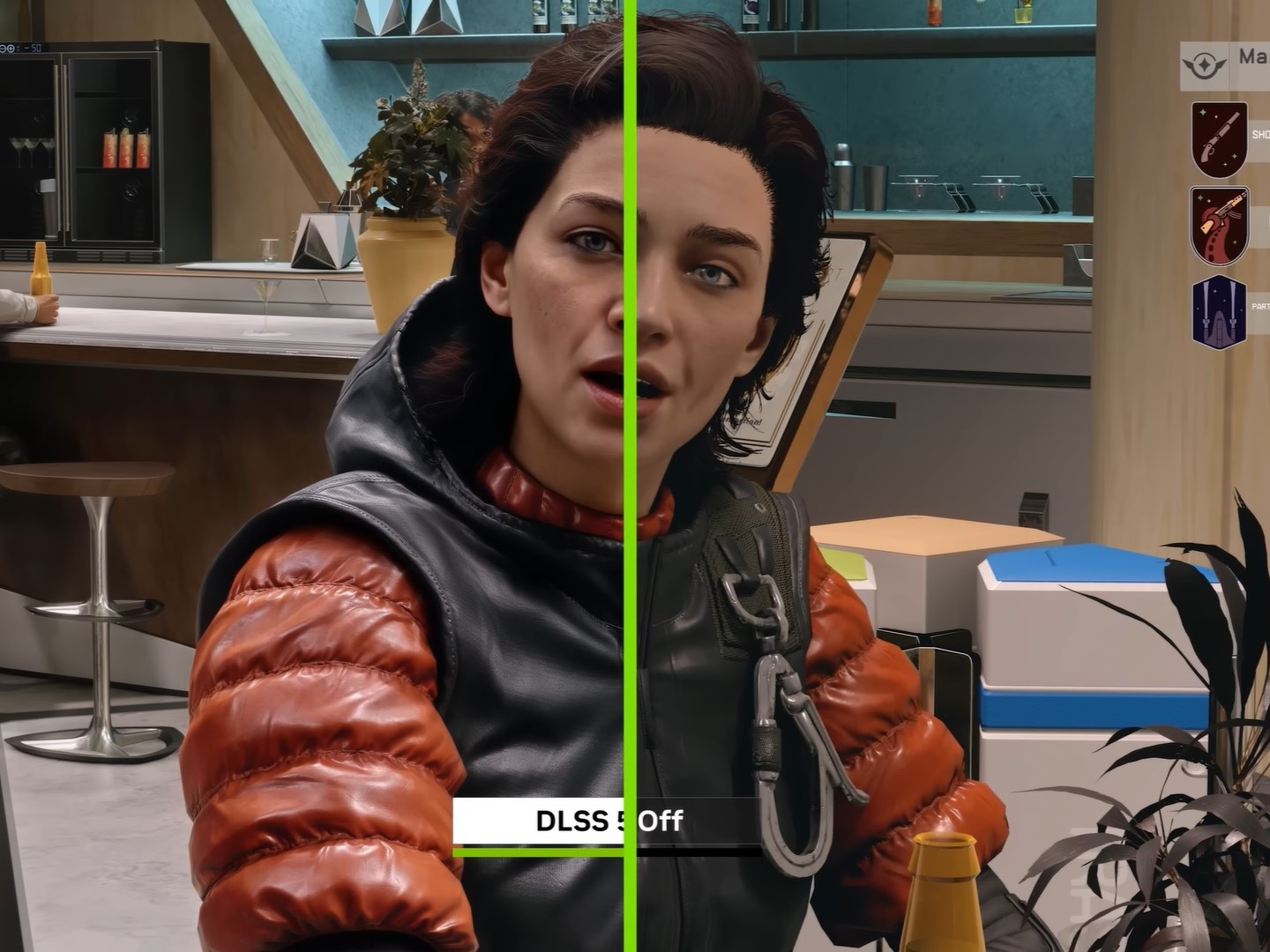
If this sounds familiar, it’s because we’ve already seen similar tech on PCs, and even on some smartphones. NVIDIA’s DLSS and AMD’s own solutions use AI to generate extra frames between rendered ones, making games look smoother even at lower base frame rates. Bringing that to consoles could help bridge the gap between visual fidelity and performance, especially as games continue to get more demanding.

As for when it actually shows up, there’s no official timeline yet. That said, it’s hard not to connect this with the next generation of PlayStation hardware. Sony’s direction here is pretty clear: lean more into AI to get the most out of its hardware.

Don’t miss a thing! Join our Telegram community for instant updates and grab our free daily newsletter for the best tech stories!

For more daily updates, please visit our News Section.

(Source)

The post Sony is bringing AI frame generation to PlayStation appeared first on Gizmochina.

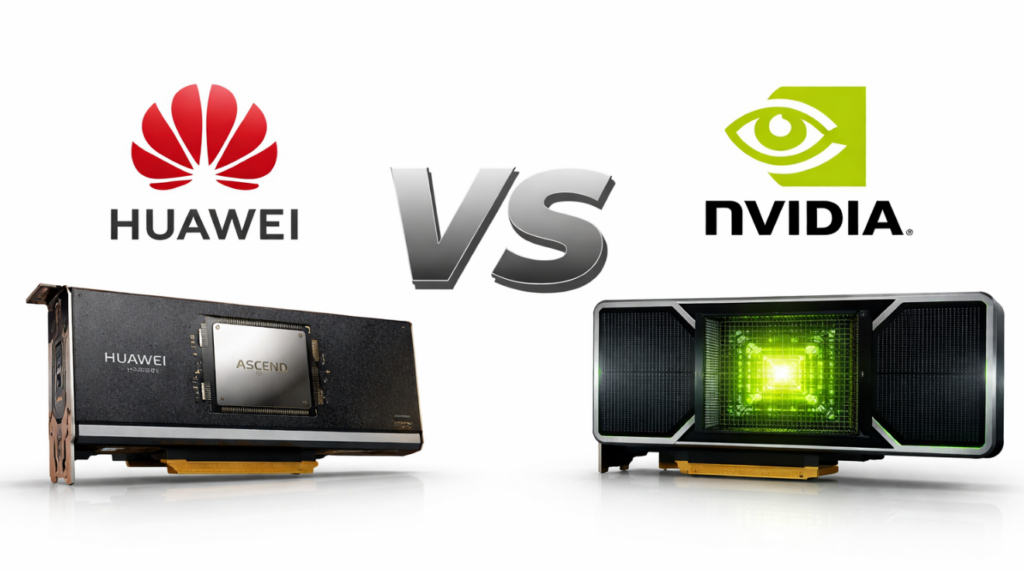
US – China Tech War: Huawei Takes On Nvidia with Atlas 350 AI Accelerator

Huawei vs Nvidia

Highlights:

  • Huawei launches Atlas 350, focused on AI inference, not training
  • Claims up to 2.8× performance boost over Nvidia’s H20 chip
  • Powered by Ascend 950PR, part of China’s push for AI independence

AI-generated image for representation only

New Focus: AI Inference Over Training

Huawei’s Atlas 350 reflects a clear strategic shift toward AI inference, the stage where trained models are deployed in real-world applications. Instead of focusing on training, this accelerator is designed to efficiently run AI systems such as recommendation engines, large language models, and multimodal tools. This aligns with a broader industry transition, where inference is increasingly becoming the main challenge as AI adoption scales across industries.

Performance Designed for Real-World Use

At the heart of the Atlas 350 is Huawei’s Ascend 950PR chip, capable of delivering around 1.56 petaflops of FP4 computing power. Huawei claims this enables up to 2.8 times better performance than Nvidia’s H20 in certain inference workloads. The use of FP4 precision allows faster processing and lower memory usage, making it particularly effective for large-scale deployment where efficiency and speed are more critical than high precision.

Memory and Architectural Advancements

A notable development is Huawei’s move toward in-house high-bandwidth memory, with reported configurations of up to 128GB and 1.6 TB/s bandwidth. This reduces reliance on external suppliers and strengthens China’s semiconductor capabilities. Additionally, the chip is optimized for the “prefill” stage of inference, improving how quickly input data is processed, which is essential for real-time AI applications and emerging agent-based systems.

Building a Complete AI Ecosystem

Huawei’s approach extends beyond a single accelerator. The company is developing an integrated AI ecosystem that includes hardware, storage, and large-scale computing systems. This vertically integrated strategy mirrors established players but is tailored to domestic infrastructure, enabling tighter control over performance and deployment.

Impact on the US–China Tech War

The Atlas 350 is significant for the ongoing US–China technology competition. With restrictions limiting access to advanced US chips, Huawei’s development of competitive domestic alternatives represents a step toward technological self-reliance. For China, this strengthens its ability to build independent AI infrastructure, while for US companies such as Nvidia, it introduces growing competition in a key market.

Implications for Consumers and the Market

For everyday users, this could mean faster and more affordable AI services, especially in China. It may also lead to more local AI apps and platforms. Over time, the tech world could split into separate systems, with different regions building their own AI ecosystems.

Read More:

(via)

The post US – China Tech War: Huawei Takes On Nvidia with Atlas 350 AI Accelerator appeared first on Gizmochina.

China vs US in Robotics: Nvidia CEO Reveals the Real Power Shift

china robotics

Highlights:

  • Jensen Huang calls China “formidable” in robotics due to hardware dominance
  • Nvidia is betting on Physical AI as the next computing revolution
  • Future robotics ecosystem = China’s supply chain + US AI leadership

Image for representation only

China’s Robotics Advantage

Jensen Huang highlighted that China currently holds a significant edge in robotics, primarily due to its dominance in core components like microelectronics, motors, rare earth materials, and magnets. These elements are foundational to building robots at scale, and China’s ecosystem is described as the “world’s best.” This deep supply chain strength means even the US robotics industry remains heavily dependent on China for hardware, reinforcing its global influence in the sector.

The Rise of Physical AI

Nvidia is shifting focus beyond traditional GPUs toward what Huang calls Physical AI, the integration of AI into real-world machines like robots and autonomous systems. This marks a major evolution from generative AI to embodied intelligence. Nvidia’s strategy includes building a full-stack ecosystem, from AI models to robotics infrastructure, positioning itself not just as a chipmaker but as the backbone of future intelligent machines.

Nvidia’s Full-Stack Robotics Vision

At its GTC event, Nvidia introduced the Physical AI Data Factory to automate data generation, simulation, and model evaluation. Huang also described a “three-computer” model powering robotics: training systems for AI models, simulation platforms like Omniverse, and edge computers embedded in robots. This approach shows robotics is no longer just hardware; it requires a tightly integrated AI ecosystem.

Market Shifts and Global Competition

While China’s robotics companies, such as Unitree, are scaling rapidly with strong financial growth, Nvidia is navigating a complex market. Its China market share has dropped sharply due to restrictions, but the company is preparing a return with approved H200 AI chips. Despite revenue declines, demand from Chinese firms remains strong.

What Comes Next

Huang believes robotics adoption is just 3–5 years away from widespread use, driven by exponential growth in AI compute and agentic AI systems. The long-term vision points to a massive economic opportunity, where robots augment human labor across industries. The global balance is becoming clear: China dominates the physical layer, while Nvidia aims to control the intelligence powering it.

Read More;

(via)

The post China vs US in Robotics: Nvidia CEO Reveals the Real Power Shift appeared first on Gizmochina.

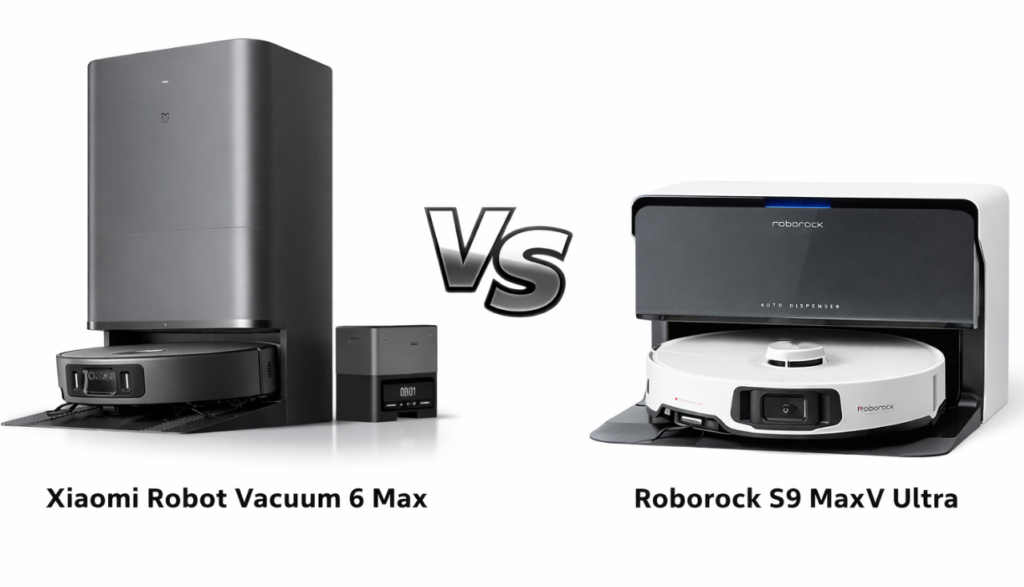
Xiaomi Robot Vacuum 6 Max vs Roborock S9 MaxV Ultra: One Cleans Harder, One Cleans Smarter

Xiaomi Robot Vacuum 6 Max vs Roborock S9 MaxV Ultra

Choosing between these two flagship robot vacuums isn’t just about specs; it’s about how intelligently and consistently they clean in real homes. One focuses on extreme raw power and advanced AI recognition, while the other delivers a polished, fully automated cleaning experience. If you want deeper cleaning vs effortless maintenance, this comparison makes the difference clear.

Major Features:

FeatureXiaomi Robot Vacuum 6 MaxRoborock S9 MaxV UltraWinner
Suction Power35,000Pa22,000PaXiaomi – higher raw power
NavigationAI panoramic obstacle avoidanceReactive AI 3.0 + LiDARRoborock – more reliable
AI Recognition280 objects, 47 dirt typesAdvanced AI + sensorsXiaomi – more detailed recognition
CamerasTriple-camera systemRGB + structured lightTie – different approaches
Cleaning SystemMop, scrape, wash simultaneouslySonic mop + vacuumXiaomi – more aggressive
Mopping TechContinuous mop cleaning (16-hole)4,000 vibrations/minRoborock – better scrubbing precision
Mop LiftNot specifiedVibraRise 4.0 (18mm lift)Roborock – carpet handling
Mop CleaningContinuous water system80°C hot water washingRoborock – hygienic cleaning
DryingNot specified60°C hot-air dryingRoborock – fully automated
Brush SystemHair-cutting + anti-tangleAnti-tangle brushXiaomi – better for hair
Anti-TangleYes (main + side brushes)YesXiaomi – more advanced
Robotic HardwareTriple robotic armsStandard dual systemXiaomi – more advanced hardware
Obstacle CrossingUp to 6 cmNot specifiedXiaomi – better climbing
Minimum Clearance9.3 cmNot specifiedXiaomi – better under furniture
Dock SystemNot advancedRockDock Ultra 2.0Roborock – fully automated
Dock FeaturesWash, dry, refill, detergent, self-cleanRoborock – zero maintenance
ChargingStandardFaster + off-peak schedulingRoborock – smarter charging
Voice ControlXiao AiAlexa, Siri, Google, Matter 2.0Roborock – wider support
App ControlMi HomeRoborock appTie
Video FeaturesPet monitoring, video callsVideo call, Pet Snap, cruiseTie
Use CaseAdvanced AI + deep cleaningPets, kids, high traffic homes
Price¥4,899 (~$680)≈ ¥11,700 (~$1,630)Xiaomi – much cheaper
Disclaimer: Specifications are based on currently available information, early listings, and brand claims. Actual performance and final retail units may vary depending on region, updates, or real-world usage

Design and Cleaning System

Xiaomi Robot Vacuum 6 Max

Xiaomi takes an aggressive, next-gen approach with triple robotic arms and a simultaneous mop–scrape–wash system. The 16-hole water system ensures continuous mop cleaning, which helps maintain consistent results across larger areas. It’s designed to actively “work” on dirt rather than just glide over surfaces.

Roborock S9 MaxV Ultra

Roborock focuses on refinement with VibraRise 4.0 and sonic scrubbing at 4,000 vibrations per minute. The auto-lifting mop intelligently avoids carpets, while hot water washing ensures better hygiene. The system feels more optimized for real homes rather than experimental hardware.

Verdict

Xiaomi is more aggressive and innovative, but Roborock feels more refined and reliable in daily use.

Suction Power and Cleaning Performance

Xiaomi Robot Vacuum 6 Max

With a massive 35,000Pa suction and hair-cutting brush system, Xiaomi clearly targets deep cleaning, especially in homes with pets or heavy debris. It’s built to handle tougher dirt scenarios without clogging.

Roborock S9 MaxV Ultra

Roborock’s 22,000Pa suction is lower on paper, but paired with sonic mopping, it delivers more precise cleaning. It’s less about brute force and more about balanced efficiency.

Verdict

Xiaomi wins on raw cleaning power, but Roborock offers a more balanced and controlled cleaning experience.

Navigation and AI Intelligence

Xiaomi Robot Vacuum 6 Max

The AI system recognizes 280 object types and 47 dirt categories using a triple-camera setup. This allows highly adaptive cleaning, especially in cluttered spaces.

Roborock S9 MaxV Ultra

Roborock combines Reactive AI 3.0 with LiDAR, structured light, and RGB cameras. This hybrid approach improves accuracy, especially in low-light and complex layouts.

Verdict

Xiaomi is more ambitious with AI, but Roborock is more consistent and dependable.

Smart Features and Automation

Xiaomi Robot Vacuum 6 Max

It includes Mi Home app control, Xiao Ai voice assistant, and unique features like pet monitoring and video calls. However, it lacks a fully automated dock system.

Roborock S9 MaxV Ultra

Roborock dominates here with RockDock Ultra 2.0, offering self-washing, drying, detergent dispensing, and auto-refill. It also supports Alexa, Siri, Google Home, and Matter 2.0.

Verdict

Roborock clearly wins with a near hands-free experience.

Hardware and Real-World Usage

Xiaomi Robot Vacuum 6 Max

With 6 cm obstacle crossing and triple-arm hardware, it’s better suited for uneven surfaces and challenging layouts. It’s built for physical adaptability.

Roborock S9 MaxV Ultra

Roborock focuses on convenience, faster charging, off-peak scheduling, and minimal manual intervention thanks to its advanced dock.

Verdict

Xiaomi handles tough environments better, but Roborock is far easier to live with daily.

Pricing and Value

Xiaomi Robot Vacuum 6 Max

Priced at ¥4,899 (~$680), it delivers flagship-level features at a much lower cost, making it highly value-focused.

Roborock S9 MaxV Ultra

At ≈ ¥11,700 (~$1,630), it’s significantly more expensive but justifies it with premium automation and convenience.

Verdict

Xiaomi is the better value pick, while Roborock is a premium, convenience-first investment.

Disclaimer:
Prices are approximate and may vary based on country, region, and applicable taxes.

Final Verdict

Xiaomi Robot Vacuum 6 Max is built for power users who want maximum suction, advanced AI recognition, and aggressive cleaning performance at a lower price. But the Roborock S9 MaxV Ultra delivers a more complete experience, with smarter automation, better mopping precision, and almost zero maintenance. 

If you want cleaning power at an affordable price, then choose Xiaomi; if effortless daily use matters more, Roborock is the smarter but pricier choice.

Read More:

The post Xiaomi Robot Vacuum 6 Max vs Roborock S9 MaxV Ultra: One Cleans Harder, One Cleans Smarter appeared first on Gizmochina.

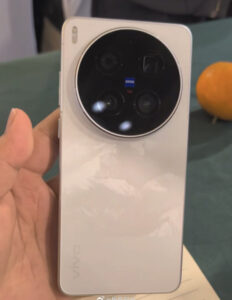
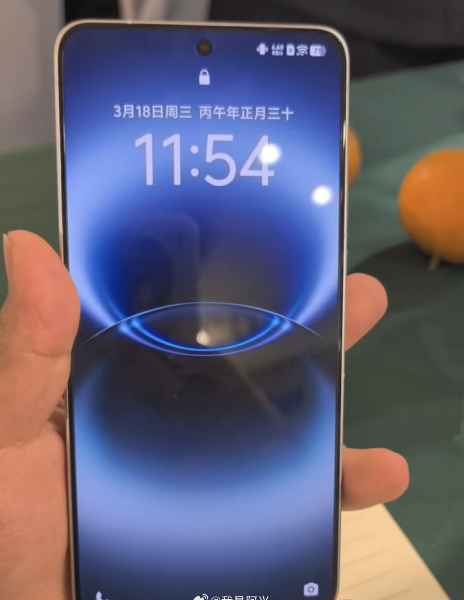
Vivo X300 Ultra appears in live images, specs tag along

Vivo-X300-Ultra-Live-Images-1

Vivo showed off the first images of the X300 Ultra earlier this week in an official teaser, revealing the phone in a new “Film Green” color. Now the device has surfaced in real-life photos in a beige shade, showing it from nearly every angle.

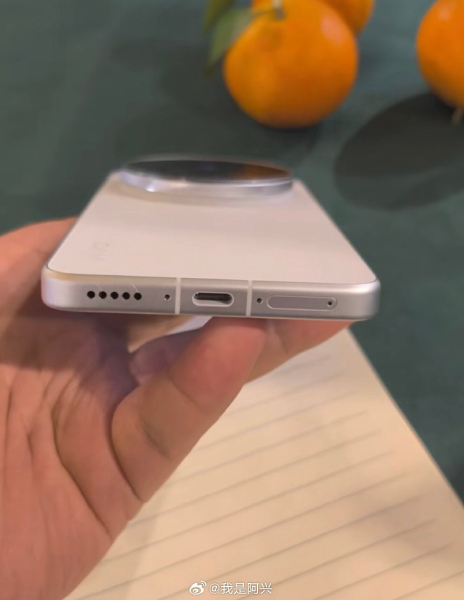
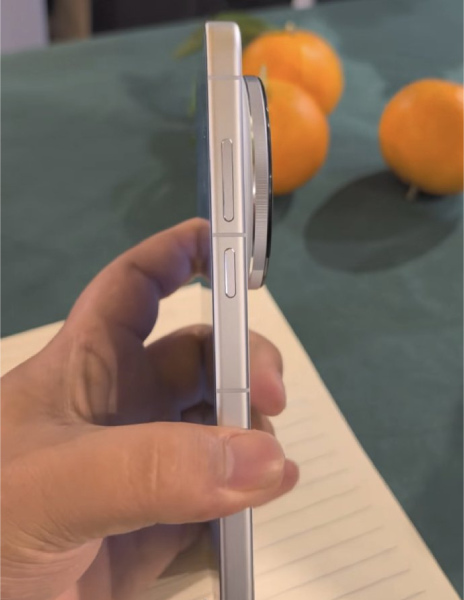
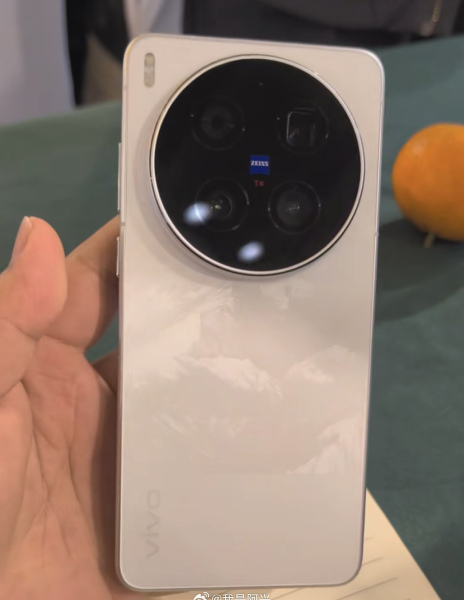
As you can see, the X300 Ultra features a massive camera module on the back with Zeiss branding. It’s particularly noticeable in the side-angle shot (the second image), which also shows the power and volume buttons. This beige variant also appears to have patterns on the rear panel.

The frame looks to be made of metal, while the bottom houses the usual hardware: microphones, a USB-C port, a speaker grille, and a SIM tray.

More interestingly, one of the leaked photos shows the settings page with key specs for the X300 Ultra. According to the image, the phone is powered by the Snapdragon 8 Elite Gen 5 processor, paired with 16GB of RAM and 512GB of storage. It also includes Vivo’s in-house VS1 and V3+ dual imaging chips.

The device also packs a 6,600mAh battery.

What can you expect?

As you know by now, the X300 Ultra is all about the camera. Its rear setup is said to include a 200-megapixel Sony LYT-901 main lens with a 1/1.12-inch sensor and 35mm focal length, along with a 200-megapixel Samsung HPB periscope telephoto camera at 85mm with Zeiss APO certification

A 50-megapixel Sony LYT-828 ultra-wide lens and a multispectral sensor complete the system.  For selfies, you are likely to get a 50-megapixel front camera with autofocus. 

A previous leak also suggests that the Vivo X300 Ultra could arrive in four configurations: 12GB + 256GB, 12GB + 512GB, 16GB + 512GB, and 16GB + 1TB. The top-end model is also tipped to support satellite communication. 

For more daily updates, please visit our News Section.

Stay ahead in tech! Join our Telegram community and sign up for our daily newsletter of top stories.

(Source)

The post Vivo X300 Ultra appears in live images, specs tag along appeared first on Gizmochina.

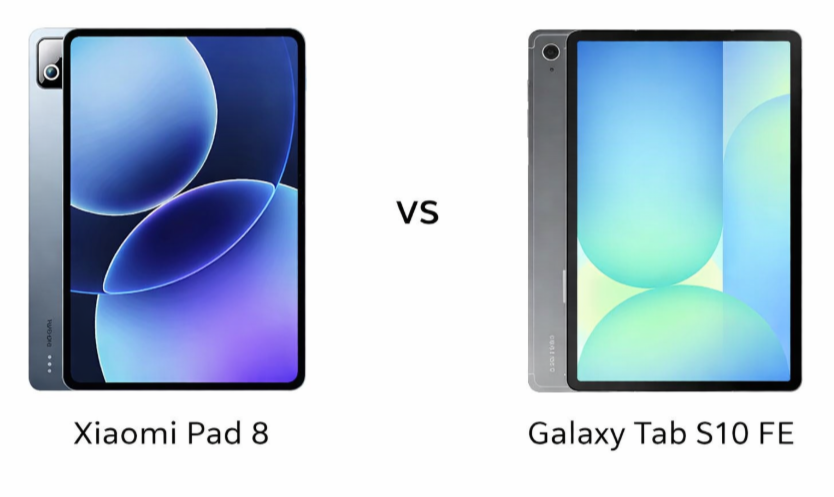
Xiaomi Pad 8 vs Galaxy Tab S10 FE: One Is a Steal, One Is Overpriced?

Xiaomi vs Samsung

Choosing a budget tablet in 2026 isn’t as simple as picking the cheaper option anymore; it’s about getting flagship-like performance without overspending. The Xiaomi Pad 8 and Galaxy Tab S10 FE sit right in that sweet spot, offering powerful specs, premium designs, and productivity features at mid-range prices. But they take very different approaches; one focuses on raw power and display quality, while the other leans into ecosystem, durability, and usability. That’s exactly why this comparison matters.

Please Note: When you buy something using the links in our articles, we may earn a small commission at no cost to you.

Major Features:

FeatureXiaomi Pad 8Galaxy Tab S10 FEWinner
BuildGlass front, aluminum frame & backGlass front, aluminum frame & back + IP68Samsung – added water resistance
Thickness5.8 mm6 mmXiaomi – slightly slimmer
Weight485–494 g497–500 gXiaomi – lighter
Display Size11.2-inch10.9-inchXiaomi – larger
Display Quality144Hz, HDR10, Dolby Vision, 800 nits90HzXiaomi – smoother & more advanced
Resolution2136 x 3200 (~344 ppi)1440 x 2304 (~249 ppi)Xiaomi – sharper
ChipsetSnapdragon 8s Gen 4Exynos 1580Xiaomi – much more powerful
GPUAdreno 825Xclipse 540Xiaomi – stronger GPU
RAM & StorageUp to 12GB, UFS 4.1Up to 12GBXiaomi – faster storage
Expandable StorageNoYes (microSD)Samsung – expandable
Rear Camera13 MP13 MPTie
Front Camera8 MP12 MP ultrawideSamsung – better for calls
SpeakersQuad speakers, Dolby AtmosStereo speakersXiaomi – better audio
Wi-FiWi-Fi 7Wi-Fi 6eXiaomi – newer standard
Bluetooth5.45.3Xiaomi – newer
Battery9200 mAh8000 mAhXiaomi – larger
Charging45W + reverse wireless45WXiaomi – more versatile
USBUSB-C 3.2USB-C 2.0Xiaomi – faster
Stylus SupportYes (magnetic)YesTie
SIM SupportNoYes (cellular model)Samsung – more versatile
Price₹34,000 ($400)₹43,000 ($500)Xiaomi – better value

Please Note: When you buy something using the links in our articles, we may earn a small commission at no cost to you.

Design and Display

Build Quality

The Xiaomi Pad 8 and Galaxy Tab S10 FE both bring premium aluminum builds, but they target slightly different priorities. Xiaomi focuses on slimness at just 5.8mm, making it feel more modern and ultra-light in the hand. Samsung, on the other hand, adds durability with IP68 water and dust resistance—something rare in this segment. The Tab S10 FE also includes SIM support for cellular use, which adds flexibility for on-the-go users. Xiaomi counters with a cleaner, minimalist design and slightly better weight balance.

Display & Multimedia

This is where Xiaomi clearly pushes ahead. The Pad 8 features a sharper 3:2 display with a 144Hz refresh rate, HDR10, Dolby Vision, and significantly higher brightness. It feels more flagship-like, especially for content consumption and gaming. Samsung’s 90Hz panel is good, but it looks dated next to Xiaomi’s smoother and more vibrant screen. However, Samsung still offers a more traditional 16:10 ratio, which some users may prefer for media apps.

Verdict

Xiaomi Pad 8 wins with a superior display and sleeker design, while Samsung stands out for durability and versatility.

Performance and Software

Processor & UI Smoothness

The Xiaomi Pad 8 is powered by the Snapdragon 8s Gen 4, which is in a completely different league compared to the Exynos 1580 on the Tab S10 FE. Daily performance, gaming, and heavy tasks feel significantly faster and smoother on Xiaomi. The 144Hz display further enhances the perception of speed, making animations and scrolling feel fluid. Samsung performs well for regular use, but it lacks that flagship-level punch when pushed.

Productivity & Multitasking

Samsung’s One UI 7 is better optimized for productivity with features like multi-window and a more mature tablet interface. It feels more refined for work use. Xiaomi’s HyperOS 3 is improving, but still feels more performance-focused rather than productivity-first. However, the stronger chipset on Xiaomi helps with heavy multitasking and demanding apps.

Verdict

Xiaomi dominates raw performance, but Samsung offers a more polished productivity experience. Power users will lean toward Xiaomi, while work-focused users may prefer Samsung.

Battery and Accessories

Battery Life

Xiaomi packs a larger 9200mAh battery compared to Samsung’s 8000mAh unit, which translates to longer screen time, especially for media and gaming. Both support 45W charging, but Xiaomi adds reverse wireless charging, making it more versatile. Samsung still delivers reliable all-day usage, but it doesn’t push boundaries here.

Stylus, Keyboard & Ecosystem

Samsung has a clear advantage in the ecosystem and accessories. The S Pen experience is more refined, and Samsung’s ecosystem integration with phones, laptops, and apps is stronger. Xiaomi supports stylus input, but its accessory ecosystem still feels less mature. However, Xiaomi’s faster hardware makes it better for creative apps that demand performance.

Verdict

Samsung wins for ecosystem and accessories, while Xiaomi takes the lead in battery capacity and versatility.

Camera & Media

Rear and Front Camera

Both tablets offer similar 13MP rear cameras, but tablets are rarely about photography. The key difference is the front camera, Samsung’s 12MP ultrawide is far more practical for video calls and meetings, keeping subjects in frame more naturally. Xiaomi’s 8MP front camera is decent but feels basic in comparison.

Video & Audio Quality

Both tablets support 4K recording, but Samsung’s front camera flexibility gives it an edge for content creators and remote work. Xiaomi, however, delivers a stronger multimedia experience with Dolby Atmos quad speakers, making movies and games feel more immersive. Audio quality is noticeably richer and louder on Xiaomi.

Verdict

Samsung is better for video calls and front-facing usage, while Xiaomi is clearly superior for media consumption and audio experience.

Pricing

Xiaomi Pad 8 is priced at around ₹34,000, while the Galaxy Tab S10 FE comes in at approximately ₹43,000. That price gap is significant. Xiaomi offers a flagship-level processor, better display, and bigger battery at a much lower cost, making it feel like a high-value performance tablet. Samsung justifies its higher price with durability, software optimization, and ecosystem benefits, but the hardware gap is hard to ignore.

Disclaimer:
Prices are approximate and may vary based on country, region, and applicable taxes.

Conclusion

Xiaomi Pad 8 stands out with its Snapdragon 8s Gen 4 chip, 144Hz Dolby Vision display, and reverse wireless charging, features rarely seen at this price. Samsung counters with IP68 protection, S Pen refinement, better front camera, and a more polished software ecosystem.

Verdict

Xiaomi Pad 8 is the better overall value and performance tablet, making it the smarter choice for most buyers in 2026. The Galaxy Tab S10 FE still makes sense for users who prioritize ecosystem, durability, and productivity-focused features over raw power.

Read More;

The post Xiaomi Pad 8 vs Galaxy Tab S10 FE: One Is a Steal, One Is Overpriced? appeared first on Gizmochina.

OnePlus Watch Lite unboxing

The smartwatch market is just as competitive as the smartphone scene, and OnePlus aims to have an option at every price point. The OnePlus Watch Lite is one sleek-looking wearable that mixes top-notch health and activity tracking as well as some basic smartwatch features without being “overly smart”. The unboxing experience is pretty straightforward. OnePlus Watch Lite ships with a two-pin magnetic charging puck attached to a USB-A connector. While we’re not fans of proprietary charging solutions, we have to admit that OnePlus does make some of the better smartwatch chargers with...

One UI 8.5 makes Finder more accessible than ever

One UI has come a long way, and the on-device global search has become one of its key capabilities to find anything on the phone without going through specific directories and wasting your valuable time. Finder works perfectly fine in this direction, but One UI 8.5 has made it more accessible than ever.

Usually, you need to open the app drawer to access the finder feature. Here you can see suggested apps, settings topics, recent searches, and type new queries or use voice input. Besides these, on-device categories, the search also expands to online content, Play Store, Galaxy Store, and web results.

The execution is fast and accurate due to Samsung’s search algorithm optimizations. Meanwhile, the One UI 8.5 on the Galaxy S26 series has introduced a dedicated Finder button that launches the feature with one tap without opening the app drawer.

However, the feature may not be accessible by default, so you have to enable it from the home screen settings. To do so, go to Home screen settings from the home screen and tap on the slider in front of the “Show Finder on Home Screen” option. This option will now show on the home screen, and you can tap to see the feature to expand its options.

Samsung One UI 8.5 finder button for home screen oneui85

How to customize it

Finder is entirely customizable, and you can check all of its options from the Finder settings. Go to Now Brief and open Finder, then tap on the three dots outside of the search bar. Enable or disable search options to see the content in the results. You can also manage Personal data intelligence and dive deep into the data sharing for added services.

For now, there’s no confirmation whether it will come to old devices with the stable One UI 8.5, but we’ll have to wait for an official statement.

The post One UI 8.5 makes Finder more accessible than ever appeared first on Sammy Fans.

Samsung Now Brief is farming user data for Google

Samsung Galaxy S26 series shipped with the newest features of Now Brief, an automated daily briefing feature that curates important information, tasks, and notifications that may improve your user experience.

Despite it being a good idea, the Now brief failed to impress users due to its low-accuracy of what Samsung promoted it to be. Most of the time, the feature shows weather, news article and YouTube video recommendations from your subscribed channels. And sometimes, it includes your photographs (from a particular day) and weekly screen time. Beyond that, the “Content to include” section has numerous categories that are part of the daily briefing.

However, the feature execution matters. The company has added a weather widget in the briefing, a news article that doesn’t refresh; if so, it’s not interesting. Most Galaxy S26 series and previous device owners may have been scrolling through videos on the YouTube app instead of waiting for them to appear slowly on their daily briefing. These might be a good example of how useless the feature could be.

That said, I recently started using Now Brief on a daily basis to test “Get richer insights“. It has YouTube and Gemini toggles; once enabled, they promise to deliver personalized content inside daily briefings. Yet, the company is asking for almost all of the important user data for personalized videos. Below is an example for YouTube.

“If you turn on this option, your schedule, reservation, and booking information from Samsung Wallet, Notifications, Messages, Calendar, Reminder, and Gmail information, and sports information from your Google Account, sports information from apps you use, the titles of websites you visit, and YouTube videos you watch that are analysed on your phone by Personal data intelligence will be shared with Google, who will collect and process this data to provide recommended travel and sports videos” reads the agreement pop-up.

Samsung Now Briefing farming data for Google

So, it’s not a normal slider; Samsung wants you to give consent for Now Brief to access all of this information in exchange to get video recommendation. It’s hard to say, there will be a person who reads this information, and gives Now brief consent in exchange for YouTube video recommendations. All they need to do is open the app and explore whatever they want to watch or see.

It’s not like they can’t disable the feature, but the feature will start sipping this data as soon as you tap on the slider.

The other side of the matter is the depth of such information, including your wallet. Why should we be providing this information to see videos? It doesn’t mean that companies don’t farm data to train AI, but Samsung offering YouTube video recommendations in exchange for vital user data should only be called “data farming.”

Of course, it’s on the user to decide on the consent, but you should not overlook the intent.

The post Samsung Now Brief is farming user data for Google appeared first on Sammy Fans.

Weekly poll: will you buy the Oppo Find N6?

The Oppo Find N6 claims to have solved the biggest issues for foldables – it has made the crease basically invisible. Okay, that’s not the biggest issue facing foldables, but it is certainly a deal breaker for many. And it’s not like the Find N5 had major problems in other categories. That said, the N6 brings several important upgrades to the camera and battery. Oppo opted to increase the battery size to 6,000mAh (up from 5,600mAh) instead of slimming down the phone. That means that the N6 has the same thickness (4.2mm opened, 8.9mm closed) and weight (225g vs. 229g) as the N5. Again,...

Even my Galaxy S26 Ultra can’t make Now Brief look useful

Samsung continues to add new AI features in the Galaxy AI Suite and also updates the old ones, such as Now Brief, to make it user-friendly. This feature gathers the important moments from your device, such as Gallery pictures, energy score, sleep schedule, alarm, wallet, and more, and puts them in a single briefing curated with AI.

Talking about the new stuff, the Galaxy S26 series has brought a few additions to the Now brief that aren’t available for the Galaxy S26 series.

There’s a new section in the Now brief settings, “Get richer insights”. It shares your personal data with Samsung’s partner companies to receive “relevant” and “personalized” content in your daily briefings. There are two partners currently added in the settings: YouTube and Gemini.

get richer insights in Now Brief with One UI 8.5

YouTube will suggest more videos to you, and Gemini will give you some insights into your daily Gemini use case. After enabling these two, I am not getting anything useful, and whatever you may call it, it doesn’t make Now brief any more interesting, an element that’s lacking from the very beginning.

The concept of the Now brief is great, but its results aren’t nowhere near “great” word. So, Samsung should focus on providing some user-centric statistics that are not based on AI fantasy. It lacks preciseness of all of the things that the phone maker has promised to offer with content addons. These two features might expand to other Galaxy S25 series devices with stable One UI 8.5, but we’re not sure about that.

If you found these options useful, reach out to me at X/Twitter handle. I would love to read your thoughts on the upgraded Now Brief.

The post Even my Galaxy S26 Ultra can’t make Now Brief look useful appeared first on Sammy Fans.

Samsung left a premium phone behind for One UI 8.5 beta

Samsung has been testing One UI 8.5 beta for the past three months and left one premium Galaxy S-series phone out of the One UI 8.5 beta equation. Initially, the S25 series entered beta testing, specifically S25, S25+, and S25 Ultra. Yet, the Galaxy S25 Edge, Samsung’s slimmest S-series phone to date, has not received the beta update.

The phone comes with flagship specs and a high-quality camera system, but the most interesting quality of the device is its outlook. On the other hand, it has the same price tag as the newly released Galaxy S26+. These reasons convinced me that the phone deserved a shot at the new beta.

However, it isn’t the first time that S25 Edge users have been neglected. Last year, the company refused to release the One UI 8.0 for this phone alongside the main lineup. Though the update arrived later on, that doesn’t summarize the course of this action.

Some might argue that the phone was released in May 2025 and has a different firmware development cycle. We can agree to that, but Samsung had enough time to match the software update release time for all four models. Yet, it didn’t bother.

Also, what about the price tag? The S25 Edge may have been demoted in Samsung’s launch cycle, but it still has a user base that paid a good sum of money that rivals its latest flagships.

Samsung Galaxy S25 Edge

Past report suggests that Samsung is working on the 8th One UI 8.5 beta. And the stable update will come in April, which may also be the time when the S25 Edge will get this new software.

But that doesn’t mean that the S25 Edge shouldn’t be included in a new One UI beta program. Eventually, we can say that Samsung wants to keep it effortless and continue the three-device testing model in its beta program. So, it can sit back, relax, and develop the firmware for these devices with limited effort.

The post Samsung left a premium phone behind for One UI 8.5 beta appeared first on Sammy Fans.

Intel Arc B70 Pro and B65 Pro leak reveals ‘Big Battlemage’ workstation GPUs with 32GB ECC GDDR6 ahead of March 25 launch

A leak points to Intel launching the Arc B70 Pro and B65 Pro “Big Battlemage” workstation GPUs on March 25, 2025, with press materials outlining creator- and AI-focused specs rather than gaming positioning. Both cards reportedly ship with 32GB ECC GDDR6 on a 256-bit bus, with the B70 Pro offering 32 Xe2 cores at 160–290W (about 230W reference) and the B65 Pro using 20 Xe2 cores up to 200W, while pricing and availability remain unconfirmed.

Weekly poll results: the Nothing Phone (4a) Pro is the fan favorite, while the (4a) takes a step back

Last year, the Nothing Phone (3a) was voted as having a better value than its (3a) Pro sibling, while people that might have bought the Pro were instead pulled towards the then-upcoming Nothing Phone (3) flagship. So, when we posted last week’s poll, we were sure that the (4a) would prevail over its Pro sibling. After all, the Nothing Phone (4a) closed the camera gap to the Pro. But look at its poll results – 25% of voters prefer the Pro, while some 40% of the vote is split between people who like it to various degrees with pricing emerging as a concern. Pricing was indeed a major...

Deals: Galaxy S26 series gets its first price drop, the Pixel 10 series drops even further

The first full week of sales of the Samsung Galaxy S26 series is now behind us. While we can’t expect to see price movement this quickly, there was the smallest twitch. The Galaxy S26 Ultra has not budged and we don’t expect it to anytime soon considering that it is by far the most popular of the three models. The Galaxy S26+ hasn’t moved either. Samsung Galaxy S26 Ultra $200 gift card512GB: $300 bonus with trade-in Read our review 12/256GB - $1,300 at Amazon US ...

PlayStation Network suffers massive outage, with down servers blocking games from launching

Update | With so many PS5 games depending on the PlayStation Network, any downtime can cripple the console. Sony confirms that gaming and social services are currently offline, with no ETA for a fix. Down Detector displays a surge of around 14,000 reports of incidents that started at approximately 9PM CET. Update 2:33 AM CET: Most gamers can now access the PlayStation Network, although there are sporadic reports of disconnects.

Nothing Headphone (a) unboxing

Nothing has new over-ear headphones on the market, and they make the already aggressively-priced Nothing Headphone (1) seem overpriced. At £149 / $199 / €159, you're getting a lot for not a lot. Let's see the box. The Nothing Headphone (a) ships with a simple carrying bag, a USB-C cable, and a 3.5mm cable. The bag isn't padded, so it won't protect the headphones from damage, but you've gotta cut some corners to get a great deal. The Headphone (a) packs 40mm titanium-coated drivers, has three-level ANC, LDAC support, and a Hi-Resolution Audio Wireless certification. On the...

One UI 8.5 shows up early on Galaxy S24 Ultra: First impressions

Samsung One UI 8.5 Beta Program is running for some flagship devices even though the stable version debuted with the Galaxy S26 series. One UI 8.5 is not yet available for the Galaxy S24 series, not even as a beta version. But a first early look at One UI 8.5 on the Galaxy S24 Ultra has now appeared online, giving users an early glimpse of what the update has to offer.

The early look has been shared by a @oneuios source, showing the testing version of One UI 8.5 running on the Galaxy S24 Ultra. It highlights the improved Power Saving options.

The leaked One UI 8.5 for Galaxy S24 Ultra shows smarter performance management and battery optimization. The interface appears smoother, with additional options. The new Power Saving feature offers Standard and Maximum modes.

Samsung Galaxy S24 Ultra One UI 8.5 leaked

Image via @oneuios (X)

Standard mode provides moderate battery savings while allowing essential apps and activities to run without restriction. Users can also customize limits to keep important functions active. Maximum mode focuses on extreme battery saving by turning off non-essential features and limiting background activity, helping the phone last as long as possible.

Samsung is expected to conclude the beta program soon and roll out One UI 8.5 to more devices, including the Galaxy S24 series. Once widely available, users can expect smarter battery management and a more refined overall experience. Stay tuned for more information.

Google Search Top Stories Preferred Source

The post One UI 8.5 shows up early on Galaxy S24 Ultra: First impressions appeared first on Sammy Fans.

A closer look at One UI 8.5’s new Instant Brief widget styles

One UI 8.5 for the Samsung Galaxy S26 series makes it look better and easier to use. This One UI version arrives with several new features to provide a next-level experience. One of the new features is the Instant Brief widget, now available in four styles. These styles are inspired by a glass-like design, giving the screen a clean and modern look.

Through these four styles, Samsung aims to give users more choices with One UI 8.5. Some people like simple and clear designs, while others prefer something more stylish. Samsung has tried to offer both. These new widgets not only look good but also help users see important information quickly.

There are four styles of the Instant Brief widget. The first one is like nature glass, which has a soft green transparent background that blends with the wallpaper. It feels light and natural. Another is Frosted, which is bolder, with a stronger blur and deeper glass effect. It looks more premium and stands out on the screen.

Samsung Instant Brief One UI 8.5

Image via Ice Universe (X)

The third one looks classic and solid, with a mostly solid light background, making it very easy to read. It is the best choice for people who want clear text, especially in bright light. The last one is a soft blend, a mix of both style and clarity. It has a soft color and slight transparency, so it looks smooth but is still easy to read.

These four styles make the Instant Brief widget more useful and more personal. Users can choose the one they like the most. In the future, One UI 9 may bring more widgets. Stay tuned for more information.

Google Search Top Stories Preferred Source

The post A closer look at One UI 8.5’s new Instant Brief widget styles appeared first on Sammy Fans.

Sony says AI frame generation is coming to PlayStation at some point in the future

In an interview, Sony PlayStation's lead system architect, Mark Cerny, said that the company is working closely with AMD to deliver AI-powered frame generation to PlayStation. The main goal is to improve the frame rate without having to rely on more powerful hardware. Sony and AMD are already working on Project Amethyst, which is a graphics machine learning tech specifically tuned for PlayStation's hardware. AMD's upcoming FSR Redstone suite lays the foundation of the project, and it delivers not just upscaling but also frame generation and ray reconstruction. Interestingly, the...

Samsung improves Galaxy Tab S11 security with February 2026 update

Samsung has pushed a new software update with the February 2026 patch for the Galaxy Tab S11. This update makes the tablet more secure and stable. It is recommended for all users to keep their devices safe and running smoothly.

February 2026 update arrives with the version number X730XXS5AZB8. It comes with the February 2026 security patch and is 313.86 MB in size. Installing this update will improve your tablet’s security and performance.

The fresh update protects your device from security problems and bugs. After updating, your tablet will be stronger against threats and run more reliably.

Samsung Galaxy Tab S11 Update

Image via
Larry S White (X)

The patch fixes 37 security vulnerabilities. These issues were related to Android and Samsung’s own software features. By addressing them, Samsung ensures better protection for user data and privacy. Regular security patches are important to keep smartphones safe from new threats.

To get the update, connect your tablet to Wi-Fi and make sure it has enough battery. Then go to Settings >> Software Update >> Download and Install. Follow the instructions to complete the update. After it finishes, your tablet will have the latest security improvements and be more stable.

Google Search Top Stories Preferred Source

The post Samsung improves Galaxy Tab S11 security with February 2026 update appeared first on Sammy Fans.

Limited-Time Amazon Deal: Save big on the Samsung Galaxy S26 Series

If you are thinking about getting a new phone, the Samsung Galaxy S26 series is a great choice. Right now, Amazon is offering a free gift card when you buy any model. This is a nice bonus since the phones are brand new and don’t have big discounts yet.

The Galaxy S26 series has three models- Galaxy S26, S26 Plus, and S26 Ultra. Each one is designed for different users. The base Galaxy S26 is compact and easy to handle. The Galaxy S26 Plus is bigger with a stronger battery. The S26 Ultra is the most powerful with advanced cameras and extra features like the S Pen.

Right now, Amazon offers a free gift card with each model: $100 for the Galaxy S26 and S26 Plus, and $200 for the S26 Ultra. Prices are $899.99 for the S26, $1,099.99 for the Plus, and $1,299.99 for the Ultra.

Samsung Galaxy S26 series

Source – Samsung

You can choose any color, and the gift card applies. These deals are only available for a limited time, so if you want a new Galaxy phone, it’s smart to grab the offer soon.

All three phones use the Snapdragon 8 Elite Gen 5 processor, which makes them very fast. They deliver smooth performance, smart features, and great cameras. With Amazon’s free gift card offer, these stylish, reliable smartphones are a smart choice for anyone. Visit the deal page now and enjoy the deal.

Google Search Top Stories Preferred Source

The post Limited-Time Amazon Deal: Save big on the Samsung Galaxy S26 Series appeared first on Sammy Fans.

Another laptop brand affected by CPU fraud: Manufacturer promises clarification

It was already apparent: Following the recent accumulation of evidence, our current random sample check once again provides proof: Ninkear is also affected by the current CPU scandal and is selling laptops with an outdated 5500U CPU instead of the advertised Ryzen 5 7430U, while the affected laptops make buyers believe they have the modern processor.

Samsung and Tesla aim to finish AI chip design this year

Tesla and Samsung are working together to build a new and powerful AI chip. This chip is very important for Tesla’s future plans, mainly for self-driving cars and robots. Now, there is news that the design of this chip could be finished this year. This shows that the project is moving ahead smoothly and quickly.

Elon Musk shared that the AI6 chip might reach a stage, tape-out, by December this year. Tape-out simply means the design work is complete and the chip is ready to be made in factories. It is a big step because it turns an idea into a real product.

Samsung is playing an important role in this project. As a well-known chip maker, Samsung will help produce the chip once the design is ready. This partnership is important because Tesla needs strong support to build such advanced technology in large numbers.

Elon Musk AI6 development

The AI6 chip is expected to be very powerful. It will help Tesla cars understand roads better, detect objects faster, and make quick decisions. This can make driving safer and more reliable. 

If the chip design is completed this year, it will be a big achievement for both companies. It will also show how fast AI technology is growing. Stay tuned for more information.

Google Search Top Stories Preferred Source

The post Samsung and Tesla aim to finish AI chip design this year appeared first on Sammy Fans.

Apple was in acquisition talks with Lux Optics last year to improve the camera experience

According to one of the Lux Optics co-founders, who's also the developer behind the Halide camera app, Apple was close to acquiring Lux Optics in an attempt to improve its native Camera app. Lux Optics is also behind the Kino, Spectre and Orion apps. The deal eventually fell through in September last year. However, the report claims that Apple was pretty close and planned to improve the camera experience in its default Camera app on iPhones. If you've been following the news lately, you've probably seen headlines about Apple working on a variable aperture feature for the iPhone 18...

Samsung increases HBM4 supply to NVIDIA amid AI demand surge

Samsung is becoming a leader in making advanced memory chips for artificial intelligence (AI), mainly with its new HBM4 technology. At the GTC 2026 event, Samsung said it will supply a large number of these chips to NVIDIA.

These HBM4 chips are very fast and can reach speeds of 13Gbps, which is higher than what NVIDIA actually needs. Samsung also shared that all of its HBM4 chips are high-performance, giving it a strong advantage in the market.

A big reason for Samsung’s success is a part called the base die. This is like the brain of the chip, as it controls both speed and power usage. Samsung uses a modern 4nm process to make this part, which helps the chip run faster while using less power.

It also improves stability, so the chip can work smoothly even during heavy tasks. This is important because AI systems need strong performance but must also control heat and energy use.

Samsung is also preparing for the future. It is working on the next version called HBM4E, which is expected to be even faster, reaching 16Gbps. This is about 23% faster than the current HBM4 chips, but it will still use the same amount of power. This means better performance without extra energy use.

In the coming years, Samsung plans to use an even more advanced 2nm process to make its chips even better. Samsung is focusing on speed, efficiency, and large production, which is helping it stay ahead in the fast-growing AI chip market.

Google Search Top Stories Preferred Source

The post Samsung increases HBM4 supply to NVIDIA amid AI demand surge appeared first on Sammy Fans.

Google Messages adds Trash feature to prevent accidental deletions

Google has announced a new feature for its Google Messages app. The feature is named the Trash folder, and it will help users manage deleted messages more easily.

Before this update, when you deleted a message, it was gone forever right away. But now, things are changing. With the new Trash folder, deleted messages will not disappear instantly. Instead, they will go into a special folder called Trash.

These messages will stay in the Trash for up to 30 days on most phones. This means if you delete something by mistake, you still have time to get it back. On Android Go phones, which are simpler devices, messages will stay in Trash for only seven days.

Samsung Galaxy S25 Ultra

Image – SammyFans

You can open the Trash folder anytime to check your deleted messages. From there, you can choose to restore a message, which will bring it back to your inbox. If you are sure you don’t need a message, you can delete it permanently. There are also options to delete all messages or restore all messages in just one tap.

To access trash, you just need to tap your profile picture in the top-right corner of the app, and you will see the option there. Google has not said the exact date when this feature will be available to everyone. Stay tuned for more information.

Google Search Top Stories Preferred Source

The post Google Messages adds Trash feature to prevent accidental deletions appeared first on Sammy Fans.

Perplexity can now answer medical questions based on your Apple Health data

Perplexity announced Perplexity Health, a feature that's specifically designed to answer medical questions in the most medically accurate and evidence-based way possible. The feature aggregates health data from different apps, devices and platforms. The AI assistant then tracks metrics and trends over time. With all that information, Perplexity Health is supposed to provide reliable personalized health information to the user. One of the health services that Perplexity uses is Apple's Health platform. The so-called Perplexity Computer, which is the company's AI agent tool, can build...

Assassin’s Creed Netflix series: Setting revealed – here’s what fans think

Netflix has finally revealed the setting of its upcoming Assassin’s Creed series: instead of directly adapting one of the games, the show will tell a completely new story set in ancient Rome in 64 AD, offering plenty of room for political intrigue. Fans, however, are still reacting cautiously in light of the poorly received 2016 film.

Xiaomi 13T Pro and Poco F5 are now receiving HyperOS 3

Xiaomi 13T Pro and Poco F5 owners across the globe are reporting that a HyperOS 3 update is now being pushed. Interestingly, this isn't the first HyperOS 3 update for the Xiaomi 13T Pro. The device received it more than a month ago, but the software was quickly rolled back due to random bootloops and reboots. Hopefully, the issue has been resolved by now, and the new HyperOS 3 update based on Android 16 is stable enough for users to install it. If you still haven't received a notification about the update, you can check manually via the Settings menu. Of course, the 13T Pro receives...

TCL’s display maker taking Samsung, Walmart and Best Buy to court

CSOT, the display arm of TCL went after Samsung, Walmart, and Best Buy in federal court, accusing them of selling devices loaded with AMOLED screens that step all over three patents the Chinese company holds.

Wuhan China Star Optoelectronics Semiconductor Display Technology, the TCL subsidiary that filed the suit, didn’t mess around with the scope. Laptops, wearables, and Google Pixel phones are all in the crosshairs.

This countersuit follows Samsung’s previous legal action against TCL in June, when Samsung lobbed its own infringement claims at the Chinese display maker over OLED pixel tech used in TCL’s phones.

The lawsuit, filed in the Eastern District of Texas, lands TCL squarely in the ring with Samsung on terms it thinks it can win, via OLEDInfo.

What’s surfaced here is TCL’s willingness to drag two massive US retailers. Walmart and Best Buy are the distribution channels that get these devices into American hands, and including them puts financial pressure on everyone involved to settle.

If TCL wins or settles favorably, Samsung’s going to have to either license these patents, redesign parts of its OLED stack, or keep fighting in court. Expect Walmart and Best Buy to pressure Samsung for pricing concessions to cover potential liability.

The post TCL’s display maker taking Samsung, Walmart and Best Buy to court appeared first on Sammy Fans.

Oppo Pad Mini specs leak

Oppo is currently working on the Pad Mini, according to a new rumor from Digital Chat Station. As the name implies, this will be a smaller tablet, with an 8.8-inch high-refresh rate screen. The Oppo Pad Mini is powered by the Snapdragon 8 Gen 5 SoC, and it comes with a 13MP rear camera and an 8MP front camera. With this device, Oppo is stepping into the increasingly crowded high-end small tablet space in China. It's unclear if the Pad Mini will be launched internationally. Oppo Pad Air5 For that matter, it's also unclear when it will be unveiled in China. The Oppo Pad Mini will...

Should your next Galaxy phone come with Aadhaar app preinstalled? Samsung thinks not

The Indian government quietly made a proposal in January that would see every new phone sold in the country come with the Aadhaar app already sitting on your Samsung phone’s home screen.

UIDAI, the body that runs Aadhaar, wanted the IT Ministry to pitch this to phonemakers. Samsung said no; so did Apple and Google. Samsung and Apple both flagged safety and security concerns when MAIT relayed the request to manufacturers.

These aren’t new worries, as the Sanchar Saathi app caused similar pushback in 2025. But this one’s actually more intrusive because Aadhaar isn’t some telecom fraud tracker. It’s a biometric identity system tied to over 1.34 billion people.

Here’s what UIDAI CEO Bhuvnesh Kumar said to justify it:

“underprivileged people who don’t have access to high-end mobile phones and cannot install apps that may occupy a lot of space on their devices” would benefit.

MAIT pointed out that forcing the app onto phones would require separate production lines for devices going to the Indian market. Reuters reported that MAIT told members the move wouldn’t serve a larger public purpose.

UIDAI’s new Aadhaar app dropped in January with face biometrics, liveness detection, age verification, and QR code sharing. Users can selectively share identity data and control consent instead of handing over full details.

It includes features like face authentication and biometric lock and unlock. The offline verification angle particularly makes sense for people in patchy connectivity zones. But utility doesn’t require mandatory preinstallation.

Reuters said the proposal was framed as a request, not an order. UIDAI’s official line after the story broke was that there’s no plan to make preinstallation mandatory, and MAIT characterized the whole thing as “preliminary exploration of ideas.”

The post Should your next Galaxy phone come with Aadhaar app preinstalled? Samsung thinks not appeared first on Sammy Fans.

Xiaomi 17T, 17T Pro clears IMDA certification, hinting at an early global launch

The Xiaomi 17T and 17T Pro have now shown up in certification listings, which usually means things are moving behind the scenes toward a wider launch.

Both devices have cleared Singapore’s IMDA certification. The listings include model numbers 2602DPT53G (17T) and 2602EPTC0G (17T Pro), pointing to global variants rather than China-only models. That’s typically one of the last few steps before an official announcement. There’s also mention of BIS certification for at least one model, which suggests India could be part of the first wave.

If Xiaomi sticks to its usual pattern, the 17T series will build on last year’s 15T lineup, which focused on offering near-flagship features at slightly lower prices. Those phones brought large AMOLED displays, Mediatek Dimensity 8400 Ultra/Dimensity 9400+ chips, along with Leica-tuned cameras. The next generation looks like it’ll push a bit further, especially in performance and battery.

On the hardware side, the standard Xiaomi 17T is expected to run on the Dimensity 8500, paired with a fairly large battery, somewhere around 6500mAh. Fast charging is tipped at 67W, which should keep top-ups relatively quick despite the bigger capacity.

The 17T Pro could use the Dimensity 9500, a newer flagship-grade chip. That should translate to better sustained performance and improved power management. There are also hints of premium features sticking around, like Leica-backed imaging, and possibly even wireless charging this time.

What’s slightly different this year is the timing. Instead of a late Q3 launch like the 15T series, the 17T lineup could arrive earlier—potentially sometime in Q2. That would give Xiaomi a bit of an edge in the “affordable flagship” space before competition heats up.

Nothing is official just yet, but certifications like these usually don’t show up too early. So at this point, it’s probably more a question of when, not if.

Don’t miss a thing! Join our Telegram community for instant updates and grab our free daily newsletter for the best tech stories!

For more daily updates, please visit our News Section.

(Source)

The post Xiaomi 17T, 17T Pro clears IMDA certification, hinting at an early global launch appeared first on Gizmochina.

Galaxy S26 Ultra vs Pixel 10 Pro XL: Which Flagship Is Actually Worth Your Money?

samsung vs google

Choosing between two ultra-flagship smartphones isn’t just about specs anymore; it’s about what kind of experience fits your daily use. The Samsung Galaxy S26 Ultra and Google Pixel 10 Pro XL take very different approaches: one focuses on raw power, features, and versatility, while the other leans toward smarter software, balanced performance, and efficiency. 

With prices at $1300 (₹140,000) for the Galaxy S26 Ultra and $1200 (₹125,000) for the Pixel 10 Pro XL, this comparison matters even more because at this level, it’s not just about what’s better on paper but what actually makes sense for your money.

Please Note: When you buy something using the links in our articles, we may earn a small commission at no cost to you.

Major Features:

FeatureGalaxy S26 UltraPixel 10 Pro XLWinner
Display6.9″ AMOLED, 1440p, 120Hz, 2600 nits6.8″ OLED, 1344p, 120Hz, 3300 nits peakSamsung – sharper resolution
Build & ProtectionGorilla Armor 2 + Armor Aluminum + anti-reflectiveGorilla Glass Victus 2 (front & back)Samsung – stronger protection + coating
ProcessorSnapdragon 8 Elite Gen 5Tensor G5Samsung – more powerful
RAM & StorageUp to 16GB RAM, UFS 4.X16GB RAM, UFS 4.0Samsung – faster storage
Main Camera200MP quad camera50MP triple cameraSamsung – higher resolution + more lenses
Zoom3x + 5x optical zoom5x optical zoomSamsung – more versatile zoom
Selfie Camera12MP42MP ultrawidePixel – much better selfies
Video8K native, 4K 120fps8K (AI upscaled), 4K 60fpsSamsung – stronger video hardware
Battery5000mAh5200mAhPixel – slightly bigger
Charging60W wired, 25W wireless45W wired, 25W wirelessSamsung – faster charging
Special FeaturesS Pen, DeX, anti-reflective displayAI features, satellite SOS, thermometerTie – depends on use
Price$1300 / ₹140,000$1200 / ₹125,000Pixel – better value

Please Note: When you buy something using the links in our articles, we may earn a small commission at no cost to you.

Design and Display 

Build and Feel

The Samsung Galaxy S26 Ultra leans into a premium, productivity-focused design with its Armor aluminum frame, Gorilla Armor 2 protection, and built-in stylus. It feels purpose-built for power users who value durability and functionality. The Pixel 10 Pro XL, on the other hand, sticks to a cleaner, more minimal aesthetic with Gorilla Glass Victus 2 on both sides and a refined aluminum frame. It feels simpler and more approachable, especially for users who prefer a lighter, less feature-heavy experience. The S26 Ultra’s anti-reflective coating subtly improves outdoor usability, which adds to its premium feel in daily use.

Display Quality

Samsung pushes ahead with a sharper 1440p panel and Dynamic LTPO AMOLED 2X tech, delivering deeper contrast and a slightly more immersive viewing experience. The Pixel counters with higher peak brightness and excellent HDR tuning, making it stand out in bright conditions and video playback. Both support 120Hz, but Samsung’s display feels more vibrant, while the Pixel’s feels more natural and balanced.

Verdict

The S26 Ultra wins for sharpness, anti-reflection, and overall immersion, while the Pixel suits users who prefer brightness and color accuracy.

Specifications Including Battery

Performance

The Galaxy S26 Ultra is powered by the Snapdragon 8 Elite Gen 5, delivering flagship-level performance with strong GPU gains and better sustained power for gaming and heavy multitasking. It feels like a device built to handle everything without compromise. The Pixel 10 Pro XL’s Tensor G5 focuses more on AI-driven performance and efficiency rather than raw power. While smooth in daily use, it may not match Samsung in high-end gaming or long-term performance stability. The difference becomes noticeable for users pushing their devices harder.

Battery and Charging

Samsung offers a 5000mAh battery with faster 60W wired charging, making it more convenient for quick top-ups. The Pixel’s 5200mAh battery is slightly larger and paired with efficient optimization, often translating to longer endurance in real-world usage. However, its slower 45W charging makes it less aggressive when time is limited. Features like bypass charging on the Pixel add a thoughtful touch for gamers.

Verdict

Samsung leads in raw performance and faster charging, while Pixel edges ahead in battery efficiency and smarter power management.

Camera 

Main and Secondary Lenses

Samsung goes all-in with a 200MP main sensor and a versatile quad-camera setup, including both 3x and 5x zoom options. This setup provides flexibility across different focal lengths and feels more complete for photography enthusiasts. The Pixel 10 Pro XL relies on a 50MP main sensor but enhances it with advanced computational photography, producing consistently balanced and natural results. Its 5x periscope and ultrawide cameras are strong, though the lack of an intermediate zoom lens slightly limits flexibility. Samsung’s hardware feels more powerful, while Pixel’s processing feels more refined.

Selfie Camera

The Pixel clearly stands out with a 42MP ultrawide front camera, offering sharper selfies and wider framing for group shots. Samsung’s 12MP camera is reliable but feels more standard in comparison.

Verdict

Samsung wins for versatility and zoom flexibility, while Pixel excels in consistency, processing, and selfie performance.

Pricing 

The Samsung Galaxy S26 Ultra is priced at approximately $1300 (₹140,000), positioning it firmly in the ultra-premium segment. The Pixel 10 Pro XL comes in slightly lower at around $1200 (₹125,000), making it the more affordable flagship option between the two. The price difference, while not massive, is noticeable enough to influence buyers looking for maximum value.

Is the Price Justified?

Samsung justifies its higher price with added features like the S Pen, stronger zoom versatility, faster charging, and a more powerful chipset. It feels like a complete flagship package designed for users who want everything in one device. The Pixel, however, focuses on delivering a smarter experience with AI features, better selfies, and strong battery optimization at a slightly lower cost. It feels more balanced for users who don’t need every extra feature but still want flagship performance.

Verdict

Samsung offers more features for the price, while Pixel delivers better value for users prioritizing software and camera intelligence.

Disclaimer:
Prices are approximate and may vary based on country, region, and applicable taxes.

Conclusion 

The Galaxy S26 Ultra stands out with its S Pen integration, Samsung DeX support, anti-reflective display, and a highly versatile camera system. It feels like a productivity and power-focused flagship designed for users who want maximum capability. The Pixel 10 Pro XL differentiates itself with AI-driven features, a clean Android experience, satellite SOS support, and advanced computational photography. It feels more streamlined and intelligent rather than feature-packed.

Final Verdict

Galaxy S26 Ultra is the better overall choice, offering a more complete flagship experience with stronger performance, a sharper display, faster charging, and a more versatile camera system, making it feel truly no-compromise. The Pixel 10 Pro XL remains a solid, more affordable option with a cleaner experience and good balance, but it doesn’t match Samsung’s all-round capability. If choosing just one, the Galaxy S26 Ultra makes more sense for its superior hardware and overall versatility.

Read More:

The post Galaxy S26 Ultra vs Pixel 10 Pro XL: Which Flagship Is Actually Worth Your Money? appeared first on Gizmochina.

boAt Valour Watch 1R Launched with AMOLED Screen, 3 ATM Resistance & 700+ Sports Modes

boAt Valour Watch 1R

boAt has launched the Valour Watch 1R under its Valour sub-brand. The smartwatch comes with a standard watch design and features an aluminium body with a matte finish.

boAt Valour Watch 1R

It has a 1.43-inch AMOLED display with 3D curved glass. The screen supports up to 1000 nits peak brightness, which should help with visibility in bright conditions. The watch also comes with 3 ATM water resistance, making it suitable for sweat and light splashes.

The device is powered by an X2 processor and includes an AI-based health monitoring system. It also features an AI Coach that can detect activities automatically and provide insights based on usage.

boAt Valour Watch 1R

Health tracking features include heart rate variability tracking, VO₂ Max measurement, automatic heart rate monitoring, SpO₂ tracking, stress level tracking, and sleep tracking with analysis. It also provides recovery insights based on activity and rest data.

For fitness, the watch supports over 700 sports and activity modes. This covers a wide range of workouts and physical activities. Other features include access to more than 100 cloud watch faces, turn-by-turn navigation, and custom reminders for daily tasks. The Valour Watch 1R is claimed to offer up to 10 days of battery life on a single charge, depending on usage.

Pricing & availability

In India, the Valour Watch 1R is priced starting at Rs. 4,499. It can be purchased through Amazon, Flipkart, boAt’s official website, and offline retail stores. It is available in four colour options: Obsidian Black, Steel Black, Imperial Leather, and Oak Leather.

Don’t miss a thing! Join our Telegram community for instant updates and grab our free daily newsletter for the best tech stories!

For more daily updates, please visit our News Section.

The post boAt Valour Watch 1R Launched with AMOLED Screen, 3 ATM Resistance & 700+ Sports Modes appeared first on Gizmochina.

HyperOS 3 update now rolls out to Xiaomi 13T Pro and Poco F5

Xiaomi HyperOS 3 update

Xiaomi has begun rolling out the HyperOS 3 update to Xiaomi 13T Pro and Poco F5 users globally. For the Xiaomi 13T Pro, the rollout isn’t new. It originally went live around one and a half months back, but pulled back later due to a critical problem that caused random reboots and bootloops.

HyperOS 3 rolls out (again) for Xiaomi 13T Pro

The new HyperOS 3 build for the Xiaomi 13T Pro should be free from critical bugs, given that Xiaomi has spent a lot of time resolving the problems. Besides HyperOS 3 and Android 16 goodies, the latest build includes the February 2026 security patch, not the latest one.

Here are the firmware versions for the revised HyperOS 3 update for the Xiaomi 13T Pro, as spotted by Xiaomi Time:

  • Xiaomi 13T Pro (Global): OS3.0.1.0.WMLMIXM
  • Xiaomi 13T Pro (Turkey): OS3.0.1.0.WMLTRXM
  • Xiaomi 13T Pro (Taiwan): OS3.0.1.0.WMLTWXM
  • Xiaomi 13T Pro (Russia): OS3.0.1.0.WMLRUXM

Poco F5 also joins HyperOS 3 party

Poco F5 has also started picking up the stable HyperOS 3 update. However, this one is based on Android 15, unlike the Xiaomi 13T Pro, which is getting an Android 16 build. That’s because the Poco F5 has already received two Android OS updates, and therefore isn’t eligible for Android 16.

The HyperOS 3 update for the Poco F5 is rolling out globally with the firmware version OS3.0.3.0.VMRMIXM. The update also brings the February 2026 security patch, which fixes dozens of vulnerabilities to make the device safer.

Before you can test HyperOS 3 features on your Poco phone, you’ll need to download an update package weighing around 2GB. It’s best to use a stable Wi-Fi connection to download such hefty update packages. Also, remember to charge your device at least 40% and back up important data before hitting the install button.

Also read: HyperOS 3.1 rollout is live: Check when the update is coming to your Xiaomi device

If you’re rocking a Xiaomi 13T Pro or Poco F5, the HyperOS 3 update may be available on your device. If you haven’t received an update notification yet, go to Settings > My device and tap the HyperOS logo to manually check for updates. 

Don’t forget to check our Xiaomi section regularly for the latest updates. Alternatively, you can join our Telegram channel to get instant notifications for the latest stories from us.

The post HyperOS 3 update now rolls out to Xiaomi 13T Pro and Poco F5 appeared first on Gizmochina.

Why Waiting to Buy a Phone Could Cost You More This Year (2026)

smartphone prices

Planning to upgrade your smartphone but waiting for the right deal? That approach is no longer as reliable as it once was. The smartphone market in 2026 has shifted, with pricing trends, upgrade cycles, and brand strategies changing the way consumers should think about buying. This article explains why purchasing earlier is increasingly becoming the smarter decision and who should consider upgrading now.

The Smartphone Market Has Changed

Pricing Trend Shift

Traditionally, waiting a few months after launch meant significant price drops. In 2026, that pattern is no longer consistent. Many smartphones now maintain their launch pricing for longer periods, and in some cases, prices can even rise due to demand and limited availability.

Brand Strategy Evolution

Manufacturers are exercising tighter control over pricing. Instead of direct discounts, brands are focusing on bank offers, exchange bonuses, and bundled deals. While these can provide value, they often do not translate into meaningful long-term price reductions.

Waiting is no longer a guaranteed way to save money. In many scenarios, early buyers are securing better overall value.

Innovation Has Slowed Down

Incremental Upgrades

Smartphones have reached a level of maturity where year-on-year improvements are relatively minor. Most new models offer incremental upgrades such as slightly improved cameras, marginal performance gains, or small design refinements.

Longer Upgrade Cycles

As innovation slows, users are holding onto devices for longer periods. Waiting for the next generation often results in only modest improvements rather than a significant leap.

If your current device no longer meets your needs, delaying your purchase is unlikely to deliver a substantially better option.

The Reality of Discounts in 2026

Fewer Major Price Drops

Large price cuts that were once common are now far less frequent. Even during major sales events, discounts on newer smartphones tend to be limited, as brands actively protect pricing to maintain product positioning and margins, particularly in premium and upper mid-range segments.

Conditional Offers and Demand Impact

Discounts have shifted toward conditional offers such as bank deals, exchange bonuses, and bundled extras, which don’t benefit every buyer equally. Pricing is also increasingly influenced by demand and inventory, with popular models often maintaining stable prices or seeing minimal reductions due to controlled supply. Ongoing global supply chain pressures, including geopolitical tensions, have further added uncertainty to pricing and availability.

Early Purchase Advantage

Launch-period offers, including bank discounts and exchange deals, often provide the best value. These early incentives can be comparable to or better than discounts available later in the product cycle.

Relying on future discounts is increasingly uncertain. Buying at the right time, especially around launch, can be more beneficial.

Buying Strategy: Then vs Now

StrategyOld Market2026 Market
Buy at launchExpensiveSmart decision
Wait 3–6 monthsCheaperPotentially costly
Wait for the next modelWorthwhile upgradeMinimal improvement
Best value timingLater in the cycleNear launch

The smartphone market in 2026 is evolving in ways that challenge traditional buying strategies. Prices are more stable, innovation is incremental, and delayed purchases do not always result in better deals. For most buyers, especially those in need of an upgrade, purchasing earlier is now a more practical and financially sound decision. Timing has become more important than waiting.

The post Why Waiting to Buy a Phone Could Cost You More This Year (2026) appeared first on Gizmochina.

Redmi 15A 5G teaser confirms March 27 launch date, 6300mAh battery, new design

Xiaomi’s Redmi brand is getting ready to add another budget 5G phone in India, and this one seems to be leaning heavily on battery life and everyday usability. Teased as “The Real Hero,” the upcoming model is already starting to pick up attention, especially among buyers looking for something reliable without spending too much.

The company has confirmed that the Redmi 15A 5G will launch in India on March 27, 2026. The update comes through teasers and a microsite on Xiaomi India’s website, where users can sign up for notifications ahead of the announcement. Like most launches in this segment, full details are expected to be shared online rather than through a big event.

One of the main highlights is the 6300mAh battery. Xiaomi is clearly positioning this as a phone that can last comfortably through a full day (or more) of use, even with heavier tasks like video streaming or gaming in the mix. For many users, that alone could be a strong selling point.

Teasers mention a 120Hz refresh rate, along with claims of it being among the largest in its segment. That should translate to smoother scrolling and a generally better experience while watching content or just navigating the UI.

In terms of design, the phone keeps things fairly modern. There’s a rectangular camera module on the back with a dual-camera setup. The device is shown in a few color options, including Black, Light Blue, and a softer Light Purple shade. Some of the promotional images also hint at splash resistance, though the exact rating hasn’t been confirmed yet.

Details about the processor are still under wraps, but Xiaomi mentions an octa-core chip with 5G support, which should be enough for routine tasks and general use.

With the launch just around the corner, the Redmi 15A 5G looks like it’s aiming to get the basics right—big battery, smooth display, and a design that doesn’t feel too cheap.

Don’t miss a thing! Join our Telegram community for instant updates and grab our free daily newsletter for the best tech stories!

For more daily updates, please visit our News Section.

(Source: Redmi)

The post Redmi 15A 5G teaser confirms March 27 launch date, 6300mAh battery, new design appeared first on Gizmochina.

Xiaomi Book Pro 14 on first sale today with heavy discounts

Xiaomi-Book-Pro-14-in-Blue

Xiaomi announced its first laptop in four years earlier this week, called the Xiaomi Book Pro 14. The device is on its first sale today with a starting price of around $1,020.

Xiaomi-Book-Pro-14-Specs-Launch-Price

The Book Pro starts at 8,499 yuan, but Xiaomi is offering a 500 yuan discount alongside national subsidies, bringing the effective price down to 6,799.15 yuan for the base configuration.

Higher-end variants are also discounted, with the Ultra 5-338H model priced at 7,819.15 yuan and the Ultra X7-358H version at 8,499.15 yuan after subsidies.

VariantDiscounted Price (CNY)Approx. Price (USD)
24GB + 1TB / Ultra 5 325¥6,799.15~$1,020
32GB + 1TB / Ultra 5 338H¥7,819.15~$1,173
32GB + 1TB / Ultra X7 358H¥8,499.15~$1,275

All variants come with 1TB of storage, while memory options include 24GB and 32GB. Xiaomi says additional color options, including Soft Mist Blue and Soft Light Pink, will arrive later in April or May.

Xiaomi Book Pro 14 Specifications

On the hardware side, the Xiaomi Book Pro 14 uses Intel’s newer “Panther Lake” architecture, built on the 18A process. Buyers can choose between Core Ultra 5-325, Ultra 5-338H, and Ultra X7-358H chips.

The system is paired with a dual-fan cooling setup and a 10,000mm² vapor chamber, designed to sustain up to 50W of performance under load.

Xiaomi-Book-Pro-14-in-Blue

The laptop weighs 1.08kg and measures 14.95mm thick, using a magnesium-alloy chassis with a velvet-like finish. Xiaomi says the bottom shell uses a five-layer carbon-fiber structure formed through high-temperature pressing.

The display is a 14.6-inch OLED touchscreen with a 3.1K resolution, 120Hz refresh rate, and peak brightness of 1,600 nits. There’s also a large pressure-sensitive touchpad and support for expandable storage via an additional M.2 2280 slot, allowing up to 4TB capacity.

Port selection includes Thunderbolt 4 (40Gbps), full-function USB-C (10Gbps), USB-A, HDMI 2.1 TMDS, and a 3.5mm headphone jack, covering most common use cases without requiring adapters.

Xiaomi-Book-Pro-14-in-Gray

The Xiaomi Book Pro 14 packs a 72Wh battery with an energy density of 800Wh/L. Xiaomi rates it for up to 19.8 hours of usage, including 12.4 hours of video streaming and 15.8 hours of online meetings. A 100W GaN charger is included in the box.

For more daily updates, please visit our News Section.

Tech enthusiast? Get the latest news first! Follow our Telegram channel and subscribe to our free newsletter for your daily tech fix!

The post Xiaomi Book Pro 14 on first sale today with heavy discounts appeared first on Gizmochina.

Oppo K15 Turbo and K15 Turbo Pro specs and images leak before April launch

Oppo-K15-Turbo-Pro-Specs-Leak

We’ve been hearing about the Oppo K15 Turbo series for a while now. A Chinese tipster on Weibo has now shared what could be the first images of the device, along with some key specs.

According to Digital Chat Station (DCS), the K15 Pro lineup may include two models. While the exact names aren’t confirmed yet, the devices could launch as the Oppo K15 Turbo and the Oppo K15 Turbo Pro.

Oppo K15 Turbo and K15 Turbo Pro Specifications

Based on the leaked images, the K15 Turbo phones have a flatter, more industrial design. The phone is said to feature a flat display, a metal frame, and a redesigned rear camera module.

Interestingly, DCS says both devices will feature a 50-megapixel dual-camera setup on the back. One notable carryover is the inclusion of an internal cooling fan. 

For context, last year’s Oppo K13 Turbo Pro introduced active cooling to Oppo’s mid-range lineup, along with a Snapdragon 8s Gen 4 chip and aggressive thermal management. The K15 Pro series seems to be building on that foundation.

The images also show ventilation cutouts along the frame and a capacitive touch button at the bottom.

Under the hood, the higher-end model is rumored to run on a Dimensity 9500s chip paired with a 6.78-inch 1.5K LTPS flat display with a high refresh rate. A more standard engineering variant is said to feature a Dimensity 8500 instead.

In the comments section of the leak, the tipster hints that pricing may increase compared to previous generations, largely due to the upgraded chipset and premium materials like the metal frame. The top configuration is also expected to include 16GB of LPDDR5X RAM and 512GB of UFS 4.1 storage.

Last but not least, the tipster claims the devices are currently slated to launch in April.

Don’t miss a thing! Join our Telegram community for instant updates and grab our free daily newsletter for the best tech stories!

For more daily updates, please visit our News Section.

(Source)

The post Oppo K15 Turbo and K15 Turbo Pro specs and images leak before April launch appeared first on Gizmochina.

Galaxy A57, Galaxy A37 launch date finally confirmed

Samsung is getting ready to update its Galaxy A lineup in India once again, and the announcement isn’t too far off now. A new teaser shared by the company gives a small glimpse of what’s coming, hinting at refreshed designs and a few feature additions aimed at the mid-range crowd.

The company has confirmed a March 25 launch at 5:30 PM IST, though it won’t be a traditional event. Instead, Samsung plans to roll out all the details through online announcements and press material. There’s already a landing page live on Samsung India’s website, where users can sign up and keep track of updates as they come in.

The teaser itself doesn’t show much, but there are a few small details worth noticing. You get a side profile of one of the phones, along with a closer look at what Samsung calls the “Ambient Island” around the camera and the “Key Island” for the buttons. The rest of the image leans heavily on bright, almost playful colors. It’s hard to say for sure, but these likely reflect the color options we’ll see at launch. Samsung seems to be pushing a slightly more expressive design here.

Even though the company hasn’t named the devices yet, most signs point to the Galaxy A37 and Galaxy A57. These are expected to take over from last year’s models, probably with the usual mix of performance tweaks and new software features.

There’s also some focus on AI this time. Leaks have mentioned features like improved call and voice transcription, along with tools such as object eraser and better voice isolation. Nothing groundbreaking on its own, but having these could still be useful in certain use cases.

With just a few days left, this looks like a familiar kind of A-series update, but with a bit more attention on practical features than usual.

Don’t miss a thing! Join our Telegram community for instant updates and grab our free daily newsletter for the best tech stories!

For more daily updates, please visit our News Section.

(Source: Samsung)

The post Galaxy A57, Galaxy A37 launch date finally confirmed appeared first on Gizmochina.

OnePlus Nord 6 Roundup: Everything you need to know before launch

The OnePlus Nord 6 hasn’t been officially announced yet, but at this point, most of the picture is already in focus. Thanks to benchmark listings, tipster leaks, and a few early teasers from OnePlus itself, we already have a fairly good idea of what the device might bring.

Here’s a full roundup of what to expect from the upcoming OnePlus Nord 6.

OnePlus Nord 5
OnePlus Nord 5

Design

OnePlus hasn’t revealed the phone’s design outright yet, but a recent teaser gives us a hint about where things might be headed. The teaser shows an X-ray-style view of a bag filled with everyday items and the phone itself.

OnePlus Nord 6 Teaser

The device’s design isn’t clearly visible, but the imagery highlights a large battery silhouette. That detail lines up neatly with one of the biggest claims circulating in the current round of leaks.

If those reports are accurate, the Nord 6 could feature a massive 9,000mAh battery. If true, that would likely make it the largest battery ever shipped in a OnePlus phone globally. The device is also expected to support 80W wired fast charging.

Performance

The OnePlus Nord 6 is widely expected to run on Qualcomm’s Snapdragon 8s Gen 4 chipset. The phone has already appeared on Geekbench with this processor, where it reportedly scored around 2,040 in the single-core test and roughly 6,520 in the multi-core test.

OnePlus-Nord-6-Geekbench
OnePlus Nord 6 Geekbench

The chip configuration includes a prime Cortex-X4 core clocked at 3.21GHz, supported by multiple Cortex-A720 performance cores. Graphics duties are handled by an Adreno 825 GPU.

In practical terms, that should translate into smoother multitasking, better gaming performance, and more headroom for demanding apps.

There’s also mention of a self-developed G1 e-sports Wi-Fi chip, which is said to improve connection stability during gaming sessions.

Display upgrades

If the leaks are accurate, the Nord 6 will feature a 6.78-inch AMOLED display with a 1.5K resolution. That’s already in line with what you’d expect in this segment, but the phone is also rumored to support a whopping 165Hz refresh rate.

OnePlus-Nord-6-box-image
OnePlus Nord 6 Box Image

High-refresh-rate displays are common now, but 165Hz is still relatively rare outside gaming-focused devices. Whether most users will notice a meaningful difference compared to 120Hz or 144Hz is debatable, but OnePlus might target Nord 6 as a device built to handle high-frame-rate gaming more comfortably.

There’s also talk of dedicated 165Hz gaming modes, which, if properly optimized, could appeal to a specific group of users.

Cameras

While performance and battery upgrades are getting most of the attention, the camera setup could be more restrained. The Nord 6 is expected to feature a 50-megapixel primary rear camera alongside a 2-megapixel secondary lens. On the front, the phone could include a 16-megapixel camera for selfies.

That’s not necessarily a downside. The Nord series has typically focused on delivering a reliable main camera rather than chasing flagship-level versatility. The key will be consistent image processing.

Still, it’s safe to say the Nord 6 probably won’t be the phone you buy primarily for its camera system.

Software, memory, and color configurations

On the software side, the Nord 6 is expected to ship with Android 16 out of the box.

Memory and storage configurations are rumored to include 8GB of RAM with 256GB of storage, as well as a 12GB RAM variant with the same storage capacity.

Color options could include Black, Mint, and Silver.

A possible connection to the OnePlus Turbo 6

One recurring theme across multiple reports is that the Nord 6 could be closely related to the OnePlus Turbo 6, which has already been launched in China.

And this isn’t unusual. OnePlus has a long history of adapting its China-exclusive devices for global markets with minor tweaks. If that pattern holds, the Nord 6 could essentially be a refined version of the Turbo 6 with a few adjustments for international markets.

Launch timing and what comes next

As for when the Nord 6 might actually arrive, early reports point to a launch window in the first week of April 2026, with April 7 mentioned as a possible date.

OnePlus hasn’t confirmed anything yet, but its teaser campaign suggests an announcement may not be far off.

India is expected to be one of the first markets to receive the device. There’s also talk of a more affordable sibling, the Nord CE 6, which has already appeared in certification databases.

Don’t miss a thing! Join our Telegram community for instant updates and grab our free daily newsletter for the best tech stories!

For more daily updates, please visit our News Section.

The post OnePlus Nord 6 Roundup: Everything you need to know before launch appeared first on Gizmochina.

Lenovo launches Yoga Pro 16/15 Aura AI Yuanqi Edition laptops

Lenovo Yoga Pro 16 Aura AI Yuanqi Edition

Lenovo has launched its latest premium laptops, the Yoga Pro 16 Aura AI Yuanqi Edition and Yoga Pro 15 Aura AI Yuanqi Edition in China. Both laptops feature powerful hardware, advanced AI capabilities, and premium designs.

Lenovo Yoga Pro 16 Aura AI Yuanqi Edition Specs

Lenovo Yoga Pro 16 Aura AI Yuanqi Edition

The Yoga Pro 16 Aura AI Yuanqi Edition features Intel’s Core Ultra 7 356H processor with 16 cores, 16 threads, a 4.7GHz max clock speed, 18MB cache, and up to 50 TOPS of AI computing power. It is paired with Nvidia’s GeForce RTX 5060 GPU, based on Blackwell architecture, with 8GB of GDDR7 memory and up to 572 TOPS for AI tasks.

The laptop features a 16-inch OLED display with a resolution of 3200 x 2000. The panel supports a 120Hz refresh rate and achieves a peak brightness of 1600 nits in HDR mode. It delivers professional-grade color accuracy with 100% coverage of the sRGB, DCI-P3, and Adobe RGB color gamuts. Lenovo has calibrated the display at the hardware level to ensure accuracy with a Delta E rating of less than 1.

The Yoga Pro 16 comes with 32GB of LPDDR5x memory, a 1TB PCIe 4.0 SSD, and expandable storage via dual M.2 slots. It supports Wi-Fi 7 and Bluetooth 6 for fast connectivity. Lenovo uses its Qiankun thermal system for cooling, which includes larger vents, improved heat pipes, and a redesigned fan for better airflow and quieter operation.

The laptop features a 7-inch touch-sensitive writing trackpad integrated into the touchpad, supporting 4096 pressure levels and linear motor feedback. It includes a six-speaker Dolby Atmos system, an aluminum chassis weighing 1.9kg, and a 92.5Wh battery with fast charging that delivers up to 70% charge in 30 minutes.

Lenovo Yoga Pro 15 Aura AI Yuanqi Edition Specs

Lenovo Yoga Pro 15 Aura AI Yuanqi Edition

The Yoga Pro 15 Aura AI Yuanqi Edition is a smaller alternative to the 16-inch model. It uses the same Core Ultra 7 356H processor and RTX 5060 GPU. The laptop comes with 32GB of RAM and a 1TB SSD. It features a 15.3-inch OLED display with a resolution of 2560 x 1600 and a 165Hz variable refresh rate. The screen achieves 1100 nits peak HDR brightness and delivers Dolby Vision and Nvidia G-Sync support.

The Lenovo Yoga Pro 15 is available in two versions: the Supreme Edition with a touchscreen and the Creator Edition without. Both include a 7-inch writing trackpad, Dolby Atmos audio, and Lenovo’s Qiankun cooling system. The laptop features an 84Wh battery with 140W fast charging, offering up to 19.6 hours of video playback. It weighs 1.69kg and is 16.7mm thick.

Pricing and Availability

The Yoga Pro 16 Aura AI Yuanqi Edition is priced at 23,999 yuan ($3,360), with an introductory price of 18,999 yuan ($2,660).

The Yoga Pro 15 Aura AI Yuanqi Edition starts at 14,999 yuan ($2,100) for the Supreme Edition and 12,999 yuan ($1,820) for the Creator Edition.

For more daily updates, please visit our News Section.

Stay ahead in tech! Join our Telegram community and sign up for our daily newsletter of top stories! 💡

(JD 1,2)

The post Lenovo launches Yoga Pro 16/15 Aura AI Yuanqi Edition laptops appeared first on Gizmochina.

Nothing Phone (4a) vs (3a): What’s Actually New & Is It Worth It?

Nothing Phone 4a vs 3a

Not every new phone feels like a real upgrade, but this one does. The Nothing Phone (4a) brings noticeable improvements in display, performance, and camera, while the Nothing Phone (3a) still offers great value at a lower price. This makes it a simple choice between saving money or getting a more future-ready experience. Here’s a clear look at what actually changes, and whether the upgrade is worth it.

Please Note: When you buy something using the links in our articles, we may earn a small commission at no cost to you.

Major Upgrades:

Upgrade AreaNothing Phone (4a) Nothing Phone (3a)Real-World Usage
Glyph Interface63 mini-LEDs, 6 zones3 LED strips, 26 zonesMore control, smarter notifications
Display Resolution1224 × 27201080 × 2392Sharper text & better clarity
Peak Brightness4500 nits3000 nitsBetter outdoor visibility
ChipsetSnapdragon 7s Gen 4Snapdragon 7s Gen 3Faster performance & smoother multitasking
StorageUFS 3.1UFS 2.2Faster app loading & data access
OSAndroid 16 (out of box)Android 15 (upgradeable)Longer software relevance
Telephoto Camera3.5x periscope zoom (OIS)2x zoomBetter zoom & portraits
Video FeaturesDolby Vision + Ultra XDRStandard HDRBetter video quality & dynamic range
Battery5400 mAh (India)5000 mAhLonger usage time
Extra FeatureReverse wired chargingNot availableCan charge other devices

Please Note: When you buy something using the links in our articles, we may earn a small commission at no cost to you.

Design and Display

Build and Feel

The Nothing Phone (4a) feels like a clear evolution rather than a simple refresh. The upgraded Glyph system with 63 mini-LEDs and zoned lighting adds real functional value, more customization, smarter notifications, and better interaction feedback. It makes the phone feel more alive and purposeful. In comparison, the (3a)’s LED strips now feel basic and less interactive. Both phones use similar materials, but the (4a) delivers a more refined and modern experience that better justifies its position as a newer generation device.

Display Quality

The (4a) introduces a sharper panel with higher resolution and a massive jump in peak brightness, which directly improves everyday usability. Outdoor visibility, HDR playback, and content clarity all feel noticeably upgraded. The (3a) still offers a smooth AMOLED display, but the lower brightness and resolution make it feel like a step behind. The display upgrade alone feels like a meaningful quality-of-life improvement.

Verdict

Nothing Phone (4a) wins. The upgrades here are not cosmetic; they genuinely enhance usability and visual experience.

Specifications Including Battery

Performance

The shift from Snapdragon 7s Gen 3 to Gen 4 is a meaningful upgrade. The (4a) feels faster, more efficient, and better optimized for long-term use. Apps load quicker, gaming is more stable, and thermal performance feels improved. Combined with UFS 3.1 storage, the overall experience is noticeably smoother compared to the (3a), which starts to feel limited under heavier workloads. This is the kind of upgrade that remains relevant over time.

Battery and Charging

Battery improvements on the (4a) are subtle but important. The larger battery (especially in India) combined with better efficiency, results in more consistent all-day usage. Charging speeds are similar, but the addition of reverse wired charging adds practical value. The (3a) charges slightly faster, but lacks the extra utility that the (4a) brings.

Verdict

Nothing Phone (4a) wins. The performance and battery upgrades directly translate into better long-term usability and flexibility.

Camera

Main and Secondary Lenses

The biggest upgrade comes with the (4a)’s periscope telephoto lens. Moving from 2x to 3.5x optical zoom significantly expands shooting versatility, especially for portraits and distant subjects. It allows users to capture shots that simply aren’t possible on the (3a). The addition of Dolby Vision and Ultra XDR further enhances video and dynamic range, making the output feel more premium and future-ready.

Selfie Camera

While both phones share similar hardware, the (4a) benefits from improved processing, resulting in more consistent skin tones and better exposure. It’s a subtle upgrade, but one that improves reliability in different lighting conditions.

Verdict

Nothing Phone (4a) wins. The camera upgrades are meaningful, especially the periscope lens, which adds real creative flexibility.

Pricing

The Nothing Phone (4a) is priced around ₹32,000 ($450), while the Nothing Phone (3a) comes in at ₹21,000 ($250). The gap is significant, but it reflects the level of upgrades introduced in the newer model.

Is the Price Justified?

The (3a) still offers strong value for basic users, but the (4a) feels like a more complete package. The upgrades are not limited to one area—they span display, performance, camera, and features. This makes the higher price easier to justify, especially for users planning to keep the device longer. It feels less like paying extra and more like investing in a better overall experience.

Verdict

Nothing Phone (4a) offers better value in terms of upgrades, while the (3a) remains the budget pick.

Disclaimer:
Prices are approximate and may vary based on country, region, and applicable taxes.

Conclusion

The Nothing Phone (4a) stands out because of how many meaningful upgrades it brings together. The improved Glyph system adds functional depth, the brighter display enhances usability, the new chipset ensures longevity, and the periscope camera expands creative possibilities. These changes combine to create a noticeably more advanced device. The (3a), while still solid, feels more like a simplified version of the Nothing experience.

Verdict

Nothing Phone (4a) is the clear upgrade and the better long-term choice. It delivers real value additions across the board rather than minor improvements. The Nothing Phone (3a) still makes sense for tight budgets, but the (4a) feels like the smarter investment for users who want a more future-ready smartphone.

Read More:

The post Nothing Phone (4a) vs (3a): What’s Actually New & Is It Worth It? appeared first on Gizmochina.

5 Casio Watches That Are Suddenly Cool Again

Casio-G-Shock-GA-V01

Casio is having a genuine style moment. After years as a “dad-watch” staple, its chunky digital and analog-digital designs have been co-opted by streetwear and style influencers. Think back to 2000s hip-hop, and you’ll recall Pharrell, Eminem, Kanye, and Justin Bieber proudly rocking G-Shocks. Streetwear brands like Stüssy, BAPE, and A$AP Ferg have all released G-Shock collabs. Meanwhile, a Y2K design revival means translucent techy looks are hot again. Young buyers are reportedly choosing timeless analogs over smartwatches. In short: the blocky Casio aesthetic that once screamed “geek” now reads as retro-future-cool. Below are five recent Casio models that capture this trend, each stylish in its own way, and priced in the sub-$160 range.

G-Shock GA-V01SKE Transparent “Alien Eyes”

Casio-G-Shock-GA-V01

What it is: A new “Transparent Pack” version of the GA-V01 octagonal G-Shock. It comes in four see-through colors (neon green, orange, purple, gray) and keeps the model’s distinctive layered face.

Why it’s cool: This is the one that lit up social media. Its skeletonized case and dial combine Casio’s usual toughness with an “alien-inspired” futuristic look. Fans even call its oversized, inverted LCD “alien eyes”. Casio says the see-through styling is directly lifted from Y2K-era gadgets, and reviewers note it feels “futuristic” yet nostalgic.

Who it’s for: Anyone who wants a standout, techy watch that references early-2000s cyber aesthetics.

Price: About $154.

G-Shock DW-5600MNC (with Fidlock Strap)

DW-5600MNC-8A2
DW-5600MNC-8A2

What it is: A fresh take on Casio’s classic square DW-5600. Instead of a resin strap it has an elastic nylon band with a Fidlock magnetic buckle (an easy one-handed snap system). Available in black, gray/yellow, or blue/orange colorways.

Why it’s cool: It makes a 40-year-old digital watch feel new. The stretch band can extend significantly, so it even goes over a jacket sleeve. The magnetic clasp is dramatically easier to use than the old buckle. The result is more comfort, faster wear, and a subtle outdoor, utility-driven look.

Who it’s for: Practical types and mod enthusiasts who love the 5600 but want modern convenience.

Price: Around $127.

G-Shock GM-2100 “CasiOak” (Fine Metallic Series)

G-Shock GM-2100YRA-8A

What it is: A metal-clad version of the slim GA-2100 “CasiOak” (so nicknamed for its AP Royal Oak–like octagon). The GM-2100YRA-8A comes with a polished stainless-steel bezel and silver-toned vapor-deposited band, plus a bright red-on-black LCD display.

Why it’s cool: It gives diehard G-Shock fans a hint of luxury. The satin-brushed steel bezel and matching strap make it look high-end while still being quartz and tough. The new Fine Metallic models feature polished stainless-steel bezels with striking red-tinted displays.

Who it’s for: Anyone who appreciates high-end watch design but prefers something rugged and wearable daily.

Price: Around $290.

G-Shock GMA-P2126W-8A (Monochrome Gold Accent)

GMA-P2126W-8A

What it is: A compact analog-digital G-Shock released for International Women’s Day 2026. It features a gray case, a metallic dial, and subtle gold accents. It’s built on the slim GMA-P2110 platform, using a bio-based resin case and strap for an eco-friendly angle.

Why it’s cool: It’s understated in a way most G-Shocks aren’t. The gray and gold palette feels intentional and clean, making it easy to dress up or down. It doesn’t scream for attention, but it still looks considered.

Who it’s for: Someone who wants a G-Shock that works with a blazer as easily as it does with a hoodie.

Price: $145.

Casio F-91W (The 1989 Icon)

Casio F-91W

What it is: The original Casio digital watch, launched in 1989 and still in production. A tiny 37.5×34.5×8.5 mm resin watch with stopwatch, alarm, and backlight, in its classic black (a new translucent gold-clear variant arrived in 2026).

Why it’s cool: It’s the ultimate anti-luxury flex. It costs less than lunch but has outlived entire categories of tech. In a world full of notifications and screens, the F-91W feels calm and intentional.

Who it’s for: Minimalists, tech skeptics, and anyone who wants to signal taste without trying too hard.

Price: About $15.

The post 5 Casio Watches That Are Suddenly Cool Again appeared first on Gizmochina.

Galaxy S25 Ultra gets a major price cut in India

Samsung Galaxy S25 Ultra

While most brands have been quietly pushing prices up, the Galaxy S25 Ultra is now getting an official price cut just as the newer Galaxy S26 lineup starts gaining attention.

Samsung Galaxy S25 Ultra

The update was first spotted via tipster Sanju Choudhary (@saaaanjjjuuu), who shared what appeared to be an internal communication from Samsung India. That now seems to be the case, with revised pricing already live on both Amazon India and Samsung’s official website as of writing.

The 12GB + 256GB variant is now listed at ₹1,19,999, down from ₹1,29,999. The 12GB + 512GB model has also seen a slight reduction to ₹1,39,999, though the cut here is far more modest at ₹2,000. Interestingly, the 1TB variant is currently missing from Amazon India listings and doesn’t show a price on Samsung’s website either, suggesting it may be out of stock or quietly phased out for now.

What makes this interesting is the timing. With component costs still fluctuating, many expected older flagships to either hold their price or quietly disappear once the S26 series took over. Instead, Samsung looks like it’s trying to keep the S25 Ultra relevant a bit longer, likely to clear inventory.

And it’s not like the phone suddenly feels outdated. You’re still getting a flagship-grade chip, an almost identical camera setup to the S26 Ultra, S Pen support, and a titanium middle frame, which Samsung replaced with aluminum in the latest model.

In reality, though, MRP is only part of the story. Platforms like Amazon and Flipkart usually stack bank offers, exchange bonuses, and limited-time deals on top of that. With the official price now lower, the effective cost could dip even further.

So while the S26 series may be grabbing headlines for its Privacy Display feature, the S25 Ultra just became a lot more tempting for anyone willing to skip the “latest and greatest” tag.

Don’t miss a thing! Join our Telegram community for instant updates and grab our free daily newsletter for the best tech stories!

For more daily updates, please visit our News Section.

(Source)

The post Galaxy S25 Ultra gets a major price cut in India appeared first on Gizmochina.

Nothing Phone 4a vs Pixel 10a Full Comparison: Shocking Winner Revealed

Nothing vs google

Choosing the right mid-range phone in 2026 comes down to priorities, and the Nothing Phone 4a and Pixel 10a take very different paths. One stands out with bold design, faster charging, and versatile hardware, while the other focuses on clean software, AI smarts, and long-term reliability. Both promise a premium experience without flagship pricing, but which one actually makes more sense for everyday use?

Major Features:

FeatureNothing Phone 4aGoogle Pixel 10aWinner
DesignTransparent back, Glyph LEDs, glass + plasticMinimal design, aluminum frameNothing – More unique & eye-catching
DurabilityIP64 splash resistantIP68 water resistantPixel – Much stronger protection
Display6.78″ AMOLED, 120Hz, higher resolution, 4500 nits peak6.3″ P-OLED, 120Hz, 3000 nits peakNothing – Bigger, sharper, brighter
ProcessorSnapdragon 7s Gen 4Tensor G4Pixel – Better AI performance
Performance UseStable, efficientMore powerful, AI-focusedPixel – More future-ready
RAM & StorageUp to 12GB RAM, 256GBUp to 8GB RAM, 256GBNothing – Higher RAM option
Main Camera50MP + 50MP telephoto + 8MP ultrawide48MP + 13MP ultrawideNothing – More versatile setup
Camera QualityGood, hardware-focusedExcellent, computational photographyPixel – Better consistency
Selfie Camera32MP13MP (4K video)Pixel – Better video output
Battery5080 / 5400 mAh5100 mAhNothing – Slightly larger capacity
Charging50W wired, reverse wired30W wired, wireless, bypassNothing – Much faster charging
Software Support3 updates7 updatesPixel – Longer support
Extra FeaturesGlyph lightsAI features, Satellite SOSPixel – More useful features
Price~$450 / ₹32,000~$500 / ₹50,000Nothing – Better value

Design and Display

Build and Feel

Nothing Phone 4a leans heavily into its signature transparent aesthetic with LED glyph lighting, making it instantly more eye-catching and expressive. The glass back and plastic frame combo feels modern, though slightly less premium than metal. Pixel 10a takes a more understated route with its aluminum frame and clean, minimal design. It feels more refined and durable, especially with higher IP68 protection and better water resistance. One feels bold and youthful, the other feels mature and dependable.

Display Quality

Nothing Phone 4a offers a larger AMOLED panel with richer color depth and extremely high peak brightness, making it more immersive for content consumption. The higher resolution also adds sharpness. Pixel 10a’s P-OLED display is smaller but well-calibrated, with excellent HDR tuning and brightness that holds up outdoors. It prioritizes color accuracy over visual punch.

Verdict

Nothing Phone 4a is better for visual impact and media, while Pixel 10a feels more premium and practical for everyday durability.

Specifications Including Battery

Performance

Nothing Phone 4a runs on Snapdragon 7s Gen 4, delivering stable mid-range performance with good efficiency and smooth multitasking. It handles gaming decently, but is not tuned for peak sustained power. Pixel 10a’s Tensor G4 is more powerful, especially in AI-driven tasks, image processing, and system intelligence. It feels smarter and more optimized over time, even if thermals may not always match Qualcomm’s stability.

Battery and Charging

Nothing Phone 4a clearly leads in charging speed with 50W wired charging, making quick top-ups far more convenient. Its larger India-specific battery also gives it an endurance edge. Pixel 10a offers slower wired charging but adds wireless charging and bypass charging, which improves long-term battery health and flexibility.

Verdict

Pixel 10a wins in raw intelligence and long-term software optimization, while Nothing Phone 4a feels faster in daily charging and slightly stronger in endurance.

Camera

Main and Secondary Lenses

Nothing Phone 4a brings versatility with a triple-camera setup, including a periscope telephoto lens with 3.5x optical zoom, which is rare at this price. This adds real flexibility for portraits and zoom shots. Pixel 10a sticks to a dual-camera setup but relies heavily on Google’s computational photography. Its main sensor delivers more consistent results with better HDR, dynamic range, and color science. It may lack zoom hardware, but software processing often compensates impressively.

Selfie Camera

Nothing Phone 4a offers a higher-resolution selfie camera, producing sharper images in good lighting. Pixel 10a, however, delivers more natural tones and better video capabilities with 4K support, making it more reliable for content creators and video calls.

Verdict

Nothing Phone 4a wins on hardware versatility, but Pixel 10a delivers more consistent and refined image quality overall.

Pricing

Nothing Phone 4a is priced at around $450 / ₹32,000, while Pixel 10a sits higher at $500 / ₹50,000. The price gap is significant, especially in markets like India, where the Pixel commands a premium.

Value for Money

Nothing Phone 4a offers strong value with better display specs, faster charging, and a more versatile camera system at a much lower price. It feels like a feature-packed deal. Pixel 10a justifies its higher price with long-term software support (up to 7 years), better AI features, and a more refined user experience. It targets users who value longevity over raw specs.

Verdict

Nothing Phone 4a is the better value buy upfront, while Pixel 10a is a smarter long-term investment for software and ecosystem reliability.

Conclusion

Nothing Phone 4a stands out with its glyph interface, periscope zoom camera, faster charging, and a more vibrant display. It is designed to feel different and visually exciting. Pixel 10a focuses on software excellence, AI features, satellite SOS, and industry-leading update support, making it more future-proof. It quietly excels rather than trying to impress instantly.

Final Verdict

If choosing just one, the Nothing Phone 4a makes more sense for most users. It offers a better display, faster charging, a bigger battery, and a more versatile camera setup, all at a much lower price, making it the stronger value overall. The Pixel 10a is great for long-term software support and AI features, but for everyday use and immediate value, the Nothing Phone 4a is the smarter pick.

Read More:

The post Nothing Phone 4a vs Pixel 10a Full Comparison: Shocking Winner Revealed appeared first on Gizmochina.

Lenovo Legion Y700 Gen 5 (2026): A Compact Gaming Monster with $100 Discount

Lenovo Legion Y700 Gen 5 (2026)

Lenovo Legion Y700 Gen 5 (2026) is a rare compact tablet that delivers true flagship power in a portable size. With its 165Hz 3K display, powerful Snapdragon chipset, and gaming-focused features, it stands out as a serious option for gamers and power users who want performance without going bulky.

Deal & Availability

The Lenovo Legion Y700 Gen 5 (2026) is now available for purchase on Geekwills, with multiple configurations ranging from 12GB + 256GB up to 24GB + 1TB, and color options in Black and White. As part of the first sale offer, buyers can get $100 off using the coupon code Y7D100, making it a great deal for early buyers. This limited-time discount adds strong value, especially considering the tablet’s flagship performance and gaming-focused features

Display and Design

The tablet features an 8.8-inch 3K LCD display with a sharp 3040 × 1904 resolution. It supports a 165Hz refresh rate, 800 nits brightness, and 100% DCI-P3 color for vibrant visuals. With Dolby Vision and TÜV Rheinland certification, it delivers smooth and comfortable viewing whether you’re gaming or watching content.

Performance and Storage

Powered by the Snapdragon 8 Elite Gen 5 chipset, the Legion Y700 Gen 5 is built for high performance. It offers up to 24GB LPDDR5T RAM and 1TB UFS 4.1 storage, ensuring fast multitasking and smooth gaming. There’s also a TF card slot for extra storage expansion.

Camera and Audio

The tablet includes a 50MP rear camera and an 8MP front camera for video calls and casual photography. For audio, it comes with dual speakers, Dolby Atmos support, and dual X-axis linear motors, giving a more immersive gaming and media experience.

Battery and Connectivity

It packs a 9000mAh battery with 68W fast charging, offering long usage with quick top-ups. Connectivity features include Wi-Fi 6, Bluetooth 5.4, optional 5G, dual USB-C ports, and a 3.5mm headphone jack. It also supports fingerprint and face unlock for security.

Lenovo Legion Y700 Gen 5 (2026) – Specs

FeatureSpecification
Display8.8-inch 3K LCD, 3040 × 1904, 165Hz
Brightness & ColorUp to 800 nits, 100% DCI-P3, Dolby Vision
ProcessorSnapdragon 8 Elite Gen 5
RAM12GB / 16GB / up to 24GB
Storage256GB / 512GB / up to 1TB (UFS 4.1)
Expandable StorageYes (TF / microSD support)
Rear Camera50MP
Front Camera8MP
Battery9000mAh
Charging68W fast charging
AudioDual speakers, Dolby Atmos
HapticsDual X-axis linear motors
OSAndroid 16
ConnectivityWi-Fi 6, Bluetooth 5.4, optional 5G
PortsDual USB-C (USB 3.2 Gen2, DP), 3.5mm jack
SecurityFingerprint + Face Unlock
ColorsBlack, White
Weight~350g

Read More:

The post Lenovo Legion Y700 Gen 5 (2026): A Compact Gaming Monster with $100 Discount appeared first on Gizmochina.

HONOR MagicPad 4 Review: A Premium Tablet Built for Work and Play

Let’s be clear at the beginning: if you’re looking for a tablet with a large screen, the HONOR MagicPad 4 is a premium option that you shouldn’t overlook. Compared with the previous generation, the MagicPad 4 has undergone a comprehensive upgrade while maintaining the same price. This means that for around half the price of an iPad Pro, you can get a large-screen tablet with slimmer bezels, a thinner body and a lighter design.

Without a doubt, this could easily become one of the best portable displays to carry with you when you’re on the go.


Ultra-Thin Design with a Premium Feel

Starting with the design, the MagicPad 4 gives a very different first impression. The device measures only 4.8 mm in thickness and weighs around 450g, which already places it among the extremely thin and light tablets currently available. In fact, this thickness is close to that of many OLED display panels, so when you hold it in your hands, it feels surprisingly unusual—you don’t really feel like you’re holding a tablet, but rather a screen.

HONOR is also clearly moving toward a more premium design language. The full-metal body and ultra-narrow bezels make the device look very clean, without the typical “tool-like” feel that many cheap Android tablets tend to have. Some tablets may look powerful on paper, but the moment you pick them up you can immediately sense their positioning. At least in terms of first impressions, the MagicPad 4 genuinely feels more like a high-end device.


A Flagship-Level OLED Display

If the design is what attracts you at first glance, the display is truly one of the tablet’s core selling points. The MagicPad 4 features a 12.3-inch OLED display with a resolution of 3000 × 1920, and it supports a refresh rate of up to 165 Hz. Although the resolution is slightly lower than the MagicPad 3, the screen size has also been reduced, so the pixel density remains the same at 290 PPI.

What’s even more impressive is that the display reaches a 2400-nit HDR peak brightness, while also supporting 1.07 billion colors and 5280 Hz PWM dimming for eye protection. As you might expect, HONOR’s displays have always maintained this balance—high visual quality while still being comfortable for the eyes.

For a tablet, the screen is arguably even more important than it is on a smartphone. Many people primarily use tablets for watching videos, reading comics, or browsing the web, meaning the display essentially defines the entire experience. This time, HONOR clearly didn’t treat the screen as a component that just needs to be “good enough.” Instead, they built it with true flagship-level specifications.


Powerful Performance for Everyday Tasks and Gaming

Of course, a flagship tablet needs more than just a good display—performance is equally important. The MagicPad 4 is powered by the Snapdragon 8 Gen 5, built on a 3 nm process. While this processor may not be the absolute top-tier flagship chip, it still belongs to the latest upper-high-end category.Most games run without any issues, and even demanding titles can remain smooth if you lower the graphics settings slightly.


PC Mode and Productivity Features

The positioning of this tablet is actually quite clear—it’s not just an entertainment device, but an attempt to become a lightweight productivity tool. HONOR has made several efforts at the system level, such as introducing PC Mode.

In this mode, the interface transforms into a desktop-like layout with a taskbar, multi-window operations, and mouse support. You can even open multiple app windows simultaneously. This experience differs significantly from the traditional full-screen app logic of Android tablets and feels more like a simplified computer.Combined with keyboard and stylus accessories, many basic productivity tasks—such as writing documents, organizing materials, or taking meeting notes—can realistically be completed on the tablet.

In addition, HONOR has integrated several AI features into the system, such as AI Meetings and AI Creation. While these functions may initially sound like marketing buzzwords, they can actually provide practical value in everyday work scenarios.


Immersive Audio and Long Battery Life

Finally, there are some aspects of the tablet experience that are often overlooked but still very important, such as audio and battery life. The MagicPad 4 is equipped with eight built-in speakers and supports spatial audio as well as IMAX Enhanced sound.

For a device focused on multimedia experiences, this multi-speaker setup delivers better stereo separation. When watching movies or playing games in landscape mode, you’ll notice stronger directionality and a more immersive soundstage.As for battery life, despite its 4.8 mm ultra-thin body, the tablet still manages to fit a 10,100 mAh battery and supports 66 W fast charging. This capacity is already quite large for a tablet, and in theory it should easily support a full day of video playback or productivity use.


Final Thoughts

Overall, the goal of the MagicPad 4 is very clear: to replace the MagicPad 3 and become HONOR’s most premium tablet for markets outside China. An ultra-thin body, a flagship-level chip, a high-refresh-rate OLED display, a PC-like system experience, and a complete ecosystem of keyboard and stylus accessories—all of these elements combined show that HONOR already has significant experience in building a great flagship tablet.I believe the MagicPad 4 will earn recognition from the majority of users.

The post HONOR MagicPad 4 Review: A Premium Tablet Built for Work and Play appeared first on Gizmochina.

Every Snapdragon 8 Elite Gen 5 phone so far: Complete list

Snapdragon 8 Elite Gen 5 phones list

The Snapdragon 8 Elite Gen 5 is the most premium smartphone chipset for Android devices, offering superior performance, efficiency, and excellent AI capabilities. This chip was unveiled in September 2025, and didn’t take long for smartphone brands to start adopting it.

In just a few months, we have dozens of options powered by Snapdragon 8 Elite Gen 5, and the list is steadily growing. So, here’s a complete and updated list of Snapdragon 8 Elite Gen 5 devices launched so far.

Snapdragon 8 Elite Gen 5 phones list

  • Samsung Galaxy S26 Ultra
  • Samsung Galaxy S26+
  • Samsung Galaxy S26
  • Xiaomi 17 Ultra
  • Xiaomi 17 Pro Max
  • Xiaomi 17 Pro
  • Xiaomi 17
  • OnePlus 15
  • iQOO 15 Ultra
  • iQOO 15
  • Realme GT 8 Pro
  • POCO F8 Ultra
  • Nubia RedMagic 11 Pro+
  • Nubia RedMagic 11 Pro
  • Nubia Z80 Ultra
  • Honor Magic 8 Pro
  • Honor Magic 8

Samsung phones with Snapdragon 8 Elite Gen 5

The Galaxy S26 series, launched in February 2026, features a Snapdragon 8 Elite Gen 5 chipset. It’s worth noting that only the S26 Ultra gets this chip worldwide, while the S26 and S26+ get the Snapdragon chip in select regions, including the US, Canada, Japan, and China. Other regions, including India, get Exynos 2600.

Besides a flagship chipset, one of the biggest highlights of the Galaxy S26 series is Privacy Display.

Galaxy S26 Ultra

  • Display: 6.9-inch LTPO AMOLED, 120Hz, 2600nits (peak)
  • Processor: Snapdragon 8 Elite Gen 5
  • Rear camera: 200MP (wide), 10MP (telephoto, 3x optical zoom), 50MP (periscope telephoto, 5x optical zoom), 50MP (ultrawide)
  • Front camera: 12MP
  • OS: Android 16, up to 7 major Android upgrades
  • Battery: 6500mAh
  • Charging: 60W (wired), 25W (wireless), 4.5W (reverse wireless)
  • Connectivity: Wi-Fi 7, Bluetooth 6.0, USB Type-C 3.2

Galaxy S26+

  • Display: 6.7-inch LTPO AMOLED, 120Hz, 2600nits (peak)
  • Processor: Snapdragon 8 Elite Gen 5 (region-specific)
  • Rear camera: 50MP (wide), 10MP (telephoto, 3x optical zoom), 12MP (ultrawide)
  • Front camera: 12MP
  • OS: Android 16, up to 7 major Android upgrades
  • Battery: 4900mAh
  • Charging: 45W (wired), 20W (wireless), 4.5W (reverse wireless)
  • Connectivity: Wi-Fi 7, Bluetooth 6.0, USB Type-C 3.2

Galaxy S26

  • Display: 6.3-inch LTPO AMOLED, 120Hz, 2600nits (peak)
  • Processor: Snapdragon 8 Elite Gen 5 (region-specific)
  • Rear camera: 50MP (wide), 10MP (telephoto, 3x optical zoom), 12MP (ultrawide)
  • Front camera: 12MP
  • OS: Android 16, up to 7 major Android upgrades
  • Battery: 4300mAh
  • Charging: 25W (wired), 15W (wireless), 4.5W (reverse wireless)
  • Connectivity: Wi-Fi 7, Bluetooth 6.0, USB Type-C 3.2

Xiaomi phones with Snapdragon 8 Elite Gen 5

The Xiaomi 17 (review) was the first phone in the world to launch with the Snapdragon 8 Elite Gen 5 chipset. It was launched in September 2025.

Xiaomi 17 Ultra

  • Display: 6.9-inch LTPO AMOLED, 120Hz, 3500nits (peak)
  • Processor: Snapdragon 8 Elite Gen 5
  • Rear camera: 50MP (wide), 200MP (periscope telephoto, 3.2-4.3x continuous optical zoom), 50MP (ultrawide)
  • Front camera: 50MP
  • OS: Android 16, up to 5 major Android upgrades
  • Battery: 6000mAh
  • Charging: 90W (wired), 50W (wireless), 22.5W (reverse wired), 10W (reverse wireless)
  • Connectivity: Wi-Fi 7, Bluetooth 6.0, USB Type-C 3.2

Xiaomi 17 Pro Max

  • Display: 6.9-inch LTPO AMOLED, 120Hz, 3500nits (peak)
  • Processor: Snapdragon 8 Elite Gen 5
  • Rear camera: 50MP (wide), 50MP (periscope telephoto, 5x optical zoom), 50MP (ultrawide)
  • Front camera: 50MP
  • OS: Android 16, up to 5 major Android upgrades
  • Battery: 7500mAh
  • Charging: 100W (wired), 50W (wireless), 22.5W (reverse wireless)
  • Connectivity: Wi-Fi 7, Bluetooth 5.4, USB Type-C 3.2

Xiaomi 17 Pro

  • Display: 6.3-inch LTPO AMOLED, 120Hz, 3500nits (peak)
  • Processor: Snapdragon 8 Elite Gen 5
  • Rear camera: 50MP (wide), 50MP (periscope telephoto, 5x optical zoom), 50MP (ultrawide)
  • Front camera: 50MP
  • OS: Android 16, up to 5 major Android upgrades
  • Battery: 6300mAh
  • Charging: 100W (wired), 50W (wireless), 22.5W (reverse wireless)
  • Connectivity: Wi-Fi 7, Bluetooth 5.4, USB Type-C 3.2

Xiaomi 17

  • Display: 6.3-inch LTPO AMOLED, 120Hz, 3500nits (peak)
  • Processor: Snapdragon 8 Elite Gen 5
  • Rear camera: 50MP (wide), 50MP (telephoto, 2.6x optical zoom), 50MP (ultrawide)
  • Front camera: 50MP
  • OS: Android 16, up to 5 major Android upgrades
  • Battery: 6330mAh
  • Charging: 100W (wired), 50W (wireless), 22.5W (reverse wireless), 22.5W (reverse wired)
  • Connectivity: Wi-Fi 7, Bluetooth 5.4, USB Type-C 3.2

OnePlus phones with Snapdragon 8 Elite Gen 5

Just a month after the official chip announcement, OnePlus launched the OnePlus 15 in October 2025 as the company’s most premium smartphone.

OnePlus 15

  • Display: 6.78-inch LTPO AMOLED, 165Hz, 3600nits (peak)
  • Processor: Snapdragon 8 Elite Gen 5
  • Rear camera: 50MP (wide), 50MP (periscope telephoto, 3.5x optical zoom), 50MP (ultrawide)
  • Front camera: 32MP
  • OS: Android 16, up to 4 major Android upgrades
  • Battery: 7300mAh
  • Charging: 120W (wired), 50W (wireless), 10W (reverse wireless), 5W (reverse wired)
  • Connectivity: Wi-Fi 7, Bluetooth 6.0, USB Type-C 3.2

iQOO phones with Snapdragon 8 Elite Gen 5

The iQOO 15 (review) was launched in October 2025 as the company’s first phone with Snapdragon 8 Elite Gen 5. In February 2026, the iQOO 15 Ultra arrived with the same chipset, but as a more premium phone.

iQOO 15 Ultra

  • Display: 6.85-inch LTPO AMOLED, 144Hz, 8000nits (peak)
  • Processor: Snapdragon 8 Elite Gen 5
  • Rear camera: 50MP (wide), 50MP (periscope telephoto, 3x optical zoom), 50MP (ultrawide)
  • Front camera: 32MP
  • OS: Android 16, up to 5 major Android upgrades
  • Battery: 7400mAh
  • Charging: 100W (wired), 40W (wireless)
  • Connectivity: Wi-Fi 7, Bluetooth 5.4, USB Type-C 3.2

iQOO 15

  • Display: 6.85-inch LTPO AMOLED, 144Hz, 6000nits (peak)
  • Processor: Snapdragon 8 Elite Gen 5
  • Rear camera: 50MP (wide), 50MP (periscope telephoto, 3x optical zoom), 50MP (ultrawide)
  • Front camera: 32MP
  • OS: Android 16, up to 5 major Android upgrades
  • Battery: 7000mAh
  • Charging: 100W (wired), 40W (wireless)
  • Connectivity: Wi-Fi 7, Bluetooth 6.0, USB Type-C 3.2

Realme phones with Snapdragon 8 Elite Gen 5

Realme GT 8 Pro is the only phone from the brand launched with the Snapdragon 8 Elite Gen 5 chipset.

Realme GT 8 Pro

  • Display: 6.79-inch AMOLED, 144Hz, 7000nits (peak)
  • Processor: Snapdragon 8 Elite Gen 5
  • Rear camera: 50MP (wide), 200MP (periscope telephoto, 3x optical zoom), 50MP (ultrawide)
  • Front camera: 32MP
  • OS: Android 16, up to 4 major Android upgrades
  • Battery: 7000mAh
  • Charging: 120W (wired), 50W (wireless), 10W (reverse wireless), 5W (reverse wired)
  • Connectivity: Wi-Fi 7, Bluetooth 6.0, USB Type-C 2.0

POCO phones with Snapdragon 8 Elite Gen 5

POCO was also quick to launch the F8 Ultra with Snapdragon 8 Elite Gen 5. This smartphone was launched in November 2025, and is still one of the most affordable phones with 8 Elite Gen 5.

POCO F8 Ultra

  • Display: 6.9-inch AMOLED, 120Hz, 3500nits (peak)
  • Processor: Snapdragon 8 Elite Gen 5
  • Rear camera: 50MP (wide), 50MP (periscope telephoto, 5x optical zoom), 50MP (ultrawide)
  • Front camera: 32MP
  • OS: Android 16, up to 4 major Android upgrades
  • Battery: 6500mAh
  • Charging: 100W (wired), 50W (wireless), 22.5W (reverse wireless)
  • Connectivity: Wi-Fi 7, Bluetooth 6.0, USB Type-C 3.2

Nubia phones with Snapdragon 8 Elite Gen 5

The RedMagic 11 Pro+ arrived as the company’s first phone with Snapdragon 8 Elite Gen 5 in October, but it’s been exclusive to China, so far. A month later, the RedMagic 11 Pro was introduced in the global market. In October, the company also launched Nubia Z80 Ultra with the same chipset for non-gaming people.

Nubia RedMagic 11 Pro+

  • Display: 6.85-inch AMOLED, 144Hz, 2000nits (peak)
  • Processor: Snapdragon 8 Elite Gen 5
  • Rear camera: 50MP (wide), 50MP (ultrawide)
  • Front camera: 16MP
  • OS: Android 16, up to 2 major Android upgrades
  • Battery: 7500mAh
  • Charging: 120W (wired), 80W (wireless)
  • Connectivity: Wi-Fi 7, Bluetooth 5.4, USB Type-C 3.2 Gen 2
  • Others: Built-in cooling fan, pressure sensitive zones

Nubia RedMagic 11 Pro

  • Display: 6.85-inch AMOLED, 144Hz, 1800nits (peak)
  • Processor: Snapdragon 8 Elite Gen 5
  • Rear camera: 50MP (wide), 50MP (ultrawide)
  • Front camera: 16MP
  • OS: Android 16, up to 2 major Android upgrades
  • Battery: 7500mAh
  • Charging: 80W (wired), 80W (wireless)
  • Connectivity: Wi-Fi 7, Bluetooth 5.4, USB Type-C 3.2 Gen 2
  • Others: Built-in cooling fan, pressure sensitive zones

Nubia Z80 Ultra

  • Display: 6.85-inch AMOLED, 144Hz, 2000nits (peak)
  • Processor: Snapdragon 8 Elite Gen 5
  • Rear camera: 50MP (wide), 64MP (periscope telephoto, 2.7x optical zoom), 50MP (ultrawide)
  • Front camera: 16MP
  • OS: Android 16
  • Battery: 7200mAh
  • Charging: 80W (wired), 80W (wireless)
  • Connectivity: Wi-Fi 7, Bluetooth 6.0, USB Type-C 3.2

Honor phones with Snapdragon 8 Elite Gen 5

Honor is also on the list with Magic 8 Pro (review) and Magic 8, powered by a Snapdragon 8 Elite Gen 5 chipset. Both phones were unveiled in October 2025.

Honor Magic 8 Pro

  • Display: 6.71-inch LTPO AMOLED, 120Hz, 6000nits (peak)
  • Processor: Snapdragon 8 Elite Gen 5
  • Rear camera: 50MP (wide), 200MP (periscope telephoto, 3.7x optical zoom), 50MP (ultrawide)
  • Front camera: 50MP
  • OS: Android 16, up to 7 Android upgrades
  • Battery: 7100mAh
  • Charging: 100W (wired), 80W (wireless)
  • Connectivity: Wi-Fi 7, Bluetooth 6.0, USB Type-C 3.2

Honor Magic 8

  • Display: 6.58-inch LTPO AMOLED, 120Hz, 6000nits (peak)
  • Processor: Snapdragon 8 Elite Gen 5
  • Rear camera: 50MP (wide), 64MP (telephoto, 3x optical zoom), 50MP (ultrawide)
  • Front camera: 50MP
  • OS: Android 16, up to 7 Android upgrades
  • Battery: 7000mAh
  • Charging: 90W (wired), 80W (wireless)
  • Connectivity: Wi-Fi 7, Bluetooth 6.0, USB Type-C 3.2

We’ll update the list periodically to ensure it remains fresh and up-to-date.

The post Every Snapdragon 8 Elite Gen 5 phone so far: Complete list appeared first on Gizmochina.

Galaxy S26 Ultra vs OnePlus 15: Which One Should You Actually Buy?

Galaxy vs oneplus

Choosing between two flagship smartphones isn’t just about specs anymore; it’s about priorities. The Samsung Galaxy S26 Ultra and OnePlus 15 represent two very different approaches to what a premium phone should be. One pushes boundaries with features, cameras, and productivity tools, while the other focuses on speed, battery, and real-world value. This comparison matters for buyers who want the best performance for their money without missing out on flagship essentials, making the decision more about lifestyle fit than raw power.

Please Note: When you buy something using the links in our articles, we may earn a small commission at no cost to you.

Major Features:

FeatureSamsung Galaxy S26 UltraOnePlus 15Winner
Display6.9″ LTPO AMOLED, 120Hz, QHD+, 2600 nits6.78″ LTPO AMOLED, 165Hz, FHD+, 1800 nitsSamsung – sharper + brighter
Build & ProtectionGorilla Armor 2, IP68, Armor aluminumGorilla Victus 2, IP68/IP69KOnePlus – stronger water resistance
ProcessorSnapdragon 8 Elite Gen 5 (higher clock)Snapdragon 8 Elite Gen 5Samsung – slightly higher performance
RAM & StorageUp to 16GB RAM, UFS 4.XUp to 16GB RAM, UFS 4.1OnePlus – newer storage
Main Camera200MP + 50MP + 50MP + 10MP (quad)50MP + 50MP + 50MP (triple)Samsung – more versatile setup
Zoom3x + 5x optical zoom3.5x optical zoomSamsung – better zoom range
Selfie Camera12MP32MPOnePlus – higher resolution
Video8K, HDR10+, 4K 120fps8K, Dolby Vision, 4K 120fpsTie – both flagship-level
Battery5000mAh7300mAhOnePlus – much bigger battery
Charging60W wired, 25W wireless120W wired, 50W wirelessOnePlus – significantly faster
OS & UpdatesAndroid 16, 7 years updatesAndroid 16Samsung – longer support
Extra FeaturesS Pen, DeX, UWBIR blaster, bypass chargingSamsung – more premium features
Price$1300 / ₹1,40,000$900 / ₹80,000OnePlus – far better value

Please Note: When you buy something using the links in our articles, we may earn a small commission at no cost to you.

Design and Display

Build and Feel

The Samsung Galaxy S26 Ultra leans into a premium, ultra-refined identity with its Gorilla Armor 2 protection, Armor aluminum frame, and the added functionality of the S Pen. It feels purpose-built for productivity and durability, with subtle refinements like anti-reflective coating and a privacy display enhancing usability. The OnePlus 15, meanwhile, offers a more versatile design approach with multiple back materials and a rugged IP68/IP69K rating. It feels slightly more experimental and modern, especially with its micro-arc oxidation finish on select variants.

Display Quality

Samsung delivers a sharper QHD+ panel with higher peak brightness and better outdoor visibility, making it ideal for media and productivity. The OnePlus 15 counters with a smoother 165Hz refresh rate and Dolby Vision support, which feels more fluid and visually vibrant during gaming and scrolling.

Verdict

Samsung wins for clarity and premium feel, while OnePlus appeals more to users who prefer fluid visuals and a slightly more dynamic display experience.

Specifications Including Battery

Performance

Both devices are powered by the Snapdragon 8 Elite Gen 5, ensuring top-tier flagship performance. The Galaxy S26 Ultra has a slight edge with higher clock speeds and deeper software optimization through One UI, making it feel more stable under heavy multitasking. The OnePlus 15, however, feels faster in short bursts thanks to its aggressive tuning and lighter OxygenOS, which often translates into quicker app launches and smoother animations.

Battery and Charging

Battery is where OnePlus clearly dominates. Its massive 7300mAh battery, paired with 120W wired and 50W wireless charging, delivers unmatched endurance and speed. The Galaxy S26 Ultra’s 5000mAh battery is reliable and efficient, but its charging speeds feel conservative in comparison.

Verdict

Samsung offers balanced, consistent performance, but OnePlus wins decisively with battery life and charging, making it more practical for heavy users.

Camera

Main and Secondary Lenses

The Galaxy S26 Ultra stands out with its 200MP main sensor and versatile quad-camera system, including dual telephoto lenses for 3x and 5x zoom. This setup delivers superior flexibility, especially for long-range photography and detail capture. The OnePlus 15 takes a more balanced approach with three 50MP sensors, offering consistent color science and strong overall performance, though it lacks the same zoom versatility.

Selfie Camera

OnePlus takes the lead in selfies with its 32MP front camera, delivering sharper and more detailed shots. Samsung’s 12MP sensor is reliable and optimized for video, but it feels less impressive on paper and in detail-heavy scenarios.

Verdict

Samsung wins for overall camera versatility and zoom performance, while OnePlus stands out for balanced imaging and better selfie output.

Pricing

The Samsung Galaxy S26 Ultra sits at around $1300 (₹1,40,000), firmly positioned as an ultra-premium flagship. The OnePlus 15, priced at approximately $900 (₹80,000), undercuts it significantly while still offering flagship-level hardware.

Is the price justified?

Samsung justifies its price with premium materials, S Pen functionality, superior display resolution, and a more versatile camera system. It targets users who want an all-in-one powerhouse with long-term software support. 

OnePlus 15, however, feels like exceptional value, delivering comparable performance, a much larger battery, and faster charging at a far lower price. It often feels like the smarter buy for most users unless specific Samsung features are essential.

Verdict

Samsung is justified for premium buyers, but OnePlus delivers far better value for money overall.

Disclaimer:
Prices are approximate and may vary based on country, region, and applicable taxes.

Conclusion

The Galaxy S26 Ultra differentiates itself with the S Pen, advanced display technologies, Samsung DeX, and long-term software support, making it ideal for productivity-focused users. The OnePlus 15 focuses on raw practicality, massive battery, ultra-fast charging, smoother display, and a clean, fast UI experience. These differences make each device feel tailored for different priorities rather than direct competitors in every aspect.

Verdict

The Samsung Galaxy S26 Ultra is the better choice for users seeking a premium, feature-rich flagship with top-tier cameras and productivity tools. The OnePlus 15, however, stands out as the more sensible flagship, offering incredible battery life, speed, and value.

For most users, OnePlus feels like the smarter upgrade, while Samsung remains the aspirational all-rounder.

Read More:

The post Galaxy S26 Ultra vs OnePlus 15: Which One Should You Actually Buy? appeared first on Gizmochina.

Will Galaxy S25 get USB webcam mode with high-quality streaming?

Samsung finally caved and brought native USB webcam mode to the Galaxy S26 PC webcam experience, which should land on S25 too. Plug a Galaxy S26 into your PC via USB, and you’ll see a webcam option pop up on the screen right away.

Google added this to Pixels back with Android 14 QPR1, and now Samsung’s gotten around to supporting it on the Galaxy S26 series, via AndroidAuthority.

High Quality Mode

High Quality Mode streams video at a higher bitrate for better quality, which sounds fantastic until you remember what happens when you push sensors hard.

Your S26 Ultra might get overheated when you flip that toggle on. Samsung doesn’t hide this fact, which honestly feels refreshing compared to the usual silence.

Samsung Galaxy S26 Webcam feature

Image via Android Authority

Will the S25 get it?

Right now, USB webcam mode isn’t available in the One UI 8.5 beta for the Galaxy S25. Samsung could add it in the final public release since the feature doesn’t need extra hardware.

Samsung has a pattern of keeping new features exclusive to the latest models for a while, then quietly rolling them out to older phones once the launch window closes.

The company has had Camera Sharing for a while now. Samsung phones already supported Camera Sharing with other Galaxy mobile devices, but this native Android wired solution feels easier to use and more flexible.

If you didn’t have a Galaxy Book laptop sitting on your desk, the feature was worthless to you. This new wired implementation actually works with any PC that recognizes a standard USB webcam. Just plug and go.

Samsung better not gate this behind the S26 forever. The S25 is barely a year old when One UI 8.5 lands in stable form. Holding back a feature that requires zero new silicon would be petty even by their standards.

The post Will Galaxy S25 get USB webcam mode with high-quality streaming? appeared first on Sammy Fans.

Honor MagicBook Pro 14 in for review

This is the latest in Honor's lineup of affordable yet powerful laptops - the MagicBook Pro 14 2026. Here's a rundown of the specs - nearly 15-inch OLED display, a close to 100Wh battery, a 1.8nm Intel processor, and a below-1.4kg weight. The 2026 model ships with Intel's latest Panther Lake processors, launched at CES 2026 in January. It's made on Intel's 18A architecture, which is a 2nm class node. Ours uses the Core Ultra 5 338H with 12 cores (4 performance, 4 efficiency, 4 low-power efficiency) - that's Intel's Panther Lake. The processor comes with a locked configuration with...

More OnePlus 15T images leak

The OnePlus 15T is officially launching on March 24, and we've already seen it teased in all three color options. Information about its cameras has been outed too, as well as its magnetic accessories. Today we have some more images of the upcoming device. These all depict it in the Healing White Chocolate colorway, and as you can see there are parts of the box visible too. OnePlus 15T images The box is the standard OnePlus red fare, featuring the name of the phone in big black letters. On one side of the box, OnePlus' status as a sub-brand is confirmed by the word Oppo being...

One UI 8.5 on Galaxy S26 Ultra delivers impressive speed and fluency

Samsung has released the Galaxy S26 series with One UI 8.5, so users get a new software experience out of the box, and our hands-on reveals that this new version has impressive speed gains over the beta version.

One UI 8.5, released first in December 2025, has recently completed its seventh beta rollout, and that comes with major system improvements. Though the software’s changelog only mentions bug fixes, it also serves smooth touch interactions and transitions. This suggests that the 7th update has improved the user experience a lot compared to the prior release.

However, when we compared the experience with the Galaxy S26 Ultra, the result was different. This new device offers faster touch response, smoother animations, and snappy app launches.

For example, I went to the very basic and put the two phones side by side for the classic app launch test. Both phones launch the app instantly, but the S26 Ultra feels faster. The same goes for phone unlock, scrolling, and menu jumps.

Though both phones have the same software, the new one has an immersive experience. There could be two reasons behind this difference: first, the new processor. The Galaxy S26 Ultra brings 3rd gen Qualcomm Oryon CPU, improving 20% CPU and 23% GPU performance to deliver enhanced graphics.

Samsung Galaxy S26 Ultra

These two are responsible for software speed increment and better UI rendering. Thus, bringing a generational advantage to the new S26, S26+, and S26 Ultra.

On the other hand, it suggests that the One UI 8.5 beta needs more work on the speed and fluency segments. A previous report indicates that the 8th One UI 8.5 beta will be released soon, which could also be the final test software before the stable rollout.

In that case, the update may make the stable software fluent, but we would definitely like to see it as snappy as the S26 Ultra.

The post One UI 8.5 on Galaxy S26 Ultra delivers impressive speed and fluency appeared first on Sammy Fans.

OnePlus Nord 6 live image shows two colors

Yesterday, the retail box for the upcoming OnePlus Nord 6 leaked, and today the same source is back with something even better: a shot of the phone in two colors (Silver and Mint) in someone's hand somewhere in the wild, out and about. As you can see, the design is definitely reminiscent of other recent OnePlus and Oppo phones. The source of this image also claims that the Nord 6 will have a 50MP main camera with OIS, using Sony's Lytia 600 sensor, an 8MP ultrawide, and a 32MP selfie snapper with autofocus. Interestingly, the Nord 5, which this device is replacing, was using the...

Galaxy S26 gets secret price cut Samsung isn’t advertising online

The base Samsung Galaxy S26, launched at INR 87,999, is getting a secret price cut in offline stores. There’s a quiet deal happening right now that doesn’t exist anywhere on the Samsung website or on Flipkart or Amazon.

From March 21st through the 31st, if you walk into an offline store in India and pay with actual cash, you get the 12GB+256GB model for INR 79,999.

Why would Samsung do this?

Samsung is desperate to move units through offline channels, via AbhishekYadav. The online game has been eating retail alive for years, and this looks like a calculated attempt to push people back into physical stores.

No banner on Samsung website, no press release. Not even a mention on their social channels. This thing is strictly word-of-mouth, surfacing through store reps and people who actually bother showing up in person.

All three models got hit with price hikes this year, some as steep as INR 20,000. Hard to justify that when you’re quietly shaving INR 8,000 off the base model in select scenarios.

Pre-order buyers got the 512GB variant at the 256GB price.

Anyone who walked in during the first ten days and paid full freight just got torched. You spent INR 87,999 on launch week, and now someone else gets it for INR 79,999 because they happened to show up with cash two weeks later?

If you’re in the market for an S26 and you happen to have cash sitting around, this is your window. Ten days, offline only and bring notes. Don’t expect the guy at the store to advertise it either; you might have to ask directly.

The post Galaxy S26 gets secret price cut Samsung isn’t advertising online appeared first on Sammy Fans.

Samsung is Qualcomm’s ‘key partner’ for AI chips

Qualcomm doubled down on Samsung at a Seoul event and Chris Patrick, the company’s mobile head, said all the right things about AI. The partnership’s been solid since CDMA, on through Periscope Zoom and live translation.

But when the topic shifted to Samsung’s 2nm foundry, Patrick went quiet. “There is nothing specific to share today,” he said.

He wrapped it with talk about working with multiple partners for “optimal performance, cost, and supply stability,” which is a polite way of reminding everyone that Qualcomm bolted from Samsung’s foundry to TSMC years ago.

Qualcomm shifted all its sub-4nm orders to TSMC in the second half of 2022. Samsung became the first to mass-produce 3nm chips in 2023, but struggled with stable yields.

It’s been two and a half years since, and Samsung’s still trying to prove it can deliver without lighting money on fire, and now, the company is staking everything on 2nm.

The Seoul event surfaced Qualcomm’s next-gen Snapdragon X2 platform. The X2 Elite and X2 Elite Extreme pack serious upgrades.

  • CPU single-thread performance jumps 39 percent over the prior gen, multi-thread performance goes up 50 percent, GPU performance more than doubles, and the Hexagon NPU improves by 78 percent.

Nitin Kumar, Qualcomm’s VP of product management, framed on-device AI as transformative. “AI is not just a feature, but a factor that transforms the user interface itself,” he said.

The company’s betting AI reshapes how devices sense and respond across categories: smartphones, glasses, cars, robotics. It also means Qualcomm needs reliable foundry partners who can actually deliver the silicon to support this roadmap at scale.

TSMC has already locked in the market by pulling its existing 3nm customers into 2nm, and its 2nm customer list reportedly includes Nvidia, AMD, Apple, Qualcomm, Google, Microsoft, and Amazon.

There are reports claiming Qualcomm is planning to shift to Samsung Foundry for its 2nm chip business from TSMC due to high costs and limited capacity, but nothing has been confirmed.

The post Samsung is Qualcomm’s ‘key partner’ for AI chips appeared first on Sammy Fans.

Galaxy S25 One UI 8.5 Beta report hints at feature gap with S26

A new One UI 8.5 Beta update is in the making for the Galaxy S25 series, but a report signals a feature gap with Samsung’s Galaxy S26 series.

Samsung may release the 8th One UI 8.5 Beta for the Galaxy S25 series next week, but the ZZCB build doesn’t add new features from the Galaxy S26 series.

Tipster TarunVats, who may have already installed the ZZCB build on his Galaxy S25 Ultra, reports the feature gap with the Galaxy S26 lineup. If this build comes out, users might end up having an uninteresting experience.

It seems the source is talking about the best features of the Galaxy S26 series, such as Now Nudge, Photo Assist with text input, and enhanced Now Brief.

This move isn’t shocking either. Samsung usually keeps new features on hold for a certain time to prioritize the sales of new phones. Once they achieve their pre-determined milestone, feature expansion begins.

Meanwhile, it could stretch the ongoing delay of Stable rollout. It’s been around three months, and Galaxy S25 users are testing Beta firmware. One UI 8.5 has gone official with the S26 series, but S25’s Beta may not end early.

If Samsung goes ahead to test S26 features before public deployment, we may see the Beta Program extended. It doesn’t sound like good news for Samsung fans who are desperately waiting for their turn to install the major update.

Samsung knows Galaxy S25 users won’t upgrade to the S26 series on a scale. The upgrade rate from S23 and S24 users is higher than that of the latest models. The upgrade cycle has also been extended by a year to reach around three and a half years.

Samsung Galaxy S25 S26 Ultra SG26U SG25U

The post Galaxy S25 One UI 8.5 Beta report hints at feature gap with S26 appeared first on Sammy Fans.

Deals: first discounts for the Galaxy S26 and the S26 Ultra, the Poco X8 Pro series launches

The Samsung Galaxy S26 series launched globally on Wednesday last week, which means that this was its first full week of sales – and the prices are already dropping. The Samsung Galaxy S26 Ultra 512GB is down to €1,230 – that’s 25% off! It’s the most popular of the S26 trio around the world and with good reason. It’s the most updated phone this generation with some tangible improvements. We’ll skip S26+ here – it’s €1,120 for a 512GB unit, which is the same price as last week. However, the €110 upcharge to the Ultra model is worth every euro. ...

Galaxy Watch 4 receives new Wear OS 6 firmware update

Samsung isn’t done with the Galaxy Watch 4 yet, rolling out a new Wear OS 6 firmware update to its users.

Galaxy Watch 4 and Watch 4 Classic received Wear OS 6-based One UI 8 Watch as an additional update after completing firmware support. Well, Samsung is still providing security updates to the users of these watches.

Samsung has now rolled out the February 2026 security patch. It carries system security and stability improvements for the OS. Privacy layer is also strengthened by barring the rollback functionality to a previous build.

Earlier, the Korean tech giant rolled out similar OTAs to the Galaxy Watch lineups. March is about to end, yet the patch is dated February 2026. It’s old yet important to safeguard the system stability and security of your watches.

Here is the changelog:

Stability improvements applied

    • Stability-related code for device operation has been applied.

Security improvements applied

    • Security-related stabilization code has been applied.

After installing this update, security policies will be strengthened, and you will not be able to downgrade to a previous software version with lower security.

Utilize the Galaxy Wearable app to quickly update your Watch software. Navigate to Watch settings, followed by Watch software updates. Tap “Download and install” so your wrist device connects to the server and fetches an OTA.

It seems Samsung has extended the Watch 4 software support by a year, taking the total to five years. If that’s the case, expect two more minor releases (security patches) over the next six months before getting your Watch retired.

The post Galaxy Watch 4 receives new Wear OS 6 firmware update appeared first on Sammy Fans.

Verizon Galaxy Z Fold 3 gets another February 2026 update in the US

Samsung Galaxy Z Fold 3 users in the US are getting another February 2026 security update. Right now, it is only live for users on the Verizon network.

Earlier this month, Samsung already sent a security update for this phone. Now, Verizon users are getting a second update based on the February 2026 security patch. The new version is F926USQSFKZB7. It is not yet clear if phones on other networks will get it soon.

This update does not bring new features. It may aim to make your phone safer and more stable. Security updates protect your phone from viruses, malware, and other problems. Stability improvements help the phone run more smoothly and avoid crashes or freezes.

Verizon Galaxy Z Fold 3 February 2026 update

Even though the update notes don’t list specific fixes, it is expected to solve problems some users had with the first February update. After this update, some phones may have minor bugs, and this second update may fix those issues. Samsung has not given full details about what problems are being fixed.

If you have a Verizon Galaxy Z Fold 3, you can check for this update easily. Go to Settings >> Software Update >> Download and Install. Make sure your phone is connected to Wi-Fi and has enough battery, or keep it charging while updating.

For now, only Verizon users in the US can download this update. Other users on different networks should wait for Samsung to release it for them. Updating your phone regularly is important because it keeps your device safe and running well. 

Google Search Top Stories Preferred Source

The post Verizon Galaxy Z Fold 3 gets another February 2026 update in the US appeared first on Sammy Fans.

Samsung Galaxy S26 introduces native webcam support

Samsung has added a new feature to its Galaxy S26 phones that allows you to use them as a webcam for your computer. Many people use old laptop webcams or small USB cameras that don’t give a clear picture. Your phone’s camera is usually much better, and now you can use it for video calls, online meetings, or streaming.

Previously, you needed additional apps to turn your phone into a webcam. But Google added a built-in USB webcam mode with Android 14 QPR1. With this feature, you just connect your phone to your computer with a USB cable and choose it as a webcam. There is no need to install extra software.

Samsung is now bringing this feature to the Galaxy S26 series. It makes it easy to get good video quality from your phone.

Samsung Galaxy S26 Webcam feature

Image via Android Authority

Samsung phones already allowed you to share your camera with other Galaxy devices, but this new USB mode is simpler and more reliable. It works directly with your computer and gives a stable, high-quality video.

Right now, this feature is only available for the Galaxy S26 phones. It is not clear if Samsung will add it to older phones in the future. Even so, it is a useful feature for anyone who wants better video quality without buying a new webcam.

Using your phone as a webcam lets you make the most of its camera. It gives you a clearer picture, better colors, and a sharper video. Samsung is showing that phones can do more than just take photos.

Google Search Top Stories Preferred Source

The post Samsung Galaxy S26 introduces native webcam support appeared first on Sammy Fans.

Samsung appears to wrap up Galaxy Z TriFold sales in the US

Samsung’s Galaxy Z TriFold is now out of stock in the US, and it looks like it won’t return. The phone is no longer available on Samsung’s website, and the company has already said that it will not make more units. This means the device’s short time in the US market has come to an end.

Before this, Samsung had already finished its last restock in South Korea. The company clearly said that once the remaining phones were sold in other countries, there would be no more left. Now, that situation has become real, and the phone is officially gone from stores.

The big reason many people missed buying it is that it was not widely available. Samsung only sold the Galaxy Z TriFold on its own website and in a few Samsung Experience Stores in big cities. It was not sold through mobile carriers or common retail shops. 

Samsung Galaxy Z TriFold

Image – Samsung Newsroom

The Galaxy Z TriFold is a special device with a new folding design. It folds in more than one way, which makes it different from other phones. Samsung likely make it to test a new idea and see how people react to such designs.

Even though the phone is now discontinued, this may not be the end of the idea. Samsung is already working on the next version, which may be called the Galaxy Z TriFold 2. Reports say it could be slimmer and stronger. Stay tuned for more information.

Google Search Top Stories Preferred Source

The post Samsung appears to wrap up Galaxy Z TriFold sales in the US appeared first on Sammy Fans.

Samsung Austin Semiconductor marks 30 years of innovation

Samsung Austin Semiconductor celebrated its 30th anniversary on March 3, 2026, which marks three decades of growth and innovation in Austin, Texas. What started in 1996 as one semiconductor manufacturing plant has now become an important part of the region’s technology industry.

The celebration included employees, company leaders, and special guests like Austin Mayor Kirk Watson and Adriana Cruz, executive director of Texas’ Economic Development and Tourism division. During the event, Mayor Watson presented a proclamation to honor the company’s achievements and shared how his own career in public service began around the same time Samsung came to Austin.

Mayor Watson spoke about how Samsung has helped Austin grow into an international city. He said the company’s investment and long-term commitment have played a big role in improving the local community and economy.

Samsung Austin 30 Years

Image via Samsung

Adriana Cruz talked about the company’s strong economic impact. She mentioned that Samsung’s initial $1.4 billion investment in 1996 was the largest foreign investment in Texas at that time. She explained that this decision helped build and grow the semiconductor industry across the state. She also praised the company for its hard work and dedication over the past 30 years.

Longtime employee Jon Taylor shared memories from his early days at the company. He described how the area around the plant was very different back then, with dirt roads and fewer facilities. His story showed how much both the company and the city have developed over time.

Today, Samsung Austin Semiconductor is known for its innovation and strong community ties. Its 30-year journey shows how vision, effort, and commitment can lead to lasting success.

Google Search Top Stories Preferred Source

The post Samsung Austin Semiconductor marks 30 years of innovation appeared first on Sammy Fans.

New Motorola Edge 70 phone gets certified with 6,500 mAh battery

Motorola is working on a new smartphone with the model number XT2607. This was just certified for sale in Brazil by Anatel. According to an earlier leak by Evan Blass, this device is codenamed Terrain26, though other information about it hasn't been leaked yet. That, unfortunately, means we don't know its commercial name. However, thanks to the Brazilian certification, we do know that it has 5G, Bluetooth, Wi-Fi 6E, NFC, and a 6,500 mAh battery (with a rated capacity of 6,325 mAh). The phone will support 90W wired charging as well as wireless charging. All of these specs make it...

vivo X300 Ultra battery capacity and hands-on images leaked

The vivo X300 Ultra is set to debut in China on March 30. So far, vivo has revealed key details about the phone’s rear camera setup and even showcased its teleconverter lenses, but has held back on other specs. Now, a new leak has revealed the device’s battery capacity and offered a look at it from all angles. A tipster has shared hands-on images of vivo’s upcoming flagship on Weibo, including one that reveals key details such as the phone’s battery capacity and chipset. According to the leak, the X300 Ultra will pack a 6,600mAh battery, marking a 600mAh increase over its...

Android gets a fresh look and extra privacy with Canary 2603

Google has released a new Android test update – Android Canary 2603. It is currently available for Pixel 6 and newer phones. This update is still in testing, so it may have some problems and changes may happen later.

This update gives us a preview of what future Android versions might look like. Google is working to make Android simpler, better looking, and more secure. While it is mainly for developers, regular Android users can also learn about the new changes coming soon.

What’s new in Android Canary 2603 

The update brings an improved design. Google has added more blur effects in the system. These can be seen in notifications and Quick Settings. The blur makes the screen look clean and modern, and helps users focus on important things.

Quick Settings is also getting a useful change. Wi-Fi and mobile data now have separate buttons again. Earlier, they were combined, which made it harder for some users. Now, you can turn them on or off easily with just one tap.

Android Canary 2603 feature Android Canary 2603 feature

The update also introduces an app lock feature. This allows users to lock apps using a PIN, pattern, or fingerprint. It helps protect personal apps like messages, photos, and banking apps from others.

You can now turn apps into small floating bubbles on your screen. These bubbles can be moved anywhere, making it easier to multitask. You can close the bubble by long-pressing it or using the Dismiss option.

The long-press menu has been redesigned. App shortcuts are now hidden by default, making the menu look cleaner and less crowded. The permission screen has been redesigned to be simpler and easier to understand.

After stopping a screen recording, a new page appears where you can watch, edit, share, or delete your recording. The edit option opens Google Photos, making it easier to make quick changes.

Aside from these, there are minor fixes and improvements, which help the phone run more smoothly and work better overall. Since this is still a test version, it may not be perfect. Stay tuned for more information

Google Search Top Stories Preferred Source

The post Android gets a fresh look and extra privacy with Canary 2603 appeared first on Sammy Fans.

Huawei Enjoy 90 Pro Max's battery capacity leaks ahead of imminent unveiling

Huawei is launching the Enjoy 90 Pro Max in China on March 23, and the company already started teasing it alongside the Enjoy 90 Plus earlier this month. Today, a new rumor from the prolific Chinese leaker who goes by Digital Chat Station on Weibo purportedly reveals the Enjoy 90 Pro Max's battery capacity: 8,500 mAh. Huawei Enjoy 90 Pro Max official image That is the typical value which will be advertised. The rated capacity is 8,320 mAh. This will be the largest battery ever fitted to a device powered by Huawei's Kirin 8-series SoCs. The Enjoy 90 Pro Max is expected to feature...

Soon Google will have you wait 24 hours before sideloading Android apps from unverified devs

Google’s revamped process for sideloading apps on Android will require several steps, including a mandatory 24-hour waiting period before installing apps from unverified developers. The “advanced flow,” as Google calls it, goes into effect from August and forces users to verify their identity by going through a 4-step process with the end goal of preventing potential scams. As Google explains in its Android Developers Blog post, most scammers rely on coercion and fake urgency to install malicious software. Google’s solution involves enabling developer mode, then confirming that you are...

Google Messages finally adds this missing feature

Google has started giving users a new feature in Google Messages – Real-time location sharing. This feature was announced earlier in March 2026, and now it is gradually becoming available to many users.

With this feature, you can share your live location with someone while chatting. This means the other person can see where you are in real time. It can be useful when you are meeting someone or want to let your family know where you are.

To use it, open a chat in Google Messages and tap the plus (+) icon. Then choose “Real-time location.” By default, your location will be shared for one hour. But you can change this easily.

Google Messages Real time Location

Image via 9to5Google

You can choose to share your location for just one hour, for the whole day, or until you turn it off yourself. You can also set a custom time. For example, you can choose any time up to almost 24 hours. There is a simple clock tool that helps you set the time.

This feature uses Google’s system to give accurate location details, so it works well in most cases. There is also a small change in the app design. A tiny dot appears on the plus icon. This dot is likely there to show that there is something new. 

The new feature is simple and helpful as it makes it easier to share your location with others and keeps Google Messages up to date with other messaging apps. It is rolling out gradually, so all Android users will soon receive it.

Google Search Top Stories Preferred Source

The post Google Messages finally adds this missing feature appeared first on Sammy Fans.

Report: Amazon is working on an AI-powered phone

Despite having first-mover advantage, Amazon has failed to capitalize on the AI craze with its Alexa-powered smart speakers. Trying to turn things around, Amazon released a generative AI upgrade for Alexa and launched the Alexa+ chatbot last year. There’s more happening behind the scenes – Reuters reports that Amazon is building an AI-focused phone. We all remember what happened the last time the company tried to make a phone. To be fair, the Amazon Fire Phone was over a decade ago. Interestingly, this may be marketed as a sort of anti-smartphone similar to the Light Phone. Using AI,...

This is when Samsung is finally announcing the Galaxy A57 and A37

Following weeks upon weeks of leaks upon leaks, today Samsung has finally decided to reveal the official announcement date for the Galaxy A57 and Galaxy A37. The launch is taking place on March 25 at 5:30 PM in India, which is 5 AM in LA, 8 AM in New York, 12 PM in London, 1 PM in Central Europe, and 2 PM in Eastern Europe. A new awesome is coming soon, with a design that turns heads and features bound to leave you in awe.Are you ready?Notify me: https://t.co/s0MIEsMAhU.#AwesomeIsForEveryone #NewGalaxyA #ComingSoon #Samsung pic.twitter.com/QR8Ji9D7pY— Samsung India (@SamsungIndia) March...

Counterpoint: Smartphone sales in China slump during first months of 2026

Smartphone sales in China took a slight hit in the first two months of 2026 as shipments fell by 4% compared to the same period last year. According to Counterpoint Research’s China Weekly Smartphone Sell-Out Tracker, demand for new smartphones in China was lower than anticipated despite a new wave of government subsidies and promotions during the Lunar New Year. Chinese brands saw some traction in February during the Lunar New Year holiday period, which was a minor improvement in shipments compared to the values for January. With rising memory prices and OEMs like vivo and Oppo...

Samsung launches Galaxy S26 Ultra Enterprise Edition for business security

Samsung has launched the Galaxy S26 Ultra Enterprise Edition, a new phone made especially for businesses and enterprises. It is now available in the UK. This phone is built to keep important business and personal data safe.

The Galaxy S26 Ultra Enterprise Edition has a special AI-powered Personal Data Engine. It works with Samsung’s KEEP and Knox Vault to lock and store data securely on the device. This makes it harder for anyone to access your private information.

The Galaxy S26 Ultra Enterprise Edition is very similar to the regular Galaxy S26 Ultra as it has a large 6.9-inch screen with QHD+ resolution with 120Hz refresh rate support, very bright display (2,600 nits), and HDR10+ for clear pictures.

The phone has a Snapdragon 8 Elite Gen 5 processor, 12GB RAM, 256GB storage, and a 5,000mAh battery. It supports 60W wired and 25W wireless charging.

Samsung Galaxy S26 Ultra Enterprise Edition

The phone has excellent cameras including a 200MP main camera, 50MP ultrawide camera, two telephoto cameras (one with 3x zoom), and a 12MP front camera. You can record videos in 8K on the main cameras and 4K at 60fps on all cameras.

The phone runs Android 16 with One UI 8.5 and will get seven years of updates, keeping it safe and up-to-date. Also, it has a Privacy Display, which makes it hard for people to see the screen from the side.

With its strong security, great performance, and powerful cameras, the Galaxy S26 Ultra Enterprise Edition is made for businesses that need a safe and reliable phone for work.

The post Samsung launches Galaxy S26 Ultra Enterprise Edition for business security appeared first on Sammy Fans.

Samsung just fixed this annoying gesture problem on One UI 8.5

Samsung has released a new update for its One Hand Operation Plus app with version 8.8.11. This app helps users control their phone with one hand using simple gestures to make the app smoother and easier to use.

The update brings some useful changes, as the System Back gesture is now turned ON by default for phones running One UI 8.5. This means you don’t have to turn it on yourself. It will already be working.

Samsung has also fixed a problem where gestures stopped working after rotating the screen. Now, gestures work properly in both portrait and landscape modes. There are also some bug fixes and small improvements to enhance app stability. 

Samsung One Hand Operation Plus Update

Image via SammyFans

One Hand Operation+ is a helpful Good Lock module for people who use big screen phones. It lets you go back, open recent apps, or switch apps easily with one hand. With this update, the app works better and feels smoother. The default back gesture saves time, and the rotation fix makes sure gestures work all the time.

You can update the app from the Galaxy Store on your Samsung phone. Open the store, search for One Hand Operation Plus, and tap update. Also, you can download the update directly via the Good Lock app. 

Google Search Top Stories Preferred Source

The post Samsung just fixed this annoying gesture problem on One UI 8.5 appeared first on Sammy Fans.

Nvidia clarifies DLSS 5 infers on 2D screencaps plus motion vectors and does not use existing geometry, textures or lighting

Nvidia confirms that DLSS5 is just taking a screenshot of the display output and is analyzing it with a generative AI model in order to “enhance” the visual fidelity. The AI model essentially decides what it thinks the final render should look like with little control over the output from the artists.

Reinstated Unknown Worlds CEO claims Krafton violated court order by leaking Subnautica 2's launch window ‘out of spite’

Reinstated Unknown Worlds CEO Ted Gill alleges publisher Krafton violated a court order by leaking Subnautica 2’s planned May early access launch window, arguing that only he was authorized to set release plans after Judge Lori Will’s ruling. Krafton denies wrongdoing, saying the internal memo cited in reports merely celebrated a prior milestone determination and did not constitute an improper announcement.

Samsung Galaxy A37 box leaks

The Samsung Galaxy A37 has been leaking a lot lately alongside the A57, which presumably it's going to be launching together with. That launch can't come soon enough - only in the past few days we've seen the umpteenth render leak showing them both, as well as hands-on videos. Today it's time for something different: a picture showing the retail box for the Galaxy A37. Here it is in all its glory, courtesy of a tip we received from someone working at a phone shop somewhere in the UK. Speaking of said shop, the A37 is apparently in stock and ready to go, while the A57 is confirmed to...

Xiaomi India will introduce the Redmi 15A next week

So, that’s what the “hero” teaser was about – Xiaomi is bringing back its affordable Redmi A-series next week. The last one was the Redmi 10A from early 2022. Note that this is different from the likes of the Redmi A5, which is an Android Go Edition phone. The Redmi 10A ran full-fat Android. Xiaomi Redmi 15A: 5G chipset with an octa-core CPU • dual-camera The Redmi 15A will become the first 5G-capable phone in its family. Details are a bit scarce, but here are a few other specs to look forward to. For reference, the 10A launched at ₹8,500 four years ago. The 15A will have the...

OnePlus Watch 4 specs leak, might come in two variants

With the OnePlus Watch 3 released just a little over a year ago, it's about time for the Watch 4 to come around. And seeing that the device's certification has already popped up on EMVCo's website, launch is likely imminent. In addition to the certification, which isn't all that revealing, Sudhanshu Ambhore on X unearthed some of the key specs that were not disclosed in the document. We are looking at the same Snapdragon W5 Gen 1 chipset from last year, a 1.5-inch LTPO AMOLED screen with 466 x 466px resolution and a 646 mAh battery. The size also remains unchanged at 47mm, but the...

Samsung is bringing AirDrop to Galaxy phones soon

Starting with the Galaxy S26, AirDrop compatibility is coming to Samsung phones, rolling out through software updates. Samsung’s mobile boss Choi Won-joon just confirmed it publicly at a press briefing in Japan.

AirDrop has always been the ecosystem glue that people actually feel. People stick with iPhones because their friends all tap a button for file sharing. That’s been worth more to Apple than any marketing campaign.

Google cracked this last year with the Pixel 10, letting Quick Share talk directly to AirDrop. After a brief wait, Samsung is ready to roll out AirDrop compatibility to Galaxy phones, starting with the Galaxy S26 series.

Google made this possible in November 2025, but only on Pixels at first. You set an iPhone to AirDrop Everyone mode, and the Galaxy shows up as a share target.

Going the other way, you toggle Quick Share on so Apple devices can see your Samsung phone and beam files over. Your Wi-Fi might drop briefly during the transfer because Samsung prioritizes the peer connection.

One UI 8.5 could bring it to older models that get the update. If the S24 and S23 land AirDrop support, that’s tens of millions more devices bridging the gap.

Apple hasn’t said a word about any of this. So far, the iPhone maker has stayed silent while Google punched through what looks like a loophole in how AirDrop works.

Samsung ran Smart Switch promotions hard during S26 pre-orders, telling iPhone owners they can pull over all their photos and apps wirelessly in one shot. Add AirDrop to that pitch, and the friction drops even lower.

One insider noted, “As gaps in features like file sharing narrow, the pace of switching to Galaxy could accelerate.”

The post Samsung is bringing AirDrop to Galaxy phones soon appeared first on Sammy Fans.

Huawei Mate 80 Pro Max Wind Edition announced with a built-in cooling fan

Huawei has introduced a new variant of its recently launched Mate 80 Pro Max, featuring a built-in cooling fan. Dubbed the Mate 80 Pro Max Wind Edition, the device is currently up for pre-order in China. Huawei has yet to share any details about the new variant, suggesting a formal announcement could be imminent, likely alongside the Huawei Enjoy 90 series, which is set to debut in China on March 23. The Mate 80 Pro Max Wind Edition appears largely identical to the standard model at first glance, but teaser images reveal a wider camera ring with visible vents for the built-in...

One UI 8.5 Beta is too close to the Galaxy Z Flip 6 and Fold 6 in the US

Samsung’s One UI 8.5 Beta inches closer to Galaxy Z Fold 6 and Z Flip 6 in the US. The first Beta firmware builds were spotted recently. Now, the company has published Beta forums on its Samsung Members community in USA.

As spotted by Alfaturk, Samsung Members community in the US now has Beta forums for the Galaxy Z Fold 6 and Z Flip 6. These pages will function as a dedicated hub for reports, feedback, and official updates from moderators.

When the One UI 8.5 Beta goes live, posts made by Beta participants will appear on this forum. It helps One UI staff members hear consumer concerns. Based on their feedback, developers will bring refinements to the software.

The Beta forums indicate that the One UI 8.5 Beta could be provided to the Z Fold 6 and Z Flip 6 soon. At present, the software is available on the Galaxy S26 series as Stable, while Beta is running on the S25 series, Fold 7 and Flip 7.

https://twitter.com/Alfaturk16/status/2034911130607321427

Apart from the Fold 6 and Flip 6, Samsung is also preparing the One UI 8.5 Beta for the S24 series, S25 FE, S24 FE, and Tab S11 series. The software debuted with the S26 series, and the S25 lineup could get it in April 2026.

Earlier, Samsung dropped the March 2026 security patch for various devices. That said, the foundation is already set; just the Beta deployment is left.

Galaxy S25 series will also receive the 8th Beta update. The rollout could take place next Wednesday and that’s when I assume the Beta Program expansion may take place for the S24 series, Z Fold 6 and Z Flip 6.

The post One UI 8.5 Beta is too close to the Galaxy Z Flip 6 and Fold 6 in the US appeared first on Sammy Fans.

Oppo K14 5G goes on open sale

Following its delayed launch, Oppo has now officially unveiled its latest K-series phone in India– the Oppo K14 5G. If it looks familiar, that’s because this is a rebadged Oppo A6, which launched back in January. Oppo K14 5G key specs Oppo K14 5G comes in Prism Violet, Prism White and Icy Blue colors. It starts at INR 17,999 ($192) for the 6/128GB trim. The 8/256GB model will go for INR 21,999 ($235). K14 5G is available directly from Oppo India’s online store as well as partnering retailers. Oppo K14 5G is built around a 6.75-inch IPS LCD (HD+120Hz) and comes equipped...

Samsung is already working on thinner Galaxy Z Trifold 2 and a new Slidable phone, claims tipster

Samsung Galaxy Z TriFold images

Samsung’s experiment with tri-fold smartphones didn’t last very long. The Galaxy Z TriFold, a $2,899 showcase device, is already on its way out just three months after launch. Sales have begun winding down in South Korea, with other markets like the US expected to follow once existing stock runs out.

Samsung Galaxy Z TriFold images
Samsung Galaxy Z TriFold

The company hasn’t really gone into detail about why it pulled the plug so quickly, but the TriFold always felt more like a proof-of-concept than something meant for wide adoption. Still, it wasn’t ignored. Reports suggest it sold out in limited batches, which at least shows there’s curiosity (and maybe even demand) for more experimental form factors.

What’s interesting is that Samsung doesn’t seem to be done with the idea. According to Korean tipster yeux1122, work is already underway on a follow-up, likely to be called the Galaxy Z TriFold 2. It’s said to be in early prototyping, with a big focus on improving the hinge. Apparently, most of the verification work on the new hinge design is already done, which could help make the next version noticeably thinner and lighter.

That’s a big deal, because the original TriFold was… chunky. Folded thickness hovered around 12.9mm, which made it feel a bit impractical for everyday use. The next version is expected to slim down closer to devices like the Galaxy Z Fold 7, though it’ll still be slightly thicker given the more complex folding setup.

A launch timeline around mid-2027 is being floated, which gives Samsung plenty of room to refine things like durability and crease visibility—two areas that matter even more with a tri-fold design.

At the same time, Samsung is also experimenting with another kind of hybrid device with a sliding OLED display. Unlike the motorized concepts we’ve seen at events like CES, this version reportedly uses a manual sliding mechanism. When extended, it could reach around 7 inches, essentially shifting between a phone and a small tablet.

All of this suggests Samsung is still very much in exploration mode. The first TriFold may not have stuck around for long, but it doesn’t look like the idea itself is going anywhere just yet.

Don’t miss a thing! Join our Telegram community for instant updates and grab our free daily newsletter for the best tech stories!

For more daily updates, please visit our News Section.

The post Samsung is already working on thinner Galaxy Z Trifold 2 and a new Slidable phone, claims tipster appeared first on Gizmochina.

Oppo Pad Mini key specs leak reveals 8.8-inch display, Snapdragon 8 Gen 5, and more

OPPO Pad 5 Matte Display Edition

Oppo is reportedly working on two flagship-grade tablets. These include the Oppo Pad 5 Pro and Pad Mini. Reliable tipster Digital Chat Station recently shared the key details of the Pro edition, and now he is back with fresh details about the mini variant. The tipster claims that the Pad Mini will target users looking for a compact yet capable tablet. Its positioning is expected to be similar to Huawei’s MatePad mini.

Oppo Pad Mini key specifications tipped

Oppo Pad Mini key specs leak

The Oppo Pad Mini is said to focus on a slim and lightweight design while offering balanced performance. It will feature an 8.8-inch customized high refresh rate display, positioning it as a compact option in the premium segment.

For optics, the Pad Mini will have an 8-megapixel front camera and a 13-megapixel rear camera. Under the hood, the device will feature the Snapdragon 8 Gen 5 chipset.

The tipster did not reveal the Pad Mini’s battery size but has previously claimed that it will support 67W fast charging. It will be available in four configurations, such as 8GB+256GB, 12GB+256GB, 12GB+512GB, and 16GB+512GB. It will be available in shades like Monet Purple, Dawn Gold, and Mocha Brown.

Oppo is expected to hold a launch event in April in China to unveil the Find X9 Ultra and Find X9s Pro smartphones. Likely, the Oppo Pad Mini and Pad 5 Pro may go official at the same event.

Rebranded OnePlus Pad Mini in works

Recent reports have revealed that OnePlus is working on the OnePlus Pad 3 Pro and Pad Mini tablets. These devices are expected to be rebranded versions of Oppo’s Pad 5 Pro and Pad Mini, respectively.

For more daily updates, please visit our News Section.

Stay ahead in tech! Join our Telegram community and sign up for our daily newsletter of top stories.

The post Oppo Pad Mini key specs leak reveals 8.8-inch display, Snapdragon 8 Gen 5, and more appeared first on Gizmochina.

Lenovo launches YOGA TWS Noise-Cancelling Earbuds with 12.2mm drivers, smart pairing, and -40dB ANC

Lenovo is refreshing its YOGA ecosystem once again, this time with a new pair of budget-friendly true wireless earbuds that aim to keep things simple, connected, and good-sounding without costing too much.

The newly announced YOGA True Wireless Noise-Cancelling Earbuds were unveiled in China on March 18 at 599 yuan (roughly $86), putting them squarely in the mid-range segment. On the surface, they look fairly minimal, but the focus here seems to be more on everyday usability than flashy design.

One of the more interesting bits is how the TWS pairs with compatible YOGA laptops. Lenovo is calling it “DNA-level recognition,” which sounds like marketing speak, but in practice it just means the earbuds connect instantly when you open the case. They also support dual-device connectivity, so switching between, say, a laptop and phone should be pretty seamless.

On the audio side, you’re getting a 12.2mm dual-magnetic driver setup with a standard 20Hz–20kHz frequency range. Nothing groundbreaking on paper, but it should be more than enough for casual listening. Each earbud packs three microphones to keep calls clear with ENC, while ANC goes up to -40dB.

Battery life looks decent too. With ANC off, you’re looking at about 7 hours per charge, stretching to 36 hours with the case. Turn ANC on, and it drops to 4.5 hours (24 hours total). There’s fast charging as well: 10 minutes gets you around 2 hours of playback, which is always handy. They’re rated IPX4, so workouts and light rain shouldn’t be an issue.

For now, they’re China-only, but the overall package feels like Lenovo is trying to make its YOGA lineup a bit more cohesive. Nothing revolutionary here, but for the price, it checks most of the right boxes.

Don’t miss a thing! Join our Telegram community for instant updates and grab our free daily newsletter for the best tech stories!

For more daily updates, please visit our News Section.

The post Lenovo launches YOGA TWS Noise-Cancelling Earbuds with 12.2mm drivers, smart pairing, and -40dB ANC appeared first on Gizmochina.

OnePlus 15T camera specs officially revealed with LUMO imaging, 3x optical, 7x lossless zoom

OnePlus 15T

OnePlus has started revealing more information about the upcoming OnePlus 15T ahead of its official debut in China on March 24. The company has now confirmed key aspects of the device’s imaging system and also shared early camera samples, offering a glimpse of what users can expect from its photography experience.

OnePlus 15T: Camera hardware and zoom capabilities

OnePlus 15T camera specs

The OnePlus 15T features a 50-megapixel Sony IMX906 primary camera with a large sensor designed to capture more light and improve dynamic range. This sensor has already appeared on several flagship devices and is known for maintaining detail even in challenging lighting conditions. The main camera is accompanied by a periscope telephoto lens with a 50-megapixel sensor, which may feature the Samsung JN5 sensor.

This telephoto camera supports 3.5x optical zoom and can extend to 7x lossless zoom through image processing. The lens structure allows a longer focal length inside a compact smartphone body, making it possible to capture distant subjects with greater clarity. The 3.5x zoom corresponds to an equivalent 85mm portrait focal length, which is widely used for natural-looking close-up shots. Here are some camera samples shared by the brand.

A notable part of the camera system is the Lumo imaging platform, an imaging technology brand introduced by Oppo and adapted for OnePlus devices. It focuses mainly on improving portrait photography. The platform combines advanced optical data capture, computational depth processing, and colour rendering technologies to deliver more accurate skin tones and realistic background blur.

The system includes a computational optics framework that gathers optical information across multiple focal lengths, along with a digital imaging engine that recreates optical depth effects through spatial computing. Another component called ProXDR enables an end-to-end HDR workflow, ensuring photos maintain high dynamic range from preview to final image and sharing.

The OnePlus 15T is also expected to include optical image stabilization across its rear cameras to improve photo sharpness and reduce blur. Apart from imaging upgrades, reports indicate that the device will feature a 6.32-inch flat OLED 1.5K display with a 165Hz refresh rate, the Snapdragon 8 Elite Gen 5 chip, up to 16GB of LPDDR5x RAM, up to 512GB of UFS 4.1 storage, and a large 7,500mAh battery with 100W wired and 50W wireless charging. It will be available in brown, white, and green shades.

For more daily updates, please visit our News Section.

Stay ahead in tech! Join our Telegram community and sign up for our daily newsletter of top stories.

The post OnePlus 15T camera specs officially revealed with LUMO imaging, 3x optical, 7x lossless zoom appeared first on Gizmochina.

Xiaomi launches Mijia Colorful Suitcase in a new purple variant

Xiaomi-Mijia-Colorful-Suitcase

Xiaomi has introduced a new purple color option for its Mijia Colorful Suitcase. The suitcase is now available for crowdfunding on the Youpin platform. The 20-inch model costs 199 yuan ($28), while the larger 24-inch version is priced at 299 yuan ($43). Xiaomi plans to start shipping the new variant on March 26.

Xiaomi Mijia Colorful Suitcase

Xiaomi Mijia Colorful Suitcase Specifications

The Mijia Colorful Suitcase features a lightweight, durable polypropylene (PP) shell with an anti-scratch textured finish for enhanced protection against daily wear and travel impacts.

The suitcase features a polyester fiber interior lining with an antibacterial coating to prevent bacterial growth. Its internal design includes a U-shaped zippered compartment and X-shaped securing straps for organized and efficient storage.

The 20-inch suitcase measures 355 x 235 x 510 mm (shell) and 375 x 235 x 570 mm (overall), weighs 2.7 kg, and has a 40-liter capacity. The 24-inch version measures 430 x 275 x 615 mm (shell) and 445 x 275 x 670 mm (overall), weighs 3.4 kg, and offers 67 liters of storage.

Xiaomi Mijia Colorful Suitcase

The Xiaomi suitcase features large-diameter spinner wheels for improved stability, reduced noise, and smooth movement on various surfaces. It includes a TSA-approved lock for travel security and a rust-resistant, four-stage adjustable aluminum alloy telescopic handle for smooth operation.

The suitcase comes with reinforced side feet for abrasion resistance and a TPU handle for comfortable lifting. The purple variant joins other color options, which include black, blue, white, pink, and green.

In related news, Xiaomi has also introduced a new suitcase featuring a front-access design and a lightweight build.

For more daily updates, please visit our News Section.

Stay ahead in tech! Join our Telegram community and sign up for our daily newsletter of top stories! 💡

(Xiaomi Youpin)

The post Xiaomi launches Mijia Colorful Suitcase in a new purple variant appeared first on Gizmochina.

Lenovo launches Yoga Bluetooth Silent Mouse with ergonomic design & 3-year battery life

Lenovo Yoga Bluetooth Silent Mouse

Lenovo has introduced the Yoga Bluetooth Silent Mouse alongside its latest lineup of laptops. The mouse is priced at 119 yuan (approximately $17) and is now available on JD.com.

Lenovo Yoga Bluetooth Silent Mouse

Lenovo Yoga Bluetooth Silent Mouse Specs

The Yoga Bluetooth Silent Mouse uses a full-size symmetrical ergonomic design. Lenovo has designed the mouse to fit naturally in the hand, ensuring comfort during extended use. The body features a skin-friendly coating on the palm area, which feels smooth and resists sweat. The sides include anti-slip rubber grips for better handling and control, while a metal scroll wheel provides tactile feedback for smoother navigation.

Lenovo has equipped the mouse with silent click technology. The buttons use low-noise micro-switches to reduce clicking sounds, making the device suitable for quiet environments like offices, libraries, and late-night workspaces. The mouse is not completely silent, but it significantly reduces noise compared to standard mice.

Lenovo Yoga Bluetooth Silent Mouse

The mouse features three preset DPI levels of 1600, 2400, and 4000, allowing users to adjust sensitivity based on their needs. It also supports further DPI customization through Lenovo’s Accessories and Display Manager software for more precise control. In addition, it comes with three scroll speed settings, making it easier to navigate through long documents and large displays smoothly.

The Yoga Bluetooth Silent Mouse supports pairing with up to three devices and allows instant switching between them using a dedicated button, enhancing efficiency for multi-platform users.

The mouse is powered by a single AA battery, offering up to 36 months of battery life. It weighs 88g (without the battery), measures 117.6 x 63.5 x 38.5 mm, and features four programmable buttons customizable through its software.

In related news, Rapoo has recently introduced the VT3s Max Master Edition mouse, featuring dual Nordic chips, a PAW3950 Ultimate sensor, and support for an 8K polling rate.

For more daily updates, please visit our News Section.

Stay ahead in tech! Join our Telegram community and sign up for our daily newsletter of top stories! 💡

(JD)

The post Lenovo launches Yoga Bluetooth Silent Mouse with ergonomic design & 3-year battery life appeared first on Gizmochina.

QCY launches VT200 gaming headset with 53mm drivers, 7.1 surround sound & 130h battery

QCY Heroad VT200

QCY has launched its latest gaming headset, the Heroad VT200, in the Chinese market. The headset is priced at 229 yuan ($33) and is now available on JD.com.

QCY Heroad VT200

QCY Heroad VT200 Specifications

The QCY VT200 is designed for gamers who need versatile connectivity options. It supports Bluetooth 6.0, 2.4GHz wireless through USB-A and Type-C receivers, and 3.5mm wired connections.

This makes the headset compatible with a wide range of devices, including smartphones, tablets, laptops, desktops, and gaming consoles like the PlayStation 4, PlayStation 5, and Nintendo Switch. The wireless mode offers a stable connection with a range of up to 10 meters.

The QCY VT200 is equipped with 53mm neodymium drivers. It enhances in-game audio details for better spatial awareness and features 7.1 virtual surround sound for the precise positioning of in-game elements.

The VT200 offers 11 preset EQ modes for various gaming genres, as well as profiles for music and movies, allowing users to customize their audio experience.

QCY Heroad VT200

The headset includes a detachable omnidirectional microphone. It supports noise reduction and has a quick mute function, ensuring clear voice input for in-game communication or calls.

QCY has added a 1000mAh battery to the VT200, which provides up to 130 hours of playback time in Bluetooth mode. The headset also includes built-in temperature control technology to ensure stable performance during long gaming sessions.

The VT200 has breathable ear cushions, an adjustable headband for comfort, and a durable black design for a premium look. It includes physical controls for volume, mode switching, and voice assistant interaction.

In related news, Nike has partnered with Beats to launch the Powerbeats Pro 2 with a built-in heart rate sensor and secure-fit design, while Baseus has introduced new budget-friendly earbuds featuring Bluetooth 6.0 and up to 40 hours of battery life.

For more daily updates, please visit our News Section.

Stay ahead in tech! Join our Telegram community and sign up for our daily newsletter of top stories! 💡

(JD)

The post QCY launches VT200 gaming headset with 53mm drivers, 7.1 surround sound & 130h battery appeared first on Gizmochina.

Xiaomi launches Smart Door Lock G100 with AI fingerprint recognition & nine unlocking methods

Xiaomi Smart Door Lock G100

Xiaomi has officially unveiled its latest smart home gadget, the Xiaomi Smart Door Lock G100, on its Youpin platform. It is priced at 1,099 yuan (approximately $160).

Xiaomi Smart Door Lock G100

Xiaomi Smart Door Lock G100 Specifications

The Smart Door Lock G100 features a direct-insert C-grade lock cylinder with a clutch mechanism for enhanced security and forced entry resistance. It includes anti-pry and anti-tamper protections, along with a sensor that alerts users if the door is left ajar.

The lock features an AI-powered fingerprint recognition system with a 0.5-second recognition speed and 99.29% accuracy, improving over time for faster and more reliable unlocking.

Xiaomi Smart Door Lock G100

The G100 supports nine unlocking methods, including AI fingerprint recognition, Bluetooth, NFC, an emergency key, and various password options like long-term, periodic, and one-time passwords. It also features a virtual password function for added security. NFC unlocking is compatible with Xiaomi devices such as smartphones, smartwatches, and fitness bands.

Xiaomi has included a financial-grade security chip to protect user data. This chip ensures encrypted communication and secure local storage. The lock also protects against electronic interference and malicious attacks. Additionally, a coercion fingerprint feature enables silent emergency calls in threatening situations.

Xiaomi Smart Door Lock G100

The lock integrates with Xiaomi HyperOS Connect and the Mijia app, allowing users to monitor activity, share access, and create smart home automations like turning on lights when unlocking. The device requires a Bluetooth Mesh gateway for remote management.

The G100 uses four AA batteries, providing up to 12 months of battery life, and includes a USB-C port for emergency power.

In related news, Xiaomi has also introduced the Mijia IH Rice Cooker 2, featuring a fluorine-free ceramic pot and eight cooking modes, alongside the Mijia Air Conditioner Energy Saving Pro that focuses on improved efficiency and smart features.

For more daily updates, please visit our News Section.

Stay ahead in tech! Join our Telegram community and sign up for our daily newsletter of top stories! 💡

(Xiaomi Youpin)

The post Xiaomi launches Smart Door Lock G100 with AI fingerprint recognition & nine unlocking methods appeared first on Gizmochina.

New-Generation Xiaomi SU7 Electric Sedan Brings 3.08s 0-100 km/h and 902 km Range

Xiaomi has launched the new-generation Xiaomi SU7, its updated electric sedan in the premium C-segment. The lineup includes three variants, Standard, Pro, and Max, priced at RMB 219,900 (~$31,867), RMB 249,900 (~$36,215), and RMB 303,900 (~$44,040). The model introduces upgrades across design, performance, safety, and in-car technology.

Xiaomi SU7

The sedan retains its dimensions at 5 meters in length, 2 meters in width, and a 3-meter wheelbase. Signature elements such as waterdrop headlights and halo taillights continue. Exterior changes focus on detailing and customization. The car is offered in nine color options, including new finishes like Coastal Blue, Blazing Red, and Viridian Green. A redesigned front grille integrates a 4D millimeter-wave radar and includes wider cooling ducts for improved airflow.

Six wheel options are available, ranging from 19-inch to 21-inch configurations. The 21-inch forged dual-layer rims use a detailed multi-step machining process. The vehicle also adds a 105-liter electric front trunk that supports multiple opening methods including app control, voice commands, and proximity access.

Inside, the cabin has been redesigned with a focus on materials and usability. Most high-contact surfaces use soft-touch finishes. The steering wheel is wrapped in Nappa leather, and metal accents are used across controls and speaker grilles. The car offers four interior themes and a wraparound ambient lighting system measuring 3,636 mm, with multi-zone control and synchronization with music and drive modes.

Seat upgrades include 18-way power adjustment for the driver, along with standard ventilation and heating. The front passenger seat offers an optional zero-gravity mode with massage function. Rear seats feature thicker cushioning, improved recline up to 121 degrees, and redesigned headrests for better support. Acoustic laminated glass is used across all doors, while the Max variant adds further sound insulation.

The SU7 runs on Xiaomi’s HyperEngine V6s Plus motor with a peak rotational speed of 22,000 rpm. It delivers 0 to 100 km per hour acceleration in 3.08 seconds and a top speed of 265 km per hour. Range figures are rated at 720 km for the Standard model, 902 km for the Pro, and 835 km for the Max under CLTC conditions. Energy consumption can go as low as 11.7 kWh per 100 km. Fast charging enables up to 670 km range in 15 minutes, with 10 to 80 percent charging in about 12 minutes.

The Smart Chassis 2.0 introduces adaptive suspension with multiple driving modes and adjustable height. Steering and braking systems have been refined. Features such as wet road detection and anti-slip control improve stability and safety.

The vehicle uses a four-in-one computing platform powered by Snapdragon 8 Gen 3 and NVIDIA DRIVE AGX Thor chips. It supports assisted driving with LiDAR, cameras, and radar. Xiaomi’s XLA architecture enables voice-controlled driving functions and improved environmental awareness.

Safety upgrades include a reinforced body structure using 2,200 MPa steel, nine airbags, and a battery system designed to prevent fire or explosion under extreme conditions. The SU7 is currently limited to the Chinese market, with pre-orders open through Xiaomi’s EV platforms.

Don’t miss a thing! Join our Telegram community for instant updates and grab our free daily newsletter for the best tech stories!

For more daily updates, please visit our News Section.

(Source)

The post New-Generation Xiaomi SU7 Electric Sedan Brings 3.08s 0-100 km/h and 902 km Range appeared first on Gizmochina.

Xiaomi launches Watch S5 smartwatch with eSIM connectivity in fun color options

Xiaomi Watch S5

Alongside the Xiaomi Book Pro 14, Xiaomi today announced the Xiaomi Watch S5 as its “all-around sports watch with long battery life.”

The Watch S5 starts at 1,199 yuan (~ $175) for the base model and 1,399 yuan (~ $205) for the eSIM variant. You can choose from black and silver for the standard model, while the eSIM variant comes in Forged Carbon and Midnight Blue.

Xiaomi Watch S5 Specifications

The Watch S5 has an integrated bezel design with a 316L stainless steel body. The Midnight Blue version comes in a ceramic bezel with 24 facets, while the Forged Carbon option uses a layered forging process. The crown has a concentric-circle design.

Xiaomi Watch S5

There are three stainless steel bezel versions, with different strap combinations depending on the model. The black and silver options come with fluoroelastomer straps, while the eSIM variant pairs a silver case with a gray leather strap.

On the hardware side, the Watch S5 uses a new four-light, four-PD sensor setup, which the company claims delivers 98.4 percent heart rate accuracy. Its sleep tracking uses a new algorithm that improves sleep onset and wake detection by around 11 percent.

The display is a 1.48-inch AMOLED panel with a 480 × 480 resolution and peak brightness of up to 2,500 nits. The watch has a dual-frequency GNSS chip for improved location accuracy, along with a new cycling mode that supports cycling computer features and third-party Bluetooth power meters.

Xiaomi Watch S5
Xiaomi Watch S5
Xiaomi Watch S5
Xiaomi Watch S5

The Watch S5 offers a runtime of up to 21 days. And like most of Xiaomi’s recent devices, the Watch S5 is tightly integrated into its broader ecosystem. It also works with the Xiaomi Auto app, including support for newer vehicles like the Xiaomi SU7 and YU7.

Last but not least, the watch can also link with Xiaomi smart door locks, letting users view camera footage directly from their wrists.

For more daily updates, please visit our News Section.

Tech enthusiast? Get the latest news first! Follow our Telegram channel and subscribe to our free newsletter for your daily tech fix!

The post Xiaomi launches Watch S5 smartwatch with eSIM connectivity in fun color options appeared first on Gizmochina.

Samsung Galaxy A57 5G Full Specs and Price Range Leak in Hands-On Video

Samsung Galaxy A57

Samsung’s upcoming Galaxy A57 5G has appeared ahead of launch through a retail display unit in Thailand, giving an early look at its specifications and expected pricing. The company has not made an official announcement yet, but the device is likely to debut later this month.

Samsung Galaxy A57
Samsung Galaxy A57 image via Android Headlines

A hands-on video by YouTuber Maruf Mirzayev reveals additional details about the phone’s performance and design. The device is expected to run on the Exynos 1680 chipset, with an AnTuTu score of around 1,138,000. It will ship with One UI 8.5 based on Android 16. In gaming tests, it supports PUBG Mobile at Extreme settings, delivering up to 60 FPS.

Samsung Galaxy A57
Screenshot from Maruf Mirzayev’s video on YouTube

The phone is said to feature a 6.7-inch Super AMOLED display with a 120Hz refresh rate and peak brightness of 1200 nits. It also has slimmer bezels compared to the previous model. The build includes a metal frame and a glass back protected by Gorilla Glass Victus Plus. At 6.9mm thickness, it is slimmer than the Galaxy A56 5G, which measures 7.4mm.

For photography, the Galaxy A57 5G is expected to include a 50MP main camera, a 13MP ultra-wide lens, and a 5MP macro camera. It supports 4K video recording at 30 FPS. Stabilisation is slightly improved, while macro and portrait modes show minor processing changes.

The device is backed by a 5000mAh battery and supports 45W fast charging. It also comes with Bluetooth 5.4 and retains IP67 water and dust resistance.

In terms of pricing, the 128GB variant is expected to fall between $440 and $450. The 256GB version could be priced between $475 and $485. Earlier leaks had also suggested similar pricing for European markets.

With multiple leaks now surfacing, the Galaxy A57 5G is expected to be officially introduced soon.

For more daily updates, please visit our News Section.

Tech enthusiast? Get the latest news first! Follow our Telegram channel and subscribe to our free newsletter for your daily tech fix!

(Source)

The post Samsung Galaxy A57 5G Full Specs and Price Range Leak in Hands-On Video appeared first on Gizmochina.

Xiaomi returns to laptops after four years with the Xiaomi Book Pro 14

Xiaomi-Book-Pro-14-Specs-Launch-Price

After almost a four-year gap, Xiaomi is back with a new laptop, called the Xiaomi Book Pro 14. The company announced the device at its Spring New Product Launch Event alongside its new smartwatch. 

First things first, the Xiaomi Book Pro 14 is a slim and lightweight machine. It comes in at just 1.08kg and measures 14.95mm thick. Xiaomi says this is partly thanks to a unibody die-cast magnesium alloy chassis that’s around 30 percent lighter than traditional designs. 

There’s also a carbon fiber bottom cover, a titanium alloy keyboard support plate, and graphene aluminum alloy components for cooling.

Xiaomi says it’s also using a velvet-textured finishing for a softer feel while also keeping fingerprints in check. The laptop will be available in Soft Fog Blue, Elegant Gray, Creamy White, and a Soft Light Pink shade.

Xiaomi Book Pro 14 packs an Intel Core Ultra X7 chip

Performance-wise, the Book Pro 14 comes in three configurations — Intel Core Ultra 5 325, Core Ultra 5 338H, and Core Ultra X7 358H. Xiaomi is pairing this with a large vapor chamber cooling system, dual fans, and a three-channel thermal setup that can sustain up to 50W of performance.

Xiaomi-Book-Pro-14-Teaser
Xiaomi-Book-Pro-14-in-Blue
Xiaomi-Book-Pro-14-in-Gray

As for the display, you are getting a 14.6-inch OLED touchscreen that offers a 3.1K resolution, a 120Hz refresh rate, and up to 1600 nits of peak brightness. Below it sits a keyboard deck and a relatively large pressure-sensitive touchpad, which Xiaomi says measures 129cm².

There’s also a decent amount of flexibility inside. The laptop includes a spare M.2 2280 slot that supports up to 4TB of storage. You also get essential ports like  Thunderbolt 4, USB-C, USB-A, HDMI 2.1, and a 3.5mm headphone jack.

The Xiaomi Book Pro 14 packs a 72Wh battery with a claimed runtime of up to 19.8 hours. Xiaomi breaks that down further into 12.4 hours of video streaming and 15.8 hours of online meetings, though real-world usage will vary by usage. A 100W GaN charger is included in the box.

On the software side, Xiaomi is continuing to build out its ecosystem. The laptop supports remote shutdown and wake features and can connect with Xiaomi tablets for cross-device file transfers and document editing. 

Xiaomi Book Pro 14 Pricing and Availability

The Xiaomi Book Pro 14 starts at 8499 yuan (~ $1275), with a limited-time discount bringing it down further during its initial sale period. It officially goes on sale on March 21st at 10 AM China time.

VariantPrice (CNY)Approx. Price (USD)
24GB + 1TB / Ultra 5 325¥8,499~$1,275
32GB + 1TB / Ultra 5 338H¥9,699~$1,455
32GB + 1TB / Ultra X7 358H¥10,499~$1,575

For more daily updates, please visit our News Section.

Tech enthusiast? Get the latest news first! Follow our Telegram channel and subscribe to our free newsletter for your daily tech fix!

The post Xiaomi returns to laptops after four years with the Xiaomi Book Pro 14 appeared first on Gizmochina.

OnePlus 15T Roundup: Everything We Know So Far

OnePlus 15T

OnePlus is preparing to launch the OnePlus 15T, its latest compact flagship smartphone, in China on March 24, 2026.

The company describes the device as a small-screen powerhouse designed to deliver flagship performance without the usual compromises associated with compact phones.

Here is a detailed look at the key features and specifications of the OnePlus 15T.

OnePlus 15T

Design and Build

The OnePlus 15T has a sleek design with a focus on ergonomics. The phone measures 71.82mm in width, 8.5mm in thickness, and weighs 194 grams. The company claims the weight is evenly balanced, which should make the phone feel comfortable during longer use.

The device will come in three colors: Pure Cocoa, Relaxing Matcha, and Healing White Chocolate. The Pure Cocoa and Relaxing Matcha variants feature AG frosted glass backs, which reduce fingerprints and provide a matte texture. The Healing White Chocolate version uses a micro-arc oxidation process, which creates a uniform white finish across the metal frame and glass back.

The OnePlus 15T offers durability with IP66, IP68, and IP69K ratings, which ensure resistance to dust and water, including high-pressure water jets. This makes the device a reliable option for outdoor or rugged environments.

Display

The OnePlus 15T features a 6.32-inch OLED LTPO flat display with 1.1mm ultra-thin bezels on all four sides. The screen supports a 1.5K resolution and a 165Hz refresh rate. The device also includes a 3D ultrasonic in-display fingerprint sensor for fast and secure unlocking.

Performance and Gaming

The OnePlus 15T runs on the Snapdragon 8 Elite Gen 5 chipset, which delivers flagship-level performance. The phone uses LPDDR5x RAM and UFS 4.1 storage, offering fast multitasking and data access. Configurations include up to 16GB of RAM and 1TB of storage to meet the needs of power users.

OnePlus has focused heavily on gaming performance. The phone includes a Wind Chaser Gaming Core and Esports Triple Core, which optimize the device for intense gaming sessions.

The Tri-Chip system from the flagship OnePlus 15 also appears on the 15T. This setup improves gaming stability and performance. The OnePlus 15T supports gameplay at up to 165fps and includes a bypass charging feature that supplies power directly from the charger during gaming, reducing heat and battery wear.

Cameras

The OnePlus 15T comes with a dual-camera setup, which includes a 50MP main camera and a 3.5x periscope telephoto lens. This marks a significant upgrade over its predecessor, the OnePlus 13T, which lacked a telephoto lens.

The front of the phone features a 32MP selfie camera. OnePlus has also teased a LUMO imaging system, which promises detailed zoom shots and improved imaging performance, but further specifics remain undisclosed.

Battery and Charging

The OnePlus 15T offers a 7,500mAh battery, which is a significant capacity for a compact phone. The phone supports 100W wired charging, 50W wireless flash charging, and bypass charging.

Software

The OnePlus 15T runs on Android 16 with ColorOS 16. This software combination provides a clean and customizable user experience.

Pricing and Availability

OnePlus will launch the 15T in China on March 24 at 7 PM Beijing Time. Customers can pre-order the phone through the Oppo Shop in China. Pricing details will be revealed at the launch event.

OnePlus has not yet announced an international launch date, but reports suggest the device could arrive in other markets under the name OnePlus 15s.

For more daily updates, please visit our News Section.

Stay ahead in tech! Join our Telegram community and sign up for our daily newsletter of top stories! 💡

The post OnePlus 15T Roundup: Everything We Know So Far appeared first on Gizmochina.

OnePlus Nord Buds 4 Pro with 55dB ANC and AI Features Launched at Rs. 3,999

Nord Buds 4 Pro

OnePlus has launched the Nord Buds 4 Pro in India, expanding its Nord audio lineup. The new true wireless earbuds bring upgrades in noise cancellation, connectivity, and AI-backed features. They support up to 55dB Active Noise Cancellation with a bandwidth of up to 5000Hz, along with the LHDC 5.0 Hi-Res codec and Bluetooth 6.0. Features such as dual device connection and Google Fast Pair are also included.

OnePlus Nord Buds 4 Pro

The earbuds feature 12mm titanium-coated dynamic drivers and come equipped with six microphones, three in each bud, for AI-based call noise cancellation. They also include a transparency mode. The design has been updated with an oval-shaped vertical charging case, replacing the pebble-style case from earlier models. OnePlus claims the case size is reduced by over 10 percent. Each earbud weighs 4.4g and comes with IP55-rated protection against dust, sweat, and water.

OnePlus Nord Buds 4 Pro

Touch controls allow users to manage playback, calls, and voice assistants. Slide gestures for volume control are now supported. The earbuds also integrate AI features, including voice assistant access, alarms, reminders, weather updates, and general queries. When paired with select OnePlus devices running OxygenOS 15.0.1 or later, the earbuds support real-time translation across languages such as English, Hindi, Spanish, and French via the HeyMelody app. A future update will enable recording and translating audio on compatible devices.

Battery performance is a key highlight. The Nord Buds 4 Pro offer up to 13 hours of playback on the earbuds without ANC and up to 54 hours total with the charging case. With ANC enabled using LHDC, users can get up to 7 hours on the earbuds and 26 hours combined. Fast charging support provides up to 13 hours of playback with just 10 minutes of charging.

The earbuds pack a 62mAh battery in each bud and a 530mAh battery in the case. They are priced at Rs. 3,999 (~$42.88) and come in Radiant Gray and Raven Black. Sales begin on March 23 across online and offline platforms, with a limited-time launch price of Rs. 3,799.

For more daily updates, please visit our News Section.

Tech enthusiast? Get the latest news first! Follow our Telegram channel and subscribe to our free newsletter for your daily tech fix!

The post OnePlus Nord Buds 4 Pro with 55dB ANC and AI Features Launched at Rs. 3,999 appeared first on Gizmochina.

Oppo Find N6 vs Samsung Galaxy Z Fold 7: Which foldable wins?

Oppo Find N6 vs Samsung Galaxy Z Fold 7

Oppo just unveiled its latest foldable flagship, the Find N6. And honestly, it might be the most exciting foldable to launch since the first-generation Galaxy Z Fold. At least to me. 

The Z Fold was the starting point. It proved that a smartphone could fold, juggle multiple screens, and adapt to how you want to use it.

Oppo Find N6 vs Samsung Galaxy Z Fold 7

The Find N6, on the other hand, is trying to solve the biggest problem every foldable has had so far: the crease. Yes, finally — a foldable that doesn’t constantly remind you of its hinge with a distracting crease after just a few days of use.

But how do Oppo’s and Samsung’s 2026 foldables stack up against each other? Let’s take a look. 

Design and build

Starting with the design, surprisingly, both the Oppo Find N6 and Galaxy Z Fold 7 measure 4.2mm thin when unfolded and 8.9mm when folded. Neither company can really claim a major advantage in thickness. However, where things diverge is in materials and durability. 

The Find N6 is one notch above in engineering, thanks to a titanium alloy hinge, aircraft-grade aluminum frame, and something it calls Nanocrystal Glass. 

There’s also IP58/IP59 certification, which goes beyond the typical water resistance by adding protection against dust and even high-pressure water jets. That’s still rare in foldables.

Samsung, meanwhile, sticks with its familiar Armor Aluminum frame and Gorilla Glass Victus Ceramic 2. The Z Fold 7 is 10 grams lighter than the Find N6 at 215 grams, but it’s unlikely to make a major difference. Its IP48 rating feels more conservative in comparison to Oppo, though.

The hinge is another subtle difference. Oppo says its “Zero-Feel Crease” has a complex four-axis structure and memory glass that can restore flatness over time. Samsung’s Armor FlexHinge is an evolution of what it has already been doing for years. 

Displays

Both phones are built around large inner displays. The Find N6 has an 8.12-inch inner screen, while the Z Fold 7 sticks with an 8.0-inch panel. On paper, that’s not a huge difference, but Oppo offers higher brightness numbers, hitting up to 2,500 nits on the inner display and 3,600 nits on the cover screen.

Samsung’s panel is still strong, with a peak brightness of 2,600 nits and its usual AMOLED tuning.

Resolution and sharpness are part of the story. But Oppo is trying to solve one of foldables’ biggest annoyances, the crease. Its “Zero-Feel” approach, backed by memory glass and a redesigned hinge, makes the crease less visible and less tactile over time.

Samsung, interestingly, took a different route by removing S Pen support. That decision allows it to use a slightly thicker ultra-thin glass layer to improve durability, but it also removes one of the Fold series’ more unique features.

Performance

Performance is where things get a bit more nuanced. The Oppo Find N6 runs on the newer Snapdragon 8 Elite Gen 5 chip, while the Z Fold 7 uses the Snapdragon 8 Elite. Both are built on a 3nm process, but Oppo’s chip is technically a generation ahead, with higher clock speeds and a newer GPU.

Practically, both phones should feel fast. But Oppo’s combination of newer silicon, LPDDR5X RAM, and UFS 4.1 storage could deliver slightly better efficiency and faster data handling. Samsung uses LPDDR5X RAM and UFS 4.0 storage.

The Z Fold 7 also comes with One UI 8 with the promise of seven major Android updates. Meanwhile, the Find N6 offers ColorOS 16 with five years of OS updates and six years of security patches.

Cameras

Both phones now use 200MP main sensors, but the supporting cameras are a different story.

Oppo goes all-in with a more balanced setup: a 50MP ultrawide, a 50MP periscope telephoto with 3x optical zoom, and Hasselblad color tuning. 

Samsung, on the other hand, pairs its 200MP main sensor with a 12MP ultrawide and a 10MP telephoto. While the main camera is excellent and borrowed from its Ultra lineup, the secondary cameras feel less ambitious.

Video capabilities are strong on both sides, but Oppo also has Dolby Vision recording at up to 4K 120fps, while Samsung offers 8K recording at 30fps. 

Battery and charging

The Find N6 packs a 6,000mAh silicon-carbon battery, which is significantly larger than Samsung’s 4,400mAh cell. This alone could translate to noticeably better endurance. But charging speeds widen the gap even further. 

The Find N6 supports 80W wired charging and 50W wireless charging, along with multiple fast-charging standards. Samsung offers 25W wired and 15W wireless charging.

Extras and features

There are a few other smaller differences that might matter depending on how you use your phone.

Oppo has stylus support on both screens, satellite connectivity on select models, and an infrared port, which is still useful in some regions. Samsung offers Ultra Wideband support and DeX, which can be more relevant if you’re already invested in its ecosystem.

Connectivity is largely similar with support for Wi-Fi 7 and modern positioning systems on both models. 

Verdict

The Oppo Find N6 and Galaxy Z Fold 7 are two different stages of the foldable market. Oppo is pushing aggressively on hardware with bigger battery, faster charging, brighter displays, and a more ambitious camera system. 

Samsung’s approach is more iterative. The Z Fold 7 refines the design, improves the hinge, and leans heavily on software longevity and ecosystem features.

If you’re looking at pure hardware, the Find N6 is hard to ignore. It pushes ahead in areas that matter daily, like battery life and charging. But if long-term software support, ecosystem integration, and a slightly lighter build matter more, the Z Fold 7 is still a good device. 

For more daily updates, please visit our News Section.

Stay ahead in tech! Join our Telegram community and sign up for our daily newsletter of top stories! 💡

The post Oppo Find N6 vs Samsung Galaxy Z Fold 7: Which foldable wins? appeared first on Gizmochina.

Realme P4 Lite 5G Debuts in India: 7000mAh Battery, 144Hz Display, Price Starts at ₹12,999

Realme P4 Lite 5G

Realme has launched the P4 Lite 5G in India as a budget 5G smartphone focused on battery life, durability, and everyday performance. It is powered by the MediaTek Dimensity 6300 processor, offers up to 6GB RAM with additional dynamic RAM expansion, and packs a large 7000mAh battery. The device also features IP64 protection and MIL-STD 810H certification.

Realme P4 Lite 5G

The phone sports a 6.8-inch HD+ IPS LCD display with a 144Hz refresh rate and up to 180Hz touch sampling rate. It supports up to 900 nits of peak brightness, aimed at smoother scrolling and better outdoor visibility.

The Dimensity 6300 6nm chipset includes Cortex-A76 cores clocked up to 2.4GHz and Cortex-A55 cores up to 2GHz, paired with a Mali-G57 MC2 GPU. It comes with 4GB or 6GB LPDDR4X RAM and up to 8GB virtual RAM. Storage options include 64GB and 128GB UFS 2.2, expandable up to 2TB via microSD.

Realme P4 Lite 5G

The device runs Android 16 with realme UI 7.0. For cameras, it includes a 13MP rear sensor with f/2.2 aperture and LED flash, supporting 1080p video recording at 30fps. The front houses a 5MP camera with f/2.0 aperture, also capable of 1080p video.

The P4 Lite 5G houses a 7000mAh battery with 15W fast charging and bypass charging support. realme claims up to two days of usage. It includes a bottom-ported speaker with 300% ultra-volume and a 3.5mm headphone jack.

Additional features include a side-mounted fingerprint sensor, 5G SA/NSA support, dual 4G VoLTE, Wi-Fi 802.11 ac, Bluetooth 5.3, and navigation systems such as GPS, GLONASS, Galileo, and QZSS.

Pricing & availability

The phone starts at INR 12,999 ($140), with an effective price of INR 11,499 ($123) after offers. The first sale is scheduled for March 25 via Flipkart, realme.com, and offline stores.

Don’t miss a thing! Join our Telegram community for instant updates and grab our free daily newsletter for the best tech stories!

For more daily updates, please visit our News Section.

The post Realme P4 Lite 5G Debuts in India: 7000mAh Battery, 144Hz Display, Price Starts at ₹12,999 appeared first on Gizmochina.

Caviar unveils exclusive UAE-inspired luxury smartphone collection, starting at $9,910

Caviar-Dubai

Caviar has announced its latest luxury smartphone collection, led by the Spirit of UAE, a custom iPhone 17 Pro/Pro Max inspired by the culture and essence of the United Arab Emirates. If you’re from the UAE, you will appreciate these exclusive designs.

Caviar-Dubai

Design Details

The Spirit of UAE features a detailed image of the UAE President holding the map of the Emirates, symbolizing national unity and care. Caviar says this design is inspired by a viral image that gained popularity on UAE social media. The phone uses 18-karat gold for the bas-relief map and jeweler’s enamel to replicate the President’s white attire. The company priced the model at $10,770 for the iPhone 17 Pro with 256GB of storage.

Caviar Spirit of UAE

Caviar also revealed two additional models in the collection. The Falcon, based on the Samsung Galaxy S26 Ultra, features a bas-relief of a soaring falcon. The falcon stands out against a carbon fiber panel enriched with gold accents. Pricing for the Falcon model is available on request.

Caviar Falcon
Caviar Falcon

The third model, Dubai Edition, which is based on iPhone 17 Pro models, highlights the iconic skyline of Dubai. The phone includes a 3D bas-relief of landmarks like the Burj Khalifa, made from a jeweler’s alloy and coated in 24-karat pink gold. Caviar used aviation-grade titanium with a black PVD coating for the body. The company set the price for this limited-edition design at $9,910, with only 19 units available.

Caviar Dubai

In related news, Caviar has recently unveiled a custom Galaxy S26 Ultra featuring 24K gold animal-themed designs starting at $10,490, alongside its ultra-luxury iPhone 17 Pro Valentine’s collection finished with gold and diamond accents.

For more daily updates, please visit our News Section.

Stay ahead in tech! Join our Telegram community and sign up for our daily newsletter of top stories! 💡

(Caviar)

The post Caviar unveils exclusive UAE-inspired luxury smartphone collection, starting at $9,910 appeared first on Gizmochina.

Samsung One UI 8.5 update: Here’s everything you need to know

Samsung One UI 8.5 update

One UI 8.5 recently debuted on the Galaxy S26 series, and soon it will start rolling out to older Galaxy devices. This is actually a major upgrade, based on Android 16 QPR2, bringing a range of improvements and several important features, including audio broadcast, storage share, and now nudge.

Now that One UI 8.5 has already debuted, you may be wondering when the update will reach your Galaxy device. We’ll take a look at the rollout status, the eligible devices list, and the major upgrades so you don’t miss out on anything.

When will Samsung roll out the One UI 8.5 update?

Samsung still hasn’t announced a rollout timeline for One UI 8.5. However, the wait shouldn’t be much longer from here, given that the stable version has already debuted on the S26 series and the beta program has already stretched enough.

The beta program for the Galaxy S25 series launched in December 2025 and is still active after seven beta releases. The Galaxy Z Fold 7 and Galaxy Z Flip 7 were recently added to the list, and according to recent reports, the beta program could also expand to the Galaxy S24 series, Galaxy Z Fold 6, and Galaxy Z Flip 6.

Luckily for Galaxy devices other than the S25 series, the beta program won’t go on for months. Samsung would be looking to wrap it up quickly to begin the stable rollout. That seems more likely as Galaxy S25 was recently spotted on the server with a stable firmware. That indicates the stable rollout could be right around the corner.

Is your Galaxy eligible for the One UI 8.5 update?

Samsung hasn’t published a list of eligible One UI 8.5 devices, but it will more or less include the same devices that have received the One UI 8.0 update and the Galaxy devices launched with it.

Here’s a list of Galaxy devices likely to receive the One UI 8.5 update:

Galaxy S series

  • Galaxy S25, S25+, S25 Ultra, S25 FE, S25 Edge
  • Galaxy S24, S24+, S24 Ultra, S24 FE
  • Galaxy S23, S23+, S23 Ultra, S23 FE
  • Galaxy S22, S22+, S22 Ultra
  • Galaxy S21 FE

Galaxy Z series

  • Galaxy Z TriFold
  • Galaxy Z Fold SE
  • Galaxy Z Fold 7, Z Flip 7
  • Galaxy Z Fold 6, Z Flip 6
  • Galaxy Z Fold 5, Z Flip 5
  • Galaxy Z Fold 4, Z Flip 4

Galaxy Tab series

  • Galaxy Tab S11, S11 Ultra
  • Galaxy Tab S10+, S10 Ultra, S10 Lite, S10 FE, S10 FE+
  • Galaxy Tab S9, S9+, S9 Ultra, S9 FE, S9 FE+
  • Galaxy Tab S8, S8+, S8 Ultra
  • Galaxy Tab S6 Lite (2024)
  • Galaxy Tab A11, A11+
  • Galaxy Tab A9, A9+
  • Galaxy Tab Active 5, Active 5 Pro

Galaxy A series

  • Galaxy A73
  • Galaxy A56, A55, A54, A53
  • Galaxy A36, A35, A34, A33
  • Galaxy A26, A25, A24
  • Galaxy A17 (4G/5G), A16 (4G/5G), A15 (4G/5G)
  • Galaxy A07 (4G/5G), A06 (4G/5G)

Galaxy M series

  • Galaxy M56, M55, M55s, M54, M53
  • Galaxy M36, M35, M34, M33
  • Galaxy M17, M17e, M16, M15
  • Galaxy M07, M06

Galaxy F series

  • Galaxy F70e
  • Galaxy F56, F55, F54
  • Galaxy F36, F34
  • Galaxy F17, F16, F15
  • Galaxy F07, F06

Galaxy XCover series

  • Galaxy XCover 7, XCover 7 Pro
  • Galaxy XCover 6 Pro

Major upgrades in One UI 8.5

One UI 8.5 is still based on Android 16, but it uses a newer QPR2 build that adds extra features from Google, in addition to those developed by the One UI team. The Quick Settings are now fully customizable, allowing users to resize, rearrange, and organize toggles and sliders more freely than before. Samsung has updated app icons, at least for the first-party apps, to feature a bit of a 3D effect.

One UI 8.5 Quick Settings Panel screenshot-1
One UI 8.5 Quick Settings Panel screenshot-2
One UI 8.5 Quick Settings Panel screenshot-3

The lock screen has been updated to automatically adjust the clock and date, so they don’t cover the main subject of your lock screen wallpaper. Additionally, it can now show weather visuals based on the current conditions. An important visual upgrade is the new, modern floating tab bar UI, a pill-shaped UI element with a frosted color scheme. It replaces the traditional plain tab bar at the bottom.

One UI 8.5 - Phone app
One UI 8.5 - apps menu

Samsung has improved the Photo Assist feature to let users keep generating and editing AI images without saving every version first. It also introduces a new AI feature, “Now Nudge,” that proactively suggests actions and information based on what is currently on your screen. It works similarly to Google’s “Magic Cue” on Pixel devices.

One UI 8.5 Audio Broadcast feature
One UI 8.5 lock screen weather UI

One UI 8.5 also introduces some important features, such as Partial Screen Recording to record specific areas of your phone, Audio Broadcast to use your phone as a microphone, and Storage Share to access files from other Galaxy devices. The new Failed Authentication Lock feature automatically locks the device after multiple failed unlock attempts. To further strengthen security, it includes features such as Theft Protection and Expanded Identity Check.

Be sure to visit the Samsung section on this website regularly for fresh details. If you prefer instant news, join our Telegram channel.

The post Samsung One UI 8.5 update: Here’s everything you need to know appeared first on Gizmochina.

OnePlus Nord 6 box image leak with tentative launch date

OnePlus-Nord-6-box-image

Just as the OnePlus Nord 6 recently surfaced on a benchmarking platform, a new leak has revealed what to expect from the upcoming mid-range smartphone. Tipster Yigesh Brar has shared an alleged box image of the device on X (formerly Twitter), along with key specifications and a possible launch timeline.

According to the leak, the OnePlus Nord 6 could feature a 6.78-inch AMOLED display with a 1.5K resolution and a 165Hz refresh rate. Powering the device will be the Snapdragon 8s Gen 4 chipset. 

The Nord 6 appeared on Geekbench with the same chip, 12GB of RAM, and Android 16 OS. Its performance scores are 2,040 in single-core and 6,520 in multi-core tests.

In terms of cameras, the Nord 6 is tipped to include a 50MP primary sensor on the rear, accompanied by a 32MP front-facing camera for selfies and video calls. 

One of the most exciting claims is the reported 9,000mAh battery. This could probably be the biggest battery OnePlus phone to launch globally. The device is also expected to support 80W fast charging.

The OnePlus Nord 6 may be offered in two configurations: 8GB RAM with 256GB storage and 12GB RAM with 256GB storage. Color options are said to include Black, Mint, and Silver.

OnePlus Nord 6’s possible launch timeframe

As for availability, the tispater says the device could launch in the first week of April. April 7 is the most likely date.

Alongside the Nord 6, OnePlus may also introduce the OnePlus Nord CE 6. It recently appeared in India’s Bureau of Indian Standards certification database. That model is expected to target a more affordable segment of the market.

Don’t miss a thing! Join our Telegram community for instant updates and grab our free daily newsletter for the best tech stories!

For more daily updates, please visit our News Section.

(Source)

The post OnePlus Nord 6 box image leak with tentative launch date appeared first on Gizmochina.

The cost of LPDDR5X RAM and UFS 4.1 combo now equals Snapdragon 8 Elite Gen 5

Snapdragon 8 Elite Gen 5 AnTuTu, Geekbench score

A report by Counterpoint Research last month revealed that memory prices have jumped between 80% and 90% since the first quarter of 2026, compared with the end of last year. This includes everything from DRAM to NAND and even HBM, all of which are now sitting at record highs.

And guess what? All of these costs will eventually be passed down to consumers. According to industry tipster Digital Chat Station (DCS), the combined cost of 16GB LPDDR5X RAM and 1TB UFS 4.1 storage has now surpassed the price of a flagship processor like the Qualcomm Snapdragon 8 Elite Gen 5.

For years, chipsets have been the most expensive component in a high-end phone. Now, memory and storage are catching up, if not overtaking them.

There’s also no clear sign of relief. According to DCS, the same memory-and-storage configuration is expected to exceed 2,300 yuan by the second quarter. This will add even more pressure on manufacturers already operating on tight margins.

In fact, Meizu has reportedly paused its in-house hardware development for new phones and is exploring partnerships instead. Meanwhile, companies across the board have begun adjusting prices. OnePlus and Oppo, for example, have recently increased smartphone prices in China.

For consumers, this means higher prices are becoming harder to avoid, even outside the premium segment. Both budget and mid-range phones are now being pulled into the same cost pressures.

The only positive

The one silver lining, according to Digital Chat Station, is that newer phones are at least getting more capable hardware. As component costs rise, manufacturers appear to be compensating by upgrading specifications. delivering the hardware users expect and, in some cases, adding new features along the way.

Don’t miss a thing! Join our Telegram community for instant updates and grab our free daily newsletter for the best tech stories!

For more daily updates, please visit our News Section.

(Source)

The post The cost of LPDDR5X RAM and UFS 4.1 combo now equals Snapdragon 8 Elite Gen 5 appeared first on Gizmochina.

Samsung announces Galaxy A37 and A57 launch date in a colorful teaser

Samsung is officially unveiling the Galaxy A37 and A57 phones next week, with the company announcing the launch date in a colorful teaser.

Just recently, Samsung India confirmed the launch date of the Galaxy A37 and A57. The company has also published a dedicated landing page. Signups on the page will keep you updated through regular alerts related to the devices.

Galaxy A37 and A57 launch on March 25

Samsung picked March 25 to unveil the Galaxy A37 and A57. An event is unlikely as the company would reveal specs, features, and details through press releases. Though unconfirmed, two models, A37 and A57, will be introduced.

The landing page also confirms that the phones will be revealed at 05:30 PM in India.

The image posted on the site shows the side view of the device. It sheds light on the Ambient Island (camera bump) on the back. There’s also a Key Island, covering the side key and volume buttons of the smartphone.

The picture features a colorful pattern on the back, which looks like OG nothing wallpapers. The colors are not just random, but they belong to the shades of the Galaxy A37 and A57.

Samsung Galaxy A37 and A57 Teaser

Samsung is doubling down on Galaxy AI on its A series phones. Leaked promo material exposed an AI-powered transcription feature for voice calls and recordings.

There will be more features added to the suite, which Samsung will showcase through the launch post. Expect improved and faster Object Eraser and refined Voice Focus features for added user convenience.

Related Posts:

The post Samsung announces Galaxy A37 and A57 launch date in a colorful teaser appeared first on Sammy Fans.

OnePlus 15T's cameras detailed ahead of launch

The OnePlus 15T will debut in China on March 24. Ahead of the launch, OnePlus has been gradually revealing key details about the device, with the latest teaser now confirming its camera specifications. OnePlus revealed in a Weibo post that the upcoming handset will get a dual 50MP rear camera setup. The primary camera will be a 50MP 1/1.56-inch Sony sensor with a 24mm focal length and optical image stabilization (OIS). There’s also a 50MP periscope telephoto camera that offers 3.5x optical zoom, OIS, and 7x lossless zoom. The OnePlus 15T will also come with the LUMO imaging...

Samsung is about to land massive AI memory deals with Google and Microsoft

Samsung is pushing long-term AI memory deals with Google and Microsoft. The structure is apparently closer to a purchase guarantee than a handshake.

Dr. Young Hyun Jun told shareholders they’re looking at three to five-year commitments, and according to one industry source, Microsoft alone could be on the hook for over $10 billion in upfront payments.

If they don’t take the volumes they promised, Samsung deducts from that deposit, as per the EBN report (via Jukan). Prices still float with spot rates, but the volumes are locked, and it’s a flip from where things stood in January.

Just a couple of months back, Samsung and SK Hynix were trying to jack server DRAM prices up 60 to 70 percent, and both Microsoft and Google told them to get lost. Wouldn’t lock into anything beyond a quarter.

Samsung apparently expects the memory shortages to end by 2028, which means they’re trying to lock in pricing and volume now. Jun said this kind of supply stability helps both sides, which is technically true.

Earlier, Samsung Electronics Vice Chairman Jun Young-hyun stated at a shareholders’ meeting, “It is very important for the semiconductor division to minimize mid- to long-term uncertainties and maintain a healthy balance of memory supply and demand. Through multi-year contracts, long-term supply can enhance business stability and visibility for both customers and us.”

The post Samsung is about to land massive AI memory deals with Google and Microsoft appeared first on Sammy Fans.

ChatGPT is getting a Samsung upgrade thanks to this HBM4 deal

OpenAI just picked Samsung to be the only supplier of HBM4 for their first homegrown AI chip, codenamed Titan. It’s not a huge volume win yet, but this ChatGPT Samsung HBM4 supply deal matters more for what it signals.

Samsung’s been behind SK Hynix in the HBM race for two years straight. Their HBM3E stumbled through NVIDIA’s quality tests, while rivals continued to secure orders. But now they’ve clawed back a win that actually matters.

OpenAI plans to launch a self-developed AI chip, codenamed “Titan,” by the end of 2026, using TSMC’s N3 process. Samsung is getting a chunk of over 5.5 billion gigabits of HBM4 production, making it the third largest deal after NVIDIA and AMD.

Lee Jae-yong met Sam Altman in October and signed a letter of intent. OpenAI gets guaranteed access to next-gen memory, whereas Samsung gets validation that its redesigned tech works.

Titan’s being built for inference workloads, not training. OpenAI is at a scale that almost requires it to co-design its own hardware to better match its own software and also reduce its costs.

The OpenAI deal gives Samsung a customer that doesn’t care about NVIDIA’s approval stamp. It validates that their redesign worked. If Titan Gen 2 and Gen 3 stick with Samsung memory, this becomes a multi-year revenue stream.

The post ChatGPT is getting a Samsung upgrade thanks to this HBM4 deal appeared first on Sammy Fans.

New images of Samsung's Galaxy A57 and Galaxy A37 emerge

The Samsung Galaxy A57 and Galaxy A37 have been widely leaked, but their launch date still remains under wraps. Most recently, a TikTok user from Thailand shared hands-on videos of both devices. Now, a fresh set of images has emerged, offering another look at the upcoming phones. Prominent leakster Evleaks has shared official looking renders of Samsung’s upcoming Galaxy A57 and Galaxy A37. Let’s start with the Galaxy A57, which is expected to be available in Charcoal, Icy Blue, Lilac, and Navy colour options. The device is said to feature a premium design along with a triple rear...

Samsung may release One UI 8.5 Beta for Galaxy Tab S11 tablets

Samsung plans to expand the One UI 8.5 Beta Program to the Galaxy Tab S11 tablets. The company is internally testing public Beta builds.

Over the past few days, internal One UI 8.5 Beta builds have been spotted for various Samsung devices. Galaxy Tab S11 series has also joined the party, internally, with the first One UI 8.5 Beta build spotted online.

The Korean tech giant has ZZC3 build in the works for the tablets. When the testing activity expands, it should cover the Tab S11 and S11 Ultra tablets.

Samsung announced the One UI 8.0 Beta Program for the Galaxy tablets, which was never released last year. Instead, the premium tablet lineup jumped directly to the Stable build, starting in September 2025.

It shouldn’t be the case with the One UI 8.5 this year. If Samsung intends to, it should provide users access to the Beta software. April is the launch window for the Beta Program, while the S25 series may grab the Stable version.

Samsung usually launches the Beta Program in six countries: Germany, India, Poland, South Korea, the UK, and the US. You should check Samsung Members often for Beta signups and the latest news from Samsung moderators.

Samsung Galaxy Tab S11 One UI 8.5

One UI 8.5 Update

One UI 8.5 brings a major redesign over One UI 8.0. Despite the same Android base, the newer version carries significant changes to the interface. Performance and stability are also improved through optimization.

It also elevates the customization options on Galaxy devices. Quick Panel has become more dynamic, letting you tweak the orientation of sliders. Good Lock offers additional perks to improve usability and personalization.

The post Samsung may release One UI 8.5 Beta for Galaxy Tab S11 tablets appeared first on Sammy Fans.

Galaxy S26 Ultra camera island is creating wobbly effect

Samsung Galaxy S26 Ultra brings a redesigned camera island, adding a new look to the phone at the cost of creating a stronger wobbly effect than its predecessor. Galaxy S26 Ultra is the slimmest and lightest Samsung Ultra phone to date, making it easy to use in the long term.

Its new structure consists of a matte glass on top of a base bump. At the top, there are three lenses: main, telephoto, and ultra-wide-angle. This new structure not only enhances aesthetics but also provides much-needed stability to rear lenses, which look low-end in S25 Ultra.

This new change scores a negative point, and that’s the balance. The phone sits well in the hand, but it wobbles on the flat surface more than any of the previously released Ultra flagships. You will find it uneasy to tap anywhere on the screen. Again, this is due to the increased height of the camera island.

Samsung Galaxy S26 Ultra and S25 Ultra SG25 and SG26

Samsung Galaxy S26 Ultra (left) and S25 Ultra (right)

So, you either have to place the phone on the display side or use a protective case, which most users will do. Still, that wasn’t the case with the S25 Ultra, which also has a large camera setup but doesn’t rock at this magnitude. If you want to use your Galaxy S26 Ultra on a flat surface, get a good protective case to reduce wobble. This will also protect the camera bump from getting unwanted scratches and save its aesthetics.

Author’s take

The Galaxy S25 Ultra’s camera teardown by YouTuber JerryRigEverything has created headlines in 2025. He showed how easily they can be removed with little effort. However, the YouTuber’s exploration of the S26 Ultra shows a different picture. Now, the lenses can stick back to their placeholders even after they’re removed.

It appeared that Samsung had learned from the past design flaws and fixed this structural problem. Concluding, the wobbly effect is a byproduct of this new Galaxy S26 Ultra camera island, and you’d better put a case on it, which you may already have.

The post Galaxy S26 Ultra camera island is creating wobbly effect appeared first on Sammy Fans.

Samsung Galaxy S25 Ultra price sees cuts and hikes in India

Samsung has revised the Galaxy S25 Ultra price in India, bringing cuts and hikes at the same time.

The move comes amid speculations of discontinuation that usually happen after the release of a new flagship lineup. Well, Samsung wants to sell more Galaxy S25 Ultra, at least in India, which is why two models are getting price cuts.

X creator SanjuChoudhary posted a price revision notice from Samsung. It reveals that the Galaxy S25 Ultra 256GB and 512GB models have become cheaper. Meanwhile, the 1TB variant is getting a price hike at this point.

The new pricing are as follows:

  • 12/256 GB – Rs. 1,19,999 (– Rs. 10,000)
  • 12/512 GB – Rs. 1,39,999 (– Rs. 2,000)
  • 12/1024 GB – Rs. 1,69,999 (+ Rs. 4,000)

The official prices don’t make sense for purchase online. Shoppers interested in previous year’s flagships will find a better deal in the offline market. Even authorised Samsung retailers may offer the device at a lower price than online.

Galaxy S26 Ultra is available, and no one will go for the S25 Ultra at an equivalent price. If Samsung literally wished to sell more S25 Ultra units, the prices would have seen a major decline, rather than the ones revised this month.

The revision in price is driven by the surging DRAM and NAND flash memory prices. The memory semiconductor market has seen a steep hike as manufacturers focus more on HBM, which are more profitable than DRAM and NAND.

Samsung Galaxy S25 Ultra India Price Drop

Via – Sanju Choudhary (X)

The post Samsung Galaxy S25 Ultra price sees cuts and hikes in India appeared first on Sammy Fans.

March 2026 update hits Galaxy S25 Edge, but One UI 8.5 is not part of it

Samsung’s March 2026 update has arrived for Galaxy S25 Edge with no signs of One UI 8.5. The company’s razor-thin phone wasn’t part of the Beta Program, and the Stable update may not arrive before April 2026.

For now, Samsung’s Galaxy S25 Edge users have to settle for the March 2026 update. It’s a security-centric software, which brings 67 patches. Among them, sixty target Android OS, while the remaining seven refine One UI.

Initially available in South Korea, the S25 Edge’s BZC1 update will be available in the Global market soon. Users of the Galaxy S25, S24, and foldable phones are also waiting to receive the March security patch outside Korea.

The March OTA may also update some stock apps in the background. You don’t need to manually update them from Galaxy/Play Store. The company has already stapled necessary releases with the phone’s software update.

All you need to do is let your phone update its software. Open Settings > Software update > Download and install. Once fetched, downloading will initiate, and hitting Install now is the last thing you have to do.


Samsung Galaxy S25 Edge March 2026 Update

Galaxy S25 Edge may not get a successor

Samsung has already dumped the Galaxy S26 Edge, and we haven’t heard any new development in the “More Slim” story. Samsung may follow the Apple way and bring a new slim phone in 2027, skipping the year 2026.

Both Samsung and Apple flagged lower-than-expected sales of their slim phones. The figures led their successors to be either put on hold or canceled entirely. Let’s see if Google tests the slim segment with its Pixel Slim.

The post March 2026 update hits Galaxy S25 Edge, but One UI 8.5 is not part of it appeared first on Sammy Fans.

Samsung releases, then pulls a 1GB Galaxy S26 Ultra update

Samsung released the first update for Galaxy S26 Ultra in the Global markets, and when it did so in China, it had to pull back the 1GB software.

Tipster IceUniverse revealed that Samsung pushed a software update to Galaxy S26 series in China, carrying AZCG build version and weighing nearly 1GB. It was made available briefly, which was later pulled from the distribution server.

The changelog says “the stability and reliability of your device have been improved.” It’s a usual Samsung statement that comes stapled with almost every monthly update.

It appears to be the first software update for the Galaxy S26 series in China. But why the rollout was suspended overnight remains unknown. Samsung may have identified some issues, which caused sudden suspension.

The update will return after stability verification. Users may receive the same build or a newer iteration, bringing fixes for problems. You can look forward to receiving the latest update by the end of this month in China.

Samsung Galaxy S26 Update China

Source – Ice Universe

Samsung has also started the March 2026 update rollout. The company, so far, updated the S25 and S24 series, along with 2025 and 2024’s foldable phones. Internal One UI 8.5 Beta has also picked up a pace, expanding to several models.

April’s going to be a pretty important month from a software perspective. Samsung may expand the Beta Program to many older models, including the S24 series. The April 2026 security patch could also be provided early.

Related article:

The post Samsung releases, then pulls a 1GB Galaxy S26 Ultra update appeared first on Sammy Fans.

Samsung Galaxy A37 leaks again, giving a clear look at its design and color lineup

Samsung’s new Galaxy A37 5G leaks in press images, revealing its color lineup. The phone is expected to be available in four color shades. Insider EvanBlass today revealed official renders of the device along with the Galaxy A57.

Galaxy A37 5G would launch in four colors, including Charcoal, GrayGreen, Lavender, and White. The official images give us our closest look at the three color variants, with White being missing from the official render leak.

Following the Galaxy S26 release, we’ve seen retailer listings and early unboxing of the upcoming Galaxy A37 and Galaxy A57. The new phones bring a more refined design than their predecessors, while improving performance.

From what we can see in the official images, the Galaxy A37 5G smartphone boasts a triple camera setup on the back. The sensors are surrounded by an Adaptive Island, and an LED flashlight is placed next to the camera bump.

The front is clean. The device gets a 6.7-inch Super AMOLED display, and the selfie camera is installed inside a punch-hole cutout. Bezels are notably thick, but they look less prominent in lighter shades like White and Lavender.

Samsung hasn’t yet announced the launch of these phones. However, they are already available for preorders somewhere in Thailand. A global launch could take place later this month or early next month with increased price tags.

Samsung Galaxy A37 Press Images

Image – Samsung Galaxy A37 5G | Courtesy – Evan Blass

Related article:

The post Samsung Galaxy A37 leaks again, giving a clear look at its design and color lineup appeared first on Sammy Fans.

Take-Two CEO may have hinted at GTA VI's launch price: “Full price” could be $70–$80

Take-Two CEO Strauss Zelnick appeared to hint that Grand Theft Auto VI could launch at a “full price” of $70–$80 while arguing that interstitial in-game ads would be unfair at that cost, and he added that GTA VI will not include such advertising. While not an official pricing announcement (and with some analysts still predicting a potential $100 debut), the comments offer the clearest signal yet ahead of the game’s reported November 19, 2026, release.

Sony shocks players with surprise Highguard auto-refunds for prior microtransactions

Sony has begun issuing automatic refunds to PlayStation players for Highguard microtransactions following the game’s March 12 server shutdown, a rare move for the company’s typically strict refund policy. Reports indicate the refunds, spotted via PlayStation notifications and first shared in a since-deleted Reddit post, are currently limited to PlayStation while Steam and Xbox users may need to pursue refunds manually.

Nacon's RIG R5 Spear Max HD offers 40mm graphene drivers, USB-C DAC, Dolby Atmos for $149.99

Nacon has launched the RIG R5 Spear Max HD, a $149.99 wired gaming headset that targets audiophile-grade playback with 40mm GrapheneQ drivers tuned for under 0.3% distortion, a USB‑C DAC rated for 32-bit/384kHz, and Dolby Atmos support. The modular Snap+Lock design enables swappable ear cups and a reversible 6mm broadcast-style microphone, while broad plug-and-play compatibility spans PS5, Xbox Series X|S, Nintendo Switch systems, iOS, and Android.

Stunning high-resolution renders reveal Samsung Galaxy A57 in full glory

Samsung is going to launch the Galaxy A57 soon, along with the Galaxy A37. We have already seen several leaks and rumors about this smartphone, revealing its specs, design, and more. Now, high-quality renders of the Galaxy A57 have given us a clear look at the phone’s design and colors. 

A reliable tipster, Evan Blass, has shared high-quality renders of the Galaxy A57. These images reveal the phone’s front and back design along with the color options. Fans now have a better idea of how the device will look before its official launch.

The new renders show a modern phone with slim bezels around the display, which makes it look sleek and large. On the back, there is a camera island with three cameras arranged neatly. The Galaxy A57 will reportedly come in Lavender, Black, Light Blue, and Grey, offering users a choice of both soft and bold colors.

A57 pic.twitter.com/sUDxxr4u5B

— Evan Blass (@evleaks) March 19, 2026

Earlier report revealas that the Galaxy A57 will feature a 6.7-inch Super AMOLED+ display with a 120Hz refresh rate. It is powered by the Exynos 1680 processor, which should handle daily tasks and gaming without issues.

The camera setup includes a 50MP main camera, a 12MP secondary camera, and a 5MP third camera, while a 12MP front camera is ready for selfies and video calls. The phone also packs a 5000mAh battery with 45W fast charging for all-day use.

Other features include Bluetooth 6.0, NFC, and an IP68 rating for water and dust resistance. Samsung is also adding Transcript Assist, an AI tool that converts voice recordings and calls into text.

The 12GB RAM + 512GB storage model is expected to cost ฿20,999, with a special offer reducing it to ฿17,999. The Galaxy A57 may launch in April 2026. Stay tuned for more information.

The post Stunning high-resolution renders reveal Samsung Galaxy A57 in full glory appeared first on Sammy Fans.

Samsung ups R&D investment to lead the AI race

According to a new report from Reuters today, Samsung Electronics plans to invest KRW 110 trillion, or approximately $73 billion, in research and development and facilities "in a bid to lead the semiconductor industry in artificial intelligence". In a corporate filing, Samsung also revealed that it is pursuing "meaningful mergers and acquisitions" in areas like robotics, medical technology, automotive electronics, and air conditioning solutions. To put the number in perspective, Samsung says it invested a total of KRW 90.4 trillion, or approximately $60 billion, in R&D last year. So...

Don’t risk a swim with your Samsung Galaxy Watch – These photos show why

Smartwatches are often said to be water-resistant, so many people think it is safe to wear them while swimming. But a recent case with the Samsung Galaxy Watch 5 Pro shows why you should be careful.

One user wore their watch in the ocean. After the swim, the watch stopped working properly. Saltwater went inside and damaged the parts. The screen still turned on for a short time, but the watch was almost dead.

But the user was lucky as they opened the watch and cleaned the inside with alcohol. They found salt and dirt stuck inside. After cleaning, the watch started working again. But this does not mean it will work for everyone. Most people may not be able to fix it.

Samsung Galaxy Watch 5 Pro Water Damage

Image via Reddit

The problem is that watches are tested in clean water, not ocean water. Sea water has salt, which can quickly damage electronics. Salt can stay inside and cause rust or short circuits. Even swimming pools are not fully safe because they have chemicals like chlorine.

Another important point is the warranty, as most companies do not cover water damage. Even if the watch is called water-resistant, you may have to pay a lot of money if it breaks.

So, water-resistant does not mean waterproof. Your watch can handle small splashes, rain, or hand washing. But swimming with it, especially in the sea or pool, is risky.

To stay safe, it is better to remove your smartwatch before swimming. This simple step can save your device and your money.

The post Don’t risk a swim with your Samsung Galaxy Watch – These photos show why appeared first on Sammy Fans.

Samsung Slovakia TV factory to close in May 2026

Samsung is going to close its TV factory in Galanta, Slovakia, in May. This factory has been working for 24 years and has made televisions mainly for European customers. After the closure, the factory will stop all production.

The company said this step is part of its plan to run its business in a better and more efficient way. The TV market around the world is not growing fast anymore. Also, many companies are competing strongly with each other. Because of this, Samsung wants to reduce costs and change how it makes its products.

The big reason for closing the factory is the high cost of running it. Electricity and other energy costs in Slovakia have become very expensive. At the same time, the price of important TV parts like memory chips and other components has also increased. This makes it costly to produce TVs there.

Samsung 115-inch TV 4K US

Image via Samsung Newsroom

About 700 people work in this factory. Samsung said it will help these workers after the factory closes. The company plans to support them in finding new jobs and help them during the change so they are not left without options.

The Galanta factory has been an important place for Samsung since 2002. It helped make and send TVs to many countries in Europe. It played a big role in Samsung’s business in the region for many years.

Even after the factory closes, Samsung will still sell TVs and other electronic products in Europe. The company will continue its business but will make products in other places where costs are lower.

Google Search Top Stories Preferred Source

The post Samsung Slovakia TV factory to close in May 2026 appeared first on Sammy Fans.

Court orders Samsung to compensate Galaxy S22 users over GOS issue

Samsung has been told to pay money to some people who bought the Galaxy S22 phone. This decision came after a long court case that lasted about four years.

The case was decided by the Seoul High Court. The court used a process called forced mediation. This means the court gave a final decision because both sides could not agree on their own. Since no one objected, the decision is now final.

The problem started in 2022 when Samsung released the Galaxy S22 series. The phones had a feature called Game Optimizing Service (GOS). This feature reduces the phone’s speed when doing heavy tasks like gaming. It helps stop the phone from getting too hot, but it can also make the phone slower.

Samsung Re-Newed Galaxy S22

A group of 1,882 users filed a case against Samsung. They said the company did not clearly tell them about this feature. Because of this, they felt the phone did not work as well as expected. They also said Samsung’s ads did not mention this clearly.

In the first court decision, it was said that Samsung’s ads might confuse people. However, the company was not blamed at that time. The users then asked a higher court to review the case. The higher court tried to help both sides agree, but they could not. So, the court made the final decision.

The exact amount of money Samsung will pay is not known yet. This case shows that companies should clearly tell customers about features that can affect how a product works.

Google Search Top Stories Preferred Source

The post Court orders Samsung to compensate Galaxy S22 users over GOS issue appeared first on Sammy Fans.

Samsung Galaxy forever offer is nice but the base S26 is ineligible

Samsung has introduced a new program in India – Galaxy Forever, and it sounds like a great deal for people who want a premium phone without paying the full price at a time. With this offer, customers can use high-end devices like the Galaxy S26 Ultra and Galaxy S26 Plus by paying only half of the price in easy monthly installments for one year.

With Galaxy Forever, customers can use the Galaxy S26 Ultra or Galaxy S26 Plus by paying only half the cost in 12 easy, interest-free monthly installments. After one year, users have three choices: return the phone and get a guaranteed buyback value, keep the phone by paying the remaining 50% in easy installments, or upgrade to the newest Galaxy device.

The program also includes Samsung Care+ for 13 months. This gives protection against accidental damage and liquid spills, so users don’t have to worry much about repair costs.

Samsung Galaxy Forever Program

Image via Samsung

However, there is one important limitation. The base Galaxy S26 model is not included in this program. Only the Galaxy S26 Ultra and Galaxy S26 Plus are eligible. This means users looking for a slightly more affordable flagship option may feel left out.

The offer is available on Samsung’s website and in many Samsung stores across India. It also supports different payment options like credit cards and Samsung Finance+, which makes it easier for more people to afford these phones.

The Galaxy Forever program makes it easy to own the Galaxy S26 Ultra or S26 Plus with affordable monthly payments. Here’s how the costs break down:

Galaxy S26 Ultra

  • Starting Price: INR 1,39,999
  • Device EMI: INR 5,833.29
  • Programme Fee EMI: INR 749.92
  • Total Monthly Payment: INR 6,583.21

Galaxy S26 Plus

  • Starting Price: INR 1,19,999
  • Device EMI: INR 4,999.96
  • Programme Fee EMI: INR 749.92
  • Total Monthly Payment: INR 5,749.88

Galaxy Forever is a smart and flexible offer, but it would have been even better if the base model had been included, too. Still, this program makes it easy to always stay updated with the latest technology without worrying about big payments.

Google Search Top Stories Preferred Source

The post Samsung Galaxy forever offer is nice but the base S26 is ineligible appeared first on Sammy Fans.

Samsung users can now watch AMC+ free for 90 days

Samsung has partnered with AMC Networks to give a simple and exciting offer to its users. If you have a supported Samsung smart TV, you can get AMC+ free for 90 days. This offer is available from now until June 17, 2026, or until it ends.

AMC+ is a streaming app where you can watch TV shows, movies, and special programs. It also includes Shudder for scary movies and Sundance Now for unique films and shows. You can easily find and use the AMC+ app on newer Samsung smart TVs.

This offer comes at the same time as a new show called The Audacity. It is a new drama series made by Jonathan Glatzer, who has created other popular shows. This is one reason why Samsung and AMC are giving this free offer, so more people can watch the new series.

Samsung and AMC

Image via Samsung

With this 90-day free access, users can watch many popular shows like Dark Winds and Gangs of London. They can also watch famous shows from The Walking Dead world and classic shows like Mad Men.

This offer is only for new users of AMC+. If you already have or had AMC+ before, you cannot use this deal. To get it, you just need to sign up on your Samsung TV using Samsung Checkout. It is quick and easy. 

This offer is a great way for Samsung users to enjoy good entertainment for free for three months. Head of CTV & Mobile Business Development at Samsung, Izzet Asayas, said:

Samsung is always looking for new and innovative ways to reward our loyal customers with added value. “This exclusive promotion underscores both companies’ commitment to expanding access to premium entertainment and delivering meaningful value to customers. We’re excited to help more households discover premium entertainment at a moment when anticipation is at its highest.”

Google Search Top Stories Preferred Source

The post Samsung users can now watch AMC+ free for 90 days appeared first on Sammy Fans.

Dell releases three new Alienware gaming laptops with Intel Core Ultra 9 290HX Plus and Nvidia GeForce RTX 5090

Dell has now started selling three new gaming laptops powered by Intel's latest Core Ultra 9 290HX Plus processor. Also configurable with up to 64 GB RAM, 12 TB of storage and an Nvidia GeForce RTX 5090 in some cases, the Alienware 16X Aurora, Alienware 16 Area-51 and Alienware 18 Area-51 are the first laptops to ship with Intel's first Arrow Lake HX Plus processor.

Samsung simplifies 24MP settings with latest Camera Assistant update

Samsung has released a new update for its Camera Assistant app with version 4.5.00.20. This update is available for Galaxy S26 series running One UI 8.5. The update is small, but it makes using the camera a little easier and better.

The biggest change in this Camera Assistant update is related to the 24MP photo option. Samsung has made it easier to find and use. Along with that, the company has also improved camera stabilization. This means your photos can look clearer, even if your hands are slightly shaky while taking pictures.

Earlier, the 24MP option was hidden inside the advanced settings in the Camera Assistant app. Many users didn’t notice it because it was not easy to find. Now, Samsung has moved this option to the main settings screen. This new interface is simple and saves time. You don’t have to go through many steps anymore.

Samsung Camera Assistant 24MP update

The 24MP mode gives a good balance as it offers better detail than 12MP photos, but it avoids issues seen in very high resolutions. The 24MP feature is available on the Galaxy S26, S26+, and S26 Ultra. You can also turn on the “Keep 24MP resolution” option, so the camera always opens in 24MP mode.

Aside from this update, the update also enhances stability of the app to provide a better Galaxy experience. You can download or update the Camera Assistant app from the Galaxy Store >> Menu option >> Updates or directly from the Good Lock app.

Google Search Top Stories Preferred Source

The post Samsung simplifies 24MP settings with latest Camera Assistant update appeared first on Sammy Fans.

Samsung Galaxy S22 Ultra stays unstoppable in US trade-ins

Samsung is still doing well with its older phones, mainly when people trade them in for new ones. Even after a few years, many users are still using their old devices and only upgrading now. This shows that people are not changing their phones as often as before.

A new report by Assurant shows that the Galaxy S22 Ultra is the most traded-in Android phone in the United States. It has stayed in the top spot for six quarters in a row. This means many people who bought the phone earlier are now finally upgrading. Also, Samsung is offering around $160 for the Galaxy S22 when users trade it in for a newer flagship phone.

The report also shows that the trade-in market is growing fast. In 2025, people got back more than $6.4 billion through trade-in programs. This is 42% higher than in 2024. Out of this, $2.8 billion came in the last part of the year, when many people buy new phones during sales and offers. The report also says that the iPhone 13 is the most traded-in phone overall.

Samsung Galaxy S22 Ultra

Source – Samsung Mobile Press

It also has been spotted that people are keeping their phones for a longer time. On average, Android users now trade in their phones after almost four years. This clearly shows that users are waiting longer before buying a new phone.

To encourage people to upgrade, Samsung are giving better trade-in offers. Amazing deals help lower the price of new devices and make upgrading easier.

Google Search Top Stories Preferred Source

The post Samsung Galaxy S22 Ultra stays unstoppable in US trade-ins appeared first on Sammy Fans.

Samsung Galaxy S26 Ultra Review: It’s a private phone

When Samsung unveiled the Galaxy S26 Ultra, it labelled the phone as an AI phone, but actually, the star of the show was the privacy display, a feature that garnered spotlight all over the internet. The concept of a privacy screen is simple; it hides the phone’s on-screen content from others.

Imagine a scenario where you are using the S26 Ultra in public, and two unknown people (or more) are sitting beside you. Once enabled, only you will have a clear picture of the screen, and others won’t. And if they’re off the angles, then they won’t see anything. That will make others guess whether you are using a dead phone.

That said, this privacy display effect is based on viewing angles, but it worked pretty well in our hands-on test.

The main purpose of the privacy display is to hide sensitive content that you don’t want others to see, but you somehow want to limit the viewership to yourself. Privacy display also comes with customizations, and you can set some conditions, such as enabling password entry, set it for a specific app, or just make the notifications area disappear.

Samsung Galaxy S26 Ultra Privacy Display

Redesigned

Once you stop playing with the privacy display, the next thing that catches your attention is the design. The S26 Ultra does come with some notable design improvements.

  • Galaxy S26 Ultra measures at 78.1mm wide, 163.6mm tall, and 7.9mm thin, while weighing 214 grams.
  • Galaxy S25 Ultra measures at 77.6mm wide, 162.8mm tall, and 8.2mm thick, while weighing 218 grams.

Both phones bring the same screen size, but the new version is wider, larger, and thinner, and don’t forget it’s also slightly lighter. These aren’t just numbers; the phone feels lighter and slimmer than the S25 Ultra.

Samsung Galaxy S26 Ultra

One of the biggest changes in the design segment is the return of the Armor Aluminum frame, replacing the titanium. Despite changing the frame material, the phone maintains its build quality and offers vibrant color schemes.

Contributing to the form factor is the new camera island, which is bigger and better, but rocks more on a flat surface without a protective case.

Specifications

  • Display – 6.9-inch QHD+ Dynamic AMOLED 2X panel, 120Hz adaptive refresh rate with vision booster
  • Chipset – Snapdragon 8 Elite Gen 5 for Galaxy
  • Memory – 12+256GB, 12+512GB, 16GB+1TB
  • Camera – 200MP Main (f/1.4) + 50MP Ultra-Wide (f/1.9) + 50MP Telephoto (5X Optical Zoom, F/2.9) + 10MP Telephoto (3X Optical Zoom, F/2.2), Front – 12MP (f/2.2)
  • Battery – 5,000mAh
  • Software – One UI 8.5 (Android 16)
  • Connectivity – 5G, LTE, WI-Fi 7, Wi-Fi Direct, Bluetooth 6.0
  • Rating – IP68, water resistance – 1.5 meters for up to 30 minutes

AI Software

Galaxy S26 Ultra packs the One UI 8.5, based on Android 16, out of the box. The software has speed and efficiency to run apps more smoothly. Since Samsung is diving deep into AI and trying to simplify user experience with new partnerships, this flagship offers more AI features than before.

Now brief has turned more smart in Samsung’s eyes, but it remains dumb in consumers’. While you may not want to use Now Brief, the upgraded Bixby has finally gained competitiveness against Gemini. It can now pull answers from the web and write content on its own, thanks to Perplexity’s APIs.

Galaxy S26 series AI features

This new AI agent sits inside the phone as the third AI assistant, which can be assigned to the side button to launch anytime. Despite improvements to Bixby and Perplexity’s inclusion, Gemini remains in the top spot for its natural language comprehension and instruction following.

Features like Now Nudge promise to keep track of your phone’s interactions and offer help when needed. One UI 8.5 also has a new AI drawing tool that helps to generate images and wallpapers with AI in different art forms. These are just some key additions, and the software has a dedicated Galaxy AI section listed all of its top AI capabilities.

Besides the AI feature group, the Galaxy device has a standard 7 OS and 7 years of security patches. Simply put, S26 Ultra will be getting OS upgrades up to Android 23 and security support till February 2033.

Snappy Performance

Qualcomm and Samsung have once again collaborated to launch a Galaxy-tweaked chipset, this time it is the Snapdragon 8 Elite Gen 5.

The new speed and efficiency of the S26 Ultra come from this chip, it’s enabling smoother interactions and faster gameplay without frame drop. It would be too much to say, but the new Snapdragon chip handles everything as smoothly as it should.

On the other hand, a redesigned Vapor chamber keeps the phone calm while playing online multiplayer games on a long run. The difference isn’t significant compared to the S25 Ultra, but still, it’s noticeable.

Same Battery, Faster Charging

Samsung Galaxy S26 Ultra

The Galaxy S26 Ultra comes with a 5000mAh battery pack, identical to the capacity of last year’s S25 Ultra. It can give a full day of power backup while using all of your essential apps. Even gamers would get a better battery performance, but in 2026, this power backup feels tiny.

To offset the disappointment with the same old capacity, Samsung has launched max 60W charging support, which reduces the charging time, taking it from 0 to 75% in about 30 minutes and 100% in about 45 minutes. Yet, users will have to buy the adapter separately.

Camera Upgrades

This premium Samsung phone brings you a quad camera system, and the main 200MP camera is getting new upgrades thanks to a larger aperture size. The images capture more bright and dark pixels than the S25 Ultra, along with improved color composition.

The default camera mode is 12MP, but there is a 24MP mode ready to be unlocked through the Camera Assistant app, which substantially improves the photo quality. Furthermore, the nightography is getting upgrades with brighter scenes.

Samsung Galaxy S26 Ultra SG26U 24MP camera

One of the major outcomes of the new camera system is the horizontal lock super steady mode, which has taken over the internet since the launch day. The key reason for this popularity is its gimbal-like steady camera, which enables rotation in any direction without disturbing the output.

The S26 Ultra also marks the beginning of All Lenses on Prism (ALoP) telephoto camera with a folded zoom structure. The system places lenses on top of the prism and reduces module size with improved light intakes for brighter zoomed images. It not only saves module space but also provides the same zoom quality as the Periscope used in the S25 Ultra.

Unfortunately, zoom over 30x-50x is still not good on either of these phones. The ultra-wide-angle camera has been improved in brightness control, and again, it’s no major upgrade.

S Pen Tweaks

S26 Ultra continues a priceless accessory – the S Pen, but with a new style. Its design is tweaked to match the curves and corners of the phone’s frame, and it’s slightly lighter than its predecessor. Though Samsung has not returned the Bluetooth features, you can still take notes, draw, and move things around on the screen.

Final Verdict

The Galaxy S26 Ultra is the top Android phone that could get into the market, and it is loaded with features that suit both newbies and power users in one pack. Its new privacy display is innovative; you won’t find it on any other phone in the market.

The new chip is optimized for a better software experience, bringing high-touch response on every tap. Whether you’re surfing the internet or playing games, the S26 Ultra will give you optimum performance at every level.

It’s also the only Android phone that is practically shipping AI features that are tailored for users, and you can use them without waiting for an OTA update rollout.

Providing 60W charging support is a good step, but rubbing the same 5-year-old battery size is not a genuine offering against the current trend. Eventually, if you want a premium Android phone that lives up to its price tag, the Galaxy S26 Ultra is the way to go. However, if you already possess a S25 Ultra or S24 Ultra, give this new launch a pass and wait for the next iteration.

Pros

  • Large, high-quality screen
  • Privacy display innovation
  • Best in class cameras
  • Powerful performance
  • 60W charging support
  • Stylish design
  • In-built stylus

Cons

  • High price
  • Privacy display has angle limitations
  • Max telephoto isn’t clear
  • 60W Charger sold separately
  • Titanium removed

The post Samsung Galaxy S26 Ultra Review: It’s a private phone appeared first on Sammy Fans.

Galaxy S26 Ultra’s 24MP camera mode gets UX improvements

Samsung’s Camera Assistant is getting an update on the Galaxy S26 Ultra, bringing UX enhancements for the 24MP mode.

Now, Samsung is bringing a new Camera Assistant v4.5.0.20 to Galaxy S26 Ultra users. As disclosed by X user Salian, the new version applies to the user experience refinements for the 24MP resolution mode.

The app update might have arrived for the entire lineup, but the content may vary. 24MP mode is currently limited to the Galaxy S26 Ultra. It is expected to be provided to more models that come with a 200MP camera.

The changelog says “update UX,” which translates to a dedicated heading for the 24MP mode, which was buried inside “Additional resolution settings” before. It’s now even easier to access on the Galaxy S26 Ultra.

Thanks for the screenshots, Daniel Scuteri!

Samsung Galaxy S26 Ultra Camera Assistant 24MP Mode

Image Courtesy – Daniel Scuteri

It’s a staged rollout as both of our Galaxy S26 Ultra units haven’t yet received this Camera Assistant build.

Additionally, the app update brings stabilization code. It indicates the release includes fixes for bugs in the existing build. Stability is another aspect that should have seen notable enhancements as part of the March release.

Galaxy S26 Ultra introduces a dedicated 24MP camera mode through Camera Assistant. This option is like a combination of keeping the size of pictures like 12MP mode, while adopting the quality of the 50MP mode.

Samsung Galaxy S26 Ultra Camera Assistant Update

Source – Salian/X

The post Galaxy S26 Ultra’s 24MP camera mode gets UX improvements appeared first on Sammy Fans.

One UI 8.5 stable could delay to April: Two big reasons

One UI 8.5 stable update could arrive in April, and there are two big reasons behind the delay. The distribution of the March patch and expansion of the Beta Program may extend Galaxy users’ wait, and it’s not just an assumption.

Here’s how the March patch and Beta expansion could affect the Stable release:

March 2026 security patch

Like February, Samsung’s March 2026 update rollout is late. It’s the 19th of the month, and Galaxy flagships have started to receive the latest patches today.

The rollout isn’t just limited to security improvements, but a credible hint that the next update could be One UI 8.5 stable. Everyone’s waiting for this OTA, but March patch has essentially delayed the rollout.

Samsung’s premium Galaxy phones released in 20,25 along with the 2024 foldable,les have started getting the March patch. It’s currently limited to South Korea, and expansion would take days to cover users around the world.

Expansive One UI 8.5 Beta

Expansion of the One UI 8.5 Beta Program is another reason behind the delay in the Stable update rollout. With more devices heading toward a testing phase, the public distribution will naturally be delayed without sparking controversy.

The delay depends on the device you own.

If you have a Galaxy S25 series phone, the One UI 8.5 update could arrive next month. The lineup entered the Beta phase in December and has tested seven Beta builds so far. The stable update could arrive after the rollout of the 8th Beta.

The delay could stretch further if you’re an owner of the Z Fold 7 and Z Flip 7. The two foldable phones have recently entered Beta testing in select countries.

Samsung is also preparing One UI 8.5 Beta for the Galaxy S24 series, Z F, old,6 ,and Z Flip 6. Even if these models stay in Beta for a month, the stable build could be delayed to May.

Samsung One UI 8.5

Image – SammyFans

The post One UI 8.5 stable could delay to April: Two big reasons appeared first on Sammy Fans.

Samsung commits historic $74 billion for AI chips, Texas factory

Samsung announced an investment of over 110 trillion won, roughly $74 billion in AI chips, Texas semiconductor factory expansion, and R&D in 2026.

That’s meant to secure leadership in the AI semiconductor era, according to the company’s corporate value enhancement strategy disclosed on March 19th.

Samsung thinks this is the moment to go all in on AI chips. The Taylor, Texas Foundry is expected to reach mass production sometime in 2027, which means most of the equipment installs and process work have to be wrapped up this year if that timeline stays remotely intact.

On the memory side, HBM4 is now in mass production, delivering speeds of 11.7 gigabits per second that exceed the industry standard of 8GB, while the company’s already pushing HBM4E and HBM5 development simultaneously.

Samsung posted 20 trillion won in operating profit in the fourth quarter of last year, and brokerages have forecast annual operating profit exceeding 130 trillion won this year, so this $74 billion isn’t a gamble.

It’s Samsung doubling down at the exact moment the memory supercycle and the foundry recovery overlap. The company’s betting it can convert HBM momentum and the Taylor ramp into sustained dominance before the window closes.

Last year Samsung spent 90 trillion won total, which was already a company record. This year’s number shatters that by more than 20 trillion won. It’s also the fattest single year inside the company’s already massive five year, 450 trillion won investment roadmap.

The post Samsung commits historic $74 billion for AI chips, Texas factory appeared first on Sammy Fans.

Digital Foundry's Alex Battaglia calls DLSS 5 out for messing with artistic vision and serious ethical concerns

Digital Foundry's Alex Battaglia has criticized DLSS5 for its infringement on artistic vision in games. The game reviewer explains that DLSS 5, in its current form, is clearly doing more than just simply enhancing the lighting of a scene, as, for instance, Grace from Resident Evil Requiem looks like a completely different person with DLSS 5 enabled.

ASUS ROG Strix Scar 18 (2026) teased with 18″ Mini LED display, 450W power adapter

ASUS has refreshed its ROG Strix gaming lineup for 2026, but the spotlight is clearly on the upcoming ROG Strix SCAR 18. It hasn’t fully launched yet, but early details and official renders give a pretty good idea of what ASUS is aiming for this year: more power, even if it comes at the cost of size.

The company announced the new Strix series alongside Intel’s latest Arrow Lake-HX chips, and the SCAR 18 (2026) is shaping up to be the top-end option. Images on ASUS’ ROG website show a familiar aggressive design, though the chassis has grown slightly. The laptop now weighs around 3.73kg and measures 35mm thick, both up from last year’s model. It’s not subtle, but that extra bulk seems to be there for a reason.

One of the more telling upgrades of this gaming laptop is the power adapter. ASUS is bundling a 450W charger, up from 380W on the previous version. That’s a big jump, and it usually points to higher sustained performance. ASUS itself hints at a higher total system power budget this time, which should help the laptop hold peak speeds for longer instead of dialing things back under load.

As expected, the hardware is top-tier. The SCAR 18 is expected to run on an Intel Core Ultra 9 290HX-class chip, paired with NVIDIA RTX 5090 Laptop GPU. That combination should comfortably handle high-end gaming, heavy creative workloads, and pretty much anything else you throw at it.

Memory and storage look flexible as well. There are two DDR5-6400 slots for RAM upgrades and dual M.2 SSD slots with support for PCIe Gen5.

ASUS is sticking with a large 18-inch Mini LED panel with 3840 × 2400 resolution and a 240Hz refresh rate, which should be ideal for both gaming and content work.

The ROG Strix SCAR 18 (2026) is expected to arrive sometime in Q2 2026, with pricing and full configurations still to be confirmed. It’s clearly not trying to be lightweight, but for those chasing maximum performance in a laptop, that trade-off might be part of the appeal.

Don’t miss a thing! Join our Telegram community for instant updates and grab our free daily newsletter for the best tech stories!

For more daily updates, please visit our News Section.

(Source: ROG | Via)

The post ASUS ROG Strix Scar 18 (2026) teased with 18″ Mini LED display, 450W power adapter appeared first on Gizmochina.

One UI 8.5 Beta launch may surprise Galaxy S25 FE and S24 FE users

Samsung plans a massive One UI 8.5 Beta expansion and it looks like the Galaxy S25 FE and S24 FE may end up joining the party with the Beta Program.

In a recent development, TarunVats spotted One UI 8.5 Beta builds for the Galaxy S25 FE and S24 FE on Samsung’s software server. Recently, the builds were spotted for the Galaxy S24 series, Z Fold 6, and Z Flip 6.

Galaxy S25 FE and S24 FE may get One UI 8.5 Beta

Samsung has ZZCB firmware build in the pipeline for the Galaxy S25 FE and S24 FE. It remains to be seen whether it comes out to public or not. We didn’t see any “FE” branded phone joining the early testing program early.

If things happen the way they seem, it will be the first time the company’s Fan Edition phones get the Beta advantage. They usually receive the Stable update after their parent models, but that may finally change this year.

Samsung Galaxy S25 FE and S24 FE One UI 8.5 Beta Program

Image – One UI 8.5 Beta builds appear for Samsung’s S25 FE and S24 FE

If you own an S25 FE or S24 FE, keep checking the Samsung Members app. If Beta sign ups open, you will see a banner for Enrollment. Get it done as soon as it arrives as slots will be limited and you may miss the chance.

One UI 8.5 Update

Samsung officially launched One UI 8.5 with the Galaxy S26 series. The rollout may start next month, starting with on the Galaxy S25 series. At the same time, other users will continue to test the software through the Beta Program.

One UI 8.5 introduces striking design changes and improvements. The software applies elegant gradient colors and translucent aesthetics. Performance and usability have also noticed a spike, thanks to OS-level optimization.

The post One UI 8.5 Beta launch may surprise Galaxy S25 FE and S24 FE users appeared first on Sammy Fans.

One UI 8.5 Beta is coming to Galaxy S24, Z Fold 6, Flip 6 and TriFold

As expected, Samsung is expanding the One UI 8.5 Beta Program to more models. New findings confirm that the One UI 8.5 Beta Program could soon be available for the Galaxy S24 series, Z Fold 6 and Z Flip 6 phones.

Galaxy S26 series debuted the stable One UI 8.5, yet Samsung is playing the Beta game. Instead of opening public rollout, the company plans to let users of the Galaxy S24 lineup, Z Fold 6, and Z Flip 6 test the One UI 8.5 Beta.

Firmware detective Tarun Vats spotted the first One UI 8.5 Beta builds for five Galaxy devices. It includes three models of the S24 lineup and two foldables. Emergence of public Beta builds suggests a Beta Program could launch soon.

First Beta builds (internal)

The first Beta build for Galaxy S24 Ultra is S928NKSU5ZZCB. Samsung also has firmware builds F956BXXU3ZZCB and F741BXXU3ZZCB in the pipeline for the Galaxy Z Fold 6 and Galaxy Z Flip 6, respectively.

Note that these are the very first builds that popped up on the server. There’s no guarantee these builds will only be provided as Beta 1. The last letters may change if Samsung makes changes to the software during internal testing.

Samsung Galaxy S24 Z Fold 6 Z Flip 6 One UI 8.5 Beta

Image: One UI 8.5 Beta builds spotted for S24 Ultra, Fold 6 and Flip 6

Galaxy S25 series was the first to join the Beta Program (in December). While everyone expected other models would directly jump to the official build, Samsung quietly expanded the Beta Program to the Z Fold 7 and Z Flip 7 (last week).

Internal testing of One UI 9 (built on Android 17) has also begun. Galaxy S26 series comes with One UI 8.5 preinstalled, making it the first contender for One UI 9 Beta Program. Enjoy the current software as Beta likely coming by May.

Update:

The first One UI 8.5 Beta build for Galaxy Z TriFold has also appeared (via Mohammed Khatri) on Samsung’s software server. Samsung’s just-discontinued phone could be eligible for Beta testing before shifting to the Stable build.

The post One UI 8.5 Beta is coming to Galaxy S24, Z Fold 6, Flip 6 and TriFold appeared first on Sammy Fans.

One UI 9.0 development could be a sign for One UI 8.5 stable rollout

Samsung has started the development of One UI 9.0 and it gives us strong vibes of an imminent One UI 8.5 stable update rollout.

One UI 9.0 is a major upgrade, based on Android 17. Google is Beta testing the new operating system, and Samsung has also started internal optimization, as part of commencing a public Beta Program by May this year.

How One UI 9 is connected with One UI 8.5

Samsung shifting focus to One UI 9 is a clear sign that it’s done with One UI 8.5. Even though the rollout hasn’t begun, the software has passed internal testing, paving the way for the next major upgrade, based on Android 17.

Users of the Galaxy S25 series have been testing One UI 8.5 for nearly three months. Samsung recently opened the Beta Program for Galaxy Z Fold 7 and Z Flip 7 as well. It’s expected that slab-type flagships may also join testing.

One UI 9 will launch with the Galaxy Z Fold 8 and Z Flip 8 around July this year. We expect Samsung could begin the Beta Program by May itself. Galaxy S26 series will be the first to join the Beta testing when it goes live.

Samsung dropped seven Beta updates so far, with the 8th probably coming too. It is highly likely to be the final Beta build before Stable comes out. Recently, the March patch has arrived, which seems to be the final One UI 8-based update.

When to expect One UI 8.5 Stable and One UI 9 Beta?

One UI 8.5 Stable update is on the verge of release. The initial rollout may start in South Korea and a release timeline is unknown. Based on the current situation, it looks like Samsung may push it at the beginning of next month.

Regarding the One UI 9 Beta, we can only assume the Beta to arrive by May this year. The software will debut with the next-gen foldables sometime in July. Stable update could be provided to users around September.

Samsung One UI 8.5

Source – Samsung

The post One UI 9.0 development could be a sign for One UI 8.5 stable rollout appeared first on Sammy Fans.

Velotric Tempo launches as a new super lightweight city e-bike with Apple & Android tracking

Velotric has introduced an all-new lightweight city-focused electric bike, the Tempo, in the global market. The main highlights of the e-bike include a lightweight design, a 350 W quiet hub motor, up to 60 miles (96.5 km) of range, a removable and lockable 374 Wh battery, IPX6 and IPX7 water resistance, and Apple and Android tracking.
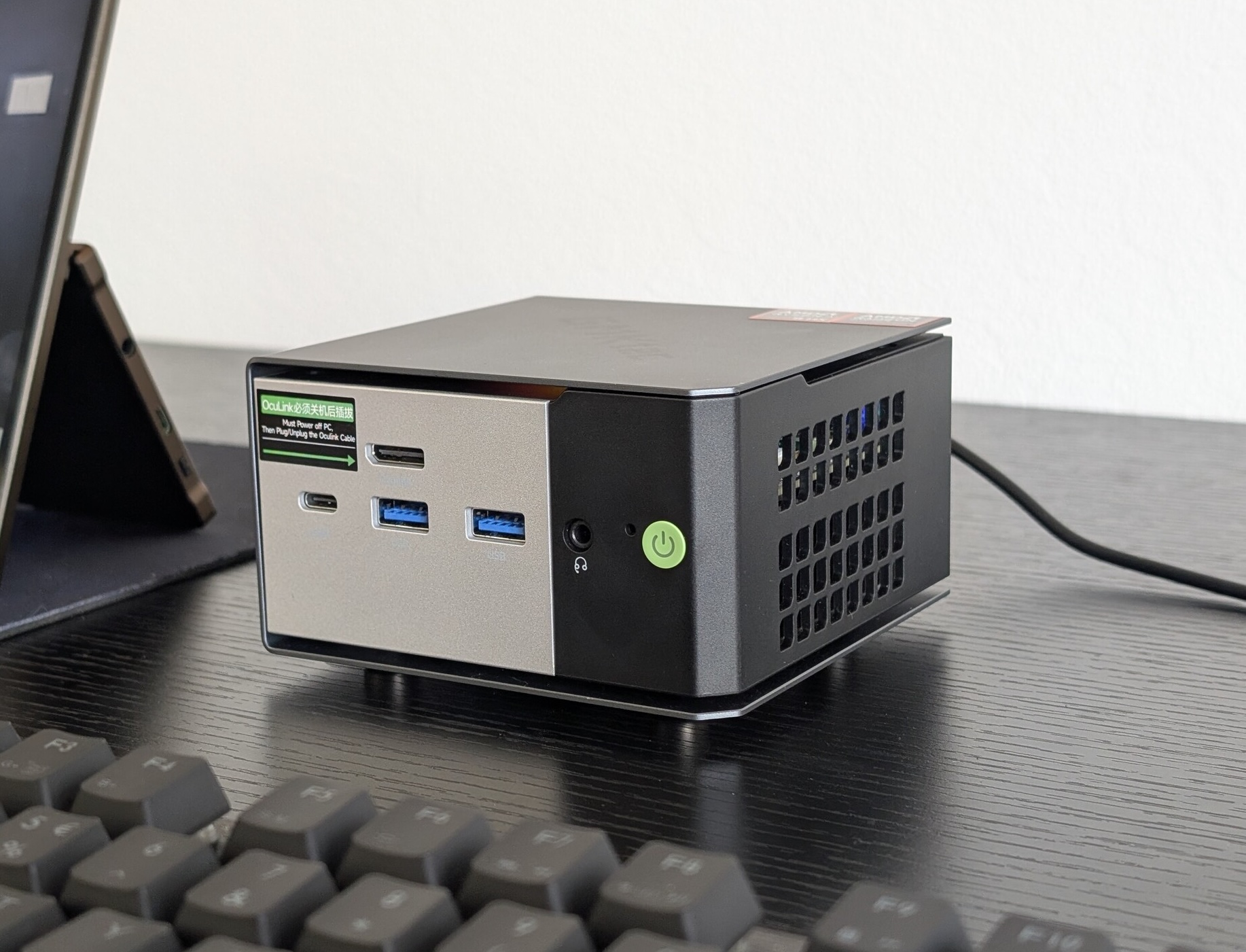
Samsung’s March 2026 update arrives for Galaxy Z Fold 7, Flip 7, TriFold, Fold 6, Flip 6 and more

Samsung has widened the rollout of its March 2026 update, now covering the Galaxy Z Fold 7, Flip 7, TriFold, Fold 6, Fold SE, and Flip 6.

The expansion follows the initial release for the Galaxy S25 series. Users in South Korea are lucky as they are getting priority access to the latest patch. Samsung is updating seven foldable phones in one go, with expansion following soon.

Software information

If you own a Galaxy Z Fold 7, Flip 7 FE or TriFold, the update comes with PDA build version ending with AZC1.

Owners of the Galaxy Z Flip 7 are getting the AZC2 build, which seems a little fresher than Fold 7, Flip 7 FE, and TriFold.

Foldables released in 2024 (Z Fold 6, Flip 6 and Fold SE) are getting the March patch with CZC1 release number.
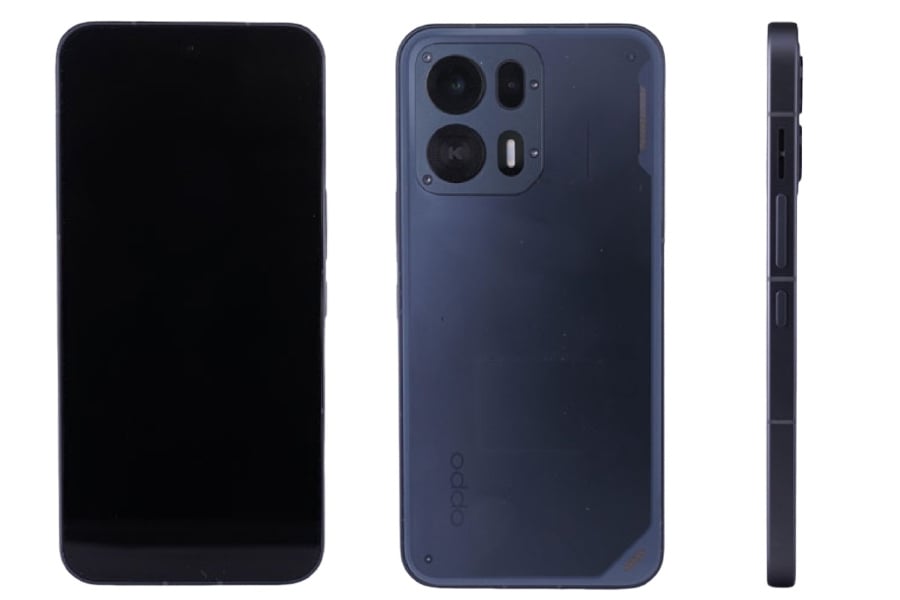
What’s new in March 2026 update?

Samsung’s March update is equipped with over five dozen Android and One UI patches. It brings fixes for 60 CVE items from Google and 7 from Samsung.

One UI 8.5 update is on the verge of release as internal development of One UI 9 has begun, and the March patch has also started to arrive as the last OTA based on One UI 8.0.

Updated apps

Expect a few apps to be updated alongside the software update. Samsung usually tags new app builds in security updates to improve functionality. You can check more details on the changelog page after the phone fetches the update.

When to expect One UI 8.5?

Samsung will prioritize the Galaxy S25 series in Stable rollout. Galaxy Z Fold 7 and Z Flip 7 will be updated in the second wave. Meanwhile, older devices could be treated in a group once the stability is verified on newer models.

Expect the update for Galaxy S25 series and 2025 foldables by April, with older ones to follow by the end of April or early May.

The post Samsung’s March 2026 update arrives for Galaxy Z Fold 7, Flip 7, TriFold, Fold 6, Flip 6 and more appeared first on Sammy Fans.

Samsung Galaxy S25 gets March 2026 update before the S26

Samsung once again proved it doesn’t set priority based on device age. Last year’s Galaxy S25 series is getting priority treatment; Samsung started the rollout of the March 2026 security update.

Owners of Galaxy S25, S25+, and S25 Ultra phones have started receiving the March 2026 security update. The update is initially available in South Korea, and users around the world will see the expansion sequentially.

2026 has witnessed a significant delay in Samsung’s software rollout mechanism. The company has stretched the timeline for bringing newer patches. Updates that should have arrived at the beginning are not coming after mid-month.

Though a bit late, the March 2026 update provides necessary patches to Samsung phones. The company revealed earlier this month the details of March SMR; the package contains fixes for 67 vulnerabilities.

Among the total patches, sixty patches come to Android CVEs, while the remaining seven target One UI. Samsung also includes updates for stock apps to elevate the overall user experience, as apps play a vital role in performance.

It’s a seamless update.

Galaxy S25 series supports Seamless Updates functionality. You don’t need to skip the update if you’re busy right now. Let it download and extract while you use your smartphone, as the majority of the process happens online.

Thereafter, a quick reboot will finish the installation process.

To download the update, open system Settings, followed by Software update and Download and install.

Samsung Galaxy S25 Ultra March 2026 Update

Source – Samsung Community Korea

One UI 8.5

Samsung has been running the One UI 8.5 Beta Program since December last year. The company is expected to push another (8th) Beta to the Galaxy S25 series. The stable build will likely be available for the flagship phones next month.

The post Samsung Galaxy S25 gets March 2026 update before the S26 appeared first on Sammy Fans.

Samsung Care+ is a must have for Galaxy S26 buyers – Here’s why

Samsung says Care+ subscription has become a must-have as the Galaxy S26 trend grows. This is not just another phone purchase, but a serious investment.

We are no longer living in the two-year upgrade era. Today, people are holding onto their phones for over three years, often closer to three and a half, which changes everything.

A device like the Galaxy S26 is built to last that long. The hardware can handle it, the software will evolve, and the AI layer will only get better with updates.

A single drop, a cracked display, water damage on a trip: these are not rare events over a 3.5-year ownership window. They are almost inevitable, and without protection, every one of those moments becomes expensive.

Here is something more buyers are starting to consider, and rightly so. Resale value.

Roughly one in four users now factor in how much their phone will be worth when they eventually move on. That matters, especially if you are already eyeing what Samsung might do with a future Galaxy S29.

Condition is everything in the resale market.

A well-maintained device, repaired with original parts, backed by a service history, holds its value far better than one with third-party fixes or visible damage.

This is where Samsung Care+ quietly shifts from being a safety net to something else entirely.

Samsung Care Plus

Repairs are not just repairs

There is a difference between getting a phone fixed and getting it restored properly. Repairs are handled by certified technicians who work specifically on Galaxy devices, using genuine parts.

Samsung Care+ extends beyond borders. Whether you are in Seoul, London, Los Angeles, or Barcelona, you are not left searching for a reliable fix in an unfamiliar place. For frequent travelers, this alone makes a strong case.

The 60-day window you should not miss

Samsung gives you a 60-day window from the time you purchase your Galaxy S26 to enroll in Care+. You can sign up during checkout, or later through your phone itself by heading into Settings, then About Phone, then Samsung Care+.

The post Samsung Care+ is a must have for Galaxy S26 buyers – Here’s why appeared first on Sammy Fans.

Samsung Galaxy S26 Ultra is here, but this Galaxy Z Fold 7 deal steals the show

Samsung recently Galaxy S26 series, and it is already creating buzz as many people are excited about its features. But if you love foldable phones, there is another device that still stands out – the Samsung Galaxy Z Fold 7. Right now, you can get it at a big discount on Amazon.

The Galaxy Z Fold 7 usually costs $1,999.99. But for a limited time, Amazon is selling it for $1,674.99. That’s a saving of $325, or about 16% off. This makes it one of the best deals available for a premium foldable phone.

However, the deal is only for the 256 GB model in Blue Shadow color. Other colors are available, but they only have quite a low discount of about 1-2%. So, if you want the biggest savings, the Blue Shadow version is the one to choose.

The Galaxy Z Fold 7 is a premium foldable design, which opens like a book to give you a large main screen. When folded, it works like a regular smartphone with a cover display. It offer slim design, an amazing processor, a stunning camera, and a good battery life.

Samsung Galaxy Z Fold 7

Source – Samsung Mobile Press

While the new Galaxy S26 Ultra is getting a lot of attention, the Galaxy Z Fold 7 still offers something unique. It is great for people who want a phone that can do more than just make calls and run apps. With its foldable screen and multitasking features, it is designed for users who want both style and functionality in one device.

This deal is only available for a limited time. If you have been thinking about buying a foldable phone, now is the perfect time to act. Don’t miss your chance to save on the Galaxy Z Fold 7. Click here to visit the deal page.

Google Search Top Stories Preferred Source

The post Samsung Galaxy S26 Ultra is here, but this Galaxy Z Fold 7 deal steals the show appeared first on Sammy Fans.

New trailer shows Spider-Man using Samsung foldable phone

Samsung is getting a lot of attention in the first trailer for Spider-Man: Brand New Day. In the trailer, Spider-Man is hanging from a tall building while using a Samsung foldable phone.

In past Spider-Man movies, Peter Parker usually used Sony Xperia phones, so this is a big change. It also shows how Samsung is becoming more visible in the Marvel movies.

The trailer starts with Spider-Man in action, but instead of just fighting or swinging, he stops to scroll through Instagram Reels. He watches videos of his friend Ned and his girlfriend MJ.

Samsung Galaxy Flip Spiderman Trailer

Image via Spider-Man (YouTube)

The phone Spider-Man is using looks like it is from the Galaxy Z Flip series. It could be the Samsung Galaxy Z Flip 6 or the Samsung Galaxy Z Flip 7. Many people think it is the Z Flip 6 because of the silver camera rings on the back.

Spider-Man: Brand New Day will be released in theaters worldwide on July 31, 2026. Fans are excited not only to see Spider-Man’s new story but also to spot the Samsung Galaxy Z Flip in action.

Google Search Top Stories Preferred Source

The post New trailer shows Spider-Man using Samsung foldable phone appeared first on Sammy Fans.

Samsung revises Galaxy FE strategy with new OLED supply partner

Samsung is trying to reduce the cost of making its smartphones as prices of RAM and memory parts keep increasing. Since memory is expensive and hard to negotiate, the company is looking at other components where it can save money. 

According to information via TheElec, Samsung has decided to buy OLED screens from China Star Optoelectronics Technology (CSOT), a Chinese company. These screens are cheaper than the ones made by its own division, Samsung Display. Reports say Samsung has ordered around 15 million OLED panels from CSOT.

These cheaper screens will likely be used in mid-range phones like the Galaxy A series and also in Galaxy FE (Fan Edition) models. In the past, Samsung mostly used displays made by Samsung Display, even for its mid-range phones. But now, rising costs are forcing the company to change its strategy.

Samsung Display Car OLED

Source – Samsung Display

The main reason for choosing CSOT is the lower price. Their OLED panels are said to be about 20% cheaper. This helps Samsung balance the increasing cost of memory parts. It also shows that Samsung wants to depend less on its own companies and use more outside suppliers.

However, this decision has caused some tension inside Samsung. Samsung Display was not happy about losing orders and even tried to stop the move, but it did not succeed.

It is still unclear how these cheaper displays will perform. For budget phones, users may not notice much difference. But in FE models, which are often compared to flagship phones, the difference could be more noticeable. Stay tuned for more information.

Google Search Top Stories Preferred Source

The post Samsung revises Galaxy FE strategy with new OLED supply partner appeared first on Sammy Fans.

Spotify brings a redesigned music experience to Galaxy Watches

Samsung Galaxy Watch users are getting a new Spotify update that makes listening to music easier and more fun. The update brings a fresh look and smoother performance, so users can enjoy music without any confusion.

The main change is in the Now Playing screen. Now, the album cover is big and clear on the screen. The buttons are hidden at first, which makes the screen look clean. But you can still control your music easily with simple taps and gestures.

To control songs, you just need to tap once to play or pause. If you want to change songs, double-tap on the left side to go back and double-tap on the right side to skip. If you want more options, you can swipe up to see all the controls like play, pause, next, and previous.

Spotify Galaxy Watch update

Image via SamMobile

When you swipe up again, you will see the Home screen. Here, you can quickly go to search, your library, or your recently played songs. If you scroll down, you will find settings where you can change audio quality, manage downloads, and connect your earphones. The “Your Library” section is also improved

Also, the app now feels faster. Navigation between screens is smooth and quick. This update makes Spotify on Samsung Galaxy Watches simple, clean, and easy for everyday use.

Google Search Top Stories Preferred Source

The post Spotify brings a redesigned music experience to Galaxy Watches appeared first on Sammy Fans.

Google adds helpful features via March 2026 Play System update

Google regularly works to make Android phones better. Instead of giving big updates only once in a while, it now sends small updates regularly via Play System Services. These updates happen quietly in the background, so users don’t have to do anything.

The Play System update is a simple way for Google to improve your phone without a full system update. It helps fix bugs, improve security, and add new features. These updates come through Google Play services, the Google Play Store, and other Google features.

The latest March 2026 update brings many useful changes, including Wi-Fi Sync feature. It lets your devices share saved Wi-Fi networks. So, if you connect one device, others can connect easily too.

There are also improvements in signing into apps. You will see fewer pop-ups, making the process smoother. Security is better as well, with new options to protect your device.

Samsung Device Security

Payments are now easier as users can make payments using their smartwatch without opening the wallet app. Support for digital IDs and payment systems is also growing, making everyday tasks easier.

For gaming, you can try some paid games before buying them. You can also buy a game once and play it on different devices. Other improvements include a redesigned wishlist with price alerts, faster gaming updates, and better-looking app pages with vertical videos. 

If the update is available, download it now on your smartphone. Google will soon start rolling out these updates for Samsung devices. Stay tuned.

Google Search Top Stories Preferred Source

The post Google adds helpful features via March 2026 Play System update appeared first on Sammy Fans.

Google may refresh Circle to Search with a colorful twist

Google may soon update the look of its Circle to Search feature. This change is only about design, not new functions. The aim is to make the feature look more colorful and modern while keeping it simple to use.

Currently, when you use Circle to Search, you draw a circle or line on your screen, and a white outline shows exactly what you selected. There is also a very light colorful trail, but most people hardly notice it because the white line stands out more.

In a new beta version of the Google app, Google is testing a different look spotted by Android Authority. Instead of the white outline, the feature shows a bright, colorful gradient trail when you circle something. This trail uses colors similar to Google’s logo, which makes the experience feel more lively and Google-like.

Circle to Search Colorful Makeover

Image via Android Authority

There is no change in how Circle to Search works. Users can still circle, tap, or draw on the screen to search as usual. The update only improves the visual experience. The new animation looks smoother and more fun. Even though it is a small change, it can make the feature more enjoyable to use.

Since this update was found in a beta version, it is still under testing. Google has not confirmed if or when it will be released to all users. It is also not clear if users will get an option to choose between the old and new designs. Stay tuned for more information.

Google Search Top Stories Preferred Source

The post Google may refresh Circle to Search with a colorful twist appeared first on Sammy Fans.

Samsung Galaxy Z Flip 8 likely retain charging specs of Z Flip 7

Samsung is getting ready to launch its new foldable phone, the Galaxy Z Flip 8. Fans hoping for faster charging might be disappointed. Now, the latest information reveals the Galaxy Z Flip 8 may charge at the same speed as the current model, the Galaxy Z Flip 7. It may also keep a similar battery size.

According to a report via 91Mobiles, a device believed to be the Galaxy Z Flip 8, with model number SM-F7760, has been recently spotted on China’s 3C certification platform. The listing shows it supports charging at 9V and 1.67A, which equals 25W. Since 3C usually lists wired charging speeds, this likely refers to charging with a cable.

If this is correct, the Galaxy Z Flip 8 will have the same 25W wired charging as the Galaxy Z Flip 7. While this speed is acceptable for a small foldable phone, it is not very fast compared to some other smartphones on the market. This means users may not see a big change in charging times.

Samsung Galaxy Z Flip 7 Charging speed

Image via 91mobiles

Previous reports suggested that the Galaxy Z Flip 8 may also not have a bigger battery than the Z Flip 7. Combined with the new charging information, it seems Samsung is keeping the battery and charging largely the same.

The company might focus on other upgrades, such as display, camera, or software features for Galaxy Z Flip 8. Stay tuned for more information.

Google Search Top Stories Preferred Source

The post Samsung Galaxy Z Flip 8 likely retain charging specs of Z Flip 7 appeared first on Sammy Fans.

Samsung Galaxy Z TriFold 2 in development with thinner design and improved hinge

Samsung is changing its plans for foldable smartphones after stopping the Galaxy Z TriFold sale just a few months after launch. The device did not stay in the market for long, but the company is not giving up on new ideas. Instead, Samsung is now reportedly improving its TriFold designs and bringing better versions in the future.

According to the information via yeux1122, Samsung has already started working on the next version, expected to be called the Galaxy Z TriFold 2. The company is trying to make this new model thinner and lighter than before.

The main improvement of this new smartphone is the hinge, which is the folding part of the phone. Samsung is designing a new hinge that is stronger and more durable. Most of the testing for this hinge is already done, which means the development is moving forward smoothly.

Samsung Galaxy Z TriFold

Image – Samsung Newsroom

The new TriFold 2 is expected to be slimmer, but it may still be slightly thicker than the Galaxy Z Fold 7, which is known for its thin design. Samsung seems to be focusing on making the phone strong and long-lasting, even if it adds a little extra thickness.

Along with this, Samsung is also working on a different type of device with a sliding screen. Instead of folding, this phone will expand by sliding out. It may use a simple manual sliding system instead of a motor, making it easier to use and more reliable. When fully opened, the display could be around 7 inches.

This sliding device might launch later, possibly in late 2027 or early 2028. Samsung is continuing to experiment and improve its future smartphones.

Google Search Top Stories Preferred Source

The post Samsung Galaxy Z TriFold 2 in development with thinner design and improved hinge appeared first on Sammy Fans.

Microsoft reveals next gen DirectX ray tracing specifications launching summer 2026

The new DXR specifications include features like clustered geometry, partitioned TLAS and indirect acceleration structure operations, which should accelerate ray tracing rendering performance by enabling more efficient geometry and scene processing on the GPU side. Additionally, the GPU can now perform some of the tasks that were traditionally processed on the CPU side.

Samsung flagships barely settle before the next update hype begins

Galaxy S26 flagships were delayed by a month, but Samsung didn’t delay the next update development cycle. On February 25, Samsung announced the Galaxy S26 series, and the public sales started on March 11, 2026.

The Galaxy S26 series should have arrived in January, but changes in the lineup caused the company to delay the event by four weeks. Talking about the next update, the new Samsung flagships will get one later this year.

One UI 9 appears days after Galaxy S26 release

We are talking about the One UI 9, based on Android 17. It will arrive on existing Samsung phones later this year. The rollout will follow the initial debut with the next-generation foldable phones, including the Z Fold 8 and Z Flip 8.

The foldable phones will ship with One UI 9 preinstalled. The launch is expected to take place in July, and the same month may witness the release. Meanwhile, a Beta Program of the software will likely arrive within two months.

Like last year, the hype for the next major OS upgrade has begun even before the company’s most anticipated flagships have settled. The release took place on March 11 only, and the first evidence of One UI 9 floated within a week.

Should I get One UI 9 now?

One UI 8.5 is an impressive software, which is even considered a major build, unlike One UI 8.5. Internal testing has started, and some users even managed to install the internal build on their smartphones for early access.

General users aren’t recommended to consider switching to the internal testing build. You can jump to the One UI 9 Beta when it goes official sometime in May. At present, One UI 8.5 is the best Samsung has to offer to its users.

We hope One UI 9 will further enhance the Galaxy user experience. There’s plenty of time for development and testing; Samsung will utilize this time.

The post Samsung flagships barely settle before the next update hype begins appeared first on Sammy Fans.

Why dbrand says Samsung’s own cases can’t hit 25W charging on Galaxy S26 Ultra

dbrand claims that even Samsung’s official magnetic cases can’t reliably hit the full 25W wireless charging speeds on the Galaxy S26 Ultra.

The case maker brought the issue on Reddit after putting four official Samsung cases through testing with Samsung’s own $75 Magnet Wireless Charger and a 45W travel adapter.

If the claims are true, that’s a bad look for a company that’s selling both the Galaxy S26 cases 25W wireless charging ecosystem and the hardware supposedly designed to deliver it.

The magnets exist, the cases fit, the charger is official, but dbrand says they still haven’t figured out Samsung’s proprietary handshake that unlocks the full 25W charging on this setup.

If dbrand can’t crack it, nobody can.

Samsung’s own cases claim the magnets align the S26 Ultra properly for fast wireless charging, but if dbrand’s correct, this isn’t about whether magnets are installed or not.

It looks like Samsung’s implementation is leaving other accessory makers guessing at the final step needed to achieve full-speed charging.

Some people who actually bought this phone report the complete opposite experience.

One S26 Ultra owner with an ESR-cooled Qi2.2 charger and a dbrand magnetic case says (via piunikaweb) they only get 25W charging if they place the phone on the charger unplugged, then plug it in afterward.

This adds to a growing list of headaches for early S26 Ultra buyers, including reports that some owners tried to return their phones over screen quality, only for Samsung to offer partial refunds to keep them from sending devices back.

Samsung Galaxy S26 Ultra dbrand 25W charging

The post Why dbrand says Samsung’s own cases can’t hit 25W charging on Galaxy S26 Ultra appeared first on Sammy Fans.

Samsung and AMD are assembling the backbone of next-gen AI with HBM4

Samsung and AMD are tightening the loop around AI infrastructure. The new MOU signals something more integrated: memory, logic, packaging, and system architecture being tuned as a single stack.

The signing ceremony was attended by Dr. Lisa Su, Chair and CEO of AMD, and Young Hyun Jun, Vice Chairman & CEO of Samsung Electronics.

At the center sits HBM4. Samsung is pushing its 1c DRAM node paired with a 4nm logic base die, targeting up to 13 Gbps per pin and roughly 3.3 TB/s of bandwidth.

AMD’s next Instinct part, the MI455X, is being positioned as the primary consumer of that bandwidth. If Samsung can hold yield rates on that 4nm base die while stacking aggressively, AMD gets a cleaner path to scale without the usual power penalties.

Then there is “Venice,” AMD’s 6th Gen EPYC platform. DDR5 is still in play here, but the tuning matters. High-capacity, high-efficiency DIMMs become critical when CPUs are orchestrating GPU-heavy nodes.

“Samsung and AMD share a commitment to advancing AI computing, and this agreement reflects the growing scope of our collaboration,” said Young Hyun Jun, Vice Chairman & CEO of Samsung Electronics. “From industry-leading HBM4 and next-generation memory architectures to cutting-edge foundry and advanced packaging, Samsung is uniquely positioned to deliver unrivaled turnkey capabilities that support AMD’s evolving AI roadmap.”

Samsung AMD AI Chip Collaboration

Memory latency and consistency start to show up in scheduling efficiency, especially in mixed workloads where inference and training coexist. Meanwhile, AMD is clearly thinking beyond individual accelerators.

Helios is a rack-scale design philosophy; GPUs, CPUs, and memory are being co-optimized as a single unit. That changes how vendors plug in. Instead of shipping components, they are effectively shaping system behavior at the silicon level.

You can see it in how the stack lines up:

  • HBM4 feeding MI455X with sustained bandwidth
  • EPYC “Venice” handling orchestration with DDR5 tuned for consistency
  • Helios is tying it together into a predictable, scalable rack unit

“Powering the next generation of AI infrastructure requires deep collaboration across the industry,” said Dr. Lisa Su, Chair and CEO of AMD. “We are thrilled to expand our work with Samsung, bringing together their leadership in advanced memory with our Instinct GPUs, EPYC CPUs and rack-scale platforms. Integration across the full computing stack, from silicon to system to rack, is essential to accelerating AI innovation that translates into real-world impact at scale.”

The post Samsung and AMD are assembling the backbone of next-gen AI with HBM4 appeared first on Sammy Fans.

Citizen x Marvel: New stealthy X-Men-themed watch with Eco Drive tech and black leather strap officially revealed

Citizen’s latest Marvel release is an X-Men-themed watch that combines comic-inspired design with its light-powered Eco-Drive movement. Priced at $375, the model features a prominent “X” motif and subtle color accents tied to the franchise. It's currently limited to the US market, with a broader release likely to follow.

All About Samsung One UI 9 – Features, Release and Eligible Devices

Samsung has quietly flipped the switch. Internal development for One UI 9 is now underway, and if you’ve been tracking firmware builds as we do, the early signs are already there.

Test strings, backend references, and subtle framework changes all point in one direction: Android 17 is coming, and Samsung is not wasting time either. If history is any indication, this is where things start to get interesting.

When will One UI 9 arrive?

Here’s where things get a bit predictable. Samsung has a rhythm, and it rarely breaks it. If things stay on track, One UI 9 should debut around mid-2026, alongside the next foldables. That means the Z Flip 8 and Z Fold 8 will probably be first in line.

From there, expect the usual pattern:

  • Early beta builds for the Galaxy S26 series
  • Gradual rollout to older flagships
  • Then the mid-range lineup follows

Don’t hold your breath for a sudden early release. Samsung prefers controlled rollouts, especially with major Android upgrades.


What to expect in One UI 9 update?

One UI 9 is not trying to reinvent the wheel, as that already happened with One UI 8.5.

We’re seeing thicker, more tactile sliders, cleaner spacing, and UI elements that feel easier to interact with one-handed. The kind of refinements you don’t notice in a changelog, but immediately feel in daily use.

Animations are getting attention, too. Early builds suggest improved waveform transitions, especially in media controls. The latest One UI 9 software has made it smoother and less jittery, but it’s not final yet.

We will add more to this section as things unfold.

Samsung One UI Design


Eligible Devices

If your Galaxy received One UI 8, the odds are in your favor. The full tentative list:

Galaxy S series phones

  • Galaxy S23 Series (S23, S23+, S23 Ultra, S23 FE)
  • Galaxy S24 Series (S24, S24+, S24 Ultra, S24 FE)
  • Galaxy S25 Series (S25, S25+, S25 Ultra, S25 Edge, S25 FE)
  • Galaxy S26 Series (S26, S26+, S26 Ultra)

Mid-Range A Series

  • Galaxy A35 5G
  • Galaxy A25 5G
  • Galaxy A15 5G
  • Galaxy A16 5G
  • Galaxy A26 5G
  • Galaxy A36 5G
  • Galaxy A56 5G

Z Fold Series

  • Galaxy Z Fold 5
  • Galaxy Z Fold 6
  • Galaxy Z Fold 7

Z Flip Series

  • Galaxy Z Flip 5
  • Galaxy Z Flip 6
  • Galaxy Z Flip 7

Galaxy Tablets

Samsung’s tablet lineup follows a similar update schedule to smartphones, with premium models receiving longer support.

  • Galaxy Tab S9 Series (S9, S9+, S9 Ultra, S9 FE)
  • Galaxy Tab S10 Series (S10+, S10 Ultra)
  • Galaxy Tab S11 Series (S11 and S11 Ultra)

Follow SammyFans for the latest Samsung Galaxy news, One UI Beta sign-up windows, and changelog leaks as development progresses.


Disclaimer

This is not an official Samsung confirmation for One UI 9 eligibility.

No device list has been published by Samsung for this specific update as of March 2026.

Eligibility depends on how many major OS versions remain in each device’s promised cycle, regional variations, carrier involvement, and final decisions from Samsung.

Policies can change, and some features (especially advanced Galaxy AI ones) may be limited to newer hardware.

Always wait for Samsung’s official announcement, check website, newsroom, or the Samsung Members app for the official list when it drops.

Don’t base any purchase or upgrade solely on this information.

The post All About Samsung One UI 9 – Features, Release and Eligible Devices appeared first on Sammy Fans.

Samsung Galaxy Tab S12 tablets may launch in September, pricing tipped

Samsung may unveil two new premium tablets later this year. The company is already working on the Galaxy Tab S12+ and Tab S12 Ultra, with a new report revealing the potential launch timeline and pricing information.

According to ETNews, Samsung Galaxy Tab S12 tablets may launch in September this year. The lineup would bring two models like last year. However, there’s a strategic shift: the base model is getting replaced by Plus.

There were three models, base, Plus and Ultra, in the Galaxy Tab S9 series. Samsung launched the Galaxy Tab S10+ and Galaxy Tab S10 Ultra. Meanwhile, the succeeding lineup brought Galaxy Tab S11 and Galaxy Tab S11 Ultra.

Samsung seems to have decided to bring base and Ultra a year, and Plus and Ultra in the succeeding year. This year looks set for the Galaxy Tab S12+ and Tab S12 Ultra, and it could also be a part of an experiment with branding.

The report says the Galaxy Tab S12 series may start at $1,100 to $1,200. Chances for the Snapdragon chip are not so much, and Samsung could keep its relationship with MediaTek for the premium Dimensity processor.

Galaxy Tab S12s may join the Galaxy S26 FE. The launch may just take place through a press release, not an Unpacked event. We are far from the tentative timeline, and the industry will first welcome three foldable phones.

Samsung is struggling with rising RAM and memory prices. The Galaxy S26 series has witnessed a price hike along with several other models. It remains to be seen if this affects the next-generation tablet lineup coming this September.

The post Samsung Galaxy Tab S12 tablets may launch in September, pricing tipped appeared first on Sammy Fans.

Samsung says its Chip Division is the only true ‘One-Stop AI Solution’ at AGM

Samsung announced it held the Annual General Meeting on March 18. At this year’s AGM, Samsung made a big claim that its DS Division is the world’s only “One-Stop AI Chip Solution” along with new products like the Galaxy S26 series and TriFold.

Inside the convention center, the mood wasn’t just routine corporate formality. There was a quiet acknowledgment of the elephant in the room: Samsung has crossed the 1,000 trillion won market cap milestone.

Samsung’s Device Solutions division is now being framed as something more than a semiconductor business. According to Jun, it is the only player in the world that can deliver a full stack from logic to memory, foundry, and packaging.

The company has the rare advantage of owning every critical layer of the chip pipeline. Logic design, advanced memory like HBM, contract manufacturing, and packaging technologies all sit under one roof. Competitors don’t check all those boxes.

  • TSMC dominates foundry.
  • SK Hynix leads in high-bandwidth memory.
  • NVIDIA controls the AI compute narrative.

The company is telling customers and investors that it can optimize the entire AI stack vertically, from silicon design to final packaging. In theory, that means better performance tuning, tighter integration, and faster time to market.

The “one-stop AI solution” is one of the boldest positioning plays we’ve seen from the company in years. It leans into its biggest strength, scale. No other tech giant operates across so many layers of the semiconductor stack.

2026 is shaping up to be a defining year. If HBM4 lands strongly, if Exynos 2600 delivers, and if devices like the Galaxy S26 and TriFold actually showcase meaningful AI gains, Samsung’s narrative starts to hold weight.

The post Samsung says its Chip Division is the only true ‘One-Stop AI Solution’ at AGM appeared first on Sammy Fans.

New Galaxy Watch 5 update closed the downgrade door

Samsung has a new firmware update for the Galaxy Watch 5 and Watch 5 Pro that essentially closes the downgrade door.

On paper, Build DZB6 looks routine due to its February 2026 security patch. But dig into the fine print, and there is a meaningful shift that deserves attention.

You can’t rollback after DZB6 update

This update quietly tightens Samsung’s security policy in a way that closes the door on software downgrades. Once you install DZB6, there is no going back to an older build with a lower security level; that path is now permanently blocked.

For the broader Galaxy community, this is a double-edged move. From a security standpoint, it makes complete sense. Smartwatches today handle sensitive data, health metrics, payments, and device authentication.

Allowing users to roll back to older firmware creates an obvious attack surface. A locked upgrade path ensures every Watch 5 unit stays on a baseline that Samsung considers safe. No weak links, no outdated patches lingering in the ecosystem.

The changelog itself keeps things generic. Stability improvements related to device operation and security-related stabilization improvements.

DZB6 is more than a routine patch. It signals where Samsung is heading with wearable security. If you value stability and protection, this is a welcome step.

How to update?

To update your Galaxy Watch, open the Watch settings on your Watch or Galaxy Wearable app. Navigate to the Watch software update and tap Download and install; it will initiate fetching the latest OTA update from the server.

The post New Galaxy Watch 5 update closed the downgrade door appeared first on Sammy Fans.

Nvidia CEO Jensen Huang says gamers ‘completely wrong’ about DLSS 5

Nvidia CEO Jensen Huang has dismissed gamers’ criticism that DLSS 5 homogenizes game visuals and “yassifies” character faces, calling detractors “completely wrong” after backlash to examples cited from titles like Resident Evil Requiem and Hogwarts Legacy. Huang argues DLSS 5 is “neural rendering” that applies generative AI at the geometry level under developer control rather than a post-processing filter, with its real-world visual and performance impact to be tested ahead of a gradual rollout in fall 2026.

MacBook Neo teardown: iFixit gives Apple’s most repairable laptop in 14 years a 6/10 score

iFixit’s teardown of Apple’s $599 MacBook Neo awards it a 6/10 repairability score, Apple’s best in 14 years, thanks to a screw-mounted battery, modular USB‑C ports, easier display removal, and a keyboard that’s now replaceable without swapping the entire top case. The gains come with compromises, including a labor-intensive 41‑screw keyboard procedure, continued use of pentalobe screws, soldered 8GB RAM, and 256/512GB storage that limit upgrades and data recovery, and pared-back audio and trackpad hardware.

❌