In late 2025, ASUS announced the NVIDIA GeForce RTX 5060 and 5060 Ti Dual Evo graphics cards, which touted a slimmer, shorter design for improved compatibility with small form factor PC builds. Now, it has silently expanded the Dual Evo line with the ASUS Dual GeForce RTX 5070 Evo and Evo OC, both of which stuff an NVIDIA GeForce RTX 5070 12 GB GPU into a package measuring just 229 × 120 × 50 mm. ASUS has not yet publicly announced the GPUs, and they don't seem to be available via retail channels just yet, but the spec sheets and product pages are available in full on the ASUS site. As such, pricing is not yet available at the time of writing.
The OC model steps up the standard boost clock from 2,512 MHz to 2,542 MHz and the OC mode clock speed from 2,542 MHz to 2,572 MHz. Both GPUs feature the same 2.5-slot shroud and cooler design, and it seems unlikely that the OC Edition has any additional changes other than a slight vBIOS tweak to achieve the higher clocks, suggesting that you can likely get similar clock speeds with a bit of tuning in GPU Tweak III. This 2.5-slot design is thicker than the 2.0-slot design of the 5060 series Dual Evo cards, but still notably thinner than most other RTX 5070 models, like the 3.2-slot ROG Strix GeForce RTX 5070. The GPU shroud design is also somewhat more reserved than some of ASUS's recent designs, with just an angular, black, dual-texture shroud housing dual axial fans, while the GPU heat sink has a flow-through design for the rear fan. Much like the 5060 variants of the same series, the PCIe power plug is located almost centrally on the side of the GPU, instead of the traditional rearward position.
SuppleMindHQ is an AI-powered supplement command center that builds your optimal dosing schedule, times reminders to your routine, and adjusts when you miss a dose. It tracks intake and inventory, predicts when you'll run low, and allows for one-click or auto reordering from your preferred brands. The app checks interaction safety, spaces conflicting supplements, and provides clear analytics on consistency and progress. Start free, then upgrade for deeper history, templates, and cross-device sync.
With the launch of Resident Evil Requiem merely a week away, it's expected that gameplay and story leaks would start to show up online and subsequently be shared online. Capcom, however, has taken to social media platform, X, to decry the early gameplay and story leaks, asking players not to share the leaks. The gaming giant says that it wants "everyone to enjoy the game's story and experience as much as possible." Capcom adds that its legal department is working to issue DMCA take-downs of any leaks posted online, "in order to preserve your day-one experience."
The gameplay leaks in question have revealed major plot points and twists, as well as potential endings to the latest installment in the Resident Evil franchise. One Reddit thread—which fortunately is covered with spoiler tags—has collated the vast majority of the leaks, including gameplay footage of part of the game's ending. It's easy to see why a game studio would want to keep a lid on such extensive leaks about a story-driven game. Another post in the subreddit was removed by the moderators, so it looks like Capcom's take-down requests or social media plea has had some effect already.
Given the similar form factors, it's unsurprising that many gamers turned to their Steam Decks to emulate Nintendo Switch games, but that era seems to be drawing to a close, as RetroDECK, a Linux emulation platform capable of emulating multiple game systems, has just confirmed that it will be removing support for Ryubing, a fork of the now-infamous Ryujinx Switch emulator, from its available emulators. The developer behind the emulator explained in a February 19 blog post that Switch emulation would be removed in a minor update. This comes after support for Ryubing was added in a November update.
The blog mentions two main reasons for the removal of Ryubing, stating that "Switch emulation has consistently been the source of the most issues within the project, generating the highest volume of warnings, bans, toxicity, and support tickets," and adding that the questionable legality of emulators like Ryubing and Nintendo's aggressive protection of its intellectual property exposes the volunteers and community involved in the RetroDECK project to undue legal exposure. As of an upcoming update, indicated in an edit to an old blog post to be 0.10.4b, Switch emulation will be removed from RetroDECK "forever," and discussions about Switch emulation will also be banned from all of RetroDECK's communities and social platforms effective immediately.
PropertyLedger helps small landlords manage rental property accounting with simple expense tracking, organized categories, and tax-ready Schedule E reports. You can log income and expenses, attach receipts, track depreciation, and export CSVs to streamline tax prep. Organize your portfolio across single-family, multi-family, condos, and commercial units. Manage tenants and leases, monitor ROI analytics, and get monthly summaries and renewal reminders without banking add-ons or upsells.
The creator economy is evolving fast, and ad revenue alone isn’t cutting it anymore. YouTubers are launching product lines, acquiring startups, and building actual business empires. In fact, MrBeast’s company bought fintech startup Step, and his chocolate business is outearning his media arm. This isn’t just one creator’s strategy. For many, it’s the new playbook. On this episode of TechCrunch’s Equity podcast, hosts Kirsten Korosec, Anthony Ha, and Rebecca Bellan unpack how creators are diversifying beyond ads, […]
The name synonymous with Xbox—Phil Spencer—is leaving Microsoft after nearly 40 years at the company. He started as an intern back in 1988 and has been with the Xbox team since 2001, helping the project thrive in the following decades. According to the announcement, Microsoft is overhauling its Gaming division with some new names, while the old executive team has left the company. In addition to Phil Spencer, Xbox president Sarah Bond has also left the company. From now on, Asha Sharma, who currently serves as the company chief for the CoreAI product, will be taking on the new role as the CEO of Microsoft Gaming. Microsoft's CEO Satya Nadella shared a memo with all Microsoft employees about the status of this update.
Satya NadellaLast year, Phil Spencer made the decision to retire from the company, and since then we've been talking about succession planning. I want to thank Phil for his extraordinary leadership and partnership. Over 38 years at Microsoft, including 12 years leading Gaming, Phil helped transform what we do and how we do it.
Tesla's latest features an estimated 325 miles of range and features coil springs with adaptive damping, steer-by-wire with four wheel steering, a powered frunk, and heated first-row seats. The 6' x 4' bed includes a powered tonneau cover and multiple power outlets (two 120v and one 240v) with Powershare capability....
Russia is testing a 20-kilometer stratospheric balloon relay system after Starlink restrictions disrupted battlefield communications in Russian-controlled territories.
Wish controlling your music was less hassle? My three favorite features from the new Sony WF-1000XM6 earbuds make spinning your spot-on tunes or having a quick convo a breeze.
Disneyland is investing heavily in reliability upgrades that are already delivering more rides, shorter waits, and smoother visits – even as major new attractions remain years away.
Dueling pro-AI PACs have centered around backing or targeting one New York congressional bid: Alex Bores, whose RAISE Act requires AI developers to disclose safety protocols and report serious system misuse.
Last month, a UK judge ruled that Valve would have to face its day in court over a £656 million class-action lawsuit being led by Parent Zone chief executive officer, Vicki Shotbolt, over the 30% cut that the company takes from all transactions on Steam. It's not a dissimilar case to what Epic Games brought against Apple, as Shotbolt has called Valve's 30% cut "excessive" and that the company "is rigging the market and taking advantage of UK gamers." In a new report from GamesIndustry.Biz, Shotbolt further explained her case against Valve and Steam, adding that Valve is "clearly not" […]
A new report from IGN reveals that Microsoft's gaming division and Xbox are going through a major leadership shake-up. Phil Spencer will retire this coming Monday, February 23, 2026, after first joining Microsoft all the way back in 1988 as an intern. He's not the only one departing: Sarah Bond, current president of Xbox at Microsoft, is now the former president of Xbox at Microsoft, as she will resign from her role. Lastly, Microsoft's current president of its CoreAI division, Asha Sharma, will take Spencer's place as the new chief executive officer of Microsoft Gaming. Back in July 2025, we […]
The Snapdragon X series of chipsets has carved its place in the computer industry, but Qualcomm has a ton of ground to cover in both adoption and technological improvements. The recent Snapdragon X2 Elite and Snapdragon X2 Elite Extreme are ideal examples of the San Diego firm’s desire to take on its chip rivals, but it needs that extra boost that could be fulfilled by the recent hiring of former AMD executive Jason Banta. He will now serve as Qualcomm’s Vice President of Global Compute Sales, putting him in charge of consumer and commercial ‘go to market’ channels. Banta’s 23-year career […]
It's been nearly nine years since the launch of NieR: Automata, the highly acclaimed action RPG developed by PlatinumGames and published by Square Enix. Fans have long been waiting for news of a sequel. Today, as part of a celebration for the game's latest sales milestone (it has now sold 10 million units across all platforms), they at least got a teaser. It sounds like the gears are finally moving. But why did it take so long? Well, it seems like Game Director Yoko Taro and Square Enix found it hard to reach an agreement. The outspoken creative first said […]
Bethesda's Todd Howard revealed the Fallout TV show was originally going to start in New Vegas, but he told the writers to wait to do it until Season 2.
Yves Guillemot recently made an appearance in an interview with Variety, in which the Ubisoft CEO spoke about both the ongoing cost-cutting measures and in-development projects at the French gaming giant. When asked about upcoming projects in the Assassin's Creed and Far Cry franchises, Guillemot responded that there are "several" Assassin's Creed titles in development at Ubisoft, and that those titles will involve both single-player and multiplayer gameplay. Similar is true for the Far Cry franchise, in that Ubisoft currently has two Far Cry projects in development, although Guillemot declined to specify any further on what those projects were. One of the upcoming Assassin's Creed projects is almost certainly the much-rumored Assassin's Creed Black Flag remake that is slated to launch sometime in 2026.
This interview and the promises of new Far Cry and Assassin's Creed games comes the same week as Ubisoft confirmed a round of layoffs at its Toronto studio as part of its heavily criticized company-wide restructuring and cost-savings plan that will likely see up to 18% of the company laid off in order to save €200 million in five years. That same plan has seen Ubisoft divide development efforts into five creative houses, each of which will be responsible for a handful of IPs. When asked about this and the necessity for the cost reduction, Yves Guillemot blamed rapid post-COVID growth and flat-lining demand where continued growth had been anticipated. He goes on to say that "our priority today is to build a more focused, agile company, with stronger teams that strike the right balance between senior expertise and young talent and who are well positioned to deliver the highest quality games." If recent game cancellation trends at Ubisoft are anything to go by, nothing is set in stone, and the projects that have been in the pipeline for the longest seem to be the most likely to be cancelled or delayed, as was the case with the Prince of Persia: Sands of Time remake.
Thanks to a new table specification matrix published by a known leaker Jaykihn on X, we are seeing the final specifications of Intel's long-rumored "Bartlett Lake-S" Core 200E family of CPUs with P-Cores only. This platform is designed to fit inside Intel's LGA-1700 socket, but from a consumer standpoint represents a non-existent product that will not reach their hands, as Intel has abandoned the plan to launch this highly anticipated gamer CPU. Instead, Intel will only offer it for its edge and embedded products. At the top of the stack is the Core 9 273 PQE SKU, which is a 12 P-Core variant with 24 threads and a base frequency of 3.4 GHz. This model can boost all of its 12 cores to 5.3 GHz, while a single thread can go up to 5.9 GHz independently for tasks that require intensive single-threaded performance. It is equipped with 36 MB of L3 cache and an integrated GPU with 32 EUs of Xe-LP graphics.
Interestingly, the entire lineup is separated into three categories. One is a high-TDP PQE with a base power of 125 W, while the middle PE models are 65 W designs with lower clocks. The weakest models are the PTE SKUs that have a TDP of 45 W, which are more ideal for edge deployments where power/efficiency is the most important factor. Across the lineup, there are versions with 8, 10, and 12 cores, all with Hyper-Threading for 16, 20, and 24 threads. Some SKUs from the PE and PTE lineups do not enjoy Intel vPro and ECC memory support, while the PQE high-power SKUs are all equipped with vPro and ECC memory support. You can check out the complete table comparison and product segmentation below for more specific information on different models.
fuelOS helps you track what you eat without friction. Capture meals by speaking, snapping a photo, or typing, and keep your nutrition organized on iOS. Build consistent logging habits and see a clear picture of your daily intake.
Snapveil lets you create private, shareable photo galleries for weddings and events. Guests upload by scanning a QR code—no app required—while you control permissions, set passwords, and manage collaboration. It organizes images with AI tags and location data, supports custom albums, and delivers fast browsing even with thousands of photos. Pay per event with flexible storage and download options, from SD to original quality.
Several updates are introduced in iOS 26.4, including an AI-powered playlist-generation feature in Apple Music, support for video content in the Podcasts app, end-to-end encryption (E2EE) for RCS messages, and more.
The startup, founded by accountants who worked at Flexport, Miro, Hopin and Thrive Global, automates the difficulties of prepping financial statements.
Microsoft found 31 companies hiding prompt injections inside "Summarize with AI" buttons aimed at biasing what AI assistants recommend in future conversations.
Well, it appears that the chip startup Taalas has found a solution to LLM response latency and performance by creating dedicated hardware that 'hardwires' AI models. Taalas Manages to Achieve 10x Higher TPS With Meta's Llama 8B LLM, That Too With 20x Lower Production Costs When you look at today's world of AI compute, latency is emerging as a massive constraint for modern-day compute providers, mainly because, in an agentic environment, the primary moat lies in token-per-second (TPS) figures and how quickly you can get a task done. One solution the industry sees is integrating SRAM into their offerings, and […]
The MSI GeForce RTX 5060 Ti 8G Ventus 2X OC Plus and the Gigabyte GeForce RTX 5060 Ti WindForce 8G are the only Blackwell-based graphics cards still at their MSRPs.
Here's how we're updating our GPU Hierarchy and Bench database for 2026, with a breakdown of our setup, the current state of play, and our test suite, which includes many new games—but no upscaling or framegen.
Think you can quickly identify fake faces generated by AI models? Think again. According to a recently published study by Australian researchers, AI-generated faces are now essentially too difficult to spot – except for a small minority of people who are exceptionally skilled at analyzing facial features. As a result,...
Using data transmitted wirelessly from roughly one million PHEVs produced between 2021 and 2023, the researchers measured actual fuel consumption across diverse driving conditions and found an average of six liters per 100 kilometers – roughly three times the officially certified figures.
God of Startups is an AI-powered venture architect that turns raw ideas into professional, investor-ready business documentation. The platform guides founders through structured Discovery workflows covering problem validation, customer analysis, market research, competitors, risks, and strategy. Unlike generic AI tools or expensive consultants, it continuously aligns hypotheses and key decisions in one dynamic system of record. God of Startups supports validation by prompting critical questions, identifying risks, and updating strategy as insights emerge. The result is faster, more consistent decision-making that turns uncertainty into validated, actionable business plans.
As OpenAI prepares to launch an adult mode for ChatGPT, the firing of a top internal critic has intensified concerns about safety, governance, and the company’s willingness to embrace internal dissent
A new report from Business Insider reveals that high-level engineers at xAI were pulled off other projects to make sure Grok could answer detailed questions about the video game Baldur's Gate.
A Ukrainian man has been sentenced for helping North Koreans gain fraudulent employment at dozens of U.S. companies and funnel that money back to the regime to fund its nuclear weapons program.
Google Ads PMax placement reporting is now populating with data for more accounts, revealing Search Partner domains and impression counts for brand safety review.
The Supreme Court told the Trump administration that the term "regulate" in the IEEPA does not give White House authority to impose tariffs on imports.
Thermal Grizzly is now selling delidded versions of AMD’s most powerful gaming processor Thermal Grizzly has officially released delidded versions of AMD’s new Ryzen 7 9850X3D gaming CPU, offering users pre-delidded CPUs that have been thoroughly tested and backed by a 2-year warranty. These processors ship with their IHS (Integrated Heat Spreader) removed, allowing users […]
Akasa, a leading provider of thermal solutions, introduced the Euler CMX, a compact, aluminium, fanless case designed for Mini-ITX motherboards. The Euler CMX supports Intel Core (8th-14th Gen) and Core Ultra (15th Gen) processors up to 35 W TDP and integrates a 220 W DC-to-DC power converter, delivering reliable performance in space-constrained environments while ensuring long-term durability for industrial automation, point-of-sale (POS), kiosk, digital signage, surveillance or other commercial systems.
This case is compatible with Mini-ITX motherboards with Intel LGA1851, LGA1700, LGA1200 or LGA115X sockets, supporting Intel Core (8th-14th Gen) and Core Ultra (15th Gen) processors up to 35 W TDP.
Thermal Grizzly announced its TG Delidded CPUs, which would see the company sell delidded AMD Ryzen 9000 CPUs for enthusiast use with direct-die cooling solutions. The program started with the AMD Ryzen 7 9800X3D and has since expanded to include the AMD Ryzen 9 9950X3D, with the latest addition being the recently released AMD Ryzen 7 9850X3D. The delidded 9850X3D comes in at $876.33 on the Thermal Grizzly store, which is a marked increase over the $500 MSRP, but it also includes a warranty in the case of any manufacturer defects or issues that might arise during the delidding process. The aforementioned warranty is valid for two years and covers material defects of the CPU and even extends to overclocking within manufacturer spec, as long as adequate cooling is provided. It does not cover any physical or liquid damage to the silicon, SMDs, or the PCB.
Roman Hartung, aka Der8auer, famous overclocker and CEO of Thermal Grizzly, published a YouTube video demonstrating the delidding process and documenting potential performance and thermal improvements as a result of delidding and direct-die cooling. In the video, Hartung tests the 9850X3D in Cinebench R23, demonstrating a 90.2° C peak temperature on one CCD, with the average die temperature getting as high as 88.1° C with a peak power draw of 182.35 W in the 10-minute CPU benchmark run. Individual peak CPU core temperatures ranged from 78 to 88.2° C, whereas after applying liquid metal and a direct-die cooling solution resulted in peak CPU core temperatures of 66.1-75.3° C and a peak average CPU temperature of 75.3°C—temperatures were down around 15° C across the board following the delid. Power draw was slightly lower during this test, at 178.09 W peak package power, although the same settings were applied in BIOS ahead of the tests. Hartung also goes on to test the overclocking capabilities of the delidded CPU on the direct-die cooling solution, which can be seen in the video below.
Luckfox, a small Chinese company mostly known for its development boards and kits, expanded its portfolio with two new 16-inch 4K (3840 × 2400) and 2K (2560 × 1600) portable touch monitors. The 4K model uses an IPS panel with a pixel pitch of 0.0897 mm, 120 Hz refresh rate, and HDR support. Brightness is rated at 350 cd/m² while the 178° viewing angles are typical for a standard IPS panel. The display uses optical bonding and supports 10-point capacitive touch through a toughened glass surface. Connectivity includes Mini HDMI and USB Type-C for display input, plus a USB touch interface. A 3.5 mm audio jack and built-in Hi-fi speakers are also present. The enclosure is CNC-machined, and the monitor supports VESA 75 mm mounting. It ships with a detachable magnetic protective case that doubles as a stand with two viewing angles. The 4K model is priced at $319.99.
Luckfox also offers a more affordable 2K variant that keeps the IPS panel, HDR support, optical bonding, and 10-point touch, but increases the refresh rate to 165 Hz. It comes with the same magnetic case and multi-device compatibility, including support for full-featured USB-C PCs and smartphones, as well as boards such as Raspberry Pi and Jetson. Worth mentioning that both monitors are powered via USB-C with support for 20 W PD. The 2K version is listed at $189.99.
According to Vijaya Kaza, Google's VP of app and ecosystem trust, the company rejected more than 1.75 million potentially harmful apps during the review process and blocked over 80,000 developer accounts for various policy violations. Both figures are significantly lower than in 2024, when 2.36 million apps were rejected and 158,000 developer accounts were blocked.
Threat actors have been observed exploiting a recently disclosed critical security flaw impacting BeyondTrust Remote Support (RS) and Privileged Remote Access (PRA) products to conduct a wide range of malicious actions, including deploying VShell and
The vulnerability, tracked as CVE-2026-1731 (CVSS score: 9.9), allows attackers to execute operating system commands in the context of the
The Pokémon Company has announced thatthe next Pokémon Presents will air next week on February 27, coinciding with Pokémon Day 2026 and the series's 30th anniversary.
Paradise season 2 on Hulu and Disney+ has bigger twists, turns and emotions than season 1 — and it’s the most invested you’ll be in a TV show in years.
Proton has warned that fake VPN extensions using its branding appeared in the Chrome Web Store, with takedowns taking weeks. Here’s what happened, the risks for users, and how to protect yourself.
Capcom has asked players not to leak Resident Evil Requiem spoilers ahead of the game's official launch next week after physical copies of the game leaked.
The Drop + Epos PC38X could almost be considered old now, but it’s still great. If you can find it in stock, then it’s an easy recommendation for those looking for a wired gaming headset that can make your games’ audio sing.
Meta said it's shifting focus for Horizon Worlds to be "almost exclusively mobile" and that it will separate its Quest VR platform from the virtual world.
AI expands access to filmmaking for resource-constrained creators. But as efficiency becomes the industry’s north star, creativity risks being overwhelmed by a deluge of low-effort, AI-generated content.
Nominations for TechCrunch Startup Battlefield 200 are open. Pitch at Disrupt 2026 in October in front of top VCs and the full TechCrunch audience. Nominate your startup or for one that's deserving.
Circana executive director Mat Piscatella has shared his first monthly sales report of 2026 for video game sales in the US, and it's Call of Duty: Black Ops 7 taking the top spot on the premium sales charts for January 2026. Overall spending in the video game industry in the US was up 3% compared to last year, with subscription services and hardware sales driving that growth. It's Call of Duty: Black Ops 7's second month in a row sitting atop the US premium game sales charts, though finishing 2025 as the best-selling game of December was not enough to […]
Apple is expected to treat its low-cost MacBook with the same importance as its more expensive portable Macs, as the technology giant has been reported to utilize the same unibody aluminum chassis paired with some bright colors, so the machine stands out from the competition. However, the Cupertino firm had an entirely different plan for when it launched the M2 MacBook Air, as the latter was supposed to be treated to the aforementioned finishes, at least according to the latest rumor. Apple’s invite image suggests that the low-cost MacBook will arrive in the colors blue, green, and blue, with these finishes expected to debut […]
Ubisoft chief executive officer Yves Guillemot has finally spoken outside of the company's financial earnings reports after kicking off 2026 by confirming a "major reset" that involved huge structural changes to Ubisoft and saw hundreds of developers get laid off, either through cuts at different branches or just full studio shutdowns. In an interview with Variety, Guillemot didn't offer any meaningful comments in response to questions about the strikes across different studios within the company or provide any further comment as to why projects like Prince of Persia: Sands of Time Remake were cancelled that we hadn't heard before. But […]
Details about NVIDIA's financing scheme towards OpenAI are here, and it is claimed that the company intends to invest 'one-third' of the initial figure everyone perceived. NVIDIA Plans To Make Its Largest-Ever Investment Into OpenAI Soon, Investing $100 Billion Into the AI Lab Team Green's investments and stake acquisitions are attracting significant attention in the industry, as they are an indirect indicator of where the world of AI is moving. We have extensively reported the NVIDIA-OpenAI story, but one of the more interesting aspects of this fiasco is actually the financial commitments involved. For those unaware, NVIDIA and OpenAI agreed […]
Amazon suffered from a couple of small outages driven by actions of AI agents. The company insists that these are user errors because it accidentally gave the AI permission to execute actions without approval from another user.
In an interview at the India AI Impact Summit, OpenAI CEO Sam Altman mentioned his belief that AI is being used by businesses to explain unrelated layoffs, but that the technology will cause an impact in the near future.
Looking to take the next step in your search marketing career?
Below, you will find the latest SEO, PPC, and digital marketing jobs at brands and agencies. We also include positions from previous weeks that are still open.
Overview You will be working with an internal team that functions as an SEO helpdesk for a large international client in the hospitality sector with over 120 locations worldwide. The helpdesk receives a wide range of SEO-related requests from internal senior members and locations via email daily, and it is their responsibility to triage, process, […]
Job Description Salary: Up to 80K Position: Senior SEO Analyst Company: Mason Interactive Job Overview: As a Senior SEO Analyst at Mason Interactive, you will take a leading role in optimizing search engine performance for our diverse clientele. This position requires an individual who can combine deep technical SEO knowledge with creative problem-solving to enhance […]
Company Description Thought Industries powers the Business of Value – enabling enterprises to unlock growth across the customer lifecycle. From our Boston headquarters, we help organizations drive measurable impact, maximize customer lifetime value, and fuel innovation through our leading enterprise solutions. Unlock growth with us – where your potential meets boundless possibilities. Job Description We’re […]
Job Description Marketing Strategist (SEO, ORM & Marketing Automation, Mortgage Industry) Location: Hybrid – Irvine, CA Job Type: Full-Time Mutual of Omaha is a Fortune 300 Company. Mutual of Omaha Mortgage is inspired by hometown values and a commitment to being responsible and caring for each other. We exist for the benefit of our customers […]
Nectiv is an organic growth consultancy focused on technical SEO, content strategy, information architecture, and optimization for AI answer engines (AEO/GEO). We work with SaaS companies, marketplaces, and enterprise brands to solve complex organic search challenges — from site architecture and crawl optimization to structured content systems and AI search visibility. We prefer systemic […]
Job Title: Off-Page SEO Specialist Experience: 5+ Years Schedule: 8 AM to 5 PM CST Compensation: $15/hour base minimum (based on experience) Location: Fully Remote Job Type: Full-Time Contract Position Job Overview We’re looking for a seasoned Off-Page SEO Specialist to own and scale our off-page SEO operations across multiple HVAC, plumbing, and electrical service […]
Join the Tilt team At Tilt (formerly Empower), we see a side of people that traditional lenders miss. Our mobile-first products and machine learning-powered credit models look beyond outdated credit scores, using over 250 real-time financial signals to recognize real potential. Named among the next billion-dollar startups, we’re not just changing how people access financial […]
Nectiv is an SEO and AI search agency focused on helping brands grow their visibility across search engines and AI-driven discovery platforms. We work with fast-growing SaaS companies, marketplaces, and enterprise brands to solve complex organic search challenges — from technical architecture and crawl optimization to content strategy and search performance analysis. The Role We’re […]
The Role We’re seeking a Senior Content Marketing Manager dedicated exclusively to Southwest Airlines, helping one of America’s most iconic companies redefine travel inspiration and organic discoverability. This role will act as the content lead within an embedded, cross-functional Earned & Owned team, working onsite at Southwest Airlines’ office in Dallas, TX for key meetings […]
About the Role Zarifa USA is adding a flexible, resourceful teammate to help with everything from content writing and design work to website tweaks, email campaigns, and customer support. You don’t need to know it all on day one—bring curiosity, initiative, and solid Photoshop skills, and we’ll provide structured, on‐the‐job training so you can grow […]
Job Description DEL Records, Inc. is on the lookout for a dynamic Social Media Manager to elevate our Social Media team! If you’re passionate about music, events, and digital storytelling, we want you on board. Join us and play a pivotal role in connecting fans with their favorite artists and events. Responsibilities: Develop and implement […]
About Us AirSculpt® is a next-generation body contouring treatment designed to optimize both comfort and precision, available exclusively at AirSculpt offices. The minimally invasive procedure removes fat and tightens skin, while sculpting targeted areas of the body, allowing for quick healing with minimal bruising, tighter skin, and precise results. More than 75,000 AirSculpt cases have […]
Job Description Drive our digital strategy across all performance marketing campaigns, channels and touch-points. Champion a performance thinking through the organization to establish a centralized hub experience within the agency and then deploy precise, coordinated and measurable engagement strategies that deliver the right message, to the right person through the right channel. Help understand what […]
Job Description This is a remote position. We are looking for a strategic and results-oriented Performance Marketing Manager to lead and optimize our performance marketing campaigns. This role requires a strong command of B2C paid social advertising, creative strategy, team leadership, and conversion optimization. The ideal candidate is a data-driven marketing expert with proven experience […]
Job Description Position Title: Performance Marketing Manager Reports To: SVP of Marketing Location: Remote: Some Travel Required Compensation: $85,000-$105,000 Annual Salary Position Overview: The Performance Marketing Manager owns demand quality and performance channels. Accountable for Pay Per Click governance, reviews performance, and OPP-level visibility. This role is a primary owner of the demand pillar of […]
You’ll own high-visibility SEO and AI initiatives, architect strategies that drive explosive organic and social visibility, and push the boundaries of what’s possible with search-powered performance.
Every day, you’ll experiment, analyze, and optimize-elevating rankings, boosting conversions across the customer journey, and delivering insights that influence decisions at the highest level.
Google Merchant Center is investigating an issue affecting Feeds, according to its public status dashboard.
The details:
Incident began: Feb. 4, 2026 at 14:00 UTC
Latest update (Feb. 20, 14:43 UTC): “We’re investigating reports of an issue with Feeds. We will provide more information shortly.”
Status: Service disruption
The alert appears on the official Merchant Center Status Dashboard, which tracks availability across Merchant Center services.
Why we care. Feeds power product listings across Shopping ads and free listings. Any disruption can impact product approvals, updates, or visibility in campaigns tied to retail inventory.
What to watch. Google has not yet shared scope, root cause, or estimated time to resolution. Advertisers experiencing feed processing delays or disapprovals may want to monitor the dashboard closely.
Bottom line. When feeds stall, ecommerce performance can follow. Retail advertisers should keep an eye on diagnostics and campaign delivery until more details emerge.
PPC is evolving beyond traditional search. Those who adopt new ad formats, smarter creative strategies, and the right use of AI will gain a competitive edge.
Ginny Marvin, Google’s Ads Product Liaison, and Navah Hopkins, Microsoft’s Product Liaison, joined me for a conversation about what’s next for PPC. Here’s a recap of this special keynote from SMX Next.
Emerging ad formats and channels
When discussing what lies beyond search, both speakers expressed excitement about AI-driven ad formats.
Hopkins highlighted Microsoft’s innovation in AI-first formats, especially showroom ads:
“Showroom ads allow users to engage and interact with a showroom where the advertiser provides the content, and Copilot provides the brand security.”
She also pointed to gaming as a major emerging ad channel. As a gamer, she noted that many users “justifiably hate the ads that serve on gaming surfaces,” but suggested more immersive, intelligent formats are coming.
Marvin agreed that the landscape is shifting, driven by conversational AI and visual discovery tools. These changes “are redefining intent” and making conversion journeys “far more dynamic” than the traditional keyword-to-click model.
Both stressed that PPC marketers must prepare for a landscape where traditional search is only one of many ad surfaces.
Importance of visual content
A major theme throughout the discussion was the growing importance of visual content. Hopkins summed up the shift by saying:
“Most people are visual learners… visual content belongs in every stage of the funnel.”
She urged performance marketers to rethink the assumption that visuals belong only at the top of the funnel or in remarketing.
Marvin added that leading with brand-forward visuals is becoming essential, as creatives now play “a much more important role in how you tell your stories, how you drive discovery, and how you drive action.” Marketers who understand their brand’s positioning and reflect it consistently in their creative libraries will thrive across emerging channels.
Both noted that AI-driven ad platforms increasingly rely on strong creative libraries to assemble the right message at the right moment.
Myths about AI and creative
The conversation also addressed misconceptions about AI-generated creative.
Hopkins cautioned against overrelying on AI to build entire creative libraries, emphasizing:
“AI is not the replacement for our creativity… you should not be delegating full stop your creative to AI.”
Instead, she said marketers should focus on how AI can amplify their work. Campaigns must perform even when only a single asset appears, such as a headline or image. Creatives need to “stand alone” and clearly communicate the brand.
Marvin reinforced the need for a broader range of visual assets than most advertisers maintain. “You probably need more assets than you currently have,” she noted, especially as cross-channel campaigns like Demand Gen depend on testing multiple combinations.
Both positioned AI as an enabler, not a replacement, stressing that human creativity drives differentiation.
Strategic use of assets
Both liaisons emphasized the need for a diverse, adaptable asset library that works across formats and surfaces.
Marvin explained that AI systems now evaluate creative performance individually:
“Underperforming assets should be swapped out, and high-performing niche assets can tell you something about your audience.”
Hopkins added that distinct creative assets reduce what she called “AI chaos moments,” when the system struggles because assets overlap too closely. Distinctiveness—visual and textual—helps systems identify which combinations perform best.
Both urged marketers to rethink creative planning, treating assets as both brand-building and performance-driving rather than separating the two.
Partnering with AI for measurement
The conversation concluded with a deep dive into what it means to measure performance in an AI-first world.
Hopkins listed the key strategic inputs AI relies on:
“First-party data, creative assets, ad copy, website content, goals and targets, and budget. These are the things AI uses to optimize towards your business outcomes.”
She also highlighted that incrementality — understanding the true added value of ads — is becoming more important than ever.
Marvin acknowledged the challenges marketers face in letting go of old control patterns, especially as measurement shifts from granular data to privacy-protective models. However, she stressed that modern analytics still provide meaningful signals, just in a different form:
“It’s not about individual queries anymore… it’s about understanding the themes that matter to your audience.”
Both encouraged marketers to think more strategically and holistically in their analysis rather than getting stuck in granular metrics.
Even those of us who rely on LLMs regularly get frustrated when they don’t respond the way we want.
Here’s how to communicate with LLMs when you’re vibe coding. The same lessons apply if you find yourself in drawn-out “conversations” with an LLM UI like ChatGPT while trying to get real work done.
Choose your vibe-coding environment
Vibe coding is building software with AI assistants. You describe what you want, the model generates the code, and you decide whether it matches your intent.
That’s the idea. In practice, it’s often messier.
The first thing you’ll need to decide is which code editor to work in. This is where you’ll communicate with the LLM, generate code, view it, and run it.
I’m a big fan of Cursor and highly recommend it. I started on the free Hobby plan, and that’s more than enough for what we’re doing here.
Fair warning – it took me about two months to move up two tiers and start paying for the Pro+ account. As I mentioned above, I’m firmly in the “over a day a week of LLM use” camp, and I’d welcome the company.
A few options are:
Cursor: This is the one I use, as do most vibe coders. It has an awesome interface and is easily customized.
Windsurf: The main alternative to Cursor. It can run its own terminal commands and self-correct without hand-holding.
Google Antigravity: Unlike Cursor, it moves away from the file-tree view and focuses on letting you direct a fleet of agents to build and test features autonomously.
In my screenshots, I’ll be using Cursor, but the principles apply to any of them. They even apply when you’re simply communicating with LLMs in depth.
You might wonder why you need a tutorial at all. You tell the LLM what you want, and it builds it, right? That may work for a meta description or a superhero SEO image of yourself, but it won’t cut it for anything moderately complex — let alone a tool or agentic system spanning multiple files.
One key concept to understand is the context window. That’s the amount of content an LLM can hold in memory. It’s typically split across input and output tokens.
GPT-5.2 offers a 400,000-token context window, and Gemini 3 Pro comes in at 1 million. That’s roughly 50,000 lines of code or 1,500 pages of text.
The challenge isn’t just hitting the limit, especially with large codebases. It’s that the more content you stuff into the window, the worse models get at retrieving what’s inside it.
Attention mechanisms tend to favor the beginning and end of the window, not the middle. In general, the less cluttered the window, the better the model can focus on what matters.
If you want a deeper dive into context windows, Matt Pocock has a great YouTube video that explains it clearly. For now, it’s enough to understand placement and the cost of being verbose.
A few other tips:
One team, one dream. Break your project into logical stages, as we’ll do below, and clear the LLM’s memory between them.
Do your own research. You don’t need to become an expert in every implementation detail, but you should understand the directional options for how your project could be built. You’ll see why shortly.
When troubleshooting, trust but verify. Have the model explain what’s happening, review it carefully, and double-check critical details in another browser window.
Tutorial: Let’s vibe-code an AI Overview question extraction system
How do you create content that appears prominently in an AI Overview? Answer the questions the overview answers.
In this tutorial, we’ll build a tool that extracts questions from AI Overviews and stores them for later use. While I hope you find this use case valuable, the real goal is to walk through the stages of properly vibe coding a system. This isn’t a shortcut to winning an AI Overview spot, though it may help.
Step 1: Planning
Before you open Cursor — or your tool of choice — get clear on what you want to accomplish and what resources you’ll need. Think through your approach and what it’ll take to execute.
While I noted not to launch Cursor yet, this is a fine time to use a traditional search engine or a generative AI.
I tend to start with a simple sentence or two in Gemini or ChatGPT describing what I’m trying to accomplish, along with a list of the steps I think the system might need to go through. It’s OK to be wrong here. We’re not building anything yet.
For example, in this case, I might write:
I’m an SEO, and I want to use the current AI Overviews displayed by Google to inspire the content our authors will write. The goal is to extract the implied questions answered in the AI Overview. Steps might include:

1 – Select a query you want to rank for.
2 – Conduct a search and extract the AI Overview.
3 – Use an LLM to extract the implied questions answered in the AI Overview.
4 – Write the questions to a saveable location.
With this in hand, you can head to your LLM of choice. I prefer Gemini for UI chats, but any modern model with solid reasoning capabilities should work.
Start a new chat. Let the system know you’ll be building a project in Cursor and want to brainstorm ideas. Then paste in the planning prompt.
The system will immediately provide feedback, but not all of it will be good or in scope. For example, one response suggested tracking the AI Overview over time and running it in its own UI. That’s beyond what we’re doing here, though it may be worth noting.
It’s also worth noting that models don’t always suggest the simplest path. In one case, it proposed a complex method for extracting AI Overviews that would likely trigger Google’s bot detection. This is where we go back to the list we created above.
Step 1 will be easy. We just need a field to enter keywords.
Step 2 could use some refinement. What’s the most straightforward and reliable way to capture the content in an AI Overview? Let’s ask Gemini.
I’m already familiar with these services and frequently use SerpAPI, so I’ll choose that one for this project. The first time I did this, I reviewed options, compared pricing, and asked a few peers. Making the wrong choice early can be costly.
Step 3 also needs a closer look. Which LLMs are best for question extraction?
That said, I don’t trust an LLM blindly, and for good reason. In one response, Claude 4.6 Opus, which had recently been released, wasn’t even considered.
After a couple of back-and-forth prompts, I told Gemini:
“Now, be critical of your suggestions and the benchmarks you’ve selected.”
“The text will be short, so cost isn’t an issue.”
We then came around to:
For this project, we’re going with GPT-5.2, since you likely have API access or, at the very least, an OpenAI account, which makes setup easy. Call it a hunch. I won’t add an LLM judge in this tutorial, but in the real world, I strongly recommend it.
Now that we’ve done the back-and-forth, we have more clarity on what we need. Let’s refine the outline:
I’m an SEO, and I want to use the current AI Overviews displayed by Google to inspire the content our authors will write. The idea is to extract the implied questions answered in the AI Overview. Steps might include:

1 – Select a query you want to rank for.
2 – Conduct a search and extract the AI Overview using SerpAPI.
3 – Use GPT-5.2 Thinking to extract the implied questions answered in the AI Overview.
4 – Write the query, AI Overview, and questions to W&B Weave.
Before we move on, make sure you have access to the three services you’ll need for this:
SerpAPI: The free plan will work.
OpenAI API: You’ll need to pay for this one, but $5 will go a long way for this use case. Think months.
Weights & Biases: The free plan will work. (Disclosure: I’m the head of SEO at Weights & Biases.)
Now let’s move on to Cursor. I’ll assume you have it installed and a project set up. It’s quick, easy, and free.
The screenshots that follow reflect my preferred layout in Editor Mode.
Step 2: Set the groundwork
If you haven’t used Cursor before, you’re in for a treat. One of its strengths is access to a range of models. You can choose the one that fits your needs or pick the “best” option based on leaderboards.
I tend to gravitate toward Gemini 3 Pro and Claude 4.6 Opus.
If you don’t have access to all of them, you can select the non-thinking models for this project. We also want to start in Plan mode.
Let’s begin with the project prompt we defined above.
Note: You may be asked whether you want to allow Cursor to run queries on your behalf. You’ll want to allow that.
Now it’s time to go back and forth to refine the plan that the model developed from our initial prompt. Because this is a fairly straightforward task, you might think we could jump straight into building it, which would be bad for the tutorial and in practice. If you thought that, you’d be wrong. Humans like me don’t always communicate clearly or fully convey our intent. This planning stage is where we clarify that.
When I enter the instructions into the Cursor chat in Planning mode, using Sonnet 4.5, it kicks off a discussion. One of the great things about this stage is that the model often surfaces angles I hadn’t considered at the outset. Below are my replies, where I answer each question with the applicable letter. You can add context after the letter if needed.
An example of the model suggesting angles I hadn’t considered appears in question 4 above. It may be helpful to pass along the context snippets. I opted for B in this case. There are obvious cases for C, but for speed and token efficiency, I retrieve as little as possible. Intent and related considerations are outside the scope of this article and would add complexity, as they’d require a judge.
The system will output a plan. Read it carefully, as you’ll almost certainly catch issues in how it interpreted your instructions. Here’s one example.
I’m told there is no GPT-5.2 Thinking. There is, and it’s noted in the announcement. I have the system double-check a few details I want to confirm, but otherwise, the plan looks good. Claude also noted the format the system will output to the screen, which is a nice touch and something I hadn’t specified. That’s what partners are for.
Finally, I always ask the model to think through edge cases where the system might fail. I did, and it returned a list. From that list, I selected the cases I wanted addressed. Others, like what to do if an AI Overview exceeds the context window, are so unlikely that I didn’t bother.
A few final tweaks addressed those items, along with one I added myself: what happens if there is no AI Overview?
I have to give credit to Tarun Jain, whom I mentioned above, for this next step. I used to copy the outline manually, but he suggested simply asking the model to generate a file with the plan. So let’s direct it to create a markdown file, plan.md, with the following instruction:
Build a plan.md including the reviewed plan and plan of action for the implementation.
Remember the context window issue I discussed above? If you start building from your current state in Cursor, the initial directives may end up in the middle of the window, where they’re least accessible, since your project brainstorming occupies the beginning.
To get around this, once the file is complete, review it and make sure it accurately reflects what you’ve brainstormed.
Step 3: Building
Now we get to build. Start a new chat by clicking the + in the top right corner. This opens a new context window.
This time, we’ll work in Agent mode, and I’m going with Gemini 3 Pro.
Arguably, Claude 4.6 Opus might be a technically better choice, but I find I get more accurate responses from Gemini based on how I communicate. I work with far smarter developers who prefer Claude and GPT. I’m not sure whether I naturally communicate in a way that works better with Gemini or if Google has trained me over the years.
First, tell the system to load the plan. It immediately begins building the system, and as you’ll see, you may need to approve certain steps, so don’t step away just yet.
Once it’s done, there are only a couple of steps left, hopefully. Thankfully, it tells you what they are.
First, install the required libraries. These include the packages needed to run SerpAPI, GPT, Weights & Biases, and others. The system has created a requirements.txt file, so you can install everything in one line.
Note: It’s best to create a virtual environment. Think of this as a container for the project, so downloaded dependencies don’t mix with those from other projects. This only matters if you plan to run multiple projects, but it’s simple to set up, so it’s worth doing.
Open a terminal:
Then enter the following lines, one at a time:
python3 -m venv .venv
source .venv/bin/activate
pip install -r requirements.txt
You’re creating the environment, activating it, and installing the dependencies inside it. Keep the second command handy, since you’ll need it any time you reopen Cursor and want to run this project.
You’ll know you’re in the correct environment when you see (.venv) at the beginning of the terminal prompt.
When you run the requirements.txt installation, you’ll see the packages load.
Next, rename the .env.example file to .env and fill in the variables.
The system can’t create a .env file, and it won’t be included in GitHub uploads if you go that route, which I did and linked above. It’s a hidden file used to store your API keys and related credentials, meaning information you don’t want publicly exposed. By default, mine looks like this.
I’ll fill in my API keys, sorry, can’t show that screen, and then all that’s left is to run the script.
To do that, enter this in the terminal:
python main.py "your search query"
If you forget the command, you can always ask Cursor.
Oh no … there’s a problem!
I’m building this as we go, so I can show you how to handle hiccups. When I ran it, I hit a critical one.
It’s not finding an AI Overview, even though the phrase I entered clearly generates one.
Thankfully, I have a wide-open context window, so I can paste:
An image showing that the output is clearly wrong.
The code output illustrates what the system is finding.
A link (or sometimes simply text) with additional information to direct the solution.
Fortunately, it’s easy to add terminal output to the chat. Select everything from your command through the full error message, then click “Add to Chat.”
It’s important not to rely solely on LLMs to find the information you need. A quick search took me to the AI Overview documentation from SerpAPI, which I included in my follow-up instructions to the model.
My troubleshooting comment looks like this.
Notice I tell Cursor not to make changes until I give the go-ahead. We don’t want to fill up the context window or train the model to assume its job is to make mistakes and try fixes in a loop. We reduce that risk by reviewing the approach before editing files.
Glad I did. I had a hunch it wasn’t retrieving the code blocks properly, so I added one to the chat for additional review. Keep in mind that LLMs and bots may not see everything you see in a browser. If something is important, paste it in as an example.
Now it’s time to try again.
Excellent, it’s working as we hoped.
Now we have a list of all the implied questions, along with the result chunks that answer them.
It’s a bit messy to rely solely on terminal output, and it isn’t saved once you close the session. That’s what I’m using Weave to address.
Weave is, among other things, a tool for logging prompt inputs and outputs. It gives us a permanent place to review our queries and extracted questions. At the bottom of the terminal output, you’ll find a link to Weave.
There are two traces to watch. The first is what this was all about: the analyze_query trace.
In the inputs, you can see the query and model used. In the outputs, you’ll find the full AI Overview, along with all the extracted questions and the content each question came from. You can view the full trace here, if you’re interested.
Now, when we’re writing an article and want to make sure we’re answering the questions implied by the AI Overview, we have something concrete to reference.
The second trace logs the prompt sent to GPT-5.2 and the response.
This is an important part of the ongoing process. Here you can easily review the exact prompt sent to GPT-5.2 without digging through the code. If you start noticing issues in the extracted questions, you can trace the problem back to the prompt and get back to vibing with your new friend, Cursor.
I’ve been vibe coding for a couple of years, and my approach has evolved. It gets more involved when I’m building multi-agent systems, but the fundamentals above are always in place.
It may feel faster to drop a line or two into Cursor or ChatGPT. Try that a few times, and you’ll see the choice: give up on vibe coding — or learn to do it with structure.
AMD's next-generation Ryzen "Olympic Ridge" desktop processors are rumored to have been delayed to 2027. Company roadmap slides point to a debut of the "Zen 6" microarchitecture in 2026. This could be a signal that AMD is prioritizing "Zen 6" chiplets for EPYC server processors as the enterprise market has a better-secured supply of memory, and enterprise customers are more likely to stick to their procurement roadmaps for CPUs, in stark contrast to the client segment, which has been grappling with acute shortages of DDR5 memory.
With PC memory selling at prices 5-8 times above normal, 2026 may not present an ideal environment for AMD to debut a new Ryzen desktop processor generation, especially given that AMD processors tend to be heavily favored by the DIY retail channel compared to Intel, which retains a hold over the pre-built OEM market. Besides increased IPC and an updated ISA, "Zen 6" is expected to see AMD increase CPU core counts, as well as update the client I/O die. This new cIOD, likely built on 4 nm, is expected to come with updated DDR5 memory controllers that support higher speeds and have a greater degree of parallelism for dual-channel DDR5, likely with each controller addressing two 40-bit sub-channels from different channels, an approach similar to Intel's with "Arrow Lake." If your best feature is, say, DDR5-9000 support with CUDIMM optimization, you rather hold off when a 32 GB >9000 MT/s CUDIMM kit costs upward of $800.
It is a crucial component in superconducting quantum architectures, where even minimal noise can overwhelm a qubit's delicate state. In conventional designs, energy losses in dielectric materials have been a primary source of excess noise, adding more than a photon's worth during amplification and blurring qubit measurement results.
Razer's new keyboard is essentially an upgraded Huntsman V3 Pro, which itself is an excellent device that carries a $250 MSRP. The first production run will be limited to 1,337 individually numbered units.
HeyOz helps brands create ads and social content in minutes. Paste a product URL and it pulls images and details, then generates carousels, static ads, UGC videos, product demos, and more from viral-ready templates. Customize voices, avatars, and scenes with a built‑in editor, then schedule and auto‑post to YouTube, TikTok, and Instagram. Use AI ad intelligence to spin up high‑performing variations, manage multiple products with workspaces, and keep everything on-brand with reusable assets.
In yet another software supply chain attack, the open-source, artificial intelligence (AI)-powered coding assistant Cline CLI was updated to stealthily install OpenClaw, a self-hosted autonomous AI agent that has become exceedingly popular in the past few months.
"On February 17, 2026, at 3:26 AM PT, an unauthorized party used a compromised npm publish token to publish an update to Cline CLI
Peak XV says most of its new capital will target India as the firm prioritizes AI, fintech and cross-border bets while navigating recent partner departures.
The lowest ticket rates of the year for TechCrunch Disrupt 2026 end next Friday, February 27. Save up to $680 on your pass. Register now before prices increase.
The company said on Friday that users between 18 and 24 years of age account for nearly 50% of all messages sent by Indians to ChatGPT, and users under 30 account for 80% of usage in the country.
As if the low-cost MacBook, the M5 Pro and M5 Max MacBooks, and the iPhone 17e were not enough, we've just received an inkling that Apple might launch two new Studio Displays in the coming weeks, and possibly right around the time it holds its March event. Now you can add two new Apple Studio Displays to the Cupertino giant's growing rostrum of imminent product launches Bloomberg's Mark Gurman expects Apple to launch the much-anticipated low-cost MacBook, along with a host of new MacBook Pro and MacBook Air, as well as the new Apple Studio Displays "over the course of […]
Season 2 for Battlefield 6 finally arrived earlier this week after an unexpected one-month delay. While we can hopefully trust the Battlefield Studios teams when they say the length between Season 1 and Season 2 was an isolated case, the new content in Season 2 hasn't exactly set the game's community on fire, and players still have several issues with the new content. Outside of complaints about the new VL-7 gas (which a scroll through the r/Battlefield page will show you players are either very positive on or very against), one thing that Battlefield 6 players agree on is that […]
On episode 352 of PPC Live The Podcast, I spoke to Emina Demiri Watson, Head of Digital at Brighton-based Vixen Digital, where she to shared one of the most candid stories in agency life: deliberately firing a client that accounted for roughly 70% of their revenue — and what they learned the hard way in the process.
The decision to let go
The client relationship had been deteriorating for around three months before the leadership team made their move. The decision wasn’t about the client being difficult from day one — it was a relationship that had slowly soured over time. By the end, the toxic dynamic was affecting the entire team, and leadership decided culture had to come first.
The mistake they didn’t see coming
Here’s where it got painful. When Vixen sat down to run the numbers, they realized they had a serious customer concentration problem — one client holding a disproportionately large share of total revenue. It’s the kind of thing that gets lost when you’re busy and don’t have sophisticated financial systems. A quick Excel formula later, and the reality hit harder than expected.
Warning signs agencies should watch for
Emina outlined the signals that a client relationship is shifting — beyond the obvious drop in campaign performance. External factors inside the client’s business matter too: company restructuring, team changes, even a security breach that prevents leads from converting downstream. The lesson? Don’t just watch your Google Ads dashboard — understand what’s happening on the client’s side of the fence.
How they clawed back
Recovery came down to three things: tracking client concentration properly going forward, returning to their company values as a decision-making compass, and accepting that rebuilding revenue simply takes time. Losing the client freed up the mental bandwidth to pitch new business and re-engage with the industry community — things that had quietly fallen by the wayside.
Common account mistakes still haunting audits in 2026
When asked about errors she sees in audited accounts, Emina didn’t hold back. Broad match without proper audience guardrails remains a persistent problem, as does the absence of negative keyword lists entirely. Over-narrow targeting is another — particularly for clients chasing high-net-worth audiences, where the data pool becomes too thin for Smart Bidding to function.
The right way to think about AI
Emina’s take on AI is pragmatic: the biggest mistake is believing the hype. PPC practitioners are actually better positioned than most to navigate AI skeptically, given they’ve been working with automation and black-box systems for years. Her preferred approach — and the one she quietly enforces with junior team members via a robot emoji — is to treat Claude and other LLMs as a first stop for research, not a replacement for critical thinking.
The takeaway
If you’re sitting on a deteriorating client relationship and nervous about pulling the trigger, Emina’s advice is simple: go back to your values. If commercial survival sits at the top of the list, keep the client. If culture and team wellbeing matter more, it might be time.
Automation has long been part of the discipline, helping teams structure data, streamline reporting, and reduce repetitive work. Now, AI agent platforms combine workflow orchestration with large language models to execute multi-step tasks across systems.
Among them, n8n stands out for its flexibility and control. Here’s how it works – and where it fits in modern SEO operations.
Understanding how n8n AI agents are deployed
If you think of modern AI agent platforms as an AI-powered Zapier, you’re not far off. The difference is that tools like n8n don’t just pass data between steps. They interpret it, transform it, and determine what happens next.
Getting started with n8n means choosing between cloud-hosted and self-hosted deployment. You can have n8n host your environment, but there are drawbacks:
The environment is more sandboxed.
You can’t recode the server to interact with n8n workflows in custom ways, such as de-sandboxing the saving of certain file types to a database.
You can’t install or use community nodes.
Costs tend to be higher.
There are advantages, too:
You don’t have to be as hands-on managing the n8n environment or applying patches after core engine updates.
Less technical expertise is required, and you don’t need a developer to set it up.
Although customization and control are reduced, maintenance is less frequent and less stressful.
There are also multiple license packages available. If you run n8n self-hosted, you can use it for free. However, that can be challenging for larger teams, as version control and change attribution are limited in the free tier.
Regardless of the package you choose, using AI models and LLMs isn’t free. You’ll need to set up API credentials with providers such as Google, OpenAI, and Anthropic.
Once n8n is installed, the interface presents a simple canvas for designing processes, similar to Zapier.
You can add nodes and pull in data from external sources. Webhook nodes can trigger workflows, whether on a schedule, through a contact form, or via another system.
Executed workflows can then deliver outputs to destinations such as Gmail, Microsoft Teams, or HTTP request nodes, which can trigger other n8n workflows or communicate with external APIs.
In the example above, a simple workflow scrapes RSS feeds from several search news publishers and generates a summary. It doesn’t produce a full news article or blog post, but it significantly reduces the time needed to recap key updates.
Below, you can see the interior of a webhook trigger node. This node generates a webhook URL. When Microsoft Teams calls that URL through a configured “Outgoing webhook” app, the workflow in n8n is triggered.
Users can request a search news update directly within a specific Teams channel, and n8n handles the rest, including the response.
Once you begin building AI agent nodes, which can communicate with LLMs from OpenAI, Google, Anthropic, and others, the platform’s capabilities become clearer.
In the image above, the left side shows the prompt creation view. You can dynamically pass variables from previously executed nodes. On the right, you’ll see the prompt output for the current execution, which is then sent to the selected LLM.
In this case, data from the scraping node, including content from multiple RSS feeds, is passed into the prompt to generate a summary of recent search news. The prompt is structured using Markdown formatting to make it easier for the LLM to interpret.
Returning to the main AI agent node view, you’ll see that two prompts are supported.
The user prompt defines the role and handles dynamic data mapping by inserting and labeling variables so the AI understands what it’s processing. The system prompt provides more detailed, structured instructions, including output requirements and formatting examples. Both prompts are extensive and formatted in markdown.
On the right side of the interface, you can view sample output. Data moves between n8n nodes as JSON. In this example, the view has been switched to “Schema” mode to make it easier to read and debug. The raw JSON output is available in the “JSON” tab.
This project required two AI agent nodes.
The short news summary needed to be converted to HTML so it could be delivered via email and Microsoft Teams, both of which support HTML.
The first node handled summarizing the news. However, when the prompt became large enough to generate the summary and perform the HTML conversion in a single step, performance began to degrade, likely due to LLM memory constraints.
To address this, a second AI agent node converts the parsed JSON summary into HTML for delivery. In practice, a dual AI agent node structure often works well for smaller, focused tasks.
Finally, the news summary is delivered via Teams and Gmail. Let’s look inside the Gmail node:
The Gmail node constructs the email using the HTML output generated by the second AI agent node. Once executed, the email is sent automatically.
The example shown is based on a news summary generated in November 2025.
In this article, we’ve outlined a relatively simple project. However, n8n has far broader SEO and digital applications, including:
Generating in-depth content and full articles, not just summaries.
Creating content snippets such as meta and Open Graph data.
Reviewing content and pages from a CRO or UX perspective.
Generating code.
Building simple one-page SEO scanners.
Creating schema validation tools.
Producing internal documents such as job descriptions.
Reviewing inbound CVs, or resumes, and applications.
Integrating with other platforms to support more complex, connected systems.
Connecting to platforms with API access that don’t have official or community n8n nodes, using custom HTTP request nodes.
The possibilities are extensive. As one colleague put it, “If I can think it, I can build it.” That may be slightly hyperbolic.
Like any platform, n8n has limitations. Still, n8n and competing tools such as MindStudio and Make are reshaping how some teams approach automation and workflow design.
How long that shift will last is unclear.
Some practitioners are exploring locally hosted tools such as Claude Code, Cursor, and others. Some are building their own AI “brains” that communicate with external LLMs directly from their laptops. Even so, platforms like n8n are likely to retain a place in the market, particularly for those who are moderately technical.
Drawbacks of n8n
There are several limitations to consider:
It’s still an immature platform, and core updates can break nodes, servers, or workflows.
That instability isn’t unique to n8n. AI remains an emerging space, and many related platforms are still evolving. For now, that means more maintenance and oversight, likely for the next couple of years.
Some teams may resist adoption due to concerns about redundancy or ethics.
n8n shouldn’t be positioned as a replacement for large portions of someone’s role. The technology is supplementary, and human oversight remains essential.
Although multiple LLMs can work together, n8n isn’t well-suited to thorough technical auditing across many data sources or large-scale data analysis.
Connected LLMs can run into memory limits or over-apply generic “best practice” guidance. For example, an AI might flag a missing meta description on a URL that turns out to be an image, which doesn’t support metadata.
The technology doesn’t yet have the memory or reasoning depth to handle tasks that are both highly subjective and highly complex
It’s often best to start by identifying tasks your team finds repetitive or frustrating and position automation as a way to reduce that friction. Build around simple functions or design more complex systems that rely on constrained data inputs.
AI agents and platforms like n8n aren’t a replacement for human expertise. They provide leverage. They reduce repetition, accelerate routine analysis, and give SEOs more time to focus on strategy and decision-making. This follows a familiar pattern in SEO, where automation shifts value rather than eliminating the discipline.
The biggest gains typically come from small, practical workflows rather than sweeping transformations. Simple automations that summarize data, structure outputs, or connect systems can deliver meaningful efficiency without adding unnecessary complexity. With proper human context and oversight, these tools become more reliable and more useful.
Looking ahead, the tools will evolve, but the direction is clear. SEO is increasingly intertwined with automation, engineering, and data orchestration. Learning how to build and collaborate with these systems is likely to become a core competency for SEOs in the years ahead.
Google is updating how it attributes conversions in app campaigns, shifting from the date of the ad click to the date of the actual install.
What’s changing. Previously, conversions were logged against the original ad interaction date. Now, they’re assigned to the day the app was actually installed — bringing Google’s methodology closer in line with how Mobile Measurement Partners (MMPs) like AppsFlyer and Adjust report data.
Why this helps:
It should meaningfully reduce discrepancies between Google Ads and MMP dashboards — a persistent headache for mobile marketers reconciling two different numbers.
Google’s default 30-day attribution window meant many conversions were being reported too late to be useful for campaign learning, effectively starving Smart Bidding of timely signals.
Tying conversions to install date gives the algorithm fresher, more accurate data — which should translate to faster optimization cycles and more stable performance.
Why we care. The change sounds technical, but its impact is significant. Attribution timing directly affects how Google’s machine learning optimizes campaigns — and a 30-day lag between ad click and conversion credit has long been a silent drag on performance. This change means Google’s machine learning will finally receive conversion signals at the right time — tied to when a user actually installed the app, not when they clicked an ad weeks earlier.
That shift should lead to smarter bidding decisions, faster campaign optimization, and fewer frustrating discrepancies between Google Ads and MMP reporting. If you’ve ever wondered why your Google numbers don’t match AppsFlyer or Adjust, this update is a direct response to that problem.
Between the lines. Most advertisers never touch their attribution window settings, leaving Google’s 30-day default in place. That default has quietly been working against them — delaying the conversion signals that machine learning depends on to make better bidding decisions.
The bottom line. A small change in attribution logic could have an outsized impact on app campaign performance. Mobile advertisers should monitor their data closely in the coming weeks for shifts in reported conversions and optimization behavior.
First spotted. This update was first spotted by David Vargas who shared receiving a message of this post on LinkedIn.
The Final Fantasy VII Remake series is no longer a PlayStation-first series Square Enix has officially made its Final Fantasy VII Remake series multi-platform, moving the series away from its PlayStation-first strategy. Now, all future games in the series will be day-1 multi-platform releases. This means that Part III will be coming to PC, Xbox […]
Sky‑high GPU and RAM prices have made upgrading painful in 2026, but this Lenovo doorbuster cuts $1,570 off a Legion Tower 7i with an RTX 5070 Ti and 32GB of RAM.
ASUS unveiled a new ExpertBook B5 G2 laptop this week, and in the marketing documents is mention of "Windows 11 pure OS." I spoke with the company to figure out exactly what it means.
One disruption occurred in mid-December, when AWS engineers allowed internal AI assistant Kiro to implement system changes without human intervention. According to four people familiar with the matter, the agent determined that the best course of action was to delete and recreate the environment for an AWS system that lets...
A team of astronomers led by David Li has recently confirmed the discovery of ten potential "dark galaxies," where starlight is so faint that it's extremely difficult to detect anything with traditional observatories. The new list also includes Candidate Dark Galaxy-2 (CDG-2), a celestial structure that might be composed of...
Waymo's chief safety officer, Mauricio Peña, recently noted that while some of the company's remote-assistance (RA) contractors work in the US, many operate from other countries, such as the Philippines.
Cybersecurity researchers have disclosed details of a new ClickFix campaign that abuses compromised legitimate sites to deliver a previously undocumented remote access trojan (RAT) called MIMICRAT (aka AstarionRAT).
"The campaign demonstrates a high level of operational sophistication: compromised sites spanning multiple industries and geographies serve as delivery infrastructure, a multi-stage
Canon's EOS R5 was so ahead of its time in 2020 that I'm still using it professionally in 2026 – here's why I'm holding out for the Mark III version before I upgrade
Many employees have come and gone since OpenAI first launched a decade ago, and some have launched startups of their own. Among these, some have become top rivals (like Anthropic), while others, just on investor interest alone, have managed to raise billions without even launching a product.
The story behind the MMORPG Ashes of Creation, its development team (Intrepid Studios), its founder and CEO Steven Sharif, and its major investors (Robert Dawson, Jason Caramanis) continues to get messier. As you might remember, Jason Caramanis publicly accused Steven Sharif of fraud, embezzlement, and other illegal acts, and mentioned that Sharif would be the target of several lawsuits, including one already filed by TFE Games Holdings against Steven Sharif and his husband, John Moore, on February 9, 2026, in the Nevada District Court, Clark County. However, a few days ago, Sharif himself filed a counter-lawsuit in the United States […]
AMD is reportedly going to launch its next-gen Ryzen Desktop CPUs based on the Zen 6 architecture, codenamed Olympic Ridge, in 2027. AMD Eyeing 2027 For Its Next-Gen Ryzen Launch? Olympic Ridge With Zen 6 For Desktop Ready But Might Come After Intel's Nova Lake Yesterday, we reported that AMD's next-gen Ryzen Desktop CPUs based on the Zen 6 core architecture will include several core configurations, starting at 6 cores and all the way up to 24 cores. While we wait for more information from AMD itself, it looks like we will have to wait a bit for the official […]
With God of War Ragnarok bringing the Norse saga to an end for Kratos and Atreus, the next entry in the series by Santa Monica Studio is set to feature a completely different setting and ancient gods for the two to wrestle with. Rumors of a possible ancient Egypt setting have been circulating for some time now, and they may not be too far off the mark, as newly discovered information hidden inside God of War Ragnarok’s files heavily hints at such a setting. Over on the God of War Ragnarok subreddit, user TheMorse_ reported having found a couple a hidden cutscene inside the game's file, which could be the […]
Just $1,999.99 right now can you score you this iBuyPower gaming PC withan epic set of specs, including an AMD Ryzen 7 7800X3D CPU, Nvidia GeForce RTX 5070 Ti GPU with 16GB VRAM, 32GB of DDR5 RAM, and a 1TB SSD.
The FRAME 4000D from Corsair was already a great case and if you couldn't justify the $400 LCD version, the company has another looker on the market now. Dubbed the "Vault" series, these new limited-edition FRAME 4000D towers feature two color-shifting paintjobs, revised front I/O and corner to corner tempered glass side panel.
Data isn’t just a report card. It’s your performance marketing roadmap. Following that roadmap means moving beyond Google Analytics 4’s default tools.
If you rely only on built-in GA4 reports, you’re stuck juggling interfaces and struggling to tell a clear story to stakeholders.
This is where Looker Studio becomes invaluable. It allows you to transform raw GA4 and advertising data into interactive dashboards that deliver decision-grade insights and drive real campaign improvements.
Here’s how GA4 and Looker Studio work together for PPC reporting. We’ll compare their roles, highlight recent updates, and walk through specific use cases, from budget pacing visualizations to waste-reduction audits.
GA4 vs. Looker Studio: How they differ for PPC reporting
GA 4 is your source of truth for website and app interactions. It tracks user behavior, clicks, page views, and conversions with a flexible, event-based model. It even integrates with Google Ads to pull key ad metrics into its Advertising workspace. However, GA4 is primarily designed for data collection and analysis, not polished, client-facing reporting.
Looker Studio, on the other hand, serves as your one-stop shop for reporting. It connects to more than 800 data sources, allowing you to build interactive dashboards that bring everything together.
Here’s how they compare functionally in 2026.
Data sources
GA4 focuses on on-site analytics. In late 2025, Google finally rolled out native integration for Meta and TikTok, allowing automatic import of cost, clicks, and impressions without third-party tools.
However, the feature is still rigid. It requires strict UTM matching and lacks the ability to clean campaign names or import platform-specific conversion values, such as Facebook Leads vs. GA4 Conversions.
Looker Studio excels here, allowing you to blend these data sources more flexibly or connect to platforms GA4 still doesn’t support natively, such as LinkedIn or Microsoft Ads.
Metrics and calculations
GA4’s reporting UI has improved significantly, now allowing up to 50 custom metrics per standard property, up from the previous limit of five. However, these are often static.
Looker Studio allows calculated fields, meaning you can perform calculations on your data in real time, such as calculating profit by subtracting cost from revenue, without altering the source data.
Data blending
Looker Studio lets you blend multiple data sources, essentially joining tables, to create richer insights. While enterprise users on Looker Studio Pro can now use LookML models for robust data governance, the standard free version still offers flexible data blending capabilities to match ad spend with downstream conversions.
Sharing and collaboration
Sharing insights in GA4 often means granting property access or exporting static files. Looker Studio reports are live web links that update automatically. You can also schedule automatic email delivery of PDF reports for free.
Enterprise features in Looker Studio Pro add options for delivery to Google Chat or Slack, but standard email scheduling is available to everyone.
Here’s where Looker Studio moves from helpful to essential for PPC teams.
1. Unified, cross-channel view of PPC performance
You don’t rely on just one ad platform. A Looker Studio dashboard becomes your single source of truth, pulling in intent-based Google Ads data and blending it with awareness-based Meta and Instagram Ads for a holistic view.
Instead of just comparing clicks, use Looker Studio to normalize your data. For instance, you might discover that X Ads drove 17.9% of users, while Microsoft Ads drove 16.1%, allowing you to allocate budget based on actual blended performance.
2. Visualizing creative performance
In industries like real estate, the image sells the click. A spreadsheet saying “Ad_Group_B performed well” means nothing to a client.
Use the IMAGE function in Looker Studio. If you use a connector that pulls the Ad Image URL, you can display the actual photo of that luxury condo or HVAC promotion directly in the report table alongside the CTR. This lets clients see exactly which creative is driving results, without translation.
3. Deeper insight into post-click behavior
Reporting shouldn’t stop at the click. By bringing GA4 data into your Looker Studio report, you connect the ad to the subsequent action.
You might discover that a Cheap Furnace Repair campaign has a high CTR but a 100% bounce rate. Looker Studio lets you visualize engaged sessions per click alongside ad spend, proving lead quality matters more than volume.
4. Custom metrics for business goals
Every business has unique KPIs. A real estate company might track tour-to-close ratio, while an HVAC company focuses on seasonal efficiency.
Looker Studio lets you build these formulas once and have them update automatically. You can even bridge data gaps to calculate return on ad spend (ROAS) by creating a formula that divides your CRM revenue by your Google Ads cost.
5. Storytelling and narrative
Raw data needs context. Looker Studio allows you to add text boxes, dynamic date ranges, and annotations that turn numbers into narratives.
Use annotations to explain spikes or drops. Highlight the so what behind the metrics. If cost per lead spiked in July, add a text note directly on the chart, “Seasonal demand surge + competitor aggression.” This preempts client questions and transforms a static report into a strategic tool.
Use cases: PPC dashboards that drive real insights
These dashboards go beyond surface metrics and surface insights you can act on immediately.
The budget pacing dashboard
Anxious about overspending? Standard reports show what you’ve spent, but not how it relates to your monthly cap.
Use bullet charts in Looker Studio. Set your target to the linear spend for the current day of the month. For example, if you’re 50% through the month, the target line is 50% of the budget.
This visual instantly shows stakeholders whether you’re overpacing and need to pull back, or underpacing and need to push harder, ensuring the month ends on budget.
The zero-click audit report
High spend with zero conversions is the silent budget killer in service industries.
Create a dedicated table filtered for waste. Set it to show only keywords where conversions = 0 and cost > $50, or whatever threshold makes sense for you, sorted by cost in descending order.
This creates an immediate hit list of keywords to pause. Showing this to a client proves you’re actively managing their budget and cutting waste, or you can use it internally.
Geographic performance maps
For local services, location is everything. GA4 provides location reports, but Looker Studio visualizes them in ways that matter.
Build a geo performance page that shades regions by cost per lead rather than traffic volume.
You might find that while City A drives the most traffic, City B generates leads at half the cost. This allows you to adjust bid modifiers by ZIP code or city to maximize ROI.
Getting the most out of GA4 and Looker Studio in 2026
To ensure success with this combination, keep these final tips in mind.
Watch your API quotas
One of today’s biggest technical challenges is GA4 API quotas. If your dashboard has too many widgets or gets viewed by too many people at once, charts may break or fail to load.
If you have heavy reporting needs, consider extracting your GA4 data to Google BigQuery first, then connecting Looker Studio to BigQuery. This bypasses API limits and significantly speeds up your reports.
Enable optional metrics
Different clients have different needs. In your charts, enable the “optional metrics” feature. This adds a toggle that lets viewers swap metrics, for example, changing a chart from clicks to impressions, without editing the report each time.
Validate and iterate
When you first build a report, spot-check the numbers against the native GA4 interface. Make sure your attribution settings are correct.
Once you’ve established trust in the data, treat the dashboard as a living product, and keep iterating on the design based on what your stakeholders actually use and need.
Master Looker Studio to unlock GA4’s full potential for PPC reporting. GA4 gives you granular behavioral metrics; Looker Studio is where you combine, refine, and present them.
Move beyond basic metrics and use advanced visualizations — budget pacing, bullet charts, and ad creative tables — to deliver the transparency that builds real trust.
The result? You’ll shift from reactive reporting to proactive strategy, ensuring you’re always one step ahead in the data-driven landscape of 2026.
Google Ads is now displaying examples of how “Landing Page Images” can be used inside Performance Max (PMax) campaigns — offering clearer visibility into how website visuals may automatically become ad creatives.
How it works. If advertisers opt in, Google can pull images directly from a brand’s landing pages and dynamically turn them into ads. Now when creating your campaigns, before setting it live, Google Ads will show you the automated creatives it plans on setting live.
Why we care. For PMax campaigns your site is part of your asset library. Any banner, hero image, or product visual could surface across Search, Display, YouTube, or Discover placements — whether you designed it for ads or not. Google Ads is now showing clearer examples of how Landing Page Images may be used inside those PMax campaigns — giving much-needed visibility into what automated creatives could look like.
Instead of guessing how Google might transform site visuals into ads, brands can better anticipate, audit, and control what’s eligible to serve. That visibility makes it easier to refine landing pages proactively and avoid unwanted surprises in live campaigns.
Between the lines: Automation is expanding — but so is creative risk. Therefore this is a very useful update that keeps advertisers aware of what will be set live before the hit the go live button.
Bottom line: In PMax, your website is no longer just a landing page. It’s part of the ad engine.
First seen. This update was spotted by Digital Marketer Thomas Eccel who showed an example on LinkedIn.
I stopped using press releases several years ago. I thought they had lost most of their impact.
Then a conversation with a good friend and mentor changed my perspective.
She explained that the days of expecting organic features from simply publishing a press release were long gone. But she was still getting strong results by directly pitching relevant journalists once the release went live, using its key points and a link as added leverage.
I reluctantly tried her approach, and the results were phenomenal, earning my client multiple organic features.
My first thought was, “If it worked this well with a small tweak, I can make it even more effective with a comprehensive strategy.”
The strategy I’m about to share is the result of a year of experiments and refinements to maximize the impact of my press releases.
Yes, it requires more research, planning, and execution. But the results are exponentially greater, and well worth the extra effort.
Research phase
You already know what your client wants the world to know — that’s your starting point.
From there:
Map out tangential topics, such as its economic impact, related technology, legislation, and key industry players.
Find media coverage from the past three months on those topics in outlets where you want your client featured.
Your list should include a link to each piece, its key points, and the journalist’s contact information. Also include links to any related social media posts they’ve published.
Sort the list by relevance to your client’s message.
Planning phase
As you write your client’s press release, look for opportunities to cite articles from the list you compiled, including links to the pieces you reference.
Make sure each citation is highly relevant and adds data, clarity, or context to your message. Aim for three to five citations. More won’t add value and will dilute your client’s message.
At the same time, draft tailored pitches to the journalists whose articles you’re citing, aligned with their beat and prior coverage.
Mention their previous work subtly — one short quote they’ll recognize is enough. Include links to a few current social media threads that show active public interest in the topic. Close with a link to your press release (once it’s live) and a clear call to action.
The goal isn’t to win favor by citing them. It’s to show the connection between your client’s message and their previous coverage. Because they’ve already covered the topic, it’s an easy transition to approach it from a new angle — making a media feature far more likely.
Execution phase
Start by engaging with the journalists on your list through social media for a few days. Comment on their recent posts, especially those covering topics from your list. This builds name recognition and begins the relationship.
Then publish your press release. As soon as it goes live, send the pitches you wrote earlier to the three to five journalists you cited. Include the live link to your press release. (I prefer linking to the most authoritative syndication rather than the wire service version.)
After that, pitch other relevant journalists.
As with the first group, tailor each pitch to the journalist. Reference relevant points from their previous articles that support your client’s message. The difference is that because you didn’t cite these journalists in your press release, the impact may be lower than with the first group.
Track all organic features you secure. You may earn some simply from publishing the press release, though that’s less common now. You’re more likely to earn them through direct pitches, and each one creates new opportunities.
Review each new feature for references to other articles, especially from the list you compiled earlier. Then pitch the journalist who wrote the original article, citing the new piece that references or reinforces their work.
The psychology behind why this works
This strategy leverages two powerful psychological principles:
We all have an ego, so when a journalist sees their work cited, it validates their perspective.
We look for ways to make life easier, and expanding on a topic they’ve already covered is far easier than starting from scratch.
Follow this framework for your next press release, and you’ll earn more media coverage, keep your clients happier, and create more impact with less effort — while looking like a rockstar.
Microsoft is removing Contact Masking from Outlook on March 31, 2026, after years of user confusion. The feature, which hid suggested contacts across Microsoft 365 services, will disappear across desktop, mobile, and web.
Notepad has slowly gained a plethora of features that elevate it way beyond a basic text editor, now rivaling the likes of Apple Notes and Google Keep. But is Microsoft right to do this?
Last summer, Netgear tried something unconventional. Instead of relying solely on law firms and cyber investigators, it recruited a teenager. Wyatt, a 16-year-old high school student interning with the company through a family connection, was given a simple but risky assignment: make contact with the scammers themselves.
SignalRGB is a free app that makes RGB chaos manageable, letting you sync lighting effects across keyboards, mice, RAM, fans, and other PC gear – even when it's all from different brands. This update polishes the UI, fixes bugs, and expands compatibility with dozens of new devices.
There have been several reports over the last week from users without Google accounts complaining that they are now seeing a limited view mode in Google Maps.
Unsealed in the Northern District of California, the 14-count indictment names Samaneh Ghandali, 41, her sister Soroor Ghandali, 32, and Samaneh's husband, Mohammadjavad Khosravi, 40. All three are Iranian nationals.
Regimen is an all-in-one tracker for peptides, GLP-1s, TRT, and performance compounds. It includes peptide reconstitution and mL dose calculators to prevent dosing errors, plus flexible schedules and smart reminders so you never miss a dose or cycle. Log every injection, track your weight and key metrics, and compare progress with side-by-side photos. Manage both simple and complex protocols while browsing a complete compound library.
With one in three cyber-attacks now involving compromised employee accounts, insurers and regulators are placing far greater emphasis on identity posture when assessing cyber risk.
For many organizations, however, these assessments remain largely opaque. Elements such as password hygiene, privileged access management, and the extent of multi-factor authentication (MFA) coverage are
A 29-year-old Ukrainian national has been sentenced to five years in prison in the U.S. for his role in facilitating North Korea's fraudulent information technology (IT) worker scheme.
In November 2025, Oleksandr "Alexander" Didenko pleaded guilty to wire fraud conspiracy and aggravated identity theft for stealing the identities of U.S. citizens and selling them to IT workers to help them land
Ever wondered how two different 4K Blu-rays of the same movie compare? I tested Arrow Video and Paramount versions of The Warriors to see how different they really were.
Lawmakers hear the concerns of VPN users across the country, removing VPN blocking requirements from the age verification bill. Yet, experts warn that the proposed law still comes with some major issues.
Master these AI website builder prompting tips to create professional sites faster. Learn proven techniques for getting exactly what you need from your AI tool.
All three delidded Ryzen 9000X3D processors are now available on the official Thermal Grizzly website, including the recently launched 9850X3D. Thermal Grizzly Introduces AMD TG Delidded Ryzen 7 9850X3D CPU for $876.33 With Two Years of Warranty Thermal Grizzly was quick in introducing the delidded AMD Ryzen 7 9850X3D processor, which was launched roughly three weeks ago. Ryzen 7 9850X3D is right now the fastest gaming processor, succeeding the 9800X3D with most of its specs identical except for the boost clock. If you remember, Thermal Grizzly started selling the delidded Ryzen 7 9800X3D CPUs in Q1 2025, just a few […]
Corporate espionage is a tricky affair at the best of times. And, when your target vector involves a behemoth like Google and its prized Tensor chip, the stakes become nosebleed-high, as three Silicon Valley engineers are now finding out to their detriment. Two sisters and one of their husbands now stand accused of stealing trade secrets related to Google's Tensor chip As per a press release issued by the United States Attorney's Office, Northern District of California, three Silicon Valley engineers - Samaneh Ghandali, Mohammadjavad Khosravi, and Soroor Ghandali - have now been indicted "on charges of conspiring to commit […]
Veteran game designer Jake Solomon, known mostly for XCOM: Enemy Unknown, XCOM 2, and Marvel's Midnight Suns, announced the closure of Midsummer Studios. Solomon had founded the development team after leaving Firaxis. In 2024, I interviewed him to learn more about his next game, a narrative-driven life simulation for which he had already raised $6 million in seed funding. Rather than going for a traditional sandbox-like approach in the vein of the king of the genre, The Sims from Maxis, the game was conceived around player-driven storytelling. It was a systems-based approach where conflict, relationships, and consequences would combine to […]
A Redditor travelling through Napa Valley on 18th February 2026 was lucky enough to see the iconic "Bliss" hill in a form close to the original wallpaper. This terrain is usually covered in vineyards, so it doesn't look as picturesque, but during rare times of the year, you can catch glimpses of its unaltered beauty.
After 10 years and hundreds of billions of investments, China's semiconductor supply chain is still decades behind chip supply chain in America and Taiwan.
Nintendo will celebrate Pokémon Day 2026 with new Switch versions of Fire Red and Leaf Green On February 27th (Pokémon Day 2026), Nintendo will celebrate 30 years of Pokémon by bringing Pokémon Fire Red and Leaf Green to their Switch and Switch 2 consoles. These games are the definitive versions of Pokémon’s original Kanto adventure, […]
French developer and publisher Don't Nod has presented a new trailer for Aphelion, its upcoming third-person action-adventure game soon to be launched in Spring 2026, at the Convergence Showcase. This gameplay deep dive shows more of what awaits Ariane and Thomas on Persephone: anomalies, dangers surfacing during the planet's exploration, an unknown facility full of questions (and blood), and more tense encounters with the Nemesis.
Aphelion is a sci-fi action-adventure on the edge of the solar system. In the shoes of ESA astronauts Ariane and Thomas, players will explore and survey the uncharted planet Persephone, and solve the mystery of the crash, all while trying to survive in the terrifying presence of a hostile and unknown lifeform.
According to well-known leaker HXL, Zen 6 will span four single-CCD processor variants alongside three higher-end dual-CCD designs. While the exact Ryzen branding for each chip hasn't been disclosed, the rumored Ryzen 10000 series lineup appears to back earlier whispers that AMD's next flagship desktop CPU will push core counts...
Free Card Sort helps you design and validate information architecture with card sorting, tree testing, and surveys in one place. Create studies in minutes, recruit participants via share links or Prolific, and watch results roll in quickly. It provides AI-generated test responses, automatic clustering with similarity matrices and dendrograms, visual analytics, and CSV export. Gamified participant experiences boost engagement and data quality, while templates and bulk import speed up setup so you can move from idea to insights fast.
Five years after acquiring Bluepoint Games, PlayStation has shut down the studio responsible for the modern remakes of Shadow of the Colossus and Demon's Souls.
After the January 8 blackout, Iran's internet has not gotten back to normal yet — probably it never will. Yet, "Iranians are resilient; they always find ways to speak," even when the regime cracks down on VPNs.
This morning, KOEI TECMO and TEAM NINJA announced that Nioh 3 has already become a million-seller and is, to date, the fastest-selling game in the action RPG series. We previously had a glimpse of the game's early success in its concurrent player peak on Steam, which far surpassed its predecessors'. Another side is the very strong critical reception, which is being celebrated with a dedicated accolades trailer that prominently features our own review score (9.8/10). Earlier this month, Francesco De Meo explained in great detail why he felt Nioh 3 is the Japanese developer's best work yet: Nioh 3 is […]
Guest2Host lets short-term rental hosts turn an Airbnb listing into a branded direct-booking website in seconds. Paste your listing URL and it imports photos, reviews, and details, then launches a Stripe-ready checkout with your own pricing and rules.
It auto-syncs calendars with Airbnb to prevent double bookings, gives you full control over cancellations and refunds, and requires no lock-in contracts. You can customize themes, amenities, and content, keep payouts in your Stripe account, and retain more of each booking. There are no hidden fees and no commission.
Corippl automates reciprocal content promotion between creators using AI. The give-to-receive model ensures fairness: AI shares others' content on your behalf and distributes yours to matched creators based on niche, audience overlap, and engagement.
There are three tiers: Free (manual matching with limits), Premium ($15/month, unlimited uploads and partnership management), and AI Enhanced ($20/month, full autopilot—automatically shares content, predicts performance, provides optimization suggestions, prioritizes high-engagement matches). It's ideal for newsletter writers, bloggers, podcasters, and video creators seeking growth without ad spending.
The U.S. Federal Bureau of Investigation (FBI) has warned of an increase in ATM jackpotting incidents across the country, leading to losses of more than $20 million in 2025.
The agency said 1,900 ATM jackpotting incidents have been reported since 2020, out of which 700 took place last year. In December 2025, the U.S. Department of Justice (DoJ) said about $40.73 million has been collectively
Wildlight Entertainment, the studio behind ailing free-to-play raid shooter, Highguard, has had a rough time since the game's launch and middling reception, with mass layoffs casting doubt on the game's future, despite the studio's assurances that there is content planned for the future. In a recent post to X, Wildlight announced that it will soon be releasing the first content update for the game since the aforementioned layoffs. The update, which is slated to launch the same week as the announcement, will almost certainly include bug fixes and changes to the game, but Wildlight has highlighted two important new pieces of content coming to the game.
The first bit of content is a new base, Cloudreach, which is an airship base with an airship docked high above the ground and the Anchor Stone target inside the airship itself. Players will face off in and around the airship, where gameplay will range from long-ranged sniper engagements to close-quarters combat in tight corridors. The update also introduces the Lockpick, a new Raid tool that fires darts at doors and windows to open them, temporarily disable them, and give control to your team. The Lockpick will use a new ammo type, Darts, and the tool itself can be equipped in the start loadout menu or found in red chests.
Two former Google engineers and one of their husbands have been indicted in the U.S. for allegedly committing trade secret theft from the search giant and other tech firms and transferring the information to unauthorized locations, including Iran.
Samaneh Ghandali, 41, and her husband Mohammadjavad Khosravi (aka Mohammad Khosravi), 40, along with her sister Soroor Ghandali, 32, have been accused
Hot on the heels of the MSI NVIDIA GeForce RTX 5090 Lightning Z launch, it seems as though the hardware maker is planning yet another special edition GPU launch. MSI recently teased in a Bilibili post on its official GPU account that it is planning a limited edition launch in collaboration with popular fantasy anime, Frieren: Beyond Journey's End. It may also be the case that the GPU is part of a special edition bundle, although there's no evidence to back this up. Given that it is a limited edition, it seems reasonable that the GPU will be an RTX 5090 or 5080.
Not much else is known about the upcoming launch, although speculation suggests that the new GPU will be based on one of the brand's designs with a white shroud and a Frieren-inspired theme, purely because white is a consistent color for the character in the anime. It's also almost guaranteed to be an NVIDIA GPU, since MSI only makes GeForce GPUs. This is hardly the first GPU design or collaboration to lean into non-gaming properties, with the recent ASUS x Hatsune Miku Astral GPU and hardware series being a notable example of one such collaboration. Frieren has also been featured in a Starforge prebuilt PC design, which was also an almost entirely white build.
PMM is a mouse mod maker that provides commercially available custom ultra-light shells for popular gaming mice, like the Razer Viper V3 Pro and the Endgame Gear OP1 8K, often shaving off upwards of 15 g from the stock weight. The latest mouse on the PMM mod radar is the Logitech G Pro X2 Superstrike, which weighs in at a hearty 60 g in stock form. The custom shell designer revealed in a post on X that an ultra-light G Pro X2 Superstrike shell is in development, asking for community feedback on a target weight and design in the process.
Throughout the thread, there are implications that the mouse modder may be able to get the mouse weight as low as 35 g, with PMM going so far as to comment that 39 g may even be possible with a solid shell with no weight-reduction holes. Replies to comments also indicate that a final weight as low as 29 g—over 50% reduction from stock—may be possible, if somewhat challenging, while 33 g would be "ambitious" while also retaining the battery. PMM also suggests that a mod kit with a different battery position could solve the forward weight bias that some users have complained about. It will likely be a while before PMM actually launches a mod kit for the Superstrike, since the design process involves 3D scanning an existing mouse and then optimizing the design from there.
Aditya Labs allows small businesses to create AI-powered agents that handle customer inquiries, qualify leads, and book appointments 24/7. Choose from over 50 industry-specific templates for dental, real estate, restaurants, legal, and more. Set up in under five minutes with no coding required.
Slay the Spire is a beloved single-player indie roguelike deck-builder that debuted on Steam in 2019 and has somehow maintained an active community of over 24,000 concurrent daily players, even seven years after its initial launch. The game's sequel, Slay the Spire 2 has been hotly anticipated, and, according to an update to the game's Steam Store page, the developer will be adding four-player co-op to the game. The updated Steam Store page also revealed that the game now has a launch date of March 5, 2026 and a new Early Access trailer.
The original game's format and unique hand-crafted world will make a return in the sequel, but the world has evolved for the second installment, offering new monsters, characters, abilities, and secrets to discover. The four-player co-op mode is likely the biggest change to come to the game, though, and according to the description of the multiplayer features, there will be team-specific cards and team synergies to explore and test out. Of course, the classic single-player mode will also be an option for players who prefer to go alone or simply need to play at their own pace. The total roster of playable characters will also grow to five, offering players some added flexibility in how to approach the gameplay. Slay the Spire 2 will be launching in Steam Early Access initially, so expect the game to change as community feedback is submitted.
It's no secret that GPU prices have skyrocketed lately as a result of increased AI data center demand. This has been especially true for any GPU featuring more than 8 GB of VRAM, like AMD's Radeon RX 9060 and 9070 series. However, while AMD GPUs were previously seen as a viable alternative when NVIDIA GPUs were unaffordable or unavailable, that increased demand resulted in price spikes of up to 40% by December 2025. This is based on Japanese data collected by Gaz:Log, who also found that, since that massive price hike, reduced demand has forced retailers to drop prices for both the RX 9070 XT and RX 9060 XT 16 GB GPUs by as much as 15% and 20% respectively.
Obviously, this is just one market, and it can't be guaranteed that events will play out similarly in other regions, but it is an indication that hardware pricing may be reaching a tipping point, after which we may see prices stabilize or fall slightly in response to reduced demand. It's also worth noting that AMD and NVIDIA have both been rumored to be planning to effectively increase MSRP in early 2026, which would result in price increases of at least 10% across the board. This is on top of a late 2025 price increase of $20-40 on both 8 and 16 GB GPUs.
At the center of this effort is a new feature called Ask Copilot, which effectively turns the traditional Windows search bar into a gateway for Microsoft 365's AI services. Once enabled, it replaces Windows Search and introduces an @ command syntax that feels closer to tagging someone in a chat...
Kachilu is a cloud-integrated business platform that uses AI to automate core operations across recruiting, sales, and back office. It offers modules like Kachilu Scout for AI-driven candidate sourcing and outreach, Sales for automated lead selection and DM/form sending, Stock Option for issuing equity with compliant documents, Sign for e-signatures, Scheduler for meeting coordination, Invoice for billing, and Shift for workforce scheduling. Use one account to move between services, start quickly at low cost, and scale processes with automation.
Since episode 2, we knew that tech was going to be a huge problem in the ER. But stupidly, The Pitt season 2 episode 7 has wiped out its most delicate moment in the process.
In late 2025, screenshots surfaced of a cancelled multiplayer, live-service God of War game that had been in development at Bluepoint Games, the studio responsible for a number of high-profile remakes, like Demon Souls and Shadow of the Colossus. It seems as though that game's cancellation may have been a sign of the times for the Sony-owned studio, as the gaming giant recently confirmed that it has closed Bluepoint Games. According to Bloomberg, this studio's closure will affect 70 employees, who will be laid off at the time of the studio's closure in March 2026. This news comes amid a slew of closures and layoffs, including 40 workers at Ubisoft Toronto losing their jobs to cost-cutting measures and NetEase closing an entire studio before it had even released or announced a game. Game Developer reports that Sony confirmed the studio's closure and issued a statement explaining that the decision to close the studio was made following a business review.
"Bluepoint Games is an incredibly talented team and their technical expertise has delivered exceptional experiences for the PlayStation community. We thank them for their passion, creativity and craftsmanship." -Sony via Game Developer.
GPT for Work brings AI to Google Sheets and Microsoft Excel for bulk tasks. It helps you write formulas, clean and analyze data, run web and image searches at scale, and generate or translate content across thousands of rows. You can choose your AI provider, monitor progress in real time, and process up to 1,000 cells per minute with enterprise-grade security and admin controls.
Neoshift BI is an AI-powered analytics platform designed to eliminate the friction between raw data and decision-making. Instead of wrestling with complex SQL or static spreadsheets, Neoshift allows you to query millions of rows using natural language, instantly generating interactive dashboards and deep-dive insights. Whether you’re connecting databases, APIs, or spreadsheets, Neoshift centralizes your stack into a secure, high-performance cloud warehouse. It’s built for teams that need to move fast, allowing sales, marketing, and finance departments to collaborate on real-time metrics without waiting on a data analyst.
The Turtle Beach Stealth 700 (Gen 3), a fantastic gaming headset for Xbox that we gave a perfect 5-Star rating to, has received a sizeable 25% price cut to give players a chance to enhance their auditory gaming experiences for less.
The melting and burning 12V-2×6 connectors on high-end NVIDIA—and some AMD—GPUs is well documented at this point, and although there is mounting evidence to support the fact that the new connector standard itself is partially to blame, there is still the idea that high power draw is to blame for these meltdowns. This is not necessarily the case, according to one user of the Mobile01 forum. According to the forum post about the incident, the top row of pins in a Gigabyte Aorus Master Ice RTX 5090's GPU power connector has melted down, despite the user having implemented a steep undervolt and power limit.
When installed, the user had limited GPU power to 500 W and dropped the voltage limit down to 0.9 v—that's a reduction of 100 W and 0.205 v compared to stock settings. It's worth noting that the GPU in question was connected to the PSU using a 16-pin adaptor, and the connector melted at the GPU side, not the PSU side, and the first indication of the meltdown was frequent crashing during gaming sessions. Both connector ends at the GPU side seem to be affected, but it's entirely possible that the GPU would have suffered even more damage had the power limit been higher. Currently, independent research seems to indicate that the 12V-2×6 cable itself seems to suffer from an unstable or inadequate connection, which increases the current and temperature across individual pins. Unofficial adaptors also seem to exaggerate these contact issues.
JAPANNEXT has expanded its portfolio with a new 31.5-inch monitor, named the JN-IPS326K-HSPC9 featuring 6K (6016 × 3384) resolution. The IPS panel with its 60 Hz, 8 ms response time, and E-LED backlighting is certainly suited towards home and office work rather than gaming. Pixel pitch is listed at 0.1159 mm, delivering a noticeably sharper image than standard 4K displays at this size. Brightness is rated at 500 nits, with a 1500:1 contrast ratio. The monitor covers 100% of the sRGB color space, 96% DCI-P3, and includes HDR 10 support. Viewing angles are specified at 178° horizontally and vertically, typical for an IPS panel.
The monitor comes with Picture-in-Picture and Picture-by-Picture options. These features can be useful for people who need to work with content from different sources at the same time. It also has Flicker-Free and Low Blue Light settings, HDCP support for DisplayPort, HDMI, and USB-C, and a built-in KVM switch. For connections, you'll find two HDMI 2.1 ports, one DisplayPort 1.4, and a USB-C 3.1 port that can deliver up to 90 W of power. There is also an audio output and built-in 2 W speakers, and compatibility with AMD FreeSync and NVIDIA G-Sync. The stand supports tilt, swivel, height, and pivot adjustments. VESA mounting (75 × 75 mm) is also available. The JAPANNEXT JN-IPS326K-HSPC9 monitor is currently listed at €1,399 on the company's official website.
VideoCardz first spotted that AMD set a new GPU overclocking world record with its Radeon RX 9060 XT graphics card running at an amazing 4,769 MHz using liquid nitrogen as the coolant. This record was set in tandem with the world-renowned overclocker "Splave" from the United States, who already held the previous world record with an NVIDIA GeForce RTX 4090 running at 4,020 MHz. This time, using RDNA 4 silicon, "Splave" made the GPU maintain stability at a 4,769 MHz core clock. While no official HWBot submissions have been made, AMD posted a video on its AMD Gaming YouTube channel where the company showcased the amazing achievement. We are left to wonder why AMD didn't promote this record, which is a very impressive achievement for its RDNA 4 silicon. In a brief frame, "Splave" was seen running a custom tool to fine-tune the GPU. AMDships this GPU with a base clock of 1,700 MHz, a game clock of 2,530 MHz, and a maximum boost clock of 3,130 MHz, meaning that the new world record pushed the GPU boost by an additional 50%.
If Amazfit can deliver a five-star watch for under $100 / £100, what can it do for five times the price? Introducing the 'expedition-focused' Amazfit T-Rex Ultra 2
The FBI says hacks that trick ATMs into spitting out cash on demand are rising, with hundreds of attacks in the past year alone netting hackers millions in stolen bills.
Last day to nominate for the 2026 Joseph C. Belden Innovation Award has been extended through February 27. Don't miss your chance to win scaling perks.
Cellebrite, which makes phone unlocking and hacking tools, stopped sales to countries that allegedly abused its tools. But after new allegations in Jordan and Kenya, the company has changed its approach.
Wccftech recently attended a remote press presentation in which French developer DON'T NOD (Life is Strange, Vampyr, Banishers: Ghost of New Eden, Lost Records: Bloom & Rage) unveiled an extended preview of Aphelion, their upcoming sci-fi narrative-driven adventure game, showcasing two early chapters that introduced the game's hostile alien world and the mechanics that will define the experience. The presentation was led by Dimitri Weideli, executive producer, and Florent Guillaume, creative director, who walked us through gameplay and then answered some questions. In this article: A Desperate Mission Gone Wrong Set in 2062, Aphelion tells the story of astronauts Ariane […]
The next desktop chips from AMD are said to refresh the core configs of the Ryzen brand in a major way. Finally stepping away from 8-core CCDs, "Ryzen 10000" is said to bring 12-core chiplets that should enable a new 24-core dual CCD flagship option. The base config is reportedly 6 cores, so budget buyers shouldn't worry.
Sony shuts down Bluepoint Games less than five years after acquiring it Sony has confirmed to Bloomberg that it will be shutting down Bluepoint Games in March. The studio’s closure will result in the loss of 70 jobs and mark the end of a studio with an almost impeccable legacy. Bluepoint Games is well-known for […]
According to unnamed sources cited by Reuters, officials developing the portal plan to route all incoming traffic through US-based VPN servers, ensuring that visitors cannot be personally identified. The sources added that user activity will not be tracked on the site.
Vibe Otter is an AI website builder for busy people that generates a 90% complete site from your description, so you never start from a blank page. It includes custom domains, hosting, built-in SEO, and mobile optimization, allowing you to launch a professional online presence in about an hour without drag-and-drop complexity. You can edit content, swap images, capture leads with forms, and publish instantly; donations are supported today, and Shopify ecommerce integration is on the roadmap.
YouTube is testing conversational AI on smart TVs, allowing viewers to ask the assistant questions related to the video they're watching on the big screen.
After MegaCrit missed its initial 2025 release goal for Slay the Spire 2, the beloved indie developer confirmed today that the long-awaited sequel to the popular roguelike deckbuilder will arrive on March 5, 2026. Announced during the Indie Fan Fest, its Early Access release trailer includes a few sneak peeks at gameplay mixed in between some high-quality animations. Back in September 2025, when MegaCrit confirmed that Slay the Spire 2 wouldn't arrive in 2025, it gave a release window that was vague and specific at the same time. The studio confirmed the game would arrive on "a secret Thursday in […]
Popular monitor maker AOC has added another QD-OLED gaming monitor in its Gaming series, filling the gap between Q27G4ZDR and Q27G4SDR. AOC Launches Gaming Q27G4ZD With 3rd-Gen QD-OLED Panel; Features 280 Hz Refresh Rate, QHD Resolution, and DisplayHDR400 Certification Monitor manufacturer AOC is back with another affordable gaming monitor in the Gaming series. AOC recently launched its first QD-OLED gaming monitors in the Gaming lineup, following a couple of high-end OLED monitors in the AGO PRO lineup. The Gaming OLED series has been further expanded with the launch of the Q27G4ZD gaming monitor, which fills the gap between the two […]
Toronto-based developer Hilltop Studios has just revealed its second major project, Curse of Resthaven, a narrative-driven roguelike that studio director Scott Christian calls "a radical shift" from the team's award-winning debut game, Lil' Guardsman. Announced during the Indie Fan Fest, you'll enter the dark and gloomy island colony of Resthaven with seven days to discover the mystery behind the cursed island and save its inhabitants from the time loop. While the colourful presentation of Lil' Guardsman can make you feel like the stakes are relatively small, deciding whether or not to let people into the kingdom with its comedic twist […]
Intel has rolled out its virtual assistant on Microsoft's Copilot Studio platform, aiming to solve user queries about hardware problems and, hopefully, find solutions. Intel's Virtual Assistant Helps Users to Solve Out Redundant Problems, Redirecting Complex Queries to Humans Intel's efforts for consumers have been really interesting over the past few months, given that the company saw massive success with its Panther Lake launch, which suggests that, at least on the launch front, Team Blue is doing great. However, in terms of after-sales services and customer support, Intel has lagged on several occasions, and we saw significant flaws in how […]
Embark Studios has just revealed the next update and map condition coming to ARC Raiders, with hurricanes arriving next week on February 24, 2026, in the game's new Shrouded Sky update. The short teaser doesn't show any gameplay, but it does make it clear how disruptive and dangerous the hurricanes will be for raiders who choose to brave the weather while the condition is in effect. A blog post on the ARC Raiders' official website digs further into what raiders will have to deal with, and it's a little more than some high-speed winds. "The climate is damaged and unpredictable, […]
We've been surprised by video game studio closures before, like when Xbox shut down Arkane Austin and Tango Gameworks, but this latest studio closure is arguably the most shocking one we've seen in a long time. Bluepoint Games, the studio responsible for the Demon's Souls Remake and decades of remakes and remasters across several iconic franchises, is being shut down by PlayStation. It was Bloomberg's Jason Schreier who broke the news that just five years after the studio officially joined the PlayStation Studios family, its remaining 70 developers are losing their jobs in what is yet another baffling decision by […]
Razer has a new flagship gaming keyboard, the Huntsman Signature Edition, that embraces a fully CNC aluminum construction and PVD mirror finish on the back. The $500 keyboard is basically a spruced-up Huntsman V3 Pro aimed at gamers that wanted a more aesthetically pleasing keyboard.
OpenAI is serving ads inside ChatGPT, and new findings suggest the experience looks quite different from what the company originally envisioned.
What’s happening. Research from AI ad intelligence firm Adthena has identified the first confirmed ads appearing on ChatGPT for signed-in desktop users in the U.S.
The big surprise. Early speculation suggested ads would only surface after extended back-and-forth conversations. That’s not what’s happening. When a user asked “What’s the best way to book a weekend away?”, sponsored placements appeared immediately — on the very first response.
What they look like. The ads feature a prominent brand favicon and a clear “Sponsored” label, a design that differs slightly from the concepts OpenAI had previously shared publicly.
Why we care. ChatGPT is one of the most visited sites on the internet. Ads appearing in its responses marks a significant moment for the future of AI monetization — and a potential shift in how brands reach consumers at the point of inquiry.
Between the lines. The immediacy of the ad trigger suggests OpenAI is treating single, high-intent prompts — not just sustained conversations — as viable ad inventory. That’s a meaningful strategic signal for advertisers evaluating where to place budget.
The bottom line. ChatGPT’s ad era has quietly begun. For marketers, the question is no longer if they need an AI search strategy — it’s whether they’re already late.
First spotted. CMO of Adthena, Ashley Fletcher shared his team spotting the ads on LinkedIn.
Reddit is piloting a new AI-powered shopping experience that transforms its famously trusted community recommendations into shoppable product carousels — a move that could reshape how the platform monetizes its search traffic.
What’s happening. A small group of U.S.-based users are seeing interactive product carousels appear in search results when their queries signal purchase intent — think “best noise-canceling headphones” or “top budget laptops.”
The carousels sit at the bottom of search results and include pricing, images and direct retailer links.
Products are surfaced from items actually mentioned in Reddit posts and comments — not just ad inventory.
For consumer electronics queries, Reddit is also pulling from select Dynamic Product Ads (DPA) partner catalogs.
How it works. The AI identifies purchase-intent queries, scans relevant Reddit conversations for product mentions, and assembles them into structured, shoppable cards. Users can tap a card to get more details and link out to retailers.
Why we care. Reddit’s shopping carousels give advertisers a rare opportunity to reach consumers at peak purchase intent — at the exact moment they’re seeking peer validation for a buying decision. Unlike traditional display ads, products surfaced here benefit from the implicit trust of Reddit’s community context, making them feel less like ads and more like recommendations.
For brands already running Dynamic Product Ads on Reddit, this is a direct pipeline from community buzz to conversion.
Between the lines. Reddit is doing something its competitors haven’t quite cracked — using organic, peer-driven content as the foundation of a commerce experience rather than pure ad targeting.
That’s a meaningful distinction. Consumers increasingly distrust sponsored recommendations, and Reddit’s entire value proposition is built on authentic community voice. Formalizing that into a shopping layer could give it a credibility edge over traditional retail media networks.
The big picture. Retail media is a fast-growing business, and platforms with high-intent audiences are racing to claim their share. Reddit’s search traffic has grown significantly since its Google search partnership, making this a natural next frontier.
The bottom line. Reddit is experimenting with turning intent-driven search into commerce, aiming to make it easier for users to move from recommendation to transaction — without leaving the community context that drives trust.
AMD’s Zen 6 “Olympic Ridge” Zen 6 desktop CPUs will have between six and twenty-four CPU cores Core counts for AMD’s next-generation Zen 6 “Olympic Ridge” CPU lineup have leaked, confirming significant increases in core counts for AMD’s next-generation Ryzen processors. HXL (via WCCFTECH) has unveiled seven CPU core configurations, with four using a single […]
As Season 2 starts, Battlefield 6 devs say they've "heard the message very clear" regarding players wanting bigger maps, but they're not coming quickly.
WWE and 2K have released a new Ringside Report on WWE 2K26's MyRise story mode with a trailer narrated by Paul Heyman. It will include branching paths, tons of unlockable rewards, new scenarios, and more.
Following the recent announcement of a grand restructuring plan, Ubisoft has confirmed that 40 employees have been laid off at its Toronto studio, according to a statement made to MobileSyrup. This most recent round of layoffs is part of the aforementioned restructuring and cost-savings plan that could eventually see up to 18% of Ubisoft's staff laid-off. Prior to the layoffs, Ubisoft Toronto was said to have roughly 500 staff, so the layoffs make up just shy of 10% of the studio.
Despite the recent game cancellations that came as a result of the restructuring—cancellations that included a hotly anticipated Price of Persia remake—Ubisoft Toronto clarified in the statement that the in-progress Splinter Cell remake was still being worked on. This is in addition to the development assistance that Ubisoft Toronto will continue to provide on other projects, like Rainbow Six Siege. Workers' unions across Canada and France have already spoken out about the sweeping changes recently announced by the gaming giant, going so far as to strike for three days in mid-February.
The GeForce NOW anniversary celebration keeps on rolling, and this week is all about the games that make it possible. With more than 4,500 titles supported in the cloud - plus 12 new games this week - there's always something new to stream, share and discover. The #6YearsofGFN fun continues with a community giveaway hosted on the GeForce NOW Reddit. Share in-game screenshots and memes to celebrate the anniversary for a chance to win prizes such as an Amazon Fire TV Stick 4K, a Thrustmaster HOTAS ONE flight stick and more - through Friday, Feb. 20. Gamers can also join the GeForce NOW community Discord to join in on more celebrations and events.
A Library Built for Every PC Gamer
GeForce NOW features an ever-growing library of over 4,500 titles that are ready to stream in seconds. From cozy indies and competitive shooters to sprawling role-playing games and strategy epics, the collection has something for everyone. The GeForce NOW library spans popular stores like Steam, Xbox - including supported PC Game Pass titles - Epic Games Store, Ubisoft Connect and GOG.com, bringing together free-to-play hits and paid blockbusters in one place. Install-to-Play further expands access by letting members install Steam games opted in for cloud gaming, doubling the number of titles that can be launched through the service.
Cybersecurity researchers have discovered what they say is the first Android malware that abuses Gemini, Google's generative artificial intelligence (AI) chatbot, as part of its execution flow and achieves persistence.
The malware has been codenamed PromptSpy by ESET. The malware is equipped to capture lockscreen data, block uninstallation efforts, gather device information, take screenshots,
An international cybercrime operation against online scams has led to 651 arrests and recovered more than $4.3 million as part of an effort led by law enforcement agencies from 16 African countries.
The initiative, codenamed Operation Red Card 2.0, took place between December 8, 2025 and January 30, 2026, according to INTERPOL. It targeted infrastructure and actors behind high-yield investment
Microsoft has disclosed a now-patched security flaw in Windows Admin Center that could allow an attacker to escalate their privileges.
Windows Admin Center is a locally deployed, browser-based management tool set that lets users manage their Windows Clients, Servers, and Clusters without the need for connecting to the cloud.
The high-severity vulnerability, tracked as CVE-2026-26119, carries a
Microsoft has been developing Project Silica for years, transforming glass into permanent storage media capable of retaining digital data for up to 10,000 years. The company recently highlighted its latest advancements, including significant improvements in cost, performance, and storage complexity.
Tech Force – spearheaded by the Office of Personnel Management and led by Scott Kupor, a former Andreessen Horowitz venture capitalist – has secured partnerships across the tech industry. Apple, Coinbase, Meta, Microsoft, Nvidia, OpenAI, xAI, and Palantir have all agreed to participate, providing executives and training resources to support...
UniBee is an open-source billing platform designed for SaaS, fintech, and AI companies. It manages the full subscription lifecycle, including trials, renewals, and complex usage-based metering for API calls or tokens. You can automate global invoicing, handle multiple currencies, and use smart dunning to recover failed payments. Since it’s open-source, you can self-host to avoid vendor lock-in or choose our managed cloud. It connects to your existing payment gateways and provides real-time insights into MRR, churn, and customer lifetime value from one dashboard.
Reporter Zoë Bernard spent months talking to 51 people (31 of them gay men) to map out a subculture that's been an open secret in Silicon Valley for years: gay men, at the upper echelons of tech, quietly raising up their own networks the way powerful people have always done.
A small group of users in the U.S. will start to see search results that include interactive product carousels with pricing, images, and direct where-to-buy links.
Google launched an AI Professional Certificate with seven self-paced modules and three months of AI Pro access. Eligible U.S. small businesses can enroll free.
A new GPU overclocking world record has been set by AMD, using its budget Radeon RX 9060 XT GPU. Splave and AMD Collaborate to Break GPU Frequency World Record at AMD's Office; Overclock Radeon RX 9060 XT to 4.769 GHz There is only a single official 4.0+ GHz dGPU overclocking record ever registered, and that's by Splave on the GeForce RTX 4090. SkatterBencher also previously pushed the GPU frequency to 4.25 GHz, but it was on the integrated graphics on the Arrow Lake processor. These are the only two GPU OC world records to have ever crossed the 4.0 GHz […]
Eternal Darkness and Legacy of Kain creator Denis Dyack shared a lot of interesting thoughts in a two-hour-long interview with KiwiTalkz, in which he addressed the lack of optimization of many Unreal Engine 5 games. You might remember that his upcoming game, Deadhaus Sonata, was powered by the Amazon Lumberyard engine when we last talked to him a few years ago. Well, Dyack's studio went through several engine changes before eventually landing on Epic's technology after patching things up with the company following their previous dispute over Too Human. Now a user of the leading game-making tool, Dyack pointed the […]
No matter what you do, the notorious 16-pin power connector won't be safe. This user was another victim of connector melting, but he tried to mitigate it beforehand. User Reports Burnt 16-pin Power Connector on GIGABYTE RTX 5090 Despite Restricting it to Consume No More Than 500W The amount of effort users have to put in just to keep their GPUs safe from connector melting now feel unsettling. It was never like this with the regular 6-pin or 8-pin PCIe connectors, but the notorious 16-pin connector cannot just run without running into issues, despite numerous mitigation attempts by some manufacturers […]
Owners of NVIDIA's GeForce RTX GPUs & DGX Spark systems can enjoy OpenClaw AI Agent on their system for free with boosted performance. Planning To Run OpenClaw On Your RTX System? NVIDIA Dishes Out A Full Guide That Enables Users To Run Local AI Agents On RTX GPUs & DGX Spark Recently, AI Agents such as Clawbot, Motlbot, and OpenClaw have become very popular. These agents act as your personalized AI assistants and run on virtually any machine with persistent memory support and the ability for users to give access to the entire system. Openclaw has also been gaining popularity due to its "local-first" […]
The Ubisoft Toronto team is at the helm of what is arguably one of Ubisoft's most significant projects, the long-awaited Splinter Cell Remake, and they're also the most recent team to get hit by the mass layoffs that Ubisoft has been conducting as part of its recently revealed "major reset." This is Ubisoft's fourth layoff announcement in 2026. First reported by MobileSyrup, Ubisoft confirmed the layoffs to Wccftech in a statement that marked this layoff as part of a "final phase" of the company's global cost-saving efforts. The company also confirmed that development of the Splinter Cell Remake continues at […]
Google Analytics is adding AI-powered Generated insights to the Home page and rolling out cross-channel budgeting (beta), moves designed to help marketers spot performance shifts faster and manage paid spend more strategically.
What’s happening. Generated insights now appear directly on the Google Analytics Home screen, summarizing the top three changes since a user’s last visit. That includes notable configuration updates, anomalies in performance and emerging seasonality trends — all without digging into detailed reports.
The feature is built for speed. Instead of manually scanning dashboards, marketers get a quick snapshot of what changed and why it may matter.
Cross-channel budgeting (Beta). Google is also introducing cross-channel budgeting in beta. The feature helps advertisers track performance across paid channels and optimize investments based on results.
Access is currently limited, with broader availability expected over time.
Why we care. These updates make it faster to spot performance shifts and easier to connect insights to budget decisions. Generated insights surface key changes automatically, reducing the time spent digging through reports, while cross-channel budgeting helps marketers allocate spend more strategically across paid channels.
Together, they streamline analysis and improve how quickly teams can
Bottom line. Together, Generated insights and cross-channel budgeting aim to reduce reporting friction and improve decision-making — giving marketers faster answers and more control over how they allocate budget across channels.
Linux compiler work unveils new mobile Radeon graphics architecture New Linux efforts for AMD’s Radeon software stack have unveiled a new graphics architecture, one that sits between RDNA 3.5 and RDNA 4 in terms of functionality. Right now, Phoronix, which uncovered these changes, calls this new architecture RDNA 4m, as this GPU is likely to […]
The ROG Xbox Ally X just received another regional price hike, now in Australia. The increase raises questions about rising handheld costs and hardware pricing.
A new paper posits that major password managers are vulnerable to several different types of attack, with results as severe as complete vault takeovers. Here's what you need to know.
Razer, the leading global lifestyle brand for gamers, today announced the Razer Huntsman Signature Edition, a flagship keyboard created for users who want both peak performance and a refined desktop centerpiece. Positioned at the very top of Razer's keyboard portfolio, the Huntsman Signature Edition distills years of research in switch technology, acoustics, and materials into a single, meticulously crafted form.
Every unit is the result of a demanding multi-stage process including CNC (Computer Numerical Control) machining, anodizing, hand-polishing, PVD (Physical Vapor Deposition) finishing, and rigorous unit-level inspection, reflecting Razer's commitment to crafting top-tier products without compromise.
The Razer Viper V4 Pro has already shown up in previous rumors, with what is thought to be a camouflaged version of the mouse showing up at a Valorant tournament. Now, the successor to the Viper V3 Pro has once again been confirmed, this time by Valorant pro, Canezerra, in a livestream (via BestGamers on X). Allegedly, the Viper V4 Pro is also being used by two other Valorant players. Prosettings.net also lists League of Legends pro, Myrwn, as using the Viper V4 Pro.
The current consensus is that the Viper V4 Pro will use the same or similar internals to the DeathAdder V4 Pro, but with the symmetrical shape of the Viper V3 Pro. This means it will likely feature the new dome receiver of the DeathAdder V4 Pro with a Nordic 54 series MCU, Gen-4 Razer Optical Mouse switches, a Razer Focus Pro 45K Gen 2 sensor, a slight decrease in weight, and minor physical changes, like a new coating and slight shape tweaks. The current-gen Razer Viper V3 Pro was released in April 2024, while the DeathAdder V4 Pro was launched in July 2025; by that logic, we can expect the Viper V4 Pro to launch sometime in Q2 2026 or shortly after.
Spliced was started in 2023 as a remote-first AAA game studio that would avoid the burn-out and crunch associated with the gaming industry with flexible hours and by emphasizing work-life balance, the quality of output, and realistic project scope. Now, it seems as though NetEase has initiated redundancy proceedings at Spliced Inc, resulting in imminent layoffs at its UK branch—it's unclear if its US and Canadian branches will be affected as well. This is only the latest in a recent spate of layoffs and studio closures at NetEase and in the gaming industry at large, with Avalanche Studios recently closing down branches, Ubisoft announcing cost-savings that would see layoffs take place, and Wildlight, the developer behind Highguard, laying off swathes of developers. The Spliced Inc layoffs come just eight months after the studio started hiring for three new roles.
The news of Spliced layoffs come by way of recent LinkedIn posts by some employees, who say that "an ongoing redundancy process" is putting their positions at risk. While NetEase and Spliced have yet to make an actual announcement to the effect, three employees have posted about the incoming layoffs—Matt Johnson, a lead animator, Sergii Zlobin, senior 3D environment artist, and Kenji Shimomura, another senior environment artist who confirms that he has already been affected by the layoffs. The seniority of these positions suggests that at least one project that the studio was working on will be cancelled, although no projects have yet been announced. According to Shimomura's post, it seems as though Spliced may not be around much longer to complete those projects: "It's wild that a AAA Studio has died without showing anything."
During a recent interview on the Kinda Funny Games podcast, Howard said the next Elder Scrolls installment will return to the open-world adventure that fans of the fantasy series and Fallout expect. He described Bethesda's most recent major releases, Starfield and Fallout 76, as creative detours.
The gala has long reflected the state's ambitions in aerospace, 5G, and semiconductor research. This year, humanoid robots took center stage. More than a dozen of Unitree's robots, each equipped with articulated limbs and vision systems calibrated for real-time balance correction, performed a fluid martial arts routine.
Ring cameras could be used to track a lot more than lost dogs, a leaked email suggests. But the company has hit back at claims that it means mass surveillance.
Obsidian Entertainment has released the Anniversary Update for Avowed to celebrate the game's first birthday, along with the long-awaited PlayStation 5 edition.
I used to recommend RAM and SSDs as a wallet-friendly PC upgrade, but the RAM crisis has left that advice dead in the water — here's what to do instead.
FlexiSpot’s ErgoX has the key features I look for in an ergonomic chair, including dynamic lumbar support that adjusts with you during long hours at the desk.
RepoClip turns your GitHub repository into a polished demo video in minutes. Paste a public or private repo URL and its AI analyzes your code, writes a clear script, generates matching visuals, and adds professional narration. You can export videos in 720p to 4K and customize the tone, style, voice, and focus. Use it to announce features, pitch investors, promote open source projects, or create social content without manual editing, with private access secured via GitHub connection.
In what is a testament to Apple's penchant for optimizing its products to the umpteenth extent, the iPhone 17 models show the least performance variation between the early review units and their mass production counterparts, with many Chinese OEMs predictably faring quite poorly against Apple's benchmark consistency. Apple's iPhone 17 production models show admirable performance consistency against early review units As per a recent test that compared various flagships based on the performance of early review units with their production-ready counterparts, Apple's iPhone 17 lineup showed the lowest variance overall, with the iPhone 17 Pro and Pro Max going so […]
Last week, we reported that the popular sci-fi action RPG looter-shooter Warframe would make its worldwide debut on Android devices on February 18, 2026, after arriving first in Canada. That was, of course, true at the time. But a last-minute, one-day delay pushed the release back by, well, a day. So as of today, February 19, 2026, developer Digital Extreme's game is now officially out on Android mobile devices across the globe, and it still has another platform to hit, as it'll be coming to the Nintendo Switch 2 "soon." This new version of Warframe almost rounds out the full […]
For a good while now, the gaming industry has been grappling with the controversial integration of generative Artificial Intelligence in game development, with more and more studios and publishers implementing it in a variety of ways. Other studios, however, are still keeping an eye on the technology, only using it as a tool to enhance the human touch that makes games special, such as Bethesda Game Studios with its cautious, hands-off approach. In a recent appearance on the Kinda Funny Gamescast, Bethesda’s studio head Todd Howard addressed again the hot topic of AI usage in video game development. While many […]
When you start your journey in ARC Raiders, certain ARCs, like Rocketeers and Bastion's, can send a chill down the spine of any new Raider. You'll eventually learn how to take these machines down, but there's always something bigger waiting in the wings, and in this new extraction shooter, that 'something bigger' is the Matriarchs. They're the closest thing ARC Raiders has to a boss encounter. You can't take them down yourself (not without some serious luck and know-how), and they're arguably the most deadly machines you'll face as far as the game's PvE elements are concerned. But that hasn't […]
Amidst endless complaints over the instability and bloating nature of Windows 11, Microsoft's latest insider builds add new emojis and a taskbar feature for its beta testers. Now, you can check your internet speed by right-clicking the network icon or opening network quick settings, where you'll be taken to a simplified Ookla Speedtest inside Bing.
You can access Tom's Hardware for less than $3 a month when subscribing annually, giving you access to a wealth of deep industry insights, access to our Bench tool, and more.
Search is no longer a blue-links game. Discovery increasingly happens inside AI-generated answers – in Google AI Overviews, ChatGPT, Perplexity, and other LLM-driven interfaces. Visibility isn’t determined solely by rankings, and influence doesn’t always produce a click.
Traditional SEO KPIs like rankings, impressions, and CTR don’t capture this shift. As search becomes recommendation-driven and attribution grows more opaque, SEO needs a new measurement layer.
LLM consistency and recommendation share (LCRS) fills that gap. It measures how reliably and competitively a brand appears in AI-generated responses – serving a role similar to keyword tracking in traditional SEO, but for the LLM era.
Why traditional SEO KPIs are no longer enough
Traditional SEO metrics are well-suited to a model where visibility is directly tied to ranking position and user interaction largely depends on clicks.
In LLM-mediated search experiences, that relationship weakens. Rankings no longer guarantee that a brand appears in the answer itself.
A page can rank at the top of a search engine results page yet never appear in an AI-generated response. At the same time, LLMs may cite or mention another source with lower traditional visibility instead.
This exposes a limitation in conventional traffic attribution. When users receive synthesized answers through AI-generated responses, brand influence can occur without a measurable website visit. The impact still exists, but it isn’t reflected in traditional analytics.
At the core of this change is something SEO KPIs weren’t designed to capture:
Being indexed means content is available to be retrieved.
Being cited means content is used as a source.
Being recommended means a brand is actively surfaced as an answer or solution.
Traditional SEO analytics largely stop at indexing and ranking. In LLM-driven search, the competitive advantage increasingly lies in recommendation – a dimension existing KPIs fail to quantify.
This gap between influence and measurement is where a new performance metric emerges.
LLM consistency and recommendation share is a performance metric designed to measure how reliably a brand, product, or page is surfaced and recommended by LLMs across search and discovery experiences.
At its core, LCRS answers a question traditional SEO metrics can’t: When users ask LLMs for guidance, how often and how consistently does a brand appear in the answer?
This metric evaluates visibility across three dimensions:
Prompt variation: Different ways users ask the same question.
Platforms: Multiple LLM-driven interfaces.
Time: Repeatability rather than one-off mentions.
LCRS isn’t about isolated citations, anecdotal screenshots, or other vanity metrics. Instead, it focuses on building a repeatable, comparative presence. That makes it possible to benchmark performance against competitors and track directional change over time.
LCRS isn’t intended to replace established SEO KPIs. Rankings, impressions, and traffic still matter where clicks occur. LCRS complements them by covering the growing layer of zero-click search – where recommendation increasingly determines visibility.
LCRS has two main components: LLM consistency and recommendation share.
LLM consistency
In the context of LCRS, consistency refers to how reliably a brand or page appears across similar LLM responses. Because LLM outputs are probabilistic rather than deterministic, a single mention isn’t a reliable signal. What matters is repeatability across variations that mirror real user behavior.
Prompt variability is the first dimension. Users rarely phrase the same question in exactly the same way. High LLM consistency means a brand surfaces across multiple, semantically similar prompts, not just one phrasing that happens to perform well.
For example, a brand may appear in response to “best project management tools for startups” but disappear when the prompt changes to “top alternatives to Asana for small teams.”
Temporal variability reflects how stable those recommendations are over time. An LLM may recommend a brand one week and omit it the next due to model updates, refreshed training data, or shifts in confidence weighting.
Consistency here means repeated queries over days or weeks produce comparable recommendations. That indicates durable relevance rather than momentary exposure.
Platform variability accounts for differences between LLM-driven interfaces. The same query may yield different recommendations depending on whether a conversational assistant, an AI-powered search engine, or an integrated search experience responds.
A brand demonstrating strong LLM consistency appears across multiple platforms, not just within a single ecosystem.
Consider a B2B SaaS brand that different LLMs consistently recommend when users ask for “CRM tools for small businesses,” “CRM software for sales teams,” and “HubSpot alternatives.” That repeatable presence indicates a level of semantic relevance and authority LLMs repeatedly recognize.
Recommendation share
While consistency measures repeatability, recommendation share measures competitive presence. It captures how frequently LLMs recommend a brand relative to other brands in the same category.
Not every appearance in an AI-generated response qualifies as a recommendation:
A mention occurs when an LLM references a brand in passing, for example, as part of a broader list or background explanation.
A suggestion positions the brand as a viable option in response to a user’s need.
A recommendation is more explicit, framing the brand as a preferred or leading choice. It’s often accompanied by contextual justification such as use cases, strengths, or suitability for a specific scenario.
When LLMs repeatedly answer category-level questions such as comparisons, alternatives, or “best for” queries, they consistently surface some brands as primary responses while others appear sporadically or not at all. Recommendation share captures the relative frequency of those appearances.
Recommendation share isn’t binary. Appearing among five options carries less weight than being positioned first or framed as the default choice.
In many LLM interfaces, response ordering and emphasis implicitly rank recommendations, even when no explicit ranking exists. A brand that consistently appears first or includes a more detailed description holds a stronger recommendation position than one that appears later or with minimal context.
Recommendation share reflects how much of the recommendation space a brand occupies. Combined with LLM consistency, it provides a clearer picture of competitive visibility in LLM-driven search.
To be useful in practice, this framework must be measured in a consistent and scalable way.
Measuring LCRS demands a structured approach, but it doesn’t require proprietary tooling. The goal is to replace anecdotal observations with repeatable sampling that reflects how users actually interact with LLM-driven search experiences.
1. Select prompts
The first step is prompt selection. Rather than relying on a single query, build a prompt set that represents a category or use case. This typically includes a mix of:
Category prompts like “best accounting software for freelancers.”
Comparison prompts like “X vs. Y accounting tools.”
Alternative prompts like “alternatives to QuickBooks.”
Use-case prompts like “accounting software for EU-based freelancers.”
Phrase each prompt in multiple ways to account for natural language variation.
2. Confirm tracking
Next, decide between brand-level and category-level tracking. Brand prompts help assess direct brand demand, while category prompts are more useful for understanding competitive recommendation share. In most cases, LCRS is more informative at the category level, where LLMs must actively choose which brands to surface.
3. Execute prompts and collect data
Tracking LCRS quickly becomes a data management problem. Even modest experiments involving a few dozen prompts across multiple days and platforms can generate hundreds of observations. That makes spreadsheet-based logging impractical.
As a result, LCRS measurement typically relies on programmatically executing predefined prompts and collecting the responses.
To do this, define a fixed prompt set and run those prompts repeatedly across selected LLM interfaces. Then parse the outputs to identify which brands are recommended and how prominently they appear.
4. Analyze the results
You can automate execution and collection, but human review remains essential for interpreting results and accounting for nuances such as partial mentions, contextual recommendations, or ambiguous phrasing.
Early-stage analysis may involve small prompt sets to validate your methodology. Sustainable tracking, however, requires an automated approach focused on a brand’s most commercially important queries.
As data volume increases, automation becomes less of a convenience and more of a prerequisite for maintaining consistency and identifying meaningful trends over time.
Track LCRS over time rather than as a one-off snapshot because LLM outputs can change. Weekly checks can surface short-term volatility, while monthly aggregation provides a more stable directional signal. The objective is to detect trends and identify whether a brand’s recommendation presence is strengthening or eroding across LLM-driven search experiences.
With a way to track LCRS over time, the next question is where this metric provides the most practical value.
LCRS is most valuable in search environments where synthesized answers increasingly shape user decisions.
Marketplaces and SaaS
Marketplaces and SaaS platforms benefit significantly from LCRS because LLMs often act as intermediaries in tool discovery. When users ask for “best tools,” “alternatives,” or “recommended platforms,” visibility depends on whether LLMs consistently surface a brand as a trusted option. Here, LCRS helps teams understand competitive recommendation dynamics.
Your money or your life
In “your money or your life” (YMYL) industries like finance, health, or legal services, LLMs tend to be more selective and conservative in what they recommend. Appearing consistently in these responses signals a higher level of perceived authority and trustworthiness.
LCRS can act as an early indicator of brand credibility in environments where misinformation risk is high and recommendation thresholds are stricter.
Comparison searches
LCRS is also particularly relevant for comparison-driven and early-stage consideration searches. LLMs often summarize and narrow choices when users explore options or seek guidance before forming brand preferences.
Repeated recommendations at this stage influence downstream demand, even if no immediate click occurs. In these cases, LCRS ties directly to business impact by capturing influence at the earliest stages of decision-making.
While these use cases highlight where LCRS can be most valuable, it also comes with important limitations.
LCRS is designed to provide directional insight, not absolute certainty. LLMs are inherently nondeterministic, meaning identical prompts can produce different outputs depending on context, model updates, or subtle changes in phrasing.
As a result, you should expect short-term fluctuations in recommendations and avoid overinterpreting them.
LLM-driven search experiences are also subject to ongoing volatility. Models are frequently updated, training data evolves, and interfaces change. A shift in recommendation patterns may reflect platform-level changes rather than a meaningful change in brand relevance.
That’s why you should evaluate LCRS over time and across multiple prompts rather than as a single snapshot.
Another limitation is that programmatic or API-based outputs may not perfectly mirror responses generated in live user interactions. Differences in context, personalization, and interface design can influence what individual users see.
However, API-based sampling provides a practical, repeatable reference point because direct access to real user prompt data and responses isn’t possible. When you use this method consistently, it allows you to measure relative change and directional movement, even if it can’t capture every nuance of user experience.
Most importantly, LCRS isn’t a replacement for traditional SEO analytics. Rankings, traffic, conversions, and revenue remain essential for understanding performance where clicks and user journeys are measurable. LCRS complements these metrics by addressing areas of influence that currently lack direct attribution.
Its value lies in identifying trends, gaps, and competitive signals, not in delivering precise scores or deterministic outcomes. Viewed in that context, LCRS also offers insight into how SEO itself is evolving.
The introduction of LCRS reflects a broader shift in how search visibility is earned and evaluated. As LLMs increasingly mediate discovery, SEO is evolving beyond page-level optimization toward search presence engineering.
The objective is no longer ranking individual URLs. Instead, it’s ensuring a brand is consistently retrievable, understandable, and trustworthy across AI-driven systems.
In this environment, brand authority increasingly outweighs page authority. LLMs synthesize information based on perceived reliability, consistency, and topical alignment.
Brands that communicate clearly, demonstrate expertise across multiple touchpoints, and maintain coherent messaging are more likely to be recommended than those relying solely on isolated, high-performing pages.
This shift places greater emphasis on optimization for retrievability, clarity, and trust. LCRS doesn’t attempt to predict where search is headed. It measures the early signals already shaping LLM-driven discovery and helps SEOs align performance evaluation with this new reality.
The practical question for SEOs is how to respond to these changes today.
The shift from position to presence
As LLM-driven search continues to reshape how users discover information, SEO teams need to expand how they think about visibility. Rankings and traffic remain important, but they no longer capture the full picture of influence in search experiences where answers are generated rather than clicked.
The key shift is moving from optimizing only for ranking positions to optimizing for presence and recommendation. LCRS offers a practical way to explore that gap and understand how brands surface across LLM-driven search.
The next step for SEOs is to experiment thoughtfully by sampling prompts, tracking patterns over time, and using those insights to complement existing performance metrics.
PC gamers will soon be able to enjoy an early demo version of Ashes of the Singularity 2 Stardock Entertainment and Oxide Games have confirmed that Ashes of the Singularity II (ATOS2) will be getting a free PC demo next week as part of Steam Next Fest. This demo will become available on February 23rd, […]
AMD's next-generation desktop Ryzen 10000 series "Olympic Ridge" processor platform will supposedly come in various SKU flavors ranging from 6 to 24 cores, in some very specific configurations based on the CCD structure. The first in the lineup are single-CCD SKUs, which include 6, 8, 10, and 12 "Zen 6" cores. With the "Zen 6" generation, AMD is boosting its CCD core count with up to 12 instances, whereas the previous-generation CCDs maxed out at 8 cores. However, for versions with two CCDs, the core count increases, starting at 12 cores, continuing with 16 and 20-core models, and topping off with the flagship 24-core dual CCD SKU. AMD is able to pack more cores per CCD due to the new manufacturing technology, which is TSMC's N2 2 nm node, providing better transistor density compared to the older nodes used in previous generations.
The upcoming Ryzen 10000 series is expected to land on AMD's AM5 socket, extending the socket life for another processor generation and confirming AMD's long-term socket selection. For other specific information, AMD plans to implement up to 4 MB of L3 cache per core for a total of 48 MB of L3 cache per CCD, and a total of 96 MB of L3 cache for the fully-fledged 24-core SKU. This is, of course, before adding any 3D V-Cache enhancements that AMD is known for when it comes to boosting gaming performance. AMD is able to pack this much punch because TSMC's N2 2 nm technology packs more than 200 million transistors per mm², depending on the configuration and whether AMD chooses the high-density or high-performance variant.
EIZO is preparing its first OLED monitor under the ColorEdge series, targeting professional 4K HDR and SDR workflows. The 31.5-inch panel features a 3840 × 2160 resolution, HDR support, a claimed 1,500,000:1 contrast ratio, and an anti-glare, low-reflection (AGLR) surface. To address the usual OLED ABL (Auto Brightness Limiter) behavior, which can dim the entire image during bright scenes, EIZO says it uses higher luminance thresholds to reduce unnecessary dimming and better preserve mid-tones. Two modes are available: Highlight Dimming, which mainly tones down bright areas, and Uniform Dimming, which lowers brightness evenly across the screen. A blue status LED indicator shows when luminance control is active.
The display also integrates EIZO's built-in calibration sensor for automated color maintenance and includes a dedicated circuit to reduce color fringing on high-contrast edges. This is particularly useful when displaying text as this will appear cleaner and clearer. The monitor will be shown at the NAB Show 2026 (April 19-22, Las Vegas) and MPTS 2026 (May 13-14, London), two of the world's premier events for media, production, and broadcast. Pricing and availability have not been announced.
In the latest Linux kernel v7.0, freeing up system memory used for caching large files has received a noticeable performance boost. According to notes on the kernel mailing list, a new set of patches queued for the Linux 7.0 merge window showed reclaim speed improvements of up to 75% in testing. In one benchmark, developers allocated 10 GB of file-backed data in memory and then reclaimed 8 GB of it. On a 32-core Arm64 server, the reclaim process completed about 75% faster compared to the older Linux implementation, while on an x86 machine, the improvement was reported at over 50%.
Imagine your system running a large database or another memory-intensive workload. Instead of constantly reading from storage, the kernel can keep tens or even hundreds of gigabytes of frequently accessed file data in RAM for much faster access. When memory pressure builds and part of that cached data must be freed, the cleanup process now completes significantly faster. This is not going to be noticeable to consumers, but hyperscalers, HPC simulations, AI runs, and other workloads that involve heavy data processing will now see a significant performance boost. The improvement comes from work authored by Baolin Wang of Alibaba, who optimized how the kernel handles large blocks of cached file memory.
OpenAI is reportedly getting close to closing a $100 billion deal, with backers including Amazon, Nvidia, SoftBank, and Microsoft. The deal would value the ChatGPT-maker at $850 billion.
Ravenna Hub, which lets parents apply and track the status of their kids' applications across thousands of schools, allowed any logged-in user to access the personally identifiable data associated with any other user, including their children.
Behind the investor interest is a highly specialized component: electrostatic chucks, or ESCs, used in semiconductor etch tools to hold wafers flat, clean, and thermally stable while they are bombarded with plasma.
Serve Robotics, a San Francisco-based startup spun out of Uber, has emerged as one of the most aggressive players in the race to automate local delivery. Just a year ago, its fleet numbered only about 100 robots. But the firm has since deployed roughly 2,000 machines across multiple cities.
Triagly collects feedback from email, your website widget, Slack, and CSV imports. Then, AI classifies it, detects duplicates, finds patterns, and scores priority automatically. Based on your settings, Triagly creates issues in GitHub, Linear, or Asana, pre-filled with title, description, tags, and context. Every week, a brief lands in your inbox that you can read in two minutes. The feedback loop closes itself.
Samsung, SK hynix, and Micron are now entering into the 'production expansion' timeline, but estimates suggest that any capacity increase won't help with the memory shortages for consumers. Memory Manufacturers Are Desperate to Address Shortages, To Ensure That They Don't Miss Out on the Supercycle Memory shortages have now entered a phase in which sellers dominate, as demand has outpaced supply by a wide margin. Given the AI buildout, companies are rushing to secure LTAs with the likes of Micron, and at the same time, demand from the consumer sector isn't slowing down, which means the only possible solution for […]
NVIDIA's popular GeForce NOW cloud streaming service is celebrating its sixth anniversary this month, and for this week's GeForce NOW Thursday, 12 games are getting added to the service, which has expanded to include over 4,500 games. The only unfortunate aspect of this week's batch of games is that only two of them are arriving as RTX 5080-ready titles, but at least both of those titles are brand new releases. The games in question are Styx: Blades of Greed and Star Trek: Voyager - Across the Unknown, both of which you can check out reviews for on Wccftech. On top […]
Xenoblade Chronicles X: Definitive Edition launched last year on the Nintendo Switch, finally allowing players to experience one of Monolith Soft’s most unique entries on modern hardware. While that version was a significant visual step up from the Wii U original, it notably lacked 60 FPS gameplay, despite a high framerate mode being discovered hidden deep within its files. As many speculated at the time, that discovery was clearly groundwork for the Nintendo Switch 2 Edition, which officially launched digitally worldwide today. Announced via a new launch trailer, this updated version brings 4K resolution support in Docked mode and 60 […]
AMD will roll out its next-gen Olympic Ridge Ryzen "Zen 6" Desktop CPUs with up to 24 cores in dual and 12 cores in single CCD configurations. AMD Preps Several Next-Gen Ryzen "Olympic Ridge" Desktop CPU SKUs, Starting at 6 With Up To 24 Cores AMD's next-gen Ryzen Desktop CPUs will feature the brand new Zen 6 core architecture and will be codenamed under the Olympic Ridge family. This next-gen lineup will be a major upgrade for AM5 platforms, offering architectural improvements, IPC uplifts, higher core configurations, advanced X3D stacking technologies, faster clocks, and newer features on existing and newer […]
Dell's new 27-inch SE2726HG gaming monitor is a budget-friendly option for gamers, featuring a fast 240Hz refresh rate and AMD FreeSync Premium support for just $129.99.
The be quiet! Power Zone 2 1200W is a silence-focused high-wattage power supply that combines exceptional acoustic performance with thermal excellence, though budget-tier components raise questions about long-term value at the $230 price point.
Digital marketing teams have long debated the balance between SEO and PPC. Who owns the keyword? Who gets the budget? Who proves ROI most effectively?
For years, the division felt clear. SEO optimized for organic rankings, while paid media optimized for auctions. Both fought for visibility on the same results page, but operated under fundamentally different mechanics and incentives.
ChatGPT ads are beginning to erase that line. The separation between organic and paid isn’t just blurring, it’s breaking down inside conversational AI.
The new battleground isn’t the SERP. It’s the prompt. The intersection of PPC and SEO now lives inside ChatGPT ads.
From SERP-based strategy to prompt-based demand insights
Search marketing has always revolved around keywords: bidding strategies, landing page optimization, and even attribution modeling.
Generative AI doesn’t operate on keyword strings the same way. It operates on intent-rich, multi-variable prompts.
“Best CRM” becomes “What’s the best CRM for a B2B SaaS company under 50 employees?” “Project management tool” becomes “What project management tool integrates with Slack and Notion?”
These prompts carry deeper layers of context and specificity that traditional keyword research often flattens to accommodate SERP coverage rather than answer an individualized question.
When ChatGPT introduces sponsored placements beneath its answers, ads don’t appear next to a head term. They show under a fully articulated need. That changes everything.
ChatGPT ads are structurally different. They:
Appear underneath an AI-generated response.
Are clearly labeled as “Sponsored.”
Don’t influence the answer itself.
Are primarily contextual and session-based.
This isn’t a classic auction layered over a keyword strategy. It’s contextual alignment layered over a conversational experience. For marketers, that means three things:
The new playbook: Prompt intelligence as the bridge
If ChatGPT ads represent a new demand capture environment, the first strategic question becomes, “How do we know which prompts to prioritize?”
The answer isn’t buried in Google Search Console, Keyword Planner, or any other SERP research or keyword mining tool. It’s surfaced in LLM performance that SEO counterparts have been analyzing for the past several months.
The first intersection of PPC and SEO begins with organic LLM visibility. We can start developing a ChatGPT ads strategy by mining high-performing LLM prompts. To do this, we’ll need to understand:
When does your brand appear organically in ChatGPT responses, and when do competitors appear?
What types of prompts surface the kinds of discussions we want to be part of?
Which use cases are most commonly referenced?
This is prompt intelligence. Instead of asking, “What keywords are we ranking for?” the question becomes, “Which conversational queries are surfacing our brand?”
When you analyze those prompts, you uncover something even more valuable: fanout keywords.
Fanout keywords: The new long tail
Fanout keywords are contextual signals embedded within prompts. For example, take this prompt: “Best CRM for B2B SaaS startups with under 50 employees that integrates with HubSpot.”
Traditional keyword tools might surface relevant targets as “CRM for SaaS,” “best CRM,” and “B2B CRM,” focusing on the root terms and the core subject of the prompt.
The fanout structure would include “SaaS startups with under 50 employees,” “HubSpot integration,” “budget sensitivity,” and “growth-stage scaling,” focusing not only on the root terms and core subject but also on factors like company size, growth trajectory, and pain-point considerations.
These aren’t simple keyword variations to cover semantic phrasing. They’re layered qualifiers that reveal nuance and support us as marketers in identifying additional high-intent segments, highlighting underserved or undiscovered audience segments, and identifying potential gaps in paid keyword coverage. This is an example of PPC and SEO converging.
After extracting fanout keywords from high-performing LLM prompts, run a paid coverage audit to see whether your strategy addresses the nuanced variants that surfaced, whether you’re over-indexed on root terms while missing higher-intent expansions, and whether competitors dominate contextual areas you’ve overlooked.
You can prioritize where to activate paid media based on this audit:
If LLM organic presence is high and paid media coverage is high: Great. Continue reinforcing your strategy to dominate.
If LLM organic presence is high and paid media coverage is low: Consider testing ChatGPT ads to increase overall coverage.
If LLM organic presence is low and paid media coverage is high: Work on improving organic LLM and SEO visibility and strength.
If LLM organic presence is low and paid media coverage is low: This is a lower priority. Focus on building foundational marketing strategies to increase overall coverage.
The opportunity lies where organic LLM visibility and paid gaps intersect. If your brand frequently appears in conversational responses for “CRM for early-stage SaaS,” but you aren’t targeting that intent via paid placements, you’re leaving incremental demand on the table.
ChatGPT ads can become a mechanism for defending and amplifying organic AI authority.
Landing pages: An overlooked leverage point
Until now, PPC and SEO teams may have both sent traffic to the same landing pages, but each team optimized them based on independent factors. That approach won’t hold in conversational AI.
When prompts become hyper-specific, landing pages must mirror that specificity. Consider this group of queries: “Best CRM for 10-person SaaS team,” “Affordable CRM for startups,” and “CRM with simple onboarding for founders.”
If all of those drive to a generic “CRM software” page, conversion friction increases and conversion rates drop.
Instead, we can use these groups to build intent-specific landing pages, add content tied to common keyword fanout themes, adjust messaging to mirror conversational phrasing, and highlight deeper, relevant information for the customer.
The more your landing page reflects the nuance of the prompt, the stronger alignment becomes across ad relevance, user experience, conversion performance, and even LLM organic authority.
The critical loop is this: Improved landing page clarity doesn’t just increase conversion. It increases the likelihood that LLMs understand and surface your brand appropriately in future prompts.
This is the new feedback cycle between SEO and paid.
The closed loop between LLM visibility and paid media
In traditional search, SEO influenced PPC through factors like Quality Score and brand demand. Paid media influenced SEO indirectly through brand lift. With conversational AI, the loop tightens.
One of the most common objections to emerging ad formats is the ability to accurately measure performance and report ROI.
ChatGPT ads operate with privacy-forward controls and aggregate reporting. We won’t have pixel-level behavioral depth or cross-session tracking parity with traditional paid media.
This continues to force a shift in how marketing performance is evaluated, away from click-based attribution models. Instead of relying exclusively on click-based ROI, teams should prioritize:
Incrementality testing.
Assisted conversion analysis.
Prompt-level lift.
Brand search lift post-exposure.
LLM visibility shifts before and after paid media campaign coverage.
If ChatGPT ads reinforce high-intent conversational exposure, that impact might show up downstream in branded search, direct traffic, and higher close rates in assisted funnels.
We shouldn’t think of this as a purely demand capture channel, but as a hybrid of capture and demand influence or creation.
Organizational implications: SEO and PPC can’t be siloed
This shift is less about media buying and more about team structure. To execute effectively, marketing organizations need to prioritize.
1. Shared prompt taxonomies
SEO and paid teams must work together to group queries into prompt categories. For example, role-based queries (e.g., CMO, founder, or operations lead); industry-based queries (e.g., SaaS, healthcare, or ecommerce); and constraint-based queries (e.g., budget, team size, or integrations).
These groupings should inform both content and paid media structure and bidding strategies.
2. Unified reporting dashboards
Instead of separate keyword and ranking reports, teams should see:
Query group performance.
LLM visibility by segment.
Paid coverage by segment or query group.
Landing page conversion by prompt type or category.
3. Integrated budget planning
Paid media budget allocation should consider where:
Organic AI authority is strongest.
Competitors dominate conversational mentions.
Incremental coverage via ChatGPT ads can defend or expand.
This isn’t about shifting dollars from Google Ads to ChatGPT. It’s about reallocating dollars based on a deeper understanding of user demand and behavior.
The bigger shift: AI as the primary discovery layer
Zoom out. Search engines were the gateway to information. Social feeds were the gateway to discovery. Conversational AI is becoming the gateway to decision-making.
If that trajectory continues, optimizing for LLM visibility becomes as critical as ranking on Google once was. Now that ads are layered into that experience, paid media and SEO become inseparable.
The future won’t be defined by organic rankings or paid media CPC efficiency alone. It will be defined by how effectively brands show a unified message and experience across:
The introduction of ads into ChatGPT isn’t just another platform beta. It’s a structural signal.
The channel divide between SEO and paid media, a debate that has shaped marketing teams for as long as they’ve existed, is dissolving inside conversational AI.
The brands that win will:
Mine prompt data like they once mined keyword reports.
Extract fanout signals that reveal hidden demand.
Align paid media coverage to conversational intent.
Build landing pages that mirror prompt nuance.
Measure incrementally and holistically, not myopically.
The intersection of paid and SEO is no longer a shared SERP. It’s a shared intelligence system.
ChatGPT ads may be the first clear signal that conversational AI isn’t just changing how people search. It’s changing how we structure growth.
Google is launching Scenario Planner, a no-code tool that lets you test budget scenarios and forecast ROI using its Meridian marketing mix model without needing data science expertise.
Intuitive, code-free interface: You can test different budget allocations and view ROI estimates without writing any code.
Forward-looking planning: The tool lets you simulate investment scenarios and stress-test strategies, moving beyond retrospective reporting.
Digestible insights: Technical model outputs are visualized in clear, easy-to-understand formats so you can leverage them for strategy decisions.
Why we care. With predictive marketing insights at your fingertips, you can test budgets, predict returns, and adjust campaigns in real time — so you plan smarter and make the most of every dollar.
Closing the MMM actionability gap. Scenario Planner bridges the long-standing “usability gap” in Marketing Mix Models, which traditionally required specialized skills. Nearly 40% of organizations struggle to turn MMM outputs into actionable decisions, according to Harvard Business Review.
Bottom line. By combining the rigor of MMM with an intuitive, interactive interface, Scenario Planner helps you plan smarter, optimize your spend, and make confident, data-driven decisions — without relying on technical experts.
The cyber threat space doesn’t pause, and this week makes that clear. New risks, new tactics, and new security gaps are showing up across platforms, tools, and industries — often all at the same time.
Some developments are headline-level. Others sit in the background but carry long-term impact. Together, they shape how defenders need to think about exposure, response, and preparedness right now
World of Warcraft: Midnight is drawing near. So Blizzard has decided to give fans a look at the backstory for one of its central characters, Liadrin, in a new gorgeously animated short film.
Traditional storage methods are quite precarious. They're prone to degradation over time, and they're sensitive to heat, moisture, and magnetism. Using glass solves all of those problems, and Microsoft just had a big breakthrough.
Windows 11 Insiders can now begin testing early foundational builds that are expected to work towards the next platform release, which is likely to debut in 2027 with version 27H2.
The Future Games Show Spring 2026 showcase has found its hosts in Baldur’s Gate 3's Devora Wilde and LEGO Batman: Legacy of the Dark Knight's Shai Matheson ahead of the presentation next month.
The Witcher's lead story designer, Artur Ganszyniec, has revealed new behind-the-scenes details about the development of the 2007 game ahead of the game's remake.
AI coding tools have enabled a flood of bad code that threatens to overwhelm many projects. Building new features is easier, but maintaining them is just as hard.
When Prime Minister Narendra Modi prompted speakers at the event to join hands and raise them in a show of unity, all executives onstage obliged, except OpenAI's Sam Altman and Anthropic's Dario Amodei, who held their hands conspicuously apart.
WD (Nasdaq: WDC) today announced the re-launch of its G-DRIVE brand as the unified identity for its content creator and creative professional external storage product portfolio. The brand consolidation brings together high-capacity, high-performance storage solutions under a single name brand - G-DRIVE - known for its quality, performance, and reliability.
The G-DRIVE brand, also represented by the iconic "G" logo, will replace Sandisk Professional branding across WD's creator storage lineup, including desktop drives, portable drives and multi-bay RAID systems purpose-built for the creative community's most demanding workflows: high-resolution photography, video production, graphic design, and audio engineering. Supporting individuals, businesses and production studios, G-DRIVE solutions support the full creative lifecycle, from on-set capture and real-time editing to backup and post-production. Products currently branded as Sandisk Professional will transition to the G-DRIVE brand by the end of this month.
AMD's next-generation Ryzen 500 series of APUs, which include the "Medusa Point" and "Medusa Halo" SoCs, are slowly taking shape, and we are learning more about the integrated graphics of "Medusa Point." According to the latest compiler patches, "Medusa Point" will feature a variant of RDNA 4 called RDNA 4m, likely a mobile version designed for laptops and mini PCs. In contrast, the "Medusa Halo" will utilize AMD's next-generation RDNA 5 / UDNA GPU microarchitecture. "Medusa Point" will introduce a desktop-exclusive RDNA 4 with the new RDNA 4m variant. Although we initially lack comparisons between the two, some instruction set extensions, such as WMMA and SWMMAC instructions, indicate support in the new "GFX1170" GPU, which should be associated with the GFX11 generation, also known as RDNA 3. Currently, this is believed to be an upgraded RDNA 3 with many RDNA 4 modules, enabling FSR 4 support even on the less powerful "Medusa Point" APU.
When it comes to the overall system configuration, AMD targets "Zen 6" CPU cores for both "Medusa" variants. Both "Point" and "Halo" versions will likely differentiate with the same factors we have in the current generation APUs, which is a mix of AMD's "Zen 6" and "Zen 6c" CPU cores for the "Medusa Point," while the more powerful "Medusa Halo" will feature a uniform "Zen 6" core cluster for maximum CPU performance on that side as well. Recently, we learned that the platform will adopt LPDDR6 memory, which will increase the memory bandwidth by 50% over the standard LPDDR5X memory we see implemented today.
Corsair (Nasdaq: CRSR) is delighted to announce two new limited-edition cases joining the award-winning FRAME 4000D lineup. The FRAME 4000D Vault Series Nova and Galaxy models introduce color-shift paint finishes that change tone as light moves across the surface, creating a refined and subtle look that shifts with viewing angle and ambient lighting. Nova shifts from blue through teal to purple highlights, while Galaxy transitions from pink through green to gray, giving each case a distinct visual identity. Built on the FRAME 4000D foundation, both Vault Series models add a curated set of upgrades, including a compact PSU shroud that leaves space for a 120 mm fan on the case floor, a full tempered-glass side panel to showcase the build, and an upgraded front-panel I/O.
The front I/O has also been updated, now offering three USB Type-C connectors to make charging and connecting your devices easier, with the single yellow port supporting up to 20 Gbps and the two others at 5 Gbps. This front panel features a standard 3.5 mm audio jack and an ARGB power button, allowing users to match the lighting in their builds for an all-over aesthetic. This power button uses an MX-Style green mechanical switch for a satisfying feel, and can be swapped for another mechanical switch offering a different tactile feel. These limited-edition cases feature individually numbered aluminium badges riveted onto the top of the case next to the InfiniRail section.
Security firm Irregular analyzed outputs from tools such as Claude, ChatGPT, and Gemini, and found that many AI-generated passwords appear complex but are actually highly predictable and crackable.
Update: It should be noted that this new Windows 11 "speed test" isn't a native benchmarking tool but more of a shortcut. The taskbar button will simply open a Bing webpage that embeds Ookla Speedtest using a simplified interface, rather than running a test locally within the OS. In other...
The device's most visible change is its rear panel. The camera module, flattened further compared to the 9a's already streamlined bump, now sits flush with the back surface. It's a design continuity that makes the 10a feel more seamless in hand, even if it's nearly indistinguishable from its predecessor.
Just as things were starting to look up for Bungie, with some positive buzz building around Marathon as we inch closer to the new extraction shooter's arrival, the tides take a turn for the worse once again. In a statement shared on its social media channels, the studio has announced that the next major update for Destiny 2, the upcoming Shadow and Order update, which was supposed to be out on March 3, 2026, has been delayed by three months and will now arrive on June 9, 2026. A lack of promotional marketing for the update this close to its […]
Google shocked many tech enthusiasts by equipping the just-announced Pixel 10a with the older-gen Tensor G4, effectively breaking away from a long-held, industry-wide convention of sorts by glossing over the newer Tensor G5 chip. Yet, there is a method to this apparent madness, one that can be easily decoded via hard numbers. The veritable windfall in cost savings that Google stands to amass by opting for the Tensor G4 chip in the just-announced Pixel 10a Consumers do not typically pay for planned obsolescence. And, it is for this reason that smartphone OEMs typically equip their various lineups in a given […]
Thermalright’s Wonder Vision 360 UB ARGB features a unique ultrawide display with hundreds of customization options. We tested it with AMD’s Ryzen 9 9950X CPU and included noise-normalized benchmarks.
OpenAI may be about to secure as much as $100 billion in funding, which will go some way to offsetting the $1.4 trillion is has pledged to expend over the next eight years. This round of investment is said to come from other major tech firms in the space, including Amazon, Nvidia, and Microsoft.
A $110 saving on this Asus ROG Xbox Ally handheld brings it back down to record-low pricing on Amazon. Fitted with an AMD Ryzen Z2 A processor, 16GB of RAM, a 512GB SSD, and a 7-inch IPS touchscreen, you can score this portable gaming rig for just $489.99 right now.
You’re tracking the wrong numbers – and so is almost everyone else in SEO right now.
We’ve all been there. You present a chart showing organic traffic up 47%, only to get blank stares from the CMO who wants to know why revenue hasn’t budged. Or you celebrate a top-three ranking for a keyword nobody’s actually searching for anymore.
The metrics that made you look good in 2019 are actively misleading your decision-making in 2026.
With AI Overviews dominating search results, zero-click searches becoming the norm, and personalized SERPs making traditional rankings less meaningful, sticking with outdated measurements puts your strategy and budget at risk.
Let’s walk through the exact metrics your SEO team needs to retire this year and what you should measure instead.
Traffic metrics
1. Organic traffic
As a standalone KPI, organic traffic has been the primary metric in SEO reporting since SEO began. But on its own, it lacks context.
Not all traffic is created equal. A thousand visitors who bounce in three seconds aren’t helping your business. A hundred visitors who convert at 8%? That’s a different story.
I worked with a local HVAC company that saw traffic drop 22% year over year. Panic mode, right? Except revenue from organic actually increased by 31%. We’d pruned low-intent informational content and doubled down on high-intent service pages. Fewer visitors, better visitors.
Before you panic about any traffic drop, look at where you’re losing traffic. If it’s informational articles and customer login pages, that’s not a revenue problem. It’s noise leaving your dashboard.
2. Total impressions without intent segmentation
This metric is equally misleading.
A million impressions from informational queries like “what is SEO” might generate awareness, but zero revenue. Ten thousand impressions from commercial queries like “best enterprise SEO agency” could fill your pipeline. Google Search Console gives you this data, but most teams don’t slice it intelligently.
3. Traffic growth without revenue correlation
This one gets SEO teams in trouble with executives. You walk into a quarterly review, proudly show a 35% increase in organic traffic, and the CFO asks, “Great, how much revenue did that drive?” If you can’t answer that question, you’re just showing noise.
This looks useful in a dashboard but falls apart under scrutiny. If you rank No. 1 for a keyword with 10 monthly searches and No. 50 for a keyword with 50,000 monthly searches, your average position might look decent, but you’re getting crushed where it actually matters.
The metric treats all keywords as equal when they aren’t. And with personalized search results, “average position” varies widely by user and location.
5. Isolated keyword tracking
Searchers don’t think in isolated keywords. They ask questions, explore topics, and refine queries. Google has shifted to semantic search and topic modeling.
Tracking “lawyer” alone is useless without intent — criminal defense, divorce, or someone researching what lawyers do.
6. Share of top 10 rankings
This metric sounds smart until you realize 80% of your top 10 rankings may be low-intent, low-volume informational queries. Meanwhile, competitors hold the top three spots for every high-intent commercial query in your niche.
One No. 1 ranking for a high-converting transactional keyword is worth more than 50 top-10 rankings for informational fluff.
Authority and engagement metrics
7. Domain authority and domain rating
DA and DR aren’t Google metrics. They’re proprietary scores created by SEO tool companies. Yet I see teams setting goals like “increase DA from 42 to 50 by Q3.”
This is another vanity metric. Google’s algorithm weighs link quality, relevance, and context.
A single link from a highly relevant, authoritative site in your niche is worth more than 500 spammy directory links. I’ve audited sites with 100,000+ backlinks that couldn’t rank for anything meaningful because 95% were junk.
9. Bounce rate
This metric has been misunderstood for years. If someone searches “business hours for [your company],” lands on your contact page, finds the hours, and leaves, that’s a successful session with a 100% bounce rate.
Google replaced bounce rate with “engagement rate” in GA4 for good reason. Similarly, session duration and pages per session need context. A high pages-per-session metric on your pricing page might mean users are confused rather than engaged.
The search landscape has fundamentally shifted. Up to 58.5% of U.S. Google searches and 59.7% of EU searches now end without a click to any external website, according to SparkToro’s zero-click study. That means for every 1,000 searches, only 360 clicks go to the open web.
AI Overviews, ChatGPT, and Perplexity are pulling information and synthesizing answers without requiring a click. Your content can be highly visible and influential without generating a single session in Google Analytics.
In many verticals, AI is now the primary discovery layer.
About 24% of CMOs now use AI tools like ChatGPT and Perplexity to research vendors, up from zero mentions just a year earlier, Wynter’s B2B buyer research found.
Buyers are discovering vendors inside AI tools, then turning to Google to confirm what they’ve already heard. This means your SEO team’s goal is no longer just to “drive traffic.” It’s to make sure your brand shows up when buyers are deciding which options to consider.
Modern customer journeys are also messy. A prospect might discover you via organic search, return through a paid ad, sign up for your email list, and finally convert through direct traffic. If you’re using last-click attribution, SEO looks ineffective. But without that initial organic touchpoint, the conversion never would’ve happened.
For ecommerce, track revenue from organic sessions by product category and landing page. For lead-gen businesses, track qualified leads from organic and how many convert to customers. Use CRM integration to connect the dots.
Nobody cares about your DA if you can show organic contributed $1.2 million in revenue last quarter.
Conversion-weighted visibility
Track your visibility specifically for high-value terms that actually drive conversions.
A franchise client shifted to this metric and discovered they were dominating low-intent queries but barely visible for high-intent local service terms. We reallocated resources, and qualified leads doubled in four months.
Topic cluster performance
This replaces individual keyword rankings. Track how well you rank across entire topic clusters, how many related keywords you rank for, average visibility across the cluster, and total traffic and conversions from that cluster. This gives you a holistic view of topical authority.
SERP real estate ownership
Measure how much of the search results page you own, not just organic listings, but featured snippets, knowledge panels, local packs, and People Also Ask boxes. Owning multiple SERP features for a high-value query means you’ve effectively blocked out competitors.
AI platform visibility and brand mentions
How often is your brand mentioned or recommended in AI-generated responses? Brand recommendations now matter as much as clicks.
If you have a 90%+ recommendation rate across ChatGPT, Perplexity, and Google AI Overviews for your core topics, you’re winning, even if your click-through traffic looks flat.
Tools are emerging to track this, but you can also do manual spot checks. This visibility builds authority and awareness, leading to brand searches and conversions down the line.
Branded search and direct traffic as AI visibility proxies
Here’s something most teams miss: When buyers discover your brand through AI tools or zero-click searches, they don’t click through. They search your brand name directly or type your URL into their browser. That traffic shows up in your branded search and direct channels, not organic.
If your nonbranded organic traffic is flat but branded searches and direct visits are climbing, that’s often a sign your content is being cited in AI Overviews and LLM responses. Track these together.
A client of mine saw organic traffic plateau while brand search volume increased 40%. Their content was being cited in AI Overviews, building awareness without the click.
Changing your reporting framework is scary. Stakeholders have stared at the same metrics for years.
Start by auditing your current dashboard. Does each metric connect to a business outcome, or is it just activity?
Retire vanity metrics gradually. If you’ve reported organic traffic as a standalone KPI, introduce “organic traffic by intent segment” and “organic-attributed revenue” alongside it. Over a few reporting cycles, shift focus to the new metrics and phase out the old.
When introducing new metrics, explain them in business terms. Don’t say “conversion-weighted visibility.” Say “visibility for the search terms that drive the most leads and revenue.”
Be transparent about why change is necessary. AI Overviews, zero-click results, and personalization have made old metrics less reliable. That’s not admitting failure. It’s demonstrating you’re evolving with the reality of search in 2026.
The metrics you retire this year — organic traffic as a standalone number, average keyword position, domain authority, and bounce rate — aren’t bad. They’re incomplete. Worse, they create the illusion of progress while competitors focus on metrics that drive revenue.
The metrics you adopt — revenue contribution, conversion-weighted visibility, topic authority, SERP real estate ownership, and AI platform mentions — connect SEO directly to business outcomes. They prove ROI, justify budget, and align your strategy with what matters.
Take a hard look at your dashboard. Identify the metrics that make you look busy instead of effective. Retire them. Replace them.
No one cares how much traffic you drove or your DA score. They care whether SEO drove growth. Make sure your metrics prove it.
We’ve all seen this before: a developer deploys a new cloud workload and grants overly broad permissions just to keep the sprint moving. An engineer generates a "temporary" API key for testing and forgets to revoke it. In the past, these were minor operational risks, debts you’d eventually pay down during a slower cycle.
In 2026, “Eventually” is Now
But today, within minutes, AI-powered
Bethesda confirms upgraded engine for The Elder Scrolls VI Bethesda is one of the few RPG makers still creating games with its own proprietary engine, and opinions on this are mixed. While many gamers are thankful that Bethesda isn’t using Unreal Engine 5, many of the technical shortcomings in their games can be attributed to […]
Pearl Abyss has assured fans that Crimson Desert will be fully voiced by human beings, with marketing director Will Powers confirming that "all the main NPCs and those in side quests have actors' voices".
One of the most consequential decisions early-stage founders have to make is who they will bring on as their founding team. That’s why this season on Build Mode, we’re diving into what it takes to build a world-class founding team.
AGON by AOC, the world's leading gaming monitor brand, launches AOC GAMING Q27G4ZD, a 27-inch (68.6 cm) QHD gaming monitor that brings 3rd-generation QD-OLED technology to a compelling new price point. With a 280 Hz refresh rate, 0.03 ms GtG response time, and VESA DisplayHDR True Black 400 certification with up to 1000 nits peak brightness (3% APL), the Q27G4ZD slots between the existing AOC GAMING Q27G4ZDR and Q27G4SDR models as a balanced option for gamers who want next-gen performance without the flagship price tag.
QD-OLED technology first arrived in the AGON by AOC portfolio through the AGON PRO line-up with models reaching up to 500 Hz, serving esports players, enthusiasts and competitive gamers who demand the absolute best. The AOC GAMING line-up now offers QD-OLED for players who want the core benefits of OLED technology, including almost instant response times, perfect blacks, and vibrant colours thanks to Quantum Dot technology, in a more straightforward package.
The Q27G4ZD joins the recently launched Q27G4ZDR (240 Hz, QD-OLED Edge) and Q27G4SDR (360 Hz, 3rd-gen QD-OLED), giving gamers three distinct options. For those who want the 3rd-generation panel improvements but don't need the full 360 Hz speed, the Q27G4ZD delivers the bliss point: 1000 nits peak brightness in 3% area of the screen (up from 400 nits on 2nd-gen), DisplayHDR True Black 400 certification, and a 280 Hz refresh rate that handles competitive play with ease.
Alphacool International GmbH from Braunschweig is a pioneer in PC water-cooling technology. With one of the most comprehensive product portfolios in the industry and over 20 years of experience, Alphacool is now expanding its portfolio with the Core 70 Tube Reservoir. The Core 70 Tube Reservoir was developed for modern custom watercooling systems and combines the characteristic Core design with high-quality materials and practical features. The real glass cylinder delivers a premium look, high durability, and a clear view of the coolant. The integrated lighting creates strong visual highlights and enhances the overall system appearance. The chrome-plated brass threads in the Core design blend seamlessly into the overall look while ensuring reliable and secure sealing.
The rotatable mounting brackets allow flexible integration into a wide range of case configurations, while the interchangeable tube top makes filling and bleeding the cooling loop much easier. This simplifies both installation and maintenance. To complete the overall package, the Core 70 Tube Reservoir comes with the powerful Apex pump, designed for high performance, quiet operation, and long service life. The Core 70 Tube Reservoir is now available in the Alphacool shop.
Lords of the Fallen 2's PC requirements have popped up on the game's Epic Games Store page. The specs are on the higher end – at least when it comes to the recommended GPU.
According to The Guardian, the TOX-Free Project tested 81 pairs of in-ear and over-ear headphones available from Shein, Temu, and retailers in the Czech Republic, Slovakia, Hungary, Slovenia, and Austria. Of the samples tested, 98% contained bisphenol A and more than three-quarters contained its substitute, bisphenol S.
After having been away from Monster Hunter Wilds since defeating Mizutsune in the game's first major update, I returned to the latest entry in the series this week with Update 1.041.00.00, finding a very different experience. While the performance improvements introduced in the last couple of patches have made the game run significantly better on my PC, it's the staggering amount of new content that impressed me the most. With a new endgame grind for Talismans and a host of new monsters, I expect to continue playing until the launch of the Master Rank expansion. While I looked at the […]
He didn't just get a cheap used motherboard, but several free functional NVMe SSDs that would have cost him over $1700. Redditor Receives 2x 4 TB, 2x TB NVMe SSDs with a $50 Used Z690 Motherboard; One SSD Filled with GOG Games Redditor u/R550MAGIC2 says he has used his luck for the entire year, as he was surprised to find expensive components in his purchase of a used motherboard. The user reports he saw an MSI PRO Z690-A WiFi motherboard on the marketplace for just $50, and while he already decided to buy it from the seller, he noticed that […]
China could overtake the US in brain computer interface (BCI) technology leadership thanks to streamlined planning, regulatory approval, and financing.
After scammers were successfully able to phish their way through Netgear customers for months, the company was forced to adopt a more unconventional cybersecurity measure: a 16-year-old intern named Wyatt. He was able to eventually lead the law firm to the source bank accounts of these scammers back in India.
In the early days of SEO, authority was a crude concept. In the early 2000s, ranking well often came down to how effectively you could game PageRank. Buy enough links, repeat the right keywords, and visibility followed. It was mechanical, transactional, and remarkably easy to manipulate.
Two decades later, that version of search is largely extinct. Algorithms have matured. So has Google’s understanding of brands, people, and real-world reputation.
In a landscape increasingly shaped by AI-powered discovery, authority is no longer a secondary ranking factor – it’s the foundational principle. This is the logical conclusion of a long, deliberate evolution in search.
From links to legitimacy: How authority evolved
Google’s first major move against manipulation came with Penguin, which forced the industry to evolve. That’s when “digital PR” began emerging as a more palatable framing than link building.
Google also began experimenting with entity-based understanding. Author photos appeared in search results. Knowledge panels surfaced. Brands, authors, and organizations were treated less like URLs and more like connected entities.
Although experiments like Google authorship were eventually retired, the direction was clear. Google was redefining how it assessed website and brand authority.
Instead of asking, “Who links to this page?” the algorithms increasingly asked, “Who authored this content, and how are they recognized elsewhere?”
That shift has only accelerated over the past 12 months, as AI-driven search experiences have made the trend impossible to ignore.
Helpful content and the end of synthetic authority
The integration of the helpful content system into Google’s core algorithmmarked a turning point. Sites that built visibility through over-optimization saw organic performance erode almost overnight. In contrast, brands demonstrating depth, experience, and strong brand authority gained ground.
Search systems are now far better at evaluating whether content reflects lived expertise. Over-optimized sites – those with disproportionately high link metrics but limited brand recognition – have struggled as a result.
In recent core updates, larger, well-known brands have consistently outperformed smaller sites that were technically strong but lacked brand authority. Authority, not optimization, has become a key differentiator.
Large language models (LLMs) learn from the open web: journalism, reviews, forums, social platforms, video transcripts, and expert commentary. Reputation is inferred through the frequency, consistency, and context of brand mentions.
This has profound implications for how brands approach SEO.
Reddit, Quora, LinkedIn, YouTube, and trusted review platforms such as G2 are among the most heavily cited sources in AI search responses. These aren’t environments you can fully control. They reflect what people actually say about your brand, not what you claim about yourself.
In other words, authority is now externally validated – and much harder to influence. Visibility is no longer driven solely by what happens on your website. It’s shaped by how convincingly your brand shows up across the wider digital ecosystem.
This doesn’t mean the end of Google
Market share data continues to show Google commanding over 90% of global search usage, with AI platforms accounting for a fraction of referral traffic. Even among heavy ChatGPT users, the vast majority still rely on Google as part of their search behavior.
Google is absorbing AI-style answers into its own interface through AI Overviews, AI Mode, and other generative enhancements. Users aren’t abandoning Google. They’re encountering AI within it.
The opportunity lies in building authority that performs across both traditional and AI-mediated search surfaces. I’ve previously written about the concept of building a total search strategy.
Brand building is the new SEO multiplier
One of the more uncomfortable realizations for SEO practitioners is that some of the most effective authority signals sit outside traditional search channels.
Digital PR, brand advertising, events, partnerships, and even offline activity increasingly influence organic performance. A physical event can generate listings on event platforms, coverage in local press, and organic social discussion – each feeding into a broader perception of legitimacy. This is where paid and organic disciplines begin to converge.
Brand awareness improves click‑through rates. Familiar names attract citations. Mentions on YouTube or in long-form journalism reinforce topical authority in ways links alone never could. We’ve even seen a recent study showing YouTube comments as a leading factor correlated with AI mentions.
As someone who works across both paid and organic strategy, I see this multiplier effect repeatedly. Strong brands don’t just convert better – they now perform better organically, too.
A practical framework: The three pillars of authority
Building authority requires a holistic approach – one that starts with brand strategy, category understanding, and a broader set of tactics than traditional SEO.
I’ve developed a simple framework that ensures consistent focus on three core pillars:
1. Category authority: Owning the truth, not just the traffic
This is about defining how the category itself is understood, not merely competing within it. Authority begins upstream of content production, with a clear point of view on what matters, what’s outdated, and what’s misunderstood.
Rather than chasing keywords, the goal is to become the reference point others defer to when making sense of the space. This is the layer search engines and LLMs increasingly reward because it signals genuine expertise rather than tactical optimization.
2. Canonical authority: Creating the definitive explanations
If category authority sets the belief system, canonical authority operationalizes it. This is where brands invest in explanation-first content that answers questions properly, not superficially.
Canonical explanations are designed to be cited, reused, and paraphrased across the ecosystem: by journalists, analysts, creators, forums, and AI systems. They form the backbone of content infrastructure – hubs, guides, FAQs, and explainers that are structurally sound, consistently updated, and clearly authored.
In an AI-mediated search environment, these assets become the raw material models learn from and reference, making them central to long-term visibility.
3. Distributed authority: Proving legitimacy beyond your website
What matters isn’t just what you publish, but how your brand shows up across platforms you don’t control. This includes:
PR coverage.
Social mentions.
Video platforms.
Communities.
Reviews.
Events.
Even product experiences.
Distribution and amplification aren’t afterthoughts. They’re how authority is stress-tested in public. Consistent, credible presence across these surfaces feeds both human perception and algorithmic inference, reinforcing legitimacy at scale.
Every evolution in search presents the same choice. You can react – scrambling to interpret updates, tweaking tactics, and hoping the next change favors you.
Or you can invest in becoming the recognized authority in your space. This requires patience, cross-channel collaboration, and genuine investment. But it’s the only approach that’s proved durable across decades of algorithmic change.
The tactics influencing performance today feel less like legacy SEO and far more like classic marketing and PR: building authority, earning attention, and influencing demand rather than engineering visibility.
No doubt Google will continue to evolve. AI systems will mature. New discovery platforms will emerge. None of that changes the underlying truth: Authority has always been the hardest signal to earn – and the most valuable once established.
Cybersecurity researchers have disclosed details of a new Android trojan called Massiv that's designed to facilitate device takeover (DTO) attacks for financial theft.
The malware, according to ThreatFabric, masquerades as seemingly harmless IPTV apps to deceive victims, indicating that the activity is primarily singling out users looking for the online TV applications.
"This new threat, while
Rocket League isn’t leaving Valve’s Steam Deck behind with its Easy Anti-Cheat update Epic Games and Psyonix have confirmed that Rocket League will be receiving Easy Anti-Cheat support in the near future. This change is due to arrive in April as part of the game’s Season 22 update. Easy Anti-Cheat will help Pysonix detect and […]
Choosing between traditional templates and AI-powered builders can determine how quickly you launch your website and how much control you keep over the final result.
The case, K.G.M. v. Meta et al., involves a 20-year-old Californian identified as Kaley who claims that years of using Instagram, TikTok, YouTube, and Snapchat as a child led to body dysmorphia, depression, and self-destructive thoughts. TikTok and Snap Inc., Snapchat's parent company, have already settled in the case...
polisignal is a B2B intelligence platform that monitors UK and EU policy and regulatory updates and uses AI to surface software opportunities. It scans official sources and regulator guidance, extracts concrete obligations like deadlines, reporting, and thresholds, and then converts them into ranked signals with citations.
Each signal explains who is affected, why it matters operationally, and practical product angles for builders. This information is delivered via a web dashboard and a curated daily email digest.
Looks like the higher VRAM price excuse won't help GPU manufacturers sell their GPUs at higher prices. Radeon RX 9000 Demand Dropped Due To Higher Prices; Retailers Are Now Lowering The Prices by 15-20% We are seeing a nearly 15% average price increase for the cheapest GPU models globally in the last three months, but a lot of GPUs easily jumped by 40-50% in price. The RAMmageddon has forced a lot of tech giants to increase product prices and reduce production. NVIDIA and AMD, being the major players in the GPU market, have also drastically increased prices for their consumer […]
FFVII Remake Intergrade launched last month on Nintendo Switch 2 (and Xbox Series S). Overall, it was a solid port, though the Xbox Series S version offers better texture quality than the Switch 2 version, despite having less RAM available. However, Nintendo Switch 2 players have been slightly disappointed to see that FFVII Remake Intergrade is only available on Game Key Cards rather than regular cartridges. Game Key Cards were introduced with the new Nintendo console and offer a hybrid format: they are physical cards that users must insert into their console, but they don't actually contain any data. Instead, […]
The news that Sony Santa Monica is working on a God of War Trilogy remake certainly hyped fans, though it will likely be a long while until we get new information from the developer. Thankfully, actor Christopher Judge, who plays Kratos in 2018's God of War and 2022's God of War Ragnarök, has kindly shared a few details while speaking to YouTuber Fuzhpuzy at Fan Expo Vancouver this past weekend. When asked if he would be featured in the God of War Trilogy remake, he predictably replied no, adding that the original actor who played Kratos in those games, TC […]
The iPhone Air is Apple’s first to ship with the company’s new and improved C1X 5G modem, ensuring better performance, reliability, and efficiency than Qualcomm’s X75 running in the previous-generation iPhone 16 lineup, but the first crack in the technology giant’s in-house baseband solutions may have appeared. An owner of the company’s sleek flagship found out one morning that the device had no cellular reception, and when he dove into the network settings, he found that the C1X had suffered a hardware failure. This incident is highly interesting, and we can imagine that Apple will be curious about what caused the […]
Microsoft has showcased its latest AI capabilities in the Windows 11 operating system, demonstrating what this planned integration will look like. The new interface, called "Ask Copilot," is an optional feature that users can enable in place of the standard Windows Search. Once activated, it connects to Microsoft 365 services and allows users to summon specific agents in the taskbar by typing the "@" symbol, similar to tagging someone in a message thread. For example, one of these agents, the Researcher, can perform extended research tasks that run for ten minutes or longer in the background, with small taskbar indicators tracking its progress in a manner similar to file downloads.
Although this project contradicts with the company's recent promise to step back from its "AI everywhere" strategy, this AI integration has been part of Microsoft's long-term plan. In addition to the taskbar changes, Microsoft is adding a Copilot button inside File Explorer, which provides summaries and relevant context for synced shared documents without requiring users to open a separate application. Instead of directing users to a dedicated Copilot app, Microsoft aims to integrate AI assistance into the parts of Windows that people use every day. This means that these small AI integrations across the OS can help provide little productivity boosts that compound, delivering users a slightly better experience researching new topics and creating new content. Microsoft states that these changes will be widely available to users within the next few weeks.
WorldSmith helps you play tabletop RPGs like Dungeons & Dragons and Pathfinder. Build and organize your entire campaign in one place with drag-and-drop sections, book-style formatting, and 100% customization of fonts, layout, and content to match your table and your system.
WorldSmith also includes homebrew generators for maps, NPCs, monsters, shops, encounters, quests, spells, worlds, and more, along with a homebrew library where you can explore, save, and remix creations, campaigns, and one-shots from other creators. Players can create characters, join campaigns, view world details, and level up, ensuring everyone stays immersed between sessions.
Cybersecurity researchers have disclosed details of a new campaign dubbed CRESCENTHARVEST, likely targeting supporters of Iran's ongoing protests to conduct information theft and long-term espionage.
The Acronis Threat Research Unit (TRU) said it observed the activity after January 9, with the attacks designed to deliver a malicious payload that serves as a remote access trojan (RAT) and
Microsoft's Xbox Insider program lets gamers experience the newest Xbox-related technologies, software updates, and overall improvements. Today, Xbox Insiders are getting an update for their Xbox App on Windows 11 that lets users access postgame recaps. This means that after significant gaming sessions, you can see a recap of your achievements where all the session highlights are recorded, including Xbox Game Bar screenshots and clips, which you can later check out. You also get game recommendations when you first enter a game and a quick overview of the best gaming moments/achievements you have made during your session. Microsoft notes that the feature is now only available in the preview phase to Xbox Insiders, but it is gearing up for a wide release in the Xbox App in the coming weeks.
Users can choose what they wish to see through additional customizations, and these features can be turned off completely. If you head to Settings > App > Postgame recaps, you can tailor the entire user experience and how you want the new feature to work within your PC. Interestingly, if you opt out of all postgame recap types and features, the Xbox App will not start in the system tray when you start the game, but only when you turn it on. Microsoft notes that the company has made various optimizations to minimize the memory usage of another system overlay, with little to no performance impact on the system.
SpendRail gives finance teams real-time visibility into company spend and flags issues like overcharges, contract violations, and unusual vendor activity before close. It connects to your existing tools, learns normal spending patterns, and alerts teams when something looks off without spreadsheets or manual audits.
ASUS is no stranger to gaming keyboards, but its previous mechanical and Hall effect efforts have been mostly focussed on the gaming realm. With the launch of the ProArt KD300, ASUS seems to be targeting the creator and office worker demographic that has previously been occupied by brands like Keychron, NuPhy, and Lofree. Despite this new target market, the ProArt KD300 seems to share the same basic hardware as the ASUS ROG Falchion RX gaming keyboard. The ProArt KD300 is a 65% keyboard, meaning there is a dedicated arrow cluster and a navigation column on the far right edge, but the F row is hidden in a secondary layer under the num row. It borrows the Falchion RX's touch panel and custom ASUS Red (linear) Optical switches, meaning there are no alternative keycap options. The switches have a middle-of-the road actuation force of 40-55 gf, and the keyboard is only available with linear Red switches.
The touch panel on the ProArt KD300 is moved to the rear of the keyboard, instead of the top panel, leaving the keyboard with a clean matte charcoal aesthetic—which ASUS calls Black Aerolite. The touch panel can be configured along with the rest of the keyboard's mapping in the Gear Link web app, and it supports gestures, media, brightness, and volume controls, and execution of features like mouse scrolling and clicking. The ProArt KD300 can connect both via a USB Type-C port or via Bluetooth or 2.4 GHz wireless, and those wireless connectivity modes are supported by a 4,000 mAh battery that ASUS says will last up to 16 months with the backlighting off in 2.4 GHz mode. The keyboard polls at 1,000 Hz in both 2.4 GHz and wired mode, with Bluetooth dropping the polling rate down to 133 Hz. There are also convenience features, like an OS selection switch to toggle Windows or macOS modes as well as a three-way toggle switch for Bluetooth, wired, and 2.4 GHz connection modes. It appears as though the case is injection-molded plastic, and the keyboard uses a tray mount, an aluminium plate, and a floating keycap design—the benefit of a plastic case is that ASUS could include built-in dongle storage and flip-out feet for additional 4.5° and 8° typing angles. The ProArt KD300 is not yet available globally, but it has launched in China with a retail price of RMB 999 ($145 converted), so international pricing will likely be close to that of its ASUS ROG Falchion RX sibling, which retails for $199.99 but is routinely available for $139.99 on Amazon.
Rémi Verschelde, maintainer of the open-source Godot game engine project, has recently taken to Bluesky to express his frustrations at the added burden placed on open-source project maintainers and developers by the increasingly common practice of submitting PRs with completely or at least mostly AI-generated code. The gist of his issue with this code is that it often contains errors and oversights that result in maintainers wasting time not only reviewing sloppy code but also discussing the code with the developers responsible for the contributions. In the post, the developer notes that in many cases where code is obviously written entirely by AI, the proposed changes "make no sense," and goes on to question whether the code was tested, if the contributor made up test results, or even whether they understood the changes they were proposing.
In addition to questionable code, the explanations for the contributions are also excessively verbose and difficult to understand, further adding to the workload for maintainers. This isn't the first time we've heard directly from developers that AI tools have been more of a hindrance to productivity than anything else. Shortly after EA announced its AI pivot, workers at the gaming giant claimed that the AI tools that had been pushed by management for a year at that point were costing developers time instead of increasing productivity. There have been similar discussions in the Blender development forum, where one user proposed implementing an AI contributions policy that would only allow AI-generated code in a limited capacity, only when disclosed, in cases where the developer takes full accountability for their submission, and when they understand the utility and functionality of the code.
marketfunkers is a creative intelligence tool for people who make ads and are tired of guessing. You upload any video or image ad (yours or a competitor’s), and in under a minute it shows you why the ad works or fails, what’s unclear, what’s being ignored, and what to test next. It breaks down hooks, messaging, visuals, emotions, audience, and conversion potential, then turns insights into clear testing ideas.
marketfunkers isn’t a writing bot. It’s built for ad decisions. It combines multiple AI models with real ad data and real audience language to replace messy research, vague feedback, and just test more thinking with clarity you can actually act on.
Subsight helps startups and growing teams track every SaaS subscription in one simple dashboard. Invite teammates, assign ownership, and see real-time spend, renewals, and seats to cut waste and avoid surprise charges. Import data from spreadsheets, PDFs, or bank statements, and receive renewal reminders via Slack and email with global currency support. Use Subsight to centralize your stack, cancel unused tools on time, and keep your software budget under control.
If the vinyl revival has you champing at the bit to find an affordable but capable turntable, this model from JBL is a surefire winner – and it's discounted too.
Yacht Genius AI is an AI-powered platform for planning and booking crewed yacht charters. It combines a curated, verified fleet with clear specifications, regional guidance, sample itineraries, pricing context, and smart filters, allowing you to compare yachts and routes quickly. Ask Gizmo, the built-in assistant, to refine destinations, check amenities, or outline a 7-day plan, then request quotes and availability in one step. Browse special offers and make confident decisions without juggling multiple tabs.
Polywallets lets you explore any Polymarket wallet to see positions, P&L, and performance. You can search wallets, view holdings by market, and track top traders over 24 hours, 7 days, or 30 days with global and market-level leaderboards.
Xora Analytics provides insights into product performance, focusing on actionable recommendations rather than just reporting events. While tools like Google Analytics show data such as traffic drops, Xora uses AI to explain the reasons behind these changes and offers specific recommendations for improvement.
Designed for SaaS founders and product teams overwhelmed by dashboards, Xora emphasizes the five metrics that matter most for predicting retention: time to first value, feature adoption, activation rate, weekly engagement, and cohort retention. A recent beta user was able to reduce churn by 34% in 60 days after Xora pinpointed their onboarding drop-off and recommended changes.
Your spam filter catches the obvious stuff. But what about the email that looks like your bank, your boss, or a delivery you're expecting? InboxGuard is an AI-powered email protection service that analyzes every inbound email for scams, phishing attempts, fraudulent links, and social engineering attacks. We detect the sophisticated threats that traditional spam filters miss — the ones designed to look legitimate. We're building modular AI protection that works with any email provider including Gmail, Outlook, and Yahoo. Choose your protection level, connect your email, and let AI handle the rest.

 Login
Login


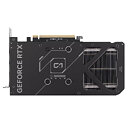


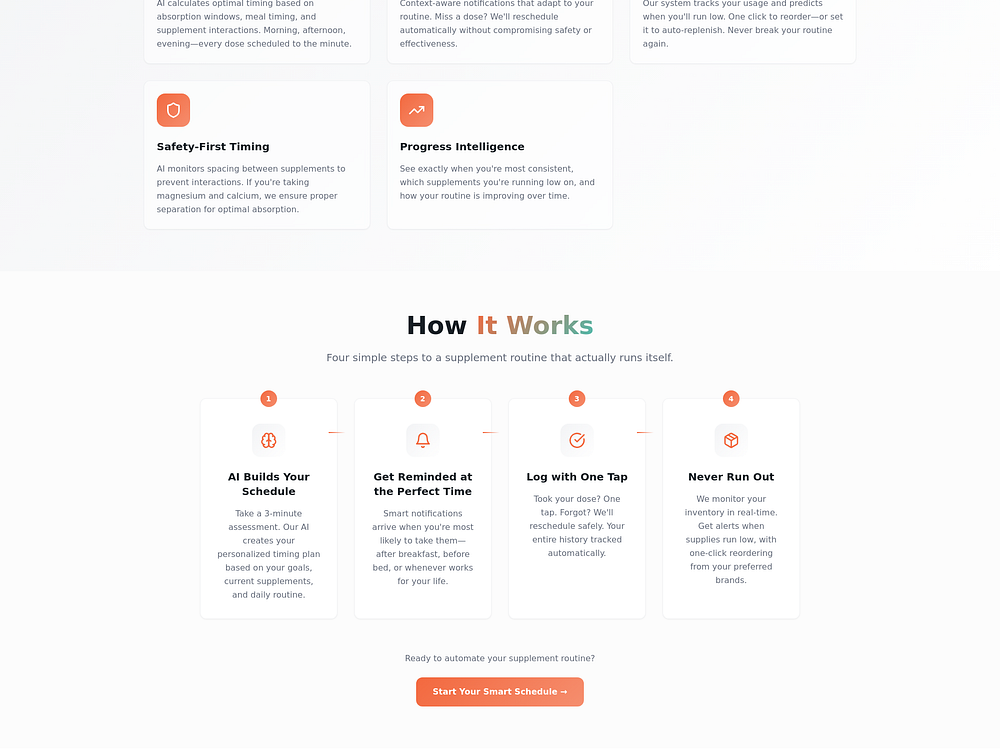

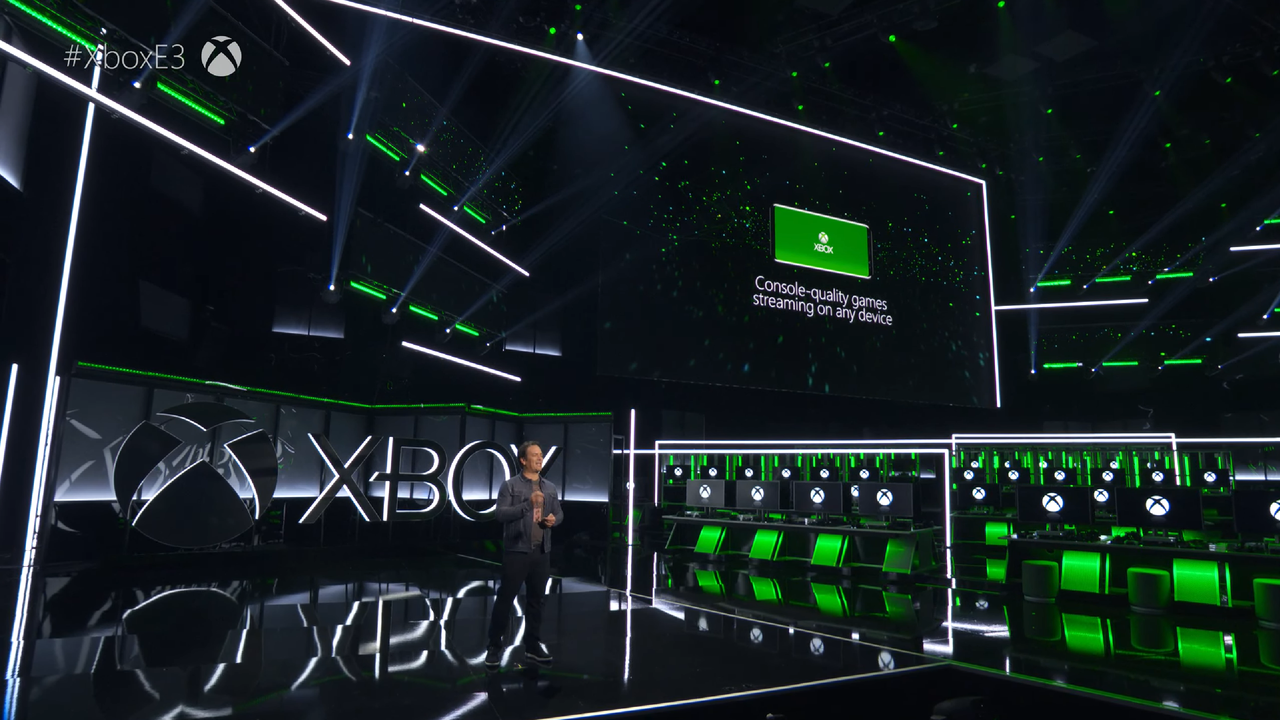


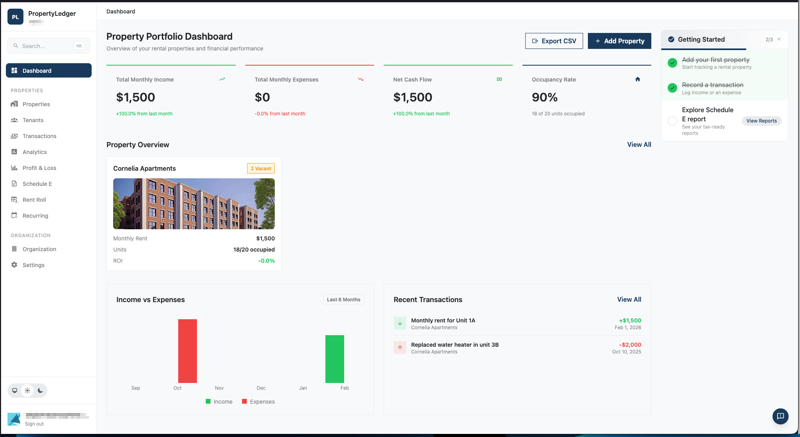
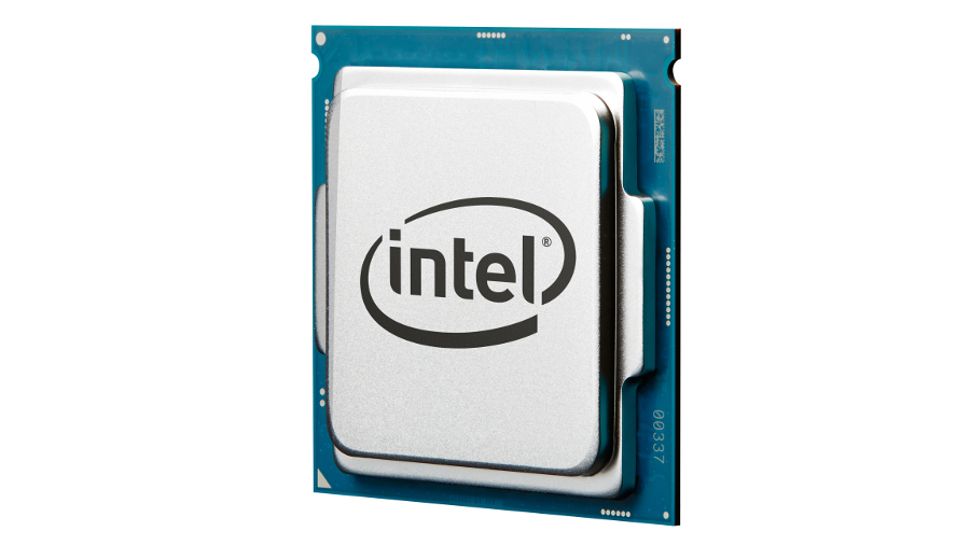











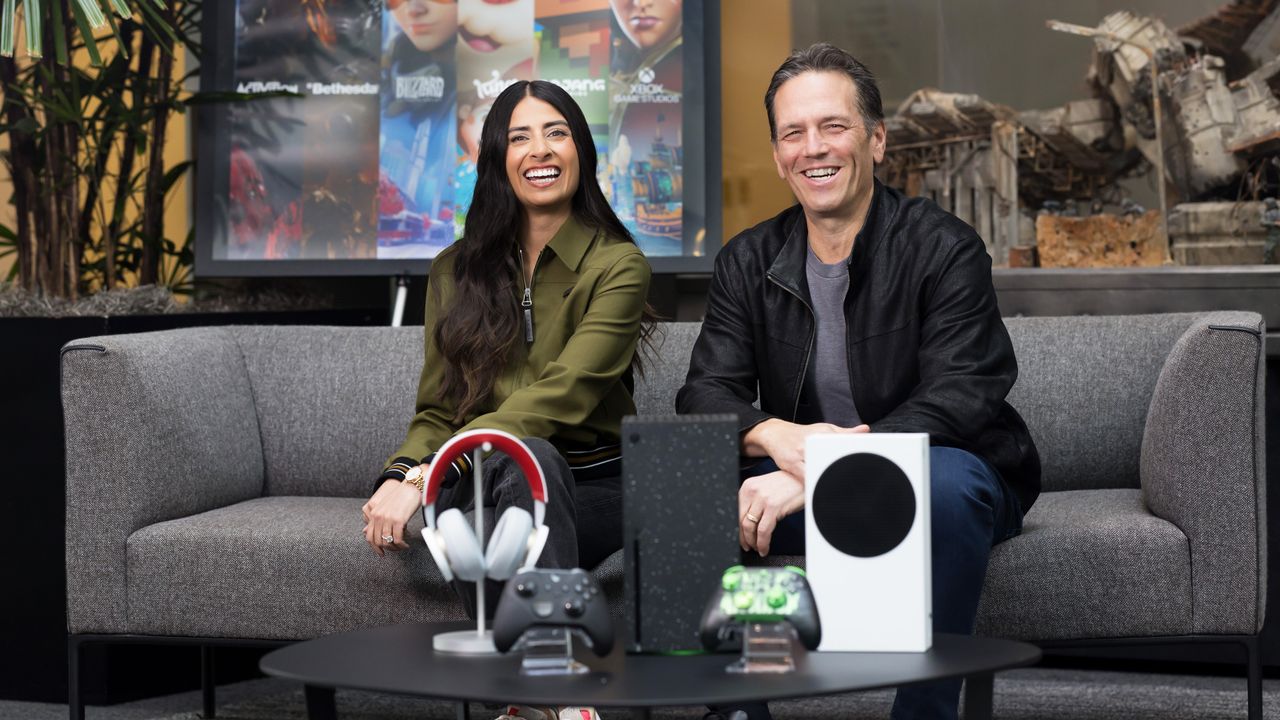


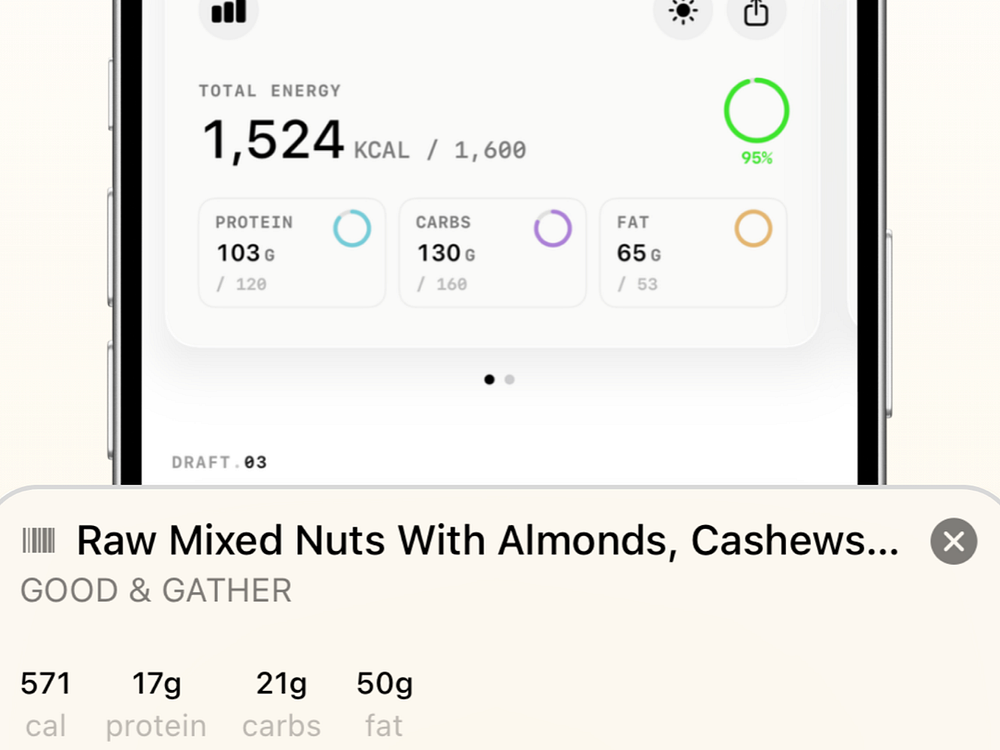





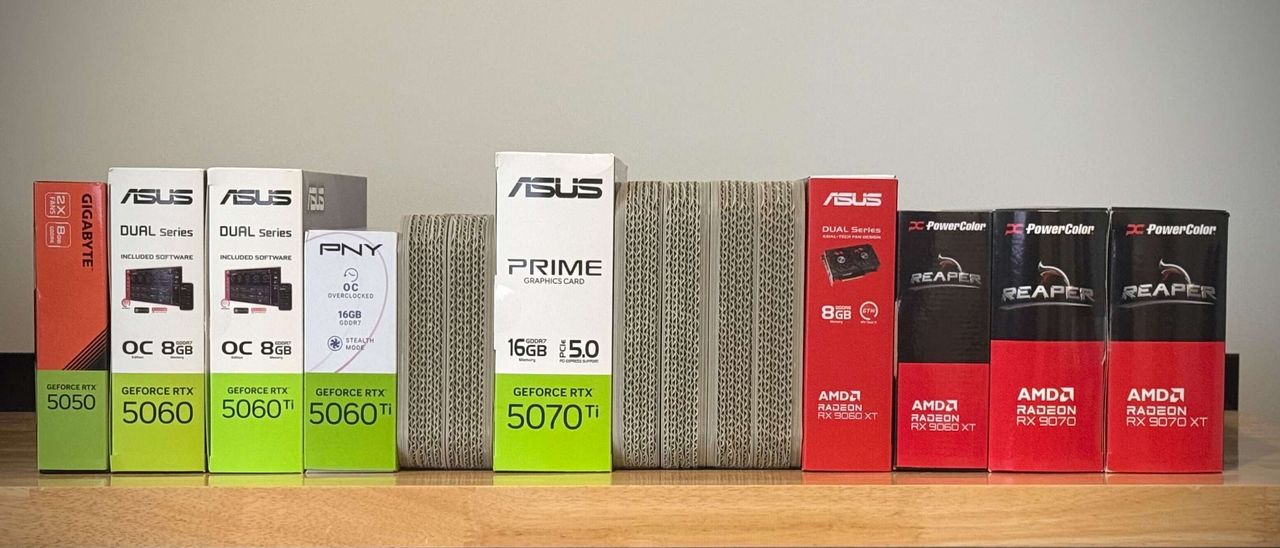
 Google and YouTube are celebrating America's 250th anniversary.


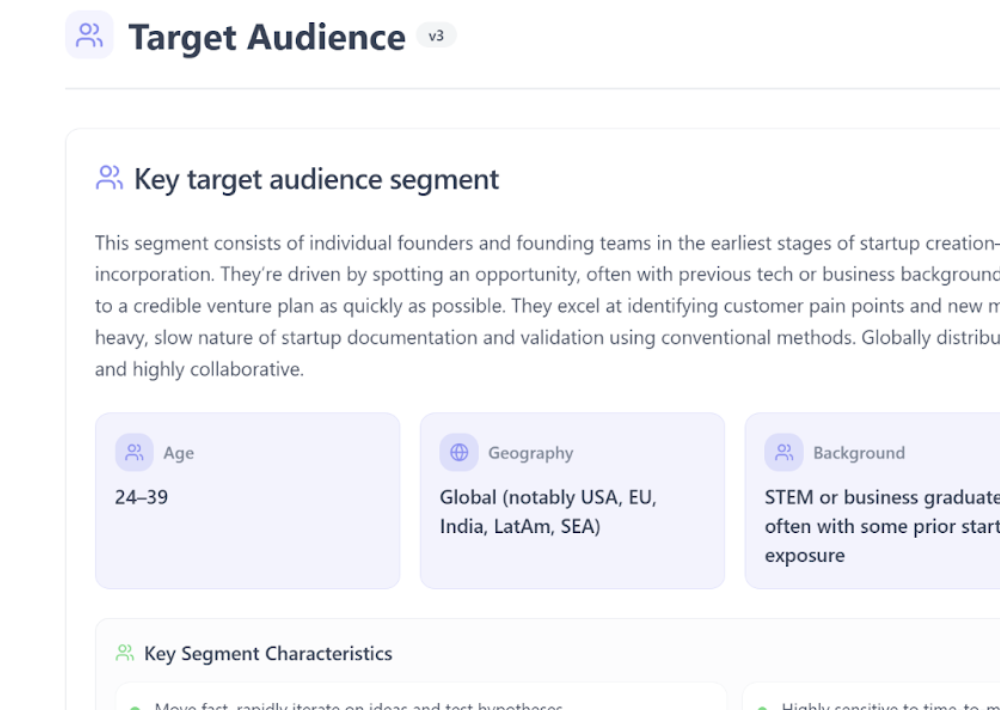

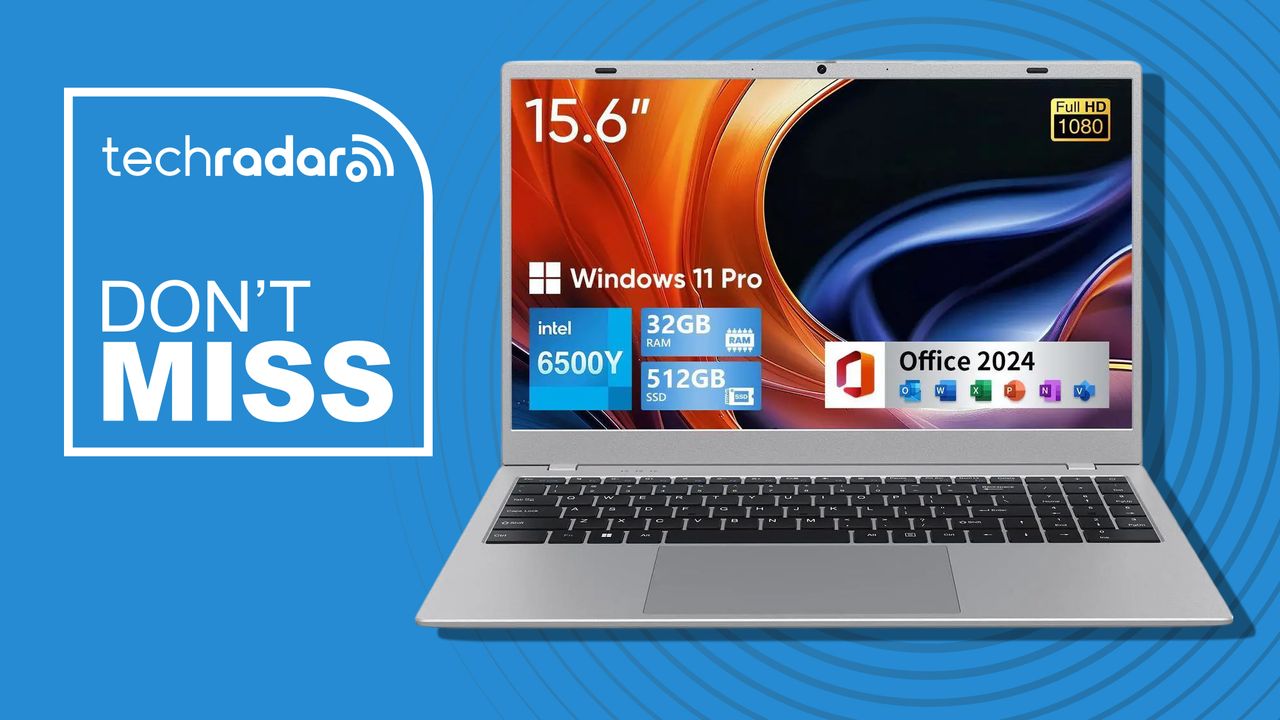
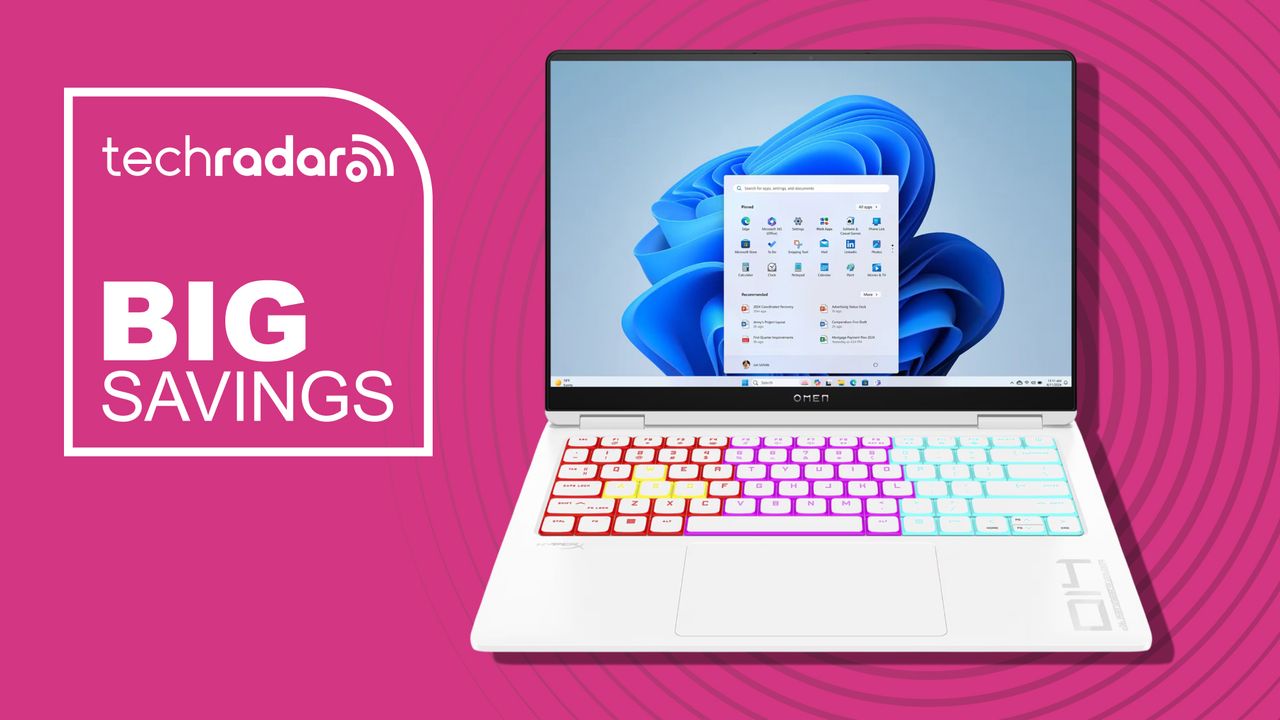












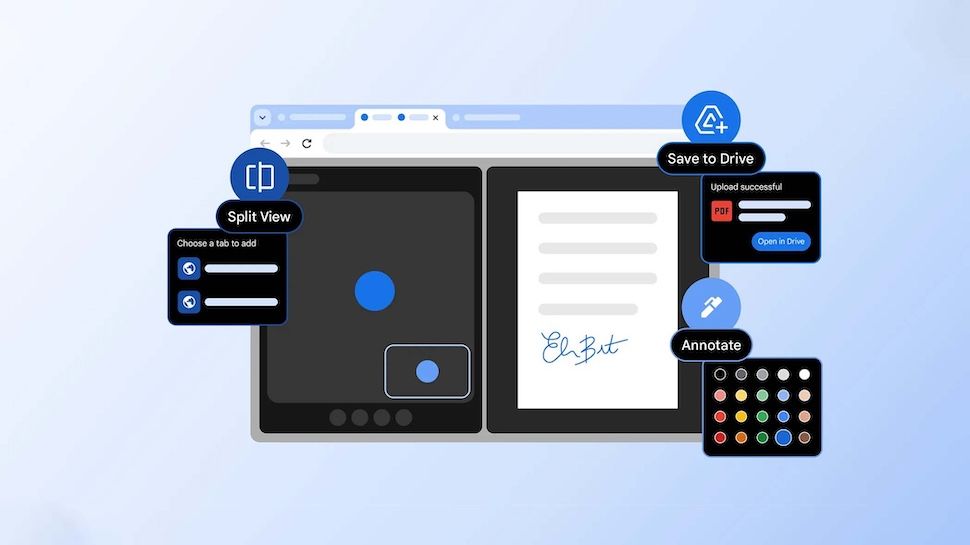


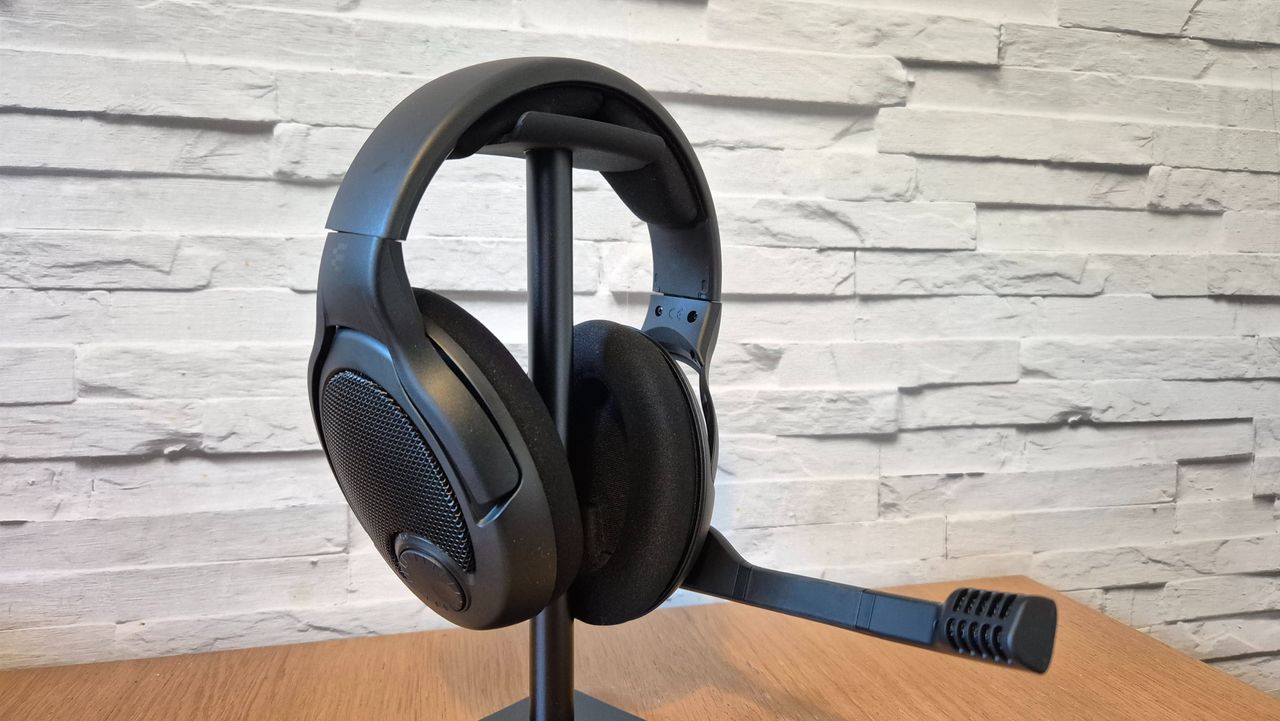


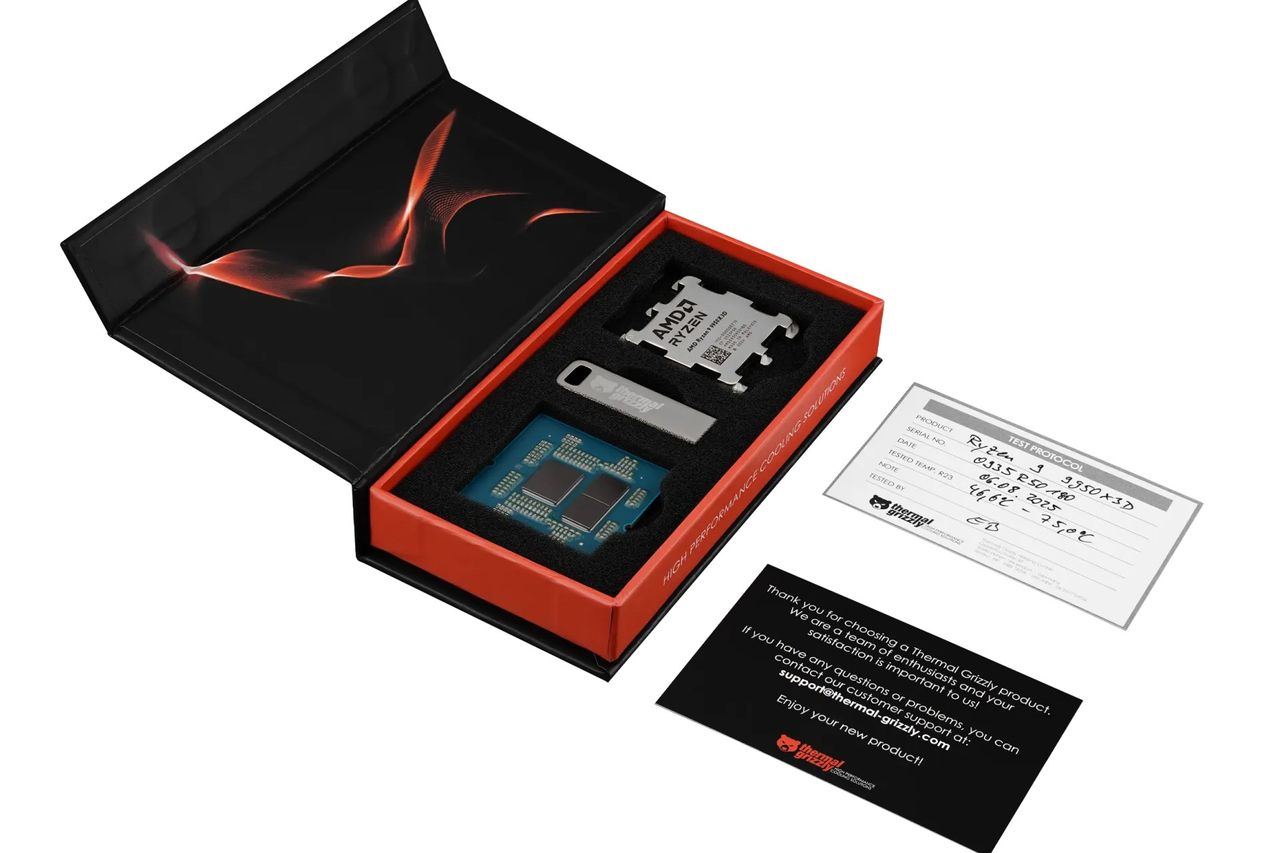





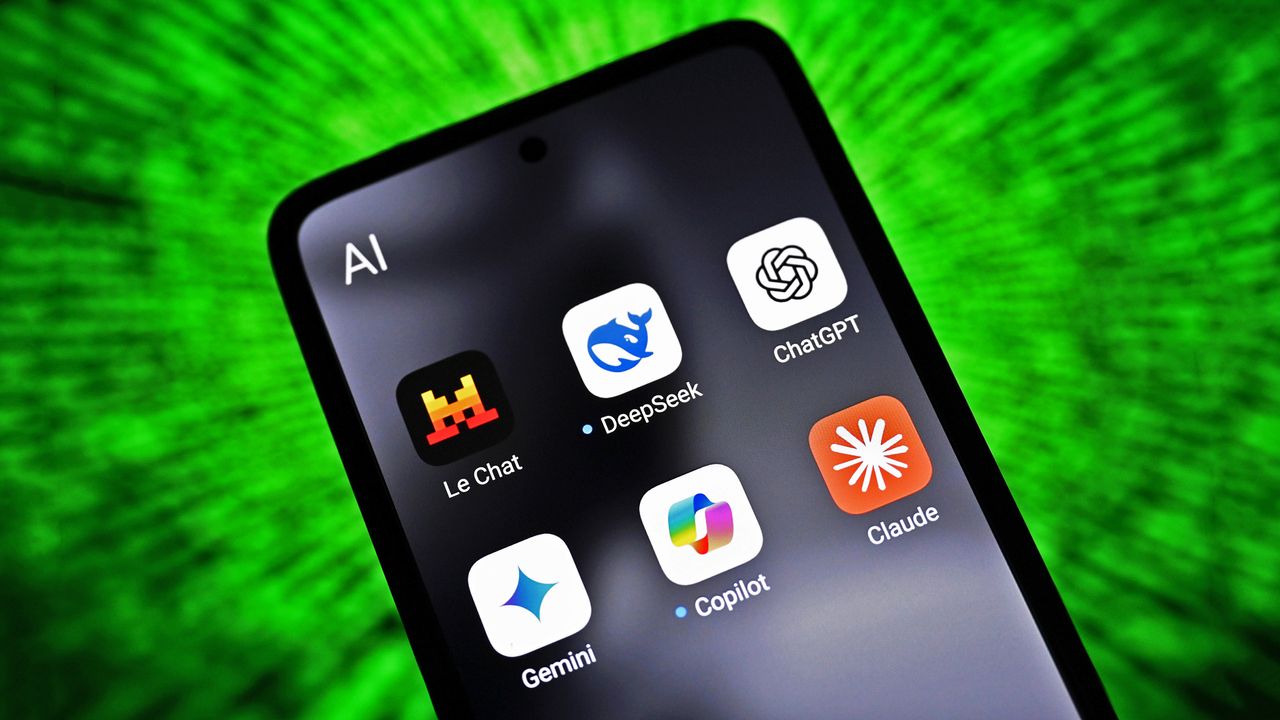

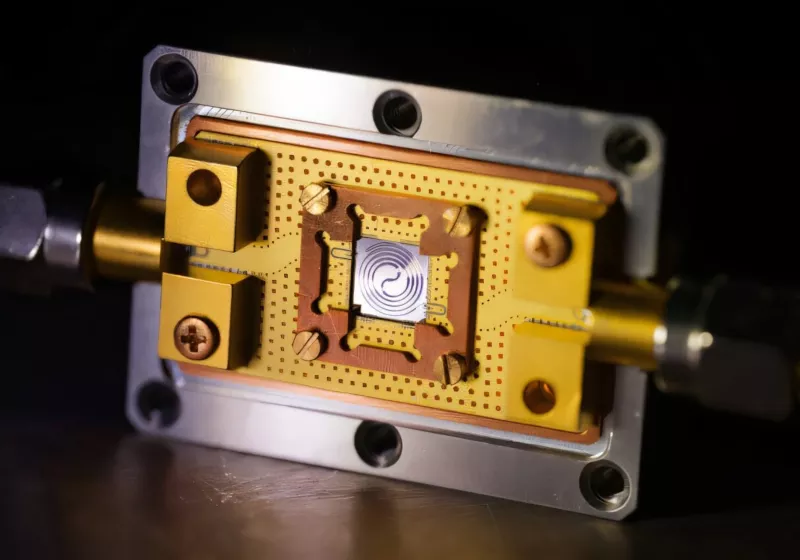
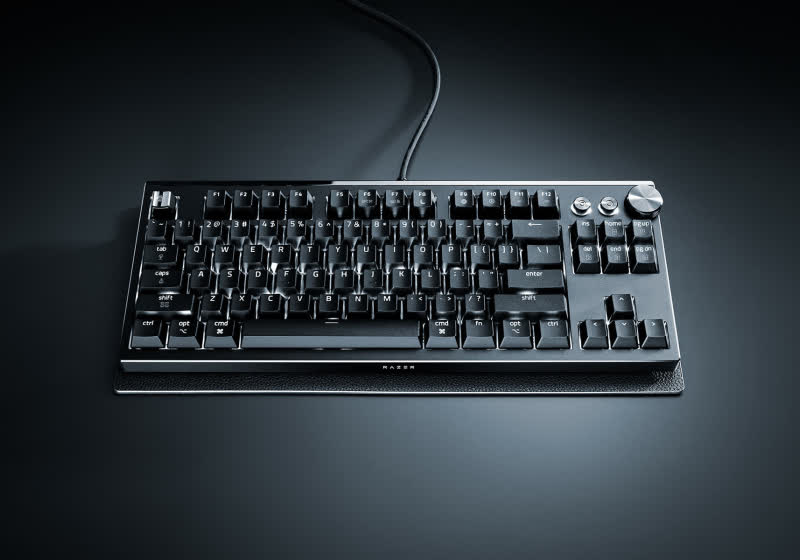






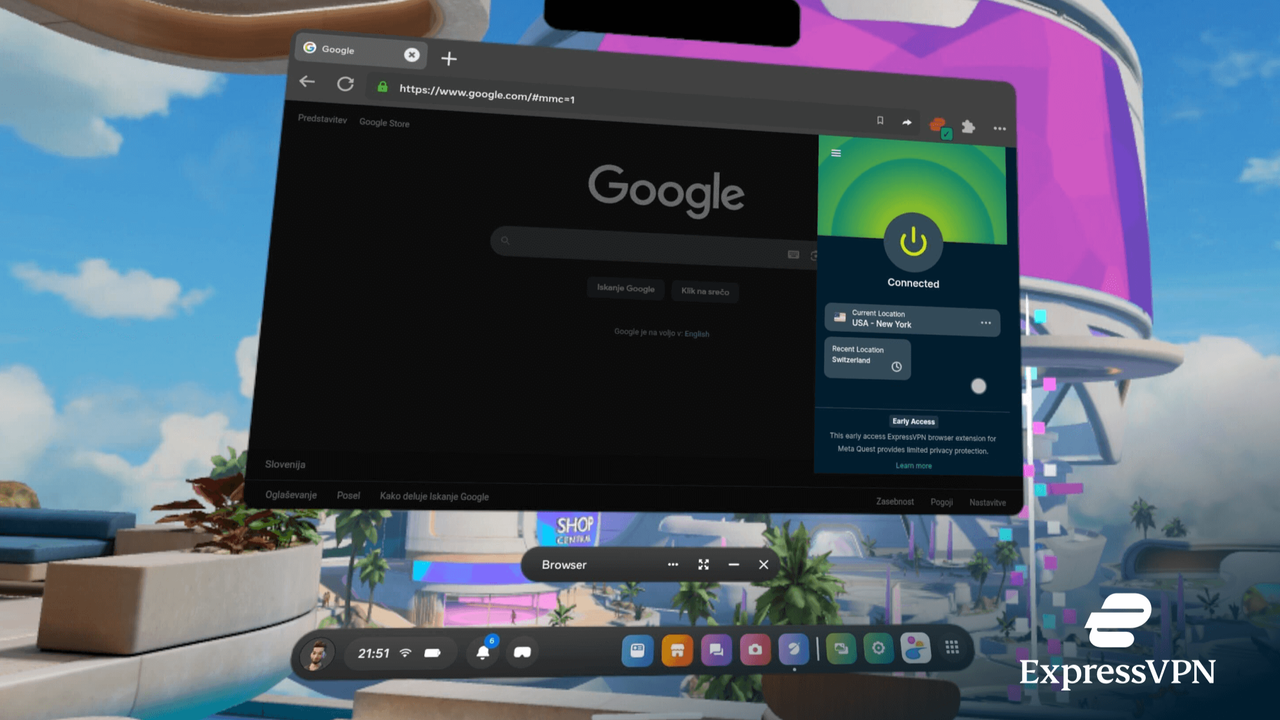










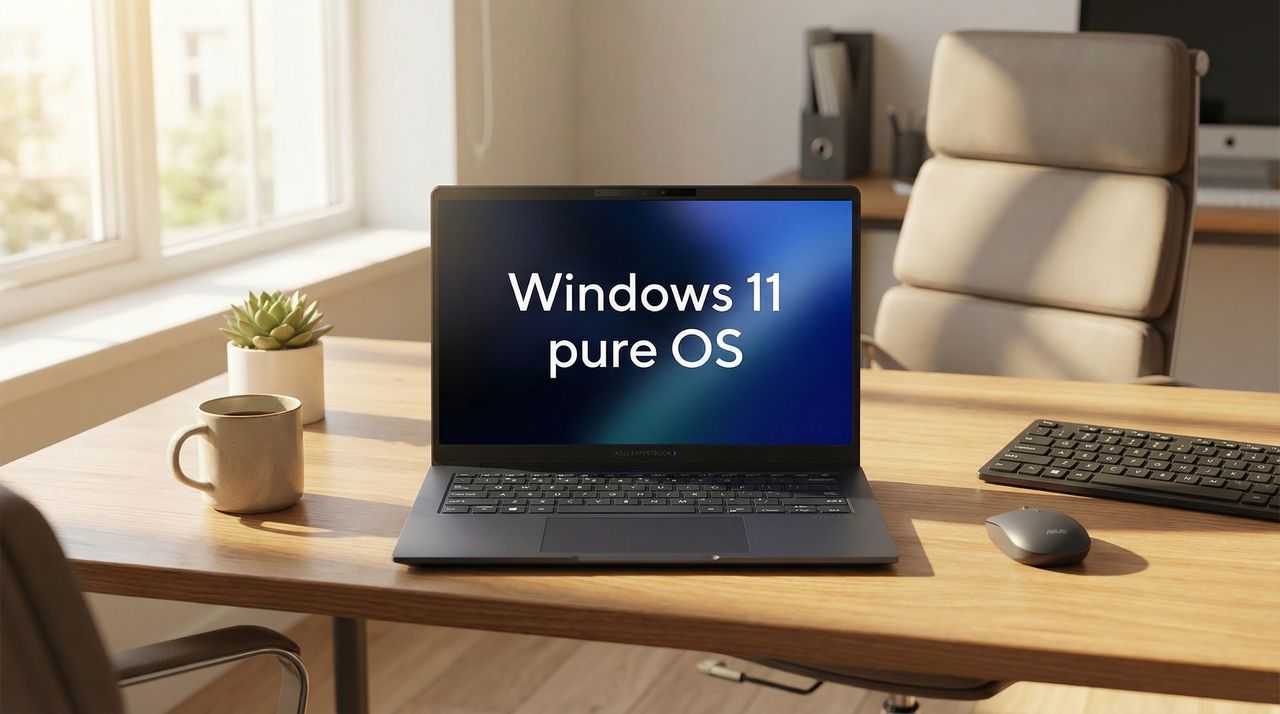





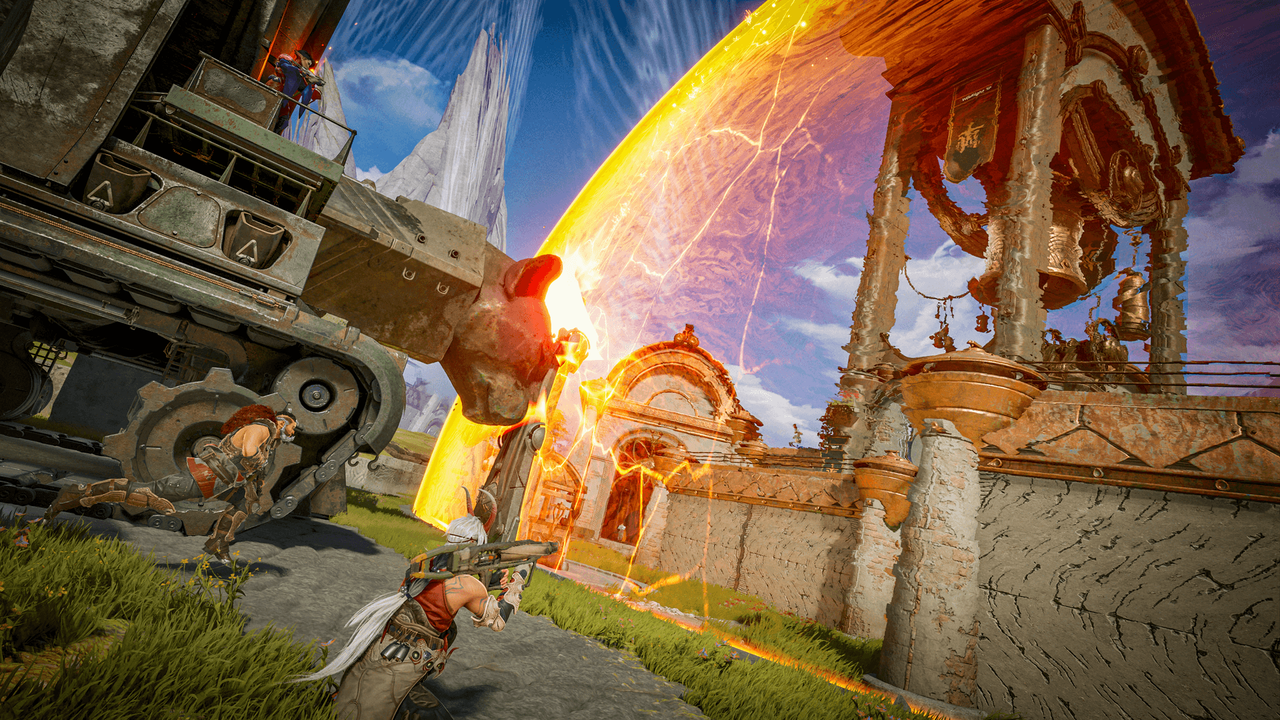

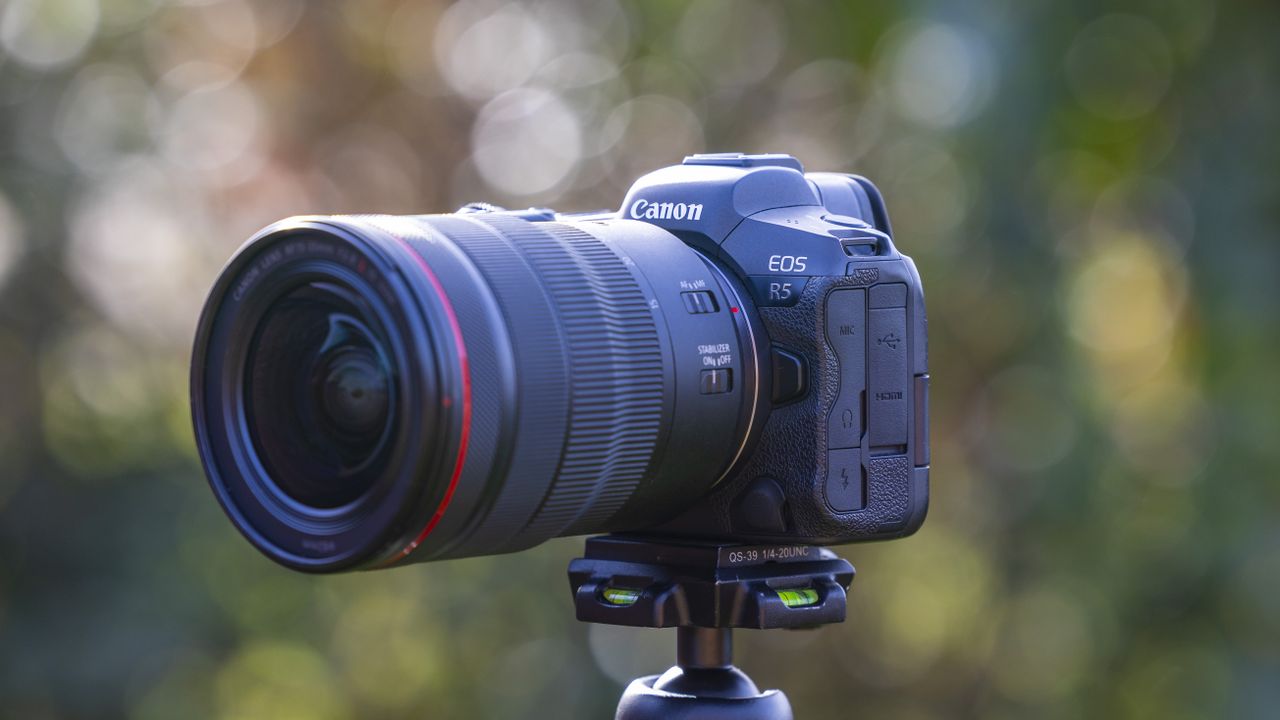

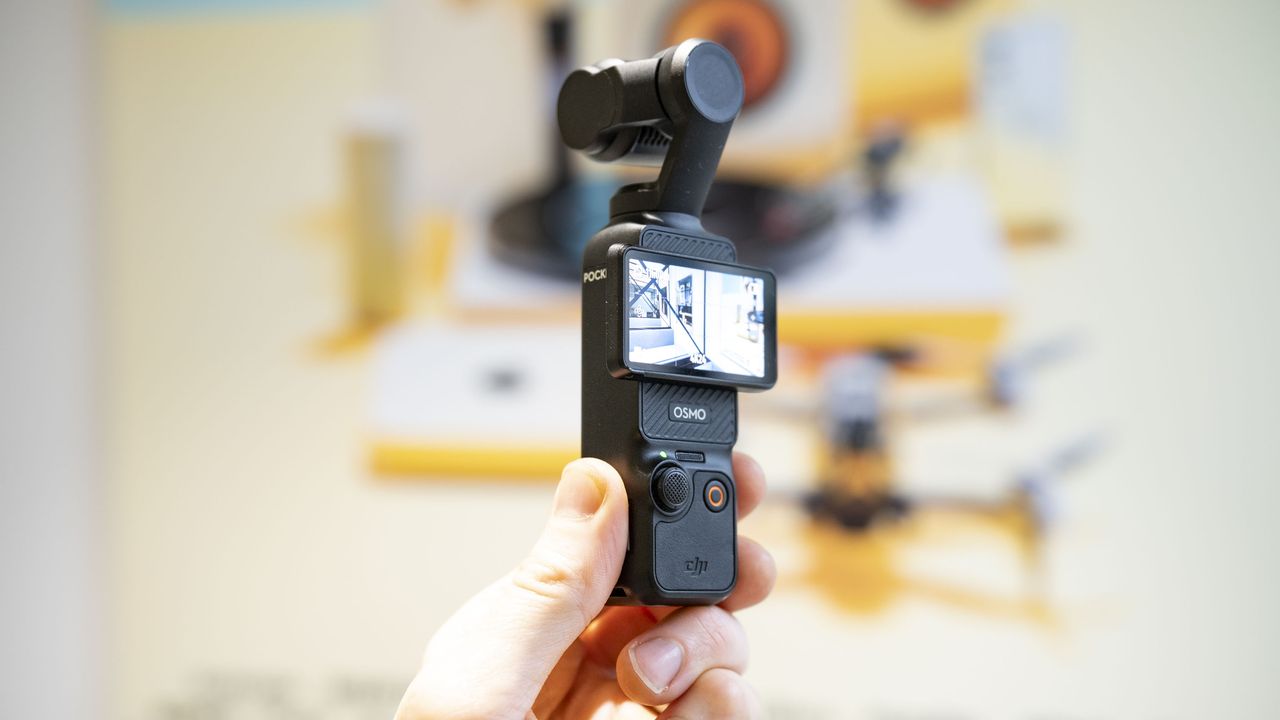


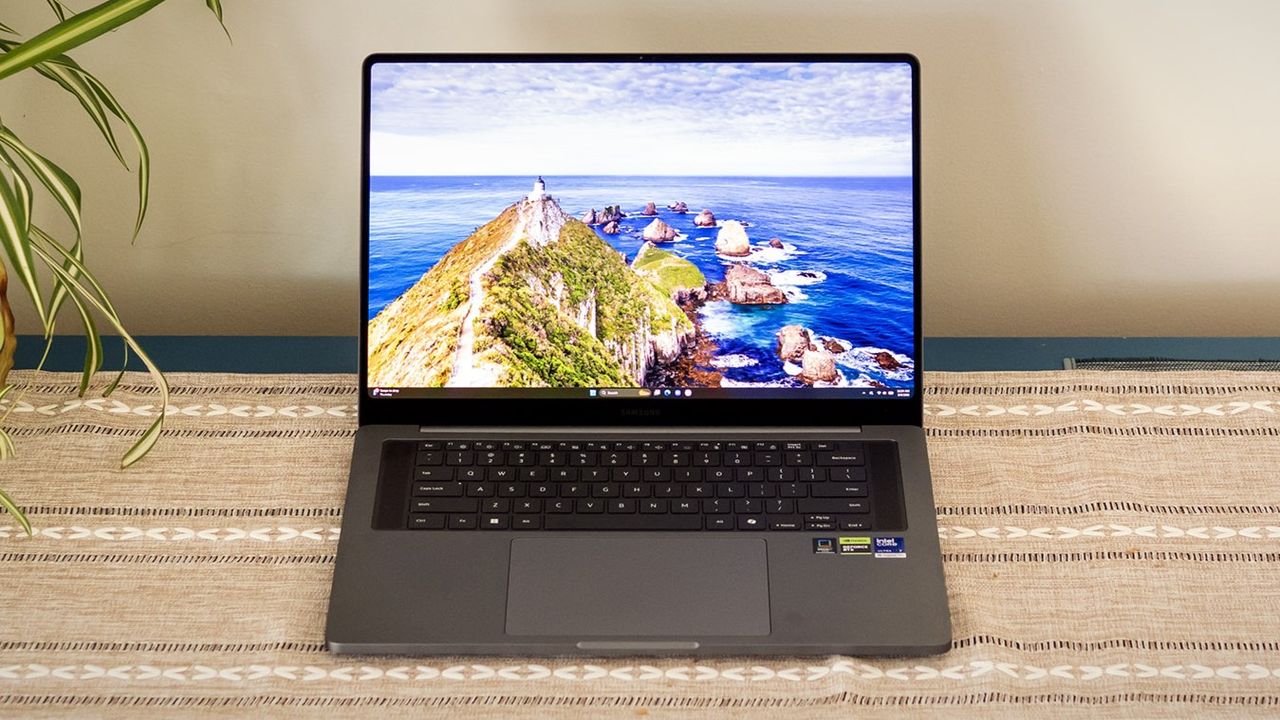

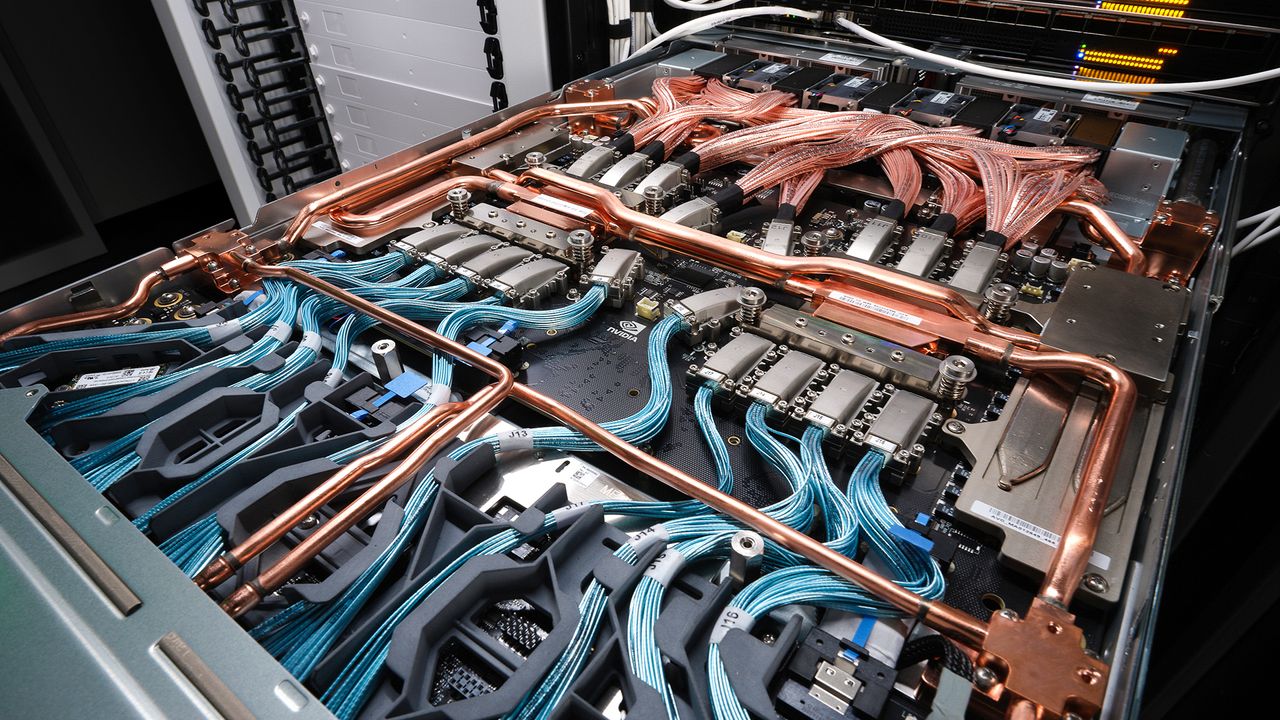
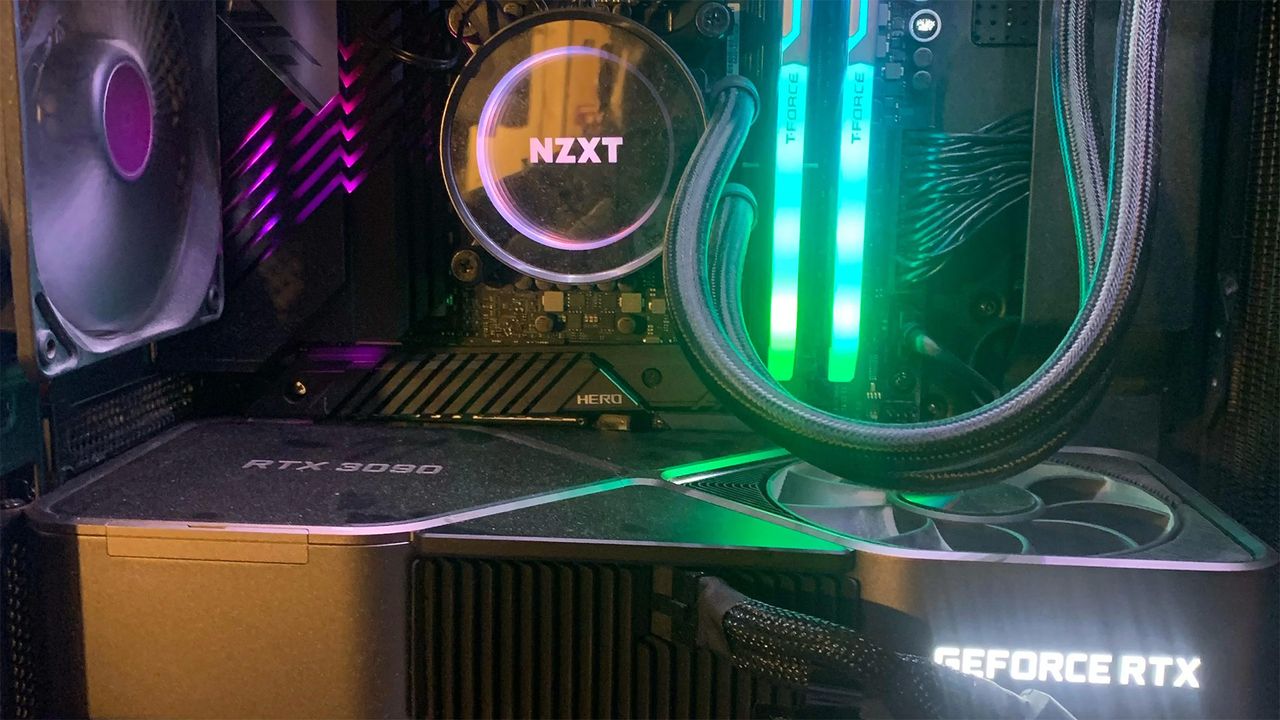








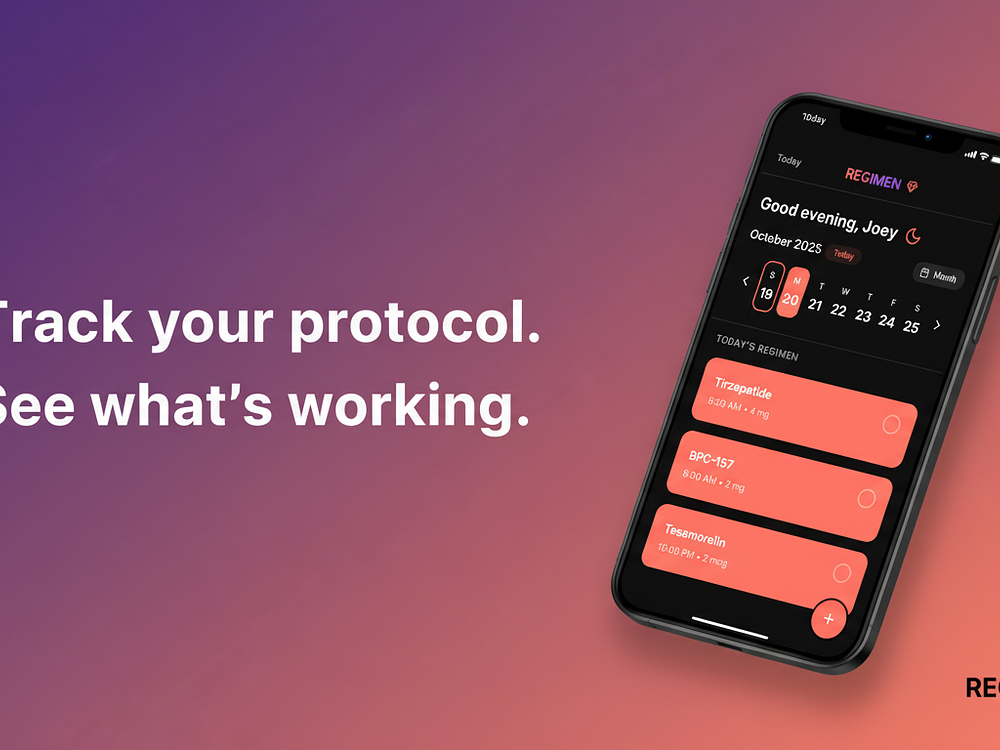




















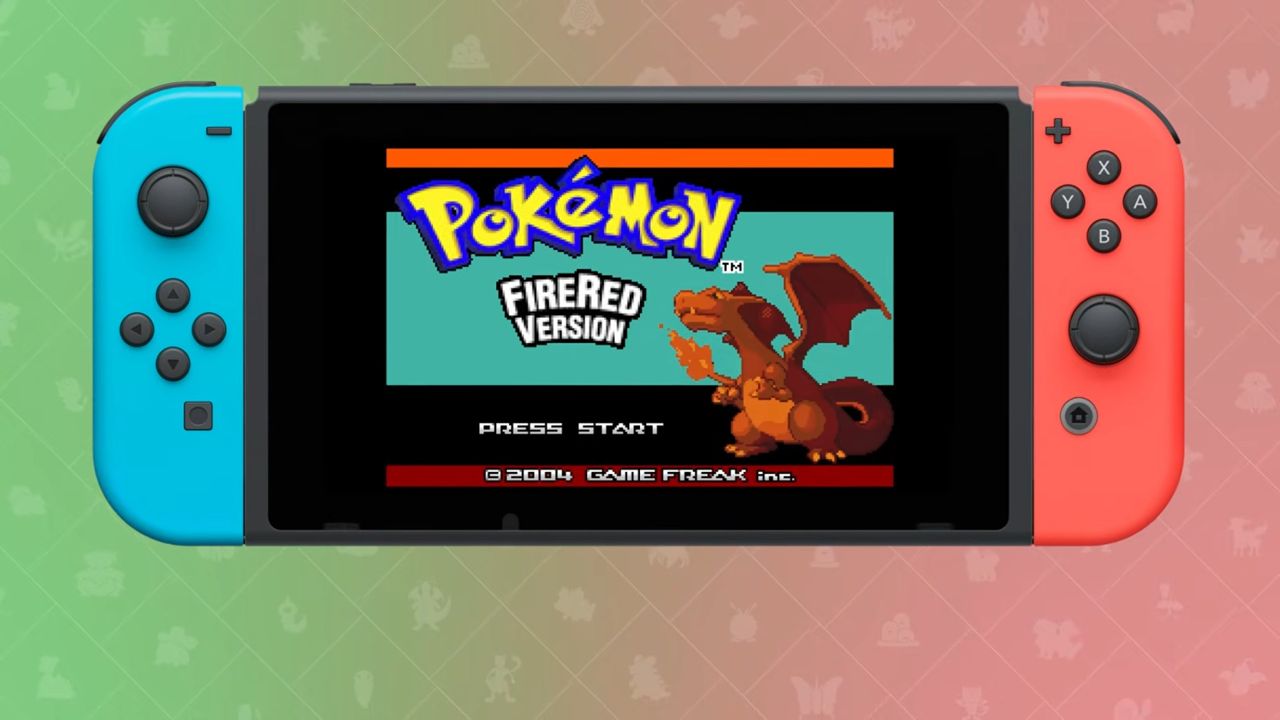




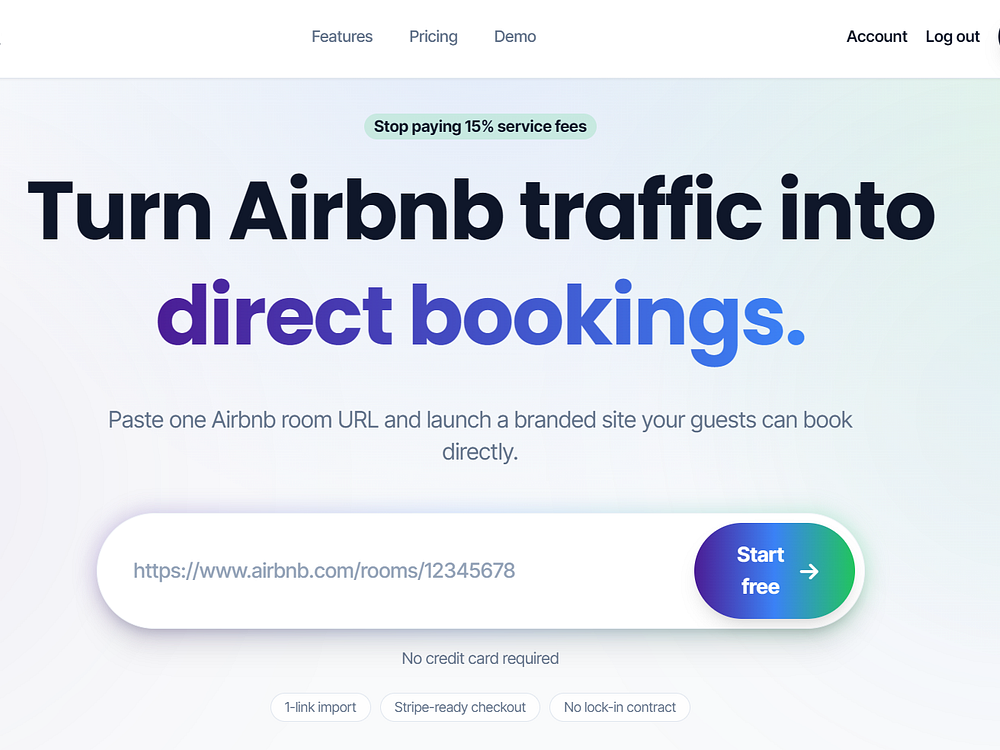
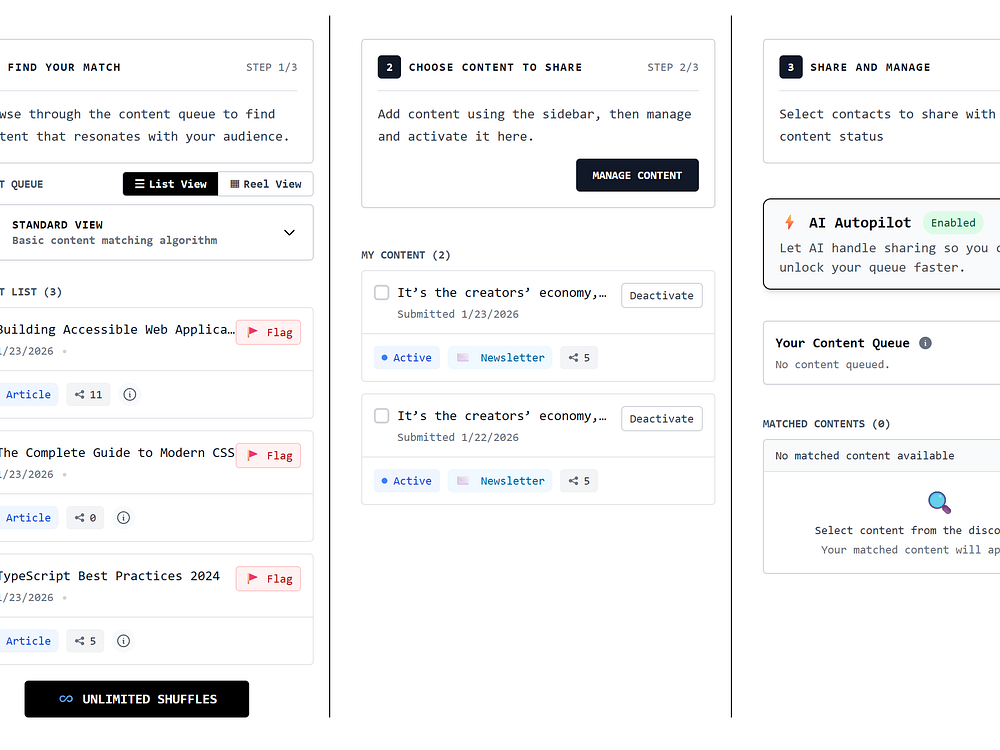




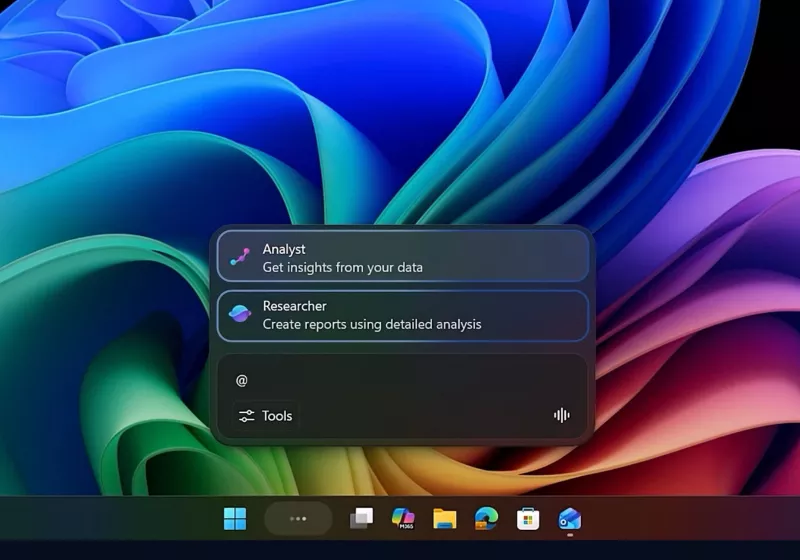







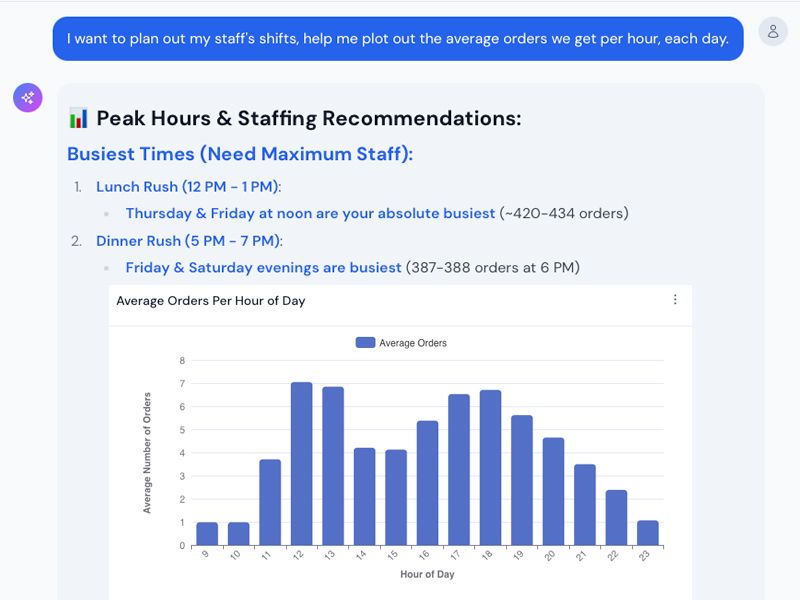




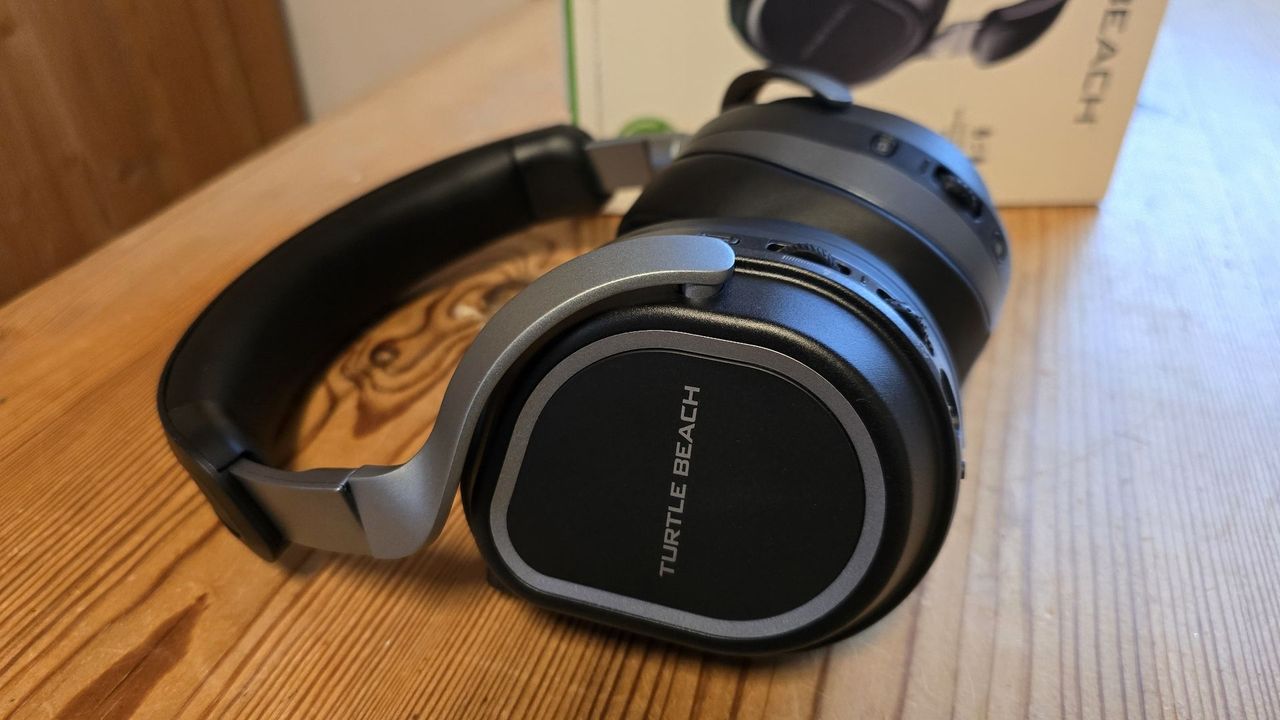




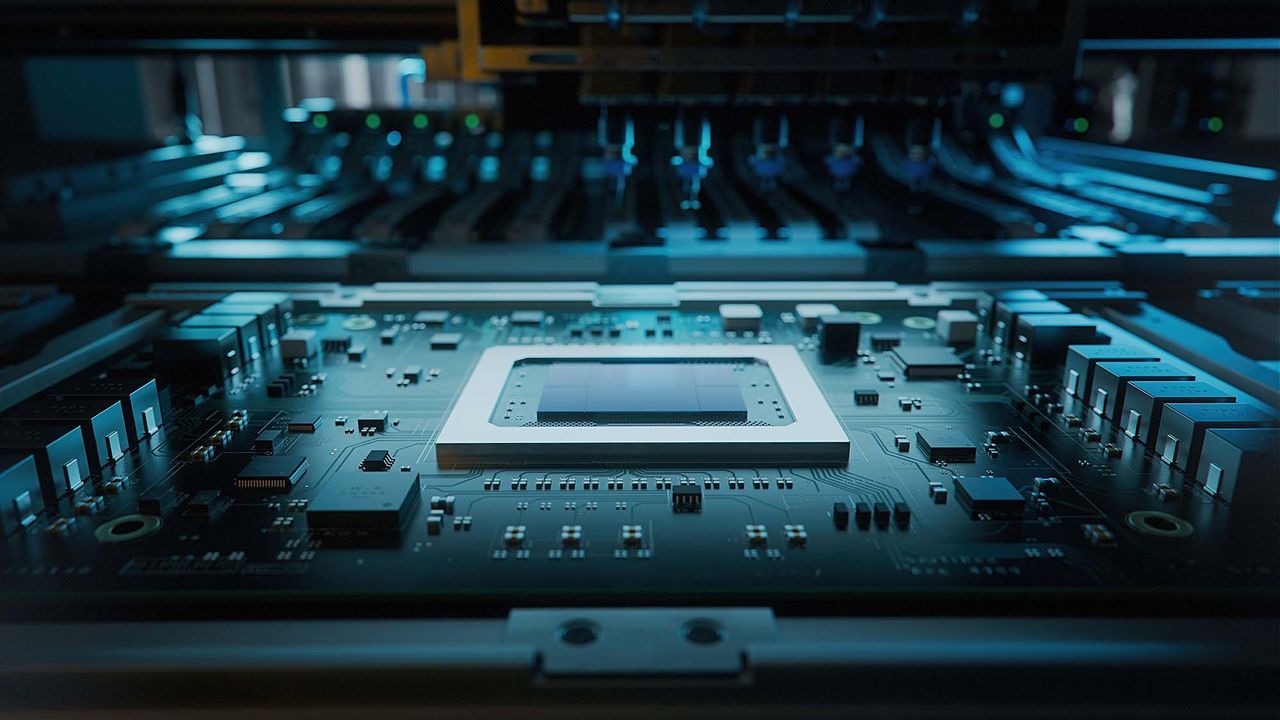




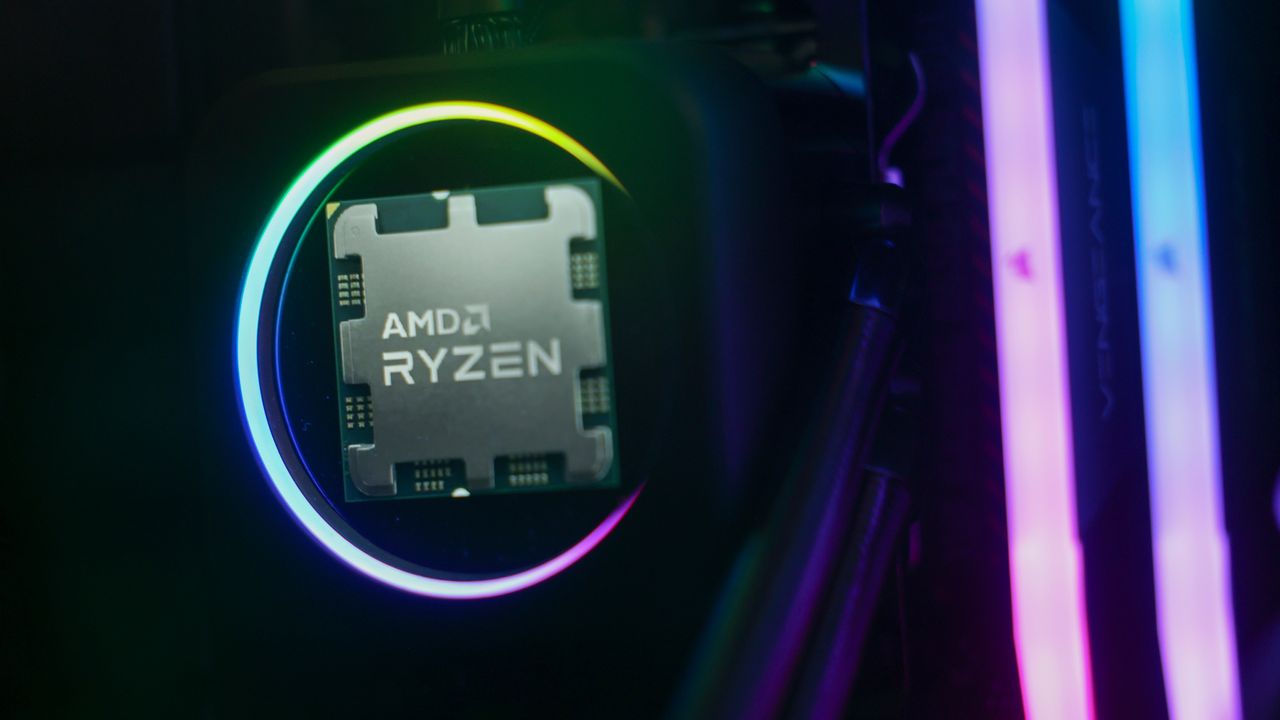
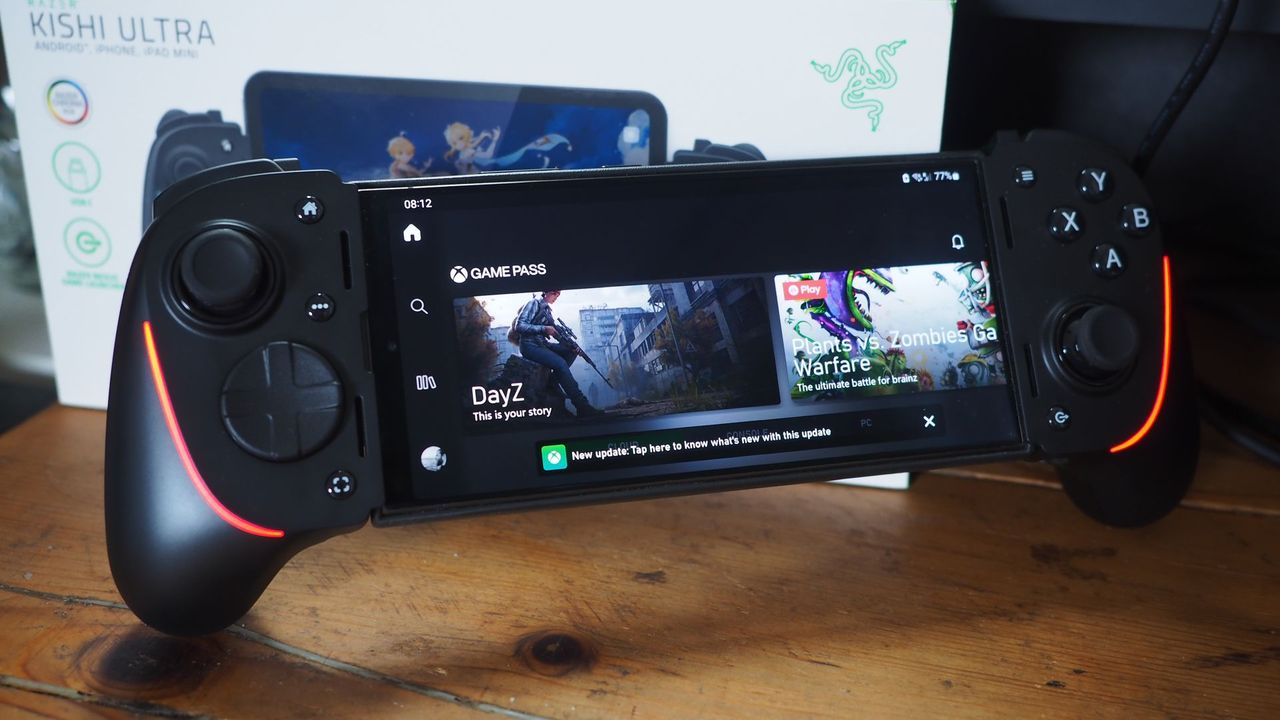











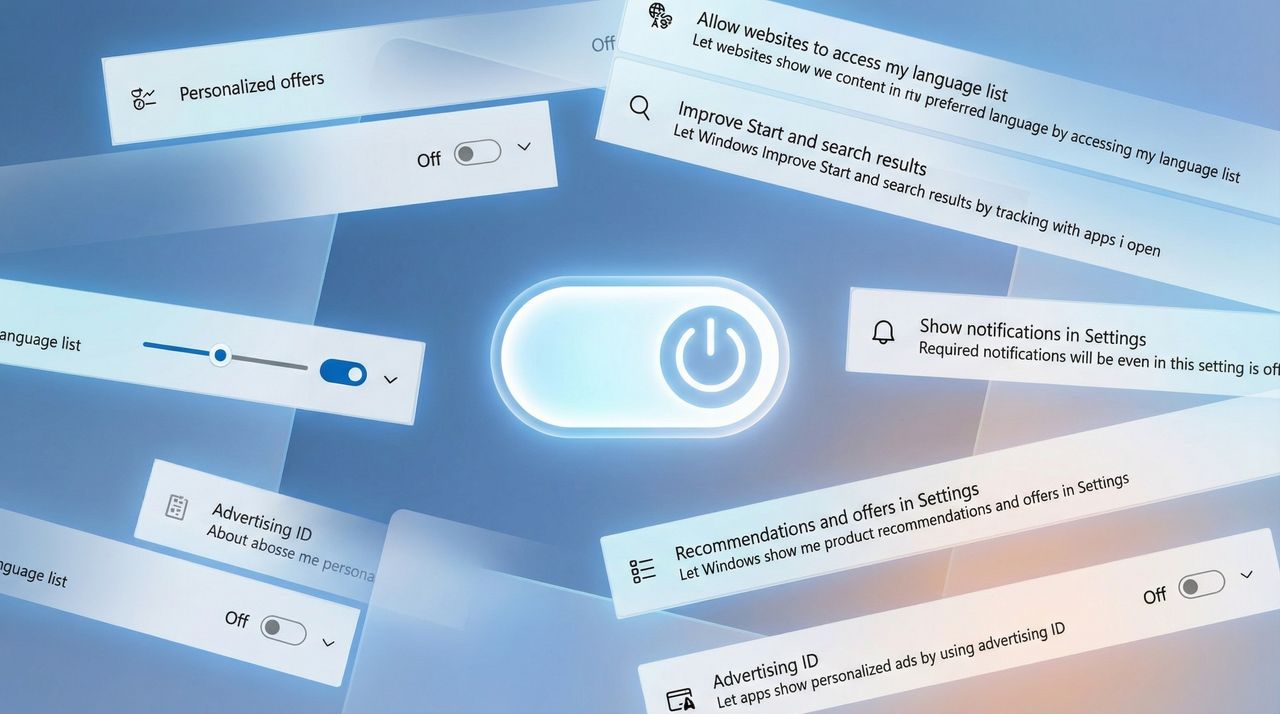




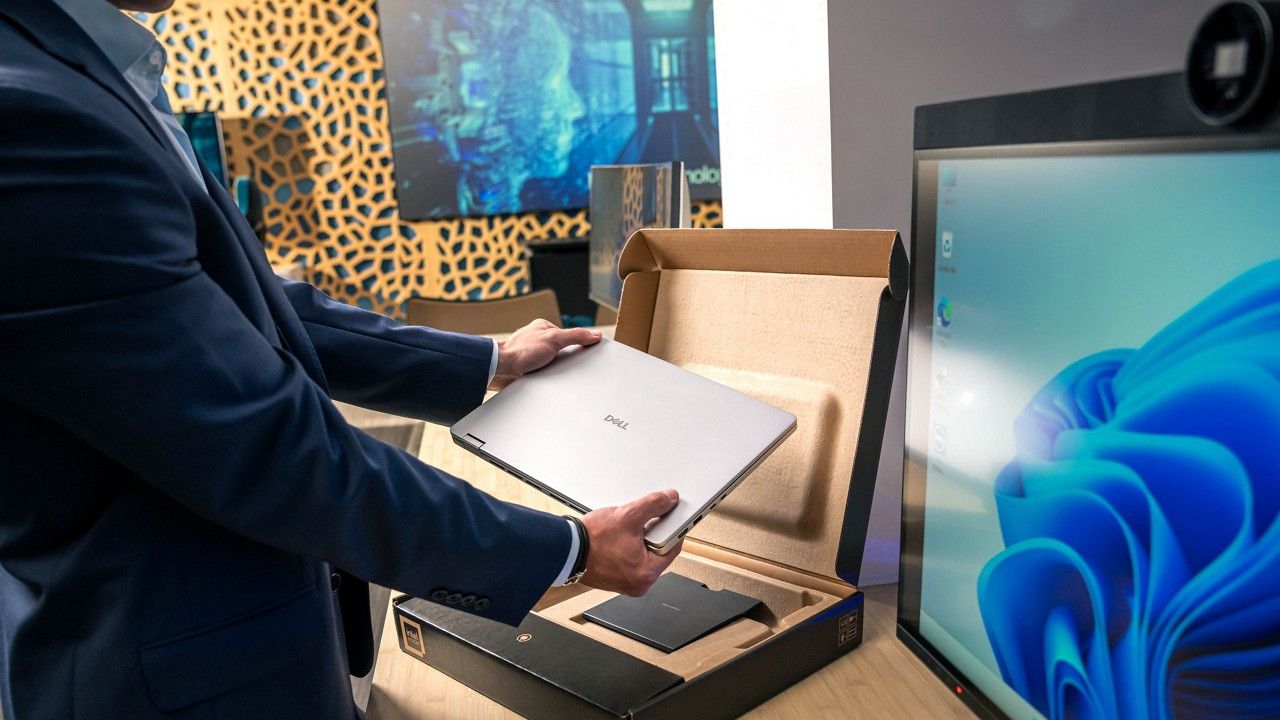
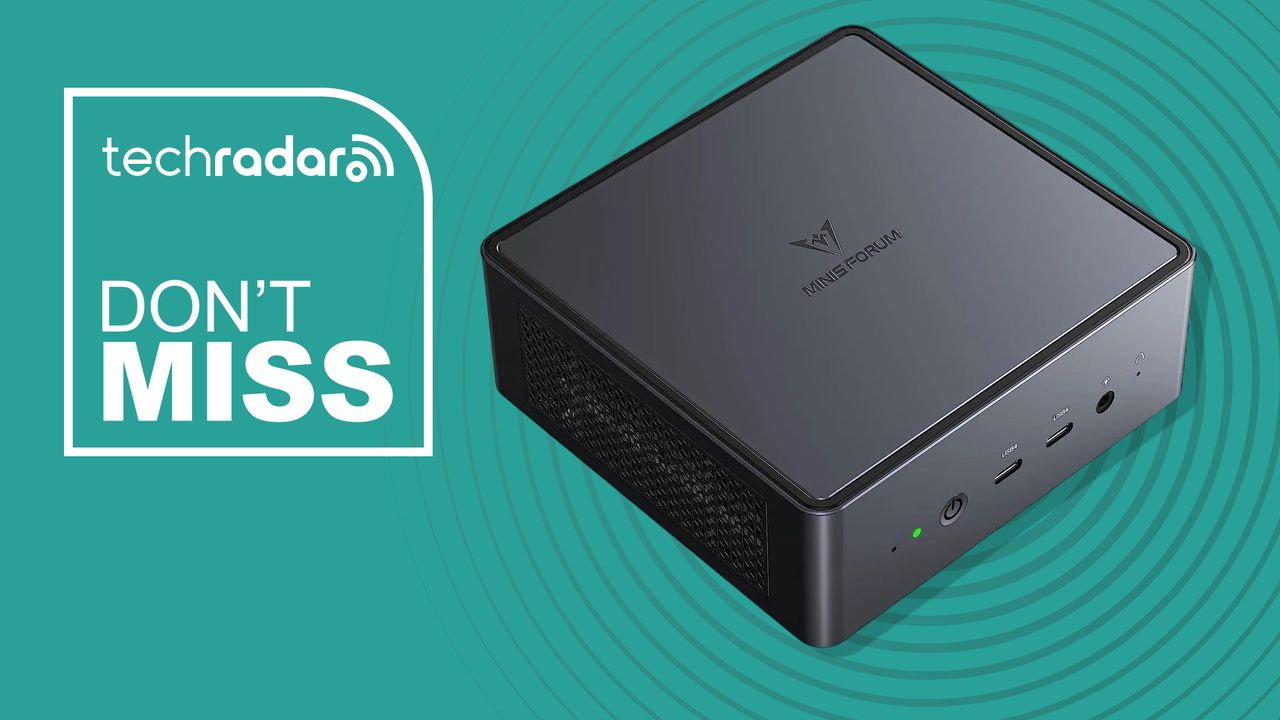





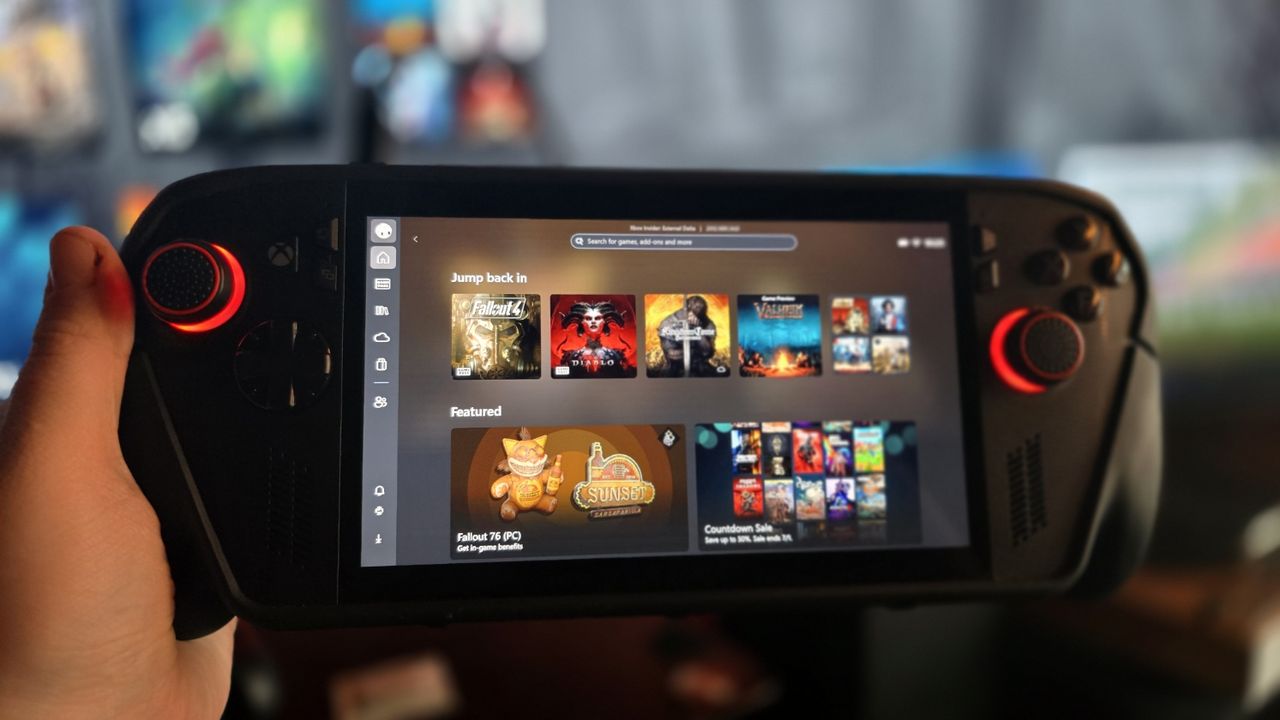

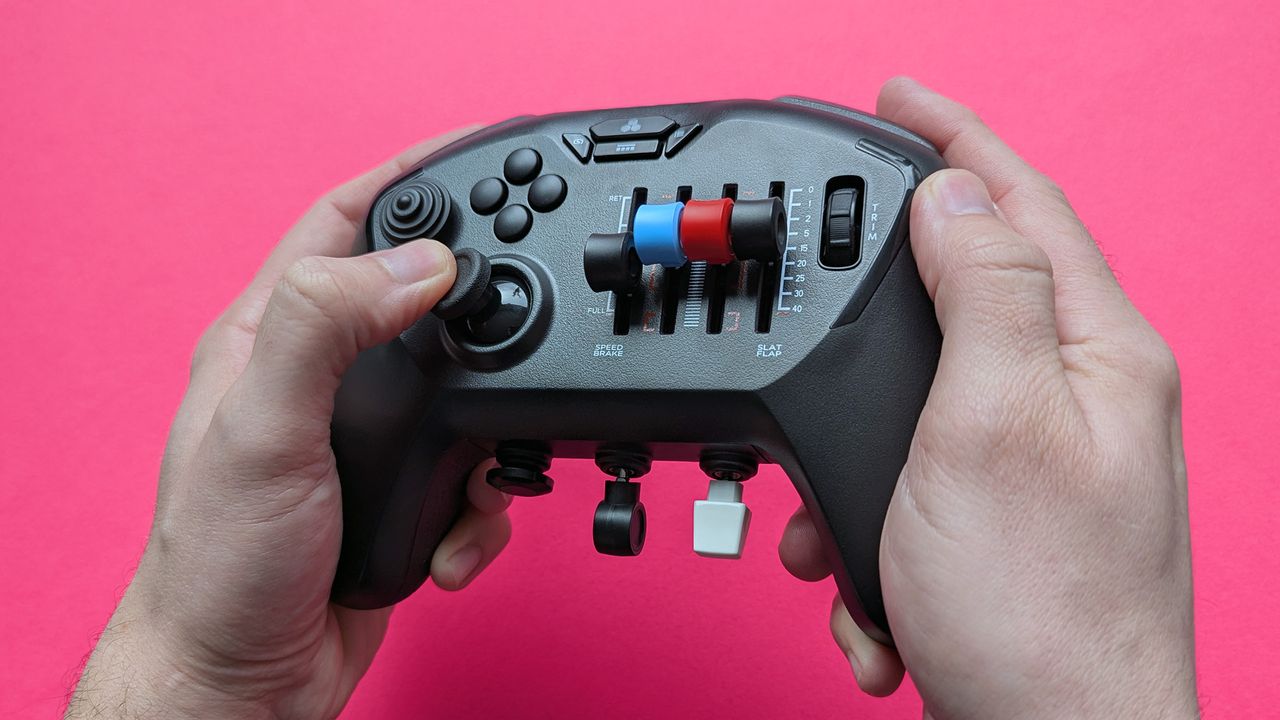









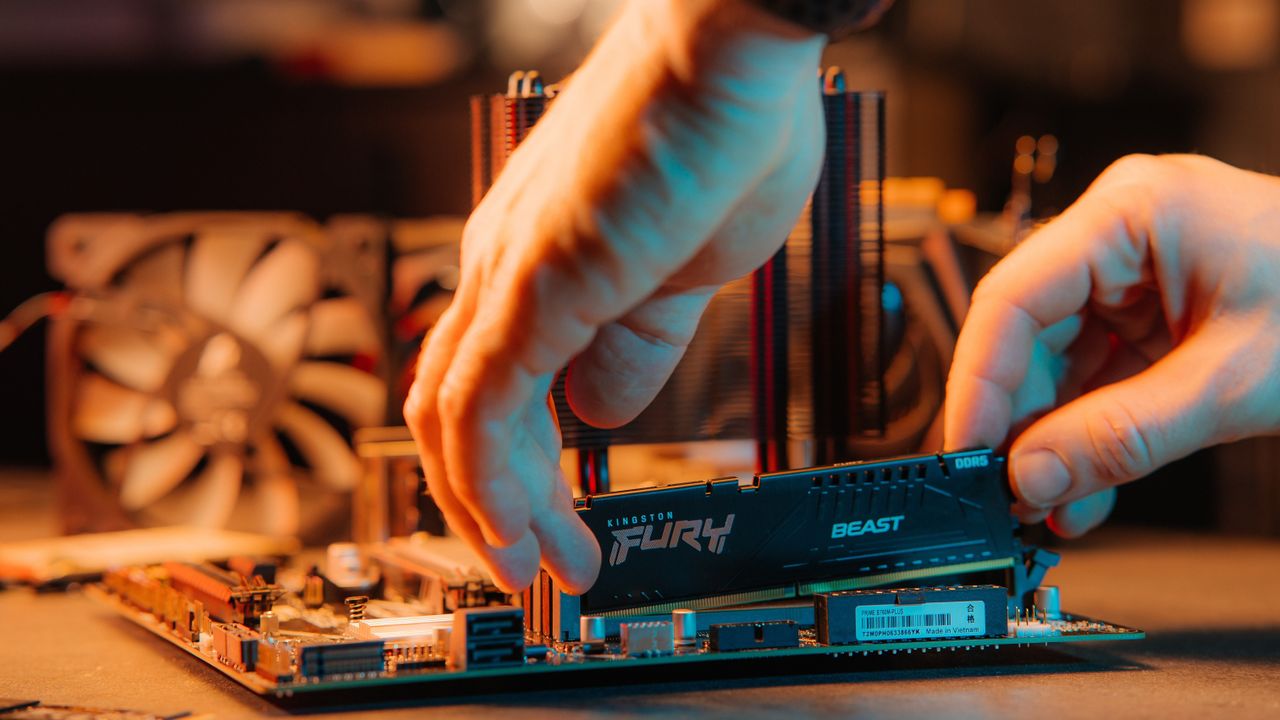








 Three new Chrome features designed to give you a productivity boost: Split view, Save to Google Drive and PDF annotations.
  Introducing Pomelli Photoshoot, turn product photos into professional studio shots instantly using Nano Banana.
  In 2025, we significantly enhanced the Google Play and Android app ecosystems.
  3.1 Pro is designed for tasks where a simple answer isn’t enough.







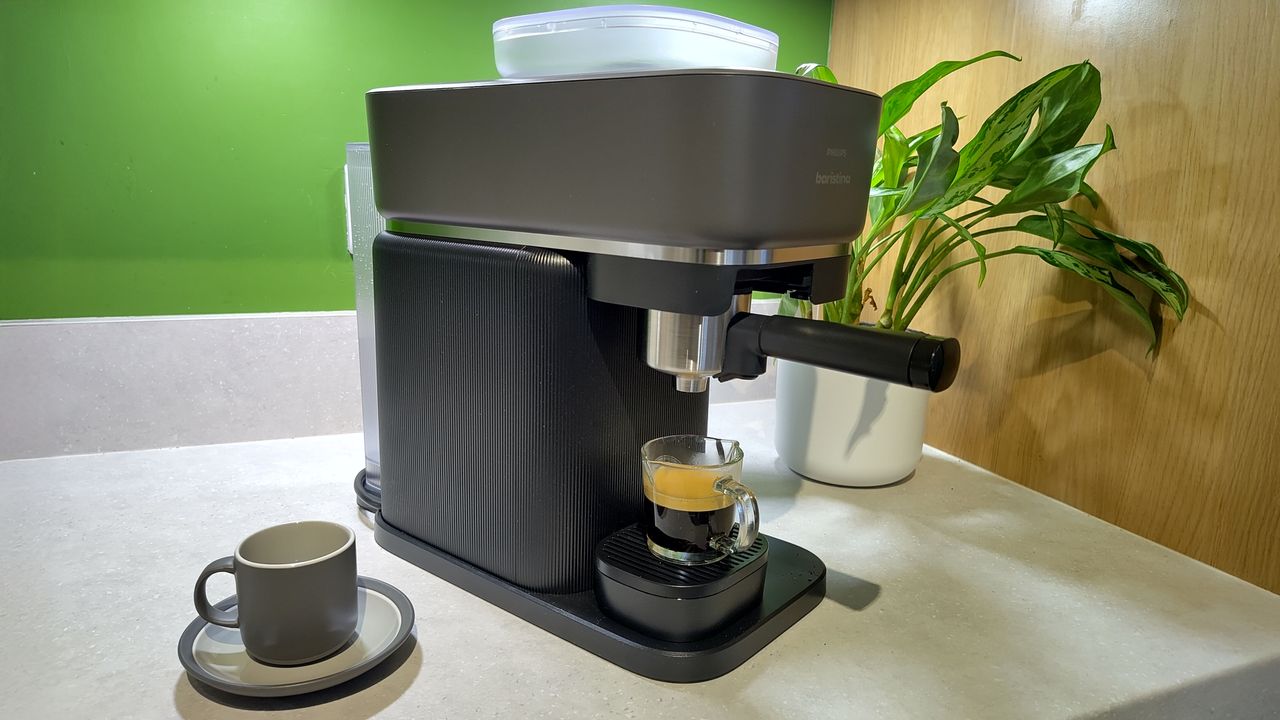





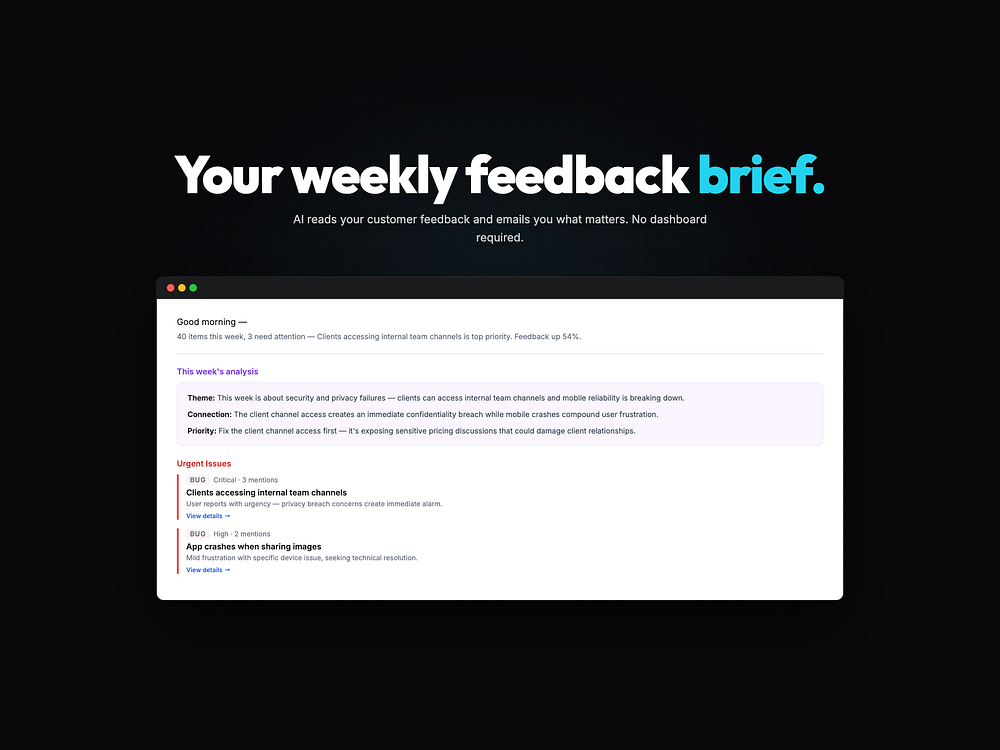



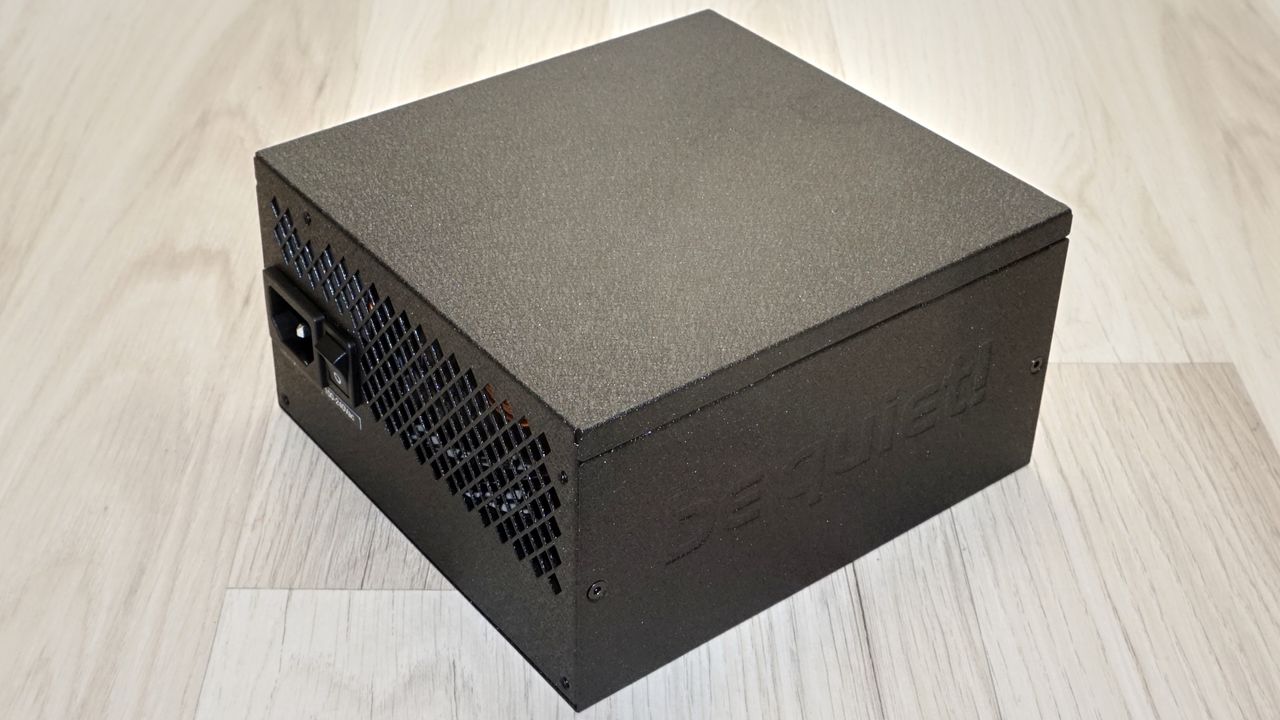
 Get Google certified in the practical AI skills employers value most. Includes 3 months of Google AI Pro.
  Scenario Planner makes MMM insights accessible to marketers. The no-code UI helps teams turn complex data into actionable plans.




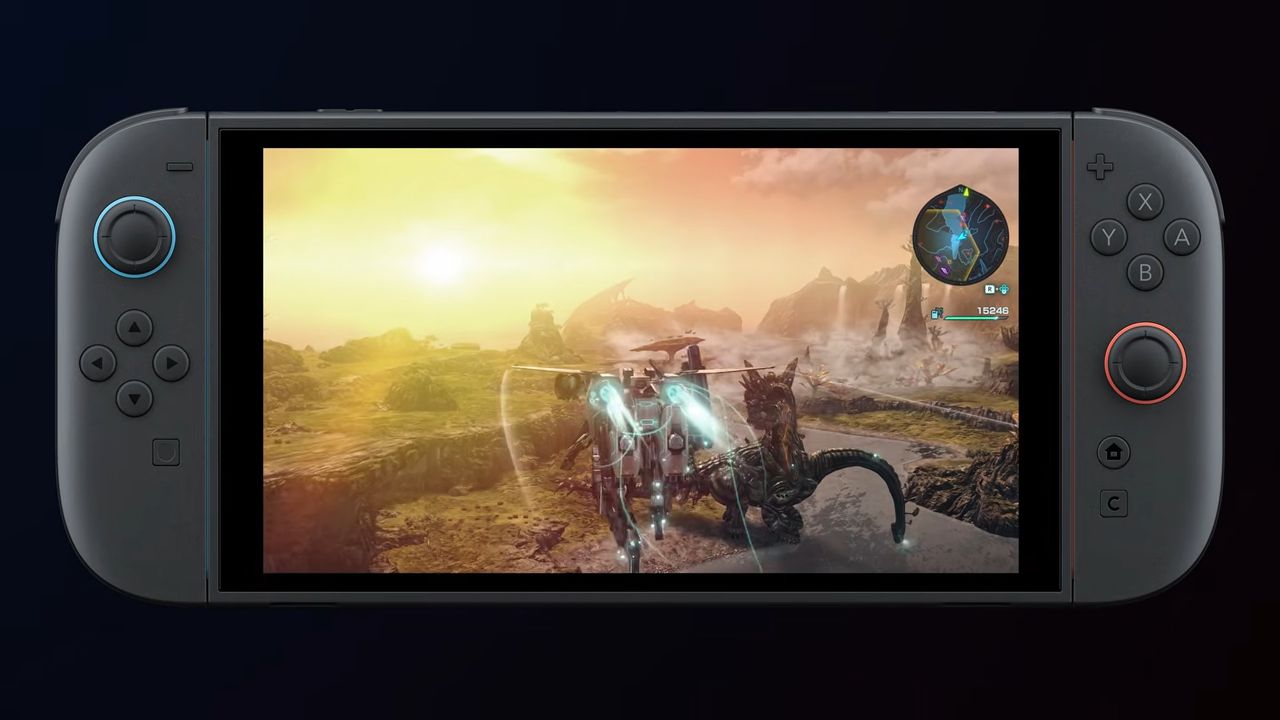


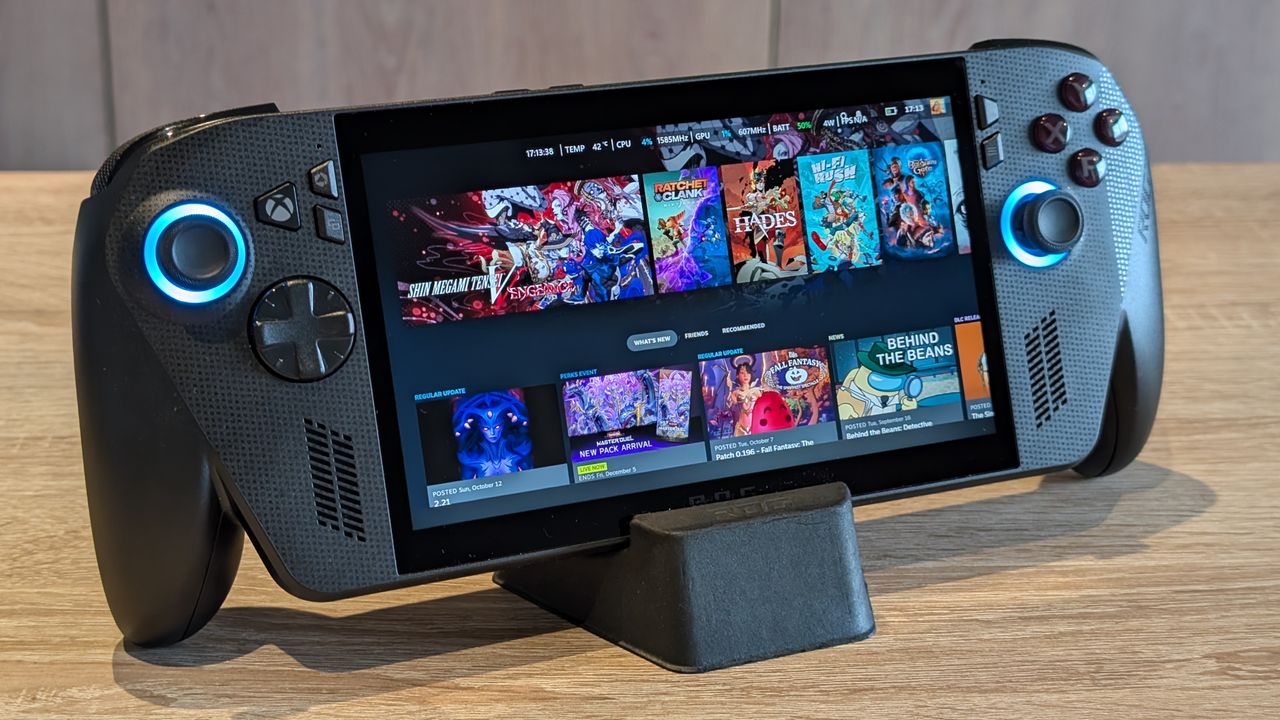







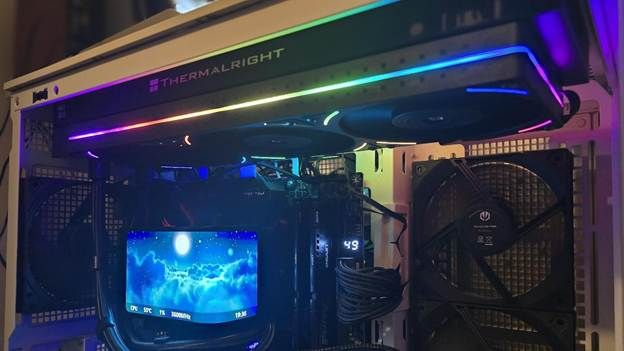


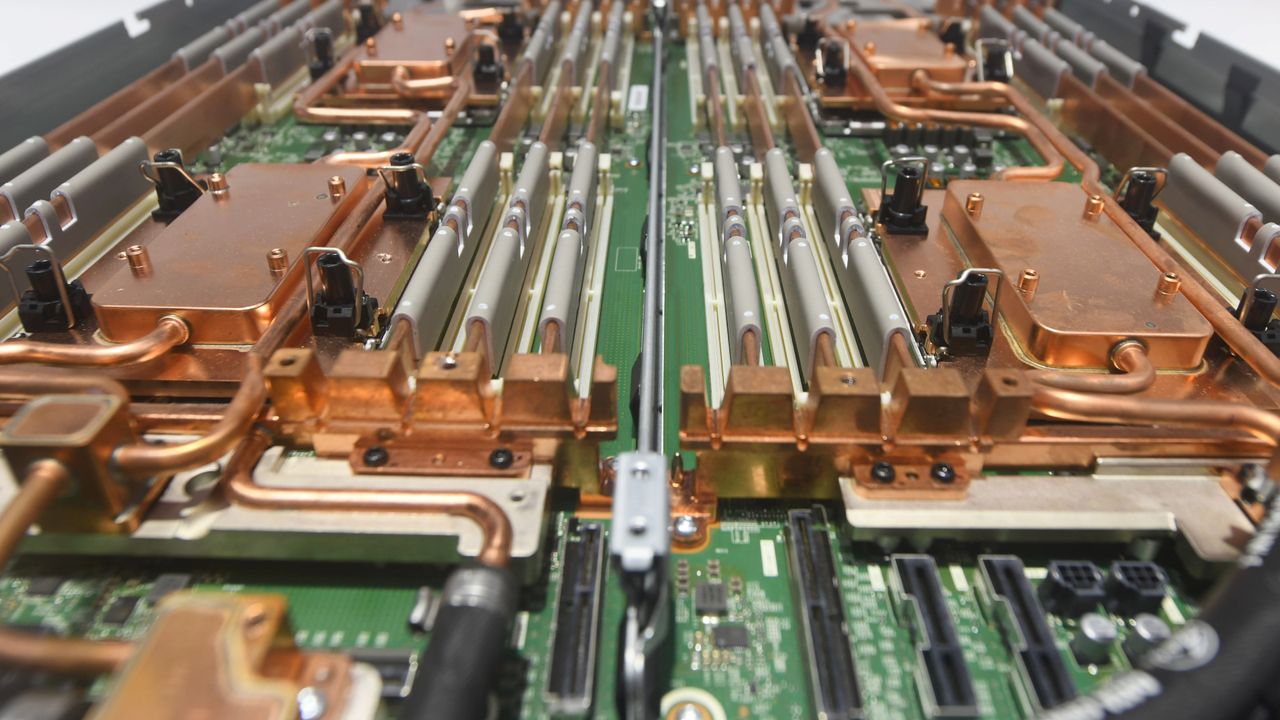


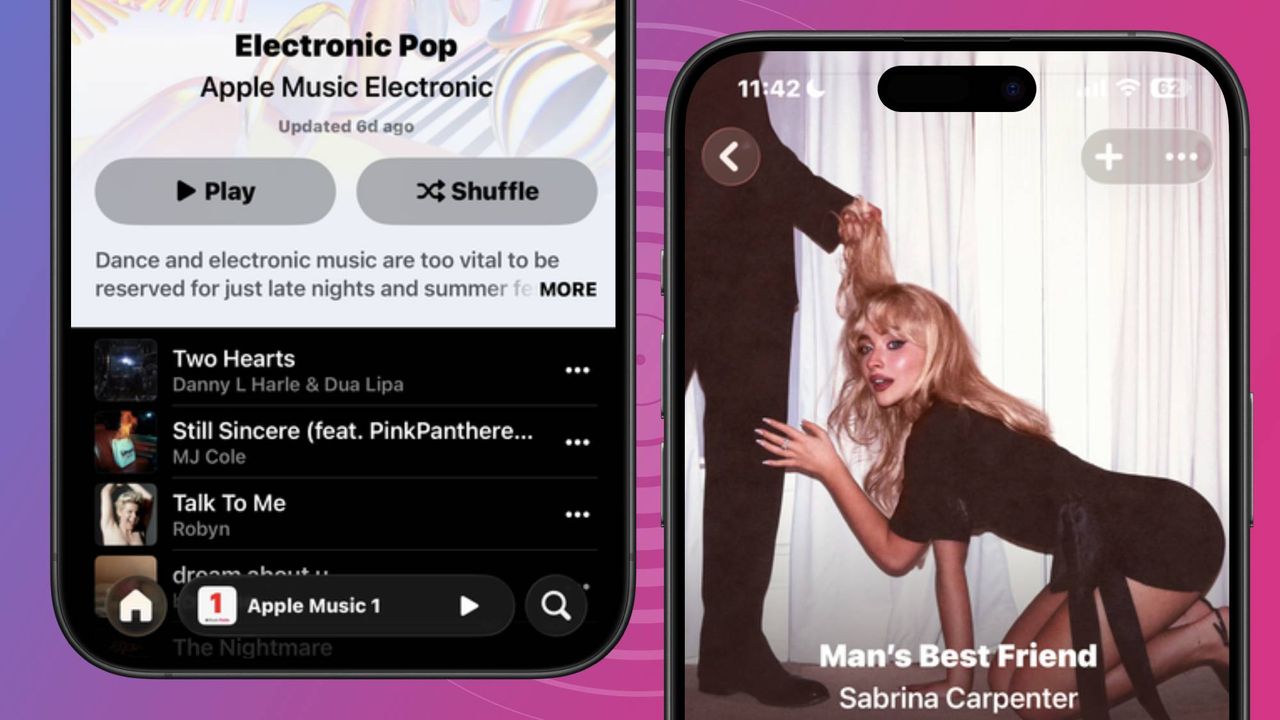




































 CEO Sundar Pichai’s remarks at the opening ceremony of the AI Impact Summit 2026