Login
Login
Meta updates Edits app with more creation tools
The company’s development team added video effects and improved the Ideas tab while also bringing in new text elements.

The company’s development team added video effects and improved the Ideas tab while also bringing in new text elements.
Nikita Bier, the platform’s head of product, said users who don’t add AI disclosures will be suspended from Creator Revenue Sharing for at least 90 days.
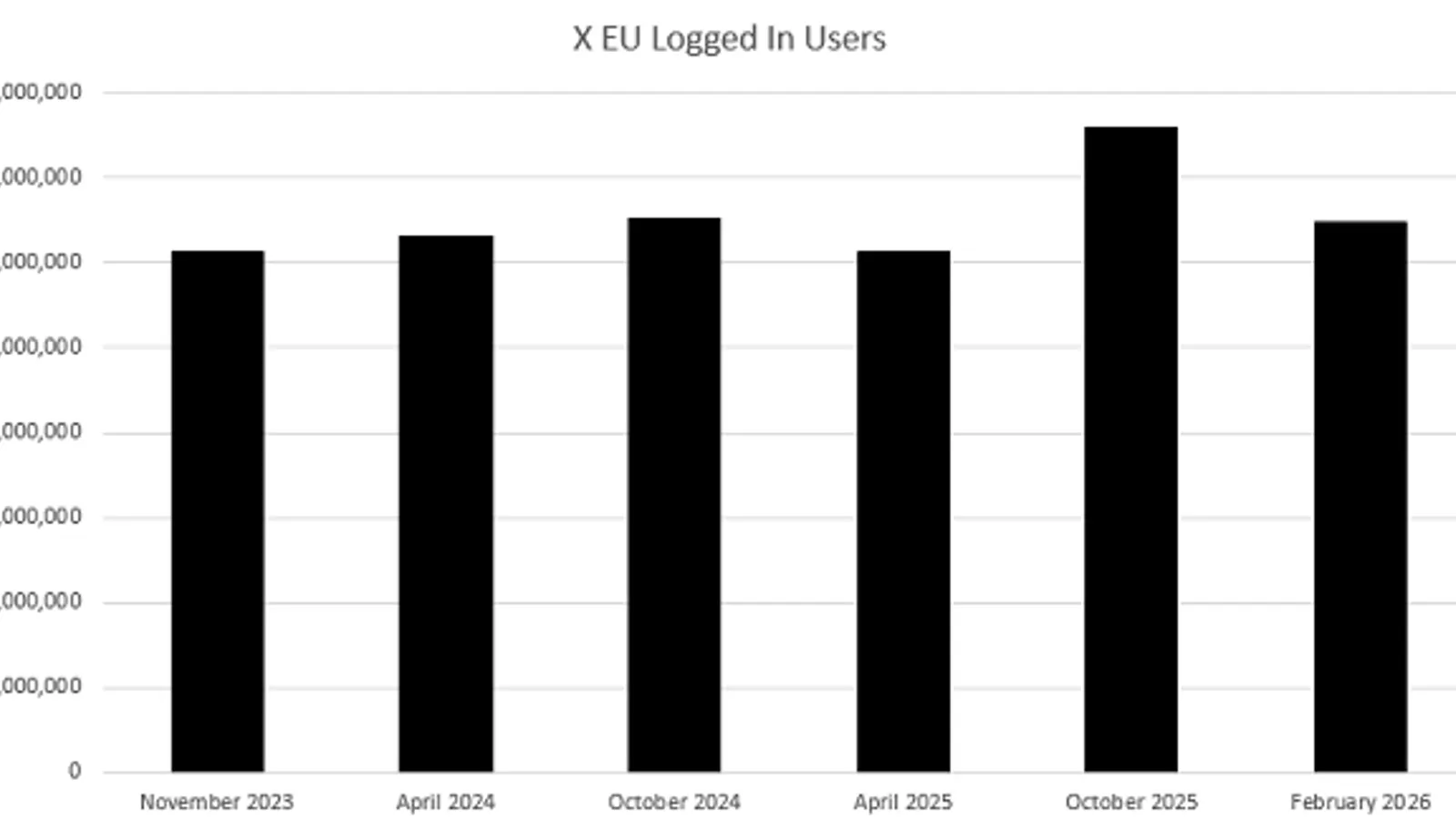
The platform’s latest reporting showed a decline of nearly 15% since the first half of last year, though the company claims overall record numbers.
The feature would allow users to request product recommendations, per Bloomberg, and is similar to functions being tested by Google and OpenAI.
The separate tool will function similarly to Meta’s Messenger and will be linked to users’ main accounts.

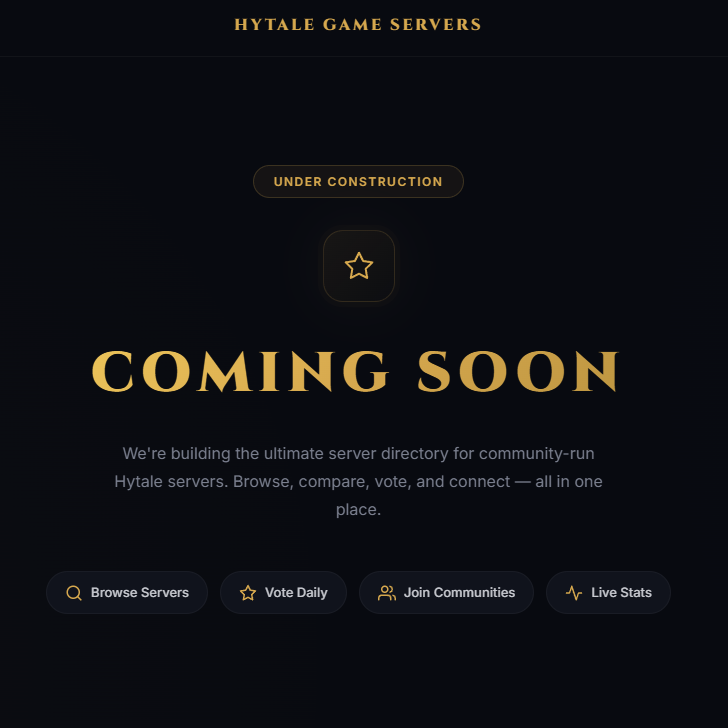
Hytale Game Servers is a community-built server listing platform for the upcoming game Hytale. Server owners can list their servers with live player counts, voting systems, and category filters, allowing players to easily find and join servers. Premium tiers offer priority placement and analytics. Built with an open-source plugin, the platform allows servers to sync data automatically. Currently, it is in its coming soon phase as we finalize the last features before launch. Join the Discord community via the link on the website at https://hytalegameservers.net.
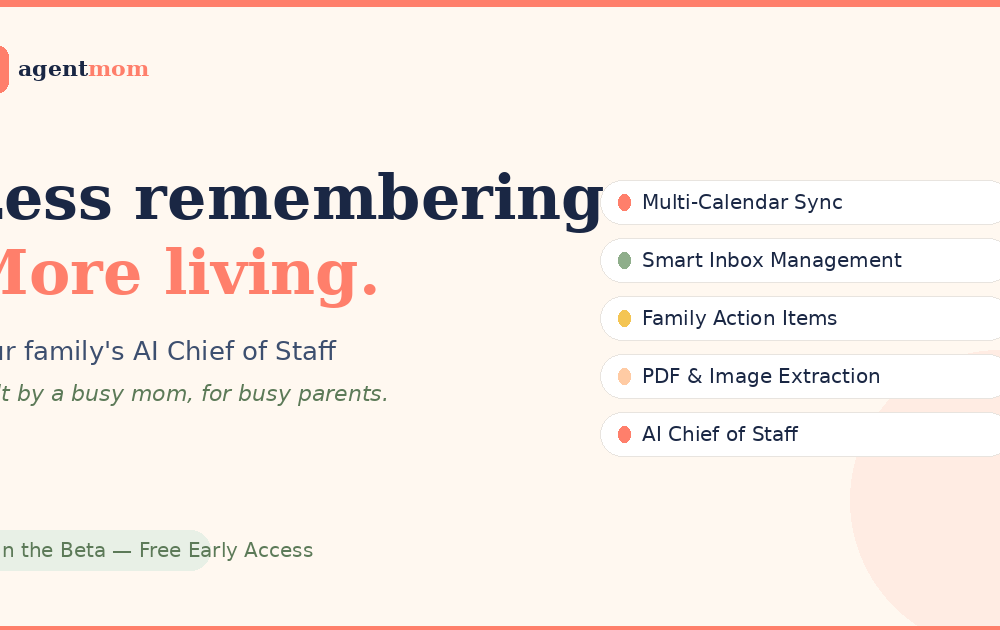
Agent Mom is an AI Chief of Staff for families that connects calendars, inboxes, and to-dos to keep schedules in sync and conflicts under control. It manages multiple Google Calendars with travel-time awareness, scans emails, PDFs, and images to extract events and action items, and classifies real conflicts versus all-day items. You stay in control by reviewing and approving while it handles the heavy lifting for your household. Built by a busy mom for busy families.

The WD_Black SN7100 4TB NVMe SSD is $546 on Amazon with Gen4 speeds and TLC NAND at roughly $137/TB.
Read full article at https://wccftech.com/wd_black-sn7100-4tb-nvme-ssd-drops-to-546-on-amazon-60-off-list/


The changes include simplified link click attribution and new engagement metrics, which could impact how ad results are measured.
The app’s use as a discovery tool is rising as users turn to its short-form videos and personalized content to find information, according to research from Adobe.





Resident Evil Requiem is finally here, and you can join the 159K people currently playing it on Steam at the time of this writing if you want to. From everything we've seen and heard since its release at the end of last week, it's been a huge hit, and while thousands of players are still digging their way through it, plenty of players are already looking towards what's next. Which, if the rumors are true, will be a Leon-focused DLC. That's at least what reliable Resident Evil leaker, Dusk Golem, is pointing towards. In an extended thread on X (formerly […]
Read full article at https://wccftech.com/resident-evil-requiem-dlc-rumor-leon-kennedy/


The M5 Pro and M5 Max announcement was accompanied by some changes in the way Apple categorizes its CPU cores. With the company introducing the term ‘super’ to the lineup, perhaps it was a hint that its Fusion Architecture allowed it to develop even more capable custom cores without compromising on efficiency. Sadly, this isn’t the case, because the M5’s performance cores have also been renamed to ‘super cores,’ concluding that the M5 Pro and M5 Max won’t be clocked any higher, removing any advantage that we thought was present because we fell victim to Apple’s clever marketing. The super cores […]
Read full article at https://wccftech.com/apple-renames-m5-performance-cores-to-super-cores/


Well, the moment we all felt was coming has finally arrived. Highguard, the maligned live service raid shooter from former Apex Legends developers at Wildlight Entertainment, is permanently shutting down next week, on March 12, 2026. When the servers go offline, it will have lasted for only 45 days between its January 26 launch and March 12. The news was announced via the game's official X (formerly Twitter) account, with a statement from the studio that begins by saying, "Today we're sharing difficult news. We have made the decision to permanently shut down Highguard on March 12." It continues to […]
Read full article at https://wccftech.com/highguard-shutting-down-permanently-next-week/



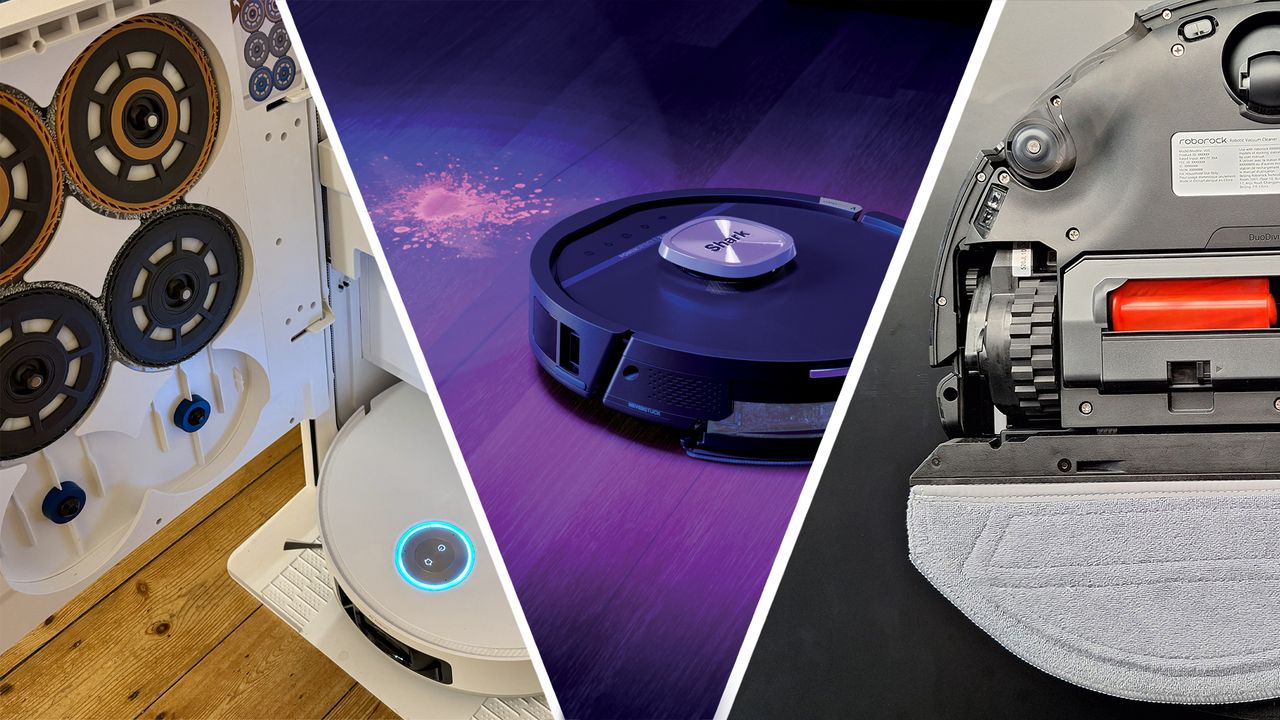



Support for the Lenovo Legion Go (8.8", 1) has not been discontinued. Lenovo is actively continuing to support the Legion Go (8.8", 1) with necessary driver and BIOS updates and will continue to do so through October 2029. Lenovo is working in concert with AMD on driver update cadence, and new updates will be released once they have passed Lenovo's rigorous review protocols.


ImagineIf is a collaborative storytelling platform where people from around the world create stories together. Each story starts with "Imagine if..." and grows one sentence at a time, like a tweet-length contribution. AI generates a unique visual for every segment, bringing the story to life. Stories can branch in different directions based on reader choices, creating infinite narrative possibilities. The platform supports 20+ languages, features an XP/leveling system, streak rewards, and a Season Pass for premium members. Whether you're a writer, reader, or just curious, anyone can join a story chain and add their part in seconds. No writing experience is needed.

MSI's most premium GPU variant, the LIGHTNING series, has been spotted in China, coming in with lower VRAM than the original model, but the looks remain consistent. MSI's LIGHTNING Z GeForce RTX 5090D V2 Features Lower VRAM Than Original Model, Yet Packaging Is the Absolute Best The MSI LIGHTNING variant, originally introduced with the GeForce RTX 5090, has been the talk of the town among 'premium GPUs'. Not only that, but this variant also features one of the highest-rated BIOS versions, at 2500W. With MSI's original showcase, there were no details on whether we could see a version specific to […]
Read full article at https://wccftech.com/msi-geforce-rtx-5090d-v2-lightning-surfaces-in-china/


Planned obsolescence is the game in town, especially in the tech world, and no one appears as savvy at this game as Apple, which has elevated the periodic adjustments of its product portfolio into an art form. Today, Apple has discontinued its 32-inch 6K display, called the Pro Display XDR, and replaced it with a 27-inch 5K one, aptly dubbed the Studio Display XDR. Apple replaces the pricey Pro Display XDR with the cheaper Studio Display XDR that entails some compromises Apple has officially retired the Pro Display XDR in favor of the new 27-inch Studio Display XDR, which while […]
Read full article at https://wccftech.com/apple-cues-in-nostalgia-by-discontinuing-the-pro-display-xdr-in-favor-of-the-new-studio-display-xdr/

 Find your lost luggage faster. A new Find Hub network feature lets you securely share an item's live location with airlines.
 March Pixel Drop is here with new ways to use Circle to Search, safety features on Watch, dining suggestions from Magic Cue and more!
 Find friends without leaving the chat, recover lost bags by sharing tracker tag links, explore new apps via bite-sized videos, and more.




Micron’s shipping 256GB SOCAMM2 memory samples to customers Micron has delivered its first 256GB SOCAMM2 memory samples to customers, allowing users to create AI systems with 2TB of LPDDR memory across eight memory channels. With Micron’s first monolithic 32Gb LPDDR5X memory, Micron can enable next-generation AI capabilities through increased memory access. This enables higher performance […]
The post Micron ships the world’s first 256GB LPDDR5X SOCAMM2 modules appeared first on OC3D.






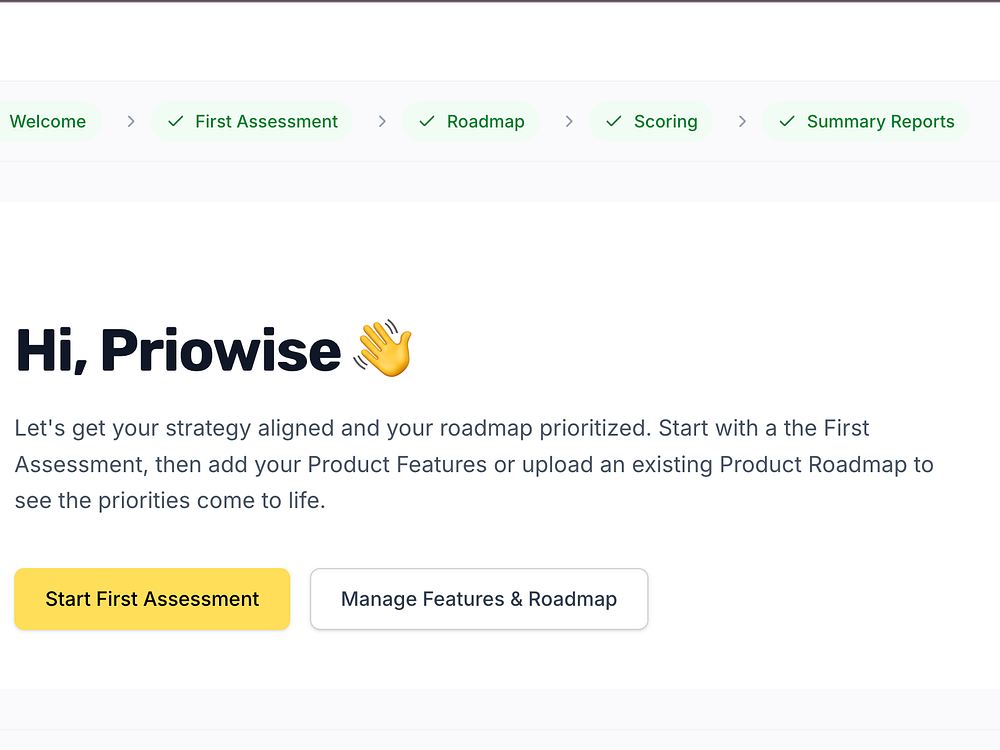
Priowise is an AI-powered strategic alignment and prioritization platform that turns founder vision into a structured product strategy and keeps it aligned with execution. It helps teams define what truly matters, build a clear prioritization logic, and translate strategic intent into a structured, impact-driven product roadmap.
By analyzing objectives, initiatives, and market context together, Priowise identifies gaps between strategy and what’s being built, suggests what’s missing, and recalibrates priorities as conditions change. Instead of static plans or intuition-led decisions, teams get a living system that keeps strategy measurable, adaptive, and continuously aligned with impact.
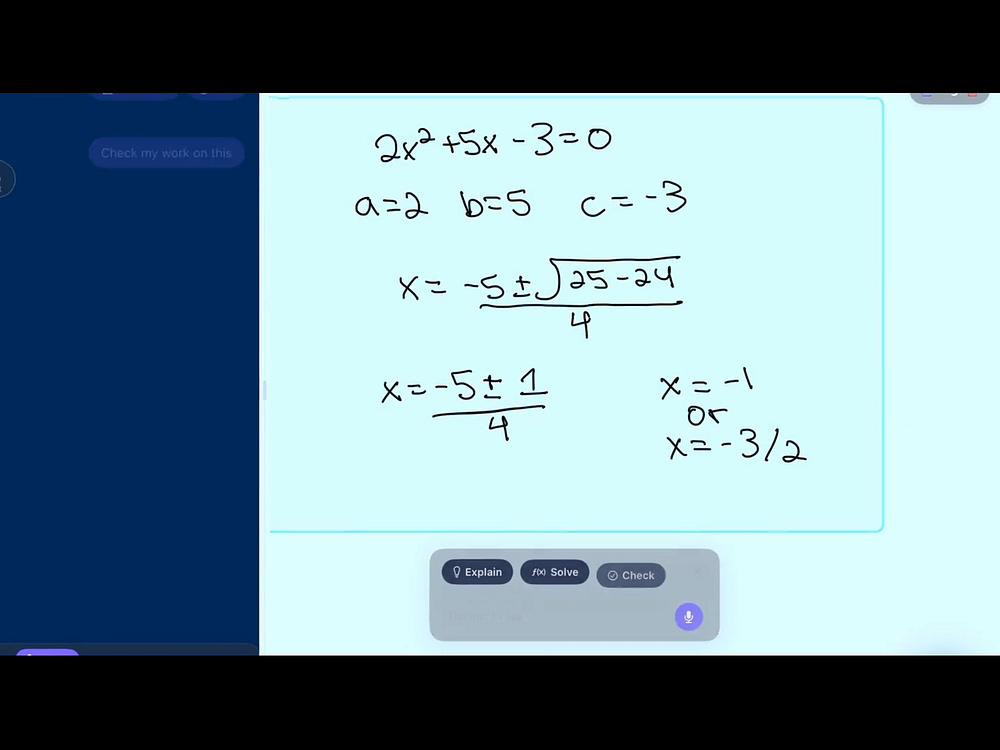
Brilliaint brings real AI help to your iPad notes. Write with Apple Pencil, then ask or circle any equation, diagram, or paragraph to get step-by-step help or clear explanations. It reads your handwriting, checks your work, and turns imported work or iPad notes into flashcards, practice quizzes, and visual diagrams for all types of learners. You can also import PDFs, photos, or lecture audio; it sees and transcribes them, then uses your notes and uploaded class material for quizzes and answers.
Built for students who struggle with traditional studying, whether due to ADHD, learning differences, or a different way of processing information.


Bandai Namco has dropped a curious teaser on X (formerly Twitter) announcing that it'll be revealing "a new RPG" later this week on March 5, at 3pm PT / 6pm ET / 11pm BT. The post is also accompanied with a short video that includes an T for Teen ESRB rating, a shot of a forest with a tower in the distance that reaches into the sky, followed by a character walking with a sword and shield on their back. At that point, the teaser cuts, showing gold text that reads "New RPG reveal" with the March 5th date and […]
Read full article at https://wccftech.com/bandai-namco-reveal-new-rpg-this-week-new-tales-game/


AMD's CEO has discussed the company's situation with enterprise demand for its server CPUs, and according to Lisa Su, Team Red faces 'unexpected' customer volume. AMD's Lisa Su Says that the CPU Supply Is Tightening, as Customer Commitments Increase Rapidly The ratio of CPU: GPU in modern-day AI compute workloads has evolved dramatically over the past few months, mainly since with agentic applications coming in, the role of CPUs has increased signifcantly. We have seen hyperscalers like Meta enter into standalone CPU agreements with infrastructure providers like AMD and NVIDIA, indicating that compute is diversifying away from GPUs. While talking […]
Read full article at https://wccftech.com/amd-witnesses-unexpected-cpu-demand-from-ai-customers/


On top of the two Fallout TV series adaptations, the upcoming God of War TV series, the Mass Effect series, and the Wolfenstein series that Amazon has in the works, in September 2025, it confirmed that it is working on a Life is Strange TV series adaptation. The show is set to be written and led by Kaos writer, Charlie Covell, and today, in a new report from Variety, we learned who Amazon has tapped for the show's two lead roles, Max and Chloe. In the case of both casting choices, Amazon and Covell have opted to go for two […]
Read full article at https://wccftech.com/life-is-strange-tv-series-max-chloe-cast-maisy-stella-tatum-grace-hopkins/


Unlike the desktop variant, the laptop variant comes with a lower VRAM size, but leaks are suggesting higher memory capacity for the laptop edition as well. Lenovo Yoga Pro 7 Leaked Specifications Reveal RTX 5070 Laptop GPU With 12 GB GDDR7 Memory; ASUS Also Lists Laptops With RTX 5070 12 GB Mobile GPU Despite memory shortages, the leaked listings show that NVIDIA is rumoredly increasing the memory capacity of one of its RTX 50 series cards. On one hand, NVIDIA has been reportedly prioritizing 8 GB RTX 50 series GPUs, but on the other hand, we are seeing some laptop […]
Read full article at https://wccftech.com/lenovo-reportedly-prepares-gaming-laptop-featuring-geforce-rtx-5070-with-12-gb-vram/







Google will begin enforcing a minimum daily budget for Demand Gen campaigns starting April 1, 2026.
What’s happening: The Google Ads API will require a minimum daily budget of $5 USD (or local equivalent) for all Demand Gen campaigns. The change is designed to help campaigns move through the “cold start” phase with enough spend for Google’s models to learn and optimize effectively. The update will roll out as an unversioned API change, applying across all buying paths.
Technical details:
BUDGET_BELOW_DAILY_MINIMUM error, with additional details available in the error metadata.UNKNOWN error, with the specific validation failure referenced in the unpublished error code field.The rule applies when modifying budgets, start dates, or end dates in ways that push daily spend below the $5 floor — covering both daily and flighted budgets.
Impact on existing campaigns. Current Demand Gen campaigns running below the minimum will continue serving. However, any future edits to budgets or scheduling will require compliance with the new floor.
Why we care. For advertisers and developers, this adds a new compliance layer to campaign management workflows. Systems will need updating to catch and handle the new validation errors before deployment.
The bottom line. Google is standardizing a minimum investment threshold for Demand Gen — prioritizing performance stability, while requiring advertisers to adjust budgets and automation accordingly.






Bungie's upcoming first-person extraction shooter, Marathon, is just coming off of its open preview Server Slam, which gave players on PS5 and PC a chance to jump in and try the game themselves for free before it arrives on the aforementioned platforms later this week on March 5, 2026. The preview weekend gave players an opportunity to provide Bungie with a lot of feedback, some of which the studio has already been able to address with fixes that were applied during the server slam, while other issues will continue to be investigated and tweaked post-launch. One thing that's also come […]
Read full article at https://wccftech.com/marathon-estimated-sold-250k-copies-steam-launch-roadmap-revealed/


One of the most interesting game reveals at The Game Awards 2025, at least in my opinion, was Neon Giant's NO LAW. The new game from the makers of The Ascent is a first person open world shooter that was easy to compare to Cyberpunk 2077, although its developers were quick to address that, clarifying that it's "a lot more intimate" in comparison to CD Projekt RED's game. In a new interview with EDGE magazine (issue 421, April 2026), Neon Giant co-founder and creative director Arcade Berg revealed the true inspiration: immersive simulations. We feel really good about putting this […]
Read full article at https://wccftech.com/no-law-lets-you-kill-any-character-inspired-immersive-sims/


The introduction of the new 14-inch and 16-inch MacBook Pro lineup was accompanied by a pleasant surprise, as Apple has raised the minimum storage for all M5 and M5 Pro models. With these portable Macs now shipping with a 1TB SSD, buyers who were previously running into low internal memory warnings and had to resort to clever workarounds, such as using cloud storage, can finally breathe a sigh of relief. However, this upgrade isn't free, but the price is less aggressive compared to Apple's previous business practices. The base storage upgrade won't come free for M5 and M5 MacBook Pro models, as Apple […]
Read full article at https://wccftech.com/apple-raises-macbook-pro-base-storage-to-1tb-for-m5-and-m5-pro-models/


After unveiling a slew of new products over the past few hours, including the iPhone 17e, the M4 iPad Air, the M5 Pro and M5 Max chipsets, the all-new MacBook Pro devices, the M5 MacBook Air, the Studio Display and the Studio Display XDR, Apple is gearing up to reveal its much-anticipated low-cost MacBook tomorrow, when it will also hold a hands-on 'Apple Experience' event simultaneously in various choice locations around the globe. Even so, a brief website glitch has revealed an important tidbit ahead of tomorrow's grand unveiling: the new device will be called MacBook Neo. Apple's upcoming budget MacBook will be called MacBook […]
Read full article at https://wccftech.com/a-brief-website-glitch-reveals-apples-low-cost-macbook-to-be-called-macbook-neo/


Although CAPCOM’s RE Engine proved to be a great engine for linear games such as Resident Evil Requiem, Monster Hunter Wilds highlighted how the engine wasn't as good at handling open-world games. Its significant performance issues have now been fixed for the most part, and they may even be a thing of the past for future games from the Japanese publisher, judging from a recent statement. During a Q&A session held during the publisher's Q3 FY2025 Financial Results Conference Call, CAPCOM discussed its future PC strategy. "As of the third quarter, PC sales account for approximately 50% of total unit […]
Read full article at https://wccftech.com/monster-hunter-wilds-performance-challenges-will-benefit-future-games-capcom-says/


Nintendo hosted its first Indie World Showcase of 2026 and the fourth Nintendo Direct event of the year this morning, with an 18-minute presentation chock-full of indie games coming to Nintendo Switch 2 and Nintendo Switch. While the showcase lacked some of the heavy-hitter reveals we guessed at after Nintendo announced the showcase yesterday, like the release date reveal for Hollow Knight Silksong: Sea of Sorrows DLC or a Vampire Crawlers release date, it wasn't without its big indie announcements. One of the most notable announcements (and the one that closed out the show) was the reveal that Blue Prince […]
Read full article at https://wccftech.com/nintendo-switch-2-indie-world-showcase-round-up-blue-prince-mixtape-ratatan/


As expected, Apple has been on a veritable frenzy when it comes to launching new products. On Monday, the Cupertino giant unveiled the iPhone 17e and the M4 iPad Air. Today, we've got the densest volley so far, with the M5 Pro and M5 Max chipsets, the all-new MacBook Pro devices, and the new M5 MacBook Air getting their respective spots on the stage. Even so, Apple has just announced the all-new Studio Display and Studio Display XDR, replete with a 27-inch 5K Retina XDR display that features an advanced mini-LED backlight, up to 2000 nits of peak HDR brightness, […]
Read full article at https://wccftech.com/behold-apples-all-new-studio-display-and-studio-display-xdr-a-27-inch-5k-retina-xdr-display-up-to-2000-nits-of-peak-hdr-brightness-and-thunderbolt-5/


Micron's latest breakthrough in the memory industry is the debut of the more capable SOCAMM2 memory modules, featuring leading capacity and power efficiency. Micron's Newer SOCAMM2 Focuses On Reducing Bottlenecks With KV-Cache, Leading to Lower Latency Workloads With the 'applications' layer of AI, the memory bottleneck is growing as workloads continue to scale, which is why DRAM manufacturers have paid special attention to advancements being made with HBM and other AI-specific memory products. In Micron's latest announcement, the firm has set a "new benchmark" with SOCAMM2 memory modules, as they ramp up the per-module capacity to 256 GB, marking a […]
Read full article at https://wccftech.com/micron-ships-out-the-worlds-first-256gb-socamm2-modules/





Track steps, not you.
Lock your apps by default to improve your digital wellbeing
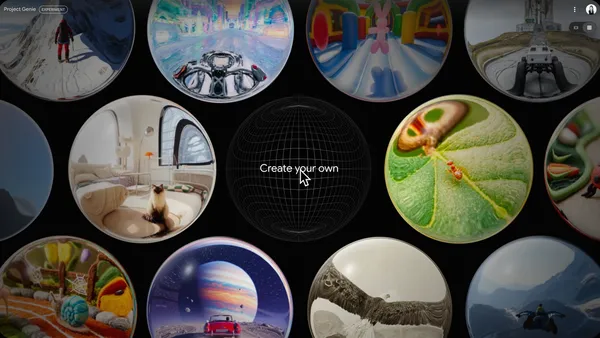 Learn more about Google DeepMind’s Project Genie and how to write prompts to create your own worlds.
 Gemini 3.1 Flash-Lite is our fastest and most cost-efficient Gemini 3 series model yet.








AI recommendations are inconsistent for some brands and reliable for others because of cascading confidence: entity trust that accumulates or decays at every stage of an algorithmic pipeline.
Addressing that reality requires a discipline that spans the full algorithmic trinity through assistive agent optimization (AAO). It also demands three structural shifts: the funnel moves inside the agent, the push layer returns, and the web index loses its monopoly.
The mechanics behind that shift sit inside the AI engine pipeline. Here’s how it works.
Every piece of digital content passes through 10 gates before it becomes an AI recommendation. I call this the AI engine pipeline, DSCRI-ARGDW, which stands for:
After “won” comes an 11th gate that belongs to the brand, not the engine: served. What happens after the decision feeds back into the AI engine pipeline as entity confidence, making the next cycle stronger or weaker.
DSCRI is absolute. Are you creating a friction-free path for the bots?
ARGDW is relative. How do you compare to your competition? Are you creating a situation in which you’re relatively more “tasty” to the algorithms?

Both sides of the AI engine pipeline are sequential. Each gate feeds the next.
Content entering DSCRI through the traditional pull path passes through every gate. Content entering through structured feeds or direct data push can skip some or all of the infrastructure gates entirely, arriving at the competitive phase with minimal attenuation.
Skipped gates are a huge win, so take that option wherever and whenever you can. You “jump the queue” and start at a later stage without the degraded confidence of the previous ones. That changes the economics of the entire pipeline, and I’ll come back to why.
The four-step model the SEO industry inherited from 1998 — crawl, index, rank, display — collapses five distinct infrastructure processes into “crawl and index” and five distinct competitive processes into “rank and display.”
It might feel like I’m overcomplicating this, but I’m not. Each gate has nuance that merits its standalone position. If you have empathy for the bots, algorithms, and engines, remove friction, and make the content digestible, they’ll move you through each gate cleanly and without losing speed.
Each gate is an opportunity to fail, and each point of potential failure needs a different diagnosis. The industry has been optimizing a four-room house when it lives in a 10-room building, and the rooms it never enters are the ones where the pipes leak the worst.
Most SEO advice operates at the selection, crawling, and rendering gates. Most GEO advice operates at “displayed” and “won,” which is why I’m not a fan of the term.
Most teams aren’t yet working on annotation and recruitment, which are actually where the biggest structural advantages are created.
The AI engine pipeline has an entry condition — discovery — and nine processing gates organized in three acts of three, each with a different primary audience.
Act I: Retrieval (selection, crawling, rendering)
Act II: Storage (indexing, annotation, recruitment)
Act III: Execution (grounding, display, won)
Frictionless for bots, worth remembering for algorithms, and convincing for people. Content must pass every machine gate and still persuade a human at the end.
The audiences are nested, not parallel. Content can only reach the algorithm through the bot and can only reach the person through the algorithm. You can have the most impeccable expertise and authority credentials in the world. If the bot can’t process your page cleanly, the algorithm will never see it.
This is the nested audience model: bot, then algorithm, then person. Every optimization strategy should start by identifying which audience it serves and whether the upstream audiences are already satisfied.
Discovery is binary. Either the system has encountered your URL or it hasn’t. Fabrice Canel, principal program manager at Microsoft responsible for Bing’s crawling infrastructure, confirmed:
The entity home website, the canonical web property you control, is the primary discovery anchor. The system doesn’t just ask, “Does this URL exist?” It asks, “Does this URL belong to an entity I already trust?” Content without entity association arrives as an orphan, and orphans wait at the back of the queue.
The push layer — IndexNow, MCP, structured feeds — changes the economics of this gate entirely. A later piece in this series is dedicated to what changes when you stop waiting to be found.
Not everything that’s discovered gets crawled. The system makes a triage decision based on countless signals, including entity authority, freshness, crawl budget, perceived value, and predicted cost.
Selection is where entity confidence first translates into a concrete pipeline advantage. The system already has an opinion about you before it crawls a single page. That opinion determines how many of your pages it bothers to look at.
Every technical SEO understands this gate. Server response time, robots.txt, redirect chains. Foundational, but not differentiating.
What most practitioners miss is that the bot doesn’t arrive in a vacuum. Canel confirmed that context from the referring page can be carried forward during crawling. With highly relevant links, the bot carries more context than it would from a link on an unrelated directory.
This is where everything changes and where most teams aren’t yet paying attention. The bot executes JavaScript if it chooses to, builds the Document Object Model (DOM), and produces the full rendered page.
But here’s a question you probably haven’t considered: how much of your published content does the bot actually see after this step? If bots don’t execute your code, your content is invisible. More subtly, if they can’t parse your DOM cleanly, that content loses significant value.
Google and Bing have extended a favor for years: they render JavaScript. Most AI agent bots don’t. If your content sits behind client-side rendering, a growing proportion of the systems that matter simply never see it.
Representatives from both Google and Bing have also discussed the efforts they make to interpret messy HTML. Here’s one way to look at it: search was built on favors, and those favors aren’t being offered by the new players in AI.
Importantly, content lost at rendering can’t be recovered at any downstream gate. Every annotation, grounding decision, and display outcome depends on what survives rendering. If rendering is your weakest gate, it’s your F on the report card. Everything downstream inherits that grade.
This is where most brands are losing out because most optimization advice doesn’t address the next two gates. And remember, if your content fails to pass any single gate, it’s no longer in the race.
Rendering produces the full page as the bot sees it. Indexing then transforms that DOM into something the system can store. Two things happen here that the industry often misses:
I call this conversion fidelity: how much semantic information survives the strip, chunk, convert, and store sequence. Rendering fidelity (Gate 3) measures whether the bot could consume your content. Conversion fidelity (Gate 4) measures whether the system preserved it accurately when filing it away.
Both fidelity losses are irreversible, but they fail differently. Rendering fidelity fails when JavaScript doesn’t execute or content is too difficult for the bot to parse. Conversion fidelity fails when the system can’t identify which parts of your page are core content, when your structure doesn’t chunk cleanly, or when semantic relationships between elements don’t survive the format conversion.
Something we often overlook is that even after a successful crawl, indexing isn’t guaranteed. Content that passes through crawl and render may still not be indexed.
That might sound bad enough, but here’s a distinction that should concern you: indexing and annotation are separate processes. Content may be indexed but poorly annotated — stored in the system but semantically misclassified. Non-indexed content is invisible. Misannotated content actively confuses the system about who you are, which can be worse.
This is the gate most of the industry has yet to address.
Think of annotations as sticky notes on the indexed “folders” created at the indexing gate. Indexing algorithms add multiple annotations to every piece of content in the index.
I identified 24 annotation dimensions I felt confident sharing with Canel. When I asked him, his response was, “Oh, there is definitely more.”
Those 24 dimensions were organized across five annotation layers:
There are certainly more layers, and each layer likely includes more dimensions than I’ve mapped. Hundreds, probably thousands. This is an open model. The community is invited to map the dimensions I’ve missed.
Annotation is where the system decides the facts:
Credibility signals — notability, experience, expertise, authority, trust, transparency — are evaluated here. Topical authority is assessed here, too, along with much more.
Annotation operates on what survives rendering and conversion. If critical information was lost at either gate, the annotation system is working with degraded raw material. It annotates what the annotation engine received, not what you originally published.
Canel confirmed a principle I suggested that should reshape how we think about this gate: “The bot tags without judging. Filtering happens at query time.” Annotation quality determines your eligibility for every downstream triage.
I have a full piece coming on annotation alone. For now, annotation is the gate where most brands silently lose and the one most worth working on.
This is the first explicitly competitive gate. After annotation, the pipeline feeds into three systems simultaneously.
Before recruitment, the system found, crawled, stored, and classified your content. At recruitment, it decides whether your content is worth keeping over alternatives that serve the same purpose.
Being recruited by all three elements of the algorithmic trinity gives you a disproportionate advantage at grounding because the grounding system can find you through multiple retrieval paths, and at display because there are multiple opportunities for visibility.
Recruitment is the structural advantage that separates brands with consistent AI visibility from brands that appear inconsistently.
This is the gate that separates traditional search from AI recommendations.
Ihab Rizk, who works on Microsoft’s Clarity platform, described the grounding lifecycle this way:
But grounding isn’t just search results, as many people believe. The other two technologies in the algorithmic trinity play a role.
The knowledge graph is used to ground facts. AI Overviews explicitly showed information grounded in the knowledge graph. It’s reasonable to assume specialized small language models are used to ground user-facing large language models.
The takeaway is that your content’s performance from discovery through recruitment determines whether your pages are in the candidate pool when grounding begins. If your content isn’t indexed, isn’t well annotated, or isn’t associated with a high-confidence entity, it won’t be in the retrieval set for any part of the trinity. The engine will ground its answer on someone else’s content instead.
You can’t optimize for grounding if your content never reaches the grounding stage.
Display is where most AI tracking tools operate. They measure what AI says about you. But by the time you’re measuring display, the decisions were already made upstream, from discovery through grounding.
Brands with high cascading confidence appear consistently. Brands with low cascading confidence appear intermittently, the same phenomenon Rand Fishkin demonstrated.
Display is where AI meets the user. It also covers the acquisition funnel, which is easy to understand and meaningful for marketers. This is where most businesses focus because it’s visible and sits just before the click. I’ll write a full article on that later in this series.
Won is the terminal processing gate in the AI engine pipeline. Ten gates of processing, three acts of audience satisfaction, and it comes down to this: Did the system trust you enough to commit?
The accumulated confidence at this gate is called “won probability,” the system’s calculated likelihood that committing to you is the right decision. Three resolutions are possible, and they form a spectrum. To understand why that spectrum matters, you need to understand the 95/5 rule.
Professor John Dawes at the Ehrenberg-Bass Institute demonstrated that at any given moment, only about 5% of potential buyers are actively in-market. The other 95% aren’t ready to purchase. You sell to the 5%, but the real job of marketing is staying top of mind for the other 95% so that when they decide to move to purchase, on their schedule, not yours, you’re the brand they think of.
The three scenarios that follow show how AI takes over the job of being top of mind at the critical moment for the 95%. I call this top of algorithmic mind.

Search won’t disappear. Most people will always want to browse some of the time. Window shopping is fun, and emotionally charged decisions aren’t something people will always delegate.
The trajectory, however, moves from imperfect to perfect to agential. Brands need to optimize for all three outcomes on that spectrum, starting now. Optimizing for agents should already be part of your strategy, as should optimizing for assistive engines and search engines. AAO covers them all.
Search engines, AI assistive engines, and assistive agents are your untrained salesforce. Your job is to train them well enough that you’re top of algorithmic mind at the moment the 95% become the 5%, and the AI either:
Dig deeper: SEO in the age of AI: Becoming the trusted answer
After conversion, the brand takes over. You should optimize the post-won feedback gate. The processing pipeline, the DSCRI-ARGDW spine, gets you to the decision. Served sits outside that spine as the gate that closes the loop, turning the line into a circle.
Every “won” that produces a positive outcome strengthens the next cycle’s cascading confidence. Every “won” that produces a negative outcome weakens it. Ten gates get you to the decision. The 11th, served, determines whether the decision repeats and your advantage compounds.
This is where the business lives. Acquisition without retention is a leak, both directly and indirectly through the AI engine pipeline feedback loop.
Brands that engineer their post-won experience to generate positive evidence, reviews, repeat engagement, low return rates, and completion signals, build a flywheel. Brands that neglect post-won burn confidence with every cycle.
The three acts — bot, algorithm, engine, or person — describe who you’re speaking to. The two phases describe what kind of test you’re taking.
The practical implication is infrastructure first, competitive second. If your content isn’t being found, rendered, or indexed correctly, fixing annotation quality is wasted effort. You’re decorating a room the building inspector hasn’t cleared.
In practice, brands tend to fail in three predictable ways.

In 2019, I published How Google Universal Search Ranking Works: Darwinism in Search, based on a direct explanation from Google’s Illyes about how Google calculates ranking bids by multiplying individual factor scores. A zero on any factor kills the entire bid.
Darwin’s natural selection works the same way: fitness is the product across all dimensions, and a single zero kills the organism. Brent D. Payne made this analogy: “Better to be a straight C student than three As and an F.”
As with Google’s bidding system, cascading confidence is multiplicative, not additive. Here’s what that means:
| Per-gate confidence | Surviving signal at the won gate |
| 90% | 34.9% |
| 80% | 10.7% |
| 70% | 2.8% |
| 60% | 0.6% |
| 50% | 0.1% |
Illustrative math, not a measurement. The principle is what matters: strengths don’t compensate for weaknesses in a multiplicative chain.
A single weak gate destroys everything. Nine gates at 90% plus one at 50% drops you from 34.9% to 19.4%. If that gate drops to 10%, it kills the surviving signal entirely. A near-zero anywhere in a multiplicative chain makes the whole chain near-zero.
This is competitive math. If your competitors are all at 50% per gate and you’re at 60%, you win: 0.6% surviving signal against their 0.1%. Not because you’re excellent, but because you’re less bad.
Most brands aren’t at 90%. The worse your gates are, the bigger the gap a small improvement opens. Here’s an example.
| Gate | D | S | C | R | I | A | Re | G | Di | W | Surviving Signal |
| Discovered | Selected | Crawled | Rendered | Indexed | Annotated | Recruited | Grounded | Displayed | Won | ||
| Your Brand | 75% | 80% | 70% | 85% | 75% | 5% | 80% | 70% | 75% | 80% | 0.4% |
| Competitor | 65% | 60% | 65% | 70% | 60% | 60% | 65% | 60% | 65% | 60% | 1.8% |
I chose annotated as the “F” grade in this example for demonstrative purposes.
Annotation is the phase-boundary gate. It’s the hinge of the whole pipeline. If the system doesn’t understand what your content is, nothing downstream matters.
Applying this Darwinian principle across a 10-gate pipeline, where confidence is measurable at every transition, is my diagnostic model. I recently filed a patent for the mechanical implementation.
There are two ways to increase your surviving signal through the pipeline, and they aren’t equal.
Better rendering, cleaner markup, faster servers, and schema help the system classify your content more accurately. These are real gains, single-digit to low double-digit percentage improvements in surviving signal.
For many brands and SEOs, this is maintenance rather than transformation. It matters, and most brands aren’t doing it well, but it’s incremental.
Structured feeds, Google Merchant Center and OpenAI Product Feed Specification, bypass discovery, selection, crawling, and rendering altogether, delivering your content to the competitive phase with minimal attenuation.
MCP connections skip even further, making data available from recruitment onward with triple-digit percentage advantages over the pull path.
If you’re only improving gates, you’re leaving an order of magnitude on the table.
Improving your best gate from 95% to 98% is nearly invisible in the pipeline math. Improving your worst gate from 50% to 80% transforms your entire surviving signal. That’s the Darwinian principle at work: fitness is multiplicative, the weakest dimension determines the outcome, and strengths elsewhere can’t compensate.
Most teams are optimizing the wrong gate. Technical SEO, content marketing, and GEO each address different gates. Each is necessary, but none is sufficient because the pipeline requires all 10 to perform. Teams pouring budget into the two or three gates they understand are ignoring the ones that are actually killing their signal.
Then there’s the single-system mistake. At recruitment, the pipeline feeds into three graphs, the algorithmic trinity. Missing one graph means one entire retrieval path doesn’t include you.
You can be perfectly optimized for search engine recruitment and completely absent from the knowledge graph and the LLM training corpus. In a multiplicative system, that gap compounds with every cycle.
Most of the AI tracking industry is measuring outputs without diagnosing inputs, tracking what AI says about you at display when the decisions were already made upstream. That’s like checking your blood pressure without diagnosing the underlying condition.
The tools to do this properly are emerging. Authoritas, for example, can inspect the network requests behind ChatGPT to understand which content is actually formulating answers. But the real work is at the gates upstream of display, where your content either passed or stalled before the engine ever opened its mouth.
The correct audit order is pipeline order. Start at discovery and work forward.
If content isn’t being discovered, nothing downstream matters. If it’s discovered but not selected for crawling, rendering fixes are wasted effort. If it’s crawled but renders poorly, every annotation and grounding decision downstream inherits that degradation.
This is your new plan: Find the weakest gate. Fix it. Repeat.
The inconsistency Fishkin documented is a training deficit. The AI engine pipeline is trainable. The training compounds. The walled gardens increase their lock-in with every cycle.
The brand that trains its AI salesforce better than the competition doesn’t just win the next recommendation. It makes the next one easier to win, and the one after that, until the gap widens to the point where competitors can’t close it without starting from scratch.
Without entity understanding, nothing else in this pipeline works. The system needs to know who you are before it can evaluate what you publish. Get that right, build from the brand up through the funnel, and the compounding does the rest.
The next piece opens the infrastructure gates in full: rendering fidelity, conversion fidelity, JavaScript as a favor, not a standard, structured data as the native language of the infrastructure phase, and the investment comparison that puts numbers on improving gates versus skipping them entirely.
The sequential audit shows where your content is dying before the algorithm ever sees it, and once you see the leaks, you can start plugging them in the order that moves your surviving signal the most.
This is the third piece in my AI authority series. The first, “Rand Fishkin proved AI recommendations are inconsistent – here’s why and how to fix it,” introduced cascading confidence. The second, “AAO: Why assistive agent optimization is the next evolution of SEO” named the discipline.





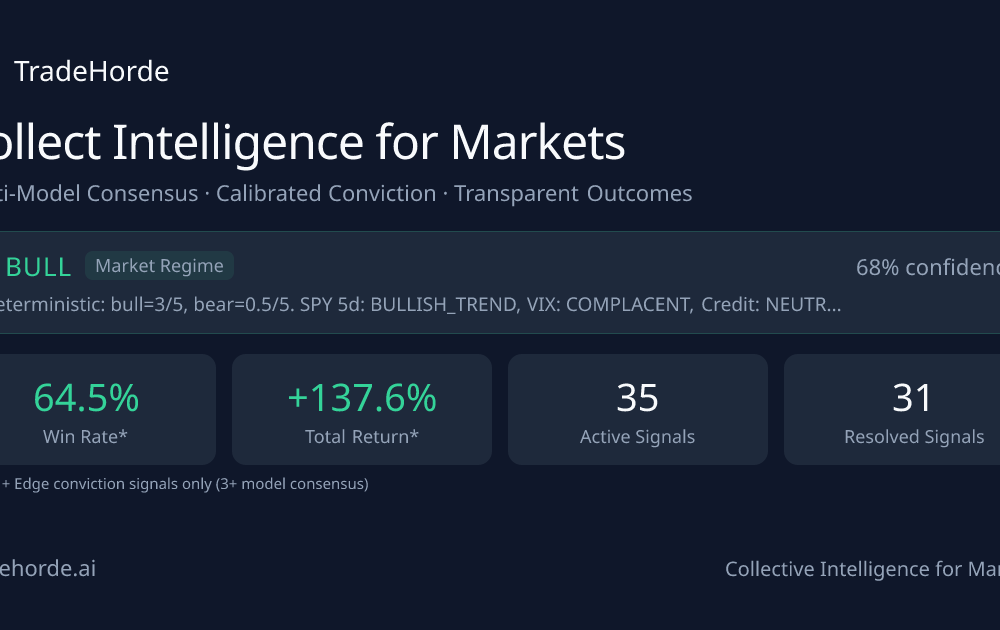
TradeHorde runs any ticker through multiple frontier AI models to surface consensus signals with calibrated conviction. It shows where models agree, ranks model performance, and tracks real outcomes so you can judge reliability. Use live market intelligence to spot hot sectors, trending tickers, and event catalysts, then drill into signals and outcomes to refine entries and risk.


The M5 Pro and M5 Max announcements wouldn’t have been complete without the 14-inch and 16-inch MacBook Pro models, and Apple has proudly announced the updated family, with the lineup now starting with 1TB of storage as standard. The latest portable Macs also come with Apple’s in-house N1 wireless chip that debuted in the iPhone 17 series, and despite sticking with the same design, there are a ton of upgrades added to these machines, which we’ve discussed below. Apple retains the same design for the M5 Pro and M5 Max MacBook Pro models, with the majority of upgrades happening on the […]
Read full article at https://wccftech.com/new-14-inch-and-16-inch-macbook-pro-with-m5-pro-and-m5-max-options-announced/


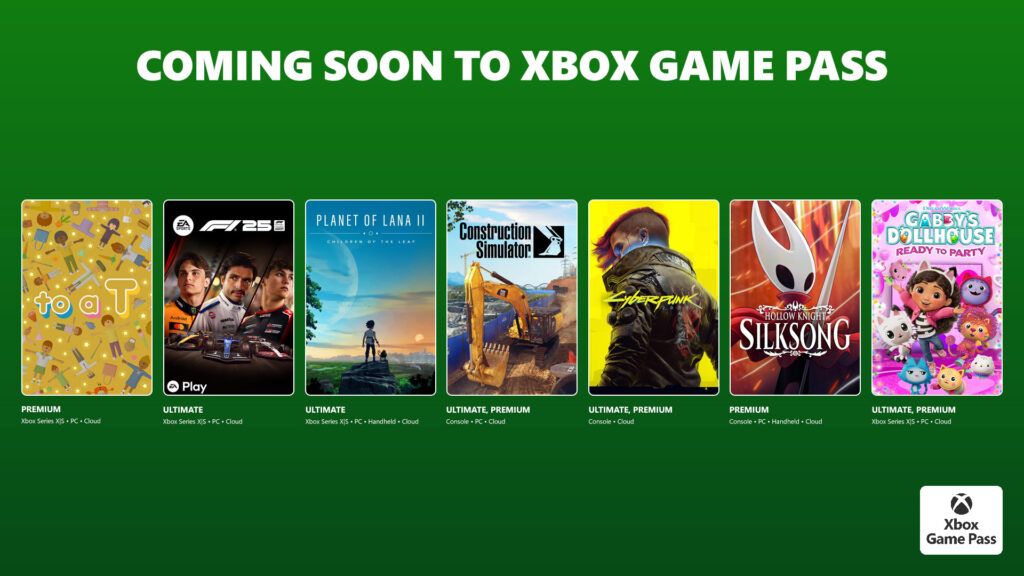
After teasing its arrival in a post on X (formerly Twitter), an Xbox Wire blog post confirms that Cyberpunk 2077 will headline the new batch of games coming to Xbox Game Pass in the first wave of games joining Microsoft's gaming subscription service for March 2026. It's the second CD Projekt RED title to arrive on the service within the last two weeks, after The Witcher 3: Wild Hunt arrived on February 19, 2026. However, just like The Witcher 3's arrival, the catch here is that it'll only be available to console players, so if you're a PC player who […]
Read full article at https://wccftech.com/cyberpunk-2077-xbox-game-pass-march-2026/


The long-awaited M5 Pro and M5 Max are finally here, powering Apple’s 14-inch and 16-inch MacBook Pro models. For the first time, Apple has incorporated a new and improved Fusion Architecture, combining two dies onto a single chipset, bringing a host of improvements to the table. The components forming the multiple dies include the CPU, scalable GPU, Media Engine, unified memory controller, Neural Engine, and Thunderbolt 5. The M5 Pro and M5 Max also utilize TSMC’s latest and greatest 3nm ‘N3P’ architecture, so let us dive into the details immediately. New chip design enables Apple to increase the total number […]
Read full article at https://wccftech.com/apple-announces-m5-pro-and-m5-max-chipsets/


Apple is steadily building up the hype ahead of its hands-on 'Apple Experience' event on Wednesday, and it is doing so primarily by unveiling a slew of new products in the intervening days. On Monday, we got the iPhone 17e and the M4 iPad Air. And today, it's the turn of the all-new MacBook Air, replete with the M5 chipset, 512GB of base storage, a faster SSD that goes all the way up to 4TB, the N1 wireless networking chip, a Liquid Retina display, and up to 18 hours of battery life. Behold the stunning M5 MacBook Air Apple has […]
Read full article at https://wccftech.com/apple-unveils-the-all-new-m5-macbook-air-m5-chipset-512gb-of-base-storage-a-faster-ssd-the-n1-wireless-chip-a-liquid-retina-display-and-up-to-18-hours-of-battery-life/


NVIDIA confirmed today that two of the main PC releases due this month, Death Stranding 2: On the Beach by Kojima Productions and Marathon by Bungie, will support the latest second-generation transformer model, NVIDIA DLSS 4.5 Super Resolution, via the NVIDIA app override. Kojima Productions had already confirmed support for NVIDIA DLSS 4 with Multi Frame Generation (AMD FSR 4 and Intel XeSS 2 are also supported). Now, we know that users will be able to switch the Super Resolution to DLSS 4.5 (which recently beat AMD FSR 4 and even native resolution rendering in a blind test conducted by […]
Read full article at https://wccftech.com/nvidia-dlss-4-5-super-resolution-app-override-death-stranding-2-marathon/


















Every year, Google suspends tens of millions of Google Ads accounts for advertising policy violations. One specific policy area that confuses many legitimate advertisers is Google’s “three-strikes” system.
Essentially, if Google decides your account has repeatedly violated any of 15 specific Google advertising policies, you’re at risk for temporary (and potentially permanent) suspension of your Google Ads account.
To help you prevent a single policy issue from snowballing into a full account suspension, here’s how Google’s three-strike system works and what you should do at every stage to keep your ads running.
Over the past 10+ years, I’ve helped thousands of advertisers identify and resolve Google’s policy concerns so that their businesses can resume running ads. One such situation involved helping a business that sells ceremonial swords for military dress uniforms.
Google’s Other Weapons policy prohibits advertising swords intended for combat. However, that same policy permits the advertising of non-sharpened, ceremonial swords, which is what this business sells. Even though this business was properly advertising its products within Google’s ad policy parameters, Google issued them a warning for violating the Other Weapons policy.

After the warning, we documented for Google that the business wasn’t violating Google’s policy. We also added specific disclaimers to the business’s sword product pages, noting that the swords were only ceremonial. Frustratingly, Google decided to issue a first strike to the business anyway.
We appealed the strike because the business wasn’t violating Google’s policy. But Google quickly denied that appeal. We tried appealing again, and Google denied the second appeal. The ad account remained on hold with no ads serving, and the business was losing revenue.
Ultimately, we had to “acknowledge” the strike to Google (I’ll explain what that means later) so that the ads would resume serving. We then worked with Google to craft more precise disclaimer language, stating that the swords for sale were ceremonial blades and not sharpened for use as weapons. This disclaimer was added to the business’s website footer so that both Google’s robots and human reviewers could see it on every single page (regardless of whether swords were for sale on a particular page).
Because of all these changes, Google’s concerns were satisfied and the business has never received any subsequent warnings or strikes. The end result was a success, even though technically there should never have been a warning or strike issued because an actual policy violation never occurred.
Key takeaway: Google will sometimes incorrectly issue warnings and strikes, and even reject appeals, and will often require excessive website disclaimers to convince them that all is well.
The SEO toolkit you know, plus the AI visibility data you need.

Understanding Google’s strikes system can save your ads account from suspension. The search giant adheres to a system that begins with an initial warning and is followed by a “three strikes and you’re out” protocol.
Before issuing your ad account an initial strike, Google will first send you a warning notification.

This warning informs you that there’s a problem and allows you to address and resolve Google’s concern before your account is penalized with an official strike.
Treat warnings seriously — ignoring them likely ensures your account will begin receiving strikes.
If Google decides that the same policy violation still exists after a warning was issued, your ad account will receive its first official strike.

Acknowledge the strike
This is your fastest path back to serving ads. But Google counts strikes as cumulative over a 90-day period.
If you acknowledge the strike rather than successfully appeal it, you’ve started the clock on the possibility of three strikes and a permanent suspension. Deciding which approach is best is a case-by-case determination.
To acknowledge the strike, you must:

After you acknowledge the strike and the three-day hold ends, your ads will resume serving.
Appeal the strike
Submit this appeal form and explain why your ads aren’t violating Google’s policy. Keep in mind:
Appealing is often justified, but it costs time and success isn’t guaranteed (even if you’re in the right, as the earlier case study shows).
If Google decides there’s been another policy violation within 90 days of resolving your first strike, or if your original violation was unresolved during those 90 days, your account will receive a second strike.

If Google decides there’s been another policy violation within 90 days of resolving your second strike, or if your previous violation was unresolved during those 90 days, your account will receive a third strike.

Successfully appealing a suspension is definitely possible. But the process is often a nightmare, and the results are never guaranteed.
Important: Once suspended, you’re unable to make any changes to your ad account.
Dig deeper: Dealing with Google Ads frustrations: Poor support, suspensions, rising costs
Google is sometimes inconsistent at following their own rules. Here are two examples I’ve seen first-hand.
I have a client who acknowledged a first strike on June 25. They received a second strike on July 26, which they successfully appealed. You would think that should reset the 90-day counter back to June 25.
However, Google gave them another second strike on October 16, far beyond 90 days from the date of the first strike, but within 90 days from the date of the “first” second strike, which they successfully appealed.

I have a client who received a warning on August 7, followed by a first strike on September 7. They acknowledged the first strike, and that strike expired on December 6, 90 days after it was issued.
However, the account immediately reentered “warning” status, with a new 90-day clock starting from when the first strike expired. There was no new email notification about this warning, and the warning didn’t appear on the Strike history tab.


Important: If you violate one of Google’s many other policies not listed above, you could find your ad account suspended immediately, with no warning or three-strikes system.
Dig deeper: Google Ads boosts accuracy in advertiser account suspensions
Track, optimize, and win in Google and AI search from one platform.
Follow these best practices and tips to minimize the chances of receiving a Google Ads strike:
Google understandably cares deeply about its reputation and the safety of its users. That’s why Google’s policy team often strictly enforces its advertising policies, and why they’re sometimes over-aggressive when interpreting and applying their own policy language.
To keep our Google Ads accounts in good health and our ads running, the best thing we can do as advertisers is to deeply understand Google’s advertising policies and requirements.
Always be ready to jump through hoops to explain your unique situations, and over-comply with Google’s edicts whenever feasible.
Here’s hoping you never see a third strike!

Meta is updating its ad measurement framework, aiming to simplify attribution in what it calls a “social-first” advertising world.
What’s happening. Meta is narrowing its definition of click-through attribution for website and in-store conversions. Going forward, only link clicks — not likes, shares, saves or other interactions — will count toward click-through attribution. The change is designed to reduce discrepancies between Meta Ads Manager and third-party tools like Google Analytics.

Between the lines. Social media has overtaken search as the world’s largest ad channel, according to WARC, but many attribution systems were built for search-era behaviors. On social platforms, engagement extends beyond link clicks. Historically, Meta counted all click types toward click-through conversions, while many third-party tools only counted link clicks — creating reporting misalignment.
What’s changing. Conversions previously attributed to non-link interactions will now fall under a renamed “engage-through attribution” (formerly engaged-view attribution). Meta is also shortening the video engaged-view window from 10 seconds to 5 seconds, reflecting faster conversion behavior — particularly on Reels. The company says 46% of Reels purchase conversions happen within the first two seconds of attention.
Why we care. This update makes it easier to see which actions actually drive conversions, reducing confusion between Meta reporting and third-party analytics like Google Analytics. By separating link clicks from other social interactions, marketers get a clearer view of campaign performance, while the new engage-through attribution captures the value of likes, shares, and saves.
This gives advertisers more confidence in their data and helps them make smarter, more impactful
Third-party tie-ins. Meta is partnering with analytics providers like Northbeam and Triple Whale to incorporate both clicks and views into attribution models, aiming to give advertisers a more complete performance picture.
The rollout. Changes will begin later this month for campaigns optimizing toward website or in-store conversions. Billing will not change, but reporting inside Ads Manager may shift as attribution definitions update.
The bottom line. Meta is attempting to balance clearer, search-aligned click reporting with better visibility into uniquely social interactions — giving advertisers cleaner comparisons across platforms while still capturing the incremental impact of engagement-driven conversions.
Dig deeper. Simplifying Ad Measurement for a Social-First World

For more than a decade, the dominant model was simple — identify a keyword, write an article, publish, promote, rank, capture traffic, convert a fraction of visitors, and repeat. But that model is breaking.
Content marketing is collapsing and rebuilding simultaneously. AI systems now answer informational queries directly inside search results. Large language models (LLMs) synthesize known information instantly. Information production is accelerating faster than distribution capacity. Public feeds are already saturated.
The cost of producing content has fallen to nearly zero, while the cost of being seen has never been higher. That changes everything.
Here’s a system for content marketing in a world where being found is increasingly unlikely.
Informational SEO used to be treated as a growth opportunity. Publish enough articles targeting informational queries, and traffic would compound.
But traffic was always a proxy metric. It felt productive because dashboards moved. In reality, most content was never read deeply, rarely linked to, and often indistinguishable from competitors. Page 1 often contained 10 variations of the same article, each rewritten with minor differences.
Now, AI answers absorb demand directly. Users receive summaries without clicking. The known information layer of the web is becoming commoditized.
If your strategy relies on answering known informational questions, you’re competing with a machine trained on the entire web. Informational SEO is over as a strategy.
Search content will still matter, but its role shifts. It becomes closer to customer service and sales enablement. It exists to support conversion once intent is clear. It doesn’t build fame.
Content marketing, properly understood, must do something else entirely.
Dig deeper: The dark SEO funnel: Why traffic no longer proves SEO success
Growth hackers came in and took over SEO. Driven by the desire to show impressive charts to the board, they turned SEO from a practical channel into a landfill of skyscrapered, informational content that did little for real growth.
So, we need a reset. There are only two reasons to create content:
If you’re in the second category, your content is advertising. That doesn’t mean banner ads. It means its job is to build mental availability. As advertising science has repeatedly shown, brands grow by increasing the likelihood of being thought of in buying situations and making themselves easy to purchase from.
The advertising analytics company System1 describes the three drivers of profit growth from advertising as fame, feeling, and fluency.
If your content doesn’t contribute to those outcomes, it’s activity and not helping your growth.
SEO teams optimized for clicks, but clicks aren’t the objective. Being remembered is. In an AI era, this distinction becomes decisive.
Dig deeper: Fame engineering: The key to generative engine optimization
Historically, content marketing relied heavily on pull: Someone searched, you ranked, and you pulled them from Google to your website. That channel is narrowing.
As AI summaries answer queries directly, the ability to pull strangers through informational search decreases. Pull remains critical for transactional queries and high-intent keywords, but the gravitational pull of informational content is weakening.
Push becomes more important. You have to push your content to people, distributing it intentionally through media, partnerships, events, advertising, communities, and networks rather than waiting to be discovered. It must be placed directly in front of people.
The paradox is this: We once believed gatekeeping had disappeared. Social media and Google created the illusion of fair and direct access. Now, gatekeepers are back — algorithms, publishers, influencers, media outlets, and even AI systems themselves.
When channels are flooded, selection mechanisms tighten.
Dig deeper: Why your content strategy needs to move beyond SEO to drive demand
Kevin Kelly wrote in his book “The Inevitable” that work has no value unless it’s seen. An unfound masterpiece, after all, is worthless.
As tools improve and creation becomes frictionless, the number of works competing for attention expands exponentially, with each new work adding value while increasing noise.
Kelly’s point was that in a world of infinite choice, filtering becomes the dominant force. Recommendation systems, algorithms, media editors, and social networks become the arbiters of visibility. When there are millions of books, songs, apps, videos, and articles, abundance concentrates attention, creating a structural shift.
When production is scarce, quality alone can surface work. When production is abundant, discoverability depends on networks, signals, and amplification. The value is migrating from creation to curation and distribution. In practical terms, every additional AI-generated article makes it harder for any single article to be noticed.
The supply curve has shifted outward dramatically. Demand hasn’t. Human attention remains finite. As supply approaches infinity and attention remains fixed, the probability of being found declines.
Being found is now an economic problem of scarcity rather than a technical exercise in optimization. When production is abundant, attention is scarce. When attention is scarce, distinctiveness and distribution become currency.
Dig deeper:
This is where Rory Sutherland’s concept of powerful messaging becomes essential for us. In his book, “Alchemy,” he argues that rational behavior conveys limited meaning.
When everything is optimized, efficient, and frictionless, nothing signals importance. Powerful messages must contain elements of absurdity, illogicality, costliness, inefficiency, scarcity, difficulty, or extravagance — qualities that serve as signals. They tell the market that something matters.
Consider a wedding invitation. The rational option is an email — instant, free, and efficient. Yet most couples choose heavy paper, embossed type, textured envelopes, even wax seals. The cost and inefficiency are the point. They signal commitment and create emotional weight. The medium amplifies the meaning.
The same logic applies to marketing. When everyone can publish a competent article in seconds, competence carries no signal. A 1,000-word blog post answering a known question communicates efficiency, not importance. Scarcity and effort change perception.
MrBeast built early fame by counting to extreme numbers on camera. The act was irrational. It was inefficient and difficult. That difficulty was the hook. It signaled commitment and created memorability. The content spread not because it was informational, but because it was remarkable.
In an AI-saturated environment, rational content becomes invisible. If 10,000 companies publish summaries of the same topic, none stand out.
But if one brand commissions original research, prints a limited run of a physical report, hosts a live event around the findings, and strategically distributes it, the signal is different. The effort itself becomes part of the message.
Scarcity also changes economics. Sherwin Rosen’s work on the economics of superstars demonstrated that small differences in recognition can lead to disproportionate returns because markets reward the most recognized participants disproportionately.
Moving from being chosen 1% of the time to 2% can double outcomes because fame compounds. In crowded markets, the most recognized option captures an outsized share and reinforces its own dominance.
This is why being found is fundamentally different now. In the past, discoverability was a function of production and optimization. Today, it hinges on distinctiveness and signal strength. When production approaches zero cost, attention becomes the only scarce resource, which means you should be aiming for fame rather than optimization.
Dig deeper: Revisiting ‘useful content’ in the age of AI-dominated search
Paul Feldwick, in “Why Does The Pedlar Sing?” argues that fame is built through four components:
These four elements provide a practical framework for content marketing in an AI era. Here’s how that works in practice.
You must create new information, not restate existing information. That could mean:
Consider the origins of the Michelin Guide. A tire company created a restaurant guide that became a cultural authority.
Awards ceremonies, industry rankings, annual reports, and indexes all function as content marketing. These are fame engines.
The key is the perception of effort and distinctiveness. A limited-edition printed book sent to 100 target prospects can carry more weight than 1,000 blog posts. Costliness signals meaning.
Interest without distribution is invisible. Distribution options include:
If you lack a budget, focus on the smallest viable market. Concentrate on a defined audience and saturate it.
Many iconic technology companies began by dominating narrow communities before expanding outward. Public relations and content marketing converge here.
If your content is never placed intentionally in front of people, it can’t build fame.
SEO content historically failed on distinctiveness. Ten articles answering the same question looked interchangeable. But in an AI era, repetition disappears into the model.
Distinctiveness can come from:
Memorability drives mental availability. Fluency increases recall. When someone recognizes your brand instantly, you reduce cognitive effort. Repetition of distinctive assets compounds over time.
You have to continually go to market with distinctive, memorable content. If you don’t do this, you will fade in memory and distinctiveness.
You can’t force people to share, but you can design for shareability. Content spreads when it carries social currency, enhances the sharer’s identity, rewards participation, and makes access feel exclusive.
Referral loops, limited access programs, community recognition, and public acknowledgment can all increase spread. The key is that the message must move freely between humans. It must be portable, discussable, and referencable.
Memetics matters. If it can’t be passed along, it can’t compound.
Dig deeper: The authority era: How AI is reshaping what ranks in search
If content must be designed for distinctiveness, distribution, and voluntary engagement, search leaders need a different playbook. Here’s a five-step framework.
Maintain search infrastructure for high-intent queries, optimize product pages, support conversion, and provide clear answers where necessary. But stop confusing informational volume with brand growth.
Audit your content portfolio. Identify what builds mental availability and what merely fills space to reduce waste.
Allocate budget to proprietary research, data collection, and creative initiatives. If everyone can generate competent summaries, originality becomes leverage.
This may require shifting the budget from content volume to creative depth.
Before creating content, define distribution.
Reverse engineer reach.
Create repeatable formats that become associated with your brand.
Consistency builds fluency.
Track:
Traffic alone is insufficient.
If content doesn’t increase the probability that someone thinks of you in a buying moment, it’s not performing its primary job.
Dig deeper: Why creator-led content marketing is the new standard in search
We’re entering a period where automation handles the average, freeing humans to focus on the exceptional. The future of content marketing isn’t high-volume AI-generated articles. It’s the creation of new information, new experiences, new events, and new signals that machines can’t fabricate credibly.
It requires a partnership with PR, a strategic use of physical and digital channels, disciplined distribution, and a commitment to fame. Budgets will need to shift from volume production to creative impact.
In a world where information is infinite and attention is finite, the brands that win will be those that understand that being found is more valuable than being published. Content marketing in the AI era isn’t about producing more. It’s about becoming known.
Retroid discontinues its 12GB Pocket 6 handheld due to memory market changes Retroid has announced that it has discontinued its 12GB Retroid Pocket 6 handheld and raised the price of its 8GB model. This is “due to significant changes in the global memory market”, which has largely been caused by AI datacenter buildouts. Retroid is […]
The post Retroid axes its 12GB Pocket 6 and raises 8GB prices appeared first on OC3D.








The successor to the iPhone 16e was announced yesterday, with Apple introducing several changes to the iPhone 17e compared to last year’s model while retaining the same design. For $599, there are plenty of things to like about the Cupertino giant’s newest release, but does it offer more value compared to the base iPhone 17, which retails for $799? We have discussed some key differences below, allowing you to make a better decision on whether you should save $200 or spend it. Display and other features The iPhone 17e sticks with the same 6.1-inch notched display as the iPhone 16e, with […]
Read full article at https://wccftech.com/iphone-17e-vs-iphone-17-spend-200-more-or-save-it/


Ever since video games have been a thing, players have always sought the help of others to overcome difficult segments. While how they seek help has changed a lot over the years, moving from guides published in magazines to online walkthroughs and videos, the need for guidance for particularly challenging segments is as strong as it has ever been. In the future, however, there could be a massive change in how players receive their much-needed help, judging from a patent filed by Microsoft detailing a cloud-based Xbox system to let human or AI helpers take over temporarily. As spotted by […]
Read full article at https://wccftech.com/xbox-could-soon-feature-integrated-ai-and-human-helpers-to-take-control-over-for-challenging-segments/


For those who own budget NVIDIA and AMD GPUs, the new MONTECH PSU series will offer better reliability at an affordable price. MONTECH Launches BETA 2 Power Supply Series, Including 550W, 650W, 750W, and 850W ATX 3.1 Certified Units PC hardware maker MONTECH has introduced its newest PSU series called BETA 2, which offers various wattage capacities of power supplies at affordable prices. The BETA 2 series, unlike high-end PSUs, aims at the budget segment, offering wattage capacity as low as 550W. However, each unit is ATX 3.1-certified and PCIe 5.1-compliant, making them reliable for modern GPUs that can momentarily […]
Read full article at https://wccftech.com/montech-debuts-affordable-atx-3-1-certified-beta-2-psus/













What do conversion rate optimization (CRO) and findability look like for an AI agent versus a human, and how different do your strategies really need to be?
More and more marketers are embracing the agentic web, and discovery increasingly happens through AI-powered experiences. That raises a fair question: what does CRO and findability look like for an AI agent compared with a human?
Several considerations matter, but the core takeaway is clear: serving people supports AI findability. AI systems are designed to surface useful, grounded information for people. Technical mechanics still matter, but you don’t need entirely different strategies to be findable or to improve CRO for AI versus humans.
If a consumer does business directly through an agent or an AI assistant, your business needs to make the right information available in a way that can be understood and used. Your products or services need to be represented through clean, well-structured data, with information formatted in ways that downstream systems can process reliably.
As more people explore doing business with AI assistants, part of the work involves making sure your products and services can connect cleanly. Standards, such as Model Context Protocol (MCP), can help by enabling agents to interact with shared sources of information.
In many cases, a human may still decide to engage directly on a brand’s site. In that context, content and formatting choices matter. Whether you focus on paid media or organic, ensuring your humans can take desired actions — and will want to — is important.
Dig deeper: Are we ready for the agentic web?
The SEO toolkit you know, plus the AI visibility data you need.
Old‑school SEO encouraged the idea that more keywords and larger walls of text would perform better. That approach no longer holds.

Both humans and AI systems tend to work better with clearly structured, modular content. Large blocks of uninterrupted text can be harder for people to scan and understand. Clear sections, spacing, layout, and visual hierarchy help users quickly understand what they can do and how to accomplish the goal that brought them to the page.
There’s no fixed minimum or maximum amount of text that works best. You should use the amount of content needed to clearly explain what you offer, why it’s useful, and what sets it apart.

A technical topic will need more text, broken into smaller paragraphs. There are great calls to action as well.
Visual components can be helpful when paired with useful alt text. Lead gen forms should be easy for humans to complete and regularly audited for spam or friction. Content that’s hard for people to use is also harder for automated systems to interpret as helpful or relevant.
Dig deeper: Lead gen PPC: How to optimize for conversions and drive results
One of the best ways to communicate clearly to systems is to communicate clearly to people. Lean into what makes you an expert, but avoid unnecessary jargon or overly complex language. Descriptions should stay specific, accurate, and on-brand.
A simple gut check: if a 10-year-old couldn’t broadly understand what you do, why it matters, and how to engage with you, you’re probably making things harder than necessary. Even though AI systems are sophisticated, clarity still matters because the goal is ultimately to support a human outcome.
If you’re unsure, try putting your positioning copy into an AI assistant and asking it to critique its clarity. Ask for simplification and clearer explanations, not for new claims or embellishment.
Visual components matter here as well. Comparison tables can help when they genuinely support understanding, but they can hurt when they’re used as a gimmick rather than a guide. Accessibility principles matter, too. Color contrast, readable font sizes, and restrained font choices reduce the risk that someone can’t process your site.

Images should be easy to understand and clearly connected to the surrounding text. Alt text helps people using assistive technologies and reinforces the relationship between visuals and written content.
A user comes to your site to do something. They might want to buy, request a quote, or speak with your team. That action should be clear.
When the intended action is unclear, it becomes harder for both people and automated systems to understand what your site enables.

Shopping experiences tend to surface in conversations with shopping intent because assistants are trying to complete the task they were given. If it’s unclear how to add an item to a cart or complete a purchase, you make it harder for a human to do business with you. You also make it harder for systems to understand that you’re a transactional site rather than a catalog of items without a clear path forward.
Lead generation requires similar clarity. If the goal is to talk to your team, include a phone number that can be clicked to call. You might also include a form that submits directly into your lead system or a flow that opens an email client. Forcing users through multiple form pages often frustrates people and adds unnecessary complexity to the experience.
Dig deeper: 6 SEO tests to help improve traffic, engagement, and conversions
I cover technical considerations last for a reason. The most important work you can do is support the humans you serve. Technical improvements help, but they rarely succeed on their own.

Tips from the Microsoft AI guidebook. (Disclosure: I’m the Ads Liaison at Microsoft Advertising.)
Excessive imagery, low contrast between text and background, or unstable layouts can create challenges.
Make sure your site renders consistently and meaningfully. Large layout shifts after load, measured in cumulative layout shift (CLS), can frustrate users. Pages overloaded with ads or pop-ups can distract from the reason someone arrived in the first place and may introduce trust concerns.
Security matters as well. Malware warnings, broken rendering, or incomplete page loads can raise red flags for both users and automated systems.

Tools like IndexNow can help notify search systems of content changes more quickly. Microsoft Clarity is a free tool that shows how users behave on your site, surfacing friction you might otherwise miss. This includes Brand Agents that help your humans have more meaningful chatbot experiences.

One useful check is to review how your site appears when used as input for ad platforms or auto-generated creative tools, such as Performance Max campaigns or audience ads.

These can provide a helpful lens into how platforms interpret your content. When the resulting positioning and creative align with what you intend, you’re usually doing a good job serving both crawlers and people. When they don’t, it’s often a signal to revisit clarity, structure, or user flow.
Dig deeper: CRO for PPC: Key areas to optimize beyond landing pages
Track, optimize, and win in Google and AI search from one platform.
Humans and AI systems need many of the same things when it comes to CRO:
Remember these CRO fundamentals that carry over:
When those fundamentals are in place, you’re supporting both human outcomes and AI-driven discovery.
Up to a hundred thousands websites affected by WordPress calendar plugin vulnerability.
The post WordPress Calendar Plugin Vulnerability Affects Up To 100k Sites appeared first on Search Engine Journal.
Page Builder by SiteOrigin WordPress vulnerability rated 8.8/10 affects up to 500,000 websites.
The post Page Builder by SiteOrigin WordPress Vulnerability Affects Up To 500k Sites appeared first on Search Engine Journal.
Critical vulnerability in WordPress User Registration & Membership plugin enables unauthenticated attackers to obtain administrator role.
The post WordPress User Registration & Membership Plugin Vulnerability appeared first on Search Engine Journal.
Capcom removes its Enigma DRM from Resident Evil 4 after less than a month Last month, Capcom removed Denuvo from Resident Evil 4 on PC and replaced it with their Enigma DRM. While the removal of Denuvo is usually seen as good news, the addition of Enigma caused issues. PC gamers reported performance issues after […]
The post Capcom removes its Enigma DRM from Resident Evil 4 following backlash appeared first on OC3D.








Hellenic Trading Tools has a simple options trading log built for active traders who want clarity without spreadsheets. It lets you quickly record trades, review performance, and spot patterns that actually matter.
In beta, you can log trades quickly, edit them easily, and upload CSV files from your broker. Integrations are in progress. Early users can share feedback directly with the founding team as we continue building.


Last month, ahead of the launch of Resident Evil Requiem, the Resident Evil 4 remake received a surprise update on PC. While the small update did not add any content to the game, it removed the Denuvo DRM protection the game had since launch and replaced it with Enigma DRM, which had a significant impact on performance. While the community and games media such as Digital Foundry did not hide their disappointment at the practice of updating years-old games just to add DRM that ultimately ruins the experience for those who purchased the game, the lack of communication from CAPCOM […]
Read full article at https://wccftech.com/resident-evil-4-remake-new-update-removes-enigma-drm/


The Nintendo Switch 2 helped accelerate the microSD Express standard, encouraging manufacturers like Samsung to launch incredibly fast storage cards that were barely larger than your finger. The P9 Express is the company’s first range to utilize the PCIe NVMe protocol to deliver speeds of up to 800MB/s, with capacities of 256GB and 512GB starting from only $44 on Amazon. It is an inexpensive way to say goodbye to your slower and headache-inducing microSD cards. The P9 Express microSD Express cards are 4x faster than regular storage cards, and have a 6-proof protection to boost reliability and longevity Let us start […]
Read full article at https://wccftech.com/samsung-p9-express-microsd-express-card-in-256gb-and-512gb-capacities-starts-from-44-on-amazon/


We might finally have a solid clue of who's working on the long-rumored Fallout: New Vegas remaster: it's Iron Galaxy, which has dropped a pretty heavy-handed tease on LinkedIn: a "Please Stand By" picture from a Fallout game with the background of a bright desert environment and the following accompanying statement: Today’s our February company meeting. It’s time to catch up with what the company’s been up to and what’s coming up next for IG. The Chicago-based game developer, which is very fond of its independence, has released a few original titles in the past, including Wreckateer, Divekick, Extinction, and […]
Read full article at https://wccftech.com/fallout-new-vegas-remaster-seemingly-teased-iron-galaxy/


Finally, something appears to be working, and hopefully, we will see fewer Ryzen 9000 death reports popping up on Reddit. YouTuber Level1Techs Revives "Failed" AMD Ryzen 9600X on ASRock X870E Taichi Using Latest BIOS with AMD AGESA 1.3.0.0a Microcode Ryzen 9000 "failures" do not always indicate CPU deaths. While in a lot of cases, we did see burned CPUs and sockets, not every setup sees such damage signs. Sometimes the CPU dies or fails without showing any burn marks or any discoloration. In such cases, the CPU may not be dead but still fails to boot due to unknown issues, […]
Read full article at https://wccftech.com/asrock-motherboard-reportedly-saved-ryzen-5-9600x-from-dying/












Google is rolling out Video Reach Campaign (VRC) Non-Skip ads, expanding how brands reach connected TV audiences on YouTube.
What’s happening. VRC Non-Skips are now live globally in Google Ads and Display & Video 360. Built for the living room experience, they run as non-skippable placements optimized for connected TV (CTV) screens.
Why we care. YouTube has been the No. 1 streaming platform in the U.S. for three straight years, making the TV screen a critical battleground for your brand budget. With guaranteed, non-skippable delivery, you can ensure your full message reaches viewers in premium, lean-back environments.
AI in the mix. Google AI dynamically optimizes across 6-second bumper ads, 15-second standard spots, and 30-second CTV-only non-skippable formats. Instead of manually splitting your budget by format, you can rely on AI to allocate impressions for maximum reach and efficiency.
Bottom line. Advertisers now have a simpler way to secure guaranteed, full-message delivery on the biggest screen in the house — using AI to maximize reach and efficiency across non-skippable formats without manually managing the mix.
Google’s announcement. VRC Non-Skip ads are now generally available, allowing brands to reach TV audiences with Google AI.



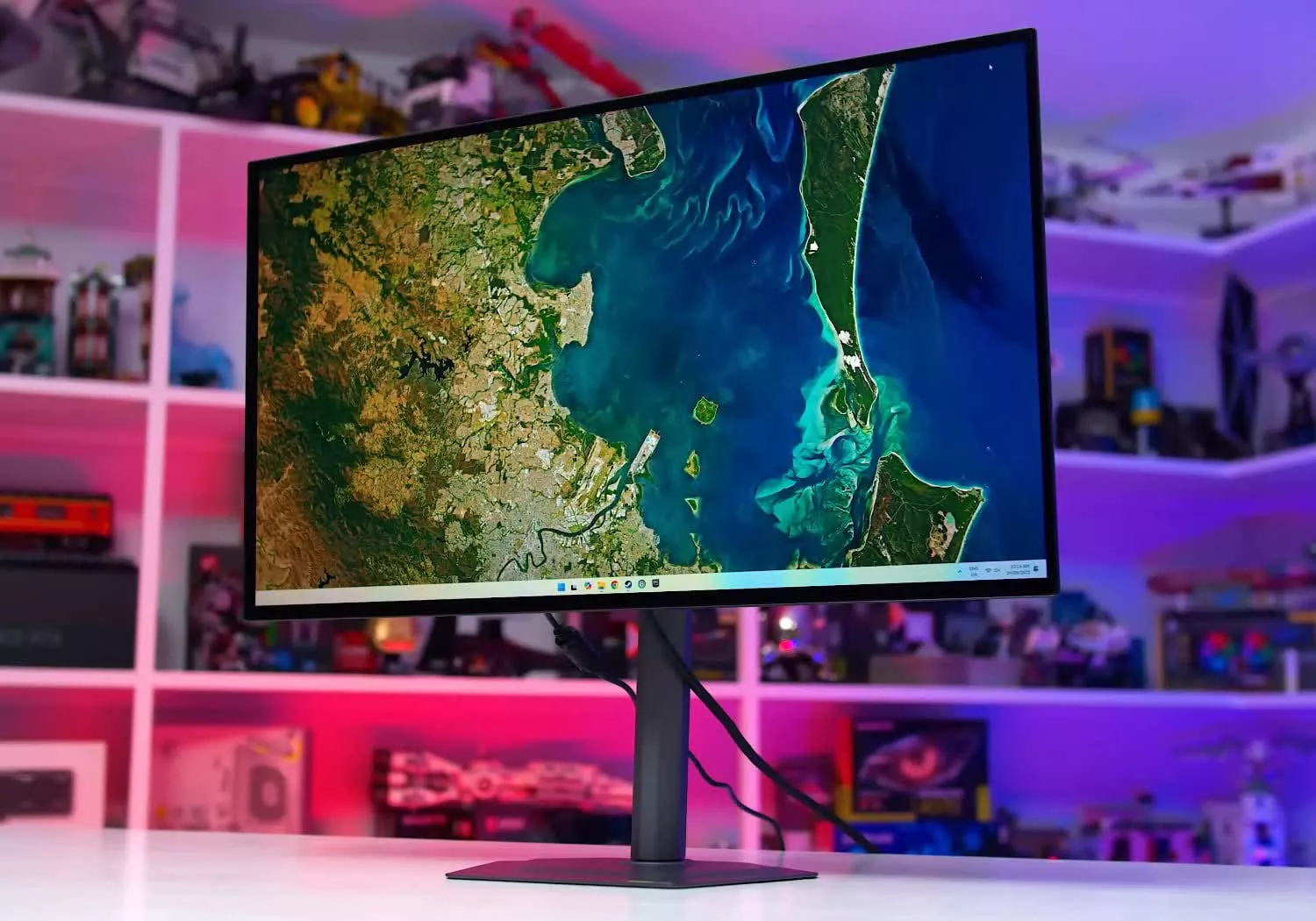
Got a budget for your next gaming monitor? We've tested the best options from $150 to $1,500 and picked the top choice at every price point - no fluff, just clear recommendations that make buying easy.

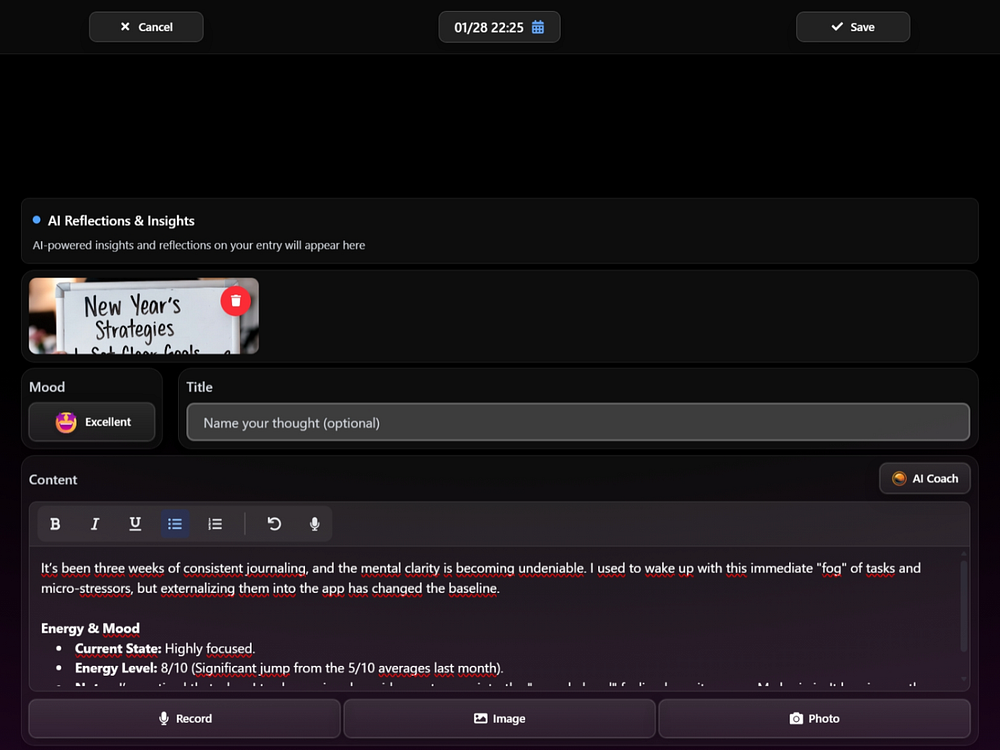
DailyLens combines AI-powered journaling with evidence-based protocols to track mood, reduce stress, and build lasting habits. It offers text or voice entries with auto-transcription, AI insights, and personalized summaries; five mood formats including a 2D map, trend charts, and daily, weekly, or monthly AI reports; and guided breathwork techniques such as Box, 4-7-8, Diaphragmatic, Bellows, and Lion's Breath. With over 100 curated practices for Morning Energy, Deep Focus, Sleep Optimization, and Longevity, it is local-first, encrypted, and fully offline, featuring streaks, 12 badges, and your AI mentor. Coming soon: NSDR, guided meditations, and Binaural Beats.
Vanikya is an AI-powered creative suite for generating, editing, and optimizing visual assets. Its flagship Imagine engine lets you produce professional images with precise control, create up to 24 variations at once, and switch across 16+ state-of-the-art models with pay-as-you-go credits and commercial rights. Vanikya also includes Chat for brainstorming and copy, Creative Insights for content performance analytics, and features like InstantSite for rapid room and building reimagining, all designed to streamline professional workflows.


Today, Japanese developer and publisher CAPCOM announced that a new episode of its CAPCOM Spotlight series of livestreams will air on Thursday, March 5, at 2 PM Pacific Time. This CAPCOM Spotlight will last approximately half an hour, focusing on the following upcoming and existing games: Below, we've added a brief overview of each featured game, in release date order. Street Fighter 6 is the only game that's already out. Launched in June 2023 to critical acclaim, it marked the studio's return to form for its flagship fighting franchise after the rocky reception to Street Fighter V. It introduced a […]
Read full article at https://wccftech.com/capcom-spotlight-returns-march-5-pragmata-monster-hunter-stories-3/




Google's Titans architecture and MIRAS framework enable AI to handle massive amounts of data and work faster.
The post Google’s Titans And MIRAS: Significant Advancement In Long-Context AI appeared first on Search Engine Journal.
MSI officially launches new RTX 5070 Midnight Edition GPUs for World of Warcraft MSI has officially launched new Midnight Light and Midnight Void Editions of its RTX 5070 Gaming Trio graphics card, celebrating the launch of World of Warcraft Midnight. Both designs are inspired by Quel’Thalas, and let World of Warcraft fans choose their side […]
The post MSI launch new World of Warcraft Midnight Light and Void Edition GPUs appeared first on OC3D.


Group chat where every message speaks your language
Interview Intelligence to make confident hiring decisions
Copy any text twice. Get instant translation on your Mac.
Quality control for your software factory
AI tool suite for professional 3D artists
Science-backed personality insights for you and your partner
Understand accented speech in real time
Skills with 210k GitHub Data & Translate/Refine &Benchmark
Every Simpsons prediction sourced, scored, fact-checked
Your AI Coworker that proactively executes tasks
1,000+ Emails per Second with 99%+ Deliverability
The synthesis engine for multi-perspective news
Mission Control for your OpenClaw agents.
0.8B-9B native multimodal w/ more intelligence, less compute
Bring your knowledge and docs to life
The AI voice interface that learns your style.
Prevent accidental data leaks while using AI tools
Authoring, simulating, testing human-AI group conversations
Turn your CSVs into share-worthy dashboards
Let Claude code and Open Claw automate the web
For designers, web/video creators who'd rather be creating
Smarter copy-paste for macOS. New version!
Your money stress, solved by AI.


MonoDesk is a workspace for freelance creative professionals who run projects end to end. It connects clients, projects, and timelines with simple Kanban boards and a weekly planner that shows what’s due, in progress, or complete. An AI agent summarizes briefs, turns notes into tasks, drafts client updates, and reviews work with project-aware feedback, so you ship with confidence. Set up in minutes by uploading a proposal to auto-create clients, projects, and task lists, then focus on the creative work.
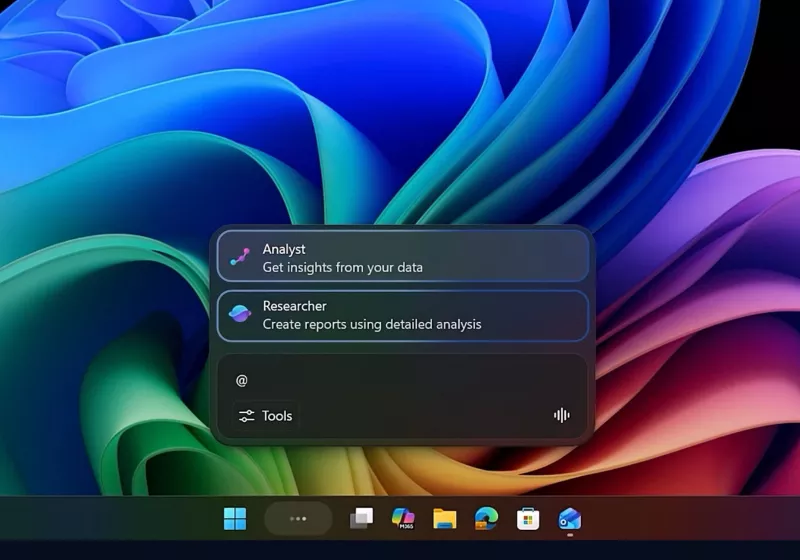

Unify is an all-in-one AI workspace for creating videos, images, music, and chat. It brings leading models like Kling, Sora, Veo, GPT-Image, and more into a single dashboard, so you can generate reels, cinematic shots, product photos, lip-sync avatars, and copy without juggling separate tools. Teams get unlimited access with no per-model subscriptions, using it for ad creatives, social content, scripts, and research, while built-in chat connects you to GPT, Claude, and Gemini.

Google's AI landing page generator patent is limited to low conversion shopping pages, product feeds and advertising.
The post Google’s AI Generated Landing Page Patent Is Limited To Shopping & Ads appeared first on Search Engine Journal.


Changing your eating habits is often hard; it’s part routine, part culture, and part comfort. A little help can make a big difference. Goodbye Meat is an app designed to support you as you cut down on meat. You can track your meals, see your progress over time, and measure the positive impact you have on the environment.


NVIDIA's latest driver release might be affecting voltages, virtually restricting them, on RTX 50 "Blackwell" GPUs. My GeForce RTX 5090 GPU Is Running At Lower Voltages After Installing NVIDIA's Latest Driver. Voltage Limitations Introduced For RTX 50 GPUs? A few days ago, NVIDIA released its latest GeForce Game Ready (GRD) drivers, v595.59. The driver release was meant to be the optimized version for Resident Evil Requiem and offered additional fixes. However, as soon as the driver launched, several users started reporting issues with the driver where GPU fans were not working, clock speeds were being hampered, and overall performance in […]
Read full article at https://wccftech.com/nvidia-latest-drivers-might-be-restricting-voltages-on-rtx-50-gpus/

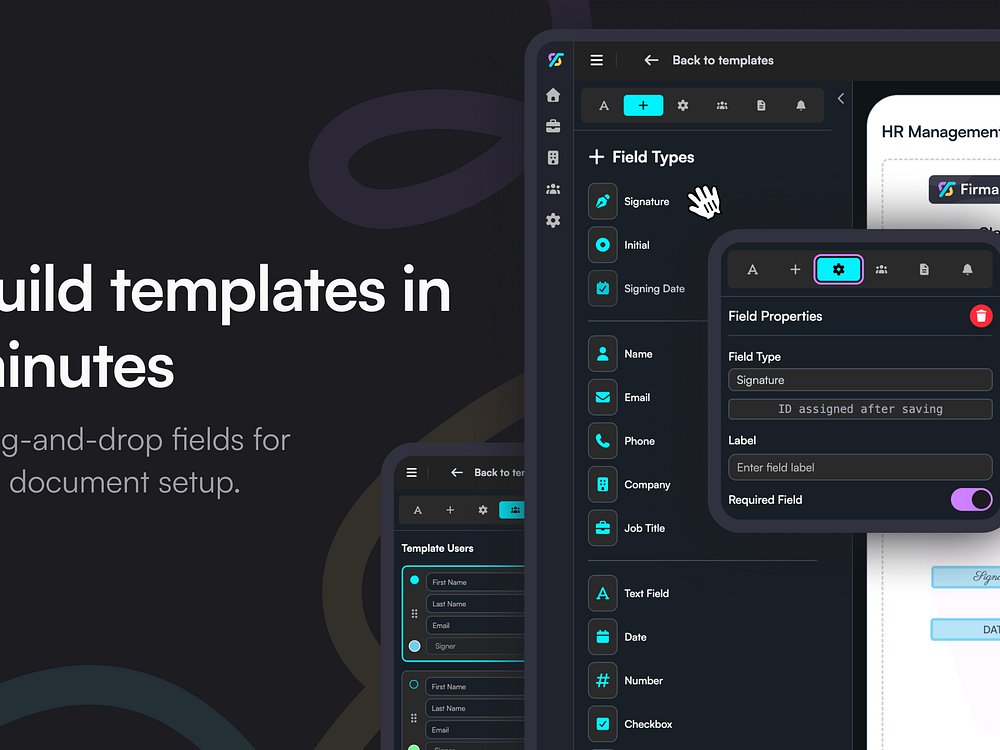
Firma.dev is an e-signature API built for developers at startups and mid-sized SaaS companies. It is designed for speed, allowing integration in hours with embedded editors for templates and signing, supported by clear documentation and a straightforward REST API. There are no sales calls or monthly minimums. The pricing is $0.029 per envelope, pay-as-you-go, which is significantly cheaper than DocuSign with no upfront costs. You also receive customer workspaces for private, isolated templates and envelope tracking. Firma.dev is compliant with ESIGN, UETA, and eIDAS, and is designed to support HIPAA and SOC 2 compliance.

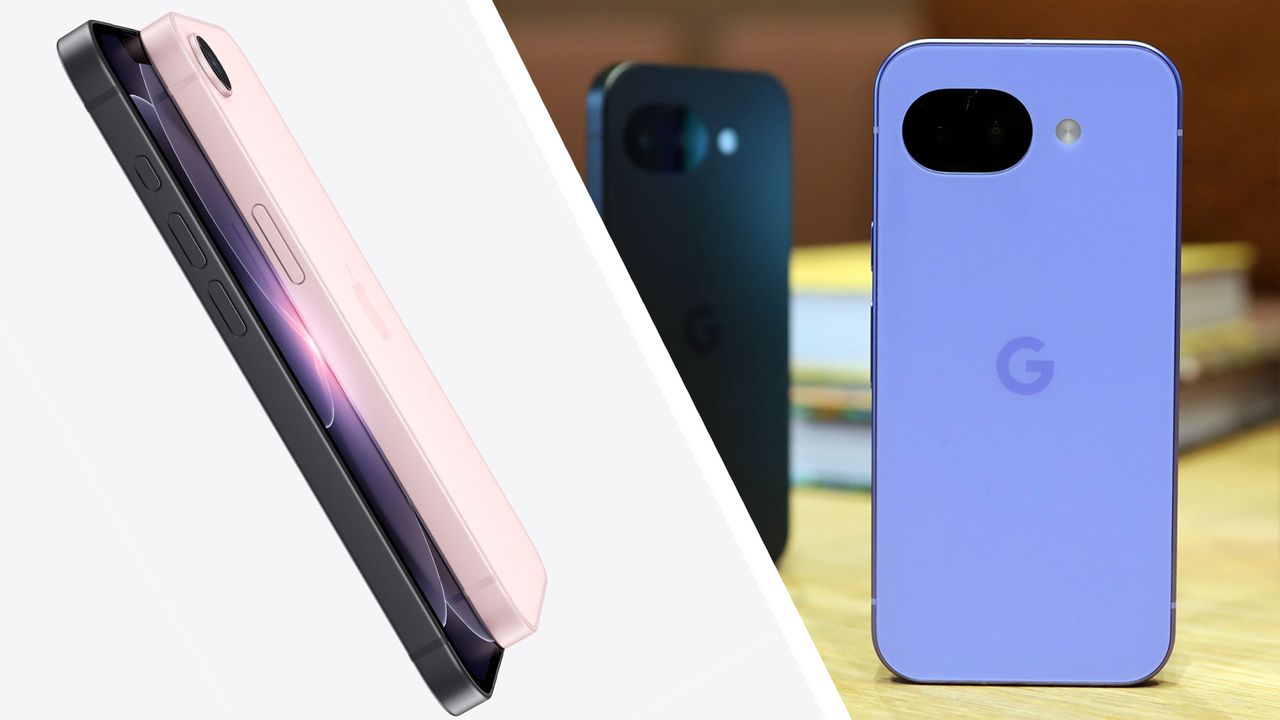





While the world attempts to limit underage access to apps, teenagers continue to find new ways to bypass rules and undermine systems.
The app’s use as a discovery tool is rising as users turn to its short-form videos and personalized content to find information, according to research from Adobe.
The company has continued to add more identification checks and balances, but questions remain regarding its verification partner Persona.

The decision upheld a lower court ruling that artificial intelligence-generated content does not have the same legal protections as human-created work.
The new option is designed to provide additional transparency for brand partnerships and align the app with other social media platforms.
The tips are designed to help social media marketers and brands make product pins stand out on the app.
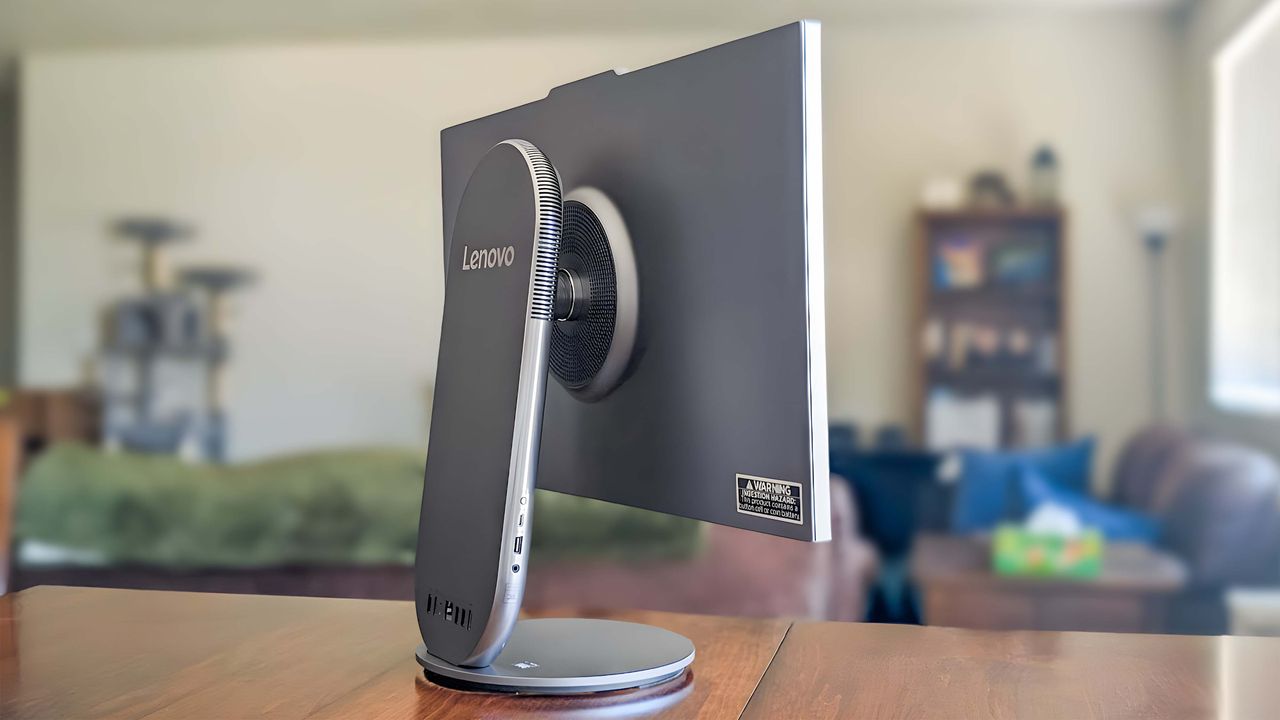
Bustem helps e-commerce brands detect and take down copycats before they damage revenue and credibility. Using AI, Bustem continuously scans individual websites, marketplaces, paid ads, social platforms, and search engines.
From one dashboard, you can instantly see who is copying your brand, where the infringement is happening, what it is likely costing you in lost revenue, and the fastest path to takedowns. To get started, Bustem offers a free 360° Threat Report that shows exactly what’s happening to your brand online before you commit.
Recy is an applicant tracking system that helps teams hire faster. It combines an intuitive interface with AI-powered resume parsing and candidate matching to reduce manual work and surface the best talent. Run your entire process in one place with branded career pages, customizable pipelines, email communication, automations, and hiring analytics. Collaborate across your team with shared notes, role-based access, and real-time insights to streamline decisions and scale hiring efficiently.
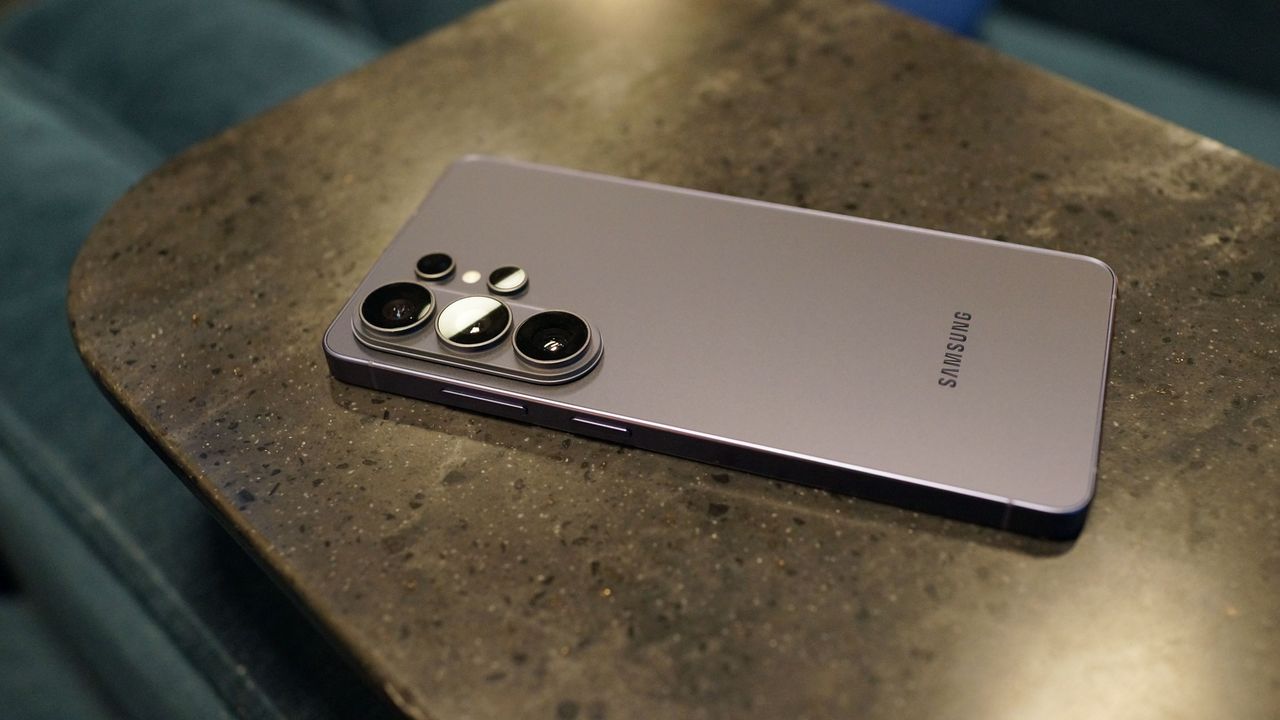

New data finds AI Overviews often cite sources beyond page one. Fan-out queries may help explain why, and YouTube appears frequently in citations.
The post Google AI Overview Citations From Top-Ranking Pages Drop Sharply appeared first on Search Engine Journal.




The Wolf Among Us 2 has been missing for so long that it's started to reach mythical levels of 'games in development hell.' It's been nearly a decade since it was first revealed, and in that time, a lot has happened. Now, a new rumour points to the game's development having been restarted for (at least) a second time, and that it's being co-developed with an unnamed studio in Argentina. It claims that it'll be ready by 2027, and that we may even get a remaster of The Wolf Among Us to go along with it. Firstly, a reminder of […]
Read full article at https://wccftech.com/the-wolf-among-us-2-release-date-2027-telltale-games-rumor/


 VRC Non-Skip ads are now generally available globally in Google Ads and Display & Video 360.


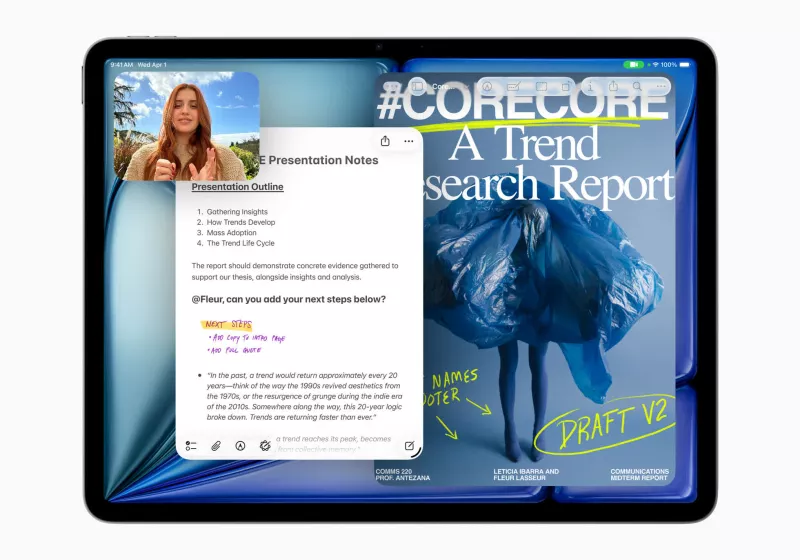
Apple AirPods 4 with Active Noise Cancellation are now available for $119. The updated model adds Adaptive Audio and improved voice clarity while retaining seamless iOS integration and wireless charging. At this price, they're a compelling option for anyone who wants Apple's ecosystem features without stepping up to the Pro lineup.

IPWho is a real-time IP geolocation and IP intelligence API designed for developers and businesses that need accurate location and network data. It provides detailed information including country, city, ASN, ISP, and connection type through a simple and easy-to-integrate REST API.
IPWho helps teams enhance fraud detection, improve geo-targeting, personalize user experiences, and gain better insights into their traffic. With fast response times and reliable data coverage, it enables businesses to make smarter, location-aware decisions without complex setup.



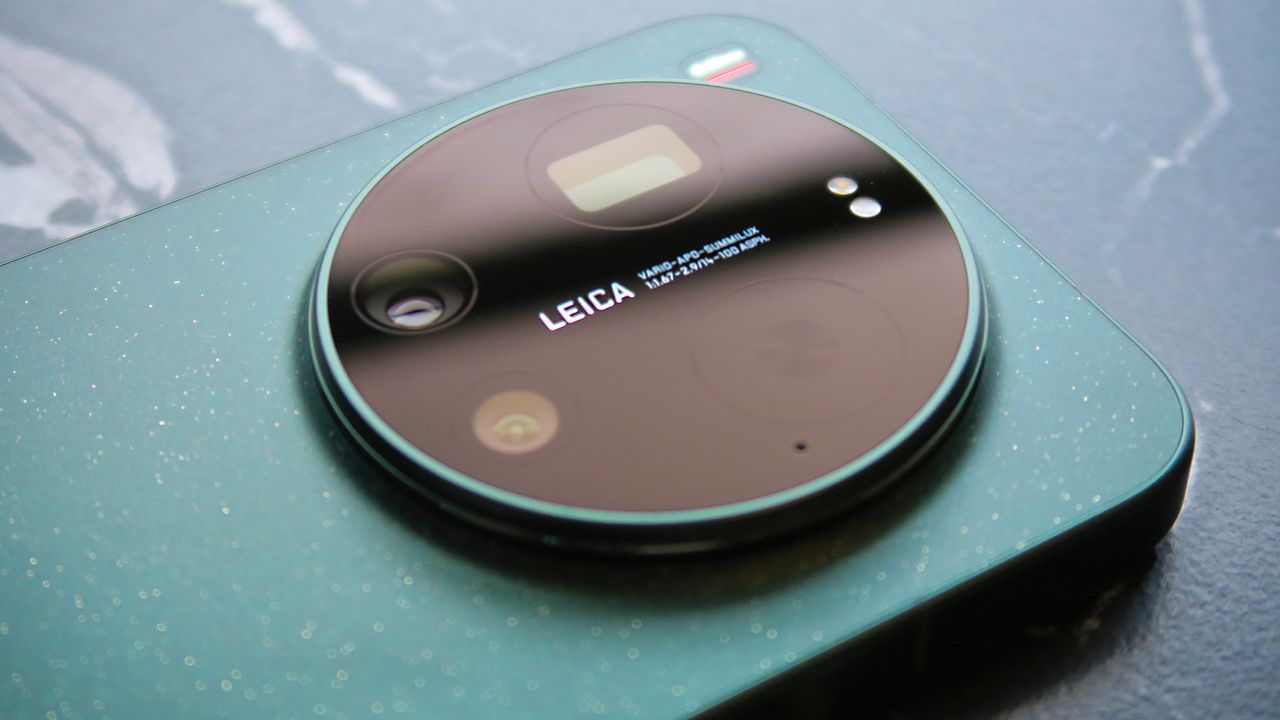
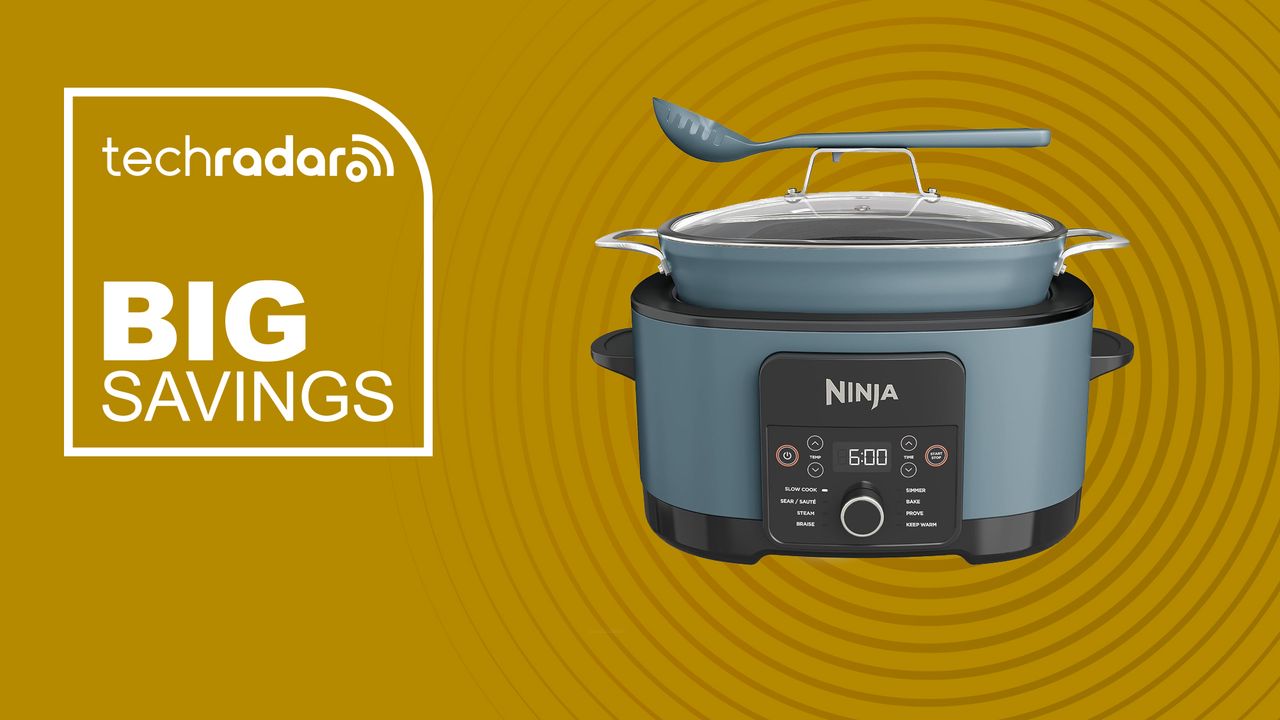

Before Call of Duty: Warzone established itself as one of the most popular battle royale games ever when it arrived in 2020, Call of Duty's first brush with battle royale came in 2018's Call of Duty: Black Ops 4 with its Blackout mode. Today, Activision revealed that it is bringing Blackout back - sort of. Black Ops Royale is a new, "Blackout-inspired" battle royale mode that is getting added to Call of Duty Warzone, and just like Warzone, it will be free for players to jump in. The new mode arrives next week on March 13, 2026, and brings back […]
Read full article at https://wccftech.com/call-of-duty-warzone-black-ops-royale/

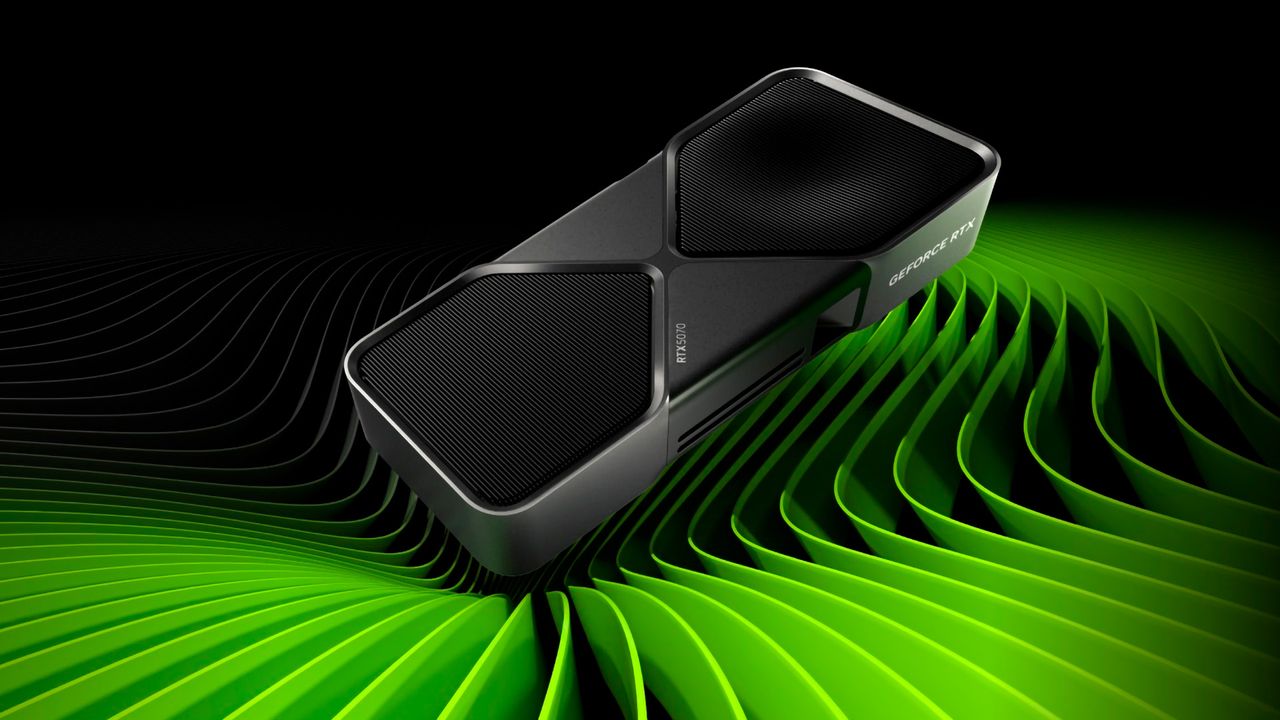
Google is expanding its recurring billing policy to allow certified U.S. online pharmacies to promote prescription drugs with subscriptions and bundled services.
What’s happening. Certified merchants can now offer:
Requirements for eligibility. Merchants must maintain certified status, submit subscription costs in Merchant Center using the [subscription_cost] attribute, include clear terms and transparent fees on landing pages, and comply with all existing Healthcare & Medicine and recurring billing policies. Accounts previously disapproved can request a review once requirements are met.
Why we care. The update opens new revenue opportunities for online pharmacies, letting them leverage recurring models and bundled services while staying compliant with Google policies.
The bottom line. Certified U.S. online pharmacies can now run recurring prescription and bundled offers, giving them more flexibility to reach patients and scale subscription-based services.
Dig deeper. Recurring billing policy expansion: Prescription drugs

Google updated both its image SEO best practices and Google Discover help documents to clarify that Google uses both schema.org markup and the og:image meta tag as sources when determining image thumbnails in Google Search and Discover.
Image SEO best practices. Google added a new section to the image SEO best practices help document named Specify a preferred image with metadata. In that section, Google wrote:
primaryImageOfPage property with a URL or ImageObject.URL or ImageObject property and attach it to the main entity (using the schema.org mainEntity or mainEntityOfPage properties)og:image meta tag.Here are the overall best practices when choosing these methods:
og:image meta tag.Google Discover image selection. In the Discover documentation Google added a section that reads:
max-image-preview:large setting, or by using AMP“Why we care. Images can have a big impact on click-through rates from both Google Search and Google Discover. Here, Google is telling us ways we can encourage Google to select a specific image for that thumbnail. So review these help documents and see if any of this can help you with the images Google selects in Search and Discover.
Intel references “B70 System” on GitHub Intel has officially referenced a “B70 System” as part of its software release notes on GitHub, officially confirming that the company has a higher-end ARC PRO series graphics card on the way. Right now, Intel’s highest-end ARC PRO graphics card is the ARC B60, which uses the same GPU […]
The post Intel officially confirms “Big Battlemage” ARC B70 GPU appeared first on OC3D.











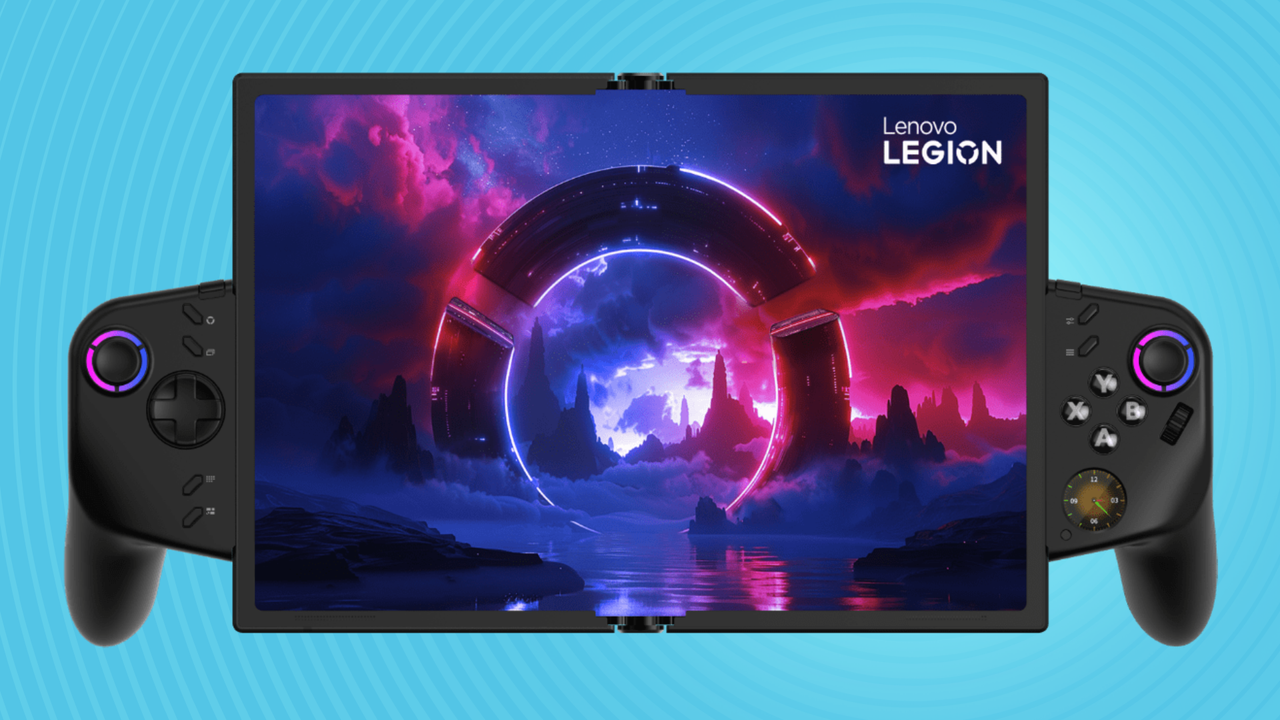





Google updated its Image SEO and Discover documentation to explain how schema markup and the og:image meta tag influence thumbnail selection.
The post Google Clarifies How It Picks Thumbnails For Search, Discover appeared first on Search Engine Journal.

The US is working on legislation targeting Chinese memory suppliers, and according to a new proposed 'rulemaking', the use of YMTC and CXMT could be banned for government products. YMTC, SMIC & CXMT Are Now Targeted In a Proposed Legislation, Limiting Their Adoption Across Commercial Products The debate over integrating Chinese memory into consumer-grade products has emerged recently amid DRAM shortages. The 'Big 3' suppliers are currently busy with enterprise demand, leaving little capacity behind for consumer products. However, one of the major factors hindering the likes of CXMT from supplying DRAM chips to mainstream manufacturers is US legislation, and […]
Read full article at https://wccftech.com/the-u-s-moves-once-again-to-ban-chinese-memory/


GMKtec is about to release a brand new AI mini PC, and we can already sense what hardware will power this compact machine. GMKtec Announces 2nd Gen Desktop AI Supercomputer With 180 TOPS of AI Power Popular mini PC maker, GMKtec, has teased a brand new AI mini PC on X, claiming that it can deliver up to 180 TOPS of AI performance inside a small box. GMKtec hasn't revealed the specifications of this mini PC and left it to the readers to guess the hardware. The company already has all the latest Intel and AMD-based mini PCs, such as […]
Read full article at https://wccftech.com/gmktec-teases-2nd-gen-ai-supercomputer-with-180-ai-tops-of-power/


Resident Evil Requiem arrived on PC, PS5, Xbox Series X/S, and Nintendo Switch 2 just days ago from the time of this writing. It's practically an understatement to say that it's been a massive hit, with critics (including Wccftech's Nathan Birch) and fans alike loving the ninth mainline entry in the horror series, with over 340K players jumping into it on Steam alone right when it launched this past Friday. While Capcom hasn't shared any sales figures at the time of this writing, if you needed another sign pointing to how much of a hit Requiem has been, a quick […]
Read full article at https://wccftech.com/resident-evil-requiem-tied-with-clair-obscur-expedition-33-highest-user-metacritic-score/


Apple made the iPhone 16e a highly attractive proposition for the masses wanting to step into the company’s hardware and software ecosystem by offering a $599 package that boasted the best battery life for any 6.1-inch iPhone launched at the time. Just comparing the iPhone 17e in pure endurance, the latest comparison shows that Apple might have ignored this bit about its latest release, making it the worst-performing model from the current-generation lineup. Even the iPhone Air, which wasn’t known for its battery prowess, ends up with better statistics than the iPhone 17e Unless the specifications bump for the same $599 price as […]
Read full article at https://wccftech.com/iphone-17e-battery-life-worse-model-in-this-generation/


With the hardware side of Apple's AI strategy reportedly in an equal, if not greater, disarray than the software side, it is hardly a surprise that the Cupertino giant has been forced to rely on Google's servers, along with its very capable Gemini model, to ship the revamped Siri and the AI features that come with it. Against this backdrop, the bespoke Baltra ASIC might be Apple's only viable avenue of escaping Google's ensnaring clutches. Apple's internal disarray is leading to a situation where a large proportion of its AI servers simply sit idle on warehouse shelves The Information is […]
Read full article at https://wccftech.com/apples-baltra-asic-cant-come-soon-enough-as-the-vast-majority-of-its-current-ai-servers-are-reportedly-rotting-on-the-shelves/


Next week, French developer Spiders (a subsidiary of the ailing publisher NACON since 2019) will launch the game GreedFall: The Dying World, originally called GreedFall II, out of early access. It's a delicate time for the company, between the mixed reception to the early access version of The Dying World and the tensions within the studio in late 2024 that led to a strike and, eventually, to higher wages for employees. A few months ago, Spiders also laid off most of the animation team, probably because there was no more work to be done on GreedFall: The Dying World in […]
Read full article at https://wccftech.com/greedfall-the-dying-world-qa-public-wouldnt-have-accepted-same-combat/


Digital Extremes has revealed that the next major free update for Warframe titled "The Shadowgrapher" will arrive later this month on March 25, 2026. Which, is also the same day that Warframe will make its debut on another platform, following its arrival on Android devices last month. The official Nintendo Switch 2 version of Warframe will launch alongside the Shadowgrapher update on March 25. The news was revealed in the studio's latest DevStream with its 193rd installment, teasing a bit of what's to come in the Shadowgrapher, and showing off the game's 64th playable Warframe, Follie, along with her abilities […]
Read full article at https://wccftech.com/warframe-the-shadowgrapher-nintendo-switch-2-release-date/

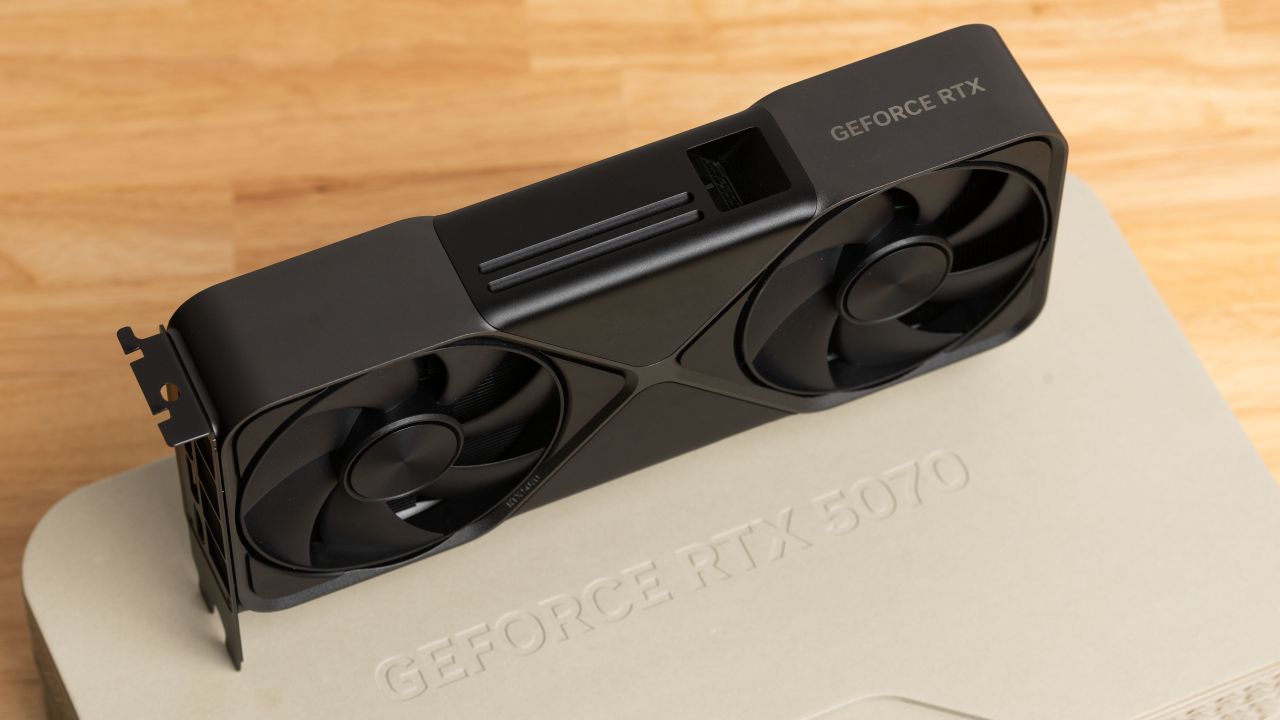
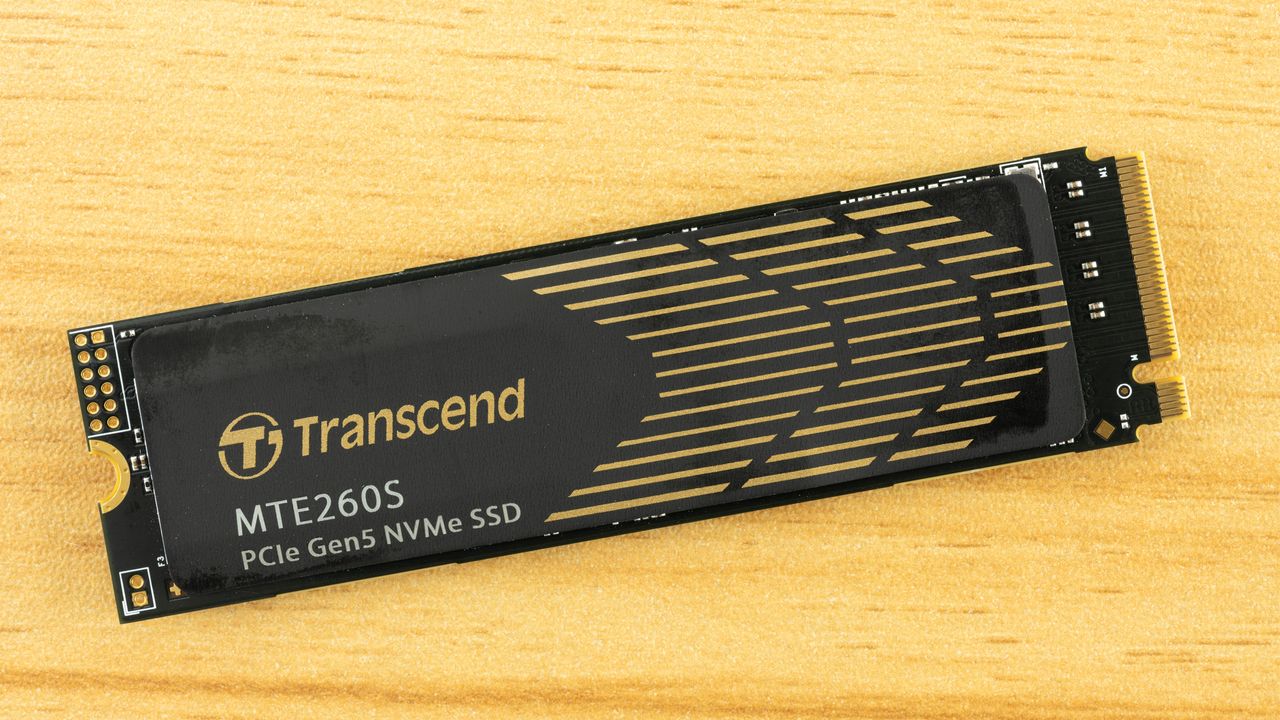
Nvidia releases GeForce 595.71 driver following hardware monitoring and fan “not spinning” issues The launch of their GeForce 595.59 driver was a disaster for Nvidia. Hardware monitoring broke for many users, with fan detection failing, and one or more of their GPU fans stopped spinning after the driver update. Mere hours after launch, Nvidia was […]
The post Nvidia releases GeForce 595.71 driver following disastrous 595.59 launch appeared first on OC3D.






RevEdge surfaces signals, risks, and opportunities that may impact your revenue, helping you execute before you lose a dime. Mobile-first and designed for busy leaders, RevEdge digests revenue signals from every area of your business that impacts revenue, delivering executive-level insights that clearly lay out the context, potential revenue impact, and recommended strategic next steps. The best part? Embedded actions let you execute directly in the app, helping you drive revenue with clarity and confidence.









On the first day of its ongoing product launch window in the run-up to Wednesday's hands-on 'Apple Experience' event, the Cupertino giant has unveiled its all-new M4 iPad Air along with the iPhone 17e, bringing substantially more unified system memory, the N1 wireless networking chip, and the C1X modem to the proverbial table, all for a starting price of $599. Behold the substantially more powerful M4 iPad Air Upgraded silicon Apple's new M4 iPad Air, both the 11-inch and 13-inch variants, sport the M4 chip that renders the new devices up to 30 percent faster than their M3 chip counterparts. […]
Read full article at https://wccftech.com/apple-unveils-the-all-new-m4-ipad-air-entailing-up-to-50-percent-more-unified-memory-the-n1-wireless-chip-and-the-c1x-modem-with-a-starting-price-of-599/


While one of this week's upcoming showcases was taken off the calendar today, another has been added. Nintendo announced it will host an Indie World Showcase Direct tomorrow, March 3, 2026, at 6am PT / 9am ET / 2pm BT. The showcase will be roughly 15 minutes long and provide updates on upcoming indie games heading to the Nintendo Switch 2 and Nintendo Switch, and it is the first Indie World event since the last one took place on August 7, 2025. Last time, we were told not to expect Hollow Knight Silksong news, since the game's release date had […]
Read full article at https://wccftech.com/nintendo-direct-indie-world-showcase-tomorrow/


Phison's model, with NAND market supply, has now shifted to securing capital upfront from customers as the company navigates a seller's market. NAND Prices Have Climbed a Whopping 500% In Last Year Alone, Driven By AI-Demand The NAND industry is also experiencing a significant imbalance in supply lines, as the role of storage in AI inference has increased dramatically over the past few months. We have already seen NAND spot prices climb significantly over the past few quarters, and for suppliers like Phison, the situation has started to bite into their profit margins. According to a DigiTimes report, Phison is […]
Read full article at https://wccftech.com/phison-shifts-nand-supply-to-prepayment-model/


Apple has taken the wraps off the iPhone 17e, and the first thing we did was dive into the specifications page of the iPhone 16e’s successor to find out if the A19 shared some similarities with the same silicon found in the base iPhone 17. It turns out that there’s just one difference, and it is the same one present in the iPhone 16e and the base iPhone 16. Like before, the iPhone 17e features a binned A19 with fewer GPU cores than the silicon running in the iPhone 17 Scrolling through the ‘Tech Specs’ section of the iPhone 17e, we […]
Read full article at https://wccftech.com/a19-chipset-powering-the-iphone-17e-is-not-the-same-as-iphone-17/


In just a few hours from the time of this writing (10am PT to be exact), the Marathon Server Slam will wrap up, and players' free weekend in Tau Ceti IV will be over. Bungie ran the server slam from February 26 to March 2, with players on PC and PS5 able to jump in and try Marathon for themselves with a few limitations. Beyond an odd start to the slam, where the phrase 'ARC Raiders' was censored for an unknown reason, its player numbers weren't too bad, peaking at 143,621 concurrent players on Steam. What's more important for Bungie […]
Read full article at https://wccftech.com/bungie-keeping-a-close-eye-on-ui-feedback-duo-lobbies-pc-performance-marathon-server-slam/


In a development that falls largely in line with earlier rumors and tidbits, Apple has just announced its latest budget iPhone, the iPhone 17e, replete with the now-ancient notch, an upgraded processor, modem, and display, all for the same $599 price point. Behold Apple's iPhone 17e Physical features In what constitutes a disappointing departure from earlier rumors and tidbits, Apple's iPhone 17e does not, in fact, sport the Dynamic Island. Instead, the Cupertino giant's latest budget iPhone adheres to the same archaic notch-based display form factor that was first introduced with the iPhone X all the way back in 2017. […]
Read full article at https://wccftech.com/apple-announces-the-iphone-17e-super-retina-xdr-oled-screen-the-now-ancient-notch-the-a19-chip-and-the-c1x-modem-all-for-599/

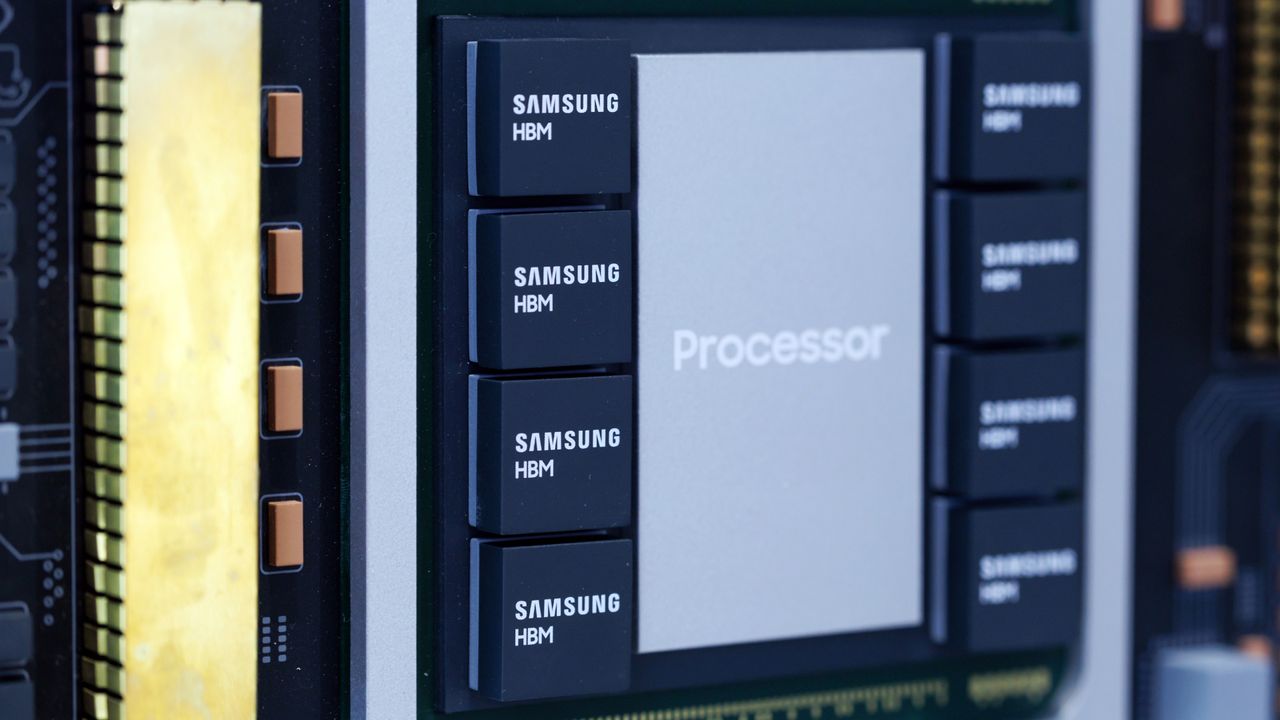
The open-source terminal built for coding agents

If you’re not actively managing your branded search campaigns, you’re leaving money on the table and your reputation in the hands of competitors, review aggregators, and affiliate marketers.
Brand protection through PPC isn’t just about bidding on your own name. It’s a strategy that spans defensive bidding, query monitoring, ad copy testing, and reputation management across the entire customer research journey.
Most PPC managers treat brand campaigns as an afterthought. Set up a campaign, bid on the exact brand name, maybe add some close variants, and call it done.
But the reality is far more complex, especially when we’re talking about bigger, well-known brands. Your brand exists across dozens of query contexts, each representing a different stage of the customer journey and requiring a different strategic approach.
Consider what happens when someone searches for your brand. They’re not just typing your company name, they’re asking questions, seeking validation, comparing alternatives, and researching specific features.
If you’re only covering exact-match brand terms, you’re missing the majority of brand-related searches and leaving those high-intent users exposed to competitor messaging.
Third-party sites like review aggregators and affiliate comparison websites actively bid on your brand terms to capture traffic and redirect it to their comparison pages, where your competitors pay for prominence.
The cost? Your brand equity, customer trust, and ultimately, conversion rates.
The SEO toolkit you know, plus the AI visibility data you need.
Based on user intent and competitive vulnerability, branded searches fall into four strategic categories. Each requires different bid strategies, ad copy approaches, and landing page experiences.
Let’s break down each category and the specific PPC tactics that can work.
These searchers are in the validation phase. They’ve heard of your brand but want social proof before committing.
The competitive threat here comes from review aggregators and affiliate sites that will happily show your reviews alongside competitor CTAs.
PPC strategy
Users searching for feature-specific information are evaluating whether your solution meets their requirements. Competitors often bid on these queries with ads suggesting they offer superior features.
PPC strategy
This is the most competitive category. Users are actively comparing you to alternatives, and both direct competitors and third-party comparison sites are bidding heavily. This is where you’re most vulnerable to losing customers who were already considering you.
PPC strategy
These queries reveal specific concerns or evaluation criteria. They’re often low-volume but extremely high-intent because they represent genuine decision-making criteria.
PPC strategy
Dig deeper: How to benchmark PPC competitors: The definitive guide
The traditional single-brand campaign approach doesn’t give you enough control or insight at scale. Instead, structure your brand defense across four specialized campaigns, each targeting different intent signals and requiring distinct bid strategies.
This covers exact-match brand terms and common misspellings with aggressive bidding to maintain 95%+ impression share and top positions. Never let this campaign be budget-limited.
Use multiple RSAs to test different value propositions. Monitor lost impression share due to rank as your primary competitive threat indicator.
Capture phrase-match queries like “[Brand] CRM” or “[Brand] for [use case],” where users are researching you within a specific product context.
Bid slightly lower than core brand terms, but ensure ad copy acknowledges the category and emphasizes your category leadership. Test whether category-specific landing pages outperform your homepage for these queries.
These intercept validation-phase users searching “[Brand] reviews,” “[Brand] ratings,” or “is [Brand] good” before they click through to third-party aggregators. Bid aggressively here — these comparison-shopping clicks are worth more than core brand searches.
Use review extensions prominently, include specific social proof metrics in ad copy (4.8 stars, 10,000+ reviews), and send traffic to dedicated testimonial pages rather than your homepage. Test video testimonials on landing pages.
Control the narrative for queries like “[Brand] vs [Competitor],” “[Brand] alternative,” or “better than [Brand].” These are users you’re at risk of losing, so pay up to your maximum acceptable CPA.
Create unique landing pages for each major competitor with honest comparisons that emphasize your advantages, include side-by-side feature tables, and offer special conversion incentives like extended trials or migration assistance.
Sites like G2, Capterra, and other affiliate comparison sites actively bid on your brand terms without violating trademark policy because they legitimately have content about your brand.
But they’re siphoning off your traffic and often presenting biased or incomplete information. Your defense requires three coordinated approaches.
Review aggregators bid heavily on “[Brand] reviews” and “[Brand] ratings” because these are their money keywords, so you need to bid even higher.
Run the math: If a review aggregator click costs you $3 but sends that user to a page where your competitor’s ad costs $50, you’re getting a deal at $10 per click on your own review keywords.
Calculate the lifetime value of a customer versus the cost of letting them click to a third-party site where competitors can advertise. Also, keep in mind it’s cheaper for you to bid on your own brand than for competitors to outbid you.
Even if you can’t prevent them from bidding on your brand, ensure that when users click through, they see optimized content, strong ratings, and an active presence with responses to reviews.
Many review platforms offer advertising options — test running ads on your own profile pages to capture users who arrive via organic search or competitor ads.
Make yours more compelling than third-party review aggregators. Include video testimonials, detailed case studies with metrics, filterable reviews by industry or use case, and verified customer badges.
Then use your PPC ads to drive users to these owned properties instead of letting them discover review aggregators organically.
Dig deeper: When to use branded and competitor keywords in PPC
Your brand campaign ad copy needs to do more than confirm your brand name. It needs to preempt objections, differentiate from competitors, and provide compelling reasons to click your ad instead of a competitor’s or third-party site. Three frameworks deliver results.
Identify the top 3-5 objections that come up in your sales process and address them directly in your ad copy before users encounter them on competitor or review sites.
Don’t just state features, state features your competitors don’t have or can’t match. This is especially critical for comparison queries where you know competitors are showing ads. Examples include:
If you can’t identify any unique features or USPs, that’s a signal to improve your product positioning or capabilities. Without clear differentiation, PPC alone won’t drive sustainable conversions.
Combine multiple types of social proof to build credibility quickly. Don’t just pick one element, stack them. Try
Dig deeper: How to write paid search ads that outperform your competitors
Sending all brand traffic to your homepage is a missed opportunity. Different branded queries represent different user intents and concerns, and your landing pages should address those specific intents.
When users search “[Brand] + [feature],” send them to dedicated pages that explain the feature in detail, show it in action, and provide clear next steps.
Include a hero section explaining the feature in one sentence, a video demo or animated screenshot, technical specifications for enterprise buyers, integration details if relevant, and customer examples using this specific feature.
Create dedicated comparison landing pages for each major competitor. Be honest about differences while emphasizing your advantages. Include side-by-side feature tables, pricing comparisons if advantageous, and customer testimonials from switchers.
Acknowledge competitor strengths without being dismissive, highlight 3-5 key differentiators where you excel, and offer migration assistance or switch incentives. Make your CTA clear and prominent, offering a trial or demo.
For review and reputation queries, create dedicated pages that aggregate social proof rather than linking to your G2 profile or hoping users browse scattered testimonials.
Display aggregate ratings prominently (average of G2, Capterra, etc.), place video testimonials above the fold, show recent reviews with verified badges, make reviews filterable by industry, company size, and use case, include case studies with concrete metrics, and highlight third-party awards and recognition.
Brand protection isn’t a set-it-and-forget-it strategy. The competitive landscape constantly evolves, new competitors emerge, third-party sites adjust their strategies, and user search behavior shifts. You need systematic monitoring and rapid response capabilities across three time horizons.
Review:
For validation queries like “is [Brand] good” or “does [Brand] work,” use dynamic keyword insertion to echo the user’s specific question in your ad copy, creating higher relevance and click-through rates. Try headlines like “Yes, {KeyWord:[Brand]} Is Excellent” or “Absolutely, {KeyWord:[Brand]} Works.”
If you have location-specific offerings or competitors vary by geography, create geo-modified brand campaigns. Users searching “[Brand] New York” or “[Brand] enterprise” may have different needs than general brand searchers.
Apply audience segments to brand campaigns to adjust bids based on user quality. Users who’ve visited your pricing page before should get higher bids on brand searches than first-time visitors. Similarly, prioritize users who match your ideal customer profile demographics.
While Google generally allows competitors to bid on your brand terms, using your trademarked brand name in their ad copy is often prohibited.
Monitor competitor ads and file trademark complaints when they use your brand name in headlines or descriptions. This is particularly effective against smaller competitors and affiliates who may not realize they’re violating policy.
Capture queries where users are researching whether your solution addresses a specific problem. These are often high-intent and represent clear use case alignment.
Target queries like:
How much should you invest in brand protection versus acquisition campaigns? The answer depends on three factors:
If you operate in a highly competitive category where multiple well-funded competitors actively bid on your brand terms, invest more in brand protection. Run auction insights weekly to monthly to quantify competitive presence.
If competitors show in 40% or more of your brand auctions, this is a high-threat environment requiring aggressive defense. Stronger brands with dominant organic presence can afford to spend less on core brand defense because their organic listings provide natural protection. This doesn’t apply to reputation and comparison queries where third-party sites rank organically.
High LTV businesses should invest more aggressively in brand protection because the cost of losing a customer to a competitor or having them influenced by negative review sites is substantial. If your average customer is worth $50,000 over their lifetime, paying $50 per click to defend against comparison queries is economically rational.
For most B2B SaaS and high-consideration products, allocate approximately 15-25% of total paid search budget to comprehensive brand protection. Within that allocation, dedicate 40% to core brand defense (exact match), 25% to competitive comparison defense, 20% to reputation and review queries, and 15% to feature and niche question queries.
Track, optimize, and win in Google and AI search from one platform.
Brand protection through PPC isn’t just defensive marketing. It’s a competitive moat. When you control the narrative across branded search contexts, you ensure high-intent users see accurate information instead of competitor ads or third-party pages monetizing your brand equity.
The brands that win treat this as strategy, not maintenance. They segment branded queries by intent, build landing pages to match, monitor threats continuously, and defend high-value search real estate aggressively.
Start with an audit using the four-category framework. Close coverage gaps, align campaigns and landing pages to intent, and commit to weekly monitoring, monthly optimization, and quarterly strategic reviews.
If you don’t own your branded searches, someone else will.

If your brand’s content arm has been active for a few years, I’m guessing you have plenty of material that can be revised to help you show up more prominently in AI search answers — we’ll call this AEO throughout the article.
I’m getting bombarded with brand marketers’ questions about how to get AEO traction these days. “Revise your old content” is a favorite answer that often produces an “aha” moment for the other party, possibly because the nature of AEO is so forward-looking.
That answer sparks a few important follow-up questions I’ll tackle below.
I like to lean on three principles when I tackle content reformatting. Optimizing for:
Here’s what that means in practice.
Structure your site using a hub-and-spoke model. For each primary category or keyword theme, build a comprehensive hub page that introduces the broader topic and links out to supporting spoke pages that dive deeper into specific facets.
Each spoke page should focus on one clear angle and develop it thoroughly enough to establish distinct purpose and query intent. Because user questions branch in different directions, covering multiple angles helps expand your overall topical reach.
Link related spoke pages to one another where it makes sense, and consistently back to the hub as the central reference point. This reinforces how your content connects and gives AI systems clearer signals about the relationships between topics.
The SEO toolkit you know, plus the AI visibility data you need.
Don’t rely on using the whole page for context. Each chunk should be independently understandable.
Keep passages semantically tight and self-contained. Use one idea per section and keep each passage tightly focused on a single concept — as Our Family Wizard did here:

Summarize complex ideas clearly, then expand with a clearly structured “Summary” or “Key takeaways”. Start answers with a direct, concise sentence. Favor a plain, factual, non-promotional tone.
This formatting, from Baseten, puts an easily digested TL;DR right at the top of a post explaining AI inference:

Dig deeper: How to keep your content fresh in the age of AI
Start with the premise that AI readability is about clarity, not gimmicks, and this approach has tons of appeal to humans looking to quickly understand the content they’re consuming.
AI systems favor content where:
That often means being more explicit than traditional SEO ever required — defining terms directly, summarizing sections, and stating conclusions early. It’s kind of the opposite of keyword-stuffed content that’s overwritten to hit assumed “preferences” the Google algorithm might have for content length.
The only real hesitation I have is that content generated by AI may oversimplify nuance. Not every page should be optimized for a single atomic answer, and strategic or opinionated content still benefits from narrative flow.
I try to strike a balance by:
When done well, this has appeal for both AI and humans.
Now, all of that said, LLM-produced content — just check out your LinkedIn feed if you need examples — very quickly became recognizable as exactly what it is: AI-produced content that’s easily consumed by AI models.
The effect can be very off-putting depending on the reader, even if your content, as it should always strive to do, includes original POVs, research, and or data that the LLMs couldn’t possibly find from existing content.
Keep a close eye out for AI tells, the dreaded em dash, squished vertical line spacing, a bullet-point list featuring emojis, sentence structures like “It’s not just [X]. It’s also [Y].” or “It’s more than [A]. It’s [B].” and removing them wherever you see them.
Dig deeper: Refreshing content: How to update old content to drive new traffic
For AEO, prioritization is less about traffic, which is where a lot of SEO marketers stop KPI-wise, and more about answer value.
I start by identifying content that:
Also worth noting: Is the content focusing on one of our core products or services, even indirectly? That’s fundamental. Visibility for visibility’s sake isn’t worth much, so make sure it’s got a natural tie-in to pipeline or revenue growth.
As far as types of content to prioritize, reports, tools, and evergreen guides tend to rise to the top because they already contain structured thinking, if not structured answers. AI systems don’t reward originality embedded in prose. They reward explicit conclusions, definitions, and frameworks.
Here’s my simple AEO prioritization test:
If the answers are “no,” and the theme of the content is important to your business growth, that content is a strong reformatting candidate.
Dig deeper: How to use AI to refresh old blog content
Before I dive into the how, I’ll mention that these elements have a different function for AEO than they do for SEO. In SEO, they function as ranking levers. In AEO, they serve more as context anchors.
Let’s break down each key element of metadata and show how that difference should play out.
Title tags serve as the topic of the page for traditional SEO. For AEO, make them more descriptive about the page’s primary answer or function.
So a title tag that reads “Session replay software” for SEO purposes could be rewritten for AEO to say “Session replay: what it is, when to use it, and when not to use it.” Title tags with more context give AI systems clearer signals about how and when to cite the content.
In traditional SEO, header tags have been used to identify categories, for example, “compliance monitoring.”
In AEO, I use them to map to specific questions or claims. Possible updated versions of the above would be:
To stress-test your header tags, try answering them. If it takes you more than a few sentences to answer your question or prove your assertion clearly and persuasively, it’s probably the wrong question and not one a user is going to type into ChatGPT.
Meta descriptions are those chunks of expanded text that might or might not be pulled into the SERP in traditional SEO, but do serve to explain more about the content. In AEO, they act as a compressed intent signal. AI systems, like the SERPs, may choose not to quote the meta description, but good ones help reinforce:
Through the AEO lens, I look at meta descriptions as a one-sentence briefing note for both users and LLMs.
Dig deeper: Meta tags for SEO: What you need to know
You may have noticed a theme here — while, in general, what’s good for SEO is what’s good for AEO, there are material differences in the two disciplines. Knowing what they are and how to adapt accordingly can pay off in AI search visibility.
I’m not arguing that your content strategy or themes should pivot. But knowing that AI models read and ingest content differently than more traditional SEO algorithms is important and should be factored into the way you’re repurposing your evergreen work from months and years past.

Google published a new help page detailing how its Universal Commerce Protocol (UCP) works — offering merchants clearer guidance on how checkout flows operate across Google properties.
What’s happening. The documentation explains how UCP and its UCP-powered checkout enable a native “Buy” button that moves the transaction directly onto Google surfaces, while merchants remain the seller of record. To activate the feature, merchants must implement the native_commerce attribute in Merchant Center.
Payments run through stored Google Wallet credentials, and processors must support Google Pay tokens.
Why we care. UCP was first introduced as part of Google’s agentic shopping push and later confirmed as live in Merchant Center. UCP moves checkout directly onto Google surfaces, reducing friction between product discovery and purchase. That could improve conversion rates, especially in AI-driven experiences like Gemini and AI Mode.
The new documentation also clarifies implementation requirements, helping merchants prepare their feeds and payment systems to participate in Google’s evolving, agent-powered commerce ecosystem.
The bigger picture. By centralizing checkout while keeping merchants as the seller of record, Google is reducing friction in AI-assisted shopping and tightening its control over the transaction layer.
The bottom line. With formal documentation now live, UCP moves from concept to operational playbook — signaling that AI-driven, on-Google checkout is becoming a core part of Google’s commerce strategy.
First seen. The help document was spotted by PPC News Feed founder Hana Kobzova.
Dig deeper. About the Universal Commerce Protocol (UCP) and UCP-powered checkout feature on Google.
RPCS3 keeps getting better With their latest updates to RPCS3, kd-11, the project’s lead graphics developer, has managed to solve two longstanding issues with the PlayStation 3 emulator. With improvements to Z-Culling and the emulator’s Texel Remapper, RPCS3 can now run several PS3 classics with improved visuals. Thanks to these changes, many previously incorrect visuals […]
The post RPCS3 update delivers visual improvements for PS3 classics appeared first on OC3D.






Veterinary clinics are overwhelmed with inbound calls, appointment scheduling, emergency triage questions, and follow-ups while trying to deliver quality patient care. PupPilot is the AI front office built specifically for veterinary practices. It automates call handling, scheduling coordination, post-visit follow-ups, and urgent triage routing, reducing front desk overload without sacrificing clinical nuance. Unlike generic AI call systems, PupPilot is designed for species-specific workflows and real-world veterinary operations. The result is fewer missed calls, smoother scheduling, and more time focused on patients.

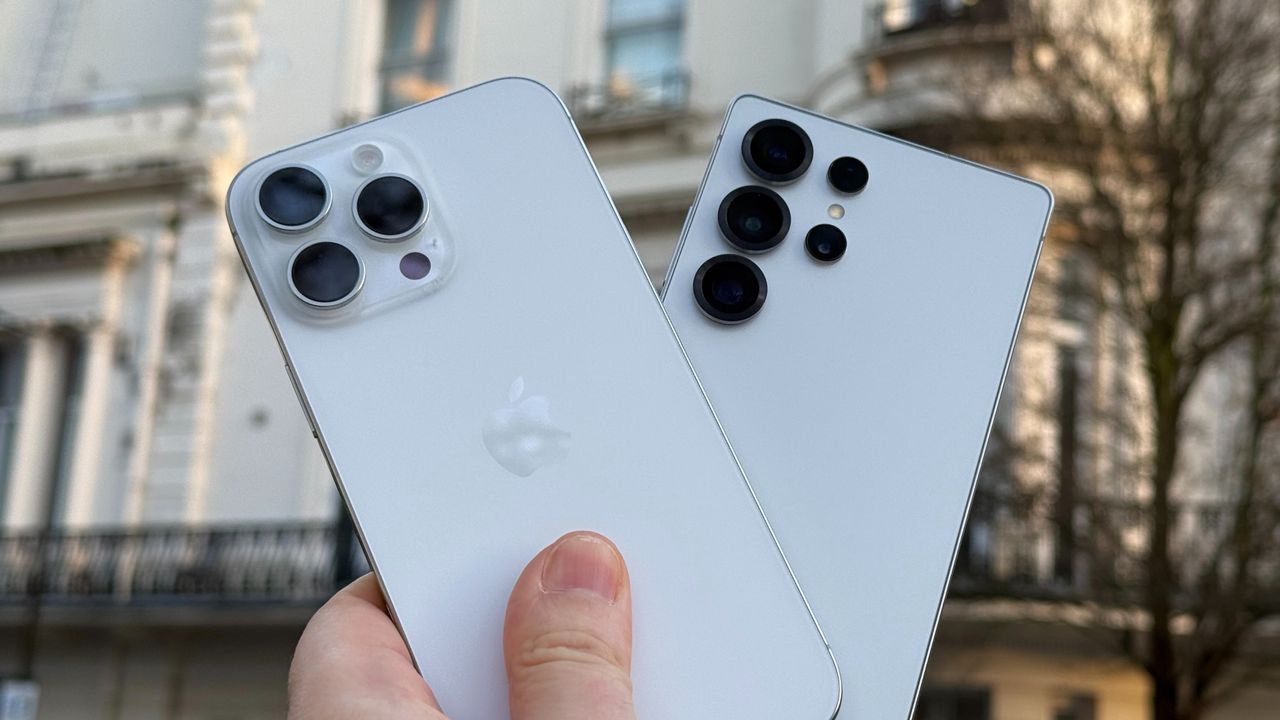

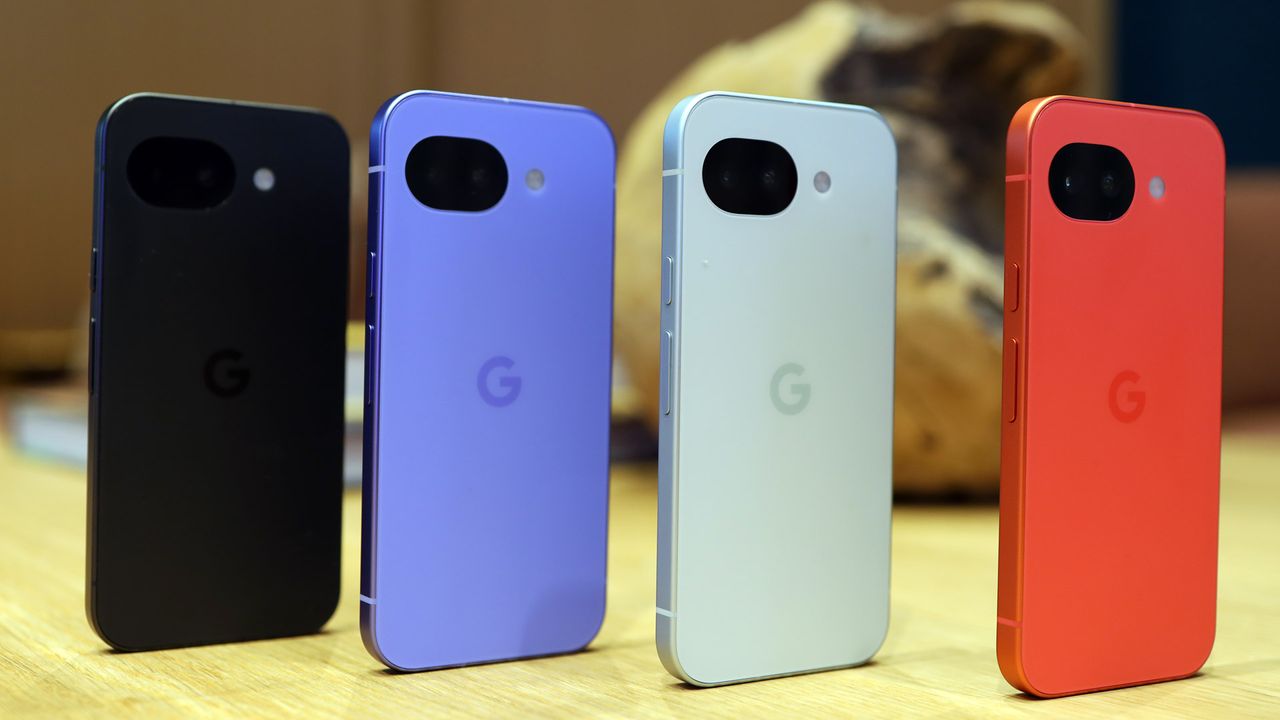







UPDATE - March 3, 2026: Shortly after the publication of this article, NACON took to X (formerly Twitter) to confirm that its NACON Connect event will return in May 2026, but did not specify a date in May. Original Story: French publisher NACON, the company behind releases like last year's Hell is Us and upcoming titles like Cthulhu: The Cosmic Abyss has had quite a wild week. A week ago today, the company announced it would be hosting a NACON Connect showcase to show off its upcoming releases and give players a tease of what's coming for 2026 and beyond. […]
Read full article at https://wccftech.com/nacon-connect-postponed-after-nacon-filed-for-insolvency/


Samsung sticking with the same 5,000mAh battery on the Galaxy S26 Ultra as the company’s previous flagships would have made buyers livid, as they likely had the impression that the company was taking an ultra-conservative approach while its rivals were advancing with high-capacity silicon-carbon batteries. However, little did they know that Samsung’s latest and greatest has incredible endurance, with a battery drain test showing that the device can hold out quite well against the competition. Surprisingly, the iPhone 17 Pro Max meets its match as the Galaxy S26 Ultra manages to successfully outlast its smartphone rival The popular YouTuber Mrwhosetheboss […]
Read full article at https://wccftech.com/galaxy-s26-ultra-battery-drain-test-impressive-results-against-silicon-carbon-flagships/


Qualcomm has just taken a significant step towards cornering edge AI use cases, especially when it comes to smart watches and other wearable devices like AI pins and AI pendants, by unveiling the all-new Snapdragon Elite Wear chip that offers "best-in-class AI performance and power efficiency." Qualcomm's Snapdragon Elite Wear chip is capable of running an on-device model with up to 2 billion parameters, with Time To First Token (TTFT) of just 200ms, and the ability to process up to 10 tokens per second Qualcomm's Snapdragon 8 Elite Wear leverages TSMC's 3nm chip fabrication process and sports the following CPU […]
Read full article at https://wccftech.com/meet-qualcomms-snapdragon-elite-wear-chip-that-transforms-your-wearables-into-personal-ai-devices/


Starfield has long been rumored to be set for a PlayStation 5 launch, and in the past few months, reports suggested that the latest open-world game from Bethesda would be launching on Sony's current-generation system sometime in April. Today, we learned there's a solid chance it will indeed make its debut on the system on April 7, 2026. In a new report shared today on Dealabs, reliable leaker billbil-kun corroborated the game's release date, previously revealed by Polish website PPE, whose sources haven't always been accurate. Following their own investigation, the leaker was able to corroborate not only the release date but also […]
Read full article at https://wccftech.com/starfield-hits-ps5-on-april-7-lower-price/



For years, ecommerce ran on a simple model: Google drove traffic, and your site did the selling. Rankings, clicks, and conversion rate determined performance. That model just changed.
With the Universal Commerce Protocol (UCP) and AI Mode, Google can now discover, compare, and complete purchases inside its own AI experiences. Search is shifting from a traffic channel to a transaction layer. Visibility now depends on whether Google’s AI selects your product data.
When AI makes the recommendation and closes the sale, optimization moves upstream. The question isn’t just whether you rank. It’s whether you’re chosen.
Here’s what changed and what SEO and AI optimization teams need to do next.

Google launched the Universal Commerce Protocol, or UCP, on Jan. 11. This new open standard is designed to let AI agents discover, evaluate, recommend, and purchase products across the web, all inside Google’s own AI experiences.
What stood out to me wasn’t just the protocol itself, but the ecosystem Google built around it. UCP was developed with platforms like Shopify, Etsy, Wayfair, Target, and Walmart, with payment networks already integrated. That kind of coordination suggests this was planned for the long haul, not just a quick test.

At the same time, Google rolled out three platform-level capabilities that make this real in day-to-day shopping:
More importantly, this allows Google to turn everyday conversation into commerce. Instead of waiting for shoppers to type product searches, Gemini can now respond to natural language prompts like “help me plan a camping trip” or “what will get wine out of my couch” by pulling live inventory, pricing, and availability from retailers, and completing the purchase in the same interaction.
Dig deeper: Are we ready for the agentic web?
When AI intermediates the buying journey, brands compete inside the recommendation layer, not just in search results.
For most of my career, ecommerce worked the same way everywhere — search engines, ads, and marketplaces existed to send people to your site. Your site did the selling. UCP changes that model entirely.
Now AI handles the whole journey. It figures out what someone actually needs, compares the options, and can even complete the purchase. At that point, it doesn’t really matter how good your homepage or category page is if AI never chooses your product in the first place.
I saw this problem years ago, working with a large American candle retailer. People weren’t really shopping for candles. They were trying to get rid of pet smells, calm down after a long day, or make their house feel a certain way. But all we could give Google were scent names and product categories.
If someone wanted something that killed pet odor without smelling like fake fruit, we probably had the perfect candle, but it almost never got shown because the data couldn’t express that situation.

That’s what changes here. With Gemini and UCP, people can finally describe what they’re dealing with, and the AI can map that to the right products in a brand’s catalog.
And when checkout happens inside Google, everything shifts. You don’t win because someone clicked your site. You win because the AI picked your product. Business Agent pushes that even further by letting brands show up right in the middle of that decision.
In real terms, that can be the difference between moving a few thousand units and moving 10 times that, without changing a single product, just because the right things are finally being matched to the right people.
This creates a very different kind of competition than what we’re used to. In the past, weak data or mediocre pages might push you lower in the results. Now, when product data is incomplete or inconsistent, the AI has little reason to consider you at all.
Brands are competing for inclusion in the system’s recommendation set. That shift changes where the storefront lives. It now exists wherever the AI presents options in that moment.
Dig deeper: Google outlines AI-powered, agent-driven future for shopping and ads in 2026

For a long time, SEO was framed as getting pages to line up with keywords. In reality, search engines have always been trying to understand products well enough to make decisions on a user’s behalf. What’s changing now is how explicit that decision-making has become.
Google is feeding AI Mode, Gemini, and Business Agent with product feeds and structured data, and it keeps adding more fields that describe how products actually get used. Things like common questions, what works with what, and what people buy instead when something is out of stock. That’s how the AI starts to reason, not just match words.
I saw this clearly while working with an outdoor apparel brand. Someone planning a trip to Europe wasn’t really searching for a jacket. They were thinking about rain, cold mornings, long walks, and changing weather. We had the right products, but shoppers had to guess which filters to click or which category to start in to find them.
With agentic commerce, that guesswork goes away. A shopper can just say, “I’m going to Europe in the spring, what jacket should I bring?” and Gemini can look at weather resistance, weight, breathability, and what’s actually in stock, then show the few options that make sense.
That’s what all these new attributes unlock. They let the AI understand products the way a good salesperson would. And when that happens, it’s not a small optimization. It can be the difference between a campaign barely working and one that suddenly takes off.
Dig deeper: How AI-driven shopping discovery changes product page optimization
What matters isn’t page position. It’s whether Google’s AI understands what a product is, who it’s for, and when it should be recommended.
When I worked with a high-end luxury jewelry retailer, one of our biggest challenges was building “user journey” pages. We had to create landing pages for things like anniversary gifts, modern gold, or minimalist style because shoppers weren’t searching for SKUs. They were searching for meaning:
Those pages worked, but they were slow to build, hard to keep fresh, and almost impossible to personalize.

With Gemini and UCP, that whole layer moves into AI. A shopper can just describe the person, the style, and the budget, and the system puts together the right products in real time. That feels less like search and more like having a personal shopper.
And none of that works without good product content. The descriptions, the specs, the reviews, even how people interact with the site are what give the AI something to reason with.
If your pages are thin or confusing, the AI has nothing solid to work from. For SEOs, this is the moment the fundamentals become decisive again.
The same goes for site experience. When people stick around, buy, and don’t return products, Google learns that your brand is a safe bet. In an AI-driven world, that trust is what keeps you in the recommendations.
Direct Offers then layer paid promotion on top of this organic selection system, creating a blended performance layer where feed quality, content quality, and media strategy all work together inside the AI buying experience.
Dig deeper: How SEO leaders can explain agentic AI to ecommerce executives
Merchant Center has evolved beyond a Shopping ad upload tool. It now connects your entire retail operation to Google’s AI. Inventory, pricing, promotions, shipping, and product details all flow through it so Gemini can actually act on them. If that data is wrong or out of sync, the AI can’t confidently sell anything.
That’s why every field suddenly matters. Titles, descriptions, categories, GTINs, brand names, and images aren’t just metadata anymore. They’re how the AI knows what something is and whether it should trust it.
Google is also starting to add more human context into those feeds. Things like common questions, what accessories go with a product, what people buy instead, and how something is used in the real world. That’s how a machine starts to understand products the way a person does.
This is where a lot of brands get blindsided. A small pricing error, a feed that lags behind inventory, or a missing promotion is all it takes for products to quietly fall out of the AI layer. You might get an alert in Merchant Center, but if no one’s watching closely, the impact shows up in lost visibility long before anyone realizes what happened.
If you’re eligible, turning on Business Agent is part of this too. It lets your brand show up inside those AI conversations, not just as a product listing, but as something that can answer questions and close the sale.
And it’s not just the feed. Google is constantly comparing what you tell it in Merchant Center with what it sees on your site. When those two don’t line up, trust drops, and so does visibility.

Product feed optimization essentials checklist
This connection matters more than most people realize. Search Console used to tell you how pages were doing. Merchant Center tells you how products are doing. In an AI-driven world, those two things are finally tied together.
Linking them turns this from guesswork into something you can actually manage. You can see which products are getting picked up by Google, which ones are getting ignored, and where bad data is quietly killing your visibility. Disapproved items, missing attributes, price mismatches – all of that shows up right where you can act on it.
It also lets you watch how demand is shifting. You can see when impressions move from traditional search into Shopping and AI results, and which products are benefiting. That’s how you know whether your catalog is really working inside the AI layer or just sitting there hoping someone clicks a link.
Once everything is connected, this becomes your early warning system. It’s the dashboard you end up living in. It tells you which products are broken, which ones are being ignored, and which ones are quietly driving everything.
Performance reports show which items are actually getting seen and clicked, whether that’s in Shopping results or inside AI experiences. And the alerts are what save you from surprises. Price mismatches, crawl issues, or policy problems can quietly pull products out of the AI layer without you ever noticing unless you’re watching.
In an AI-driven commerce world, those small data issues don’t just hurt performance. They decide whether your products show up at all.
This shift to agentic commerce is already happening. AI is now deciding what to show and what to recommend.
I’ve seen brands struggle not because their products were wrong, but because the right products never reached the right people. That’s always been the gap in search. People know what they need. The system just doesn’t always connect the dots.
Agentic commerce starts to close that gap. When AI understands both the shopper and the catalog, it can finally match real needs to real products instead of forcing people to guess the right keywords.
That’s what Google has built here. Search has become a system for turning intent into answers.
So the work is clear. Keep your product data clean. Connect Search Console and Merchant Center. And start thinking about how people actually describe their problems, not just how they type queries.
Amazon reports datacenter fire in the UAE after “objects hit” it during Iran missile strikes Amazon has confirmed that power has been shut off at one of its datacenters in the United Arab Emirates (UAE) after the facility was “impacted by objects” amid Iran’s strikes against the country. This has impacted the availability of Amazon […]
The post Amazon confirms datacenter “impacted by objects” in UAE during Iran strikes appeared first on OC3D.
Thermaltake launches its TT PowerCare after-sales support program in the UK Thermaltake has just launched its new TT PowerCare program in the UK, offering buyers fast PSU replacements alongside their existing extended warranties. Once a PSU is verified as faulty, Thermaltake UK will arrangea replacement within 48 working hours. This will give Thermaltake PSU buyers […]
The post Thermaltake UK launches its TT PowerCare program for fast PSU replacements appeared first on OC3D.





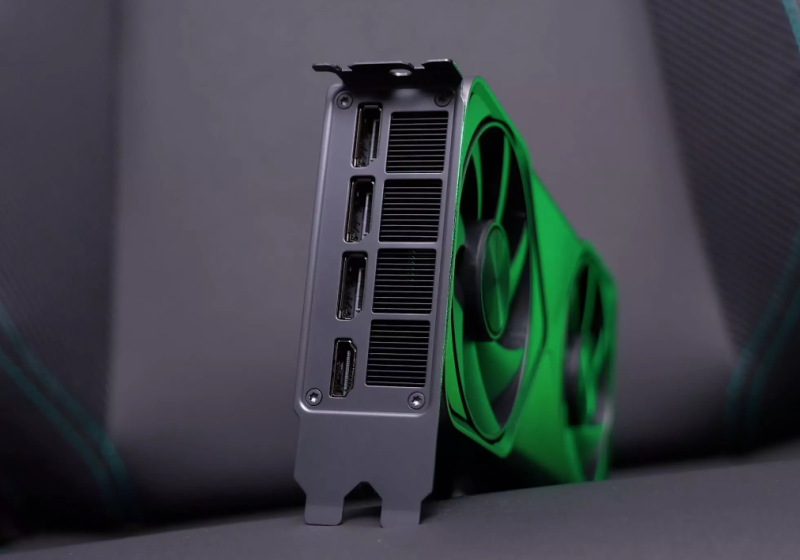

Mio is an AI phone assistant that dials, speaks naturally, and gets things done from a simple text. It navigates phone trees, waits on hold, talks to real people, and returns a clear summary of what was said and decided. Forward calls to Mio to screen spam, take messages, and confirm appointments. It remembers contacts and preferences, supports over 70 languages, shows live call status, and can schedule calls in advance. The pricing is pay-as-you-go with free signup credit and charges only for active conversation time.








The flagship Arrow Lake CPU isn't going to deliver any significant performance uplifts over its predecessor, but here's what you can expect. Core Ultra 9 290HX Plus Delivers 6-8% Higher Single and Multi-Threaded Performance vs Core Ultra 9 285HX in Leaked Geekbench Benchmarks Similar to the desktop variant, the mobile Arrow Lake lineup will also receive its new flagship chip called the Core Ultra 9 290HX Plus. It's a high-performance chip that offers the same 24-core/24-thread configuration as its predecessor, the Core Ultra 9 285HX. However, being a refresh, it's going to bring some upgrades, mostly in the clock speed. […]
Read full article at https://wccftech.com/intel-core-ultra-9-290hx-plus-geekbench-benchmark-leaked/


Stellar Blade was the first console and PC game by Korean developer Shift Up, and one of the best debuts on dedicated gaming platforms from a former mobile-only developer we have ever seen. While its initial popularity may have been boosted by Sony Interactive Entertainment, the game soon became a smashing success on PC, selling a considerable number of copies in a short time. With Stellar Blade 2 confirmed to be in development, it stood to reason that SIE would publish the second entry in the series as well, but there's a chance Shift Up will publish its next game itself, as the studio is strengthening its capabilities […]
Read full article at https://wccftech.com/stellar-blade-2-not-published-sony/


Following a series of cast announcements for the show, the first look at the God of War series in development by Amazon arrived last week with a shot of Kratos and Atreus, played by Ryan Hurst and Callum Vinson, which directly adapts one of the first sequences of the 2018 game starring both. While this sort of picture is usually not very representative of a show's final quality, this first image caused quite a reaction, not only from fans of the series who believe there's some AI-generated content involved, but also from its creator, David Jaffe, who is known for his strong […]
Read full article at https://wccftech.com/it-is-so-bad-god-war-creator-picture-show/


The most powerful discrete GPU for the workstation segment, the Battlemage, will be available this quarter. Intel Arc Pro B70 Mentioned in LLM-Scaler vLMM Beta Release Notes, Confirming the Existence of BMG-G31-Powered Workstation GPU We have been hearing about the BMG-G31-powered Battlemage GPUs for a while now. Even though Intel appears to have cancelled the plans for releasing the consumer variant, the workstation variants are likely coming very soon. In January, we posted two stories related to the Arc Pro B70, which is going to be the flagship Battlemage workstation GPU in the lineup. It will be more powerful than […]
Read full article at https://wccftech.com/intel-confirms-arc-pro-b70-workstation-gpu-via-llm-scaler-vllm-ai-release-notes/


Laura Fryer, one of the original members of Xbox's founding team, shared her memories of working with Phil Spencer (who recently retired from Microsoft) in her latest YouTube video. However, she also revealed that she was forced out of Xbox after suffering an episode of harassment. Fryer was working directly below Xbox founder Seamus Blackley (yes, the same guy who just claimed the whole division would eventually be shuttered by new CEO Asha Sharma) in 2000. After Blackley left, she became Director of the Xbox Advanced Technology Group. In this role, she cultivated worldwide Xbox Developer Support, launched XNA, created […]
Read full article at https://wccftech.com/former-xbox-exec-kicked-out-bathrobe-gdc/





Google Discover caught my attention in 2021, when it was driving millions of clicks a month to publishers. I underestimated how pervasive it would become.
My feed cycles through soccer, television, Baltimore news, SEO, and world events — a reminder that Discover understands users at an almost uncomfortable level.
It’s not limited to one app. Discover appears in Chrome new tabs, the Google app, Android home screens, Google.com on most mobile browsers, and other Google surfaces.

If Google Discover is everywhere, it’s our job as SEOs to capitalize on this opportunity. Let me show you how.
Discover traffic isn’t a viable source for all brands, just as search isn’t for all of them.
Content that performs well in Discover is almost always highly time-relevant and from authoritative sources, generally major publishers. It would be unusual to see evergreen content in Discover.
Because of this, sites I’ve worked with that get the most traffic from Discover often get less traffic from traditional search than they do from Discover.
Many publishers are finding that Discover traffic is declining, as the Discover feed now includes a large volume of social posts and AI summaries of major stories from multiple sources. This displaces the articles that used to make up the feed.
Before this change, writing articles about viral social media posts was a very effective strategy for driving millions of monthly clicks. This may be why Google is beta testing the ability to track traffic to social platforms.
No matter how technically optimized a website is, content that’s good and relevant to users will outperform content that isn’t, even when their interests are constantly changing.
If your content doesn’t get traffic in Discover, consider whether it’s the kind of content Discover aims to surface. Likewise, if you experience a sudden drop in Discover traffic, review the content before exploring technical causes.
Don’t let any of this deter you from optimizing for Discover. These optimizations won’t hurt traditional search, and you may end up getting Discover traffic you didn’t expect — I’ve often seen non-publishers experience brief spikes in Discover. Most of these suggestions are minor template-level changes that should be low effort.
Dig deeper. How Google Discover qualifies, ranks, and filters content: Research
The three main things I look at first when auditing new clients are:
This is where your optimizations start.
Check your Discover publisher profile to ensure your website and social profiles are linked. You’ll need a tool to find your publisher profile page. I use Damian Tsuabaso’s, which is in Spanish but still straightforward. Insert your brand’s name, URL, or entity ID, then search.

Interestingly, Discover profile pages are linked directly to your entity’s Knowledge Graph ID. The URL string in the profile page is a tokenized version of the KGMID (not in all cases). I expand on this further in this LinkedIn post.
When reviewing your publisher profile page, focus on two main questions:
To help link social accounts to your brand:
Google’s documentation emphasizes that using images, especially large images, is important for visibility in Discover. It also recommends using the max-image-preview:large tag to display the best-resolution image as the article card preview.
I generally check the following:
The Open Graph Protocol also allows you to define image dimensions. When feasible, use those properties and ensure they accurately reflect the image’s true dimensions.
You’ve probably already considered E-E-A-T best practices, but implementing them supports overall content SEO performance.
For author transparency, I check that:
For publisher transparency, confirm that you:
Discover is driven by relevance, timeliness, and authority, not checklists.
Technical optimizations won’t make content succeed in Discover if it doesn’t belong there.
The optimizations outlined above are essential for visibility, but the largest Discover opportunities are typically uncovered through broader content audits.

Here’s a question every marketing leader should be asking right now: How healthy are your customer relationships? Not your campaigns, not your channels but the actual relationships.
It’s a harder question than it sounds. Most organizations have spent the last two decades building around channels.
Email had a team. Social had a team. In-store, ecommerce, service, each with their own stack, their own metrics, their own version of success. And from the inside, it looked like progress. Every team was hitting their numbers.
But from the customer’s perspective it felt like dealing with multiple companies wearing the same logo. Marketing sends a “We miss you!” email the day after a frustrating support call. Sales doesn’t know the customer has already watched a demo. In-store purchase history is invisible to the ecommerce team. No continuity. No memory. No relationship.
On March 11, 2026, some of the sharpest minds in marketing, CX, and customer engagement are coming together to tackle exactly that. Engage with SAP Online is a free, half-day virtual event built for leaders who are done optimizing channels in isolation and ready to rethink how their organizations build and sustain customer relationships.
The event opens with Sara Richter, CMO of SAP Engagement Cloud, sharing new findings from the SAP Engagement Index, a global study of 10,000 consumers and 4,800 senior decision-makers. But the real draw is the lineup that follows.
Mark Ritson, professor, founder of MiniMBA, and arguably the most no-nonsense voice in marketing today, delivers the keynote: “Trends Shaping Customer Experience: What’s Real, What’s Not, and What Matters Most Now.”
If you’ve followed Ritson’s work, you know what to expect: zero hype, sharp diagnosis and a clear-eyed take on how customer behavior is shifting faster than most brands realize. He’ll unpack why loyalty can no longer live in marketing alone and what leaders need to do about it.
From there, two more sessions bring the theory to life:
Across all sessions, the focus is on what’s working, what isn’t, and what to do about it.
As Ritson himself put it in contributing to the Engagement Index: “Engagement isn’t something one department can fix. Every team shapes the brand, and the real progress comes when they work from the same understanding of the customer.”
This event isn’t happening in a vacuum. Preview findings from the SAP Engagement Index, which will be unveiled in full at the event, point to a growing disconnect between what customers expect and what most organizations can deliver.
Among the headlines:
SAP calls this the Engagement Divide: the distance between what customers need in the moments that matter and what most organizations can actually deliver. And based on the research, for most businesses, it’s growing.
The channel mismatch alone tells a story. Customers have moved, but too many brands haven’t followed:
And when SAP assessed how well organizations align people, processes and technology around engagement, just 21% scored at a high maturity level. The vast majority, 63%, sit in the middle: able to deliver basic personalization, but struggling with the coordination across marketing, sales, service, and commerce that consistent experiences demand.
It’s a crowded middle tier, and breaking out of it requires more than better campaigns. It requires a fundamentally different operating model.
The conditions driving this divide have been building for years. Customer acquisition costs have climbed steeply across sectors. Third-party tracking is eroding. When it costs that much to win a customer, you can’t afford to lose them at a weak handoff between marketing and fulfillment, or between purchase and support.
And consumers themselves have changed. With AI at their fingertips, they compare, switch and decide in seconds. They form opinions long before a brand’s message lands in their inbox. The micro-moments that used to belong to marketers now belong to customers, and those moments increasingly determine whether a brand wins or loses a relationship.
At the same time, the technology to fix this has finally matured. Customer data platforms work. AI has moved from experiment to operational tool. Real-time processing is no longer enterprise-only. The capability exists. The question is whether organizations can reorganize to use it.
At SAP, they’re calling this shift the Engagement Era: a move from organizing around channels and departments to organizing around the customer relationship as a whole. A world where engagement isn’t episodic but continuous, where loyalty is an outcome of connected experiences, and where every function that touches the customer journey is visible and coordinated.
The research shows that intent is already there:
The challenge is execution: moving from channel-centric optimization to relationship-centric orchestration. That means unified customer profiles visible across every department. It means journey-level visibility, not just campaign-level reporting. It means measuring success at the relationship level, lifetime value, retention, advocacy, not just opens and clicks.
The speakers and practitioners at Engage with SAP Online on March 11 are the ones building the playbook. If you’re ready to see what that looks like in practice, this is a half-day well spent.
Date: March 11, 2026
Time: 9:00 AM ET | 1:00 PM GMT | 2:00 PM CET
Format: Free, virtual, half-day event Register now!
Intel’s expected to unveil its refreshed lineup of Core Ultra CPUs this month It looks like Intel is getting ready to launch its Core Ultra 5 250K Plus and Core Ultra 7 270K Plus CPUs, refreshing the company’s Core Ultra 200 series lineup. According to Videocardz, Intel plans to unveil its “Arrow Lake Refresh” on […]
The post Intel to launch new Core Ultra Desktop CPUs on March 11th appeared first on OC3D.