In interesting news, Toyota is building its own game engine for the screens inside your car.
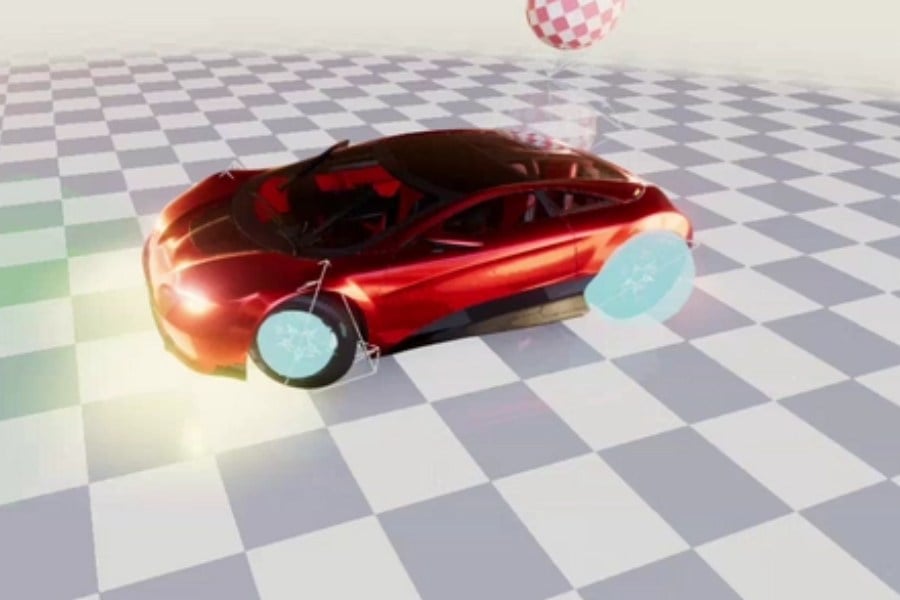
Toyota Connected North America, the subsidiary responsible for in-vehicle connectivity, has announced a new gaming engine called Fluorite. It’s designed specifically for automotive systems, where hardware is often less powerful than a typical smartphone or laptop.
What is Toyota’s Flourite engine?
Fluorite is written in C++ and is built to work closely with Google’s cross-platform UI framework, Flutter. That means developers can use Flutter’s Dart language and high-level APIs to build interactive experiences, including games and 3D interfaces, without needing heavy, traditional game engines.
According to Toyota, the engine is optimized to deliver strong performance even on low-end or embedded hardware. It also supports modern graphics APIs like Vulkan, which allows the system to get close to the device’s full hardware-accelerated performance.
Fluorite also brings some developer-friendly features. It supports a hot reload system similar to Flutter, letting developers see changes within a few frames instead of waiting through long build times. The engine also supports model-based trigger areas, so artists can define touch or click interactions directly inside tools like Blender.
Why does Toyota need a game engine?
So why does a car company need its own game engine?
Toyota says the project started as an attempt to build 3D user interfaces for future vehicles. The team looked at established engines like Unity, but found them too heavy for embedded automotive systems. Licensing costs were also a concern. In the end, building a lightweight, in-house solution made more sense.
More importantly, Toyota is marketing Fluorite as a fully featured open-source engine. As a result, even if the automaker won’t work on games, it gives an opportunity to independent and enthusiast developers.
For more daily updates, please visit our News Section.
It’s a difficult start of the year for new car sales in Czechia at -6.7% year-on-year in January to 18,043 units. Local behemoth Skoda (+1.1%) goes against the grain to reach a stratospheric 39.5% share, its highest since January 2024 (42.3%). Volkswagen (-0.5%) is stable and climbs two spots on December to #4 with 8.2% share. Toyota (-12.9%), Hyundai (-55%) and Kia (-21.9%) all crater below. Cupra (+59.8%) is inside the Top 10 for the second time in the past 5 months, with Volvo (+19%) and Ford (+3.9%) also posting notable gains.
Model-wise, the Skoda Octavia (+2.5%) progresses to 9.4% share, its highest since May 2024. The Skoda Kodiaq (+16.4%) is up to #2, the nameplate’s highest ever ranking, last reached one year ago in January 2025. Skoda places seven models in the Top 7 this month (the 8th time it does so), with the Scala (+4%), Kamiq (-11.7%), Karoq (-6%), Fabia (-12%) and Superb (+14.7%) in tow. The best of the rest is the Toyota Corolla (+49.9%) ranking at #8.
The BMW X1 is the best-selling vehicle in Switzerland in January.
It’s a shy start of the year for the Swiss new car market at -5.1% year-on-year in January to 14,207 registrations. 4×4 sales drop -6% to 7,124 and 50.8% share vs. 51.3% a year ago. Petrol sales sink -22.2% to 2,975 and 21.2% share vs. 25.8% last year while diesel is down -28.5% to 873 and 6.2% share vs. 8.3% in January 2025. In contrast HEVs are up 1.4% to 5,557 and 39.6% share vs. 37%, PHEVs soar 26.1% to 1,709 and 12.2% share vs. 9.2% but BEVs disappoint at +0.1% to 2,913 and 20.8% share vs. 19.7% a year ago.
Over in the brands ranking, BMW (-20.2%) snaps the lead despite a harsh year-on-year loss (the carmaker broke its share record a year ago). This is the first time since April 2025 that BMW is the best-selling brand in Switzerland. Volkswagen (-0.3%) is relegated to 2nd place 31 units below. Skoda (-5.4%) and Mercedes (-2.9%) follow with Toyota (+24.1%) excelling at #5. Below Audi (-14.4%), struggling, the rest of the Top 10 all register positive results. Volvo (+23.4%) is the most dynamic ahead of Kia (+9.9%), Dacia (+3.4%) and Renault (+0.4%). Further down, Citroen (+33.3%) stands out at #15 vs. #24 in December.
Model-wise, after the BMW X3 signed its first win a year ago, it’s now the turn of the BMW X1 (+17.7%) to do the same thing, even though it only holds 1.9% share as Switzerland is the most fragmented market in the world. The Skoda Kodiaq (-10.8%) is up 11 spots on December to #2 despite falling hard. The Toyota Yaris (+36.6%) is up 21 to #3, the BMW X3 (-27.2%) up 30 to #4 and the Renault Clio (+229.3%) up 78 to #5. Leader over the Full Year 2025, the VW Tiguan (-20.1%) is down to #6 for the month. Notice also the new Skoda Elroq ranking #10.
The BYD Atto 2 ranks #10 and helps the brand to a new share record
The Turkish new light vehicle market is up a solid 9.8% year-on-year in January to 75,362, however this is not a new January record as January 2024 was above (79,701). Renault (+9.8%) exactly matches the market and confirms it is the new favourite of Turkish customers at 12.3% share vs. 10.5% over the Full Year 2025. Toyota (+65.2%) soars to #2 with 11.5% share vs. 6.8% over FY2025, followed by Volkswagen (+23.4%) and Fiat (+1.9%), disappointing at #4. Ford (-13.6%) clearly underperforms and falls three spots on December to #5. BYD (+40.2%) is back up 7 ranks on last month to reach a new record ranking at #7, eclipsing its previous best of #8 reached last June. KGM (+180.8%), Jaecoo (+124.2%) and Chery (+122.1%) also shine below.
Over in the models charts, the Renault Clio (+54.9%) confirms it is the new favourite of Turkish customers with a splendid 7.5% share vs. just 4.8% over the Full Year 2025 when it also ranked #1. The Toyota Corolla (+67.4%) is also very dynamic at #2, as are the Toyota C-HR (+113.5%) and most impressively the VW Tiguan (+206.4%) tripling its sales year-on-year and up 36 spots on its FY 2025 ranking to #4. Notice also the Nissan Qashqai (+92.7%) and Chery Tiggo 8 (+1666.7%) both landing inside the Top 10. A newcomer, the BYD Atto 2 (aka Yuan Up), delivers a spectacular performance, landing at #10 and helping BYD to its record ranking.
Yet more worries for new car sales in Finland at -5.1% year-on-year in January to just 5,374 units. Toyota (-7.4%) reclaims the brands top spot with 15.1% share vs. 11.2% in December, distancing Skoda (+9.8%) at 11.5% vs. 10% last month. Volvo (-1.3%) advances two ranks on last month to #4 whereas Volkswagen (-10.7%), leader in December, falls to #5. Tesla (+286.2%) compensates on a particularly low January 2025 result (-65.7%) and ranks inside the Top 10 at #9. Other great performers below include Seat (+500%), Smart (+295.2%), Mini (+100%), BYD (+98%) and Xpeng (+87.5%).
Over in the models charts, the Tesla Model Y (+550%) surges to pole position which is unusual for a quarter start. Selling exactly the same amount is the Toyota Yaris Cross (+14.5%), leader over the Full Year 2025. At #3, the Toyota bZ4X (+101.1%) posts a fantastic result and climbs onto the Finnish podium for the first time – and in the Top 10 for the first time also. The Nissan Qashqai (-35.1%) was #1 a year ago and pays it this month. Another excellent month for the Skoda Elroq (+1176.9%) celebrating one year in market with a 5th position. The good surprise of the month is the 9th place of the Mercedes CLA (+633.3%), inside the Top 10 for the 2nd month in a row after ranking #10 in December – making Finland the only market in the world where the CLA is in the Top 10. For its part the new Smart #5 continues to shine at #20 even though this is significantly below the #7 it reached last month. Finland remains the only market in the world where the #5 is met with success.
The Dolphin Mini is the #1 BEV in Brazil and helps BYD to a record 6% share.
162,779 new light vehicles found a buyer in Brazil in January, a small 2.1% year-on-year improvement. Fiat (-0.3%) remains solid at 21% share vs. 20.9% over the Full Year 2025, distancing a surging Volkswagen (+21.6%). In contrast, Chevrolet (-17.8%) suffers but stays #3. In fact the entire Top 5 is unchanged on December, with Hyundai (+3.2%) at #4 and BYD (+48.8%) repeating at a record 5th place and reaching an all time high 6% market share. The rest of the Top 10 all underperform with year-on-year losses, with Nissan (-30.2%) and Toyota (-17.5%) hit the hardest and Honda (-9.1%), Renault (-5.2%) and Jeep (-3.7%) posting more modest falls. Below, GWM (+70.5%) hits a record ranking (#11) and share (2.7%), while newcomers Geely repeats at an all time high #18 and Omoda breaks into the Top 20 for the first time at #19.
Model-wise, like last year the Fiat Strada (+20.1%) starts 2026 all guns blazing with 6.5% of the market vs. 3.5% for the #2, the VW T-Cross (+8.1%). The VW Polo (-1.8%) is back up one spot on last month to #3 ahead of the Fiat Argo (+0.1%) also up one to #4 and the sensation of recent months the new VW Tera, lodging a 4th consecutive month inside the Brazilian Top 5 at #5. The Toyota Hilux (+10.4%) soars 10 spots on December to #10 and 2.5% share vs. #19 and 1.9% over the Full Year 2025. The BYD Dolphin Mini (+64.6%) cracks the Top 20 for the first time at #20 and tops all BEVs. Finally the GWM Haval H6 is up six ranks to an all-time high #22.
The Territory is Ford’s best-seller in Argentina in January.
The Argentinean new vehicle market drops -5.3% year-on-year in January to 62,749 units, keeping in mind January 2025 was up 103% on the year prior. Volkswagen (-15.6%) tops the brands charts for the third month running with 15.6% share, despite a steep year-on-year fall. Fiat (-9.9%) is back up four spots on December to #2 with 13.5% of the market, while Toyota (-28.3%) sinks at #3 whereas it topped the brands charts over the Full Year 2025. Chevrolet (+35.9%), Ford (+23.8%) and Nissan (+12.1%) are islands of growth in the Top 10, just as Peugeot (-36.1%), Jeep (-33.7%) and Renault (-26.3%) are all hit hard. Below, BAIC surges 711% to #11 and BYD improves to a record 13th place.
Over in the models charts, the Toyota Hilux (-0.8%) is stable to 5.4% share, however this is down on the 8.1% it commanded in December and level with the 5.3% of the Full Year 2025. The Fiat Cronos (-25.5%) and Peugeot 208 (-46.1%) both collapse but still manage to round out the podium. The Ford Territory (+119.3%) repeats at a record 4th place with 4.6% of the market vs. 2.4% over FY2025. The Ford Ranger (-32.6%) is down three ranks on last month to return to the #5 spot it held over FY2025. The VW Tera confirms its instant blockbuster status at #6 overall, still the brand’s best-seller above the VW Amarok.
Audi holds 4.9% of the Croatian market in January.
The Croatian new car market suffers in January at -11.5% year-on-year to 3,946 units. Skoda (-2.6%) and Volkswagen (-6.2%) both improve their share and are separated by only one sale. Toyota (+13.8%) defies the negative context at #3 like last month, followed by Suzuki (-25%) and Opel (-26.9%) both cratering. Audi (+9.7%) is the only gainer in the remainder of the Top 10, reaching a record 6th place (previous best: #7 in March 2025). Renault (-50.6%), Dacia (-49%), Ford (-30.7%) and Hyundai (-25%) are hit particularly hard below. MG (+120%), Forthing (+106.7%) and Volvo (+24.2%) shine.
Model-wise, the VW T-Cross (-27.8%) is the best-seller like one year ago but sees its sales plunge. The Skoda Octavia (-11.4%) follows the market at #2 while the Suzuki Vitara (-29.8%) is in trouble at #3. In contrast, the VW Tiguan (+37.3%), Skoda Kamiq (+25%) and Suzuki S-Cross (+16.7%) all deliver excellent performances. The MG ZS (+142.9%), Toyota Yaris (+121.7%) and Skoda Karoq (+97.1%) all impress.
Omoda-Jaecoo holds a record 11.6% of the Israeli market in January.
According to data shared with us by our local partner cartube.co.il, new car sales in Israel are down -10.7% year-on-year in January to 41,618 units, however the year-ago comparison point was particularly high. Hyundai (-9.5%) is back to the #1 brand spot for the first time since February 2025, but the event of the month is in 2nd place: just one unit below, Omoda-Jaecoo (+157%) smashes its share record to 11.6%, with its previous best being 8.5% last May. This is also the carmaker’s highest ranking and volume. Toyota (-3.2%) and Kia (-11.5%) follow, while last month’s leader Chery (+55.7%) sports astounding growth at #5. Deepal (+412.9%), Citroen (+41.4%) and BYD (+27%) also impress below. All in all, Chinese manufacturers account for 37.6% share vs. 29.7% over the Full Year 2025.
The Russian new car market falls -9.5% year-on-year in January to 80,604 units. Lada (-28.7%) collapses and fall from 30.9% share in January 2025 to just 24.4% now. Haval (-9.3%) follows the market to 13.3% share while newcomer Tenet smashes its share record from 8.9% in December to 11.1% this month. Tenet is a China-Russia joint venture which assembles rebadged Chery vehicles at the Kaluga plant, previously owned by Volkswagen. Geely (-24.1%) disappoints at #4 ahead of Belgee (+62.2%) up significantly year-on-year but down one spot on December to #5. Toyota (+79.2%) repeats at #7 and scores a 6th consecutive Top 10 finish. Surprise at #9: we have Mazda (+970.4%) which isn’t officially present in Russia… This is a record ranking for the brand, also hit in January 2021.
Model-wise, the Lada Granta (-33.5%) sinks but stays on top ahead of the Haval Jolion (+5.5%). The new Tenet T7, a localised version of the Chery Tiggo 7L, improves to 5.2% share in third place while the Tenet T4 (aka Chery Tiggo 4) is up to 5.1%. Below a freefalling Lada Vesta (-62.1%), the Niva Travel (-3.2%) contains its loss and is up two spots on last month to #6. The new Lada Iskra, slotting between the Granta and Vesta within the carmaker’s lineup, continues to gear up and progresses from #10 in December to #8 with 2.7%. Justifying the stunning performance of the Japanese brand, the Mazda CX-5 (+1449.2%) shoots up to #9, which is actually the nameplate’s very first incursion in the Russian Top 10, with its previous best being #14 in February 2021.
New vehicle sales in Australia start the year in a timid way with a tiny +0.1% increase to 87,753 units. This is a counter performance as January 2025 sales were negatively impacted by a shipping port strike and biosecurity delays. Private sales edge up 0.5% to 44,150 while business sales drop -2.9% to 32,851 and short term rentals surge +47% to 5,258, denoting an artificial overall market growth. Government sales are off -11.7% to 2,364. Note this excludes Polestar, Tesla and heavy commercials. Excluding heavy commercials again, petrol sales are down -14.7% to 33,144, diesel is down a measured -3.7% to 24,439, HEV is up a shy 2% to 15,131 and we’ll see why shortly, BEVs shoot up 93.3% to 7,409 and 8.4% share (this is till below the 9.5% reached in January 2023. Finally PHEVs soar 170.5% to 5,161.
SUVs edge up 0.7% to 53,666 and 61.2% share vs. 60.8% in January 2025 and 55.5% two years ago, light commercials fall -2.5% to 17,0995 and 20.5% share vs. 21.1% last year and 22.9% in 2024, passenger cars bounce back up slightly at +4.2% to 13,623 and 15.5% share vs. 14.9% in January 2025 and 18.3% two years ago. Heavy commercials are up 2.8% to 2,469. Looking at sales by State and Territories (excluding Tesla and Polestar), three are in positive: Victoria up 6.3% to 24,222, New South Wales at +2.3% to 26,305 and Australian Capital Territory at +2% to 1,160. The rest suffer, with Northern Territory hit the hardest at -18.1% to 628, Western Australia off -12.7% to 8,952, South Australia down -3% to 5,619, Tasmania down -0.8% to 1,424 and Queensland off -0.7% to 18,782. As for country of origin, Japan is down -24.6% to 22,943, China up a tremendous 62.9% to 20,921 and 23.8% share vs. 14.7% a year ago (impacted by biosecurity delays in Australian ports), Thailand is down 7.7% to 17,072, South Korea up 3.6% to 11,277 and Germany up 20.5% to 4,346.
The Mazda CX-5 is on the Australian podium for the first time in four years.
It’s a month to forget for Toyota at -22.3% year-on-year to 14.1% share, its lowest in almost three years: since March 2023 (13.6%) which was affected by stock shortages and quarantine-related issues. Mazda (-7.6%) is traditionally stronger in January, but not this year: it holds 7.6% of the market, just above the 7.4% it commanded over the Full Year 2025. Kia (+15.4%) posts a splendid score and climbs to #3, a ranking it last reached last September. Ford (-10.5%) is relegated to 4th place while Hyundai (+6.9%) is solid and rounds out the Top 5. BYD (+640.9%) surges (year-ago volumes impacted by shipping issues) to #6 and #1 Chinese brand like last month. Fellow Chinese GWM (+31.3%) also impresses but Chery (+105.8%) hits a record monthly volume for the 12th consecutive time! It is also at its best ever share (3.7%). Geely (#22) and Omoda Jaecoo (#23) both hit record rankings. We welcome Chinese van-maker Farizon at #52 with its first 7 sales.
Over in the models charts, the Ford Ranger (-20%) reclaims the top spot despite a harsh year-on-year fall, it distances the Toyota Hilux (-15.2%) also hit hard as the new generation trickles into dealerships. The Mazda CX-5 (+22.3%) is the surprise of the month: although due to be renewed later this year, it delivers a record third place (also hit in August 2020 and January 2022) and #1 SUV, a spot it held for many years before being toppled by the Toyota RAV4. Talking of which, the RAV4 (-65.4%) collapses to #10 as stock of the outgoing generation is dwindling in the wake of the new model hitting dealerships in March. The RAV4 will surely fall further down over the next few months as there won’t be any additional shipments of the old gen. Meanwhile the Chery Tiggo 4 (+119.4%) is back to an all-time high #4 also hit last November, and the Mitsubishi Outlander (-5.5%) is back up six spots on last month to #5 despite a YoY loss. At #6, the Ford Everest (+13.9%) once again outsells its archenemy the Toyota Prado (-51.1%) down to #14. The Hyundai Kona (+41.4%) is back up to an outstanding #7, with the GWM Haval Jolion (+39.1%) also very strong at #9.
The Skoda Octavia is up to a record 2nd place in January.
Mediocre start of the year for the Romanian new car market with sales down a painful -33.5% year-on-year to just 7,927. In all European markets we have covered so far (France, Spain and Italy), Dacia has endured appalling falls. It’s even more true at home where the brand is off a devastating -64% to just 18.2% share, which points at potential supply issues on top of unfavourable market conditions in Romania (December was particularly high and may have triggered pull forward sales). This is Dacia’s weakest market share since February 2021 (16.1%). Toyota (-19.4%) and Skoda (-22.6%) are both up one spot on last month to #2 and #3 respectively, taking advantage of Renault’s freefall (-64.9%), falling from #2 to #10. Volkswagen (-21.7%) is up two ranks to #4 while Mercedes (-13.3%) resists and gains 6 spots to #5, a record last reached almost 10 years ago in March 2015. BMW (-13.9%) and Ford (-18.3%) also contain their loss somewhat but the hero of the month is BYD (+311100%) cracking the Romanian Top 10 for the first time at #9 with 3.9% share, its previous best being #12 and 1.9% just last month.
Looking at the models charts, the Dacia Duster (-41.9%) is the faraway leader, selling more than twice as much as any other vehicle in market. It share (8.2%) is however below its Full Year 2025 level at 9%. The Skoda Octavia (-31.5%) is up six spots to #2, a record for the nameplate, last reached in April 2017. This means perennial leader the Dacia Logan (-75.7%) – #1 for the past 21 straight years – is down to #3, its lowest ranking at home since September 2022 (#4). The Toyota Yaris Cross (+27.8%) is up 8 spots on last month to a best-ever #4 (previous best #9), followed by the Toyota Corolla (+12.8%), both models actually up year-on-year. The new Dacia Bigster is down just one rank on December to #6 while the Tesla Model Y is up 333.3% to #8 and the new BYD Seal U breaks into the Top 10 at #9.
The Fiat Grande Panda is up to a record 4th place at home in January.
It’s a solid start of the year for the Italian new car market, with sales up 6.2% to 141.980 units. However private sales drop -3.8% to 81,585 and 56.9% share vs. 63% a year ago. Artificial sales channels pull the market up: self registrations soar 29.2% to 14,525 and short term rentals surge 188% to 12,460 and 8.7% share vs. 3.2% in January 2025. Meanwhile long term leases are up 3.2% to 27,526 and 19.2% share vs. 19.8% last year. Petrol is down -25.4%, diesel down -16.6% and LPG down -32.8%. HEVs gain 23.7% to 74,742 including 20,604 full hybrids (+32.8%) and 54,138 mild hybrids (+20.6%). PHEVs shoot up 152% to 12,502 and 8.7% share vs. 3.7% and BEVs advance 40.6% to 9,446 and 6.6% share vs. 5% a year ago.
In the brands charts, Fiat (+20.5%) finally posts a strong month at 13.5% share vs. 8.6% in December, its highest level at home since January 2023 (14%). Toyota (+0.3%) and Volkswagen (+3%) camp on their FY25 positions to round out the podium. Peugeot (-2%) is down year-on-year but up 8 spots on December to #4 ahead of Audi (+2.6%) at #5, its highest ranking since May 2024. Like in France and Spain, Dacia (-40.8%) is hit hard at #6. Below, Leapmotor (+594.4%), Omoda+Jaecoo (+357.1%), BYD (+329.6%), Cupra (+51.8%), Mini (+40.7%), Mercedes (+30.2%) and Opel (+11.3%) stand out.
Model-wise, the Fiat Panda (-0.2%) is stable year-on-year and accounts for 9.4% of its home market vs. just 5.8% in December and 6.7% over the Full Year 2025. The Jeep Avenger (+9.6%) is back up to a record 2nd place, also hit in April, May and September 2025. The Citroen C3 (-23%) falls heavily year-on-year but is up seven spots on last month to #3. Last year I highlighted the fact the Fiat Grande Panda had disappointed, finishing the year at a paltry #37. This month proves me wrong: the model is up 16 ranks on December to land at a record 4th position, beating its previous best of #8 hit last September. The Grande Panda sells at 95% in its HEV variant. The next few months will tell whether this was just a fluke or the start of a long term trend and a much needed 2nd success for the brand at home. Meanwhile the Toyota Aygo X (+72.3%) is up spectacularly to #5, simply the nameplate’s first incursion inside Italy’s Top 5.
The Peugeot 208 is the best-selling vehicle in Spain in January.
Spanish new car sales edge up 1.1% year-on-year in January to 73,103 units, which is a much lower growth rate that this market had got us used to in the past few months. It can be partly explained by the extra 4,000 year-ago sales linked to insurance replacements in the wake of the devastating 2024 floods. Without these sales the market would be up 7% this month, which is more in line with current evolutions. The market is single handedly pulled up by sales to rental companies surging 63.5% to 10,016. Indeed private sales are off -6.4% to 35,775 and company sales down -2.4% to 27,312. Rechargeable cars (BEV+PHEV) soar 48.3% to 15,212 units and 20.8% share vs. 14.8% a year ago and believed to be a new record. La rioja (+23.2%), Cantabria (+17.8%), Galicia (+16.2%) and Madrid (+12^) are the best performing regions.
Looking at the brands ranking, Toyota (-5.5%) reclaims the lead it held over the Full Year 2025 with a splendid 9.7% share vs. 7.2% last month. Seat (+36.7%) posts a very satisfying score and climbs to #2 and 6.9% share, its best showing since March 2025. Peugeot (+43.6%) does even better and surges to third place vs. #8 over the FY2025. Rounding out the Top 5, Volkswagen (+10.6%) and Mercedes (+4%) both beat the market, with the latter hitting a new ranking record at #5. BMW (+21.7%), Skoda (+19.1%) and Audi (+11%) also shine below, but Dacia (-36%) is in total freefall at #10 as it also is in neighbouring France. At #19, local Chery assembler Ebro (+566.4%) hits a new share record at 2.3%.
The Peugeot 208 (+109.3%) more than doubles its sales year-on-year to spectacularly take the lead of the models charts with 2.8% share. As a reminder, it ranked #9 over the Full Year 2025. This is the first time in almost 5 years (since March 2021) that the 208 is the most popular vehicle in Spain. Seat places two models on the podium – a very rare feat: the Ibiza (+42.2%) is up two spots on December to #2 while the Arona (+79.6%) is up 15 to #3. The Toyota C-HR (+5.9%) also shines at #4, the nameplate’s highest since last September. Below the Toyota Corolla (-3.5%), the Dacia Sandero (-40.2%), #1 annually since 2023, falls to a paltry 6th place. Reversely, notice the success of the VW Tiguan (+78.1%), Peugeot 2008 (+56.6%), Seat Leon (+35.5%) and Opel Corsa (+33.5%).

 Login
Login



 The Skoda Octavia reaches 9.4% share in January.
 The BMW X1 is the best-selling vehicle in Switzerland in January.
 The BYD Atto 2 ranks #10 and helps the brand to a new share record
 The Mercedes CLA ranks #9 in Finland this month.
 The Dolphin Mini is the #1 BEV in Brazil and helps BYD to a record 6% share.
 The Territory is Ford’s best-seller in Argentina in January.
 Audi holds 4.9% of the Croatian market in January.
 Omoda-Jaecoo holds a record 11.6% of the Israeli market in January.
 The Lada Iskra is up to #8 in January.
 BYD sales are up 640.9% year-on-year in January.
 The Mazda CX-5 is on the Australian podium for the first time in four years.
 The Skoda Octavia is up to a record 2nd place in January.
 The Fiat Grande Panda is up to a record 4th place at home in January.
 The Peugeot 208 is the best-selling vehicle in Spain in January.