The deal comes nearly five years after Etsy purchased Depop for $1.62 billion, at a time when secondhand clothing apps were gaining traction during the pandemic.
Rocket League, the popular competitive vehicular soccer game, will soon be getting an anti-cheat implementation, nearly a decade after its original launch. Psyonix announced on the game's official X account that it would be implementing Easy Anti-Cheat in Rocket League in an April update. The justifications for anti-cheat is to prevent DDoS attacks, improve bot detection, and more effectively ban cheaters in games. The announcement comes with a few caveats, though—specifically relating to how the addition of anti-cheat will affect competitive gameplay, offline LAN multiplayer, and gaming on Linux.
Unlike many high-profile EAC implementations, Rocket League will maintain compatibility with the Valve Steam Deck, and by extension other Linux gaming PCs and the upcoming Steam Machine via the Proton compatibility layer. Players will be able to disable EAC for offline play, in cases like local LAN multiplayer, or split-screen multiplayer. Additionally, the EAC implementation will eventually allow players in custom tournaments to run tournament-specific mods, and players will be able to run custom community content with EAC enabled at launch. The announcement also mentions "custom mod-inspired content" coming to Rocket League in the same April update.
Bethesda Game Studios boss Todd Howard spent an hour today talking about some of Bethesda's biggest franchises, including both Fallout and The Elder Scrolls, in an interview with Kinda Funny Games. While Howard didn't share too many details about upcoming projects, like refusing to elaborate beyond saying the team has "multiple" Fallout projects in the works, we did get some insight into how he prefers to approach game reveals, how the studio operates, and a tease that more Starfield news would be coming "soon." That said, Howard did add that there is no "Starfield 2.0" coming. Starting with The Elder […]
Google Ads now surfaces Performance Max (PMax) campaign data in the “Where ads showed” report, giving advertisers clearer insight into placements, networks, and impressions — data that was previously unavailable.
What’s new. The update makes it possible to see exactly where PMax ads are appearing across Google’s network, including search partners, display, and other placements. Advertisers can now track impressions by placement type and network, helping them understand how campaigns are performing in detail.
Why we care. This update finally gives visibility into where PMax campaigns are running, including Google Search Partners, display, and other networks. With placement, type, and impression data now available, marketers can better understand campaign performance, optimize budgets, and make informed decisions instead of relying on guesswork. It turns previously opaque PMax reporting into actionable insights.
User reaction. Digital marketer Thomas Eccel shared on LinkedIn that the report was historically empty, but now finally shows real data.
“I finally see where and how PMax is being displayed,” he wrote.
He also noted the clarity on Google Search Partners, previously a “blurry grey zone.”
The bottom line. This update gives marketers actionable visbility into PMax campaigns, helping them understand placement performance, optimize spend, and identify which networks are driving results — all in one report.
The Def Con hacking conference banned hackers Pablos Holman and Vincenzo Iozzo, as well as former MIT Media Lab director Joichi Ito, from attending the annual conference after their reported connections with Jeffrey Epstein.
Startup founders are being pushed to move faster than ever, using AI while facing tighter funding, rising infrastructure costs, and more pressure to show real traction early. Cloud credits, access to GPUs, and foundation models have made it easier to get started, but those early infrastructure choices can have unforeseen consequences once startups move beyond […]
In a new interview, Bethesda director Todd Howard has revealed that The Elder Scrolls 6 will be more of a "classic" Bethesda game like Skyrim or Fallout 4.
Highguard players recently noticed that the game's official website was offline, leading to widespread speculation that the ailing game was silently shutting down shortly after the studio laid off "most" of its development team. However, according to a response from one of the developers on Discord, the site being down isn't an indication of the future of the game, with the implication being that resources are being redirected towards the game content itself, while the site will be reworked and "simplified" before it is put back online.
"Not sure on the timeframe, but basically needs to be transferred and simplified. Low priority atm (reputational damage already done). Now we just need to focus on delivering updates and content to improve," explains the developer in a response to a question about the site being down, implying that the studio is still investing some resources into keeping the game alive, even if much of game's development team is no longer there. This isn't the first time we're hearing of planned new content, as a former developer at Wildlight revealed that the company had already been working on a lot of new, unreleased content that was to land post-launch.
A team of researchers at TU Wien recently announced that they have "etched" the smallest QR code ever on a ceramic film. Covering an area of just 1.98 square micrometers, the code is smaller than many bacteria and features pixels only 49 nanometers in size. The researchers' ultimate goal is...
Publisher CI Games and developer Hexworks have released the minimum and recommended PC system requirements for Lords of the Fallen 2, the sequel to 2023's Soulslike game. The specs are listed on the game's Epic Games Store page and match the previous game's CPU and RAM requirements. However, the GPU requirements have increased: from Lords of the Fallen's GTX 1060/RX 590 and RTX 2080/RX 6700 to Lords of the Fallen 2's RTX 2060/RX 5700 and RTX 3080/RX 6800 XT. As a reminder, the game is powered by Epic's Unreal Engine 5, just like the previous installment. Spec Minimum Recommended OS […]
The new State of Video Gaming 2026 Report from Matthew Ball, chief executive officer at Epyllion, is now available, and as usual, there are more than a few solid insights and takeaways to make note of. Like how software sales for the global video game market in 2025 rose by 5.3% to a staggering $195.6 billion, but at the same time, funding from private investors hit another major dip, dropping by 55%. Console software sales also hit an all-time high, recovering from the post-COVID slump to hit $41.6 billion in spending, a 2.3% increase compared to the highs of the […]
Organic search clicks are shrinking across major verticals — and it’s not just because of Google’s AI Overviews.
Classic organic click share fell sharply across headphones, jeans, greeting cards, and online games queries in the U.S., new Similarweb data comparing January 2025 to January 2026 shows.
The biggest winner: text ads.
Why we care. You aren’t just competing with AI Overviews. You’re competing with Google’s aggressive expansion of paid search real estate. Across every vertical analyzed, text ads gained more click share than any other measurable surface. In product categories, paid listings now capture roughly one-third of all clicks. As a result, several brands that are losing organic visibility are increasing their paid investment.
By the numbers. Across four verticals, text ads showed the most consistent, measurable click-share gains.
Classic organic lost 11 to 23 percentage points of click share year over year.
Text ads gained 7 to 13 percentage points in every case.
Paid click share doubled in major product categories.
AI Overviews SERP presence rose ~10 to ~30 percentage points, depending on the vertical.
Classic organic is down everywhere. Year-over-year classic organic click share declined across all four verticals. Headphones saw the steepest drop. Even online games — historically organic-heavy — lost double digits. In two verticals (headphones, jeans), total clicks also fell.
Headphones: Down from 73% to 50%
Jeans: Down from 73% to 56%
Greeting cards: Down from 88% to 75%
Online games: Down from 95% to 84%
Text ads are the biggest winner. Text ads gained share in every vertical; no other surface showed this level of consistent growth:
Headphones: Up from 3% to 16%
Online games: Up from 3% to 13%
Jeans: Up from 7% to 16%
Greeting cards: Up from 9% to 16%
In product categories, PLAs compounded the shift:
Headphones: Up from 16% to 36%
Jeans: Up from 18% to 34%
Greeting cards: Up from 10% to 19%
AI Overviews surged unevenly. The presence of Google AI Overviews expanded sharply, but varied by vertical:
Headphones: 2.28% → 32.76%
Online games: 0.38% → 29.80%
Greeting cards: 0.94% → 21.97%
Jeans: 2.28% → 12.06%
Zero-click searches are high — and mostly stable. Except for online games, zero-click rates didn’t change dramatically:
Headphones: 63% (flat)
Jeans: Down from 65% to 61%
Online games: Up from 43% to 50%
Greeting cards: Up from 51% to 53%
Brands losing organic traffic are buying it back. In headphones:
Amazon increased paid clicks 35% while losing organic volume.
Walmart nearly 6x’d paid clicks.
Bose boosted paid 49%.
In jeans:
Gap grew paid clicks 137% to become the top paid player.
True Religion entered the paid top tier without top-10 organic presence.
In online games:
CrazyGames quadrupled paid clicks while organic declined.
Arkadium entered paid after losing 68% of organic clicks.
The result? We’re seeing a self-reinforcing cycle, according to the study’s author, Aleyda Solis:
Organic share declines.
Competition intensifies.
More brands increase paid budgets.
Paid surfaces capture more clicks.
About the data. This analysis used Similarweb data to examine SERP composition and click distribution for the top 5,000 U.S. queries in headphones, jeans, and online games, and the top 956 queries in greeting cards and ecards. It compares January 2025 to January 2026, tracking how clicks shifted across classic organic results, organic SERP features, text ads, PLAs, zero-click searches, and AI Overviews.
Mid-level and senior professionals are driving AI adoption on LinkedIn, responding to pressure for visibility, efficiency, and consistent industry updates.
Google's Jeff Dean explains why latency and cost make Flash Google's production tier for AI search, and why models are built to retrieve, not memorize.
CI Games release Lords of the Fallen 2’s PC system requirements CI Games has released Lords of the Fallen 2’s PC system requirements on the Epic Games Store, unveiling the levels of PC power that gamers will require to run this action-RPG sequel. On PC, Lords of the Fallen 2 (LOTF2) is expected to launch […]
Capcom has released the final major update for Monster Hunter Wilds before switching gears to work on its DLC expansion. It includes new quests involving Arch-Tempered monsters, fun event quests, and huge performance boosts for consoles and PC.
The Xbox PC app is getting a new postgame recaps feature that highlights gameplay captures, completed achievements, and more after your gaming sessions.
The UK’s Advertising Standards Authority has banned a Call of Duty: Black Ops 7 advert after nine complaints, ruling it inappropriate, despite no explicit imagery being shown.
On Windows 11, you can use these 14 privacy tweaks to take control of your device by disabling telemetry, Copilot, Recall, OneDrive, Edge tracking, and cloud sync.
I've spent hundreds of hours with the GameSir Super Nova. At $29.99, this Hall Effect controller is a steal you shouldn't pass up before tonight's deal deadline.
Considering almost everything PC related seems to be going up in price this year, Dell has surprised with a pair of very affordable 240 Hz gaming monitors. The two models are the SE2726HG and SE2726HGS, both sporting 27-inch IPS panels. The not so good part is that both monitors only have 1080p panels, which might appeal to some gamers, but it's not that great for a multipurpose monitor. The only difference between the two models is that the SE2726HGS comes with a height adjustable stand.
The IPS panel delivers 300 nits of brightness, a 1000:1 contrast ratio and is said to deliver 99 percent of the sRGB colour gamut. The standard response time is 5 ms, but this can be tweaked in the menu settings down to 0.5 by switching to the extreme mode. AMD FreeSync Premium is also part of the package. Connectivity is quite sparse, with two HDMI ports with VRR support as well as a single DP 1.4 port. Dell lists a standard power draw of 19.7 W, with a maximum power draw of 40 W, suggesting that these are pretty power efficient displays. The SE2726HG comes in at US$130, with the height adjustable stand of the SE2726HGS adding an extra US$40 for a price tag of US$170.
Earlier this week, Thai news outlets have reported a recent approval of a major THB2.3 billion (~$73.81 million USD) investment into Western Digital's local operations. The Southeast Asian nation's Board of Investment (BOI) gave the thumbs up to a new on-site HAMR HDD technology research and development project. Western Digital's central location has grown over the past couple of years—for example, around August 2024, Thailand's BOI gave a proposed HDD production hub enlargement the greenlight. Fresh news items outline an upcoming research and development project that will focus on HAMR (Heat-Assisted Magnetic Recording) technology, with a view to enhance hard disk drive (HDD) manufacturing capabilities. Additional details mention an international collaboration; involving the North American and Japanese teams—the Thai unit seems to be tasked with devising key components and HAMR's crucial "laser-based data recording process." Earlier on in February, WD's Innovation Day 2026 roadmapped an extensive future HAMR release cadence. By the end of the decade, the data storage specialist projects the debut of 100+ TB drives.
We have an important update to share regarding the launch of REPLACED. After a lot of back and forth, we have decided to shift our release date to 14 April 2026. As a small team working on our very first title, we've poured everything we have into this project. While the game is technically finished, reaching this final stretch has shown us that we need just a few more weeks to ensure the experience is exactly what you deserve. We want the version of REPLACED you play on day one to be polished, stable, and true to the vision we've shared with you.
The response to our Steam demo has been the ultimate fuel for us. To be honest, putting it out there was nerve-wracking, but seeing your gameplay, reading your reviews, and hearing your excitement has been overwhelming in the best way possible. We are constantly reading your comments, and that feedback is helping us make the final tweaks that will make the full game shine.
Yesterday, Microsoft's insider program debuted Windows 11 Builds 26100.7918 and 26200.7918 (KB5077241). Enjoyers of the Release Preview Channel can play around with some nifty new features and improvements, within the 24H2 (Build 26100) and 25H2 (Build 26200) releases. The North American megacorp's Windows Insider blog outlines two separate rollouts: "gradual" and "normal." Within the former, a brand-new "Taskbar & System Tray" tool has attracted the most media attention over the past day. The official company description details this nice-to-have feature: "(a) built‑in network speed test is now available from the taskbar. Open it from the Wi‑Fi or Cellular Quick Settings, or by right-clicking the network icon in the system tray."
Continuing that line of thought, the blog proceeds with: "the speed test opens in the default browser and measures Ethernet, Wi‑Fi, and Cellular connections. This feature helps check network performance and troubleshoot issues." Normally, modern-day Windows users rely on third-party apps or relevant websites for this type of diagnostic data. An official and handy integrated alternative will be welcomed by network speed demons. Last Friday (February 13), the phantomofearth social media account shared an early insight, days ahead of the official introductory blog entry's publication. The self-described "Windows Insider and older Windows beta" tester noted that the snazzy tool sends privileged previewers to (Microsoft's preferred default) "Bing to do the speed test."
The value of a modern vehicle no longer lies primarily in mechanical reliability but in software continuity. Increasingly, the difference between "runs" and "doesn't run" depends on whether a remote authentication system or over-the-air patch remains active. From entry-level hatchbacks with app-based keyless entry to luxury EVs with cloud-connected diagnostics,...
Microsoft's Windows 11 ISO is the most flexible way to install or reinstall the company's latest desktop OS, whether you're setting up a new PC, fixing a broken system, or upgrading without touching the Media Creation Tool. It lets you create a bootable USB, run an in-place upgrade, or install...
Pixel 10a is here! Our newest, most durable A-series phone has our best-in-class camera system and many of our most advanced AI tools, powered by our custom-built Google…
Microsoft Advertising is rolling out multi-image ads for Shopping campaigns in Bing search results, giving ecommerce brands a richer way to showcase products and capture shopper attention before the click.
What’s new. Advertisers can now display multiple product images within a single Shopping ad, letting shoppers preview different angles, styles or variations directly in search.
The format is designed to make ads more visually engaging and informative, helping consumers compare options quickly without leaving the results page.
How it works:
Additional images are uploaded through the optional additional_image_link attribute in the product feed.
Advertisers can include up to 10 images, separated by commas.
The images appear alongside pricing and retailer information in Shopping results.
Why we care. Multi-image ads could increase engagement and purchase intent by presenting a fuller picture of a product. More visuals can highlight features, colors and design details that a single image might miss.
Discovery. The feature was first spotted by digital marketer Arpan Banerjee who shared spotting it on LinkedIn.
The bottom line. Multi-image Shopping ads give retailers more creative flexibility and shoppers more context at a glance — a shift that could improve ad performance and reshape how products compete in search results.
A new applied learning path from Microsoft Advertising is designed to help marketers get more value from Performance Max campaigns through hands-on, scenario-based training — not just theory.
What’s happening. The new Performance Max learning path bundles three progressive courses that focus on real-world setup, optimization and troubleshooting. The structure is meant to let advertisers learn at their own pace while building practical skills they can immediately apply to live campaigns.
Each course targets a different stage of expertise, from beginner fundamentals to advanced strategy and credentialing.
What’s included:
Course 1: Foundations
Introducing Microsoft Advertising Performance Max campaigns covers the essentials.
Ideal for beginners who want to understand how PMax campaigns work.
Focuses on core concepts and terminology.
Course 2: Hands-on setup
Setting up Microsoft Advertising Performance Max campaigns provides a guided walkthrough.
Designed for advertisers launching their first PMax campaign or refreshing their skills.
Walks step-by-step through campaign creation and answers common setup questions.
Course 3: Advanced implementation
Implementing & optimizing Microsoft Advertising Performance Max centers on scenario-based applied learning.
Targets advanced users developing strategic and optimization skills.
Includes practical tools like checklists, videos and reusable reference materials.
How it works. The third course introduces embedded support features that let learners access targeted educational resources mid-assessment via a “Help me understand” option. Users can review specific concepts in context and return directly to their questions.
The benefit. Learners can spend more time on weak areas while quickly progressing through familiar material.
Credential payoff. Completing the advanced course unlocks the chance to earn a Performance Max badge. The credential signals proficiency in implementing and optimizing PMax campaigns and applying best practices in real-world scenarios.
The badge is digitally shareable and verifiable through Credly, making it easy to display on professional platforms like LinkedIn.
Why we care. This update from Microsoft Advertising makes it faster and easier to build real, job-ready skills for running Performance Max campaigns — not just theoretical knowledge. The applied, scenario-based training helps marketers avoid common setup mistakes, optimize campaigns more confidently, and improve performance in live accounts.
Plus, the shareable credential adds professional credibility, signaling proven expertise to clients and employers.
The bottom line. The new learning path aims to close the gap between training and execution. By combining applied scenarios, embedded support and credentialing, it offers a structured route for advertisers to build confidence — and prove it — in Performance Max campaign management.
Abxylute announces N6 and N9C 'deck-style' controllers for Switch 2, but I think they'll have some stiff competition with the Nitro Deck 2 arriving soon.
This is a strategic win for SeatGeek. With direct placement in the Spotify app, SeatGeek is positioned to reach millions of active music fans as they discover upcoming events, increasing the chances of converting listeners into ticket buyers.
Serial patent litigator Leigh Rothschild tried to sue Valve in 2022 despite an existing agreement, so Valve went on the offensive and just won its case. Setting a precedent for the patent troll industry.
Turtle Beach's VelocityOne KD3 set, with add-ons like the F-RX Formula Wheel, makes this a serious racing competitor and another entry in its racing lineup.
NACON, one of the world's leading gaming accessory companies, is proud to announce the availability of its Revolution X Unlimited - Anniversary Edition wireless controller on nacongaming.com and in stores. Designed for Xbox Series X|S and PC, this special limited edition pays a vibrant tribute to the iconic Xbox 360 console, combining a retro design with cutting-edge performance.
With the Revolution X Unlimited - Anniversary Edition, NACON offers nostalgic gamers and demanding competitors the best of both worlds. This controller is inspired by the design of the Xbox 360 and its controller, while integrating the latest technologies developed by NACON in the Revolution X Unlimited released in April 2025. Considered one of the best controllers on the market, it is praised for its durability, precision, and customization options.
Late last month, ASUS released an official statement regarding user reported discrepancies between AMD 800-series motherboards and highly popular "Zen 5" Ryzen 7 9800X3D desktop processors. At the time, the Taiwanese PC hardware manufacturer advised that customers immediately update relevant mainboard models with the latest BIOS revisions. Since the launch of Team Red's 3D V-Cache-augmented Ryzen 9000-series "Granite Ridge" CPUs, the majority of "killings" have been recorded on ASRock-made AM5 boards. Unfortunately, an increased number of processor failures—when platformed on ASUS designs—have been tracked in recent months. Yesterday, another puzzling case was presented on the official ASUS subreddit. Bizarrely, UniverseWillDecide's tale involved both of Team Red's 8-core gaming champion models, paired with an ASUS TUF Gaming X870-PLUS WIFI motherboard. The first build iteration was based around the Ryzen 7 9800X3D SKU.
UniverseWillDecide recounted a brief honeymoon period: "everything was working fine for a week or so, until my system started (going into) these weird freezes or locks ups, while booting into Windows or being idle. OCCT memory test passed without any errors, so memory was cleared, but it started crashing with AVX2. I got pissed off and decided to return it to Amazon, since it was still 30 day return window." The Australian PC enthusiast moved onto the recently released Ryzen 7 9850X3D model, purchased during AMD's official launch period. The unlucky owner enjoyed problem-free experience: "for (a) few weeks, (but) guess what. The chip is dead too. I am not blaming AMD directly, but I suspect...something related to the ASUS BIOS applying incorrect voltages. I am...above and beyond disappointed, and not sure what to do (next). I also have (an) ASUS TUF Gaming RTX 5090 (card)—I bought it because I believed this company builds quality products.
NZXT, a leading brand in PC gaming components and prebuilt systems, today introduced the H2 Flow Mini-ITX Case and the C850 SFX Power Supply, two compact solutions designed to bring high-performance PC builds into smaller spaces without compromise. With a focus on airflow, compatibility, and ease of installation, these products make small form factor (SFF) systems more powerful and accessible than ever.
For players who want the performance and design of the H2 Flow without building it themselves, NZXT is also launching the H2 Mini PC, available for a limited time, exclusively in the United States. This prebuilt option delivers the same compact footprint and performance-focused design in a fully assembled, ready-to-play system, making small form factor PC gaming more accessible to a wider audience.
Not every hero fights for glory or is destined to save kingdoms. Not every legend is born from noble sacrifice. Some are forged in shadows, driven by selfish ambition, bad decisions, and an impressive lack of moral standards. In Styx: Blades of Greed, our favorite goblin anti-hero returns with a sharper blade, a sharper tongue, and a brand-new obsession: Quartz… no matter whom he has to kill along the way. Whether you've followed Styx since his early days or you're about to meet him for the first time, here's why he's the kind of character you'll absolutely love to hate.
Embodying the perfect anti-hero
As a goblin, Styx isn't your typical fantasy protagonist and that's exactly the point. He isn't the chosen one here to save the world. He's not a hero. He's a sharp-tongued protagonist, here to survive, preferably with a full purse and someone else taking the blame. Armed with razor-sharp sarcasm and a constant stream of cynical observations, Styx comments on nearly everything he encounters, mocking pompous rulers, scoffing at heroic ideals, and questioning the intelligence of just about everyone around him.
Earlier in the month, Sony Group issued Q3 FY2025 consolidated financial results. In a related earnings call, company leadership discussed the current impact of climbing computer memory costs. In particular, they anticipate new strategies that will ensure minimal price fluctuations affecting core PlayStation 5 hardware. According to an Inside Games Japan news article, the extremely popular home console has: "surpassed 92 million units in cumulative sales on a sell-in basis." Reportedly, Lin Tao—Sony Group's Chief Financial Officer (CFO)—mentioned a sufficient procurement of memory modules; enough to maintain stable PlayStation 5 pricing throughout 2026. Additionally, ongoing negotiations with suppliers will focus on plentiful numbers—hopefully leading to an uninterrupted flow of standard PS5 units, as well as the more capable Pro design.
Given present-day circumstances, even the largest players are very likely paying more for in demand components (memory and storage). During the recent call, Tao outlined a plan for offsetting some of these elevated costs: "given the stage of our console cycle, our hardware sales strategy can be adjusted flexibly, and we intend to minimize the impact of the increased memory costs on this segment going forward by prioritizing monetization of the installed base to date and striving to further expand our software and network services revenue." Last year, Nintendo avoided hiking up Switch 2 MSRPs, during and after the hybrid system's launch period. In order to counteract "tariffgate," company bigwigs decided to drive up first-party Switch 2 accessory pricing, and (oddly) original Switch model price tags.
Mozilla recently confirmed that Firefox support on Windows 7 will soon come to an end. The open-source browser was the last "mainstream" option compatible with the aging operating system, as a small but persistent user base still relied on it for daily internet tasks.
The company quietly phased out sponsored content late last year, ending an experiment that began in 2024 when labeled promotions occasionally appeared beneath chatbot responses. On Tuesday, executives confirmed to the Financial Times that Perplexity would not pursue advertising further, citing trust and accuracy as the cornerstones of its business.
Earlier this week, developers RocketWerkz and GRIP Studios announced that the console release for the popular survival game, ICARUS, would be delayed by one month, from its initial February 26, 2026, release date to March 26, 2026. Along with announcing the delay, the studios also confirmed that the team would host a Reddit AMA on r/Survival Gaming, during which DayZ creator Dean Hall (who is also the creator of ICARUS) called on consumers to help "normalize delaying games." The statement doesn't come in the form of an answer from Hall, but rather as a preface before the AMA even kicks […]
Today, Canadian developer Neojac Entertainment (known for the games Junk Survivor and Athos) announced that its next game, Frontier Legends, will debut this Spring on Early Access. As you could probably guess from the title, it is a Western game, and also an open world title with survival and adventure elements. It casts players as a greenhorn settler fresh off the train, dropped into the rugged and unforgiving American West with nothing but ambition and a will to survive. Players can then become a hunter tracking game through dense wilderness, a trader running goods between settlements, a lawman keeping order […]
If you needed any reference as to how far behind Apple currently is in the ongoing AI race, look no further than the miniscule AI capabilities that the iPhone maker just rolled out with much fanfare for its Apple Music app, and then compare them with Google's latest model that is now creating entire tracks from scratch. Apple Music now uses AI to create playlists as Google's models are now building entire 30-second song tracks As we noted recently, with the iOS 26.4 update, the Apple Music app will let you create a playlist with a text-based prompt. Basically, you […]
Highguard has become one of the most talked-about games to kick off 2026, but all for the wrong reasons. After its maligned reveal at The Game Awards, despite its launch drawing 97K concurrent players on Steam alone, those players didn't stick around, and it lost the vast majority of its player base almost immediately. It was review-bombed on Steam, and barely two weeks after it had arrived on PC, PS5, and Xbox Series X/S, "most" of the team at developer Wildlight Entertainment had been laid off. After one of the laid-off developers took to X (formerly Twitter) to call out […]
More mechanically complex than its predecessor, Transport Fever 3 lets players realize their tycoon dreams and build entire industries from the ground up.
In a new blind test featuring six different games, users heavily preferred the image quality of DLSS 4.5 and crowned it as the best against FSR 4 and native rendering. Nvidia walked away with 48.2% of all votes, with native rendering scoring 24% and FSR coming in third place with 15% of the tally.
This deal will help AI hyperscalers secure the fuel they need for SMRs, avoiding getting hit by a shortage if demand spikes due to the massive power requirements of future data centers.
ChatGPT heavily favors the top of content when selecting citations, according to an analysis of 1.2 million AI answers and 18,012 verified citations by Kevin Indig, Growth Advisor.
Why we care. Traditional search rewarded depth and delayed payoff. AI favors immediate classification — clear entities and direct answers up front. If your substance isn’t surfaced early, it’s less likely to appear in AI answers.
By the numbers. Indig’s team found a consistent “ski ramp” citation pattern that held across randomized validation batches. He called the results statistically indisputable:
44.2% of citations come from the first 30% of content.
31.1% come from the middle (30–70%).
24.7% come from the final third, with a sharp drop near the footer.
At the paragraph level, AI reads more deeply:
53% of citations come from the middle of paragraphs.
24.5% come from first sentences.
22.5% come from last sentences.
The big takeaway. Front-load key insights at the article level. Within paragraphs, prioritize clarity and information density over forced first sentences.
Why this happens. Large language models are trained on journalism and academic writing that follow a “bottom line up front” structure. The model appears to weight early framing more heavily, then interpret the rest through that lens.
Modern models can process massive token windows, but they prioritize efficiency and establish context quickly.
What gets cited. Indig identified five traits of highly cited content:
Definitive language: Cited passages were nearly twice as likely to use clear definitions (“X is,” “X refers to”). Direct subject-verb-object statements outperform vague framing.
Conversational Q&A structure: Cited content was 2x more likely to include a question mark. 78.4% of citations tied to questions came from headings. AI often treats H2s as prompts and the following paragraph as the answer.
Entity richness: Typical English text contains 5% to 8% proper nouns. Heavily cited text averaged 20.6%. Specific brands, tools, and people anchor answers and reduce ambiguity.
Balanced sentiment: Cited text clustered around a subjectivity score of 0.47 — neither dry fact nor emotional opinion. The preferred tone resembles analyst commentary: fact plus interpretation.
Business-grade clarity: Winning content averaged a Flesch-Kincaid grade level of 16 versus 19.1 for lower-performing content. Shorter sentences and plain structure beat dense academic prose.
About the data. Indig analyzed 3 million ChatGPT responses and 30 million citations, isolating 18,012 verified citations to examine where and why AI pulls content. His team used sentence-transformer embeddings to match responses to specific source sentences, then measured their page position and linguistic traits such as definitions, entity density, and sentiment.
Bottom line. Narrative “ultimate guide” writing may underperform in AI retrieval. Structured, briefing-style content performs better.
Indig argues this creates a “clarity tax.” Writers must surface definitions, entities, and conclusions early—not save them for the end.
Google Ads has launched a new Results tab inside its Recommendations section that shows advertisers the measured performance impact after they apply bid and budget suggestions.
How it works. After an advertiser applies a bid or budget recommendation, Google analyzes campaign performance one week later and compares it to an estimated baseline of what would have happened without the change. The system then highlights the incremental lift, such as additional conversions generated by raising a budget or adjusting targets.
Where to find it. Impact reporting appears in the Recommendations area of an account. A summary callout shows recent results on the main page, while a dedicated Results tab provides a deeper breakdown grouped by Budget and Target recommendations, with filtering options for each.
Why we care. Advertisers can now see whether Google’s automated recommendations actually drive incremental results — not just projected gains — helping teams evaluate the business value of platform guidance.
What to expect. Results are reported as a seven-day rolling average measured across a 28-day window after a recommendation is applied. Metrics focus on the campaign’s primary bidding objective — such as conversions, conversion value, or clicks.
Between the lines. The feature adds a layer of accountability to automated recommendations at a time when advertisers are relying more heavily on platform-driven optimization.
Spotted by. Hana Kobzová founder of PPCNewsFeed who shared a screenshot of the help doc on LinkedIn.
Help doc. Even though there isn’t a live Google help doc, a Google spokesperson has confirmed that there’s an early pilot running.
New research from the Citizen Lab has found signs that Kenyan authorities used a commercial forensic extraction tool manufactured by Israeli company Cellebrite to break into a prominent dissident's phone, making it the latest case of abuse of the technology targeting civil society.
The interdisciplinary research unit at the University of Toronto's Munk School of Global Affairs & Public
Cybersecurity researchers have disclosed a critical security flaw in the Grandstream GXP1600 series of VoIP phones that could allow an attacker to seize control of susceptible devices.
The vulnerability, tracked as CVE-2026-2329, carries a CVSS score of 9.3 out of a maximum of 10.0. It has been described as a case of unauthenticated stack-based buffer overflow that could result in remote code
Gabon has blocked major social media platforms "until further notice," citing national security. Here is why VPN demand is currently up by 8,000% as residents look to stay connected.
After GrapheneOS revealed it lacked high-bandwidth European servers, Mullvad publicly offered sponsorship. While no formal partnership has been confirmed, the move highlights growing collaboration within the privacy ecosystem.
The Skullcandy Method 540 ANC are incredibly similar to their predecessor. The only change is a higher price and optional AI assistant, and it's hard to believe anybody wanted either of these updates.
Currys has launched another of its Epic Deals sales events this week, with savings of up to 30% available across TVs, appliances, headphones, and more top tech — I've picked out the 13 best deals.
The revenue milestone comes as Snap has added additional paid offerings outside of its core Snapchat+ subscription over the past year to diversify its revenue streams.
Nvidia plans to “surprise the world” at GTC 2026 Next month, Nvidia will host its annual GTC (GPU Technology Conference). According to Korean media (as reported by WCCFTECH), Nvidia’s CEO, Jensen Huang, said the company plans to announce a chip that will “surprise the world” at the event. Unfortunately, Huang did not provide any details about the […]
Lenovo's Yoga Slim 7i Ultra Aura Edition wants to compete with the glorious ASUS Zenbook A14, also refreshed for 2026. I put together this comparison to help you pick the perfect laptop for your needs.
Samsung Electronics Co., Ltd. has announced the European launch of its latest premium PC lineup, Galaxy Book6 Ultra, Galaxy Book6 Pro and Galaxy Book6; delivering Samsung's most advanced Galaxy Book performance yet in a refined, perfectly balanced slim design. The latest lineup reflects Samsung's continued focus on delivering premium PCs that balance power, portability and intelligent productivity features for modern work and everyday use.
Performance Designed for Modern WorkFlows
Built with the newest Intel Core Ultra Series 3 processors, the Galaxy Book6 series is designed to handle demanding multitasking, creative workloads and AI-enhanced applications with ease. The upgraded processing platform enables significantly faster responsiveness, helping users work more efficiently whether they are editing content, collaborating online or managing complex tasks. Galaxy Book6 Ultra has an NVIDIA GeForce RTX graphics card to further enhance performance, enabling smoother visual experiences and supporting advanced creative tools powered by AI. Samsung also introduced an improved internal cooling structure across the lineup, allowing the devices to maintain stable performance even during intensive usage.
The Korea Economic Daily had an exclusive mid-month sit-down with Jensen Huang, just after his attendance of a casual NVIDIA and SK hynix engineering team meetup. As disclosed in an exclusive report, the South Korean publication managed to extract some intriguing tidbits during an "unscheduled interview," that took place in Santa Clara, California (not far from Team Green's HQ). A headline generating quote was pulled from part of the conversation concerning next month's GPU Technology Conference. The NVIDIA did not hold back, after granting plentiful access: "ask as much as you want." When asked about plans for the company's forthcoming (March 16 to 19) conference, Huang confidently let slip that: "a chip that will surprise the world will be unveiled at GTC next month."
With an annual cadence, the Team Green boss—is once more—expected to present the latest and greatest items in a keynote presentation. Since 2026 is the launch year of "Vera Rubin," industry observers have already predicted a very VR200 NVL72-heavy on-stage showcase. Later on in the exclusive Q&A, Huang teased multiple unnamed new properties, due for introduction at GTC 2026: "we've prepared several new chips the world has never seen before." Potentially, very early "Feynman" AI accelerator prototypes could make it onto the main stage. Alternatively, "Vera GPU" offshoots are also likelihoods. In the interview, Green Team leader hinted about the slog of getting cutting-edge IPs into fruition: "nothing is easy because all technologies are at their limits." The Korea Economic Daily reporter noted Huang's just concluded meal with "NVIDIA and SK Hynix memory engineers"—elaborating on this potent HBM4-focused partnership, Huang remarked boastfully: "with a team like this, nothing is impossible."
In an interview with NR Nieuwsradio, Tuinman was asked if the F-35's software could be altered by European forces without the United States' consent should they lose the US as an ally – a prospect that has been repeatedly raised as tensions between the continent and President Trump continue to...
In a technical briefing that included Car and Driver, Ford's advanced EV group detailed how the platform abandons compromises inherited from internal-combustion vehicles in favor of a tightly integrated set of technologies: structural lithium iron phosphate (LFP) battery packs, a 48-volt zonal electrical system, in-house power electronics, large unicastings, and...
Publisher Nacon and developer Big Bad Wolf have debuted a new gameplay trailer for Cthulhu: The Cosmic Abyss, just ahead of when players will get a chance to try out the game themselves when a demo is released as part of Steam Next Fest on February 23, 2026. The trailer digs into one of the game's core mechanics, investigations, as the player character Noah investigates an underwater mining station that, at least at first glance, seems to be abandoned. The trailer showcases the dark corridors of the mining station and shows Noah exploring the hallways, scanning and analyzing clues, before […]
NVIDIA has sold off its 'last bits' of stake in ARM this week, coming a long way from actually acquiring the company a few years ago. NVIDIA's x86 Deal With Intel Is an 'Indirect Indication' That ARM Alone Cannot Handle the Agentic AI Buildup NVIDIA's partnership with ARM has been pivotal in the modern-day AI buildout, as the company's CPU architecture has enabled it to deliver impressive offerings under the Grace Hopper and Blackwell lineups. More importantly, ARM will also play an essential role in NVIDIA's upcoming Vera CPUs, as the importance of such processing units has been rising significantly. […]
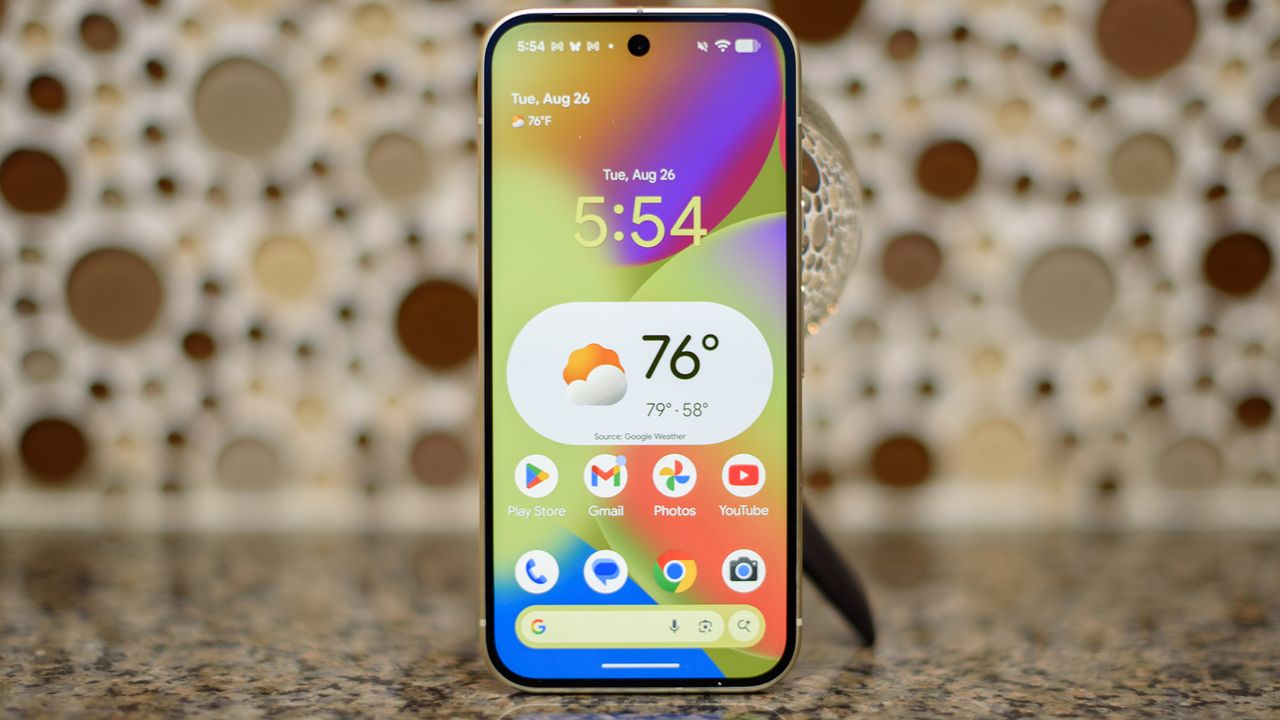
The near-constant dribble of leaks over the past few weeks left little to imagination when it comes to the Pixel 10a. And now, Google has finally launched its latest Pixel-branded budget smartphone, bringing to the proverbial table a relatively hefty battery, albeit housed within the now-archaic form factor, but embellished with a number of handy AI features. Behold Google's Pixel 10a Physical features The Pixel 10a features a "perfectly flat" plastic back, where the camera module sits flush with the rear plane. It also has a Corning Gorilla Glass 7i cover glass, with a 6.3-inch FHD+ AMOLED "Actua" screen that […]
An ad for Call of Duty: Black Ops 7 has been banned in the UK after the Advertising Standards Authority (ASA) deemed that it was "irresponsible and offensive" for centring around humour that was "generated by the humiliation and the implied threat of painful, non-consensual penetration" of a man in the ad. Spotted by the BBC, the ad in question is part of Call of Duty: Black Ops 7's 'Replacers' ad campaign, which featured Hollywood actors like Terry Crews, Nikki Glaser, and Peter Stromare. While there are several 'Replacers' ads, the one that got banned depicts Glaser and Stromare's characters […]
The semiconductor business belonging to Samsung is experiencing a comeback wave, with the major contributor to this segment being increased RAM and NAND flash prices because of the ongoing shortage, which the Korean giant has capitalized on. However, the company isn’t stopping here because it has set lofty goals towards accumulating a healthy margin for the year, with estimates projecting that an operating profit of $69 billion or a 121 percent annual increase will be attained in 2026. To reach this figure, a new report states that Samsung will make adjustments to its strategies and production lines for its semiconductor division […]
The latest Windows 11 Release Preview build shows what to expect in the next feature drop, and it will mostly include taskbar updates. Windows 11's New Taskbar Improvements Bring a Built-in Speed Test and Other Enhancements Microsoft has rolled out its latest Windows 11 builds 26100.7918 and 26200.7918 to the Release Preview Channel, which has confirmed various refinements in the OS. As per the blog post, Microsoft is testing a new wave of updates for the Windows 11 taskbar as well as for the core experience in general in the Release Preview Channel. One of the most convenient and useful […]
Although soaring RAM prices haven't yet had a widespread impact on the prices of current-generation consoles, it's highly probable that console manufacturers will eventually be forced to raise hardware prices. However, Sony has plans in place to minimize the effects of these high component costs, though it's definitely not good news for all current PlayStation 5 owners. As reported by Automaton, during Sony's latest earnings call, CFO Lin Tao addressed the current situation, stating that the company has secured the memory needed for the end-of-the-year sales season in the next fiscal year. However, the company plans to "minimize" the impact […]
A survey of 6,000 executives reveals a significant productivity disconnect, where 80% of firms report no measurable improvement to operations with the use of AI, while a third of senior leaders only use the technology themselves for just 1.5 hours per week.
I’ve observed numerous SEO professionals on LinkedIn and at conferences talking about “ranking No. 1 on ChatGPT” as if it’s the equivalent of a No. 1 ranking on Google:
On Google, being the first result is often a golden ticket.
This is almost certainly not the case with AI responses – even if they weren’t constantly changing.
Our team’s research shows AI users consider an average of 3.7 businesses before deciding who to contact.
Being the first result in that list on ChatGPT isn’t the golden ticket it is in Google search.
This being the case, the focus of AI search really should be on “inclusion in the consideration set” – not necessarily being “the first mentioned in that set” – as well as crafting what AI is saying about us.
User behavior on AI platforms differs from Google search
Over the past several months, my team has spent more than 100 hours observing people use ChatGPT and Google’s AI Mode to find services.
One thing came into focus within the first dozen or so sessions: User behavior on AI platforms differs from Google search in ways that extend far beyond using “natural language” and having conversations versus performing keyword searches.
Which is overstated, by the way. About 75% of the sessions we observed included “keyword searches.”
One key difference: Users consider more businesses in AI responses than in organic search.
It makes sense — it’s much easier to compare multiple options in a chat window than to click through three to five search results and visit each site.
In both Google AI Mode and ChatGPT, users considered an average of 3.7 businesses from the results.
This has strong implications for the No. 1 result – as well as No. 4.
The value of appearing first drops sharply — and the value of appearing lower rises — when, in 75% of sessions, users also consider businesses in Positions 2 to 8.
What’s driving conversions isn’t your position in that list.
Why do businesses with lower rankings end up in the consideration set in LLMs?
First of all, these aren’t rankings.
They are a list of recommendations that will likely get shuffled, reformatted from a list to a table, and completely changed, given the probabilistic nature of AI.
That aside, AI chat makes it much easier to scan and consider more options than Google search does.
Let’s look at the Google search results for “fractional CMO.”
If a user wants to evaluate multiple fractional CMO options for their startup, it’s more work to do so in Google Search than in ChatGPT.
Only two options appear above the fold, and each requires a click-through to read their website content.
Contrast this with the experience on ChatGPT.
The model gave them eight options, along with information about each one.
It’s easy to read all eight blurbs and decide whom to explore further.
Which leads to the other thing we really need to focus on: what the model is saying about you.
A bigger driver than being first on ChatGPT: Being a good fit
Many search marketers focus on rankings and traffic, but rarely on messaging and positioning.
This needs to change.
In the case of the response for an ophthalmologist in southern New Jersey, you get an easily scannable list:
Roughly 60% make their entire decision based on the response, without visiting the website or switching to Google, according to our study.
So how do you drive conversion?
Deliver the right message — and make sure the model shares it.
Dr. Lanciano may be the best glaucoma specialist in the area. But if the model highlights Ravi D. Goel and Bannett Eye Centers for glaucoma care, and that’s what the user needs, they’ll go there.
Bannett Eye Centers appears last in the AI response but may still win the conversion because of what the model says about it — something that rarely happens in Google Search.
Visibility doesn’t pay the bills. Conversions do. And conversions don’t happen when customers think someone else is a better fit.
The local AI beast boasts Core Ultra 9, RTX 5080, 16GB RAM, and 1TB SSD, with a free games bundle worth $268 - add accident protection and get a $115 electric food sealer system free, too (for some reason).
All the ways to watch Qarabag vs Newcastle live streams from anywhere and for free, as the minnows look to upset the Magpies in this Champions League 1st leg match.
Wisconsin's controversial age verification proposal is expected to be discussed today (February 18). The Electronic Frontier Foundation warns that provisions to block VPN users are "unworkable."
Microsoft said the bug meant that its Copilot AI chatbot was reading and summarizing paying customers' confidential emails, bypassing data-protection policies.
AMD engineer calls “BS” on Instinct MI455X delay reports A report from SemiAnalysis has stated that “manufacturing delays” are impacting the “mass production ramp” of AMD’s Instinct MI455X. It is claimed that AMD will only be able to deliver “engineering samples and low volume production” for its first rack-scale MI455X UALoE72 systems in Q2 2026. […]
Windows 11 Release Preview gains Internet Speed Test and more Microsoft has released a new Windows 11 Insider build that adds several new features and upgrades to the OS. For starters, this new version of Windows 11 will add an internet speed test to the OS’ taskbar, allowing users to test their internet connection on […]
WWE 2K26 has unpacked a tidal wave of new information regarding its take on the series' MyGM, Universe, and Creation Suite features, and we've rounded it all up in one place.
An Xbox user has gone viral after showcasing Mario Kart Wii and Liberty City Stories running at 4K60 on Xbox Series X using Developer Mode, highlighting the console’s overlooked emulation potential.
Microsoft and Ericsson's new partnership will make 5G laptops more secure and reliable with AI. This enterprise feature is expected to arrive in Surface Copilot+ PCs first.
Marathon will not restrict cosmetic perks to PlayStation players, as Bungie confirms weapon charms are also planned for Xbox and Steam ahead of the game’s March 2026 launch.
Leaked files show ICE tripled its data on Microsoft Azure to 1,400TB. As AI usage climbs, Microsoft faces fresh scrutiny over its "mass surveillance" pledge.
Pricing for the ASUS ROG Xbox Ally X has increased dramatically in Japan, according to recent reports by Automaton, likely indicating an imminent price increase for Western markets as well. The price increase sees the listed price jump by 21%, from ¥139,800 to ¥169,000 including tax. The increase only applies to the ASUS ROG Xbox Ally X models, which are specced with 24 GB of LPDDR5X memory, as opposed to the regular ASUS ROG Xbox Ally, which uses 16 GB of regular LPDDR5 RAM. This has led to speculation that the reason for the price increase is the ongoing DRAM shortage, which has caused widespread price increases, delays, and general hardware shortages in the ailing PC market.
Hardware price increases often take place in Asia first, and this is hardly the first price increase we've seen occur in recent weeks. Acer Japan also just announced a price increase for both its laptops and desktop PCs in the same week as ASUS's price increase. For now, pricing for the non-Xbox-branded ASUS ROG Ally X remains stable, and pricing for the Xbox Ally X seems to have remained the same in the US on both the ASUS online store and third-party retailers, as well.
A year after the initial launch, the Avowed team is capping its post-launch roadmap with a special anniversary update that goes live for all today. This update, for which full details can be read over on the Obsidian site, brings with it a variety of community requested features, a host of quality-of-life fixes, and a few extra additions that the team wanted to get in just for the fans. Avowed is also launching on PlayStation 5 with the past year of updates included, allowing more players to get in and explore the Living Lands.
New Faces with New Races
To top the list of big new features being added to Avowed is the ability to choose from three new races during character creation. Joining the pre-existing human and elves are the stout and well-traveled Dwarves; the two-toned skin, hairy, and big ear having Orlans; and the large and uniquely strong Aumauan. Players will be able to choose as one of the five when starting off their adventure and bringing their envoy to the Living Lands.
Earlier in the week GameSir representatives started teasing an upcoming launch of GameHub for Mac. Apparently, members of the Chinese gaming brand's Discord community were the first to hear about this exciting development. Soon after that, the GameSir social media account issued a succinct message to the world: "your Mac is now a gaming PC. Introducing GameHub for Mac. Unlock your entire Steam library. Coming soon." A promo image shows a variety of modern Apple desktop and laptop systems, accompanied by another short section of text: "Run Win games/Steam natively...Reborn, and be free." Currently, the Android version of GameSir's GameHub app is advertised as offering the ability to "play any game anywhere" through emulation. Elaborating further, the application's main splash page states: "choose from thousands of games on supported platforms, from mobile games to next-gen console exclusives streamed from the cloud."
The Apple-based teaser shows MacBook, iMac, Mac Studio, Mac Mini, and iMac hardware surrounding a mysterious GameSir controller and dock—only appearing as a white cut-out. Over the past couple of years, the popular brand has released several officially licensed Xbox models. Could they be working on an Apple variant of the G7 Pro? According to information shared within the official GameSir Discord server, GameHub for macOS will feature a "proprietary AI frame interpolation" system, graphics performance tweaks, color adjustment functions, and a V-Sync mode. Additionally, company reps mentioned "60+ FPS smoothness on AAA titles." Initials reports have highlighted an existing GameHub app for iOS-base devices, but this particular software suite does not provide any PC emulation or access to cloud gaming. Instead, it grants the ability to calibrate connected GameSir controllers.
The NVIDIA Blackwell platform has been widely adopted by leading inference providers such as Baseten, DeepInfra, Fireworks AI and Together AI to reduce cost per token by up to 10x. Now, the NVIDIA Blackwell Ultra platform is taking this momentum further for agentic AI. AI agents and coding assistants are driving explosive growth in software-programming-related AI queries: from 11% to about 50% last year, according to OpenRouter's State of Inference report. These applications require low latency to maintain real-time responsiveness across multistep workflows and long context when reasoning across entire codebases.
New SemiAnalysis InferenceX performance data shows that the combination of NVIDIA's software optimizations and the next-generation NVIDIA Blackwell Ultra platform has delivered breakthrough advances on both fronts. NVIDIA GB300 NVL72 systems now deliver up to 50x higher throughput per megawatt, resulting in 35x lower cost per token compared with the NVIDIA Hopper platform. By innovating across chips, system architecture and software, NVIDIA's extreme codesign accelerates performance across AI workloads—from agentic coding to interactive coding assistants—while driving down costs at scale.
GXTrust expands its extensive gaming line-up with the launch of two new high-performance mice. Designed to bring precision, speed, and style to every session, the Felox+ Wired Gaming Mouse and the Felox+ Dual Wireless Illuminated Gaming Mouse give gamers the control and accuracy they need to master each and every game.
Get ready for freedom without compromise with Felox+ Dual Wireless Illuminated Gaming Mouse. Equipped with a PixArt PAW3311 12,000 DPI sensor and 1000 Hz polling rate, it guarantees precision and speed, whether playing wired or wirelessly. Gamers can choose their preferred connection via the ultra-low latency 2.4 GHz USB-A receiver or Bluetooth, and enjoy up to 40 hours of playtime thanks to the built-in rechargeable battery. There's even the option to keep on playing whilst charging with the included 1.5 m cable.
According to separate press releases from Meta and Nvidia, the social media giant will use the chips to power its planned hyperscale data centers optimized for AI training and inference. The company will also deploy Nvidia's new Spectrum-X Ethernet switches as part of the Facebook Open Switching System (FBOSS) software...
For decades, the predictable rhythm of the per-seat licensing model shaped the industry. Businesses paid fixed subscriptions based on headcount, and software makers enjoyed stable, recurring revenue.
Four Japanese organizations have developed a new technology for managing RFID wireless communications without resorting to additional power sources. The ISO/IEC 18000-65 standard, which is based on the previously approved ISO/IEC 18000-63 standard, establishes a solution for item management and identification through radio frequency.
In a post on X, Khosla wrote that AI will transform economies and require a rethink of capitalism and equity. "Labor portion of economy (vs capital) will decline sharply," he added. "Should we eliminate preferential treatment of capital gains tax and equalize to ordinary income?"
REPLACED, the 2.5D platformer from Sad Cat Studios that we've been waiting for since 2021 has been delayed once again, though it seems like this delay will be its last one ahead of its release. Now, instead of arriving on its previously set March 12, 2026, date, it'll hit PC and Xbox Series X/S on April 14, 2026. Earlier this month, ahead of the upcoming demo-fest of the year's first Steam Next Fest, Sad Cat Studios put out a demo for REPLACED (which you can still go play now), and according to the studio's statement, part of this delay is […]
The reveal of Star Wars: Galactic Racer at The Game Awards 2025 was a nice surprise for all those gamers who were dearly missing a Star Wars racing game. The last one to be released was Star Wars: Racer Revenge, launched in February 2002 for the PlayStation 2 console. It's been an age, at least as far as gaming goes. Earlier this month, the developers at Fuse Games even confirmed that podracing would indeed be featured in the game, alongside other vehicle types. Then, last week, a new promising gameplay trailer was shared during the State of Play broadcast. Now, […]
If there's one thing that should be known about me, it's that I am a Trekkie. You can keep your Obi-Wan, the Solos, and the Skywalkers. I will pick Jean-Luc Picard, Benjamin Sisko, and Kathryn Janeway every day of the week. That's what makes Star Trek: Voyager - Across the Unknown such a compelling title to me. Even if I hadn't been sent a copy to review, I would have bought this because, as I've said, Star Trek. Now, with my love of the source material out in the open, I'm going to say that this has the potential to […]
Nvidia has sold off the last of its shares in Arm Holdings, some six years after it attempted to buy the company outright for $40 billion, but was stopped by EU and UK regulators. The sale amounts to 1.1 million shares worth an estimated $140 million dollars.
Waze is once again teaming up with World of Warcraft, this time bringing a darker presence to your turn-by-turn directions: the Harbinger of the Void, Xal’atath.After th…
Perplexity is abandoning advertising, for now at least. The company believes sponsored placements — even labeled ones — risk undermining the trust on which its AI answer engine depends.
Perplexity phased out the ads it began testing in 2024 and has no plans to bring them back, the Financial Times reported.
The AI search company could revisit advertising or “never ever need to do ads,” the report said.
Why we care. If Perplexity remains ad-free, brands lose paid access to a fast-growing audience. The company previously reported that it gets 780 million monthly queries. With sponsored placements gone, brands have no way to get visibility inside Perplexity’s answers other than via organic citations.
What changed. Perplexity was one of the first AI search companies to test ads, placing sponsored answers beneath chatbot responses. It said at the time that ads were clearly labeled and didn’t influence outputs. Executives now say perception matters as much as policy.
“A user needs to believe this is the best possible answer,” one executive said, adding that once ads appear, users may second-guess response integrity.
Meanwhile. Perplexity’s exit comes as other AI platforms experiment with ads.
Perplexity says subscriptions are its core business. It offers a free tier and paid plans from $20 to $200 per month. It has more than 100 million users and about $200 million in annualized revenue, according to executives.
Perplexity also introduced shopping features, but doesn’t take a cut of transactions, another indication it’s cautious about revenue models that could create conflicts of interest.
“We are in the accuracy business, and the business is giving the truth, the right answers,” one executive said.
Search behavior is no longer just people typing keywords into Google. It’s people asking questions and, in some cases, outsourcing their thinking to LLMs.
As Google evolves from a traditional search engine into a more question-and-answer machine, businesses need a robust, time-tested way to respond to customer questions.
AI changes how people research and compare options. Tasks that once felt painful and time-consuming are now easy. But there’s a catch. The machine only knows what it can find about you.
If you want visibility across the widest possible range of questions, you need to understand your customers’ wants, needs, and concerns in depth.
That’s where the “they ask, you answer” framework comes in. It helps businesses identify and create the many questions and answers prospective customers already have in mind. Always useful, it’s a practical, actionable way forward in the age of AI.
An answer-first content strategy and why it matters now
“They Ask, You Answer” (TAYA) is a book by Marcus Sheridan. (I strongly recommend you read it.)
The concept is simple: buyers have questions, and businesses should answer them honestly, clearly, and publicly — especially the ones sales teams avoid.
No dodging. No “contact us for a quote.” No “it depends” – sorry, SEO folks.
TAYA isn’t just an inbound marketing strategy. It’s a practical way to map a customer-facing content strategy with an E-E-A-T mindset.
The framework centers on five core content categories:
Pricing and cost.
Problems.
Versus and comparisons.
Reviews.
Best in class.
These categories align with the moments when a buyer is seeking the best solution, reducing risk, and making a decision.
More of those moments now happen inside AI environments — on your smartphone, your PC, in apps like ChatGPT or Gemini, or anywhere else AI shows up, which at this point is nearly everywhere.
At their core, these are question-and-answer machines. You ask. The machine answers. That’s why the TAYA process fits so well.
The modern web is chaotic. Finding what you need can be exhausting — dodging ads, navigating layers of SERP features, and avoiding pop-ups on the site you finally click.
AI is gaining ground because it feels better. Easier. Faster. Cleaner. Less chaos. More order.
You could argue we already have a north star for content creation in E-E-A-T. But have you ever tried to build a content strategy around it? Great in principle, harder in practice.
They ask, you answer puts an E-E-A-T-focused content strategy on rails:
Pricing supports trust, experience, and expertise.
Problems show experience and trust.
Versus content builds authority and expertise.
Reviews build experience and trust.
Best-in-class content builds authority and trust.
E-E-A-T can be difficult to target because there are many ways to build trust, show experience, and demonstrate authority. TAYA maps those signals across multiple areas within each category, helping you build a comprehensive database of people-first content that AI readily surfaces.
How to integrate TAYA with traditional SEO research
The skills and tools we use as SEOs already put us in a strong position for the AI era. They can help us build an integrated SEO, PPC, and AI strategy.
The action plan:
Google Search Console: Go to Google Search Console > Performance. Filter queries by question modifiers such as who, what, why, how, and cost. These are your raw TAYA topics.
Google Business Profile: Review keywords and queries in your Google Business Profile for additional ideas.
The semantic map: Use AnswerThePublic or Also Asked. Look for secondary questions. If you’re writing about cost, you’ll often see related concerns such as financing or hidden fees.
The competitor gap: Use Semrush or Ahrefs Keyword Gap tools. Don’t focus on what competitors rank for. Look for “how-to” and “versus” keywords where they have no meaningful content. That’s your land grab.
Method marketing: Immerse yourself in the mindset of your ideal customer and start searching. What comes up? What does AI say? What’s missing? Tools like the Value Proposition Canvas and SCAMPER can help you evaluate these angles in structured ways.
Often, you won’t go wrong by simply searching for your own products and services. AI tools and search results will surface a wide range of questions, answers, and perspectives that can feed directly into your AI and SEO content strategy.
Also consider the internal sources available to you:
Sales calls and sales teams.
Live chat transcripts.
Emails.
Customer service tickets.
Proposal feedback.
Complaints.
All of this helps you understand the question landscape. From there, you can begin organizing those insights within the five TAYA categories.
TAYA and your AI-era content marketing strategy
The framework centers on five core categories, reinterpreted for an answer-driven environment where Google, Gemini, and ChatGPT-like systems anticipate user needs.
For each, here’s what it is, why it matters now, and examples to get you started.
1. Pricing and cost: Why we must talk about money
Buyers want cost clarity early. Businesses avoid it because “it depends.” Both are true, but only one is useful.
AI systems will readily summarize typical costs, using someone else’s numbers if you don’t publish your own. If you fail to provide a credible range with context, you’re effectively handing the narrative to competitors, directories, or a generic blog with a stock photo handshake.
How to do it
Publish ranges, not unrealistic single prices.
Explain what drives costs up or down.
Include example packages, such as good, better, and best.
Be explicit about what’s included and excluded.
Add country-specific variables where relevant, such as tax or VAT in the UK.
Content examples
How much does [service] cost in the UK? Include price ranges and what influences them.
X vs. Y pricing: what you get at each level.
The hidden costs of [solution] and how to avoid them.
Budget checklist: what to prepare before you buy [product or service].
One of the most cited examples in the TAYA world is Yale Appliance. The company embraced transparent, buyer-focused content and saw inbound become its largest sales channel, alongside significant reported growth.
The takeaway isn’t “go sell fridges.” It’s to answer money questions more clearly and honestly than anyone else. Do that, and you build trust at scale.
2. Problems: Turning problems into strengths
This category focuses on being honest about drawbacks, limitations, risks, and who a product or service isn’t for. You have to think beyond pure SEO or GEO.
A core communication strategy is taking a perceived weakness, such as being a small business, and reframing it as a strength, like a more personalized approach.
Own the areas that could be seen as problems. Present them clearly and constructively so customers understand the trade-offs and context.
The answer layer aims to provide balanced guidance. Pages that focus only on benefits read like marketing. Pages that acknowledge trade-offs read like advice.
People can spot spin quickly. Be direct. Own your limitations. When you do, credibility increases.
How to do it
Create problem-and-solution guides.
Include “avoid if …” sections.
Address common failure modes and misuses.
Be explicit about prerequisites, such as budget, timeline, skill, or access.
Content examples
The biggest problems with [solution] and how to mitigate them.
Is [product or service] worth it? When it’s a great choice and when it isn’t.
Common mistakes when buying or implementing [solution].
What can go wrong with [approach] and how to reduce risk.
This is where your “experience” in E-E-A-T becomes tangible. “We’ve seen this go wrong when …” carries far more weight than “we’re passionate about excellence.”
People rely on comparisons to reduce cognitive load. They want clarity. What’s the difference?
Comparison queries are ideal for answer engines because they lend themselves to structured summaries, tables, and recommendations. If you don’t publish the clearest comparison, you won’t be the source used to generate the clearest answer.
How to do it
Compare by use case, not just features.
Use a consistent framework, such as price, setup, outcomes, risks, and who it suits.
Include clear guidance, such as “If you’re X, choose Y.”
Content examples
X vs. Y: which is better for [specific scenario]?
In-house vs. outsourced for [service]: cost, risk, and results.
Tool A vs. Tool B vs. Tool C: an honest comparison for UK teams.
Alternatives to [popular option]: when to choose each.
SEO bonus: These pieces tend to earn links because they’re genuinely useful and because many competitors hesitate to name alternatives directly.
This isn’t about asking for a five-star review. It’s about creating review-style content that helps buyers evaluate their options.
AI summaries often rely on review-style pages because they’re structured around evaluation. But generic affiliate reviews can be, at best, inconsistent in sincerity. Your advantage is first-hand experience and contextual truth.
How to do it
Review your own services honestly, including what clients value and where they struggle.
Review the tools you use with clear pros and cons.
Publish “what we’d choose and why” for different buyer types.
Content examples
Is [solution] worth it? Our honest take after implementing it for X clients.
Best [category] tools for [persona], including limitations.
The top questions to ask before choosing a [provider].
What good looks like: a checklist to evaluate [service].
If you want to be cited in AI answers, you have to sound like a source, not an ad.
5. Best in class – and the courage to recommend others
Sheridan’s view, and it’s a bold one, is that you should sometimes publish “best in class” recommendations even when the best option isn’t you. That’s how trust is built.
The answer layer rewards utility. If your page genuinely helps users choose well, it becomes the kind of resource systems are more likely to reference.
How to do it
Build “best for” lists based on clear criteria, not hype.
Explain how you evaluated the options.
Include scenarios where each option wins or loses.
Content examples
Best [solutions] for [use case] in 2026, including criteria and picks.
Best [service] providers for [industry] and what to look for.
Best budget, best premium, best for speed, best for compliance.
If I were buying this today: the decision framework I’d use.
The goal is for your brand to become a trusted educator, not just a vendor.
When leveraged effectively, TAYA is a powerful way to map what you should be addressing and to build a content strategy that ensures you’re represented across the AI landscape.
In practice, that means building an editorial program where:
Every piece begins with a real buyer question.
The five core categories prioritize decision-stage content, not just awareness content.
Traditional SEO research validates language and demand.
Content is written to satisfy both the human, through clarity and confidence, and the machine, through structure, specificity, evidence, and balanced trade-offs.
This shift also changes how success is measured.
In classic SEO, the win was rank, click, convert.
In the AI era, the win is often be the source, earn trust, be chosen, with or without the click.
If your content is the clearest, most in-depth, most honest, and most experience-backed explanation available for the questions buyers are already asking, then whether someone discovers it through Google, Gemini, ChatGPT, or elsewhere, you’ve built something durable.
Which is what strong SEO has always been about. The window has changed. The principles haven’t.
With more than two decades in SEO, I’ve lived through every major disruption the industry has faced — from stuffing meta keywords to rank on AltaVista to Google reshaping search, to mobile-first indexing, and now AI.
What feels different today is the speed of change and the emotional weight it carries. I see growing pressure across teams, even among seasoned professionals who have weathered every major shift before this one.
Many have a legitimate concern: If AI can do this faster, where do I fit in? That’s not a technical question. It’s a human one.
That uncertainty affects morale and adoption. Productivity slows. Experimentation stalls. Teams either overuse AI without judgment or avoid it altogether.
The real leadership challenge is about building confidence, capability, and trust in AI-assisted teams.
4 tips for building AI confidence in SEO teams
Building real confidence in AI within an SEO team isn’t about deploying new tools. It’s about shifting the culture.
The most effective SEO teams aren’t the ones adopting the most tools. They use AI intentionally and with discipline. They automate data pulls, summarize research, and cluster keywords. This allows teams to focus on strategy, storytelling, and stakeholder alignment.
Technology adoption is largely cultural, as Harvard Business School has noted. Tools alone don’t drive change. Trust does. That insight applies directly to SEO teams navigating AI today.
Below are four strategies for building AI confidence in your teams through clarity, participation, and shared ownership, not pressure or hype.
1. Earn trust by involving the team in AI tool selection and workflow design
A practical way to strengthen trust is to move from top-down implementation to shared ownership. People trust what they help create.
When AI is imposed on a team, resistance increases. Inviting people into evaluation and workflow design makes AI feel less intimidating and more empowering. Bringing teams in early also surfaces real-world insight into where AI reduces friction or introduces new risks.
Effective leaders:
Invite teams to test tools and share feedback.
Run small experiments before scaling adoption.
Communicate clearly about what you’re adopting, what you’re rejecting, and why.
When teams feel included, they’re more willing to experiment. They learn and stretch into new capabilities. That openness fuels growth and innovation.
2. Meet people where they are – not where you want them to be
AI capability varies widely across SEO teams. Some practitioners experiment daily. Others feel overwhelmed or skeptical, often because they’ve seen past automation trends come and go.
Leaders who strengthen confidence understand that capability develops at different speeds. They create environments that encourage curiosity, where uncertainty is normal, and learning happens continuously, not just when it’s mandated.
That means:
Normalizing different comfort levels.
Creating psychological safety around “I don’t know yet.”
Avoiding shame or over-celebration of early adopters.
Offering multiple learning paths.
Recognizing different starting points makes progress feel achievable rather than threatening.
When someone uses AI to cut a task from hours to minutes, it’s more than a productivity gain. It proves AI can support real work without replacing human judgment.
Effective teams:
Share clear examples of AI improving quality and efficiency.
Highlight internal champions who can mentor others.
Create space for demos and knowledge sharing.
Reinforce a culture of experimentation, not judgment.
My agency formed AI focus groups with members from across the organization. One group focused on integrating AI into project management, with representatives from SEO, operations, and leadership.
That shared ownership made adoption more successful. Teams weren’t just implementing AI; they were shaping how it fit into real workflows. The result was stronger buy-in, better collaboration, and greater confidence across the team.
Each group shared its successes and lessons. This built awareness of what worked and why. Momentum builds when teams see their peers using AI responsibly and effectively.
AI accelerates analysis. Humans interpret meaning.
AI drafts. Humans validate, refine and contextualize.
AI scales output. Humans build trust and influence.
AI can help with execution, but it can’t replace strategic instincts, contextual judgment, or cross-functional leadership. Those are the skills that ultimately move performance forward.
Why experience still matters in AI-driven SEO
AI has lowered the barrier to entry for many SEO tasks. With effective prompts, almost anyone can generate keyword lists, outlines, or summaries. With that accessibility, we see many short-lived tactics and recycled “quick wins.”
Anyone who’s been in SEO long enough has seen this cycle before. The tactics change. The fundamentals don’t. This is where experience becomes the differentiator.
AI can generate outputs, not accountability
AI can produce content and analyze data, but it doesn’t own outcomes. It doesn’t carry responsibility for brand reputation, compliance, or long-term performance.
SEO professionals remain accountable for:
Deciding what to exclude from publication.
Assessing technical, reputational, and compliance risks.
Weighing long-term consequences against short-term gains.
AI executes. Humans decide. That distinction matters more than ever.
Pattern recognition is learned, not automated
AI excels at surfacing patterns. It struggles to explain why they matter or whether they apply in a specific context.
Experienced SEOs bring a depth of understanding that AI can’t replicate. Their historical background helps them distinguish true shifts from industry noise.
Few industries have seen as many tactics rise and fall as SEO. Experience enables strategic thinking beyond what worked before and helps avoid repeating tactics that once succeeded but later failed.
AI suggests possibilities. Experience evaluates relevance.
Professional integrity remains a differentiator
In high-visibility search environments, mistakes scale quickly. AI can produce inaccuracies and hallucinations. These errors can put brands at risk of losing trust and facing compliance issues.
Teams with strong professional SEO foundations:
Validate AI output instead of assuming correctness.
Prioritize accuracy over speed.
Maintain ethical SEO standards.
Protect brand voice and credibility.
Integrity isn’t automated. It’s practiced. In a high-speed AI environment, that discipline matters even more.
As routine tasks become automated, the SEO professional’s role shifts to strategic oversight. Time once spent on manual analysis can be redirected to interpreting user intent, shaping search strategy, guiding stakeholders, and assessing risk.
This makes fundamentals more important. Teams still need sound judgment, technical expertise, and accountability. AI can support execution, but professionals remain responsible for decisions, quality, and long-term performance.
Developing the next generation of SEOs requires more than proficiency with tools. It requires teaching:
When to rely on AI.
When to challenge it.
How to apply experience and context to its output.
Cybersecurity researchers have disclosed multiple security vulnerabilities in four popular Microsoft Visual Studio Code (VS Code) extensions that, if successfully exploited, could allow threat actors to steal local files and execute code remotely.
The extensions, which have been collectively installed more than 125 million times, are Live Server, Code Runner, Markdown Preview Enhanced, and
In 2025, navigating the digital seas still felt like a matter of direction. Organizations charted routes, watched the horizon, and adjusted course to reach safe harbors of resilience, trust, and compliance.
In 2026, the seas are no longer calm between storms. Cybersecurity now unfolds in a state of continuous atmospheric instability: AI-driven threats that adapt in real time, expanding
If the God of War Trilogy remake announcement has got you thirsty for more from the series, then these God of War games, books, and bits of merch will hit the spot.
Proton VPN has officially removed the OpenVPN protocol from its Android app, citing "bloat" and superior alternatives like WireGuard. Here is what you need to know.
The partnership will see the two companies exploring how World Labs’ models can work alongside Autodesk’s tools, and vice versa, starting with a focus on entertainment use cases.
The new lineup includes 30-billion- and 105-billion-parameter models; a text-to-speech model; a speech-to-text model; and a vision model to parse documents.
Monster Hunter Wilds now runs much faster on PC thanks to update 1.041 Capcom has released patch 1.041 for Monster Hunter Wilds, delivering long-promised optimisation updates to the game on PC and consoles. This update implements both CPU and GPU optimisations into the game, which means that all gamers should see performance benefits. Specifically, new […]
Is Microsoft ashamed of Windows? I wouldn't blame you for thinking so, given every year Google and Apple are eager to get on stage and talk about what's next for their platforms. Microsoft hasn't done this for Windows in a long time.
Intel's Japan president, Makoto Ohno, made interesting remarks that this year will be a make-or-break year for AI PCs. He also mentioned that by 2026, AI PCs will account for roughly half of the unit shipments for the year. This means that out of the total unit shipments, which IDC estimates at around 260 million, about 130 million are expected to be AI PCs. This loosely defined term means that the PC comes with an NPU or other AI processing unit, allowing the system to perform some local AI processing with enough power to meet basic user needs. However, Makoto Ohno also admits that the primary reason for purchasing an AI PC may not be its AI capabilities, but rather the better battery life due to newer and more optimized silicon.
Intel Makoto OhnoIt is also predicted that by 2026, this will exceed half, with one in two computers being an AI PC. However, given the current situation, reasons for choosing an AI PC include its high performance and the long battery life provided by the use of an NPU. In other words, it is important to reflect on the fact that people are not currently purchasing an AI PC in order to use its AI-related functions.
The discontinuation marks a major course correction in Amazon's robotics strategy – and underscores the persistent gap between AI's rapid progress in software and its slower, costlier translation into the physical world. Blue Jay, introduced in October 2025, represented Amazon's fastest-developed warehouse robot to date, leveraging advances in artificial intelligence...
Texas Attorney General Ken Paxton first opened an investigation against TP-Link in October 2025. He wrote that the company was potentially aiding the Chinese government in accessing and abusing American consumers' data.
According to market intelligence firm Context, sales of refurbished PCs in the United Kingdom doubled in the fourth quarter of 2025 compared to the same period the previous year. Their growing popularity might sustain retailers' profit margins as supply constraints impact memory and other components.
Customermates is a modern AI-native CRM built specifically for businesses that don't want to deal with complex software. It's ready to use in about two minutes, requires no training, and feels intuitive from the first click. Customer data, notes, and interactions live in one clear place, supported by a sleek, distraction-free UI designed for everyday work. It integrates seamlessly with n8n, making it fully automatable and easy to connect with existing tools and workflows. Built in Germany and fully GDPR-compliant, Customermates offers a reliable alternative to enterprise AI CRMs, helping teams stay organized and build better customer relationships without unnecessary overhead.
Over the past year, we heard rumblings of a Chrono Trigger remake possibly being in development, but fans were consistently disappointed when it turned out to be either mistranslations or mere development considerations from Yuji Horii, the creator of the Dragon Quest series, who also served as one of the legendary game's writers. However, according to a known insider, a remake of the classic 16-bit JRPG is indeed in development. Commenting on a ResetERA forums in a thread regarding a recent survey shared by Square Enix's Team Asano - the studio behind the Octopath Traveler series which popularized the HD-2D […]
NVIDIA's CEO has spoken about what we could see next at the company's GTC 2026 event, hinting that we could see chips that the "world has never seen before". NVIDIA's Next Stage at GTC Could Feature Next-Gen Feynman Chips, Possibly Showcasing Groq's LPU Integration NVIDIA has been at the forefront of the AI technological revolution, mainly through its compute portfolio and its ability to keep up with its product cycles. At CES 2026, we saw Team Green showcase its Vera Rubin AI lineup, revealing it was in full production and included six newly designed chips, including the Vera CPUs and […]
With the NZXT H2 ecosystem, users can either build a compact and powerful gaming PC or they can buy the H2 Mini PC with powerful hardware pre-installed. NZXT Debuts H2 Flow and C850 SFX for Compact Builds; H2 Mini PC Launched with Ryzen 7 9800X3D and Core Ultra 9 285K Processor Options Hardware manufacturer NZXT has launched its new lineup of computer hardware that comprises a PC case, a power supply, and a mini PC that utilizes both while delivering current-gen CPU and GPUs. The H2 Flow is its latest Mini ITX case that is designed to keep the footprint […]
As far as triple-A-ish games go, Highguard might go down in history as one of the games that spent the least time in the spotlight, and even when it did, it was all for the wrong reasons. The game was a complete secret until The Game Awards 2025. The CEO of game developer Wildlight Entertainment, Dusty Welch, would later reveal that their original goal was to shadowdrop the game in late January, much as Respawn's Apex Legends did back in 2019 (on which several members of the team had worked). However, when Geoff Keighley suddenly came to Wildlight with the […]
This Alienware Aurora pre-built gaming PC is back down to near-Black Friday pricing right now, scoring you an Nvidia GeForce RTX 5080 GPU, 24-core Intel Core Ultra 285 CPU, 32GB of DDR5 RAM and a 1TB SSD for just $2,399.99, saving you a huge 20%.
Nvidia's RTX 5090 is the most overpriced GPU in the world, selling at 65% above its MSRP while AMD's RX 9070 XT saw the smallest price hike of just 7% worldwide. India has been hit the worse with extreme price surges, while Australia has been largely stable. On average, GPUs are now 15% more expensive around the world.
A maximum severity security vulnerability in Dell RecoverPoint for Virtual Machines has been exploited as a zero-day by a suspected China-nexus threat cluster dubbed UNC6201 since mid-2024, according to a new report from Google Mandiant and Google Threat Intelligence Group (GTIG).
The activity involves the exploitation of CVE-2026-22769 (CVSS score: 10.0), a case of hard-coded credentials
Security, IT, and engineering teams today are under relentless pressure to accelerate outcomes, cut operational drag, and unlock the full potential of AI and automation. But simply investing in tools isn’t enough. 88% of AI proofs-of-concept never make it to production, even though 70% of workers cite freeing time for high-value work as the primary AI automation motivation. Real impact comes
By creating a simple “frenemy” trigger inside ChatGPT, you can transform it into a blunt devil’s advocate that pressure-tests your ideas before anyone else sees them
The startup is making solid-state transformers capable of intelligently aggregating power from a number of different sources before sending it to data center racks.
Konami unveils Metal Gear Solid 4’s PC system requirements Metal Gear Solid 4 is coming to PC on August 27th as part of the Metal Gear Solid: Master Collection Vol. 2. Until then, Metal Gear Solid 4 will remain exclusive to Sony’s PlayStation 3 console. On Steam, Konami has released PC system requirements for Metal […]
Season 2 has launched with new maps, weapons, operators, and updates to REDSEC, but early Steam numbers suggest the content drop has not revived the player base.
Mozilla is ending support for Firefox on Windows 7, 8, and 8.1 in February 2026. Users must upgrade to a supported version of Windows to stay secure and continue receiving browser updates.
YouTube channel ETA Prime used the Red Magic 11 Pro to run an emulated version of Cyberpunk 2077. It's a suitable handset for the experiment, thanks to its liquid cooler, active cooling fan, and large vapor chamber, all helping keep the Snapdragon 8 Elite Gen 5 SoC temperatures (mostly) under control.
The research, led by ETH Zurich's Applied Cryptography Group, tested core encryption systems in the three most widely used cloud password managers. Together, these services manage credentials for roughly 60 million users – an enormous share of the market.
FindFi is a dedicated hiring platform for the finance industry, spanning DeFi protocols, crypto exchanges, blockchain startups, and traditional financial institutions. We solve a real problem: finance talent is scattered across generic job boards that don't understand the space. FindFi brings employers and candidates together in one focused marketplace with curated listings, talent profiles, and industry-specific search filters. Whether you're a Solidity developer, a compliance officer, or a DeFi analyst, FindFi is where your next opportunity lives.
OmniSocials is an all-in-one social media management platform that lets marketers, creators, and agencies publish to Facebook, Instagram, TikTok, LinkedIn, YouTube Shorts, Pinterest, Threads, Bluesky, Mastodon, and X from one dashboard. You can schedule posts, stories, and reels, tailor content for each channel, and track performance with unified analytics.
The social inbox allows you to reply to comments, mentions, and DMs, while you can collaborate with clients using roles and approval workflows. Pricing is a single $10/month per workspace billed annually, with optional $10/month seats for clients or colleagues.
PC gaming has been in a rough spot in the past few years, with too many games launching with technical and optimization issues that are left unresolved. However, there are times when a game's optimization is judged based on a game's Ultra settings, which creates a situation where developers—such as the Ys X: Proud Nordics PC, PS5, and Switch 2 version developer PH3's Peter "Durante" Thoman—have to "protect players from themselves" and balance optimization with future-proofing their games. Speaking in a lengthy interview with RPGFan, the legendary developer, who some may remember for fixing the flawed PC port of the […]
Resident Evil 3 Remake Last Escape is a new large scale mod project that aims to restore content cut by CAPCOM from the original game while also adding several things, including the classic Ink Ribbon save system and new locations. Here's the official overview: This mod is a complete reimagining and expansion of Resident Evil 3 Remake. I’m restoring cut content and adding entirely new locations, expanding the city, and redesigning core gameplay systems to create a darker, more survival-focused experience inspired by the original game. Features: The YouTube channel includes several demonstration videos of Resident Evil 3 Remake Last […]
Apple has announced that it will host a product launch on March 4, which can potentially be the date for its M5 Pro and M5 Max that will be found in updated 14-inch and 16-inch MacBook Pro models. One of the chipsets’ biggest highlights is that both SoCs will switch to TSMC’s 2.5D chiplet design as Apple moves away from InFO technology (Integrated Fan-Out). This transition helps to improve heat dissipation and reduce defective chip rates, but there’s one obstacle that the technology giant has been unable to scale for two generations, and that is raising the total number of CPU […]
As part of a broad partnership announced today, Nvidia says Meta will deploy its Arm-powered Grace server CPUs as standalone platforms in production data centers to boost performance-per-watt in certain workloads.
AI isn’t just helping people solve problems faster, it’s unlocking new possibilities for discovery and scalability. To support organizations at the forefront of scientif…
Government AI adoption isn't just a technical upgrade, it's a way to solve real world challenges and drive societal impact for communities. Yet new data reveals that whi…
Nvidia announces new multiyear deal with Meta for AI hardware deployments NVIDIA has confirmed that it has entered a “multigenerational strategic partnership” with Meta that spans its on-premises, cloud, and AI infrastructure rollout. This includes Nvidia’s first-ever large-scale deployment of its Grace-only CPU and a collaboration on next-generation Vera CPU deployments. This deal should also […]
Once a target of the largest industry acquisition that was halted by market regulators, NVIDIA has officially divested all its holdings in Arm Holdings PLC by selling 1.1 million shares, valued at about $140 million at the time of writing. Importantly, this does not end the NVIDIA-Arm relationship, as NVIDIA continues to be a customer and partner, licensing Arm IP and its instruction set for its older "Grace" and newer "Vera" CPUs. If readers recall, NVIDIA announced in late 2020 that it was acquiring Arm Ltd. in a deal valued at $40 billion. However, regulators from the UK and EU blocked the deal to preserve fair market competition, citing concerns that the NVIDIA-Arm deal would harm competition and stifle innovation. NVIDIA even paid a break-up fee of $1.25 billion as the deal collapsed under regulatory pressure.
As mentioned, NVIDIA's partnership with Arm is not limited to investment or stock ownership, as the company utilizes its IP and instruction set across a range of products. For example, NVIDIA has Arm-based SoCs in various forms in its embedded computing unit with Jetson modules and mini-computers that power everything from robotics to automated driving development in modern vehicles. Additionally, NVIDIA recently began offering its "Vera" CPUs as standalone server CPUs designed to compete with the industry's latest and greatest x86-based designs from AMD and Intel, demonstrating that NVIDIA is serious about being an Arm ISA licensee for the foreseeable future, not just viewing the company as an investment target.
Following Discord's introduction of digital ID and face scanning requirements for some online servers, many users have started exploring alternative communication platforms. As a result, the well-known TeamSpeak software has experienced a significant increase in new users. In the United States, TeamSpeak's current hosting capacity has reportedly been maxed out, with all servers operating at full capacity. Despite this, the company has announced plans to expand by adding additional Frankfurt-3 and Toronto-1 instances to accommodate new users. Currently, only a few regions still have available capacity, including Amsterdam-3, along with the newly announced Frankfurt-3 and Toronto-1.
Discord has revealed that its new age verification requirements will take effect in early March 2026. These settings will automatically place all existing and new Discord accounts into a mode that filters out content unsuitable for minors, creating a "teen-appropriate experience." Users who wish to access age-restricted content will need to complete an age verification process, which involves either uploading a scan of a government-issued ID or using facial recognition to confirm their age. However, not all users will need to undergo this process, as Discord will also implement an age inference model. This model will analyze user accounts by examining the types of games played, the amount of time spent on Discord, and the times users are active to determine if they are adults. Discord states that the new system aims to provide strong protections for teens while allowing verified adults more flexibility. As users seek software that doesn't restrict their online experience, migrations are expected, and TeamSpeak is the "old reliable" alternative that the community leans on.
We have the first Ryzen 7 9850X3D failure report from Reddit, and this one failed in less than three weeks. Redditor Says Ryzen 7 9800X3D Became Unstable on ASUS X870 Motherboard; Returns it and Buys Ryzen 7 9850X3D, Which Failed As Well It has been less than three weeks since AMD launched its fastest gaming processor yet. The Ryzen 7 9850X3D, which launched at the end of last month, quickly gained a lot of attention as it dethroned the Ryzen 7 9800X3D through higher clocks. However, being identical to 9800X3D in almost every area, it's as prone to failures as […]
Notepad++ has released a security fix to plug gaps that were exploited by an advanced threat actor from China to hijack the software update mechanism to selectively deliver malware to targets of interest.
The version 8.9.2 update incorporates what maintainer Don Ho calls a "double lock" design that aims to make the update process "robust and effectively unexploitable." This includes verification
Supaflow is a data integration platform that moves data between sources, warehouses, and business apps. You can build unlimited pipelines with access to all connectors, dbt Core integration, reverse ETL, monitoring, and API with role-based access control. It supports Git integration, SAML SSO, hybrid deployment, and enterprise compliance options. Pricing uses compute credits based on agent node size and runtime, delivering predictable costs and often saving up to 80% compared to per-row pricing.
NVIDIA's DLSS 4.5 was compared against native resolution & AMD FSR Upscaling in several games & turned out to be the top choice in a blind test. Native vs NVIDIA DLSS 4.5 vs AMD FSR Upscaling: Blind Test By Computerbase Reveals Which Is The Top Choice For Gamers The blind test was done by Computerbase, in which over 1000 community members participated. The premise was simple: have a bunch of games using either Native Resolution, NVIDIA DLSS 4.5, and AMD FSR, and ask the community to pick their preferred choice based on image quality. For comparisons, the six games that […]
NVIDIA has managed to grow its influence within the Big Tech circle with its latest partnership, as the company collaborates with Meta, an entity known for its inclination towards AMD as well. NVIDIA-Meta Partnership Involves Blackwell, Blackwell Ultra & Vera Rubin AI Infrastructure With the biggest AI buildout, companies like Meta are in dire need of computing power, which is why they make sense to enter into strategic partnerships with the likes of AMD and NVIDIA. In their latest move, NVIDIA has unveiled a "multiyear, multigenerational strategic partnership" with Meta, which will enable the extensive adoption of "millions" of Blackwell […]
The U.S. Cybersecurity and Infrastructure Security Agency (CISA) on Tuesday added four security flaws to its Known Exploited Vulnerabilities (KEV) catalog, citing evidence of active exploitation in the wild.
The list of vulnerabilities is as follows -
CVE-2026-2441 (CVSS score: 8.8) - A use-after-free vulnerability in Google Chrome that could allow a remote attacker to potentially exploit heap
The Samsung Galaxy Tab S10 Ultra has a screen to rival many laptops, while also providing excellent power for drawing, productivity, media consumption and more – all for 50% off the asking price.
Pingwish helps you find the perfect present and organize what you want. Create and share smart wishlists with unique links, keep them private by default, and let friends reserve items to prevent duplicates. You can add gifts from any store using a link or a product name. Use the AI Gift Finder to describe the recipient, occasion, interests, and budget, and get personalized matches in seconds. Pingwish is free, requires no sign-up, works on mobile and desktop, and supports multiple languages.
AMD's next-gen Instinct MI400 series recently came under fire after it was reported that the lineup is being pushed ahead, but the company's executive has denied it. AMD's Instinct MI455X Faces Challenges With N2 Integration, But Team Red is Confident in Its H2 2026 Deployment When it comes to the race for the best hardware for hyperscalers, NVIDIA has been leading for quite a few generations, and we saw the gap widen with the Blackwell generation. However, with AMD's Instinct MI400 series, particularly the MI455X, Team Red believes customers will have no 'argument left' not to pivot away from NVIDIA, […]
AutoApplier automates your job hunt from start to finish. Its AI Job Agent searches for roles on company sites, fills out forms, uploads tailored resumes, and submits applications while you focus on other things. The LinkedIn Bot manages Easy Apply with preferences and blacklists and tracks progress in a dashboard.
Use the Resume and Cover Letter Generators to create ATS-ready materials, then use the AI Interview Buddy for any job interview; it listens in real time and suggests answers based on your profile.
Thanks to latency, Bluetooth headphones just don't cut it on Switch 2 - these wired headsets are a much better fit, and offer higher sound quality to boot.
Windows 11's latest Release Preview Channel update has given us our first look at Microsoft's next OS feature drop that's expected to begin rolling out imminently.
Hardcore PC users tend to think of privacy risk as something that happens to other people: the careless, the click-happy, the ones who reuse passwords or fall for obvious scams. Power users, by contrast, optimize. They tweak BIOS settings, benchmark GPUs, curate mod lists, and participate deeply in the ecosystems that make PC culture what it is.
That's the problem.
For highly engaged users, having their personal data exposed is rarely the result of negligence; it's the unfortunate side of visibility. The more you understand and participate in gaming communities, online forums, and similar spaces, the more you will create an enduring, discoverable identity footprint.
This blog isn't about fearmongering over privacy, but rather about practical digital hygiene for people who are already technically savvy.
Amnesty International says it found evidence that a government customer of Intellexa, a sanctioned surveillance vendor, used its Predator spyware against a prominent journalist in Angola.
Neuroads offers AI-powered visual analytics to help you optimize ads and creatives. Upload an image and instantly see predicted heatmaps, attention maps, and an overall score across six criteria, including focus, CTA visibility, visual flow, brand clarity, emotion, and distraction control. Built on neuromarketing principles, the platform reveals where viewers look, allowing you to refine layouts, messaging, and calls to action for higher engagement and conversion.
After releasing the first developer beta build for iOS 26.4 and more earlier this week, Apple has now released the first public beta builds for its sprawling ecosystem of devices. Apple releases the first public beta builds for iOS 26.4, iPadOS 26.4, watchOS 26.4, tvOS 26.4, visionOS 26.4, HomePod Software 26.4, and macOS Tahoe 26.4 Podcasts With iOS 26.4, Apple is adding support for video-based podcasts in the Apple Podcasts app. Apple says the new "enhanced video podcast experience" will allow users to "seamlessly switch between viewing a video podcast and listening to the audio." The update also adds support for […]
Nostalgia-driven storytelling and niche-inspired campaigns can help brands and users create more effective engagement in 2026, according to the platform.
Backblaze analyzes 344,196 drives that collectively operated for over 115 million days, reporting improved reliability overall while exposing aging hardware risks and price volatility.
A combination of 3D-printed Lego-like parts, Formula 1 thinking, and a bounty program will help the company hit that target. The team, led by Tesla veteran Alan Clarke, is obsessed with efficiency.
ComputerBase conducted a massive online blind test, allowing thousands of gamers to vote on their preferred game video output. The options included NVIDIA's latest Deep Learning Super Sampling 4.5, AMD's FSR Upscaling AI with FSR 4 on Radeon RX 9000 series GPUs, and native resolution rendering without AI upscaling. Interestingly, DLSS 4.5 received the highest percentage of votes, winning in every scenario. ComputerBase tested various games like Anno 117, ARC Raiders, Cyberpunk 2077, Horizon Forbidden West, Satisfactory, and The Last of Us Part II. Only in Cyberpunk 2077 did gamers almost equally prefer native resolution rendering, but DLSS 4.5 still came out on top with a slight edge.
Initially, the ComputerBase team conducted the comparison using videos labeled only with options like 1/2/3/4, without revealing which rendering method was used, to ensure a fully blind test. After two weeks of testing and thousands of votes, the results showed a significant preference for NVIDIA's latest DLSS 4.5 technology. This conclusion highlights that NVIDIA's newest technology is now so refined that its video output offers superior visual appeal. DLSS 4.5 uses a second-generation Transformer model trained on a much larger dataset of video games, with five times the computational investment of the first DLSS 4 Transformer upscaler. It utilizes the FP8 data format, allowing for more processing with minimal precision loss. The new algorithm is more context-aware, and NVIDIA confirmed that the input for upscaling is used more intelligently, resulting in much more detailed and precise video output.
NVIDIA today announced a multiyear, multigenerational strategic partnership with Meta spanning on-premises, cloud and AI infrastructure. Meta will build hyperscale data centers optimized for both training and inference in support of the company's long-term AI infrastructure roadmap. This partnership will enable the large-scale deployment of NVIDIA CPUs and millions of NVIDIA Blackwell and Rubin GPUs, as well as the integration of NVIDIA Spectrum-X Ethernet switches for Meta's Facebook Open Switching System platform.
"No one deploys AI at Meta's scale—integrating frontier research with industrial-scale infrastructure to power the world's largest personalization and recommendation systems for billions of users," said Jensen Huang, founder and CEO of NVIDIA. "Through deep codesign across CPUs, GPUs, networking and software, we are bringing the full NVIDIA platform to Meta's researchers and engineers as they build the foundation for the next AI frontier."
YouTuber 2kiliksphilip recently demonstrated how Nvidia DLSS behaves when upscaling from absurdly low resolutions to 4K. While games are not playable in this form, the experiment highlights both the technology's effectiveness and the progress it has made since the introduction of DLSS 2.0 about five years ago.
TeamSpeak is suddenly back in the spotlight after a wave of users fled Discord over its new age-verification rollout. The voice-chat veteran says demand has spiked so hard that hosting capacity is maxed out in several regions as newcomers pile in looking for a simpler, more private alternative. Download TeamSpeak Classic or TeamSpeak 6 Beta here.
PatentRain is an AI-powered platform that helps product managers and innovators turn ideas into patent-worthy inventions. Users can map problems, solutions, components, and data flows with node-based canvases, then draft and refine clear invention narratives with AI.
Organize work by projects and canvases, collaborate with teammates, and assess clarity, differentiation, and completeness with AI analytics. Learn from example discoveries, capture innovation seeds, export snapshots and briefs, and access a built-in learning library for practical patent guidance.
AMD's Helios rack-scale solution based on the MI455X accelerators, the company's major hope for AI market, may slip to 2027, whereas Nvidia may speed up roll out of the Vera Rubin platform if the latest market rumors are to be believed.
An internal research study at Meta found that parental supervision may not help teens regulate their social media, and teens with trauma are more inclined to overuse social media.
Google is rolling out new, more visible links within AI Overviews and AI Mode. These new link cards appear in a pop-up window when you hover over them on desktop. They also show more prominent details about the website.
Google was testing these earlier and now this new style is live.
What it looks like. Here is a screenshot of these new link pop up menus on hover:
What Google said. Google’s Robby Stein posted on X saying:
“New on Search: In AI Overviews and AI Mode, groups of links will automatically appear in a pop-up as you hover over them on desktop, so you can jump right into a website to learn more. And we’ll show more descriptive and prominent link icons within the response across both desktop and mobile.”
“Our testing shows this new UI is more engaging, making it easier to get to great content across the web.”
Why we care. This new style does appear to encourage more clicks to websites and I do hope that we will see more traffic from Google’s AI experiences from these changes.
Of course, we still have no way to measure this in Search Console.
This week's release of the Intel Arc 32.0.101.8509 WHQL driver package has benefited many of the company's in-house graphics product lines. Current and past-generations of hardware are enjoying XeSS 3 with multi-frame generation (MFG) support. Earlier today, PC Games Hardware Germany (PCGH.de) published an in-depth article that covers the new feature on Arc "Battlemage" B580 12 GB and an Arc "Alchemist" A770 16 GB desktop graphics card models. The "XeSS Quality" setting was selected across seven game test scenarios, at 2560 x 1440 (QHD) resolutions—involving: Assassin's Creed Shadows, Battlefield 6, Clair Obscur: Expedition 33, Cyberpunk 2077, Dying Light: The Beast, F1 '25, and Hogwarts Legacy.
PCGH.de observed Team Blue's top-end "Alchemist" option doing very well, at least with XeLL (a low latency function) enabled, in particular with the driver overridden MFG three and fours-times modes. Despite launching back in late 2022, their ASRock Arc A770 Phantom OC 16 GB test sample has enjoyed: "something of a second spring thanks to MFG. While the card isn't (yet?) maturing as much as NVIDIA's (GeForce) RTX 2000-series, its usability has been significantly improved overnight. Thanks to 16 GB of memory, there's no need to worry about bottlenecks. The Arc B580 scales even better thanks to the improved hardware, and performs comparably." Despite the pleasing findings, PCGH's reviewer notes that Multi Frame Generation (MFG) is not an all-encompassing property—after all, only a certain selection of titles support XeSS. Due to visual discrepancies being tracked in Battlefield 6 sessions, PCGH preferred the presentation of native frames operation or rival frame generation tech (FSR 4 and DLSS 4.5).
For the last few weeks, Blizzard has been going big. Blizzard Showcase brought together the four key titles—Overwatch, Diablo, World of Warcraft, and Hearthstone—and gave the space to bring their updates, announcements (and some surprises!) in their own ways. It's all a part of the road to BlizzCon 2026: the year of Blizzard's 35th anniversary, not to mention the 30th anniversary of Diablo, and the 10th anniversary of Overwatch. This is the perfect space in time to look back at the universes that have brought us together and look forward to the future.
For Blizzard President, Johanna Faries—speaking on the Official Xbox Podcast—the Showcase has been a combination of careful planning and happy serendipity: "We've been really thoughtful about (giving) our players what they're hoping for, and hopefully delight them and surprise them in some big ways. I think those have landed. And we'll just continue to sort of prime what we hope to be a very, very big year as we continue on here in 2026."
AMD has released its latest Ryzen Chipset Software version 8.01.20.513 driver, which includes general bug fixes and performance improvements. These updates should provide Ryzen CPU owners with some quality-of-life enhancements. In the release highlights, AMD mentions that the installer file has been updated with a new installation wrapper called Install Shield. Interestingly, AMD notes that this latest package does not include the AMS Mailbox and S0i3 filter drivers, which now need to be installed independently on systems that require them or may produce errors without them. Finally, AMD acknowledges that some issues persist, such as the regression from branch version 7 to the earlier chipset driver branch version 6, but the company offers a workaround, which is listed below. We have included the entire changelog below, as well as a download option on TechPowerUp's download section page.
This week, the OldUnreal community project has pushed out the first public update of Unreal Tournament 2004 (UT2004) in two decades. In a bygone era—prior to all things Fornite—Epic Games and Digital Extremes co-produced several popular sci-fi titles based on and named after the widespread Unreal Engine. Throughout the late 1990s and early 2000s, PC gamers enjoyed a good number of single and "arena shooter" multiplayer Unreal titles. In particular, Unreal Tournament 2004 left a lasting impression. Epic ended official support of the now almost 22-year-old first-person shooter classic back in 2022; prompting online community efforts to keep the chaotic (up to) 32-player experience alive. With Epic's blessing, the Unreal Engine v2.5-driven title has been reissued—for free—on modern PC (Windows, Linux) and Mac systems, thanks to the long-running OldUnreal initiative's recent endeavors.
Last December, a preview post described a forthcoming bug fix and QoL-rich "simultaneous" game release and issuing of a community patch. Unfortunately, the present-day download and installation process is a bit convoluted, especially when compared to relatively breezy launcher experiences. Currently, the Old Unreal website provides a link to the full UT2004 game installer. Stijn Volckaert—the project's main overseer—has shared a couple of tidbits regarding the launch of "Preview 9." In a public GitHub post, the Belgian Associate Professor addressed modernized UT2004 landscapes: "hi everyone! Thank you for your patience. This is a preview of our 3374 patch. It has gone through internal testing and is relatively stable. It works in online games, except on servers with AntiTCC. We will release a new, 3374-compatible version of AntiTCC soon to address this issue."
OmniFile is a fast desktop search app for Mac and Windows that finds files across local drives and cloud storage from one place. It indexes everything locally to keep your data on your device and works offline while delivering millisecond results with fuzzy matching. Connect Google Drive, Dropbox, Box, SharePoint, and Slack to unify search. Create custom workspaces, filter by source or type, and use quick actions to open, reveal, or copy paths without leaving your keyboard.
Apple intends to complement its upcoming camera-equipped AirPods Pro with a dedicated AI pendant, with both devices expected to serve a niche segment within the overall wearable AI segment, one where subtlety seemingly reigns supreme, unlike the more in-your-face smart glasses. Apple's upcoming AI pendant is likely to be roughly the size of an AirTag We noted recently that Apple was developing a dedicated AI pin, with initial sales expectations set at 20 million units. The wearable AI pin would presumably come equipped with multiple cameras, a speaker, microphones, and wireless charging. Now, Bloomberg's Mark Gurman has clarified that the […]
Season 2 of Battlefield 6 is finally live after an unexpected month-long delay, something that, according to Battlefield Studios, won't happen again. The new season went live with the introduction of the new Contaminated map, several new weapons, and the introduction of a new limited-time mode featuring a new gameplay mechanic, VL-7 hallucinogenic gas. The new season's arrival has driven the game's highest concurrent player count on Steam so far in February 2026, with the game currently sitting at 90,265 players at the time of this writing. If the concurrent count is able to break 100K, it'll be the first […]
Traffic from AI chatbots converts at a higher rate than traffic from Google, according to Airbnb CEO Brian Chesky. He shared this tidbit on the company’s Q4 2025 earnings call:
“And what we see is that traffic that comes from chatbots convert at a higher rate than traffic that comes from Google,” Chesky said on Feb. 12.
Yes, but. He didn’t share specific conversion rates, and the company didn’t quantify chatbot traffic volume. But for Airbnb, early data suggests visitors arriving via AI chatbots may be further along in the booking process than those coming from traditional Google searches.
Airbnb also didn’t specify which chatbots are driving traffic. Chesky referenced OpenAI’s ChatGPT, Google’s Gemini, Anthropic’s Claude, and others in broader remarks about model availability.
Why we care. AI assistants are emerging as a top-of-funnel discovery layer. The quality of that traffic may outperform clicks from traditional search and align with past claims by Google and Microsoft that AI will drive more qualified traffic at lower volume.
AI search ambitions. Chesky described chatbots as “very similar to search” and positioned them as top-of-funnel discovery engines.
“I think these chatbot platforms are gonna be very similar to search. Gonna be really good top-of-funnel discoveries,” he said.
Rather than viewing them as disintermediators, Airbnb sees them as acquisition partners.
“We think they are gonna be positive for Airbnb,” Chesky added.
Chesky described the long-term goal as building an “AI-native experience” where the app “does not just search for you. It knows you.”:
“So AI search is live to a very small percent of traffic right now. We are doing a lot of experimentation. The way we do things with AI is much more rapid iteration, not big launches. And over time, we are gonna be experimenting with making AI search more conversational, integrating it into more than trip, and, eventually, we will be looking at sponsor listings as result of that. But we want to first nail AI search.”
AI inside Airbnb. Airbnb isn’t just benefiting from external AI platforms. It’s embedding AI into its operations.
Its in-house AI customer service agent now resolves nearly one-third of North American support tickets without a human, according to Chesky. The tool is English-only for now but is slated for global, multilingual rollout, including voice support.
Chesky said the goal is for AI to handle “significantly more than 30%” of tickets within a year.
Airbnb is also testing AI-powered conversational search in its app. The feature is live for a small percentage of users and is being iterated quickly rather than launched as a major product release.
Sponsored listings on hold for now. Airbnb has long faced questions about launching sponsored listings. On the call, Chesky said traditional ad units may not translate directly into conversational AI environments. The company is prioritizing AI search before designing sponsored placements in that format.
Airbnb’s search shift.Airbnb began moving its budget to brand marketing just before the rise of generative AI and AI-powered search. Airbnb bet on broader marketing initiatives, slashing its search marketing spending.
TikTok is giving entertainment marketers in Europe new tools to reach audiences with precision, leveraging AI to drive engagement and conversions for streaming and ticketed content.
What’s happening. TikTok is introducing two new ad types for European campaigns:
Streaming Ads: AI-driven ads for streaming platforms that show personalized content based on user engagement. Formats include a four-title video carousel or a multi-title media card. With 80% of TikTok users saying the app influences their streaming choices, these ads can directly shape viewing decisions.
New Title Launch: Targets high-intent users using signals like genre preference and price sensitivity, helping marketers convert cultural moments into ticket sales, subscriptions, or event attendance.
Context. The rollout coincides with the 76th Berlinale International Film Festival, underscoring TikTok’s growing role in entertainment marketing. In 2025, an average of 6.5 million daily posts were shared about film and TV on TikTok, with 15 of the top 20 European box office films last year being viral hits on the platform.
Why we care. TikTok’s new AI-powered ad formats let streaming platforms and entertainment brands target users with highly personalized content, increasing the likelihood of engagement and conversions.
With 80% of users saying TikTok influences their viewing choices (according to TikTok data), these tools can directly shape audience behavior, helping marketers turn cultural moments into subscriptions, ticket sales, or higher viewership. It’s a chance to leverage TikTok’s viral influence for measurable campaign impact.
The bottom line. For entertainment marketers, TikTok’s AI-driven ad formats provide new ways to engage audiences, boost viewership, and turn trending content into measurable results.
It might be the in thing to rip on Call of Duty on the internet, but they're cooking with Black Ops 7. The most recent content is some of the best in a long time.
Reports have shown that the Xbox Ally X is now $200 more expensive in Japan, which could potentially lead to price hikes in the rest of the world. In contrast, the Xbox Ally hasn't changed prices yet and is still enjoying its 18% discount from January, taking its price below $490.
Microsoft has revealed the next batch of Xbox games coming and leaving Xbox Game Pass for the second half of February 2026. Among the new additions are Kingdom Come: Deliverance 2, The Witcher 3: Wild Hunt, EA Sports College Football 26, and more.
Gather your warriors, a song of swords awaits…Tripwire Presents, the publishing division of Tripwire Interactive, and developer Arctic Hazard today announced the release of their Viking turn-based tactical game set in Dark Age Norway, NORSE: Oath of Blood, on Windows PC via Steam, Epic Games Store, and Good Old Games (GOG). The standard digital edition is available for $34.99 and a Special Edition, including the in-game Kievan War armor set and unique Ulfberht sword, is available for $44.99, with both versions discounted 15% on all storefronts, including as part of the Tripwire Interactive Publisher Sale on Steam, through Tuesday, Feb. 24. The PlayStation 5 and Xbox Series X|S versions remain in development and will launch this Spring.
"I'm thrilled to say, 'The Vikings are here!' Creating NORSE: Oath of blood has been a saga in its own right, one that has brought many challenges, forged new friendships, and highlighted the spirit, dedication, and passion of everyone involved," said Terje Lundberg, CEO and Creative Director at Arctic Hazard. "We will continue to work on and support the game as it makes its way into the world, and we truly hope people enjoy playing it as much as we have enjoyed making it."
Yesterday, a Semi Analysis article predicted the postponement of a forthcoming AMD Instinct MI455X AI mass manufacturing phase. As covered by TechPowerUp this morning, this controversial forecast places Team Red's next-gen design in a precarious position, especially when compared to the apparent rapid progression of NVIDIA's competitive "Vera Rubin" server-grade hardware. This evening, Anush Elangovan has responded to the latest claims—the Corporate Vice President of AMD AI software and solutions issued a curt reply to a tech industry analyst's quoting of Semi Analysis' hit piece: "B.S (bullshit). Right on target for H2 2026."
The high volume rollout of Team Red's first rack scale "Helios" MI455X UALoE72 system has—allegedly—been plagued with engineering sample problems and manufacturing hiccups. In a separate social media post, Elangovan insisted that the finalized MI455X model will not be postponed into the second quarter of 2027: "speed is the moat. MI455X is both fast, and is the fastest I have seen in execution for bring-up of a complex GPU platform. MI455X is right on target for shipments in 2H2026—irrespective of what Semi Analysis says—rev your engines because speed is coming." Technology-wise, AMD's Artificial Intelligence Group (AIG) seems ready to answer NVIDIA's incoming new-gen wave, but it is not clear whether the upcoming "Helios" rack system can compete in terms of sheer factory output numbers.
As the demand for local data management continues to grow among households and small teams, storage devices are no longer just file containers. They are expected to deliver computing capability, scalability, and long-term operational stability. The Acemagic N3A Mini PCNAS combines Mini PC performance with NAS storage in an integrated design, bringing computing power and multi-drive storage into a compact form factor. It enables users to build an efficient and reliable local storage and collaboration environment within limited space.
Stable Performance for Multi-Scenario Applications
Powered by the AMD Ryzen 7 3750H processor, the N3A features a 4-core, 8-thread architecture with boost speeds of up to 4.0 GHz, delivering a balanced combination of performance and power efficiency within a 35 W TDP. Whether handling simultaneous file access from multiple devices, everyday multimedia workloads, or containerized applications such as Docker, the system maintains consistent responsiveness, supporting long-term, stable use for both home users and small teams. Integrated Radeon RX Vega graphics with 4K@60 Hz display output ensures smooth content playback and flexible support for media-centric and display-oriented use cases.
Last week, computer memory industry observers noted the US Government's "very brief" removal of ChangXin Memory Technologies (CXMT) from a trade blacklist. In early 2026, leading North American OEMs were reported as seeking alternative suppliers of consumer-grade DDR5 and DDR4 memory. China's CXMT seems to be an ideal frontrunner for brands that are currently struggling with procurements of more mainstream modules—as produced by Micron, SK hynix, and Samsung. Australia's Hardware Unboxed is in a fortunate geographical position; where CXMT IC-based kits are (kind of) readily available via big box stores. The ongoing "DDR pricing nightmare" has prompted Steve Walton's recent purchase of a cheaper KingBank KFRW DDR5-6000 CL36 32 GB (2 x 16 GB) White RGB kit. The KFRW range seems to be an Aussie market exclusive, derived from KingBank's Soarblade UDIMM product family.
Primarily, Walton compared this less familiar Chinese brand set to a "sweet spot" G.Skill Trident Z5 Neo DDR5-6000 CL30 32 GB (2 x 16 GB) kit. Prior to the present-day crisis, this former price-to-performance champ was available as low as $115 in North America. Fast-forward to February 2026, and the kit's price tag has reached a $490 high. A few weeks ago, Walton managed to pick up one of the cheapest KingBank kits, that happened to feature CXMT's homegrown modules—he did not disclose how much was forked over for review candidate ownership. Today's Hardware Unboxed investigative video notes that KingBank prices have increased around the mid-February period—Australians have to pay a minimum of AU$649 (~$458 USD) for currently in-stock CMXT-based sticks. Curiously, a screenshot of Mwave store listings shows a KingBank Hynix M-die-based kit being sold for a relatively reasonable AU$599 (~$423 USD). Overall, Walton recommends that locals pick up Chinese-made DRAM, if price tags are reasonable.
The Moscow-based security company reported that Keenadu was found in Android tablets sold by several mostly unnamed brands. Similar to Triada, the threat infects the firmware during the binary build phase, when a malicious static library is secretly linked with the libandroid_runtime.so library.
According to the patent document, the LLM can create a "digital clone" of social media users to simulate their online activity, posting messages, photos, and videos on their behalf if they die or take an extended break from social media. It can even interact with other users, respond to DMs,...
Leadde AI is an AI video platform for businesses. Upload documents like text, slides, and PDFs to instantly generate a structured video outline, scene-by-scene script, and visuals. Customize the output language, level of detail, and tone, then choose a template and digital avatar to quickly produce multilingual training, explainer, tutorial, onboarding, launch, or process videos at scale.
Cybersecurity researchers have disclosed that artificial intelligence (AI) assistants that support web browsing or URL fetching capabilities can be turned into stealthy command-and-control (C2) relays, a technique that could allow attackers to blend into legitimate enterprise communications and evade detection.
The attack method, which has been demonstrated against Microsoft Copilot and xAI Grok
Apple is equipping a range of upcoming devices, including the next AirPods Pro, with a camera to imbue them with incremental AI features, thereby hoping to halt Meta's relentless ascendancy in the wearable AI segment. Apple's next AirPods Pro, which might launch as early as this year, would come equipped with a camera According to Bloomberg's Mark Gurman, Apple has been working for quite a while on an innovative design for its AirPods Pro, aiming to equip the bespoke earbuds with a camera. According to Gurman, the new AirPods Pro might launch as early as this year, and complete a […]
We first heard that Capcom would be looking to reboot the Resident Evil film franchise all the way back in 2020, with a less-than-impressive first outing with Resident Evil: Welcome to Raccoon City. That was followed by another less-than-impressive TV series, which was canned after one season. Now, there's another new film coming, but with a lot more pedigree behind it, with Weapons and Barbarian director Zach Cregger leading the charge. Last September, we learned from Cregger that this upcoming film would be an original story, one that wouldn't feature iconic Resident Evil characters like Leon Kennedy (who will feature […]
Here's something we weren't really expecting to read: John Romero, the man behind some of the greatest old-school first-person shooter games (Wolfenstein 3D, Doom, Quake), revealed that his most-played game of all time is Blizzard's World of Warcraft. That's about as far from the games he's most renowned for as you could imagine, being an MMORPG with stylized visuals and tab-targeting combat. And yet, Romero himself told PC Gamer that he lived in Azeroth for five years: It's World of Warcraft. I have probably 3,000-plus hours in WoW. God, I lived in that game every day for five years. Six […]
Bungie's upcoming first-person extraction shooter, Marathon, is out on PS5 and PC in a little more than two weeks' time from the time of this writing. Despite it having a rough road to launch, now that we're so close to it, the game looks more impressive than ever, and its new 'Death Awaits' trailer ahead of its open preview server slam test next weekend is the latest example of just how solid it looks. The server slam test will give Bungie the chance to let the servers get pushed to their limit right ahead of launch, as the test will […]
Cyberpunk 2077 may have required a powerful gaming PC to enjoy at its 2020 release, but YouTuber ETA Prime has shown that the game can now be played on a high-end smartphone with decent performance with x86 emulation.
Battlefield Studios producer Phil Girette and associate producer Kit Eklof believe Battlefield 6 Season 2 is the "strongest" season yet that will bring back the "die hard" fans.
Here's how you can watch Zootopia 2 online and from anywhere in the world. It's currently available to buy/rent and will soon land on Disney+ worldwide.
La Liga's war on piracy has escalated significantly, with a Spanish court ruling that NordVPN and Proton VPN need to block IP addresses transmitting illegal football streams. Here's all we know.
Battlefield 6 Season 2 has officially begun, and it's brought back of the divisive toxic gas from Battlefield 1. However this gas will act much differently and offer new tactical ways to play.
From Alan Turing’s early thought experiments to the Dartmouth project that coined the term, the origins of artificial intelligence is a fascinating story.
Meta Platforms is embedding newly acquired AI agent tech directly into Ads Manager, giving advertisers built-in automation tools for research and reporting as the company looks to show faster returns on its AI investments.
What’s happening. Some advertisers are seeing in-stream prompts to activate Manus AI inside Ads Manager.
Manus is now available to all advertisers via the Tools menu.
Select users are also getting pop-up alerts encouraging in-workflow adoption.
The feature rollout signals deeper integration ahead.
What is Manus. Manus AI is designed to power AI agents that can perform tasks like report building and audience research, effectively acting as an assistant within the ad workflow.
Why we care. Manus AI brings AI-powered automation directly into Meta Platforms Ads Manager, making tasks like report-building, audience research, and campaign analysis faster and more efficient.
Meta is currently prioritizing tying AI investment to measurable ad performance, giving advertisers new ways to optimize campaigns and potentially gain a competitive edge by testing workflow efficiencies early.
Between the lines. Meta is under pressure to demonstrate practical value from its aggressive AI spending. Advertising remains its clearest path to monetization, and embedding Manus into everyday ad tools offers a direct way to tie AI investment to performance gains.
Zoom out. The move aligns with CEO Mark Zuckerberg’s push to weave AI across Meta’s product stack. By positioning Manus as a performance tool for advertisers, Meta is betting that workflow efficiencies will translate into stronger ad results — and a clearer AI revenue story.
The bottom line. For advertisers, Manus adds another layer of built-in automation worth testing. Early adopters may uncover time savings and optimization gains as Meta continues expanding AI inside its ad ecosystem.
A core targeting lever in Google Demand Gen campaigns is changing. Starting March 2026, Lookalike audiences will act as optimization signals — not hard constraints — potentially widening reach and leaning more heavily on automation to drive conversions.
What is happening. Per an update to Google’s Help documentation, Lookalike segments in Demand Gen are moving from strict similarity-based targeting to an AI-driven suggestion model.
Before: Advertisers selected a similarity tier (narrow, balanced, broad), and campaigns targeted users strictly within that Lookalike pool.
After: The same tiers act as signals. Google’s system can expand beyond the Lookalike list to reach users it predicts are likely to convert.
Between the lines. This effectively reframes Lookalikes from a fence to a compass. Instead of limiting delivery to a defined cohort, advertisers are feeding intent signals into Google’s automation and allowing it to search for performance outside preset boundaries.
How this interacts with Optimized Targeting. The new Lookalike-as-signal approach resembles Optimized Targeting — but it doesn’t replace it.
When advertisers layer Optimized Targeting on top, Google says the system may expand reach even further.
In practice, this stacks multiple automation signals, increasing the algorithm’s freedom to pursue lower CPA or higher conversion volume.
Opt-out option. Advertisers who want to preserve legacy behavior can request continued access to strict Lookalike targeting through a dedicated opt-out form. Without that request, campaigns will default to the new signal-based model.
Why we care. This update changes how much control advertisers will have over who their ads reach in Google Demand Gen campaigns. Lookalike audiences will no longer strictly limit targeting — they’ll guide AI expansion — which can significantly affect scale, CPA, and overall performance.
It also signals a broader shift toward automation, similar to trends driven by Meta Platforms. Advertisers will need to test carefully, rethink audience strategies, and decide whether to embrace the added reach or opt out to preserve tighter targeting.
Zoom out. The shift mirrors a broader industry trend toward AI-first audience expansion, similar to moves by Meta Platforms over the past few years. Platforms are steadily trading granular manual controls for machine-led optimization.
Why Google is doing this. Digital markerter Dario Zannoni, has two reasons as to why Google is doing this:
Strict Lookalike targeting can cap scale and constrain performance in conversion-focused campaigns.
Maintaining high-quality similarity models is increasingly complex, making broader automation more attractive.
The bottom line. For performance marketers, this is another step toward automation-centric buying. While reduced control may be uncomfortable, comparable platform changes have often produced performance gains in mainstream use cases. Expect a new testing cycle as advertisers measure how expanded Lookalike signals affect CPA, reach, and incremental conversions.
First seen. This update was spotted by Zannoni who shared his thoughts on LinkedIn.
Jeff Dean says Google’s AI Search still works like classic Search: narrow the web to relevant pages, rank them, then let a model generate the answer.
In an interview on Latent Space: The AI Engineer Podcast, Google’s chief AI scientist explained how Google’s AI systems work and how much they rely on traditional search infrastructure.
The architecture: filter first, reason last. Visibility still depends on clearing ranking thresholds. Content must enter the broad candidate pool, then survive deeper reranking before it can be used in an AI-generated response. Put simply, AI doesn’t replace ranking. It sits on top of it.
Dean said an LLM-powered system doesn’t read the entire web at once. It starts with Google’s full index, then uses lightweight methods to identify a large candidate pool — tens of thousands of documents. Dean said:
“You identify a subset of them that are relevant with very lightweight kinds of methods. You’re down to like 30,000 documents or something. And then you gradually refine that to apply more and more sophisticated algorithms and more and more sophisticated sort of signals of various kinds in order to get down to ultimately what you show, which is the final 10 results or 10 results plus other kinds of information.”
Stronger ranking systems narrow that set further. Only after multiple filtering rounds does the most capable model analyze a much smaller group of documents and generate an answer. Dean said:
“And I think an LLM-based system is not going to be that dissimilar, right? You’re going to attend to trillions of tokens, but you’re going to want to identify what are the 30,000-ish documents that are with the maybe 30 million interesting tokens. And then how do you go from that into what are the 117 documents I really should be paying attention to in order to carry out the tasks that the user has asked me to do?”
Dean called this the “illusion” of attending to trillions of tokens. In practice, it’s a staged pipeline: retrieve, rerank, synthesize. Dean said:
“Google search gives you … not the illusion, but you are searching the internet, but you’re finding a very small subset of things that are relevant.”
Matching: from keywords to meaning. Nothing new here, but we heard another reminder that covering a topic clearly and comprehensively matters more than repeating exact-match phrases.
Dean explained how LLM-based representations changed how Google matches queries to content.
Older systems relied more on exact word overlap. With LLM representations, Google can move beyond the idea that particular words must appear on the page and instead evaluate whether a page — or even a paragraph — is topically relevant to a query. Dean said:
“Going to an LLM-based representation of text and words and so on enables you to get out of the explicit hard notion of particular words having to be on the page. But really getting at the notion of this topic of this page or this page paragraph is highly relevant to this query.”
That shift lets Search connect queries to answers even when wording differs. Relevance increasingly centers on intent and subject matter, not just keyword presence.
Query expansion didn’t start with AI. Dean pointed to 2001, when Google moved its index into memory across enough machines to make query expansion cheap and fast. Dean said:
“One of the things that really happened in 2001 was we were sort of working to scale the system in multiple dimensions. So one is we wanted to make our index bigger, so we could retrieve from a larger index, which always helps your quality in general. Because if you don’t have the page in your index, you’re going to not do well.
“And then we also needed to scale our capacity because we were, our traffic was growing quite extensively. So we had a sharded system where you have more and more shards as the index grows, you have like 30 shards. Then if you want to double the index size, you make 60 shards so that you can bound the latency by which you respond for any particular user query. And then as traffic grows, you add more and more replicas of each of those.
And so we eventually did the math that realized that in a data center where we had say 60 shards and 20 copies of each shard, we now had 1,200 machines with disks. And we did the math and we’re like, Hey, one copy of that index would actually fit in memory across 1,200 machines. So in 2001, we … put our entire index in memory and what that enabled from a quality perspective was amazing.
Before that, adding terms was expensive because it required disk access. Once the index lived in memory, Google could expand a short query into dozens of related terms — adding synonyms and variations to better capture meaning. Dean said:
“Before, you had to be really careful about how many different terms you looked at for a query, because every one of them would involve a disk seek.
“Once you have the whole index in memory, it’s totally fine to have 50 terms you throw into the query from the user’s original three- or four-word query. Because now you can add synonyms like restaurant and restaurants and cafe and bistro and all these things.
“And you can suddenly start … getting at the meaning of the word as opposed to the exact semantic form the user typed in. And that was … 2001, very much pre-LLM, but really it was about softening the strict definition of what the user typed in order to get at the meaning.”
That change pushed Search toward intent and semantic matching years before LLMs. AI Mode (and its other AI experiences) continues Google’s ongoing shift toward meaning-based retrieval, enabled by better systems and more compute.
Freshness as a core advantage. Dean said one of Search’s biggest transformations was update speed. Early systems refreshed pages as rarely as once a month. Over time, Google built infrastructure that can update pages in under a minute. Dean said:
“In the early days of Google, we were growing the index quite extensively. We were growing the update rate of the index. So the update rate actually is the parameter that changed the most.”
That improved results for news queries and affected the main search experience. Users expect current information, and the system is designed to deliver it. Dean said:
“If you’ve got last month’s news index, it’s not actually that useful.”
Google uses systems to decide how often to crawl a page, balancing how likely it is to change with how valuable the latest version is. Even pages that change infrequently may be crawled often if they’re important enough. Dean said:
“There’s a whole … system behind the scenes that’s trying to decide update rates and importance of the pages. So, even if the update rate seems low, you might still want to recrawl important pages quite often because the likelihood they change might be low, but the value of having updated is high.”
Why we care. AI answers don’t bypass ranking, crawl prioritization, or relevance signals. They depend on them. Eligibility, quality, and freshness still determine which pages are retrieved and narrowed. LLMs change how content is synthesized and presented — but the competition to enter the underlying candidate set remains a search problem.
For veteran gamers who have been at it for decades, this week's new content for Age of Empires 2 and Diablo 2 feels like time travel. Kudos to Microsoft for preserving these games the right way.
According to reports from Chinese local media, Apple is considering partnering with Chinese semiconductor manufacturers CXMT and YMTC for its upcoming iPhone 18 series and potentially other products like MacBooks and Mac computers. With memory and storage suppliers such as Kioxia, Samsung, and SK hynix raising prices due to a significant industry shortage, Apple is experiencing a squeeze on its profit margins while maintaining the same MSRP for its products. To diversify its supply chain, Apple is reportedly exploring the addition of DRAM from CXMT and NAND Flash from YMTC to reduce its dependence on South Korean and Japanese suppliers.
Recently, the U.S. Government's Bureau of Industry and Security reportedly removed CXMT and YMTC from the list of restricted Chinese companies. This move could benefit Apple, which may now utilize products from both firms. CXMT offers LPDDR5X and DDR5 memory, which aligns with Apple's needs for its products. Since Apple's iPhones and M-series SoCs primarily use LPDDR5X memory, CXMT's 12 Gb and 16 Gb LPDDR5X capacities could serve both the smartphone and computer sectors effectively.
Electronic Arts Inc. and Battlefield Studios today launched Season 2 across Battlefield 6 and REDSEC. Season 2 sends the fight to Europe with two new maps, limited-time modes, and much more, rolling out across three seasonal phases beginning today.
Launching across Battlefield 6 and Battlefield REDSEC, Season 2 introduces two all-new maps, Contaminated, a large-scale map set in a once-vibrant forest now scarred by experimental weapons and heavy shelling, alongside Hagental Base, a military facility that becomes the stage for intense close-quarters combat and stealth-focused gameplay later in the season.
Step into the brutal world of Nioh 3 with the GameSir G7 Pro 8K PC, a high-performance controller built for fast reactions, precise inputs, and uncompromising control. Designed to meet the demands of high-intensity action combat, it delivers the speed and accuracy required to survive every clash. In collaboration with Nioh 3, the latest installment in the epic action RPG series, Nioh, this controller draws inspiration from the iconic Living Weapon state. The deep black armor on the grips evokes the awakened battle form, while radiant gold accents capture the surge of spiritual energy.
With an 8000 Hz polling rate over both wired and 2.4G wireless connections, the G7 Pro 8K PC ensures every parry, dodge, and counterattack is registered instantly. In battles where timing defines victory, ultra-low latency gives you the edge you need. Designed for pro-level performance, the G7 Pro 8K PC features second-generation GameSir Mag-Res TMR sticks. Compared to the first generation, the Gen-2 TMR sticks continue to use magnetic technology to eliminate physical contact, delivering long-lasting anti-stick drift reliability. At the same time, with 8K Hz polling, they provide smoother, more linear control and ultra-low power consumption, ensuring precise and responsive control for high-intensity action combat.
Virtuix Inc., a leading developer of full-body virtual reality systems, today announced that it has joined the Made for Meta program of Meta Platforms, Inc. Through the program, Virtuix plans to make its "Omni One" 360-degree treadmill compatible with Meta Quest headsets and games, broadening Omni One's reach to the world's largest XR user base.
"Joining the Made for Meta program expands our addressable market to millions of active Quest users who already own and love their VR headset and games library," said Jan Goetgeluk, CEO of Virtuix. "We look forward to collaborating with Meta as we continue to scale our consumer business and bring our immersive, full-body gaming experience to a mass audience."
Moore Threads has invited developers to contribute and work together to improve the recently launched GPU Compute Driver Bench. This fairly fresh release is described as a: "comprehensive performance evaluation suite focused on assessing GPU compute driver performance from practical development and deployment perspectives. It supports both Moore Threads MUSA drivers and CUDA-compatible GPU drivers, enabling fair and repeatable cross-platform evaluation." The Chinese GPU specialist's open-source toolkit was issued via the GitHub platform, late last week, under the Apache 2.0 license. The self-described domestic GPU innovator could become a world contender, with the advent of a new generation of enterprise and entertainment models. The previous mentioning of industry-leading CUDA support is not a big surprise, considering that Moore Threads is headed by a former NVIDIA China exec—Zhang Jianzhong.
At the tail end of January, the firm released the open-sourced TileLang-MUSA project; advertised as cutting code volume by roughly 90%. When detailing this month's GPU Compute Driver Benching suite, the Moore Threads development team focused on several key features. Starting with "realistic workloads," they expect to cover "diverse compute and memory scenarios closely aligned with real-world usage patterns." The multi-dimensional driver evaluation system will weigh up driver performance, resource management, and (aptly) execution efficiency across multiple dimensions. "Standardized metrics and baselines" will provide a methodical platform for the comparison of hardware and software optimizations. "Granular and Holistic Analysis" will enable both "fine-grained subsystem testing and holistic, end-to-end performance assessment." An automated scoring system will measure performance regression tracking across driver and hardware versions.
The Virtual Boy app is a free download for Switch and Switch 2 owners, but access requires a Nintendo Switch Online + Expansion Pack membership. You'll also need the Virtual Boy add-on accessory – or a cheaper cardboard alternative – to play. The accessory is essentially a replica of the...
In a conventional system like our own, rocky planets such as Mercury, Venus, Earth, and Mars orbit closest to the host star. Farther out, gas giants like Jupiter and Saturn occupy the outer regions. Uranus and Neptune are classified as ice giants because they are composed largely of heavier volatile...
Power tools like drills have long been used to physically mangle storage devices, but only when used properly. With traditional mechanical hard drives, a few scattered holes are often enough to destroy the platters inside and make data recovery nearly impossible. Drilling can be effective on SSDs as well, but...
DuoPlus Cloud Phone is a powerful multi-account tool that lets users run dozens of independent Android phones in the cloud from a single computer. Users can safely scale accounts for affiliate marketing, airdrop tasks, account farming, and other multi-account use cases without buying multiple physical devices. Cloud Phone and Cloud Numbers allow for managing phone numbers and accounts in one place for safer verification. Choose Android versions, device models, language, and time zone for a real ARM device environment. Users can also sync actions or run automated tasks across multiple devices effortlessly.
A new Android backdoor that's embedded deep into the device firmware can silently harvest data and remotely control its behavior, according to new findings from Kaspersky.
The Russian cybersecurity vendor said it discovered the backdoor, dubbed Keenadu, in the firmware of devices associated with various brands, including Alldocube, with the compromise occurring during the firmware build phase.
Intel expects that, with its Panther Lake platform, the adoption of the "AI PC" narrative would be much more aggressive, reaching up to half of upcoming PCs. Intel is Eager to Spread the "AI Fever" Into Consumers By Offering Capable Edge AI Performance One of the major performance uplifts we witnessed with the launch of Panther Lake SoCs was in the AI department, credited to the integration of fifth-generation NPUs that deliver up to 50 TOPS of compute power. And it appears that Intel expects Panther Lake to be a dominant force in the race for AI PCs, as Intel […]
Embark Studios has just issued a statement regarding a major glitch in ARC Raiders that players have been exploiting recently, which allowed players to duplicate their coins, essentially destroying the in-game economy and allowing players to buy their way back to full strength and then some, if they lost their gear while Topside. Whether the statement will apply to you or not depends on how much you took advantage of the exploit. For "severe cases," the players who took huge advantage of it will be suspended from the game. How long those suspensions last is currently unclear, but that is […]
Although 2026 has already seen the release of some excellent games, with many more on the way, Grand Theft Auto 6 is poised to dominate the gaming year in terms of sales, as the game's double delay did not dampen the excitement surrounding the highly anticipated next entry in the series. The next entry in the popular series is not the only open-world game launching this year, and of them, Pearl Abyss' Crimson Desert could be the Game of the Year if, by any chance, Grand Theft Auto 6 ends up failing, according to a former Rockstar Games animator. "This […]
All the ways to watch Benfica vs Real Madrid live streams for free, with Jose Mourinho out to haunt his old side in this UCL knockout phase playoff 1st leg.
Looking for an advanced video editor, or at least something affordable which is better than what came bundled with your Windows computer? Then Ashampoo’s Movie Studio Pro might have the tools you’re looking for.
An immensely popular Russian game show that pushes athletes and fitness influencers to their limits and beyond, here's how to watch Titans online for free.
Memory prices have stabilized in Germany, with some kits even experiencing price cuts over the past month, showing decent progress towards normalization. They're still over 300% more expensive than they were five months ago, though. In contrast, HDDs and SSDs have become more expensive, and their prices continue to rise.
OpenAI has hired the creator of popular agentic AI tool OpenClaw, but has decided to keep the project open source. Despite its old Claude-inspired name, Anthropic threatened Steinberger with legal action ahead of multiple name changes.
Amid the ongoing DRAM supply squeeze, the world of consumer electronics is evolving, and it threatens to derail entire industries with its sheer scale and monetary backing.
The Dell XPS 14 is a significant improvement over previous revisions, with an attractive design and a physical function row on the keyboard. There are also solid speakers and long battery life on the 1200p version. But the low-travel keyboard takes some getting used to.
When we talk about the cost of AI infrastructure, the focus is usually on Nvidia and GPUs -- but memory is an increasingly important part of the picture.
EU lawmakers found their government-issued devices were blocked from using the baked-in AI tools, amid fears that sensitive information could turn up on the U.S. servers of AI companies.
The feature is designed to work inside the website to understand its content and layout, allowing site owners to make changes with natural language commands. The WordPress AI assistant doesn't need precisely tailored prompts, either.
Australia was the first country to issue a ban in late 2025, aiming to reduce the pressures and risks that young users may face on social media, including cyberbullying, social media addiction, and exposure to predators.
If you look at job postings on Indeed and LinkedIn, you’ll see a wave of acronyms added to the alphabet soup as companies try to hire people to boost visibility on large language models (LLMs).
Some people are calling it generative engine optimization (GEO). Others call it answer engine optimization (AEO). Still others call it artificial intelligence optimization (AIO). I prefer large model answer optimization (LMAO).
I find these new acronyms a bit ridiculous because while many like to think AI optimization is new, it isn’t. It’s just long-tailSEO — done the way it was always meant to be done.
Why LLMs still rely on search
Most LLMs (e.g., GPT-4o, Claude 4.5, Gemini 1.5, Grok-2) are transformers trained to do one thing: predict the next token given all previous tokens.
AI companies train them on massive datasets from public web crawls, such as:
Common Crawl.
Digitized books.
Wikipedia dumps.
Academic papers.
Code repositories.
News archives.
Forums.
The data is heavily filtered to remove spam, toxic content, and low-quality pages. Full pretraining is extremely expensive, so companies run major foundation training cycles only every few years and rely on lighter fine-tuning for more frequent updates.
So what happens when an LLM encounters a question it can’t answer with confidence, despite the massive amount of training data?
AI companies use real-time web search and retrieval-augmented generation (RAG) to keep responses fresh and accurate, bridging the limits of static training data. In other words, the LLM runs a web search.
To see this in real time, many LLMs let you click an icon or “Show details” to view the process. For example, when I use Grok to find highly rated domestically made space heaters, it converts my question into a standard search query.
Many of us long-time SEO practitioners have praised the value of long-tail SEO for years. But one main reason it never took off for many brands: Google.
As long as Google’s interface was a single text box, users were conditioned to search with one- and two-word queries. Most SEO revenue came from these head terms, so priorities focused on competing for the No. 1 spot for each industry’s top phrase.
Many brands treated long-tail SEO as a distraction. Some cut content production and community management because they couldn’t see the ROI. Most saw more value in protecting a handful of head terms than in creating content to capture the long tail of search.
Fast forward to 2026. People typing LLM prompts do so conversationally, adding far more detail and nuance than they would in a traditional search engine. LLMs take these prompts and turn them into search queries. They won’t stop at a few words. They’ll construct a query that reflects whatever detail their human was looking for in the prompt.
Suddenly, the fat head of the search curve is being replaced with a fat tail. While humans continue to go to search engines for head terms, LLMs are sending these long-tail search queries to search engines for answers.
While AI companies are coy about disclosing exactly who they partner with, most public information points to the following search engines as the ones their LLMs use most often:
ChatGPT – Bing Search.
Claude – Brave Search.
Gemini – Google Search.
Grok – X Search and its own internal web search tool.
Perplexity – Uses its own hybrid index.
Right now, humans conduct billions of searches each month on traditional search engines. As more people turn to LLMs for answers, we’ll see exponential growth in LLMs sending search queries on their behalf.
The principles of long-tail SEO haven’t changed much. It’s best summed up by Baseball Hall of Famer Wee Willie Keeler: “Keep your eye on the ball and hit ’em where they ain’t.”
Success has always depended on understanding your audience’s deepest needs, knowing what truly differentiates your brand, and creating content at the intersection of the two.
As straightforward as this strategy has been, few have executed it well, for understandable reasons.
Reading your customers’ minds is hard. Keyword research is tedious. Content creation is hard. It’s easy to get lost in the weeds.
Happily, there’s someone to help: your favorite LLM.
Here are a few best practices I’ve used to create strong long-tail content over the years, with a twist. What once took days, weeks, or even months, you can now do in minutes with AI.
1. Ask your LLM what people search when looking for your product or service
The first rule of long-tail SEO has always been to get into your audience’s heads and understand their needs. This once required commissioning surveys and hiring research firms to figure out.
But for most brands and industries, an LLM can handle at least the basics. Here’s a sample prompt you can use.
Act as an SEO strategist and customer research analyst. You're helping with long-tail keyword discovery by modeling real customer questions.

I want to discover long-tail search questions real people might ask about my business, products, and industry. I’m not looking for mere keyword lists. Generate realistic search questions that reflect how people research, compare options, solve problems, and make decisions.

Company name: [COMPANY NAME]
Industry: [INDUSTRY]
Primary product/service: [PRIMARY PRODUCT OR SERVICE]
Target customer: [TARGET AUDIENCE]
Geography (if relevant): [LOCATION OR MARKET]

Generate a list of 75 – 100 realistic, natural-language search queries grouped into the following categories:

AWARENESS
• Beginner questions about the category
• Problem-based questions (pain points, frustrations, confusion)

CONSIDERATION
• Comparison questions (alternatives, competitors, approaches)
• “Best for” and use-case questions
• Cost and pricing questions

DECISION
• Implementation or getting-started questions
• Trust, credibility, and risk questions

POST-PURCHASE
• Troubleshooting questions
• Optimization and advanced/expert questions

EDGE CASES
• Niche scenarios
• Uncommon but realistic situations
• Advanced or expert questions

Guidelines:
• Write queries the way real people search in Google or ask AI assistants.
• Prioritize specificity over generic keywords.
• Include question formats, “how to” queries, and scenario-based searches.
• Avoid marketing language.
• Include emotional, situational, and practical context where relevant.
• Don't repeat the same query structure with minor variations.
• Each query should suggest a clear content angle.

Output as a clean bullet list grouped by category.
You can tweak this prompt for your brand and industry. The key is to force the LLM (and yourself) to think like a customer and avoid the trap of generating keyword lists that are just head-term variations dressed up as long-tail queries.
With a prompt like this, you move away from churning out “keyword ideas” and toward understanding real customer needs you can build useful content around.
Most large brands and sites don’t realize they’ve been sitting on a treasure trove of user intelligence: on-site search data.
When customers type a query into your site’s search box, they’re looking for something they expect your brand to provide.
If you see the same searches repeatedly, it usually means one of two things:
You have the information, but users can’t find it.
You don’t have it at all.
In both cases, it’s a strong signal you need to improve your site’s UX, add meaningful content, or both.
There’s another advantage to mining on-site search data: it reveals the exact words your audience uses, not the terms your team assumes they use.
Historically, the challenge has been the time required to analyze it. I remember projects where I locked myself in a room for days, reviewing hundreds of thousands of queries line by line to find patterns — sorting, filtering, and clustering them by intent.
If you’ve done the same, you know the pattern. The first few dozen keywords represent unique concepts, but eventually you start seeing synonyms and variations.
All of this is buried treasure waiting to be explored. Your LLM can help. Here’s a sample prompt you can use:
You're an SEO strategist analyzing internal site search data.

My goal is to identify content opportunities from what users are searching for on my website – including both major themes and specific long-tail needs within those themes.

I have attached a list of site search queries exported from GA4. Please:

STEP 1 – Cluster by intent
Group the queries into logical intent-based themes.

STEP 2 – Identify long-tail signals inside each theme
Within each theme:
• Identify recurring modifiers (price, location, comparisons, troubleshooting, etc.)
• Identify specific entities mentioned (products, tools, features, audiences, problems)
• Call out rare but high-intent searches
• Highlight wording that suggests confusion or unmet expectations

STEP 3 – Generate content ideas
For each theme:
• Suggest 3 – 5 content ideas
• Include at least one long-tail content idea derived directly from the queries
• Include one “high-intent” content idea
• Include one “problem-solving” content idea

STEP 4 – Identify UX or navigation issues
Point out searches that suggest:
• Users cannot find existing content
• Misleading navigation labels
• Missing landing pages

Output format:
Theme:
Supporting queries:
Long-tail insights:
Content opportunities:
UX observations:
Again, customize this prompt based on what you know about your audience and how they search.
The detail matters. Many SEO practitioners stop at a prompt like “give me a list of topics for my clients,” but this pushes the LLM beyond simple clustering to understand the intent behind the searches.
I used on-site search data because it’s one of the richest, most transparent, and most actionable sources. But similar prompts can uncover hidden value in other keyword lists, such as “striking distance” terms from Google Search Console or competitive keywords from Semrush.
Even better, if your organization keeps detailed customer interaction records (e.g., sales call notes, support tickets, chat transcripts), those can be more valuable. Unlike keyword datasets, they capture problems in full sentences, in the customer’s own words, often revealing objections, confusion, and edge cases that never appear in traditional keyword research.
Your goal is to create content so strong and authoritative that it’s picked up by sources like Common Crawl and survives the intense filtering AI companies apply when building LLM training sets. Realistically, only pioneering brands and recognized authorities can expect to operate in this rarefied space.
For the rest of us, the opportunity is creating high-quality long-tail content that ranks at the top across search engines — not just Google, but Bing, Brave, and even X.
This is one area where I wouldn’t rely on LLMs, at least not to generate content from scratch.
Why?
LLMs are sophisticated pattern matchers. They surface and remix information from across the internet, even obscure material. But they don’t produce genuinely original thought.
At best, LLMs synthesize. At worst, they hallucinate.
Many worry AI will take their jobs. And it will — for anyone who thinks “great content” means paraphrasing existing authority sources and competing with Wikipedia-level sites for broad head terms. Most brands will never be the primary authority on those terms. That’s OK.
The real opportunity is becoming the authority on specific, detailed, often overlooked questions your audience actually has. The long tail is still wide open for brands willing to create thoughtful, experience-driven content that doesn’t already exist everywhere else.
We need to face facts. The fat head is shrinking. The land rush is now for the “fat tail.” Here’s what brands need to do to succeed:
Dominate searches for your brand
Search your brand name in a keyword tool like Semrush and review the long-tail variations people type into Google. You’ll likely find more than misspellings. You’ll see detailed queries about pricing, alternatives, complaints, comparisons, and troubleshooting.
If you don’t create content that addresses these topics directly — the good and the bad — someone else will. It might be a Reddit thread from someone who barely knows your product, a competitor attacking your site, a negative Google Business Profile review, or a complaint on Trustpilot.
When people search your brand, your site should be the best place for honest, complete answers — even and especially when they aren’t flattering. If you don’t own the conversation, others will define it for you.
The time for “frequently asked questions” is over. You need to answer every question about your brand—frequent, infrequent, and everything in between.
Go long
Head terms in your industry have likely been dominated by top brands for years. That doesn’t mean the opportunity is gone.
Beneath those competitive terms is a vast layer of unbranded, long-tail searches that have likely been ignored. Your data will reveal them.
Review on-site search, Google Search Console queries, customer support questions, and forums like Reddit. These are real people asking real questions in their own words.
The challenge isn’t finding questions to write about. It’s delivering the best answers — not one-line responses to check a box, but clear explanations, practical examples, and content grounded in real experience that reflects what sets your brand apart.
Expertise is now a commodity: Lean into experience, authority, and trust
Publishing expert content still matters, but its role has changed. Today, anyone can generate “expert-sounding” articles with an LLM.
Whether that content ranks in Google is increasingly beside the point, as many users go straight to AI tools for answers.
As the “expertise” in E-E-A-T becomes table stakes, differentiation comes from what AI and competitors can’t easily replicate: experience, authority, and trust.
That means publishing:
Original insights and genuine thought leadership from people inside your company.
Real customer stories with measurable outcomes.
Transparent reviews and testimonials.
Evidence that your brand delivers what it promises.
This isn’t just about blog content. These signals should appear across your site — from your About page to product pages to customer support content. Every page should reinforce why a real person should trust your brand.
Stop paywalling your best content
I’m seeing more brands put their strongest content behind logins or paywalls. I understand why. Many need to protect intellectual property and preserve monetization. But as a long-term strategy, this often backfires.
If your content is truly valuable, the ideas will spread anyway. A subscriber may paraphrase it. An AI system may summarize it. A crawler may access it through technical workarounds. In the end, your insights circulate without attribution or brand lift.
When your best content is publicly accessible, it can be cited, linked to, indexed, and discussed. That visibility builds authority and trust over time.
In a search- and AI-driven ecosystem, discoverability often outweighs modest direct content monetization.
This doesn’t mean content businesses can’t charge for anything. It means being strategic about what you charge for. A strong model is to make core knowledge and thought leadership open while monetizing things such as:
Tools.
Community access.
Premium analysis or data.
Courses or certifications.
Implementation support.
Early access or deeper insights.
In other words, let your ideas spread freely and monetize the experience, expertise, and outcomes around them.
Stop viewing content as a necessary evil
I still see brands hiding content behind CSS “read more” links or stuffing blocks of “SEO copy” at the bottom of pages, hoping users won’t notice but search engines will.
Spoiler alert: they see it. They just don’t care.
Content isn’t something you add to check an SEO box or please a robot. Every word on your site must serve your customers. When content genuinely helps users understand, compare, and decide, it becomes an asset that builds trust and drives conversions.
If you’d be embarrassed for users to read your content, you’re thinking about it the wrong way. There’s no such thing as content that’s “bad for users but good for search engines.” There never was.
Embrace user-generated content
No article on long-tail SEO is complete without discussing user-generated content. I covered forums and Q&A sites in a previous article (see: The reign of forums: How AI made conversation king), and they remain one of the most efficient ways to generate authentic, unique content.
The concept is simple. You have an audience that’s already passionate and knowledgeable. They likely have more hands-on experience with your brand and industry than many writers you hire. They may already be talking about your brand offline, in customer communities, or on forums like Reddit.
Your goal is to bring some of those conversations onto your site.
User-generated content naturally produces the long-tail language marketing teams rarely create on their own. Customers
Describe problems differently.
Ask unexpected questions.
Compare products in ways you didn’t anticipate.
Surface edge cases, troubleshooting scenarios, and real-world use cases that rarely appear in polished marketing copy.
This is exactly the kind of content long-tail SEO thrives on.
It’s also the kind of content AI systems and search engines increasingly recognize as credible because it reflects real experience rather than brand messaging many dismiss as inauthentic.
Brands that do this well don’t just capture long-tail traffic. They build trust, reduce support costs, and dominate long-tail searches and prompts.
In the age of AI-generated content, real human experience is one of the strongest differentiators.
For years, SEO has been shaped by the limits of the search box. Short queries and head terms dominated strategy, and long-tail content was often treated as optional.
LLMs are changing that dynamic. AI is expanding search, not eliminating it.
AI systems encourage people to express what they actually want to know. Those detailed prompts still need answers, and those answers come from the web.
That means the SEO opportunity is shifting from competing over a small set of keywords to becoming the best source of answers to thousands of specific questions.
Brands that succeed will:
Deeply understand their audience.
Publish genuinely useful content.
Build trust through real engagement and experience.
That’s always been the recipe for SEO success. But our industry has a habit of inventing complex tactics to avoid doing the simple work well.
Most of us remember doorway pages, exact match domains, PageRank sculpting, LSI obsession, waves of auto-generated pages, and more. Each promised an edge. Few replaced the value of helping users.
We’re likely to see the same cycle repeat in the AI era.
The reality is simpler. AI systems aren’t the audience. They’re intermediaries helping humans find trustworthy answers.
If you focus on helping people understand, decide, and solve problems, you’re already optimizing for AI — whatever you call it.
I decided to test out a new monitoring app for Windows called AppControl, and after only a few days of use, I've sworn off Task Manager. Best part? AppControl is completely free.
Updates to Winhance for Windows PCs migrate the app to the WinUI 3 framework to blend with Windows 11's menu styling, offering batch bloatware removal and more.
As the traditional projector market continues to decline, BenQ is accelerating growth in the industry's most dynamic segment: short throw projectors designed for immersive, simulation-driven, and non-traditional applications. Today, BenQ announced the expansion of its projector lineup with four purpose-built models - LU895UST, LH860ST, LK830ST, and LW830ST - designed specifically for simulation, experiential environments.
From golf and sports simulators to projection mapping, immersive rooms, and advanced training environments, these applications demand precise geometry, flexible aspect ratios, color accuracy, and simplified installation. BenQ's latest short throw and ultra short throw projectors are engineered for immersive, simulation-driven environments and powered by BenQ Screen Fill technology, purpose-built for non-standard screens, flexible aspect ratios, and immersive layouts.
Each week, new games and apps integrating NVIDIA DLSS, NVIDIA Reflex, and advanced ray-traced effects are released or announced, delivering the definitive PC experience for GeForce RTX players. This week, Styx: Blades of Greed and Star Trek: Voyager - Across the Unknown are launching with native support for DLSS 4 with Multi Frame Generation, while NORSE: Oath of Blood can be upgraded to DLSS 4 with Multi Frame Generation via the NVIDIA app.
And Battlefield 6: Season 2 begins today, featuring support for DLSS 4 with Multi Frame Generation. Read on for all the details.
Classiq, the leading quantum computing software company, Comcast and AMD today announced the completion of a groundbreaking trial aimed at improving Internet delivery by leveraging quantum algorithms to supercharge network routing resilience.
"What our customers want is simple: fast, secure and reliable connectivity, but when you operate a network as large and dynamic as ours, delivering on that promise is complex, especially in the face of growing network demand," said Elad Nafshi, Chief Network Officer, Comcast Connectivity and Platforms. "We launched these trials with Classiq last year with the goal of understanding how quantum software and technology could tackle real network challenges. Our results have shown that quantum computing for network optimization isn't theoretical - it's practical, scalable, and grounded in the needs of our customers."
SoftBank and AMD have started joint validation of AMD Instinct GPUs for next-generation AI infrastructure by focusing on a GPU partitioning mechanism that lets a single GPU handle multiple AI workloads simultaneously. SoftBank developed an Orchestrator system that divides AMD Instinct GPU resources based on workload requirements: model size, number of concurrent executions, and memory needs. The system splits compute workloads across multiple GPU instances running on individual Accelerator Complex Dies (XCDs). These can range from single instance mode (SPX mode) up to eight instances (CPX mode). The HBM memory pools are also divided into individual regions for each GPU instance to prevent latency spikes. The goal is to avoid the inefficiency of uniform GPU resource allocation, which can lead to GPU resource shortages or waste depending on workload demands.
SoftBank says the enhanced Orchestrator runs multiple AI applications on a single GPU with minimal resource strain. No performance figures have been shared yet, though SoftBank mentions improved resource allocation for small and mid-size language model workloads. The company also plans to explore similar orchestration for other AI accelerators beyond AMD. A live demonstration is planned at the AMD booth during MWC Barcelona 2026 in March 2-5. SoftBank also published technical details on architecture and Orchestrator management methods on its Research Institute of Advanced Technology blog. In a recent report, we noted that AMD's next-gen Instinct MI455X accelerators, set to compete with NVIDIA's Vera Rubin, are running into serious manufacturing problems that are pushing back AMD's roadmap. Only limited production is expected this year, with mass production pushed to Q2 2027.
Happy Tuesday everyone—I know this day of the week is always better when it comes with a side of games coming soon, games available today, and updates you might have missed for some of your favorites. Let's jump in!
Available Today: Aerial_Knight's DropShot (Cloud, Xbox Series X|S, Handheld, and PC)—February 17
Game Pass Ultimate, PC Game Pass Available Day One with Xbox Game Pass! Aerial_Knight's Dropshot is a high-speed, stylized FPS / Race where you play as Smoke Wallace. As a kid, he was bitten by a radioactive dragon, turning his skin purple and giving him the power to fire bullets from his fingertips. Race rivals, fight dragons, shoot smart, and look cool when you land.
Kuroutoshikou's GALAKURO gaming graphics card range continues to grow in early 2026—lately, the Japanese PC hardware brand has added three new SKUs to this custom GeForce RTX 50-series lineup. So far, this regional specialist has launched the vast majority of NVIDIA's "Blackwell" era of hardware, barring the flagship GeForce RTX 5090 32 GB model. The latest additions are all GeForce RTX 5060 Ti SKUs, starting with a lone 16 GB special edition. Once more, GALAKURO has partnered up with NCSoft—this collaboration has produced the Lineage II-themed GALAKURO GeForce RTX 5060 Ti Dual Fan OC 16 GB black model. A previous licensing deal resulted in the Blade and Soul NEO Radeon RX 7600 8 GB collab card. As expected, Kuroutoshikou's latest special edition retail packaging features Lineage II artwork, but the actual card is devoid of any fantasy MMORPG sequel-themed prints or stickers.
In fact, Kuroutoshikou has simply rebranded GALAX's Dual Fan 1-Click OC card design—the closest equivalent in TechPowerUp's GPU database is the GeForce RTX 5060 Ti 1-Click OC V2 16 GB model. As covered in the past, the aforementioned Blade and Soul NEO collaboration edition is just a re-stickered plus re-boxed PowerColor Fighter RX 7600 8 GB card. The much newer Kuroutoshikou x NCSoft Collaboration Edition is due to launch later this week (February 20). Buyers will be gifted a free Lineage II in-game "summoning ticket." This promotion starts on release day, and ends on November 30.
FocusBae is the AI coworker for your laptop that you can call to share your screen, understand your tasks, and help as you work. Use voice to create notes, to-dos, journals, and context-aware reminders on the go without switching apps. Share your screen for real-time guidance on forms, debugging, and learning new tools.
FocusBae builds memory of your projects and team, automates time tracking, offers wellness nudges, clipboard history, and productivity insights. It runs natively on macOS with secure cloud backup and end-to-end encryption.
How to watch Bear Grylls - Wild Reckoning online and for free from any country as the survival expert wows TV viewers with a raw, emotional new series.
Just as every week brings another GeForce NOW Thursday, we also get an NVIDIA DLSS 4 Tuesday, with a new batch of games adding support for NVIDIA's DLSS 4 with Multi-Frame Generation technology. This week, two games are launching with support for NVIDIA DLSS 4: Styx: Blades of Greed, the return of the stealth-driven action adventure, and Star Trek: Voyager - Across the Unknown, a new strategy management game where you have to try to manage the crew of the U.S.S. Voyager and get the ship out of deep space and back to Earth. Both games also arrive with support […]
A new affordable IPS gaming monitor was rolled out by the Chinese manufacturer Titan Legion, which offers HDR600 support. Titan Legion Debuts 1440p@425Hz IPS Gaming Monitor, Boasting 10-bit Color Depth and HDR600 Support Chinese monitor maker, Titan Legion, has rolled out its newest high-end IPS gaming monitor that boasts 1440p resolution and a native 400 Hz refresh rate out of the box. The monitor is called "Cangdao X276T", where Cangdao translates to Blue/Cold Blade/Sword. The X276T offers up to 425 Hz refresh rate, making it a powerful, competitive, yet affordable gaming monitor for serious gamers. The Cangdao X276T offers a […]
Microsoft has announced a fresh batch of games that are landing soon on Xbox Game Pass, and there's a lot of love for roleplaying game fans, starting with the previously teased Kingdom Come: Deliverance II. The first-person historical RPG from Warhorse Studios will be available starting March 3 on the Game Pass Ultimate, Premium, and PC Game Pass tiers. In just two days from now, though, another massively acclaimed action RPG will join Game Pass: CD Projekt RED's The Witcher 3: Wild Hunt Complete Edition. Unfortunately, this will only be available via the cloud and on Xbox Series S and […]
An estimated 12,000 MediaTek employees will be eligible for bonuses for the second half of 2025. According to the latest report, the cumulative amount comes to NT$11.4 billion, or $363 million, with each employee receiving an average of NT$950,000, or $30,247.74 for H2 2025. The interesting bit about these figures is that the bonus handed to workers is said to be 15.7 percent lower than what they received in the first half of 2025, indicating that MediaTek could be preparing for a crunch period where it anticipates fewer chipset shipments due to the ongoing DRAM crisis. Smartphone chipset business brings […]
By bringing an enhanced video podcast viewing experience to its app, Apple is aiming to keep users from turning to rival platforms to watch their favorite shows.
Indian vibe-coding platform Emergent was launched just eight months ago, and it now says it's generating annual recurring revenue of more than $100 million, thanks to surging demand by small businesses and non-technical users.
Over two months ago, Google began testing its AI-powered configuration tool. It allows you to ask AI questions about the Google Search Console performance reports and it would bring back answers for you. Well, Google is now rolling out this tool for all.
Google said on LinkedIn, “The Search Console’s new AI-powered configuration is now available to everyone!”
AI-powered configuration. AI-powered configuration “lets you describe the analysis you want to see in natural language. Your inputs are then transformed into the appropriate filters and settings, instantly configuring the report for you,” Google said.
Rolling out now. If you login to your Search Console account and click on the performance report, you may see a note at the top that says “New! Customize your Performance report using Al.”
When you click on it, you get into the AI tool:
More details. As we reported earlier, Google said “The AI-powered configuration feature is designed to streamline your analysis by handling three key elements for you.”
Selecting metrics: Choose which of the four available metrics – Clicks, Impressions, Average CTR, and Average Position – to display based on your question.
Applying filters: Narrow down data by query, page, country, device, search appearance, or date range.
Configuring comparisons: Set up complex comparisons (like custom date ranges) without manual setup.
Why we care. This is only supported in the Performance report for Search results. It isn’t available for Discover or News reports, yet. Plus, it is AI, so the answers may not be perfect. But it can be fun to play with and get you thinking about things you may not have thought about yet.
His conclusion – that AI tools produce wildly inconsistent brand recommendation lists, making “ranking position” a meaningless metric – is correct, well-evidenced, and long overdue.
But Fishkin stopped one step short of the answer that matters.
He didn’t explore why some brands appear consistently while others don’t, or what would move a brand from inconsistent to consistent visibility. That solution is already formalized, patent pending, and proven in production across 73 million brand profiles.
When I shared this with Fishkin directly, he agreed. The AI models are pulling from a semi-fixed set of options, and the consistency comes from the data. He just didn’t have the bandwidth to dig deeper, which is fair enough, but the digging has been done – I’ve been doing it for a decade.
Here’s what Fishkin found, what it actually means, and what the data proves about what to do about it.
Fishkin’s data killed the myth of AI ranking position
Fishkin and Patrick O’Donnell ran 2,961 prompts across ChatGPT, Claude, and Google AI, asking for brand recommendations across 12 categories. The findings were surprising for most.
Fewer than 1 in 100 runs produced the same list of brands, and fewer than 1 in 1,000 produced the same list in the same order. These are probability engines that generate unique answers every time. Treating them as deterministic ranking systems is – as Fishkin puts it – “provably nonsensical,” and I’ve been saying this since 2022. I’m grateful Fishkin finally proved it with data.
But Fishkin also found something he didn’t fully unpack. Visibility percentage – how often a brand appears across many runs of the same prompt – is statistically meaningful. Some brands showed up almost every time, while others barely appeared at all.
That variance is where the real story lies.
Fishkin acknowledged this but framed it as a better metric to track. The real question isn’t how to measure AI visibility, it’s why some brands achieve consistent visibility and others don’t, and what moves your brand from the inconsistent pile to the consistent pile.
That’s not a tracking problem. It’s a confidence problem.
AI systems are confidence engines, not recommendation engines
AI platforms – ChatGPT, Claude, Google AI, Perplexity, Gemini, all of them – generate every response by sampling from a probability distribution shaped by:
What the model knows.
How confidently it knows it.
What it retrieved at the moment of the query.
When the model is highly confident about an entity’s relevance, that entity appears consistently. When the model is uncertain, the entity sits at a low probability weight in the distribution – included in some samples, excluded in others – not because the selection is random but because the AI doesn’t have enough confidence to commit.
That’s the inconsistency Fishkin documented, and I recognized it immediately because I’ve been tracking exactly this pattern since 2015.
City of Hope appearing in 97% of cancer care responses isn’t luck. It’s the result of deep, corroborated, multi-source presence in exactly the data these systems consume.
The headphone brands at 55%-77% are in a middle zone – known, but not unambiguously dominant.
The brands at 5%-10% have low confidence weight, and the AI includes them in some outputs and not others because it lacks the confidence to commit consistently.
Confidence isn’t just about what a brand publishes or how it structures its content. It’s about where that brand stands relative to every other entity competing for the same query – a dimension I’ve recently formalized as Topical Position.
I’ve formalized this phenomenon as “cascading confidence” – the cumulative entity trust that builds or decays through every stage of the algorithmic pipeline, from the moment a bot discovers content to the moment an AI generates a recommendation. It’s the throughline concept in a framework I published this week.
Every piece of content passes through 10 gates before influencing an AI recommendation
The pipeline is called DSCRI-ARGDW – discovered, selected, crawled, rendered, indexed, annotated, recruited, grounded, displayed, and won. That sounds complicated, but I can summarize it in a single question that repeats at every stage: How confident is the system in this content?
Is this URL worth crawling?
Can it be rendered correctly?
What entities and relationships does it contain?
How sure is the system about those annotations?
When the AI needs to answer a question, which annotated content gets pulled from the index?
Confidence at each stage feeds the next. A URL from a well-structured, fast-rendering, semantically clean site arrives at the annotation stage with high accumulated confidence before a single word of content is analyzed. A URL from a slow, JavaScript-heavy site with inconsistent information arrives with low confidence, even if the actual content is excellent.
This is pipeline attenuation, and here’s where the math gets unforgiving. The relationship is multiplicative, not additive:
C_final = C_initial × ∏τᵢ
In plain English, the final confidence an AI system has in your brand equals the initial confidence from your entity home multiplied by the transfer coefficient at every stage of the pipeline. The entity home – the canonical web property that anchors your entity in every knowledge graph and every AI model – sets the starting confidence, and then each stage either preserves or erodes it.
Maintain 90% confidence at each of 10 stages, and end-to-end confidence is 0.9¹⁰ = 35%. At 80% per stage, it’s 0.8¹⁰ = 11%. One weak stage – say 50% at rendering because of heavy JavaScript – drops the total from 35% to 19% even if every other stage is at 90%. One broken stage can undo the work of nine good ones.
This multiplicative principle isn’t new, and it doesn’t belong to anyone. In 2019, I published an article, How Google Universal Search Ranking Works: Darwinism in Search, based on a direct explanation from Google’s Gary Illyes. He described how Google calculates ranking “bids” by multiplying individual factor scores rather than adding them. A zero on any factor kills the entire bid, no matter how strong the other factors are.
Google applies this multiplicative model to ranking factors within a single system, and nobody owns multiplication. But what the cascading confidence framework does is apply this principle across the full 10-stage pipeline, across all three knowledge graphs.
The system provides measurable transfer coefficients at every transition and bottleneck detection that identifies exactly where confidence is leaking. The math is universal, but the application to a multi-stage, multi-graph algorithmic pipeline is the invention.
This complete system is the subject of a patent application I filed with the INPI titled “Système et procédé d’optimisation de la confiance en cascade à travers un pipeline de traitement algorithmique multi-étapes et multi-graphes.” It’s not a metaphor, it’s an engineered system with an intellectual lineage going back seven years to a principle a Google engineer confirmed to me in person.
Fishkin measured the output – the inconsistency of recommendation lists. But the output is a symptom, and the cause is confidence loss at specific stages of this pipeline, compounded across multiple knowledge representations.
You can’t fix inconsistency by measuring it more precisely. You can only fix it by building confidence at every stage.
The corroboration threshold is where AI shifts from hesitant to assertive
There’s a specific transition point where AI behavior changes. I call it the “corroboration threshold” – the minimum number of independent, high-confidence sources corroborating the same conclusion about your brand before the AI commits to including it consistently.
Below the threshold, the AI hedges. It says “claims to be” instead of “is,” it includes a brand in some outputs but not others, and the reason isn’t randomness but insufficient confidence.
The brand sits in the low-confidence zone, where inconsistency is the predictable outcome. Above the threshold, the AI asserts – stating relevance as fact, including the brand consistently, operating with the kind of certainty that produces City of Hope’s 97%.
My data across 73 million brand profiles places this threshold at approximately 2-3 independent, high-confidence sources corroborating the same claim as the entity home. That number is deceptively small because “high-confidence” is doing the heavy lifting – these are sources the algorithm already trusts deeply, including Wikipedia, industry databases, and authoritative media.
Without those high-authority anchors, the threshold rises considerably because more sources are needed and each carries less individual weight. The threshold isn’t a one-time gate. Once crossed, the confidence compounds with every subsequent corroboration, which is why brands that cross it early pull further ahead over time, while brands that haven’t crossed it yet face an ever-widening gap.
Not identical wording, but equivalent conviction. The entity home states, “X is the leading authority on Y,” two or three independent, authoritative third-party sources confirm it with their own framing, and the AI encodes it as fact.
This fact is visible in my data, and it explains exactly why Fishkin’s experiment produced the results it did. In narrow categories like LA Volvo dealerships or SaaS cloud computing providers – where few brands exist and corroboration is dense – AI responses showed higher pairwise correlation.
In broad categories like science fiction novels – where thousands of options exist and corroboration is thin – responses were wildly diverse. The corroboration threshold aligns with Fishkin’s findings.
Authoritas proved that fabricated entities can’t fool AI confidence systems
Authoritas published a study in December 2025 – “Can you fake it till you make it in the age of AI?” – that tested this directly, and the results confirm that Cascading Confidence isn’t just theory. Where Fishkin’s research shows the output problem – inconsistent lists – Authoritas shows the input side.
Authoritas investigated a real-world case where a UK company created 11 entirely fictional “experts” – made-up names, AI-generated headshots, faked credentials. They seeded these personas into more than 600 press articles across UK media, and the question was straightforward: Would AI models treat these fake entities as real experts?
The answer was absolute: Across nine AI models and 55 topic-based questions – “Who are the UK’s leading experts in X?” – zero fake experts appeared in any recommendation. Six hundred press articles, and not a single AI recommendation. That might seem to contradict a threshold of 2-3 sources, but it confirms it.
The threshold requires independent, high-confidence sources, and 600 press articles from a single seeding campaign are neither independent – they trace to the same origin – nor high-confidence – press mentions sit in the document graph only.
The AI models looked past the surface-level coverage and found no deep entity signals – no entity home, no knowledge graph presence, no conference history, no professional registration, no corroboration from the kind of authoritative sources that actually move the needle.
The fake personas had volume, they had mentions, but what they lacked was cascading confidence – the accumulated trust that builds through every stage of the pipeline. Volume without confidence means inconsistent appearance at best, while confidence without volume still produces recommendations.
AI evaluates confidence — it doesn’t count mentions. Confidence requires multi-source, multi-graph corroboration that fabricated entities fundamentally can’t build.
AI citability concentration increased 293% in under two months
Authoritas used the weighted citability score, or WCS, a metric that measures how much AI engines trust and cite entities, calculated across ChatGPT, Gemini, and Perplexity using cross-context questions.
I have no influence over their data collection or their results. Fishkin’s methodology and Authoritas’ aren’t identical. Fishkin pinged the same query repeatedly to measure variance, while Authoritas tracks varied queries on the same topic. That said, the directional finding is consistent.
Their dataset includes 143 recognized digital marketing experts, with full snapshots from the original study by Laurence O’Toole and Authoritas in December 2025 and their latest measurement on Feb. 2. The pattern across the entire dataset tells a story that goes far beyond individual scores.
The top 10 experts captured 30.9% of all citability in December. By February, they captured 59.5% – a 92% increase in concentration in under two months.
The HHI, or Herfindahl-Hirschman Index, the standard measure of market concentration, rose from 0.026 to 0.104 – a 293% increase in concentration. This happened while the total expert pool widened from 123 to 143 tracked entities.
More experts are being cited, the field is getting bigger, and the top is pulling away faster. Dominance is compounding while the long tail grows.
This is cascading confidence at population scale. The experts who actively manage their digital footprint – clean entity home, corroborated claims, consistent narrative across the algorithmic trinity – aren’t just maintaining their position, they’re accelerating away from everyone else.
Each cycle of AI training and retrieval reinforces their advantage – confident entities generate confident AI outputs, which build user trust, which generate positive engagement signals, which further reinforce the AI’s confidence. It’s a flywheel, and once it’s spinning, it becomes very, very hard for competitors to catch up.
At the individual level, the data confirms the mechanism. I lead the dataset at a WCS of 23.50, up from 21.48 in December, a gain of +2.02. That’s not because I’m more famous than everyone else on the list.
It’s because we’ve been systematically building my cascading confidence for years – clean entity home, corroborated claims across the algorithmic trinity, consistent narrative, structured data, deep knowledge graph presence.
I’m the primary test case because I’m in control of all my variables – I have a huge head start. In a future article, I’ll dig into the details of the scores and why the experts have the scores they do.
The pattern across my client base mirrors the population data. Brands that systematically clean their digital footprint, anchor entity confidence through the entity home, and build corroboration across the algorithmic trinity don’t just appear in AI recommendations.
They appear consistently, their advantage compounds over time, and they exit the low-confidence zone to enter the self-reinforcing recommendation set.
AI retrieves from three knowledge representations simultaneously, not one
AI systems pull from what I call the Three Graphs model – the algorithmic trinity – and understanding this explains why some brands achieve near-universal visibility while others appear sporadically.
The entity graph, or knowledge graph, contains explicit entities with binary verified edges and low fuzziness – either a brand is in, or it’s not.
The document graph, or search engine index, contains annotated URLs with scored and ranked edges and medium fuzziness.
The concept graph, or LLM parametric knowledge, contains learned associations with high fuzziness, and this is where the inconsistency Fishkin documented comes from.
When retrieval systems combine results from multiple sources – and they do, using mechanisms analogous to reciprocal rank fusion – entities present across all three graphs receive a disproportionate boost.
The effect is multiplicative, not additive. A brand that has a strong presence in the knowledge graph and the document index and the concept space gets chosen far more reliably than a brand present in only one.
This explains a pattern Fishkin noticed but didn’t have the framework to interpret – why visibility percentages clustered differently across categories. The brands with near-universal visibility aren’t just “more famous,” they have dense, corroborated presence across all three knowledge representations. The brands in the inconsistent pool are typically present in only one or two.
The Authoritas fake expert study confirms this from the negative side. The fake personas existed only in the document graph, press articles, with zero entity graph presence and negligible concept graph encoding. One graph out of three, and the AI treated them accordingly.
What I tell every brand after reading Fishkin’s data
Fishkin’s recommendations were cautious – visibility percentage is a reasonable metric, ranking position isn’t, and brands should demand transparent methodology from tracking vendors. All fair, but that’s analyst advice. What follows is practitioner advice, based on doing this work in production.
Stop optimizing outputs and start optimizing inputs
The entire AI tracking industry is fixated on measuring what AI says about you, which is like checking your blood pressure without treating the underlying condition. Measure if it helps, but the work is in building confidence at every stage of the pipeline, and that’s where I focus my clients’ attention from day one.
Start at the entity home
My experience clearly demonstrates that this single intervention produces the fastest measurable results. Your entity home is the canonical web property that should anchor your entity in every knowledge graph and every AI model. If it’s ambiguous, hedging, or contradictory with what third-party sources say about you, it is actively training AI to be uncertain.
I’ve seen aligning the entity home with third-party corroboration produce measurable changes in bottom-of-funnel AI citation behavior within weeks, and it remains the highest ROI intervention I know.
Cross the corroboration threshold for the critical claims
I ask every client to identify the claims that matter most:
Who you are.
What you do.
Why you’re credible.
Then, I work with them to ensure each claim is corroborated by at least 2-3 independent, high-authority sources. Not just mentioned, but confirmed with conviction.
This is what flips AI from “sometimes includes” to “reliably includes,” and I’ve seen it happen often enough to know the threshold is real.
Knowledge graph presence (structured data, entity recognition), document graph presence (indexed, well-annotated content on authoritative sites), and concept graph presence (consistent narrative across the corpus AI trains on) all need attention.
The Authoritas study showed exactly what happens when a brand exists in only one – the AI treats it accordingly.
Work the pipeline from Gate 1, not Gate 9
Most SEO and GEO advice operates at the display stage, optimizing what AI shows. But if your content is losing confidence at discovery, selection, rendering, or annotation, it will never reach display consistently enough to matter.
I’ve watched brands spend months on display-stage optimization that produced nothing because the real bottleneck was three stages earlier, and I always start my diagnostic at the beginning of the pipeline, not the end.
Maintain it because the gap is widening
The WCS data across 143 tracked experts shows that AI citability concentration increased 293% in under two months. The experts who maintain their digital footprint are pulling away from everyone else at an accelerating rate.
Starting now still means starting early, but waiting means competing against entities whose advantage compounds every cycle. This isn’t a one-time project. It’s an ongoing discipline, and the returns compound with every iteration.
Fishkin proved the problem exists. The solution has been in production for a decade.
Fishkin’s research is a gift to the industry. He killed the myth of AI ranking position with data, he validated that visibility percentage, while imperfect, correlates with something real, and he raised the right questions about methodology that the AI tracking vendors should have been answering all along.
But tracking AI visibility without understanding why visibility varies is like tracking a stock price without understanding the business. The price is a signal, and the business is the thing.
AI recommendations are inconsistent when AI systems lack confidence in a brand. They become consistent when that confidence is built deliberately, through:
The entity home.
Corroborated claims that cross the corroboration threshold.
Multi-graph presence.
Every stage of the pipeline that processes your content before AI ever generates a response.
This isn’t speculation, and the evidence comes from every direction.
The process behind this approach has been under development since 2015 and is formalized in a peer-review-track academic paper. Several related patent applications have been filed in France, covering entity data structuring, prompt assembly, multi-platform coherence measurement, algorithmic barrier construction, and cascading confidence optimization.
The dataset supporting the work spans 25 billion data points across 73 million brand profiles. In tracked populations, shifts in AI citability have been observed — including cases where the top 10 experts increased their share from 31% to 60% in under two months while the overall field expanded. Independent research from Authoritas reports findings that align with this mechanism.
Fishkin proved the problem exists. My focus over the past decade has been on implementing and refining practical responses to it.
This is the first article in a series. The second piece, “What the AI expert rankings actually tell us: 8 archetypes of AI visibility,” examines how the pipeline’s effects manifest across 57 tracked experts. The third, “The ten gates between your content and an AI recommendation,” opens the DSCRI-ARGDW pipeline itself.
Player Housing has taken World of Warcraft by storm, and it's only in early access. So, Blizzard is driving up the hype for the full version by inviting players to show off their virtual homes through a special collaboration event with Pinterest.
Western Digital has confirmed it is sold out of hard drives for 2026, with firm purchase orders and long-term agreements driven by AI infrastructure demand. With cloud accounting for 89% of revenue, consumer supply is tightening and HDD prices have surged more than 45% since September 2025.
AMD is excited to announce Day 0 support for Alibaba's latest generation of Large Language Models, Qwen 3.5, on AMD Instinct MI300X, MI325X, and MI355X GPU accelerators, in close collaboration with Alibaba Qwen team. Leveraging the optimized ROCm software stack, SGLang and vLLM inference serving framework, developers can immediately deploy these state-of-the-art models.
The Strategic Value of Qwen 3.5 on AMD Instinct Empowering Next-Generation AI Agents—This Day 0 enablement is designed for AI developers, system architects, and DevOps professionals building the next wave of AI agents and enterprise platforms. While previous models required trade-offs between parameter depth and reasoning speed, the Qwen 3.5 family on AMD Instinct GPUs allows teams to deploy massive 256K context windows and complex multimodal workflows with unprecedented efficiency.
KDE released Plasma 6.6 today, the latest version of the popular Linux desktop environment, also used in Steam Deck desktop mode. The biggest addition is the new Plasma Login Manager, a potential replacement for Simple Desktop Display Manager (SDDM) in distributions like Fedora Linux 44, CachyOS, and EndeavourOS. Note that it requires systemd, so it won't work on systemd-free distros. The Spectacle screenshot tool gains OCR capabilities, and a new USB portal lets sandboxed apps request access to USB devices. Users running Linux kernel 6.19 can now adjust the visual sharpness of all on-screen content. You can also turn your current Plasma setup into a global theme. KDE Plasma 6.6 adds XRandr emulation in KWin for better XWayland app compatibility, per-DRM-plane color pipeline support, and custom screen mode support in Wayland sessions. Screen mirroring is improved, and a new "Slow Keys" accessibility feature has been added.
Windows games with HDR running through Wine or Proton also get a color accuracy workaround. Wi-Fi passwords can now be stored in a root-owned location for better security, and a QR code in the Networks widget makes connecting easier. Battery handling on laptops is improved, ambient light sensor support enables automatic brightness adjustment, and colorblind user support has been enhanced. Windows can now be selectively excluded from screen recordings.
ASUS has released an official statement in response to the recent decision by a Munich court to prohibit the sale of its PCs and notebooks in Germany. Although the company is now unable to sell these products in Germany, it will continue to provide after-sales services, including support and warranty claims. This decision stems from a ruling that ASUS infringed on Nokia's HEVC/H.265 patents. As a result, ASUS is prevented from generating additional revenue in Europe's largest economy. The court found that the two OEMs, ASUS and Acer, did not demonstrate behavior consistent with willing licensees under FRAND (Fair, Reasonable, and Non-Discriminatory) terms, leading the court to issue an injunction rather than limit the remedy to financial damages.
ASUSASUS has temporarily suspended its official website and online store in Germany following a Munich I Regional Court ruling (case no. Munich I - 7 O 4102/25) related to a patent dispute with Nokia. The suspension, resulting from a temporary injunction, affects select ASUS PCs and products using High Efficiency Video Coding (HEVC). All after-sales services in Germany remain fully operational, and existing customers will continue to receive uninterrupted support in full compliance with the current court order. ASUS is evaluating and pursuing further legal action to reach a fair resolution as soon as possible. ASUS continues to stand by its position and remains committed to our customers and partners.
According to multiple reports, Sony Group's new system can identify the original works embedded in AI-generated songs and estimate how much each source contributed to the final output.
The Butterfly Trackers operate on inertial measurement units, translating small changes in orientation and acceleration into precise movement data. Unlike optical tracking systems, which depend on cameras and line-of-sight calibration, these sensors function entirely on their own readings, allowing for unrestricted 360-degree positioning.
Cybersecurity researchers have disclosed details of a new SmartLoader campaign that involves distributing a trojanized version of a Model Context Protocol (MCP) server associated with Oura Health to deliver an information stealer known as StealC.
"The threat actors cloned a legitimate Oura MCP Server – a tool that connects AI assistants to Oura Ring health data – and built a deceptive
This Wi-Fi 7-enabled 5G mobile hotspot router is one of the first to feature global eSIM support, enabling you to purchase short-term eSIMs from multiple locations worldwide. Wi-Fi performance is solid, making this a perfect partner for anyone who travels and wants their own Wi-Fi hotspot without worrying about the security of public Wi-Fi.
Geopolitical tensions and privacy fears are driving a wedge between UK users and US tech giants, with a majority now seeking closer-to-home alternatives for their digital lives.
The Open Technology Fund warns that millions of VPN users in Iran could lose access to the tools as early next week if US agencies don't replenish the group's funds.
Compact, high-powered workstation that provides plenty of power for day-to-day office tasks and creative applications. The premium pricing ensures a cutting-edge CPU and GPU, and it certainly impresses in terms of outright performance. If you need more powerful graphics to complement the processing power, there’s an OCuLink port to support an external GPU.
Apple is apparently considering the pitfalls of turning to Chinese memory makers, YMTC and CXMT, to satiate its thirst for memory resources. While details are scarce at the moment, the gambit might simply be Apple's way of countering the hardball negotiation tactics employed by the so-called big three - SK hynix, Samsung, and Micron - as well as KIOXIA. Apple is reportedly exploring a partnership with YMTC and CXMT For the benefit of those who might not be aware, Apple secures its DRAM resources primarily from Samsung Electronics, which accounts for around 60 percent of the DRAM supply for the […]
February 2026 State of Play presentation delivered some great news for fans of the Metal Gear Solid series, as KONAMI revealed during the show the Metal Gear Solid Master Collection Vol. 2, which will finally make Metal Gear Solid 4: Guns of the Patriots available on formats other than PlayStation 3 on August 27. However, if you were thinking about experiencing the original version of the game ahead of the remaster's release and can't track down a physical copy, you may be out of luck, at least for the time being. As reported by multiple users on X and the […]
The two gaming giants are reportedly taking widely different approaches to the memory chip shortage as the situation is starting to affect consumer electronics outside of PCs.
Google Ads is rolling out a beta feature that lets advertisers connect external data sources directly inside conversion action settings, tightening the link between first-party data and campaign measurement.
How it works. A new section in conversion action details — labeled “Get deeper insights about your customers’ behavior to improve measurement” — prompts advertisers to connect external databases to their Google tag.
Supported integrations include platforms like BigQuery and MySQL
The goal is to enrich conversion metrics and improve performance signals
The feature appears in a highlighted prompt within data attribution settings
Rollout is gradual and currently marked as Beta
Why we care. Direct integrations could reduce friction in syncing offline or backend data with ad measurement. This beta from Google Ads makes it easier to connect first-party data directly to conversion tracking, which can improve measurement accuracy and campaign optimization.
By integrating sources like BigQuery or MySQL, brands can feed richer customer data into their signals, helping offset data loss from privacy changes. In practical terms, better data in means smarter bidding, clearer attribution, and potentially stronger ROI.
Between the lines. Embedding data connections inside conversion settings — rather than requiring separate pipelines — makes advanced measurement more accessible to everyday advertisers, not just enterprise teams.
Zoom out. As ad platforms compete on measurement accuracy, native data integrations are becoming a key differentiator, especially for brands investing heavily in proprietary customer data.
In a perfect world, you could call up a top customer to pick their brain about a piece of content. But in reality, it can be extremely difficult and time-consuming to conduct audience interviews every time you need to create a new topic or refresh an old piece.
A few years ago, content marketing was simpler – keyword intent and quality content was enough to rank at the top of Google’s SERP to get clicks. But in the new era of AI, expectations are different.
Audience research has become critical. However, some companies may not have the resources to perform it.
One way to better understand your target audience is to create a custom GPT in ChatGPT, configured with your persona research. These aren’t replacements for audience research or interviews, but they can help you quickly identify what might be missing or wrong in your content.
Below, I’ll explain how GPTs work so you can use them for audience research.
Perform audience research
Now that the SEO landscape is evolving, audience research is one of your strongest tools to understand the “why” behind search intent.
Here are several easy-to-use methods and tools to get you started on research.
SparkToro: Search by website, interest, or specific URL to segment different audience types. Research can be in-depth or give an overview of your audience.
Review mining: Create automations through various tools and scrape reviews of your company or competitors to see what users are saying, and then analyze them. What does your target customer like? Why did they like it? What didn’t they like? Why?
Listen to calls/review leads: Listen to sales team interactions with customers to hear questions in real time and what led up to a call with a particular client.
Now that you have all your research and your persona, it’s time to make a GPT.
First, log in to ChatGPT, then go to Explore GPTs in the sidebar.
In the upper right corner, click on Create.
Once there, prompt ChatGPT with your audience research data and persona information. You can paste in screenshots of your data to make it easier.
Once all your data is in and a GPT is created, you can start talking to it. Under the Configure tab, you can use conversation starters to ask it about changes, updates, and copy.
These GPTs, like all AI models, aren’t 100% accurate. They don’t replace a real audience survey or interview, but they can help you quickly identify issues with a piece of content and how it might not connect with your audience.
Here’s an example of an optimized page. GPT “Hank” helped make sure the section above the fold did what was intended.
Hank has said what’s working, what isn’t working, and where to improve.
But should you take his advice 100% of the time? Of course not.
But the GPT helps quickly identify issues you may have missed. That’s where the real benefit of using a GPT comes in.
Nothing analyzed or generated by AI is conclusive evidence. If you’re unsure your GPT is giving you accurate information, double-check by prompting it to provide evidence from the sources you gave it.
The GPT can correct itself if the information sounds off. When it does, again ask for evidence from the persona information you provided to double-check the new information.
Update your persona-based GPT
You can always add more information to your GPT to make it more robust.
To do this, go back to Explore GPTs in ChatGPT.
Instead of Create, go to My GPTs in the top right-hand corner.
Click on your persona.
Click on Configure to update, add, or delete your current information.
Remember that a persona is never a one-and-done situation. The more you learn about your audience and the more information you give a GPT, the better, to keep it up to date.
Leverage persona GPTs for SEO content
Personas aren’t absolute, and AI can hallucinate.
But both tools can still help you optimize content.
Once you’re comfortable creating personas, you can build them for your general audience, specific segments, and individual campaigns.
SEO and marketing are always changing, and you can’t just set it and forget it. As you gain audience insights or if audience intent shifts, update information or delete anything no longer relevant in your GPT.
When leveraged correctly, these tools can work with SEO to drive traffic and gain more conversions.
Gamers on Windows should update now – Microsoft’s February 2026 update contains a ton of fixes With its February 2026 update, Microsoft has reportedly addressed a longstanding Windows 11 “KERNEL_SCURITY_CHECK_FAILURE” BSOD (Blue/Black Screen of Death) issue. This issue appears to affect players of games with kernel-level anti-cheat, such as Marvel Rivals and Genshin Impact. According […]
Valve’s Steam Deck has been impacted by component shortages, making the device “out of stock” in some regions Valve has issued a warning on Steam that its Steam Deck has been impacted by “shortages”. This has caused the device to become “out-of-stock” in some regions. Valve has stated that its Steam Deck will now be […]
Valve has acknowledged that Steam Deck OLED stock shortages are due to memory and storage supply issues, raising questions about pricing and how this will affect the Steam Machine.
Illinois users claim Microsoft Teams illegally captured biometric voice data through its transcription tool, sparking a major privacy lawsuit under the Illinois Biometric Information Privacy Act (BIPA).
Reports surfaced last week of numerous gamers trying to buy the Steam Deck in the US, only to find all three models listed as sold out. While this is expected of the 256GB LCD model, both of the newer OLED variants should be available.
In a change spotted by Ars Technica, Verizon's postpaid customers now face a 35-day delay if they pay off a device installment plan through the My Verizon app, on the web, over the phone, or at a Verizon Authorized Retailer. Immediate unlocks are reserved for people who visit a Verizon-owned...
Apiosk is a programmable payment layer that lets you sell API calls on a pay-per-request basis with sub-millisecond validation and instant settlement. It embeds an x402 payment proof into the HTTP header, removing long-lived API keys and reducing breach risk for AI-to-AI traffic. Developers can import endpoints from GitHub or an OpenAPI schema, choose networks like Base, Ethereum, and Polygon, and accept stablecoins such as USDC, USDT, and DAI. Use Apiosk to meter usage, prevent abuse, and monetize APIs without subscriptions.
Cloud attacks move fast — faster than most incident response teams.
In data centers, investigations had time. Teams could collect disk images, review logs, and build timelines over days. In the cloud, infrastructure is short-lived. A compromised instance can disappear in minutes. Identities rotate. Logs expire. Evidence can vanish before analysis even begins.
Cloud forensics is fundamentally
My objective
As someone relatively inexperienced with network threat hunting, I wanted to get some hands-on experience using a network detection and response (NDR) system. My goal was to understand how NDR is used in hunting and incident response, and how it fits into the daily workflow of a Security Operations Center (SOC).
Corelight’s Investigator software, part of its Open NDR Platform, is
The wedding of the century was exactly the disaster we knew it would be, but even the biggest fan wouldn't have seen the Tell Me Lies season 3 finale ending coming.
All the ways to watch Champions League Knockout Phase 2026 live streams online and from anywhere, with heavyweights PSG and Real Madrid in playoff action.
The poor DRAM availability and its high prices have affected the GPU prices on a global level, resulting in price skyrocketing. Every Current-Gen NVIDIA, AMD, and Intel GPU Sees Price Increases, but the RTX 5090, RTX 5080, and RTX 5070 Ti Lead the Surge Sky-high GPU prices driven by the poor DRAM availability have forced gamers to pay more for the current-gen graphics cards. The latest NVIDIA and AMD GPUs took several months post-launch to stabilize in prices, but they finally appeared abundant on the shelves. It only took a few months to see them climbing back in prices, thanks […]
Monster Hunter Wilds launched in a rough state last year, with performance issues across the board that made it difficult for many to enjoy the latest entry in the series. Following multiple updates, however, the game is in a much better state, especially on PC, and runs way more smoothly on a bigger number of system configurations. Even so, the development team is not yet done improving the technical state of Monster Hunter Wilds, as tomorrow's update will introduce additional CPU and GPU optimizations to reduce load and improve the overall experience. These new optimizations have been confirmed by the […]
Phison's CEO has discussed the future of the consumer tech market, claiming that, amid shortages, several businesses dependent on DRAM will be destroyed. Phison's CEO Says that Enterprise Demand Hasn't Been Fully "Factored In", Showing a Gloomy Future for Consumers It appears that company executives have now started to factor in the long-term effects of the memory shortages, and Phison's CEO has flashed warnings that the markets wouldn't have anticipated at all. In an interview with Chinese media (via QQ_Timmy), CEO K.S. Pua discussed the current conditions of the DRAM and NAND supply chains, and based on his comments, it […]
While an official confirmation has yet to be made, The Witcher 3: Wild Hunt is very likely going to receive a new DLC expansion later this year. Reportedly intended to bridge the gap between the third and upcoming fourth entries in the series, this new expansion is said to feature a new region, speculated to be Zerrikania. According to a known Polish insider, however, people are "looking too far away," suggesting the new explorable region will be closer to the regions we already have in the game, namely Velen and the Northern Kingdoms. Commenting on old map design approaches in video games in a […]
Single-threaded performance is where Apple’s chipsets have always dominated for years, with its A19 and A19 Pro extending that win column once more. However, this streak is currently being threatened by the Galaxy S26 Ultra, which is said to ship with Qualcomm’s faster Snapdragon 8 Elite Gen 5 for Galaxy. In the latest benchmark comparison, the iPhone 17 Pro Max is barely faster than its upcoming competitor, which can only mean that this year can potentially be the one where Qualcomm dethrones its rival with the Snapdragon 8 Elite Gen 6 Pro. A19 Pro is only 3.5% faster than overclocked […]
[UPDATE] Just a few hours after we posted this story, Microsoft has confirmed that Kingdom Come: Deliverance II is indeed being added to Xbox Game Pass soon. Find out the full list of new additions here. [ORIGINAL STORY] Xbox Game Pass just received Kingdom Come: Deliverance a few days ago, and now a "rumor" suggests its sequel, Kingdom Come: Deliverance II, might join the library shortly. We said "rumor" because the tease comes from an official source, the X account of Microsoft's subscription service, which brushed up the emails of "Melissa McGamepass" for the occasion. For unfamiliar readers, Melissa McGamepass […]
 Login
Login








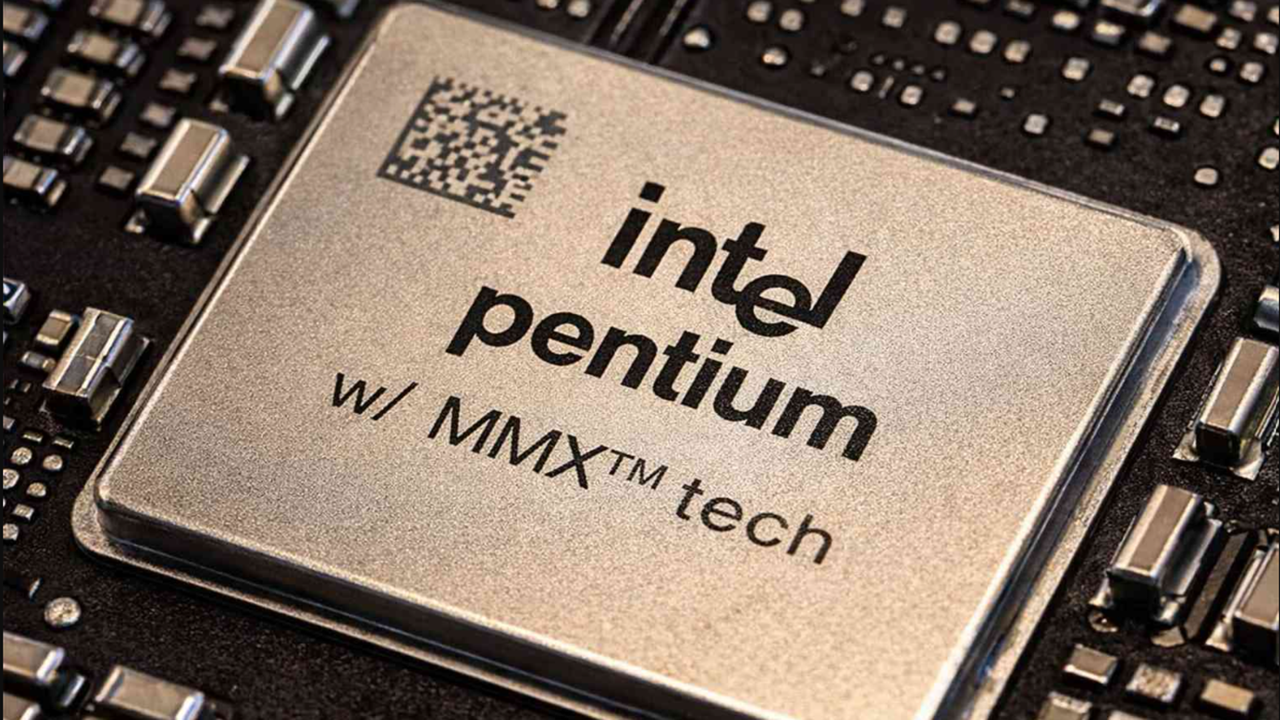

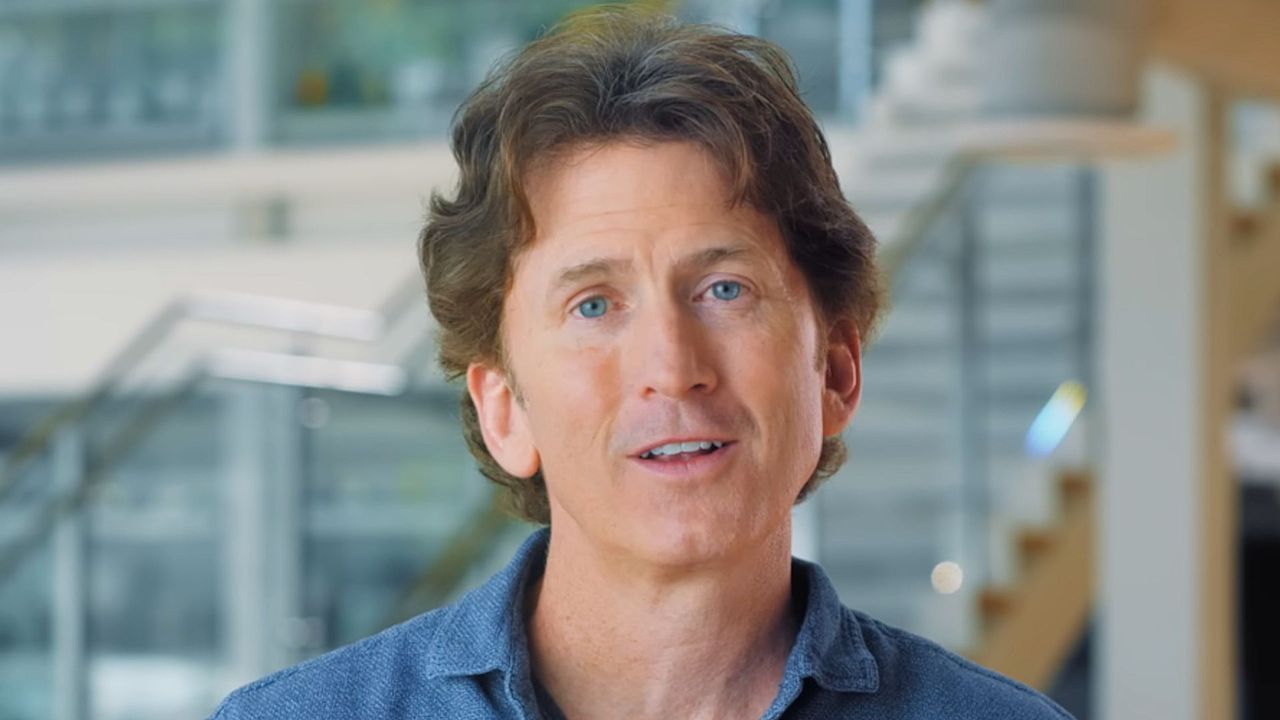








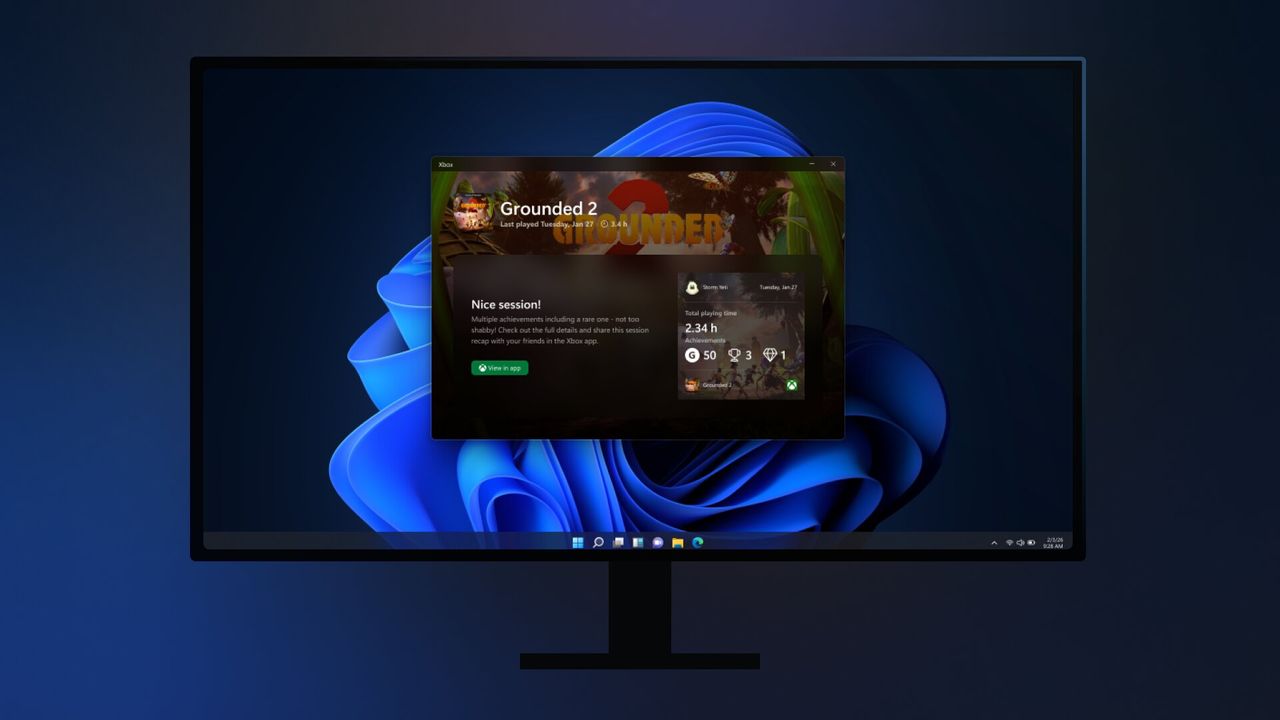






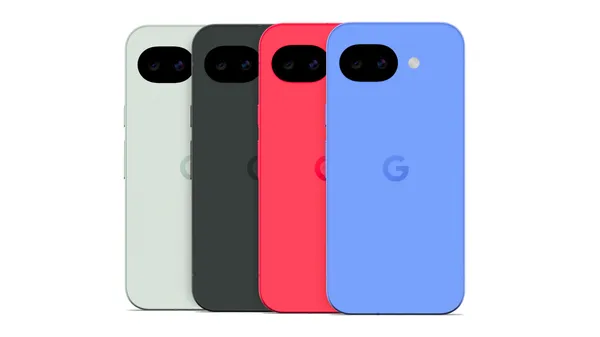 Pixel 10a is here! Our newest, most durable A-series phone has our best-in-class camera system and many of our most advanced AI tools, powered by our custom-built Google…



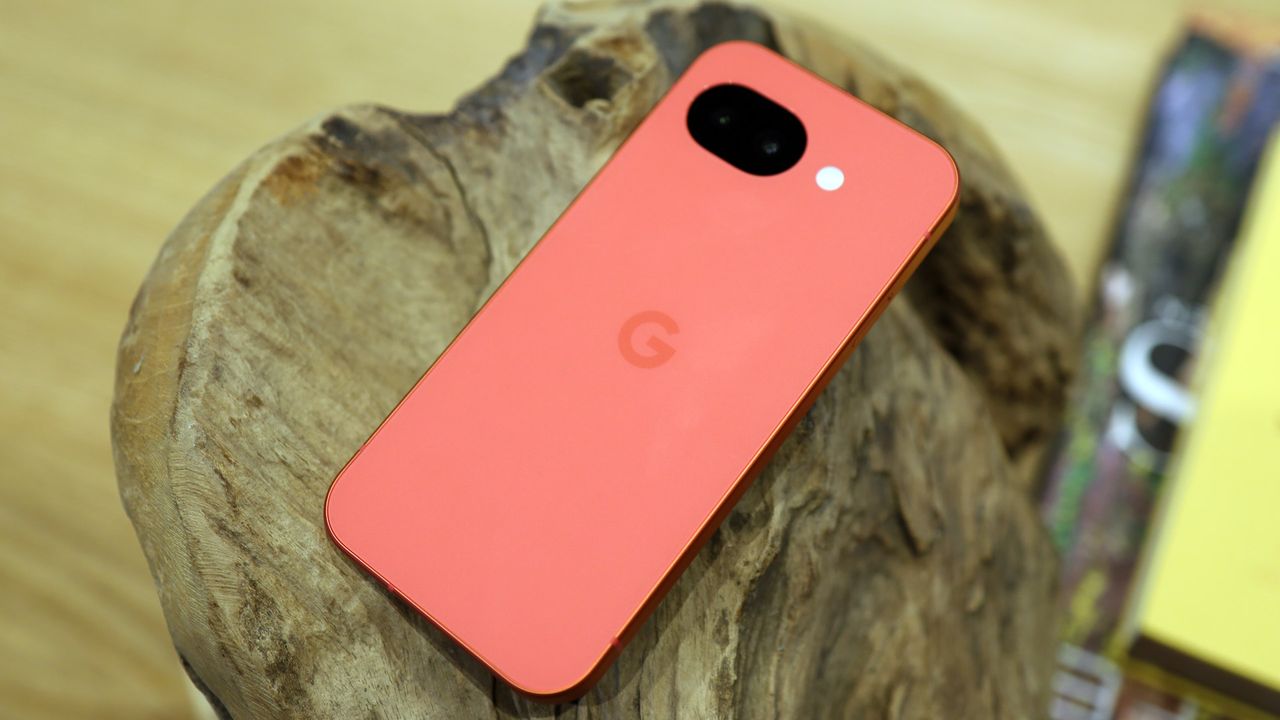


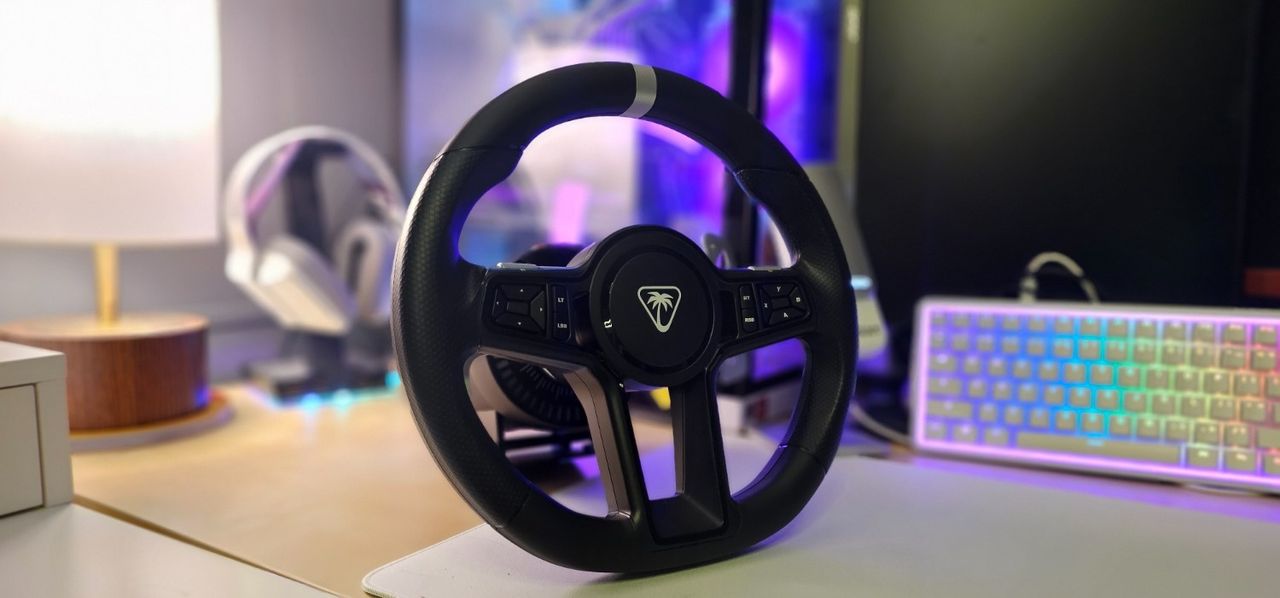





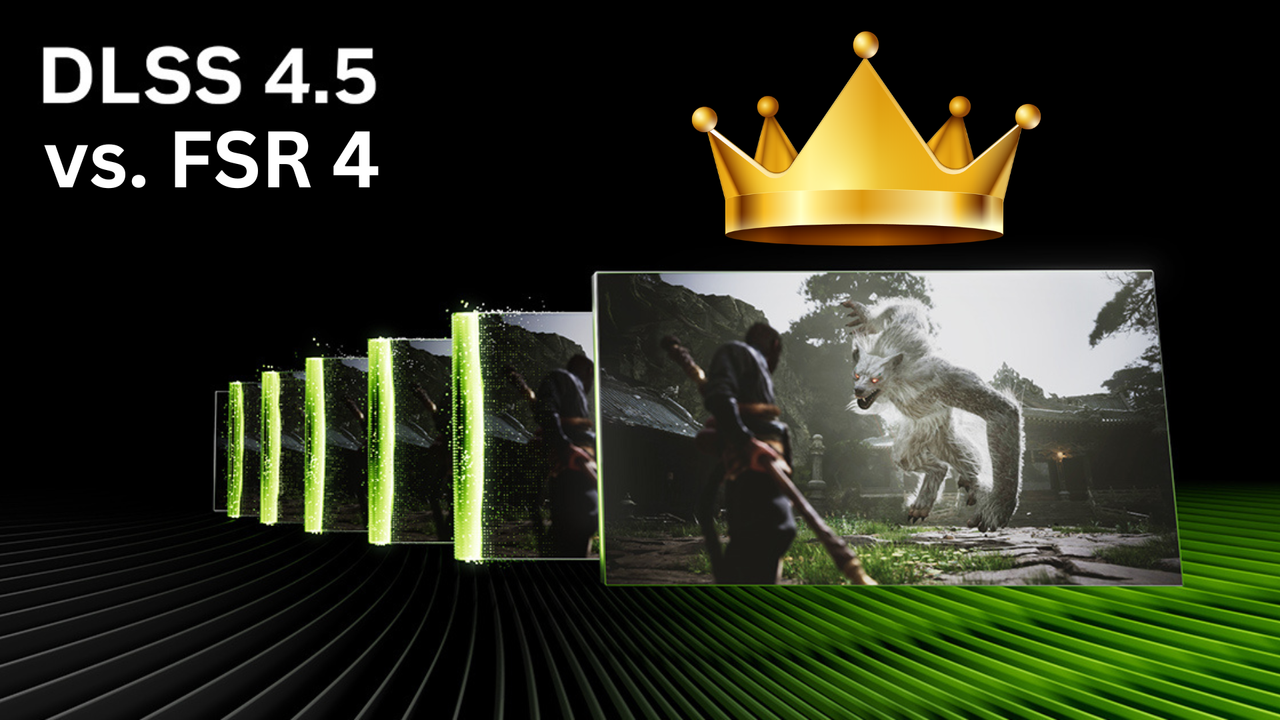




















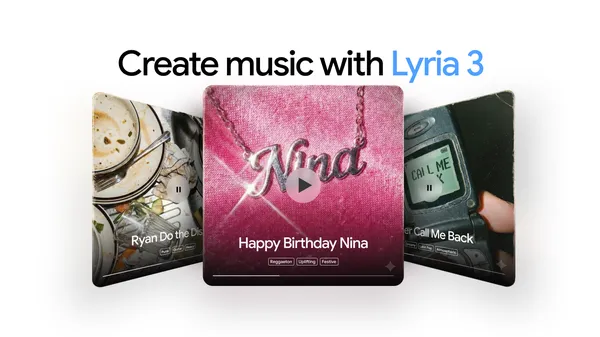 Lyria 3 is now available in the Gemini app. Create custom, high-quality 30-second tracks from text and images.
 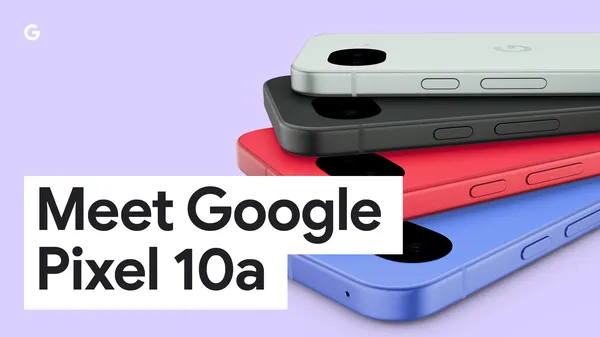 Learn more about Google’s new Pixel 10a, its latest A-series Pixel phone.








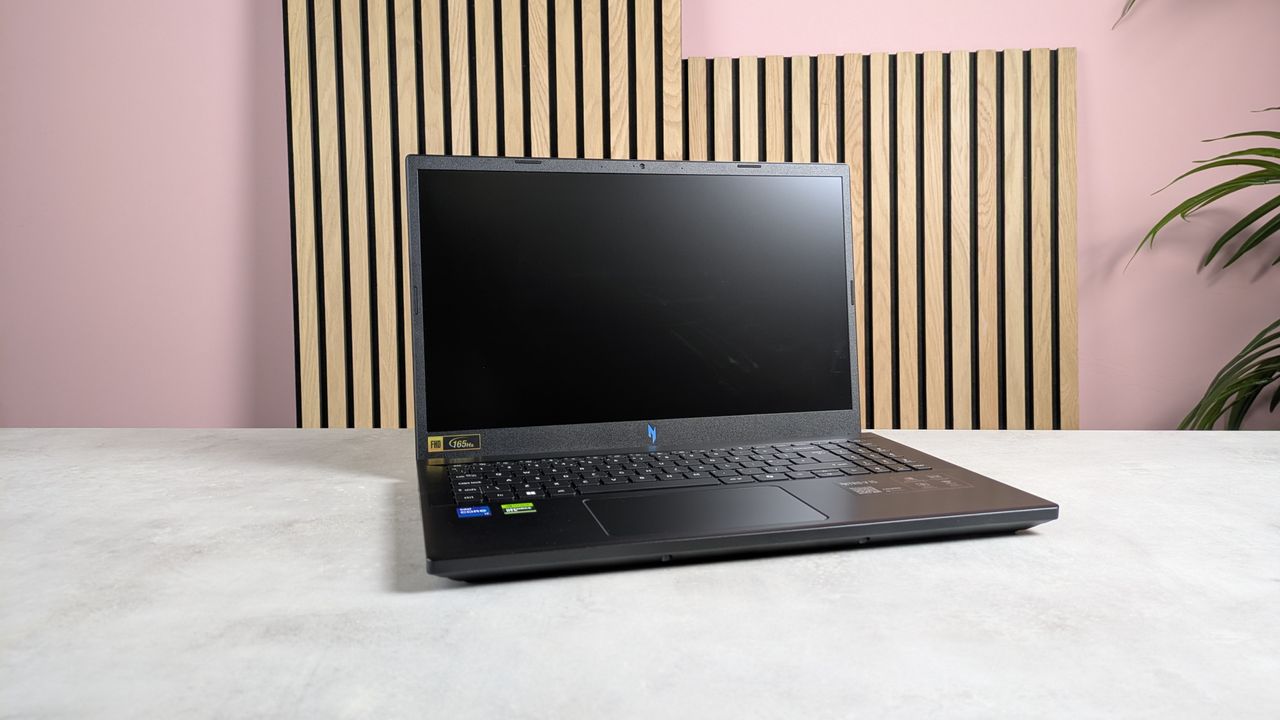


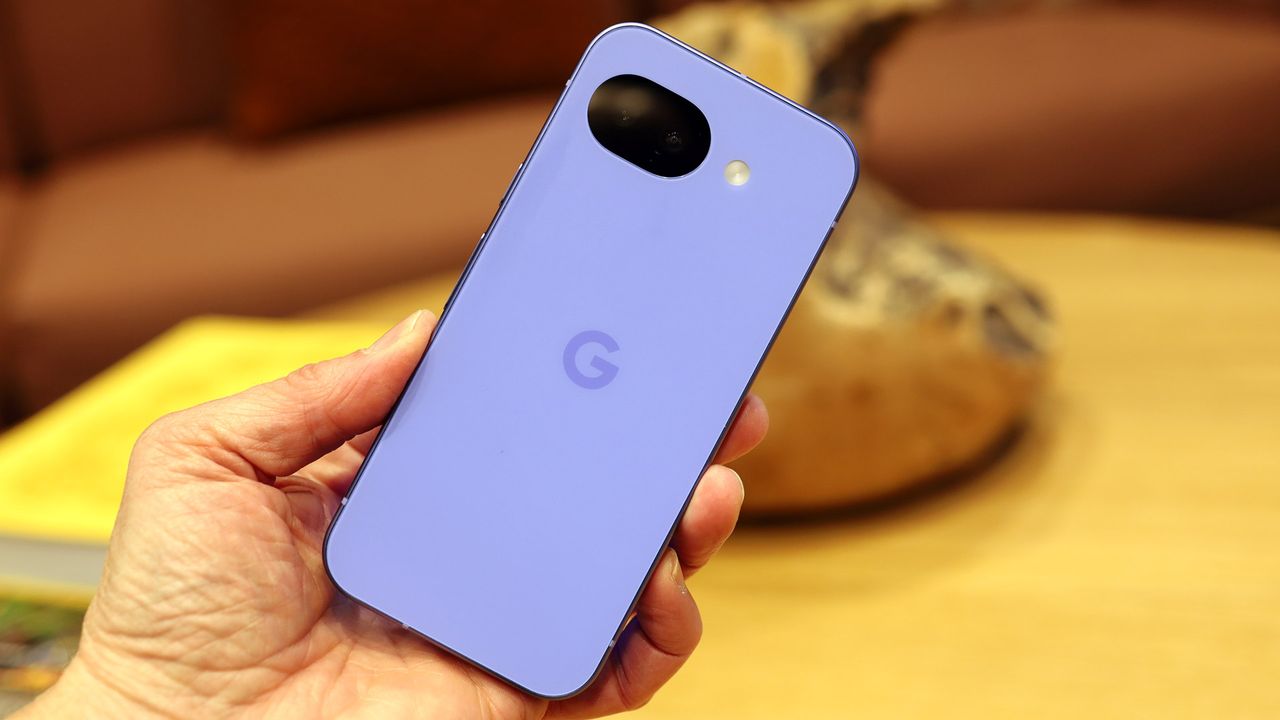









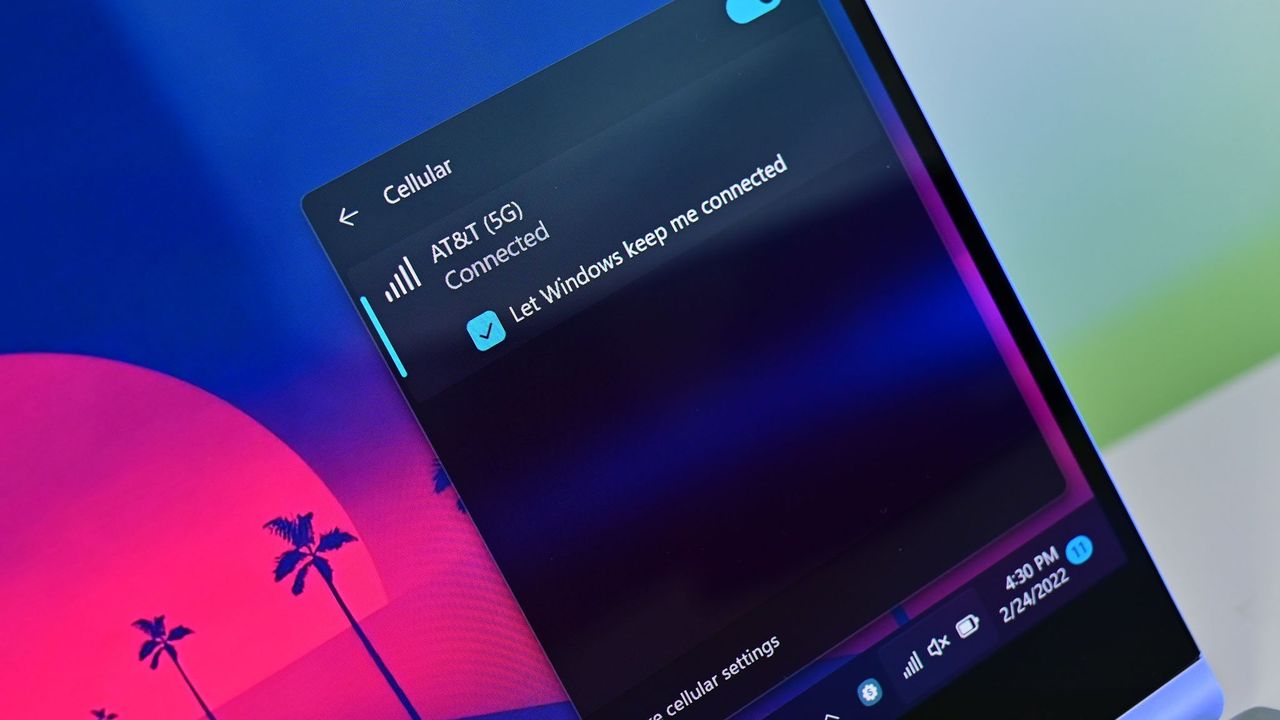









 Waze is once again teaming up with World of Warcraft, this time bringing a darker presence to your turn-by-turn directions: the Harbinger of the Void, Xal’atath.After th…


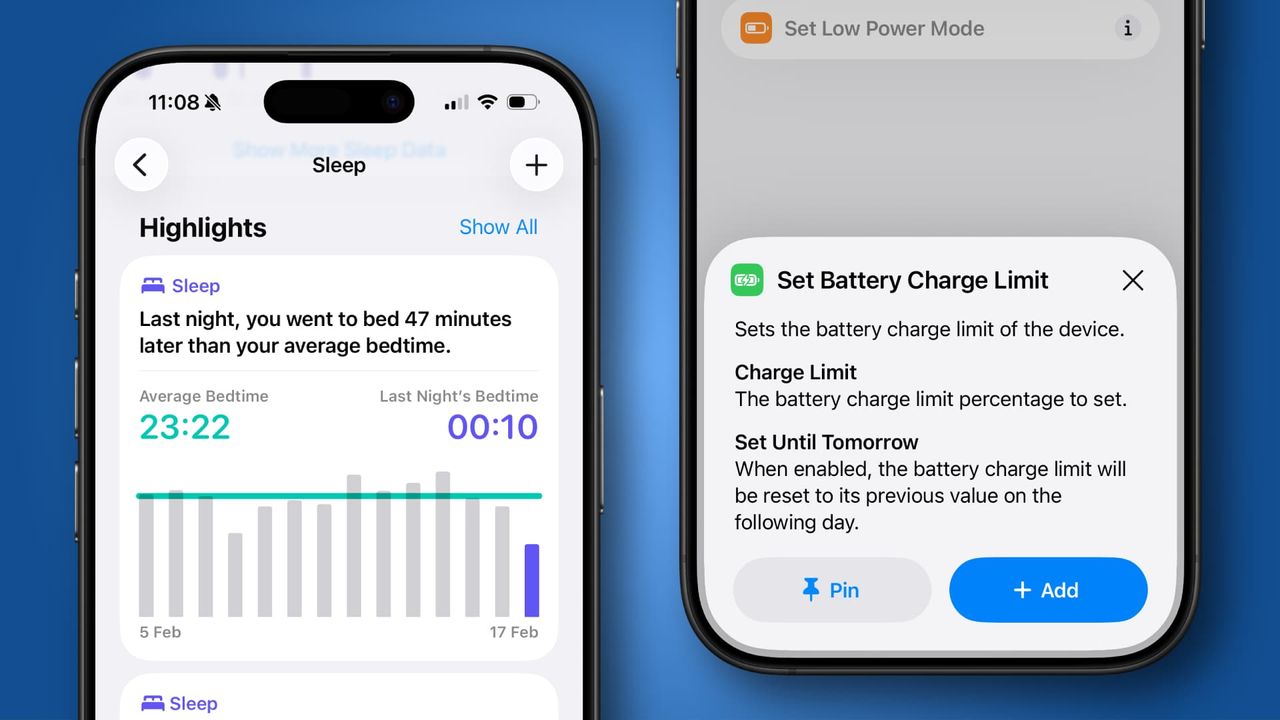





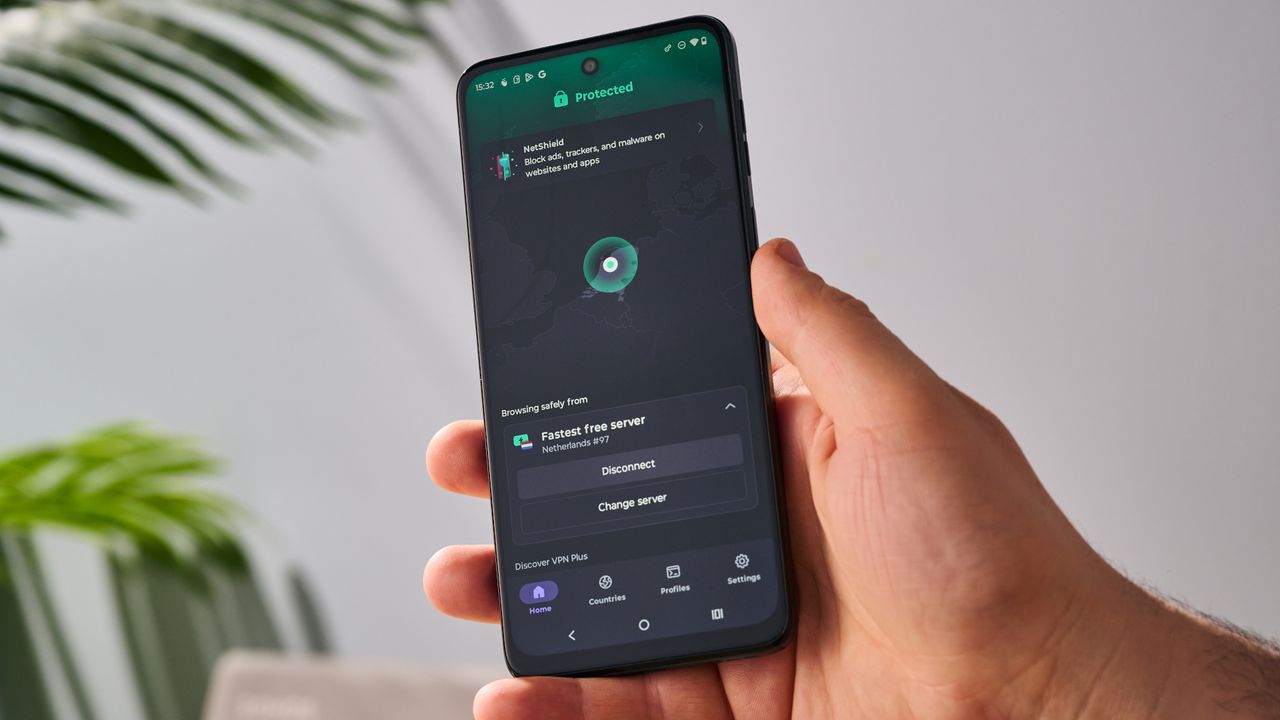

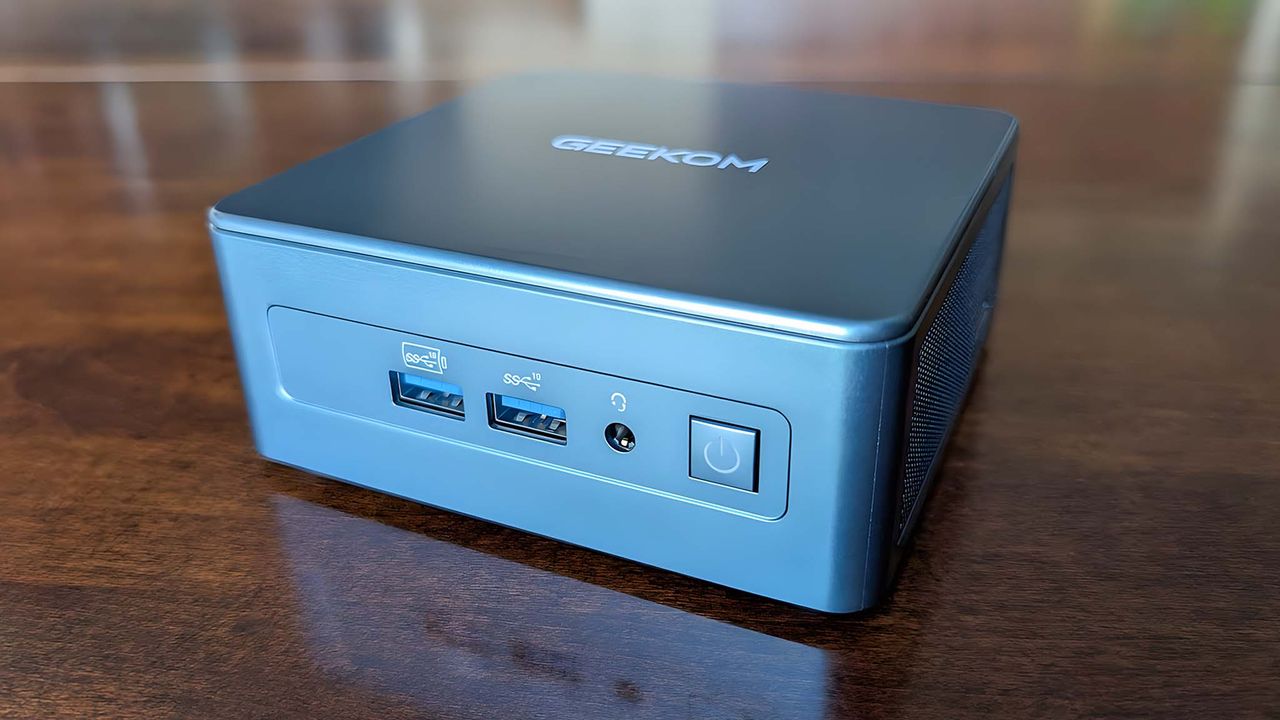

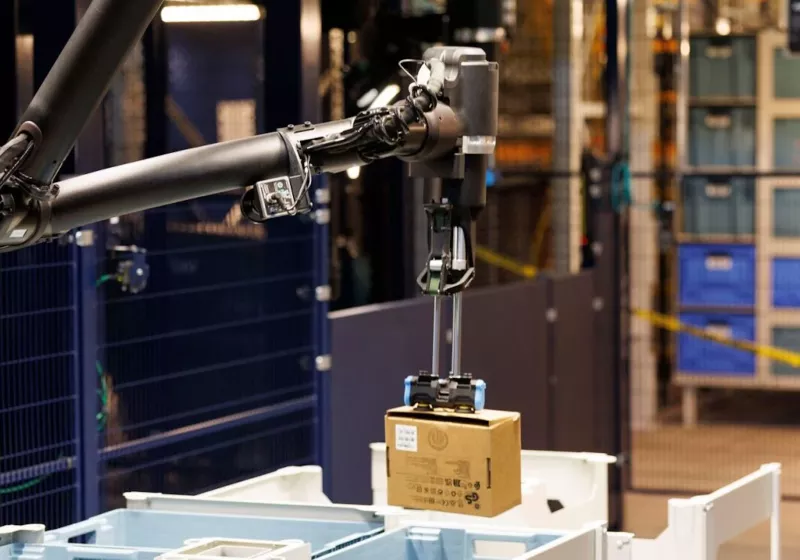

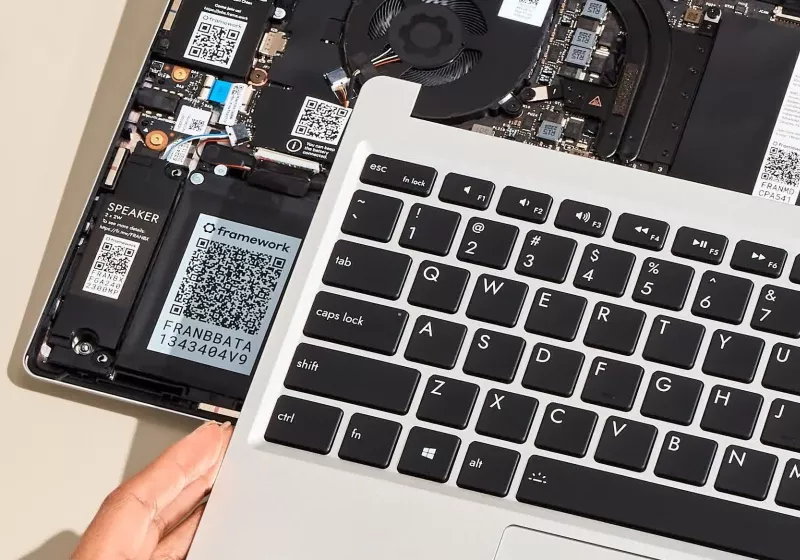
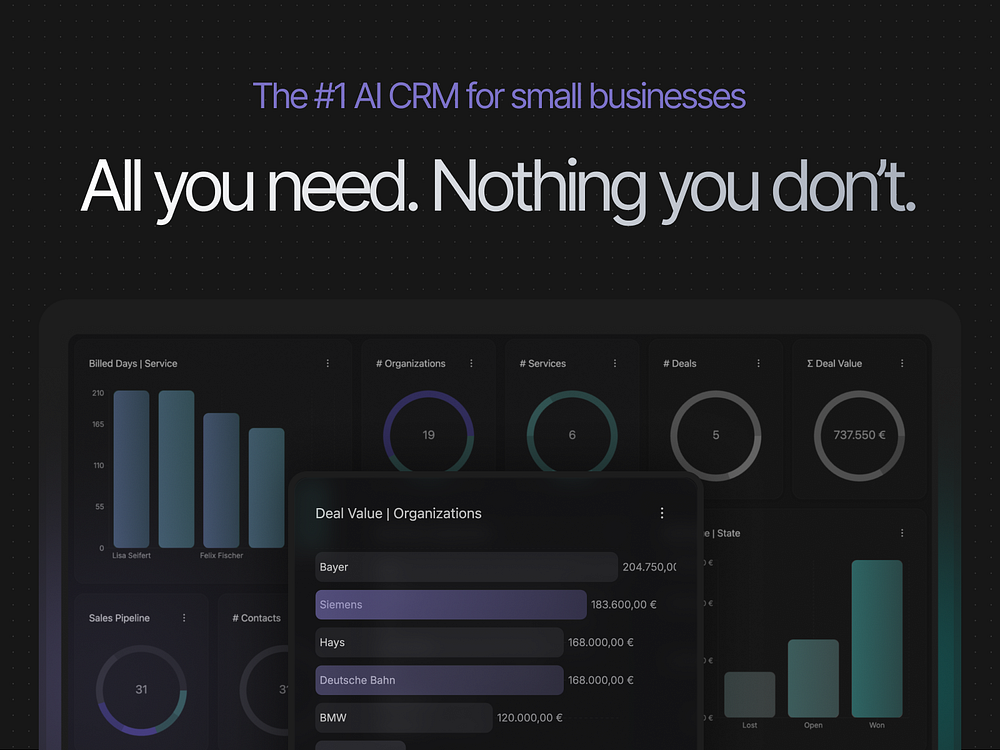








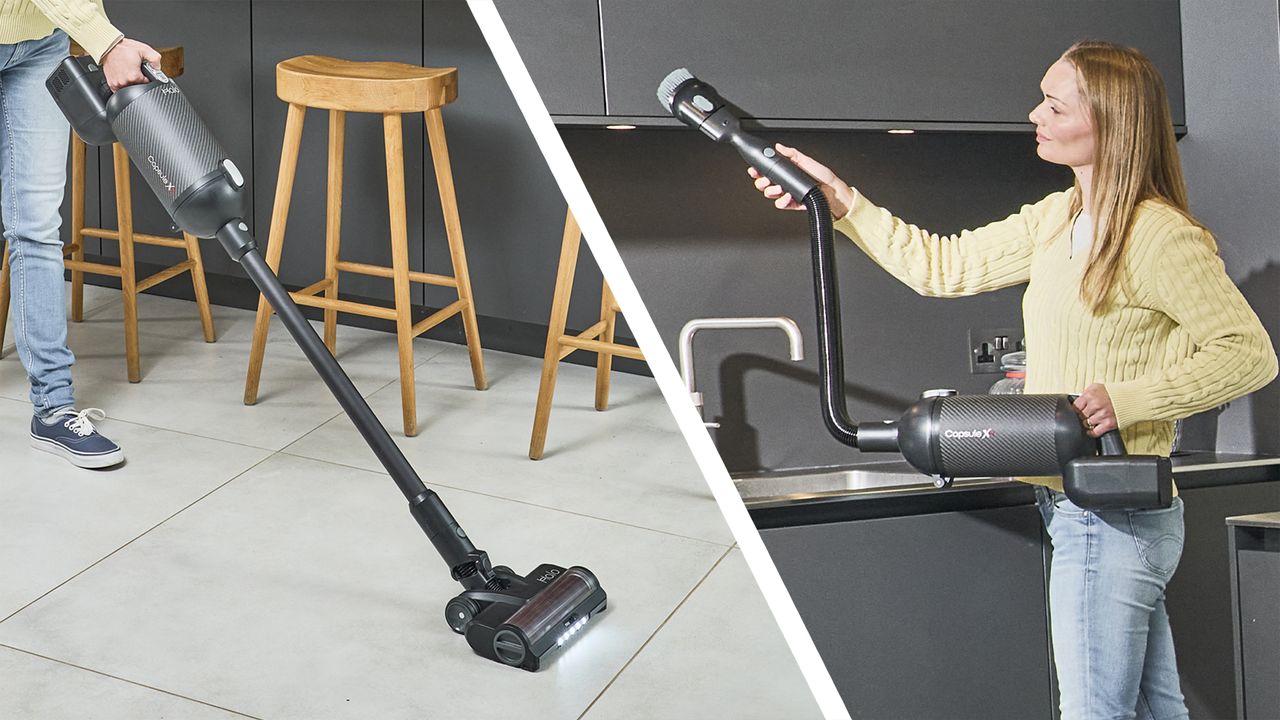



















 An overview of Google’s new global partnerships and funding announcements at the AI Impact Summit in India.
  AI isn’t just helping people solve problems faster, it’s unlocking new possibilities for discovery and scalability. To support organizations at the forefront of scientif…
  Government AI adoption isn't just a technical upgrade, it's a way to solve real world challenges and drive societal impact for communities. Yet new data reveals that whi…
  A look at the partnerships and investments Google announced at the AI Impact Summit 2026.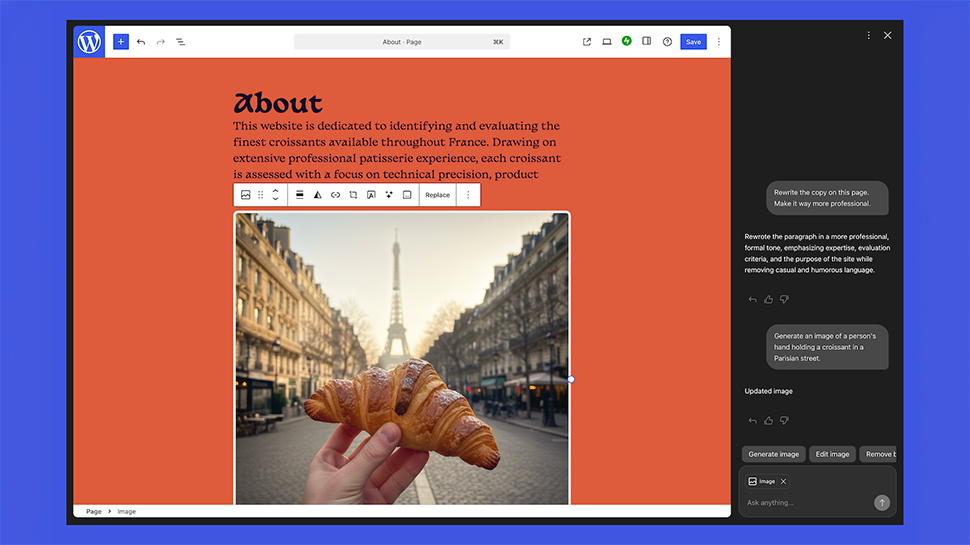



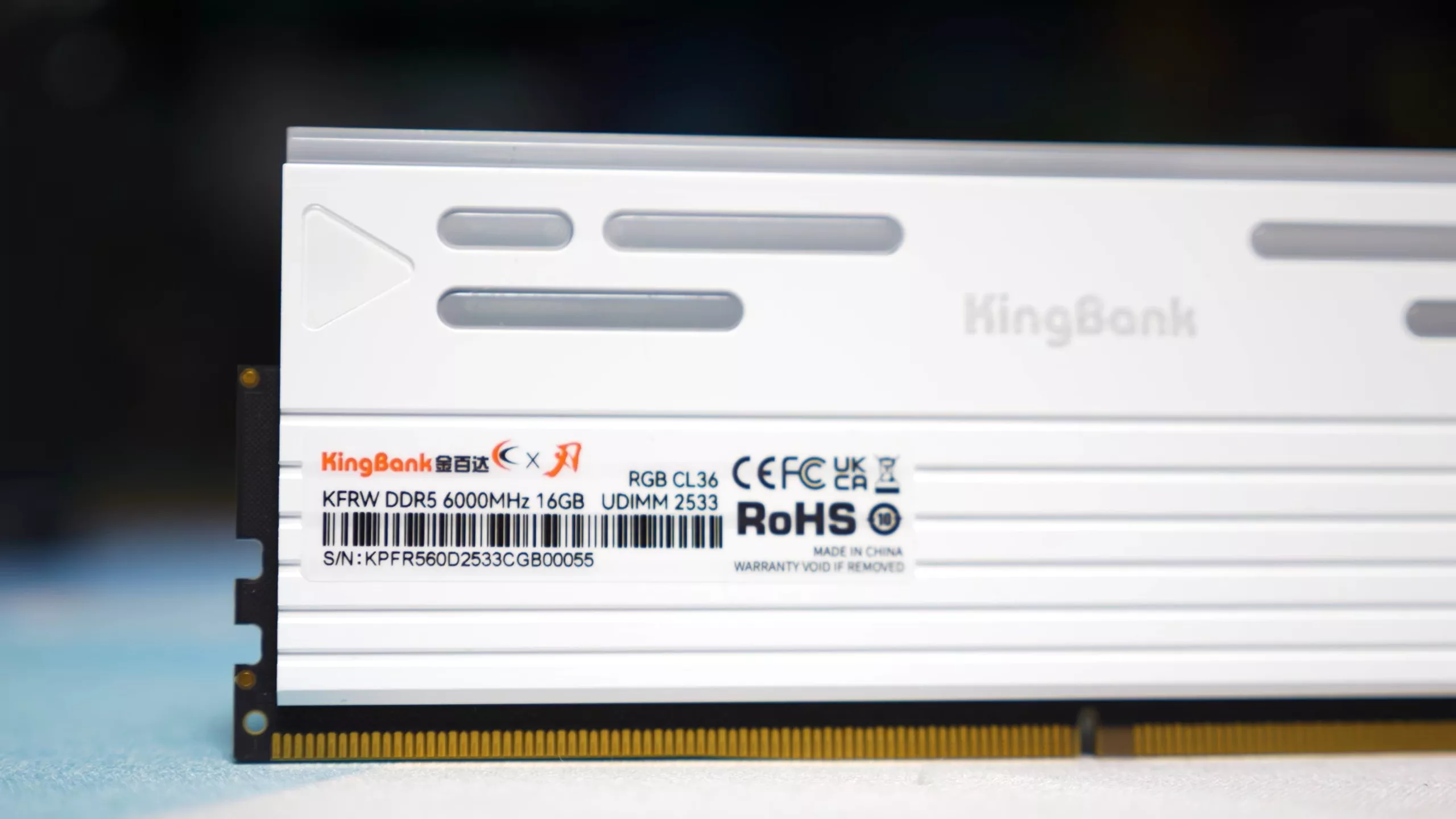



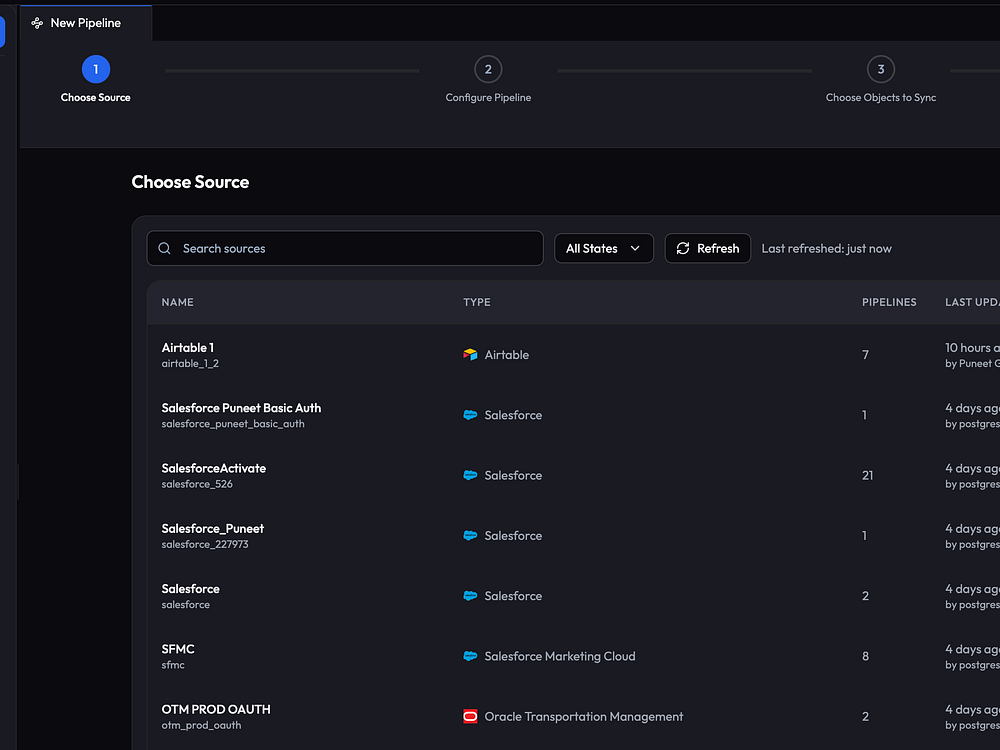







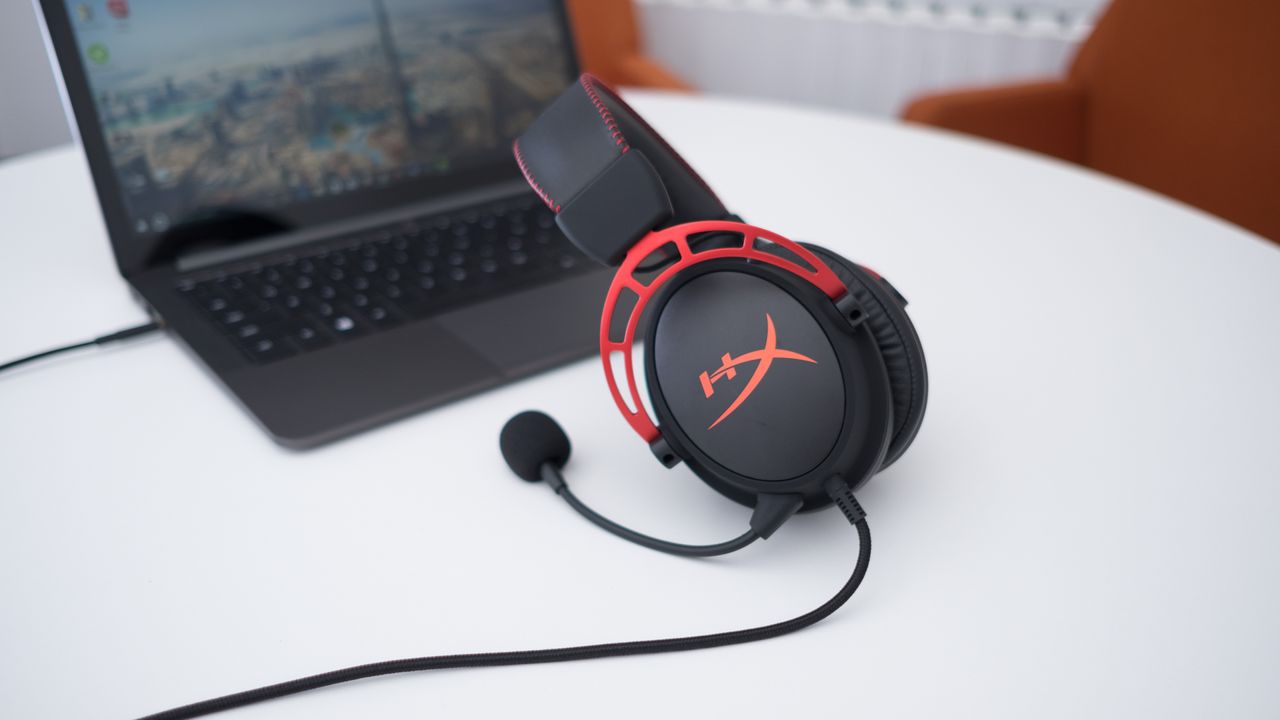


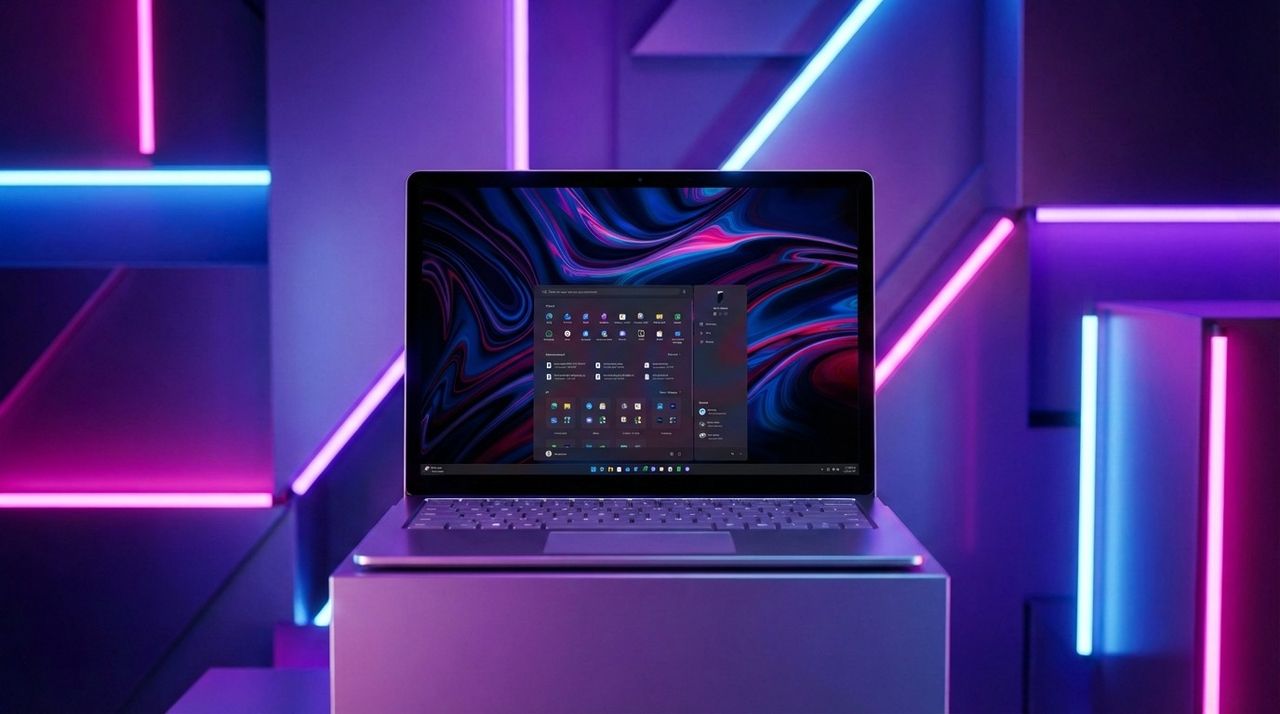





 A look at our 2026 Responsible AI Progress Report.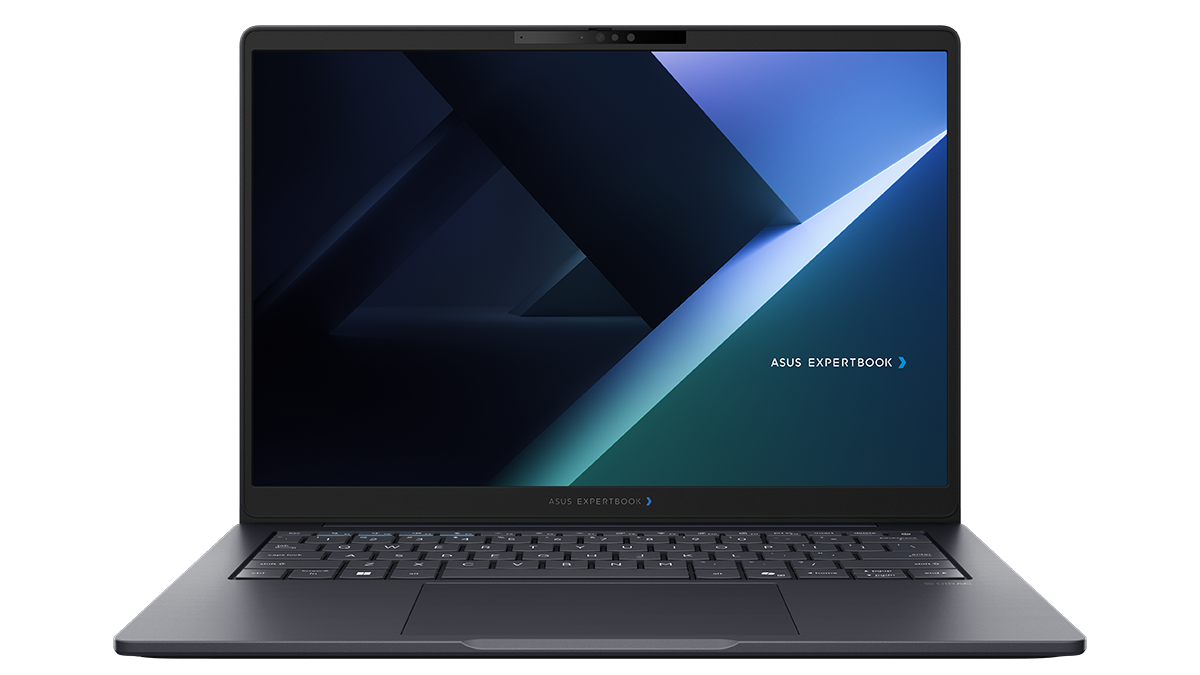
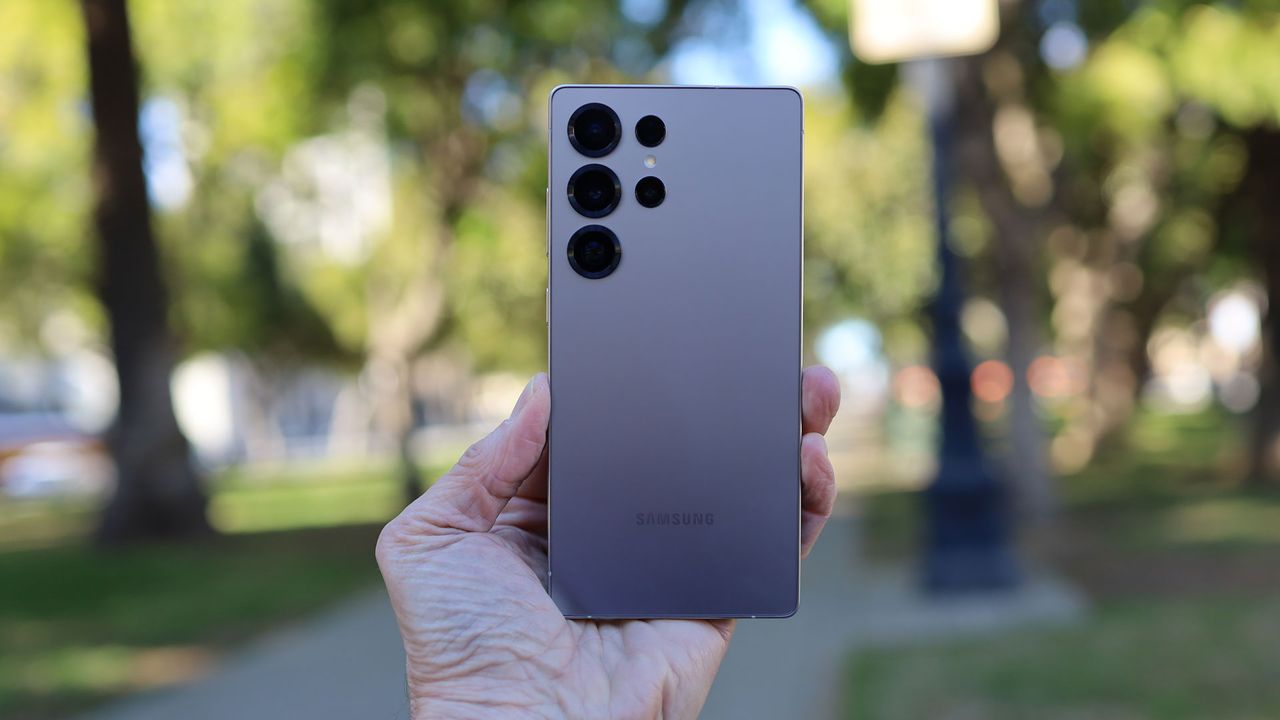


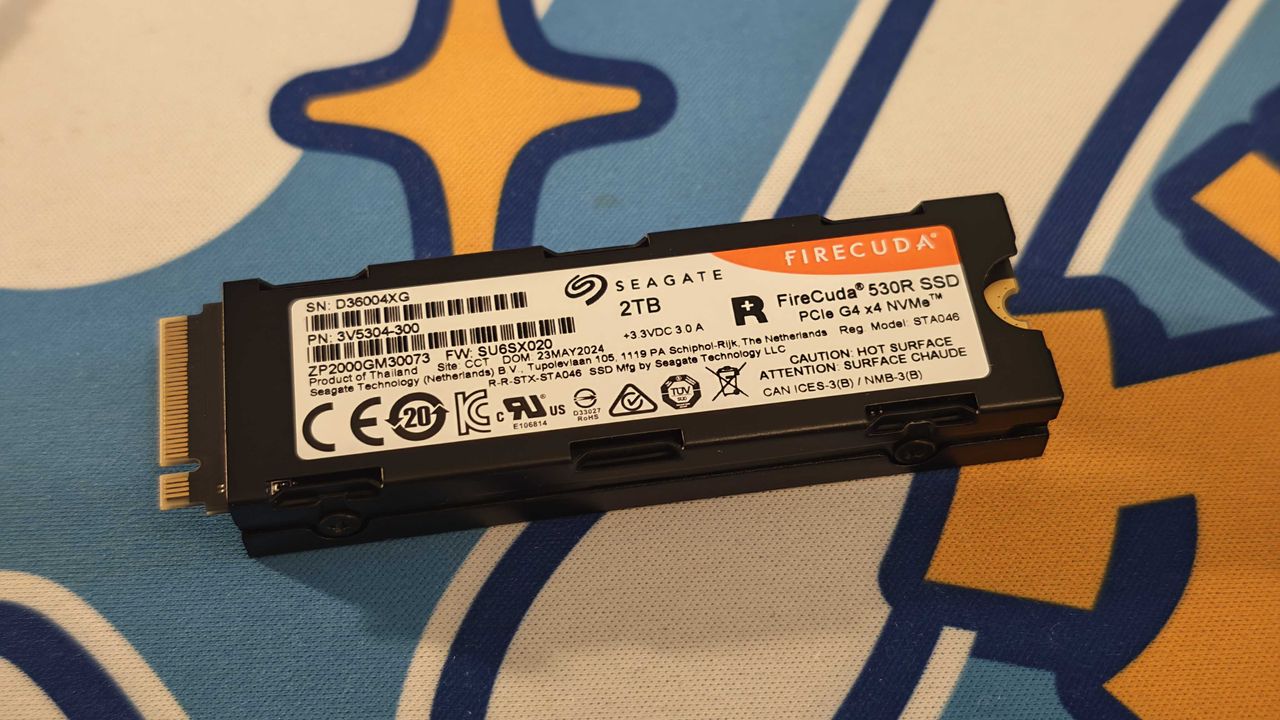

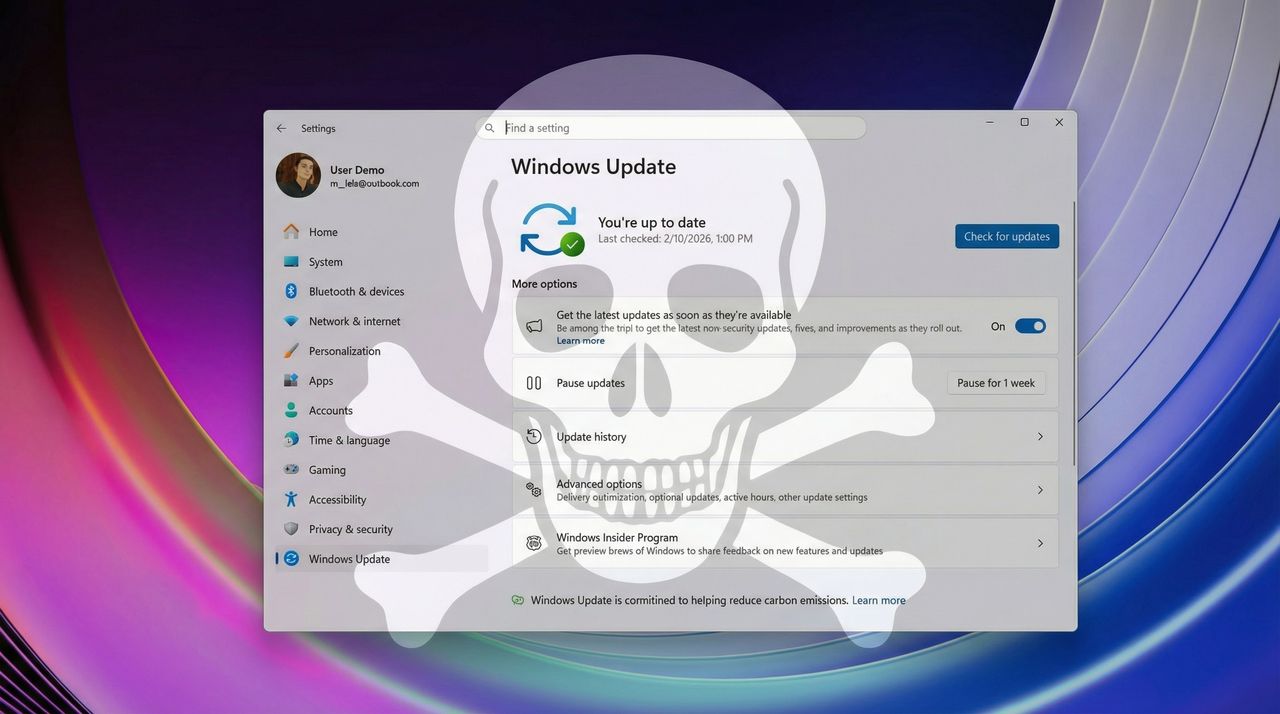







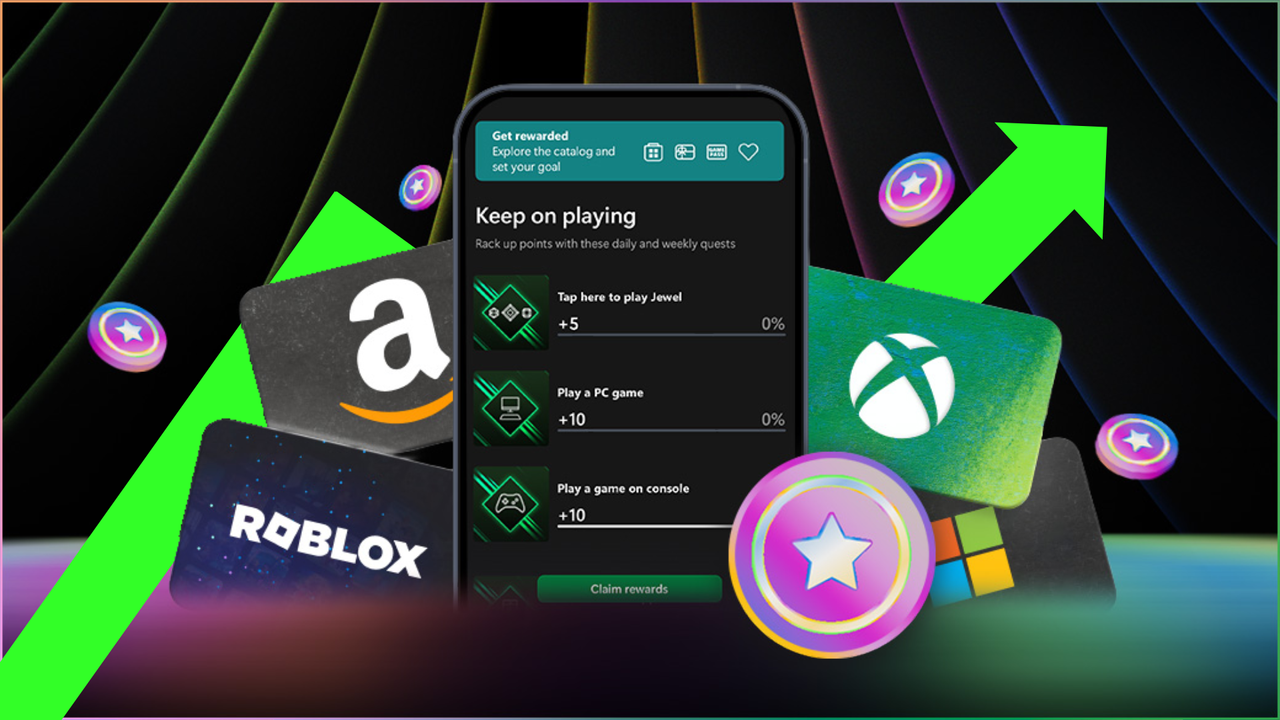





 Google I/O, our annual developer conference, is taking place at Shoreline Amphitheatre in Mountain View, California.
  At MSC 2026, Google’s Kent Walker urged a full-stack, AI-driven approach to security to counter sophisticated, enterprise-scale threats.
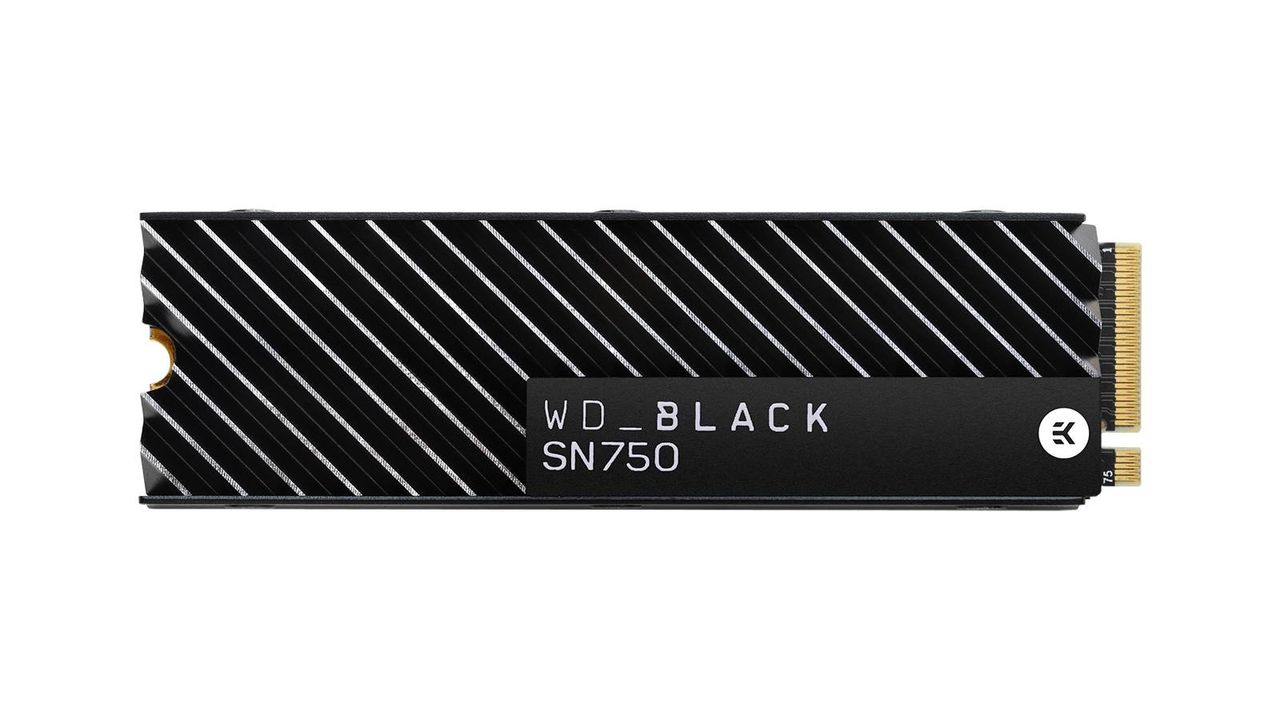
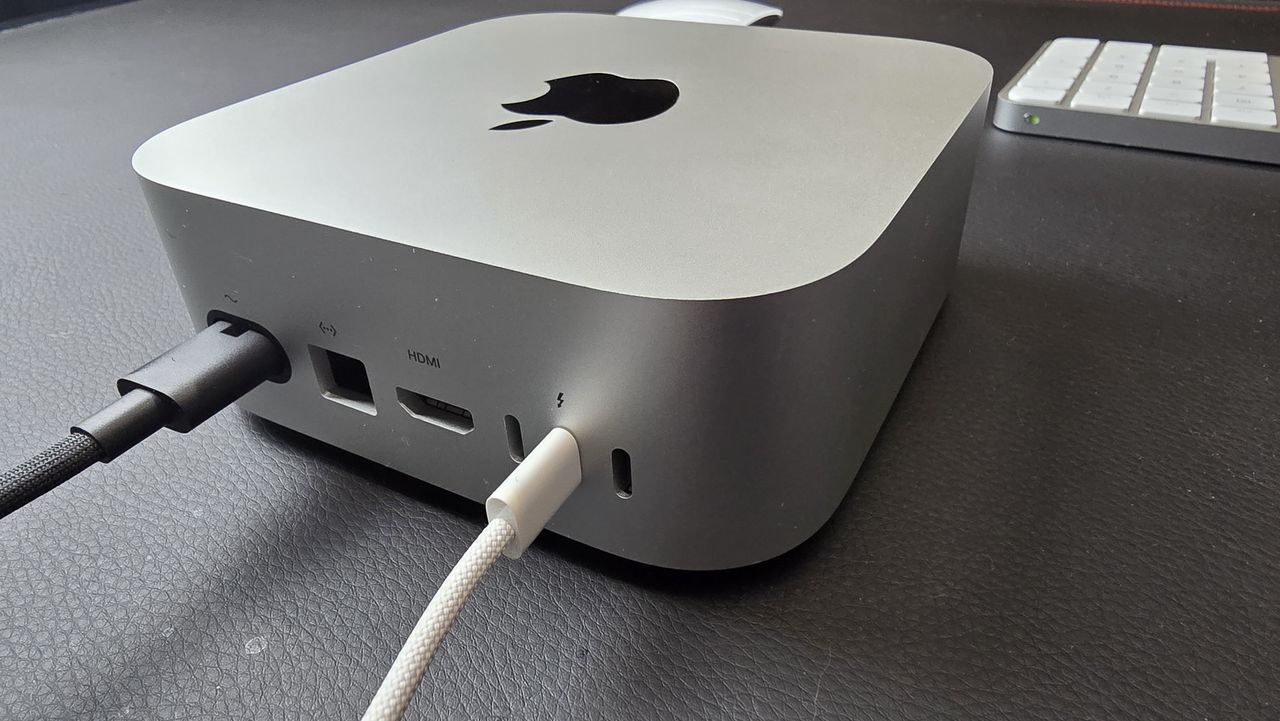


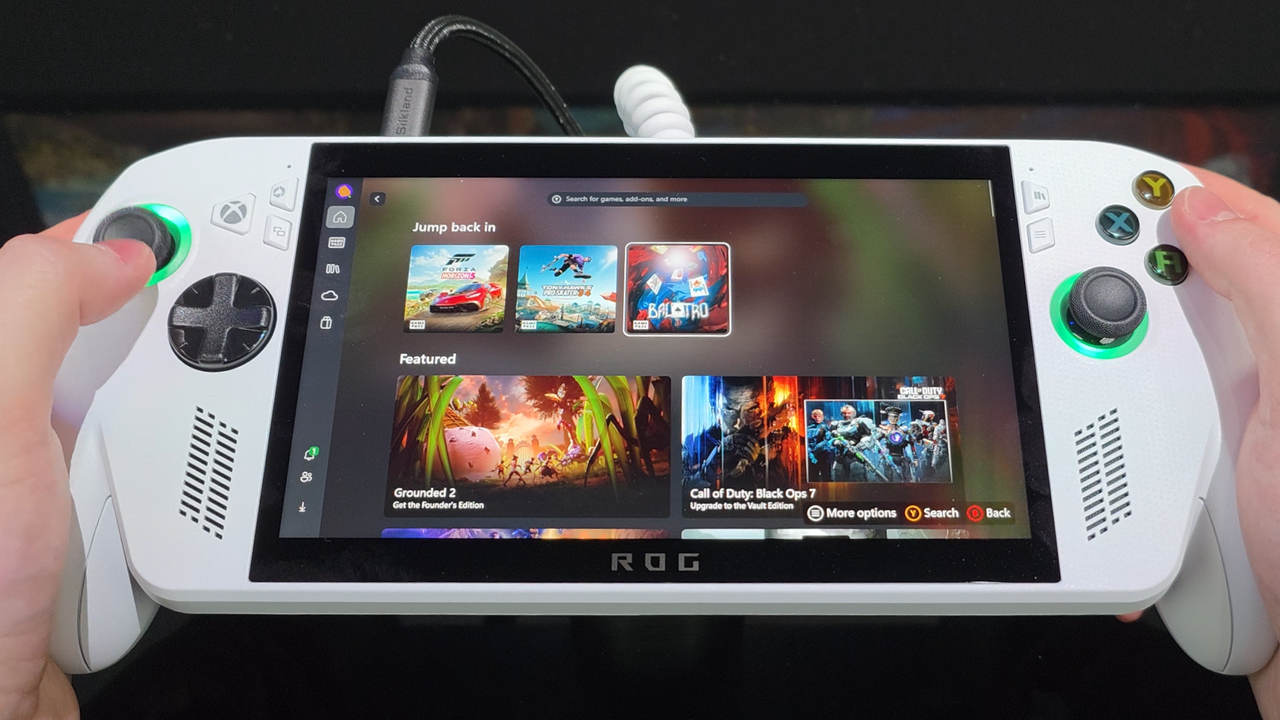

































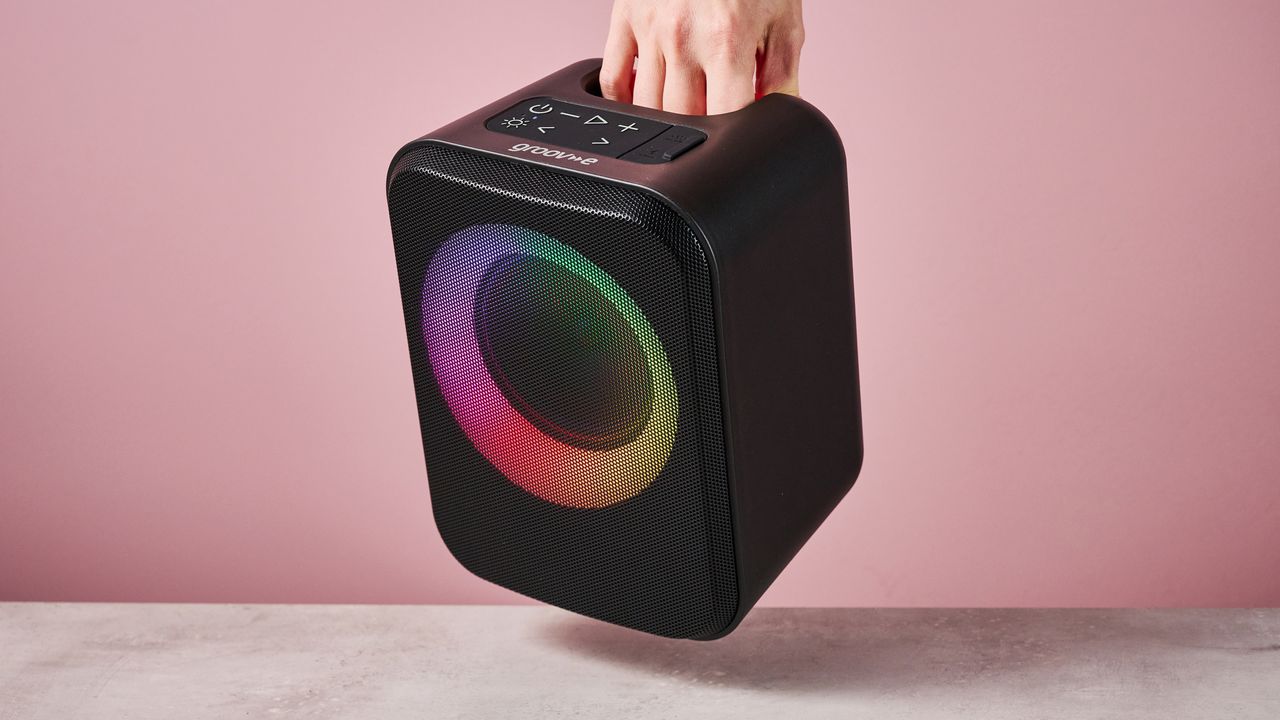



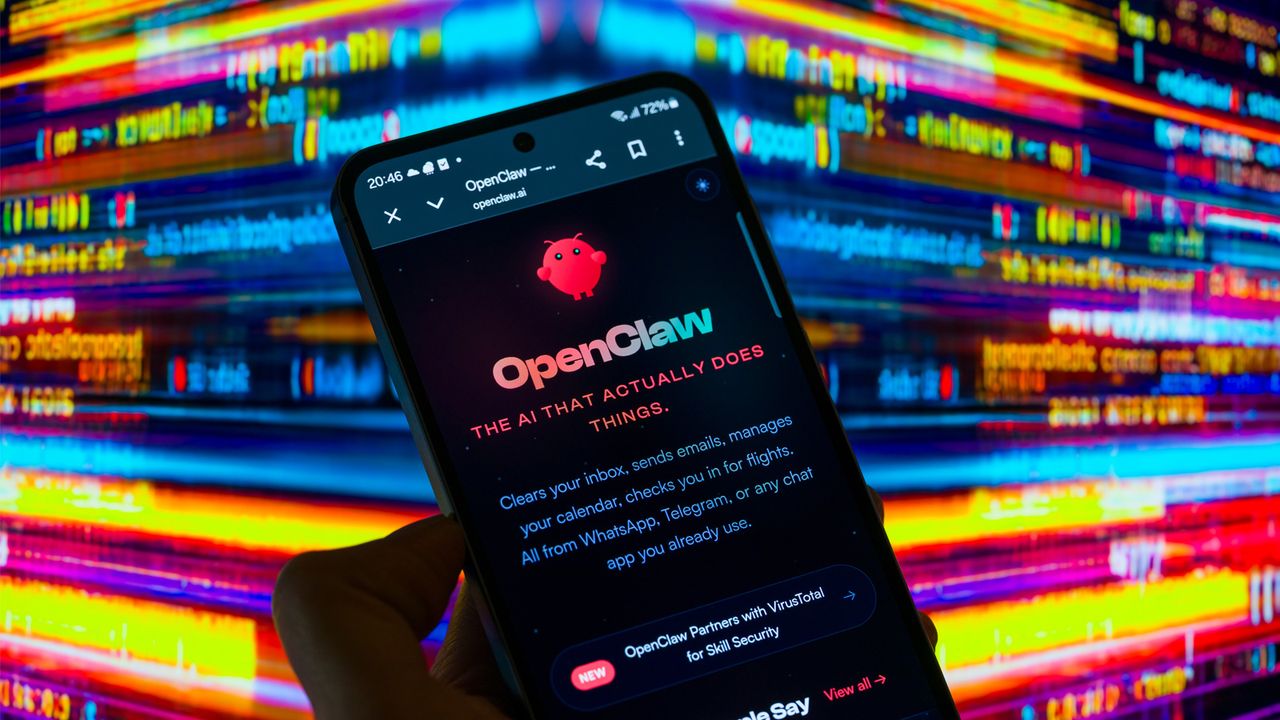

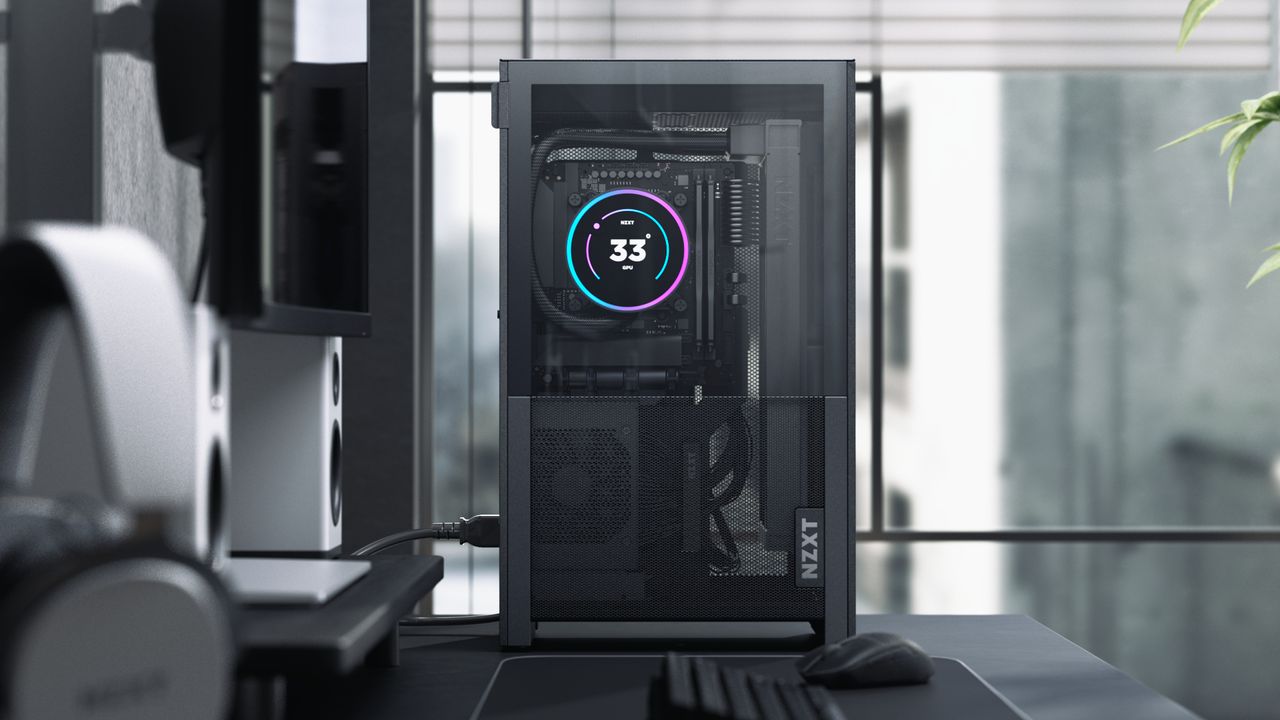

 Using Google Flights data, we’re taking a look at what U.S. destinations are trending for this year’s upcoming spring break.
  Celebrate the Year of the Horse! Discover new Google features for Lunar New Year across Play, TV, and more.